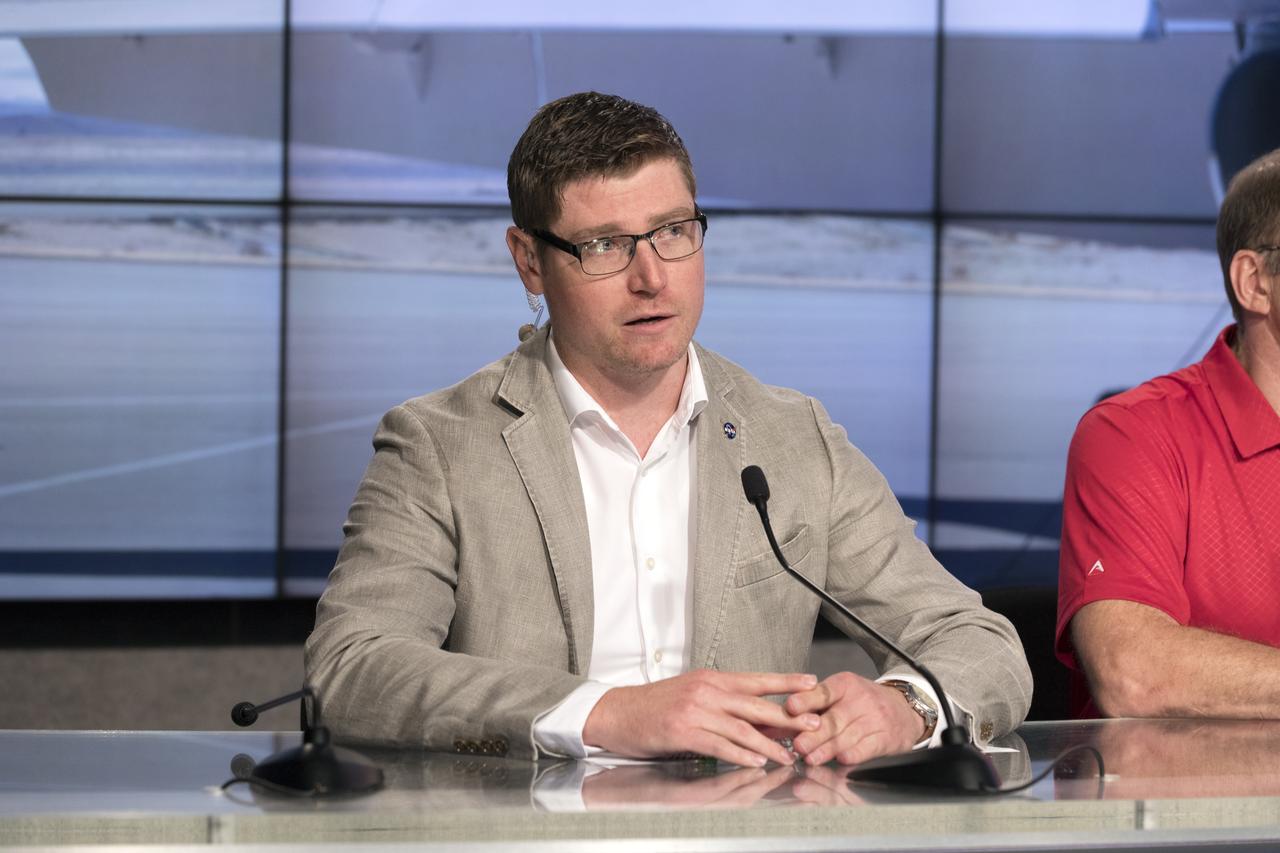
In the Kennedy Space Center's Press Site auditorium, Matthew Kamlet of NASA Communications at the Armstrong Flight Research Center in California, speaks to members of the media at a news conference to discuss upcoming flight tests to study the effects of sonic booms. Kennedy is partnering with Armstrong, Langley and Space Florida for a program called SonicBAT for Sonic Booms in Atmospheric Turbulence. Starting in August, NASA F-18 jets will take off from the Shuttle Landing Facility and fly at supersonic speeds while agency researchers on the ground measure the effects of low-altitude turbulence on sonic booms. The study could lead to technology mitigating the annoying sonic booms making possible supersonic flights over populated areas.

In the Kennedy Space Center's Press Site auditorium, Peter Coen, SonicBAT Mission Analysis at NASA’s Langley Research Center in Virginia, speaks to members of the media at a news conference to discuss upcoming flight tests to study the effects of sonic booms. Kennedy is partnering with Armstrong, Langley and Space Florida for a program called SonicBAT for Sonic Booms in Atmospheric Turbulence. Starting in August, NASA F-18 jets will take off from the Shuttle Landing Facility and fly at supersonic speeds while agency researchers on the ground measure the effects of low-altitude turbulence on sonic booms. The study could lead to technology mitigating the annoying sonic booms making possible supersonic flights over populated areas.
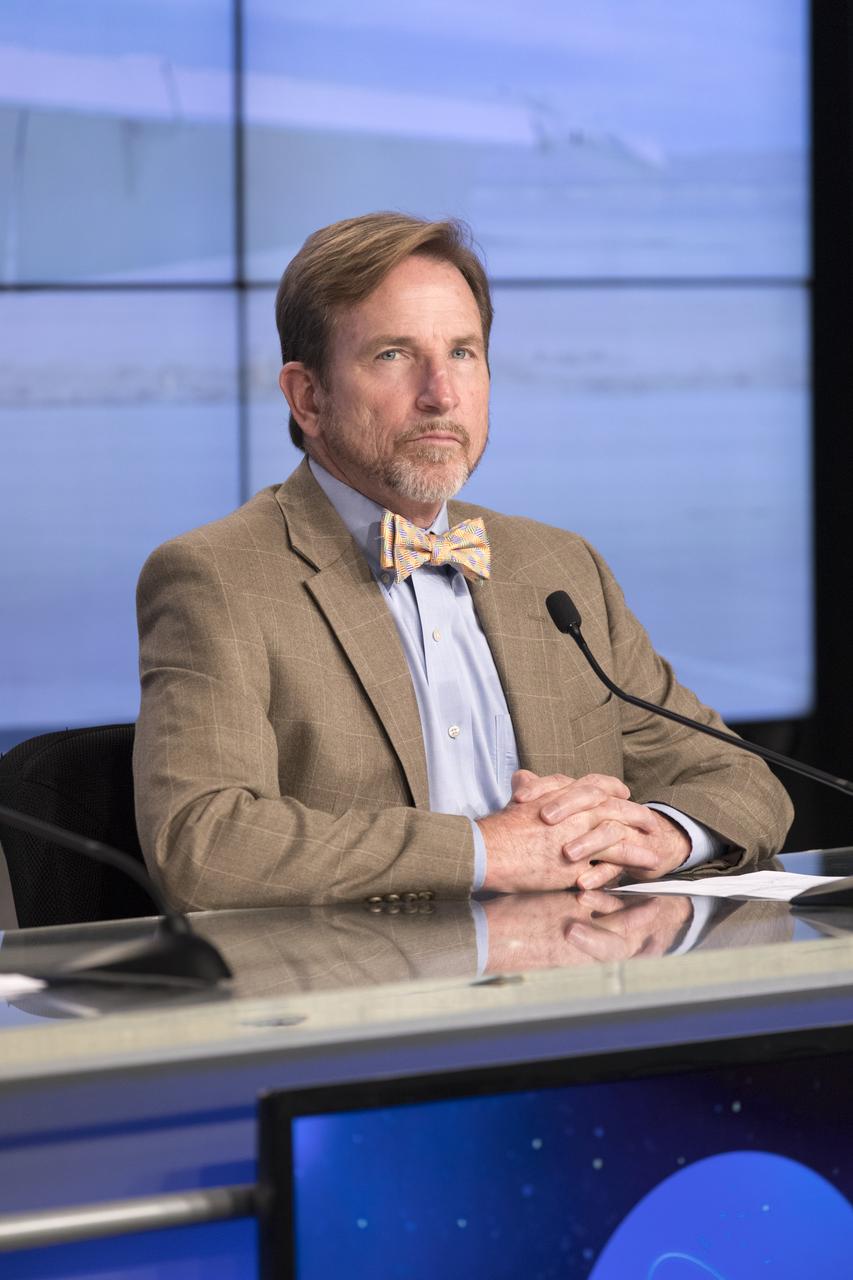
In the Kennedy Space Center's Press Site auditorium, Dale Ketcham chief of Strategic Alliances for Space Florida, speaks to members of the media at a news conference to discuss upcoming flight tests to study the effects of sonic booms. Kennedy is partnering with Armstrong, Langley and Space Florida for a program called SonicBAT for Sonic Booms in Atmospheric Turbulence. Starting in August, NASA F-18 jets will take off from the Shuttle Landing Facility and fly at supersonic speeds while agency researchers on the ground measure the effects of low-altitude turbulence on sonic booms. The study could lead to technology mitigating the annoying sonic booms making possible supersonic flights over populated areas.

In the Kennedy Space Center's Press Site auditorium, Laura Henning, public information officer for the Canaveral National Seashore, speaks to members of the media at a news conference to discuss upcoming flight tests to study the effects of sonic booms. Kennedy is partnering with Armstrong, Langley and Space Florida for a program called SonicBAT for Sonic Booms in Atmospheric Turbulence. Starting in August, NASA F-18 jets will take off from the Shuttle Landing Facility and fly at supersonic speeds while agency researchers on the ground measure the effects of low-altitude turbulence on sonic booms. The study could lead to technology mitigating the annoying sonic booms making possible supersonic flights over populated areas.
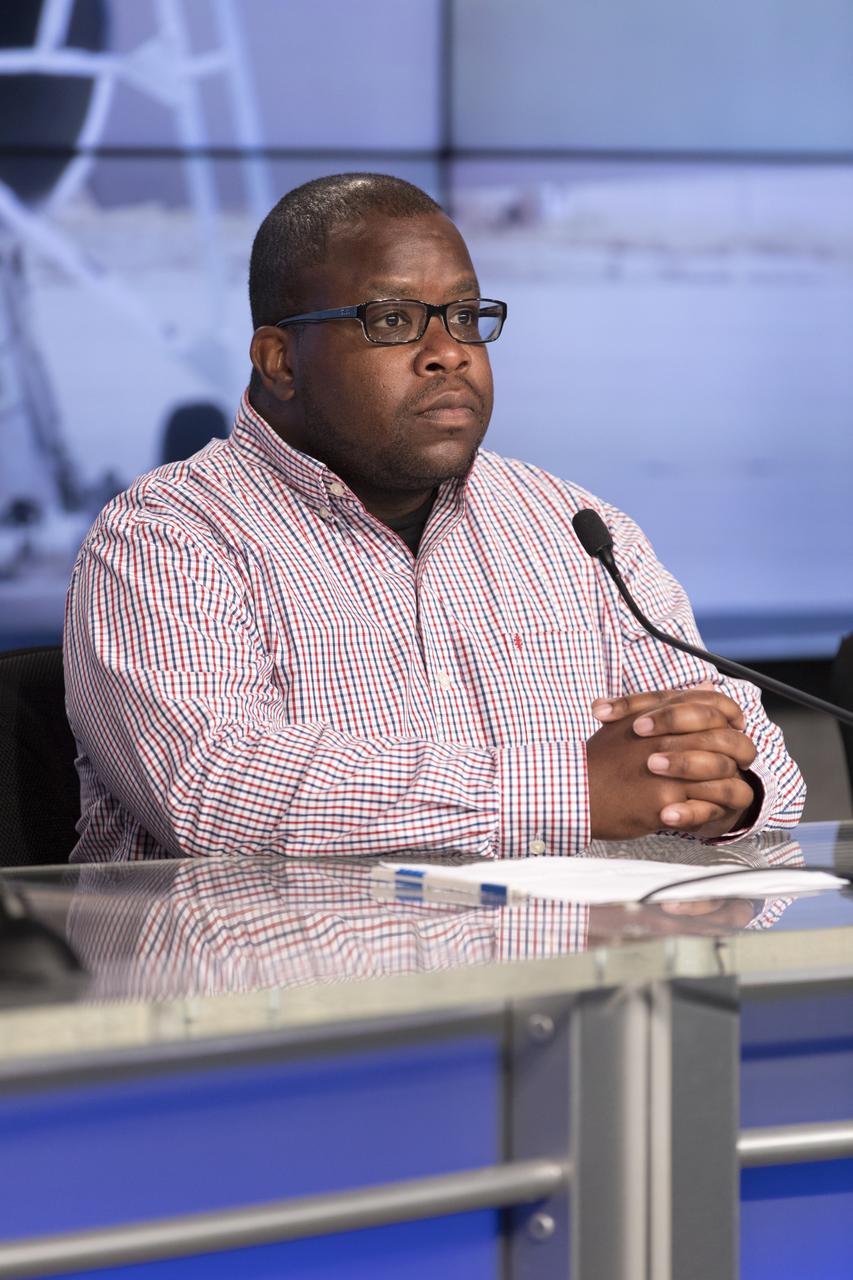
In the Kennedy Space Center's Press Site auditorium, Larry Cliatt, SonicBAT Fluid Mechanics at Armstrong Flight Research Center in California, speaks to members of the media at a news conference to discuss upcoming flight tests to study the effects of sonic booms. Kennedy is partnering with Armstrong, Langley and Space Florida for a program called SonicBAT for Sonic Booms in Atmospheric Turbulence. Starting in August, NASA F-18 jets will take off from the Shuttle Landing Facility and fly at supersonic speeds while agency researchers on the ground measure the effects of low-altitude turbulence on sonic booms. The study could lead to technology mitigating the annoying sonic booms making possible supersonic flights over populated areas.
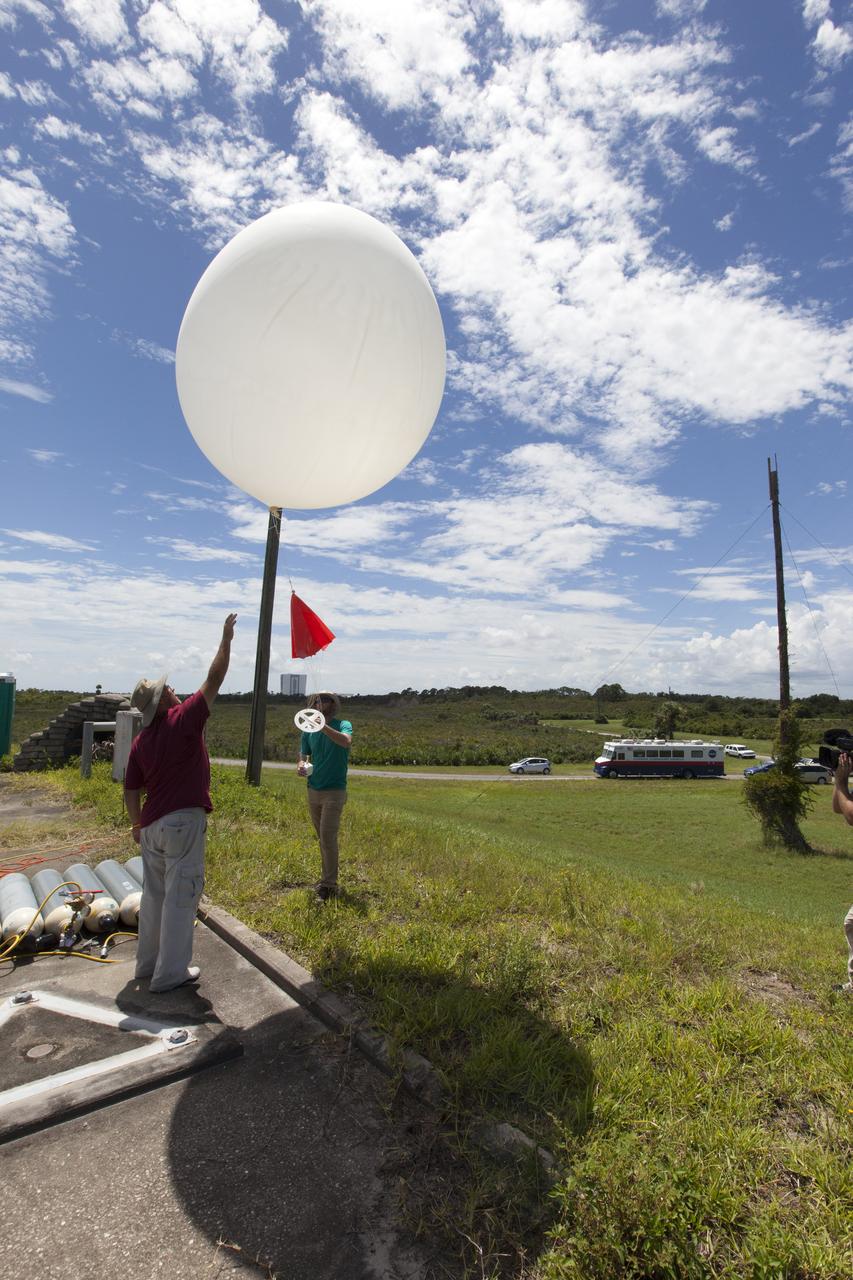
A weather balloon is released at NASA's Kennedy Space Center in Florida before flights of agency F-18 jets to measure the effects of sonic booms. Several flights a day have been taking place the week of Aug. 21, 2017 as part of NASA's Sonic Booms in Atmospheric Turbulence, or SonicBAT II Program. NASA at Kennedy is partnering with the agency's Armstrong Flight Research Center in California, Langley Research Center in Virginia, and Space Florida for a program in which F-18 jets will take off from the Shuttle Landing Facility and fly at supersonic speeds while agency researchers measure the effects of low-altitude turbulence caused by sonic booms.
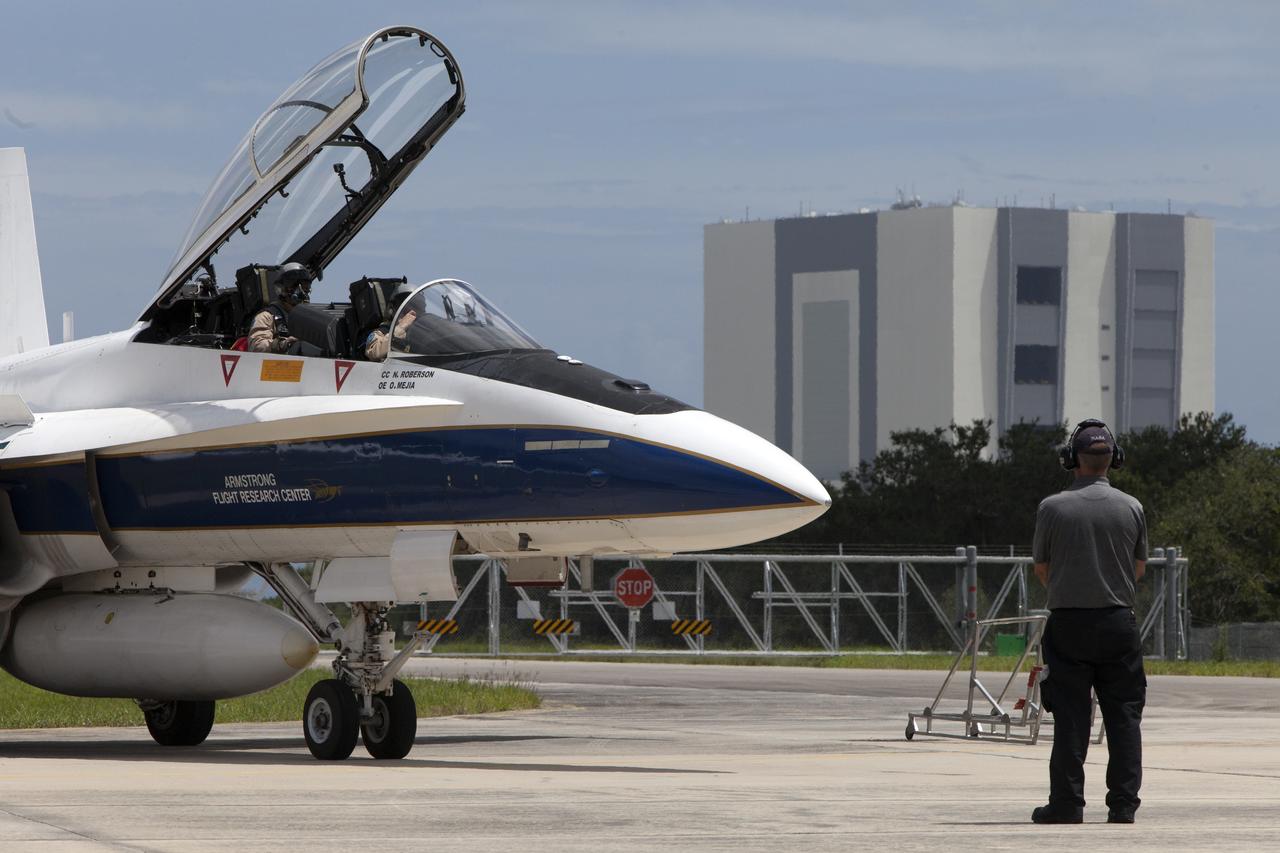
A NASA F-18 jet is prepared for takeoff from the agency's Shuttle Landing Facility at NASA's Kennedy Space Center in Florida. Several flights a day have been taking place the week of Aug. 21, 2017 to measure the effects of sonic booms. It is part of NASA's Sonic Booms in Atmospheric Turbulence, or SonicBAT II Program. NASA at Kennedy is partnering with the agency's Armstrong Flight Research Center in California, Langley Research Center in Virginia, and Space Florida for a program in which F-18 jets will take off from the Shuttle Landing Facility and fly at supersonic speeds while agency researchers measure the effects of low-altitude turbulence caused by sonic booms.
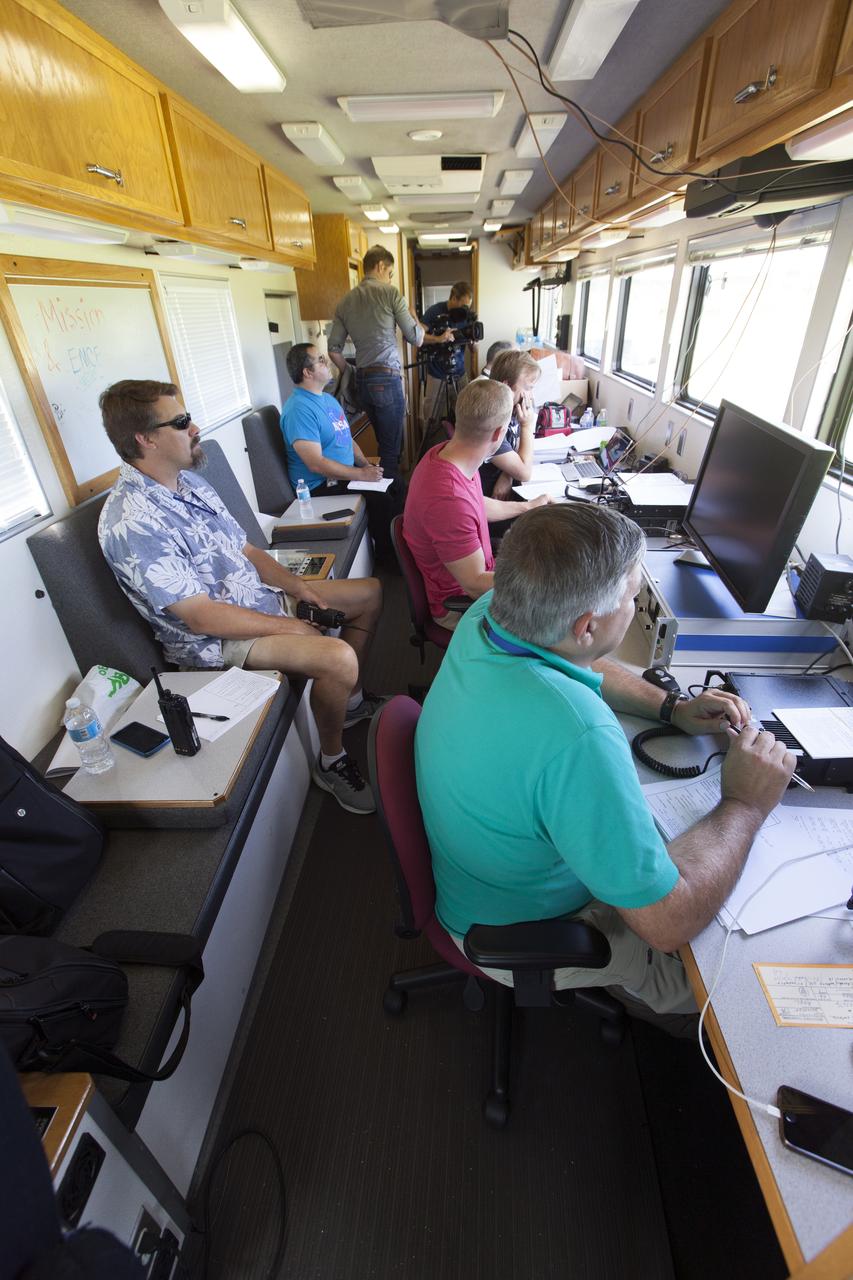
Engineers staff a control trailer at NASA's Kennedy Space Center in Florida before flights of agency F-18 jets to measure the effects of sonic booms. Several flights a day have been taking place the week of Aug. 21, 2017 as part of NASA's Sonic Booms in Atmospheric Turbulence, or SonicBAT II Program. NASA at Kennedy is partnering with the agency's Armstrong Flight Research Center in California, Langley Research Center in Virginia, and Space Florida for a program in which F-18 jets will take off from the Shuttle Landing Facility and fly at supersonic speeds while agency researchers measure the effects of low-altitude turbulence caused by sonic booms.
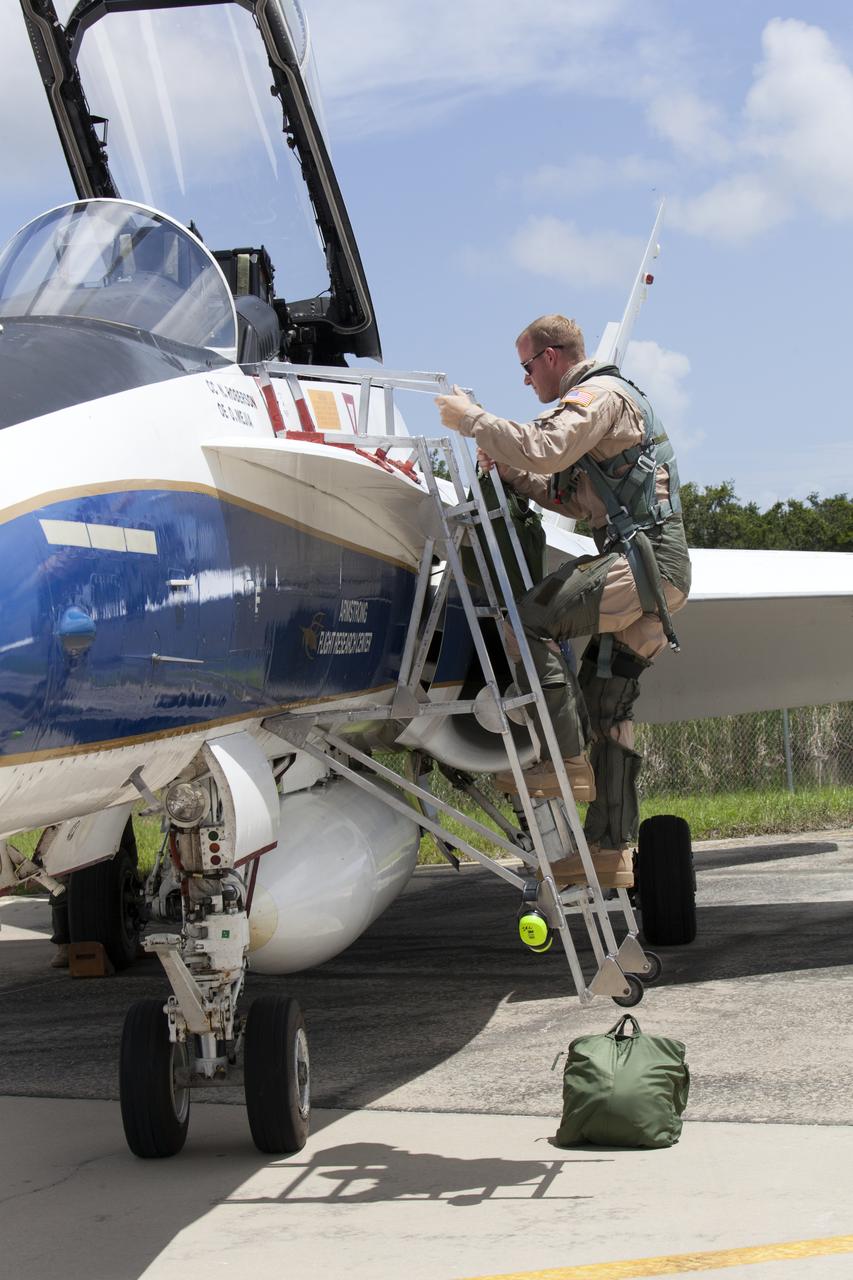
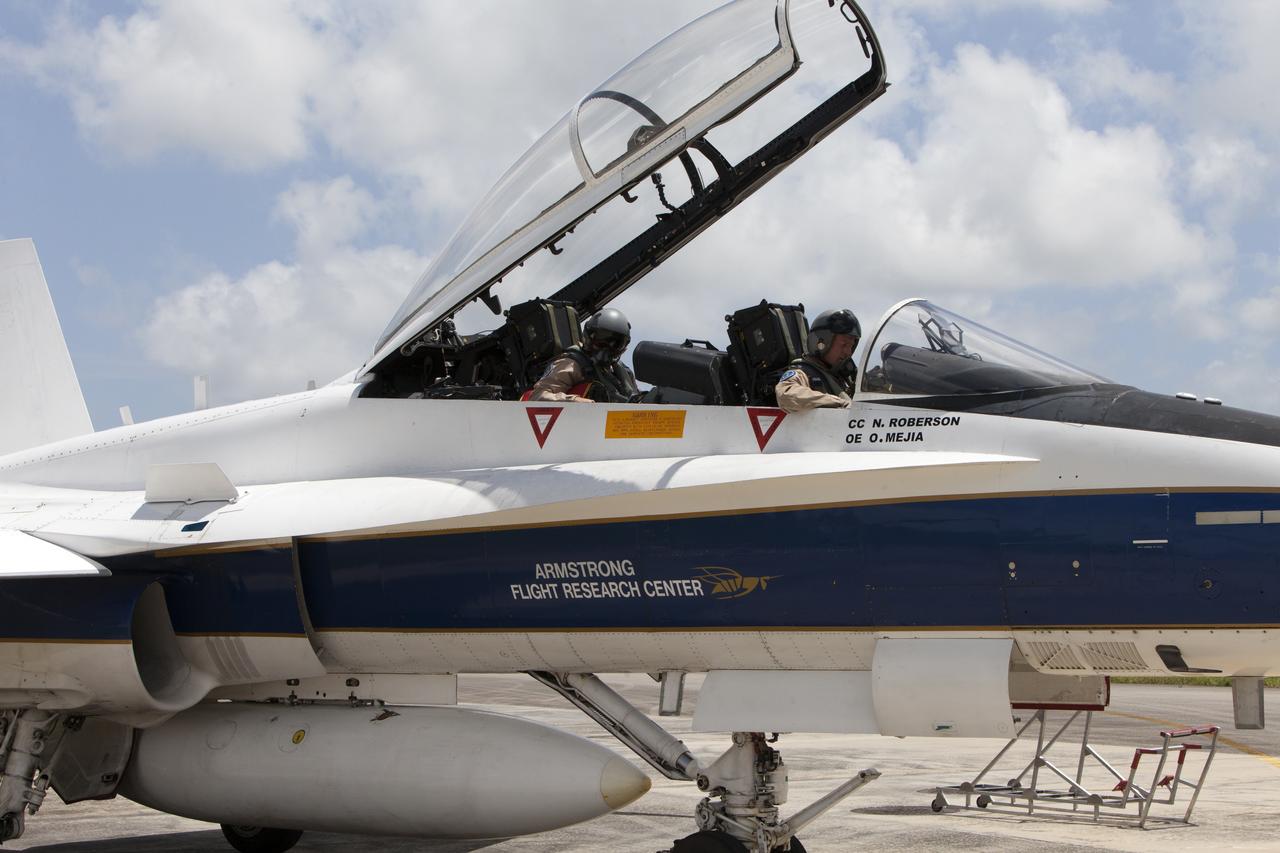
A NASA pilot boards an F-18 jet prior to take off from the agency's Shuttle Landing Facility at NASA's Kennedy Space Center in Florida. Several flights a day have been taking place the week of Aug. 21, 2017 to measure the effects of sonic booms. It is part of NASA's Sonic Booms in Atmospheric Turbulence, or SonicBAT II Program. NASA at Kennedy is partnering with the agency's Armstrong Flight Research Center in California, Langley Research Center in Virginia, and Space Florida for a program in which F-18 jets will take off from the Shuttle Landing Facility and fly at supersonic speeds while agency researchers measure the effects of low-altitude turbulence caused by sonic booms.
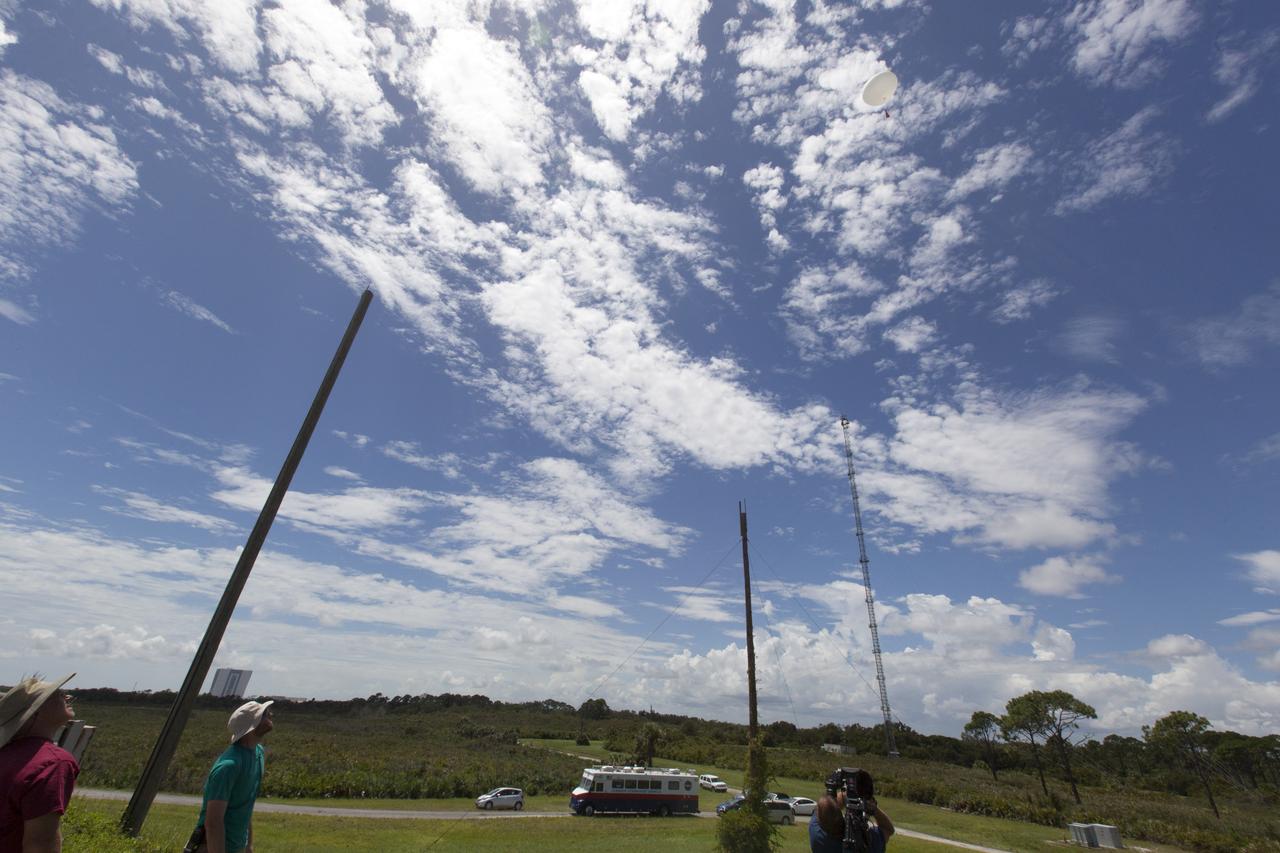
A weather balloon is released at NASA's Kennedy Space Center in Florida before flights of agency F-18 jets to measure the effects of sonic booms. Several flights a day have been taking place the week of Aug. 21, 2017 as part of NASA's Sonic Booms in Atmospheric Turbulence, or SonicBAT II Program. NASA at Kennedy is partnering with the agency's Armstrong Flight Research Center in California, Langley Research Center in Virginia, and Space Florida for a program in which F-18 jets will take off from the Shuttle Landing Facility and fly at supersonic speeds while agency researchers measure the effects of low-altitude turbulence caused by sonic booms.
A NASA F-18 jet is prepared for takeoff from the agency's Shuttle Landing Facility at NASA's Kennedy Space Center in Florida. Several flights a day have been taking place the week of Aug. 21, 2017 to measure the effects of sonic booms. It is part of NASA's Sonic Booms in Atmospheric Turbulence, or SonicBAT II Program. NASA at Kennedy is partnering with the agency's Armstrong Flight Research Center in California, Langley Research Center in Virginia, and Space Florida for a program in which F-18 jets will take off from the Shuttle Landing Facility and fly at supersonic speeds while agency researchers measure the effects of low-altitude turbulence caused by sonic booms.
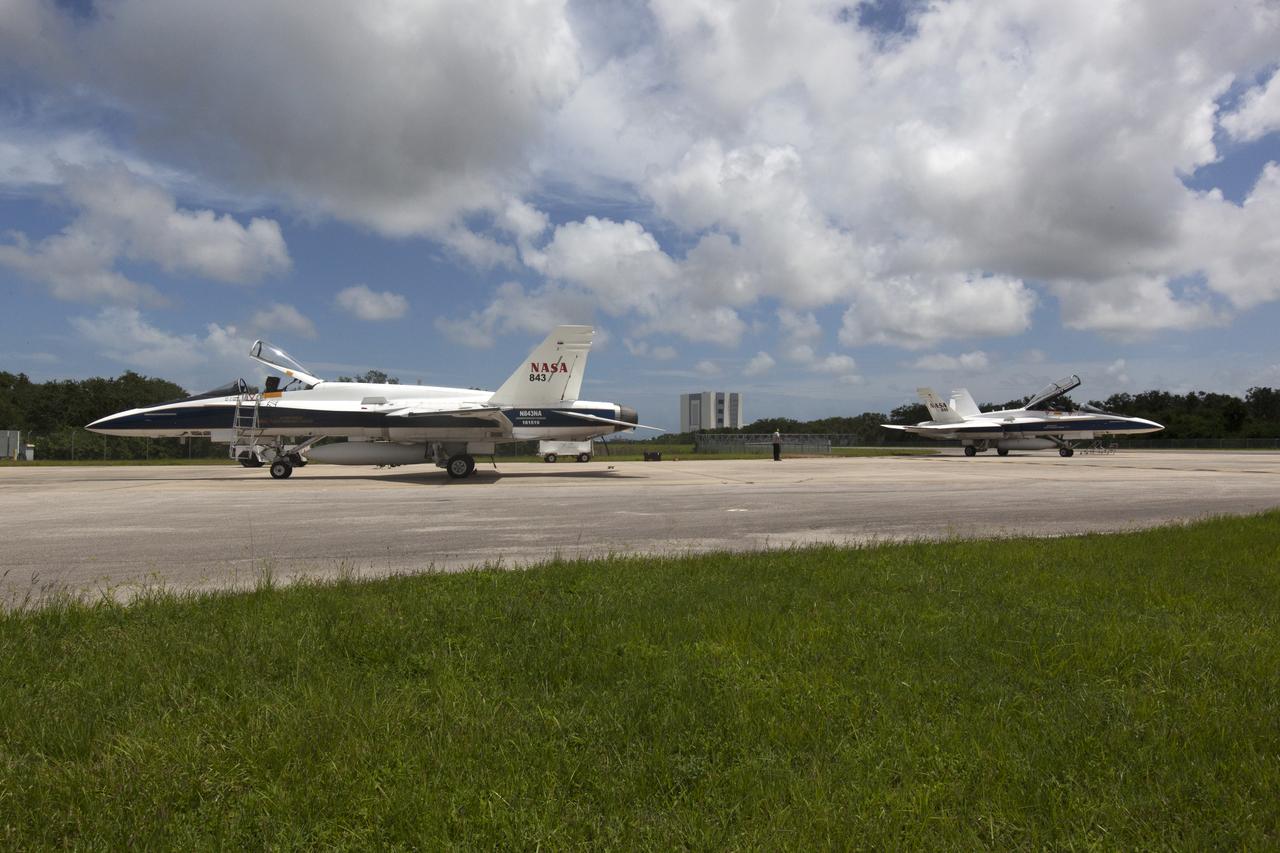
NASA F-18 jets prepare for takeoff from the agency's Shuttle Landing Facility at NASA's Kennedy Space Center in Florida. Several flights a day have been taking place the week of Aug. 21, 2017 to measure the effects of sonic booms. It is part of NASA's Sonic Booms in Atmospheric Turbulence, or SonicBAT II Program. NASA at Kennedy is partnering with the agency's Armstrong Flight Research Center in California, Langley Research Center in Virginia, and Space Florida for a program in which F-18 jets will take off from the Shuttle Landing Facility and fly at supersonic speeds while agency researchers measure the effects of low-altitude turbulence caused by sonic booms.
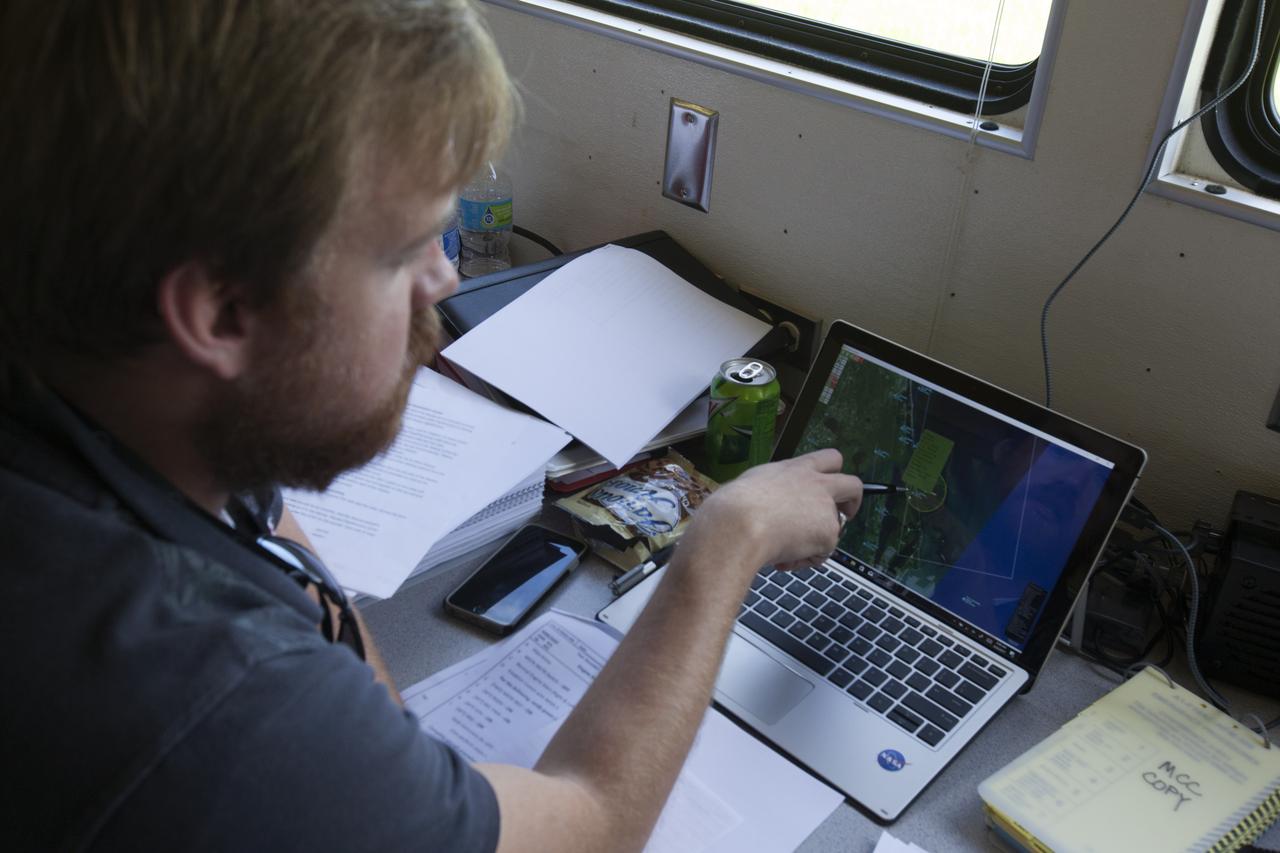
An engineer in a control trailer at NASA's Kennedy Space Center in Florida monitors data before flights of agency F-18 jets to measure the effects of sonic booms. Several flights a day have been taking place the week of Aug. 21, 2017 as part of NASA's Sonic Booms in Atmospheric Turbulence, or SonicBAT II Program. NASA at Kennedy is partnering with the agency's Armstrong Flight Research Center in California, Langley Research Center in Virginia, and Space Florida for a program in which F-18 jets will take off from the Shuttle Landing Facility and fly at supersonic speeds while agency researchers measure the effects of low-altitude turbulence caused by sonic booms.
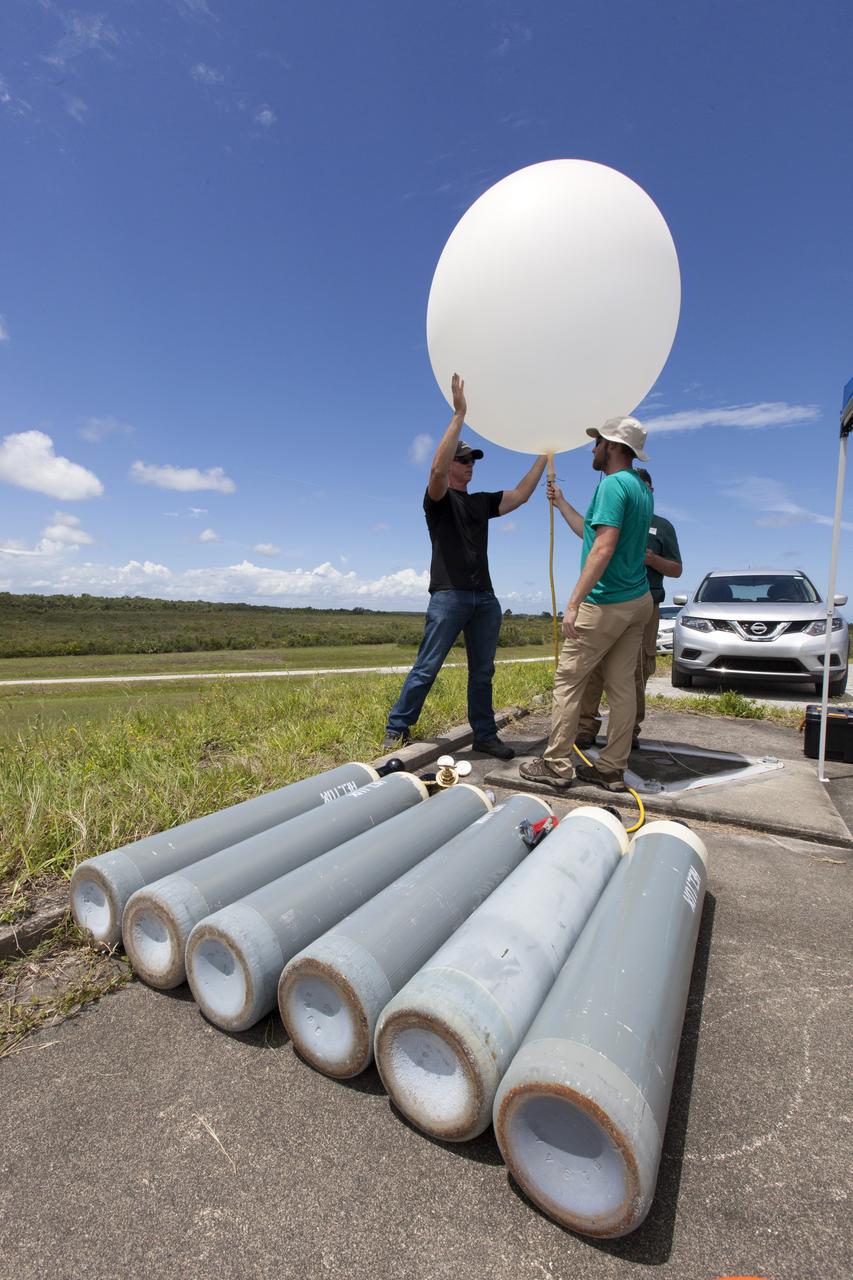
A weather balloon is about to be released at NASA's Kennedy Space Center in Florida before flights of agency F-18 jets to measure the effects of sonic booms. Several flights a day have been taking place the week of Aug. 21, 2017 as part of NASA's Sonic Booms in Atmospheric Turbulence, or SonicBAT II Program. NASA at Kennedy is partnering with the agency's Armstrong Flight Research Center in California, Langley Research Center in Virginia, and Space Florida for a program in which F-18 jets will take off from the Shuttle Landing Facility and fly at supersonic speeds while agency researchers measure the effects of low-altitude turbulence caused by sonic booms.
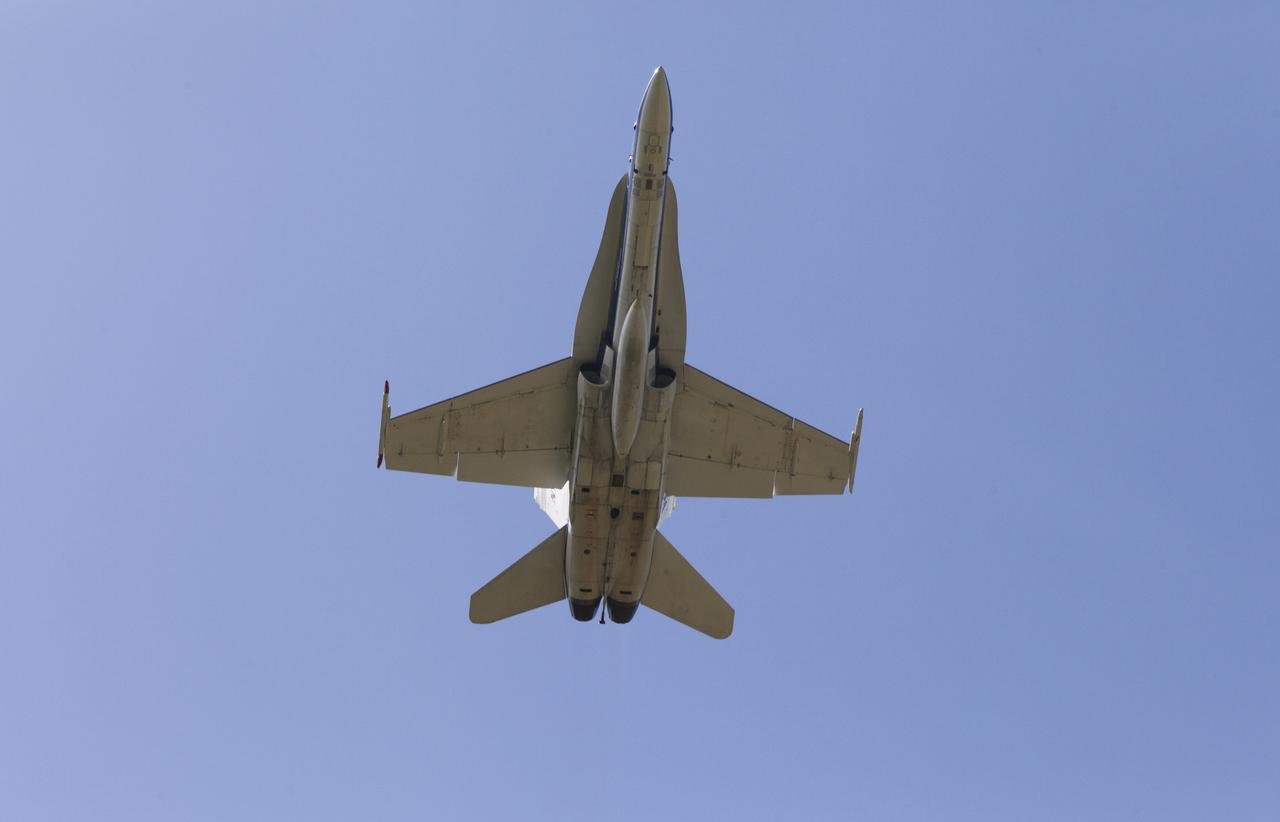
A NASA F-18 jet takes off from the agency's Shuttle Landing Facility at NASA's Kennedy Space Center in Florida. Several flights a day have been taking place the week of Aug. 21, 2017 to measure the effects of sonic booms. It is part of NASA's Sonic Booms in Atmospheric Turbulence, or SonicBAT II Program. NASA at Kennedy is partnering with the agency's Armstrong Flight Research Center in California, Langley Research Center in Virginia, and Space Florida for a program in which F-18 jets will take off from the Shuttle Landing Facility and fly at supersonic speeds while agency researchers measure the effects of low-altitude turbulence caused by sonic booms.
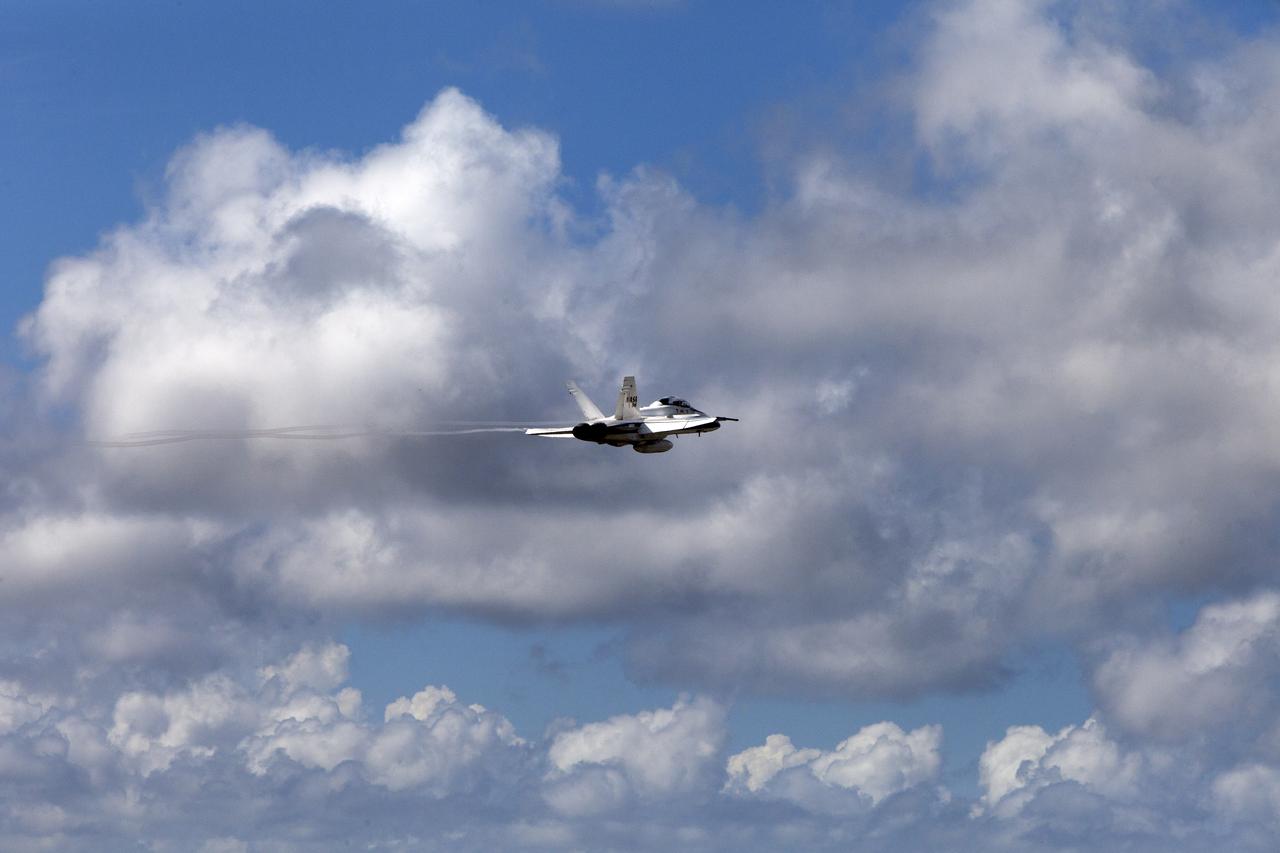
A NASA F-18 jet has taken off from the agency's Shuttle Landing Facility at NASA's Kennedy Space Center in Florida. Several flights a day have been taking place the week of Aug. 21, 2017 to measure the effects of sonic booms. It is part of NASA's Sonic Booms in Atmospheric Turbulence, or SonicBAT II Program. NASA at Kennedy is partnering with the agency's Armstrong Flight Research Center in California, Langley Research Center in Virginia, and Space Florida for a program in which F-18 jets will take off from the Shuttle Landing Facility and fly at supersonic speeds while agency researchers measure the effects of low-altitude turbulence caused by sonic booms.
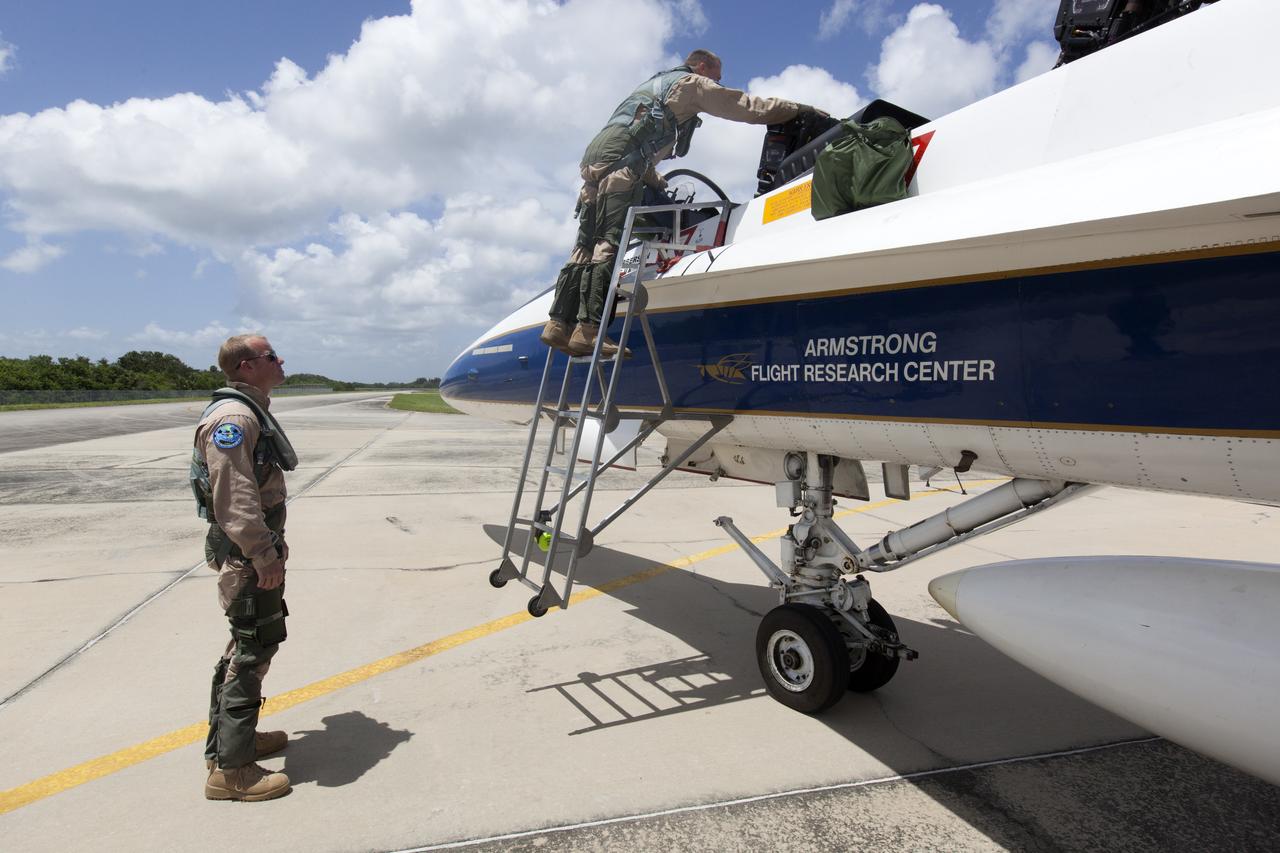
NASA pilots board an F-18 jet prior to take off from the agency's Shuttle Landing Facility at NASA's Kennedy Space Center in Florida. Several flights a day have been taking place the week of Aug. 21, 2017 to measure the effects of sonic booms. It is part of NASA's Sonic Booms in Atmospheric Turbulence, or SonicBAT II Program. NASA at Kennedy is partnering with the agency's Armstrong Flight Research Center in California, Langley Research Center in Virginia, and Space Florida for a program in which F-18 jets will take off from the Shuttle Landing Facility and fly at supersonic speeds while agency researchers measure the effects of low-altitude turbulence caused by sonic booms.
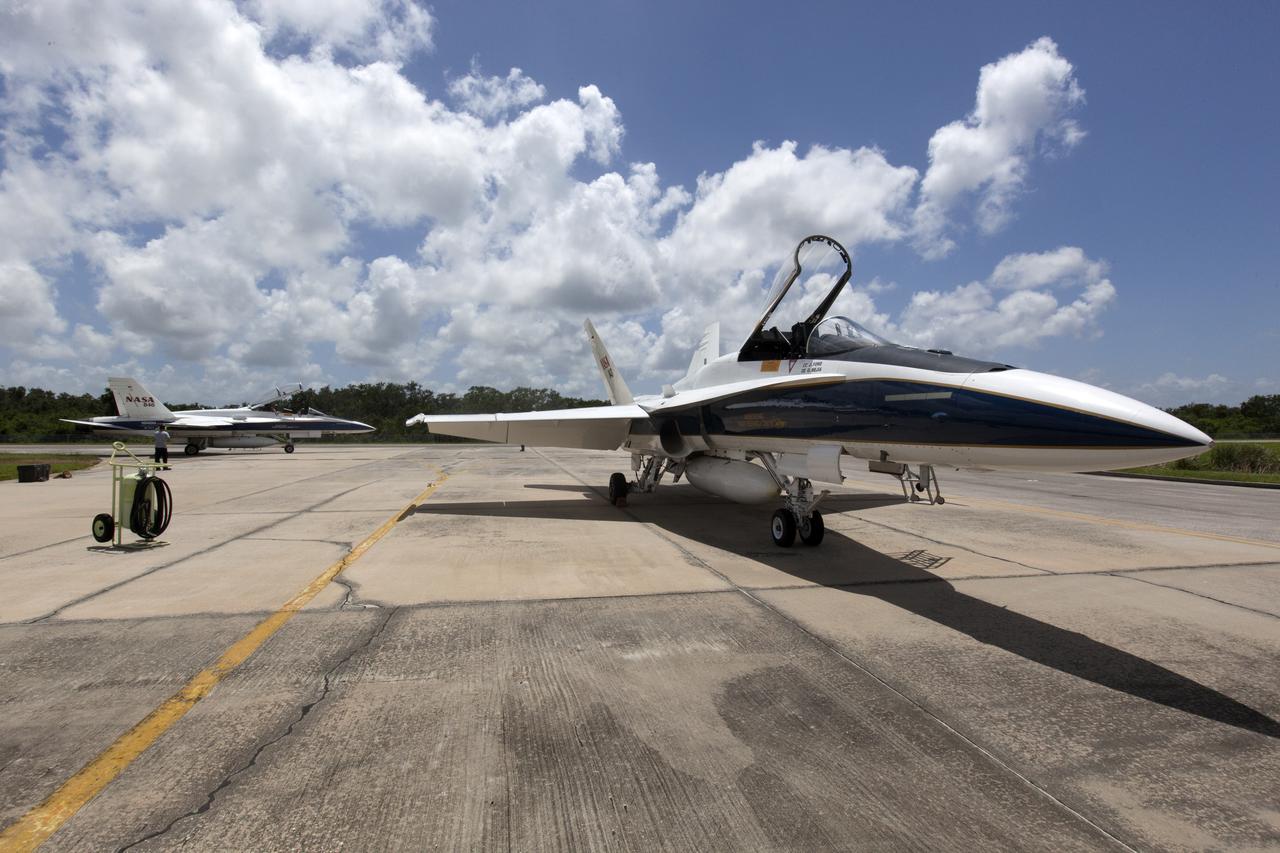
A NASA F-18 jet is prepared for takeoff from the agency's Shuttle Landing Facility at NASA's Kennedy Space Center in Florida. Several flights a day have been taking place the week of Aug. 21, 2017 to measure the effects of sonic booms. It is part of NASA's Sonic Booms in Atmospheric Turbulence, or SonicBAT II Program. NASA at Kennedy is partnering with the agency's Armstrong Flight Research Center in California, Langley Research Center in Virginia, and Space Florida for a program in which F-18 jets will take off from the Shuttle Landing Facility and fly at supersonic speeds while agency researchers measure the effects of low-altitude turbulence caused by sonic booms.
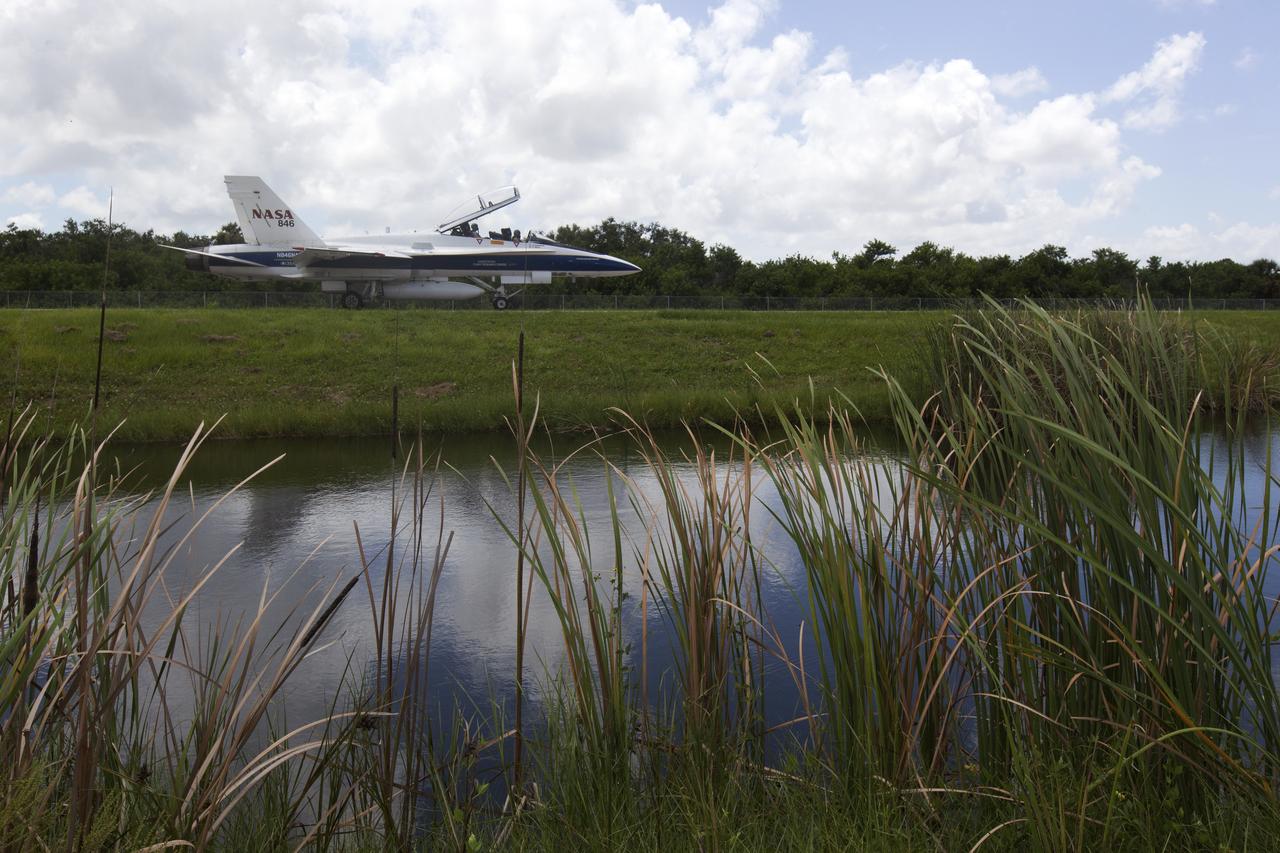
A NASA F-18 jet is prepared for takeoff from the agency's Shuttle Landing Facility at NASA's Kennedy Space Center in Florida. Several flights a day have been taking place the week of Aug. 21, 2017 to measure the effects of sonic booms. It is part of NASA's Sonic Booms in Atmospheric Turbulence, or SonicBAT II Program. NASA at Kennedy is partnering with the agency's Armstrong Flight Research Center in California, Langley Research Center in Virginia, and Space Florida for a program in which F-18 jets will take off from the Shuttle Landing Facility and fly at supersonic speeds while agency researchers measure the effects of low-altitude turbulence caused by sonic booms.
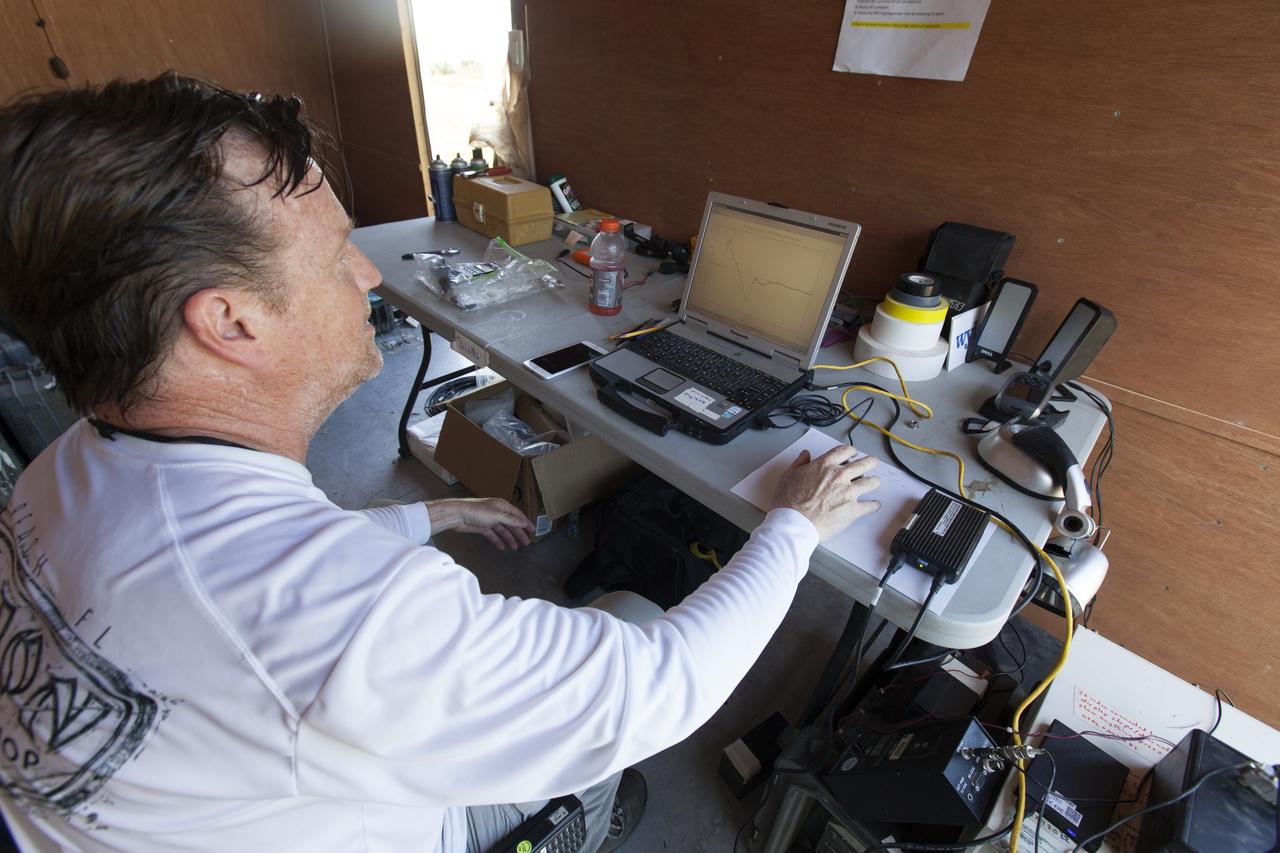
An engineer in a control trailer at NASA's Kennedy Space Center in Florida monitors data before flights of agency F-18 jets to measure the effects of sonic booms. Several flights a day have been taking place the week of Aug. 21, 2017 as part of NASA's Sonic Booms in Atmospheric Turbulence, or SonicBAT II Program. NASA at Kennedy is partnering with the agency's Armstrong Flight Research Center in California, Langley Research Center in Virginia, and Space Florida for a program in which F-18 jets will take off from the Shuttle Landing Facility and fly at supersonic speeds while agency researchers measure the effects of low-altitude turbulence caused by sonic booms.
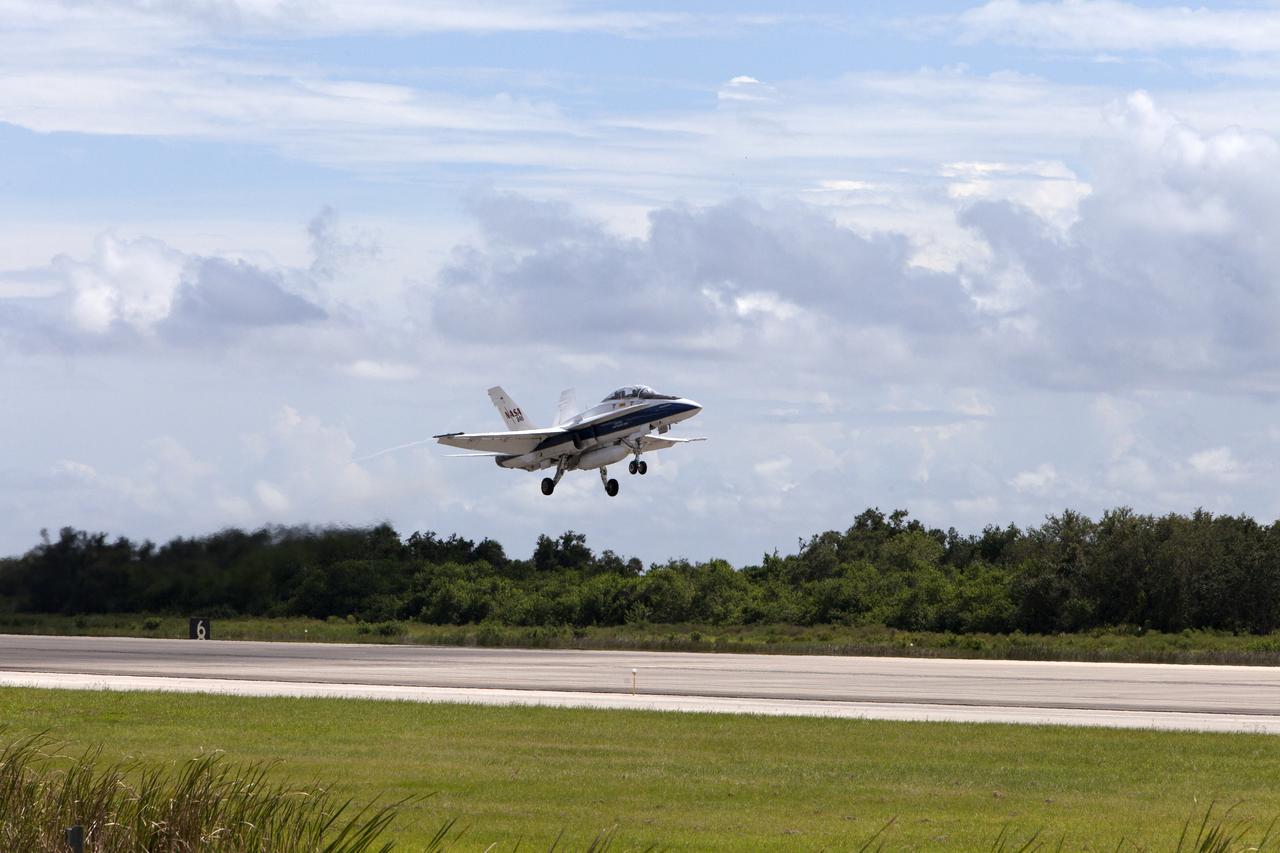
A NASA F-18 jet takes off from the agency's Shuttle Landing Facility at NASA's Kennedy Space Center in Florida. Several flights a day have been taking place the week of Aug. 21, 2017 to measure the effects of sonic booms. It is part of NASA's Sonic Booms in Atmospheric Turbulence, or SonicBAT II Program. NASA at Kennedy is partnering with the agency's Armstrong Flight Research Center in California, Langley Research Center in Virginia, and Space Florida for a program in which F-18 jets will take off from the Shuttle Landing Facility and fly at supersonic speeds while agency researchers measure the effects of low-altitude turbulence caused by sonic booms.
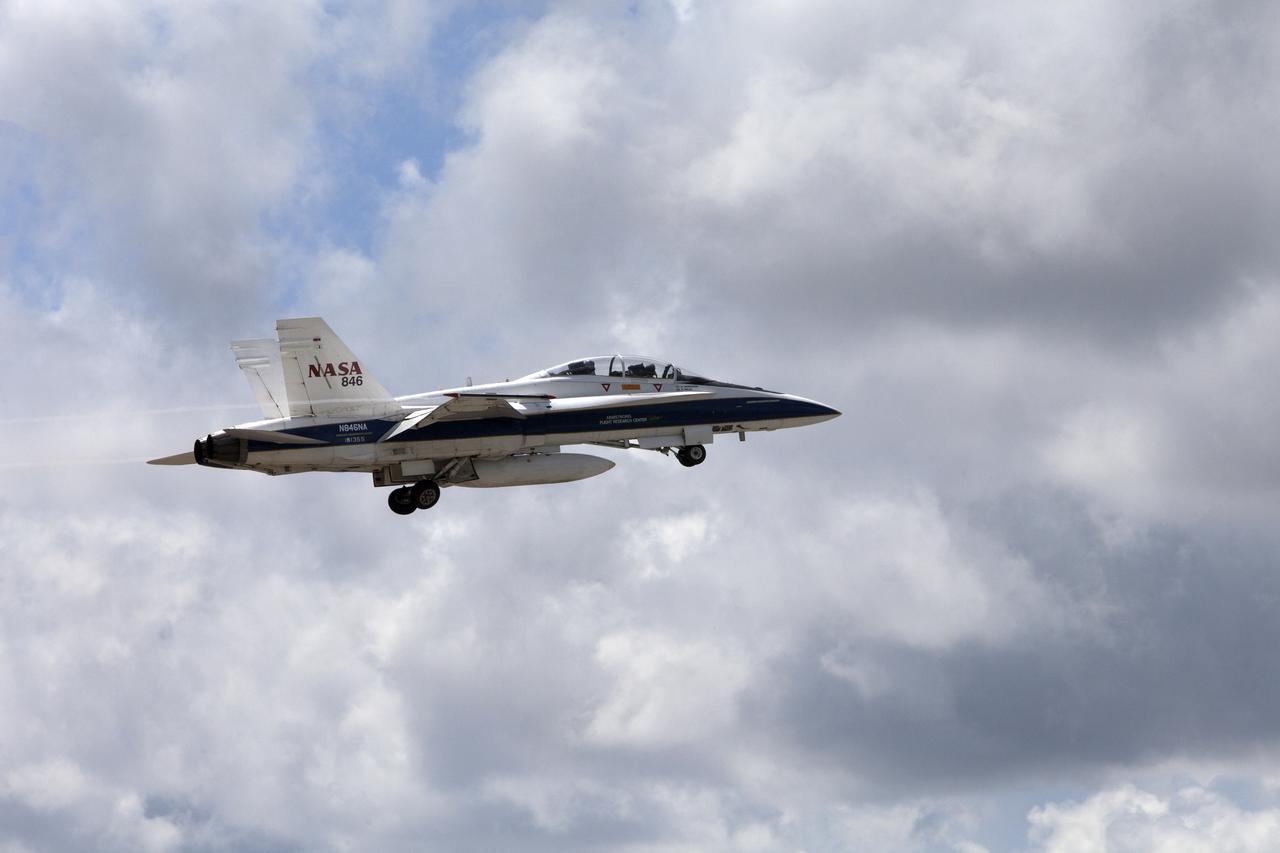
A NASA F-18 jet has taken off from the agency's Shuttle Landing Facility at NASA's Kennedy Space Center in Florida. Several flights a day have been taking place the week of Aug. 21, 2017 to measure the effects of sonic booms. It is part of NASA's Sonic Booms in Atmospheric Turbulence, or SonicBAT II Program. NASA at Kennedy is partnering with the agency's Armstrong Flight Research Center in California, Langley Research Center in Virginia, and Space Florida for a program in which F-18 jets will take off from the Shuttle Landing Facility and fly at supersonic speeds while agency researchers measure the effects of low-altitude turbulence caused by sonic booms.
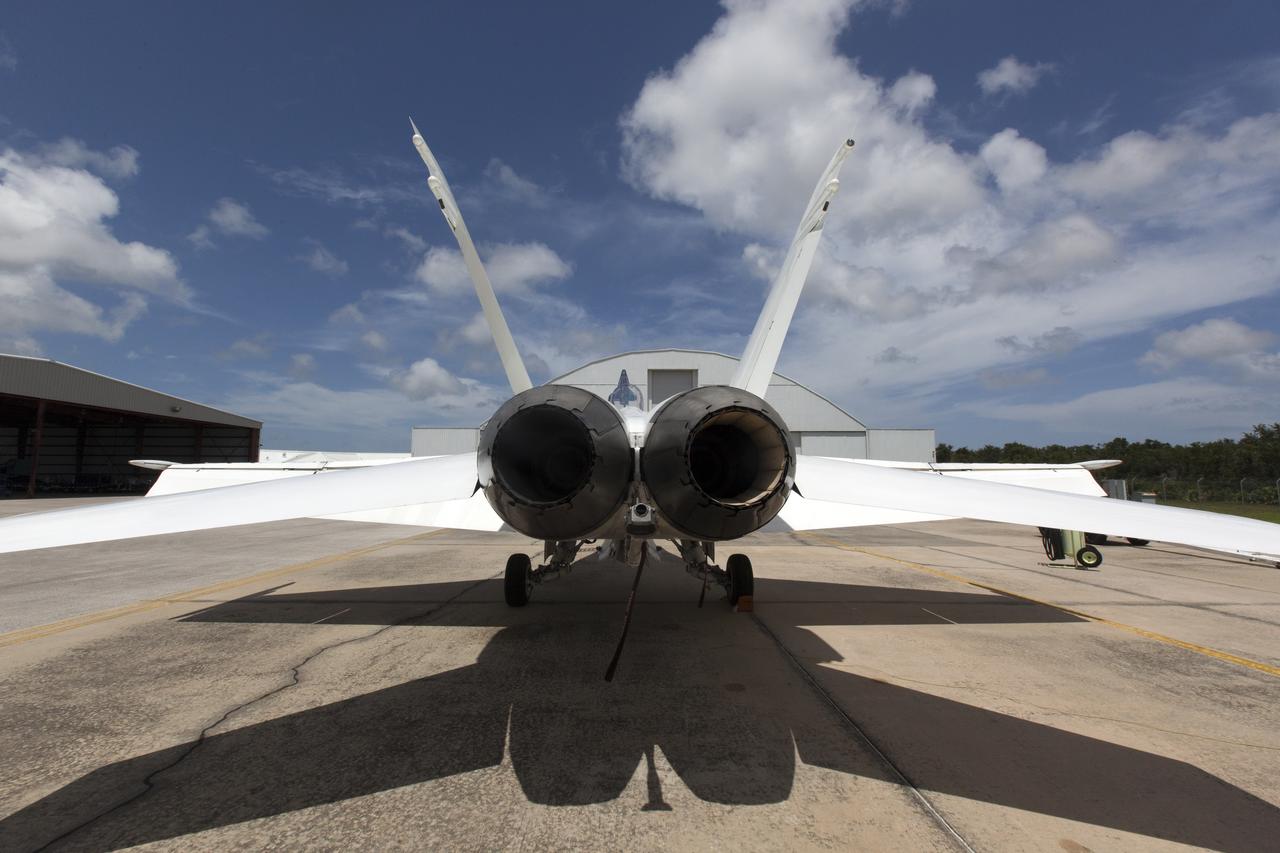
A NASA F-18 jet is prepared for takeoff from the agency's Shuttle Landing Facility at NASA's Kennedy Space Center in Florida. Several flights a day have been taking place the week of Aug. 21, 2017 to measure the effects of sonic booms. It is part of NASA's Sonic Booms in Atmospheric Turbulence, or SonicBAT II Program. NASA at Kennedy is partnering with the agency's Armstrong Flight Research Center in California, Langley Research Center in Virginia, and Space Florida for a program in which F-18 jets will take off from the Shuttle Landing Facility and fly at supersonic speeds while agency researchers measure the effects of low-altitude turbulence caused by sonic booms.
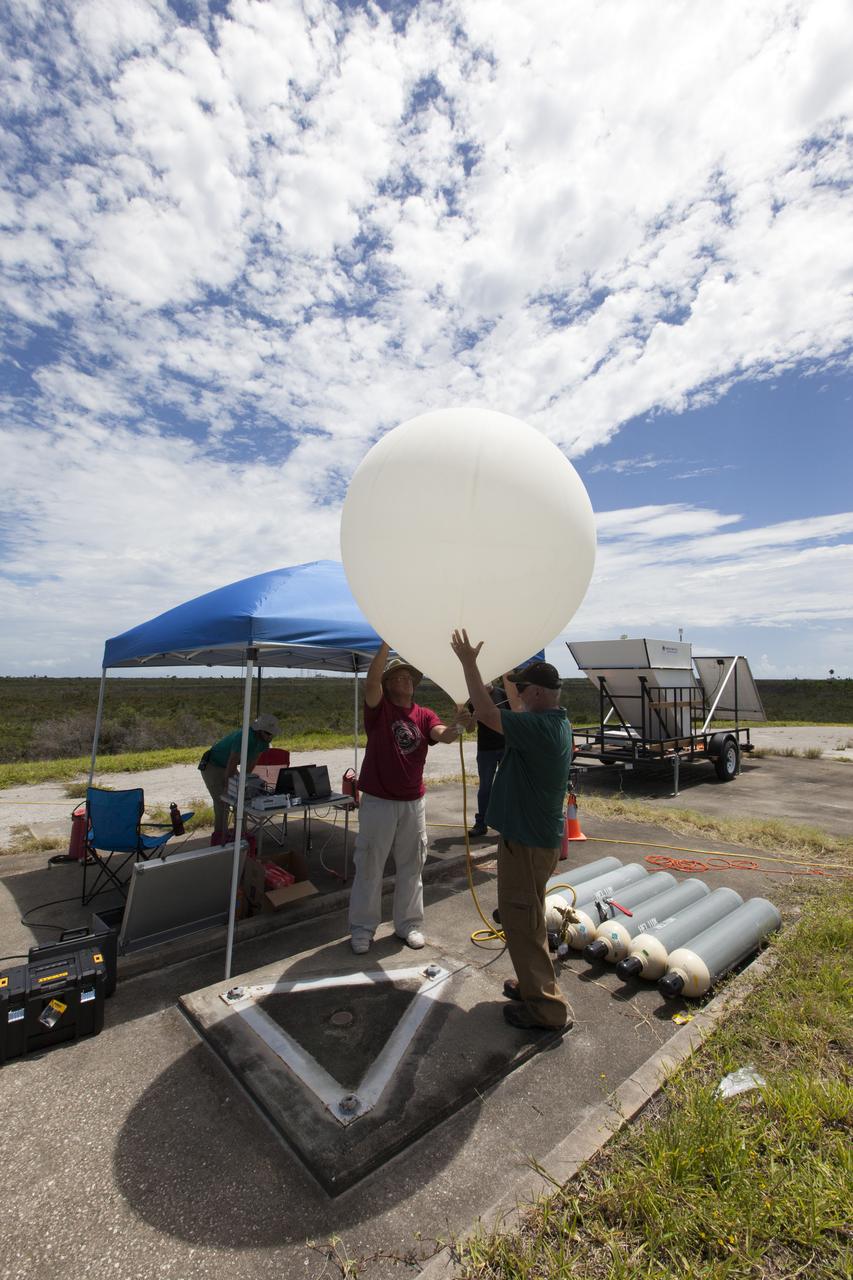
A weather balloon is about to be released at NASA's Kennedy Space Center in Florida before flights of agency F-18 jets to measure the effects of sonic booms. Several flights a day have been taking place the week of Aug. 21, 2017 as part of NASA's Sonic Booms in Atmospheric Turbulence, or SonicBAT II Program. NASA at Kennedy is partnering with the agency's Armstrong Flight Research Center in California, Langley Research Center in Virginia, and Space Florida for a program in which F-18 jets will take off from the Shuttle Landing Facility and fly at supersonic speeds while agency researchers measure the effects of low-altitude turbulence caused by sonic booms.
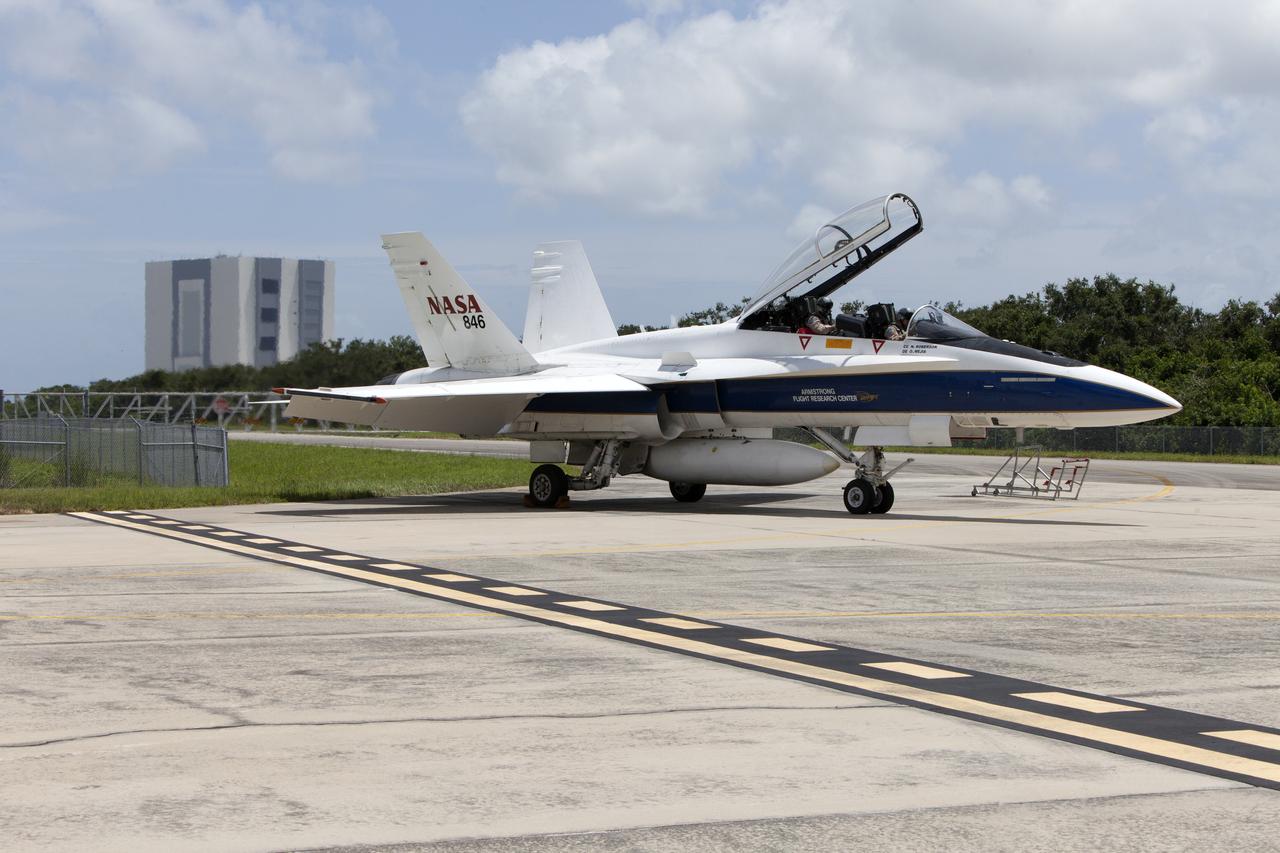
A NASA F-18 jet is prepared for takeoff from the agency's Shuttle Landing Facility at NASA's Kennedy Space Center in Florida. Several flights a day have been taking place the week of Aug. 21, 2017 to measure the effects of sonic booms. It is part of NASA's Sonic Booms in Atmospheric Turbulence, or SonicBAT II Program. NASA at Kennedy is partnering with the agency's Armstrong Flight Research Center in California, Langley Research Center in Virginia, and Space Florida for a program in which F-18 jets will take off from the Shuttle Landing Facility and fly at supersonic speeds while agency researchers measure the effects of low-altitude turbulence caused by sonic booms.
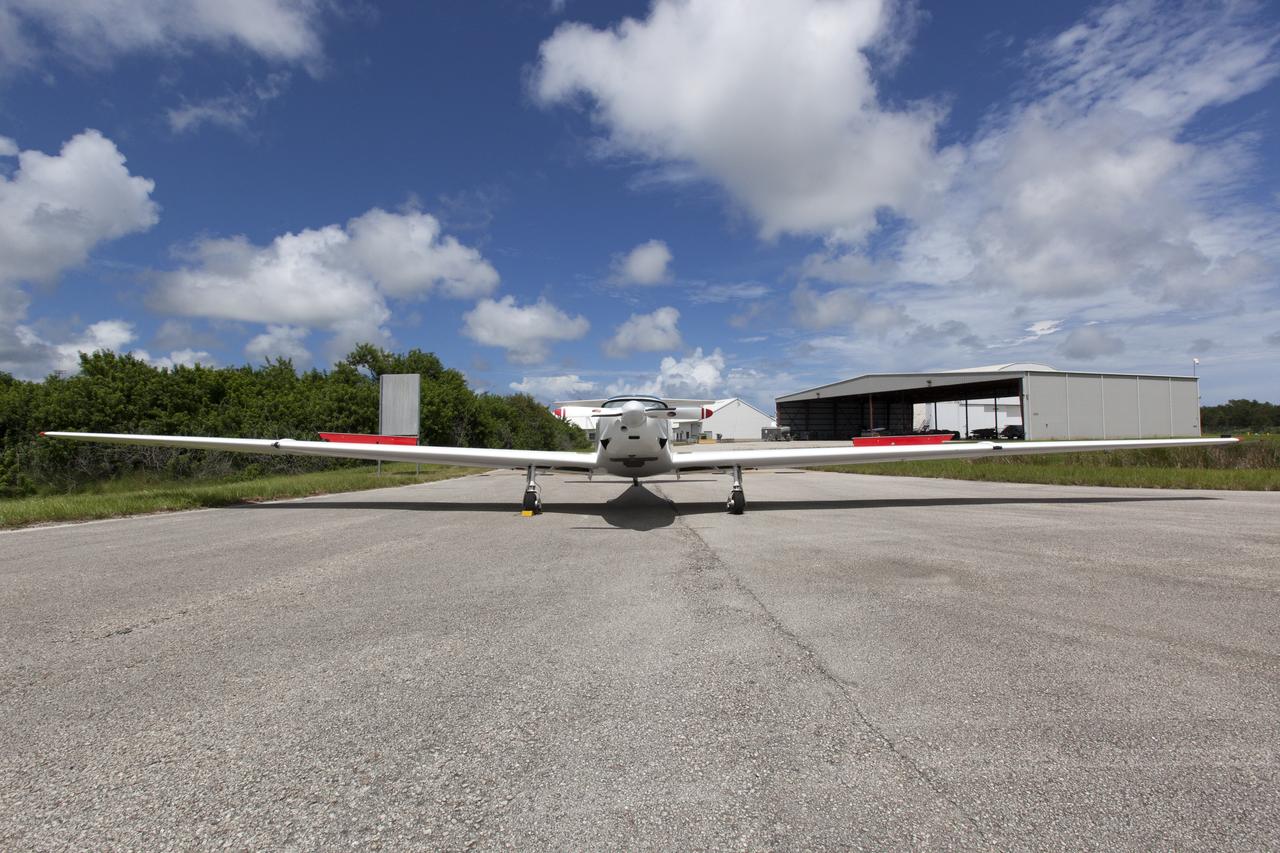
A motorized glider prepares to take off from the Shuttle Landing Facility at NASA's Kennedy Space Center in Florida. Flying with its engine off, the glider will be positioned above the 14,000-foot level to measure sonic booms created by agency F-18 jets to measure the effects of sonic booms. Several flights a day have been taking place the week of Aug. 21, 2017 as part of NASA's Sonic Booms in Atmospheric Turbulence, or SonicBAT II Program. NASA at Kennedy is partnering with the agency's Armstrong Flight Research Center in California, Langley Research Center in Virginia, and Space Florida for a program in which F-18 jets will take off from the Shuttle Landing Facility and fly at supersonic speeds while agency researchers measure the effects of low-altitude turbulence caused by sonic booms.
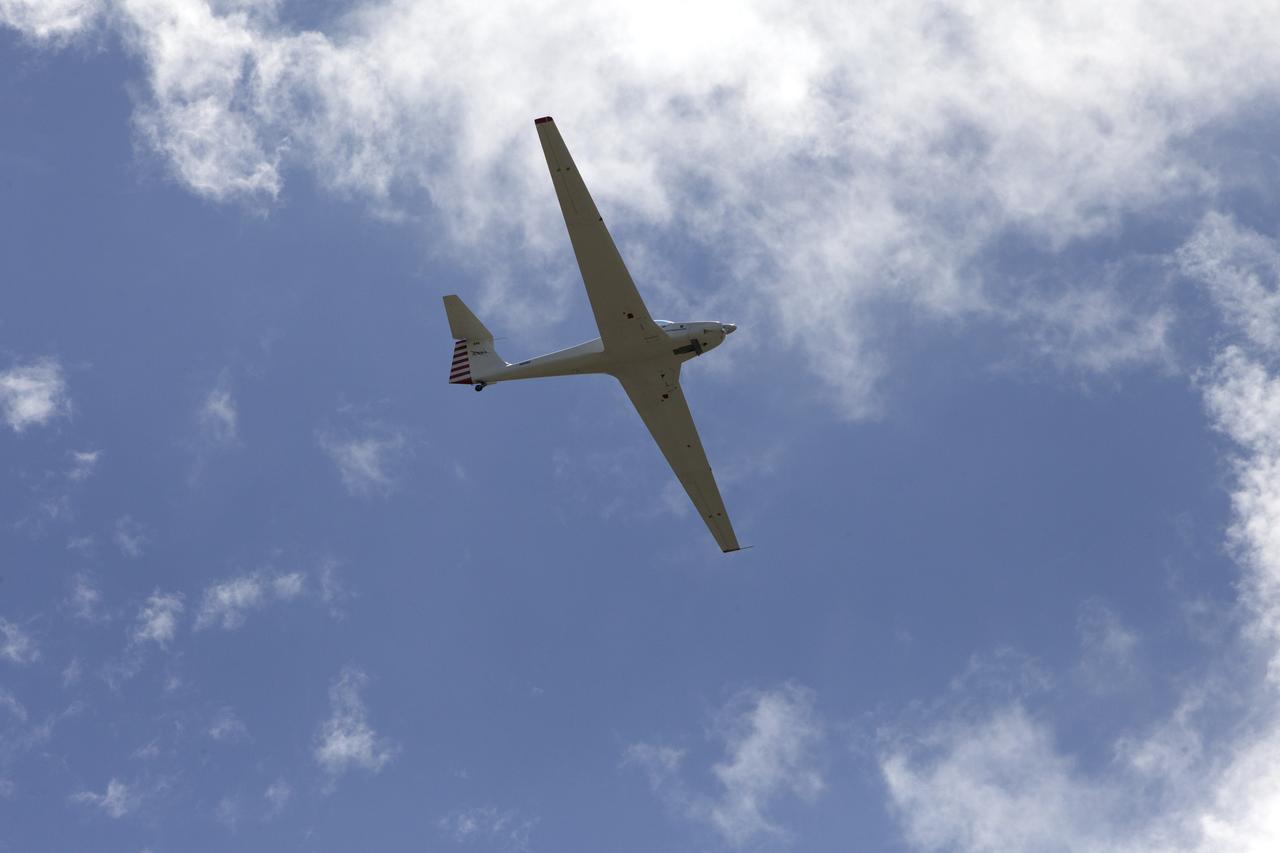
A motorized glider has taken off from the Shuttle Landing Facility at NASA's Kennedy Space Center in Florida. Flying with its engine off, the glider will be positioned above the 14,000-foot level to measure sonic booms created by agency F-18 jets to measure the effects of sonic booms. Several flights a day have been taking place the week of Aug. 21, 2017 as part of NASA's Sonic Booms in Atmospheric Turbulence, or SonicBAT II Program. NASA at Kennedy is partnering with the agency's Armstrong Flight Research Center in California, Langley Research Center in Virginia, and Space Florida for a program in which F-18 jets will take off from the Shuttle Landing Facility and fly at supersonic speeds while agency researchers measure the effects of low-altitude turbulence caused by sonic booms.
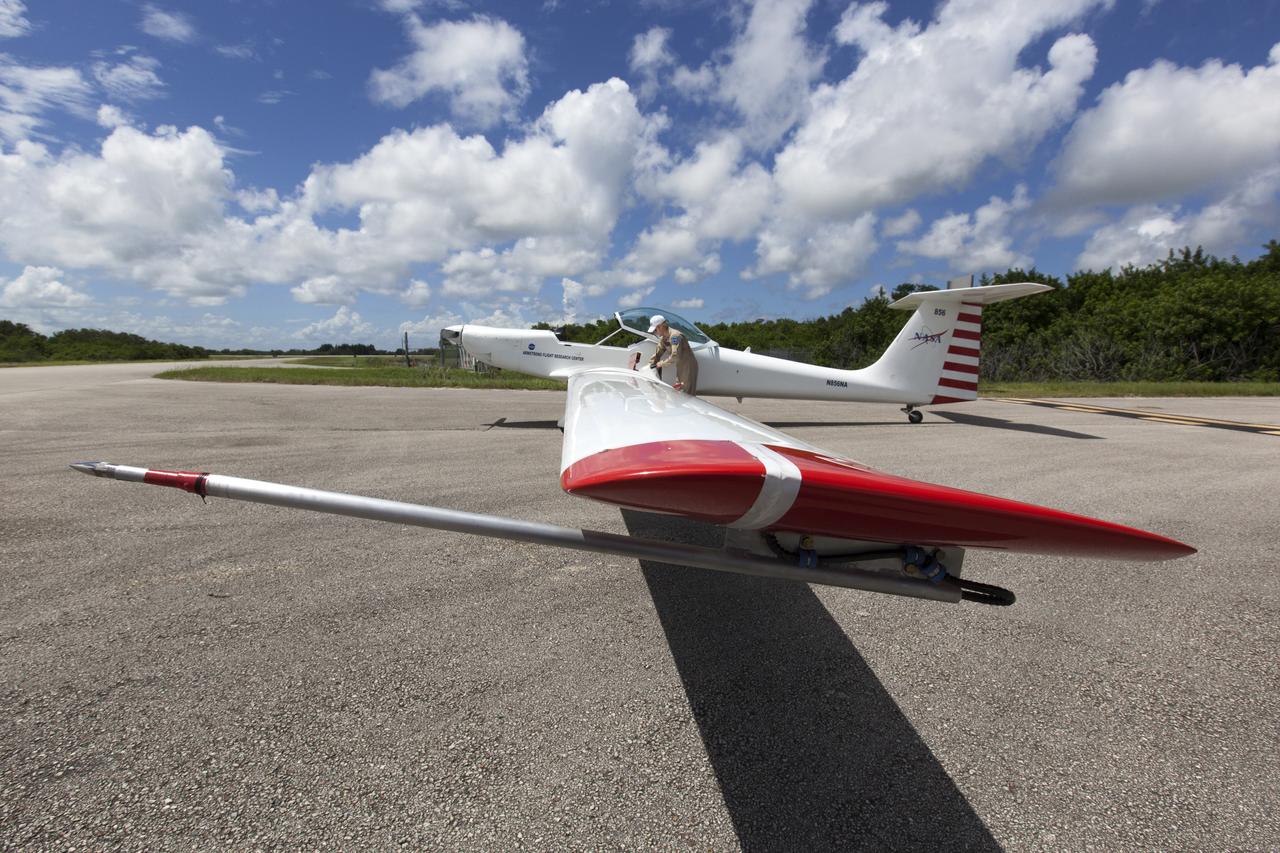
A motorized glider prepares to take off from the Shuttle Landing Facility at NASA's Kennedy Space Center in Florida. Flying with its engine off, the glider will be positioned above the 14,000-foot level to measure sonic booms created by agency F-18 jets to measure the effects of sonic booms. Several flights a day have been taking place the week of Aug. 21, 2017 as part of NASA's Sonic Booms in Atmospheric Turbulence, or SonicBAT II Program. NASA at Kennedy is partnering with the agency's Armstrong Flight Research Center in California, Langley Research Center in Virginia, and Space Florida for a program in which F-18 jets will take off from the Shuttle Landing Facility and fly at supersonic speeds while agency researchers measure the effects of low-altitude turbulence caused by sonic booms.
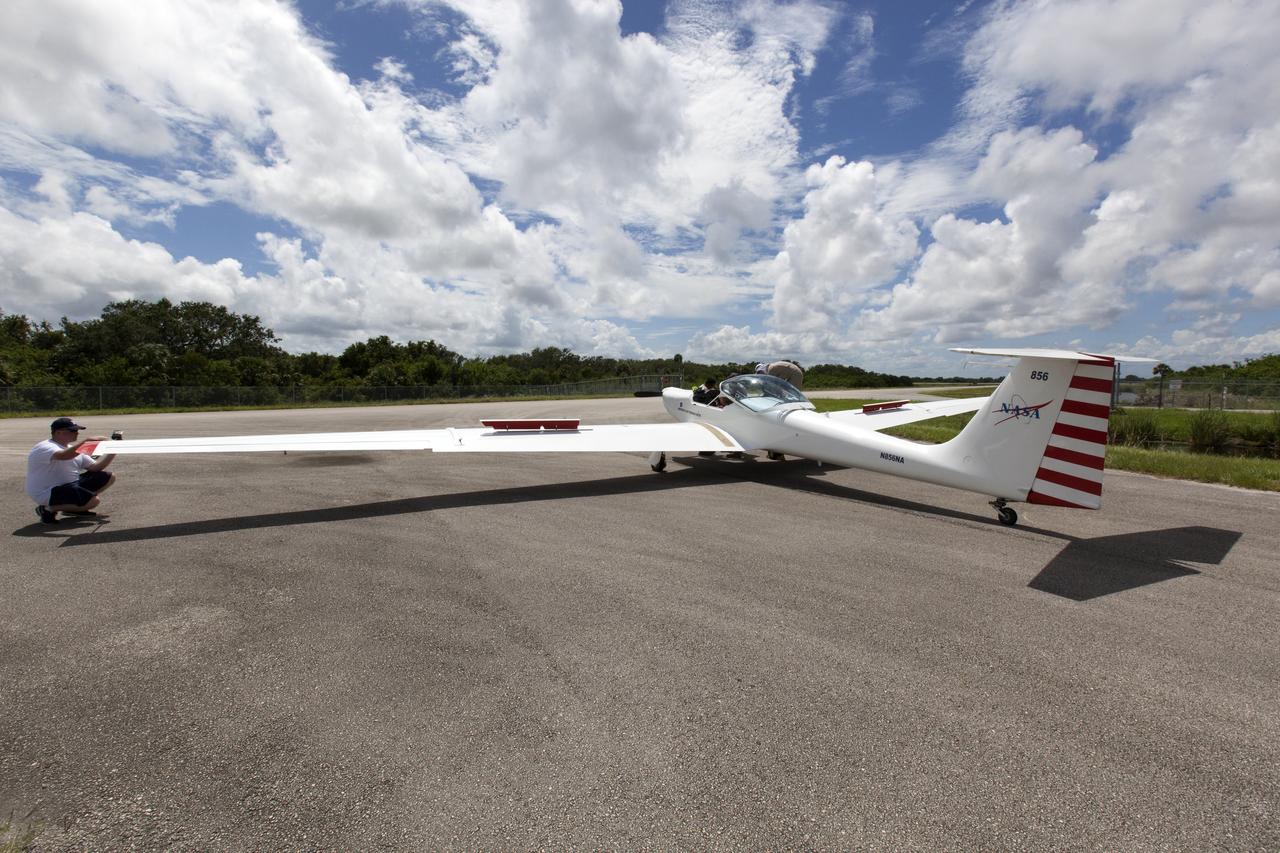
A motorized glider prepares to take off from the Shuttle Landing Facility at NASA's Kennedy Space Center in Florida. Flying with its engine off, the glider will be positioned above the 14,000-foot level to measure sonic booms created by agency F-18 jets to measure the effects of sonic booms. Several flights a day have been taking place the week of Aug. 21, 2017 as part of NASA's Sonic Booms in Atmospheric Turbulence, or SonicBAT II Program. NASA at Kennedy is partnering with the agency's Armstrong Flight Research Center in California, Langley Research Center in Virginia, and Space Florida for a program in which F-18 jets will take off from the Shuttle Landing Facility and fly at supersonic speeds while agency researchers measure the effects of low-altitude turbulence caused by sonic booms.
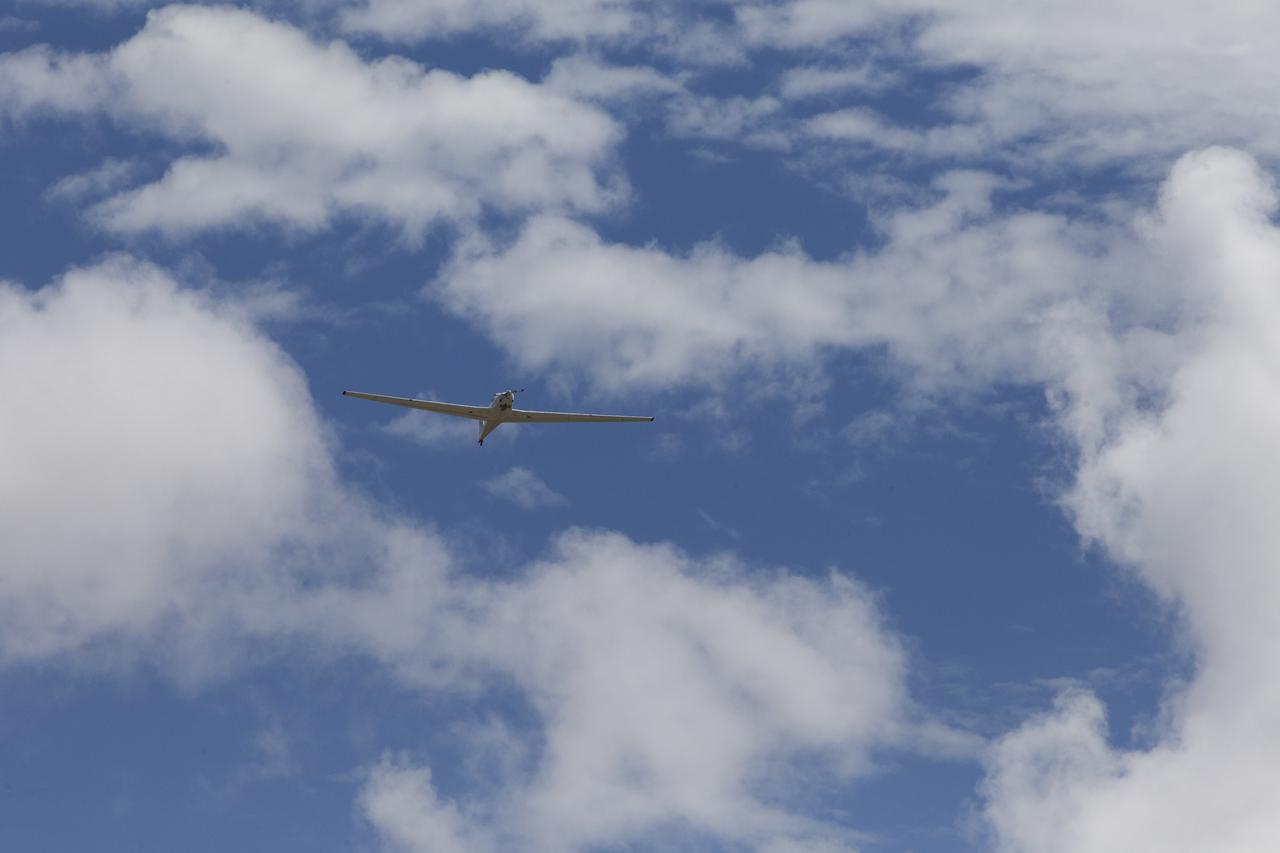
A motorized glider has taken off from the Shuttle Landing Facility at NASA's Kennedy Space Center in Florida. Flying with its engine off, the glider will be positioned above the 14,000-foot level to measure sonic booms created by agency F-18 jets to measure the effects of sonic booms. Several flights a day have been taking place the week of Aug. 21, 2017 as part of NASA's Sonic Booms in Atmospheric Turbulence, or SonicBAT II Program. NASA at Kennedy is partnering with the agency's Armstrong Flight Research Center in California, Langley Research Center in Virginia, and Space Florida for a program in which F-18 jets will take off from the Shuttle Landing Facility and fly at supersonic speeds while agency researchers measure the effects of low-altitude turbulence caused by sonic booms.
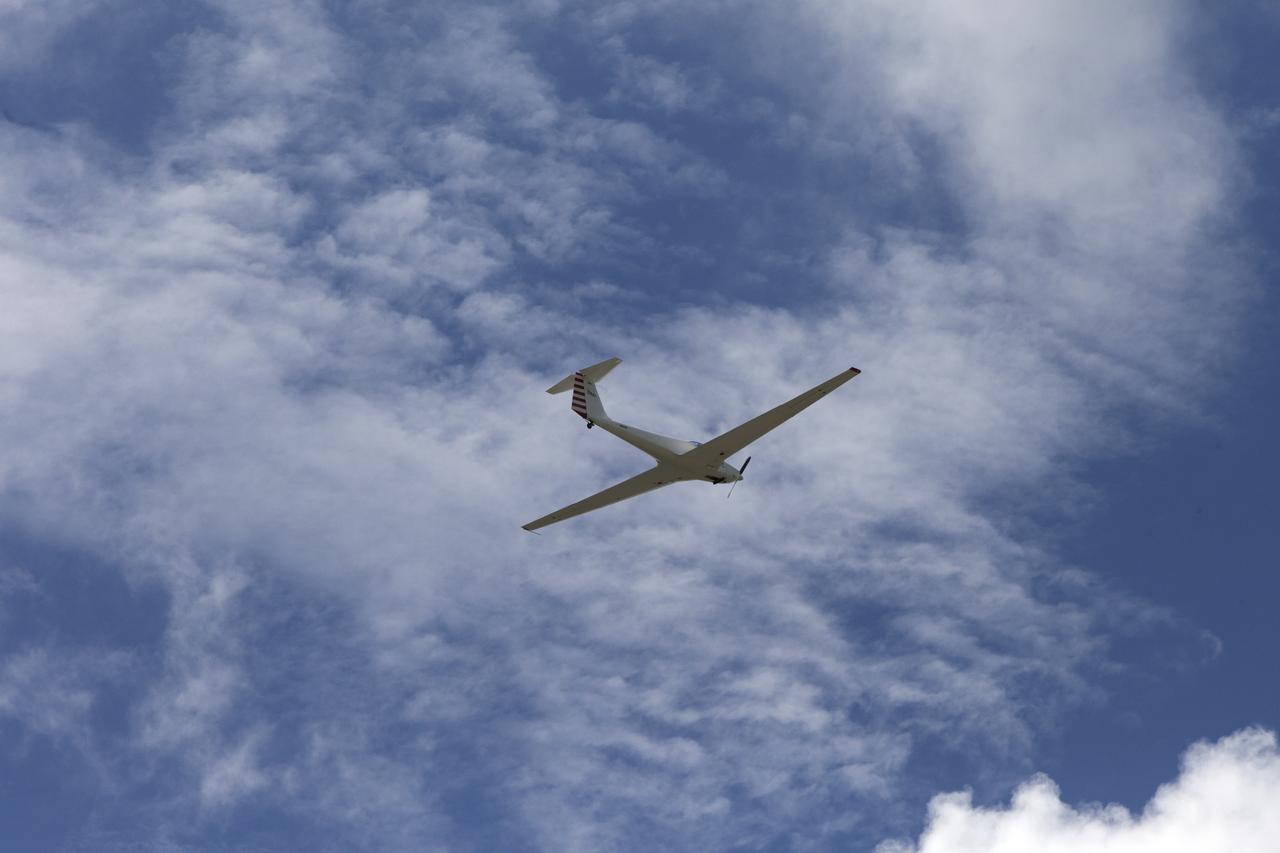
A motorized glider has taken off from the Shuttle Landing Facility at NASA's Kennedy Space Center in Florida. Flying with its engine off, the glider will be positioned above the 14,000-foot level to measure sonic booms created by agency F-18 jets to measure the effects of sonic booms. Several flights a day have been taking place the week of Aug. 21, 2017 as part of NASA's Sonic Booms in Atmospheric Turbulence, or SonicBAT II Program. NASA at Kennedy is partnering with the agency's Armstrong Flight Research Center in California, Langley Research Center in Virginia, and Space Florida for a program in which F-18 jets will take off from the Shuttle Landing Facility and fly at supersonic speeds while agency researchers measure the effects of low-altitude turbulence caused by sonic booms.
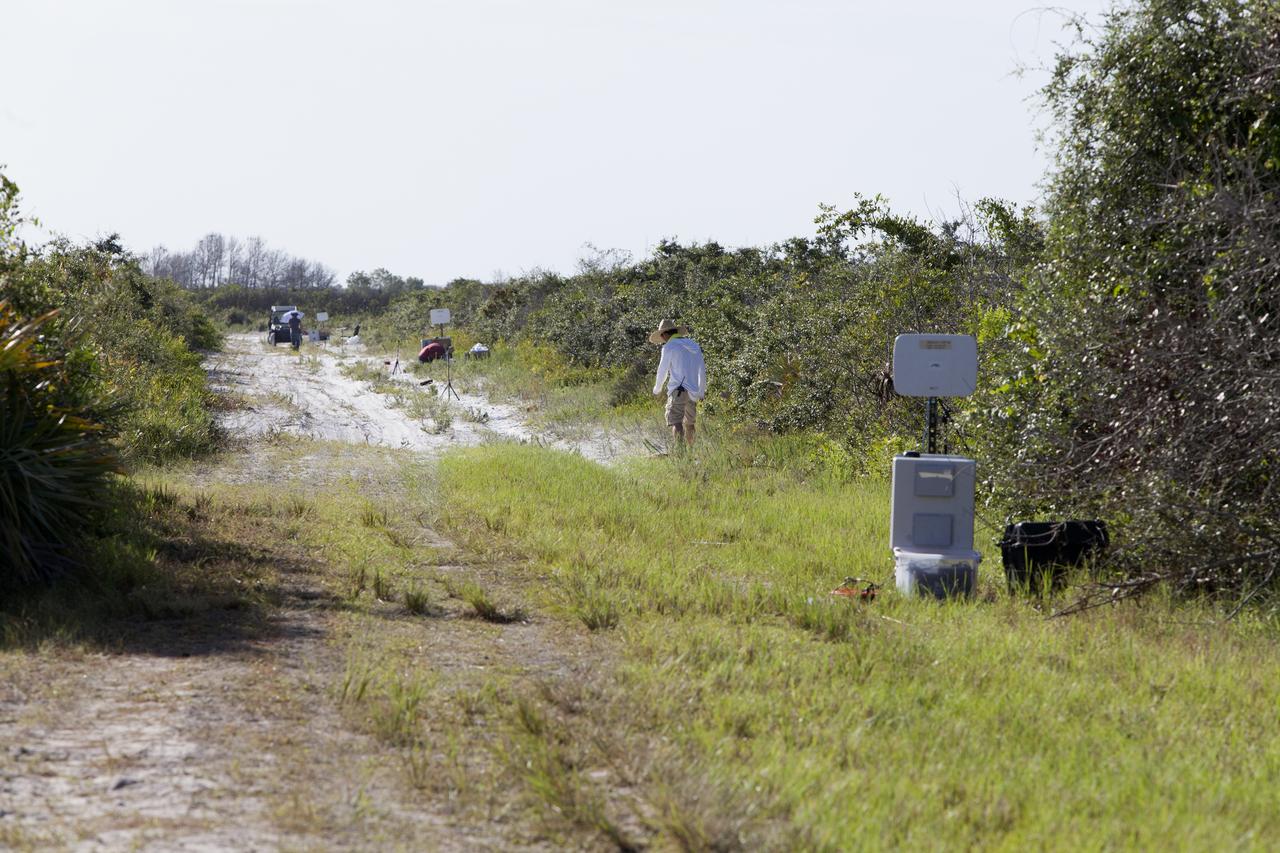
Microphone arrays are strategically positioned along the ground at NASA's Kennedy Space Center in Florida to collect sound signatures from sonic booms created by agency F-18 jets flying faster than the speed of sound. Several flights a day have been taking place the week of Aug. 21, 2017 as part of NASA's Sonic Booms in Atmospheric Turbulence, or SonicBAT II Program. NASA at Kennedy is partnering with the agency's Armstrong Flight Research Center in California, Langley Research Center in Virginia, and Space Florida for a program in which F-18 jets will take off from the Shuttle Landing Facility and fly at supersonic speeds while agency researchers measure the effects of low-altitude turbulence caused by sonic booms.
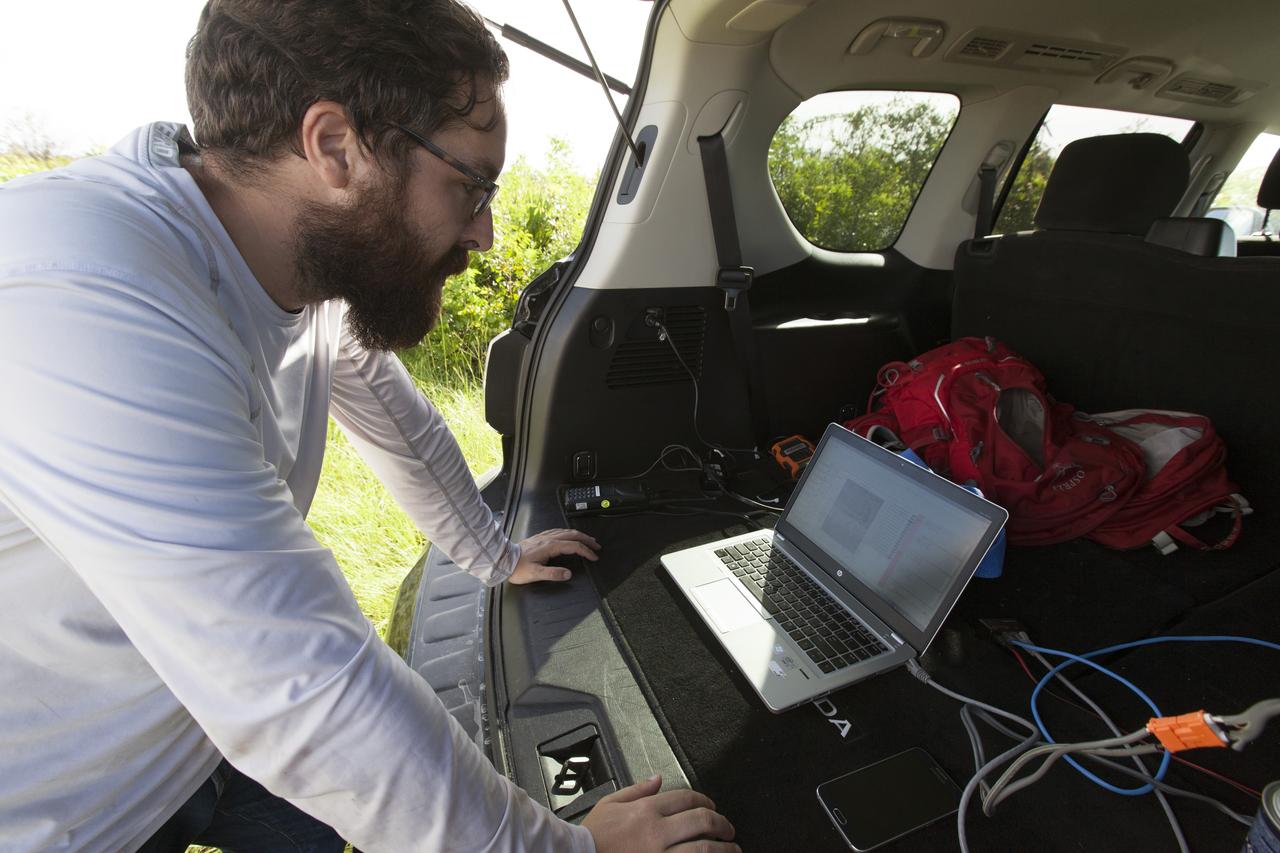
An engineer checks readings from microphone arrays that were strategically positioned along the ground at NASA's Kennedy Space Center in Florida to collect sound signatures from sonic booms created by agency F-18 jets flying faster than the speed of sound. Several flights a day have been taking place the week of Aug. 21, 2017 as part of NASA's Sonic Booms in Atmospheric Turbulence, or SonicBAT II Program. NASA at Kennedy is partnering with the agency's Armstrong Flight Research Center in California, Langley Research Center in Virginia, and Space Florida for a program in which F-18 jets will take off from the Shuttle Landing Facility and fly at supersonic speeds while agency researchers measure the effects of low-altitude turbulence caused by sonic booms.
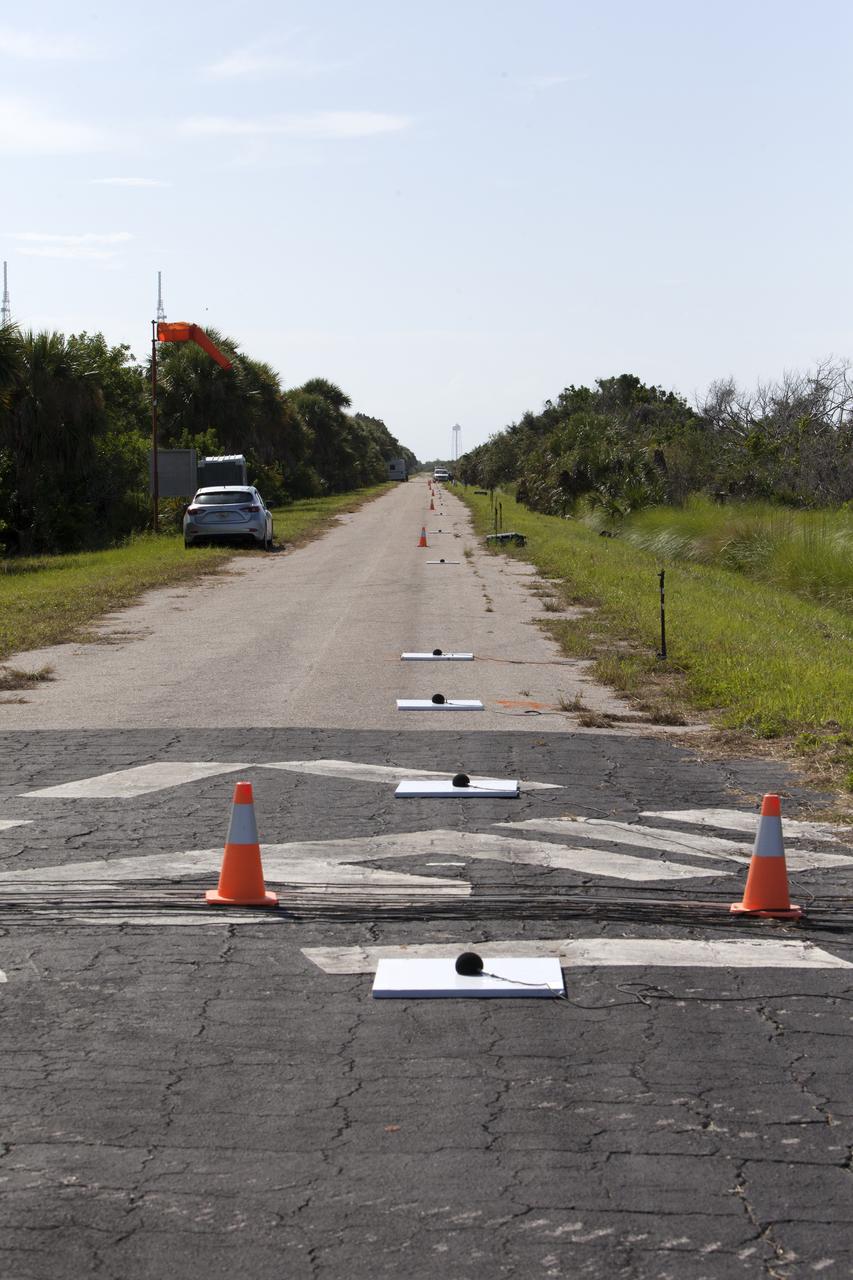
Microphone arrays and other instrumentation are strategically positioned along the ground at NASA's Kennedy Space Center in Florida. They have been set up to collect sound signatures from sonic booms created by agency F-18 jets flying faster than the speed of sound. Several flights a day have been taking place the week of Aug. 21, 2017 as part of NASA's Sonic Booms in Atmospheric Turbulence, or SonicBAT II Program. NASA at Kennedy is partnering with the agency's Armstrong Flight Research Center in California, Langley Research Center in Virginia, and Space Florida for a program in which F-18 jets will take off from the Shuttle Landing Facility and fly at supersonic speeds while agency researchers measure the effects of low-altitude turbulence caused by sonic booms.
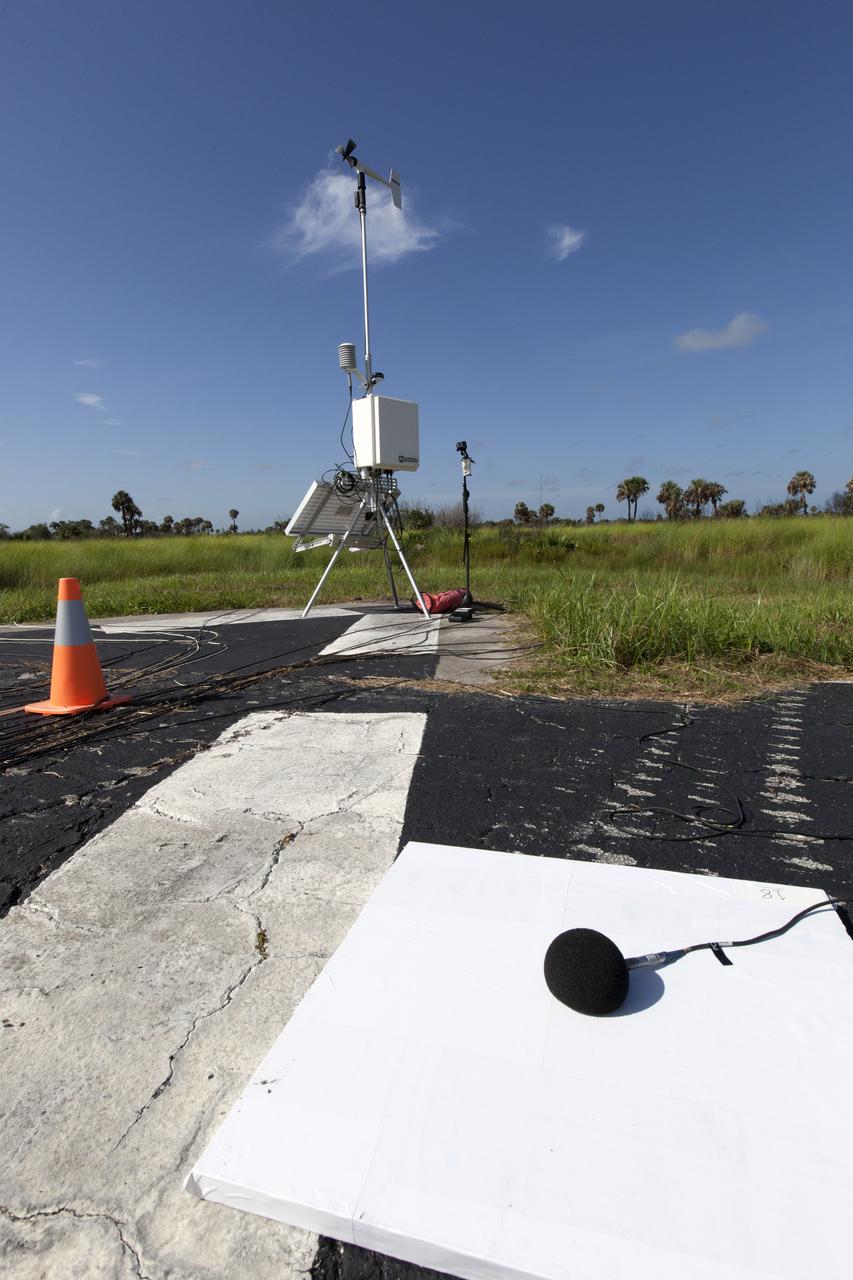
Microphone arrays and other instrumentation are strategically positioned along the ground at NASA's Kennedy Space Center in Florida. They have been set up to collect sound signatures from sonic booms created by agency F-18 jets flying faster than the speed of sound. Several flights a day have been taking place the week of Aug. 21, 2017 as part of NASA's Sonic Booms in Atmospheric Turbulence, or SonicBAT II Program. NASA at Kennedy is partnering with the agency's Armstrong Flight Research Center in California, Langley Research Center in Virginia, and Space Florida for a program in which F-18 jets will take off from the Shuttle Landing Facility and fly at supersonic speeds while agency researchers measure the effects of low-altitude turbulence caused by sonic booms.
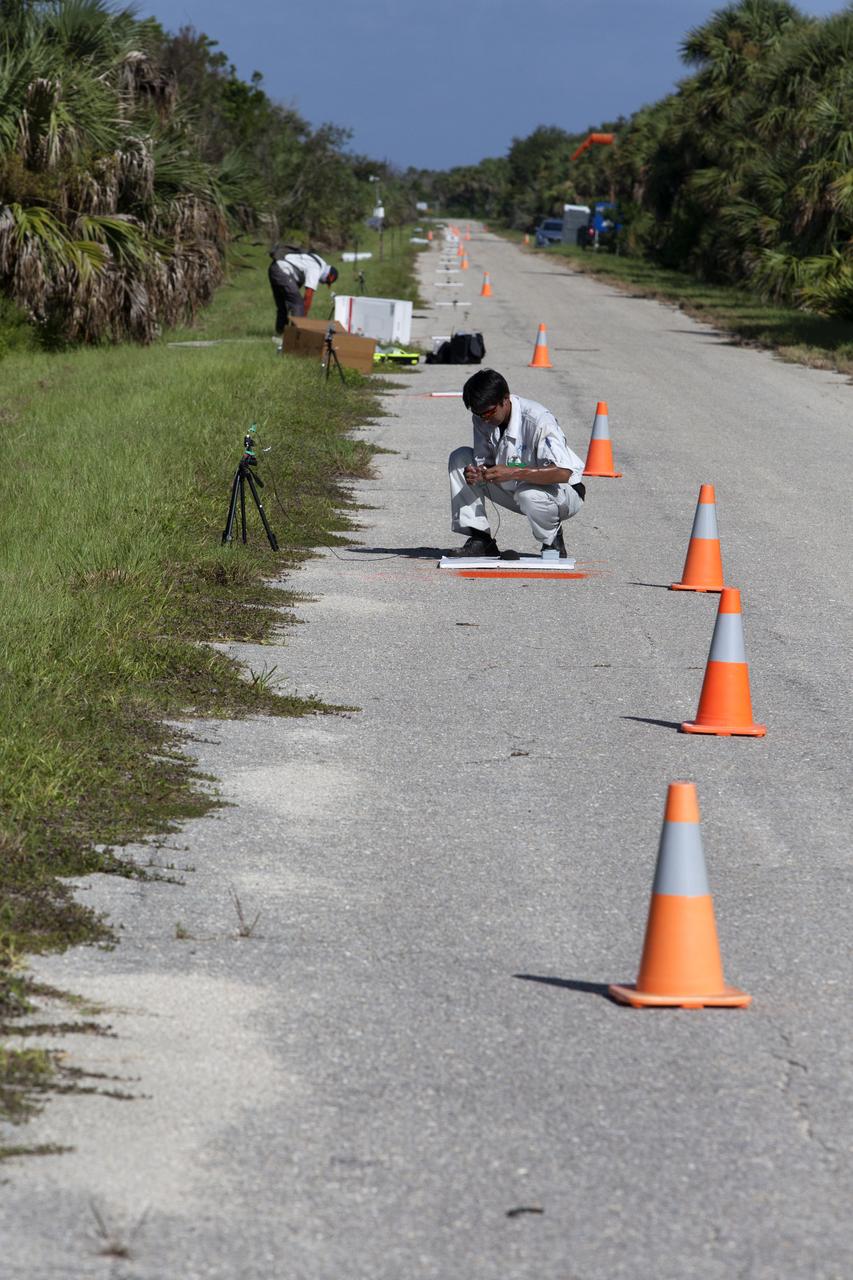
Microphone arrays are strategically positioned along the ground at NASA's Kennedy Space Center in Florida to collect sound signatures from sonic booms created by agency F-18 jets flying faster than the speed of sound. Several flights a day have been taking place the week of Aug. 21, 2017 as part of NASA's Sonic Booms in Atmospheric Turbulence, or SonicBAT II Program. NASA at Kennedy is partnering with the agency's Armstrong Flight Research Center in California, Langley Research Center in Virginia, and Space Florida for a program in which F-18 jets will take off from the Shuttle Landing Facility and fly at supersonic speeds while agency researchers measure the effects of low-altitude turbulence caused by sonic booms.
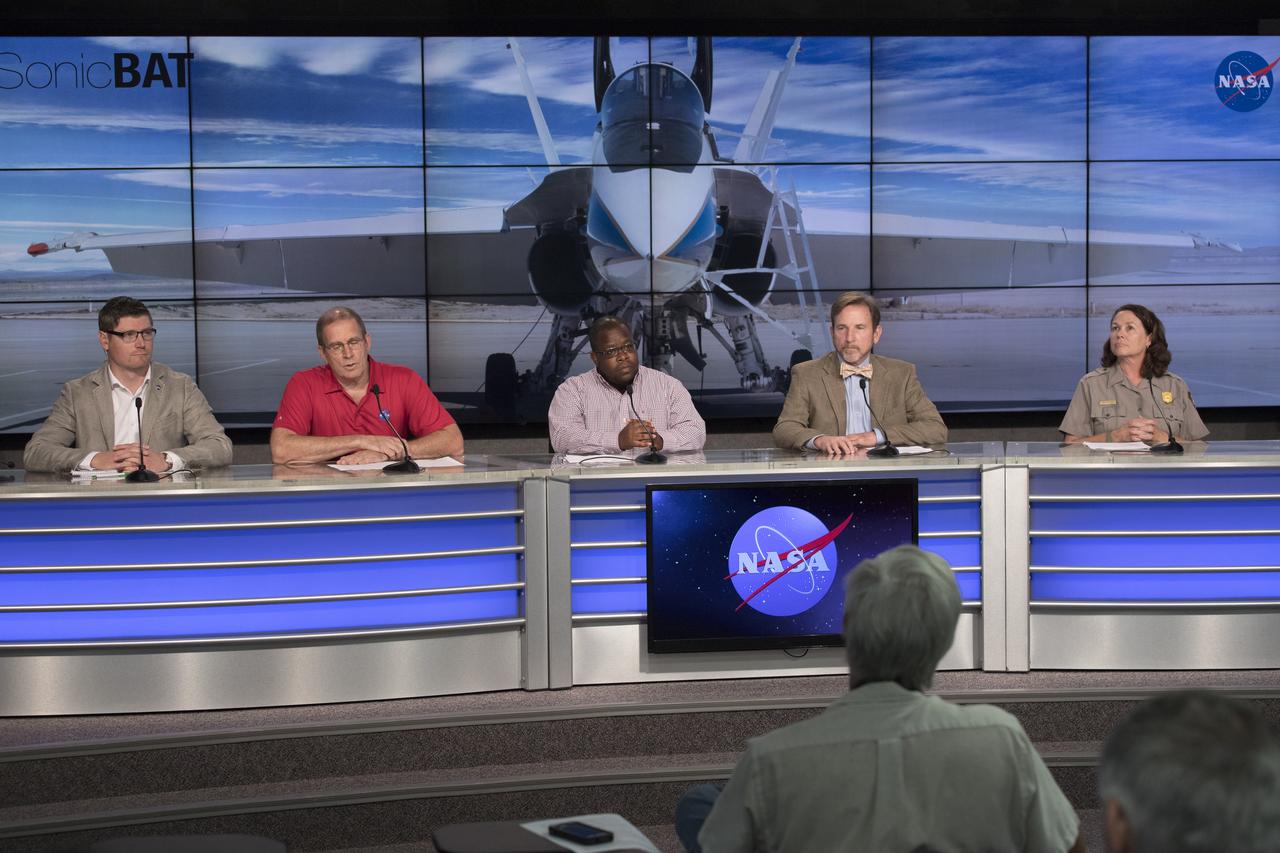
In the Kennedy Space Center's Press Site auditorium, NASA and other government leaders speak to members of the media at a news conference to discuss upcoming flight tests to study the effects of sonic booms. Participants from left are: Matthew Kamlet of NASA Communications at the Armstrong Flight Research Center in California; Peter Coen, SonicBAT Mission Analysis at NASA’s Langley Research Center in Virginia; Larry Cliatt, SonicBAT Fluid Mechanics at Armstrong; Dale Ketcham chief of Strategic Alliances for Space Florida; and Laura Henning, public information officer for the Canaveral National Seashore. Kennedy is partnering with Armstrong, Langley and Space Florida for a program called SonicBAT for Sonic Booms in Atmospheric Turbulence. Starting in August, NASA F-18 jets will take off from the Shuttle Landing Facility and fly at supersonic speeds while agency researchers on the ground measure the effects of low-altitude turbulence on sonic booms. The study could lead to technology mitigating the annoying sonic booms making possible supersonic flights over populated areas.
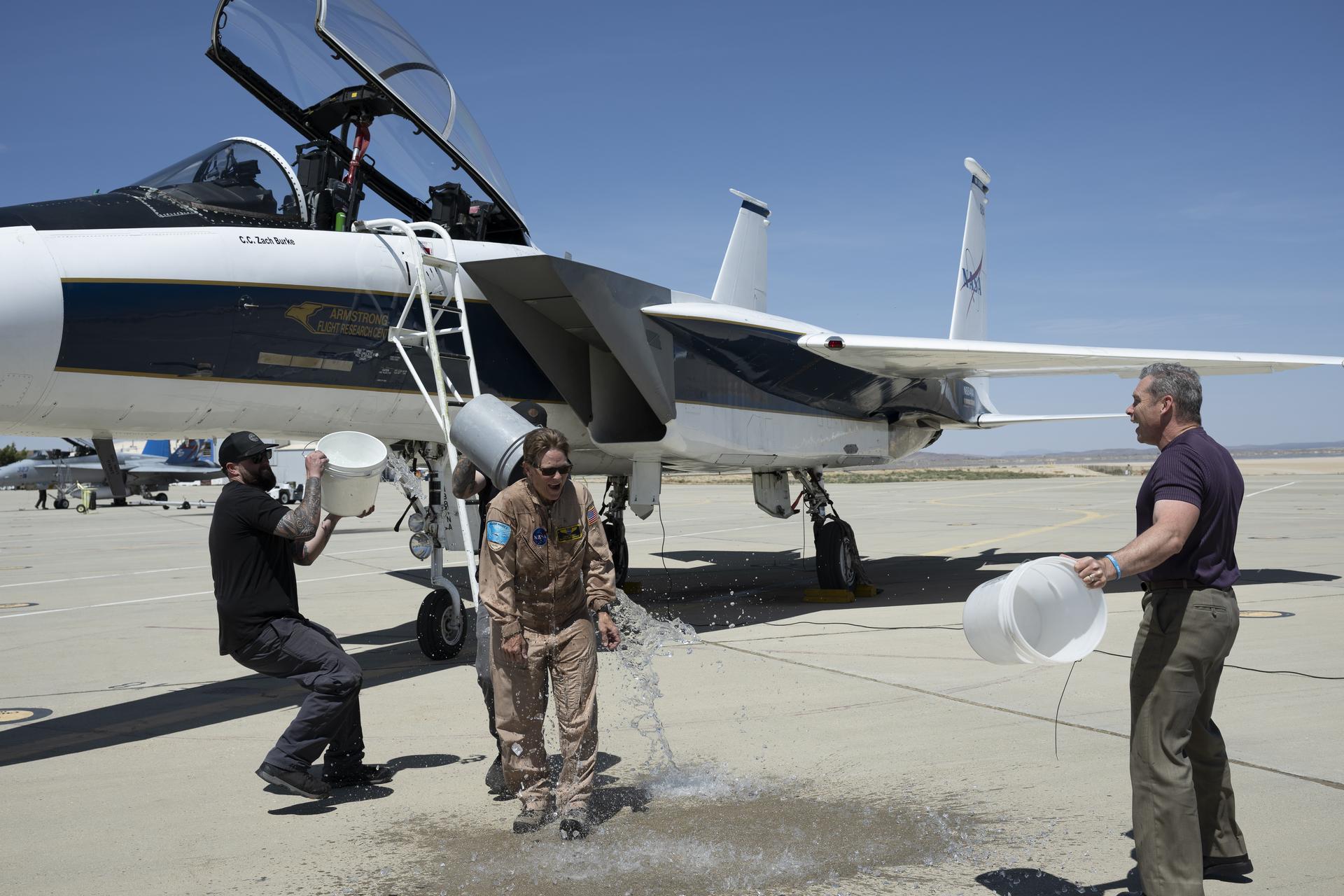
F-15 aircraft crew chief Zack Burke, left, and X-59 mechanic Jamie Trescott, center back, splash buckets of ice water on NASA aerial photographer Carla Thomas in celebration of her 1,000th flight at NASA’s Armstrong Flight Research Center in Edwards, California, on Monday, April 20, 2026. Tim Krall, NASA Armstrong support aircraft fleet manager, watches. Thomas completed her flight in the backseat of a NASA F-15 aircraft flown by NASA Armstrong chief pilot Wayne Ringelberg. For 38 years, Thomas has captured aerial photographs of research and science flights.
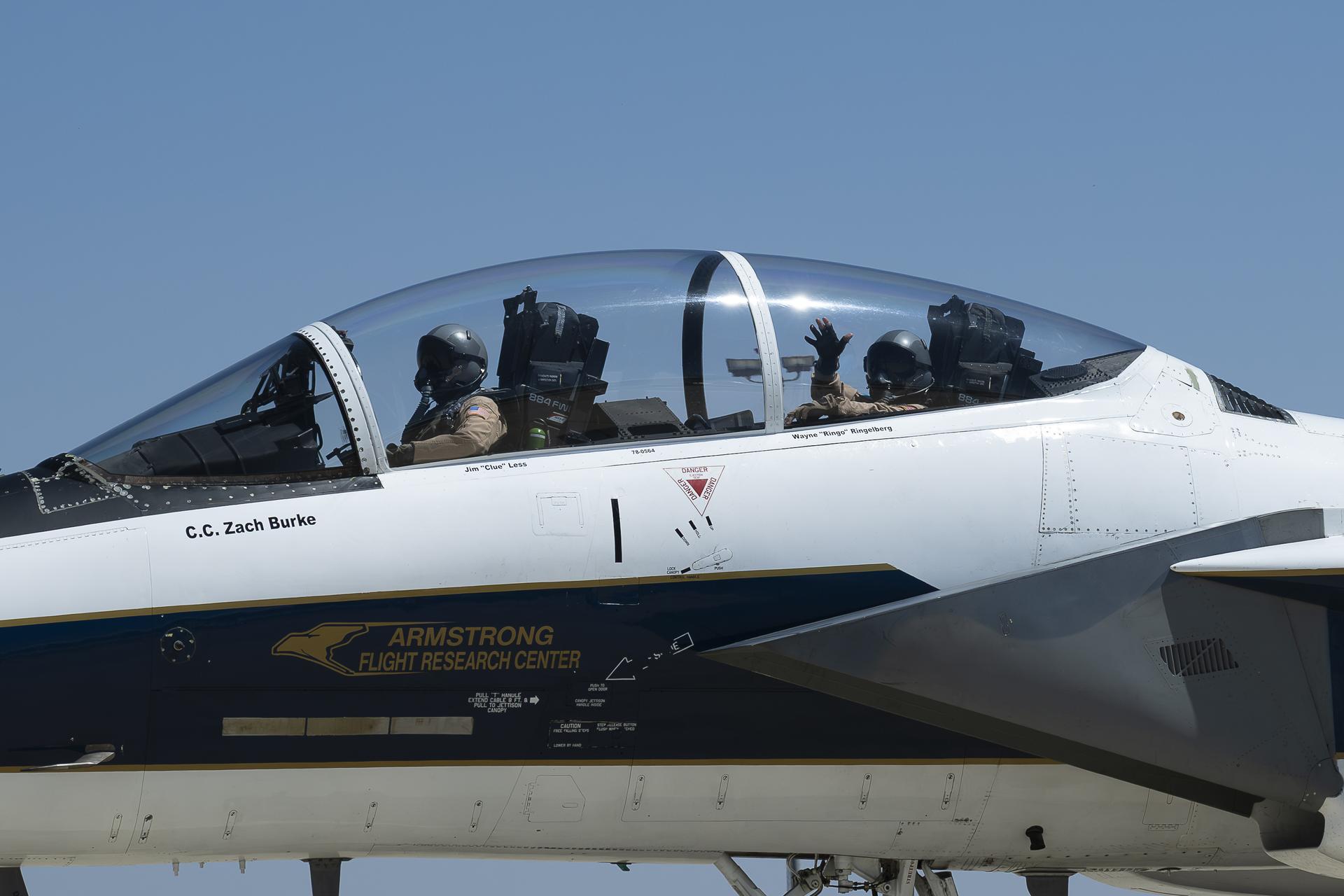
NASA aerial photographer Carla Thomas waves from the backseat of a NASA F-15 aircraft as chief pilot Wayne Ringelberg taxis following Thomas’ 1,000th flight at NASA’s Armstrong Flight Research Center in Edwards, California, on Monday, April 20, 2026. For 38 years, Thomas has captured aerial photographs of research and science flights.
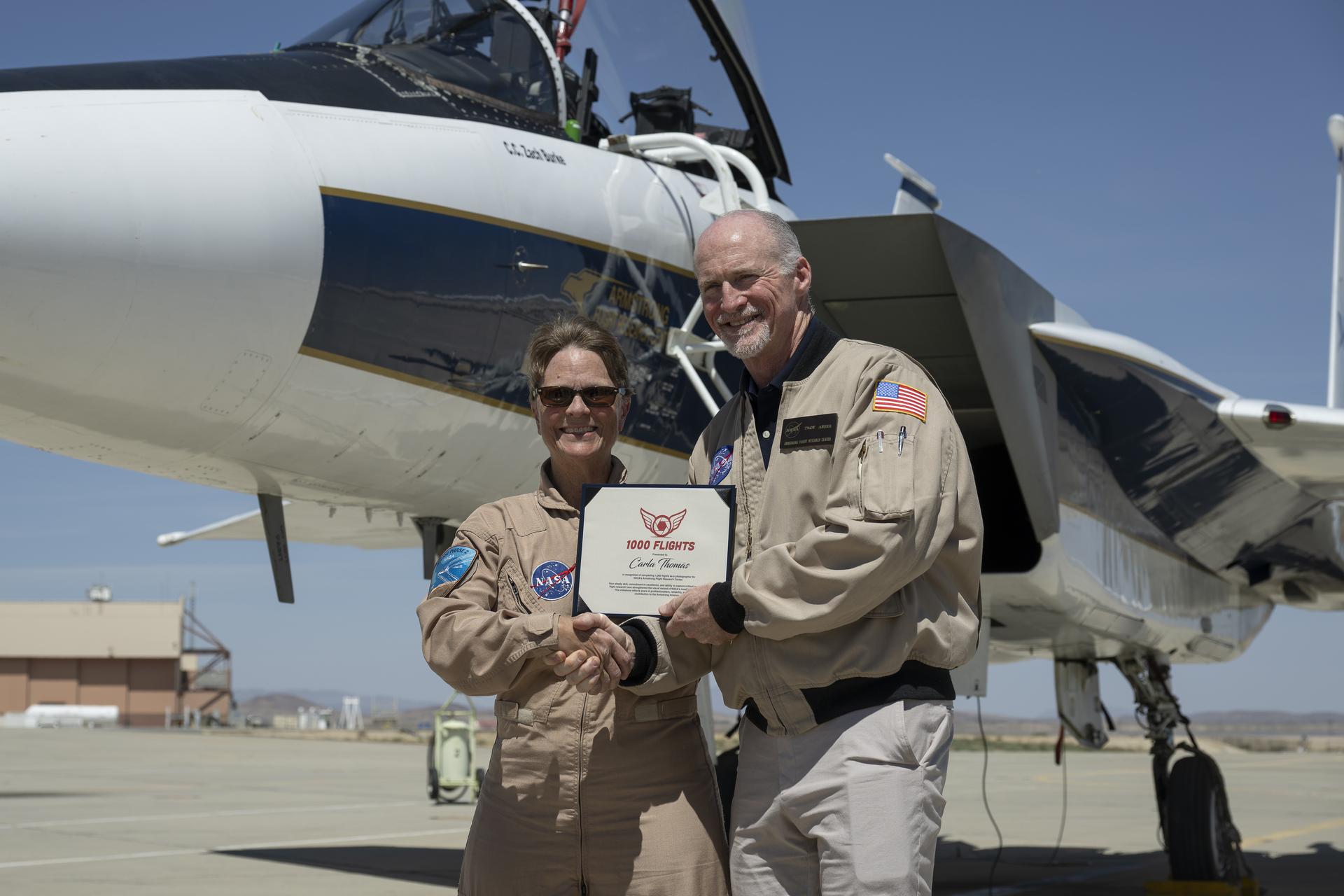
Troy Asher, acting center director, presents NASA aerial photographer Carla Thomas with an award commemorating her 1,000th flight at NASA’s Armstrong Flight Research Center in Edwards, California, on Monday, April 20, 2026. For 38 years, Thomas has captured aerial photographs of research and science flights. The milestone flight was completed in the backseat of a NASA F-15 aircraft piloted by NASA Armstrong chief pilot Wayne Ringelberg.
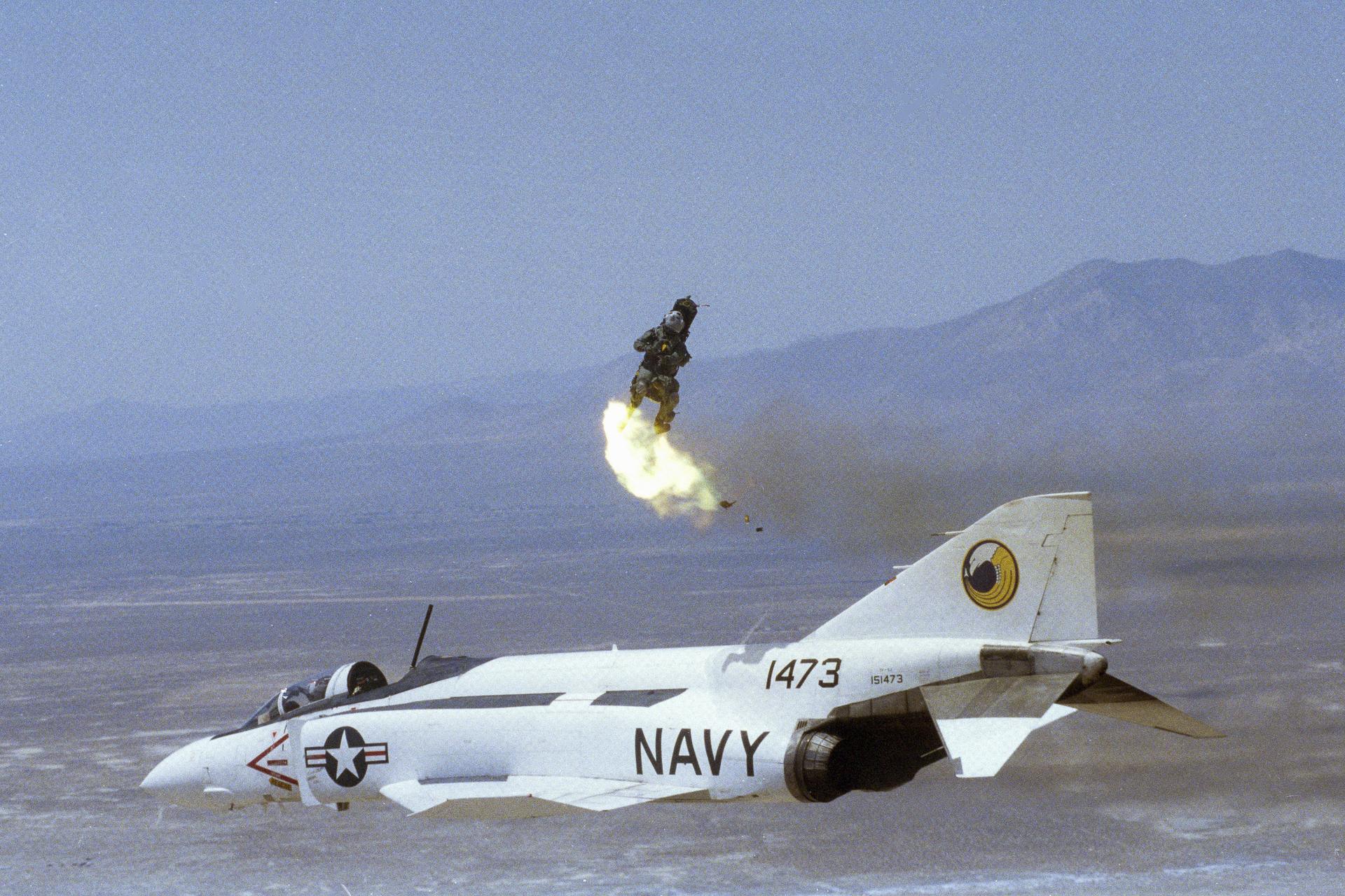
An instrumented mannequin ejects, with help of pyrotechnics, from a specially modified YF-4J drone at the Naval Warfare Center Weapons Division at China Lake, California, on Wednesday May 19, 1999. The test was the final flight in NASA’s ejection seat research, which began in 1995 at NASA’s Armstrong (then Dryden) Flight Research Center in Edwards, California. The project was a collaboration between NASA, the Naval Warfare Center, and the Canada’s Department of National Defense.
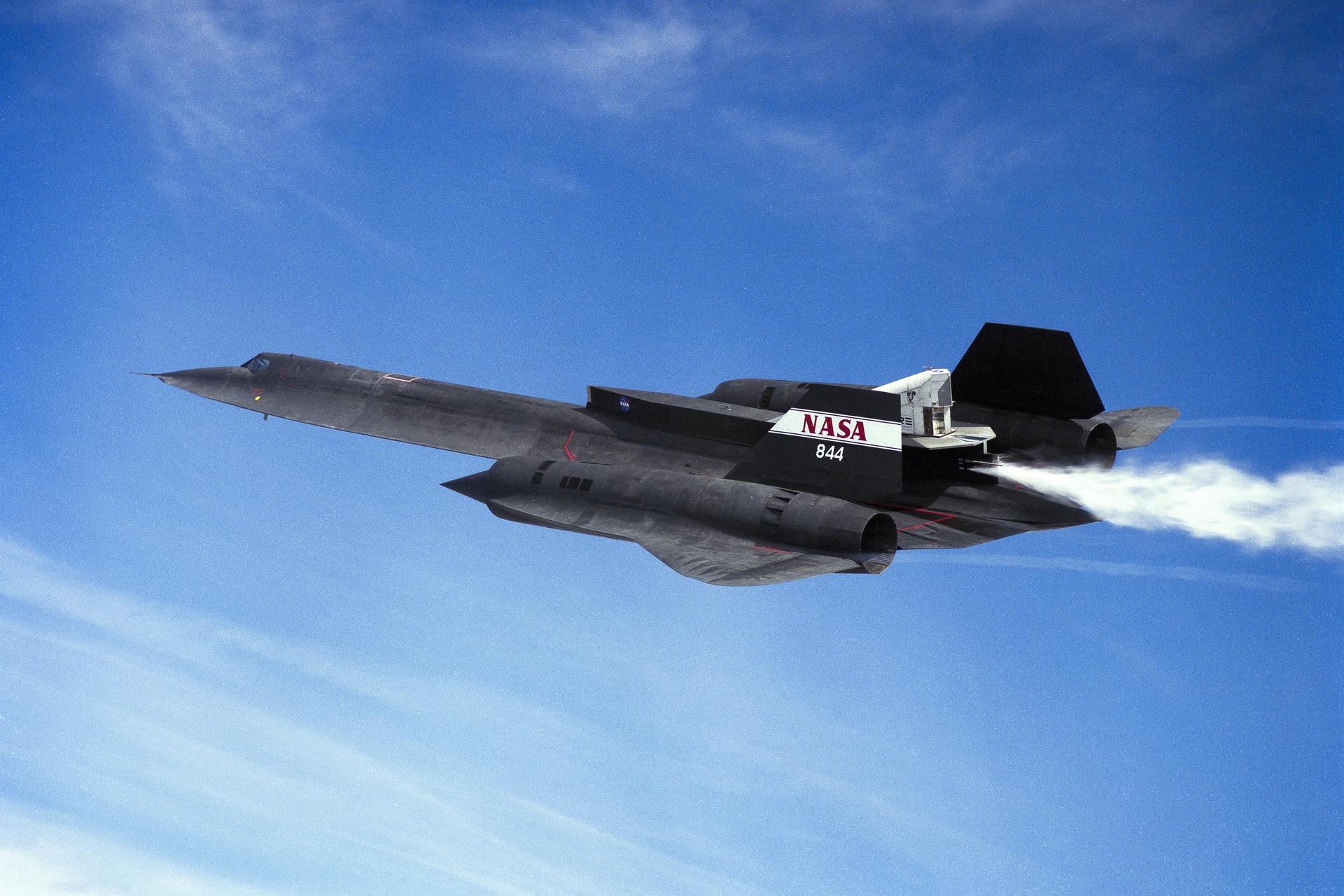
The NASA SR-71 triple-supersonic aircraft carries the Linear Aerospike Experiment on Wednesday, March 4, 1998, during a flight from NASA’s Armstrong (then Dryden) Flight Research Center in Edwards, California. Gaseous helium and liquid nitrogen cycled through the linear aerospike engine during the flight to check the engine’s plumbing system for leaks and to check the engine operating characteristics. Cold-flow tests must be accomplished successfully before firing the rocket engine experiment in flight.
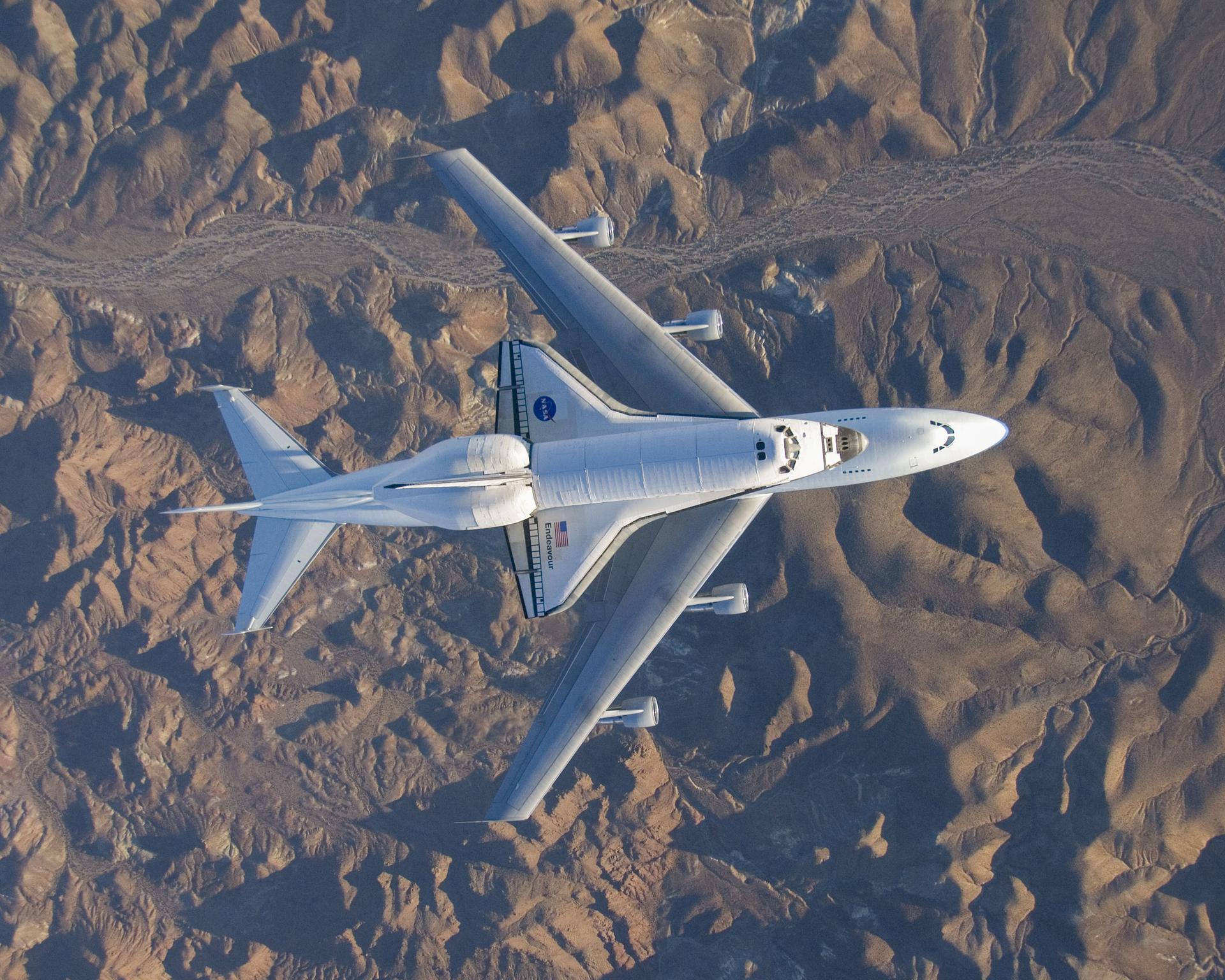
NASA aerial photographer Carla Thomas captured this top-down view of the Space Shuttle Endeavor mounted on a NASA 747 Shuttle Carrier Aircraft from an inverted F/A-18 on Wednesday, Dec. 10, 2008, over the Mojave Desert in California. The shuttle, returning to Kennedy Space Center in Florida, landed at Edwards Air Force Base in Edwards, California, and was prepared nearby at NASA’s Armstrong Flight Research Center for the return trip to Kennedy.
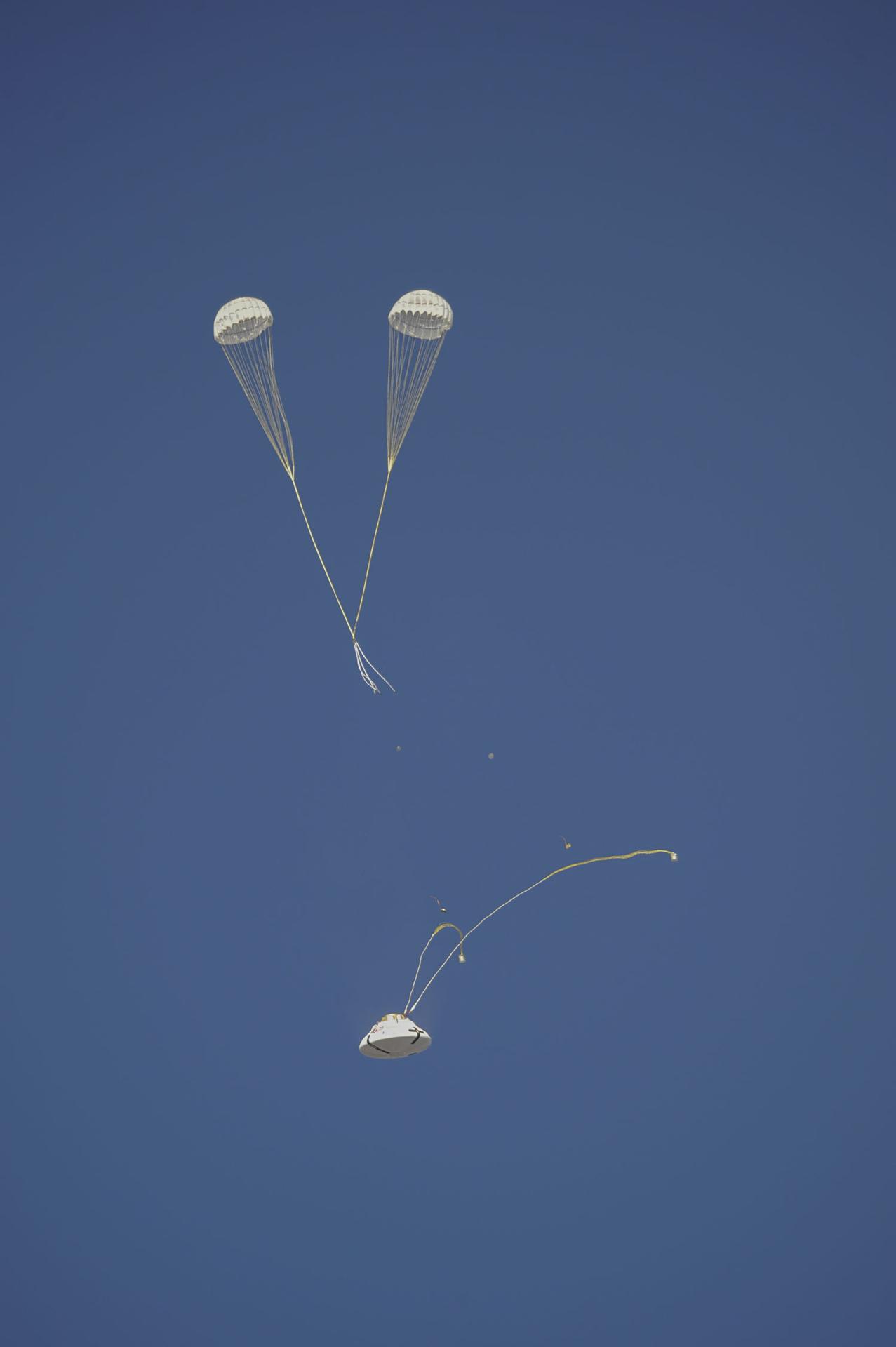
The Orion parachute system enters another phase of its descent after an air launch from a C-17 aircraft on Wednesday, July 18, 2012. Photographers and videographers from NASA’s Armstrong Flight Research Center in Edwards, California, and the agency’s Johnson Space Center in Houston documented a test version of the Orion during Capsule Parachute Assembly System project tests at the U.S. Army Proving Ground, near Yuma, Arizona.