
This set of images from the radar instrument on NASA Cassini spacecraft shows a relatively fresh crater called Sinlap left and an extremely degraded crater called Soi right.
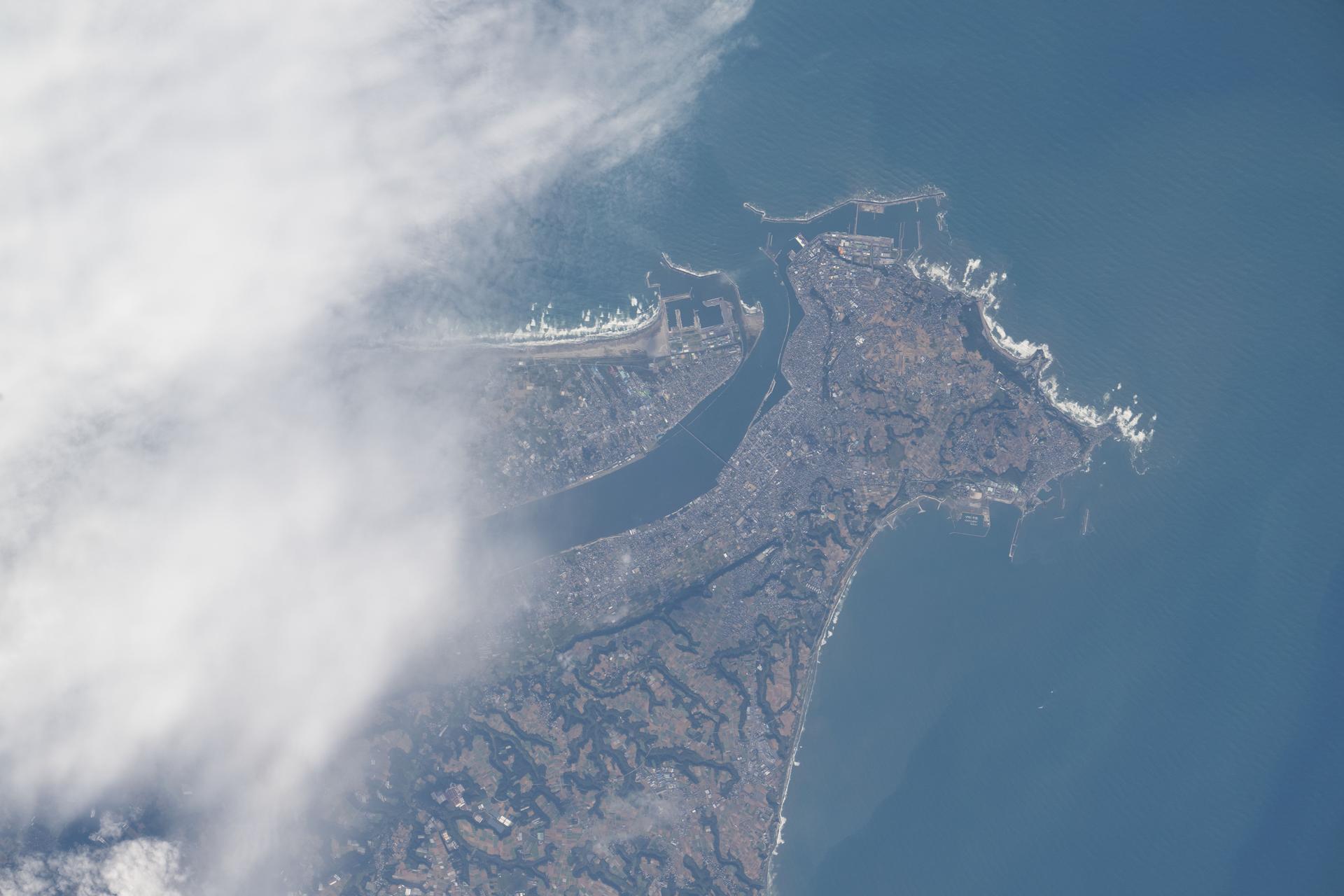
iss073e0958562 (Oct. 10, 2025) --- The Tone River flows through the northern part of Chōshi, Japan, a coastal city on the Pacific Ocean with a population of over 59,000. Chōshi, pictured here from the International Space Station as it orbited 261 miles above the Pacific, is known for the Inubosaki Lighthouse and as one of Japan’s top soy sauce producers
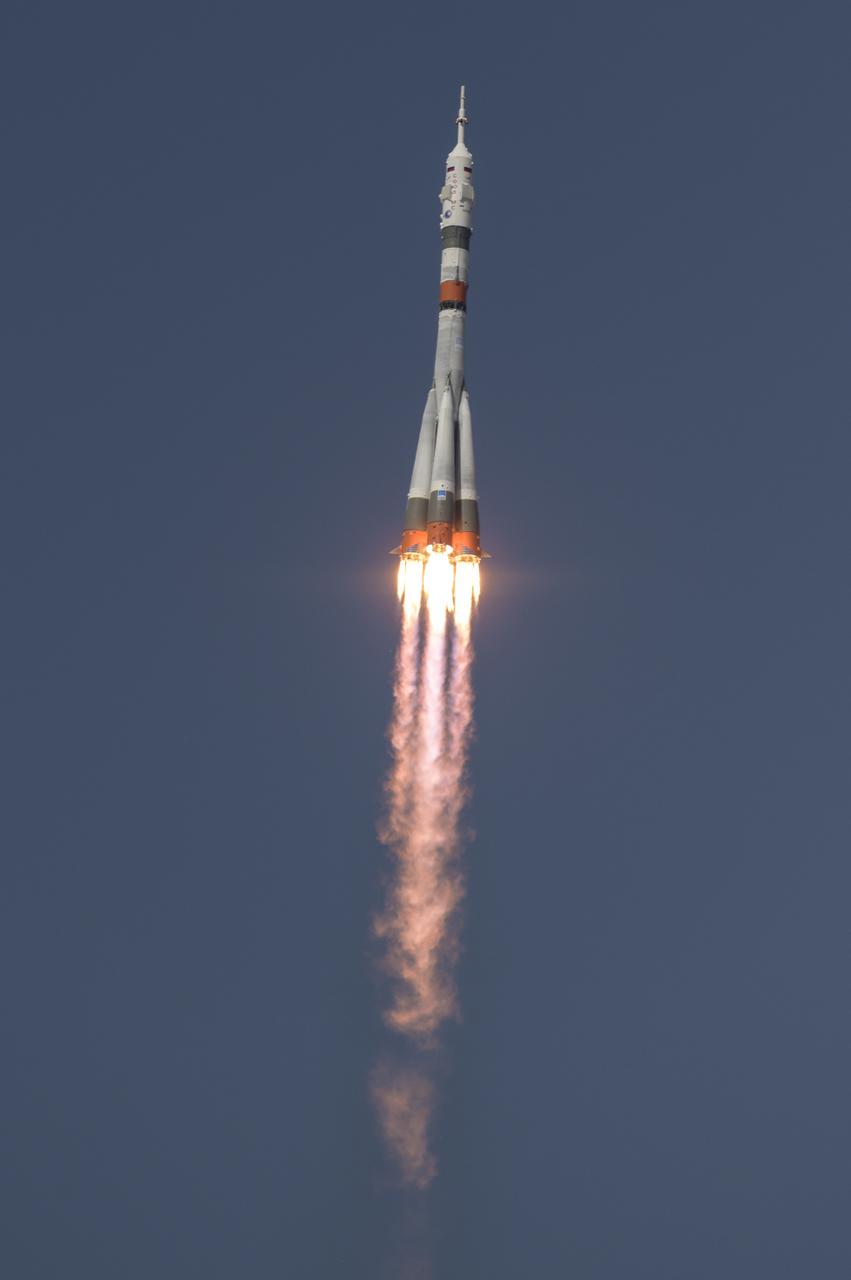
The Soyuz MS-18 rocket is launched with Expedition 65 NASA astronaut Mark Vande Hei, Roscosmos cosmonauts Pyotr Dubrov and Oleg Novitskiy, Friday, April 9, 2021, at the Baikonur Cosmodrome in Kazakhstan. Photo Credit: (NASA/Bill Ingalls)
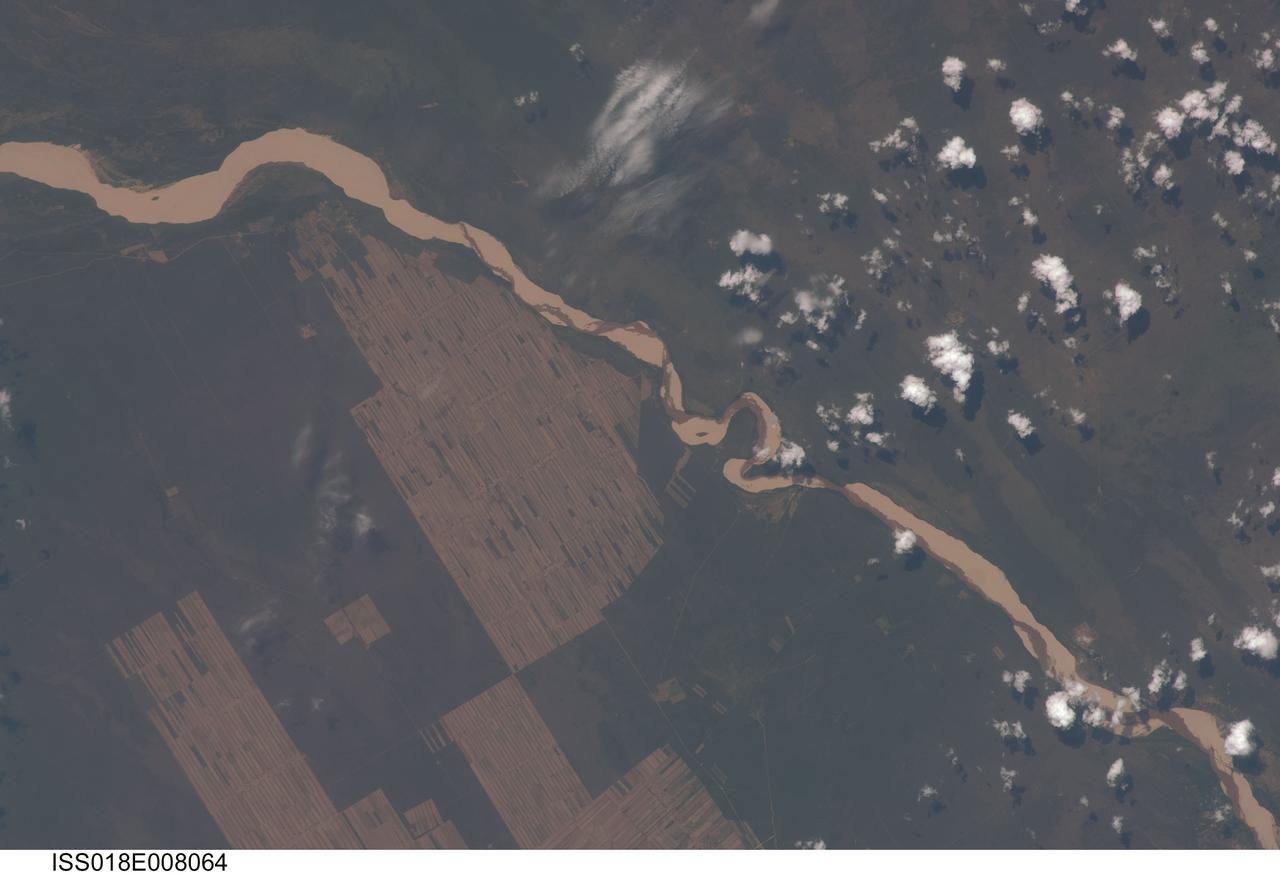
ISS018-E-008064 (9 Nov. 2008) --- Progressive forest clearing in Bolivia is featured in this image photographed by an Expedition 18 crewmember on the International Space Station. The eastern half of Bolivia is covered with tropical rainforest. In the 1990s, Bolivia initiated a large-scale effort to increase the rate of logging and create tracts of land for commercial agriculture (primarily soy and sugar cane, but also coca) on the Amazon Basin side of the Andean highlands. Today, the commercial fields are well-established and easily mapped from space as large, rectangular clearings in the forest. The agricultural developments are still growing today. The clearings start off as small rectangles arranged perpendicular to an access road; early clearings take on a herring-bone pattern when viewed from above. The uncleared (dark forest) areas are gradually logged and cultivated, filling in the pattern to make a larger cleared area. Astronauts aboard the space station routinely observe intensive land use and document their observations through imagery so that changes can be identified.
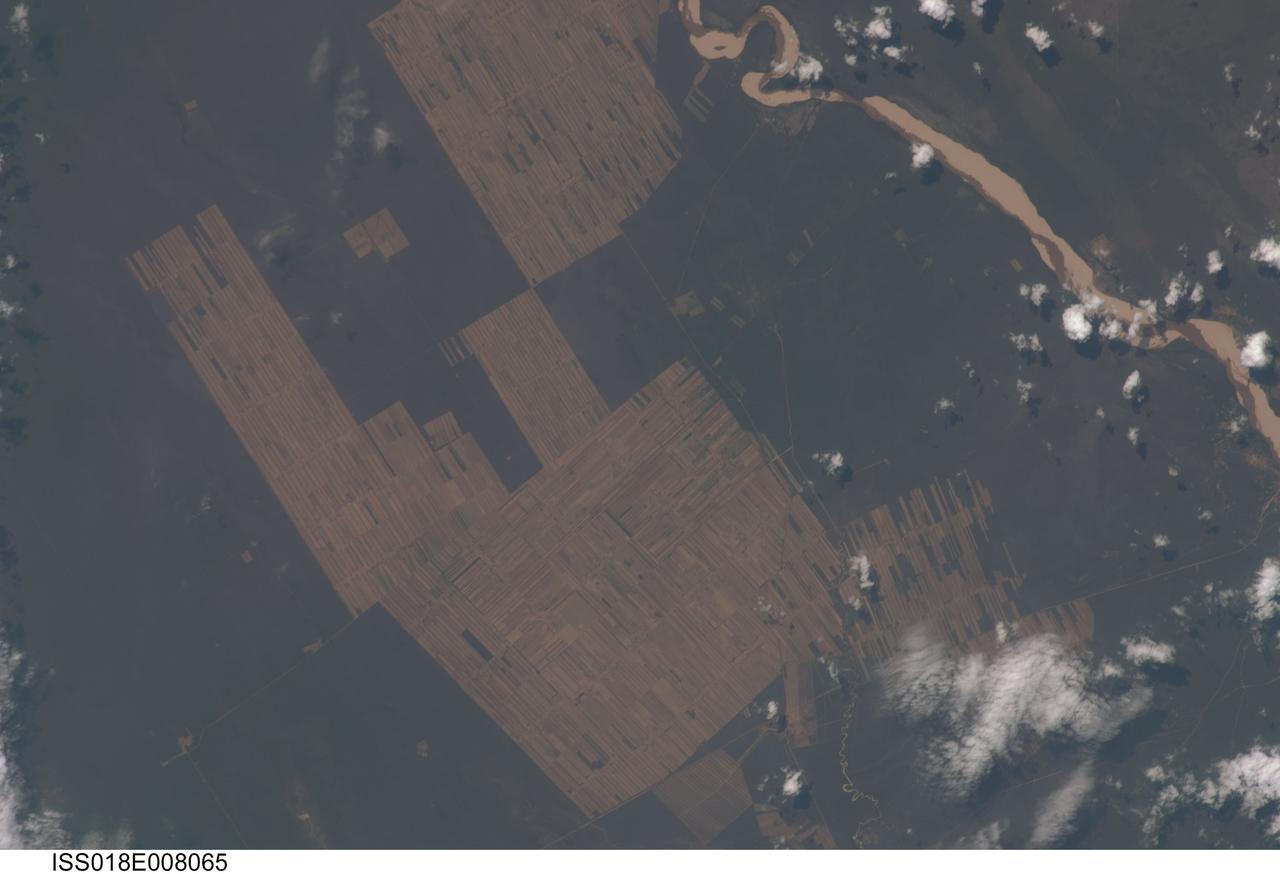
ISS018-E-008065 (9 Nov. 2008) --- Progressive forest clearing in Bolivia is featured in this image photographed by an Expedition 18 crewmember on the International Space Station. The eastern half of Bolivia is covered with tropical rainforest. In the 1990s, Bolivia initiated a large-scale effort to increase the rate of logging and create tracts of land for commercial agriculture (primarily soy and sugar cane, but also coca) on the Amazon Basin side of the Andean highlands. Today, the commercial fields are well-established and easily mapped from space as large, rectangular clearings in the forest. The agricultural developments are still growing today. The clearings start off as small rectangles arranged perpendicular to an access road; early clearings take on a herring-bone pattern when viewed from above. The uncleared (dark forest) areas are gradually logged and cultivated, filling in the pattern to make a larger cleared area. Astronauts aboard the space station routinely observe intensive land use and document their observations through imagery so that changes can be identified.
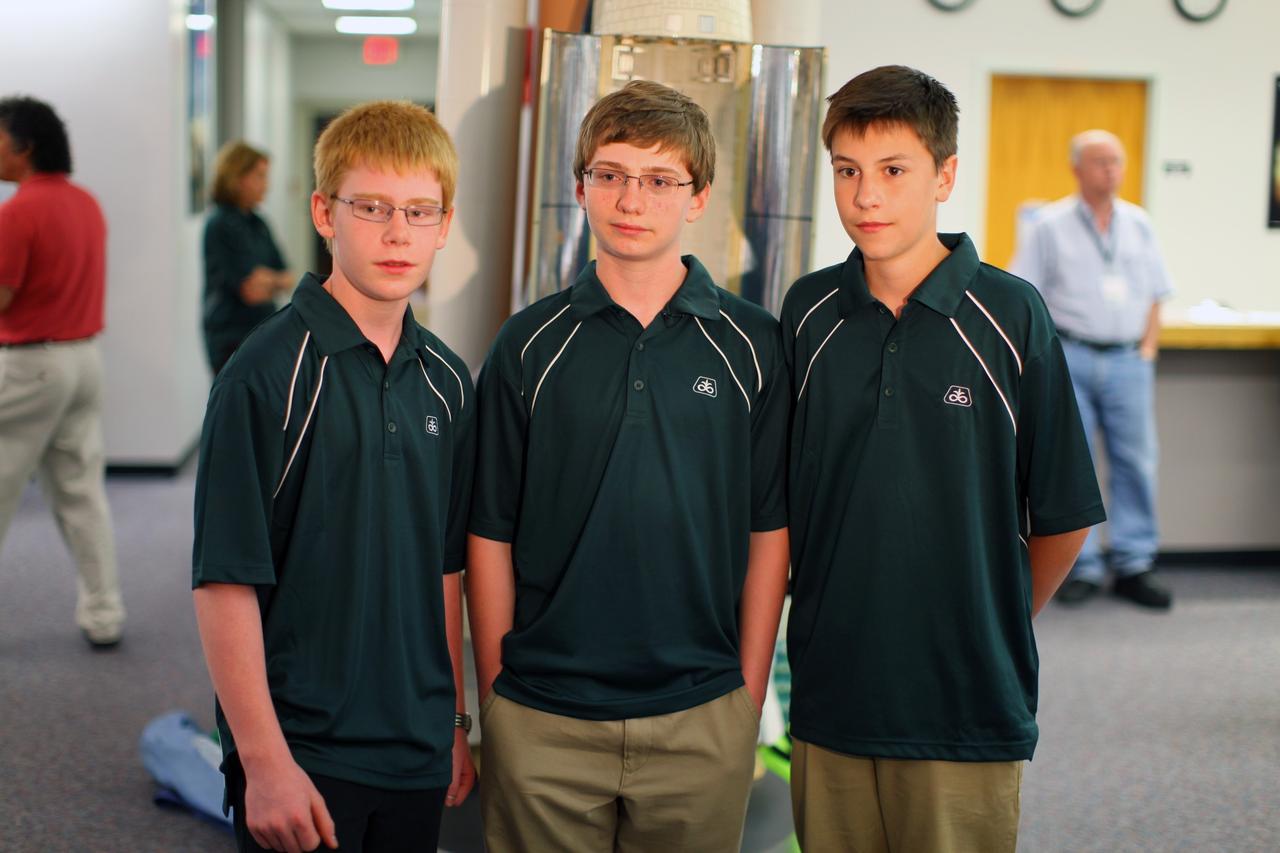
CAPE CANAVERAL, Fla. – Student investigators Cameron Zandstra, Jack Barth and JP Peerbolte are interviewed by the media in the NASA Newsroom at Kennedy Space Center in Florida during prelaunch activities for the SpaceX demonstration test flight. The team members are seventh- and eighth-grade students at Highland Christian School in Lake County, Ind. Their experiment, “The Effect of Microgravity on the Quality and Nutritional Value of the Seed Sprout of Germinated 92M72 Genetically-Modified Soy Bean,” is one of 15 in the Student Spaceflight Experiments Program, or SSEP, being ferried to the International Space Station inside the Dragon capsule. The launch will be the second demonstration test flight for SpaceX for NASA's Commercial Orbital Transportation Services program, or COTS. SSEP, which began operation in June 2010 through a partnership of the National Center for Earth and Space Science Education with NanoRacks LLC, is a U.S. national science, technology, engineering and mathematics STEM education initiative that gives students across a community the opportunity to propose and design real experiments to fly in low Earth orbit. SSEP experiments flew on space shuttle missions STS-134 and STS-135 in 2011, the final flights of space shuttles Endeavour and Atlantis. For more information on SSEP, visit http://www.nasa.gov/audience/foreducators/station-here-we-come.html. Photo credit: NASA/Gianni Woods