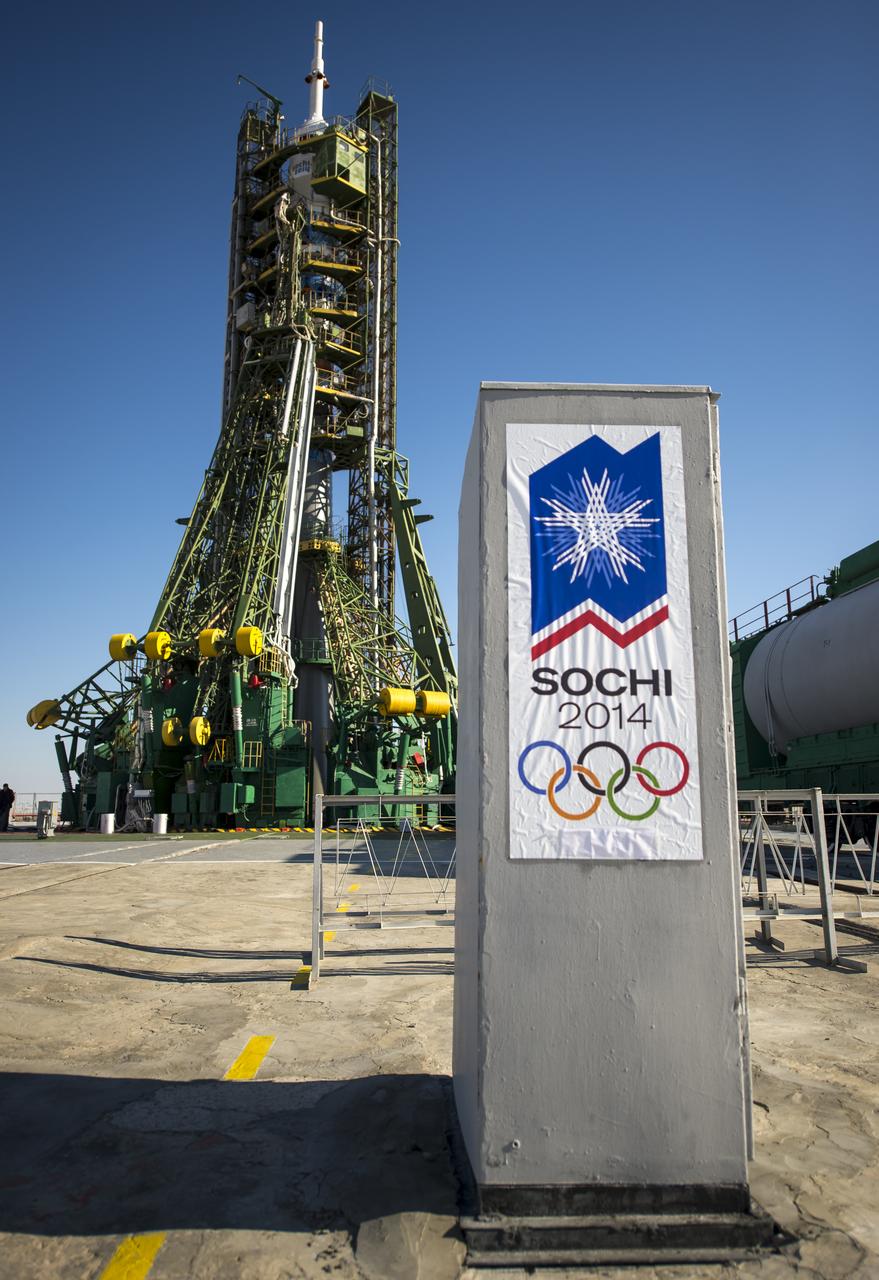
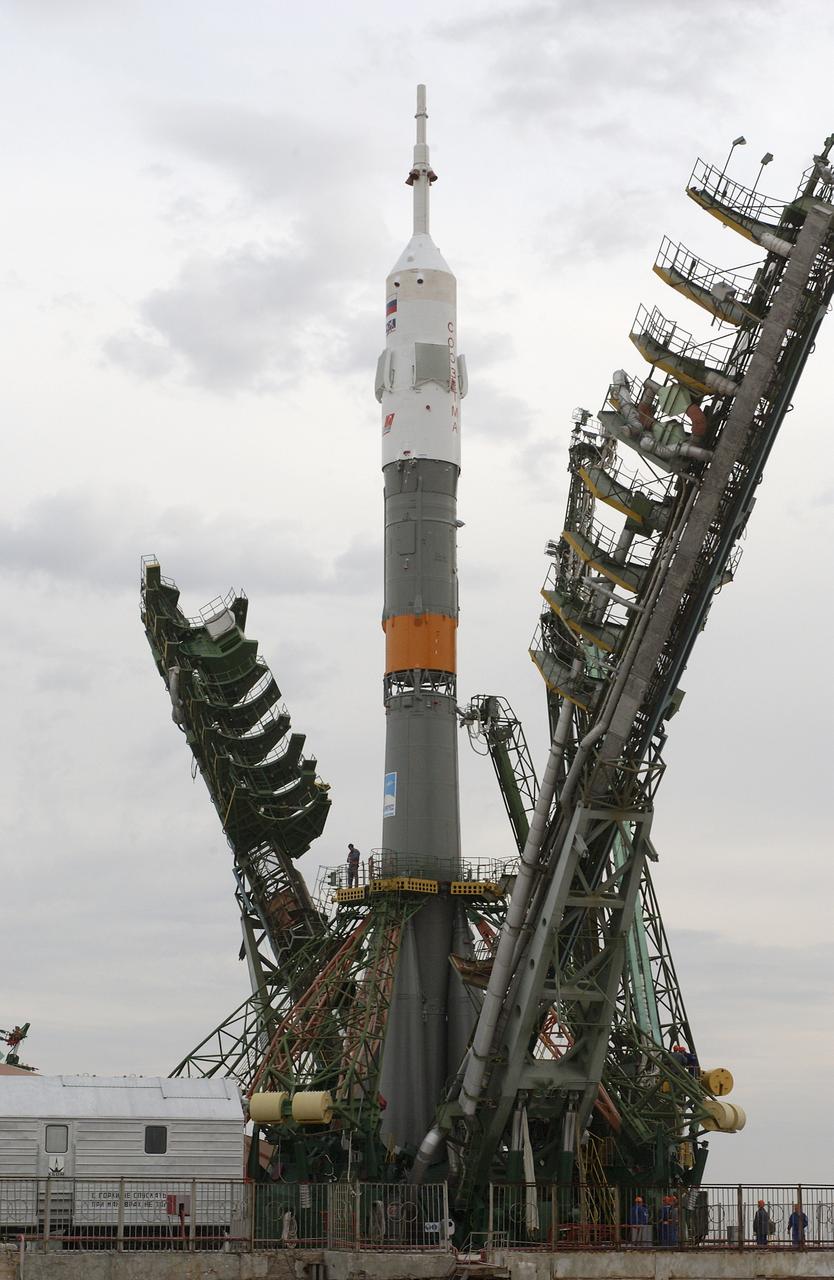
A sign for the Sochi 2014 Winter Olympics is seen at the Soyuz launch pad a day ahead of the scheduled launch of Expedition 38 Soyuz Commander Mikhail Tyurin of Roscosmos, Flight Engineer Koichi Wakata of the Japan Aerospace Exploration Agency, and, Flight Engineer Rick Mastracchio of NASA, Wednesday, Nov. 6, 2013 in Baikonur, Kazakhstan. The rocket is adorned with the logo of the Sochi Olympic Organizing Committee and other related artwork to commemorate the launch of the Olympic torch with the crew for a four-day visit to the station. The torch will return to Earth with another trio of station residents on Nov. 11 and will be part of the torch relay that ends with the lighting of the flame at the Fisht Stadium in Sochi, Russia Feb. 7 to mark the opening of the 2014 Winter Olympics. Photo Credit (NASA/Bill Ingalls)
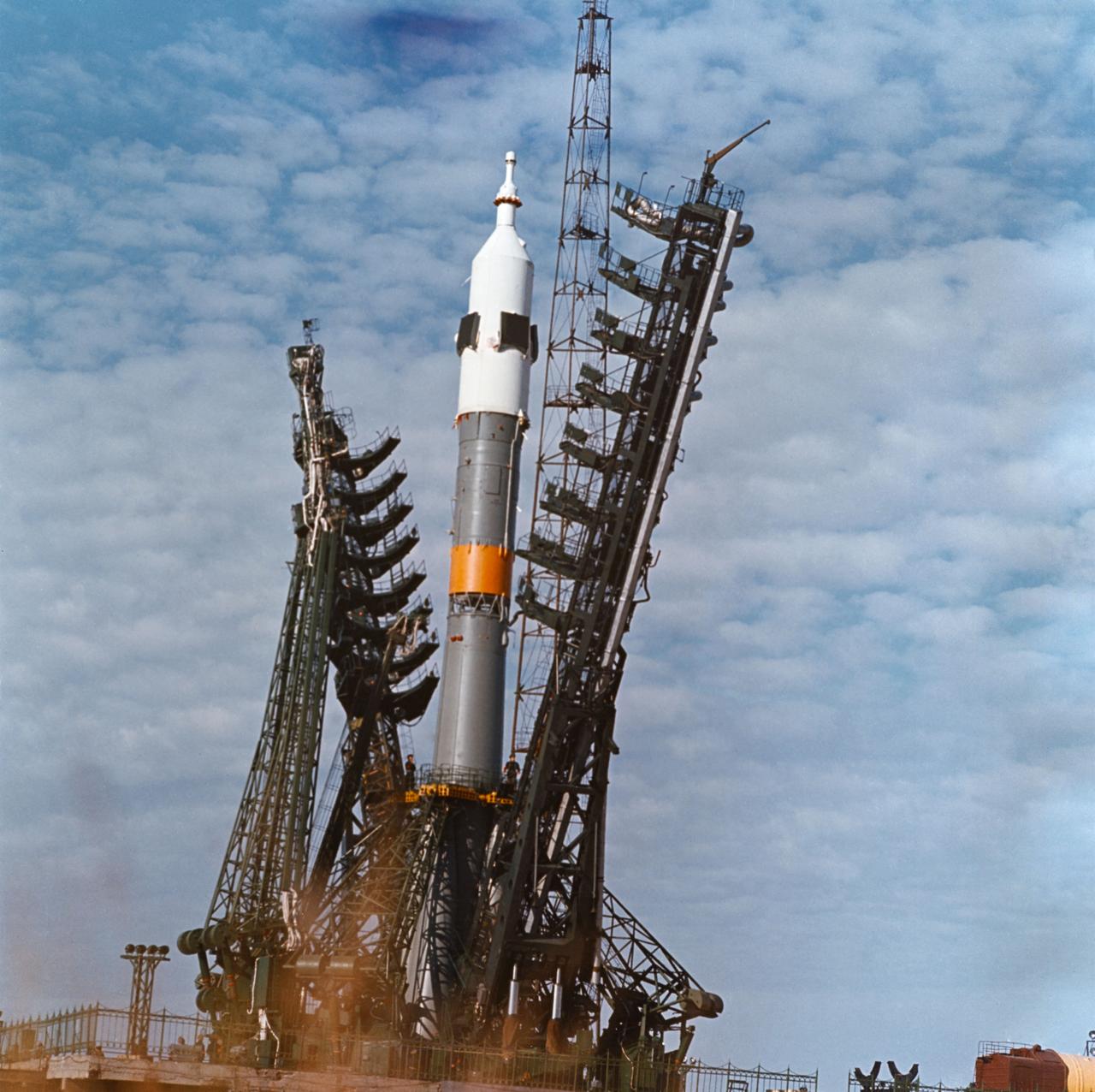
S75-32339 (28 Jan. 1974) --- A low-angle view of a launch pad at the Baikonur Cosmodrome in Kazakhstan showing the installation of a Soyuz spacecraft and its launch vehicle. The 49.3-meter-high (162 feet) space vehicle is composed of the three-stage booster, a three-module, two-man Soyuz spacecraft and a launch escape system. The weight of the space vehicle at launch is approximately 300,000 kilograms. The first stage vacuum thrust is about 1,000,400 newtons, the second stage is 956,500 newtons, and the third stage is 299,000 newtons. This earlier Soyuz mission illustrates the approximate launch configuration of the Soviet Union?s Apollo-Soyuz Test Project (ASTP) Soyuz space vehicle. PHOTO COURTESY: USSR ACADEMY OF SCIENCES
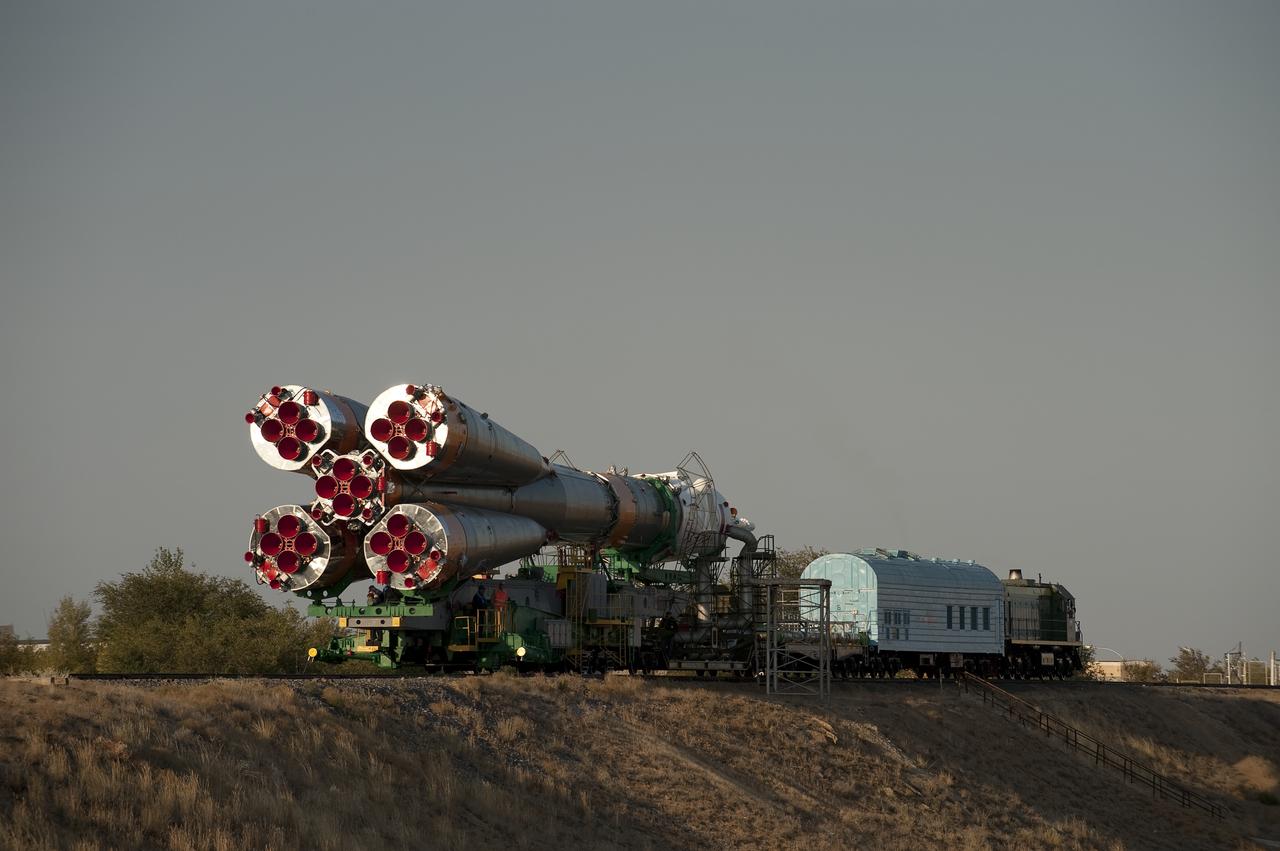
Launch pad engineers watch as the Soyuz rocket is rolled onto the launch pad Monday, Sept. 28, 2009 at the Baikonur Cosmodrome in Kazakhstan. The Soyuz is scheduled to launch the crew of Expedition 21 and a spaceflight participant on Sept. 30, 2009. Photo Credit: (NASA/Bill Ingalls)
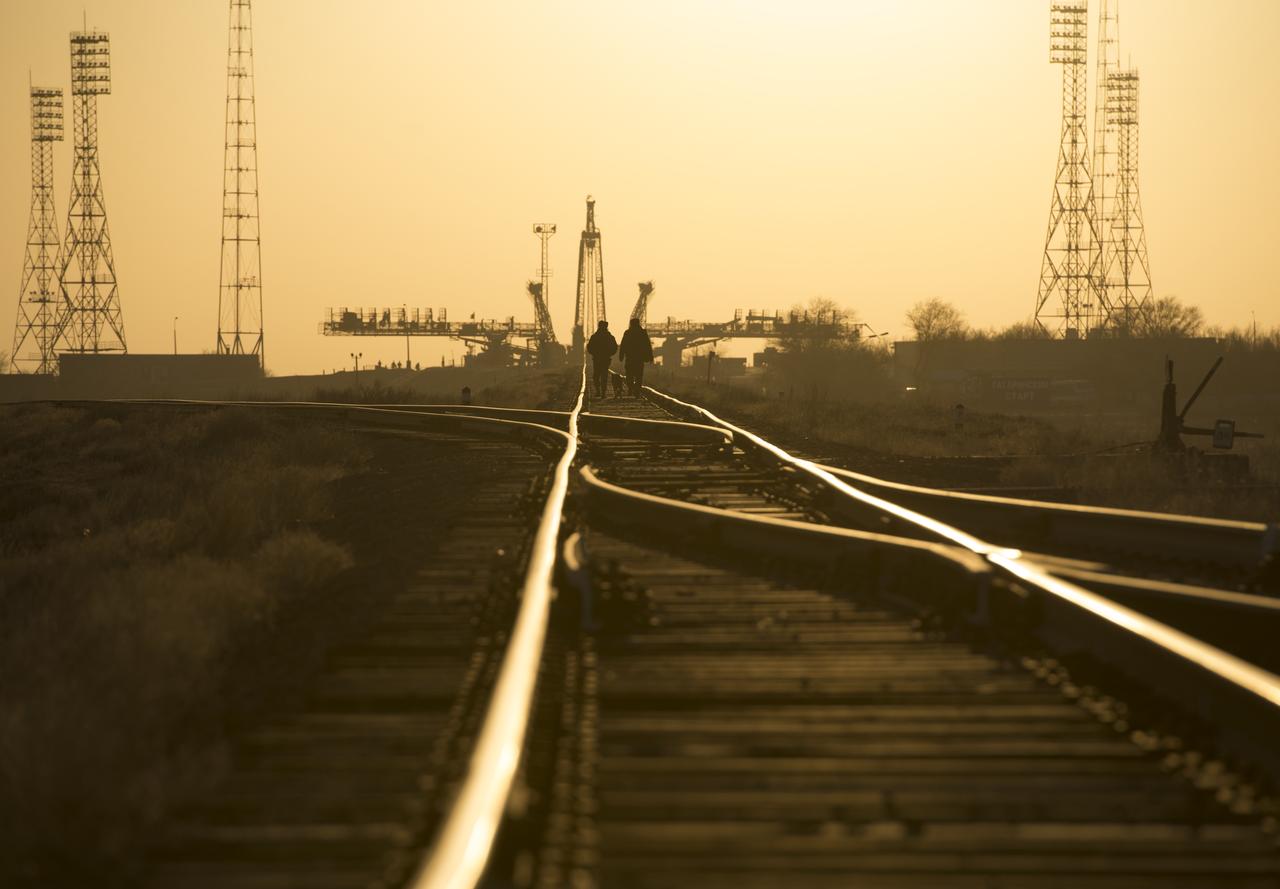
Russia security forces and their dog walk along the train track to the Soyuz launch pad, Tuesday, March 26, 2013 at the Baikonur Cosmodrome in Kazakhstan. Launch of the Soyuz rocket is scheduled for March 29 and will send Expedition 35 Soyuz Commander Pavel Vinogradov, and Flight Engineers Chris Cassidy of NASA and Alexander Misurkin of Russia on a five and a half-month mission aboard the International Space Station. Photo Credit: (NASA/Carla Cioffi)
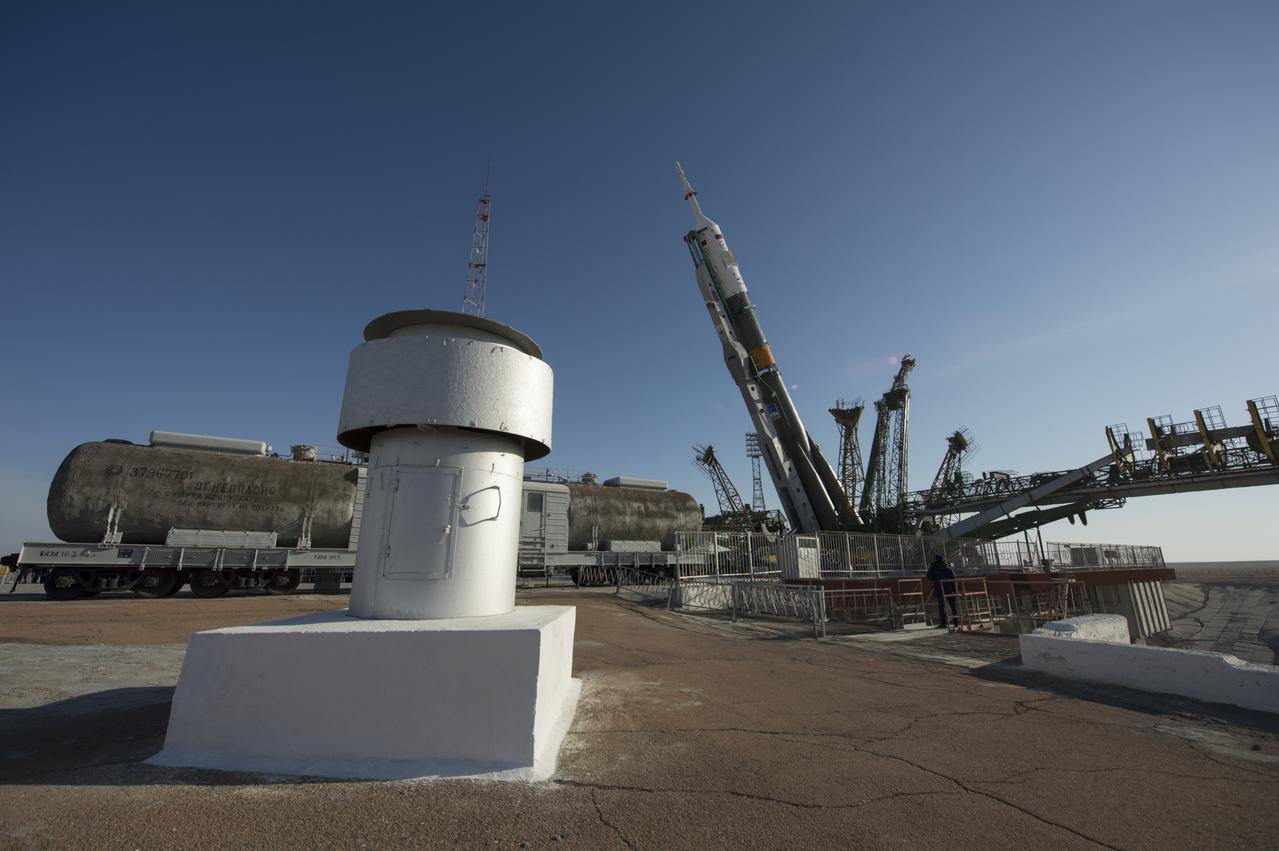
The Soyuz rocket is erected into position after being rolled out to the launch pad by train on Tuesday, March 26, 2013, at the Baikonur Cosmodrome in Kazakhstan. Launch of the Soyuz rocket is scheduled for March 29 and will send Expedition 35 Soyuz Commander Pavel Vinogradov, and Flight Engineers Chris Cassidy of NASA and Alexander Misurkin of Russia on a five and a half-month mission aboard the International Space Station. Photo Credit: (NASA/Carla Cioffi)
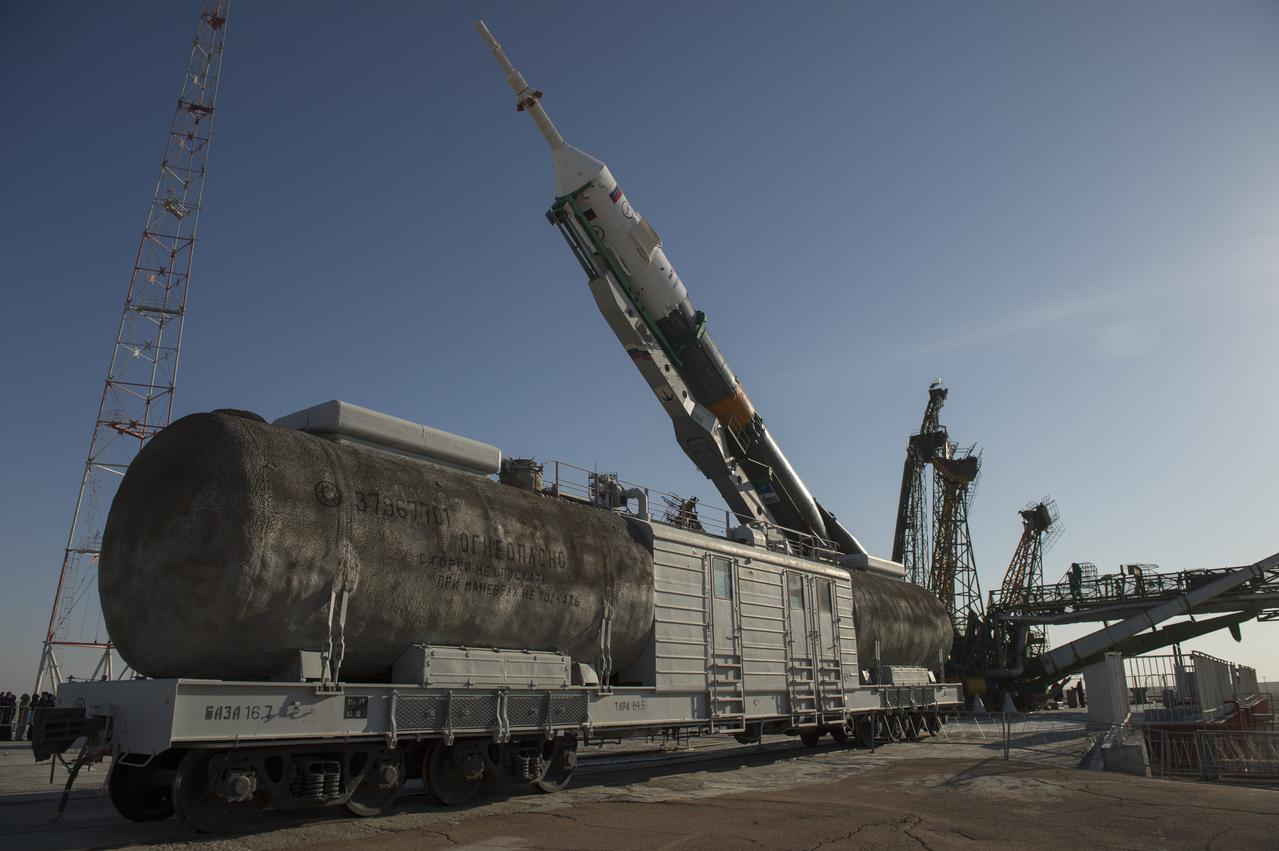
The Soyuz rocket is erected into position after being rolled out to the launch pad by train on Tuesday, March 26, 2013, at the Baikonur Cosmodrome in Kazakhstan. Launch of the Soyuz rocket is scheduled for March 29 and will send Expedition 35 Soyuz Commander Pavel Vinogradov, and Flight Engineers Chris Cassidy of NASA and Alexander Misurkin of Russia on a five and a half-month mission aboard the International Space Station. Photo Credit: (NASA/Carla Cioffi)
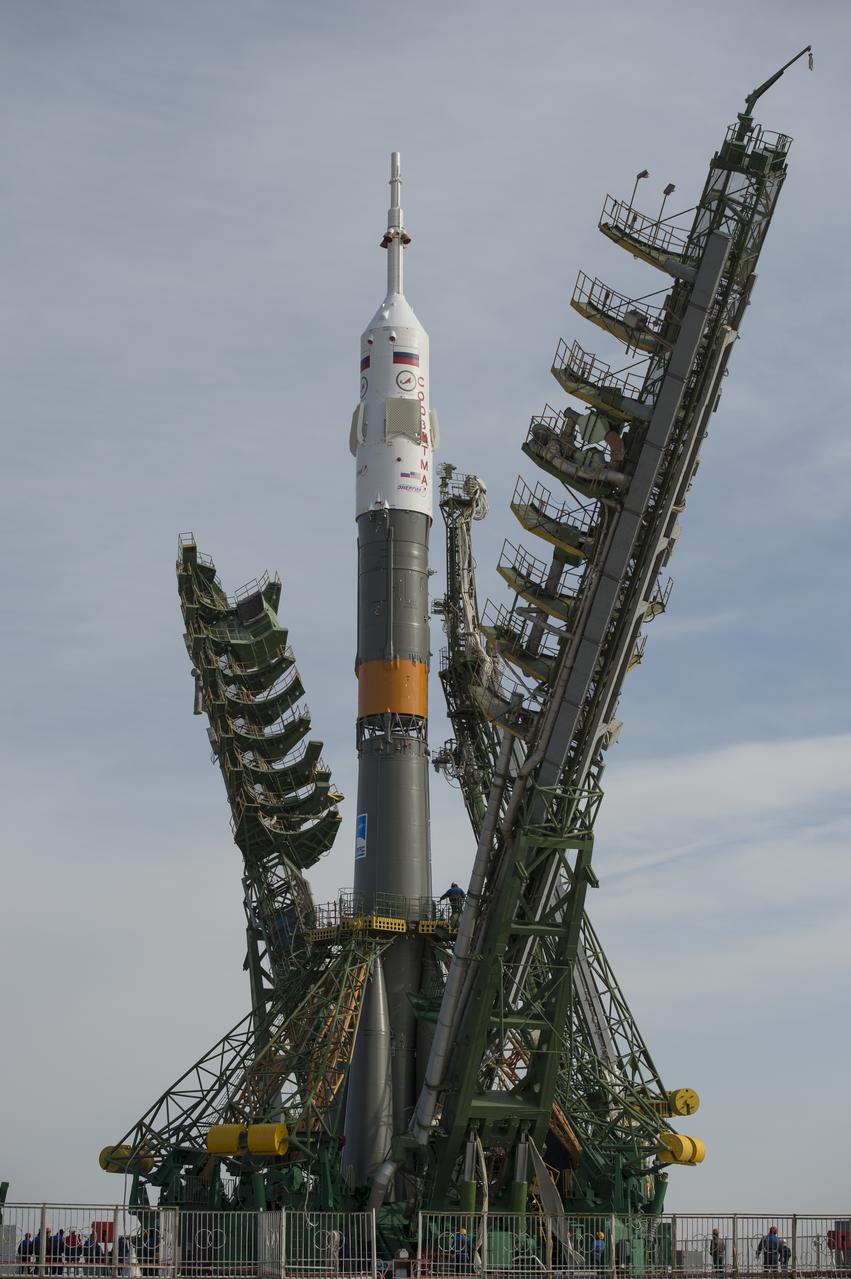
Large gantry mechanisms on either side of the Soyuz TMA-08M spacecraft are raised into position to secure the rocket at the launch pad on Tuesday, March 26, 2013 at the Baikonur Cosmodrome in Kazakhstan. Launch of the Soyuz rocket is scheduled for March 29 and will send Expedition 35 Soyuz Commander Pavel Vinogradov, and Flight Engineers Chris Cassidy of NASA and Alexander Misurkin of Russia on a five and a half-month mission aboard the International Space Station. Photo Credit: (NASA/Carla Cioffi)
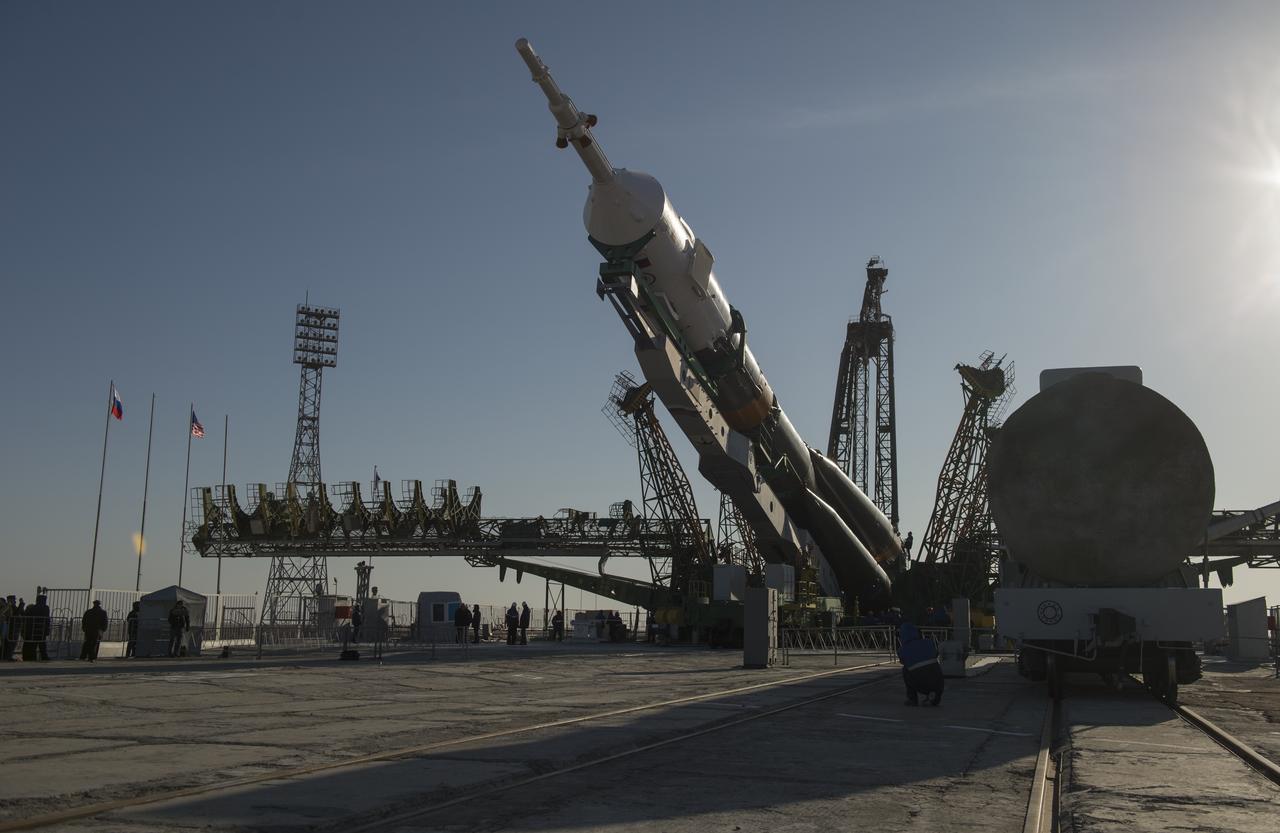
The Soyuz rocket is erected into position after being rolled out to the launch pad by train on Tuesday, March 26, 2013, at the Baikonur Cosmodrome in Kazakhstan. Launch of the Soyuz rocket is scheduled for March 29 and will send Expedition 35 Soyuz Commander Pavel Vinogradov, and Flight Engineers Chris Cassidy of NASA and Alexander Misurkin of Russia on a five and a half-month mission aboard the International Space Station. Photo Credit: (NASA/Carla Cioffi)
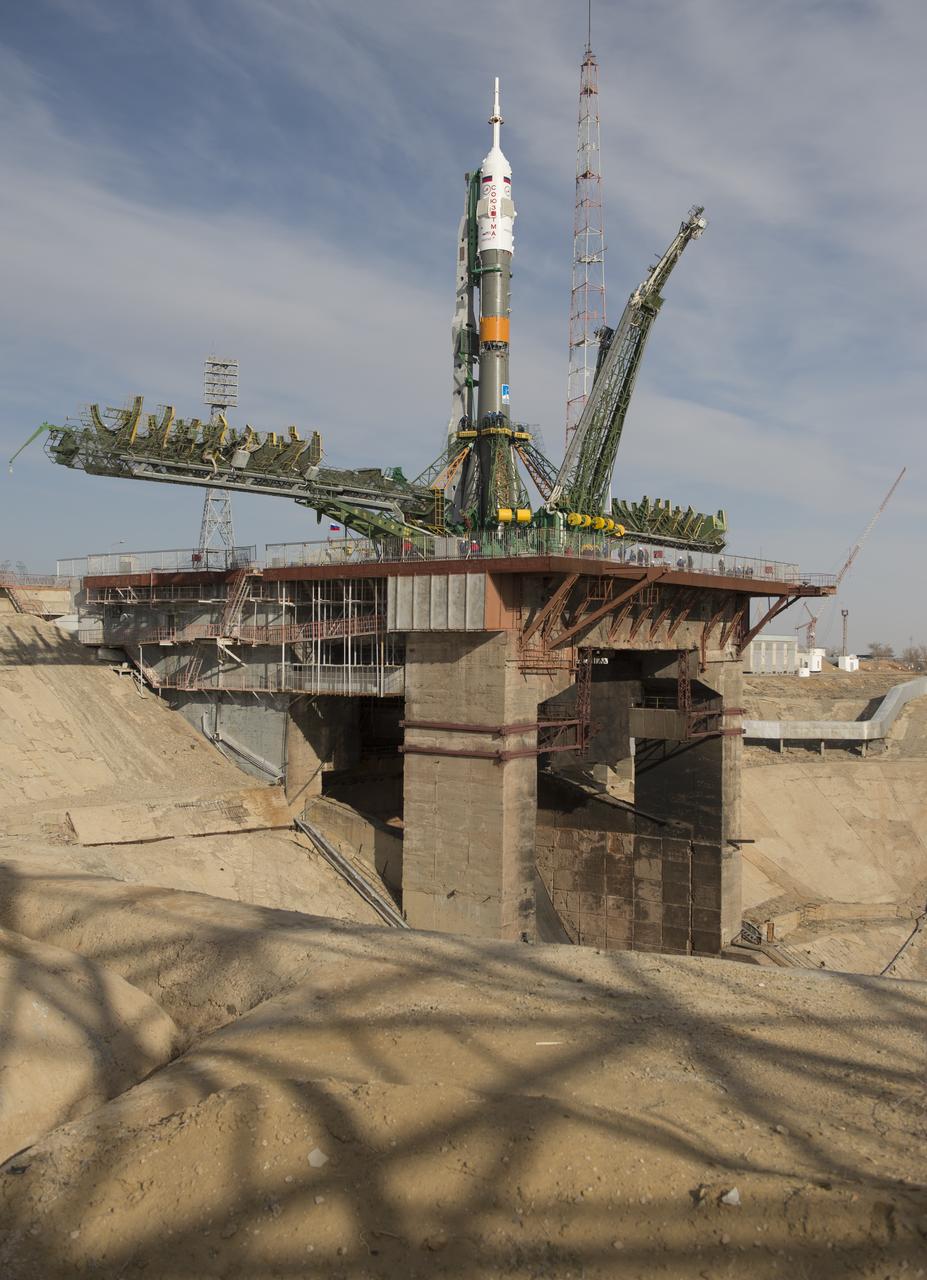
The Soyuz rocket is seen on its launch pad shortly after being lifted into its upright position on Tuesday March 26, 2013, at the Baikonur Cosmodrome in Kazakhstan. Launch of the Soyuz rocket is scheduled for March 29 and will send Expedition 35 Soyuz Commander Pavel Vinogradov, and Flight Engineers Chris Cassidy of NASA and Alexander Misurkin of Russia on a five and a half-month mission aboard the International Space Station. Photo Credit: (NASA/Carla Cioffi)
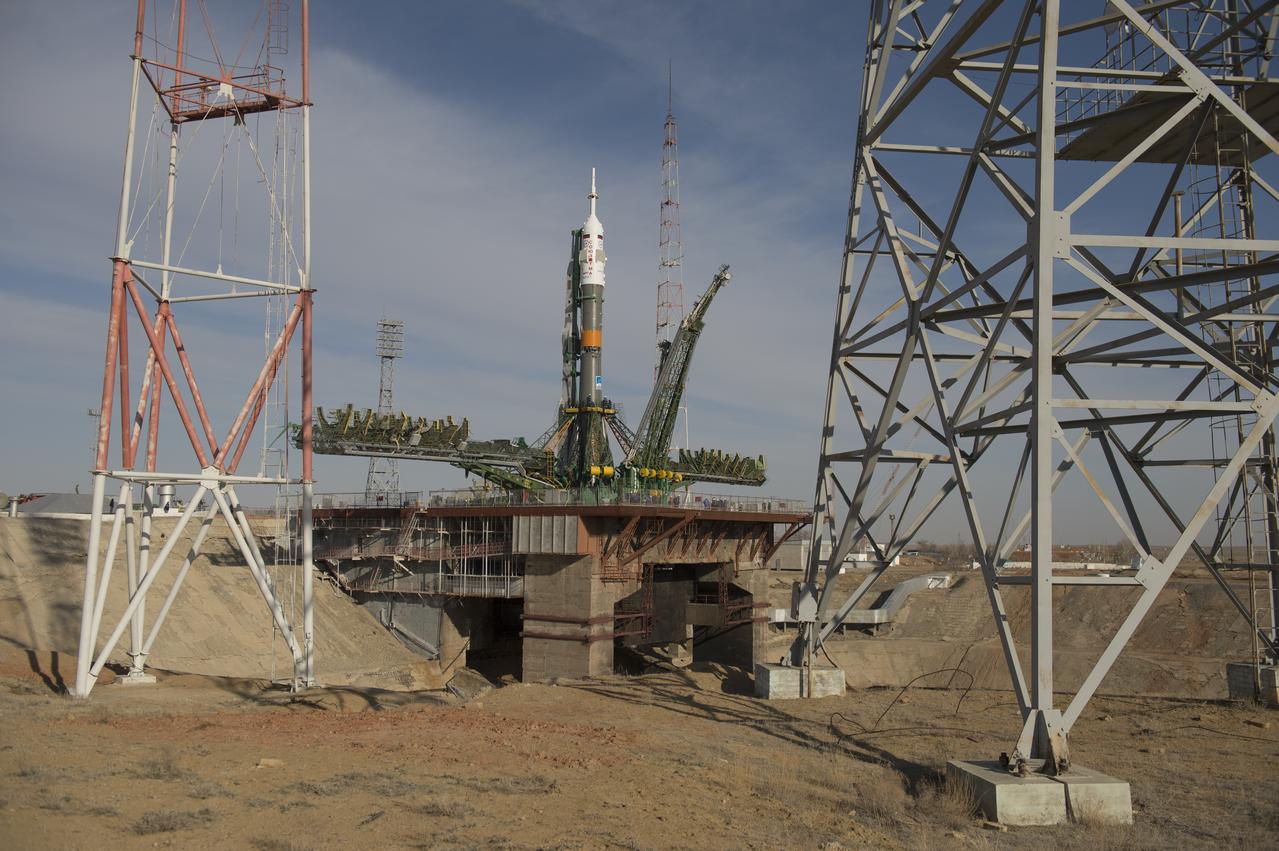
The Soyuz rocket is seen on its launch pad shortly after being lifted into its upright position on Tuesday March 26, 2013, at the Baikonur Cosmodrome in Kazakhstan. Launch of the Soyuz rocket is scheduled for March 29 and will send Expedition 35 Soyuz Commander Pavel Vinogradov, and Flight Engineers Chris Cassidy of NASA and Alexander Misurkin of Russia on a five and a half-month mission aboard the International Space Station. Photo Credit: (NASA/Carla Cioffi)
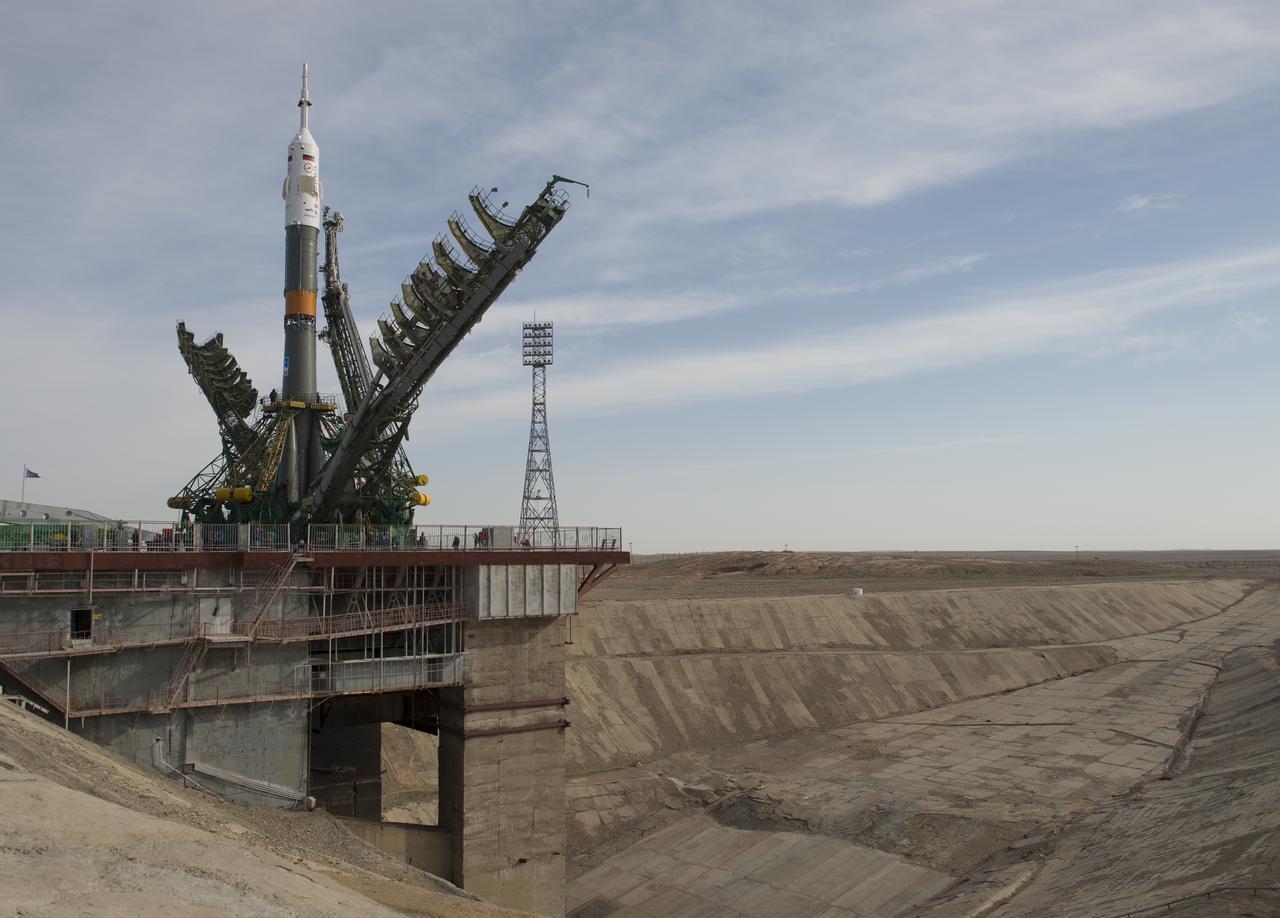
Large gantry mechanisms on either side of the Soyuz TMA-08M spacecraft are raised into position to secure the rocket at the launch pad on Tuesday, March 26, 2013 at the Baikonur Cosmodrome in Kazakhstan. Launch of the Soyuz rocket is scheduled for March 29 and will send Expedition 35 Soyuz Commander Pavel Vinogradov, and Flight Engineers Chris Cassidy of NASA and Alexander Misurkin of Russia on a five and a half-month mission aboard the International Space Station. Photo Credit: (NASA/Carla Cioffi)
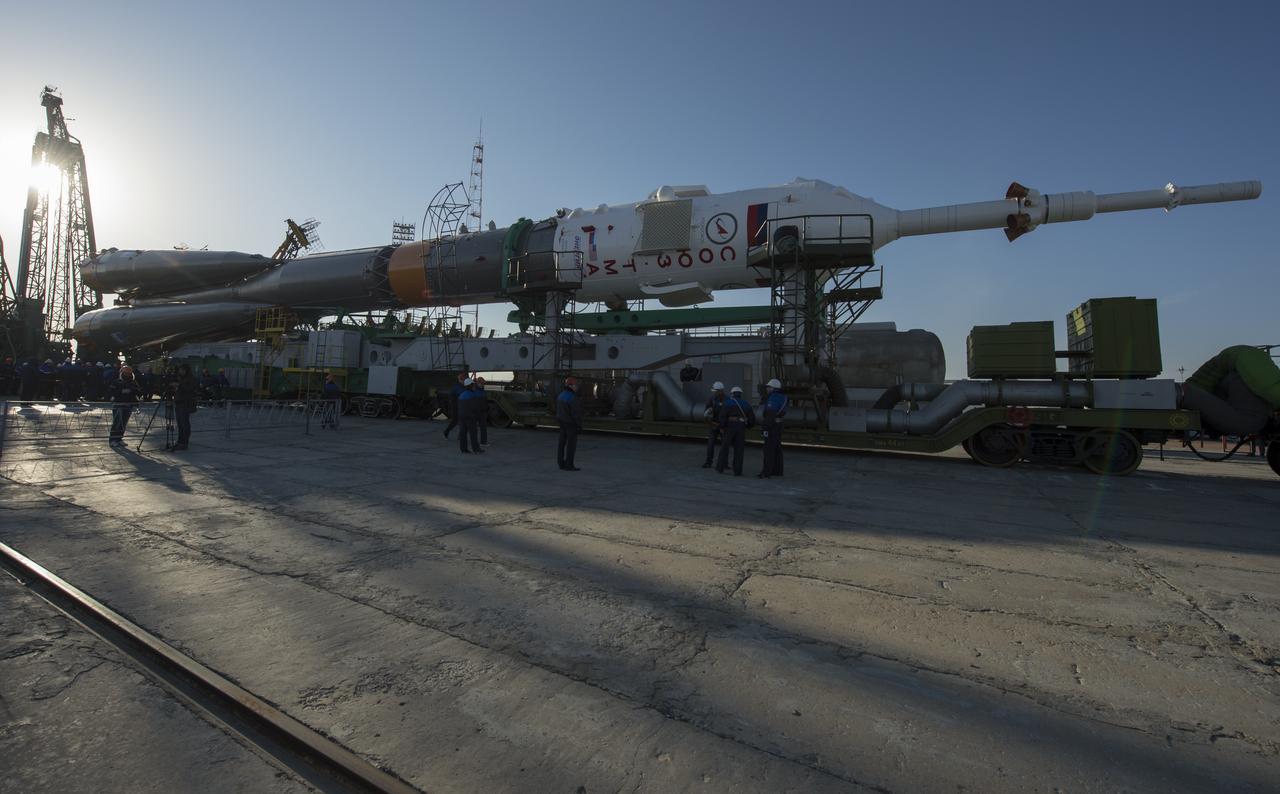
The Soyuz rocket arrives at its launch pad by train on Tuesday, March 26, 2013, at the Baikonur Cosmodrome in Kazakhstan. Launch of the Soyuz rocket is scheduled for March 29 and will send Expedition 35 Soyuz Commander Pavel Vinogradov, and Flight Engineers Chris Cassidy of NASA and Alexander Misurkin of Russia on a five and a half-month mission aboard the International Space Station. Photo Credit: (NASA/Carla Cioffi)
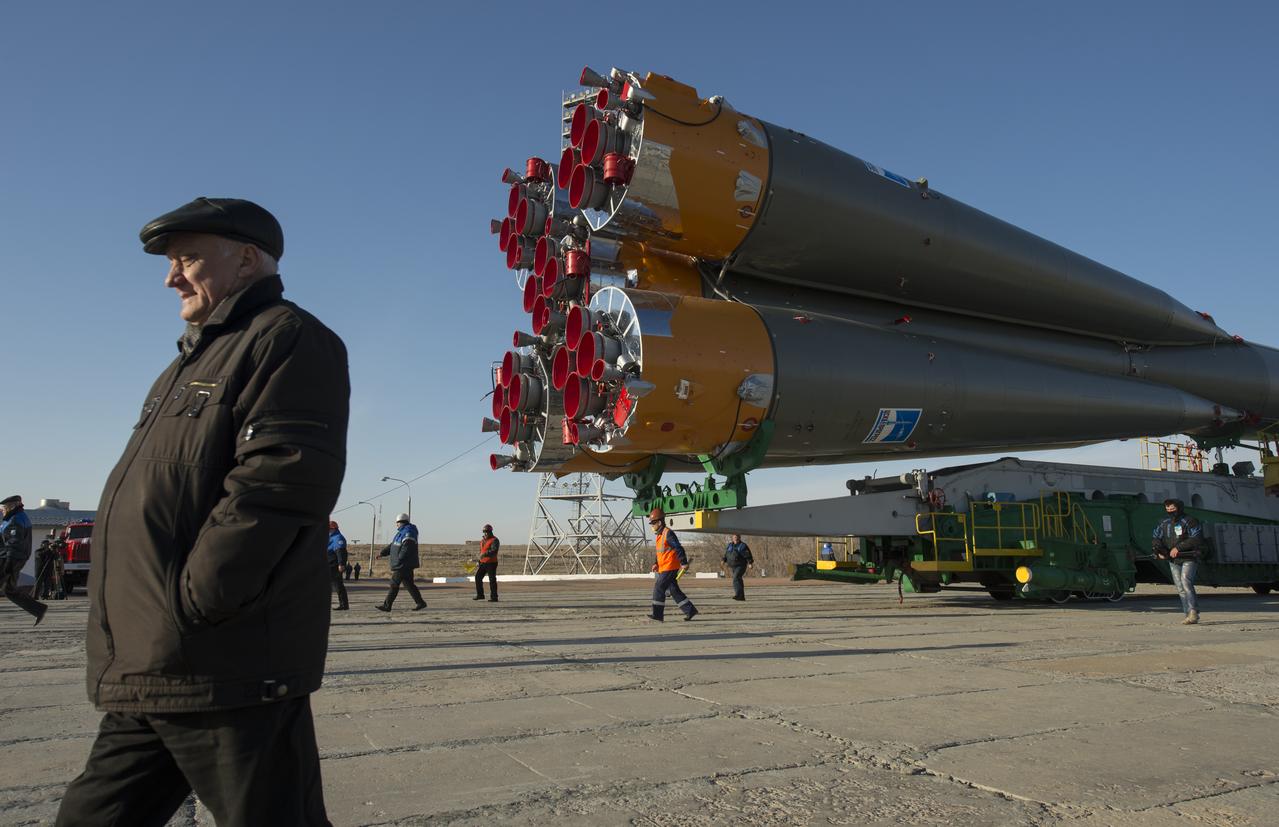
The Soyuz rocket arrives at its launch pad by train on Tuesday, March 26, 2013, at the Baikonur Cosmodrome in Kazakhstan. Launch of the Soyuz rocket is scheduled for March 29 and will send Expedition 35 Soyuz Commander Pavel Vinogradov, and Flight Engineers Chris Cassidy of NASA and Alexander Misurkin of Russia on a five and a half-month mission aboard the International Space Station. Photo Credit: (NASA/Carla Cioffi)
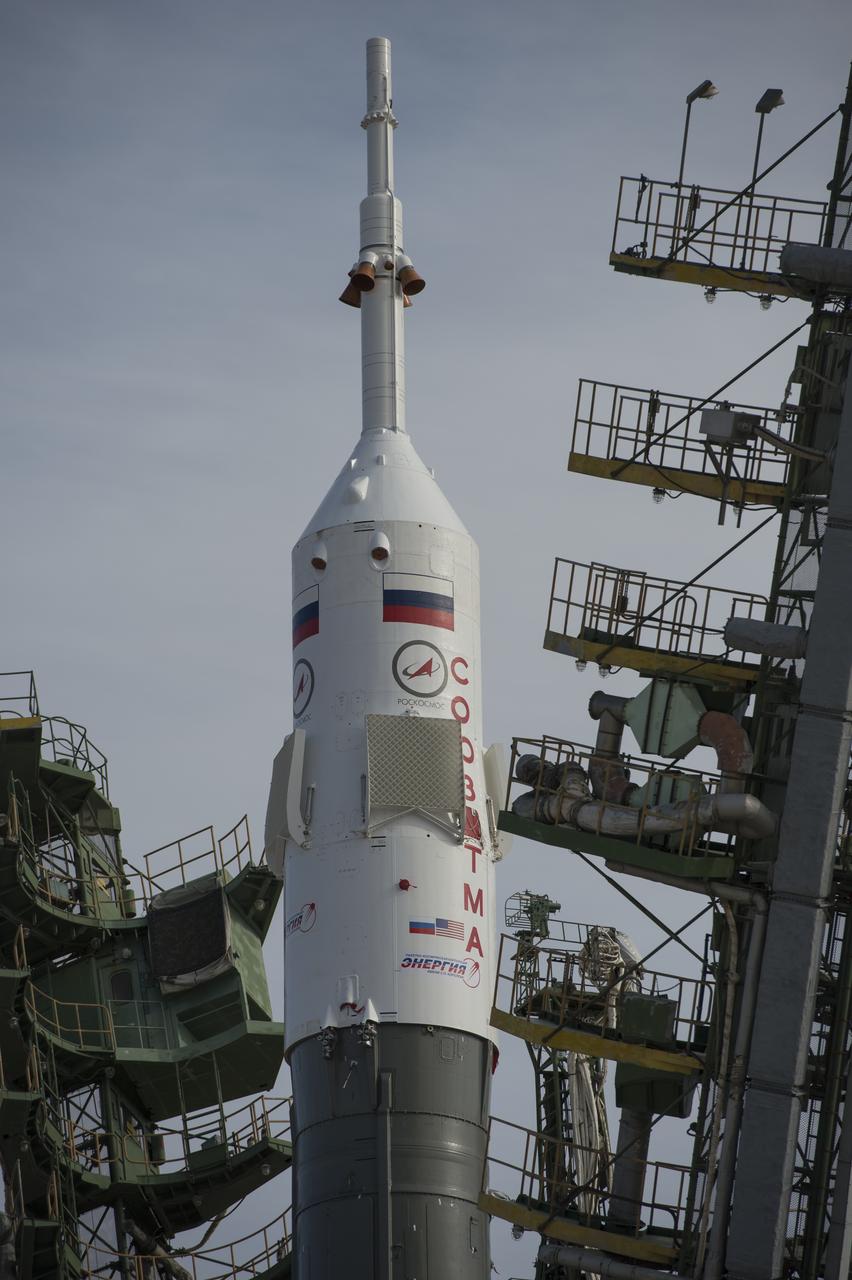
Large gantry mechanisms on either side of the Soyuz TMA-08M spacecraft are raised into position to secure the rocket at the launch pad on Tuesday, March 26, 2013 at the Baikonur Cosmodrome in Kazakhstan. Launch of the Soyuz rocket is scheduled for March 29 and will send Expedition 35 Soyuz Commander Pavel Vinogradov, and Flight Engineers Chris Cassidy of NASA and Alexander Misurkin of Russia on a five and a half-month mission aboard the International Space Station. Photo Credit: (NASA/Carla Cioffi)
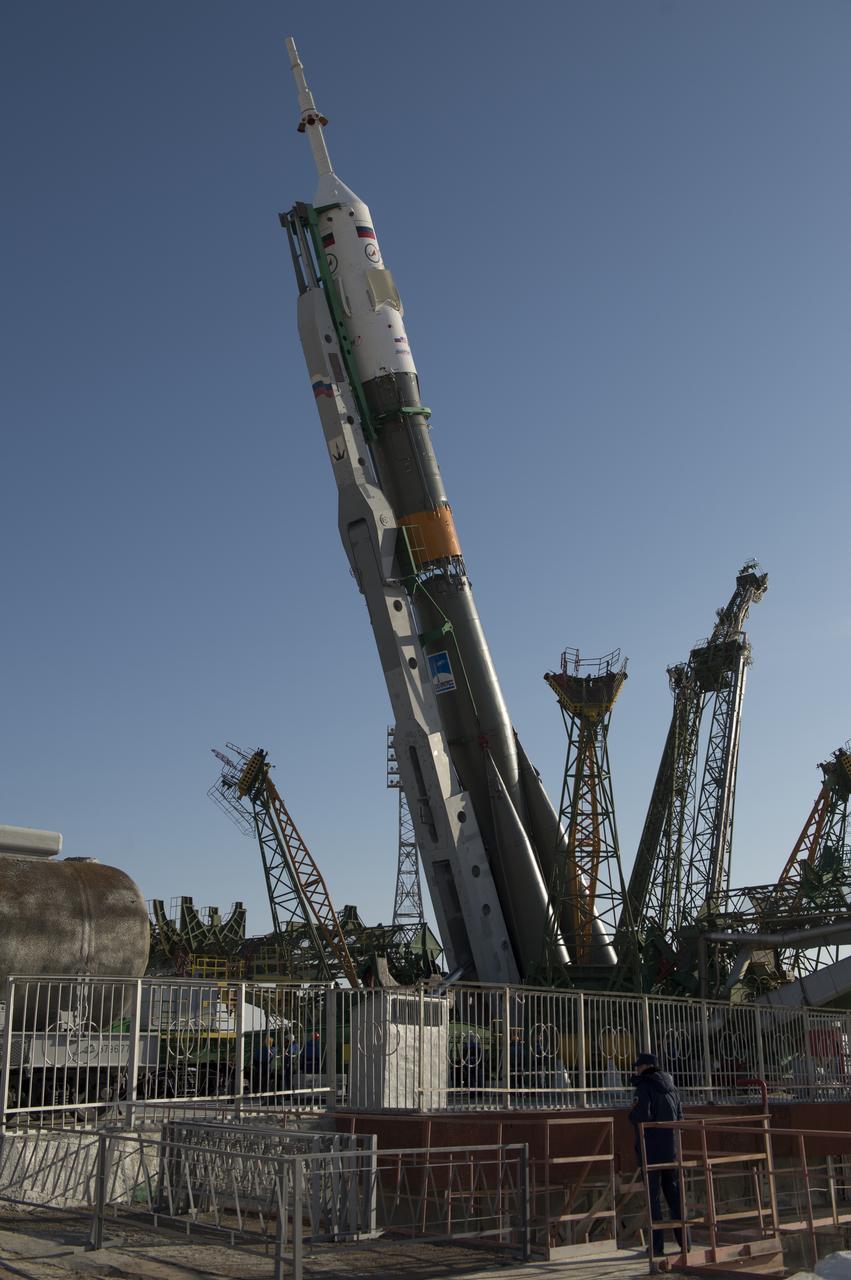
The Soyuz rocket is erected into position after being rolled out to the launch pad by train on Tuesday, March 26, 2013, at the Baikonur Cosmodrome in Kazakhstan. Launch of the Soyuz rocket is scheduled for March 29 and will send Expedition 35 Soyuz Commander Pavel Vinogradov, and Flight Engineers Chris Cassidy of NASA and Alexander Misurkin of Russia on a five and a half-month mission aboard the International Space Station. Photo Credit: (NASA/Carla Cioffi)
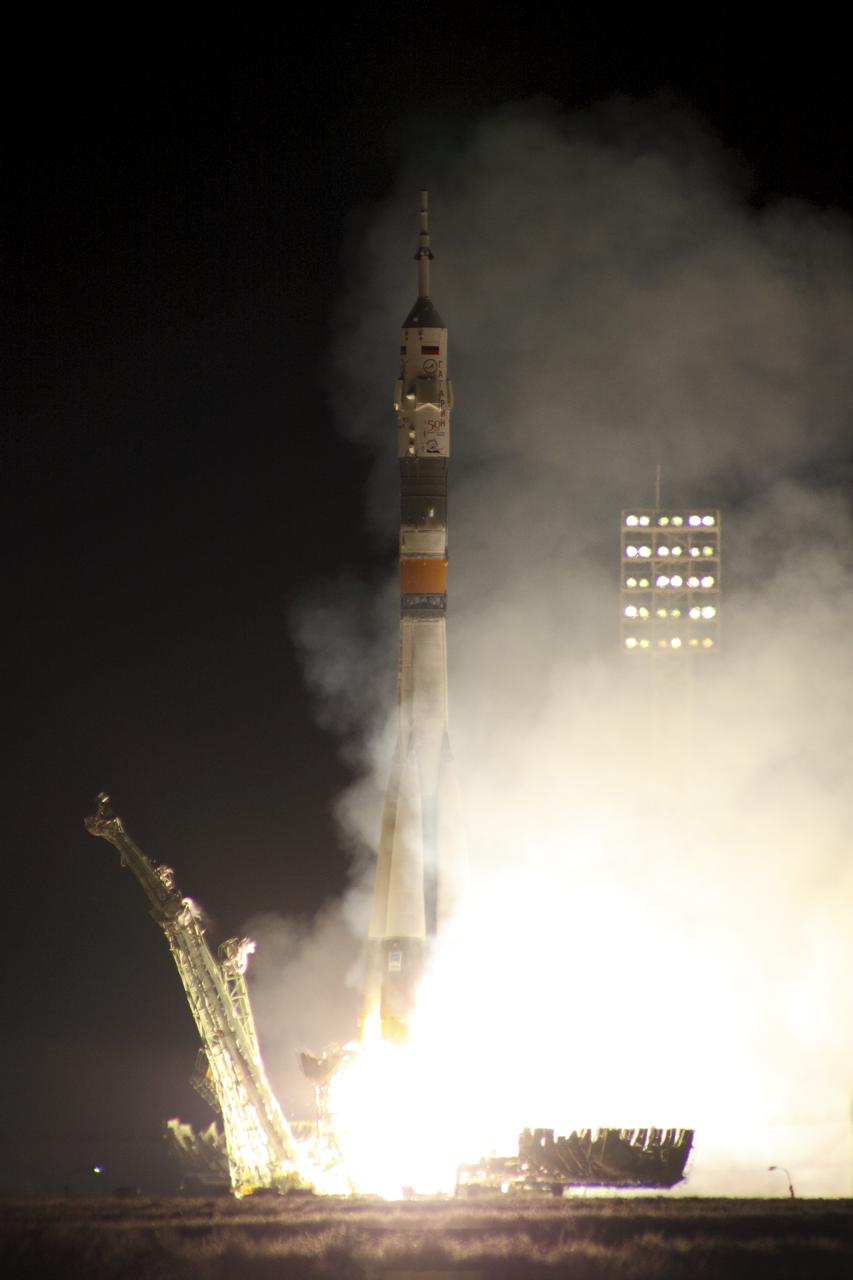
The Soyuz TMA-21 launches from the Baikonur Cosmodrome in Kazakhstan on Tuesday, April 5, 2011 carrying Expedition 27 Soyuz Commander Alexander Samokutyaev, NASA Flight Engineer Ron Garan and Russian Flight Engineer Andrey Borisenko to the International Space Station. The Soyuz, which has been dubbed "Gagarin", is launching one week shy of the 50th anniversary of the launch of Yuri Gagarin from the same launch pad in Baikonur on April 12, 1961 to become the first human to fly in space. Photo Credit: (NASA/Victor Zelentsov)
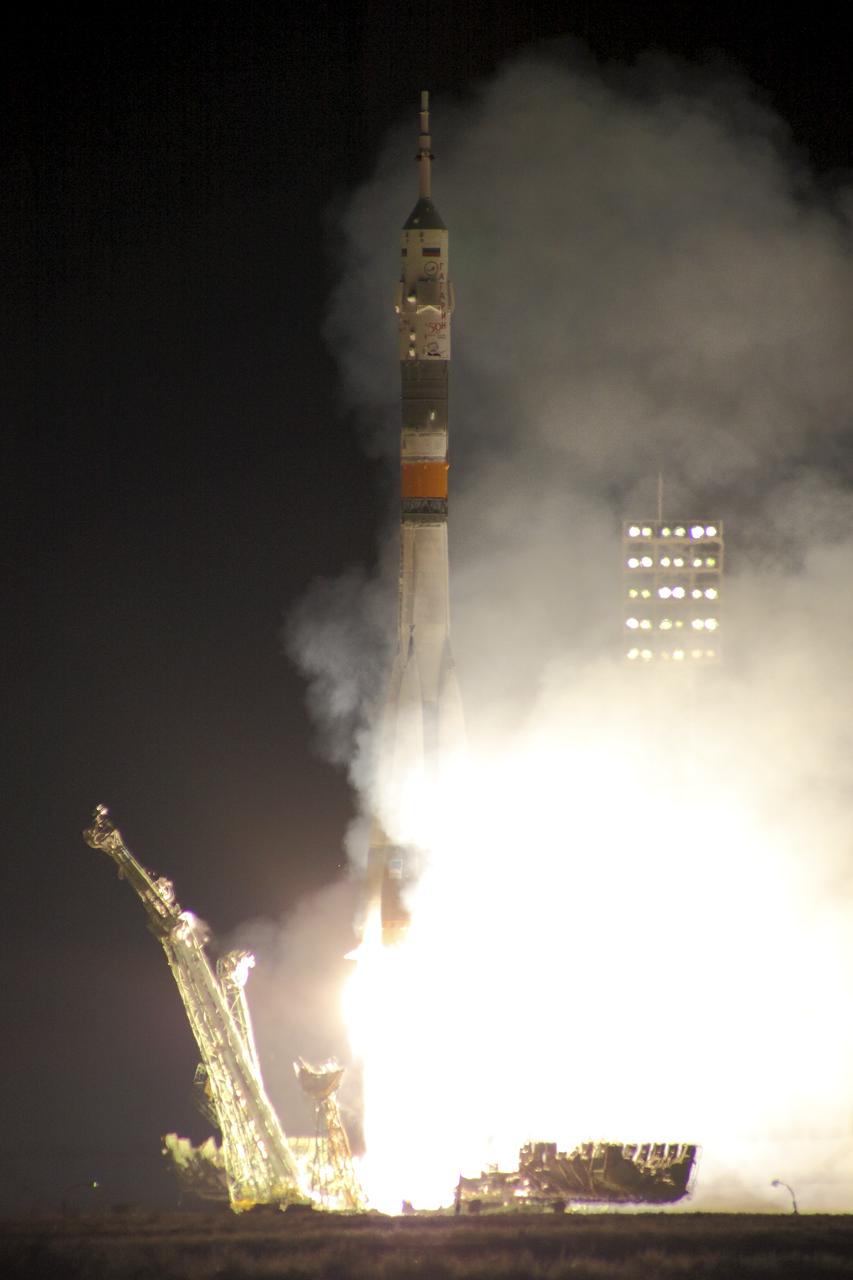
The Soyuz TMA-21 launches from the Baikonur Cosmodrome in Kazakhstan on Tuesday, April 5, 2011 carrying Expedition 27 Soyuz Commander Alexander Samokutyaev, NASA Flight Engineer Ron Garan and Russian Flight Engineer Andrey Borisenko to the International Space Station. The Soyuz, which has been dubbed "Gagarin", is launching one week shy of the 50th anniversary of the launch of Yuri Gagarin from the same launch pad in Baikonur on April 12, 1961 to become the first human to fly in space. Photo Credit: (NASA/Victor Zelentsov)
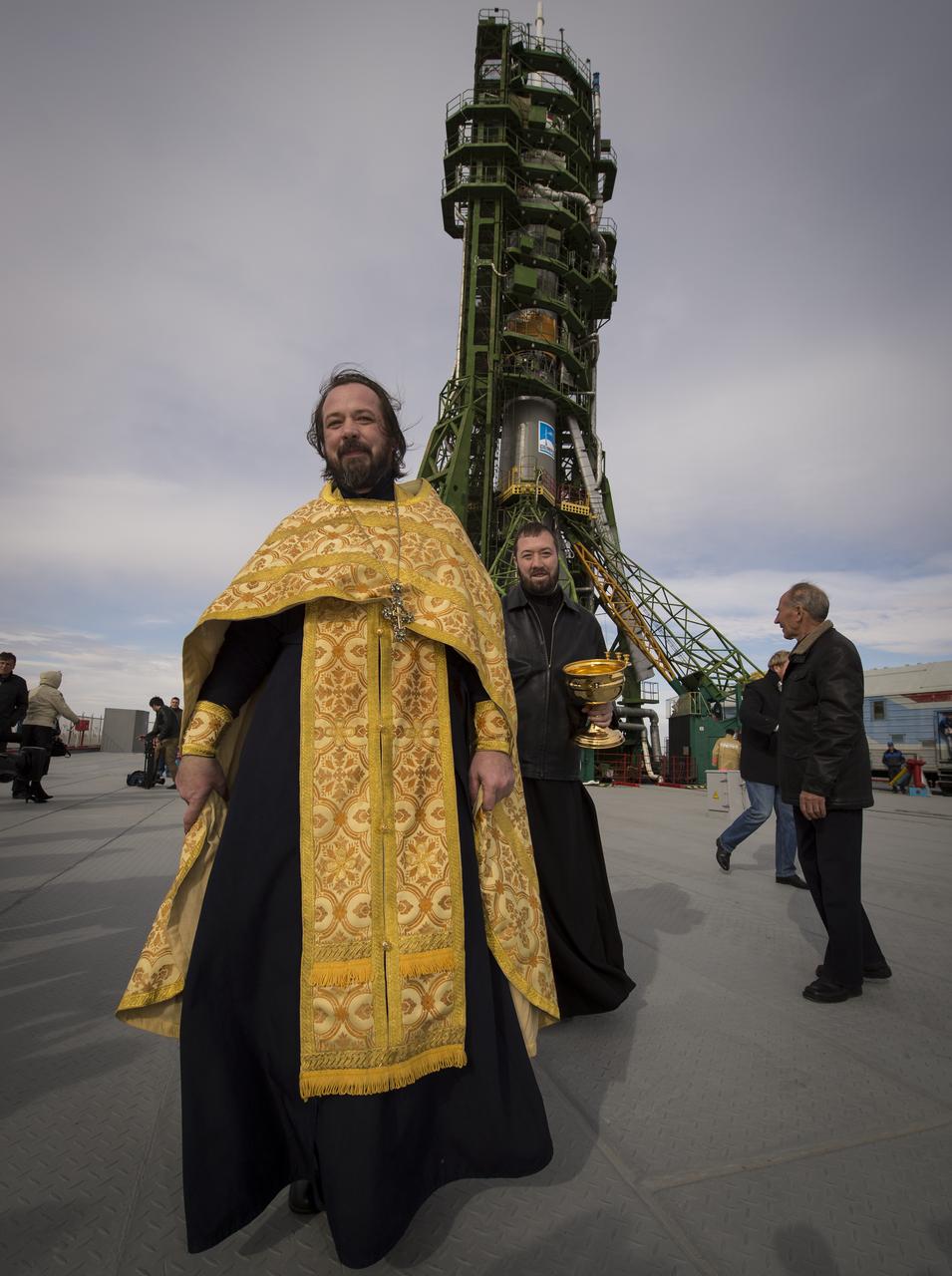
An Orthodox priest is seen after he blessed the Soyuz rocket at the Baikonur Cosmodrome Launch pad on Monday, Oct. 22, 2012 in Baikonur, Kazakhstan. Launch of the Soyuz rocket is scheduled for October 23 and will send Expedition 33/34 Flight Engineer Kevin Ford of NASA, Soyuz Commander Oleg Novitskiy and Flight Engineer Evgeny Tarelkin of ROSCOSMOS on a five-month mission aboard the International Space Station. Photo Credit: (NASA/Bill Ingalls)
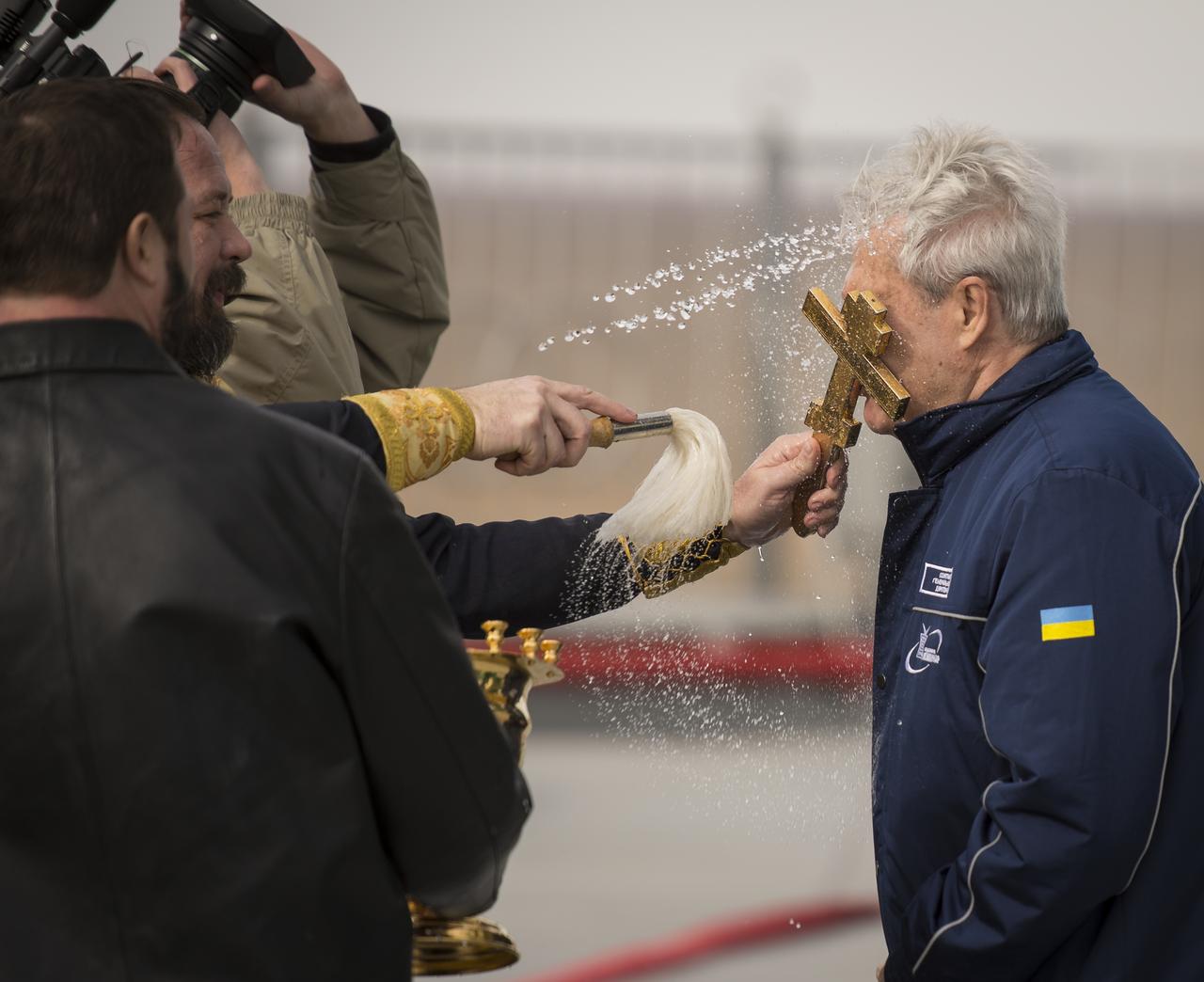
An Orthodox priest blesses a worker near the Soyuz rocket at the Baikonur Cosmodrome Launch pad on Monday, Oct. 22, 2012 in Baikonur, Kazakhstan. Launch of the Soyuz rocket is scheduled for October 23 and will send Expedition 33/34 Flight Engineer Kevin Ford of NASA, Soyuz Commander Oleg Novitskiy and Flight Engineer Evgeny Tarelkin of ROSCOSMOS on a five-month mission aboard the International Space Station. Photo Credit: (NASA/Bill Ingalls)
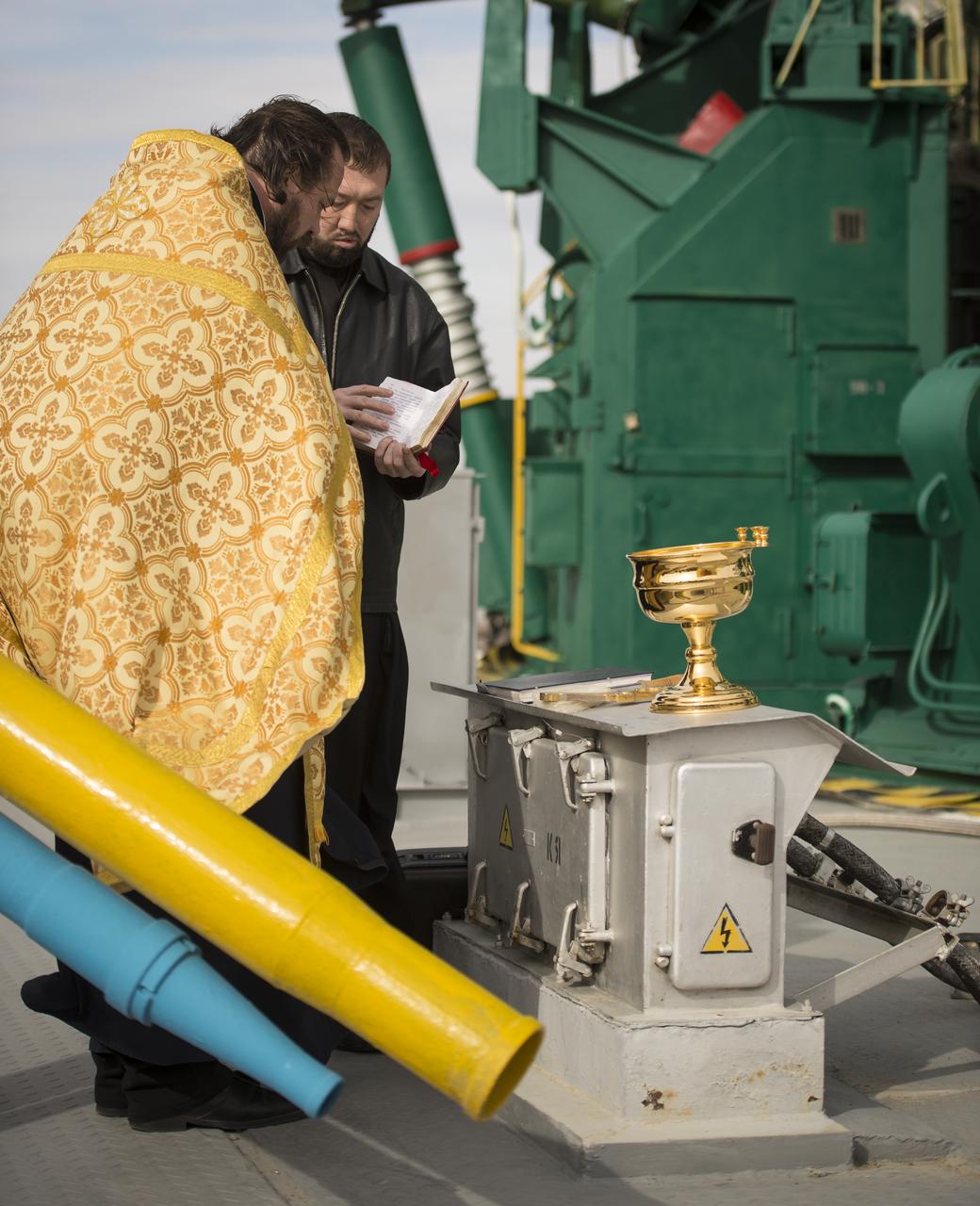
An Orthodox priest blesses the Soyuz rocket at the Baikonur Cosmodrome Launch pad on Monday, Oct. 22, 2012 in Baikonur, Kazakhstan. Launch of the Soyuz rocket is scheduled for October 23 and will send Expedition 33/34 Flight Engineer Kevin Ford of NASA, Soyuz Commander Oleg Novitskiy and Flight Engineer Evgeny Tarelkin of ROSCOSMOS on a five-month mission aboard the International Space Station. Photo Credit: (NASA/Bill Ingalls)
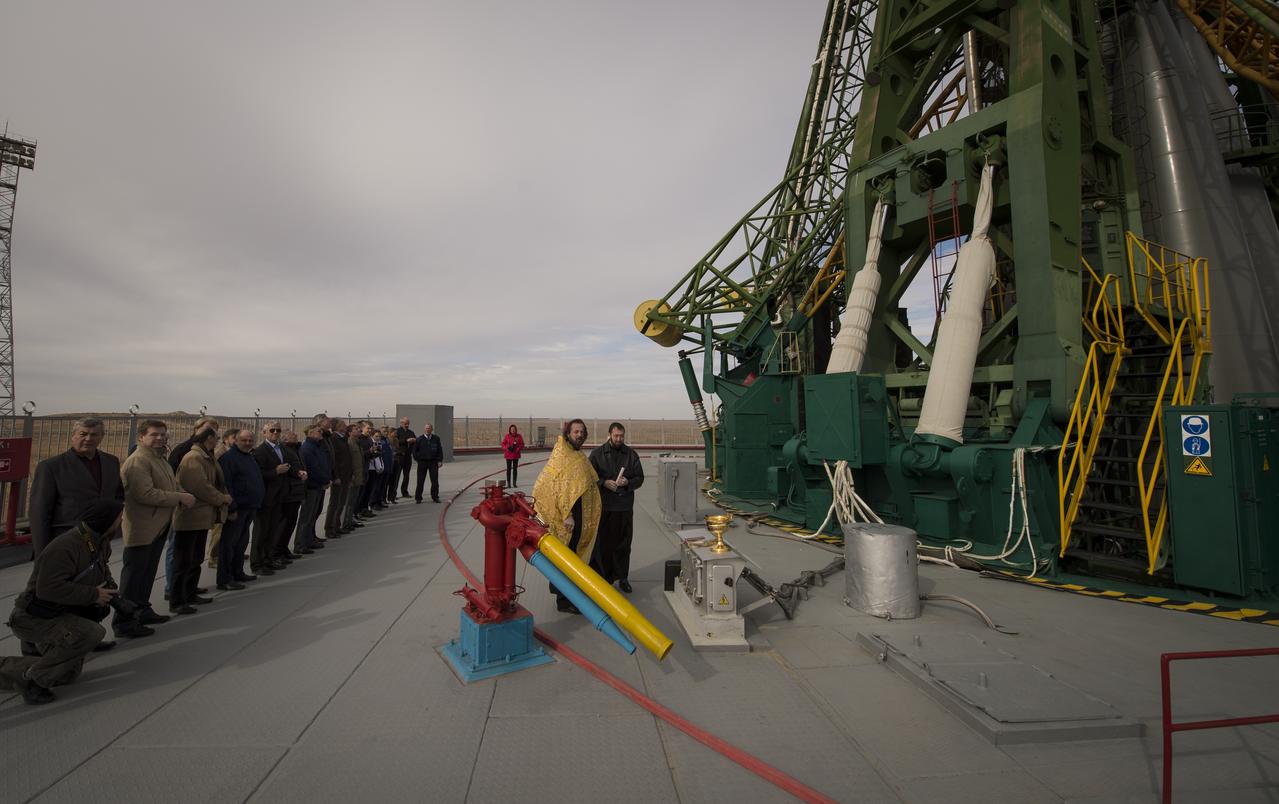
An Orthodox priest blesses the Soyuz rocket at the Baikonur Cosmodrome Launch pad on Monday, Oct. 22, 2012 in Baikonur, Kazakhstan. Launch of the Soyuz rocket is scheduled for October 23 and will send Expedition 33/34 Flight Engineer Kevin Ford of NASA, Soyuz Commander Oleg Novitskiy and Flight Engineer Evgeny Tarelkin of ROSCOSMOS on a five-month mission aboard the International Space Station. Photo Credit: (NASA/Bill Ingalls)
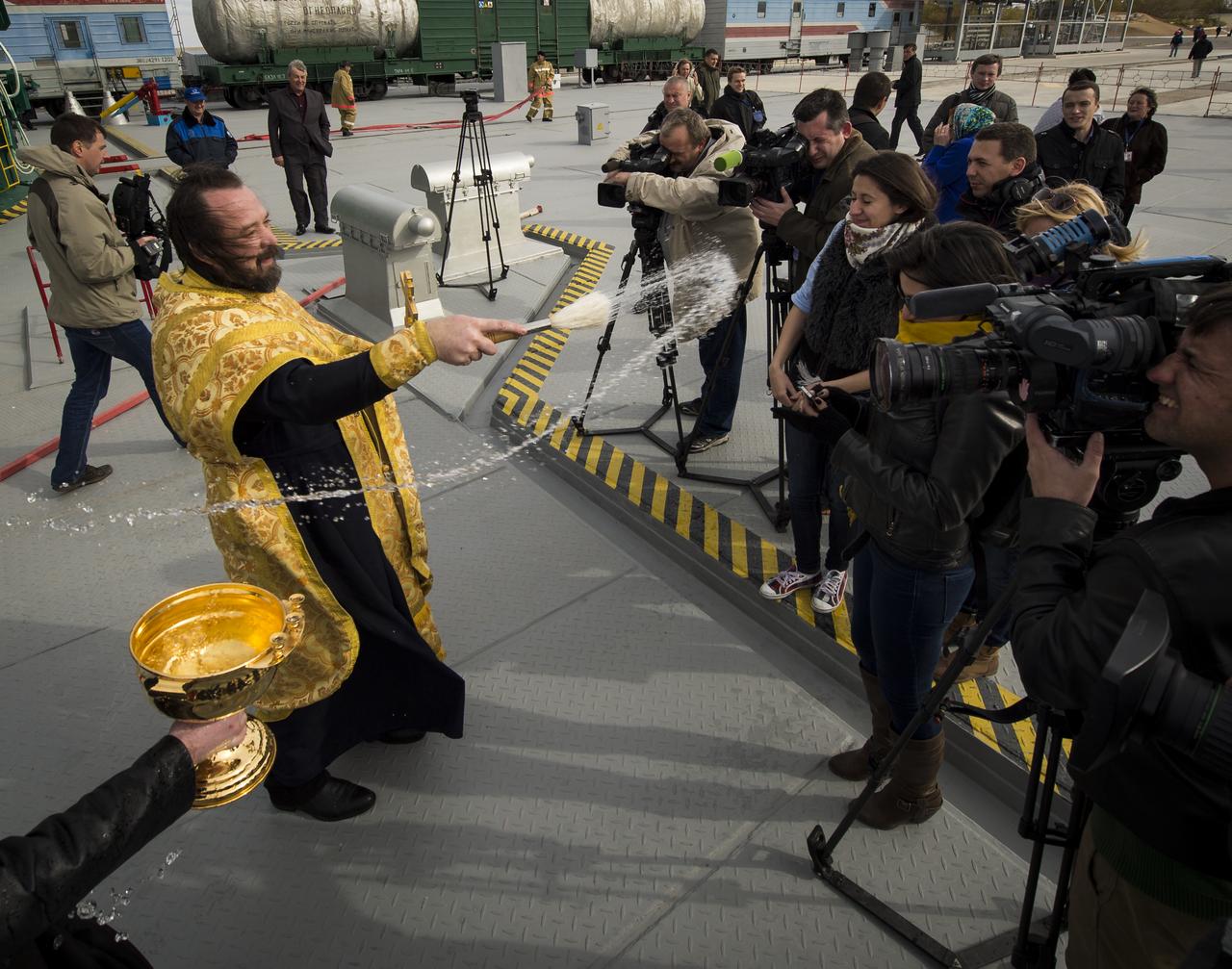
An Orthodox priest blesses members of the media next to the Soyuz rocket at the Baikonur Cosmodrome Launch pad on Monday, Oct. 22, 2012 in Baikonur, Kazakhstan. Launch of the Soyuz rocket is scheduled for October 23 and will send Expedition 33/34 Flight Engineer Kevin Ford of NASA, Soyuz Commander Oleg Novitskiy and Flight Engineer Evgeny Tarelkin of ROSCOSMOS on a five-month mission aboard the International Space Station. Photo Credit: (NASA/Bill Ingalls)
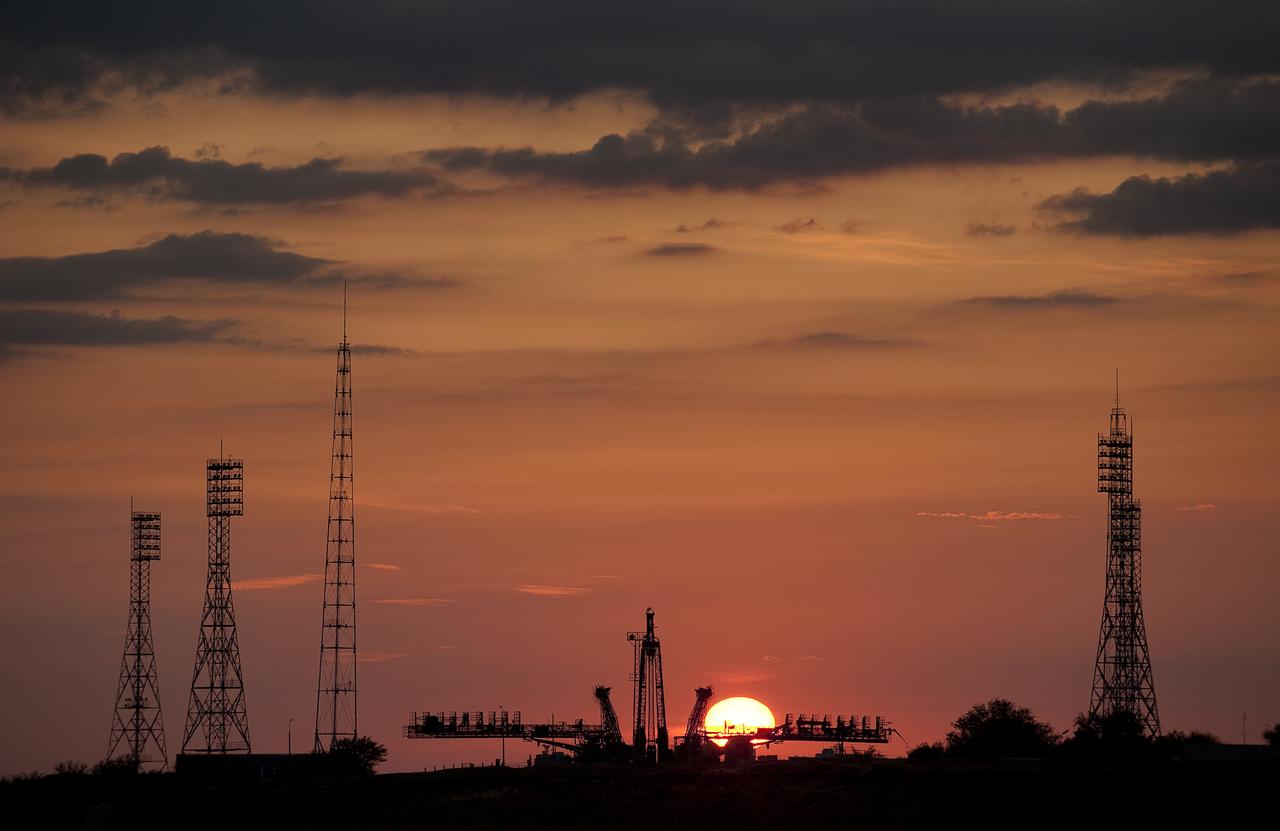
The sun rises behind the Soyuz launch pad shortly before the Soyuz rocket is rolled out to the launch pad Monday, Sept. 28, 2009 at the Baikonur Cosmodrome in Kazakhstan. The Soyuz is scheduled to launch the crew of Expedition 21 and a spaceflight participant on Sept. 30, 2009. Photo Credit: (NASA/Bill Ingalls)
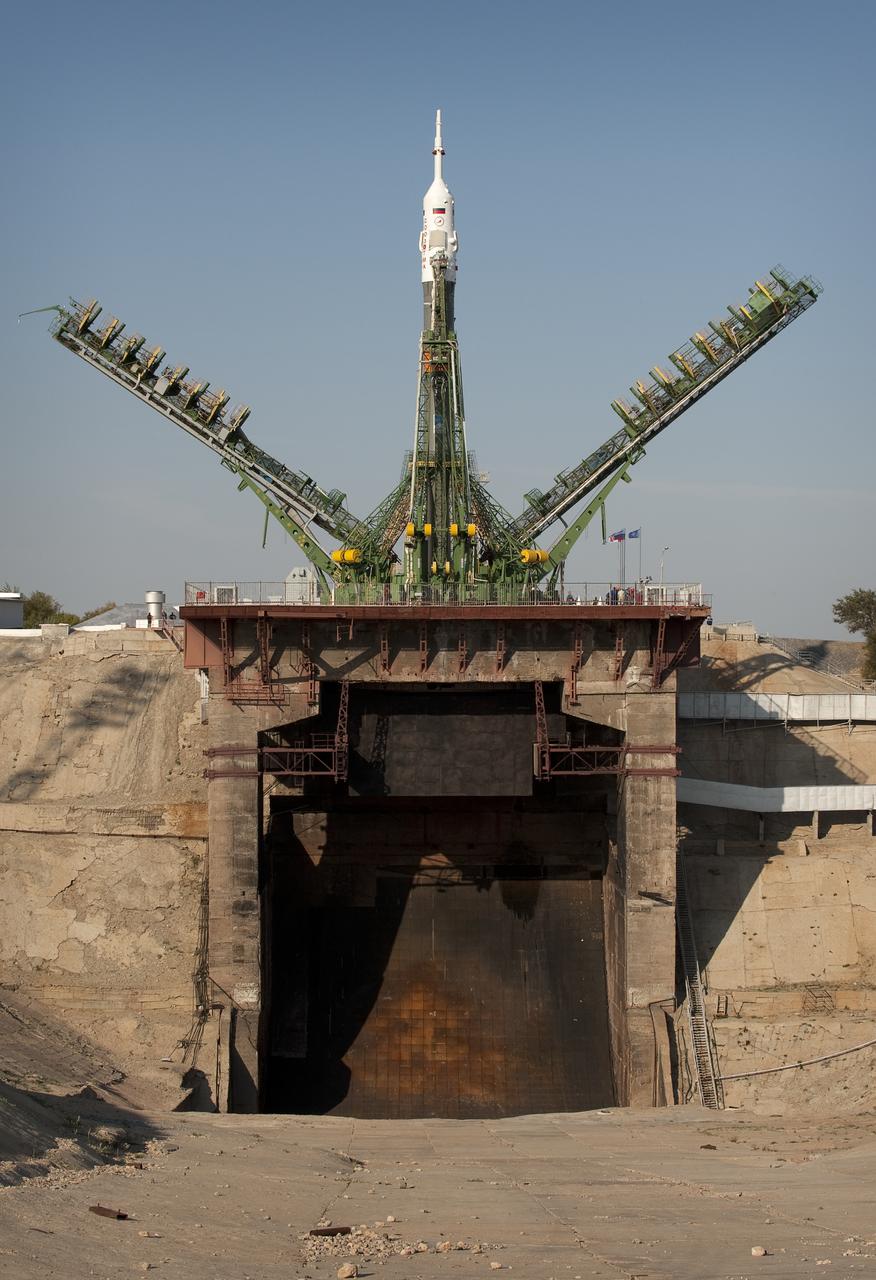
Launch scaffolding is raised into place around the Soyuz rocket shortly after arrival to the launch pad Monday, Sept. 28, 2009 at the Baikonur Cosmodrome in Kazakhstan. The Soyuz is scheduled to launch the crew of Expedition 21 and a spaceflight participant on Sept. 30, 2009. Photo Credit: (NASA/Bill Ingalls)
Launch scaffolding is raised into place around the Soyuz rocket shortly after arrival to the launch pad Monday, Sept. 28, 2009 at the Baikonur Cosmodrome in Kazakhstan. The Soyuz is scheduled to launch the crew of Expedition 21 and a spaceflight participant on Sept. 30, 2009. Photo Credit: (NASA/Bill Ingalls)
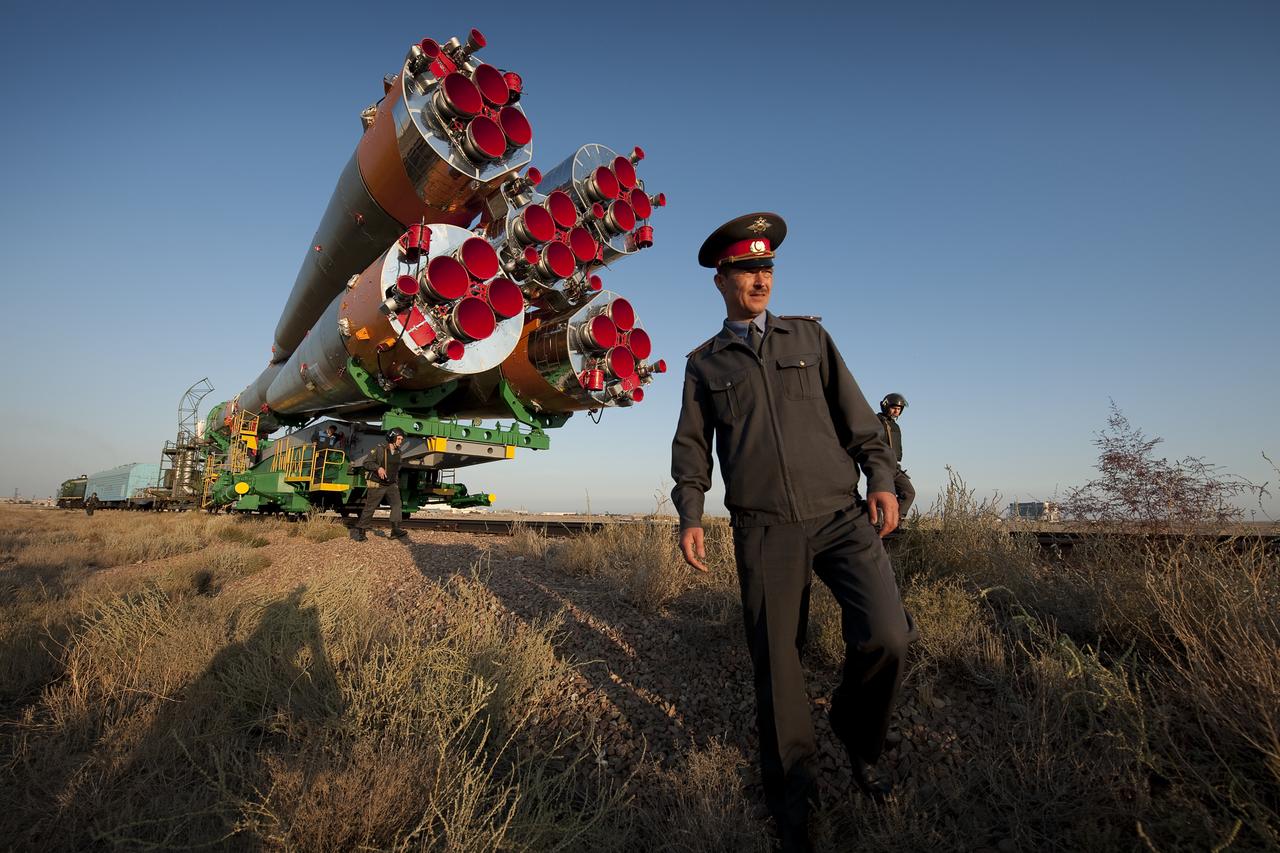
The Soyuz rocket is rolled out to the launch pad Monday, Sept. 28, 2009 at the Baikonur Cosmodrome in Kazakhstan. The Soyuz is scheduled to launch the crew of Expedition 21 and a spaceflight participant on Sept. 30, 2009. Photo Credit: (NASA/Bill Ingalls)
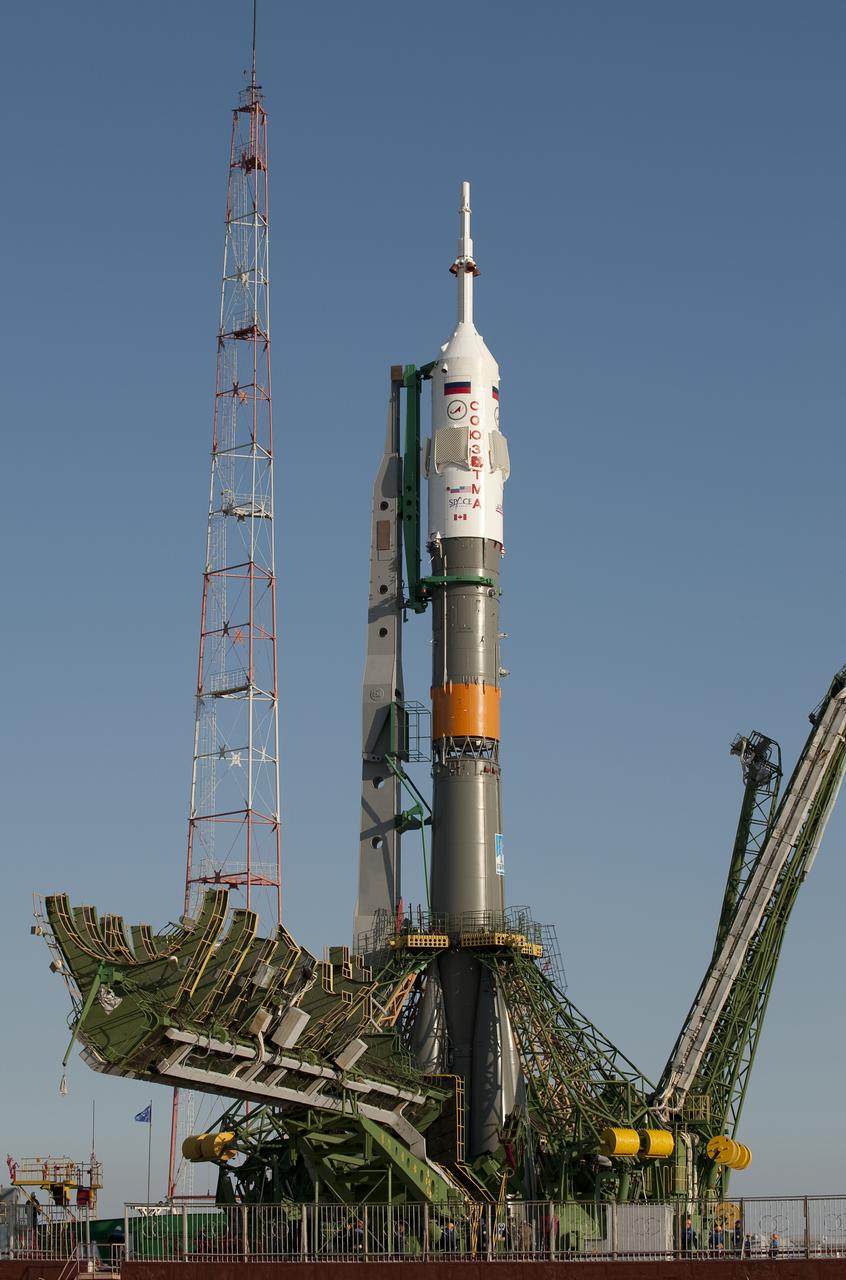
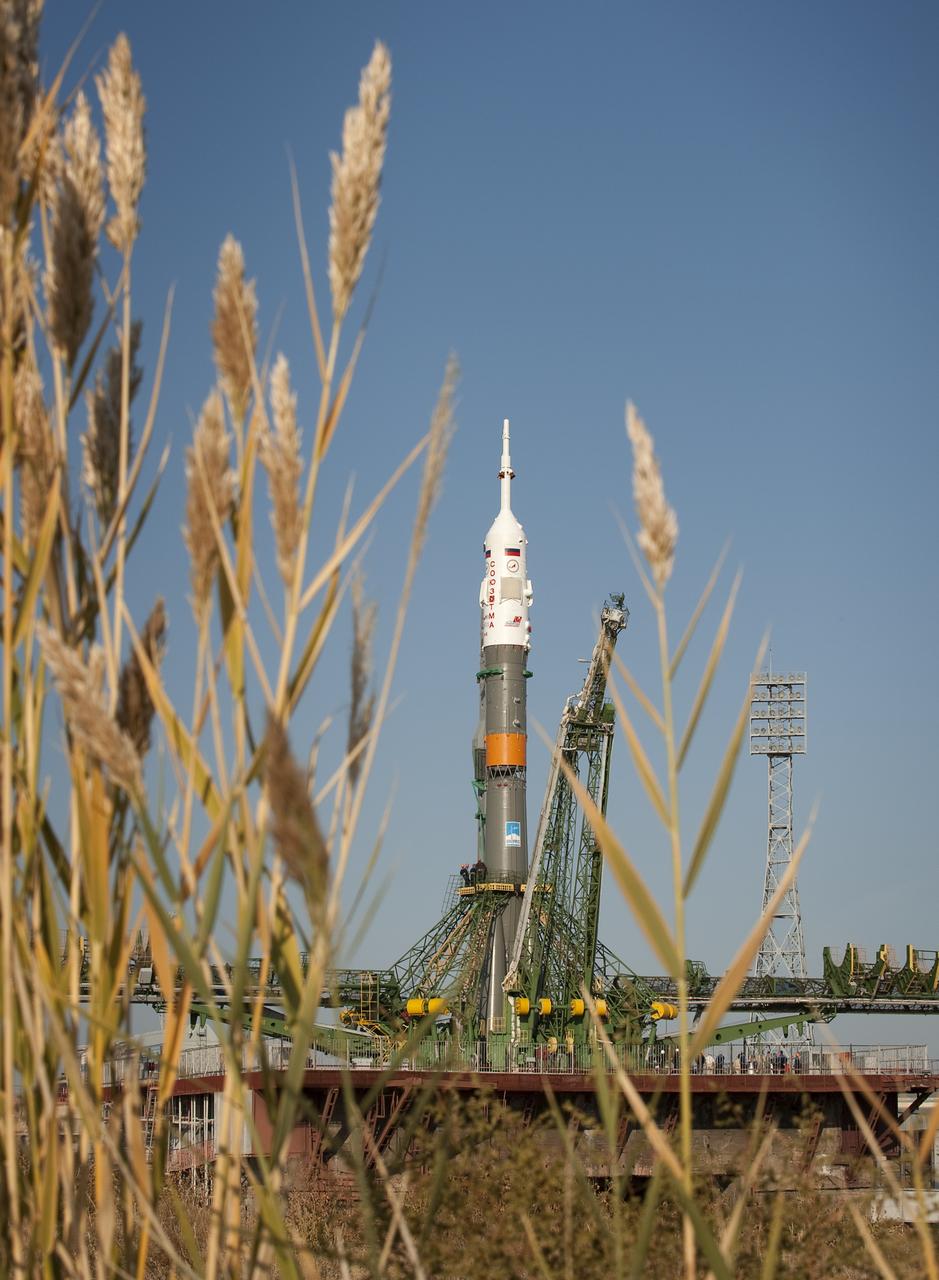
The Soyuz rocket is seen shortly after arrival to the launch pad Monday, Sept. 28, 2009 at the Baikonur Cosmodrome in Kazakhstan. The Soyuz is scheduled to launch the crew of Expedition 21 and a spaceflight participant on Sept. 30, 2009. Photo Credit: (NASA/Bill Ingalls)
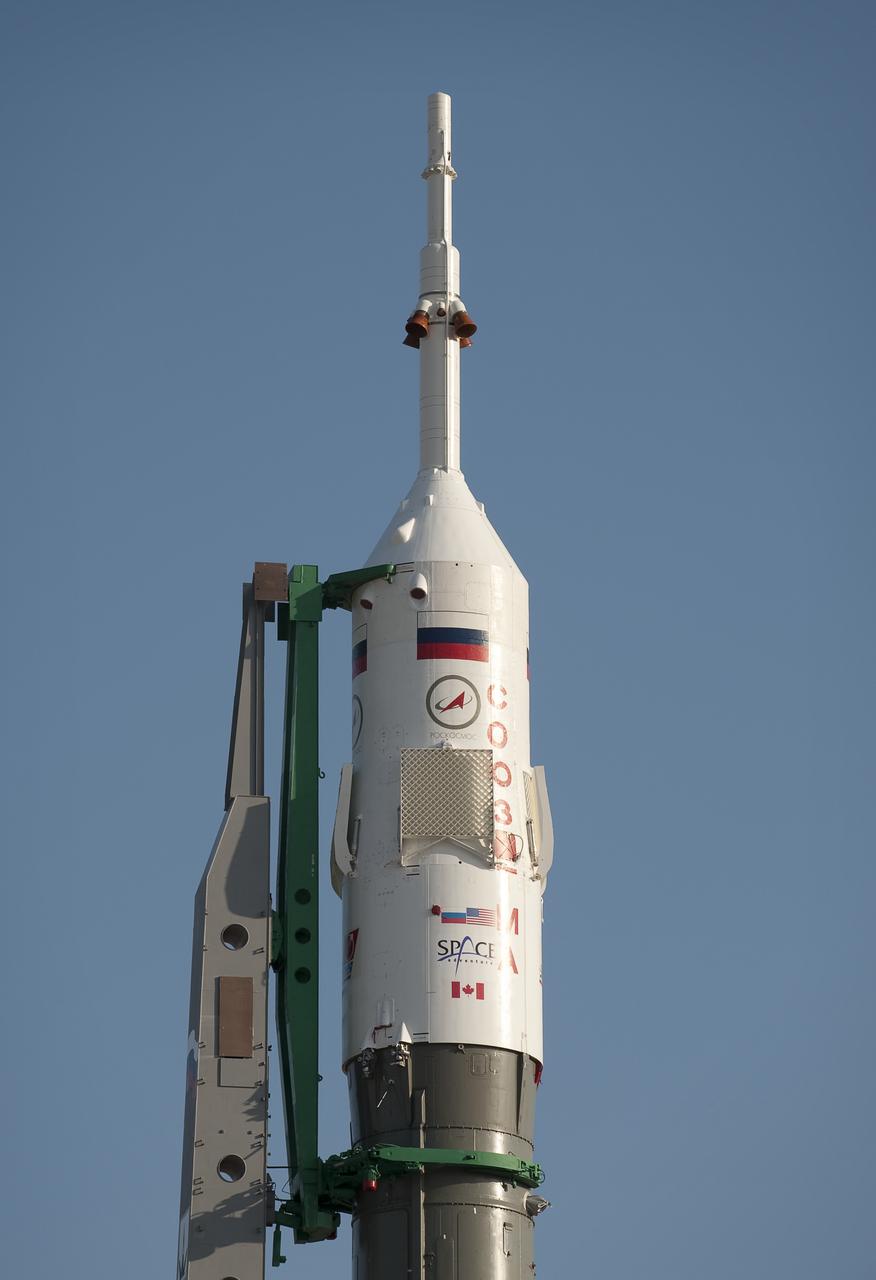
The Soyuz rocket is seen shortly after arrival to the launch pad Monday, Sept. 28, 2009 at the Baikonur Cosmodrome in Kazakhstan. The Soyuz is scheduled to launch the crew of Expedition 21 and a spaceflight participant on Sept. 30, 2009. Photo Credit: (NASA/Bill Ingalls)
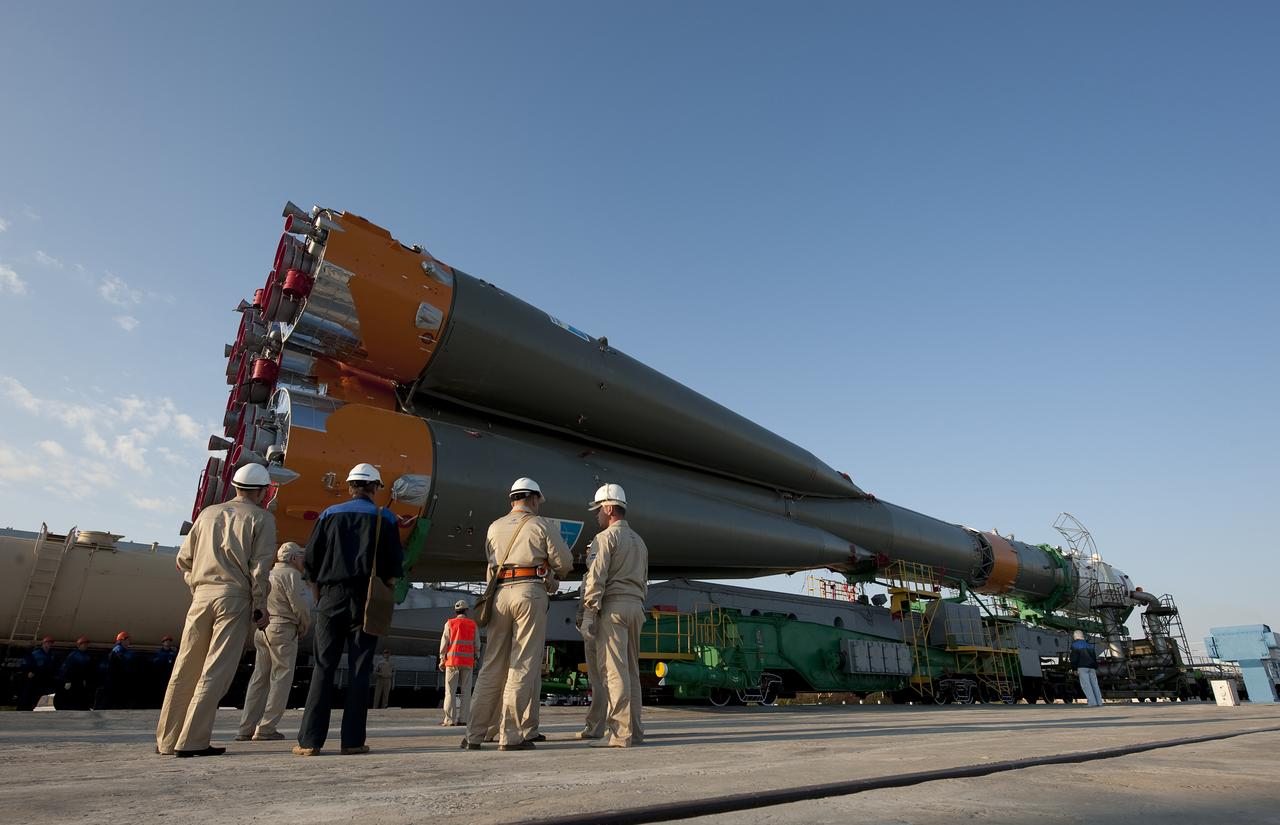
The Soyuz rocket is seen shortly after arrival to the launch pad Monday, Sept. 28, 2009 at the Baikonur Cosmodrome in Kazakhstan. The Soyuz is scheduled to launch the crew of Expedition 21 and a spaceflight participant on Sept. 30, 2009. Photo Credit: (NASA/Bill Ingalls)
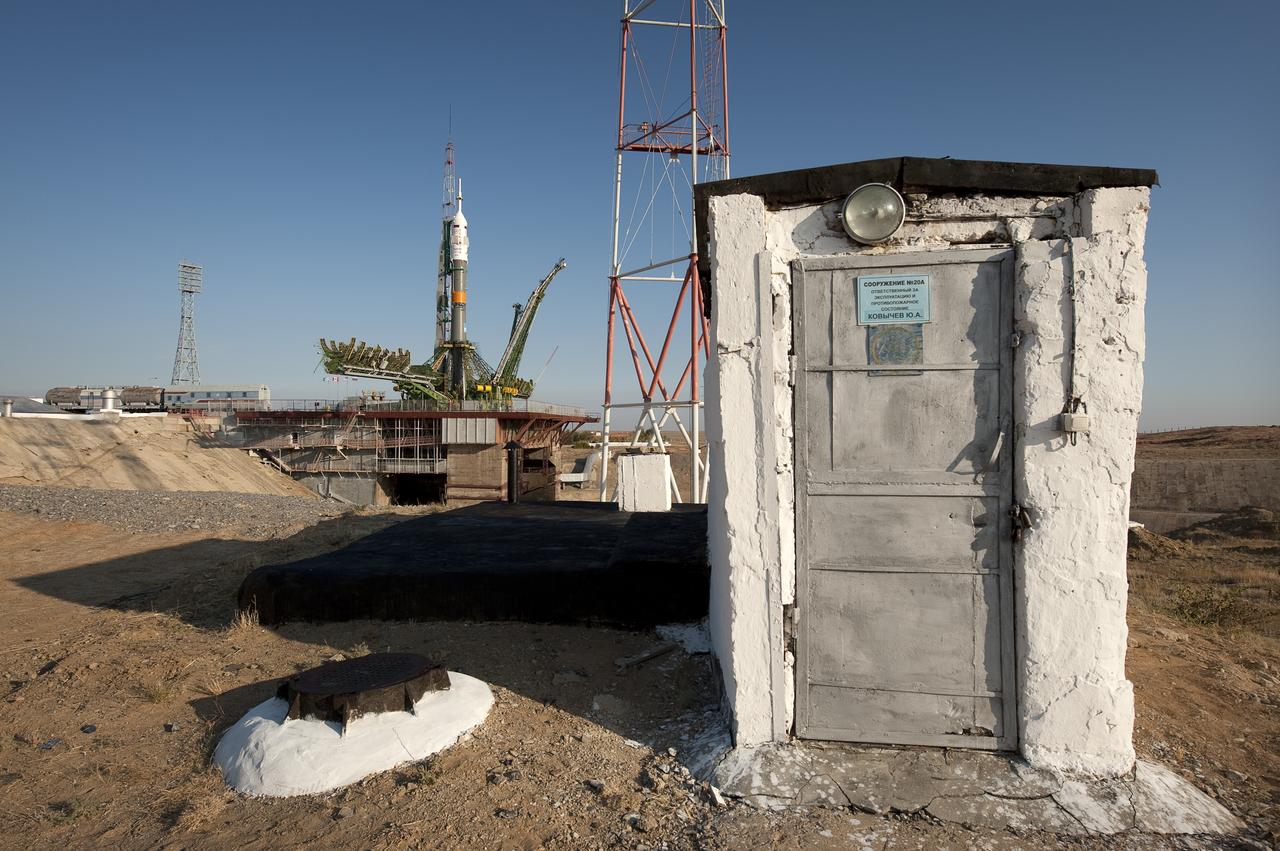
The Soyuz rocket is seen shortly after arrival to the launch pad Monday, Sept. 28, 2009 at the Baikonur Cosmodrome in Kazakhstan. The Soyuz is scheduled to launch the crew of Expedition 21 and a spaceflight participant on Sept. 30, 2009. Photo Credit: (NASA/Bill Ingalls)
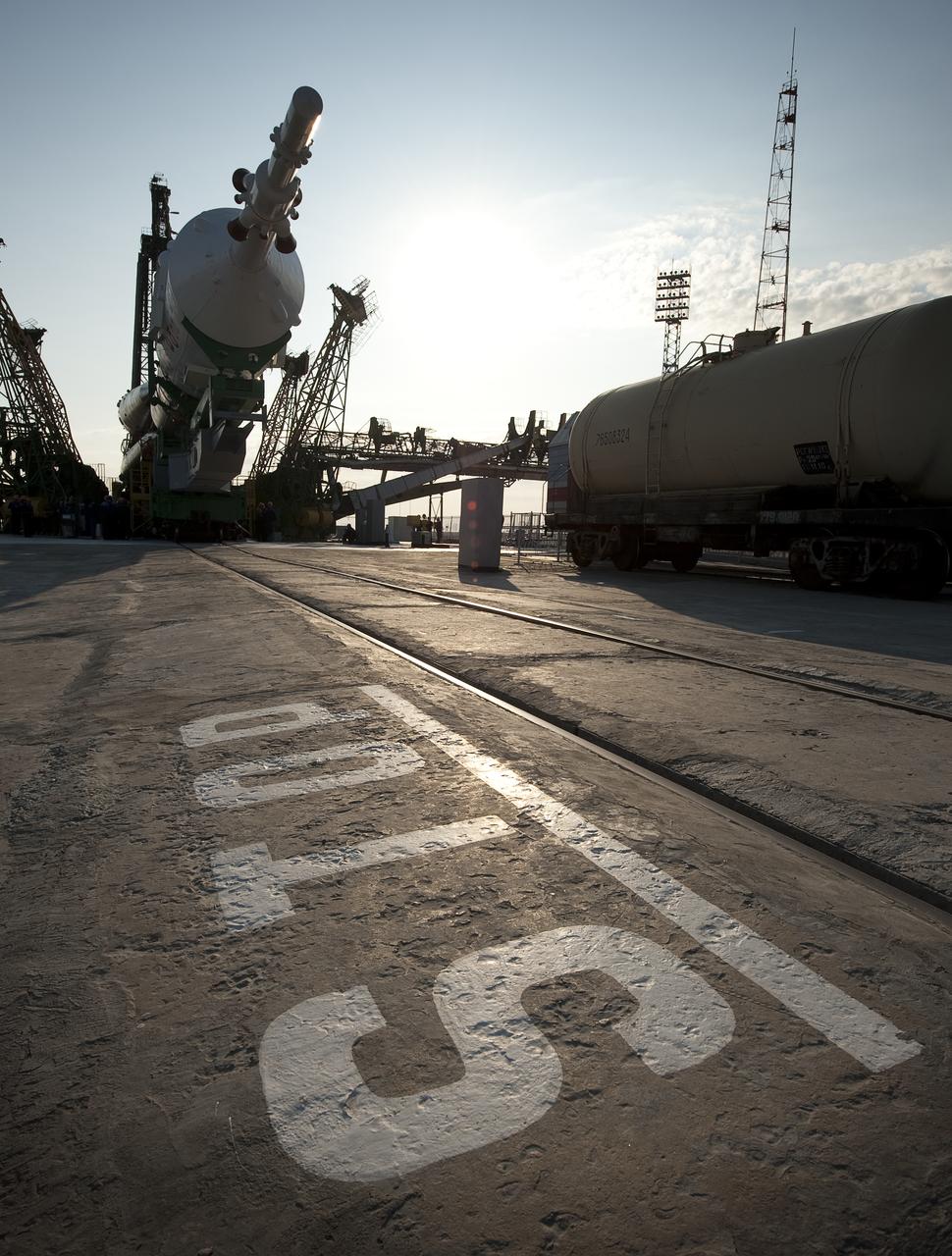
The Soyuz rocket is seen shortly after arrival to the launch pad Monday, Sept. 28, 2009 at the Baikonur Cosmodrome in Kazakhstan. The Soyuz is scheduled to launch the crew of Expedition 21 and a spaceflight participant on Sept. 30, 2009. Photo Credit: (NASA/Bill Ingalls)
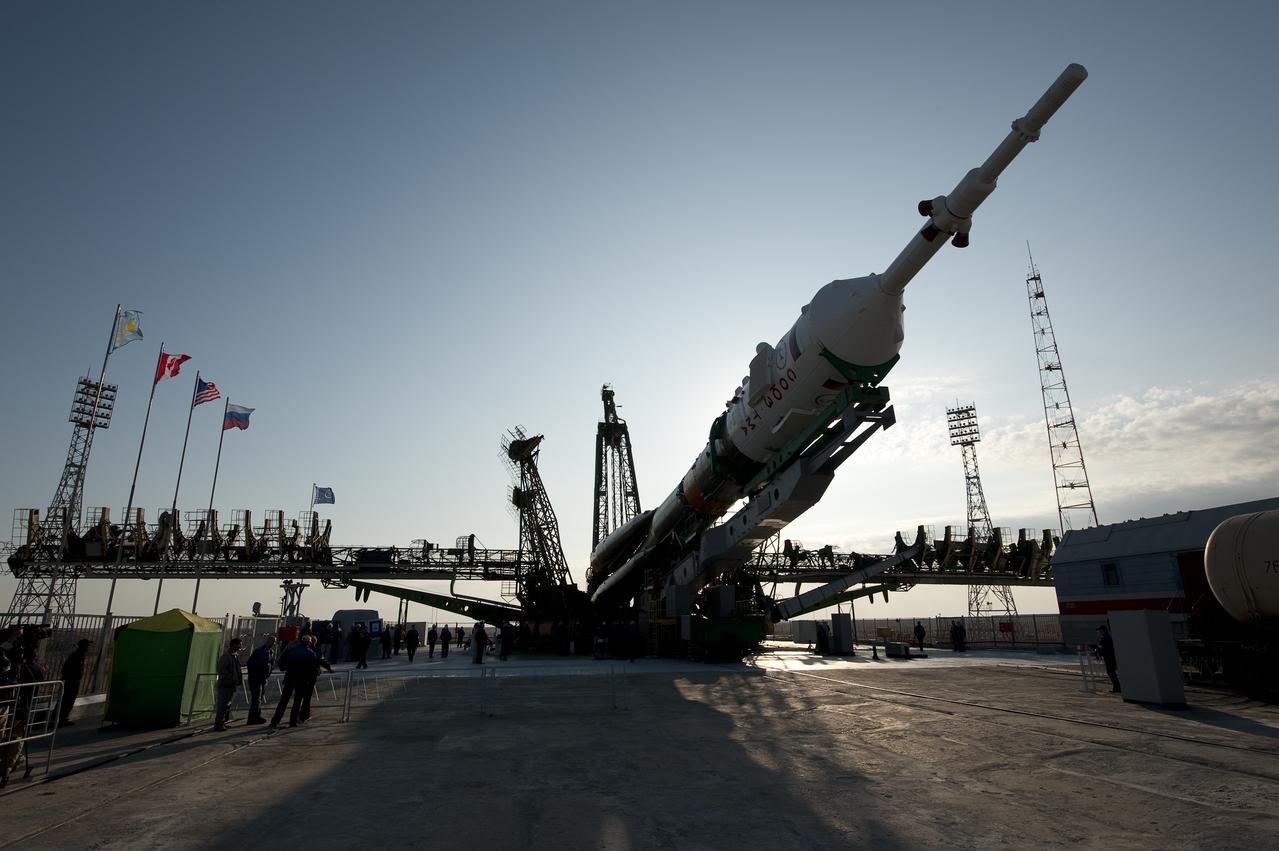
The Soyuz rocket is seen shortly after arrival to the launch pad Monday, Sept. 28, 2009 at the Baikonur Cosmodrome in Kazakhstan. The Soyuz is scheduled to launch the crew of Expedition 21 and a spaceflight participant on Sept. 30, 2009. Photo Credit: (NASA/Bill Ingalls)
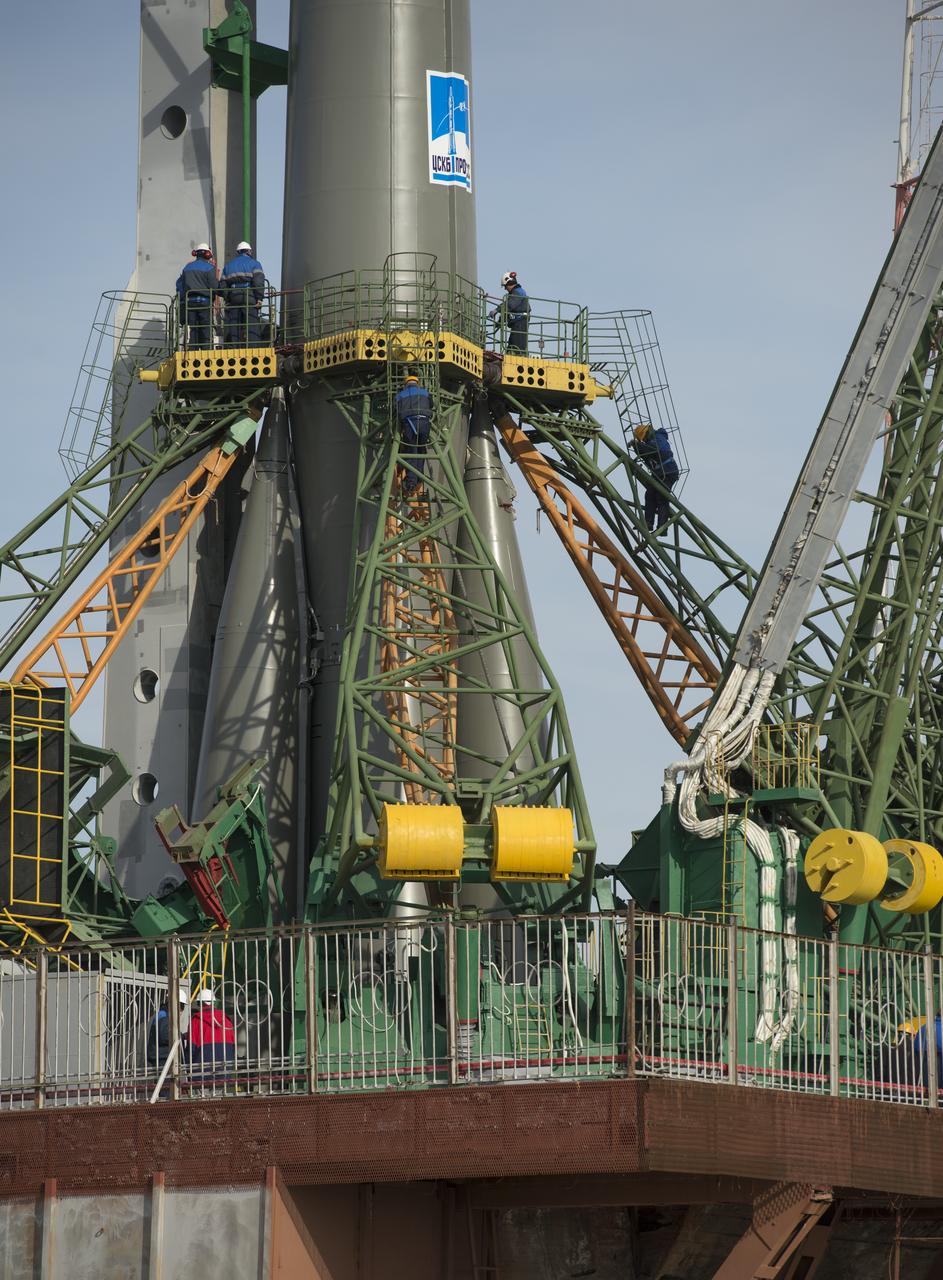
Launch pad engineers at the Baikonur Cosmodrome in Kazakhstan are dwarfed by the large gantry mechanisms at the base of the Soyuz TMA-08M rocket following its rollout to the pad on Tuesday, March 26, 2013. The rocket is being prepared for launch on March 29 to carry the crew of Expedition 35 to the International Space Station. Photo Credit: (NASA/Carla Cioffi)
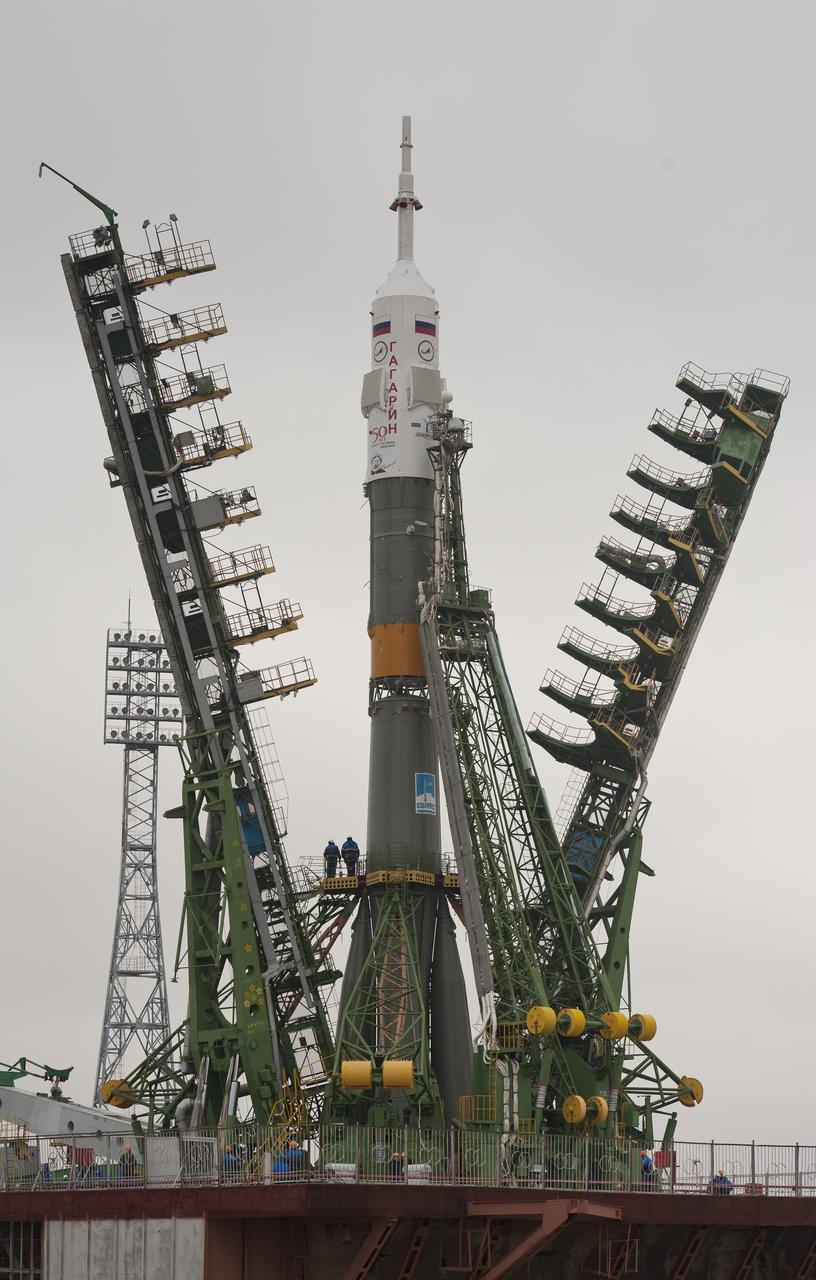
The Soyuz TMA-21 spacecraft is seen on the launch pad at the Baikonur Cosmodrome in Kazakhstan, Saturday, April 2, 2011. The launch of the Soyuz spacecraft with Expedition 27 Soyuz Commander Alexander Samokutyaev, NASA Flight Engineer Ron Garan and Russian Flight Engineer Andrey Borisenko is scheduled for Tuesday, April 5, 2011. The Soyuz, which has been dubbed “Gagarin”, is launching one week shy of the 50th anniversary of the launch of Yuri Gagarin from the same launch pad in Baikonur on April 12, 1961 to become the first human to fly in space. The first stage of the Soyuz booster is emblazoned with the name “Gagarin” and the likeness of the first person to fly in space. Photo Credit (NASA/Carla Cioffi)
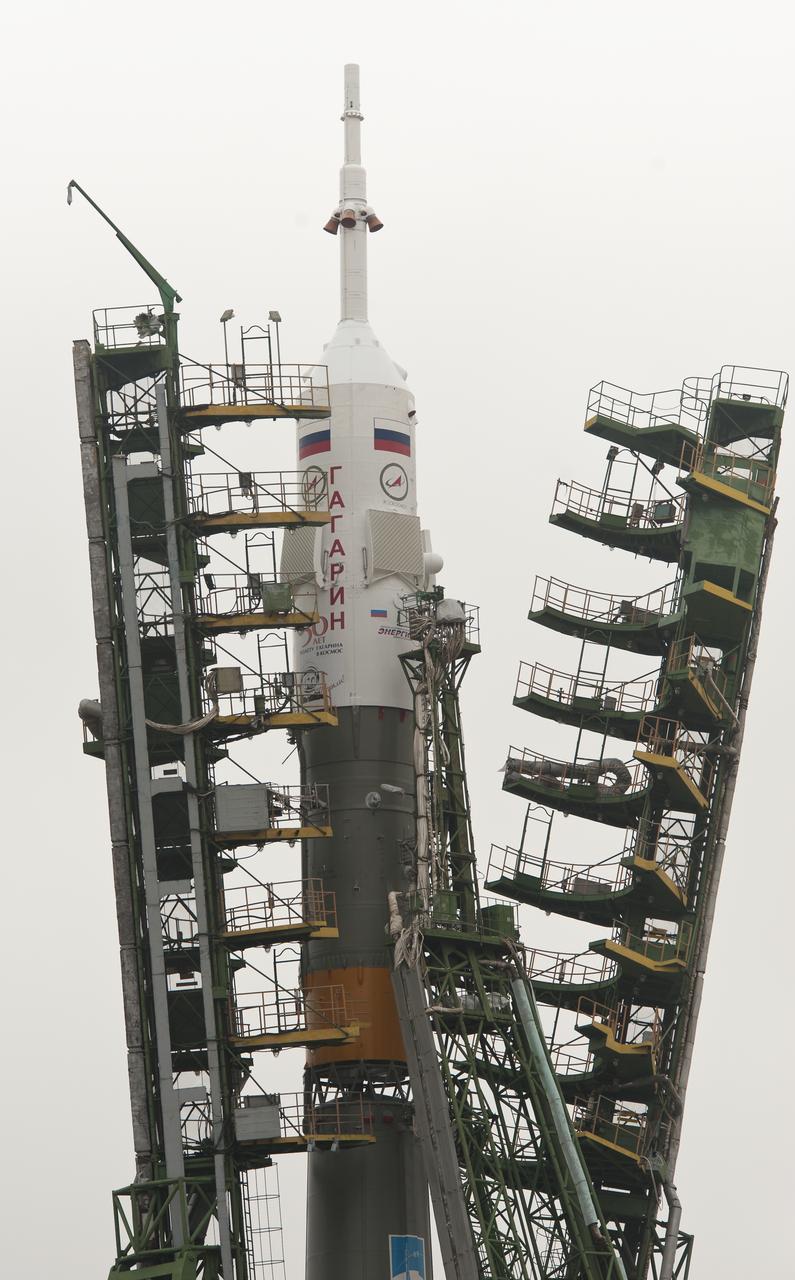
The Soyuz TMA-21 spacecraft is seen on the launch pad at the Baikonur Cosmodrome in Kazakhstan, Saturday, April 2, 2011. The launch of the Soyuz spacecraft with Expedition 27 Soyuz Commander Alexander Samokutyaev, NASA Flight Engineer Ron Garan and Russian Flight Engineer Andrey Borisenko is scheduled for Tuesday, April 5, 2011. The Soyuz, which has been dubbed “Gagarin”, is launching one week shy of the 50th anniversary of the launch of Yuri Gagarin from the same launch pad in Baikonur on April 12, 1961 to become the first human to fly in space. The first stage of the Soyuz booster is emblazoned with the name “Gagarin” and the likeness of the first person to fly in space. Photo Credit (NASA/Carla Cioffi)
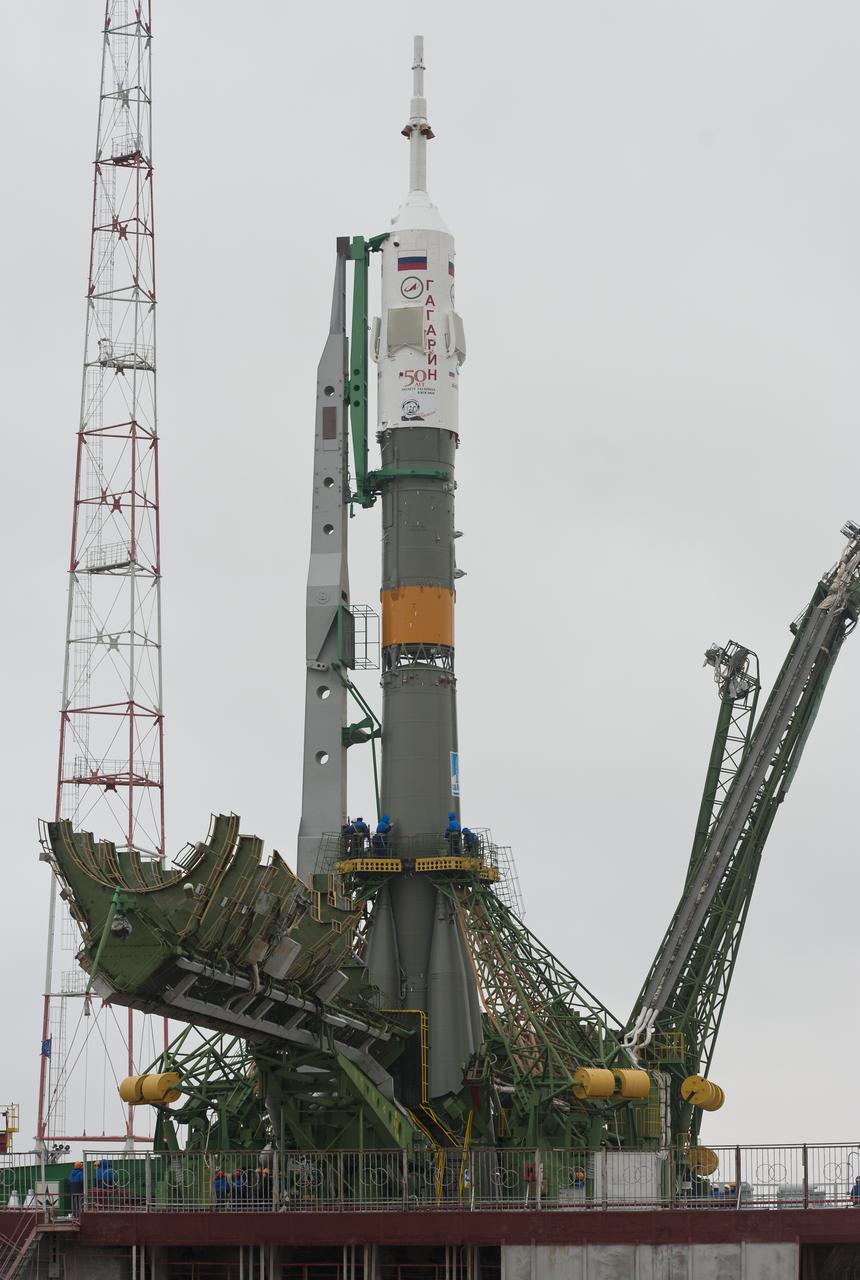
The Soyuz TMA-21 spacecraft is seen on the launch pad at the Baikonur Cosmodrome in Kazakhstan, Saturday, April 2, 2011. The launch of the Soyuz spacecraft with Expedition 27 Soyuz Commander Alexander Samokutyaev, NASA Flight Engineer Ron Garan and Russian Flight Engineer Andrey Borisenko is scheduled for Tuesday, April 5, 2011. The Soyuz, which has been dubbed “Gagarin”, is launching one week shy of the 50th anniversary of the launch of Yuri Gagarin from the same launch pad in Baikonur on April 12, 1961 to become the first human to fly in space. The first stage of the Soyuz booster is emblazoned with the name “Gagarin” and the likeness of the first person to fly in space. Photo Credit (NASA/Carla Cioffi)
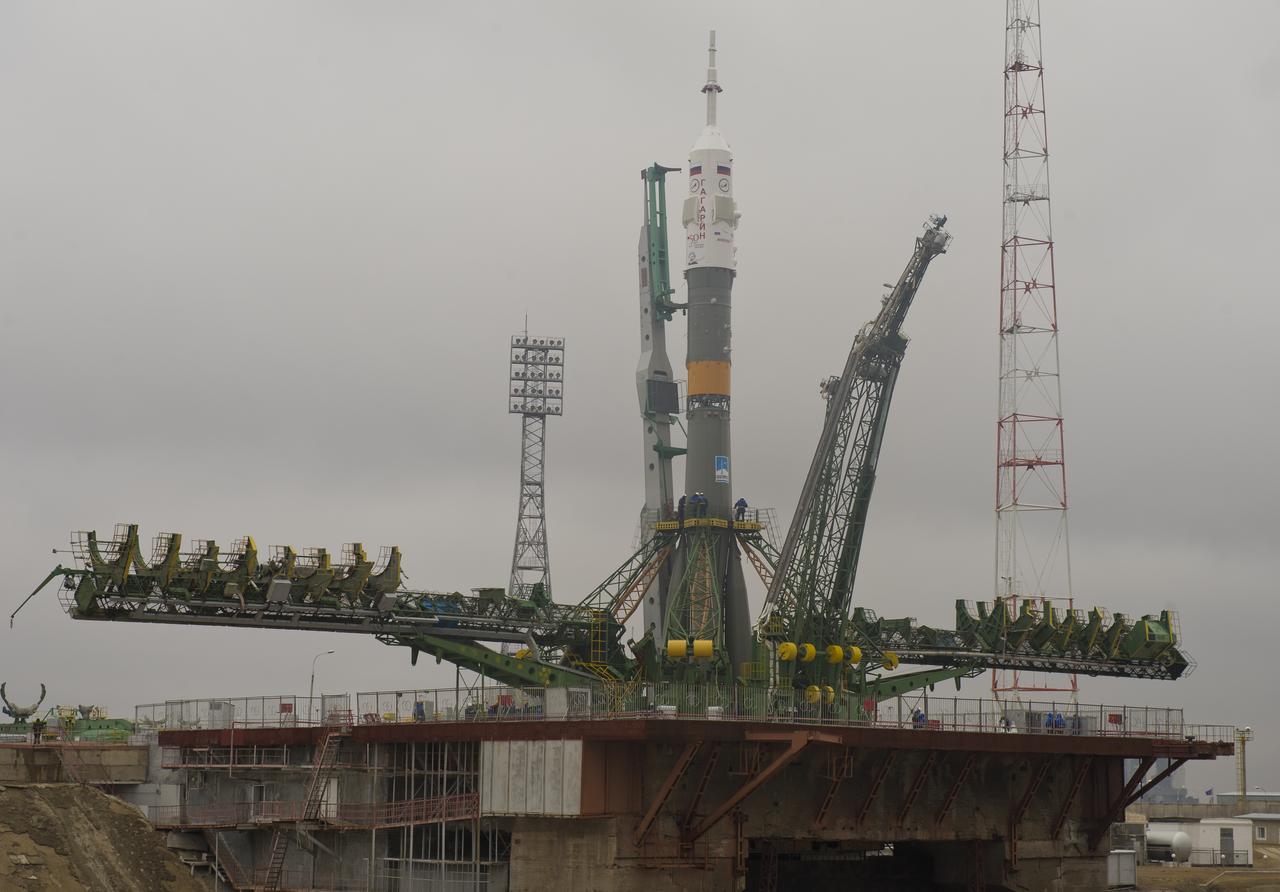
The Soyuz TMA-21 spacecraft is seen on the launch pad at the Baikonur Cosmodrome in Kazakhstan, Saturday, April 2, 2011. The launch of the Soyuz spacecraft with Expedition 27 Soyuz Commander Alexander Samokutyaev, NASA Flight Engineer Ron Garan and Russian Flight Engineer Andrey Borisenko is scheduled for Tuesday, April 5, 2011. The Soyuz, which has been dubbed “Gagarin”, is launching one week shy of the 50th anniversary of the launch of Yuri Gagarin from the same launch pad in Baikonur on April 12, 1961 to become the first human to fly in space. The first stage of the Soyuz booster is emblazoned with the name “Gagarin” and the likeness of the first person to fly in space. Photo Credit (NASA/Carla Cioffi)
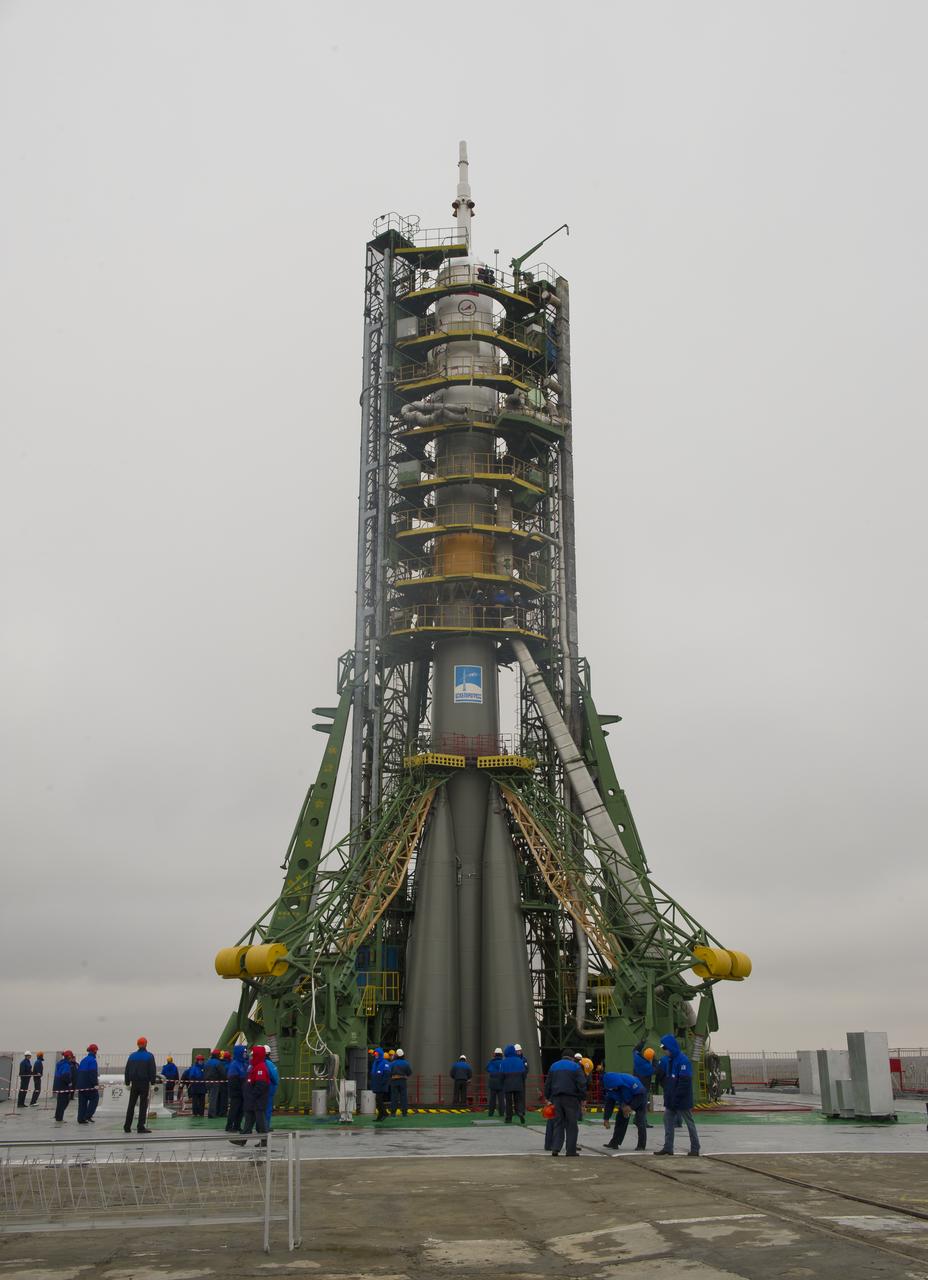
The Soyuz TMA-21 spacecraft is seen on the launch pad at the Baikonur Cosmodrome in Kazakhstan, Saturday, April 2, 2011. The launch of the Soyuz spacecraft with Expedition 27 Soyuz Commander Alexander Samokutyaev, NASA Flight Engineer Ron Garan and Russian Flight Engineer Andrey Borisenko is scheduled for Tuesday, April 5, 2011. The Soyuz, which has been dubbed “Gagarin”, is launching one week shy of the 50th anniversary of the launch of Yuri Gagarin from the same launch pad in Baikonur on April 12, 1961 to become the first human to fly in space. The first stage of the Soyuz booster is emblazoned with the name “Gagarin” and the likeness of the first person to fly in space. Photo Credit (NASA/Carla Cioffi)
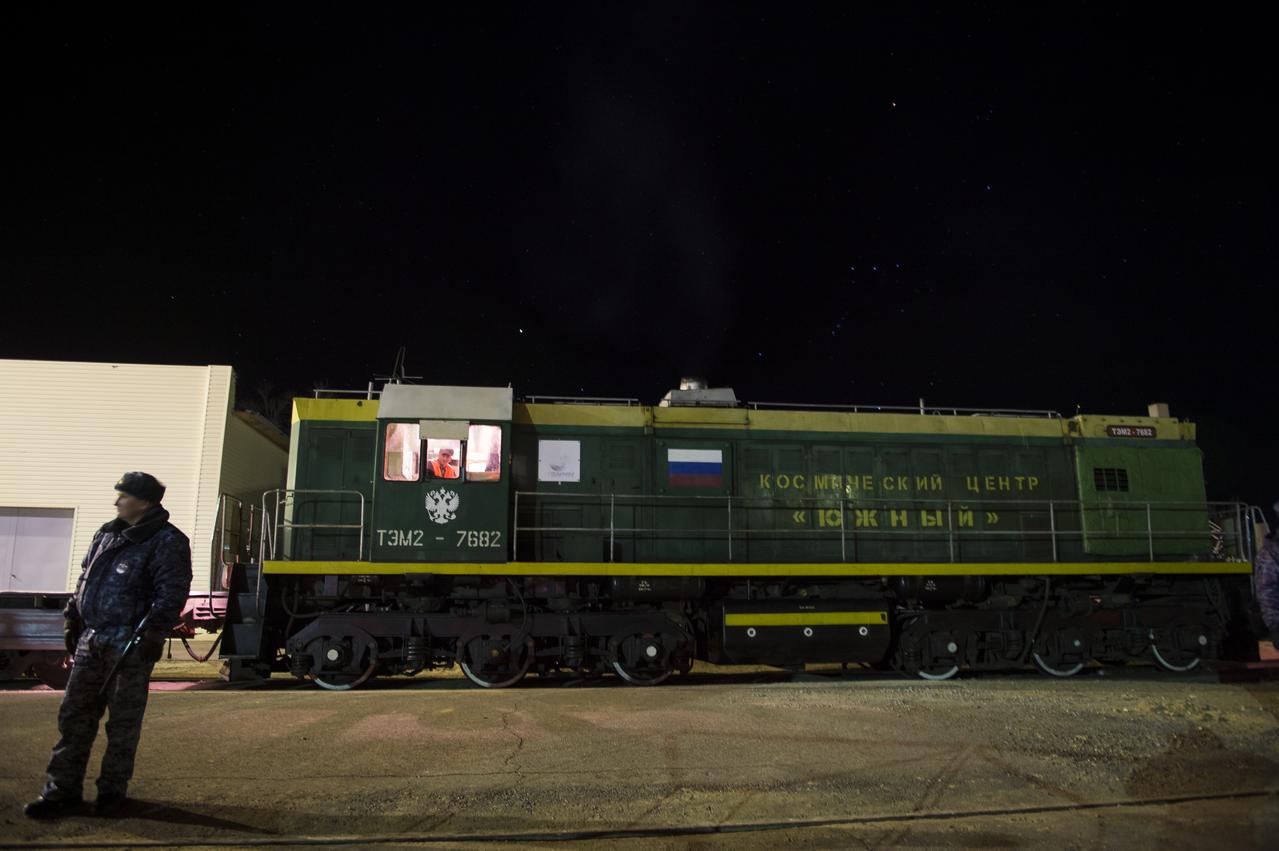
The Soyuz rocket is prepared to be rolled out by train to the launch pad on Friday, Nov. 21, 2014 at the Baikonur Cosmodrome in Kazakhstan. The Soyuz TMA-15M spacecraft, scheduled to launch Nov. 24, will carry Expedition 42 Soyuz Commander Anton Shkaplerov of the Russian Federal Space Agency (Roscosmos), Flight Engineer Terry Virts of NASA , and Flight Engineer Samantha Cristoforetti of the European Space Agency into orbit to begin their five and a half month mission on the International Space Station. Photo Credit: (NASA/Aubrey Gemignani)
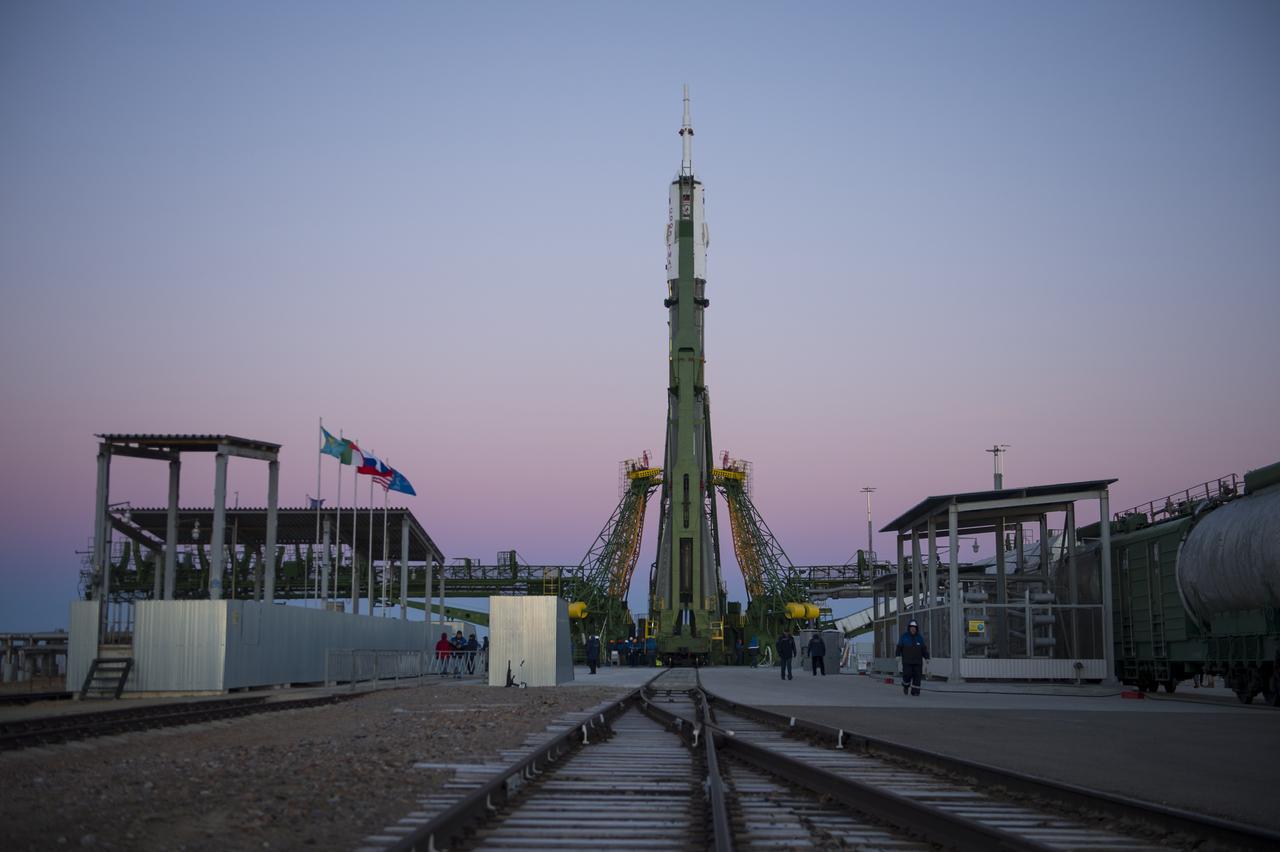
The Soyuz TMA-15M spacecraft is seen after being raised into a vertical position on the launch pad on Friday, Nov. 21, 2014 at the Baikonur Cosmodrome in Kazakhstan. Launch of the Soyuz rocket is scheduled for Nov. 24 and will carry Expedition 42 Soyuz Commander Anton Shkaplerov of the Russian Federal Space Agency (Roscosmos), Flight Engineer Terry Virts of NASA , and Flight Engineer Samantha Cristoforetti of the European Space Agency into orbit to begin their five and a half month mission on the International Space Station. Photo Credit: (NASA/Aubrey Gemignani)
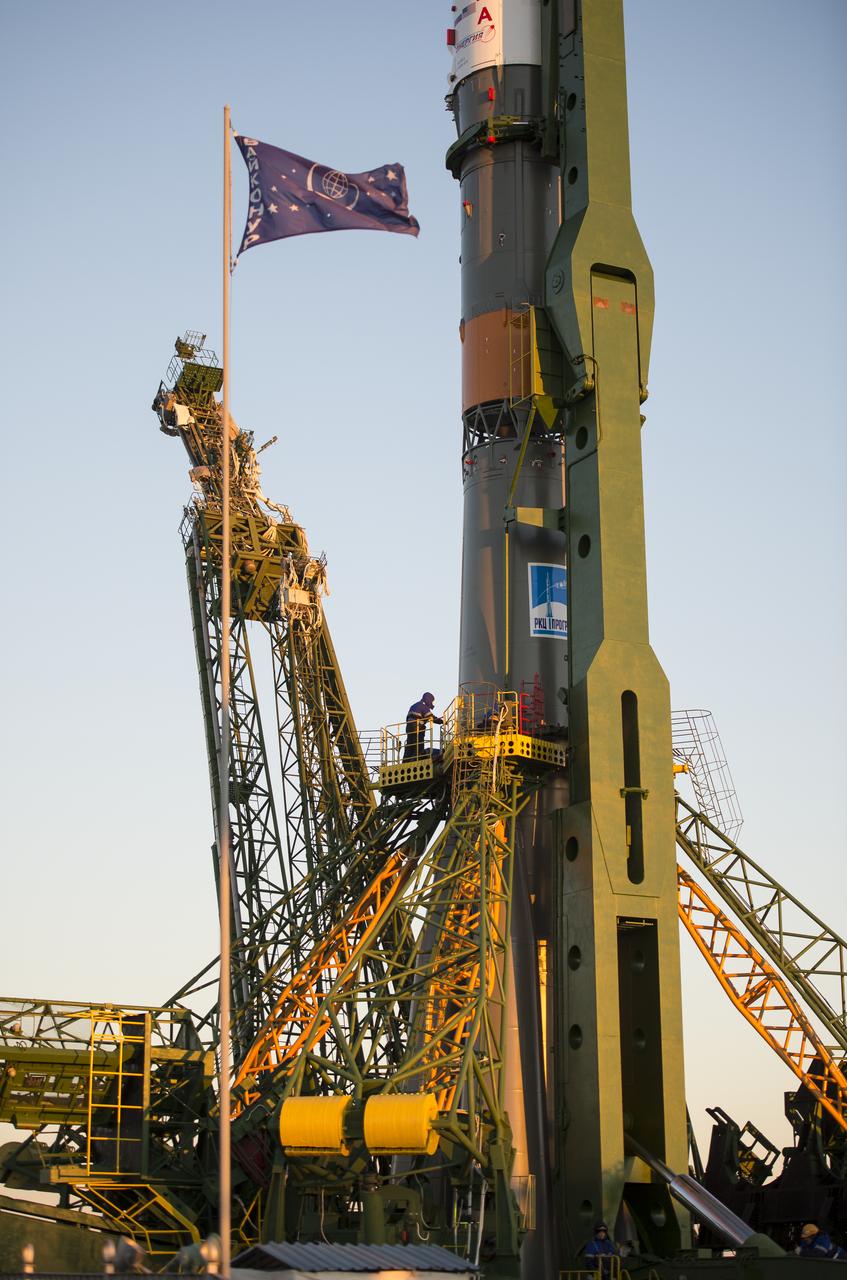
The Soyuz TMA-15M spacecraft is seen after being raised into a vertical position on the launch pad on Friday, Nov. 21, 2014 at the Baikonur Cosmodrome in Kazakhstan. Launch of the Soyuz rocket is scheduled for Nov. 24 and will carry Expedition 42 Soyuz Commander Anton Shkaplerov of the Russian Federal Space Agency (Roscosmos), Flight Engineer Terry Virts of NASA , and Flight Engineer Samantha Cristoforetti of the European Space Agency into orbit to begin their five and a half month mission on the International Space Station. Photo Credit: (NASA/Aubrey Gemignani)
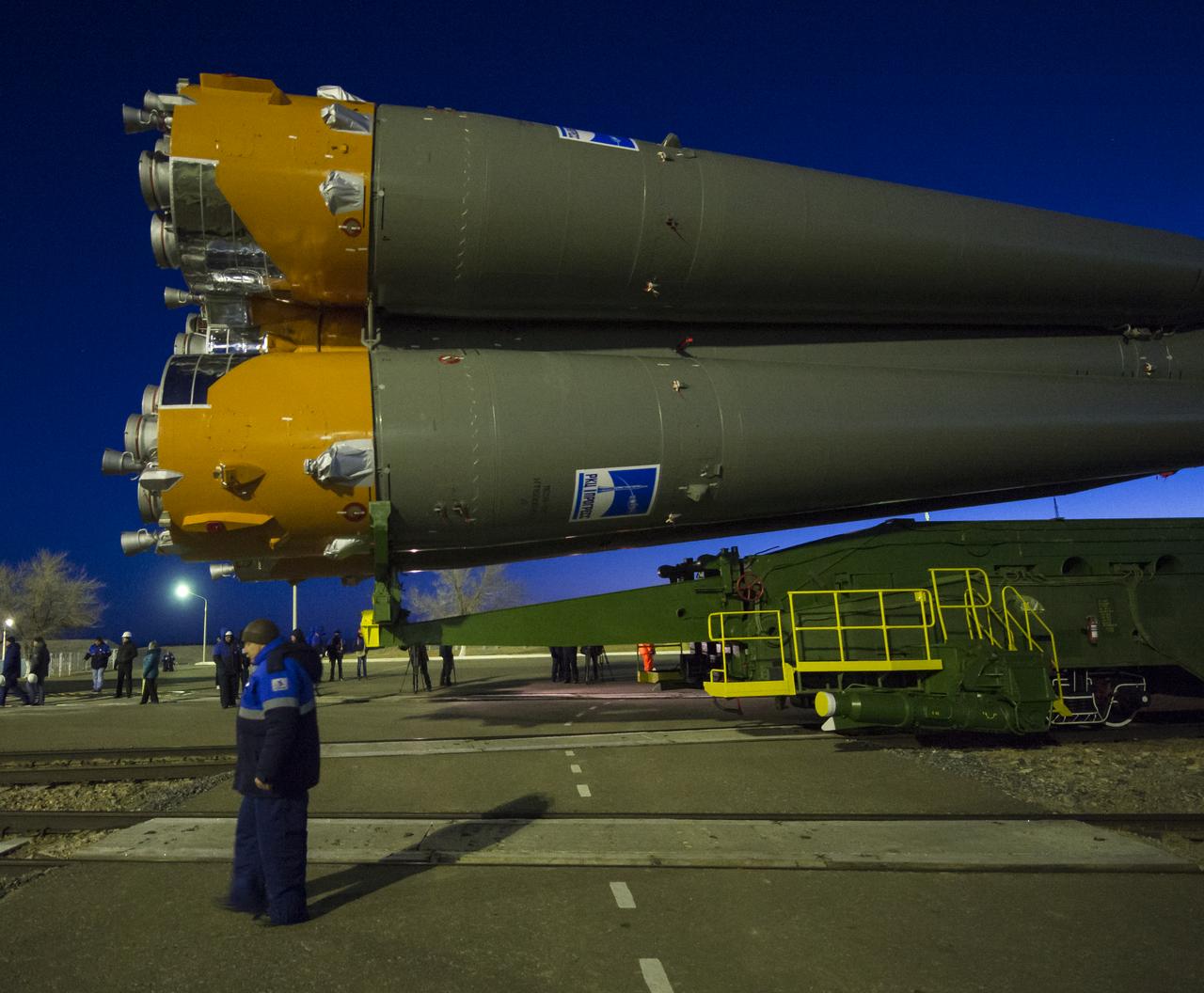
The Soyuz TMA-15M spacecraft is rolled out to the launch pad by train on Friday, Nov. 21, 2014 at the Baikonur Cosmodrome in Kazakhstan. Launch of the Soyuz rocket is scheduled for Nov. 24 and will carry Expedition 42 Soyuz Commander Anton Shkaplerov of the Russian Federal Space Agency (Roscosmos), Flight Engineer Terry Virts of NASA , and Flight Engineer Samantha Cristoforetti of the European Space Agency into orbit to begin their five and a half month mission on the International Space Station. Photo Credit: (NASA/Aubrey Gemignani)
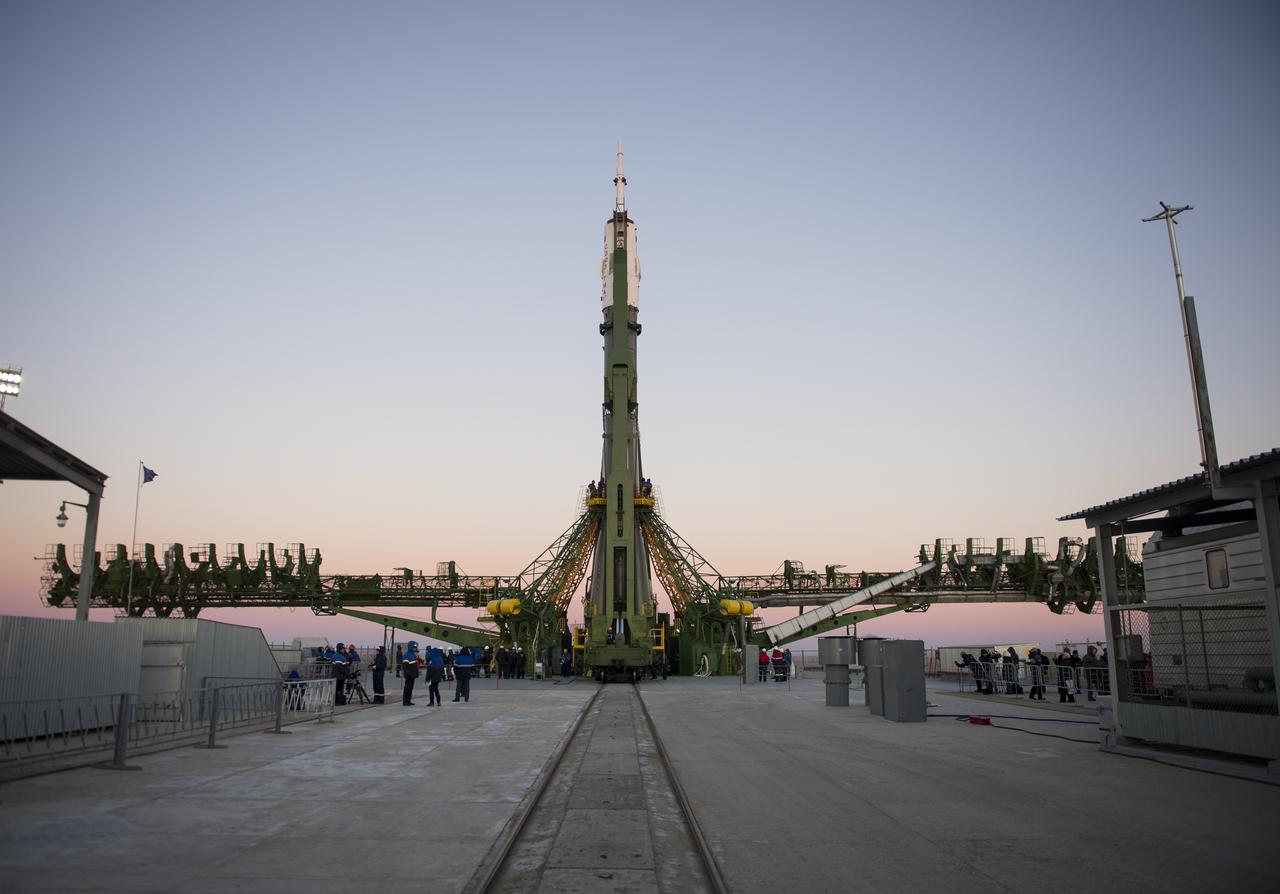
The Soyuz TMA-15M spacecraft is seen after being raised into a vertical position on the launch pad on Friday, Nov. 21, 2014 at the Baikonur Cosmodrome in Kazakhstan. Launch of the Soyuz rocket is scheduled for Nov. 24 and will carry Expedition 42 Soyuz Commander Anton Shkaplerov of the Russian Federal Space Agency (Roscosmos), Flight Engineer Terry Virts of NASA , and Flight Engineer Samantha Cristoforetti of the European Space Agency into orbit to begin their five and a half month mission on the International Space Station. Photo Credit: (NASA/Aubrey Gemignani)
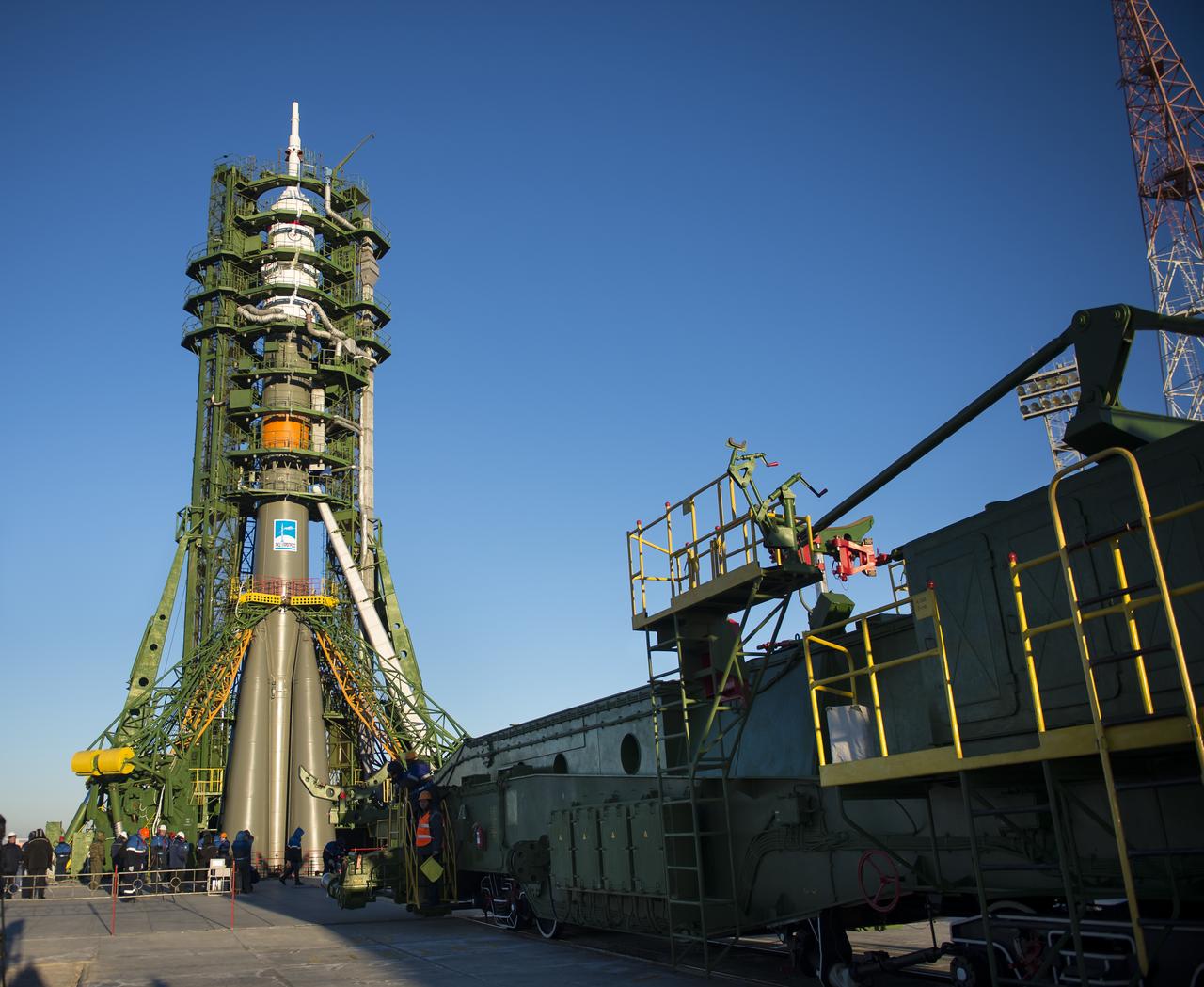
The Soyuz TMA-15M spacecraft is seen after the gantry arms closed to secure the rocket on the launch pad on Friday, Nov. 21, 2014 at the Baikonur Cosmodrome in Kazakhstan. Launch of the Soyuz rocket is scheduled for Nov. 24 and will carry Expedition 42 Soyuz Commander Anton Shkaplerov of the Russian Federal Space Agency (Roscosmos), Flight Engineer Terry Virts of NASA , and Flight Engineer Samantha Cristoforetti of the European Space Agency into orbit to begin their five and a half month mission on the International Space Station. Photo Credit: (NASA/Aubrey Gemignani)
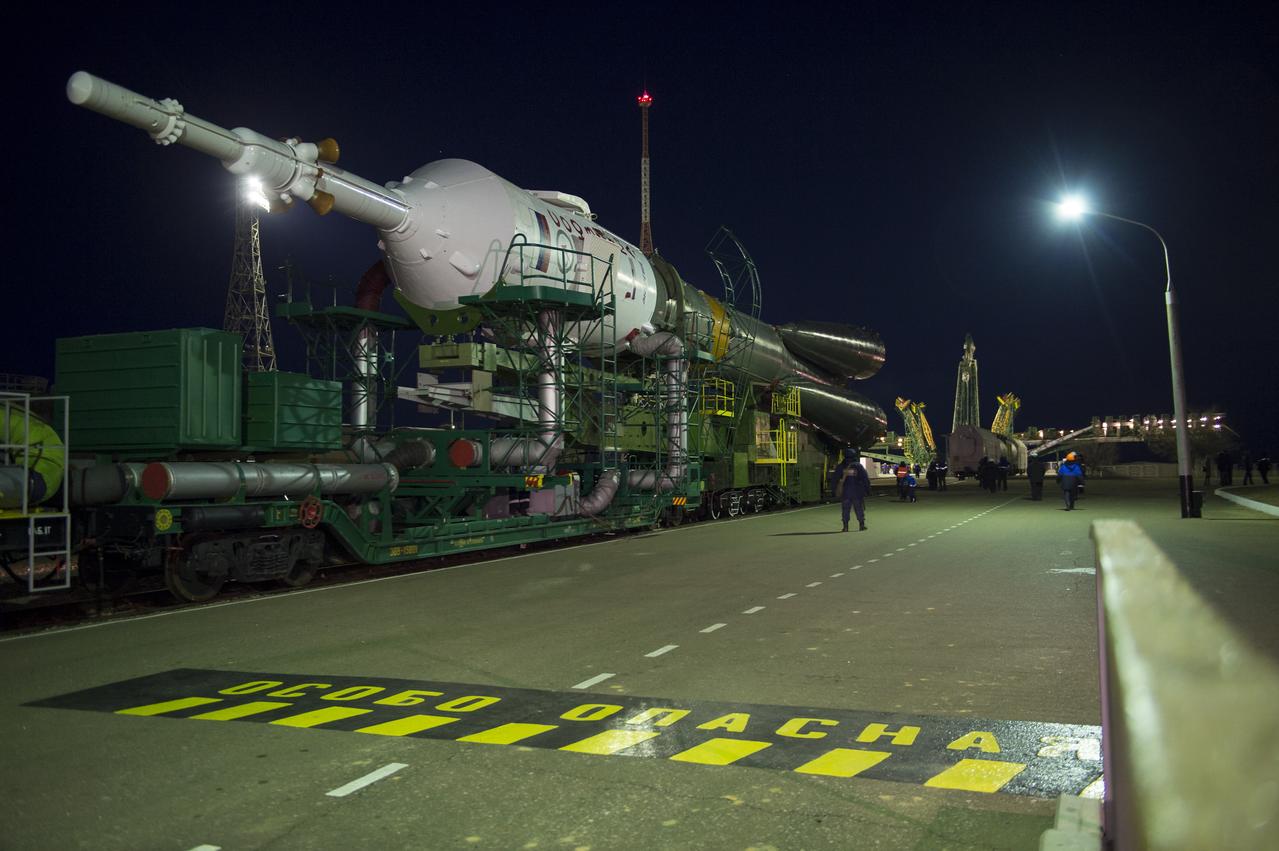
The Soyuz TMA-15M spacecraft is rolled out to the launch pad by train on Friday, Nov. 21, 2014 at the Baikonur Cosmodrome in Kazakhstan. Launch of the Soyuz rocket is scheduled for Nov. 24 and will carry Expedition 42 Soyuz Commander Anton Shkaplerov of the Russian Federal Space Agency (Roscosmos), Flight Engineer Terry Virts of NASA , and Flight Engineer Samantha Cristoforetti of the European Space Agency into orbit to begin their five and a half month mission on the International Space Station. Photo Credit: (NASA/Aubrey Gemignani)
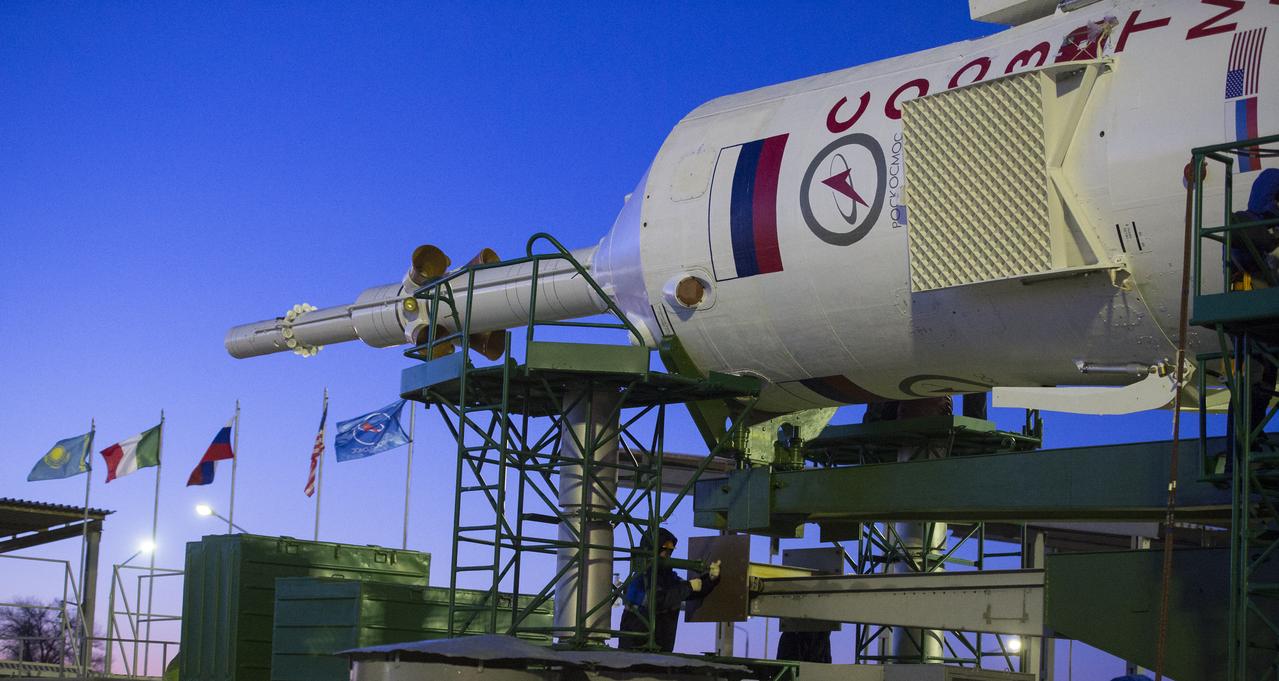
The Soyuz TMA-15M spacecraft is seen shortly after arriving at the launch pad by train on Friday, Nov. 21, 2014, at the Baikonur Cosmodrome in Kazakhstan. Launch of the Soyuz rocket is scheduled for Nov. 24 and will carry Expedition 42 Soyuz Commander Anton Shkaplerov of the Russian Federal Space Agency (Roscosmos), Flight Engineer Terry Virts of NASA , and Flight Engineer Samantha Cristoforetti of the European Space Agency into orbit to begin their five and a half month mission on the International Space Station. Photo Credit: (NASA/Aubrey Gemignani)
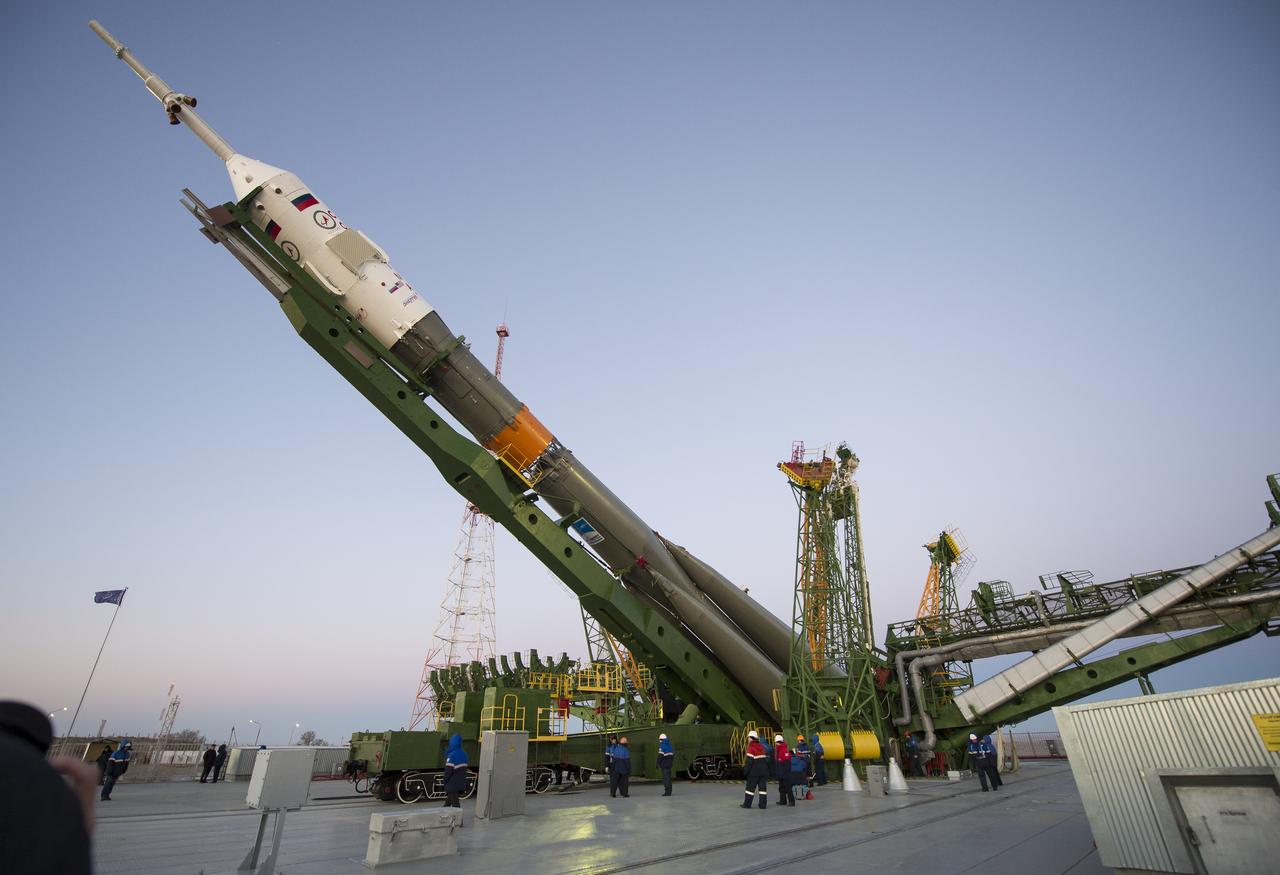
The Soyuz TMA-15M spacecraft is raised into position on the launch pad Friday, Nov. 21, 2014 at the Baikonur Cosmodrome in Kazakhstan. Launch of the Soyuz rocket is scheduled for Nov. 24 and will carry Expedition 42 Soyuz Commander Anton Shkaplerov of the Russian Federal Space Agency (Roscosmos), Flight Engineer Terry Virts of NASA , and Flight Engineer Samantha Cristoforetti of the European Space Agency into orbit to begin their five and a half month mission on the International Space Station. Photo Credit: (NASA/Aubrey Gemignani)
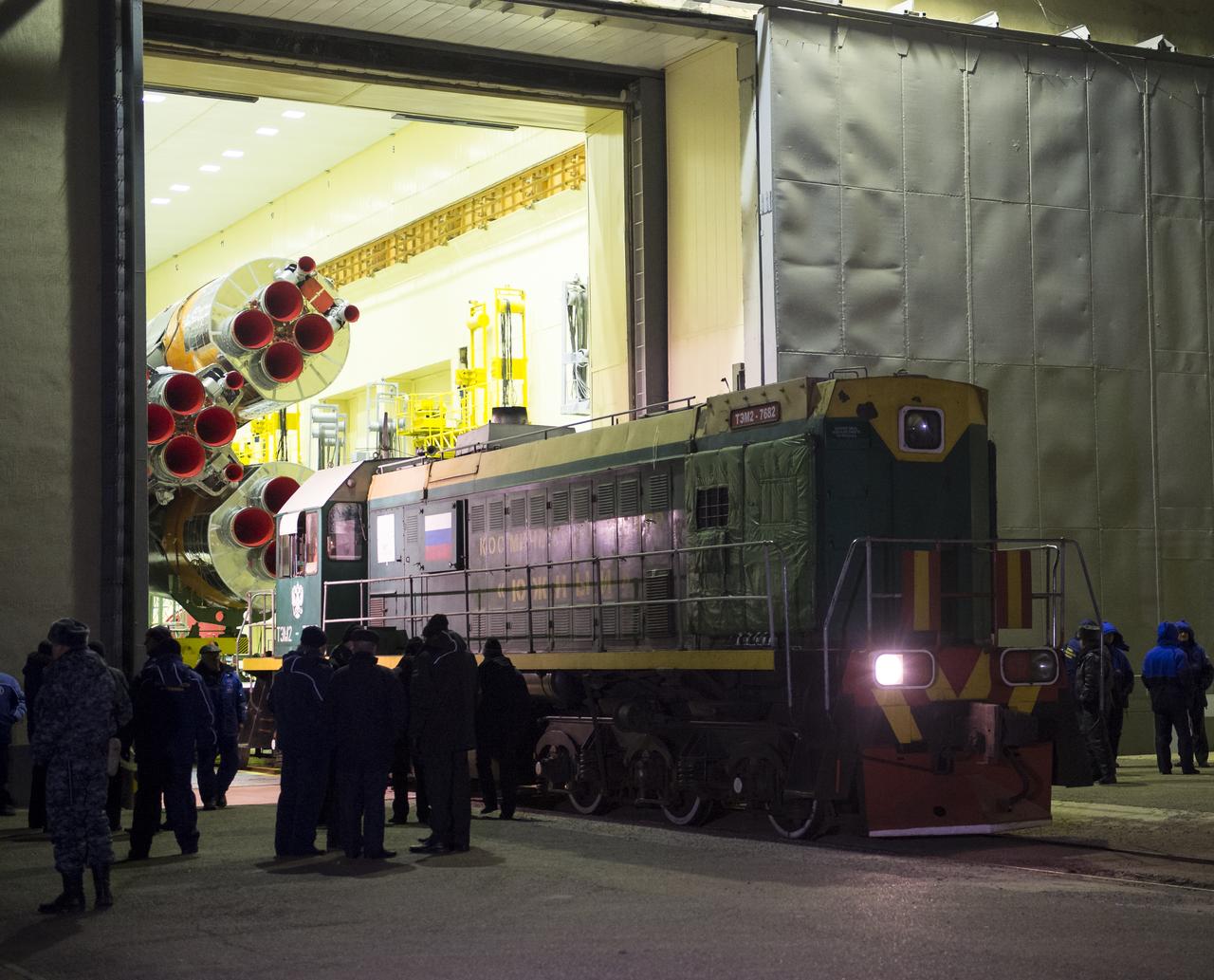
The Soyuz rocket is prepared to be rolled out by train to the launch pad on Friday, Nov. 21, 2014 at the Baikonur Cosmodrome in Kazakhstan. The Soyuz TMA-15M spacecraft, scheduled to launch Nov. 24, will carry Expedition 42 Soyuz Commander Anton Shkaplerov of the Russian Federal Space Agency (Roscosmos), Flight Engineer Terry Virts of NASA , and Flight Engineer Samantha Cristoforetti of the European Space Agency into orbit to begin their five and a half month mission on the International Space Station. Photo Credit: (NASA/Aubrey Gemignani)
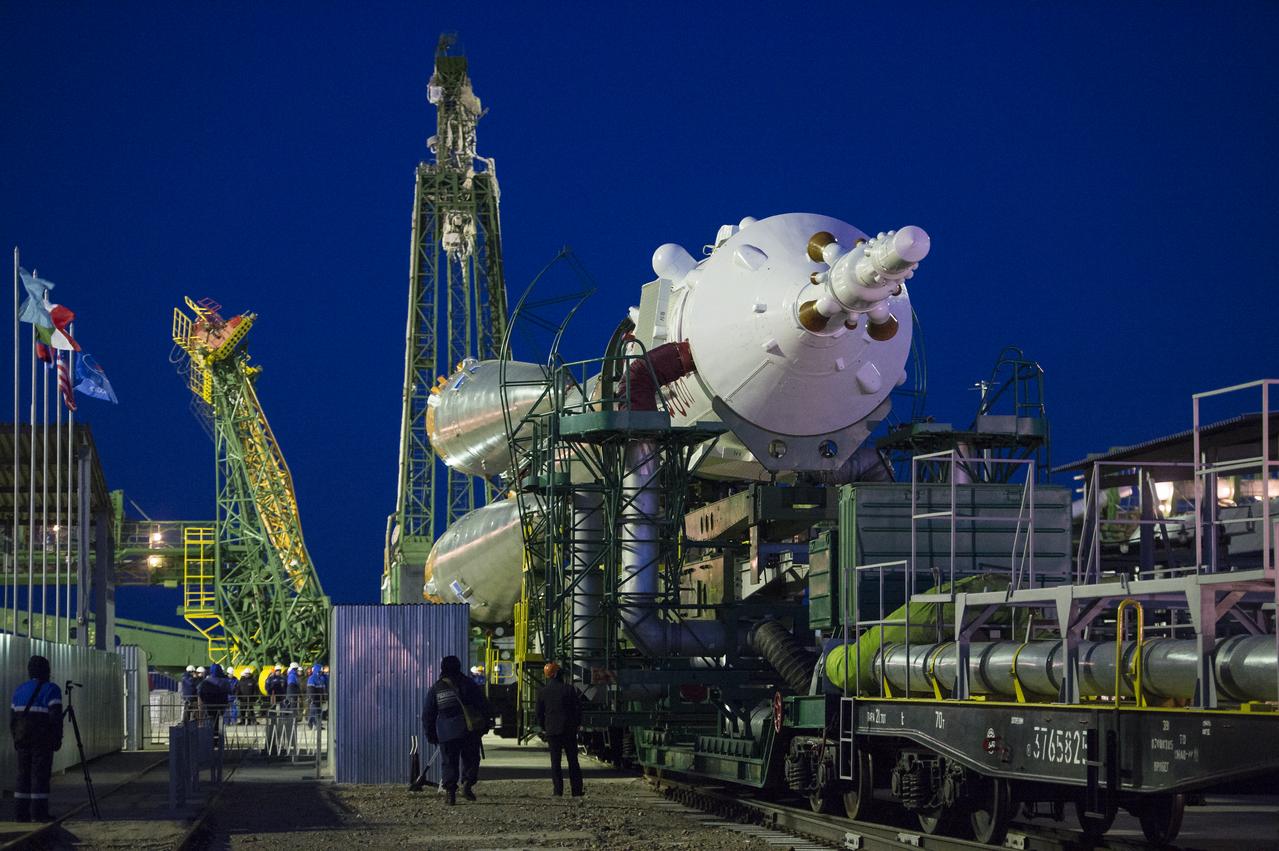
The Soyuz TMA-15M spacecraft is rolled out to the launch pad by train on Friday, Nov. 21, 2014 at the Baikonur Cosmodrome in Kazakhstan. Launch of the Soyuz rocket is scheduled for Nov. 24 and will carry Expedition 42 Soyuz Commander Anton Shkaplerov of the Russian Federal Space Agency (Roscosmos), Flight Engineer Terry Virts of NASA , and Flight Engineer Samantha Cristoforetti of the European Space Agency into orbit to begin their five and a half month mission on the International Space Station. Photo Credit: (NASA/Aubrey Gemignani)
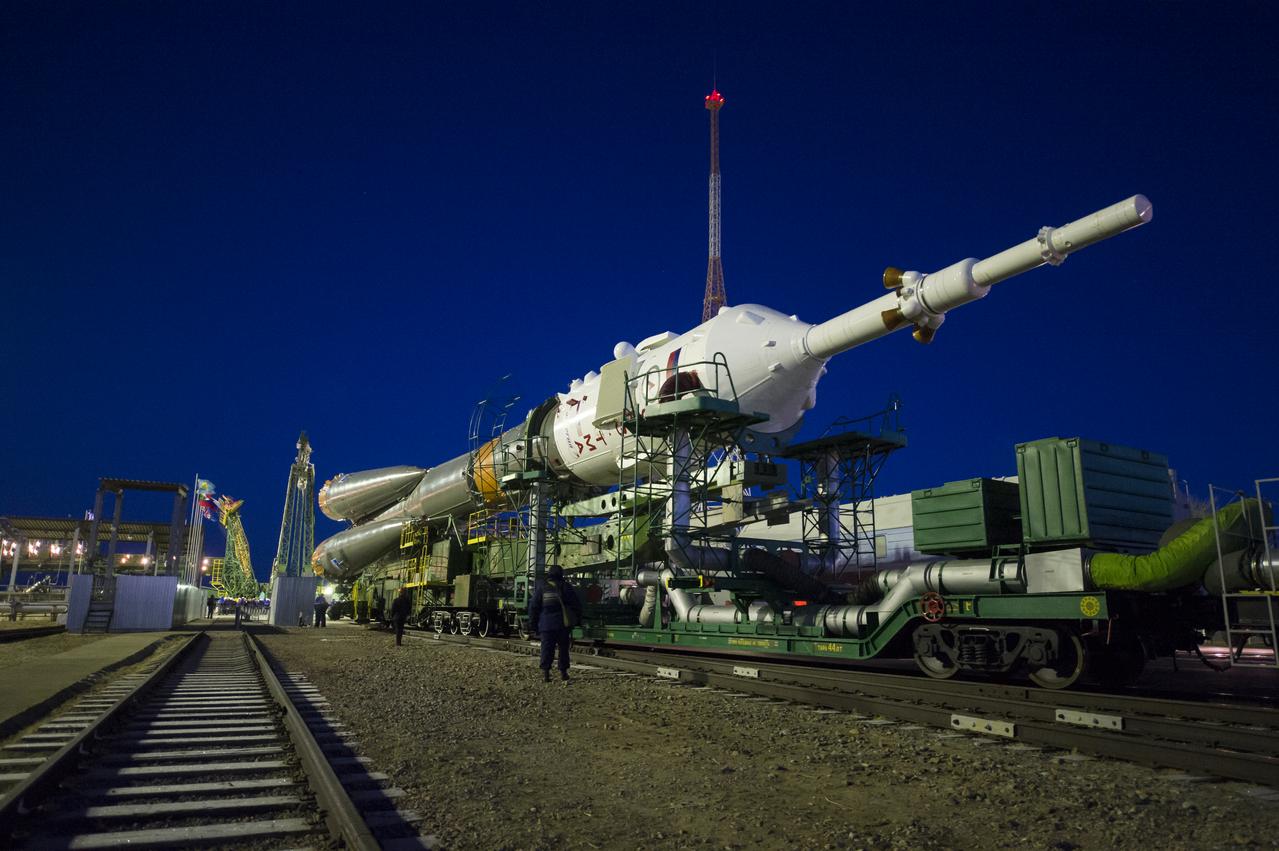
The Soyuz TMA-15M spacecraft is rolled out to the launch pad by train on Friday, Nov. 21, 2014 at the Baikonur Cosmodrome in Kazakhstan. Launch of the Soyuz rocket is scheduled for Nov. 24 and will carry Expedition 42 Soyuz Commander Anton Shkaplerov of the Russian Federal Space Agency (Roscosmos), Flight Engineer Terry Virts of NASA , and Flight Engineer Samantha Cristoforetti of the European Space Agency into orbit to begin their five and a half month mission on the International Space Station. Photo Credit: (NASA/Aubrey Gemignani)
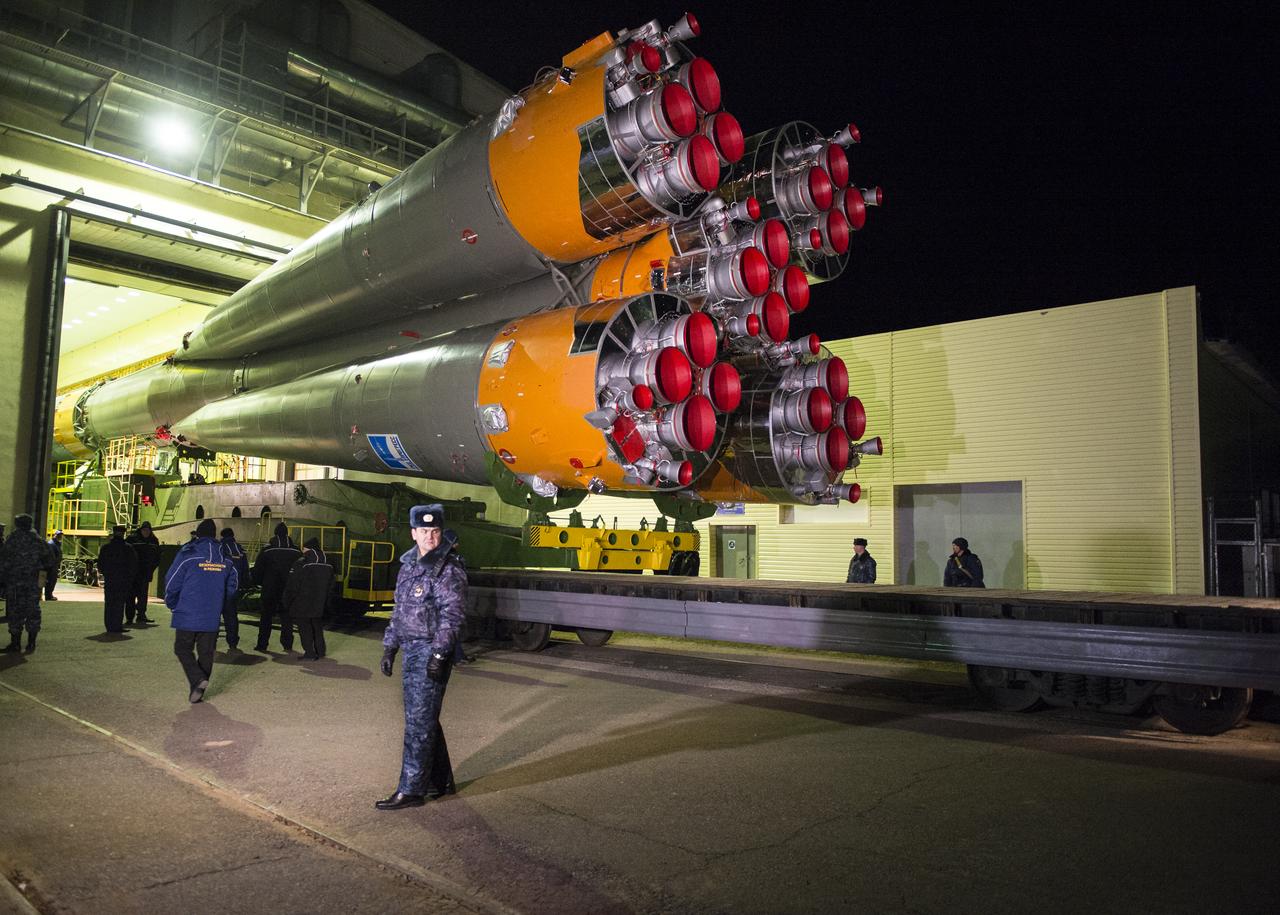
The Soyuz TMA-15M spacecraft is rolled out to the launch pad by train on Friday, Nov. 21, 2014 at the Baikonur Cosmodrome in Kazakhstan. Launch of the Soyuz rocket is scheduled for Nov. 24 and will carry Expedition 42 Soyuz Commander Anton Shkaplerov of the Russian Federal Space Agency (Roscosmos), Flight Engineer Terry Virts of NASA , and Flight Engineer Samantha Cristoforetti of the European Space Agency into orbit to begin their five and a half month mission on the International Space Station. Photo Credit: (NASA/Aubrey Gemignani)
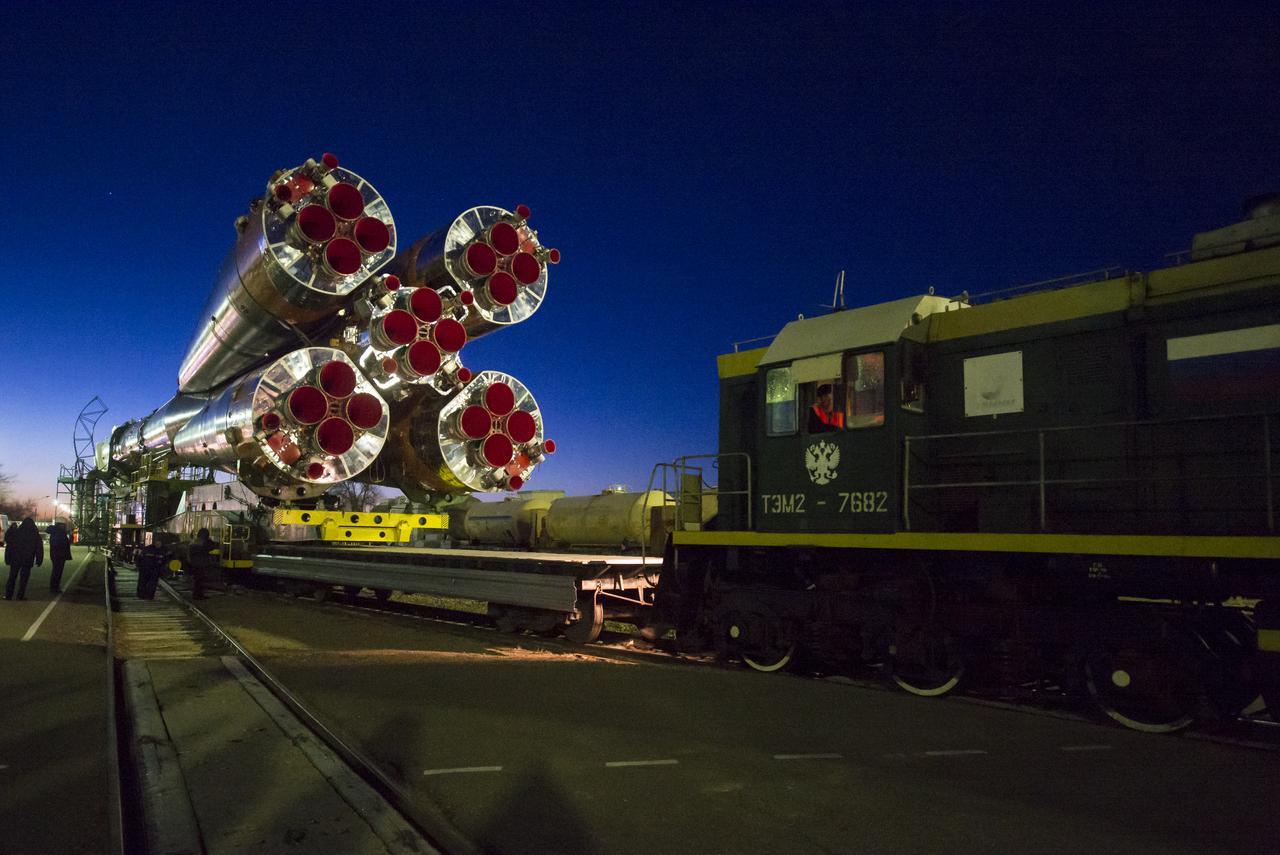
The Soyuz TMA-15M spacecraft is rolled out to the launch pad by train on Friday, Nov. 21, 2014 at the Baikonur Cosmodrome in Kazakhstan. Launch of the Soyuz rocket is scheduled for Nov. 24 and will carry Expedition 42 Soyuz Commander Anton Shkaplerov of the Russian Federal Space Agency (Roscosmos), Flight Engineer Terry Virts of NASA , and Flight Engineer Samantha Cristoforetti of the European Space Agency into orbit to begin their five and a half month mission on the International Space Station. Photo Credit: (NASA/Aubrey Gemignani)
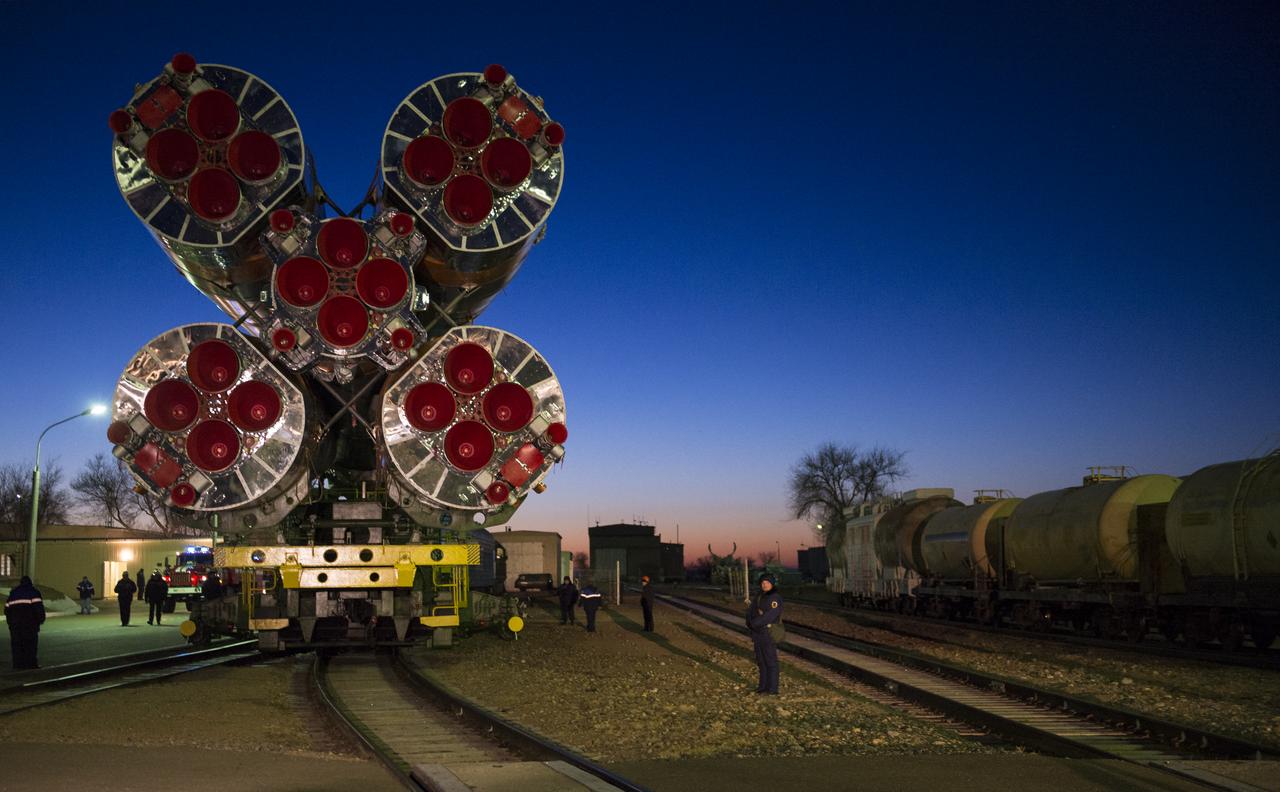
The Soyuz TMA-15M spacecraft is rolled out to the launch pad by train on Friday, Nov. 21, 2014 at the Baikonur Cosmodrome in Kazakhstan. Launch of the Soyuz rocket is scheduled for Nov. 24 and will carry Expedition 42 Soyuz Commander Anton Shkaplerov of the Russian Federal Space Agency (Roscosmos), Flight Engineer Terry Virts of NASA , and Flight Engineer Samantha Cristoforetti of the European Space Agency into orbit to begin their five and a half month mission on the International Space Station. Photo Credit: (NASA/Aubrey Gemignani)

The Soyuz TMA-15M spacecraft is rolled out to the launch pad by train on Friday, Nov. 21, 2014 at the Baikonur Cosmodrome in Kazakhstan. Launch of the Soyuz rocket is scheduled for Nov. 24 and will carry Expedition 42 Soyuz Commander Anton Shkaplerov of the Russian Federal Space Agency (Roscosmos), Flight Engineer Terry Virts of NASA , and Flight Engineer Samantha Cristoforetti of the European Space Agency into orbit to begin their five and a half month mission on the International Space Station. Photo Credit: (NASA/Aubrey Gemignani)
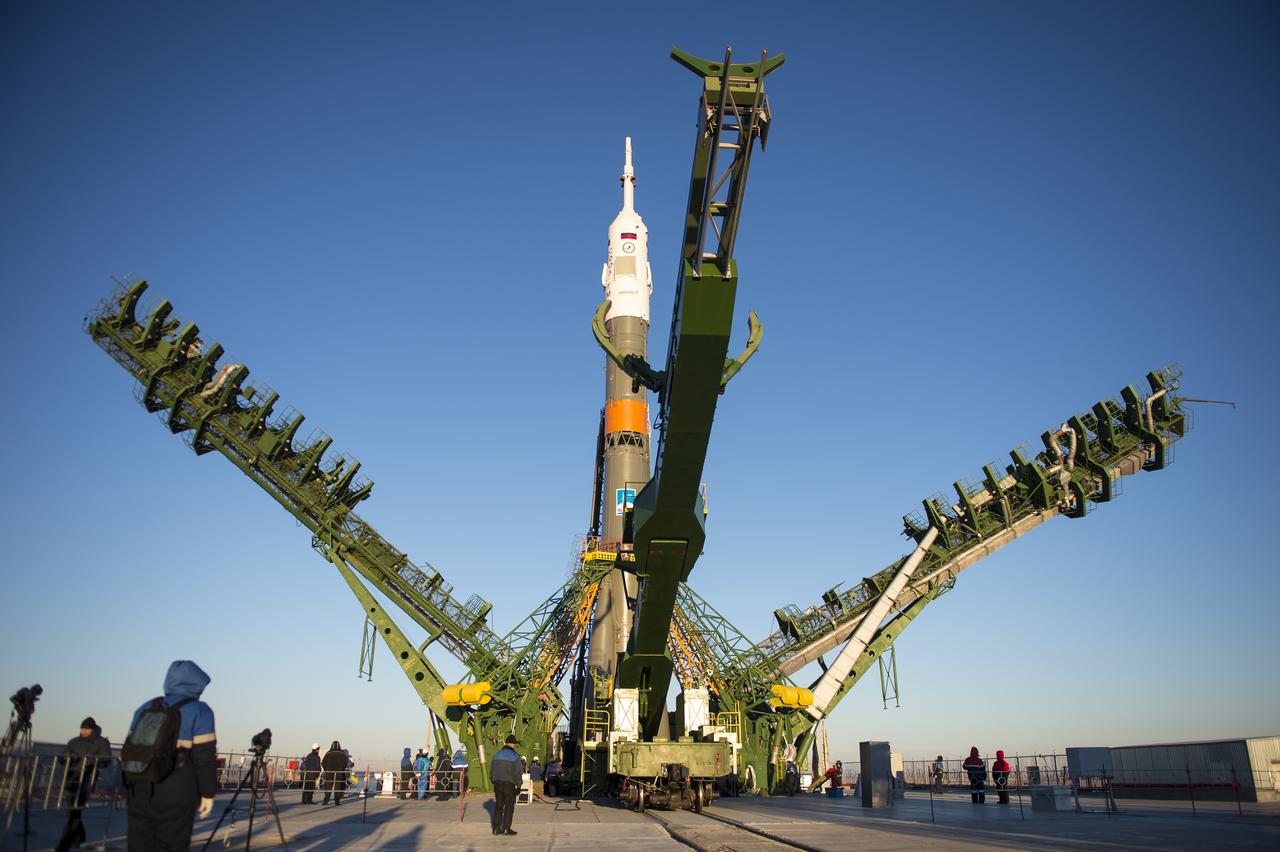
The gantry arms close around the Soyuz TMA-15M spacecraft to secure the rocket at the launch pad on Friday, Nov. 21, 2014 at the Baikonur Cosmodrome in Kazakhstan. Launch of the Soyuz rocket is scheduled for Nov. 24 and will carry Expedition 42 Soyuz Commander Anton Shkaplerov of the Russian Federal Space Agency (Roscosmos), Flight Engineer Terry Virts of NASA , and Flight Engineer Samantha Cristoforetti of the European Space Agency into orbit to begin their five and a half month mission on the International Space Station. Photo Credit: (NASA/Aubrey Gemignani)
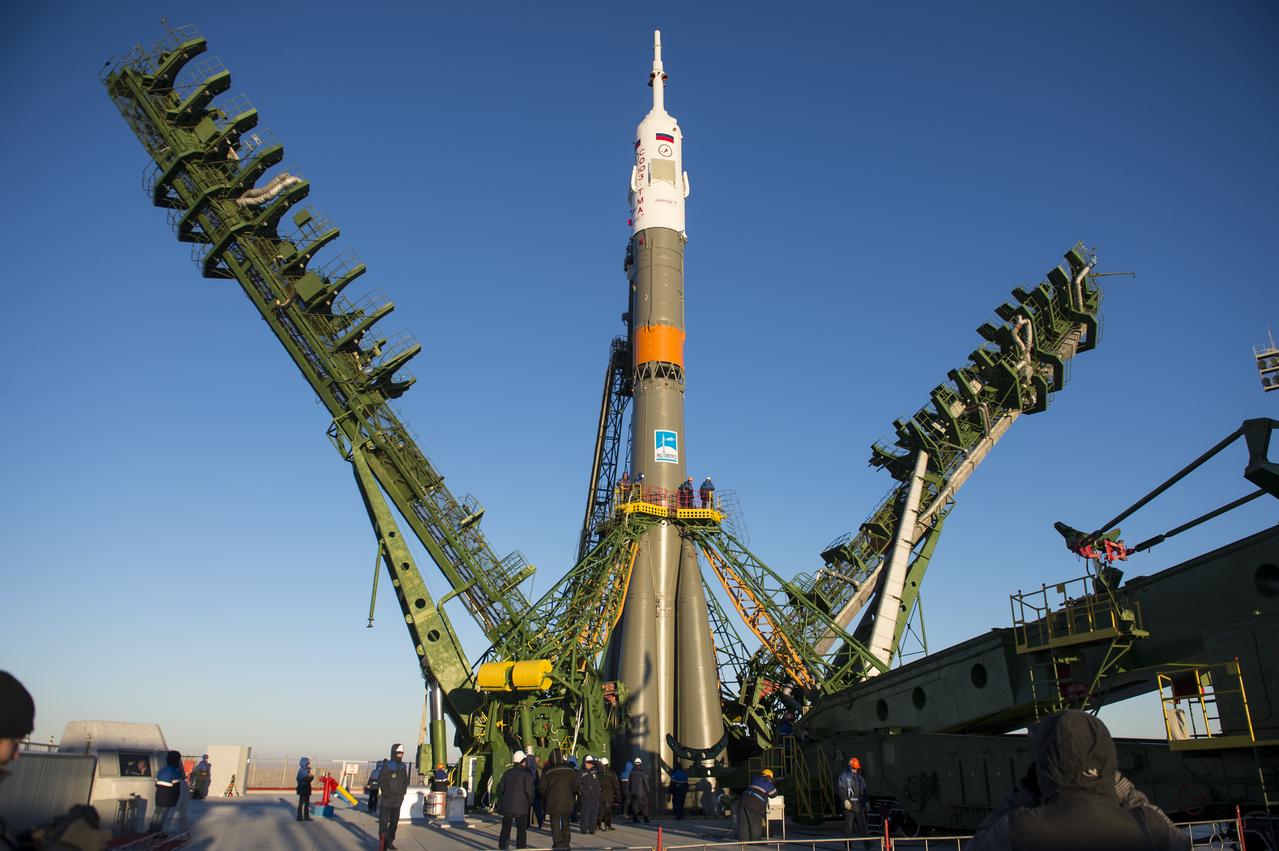
The gantry arms close around the Soyuz TMA-15M spacecraft to secure the rocket at the launch pad on Friday, Nov. 21, 2014 at the Baikonur Cosmodrome in Kazakhstan. Launch of the Soyuz rocket is scheduled for Nov. 24 and will carry Expedition 42 Soyuz Commander Anton Shkaplerov of the Russian Federal Space Agency (Roscosmos), Flight Engineer Terry Virts of NASA , and Flight Engineer Samantha Cristoforetti of the European Space Agency into orbit to begin their five and a half month mission on the International Space Station. Photo Credit: (NASA/Aubrey Gemignani)
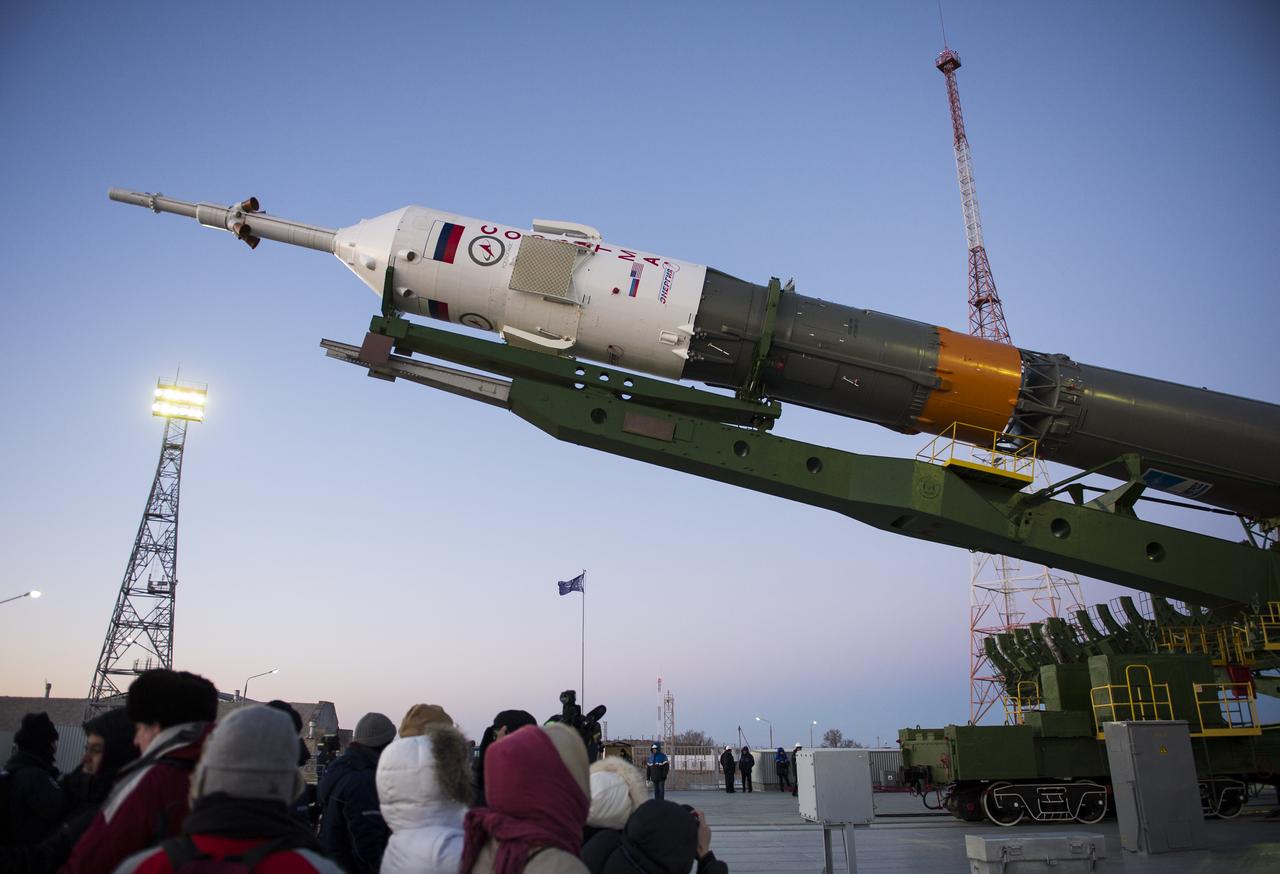
The Soyuz TMA-15M spacecraft is raised into position on the launch pad Friday, Nov. 21, 2014 at the Baikonur Cosmodrome in Kazakhstan. Launch of the Soyuz rocket is scheduled for Nov. 24 and will carry Expedition 42 Soyuz Commander Anton Shkaplerov of the Russian Federal Space Agency (Roscosmos), Flight Engineer Terry Virts of NASA , and Flight Engineer Samantha Cristoforetti of the European Space Agency into orbit to begin their five and a half month mission on the International Space Station. Photo Credit: (NASA/Aubrey Gemignani)
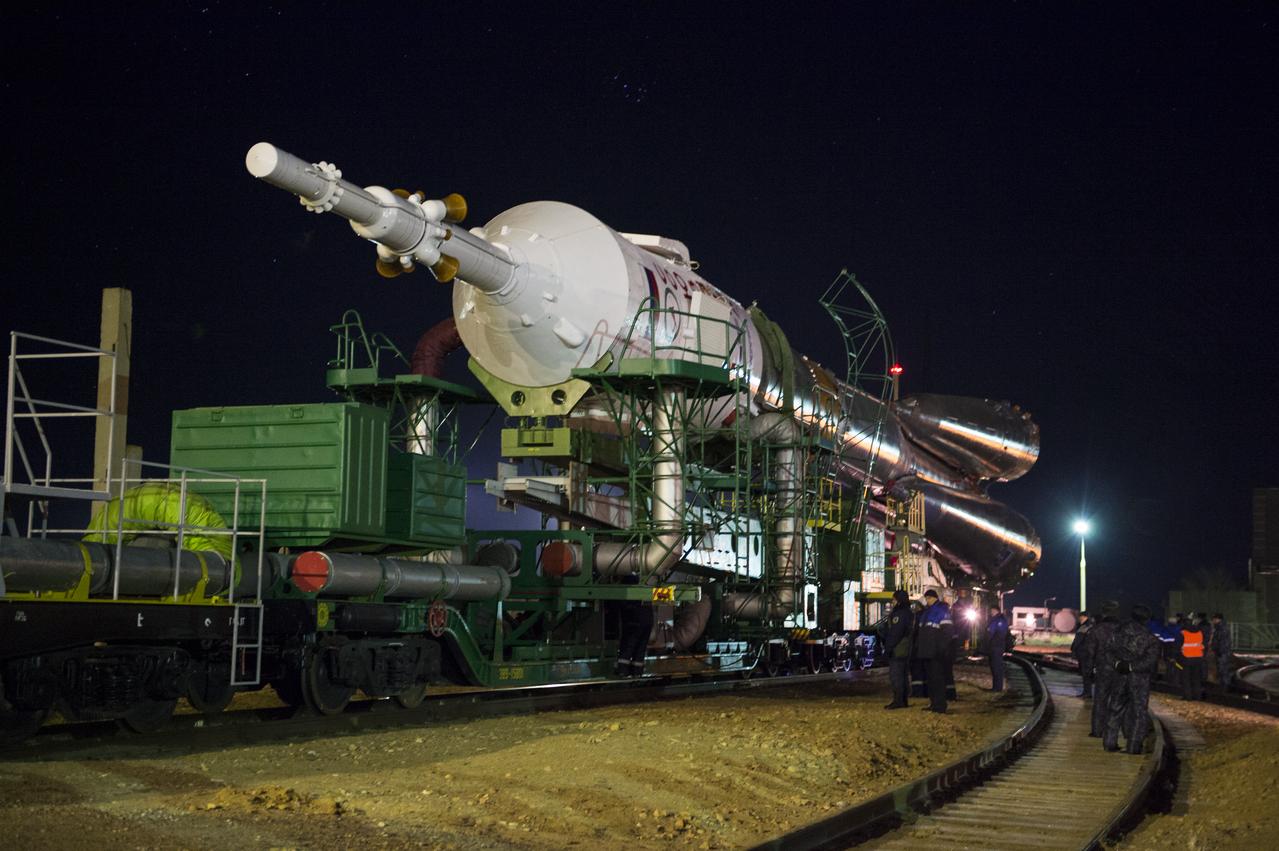
The Soyuz TMA-15M spacecraft is rolled out to the launch pad by train on Friday, Nov. 21, 2014 at the Baikonur Cosmodrome in Kazakhstan. Launch of the Soyuz rocket is scheduled for Nov. 24 and will carry Expedition 42 Soyuz Commander Anton Shkaplerov of the Russian Federal Space Agency (Roscosmos), Flight Engineer Terry Virts of NASA , and Flight Engineer Samantha Cristoforetti of the European Space Agency into orbit to begin their five and a half month mission on the International Space Station. Photo Credit: (NASA/Aubrey Gemignani)
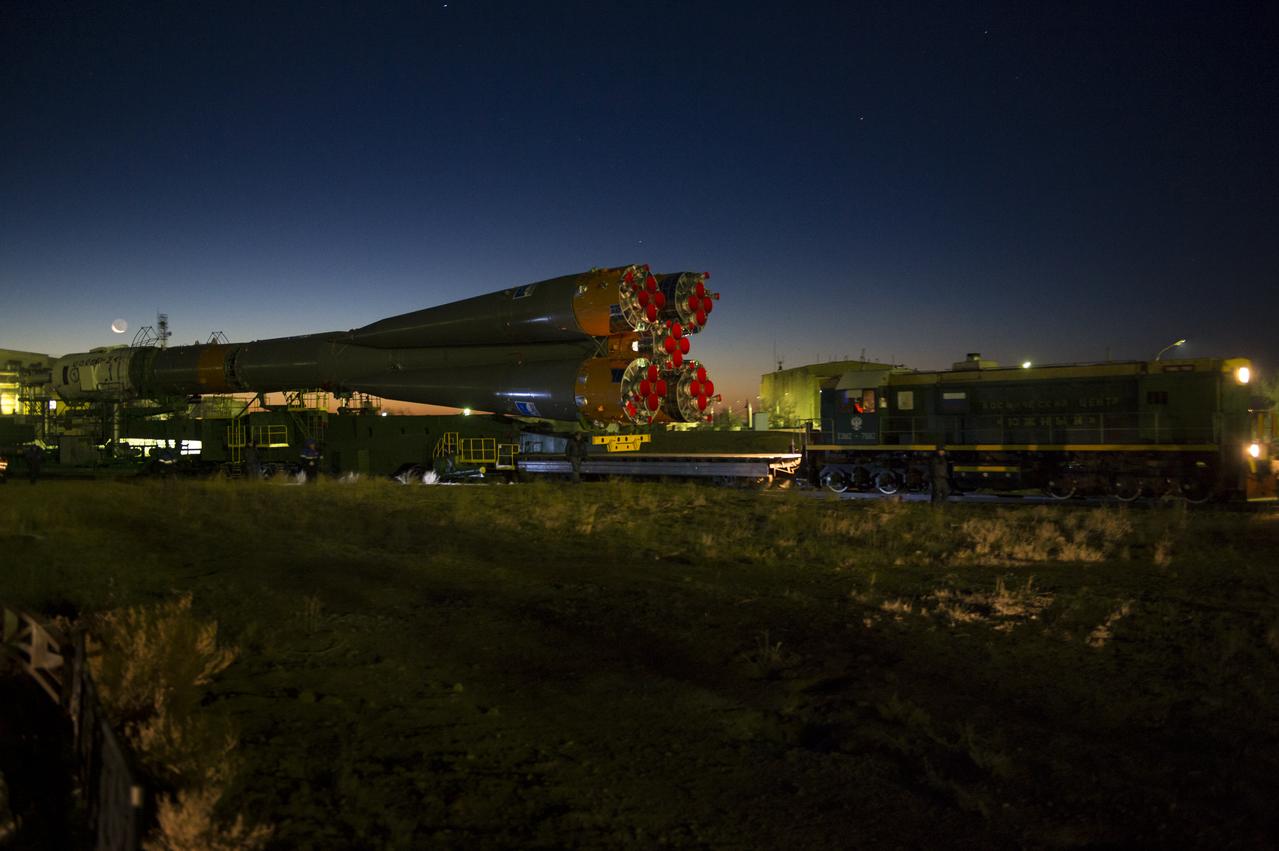
The Soyuz TMA-15M spacecraft is rolled out to the launch pad by train on Friday, Nov. 21, 2014 at the Baikonur Cosmodrome in Kazakhstan. Launch of the Soyuz rocket is scheduled for Nov. 24 and will carry Expedition 42 Soyuz Commander Anton Shkaplerov of the Russian Federal Space Agency (Roscosmos), Flight Engineer Terry Virts of NASA , and Flight Engineer Samantha Cristoforetti of the European Space Agency into orbit to begin their five and a half month mission on the International Space Station. Photo Credit: (NASA/Aubrey Gemignani)
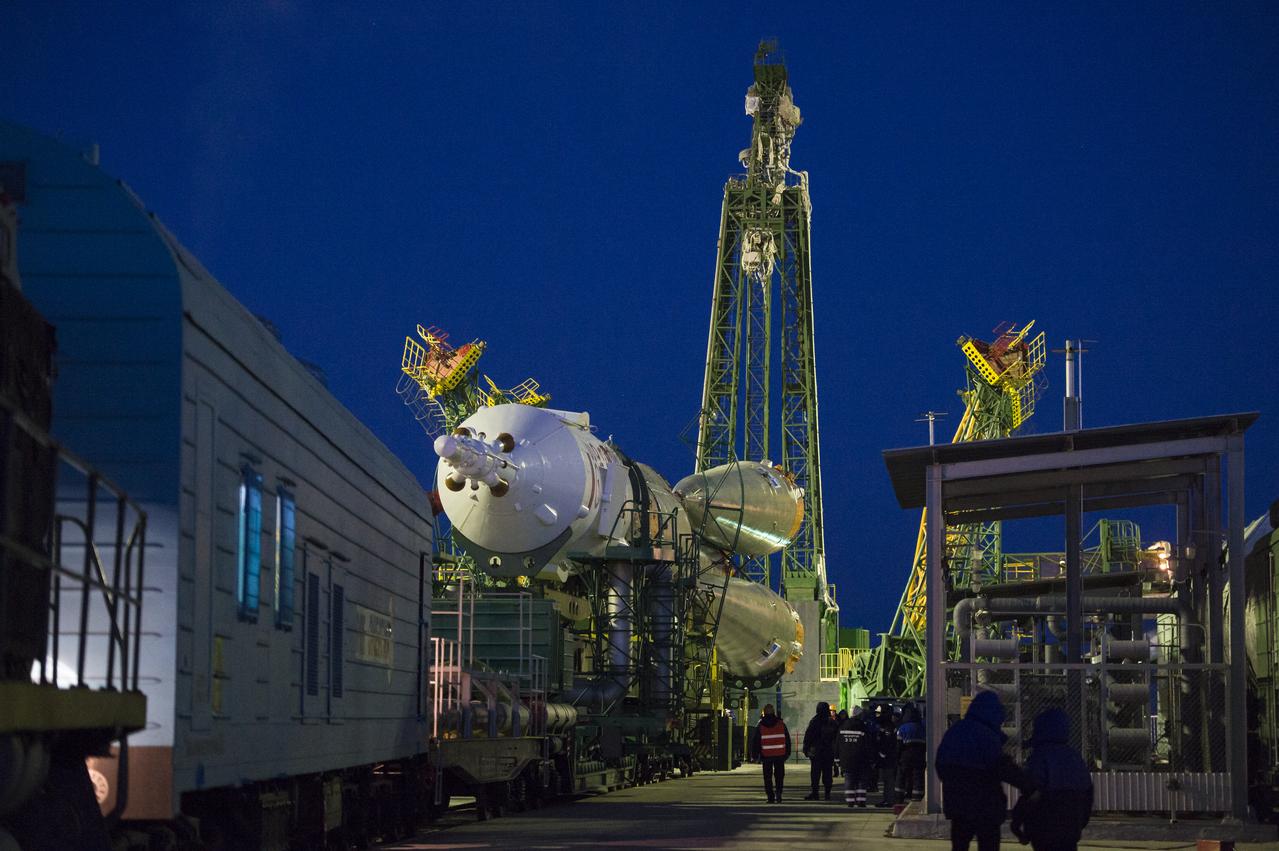
The Soyuz TMA-15M spacecraft is seen shortly after arriving at the launch pad by train on Friday, Nov. 21, 2014, at the Baikonur Cosmodrome in Kazakhstan. Launch of the Soyuz rocket is scheduled for Nov. 24 and will carry Expedition 42 Soyuz Commander Anton Shkaplerov of the Russian Federal Space Agency (Roscosmos), Flight Engineer Terry Virts of NASA , and Flight Engineer Samantha Cristoforetti of the European Space Agency into orbit to begin their five and a half month mission on the International Space Station. Photo Credit: (NASA/Aubrey Gemignani)
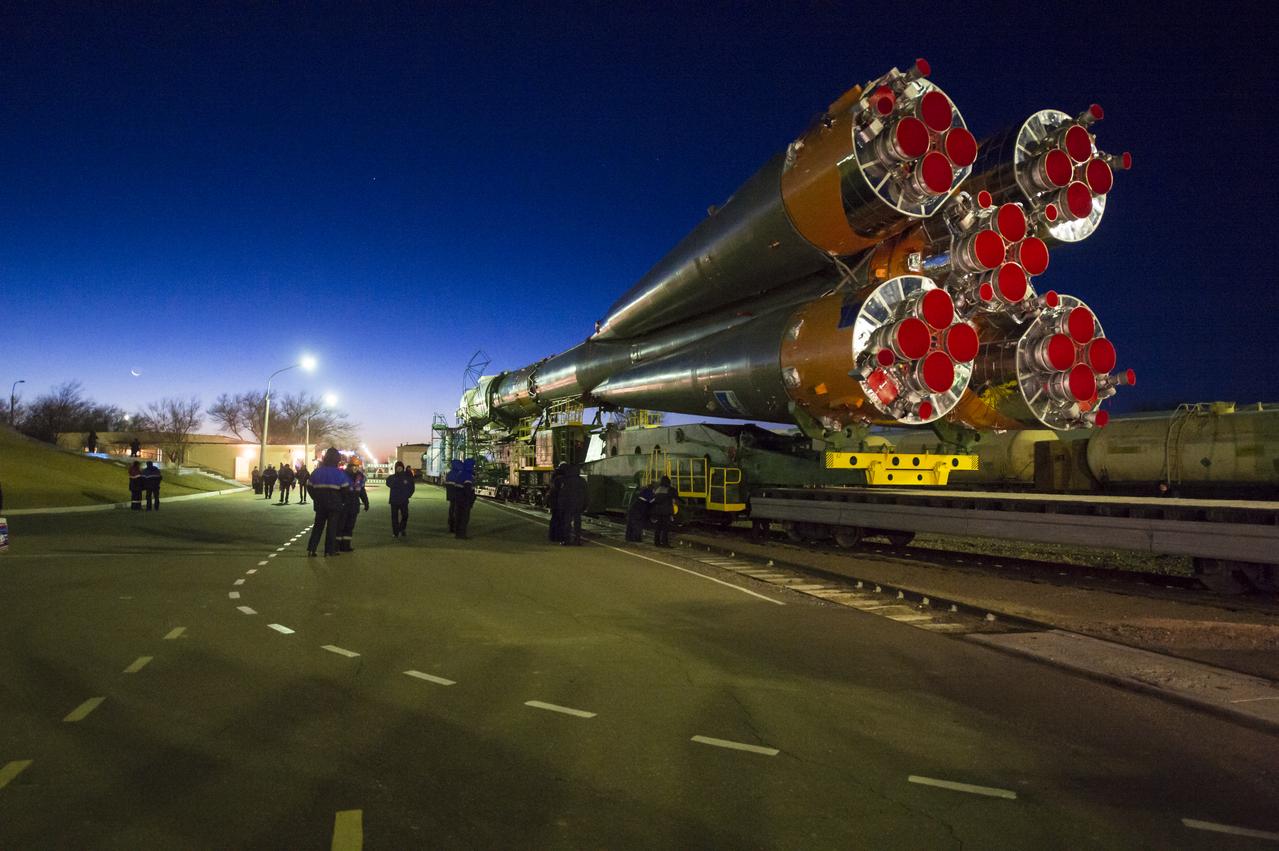
The Soyuz TMA-15M spacecraft is rolled out to the launch pad by train on Friday, Nov. 21, 2014 at the Baikonur Cosmodrome in Kazakhstan. Launch of the Soyuz rocket is scheduled for Nov. 24 and will carry Expedition 42 Soyuz Commander Anton Shkaplerov of the Russian Federal Space Agency (Roscosmos), Flight Engineer Terry Virts of NASA , and Flight Engineer Samantha Cristoforetti of the European Space Agency into orbit to begin their five and a half month mission on the International Space Station. Photo Credit: (NASA/Aubrey Gemignani)
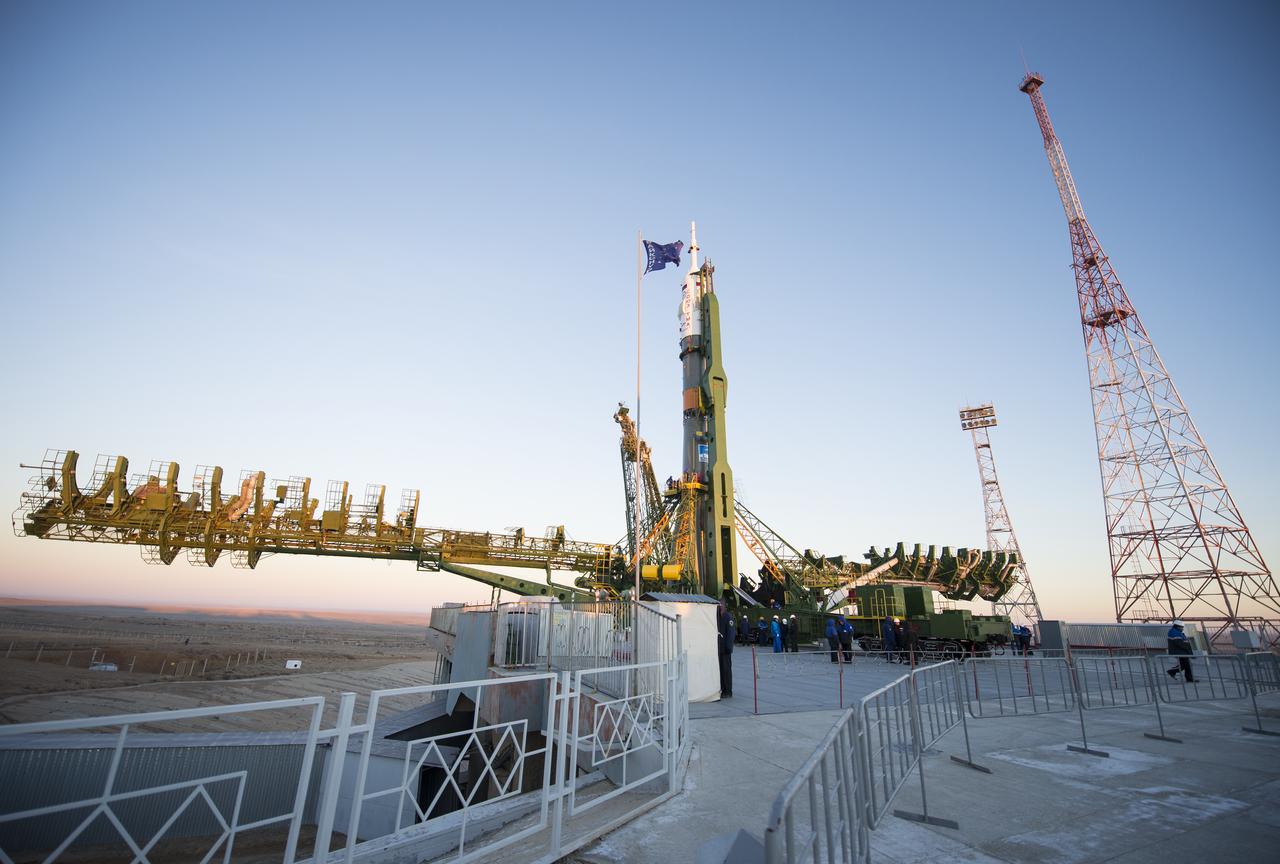
The Soyuz TMA-15M spacecraft is seen after being raised into a vertical position on the launch pad on Friday, Nov. 21, 2014 at the Baikonur Cosmodrome in Kazakhstan. Launch of the Soyuz rocket is scheduled for Nov. 24 and will carry Expedition 42 Soyuz Commander Anton Shkaplerov of the Russian Federal Space Agency (Roscosmos), Flight Engineer Terry Virts of NASA , and Flight Engineer Samantha Cristoforetti of the European Space Agency into orbit to begin their five and a half month mission on the International Space Station. Photo Credit: (NASA/Aubrey Gemignani)
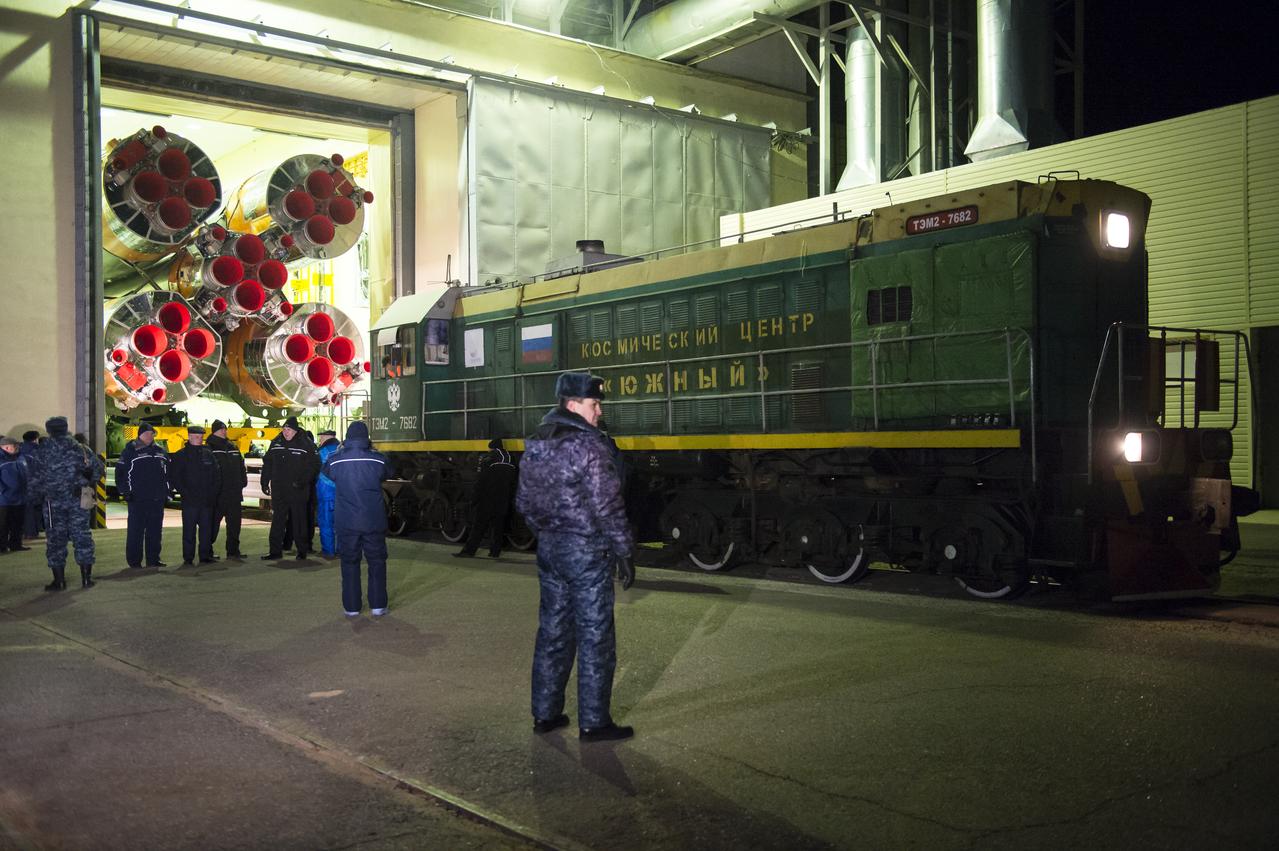
The Soyuz TMA-15M spacecraft is rolled out to the launch pad by train on Friday, Nov. 21, 2014 at the Baikonur Cosmodrome in Kazakhstan. Launch of the Soyuz rocket is scheduled for Nov. 24 and will carry Expedition 42 Soyuz Commander Anton Shkaplerov of the Russian Federal Space Agency (Roscosmos), Flight Engineer Terry Virts of NASA , and Flight Engineer Samantha Cristoforetti of the European Space Agency into orbit to begin their five and a half month mission on the International Space Station. Photo Credit: (NASA/Aubrey Gemignani)
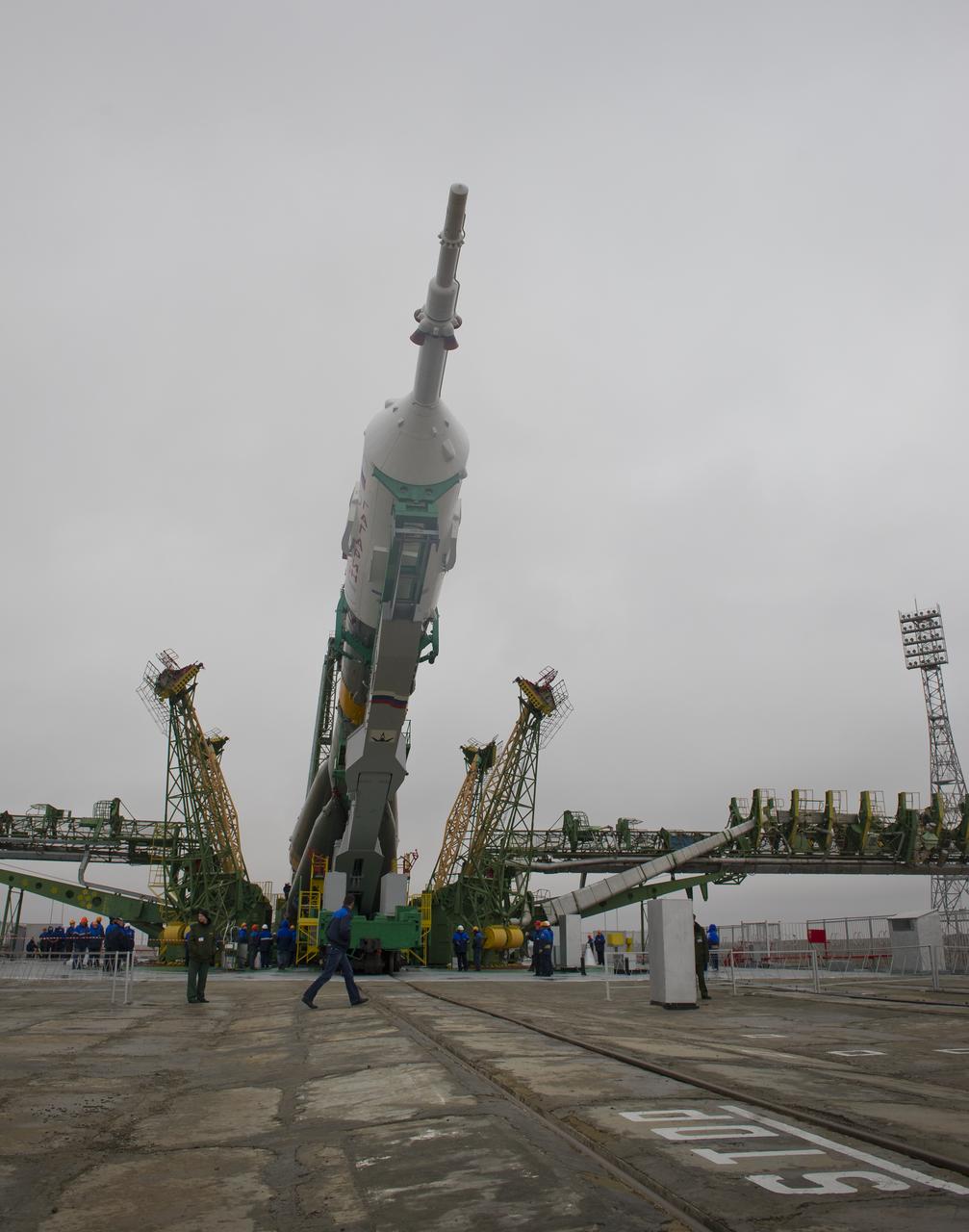
The Soyuz TMA-21 spacecraft is lifted into position on the launch pad at the Baikonur Cosmodrome in Kazakhstan, Saturday, April 2, 2011. The Soyuz, which has been dubbed “Gagarin”, is launching one week shy of the 50th anniversary of the launch of Yuri Gagarin from the same launch pad in Baikonur on April 12, 1961 to become the first human to fly in space. The first stage of the Soyuz booster is emblazoned with the name “Gagarin” and the likeness of the first person to fly in space. Photo Credit (NASA/Carla Cioffi)
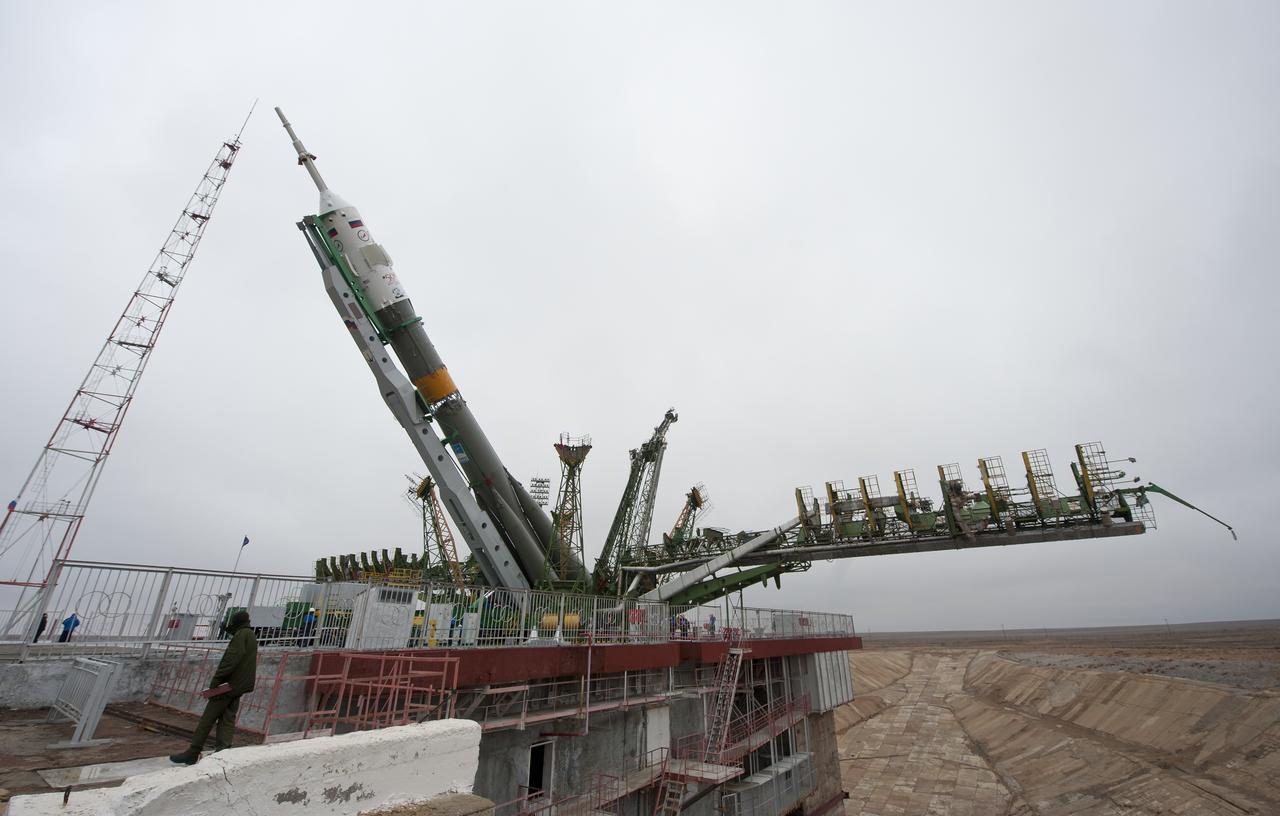
The Soyuz TMA-21 spacecraft is lifted into position on the launch pad at the Baikonur Cosmodrome in Kazakhstan, Saturday, April 2, 2011. The Soyuz, which has been dubbed “Gagarin”, is launching one week shy of the 50th anniversary of the launch of Yuri Gagarin from the same launch pad in Baikonur on April 12, 1961 to become the first human to fly in space. The first stage of the Soyuz booster is emblazoned with the name “Gagarin” and the likeness of the first person to fly in space. Photo Credit (NASA/Carla Cioffi)
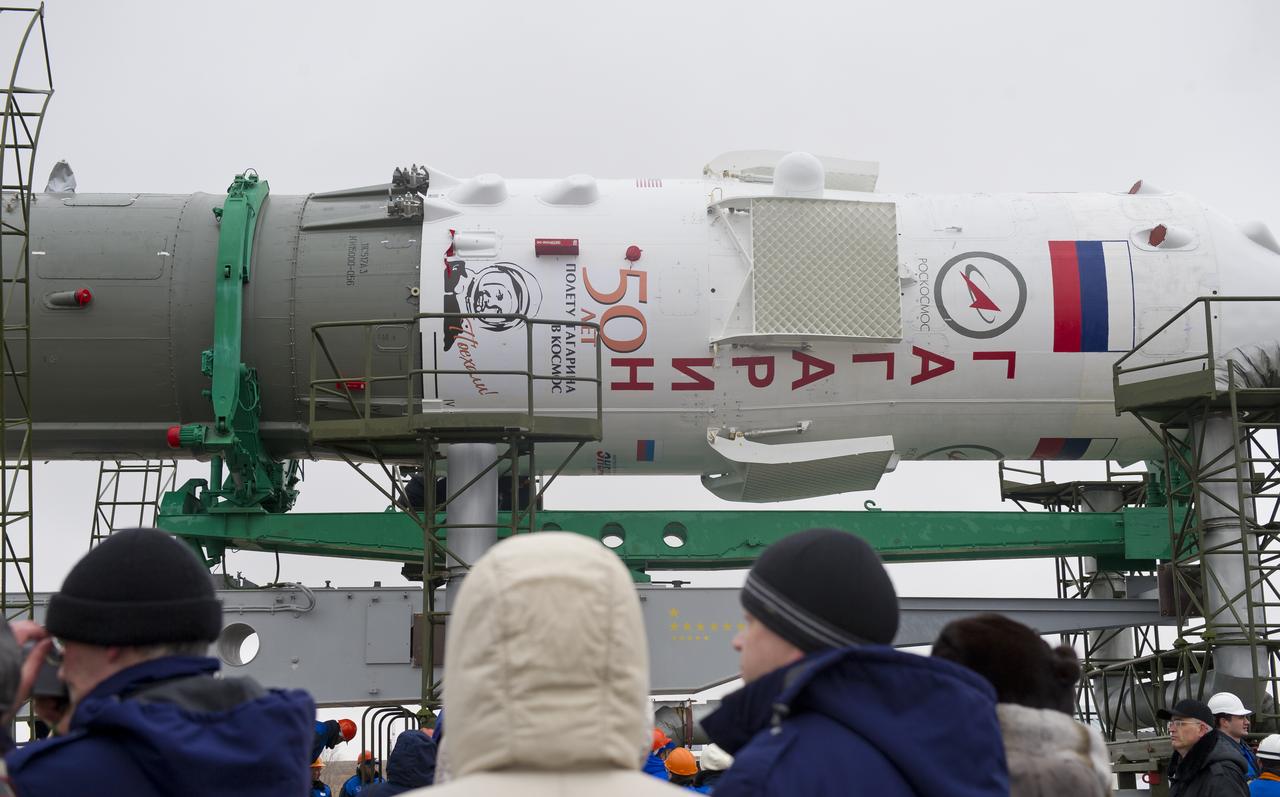
The Soyuz TMA-21 spacecraft is seen shortly after arriving at the launch pad Saturday, April 2, 2011 at the Baikonur Cosmodrome in Kazakhstan. The Soyuz, which has been dubbed “Gagarin”, is launching one week shy of the 50th anniversary of the launch of Yuri Gagarin from the same launch pad in Baikonur on April 12, 1961 to become the first human to fly in space. The first stage of the Soyuz booster is emblazoned with the name “Gagarin” and the likeness of the first person to fly in space. Photo Credit (NASA/Carla Cioffi)
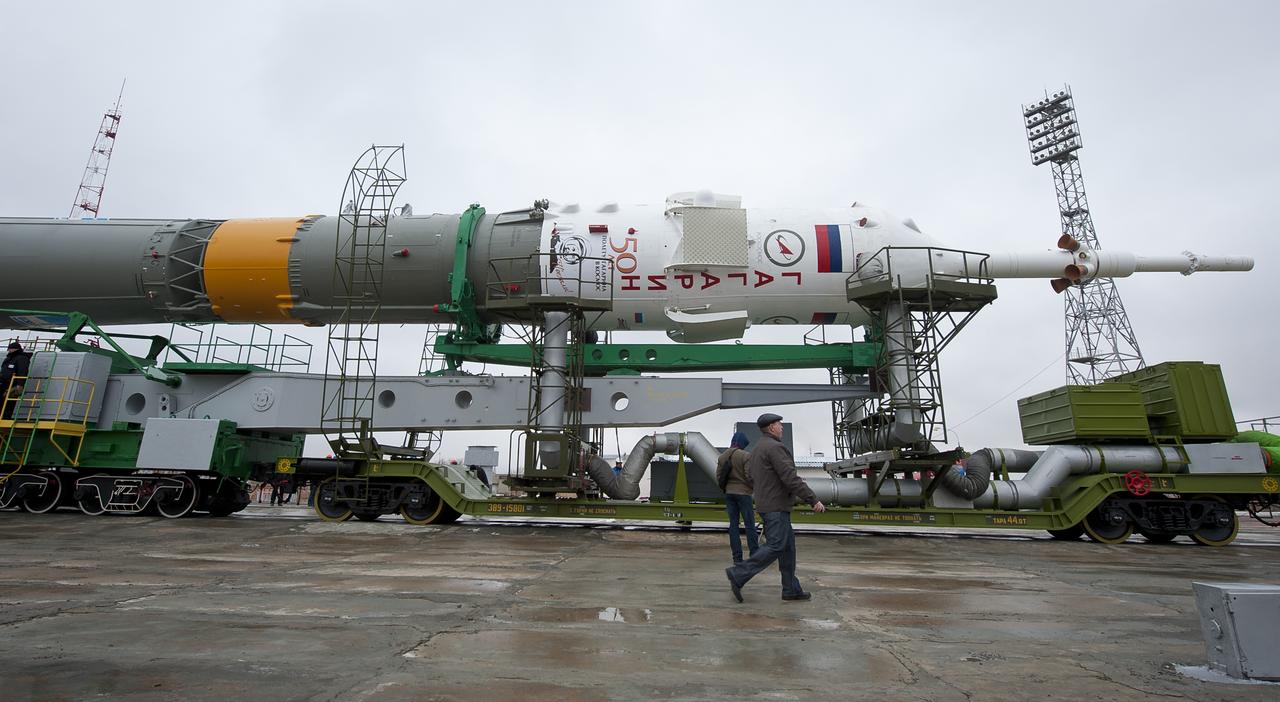
The Soyuz TMA-21 spacecraft is seen shortly after arriving at the launch pad Saturday, April 2, 2011 at the Baikonur Cosmodrome in Kazakhstan. The Soyuz, which has been dubbed “Gagarin”, is launching one week shy of the 50th anniversary of the launch of Yuri Gagarin from the same launch pad in Baikonur on April 12, 1961 to become the first human to fly in space. The first stage of the Soyuz booster is emblazoned with the name “Gagarin” and the likeness of the first person to fly in space. Photo Credit (NASA/Carla Cioffi)
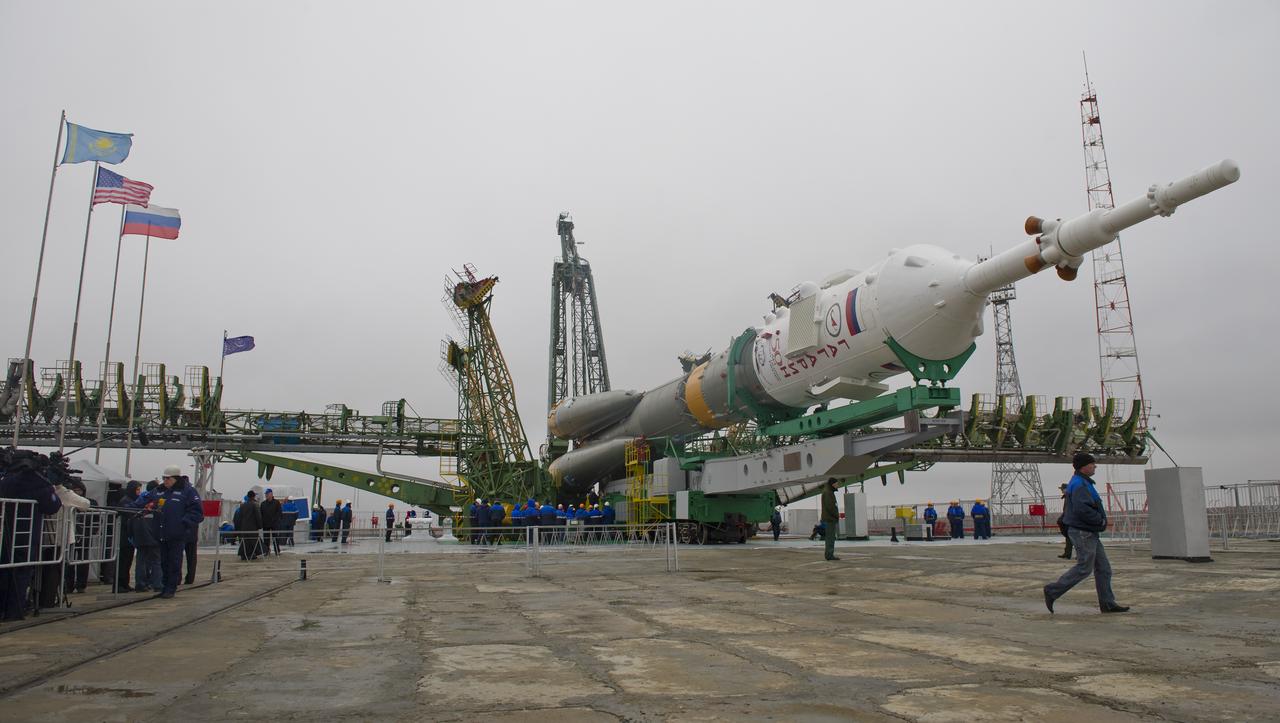
The Soyuz TMA-21 spacecraft is seen shortly after arriving at the launch pad Saturday, April 2, 2011 at the Baikonur Cosmodrome in Kazakhstan. The Soyuz, which has been dubbed “Gagarin”, is launching one week shy of the 50th anniversary of the launch of Yuri Gagarin from the same launch pad in Baikonur on April 12, 1961 to become the first human to fly in space. The first stage of the Soyuz booster is emblazoned with the name “Gagarin” and the likeness of the first person to fly in space. Photo Credit (NASA/Carla Cioffi)
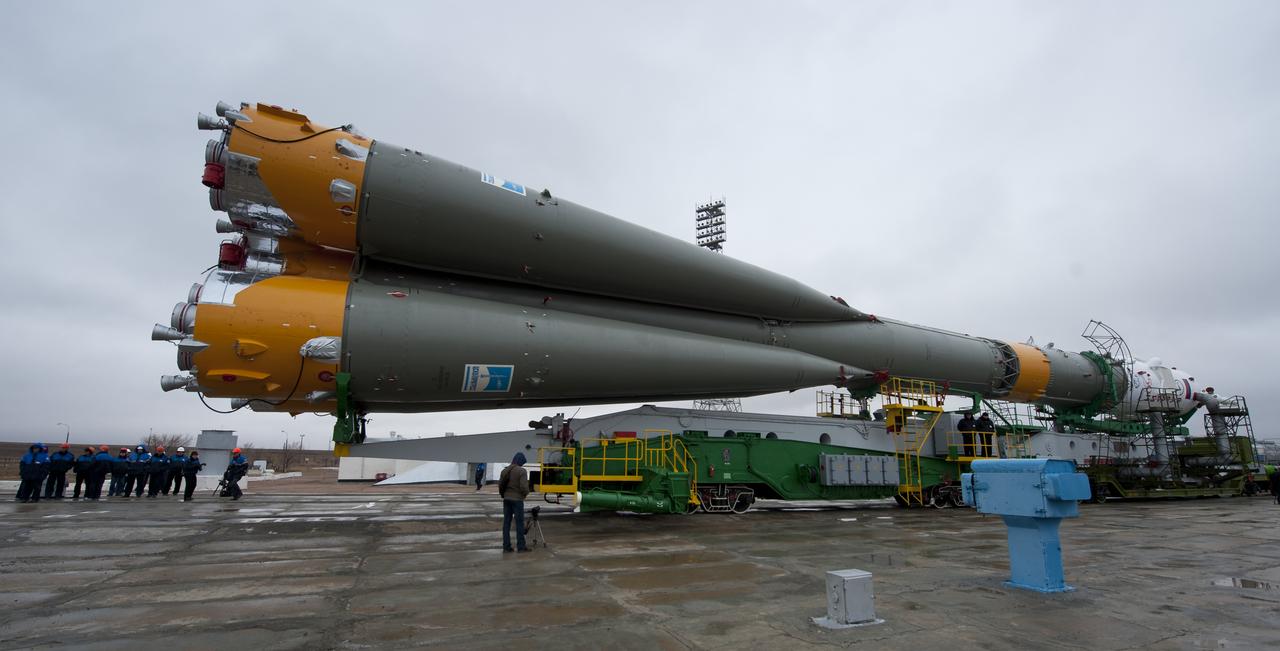
The Soyuz TMA-21 spacecraft is seen shortly after arriving at the launch pad Saturday, April 2, 2011 at the Baikonur Cosmodrome in Kazakhstan. The Soyuz, which has been dubbed “Gagarin”, is launching one week shy of the 50th anniversary of the launch of Yuri Gagarin from the same launch pad in Baikonur on April 12, 1961 to become the first human to fly in space. The first stage of the Soyuz booster is emblazoned with the name “Gagarin” and the likeness of the first person to fly in space. Photo Credit (NASA/Carla Cioffi)
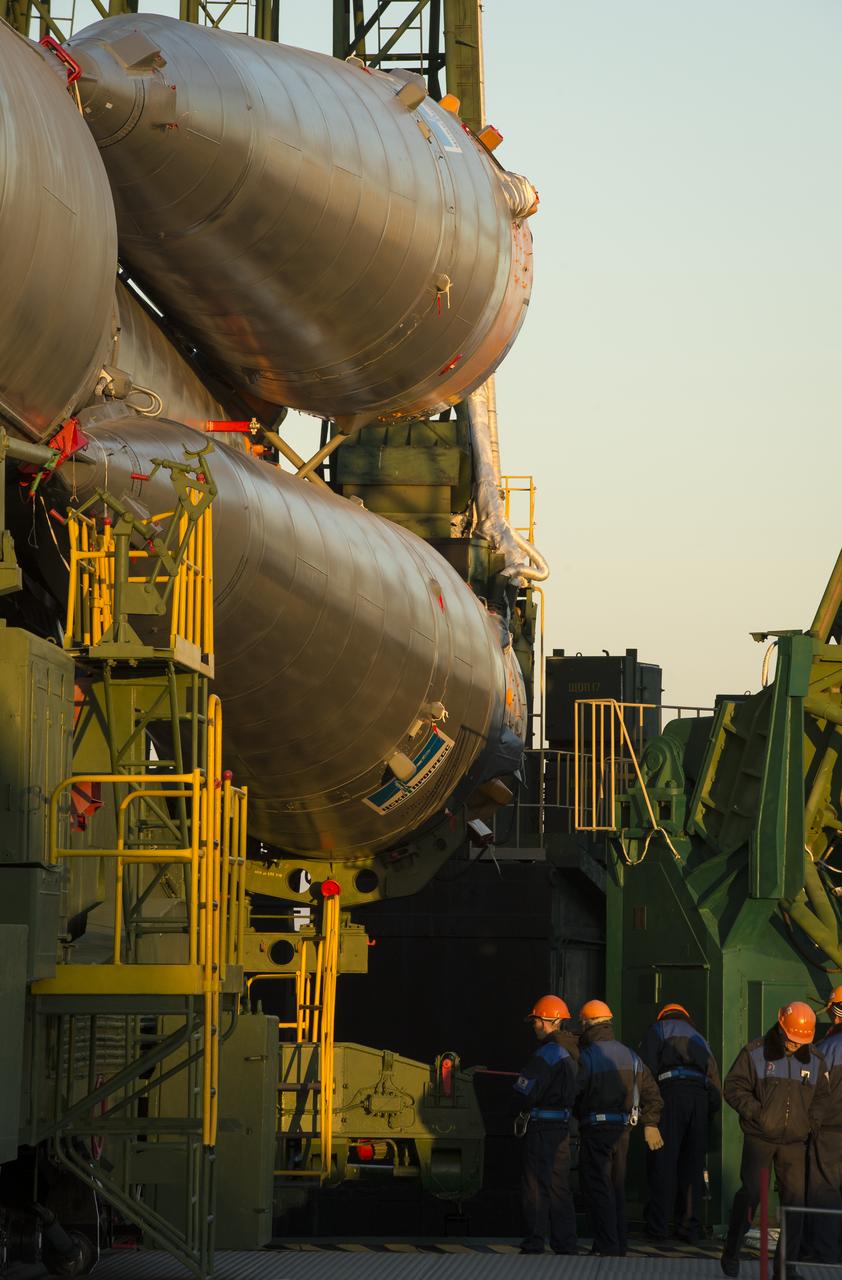
Technicians prepare the Soyuz rocket to be erected at the launch pad shortly after it arrived at the pad by train, on Sunday, October 21, 2012, at the Baikonur Cosmodrome in Kazakhstan. Launch of the Soyuz rocket is scheduled for October 23 and will send Expedition 33/34 Flight Engineer Kevin Ford of NASA, Soyuz Commander Oleg Novitskiy and Flight Engineer Evgeny Tarelkin of ROSCOSMOS on a five-month mission aboard the International Space Station. Photo Credit: (NASA/Bill Ingalls)
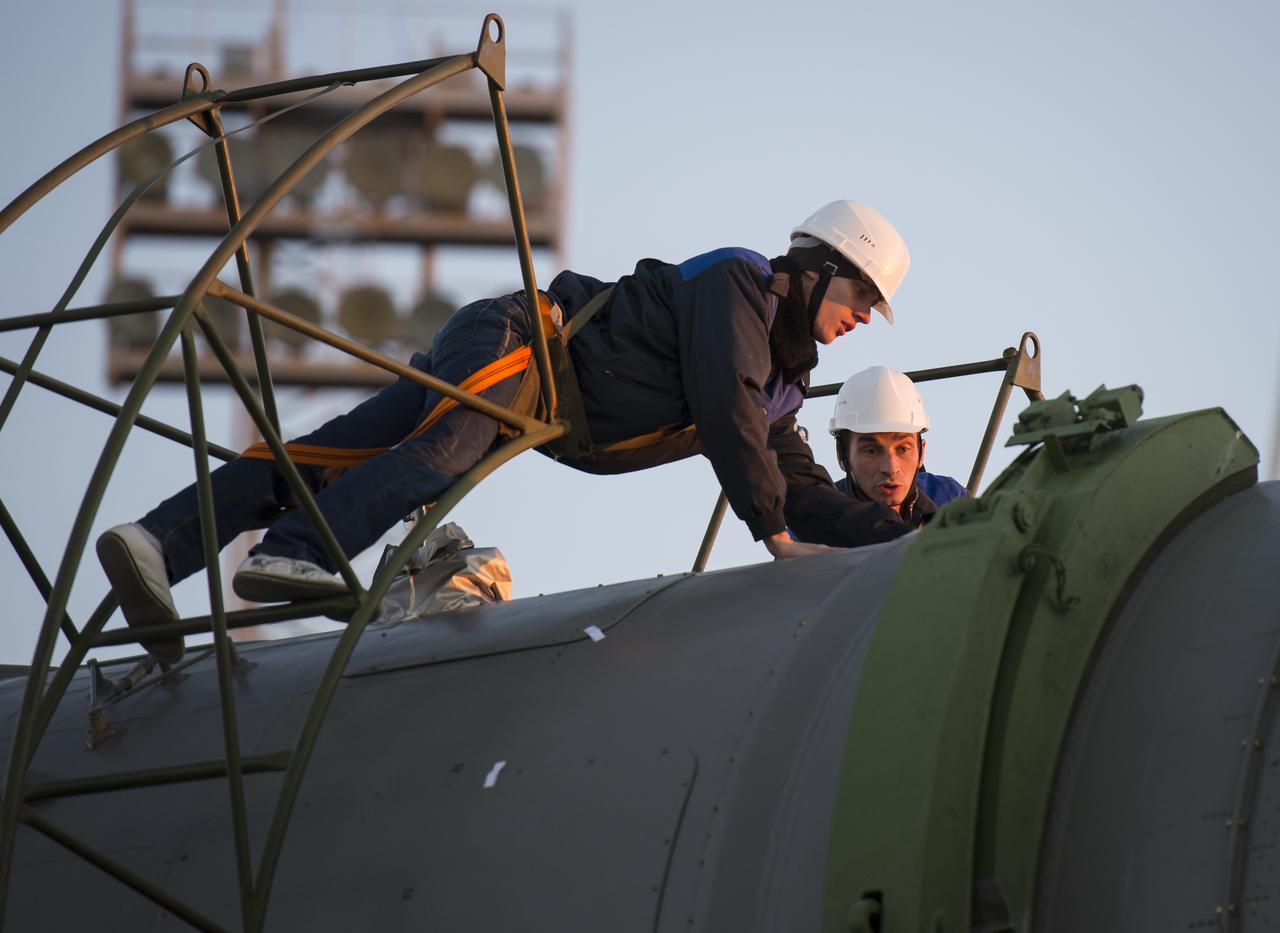
Technicians prepare the Soyuz rocket to be erected at the launch pad shortly after it arrived at the pad by train, on Sunday, October 21, 2012, at the Baikonur Cosmodrome in Kazakhstan. Launch of the Soyuz rocket is scheduled for October 23 and will send Expedition 33/34 Flight Engineer Kevin Ford of NASA, Soyuz Commander Oleg Novitskiy and Flight Engineer Evgeny Tarelkin of ROSCOSMOS on a five-month mission aboard the International Space Station. Photo Credit: (NASA/Bill Ingalls)
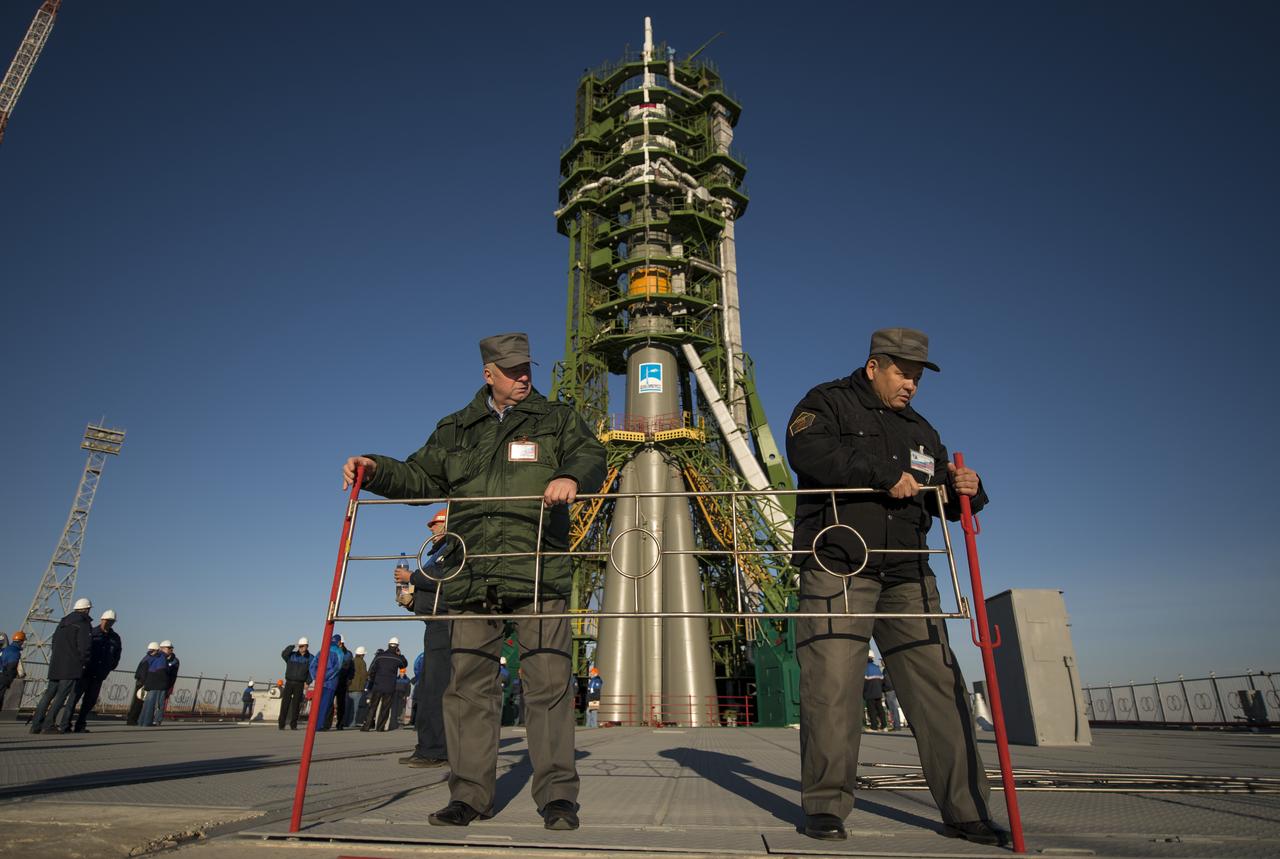
Pad workers install a safety railing at the launch pad shortly after the Soyuz rocket is erected into position, on Sunday, October 21, 2012, at the Baikonur Cosmodrome in Kazakhstan. Launch of the Soyuz rocket is scheduled for October 23 and will send Expedition 33/34 Flight Engineer Kevin Ford of NASA, Soyuz Commander Oleg Novitskiy and Flight Engineer Evgeny Tarelkin of ROSCOSMOS on a five-month mission aboard the International Space Station. Photo Credit: (NASA/Bill Ingalls)

A dragonfly lights on a tree branch near the launch pad after the Soyuz TMA-05M is rolled to its launch pad at the Baikonur Cosmodrome, Thursday, July 12, 2012 in Kazakhstan. The launch of the Soyuz rocket is scheduled for the morning of July 15 local time. Photo Credit: (NASA/Carla Cioffi)
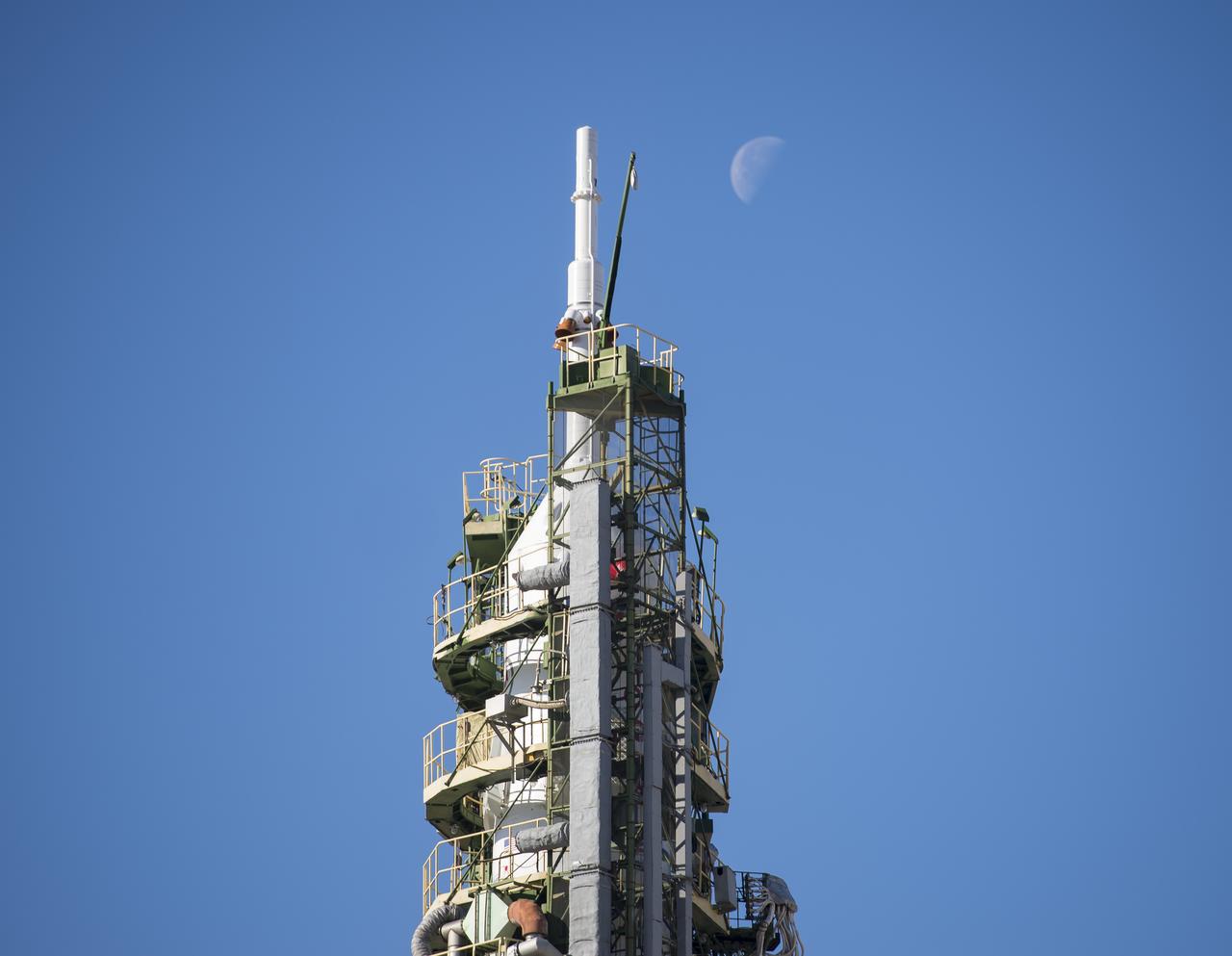
The moon is seen behind the Soyuz MS-04 spacecraft at the Baikonur Cosmodrome launch pad on Wednesday, April 19, 2017 in Kazakhstan. Launch of the Soyuz rocket is scheduled for April 20 Baikonur time and will carry Expedition 51 Soyuz Commander Fyodor Yurchikhin of Roscosmos and Flight Engineer Jack Fischer of NASA into orbit to begin their four and a half month mission on the International Space Station. Photo Credit: (NASA/Aubrey Gemignani)
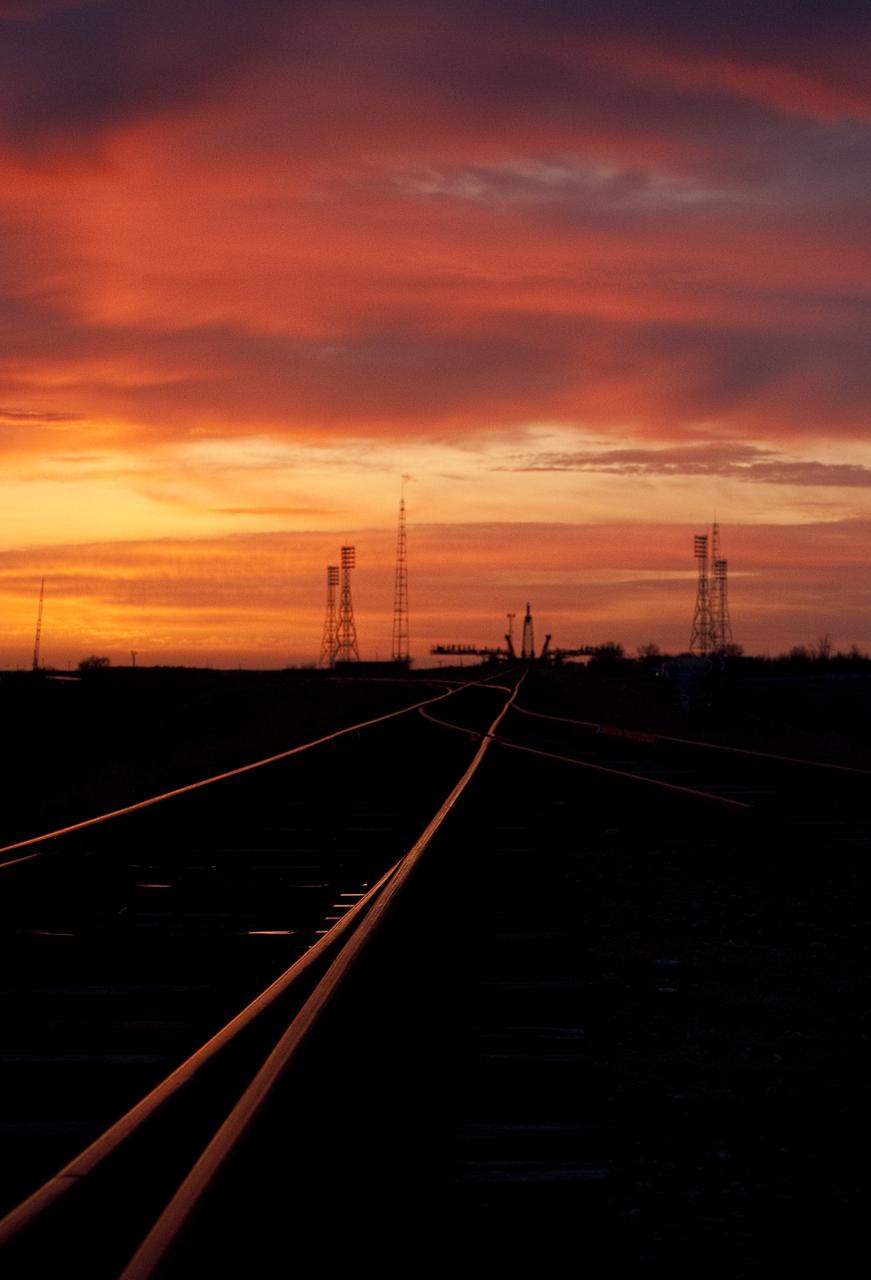
The sun rises behind the Soyuz launch pad shortly before the Soyuz TMA-18 spacecraft is rolled out by the train to the launch pad at the Baikonur Cosmodrome, Kazakhstan, Wednesday, March, 321, 2010. The launch of the Soyuz spacecraft with Expedition 23 Soyuz Commander Alexander Skvortsov of Russia, Flight Engineer Mikhail Kornienko of Russia and NASA Flight Engineer Tracy Caldwell Dyson is scheduled for Friday, April 2, 2010 at 10:04 a.m. Kazakhstan time. Photo Credit: (NASA/Carla Cioffi)
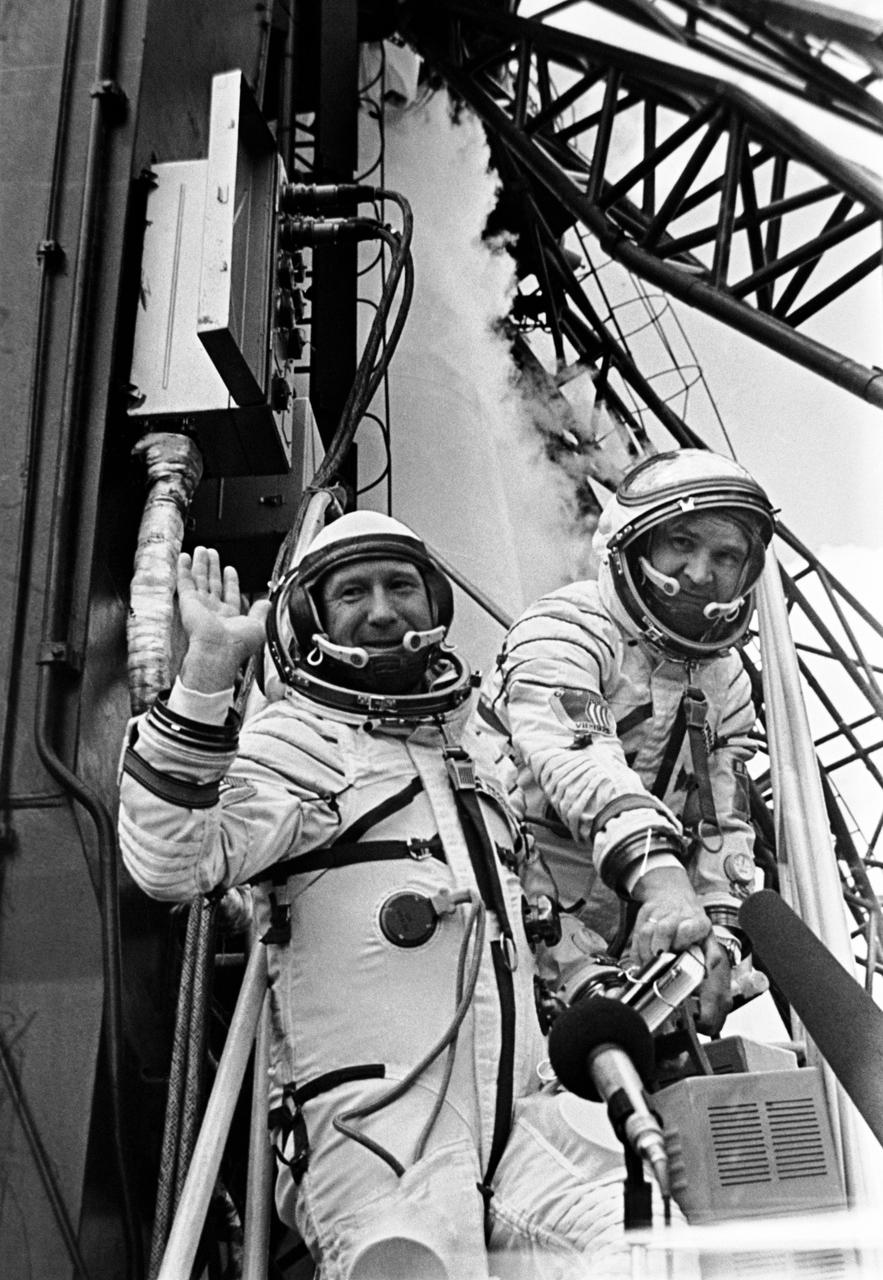
S75-32343 (15 July 1975) --- The two Soviet crewmen for the Apollo-Soyuz Test Project mission are photographed at the launch pad at the Baikonur Cosmodrome in Kazakhstan on the morning of the Soviet ASTP liftoff on July 15, 1975. They are cosmonauts Aleksey A. Leonov (left), commander; and Valeriy N. Kubasov, flight engineer. Leonov is waving to well-wishers at the launch pad. The Soviet ASTP launch preceded the American ASTP Apollo liftoff by seven and one-half hours. The American and Soviet spacecraft were docked in Earth orbit for a total of about 47 hours on July 17-19, 1975. PHOTO COURTESY: USSR ACADEMY OF SCIENCES
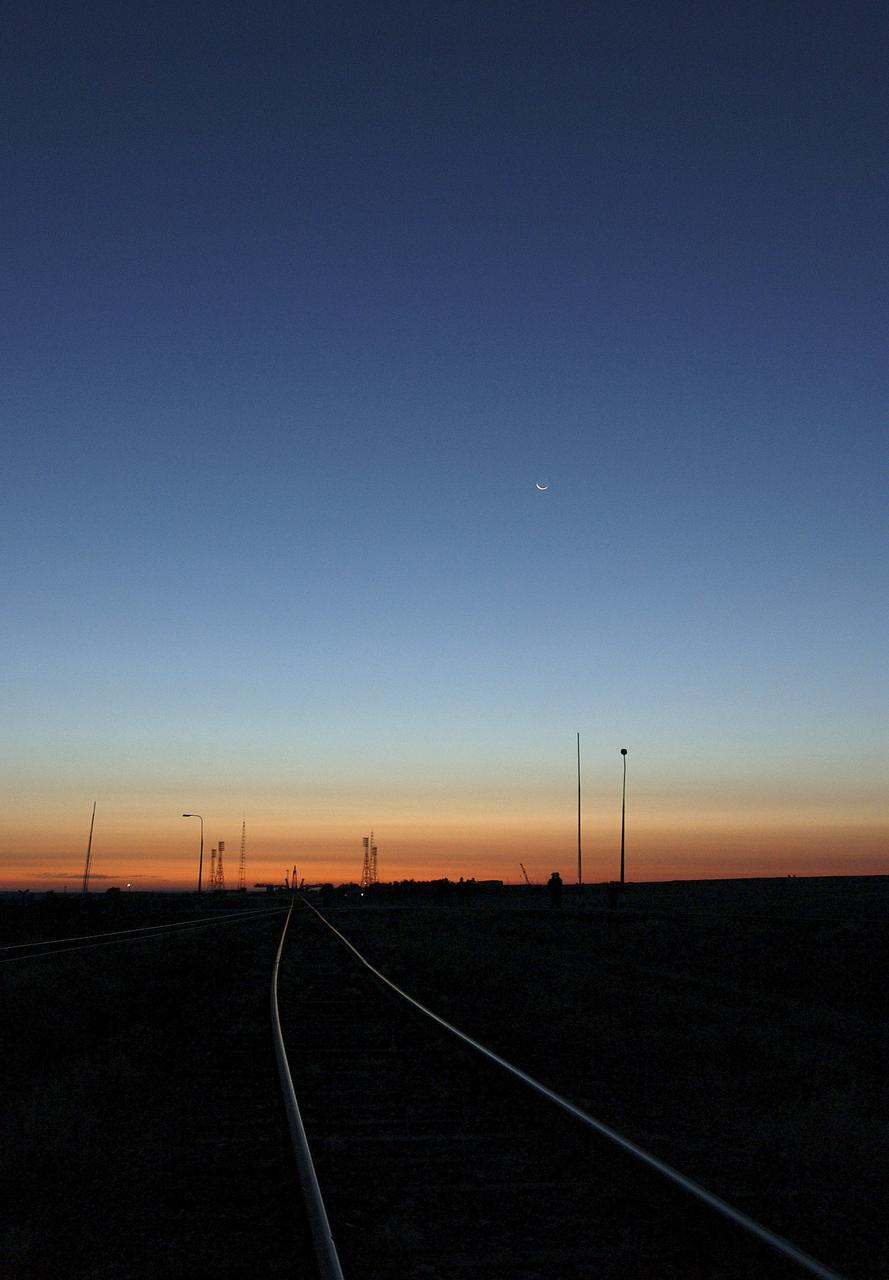
The Soyuz launch pad an hour before the arrival of the Soyuz rocket. The Soyuz TMA-5 vehicle rolled to its launch pad at the Baikonur Cosmodrome in Kazakhstan, Tuesday, October 12, 2004, in preparation for its launch October 14 to send Expedition 10 Commander and NASA Science Officer Leroy Chiao, Flight Engineer and Soyuz Commander Salizhan Sharipov and Russian Space Forces cosmonaut Yuri Shargin to the International Space Station. Chiao and Sharipov will replace the Expedition 9 crew of Gennady Padalka and Mike Fincke, while Shargin will conduct eight days of scientific experiments. He will return to earth with the Expedition 9 crew October 24. Photo Credit: (NASA/Bill Ingalls)
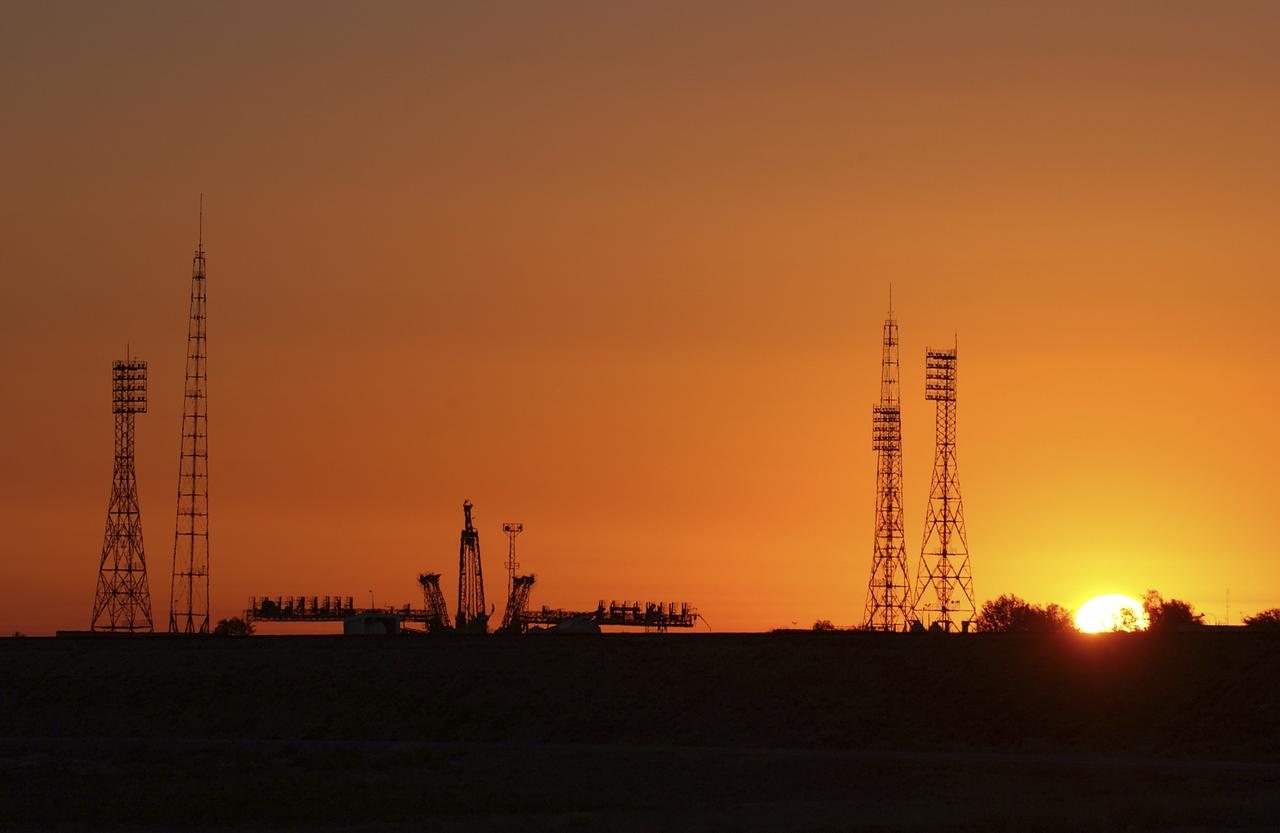
The Soyuz launch pad a half hour before the arrival of the Soyuz rocket. The Soyuz TMA-5 vehicle rolled to its launch pad at the Baikonur Cosmodrome in Kazakhstan, Tuesday, October 12, 2004, in preparation for its launch October 14 to send Expedition 10 Commander and NASA Science Officer Leroy Chiao, Flight Engineer and Soyuz Commander Salizhan Sharipov and Russian Space Forces cosmonaut Yuri Shargin to the International Space Station. Chiao and Sharipov will replace the Expedition 9 crew of Gennady Padalka and Mike Fincke, while Shargin will conduct eight days of scientific experiments. He will return to earth with the Expedition 9 crew October 24. Photo Credit: (NASA/Bill Ingalls)
The Soyuz rocket is erected at the launch pad at the Baikonur Cosmodrome in Baikonur, Kazakhstan, Thursday, April 24, 2003. Expedition 7 is scheduled to launch onboard the Soyuz on Saturday April 26, 2003. Photo credit: (NASA/Bill Ingalls)
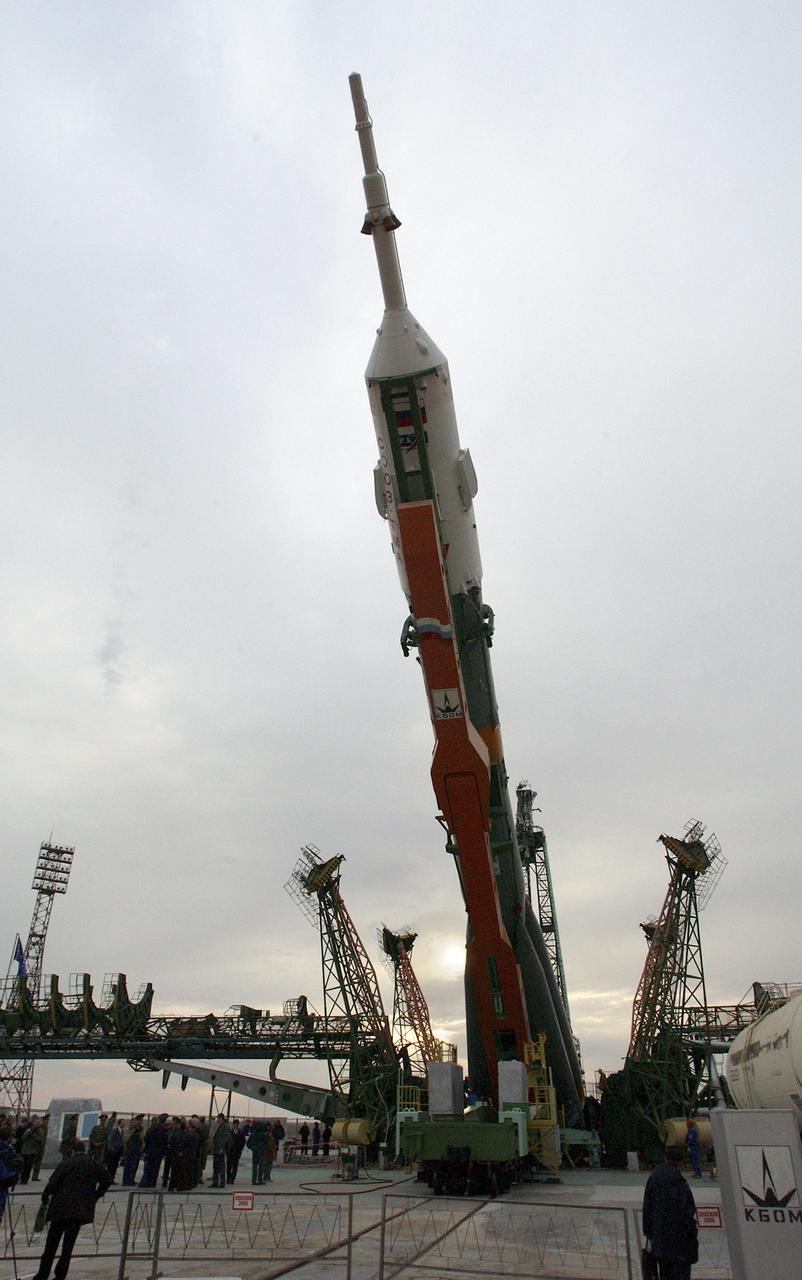
The Soyuz rocket is erected at the launch pad at the Baikonur Cosmodrome in Baikonur, Kazakhstan, Thursday, April 24, 2003. Expedition 7 is scheduled to launch onboard the Soyuz on Saturday April 26, 2003. Photo credit: (NASA/Bill Ingalls)
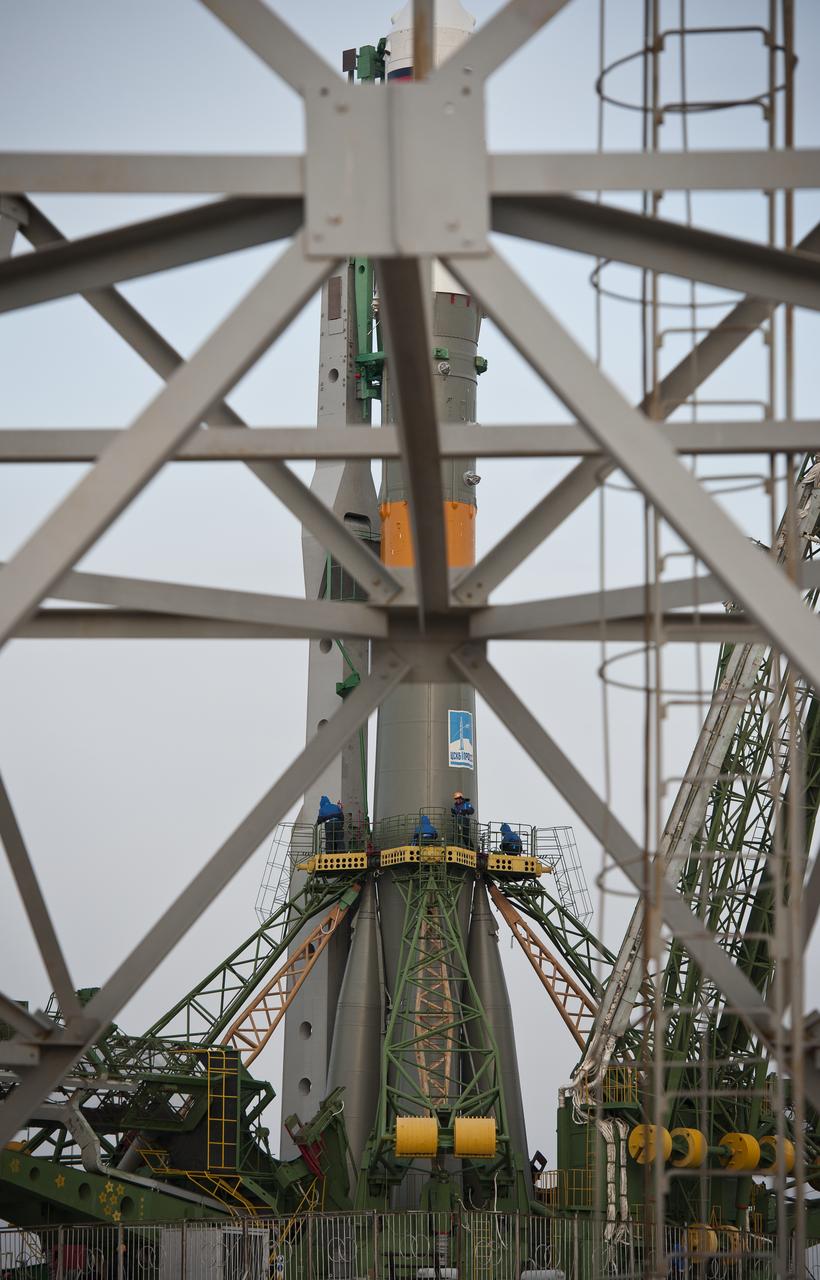
Launch pad engineers are seen as they begin final prelaunch preparations on the Soyuz TMA-20 spacecraft after its rollout to the launch pad at the Baikonur Cosmodrome on Monday, Dec. 13, 2010 in Kazakhstan. The launch of the Soyuz spacecraft with Expedition 26 Soyuz Commander Dmitry Kondratyev, NASA Flight Engineer Catherine Coleman, and Italian astronaut Paolo Nespoli is scheduled for Thursday, Dec., 16, 2010 at 1:09 a.m. local time. Photo Credit: (NASA/Carla Cioffi)
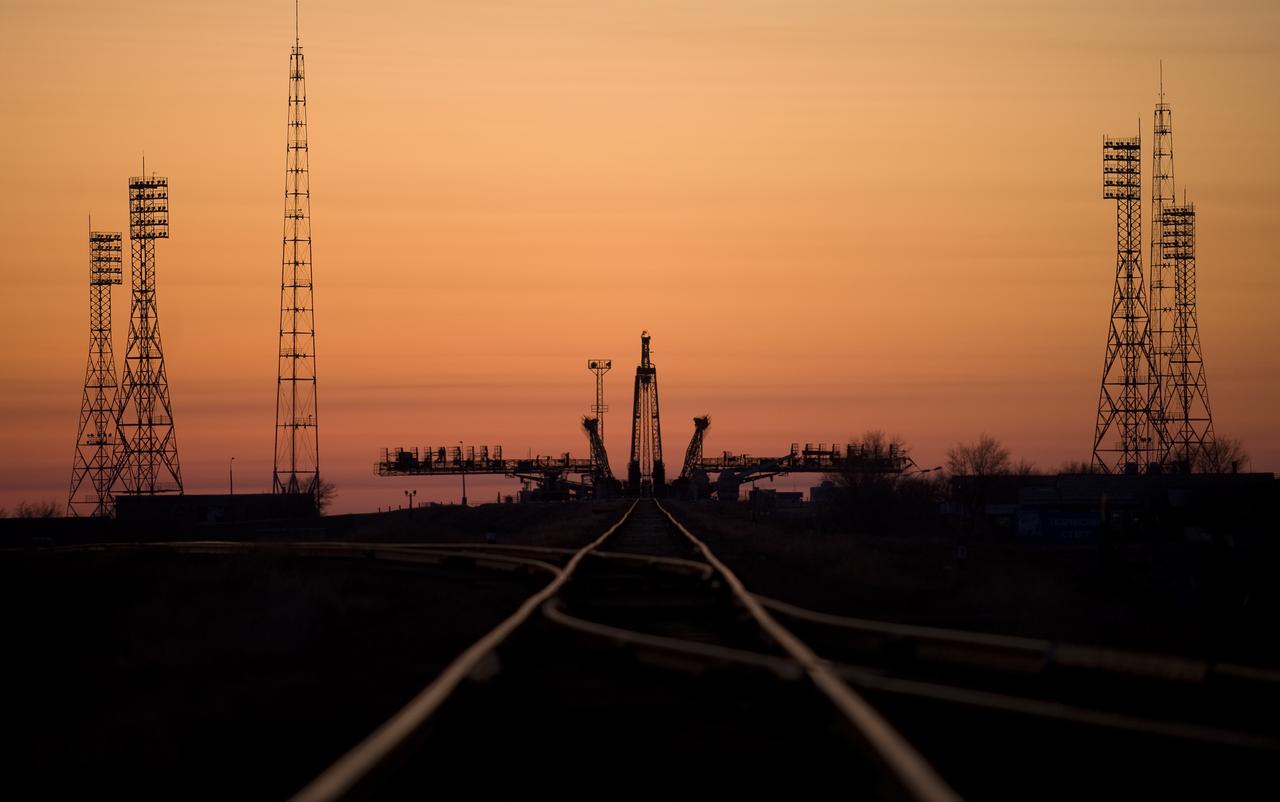
The Soyuz launch pad is seen about an hour before the Soyuz rocket is rolled out to the launch pad Tuesday, March 24, 2009 at the Baikonur Cosmodrome in Kazakhstan. The Soyuz is scheduled to launch the crew of Expedition 19 and a spaceflight participant on March 26, 2009. Photo Credit: (NASA/Bill Ingalls)
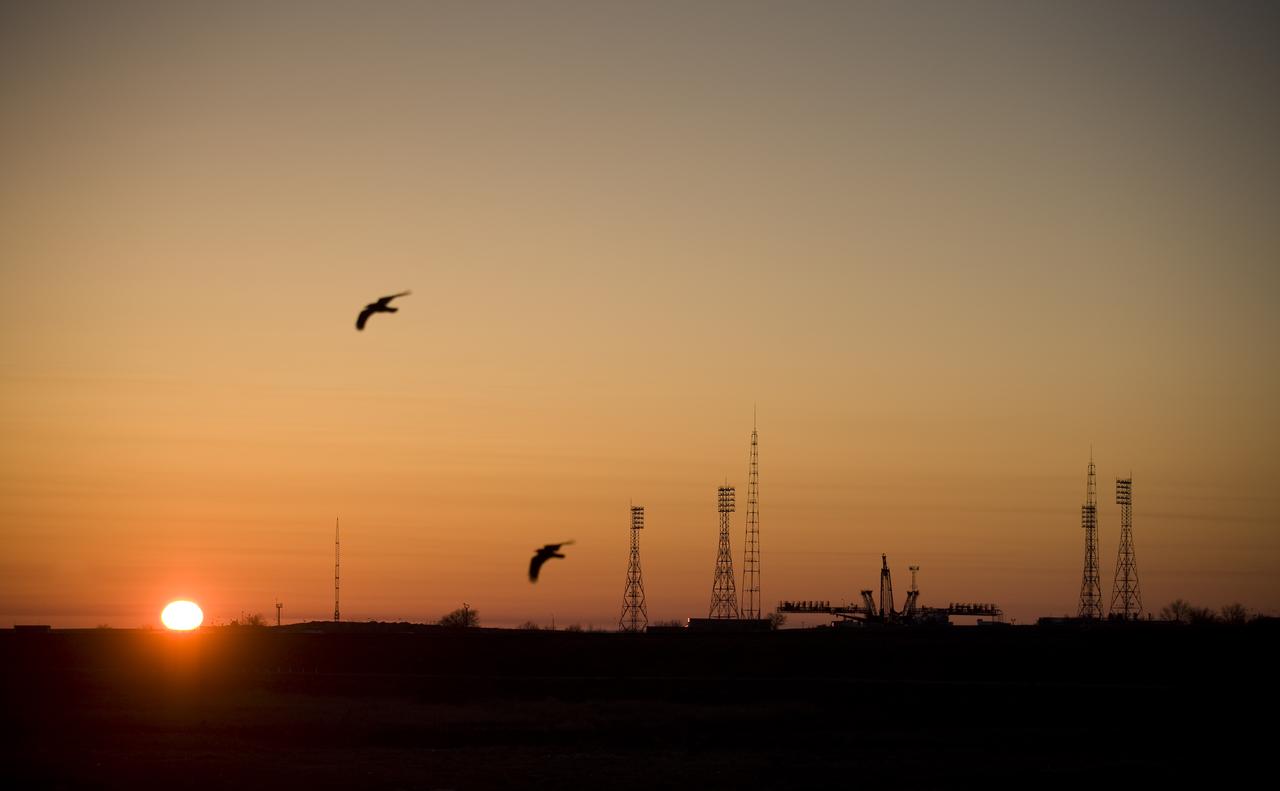
The sun rises to the left of Soyuz launch pad shortly before the Soyuz rocket is rolled out to the launch pad Tuesday, March 24, 2009 at the Baikonur Cosmodrome in Kazakhstan. The Soyuz is scheduled to launch the crew of Expedition 19 and a spaceflight participant on March 26, 2009. Photo Credit: (NASA/Bill Ingalls)
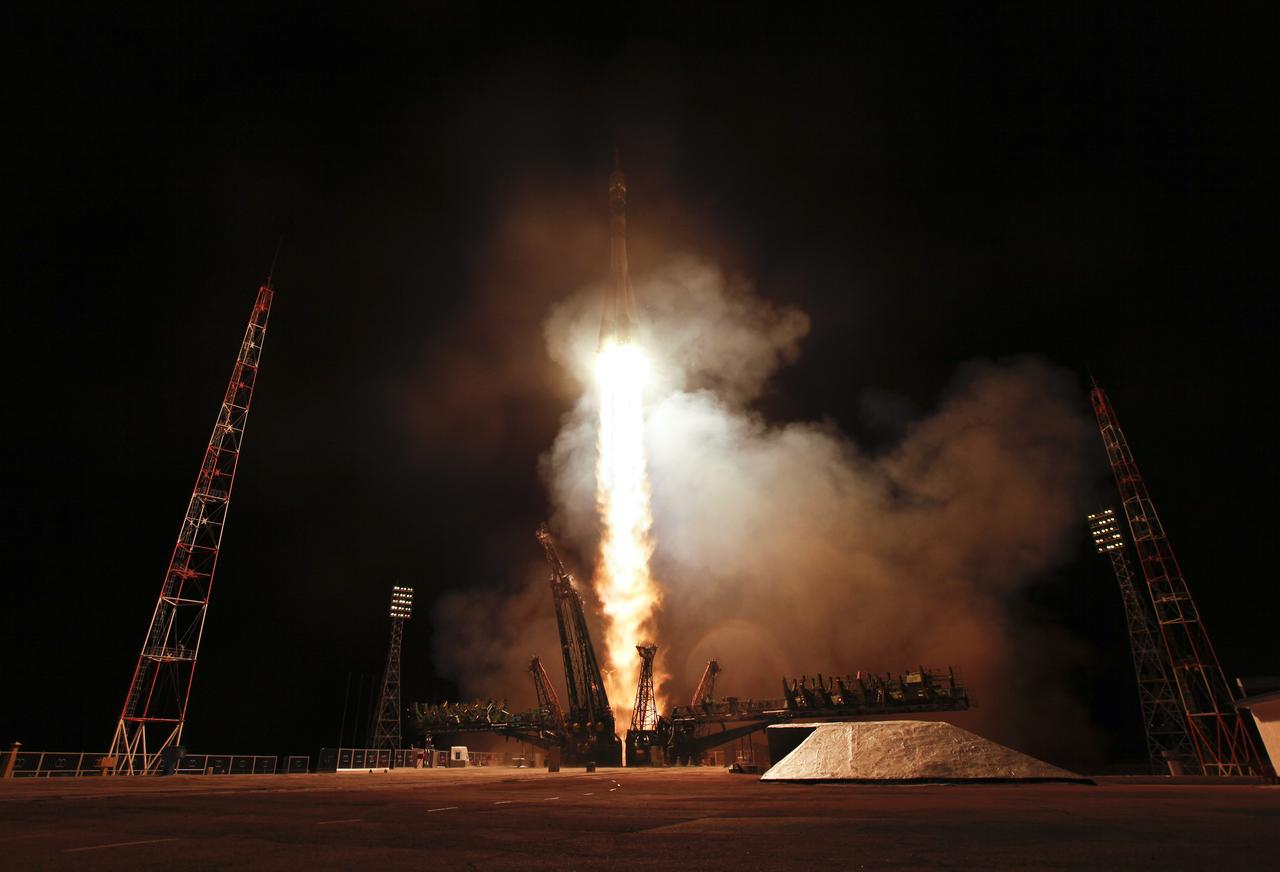
The Soyuz TMA-21 launches from the Baikonur Cosmodrome in Kazakhstan on Tuesday, April 5, 2011 carrying Expedition 27 Soyuz Commander Alexander Samokutyaev, NASA Flight Engineer Ron Garan and Russian Flight Engineer Andrey Borisenko to the International Space Station. The Soyuz, which has been dubbed "Gagarin", is launching one week shy of the 50th anniversary of the launch of Yuri Gagarin from the same launch pad in Baikonur on April 12, 1961 to become the first human to fly in space. Photo Credit: (NASA/Carla Cioffi)
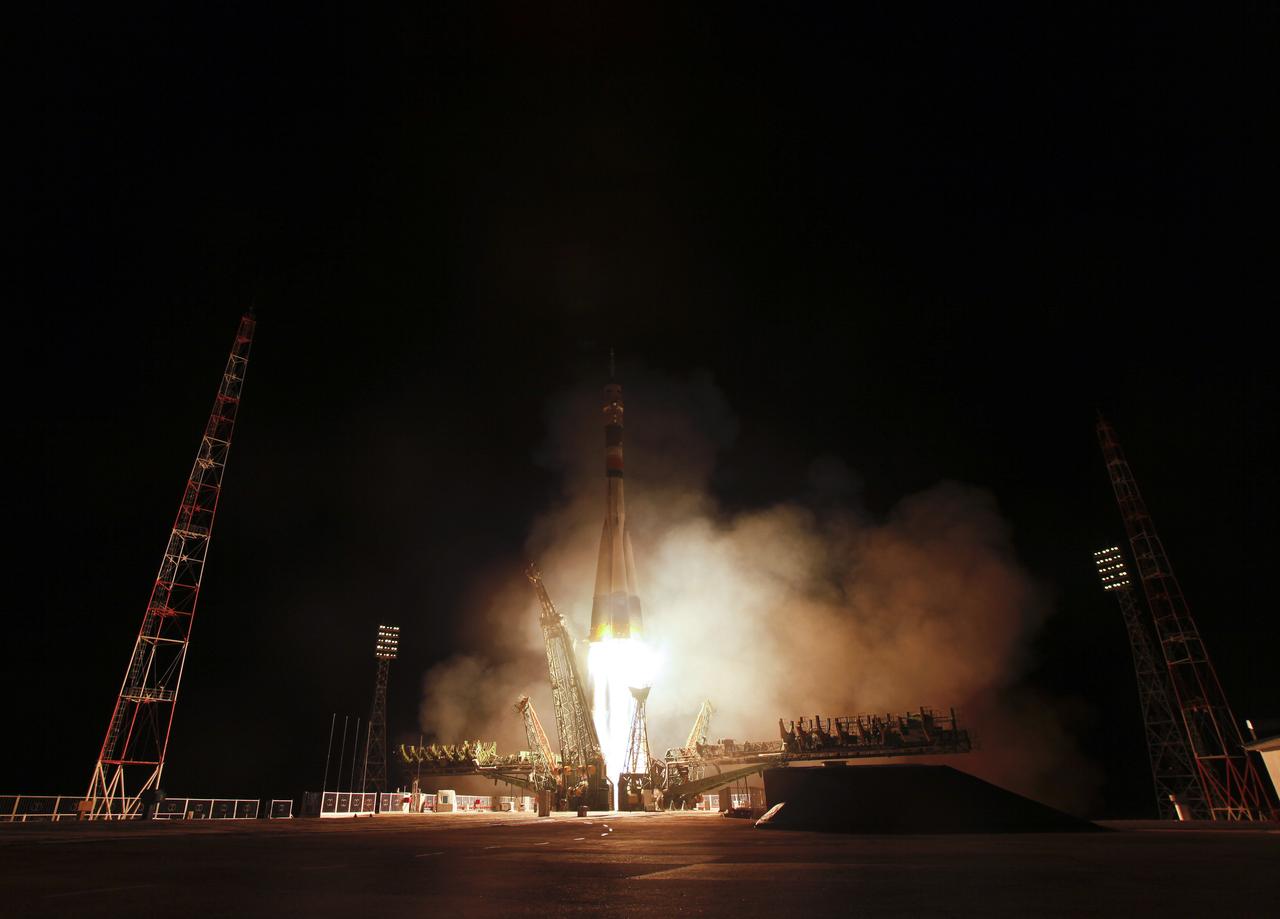
The Soyuz TMA-21 launches from the Baikonur Cosmodrome in Kazakhstan on Tuesday, April 5, 2011 carrying Expedition 27 Soyuz Commander Alexander Samokutyaev, NASA Flight Engineer Ron Garan and Russian Flight Engineer Andrey Borisenko to the International Space Station. The Soyuz, which has been dubbed "Gagarin", is launching one week shy of the 50th anniversary of the launch of Yuri Gagarin from the same launch pad in Baikonur on April 12, 1961 to become the first human to fly in space. Photo Credit: (NASA/Carla Cioffi)
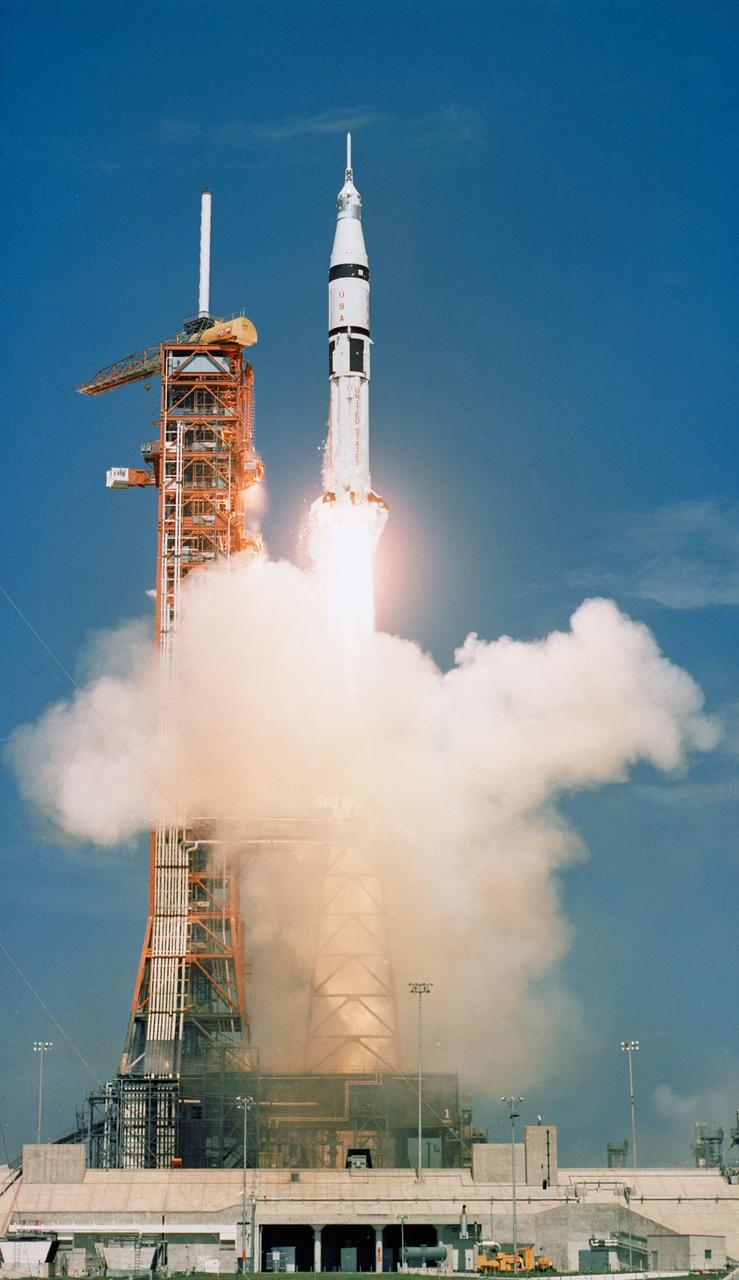
S75-28550 (15 July 1975) --- The Apollo-Soyuz Test Project's (ASTP) NASA Apollo/Saturn 1B space vehicle is launched from Pad B, Launch Complex 39, Kennedy Space Center (KSC), Florida, at 3:50 p.m. (EDT), July 15, 1975, to begin Apollo's catch-up journey toward the already Earth-orbiting Soviet Soyuz spacecraft. Aboard the Apollo spacecraft were astronauts Thomas P. Stafford, Vance D. Brand and Donald K. (Deke) Slayton.
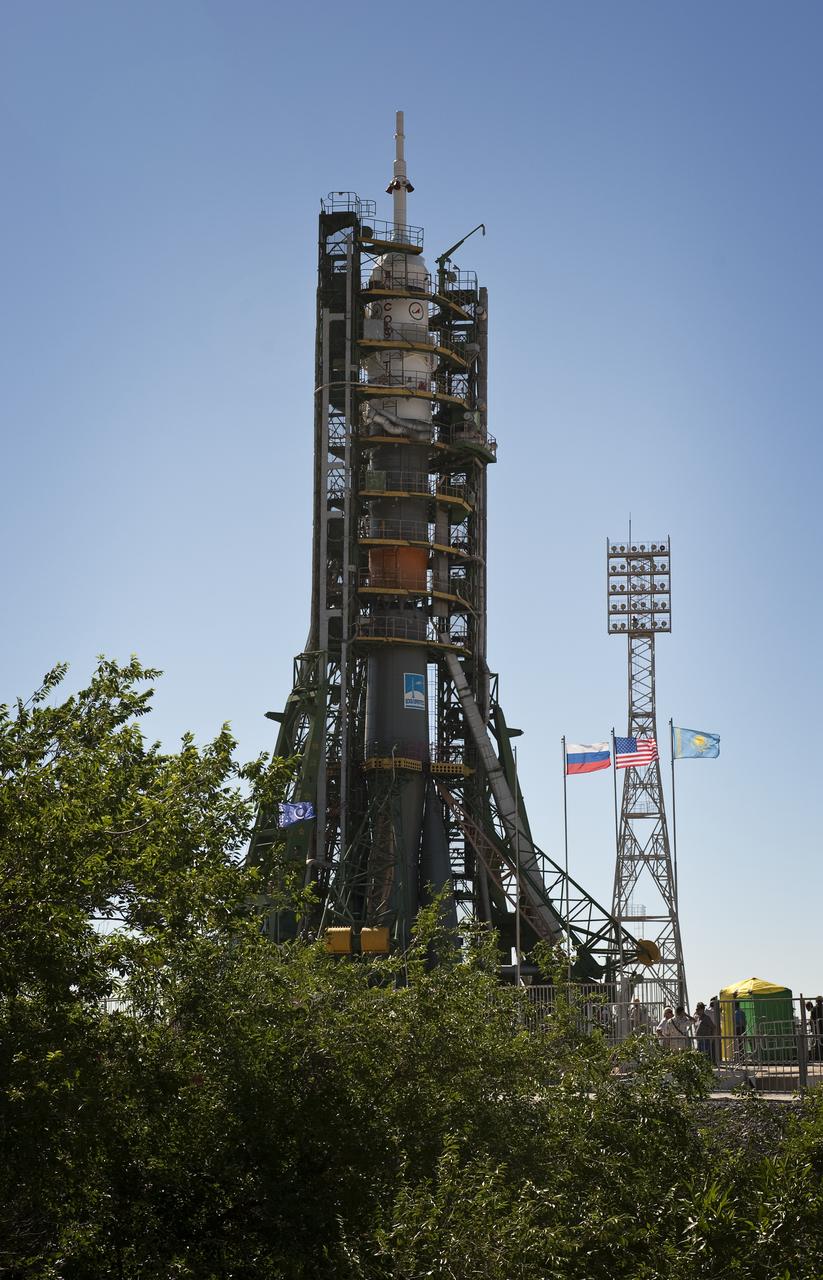
The Soyuz TMA-19 spacecraft is seen at the Soyuz launch pad secured by its scaffolding at the Baikonur Cosmodrome in Kazakhstan, Sunday, June 13, 2010. The Soyuz is scheduled to launch the crew of Expedition 24 on Wednesday, June 16, 2010 at 3:35 a.m. Kazakhstan time. Photo Credit: (NASA/Carla Cioffi)
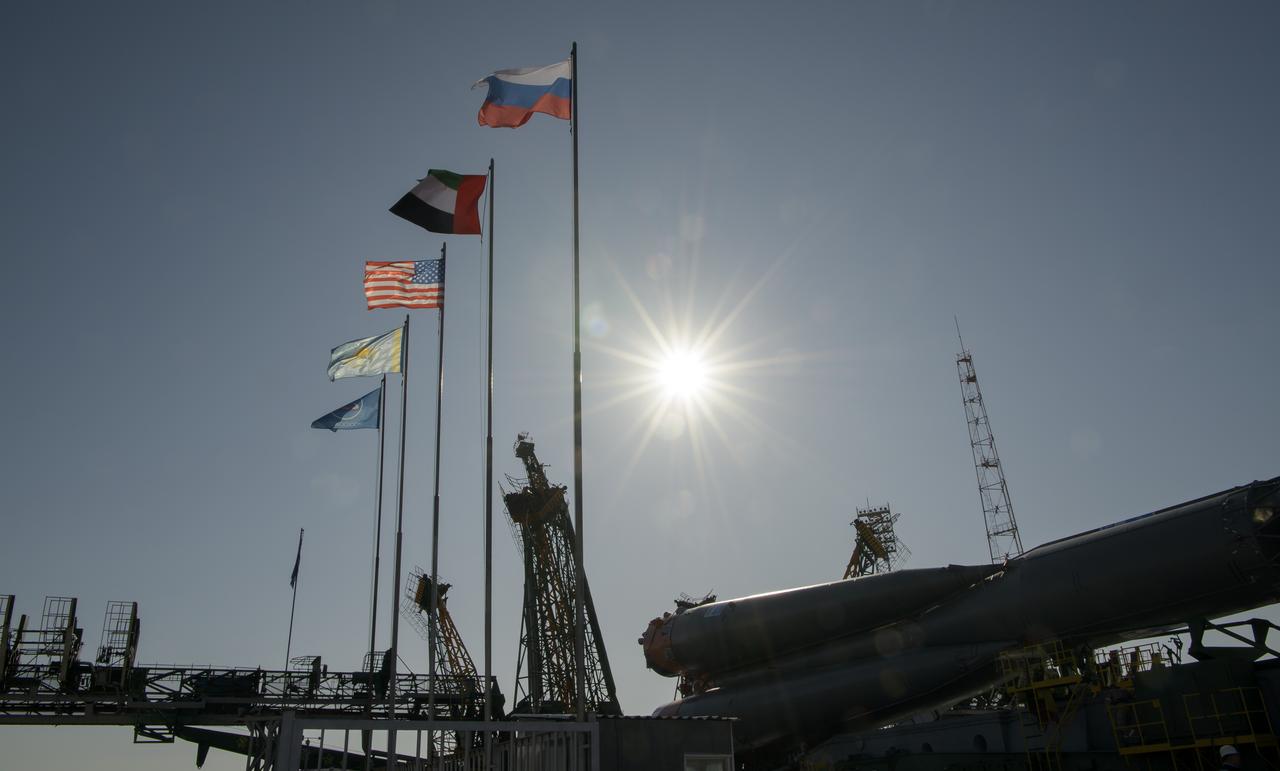
The flags of Russia, United Arab Emirates, United States of America, Kazakhstan and Roscosmos fly at the launch pad as the Soyuz rocket is raised into vertical position on the launch pad, Monday, Sept. 23, 2019 at the Baikonur Cosmodrome in Kazakhstan. Expedition 61 crewmembers Jessica Meir of NASA, Oleg Skripochka of Roscosmos, and spaceflight participant Hazzaa Ali Almansoori of the United Arab Emirates will launch September 25th on the Soyuz MS-15 spacecraft from the Baikonur Cosmodrome to the International Space Station. Photo Credit: (NASA/Bill Ingalls)
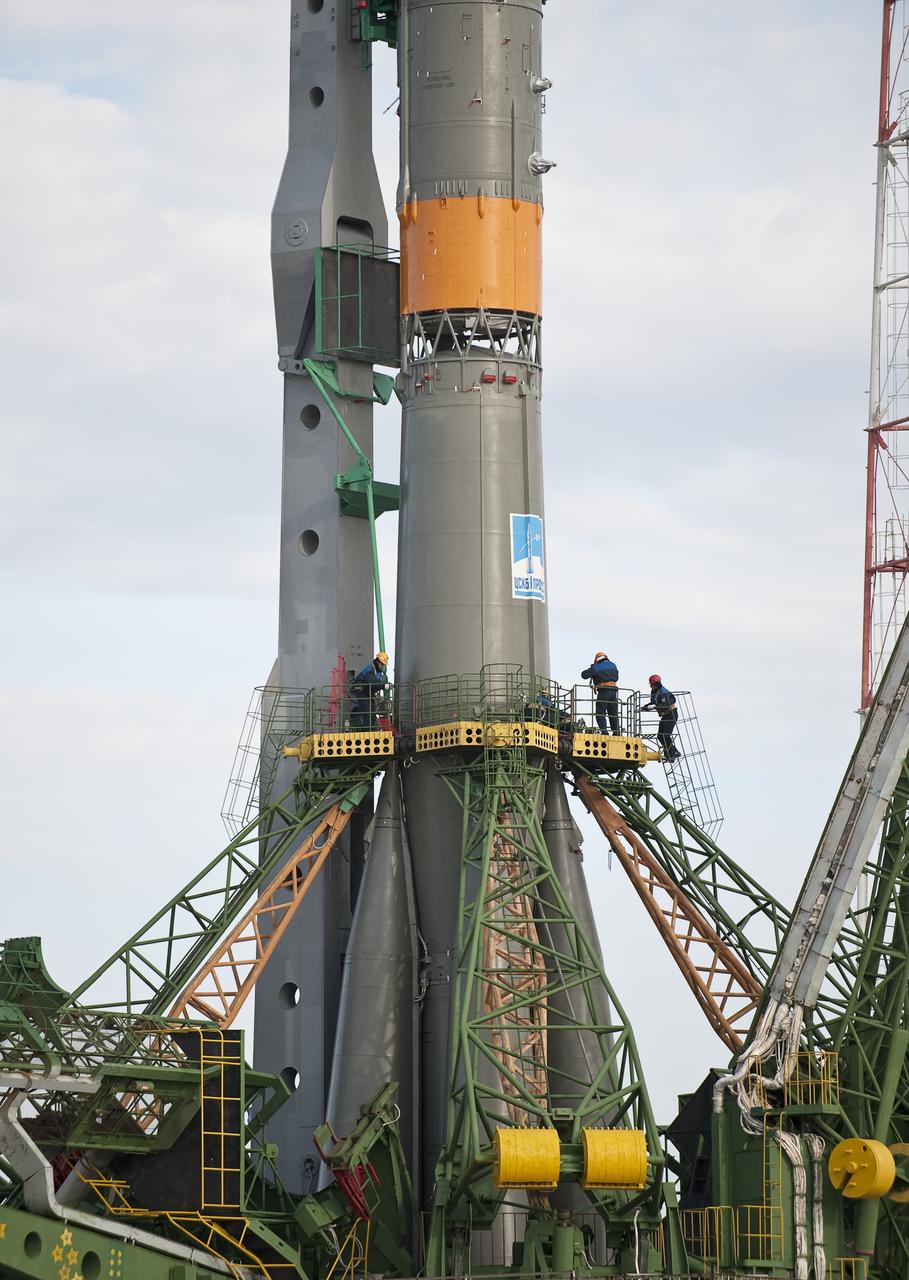
Pad technicians secure the Soyuz TMA-18 spacecraft shortly after it was rolled out by train to the launch pad at the Baikonur Cosmodrome, Kazakhstan, Wednesday, March, 31, 2010. The launch of the Soyuz spacecraft with Expedition 23 Soyuz Commander Alexander Skvortsov of Russia, Flight Engineer Mikhail Kornienko of Russia, and NASA Flight Engineer Tracy Caldwell Dyson is scheduled for Friday, April 2, 2010 at 10:04 a.m. Kazakhstan time. Photo Credit (NASA/Bill Ingalls)
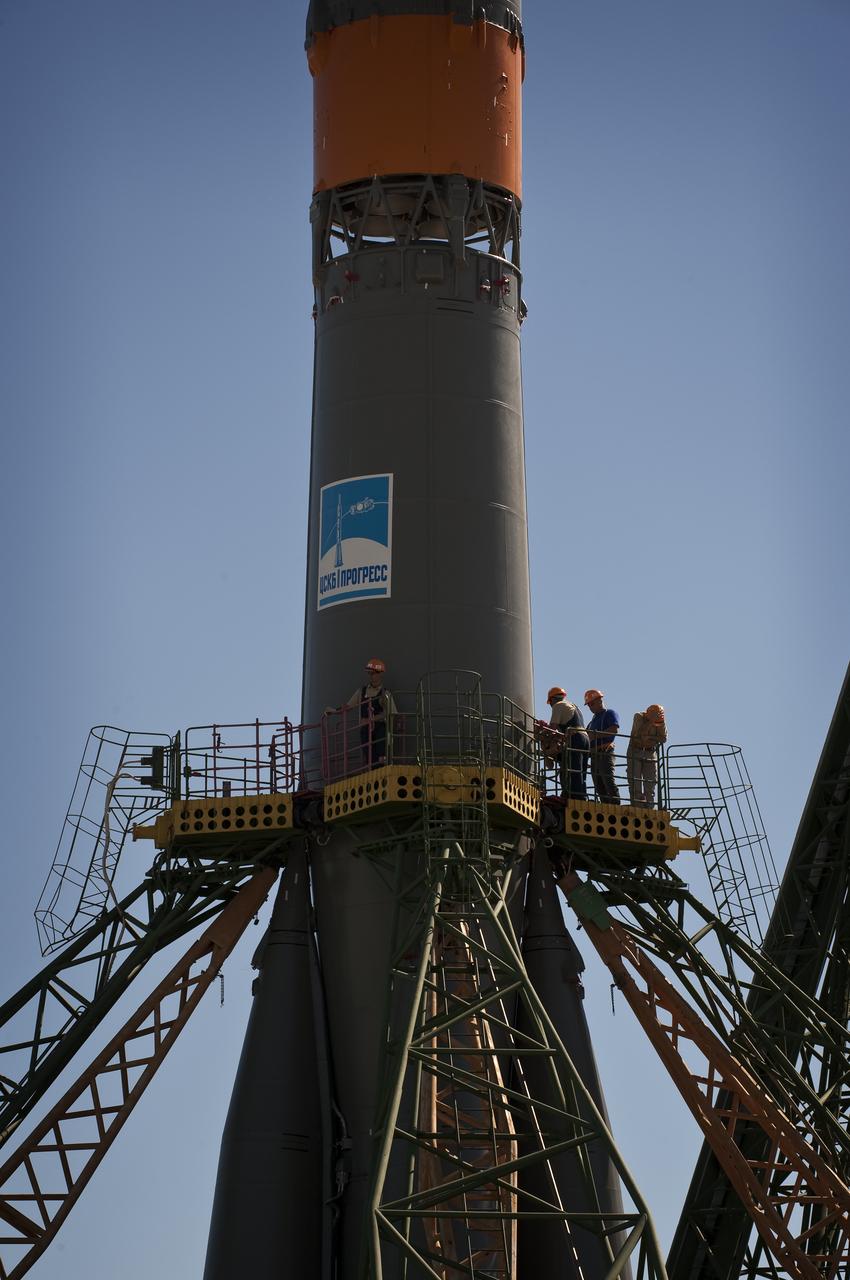
Pad technicians secure the Soyuz TMA-19 spacecraft shortly after it was rolled out by train to the launch pad at the Baikonur Cosmodrome, Kazakhstan, Sunday, June 13, 2010. The launch of the Soyuz spacecraft with Expedition 24 Russian Soyuz Commander Fyodor Yurchikin, and NASA Flight Engineers Shannon Walker and Doug Wheelock is scheduled for Wednesday, June 16, 2010 at 3:35 a.m. Kazakhstan time. Photo Credit (NASA/Carla Cioffi)
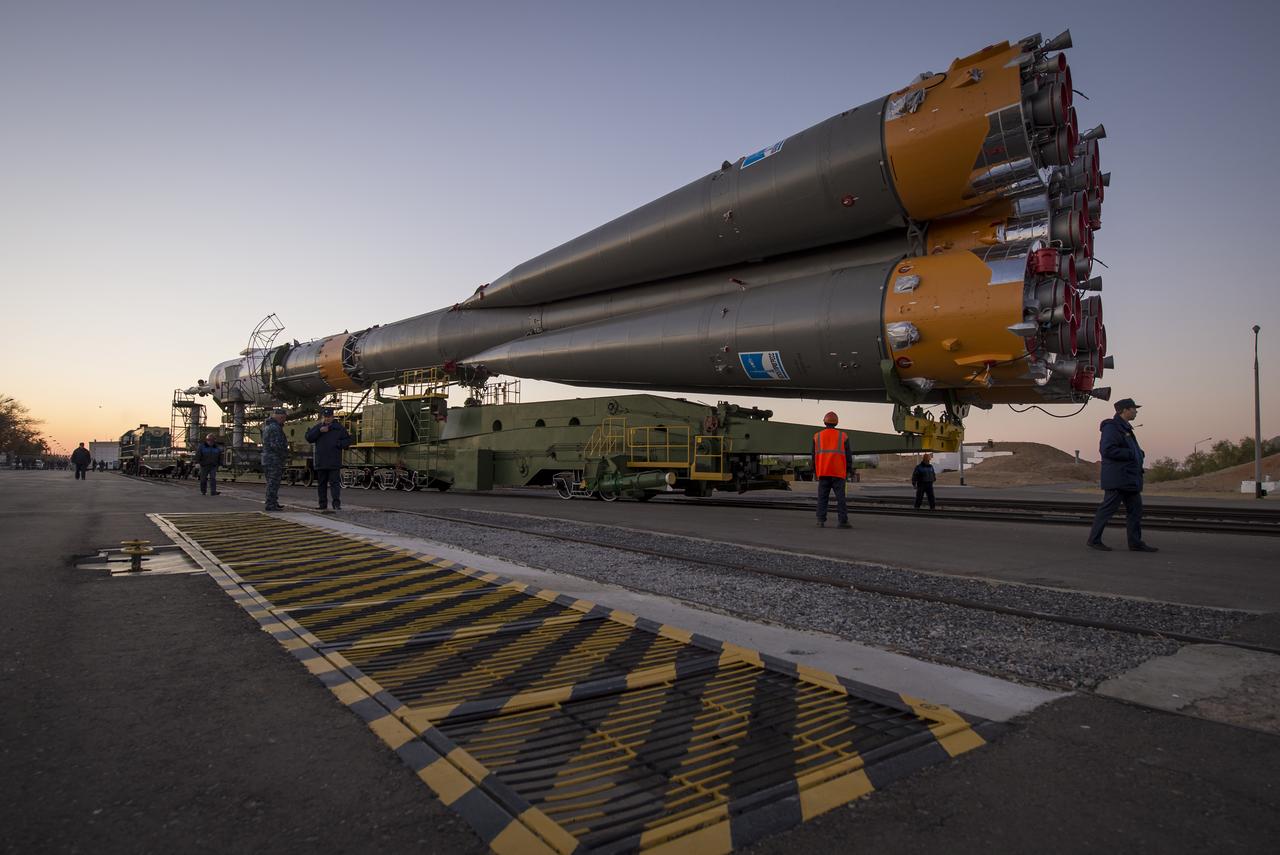
The Soyuz rocket is rolled out to the launch pad by train, on Sunday, October 21, 2012, at the Baikonur Cosmodrome in Kazakhstan. Launch of the Soyuz rocket is scheduled for October 23 and will send Expedition 33/34 Flight Engineer Kevin Ford of NASA, Soyuz Commander Oleg Novitskiy and Flight Engineer Evgeny Tarelkin of ROSCOSMOS on a five-month mission aboard the International Space Station. Photo Credit: (NASA/Bill Ingalls)
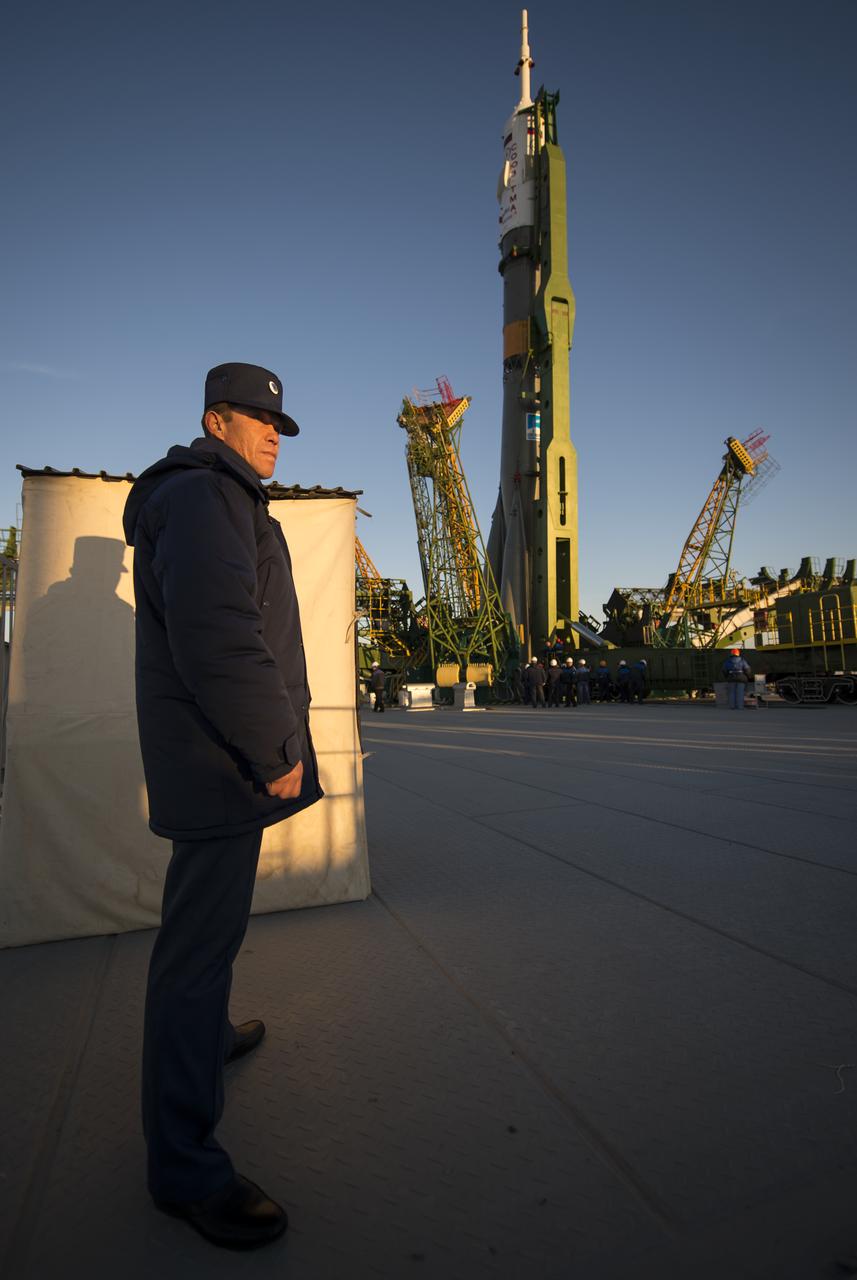
A secuirty gaurd keeps watch as the Soyuz rocket is erected into position after being rolled out to the launch pad by train, on Sunday, October 21, 2012, at the Baikonur Cosmodrome in Kazakhstan. Launch of the Soyuz rocket is scheduled for October 23 and will send Expedition 33/34 Flight Engineer Kevin Ford of NASA, Soyuz Commander Oleg Novitskiy and Flight Engineer Evgeny Tarelkin of ROSCOSMOS on a five-month mission aboard the International Space Station. Photo Credit: (NASA/Bill Ingalls)
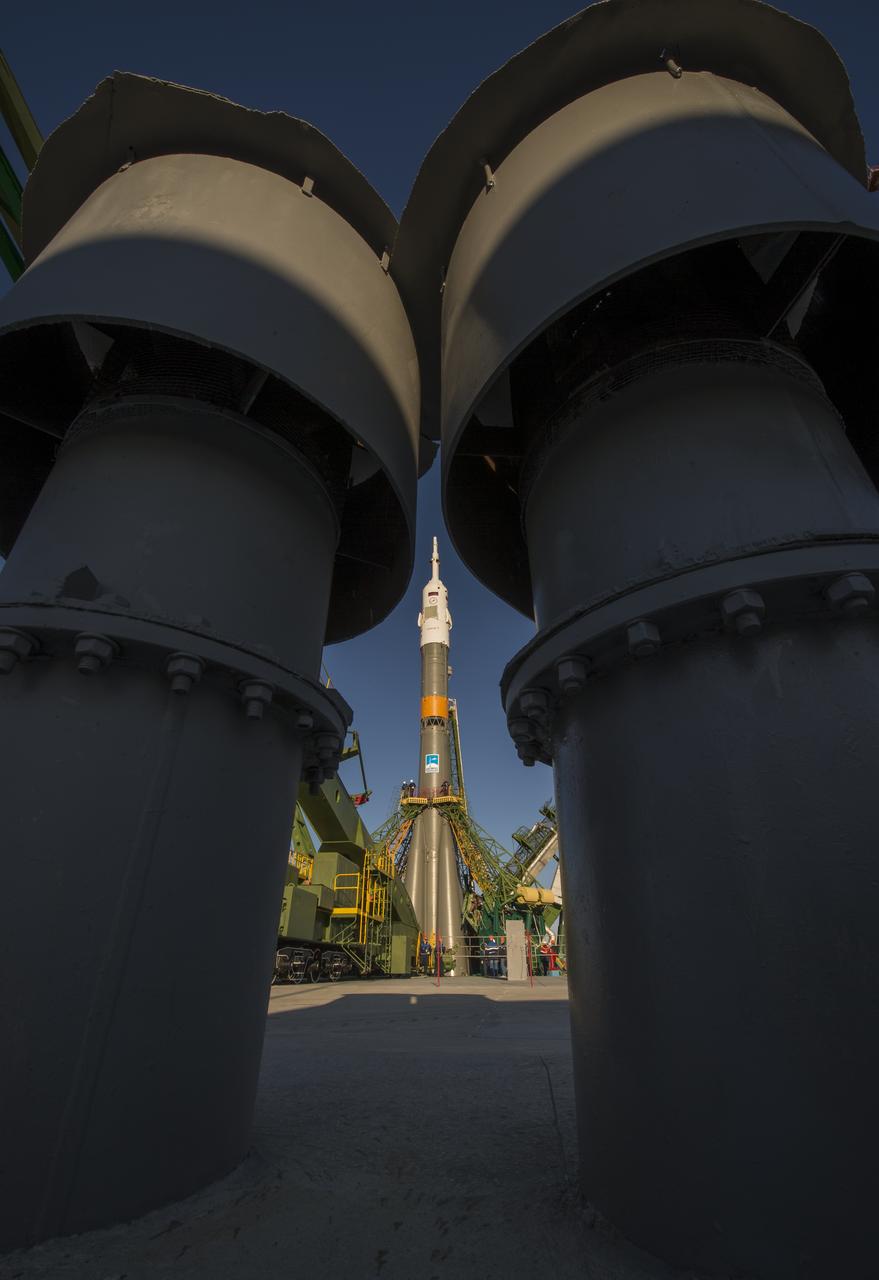
The Soyuz rocket is erected into position after being rolled out to the launch pad by train, on Sunday, October 21, 2012, at the Baikonur Cosmodrome in Kazakhstan. Launch of the Soyuz rocket is scheduled for October 23 and will send Expedition 33/34 Flight Engineer Kevin Ford of NASA, Soyuz Commander Oleg Novitskiy and Flight Engineer Evgeny Tarelkin of ROSCOSMOS on a five-month mission aboard the International Space Station. Photo Credit: (NASA/Bill Ingalls)
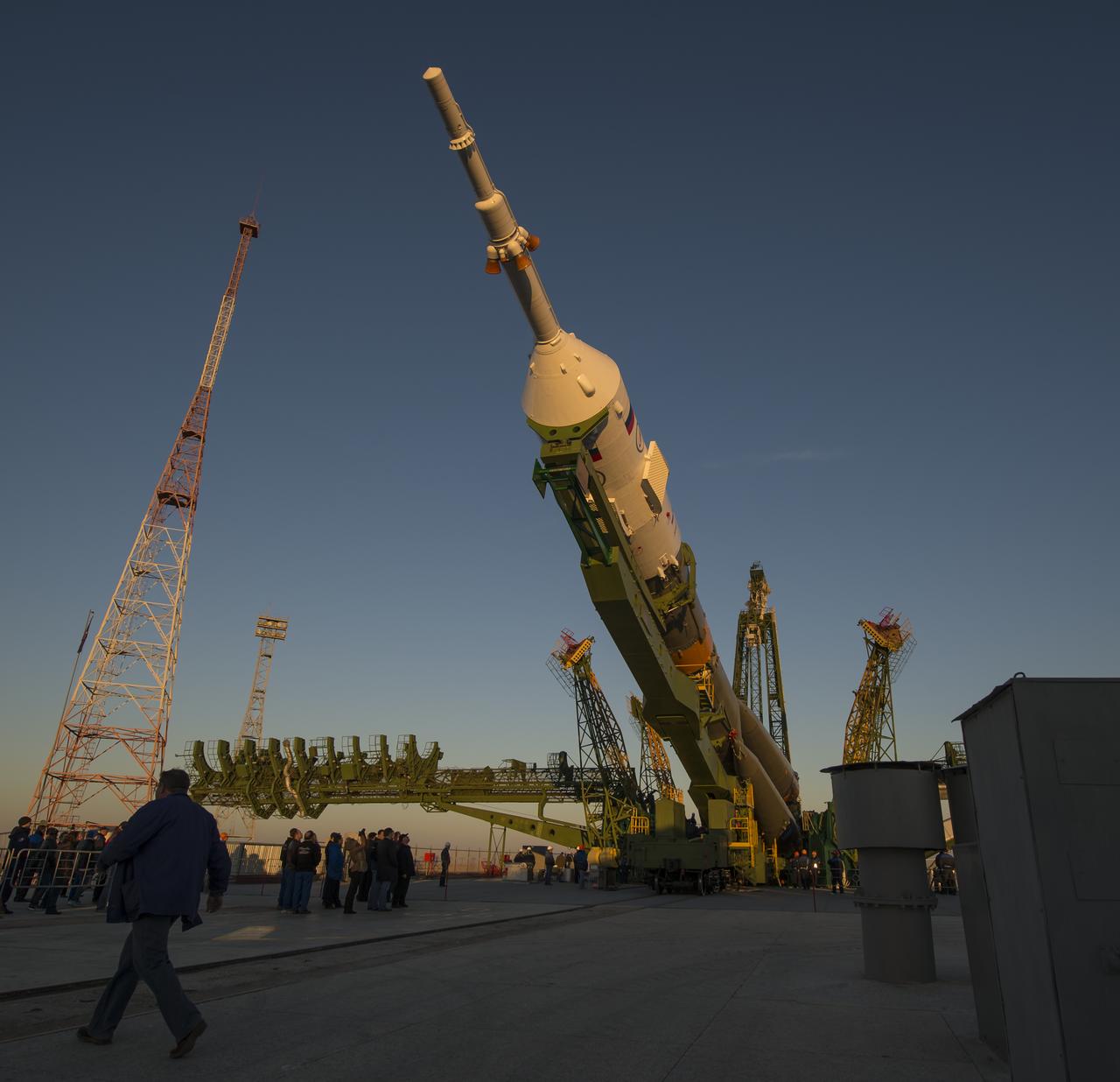
The Soyuz rocket is erected into position after being rolled out to the launch pad by train, on Sunday, October 21, 2012, at the Baikonur Cosmodrome in Kazakhstan. Launch of the Soyuz rocket is scheduled for October 23 and will send Expedition 33/34 Flight Engineer Kevin Ford of NASA, Soyuz Commander Oleg Novitskiy and Flight Engineer Evgeny Tarelkin of ROSCOSMOS on a five-month mission aboard the International Space Station. Photo Credit: (NASA/Bill Ingalls)
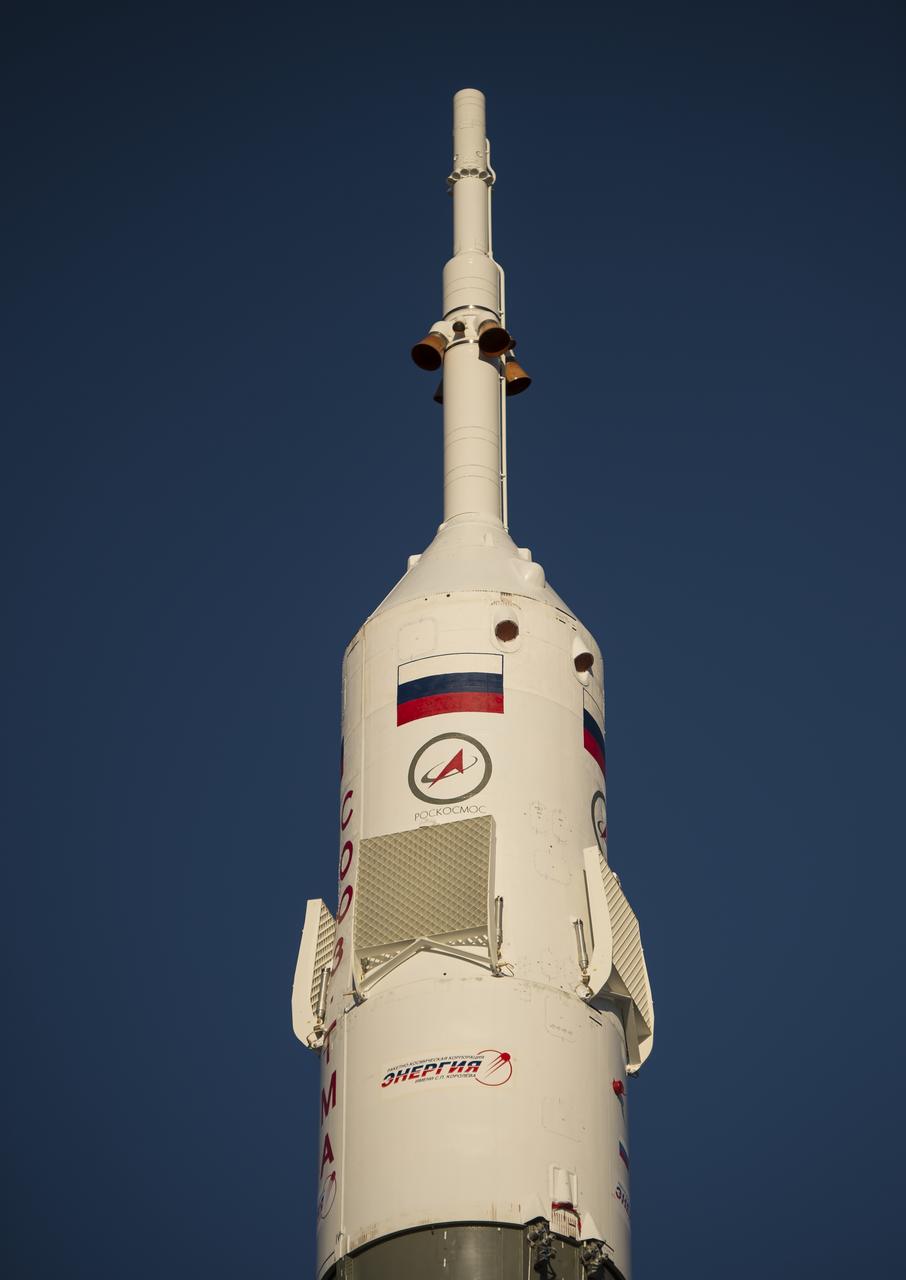
The Soyuz rocket is erected into position after being rolled out to the launch pad by train, on Sunday, October 21, 2012, at the Baikonur Cosmodrome in Kazakhstan. Launch of the Soyuz rocket is scheduled for October 23 and will send Expedition 33/34 Flight Engineer Kevin Ford of NASA, Soyuz Commander Oleg Novitskiy and Flight Engineer Evgeny Tarelkin of ROSCOSMOS on a five-month mission aboard the International Space Station. Photo Credit: (NASA/Bill Ingalls)
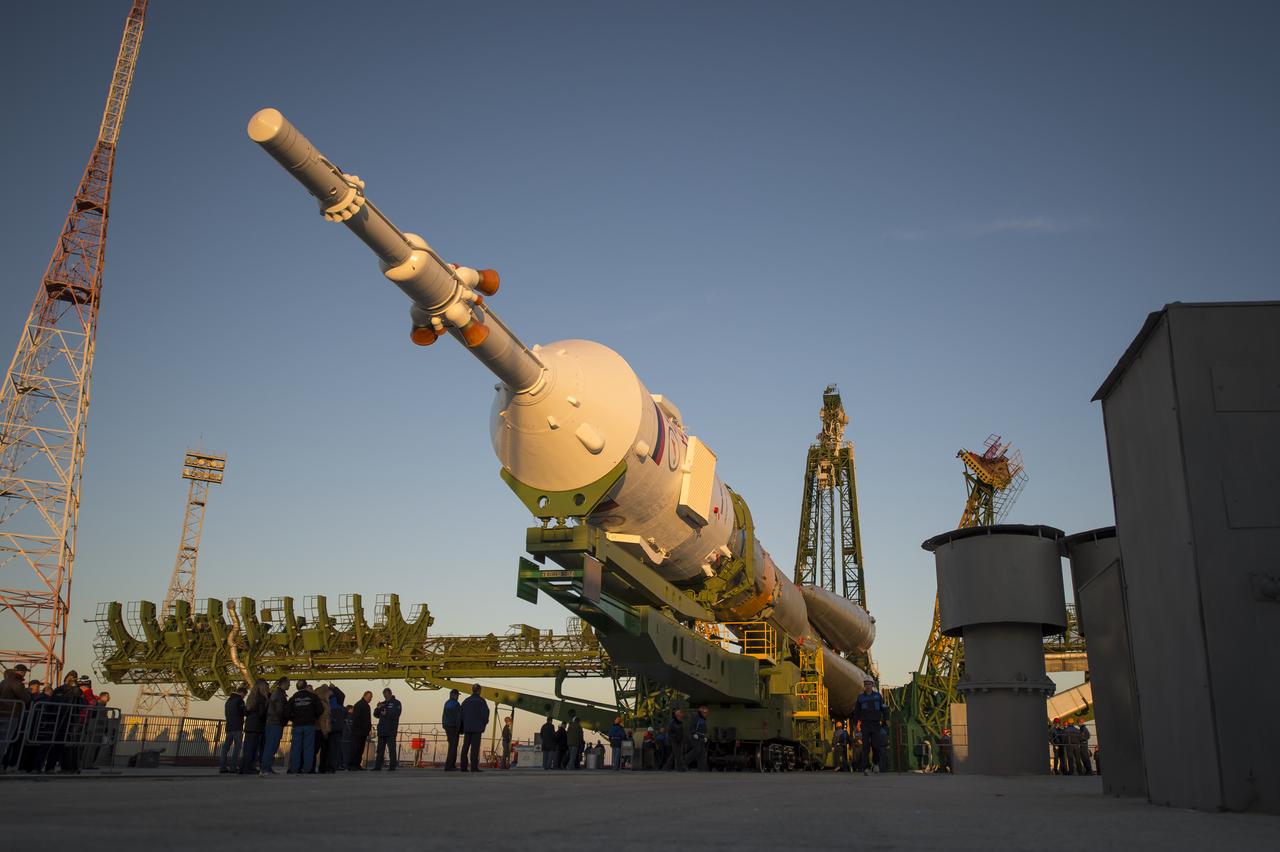
The Soyuz rocket is ready to be erected into position after being rolled out to the launch pad by train, on Sunday, October 21, 2012, at the Baikonur Cosmodrome in Kazakhstan. Launch of the Soyuz rocket is scheduled for October 23 and will send Expedition 33/34 Flight Engineer Kevin Ford of NASA, Soyuz Commander Oleg Novitskiy and Flight Engineer Evgeny Tarelkin of ROSCOSMOS on a five-month mission aboard the International Space Station. Photo Credit: (NASA/Bill Ingalls)
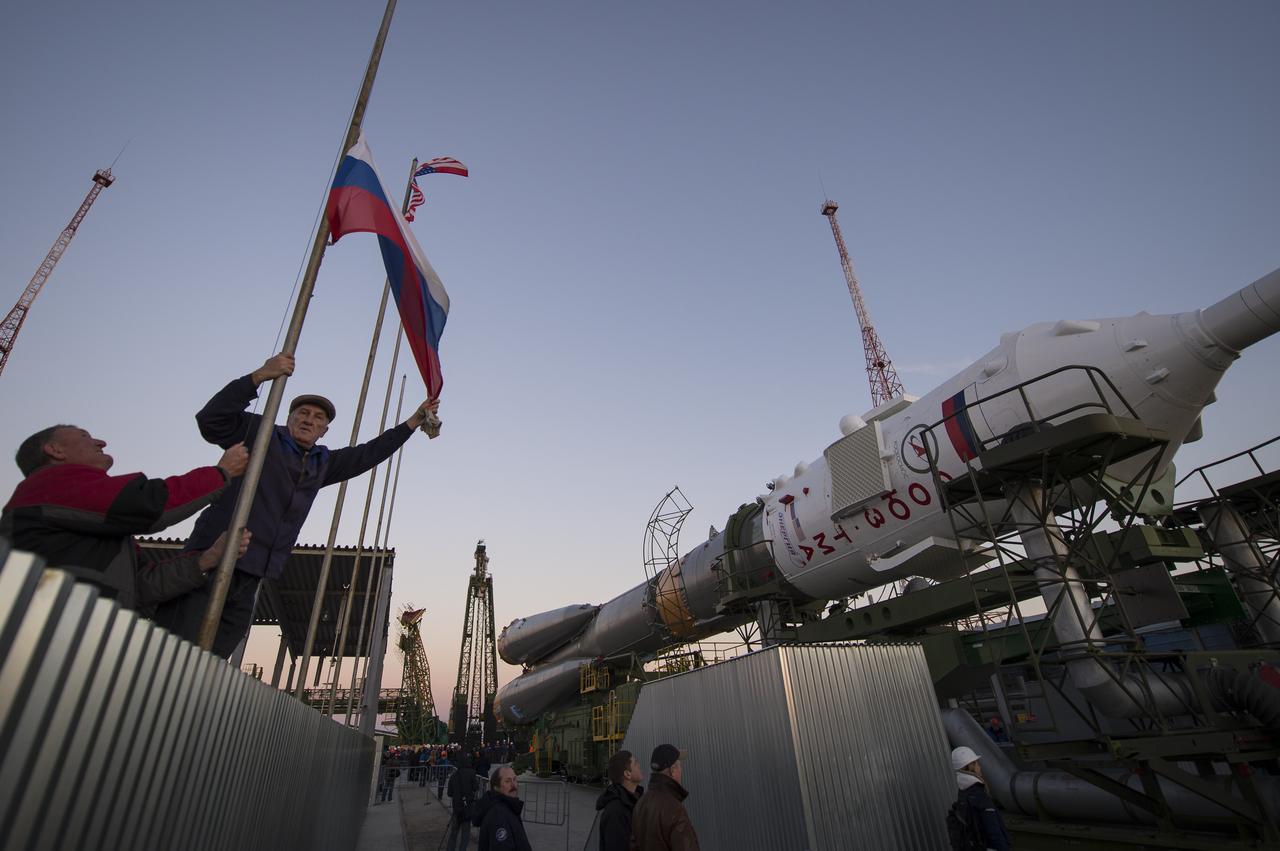
Workers raise a Russian flag as the Soyuz rocket arrives at the launch pad by train, on Sunday, October 21, 2012, at the Baikonur Cosmodrome in Kazakhstan. Launch of the Soyuz rocket is scheduled for October 23 and will send Expedition 33/34 Flight Engineer Kevin Ford of NASA, Soyuz Commander Oleg Novitskiy and Flight Engineer Evgeny Tarelkin of ROSCOSMOS on a five-month mission aboard the International Space Station. Photo Credit: (NASA/Bill Ingalls)
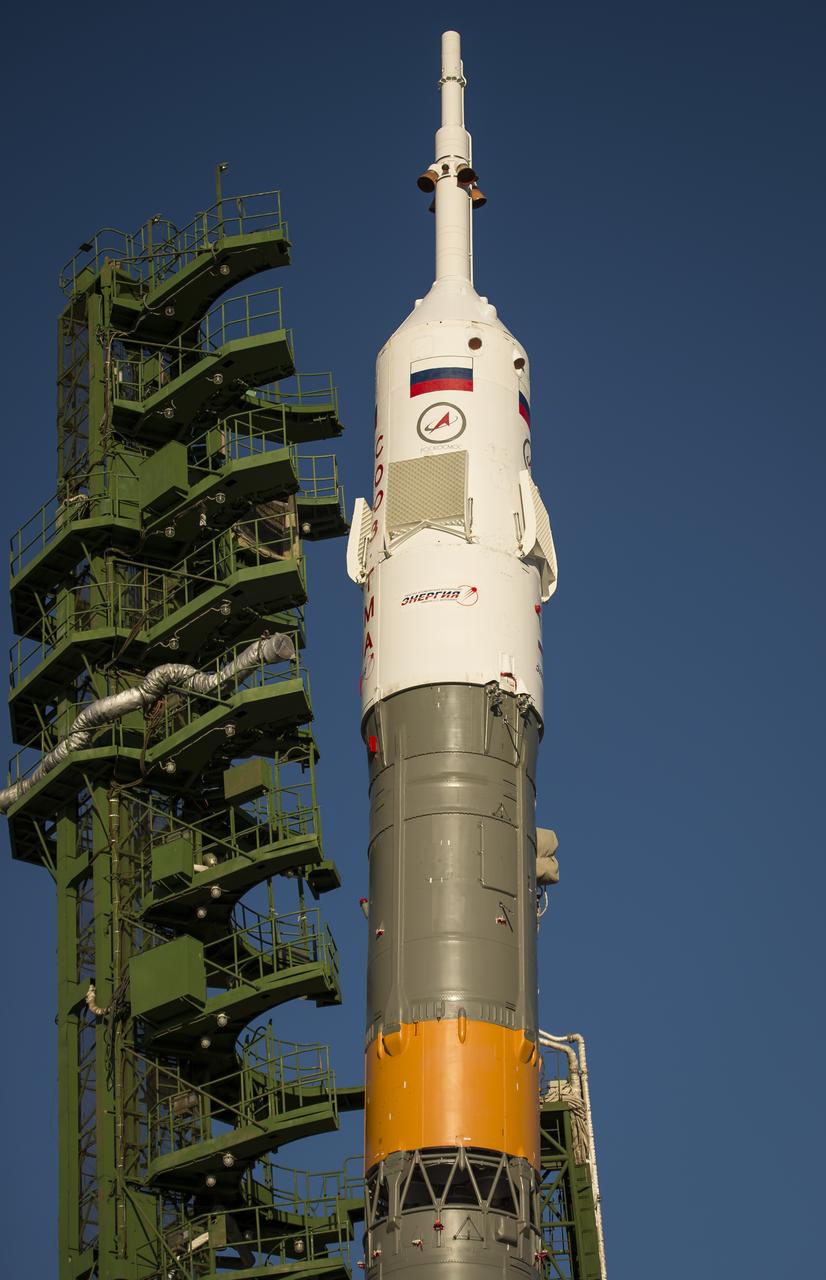
The Soyuz rocket is erected into position after being rolled out to the launch pad by train, on Sunday, October 21, 2012, at the Baikonur Cosmodrome in Kazakhstan. Launch of the Soyuz rocket is scheduled for October 23 and will send Expedition 33/34 Flight Engineer Kevin Ford of NASA, Soyuz Commander Oleg Novitskiy and Flight Engineer Evgeny Tarelkin of ROSCOSMOS on a five-month mission aboard the International Space Station. Photo Credit: (NASA/Bill Ingalls)
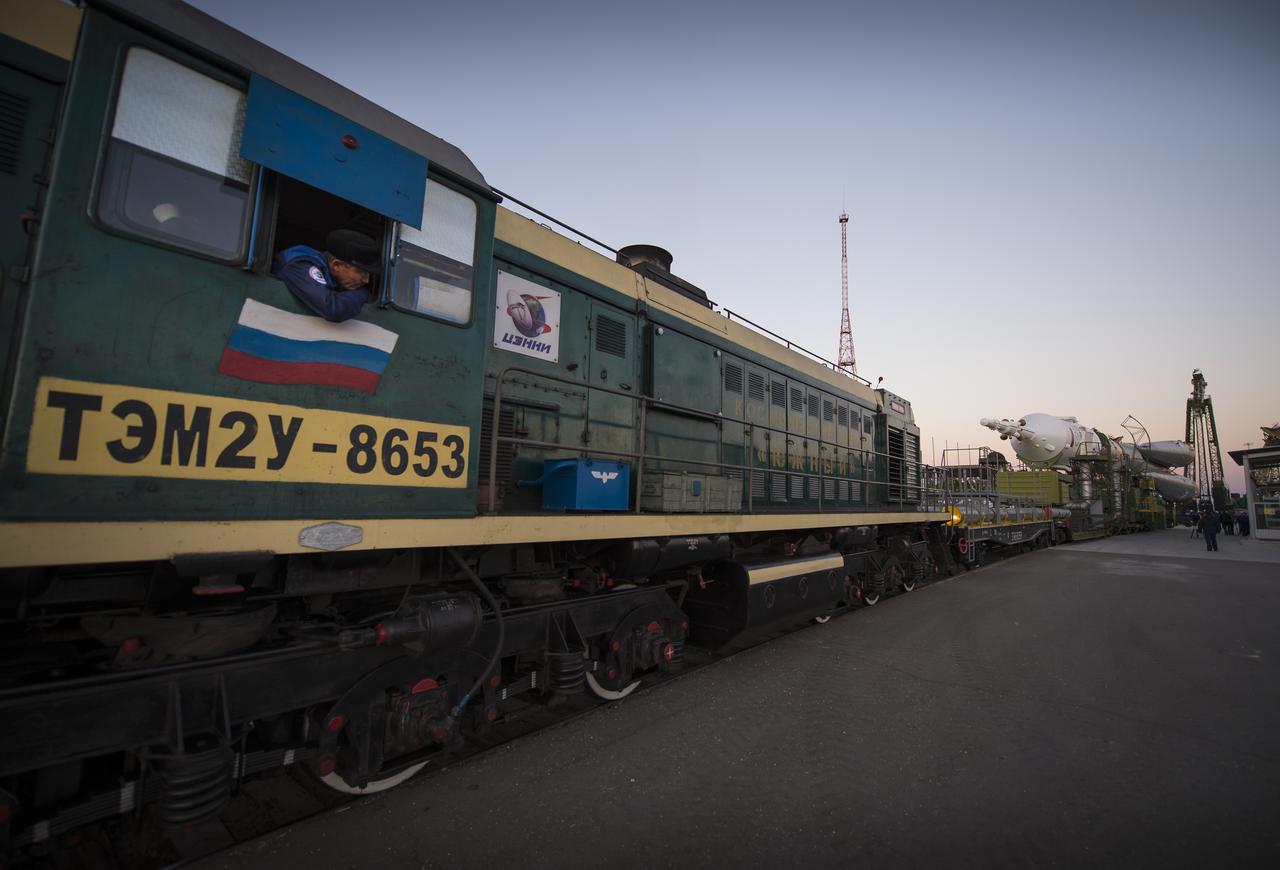
The Soyuz rocket is rolled out to the launch pad by train, on Sunday, October 21, 2012, at the Baikonur Cosmodrome in Kazakhstan. Launch of the Soyuz rocket is scheduled for October 23 and will send Expedition 33/34 Flight Engineer Kevin Ford of NASA, Soyuz Commander Oleg Novitskiy and Flight Engineer Evgeny Tarelkin of ROSCOSMOS on a five-month mission aboard the International Space Station. Photo Credit: (NASA/Bill Ingalls)
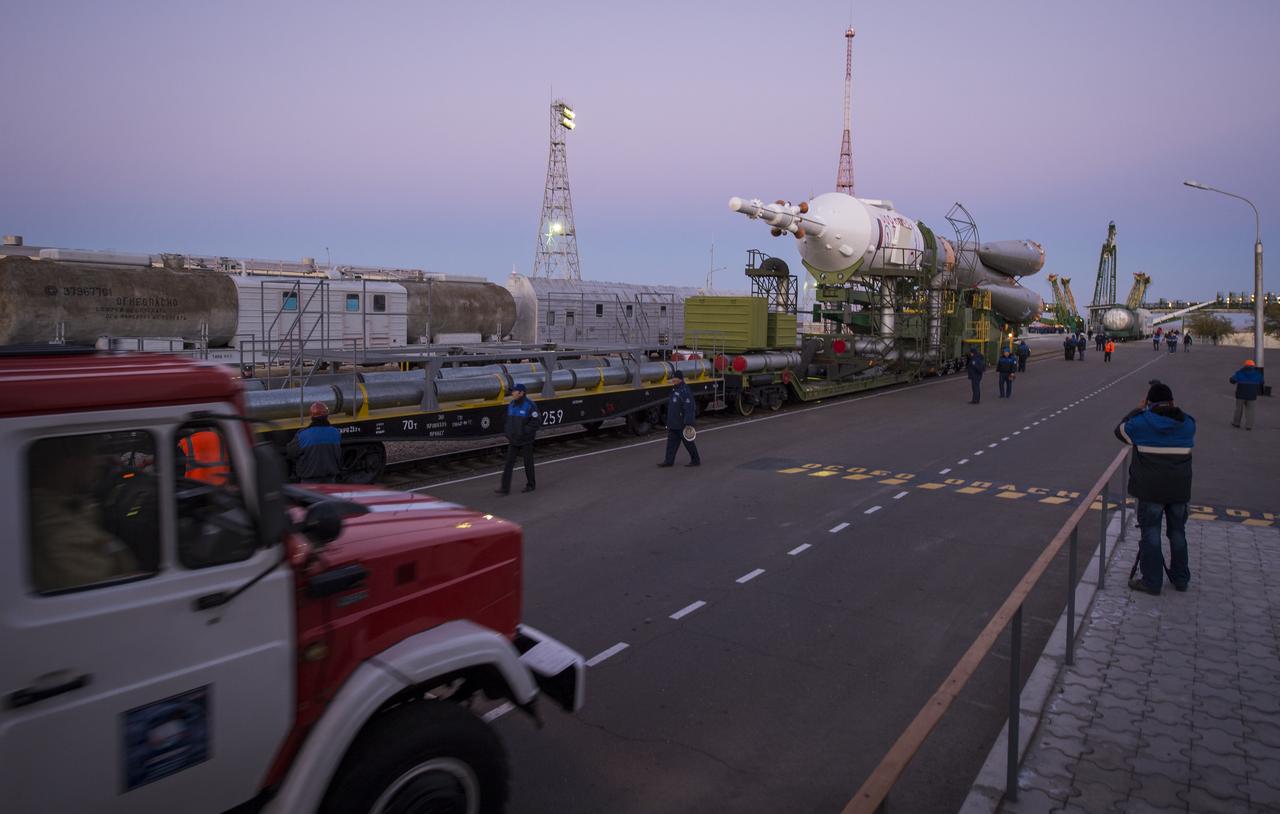
The Soyuz rocket is rolled out to the launch pad by train, on Sunday, October 21, 2012, at the Baikonur Cosmodrome in Kazakhstan. Launch of the Soyuz rocket is scheduled for October 23 and will send Expedition 33/34 Flight Engineer Kevin Ford of NASA, Soyuz Commander Oleg Novitskiy and Flight Engineer Evgeny Tarelkin of ROSCOSMOS on a five-month mission aboard the International Space Station. Photo Credit: (NASA/Bill Ingalls)