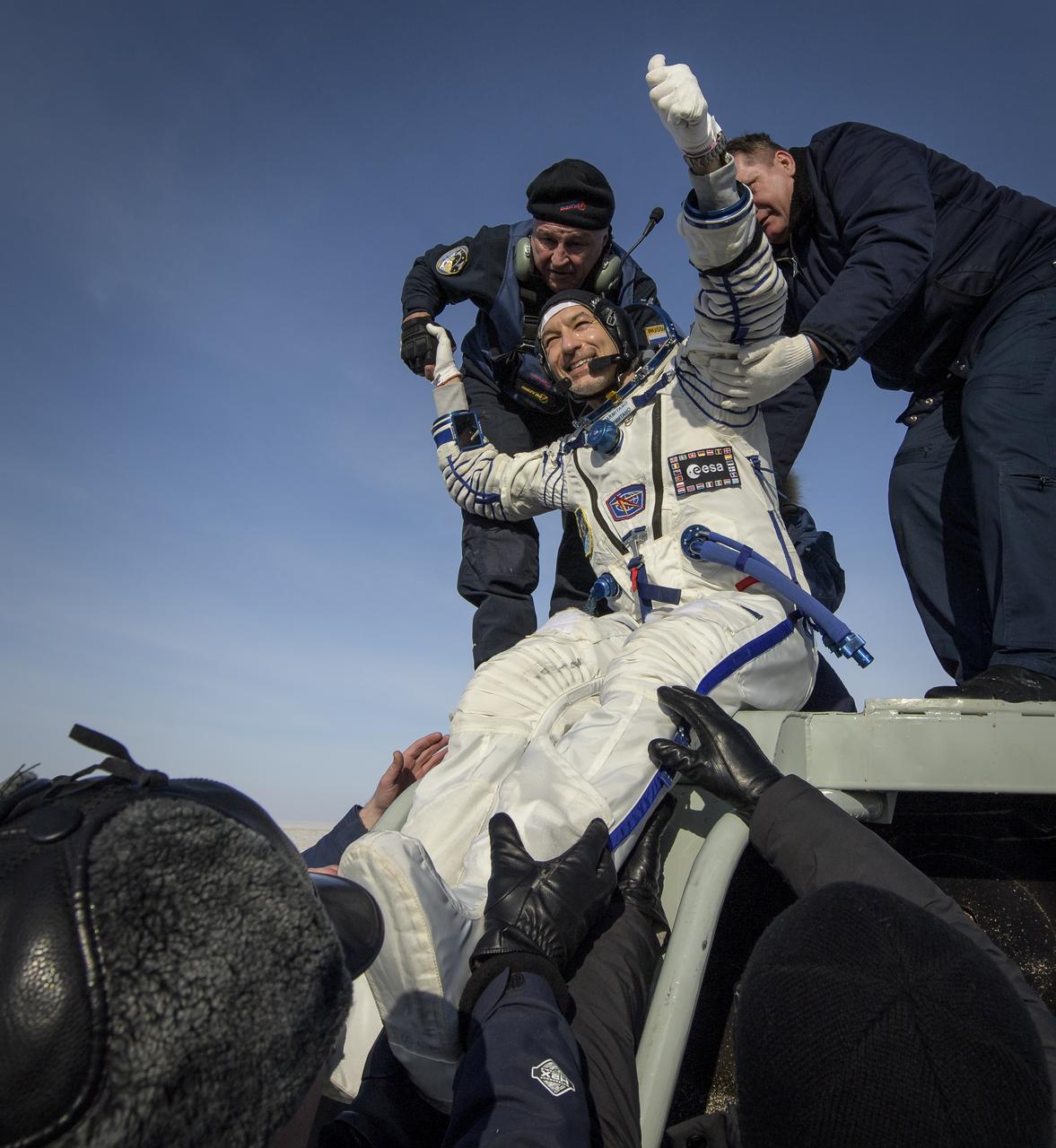
ESA astronaut Luca Parmitano is helped out of the Soyuz MS-13 spacecraft just minutes after he, NASA astronaut Christina Koch, and Roscosmos cosmonaut Alexander Skvortsov, landed their Soyuz MS-13 capsule in a remote area near the town of Zhezkazgan, Kazakhstan on Thursday, Feb. 6, 2020. Koch returned to Earth after logging 328 days in space --- the longest spaceflight in history by a woman --- as a member of Expeditions 59-60-61 on the International Space Station. Skvortsov and Parmitano returned after 201 days in space where they served as Expedition 60-61 crew members onboard the station. Photo Credit: (NASA/Bill Ingalls)
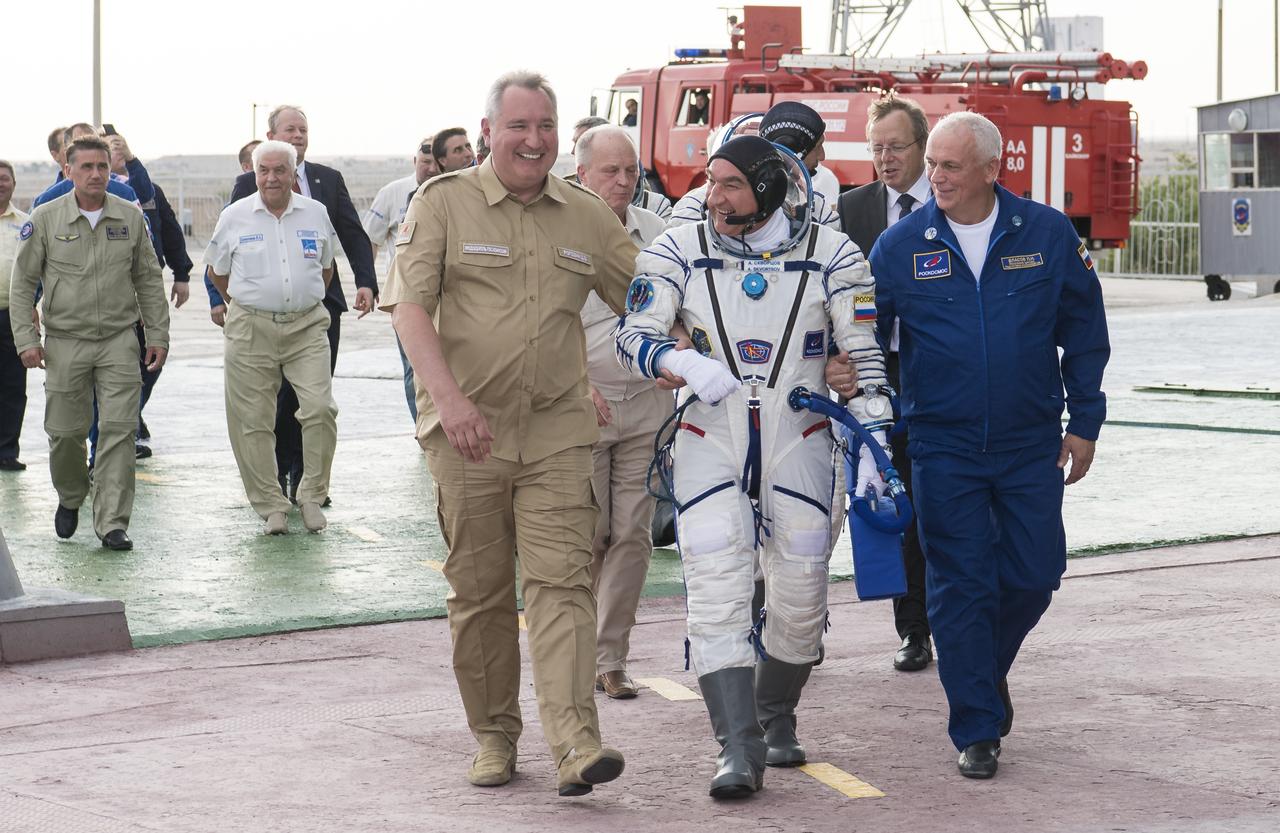
Expedition 60 Soyuz Commander Alexander Skvortsov of Roscosmos is escorted by Dmitry Rogozin, Director General of Roscosmos as he prepares to board the Soyuz MS-13 spacecraft for launch, Saturday, July 20, 2019 at the Baikonur Cosmodrome in Kazakhstan. Skvortsov, Andrew Morgan of NASA, and Luca Parmitano of ESA (European Space Agency) launched aboard the Soyuz MS-13 spacecraft at 12:28 p.m. Eastern time (9:28 p.m. Baikonur time) on July 20 to begin their journey to the International Space Station. Photo Credit: (NASA/Joel Kowsky)
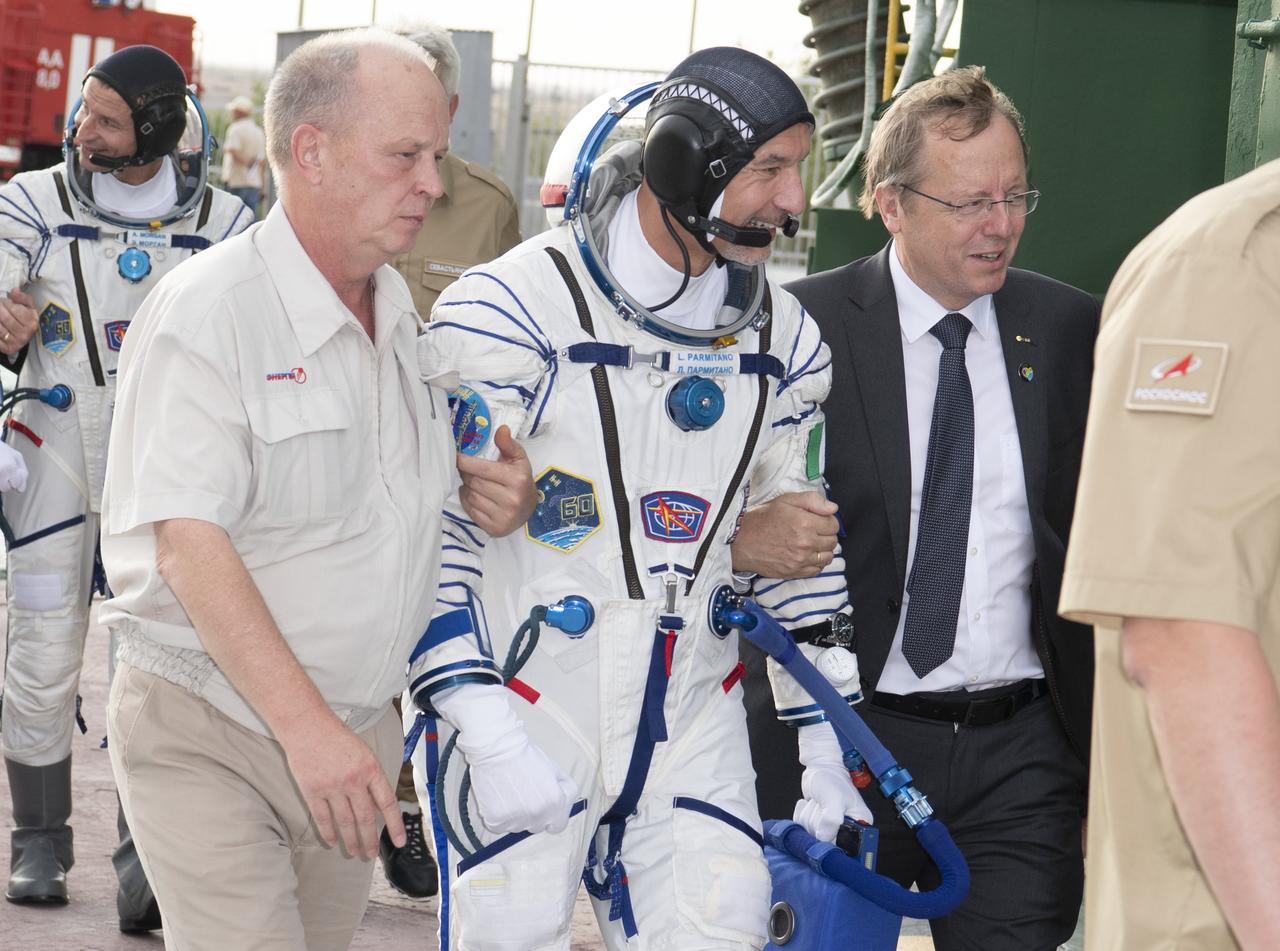
Expedition 60 flight engineer Luca Parmitano of ESA (European Space Agency) is escorted by Johann-Dietrich Wörner, Director General of ESA (European Space Agency) as he prepares to board the Soyuz MS-13 spacecraft for launch, Saturday, July 20, 2019 at the Baikonur Cosmodrome in Kazakhstan. Parmitano, Alexander Skvortsov of Roscosmos, and Andrew Morgan of NASA launched aboard the Soyuz MS-13 spacecraft at 12:28 p.m. Eastern time (9:28 p.m. Baikonur time) on July 20 to begin their journey to the International Space Station. Photo Credit: (NASA/Joel Kowsky)
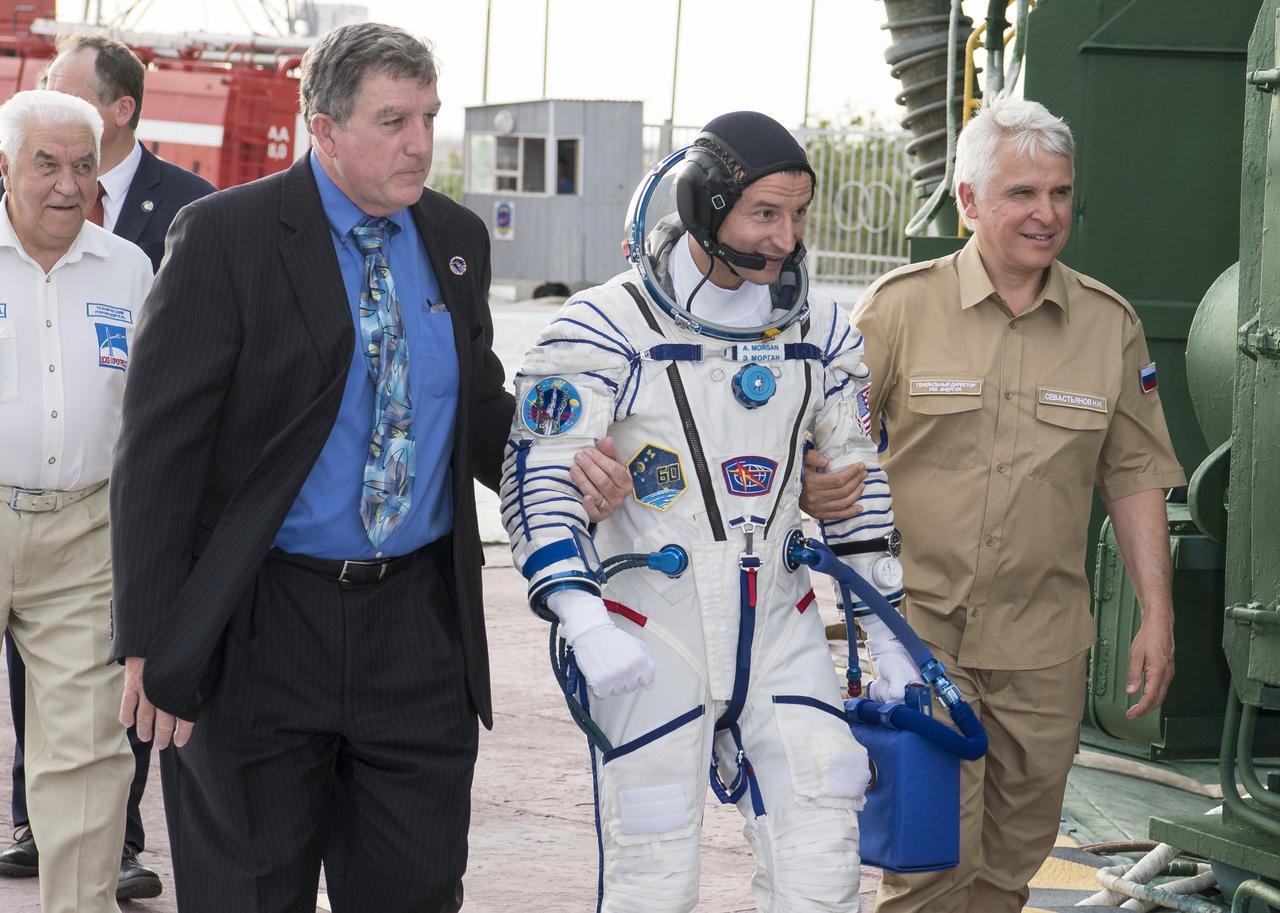
Expedition 60 flight engineer Andrew Morgan of NASA, is escorted by NASA International Space Station Program Manager Kirk Shireman as he prepares to board the Soyuz MS-13 spacecraft for launch, Saturday, July 20, 2019 at the Baikonur Cosmodrome in Kazakhstan. Morgan, Alexander Skvortsov of Roscosmos, and Luca Parmitano of ESA (European Space Agency) launched aboard the Soyuz MS-13 spacecraft at 12:28 p.m. Eastern time (9:28 p.m. Baikonur time) on July 20 to begin their journey to the International Space Station. Photo Credit: (NASA/Joel Kowsky)
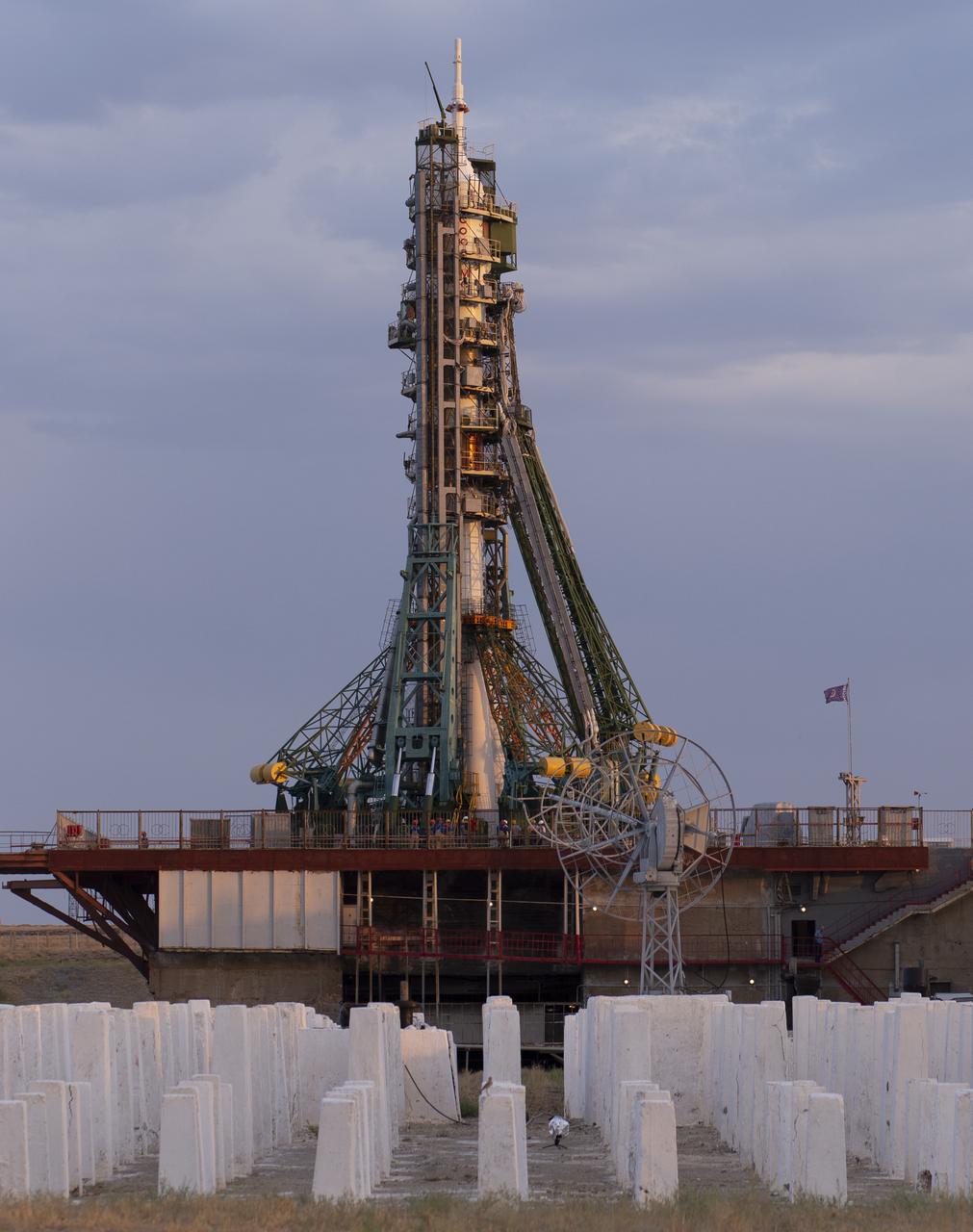
The Soyuz rocket with Soyuz MS-13 spacecraft onboard is seen on the launch pad after the arrival of Expedition 60 flight engineer Luca Parmitano of ESA (European Space Agency), flight engineer Andrew Morgan of NASA, and Soyuz Commander Alexander Skvortsov of Roscosmos, Saturday, July 20, 2019 at the Baikonur Cosmodrome in Kazakhstan. Parmitano, Morgan, and Skvortsov launched at 12:28 p.m. Eastern time (9:28 p.m. Baikonur time). Photo Credit: (NASA/Joel Kowsky)
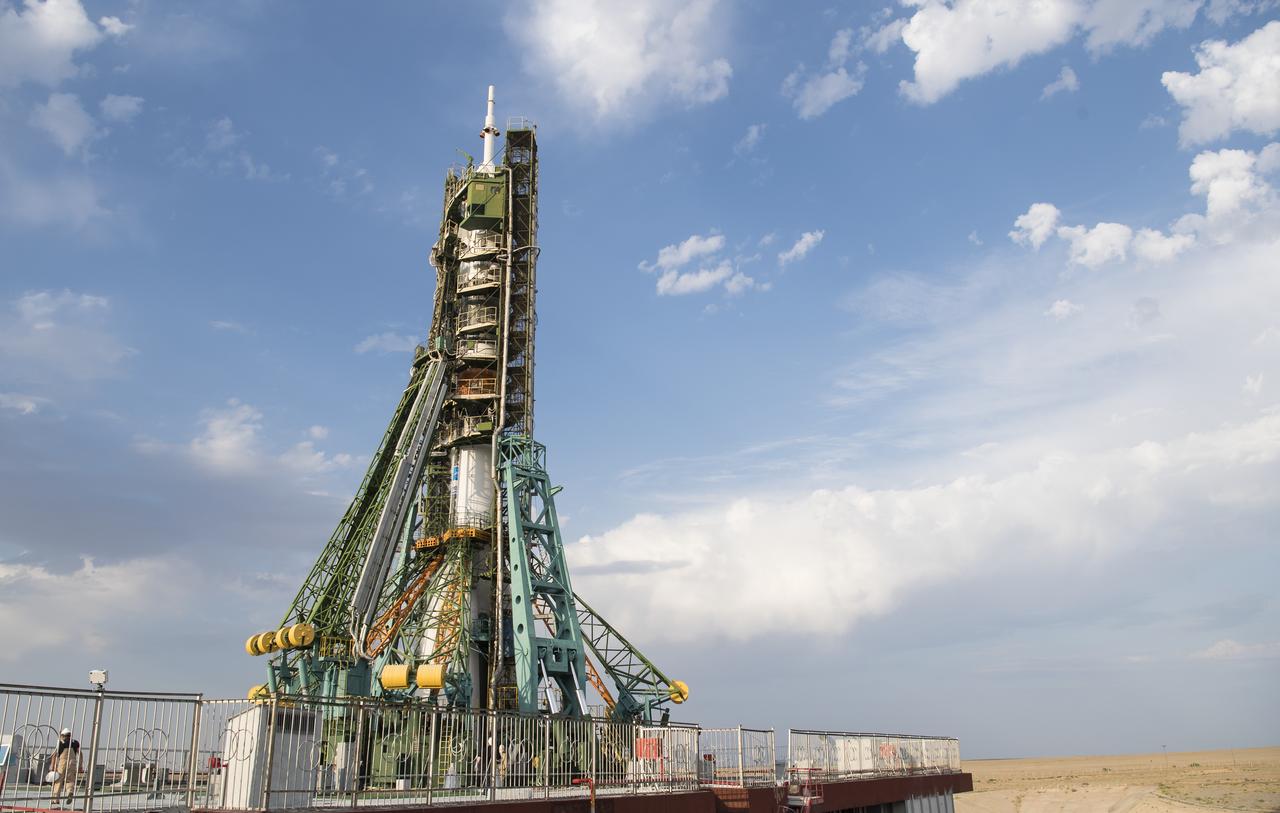
The Soyuz rocket with Soyuz MS-13 spacecraft onboard is seen on the launch pad after the arrival of Expedition 60 flight engineer Luca Parmitano of ESA (European Space Agency), flight engineer Andrew Morgan of NASA, and Soyuz Commander Alexander Skvortsov of Roscosmos, Saturday, July 20, 2019 at the Baikonur Cosmodrome in Kazakhstan. Parmitano, Morgan, and Skvortsov are scheduled to launch at 12:28 p.m. Eastern time (9:28 p.m. Baikonur time) on July 20. Photo Credit: (NASA/Joel Kowsky)
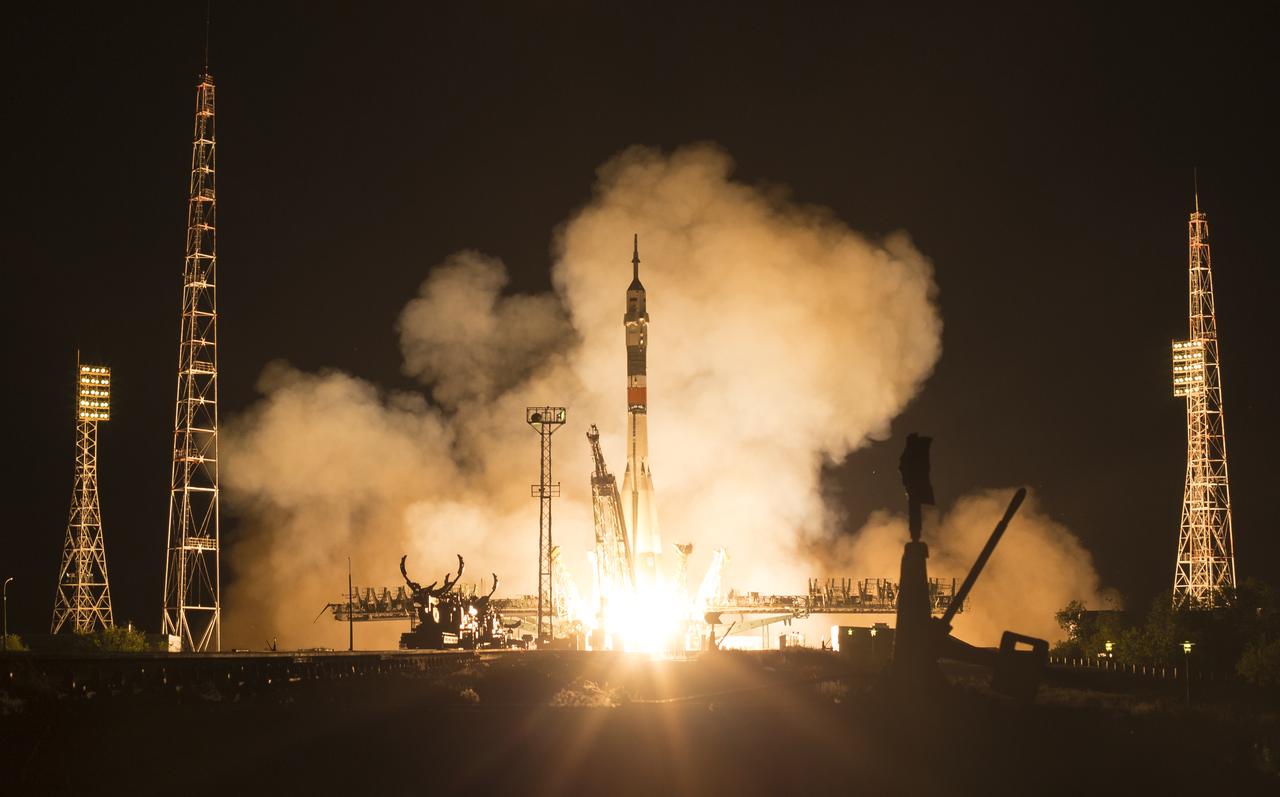
The Soyuz MS-13 rocket is launched with Expedition 60 Soyuz Commander Alexander Skvortsov of Roscosmos, flight engineer Andrew Morgan of NASA, and flight engineer Luca Parmitano of ESA (European Space Agency), Saturday, July 20, 2019 at the Baikonur Cosmodrome in Kazakhstan. Skvortsov, Morgan, and Parmitano launched at 12:28 p.m. Eastern time (9:28 p.m. Baikonur time) to begin their mission to the International Space Station. Photo Credit: (NASA/Joel Kowsky)
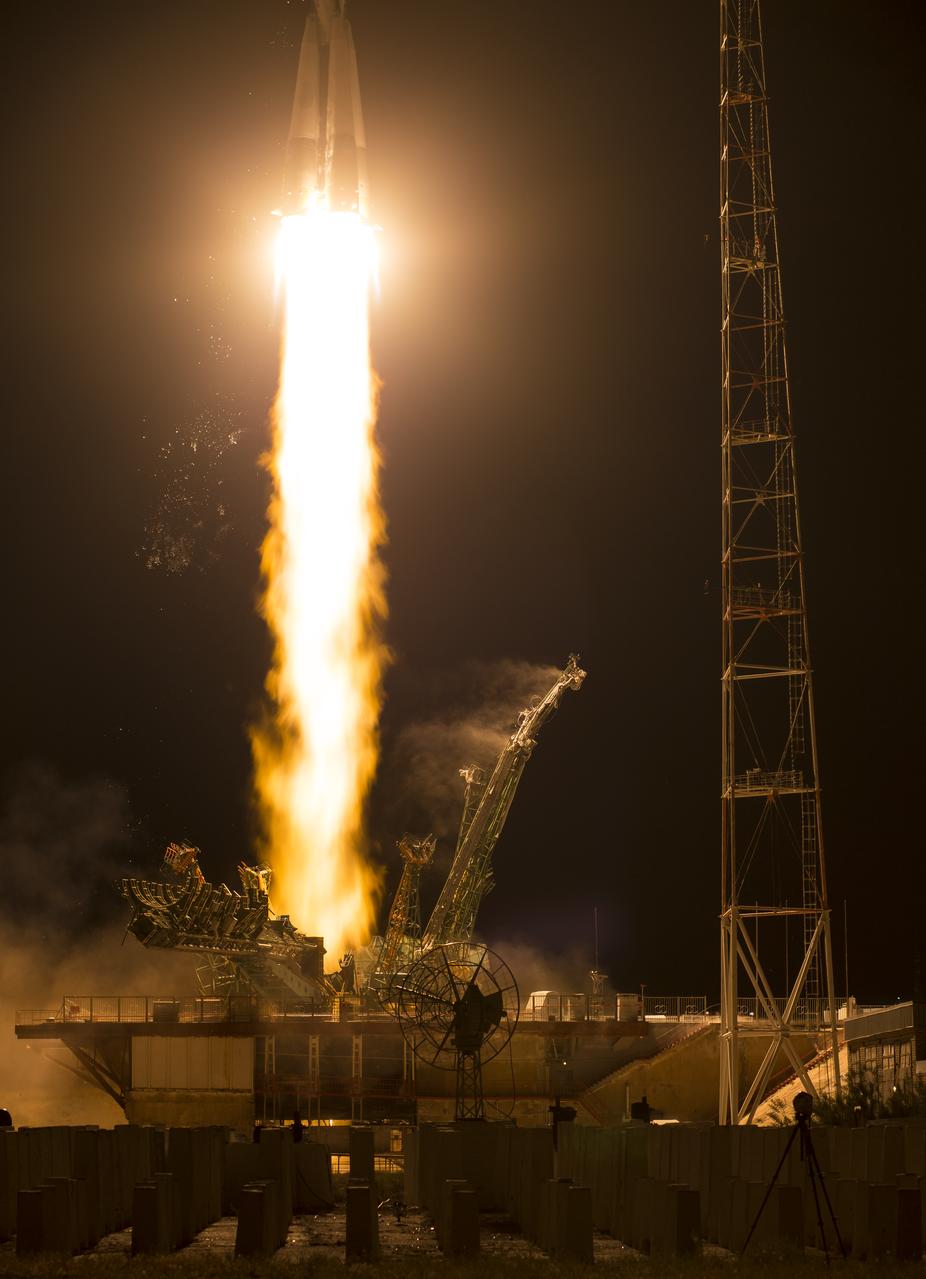
The Soyuz MS-13 rocket is launched with Expedition 60 Soyuz Commander Alexander Skvortsov of Roscosmos, flight engineer Andrew Morgan of NASA, and flight engineer Luca Parmitano of ESA (European Space Agency), Saturday, July 20, 2019 at the Baikonur Cosmodrome in Kazakhstan. Skvortsov, Morgan, and Parmitano launched at 12:28 p.m. Eastern time (9:28 p.m. Baikonur time) to begin their mission to the International Space Station. Photo Credit: (NASA/Joel Kowsky)
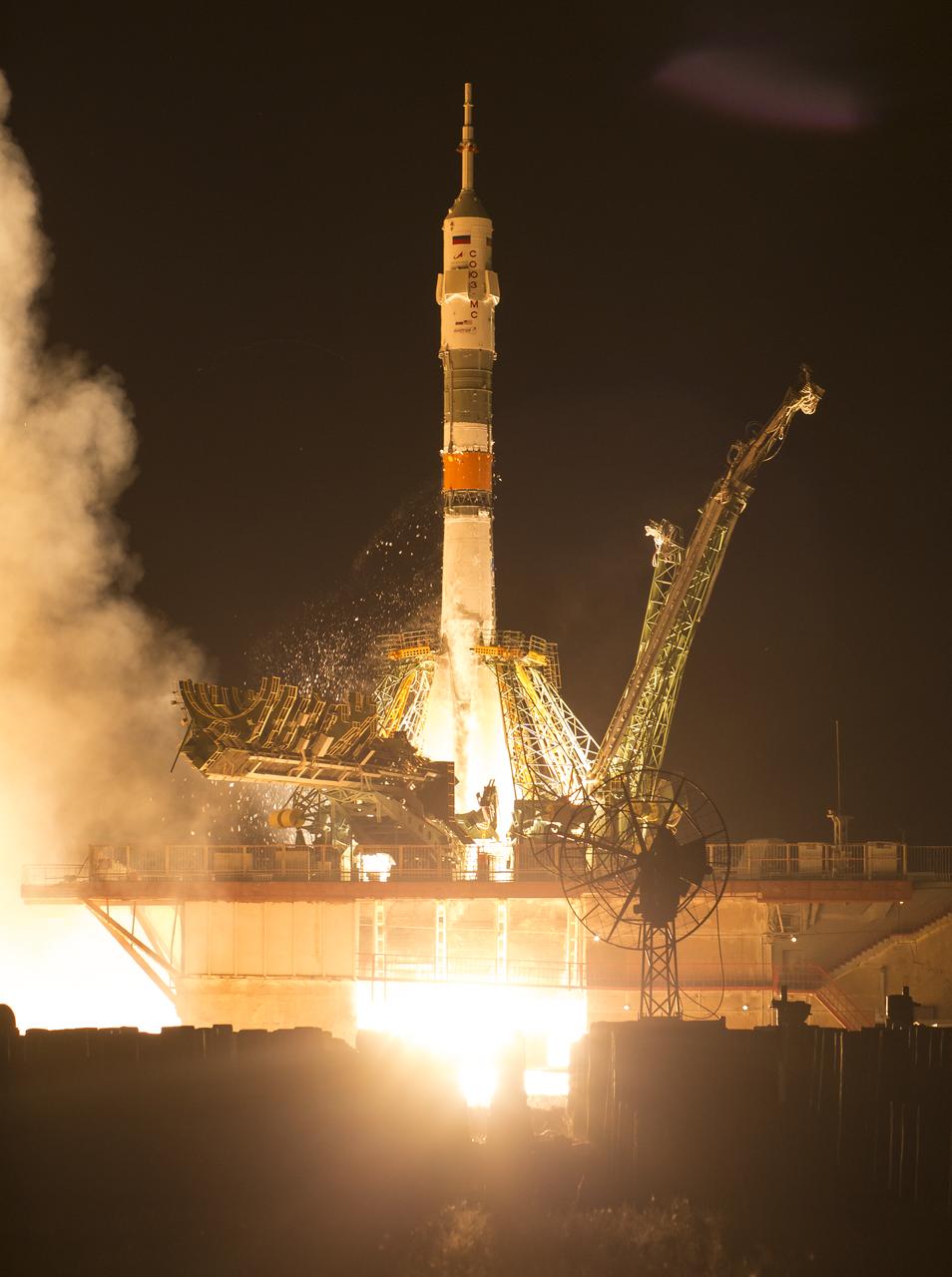
The Soyuz MS-13 rocket is launched with Expedition 60 Soyuz Commander Alexander Skvortsov of Roscosmos, flight engineer Andrew Morgan of NASA, and flight engineer Luca Parmitano of ESA (European Space Agency), Saturday, July 20, 2019 at the Baikonur Cosmodrome in Kazakhstan. Skvortsov, Morgan, and Parmitano launched at 12:28 p.m. Eastern time (9:28 p.m. Baikonur time) to begin their mission to the International Space Station. Photo Credit: (NASA/Joel Kowsky)
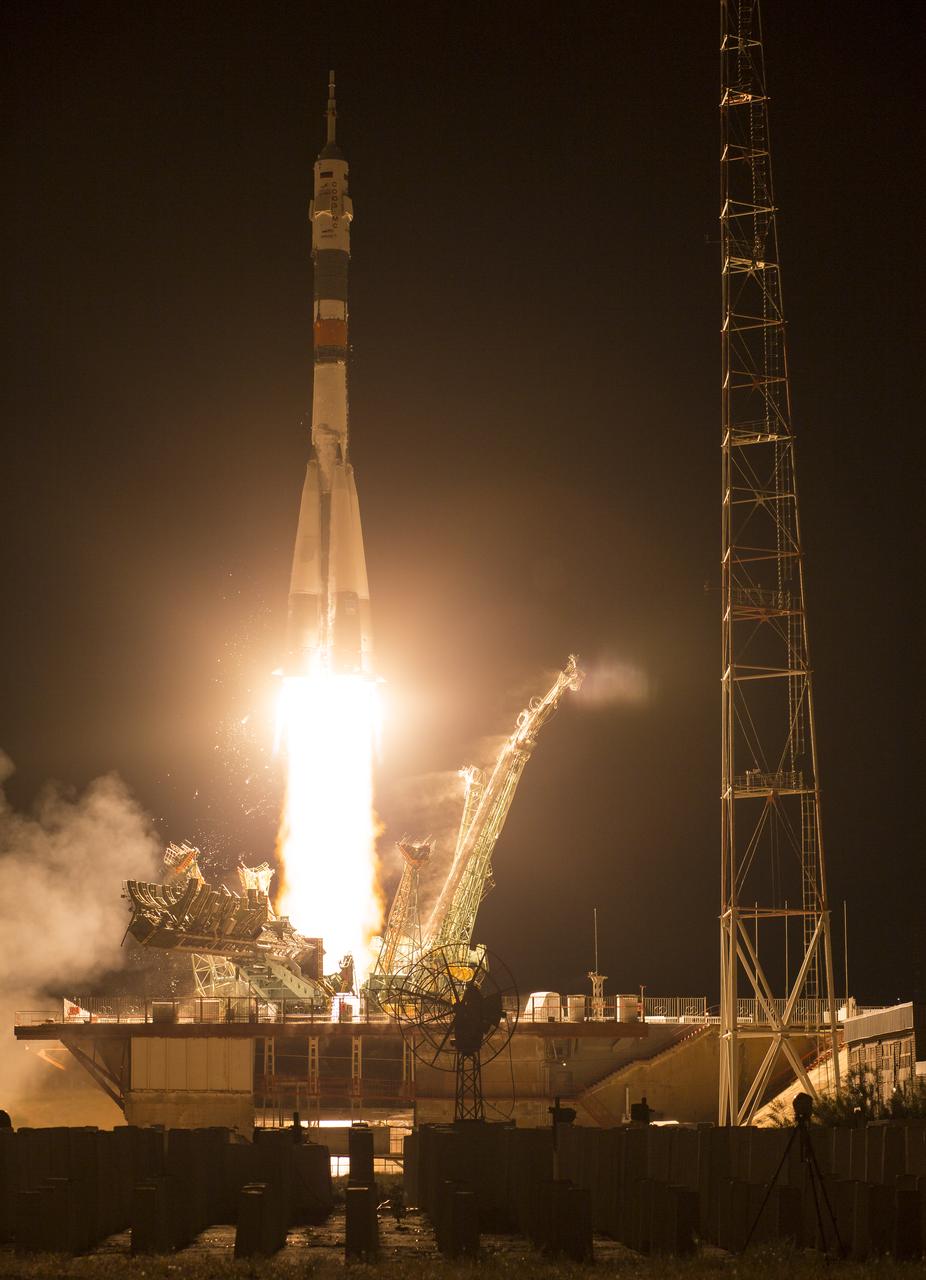
The Soyuz MS-13 rocket is launched with Expedition 60 Soyuz Commander Alexander Skvortsov of Roscosmos, flight engineer Andrew Morgan of NASA, and flight engineer Luca Parmitano of ESA (European Space Agency), Saturday, July 20, 2019 at the Baikonur Cosmodrome in Kazakhstan. Skvortsov, Morgan, and Parmitano launched at 12:28 p.m. Eastern time (9:28 p.m. Baikonur time) to begin their mission to the International Space Station. Photo Credit: (NASA/Joel Kowsky)
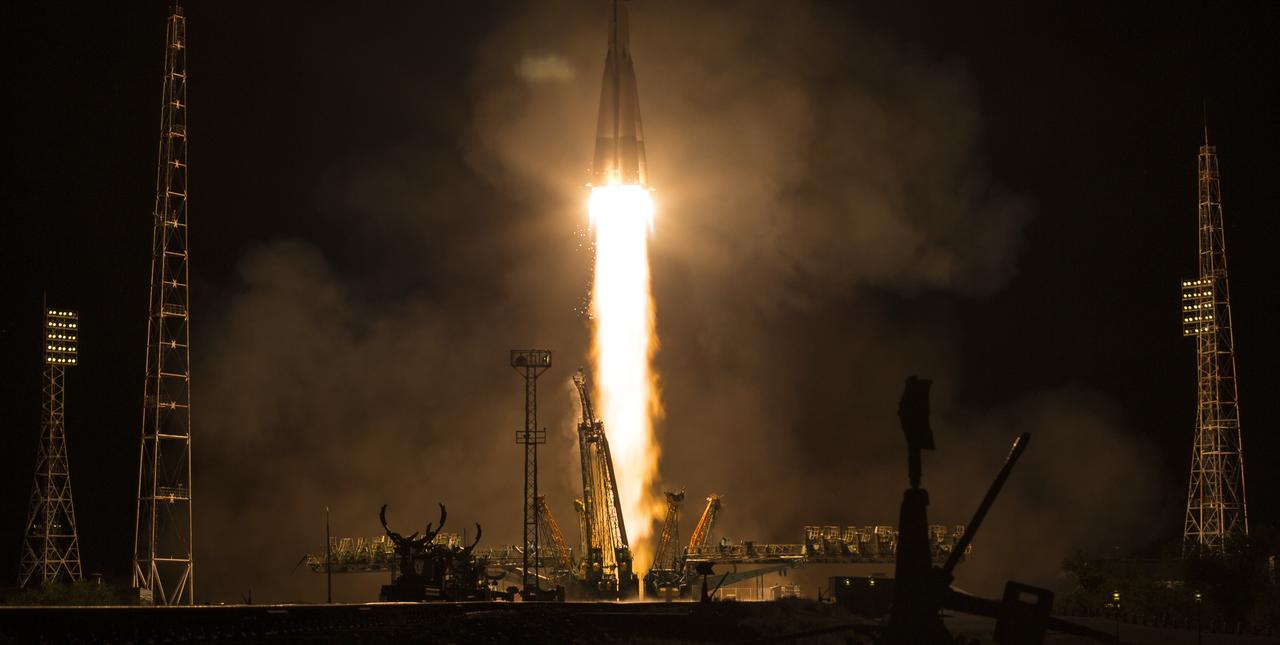
The Soyuz MS-13 rocket is launched with Expedition 60 Soyuz Commander Alexander Skvortsov of Roscosmos, flight engineer Andrew Morgan of NASA, and flight engineer Luca Parmitano of ESA (European Space Agency), Saturday, July 20, 2019 at the Baikonur Cosmodrome in Kazakhstan. Skvortsov, Morgan, and Parmitano launched at 12:28 p.m. Eastern time (9:28 p.m. Baikonur time) to begin their mission to the International Space Station. Photo Credit: (NASA/Joel Kowsky)
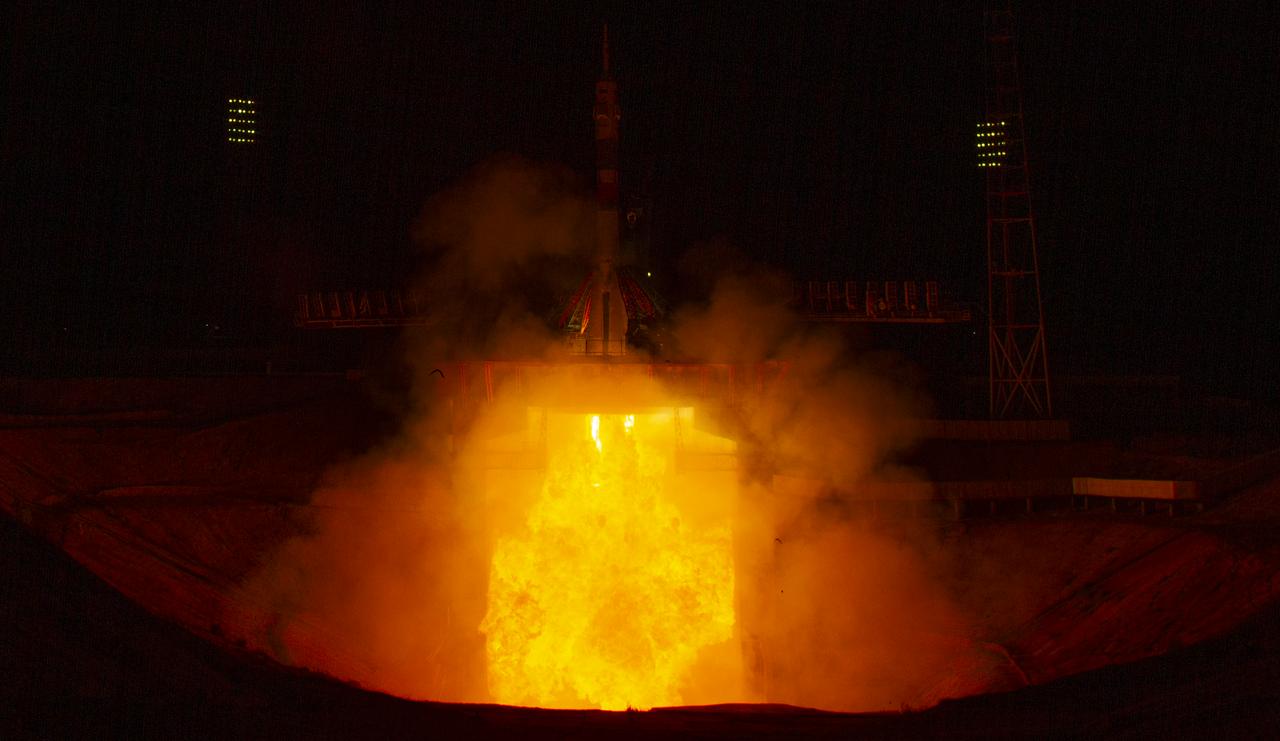
The Soyuz MS-13 rocket is launched with Expedition 60 Soyuz Commander Alexander Skvortsov of Roscosmos, flight engineer Andrew Morgan of NASA, and flight engineer Luca Parmitano of ESA (European Space Agency), Saturday, July 20, 2019 at the Baikonur Cosmodrome in Kazakhstan. Skvortsov, Morgan, and Parmitano launched at 12:28 p.m. Eastern time (9:28 p.m. Baikonur time) to begin their mission to the International Space Station. Photo Credit: (NASA/Joel Kowsky)
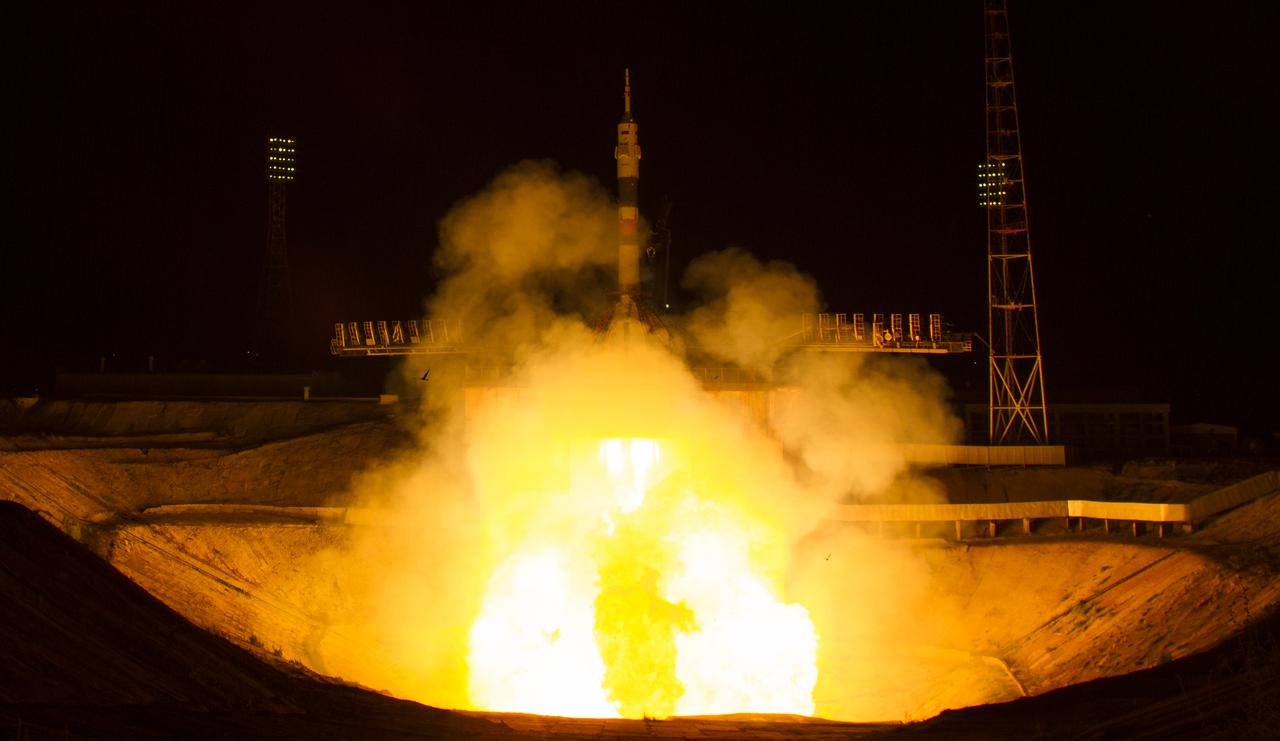
The Soyuz MS-13 rocket is launched with Expedition 60 Soyuz Commander Alexander Skvortsov of Roscosmos, flight engineer Andrew Morgan of NASA, and flight engineer Luca Parmitano of ESA (European Space Agency), Saturday, July 20, 2019 at the Baikonur Cosmodrome in Kazakhstan. Skvortsov, Morgan, and Parmitano launched at 12:28 p.m. Eastern time (9:28 p.m. Baikonur time) to begin their mission to the International Space Station. Photo Credit: (NASA/Joel Kowsky)
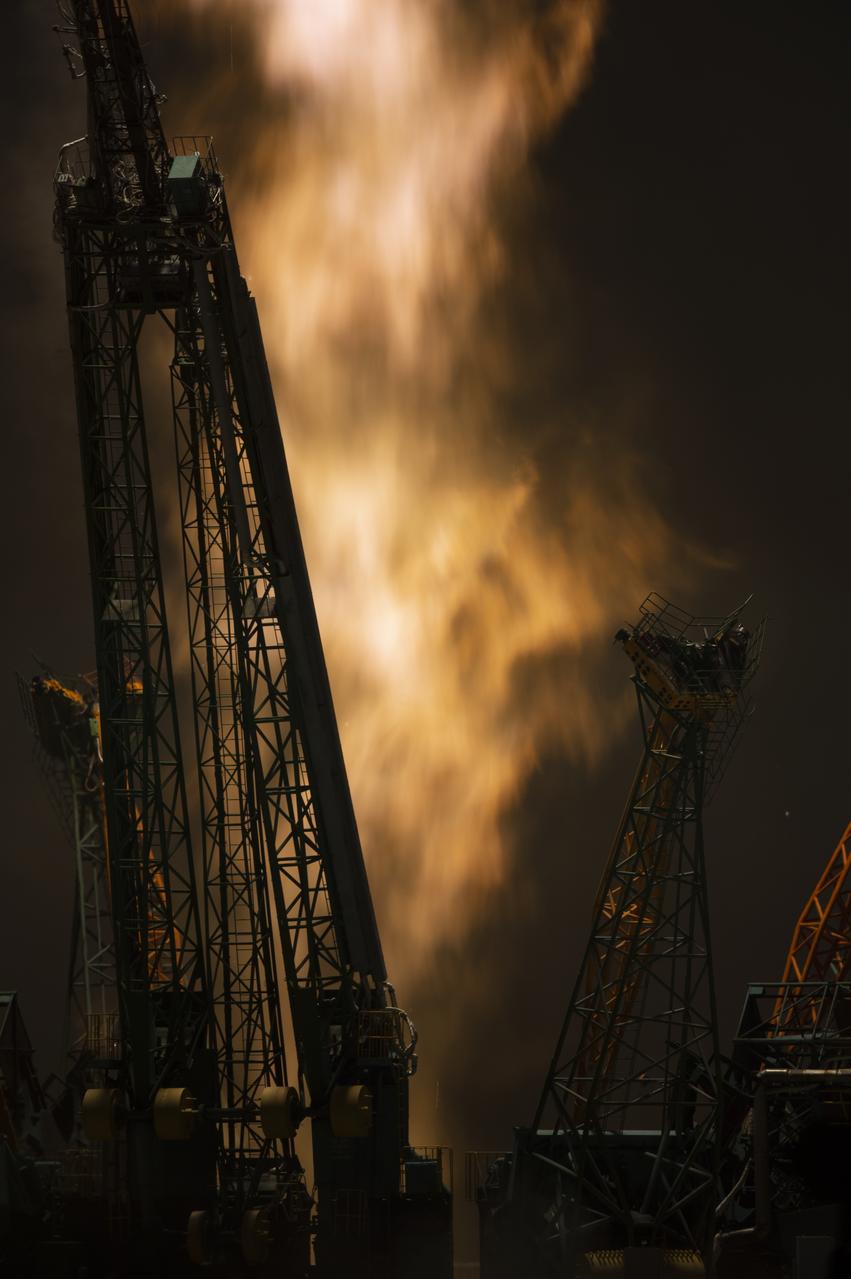
The Soyuz MS-13 rocket is launched with Expedition 60 Soyuz Commander Alexander Skvortsov of Roscosmos, flight engineer Andrew Morgan of NASA, and flight engineer Luca Parmitano of ESA (European Space Agency), Saturday, July 20, 2019 at the Baikonur Cosmodrome in Kazakhstan. Skvortsov, Morgan, and Parmitano launched at 12:28 p.m. Eastern time (9:28 p.m. Baikonur time) to begin their mission to the International Space Station. Photo Credit: (NASA/Joel Kowsky)
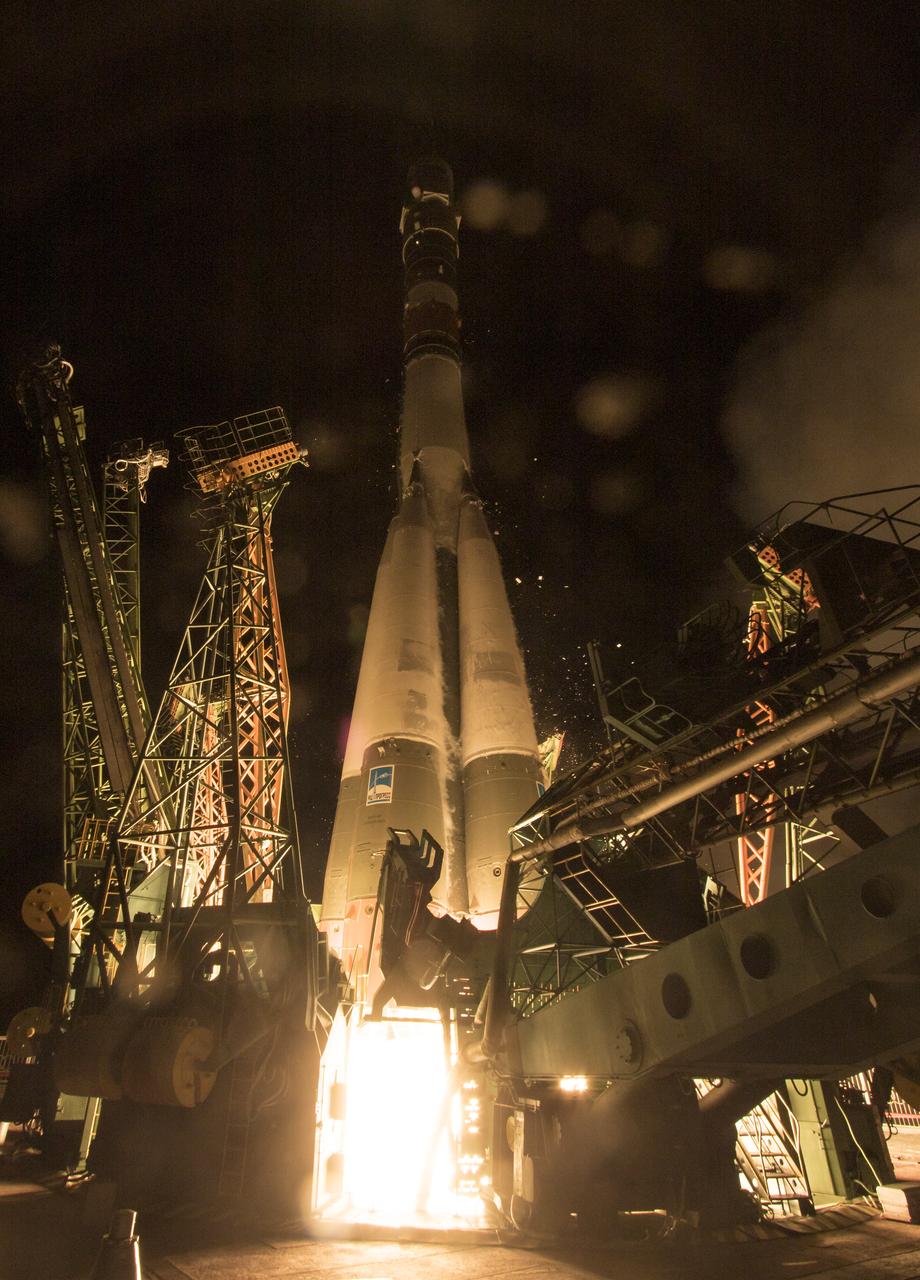
The Soyuz MS-13 rocket is launched with Expedition 60 Soyuz Commander Alexander Skvortsov of Roscosmos, flight engineer Andrew Morgan of NASA, and flight engineer Luca Parmitano of ESA (European Space Agency), Saturday, July 20, 2019 at the Baikonur Cosmodrome in Kazakhstan. Skvortsov, Morgan, and Parmitano launched at 12:28 p.m. Eastern time (9:28 p.m. Baikonur time) to begin their mission to the International Space Station. Photo Credit: (NASA/Joel Kowsky)
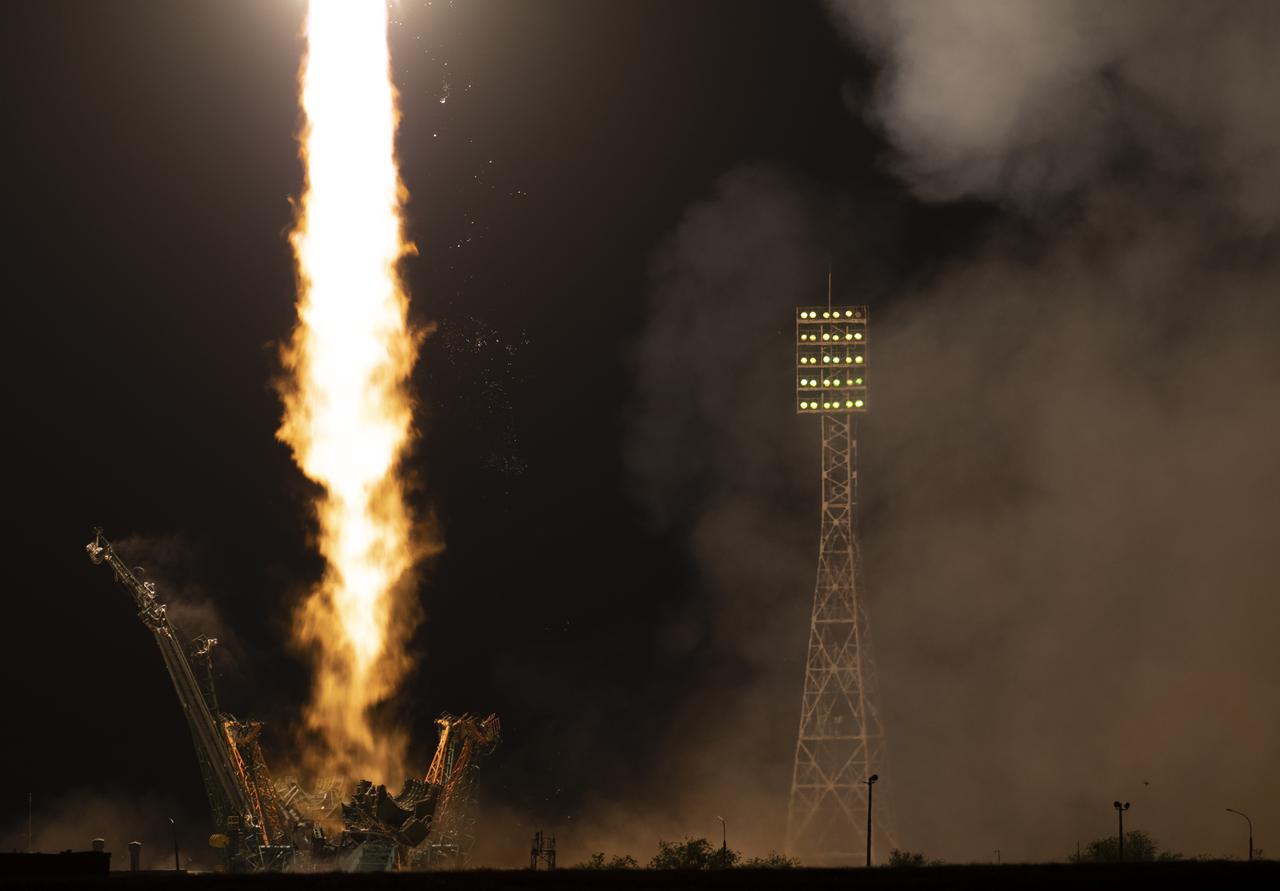
The Soyuz MS-13 rocket is launched with Expedition 60 Soyuz Commander Alexander Skvortsov of Roscosmos, flight engineer Andrew Morgan of NASA, and flight engineer Luca Parmitano of ESA (European Space Agency), Saturday, July 20, 2019 at the Baikonur Cosmodrome in Kazakhstan. Skvortsov, Morgan, and Parmitano launched at 12:28 p.m. Eastern time (9:28 p.m. Baikonur time) to begin their mission to the International Space Station. Photo Credit: (NASA/Joel Kowsky)
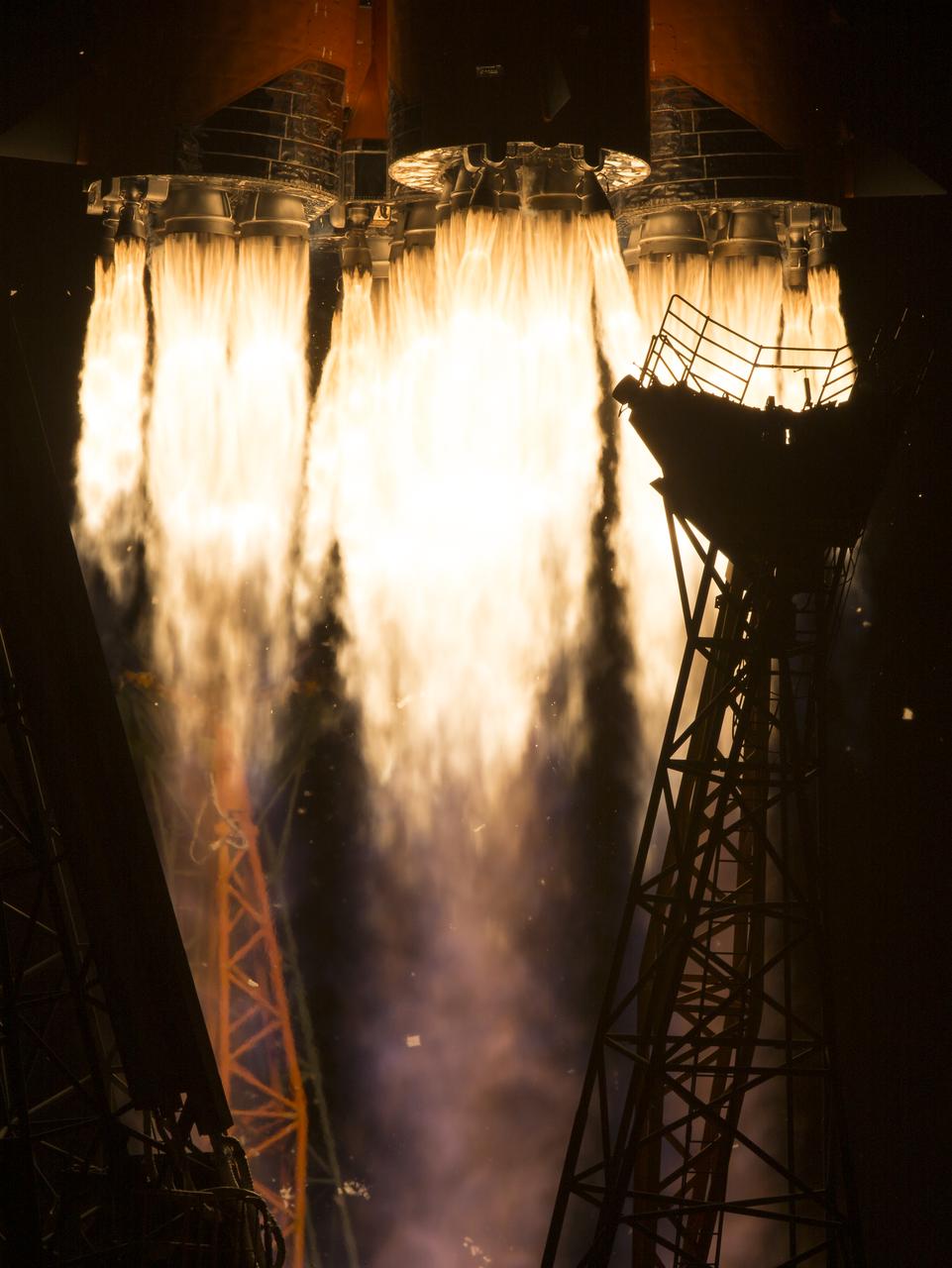
The Soyuz MS-13 rocket is launched with Expedition 60 Soyuz Commander Alexander Skvortsov of Roscosmos, flight engineer Andrew Morgan of NASA, and flight engineer Luca Parmitano of ESA (European Space Agency), Saturday, July 20, 2019 at the Baikonur Cosmodrome in Kazakhstan. Skvortsov, Morgan, and Parmitano launched at 12:28 p.m. Eastern time (9:28 p.m. Baikonur time) to begin their mission to the International Space Station. Photo Credit: (NASA/Joel Kowsky)
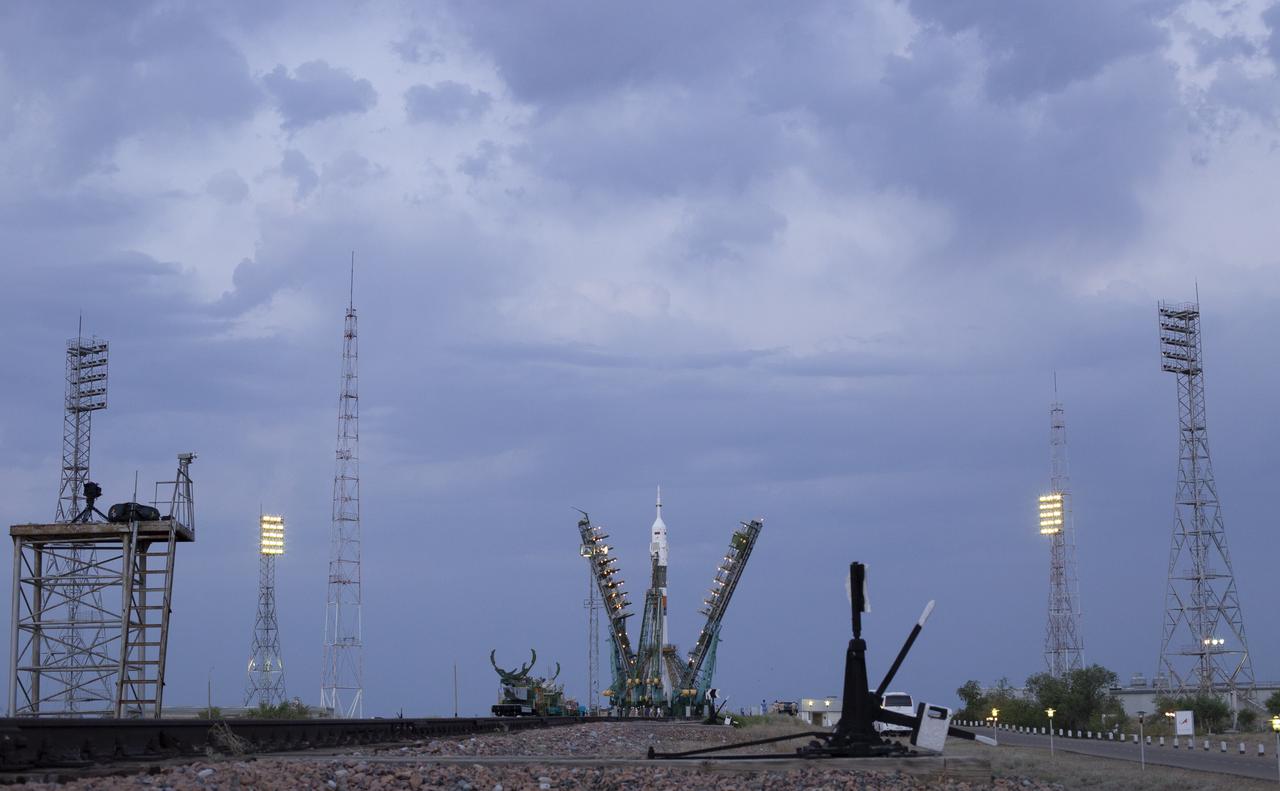
The Soyuz rocket with MS-13 spacecraft onboard is seen on the launch pad as the service structure arms are lowered before launch, Saturday, July 20, 2019 at the Baikonur Cosmodrome in Kazakhstan. Expedition 60 Soyuz Commander Alexander Skvortsov of Roscosmos, flight engineer Andrew Morgan of NASA, and flight engineer Luca Parmitano of ESA (European Space Agency) launched at 12:28 p.m. Eastern time (9:28 p.m. Baikonur time) to begin their mission to the International Space Station. Photo Credit: (NASA/Joel Kowsky)
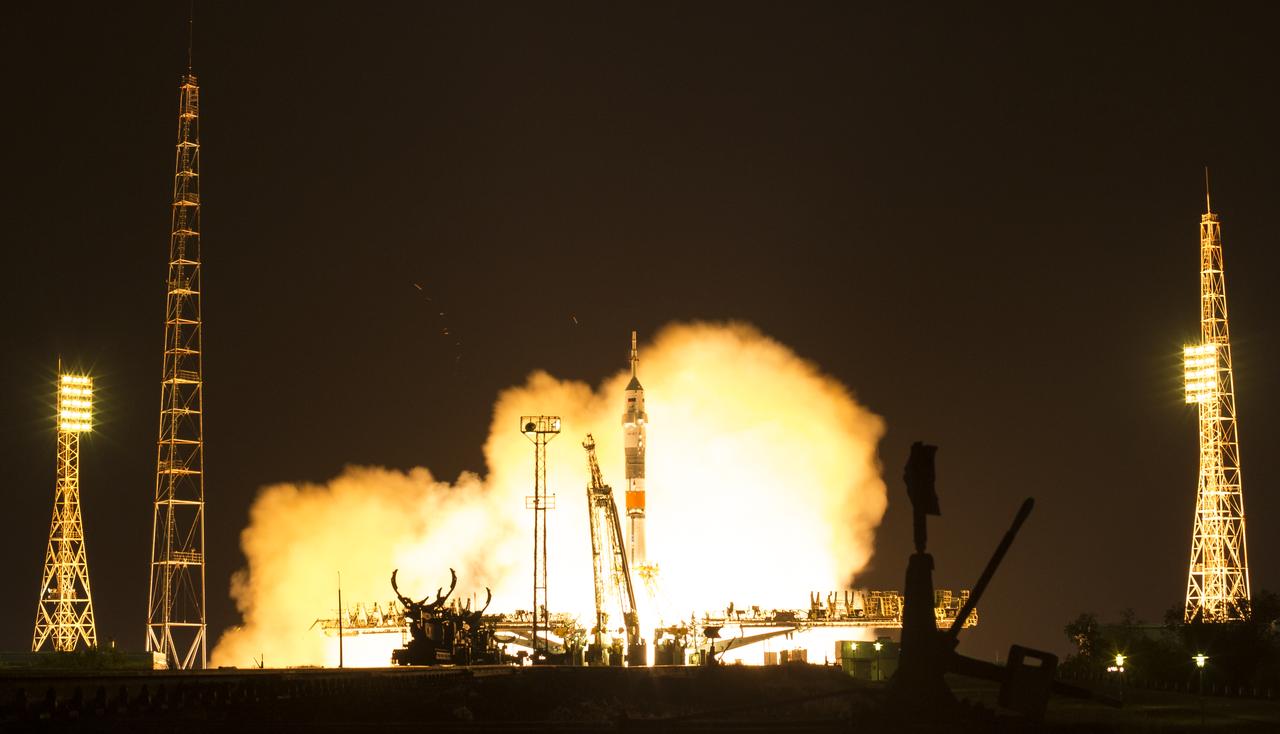
The Soyuz MS-13 rocket is launched with Expedition 60 Soyuz Commander Alexander Skvortsov of Roscosmos, flight engineer Andrew Morgan of NASA, and flight engineer Luca Parmitano of ESA (European Space Agency), Saturday, July 20, 2019 at the Baikonur Cosmodrome in Kazakhstan. Skvortsov, Morgan, and Parmitano launched at 12:28 p.m. Eastern time (9:28 p.m. Baikonur time) to begin their mission to the International Space Station. Photo Credit: (NASA/Joel Kowsky)
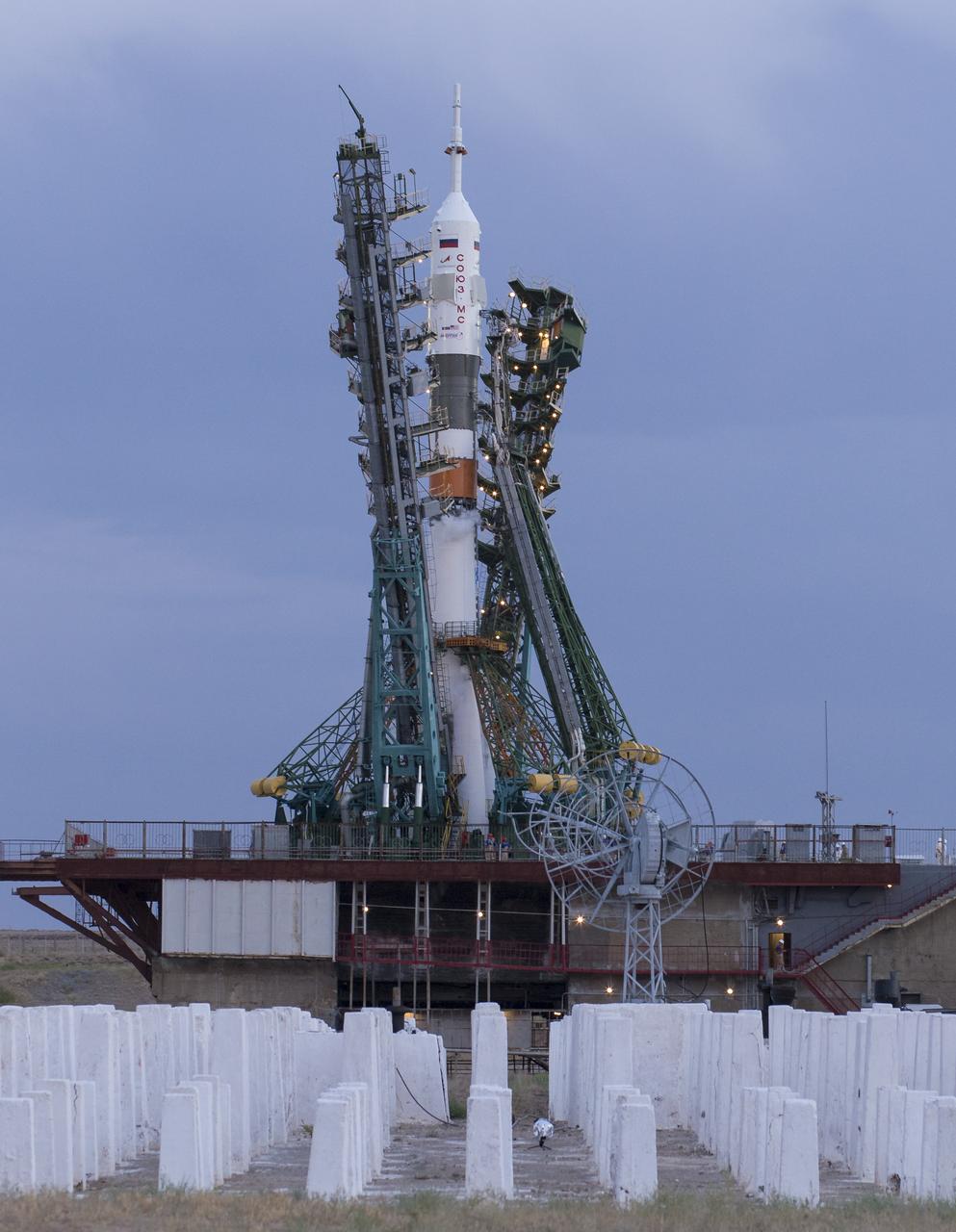
The Soyuz rocket with MS-13 spacecraft onboard is seen on the launch pad as the service structure arms are lowered before launch, Saturday, July 20, 2019 at the Baikonur Cosmodrome in Kazakhstan. Expedition 60 Soyuz Commander Alexander Skvortsov of Roscosmos, flight engineer Andrew Morgan of NASA, and flight engineer Luca Parmitano of ESA (European Space Agency) launched at 12:28 p.m. Eastern time (9:28 p.m. Baikonur time) to begin their mission to the International Space Station. Photo Credit: (NASA/Joel Kowsky)
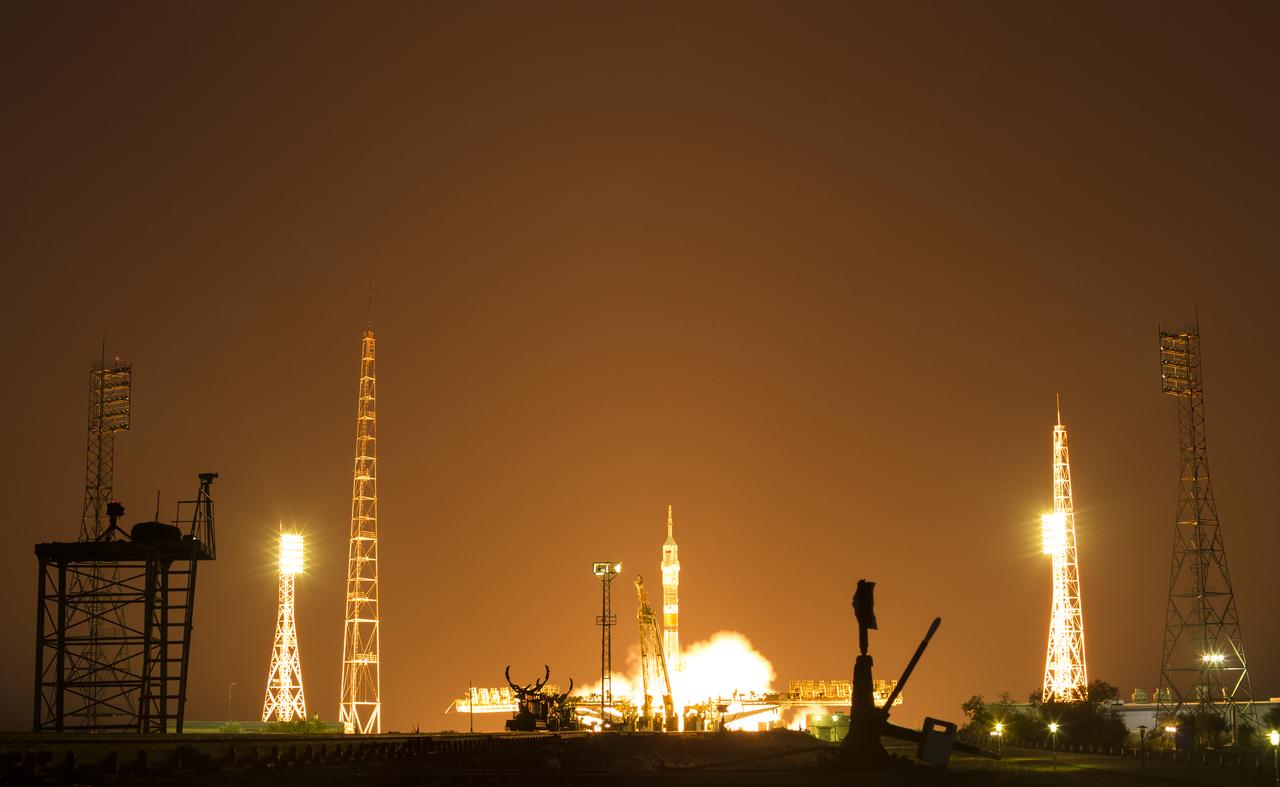
The Soyuz MS-13 rocket is launched with Expedition 60 Soyuz Commander Alexander Skvortsov of Roscosmos, flight engineer Andrew Morgan of NASA, and flight engineer Luca Parmitano of ESA (European Space Agency), Saturday, July 20, 2019 at the Baikonur Cosmodrome in Kazakhstan. Skvortsov, Morgan, and Parmitano launched at 12:28 p.m. Eastern time (9:28 p.m. Baikonur time) to begin their mission to the International Space Station. Photo Credit: (NASA/Joel Kowsky)
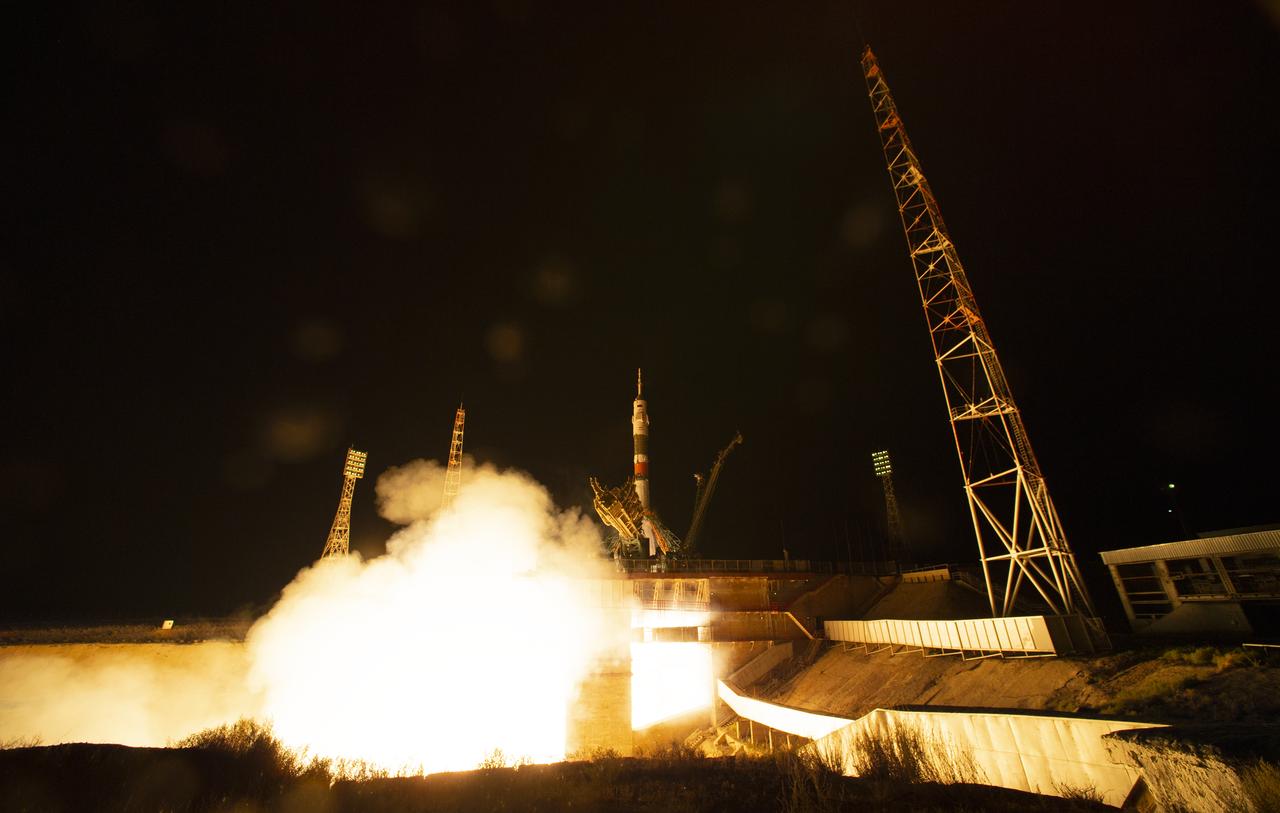
The Soyuz MS-13 rocket is launched with Expedition 60 Soyuz Commander Alexander Skvortsov of Roscosmos, flight engineer Andrew Morgan of NASA, and flight engineer Luca Parmitano of ESA (European Space Agency), Saturday, July 20, 2019 at the Baikonur Cosmodrome in Kazakhstan. Skvortsov, Morgan, and Parmitano launched at 12:28 p.m. Eastern time (9:28 p.m. Baikonur time) to begin their mission to the International Space Station. Photo Credit: (NASA/Joel Kowsky)
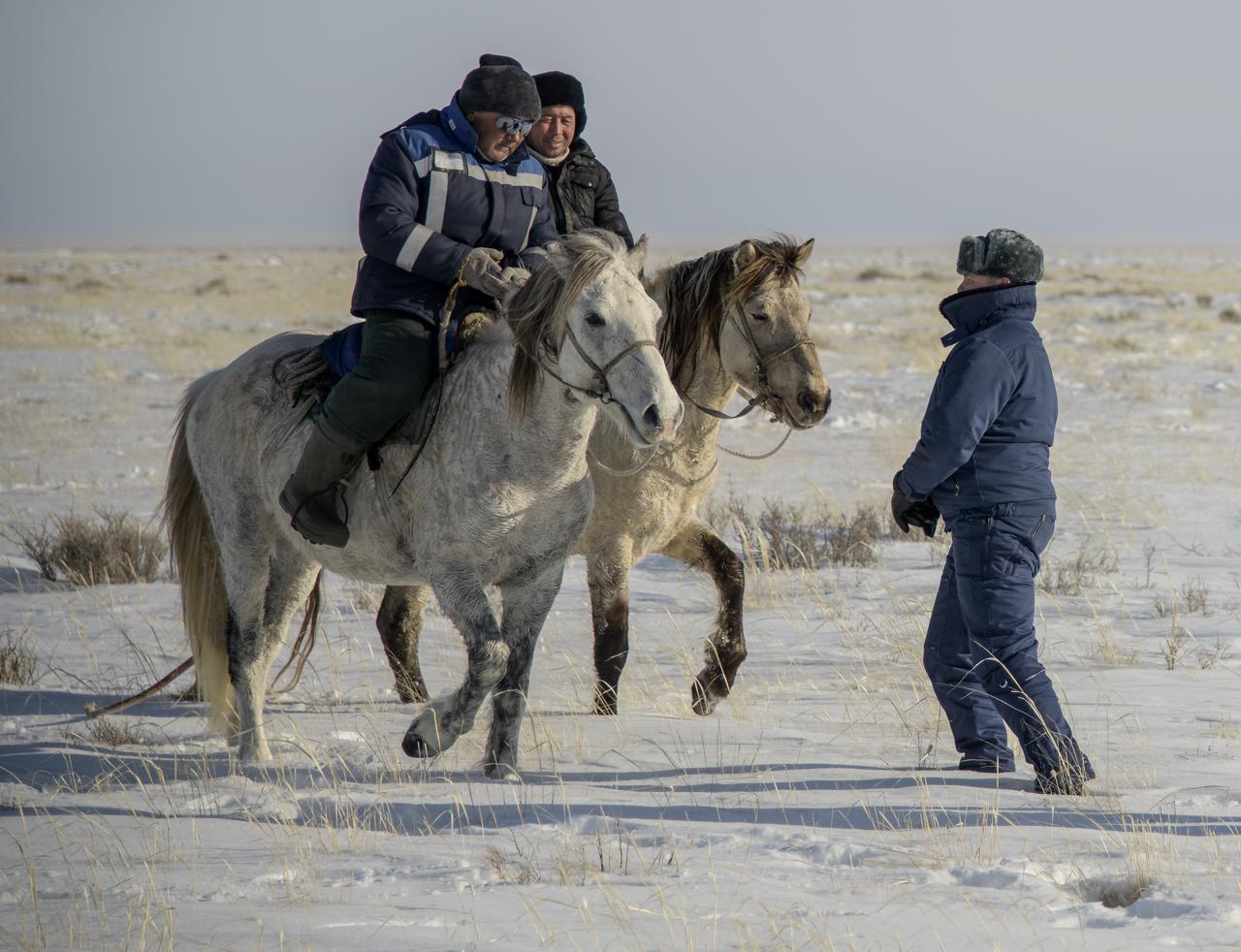
Two locals on horseback arrive at the Soyuz MS-13 spacecraft shortly after it landed in a remote area near the town of Zhezkazgan, Kazakhstan with Expedition 61 crew members Christina Koch of NASA, Alexander Skvortsov of the Russian space agency Roscosmos, and Luca Parmitano of ESA (European Space Agency) Thursday, Feb. 6, 2020. Koch returned to Earth after logging 328 days in space --- the longest spaceflight in history by a woman --- as a member of Expeditions 59-60-61 on the International Space Station. Skvortsov and Parmitano returned after 201 days in space where they served as Expedition 60-61 crew members onboard the station. Photo Credit: (NASA/Bill Ingalls)
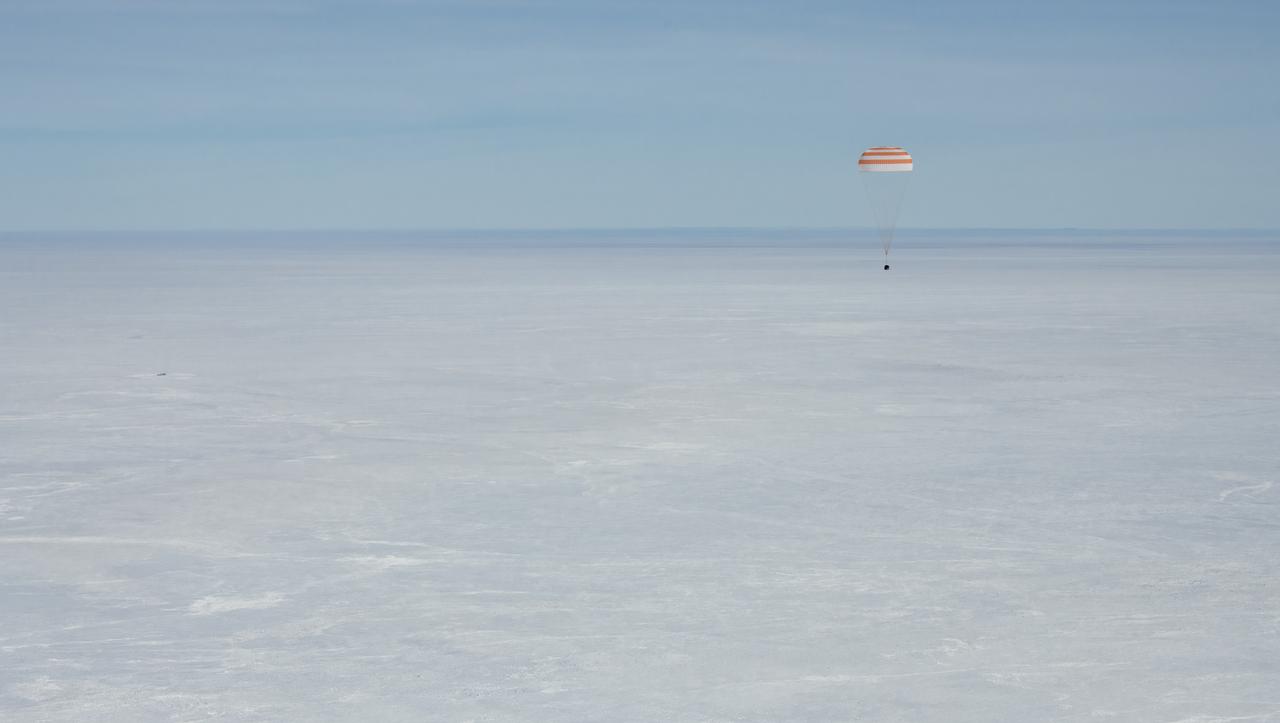
The Soyuz MS-13 spacecraft is seen as it lands in a remote area near the town of Zhezkazgan, Kazakhstan with Expedition 61 crew members Christina Koch of NASA, Alexander Skvortsov of the Russian space agency Roscosmos, and Luca Parmitano of ESA (European Space Agency) Thursday, Feb. 6, 2020. Koch returned to Earth after logging 328 days in space --- the longest spaceflight in history by a woman --- as a member of Expeditions 59-60-61 on the International Space Station. Skvortsov and Parmitano returned after 201 days in space where they served as Expedition 60-61 crew members onboard the station. Photo Credit: (NASA/Bill Ingalls)
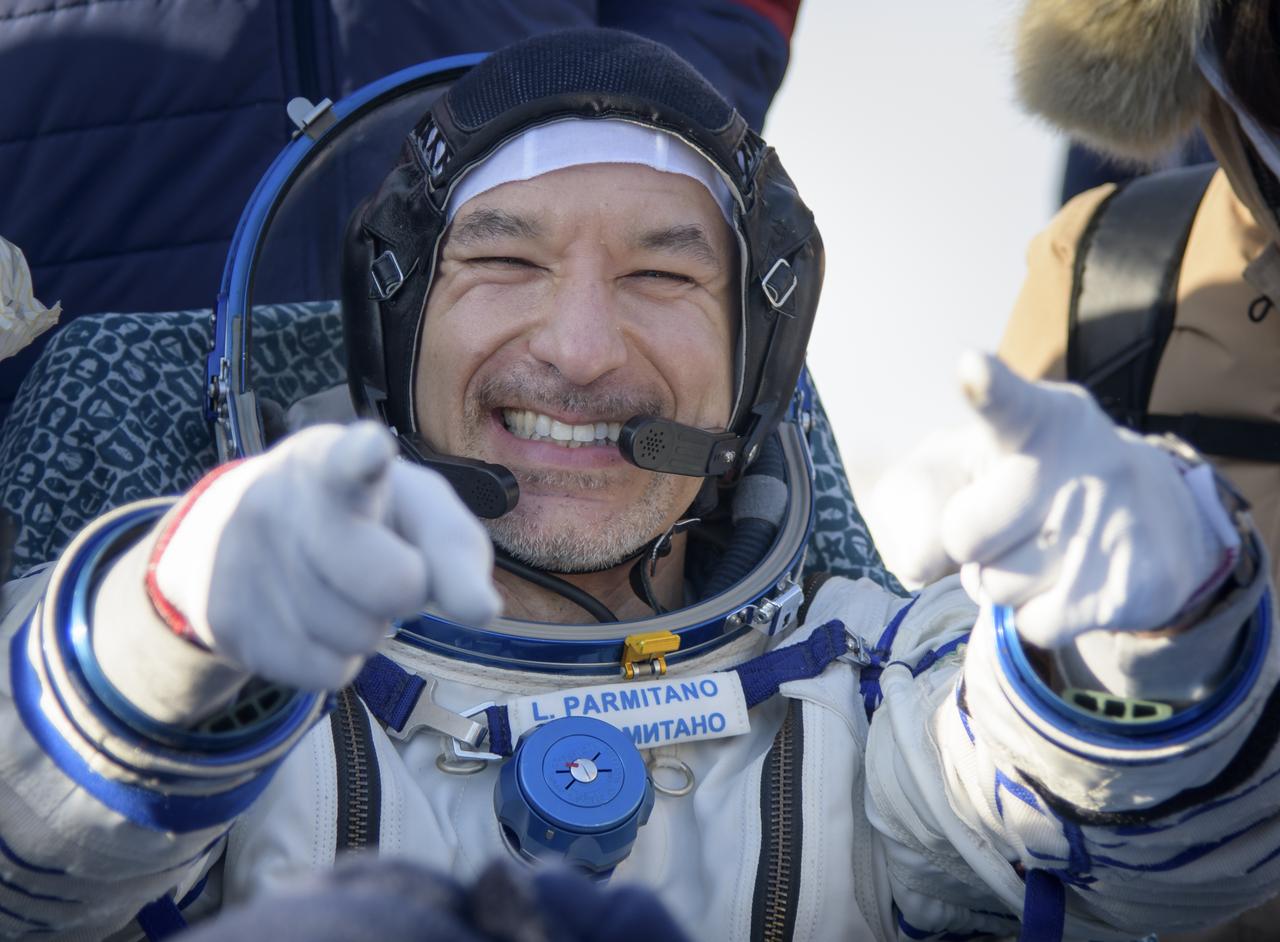
ESA astronaut Luca Parmitano is seen outside the Soyuz MS-13 spacecraft after he landed with NASA astronaut Christina Koch and Roscosmos cosmonaut Alexander Skvortsov in a remote area near the town of Zhezkazgan, Kazakhstan on Thursday, Feb. 6, 2020. Koch returned to Earth after logging 328 days in space --- the longest spaceflight in history by a woman --- as a member of Expeditions 59-60-61 on the International Space Station. Skvortsov and Parmitano returned after 201 days in space where they served as Expedition 60-61 crew members onboard the station. Photo Credit: (NASA/Bill Ingalls)
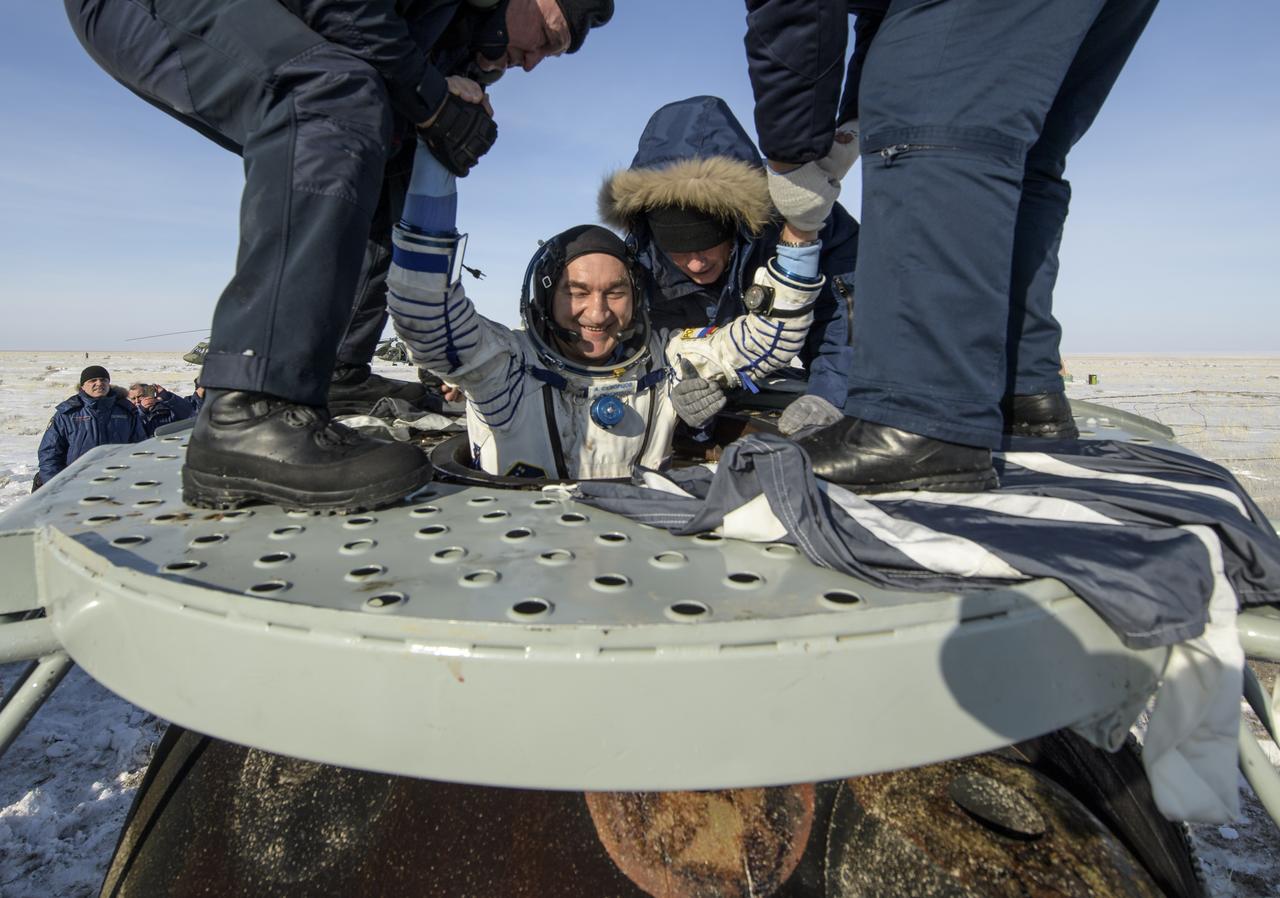
Roscosmos cosmonaut Alexander Skvortsov is helped out of the Soyuz MS-13 spacecraft just minutes after he, NASA astronaut Christina Koch, and ESA astronaut Luca Parmitano landed in a remote area near the town of Zhezkazgan, Kazakhstan on Thursday, Feb. 6, 2020. Koch returned to Earth after logging 328 days in space --- the longest spaceflight in history by a woman --- as a member of Expeditions 59-60-61 on the International Space Station. Skvortsov and Parmitano returned after 201 days in space where they served as Expedition 60-61 crew members onboard the station. Photo Credit: (NASA/Bill Ingalls)
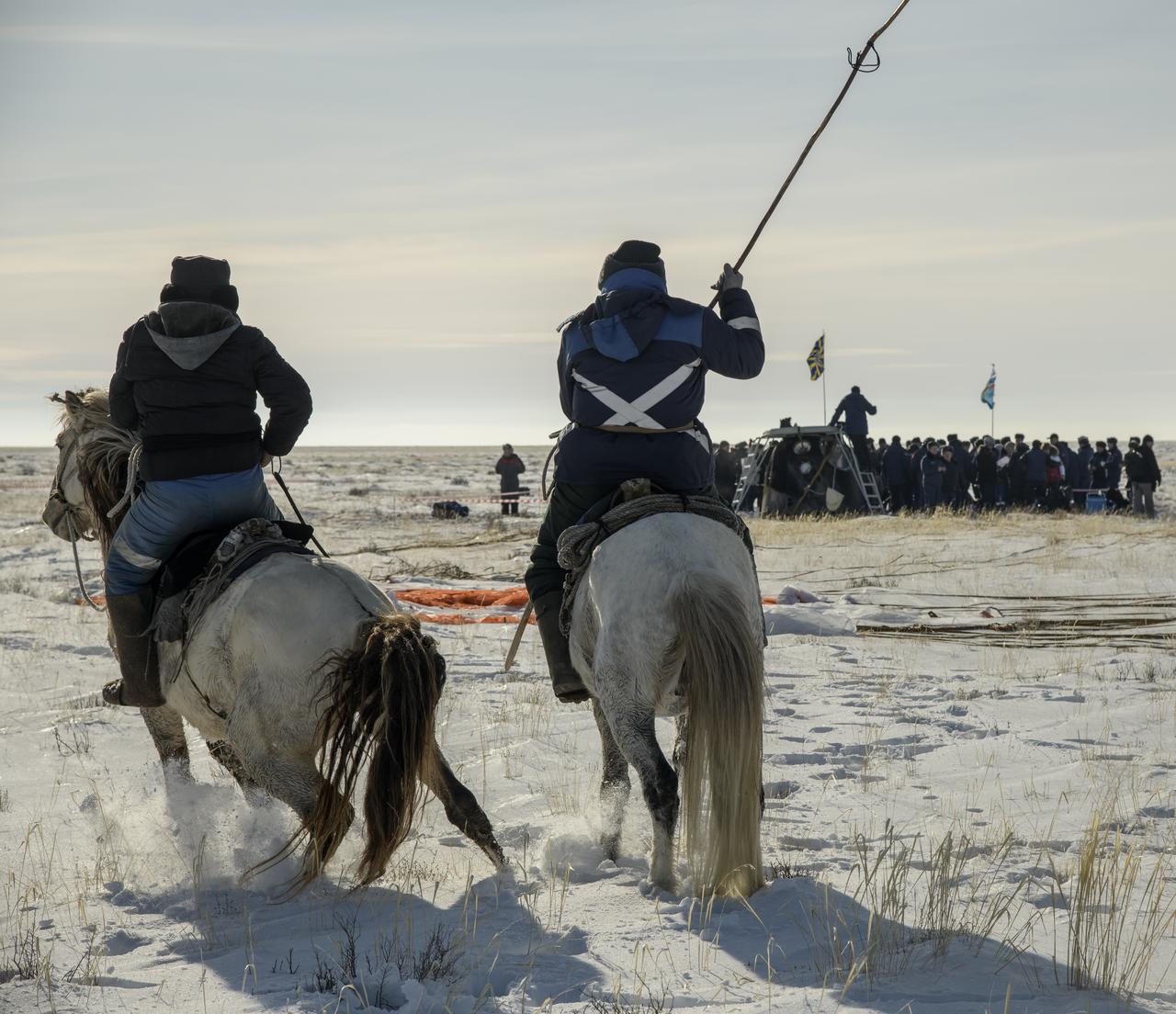
Two locals on horseback arrive at the Soyuz MS-13 spacecraft shortly after it landed in a remote area near the town of Zhezkazgan, Kazakhstan with Expedition 61 crew members Christina Koch of NASA, Alexander Skvortsov of the Russian space agency Roscosmos, and Luca Parmitano of ESA (European Space Agency) Thursday, Feb. 6, 2020. Koch returned to Earth after logging 328 days in space --- the longest spaceflight in history by a woman --- as a member of Expeditions 59-60-61 on the International Space Station. Skvortsov and Parmitano returned after 201 days in space where they served as Expedition 60-61 crew members onboard the station. Photo Credit: (NASA/Bill Ingalls)
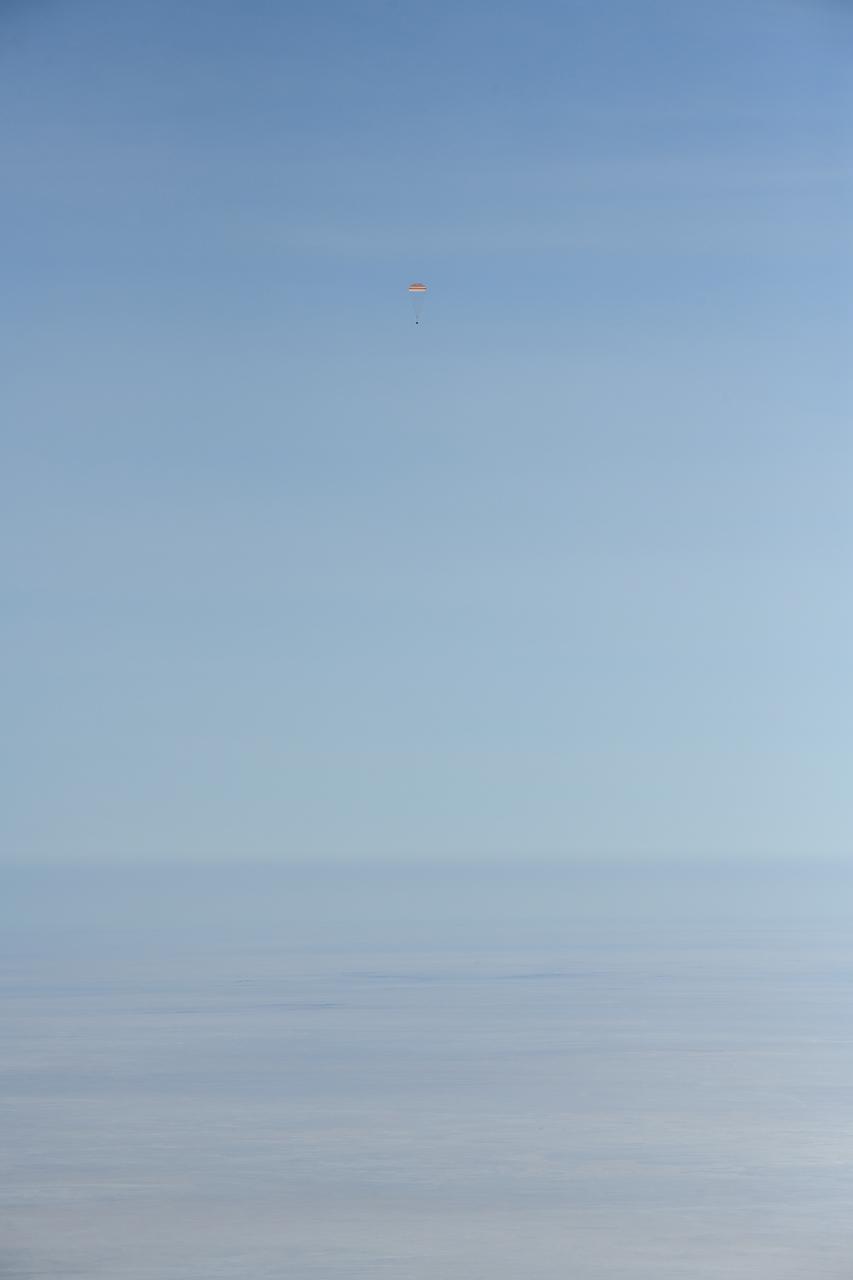
The Soyuz MS-13 spacecraft is seen as it lands in a remote area near the town of Zhezkazgan, Kazakhstan with Expedition 61 crew members Christina Koch of NASA, Alexander Skvortsov of the Russian space agency Roscosmos, and Luca Parmitano of ESA (European Space Agency) Thursday, Feb. 6, 2020. Koch returned to Earth after logging 328 days in space --- the longest spaceflight in history by a woman --- as a member of Expeditions 59-60-61 on the International Space Station. Skvortsov and Parmitano returned after 201 days in space where they served as Expedition 60-61 crew members onboard the station. Photo Credit: (NASA/Bill Ingalls)
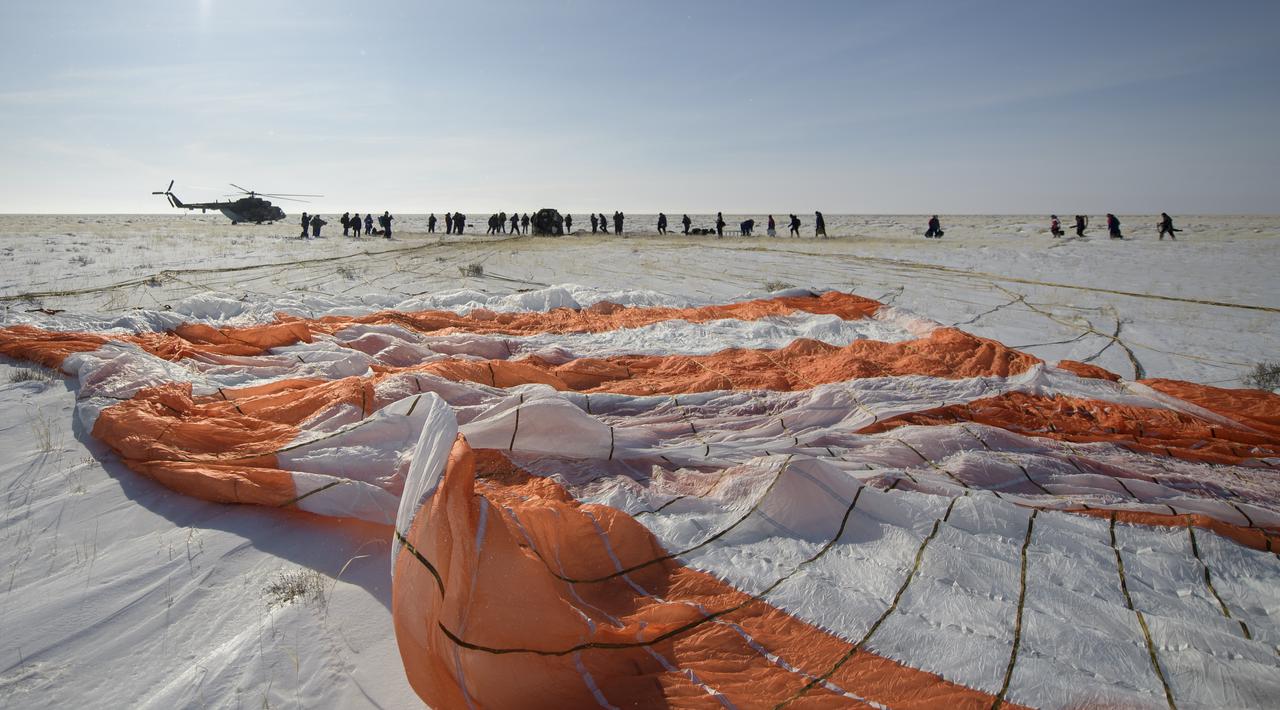
Russian support personnel work around the Soyuz MS-13 spacecraft shortly after it landed n a remote area near the town of Zhezkazgan, Kazakhstan with Expedition 61 crew members Christina Koch of NASA, Alexander Skvortsov of the Russian space agency Roscosmos, and Luca Parmitano of ESA (European Space Agency) Thursday, Feb. 6, 2020. Koch returned to Earth after logging 328 days in space --- the longest spaceflight in history by a woman --- as a member of Expeditions 59-60-61 on the International Space Station. Skvortsov and Parmitano returned after 201 days in space where they served as Expedition 60-61 crew members onboard the station. Photo Credit: (NASA/Bill Ingalls)
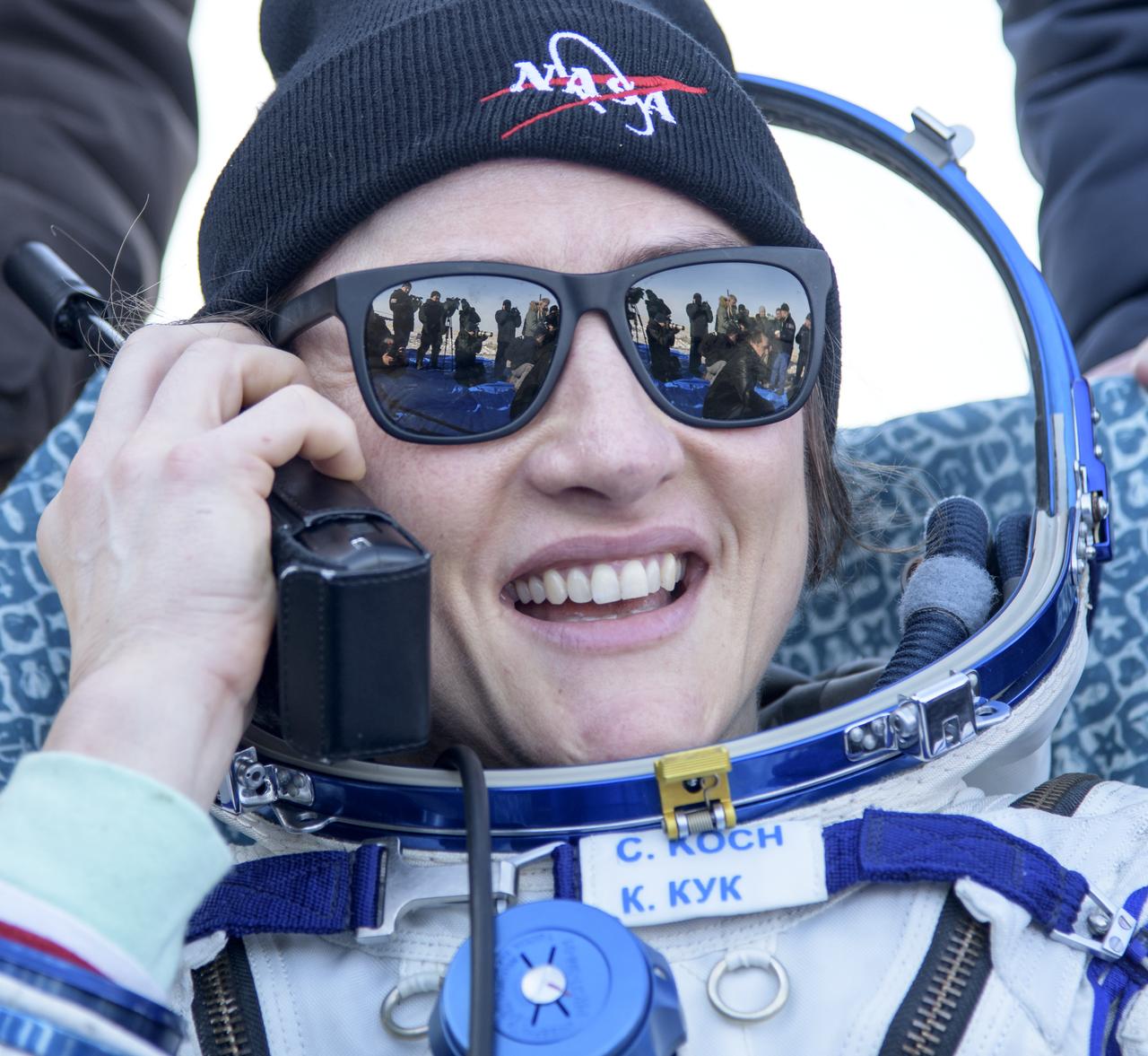
NASA astronaut Christina Koch is seen outside the Soyuz MS-13 spacecraft after she, Roscosmos cosmonaut Alexander Skvortsov, and ESA astronaut Luca Parmitano landed in a remote area near the town of Zhezkazgan, Kazakhstan on Thursday, Feb. 6, 2020. Koch returned to Earth after logging 328 days in space --- the longest spaceflight in history by a woman --- as a member of Expeditions 59-60-61 on the International Space Station. Skvortsov and Parmitano returned after 201 days in space where they served as Expedition 60-61 crew members onboard the station. Photo Credit: (NASA/Bill Ingalls)
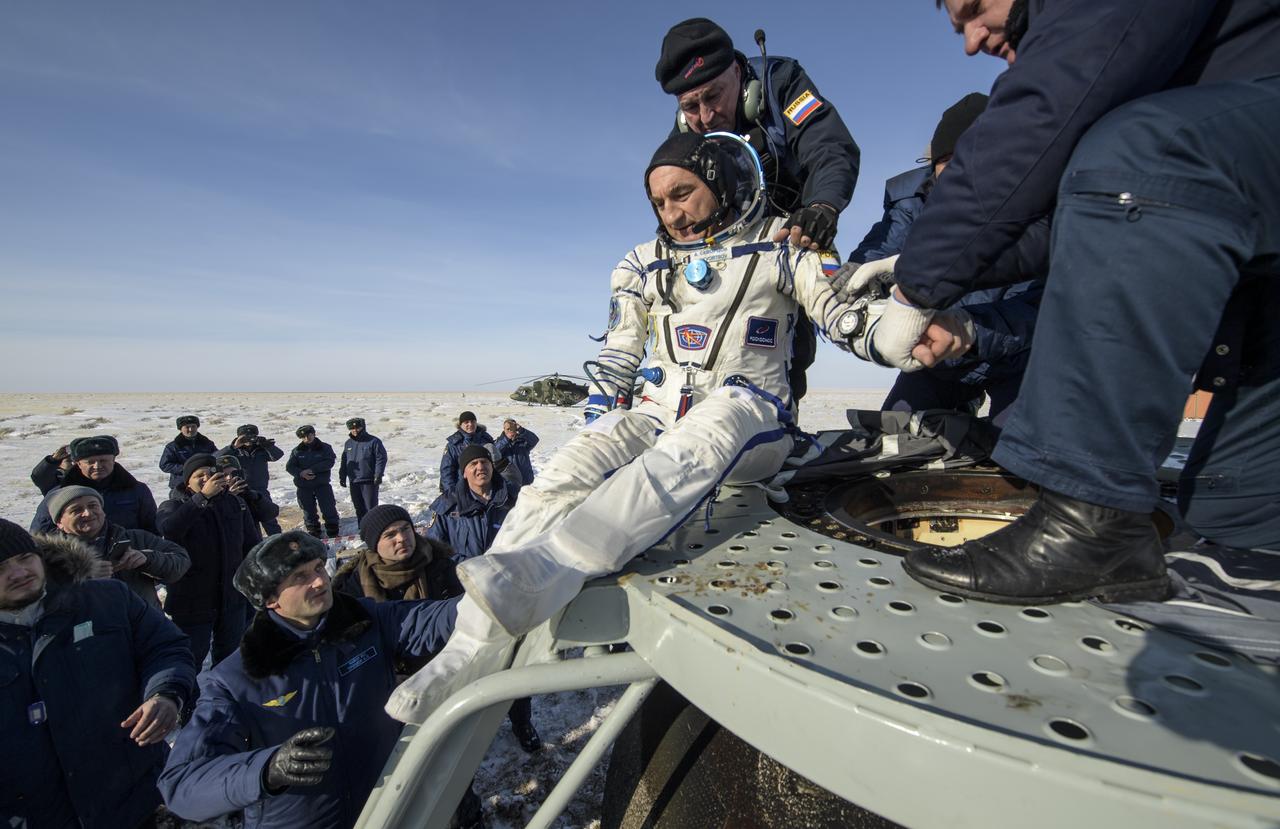
Roscosmos cosmonaut Alexander Skvortsov is helped out of the Soyuz MS-13 spacecraft just minutes after he, NASA astronaut Christina Koch, and ESA astronaut Luca Parmitano landed in a remote area near the town of Zhezkazgan, Kazakhstan on Thursday, Feb. 6, 2020. Koch returned to Earth after logging 328 days in space --- the longest spaceflight in history by a woman --- as a member of Expeditions 59-60-61 on the International Space Station. Skvortsov and Parmitano returned after 201 days in space where they served as Expedition 60-61 crew members onboard the station. Photo Credit: (NASA/Bill Ingalls)
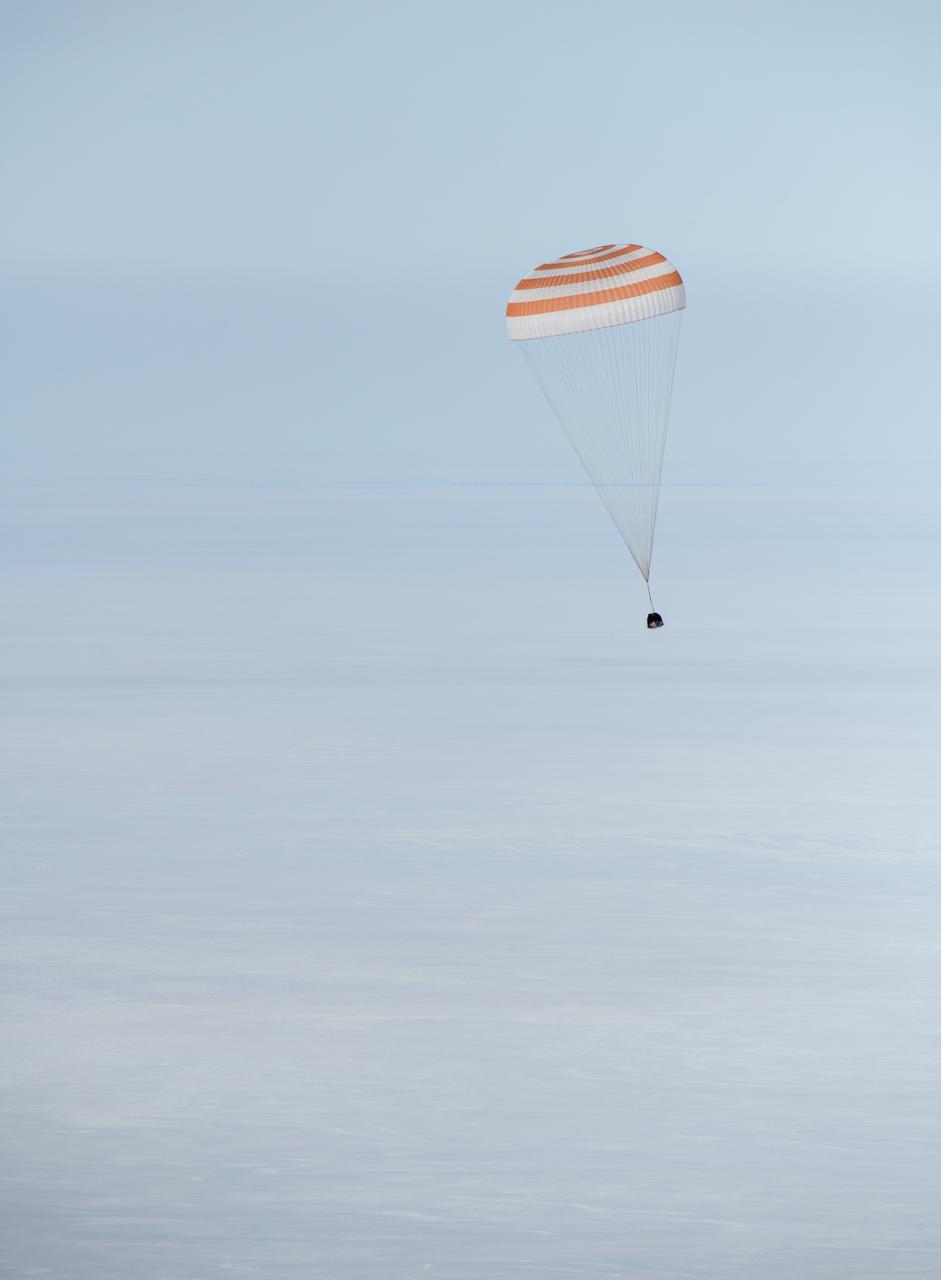
The Soyuz MS-13 spacecraft is seen as it lands in a remote area near the town of Zhezkazgan, Kazakhstan with Expedition 61 crew members Christina Koch of NASA, Alexander Skvortsov of the Russian space agency Roscosmos, and Luca Parmitano of ESA (European Space Agency) Thursday, Feb. 6, 2020. Koch returned to Earth after logging 328 days in space --- the longest spaceflight in history by a woman --- as a member of Expeditions 59-60-61 on the International Space Station. Skvortsov and Parmitano returned after 201 days in space where they served as Expedition 60-61 crew members onboard the station. Photo Credit: (NASA/Bill Ingalls)
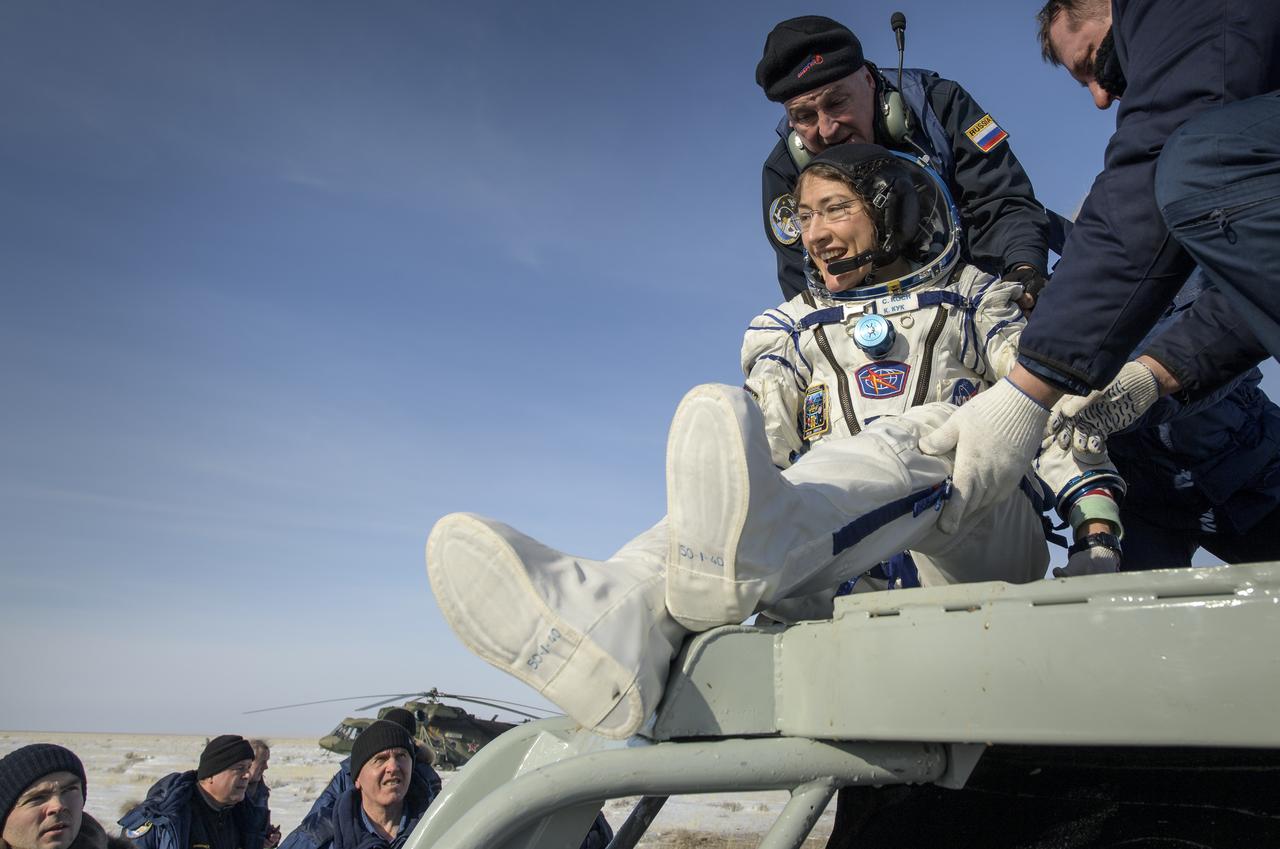
NASA astronaut Christina Koch is helped out of the Soyuz MS-13 spacecraft just minutes after she, Roscosmos cosmonaut Alexander Skvortsov, and ESA astronaut Luca Parmitano, landed in a remote area near the town of Zhezkazgan, Kazakhstan on Thursday, Feb. 6, 2020. Koch returned to Earth after logging 328 days in space --- the longest spaceflight in history by a woman --- as a member of Expeditions 59-60-61 on the International Space Station. Skvortsov and Parmitano returned after 201 days in space where they served as Expedition 60-61 crew members onboard the station. Photo Credit: (NASA/Bill Ingalls)
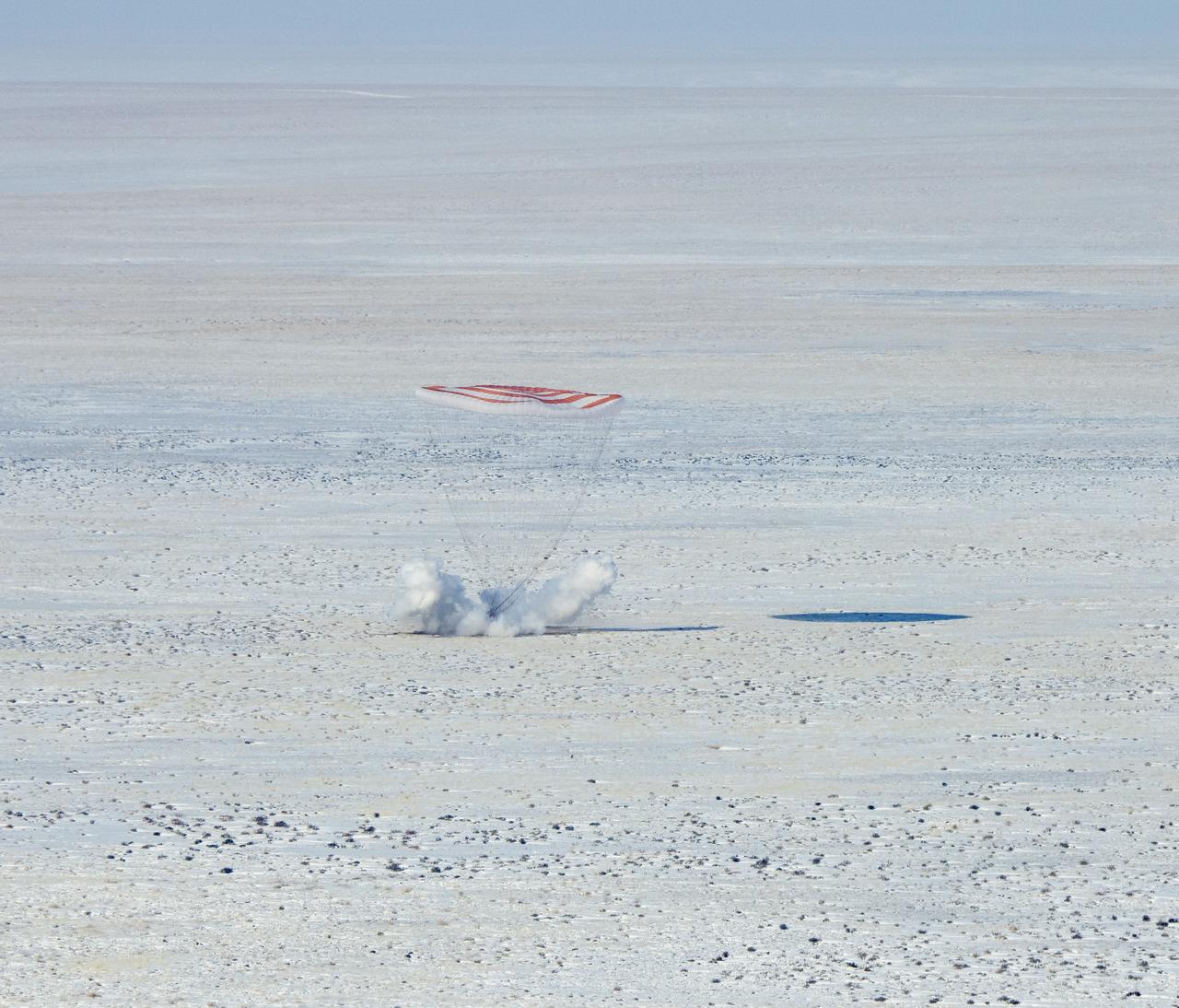
The Soyuz MS-13 spacecraft is seen as it lands in a remote area near the town of Zhezkazgan, Kazakhstan with Expedition 61 crew members Christina Koch of NASA, Alexander Skvortsov of the Russian space agency Roscosmos, and Luca Parmitano of ESA (European Space Agency) Thursday, Feb. 6, 2020. Koch returned to Earth after logging 328 days in space --- the longest spaceflight in history by a woman --- as a member of Expeditions 59-60-61 on the International Space Station. Skvortsov and Parmitano returned after 201 days in space where they served as Expedition 60-61 crew members onboard the station. Photo Credit: (NASA/Bill Ingalls)
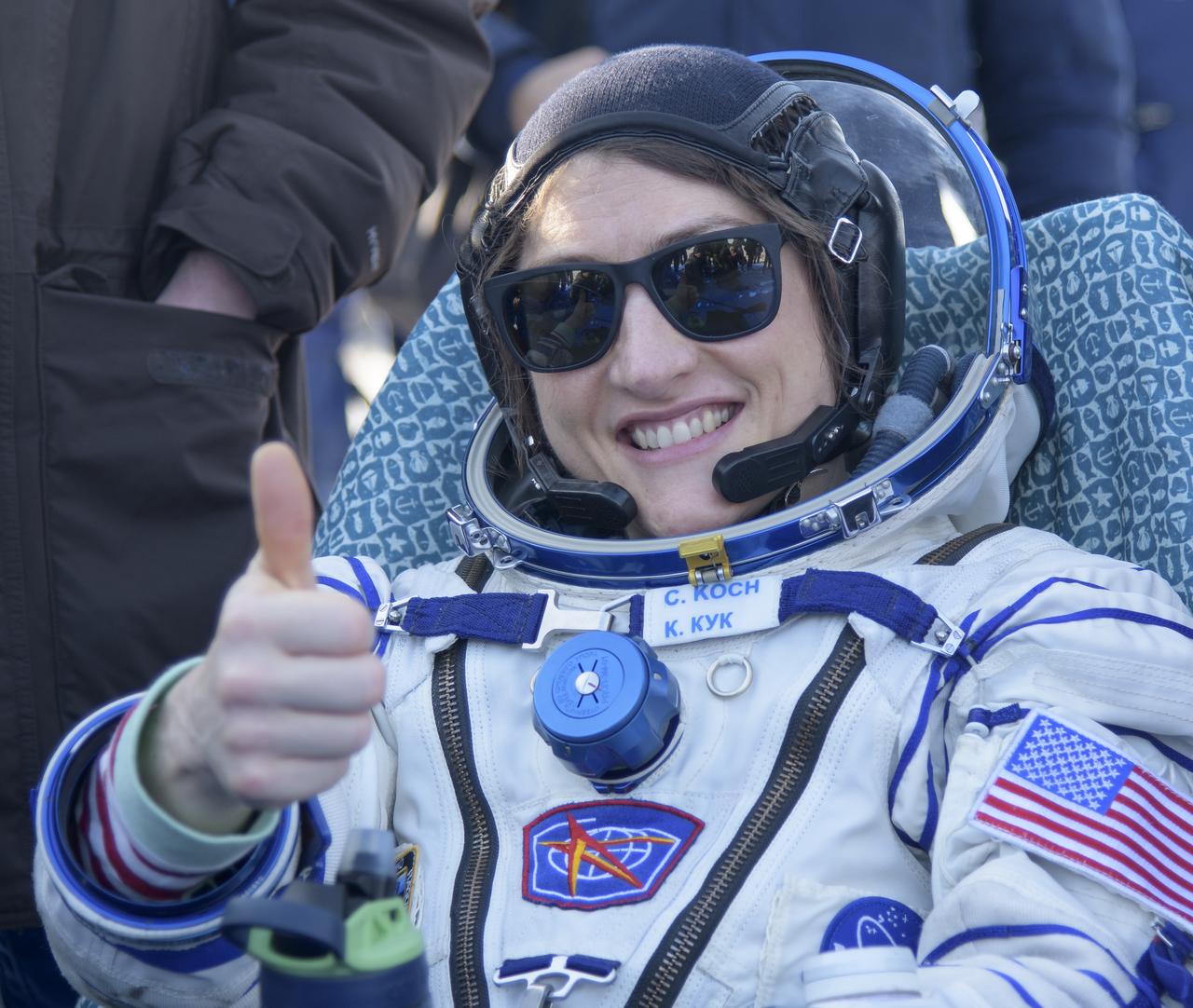
NASA astronaut Christina Koch is seen outside the Soyuz MS-13 spacecraft after she, Roscosmos cosmonaut Alexander Skvortsov, and ESA astronaut Luca Parmitano landed in a remote area near the town of Zhezkazgan, Kazakhstan on Thursday, Feb. 6, 2020. Koch returned to Earth after logging 328 days in space --- the longest spaceflight in history by a woman --- as a member of Expeditions 59-60-61 on the International Space Station. Skvortsov and Parmitano returned after 201 days in space where they served as Expedition 60-61 crew members onboard the station. Photo Credit: (NASA/Bill Ingalls)
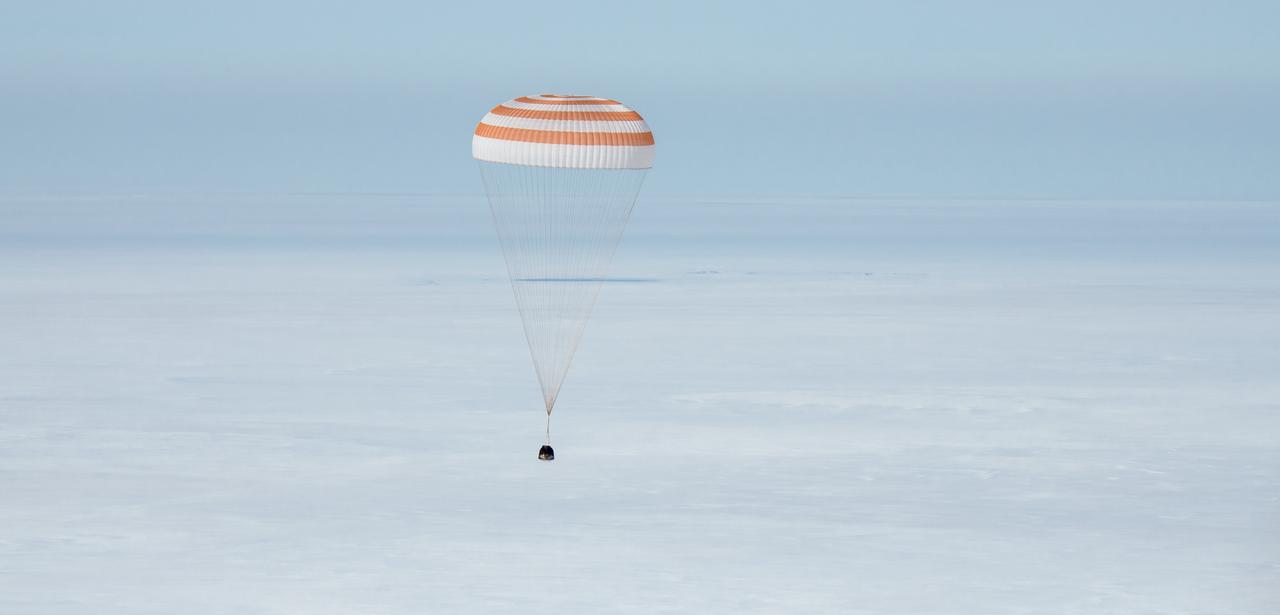
The Soyuz MS-13 spacecraft is seen as it lands in a remote area near the town of Zhezkazgan, Kazakhstan with Expedition 61 crew members Christina Koch of NASA, Alexander Skvortsov of the Russian space agency Roscosmos, and Luca Parmitano of ESA (European Space Agency) Thursday, Feb. 6, 2020. Koch returned to Earth after logging 328 days in space --- the longest spaceflight in history by a woman --- as a member of Expeditions 59-60-61 on the International Space Station. Skvortsov and Parmitano returned after 201 days in space where they served as Expedition 60-61 crew members onboard the station. Photo Credit: (NASA/Bill Ingalls)
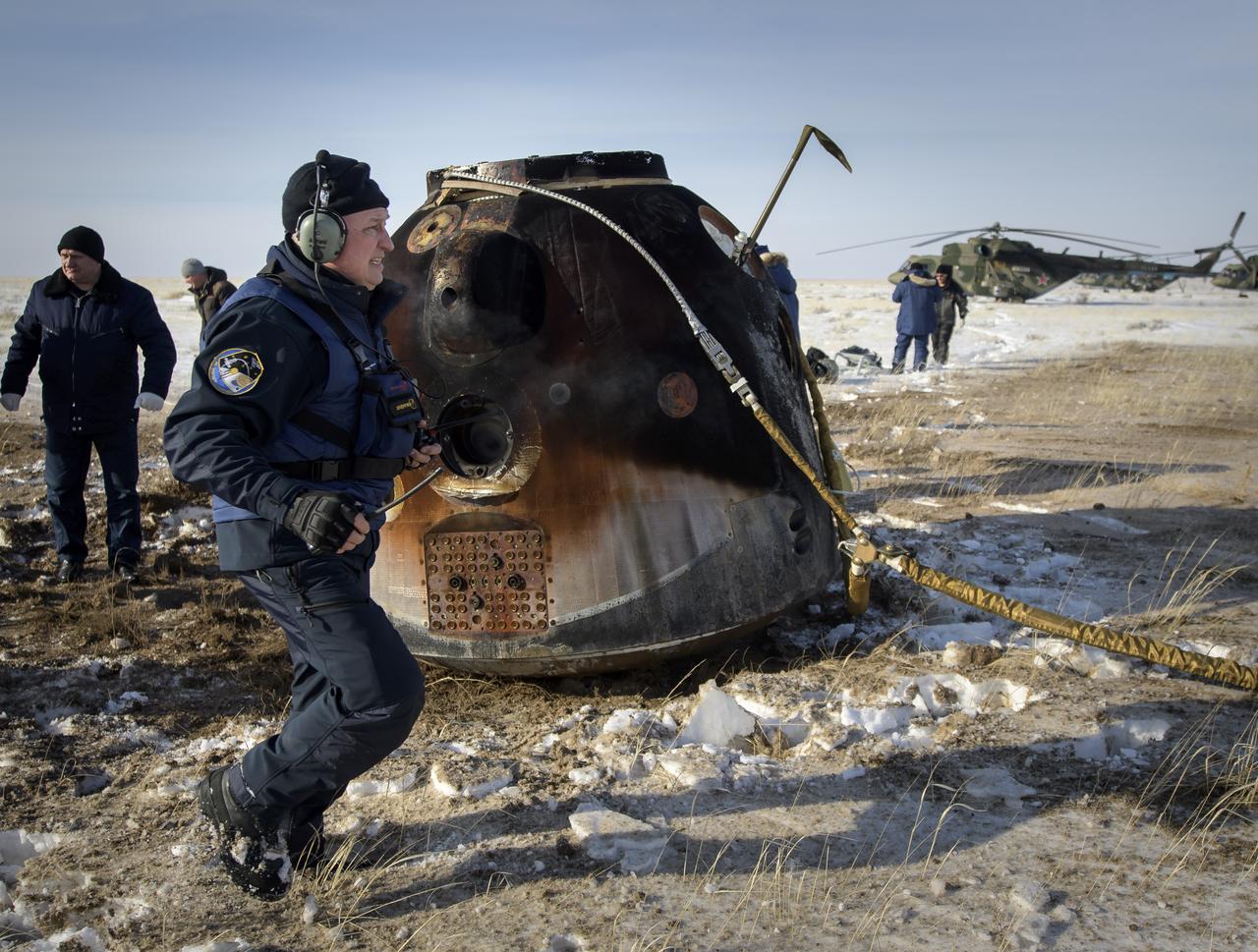
Russian Search and Rescue teams arrive at the Soyuz MS-13 spacecraft shortly after it landed in a remote area near the town of Zhezkazgan, Kazakhstan with Expedition 61 crew members Christina Koch of NASA, Alexander Skvortsov of the Russian space agency Roscosmos, and Luca Parmitano of ESA (European Space Agency) Thursday, Feb. 6, 2020. Koch returned to Earth after logging 328 days in space --- the longest spaceflight in history by a woman --- as a member of Expeditions 59-60-61 on the International Space Station. Skvortsov and Parmitano returned after 201 days in space where they served as Expedition 60-61 crew members onboard the station. Photo Credit: (NASA/Bill Ingalls)
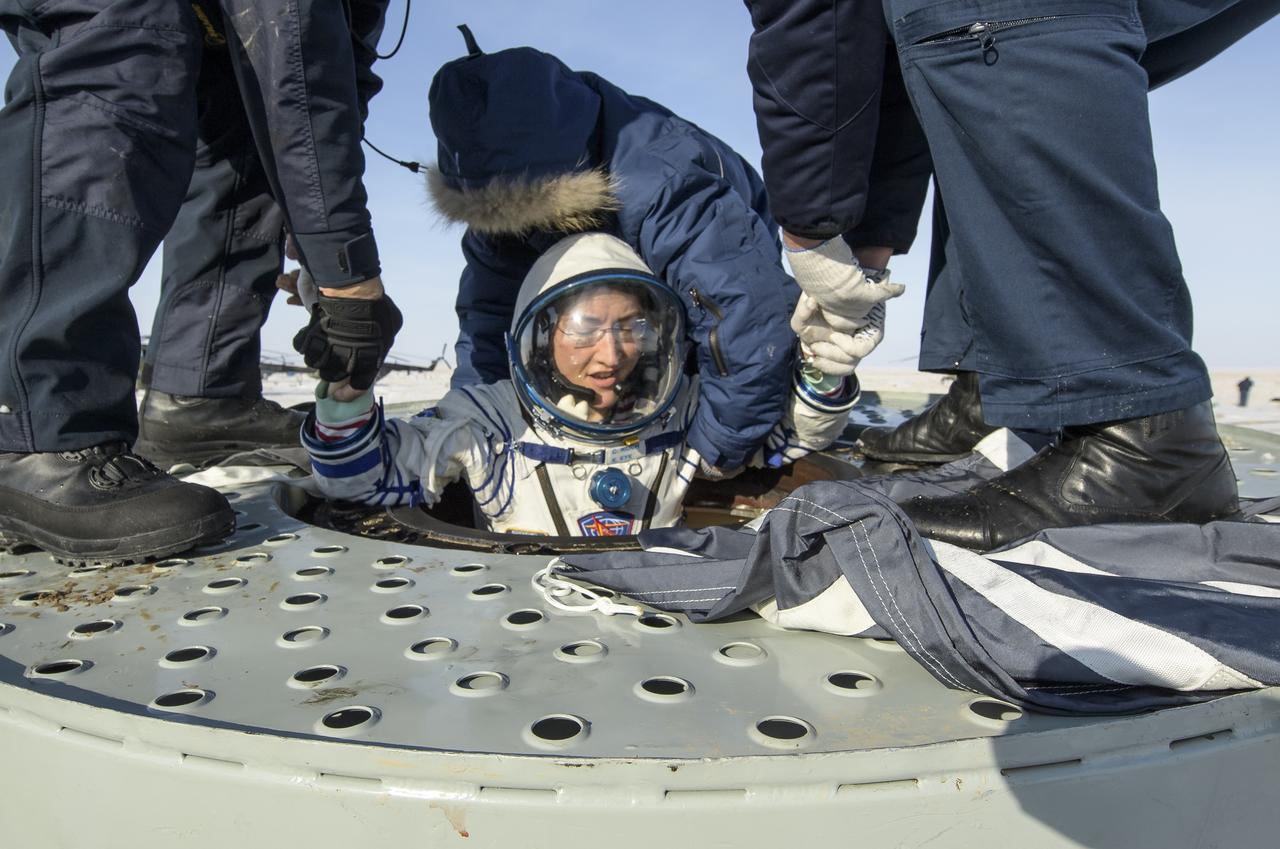
NASA astronaut Christina Koch is helped out of the Soyuz MS-13 spacecraft just minutes after she, Roscosmos cosmonaut Alexander Skvortsov, and ESA astronaut Luca Parmitano, landed in a remote area near the town of Zhezkazgan, Kazakhstan on Thursday, Feb. 6, 2020. Koch returned to Earth after logging 328 days in space --- the longest spaceflight in history by a woman --- as a member of Expeditions 59-60-61 on the International Space Station. Skvortsov and Parmitano returned after 201 days in space where they served as Expedition 60-61 crew members onboard the station. Photo Credit: (NASA/Bill Ingalls)
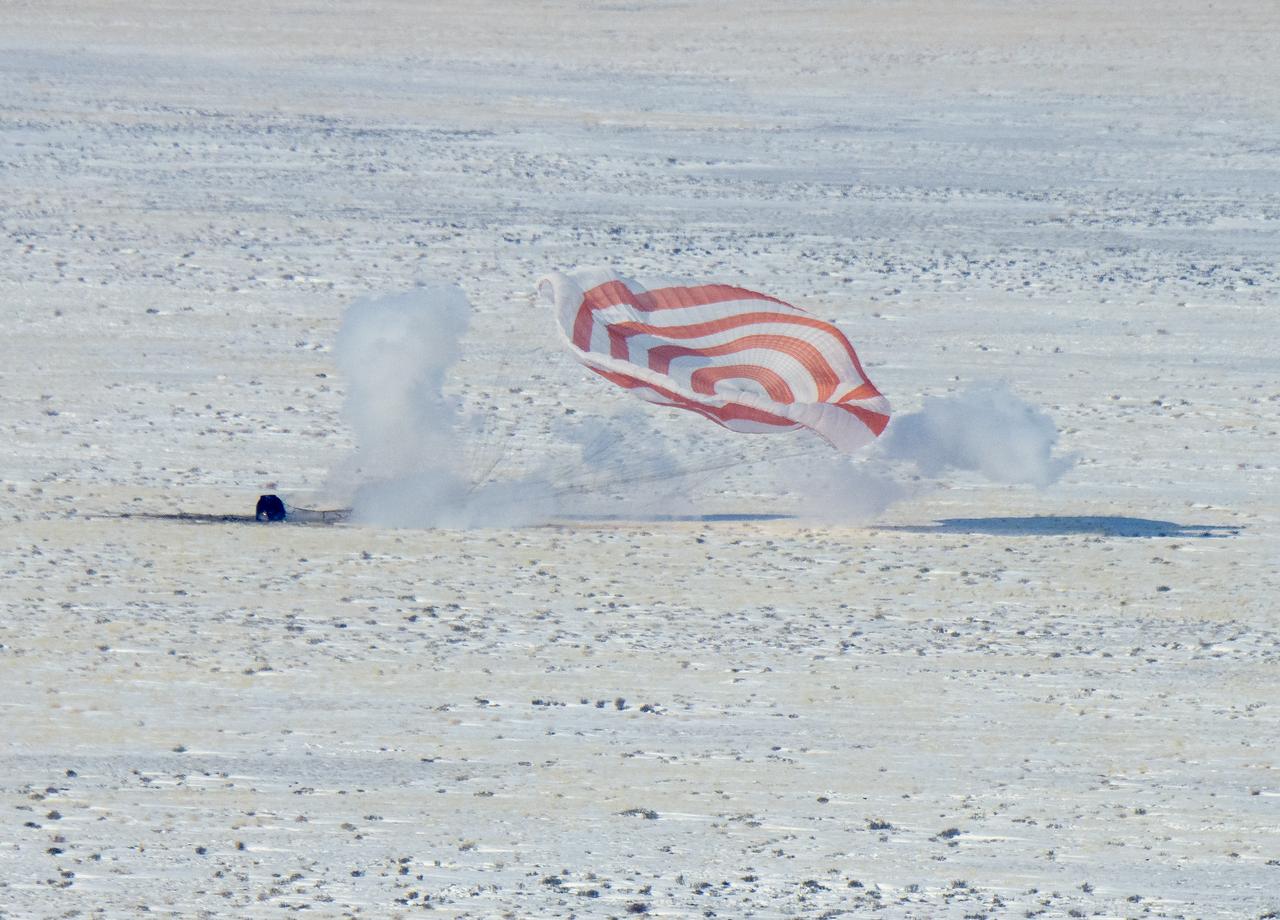
The Soyuz MS-13 spacecraft is seen as it lands in a remote area near the town of Zhezkazgan, Kazakhstan with Expedition 61 crew members Christina Koch of NASA, Alexander Skvortsov of the Russian space agency Roscosmos, and Luca Parmitano of ESA (European Space Agency) Thursday, Feb. 6, 2020. Koch returned to Earth after logging 328 days in space --- the longest spaceflight in history by a woman --- as a member of Expeditions 59-60-61 on the International Space Station. Skvortsov and Parmitano returned after 201 days in space where they served as Expedition 60-61 crew members onboard the station. Photo Credit: (NASA/Bill Ingalls)
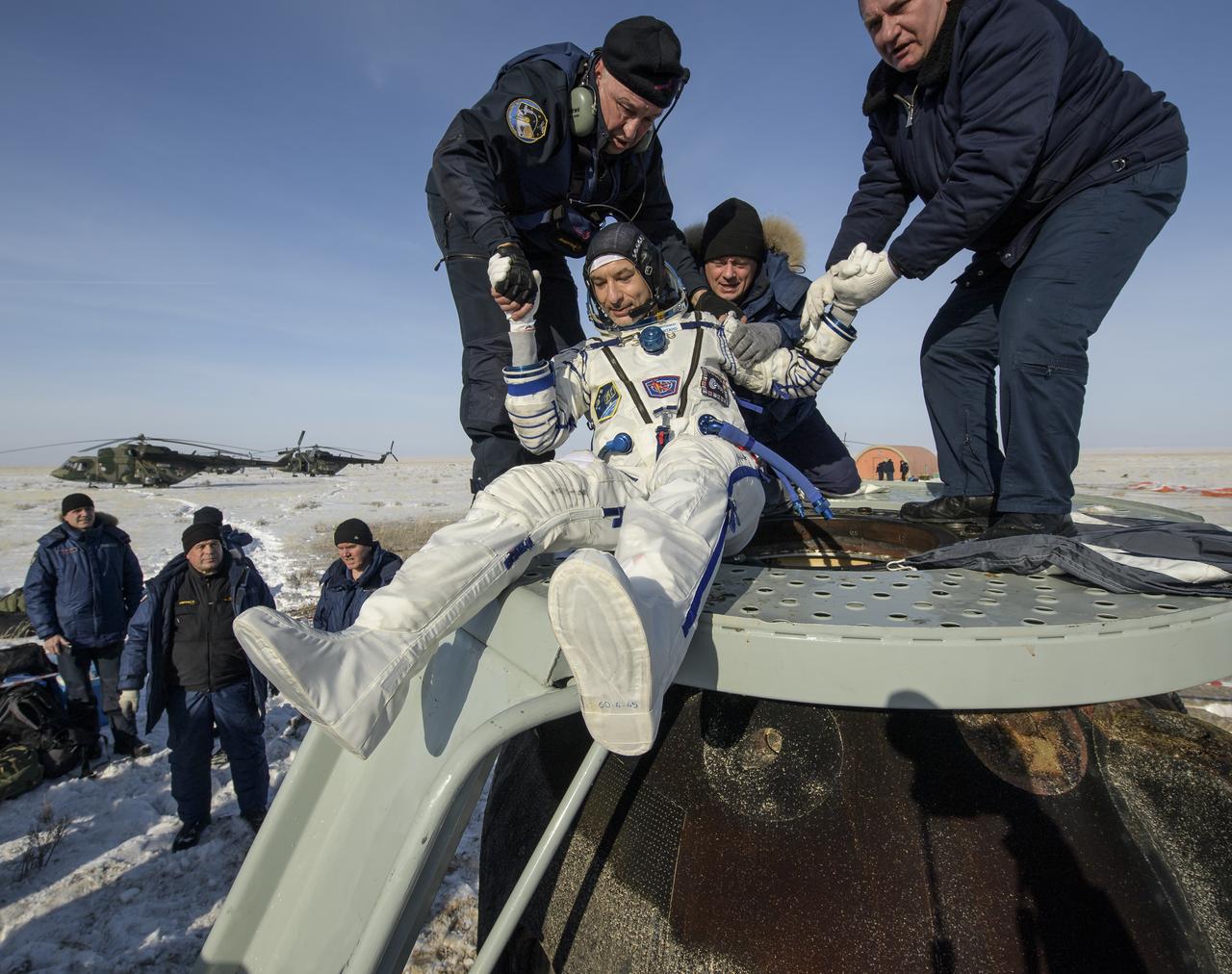
ESA astronaut Luca Parmitano is helped out of the Soyuz MS-13 spacecraft just minutes after he, NASA astronaut Christina Koch, and Roscosmos cosmonaut Alexander Skvortsov landed in a remote area near the town of Zhezkazgan, Kazakhstan on Thursday, Feb. 6, 2020. Koch returned to Earth after logging 328 days in space --- the longest spaceflight in history by a woman --- as a member of Expeditions 59-60-61 on the International Space Station. Skvortsov and Parmitano returned after 201 days in space where they served as Expedition 60-61 crew members onboard the station. Photo Credit: (NASA/Bill Ingalls)
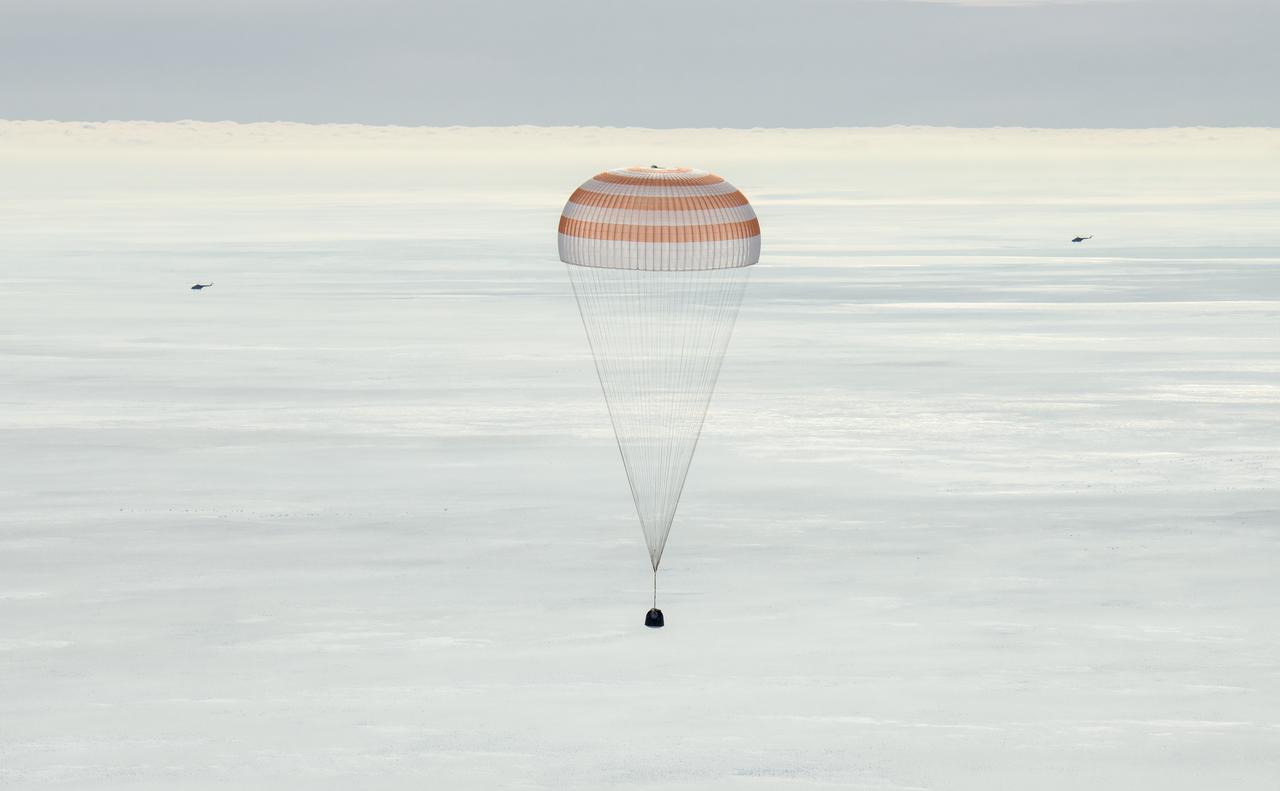
The Soyuz MS-13 spacecraft is seen as it lands in a remote area near the town of Zhezkazgan, Kazakhstan with Expedition 61 crew members Christina Koch of NASA, Alexander Skvortsov of the Russian space agency Roscosmos, and Luca Parmitano of ESA (European Space Agency) Thursday, Feb. 6, 2020. Koch returned to Earth after logging 328 days in space --- the longest spaceflight in history by a woman --- as a member of Expeditions 59-60-61 on the International Space Station. Skvortsov and Parmitano returned after 201 days in space where they served as Expedition 60-61 crew members onboard the station. Photo Credit: (NASA/Bill Ingalls)
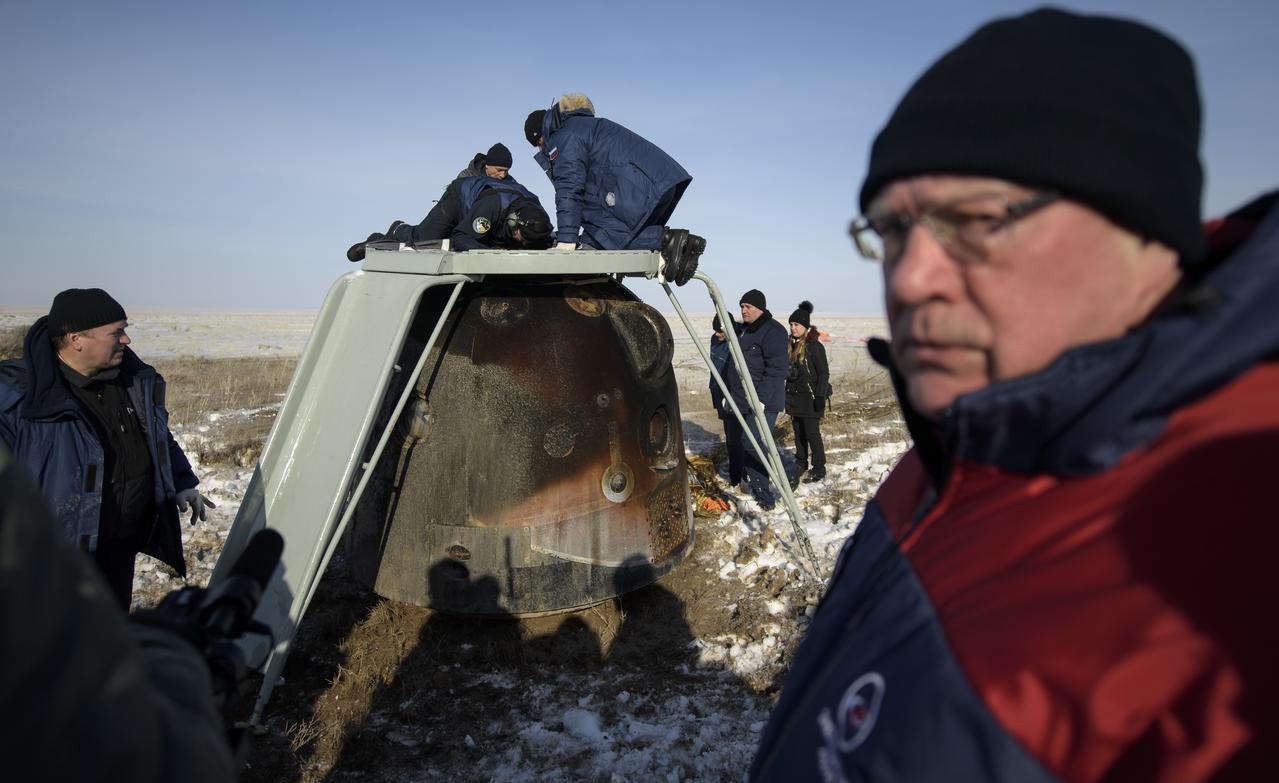
Russian Search and Rescue teams arrive at the Soyuz MS-13 spacecraft shortly after it landed in a remote area near the town of Zhezkazgan, Kazakhstan with Expedition 61 crew members Christina Koch of NASA, Alexander Skvortsov of the Russian space agency Roscosmos, and Luca Parmitano of ESA (European Space Agency) Thursday, Feb. 6, 2020. Koch returned to Earth after logging 328 days in space --- the longest spaceflight in history by a woman --- as a member of Expeditions 59-60-61 on the International Space Station. Skvortsov and Parmitano returned after 201 days in space where they served as Expedition 60-61 crew members onboard the station. Photo Credit: (NASA/Bill Ingalls)
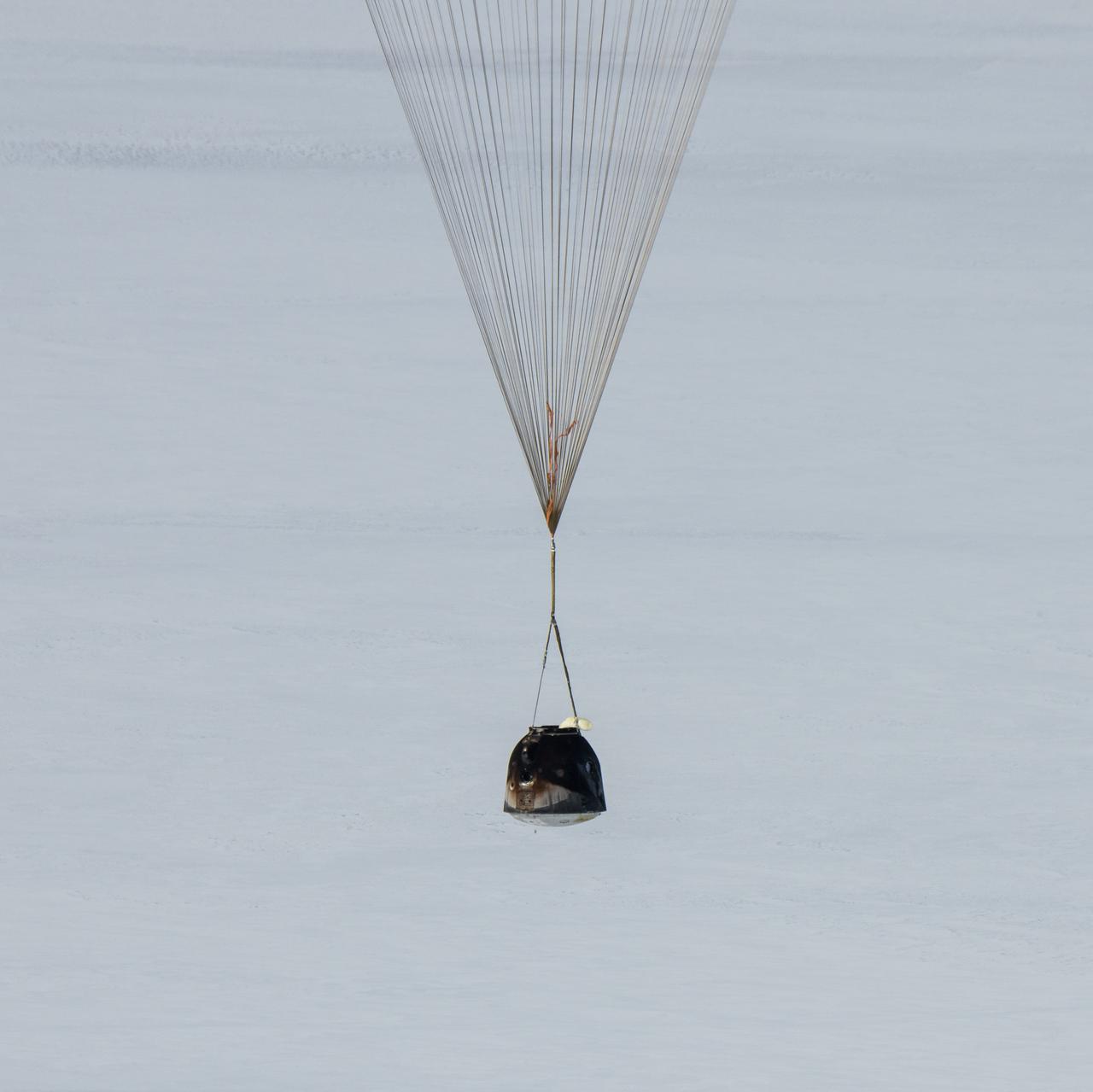
The Soyuz MS-13 spacecraft is seen as it lands in a remote area near the town of Zhezkazgan, Kazakhstan with Expedition 61 crew members Christina Koch of NASA, Alexander Skvortsov of the Russian space agency Roscosmos, and Luca Parmitano of ESA (European Space Agency) Thursday, Feb. 6, 2020. Koch returned to Earth after logging 328 days in space --- the longest spaceflight in history by a woman --- as a member of Expeditions 59-60-61 on the International Space Station. Skvortsov and Parmitano returned after 201 days in space where they served as Expedition 60-61 crew members onboard the station. Photo Credit: (NASA/Bill Ingalls)
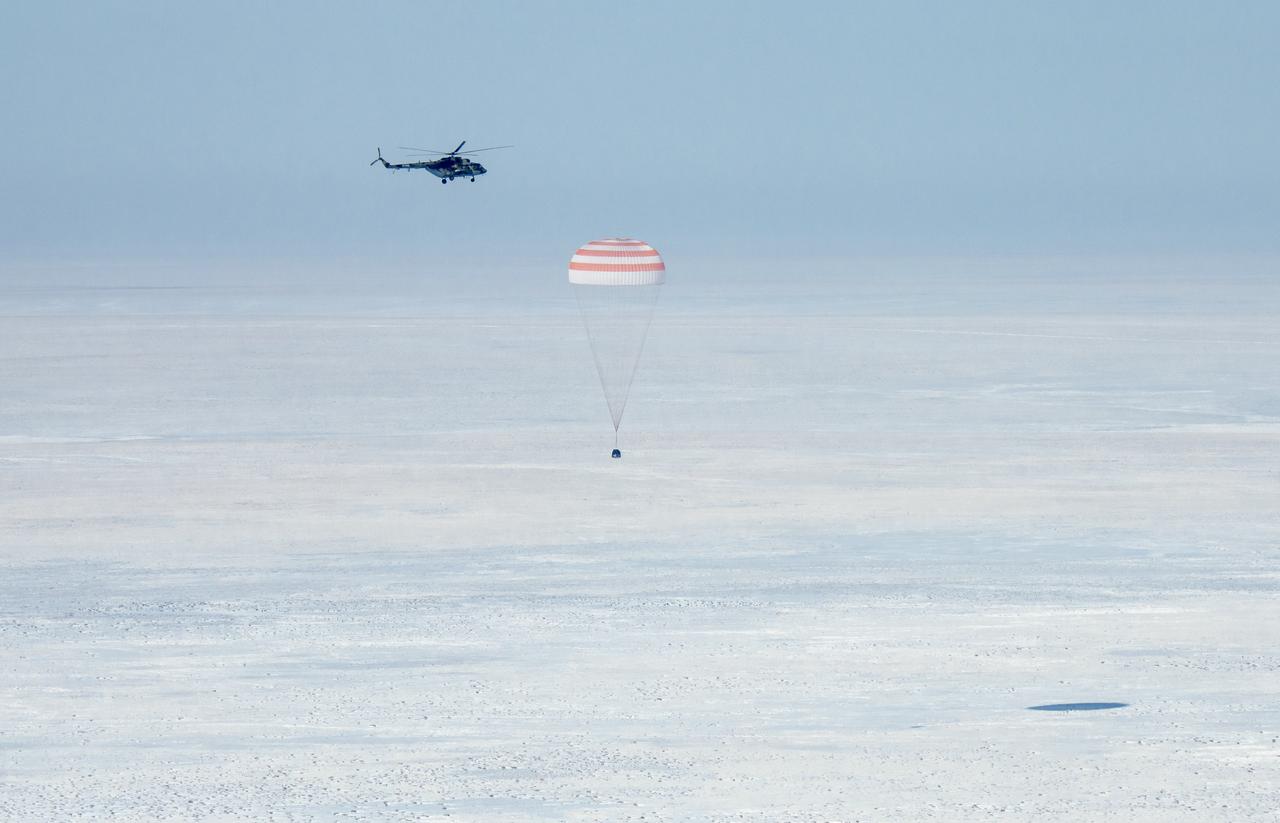
The Soyuz MS-13 spacecraft is seen as it lands in a remote area near the town of Zhezkazgan, Kazakhstan with Expedition 61 crew members Christina Koch of NASA, Alexander Skvortsov of the Russian space agency Roscosmos, and Luca Parmitano of ESA (European Space Agency) Thursday, Feb. 6, 2020. Koch returned to Earth after logging 328 days in space --- the longest spaceflight in history by a woman --- as a member of Expeditions 59-60-61 on the International Space Station. Skvortsov and Parmitano returned after 201 days in space where they served as Expedition 60-61 crew members onboard the station. Photo Credit: (NASA/Bill Ingalls)
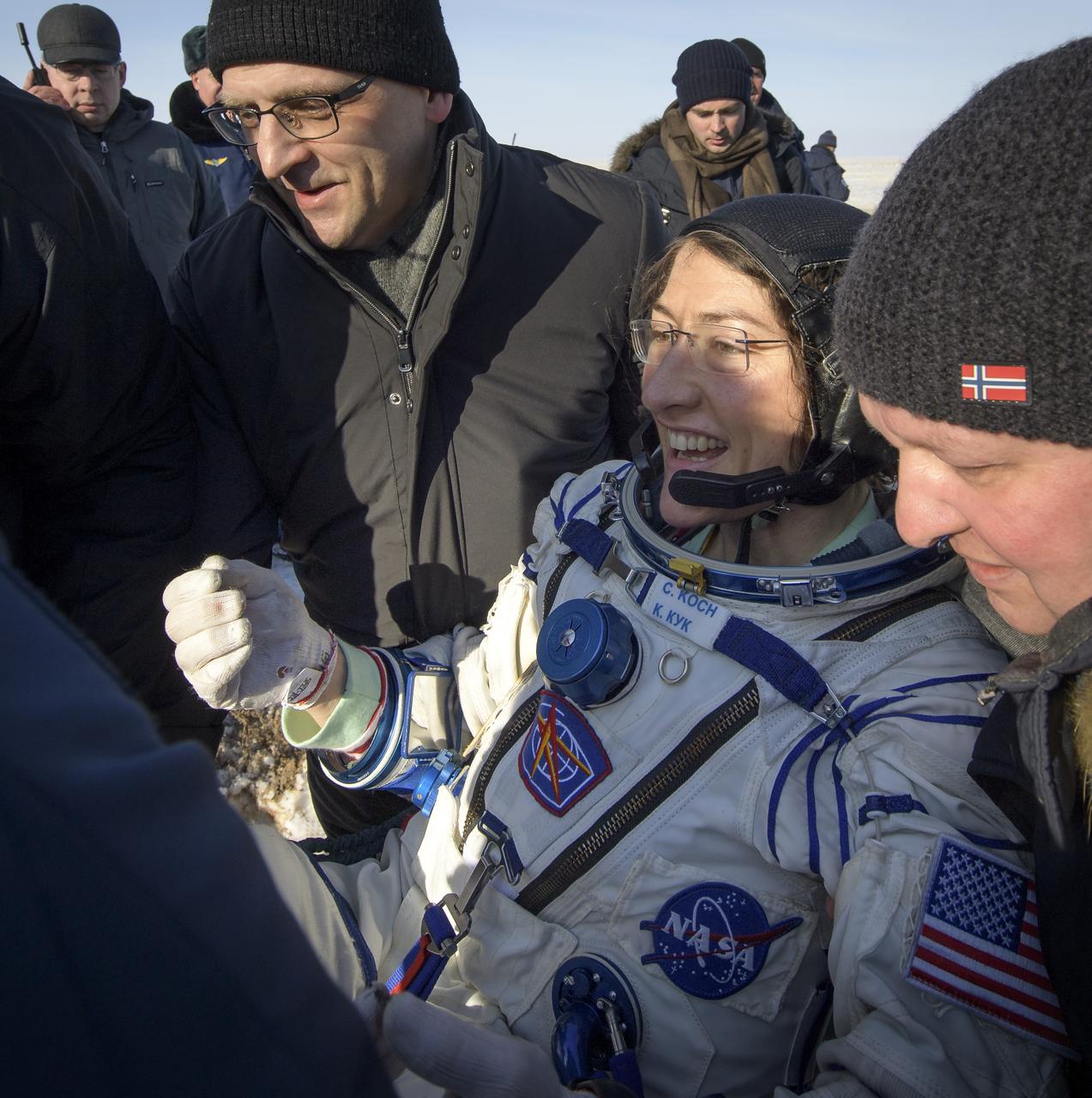
NASA astronaut Christina Koch is helped out of the Soyuz MS-13 spacecraft just minutes after she, Roscosmos cosmonaut Alexander Skvortsov, and ESA astronaut Luca Parmitano, landed in a remote area near the town of Zhezkazgan, Kazakhstan on Thursday, Feb. 6, 2020. Koch returned to Earth after logging 328 days in space --- the longest spaceflight in history by a woman --- as a member of Expeditions 59-60-61 on the International Space Station. Skvortsov and Parmitano returned after 201 days in space where they served as Expedition 60-61 crew members onboard the station. Photo Credit: (NASA/Bill Ingalls)
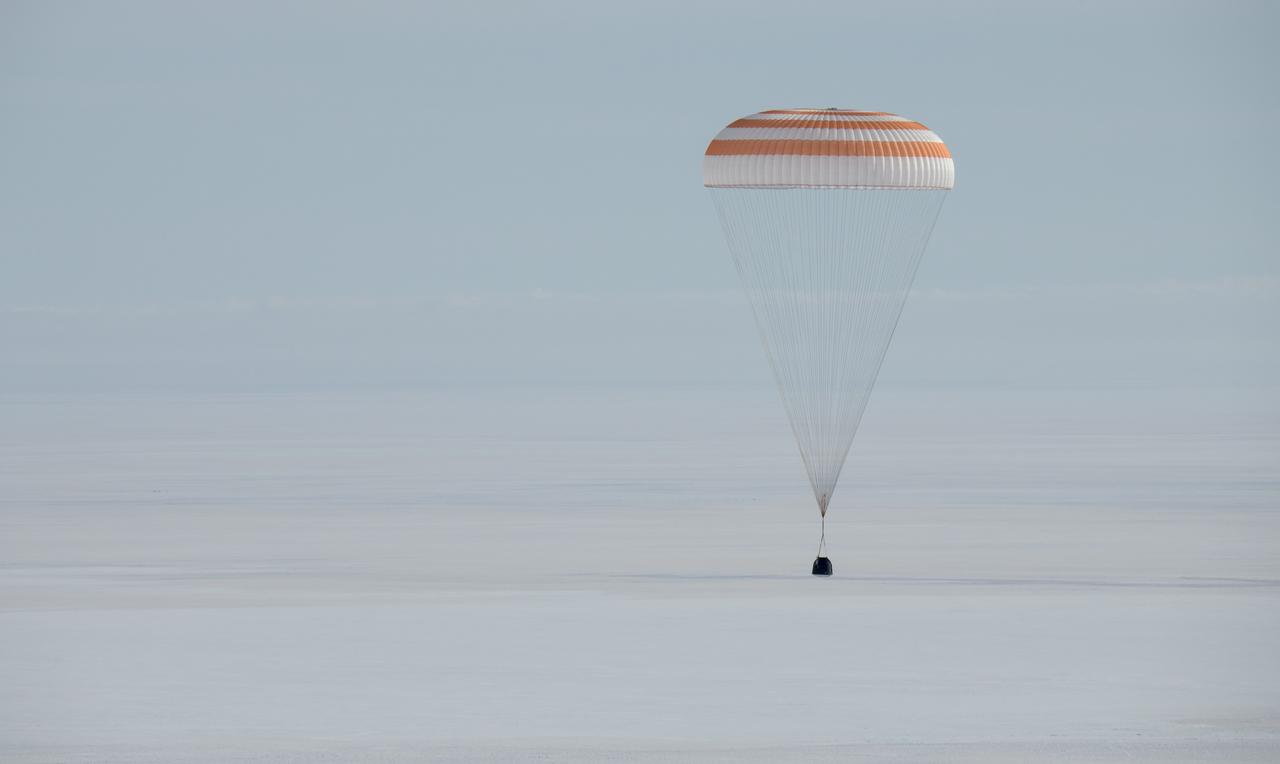
The Soyuz MS-13 spacecraft is seen as it lands in a remote area near the town of Zhezkazgan, Kazakhstan with Expedition 61 crew members Christina Koch of NASA, Alexander Skvortsov of the Russian space agency Roscosmos, and Luca Parmitano of ESA (European Space Agency) Thursday, Feb. 6, 2020. Koch returned to Earth after logging 328 days in space --- the longest spaceflight in history by a woman --- as a member of Expeditions 59-60-61 on the International Space Station. Skvortsov and Parmitano returned after 201 days in space where they served as Expedition 60-61 crew members onboard the station. Photo Credit: (NASA/Bill Ingalls)
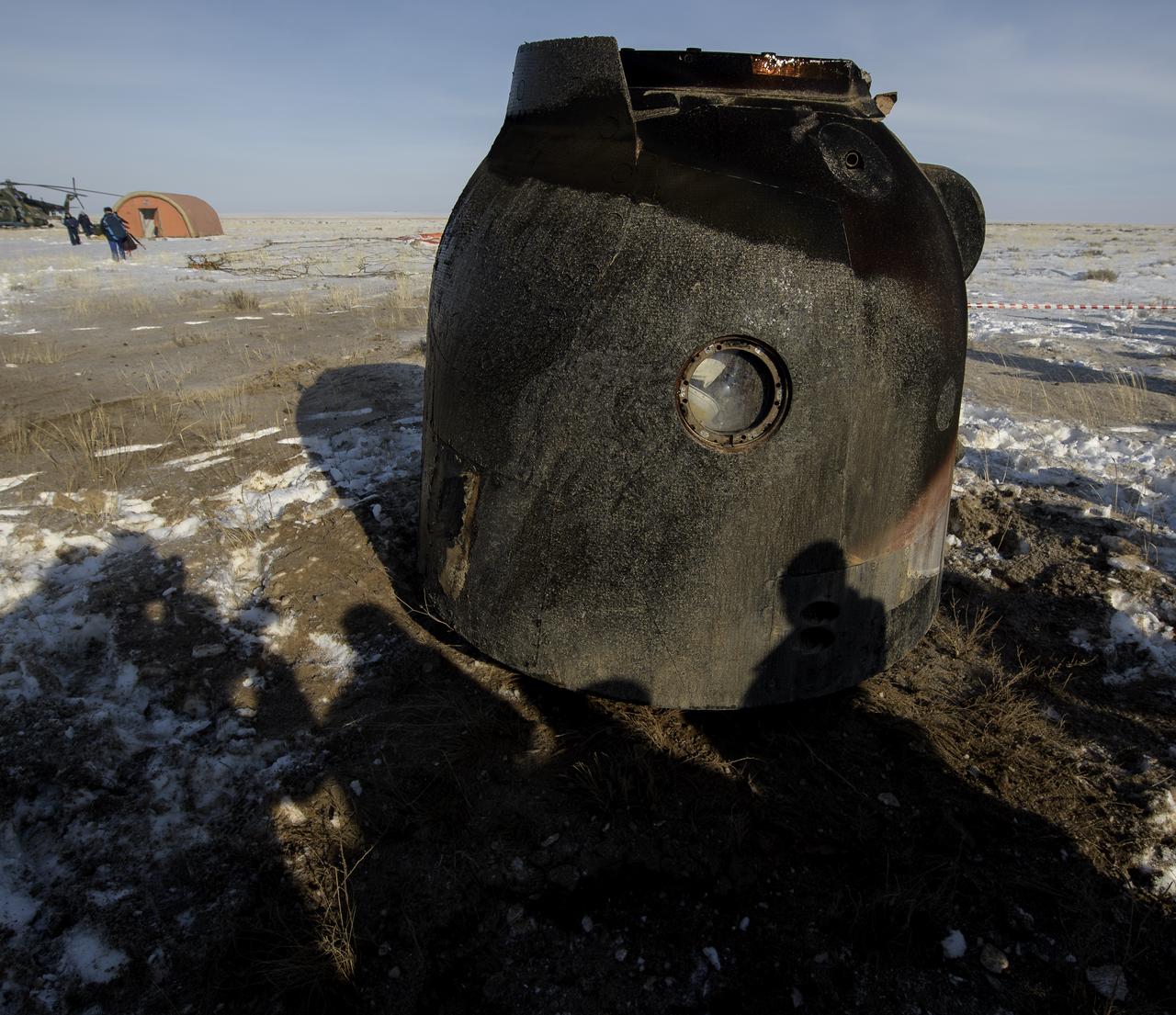
Russian Search and Rescue teams arrive at the Soyuz MS-13 spacecraft shortly after it landed in a remote area near the town of Zhezkazgan, Kazakhstan with Expedition 61 crew members Christina Koch of NASA, Alexander Skvortsov of the Russian space agency Roscosmos, and Luca Parmitano of ESA (European Space Agency) Thursday, Feb. 6, 2020. Koch returned to Earth after logging 328 days in space --- the longest spaceflight in history by a woman --- as a member of Expeditions 59-60-61 on the International Space Station. Skvortsov and Parmitano returned after 201 days in space where they served as Expedition 60-61 crew members onboard the station. Photo Credit: (NASA/Bill Ingalls)
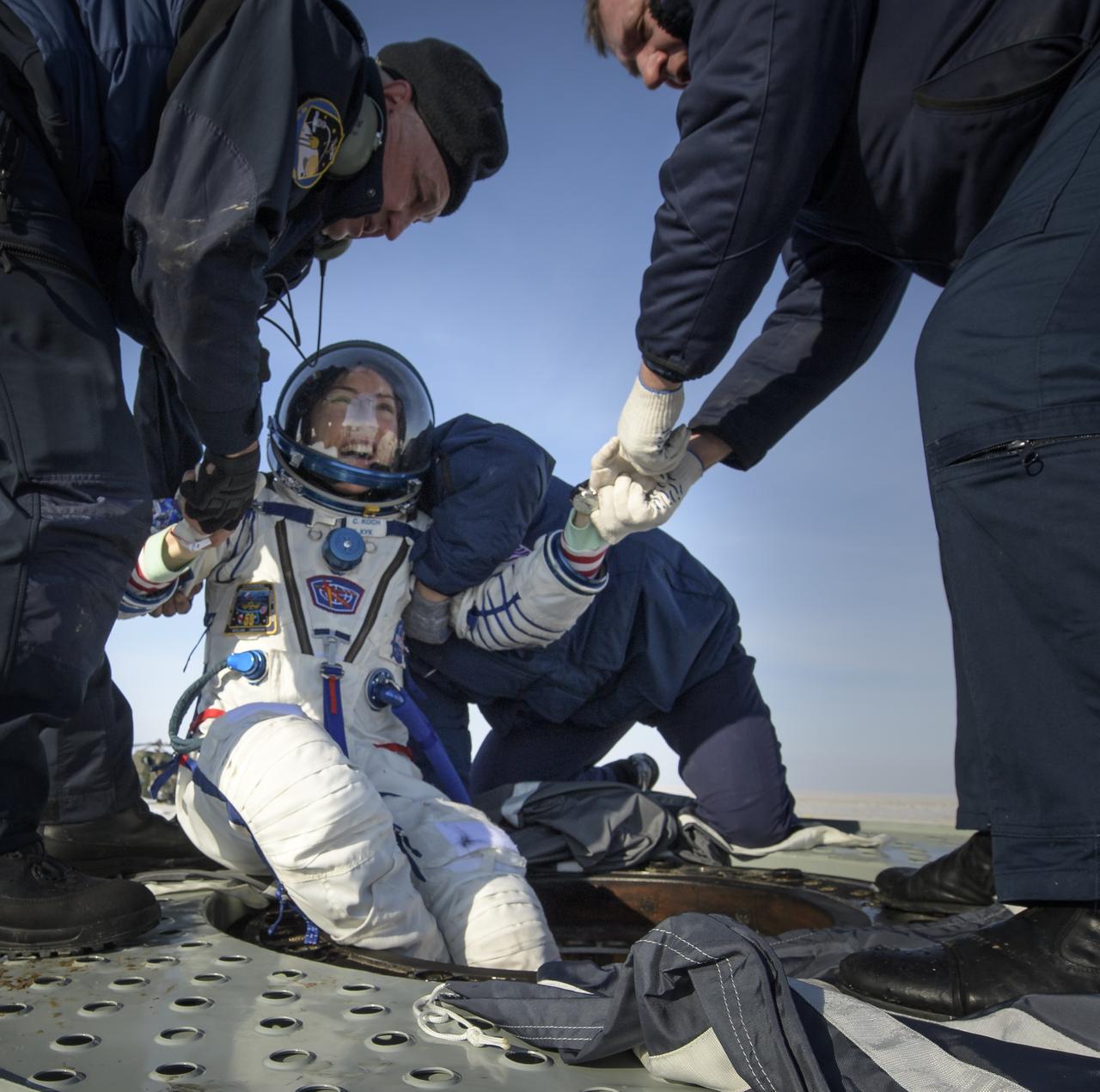
NASA astronaut Christina Koch is helped out of the Soyuz MS-13 spacecraft just minutes after she, Roscosmos cosmonaut Alexander Skvortsov, and ESA astronaut Luca Parmitano, landed in a remote area near the town of Zhezkazgan, Kazakhstan on Thursday, Feb. 6, 2020. Koch returned to Earth after logging 328 days in space --- the longest spaceflight in history by a woman --- as a member of Expeditions 59-60-61 on the International Space Station. Skvortsov and Parmitano returned after 201 days in space where they served as Expedition 60-61 crew members onboard the station. Photo Credit: (NASA/Bill Ingalls)
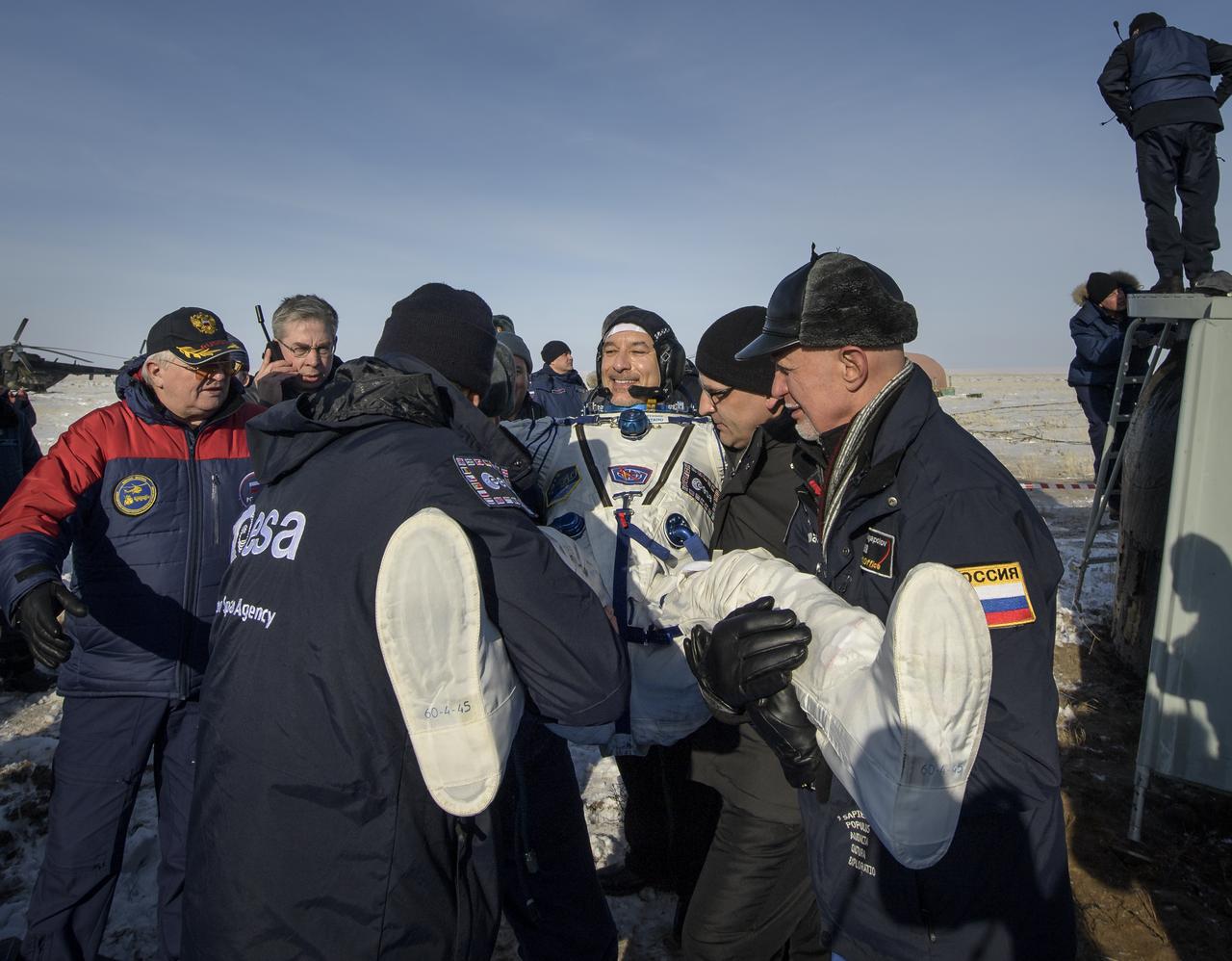
ESA astronaut Luca Parmitano is helped out of the Soyuz MS-13 spacecraft just minutes after he, NASA astronaut Christina Koch, and Roscosmos cosmonaut Alexander Skvortsov landed in a remote area near the town of Zhezkazgan, Kazakhstan on Thursday, Feb. 6, 2020. Koch returned to Earth after logging 328 days in space --- the longest spaceflight in history by a woman --- as a member of Expeditions 59-60-61 on the International Space Station. Skvortsov and Parmitano returned after 201 days in space where they served as Expedition 60-61 crew members onboard the station. Photo Credit: (NASA/Bill Ingalls)
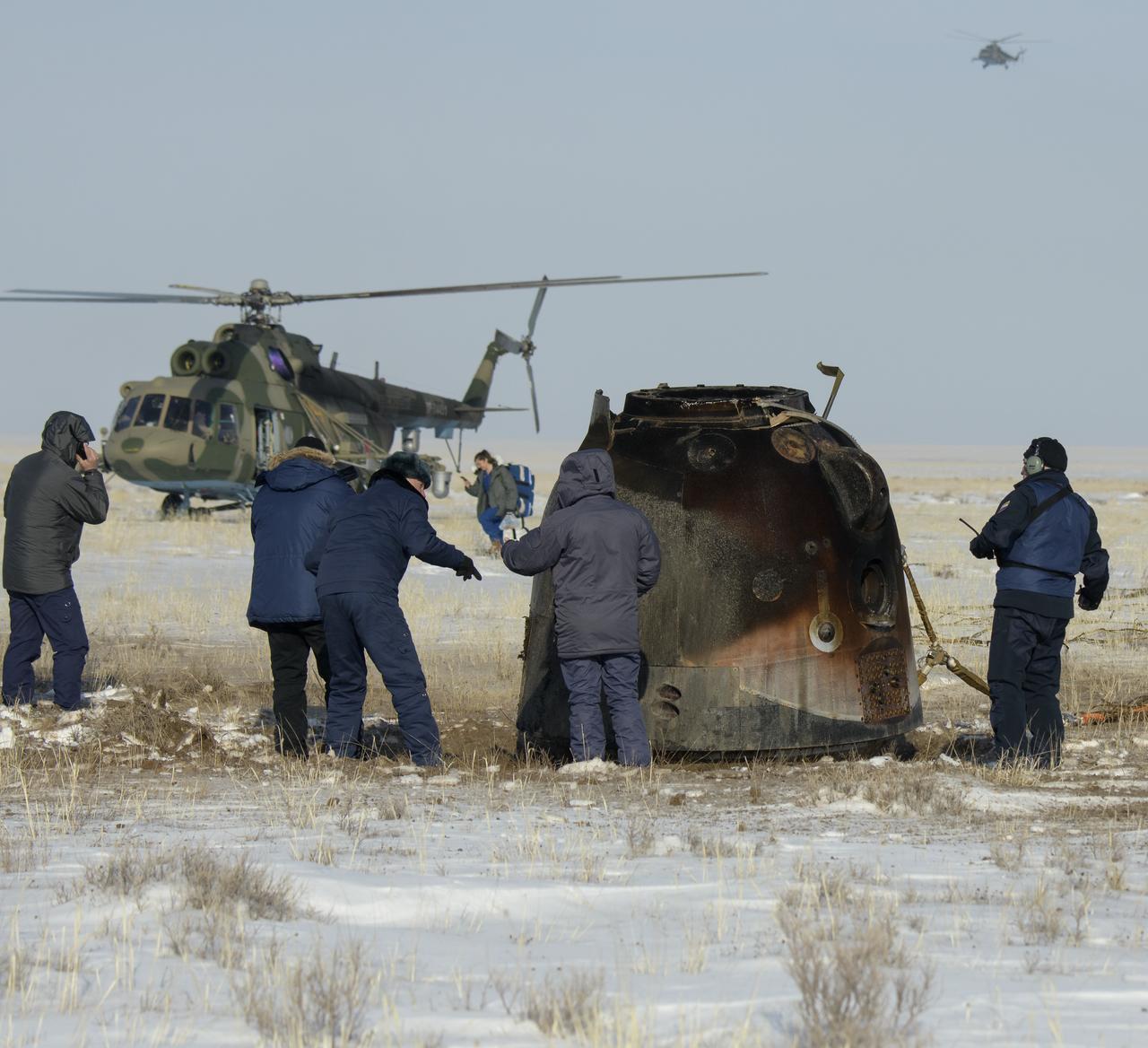
Russian Search and Rescue teams arrive at the Soyuz MS-13 spacecraft shortly after it landed in a remote area near the town of Zhezkazgan, Kazakhstan with Expedition 61 crew members Christina Koch of NASA, Alexander Skvortsov of the Russian space agency Roscosmos, and Luca Parmitano of ESA (European Space Agency) Thursday, Feb. 6, 2020. Koch returned to Earth after logging 328 days in space --- the longest spaceflight in history by a woman --- as a member of Expeditions 59-60-61 on the International Space Station. Skvortsov and Parmitano returned after 201 days in space where they served as Expedition 60-61 crew members onboard the station. Photo Credit: (NASA/Bill Ingalls)
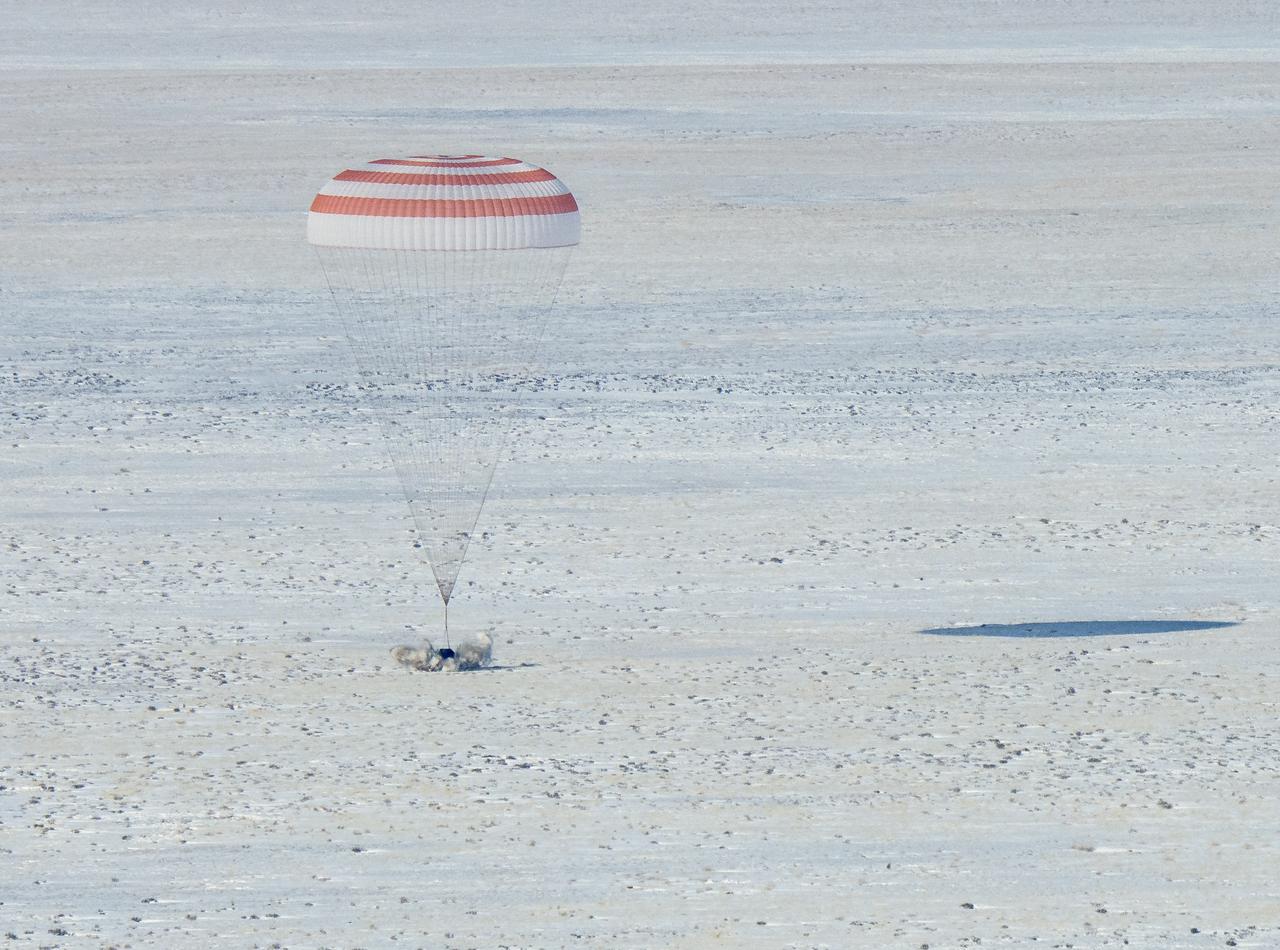
The Soyuz MS-13 spacecraft is seen as it lands in a remote area near the town of Zhezkazgan, Kazakhstan with Expedition 61 crew members Christina Koch of NASA, Alexander Skvortsov of the Russian space agency Roscosmos, and Luca Parmitano of ESA (European Space Agency) Thursday, Feb. 6, 2020. Koch returned to Earth after logging 328 days in space --- the longest spaceflight in history by a woman --- as a member of Expeditions 59-60-61 on the International Space Station. Skvortsov and Parmitano returned after 201 days in space where they served as Expedition 60-61 crew members onboard the station. Photo Credit: (NASA/Bill Ingalls)
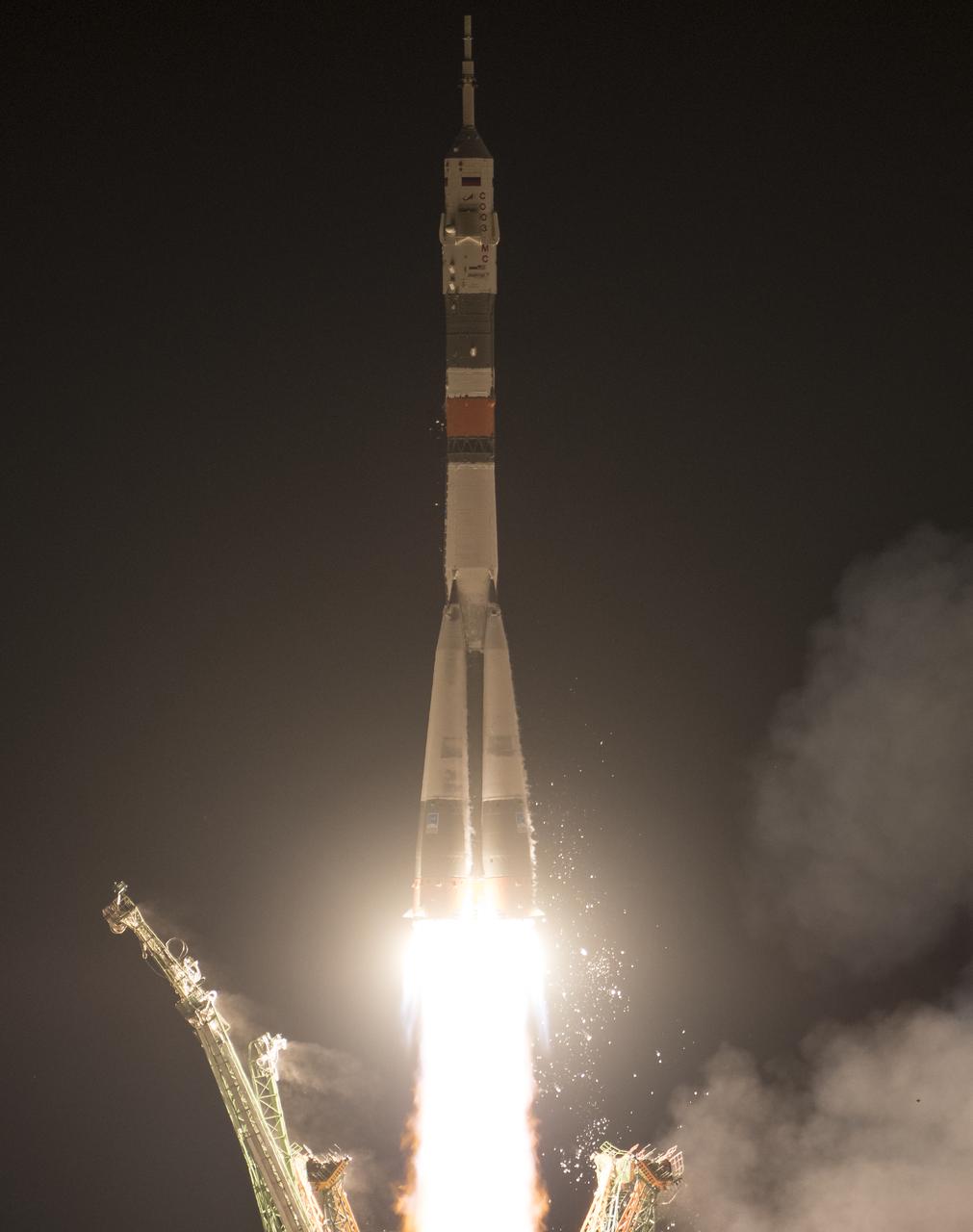
The Soyuz MS-13 rocket is launched with Expedition 60 Soyuz Commander Alexander Skvortsov of Roscosmos, flight engineer Andrew Morgan of NASA, and flight engineer Luca Parmitano of ESA (European Space Agency), Saturday, July 20, 2019 at the Baikonur Cosmodrome in Kazakhstan. Skvortsov, Morgan, and Parmitano will join fellow Expedition 60 crew members Commander Alexey Ovchinin of Roscosmos and NASA flight engineers Nick Hague and Christina Koch, who have been aboard the International Space Station since March. Photo Credit: (NASA/Joel Kowsky)
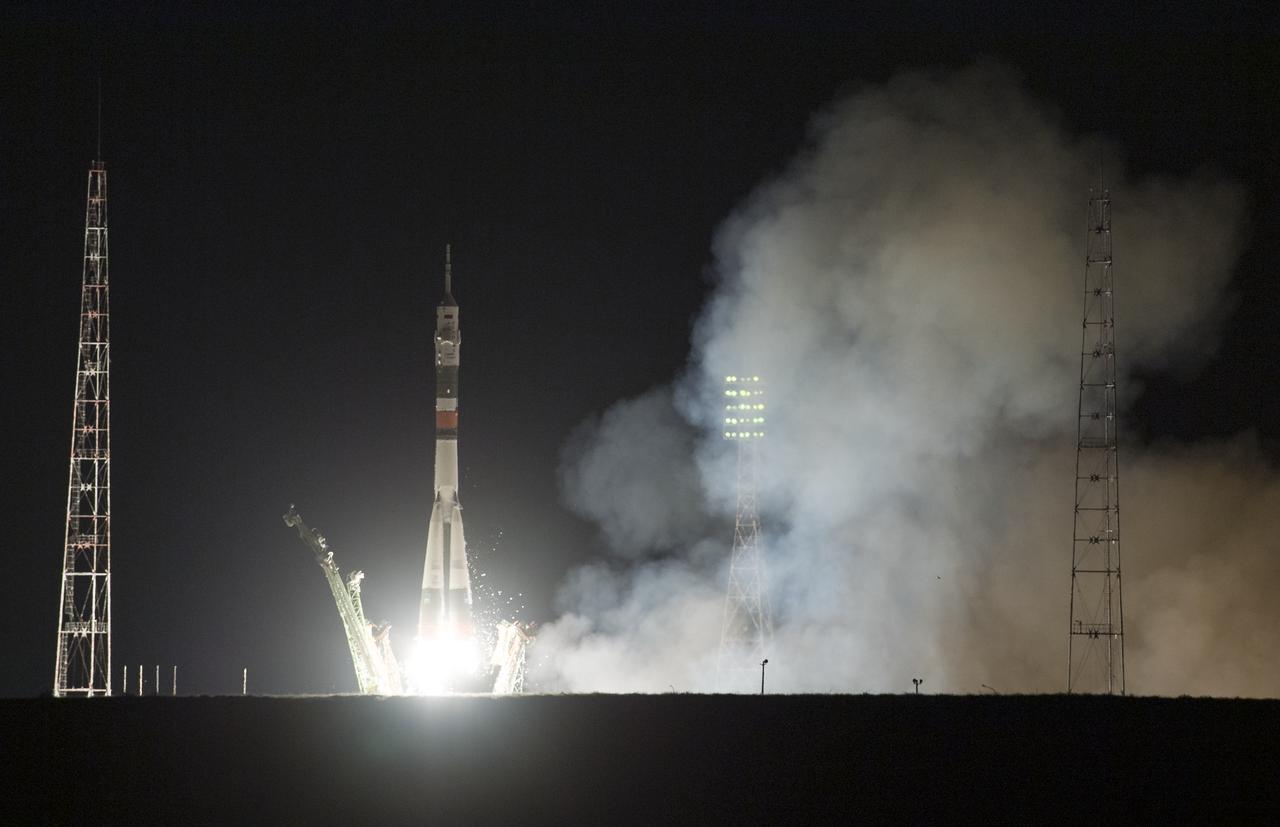
The Soyuz MS-13 rocket is launched with Expedition 60 Soyuz Commander Alexander Skvortsov of Roscosmos, flight engineer Andrew Morgan of NASA, and flight engineer Luca Parmitano of ESA (European Space Agency), Saturday, July 20, 2019 at the Baikonur Cosmodrome in Kazakhstan. Skvortsov, Morgan, and Parmitano will join fellow Expedition 60 crew members Commander Alexey Ovchinin of Roscosmos and NASA flight engineers Nick Hague and Christina Koch, who have been aboard the International Space Station since March. Photo Credit: (NASA/Joel Kowsky)
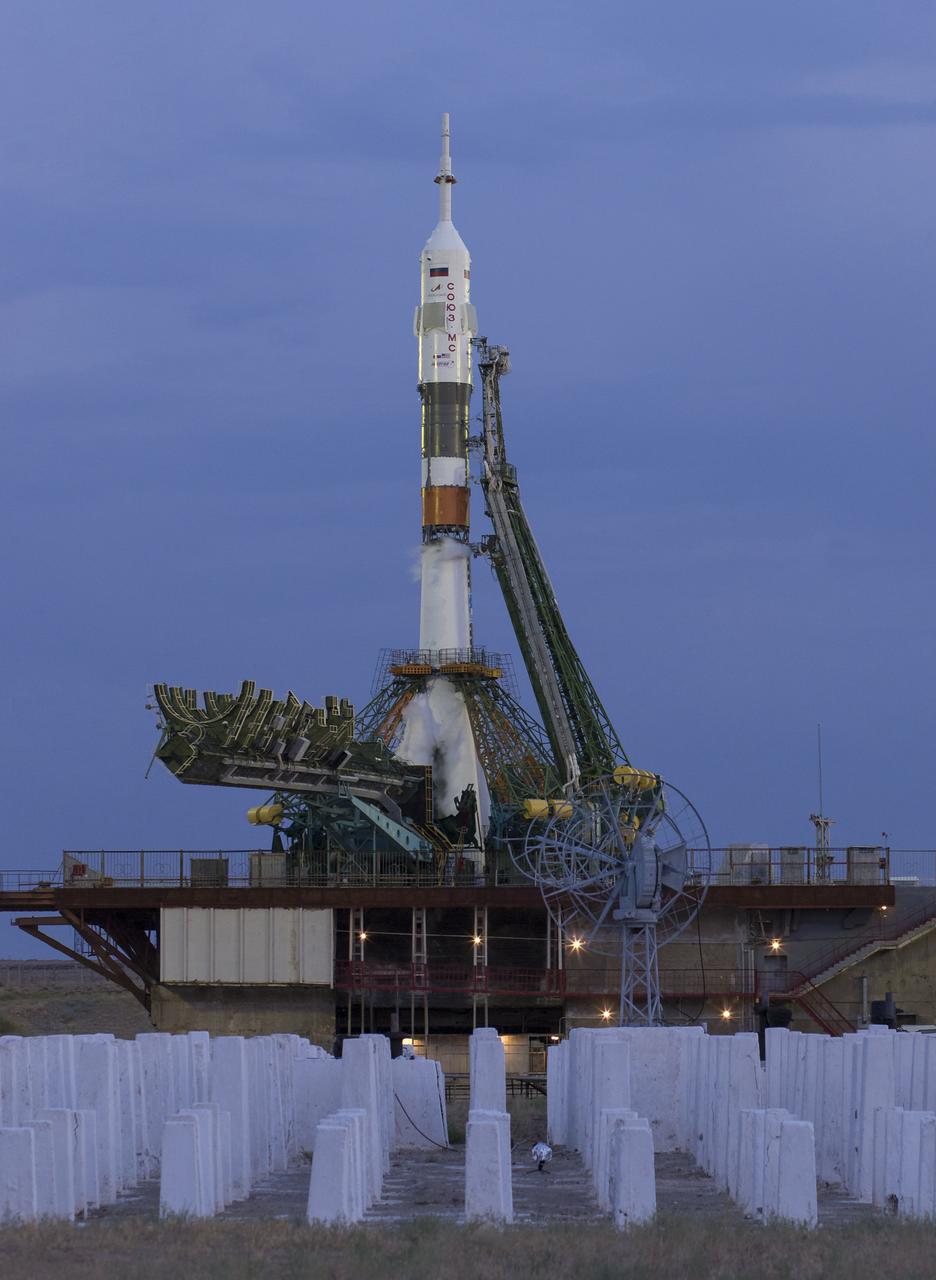
The Soyuz rocket with MS-13 spacecraft onboard is seen on the launch pad after the service structure arms were lowered before launch, Saturday, July 20, 2019 at the Baikonur Cosmodrome in Kazakhstan. Expedition 60 Soyuz Commander Alexander Skvortsov of Roscosmos, flight engineer Andrew Morgan of NASA, and flight engineer Luca Parmitano of ESA (European Space Agency) launched at 12:28 p.m. Eastern time (9:28 p.m. Baikonur time) to begin their mission to the International Space Station. Photo Credit: (NASA/Joel Kowsky)
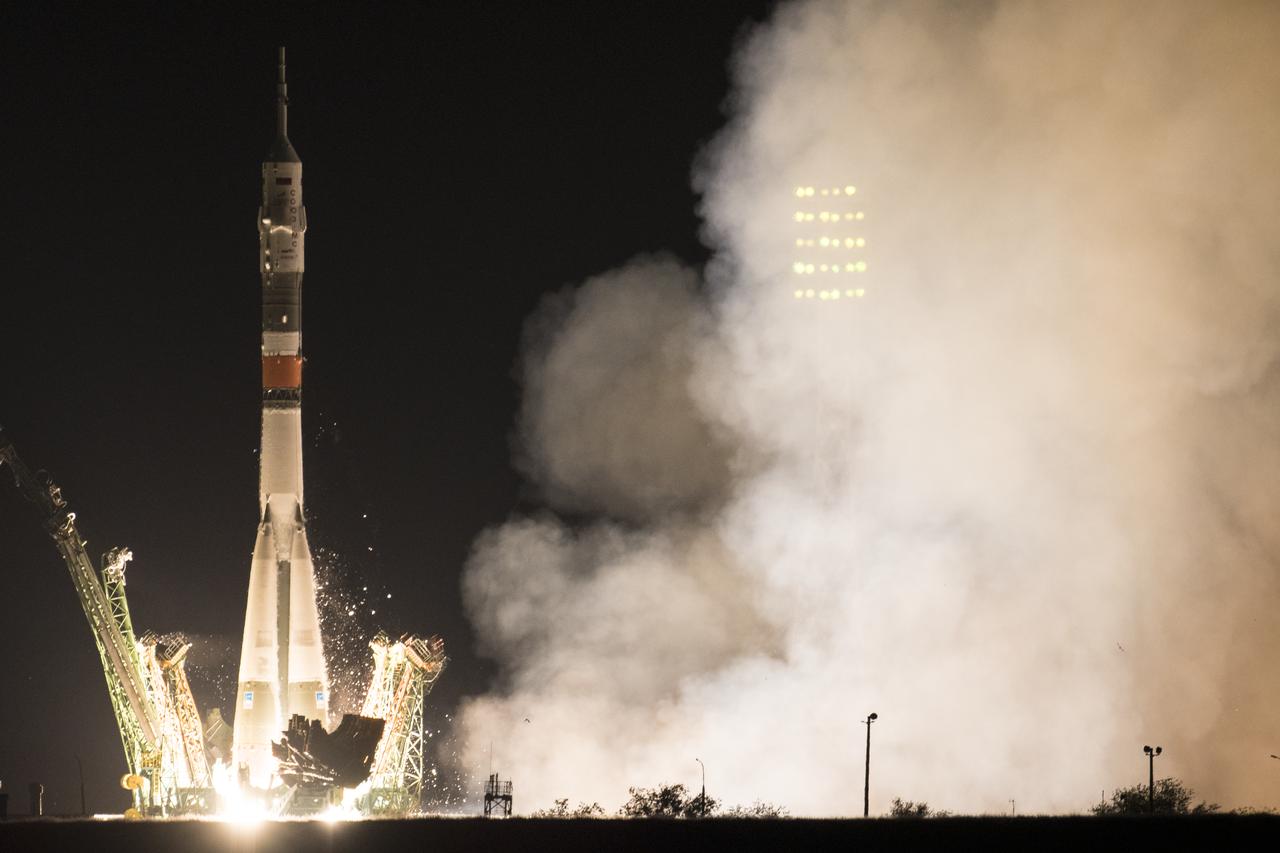
The Soyuz MS-13 rocket is launched with Expedition 60 Soyuz Commander Alexander Skvortsov of Roscosmos, flight engineer Andrew Morgan of NASA, and flight engineer Luca Parmitano of ESA (European Space Agency), Saturday, July 20, 2019 at the Baikonur Cosmodrome in Kazakhstan. Skvortsov, Morgan, and Parmitano will join fellow Expedition 60 crew members Commander Alexey Ovchinin of Roscosmos and NASA flight engineers Nick Hague and Christina Koch, who have been aboard the International Space Station since March. Photo Credit: (NASA/Joel Kowsky)
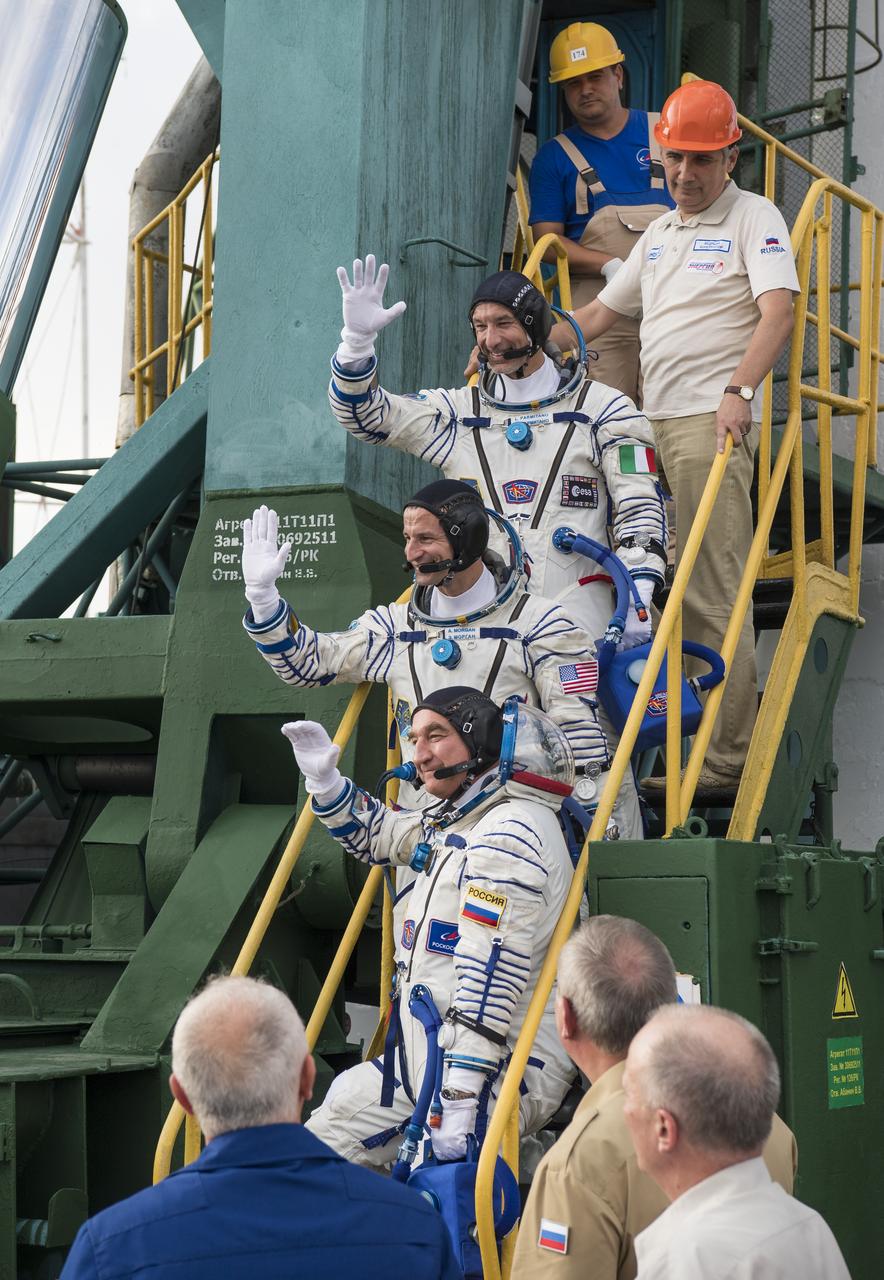
Expedition 60 flight engineer Luca Parmitano of ESA (European Space Agency), top, flight engineer Andrew Morgan of NASA, middle, and Soyuz Commander Alexander Skvortsov of Roscosmos, bottom, wave farewell prior to boarding the Soyuz MS-13 spacecraft for launch, Saturday, July 20, 2019 at the Baikonur Cosmodrome in Kazakhstan. Parmitano, Morgan, and Skvortsov will join fellow Expedition 60 crew members Commander Alexey Ovchinin of Roscosmos and NASA flight engineers Nick Hague and Christina Koch, who have been aboard the International Space Station since March. Photo Credit: (NASA/Joel Kowsky)
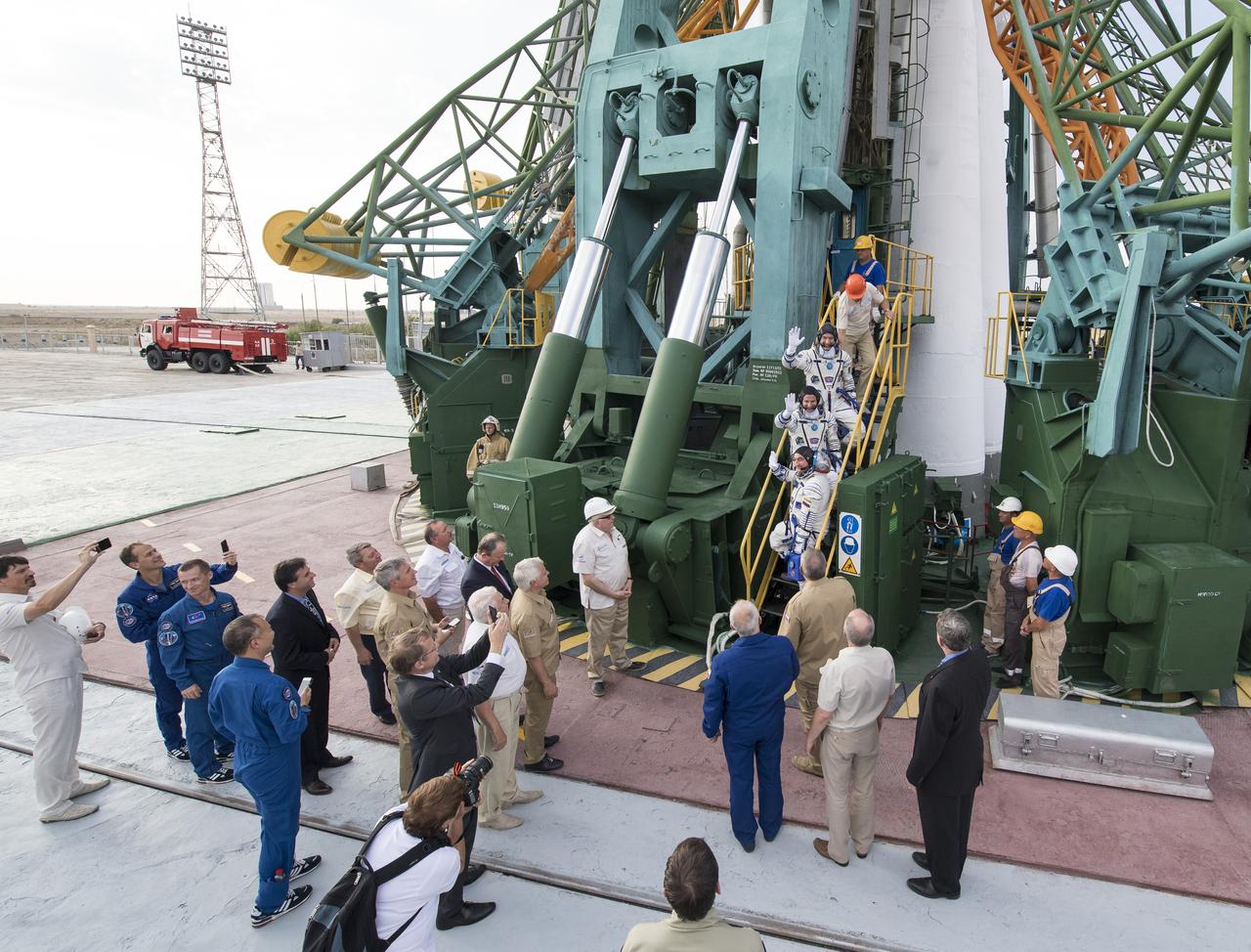
Expedition 60 flight engineer Luca Parmitano of ESA (European Space Agency), top, flight engineer Andrew Morgan of NASA, middle, and Soyuz Commander Alexander Skvortsov of Roscosmos, bottom, wave farewell prior to boarding the Soyuz MS-13 spacecraft for launch, Saturday, July 20, 2019 at the Baikonur Cosmodrome in Kazakhstan. Parmitano, Morgan, and Skvortsov will join fellow Expedition 60 crew members Commander Alexey Ovchinin of Roscosmos and NASA flight engineers Nick Hague and Christina Koch, who have been aboard the International Space Station since March. Photo Credit: (NASA/Joel Kowsky)
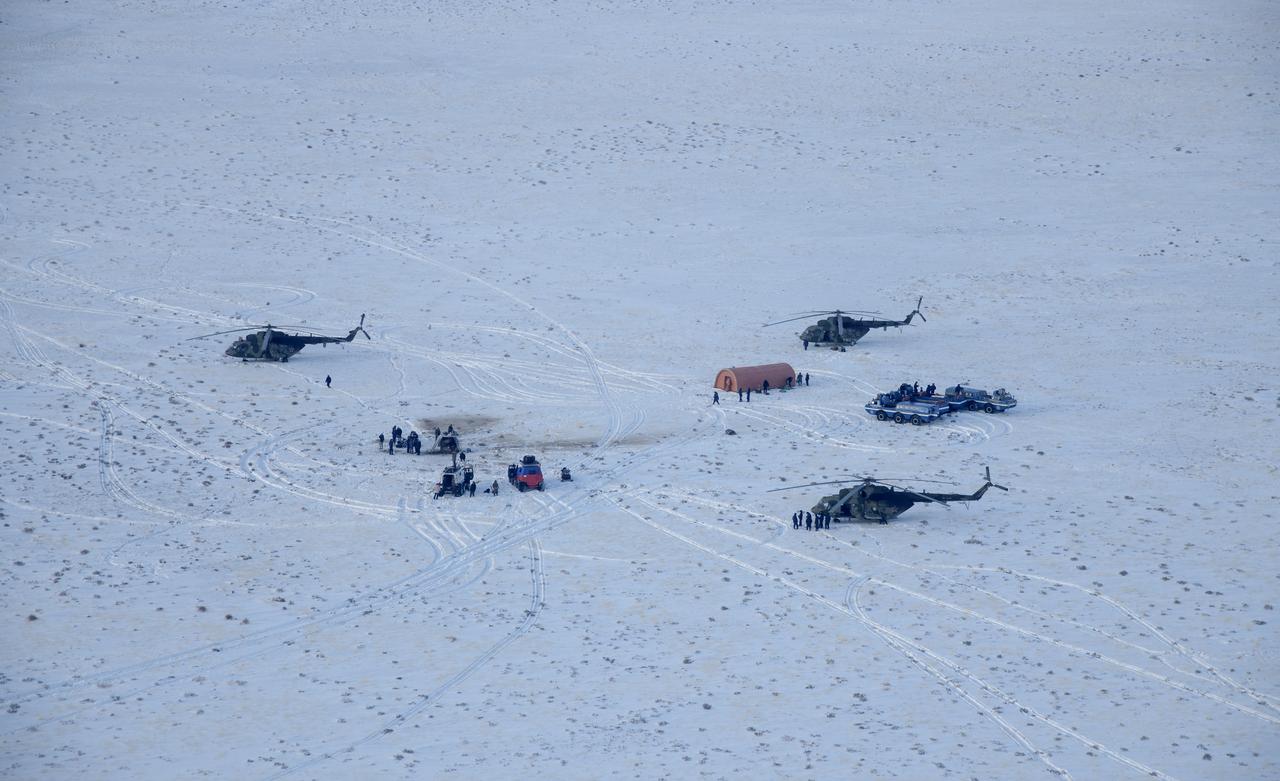
Russian support personnel work around the Soyuz MS-13 spacecraft after it landed in a remote area near the town of Zhezkazgan, Kazakhstan with Expedition 61 crew members Christina Koch of NASA, Alexander Skvortsov of the Russian space agency Roscosmos, and Luca Parmitano of ESA (European Space Agency) Thursday, Feb. 6, 2020. Koch returned to Earth after logging 328 days in space --- the longest spaceflight in history by a woman --- as a member of Expeditions 59-60-61 on the International Space Station. Skvortsov and Parmitano returned after 201 days in space where they served as Expedition 60-61 crew members onboard the station. Photo Credit: (NASA/Bill Ingalls)
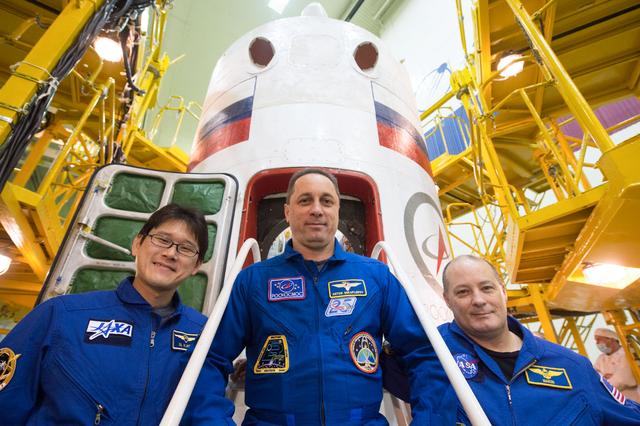
jsc2017e138117 - At the Integration Facility at the Baikonur Cosmodrome in Kazakhstan, the Expedition 54-55 prime crewmembers pose for pictures Dec. 13 in front of the Soyuz MS-07 spacecraft during pre-launch training. Norishige Kanai of the Japan Aerospace Exploration Agency (JAXA), Anton Shkaplerov of the Russian Federal Space Agency (Roscosmos, center) and Scott Tingle of NASA (right) will launch Dec. 17 on the Soyuz MS-07 vehicle for a five month mission on the International Space Station...Andrey Shelepin/Gagarin Cosmonaut Training Center.
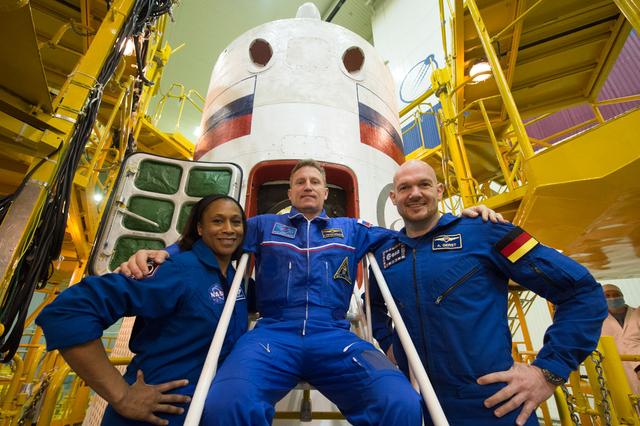
jsc2017e138121 - At the Integration Facility at the Baikonur Cosmodrome in Kazakhstan, the Expedition 54-55 backup crewmembers pose for pictures Dec. 13 in front of the Soyuz MS-07 spacecraft during pre-launch training. Jeanette Epps of NASA (left), Sergey Prokopyev of the Russian Federal Space Agency (Roscosmos, center) and Alexander Gerst of the European Space Agency (right) are serving as backups to the prime crewmembers, Scott Tingle of NASA, Anton Shkaplerov of Roscosmos and Norishige Kanai of the Japan Aerospace Exploration Agency (JAXA), who will launch Dec. 17 on the Soyuz MS-07 vehicle for a five month mission on the International Space Station...Andrey Shelepin/Gagarin Cosmonaut Training Center.
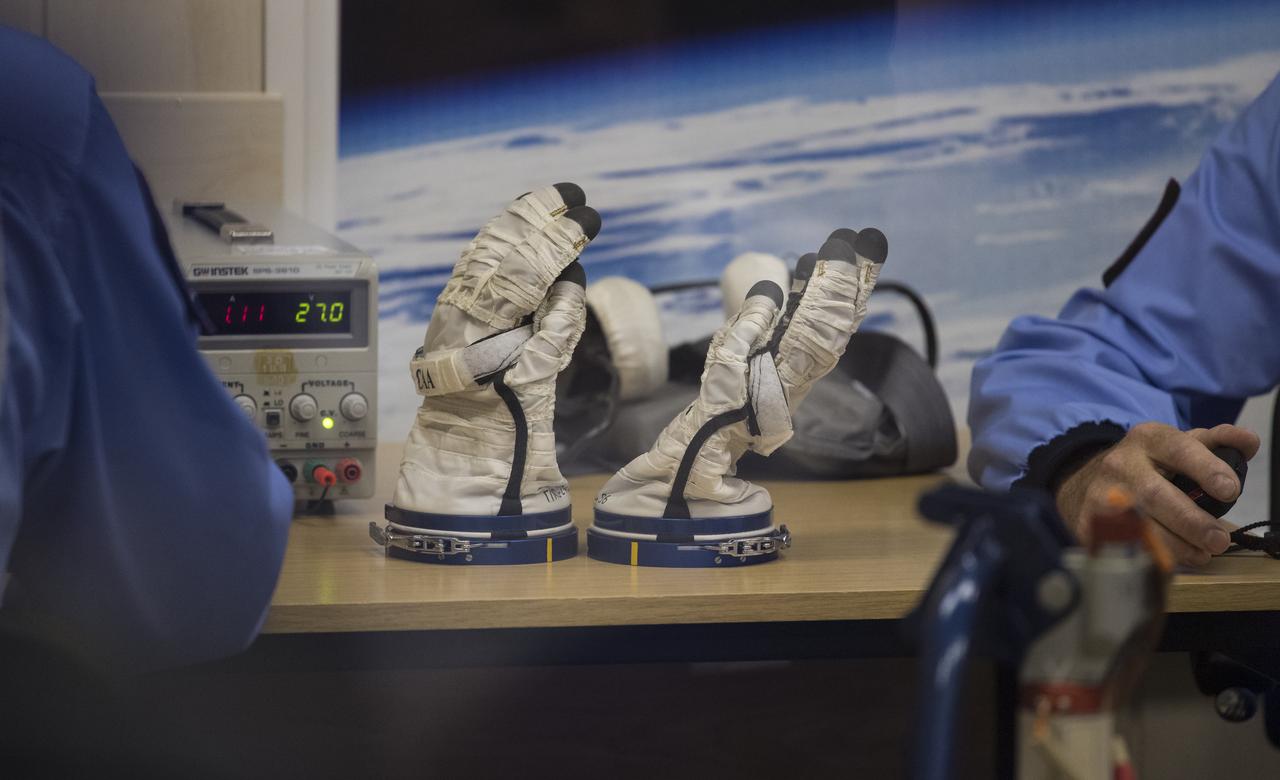
The Russian Sokol suit gloves of Expedition 60 Soyuz Commander Alexander Skvortsov of Rosprepares are seen on a table as he prepares to have his Russian Sokol suit pressure checked in preparation for launch aboard the Soyuz MS-13 spacecraft, Saturday, July 20, 2019 at the Baikonur Cosmodrome in Kazakhstan. launched aboard the Soyuz MS-13 spacecraft at 12:28 p.m. Eastern time (9:28 p.m. Baikonur time) on July 20 to begin their journey to the International Space Station. Photo Credit: (NASA/Joel Kowsky)
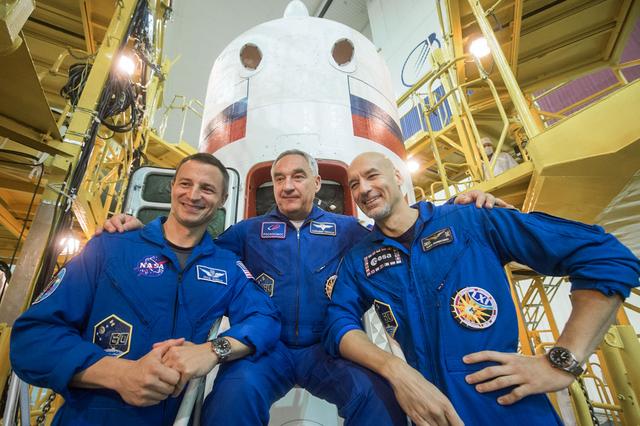
jsc2019e039427 - At the Baikonur Cosmodrome in Kazakhstan, Expedition 60 crewmembers Drew Morgan of NASA (left), Alexander Skvortsov of Roscosmos (center) and Luca Parmitano of the European Space Agency (right) pose for pictures in front of the Soyuz MS-13 spacecraft July 16 as part of pre-launch preparations. They will launch July 20 on the Soyuz MS-13 spacecraft from the Baikonur Cosmodrome for a mission on the International Space Station...Andrey Shelepin/GCTC.
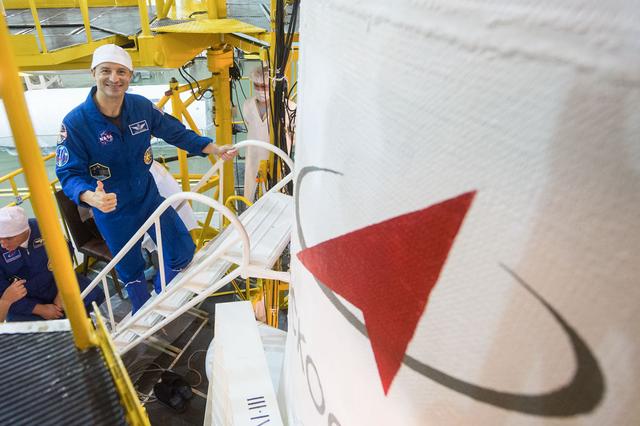
jsc2019e039434 - At the Baikonur Cosmodrome in Kazakhstan, Expedition 60 crewmember Drew Morgan of NASA flashes a thumbs up July 16 as he boards the Soyuz MS-13 spacecraft for a final fit check as part of pre-launch preparations. Morgan, Alexander Skvortsov of Roscosmos and Luca Parmitano of the European Space Agency will launch July 20 on the Soyuz MS-13 spacecraft from the Baikonur Cosmodrome for a mission on the International Space Station...Andrey Shelepin/GCTC.
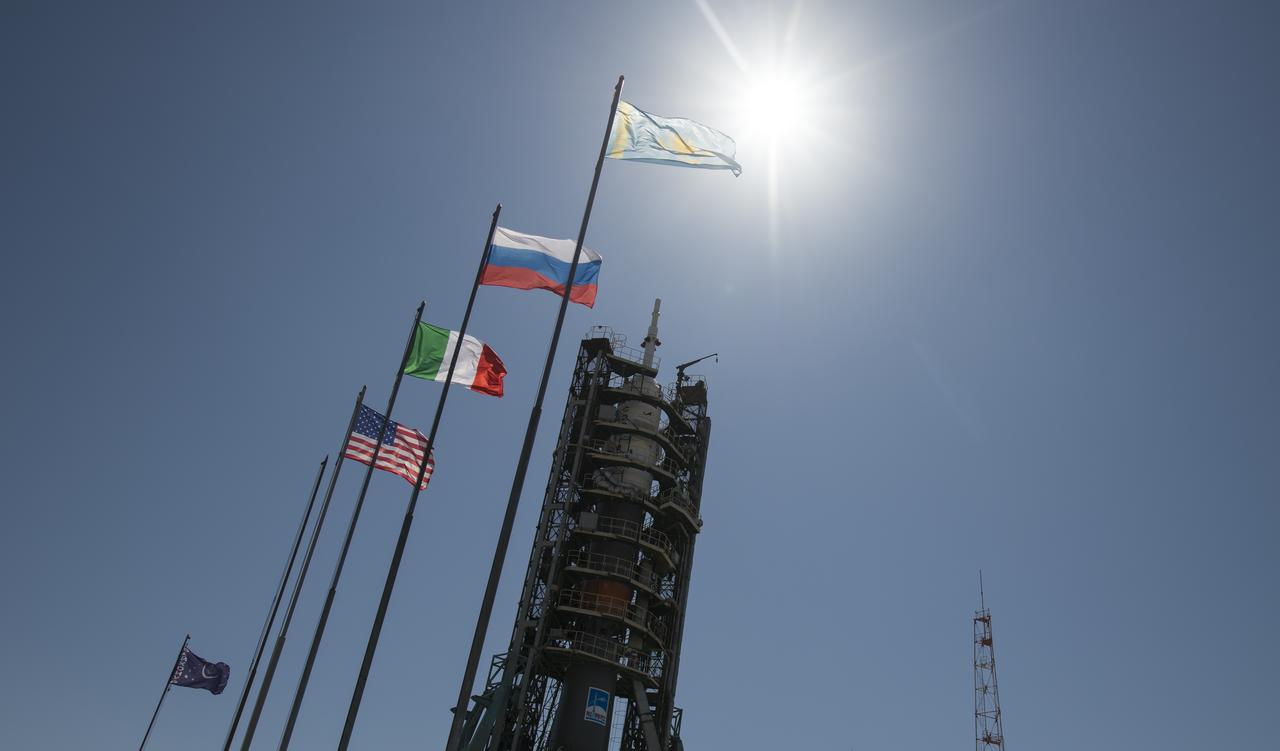
Flags representing the countries of the Soyuz MS-13 crew members are seen at the launch pad after the Soyuz rocket was rolled out by train, Thursday, July 18, 2019 at the Baikonur Cosmodrome in Kazakhstan. Expedition 60 Soyuz Commander Alexander Skvortsov of Roscosmos, flight engineer Andrew Morgan of NASA, and flight engineer Luca Parmitano of ESA (European Space Agency) are scheduled to launch aboard their Soyuz MS-13 spacecraft at 12:28 p.m. Eastern time (9:28 p.m. Baikonur time) , on Saturday, July 20. Photo Credit: (NASA/Joel Kowsky)
Expedition 60 flight engineer Andrew Morgan of NASA, left, and Soyuz Commander Alexander Skvortsov of Roscosmos, right, speaks with family as flight engineer Luca Parmitano of ESA (European Space Agency) has his Russian Sokol suit pressure checked in preparation for launch aboard the Soyuz MS-13 spacecraft, Saturday, July 20, 2019 at the Baikonur Cosmodrome in Kazakhstan. Morgan, Skvortsov, and Parmitano launched aboard the Soyuz MS-13 spacecraft at 12:28 p.m. Eastern time (9:28 p.m. Baikonur time) on July 20 to begin their journey to the International Space Station. Photo Credit: (NASA/Joel Kowsky)
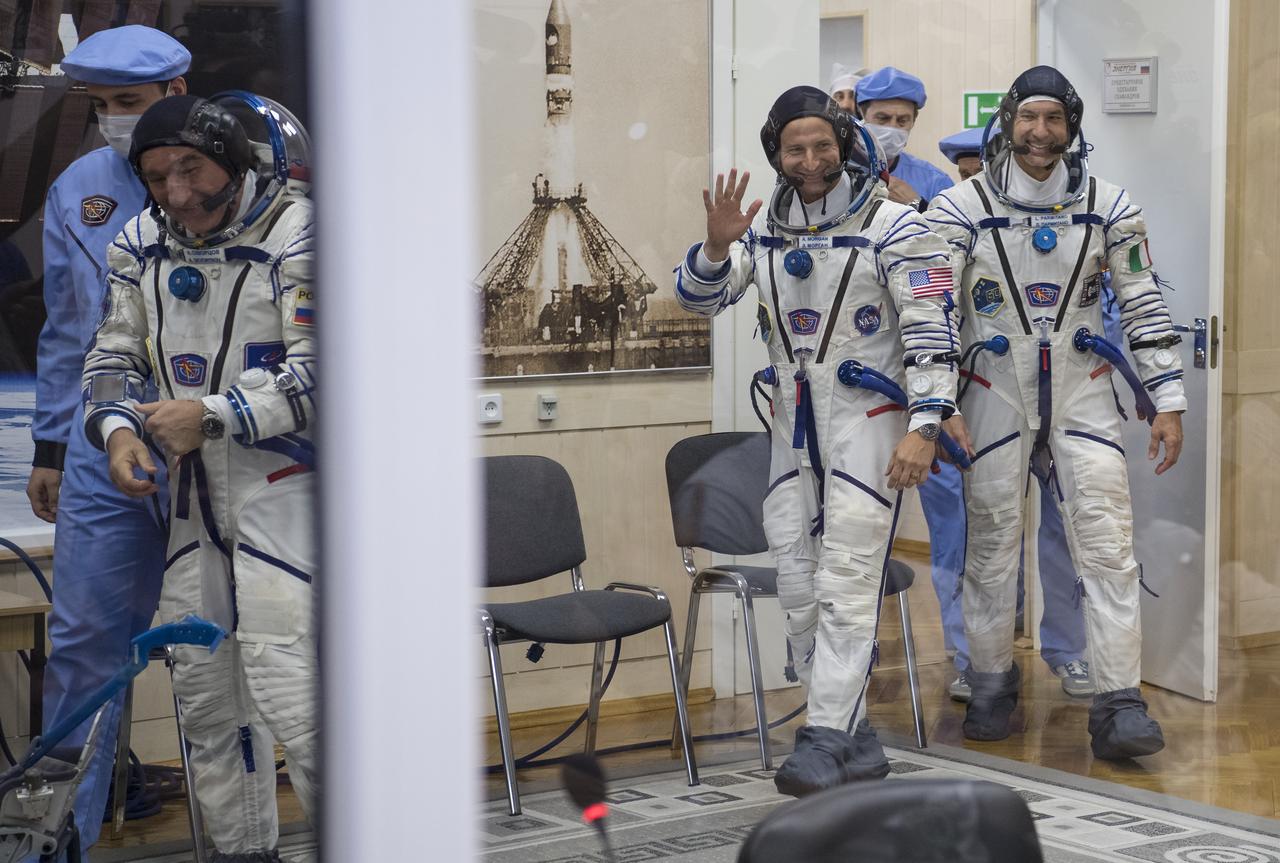
Expedition 60 Soyuz Commander Alexander Skvortsov of Roscosmos, left, flight engineer Andrew Morgan of NASA, center, and flight engineer Luca Parmitano of ESA (European Space Agency), right, are seen after donning their Russian Sokol suits in preparation for launch aboard the Soyuz MS-13 spacecraft, Saturday, July 20, 2019 at the Baikonur Cosmodrome in Kazakhstan. Skvortsov, Morgan, and Parmitano launched aboard the Soyuz MS-13 spacecraft at 12:28 p.m. Eastern time (9:28 p.m. Baikonur time) on July 20 to begin their journey to the International Space Station. Photo Credit: (NASA/Joel Kowsky)
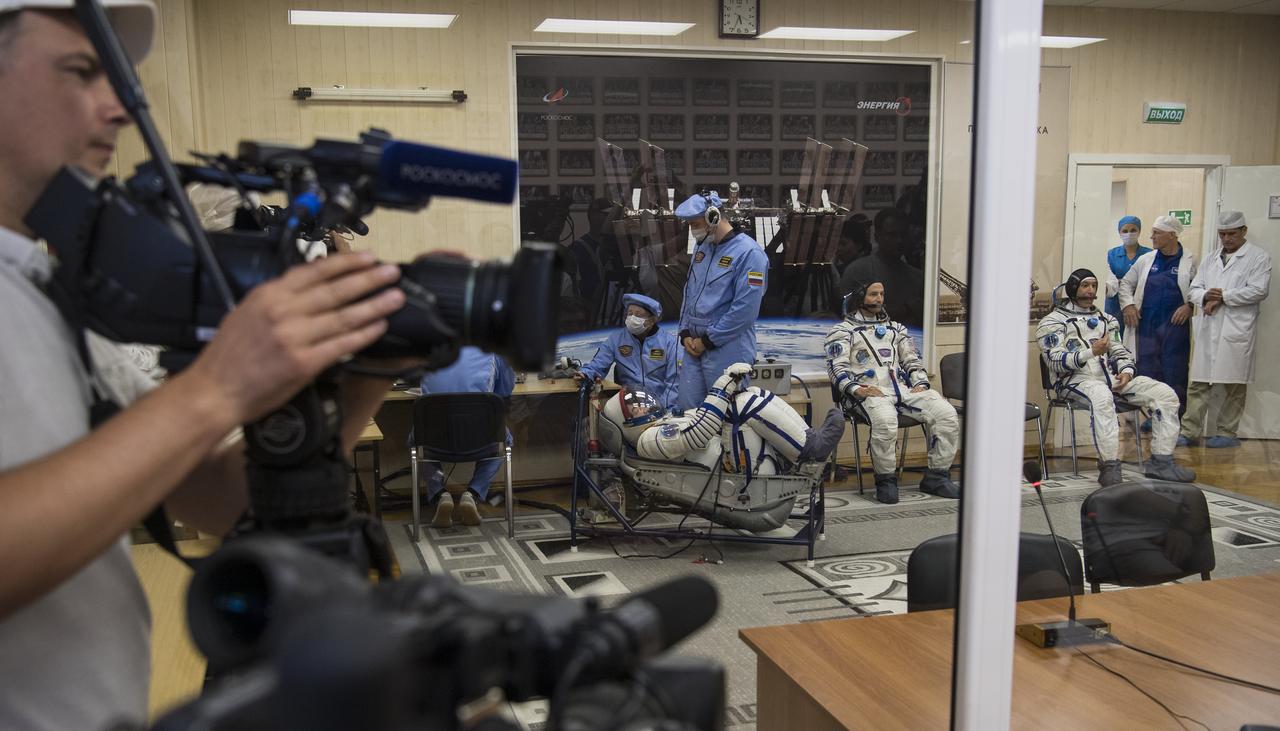
Expedition 60 Soyuz Commander Alexander Skvortsov of Roscosmos, left, has his Russian Sokol suit pressure checked in preparation for launch aboard the Soyuz MS-13 spacecraft, Saturday, July 20, 2019 at the Baikonur Cosmodrome in Kazakhstan. Skvortsov, Andrew Morgan of NASA, and Luca Parmitano of ESA (European Space Agency) launched aboard the Soyuz MS-13 spacecraft at 12:28 p.m. Eastern time (9:28 p.m. Baikonur time) on July 20 to begin their journey to the International Space Station. Photo Credit: (NASA/Joel Kowsky)
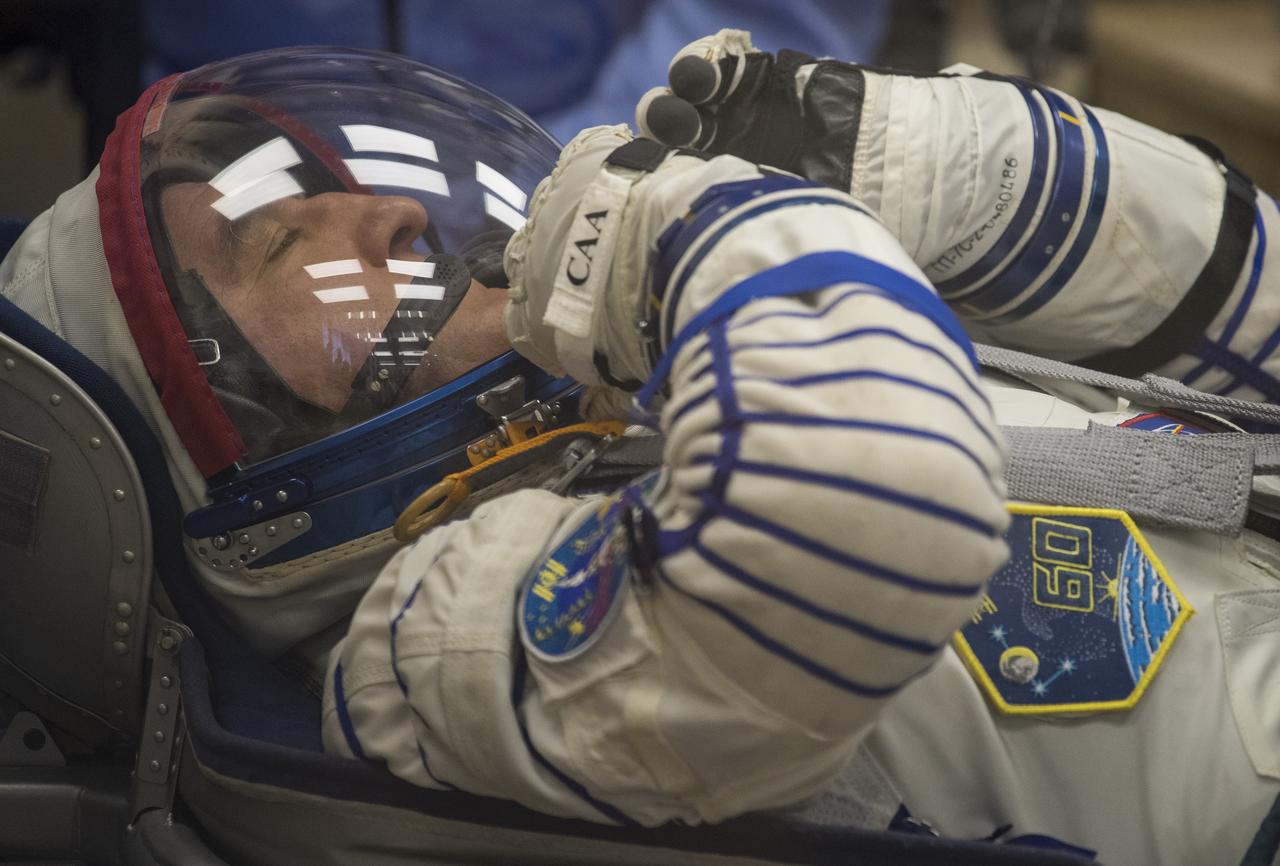
Expedition 60 Soyuz Commander Alexander Skvortsov of Roscosmos has his Russian Sokol suit pressure checked in preparation for launch aboard the Soyuz MS-13 spacecraft, Saturday, July 20, 2019 at the Baikonur Cosmodrome in Kazakhstan. Skvortsov, Andrew Morgan of NASA, and Luca Parmitano of ESA (European Space Agency) launched aboard the Soyuz MS-13 spacecraft at 12:28 p.m. Eastern time (9:28 p.m. Baikonur time) on July 20 to begin their journey to the International Space Station. Photo Credit: (NASA/Joel Kowsky)
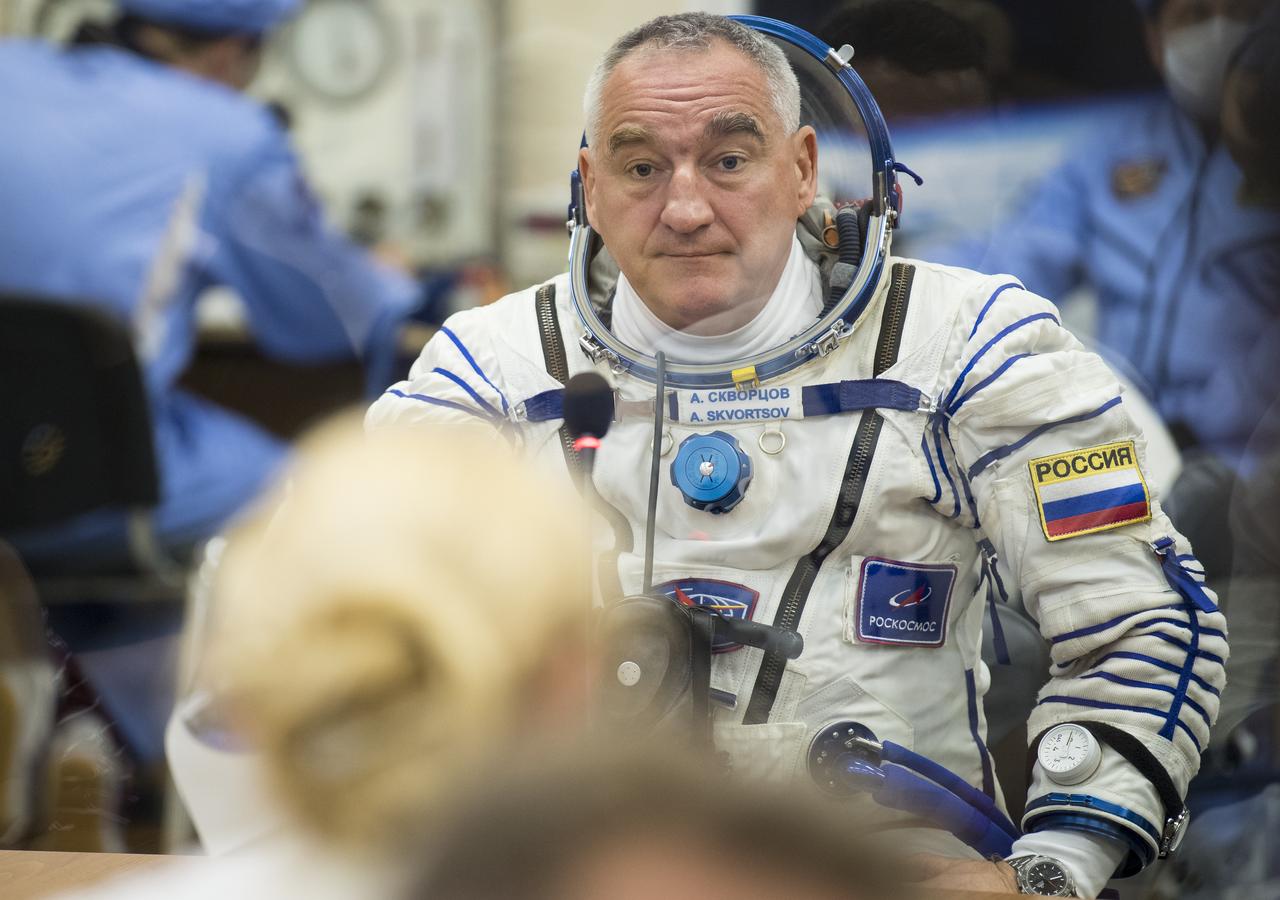
Expedition 60 Soyuz Commander Alexander Skvortsov of Roscosmos speaks with family after having his Russian Sokol suit pressure checked in preparation for launch aboard the Soyuz MS-13 spacecraft, Saturday, July 20, 2019 at the Baikonur Cosmodrome in Kazakhstan. Skvortsov, Andrew Morgan of NASA, and Luca Parmitano of ESA (European Space Agency) launched aboard the Soyuz MS-13 spacecraft at 12:28 p.m. Eastern time (9:28 p.m. Baikonur time) on July 20 to begin their journey to the International Space Station. Photo Credit: (NASA/Joel Kowsky)
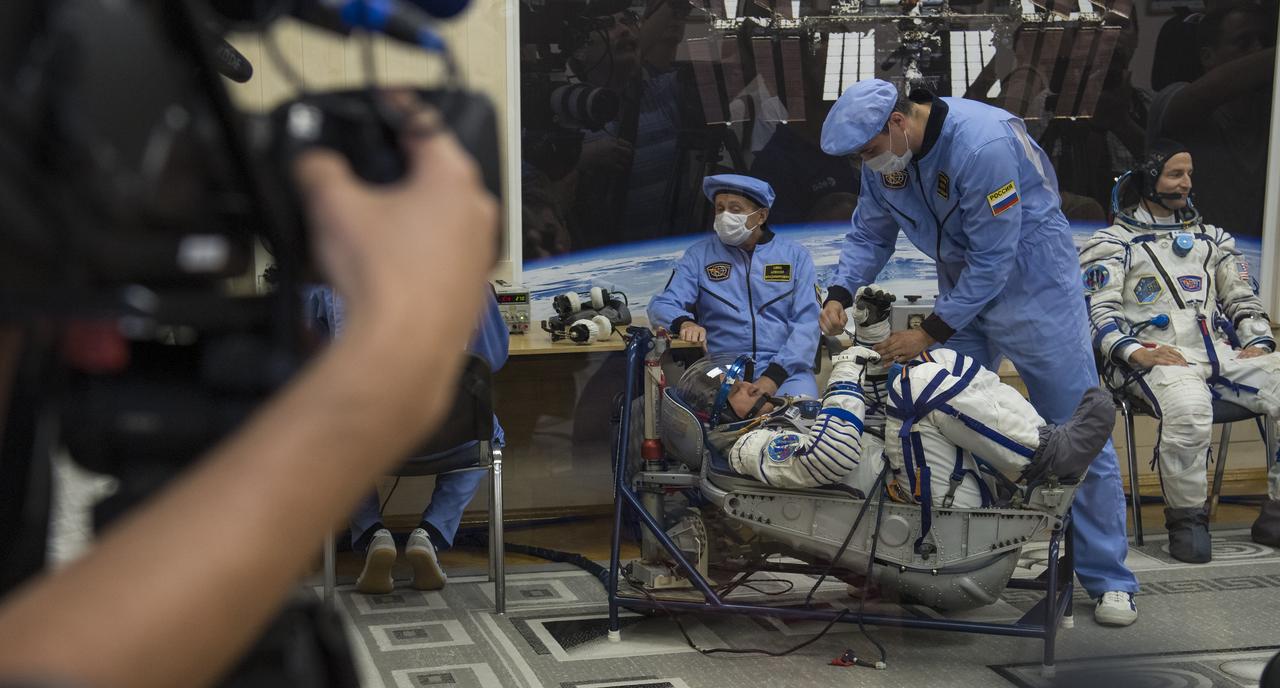
Expedition 60 Soyuz Commander Alexander Skvortsov or Roscosmos prepares to have his Russian Sokol suit pressure checked in preparation for launch aboard the Soyuz MS-13 spacecraft, Saturday, July 20, 2019 at the Baikonur Cosmodrome in Kazakhstan. Skvortsov, Andrew Morgan of NASA and Luca Parmitano of ESA (European Space Agency) launched aboard the Soyuz MS-13 spacecraft at 12:28 p.m. Eastern time (9:28 p.m. Baikonur time) on July 20 to begin their journey to the International Space Station. Photo Credit: (NASA/Joel Kowsky)
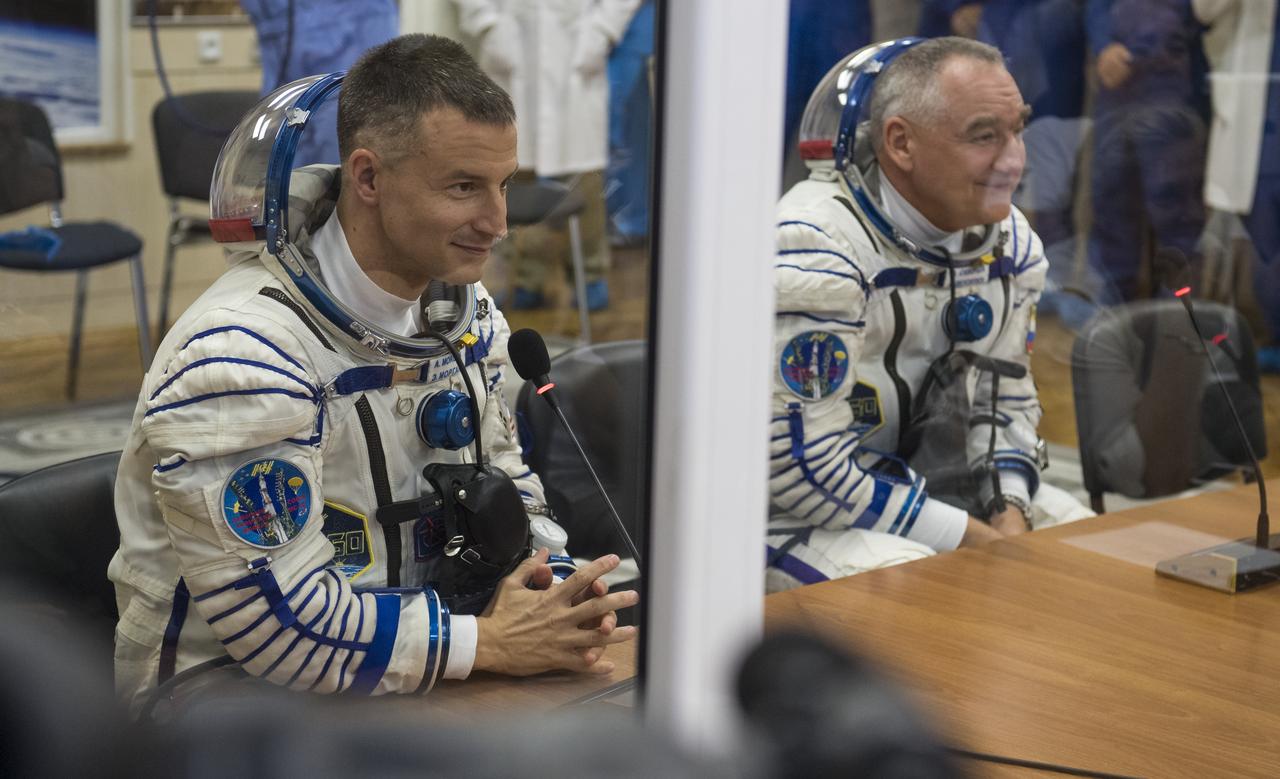
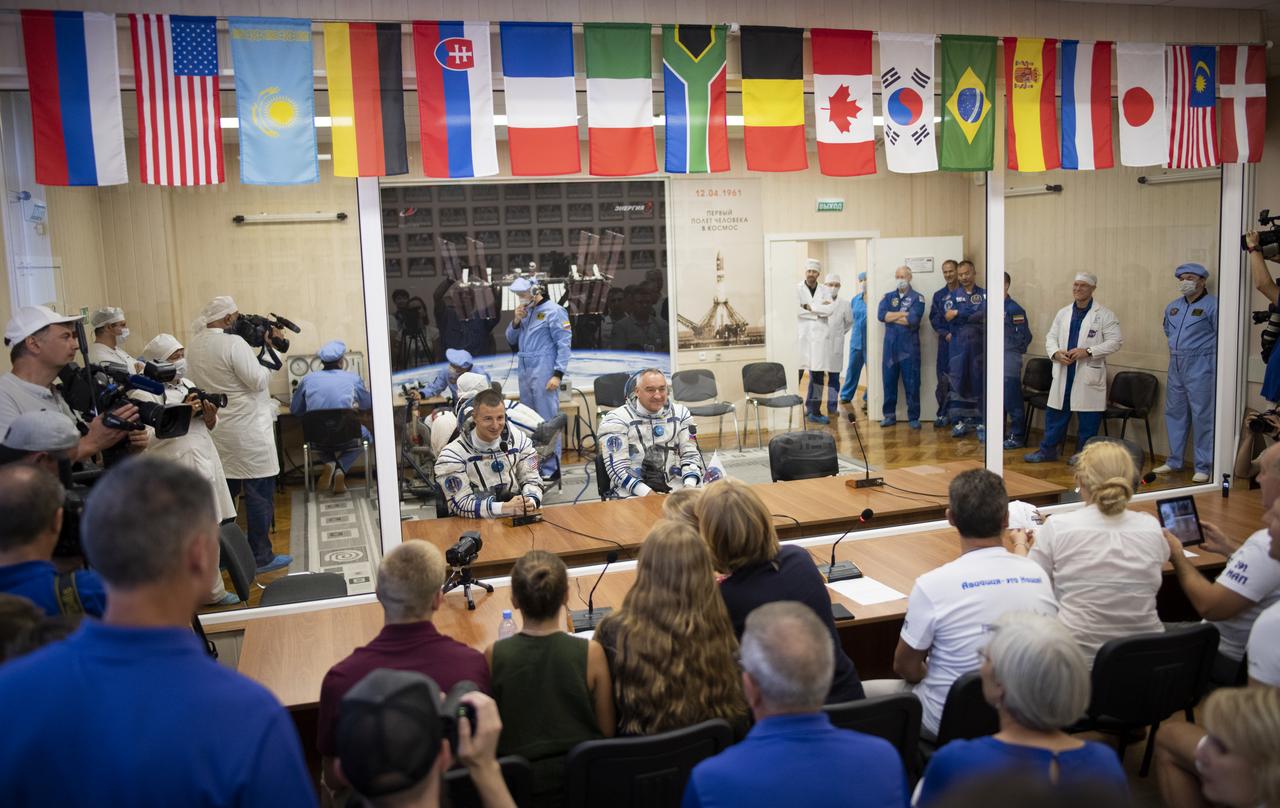
Expedition 60 flight engineer Andrew Morgan of NASA, left, and Soyuz Commander Alexander Skvortsov of Roscosmos, right, speak with family and friends after having their Russian Sokol suits pressure checked in preparation for launch aboard the Soyuz MS-13 spacecraft, Saturday, July 20, 2019 at the Baikonur Cosmodrome in Kazakhstan. Morgan, Skvortsov, and Luca Parmitano of ESA (European Space Agency) launched aboard the Soyuz MS-13 spacecraft at 12:28 p.m. Eastern time (9:28 p.m. Baikonur time) on July 20 to begin their journey to the International Space Station. Photo Credit: (NASA/Joel Kowsky)
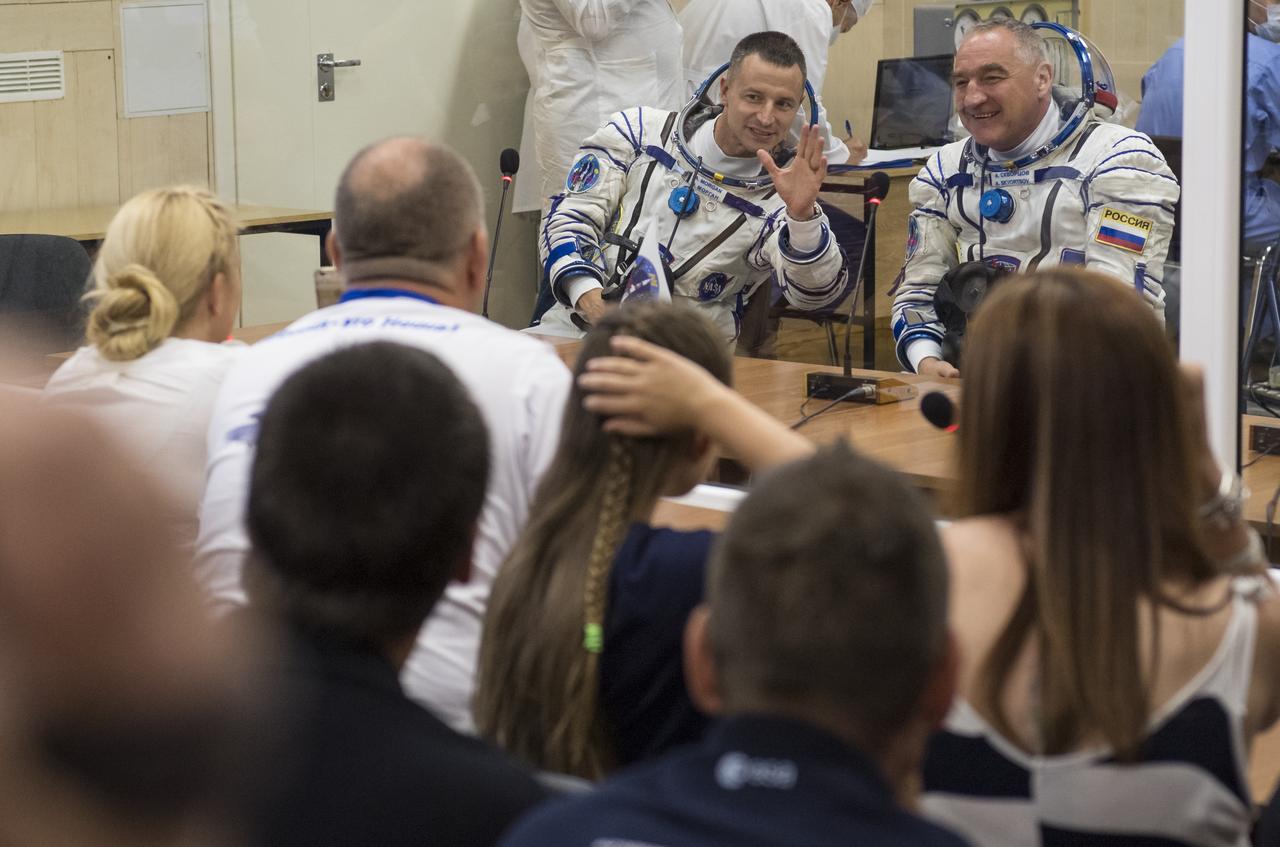
Expedition 60 flight engineer Andrew Morgan of NASA, left, and Soyuz Commander Alexander Skvortsov of Roscosmos, right, speak with family and friends after having their Russian Sokol suits pressure checked in preparation for launch aboard the Soyuz MS-13 spacecraft, Saturday, July 20, 2019 at the Baikonur Cosmodrome in Kazakhstan. Morgan, Skvortsov, and Luca Parmitano of ESA (European Space Agency) launched aboard the Soyuz MS-13 spacecraft at 12:28 p.m. Eastern time (9:28 p.m. Baikonur time) on July 20 to begin their journey to the International Space Station. Photo Credit: (NASA/Joel Kowsky)

Expedition 60 Soyuz Commander Alexander Skvortsov of Roscosmos is seen as his Russian Sokol suit is pressure checked in preparation for launch aboard the Soyuz MS-13 spacecraft, Saturday, July 20, 2019 at the Baikonur Cosmodrome in Kazakhstan. Skvortsov, Drew of NASA, and Luca Parmitano of ESA (European Space Agency) launched aboard the Soyuz MS-13 spacecraft at 12:28 p.m. Eastern time (9:28 p.m. Baikonur time) on July 20 to begin their journey to the International Space Station. Photo Credit: (NASA/GCTC/Andrey Shelepin)
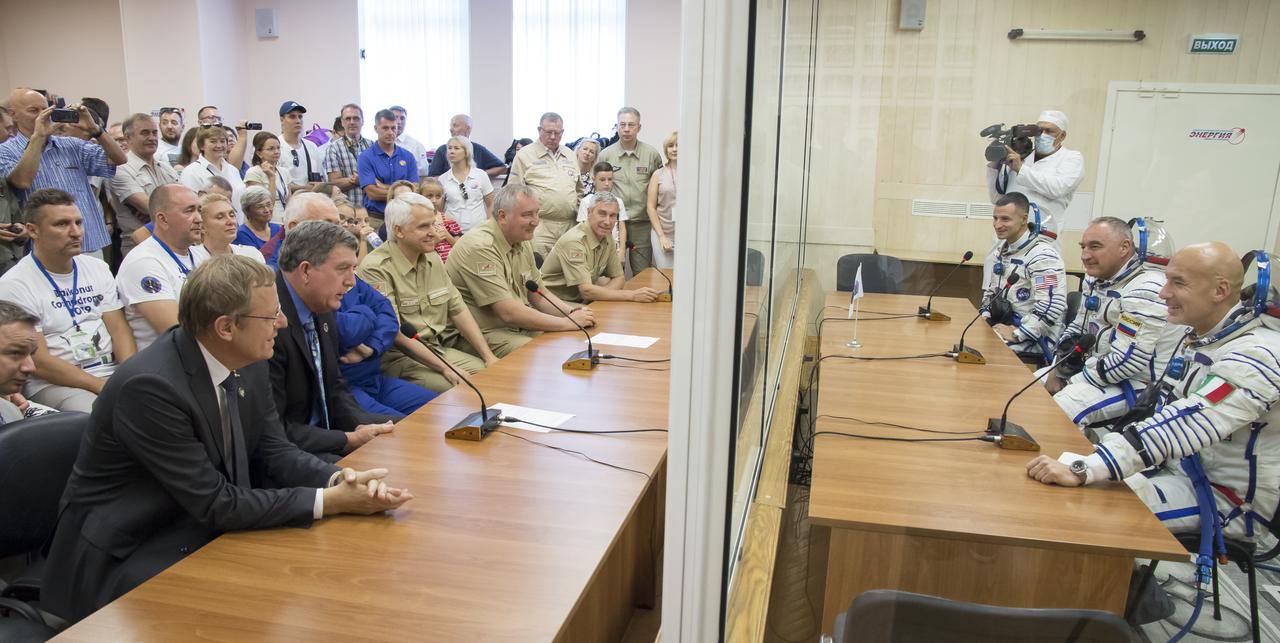
Expedition 60 flight engineer Andrew Morgan of NASA, Soyuz Commander Alexander Skvortsov of Roscosmos, and flight engineer Luca Parmitano or ESA (European Space Agency) speak with Roscosmos, NASA, and ESA (European Space Agency) management after having their Russian Sokol suits pressure checked in preparation for launch aboard the Soyuz MS-13 spacecraft, Saturday, July 20, 2019 at the Baikonur Cosmodrome in Kazakhstan. Launch of the Soyuz MS-13 spacecraft with Skvortsov, Morgan, and Parmitano occurred at 12:28 p.m. Eastern time (9:28 p.m. Baikonur time) on July 20 beginning their mission to the International Space Station. Photo Credit: (NASA/Victor Zelentsov)
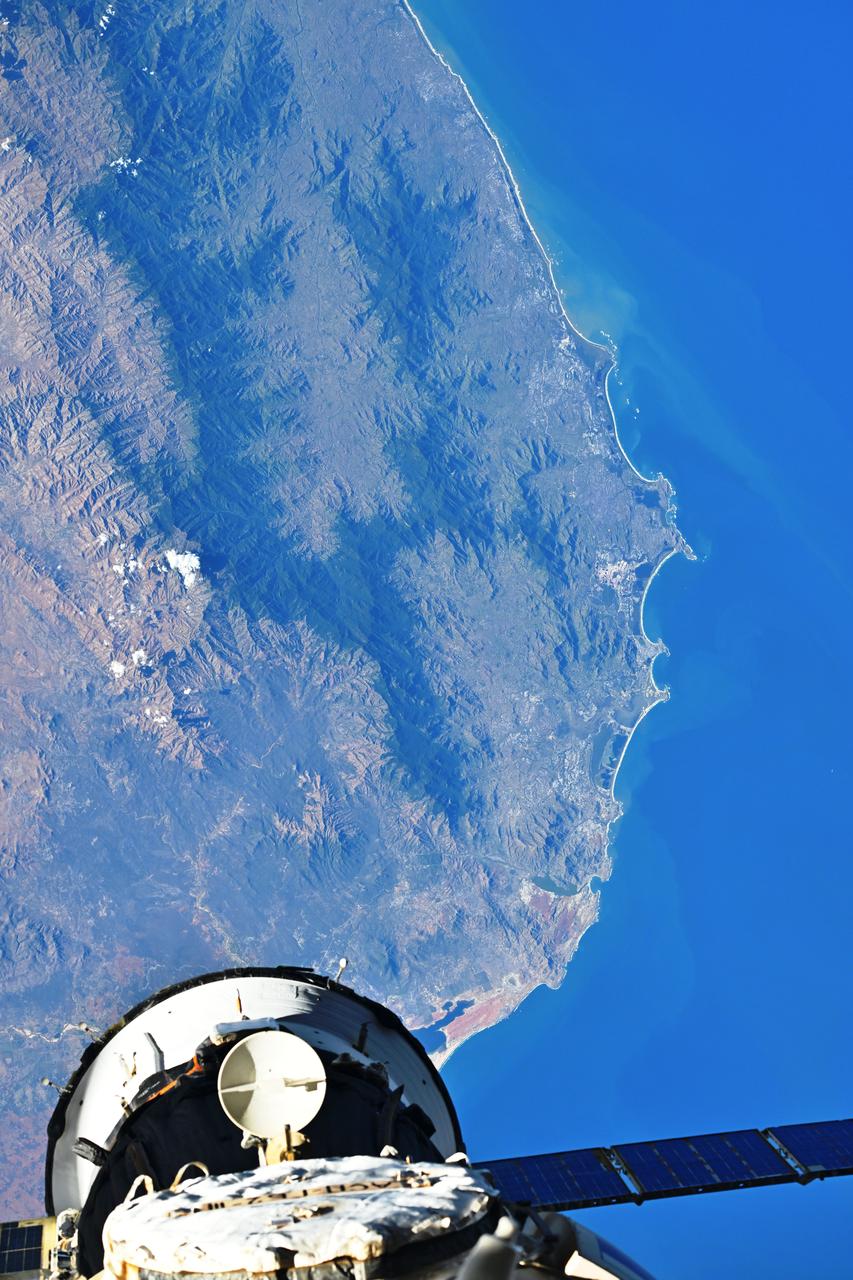
iss073e0284372 (July 13, 2025) --- The southern coast of Madagascar is pictured 261 miles below the International Space Station with a portion of the Soyuz MS-27 spacecraft docked to the Poisk module in the lower foreground. Credit: Roscosmos
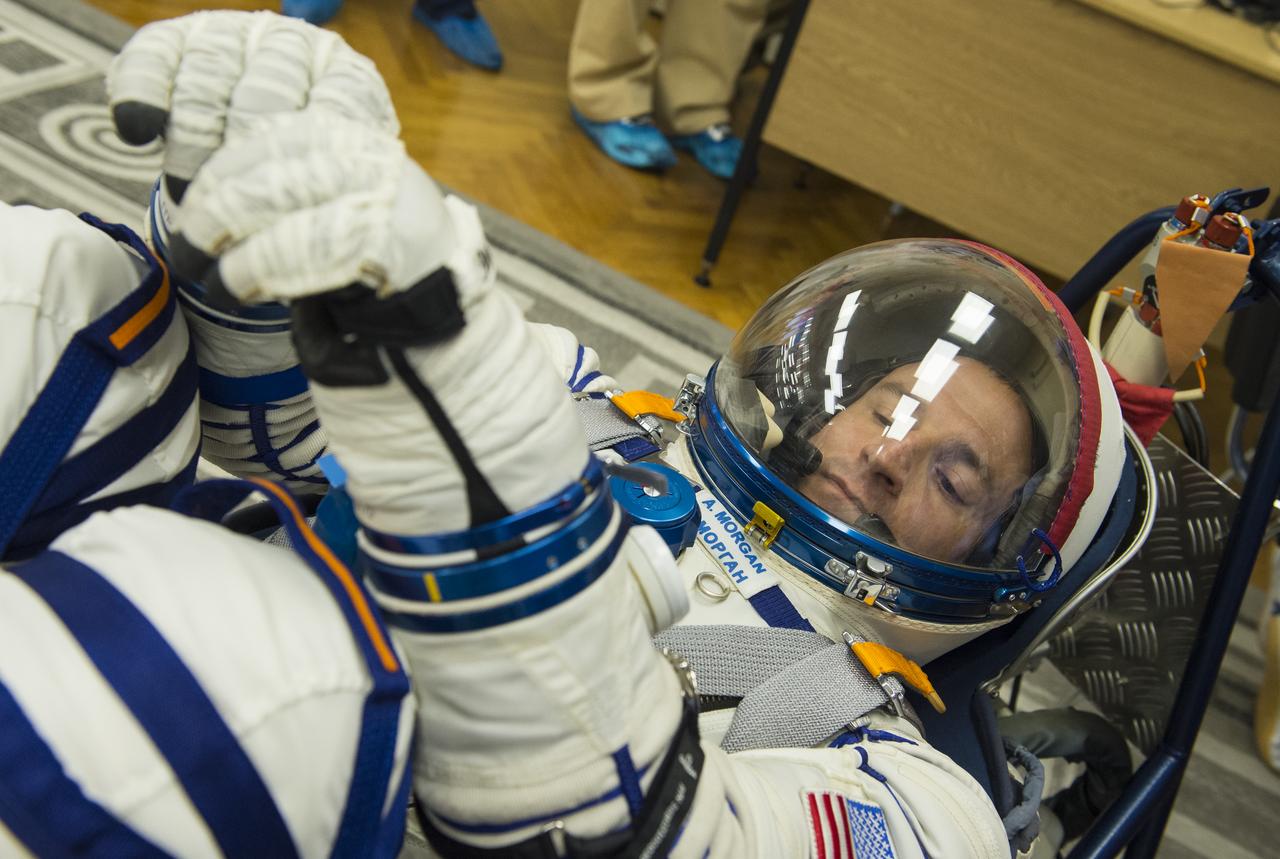
Expedition 60 flight engineer Andrew Morgan of NASA is seen as his Russian Sokol suit is pressure checked in preparation for launch aboard the Soyuz MS-13 spacecraft, Saturday, July 20, 2019 at the Baikonur Cosmodrome in Kazakhstan. Morgan, Alexander Skvortsov of Roscosmos, and Luca Parmitano of ESA (European Space Agency) launched aboard the Soyuz MS-13 spacecraft at 12:28 p.m. Eastern time (9:28 p.m. Baikonur time) on July 20 to begin their journey to the International Space Station. Photo Credit: (NASA/GCTC/Andrey Shelepin)
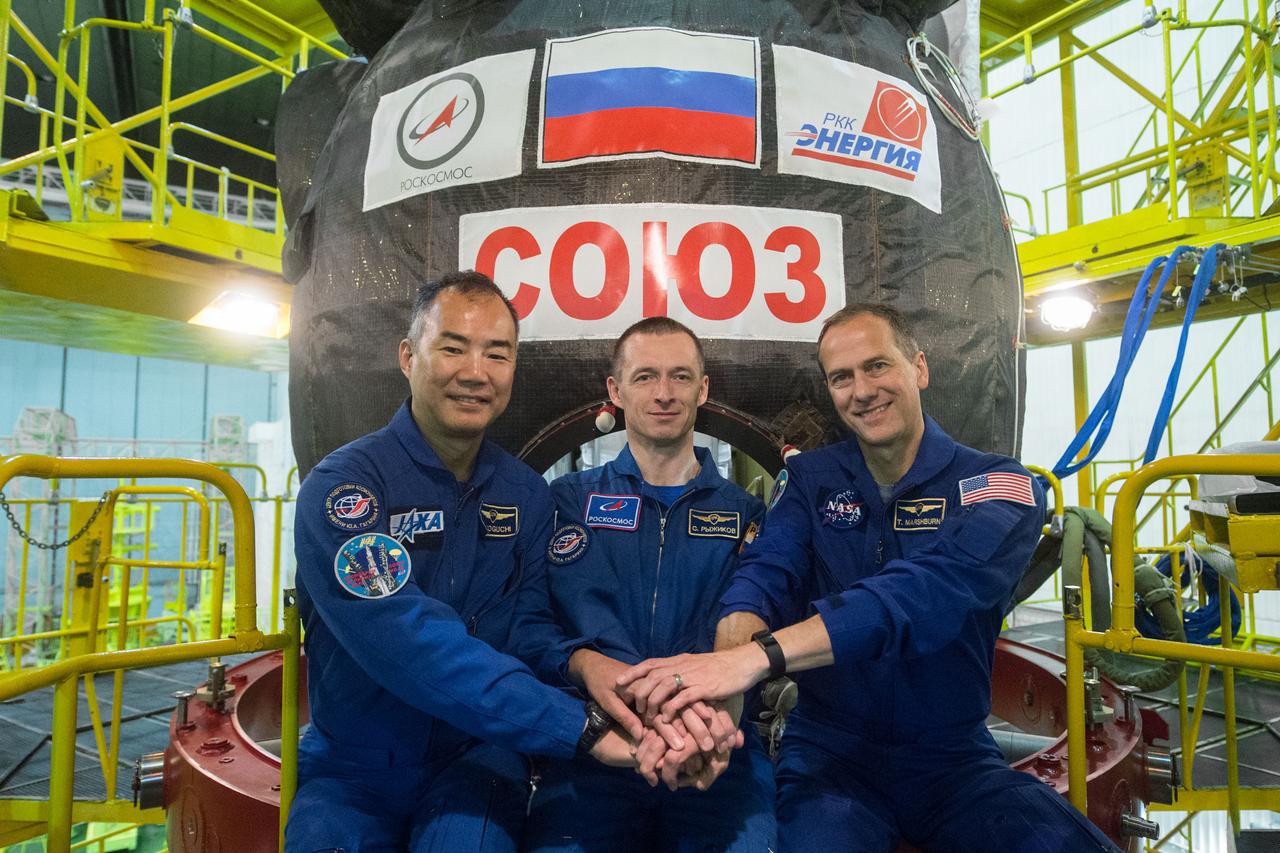
jsc2019e038388 - At the Baikonur Cosmodrome in Kazakhstan, Expedition 60 backup crwewmembers Soichi Noguchi of the Japan Aerospace Exploration Agency (left), Sergey Ryzhikov of Roscosmos (center) and Tom Marshburn of NASA (right) pose for pictures July 5 in front of the Soyuz MS-13 spacecraft during pre-launch preparations. They are the backups to Drew Morgan of NASA, Alexander Skvortsov of Roscosmos and Luca Parmitano of the European Space Agency, who will launch July 20 on the Soyuz MS-13 spacecraft from the Baikonur Cosmodrome for a mission on the International Space Station...Andrey Shelepin/GCTC.
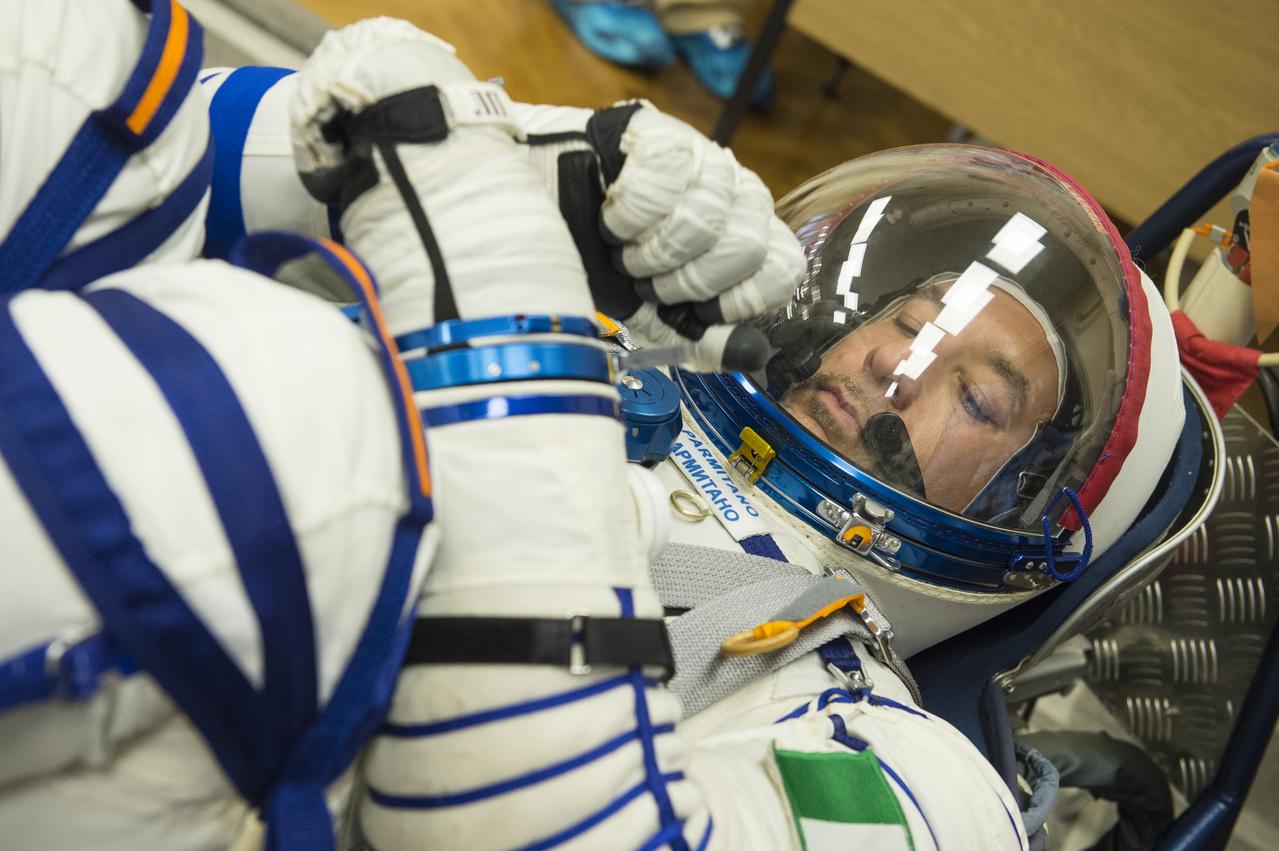
Expedition 60 flight engineer Luca Parmitano of ESA (European Space Agency) is seen as his Russian Sokol suit is pressure checked in preparation for launch aboard the Soyuz MS-13 spacecraft, Saturday, July 20, 2019 at the Baikonur Cosmodrome in Kazakhstan. Parmitano, Alexander Skvortsov of Roscosmos, and Andrew Morgan of NASA launched aboard the Soyuz MS-13 spacecraft at 12:28 p.m. Eastern time (9:28 p.m. Baikonur time) on July 20 to begin their journey to the International Space Station. Photo Credit: (NASA/GCTC/Andrey Shelepin)
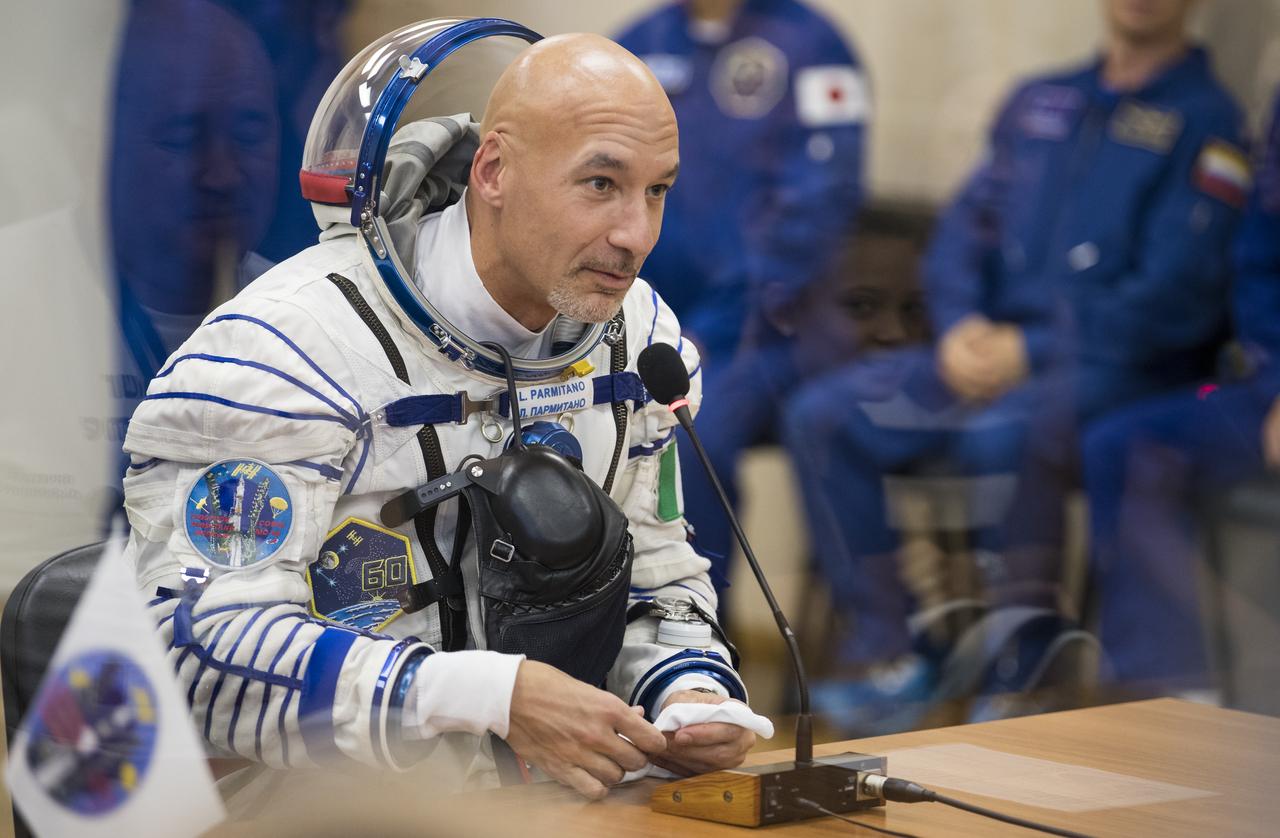
Expedition 60 flight engineer Luca Parmitano of ESA (European Space Agency) speaks with family after having his Russian Sokol suit pressure checked in preparation for launch aboard the Soyuz MS-13 spacecraft, Saturday, July 20, 2019 at the Baikonur Cosmodrome in Kazakhstan. Parmitano, Alexander Skvortsov of Roscosmos, and Andrew Morgan of NASA launched aboard the Soyuz MS-13 spacecraft at 12:28 p.m. Eastern time (9:28 p.m. Baikonur time) on July 20 to begin their journey to the International Space Station. Photo Credit: (NASA/Joel Kowsky)
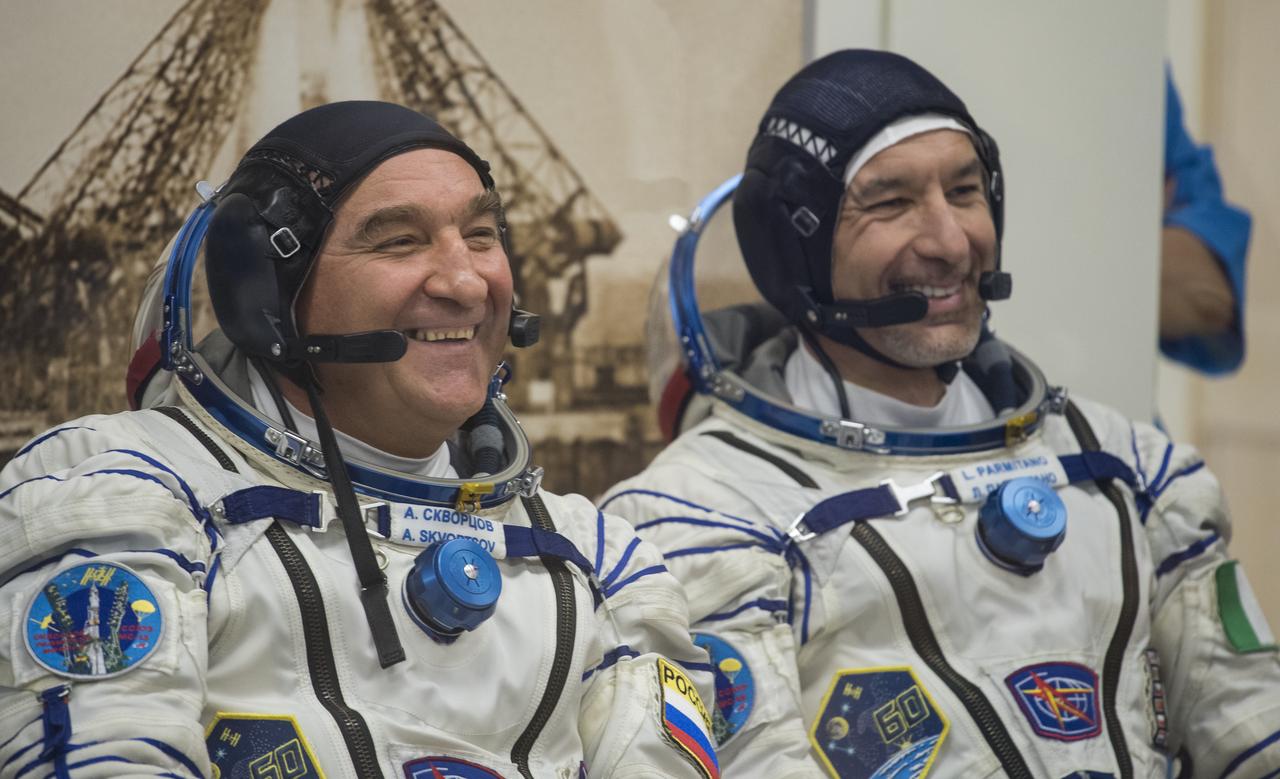
Expedition 60 \Alexander Skvortsov of Roscosmos, left, and flight engineer Luca Parmitano of ESA (European Space Agency), right, are seen during Russian Sokol suit pressure checks in preparation for launch aboard the Soyuz MS-13 spacecraft, Saturday, July 20, 2019 at the Baikonur Cosmodrome in Kazakhstan. Skvortsov, Parmitano, and Andrew Morgan of NASA launched aboard the Soyuz MS-13 spacecraft at 12:28 p.m. Eastern time (9:28 p.m. Baikonur time) on July 20 to begin their journey to the International Space Station. Photo Credit: (NASA/Joel Kowsky)
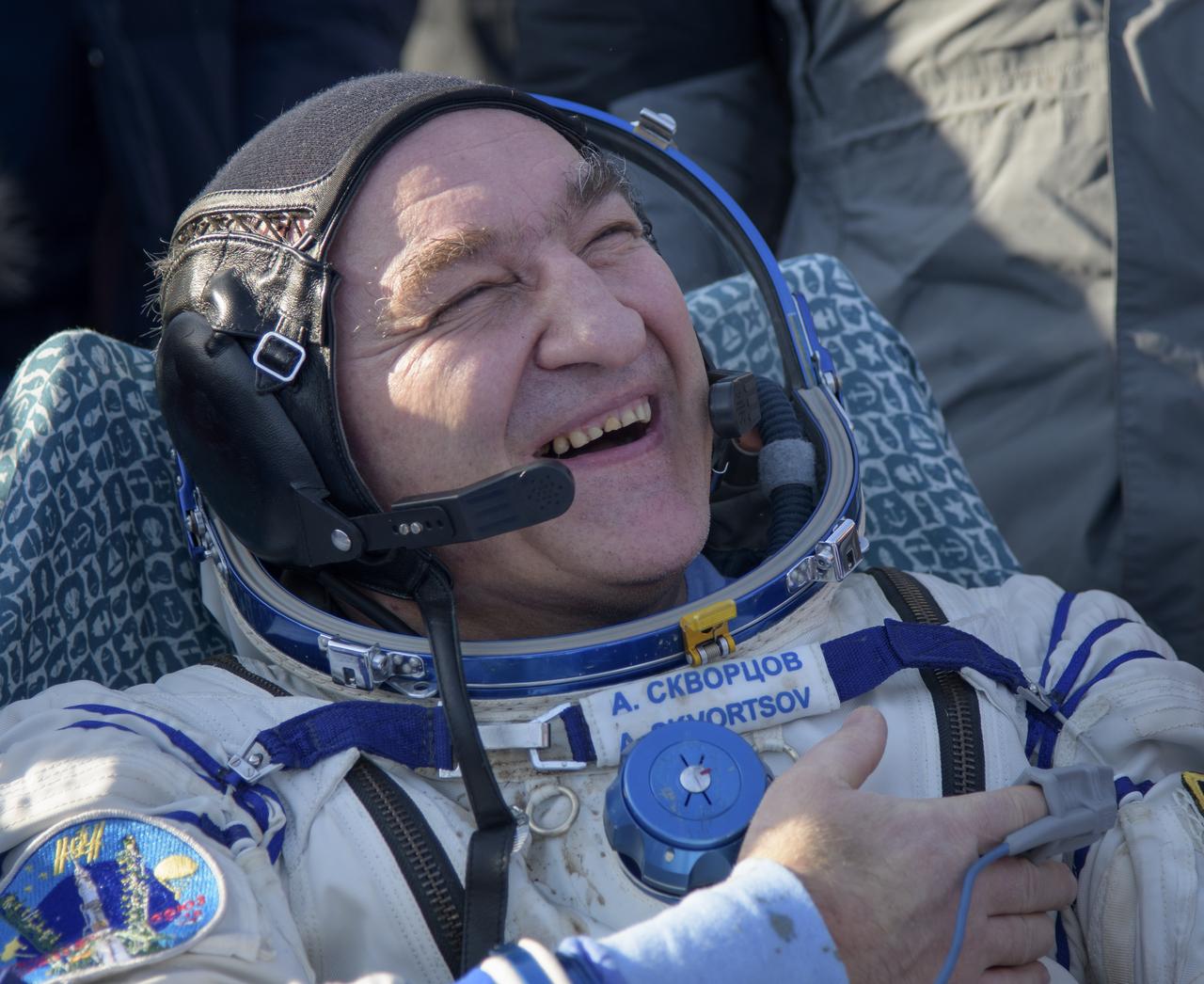
Roscosmos cosmonaut Alexander Skvortsov is seen outside the Soyuz MS-13 spacecraft after he landed with NASA astronaut Christina Koch and ESA astronaut Luca Parmitano in their Soyuz MS-13 capsule in a remote area near the town of Zhezkazgan, Kazakhstan on Thursday, Feb. 6, 2020. Koch returned to Earth after logging 328 days in space --- the longest spaceflight in history by a woman --- as a member of Expeditions 59-60-61 on the International Space Station. Skvortsov and Parmitano returned after 201 days in space where they served as Expedition 60-61 crew members onboard the station. Photo Credit: (NASA/Bill Ingalls)
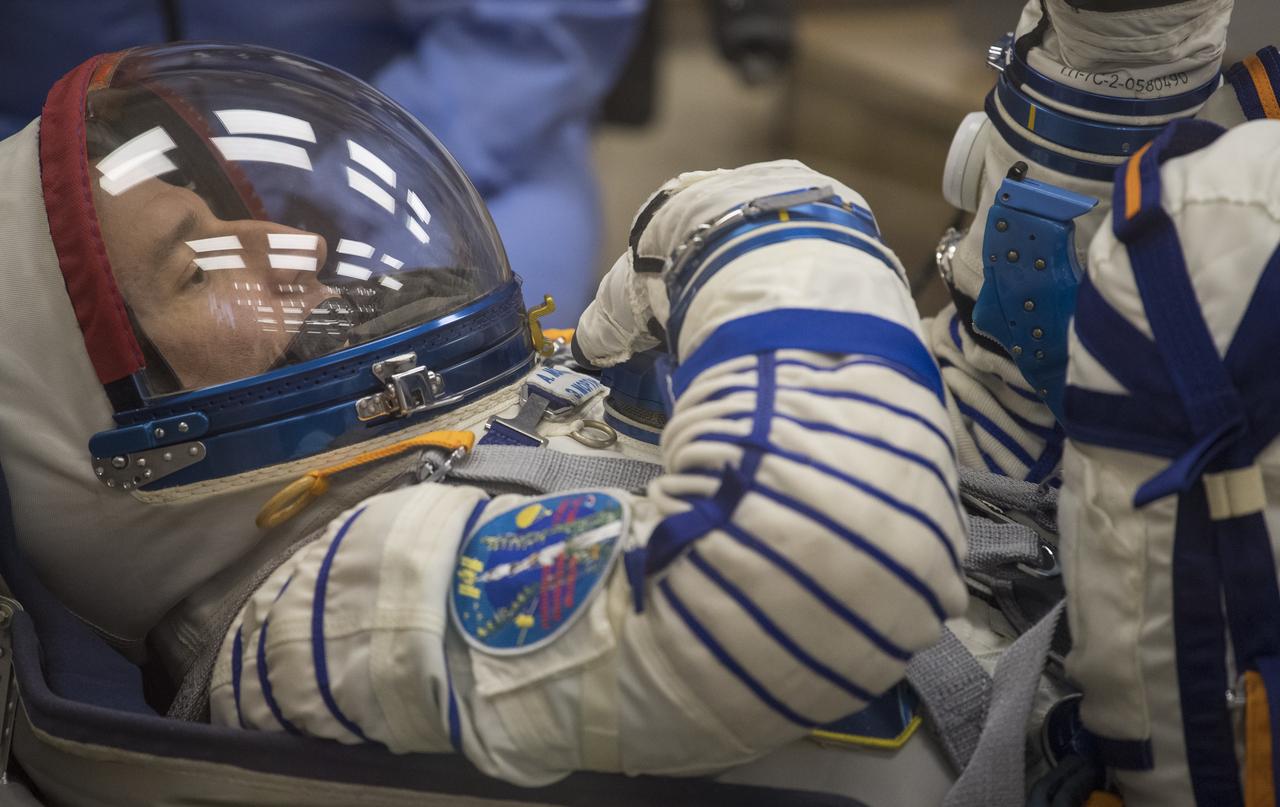
Expedition 60 flight engineer Andrew Morgan of NASA has his Russian Sokol suit pressure checked in preparation for launch aboard the Soyuz MS-13 spacecraft, Saturday, July 20, 2019 at the Baikonur Cosmodrome in Kazakhstan. Morgan, Alexander Skvortsov of Roscosmos, and Luca Parmitano of ESA (European Space Agency) launched aboard the Soyuz MS-13 spacecraft at 12:28 p.m. Eastern time (9:28 p.m. Baikonur time) on July 20 to begin their journey to the International Space Station. Photo Credit: (NASA/Joel Kowsky)
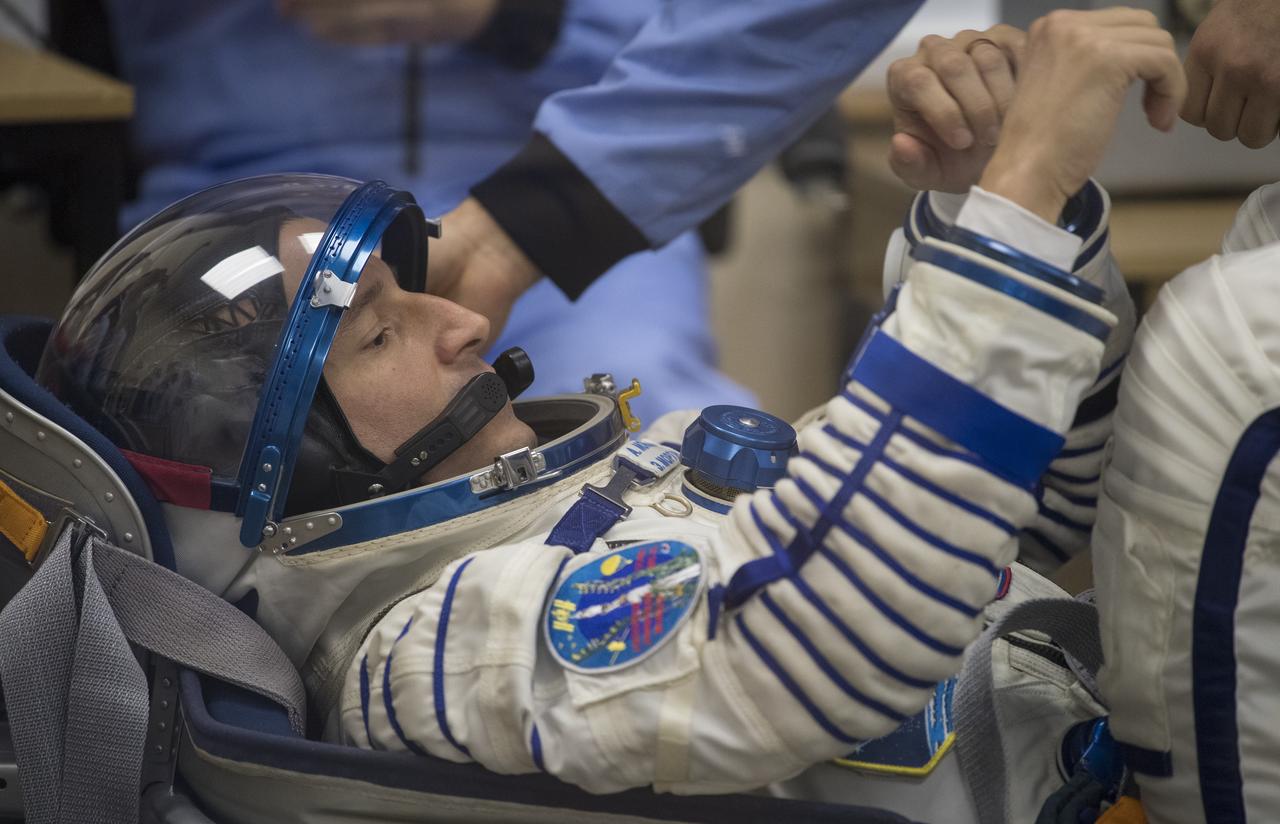
Expedition 60 flight engineer Andrew Morgan of NASA prepares to have his Russian Sokol suit pressure checked in preparation for launch aboard the Soyuz MS-13 spacecraft, Saturday, July 20, 2019 at the Baikonur Cosmodrome in Kazakhstan. Morgan, Alexander Skvortsov of Roscosmos, and Luca Parmitano of ESA (European Space Agency) launched aboard the Soyuz MS-13 spacecraft at 12:28 p.m. Eastern time (9:28 p.m. Baikonur time) on July 20 to begin their journey to the International Space Station. Photo Credit: (NASA/Joel Kowsky)
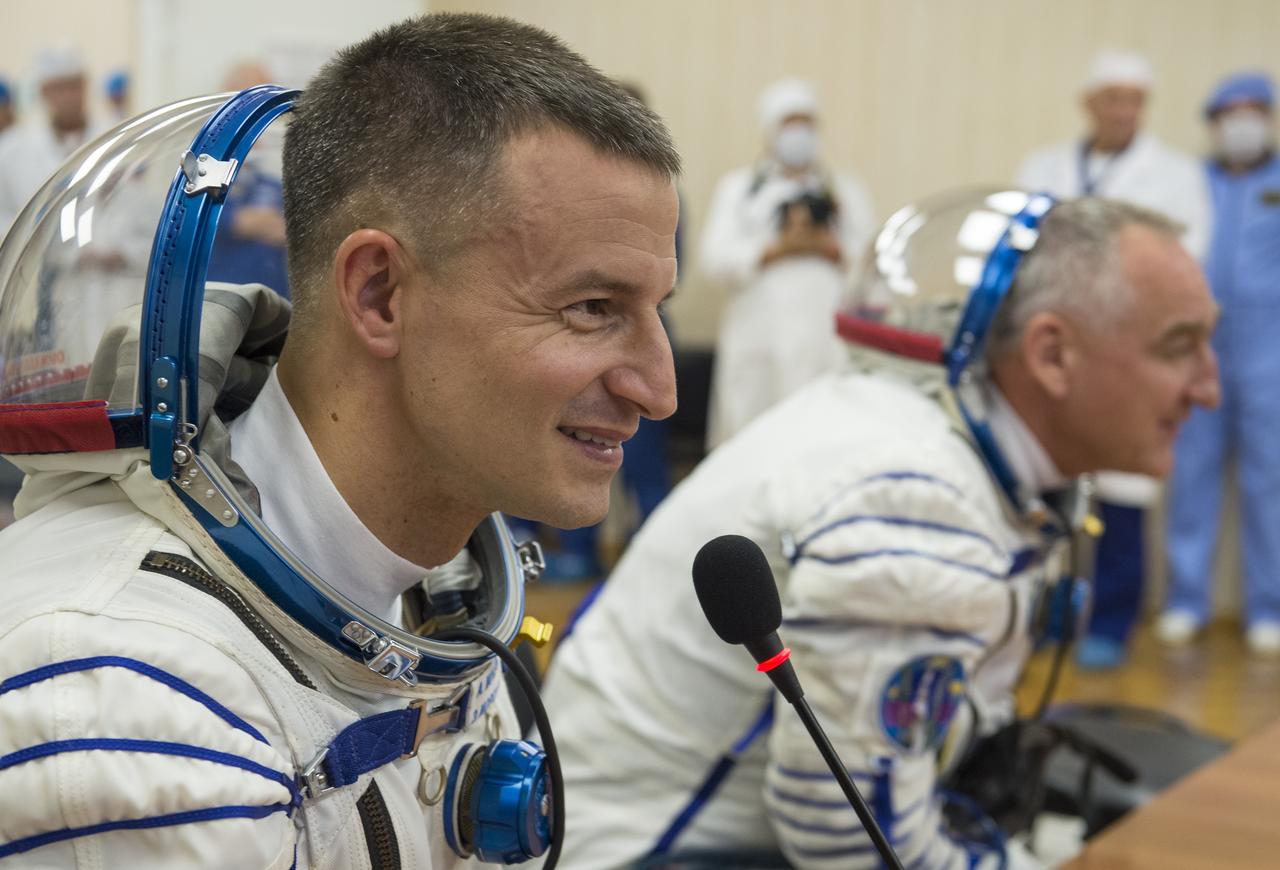
Expedition 60 flight engineer Andrew Morgan of NASA speaks with family after having his Russian Sokol suit pressure checked in preparation for launch aboard the Soyuz MS-13 spacecraft, Saturday, July 20, 2019 at the Baikonur Cosmodrome in Kazakhstan. Morgan, Alexander Skvortsov of Roscosmos, and Luca Parmitano of ESA (European Space Agency) launched aboard the Soyuz MS-13 spacecraft at 12:28 p.m. Eastern time (9:28 p.m. Baikonur time) on July 20 to begin their journey to the International Space Station. Photo Credit: (NASA/GCTC/Andrey Shelepin)
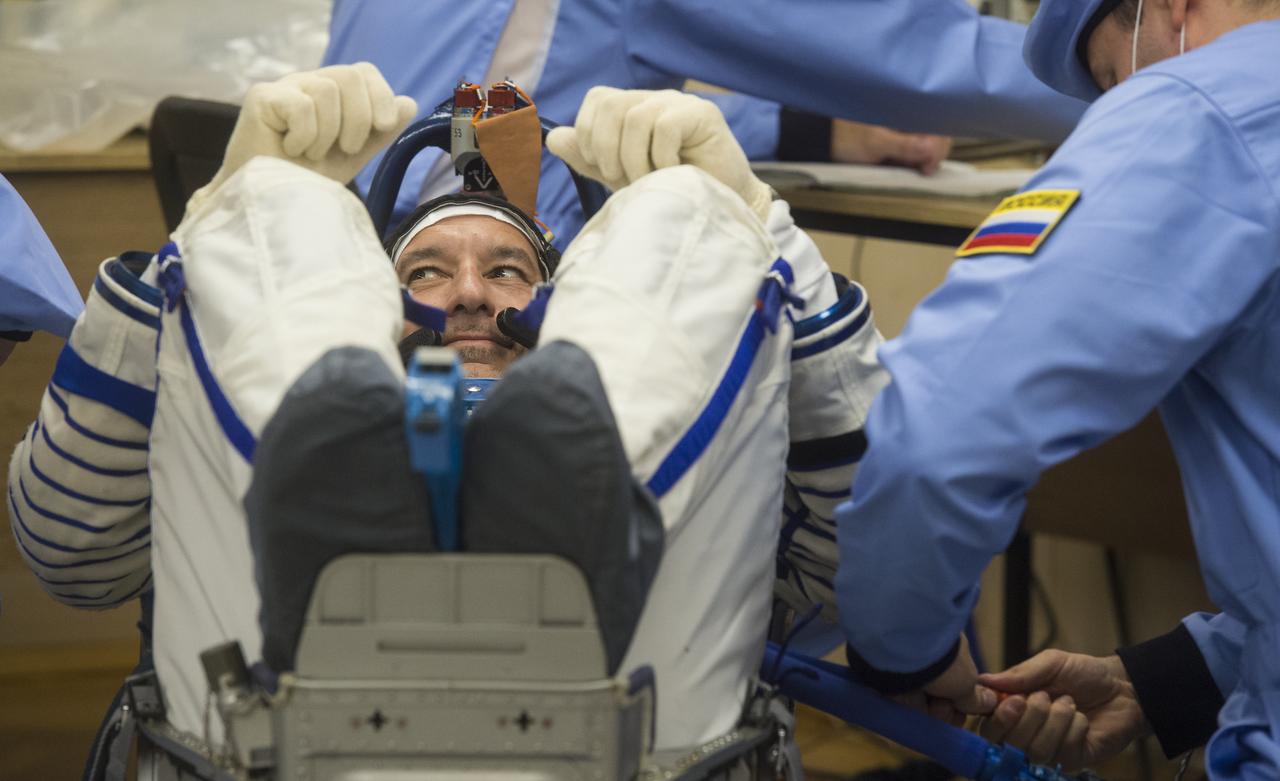
Expedition 60 flight engineer Luca Parmitano of ESA (European Space Agency) is seen as he prepares to have his Russian Sokol suit pressure checked in preparation for launch aboard the Soyuz MS-13 spacecraft, Saturday, July 20, 2019 at the Baikonur Cosmodrome in Kazakhstan. Parmitano, Alexander Skvortsov of Roscosmos, and Andrew Morgan of NASA launched aboard the Soyuz MS-13 spacecraft at 12:28 p.m. Eastern time (9:28 p.m. Baikonur time) on July 20 to begin their journey to the International Space Station. Photo Credit: (NASA/GCTC/Andrey Shelepin)
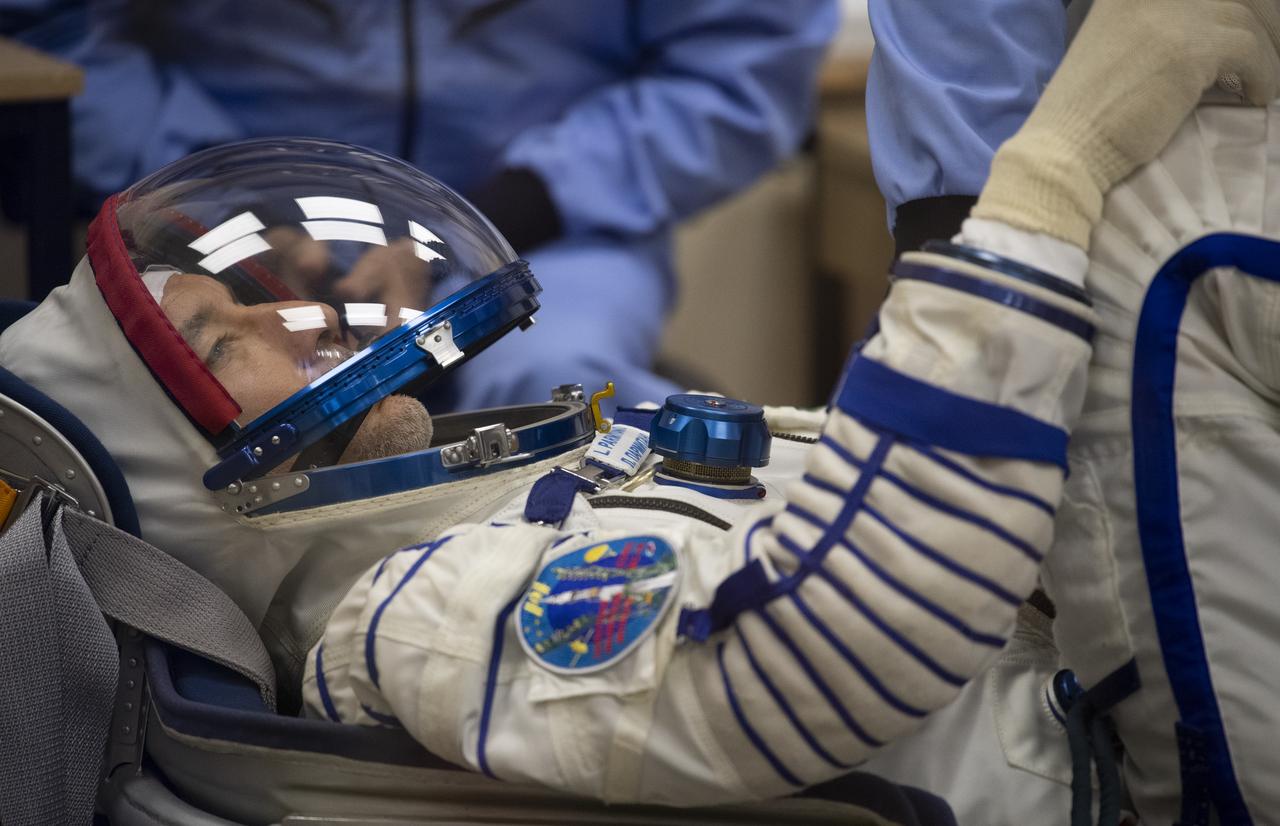
Expedition 60 flight engineer Luca Parmitano of ESA (European Space Agency) prepares to have his Russian Sokol suit pressure checked in preparation for launch aboard the Soyuz MS-13 spacecraft, Saturday, July 20, 2019 at the Baikonur Cosmodrome in Kazakhstan. Parmitano, Alexander Skvortsov of Roscosmos, and Andrew Morgan of NASA launched aboard the Soyuz MS-13 spacecraft at 12:28 p.m. Eastern time (9:28 p.m. Baikonur time) on July 20 to begin their journey to the International Space Station. Photo Credit: (NASA/Joel Kowsky)
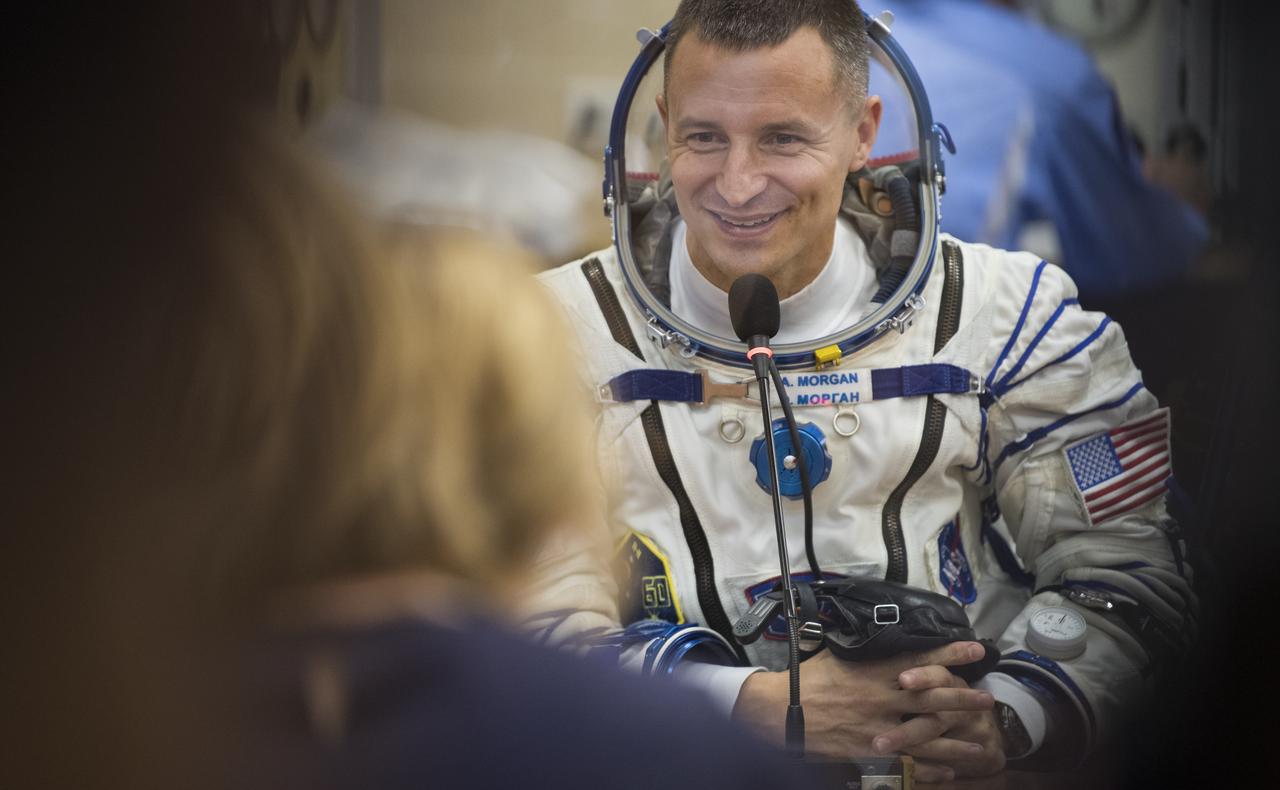
Expedition 60 flight engineer Andrew Morgan of NASA speaks with family after having his Russian Sokol suit pressure checked in preparation for launch aboard the Soyuz MS-13 spacecraft, Saturday, July 20, 2019 at the Baikonur Cosmodrome in Kazakhstan. Morgan, Alexander Skvortsov of Roscosmos, and Luca Parmitano of ESA (European Space Agency) launched aboard the Soyuz MS-13 spacecraft at 12:28 p.m. Eastern time (9:28 p.m. Baikonur time) on July 20 to begin their journey to the International Space Station. Photo Credit: (NASA/Joel Kowsky)
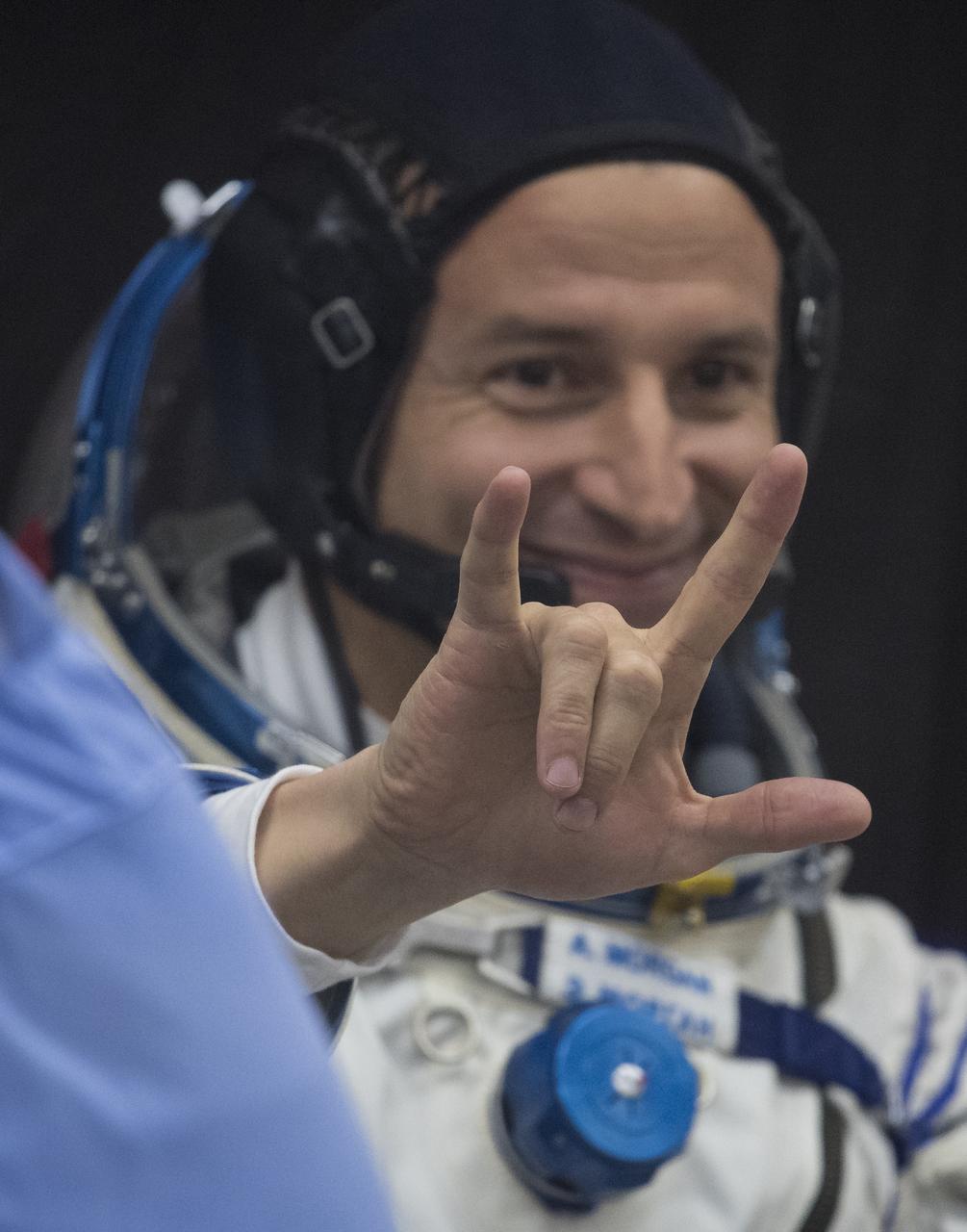
Expedition 60 flight engineer Andrew Morgan of NASA waits to have his Russian Sokol suit pressure checked in preparation for launch aboard the Soyuz MS-13 spacecraft, Saturday, July 20, 2019 at the Baikonur Cosmodrome in Kazakhstan. Morgan, Alexander Skvortsov of Roscosmos, and Luca Parmitano of ESA (European Space Agency) launched aboard the Soyuz MS-13 spacecraft at 12:28 p.m. Eastern time (9:28 p.m. Baikonur time) on July 20 to begin their journey to the International Space Station. Photo Credit: (NASA/Joel Kowsky)
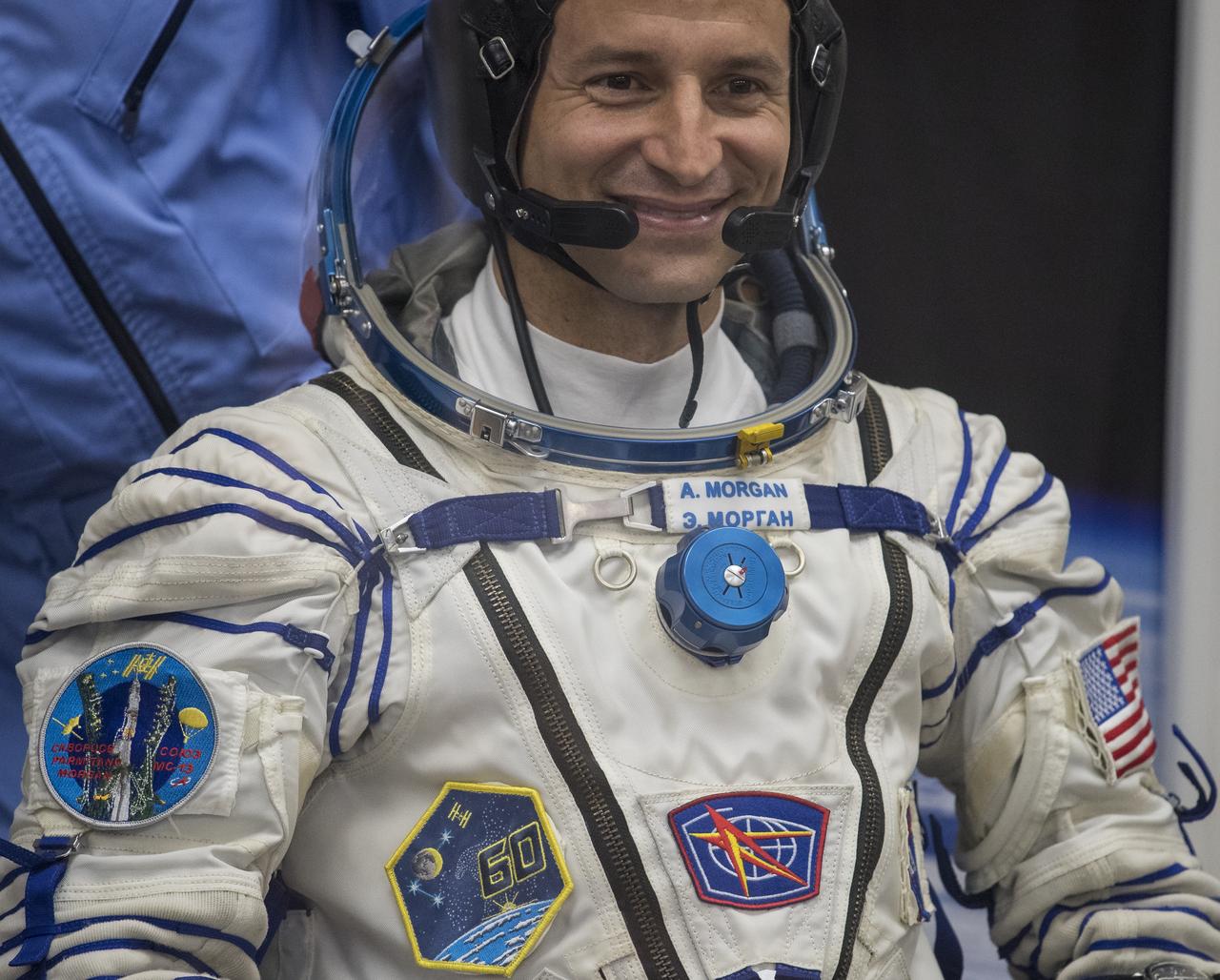
Expedition 60 flight engineer Andrew Morgan of NASA waits to have his Russian Sokol suit pressure checked in preparation for launch aboard the Soyuz MS-13 spacecraft, Saturday, July 20, 2019 at the Baikonur Cosmodrome in Kazakhstan. Morgan, Alexander Skvortsov of Roscosmos, and Luca Parmitano of ESA (European Space Agency) launched aboard the Soyuz MS-13 spacecraft at 12:28 p.m. Eastern time (9:28 p.m. Baikonur time) on July 20 to begin their journey to the International Space Station. Photo Credit: (NASA/Joel Kowsky)
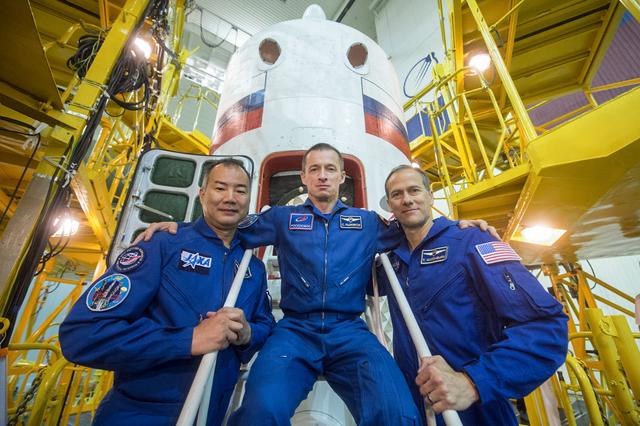
jsc2019e039435 - At the Baikonur Cosmodrome in Kazakhstan, Expedition 60 backup crewmembers Soichi Noguchi of the Japan Aerospace Exploration Agency (left), Sergey Ryzhikov of Roscosmos (center) and Tom Marshburn of NASA (right) pose for pictures in front of the Soyuz MS-13 spacecraft July 16 as part of pre-launch preparations. They are the backups to Drew Morgan of NASA, Alexander Skvortsov of Roscosmos and Luca Parmitano of the European Space Agency who will launch July 20 on the Soyuz MS-13 spacecraft from the Baikonur Cosmodrome for a mission on the International Space Station...Andrey Shelepin/GCTC.
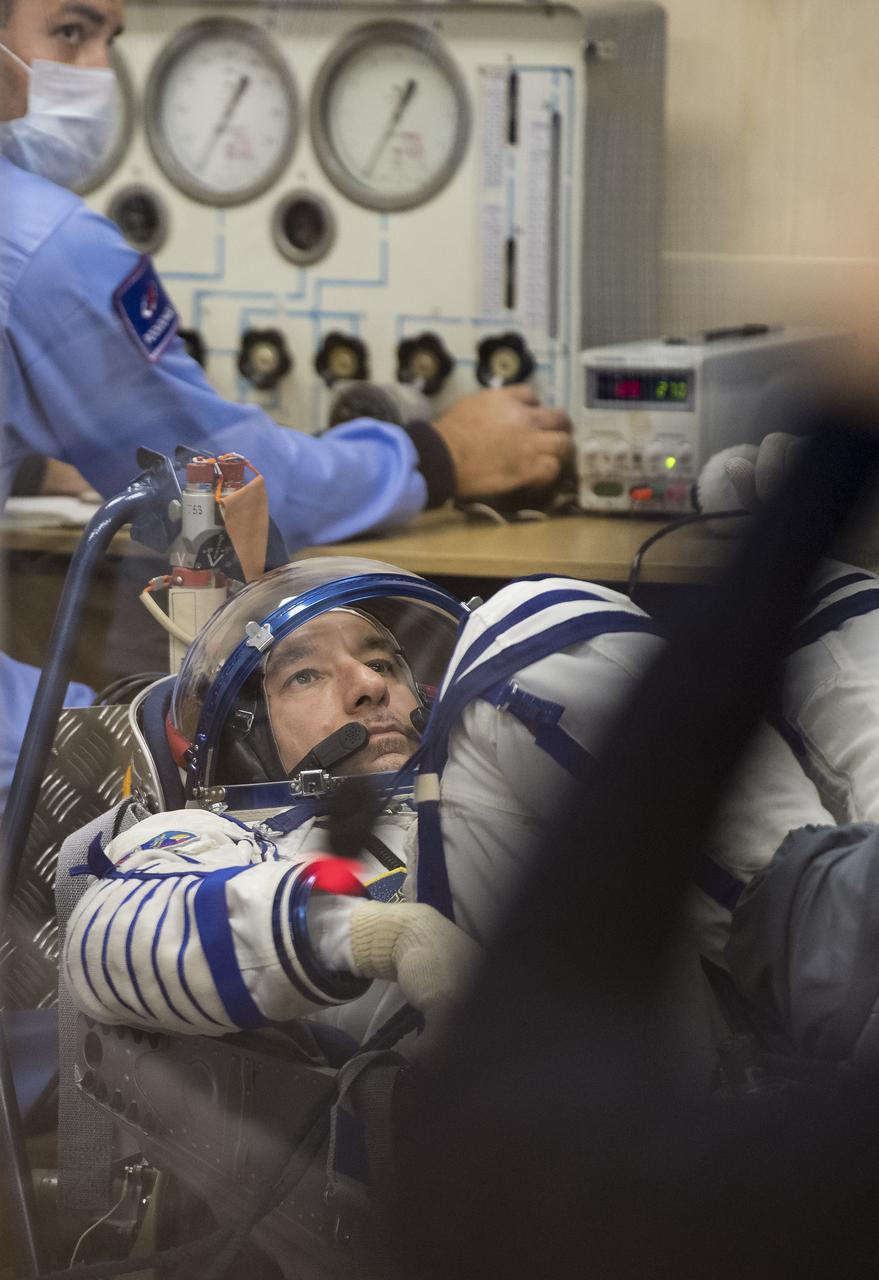
Expedition 60 flight engineer Luca Parmitano of ESA (European Space Agency) prepares to have his Russian Sokol suit pressure checked in preparation for launch aboard the Soyuz MS-13 spacecraft, Saturday, July 20, 2019 at the Baikonur Cosmodrome in Kazakhstan. Parmitano, Alexander Skvortsov of Roscosmos, and Andrew Morgan of NASA launched aboard the Soyuz MS-13 spacecraft at 12:28 p.m. Eastern time (9:28 p.m. Baikonur time) on July 20 to begin their journey to the International Space Station. Photo Credit: (NASA/Joel Kowsky)
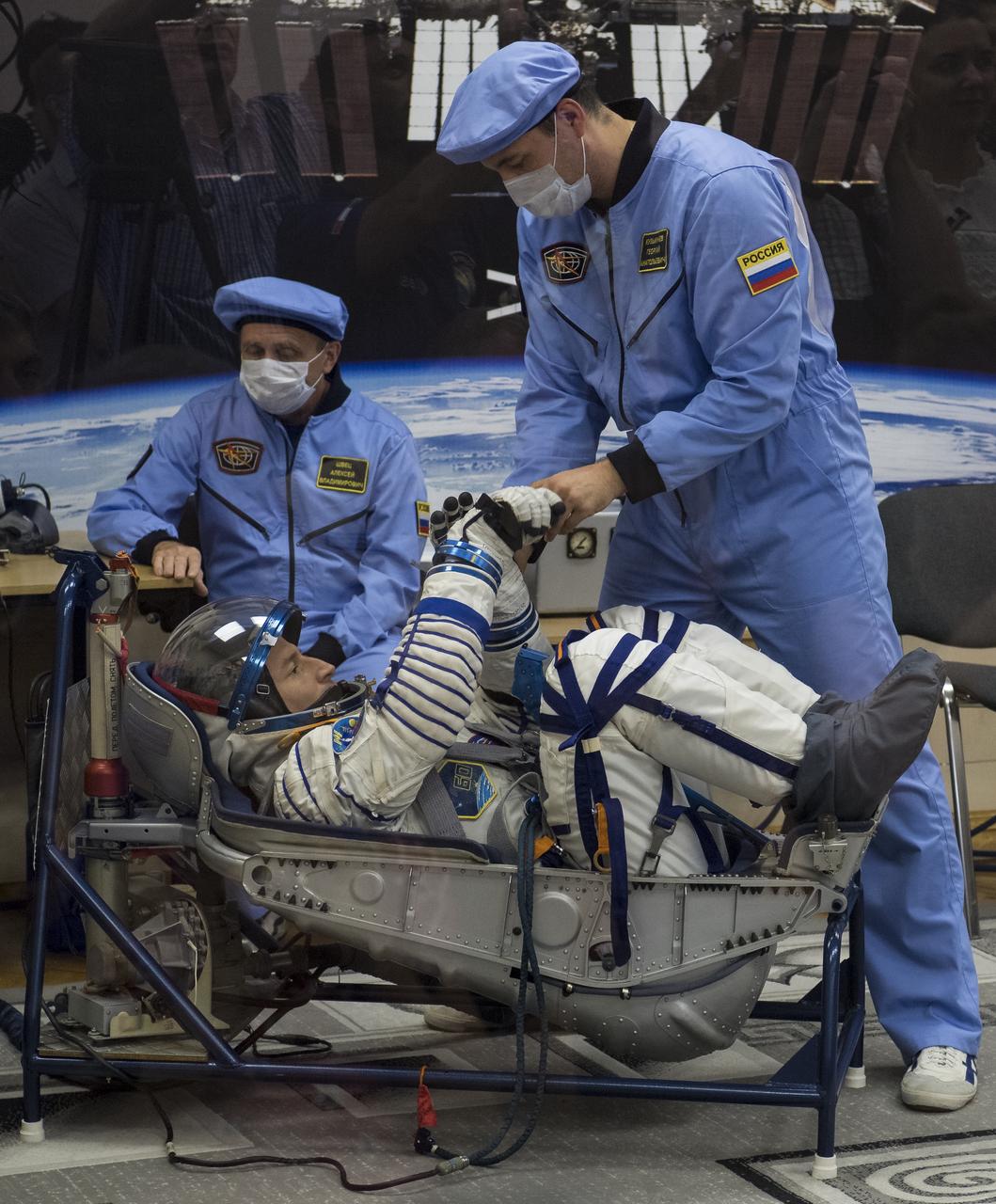
Expedition 60 flight engineer Andrew Morgan of NASA prepares to have his Russian Sokol suit pressure checked in preparation for launch aboard the Soyuz MS-13 spacecraft, Saturday, July 20, 2019 at the Baikonur Cosmodrome in Kazakhstan. Morgan, Alexander Skvortsov of Roscosmos, and Luca Parmitano of ESA (European Space Agency) launched aboard the Soyuz MS-13 spacecraft at 12:28 p.m. Eastern time (9:28 p.m. Baikonur time) on July 20 to begin their journey to the International Space Station. Photo Credit: (NASA/Joel Kowsky)
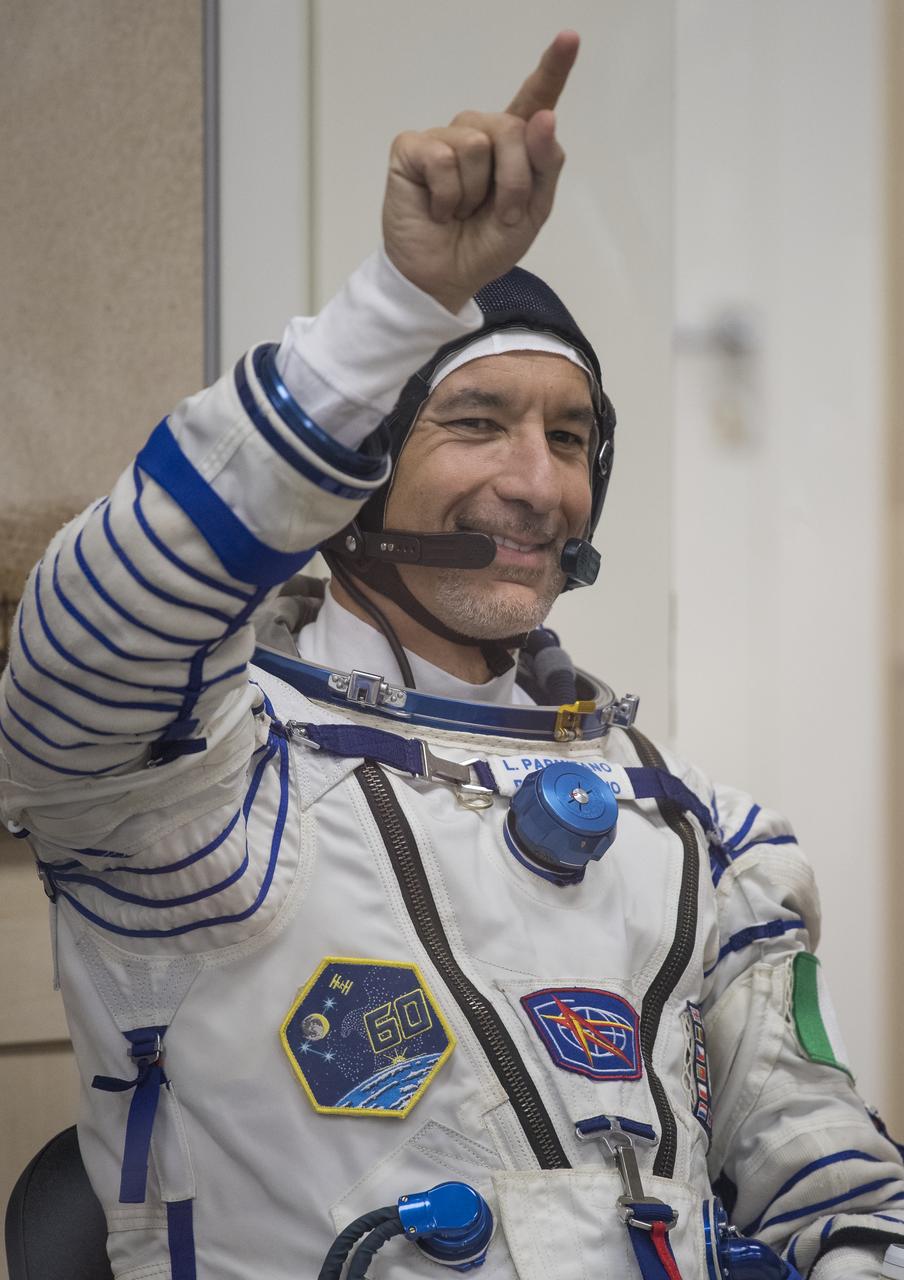
Expedition 60 flight engineer Luca Parmitano of ESA (European Space Agency) is seen as he waits to have his Russian Sokol suit pressure checked in preparation for launch aboard the Soyuz MS-13 spacecraft, Saturday, July 20, 2019 at the Baikonur Cosmodrome in Kazakhstan. Parmitano, Alexander Skvortsov of Roscosmos, and Andrew Morgan of NASA launched aboard the Soyuz MS-13 spacecraft at 12:28 p.m. Eastern time (9:28 p.m. Baikonur time) on July 20 to begin their journey to the International Space Station. Photo Credit: (NASA/Joel Kowsky)
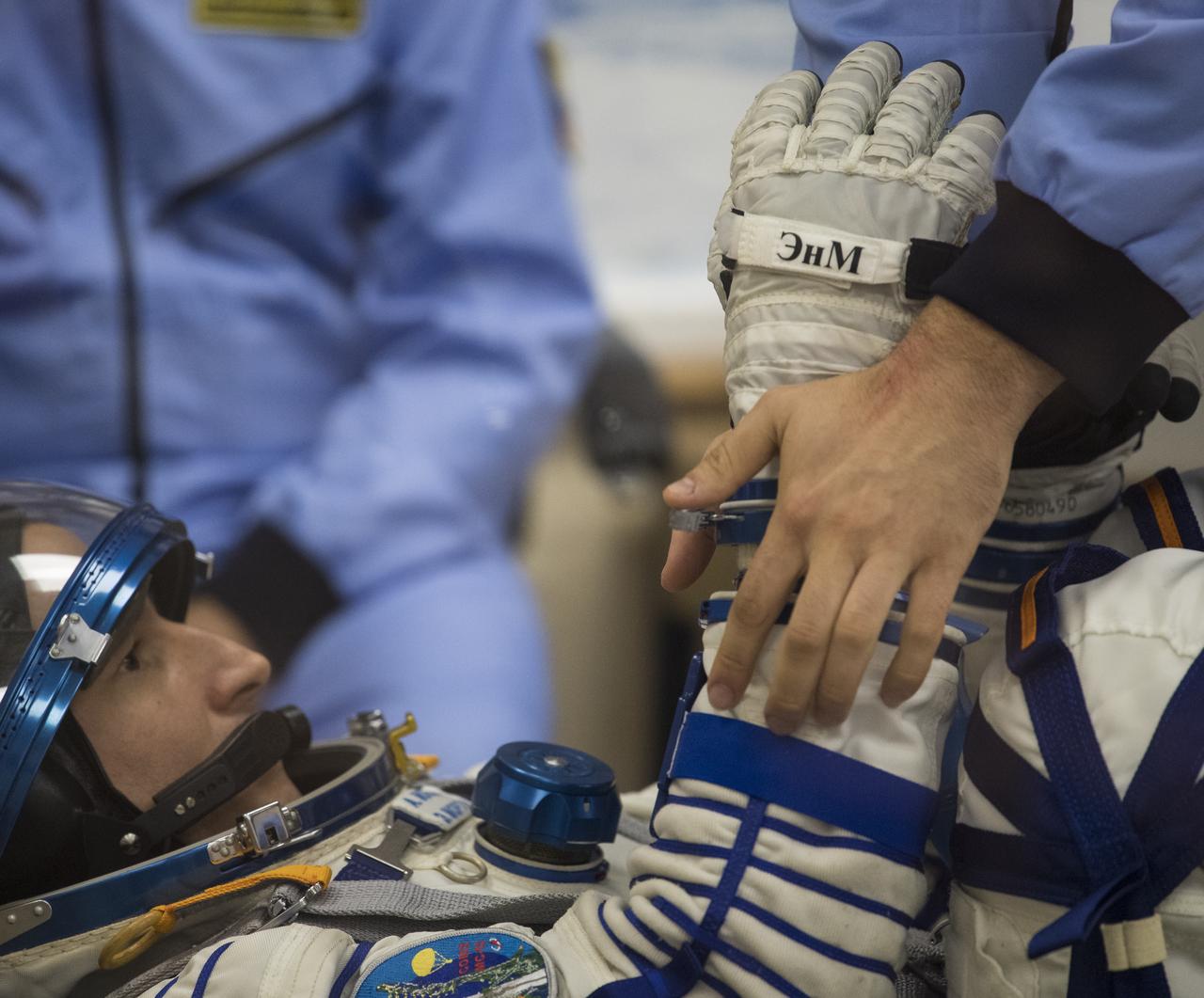
Expedition 60 flight engineer Andrew Morgan of NASA prepares to have his Russian Sokol suit pressure checked in preparation for launch aboard the Soyuz MS-13 spacecraft, Saturday, July 20, 2019 at the Baikonur Cosmodrome in Kazakhstan. Morgan, Alexander Skvortsov of Roscosmos, and Luca Parmitano of ESA (European Space Agency) launched aboard the Soyuz MS-13 spacecraft at 12:28 p.m. Eastern time (9:28 p.m. Baikonur time) on July 20 to begin their journey to the International Space Station. Photo Credit: (NASA/Joel Kowsky)
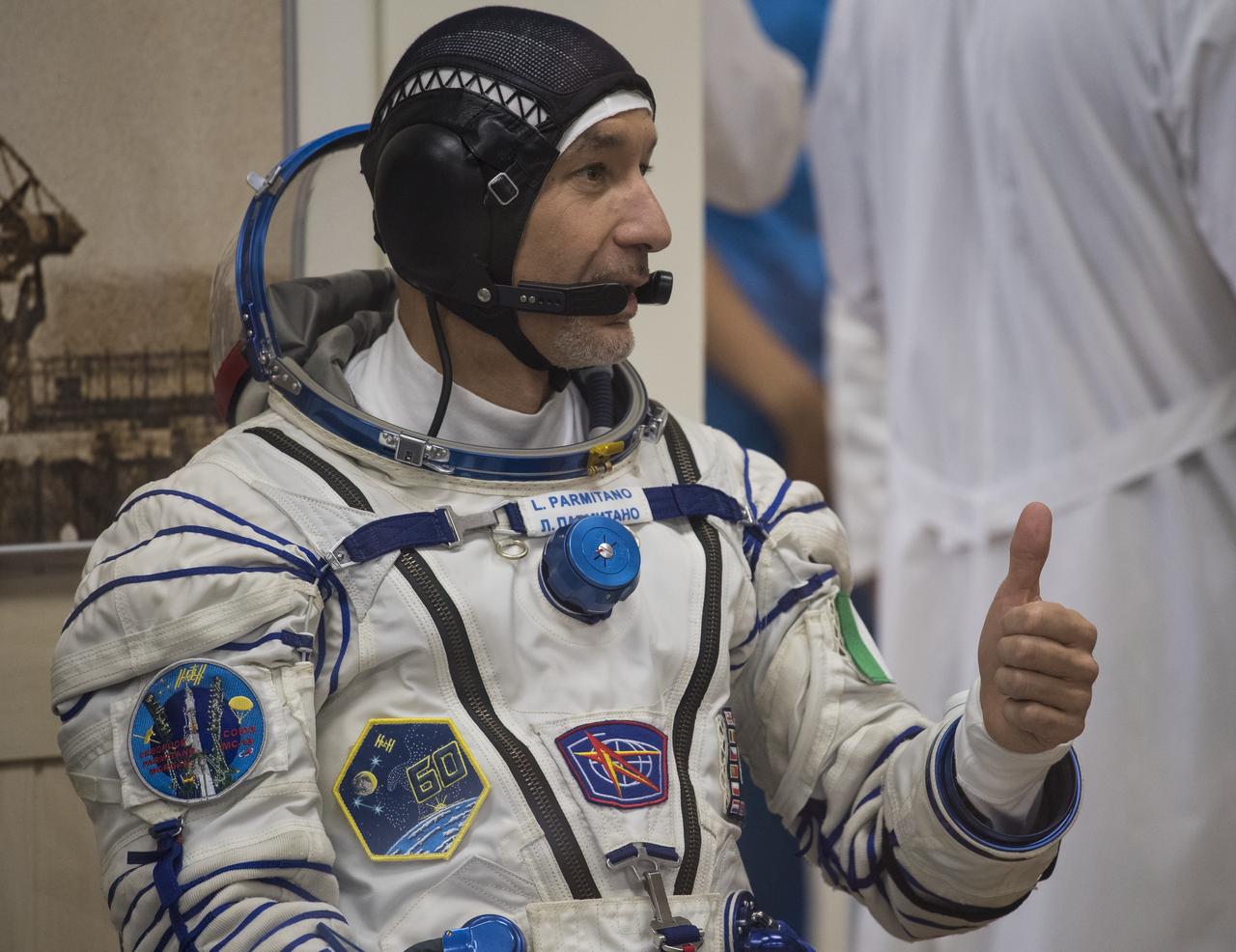
Expedition 60 flight engineer Luca Parmitano or ESA (European Space Agency) gives a thumbs up as he waits to have his Russian Sokol suit pressure checked in preparation for launch aboard the Soyuz MS-13 spacecraft, Saturday, July 20, 2019 at the Baikonur Cosmodrome in Kazakhstan. Parmitano, Andrew Morgan of NASA, and Alexander Skvortsov of Roscosmos launched aboard the Soyuz MS-13 spacecraft at 12:28 p.m. Eastern time (9:28 p.m. Baikonur time) on July 20 to begin their journey to the International Space Station. Photo Credit: (NASA/Joel Kowsky)
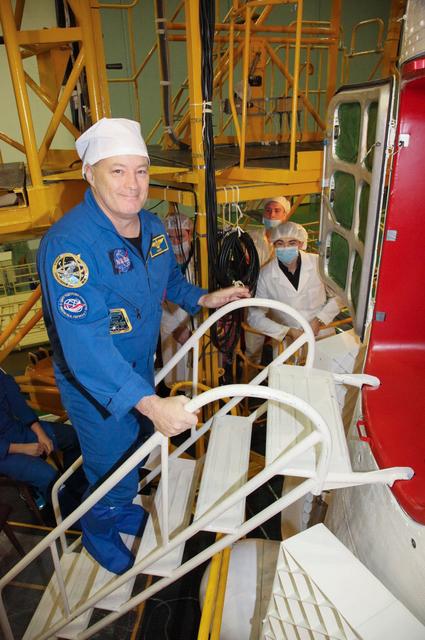
jsc2017e138114 - At the Integration Facility at the Baikonur Cosmodrome in Kazakhstan, Expedition 54-55 prime crewmember Scott Tingle of NASA boards the Soyuz MS-07 spacecraft Dec. 13 for the continuation of pre-launch training. Tingle, Anton Shkaplerov of the Russian Federal Space Agency (Roscosmos) and Norishige Kanai of the Japan Aerospace Exploration Agency (JAXA) will launch Dec. 17 on the Soyuz MS-07 vehicle for a five month mission on the International Space Station...Andrey Shelepin/Gagarin Cosmonaut Training Center.
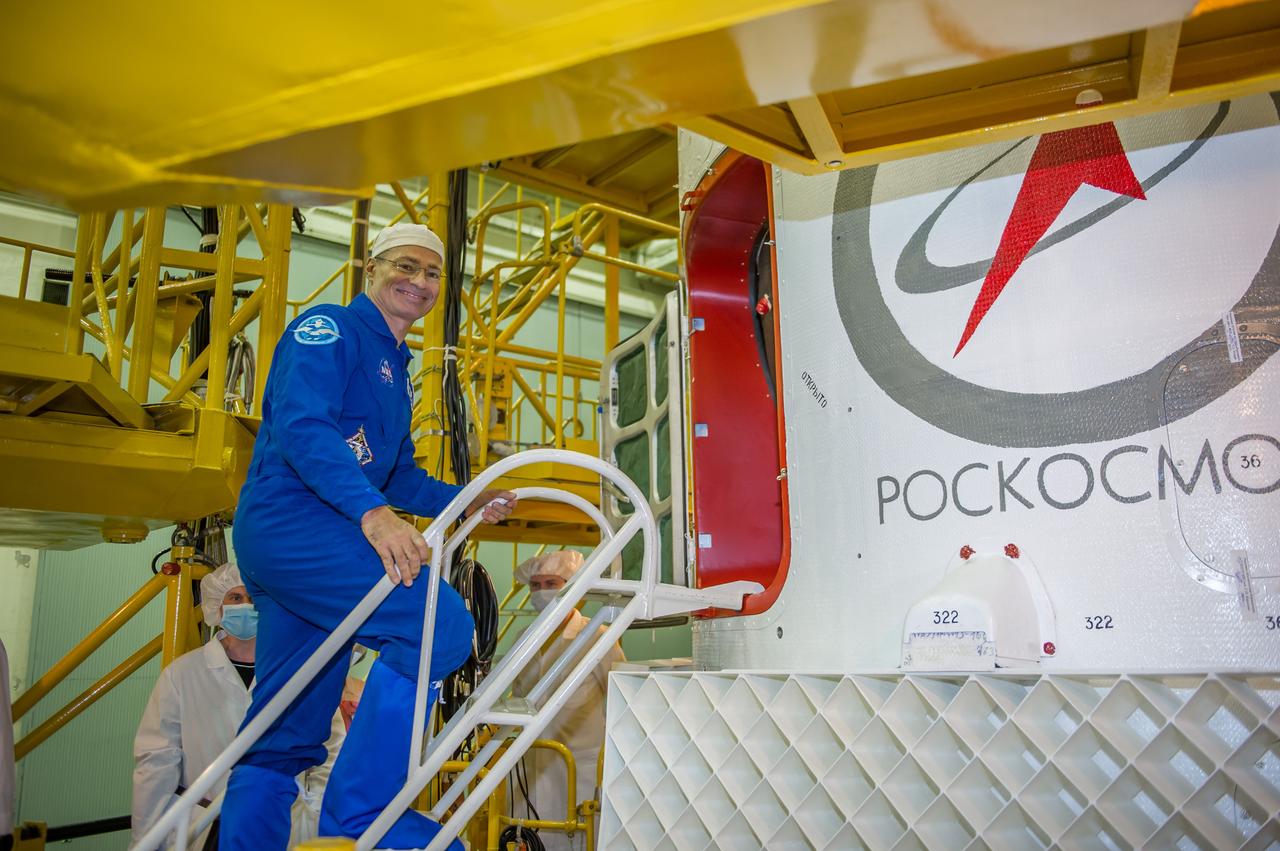
jsc2017e115140 (Sept. 7, 2017) --- At the Baikonur Cosmodrome in Kazakhstan, Expedition 53-54 crewmember Mark Vande Hei of NASA boards the Soyuz MS-06 spacecraft Sept. 7 during final fit check training activities. Vande Hei, Joe Acaba of NASA and Alexander Misurkin of Roscosmos will launch Sept. 13 on the Soyuz MS-06 spacecraft for a five and a half month mission on the International Space Station. Credit: Gagarin Cosmonaut Training Center/Irina Peshkova
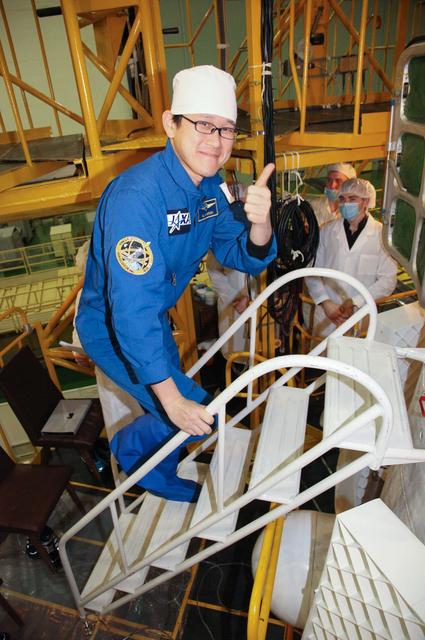
jsc2017e138113 - At the Integration Facility at the Baikonur Cosmodrome in Kazakhstan, Expedition 54-55 prime crewmember Norishige Kanai of the Japan Aerospace Exploration Agency (JAXA) boards the Soyuz MS-07 spacecraft Dec. 13 for the continuation of pre-launch training. Kanai, Scott Tingle of NASA and Anton Shkaplerov of the Russian Federal Space Agency (Roscosmos) will launch Dec. 17 on the Soyuz MS-07 vehicle for a five month mission on the International Space Station...Andrey Shelepin/Gagarin Cosmonaut Training Center.
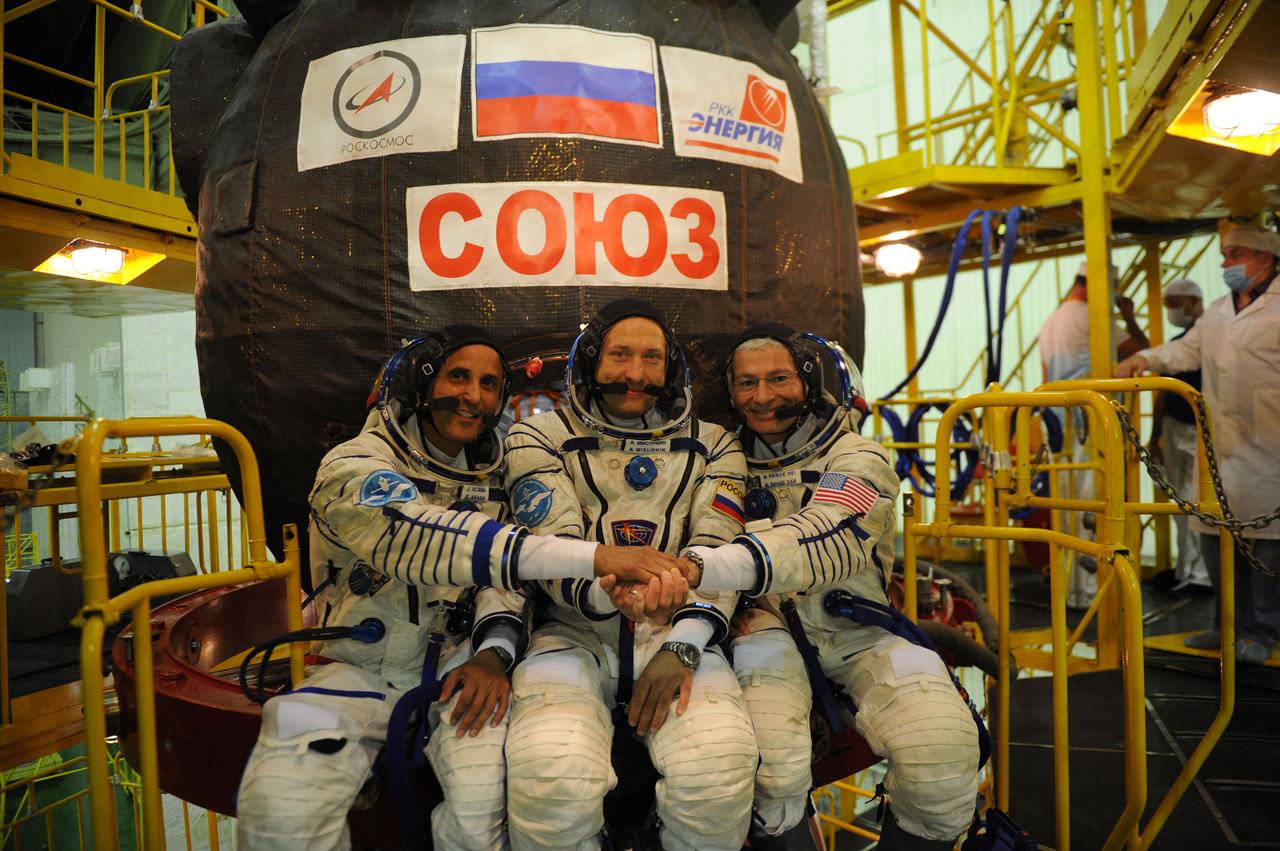
jsc2017e114474 (Aug. 28, 2017) --- In the Integration Facility at the Baikonur Cosmodrome in Kazakhstan, the Expedition 53-54 crewmembers pose for pictures Aug. 28 during pre-launch training activities in front of their Soyuz MS-06 spacecraft. Joe Acaba of NASA (left), Alexander Misurkin of Roscosmos (center) and Mark Vande Hei of NASA (right) will launch Sept. 13 on the Soyuz MS-06 for a five and a half month mission on the International Space Station. Credit: Gagarin Cosmonaut Training Center/Irina Peshkova
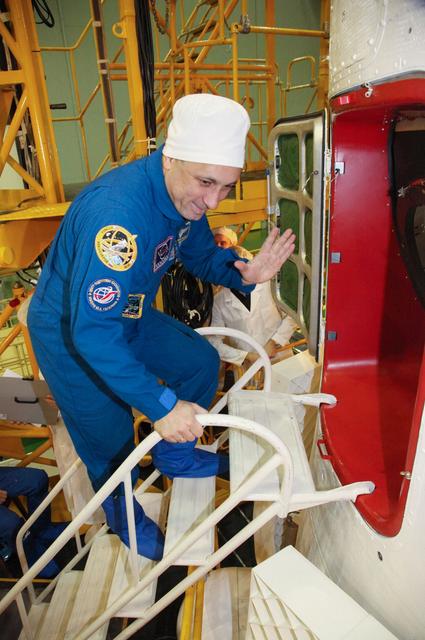
jsc2017e138120 - At the Integration Facility at the Baikonur Cosmodrome in Kazakhstan, Expedition 54-55 prime crewmember Anton Shkaplerov of the Russian Federal Space Agency (Roscosmos) boards the Soyuz MS-07 spacecraft Dec. 13 for the continuation of pre-launch training. Shkaplerov, Norishige Kanai of the Japan Aerospace Exploration Agency (JAXA) and Scott Tingle of NASA (right) will launch Dec. 17 on the Soyuz MS-07 vehicle for a five month mission on the International Space Station...Andrey Shelepin/Gagarin Cosmonaut Training Center.