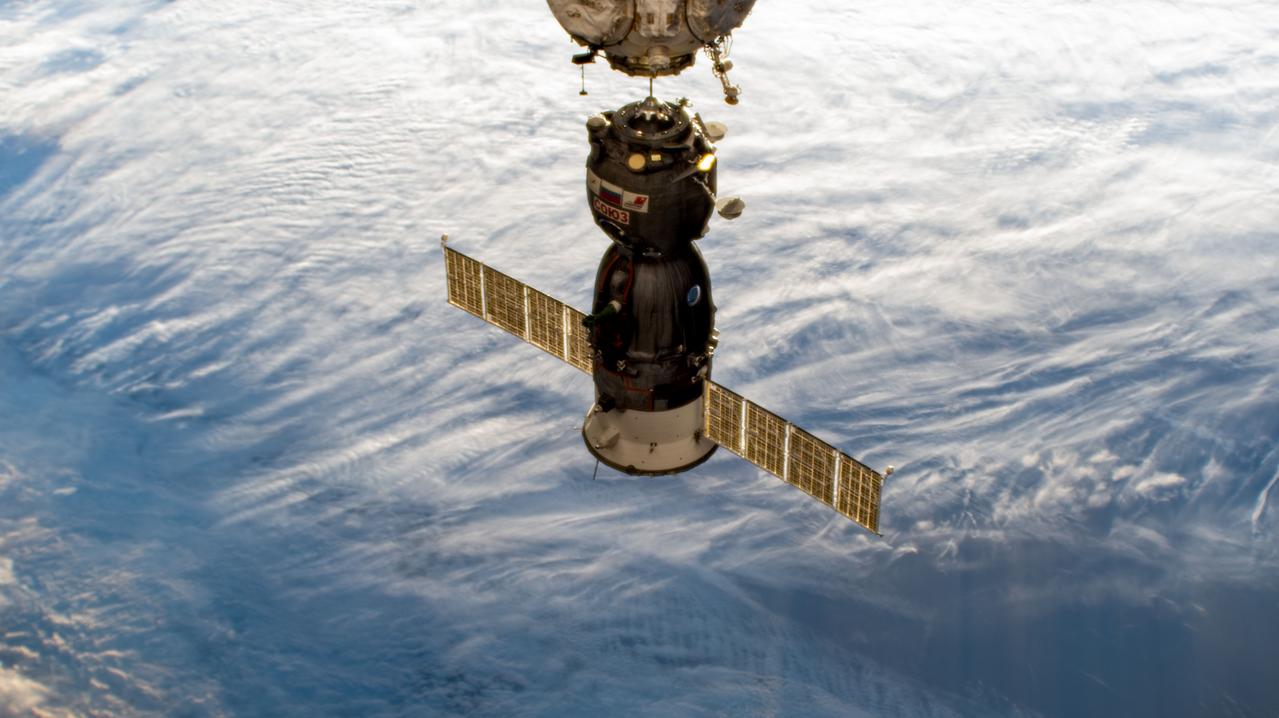
iss069e000995 (April 6, 2023) --- The Soyuz MS-23 crew ship approaches the International Space Station's Prichal docking module after undocking and moving earlier from the Poisk module. Aboard the MS-23 during the 37-minute relocation maneuver were, NASA astronaut Frank Rubio with Roscosmos cosmonauts Sergey Prokopyev and Dmitri Petelin.
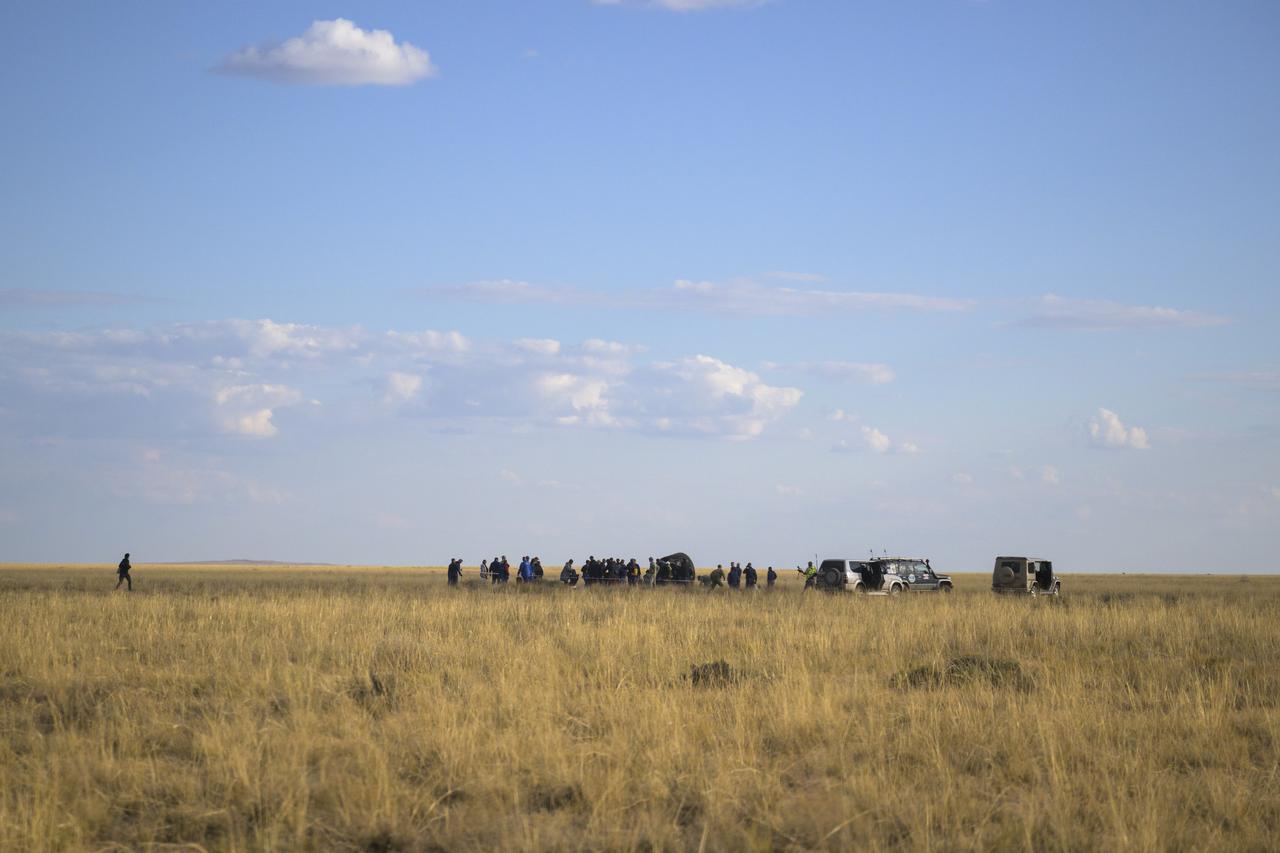
Russian Search and Rescue teams arrive at the Soyuz MS-23 spacecraft shortly after it landed in a remote area near the town of Zhezkazgan, Kazakhstan with Expedition 69 NASA astronaut Frank Rubio, Roscosmos cosmonauts Dmitri Petelin and Sergey Prokopyev, Wednesday, Sept. 27, 2023. The trio are returning to Earth after logging 371 days in space as members of Expeditions 68-69 aboard the International Space Station. For Rubio, his mission is the longest single spaceflight by a U.S. astronaut in history. Photo Credit: (NASA/Bill Ingalls)
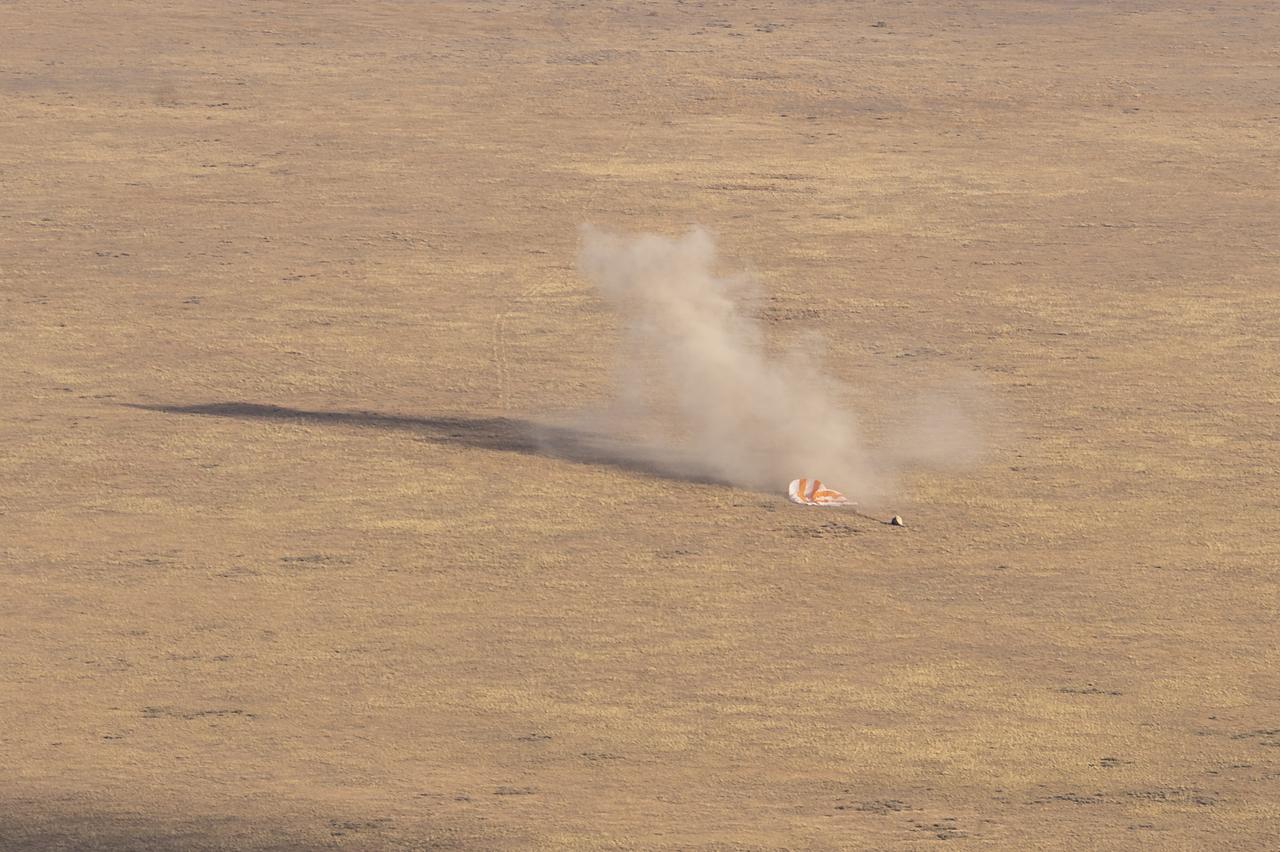
The Soyuz MS-23 spacecraft is seen as it lands in a remote area near the town of Zhezkazgan, Kazakhstan with Expedition 69 NASA astronaut Frank Rubio, Roscosmos cosmonauts Dmitri Petelin and Sergey Prokopyev, Wednesday, Sept. 27, 2023. The trio are returning to Earth after logging 371 days in space as members of Expeditions 68-69 aboard the International Space Station. For Rubio, his mission is the longest single spaceflight by a U.S. astronaut in history. Photo Credit (NASA/GCTC/Pavel Shvets)
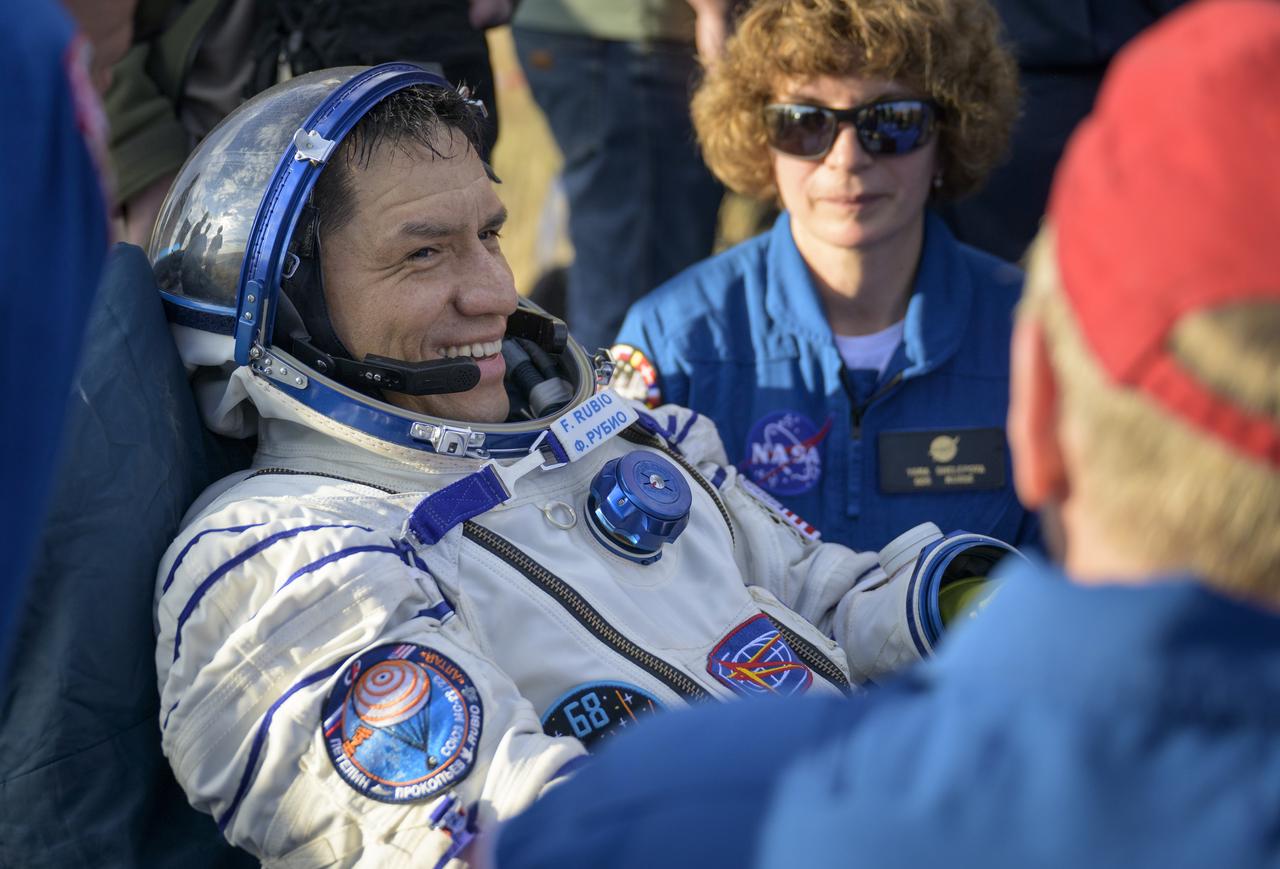
Expedition 69 NASA astronaut Frank Rubio is seen outside the Soyuz MS-23 spacecraft after he landed with Roscosmos cosmonauts Sergey Prokopyev and Dmitri Petelin in a remote area near the town of Zhezkazgan, Kazakhstan on Wednesday, Sept. 27, 2023. The trio are returning to Earth after logging 371 days in space as members of Expeditions 68-69 aboard the International Space Station. For Rubio, his mission is the longest single spaceflight by a U.S. astronaut in history. Photo Credit: (NASA/Bill Ingalls)
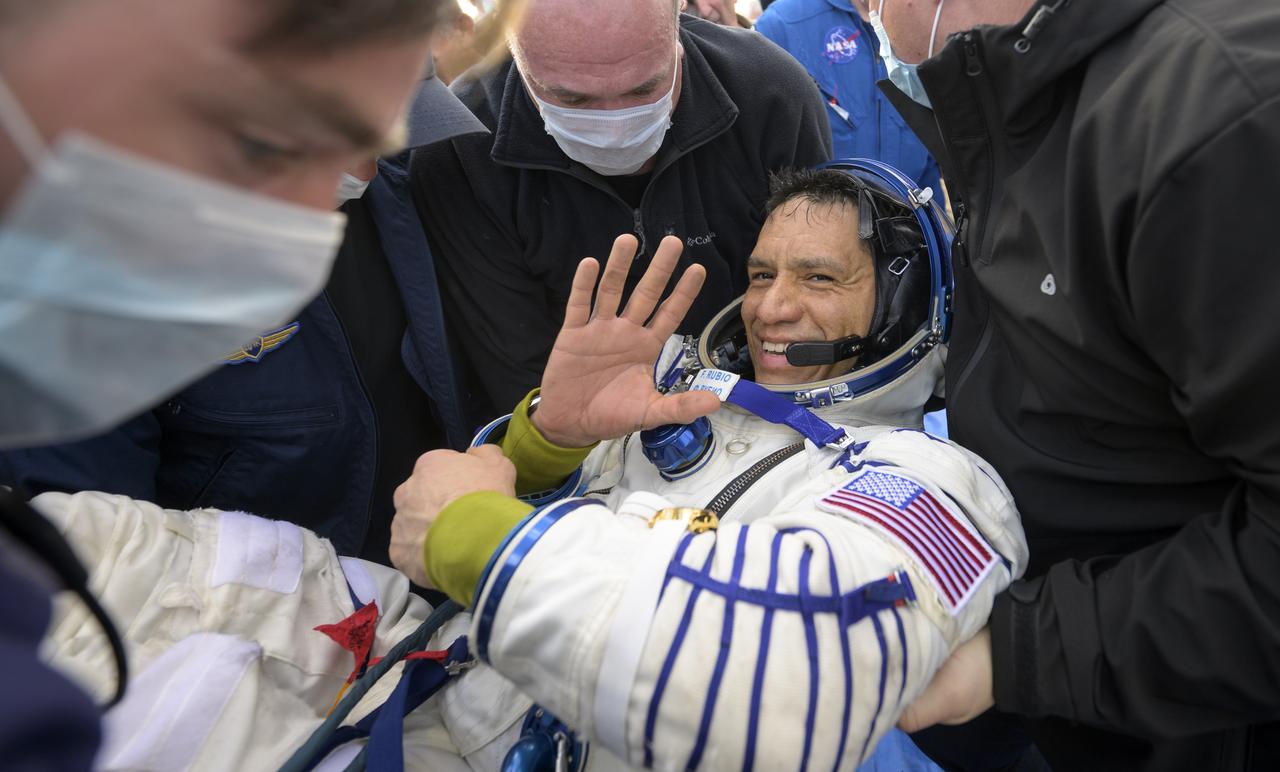
Expedition 69 NASA astronaut Frank Rubio is helped out of the Soyuz MS-23 spacecraft just minutes after he Roscosmos cosmonauts Sergey Prokopyev and Dmitri Petelin, landed in a remote area near the town of Zhezkazgan, Kazakhstan on Wednesday, Sept. 27, 2023. The trio are returning to Earth after logging 371 days in space as members of Expeditions 68-69 aboard the International Space Station. For Rubio, his mission is the longest single spaceflight by a U.S. astronaut in history. Photo Credit: (NASA/Bill Ingalls)
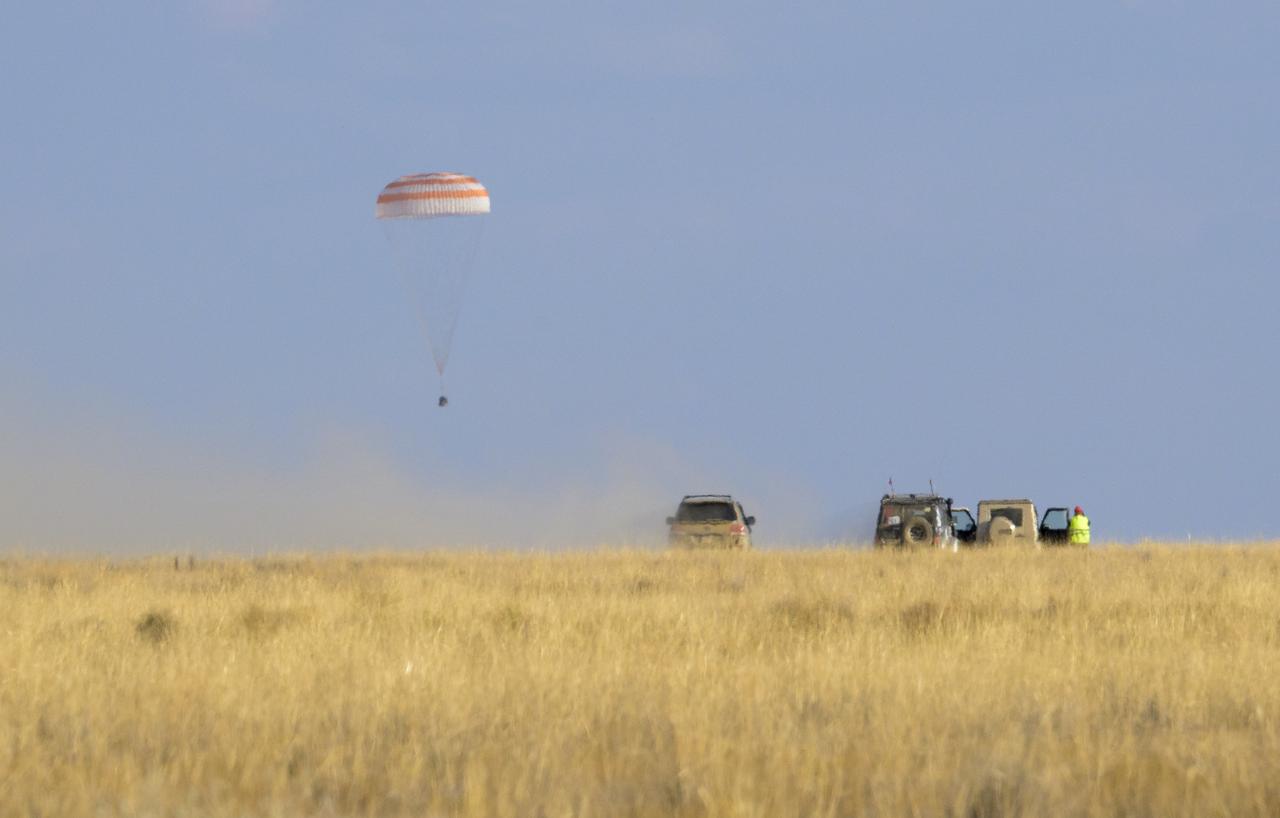
The Soyuz MS-23 spacecraft is seen as it lands in a remote area near the town of Zhezkazgan, Kazakhstan with Expedition 69 NASA astronaut Frank Rubio, Roscosmos cosmonauts Dmitri Petelin and Sergey Prokopyev, Wednesday, Sept. 27, 2023. The trio are returning to Earth after logging 371 days in space as members of Expeditions 68-69 aboard the International Space Station. For Rubio, his mission is the longest single spaceflight by a U.S. astronaut in history. Photo Credit (NASA/Bill Ingalls)
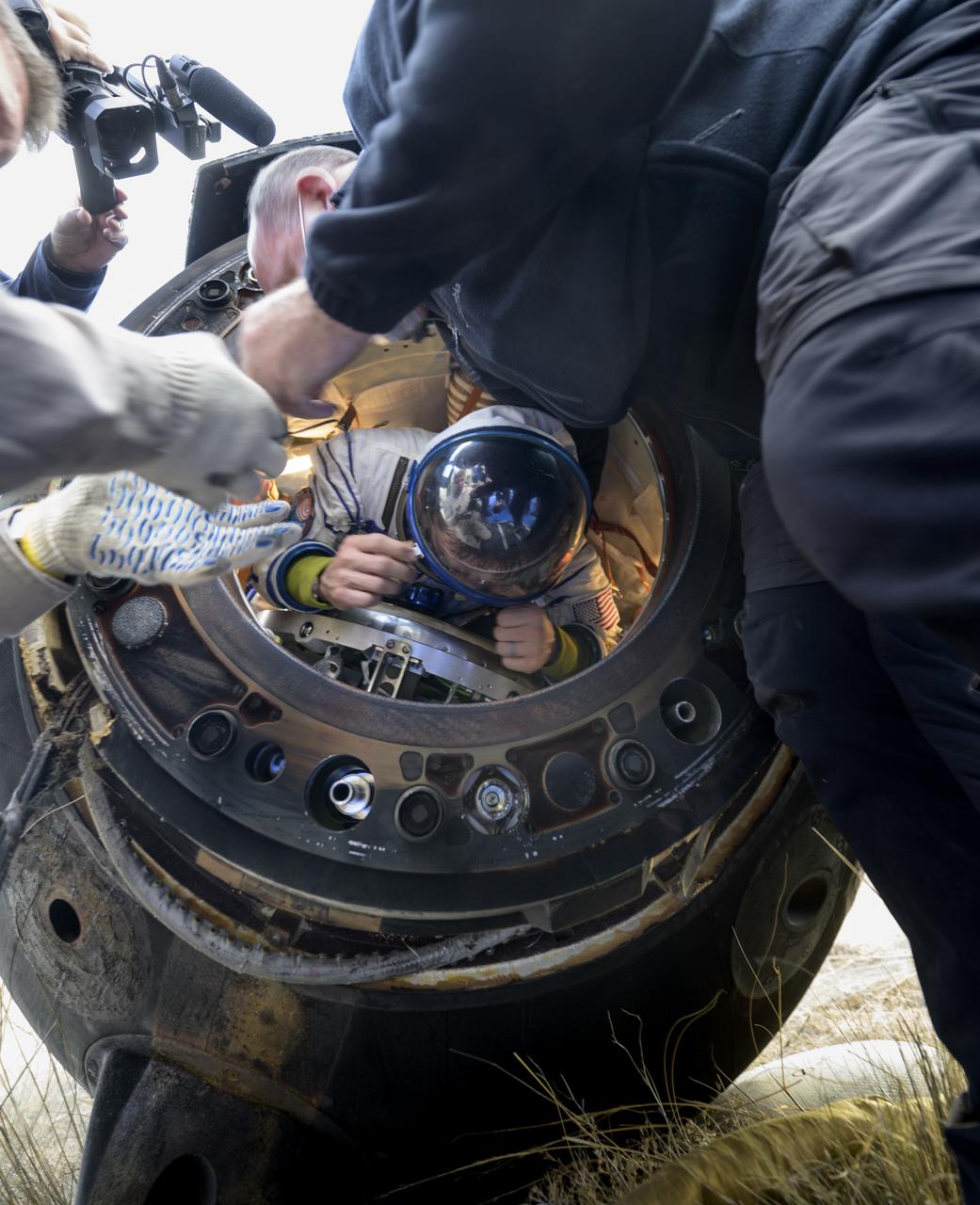
Expedition 69 NASA astronaut Frank Rubio is helped out of the Soyuz MS-23 spacecraft just minutes after he and Roscosmos cosmonauts Dmitri Petelin and Sergey Prokopyev, landed in a remote area near the town of Zhezkazgan, Kazakhstan on Wednesday, Sept. 27, 2023. The trio are returning to Earth after logging 371 days in space as members of Expeditions 68-69 aboard the International Space Station. For Rubio, his mission is the longest single spaceflight by a U.S. astronaut in history. Photo Credit: (NASA/Bill Ingalls)
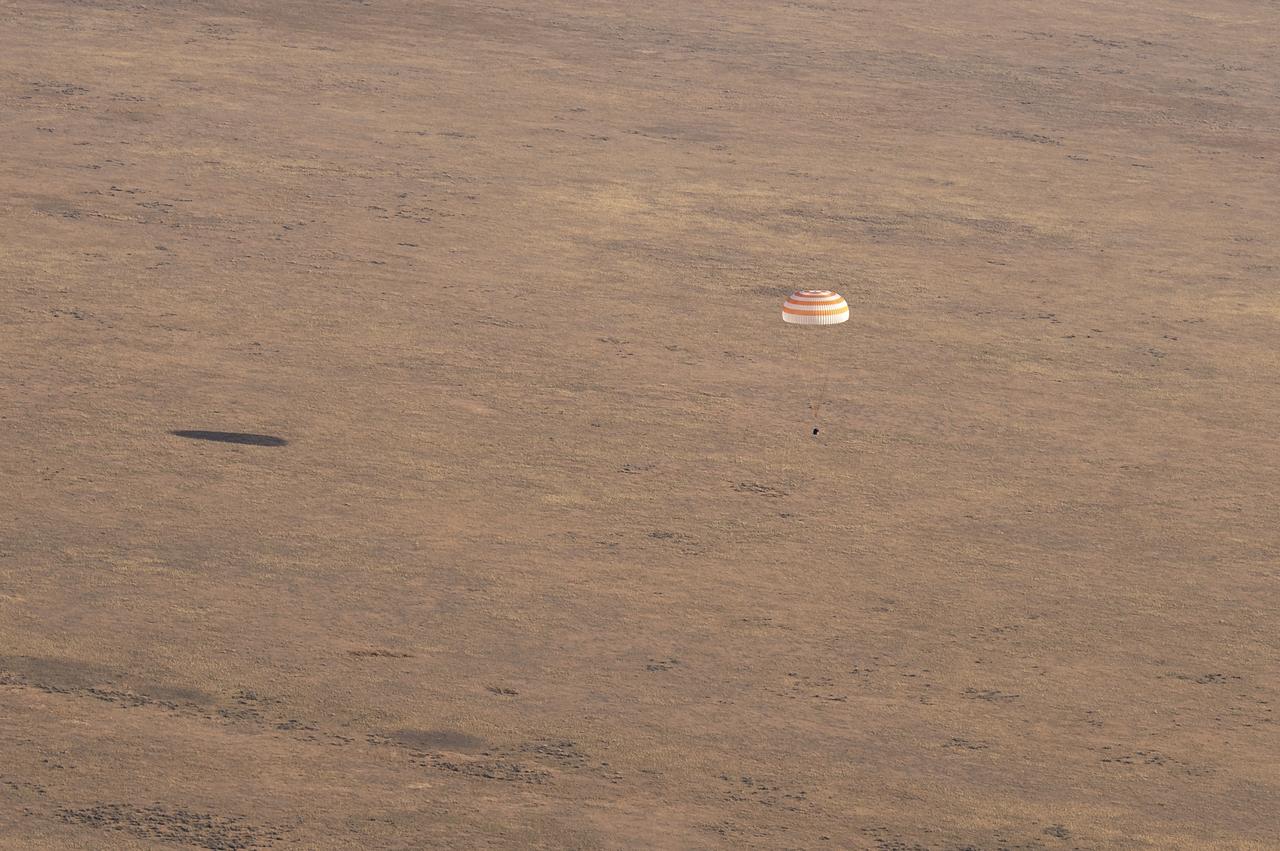
The Soyuz MS-23 spacecraft is seen as it lands in a remote area near the town of Zhezkazgan, Kazakhstan with Expedition 69 NASA astronaut Frank Rubio, Roscosmos cosmonauts Dmitri Petelin and Sergey Prokopyev, Wednesday, Sept. 27, 2023. The trio are returning to Earth after logging 371 days in space as members of Expeditions 68-69 aboard the International Space Station. For Rubio, his mission is the longest single spaceflight by a U.S. astronaut in history. Photo Credit (NASA/GCTC/Pavel Shvets)
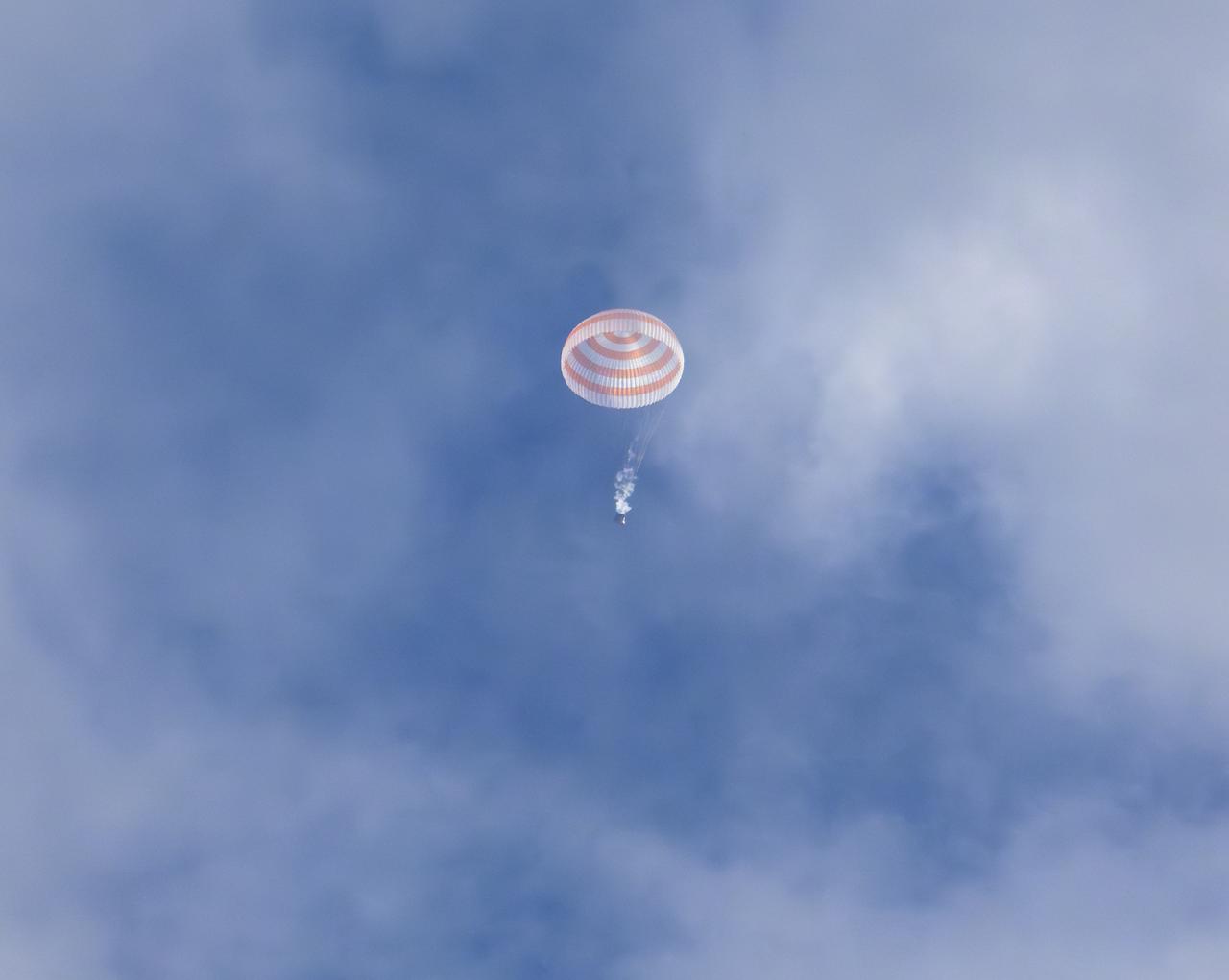
The Soyuz MS-23 spacecraft is seen as it lands in a remote area near the town of Zhezkazgan, Kazakhstan with Expedition 69 NASA astronaut Frank Rubio, Roscosmos cosmonauts Dmitri Petelin and Sergey Prokopyev, Wednesday, Sept. 27, 2023. The trio are returning to Earth after logging 371 days in space as members of Expeditions 68-69 aboard the International Space Station. For Rubio, his mission is the longest single spaceflight by a U.S. astronaut in history. Photo Credit (NASA/Bill Ingalls)
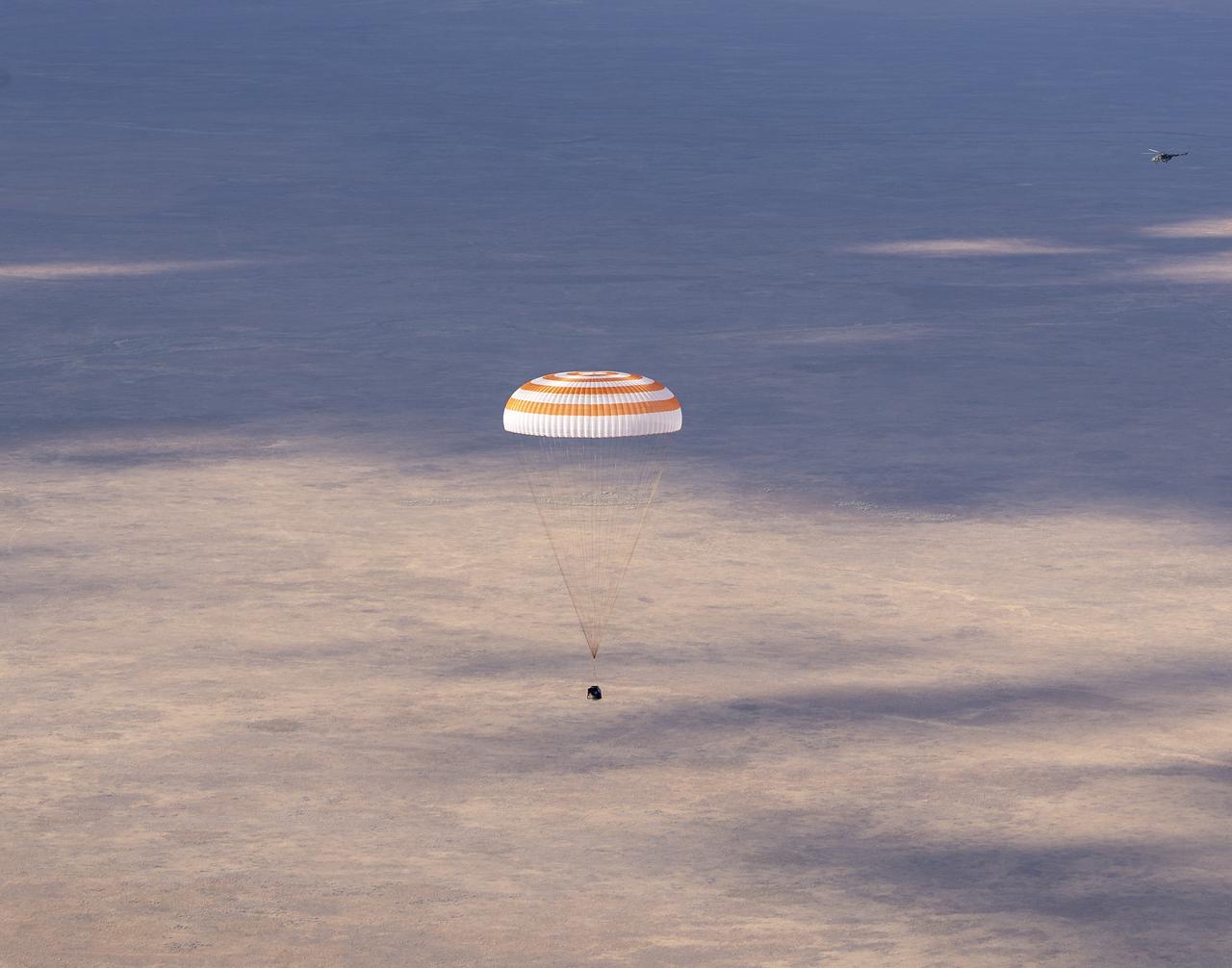
The Soyuz MS-23 spacecraft is seen as it lands in a remote area near the town of Zhezkazgan, Kazakhstan with Expedition 69 NASA astronaut Frank Rubio, Roscosmos cosmonauts Dmitri Petelin and Sergey Prokopyev, Wednesday, Sept. 27, 2023. The trio are returning to Earth after logging 371 days in space as members of Expeditions 68-69 aboard the International Space Station. For Rubio, his mission is the longest single spaceflight by a U.S. astronaut in history. Photo Credit (NASA/GCTC/Pavel Shvets)
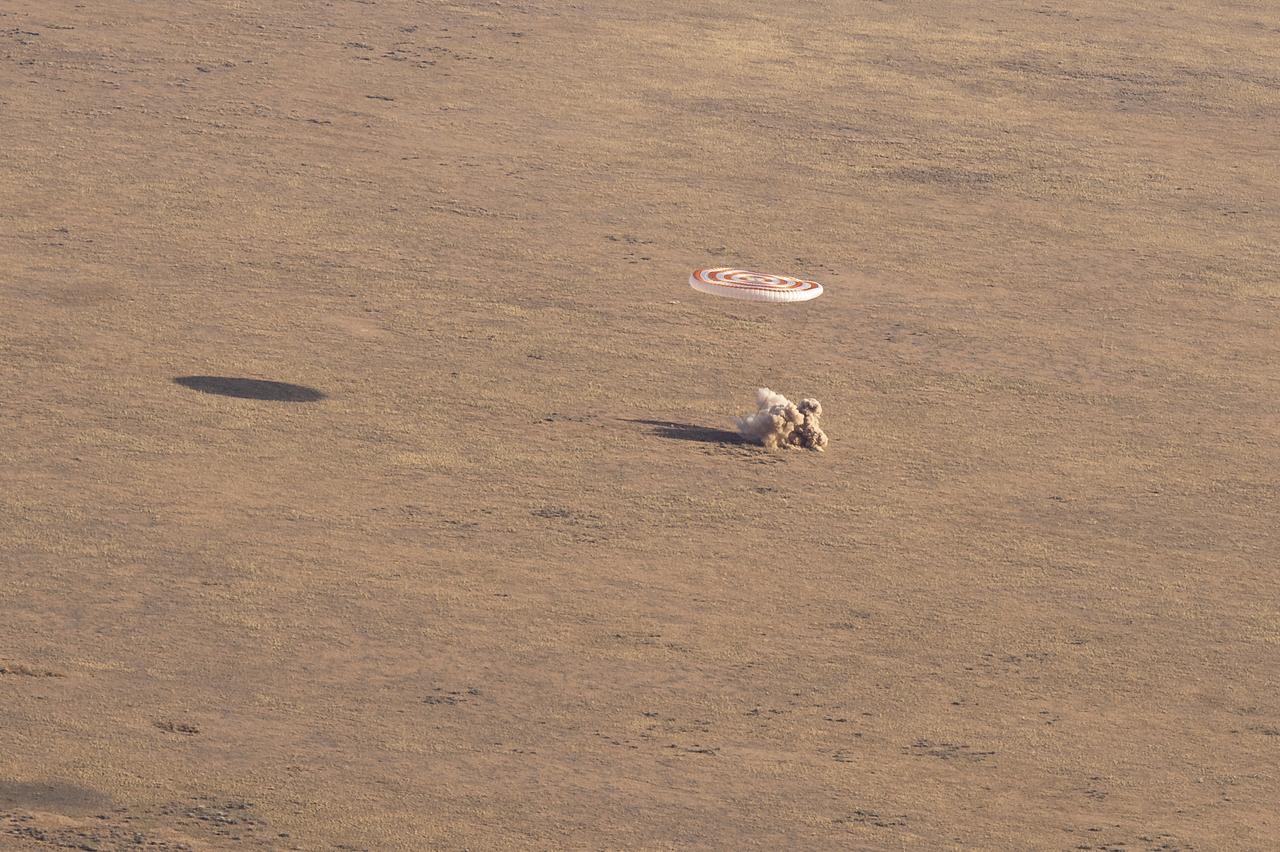
The Soyuz MS-23 spacecraft is seen as it lands in a remote area near the town of Zhezkazgan, Kazakhstan with Expedition 69 NASA astronaut Frank Rubio, Roscosmos cosmonauts Dmitri Petelin and Sergey Prokopyev, Wednesday, Sept. 27, 2023. The trio are returning to Earth after logging 371 days in space as members of Expeditions 68-69 aboard the International Space Station. For Rubio, his mission is the longest single spaceflight by a U.S. astronaut in history. Photo Credit (NASA/GCTC/Pavel Shvets)

Russian Search and Rescue teams arrive at the Soyuz MS-23 spacecraft shortly after it landed in a remote area near the town of Zhezkazgan, Kazakhstan with Expedition 69 NASA astronaut Frank Rubio, Roscosmos cosmonauts Dmitri Petelin and Sergey Prokopyev, Wednesday, Sept. 27, 2023. The trio are returning to Earth after logging 371 days in space as members of Expeditions 68-69 aboard the International Space Station. For Rubio, his mission is the longest single spaceflight by a U.S. astronaut in history. Photo Credit: (NASA/Josef Schmid)
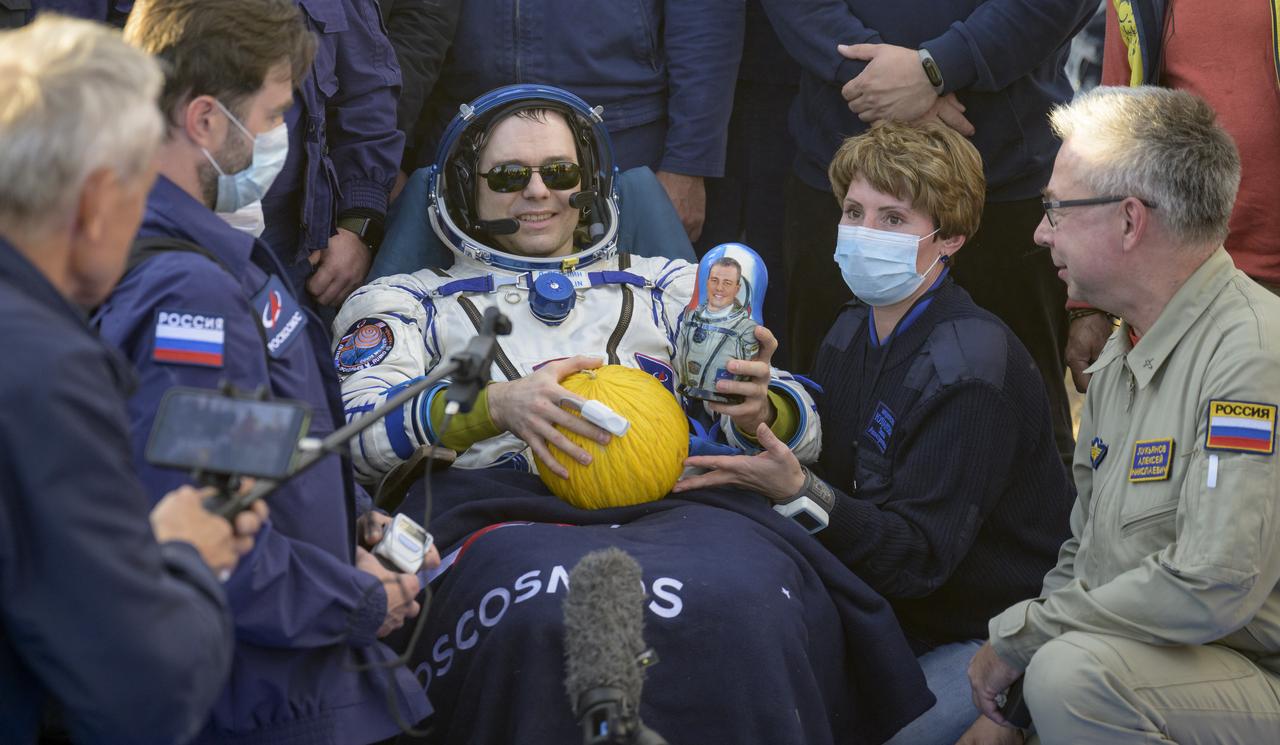
Expedition 69 Roscosmos cosmonaut Dmitri Petelin is seen outside the Soyuz MS-23 spacecraft after he landed with Roscosmos cosmonaut Sergey Prokopyev and NASA astronaut Frank Rubio, in a remote area near the town of Zhezkazgan, Kazakhstan on Wednesday, Sept. 27, 2023. The trio are returning to Earth after logging 371 days in space as members of Expeditions 68-69 aboard the International Space Station. For Rubio, his mission is the longest single spaceflight by a U.S. astronaut in history. Photo Credit: (NASA/Bill Ingalls)
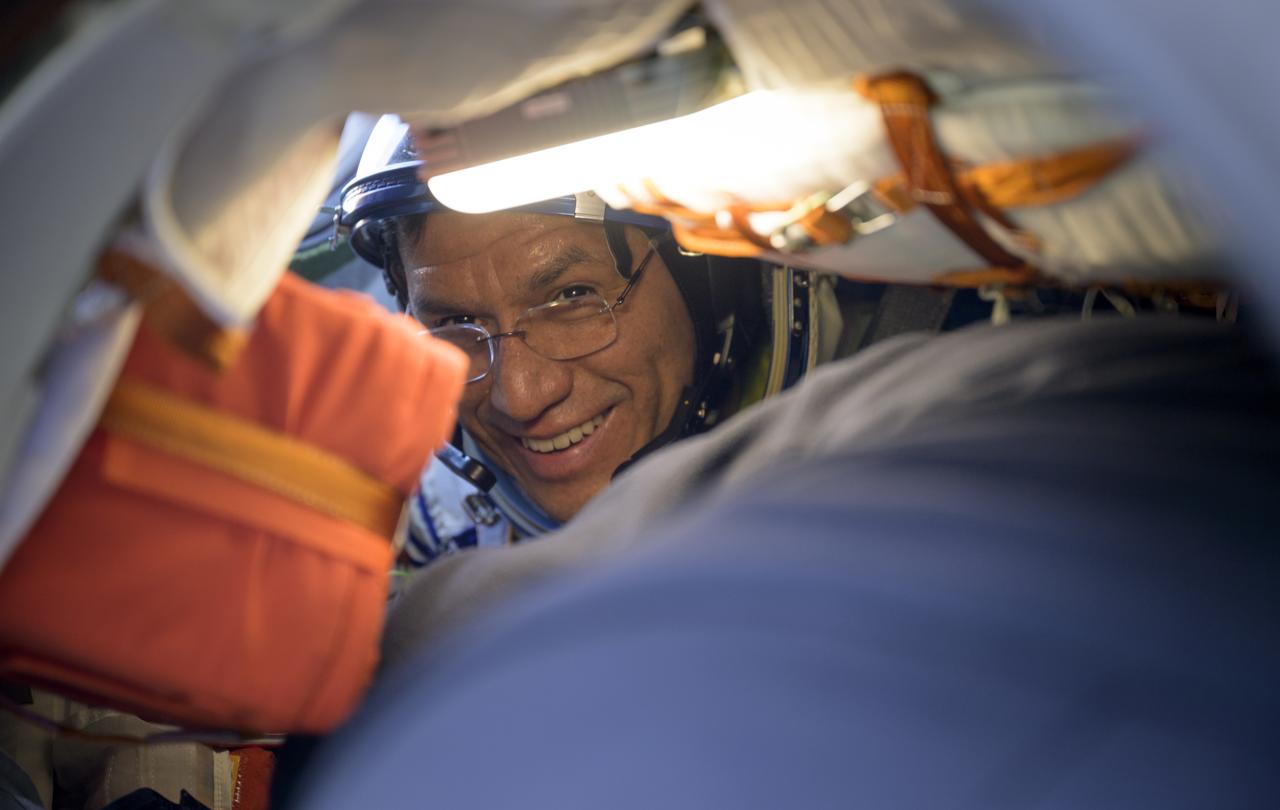
Expedition 69 NASA astronaut Frank Rubio is is seen inside the Soyuz MS-23 spacecraft just minutes after he and Roscosmos cosmonauts Dmitri Petelin and Sergey Prokopyev, landed in a remote area near the town of Zhezkazgan, Kazakhstan on Wednesday, Sept. 27, 2023. The trio are returning to Earth after logging 371 days in space as members of Expeditions 68-69 aboard the International Space Station. For Rubio, his mission is the longest single spaceflight by a U.S. astronaut in history. Photo Credit: (NASA/Bill Ingalls)
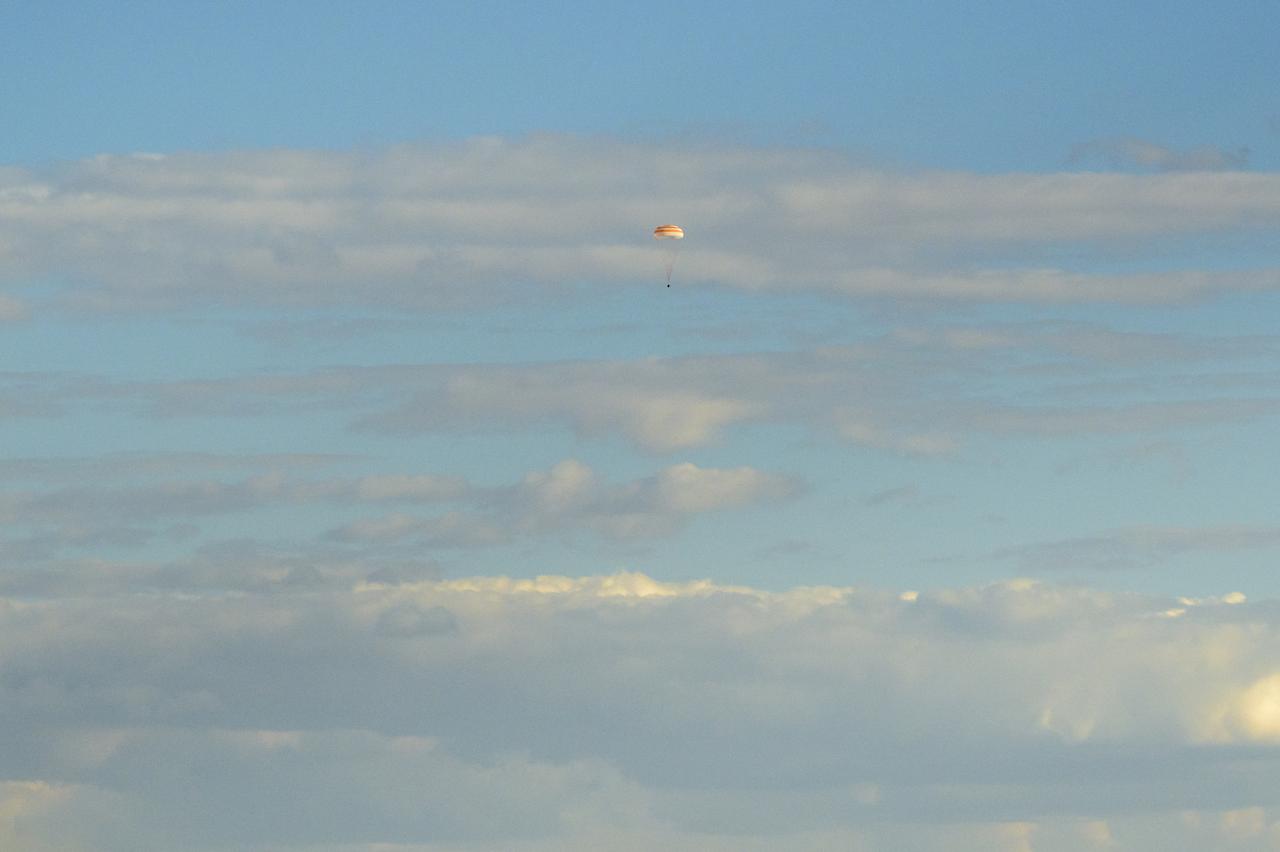
The Soyuz MS-23 spacecraft is seen as it lands in a remote area near the town of Zhezkazgan, Kazakhstan with Expedition 69 NASA astronaut Frank Rubio, Roscosmos cosmonauts Dmitri Petelin and Sergey Prokopyev, Wednesday, Sept. 27, 2023. The trio are returning to Earth after logging 371 days in space as members of Expeditions 68-69 aboard the International Space Station. For Rubio, his mission is the longest single spaceflight by a U.S. astronaut in history. Photo Credit (NASA/Bill Ingalls)
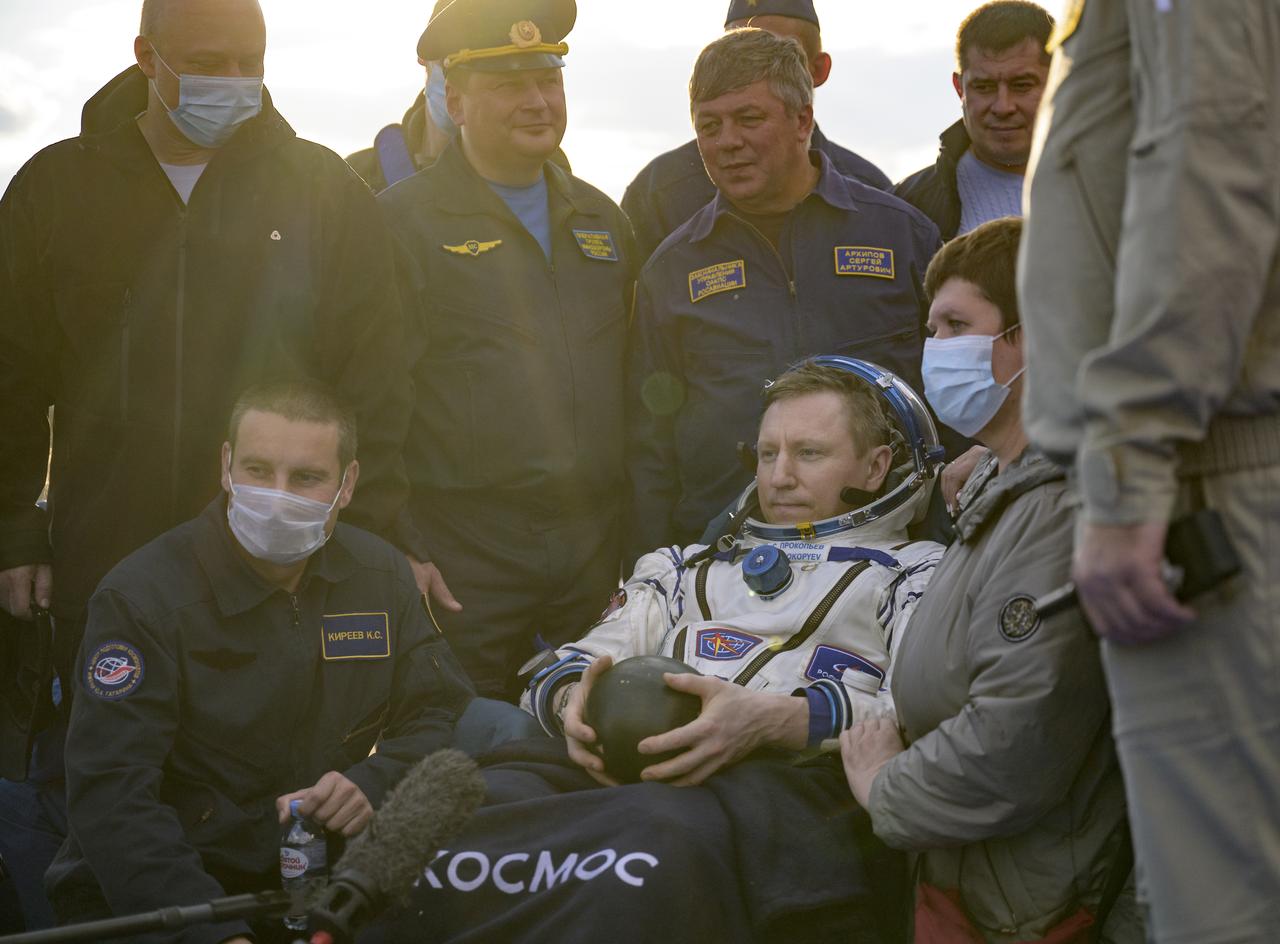
Expedition 69 Roscosmos cosmonaut Sergey Prokopyev is seen outside the Soyuz MS-23 spacecraft after he landed with Roscosmos cosmonaut Dmitri Petelin and NASA astronaut Frank Rubio, in a remote area near the town of Zhezkazgan, Kazakhstan on Wednesday, Sept. 27, 2023. The trio are returning to Earth after logging 371 days in space as members of Expeditions 68-69 aboard the International Space Station. For Rubio, his mission is the longest single spaceflight by a U.S. astronaut in history. Photo Credit: (NASA/Bill Ingalls)
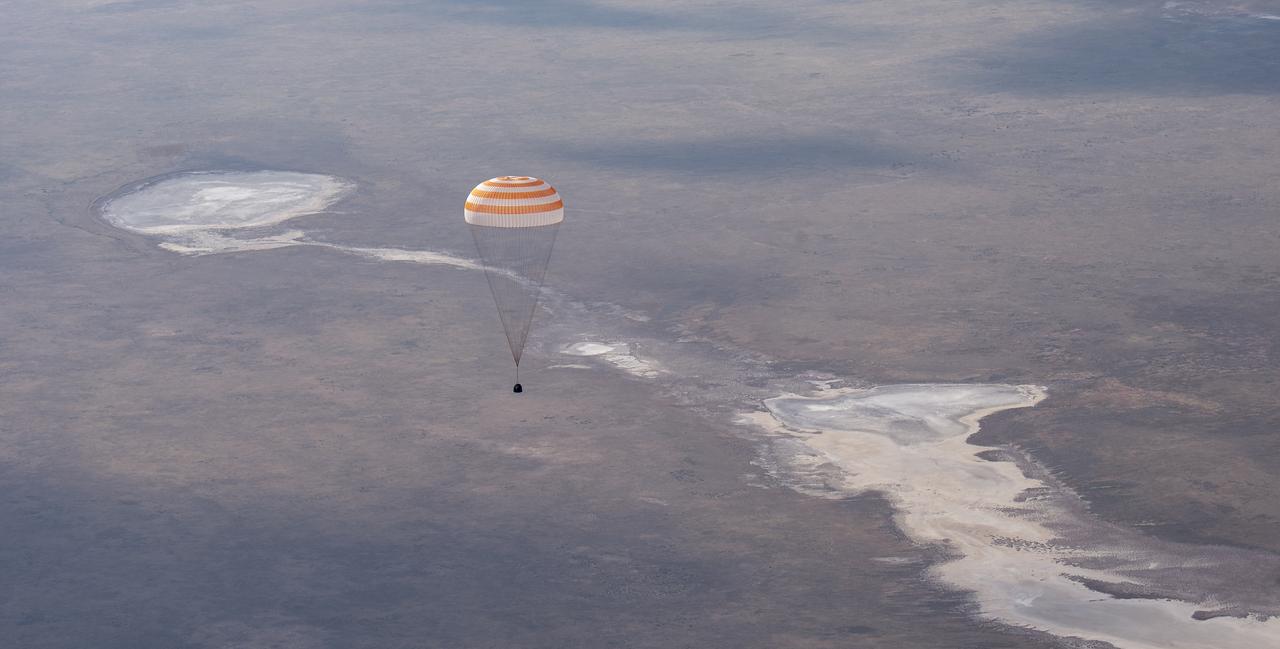
The Soyuz MS-23 spacecraft is seen as it lands in a remote area near the town of Zhezkazgan, Kazakhstan with Expedition 69 NASA astronaut Frank Rubio, Roscosmos cosmonauts Dmitri Petelin and Sergey Prokopyev, Wednesday, Sept. 27, 2023. The trio are returning to Earth after logging 371 days in space as members of Expeditions 68-69 aboard the International Space Station. For Rubio, his mission is the longest single spaceflight by a U.S. astronaut in history. Photo Credit (NASA/GCTC/Pavel Shvets)
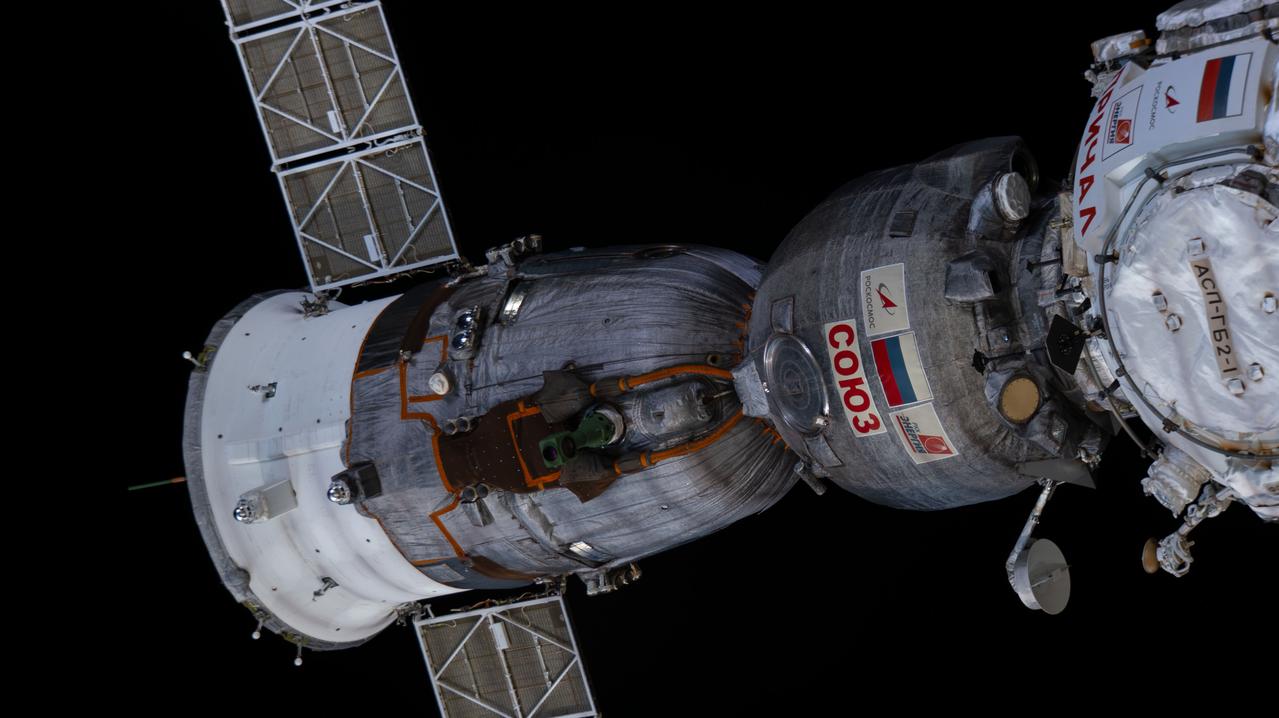
iss069e009373 (May 8, 2023) --- The Soyuz MS-23 crew ship, that will return NASA astronaut Frank Rubio and Roscosmos cosmonauts Sergey Prokopyev and Dmitri Petelin back to Earth later this year, is pictured docked to the Prichal docking module on the International Space Station.
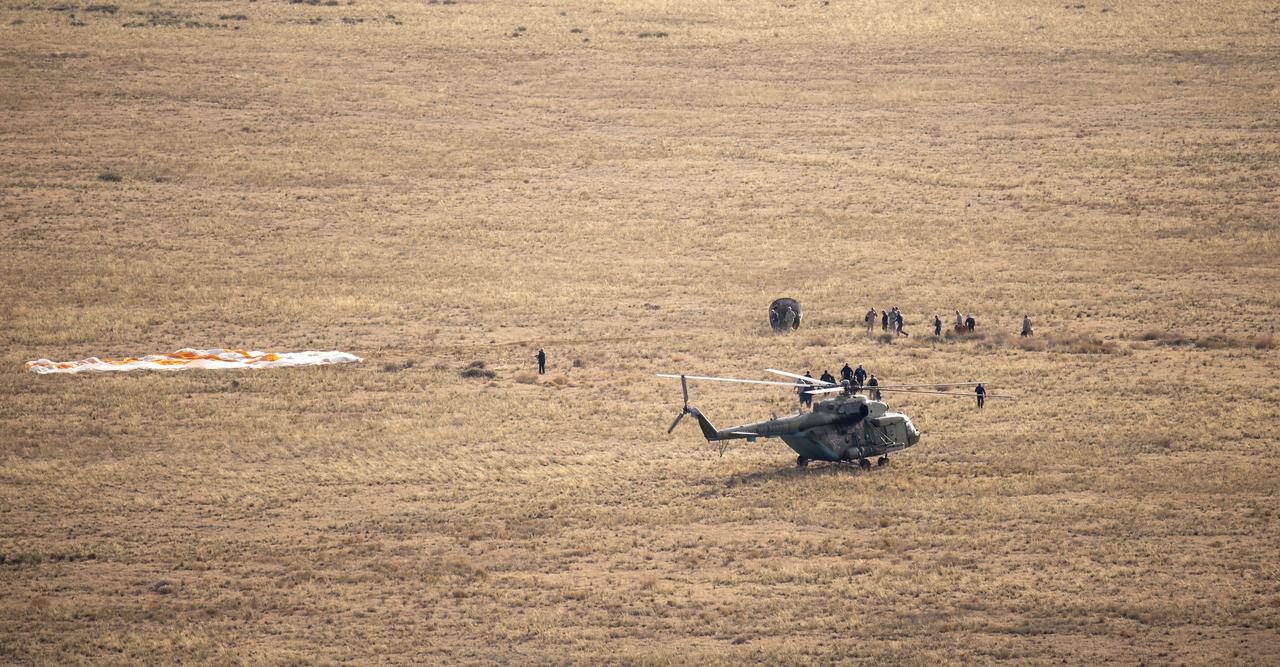
Russian Search and Rescue teams arrive at the Soyuz MS-23 spacecraft shortly after it landed in a remote area near the town of Zhezkazgan, Kazakhstan with Expedition 69 NASA astronaut Frank Rubio, Roscosmos cosmonauts Dmitri Petelin and Sergey Prokopyev, Wednesday, Sept. 27, 2023. The trio are returning to Earth after logging 371 days in space as members of Expeditions 68-69 aboard the International Space Station. For Rubio, his mission is the longest single spaceflight by a U.S. astronaut in history. Photo Credit: (NASA/GCTC/Pavel Shvets)
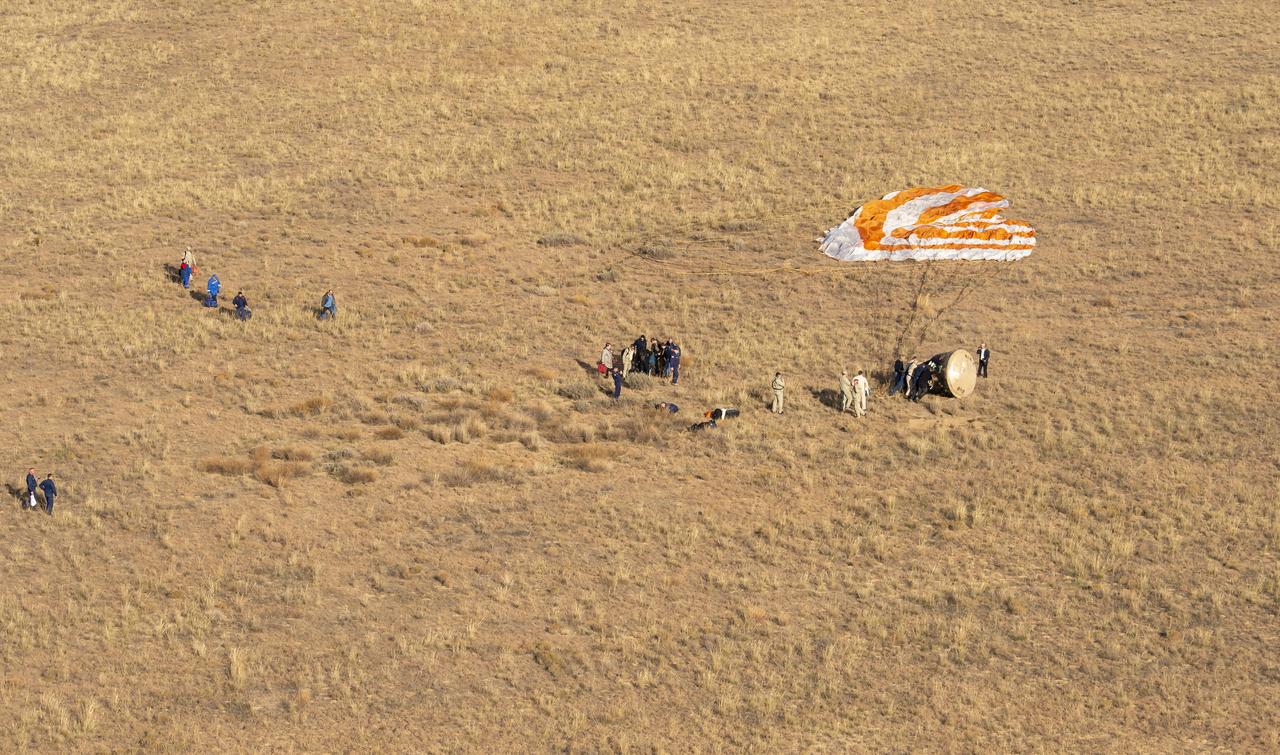
Russian Search and Rescue teams arrive at the Soyuz MS-23 spacecraft shortly after it landed in a remote area near the town of Zhezkazgan, Kazakhstan with Expedition 69 NASA astronaut Frank Rubio, Roscosmos cosmonauts Dmitri Petelin and Sergey Prokopyev, Wednesday, Sept. 27, 2023. The trio are returning to Earth after logging 371 days in space as members of Expeditions 68-69 aboard the International Space Station. For Rubio, his mission is the longest single spaceflight by a U.S. astronaut in history. Photo Credit: (NASA/GCTC/Pavel Shvets)
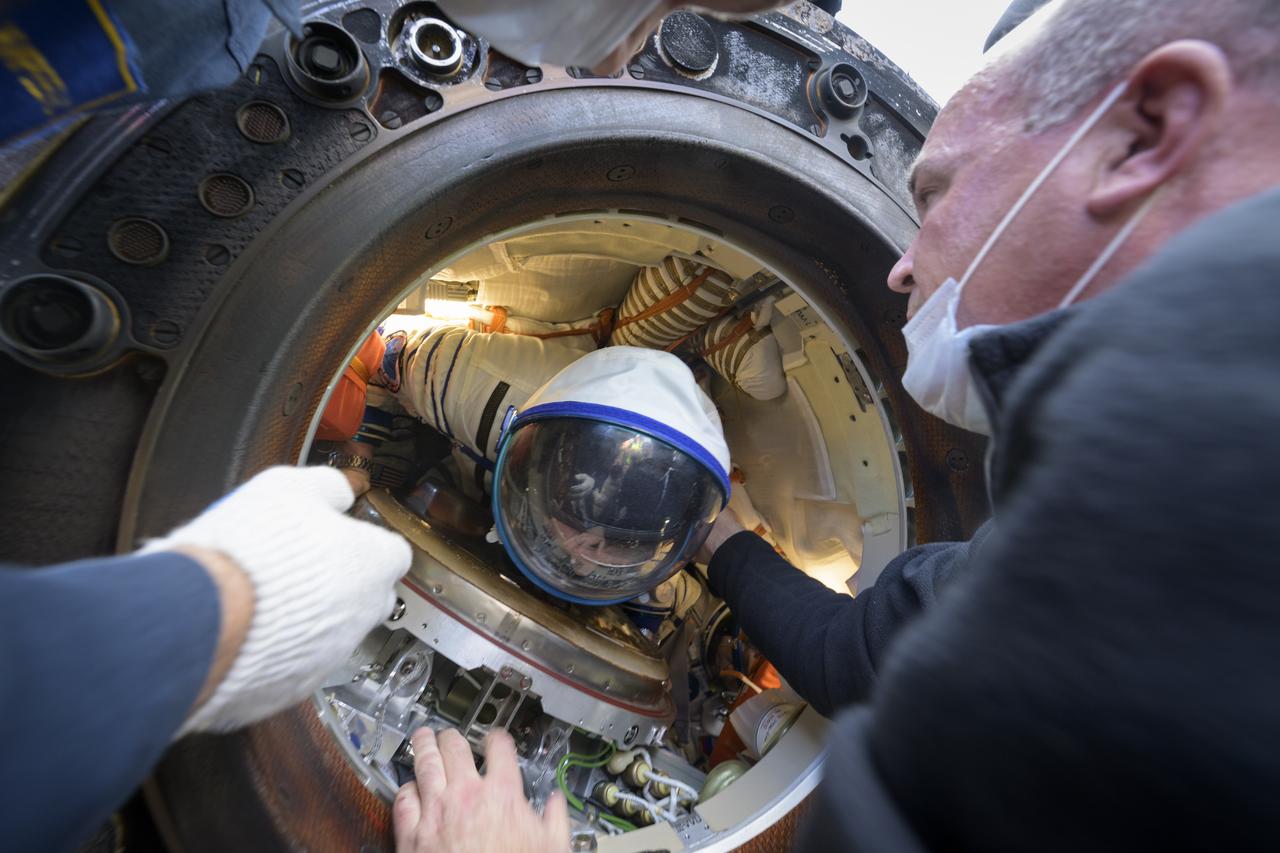
Expedition 69 Roscosmos cosmonaut Sergey Prokopyev is helped out of the Soyuz MS-23 spacecraft just minutes after he and Roscosmos cosmonaut Dmitri Petelin and NASA astronaut Frank Rubio, landed in a remote area near the town of Zhezkazgan, Kazakhstan on Wednesday, Sept. 27, 2023. The trio are returning to Earth after logging 371 days in space as members of Expeditions 68-69 aboard the International Space Station. For Rubio, his mission is the longest single spaceflight by a U.S. astronaut in history. Photo Credit: (NASA/Bill Ingalls)
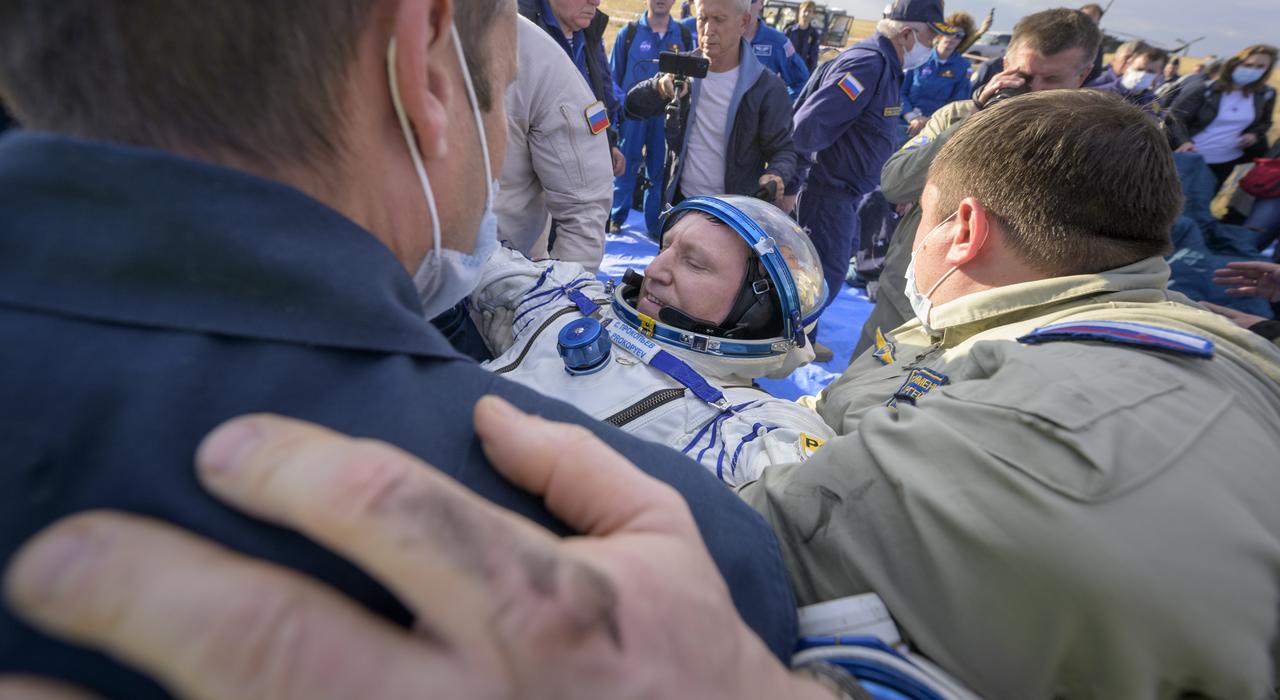
Expedition 69 Roscosmos cosmonaut Sergey Prokopyev is helped out of the Soyuz MS-23 spacecraft just minutes after he and Roscosmos cosmonaut Dmitri Petelin and NASA astronaut Frank Rubio, landed in a remote area near the town of Zhezkazgan, Kazakhstan on Wednesday, Sept. 27, 2023. The trio are returning to Earth after logging 371 days in space as members of Expeditions 68-69 aboard the International Space Station. For Rubio, his mission is the longest single spaceflight by a U.S. astronaut in history. Photo Credit: (NASA/Bill Ingalls)
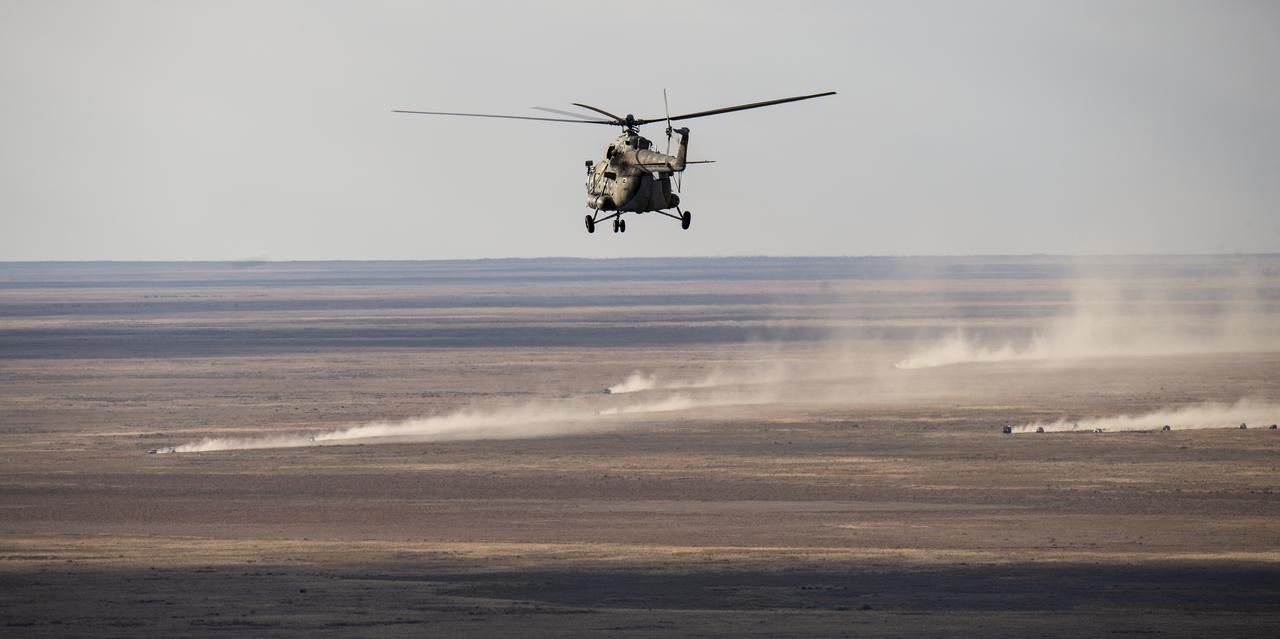
Russian Search and Rescue teams arrive at the Soyuz MS-23 spacecraft shortly after it landed in a remote area near the town of Zhezkazgan, Kazakhstan with Expedition 69 NASA astronaut Frank Rubio, Roscosmos cosmonauts Dmitri Petelin and Sergey Prokopyev, Wednesday, Sept. 27, 2023. The trio are returning to Earth after logging 371 days in space as members of Expeditions 68-69 aboard the International Space Station. For Rubio, his mission is the longest single spaceflight by a U.S. astronaut in history. Photo Credit: (NASA/GCTC/Pavel Shvets)
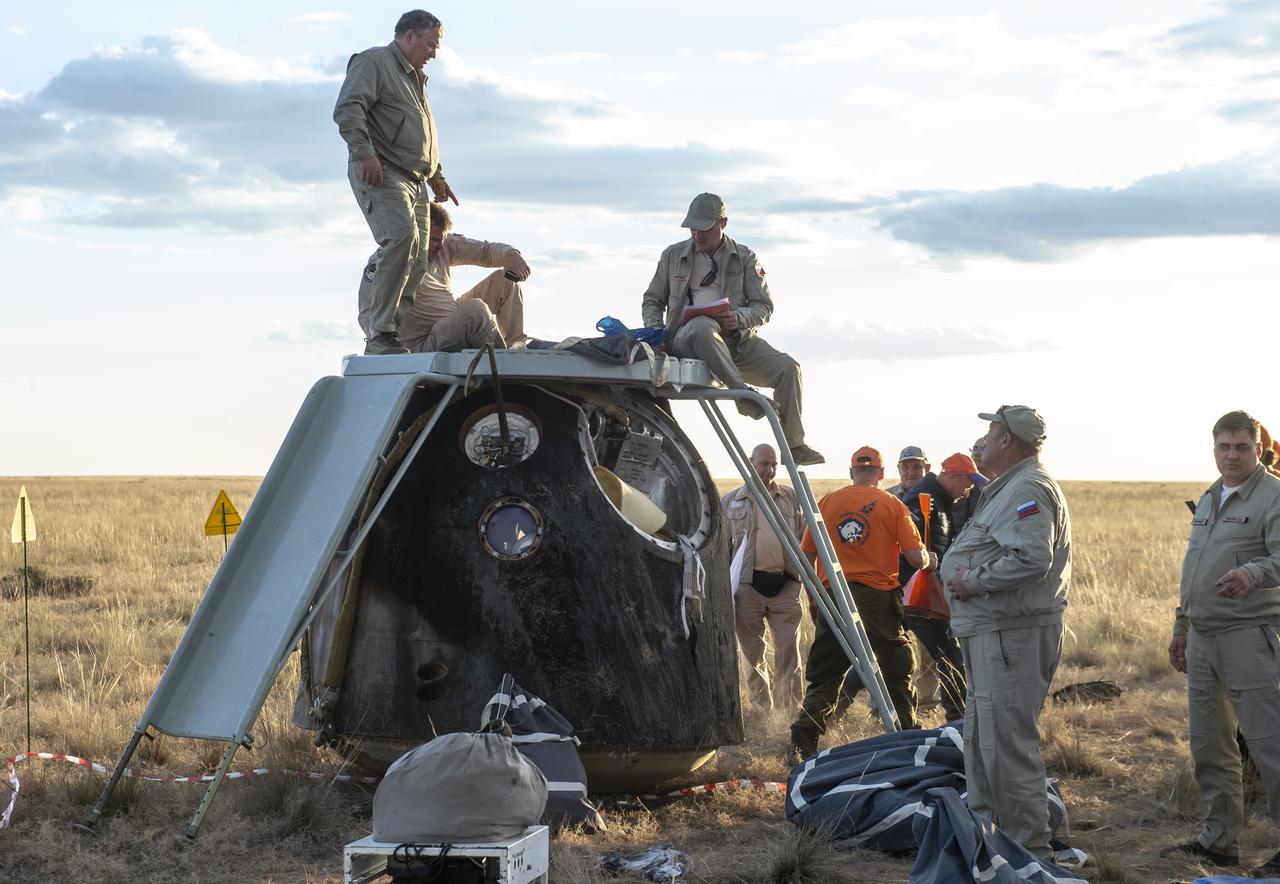
Russian support personnel work around the Soyuz MS-23 spacecraft shortly after it landed n a remote area near the town of Zhezkazgan, Kazakhstan with Expedition 69 NASA astronaut Frank Rubio, and Roscosmos cosmonauts Dmitri Petelin, and Sergey Prokopyev, Wednesday, Sept. 27, 2023. The trio are returning to Earth after logging 371 days in space as members of Expeditions 68-69 aboard the International Space Station. For Rubio, his mission is the longest single spaceflight by a U.S. astronaut in history. Photo Credit: (NASA/GCTC/Pavel Shvets)
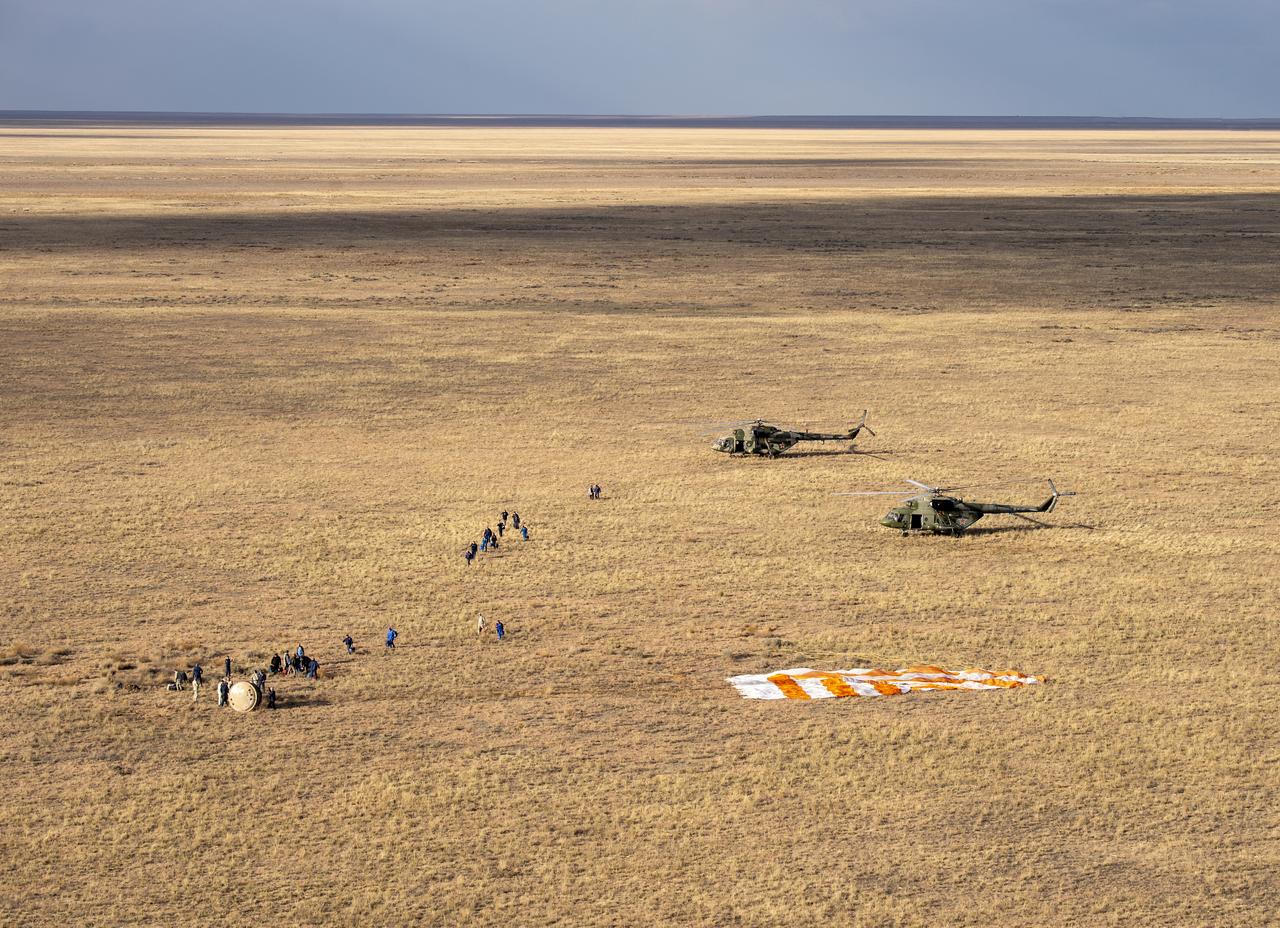
Russian Search and Rescue teams arrive at the Soyuz MS-23 spacecraft shortly after it landed in a remote area near the town of Zhezkazgan, Kazakhstan with Expedition 69 NASA astronaut Frank Rubio, Roscosmos cosmonauts Dmitri Petelin and Sergey Prokopyev, Wednesday, Sept. 27, 2023. The trio are returning to Earth after logging 371 days in space as members of Expeditions 68-69 aboard the International Space Station. For Rubio, his mission is the longest single spaceflight by a U.S. astronaut in history. Photo Credit: (NASA/GCTC/Pavel Shvets)
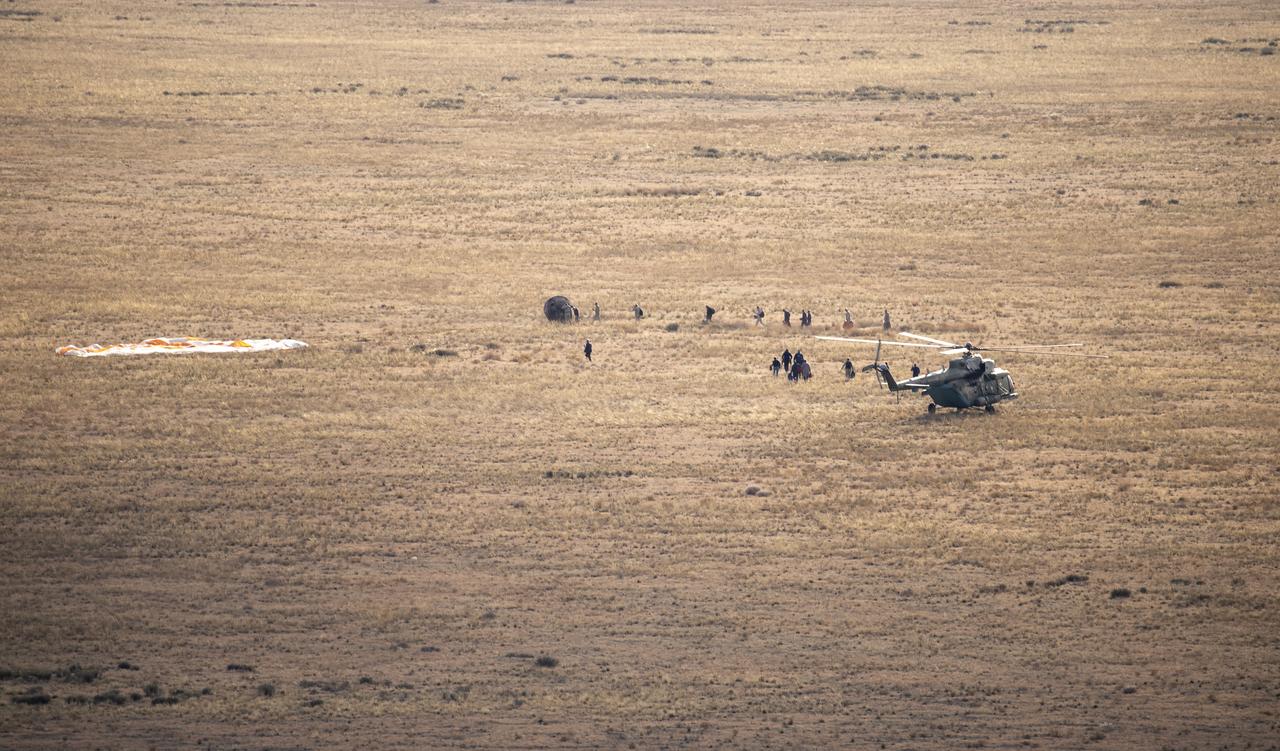
Russian Search and Rescue teams arrive at the Soyuz MS-23 spacecraft shortly after it landed in a remote area near the town of Zhezkazgan, Kazakhstan with Expedition 69 NASA astronaut Frank Rubio, Roscosmos cosmonauts Dmitri Petelin and Sergey Prokopyev, Wednesday, Sept. 27, 2023. The trio are returning to Earth after logging 371 days in space as members of Expeditions 68-69 aboard the International Space Station. For Rubio, his mission is the longest single spaceflight by a U.S. astronaut in history. Photo Credit: (NASA/GCTC/Pavel Shvets)
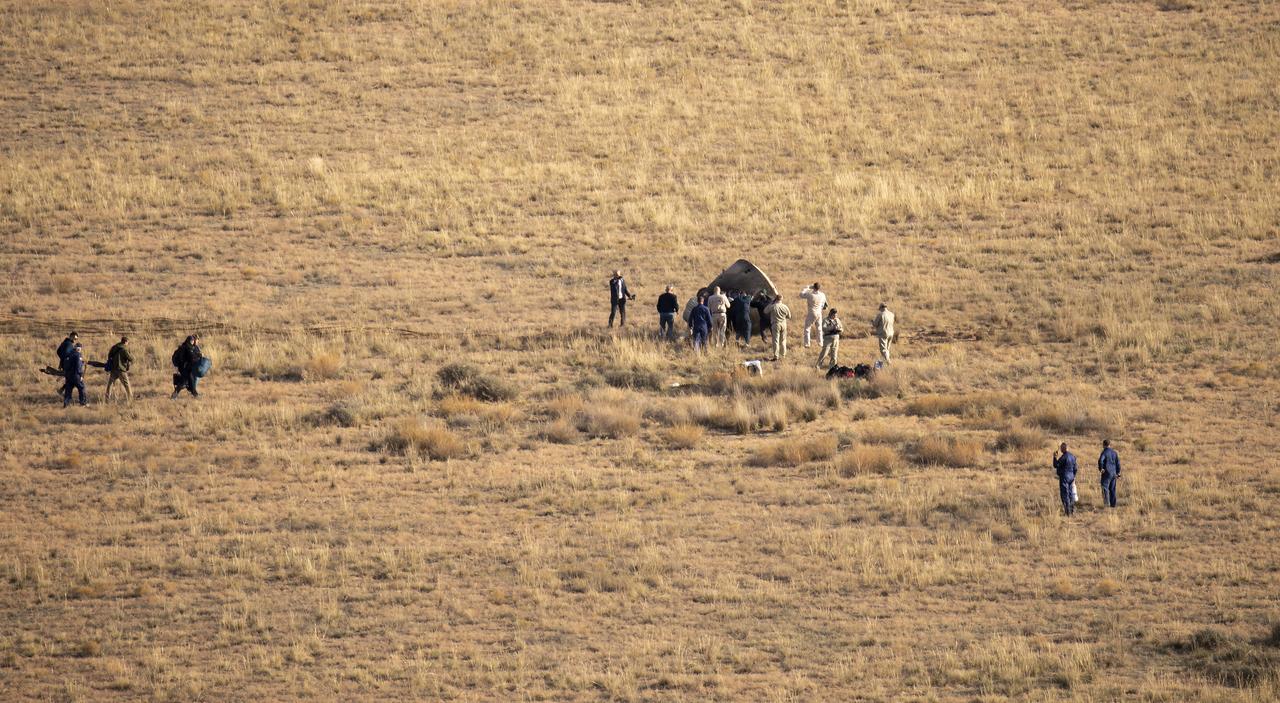
Russian Search and Rescue teams arrive at the Soyuz MS-23 spacecraft shortly after it landed in a remote area near the town of Zhezkazgan, Kazakhstan with Expedition 69 NASA astronaut Frank Rubio, Roscosmos cosmonauts Dmitri Petelin and Sergey Prokopyev, Wednesday, Sept. 27, 2023. The trio are returning to Earth after logging 371 days in space as members of Expeditions 68-69 aboard the International Space Station. For Rubio, his mission is the longest single spaceflight by a U.S. astronaut in history. Photo Credit: (NASA/GCTC/Pavel Shvets)
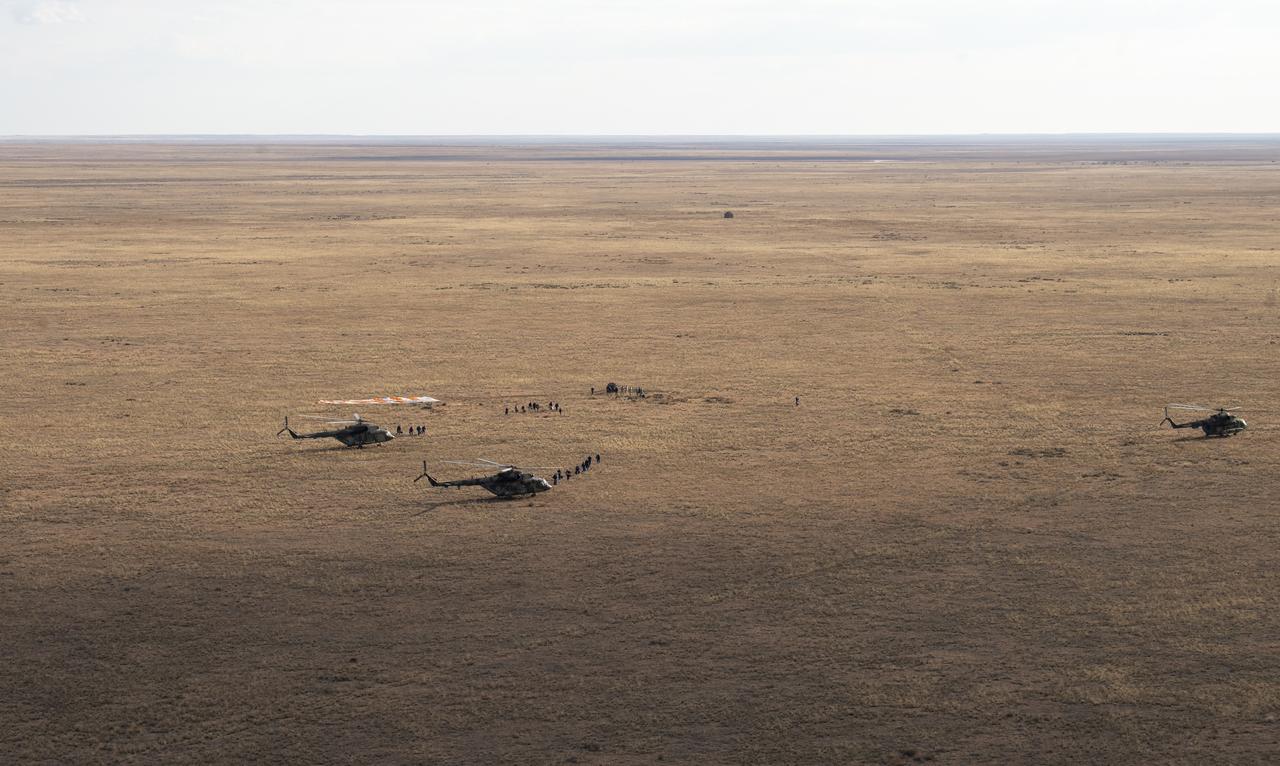
Russian Search and Rescue teams arrive at the Soyuz MS-23 spacecraft shortly after it landed in a remote area near the town of Zhezkazgan, Kazakhstan with Expedition 69 NASA astronaut Frank Rubio, Roscosmos cosmonauts Dmitri Petelin and Sergey Prokopyev, Wednesday, Sept. 27, 2023. The trio are returning to Earth after logging 371 days in space as members of Expeditions 68-69 aboard the International Space Station. For Rubio, his mission is the longest single spaceflight by a U.S. astronaut in history. Photo Credit: (NASA/GCTC/Pavel Shvets)
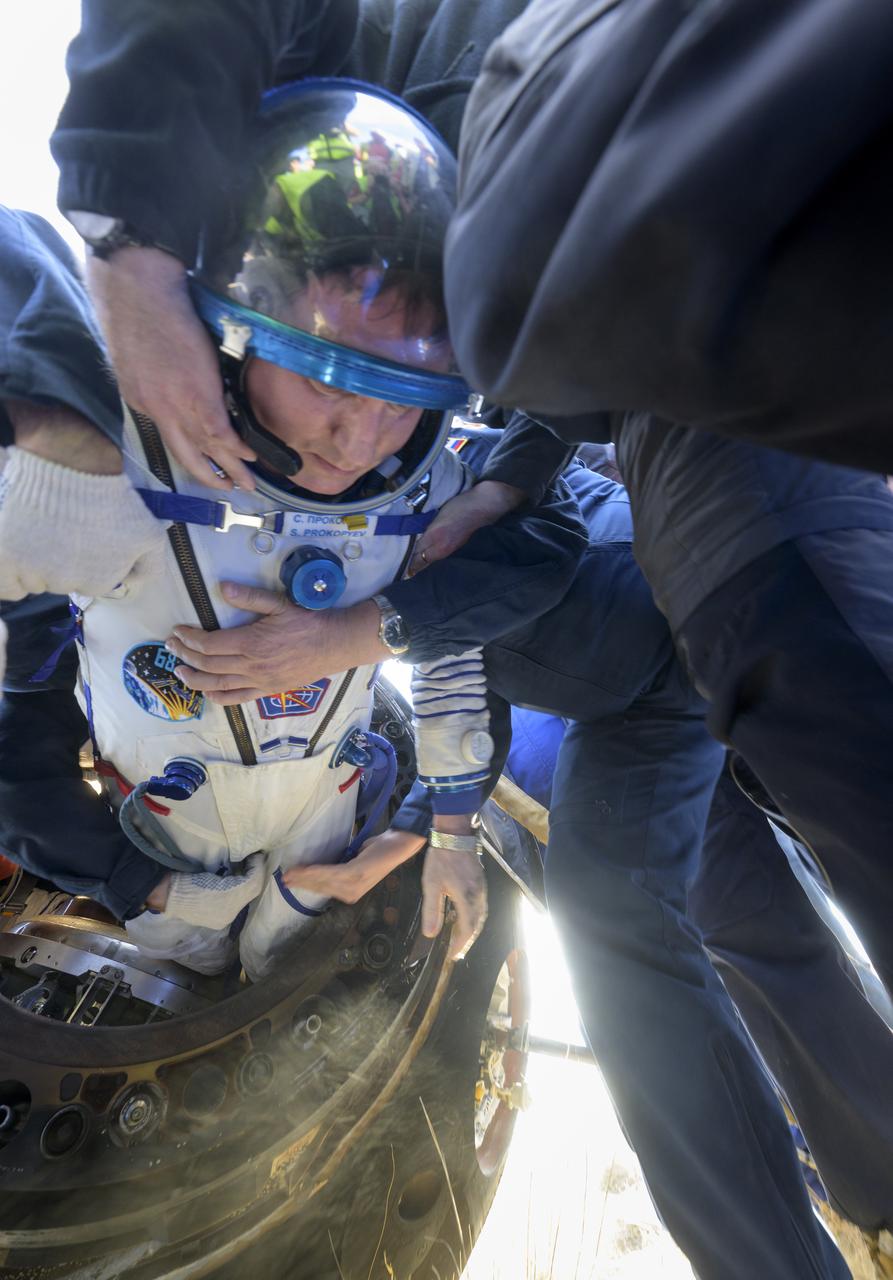
Expedition 69 Roscosmos cosmonaut Sergey Prokopyev is helped out of the Soyuz MS-23 spacecraft just minutes after he and Roscosmos cosmonaut Dmitri Petelin and NASA astronaut Frank Rubio, landed in a remote area near the town of Zhezkazgan, Kazakhstan on Wednesday, Sept. 27, 2023. The trio are returning to Earth after logging 371 days in space as members of Expeditions 68-69 aboard the International Space Station. For Rubio, his mission is the longest single spaceflight by a U.S. astronaut in history. Photo Credit: (NASA/Bill Ingalls)
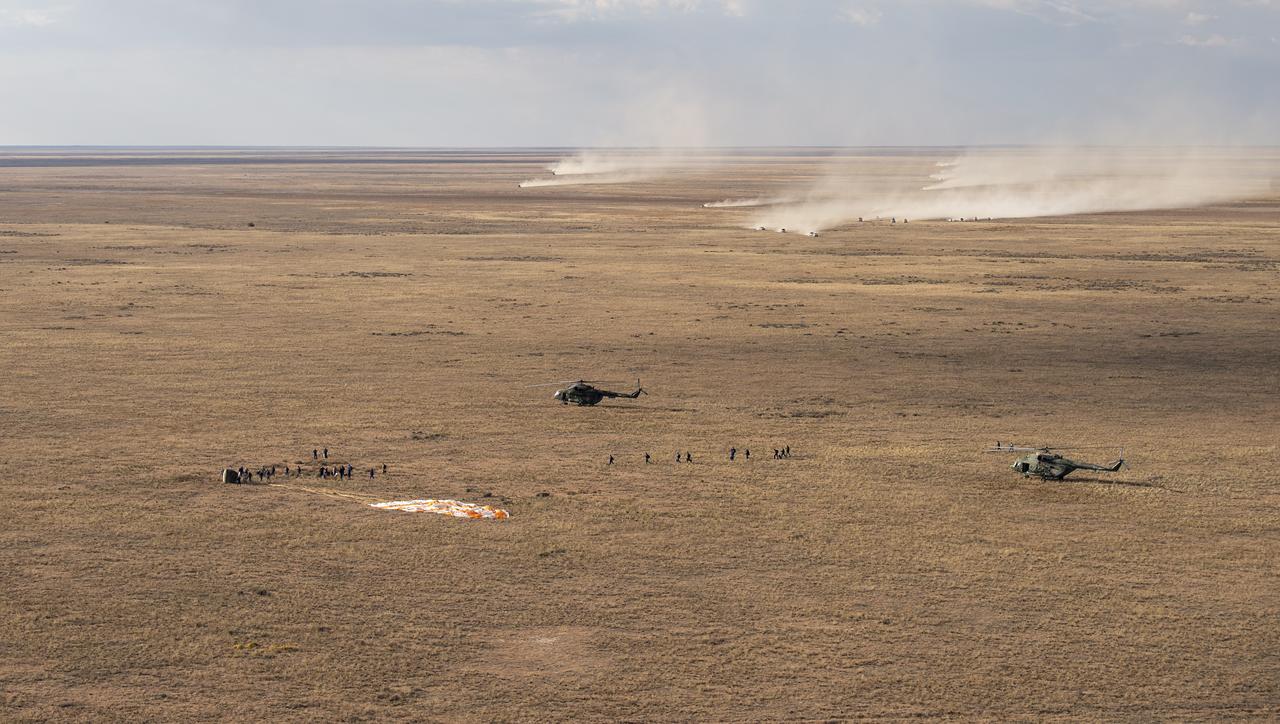
Russian Search and Rescue teams arrive at the Soyuz MS-23 spacecraft shortly after it landed in a remote area near the town of Zhezkazgan, Kazakhstan with Expedition 69 NASA astronaut Frank Rubio, Roscosmos cosmonauts Dmitri Petelin and Sergey Prokopyev, Wednesday, Sept. 27, 2023. The trio are returning to Earth after logging 371 days in space as members of Expeditions 68-69 aboard the International Space Station. For Rubio, his mission is the longest single spaceflight by a U.S. astronaut in history. Photo Credit: (NASA/GCTC/Pavel Shvets)
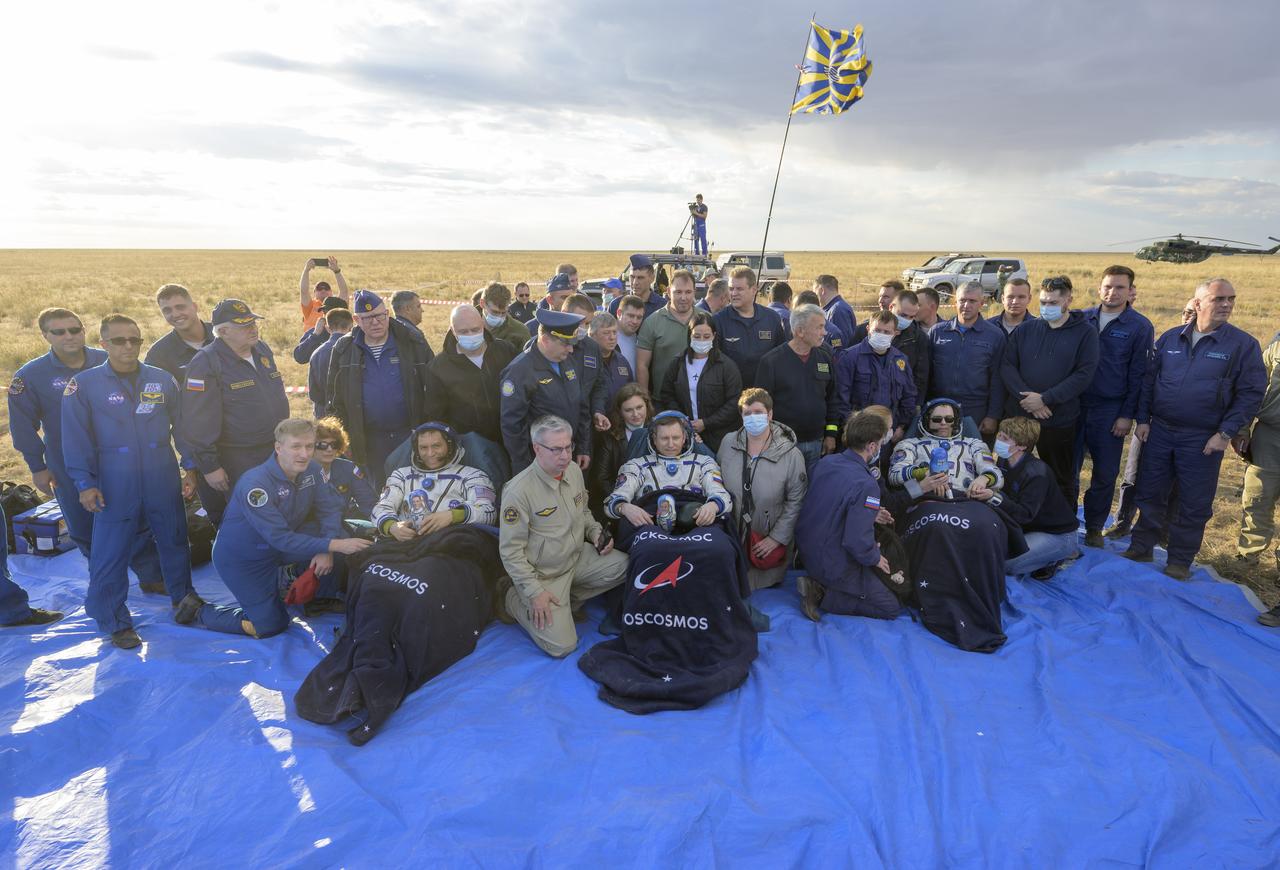
Expedition 69 NASA astronaut Frank Rubio left, Roscosmos cosmonauts Sergey Prokopyev, center, and Dmitri Petelin sit in chairs outside the Soyuz MS-23 spacecraft after they landed in a remote area near the town of Zhezkazgan, Kazakhstan on Wednesday, Sept. 27, 2023. The trio are returning to Earth after logging 371 days in space as members of Expeditions 68-69 aboard the International Space Station. For Rubio, his mission is the longest single spaceflight by a U.S. astronaut in history. Photo Credit: (NASA/Bill Ingalls)
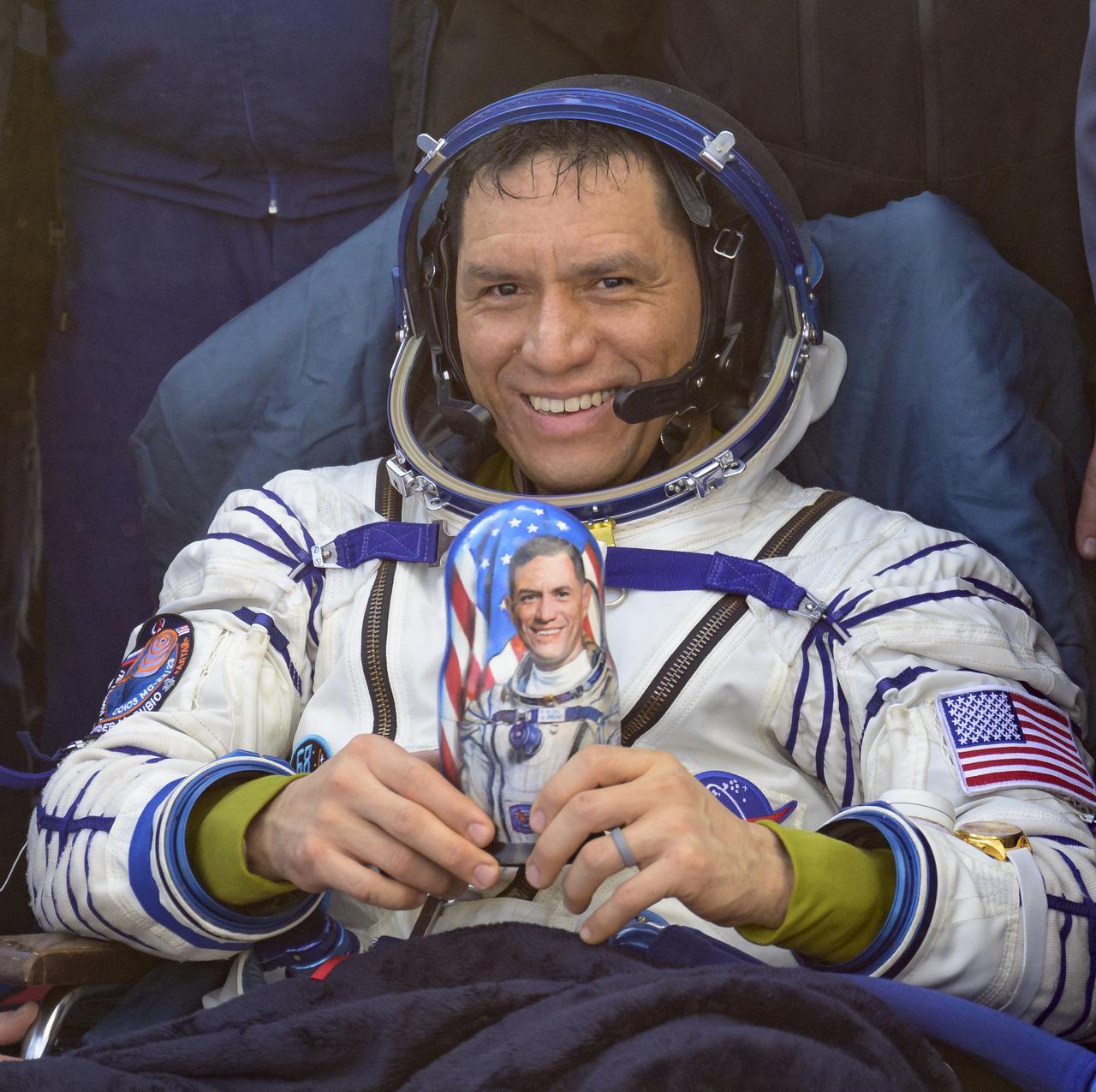
Expedition 69 NASA astronaut Frank Rubio holds a matryoshka doll he was gifted outside the Soyuz MS-23 spacecraft after he landed with Roscosmos cosmonauts Dmitri Petelin and Sergey Prokopyev, in a remote area near the town of Zhezkazgan, Kazakhstan on Wednesday, Sept. 27, 2023. The trio are returning to Earth after logging 371 days in space as members of Expeditions 68-69 aboard the International Space Station. For Rubio, his mission is the longest single spaceflight by a U.S. astronaut in history. Photo Credit: (NASA/Bill Ingalls)
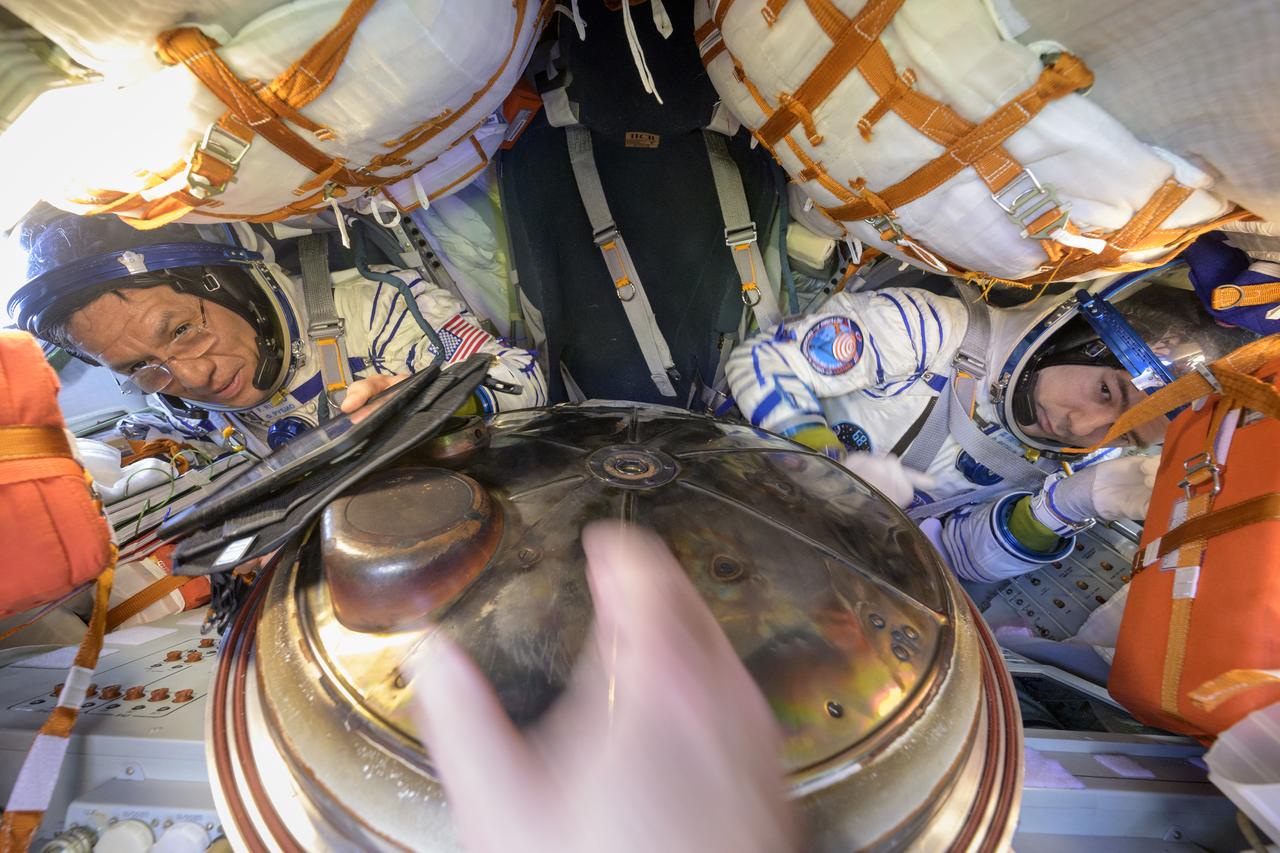
Expedition 69 NASA astronaut Frank Rubio, left, and Roscosmos cosmonaut Dmitri Petelin are seen inside the Soyuz MS-23 spacecraft just minutes after they and Roscosmos cosmonaut Sergey Prokopyev, landed in a remote area near the town of Zhezkazgan, Kazakhstan on Wednesday, Sept. 27, 2023. The trio are returning to Earth after logging 371 days in space as members of Expeditions 68-69 aboard the International Space Station. For Rubio, his mission is the longest single spaceflight by a U.S. astronaut in history. Photo Credit: (NASA/Bill Ingalls)
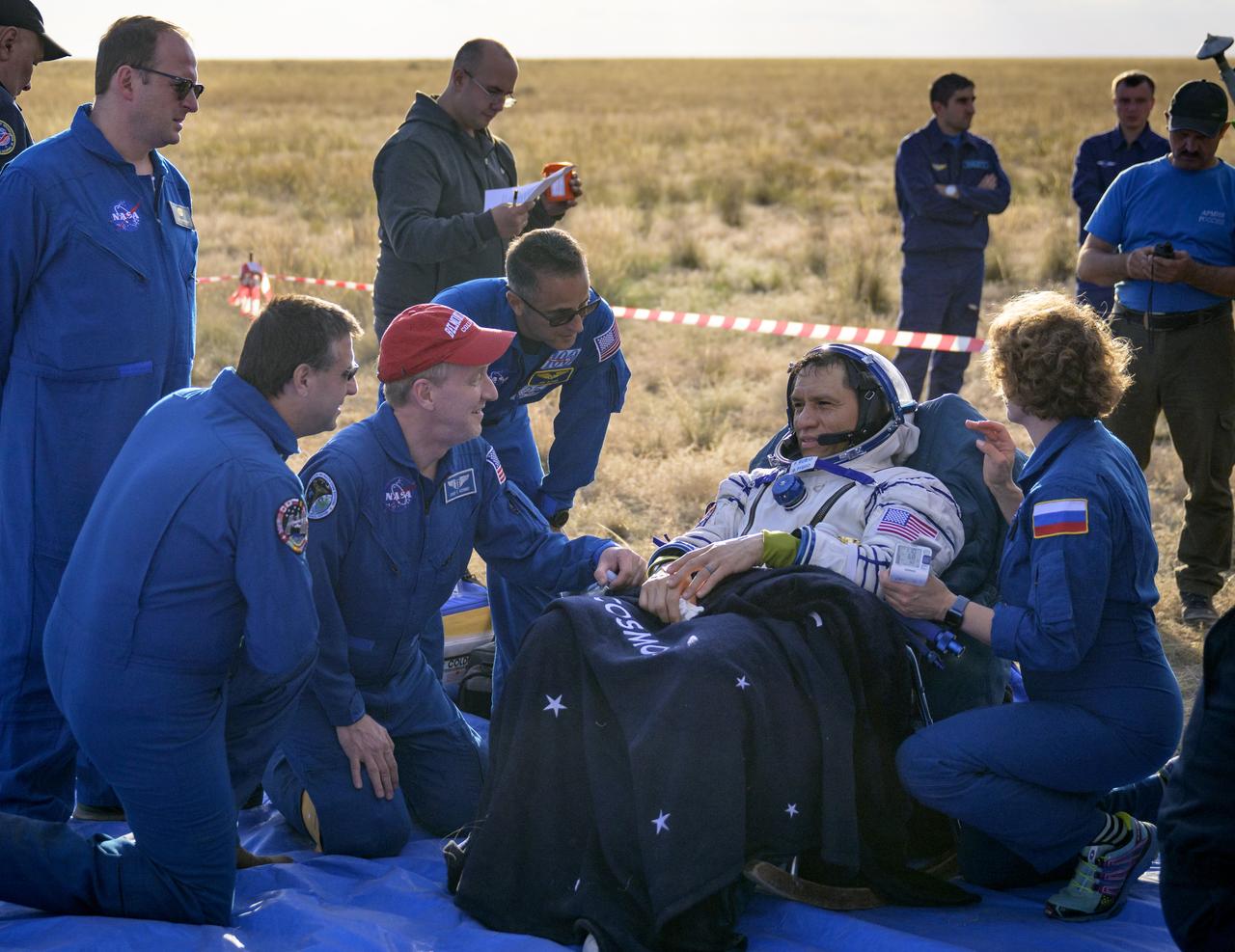
Expedition 69 NASA astronaut Frank Rubio is seen resting and talking with NASA ISS Program Manager Joel Montalbano, kneeling left, NASA Flight Surgeon Josef Schmid, red hat, and NASA Chief of the Astronaut Office Joe Acaba, outside the Soyuz MS-23 spacecraft after he landed with Roscosmos cosmonauts Sergey Prokopyev and Dmitri Petelin in a remote area near the town of Zhezkazgan, Kazakhstan on Wednesday, Sept. 27, 2023. The trio are returning to Earth after logging 371 days in space as members of Expeditions 68-69 aboard the International Space Station. For Rubio, his mission is the longest single spaceflight by a U.S. astronaut in history. Photo Credit: (NASA/Bill Ingalls)
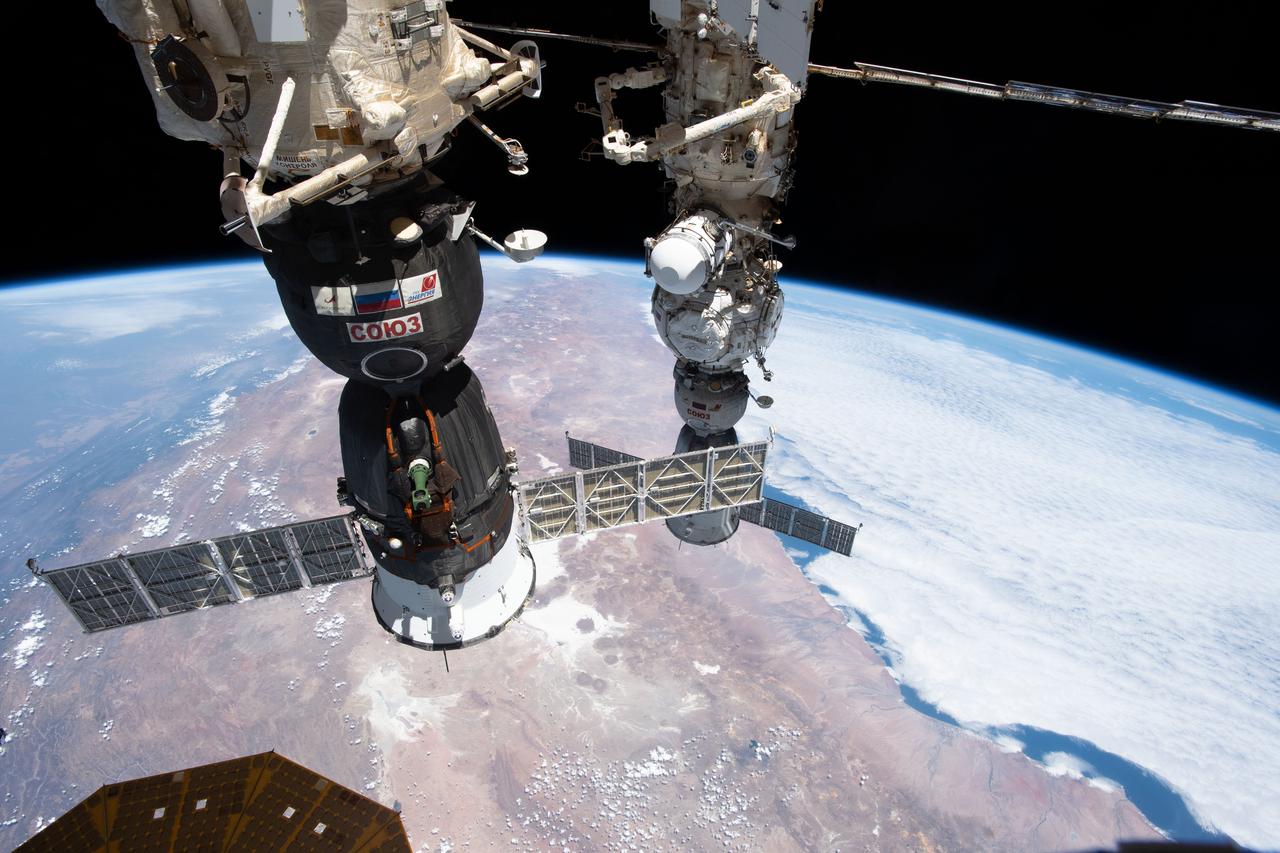
iss069e091770 (Sept. 23, 2023) --- Two Soyuz crew ships are pictured docked to the International Space Station as it orbited 262 miles above La Paz, Bolivia, on the South American continent. In the foreground, is the Soyuz MS-24 spacecraft docked to the Rassvet module. In the background is the Soyuz MS-23 spacecraft docked to the Prichal docking module.
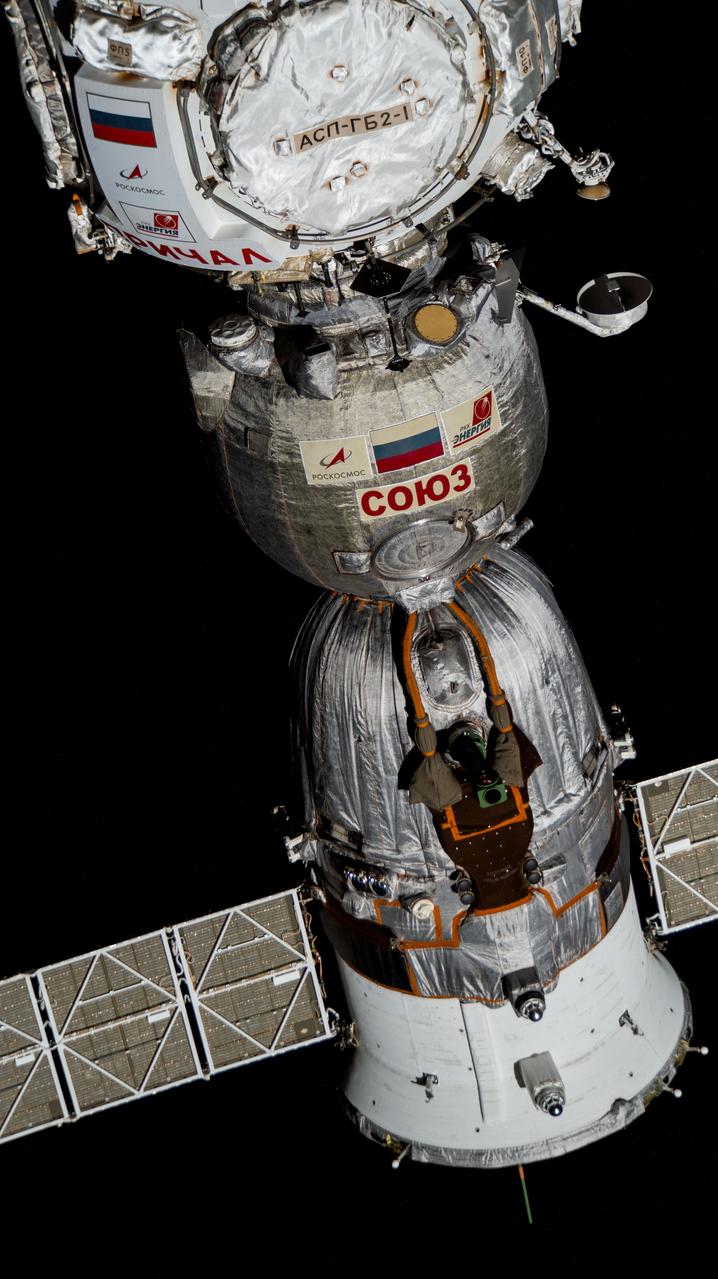
iss069e037667 (July 27, 2023) --- The Soyuz MS-23 crew ship is pictured docked to the Prichal module on the International Space Station.
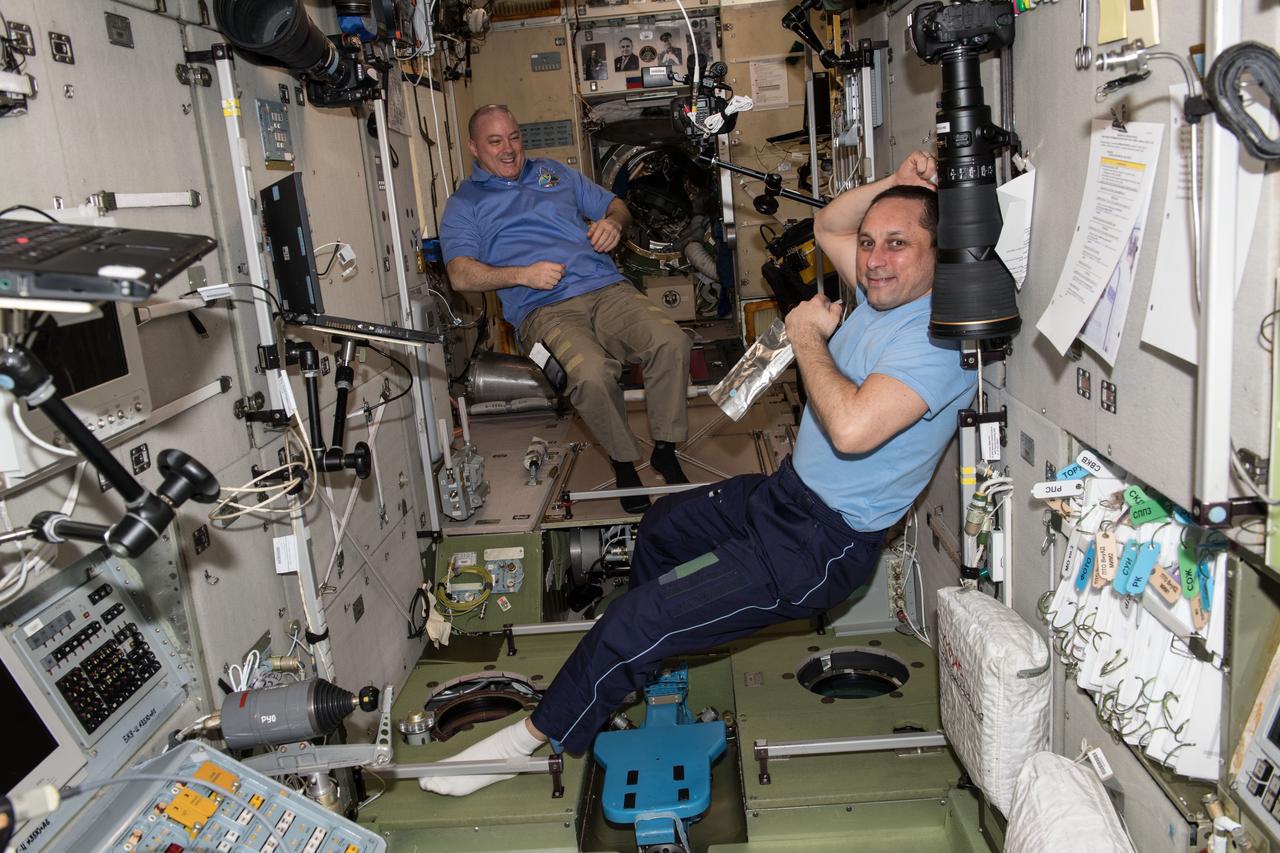
iss055e004815 (March 23, 2018) --- NASA astronaut Scott Tingle (background left) and Commander Anton Shkaplerov relax inside the Zvezda service module moments before the arrival of three new Expedition 55 crew members on March 23, 2018. The Soyuz MS-08 spacecraft carrying Soyuz Commander Oleg Artemyev and Flight Engineers Drew Feustel and Ricky Arnold would dock to the Poisk docking compartment on March 23, 2018 at 3:40 p.m. EDT.
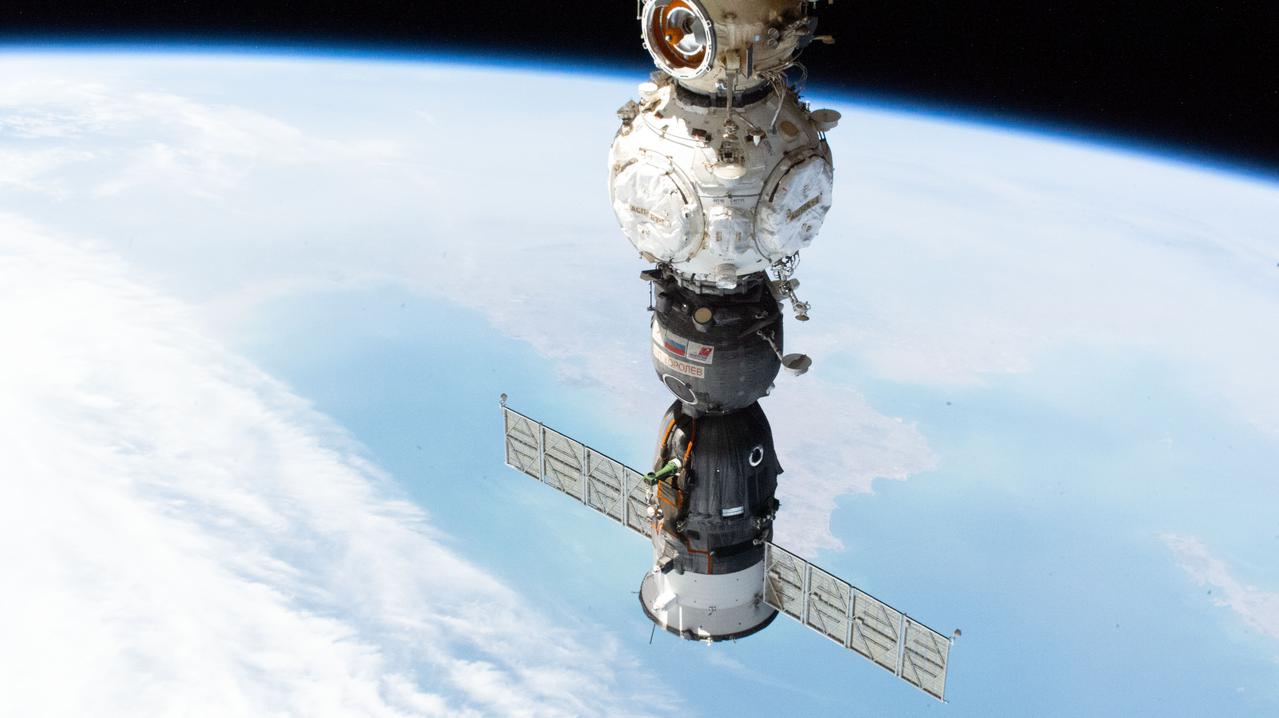
iss067e029160 (April 23, 2022) --- The Soyuz MS-21 crew ship is pictured docked to the Prichal docking module as the International Space Station orbited 260 miles above the Sea of Japan off the coast of South Korea.
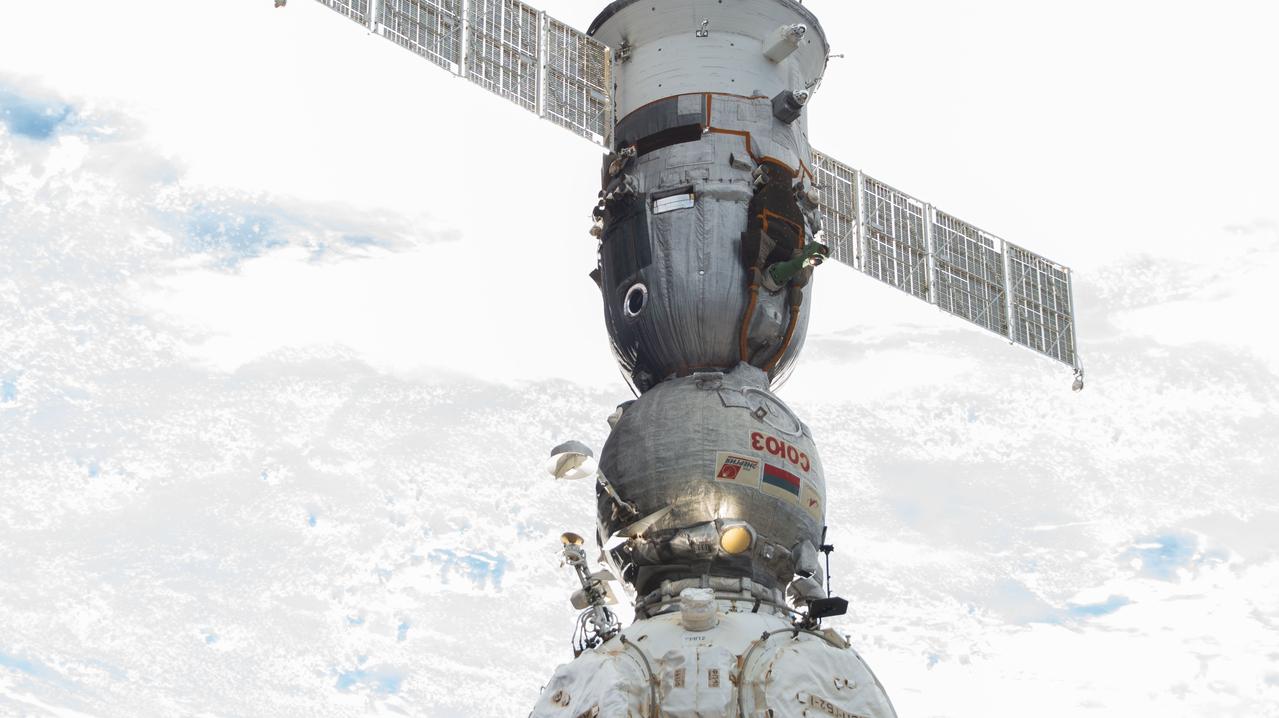
iss069e061002 (Aug. 16, 2023) --- The Soyuz MS-23 crew ship is pictured docked to the Prichal docking module as the International Space Station orbited 262 miles above a cloudy Nigeria on the African continent.
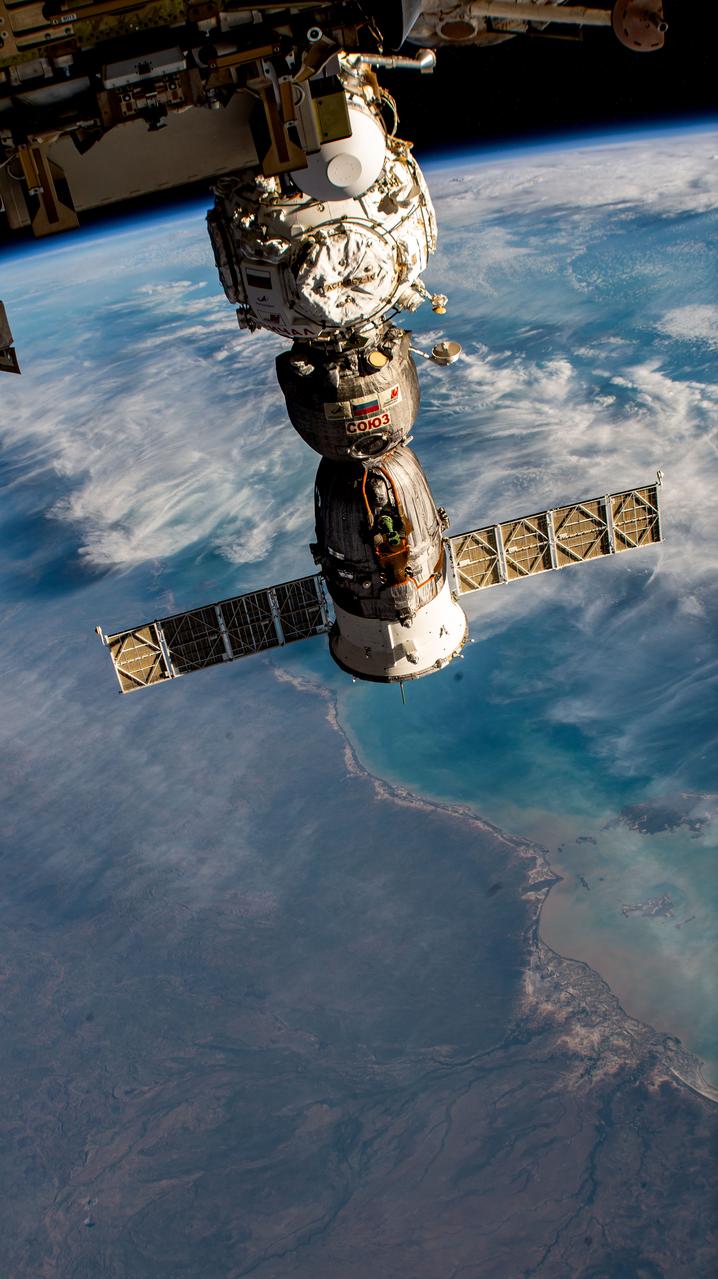
iss069e010174 (May 11, 2023) --- The Soyuz MS-23 crew ship is pictured docked to the Prichal docking module as the International Space Station orbited 264 miles above Queensland, Australia, near the coast of the Gulf of Carpentaria.
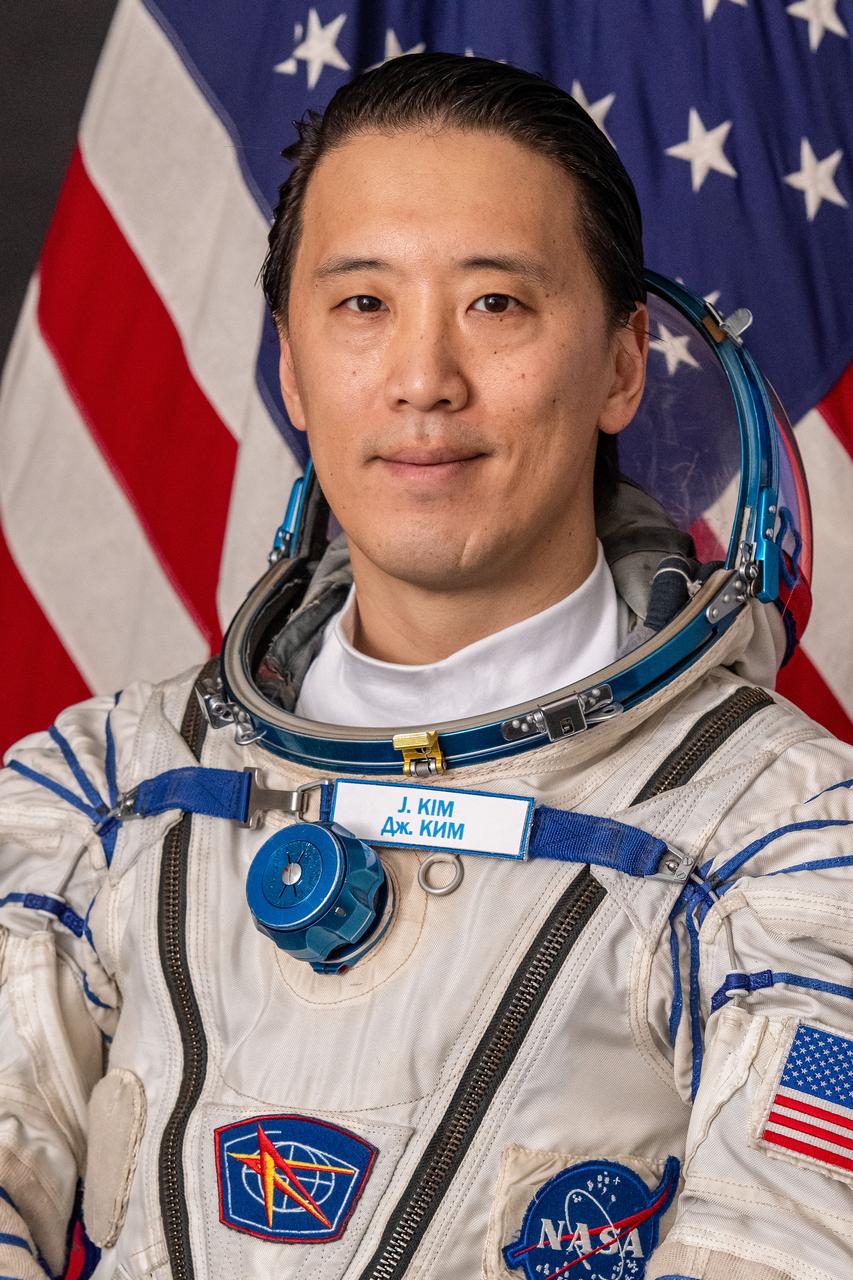
jsc2025e033524 (April 23, 2025) --- NASA astronaut and Soyuz MS-27 Flight Engineer Jonny Kim poses for a portrait in his Sokol launch and entry suit at the Gagarin Cosmonaut Training Center in Star City, Russia.
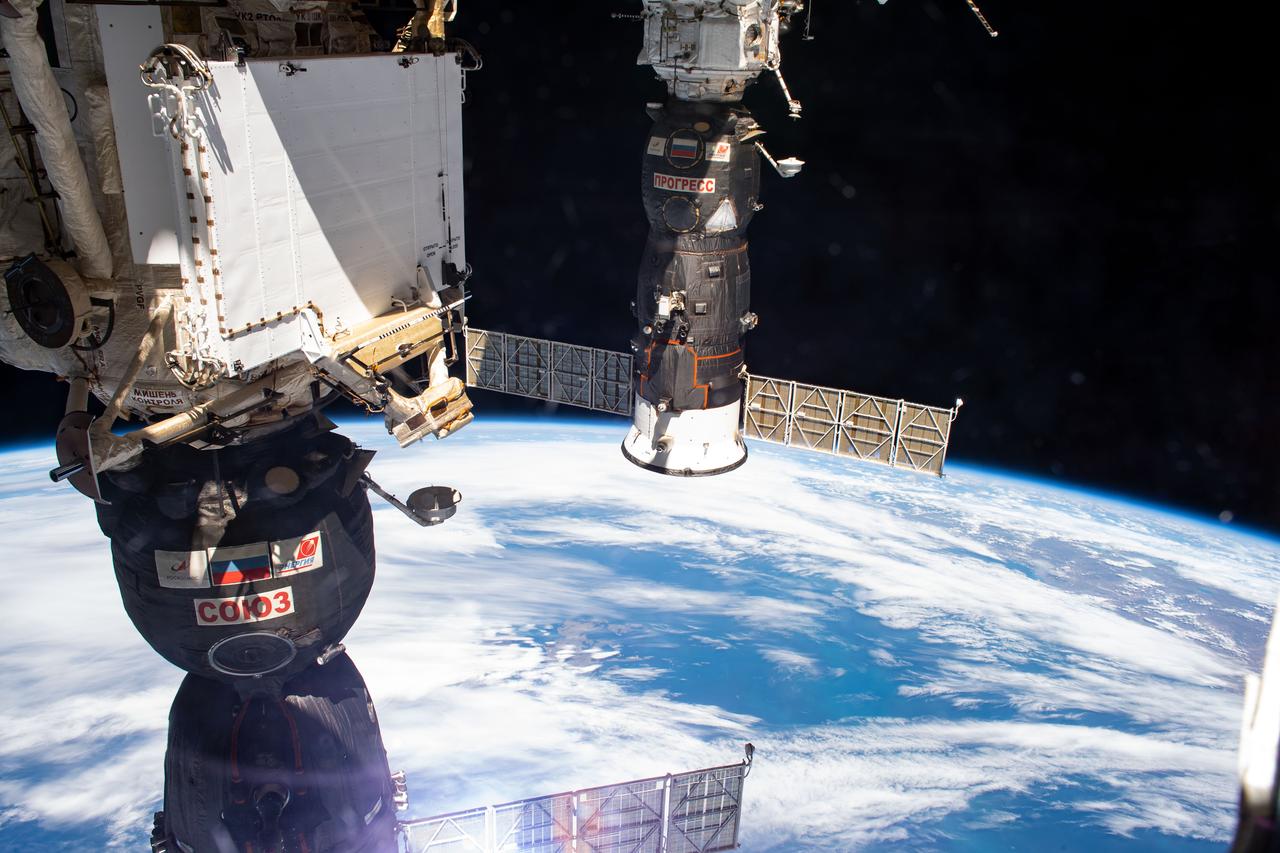
iss064e005529 (Nov. 23, 2020) --- A pair of docked Russian spaceships, (from left) the Soyuz MS-17 crew ship and the Progress 76 cargo craft, are pictured as the International Space Station orbited above the South Atlantic Ocean.
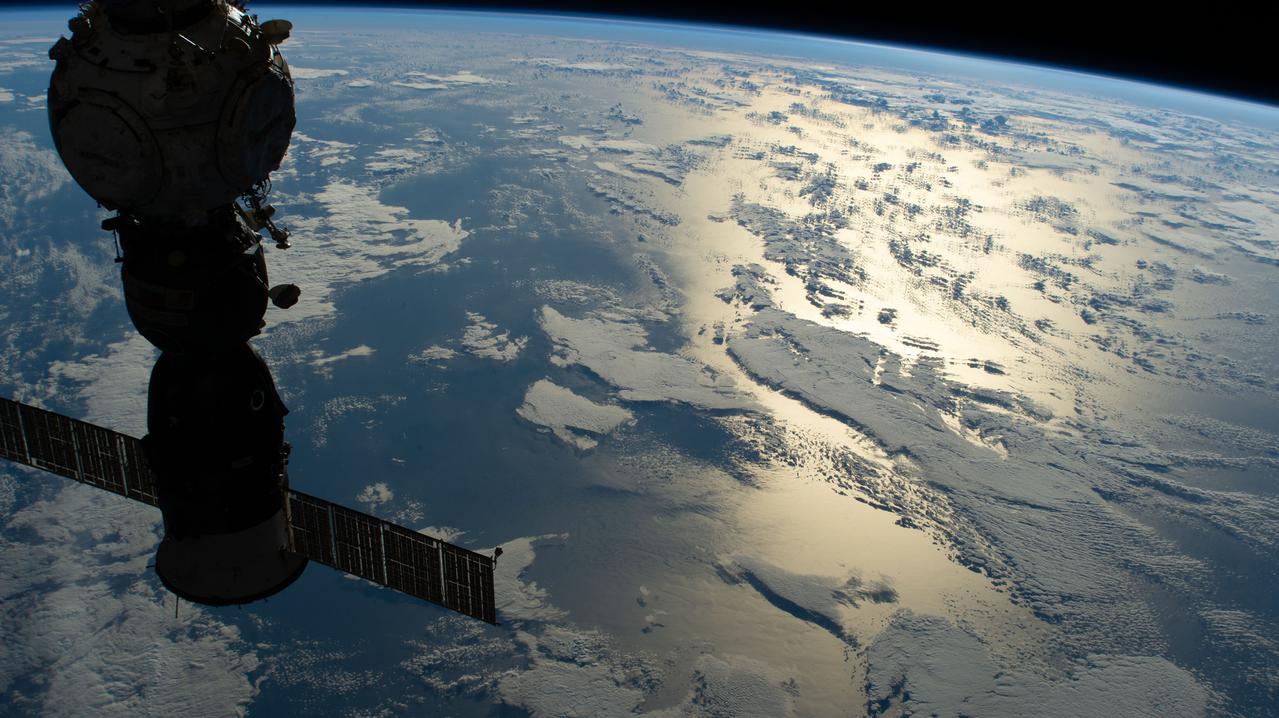
iss067e029147 (April 23, 2022) --- The silhouetted Soyuz MS-21 crew ship docked to the Prichal docking module is pictured as the International Space Station orbited 268 miles above the Pacific Ocean off the coast of Chile.
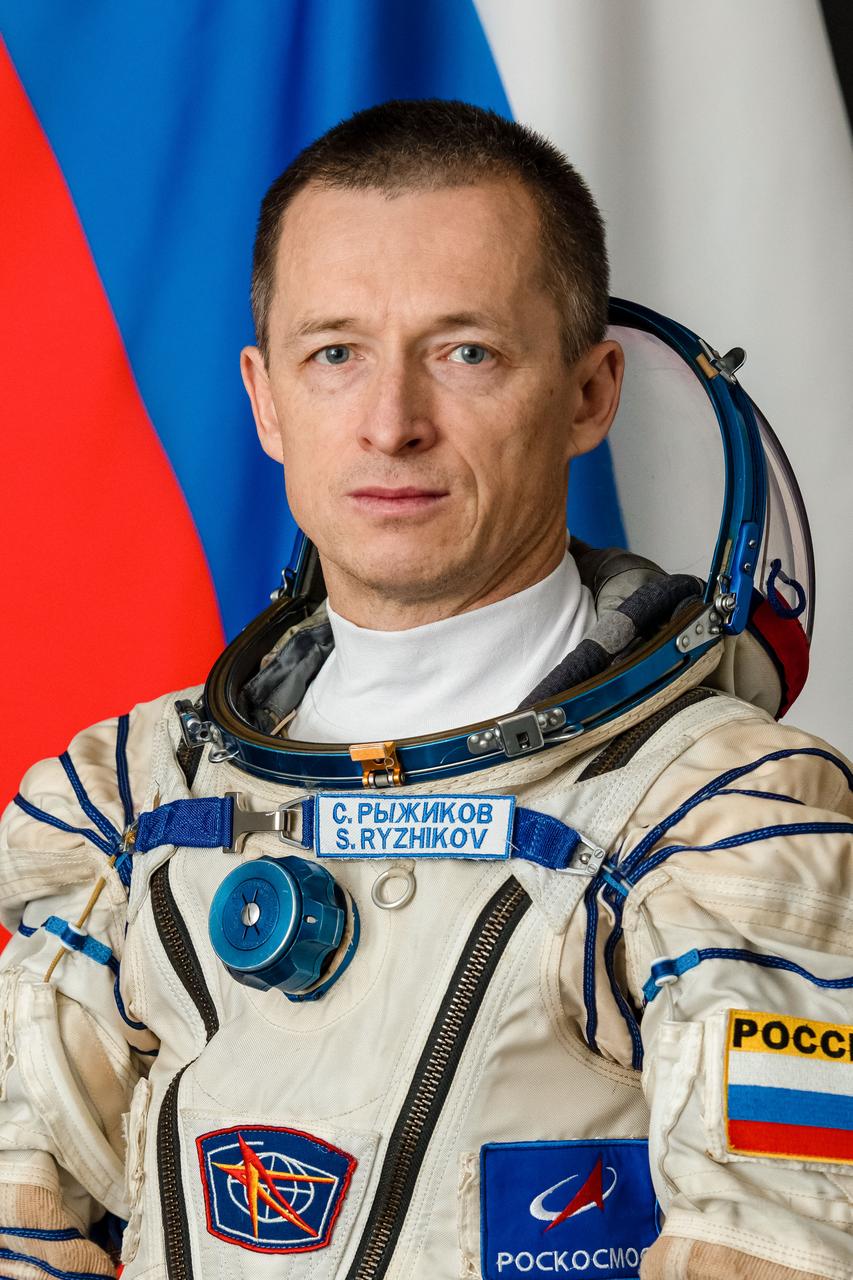
jsc2025e033526 (April 23, 2025) --- Roscosmos cosmonaut and Soyuz MS-27 Commander Sergey Ryzhikov poses for a portrait in his Sokol launch and entry suit at the Gagarin Cosmonaut Training Center in Star City, Russia.
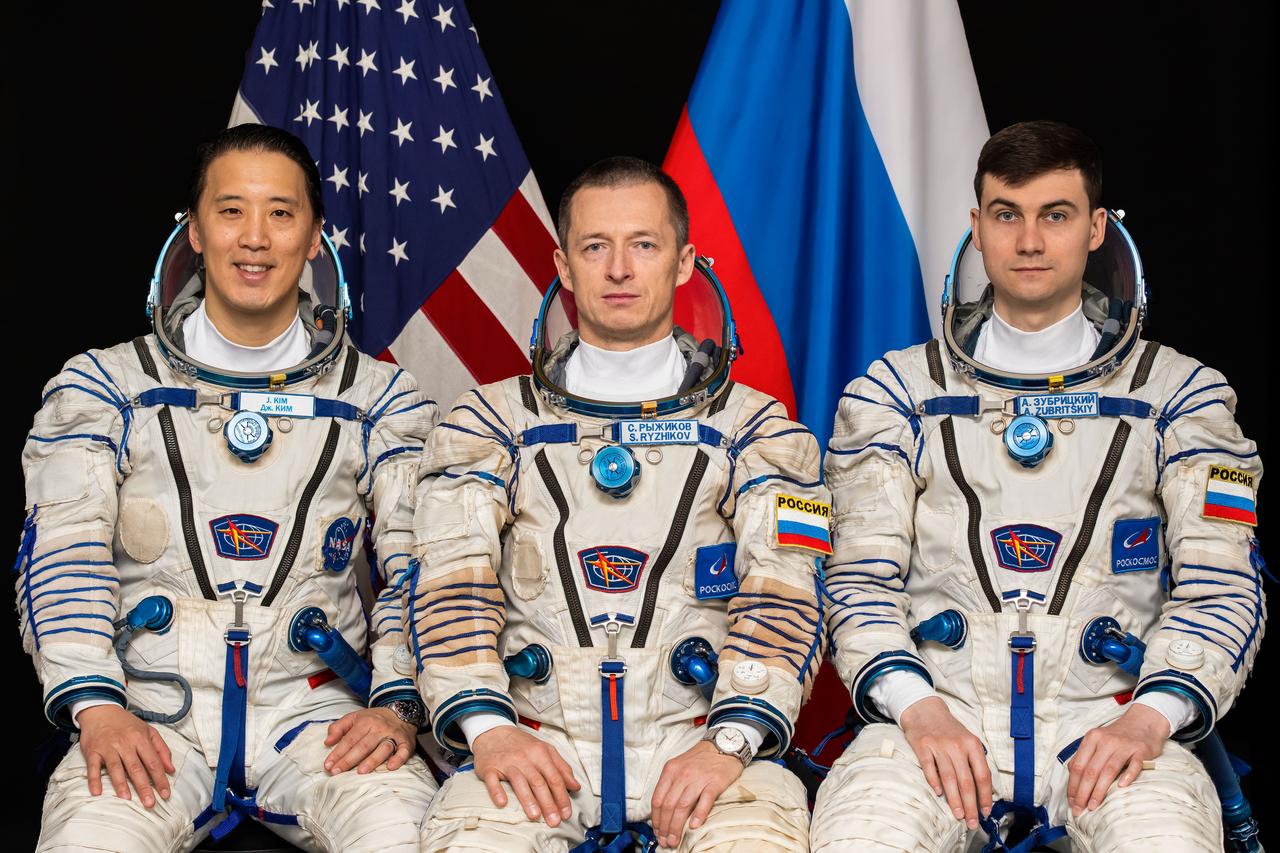
jsc2025e033523 (April 23, 2025) --- Soyuz MS-27 crew members (frm left) NASA astronaut Jonny Kim and Roscosmos cosmonauts Sergey Ryzhikov and Alexey Zubritskiy pose for a portrait at the Gagarin Cosmonaut Training Center in Russia.
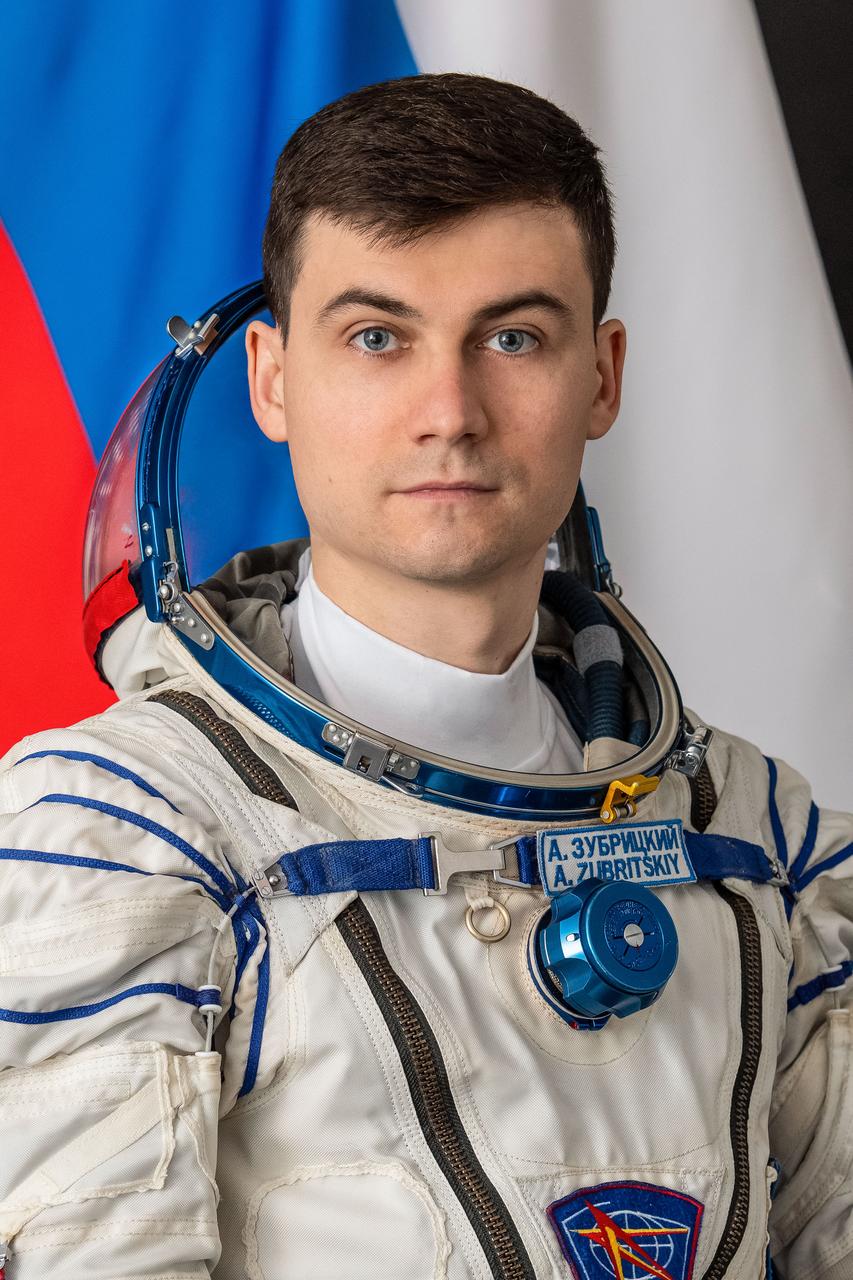
jsc2025e033527 (April 23, 2025) --- Roscosmos cosmonaut and Soyuz MS-27 Flight Engineer Alexey Zubritsky poses for a portrait in his Sokol launch and entry suit at the Gagarin Cosmonaut Training Center in Star City, Russia.
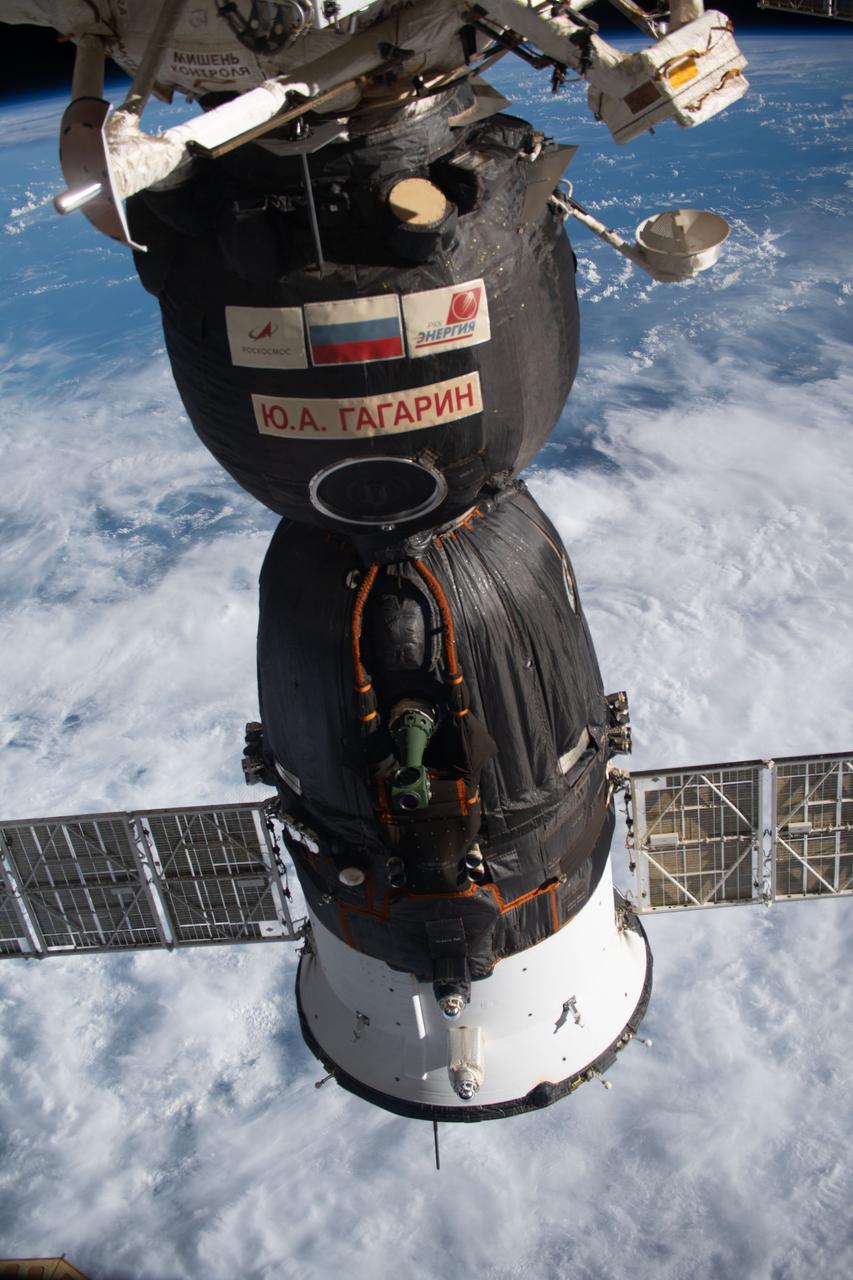
iss065e053334 (May 23, 2021) --- The Soyuz MS-18 crew ship is pictured docked to the Rassvet module as the International Space Station orbited 261 miles above eastern China near Shanghai.
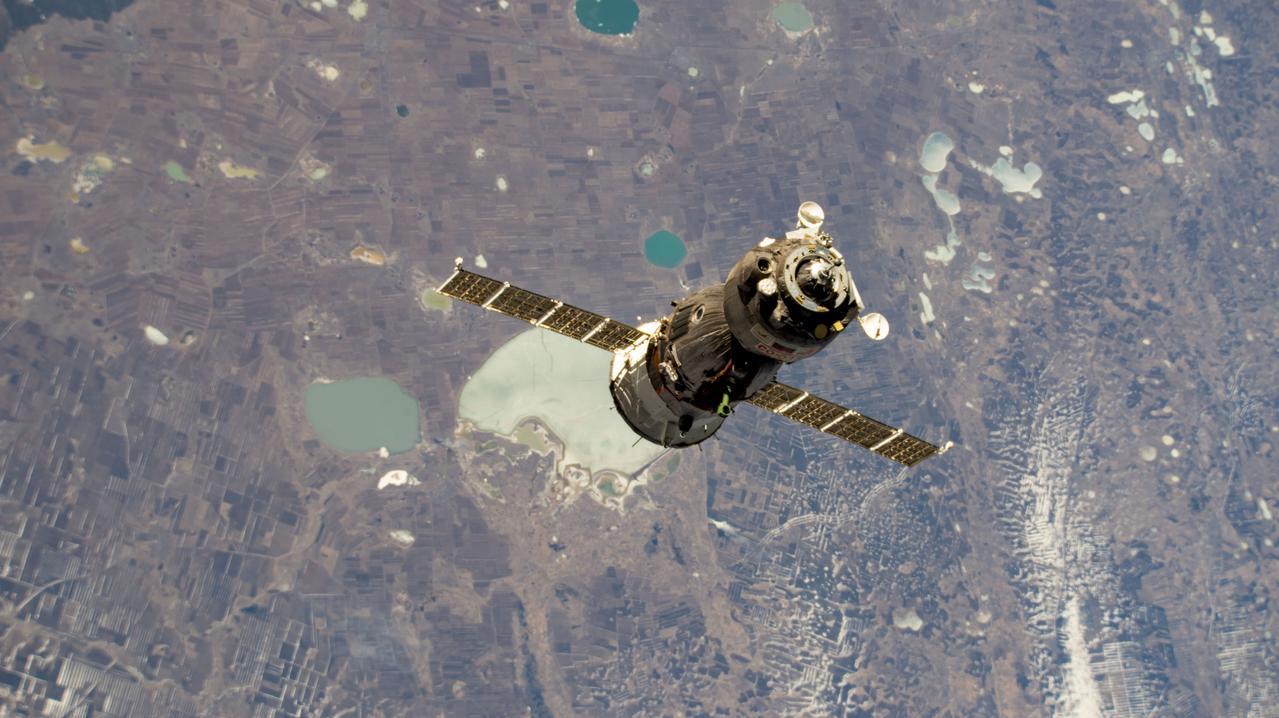
iss069e000997 (April 6, 2023) --- The Soyuz MS-23 crew ship approaches the International Space Station's Prichal docking module after undocking earlier from the Poisk module. Aboard the MS-23 during the 37-minute relocation maneuver were, NASA astronaut Frank Rubio with Roscosmos cosmonauts Sergey Prokopyev and Dmitri Petelin. Both spacecraft were orbiting 263 miles above eastern Kazakhstan at the time of this photograph.
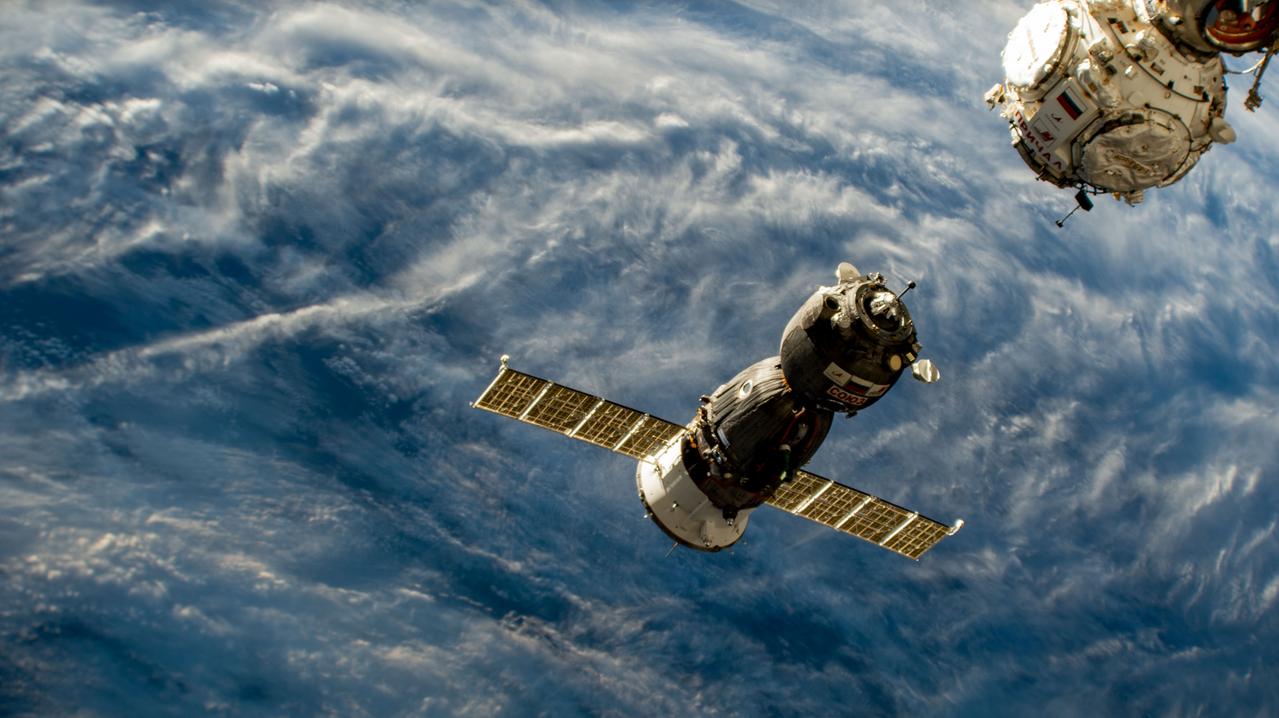
iss069e001001 (April 6, 2023) --- The Soyuz MS-23 crew ship approaches the International Space Station's Prichal docking module after undocking and moving earlier from the Poisk module. Aboard the MS-23 during the 37-minute relocation maneuver were, NASA astronaut Frank Rubio with Roscosmos cosmonauts Sergey Prokopyev and Dmitri Petelin.
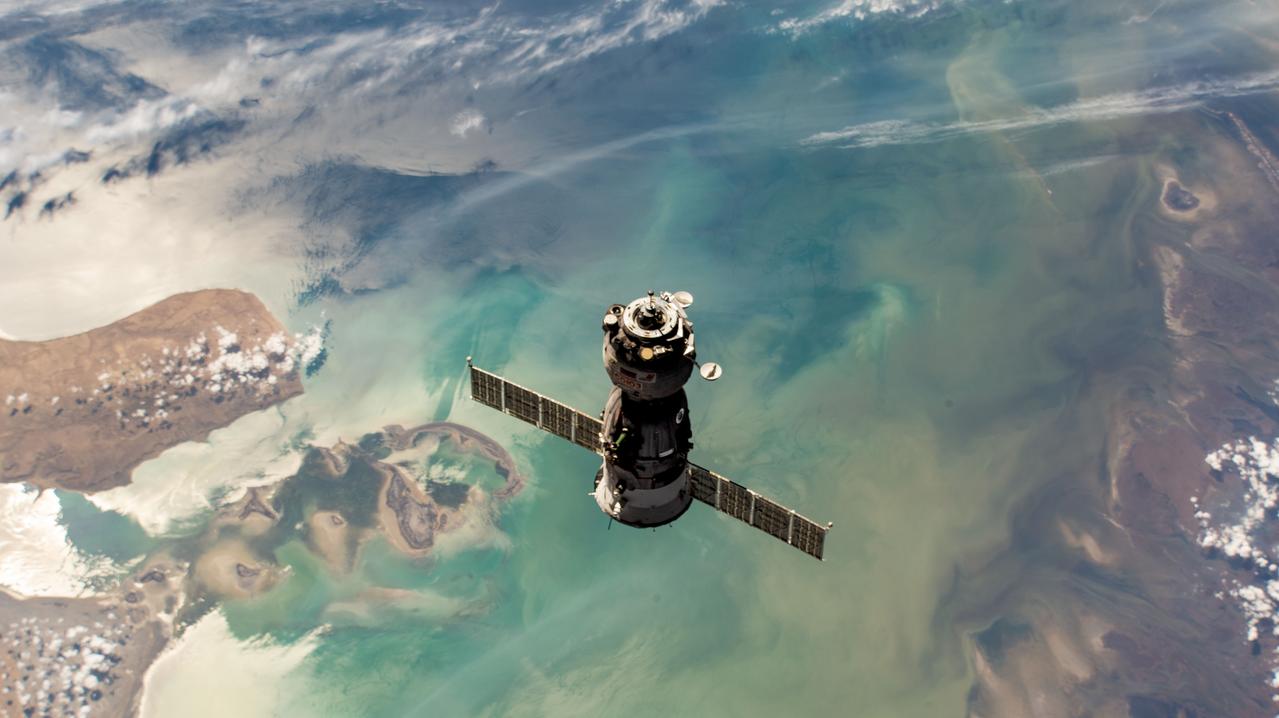
iss069e000991 (April 6, 2023) --- The Soyuz MS-23 crew ship approaches the International Space Station's Prichal docking module after undocking earlier from the Poisk module. Aboard the MS-23 during the 37-minute relocation maneuver were, NASA astronaut Frank Rubio with Roscosmos cosmonauts Sergey Prokopyev and Dmitri Petelin. Both spacecraft were orbiting 263 miles above the coast of the Caspian Sea in Kazakhstan at the time of this photograph.
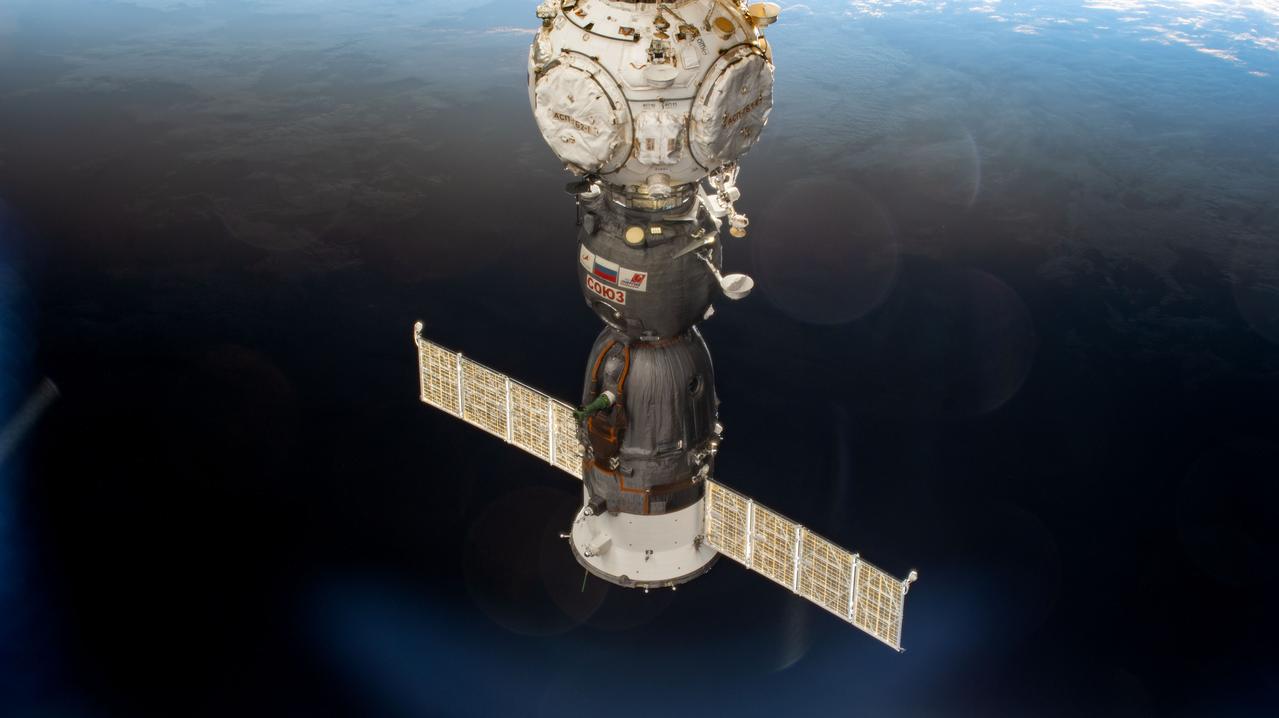
iss069e000996 (April 6, 2023) --- The Soyuz MS-23 crew ship is docked to the International Space Station's Prichal docking module after undocking and moving earlier from the Poisk module. Aboard the MS-23 during the 37-minute relocation maneuver were, NASA astronaut Frank Rubio with Roscosmos cosmonauts Sergey Prokopyev and Dmitri Petelin.
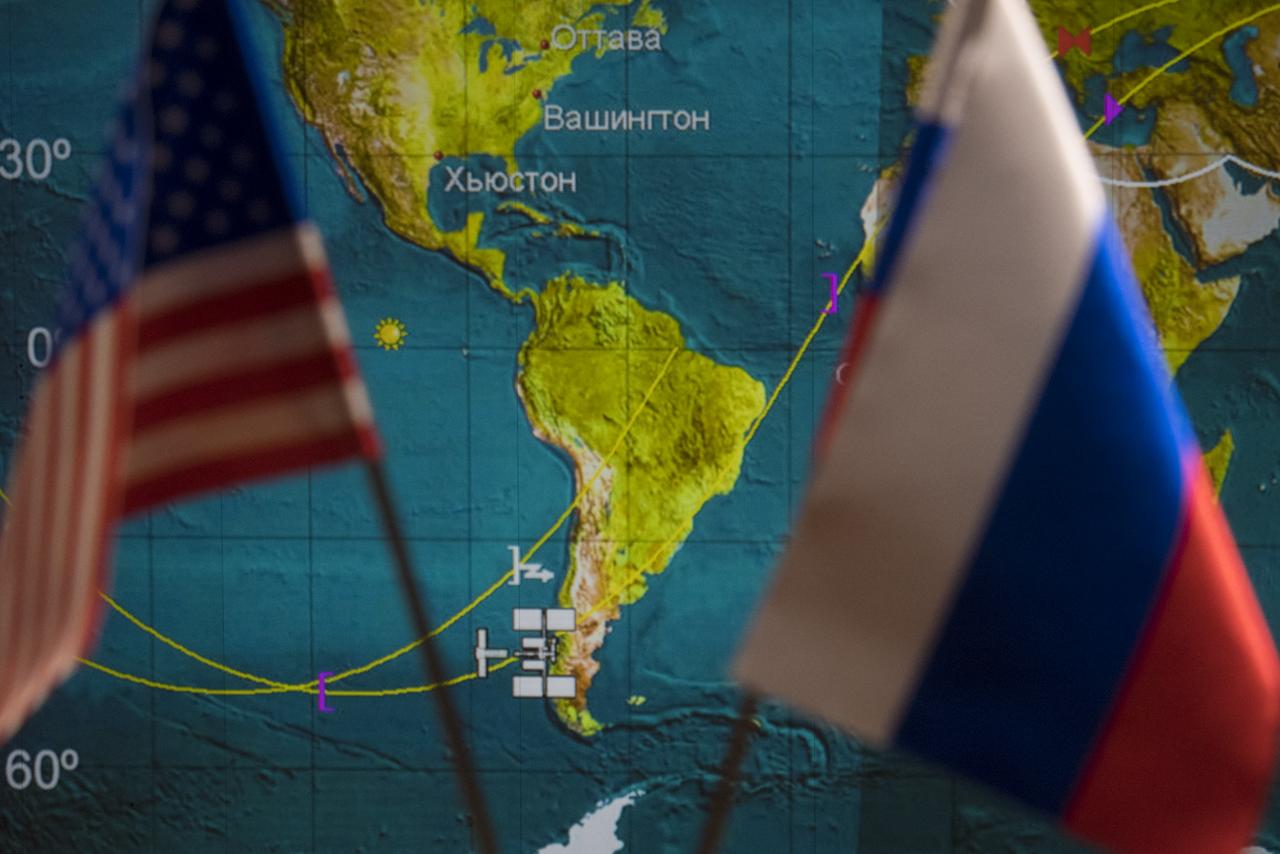
Icons for the International Space Station and Soyuz MS-08 spacecraft are seen on a tracking map on a screen in the Moscow Mission Control Center as the spacecraft approaches for docking, Friday, March 23, 2018 in Korolev, Russia. The Soyuz MS-08 spacecraft carrying Expedition 55-56 crewmembers Oleg Artemyev of Roscosmos and Ricky Arnold and Drew Feustel of NASA docked at 3:40 p.m. Eastern time (10:40 p.m. Moscow time) on March 23 and joined Expedition 55 Commander Anton Shkaplerov of Roscosmos, Scott Tingle of NASA, and Norishige Kanai of the Japan Aerospace Exploration Agency (JAXA). Photo Credit: (NASA/Joel Kowsky)
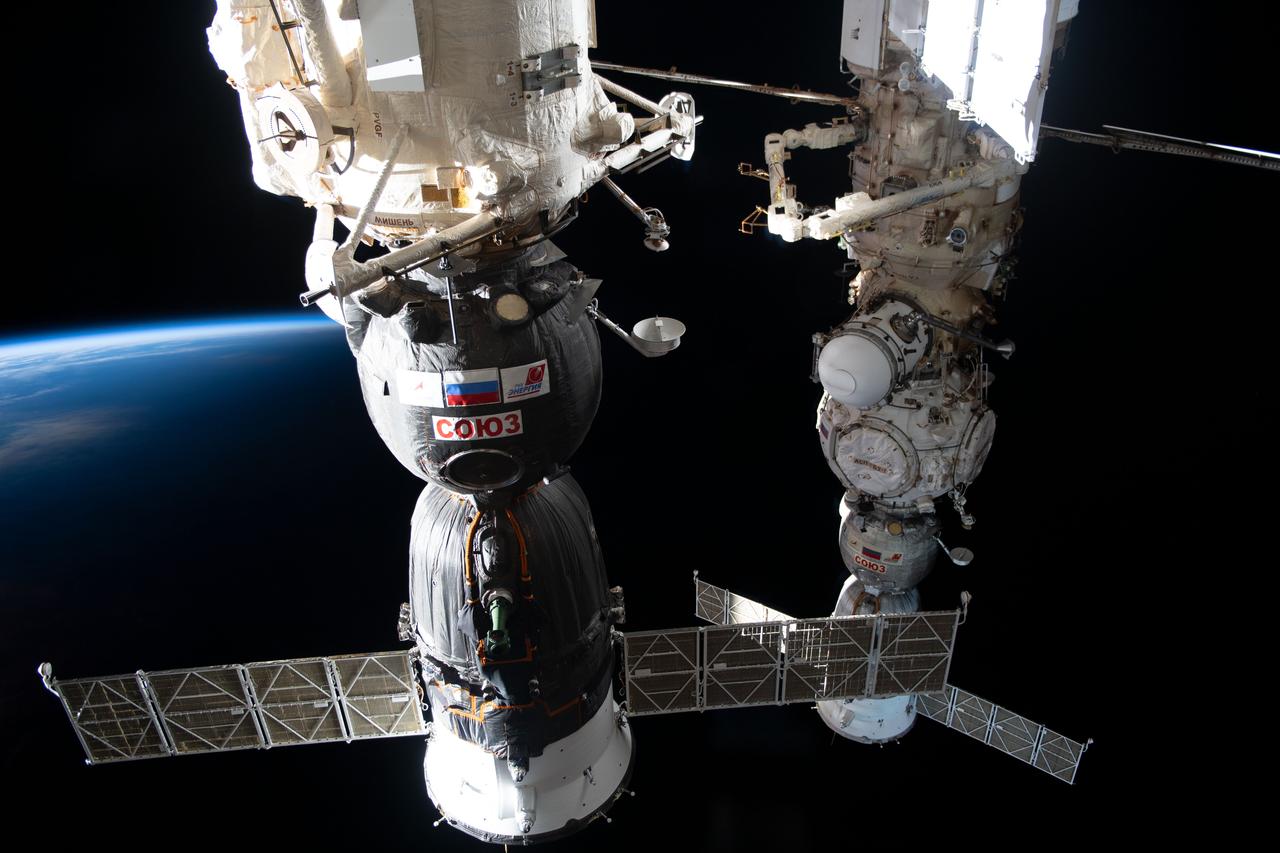
iss069e088557 (Sept. 15, 2023) --- The Soyuz MS-24 spacecraft (foreground) that carried NASA astronaut Loral O'Hara and Roscosmos cosmonauts Oleg Kononenko and Nikolai Chub to the International Space Station is pictured docked to the Rassvet module. In the rear, is the Soyuz MS-23 crew ship, docked to the Prichal docking module, that will return NASA astronaut Frank Rubio and Roscosmos cosmonauts Sergey Prokopyev and Dmitri Petelin back to Earth on Sept. 27.
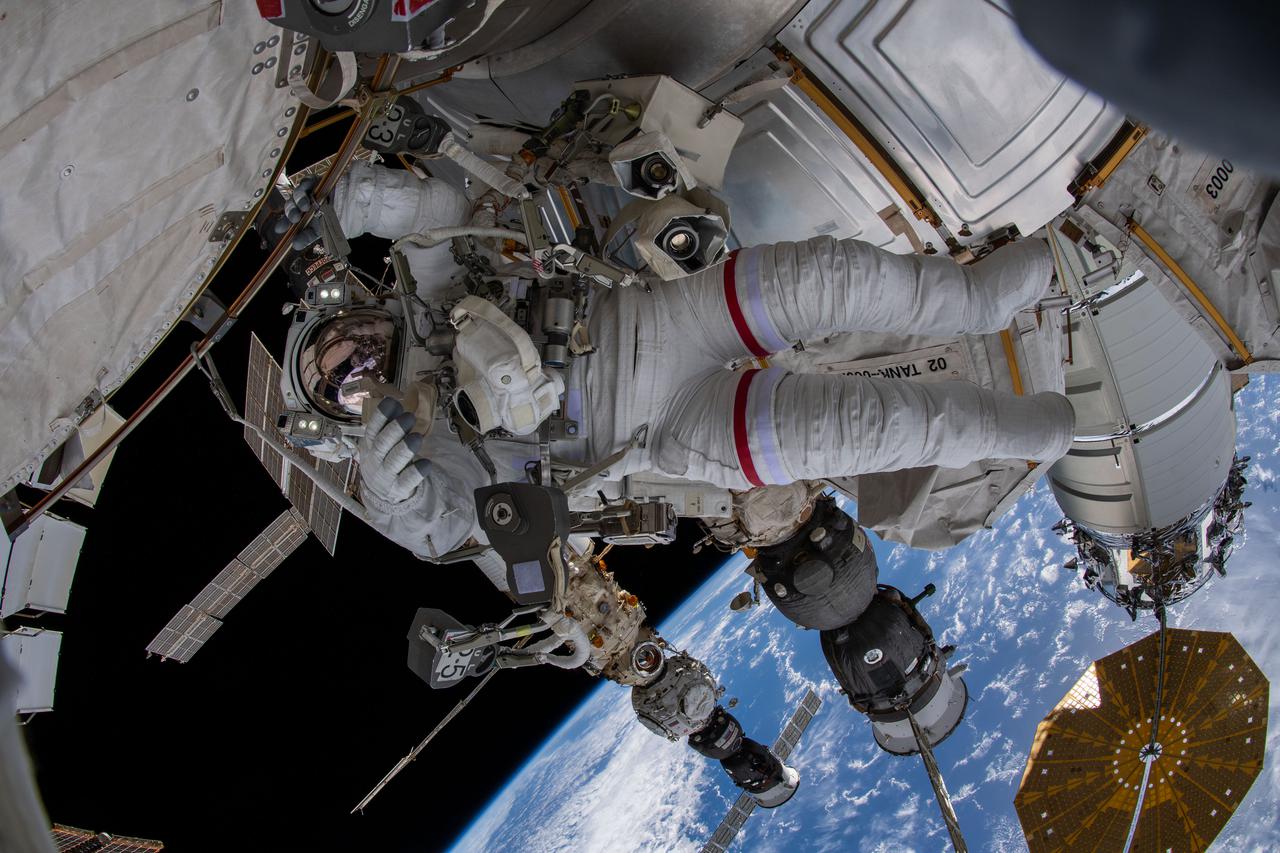
iss066e174688 (March 23, 2022) --- NASA astronaut and Expedition 66 Flight Engineer Raja Chari is pictured during a six-hour and 54-minute spacewalk to install thermal gear and electronic components on the International Space Station. Behind Chari are three spaceships attached to the orbiting lab, including (from right to left) the Northrop Grumman Cygnus space freighter, the Soyuz MS-19 crew ship, and the newly-arrived Soyuz MS-21 crew ship docked to the Prichal module.
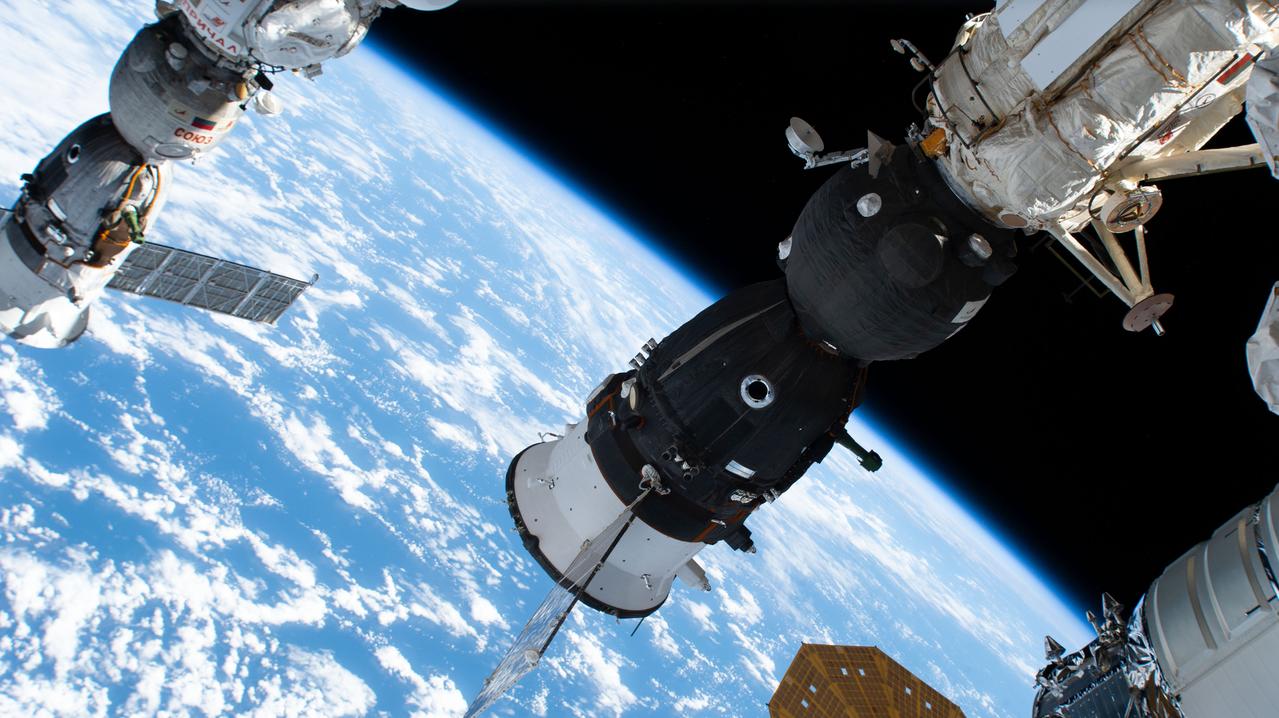
iss069e089047 (Sept. 18, 2023) --- The Soyuz MS-24 spacecraft that carried NASA astronaut Loral O'Hara and Roscosmos cosmonauts Oleg Kononenko and Nikolai Chub to the International Space Station is pictured docked to the Rassvet module. At far left, is the Soyuz MS-23 crew ship, docked to the Prichal docking module, that will return NASA astronaut Frank Rubio and Roscosmos cosmonauts Sergey Prokopyev and Dmitri Petelin back to Earth on Sept. 27.

iss069e090251 (Sept. 18, 2023) --- The Soyuz MS-24 spacecraft (foreground) that carried NASA astronaut Loral O'Hara and Roscosmos cosmonauts Oleg Kononenko and Nikolai Chub to the International Space Station is pictured docked to the Rassvet module. In the rear, is the Soyuz MS-23 crew ship, docked to the Prichal docking module, that will return NASA astronaut Frank Rubio and Roscosmos cosmonauts Sergey Prokopyev and Dmitri Petelin back to Earth on Sept. 27. 258 miles below the station is the Sahara desert in the African nation of Algeria.
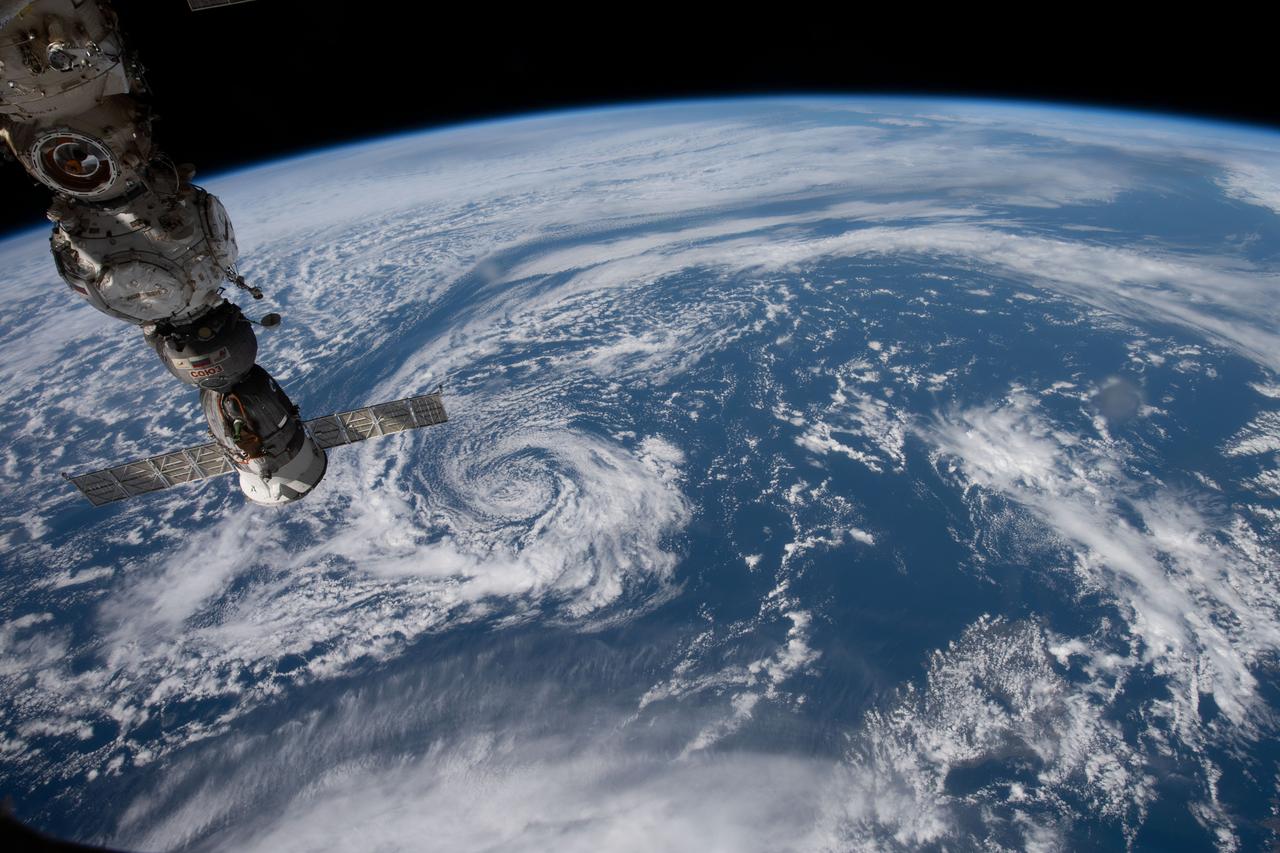
iss069e003960 (April 17, 2023) --- Three Roscosmos components on the International Space Station were photographed by UAE (United Arab Emirates) astronaut and Expedition 69 Flight Engineer Sultan Alneyadi while orbiting 263 miles above a partly Pacific Ocean off the coast of British Columbia, Canada. At left, from top to bottom, are the Nauka multipurpose laboratory module's forward port, the Prichal docking module, and the Soyuz MS-23 crew ship.
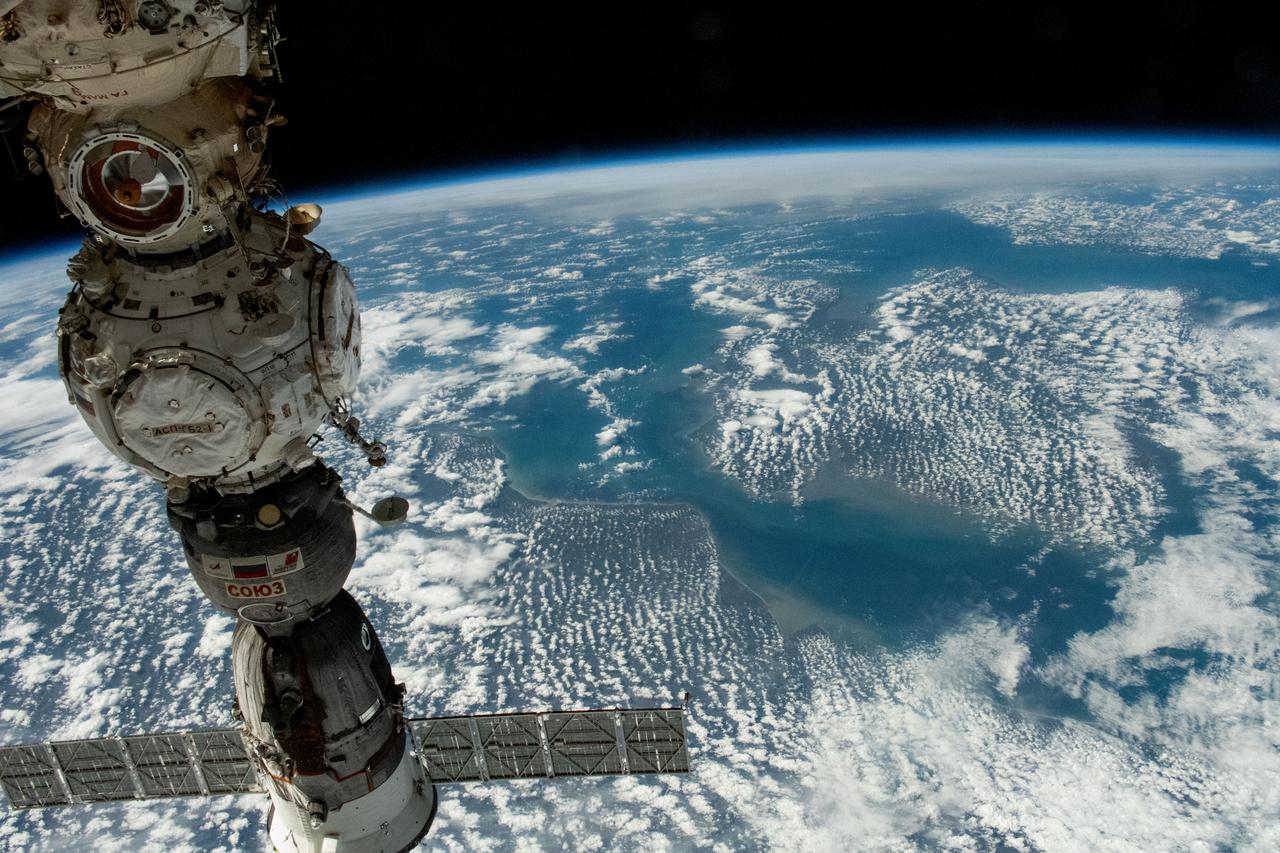
iss069e003171 (April 13, 2023) --- Three Roscosmos components on the International Space Station were photographed by UAE (United Arab Emirates) astronaut and Expedition 69 Flight Engineer Sultan Alneyadi while orbiting 263 miles above a partly cloudy northern Europe. At left, from top to bottom, are the Nauka multipurpose laboratory module's forward port, the Prichal docking module, and the Soyuz MS-23 crew ship.
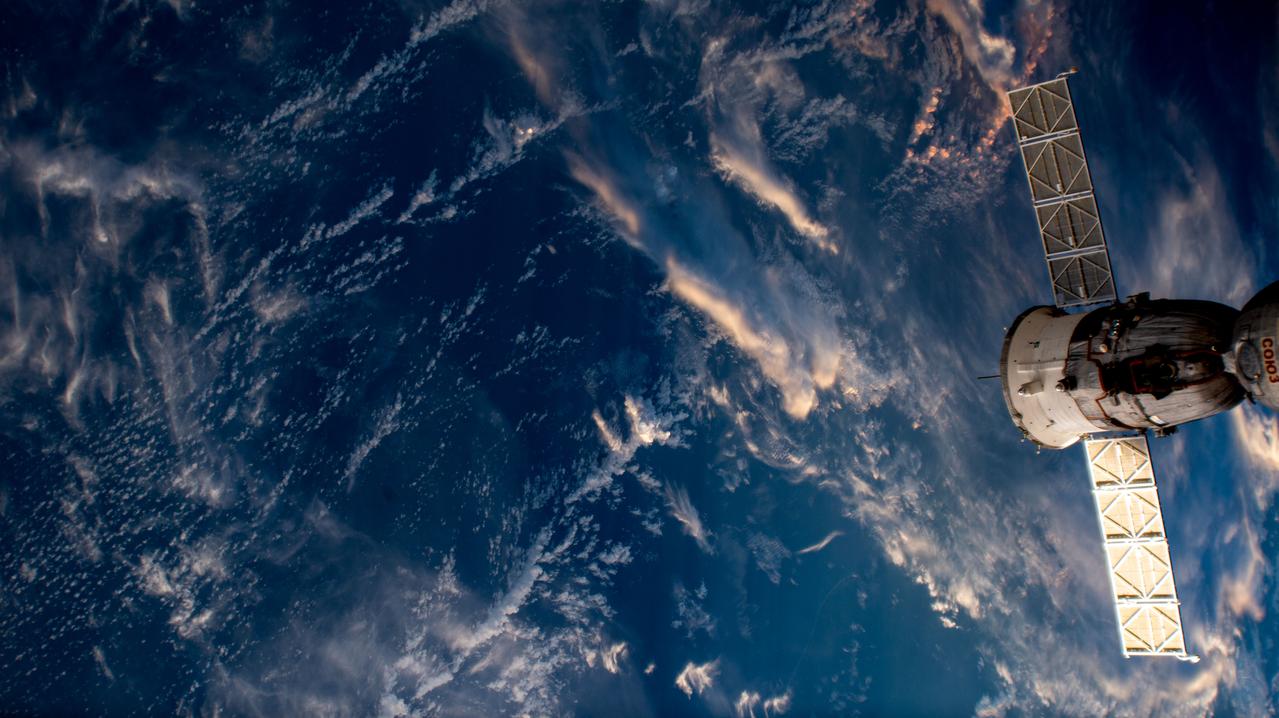
iss069e030924 (July 11, 2023) -- Clouds are painted pink and white at orbital sunrise as the International Space Station orbited 259 miles above the coast of Guatemala. The Soyuz MS-23 spacecraft docked to the station's Prichal module can be seen to the right of the image.
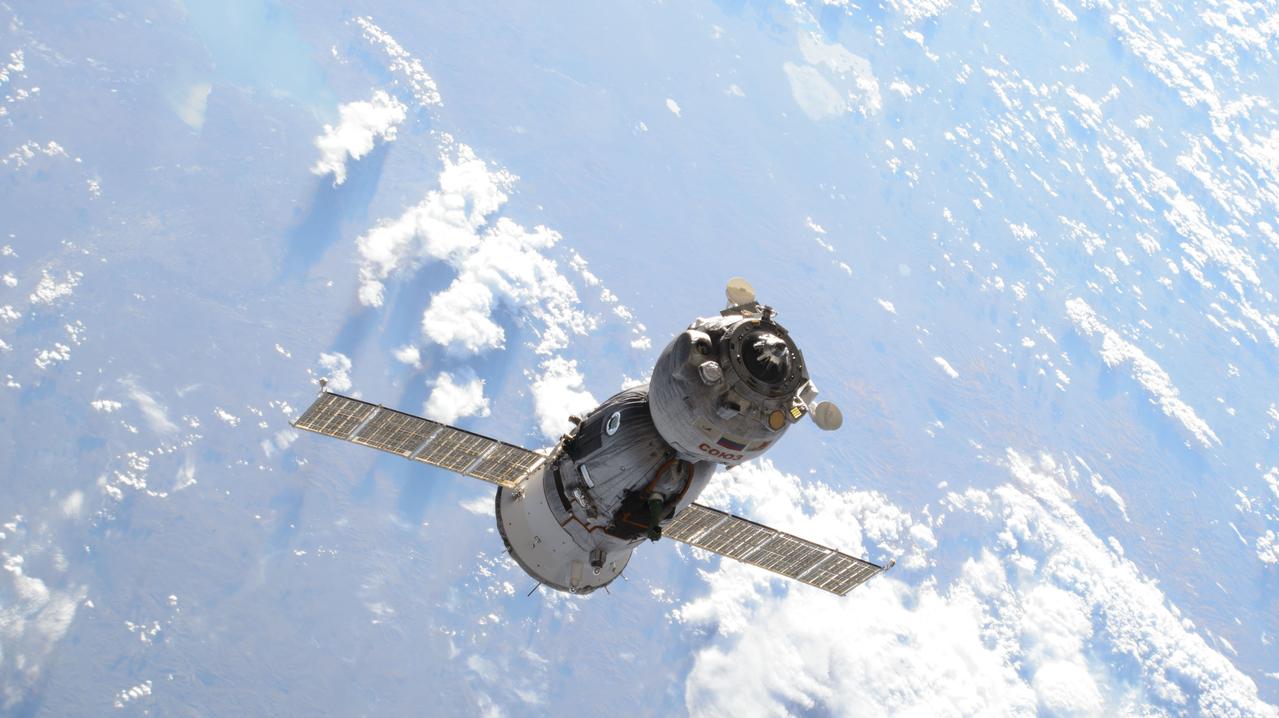
iss072e000001 (Sept. 23, 2024) --- The Soyuz MS-25 spacecraft, with NASA astronaut Tracy C. Dyson and Roscosmos cosmonauts Nikolai Chub and Oleg Kononenko aboard, is pictured shortly after undocking from the International Space Station's Prichal module.
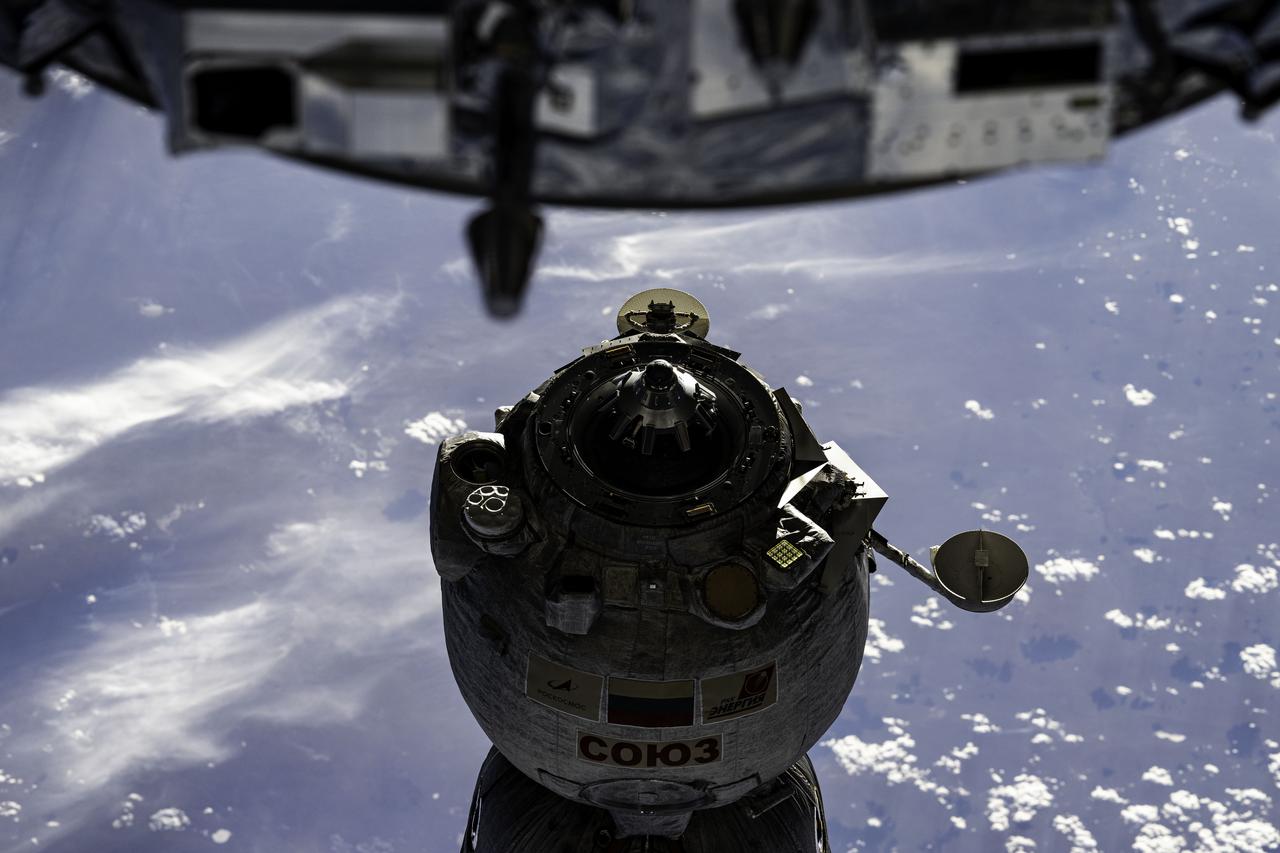
iss072e000028 (Sept. 23, 2024) --- The Soyuz MS-25 spacecraft, with NASA astronaut Tracy C. Dyson and Roscosmos cosmonauts Nikolai Chub and Oleg Kononenko aboard, is pictured shortly after undocking from the International Space Station's Prichal module.
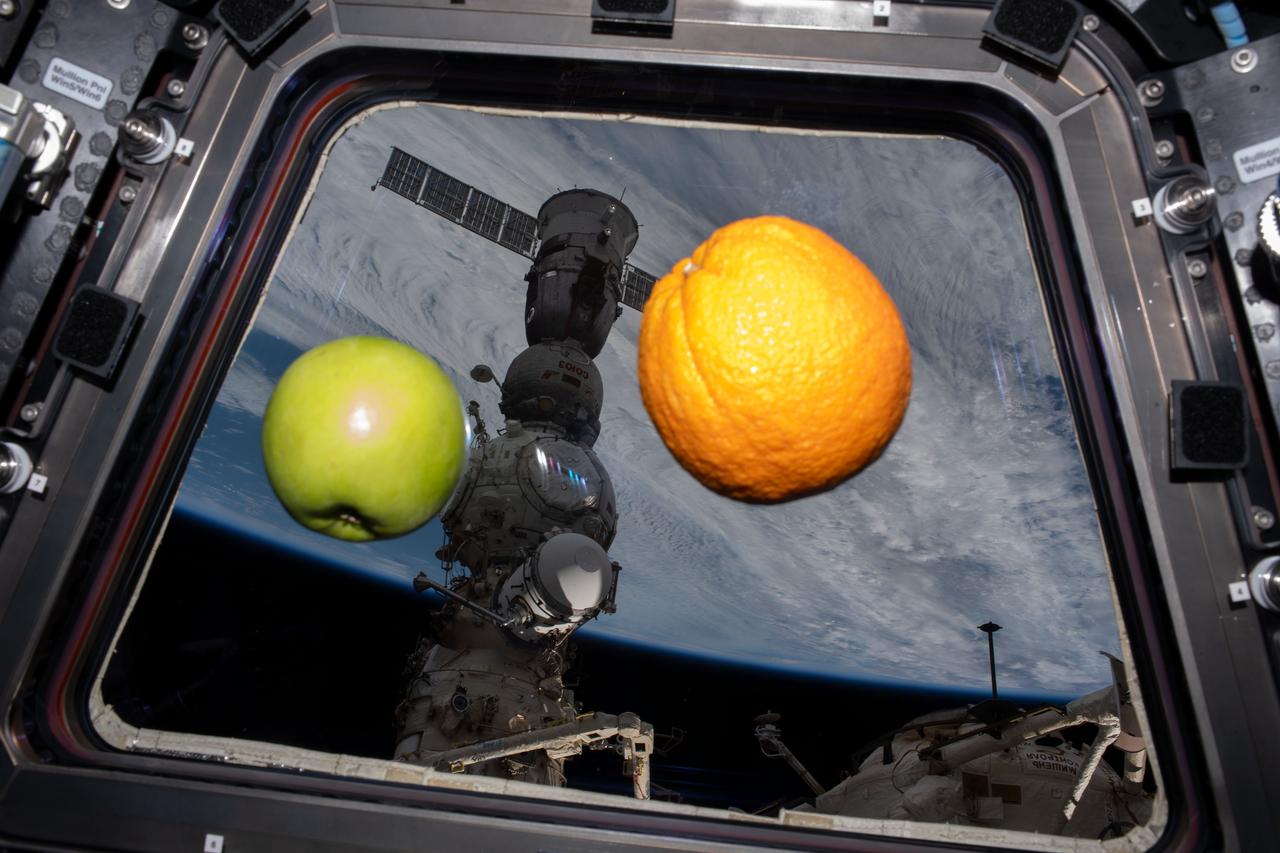
iss069e060591 (Aug. 15, 2023) --- An apple and an orange are pictured floating weightlessly in the International Space Station's cupola. Seen outside the cupola, is the Soyuz MS-23 crew ship docked to the Prichal docking module which is attached to the Nauka science module.
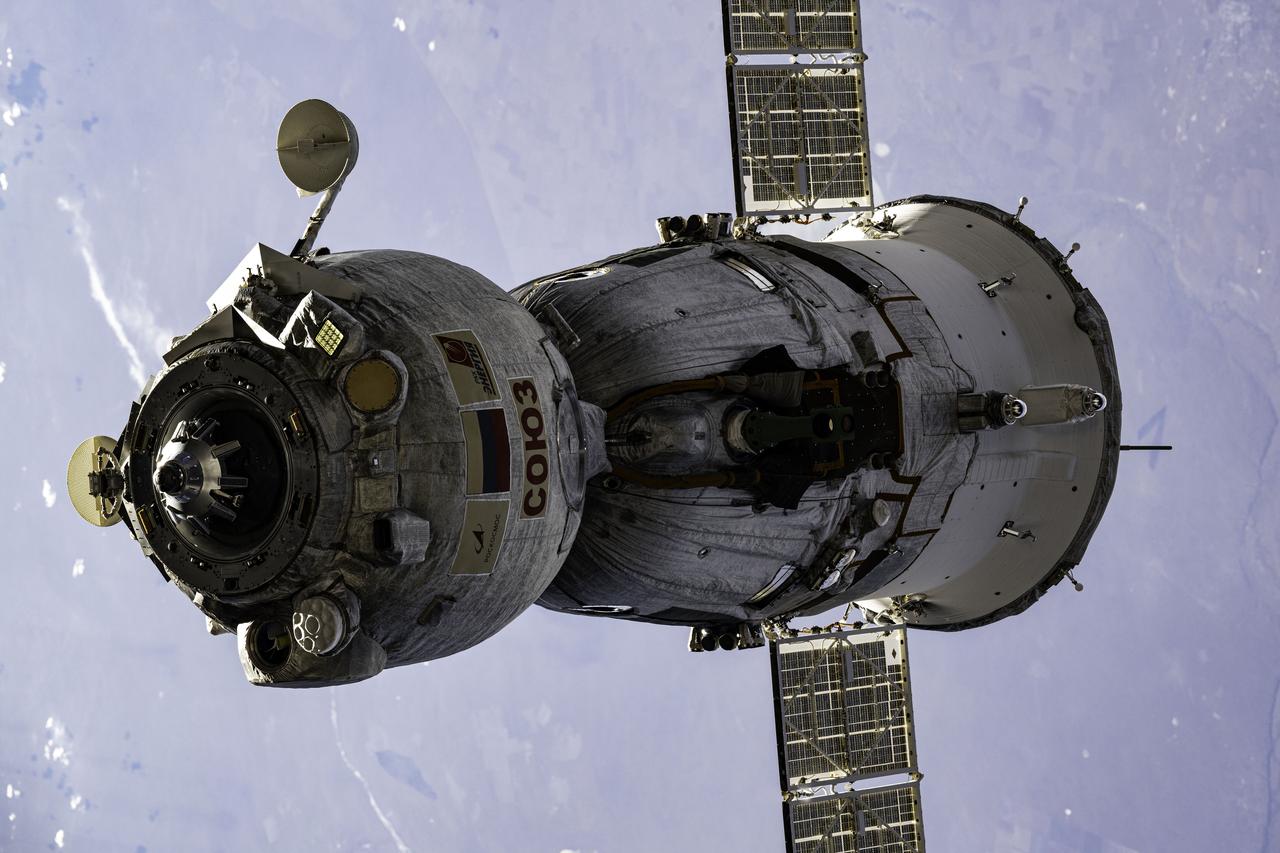
iss072e000032 (Sept. 23, 2024) --- The Soyuz MS-25 spacecraft, with NASA astronaut Tracy C. Dyson and Roscosmos cosmonauts Nikolai Chub and Oleg Kononenko aboard, is pictured shortly after undocking from the International Space Station's Prichal module.
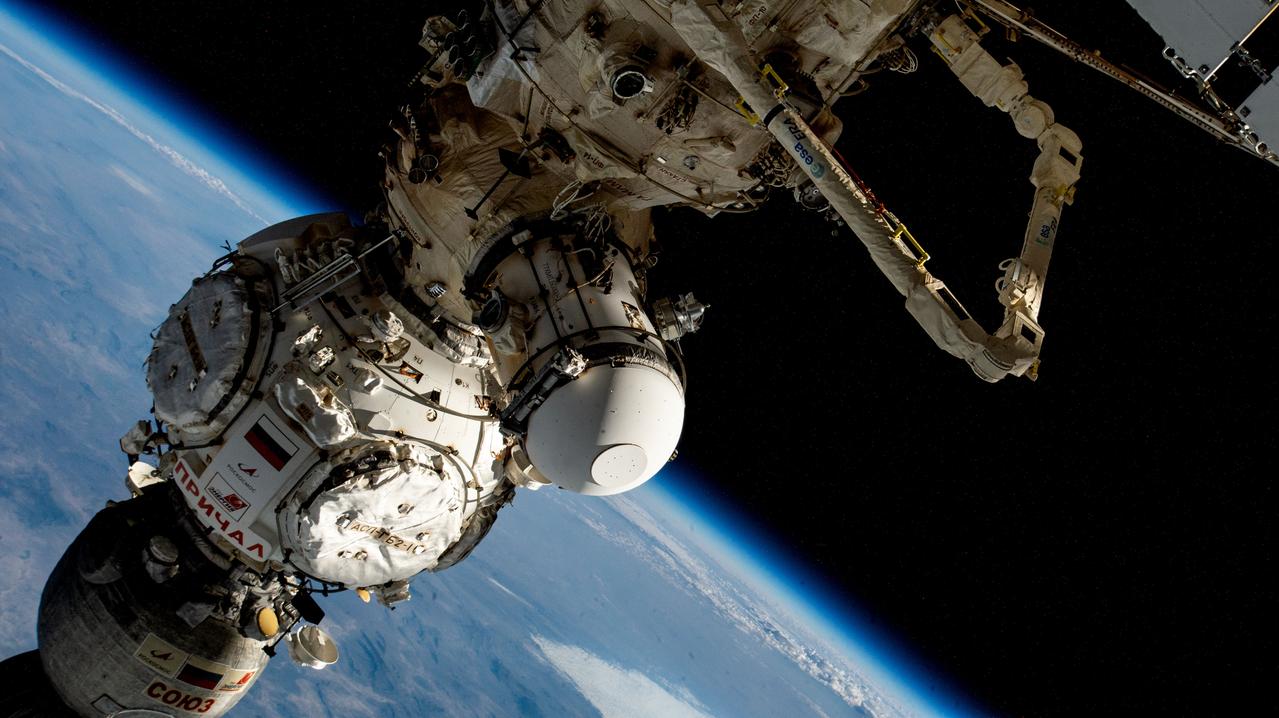
iss069e030000 (July 7, 2023) --- From top to bottom, the Soyuz MS-23 crew ship is docked to the Prichal docking module, which is attached to the Nauka multipurpose laboratory module. Other elements pictured, include the European robotic arm extending out from Nauka and an experiment airlock attached to a port on Nauka.
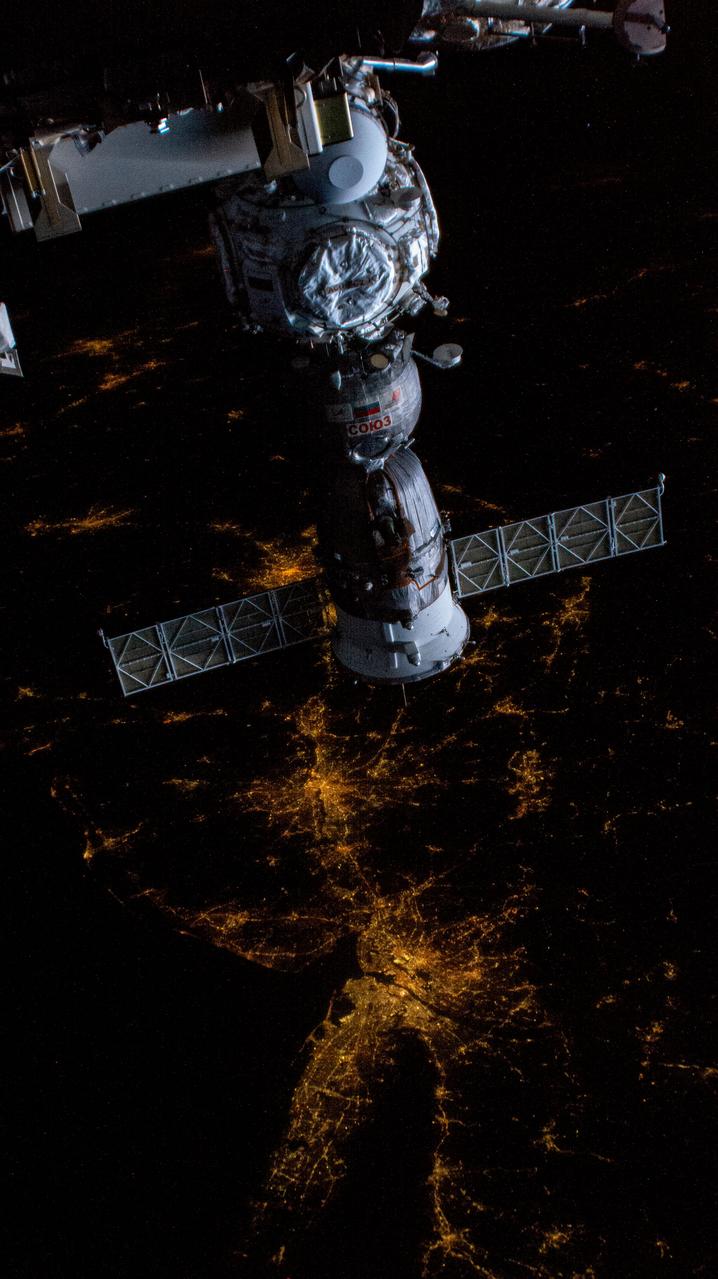
iss069e010181 (May 12, 2023) --- The Soyuz MS-23 crew ship is pictured docked to the Prichal docking module as the International Space Station orbited 261 miles above the northeast coast of the United States. The city lights of New York City and the surrounding metropolitan area are easily visible from the orbital outpost.
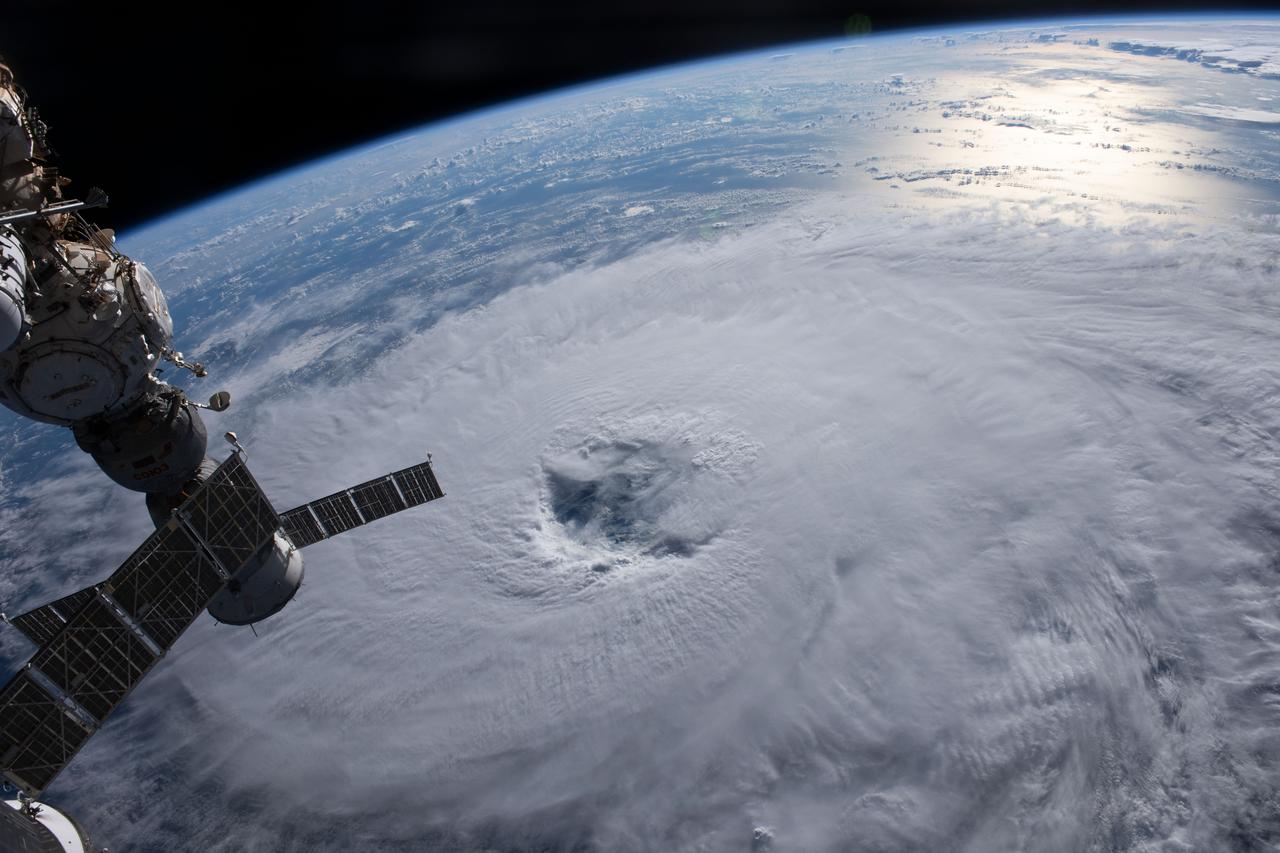
iss069e090103 (Sept. 19, 2023) --- Category 1 Hurricane Nigel is pictured on a northeasterly track in the Atlantic Ocean as the International Space Station orbited 259 miles above. At left, is the Soyuz MS-23 crew ship docked to the Prichal docking module.
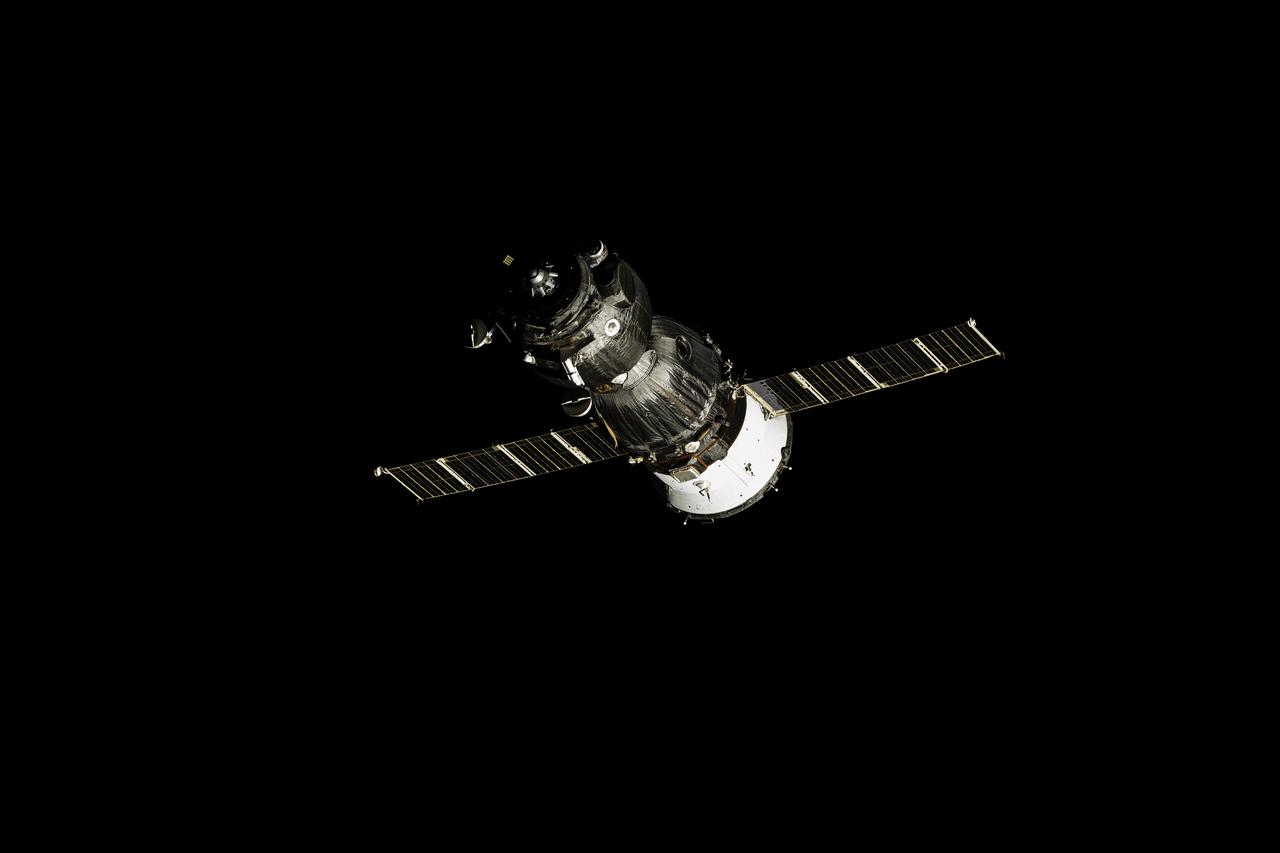
iss072e000057 (Sept. 23, 2024) --- The Soyuz MS-25 spacecraft, with NASA astronaut Tracy C. Dyson and Roscosmos cosmonauts Nikolai Chub and Oleg Kononenko aboard, is pictured departing the International Space Station after undocking from the Prichal module.
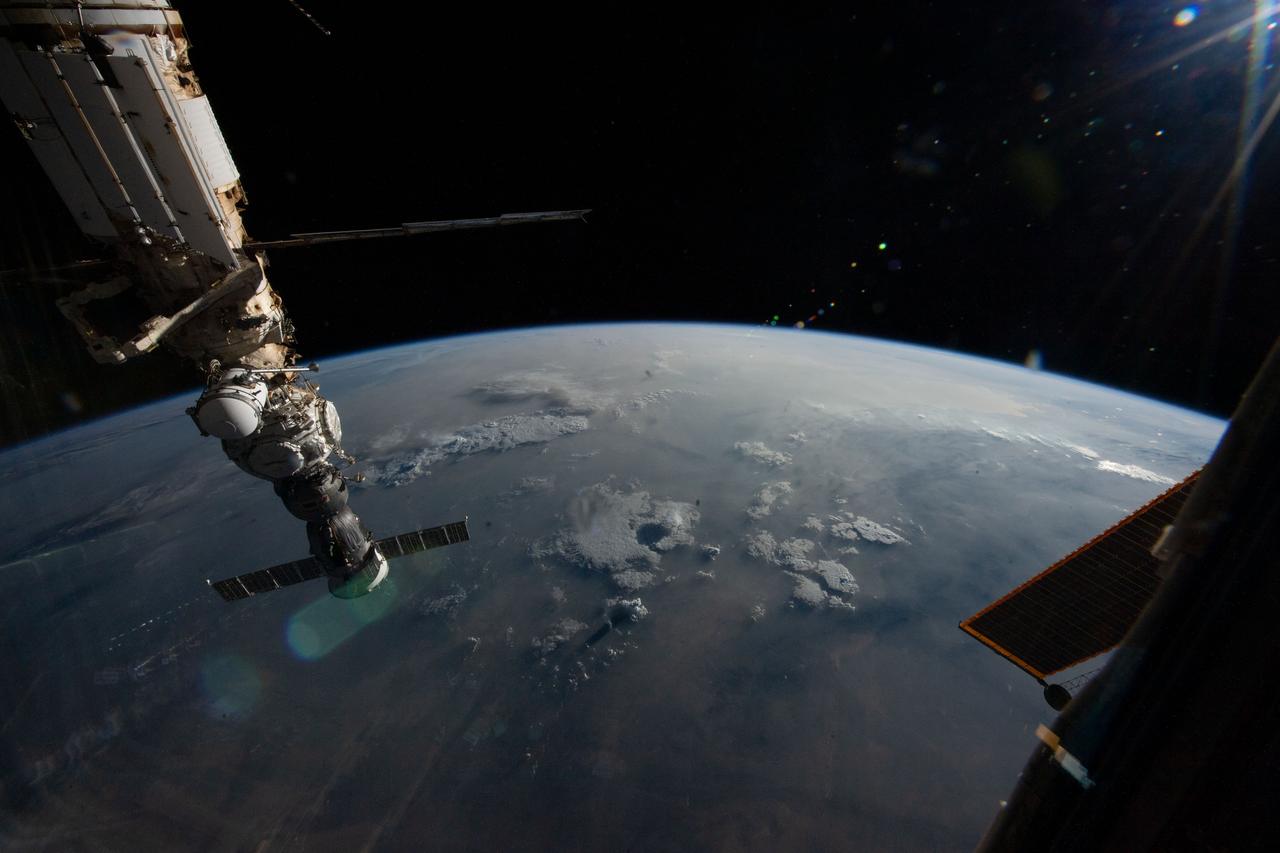
iss069e031703 (July 16, 2023) --- At left, the Soyuz MS-23 crew ship is docked to the Prichal docking module which is itself attached to the Nauka science module. The International Space Station was orbiting 260 miles above southern Iran at the time of this photograph.

A police helicopter flies over the Soyuz launch pad as the Soyuz rocket is rolled out by train, Monday, Sept. 23, 2019 at the Baikonur Cosmodrome in Kazakhstan. Expedition 61 crewmembers Jessica Meir of NASA and Oleg Skripochka of Roscosmos, and spaceflight participant Hazzaa Ali Almansoori of the United Arab Emirates will launch September 25th on the Soyuz MS-15 spacecraft from the Baikonur Cosmodrome to the International Space Station. Photo Credit: (NASA/Bill Ingalls)
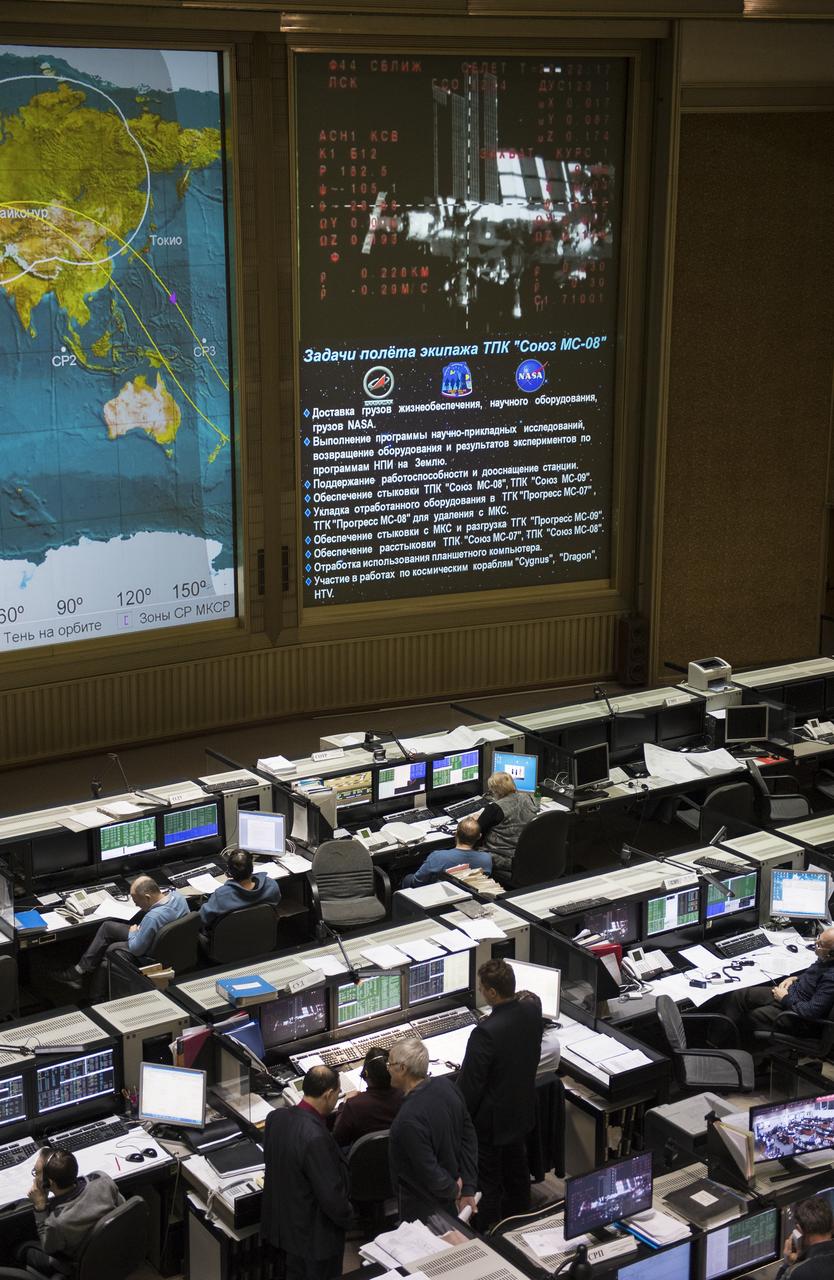
A live view of the International Space Station, as seen by cameras onboard the Soyuz MS-08 spacecraft with Expedition 55-56 crewmembers Oleg Artemyev of Roscosmos and Ricky Arnold and Drew Feustel of NASA, is seen on screens at the Moscow Mission Control Center as the spacecraft approaches for docking, Friday, March 23, 2018 in Korolev, Russia. The Soyuz MS-08 spacecraft carrying Artemyev, Feustel, and Arnold docked at 3:40 p.m. Eastern time (10:40 p.m. Moscow time) and joined Expedition 55 Commander Anton Shkaplerov of Roscosmos, Scott Tingle of NASA, and Norishige Kanai of the Japan Aerospace Exploration Agency (JAXA). Photo Credit: (NASA/Joel Kowsky)
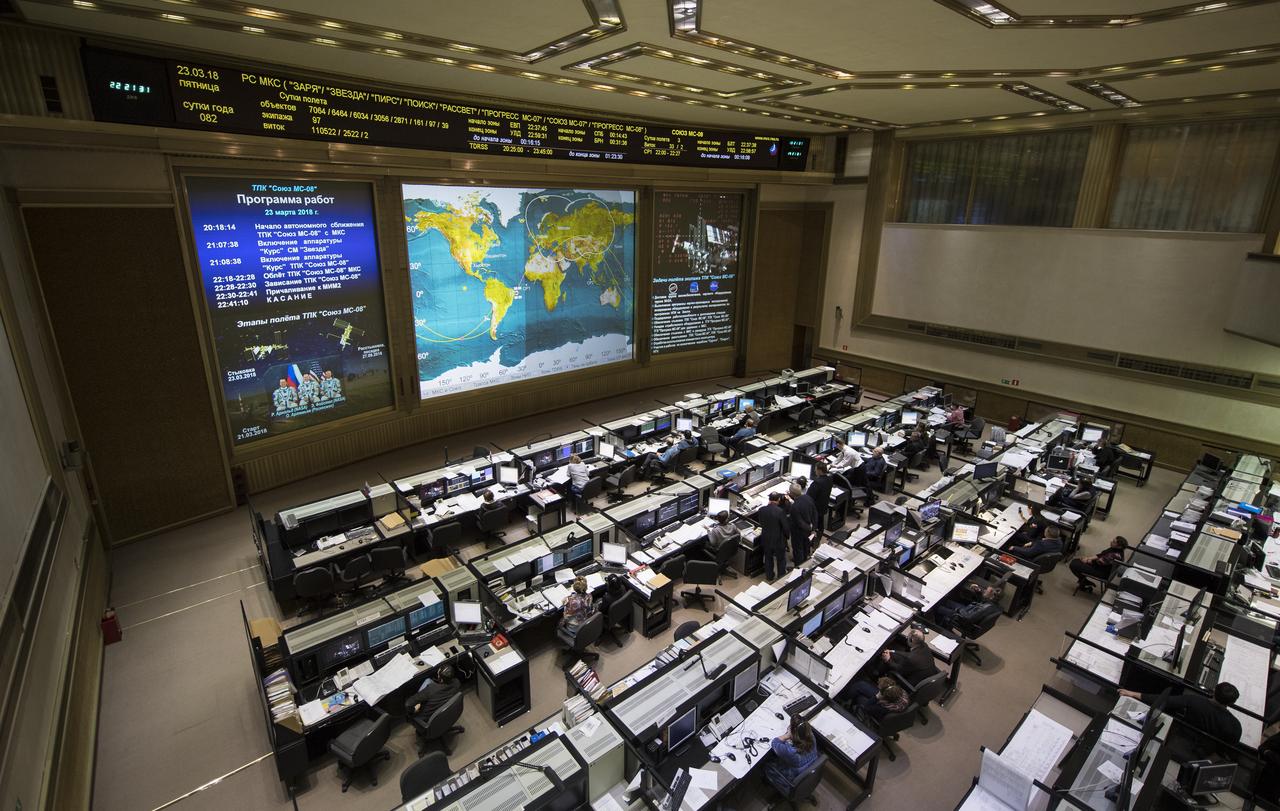
A live view of the International Space Station, as seen by cameras onboard the Soyuz MS-08 spacecraft with Expedition 55-56 crewmembers Oleg Artemyev of Roscosmos and Ricky Arnold and Drew Feustel of NASA, is seen on screens at the Moscow Mission Control Center as the spacecraft approaches for docking, Friday, March 23, 2018 in Korolev, Russia. The Soyuz MS-08 spacecraft carrying Artemyev, Feustel, and Arnold docked at 3:40 p.m. Eastern time (10:40 p.m. Moscow time) and joined Expedition 55 Commander Anton Shkaplerov of Roscosmos, Scott Tingle of NASA, and Norishige Kanai of the Japan Aerospace Exploration Agency (JAXA). Photo Credit: (NASA/Joel Kowsky)
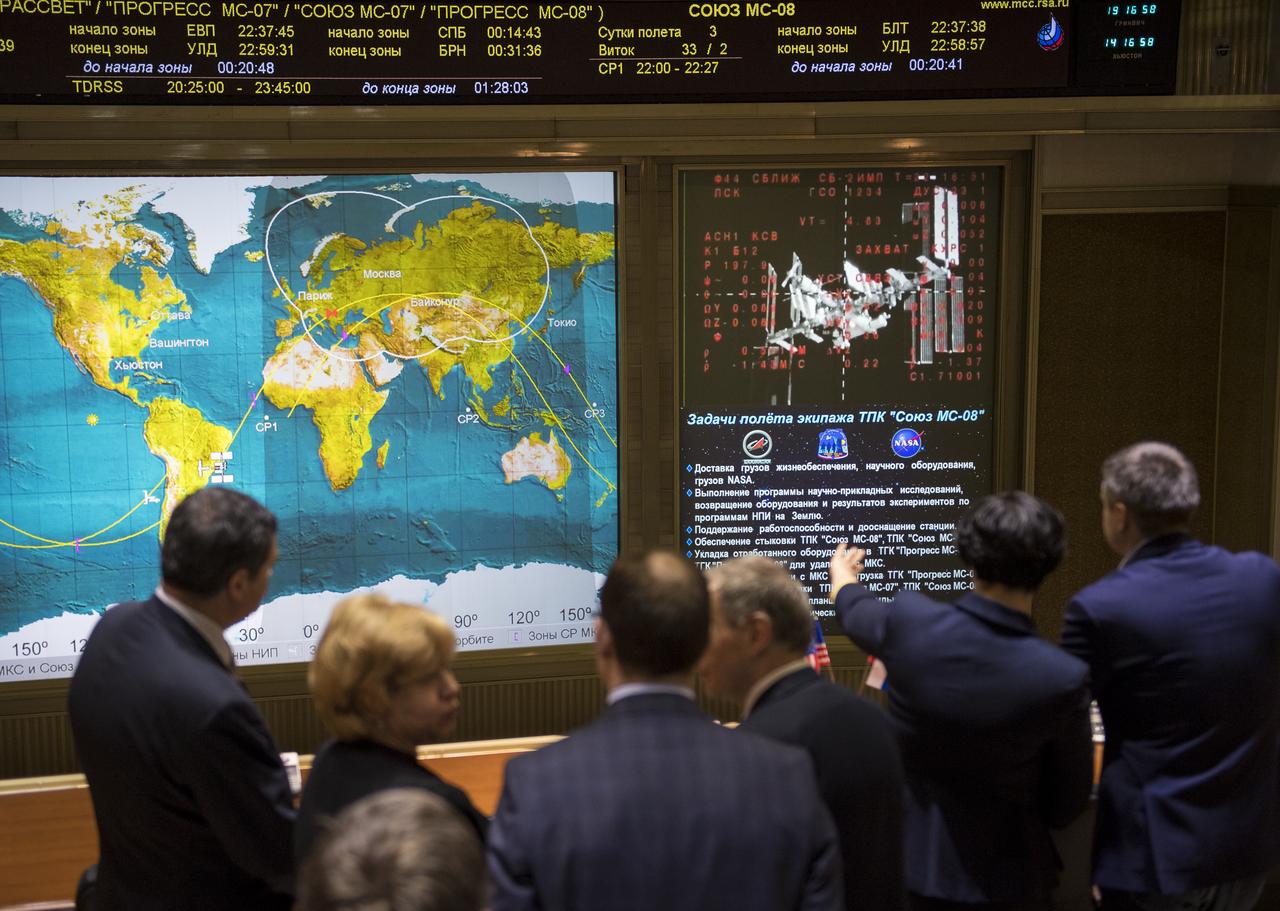
Guests watch a live view of the International Space Station, as seen by cameras onboard the Soyuz MS-08 spacecraft with Expedition 55-56 crewmembers Oleg Artemyev of Roscosmos and Ricky Arnold and Drew Feustel of NASA, on screens at the Moscow Mission Control Center as the spacecraft approaches for docking, Friday, March 23, 2018 in Korolev, Russia. The Soyuz MS-08 spacecraft carrying Artemyev, Feustel, and Arnold docked at 3:40 p.m. Eastern time (10:40 p.m. Moscow time) and joined Expedition 55 Commander Anton Shkaplerov of Roscosmos, Scott Tingle of NASA, and Norishige Kanai of the Japan Aerospace Exploration Agency (JAXA). Photo Credit: (NASA/Joel Kowsky)
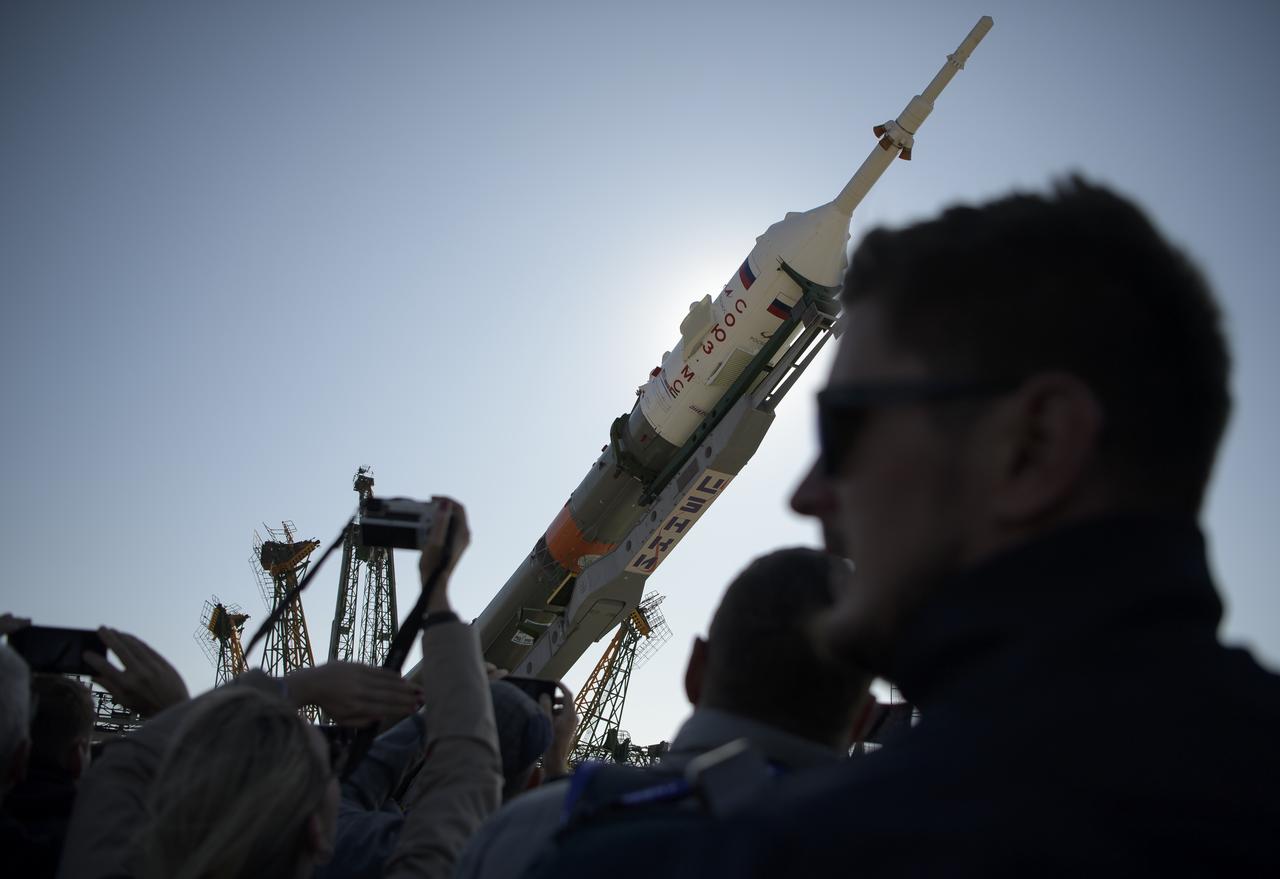
The Soyuz rocket is raised into vertical position on the launch pad, Monday, Sept. 23, 2019 at the Baikonur Cosmodrome in Kazakhstan. Expedition 61 crewmembers Jessica Meir of NASA, Oleg Skripochka of Roscosmos, and spaceflight participant Hazzaa Ali Almansoori of the United Arab Emirates will launch September 25th on the Soyuz MS-15 spacecraft from the Baikonur Cosmodrome to the International Space Station. Photo Credit: (NASA/Bill Ingalls)

The Soyuz rocket is raised into vertical position on the launch pad, Monday, Sept. 23, 2019 at the Baikonur Cosmodrome in Kazakhstan. Expedition 61 crewmembers Jessica Meir of NASA, Oleg Skripochka of Roscosmos, and spaceflight participant Hazzaa Ali Almansoori of the United Arab Emirates will launch September 25th on the Soyuz MS-15 spacecraft from the Baikonur Cosmodrome to the International Space Station. Photo Credit: (NASA/Victor Zelentsov)
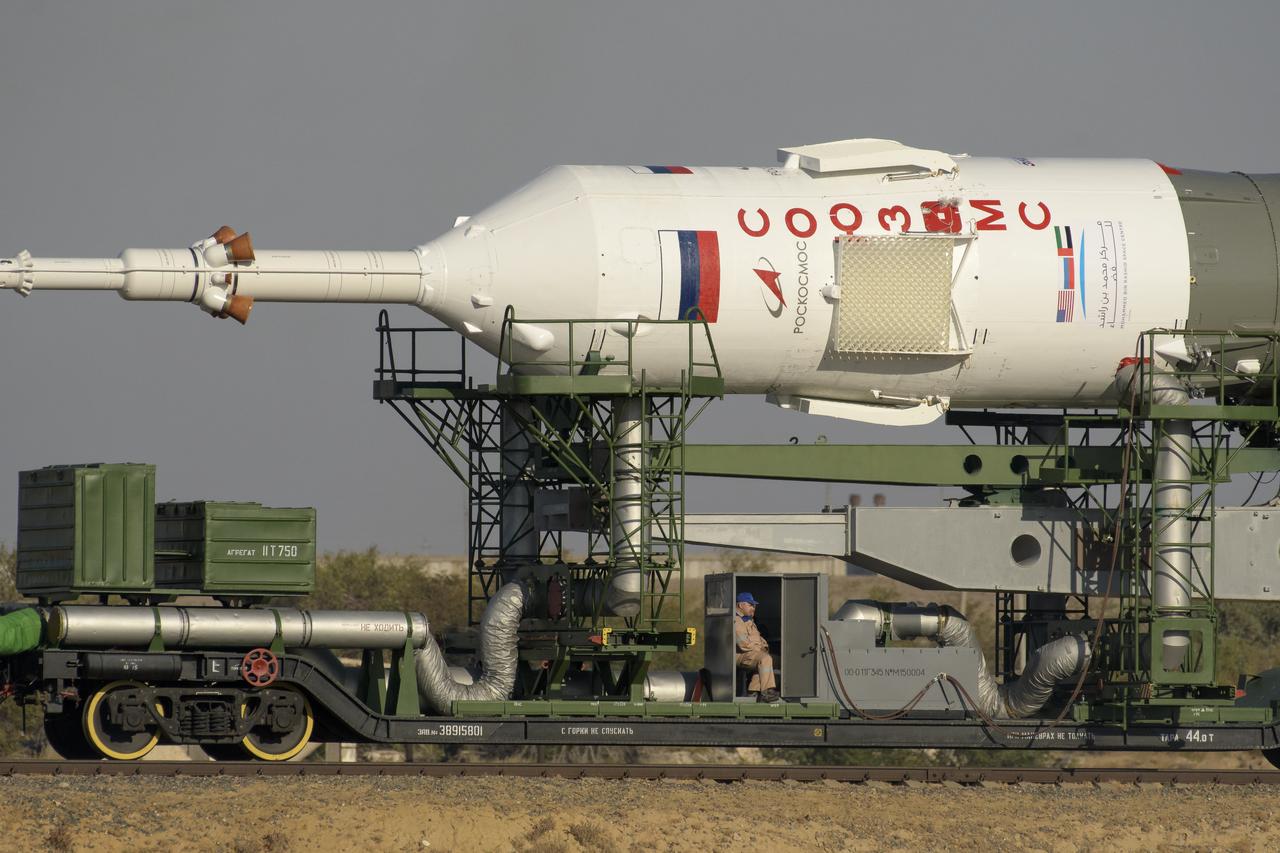
The Soyuz rocket is rolled out by train to the launch pad, Monday, Sept. 23, 2019 at the Baikonur Cosmodrome in Kazakhstan. Expedition 61 crewmembers Jessica Meir of NASA and Oleg Skripochka of Roscosmos, and spaceflight participant Hazzaa Ali Almansoori of the United Arab Emirates will launch September 25th on the Soyuz MS-15 spacecraft from the Baikonur Cosmodrome to the International Space Station. Photo Credit: (NASA/Bill Ingalls)
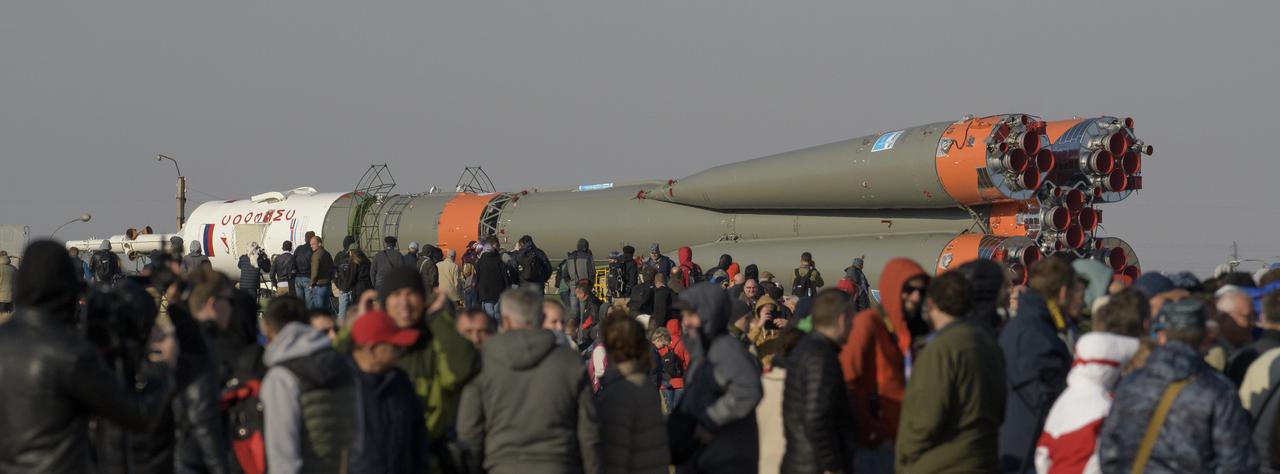
The Soyuz rocket is rolled out by train to the launch pad, Monday, Sept. 23, 2019 at the Baikonur Cosmodrome in Kazakhstan. Expedition 61 crewmembers Jessica Meir of NASA and Oleg Skripochka of Roscosmos, and spaceflight participant Hazzaa Ali Almansoori of the United Arab Emirates will launch September 25th on the Soyuz MS-15 spacecraft from the Baikonur Cosmodrome to the International Space Station. Photo Credit: (NASA/Bill Ingalls)
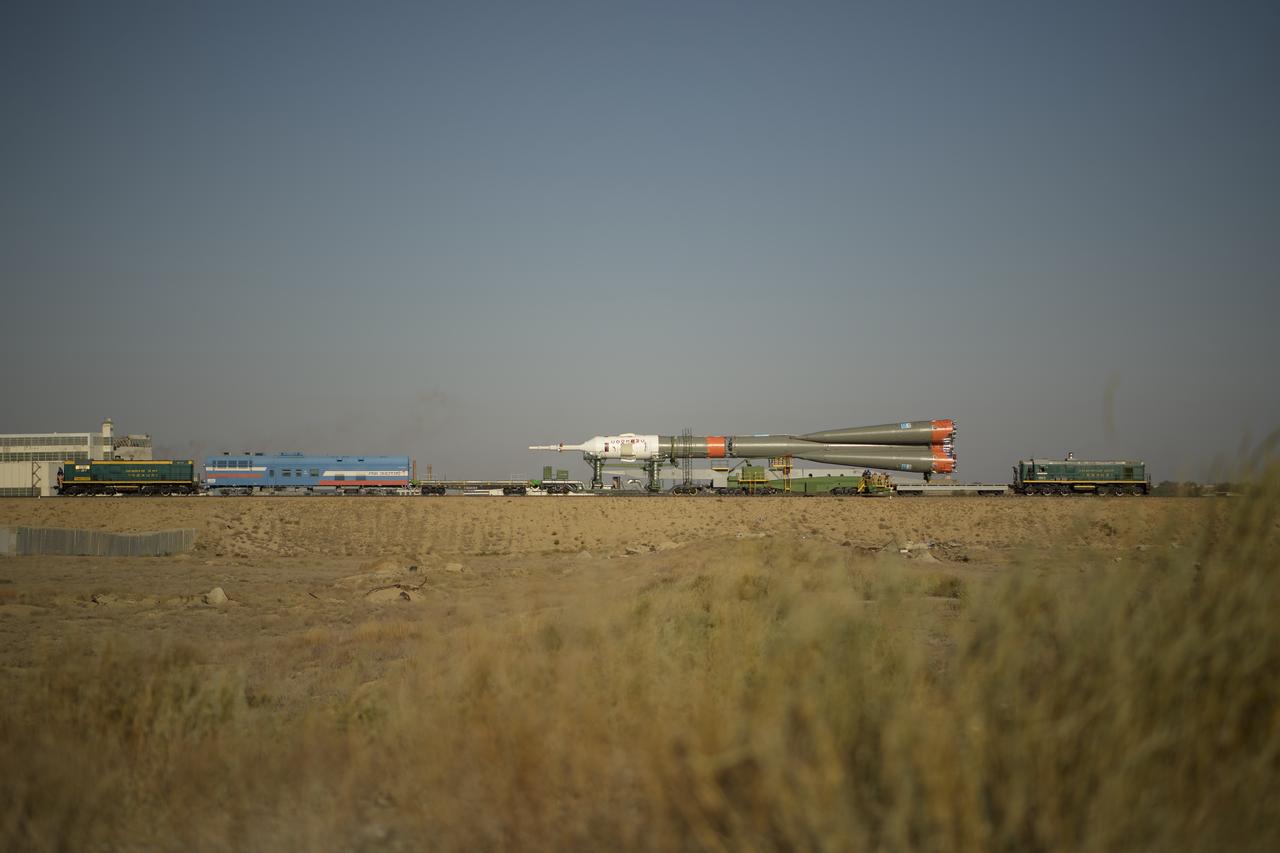
The Soyuz rocket is rolled out by train to the launch pad, Monday, Sept. 23, 2019 at the Baikonur Cosmodrome in Kazakhstan. Expedition 61 crewmembers Jessica Meir of NASA and Oleg Skripochka of Roscosmos, and spaceflight participant Hazzaa Ali Almansoori of the United Arab Emirates will launch September 25th on the Soyuz MS-15 spacecraft from the Baikonur Cosmodrome to the International Space Station. Photo Credit: (NASA/Bill Ingalls)
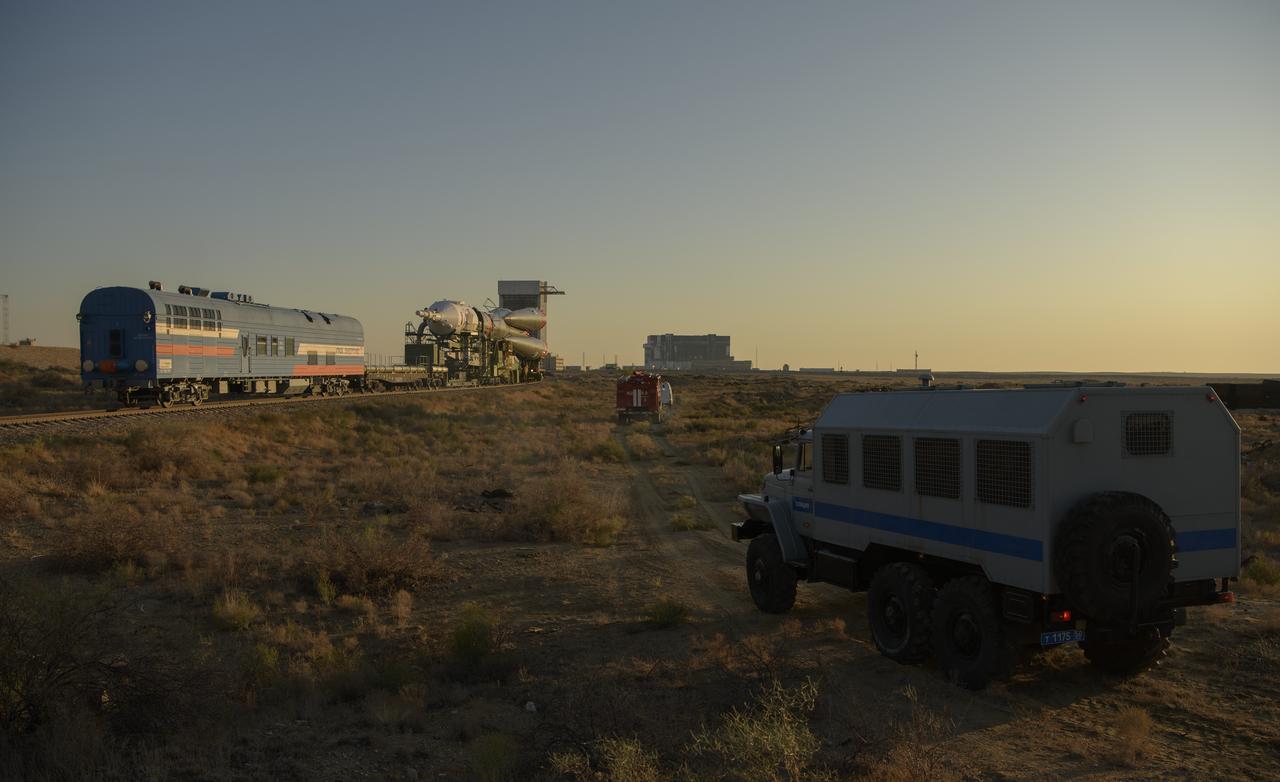
The Soyuz rocket is rolled out by train to the launch pad, Monday, Sept. 23, 2019 at the Baikonur Cosmodrome in Kazakhstan. Expedition 61 crewmembers Jessica Meir of NASA and Oleg Skripochka of Roscosmos, and spaceflight participant Hazzaa Ali Almansoori of the United Arab Emirates will launch September 25th on the Soyuz MS-15 spacecraft from the Baikonur Cosmodrome to the International Space Station. Photo Credit: (NASA/Bill Ingalls)

The Soyuz rocket is rolled out by train to the launch pad, Monday, Sept. 23, 2019 at the Baikonur Cosmodrome in Kazakhstan. Expedition 61 crewmembers Jessica Meir of NASA and Oleg Skripochka of Roscosmos, and spaceflight participant Hazzaa Ali Almansoori of the United Arab Emirates will launch September 25th on the Soyuz MS-15 spacecraft from the Baikonur Cosmodrome to the International Space Station. Photo Credit: (NASA/Bill Ingalls)

The Soyuz rocket is rolled out by train to the launch pad, Monday, Sept. 23, 2019 at the Baikonur Cosmodrome in Kazakhstan. Expedition 61 crewmembers Jessica Meir of NASA and Oleg Skripochka of Roscosmos, and spaceflight participant Hazzaa Ali Almansoori of the United Arab Emirates will launch September 25th on the Soyuz MS-15 spacecraft from the Baikonur Cosmodrome to the International Space Station. Photo Credit: (NASA/Bill Ingalls)
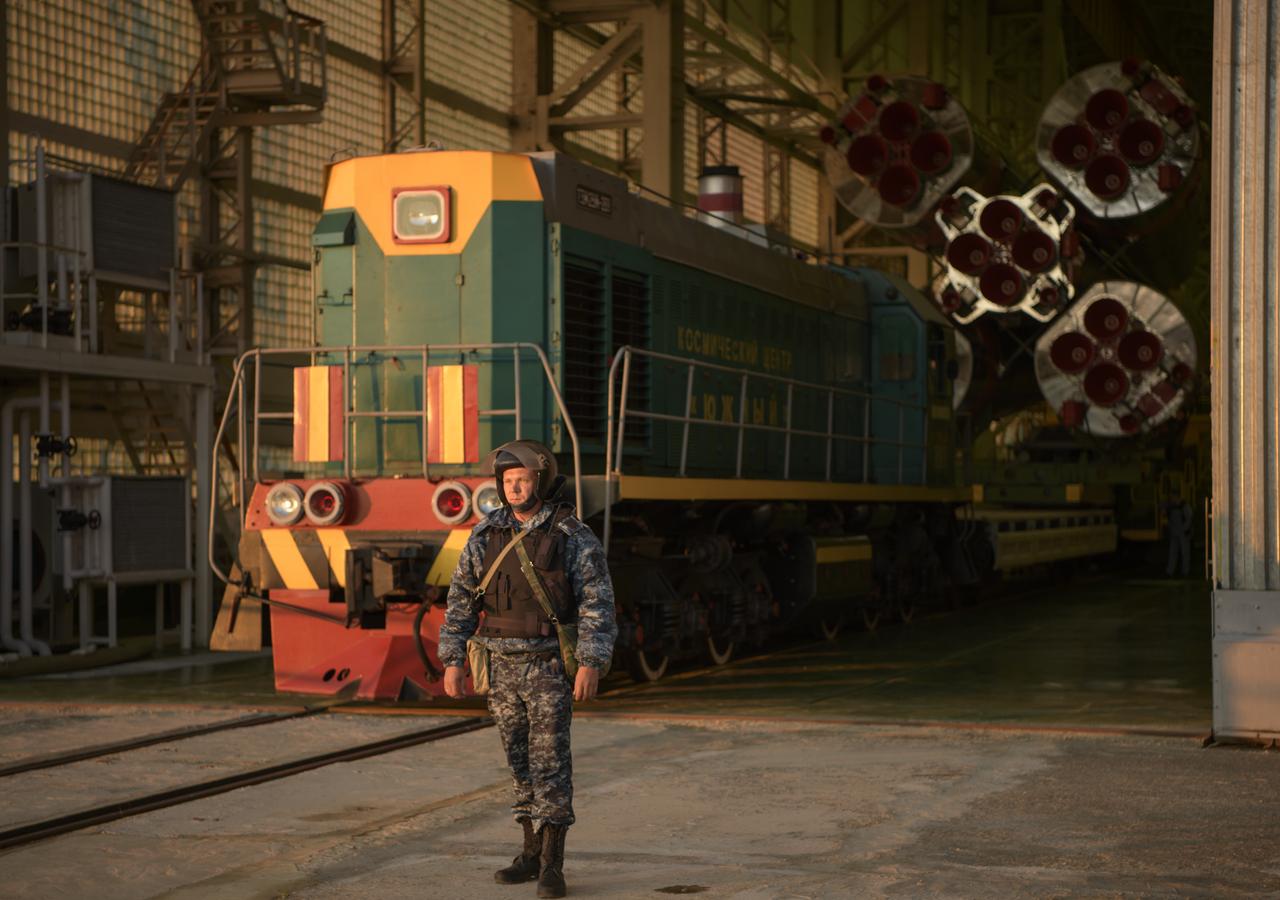
The Soyuz rocket is rolled out by train to the launch pad, Monday, Sept. 23, 2019 at the Baikonur Cosmodrome in Kazakhstan. Expedition 61 crewmembers Jessica Meir of NASA and Oleg Skripochka of Roscosmos, and spaceflight participant Hazzaa Ali Almansoori of the United Arab Emirates will launch September 25th on the Soyuz MS-15 spacecraft from the Baikonur Cosmodrome to the International Space Station. Photo Credit: (NASA/Bill Ingalls)
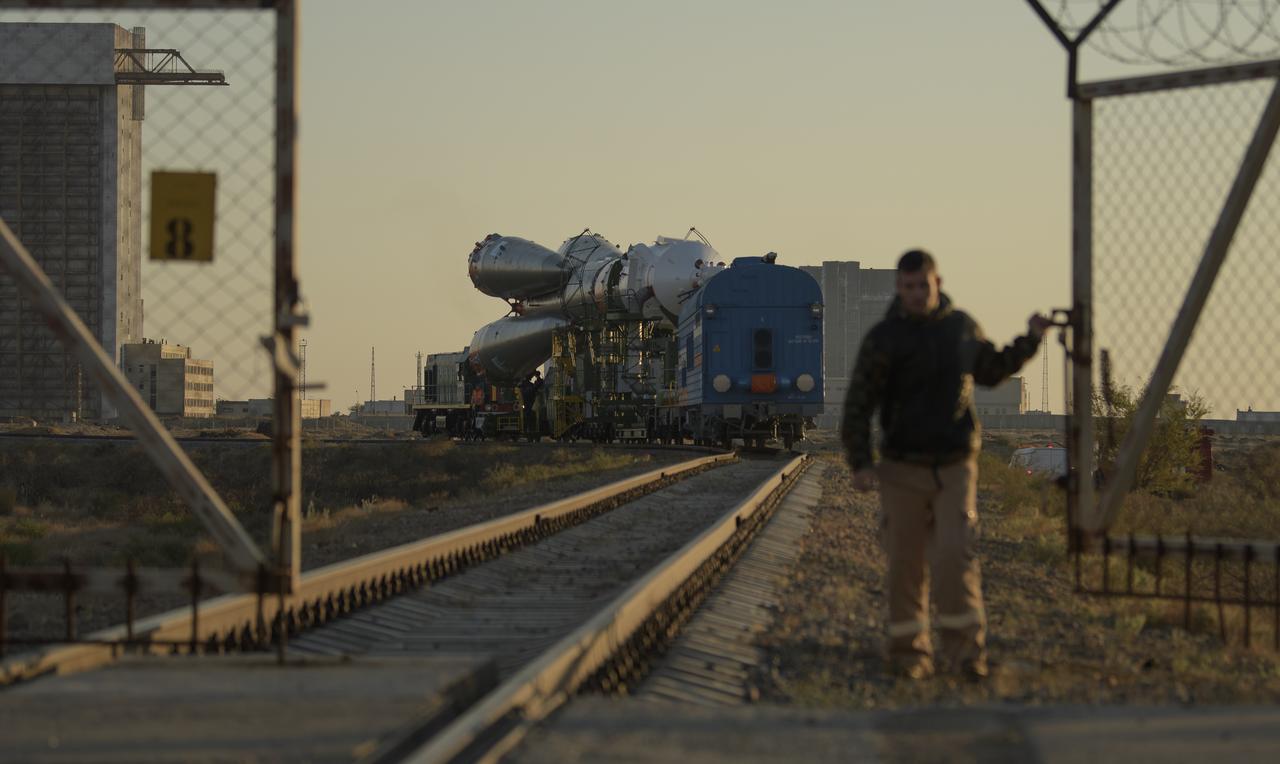
The Soyuz rocket is rolled out by train to the launch pad, Monday, Sept. 23, 2019 at the Baikonur Cosmodrome in Kazakhstan. Expedition 61 crewmembers Jessica Meir of NASA and Oleg Skripochka of Roscosmos, and spaceflight participant Hazzaa Ali Almansoori of the United Arab Emirates will launch September 25th on the Soyuz MS-15 spacecraft from the Baikonur Cosmodrome to the International Space Station. Photo Credit: (NASA/Bill Ingalls)

The Soyuz rocket is rolled out by train to the launch pad, Monday, Sept. 23, 2019 at the Baikonur Cosmodrome in Kazakhstan. Expedition 61 crewmembers Jessica Meir of NASA and Oleg Skripochka of Roscosmos, and spaceflight participant Hazzaa Ali Almansoori of the United Arab Emirates will launch September 25th on the Soyuz MS-15 spacecraft from the Baikonur Cosmodrome to the International Space Station. Photo Credit: (NASA/Bill Ingalls)
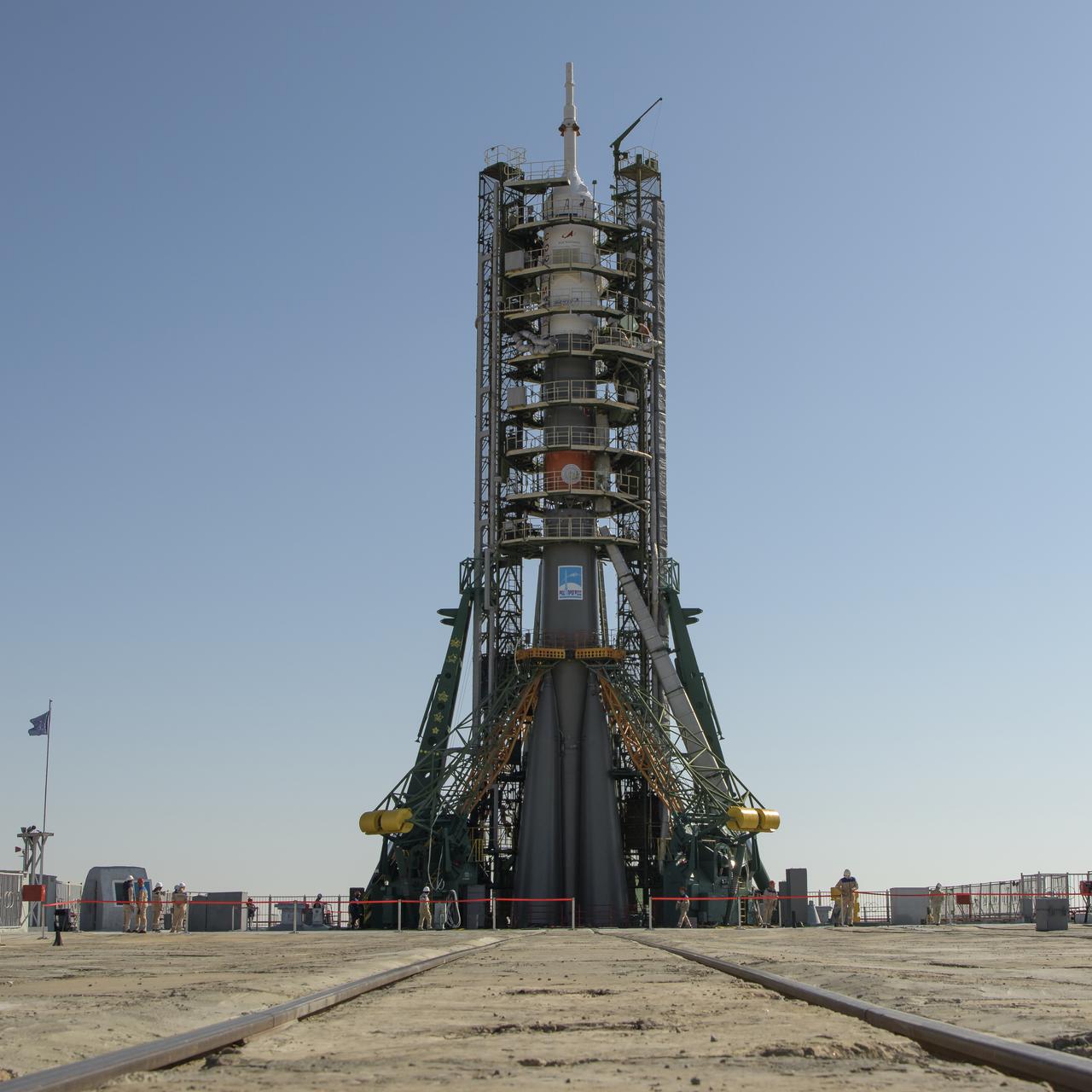
The gantry arms close around the Soyuz rocket after it was raised into vertical position on the launch pad, Monday, Sept. 23, 2019 at the Baikonur Cosmodrome in Kazakhstan. Expedition 61 crewmembers Jessica Meir of NASA, Oleg Skripochka of Roscosmos, and spaceflight participant Hazzaa Ali Almansoori of the United Arab Emirates will launch September 25th on the Soyuz MS-15 spacecraft from the Baikonur Cosmodrome to the International Space Station. Photo Credit: (NASA/Bill Ingalls)
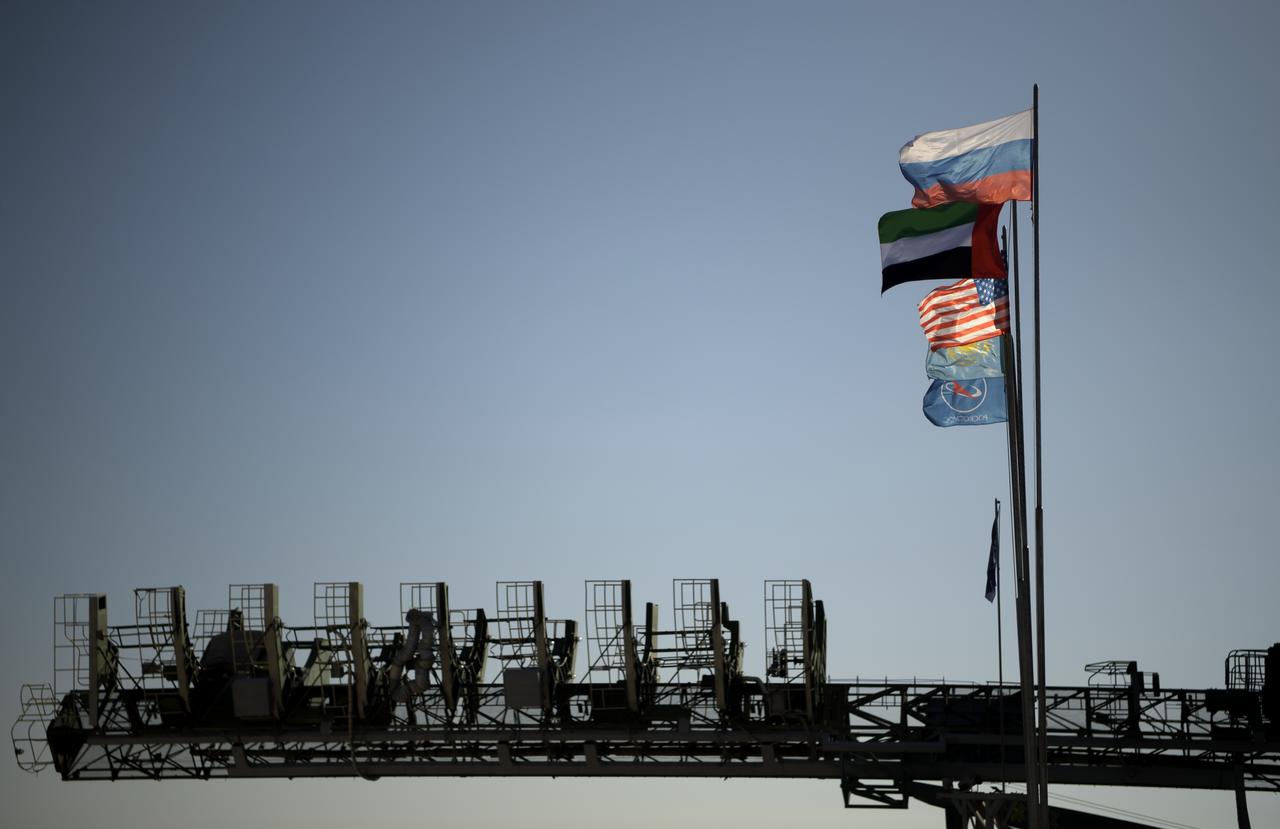
The flags of Russia, United Arab Emirates, United States of America, Kazakhstan and Roscosmos fly at the launch pad as the Soyuz rocket is raised into vertical position on the launch pad, Monday, Sept. 23, 2019 at the Baikonur Cosmodrome in Kazakhstan. Expedition 61 crewmembers Jessica Meir of NASA, Oleg Skripochka of Roscosmos, and spaceflight participant Hazzaa Ali Almansoori of the United Arab Emirates will launch September 25th on the Soyuz MS-15 spacecraft from the Baikonur Cosmodrome to the International Space Station. Photo Credit: (NASA/Bill Ingalls)

Guests watch as the Soyuz rocket is raised into vertical position on the launch pad, Monday, Sept. 23, 2019 at the Baikonur Cosmodrome in Kazakhstan. Expedition 61 crewmembers Jessica Meir of NASA, Oleg Skripochka of Roscosmos, and spaceflight participant Hazzaa Ali Almansoori of the United Arab Emirates will launch September 25th on the Soyuz MS-15 spacecraft from the Baikonur Cosmodrome to the International Space Station. Photo Credit: (NASA/Bill Ingalls)
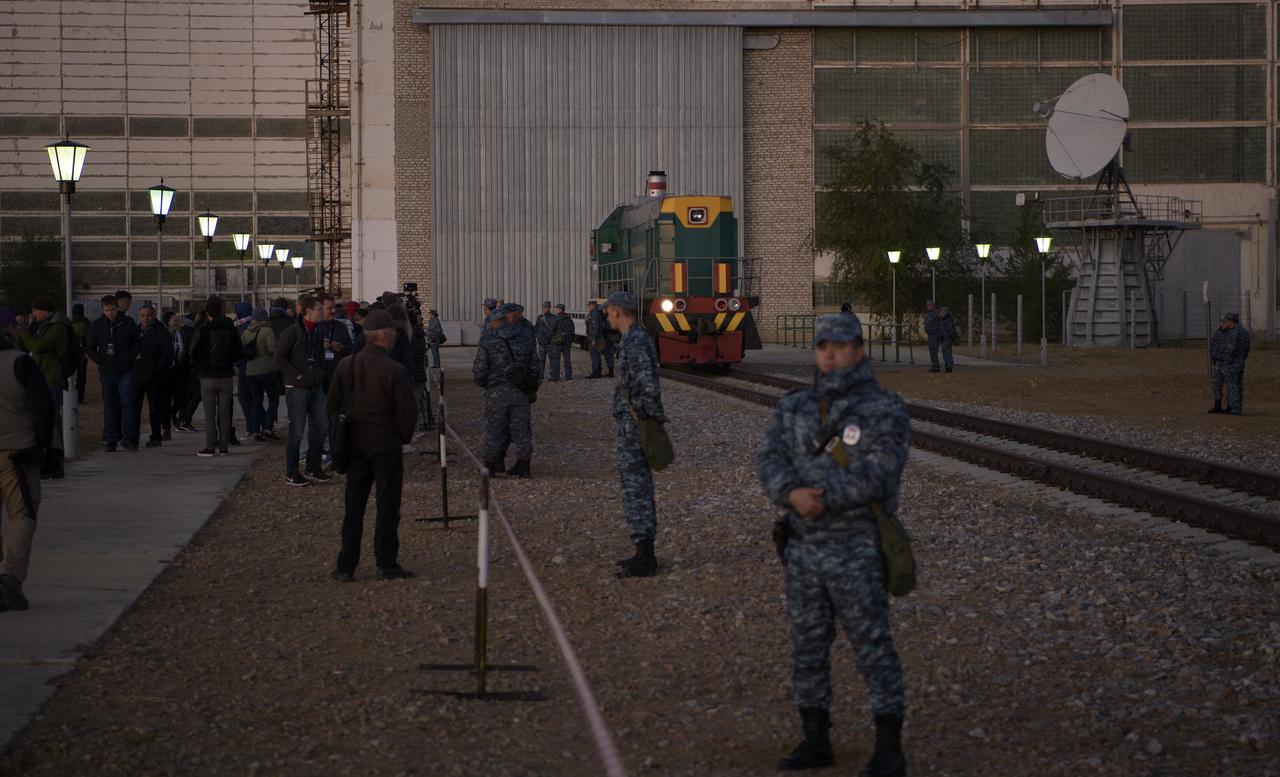
A train prepares to rollout the Soyuz rocket to the launch pad, Monday, Sept. 23, 2019 at the Baikonur Cosmodrome in Kazakhstan. Expedition 61 crewmembers Jessica Meir of NASA and Oleg Skripochka of Roscosmos, and spaceflight participant Hazzaa Ali Almansoori of the United Arab Emirates will launch September 25th on the Soyuz MS-15 spacecraft from the Baikonur Cosmodrome to the International Space Station. Photo Credit: (NASA/Bill Ingalls)
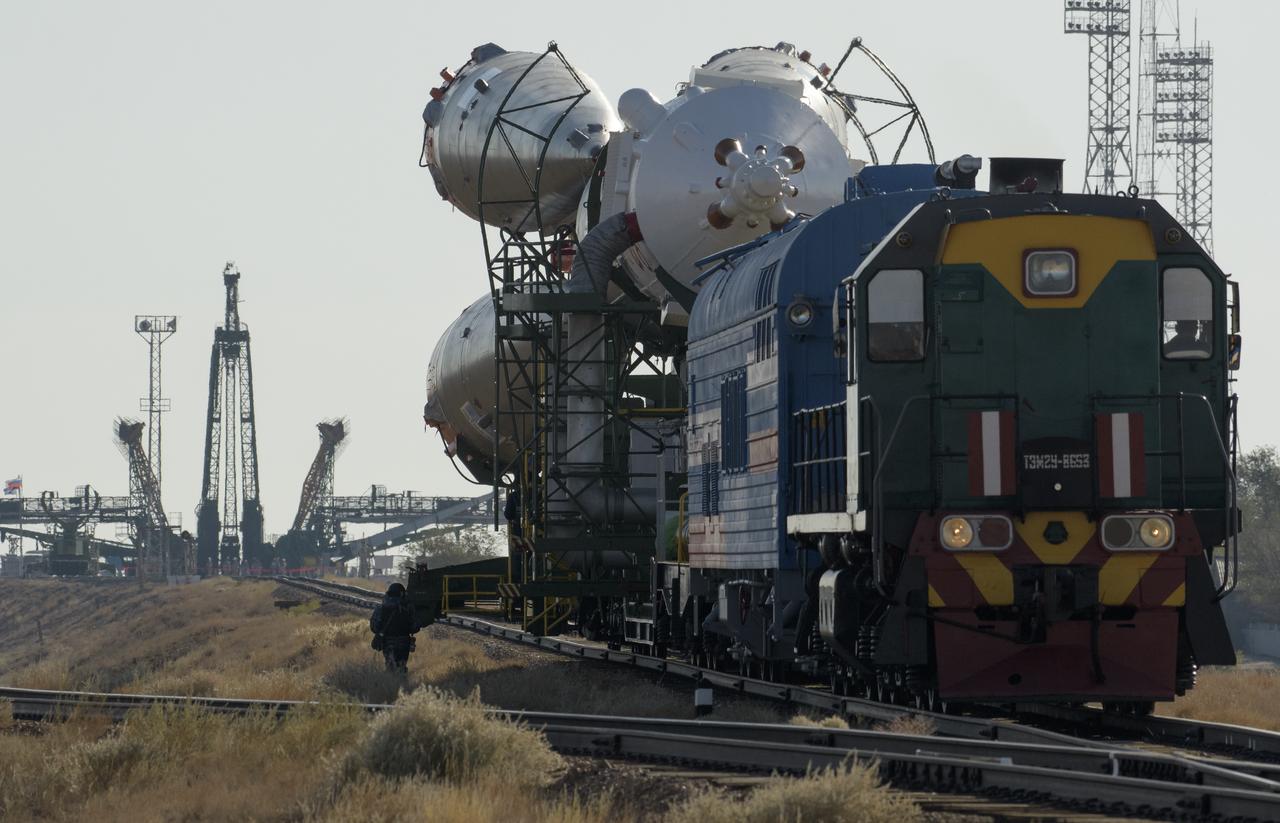
The Soyuz rocket is rolled out by train to the launch pad, Monday, Sept. 23, 2019 at the Baikonur Cosmodrome in Kazakhstan. Expedition 61 crewmembers Jessica Meir of NASA and Oleg Skripochka of Roscosmos, and spaceflight participant Hazzaa Ali Almansoori of the United Arab Emirates will launch September 25th on the Soyuz MS-15 spacecraft from the Baikonur Cosmodrome to the International Space Station. Photo Credit: (NASA/Bill Ingalls)
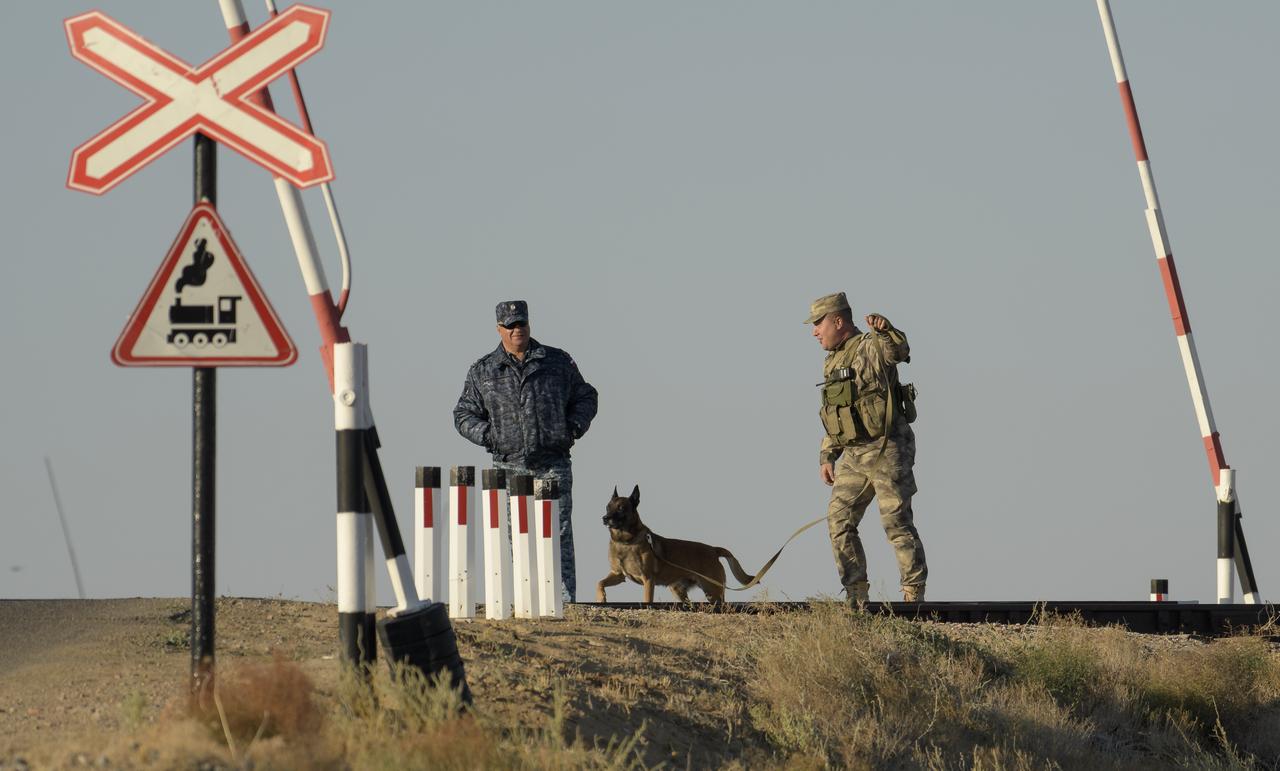
A K-9 advance team patrols the railroad tracks as the Soyuz rocket is rolled out by train to the launch pad, Monday, Sept. 23, 2019 at the Baikonur Cosmodrome in Kazakhstan. Expedition 61 crewmembers Jessica Meir of NASA and Oleg Skripochka of Roscosmos, and spaceflight participant Hazzaa Ali Almansoori of the United Arab Emirates will launch September 25th on the Soyuz MS-15 spacecraft from the Baikonur Cosmodrome to the International Space Station. Photo Credit: (NASA/Bill Ingalls)
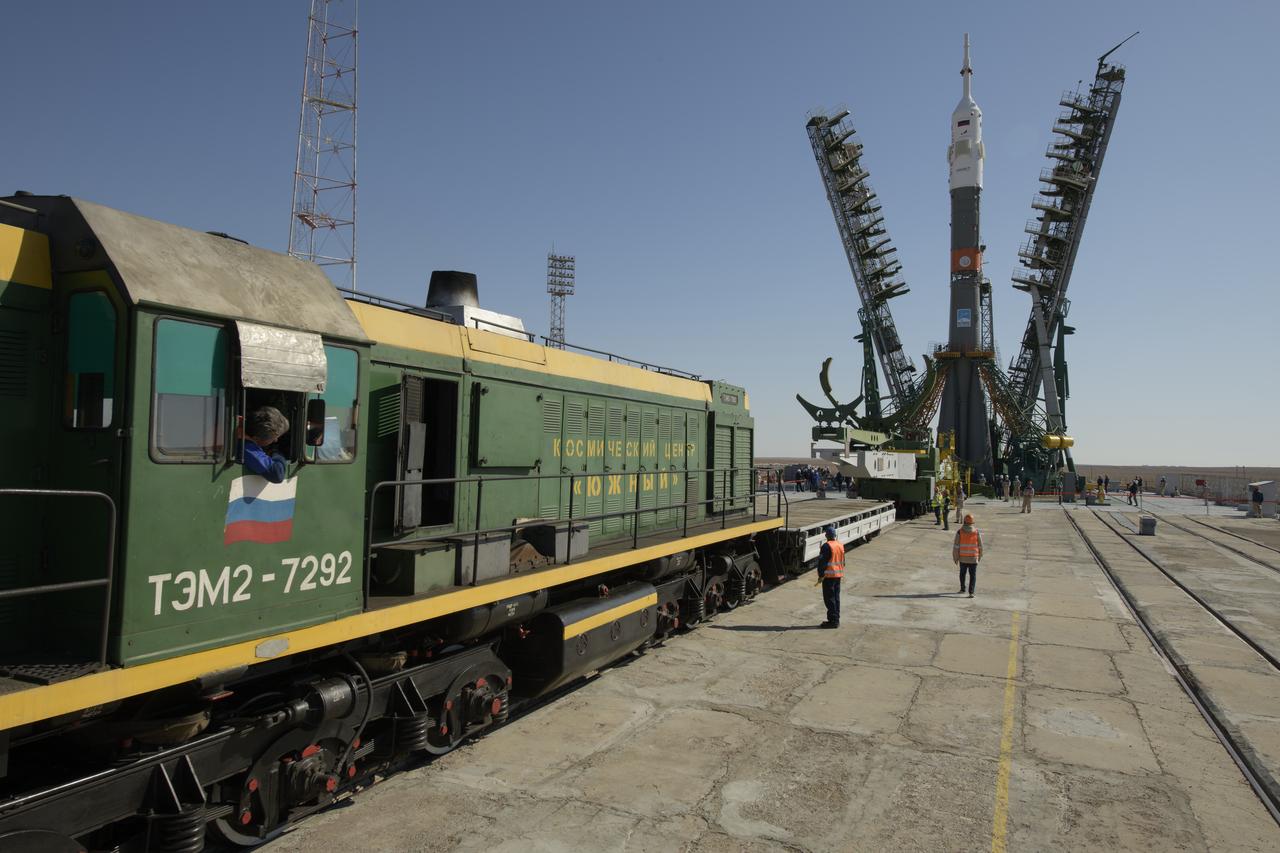
The gantry arms close around the Soyuz rocket after it was raised into vertical position on the launch pad, Monday, Sept. 23, 2019 at the Baikonur Cosmodrome in Kazakhstan. Expedition 61 crewmembers Jessica Meir of NASA, Oleg Skripochka of Roscosmos, and spaceflight participant Hazzaa Ali Almansoori of the United Arab Emirates will launch September 25th on the Soyuz MS-15 spacecraft from the Baikonur Cosmodrome to the International Space Station. Photo Credit: (NASA/Bill Ingalls)
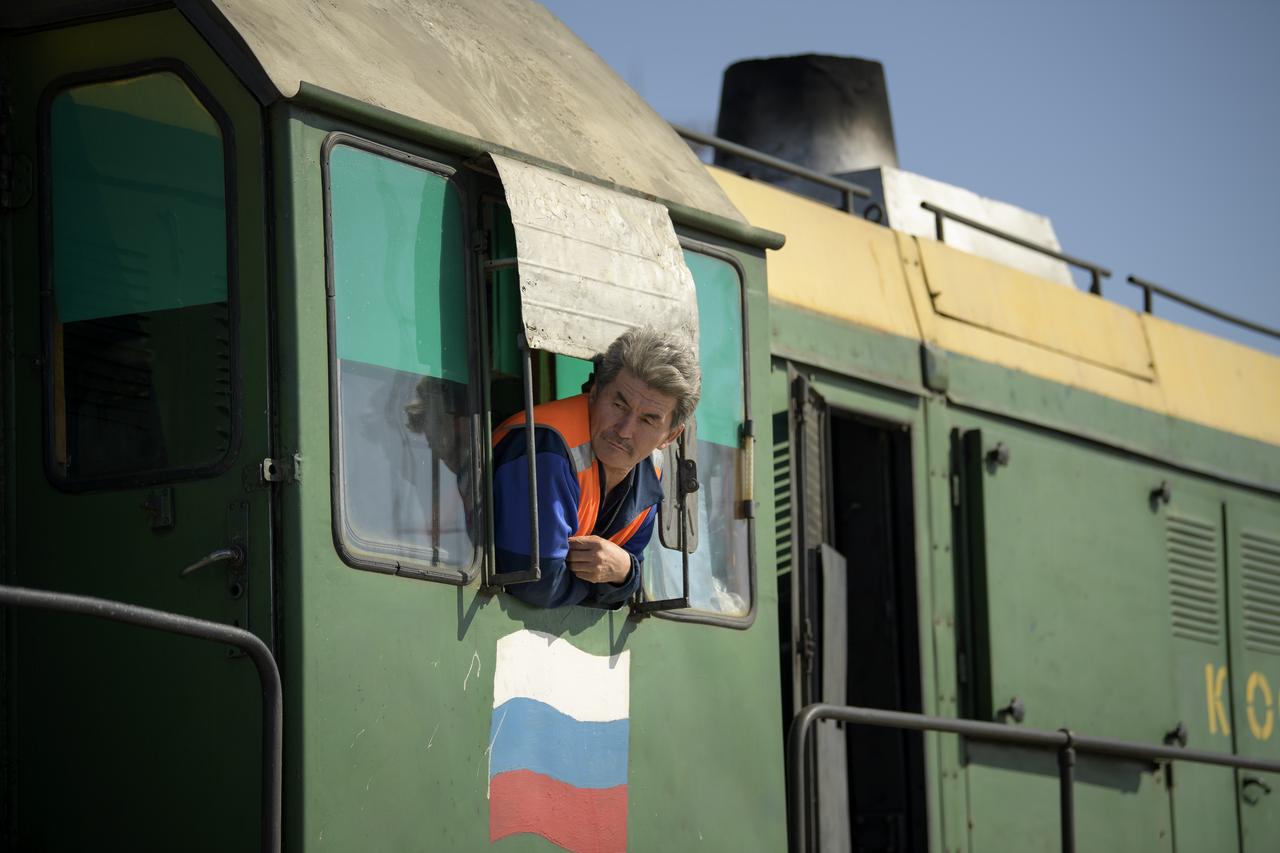
A train engineer waits as the Soyuz rocket is raised into vertical position on the launch pad, Monday, Sept. 23, 2019 at the Baikonur Cosmodrome in Kazakhstan. Expedition 61 crewmembers Jessica Meir of NASA, Oleg Skripochka of Roscosmos, and spaceflight participant Hazzaa Ali Almansoori of the United Arab Emirates will launch September 25th on the Soyuz MS-15 spacecraft from the Baikonur Cosmodrome to the International Space Station. Photo Credit: (NASA/Bill Ingalls)
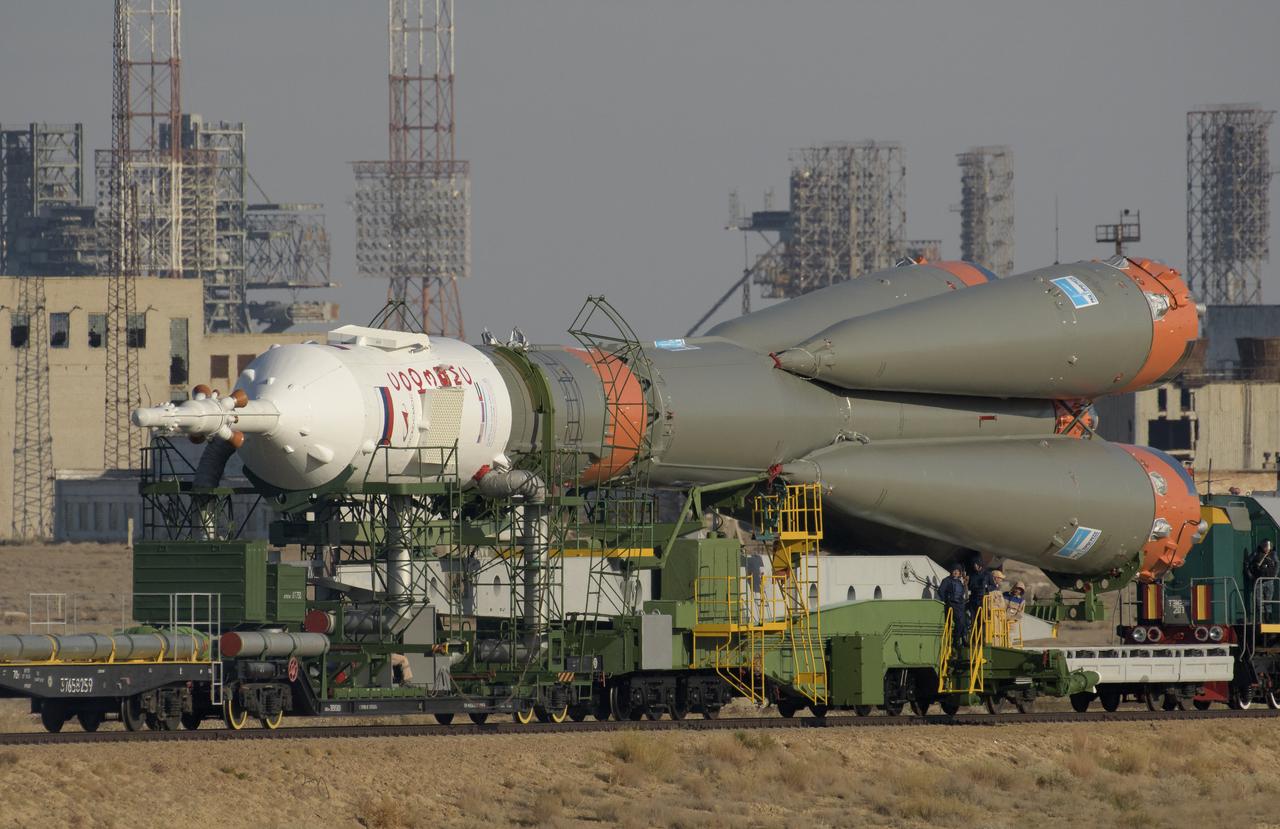
The Soyuz rocket is rolled out by train to the launch pad, Monday, Sept. 23, 2019 at the Baikonur Cosmodrome in Kazakhstan. Expedition 61 crewmembers Jessica Meir of NASA and Oleg Skripochka of Roscosmos, and spaceflight participant Hazzaa Ali Almansoori of the United Arab Emirates will launch September 25th on the Soyuz MS-15 spacecraft from the Baikonur Cosmodrome to the International Space Station. Photo Credit: (NASA/Bill Ingalls)
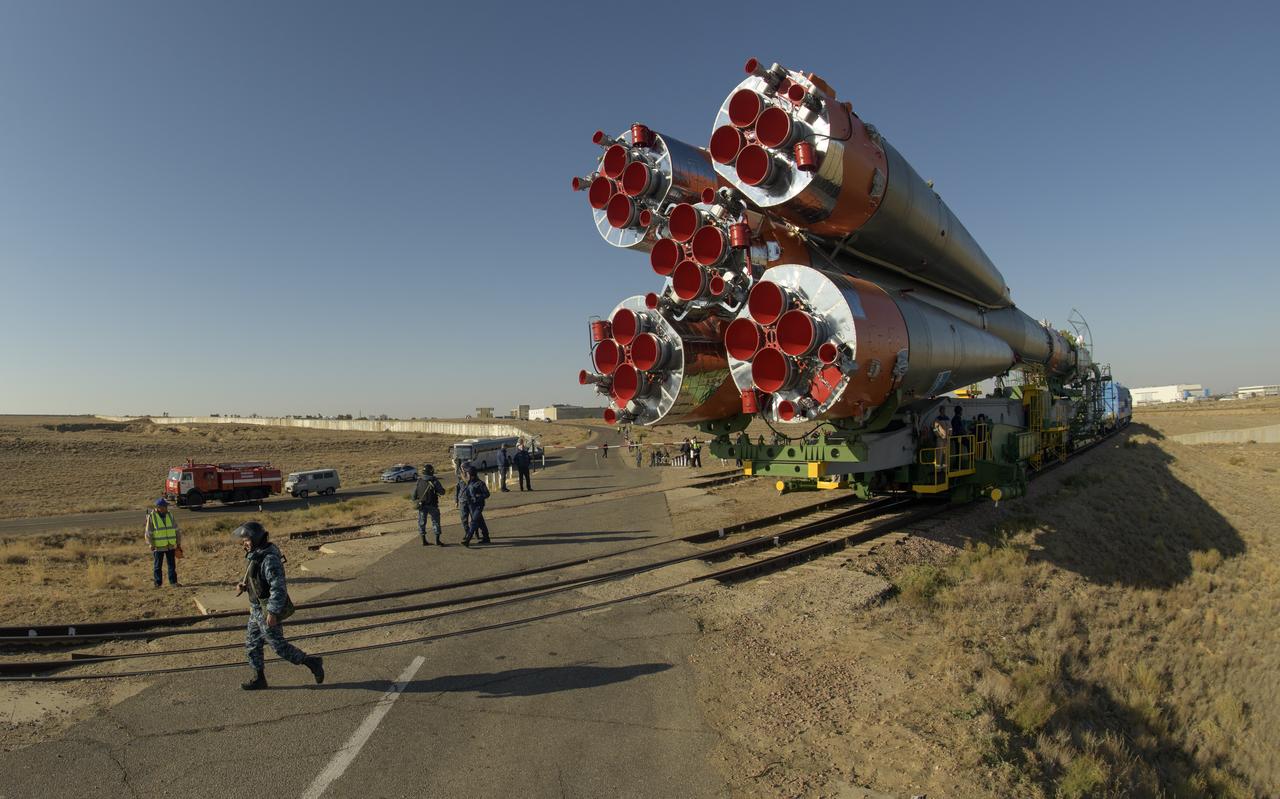
The Soyuz rocket is rolled out by train to the launch pad, Monday, Sept. 23, 2019 at the Baikonur Cosmodrome in Kazakhstan. Expedition 61 crewmembers Jessica Meir of NASA and Oleg Skripochka of Roscosmos, and spaceflight participant Hazzaa Ali Almansoori of the United Arab Emirates will launch September 25th on the Soyuz MS-15 spacecraft from the Baikonur Cosmodrome to the International Space Station. Photo Credit: (NASA/Bill Ingalls)
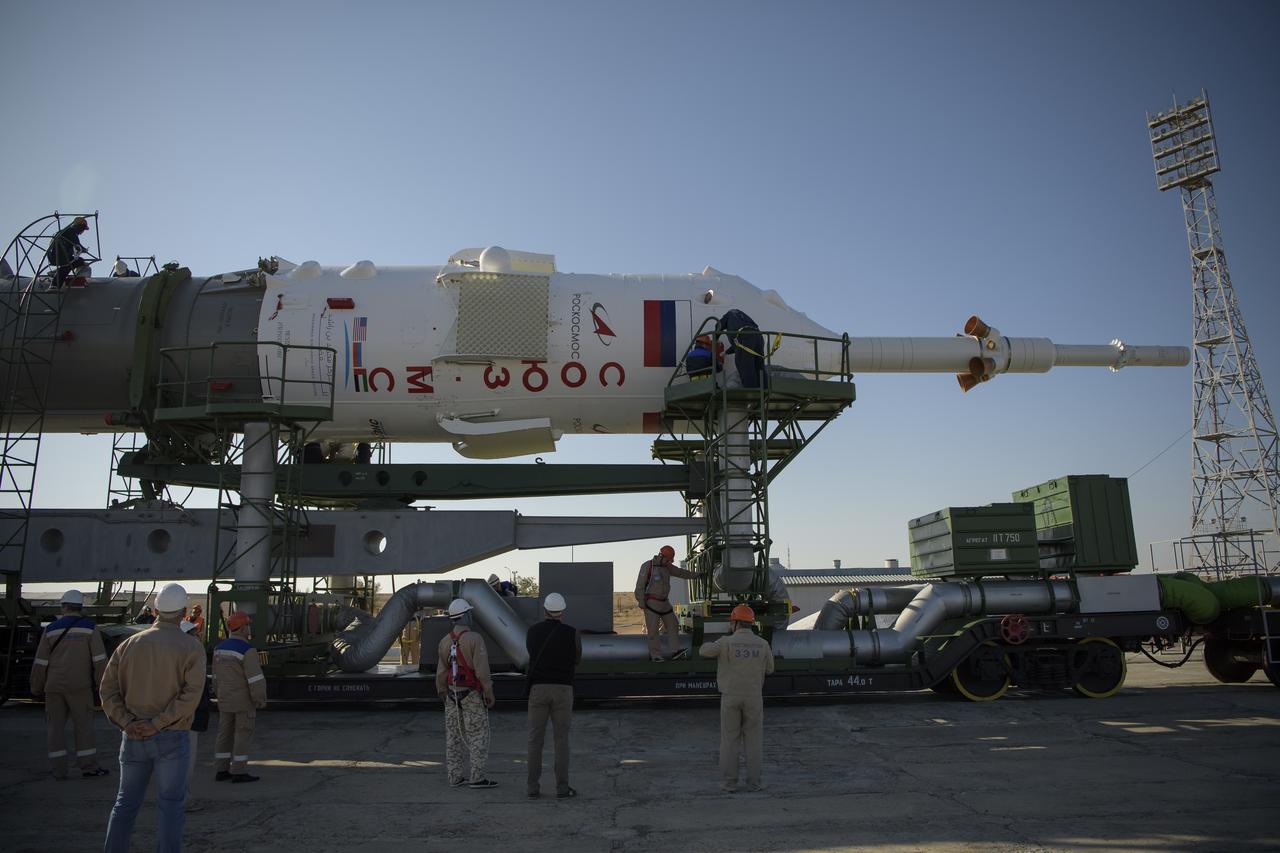
The Soyuz rocket is prepared to be raised into vertical position on the launch pad, Monday, Sept. 23, 2019 at the Baikonur Cosmodrome in Kazakhstan. Expedition 61 crewmembers Jessica Meir of NASA, Oleg Skripochka of Roscosmos, and spaceflight participant Hazzaa Ali Almansoori of the United Arab Emirates will launch September 25th on the Soyuz MS-15 spacecraft from the Baikonur Cosmodrome to the International Space Station. Photo Credit: (NASA/Bill Ingalls)
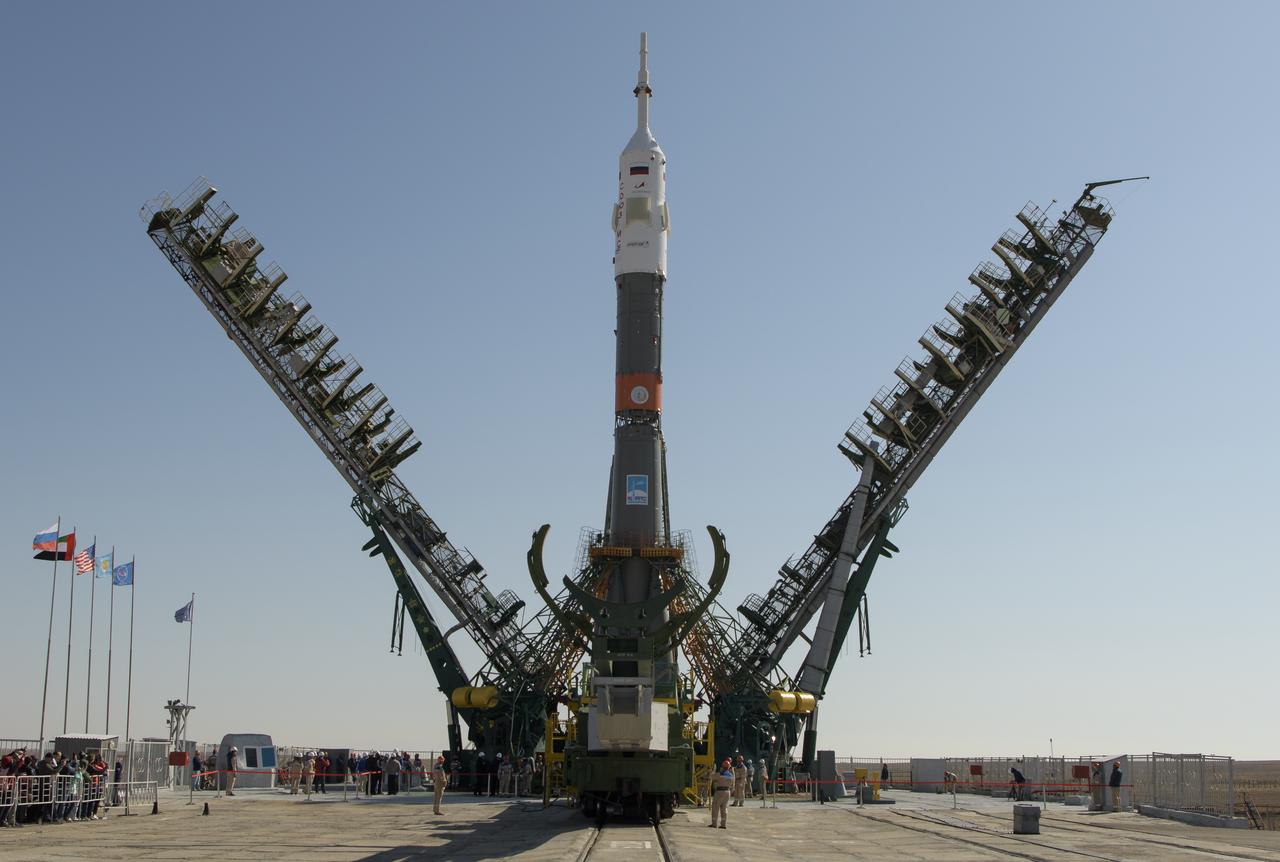
The gantry arms close around the Soyuz rocket after it was raised into vertical position on the launch pad, Monday, Sept. 23, 2019 at the Baikonur Cosmodrome in Kazakhstan. Expedition 61 crewmembers Jessica Meir of NASA, Oleg Skripochka of Roscosmos, and spaceflight participant Hazzaa Ali Almansoori of the United Arab Emirates will launch September 25th on the Soyuz MS-15 spacecraft from the Baikonur Cosmodrome to the International Space Station. Photo Credit: (NASA/Bill Ingalls)
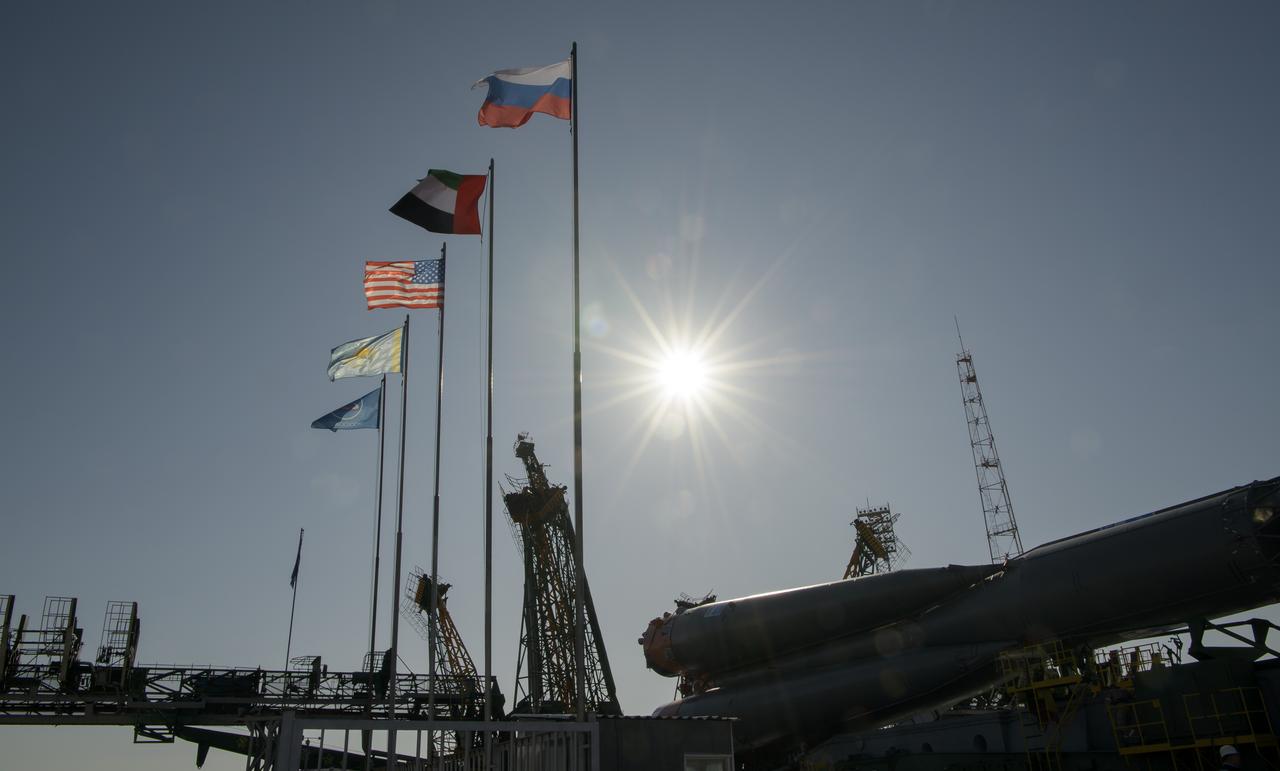
The flags of Russia, United Arab Emirates, United States of America, Kazakhstan and Roscosmos fly at the launch pad as the Soyuz rocket is raised into vertical position on the launch pad, Monday, Sept. 23, 2019 at the Baikonur Cosmodrome in Kazakhstan. Expedition 61 crewmembers Jessica Meir of NASA, Oleg Skripochka of Roscosmos, and spaceflight participant Hazzaa Ali Almansoori of the United Arab Emirates will launch September 25th on the Soyuz MS-15 spacecraft from the Baikonur Cosmodrome to the International Space Station. Photo Credit: (NASA/Bill Ingalls)

The Soyuz rocket is rolled out by train to the launch pad, Monday, Sept. 23, 2019 at the Baikonur Cosmodrome in Kazakhstan. Expedition 61 crewmembers Jessica Meir of NASA and Oleg Skripochka of Roscosmos, and spaceflight participant Hazzaa Ali Almansoori of the United Arab Emirates will launch September 25th on the Soyuz MS-15 spacecraft from the Baikonur Cosmodrome to the International Space Station. Photo Credit: (NASA/Bill Ingalls)
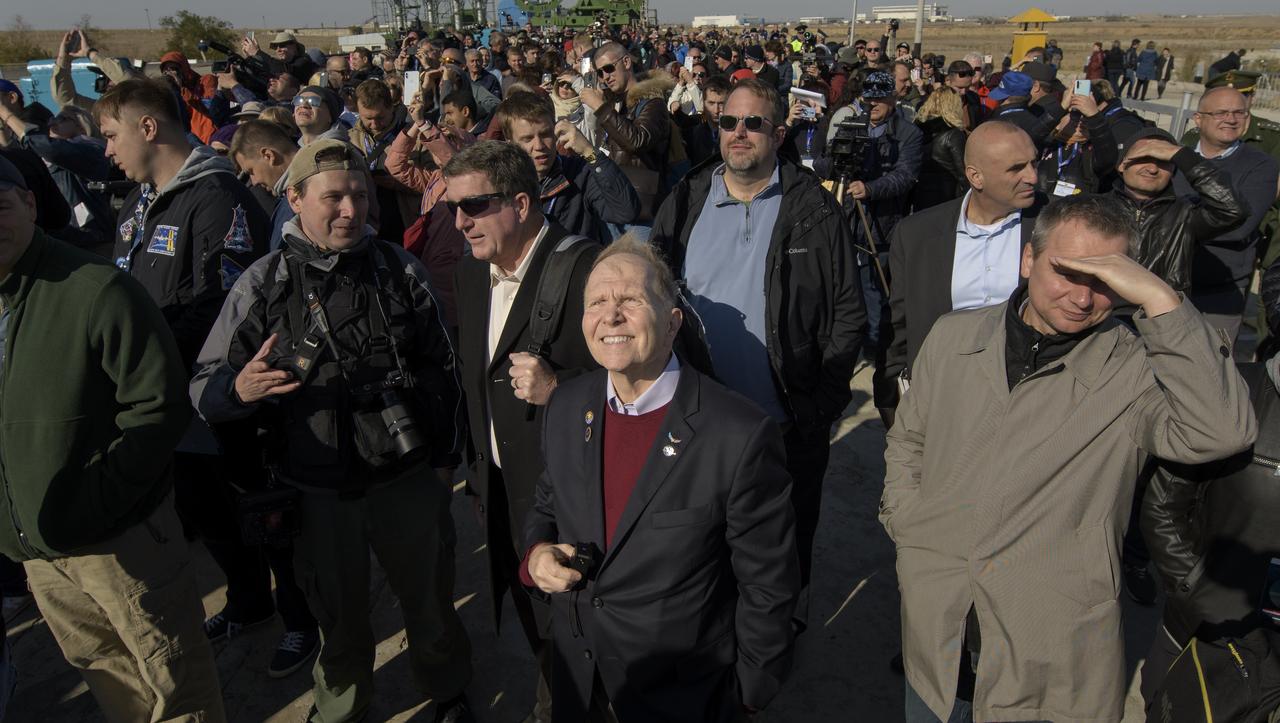
U.S. Ambassador to Kazakhstan William Moser, front center, and other launch guests watch as the Soyuz rocket is raised into vertical position on the launch pad, Monday, Sept. 23, 2019 at the Baikonur Cosmodrome in Kazakhstan. Expedition 61 crewmembers Jessica Meir of NASA, Oleg Skripochka of Roscosmos, and spaceflight participant Hazzaa Ali Almansoori of the United Arab Emirates will launch September 25th on the Soyuz MS-15 spacecraft from the Baikonur Cosmodrome to the International Space Station. Photo Credit: (NASA/Bill Ingalls)

The Soyuz rocket is rolled out by train to the launch pad, Monday, Sept. 23, 2019 at the Baikonur Cosmodrome in Kazakhstan. Expedition 61 crewmembers Jessica Meir of NASA and Oleg Skripochka of Roscosmos, and spaceflight participant Hazzaa Ali Almansoori of the United Arab Emirates will launch September 25th on the Soyuz MS-15 spacecraft from the Baikonur Cosmodrome to the International Space Station. Photo Credit: (NASA/Bill Ingalls)
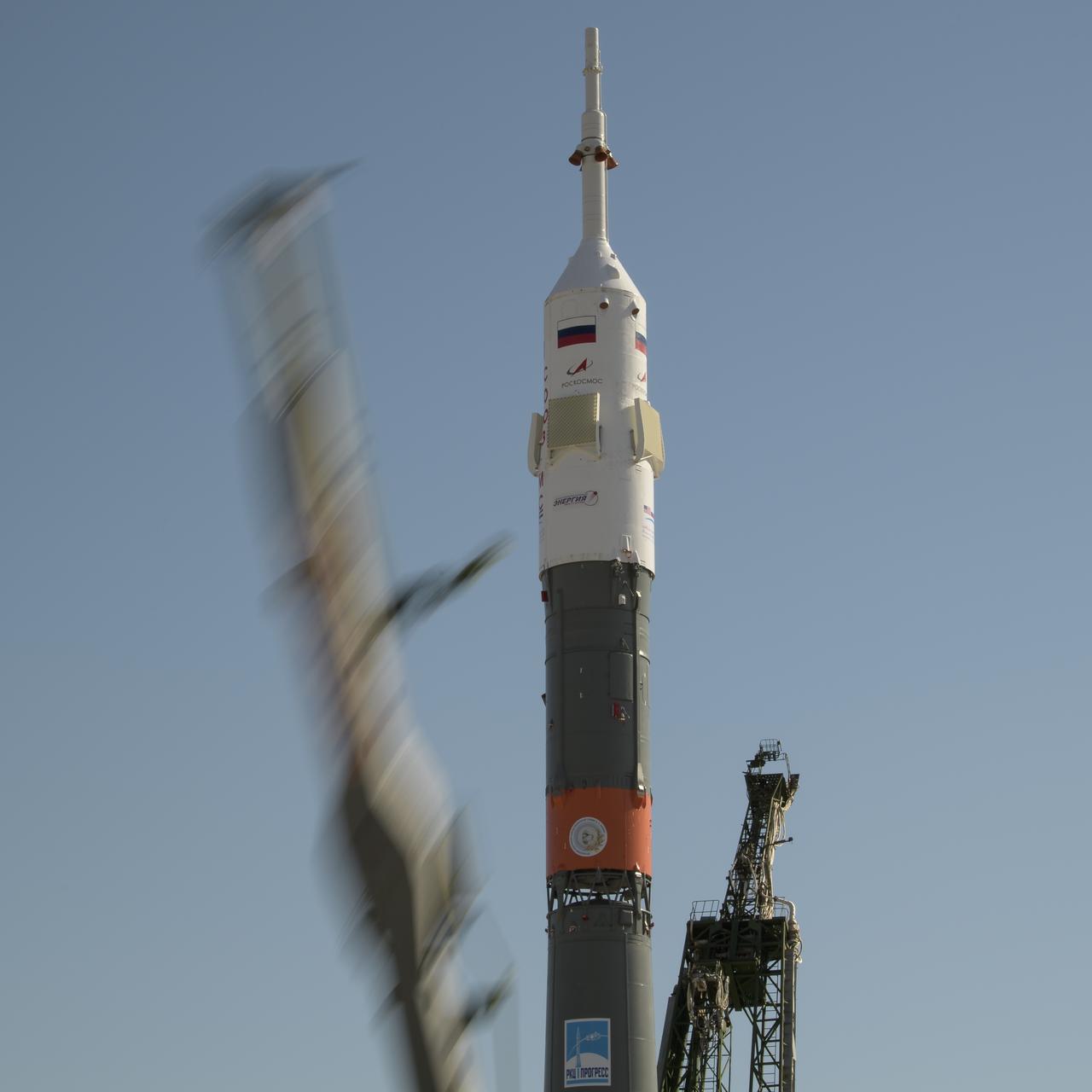
The Soyuz rocket is seen in this long expsoure photograph as it is raised into vertical position on the launch pad, Monday, Sept. 23, 2019 at the Baikonur Cosmodrome in Kazakhstan. Expedition 61 crewmembers Jessica Meir of NASA, Oleg Skripochka of Roscosmos, and spaceflight participant Hazzaa Ali Almansoori of the United Arab Emirates will launch September 25th on the Soyuz MS-15 spacecraft from the Baikonur Cosmodrome to the International Space Station. Photo Credit: (NASA/Bill Ingalls)