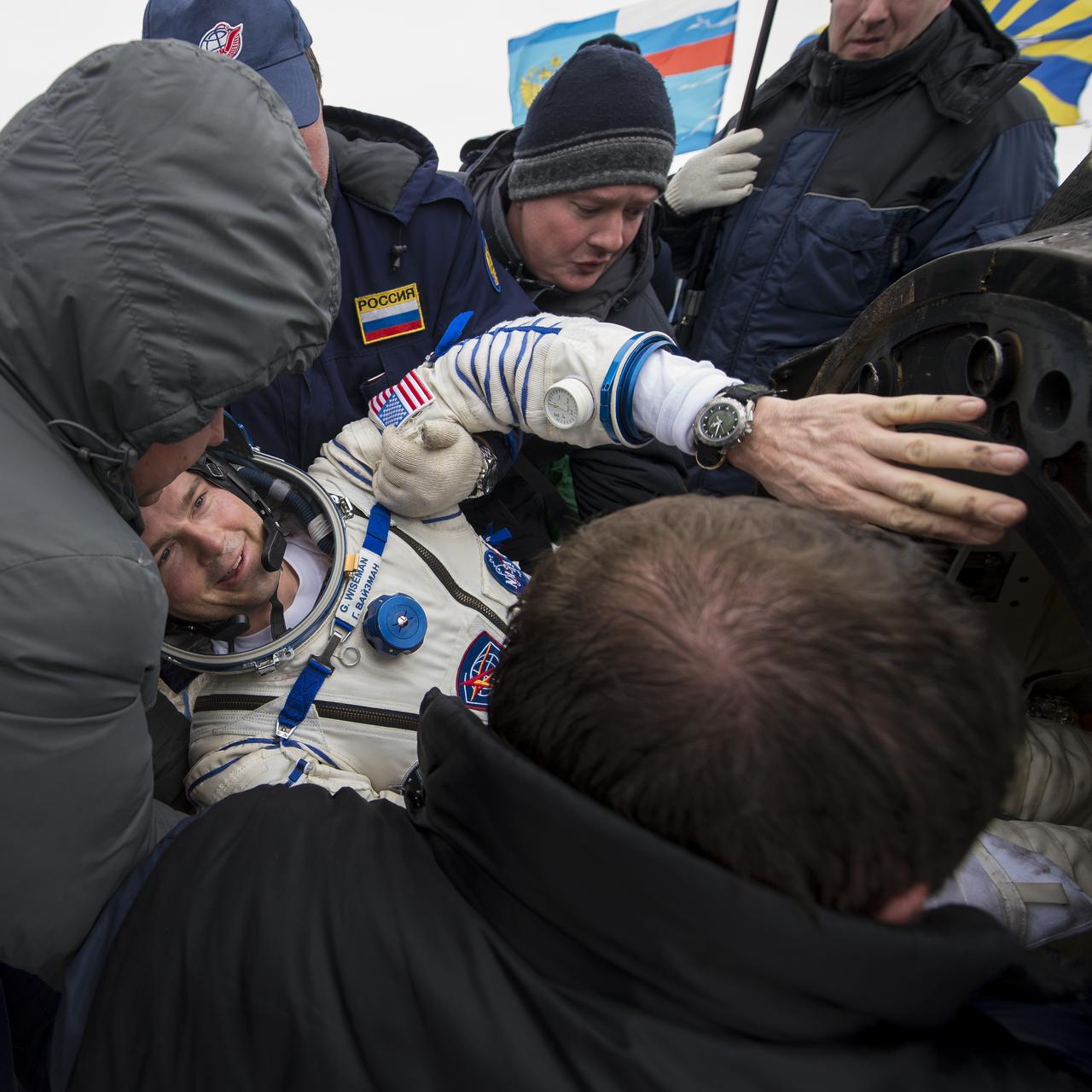
Expedition 41 Flight Engineer Reid Wiseman of NASA is helped out of the Soyuz Capsule just minutes after he and Expedition 41 Commander Max Suraev of the Russian Federal Space Agency (Roscosmos) and Flight Engineer Alexander Gerst of the European Space Agency (ESA) landed in their Soyuz TMA-13M capsule in a remote area near the town of Arkalyk, Kazakhstan on Monday, Nov. 10, 2014. Suraev, Wiseman and Gerst returned to Earth after more than five months onboard the International Space Station where they served as members of the Expedition 40 and 41 crews. Photo Credit: (NASA/Bill Ingalls)
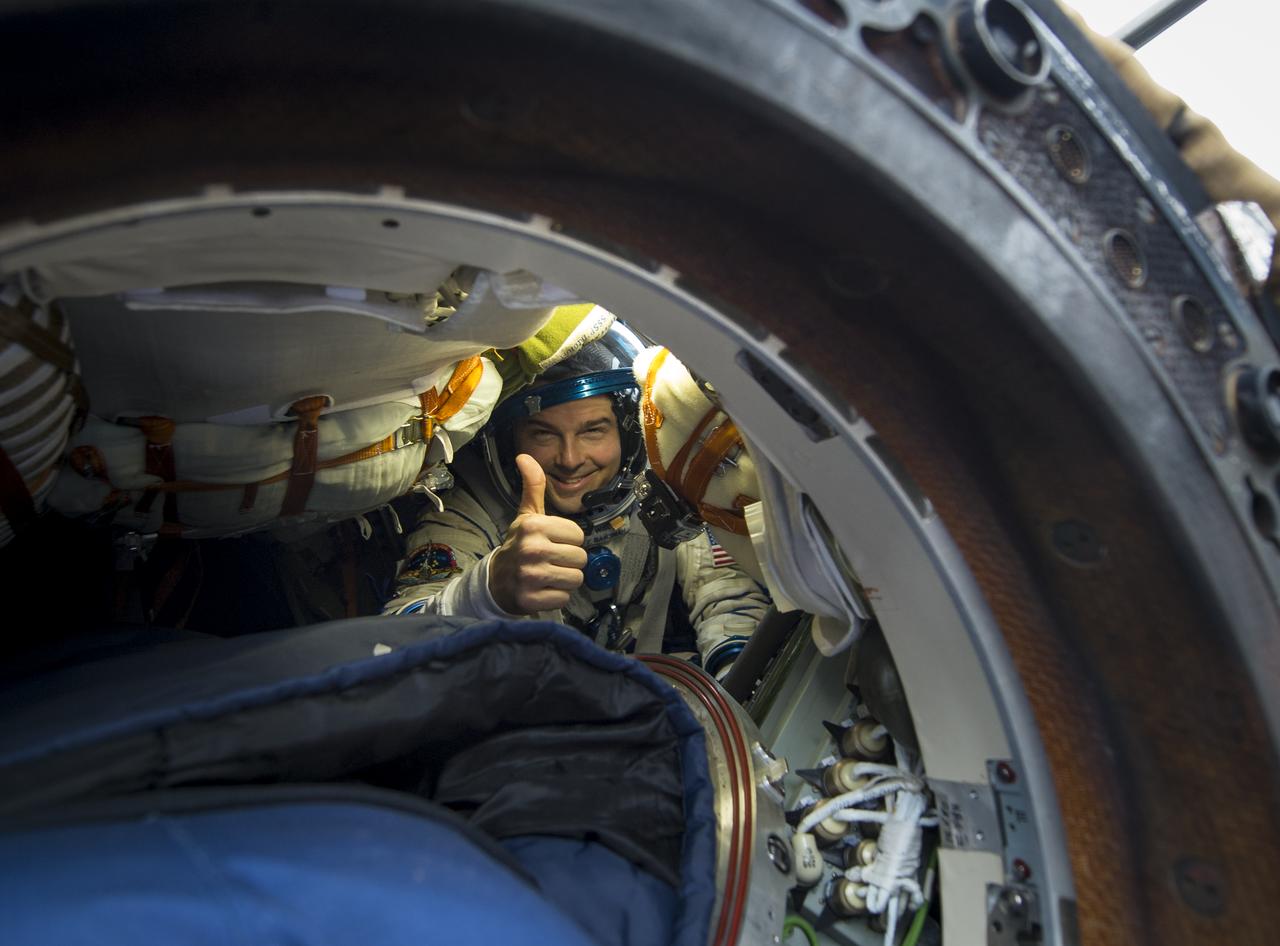
Expedition 41 Flight Engineer Reid Wiseman of NASA gives a thumbs up from inside the Soyuz Capsule just minutes after he and Expedition 41 Commander Max Suraev of the Russian Federal Space Agency (Roscosmos) and Flight Engineer Alexander Gerst of the European Space Agency (ESA) landed in their Soyuz TMA-13M capsule in a remote area near the town of Arkalyk, Kazakhstan on Monday, Nov. 10, 2014. Suraev, Wiseman and Gerst returned to Earth after more than five months onboard the International Space Station where they served as members of the Expedition 40 and 41 crews. Photo Credit: (NASA/Bill Ingalls)
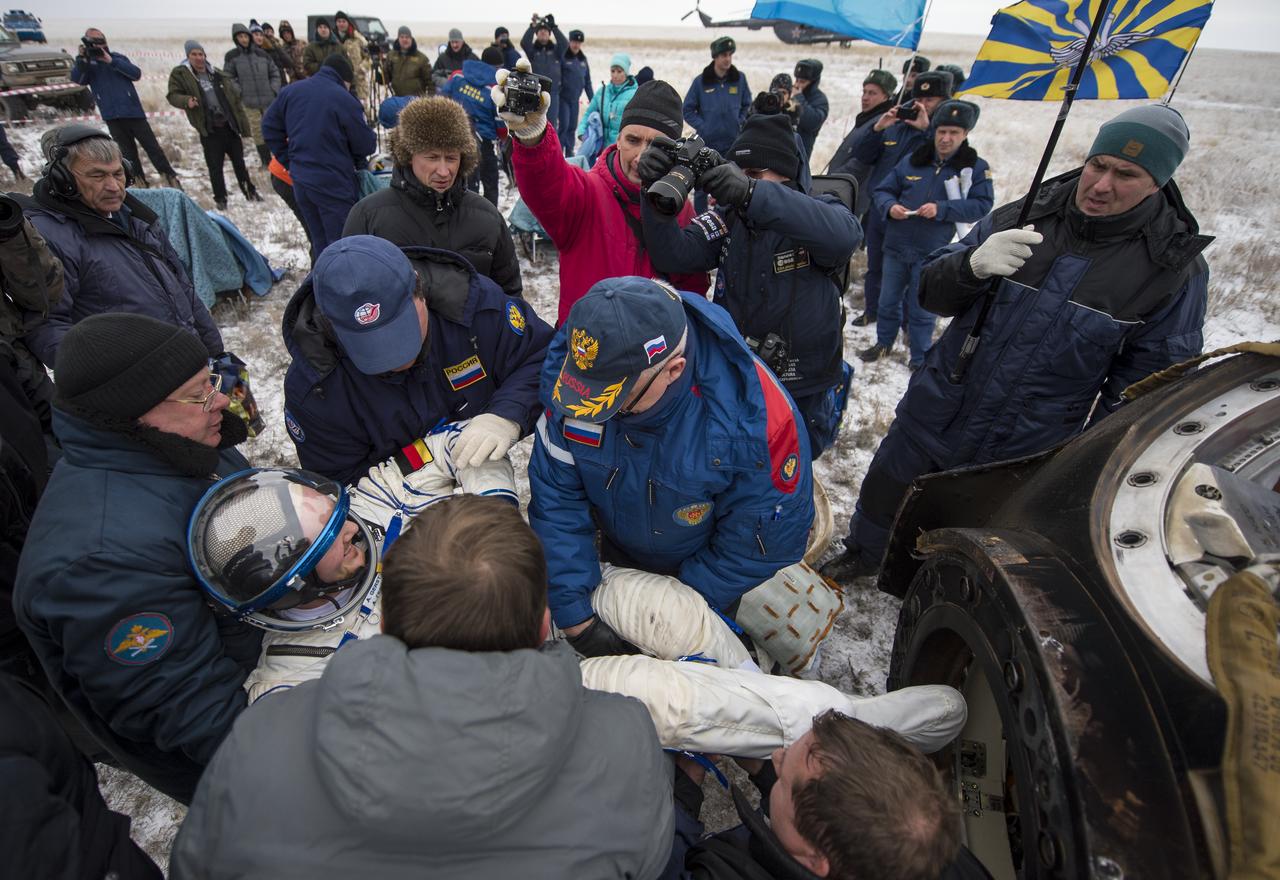
Expedition 41 Flight Engineer Alexander Gerst of the European Space Agency (ESA) is helped out of the Soyuz Capsule just minutes after he and Expedition 41 Commander Max Suraev of the Russian Federal Space Agency (Roscosmos), and NASA Flight Engineer Reid Wiseman landed in their Soyuz TMA-13M capsule in a remote area near the town of Arkalyk, Kazakhstan on Monday, Nov. 10, 2014. Suraev, Wiseman and Gerst returned to Earth after more than five months onboard the International Space Station where they served as members of the Expedition 40 and 41 crews. Photo Credit: (NASA/Bill Ingalls)
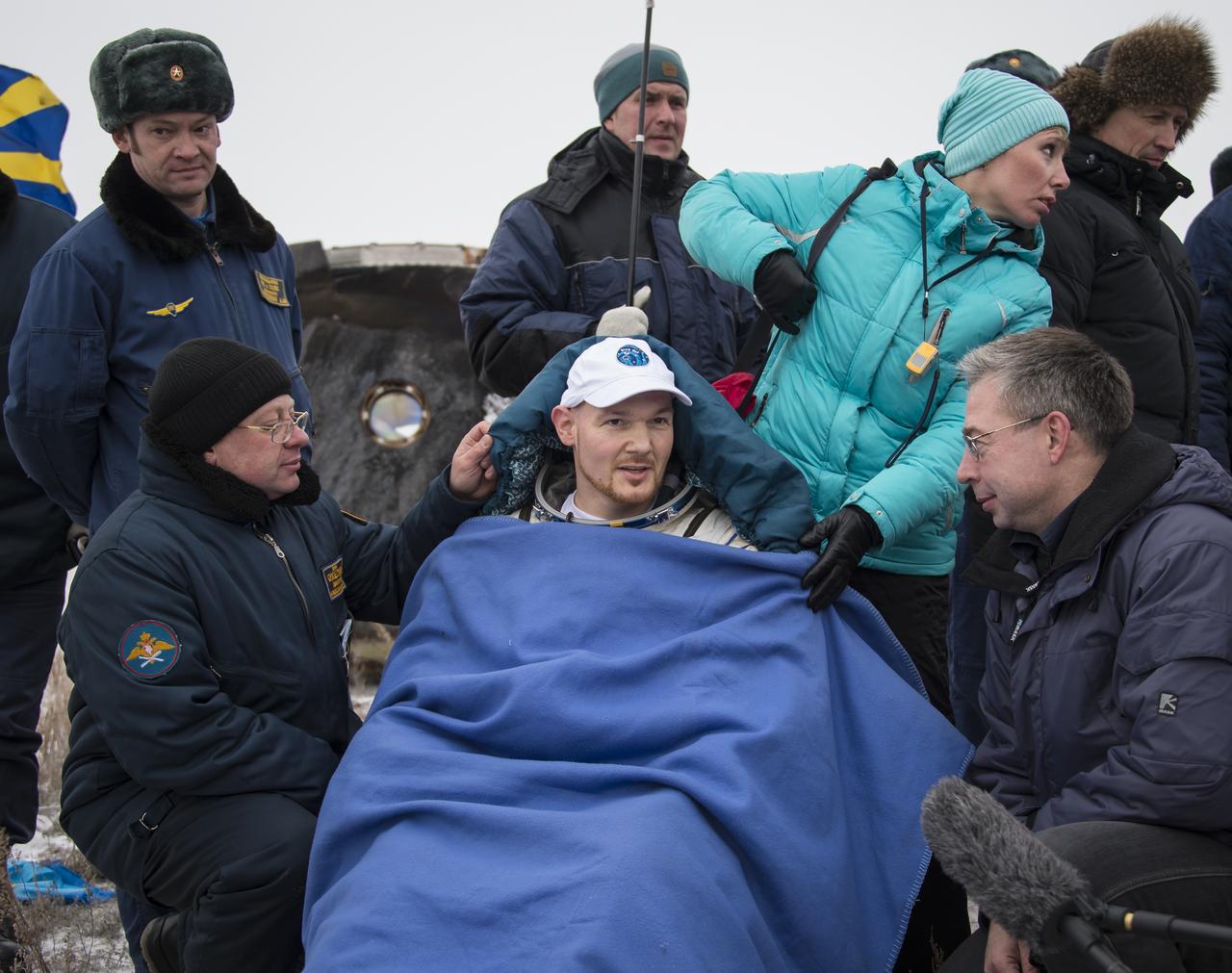
Expedition 41 Flight Engineer Alexander Gerst of the European Space Agency (ESA) rests in a chair outside the Soyuz Capsule just minutes after he and Expedition 41 Commander Max Suraev of the Russian Federal Space Agency (Roscosmos), and NASA Flight Engineer Reid Wiseman landed in their Soyuz TMA-13M capsule in a remote area near the town of Arkalyk, Kazakhstan on Monday, Nov. 10, 2014. Suraev, Wiseman and Gerst returned to Earth after more than five months onboard the International Space Station where they served as members of the Expedition 40 and 41 crews. Photo Credit: (NASA/Bill Ingalls)
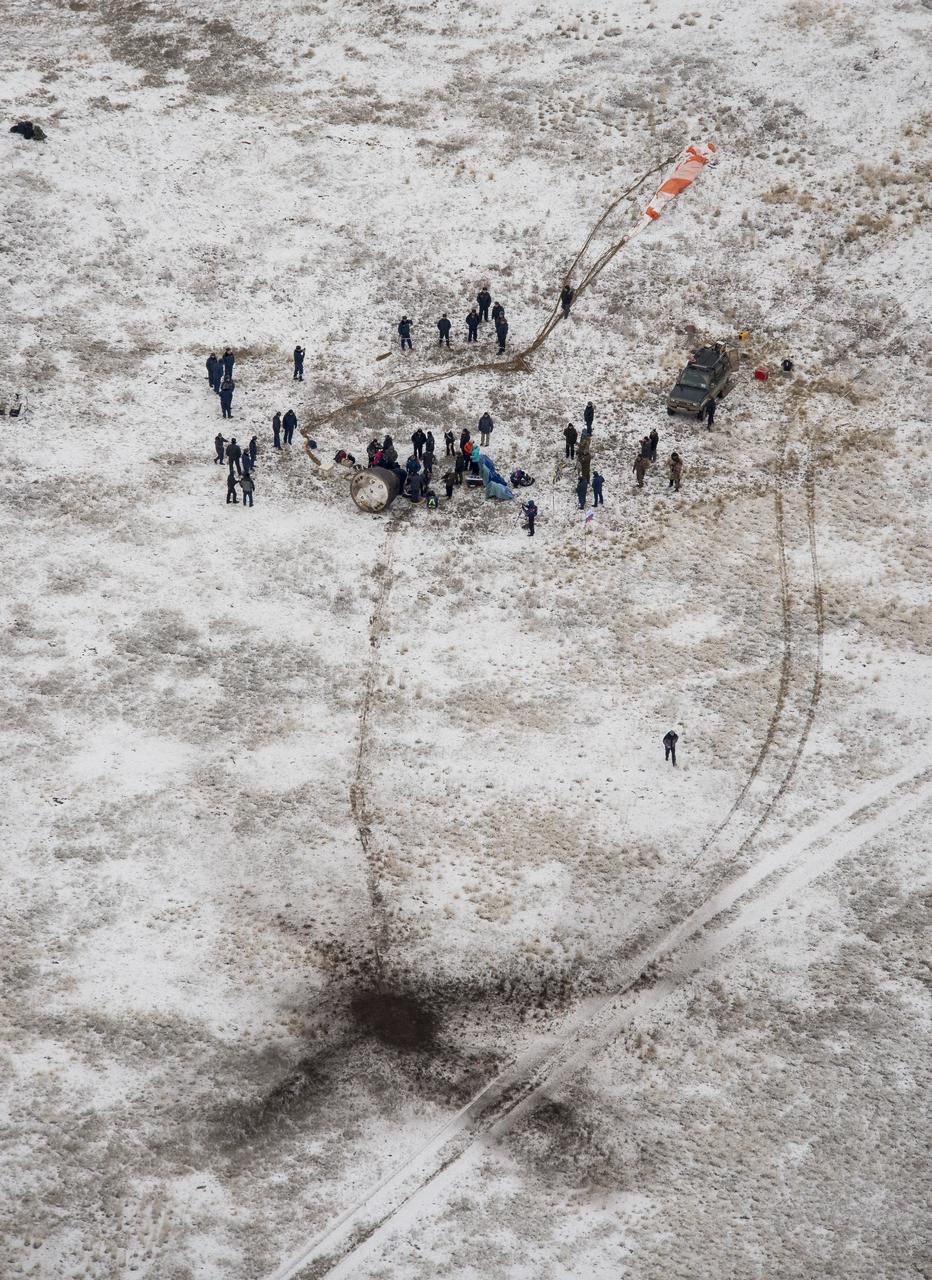
Ground support personnel are seen at the landing site after the Soyuz TMA-13M spacecraft landed with Expedition 41 Commander Max Suraev of the Russian Federal Space Agency (Roscosmos), NASA Flight Engineer Reid Wiseman and Flight Engineer Alexander Gerst of the European Space Agency (ESA) near the town of Arkalyk, Kazakhstan on Monday, Nov. 10, 2014. Suraev, Wiseman and Gerst returned to Earth after more than five months onboard the International Space Station where they served as members of the Expedition 40 and 41 crews. Photo Credit: (NASA/Bill Ingalls)
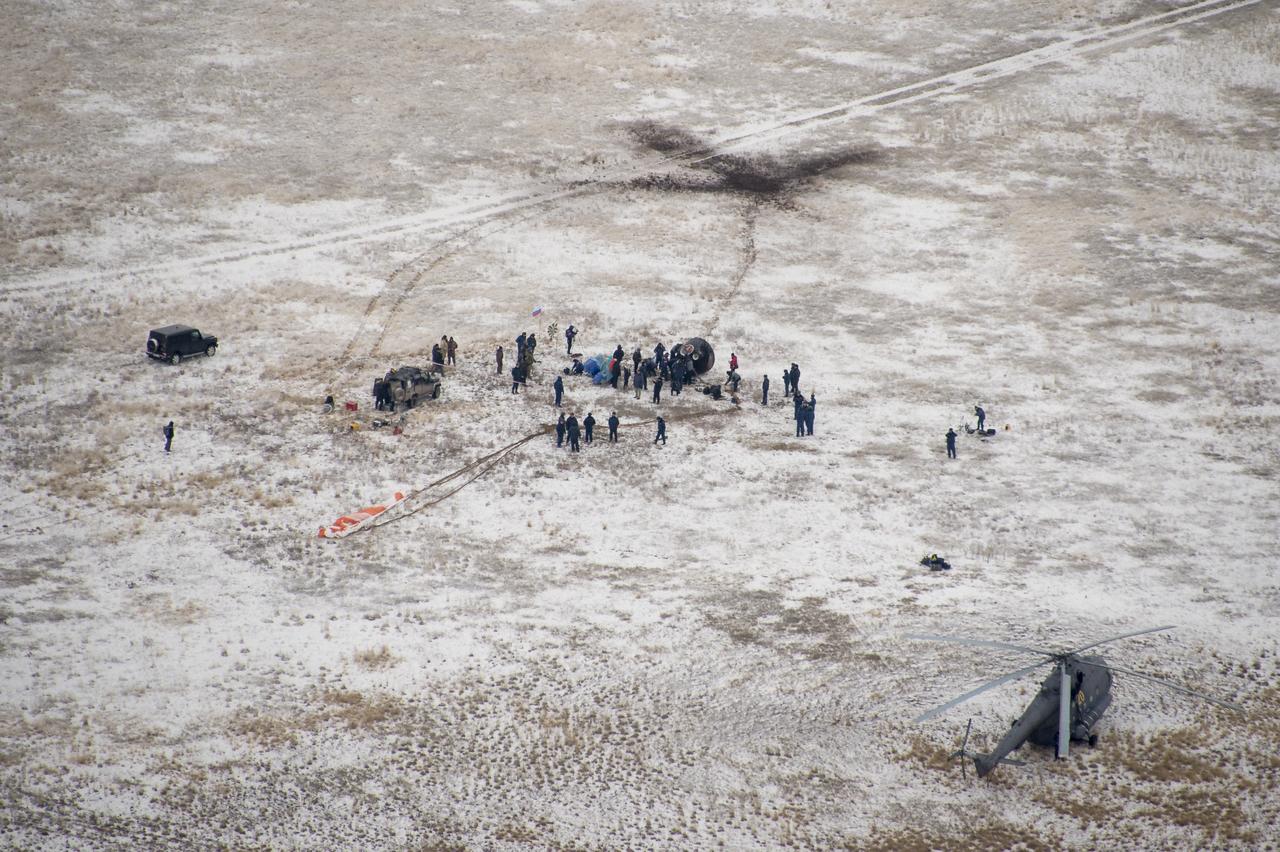
Ground support personnel are seen at the landing site after the Soyuz TMA-13M spacecraft landed with Expedition 41 Commander Max Suraev of the Russian Federal Space Agency (Roscosmos), NASA Flight Engineer Reid Wiseman and Flight Engineer Alexander Gerst of the European Space Agency (ESA) near the town of Arkalyk, Kazakhstan on Monday, Nov. 10, 2014. Suraev, Wiseman and Gerst returned to Earth after more than five months onboard the International Space Station where they served as members of the Expedition 40 and 41 crews. Photo Credit: (NASA/Bill Ingalls)
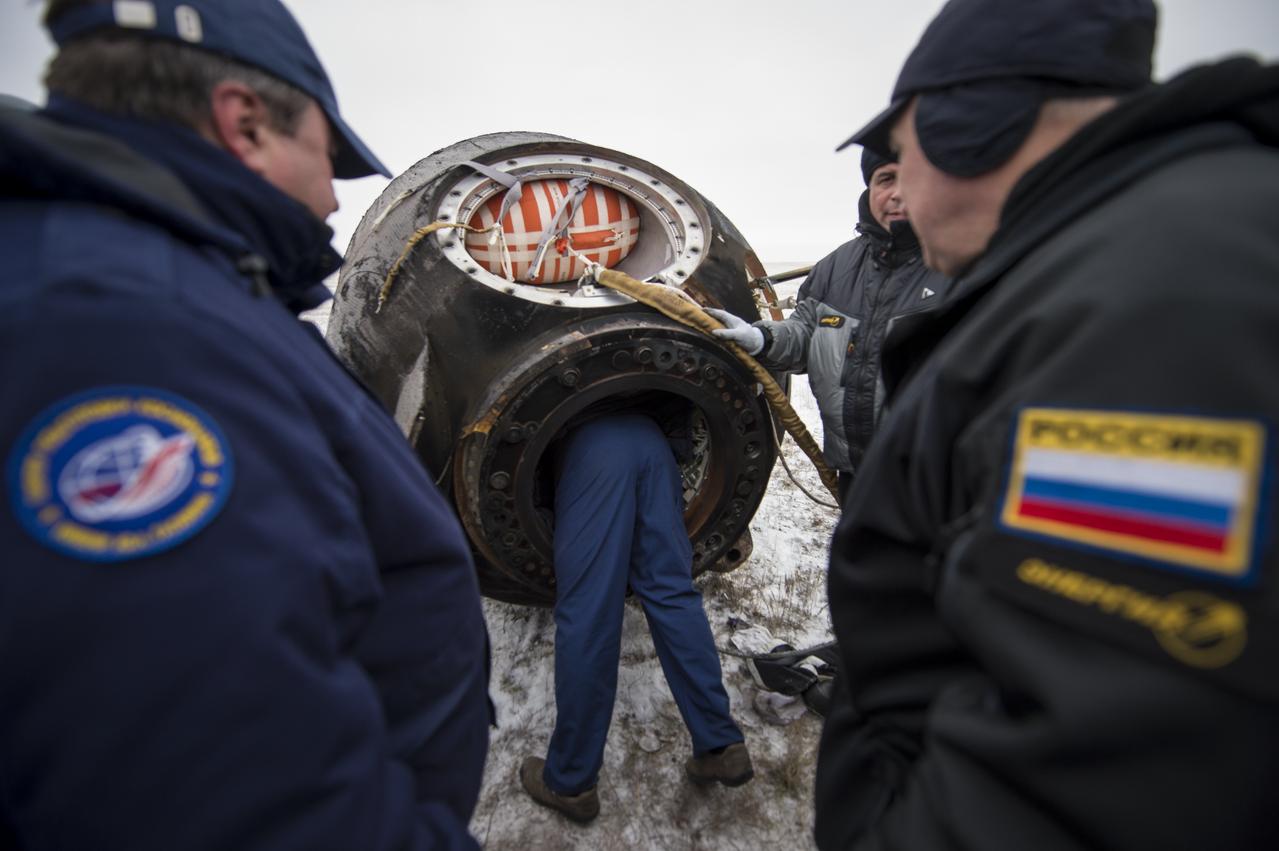
Ground support personnel work to extract Expedition 41 Commander Max Suraev of the Russian Federal Space Agency (Roscosmos), NASA Flight Engineer Reid Wiseman and Flight Engineer Alexander Gerst of the European Space Agency (ESA) from the Soyuz TMA-13M spacecraft after it landed near the town of Arkalyk, Kazakhstan on Monday, Nov. 10, 2014. Suraev, Wiseman and Gerst returned to Earth after more than five months onboard the International Space Station where they served as members of the Expedition 40 and 41 crews. Photo Credit: (NASA/Bill Ingalls)
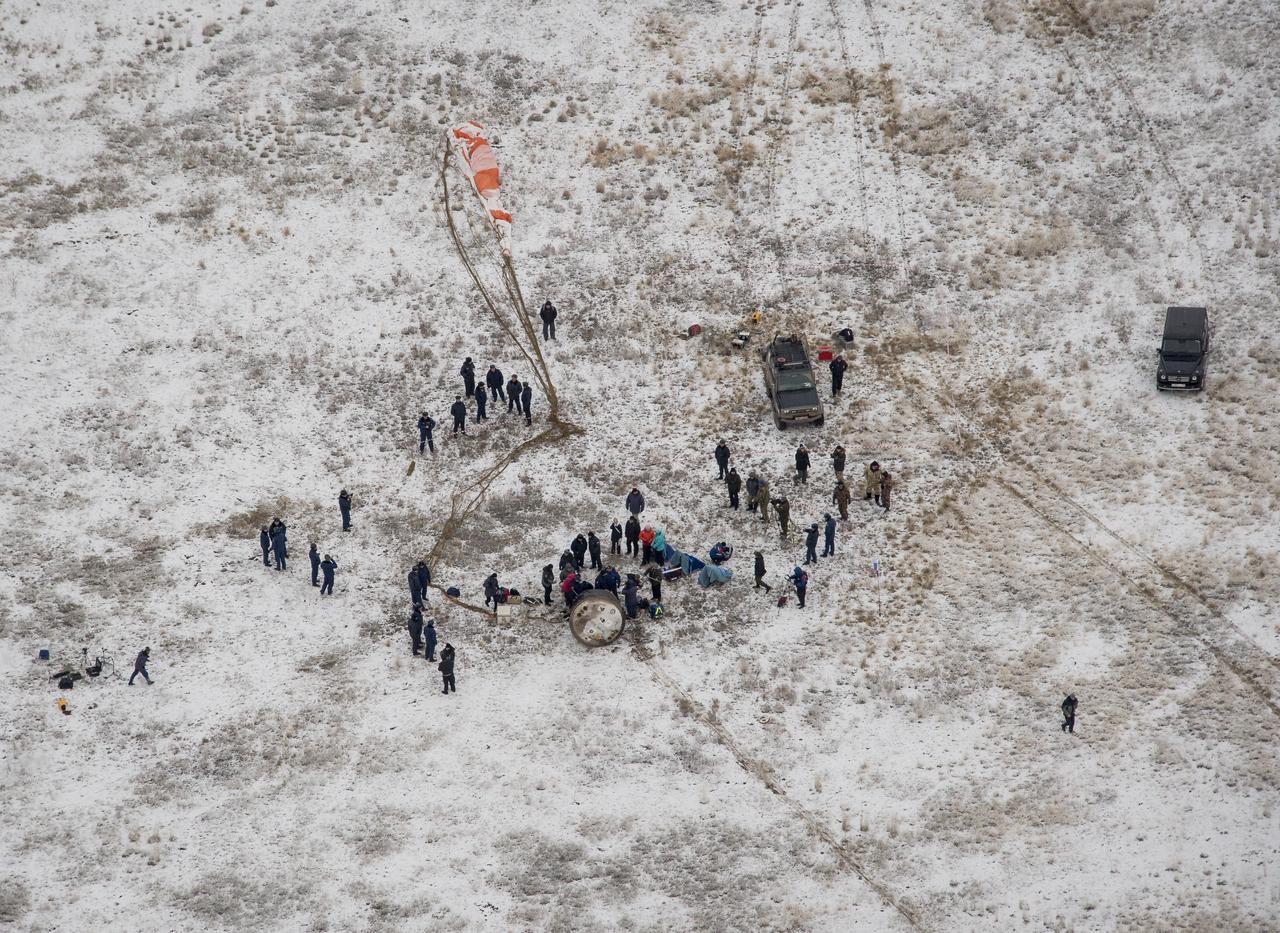
Ground support personnel are seen at the landing site after the Soyuz TMA-13M spacecraft landed with Expedition 41 Commander Max Suraev of the Russian Federal Space Agency (Roscosmos), NASA Flight Engineer Reid Wiseman and Flight Engineer Alexander Gerst of the European Space Agency (ESA) near the town of Arkalyk, Kazakhstan on Monday, Nov. 10, 2014. Suraev, Wiseman and Gerst returned to Earth after more than five months onboard the International Space Station where they served as members of the Expedition 40 and 41 crews. Photo Credit: (NASA/Bill Ingalls)
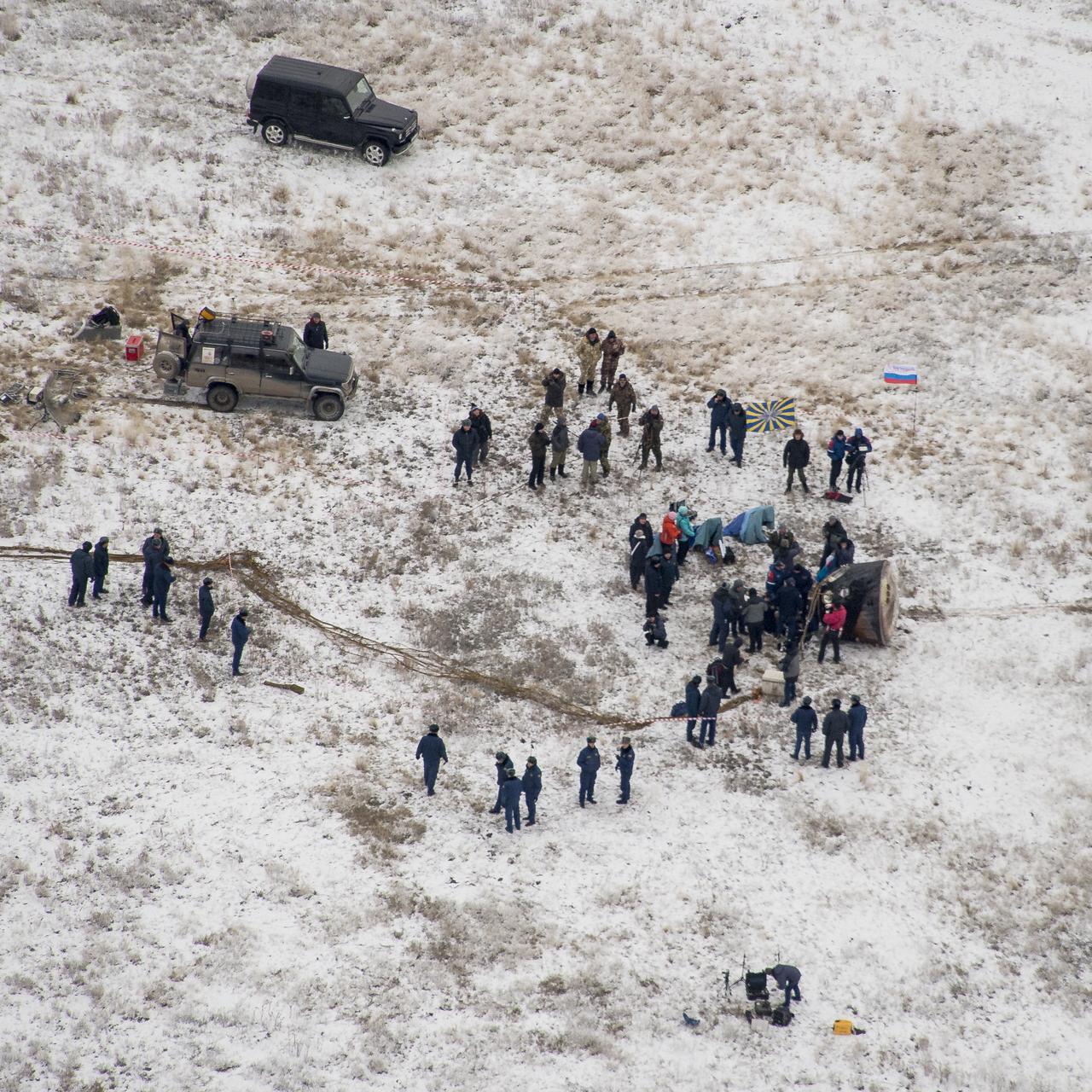
Ground support personnel are seen at the landing site after the Soyuz TMA-13M spacecraft landed with Expedition 41 Commander Max Suraev of the Russian Federal Space Agency (Roscosmos), NASA Flight Engineer Reid Wiseman and Flight Engineer Alexander Gerst of the European Space Agency (ESA) near the town of Arkalyk, Kazakhstan on Monday, Nov. 10, 2014. Suraev, Wiseman and Gerst returned to Earth after more than five months onboard the International Space Station where they served as members of the Expedition 40 and 41 crews. Photo Credit: (NASA/Bill Ingalls)
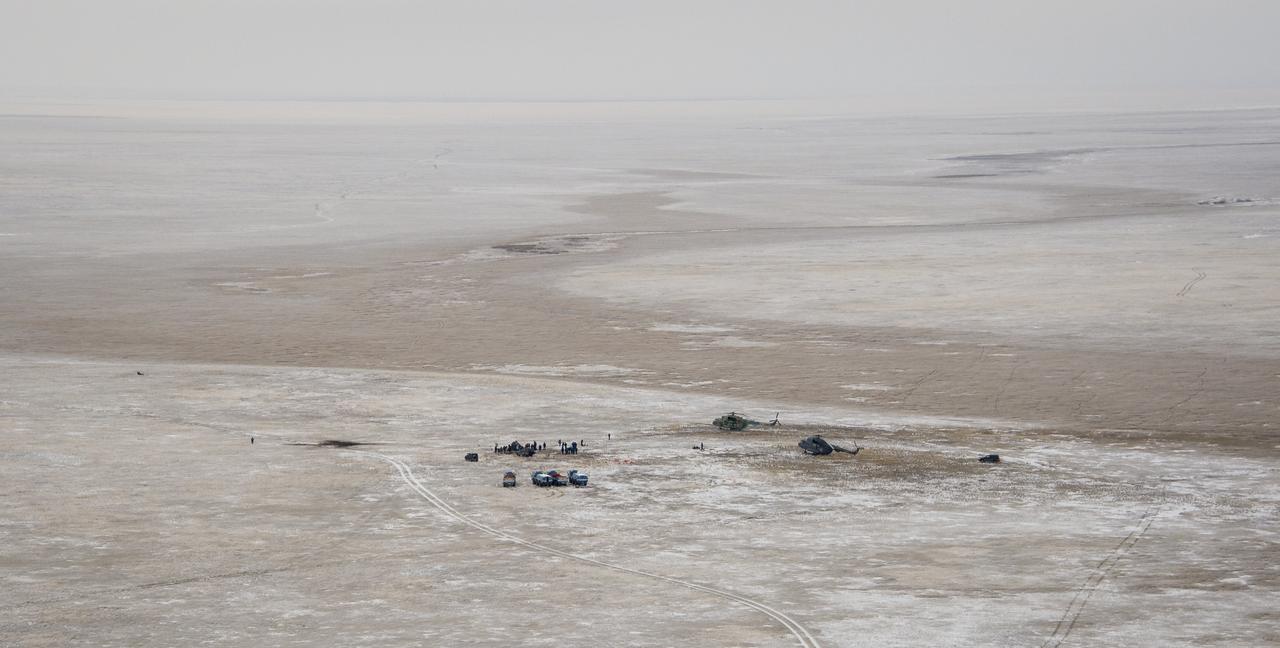
Ground support personnel are seen at the landing site after the Soyuz TMA-13M spacecraft landed with Expedition 41 Commander Max Suraev of the Russian Federal Space Agency (Roscosmos), NASA Flight Engineer Reid Wiseman and Flight Engineer Alexander Gerst of the European Space Agency (ESA) near the town of Arkalyk, Kazakhstan on Monday, Nov. 10, 2014. Suraev, Wiseman and Gerst returned to Earth after more than five months onboard the International Space Station where they served as members of the Expedition 40 and 41 crews. Photo Credit: (NASA/Bill Ingalls)
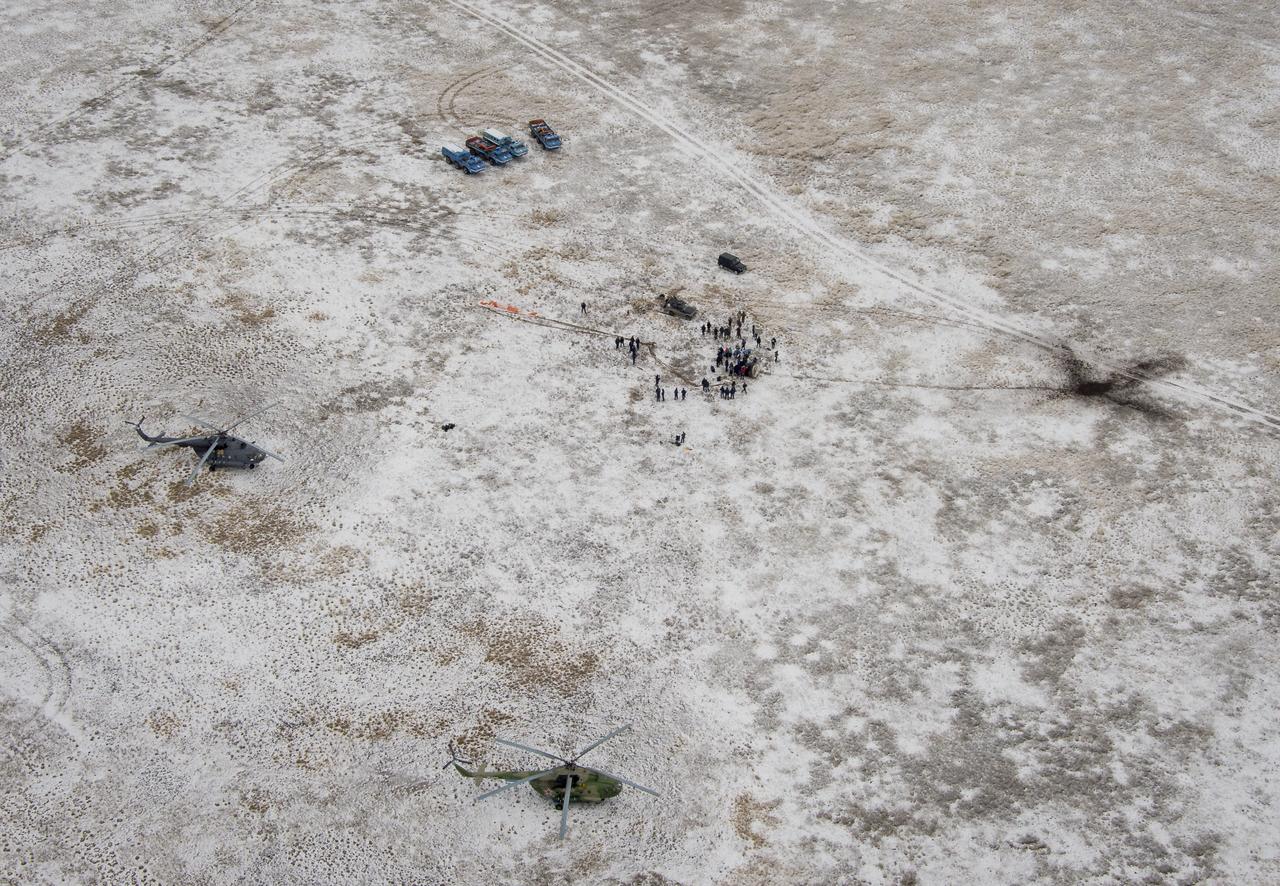
Ground support personnel are seen at the landing site after the Soyuz TMA-13M spacecraft landed with Expedition 41 Commander Max Suraev of the Russian Federal Space Agency (Roscosmos), NASA Flight Engineer Reid Wiseman and Flight Engineer Alexander Gerst of the European Space Agency (ESA) near the town of Arkalyk, Kazakhstan on Monday, Nov. 10, 2014. Suraev, Wiseman and Gerst returned to Earth after more than five months onboard the International Space Station where they served as members of the Expedition 40 and 41 crews. Photo Credit: (NASA/Bill Ingalls)
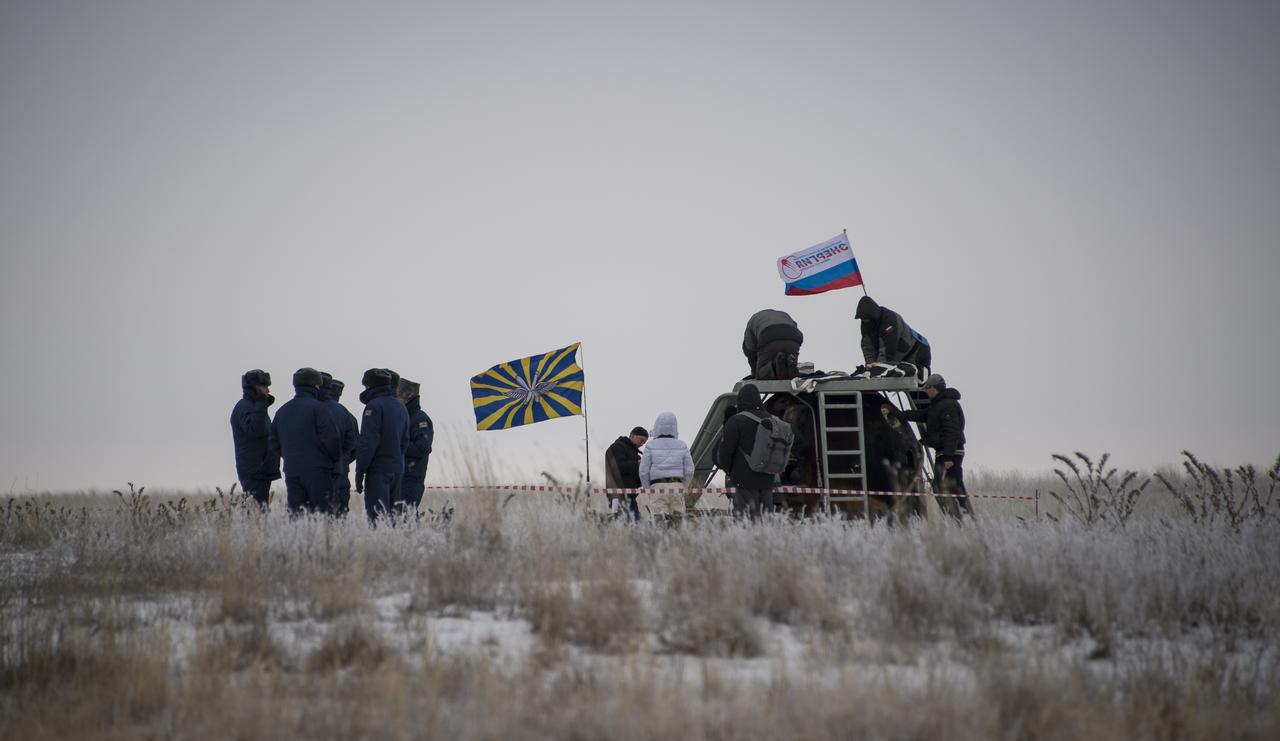
Ground support personnel are seen at the landing site after the Soyuz TMA-13M spacecraft landed with Expedition 41 Commander Max Suraev of the Russian Federal Space Agency (Roscosmos), NASA Flight Engineer Reid Wiseman and Flight Engineer Alexander Gerst of the European Space Agency (ESA) near the town of Arkalyk, Kazakhstan on Monday, Nov. 10, 2014. Suraev, Wiseman and Gerst returned to Earth after more than five months onboard the International Space Station where they served as members of the Expedition 40 and 41 crews. Photo Credit: (NASA/Bill Ingalls)
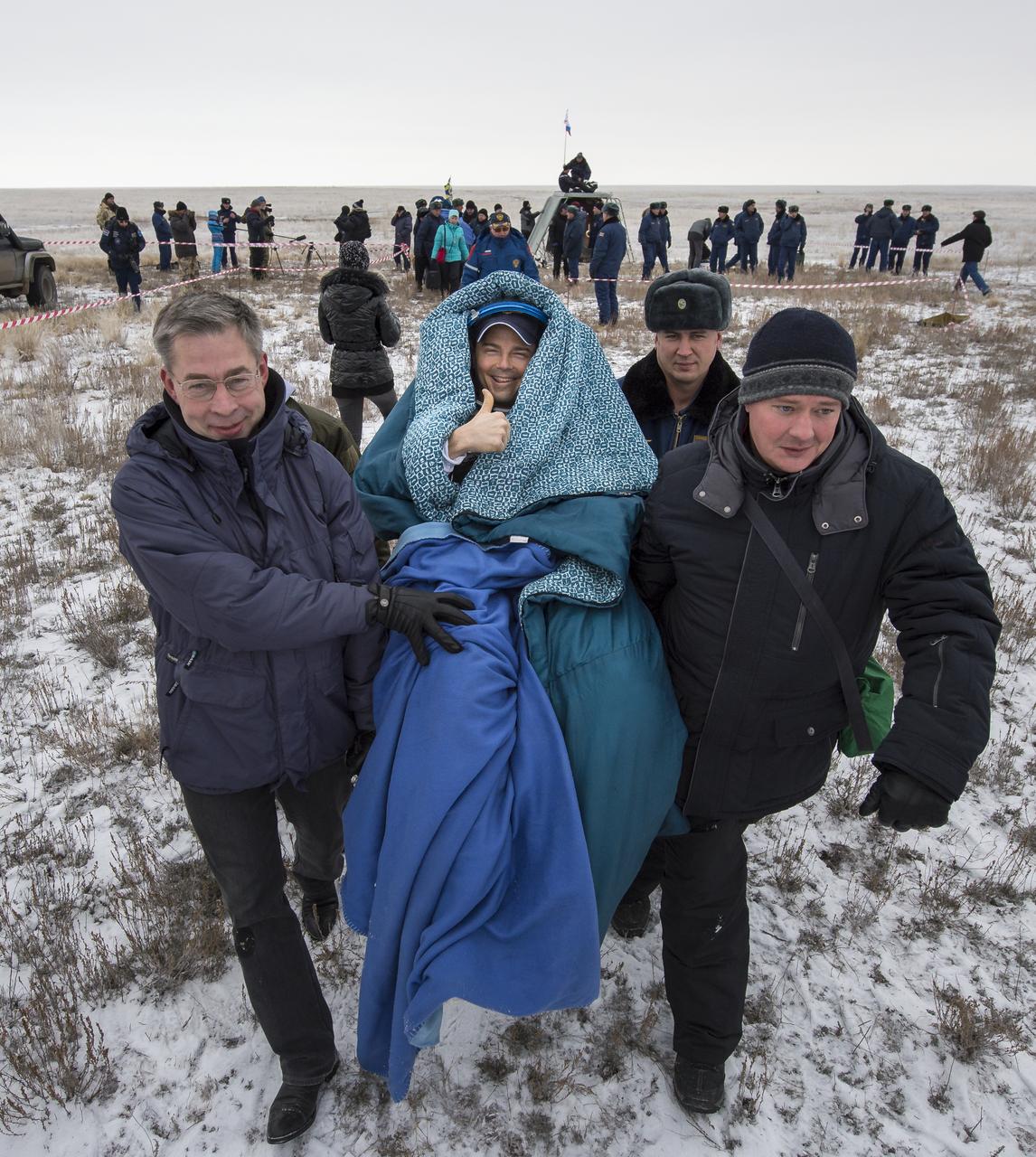
Expedition 41 Flight Engineer Reid Wiseman of NASA is carried in a chair to a medical tent after he and Expedition 41 Commander Max Suraev of the Russian Federal Space Agency (Roscosmos) and Flight Engineer Alexander Gerst of the European Space Agency (ESA) landed in their Soyuz TMA-13M capsule in a remote area near the town of Arkalyk, Kazakhstan on Monday, Nov. 10, 2014. Suraev, Wiseman and Gerst returned to Earth after more than five months onboard the International Space Station where they served as members of the Expedition 40 and 41 crews. Photo Credit: (NASA/Bill Ingalls)
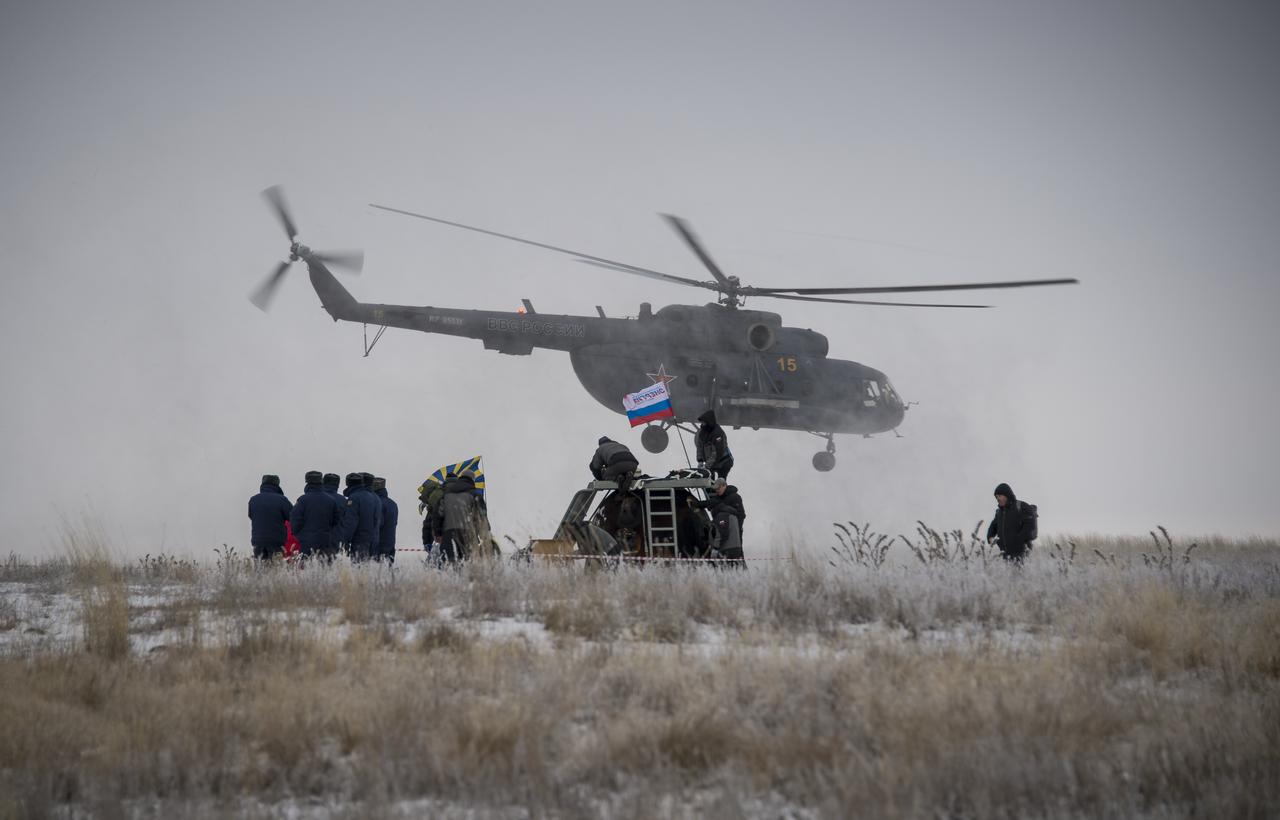
Ground support personnel are seen at the landing site after the Soyuz TMA-13M spacecraft landed with Expedition 41 Commander Max Suraev of the Russian Federal Space Agency (Roscosmos), NASA Flight Engineer Reid Wiseman and Flight Engineer Alexander Gerst of the European Space Agency (ESA) near the town of Arkalyk, Kazakhstan on Monday, Nov. 10, 2014. Suraev, Wiseman and Gerst returned to Earth after more than five months onboard the International Space Station where they served as members of the Expedition 40 and 41 crews. Photo Credit: (NASA/Bill Ingalls)
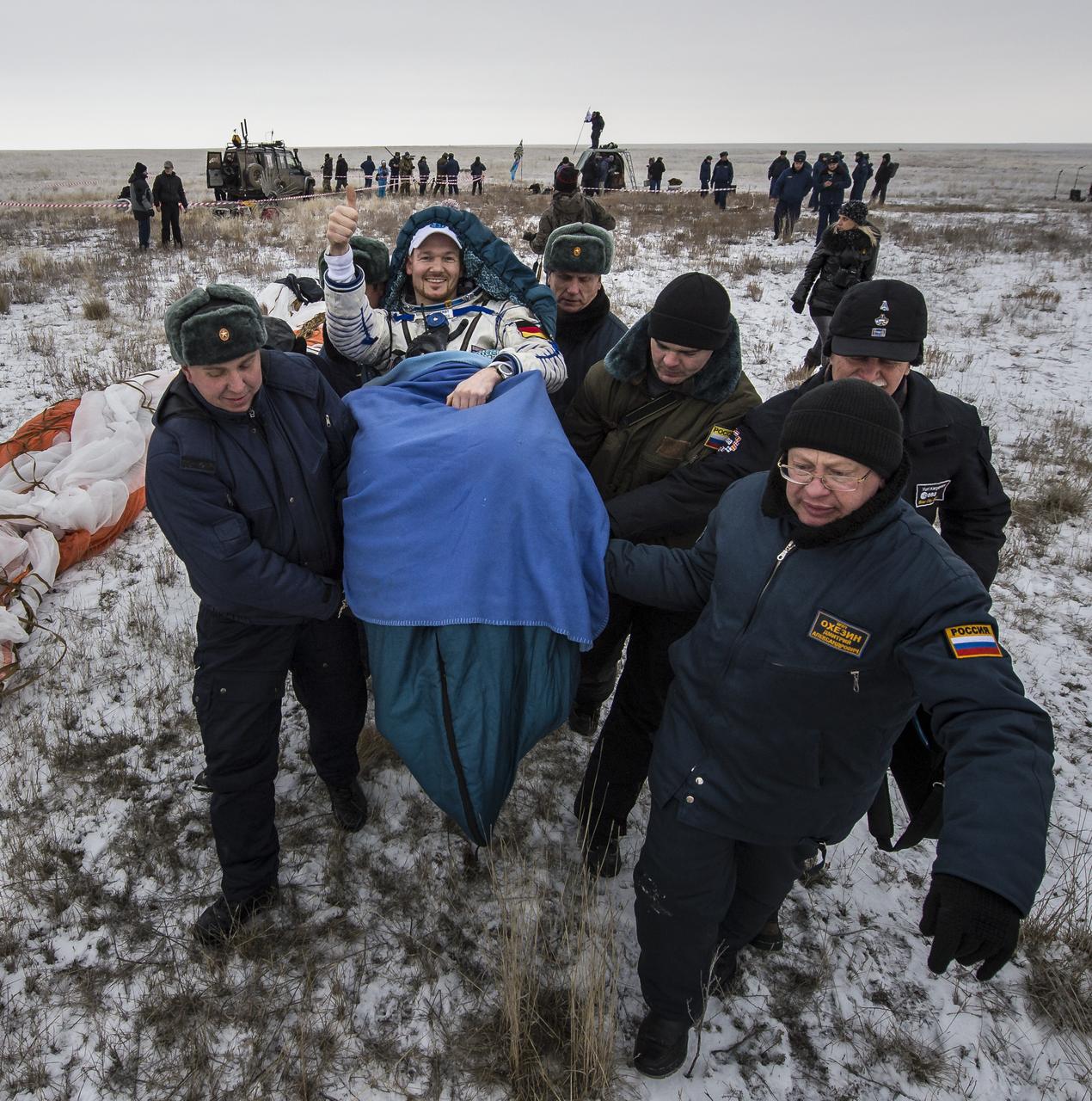
Expedition 41 Flight Engineer Alexander Gerst of the European Space Agency (ESA) is carried in a chair to a medical tent after he and Expedition 41 Commander Max Suraev of the Russian Federal Space Agency (Roscosmos), and NASA Flight Engineer Reid Wiseman landed in their Soyuz TMA-13M capsule in a remote area near the town of Arkalyk, Kazakhstan on Monday, Nov. 10, 2014. Suraev, Wiseman and Gerst returned to Earth after more than five months onboard the International Space Station where they served as members of the Expedition 40 and 41 crews. Photo Credit: (NASA/Bill Ingalls)
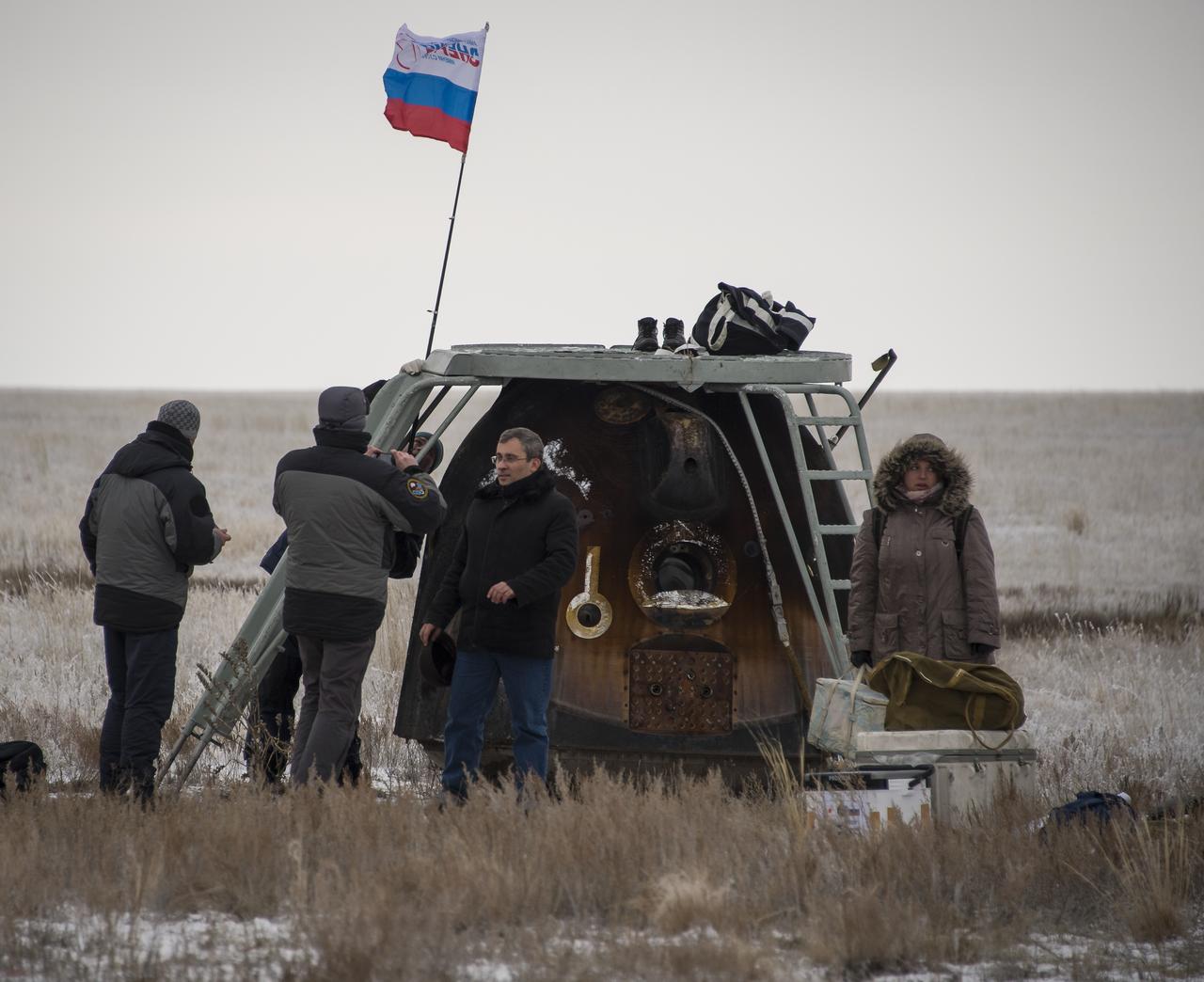
Ground support personnel are seen at the landing site after the Soyuz TMA-13M spacecraft landed with Expedition 41 Commander Max Suraev of the Russian Federal Space Agency (Roscosmos), NASA Flight Engineer Reid Wiseman and Flight Engineer Alexander Gerst of the European Space Agency (ESA) near the town of Arkalyk, Kazakhstan on Monday, Nov. 10, 2014. Suraev, Wiseman and Gerst returned to Earth after more than five months onboard the International Space Station where they served as members of the Expedition 40 and 41 crews. Photo Credit: (NASA/Bill Ingalls)
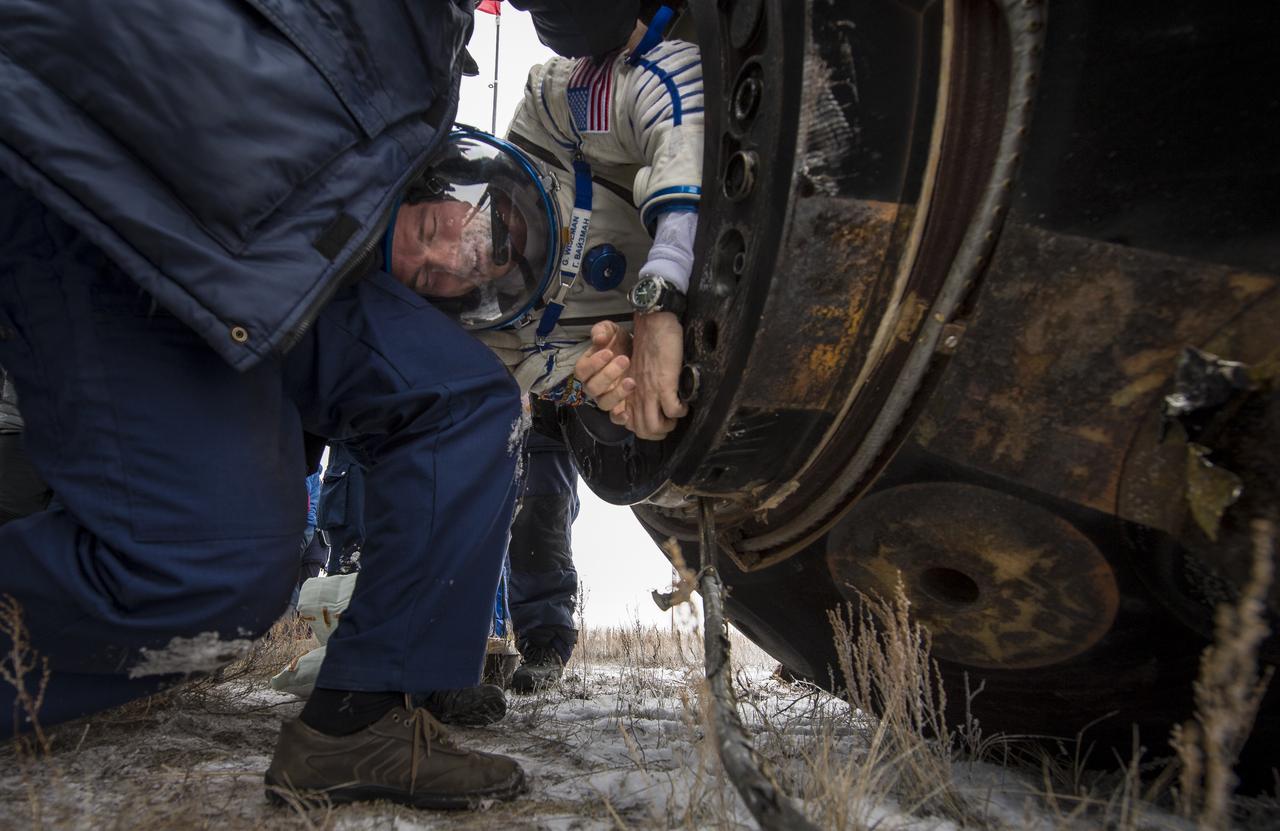
Expedition 41 Flight Engineer Reid Wiseman of NASA is helped out of the Soyuz Capsule just minutes after he and Expedition 41 Commander Max Suraev of the Russian Federal Space Agency (Roscosmos) and Flight Engineer Alexander Gerst of the European Space Agency (ESA) landed in their Soyuz TMA-13M capsule in a remote area near the town of Arkalyk, Kazakhstan on Monday, Nov. 10, 2014. Suraev, Wiseman and Gerst returned to Earth after more than five months onboard the International Space Station where they served as members of the Expedition 40 and 41 crews. Photo Credit: (NASA/Bill Ingalls)
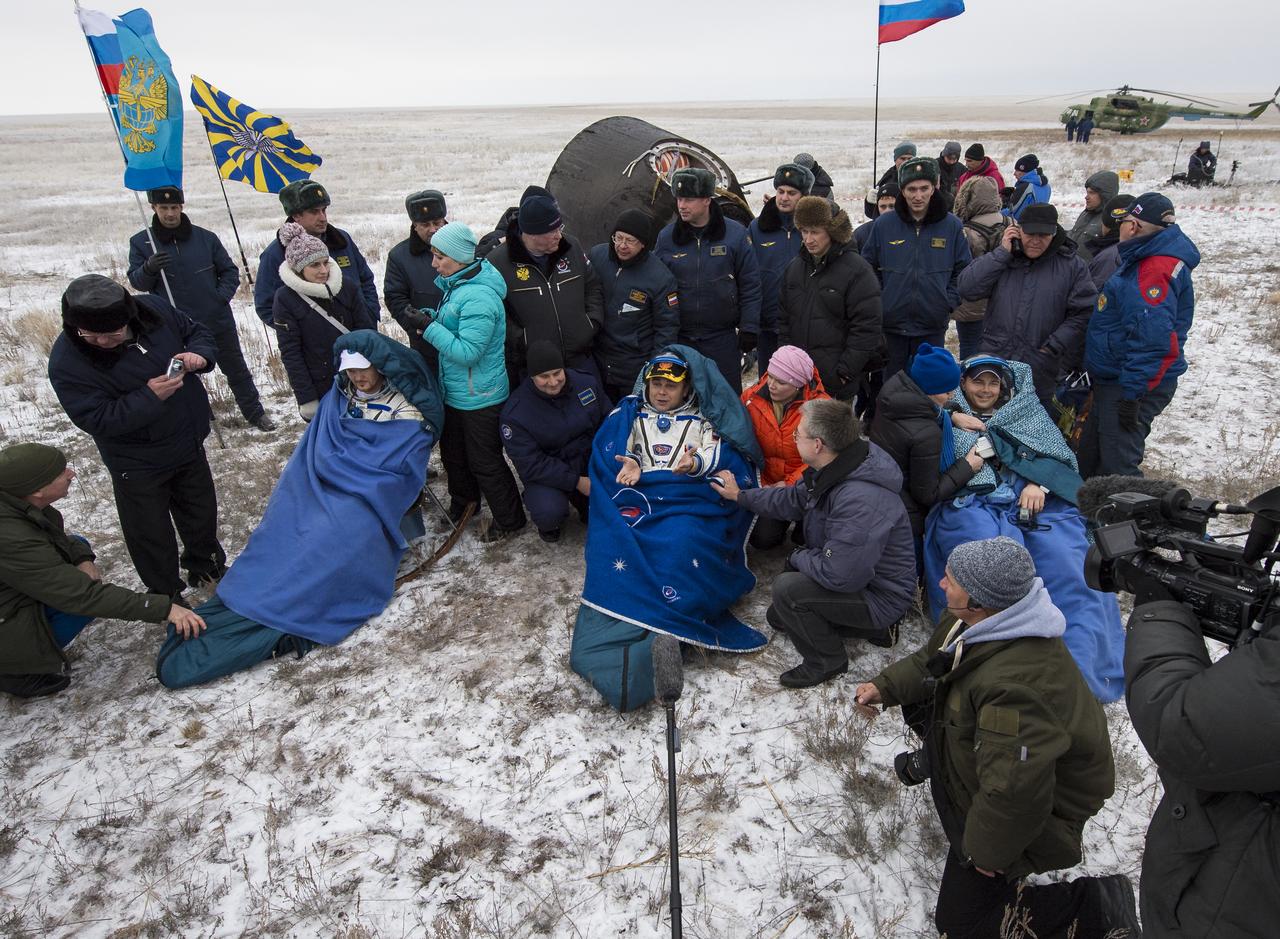
Expedition 41 light Engineer Alexander Gerst of the European Space Agency (ESA), left, Commander Max Suraev of the Russian Federal Space Agency (Roscosmos), center, and NASA Flight Engineer Reid Wiseman, sit in chairs outside the Soyuz TMA-13M capsule just minutes after they landed in a remote area near the town of Arkalyk, Kazakhstan on Monday, Nov. 10, 2014. Suraev, Wiseman and Gerst returned to Earth after more than five months onboard the International Space Station where they served as members of the Expedition 40 and 41 crews. Photo Credit: (NASA/Bill Ingalls)
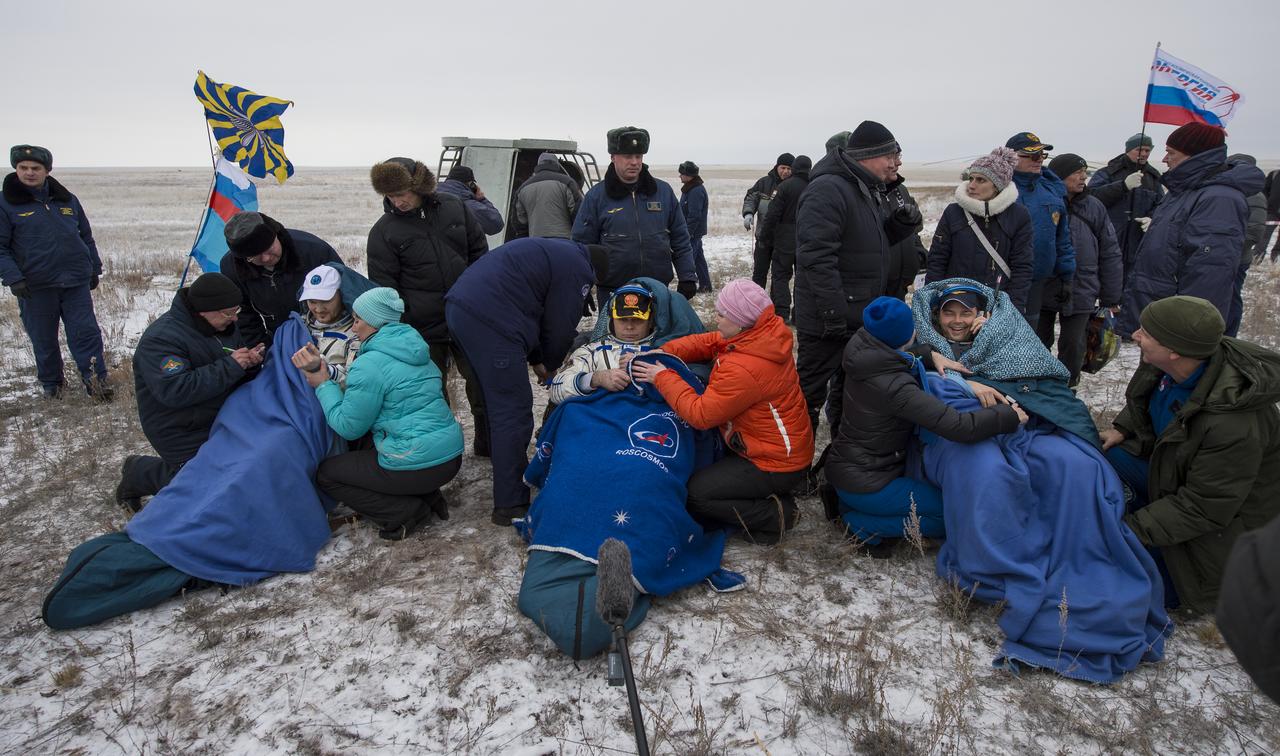
Expedition 41 light Engineer Alexander Gerst of the European Space Agency (ESA), left, Commander Max Suraev of the Russian Federal Space Agency (Roscosmos), center, and NASA Flight Engineer Reid Wiseman, sit in chairs outside the Soyuz TMA-13M capsule just minutes after they landed in a remote area near the town of Arkalyk, Kazakhstan on Monday, Nov. 10, 2014. Suraev, Wiseman and Gerst returned to Earth after more than five months onboard the International Space Station where they served as members of the Expedition 40 and 41 crews. Photo Credit: (NASA/Bill Ingalls)
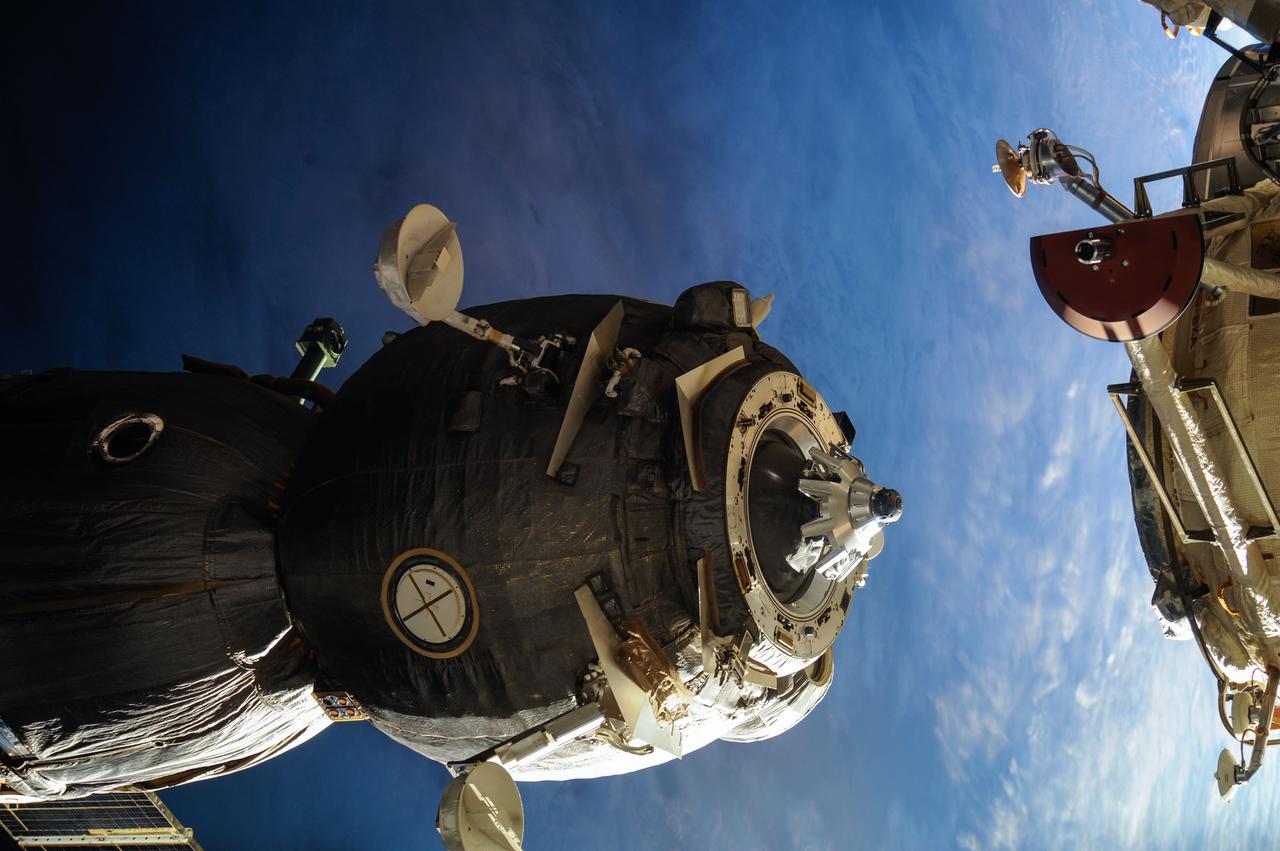
iss042e000009 (11/10/2014)---The Soyuz TMA-13M Russian Spacecraft undocking from the International Space Station on November 10th 2014. After 6 months in space the Soyuz was bringing home Expedition 41 crewmembers Max Suraev of the Russian Federal Space Agency (Roscosmos), Reid Wiseman of NASA and Alexander Gerst of the European Space Agency.

Expedition 41 Flight Engineer Reid Wiseman of NASA rests in a chair outside the Soyuz Capsule just minutes after he and Expedition 41 Commander Max Suraev of the Russian Federal Space Agency (Roscosmos) and Flight Engineer Alexander Gerst of the European Space Agency (ESA) landed in their Soyuz TMA-13M capsule in a remote area near the town of Arkalyk, Kazakhstan on Monday, Nov. 10, 2014. Suraev, Wiseman and Gerst returned to Earth after more than five months onboard the International Space Station where they served as members of the Expedition 40 and 41 crews. Photo Credit: (NASA/Bill Ingalls)
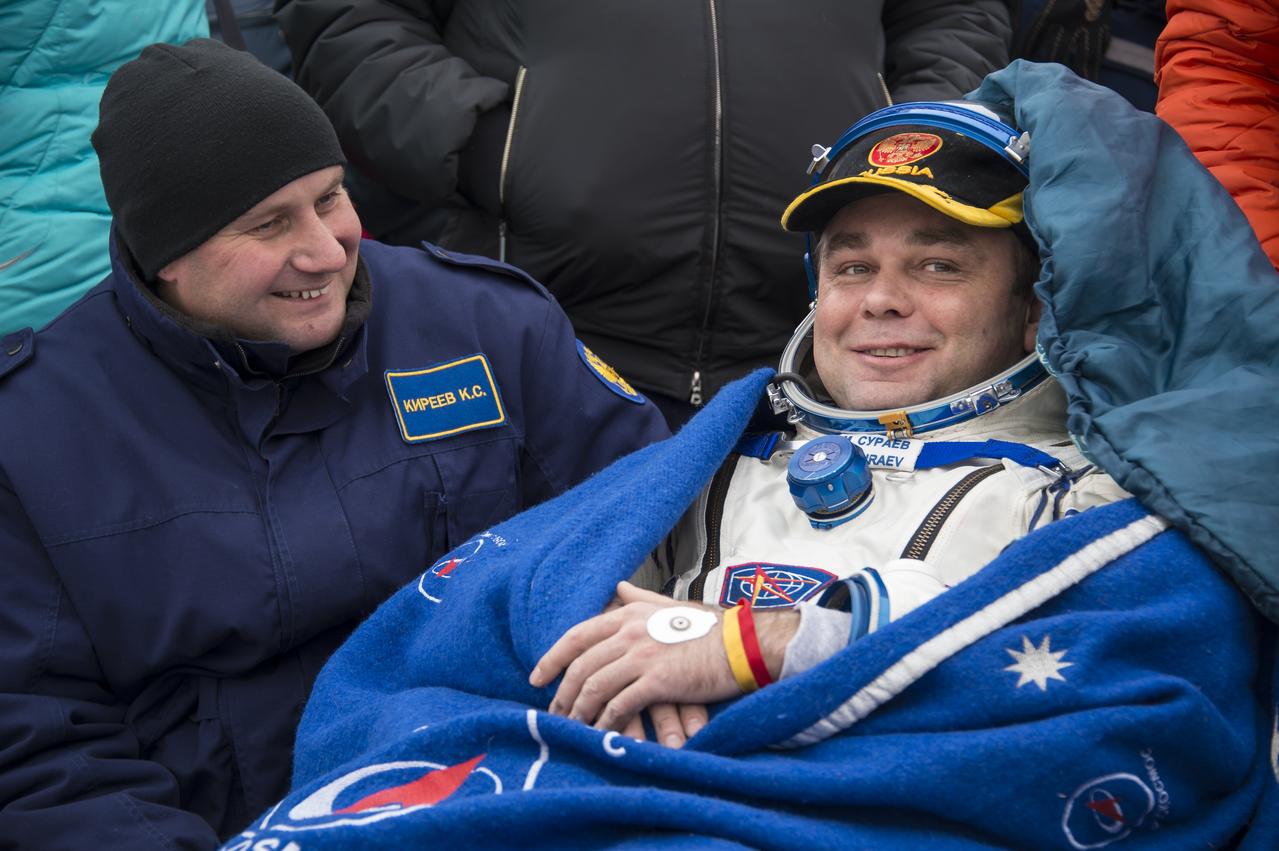
Expedition 41 Commander Max Suraev of the Russian Federal Space Agency (Roscosmos) rests in a chair outside the Soyuz Capsule just minutes after he and NASA Flight Engineer Reid Wiseman, and Flight Engineer Alexander Gerst of the European Space Agency (ESA) landed in their Soyuz TMA-13M capsule in a remote area near the town of Arkalyk, Kazakhstan on Monday, Nov. 10, 2014. Suraev, Wiseman and Gerst returned to Earth after more than five months onboard the International Space Station where they served as members of the Expedition 40 and 41 crews. Photo Credit: (NASA/Bill Ingalls)
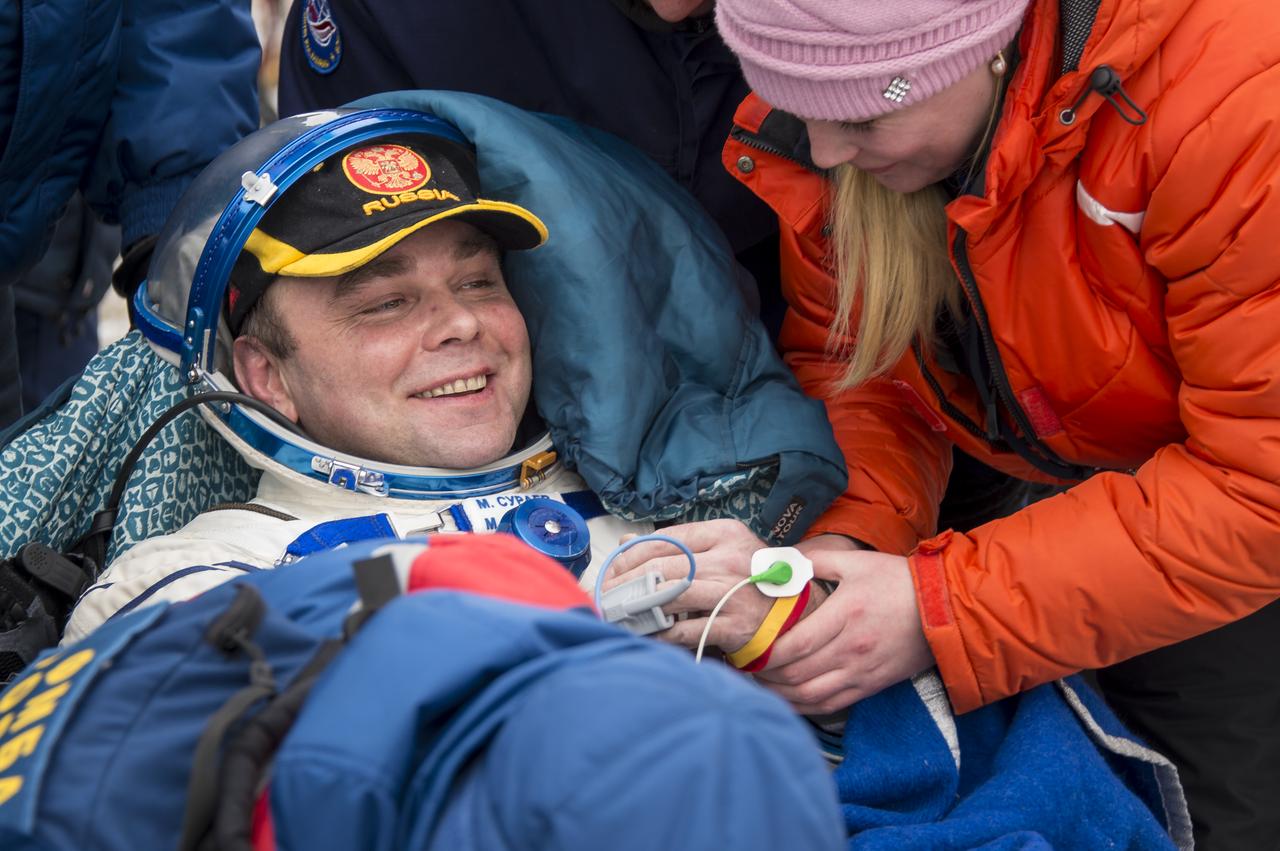
Expedition 41 Commander Max Suraev of the Russian Federal Space Agency (Roscosmos) rests in a chair outside the Soyuz Capsule just minutes after he and NASA Flight Engineer Reid Wiseman, and Flight Engineer Alexander Gerst of the European Space Agency (ESA) landed in their Soyuz TMA-13M capsule in a remote area near the town of Arkalyk, Kazakhstan on Monday, Nov. 10, 2014. Suraev, Wiseman and Gerst returned to Earth after more than five months onboard the International Space Station where they served as members of the Expedition 40 and 41 crews. Photo Credit: (NASA/Bill Ingalls)
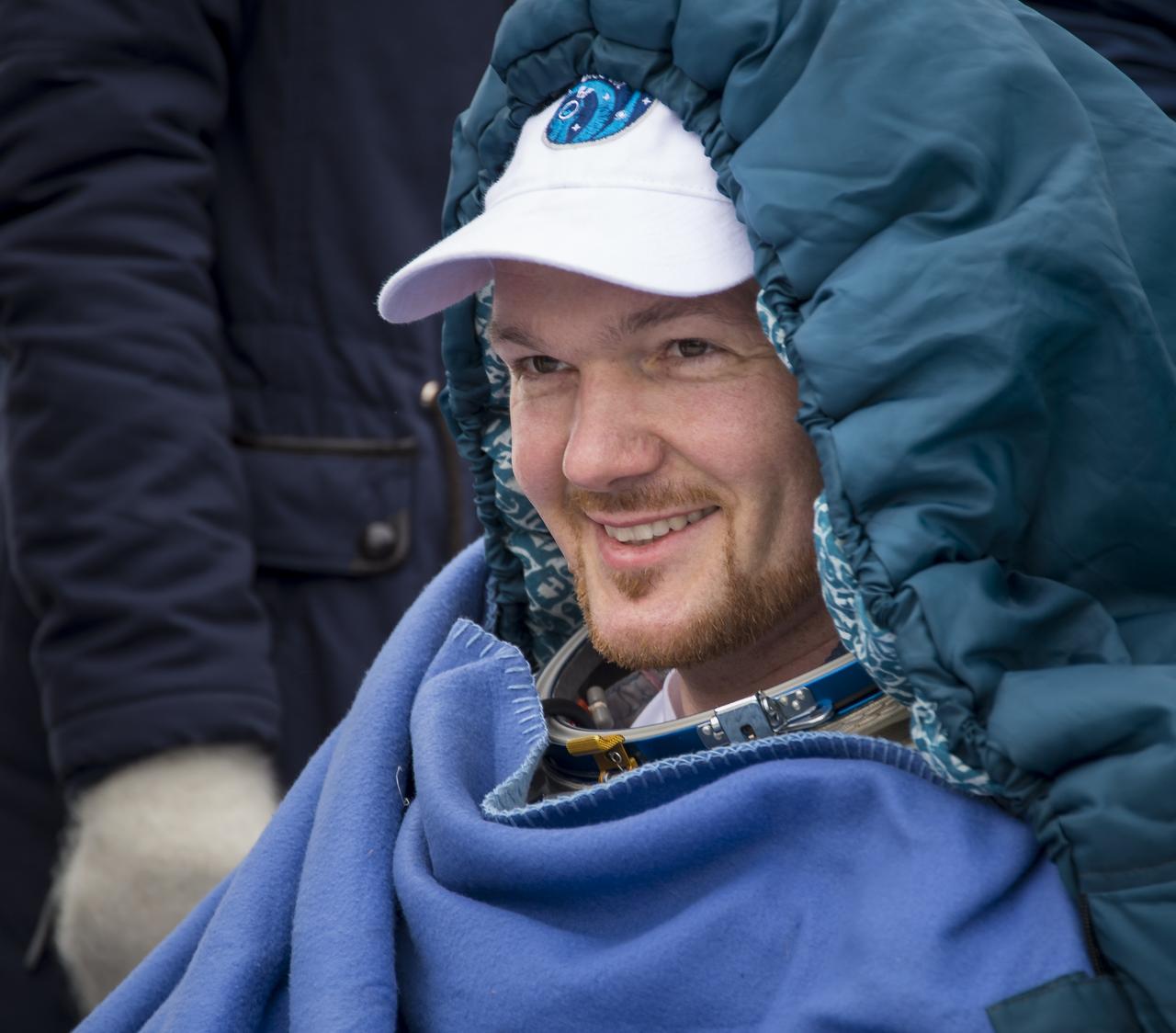
Expedition 41 Flight Engineer Alexander Gerst of the European Space Agency (ESA) rests in a chair outside the Soyuz Capsule just minutes after he and Expedition 41 Commander Max Suraev of the Russian Federal Space Agency (Roscosmos), and NASA Flight Engineer Reid Wiseman landed in their Soyuz TMA-13M capsule in a remote area near the town of Arkalyk, Kazakhstan on Monday, Nov. 10, 2014. Suraev, Wiseman and Gerst returned to Earth after more than five months onboard the International Space Station where they served as members of the Expedition 40 and 41 crews. Photo Credit: (NASA/Bill Ingalls)
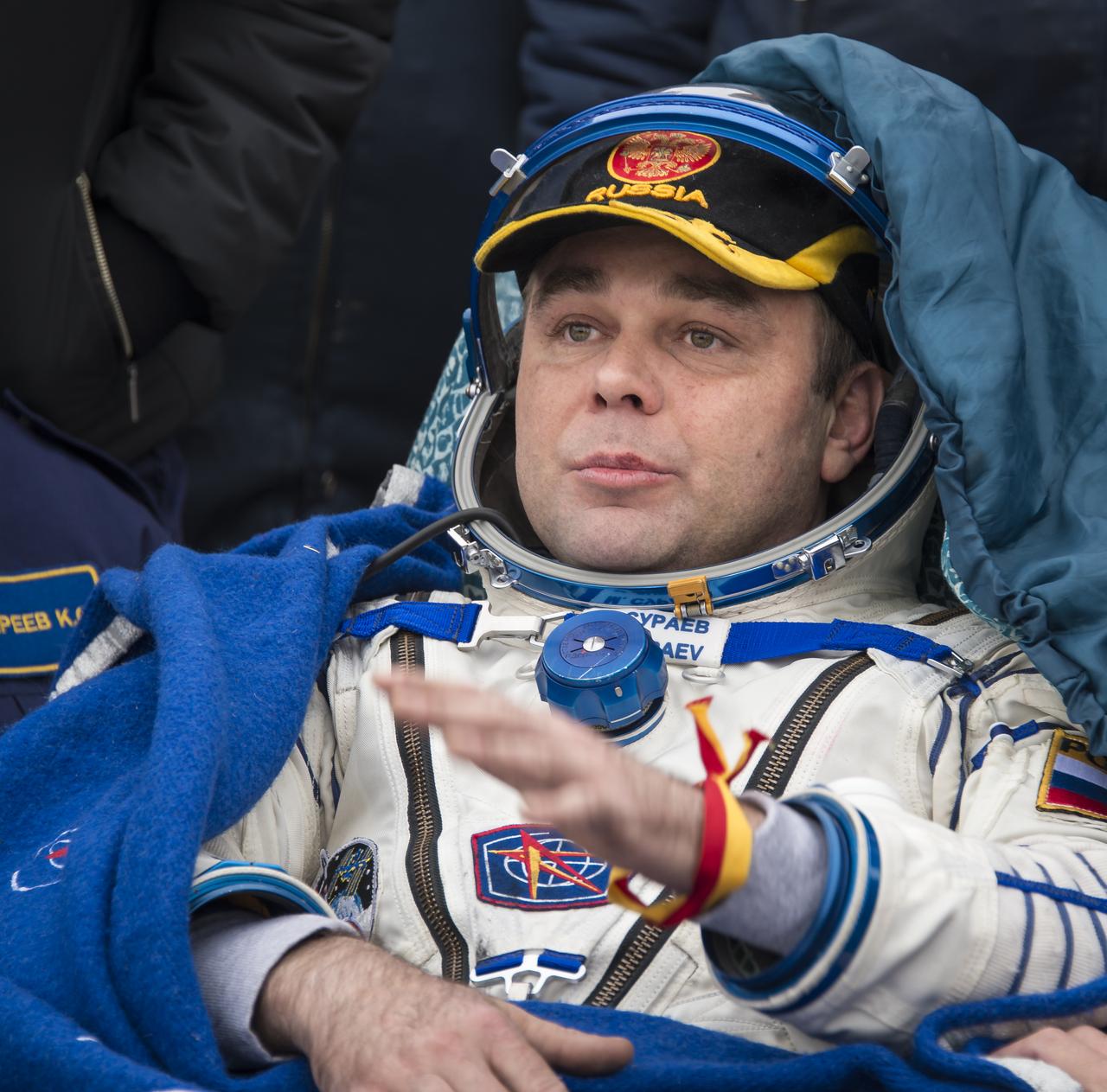
Expedition 41 Commander Max Suraev of the Russian Federal Space Agency (Roscosmos) rests in a chair outside the Soyuz Capsule just minutes after he and NASA Flight Engineer Reid Wiseman, and Flight Engineer Alexander Gerst of the European Space Agency (ESA) landed in their Soyuz TMA-13M capsule in a remote area near the town of Arkalyk, Kazakhstan on Monday, Nov. 10, 2014. Suraev, Wiseman and Gerst returned to Earth after more than five months onboard the International Space Station where they served as members of the Expedition 40 and 41 crews. Photo Credit: (NASA/Bill Ingalls)
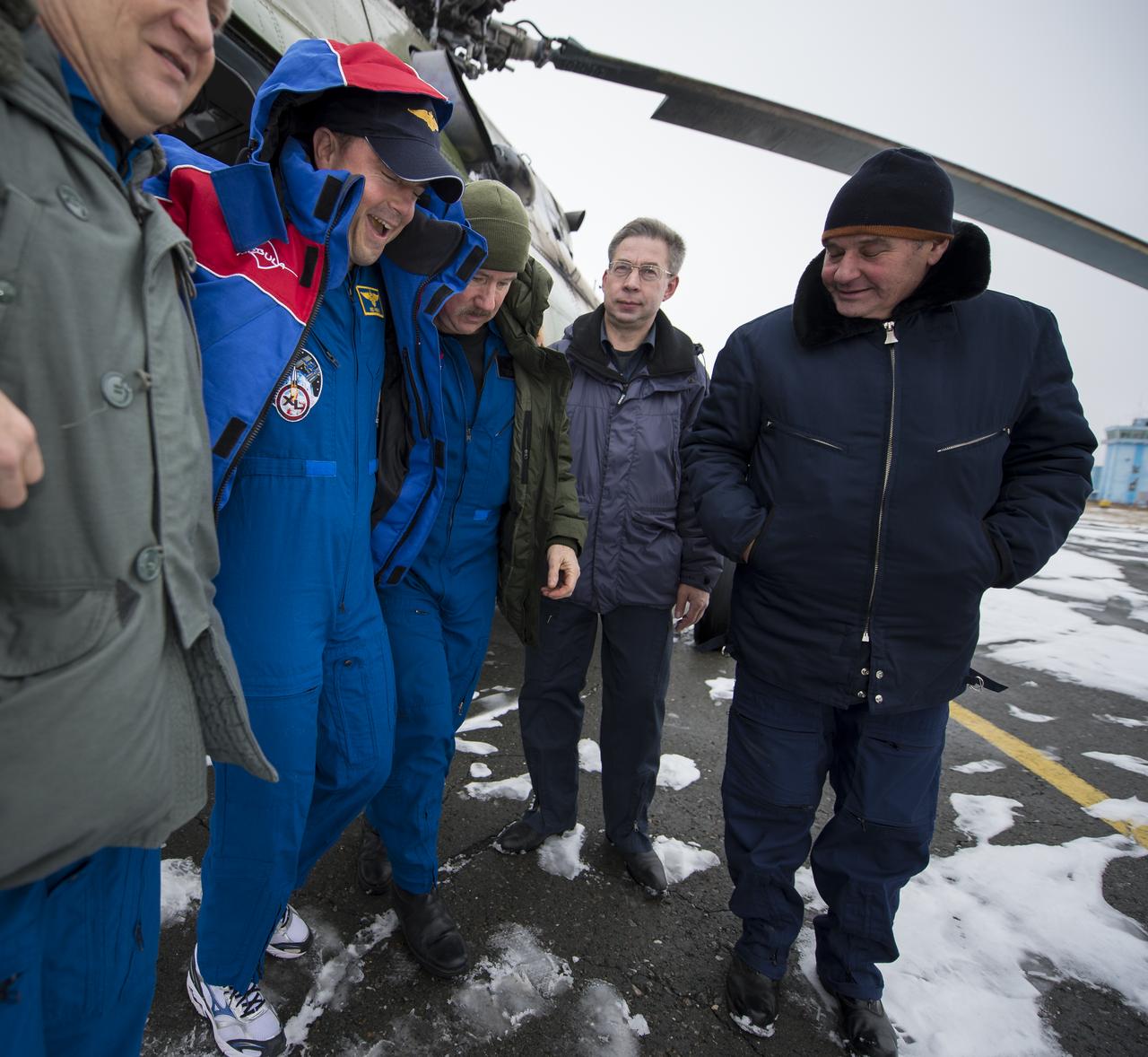
Expedition 41 Flight Engineer Reid Wiseman of NASA is helped out of a Russian search and rescue helicopter after being flown from his Soyuz TMA-13M spacecraft landing site near Arkalyk to Kustanay, Kazakhstan, Monday, Nov. 10, 2014. Wiseman landed in the soyuz capsule with Expedition 41 Commander Max Suraev of the Russian Federal Space Agency (Roscosmos) and Flight Engineer Alexander Gerst of the European Space Agency (ESA) a few hours earlier. Suraev, Wiseman and Gerst spent more than five months onboard the International Space Station where they served as members of the Expedition 40 and 41 crews. Photo Credit: (NASA/Bill Ingalls)
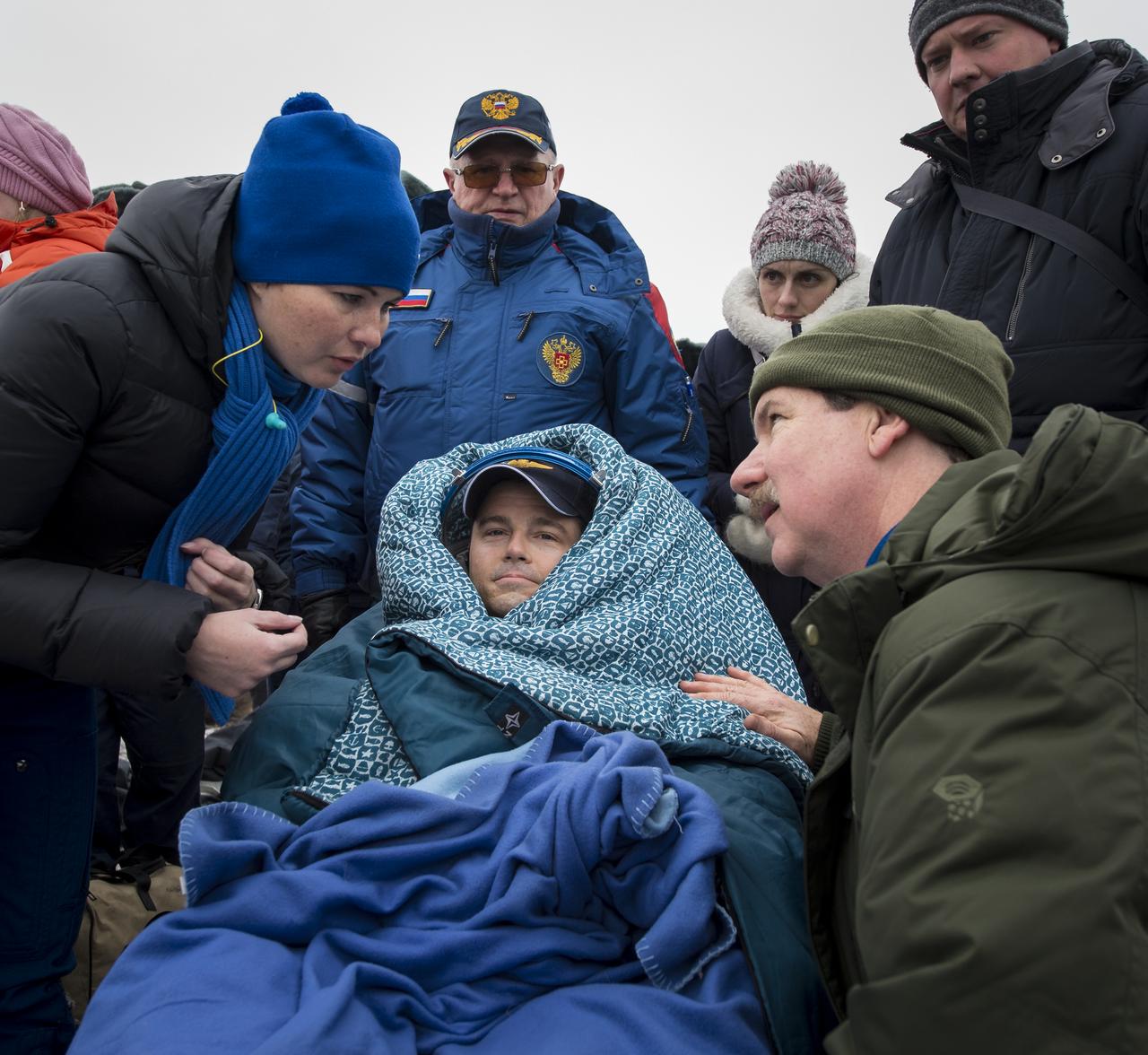
Expedition 41 Flight Engineer Reid Wiseman of NASA rests in a chair outside the Soyuz Capsule just minutes after he and Expedition 41 Commander Max Suraev of the Russian Federal Space Agency (Roscosmos) and Flight Engineer Alexander Gerst of the European Space Agency (ESA) landed in their Soyuz TMA-13M capsule in a remote area near the town of Arkalyk, Kazakhstan on Monday, Nov. 10, 2014. Suraev, Wiseman and Gerst returned to Earth after more than five months onboard the International Space Station where they served as members of the Expedition 40 and 41 crews. Photo Credit: (NASA/Bill Ingalls)
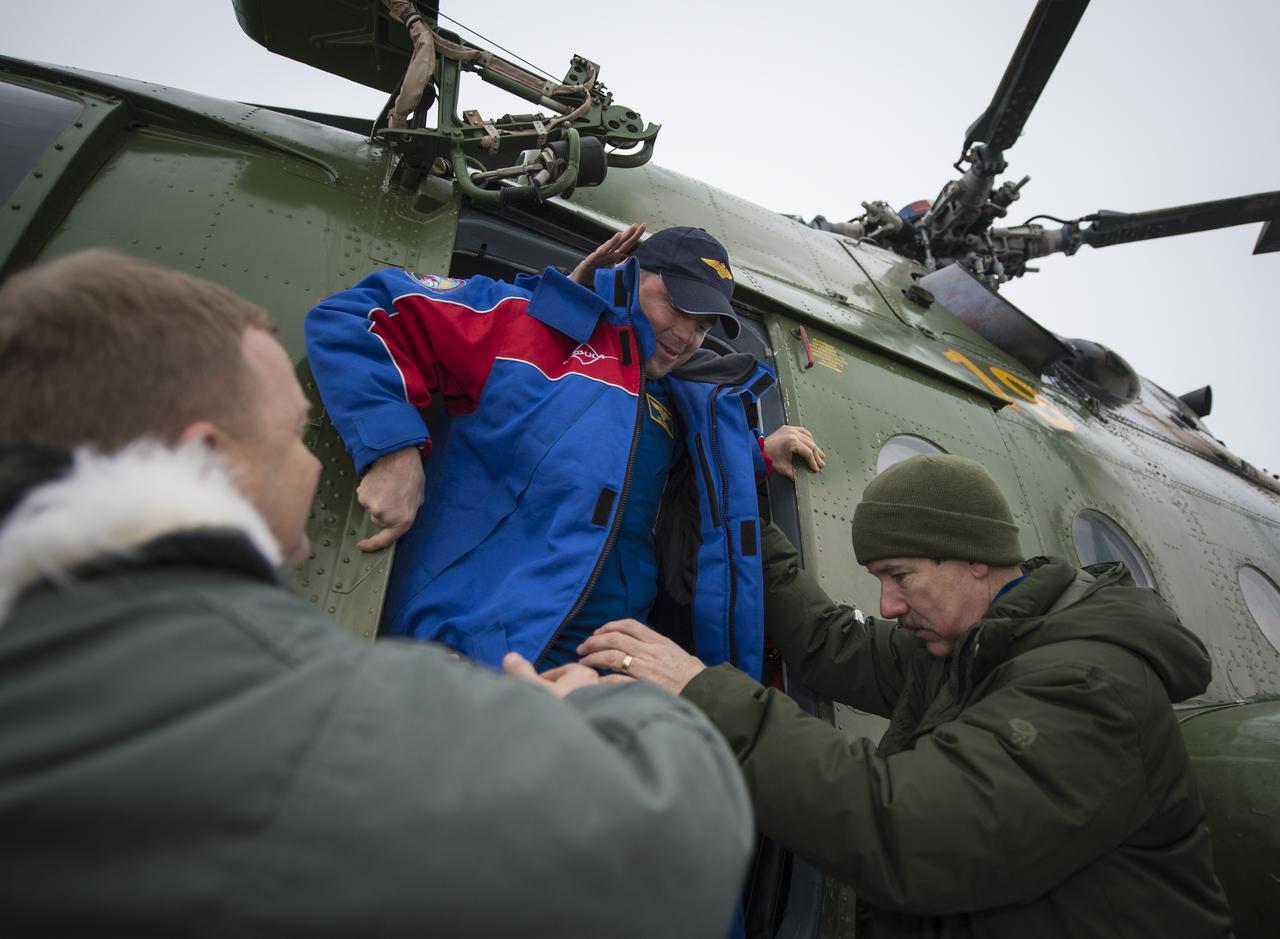
Expedition 41 Flight Engineer Reid Wiseman of NASA is helped out of a Russian search and rescue helicopter after being flown from his Soyuz TMA-13M spacecraft landing site near Arkalyk to Kustanay, Kazakhstan, Monday, Nov. 10, 2014. Wiseman landed in the soyuz capsule with Expedition 41 Commander Max Suraev of the Russian Federal Space Agency (Roscosmos) and Flight Engineer Alexander Gerst of the European Space Agency (ESA) a few hours earlier. Suraev, Wiseman and Gerst spent more than five months onboard the International Space Station where they served as members of the Expedition 40 and 41 crews. Photo Credit: (NASA/Bill Ingalls)
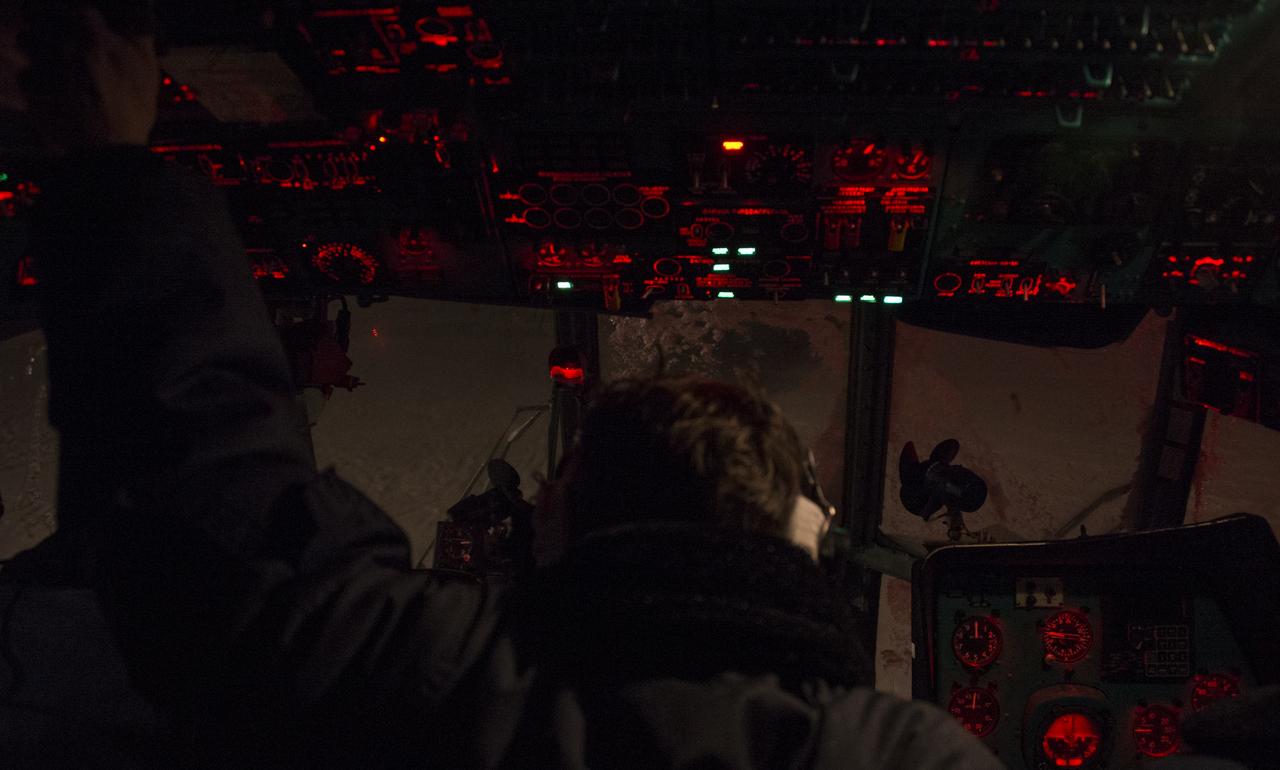
A Russian search and rescue helicopter crew waits for the weather to clear before taking off from Kustanay, Kazakhstan to support the Soyuz TMA-13M spacecraft landing with Expedition 41 Commander Max Suraev of the Russian Federal Space Agency (Roscosmos), NASA Flight Engineer Reid Wiseman and Flight Engineer Alexander Gerst of the European Space Agency (ESA) on Monday, Nov. 10, 2014. Suraev, Wiseman and Gerst returned to Earth after more than five months onboard the International Space Station where they served as members of the Expedition 40 and 41 crews. Photo Credit: (NASA/Bill Ingalls)
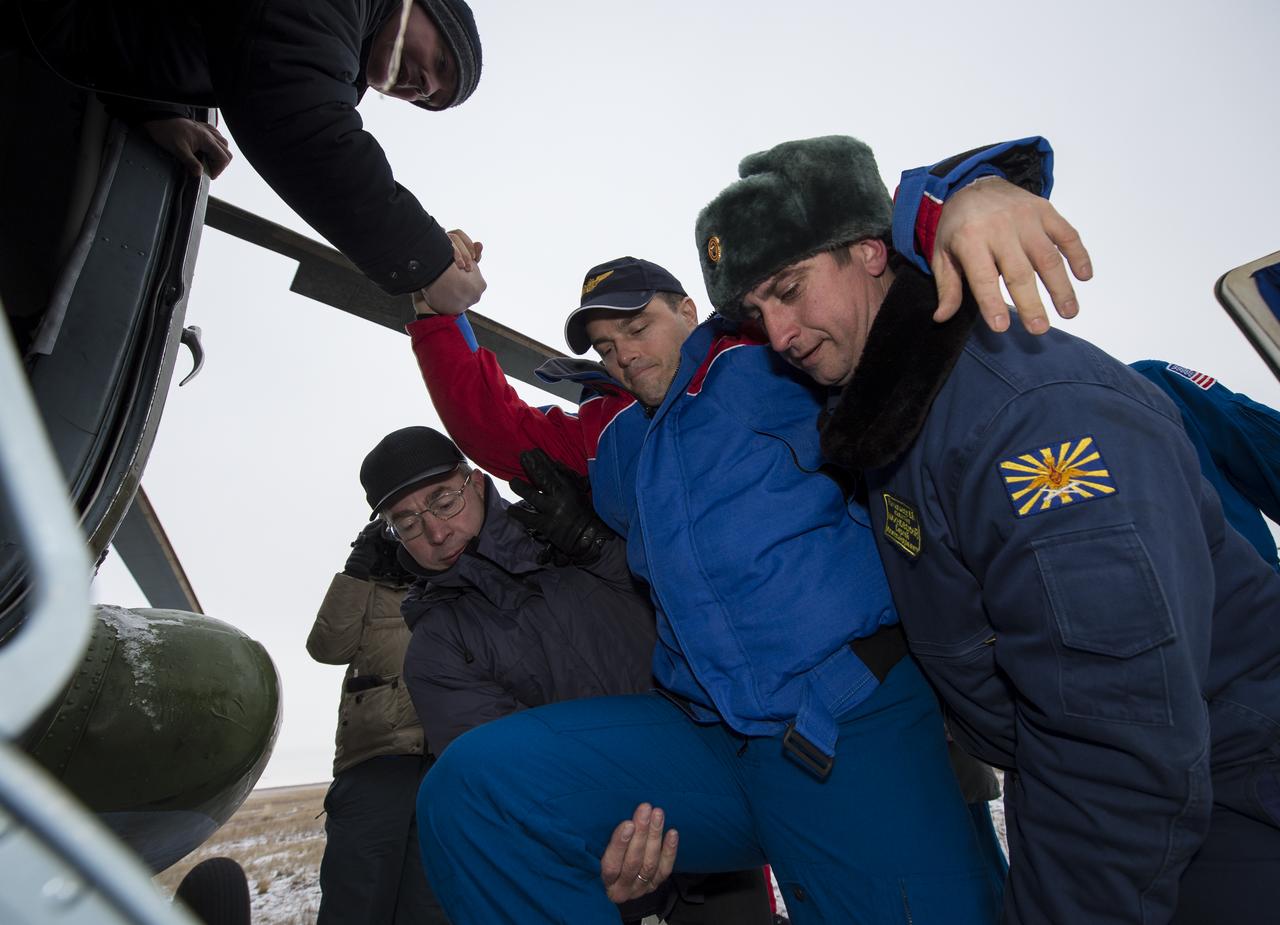
Expedition 41 Flight Engineer Reid Wiseman of NASA is helped from a Russian search and rescue all terrain vehicle (ATV) to his awaiting helicopter after he and Expedition 41 Commander Max Suraev of the Russian Federal Space Agency (Roscosmos) and Flight Engineer Alexander Gerst of the European Space Agency (ESA) landed in their Soyuz TMA-13M capsule in a remote area near the town of Arkalyk, Kazakhstan on Monday, Nov. 10, 2014. Suraev, Wiseman and Gerst returned to Earth after more than five months onboard the International Space Station where they served as members of the Expedition 40 and 41 crews. Photo Credit: (NASA/Bill Ingalls)
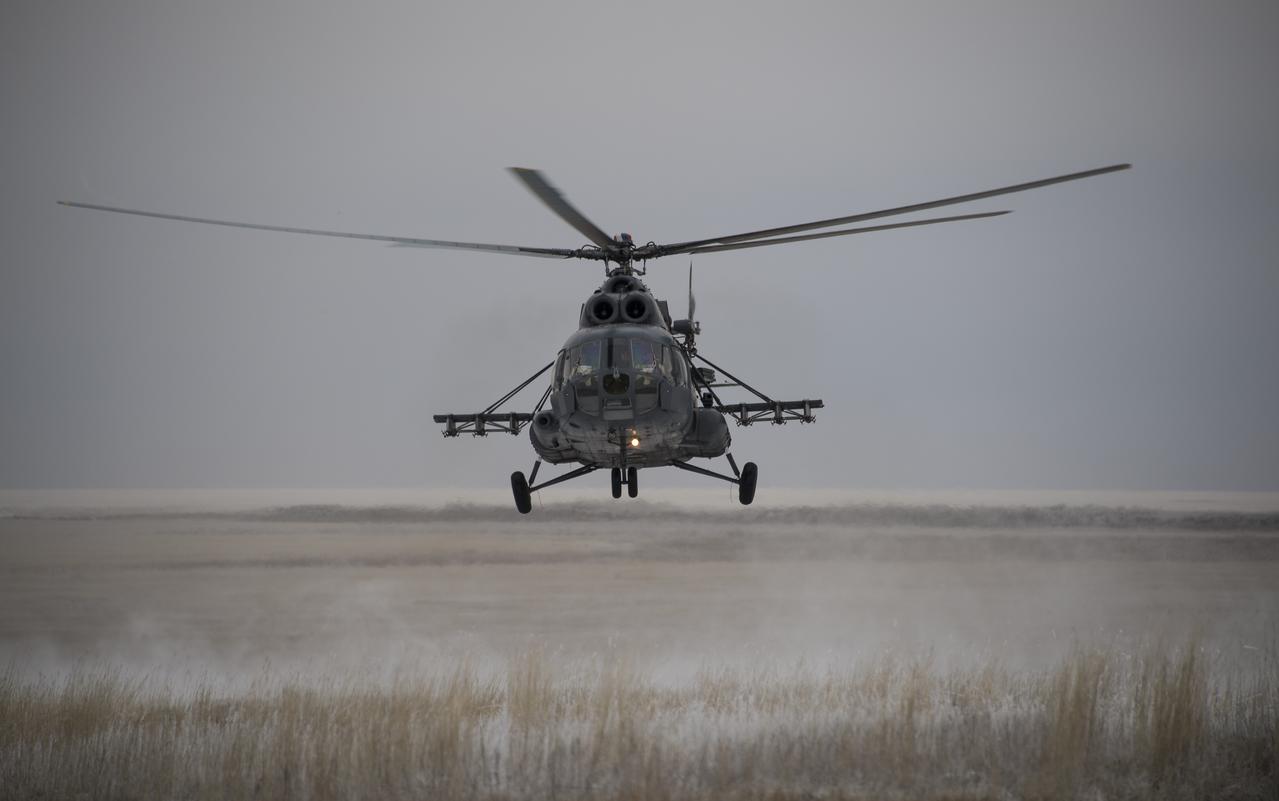
A Russian search and rescue helicopter arrives at the Soyuz TMA-13M spacecraft landing site after the capsule landed with Expedition 41 Commander Max Suraev of the Russian Federal Space Agency (Roscosmos), NASA Flight Engineer Reid Wiseman and Flight Engineer Alexander Gerst of the European Space Agency (ESA) near the town of Arkalyk, Kazakhstan on Monday, Nov. 10, 2014. Suraev, Wiseman and Gerst returned to Earth after more than five months onboard the International Space Station where they served as members of the Expedition 40 and 41 crews. Photo Credit: (NASA/Bill Ingalls)
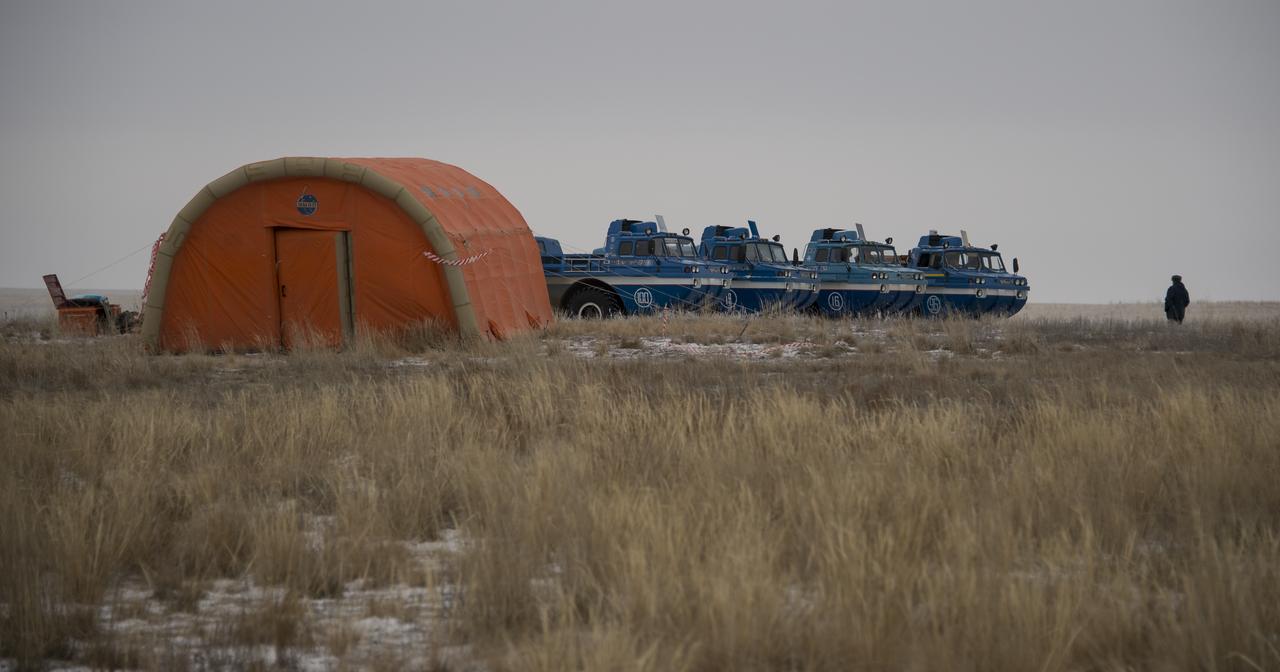
Russian search and rescue all terrain vehicles (ATV) are seen parked outside the portable medical tent following the Soyuz TMA-13M spacecraft landing with Expedition 41 Commander Max Suraev of the Russian Federal Space Agency (Roscosmos), NASA Flight Engineer Reid Wiseman and Flight Engineer Alexander Gerst of the European Space Agency (ESA) near the town of Arkalyk, Kazakhstan on Monday, Nov. 10, 2014. Suraev, Wiseman and Gerst returned to Earth after more than five months onboard the International Space Station where they served as members of the Expedition 40 and 41 crews. Photo Credit: (NASA/Bill Ingalls)
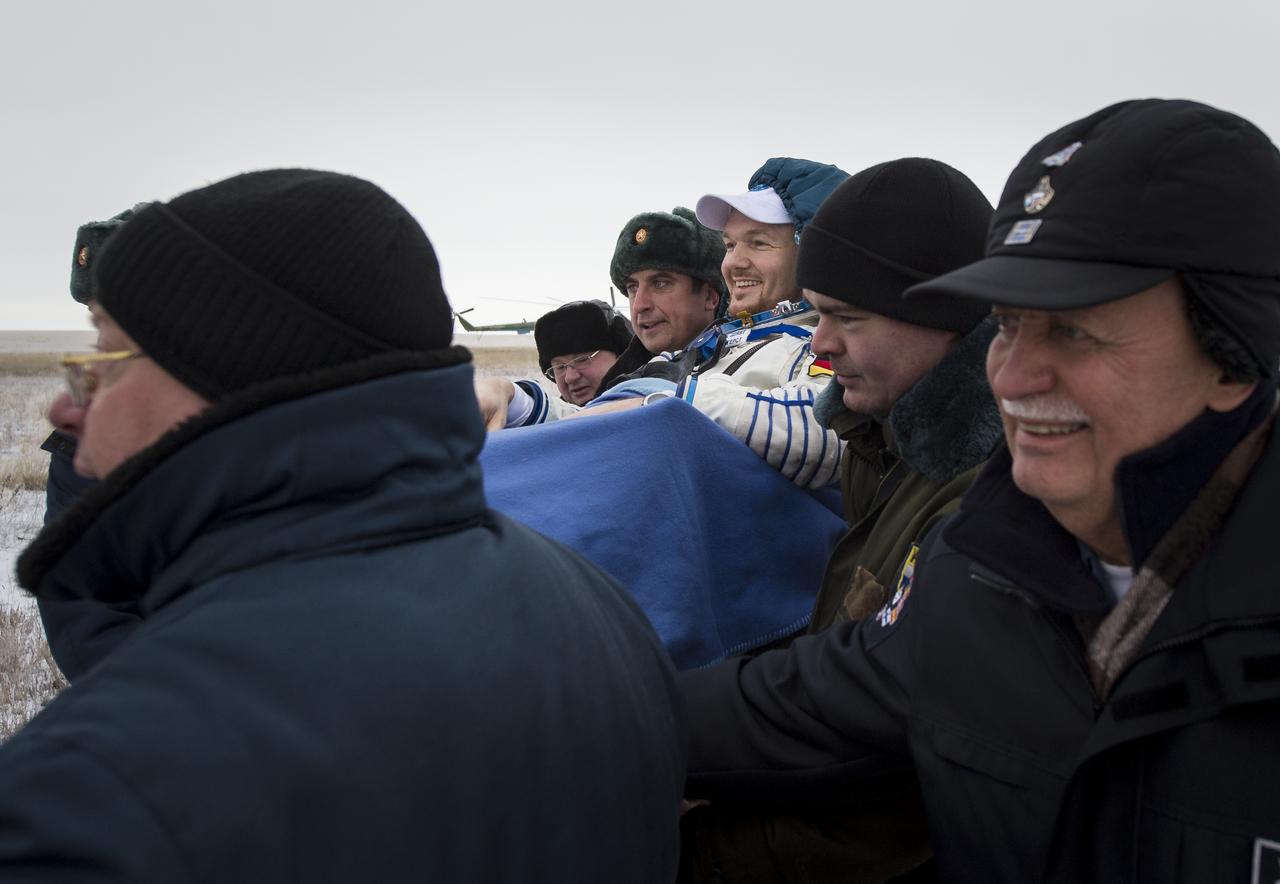
Expedition 41 Flight Engineer Alexander Gerst of the European Space Agency (ESA) is carried in a chair to a medical tent after he and Expedition 41 Commander Max Suraev of the Russian Federal Space Agency (Roscosmos), and NASA Flight Engineer Reid Wiseman landed in their Soyuz TMA-13M capsule in a remote area near the town of Arkalyk, Kazakhstan on Monday, Nov. 10, 2014. Suraev, Wiseman and Gerst returned to Earth after more than five months onboard the International Space Station where they served as members of the Expedition 40 and 41 crews. Photo Credit: (NASA/Bill Ingalls)
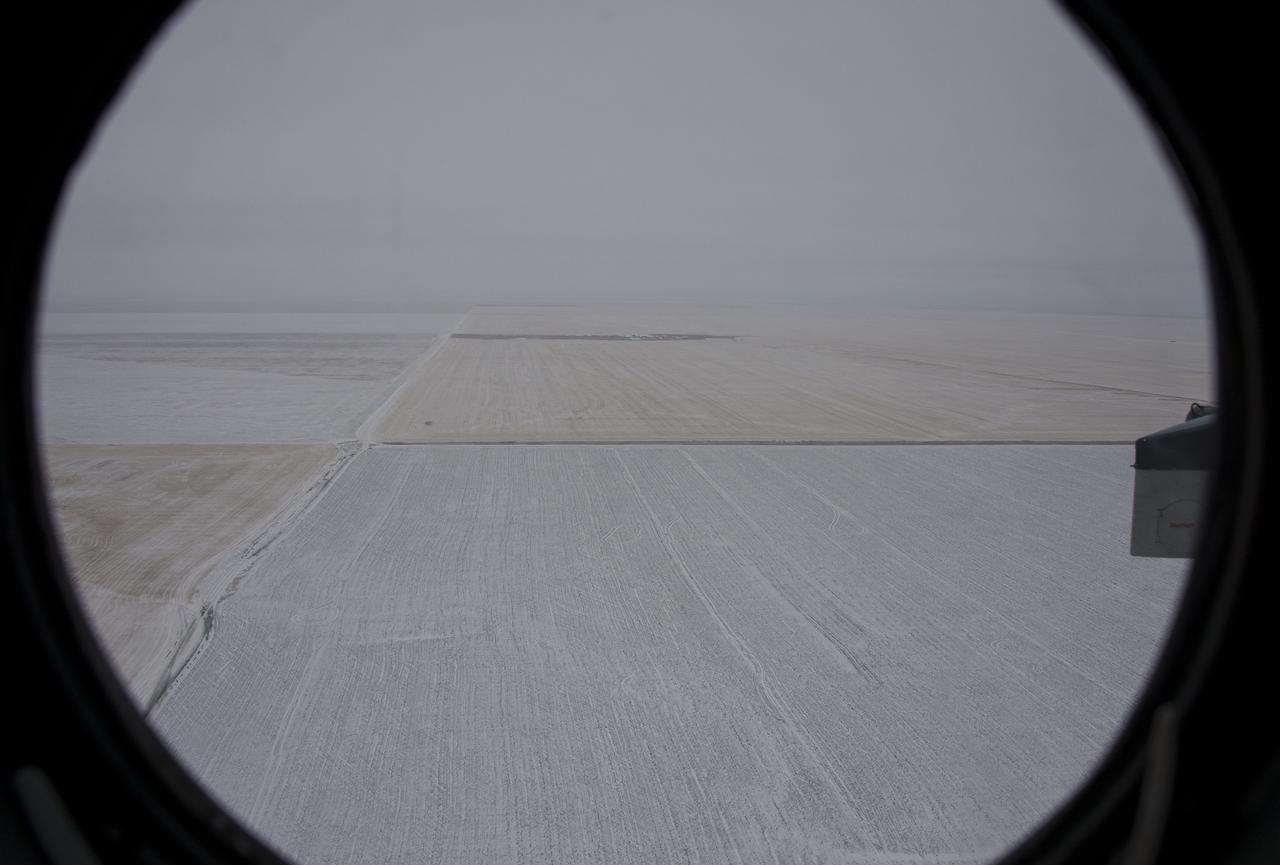
View of snow covered fields in Kazakhstan is seen from a Russian search and rescue helicopter as it flies from Kustanay, Kazakhstan to support the Soyuz TMA-13M spacecraft landing with Expedition 41 Commander Max Suraev of the Russian Federal Space Agency (Roscosmos), NASA Flight Engineer Reid Wiseman and Flight Engineer Alexander Gerst of the European Space Agency (ESA) on Monday, Nov. 10, 2014. Suraev, Wiseman and Gerst returned to Earth after more than five months onboard the International Space Station where they served as members of the Expedition 40 and 41 crews. Photo Credit: (NASA/Bill Ingalls)
A Russian search and rescue all terrain vehicle (ATV) drives Expedition 41 Flight Engineer Alexander Gerst of the European Space Agency (ESA) from the medical tent to his awaiting helicopter after he and Expedition 41 Commander Max Suraev of the Russian Federal Space Agency (Roscosmos), and NASA Flight Engineer Reid Wiseman landed in their Soyuz TMA-13M capsule in a remote area near the town of Arkalyk, Kazakhstan on Monday, Nov. 10, 2014. Suraev, Wiseman and Gerst returned to Earth after more than five months onboard the International Space Station where they served as members of the Expedition 40 and 41 crews. Photo Credit: (NASA/Bill Ingalls)
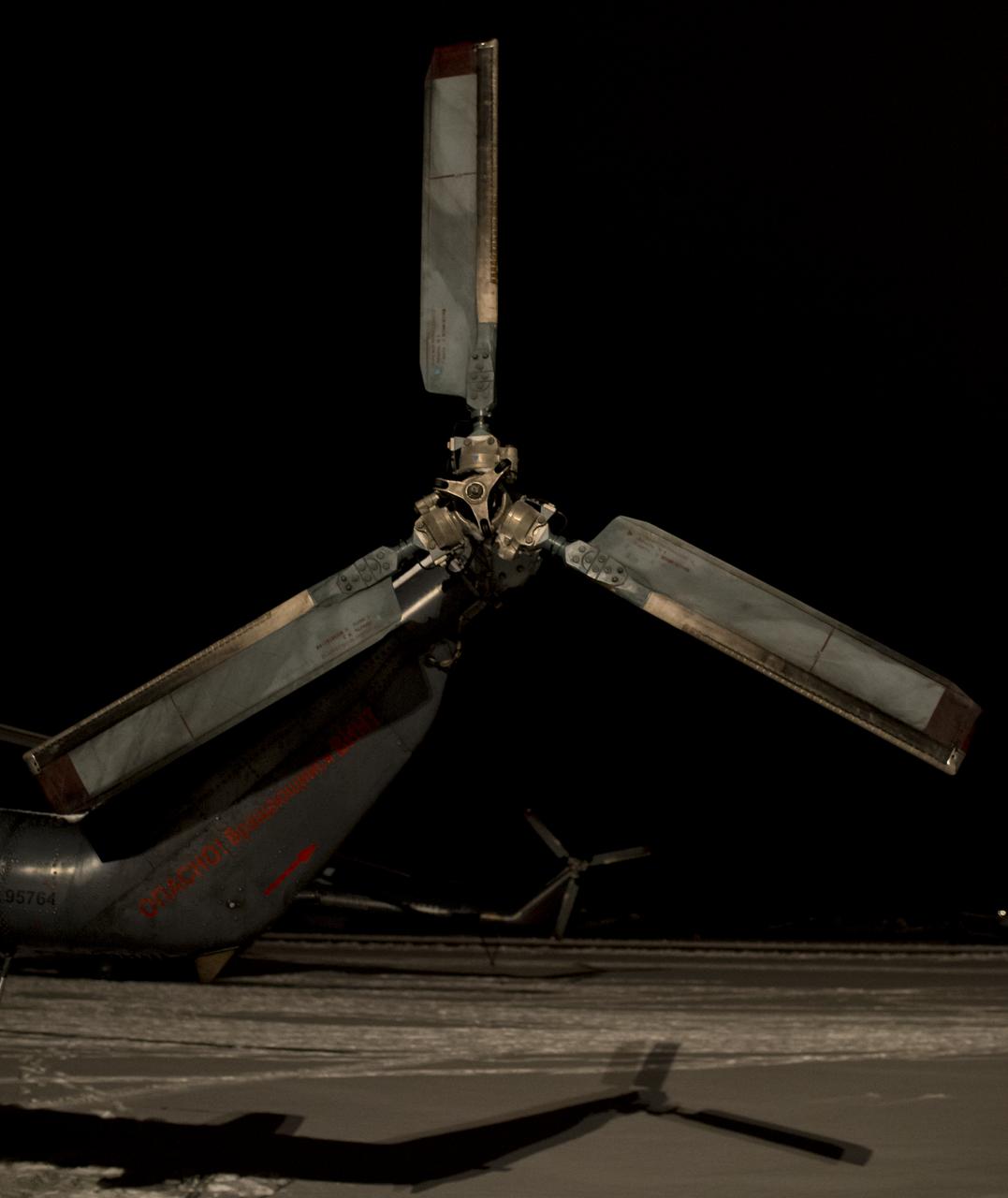
Russian Search and Rescue helicopter tail rotors are seen as teams wait to take off from Kustanay, Kazakhstan to support the Soyuz TMA-13M spacecraft landing with Expedition 41 Commander Max Suraev of the Russian Federal Space Agency (Roscosmos), NASA Flight Engineer Reid Wiseman and Flight Engineer Alexander Gerst of the European Space Agency (ESA) on Monday, Nov. 10, 2014. Suraev, Wiseman and Gerst returned to Earth after more than five months onboard the International Space Station where they served as members of the Expedition 40 and 41 crews. Photo Credit: (NASA/Bill Ingalls)
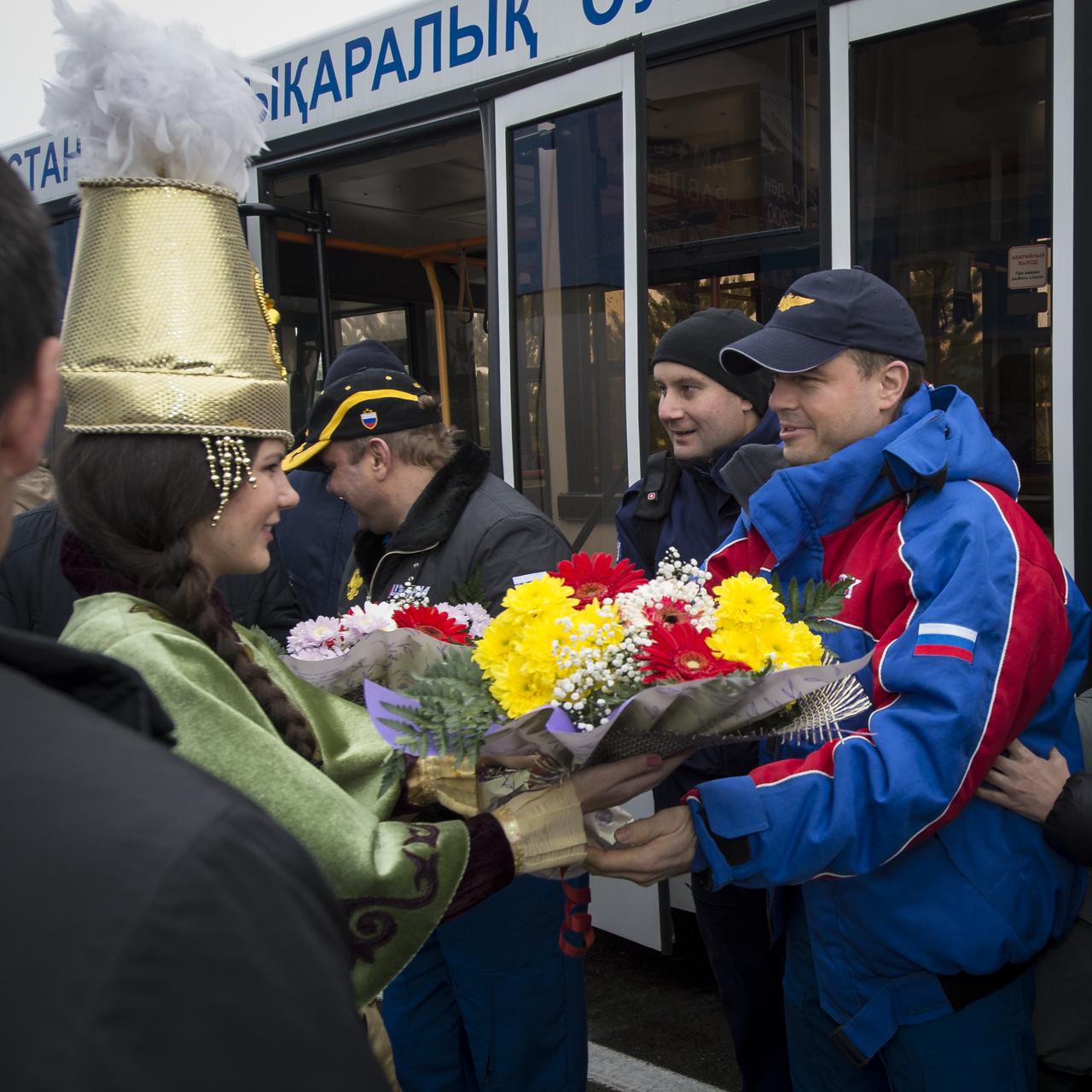
A woman in ceremonial Kazakh dress presents flowers to Expedition 41 Flight Engineer Reid Wiseman of NASA at the Kustanay Airport after he and Expedition 41 Commander Max Suraev of the Russian Federal Space Agency (Roscosmos) and Flight Engineer Alexander Gerst of the European Space Agency (ESA) landed in their Soyuz TMA-13M capsule in a remote area near the town of Arkalyk, Kazakhstan on Monday, Nov. 10, 2014. Suraev, Wiseman and Gerst returned to Earth after more than five months onboard the International Space Station where they served as members of the Expedition 40 and 41 crews. Photo Credit: (NASA/Bill Ingalls)
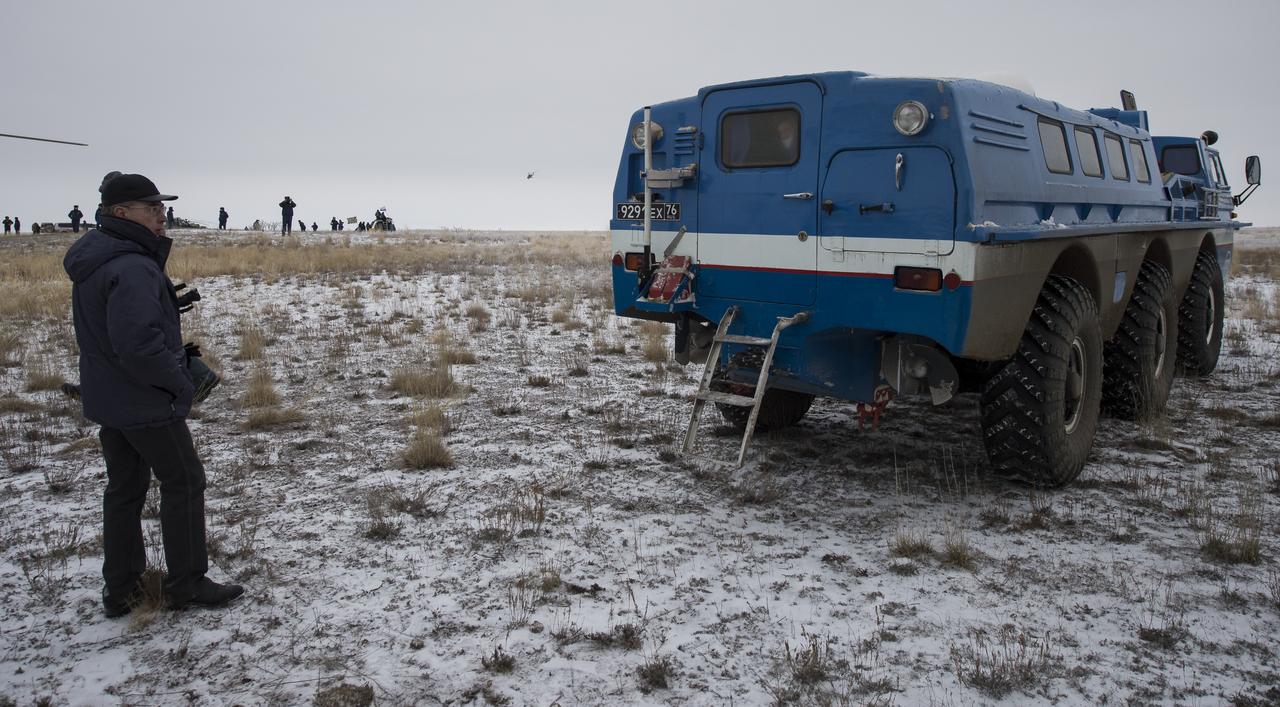
A Russian search and rescue all terrain vehicle (ATV) drives Expedition 41 Flight Engineer Reid Wiseman of NASA from the medical tent to his awaiting helicopter after he and Expedition 41 Commander Max Suraev of the Russian Federal Space Agency (Roscosmos) and Flight Engineer Alexander Gerst of the European Space Agency (ESA) landed in their Soyuz TMA-13M capsule in a remote area near the town of Arkalyk, Kazakhstan on Monday, Nov. 10, 2014. Suraev, Wiseman and Gerst returned to Earth after more than five months onboard the International Space Station where they served as members of the Expedition 40 and 41 crews. Photo Credit: (NASA/Bill Ingalls)
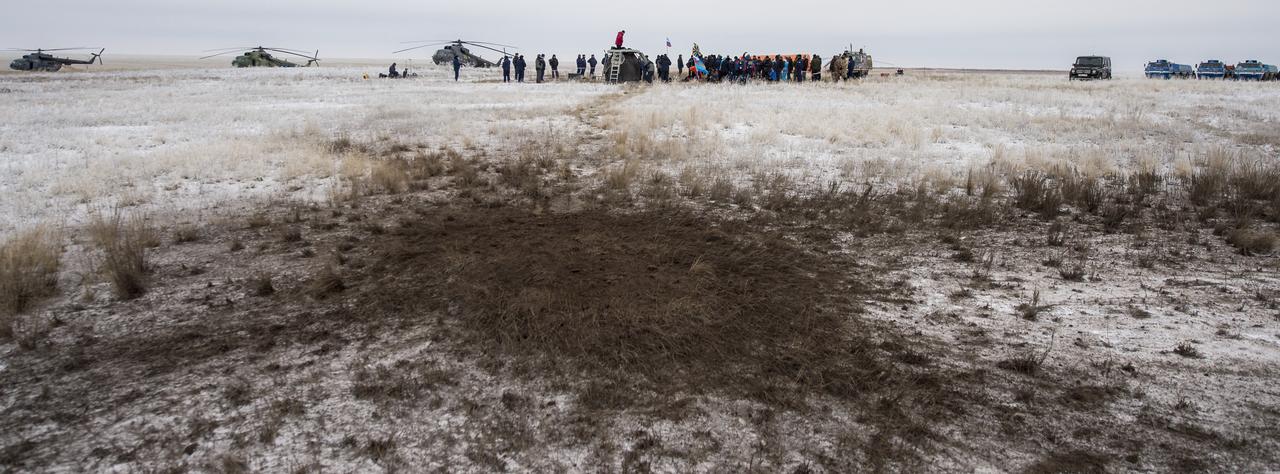
The ground where the Soyuz TMA-13M spacecraft landed, and then was dragged by it’s parachute, is seen after the capsule landed with Expedition 41 Commander Max Suraev of the Russian Federal Space Agency (Roscosmos), NASA Flight Engineer Reid Wiseman and Flight Engineer Alexander Gerst of the European Space Agency (ESA) near the town of Arkalyk, Kazakhstan on Monday, Nov. 10, 2014. Suraev, Wiseman and Gerst returned to Earth after more than five months onboard the International Space Station where they served as members of the Expedition 40 and 41 crews. Photo Credit: (NASA/Bill Ingalls)
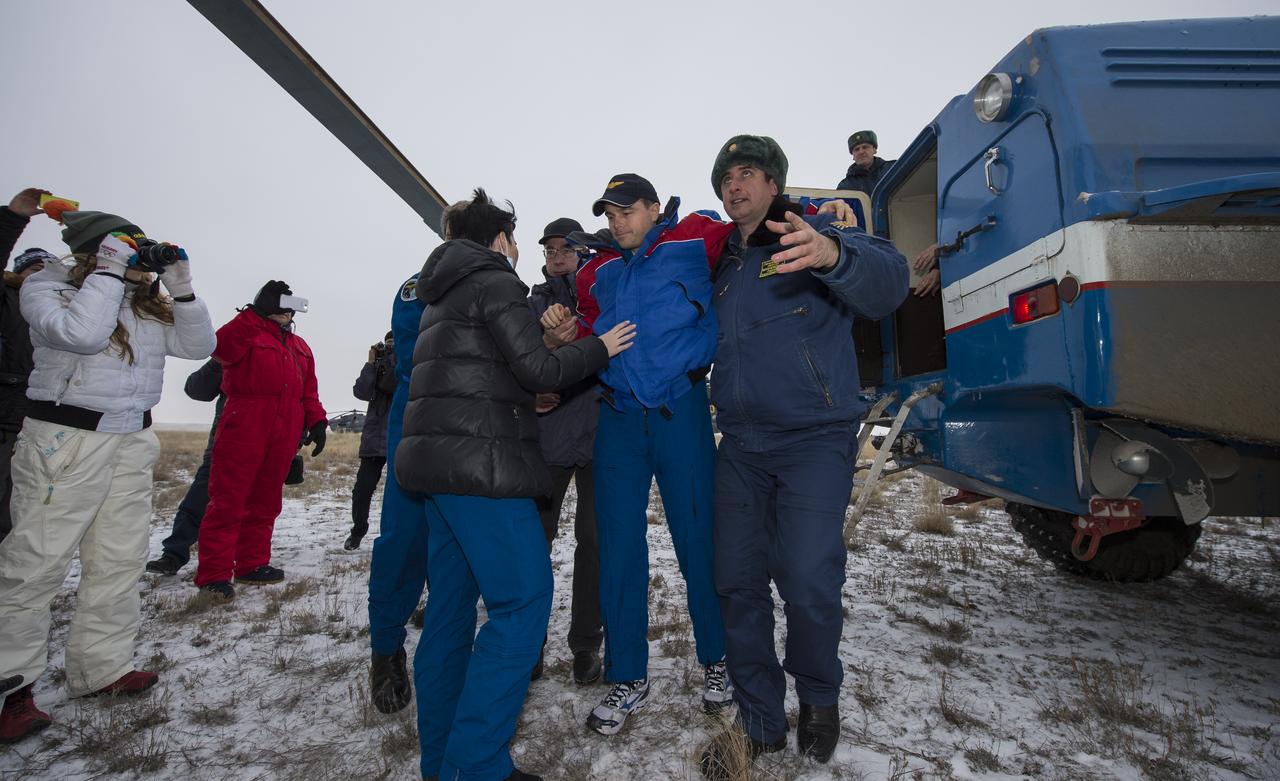
Expedition 41 Flight Engineer Reid Wiseman of NASA is helped from a Russian search and rescue all terrain vehicle (ATV) to his awaiting helicopter after he and Expedition 41 Commander Max Suraev of the Russian Federal Space Agency (Roscosmos) and Flight Engineer Alexander Gerst of the European Space Agency (ESA) landed in their Soyuz TMA-13M capsule in a remote area near the town of Arkalyk, Kazakhstan on Monday, Nov. 10, 2014. Suraev, Wiseman and Gerst returned to Earth after more than five months onboard the International Space Station where they served as members of the Expedition 40 and 41 crews. Photo Credit: (NASA/Bill Ingalls)
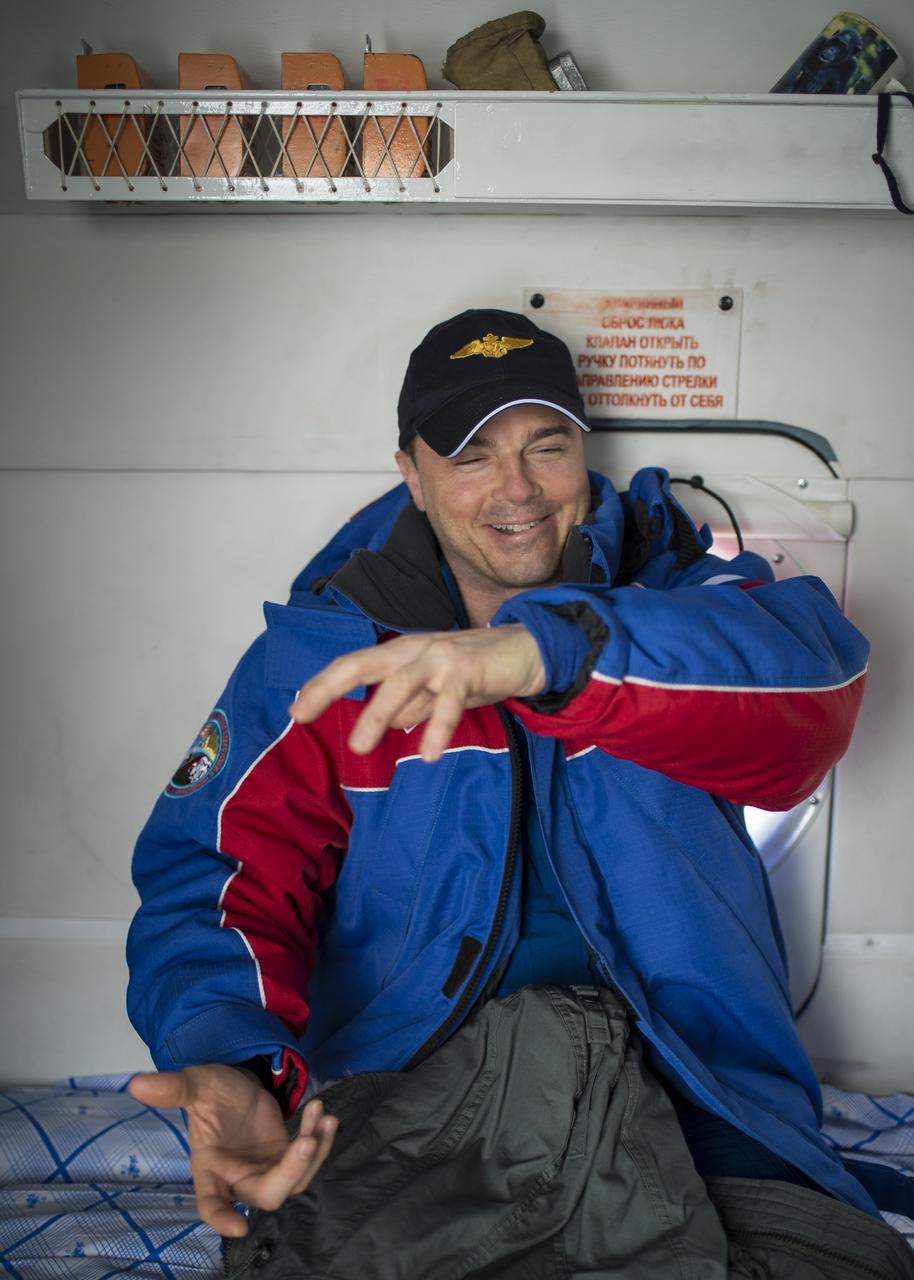
Expedition 41 Flight Engineer Reid Wiseman of NASA sits in a Russian search and rescue helicopter and describes how he felt his Soyuz TMA-13M spacecraft being pulled over by the parachutes after it landed with he and Expedition 41 Commander Max Suraev of the Russian Federal Space Agency (Roscosmos) and Flight Engineer Alexander Gerst of the European Space Agency (ESA) in a remote area near the town of Arkalyk, Kazakhstan on Monday, Nov. 10, 2014. Suraev, Wiseman and Gerst returned to Earth after more than five months onboard the International Space Station where they served as members of the Expedition 40 and 41 crews. Photo Credit: (NASA/Bill Ingalls)
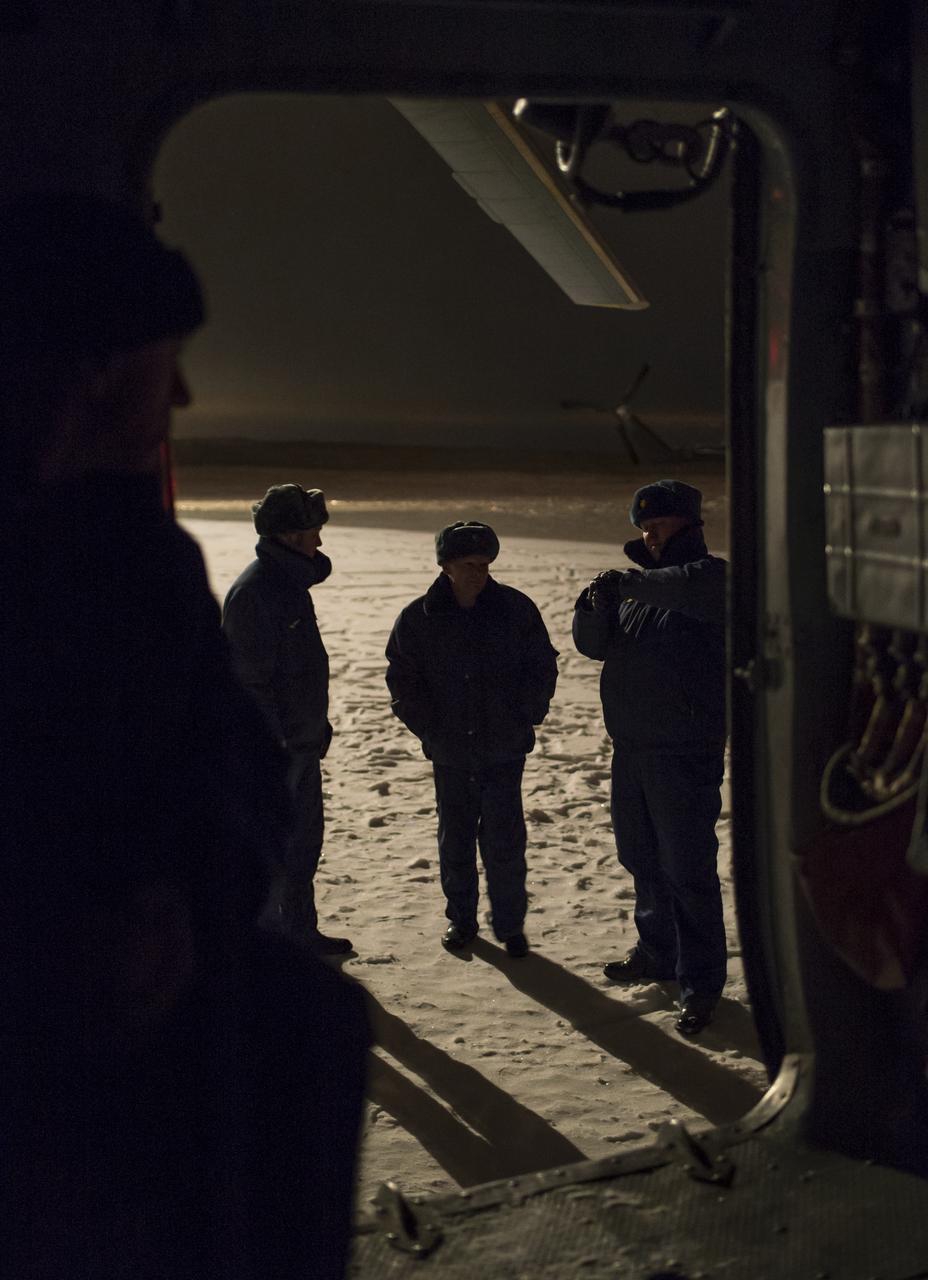
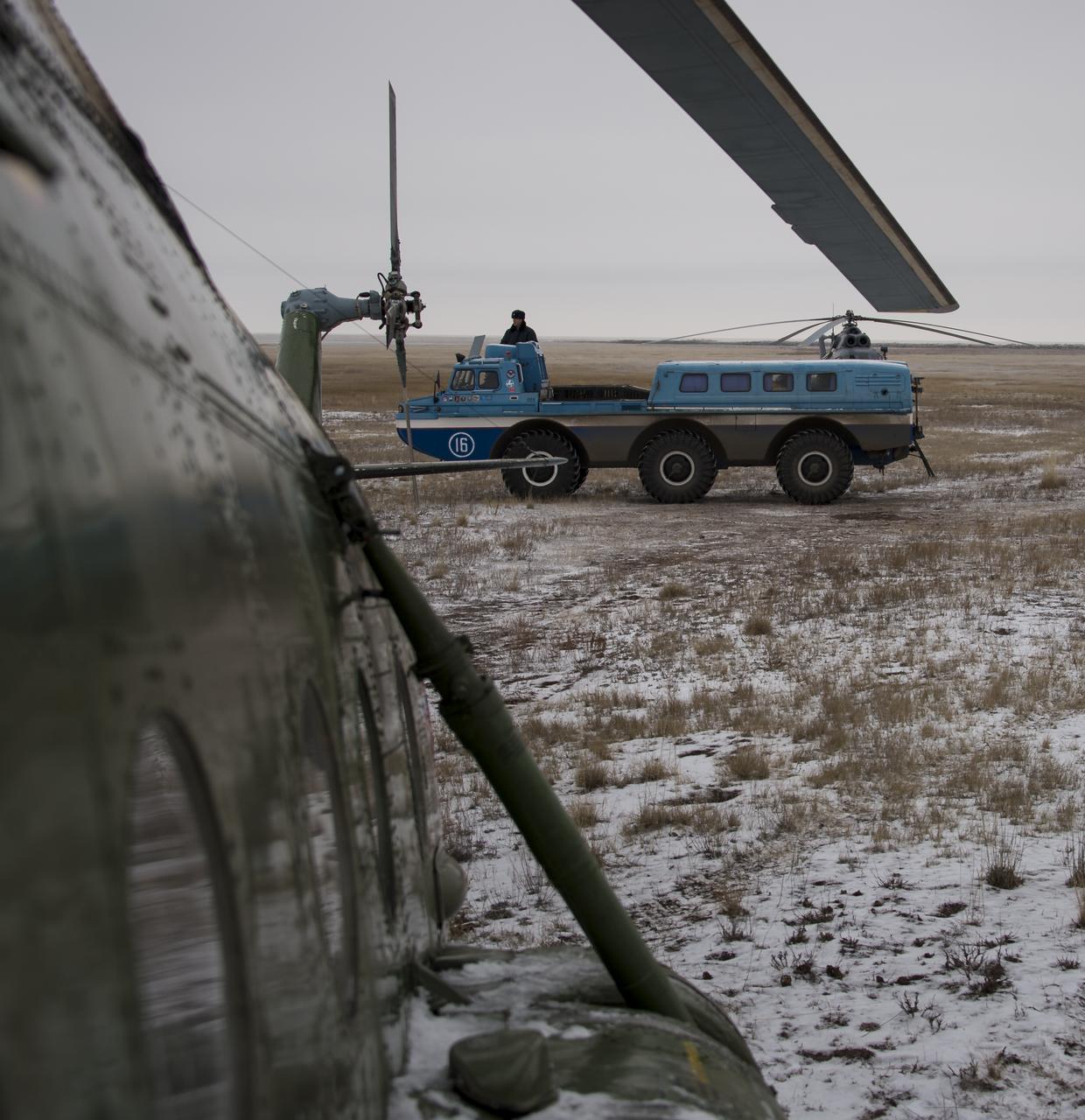
Russian Search and Rescue helicopter teams are seen waiting to take off in their helicopter from Kustanay, Kazakhstan to support the Soyuz TMA-13M spacecraft landing with Expedition 41 Commander Max Suraev of the Russian Federal Space Agency (Roscosmos), NASA Flight Engineer Reid Wiseman and Flight Engineer Alexander Gerst of the European Space Agency (ESA) on Monday, Nov. 10, 2014. Suraev, Wiseman and Gerst returned to Earth after more than five months onboard the International Space Station where they served as members of the Expedition 40 and 41 crews. Photo Credit: (NASA/Bill Ingalls)
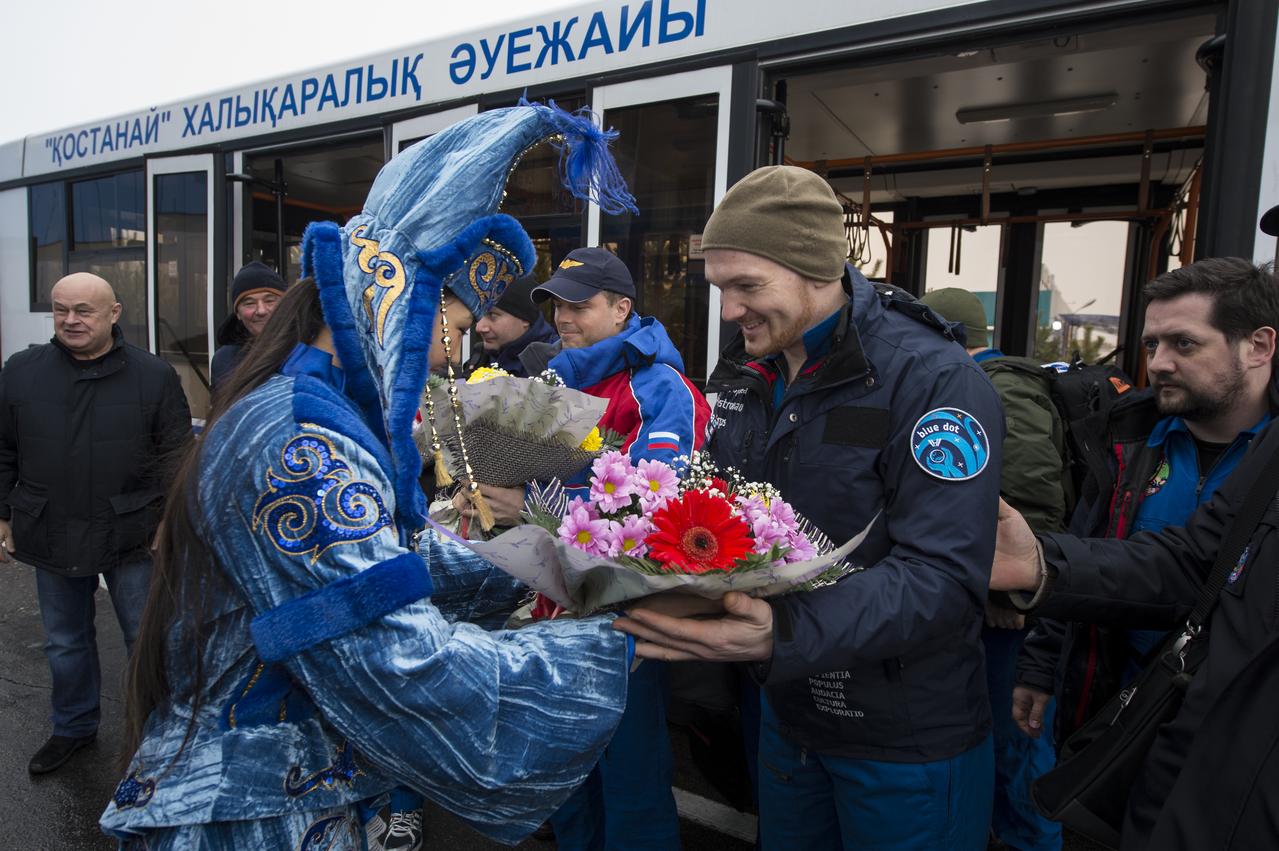
A woman in ceremonial Kazakh dress presents flowers to Expedition 41 Flight Engineer Alexander Gerst of the European Space Agency (ESA) at the Kustanay Airport after he and Expedition 41 Commander Max Suraev of the Russian Federal Space Agency (Roscosmos) and Flight Engineer Reid Wiseman of NASA landed in their Soyuz TMA-13M capsule in a remote area near the town of Arkalyk, Kazakhstan on Monday, Nov. 10, 2014. Suraev, Wiseman and Gerst returned to Earth after more than five months onboard the International Space Station where they served as members of the Expedition 40 and 41 crews. Photo Credit: (NASA/Bill Ingalls)
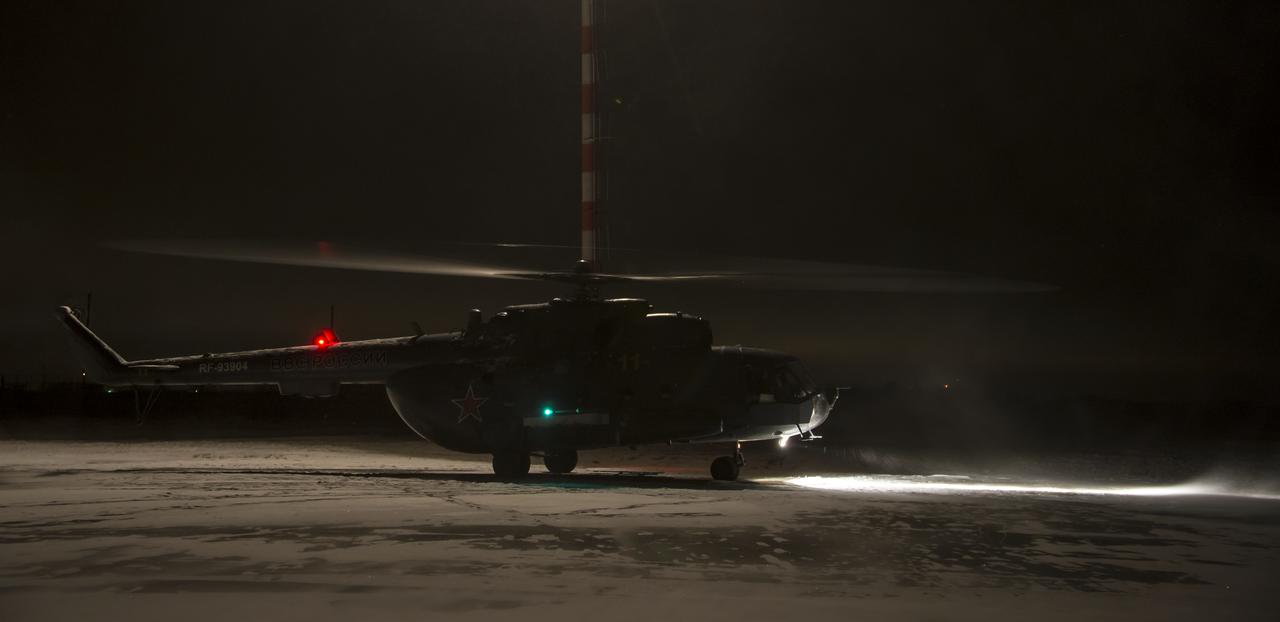
A Russian Search and Rescue helicopter prepares to take off from Kustanay, Kazakhstan to support the Soyuz TMA-13M spacecraft landing with Expedition 41 Commander Max Suraev of the Russian Federal Space Agency (Roscosmos), NASA Flight Engineer Reid Wiseman and Flight Engineer Alexander Gerst of the European Space Agency (ESA) on Monday, Nov. 10, 2014. Suraev, Wiseman and Gerst returned to Earth after more than five months onboard the International Space Station where they served as members of the Expedition 40 and 41 crews. Photo Credit: (NASA/Bill Ingalls)
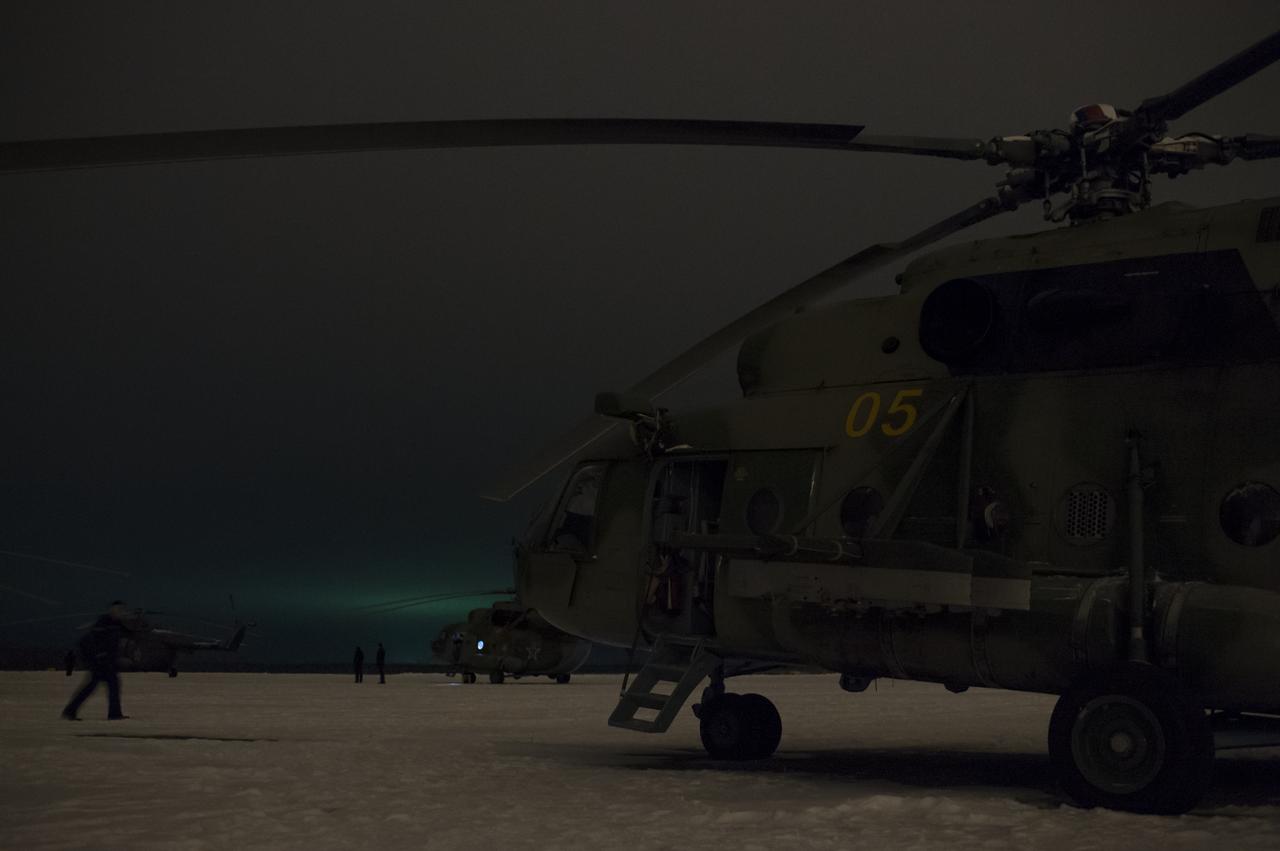
Russian Search and Rescue helicopter teams wait to take off from Kustanay, Kazakhstan to support the Soyuz TMA-13M spacecraft landing with Expedition 41 Commander Max Suraev of the Russian Federal Space Agency (Roscosmos), NASA Flight Engineer Reid Wiseman and Flight Engineer Alexander Gerst of the European Space Agency (ESA) on Monday, Nov. 10, 2014. Suraev, Wiseman and Gerst returned to Earth after more than five months onboard the International Space Station where they served as members of the Expedition 40 and 41 crews. Photo Credit: (NASA/Bill Ingalls)
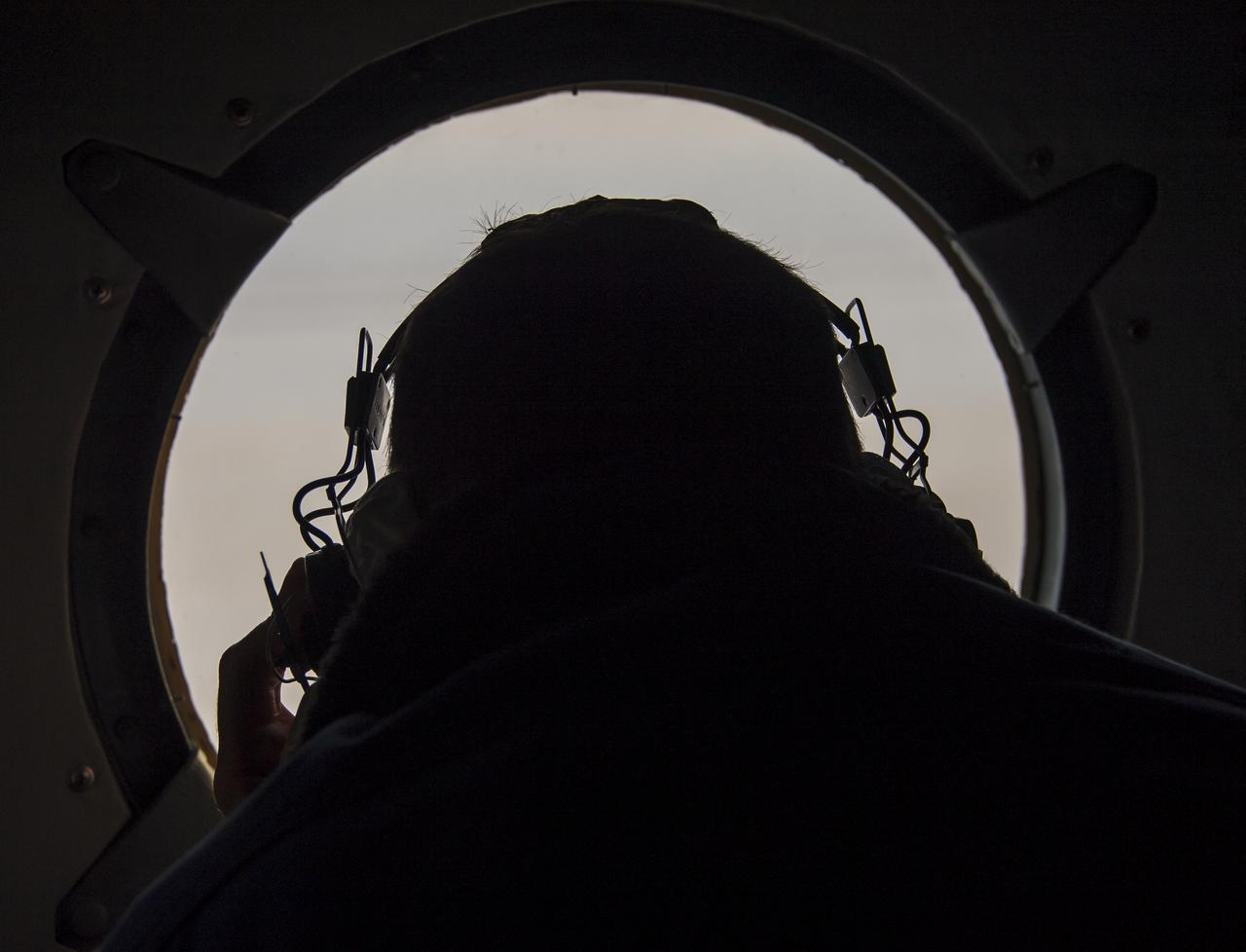
A Russian search and rescue team member looks out a helicopter window as they fly from Kustanay, Kazakhstan to support the Soyuz TMA-13M spacecraft landing with Expedition 41 Commander Max Suraev of the Russian Federal Space Agency (Roscosmos), NASA Flight Engineer Reid Wiseman and Flight Engineer Alexander Gerst of the European Space Agency (ESA) on Monday, Nov. 10, 2014. Suraev, Wiseman and Gerst returned to Earth after more than five months onboard the International Space Station where they served as members of the Expedition 40 and 41 crews. Photo Credit: (NASA/Bill Ingalls)
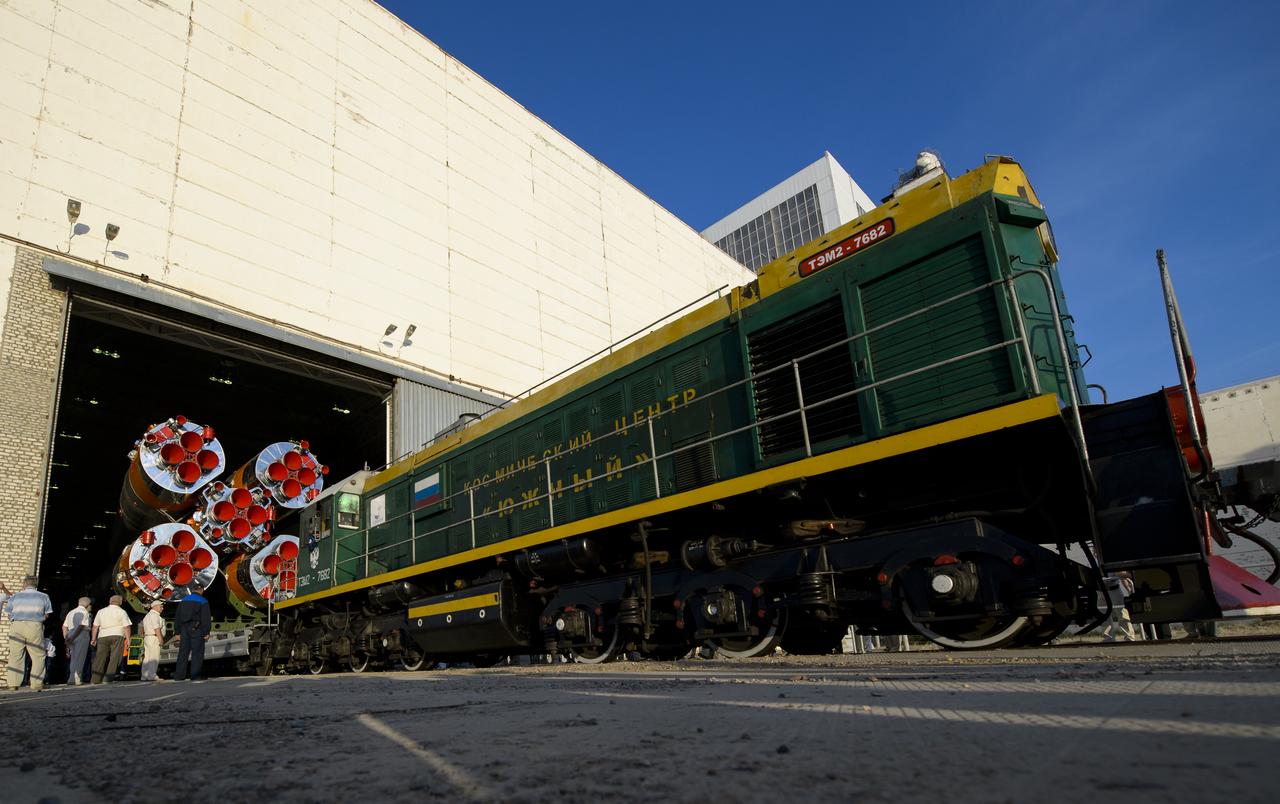
The Soyuz TMA-13M spacecraft is rolled out to the launch pad by train on Monday, May 26, 2014, at the Baikonur Cosmodrome in Kazakhstan. Launch of the Soyuz rocket is scheduled for May 29 and will send Expedition 40 Soyuz Commander Maxim Suraev, of the Russian Federal Space Agency, Roscosmos, Flight Engineer Alexander Gerst, of the European Space Agency, ESA, and Flight Engineer Reid Wiseman of NASA on a five and a half month mission aboard the International Space Station. Photo Credit: (NASA/Joel Kowsky)
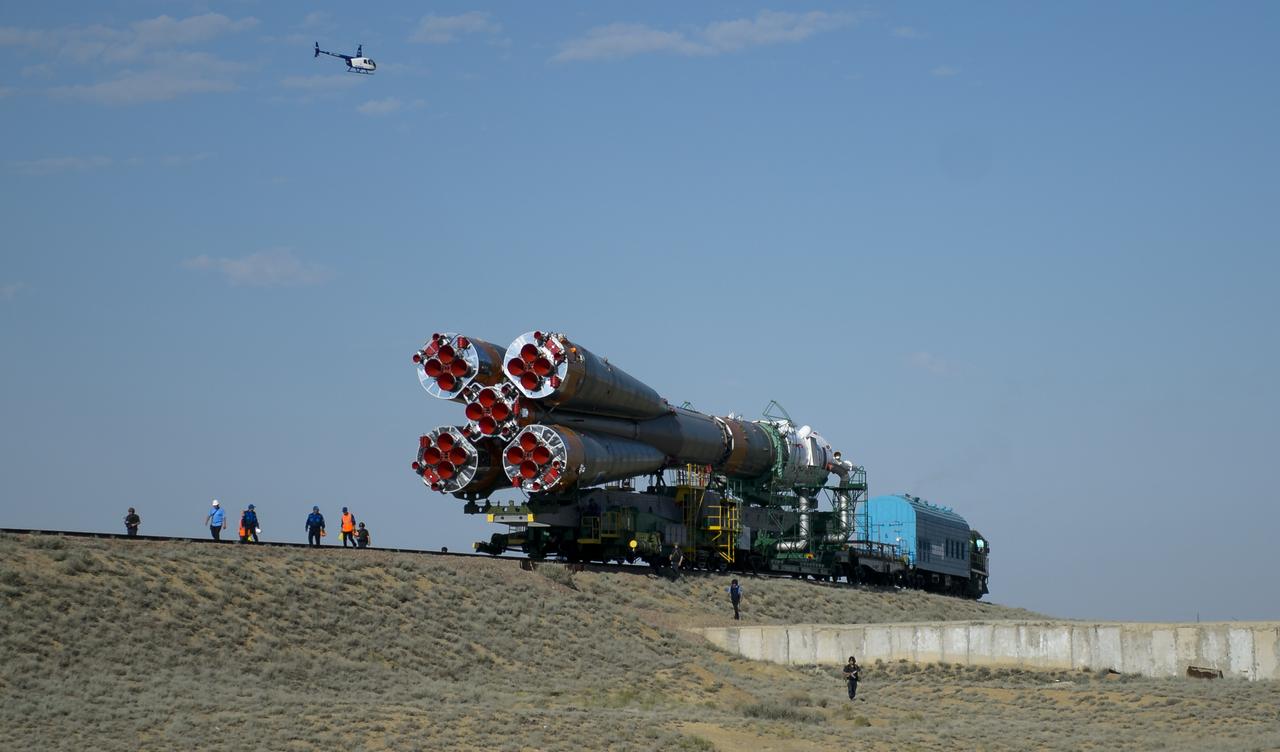
The Soyuz TMA-13M spacecraft is rolled out to the launch pad by train on Monday, May 26, 2014, at the Baikonur Cosmodrome in Kazakhstan. Launch of the Soyuz rocket is scheduled for May 29 and will send Expedition 40 Soyuz Commander Maxim Suraev, of the Russian Federal Space Agency, Roscosmos, Flight Engineer Alexander Gerst, of the European Space Agency, ESA, and Flight Engineer Reid Wiseman of NASA on a five and a half month mission aboard the International Space Station. Photo Credit: (NASA/Joel Kowsky)
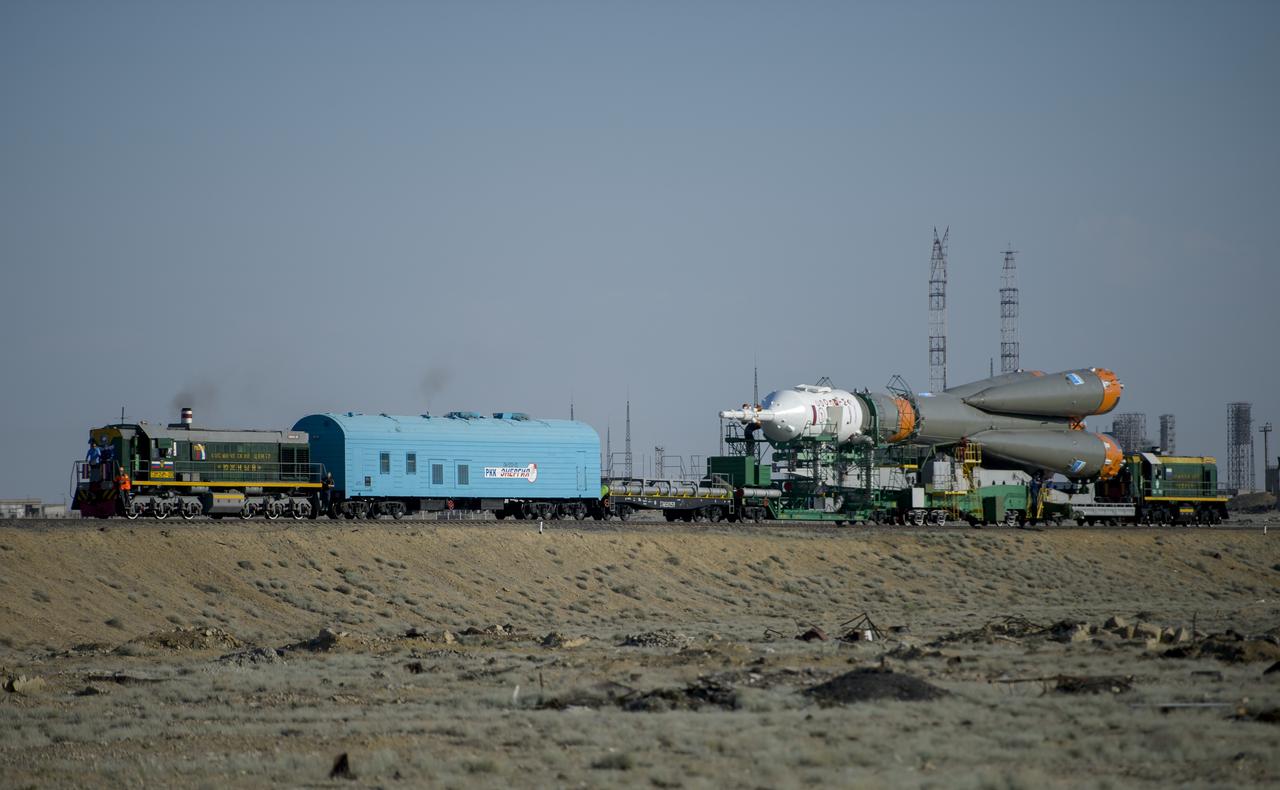
The Soyuz TMA-13M spacecraft is rolled out to the launch pad by train on Monday, May 26, 2014, at the Baikonur Cosmodrome in Kazakhstan. Launch of the Soyuz rocket is scheduled for May 29 and will send Expedition 40 Soyuz Commander Maxim Suraev, of the Russian Federal Space Agency, Roscosmos, Flight Engineer Alexander Gerst, of the European Space Agency, ESA, and Flight Engineer Reid Wiseman of NASA on a five and a half month mission aboard the International Space Station. Photo Credit: (NASA/Joel Kowsky)
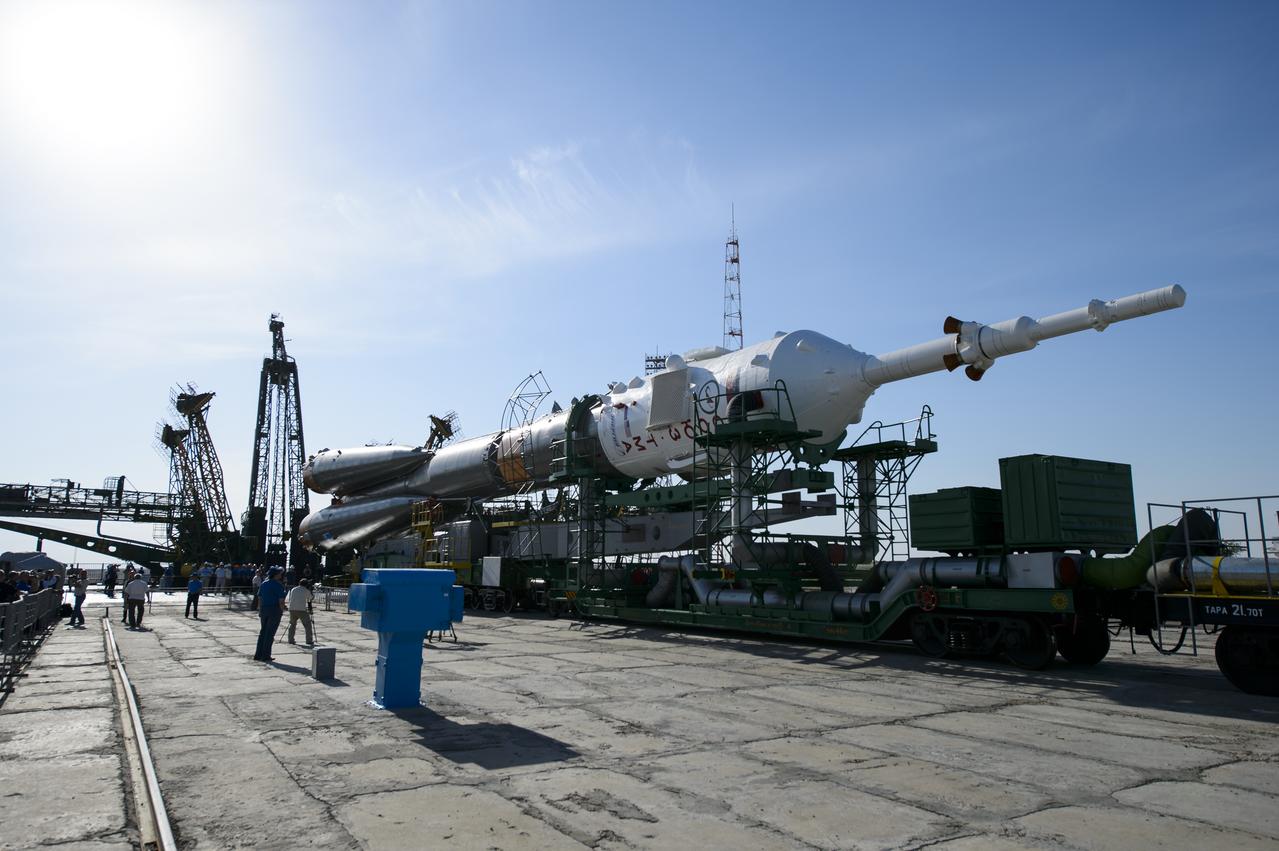
The Soyuz TMA-13M spacecraft is seen shortly after arriving at the launch pad by train on Monday, May 26, 2014, at the Baikonur Cosmodrome in Kazakhstan. Launch of the Soyuz rocket is scheduled for May 29 and will send Expedition 40 Soyuz Commander Maxim Suraev, of the Russian Federal Space Agency, Roscosmos, Flight Engineer Alexander Gerst, of the European Space Agency, ESA, and Flight Engineer Reid Wiseman of NASA on a five and a half month mission aboard the International Space Station. Photo Credit: (NASA/Joel Kowsky)
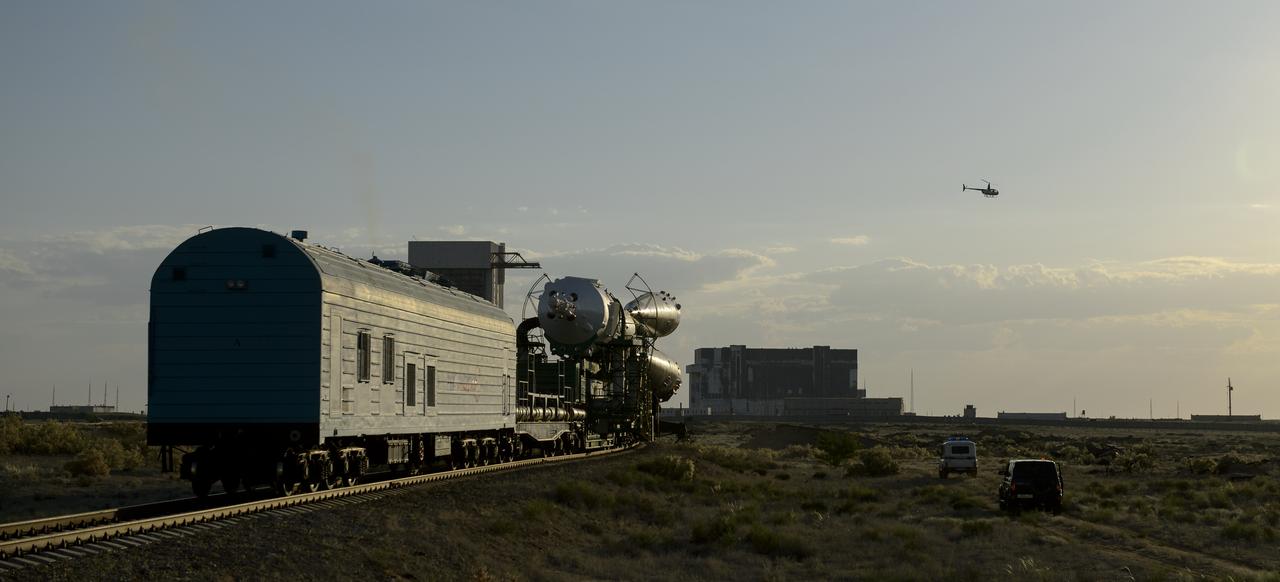
The Soyuz TMA-13M spacecraft is rolled out to the launch pad by train on Monday, May 26, 2014, at the Baikonur Cosmodrome in Kazakhstan. Launch of the Soyuz rocket is scheduled for May 29 and will send Expedition 40 Soyuz Commander Maxim Suraev, of the Russian Federal Space Agency, Roscosmos, Flight Engineer Alexander Gerst, of the European Space Agency, ESA, and Flight Engineer Reid Wiseman of NASA on a five and a half month mission aboard the International Space Station. Photo Credit: (NASA/Joel Kowsky)
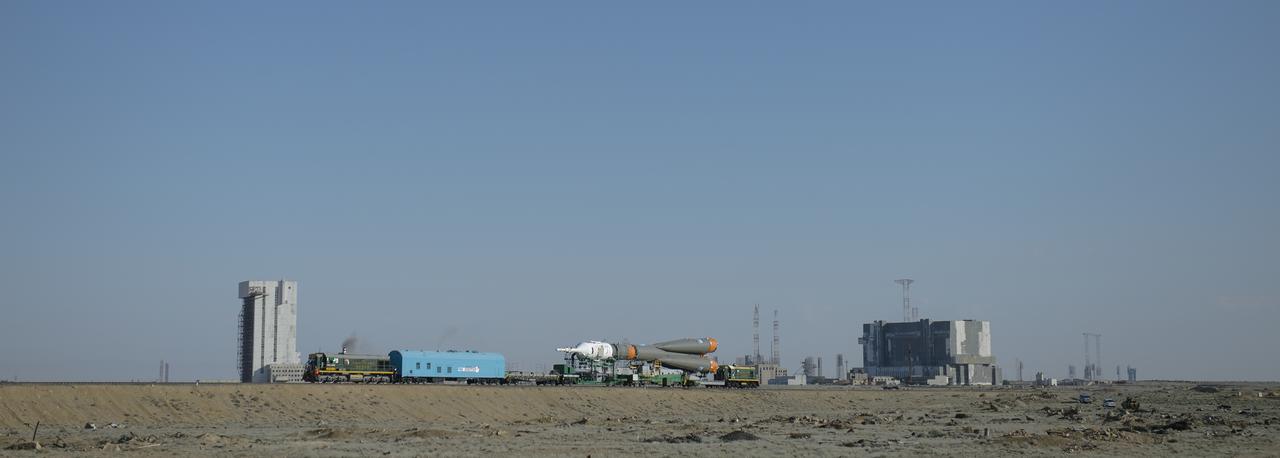
The Soyuz TMA-13M spacecraft is rolled out to the launch pad by train on Monday, May 26, 2014, at the Baikonur Cosmodrome in Kazakhstan. Launch of the Soyuz rocket is scheduled for May 29 and will send Expedition 40 Soyuz Commander Maxim Suraev, of the Russian Federal Space Agency, Roscosmos, Flight Engineer Alexander Gerst, of the European Space Agency, ESA, and Flight Engineer Reid Wiseman of NASA on a five and a half month mission aboard the International Space Station. Photo Credit: (NASA/Joel Kowsky)
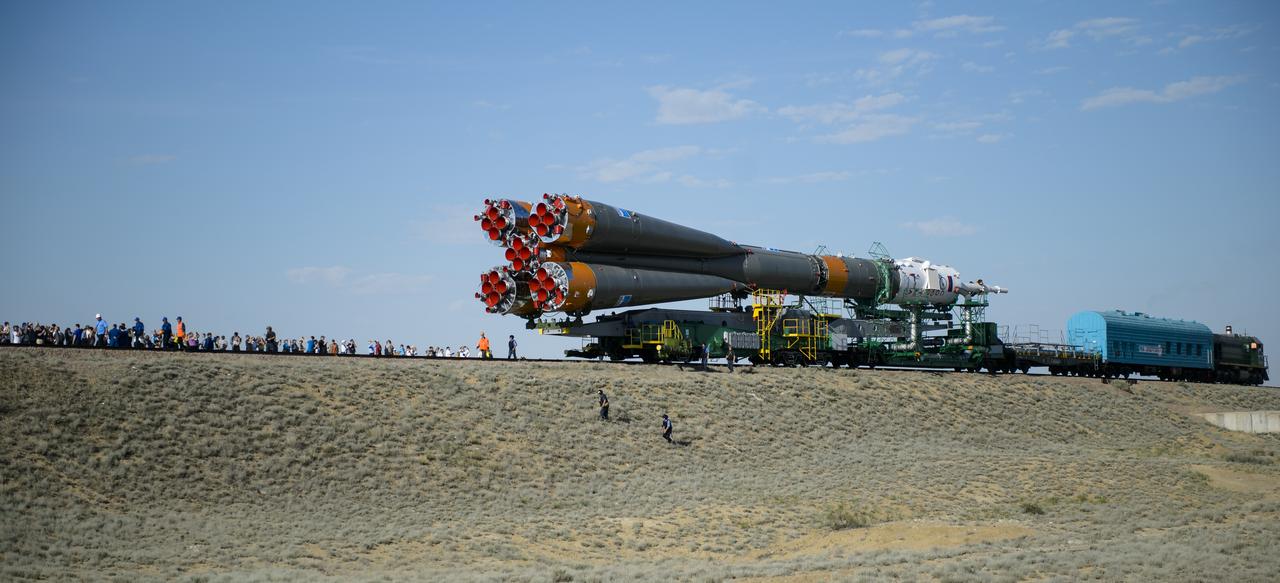
Guests and members of the media watch as the Soyuz TMA-13M spacecraft is rolled out to the launch pad by train on Monday, May 26, 2014, at the Baikonur Cosmodrome in Kazakhstan. Launch of the Soyuz rocket is scheduled for May 29 and will send Expedition 40 Soyuz Commander Maxim Suraev, of the Russian Federal Space Agency, Roscosmos, Flight Engineer Alexander Gerst, of the European Space Agency, ESA, and Flight Engineer Reid Wiseman of NASA on a five and a half month mission aboard the International Space Station. Photo Credit: (NASA/Joel Kowsky)
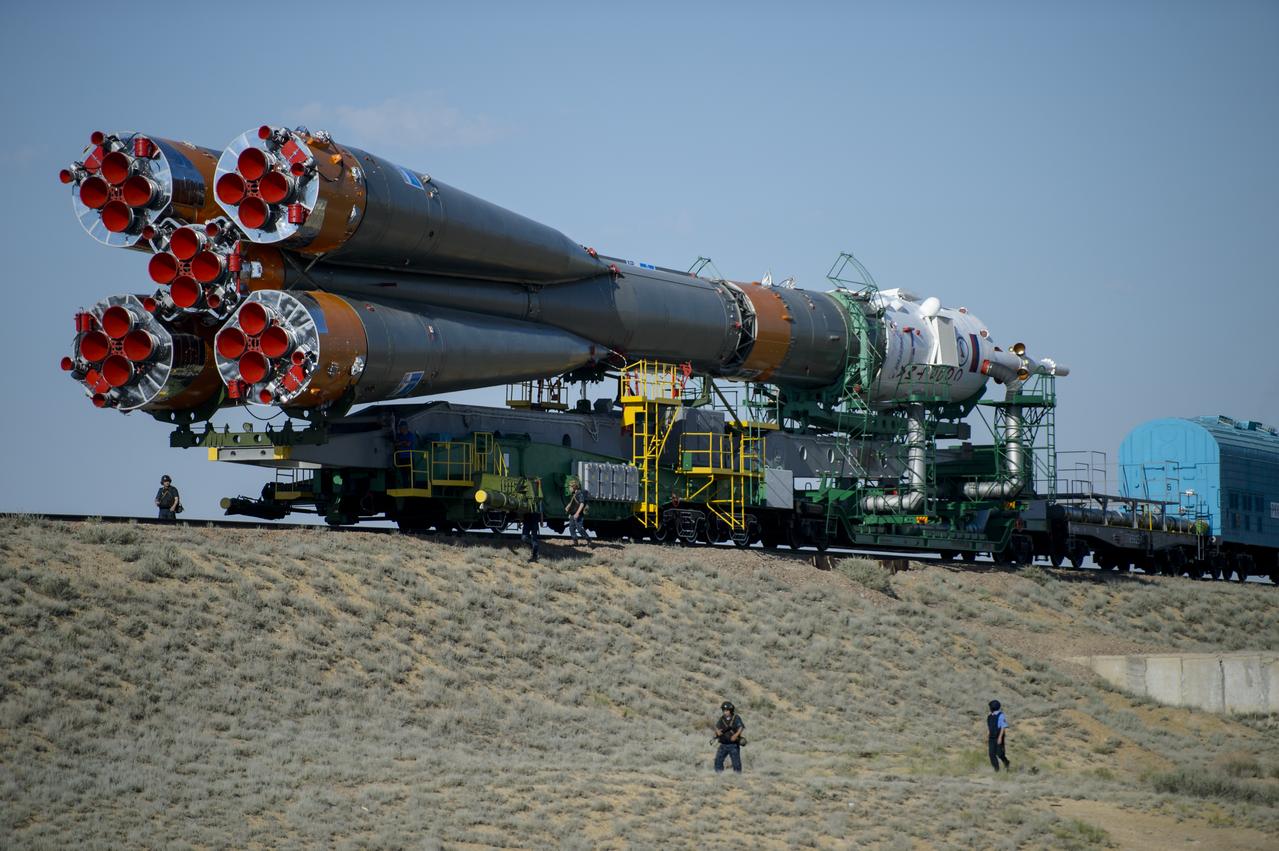
The Soyuz TMA-13M spacecraft is rolled out to the launch pad by train on Monday, May 26, 2014, at the Baikonur Cosmodrome in Kazakhstan. Launch of the Soyuz rocket is scheduled for May 29 and will send Expedition 40 Soyuz Commander Maxim Suraev, of the Russian Federal Space Agency, Roscosmos, Flight Engineer Alexander Gerst, of the European Space Agency, ESA, and Flight Engineer Reid Wiseman of NASA on a five and a half month mission aboard the International Space Station. Photo Credit: (NASA/Joel Kowsky)
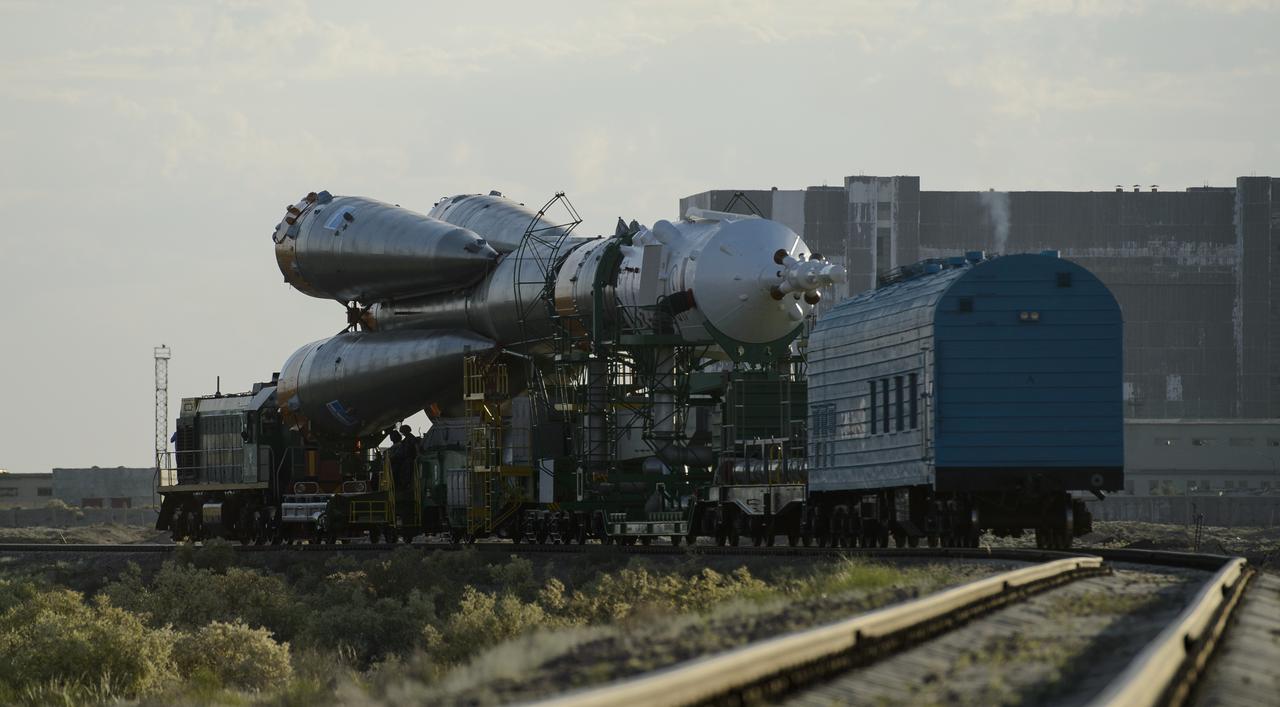
The Soyuz TMA-13M spacecraft is rolled out to the launch pad by train on Monday, May 26, 2014, at the Baikonur Cosmodrome in Kazakhstan. Launch of the Soyuz rocket is scheduled for May 29 and will send Expedition 40 Soyuz Commander Maxim Suraev, of the Russian Federal Space Agency, Roscosmos, Flight Engineer Alexander Gerst, of the European Space Agency, ESA, and Flight Engineer Reid Wiseman of NASA on a five and a half month mission aboard the International Space Station. Photo Credit: (NASA/Joel Kowsky)
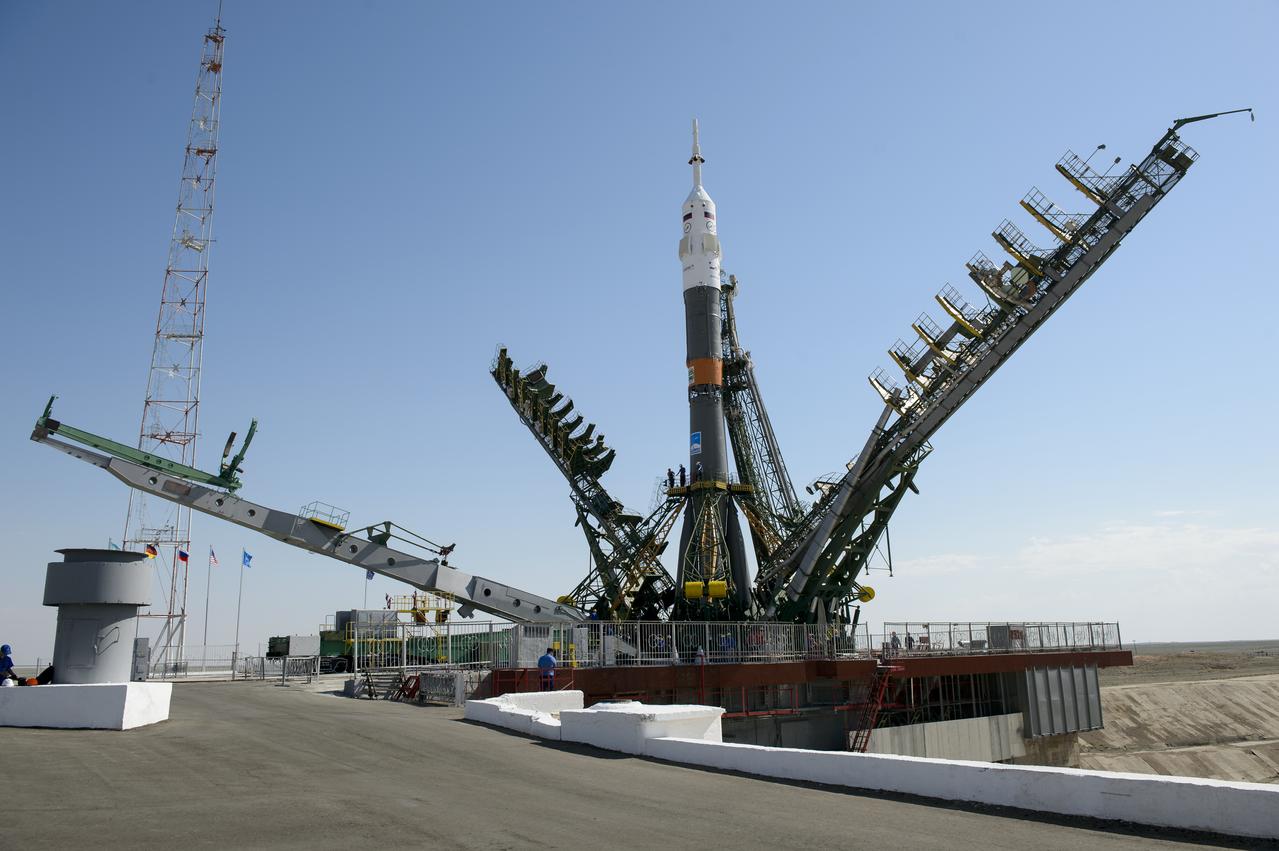
The Soyuz TMA-13M rocket is seen as the service structure arms are raised into position at the launch pad on Monday, May 26, 2014, at the Baikonur Cosmodrome in Kazakhstan. Launch of the Soyuz rocket is scheduled for May 29 and will send Expedition 40 Soyuz Commander Maxim Suraev, of the Russian Federal Space Agency, Roscosmos, Flight Engineer Alexander Gerst, of the European Space Agency, ESA, and Flight Engineer Reid Wiseman of NASA on a five and a half month mission aboard the International Space Station. Photo Credit: (NASA/Joel Kowsky)
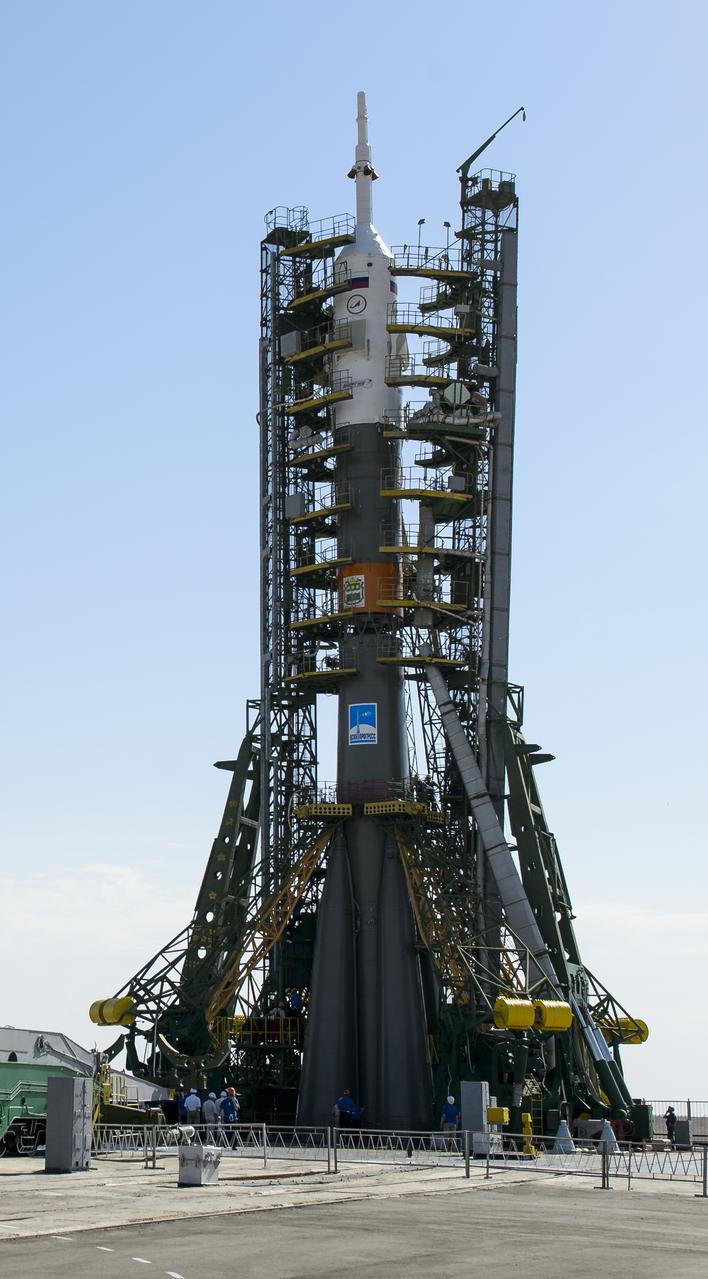
The Soyuz TMA-13M rocket is seen as the service structure arms are raised into position at the launch pad on Monday, May 26, 2014, at the Baikonur Cosmodrome in Kazakhstan. Launch of the Soyuz rocket is scheduled for May 29 and will send Expedition 40 Soyuz Commander Maxim Suraev, of the Russian Federal Space Agency, Roscosmos, Flight Engineer Alexander Gerst, of the European Space Agency, ESA, and Flight Engineer Reid Wiseman of NASA on a five and a half month mission aboard the International Space Station. Photo Credit: (NASA/Joel Kowsky)
The Soyuz TMA-13M spacecraft is seen shortly after being raised into a vertical position on the launch pad on Monday, May 26, 2014, at the Baikonur Cosmodrome in Kazakhstan. Launch of the Soyuz rocket is scheduled for May 29 and will send Expedition 40 Soyuz Commander Maxim Suraev, of the Russian Federal Space Agency, Roscosmos, Flight Engineer Alexander Gerst, of the European Space Agency, ESA, and Flight Engineer Reid Wiseman of NASA on a five and a half month mission aboard the International Space Station. Photo Credit: (NASA/Joel Kowsky)
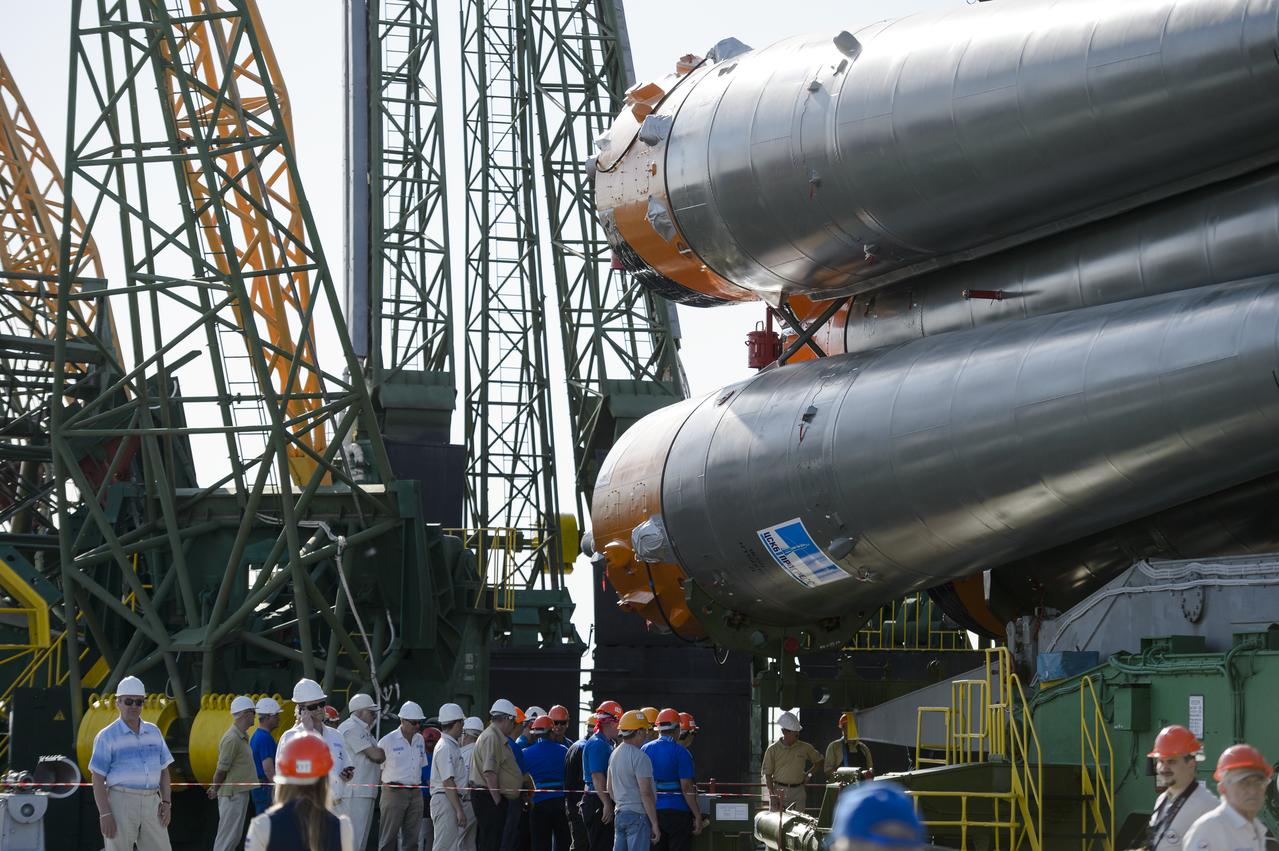
Workers gather at the pad in preparation for the raising of the Soyuz TMA-13M spacecraft into the vertical position on Monday, May 26, 2014, at the Baikonur Cosmodrome in Kazakhstan. Launch of the Soyuz rocket is scheduled for May 29 and will send Expedition 40 Soyuz Commander Maxim Suraev, of the Russian Federal Space Agency, Roscosmos, Flight Engineer Alexander Gerst, of the European Space Agency, ESA, and Flight Engineer Reid Wiseman of NASA on a five and a half month mission aboard the International Space Station. Photo Credit: (NASA/Joel Kowsky)
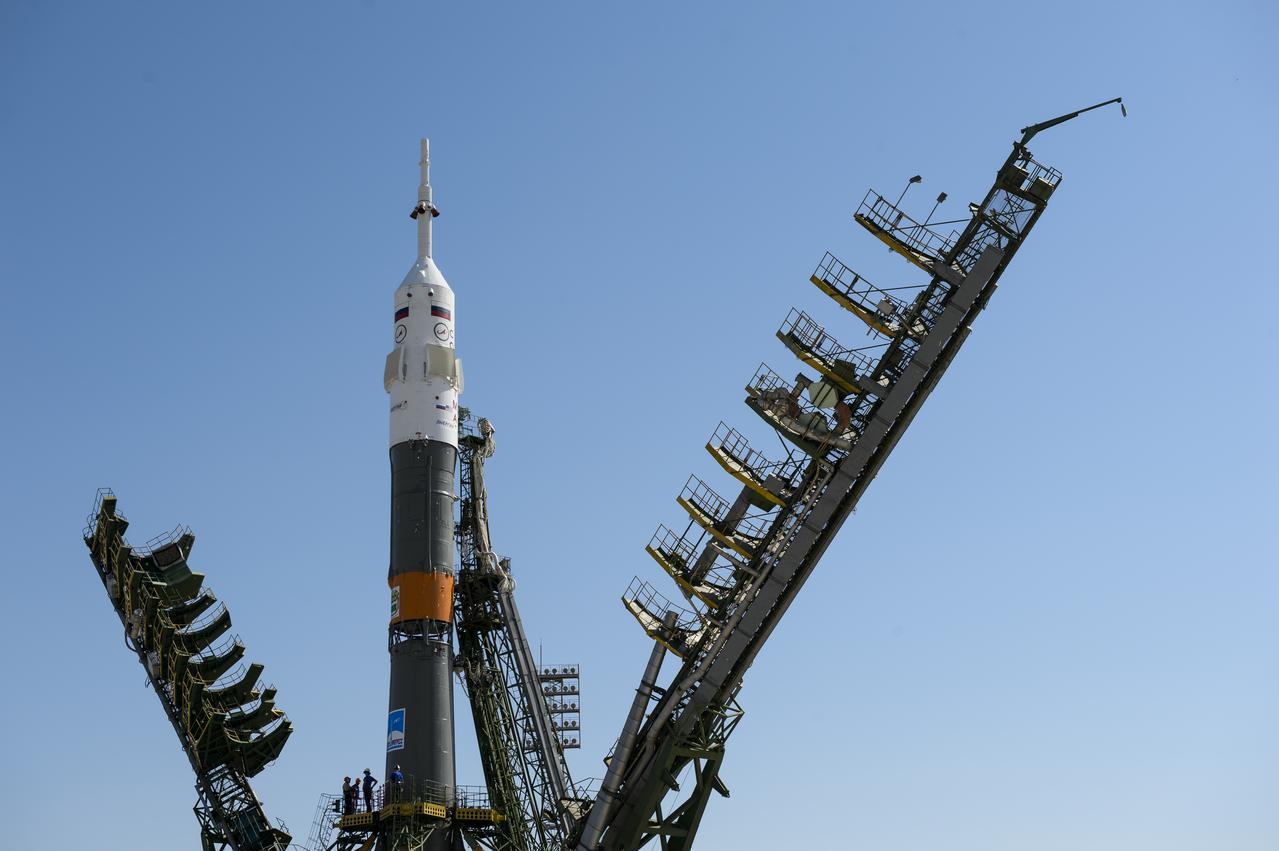
The Soyuz TMA-13M rocket is seen as the service structure arms are raised into position at the launch pad on Monday, May 26, 2014, at the Baikonur Cosmodrome in Kazakhstan. Launch of the Soyuz rocket is scheduled for May 29 and will send Expedition 40 Soyuz Commander Maxim Suraev, of the Russian Federal Space Agency, Roscosmos, Flight Engineer Alexander Gerst, of the European Space Agency, ESA, and Flight Engineer Reid Wiseman of NASA on a five and a half month mission aboard the International Space Station. Photo Credit: (NASA/Joel Kowsky)
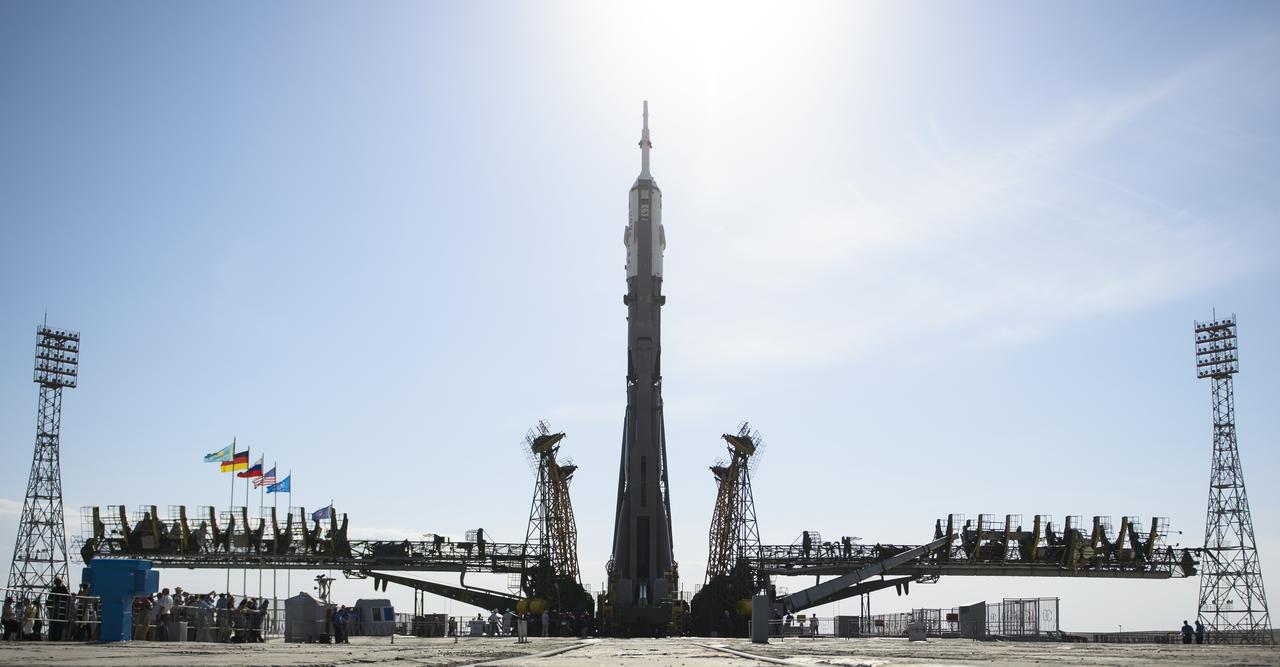
The Soyuz TMA-13M spacecraft is seen shortly after being raised into a vertical position on the launch pad on Monday, May 26, 2014, at the Baikonur Cosmodrome in Kazakhstan. Launch of the Soyuz rocket is scheduled for May 29 and will send Expedition 40 Soyuz Commander Maxim Suraev, of the Russian Federal Space Agency, Roscosmos, Flight Engineer Alexander Gerst, of the European Space Agency, ESA, and Flight Engineer Reid Wiseman of NASA on a five and a half month mission aboard the International Space Station. Photo Credit: (NASA/Joel Kowsky)
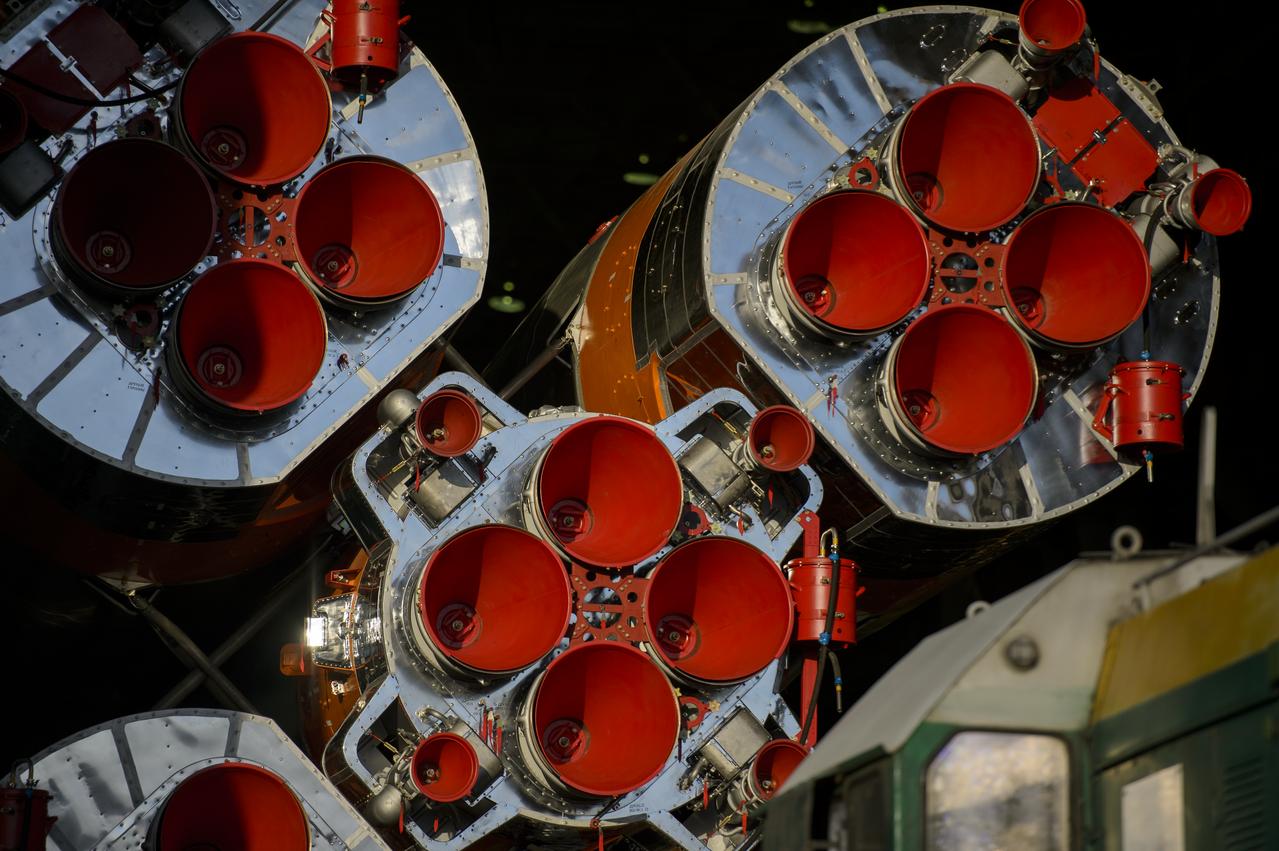
The Soyuz TMA-13M spacecraft is rolled out to the launch pad by train on Monday, May 26, 2014, at the Baikonur Cosmodrome in Kazakhstan. Launch of the Soyuz rocket is scheduled for May 29 and will send Expedition 40 Soyuz Commander Maxim Suraev, of the Russian Federal Space Agency, Roscosmos, Flight Engineer Alexander Gerst, of the European Space Agency, ESA, and Flight Engineer Reid Wiseman of NASA on a five and a half month mission aboard the International Space Station. Photo Credit: (NASA/Joel Kowsky)
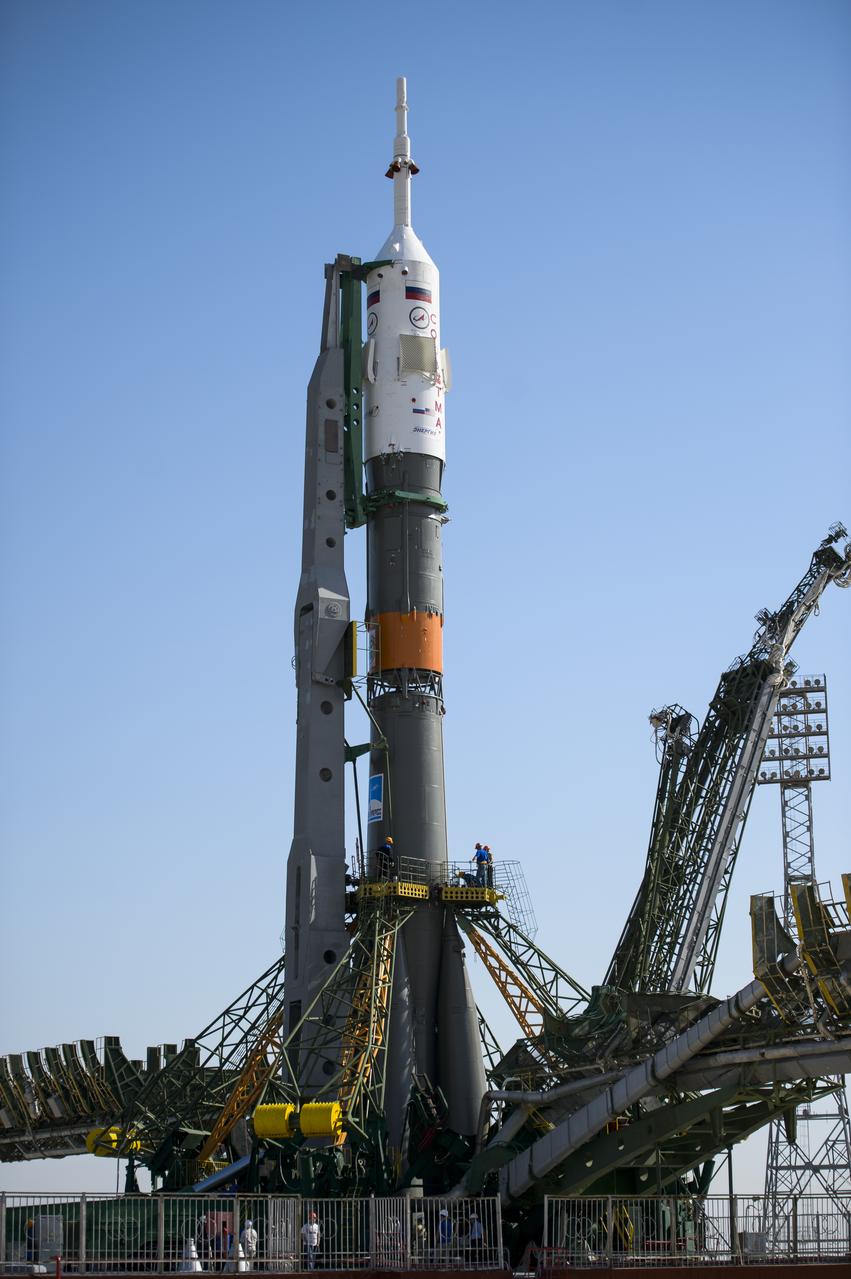
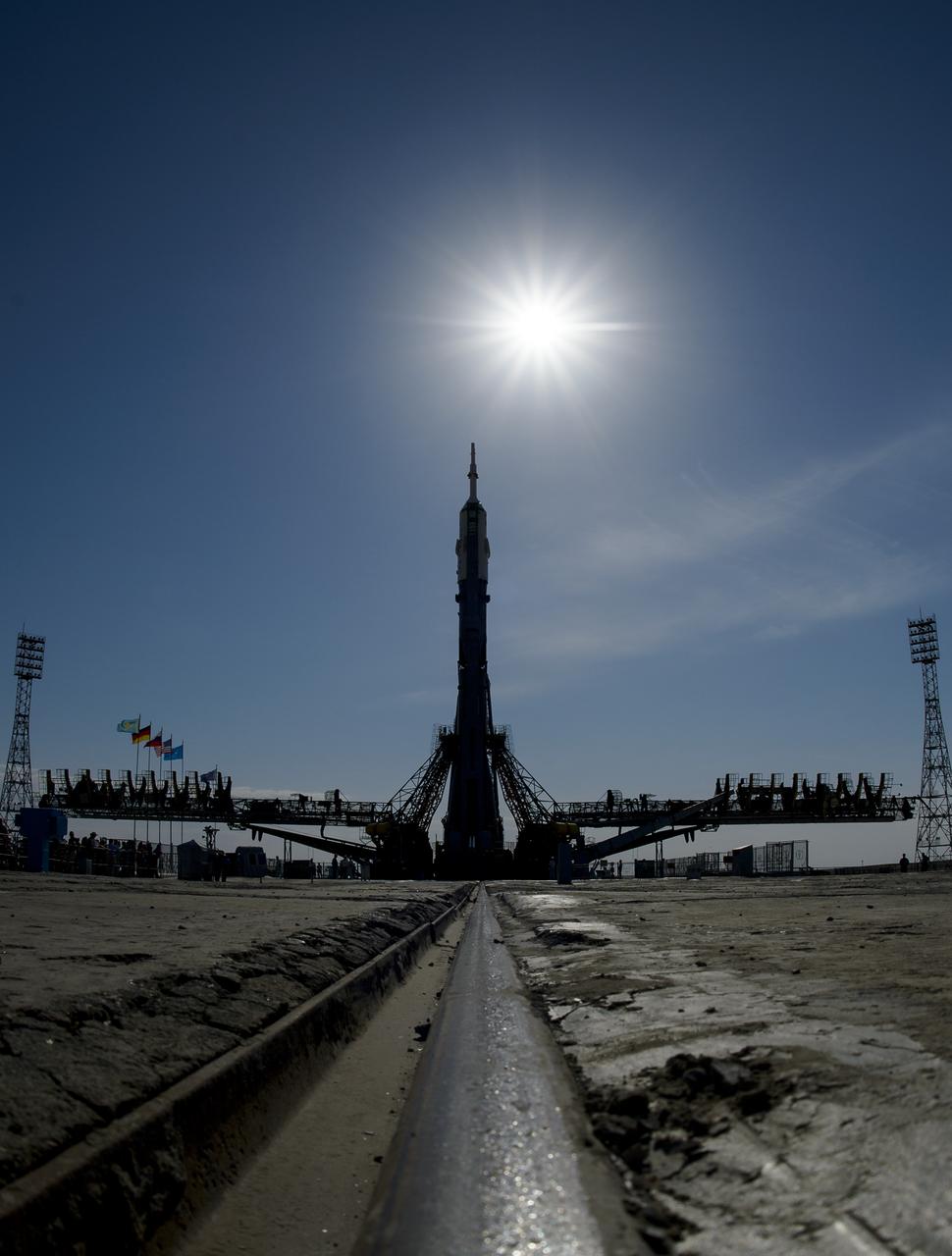
The Soyuz TMA-13M spacecraft is seen on the launch pad shortly after being raised into a vertical position on Monday, May 26, 2014, at the Baikonur Cosmodrome in Kazakhstan. Launch of the Soyuz rocket is scheduled for May 29 and will send Expedition 40 Soyuz Commander Maxim Suraev, of the Russian Federal Space Agency, Roscosmos, Flight Engineer Alexander Gerst, of the European Space Agency, ESA, and Flight Engineer Reid Wiseman of NASA on a five and a half month mission aboard the International Space Station. Photo Credit: (NASA/Joel Kowsky)
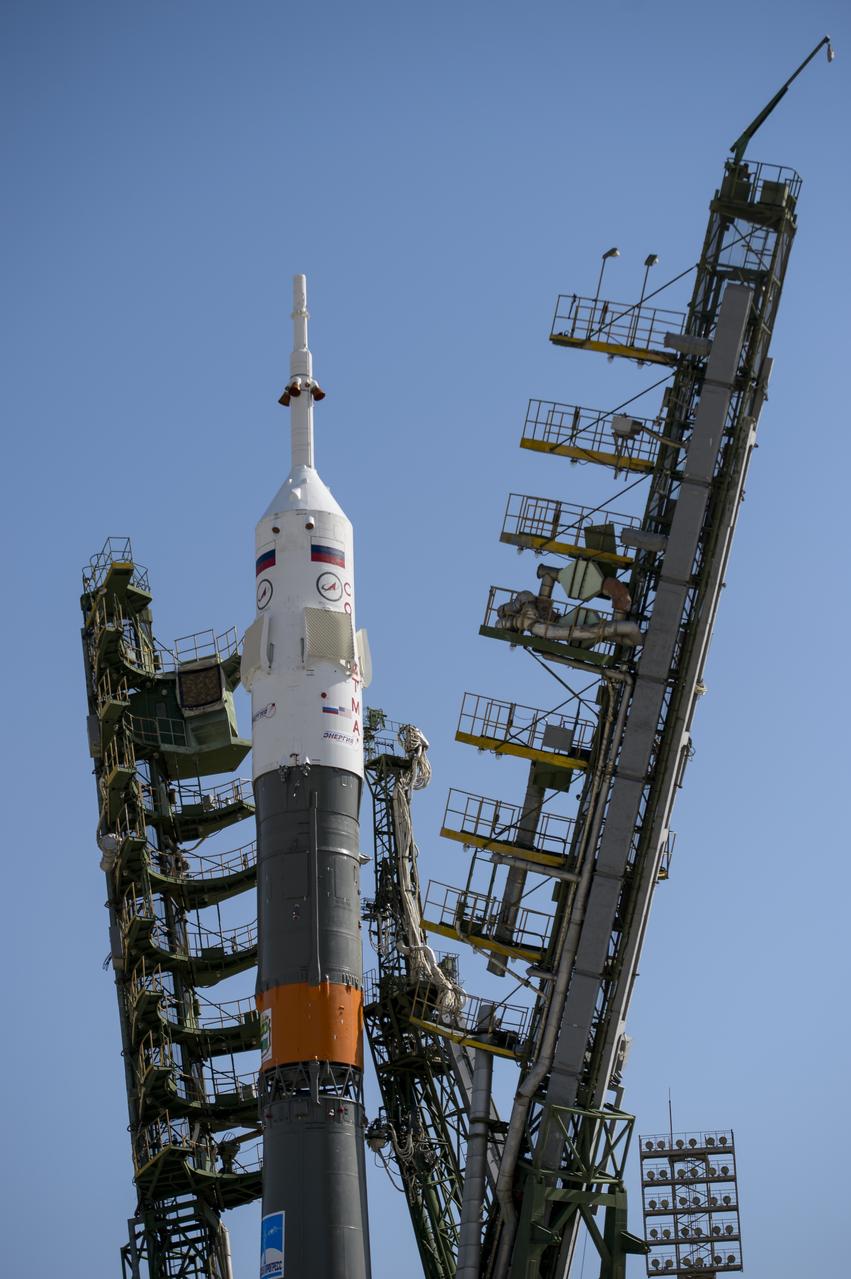
The Soyuz TMA-13M rocket is seen as the service structure arms are raised into position at the launch pad on Monday, May 26, 2014, at the Baikonur Cosmodrome in Kazakhstan. Launch of the Soyuz rocket is scheduled for May 29 and will send Expedition 40 Soyuz Commander Maxim Suraev, of the Russian Federal Space Agency, Roscosmos, Flight Engineer Alexander Gerst, of the European Space Agency, ESA, and Flight Engineer Reid Wiseman of NASA on a five and a half month mission aboard the International Space Station. Photo Credit: (NASA/Joel Kowsky)

The Soyuz TMA-13M spacecraft is seen on the launch pad shortly after being raised into a vertical position on Monday, May 26, 2014, at the Baikonur Cosmodrome in Kazakhstan. Launch of the Soyuz rocket is scheduled for May 29 and will send Expedition 40 Soyuz Commander Maxim Suraev, of the Russian Federal Space Agency, Roscosmos, Flight Engineer Alexander Gerst, of the European Space Agency, ESA, and Flight Engineer Reid Wiseman of NASA on a five and a half month mission aboard the International Space Station. Photo Credit: (NASA/Joel Kowsky)
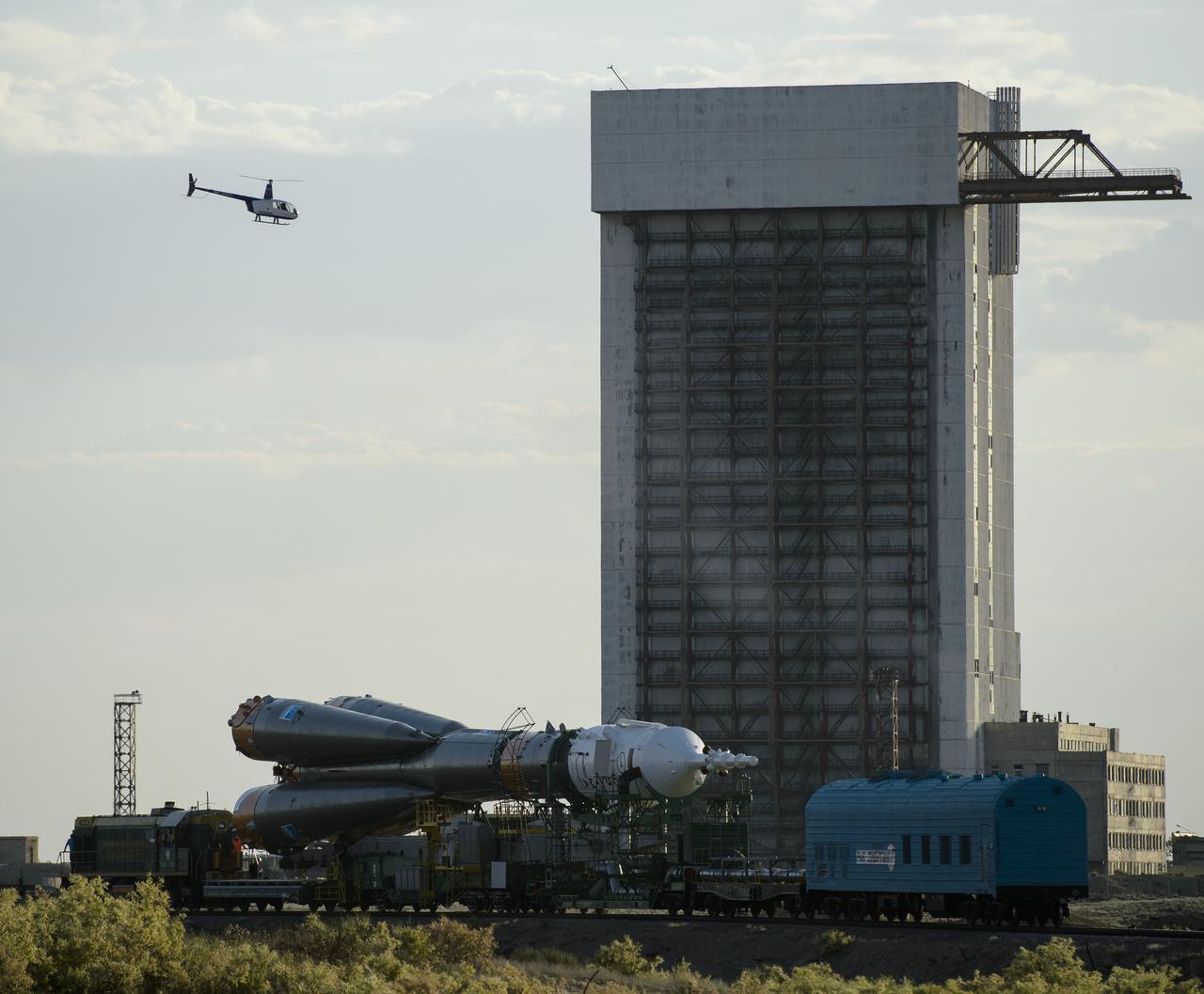
The Soyuz TMA-13M spacecraft is rolled out to the launch pad by train on Monday, May 26, 2014, at the Baikonur Cosmodrome in Kazakhstan. Launch of the Soyuz rocket is scheduled for May 29 and will send Expedition 40 Soyuz Commander Maxim Suraev, of the Russian Federal Space Agency, Roscosmos, Flight Engineer Alexander Gerst, of the European Space Agency, ESA, and Flight Engineer Reid Wiseman of NASA on a five and a half month mission aboard the International Space Station. Photo Credit: (NASA/Joel Kowsky)
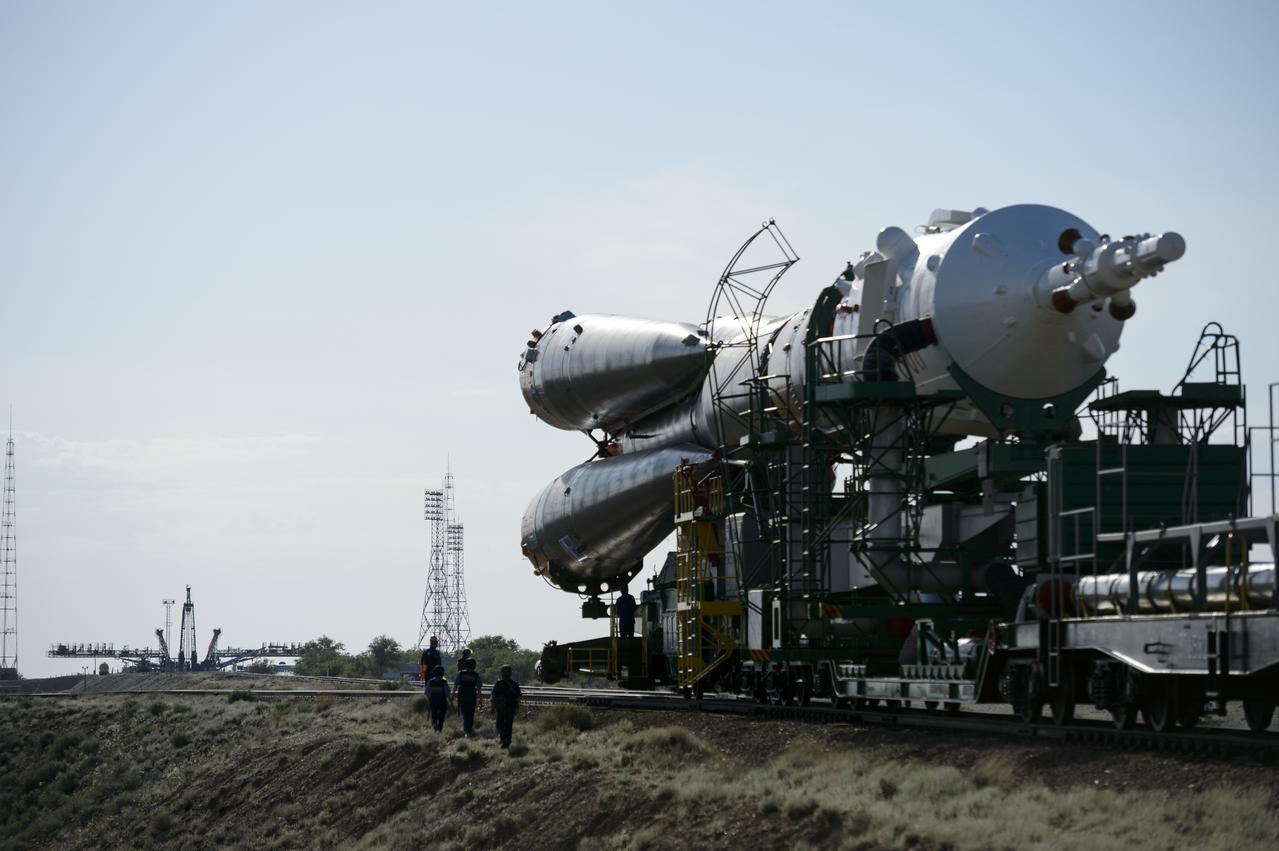
The Soyuz TMA-13M spacecraft is rolled out to the launch pad by train on Monday, May 26, 2014, at the Baikonur Cosmodrome in Kazakhstan. Launch of the Soyuz rocket is scheduled for May 29 and will send Expedition 40 Soyuz Commander Maxim Suraev, of the Russian Federal Space Agency, Roscosmos, Flight Engineer Alexander Gerst, of the European Space Agency, ESA, and Flight Engineer Reid Wiseman of NASA on a five and a half month mission aboard the International Space Station. Photo Credit: (NASA/Joel Kowsky)
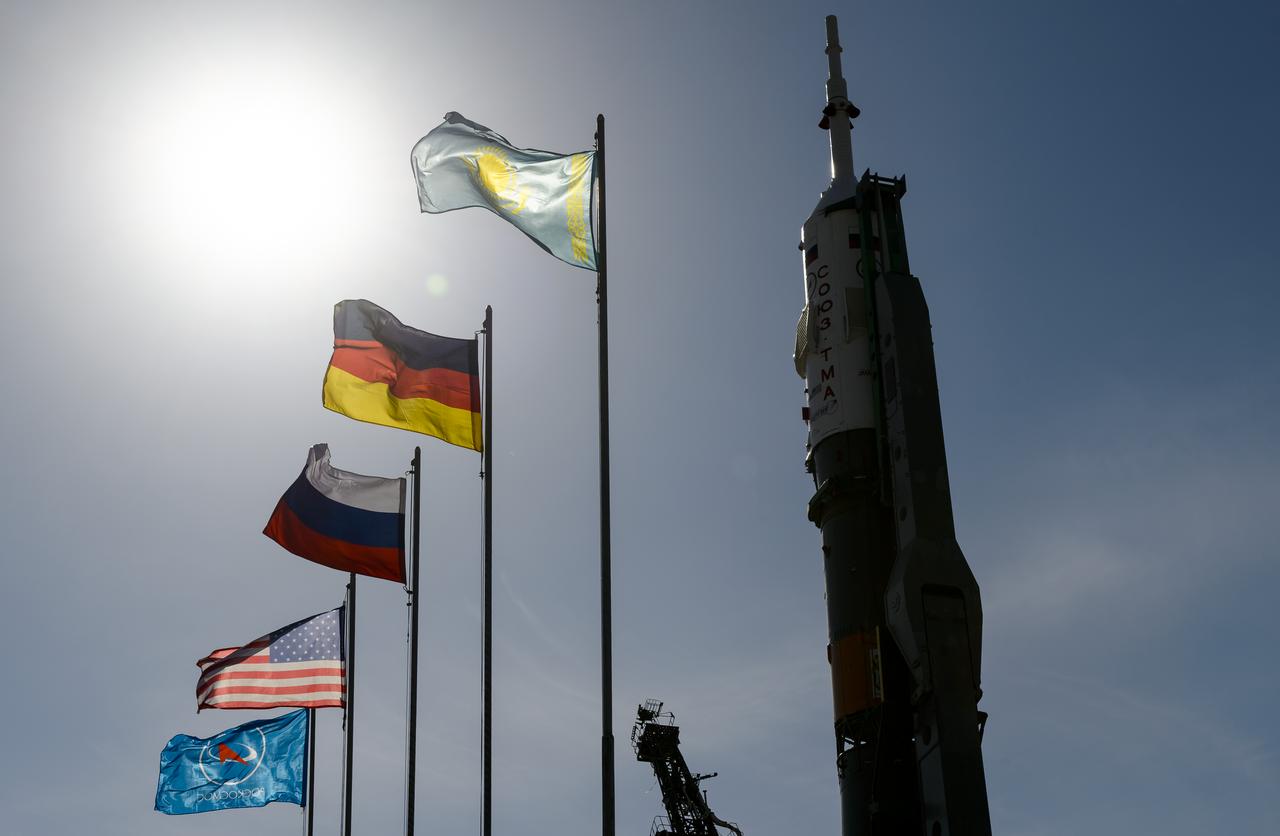
The Soyuz TMA-13M spacecraft is seen on the launch pad shortly after being raised into a vertical position on Monday, May 26, 2014, at the Baikonur Cosmodrome in Kazakhstan. Launch of the Soyuz rocket is scheduled for May 29 and will send Expedition 40 Soyuz Commander Maxim Suraev, of the Russian Federal Space Agency, Roscosmos, Flight Engineer Alexander Gerst, of the European Space Agency, ESA, and Flight Engineer Reid Wiseman of NASA on a five and a half month mission aboard the International Space Station. Photo Credit: (NASA/Joel Kowsky)
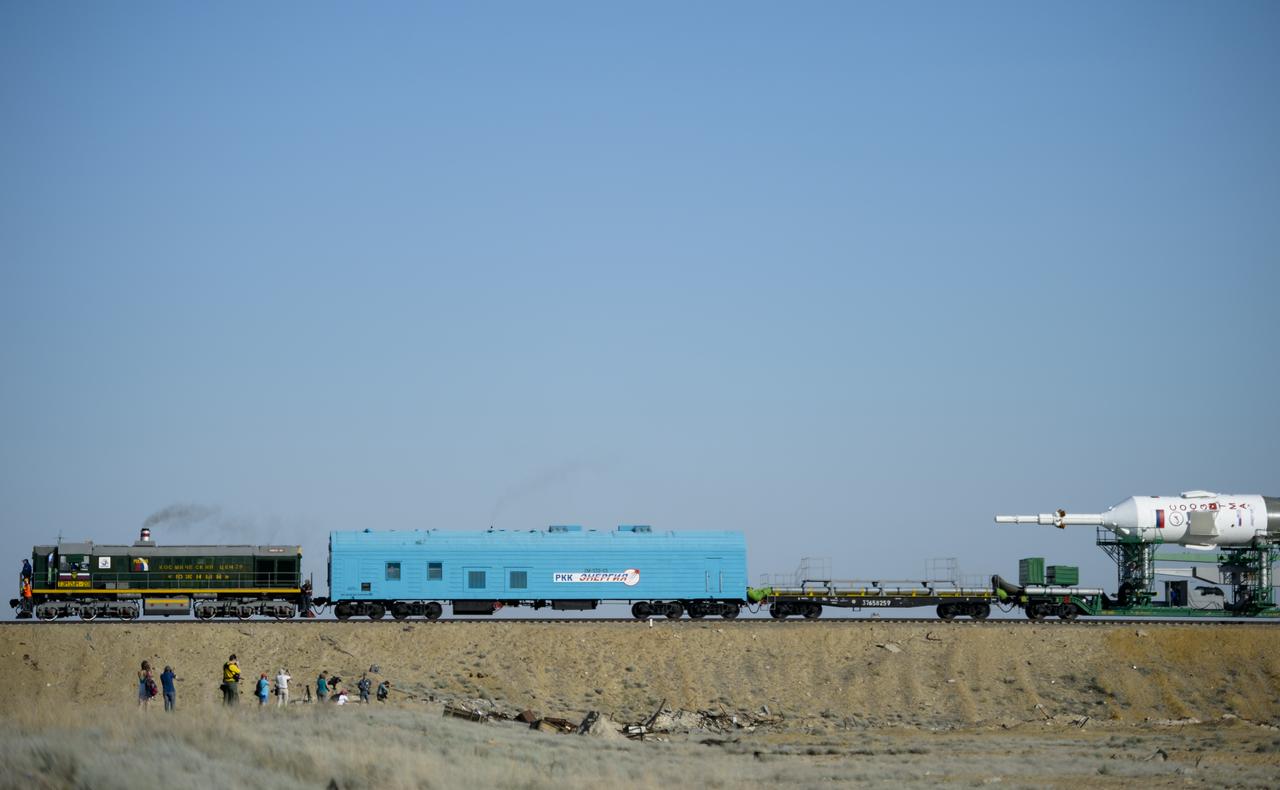
The Soyuz TMA-13M spacecraft is rolled out to the launch pad by train on Monday, May 26, 2014, at the Baikonur Cosmodrome in Kazakhstan. Launch of the Soyuz rocket is scheduled for May 29 and will send Expedition 40 Soyuz Commander Maxim Suraev, of the Russian Federal Space Agency, Roscosmos, Flight Engineer Alexander Gerst, of the European Space Agency, ESA, and Flight Engineer Reid Wiseman of NASA on a five and a half month mission aboard the International Space Station. Photo Credit: (NASA/Joel Kowsky)
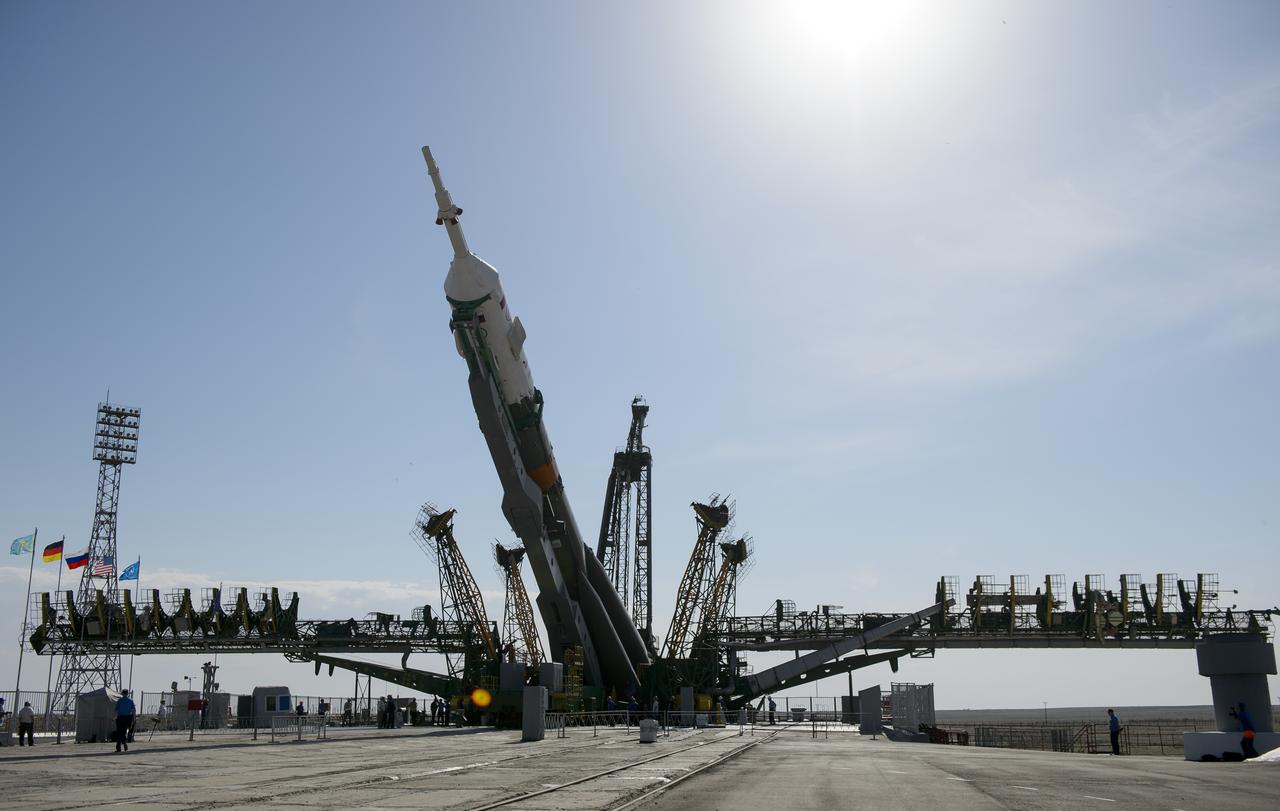
The Soyuz TMA-13M spacecraft is raised into a vertical position on the launch pad on Monday, May 26, 2014, at the Baikonur Cosmodrome in Kazakhstan. Launch of the Soyuz rocket is scheduled for May 29 and will send Expedition 40 Soyuz Commander Maxim Suraev, of the Russian Federal Space Agency, Roscosmos, Flight Engineer Alexander Gerst, of the European Space Agency, ESA, and Flight Engineer Reid Wiseman of NASA on a five and a half month mission aboard the International Space Station. Photo Credit: (NASA/Joel Kowsky)
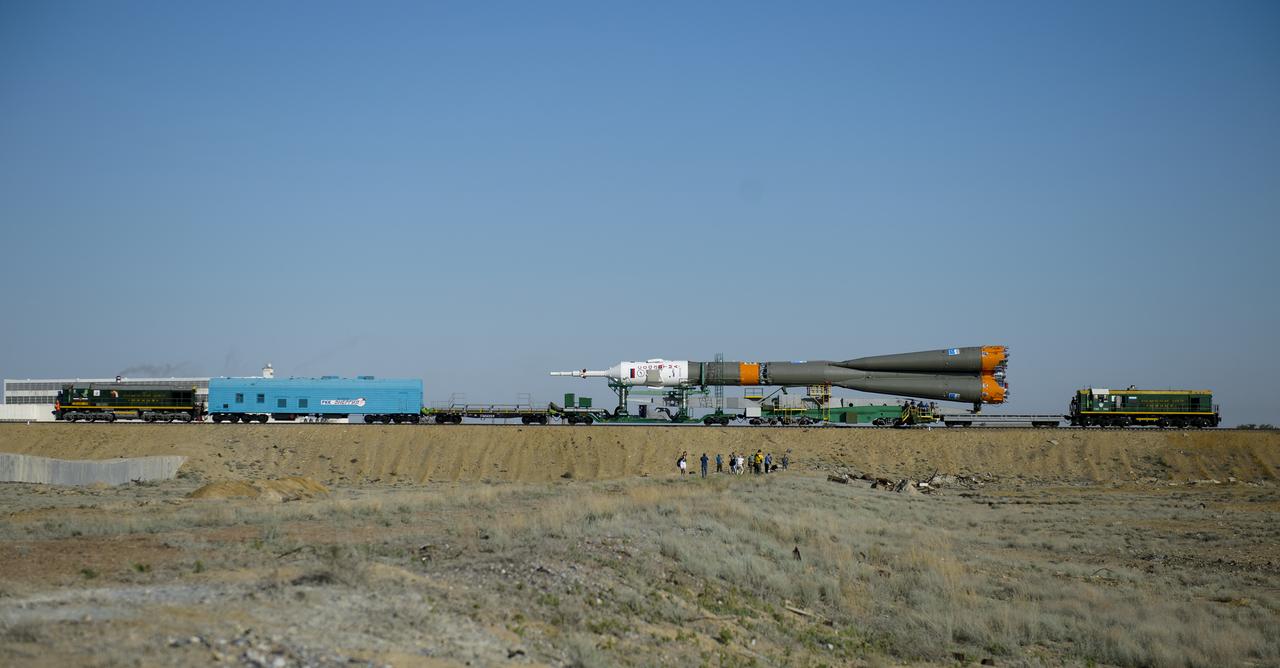
The Soyuz TMA-13M spacecraft is rolled out to the launch pad by train on Monday, May 26, 2014, at the Baikonur Cosmodrome in Kazakhstan. Launch of the Soyuz rocket is scheduled for May 29 and will send Expedition 40 Soyuz Commander Maxim Suraev, of the Russian Federal Space Agency, Roscosmos, Flight Engineer Alexander Gerst, of the European Space Agency, ESA, and Flight Engineer Reid Wiseman of NASA on a five and a half month mission aboard the International Space Station. Photo Credit: (NASA/Joel Kowsky)
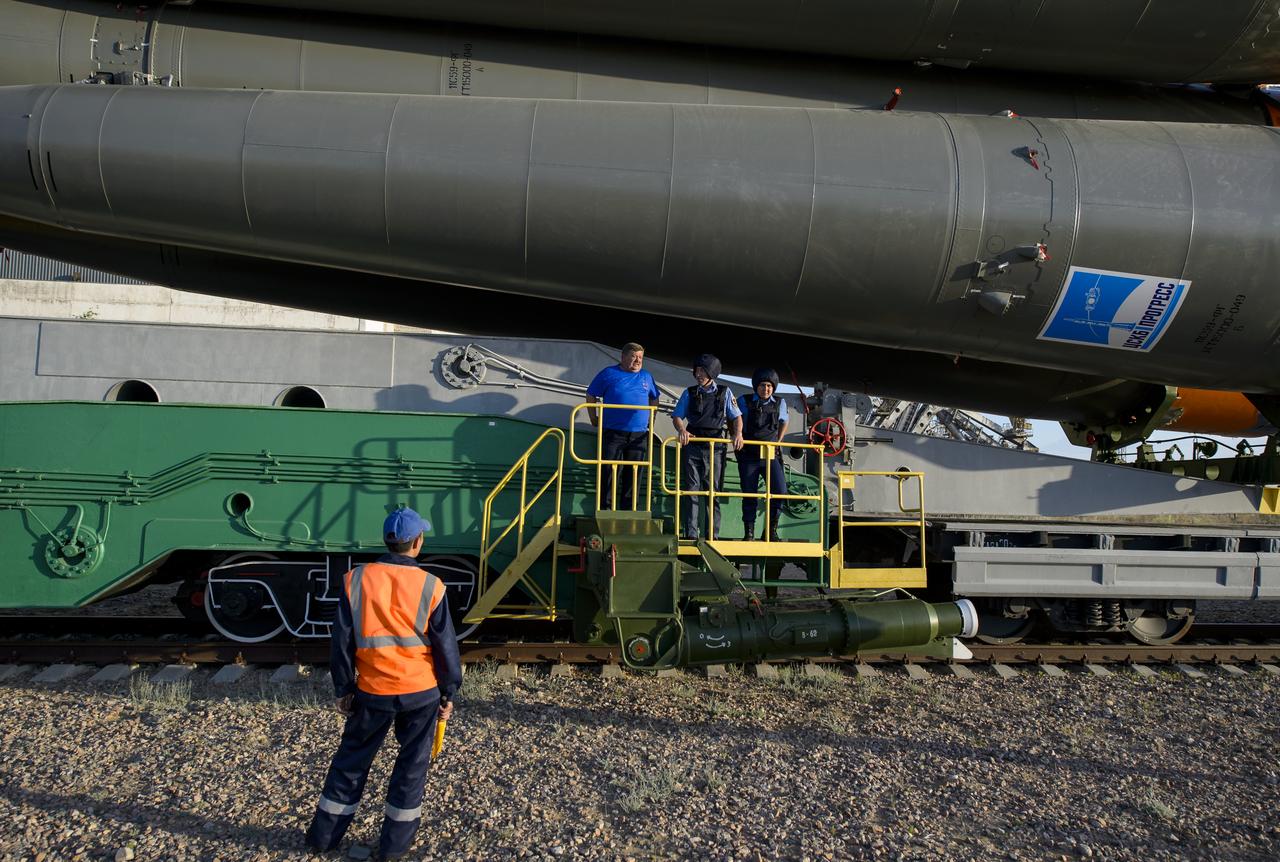
The Soyuz TMA-13M spacecraft is rolled out to the launch pad by train on Monday, May 26, 2014, at the Baikonur Cosmodrome in Kazakhstan. Launch of the Soyuz rocket is scheduled for May 29 and will send Expedition 40 Soyuz Commander Maxim Suraev, of the Russian Federal Space Agency, Roscosmos, Flight Engineer Alexander Gerst, of the European Space Agency, ESA, and Flight Engineer Reid Wiseman of NASA on a five and a half month mission aboard the International Space Station. Photo Credit: (NASA/Joel Kowsky)
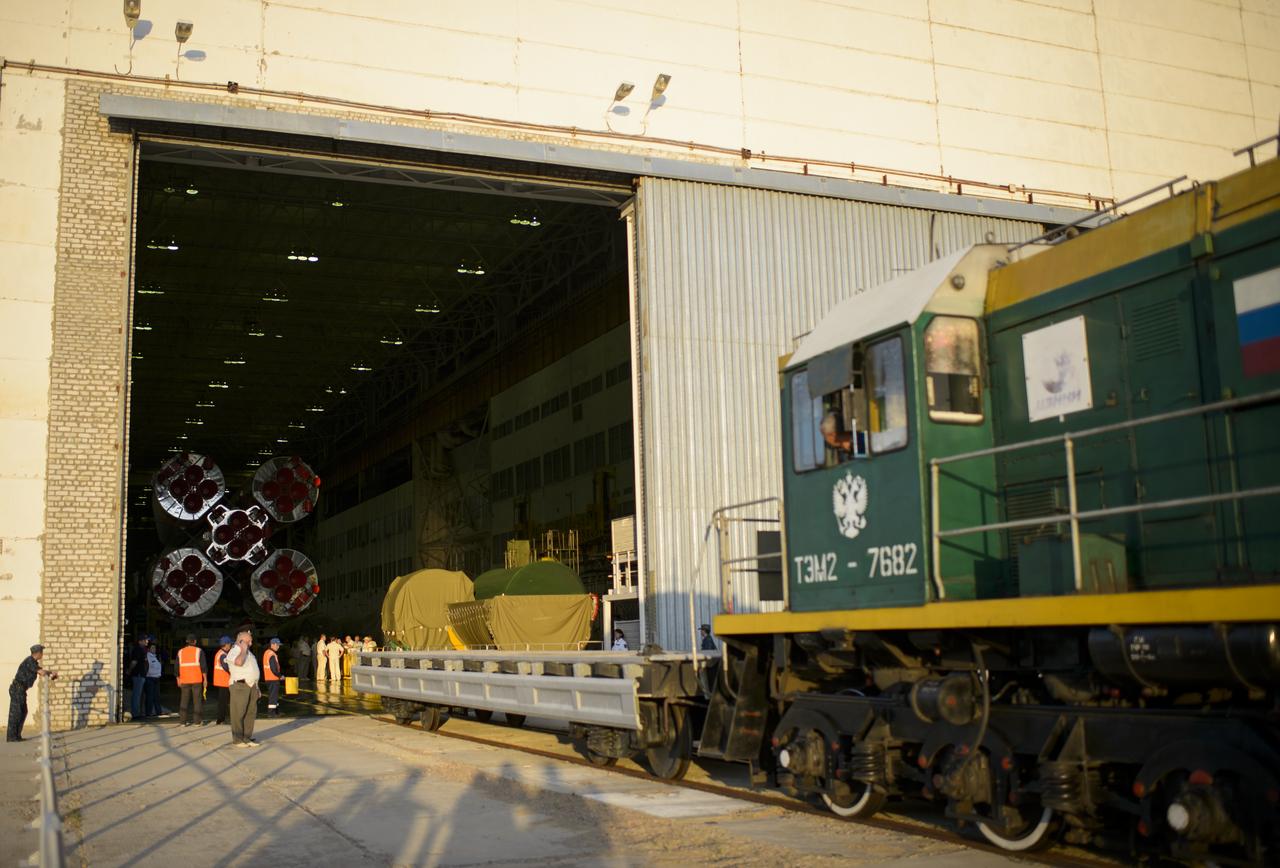
The Soyuz TMA-13M rocket is seen inside Building 112 prior to being rolled out to the launch pad by train on Monday, May 26, 2014, at the Baikonur Cosmodrome in Kazakhstan. Launch of the Soyuz rocket is scheduled for May 29 and will send Expedition 40 Soyuz Commander Maxim Suraev, of the Russian Federal Space Agency, Roscosmos, Flight Engineer Alexander Gerst, of the European Space Agency, ESA, and Flight Engineer Reid Wiseman of NASA on a five and a half month mission aboard the International Space Station. Photo Credit: (NASA/Joel Kowsky)
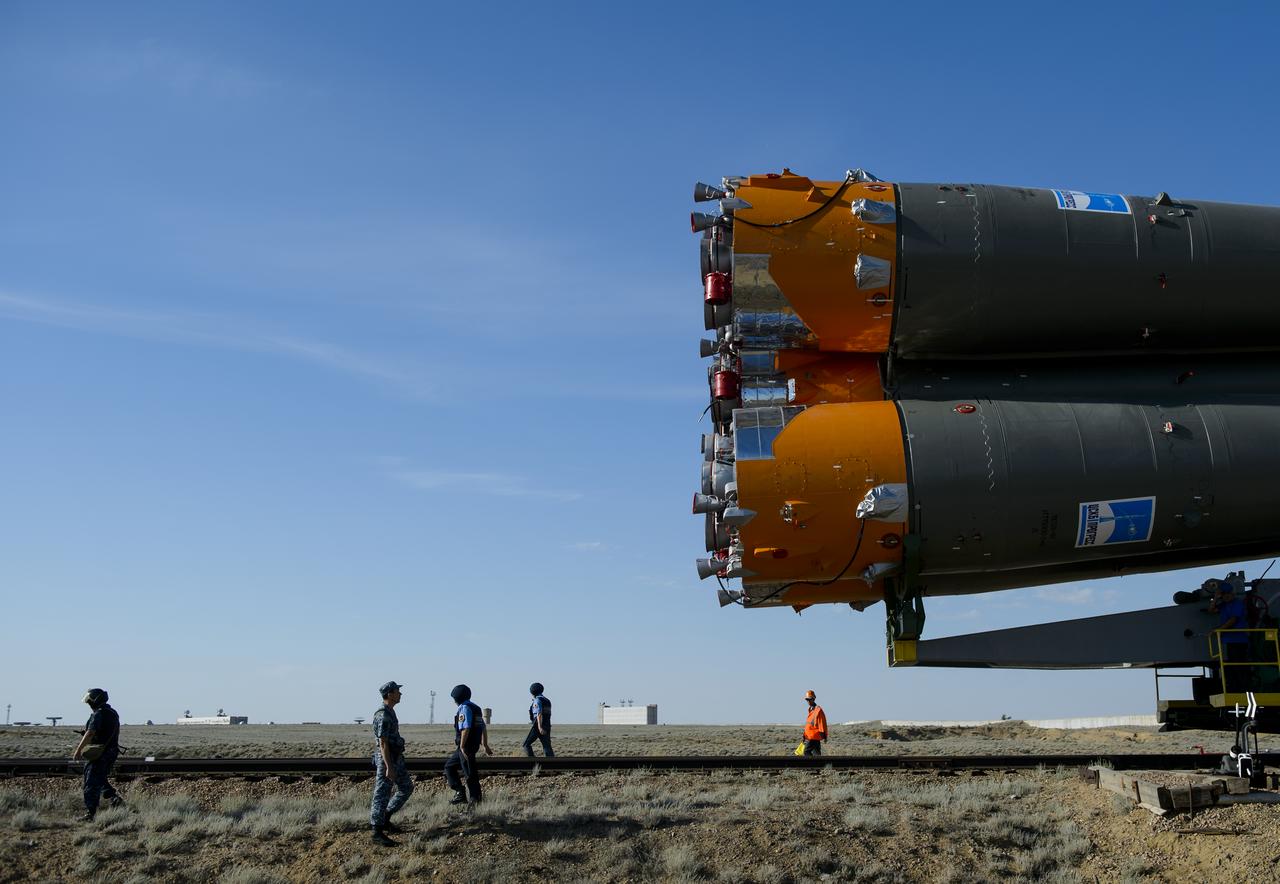
Security personnel walk in front of the Soyuz TMA-13M spacecraft as the vehicle is rolled out to the launch pad by train on Monday, May 26, 2014, at the Baikonur Cosmodrome in Kazakhstan. Launch of the Soyuz rocket is scheduled for May 29 and will send Expedition 40 Soyuz Commander Maxim Suraev, of the Russian Federal Space Agency, Roscosmos, Flight Engineer Alexander Gerst, of the European Space Agency, ESA, and Flight Engineer Reid Wiseman of NASA on a five and a half month mission aboard the International Space Station. Photo Credit: (NASA/Joel Kowsky)
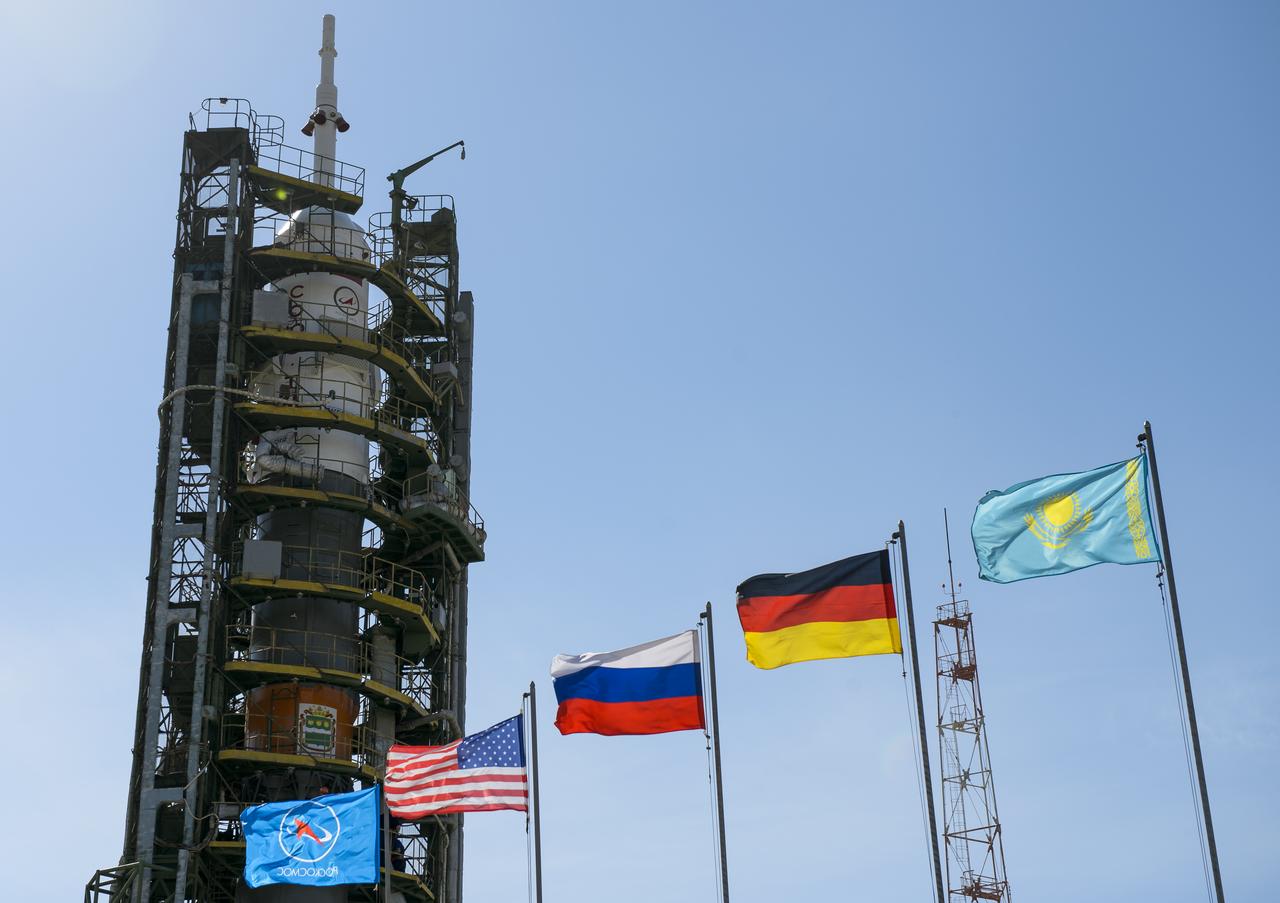
The Soyuz TMA-13M rocket is seen after the service structure arms were raised into position at the launch pad on Monday, May 26, 2014, at the Baikonur Cosmodrome in Kazakhstan. Launch of the Soyuz rocket is scheduled for May 29 and will send Expedition 40 Soyuz Commander Maxim Suraev, of the Russian Federal Space Agency, Roscosmos, Flight Engineer Alexander Gerst, of the European Space Agency, ESA, and Flight Engineer Reid Wiseman of NASA on a five and a half month mission aboard the International Space Station. Photo Credit: (NASA/Joel Kowsky)
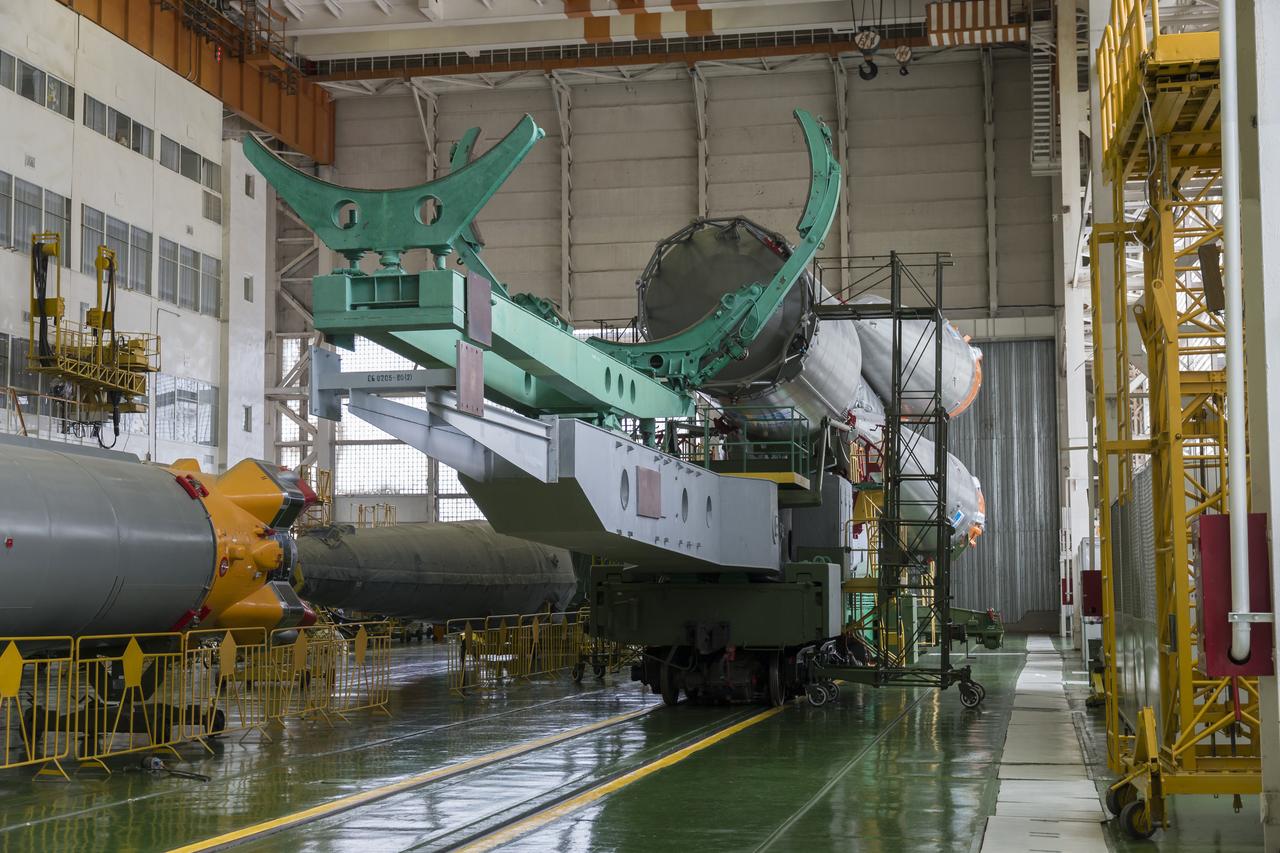
The Soyuz rocket and Soyuz TMA-13M spacecraft is assembled at Building 112 on the Baikonur Cosmodrome on Sunday, May 25, 2014 in Baikonur, Kazakhstan. Launch of the Soyuz is scheduled for May 29 and will send Expedition 40 Soyuz Commander Maxim Suraev of the Russian Federal Space Agency, Roscosmos, Flight Engineer Alexander Gerst of the European Space Agency, ESA, and Flight Engineer Reid Wiseman of NASA to the International Space Station for a five and a half month stay. Photo Credit: (NASA/Victor Zelentsov)
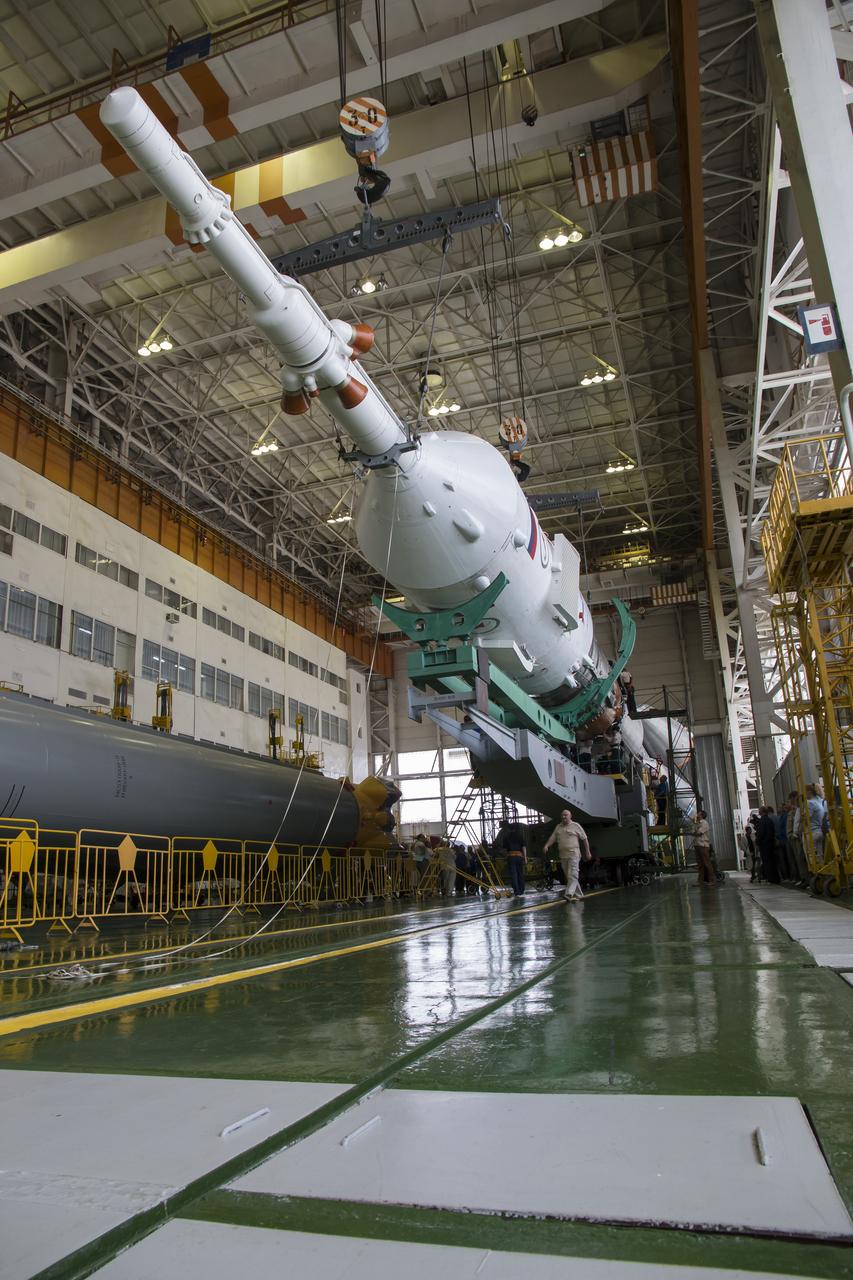
The Soyuz rocket and Soyuz TMA-13M spacecraft is assembled at Building 112 on the Baikonur Cosmodrome on Sunday, May 25, 2014 in Baikonur, Kazakhstan. Launch of the Soyuz is scheduled for May 29 and will send Expedition 40 Soyuz Commander Maxim Suraev of the Russian Federal Space Agency, Roscosmos, Flight Engineer Alexander Gerst of the European Space Agency, ESA, and Flight Engineer Reid Wiseman of NASA to the International Space Station for a five and a half month stay. Photo Credit: (NASA/Victor Zelentsov)
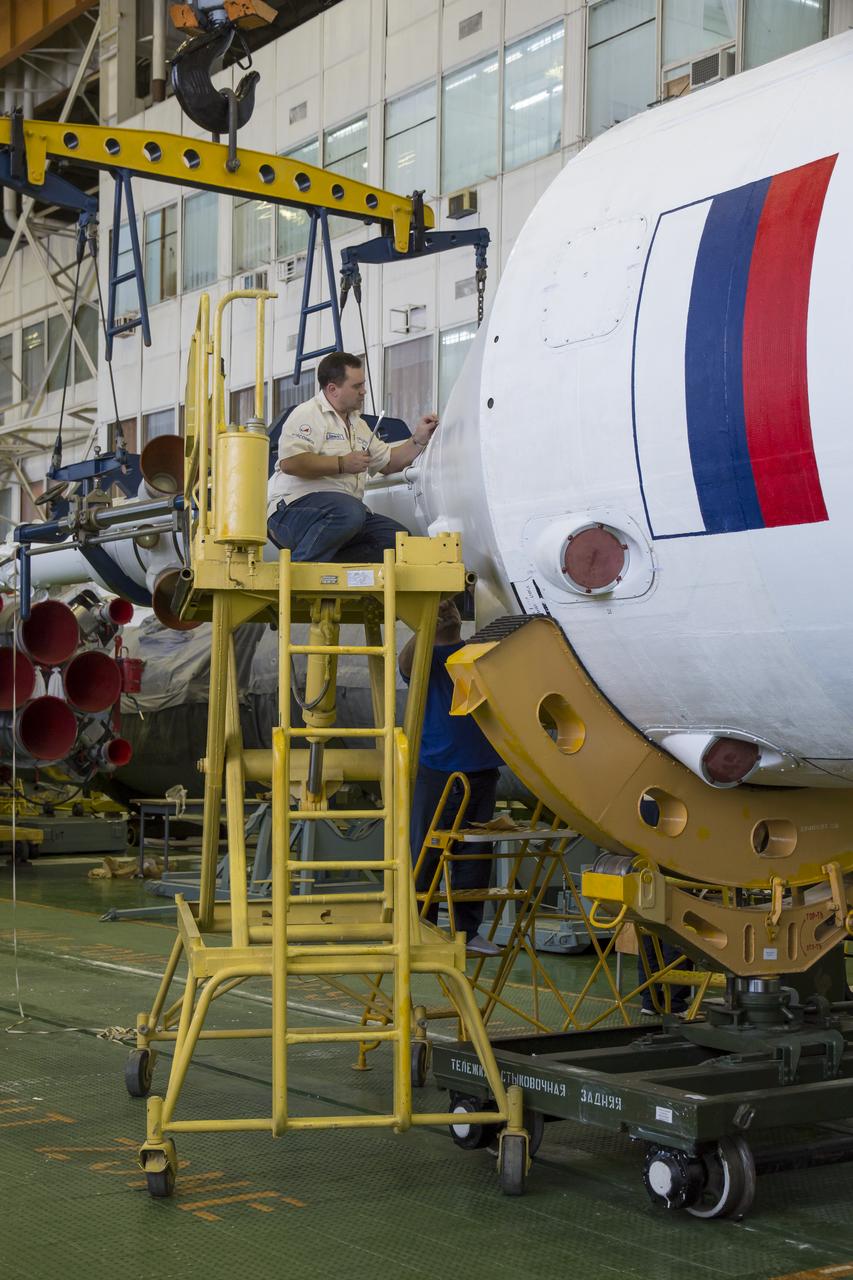
The Soyuz rocket and Soyuz TMA-13M spacecraft is assembled at Building 112 on the Baikonur Cosmodrome on Sunday, May 25, 2014 in Baikonur, Kazakhstan. Launch of the Soyuz is scheduled for May 29 and will send Expedition 40 Soyuz Commander Maxim Suraev of the Russian Federal Space Agency, Roscosmos, Flight Engineer Alexander Gerst of the European Space Agency, ESA, and Flight Engineer Reid Wiseman of NASA to the International Space Station for a five and a half month stay. Photo Credit: (NASA/Victor Zelentsov)
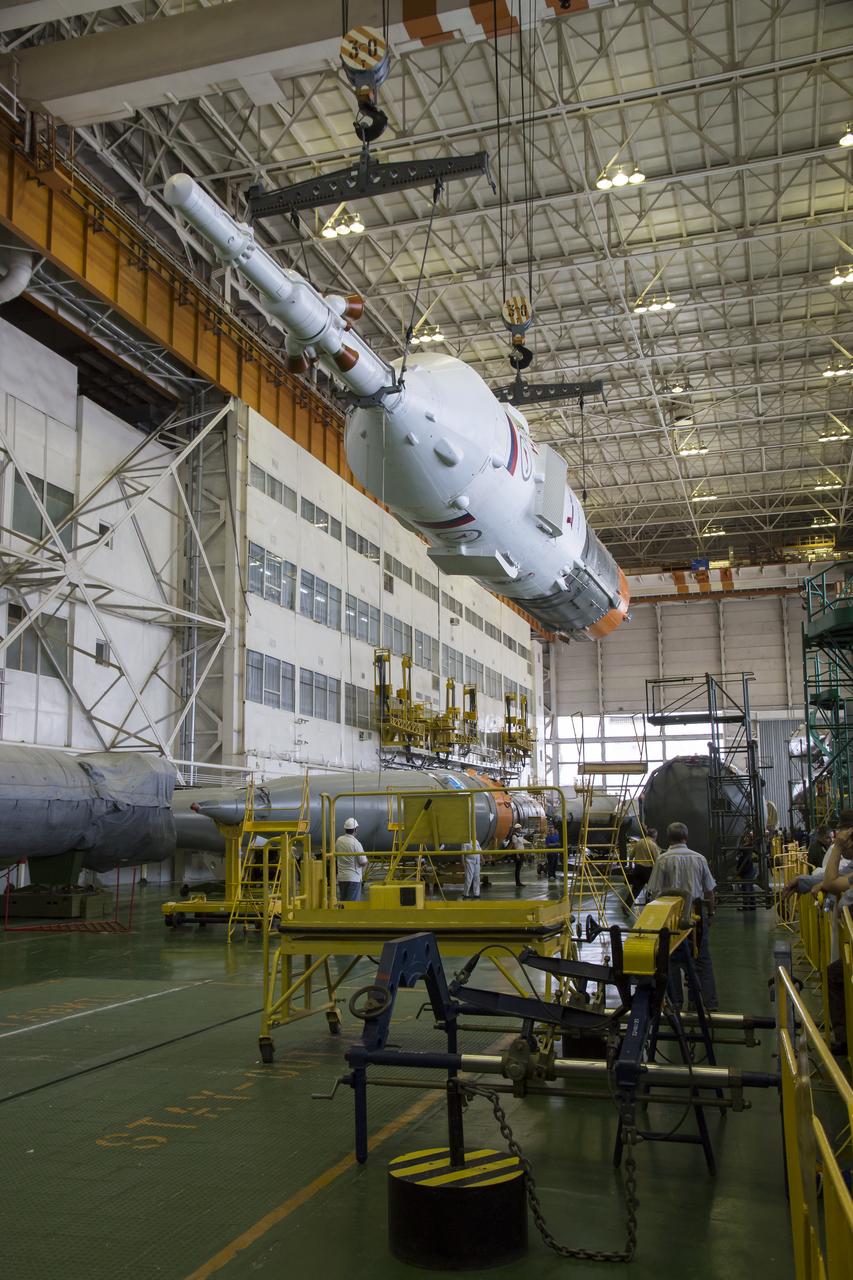
The Soyuz rocket and Soyuz TMA-13M spacecraft is assembled at Building 112 on the Baikonur Cosmodrome on Sunday, May 25, 2014 in Baikonur, Kazakhstan. Launch of the Soyuz is scheduled for May 29 and will send Expedition 40 Soyuz Commander Maxim Suraev of the Russian Federal Space Agency, Roscosmos, Flight Engineer Alexander Gerst of the European Space Agency, ESA, and Flight Engineer Reid Wiseman of NASA to the International Space Station for a five and a half month stay. Photo Credit: (NASA/Victor Zelentsov)
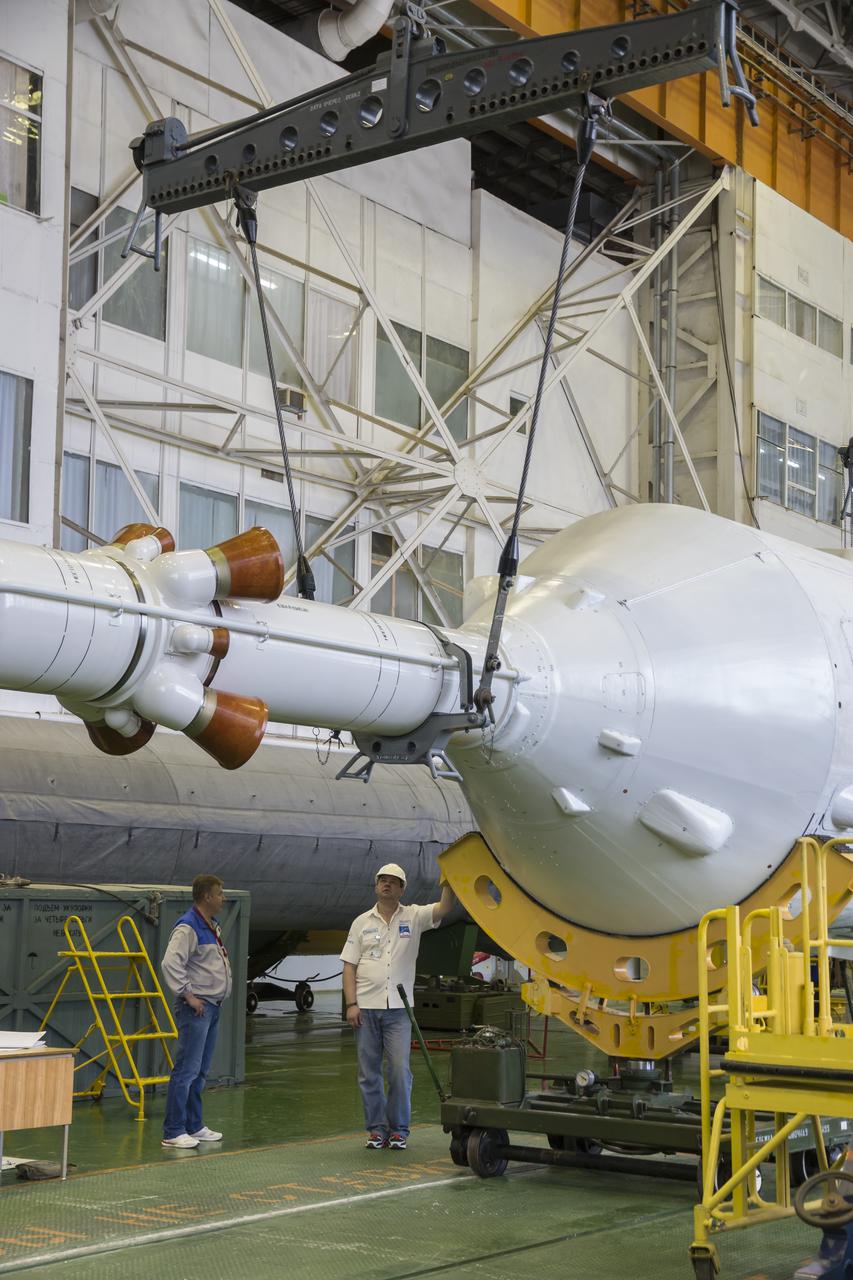
The Soyuz rocket and Soyuz TMA-13M spacecraft is assembled at Building 112 on the Baikonur Cosmodrome on Sunday, May 25, 2014 in Baikonur, Kazakhstan. Launch of the Soyuz is scheduled for May 29 and will send Expedition 40 Soyuz Commander Maxim Suraev of the Russian Federal Space Agency, Roscosmos, Flight Engineer Alexander Gerst of the European Space Agency, ESA, and Flight Engineer Reid Wiseman of NASA to the International Space Station for a five and a half month stay. Photo Credit: (NASA/Victor Zelentsov)
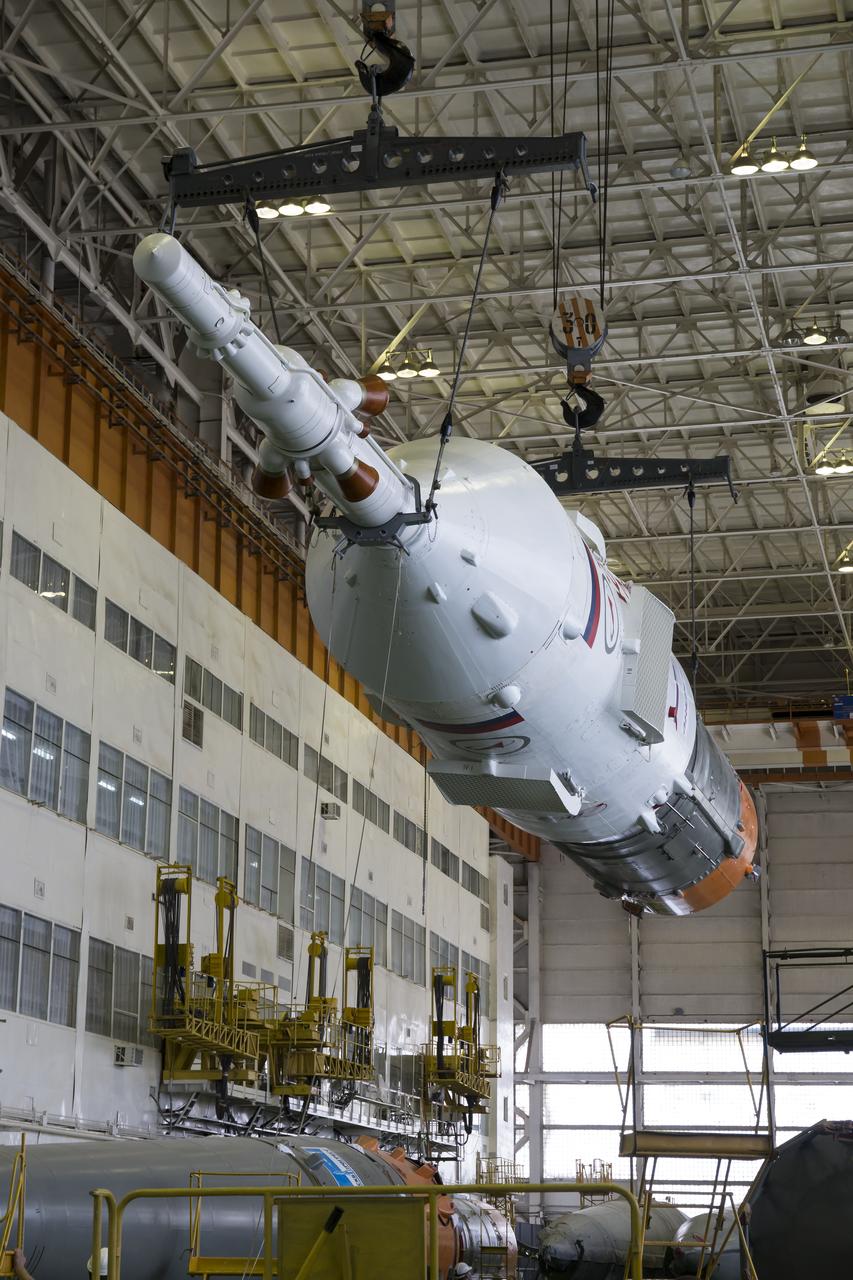
The Soyuz rocket and Soyuz TMA-13M spacecraft is assembled at Building 112 on the Baikonur Cosmodrome on Sunday, May 25, 2014 in Baikonur, Kazakhstan. Launch of the Soyuz is scheduled for May 29 and will send Expedition 40 Soyuz Commander Maxim Suraev of the Russian Federal Space Agency, Roscosmos, Flight Engineer Alexander Gerst of the European Space Agency, ESA, and Flight Engineer Reid Wiseman of NASA to the International Space Station for a five and a half month stay. Photo Credit: (NASA/Victor Zelentsov)
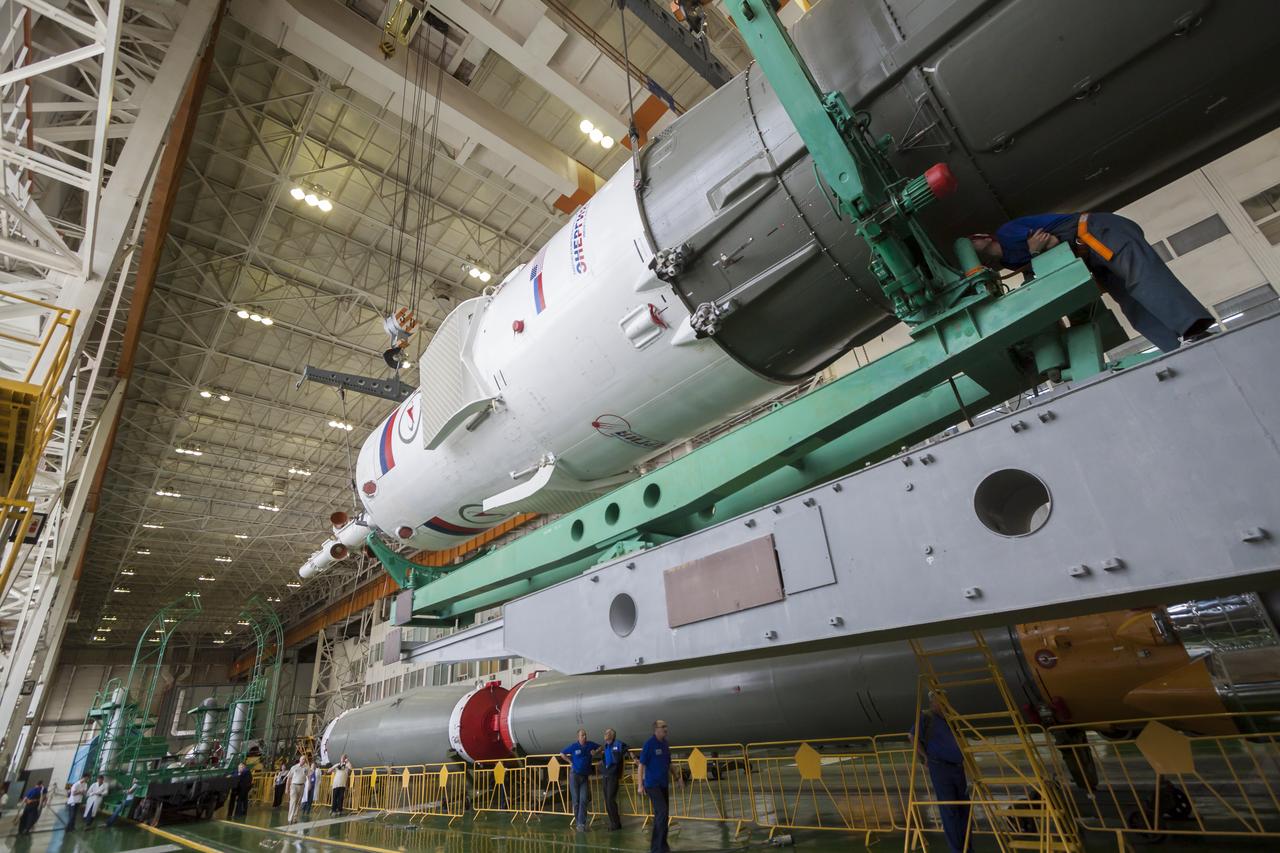
The Soyuz rocket and Soyuz TMA-13M spacecraft is assembled at Building 112 on the Baikonur Cosmodrome on Sunday, May 25, 2014 in Baikonur, Kazakhstan. Launch of the Soyuz is scheduled for May 29 and will send Expedition 40 Soyuz Commander Maxim Suraev of the Russian Federal Space Agency, Roscosmos, Flight Engineer Alexander Gerst of the European Space Agency, ESA, and Flight Engineer Reid Wiseman of NASA to the International Space Station for a five and a half month stay. Photo Credit: (NASA/Victor Zelentsov)
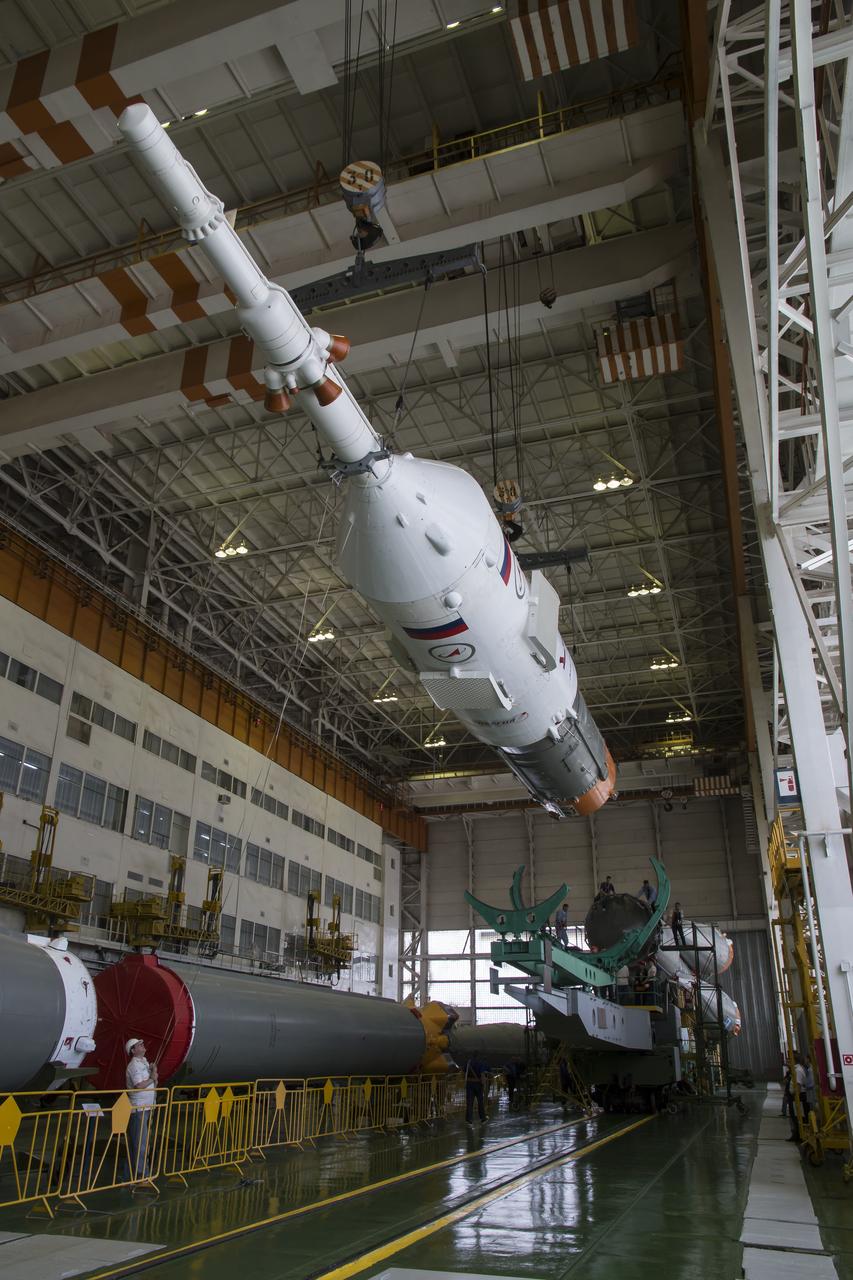
The Soyuz rocket and Soyuz TMA-13M spacecraft is assembled at Building 112 on the Baikonur Cosmodrome on Sunday, May 25, 2014 in Baikonur, Kazakhstan. Launch of the Soyuz is scheduled for May 29 and will send Expedition 40 Soyuz Commander Maxim Suraev of the Russian Federal Space Agency, Roscosmos, Flight Engineer Alexander Gerst of the European Space Agency, ESA, and Flight Engineer Reid Wiseman of NASA to the International Space Station for a five and a half month stay. Photo Credit: (NASA/Victor Zelentsov)
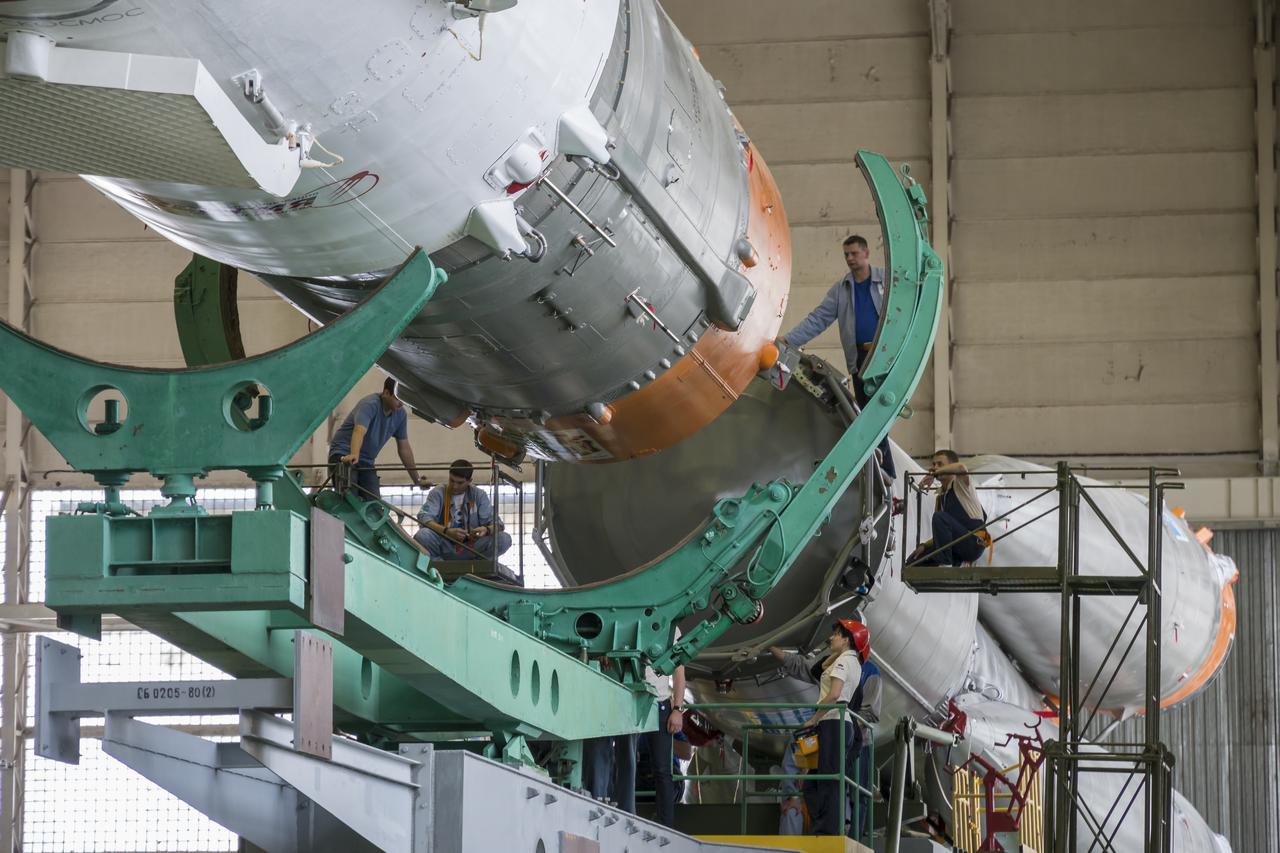
The Soyuz rocket and Soyuz TMA-13M spacecraft is assembled at Building 112 on the Baikonur Cosmodrome on Sunday, May 25, 2014 in Baikonur, Kazakhstan. Launch of the Soyuz is scheduled for May 29 and will send Expedition 40 Soyuz Commander Maxim Suraev of the Russian Federal Space Agency, Roscosmos, Flight Engineer Alexander Gerst of the European Space Agency, ESA, and Flight Engineer Reid Wiseman of NASA to the International Space Station for a five and a half month stay. Photo Credit: (NASA/Victor Zelentsov)
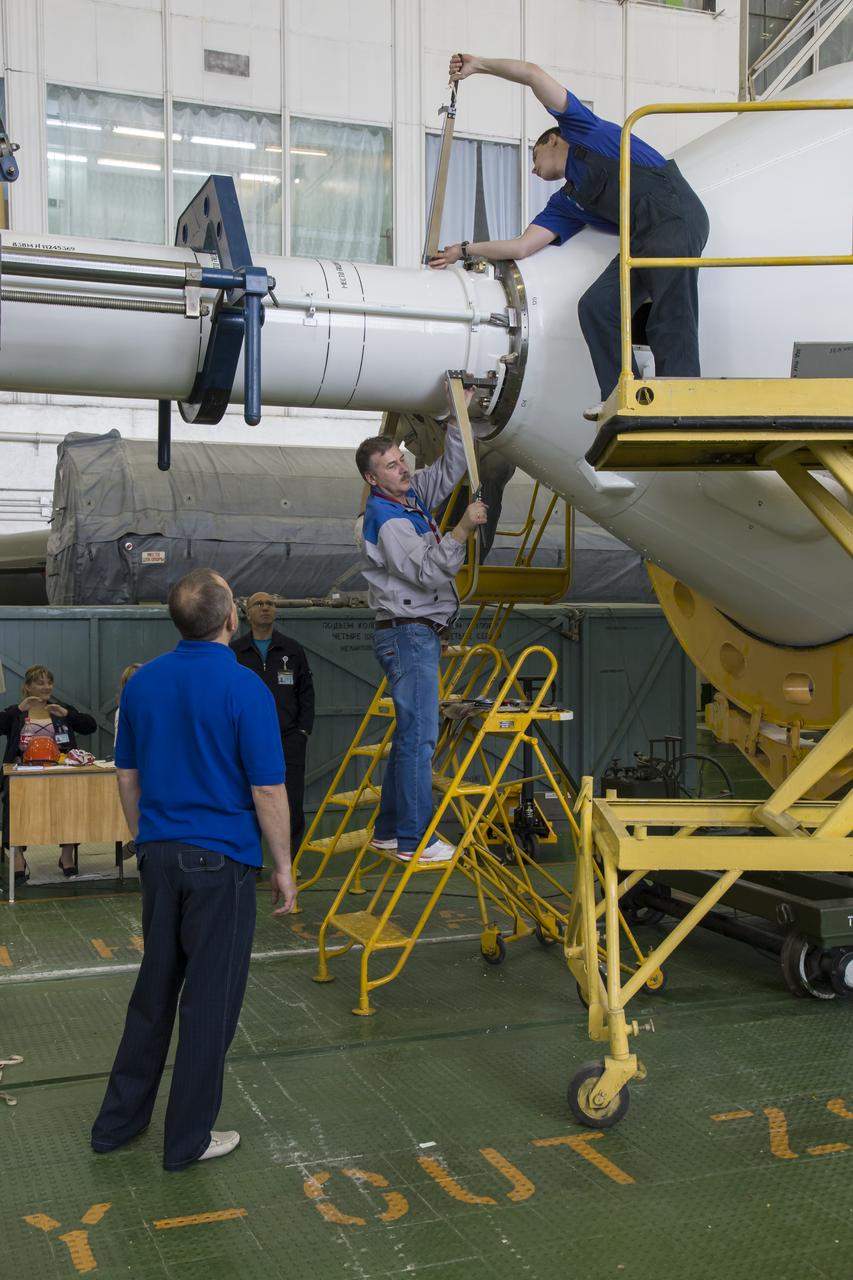
The Soyuz rocket and Soyuz TMA-13M spacecraft is assembled at Building 112 on the Baikonur Cosmodrome on Sunday, May 25, 2014 in Baikonur, Kazakhstan. Launch of the Soyuz is scheduled for May 29 and will send Expedition 40 Soyuz Commander Maxim Suraev of the Russian Federal Space Agency, Roscosmos, Flight Engineer Alexander Gerst of the European Space Agency, ESA, and Flight Engineer Reid Wiseman of NASA to the International Space Station for a five and a half month stay. Photo Credit: (NASA/Victor Zelentsov)
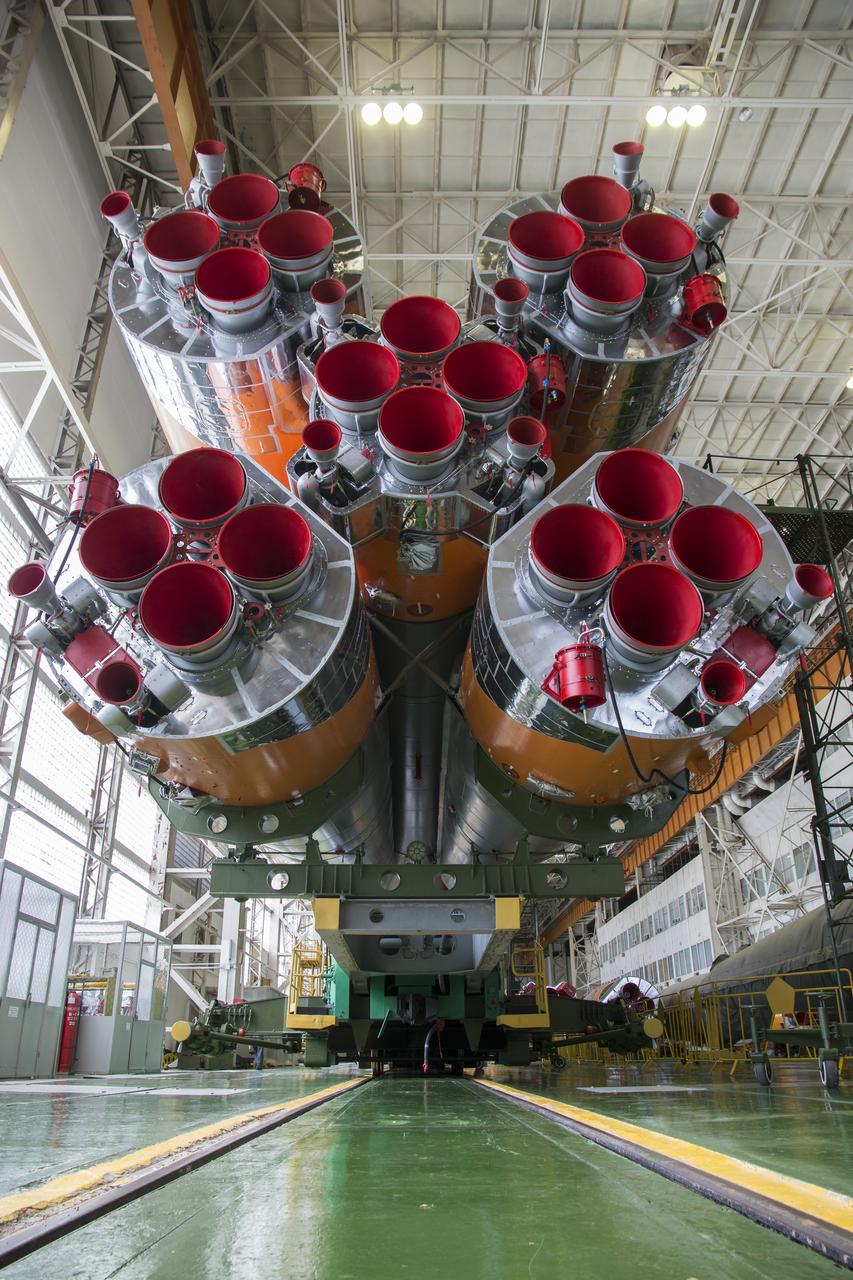
The Soyuz rocket and Soyuz TMA-13M spacecraft is assembled at Building 112 on the Baikonur Cosmodrome on Sunday, May 25, 2014 in Baikonur, Kazakhstan. Launch of the Soyuz is scheduled for May 29 and will send Expedition 40 Soyuz Commander Maxim Suraev of the Russian Federal Space Agency, Roscosmos, Flight Engineer Alexander Gerst of the European Space Agency, ESA, and Flight Engineer Reid Wiseman of NASA to the International Space Station for a five and a half month stay. Photo Credit: (NASA/Victor Zelentsov)
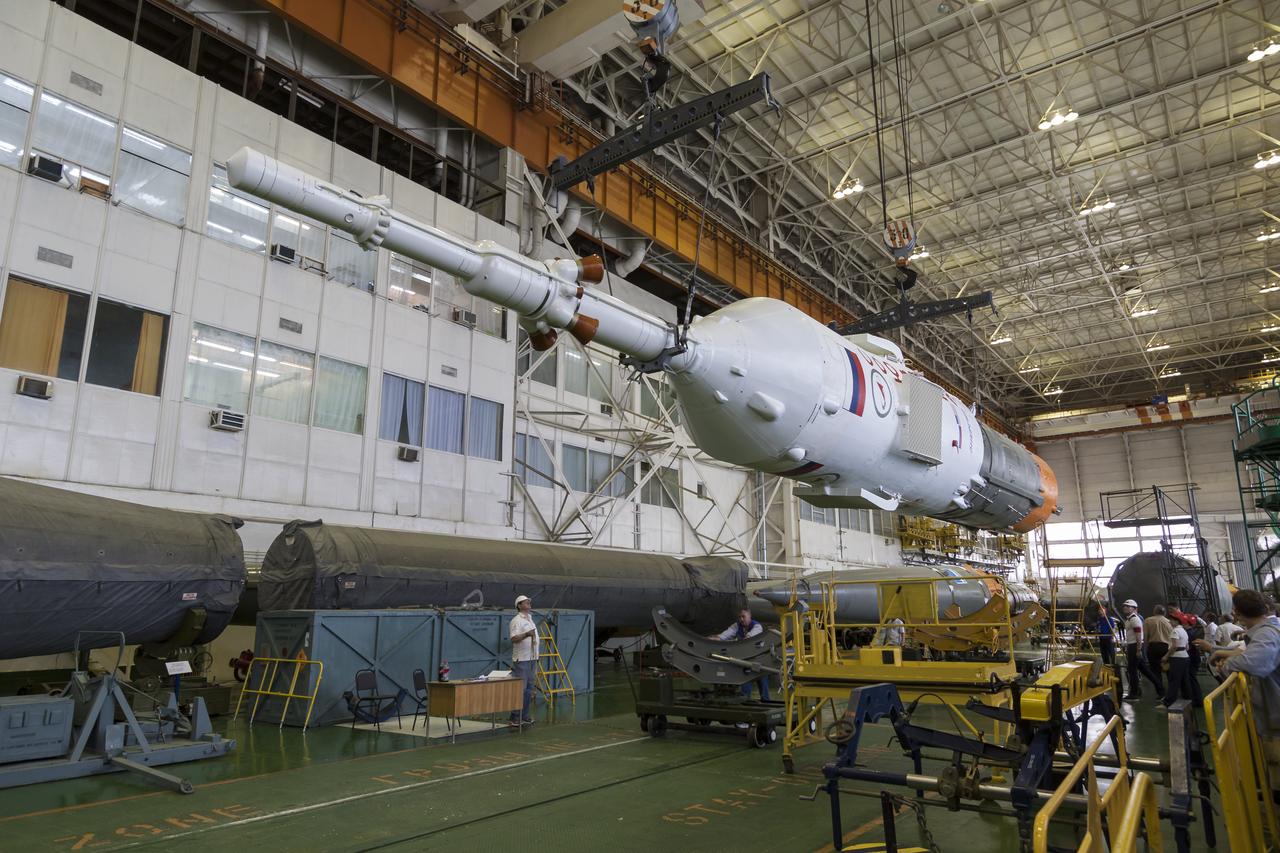
The Soyuz rocket and Soyuz TMA-13M spacecraft is assembled at Building 112 on the Baikonur Cosmodrome on Sunday, May 25, 2014 in Baikonur, Kazakhstan. Launch of the Soyuz is scheduled for May 29 and will send Expedition 40 Soyuz Commander Maxim Suraev of the Russian Federal Space Agency, Roscosmos, Flight Engineer Alexander Gerst of the European Space Agency, ESA, and Flight Engineer Reid Wiseman of NASA to the International Space Station for a five and a half month stay. Photo Credit: (NASA/Victor Zelentsov)
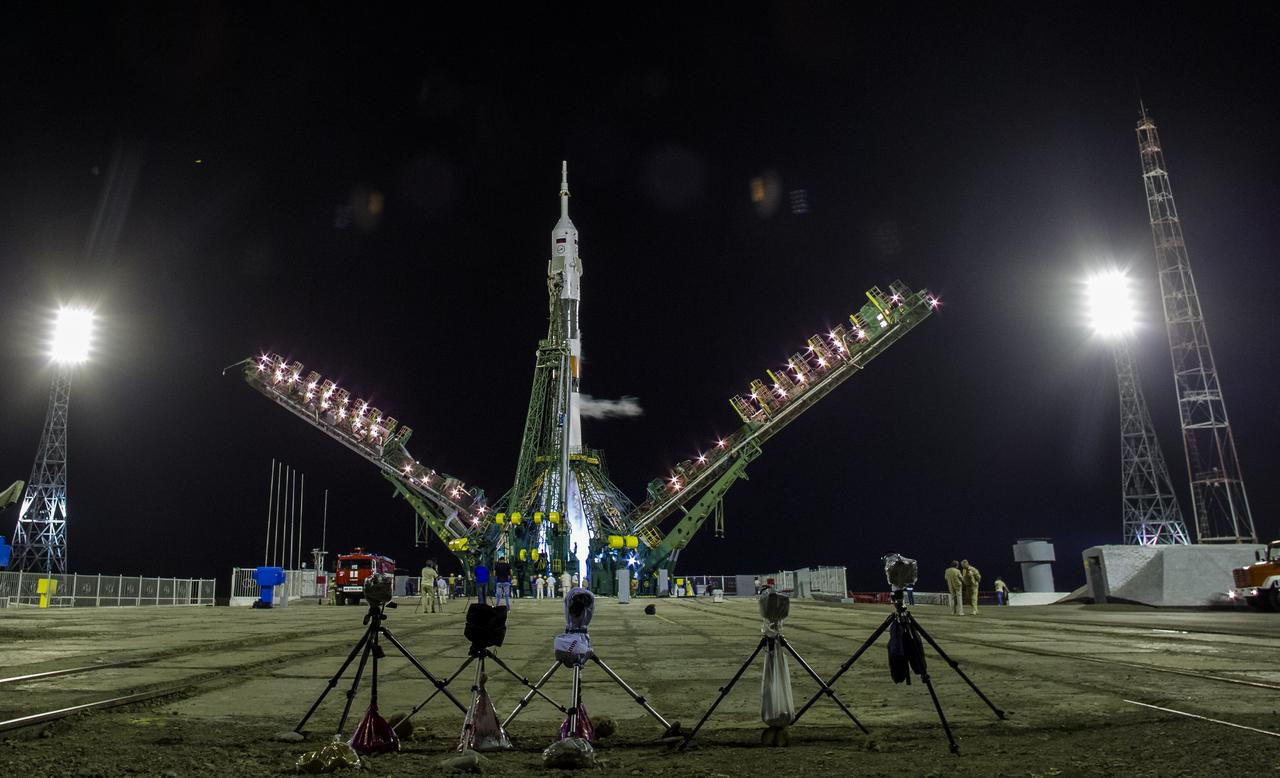
The Soyuz TMA-13M rocket is seen as the service structure lowered in preperation for launch in the early morning hours of Thursday, May 29, 2014 at the Baikonur Cosmodrome in Kazakhstan. Launch of the Soyuz rocket will send Expedition 40 Soyuz Commander Maxim Suraev, of the Russian Federal Space Agency, Roscosmos, Flight Engineer Alexander Gerst, of the European Space Agency, ESA, and Flight Engineer Reid Wiseman of NASA on a five and a half month mission aboard the International Space Station. Photo Credit: (NASA/Joel Kowsky)
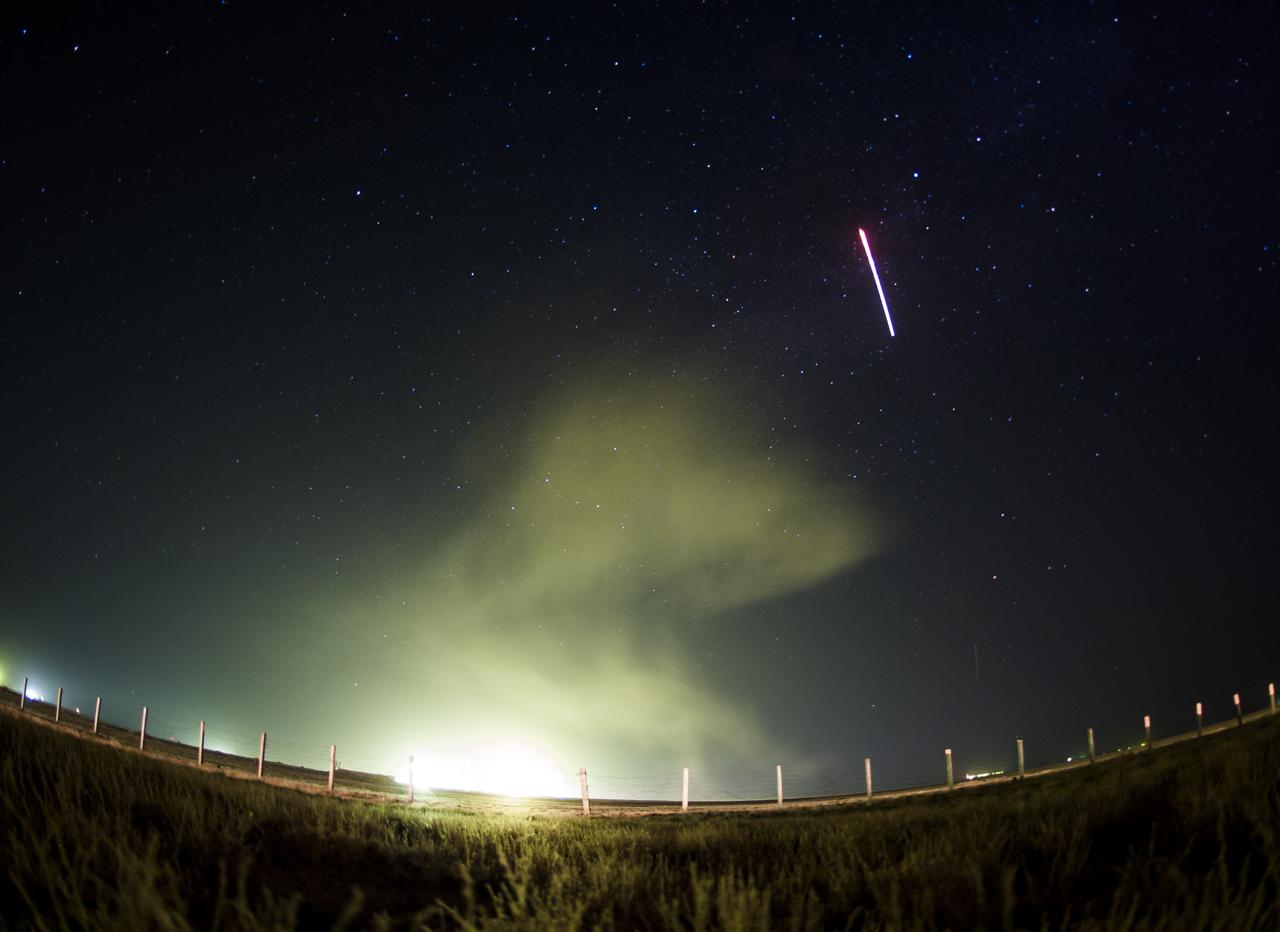
The Soyuz TMA-13M rocket is launched, as seen in this 30-second exposure, with Expedition 40 Soyuz Commander Maxim Suraev, of the Russian Federal Space Agency, Roscosmos, Flight Engineer Alexander Gerst, of the European Space Agency, ESA, and Flight Engineer Reid Wiseman of NASA, Thursday, May 29, 2014 at the Baikonur Cosmodrome in Kazakhstan. Suraev, Gerst, and Wiseman will spend the next five and a half months aboard the International Space Station. Photo Credit: (NASA/Joel Kowsky)
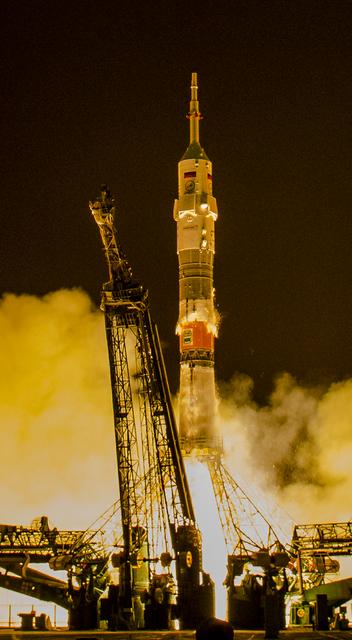
The Soyuz TMA-13M rocket is launched with Expedition 40 Soyuz Commander Maxim Suraev, of the Russian Federal Space Agency, Roscosmos, Flight Engineer Alexander Gerst, of the European Space Agency, ESA, and Flight Engineer Reid Wiseman of NASA, Thursday, May 29, 2014 at the Baikonur Cosmodrome in Kazakhstan. Suraev, Gerst, and Wiseman will spend the next five and a half months aboard the International Space Station. Photo Credit: (NASA/Joel Kowsky)
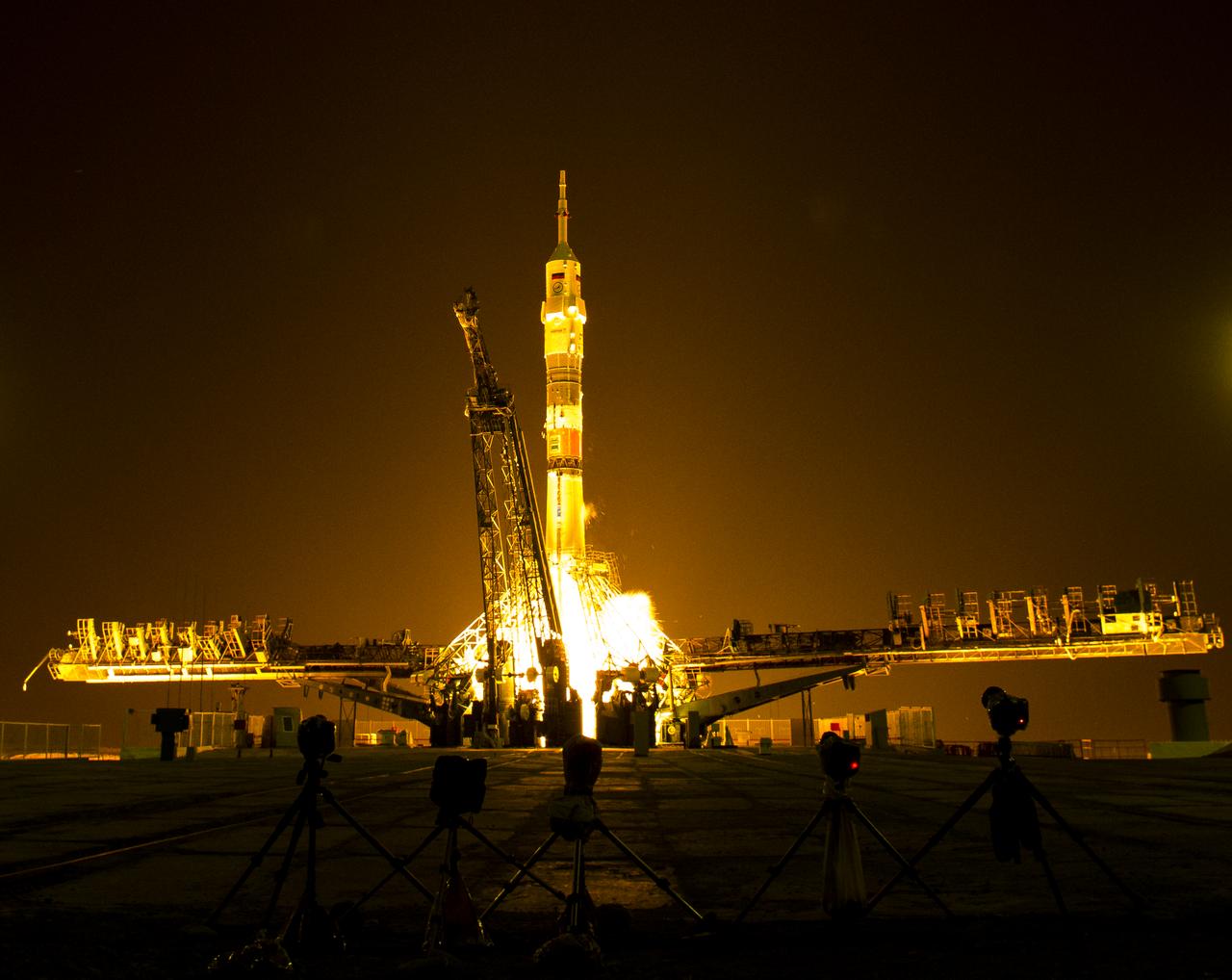
The Soyuz TMA-13M rocket is launched with Expedition 40 Soyuz Commander Maxim Suraev, of the Russian Federal Space Agency, Roscosmos, Flight Engineer Alexander Gerst, of the European Space Agency, ESA, and Flight Engineer Reid Wiseman of NASA, Thursday, May 29, 2014 at the Baikonur Cosmodrome in Kazakhstan. Suraev, Gerst, and Wiseman will spend the next five and a half months aboard the International Space Station. Photo Credit: (NASA/Joel Kowsky)
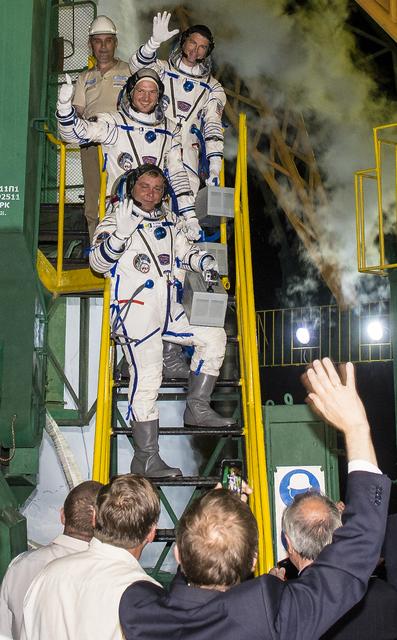
Expedition 40 Soyuz Commander Maxim Suraev of the Russian Federal Space Agency, Roscosmos, bottom, Flight Engineer Reid Wiseman of NASA, center, and Flight Engineer Alexander Gerst of the European Space Agency, ESA, top, wave farewell prior to boarding the Soyuz TMA-13M rocket for launch, Wednesday, May 28, 2014 at the Baikonur Cosmodrome in Kazakhstan. Suraev, Gerst, and Wiseman will spend the next six months aboard the International Space Station. Photo Credit: (NASA/Joel Kowsky)
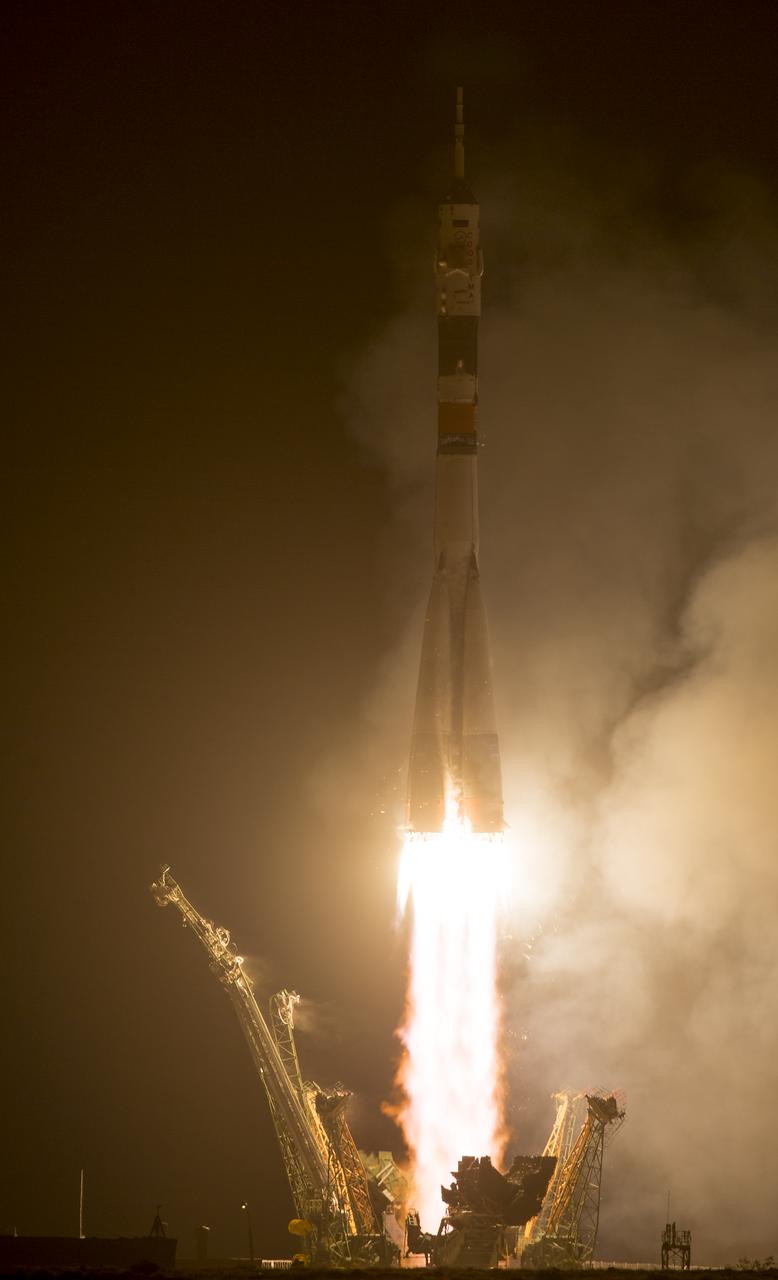
The Soyuz TMA-13M rocket is launched with Expedition 40 Soyuz Commander Maxim Suraev, of the Russian Federal Space Agency, Roscosmos, Flight Engineer Alexander Gerst, of the European Space Agency, ESA, and Flight Engineer Reid Wiseman of NASA, Thursday, May 29, 2014 at the Baikonur Cosmodrome in Kazakhstan. Suraev, Gerst, and Wiseman will spend the next five and a half months aboard the International Space Station. Photo Credit: (NASA/Joel Kowsky)
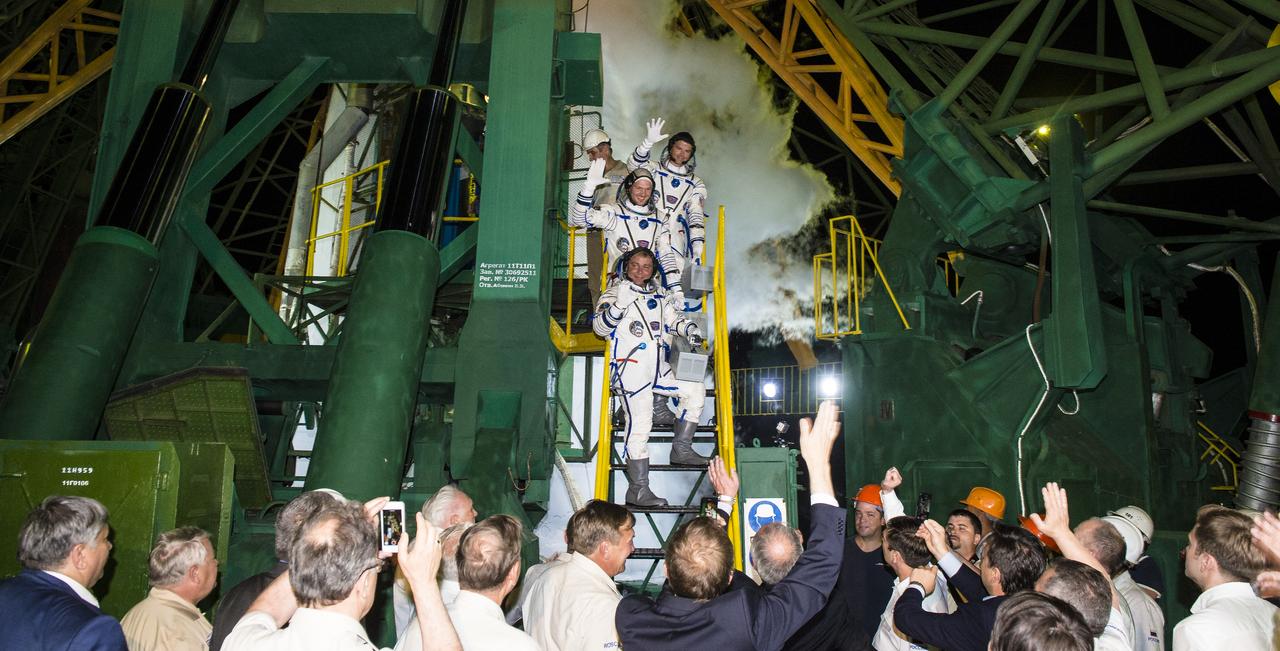
Expedition 40 Soyuz Commander Maxim Suraev of the Russian Federal Space Agency, Roscosmos, bottom, Flight Engineer Reid Wiseman of NASA, center, and Flight Engineer Alexander Gerst of the European Space Agency, ESA, top, wave farewell prior to boarding the Soyuz TMA-13M rocket for launch, Wednesday, May 28, 2014 at the Baikonur Cosmodrome in Kazakhstan. Suraev, Gerst, and Wiseman will spend the next six months aboard the International Space Station. Photo Credit: (NASA/Joel Kowsky)
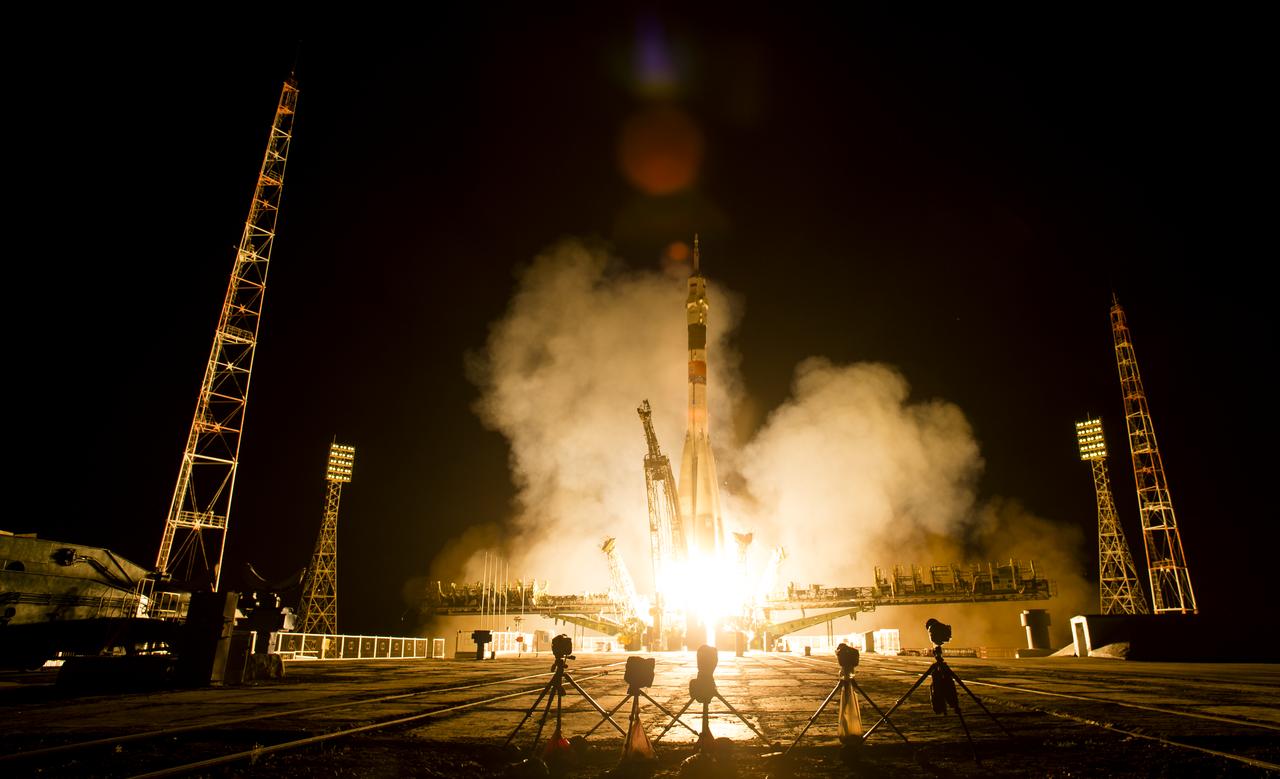
The Soyuz TMA-13M rocket is launched with Expedition 40 Soyuz Commander Maxim Suraev, of the Russian Federal Space Agency, Roscosmos, Flight Engineer Alexander Gerst, of the European Space Agency, ESA, and Flight Engineer Reid Wiseman of NASA, Thursday, May 29, 2014 at the Baikonur Cosmodrome in Kazakhstan. Suraev, Gerst, and Wiseman will spend the next five and a half months aboard the International Space Station. Photo Credit: (NASA/Joel Kowsky)
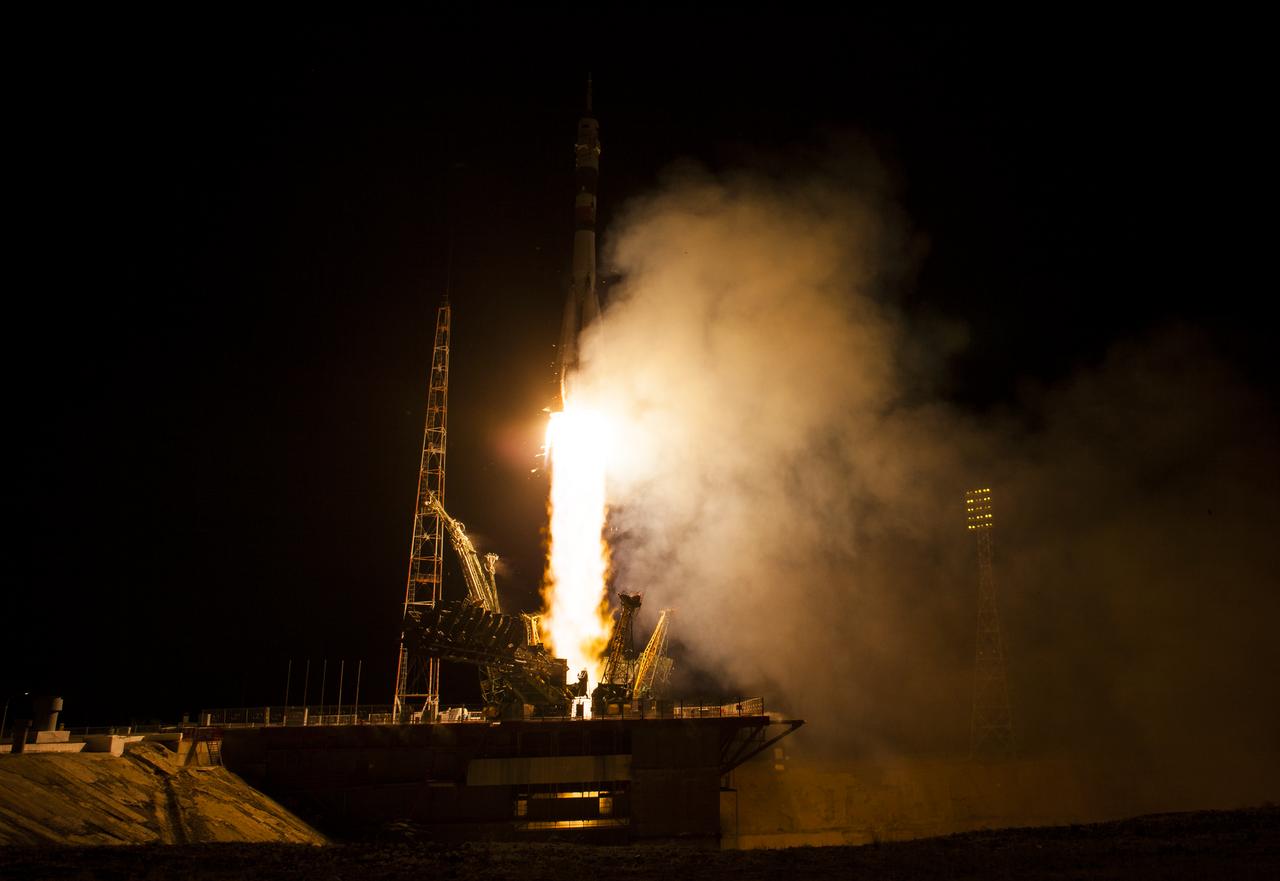
The Soyuz TMA-13M rocket is launched with Expedition 40 Soyuz Commander Maxim Suraev, of the Russian Federal Space Agency, Roscosmos, Flight Engineer Alexander Gerst, of the European Space Agency, ESA, and Flight Engineer Reid Wiseman of NASA, Thursday, May 29, 2014 at the Baikonur Cosmodrome in Kazakhstan. Suraev, Gerst, and Wiseman will spend the next five and a half months aboard the International Space Station. Photo Credit: (NASA/Joel Kowsky)
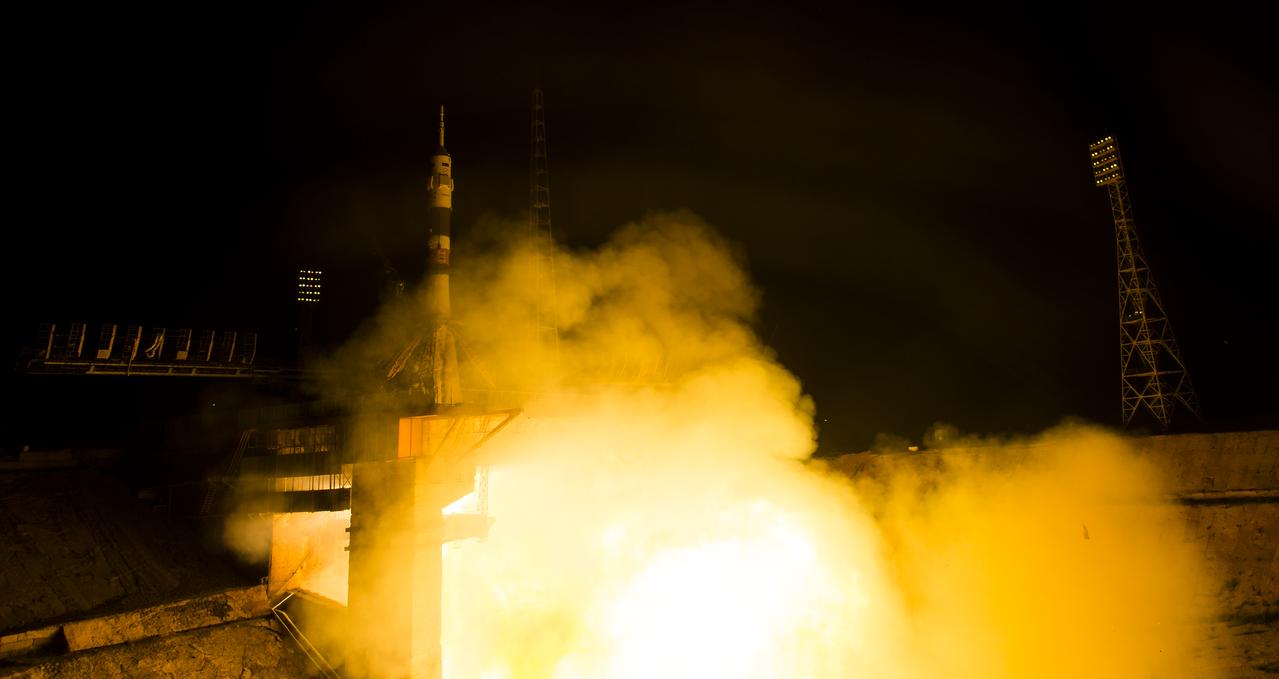
The Soyuz TMA-13M rocket is launched with Expedition 40 Soyuz Commander Maxim Suraev, of the Russian Federal Space Agency, Roscosmos, Flight Engineer Alexander Gerst, of the European Space Agency, ESA, and Flight Engineer Reid Wiseman of NASA, Thursday, May 29, 2014 at the Baikonur Cosmodrome in Kazakhstan. Suraev, Gerst, and Wiseman will spend the next five and a half months aboard the International Space Station. Photo Credit: (NASA/Joel Kowsky)
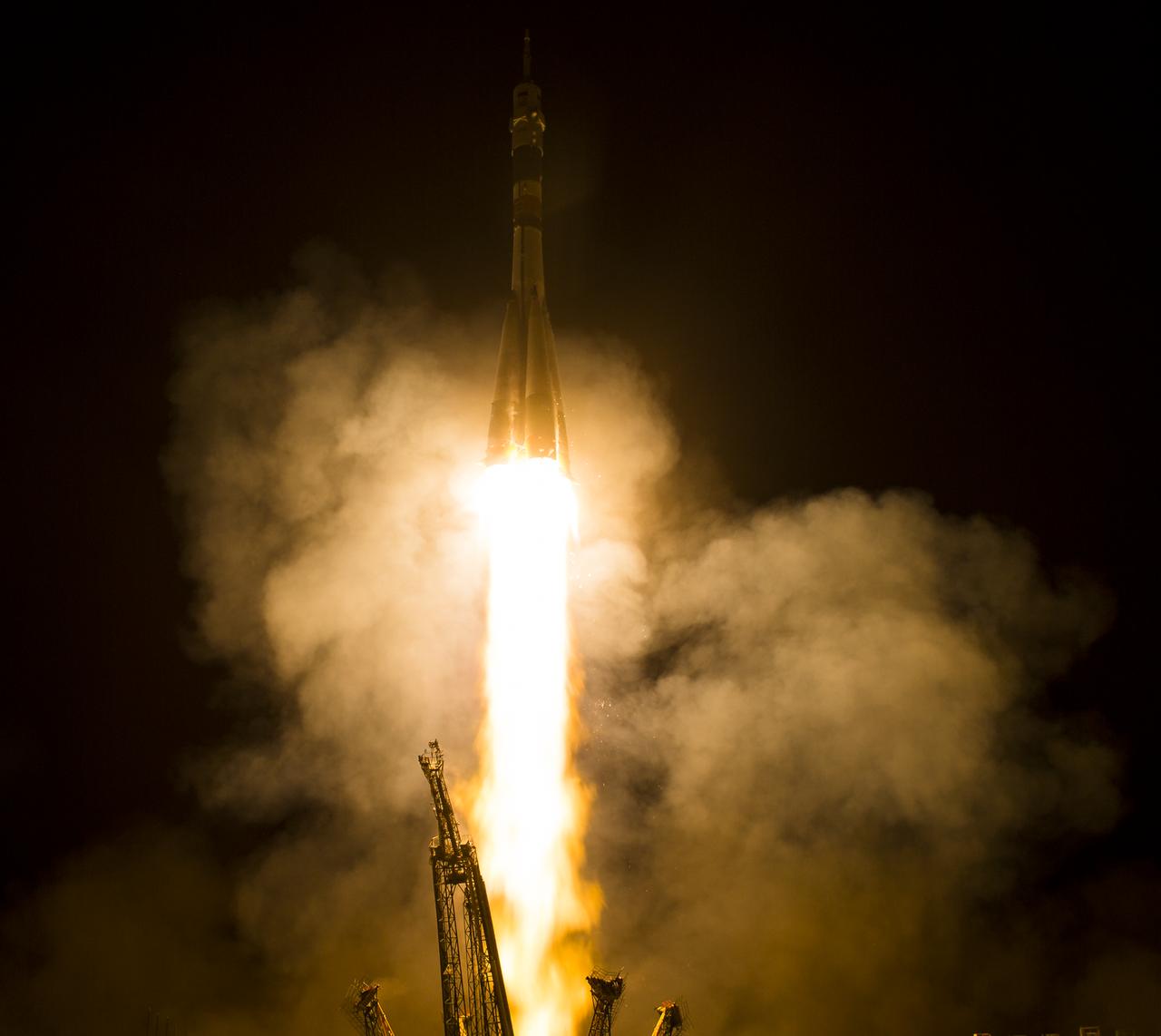
The Soyuz TMA-13M rocket is launched with Expedition 40 Soyuz Commander Maxim Suraev, of the Russian Federal Space Agency, Roscosmos, Flight Engineer Alexander Gerst, of the European Space Agency, ESA, and Flight Engineer Reid Wiseman of NASA, Thursday, May 29, 2014 at the Baikonur Cosmodrome in Kazakhstan. Suraev, Gerst, and Wiseman will spend the next five and a half months aboard the International Space Station. Photo Credit: (NASA/Joel Kowsky)
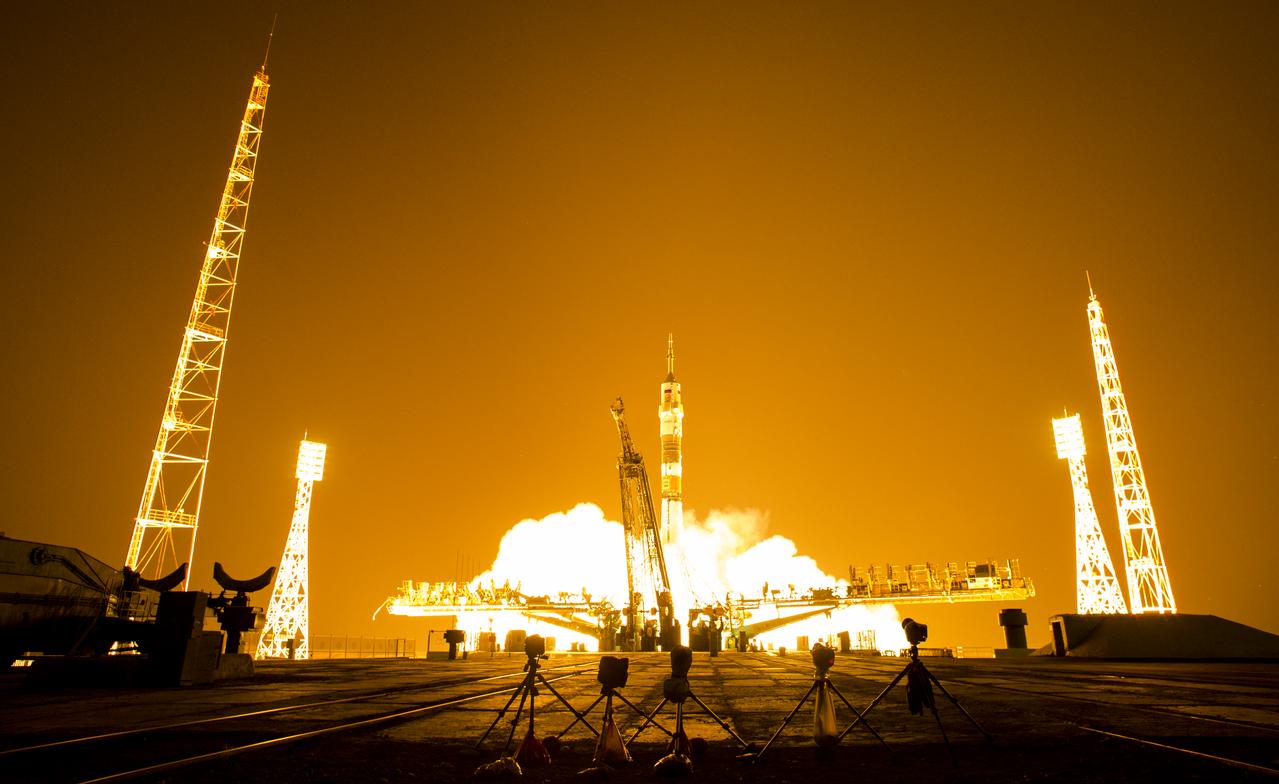
The Soyuz TMA-13M rocket is launched with Expedition 40 Soyuz Commander Maxim Suraev, of the Russian Federal Space Agency, Roscosmos, Flight Engineer Alexander Gerst, of the European Space Agency, ESA, and Flight Engineer Reid Wiseman of NASA, Thursday, May 29, 2014 at the Baikonur Cosmodrome in Kazakhstan. Suraev, Gerst, and Wiseman will spend the next five and a half months aboard the International Space Station. Photo Credit: (NASA/Joel Kowsky)
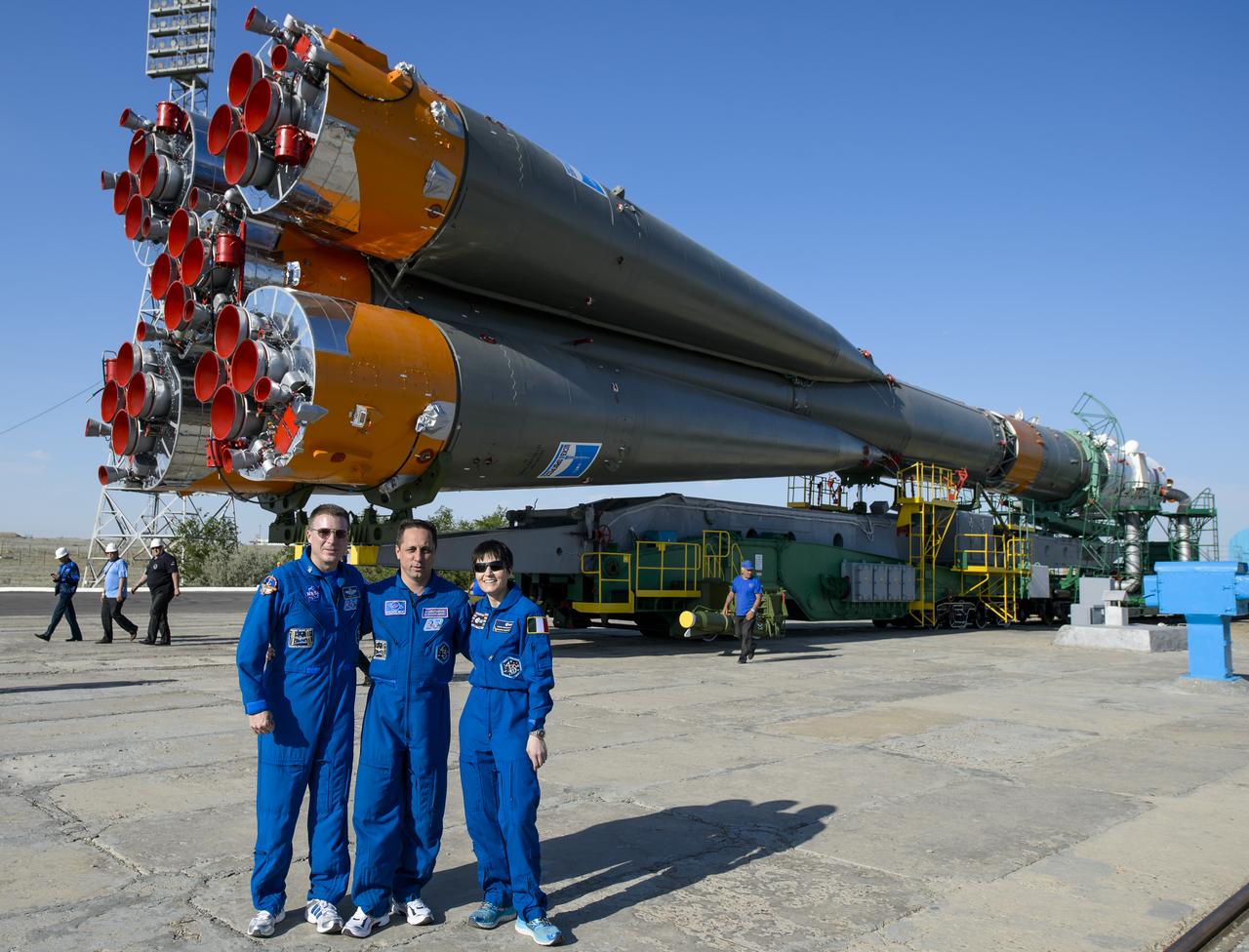
The Expedition 40 backup crew, Terry Virts of NASA, left, Soyuz Commander Anton Shkaplerov of the Russian Federal Space Agency, Roscosmos, center, and Flight Engineer Samantha Cristoforetti of the European Space Agency, ESA, right, are photographed in front of the Soyuz TMA-13M spacecraft as it arrives at the launch pad by train on Monday, May 26, 2014, at the Baikonur Cosmodrome in Kazakhstan. Launch of the Soyuz rocket is scheduled for May 29 and will send Expedition 40 Soyuz Commander Maxim Suraev, of the Russian Federal Space Agency, Roscosmos, Flight Engineer Alexander Gerst, of the European Space Agency, ESA, and Flight Engineer Reid Wiseman of NASA on a five and a half month mission aboard the International Space Station. Photo Credit: (NASA/Joel Kowsky)