
U.S. Space Camp California 'Day Camp' Grand Opening with Kenin Jones (Whisman School) Lucretia Sutherlin (McNair School) and Rachael Quiring (Camp Staff)
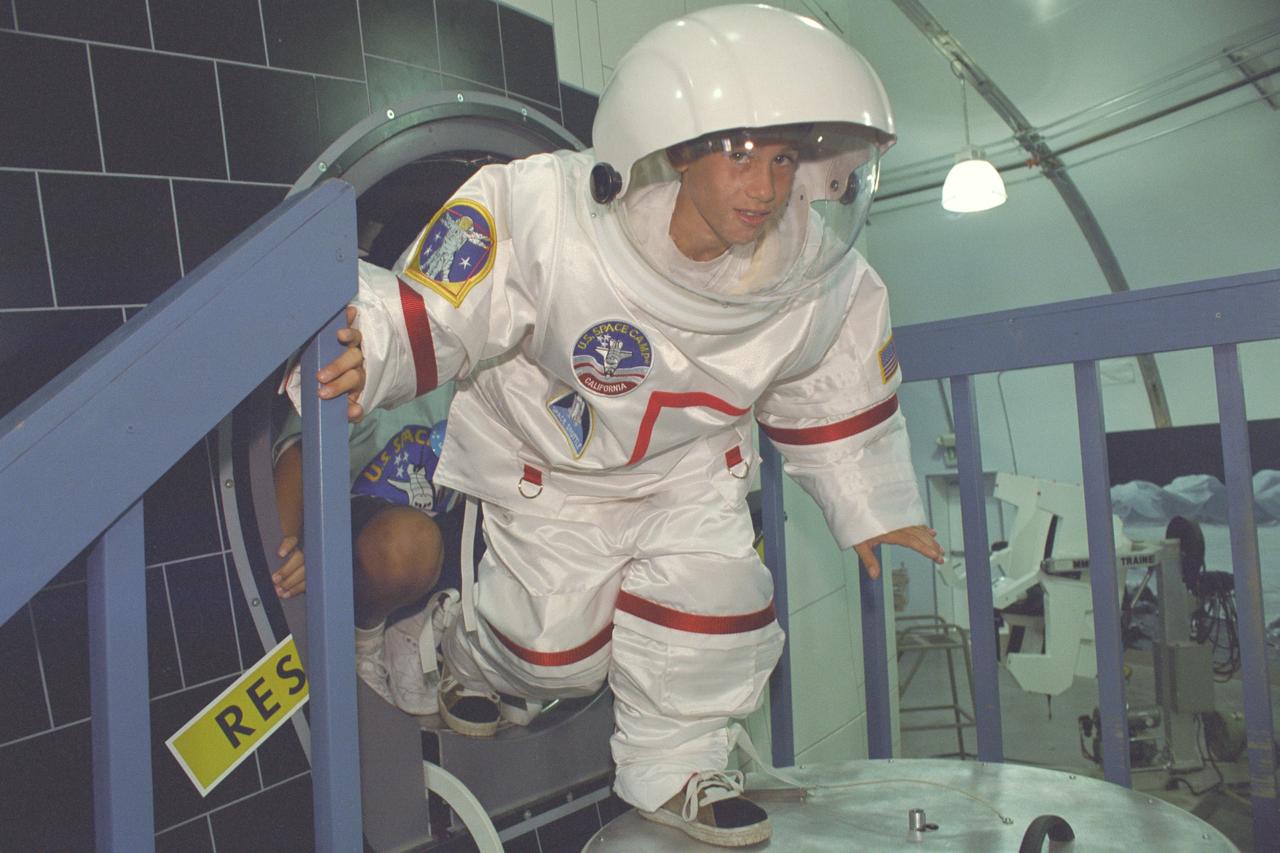
U.S. Space Camp California 'Day Camp' Grand Opening - student tries out space suit and shuttle mockup
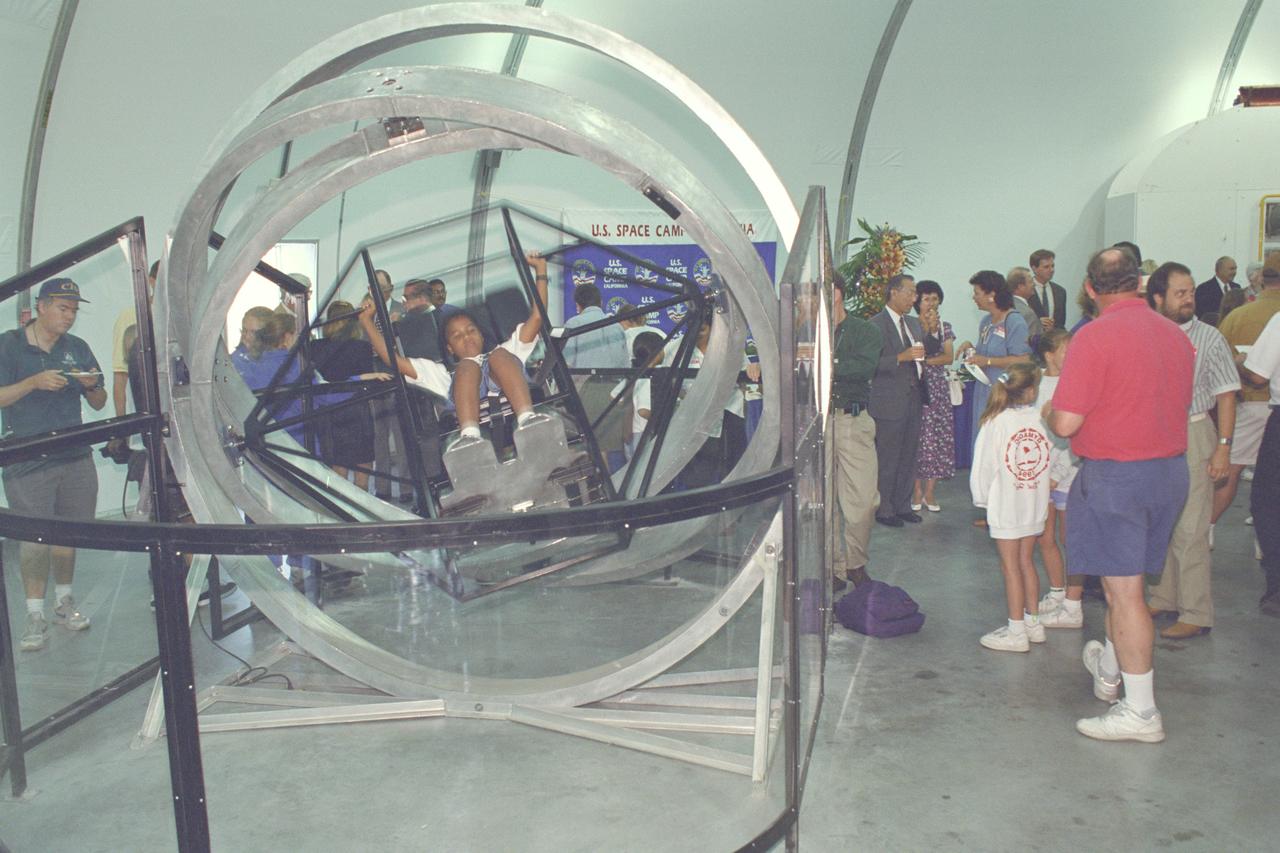
U.S. Space Camp California 'Day Camp' Grand Opening student tries out gyro chair
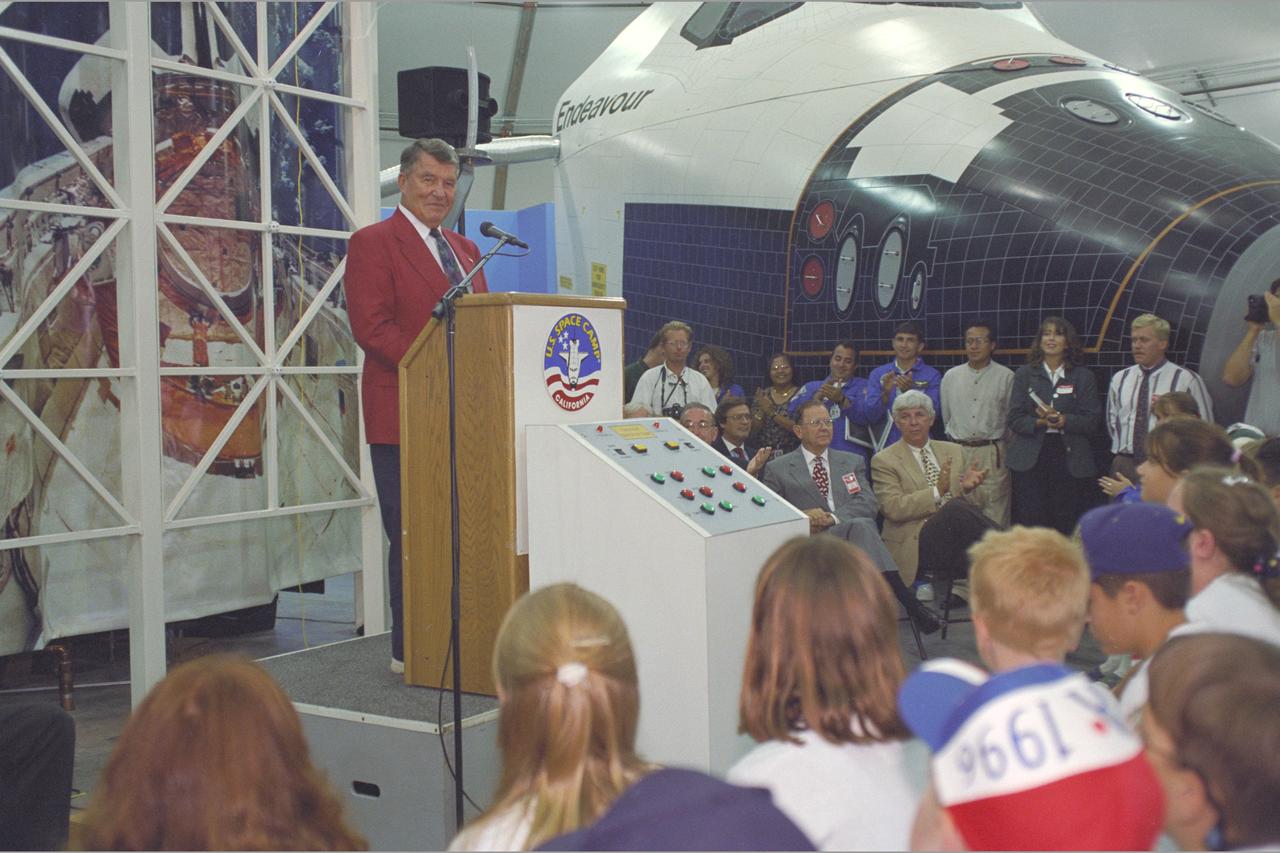
U.S. Space Camp California 'Day Camp' Grand Opening with speaker Astronaut Wally Schirra
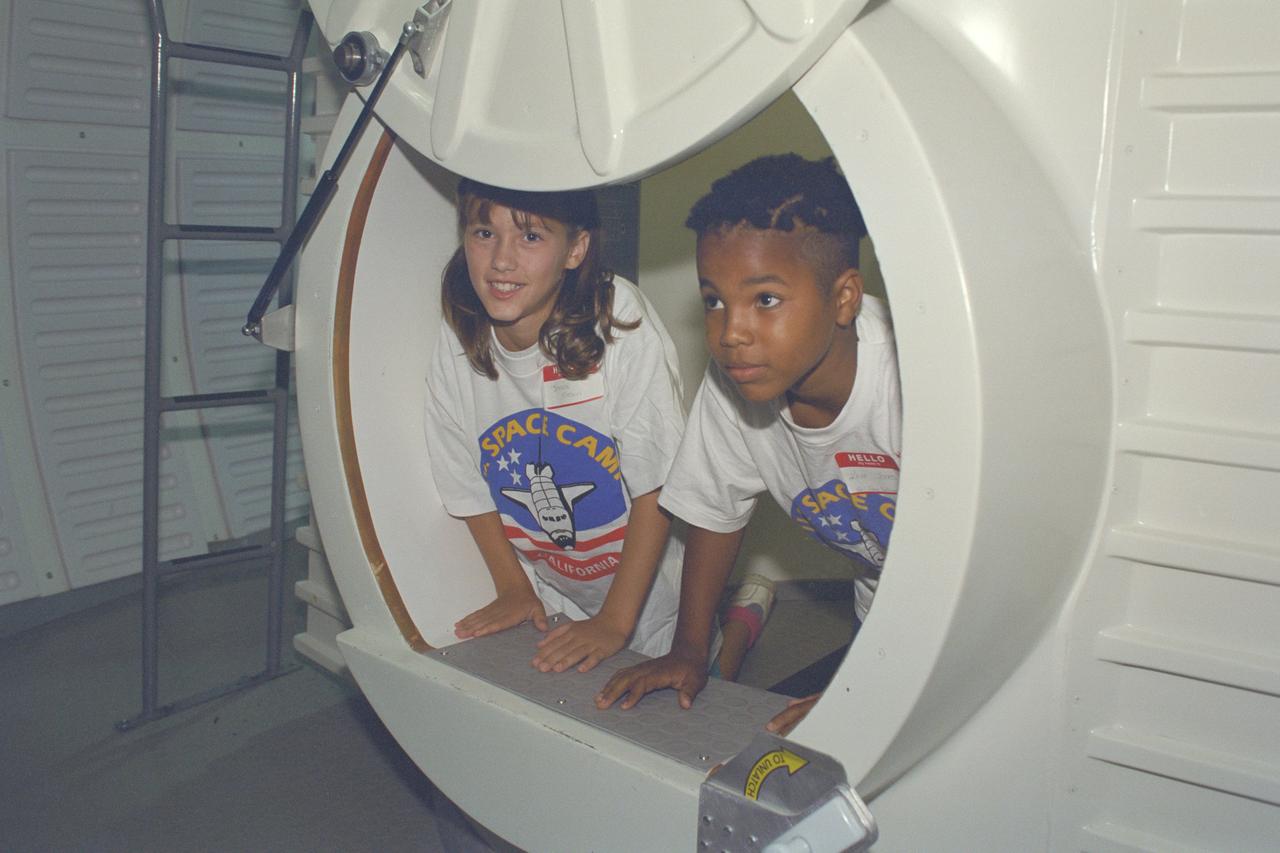
U.S. Space Camp California 'Day Camp' Grand Opening kids discover shuttle hatch
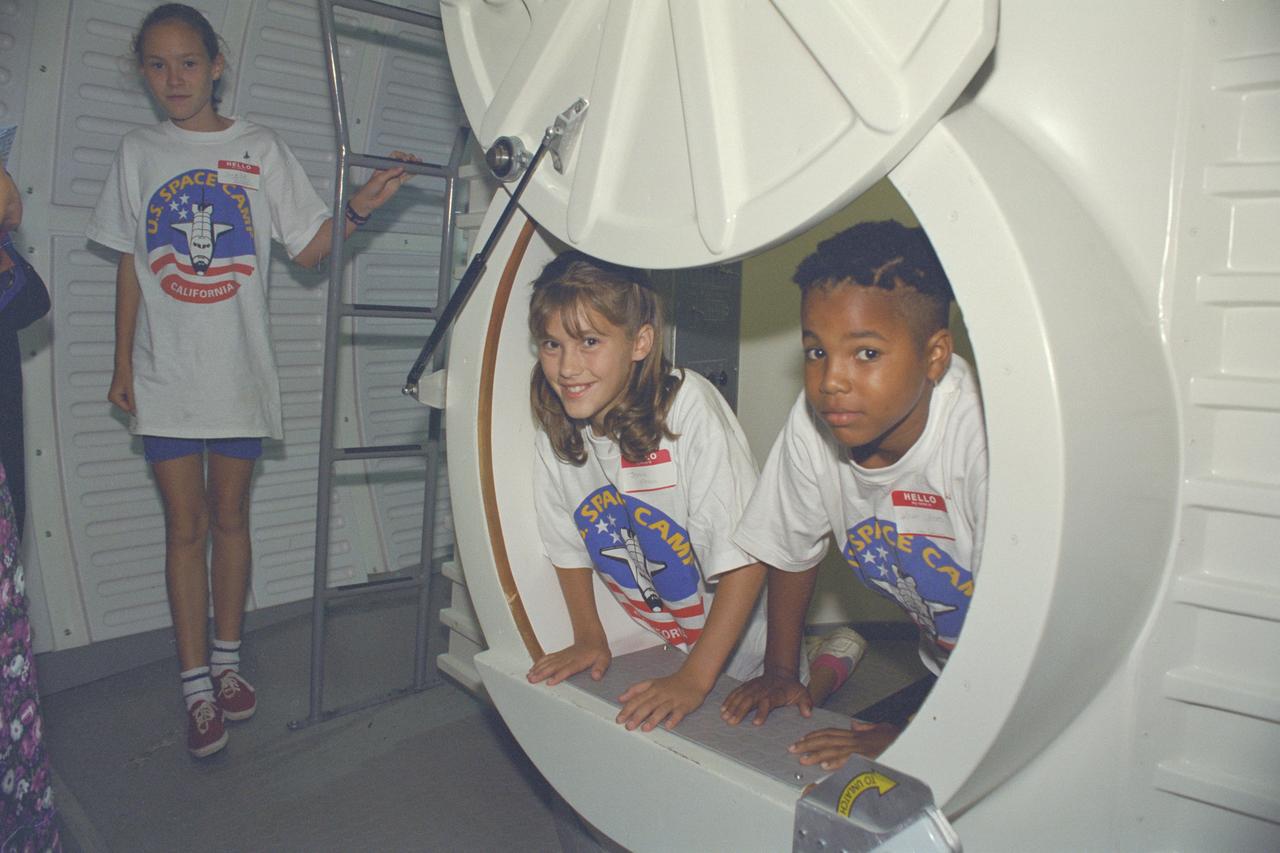
U.S. Space Camp California 'Day Camp' Grand Opening kids discover Shuttle hatch
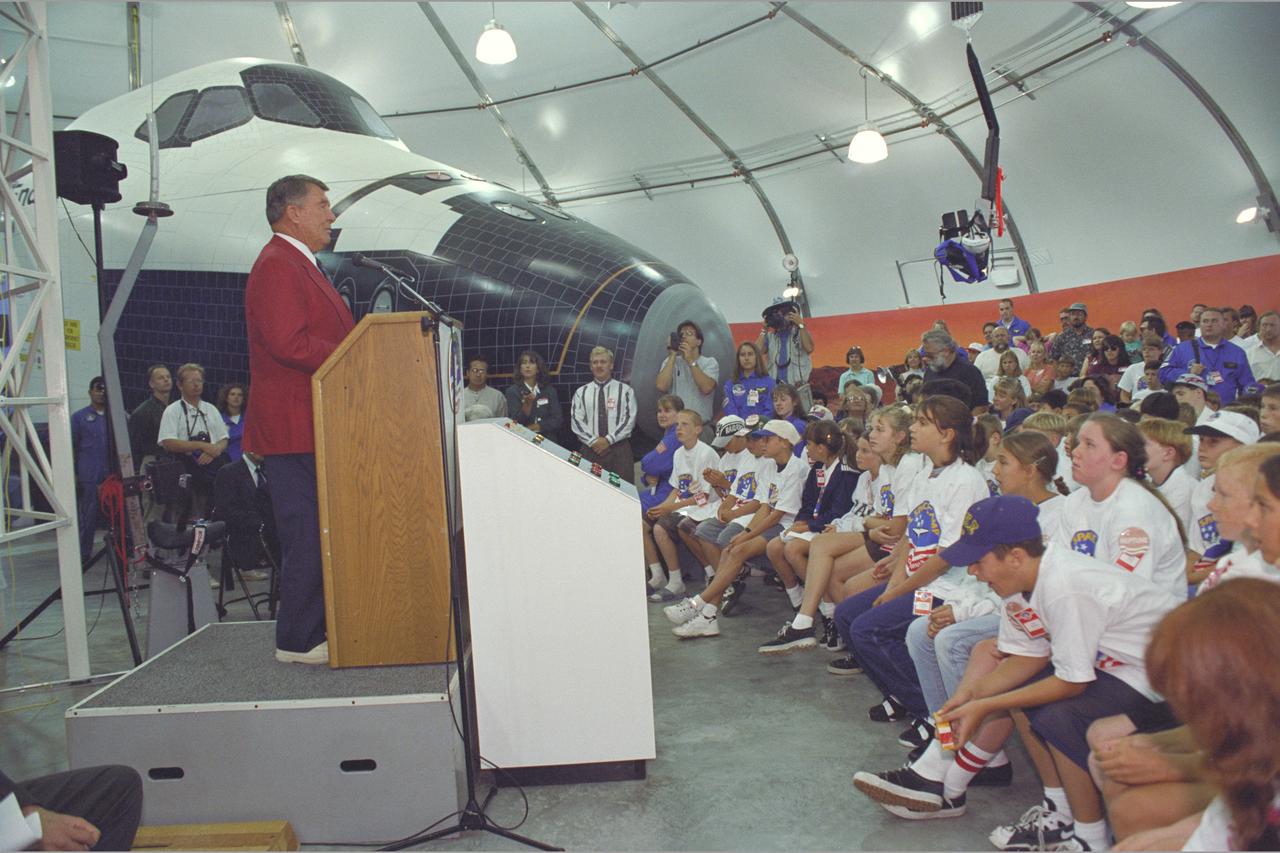
U.S. Space Camp California 'Day Camp' Grand Opening with Kenin Jones (Whisman School) Lucretia Sutherlin (McNair School) and Rachael Quiring
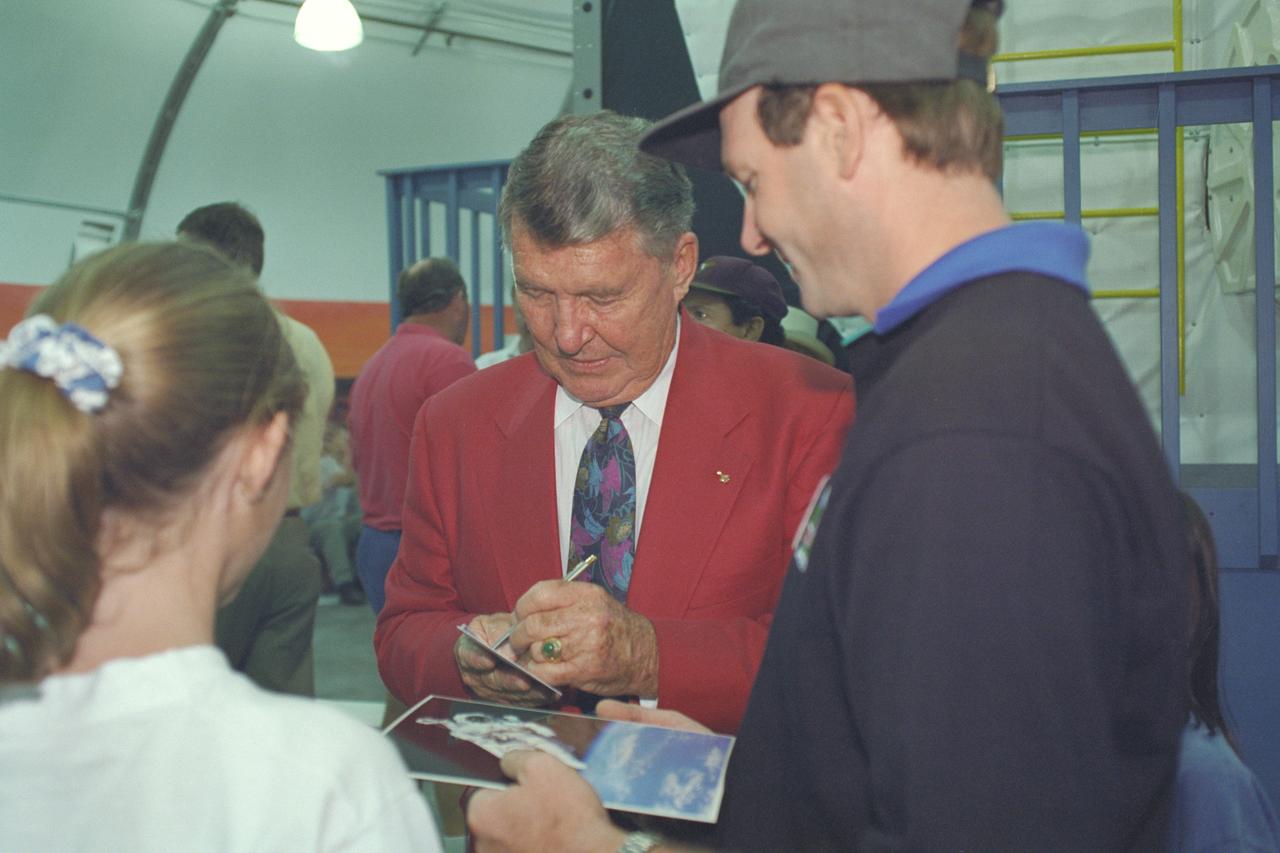
US SPACE CAMP CALIFORNIA - DAY CAMP GRAND OPENING WITH KEVIN JONES (WHISMAN SCHOOL) AND LUCRETIA SUTHERLIN (MCNAIR SCHOOL). AMES SPONSORED STUDENTS AND RACHAEL QUIRING (STAFF) - AUTOGRAPH SIGNING BY Astronaut Wally Schirra
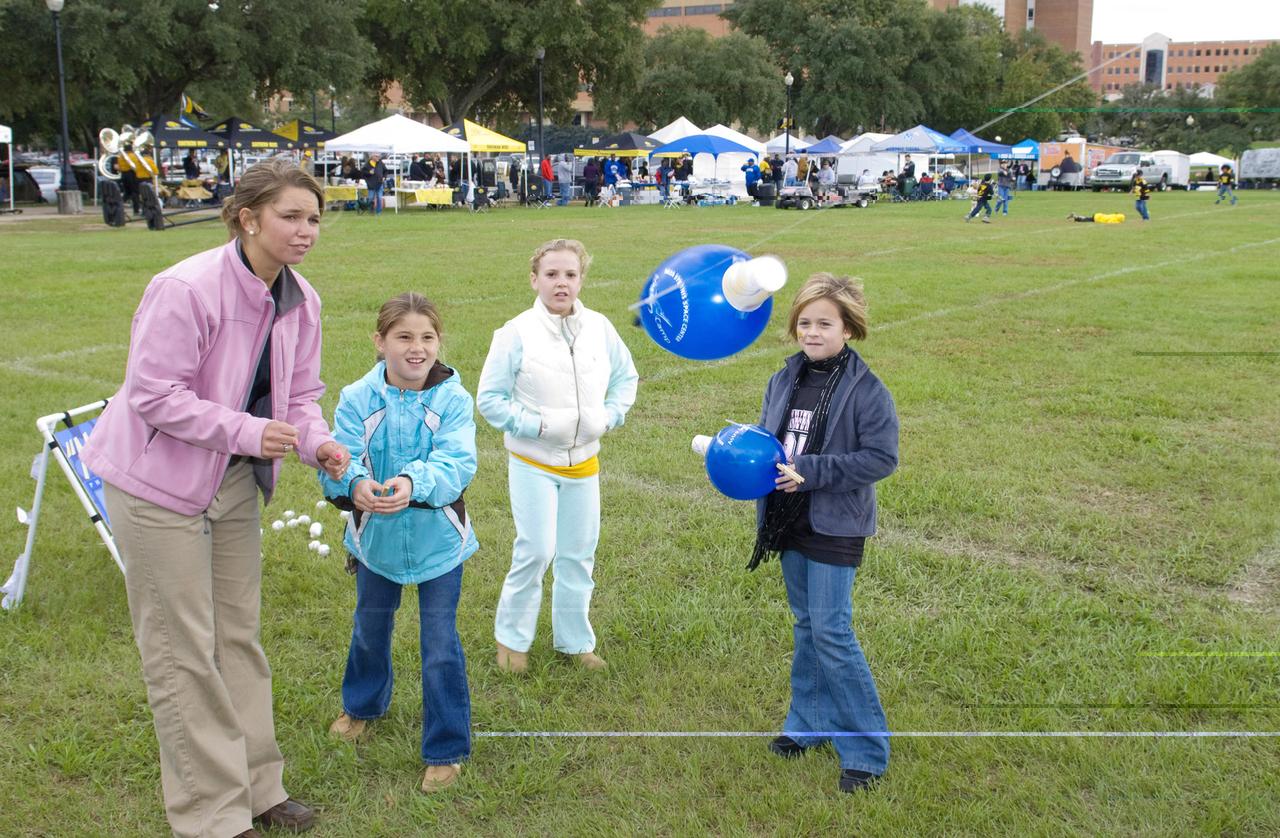
Fallon Nettles (left), an Astro Camp counselor at NASA's John C. Stennis Space Center, assists a young fan attending the University of Southern Mississippi football game in Hattiesburg, Miss., on Oct. 17 in launching a balloon 'rocket.' Prior to the game, Stennis Space Center hosted hands-on activities and exhibits for families as part of its first-ever Space Day at USM. The activities were versions of those featured in the daylong and weeklong Astro Camp sessions sponsored by Stennis throughout each year. Stennis Space Center is located in nearby Hancock County and is the nation's premier rocket engine testing facility. The USM activities were part of Stennis' ongoing effort to educate people about the NASA mission and to introduce children and young people to space and space exploration.
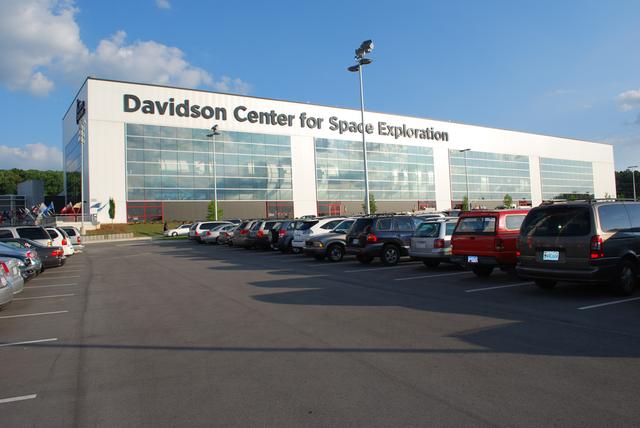
The Davidson Center for Space Exploration is like no other in the country. In its 476 foot long, 90 foot wide and 63 foot high structure, suspended 10 feet above the floor, is a national historic treasure, the mighty Saturn V, restored to its Apollo era readiness.
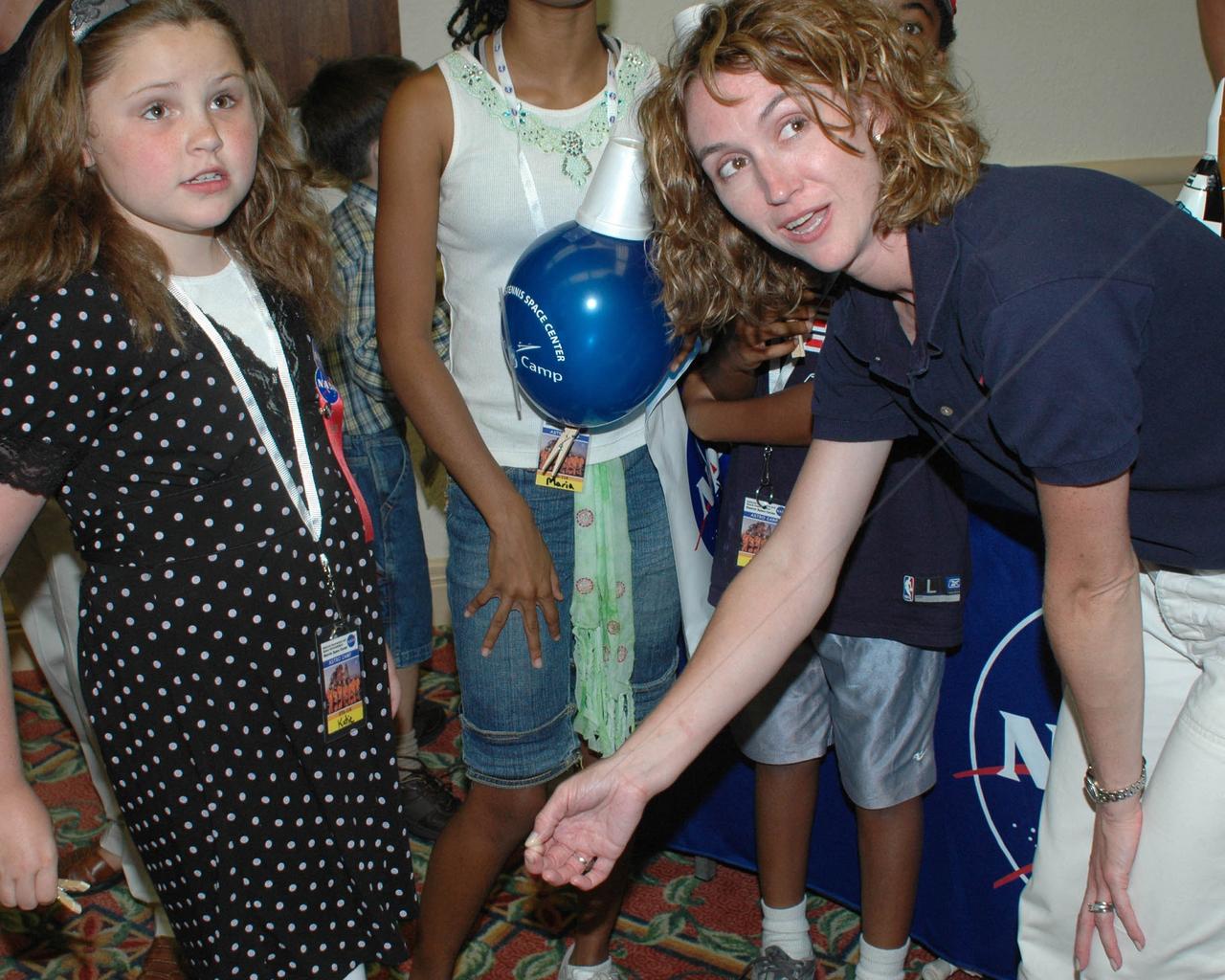
Katie Craig, daughter of former Stennis Space Center Deputy Director Mark Craig, launches a 'balloon rocket' with the help of Rebecca Compretta, Astro Camp coordinator at SSC. SSC took Astro Camp on the road to Florida this week to engage children and their parents during activities surrounding the Aug. 8 launch of Space Shuttle Endeavour on NASA's STS-118 mission to the International Space Station. Astro Camp is SSC's popular space camp program designed to inspire and educate students using science and math principles.
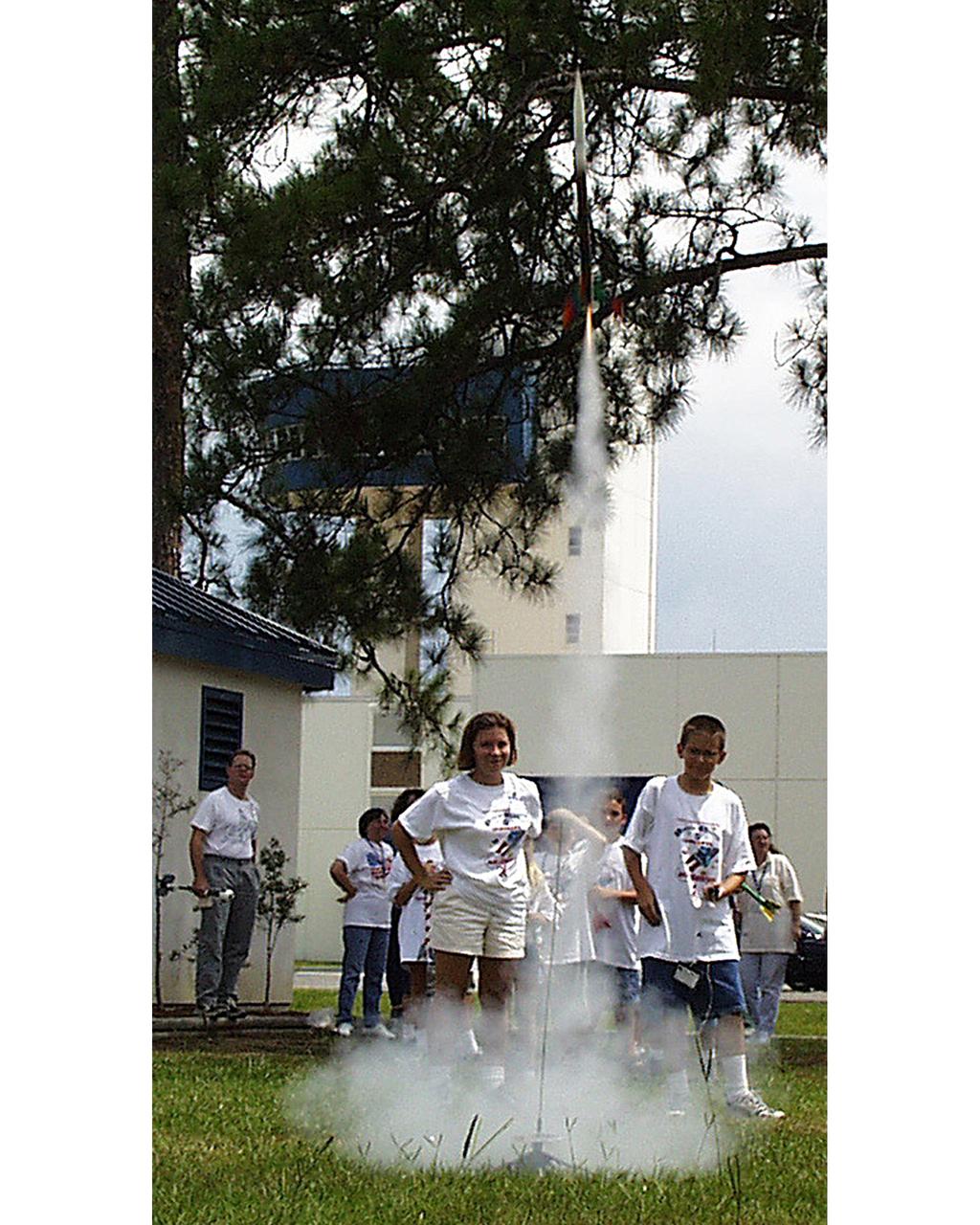
Children at Astro Camp at the John C. Stennis Space Center in Hancock County, Miss., launch rockets as one of their activities in the weeklong camp. Each week during the summer, approximately 30 children ages 9-12 from across Mississippi and Louisiana spend a week learning about space flight. Astro Camp Saturday offers a condensed version of Astro Camp on the third Saturday of each month from January through May 2001.
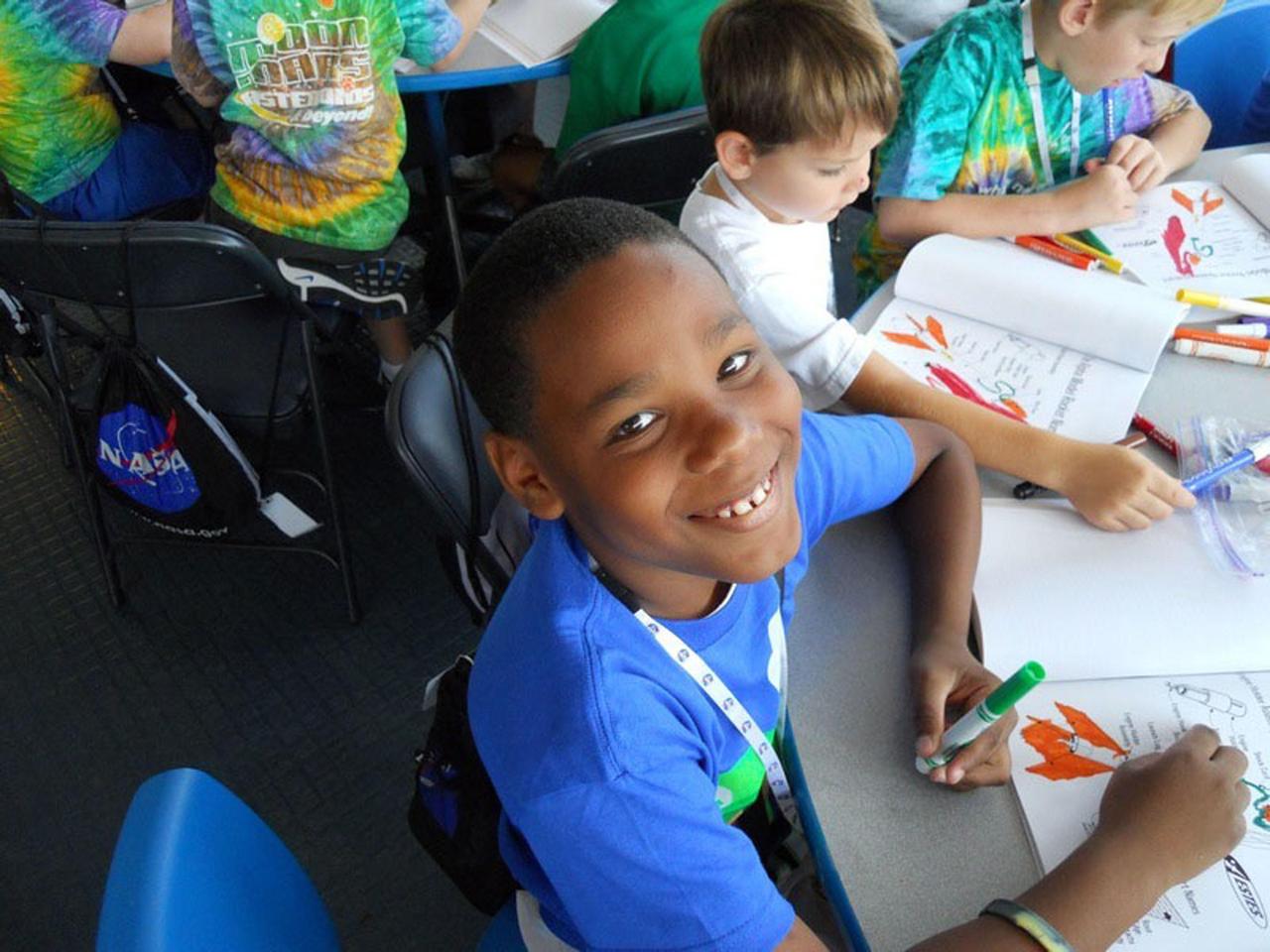
Each year, more than 400 Mississippi and out-of-state youths visit Stennis Space Center for weeklong Astro Camp activities. Astro Camp sessions are for children ages 7-12. The focus for 2012 Astro Camp participants was on 'What's Next for NASA! Moon, Mars, Asteroids and Beyond.'
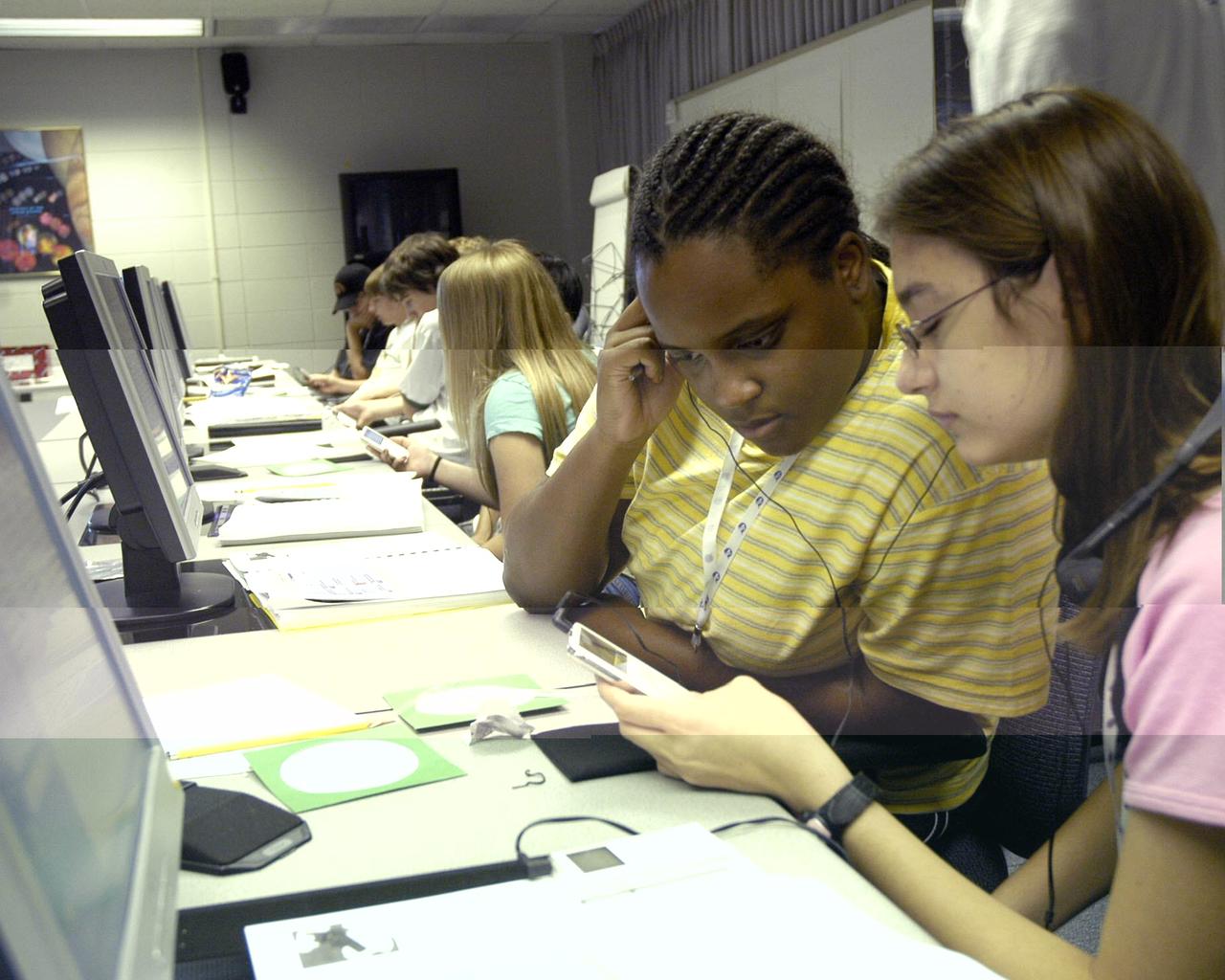
Stennis Space Center's new Astro Camp Plus camp kicked off June 19 for teens ages 13-15. The new camp delves more deeply into the science, math and technology concepts introduced in the center's popular Astro Camp series. Campers including Jasmyne White (left) and Dana Yingst, both of Slidell, La., learn how NASA uses 'podcasting' to broadcast video, and made their own podcasts.
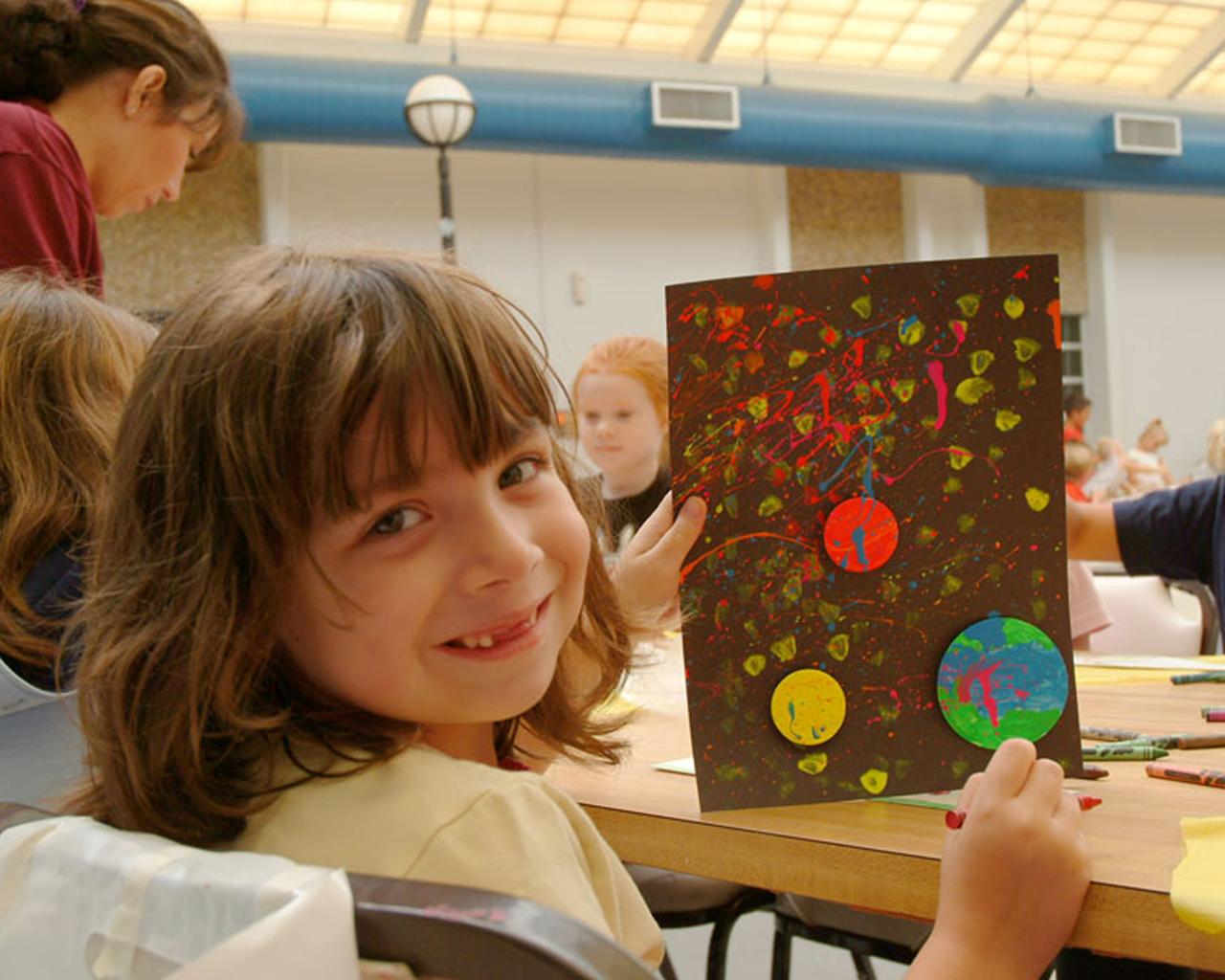
Sara Beth Casey, 5, proudly displays her artwork, 'Planets.' Sara Beth created the art as a student of Stennis Day Camp, a free camp for Stennis Space Center employees' children whose schools have not resumed since Hurricane Katrina hit the region on Aug. 29. The camp has registered nearly 200 children and averages 100 children each day. The camp will continue until all schools are back in session.
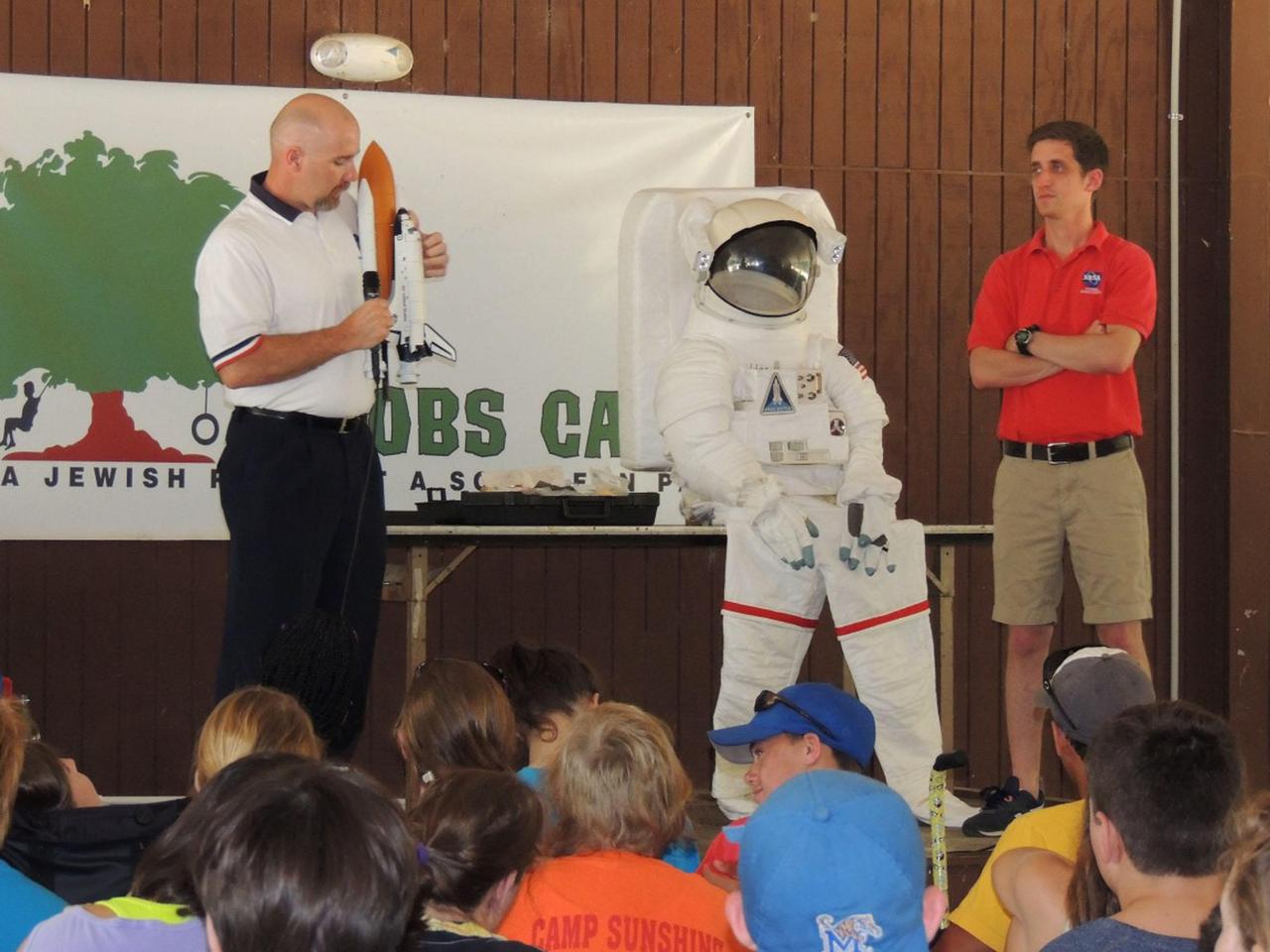
Stennis Space Center education program specialists Chris Copelan (l) and Joshua Finch provide a Working in Space presentation to Camp Dream Street participants during a May 30, 2012, visit to Utica, Miss. Dream Street is a five-day camp program for children with physical disabilities. Camp participants are primarily from Mississippi and surrounding states.
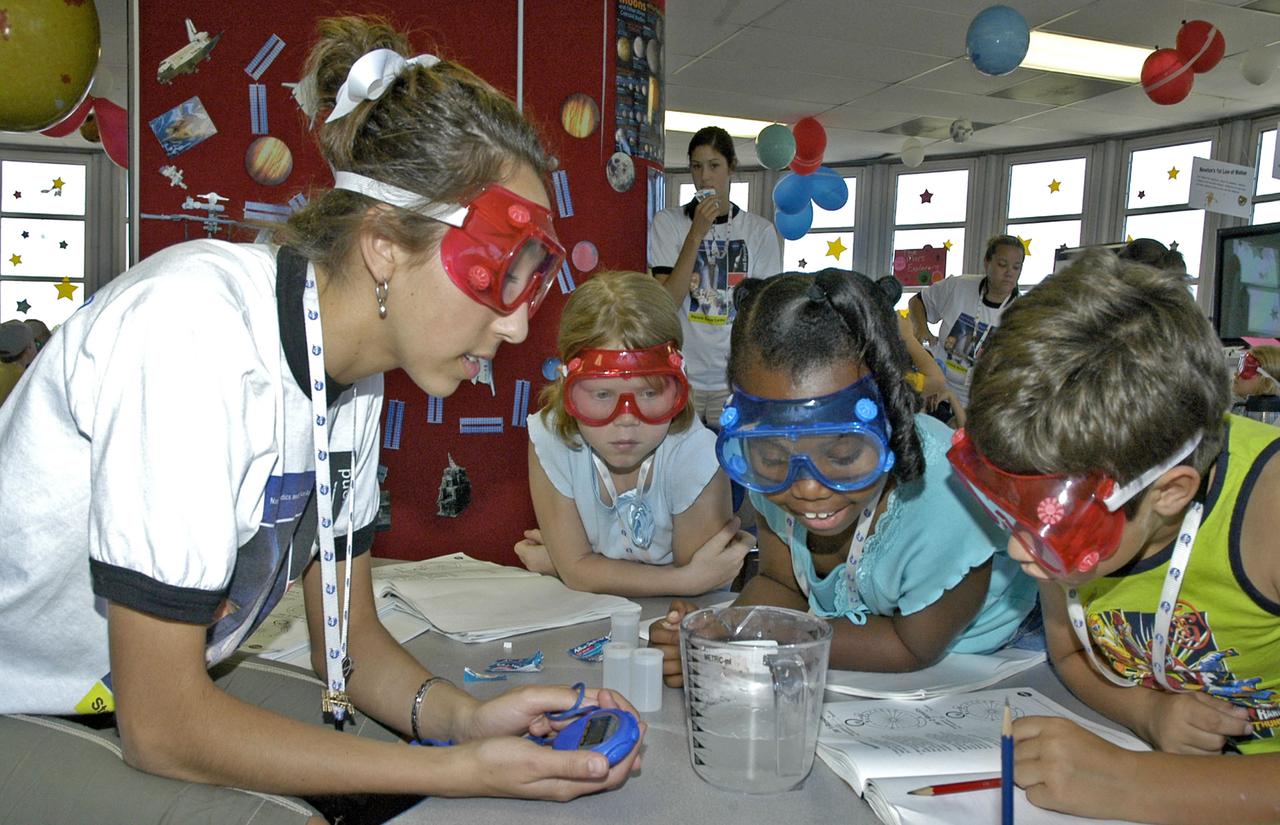
An Astro Camp counselor and her campers perform a science experiment to learn what types of `fuel' will best propel their 'rockets.' Stennis Space Center's popular series of day camps have campers design, build and test model rockets based on the principles that would be used to build different types of rockets suitable for a mission to the moon or Mars. They learn details like how far they would travel, how long it would take, what supplies they would need and how to survive in that environment.
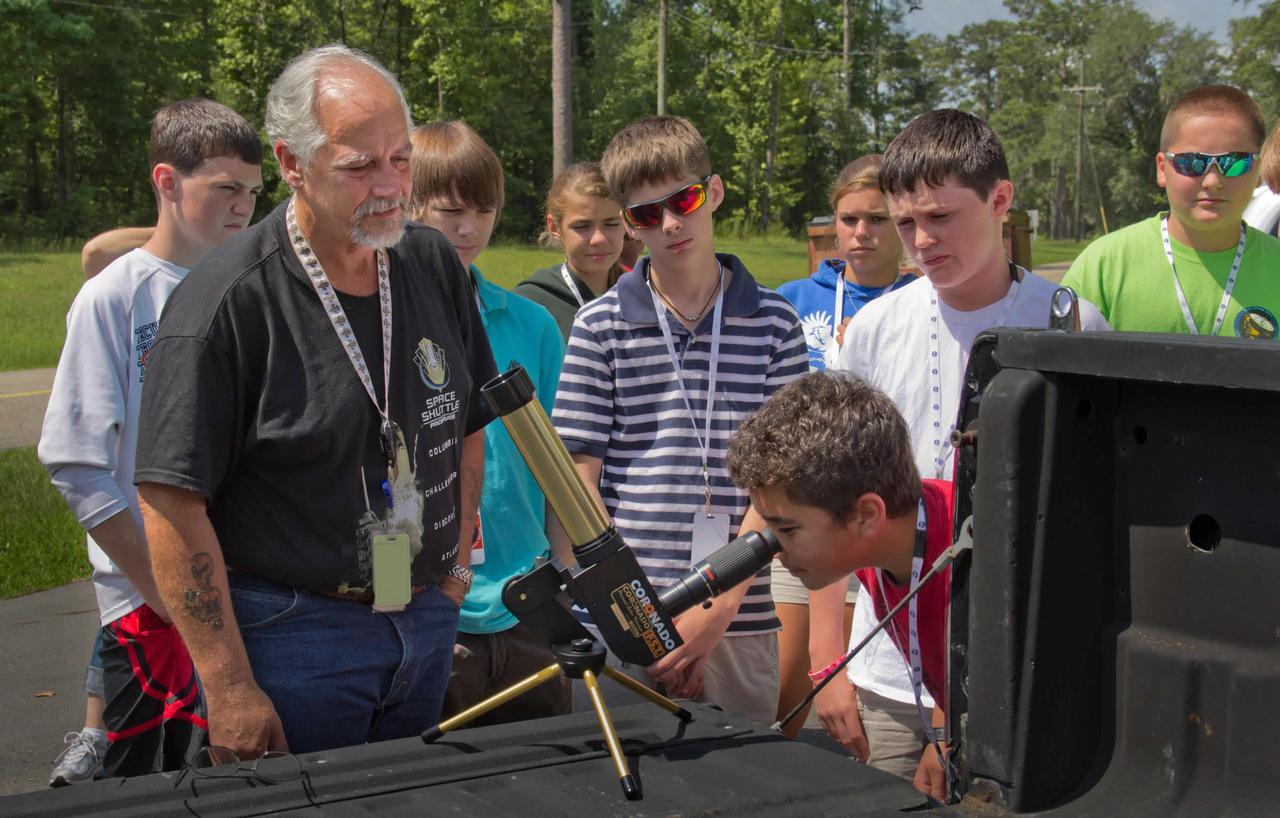
Tom Nicolaides, an aerospace technologist in the Engineering & Test Directorate at Stennis Space Center, looks on as 2011 Astro STARS participants take turns gazing at the sun through a special telescope. The sun-gazing activity was part of the Astro STARS (Spaceflight, Technology, Astronomy & Robotics at Stennis) camp for 13-to-15-year-olds June 27 - July 1. The weeklong science and technology camp is held each year onsite at the rocket engine test facility.
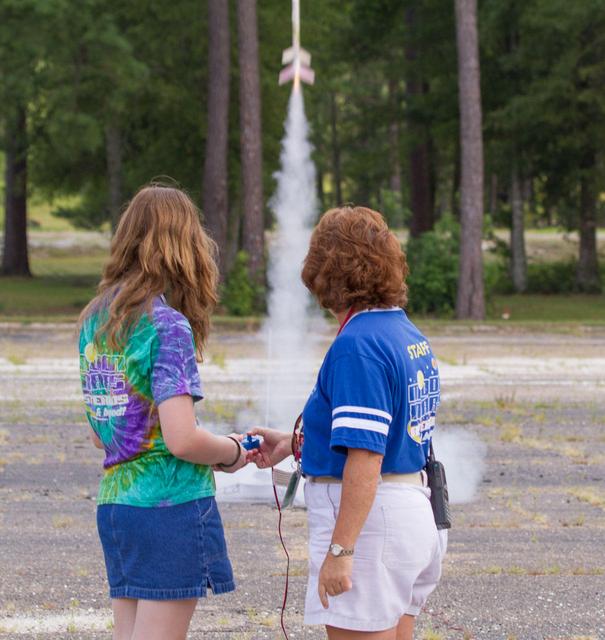
Summer is a time of educational activity at Stennis Space Center. In June 2012, 25 young people age 13-15 attended the annual Astro STARS (Spaceflight, Technology, Astronomy and Robotics at Stennis) camp at the rocket engine test facility. During the five-day camp, participants engaged in hands-on experiences in a variety of areas, including engineering and robotics. On the final day, campers launched model rockets they had assembled.
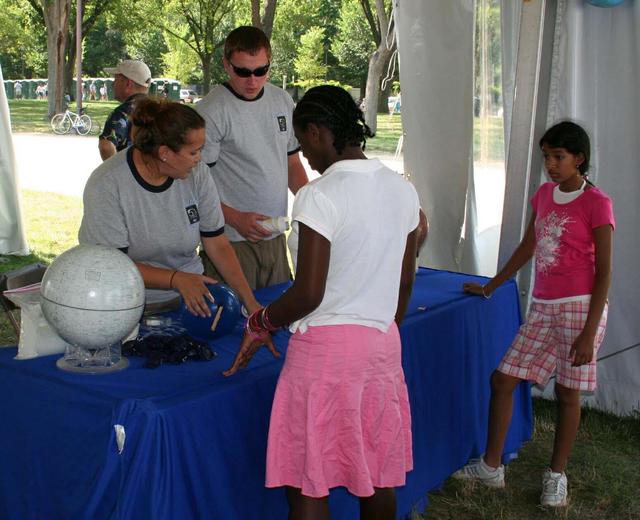
Tammy Estapa and Wesley Oliver from Stennis Space Center assist young people visiting the Smithsonian Folklife Festival in Washington, D.C., to participate in Astro Camp activities.
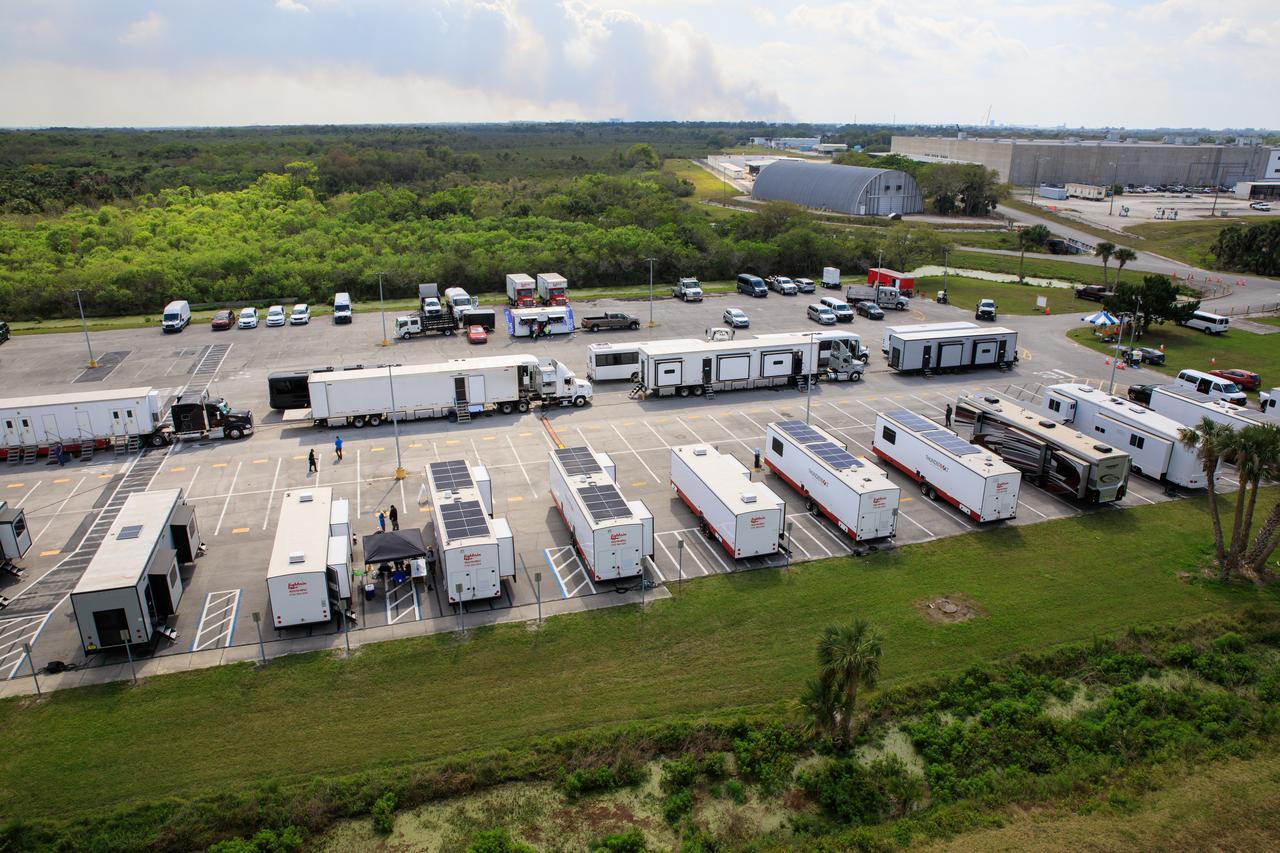
A major motion picture is being filmed in February 2023 at NASA’s Kennedy Space Center in Florida. In view is Base Camp #1 in the Launch Complex 39 area that includes support buildings for the film project.
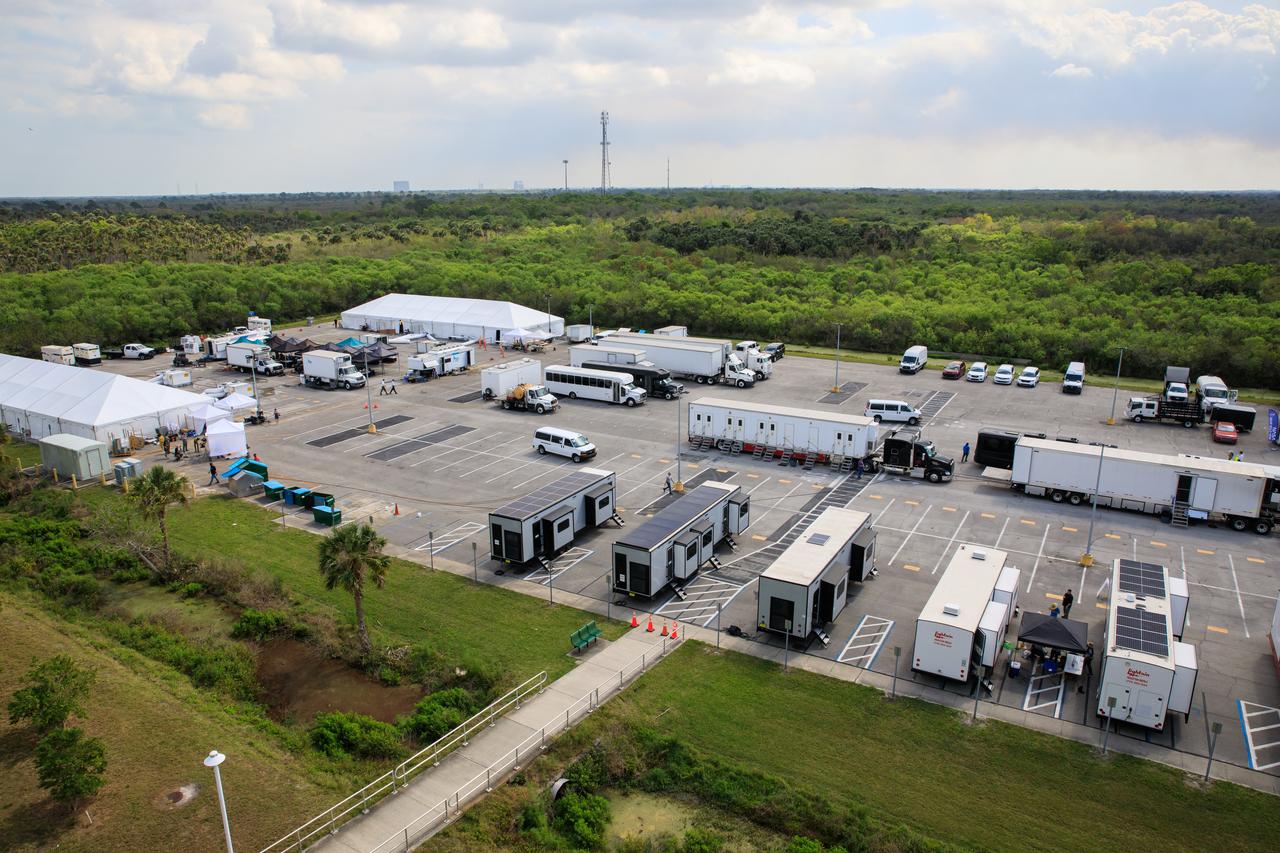
A major motion picture is being filmed in February 2023 at NASA’s Kennedy Space Center in Florida. In view is Base Camp #1 in the Launch Complex 39 area that includes support buildings for the film project.
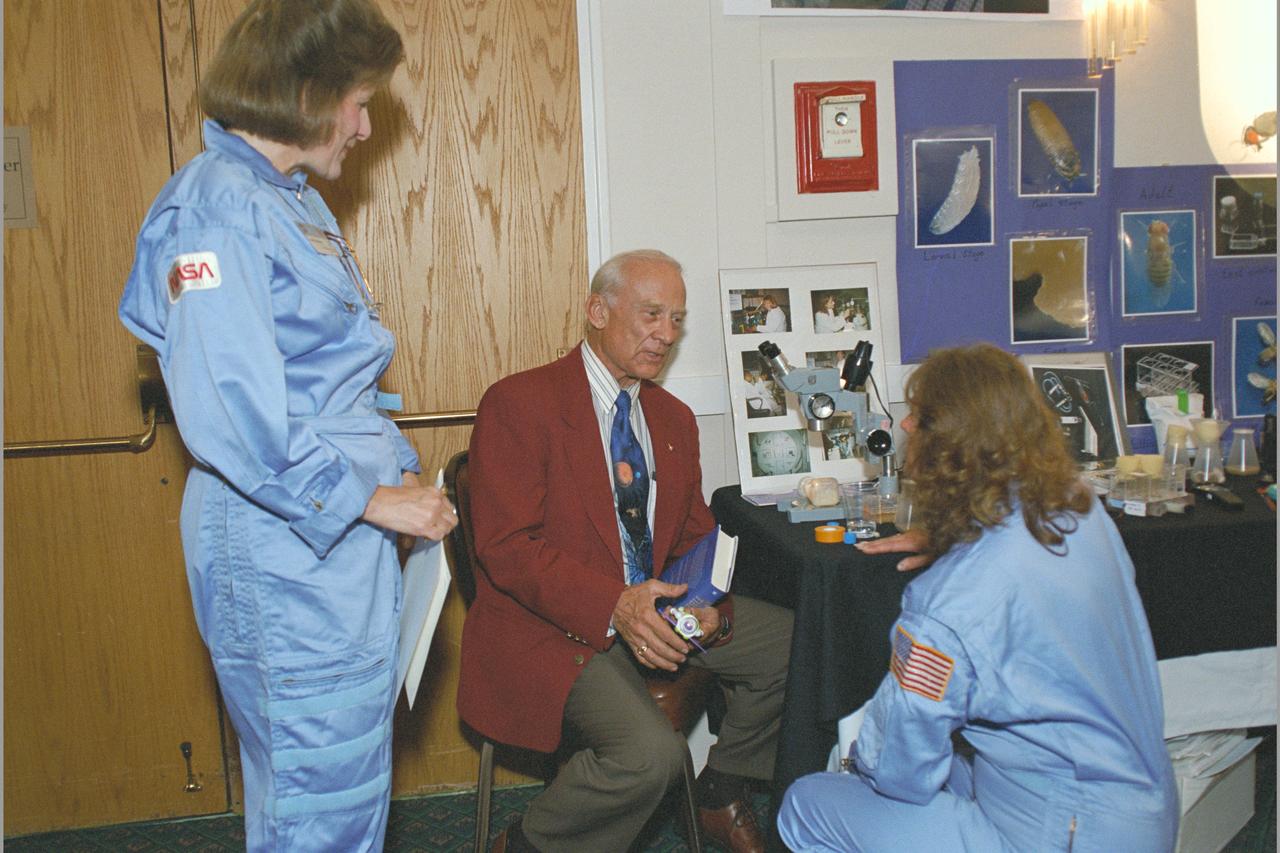
1996 'STELLAR' program commencement activities. Special guest Astronaut Buzz Aldrin drops by to tour and chat. Aldrin was attending his book signing at US Space Camp earlier in the day.
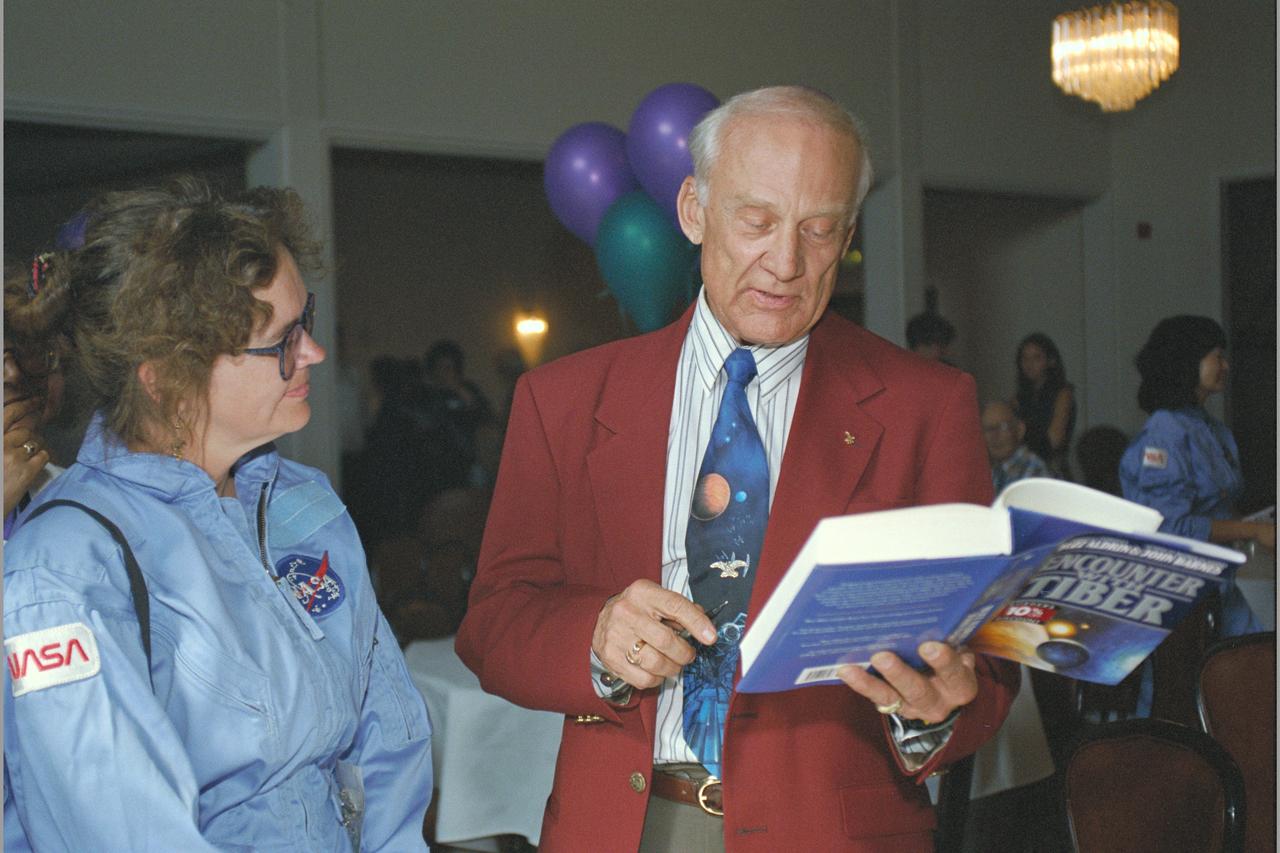
1996 'STELLAR' program commencement with special guest Astronaut Buzz Aldrin drops by to tour and chat. Aldrin was attending his book signing at US Space Camp earlier in the day.
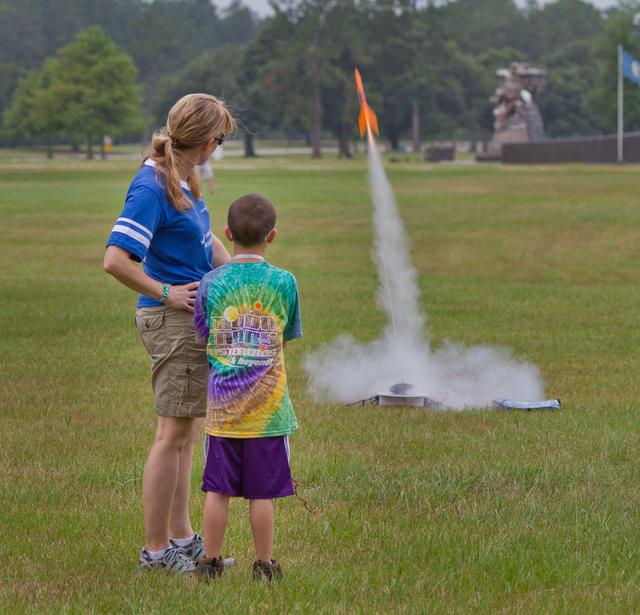
Each year, more than 400 Mississippi and out-of-state youths visit Stennis Space Center for weeklong Astro Camp activities. As in previous years, a highlight of the 2012 sessions was the launching of campers' rockets.
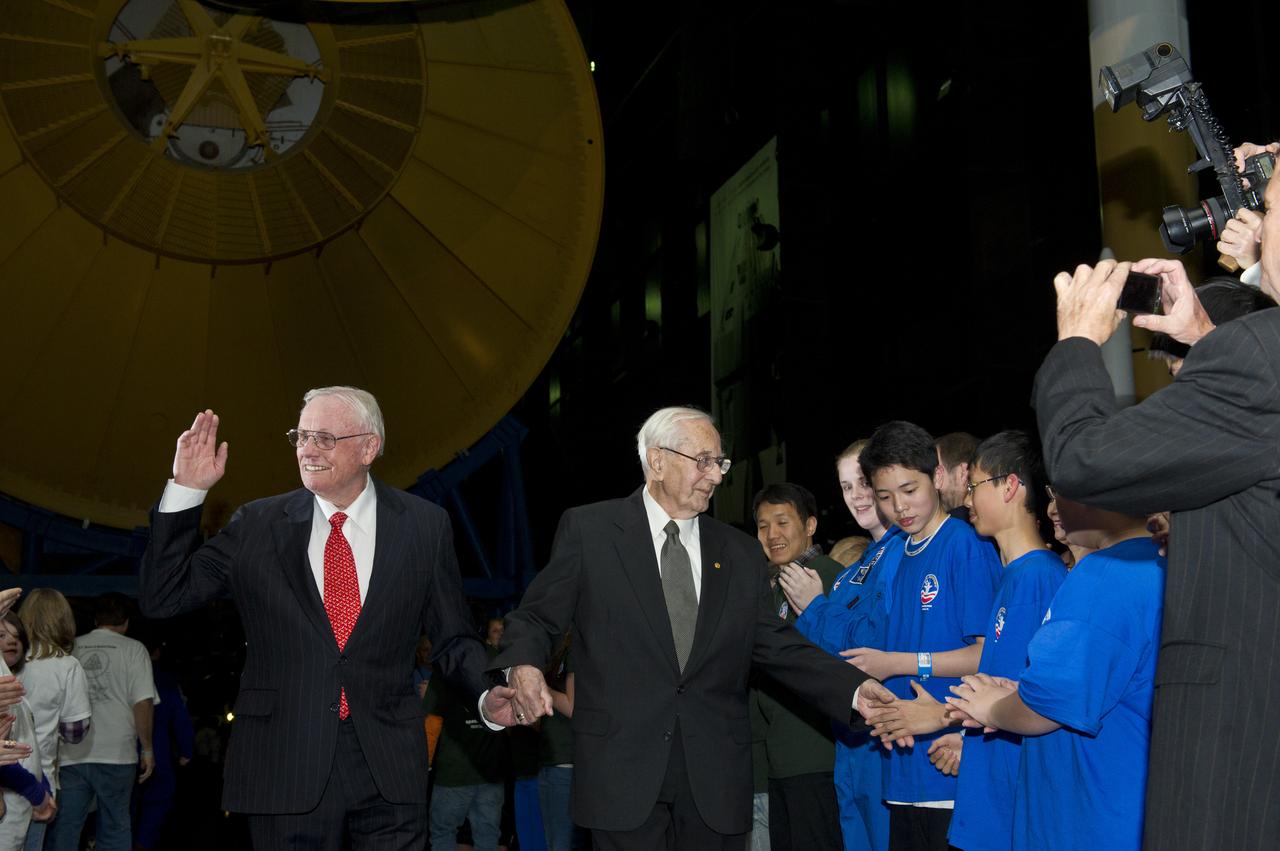
ASTRONAUT NEIL ARMSTRONG (L), AND DR. GEORG VON TIESENHAUSEN ARE APPLAUDED BY SPACE CAMP STUDENTS AT EVENT HONORING DR. VON TIESEN HAUSEN AT USSRC ON FEB. 3, 2011
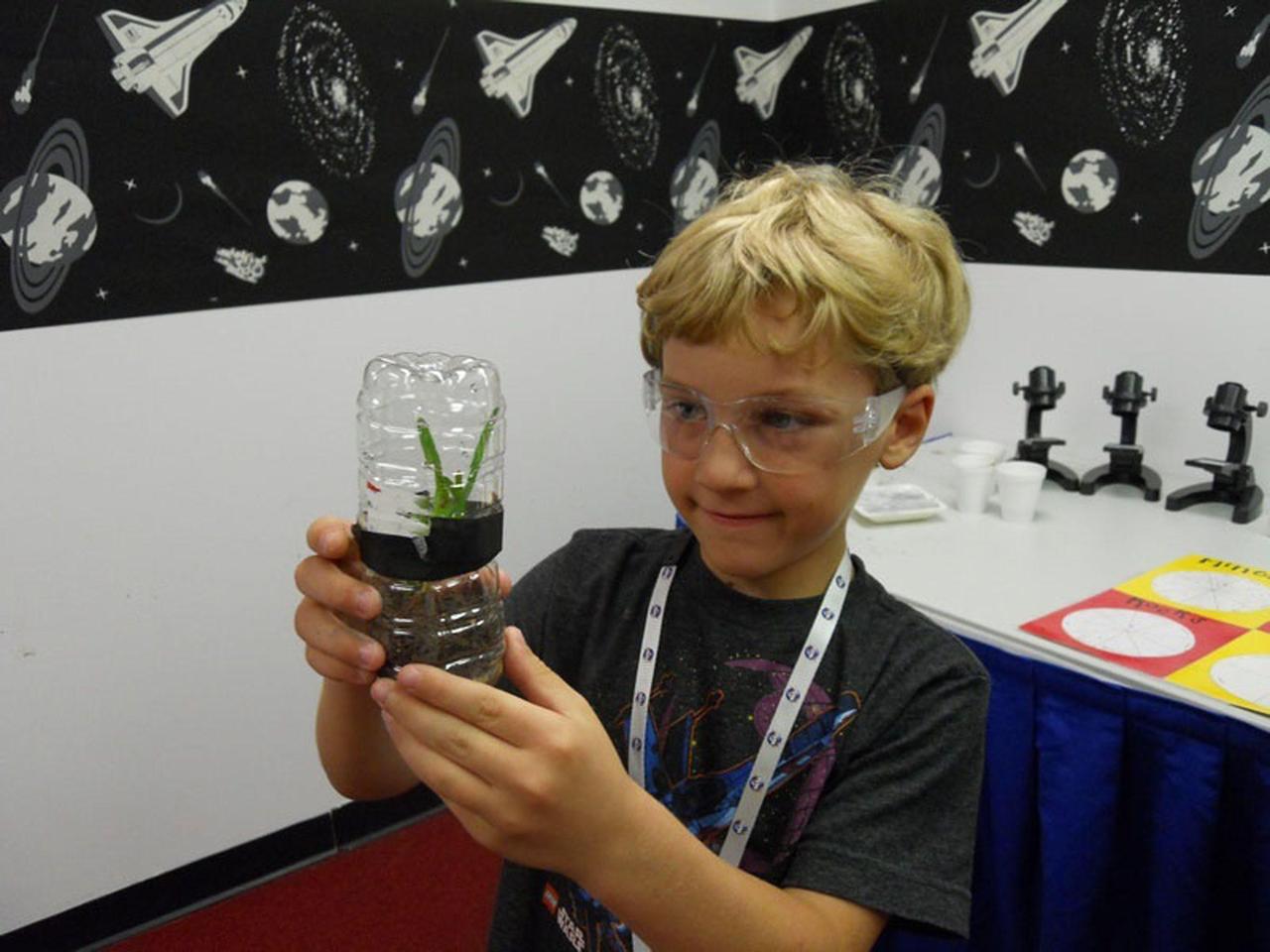
Each year, more than 400 Mississippi and out-of-state youths visit Stennis Space Center for weeklong Astro Camp activities. In 2012, campers investigated the science behind 21st century space travel, particularly related to the International Space Station and how astronauts live and work aboard the orbiting space laboratory.
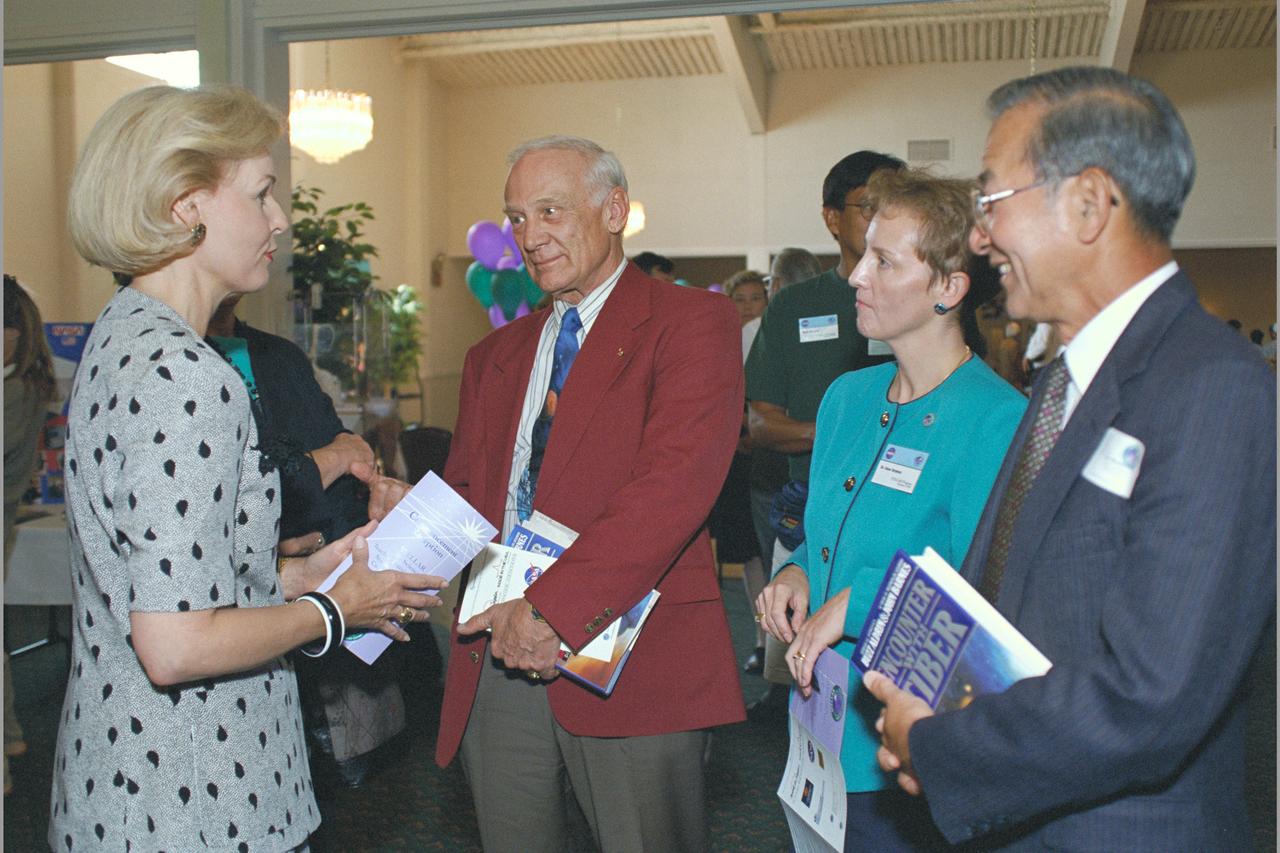
1996 'STELLAR' and MCP summer programs commencement. Apollo Astronaut Buzz Aldren drops by after attending his book signing at US Space Camp eariler in the day is shown here with Gayle Wilson (governor's wife) and Ken Munechika (R) and Dr. Rose Grymes (center)
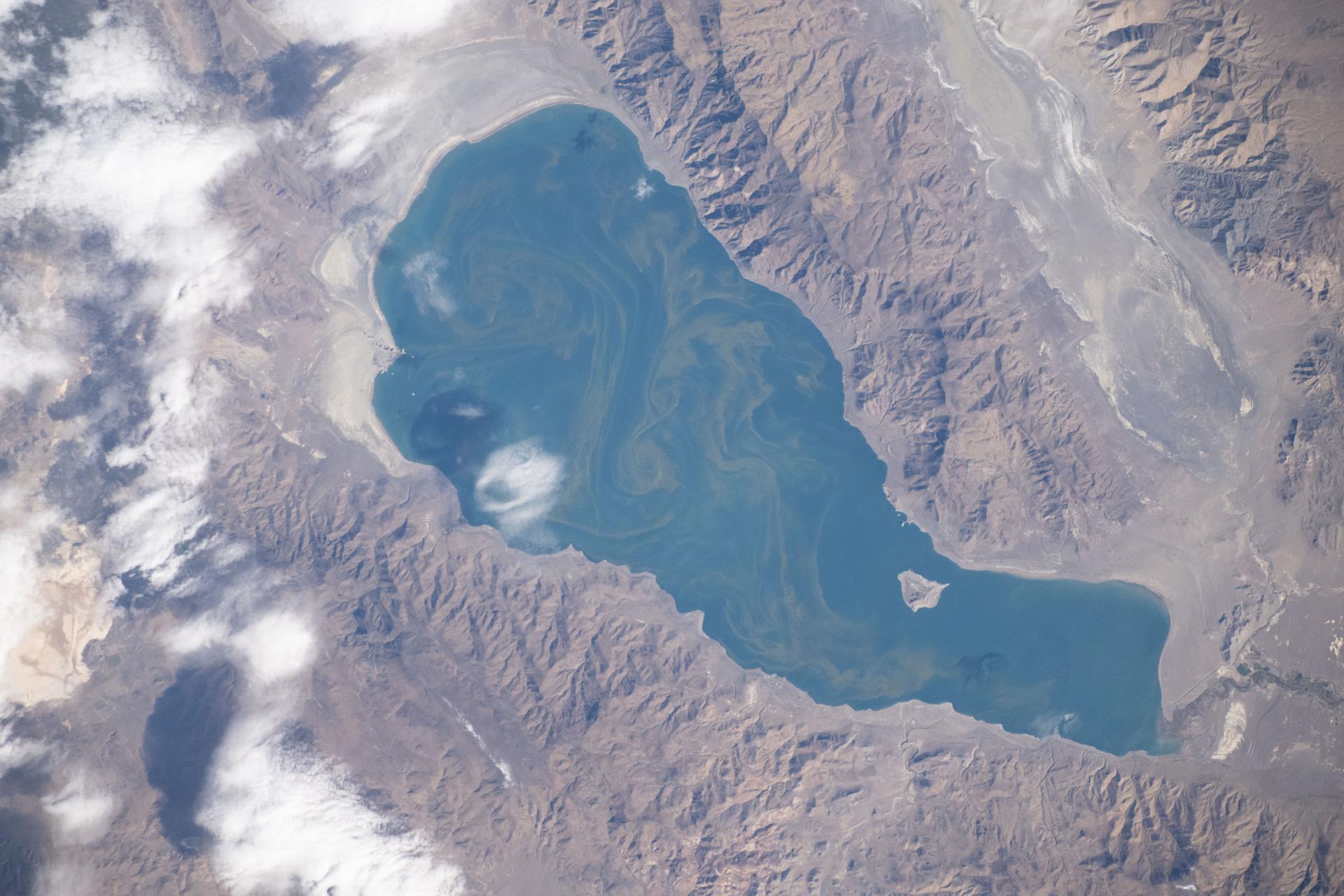
iss073e0919979 (Oct. 19, 2025) --- Pyramid Lake, located northeast of Reno, Nevada, is pictured from the International Space Station as it orbited 265 miles above North America. Surrounded by dramatic desert terrain, the lake is a popular destination for fishing, camping, and birdwatching.
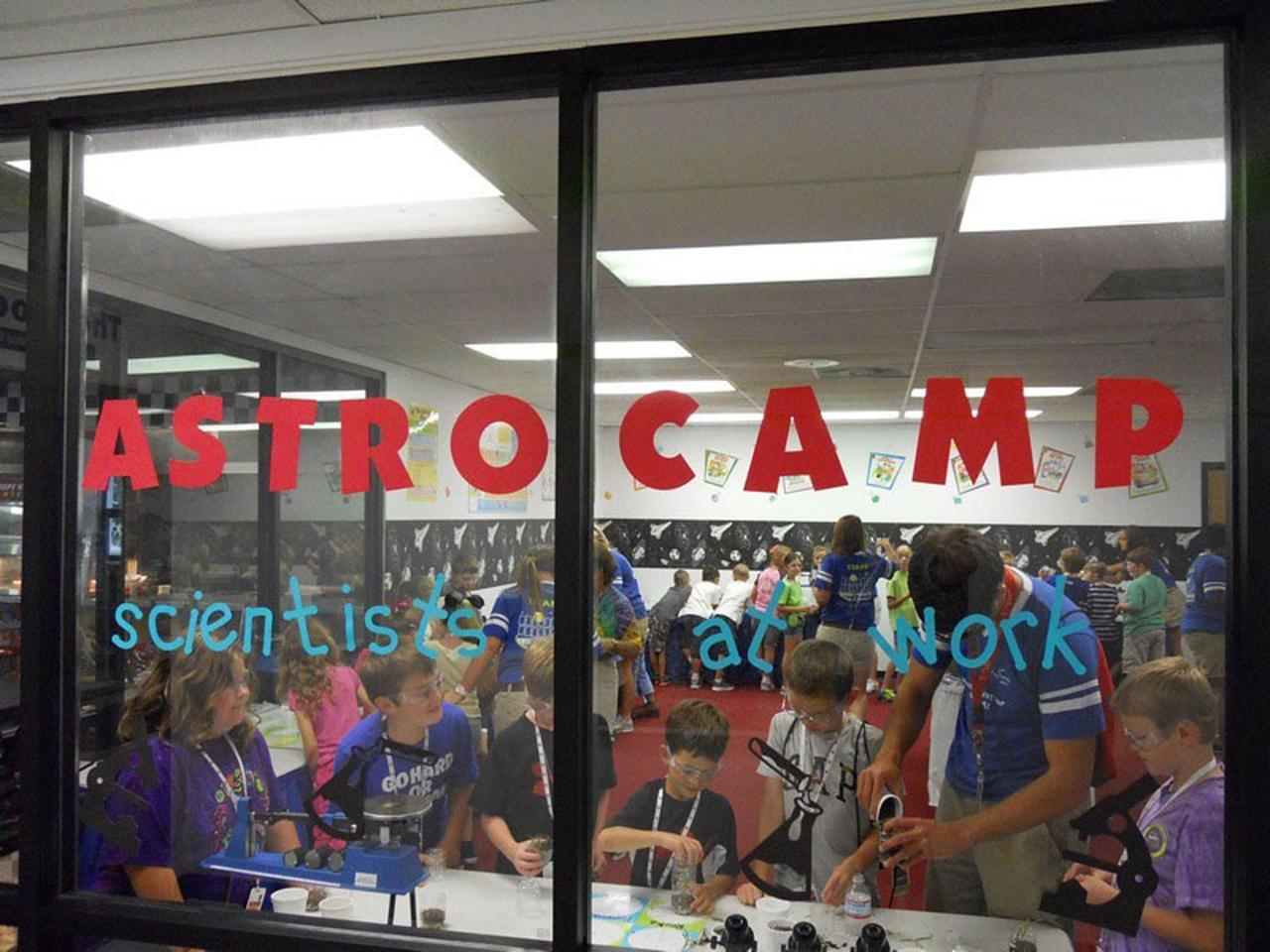
Each year, more than 400 Mississippi and out-of-state youths visit Stennis Space Center for weeklong Astro Camp activities. During 2012 sessions, campers were asked to design a human outpost for one of three distant destinations in our solar system: the moon, Mars or an asteroid.
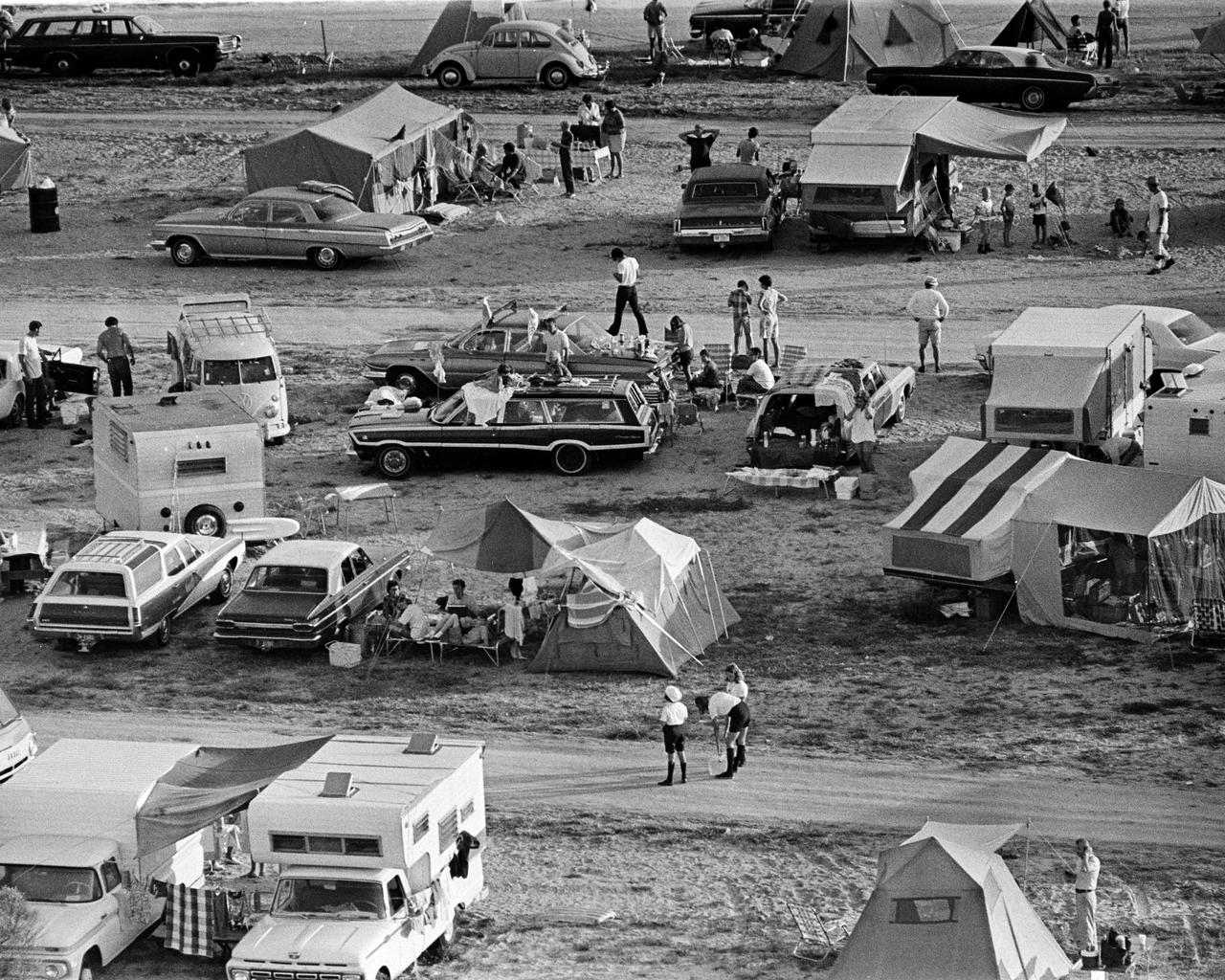
CAPE CANAVERAL, Fla. -- Here are some of the thousands of persons who camped out on beaches and roads adjacent to the Kennedy Space Center to watch the Apollo 11 launch. Local Brevard County officials estimate that one million persons visited the area for the historic liftoff. Photo credit: NASA
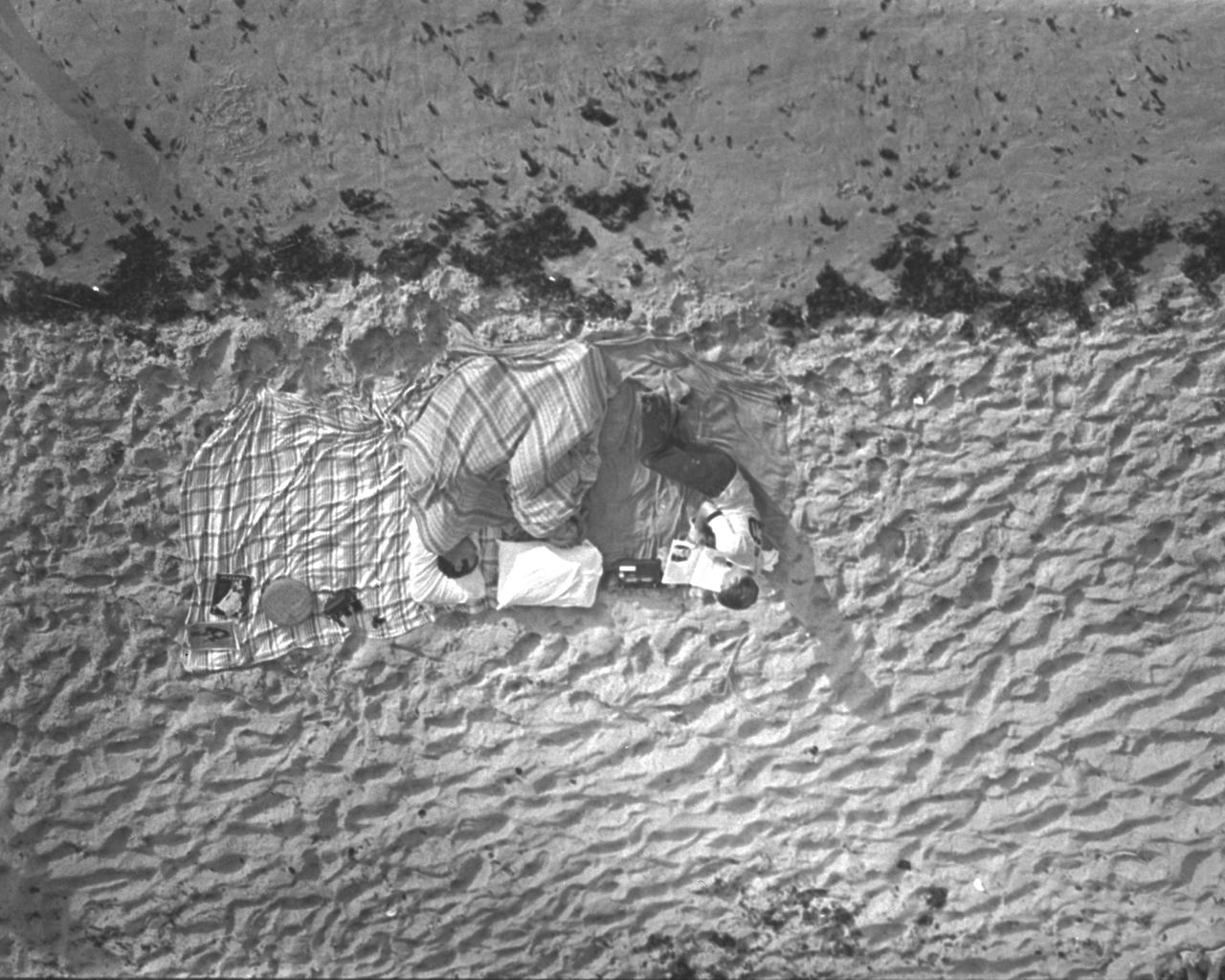
CAPE CANAVERAL, Fla. -- These three were among the thousands of persons who camped on beaches and roads adjacent to the Kennedy Space Center to watch the Apollo 11 launch. An estimated one million persons visited the Spaceport area to see the historic flight, the nation's first attempt to land Americans on the lunar surface. Photo credit: NASA

Barbara Marino (left), Stennis Space Center education technology specialist, shows Astro Camp Counselor Beverly Fitzsimmons a LEGO model during a teambuilding exercise May 29 at SSC's North Gate computer lab as a part of the counselors' `new hire' orientation.
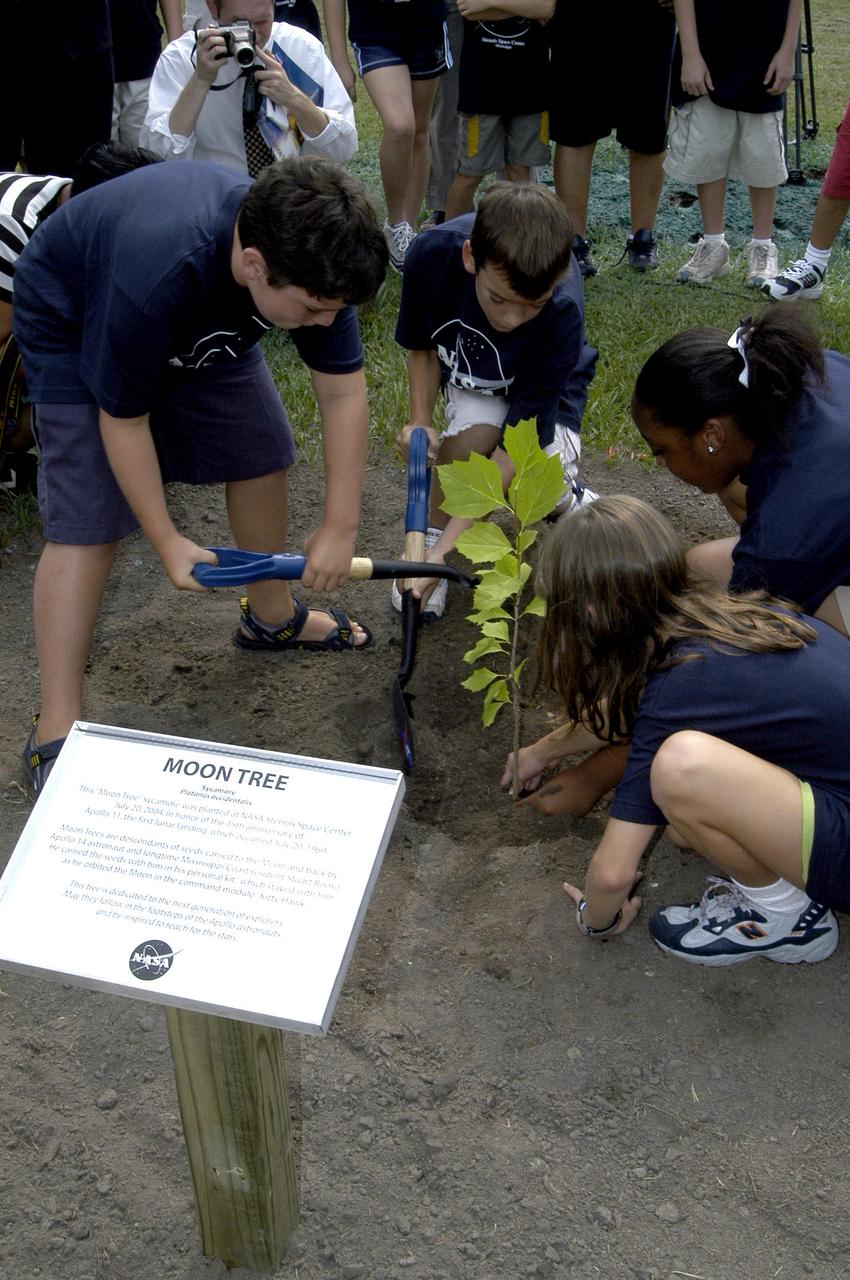
An image from July 20, 2004, shows Astro Camp participants planting a sycamore Moon tree at NASA’s Stennis Space Center near Bay St. Louis, Mississippi. The tree honors the 35th anniversary of Apollo 11 and the first lunar landing on July 20, 1969.
![“Discipline is one of the things that they instill with you [in the military.] All the way starting in boot camp, [the goal] is doing the right thing when nobody's looking. Integrity. Whenever you're in boot camp, they always say, ‘it's too easy.’ It's just too easy to follow the rules, read the book, read the regulations, and that's probably why I enjoy contracting. I like reading the regulations and following the regulations. …[Now that I work for Safety and Mission Assurance,] it's really cool to read everything about the different types of the scenarios. I always get to see the task orders and the type of work that is going on to keep people safe on the ground and in the air.” NASA Contract Specialist at NASA’s Goddard Space Flight Center (GSFC), Miranda Meyer, poses for a portrait, Wednesday, Feb. 7, 2024 at GSFC in Greenbelt, Maryland. Photo Credit: (NASA/Thalia Patrinos)](https://images-assets.nasa.gov/image/NHQ202402070015/NHQ202402070015~medium.jpg)
“Discipline is one of the things that they instill with you [in the military.] All the way starting in boot camp, [the goal] is doing the right thing when nobody's looking. Integrity. Whenever you're in boot camp, they always say, ‘it's too easy.’ It's just too easy to follow the rules, read the book, read the regulations, and that's probably why I enjoy contracting. I like reading the regulations and following the regulations. …[Now that I work for Safety and Mission Assurance,] it's really cool to read everything about the different types of the scenarios. I always get to see the task orders and the type of work that is going on to keep people safe on the ground and in the air.” NASA Contract Specialist at NASA’s Goddard Space Flight Center (GSFC), Miranda Meyer, poses for a portrait, Wednesday, Feb. 7, 2024 at GSFC in Greenbelt, Maryland. Photo Credit: (NASA/Thalia Patrinos)
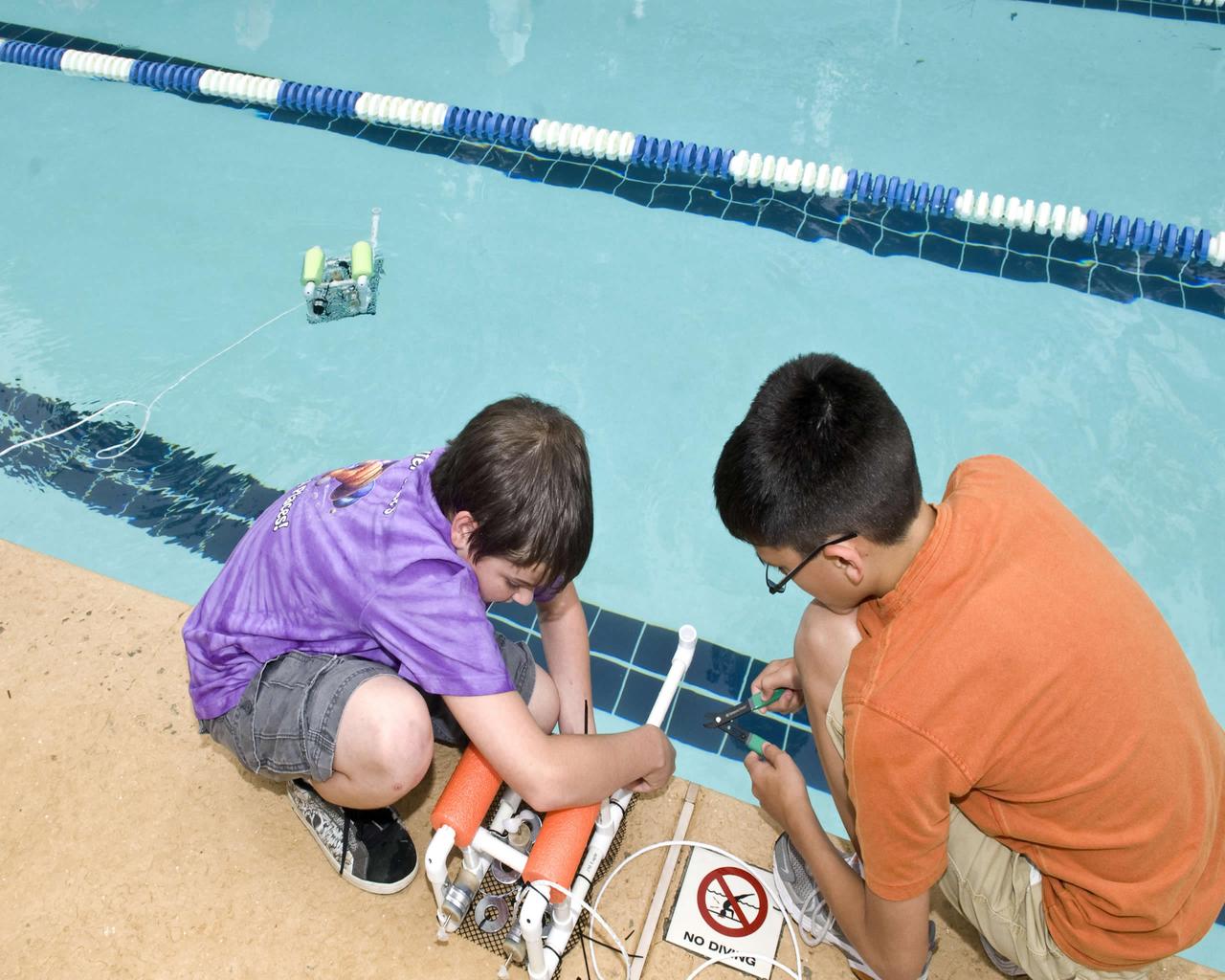
Ian Tonglet, 13, (left) and Seth Malley, 13, both of Picayune, Miss., and both participants in the 2010 Astro Stars session at Stennis Space Center, work with an underwater robot during a camp activity June 29. NASA joined with the U.S. Navy for the underwater robotics exercise involving Sea Perch robots, which are simple, remotely operated underwater vehicles made from PVC pipe and other inexpensive, easily available materials. During the Stennis exercise, students used robots constructed earlier in the day to maneuver underwater and collect plastic rings, as seen to the left of Tonglet. Astro STARS (Spaceflight, Technology, Astronomy & Robotics @ Stennis) is a science and technology camp for 13-15 year olds.
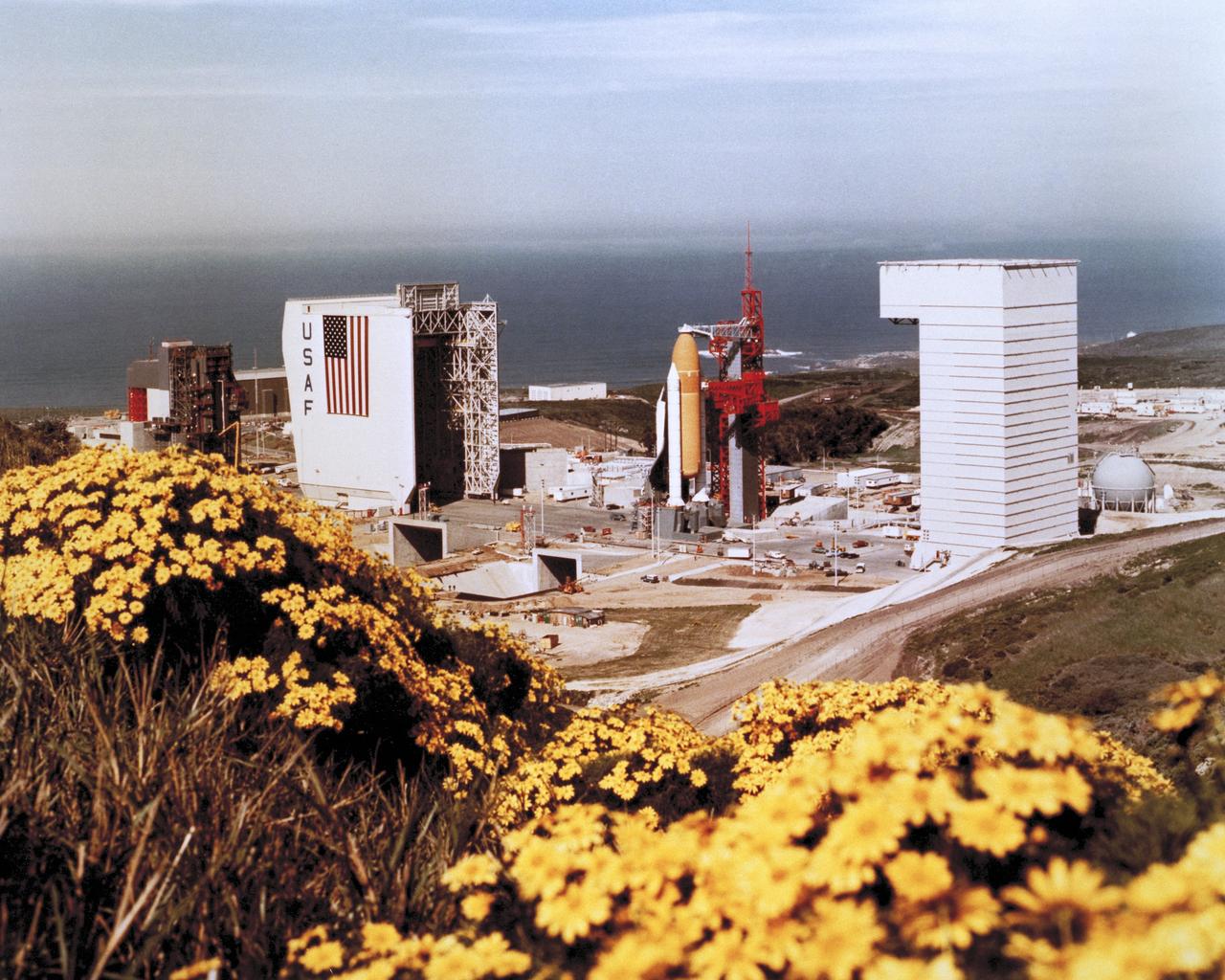
VANDENBERG AIR FORCE BASE, Calif. -- At Vandenberg Air Force Base in the early '80s, the Space Shuttle Enterprise undergoes Pathfinder fit checks at a tower. The Enterprise was built as a test vehicle and was not equipped for spaceflight. Enterprise eventually became the property of the Smithsonian Institution. Vandenberg AFB is located on the Central Coast of California about 150 miles northwest of Los Angeles. The property is comprised of parts of five Mexican land grants and a sixth grant that was transferred virtually intact to the Army. Vandenberg now is operated by the 30th Space Wing, and is the only military installation in the United States from which unmanned government and commercial satellites are launched into polar orbit. It is also the only site from which intercontinental ballistic missiles ICBMs are launched toward the Kwajalein Atoll to verify weapon systems performance. Vandenberg's military service dates back to 1941, when known as Camp Cooke it served as an Army training facility for armored and infantry troops. The main camp closed in June 1946 and was reactivated in August 1950 after the outbreak of the Korean War. The 13th and 20th Armored Divisions and the 40th, 44th, 86th, and 91st Infantry Divisions trained at Cooke. With the advent of the missile age in the 1950s, the Air Force persuaded Secretary of Defense Charles E. Wilson to direct the Army to transfer 64,000 acres of North Camp Cooke to the Air Force for use as a missile launch and training base. In 1958, Camp Cooke was renamed Vandenberg Air Force Base in honor of the late General Hoyt S. Vandenberg, second Air Force Chief of Staff of the United States Air Force and chief architect of today's modern Air Force. Photo Credit: NASA
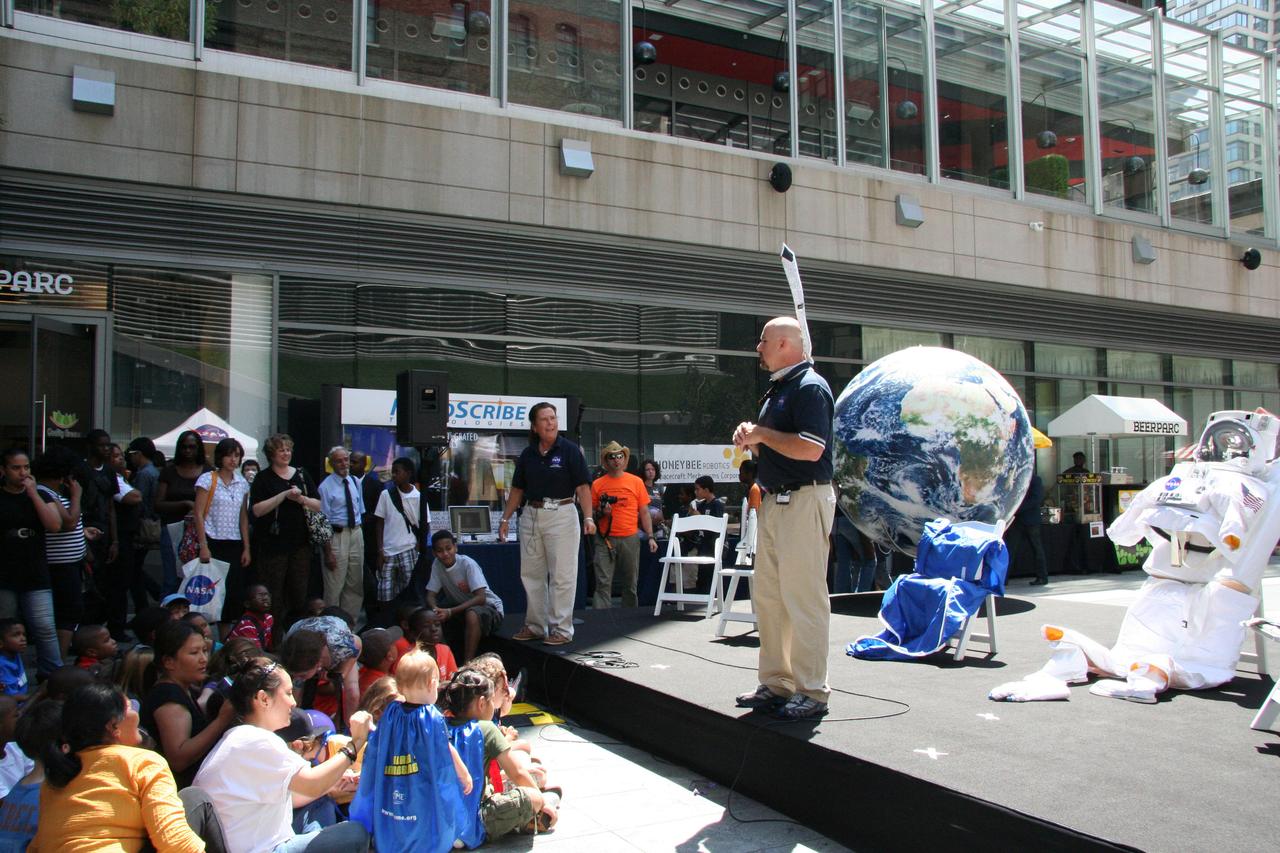
Chris Copelan (right), education program specialist at Stennis Space Center, and Maria Lott, Stennis Astro Camp director, talk about living and working in space with visitors gathered for the 'What's Your Favorite Space?' event in New York City on Aug. 17. Stennis educators teamed with peers from three other NASA centers to present a variety of hands-on activities and informational presentations during the event.
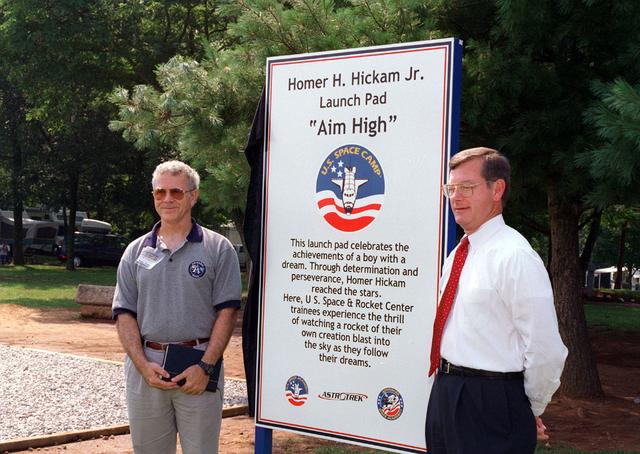
Noted author and previous Marshall Space Flight Center employee Mr. Homer Hickam Jr. poses in front of a placque commemorating his achievement in realizing his dreams of becoming a rocket scientist. The dedication site is located at the U. S. Space and Rocket Center in Huntsville, AL, and is used by amature rocket builders attending the Space Camp to launch their self-made rockets like Mr. Hickam did as a youth growing up in rural West Virginia. Posing with Mr. Hickam is the Madison County Commissioner Mr. Mike Gillispie.
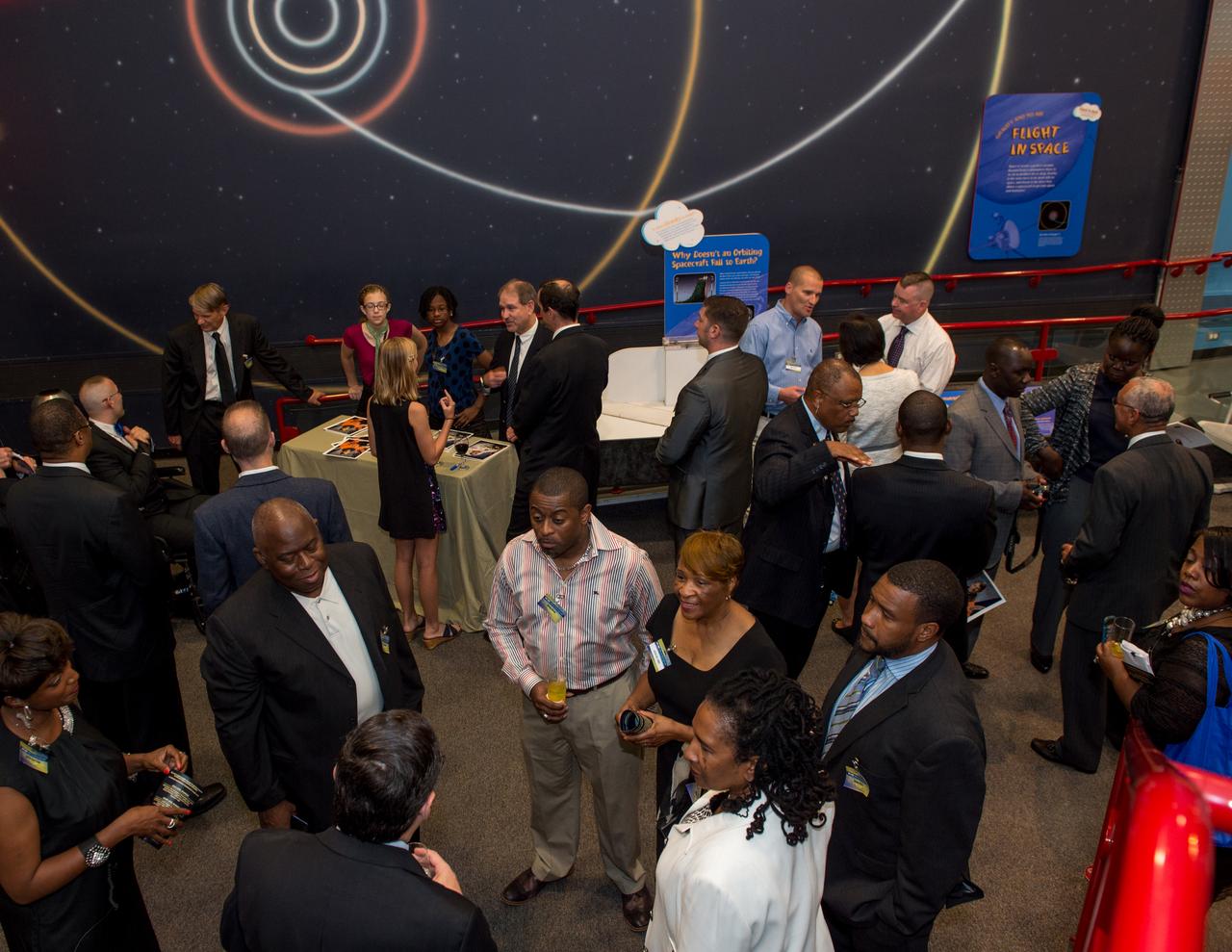
NASA Administrator Charle Bolden, Dr. John Grunsfeld, Dr. Piers Sellers, Goddard Center Director Chris Scolese and MSBR president Ms. Yang hold a meet and greet with Wounded Warriors from Fort Belvoir, MSBR Final Frontier Students and STEM Partners from Summer of Innovation local camps at Vital Signs: Taking the Pulse of Our Planet - Annual NASA reception and lecture hosted by the National Air and Space Museum and Sponsored by the Maryland Space Business Roundtable
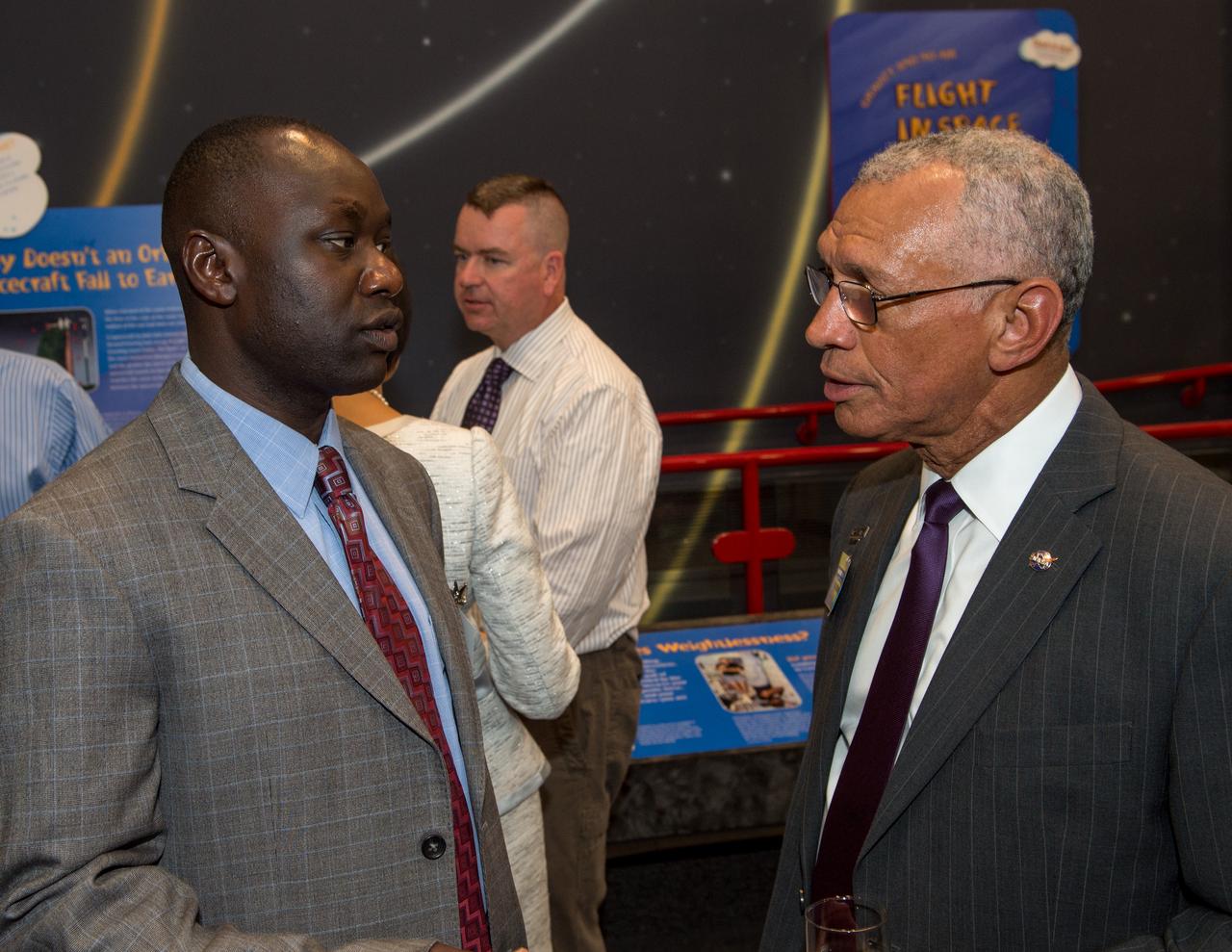
NASA Administrator Charle Bolden, Dr. John Grunsfeld, Dr. Piers Sellers, Goddard Center Director Chris Scolese and MSBR president Ms. Yang hold a meet and greet with Wounded Warriors from Fort Belvoir, MSBR Final Frontier Students and STEM Partners from Summer of Innovation local camps at Vital Signs: Taking the Pulse of Our Planet - Annual NASA reception and lecture hosted by the National Air and Space Museum and Sponsored by the Maryland Space Business Roundtable
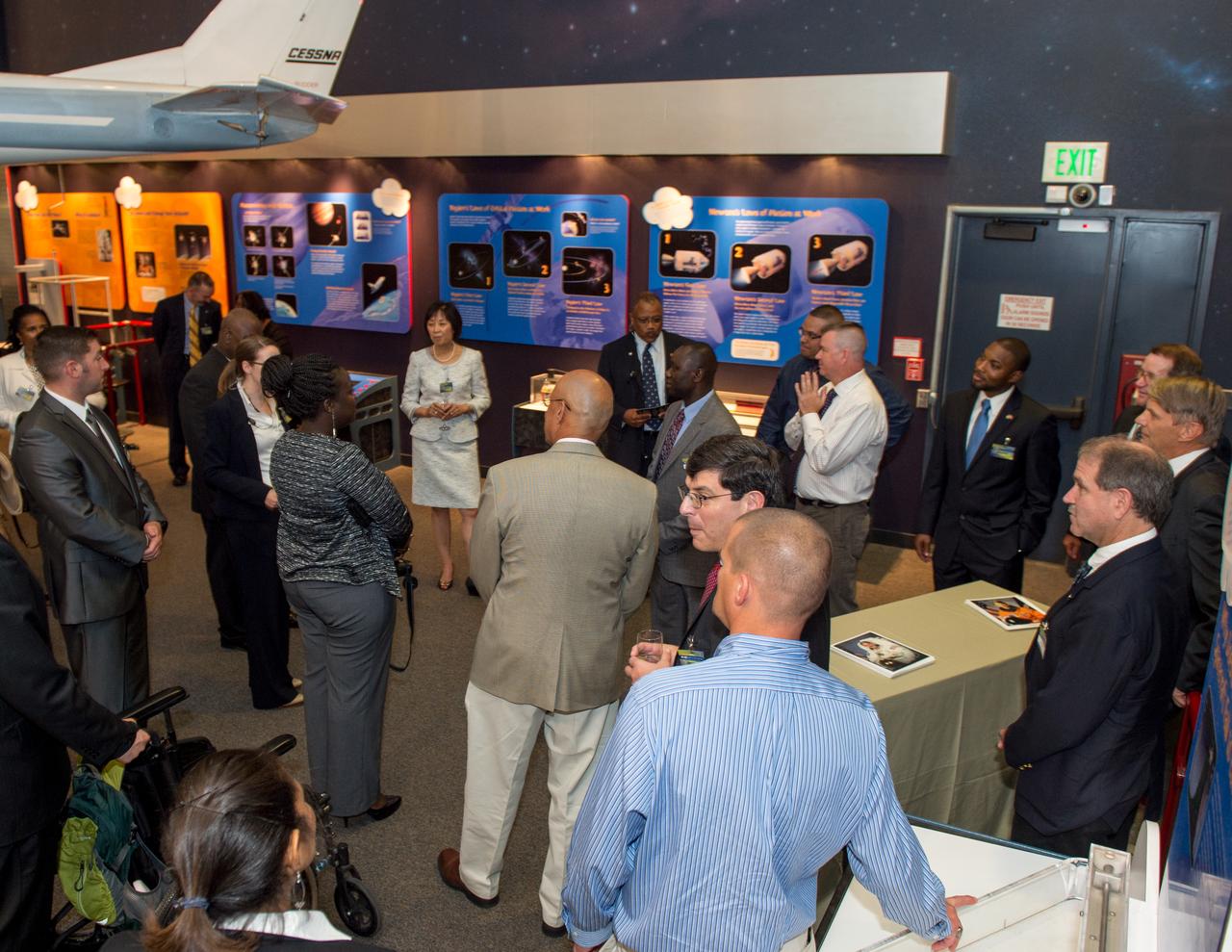
NASA Administrator Charle Bolden, Dr. John Grunsfeld, Dr. Piers Sellers, Goddard Center Director Chris Scolese and MSBR president Ms. Yang hold a meet and greet with Wounded Warriors from Fort Belvoir, MSBR Final Frontier Students and STEM Partners from Summer of Innovation local camps at Vital Signs: Taking the Pulse of Our Planet - Annual NASA reception and lecture hosted by the National Air and Space Museum and Sponsored by the Maryland Space Business Roundtable
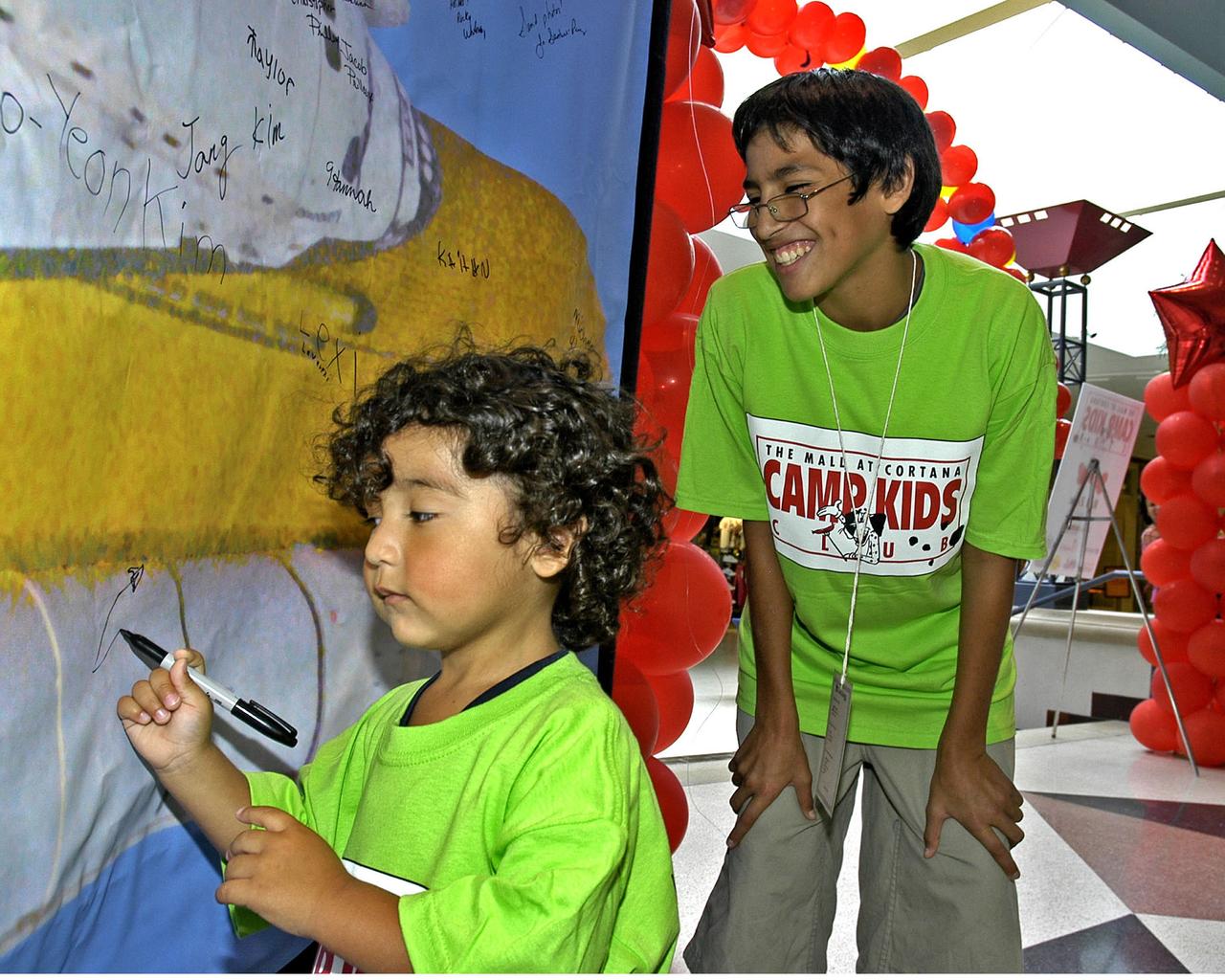
Christian Gonzales, 11 (right), watches as his little brother Walter, 2, adds his own brand of good wishes to a banner encouraging the crew of Space Shuttle Discovery on NASA's Return to Flight mission, scheduled to launch in summer 2005. The brothers, of Baton Rouge, were participating in a Camp Kids event at The Mall at Cortana, where Return to Flight activities were presented by NASA's Stennis Space Center (SSC).
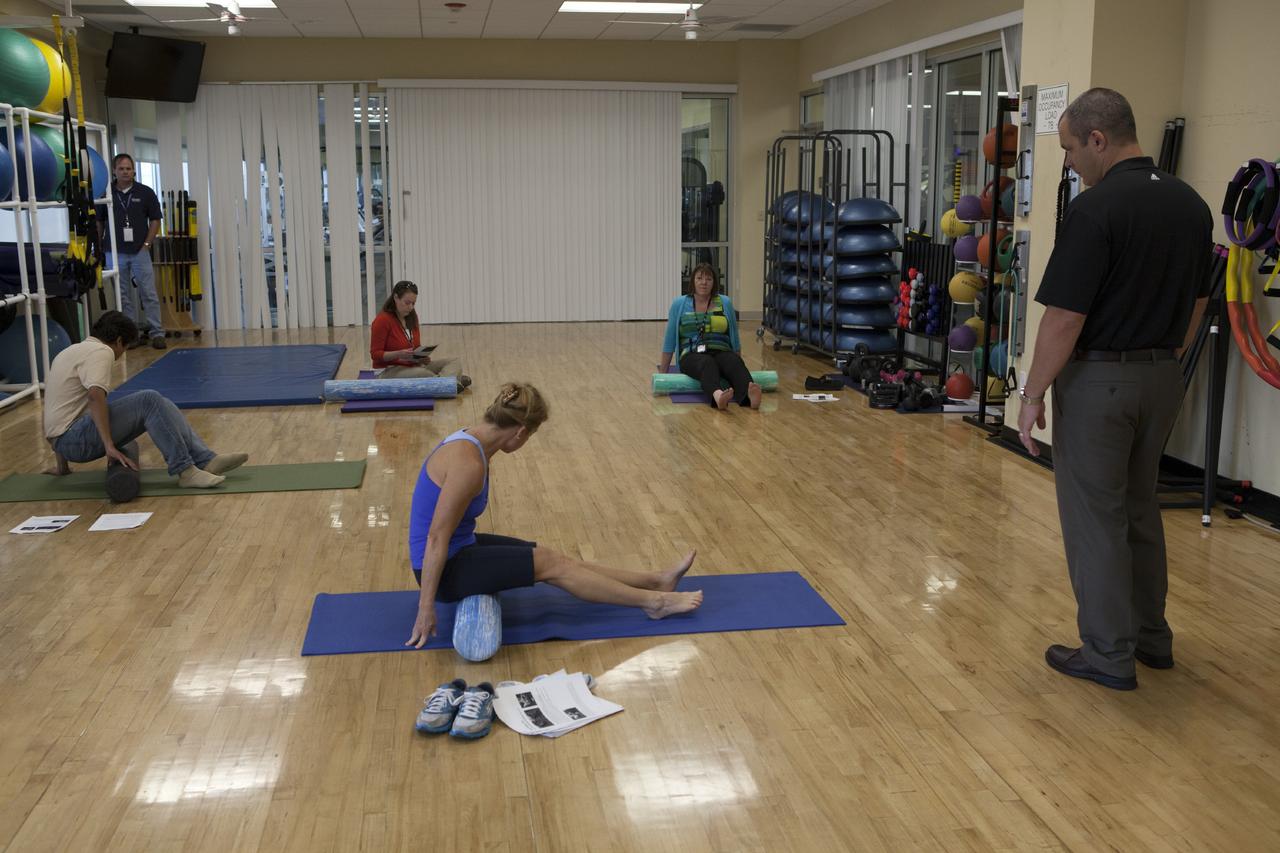
CAPE CANAVERAL, Fla. – Erik Nason, an athletic trainer with InoMedic Health/RehabWorks, instructs Kennedy Space Center workers during a foam rolling class. The class was part of the National Employee Health and Fitness Day event. Yoga, cardio dance, and boot camp classes were also offered throughout the day at the Operations and Checkout Building's Fitness Center. Photo credit: NASA/ Dimitri Gerondidakis
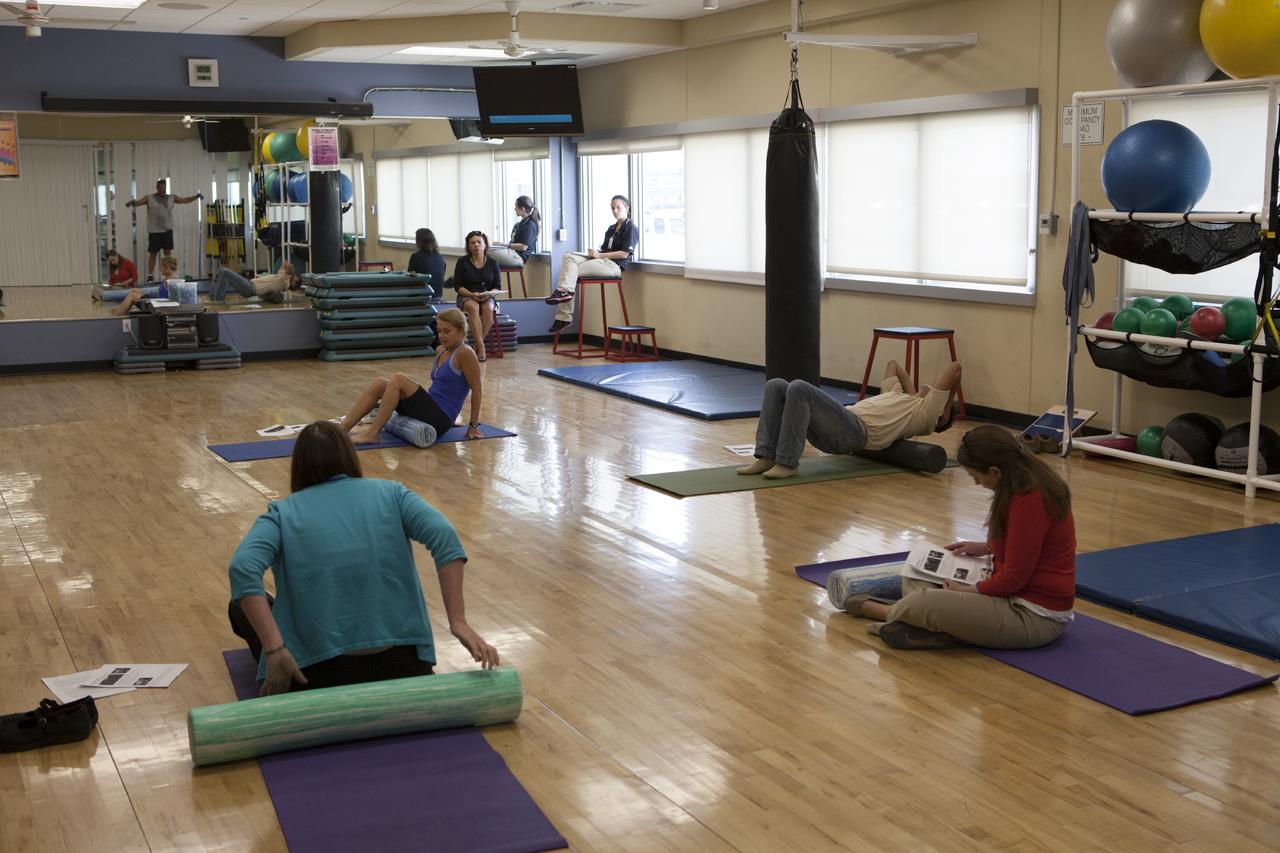
CAPE CANAVERAL, Fla. – Kennedy Space Center workers learn about the benefits of foam-rolling exercises and techniques to relieve the strain and pain of overused muscles and connective tissue. The class was part of the National Employee Health and Fitness Day event. Yoga, cardio dance, and boot camp classes were also offered throughout the day at the Operations and Checkout Building's Fitness Center. Photo credit: NASA/ Dimitri Gerondidakis

ISS026-E-015208 (6 Jan. 2011) --- Photographed by an Expedition 26 crew member on the International Space Station, this detailed photograph highlights the northern approach to Mount Everest from Tibet. Known as the northeast ridge route, climbers travel along the East Rongbuk Glacier (top right) to camp at the base of Changtse mountain. From this point at approximately 6,100 meters above sea level, the North Col--a sharp-edged pass carved by glaciers, center--is ascended to reach a series of progressively higher camps along the North Face of Everest, culminating in Camp VI at 8,230 meters above sea level. Climbers make their final push to the summit (not visible, just off the bottom edge of the image) from this altitude. While the near-nadir viewing angle--almost looking "straight down" from the International Space Station--tends to flatten the topography, crew members have also taken images that highlight the rugged nature of the area. Everest (or Sagarmatha in Nepali), located within the Himalaya mountain chain, is Earth’s highest mountain with its summit at 8,848 meters above sea level. Khumbutse mountain, visible at top left, has a summit elevation of 6,640 meters above sea level. Climbing to the summit of Everest requires much advance planning, conditioning, and situational awareness on the part of mountaineers to avoid potentially fatal consequences--as of 2010, there have been over 200 reported fatalities.
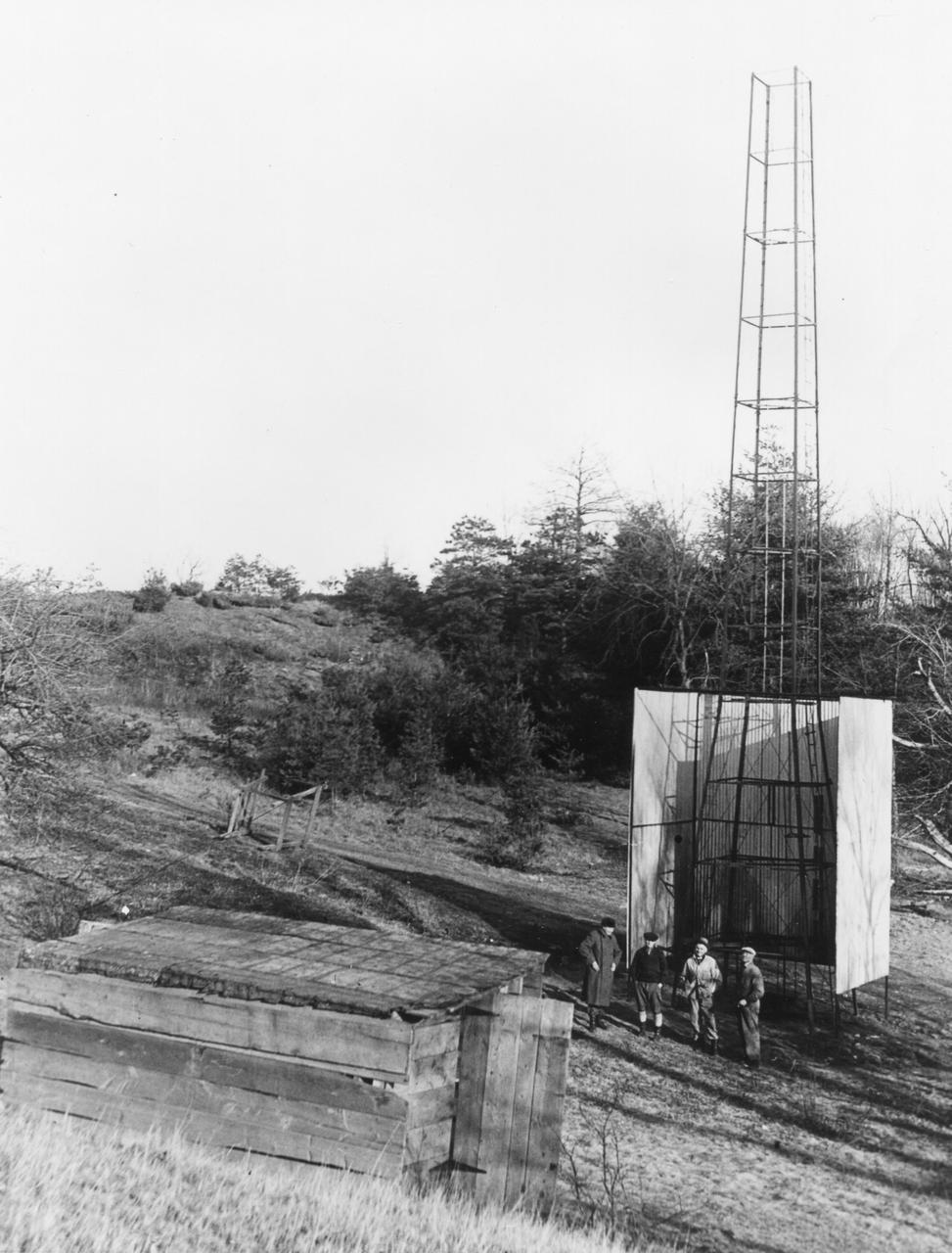
Dr. Robert H. Goddard's tower and shelter at the Army artillery range at Camp Devens, in Ayer, Massachusetts in the winter of 1929-1930. Goddard originally began testing rockets on his aunt's farm in Auburn, Massachusetts until the local police, fire department and townspeople became concerned about the noise and menace to the public the rockets created. Although Goddard maintained that the rockets were not a danger, he soon moved to Camp Devens, Massachusetts. There he was able to launch the rockets without attracting attention. <b><a href="http://www.nasa.gov/centers/goddard/home/index.html" rel="nofollow">NASA Goddard Space Flight Center</a></b> enables NASA’s mission through four scientific endeavors: Earth Science, Heliophysics, Solar System Exploration, and Astrophysics. Goddard plays a leading role in NASA’s accomplishments by contributing compelling scientific knowledge to advance the Agency’s mission. <b>Follow us on <a href="http://twitter.com/NASA_GoddardPix" rel="nofollow">Twitter</a></b> <b>Join us on <a href="http://www.facebook.com/pages/Greenbelt-MD/NASA-Goddard/395013845897?ref=tsd" rel="nofollow">Facebook</a></b>
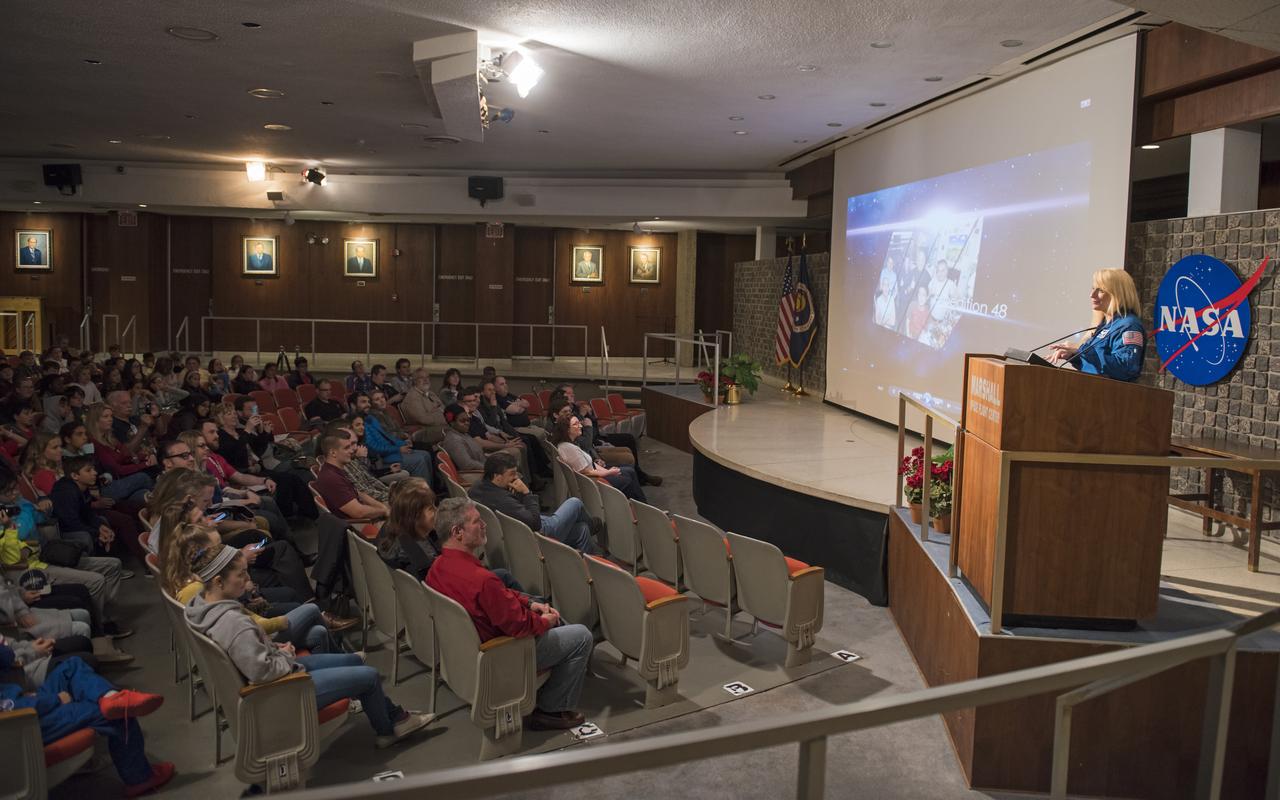
NASA astronaut Kate Rubins presents highlights from Expedition 48/49, her mission to the International Space Station, to team members and Space Camp students from the U.S. Space & Rocket Center in Huntsville, April 6 at NASA's Marshall Space Flight Center. During her mission, Rubins became the first person to sequence DNA in space, researching technology development for deep-space exploration by humans, Earth and space science. She also conducted two spacewalks, in which she and NASA astronaut Jeff Williams installed an International Docking Adapter and performed maintenance of the station's external thermal control system and installed high-definition cameras.
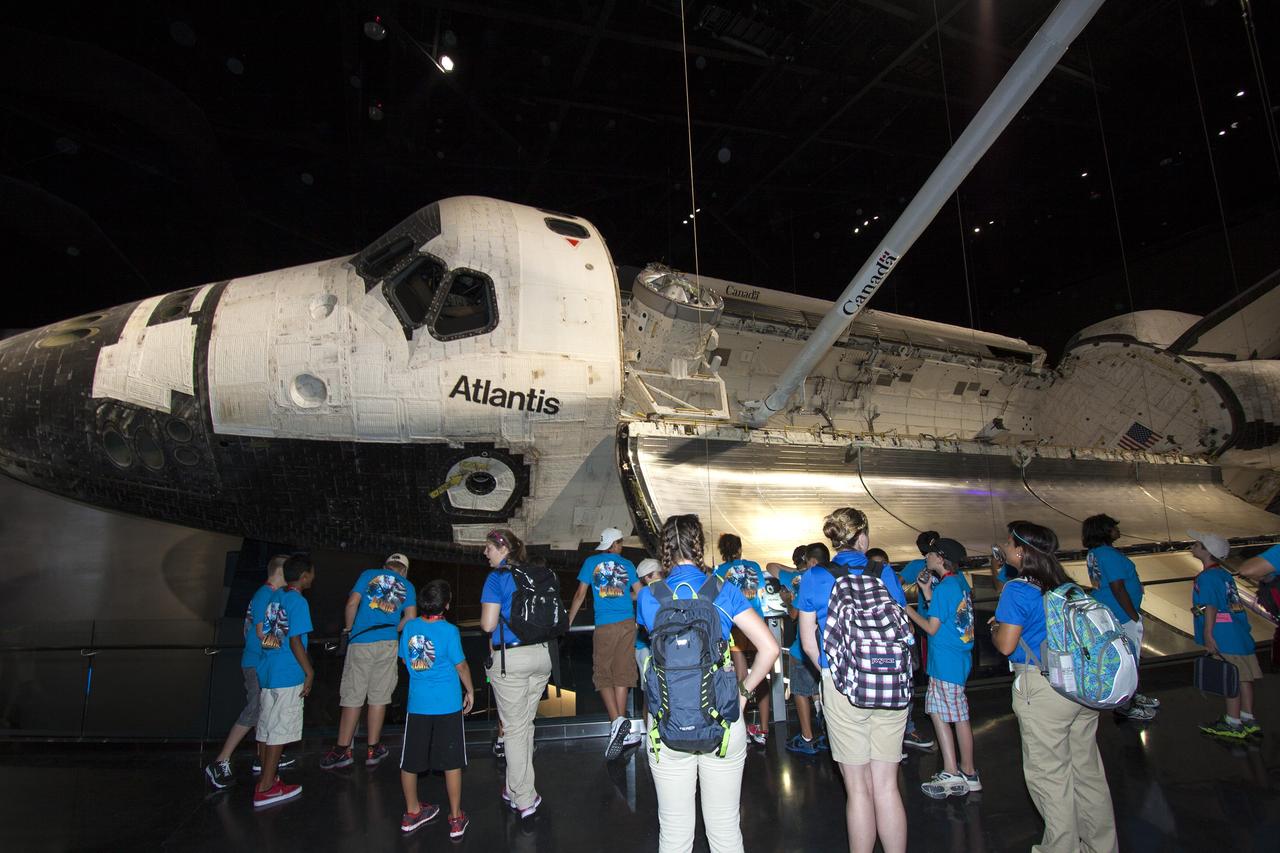
CAPE CANAVERAL, Fla. -- At the Kennedy Space Center Visitor Complex in Florida, Camp Kennedy Space Center participants get an up-close look at the space shuttle Atlantis during a weeklong summer activity for students entering second through ninth grades. Their tour took place just as final preparations were underway for the opening of the "Space Shuttle Atlantis" facility. The new $100 million facility will include interactive exhibits that tell the story of the 30-year Space Shuttle Program and highlight the future of space exploration. The "Space Shuttle Atlantis" exhibit is scheduled to open June 29, 2013.Photo credit: NASA/ Jim Grossmann
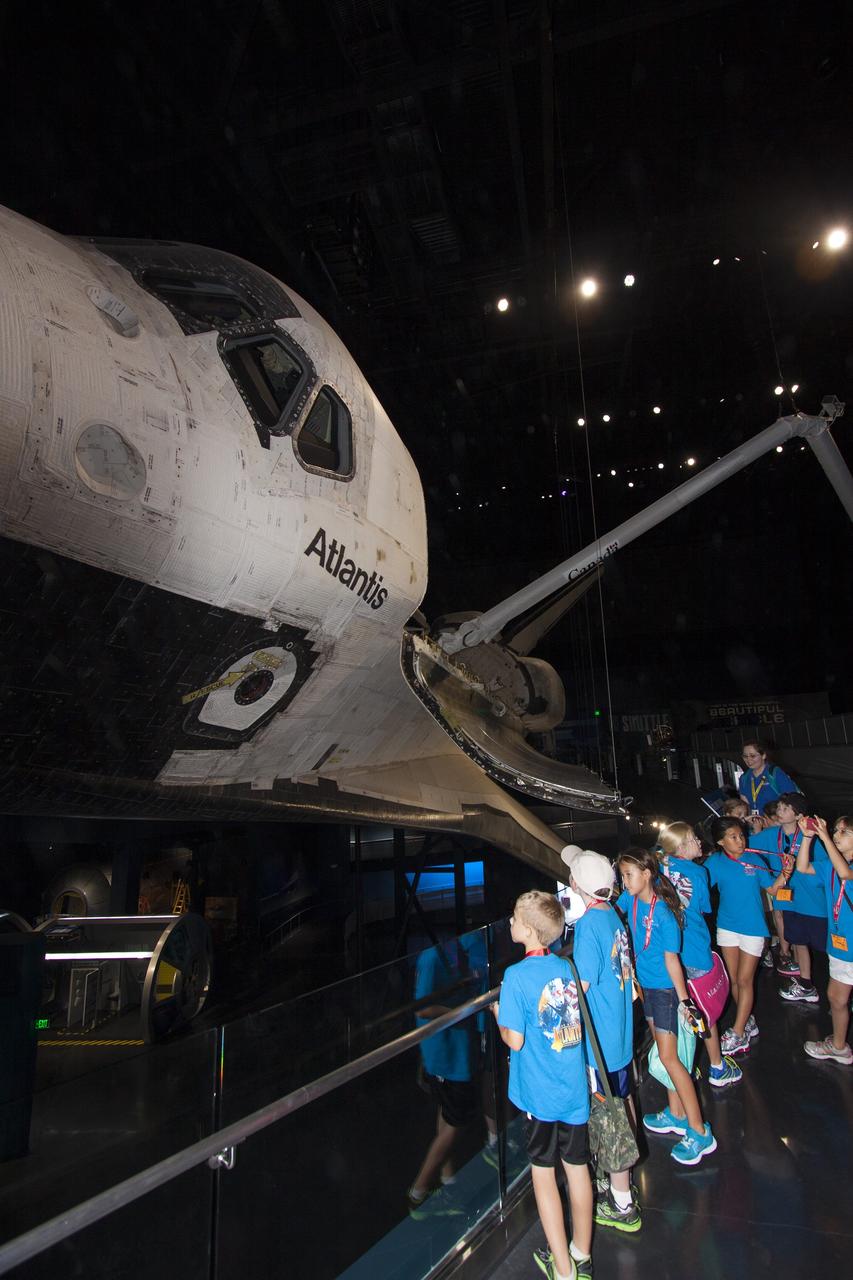
CAPE CANAVERAL, Fla. -- At the Kennedy Space Center Visitor Complex in Florida, Camp Kennedy Space Center participants get an up-close look at the space shuttle Atlantis during a weeklong summer activity for students entering second through ninth grades. Their tour took place just as final preparations were underway for the opening of the "Space Shuttle Atlantis" facility. The new $100 million facility will include interactive exhibits that tell the story of the 30-year Space Shuttle Program and highlight the future of space exploration. The "Space Shuttle Atlantis" exhibit is scheduled to open June 29, 2013.Photo credit: NASA/ Jim Grossmann
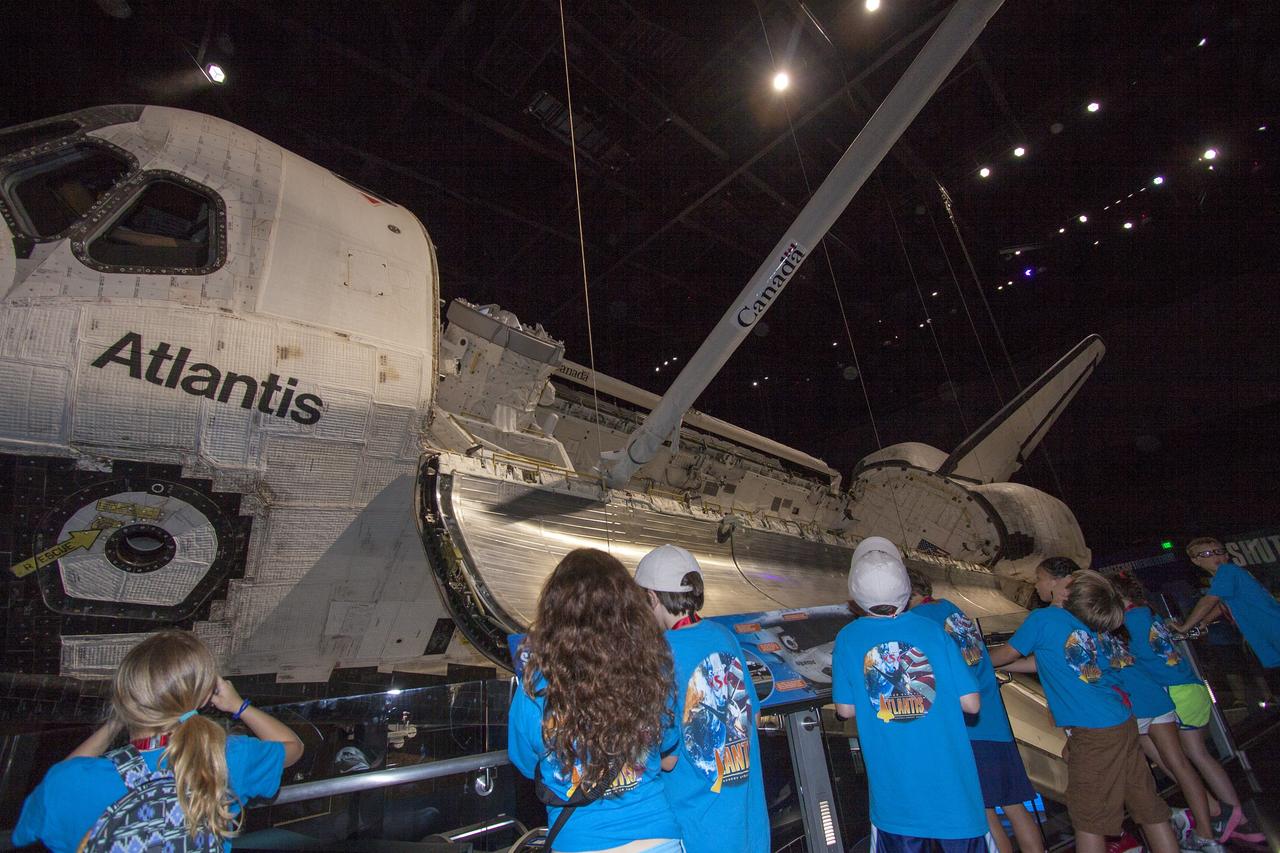
CAPE CANAVERAL, Fla. -- At the Kennedy Space Center Visitor Complex in Florida, Camp Kennedy Space Center participants get an up-close look at the space shuttle Atlantis during a weeklong summer activity for students entering second through ninth grades. Their tour took place just as final preparations were underway for the opening of the "Space Shuttle Atlantis" facility. The new $100 million facility will include interactive exhibits that tell the story of the 30-year Space Shuttle Program and highlight the future of space exploration. The "Space Shuttle Atlantis" exhibit is scheduled to open June 29, 2013.Photo credit: NASA/ Jim Grossmann
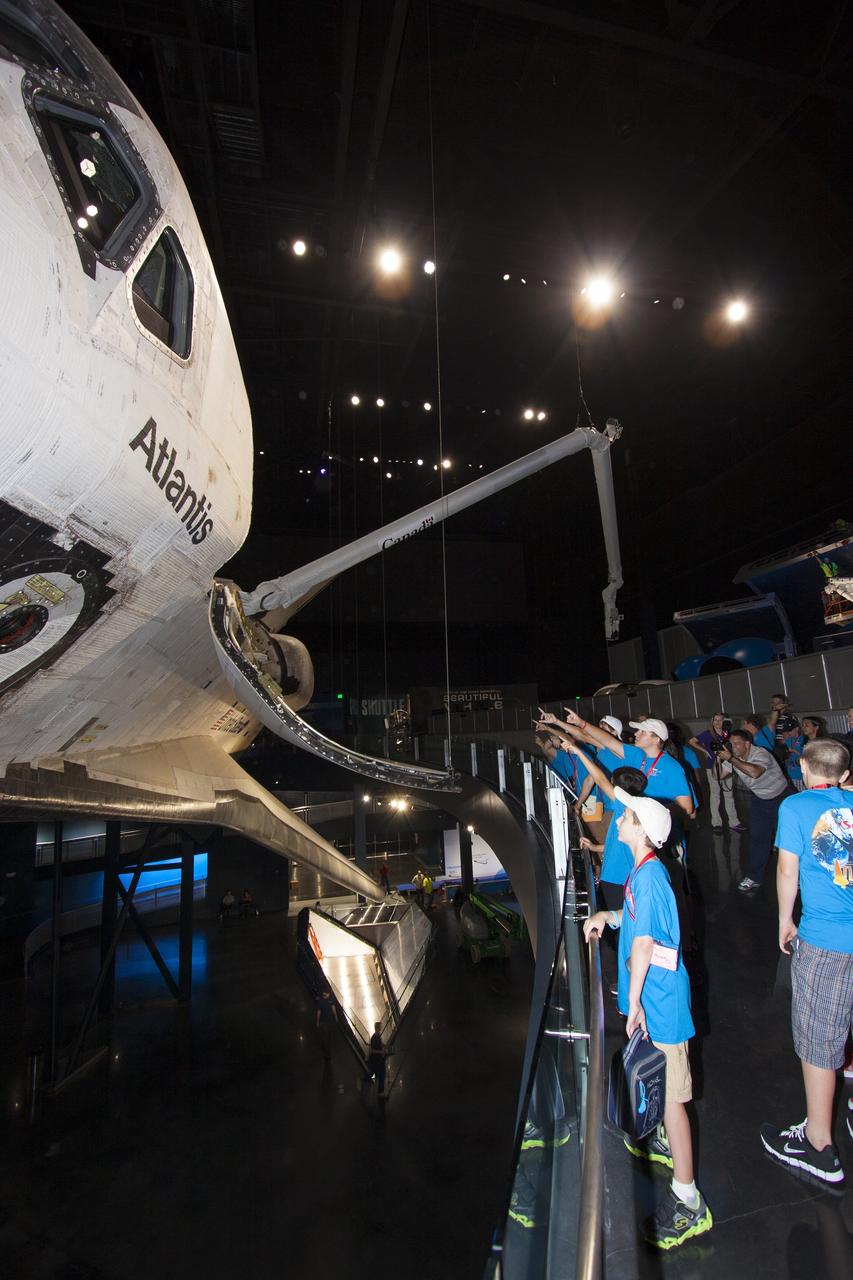
CAPE CANAVERAL, Fla. -- At the Kennedy Space Center Visitor Complex in Florida, Camp Kennedy Space Center participants get an up-close look at the space shuttle Atlantis during a weeklong summer activity for students entering second through ninth grades. Their tour took place just as final preparations were underway for the opening of the "Space Shuttle Atlantis" facility. The new $100 million facility will include interactive exhibits that tell the story of the 30-year Space Shuttle Program and highlight the future of space exploration. The "Space Shuttle Atlantis" exhibit is scheduled to open June 29, 2013.Photo credit: NASA/ Jim Grossmann
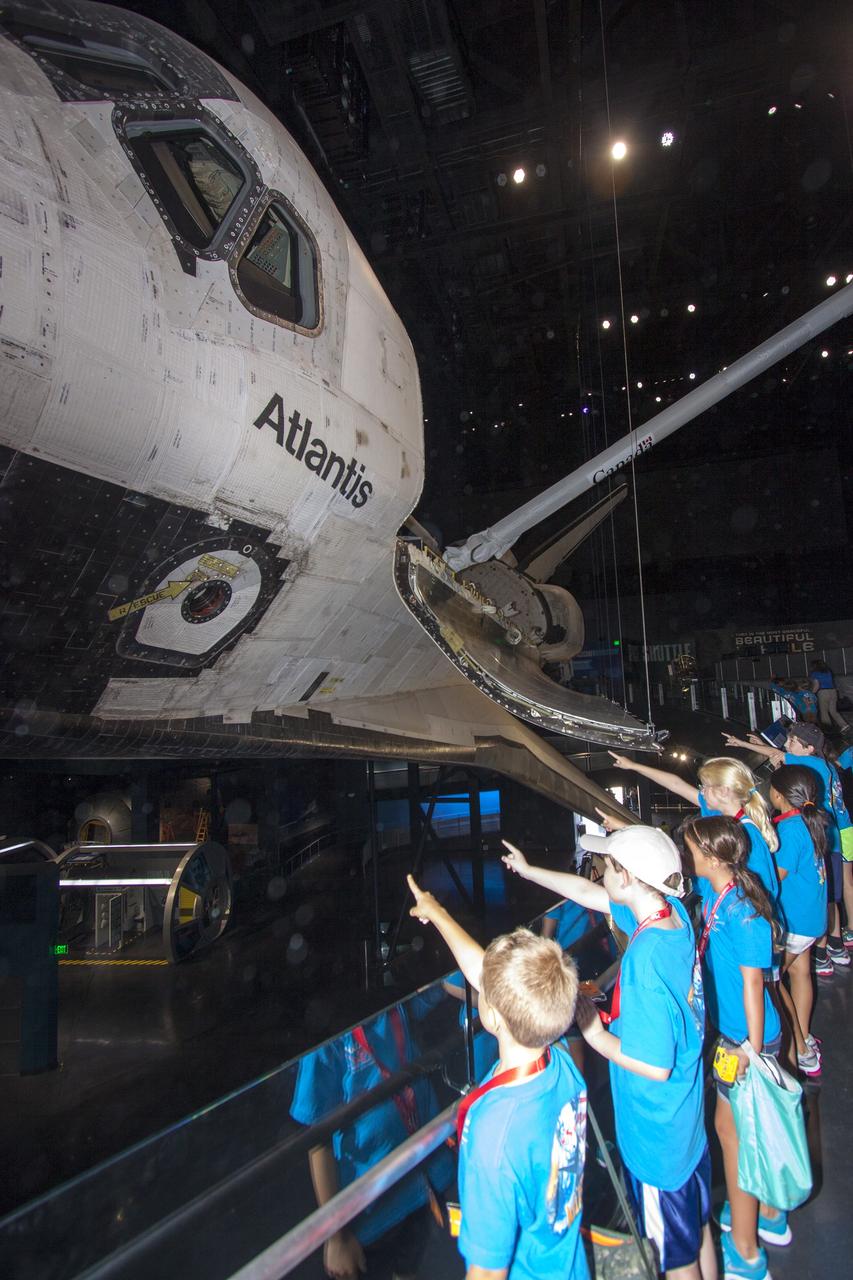
CAPE CANAVERAL, Fla. -- At the Kennedy Space Center Visitor Complex in Florida, Camp Kennedy Space Center participants get an up-close look at the space shuttle Atlantis during a weeklong summer activity for students entering second through ninth grades. Their tour took place just as final preparations were underway for the opening of the "Space Shuttle Atlantis" facility. The new $100 million facility will include interactive exhibits that tell the story of the 30-year Space Shuttle Program and highlight the future of space exploration. The "Space Shuttle Atlantis" exhibit is scheduled to open June 29, 2013.Photo credit: NASA/ Jim Grossmann
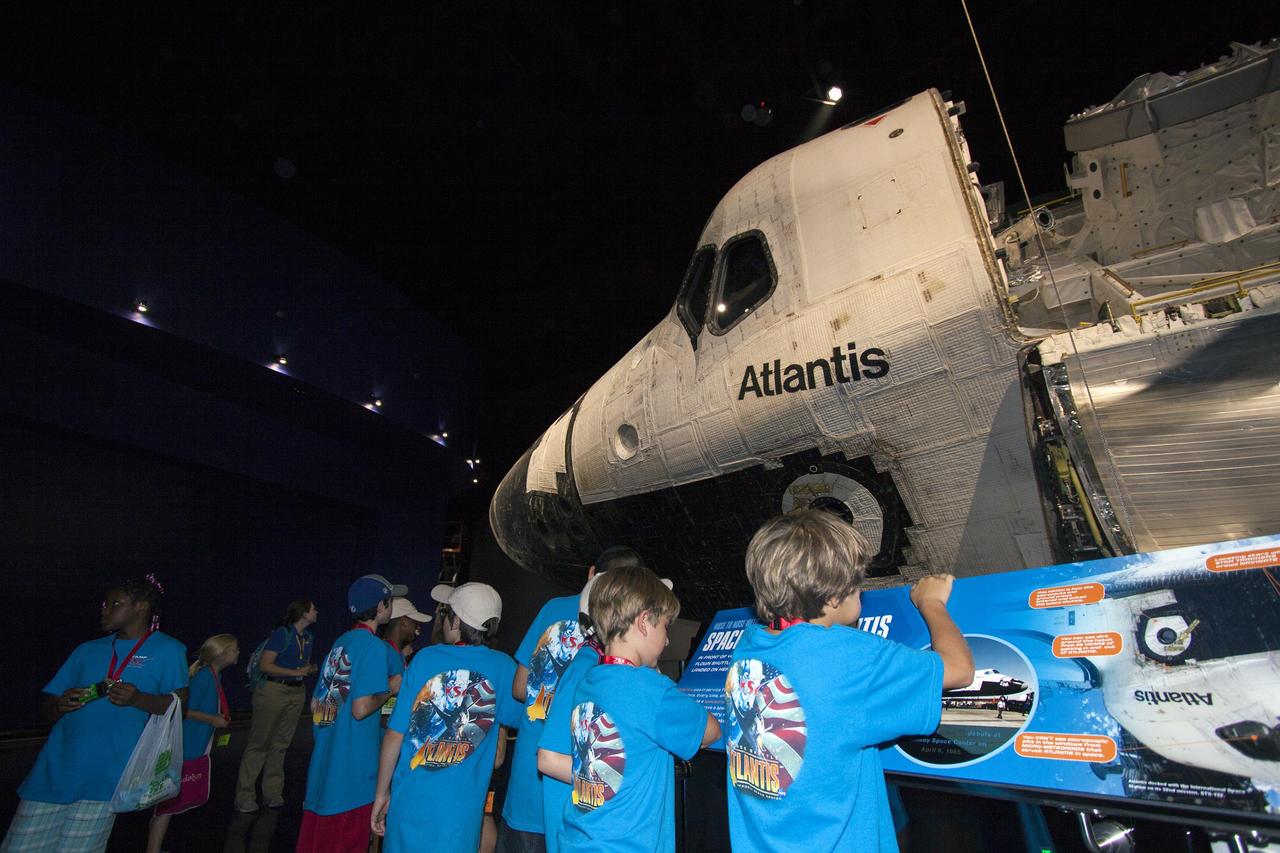
CAPE CANAVERAL, Fla. -- At the Kennedy Space Center Visitor Complex in Florida, Camp Kennedy Space Center participants get an up-close look at the space shuttle Atlantis during a weeklong summer activity for students entering second through ninth grades. Their tour took place just as final preparations were underway for the opening of the "Space Shuttle Atlantis" facility. The new $100 million facility will include interactive exhibits that tell the story of the 30-year Space Shuttle Program and highlight the future of space exploration. The "Space Shuttle Atlantis" exhibit is scheduled to open June 29, 2013.Photo credit: NASA/ Jim Grossmann
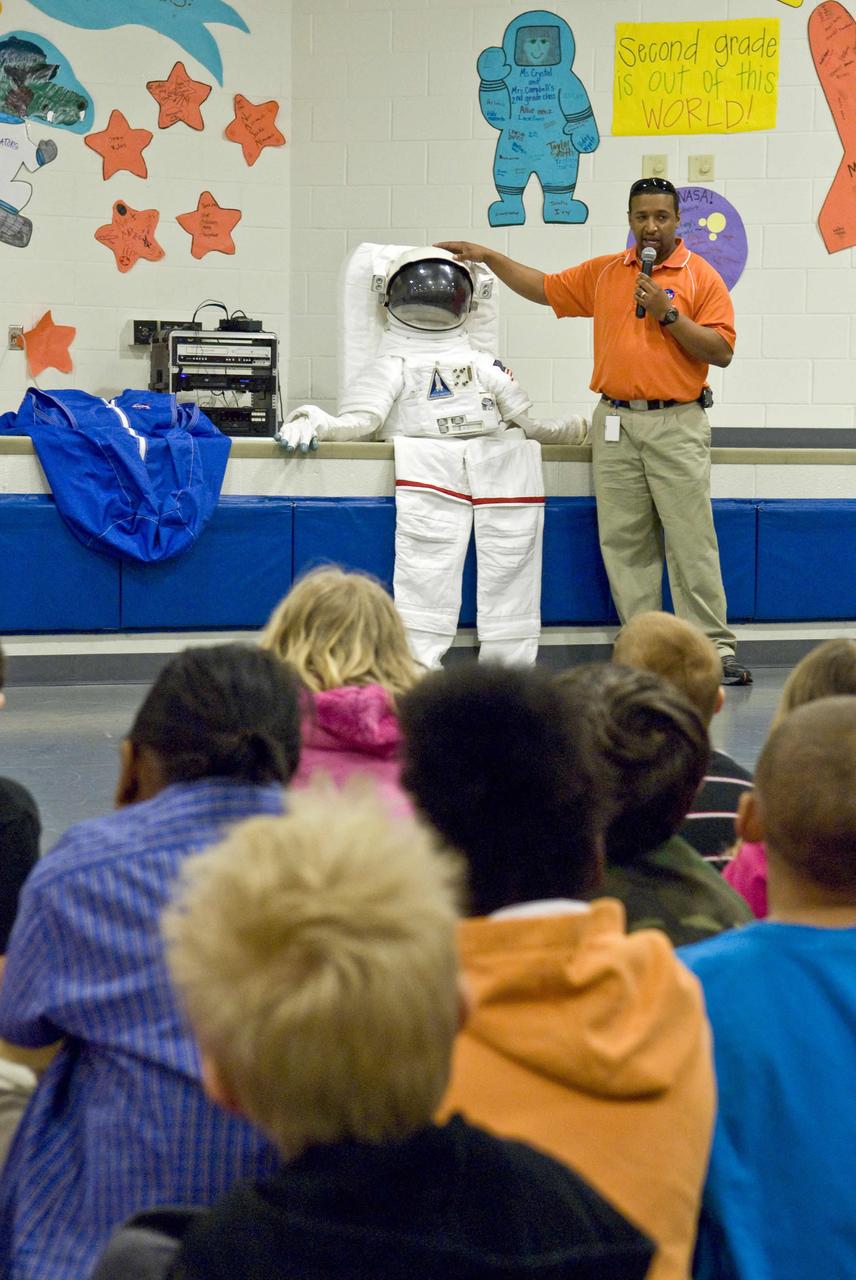
Alexis Harry, assistant director of Astro Camp at NASA's John C. Stennis Space Center, talks with students at Lake Cormorant (Miss.) Elementary School during a 'Living and Working in Space' presentation March 30. Stennis hosted the school presentation during a visit to the Oxford area. Harry, who also is a high school biology teacher in Slidell, La., spent time discussing space travel with students and answering questions they had about the experience, including queries about how astronauts eat, sleep and drink in space. The presentation was sponsored by the NASA Office of External Affairs and Education at Stennis. For more information about NASA education initiatives, visit: http://education.ssc.nasa.gov/.
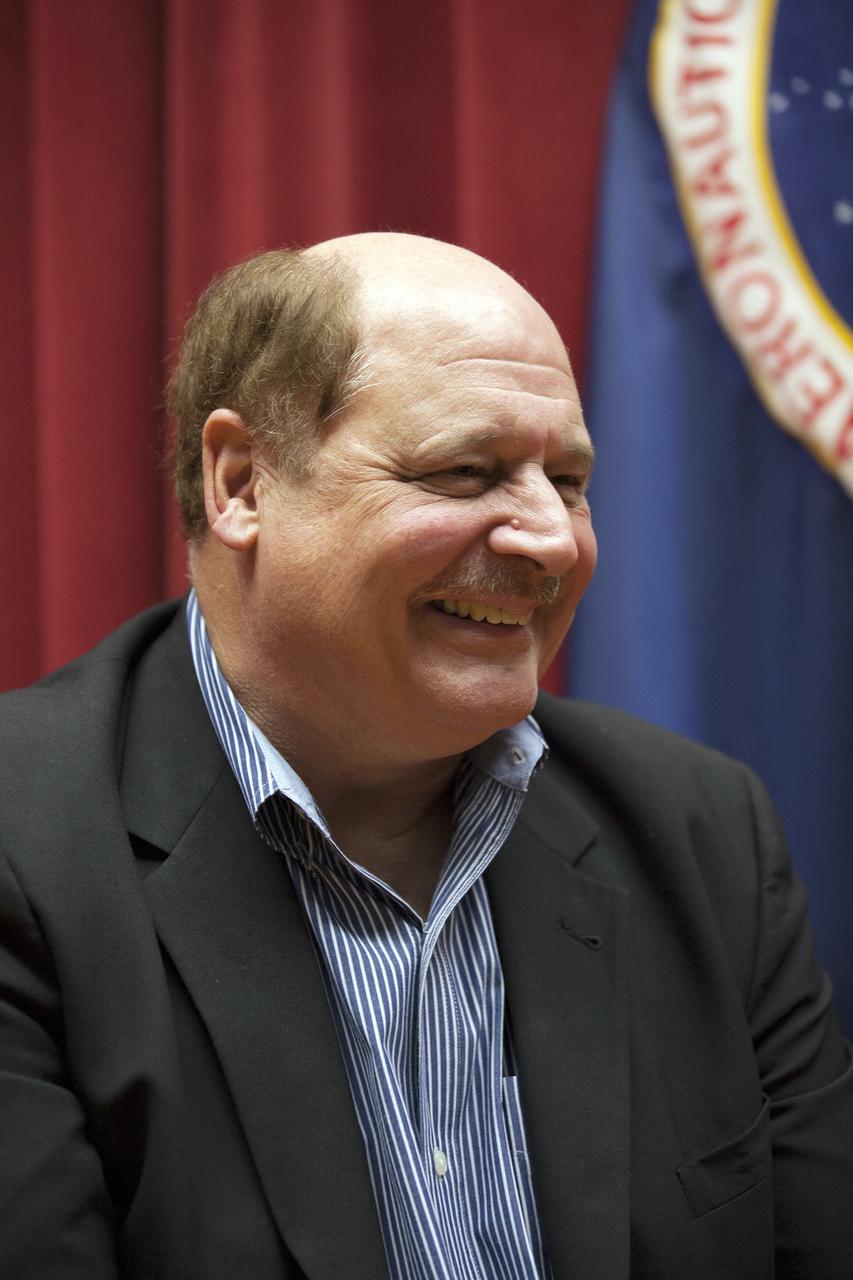
CAPE CANAVERAL, Fla. – Michael Kersjes, author and former special education teacher and football coach from Michigan, speaks to workers during the Disability Awareness and Action Working Group, or DAAWG, event at NASA's Kennedy Space Center in Florida. The theme of his presentation was "Power of the Human Spirit." Kersjes is the author of the book, "A Smile as Big as the Moon," which told the true story of how he worked to get special education students into Space Camp, a competitive education program at the U.S. Space and Rocket Center in Huntsville, Alabama. His book was made into a movie in 2012. For information on Kennedy's diversity programs, visit http://odeo.ksc.nasa.gov. Photo credit: NASA/Kim Shiflett
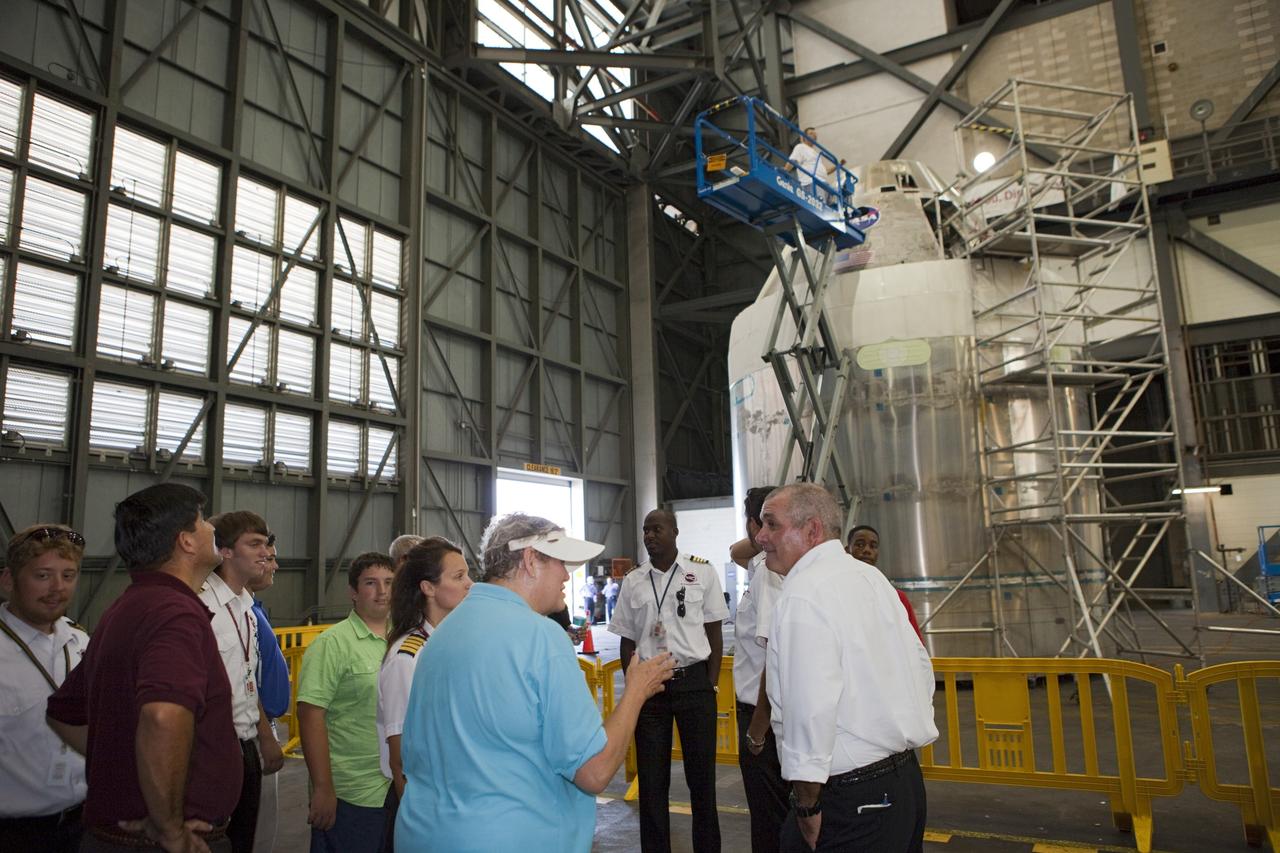
CAPE CANAVERAL, Fla. – Students and their flight instructors from Florida Tech, or FIT, in Melbourne, tour the Vehicle Assembly Building and view space shuttle Atlantis at NASA’s Kennedy Space Center in Florida. The instructors and their students arrived at the Shuttle Landing Facility, or SLF, in Cherokee Warrior and Cessna 172S lightweight aircraft. The middle and high school students are participating in FIT’s Av/Aero summer camp experience. They and their flight instructors also toured the SLF midfield control tower, viewed F104 Starfighters and NASA Huey helicopters in the RLV Hangar, and viewed the runway plaques marking wheels stop for each of the three space shuttles. Photo credit: NASA/Kim Shiflett
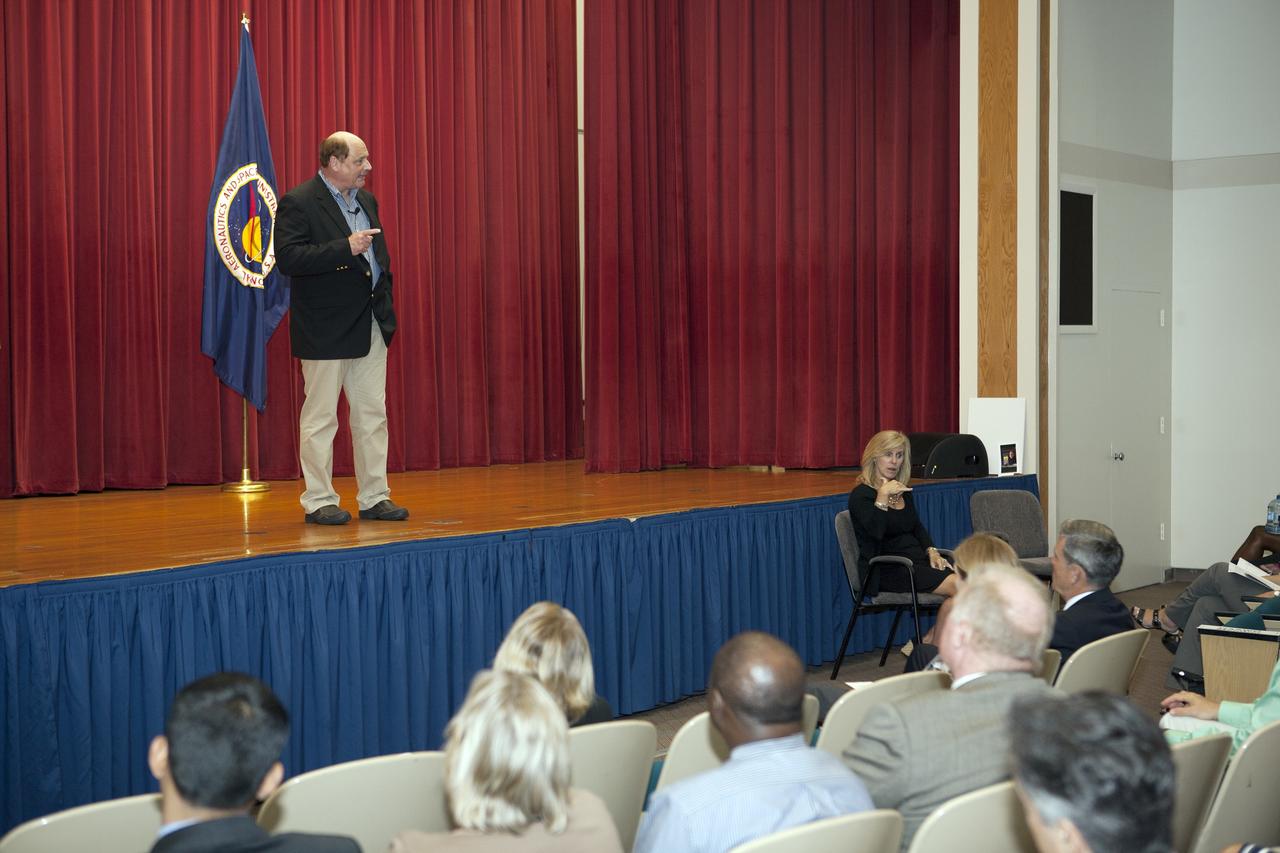
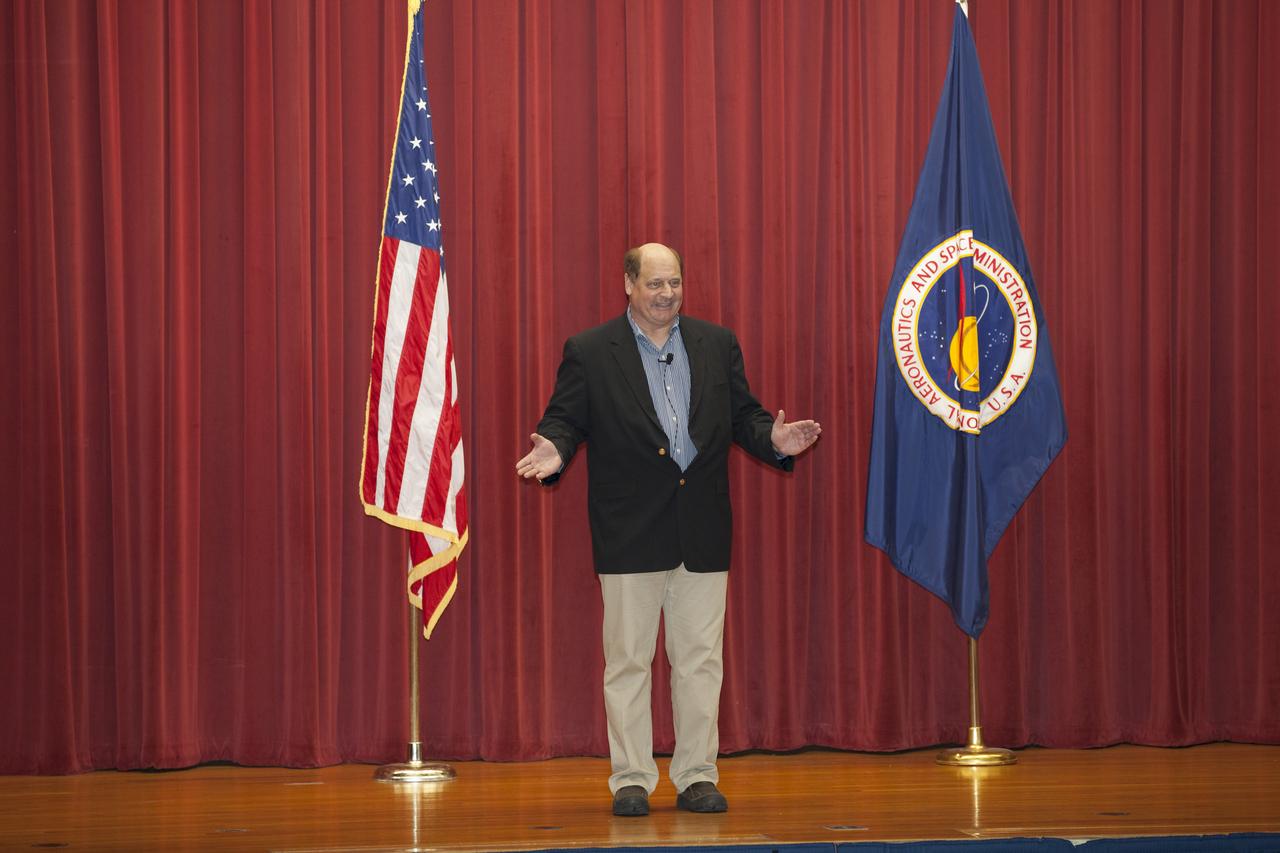
CAPE CANAVERAL, Fla. – Michael Kersjes, author and former special education teacher and football coach from Michigan, speaks to workers during the Disability Awareness and Action Working Group, or DAAWG, event at NASA's Kennedy Space Center in Florida. The theme of his presentation was "Power of the Human Spirit." Kersjes is the author of the book, "A Smile as Big as the Moon," which told the true story of how he worked to get special education students into Space Camp, a competitive education program at the U.S. Space and Rocket Center in Huntsville, Alabama. His book was made into a movie in 2012. For information on Kennedy's diversity programs, visit http://odeo.ksc.nasa.gov. Photo credit: NASA/Kim Shiflett
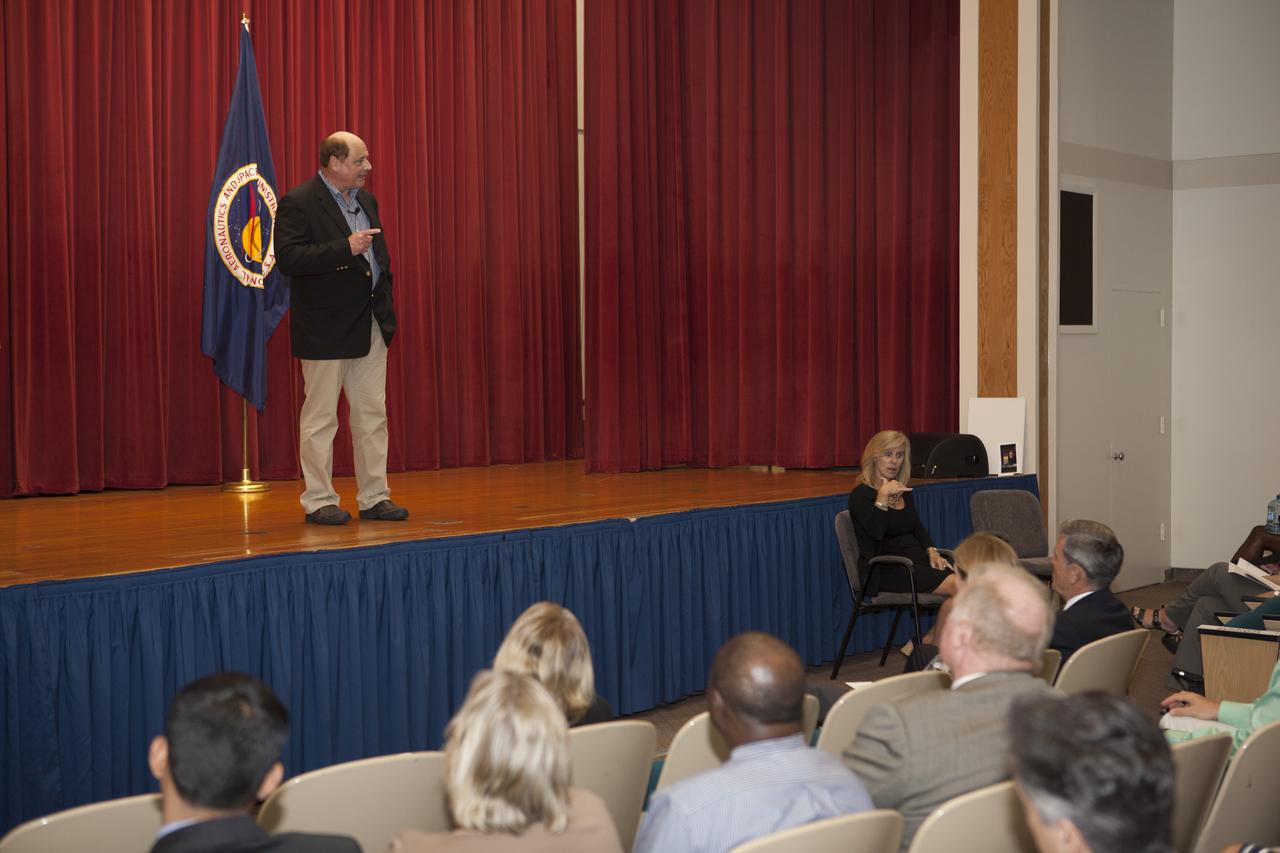
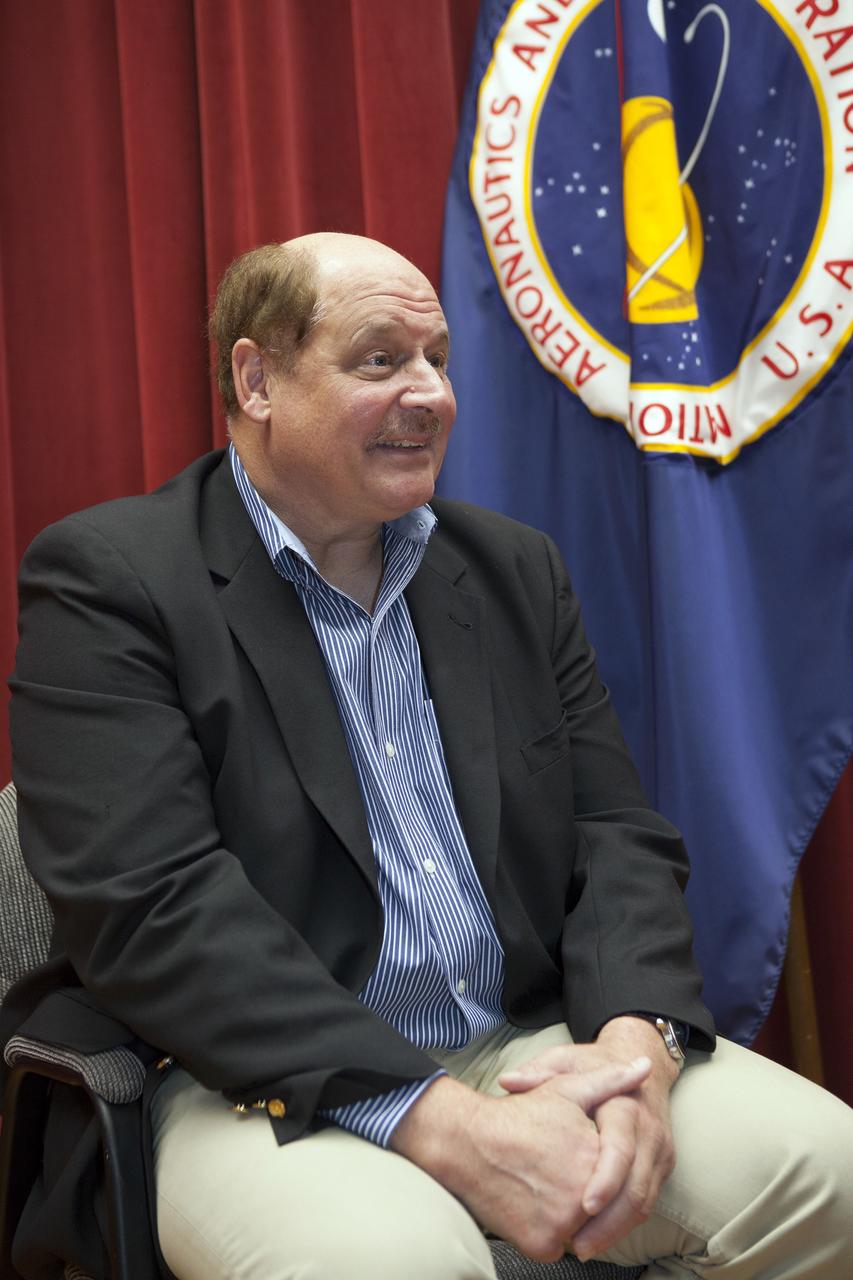
Michael Kersjes, author and former special education teacher and football coach from Michigan, speaks to workers during the Disability Awareness and Action Working Group, or DAAWG, event at NASA's Kennedy Space Center in Florida. The theme of his presentation was "Power of the Human Spirit." Kersjes is the author of the book, "A Smile as Big as the Moon," which told the true story of how he worked to get special education students into Space Camp, a competitive education program at the U.S. Space and Rocket Center in Huntsville, Alabama. His book was made into a movie in 2012.
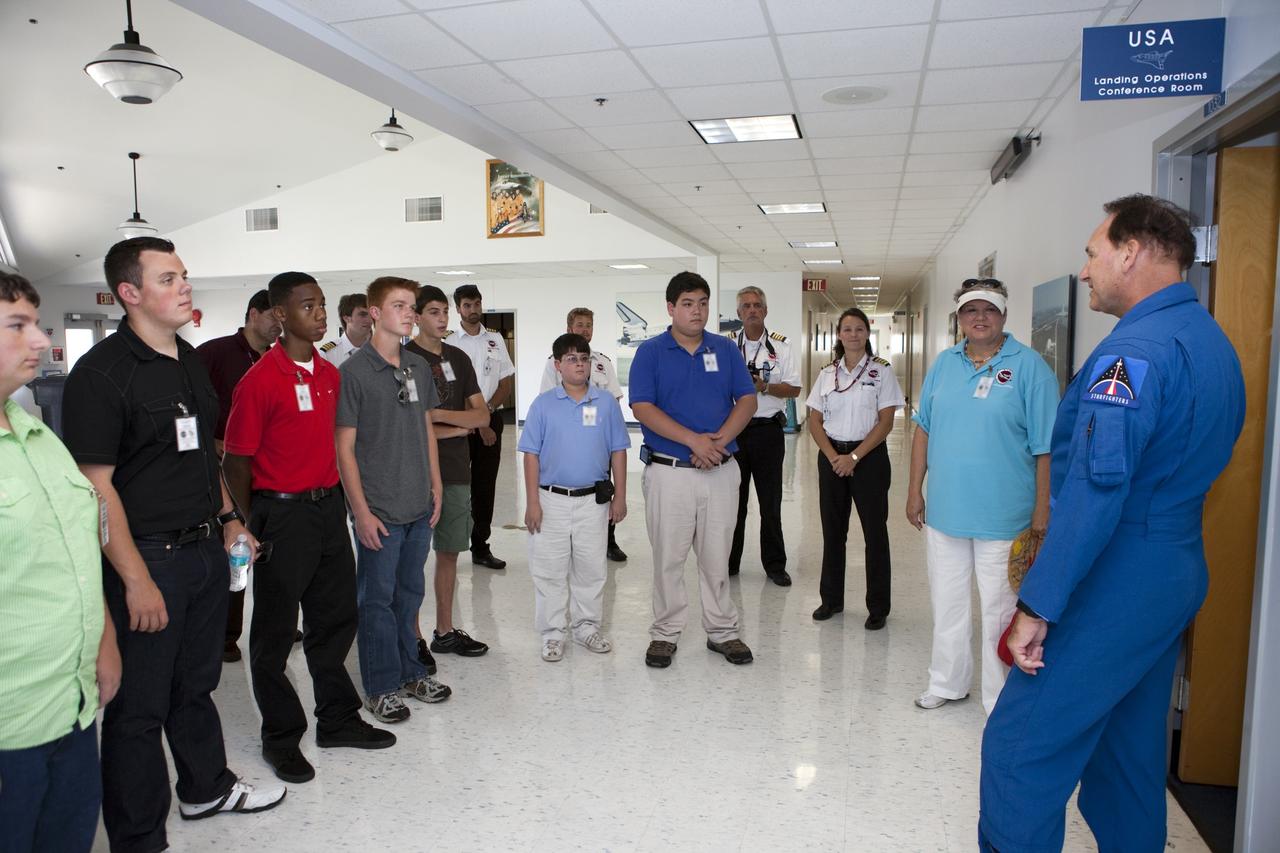
CAPE CANAVERAL, Fla. – In a support building near NASA Kennedy Space Center’s Shuttle Landing Facility, or SLF, in Florida, students and their flight instructors from Florida Tech, FIT, in Melbourne listen to F104 Starfighters Director Rick Svetkoff. The middle and high school students are participating in FIT’s Av/Aero summer camp experience. They and their flight instructors toured the SLF midfield control tower, viewed F104 Starfighters and NASA Huey helicopters in the RLV Hangar, viewed the runway plaques marking wheels stop for each of the three space shuttles, and toured the Vehicle Assembly Building where space shuttle Atlantis currently is stored. Photo credit: NASA/Kim Shiflett
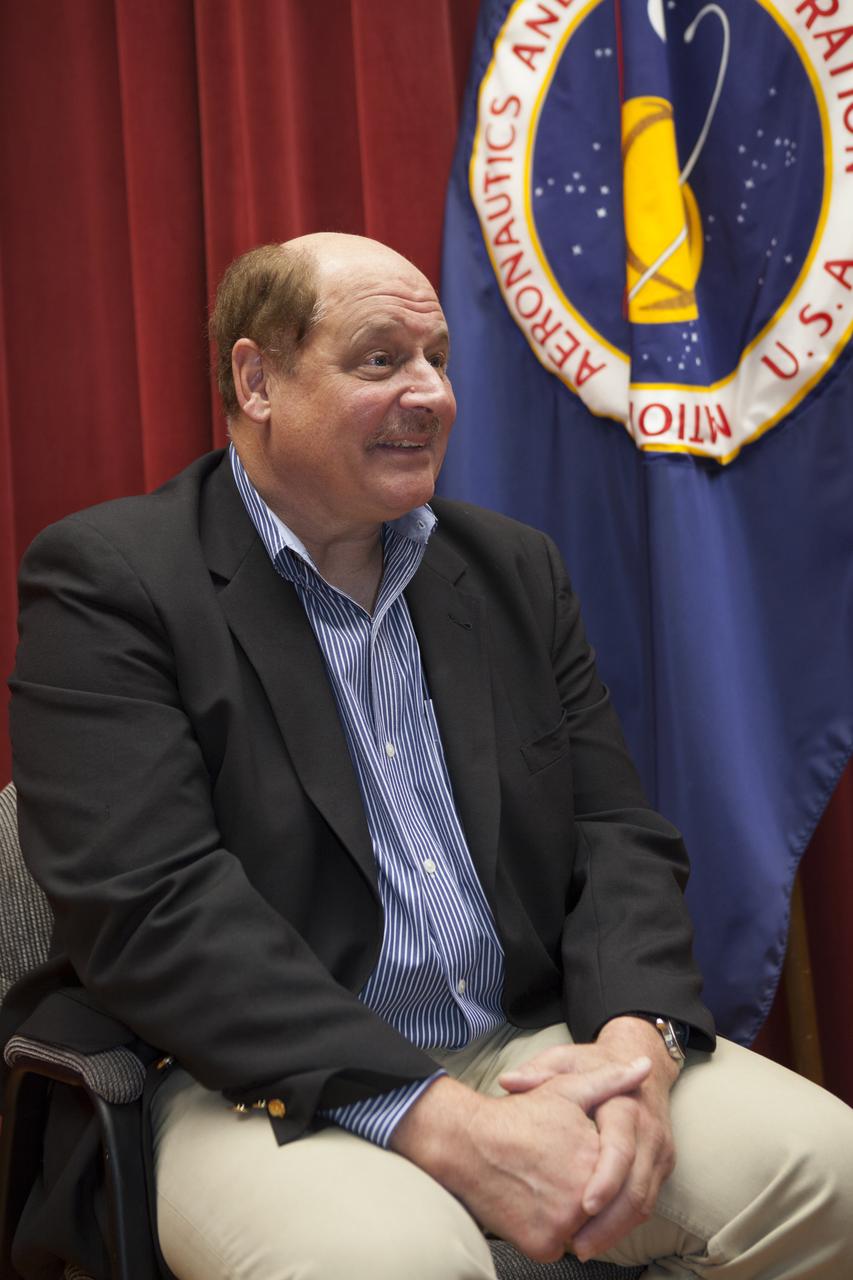
Michael Kersjes, author and former special education teacher and football coach from Michigan, speaks to workers during the Disability Awareness and Action Working Group, or DAAWG, event at NASA's Kennedy Space Center in Florida. The theme of his presentation was "Power of the Human Spirit." Kersjes is the author of the book, "A Smile as Big as the Moon," which told the true story of how he worked to get special education students into Space Camp, a competitive education program at the U.S. Space and Rocket Center in Huntsville, Alabama. His book was made into a movie in 2012.
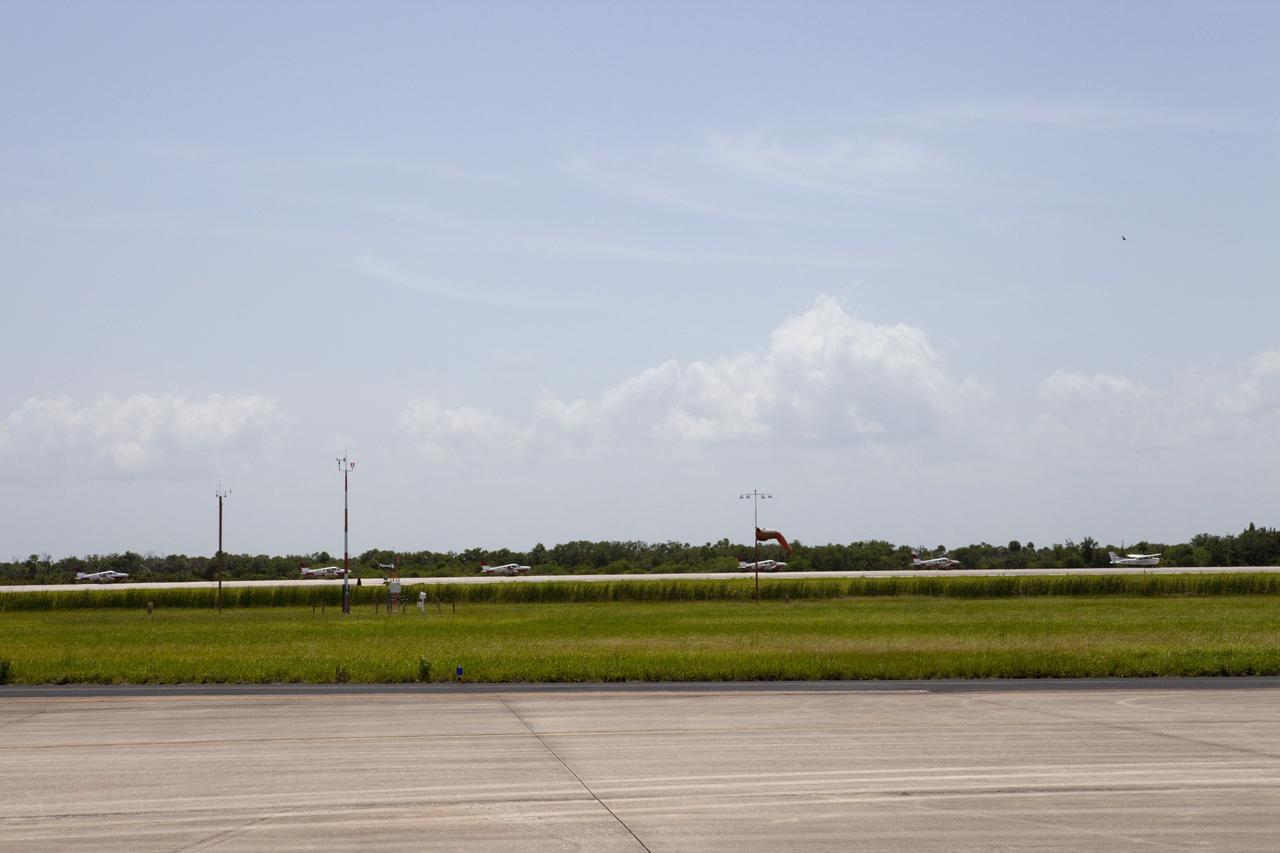
CAPE CANAVERAL, Fla. – At NASA Kennedy Space Center in Florida, flight instructors and their students from Florida Tech, or FIT, in Melbourne prepare to depart the Shuttle Landing Facility, or SLF, in Cherokee Warrior and Cessna 172S lightweight aircraft. The middle and high school students are participating in FIT’s Av/Aero summer camp experience. They and their flight instructors toured the SLF midfield control tower, viewed F104 Starfighters and NASA Huey helicopters in the RLV Hangar, viewed the runway plaques marking wheels stop for each of the three space shuttles, and toured the Vehicle Assembly Building where space shuttle Atlantis currently is stored. Photo credit: NASA/Kim Shiflett
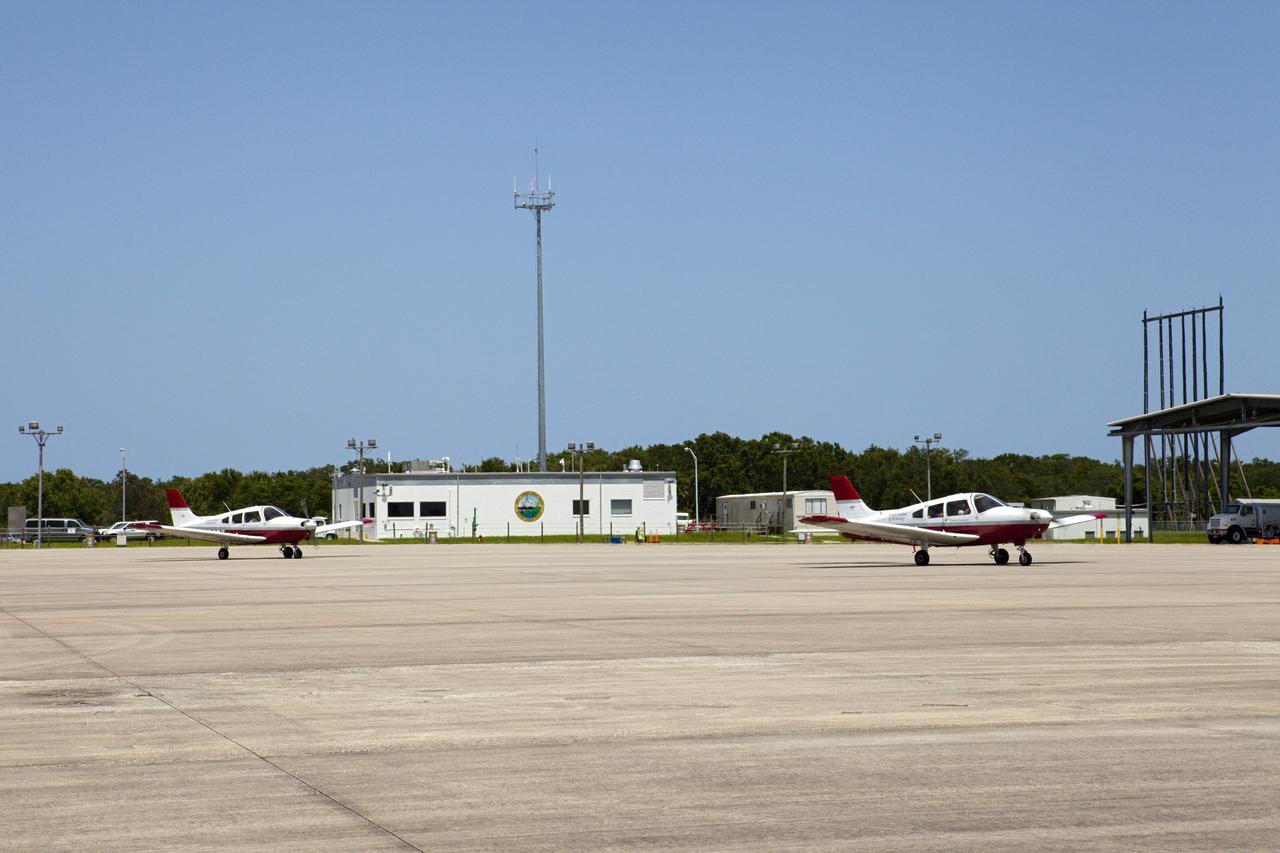
CAPE CANAVERAL, Fla. – At NASA Kennedy Space Center in Florida, flight instructors and their students from Florida Tech, or FIT, in Melbourne prepare to depart the Shuttle Landing Facility, or SLF, in Cherokee Warrior and Cessna 172S lightweight aircraft. The middle and high school students are participating in FIT’s Av/Aero summer camp experience. They and their flight instructors toured the SLF midfield control tower, viewed F104 Starfighters and NASA Huey helicopters in the RLV Hangar, viewed the runway plaques marking wheels stop for each of the three space shuttles, and toured the Vehicle Assembly Building where space shuttle Atlantis currently is stored. Photo credit: NASA/Kim Shiflett
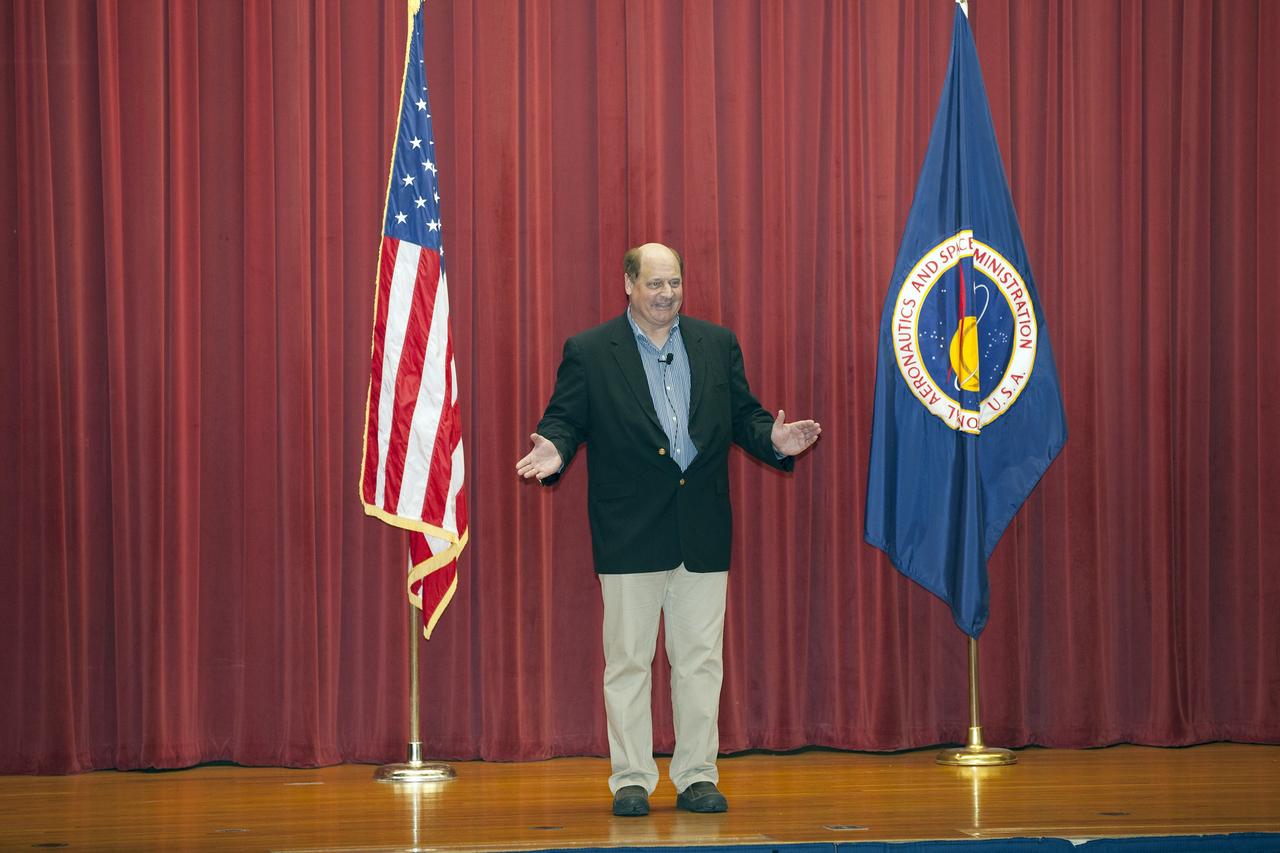
CAPE CANAVERAL, Fla. – Michael Kersjes, author and former special education teacher and football coach from Michigan, speaks to workers during the Disability Awareness and Action Working Group, or DAAWG, event at NASA's Kennedy Space Center in Florida. The theme of his presentation was "Power of the Human Spirit." Kersjes is the author of the book, "A Smile as Big as the Moon," which told the true story of how he worked to get special education students into Space Camp, a competitive education program at the U.S. Space and Rocket Center in Huntsville, Alabama. His book was made into a movie in 2012. For information on Kennedy's diversity programs, visit http://odeo.ksc.nasa.gov. Photo credit: NASA/Kim Shiflett
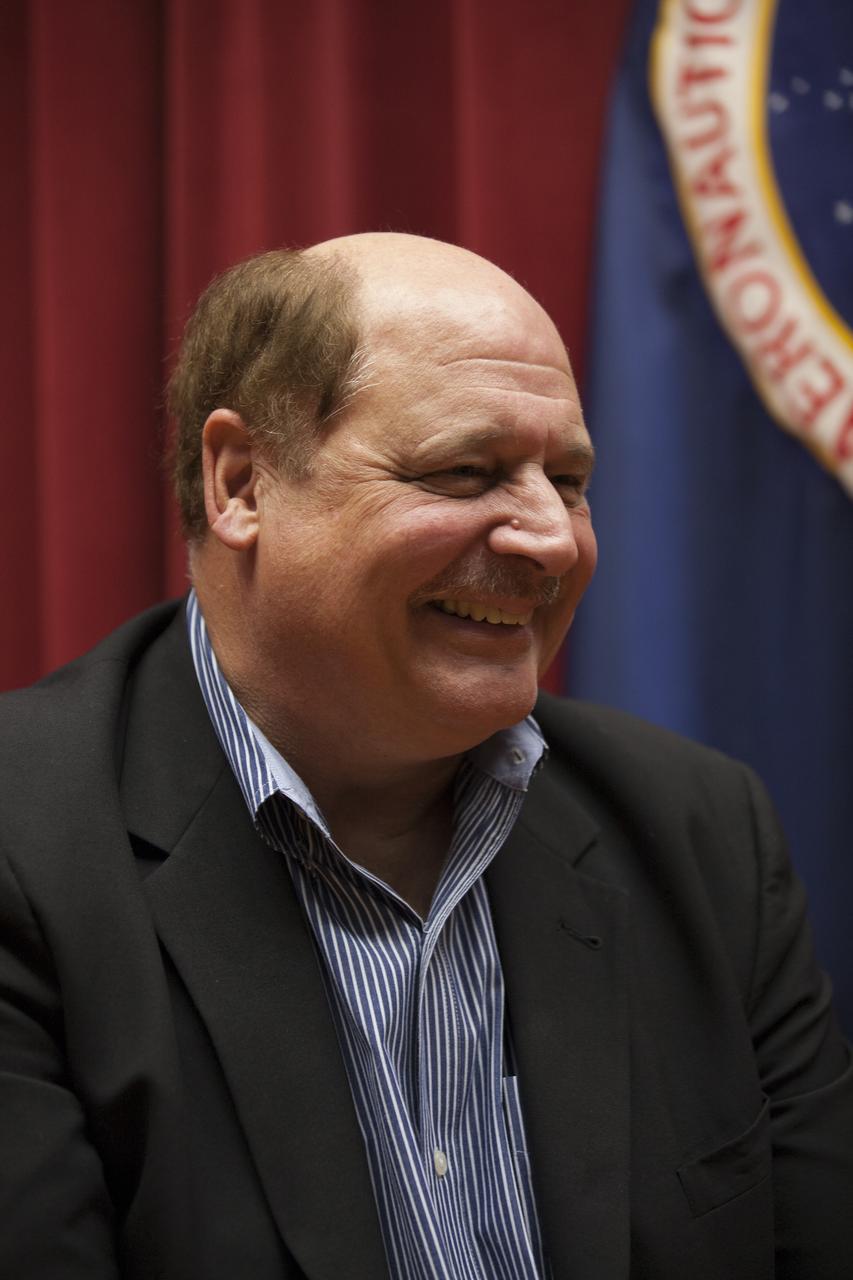
Michael Kersjes, author and former special education teacher and football coach from Michigan, speaks to workers during the Disability Awareness and Action Working Group, or DAAWG, event at NASA's Kennedy Space Center in Florida. The theme of his presentation was "Power of the Human Spirit." Kersjes is the author of the book, "A Smile as Big as the Moon," which told the true story of how he worked to get special education students into Space Camp, a competitive education program at the U.S. Space and Rocket Center in Huntsville, Alabama. His book was made into a movie in 2012.

CAPE CANAVERAL, Fla. – Students and their flight instructors from Florida Tech, or FIT, in Melbourne, tour the Vehicle Assembly Building and view space shuttle Atlantis at NASA’s Kennedy Space Center in Florida. The instructors and their students arrived at the Shuttle Landing Facility, or SLF, in Cherokee Warrior and Cessna 172S lightweight aircraft. The middle and high school students are participating in FIT’s Av/Aero summer camp experience. They and their flight instructors also toured the SLF midfield control tower, viewed F104 Starfighters and NASA Huey helicopters in the RLV Hangar, and viewed the runway plaques marking wheels stop for each of the three space shuttles. Photo credit: NASA/Kim Shiflett
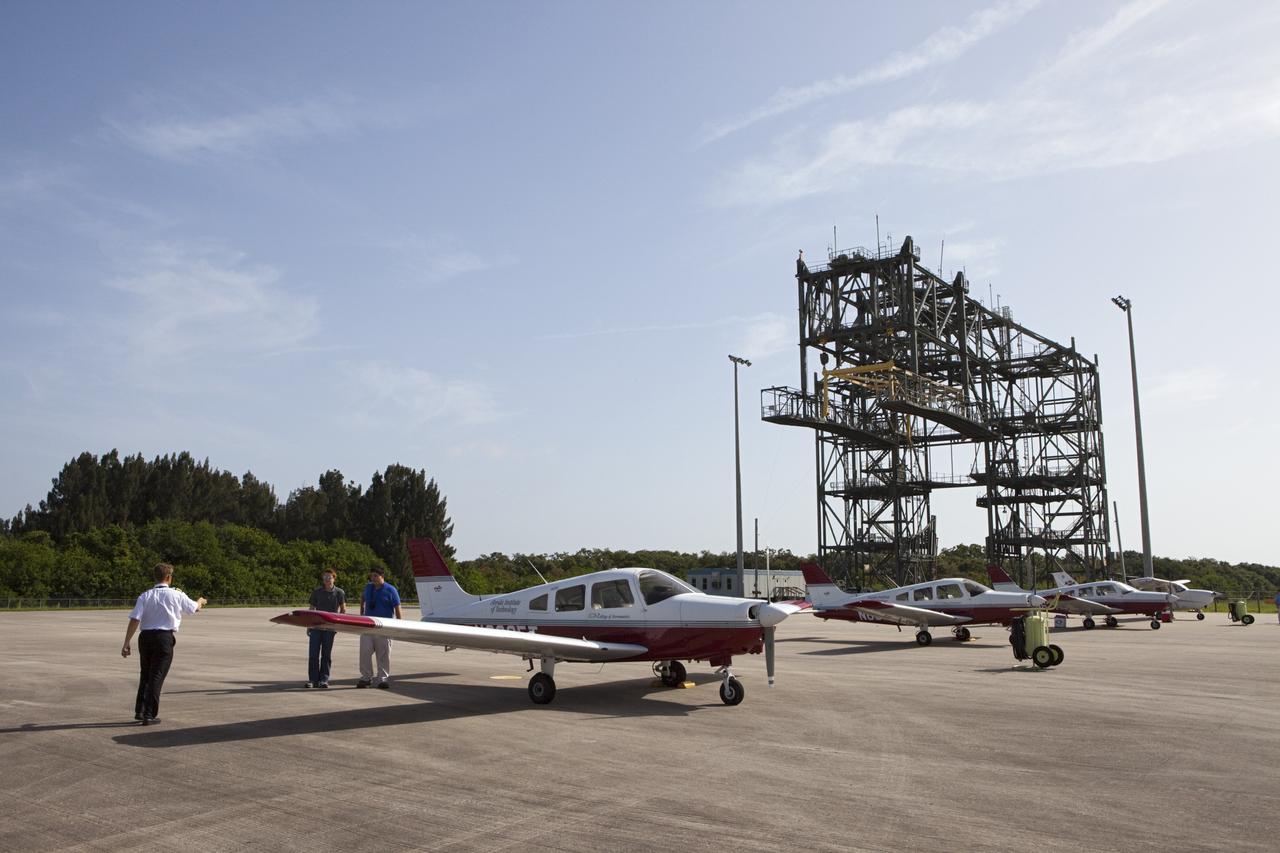
CAPE CANAVERAL, Fla. – Students and their flight instructors arrive at NASA Kennedy Space Center’s Shuttle Landing Facility, or SLF, in Florida in Cherokee Warrior and Cessna 172S lightweight aircraft from Florida Tech, or FIT, in Melbourne. The middle and high school students are participating in FIT’s Av/Aero summer camp experience. They and their flight instructors toured the SLF midfield control tower, viewed F104 Starfighters and NASA Huey helicopters in the RLV Hangar, viewed the runway plaques marking wheels stop for each of the three space shuttles, and toured the Vehicle Assembly Building where space shuttle Atlantis currently is stored. Photo credit: NASA/Kim Shiflett
Michael Kersjes, author and former special education teacher and football coach from Michigan, speaks to workers during the Disability Awareness and Action Working Group, or DAAWG, event at NASA's Kennedy Space Center in Florida. The theme of his presentation was "Power of the Human Spirit." Kersjes is the author of the book, "A Smile as Big as the Moon," which told the true story of how he worked to get special education students into Space Camp, a competitive education program at the U.S. Space and Rocket Center in Huntsville, Alabama. His book was made into a movie in 2012.
CAPE CANAVERAL, Fla. – Michael Kersjes, author and former special education teacher and football coach from Michigan, speaks to workers during the Disability Awareness and Action Working Group, or DAAWG, event at NASA's Kennedy Space Center in Florida. The theme of his presentation was "Power of the Human Spirit." Kersjes is the author of the book, "A Smile as Big as the Moon," which told the true story of how he worked to get special education students into Space Camp, a competitive education program at the U.S. Space and Rocket Center in Huntsville, Alabama. His book was made into a movie in 2012. For information on Kennedy's diversity programs, visit http://odeo.ksc.nasa.gov. Photo credit: NASA/Kim Shiflett
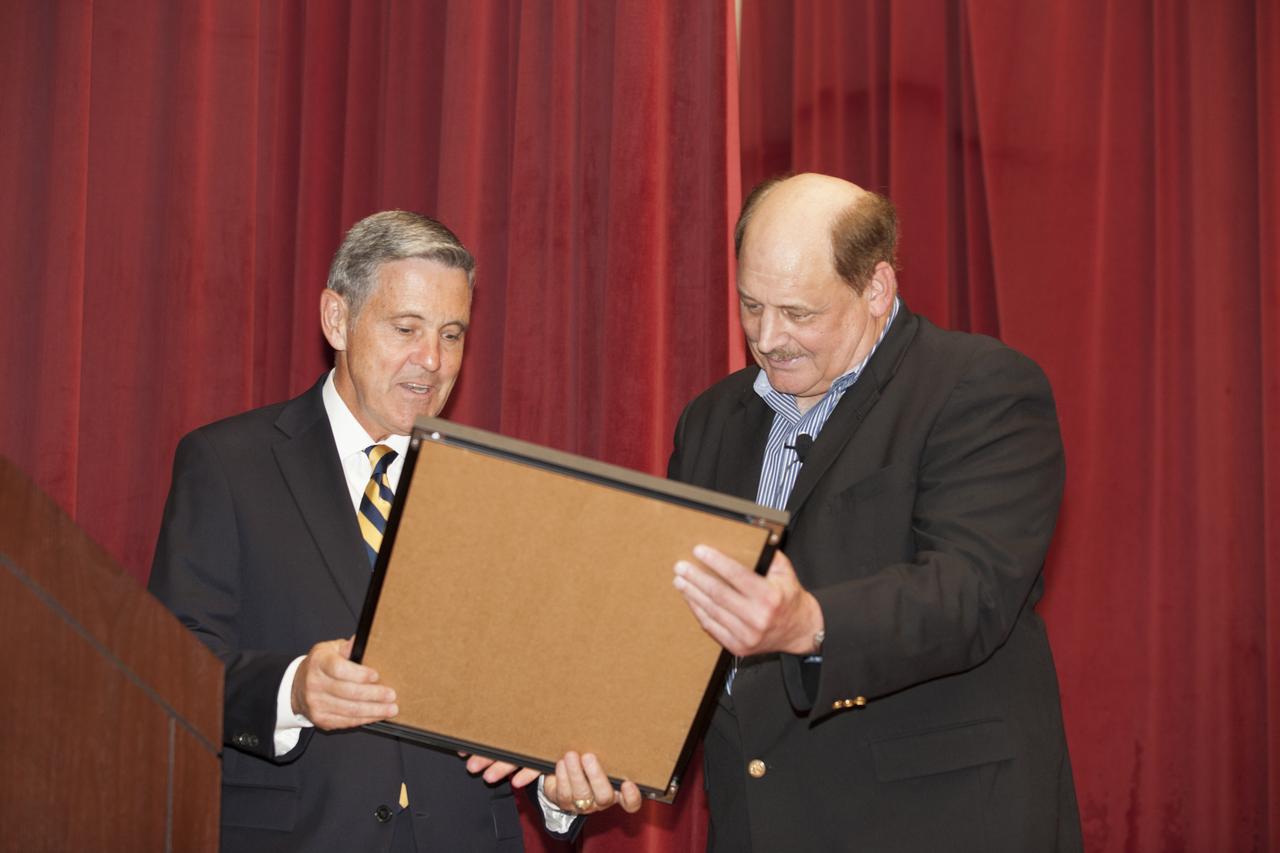
NASA Kennedy Space Center Director Bob Cabana, left, presents a special plaque to Michael Kersjes, author and former special education teacher and football coach from Michigan, after his presentation to workers during the Disability Awareness and Action Working Group, or DAAWG, event. The theme of Kersjes' presentation was "Power of the Human Spirit." Kersjes is the author of the book, "A Smile as Big as the Moon," which told the true story of how he worked to get special education students into Space Camp, a competitive education program at the U.S. Space and Rocket Center in Huntsville, Alabama. His book was made into a movie in 2012.

KENNEDY SPACE CENTER, FLA. -- John Lopez of Bristol, Texas, a crew boss for a camp crew at the Nacogdoches site, looks over tents used by U.S. Forest Service workers in the field searching for parts of Columbia. Kennedy Space Center workers are participating in the Columbia Recovery efforts at the Lufkin (Texas) Command Center, four field sites in East Texas, and the Barksdale, La., hangar site. KSC is working with representatives from other NASA Centers and with those from a number of federal, state and local agencies in the recovery effort. KSC provides vehicle technical expertise in the field to identify, collect and return Shuttle hardware to KSC.
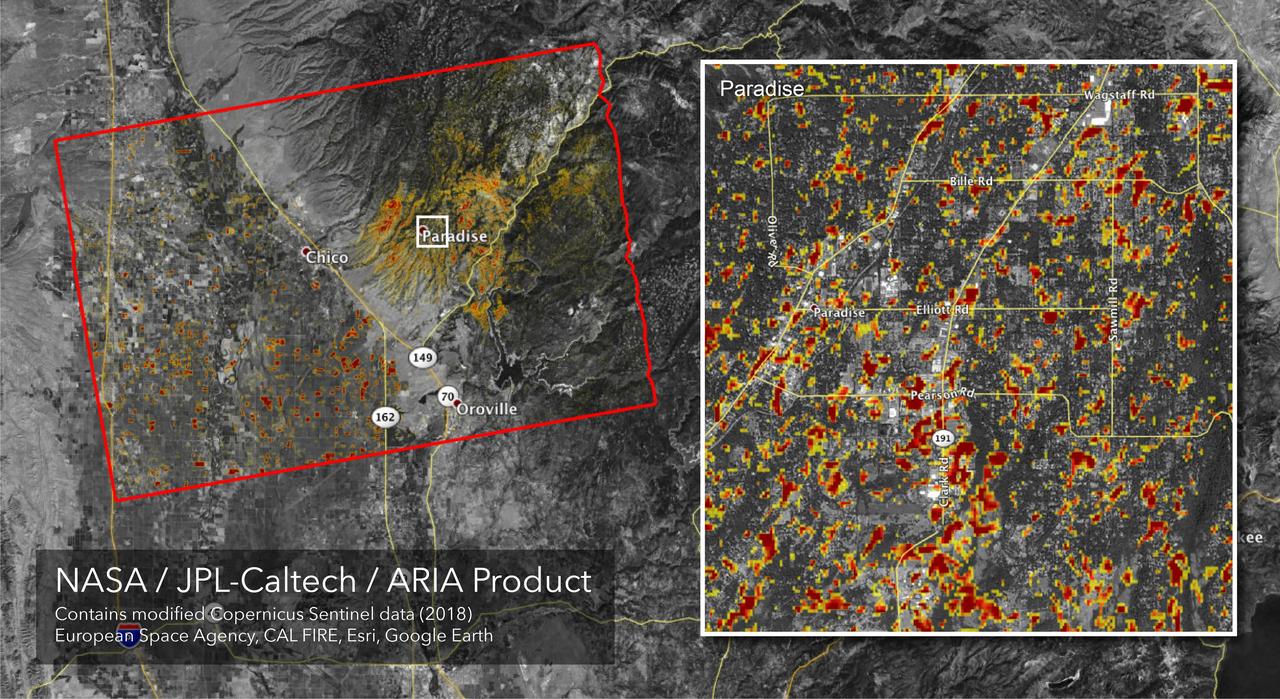
The Advanced Rapid Imaging and Analysis (ARIA) team at NASA's Jet Propulsion Laboratory in Pasadena, California, created this Damage Proxy Map (DPM) depicting areas of Northern California that are likely damaged (shown by red and yellow pixels) as a result of the Camp Fire. The map is derived from synthetic aperture radar (SAR) images from the Copernicus Sentinel-1 satellites, operated by the European Space Agency (ESA). The pre-event images were taken before (November 4, 2018) and the post-event image was acquired during the fire (6pm November 16, 2018, both local time). https://photojournal.jpl.nasa.gov/catalog/PIA22819
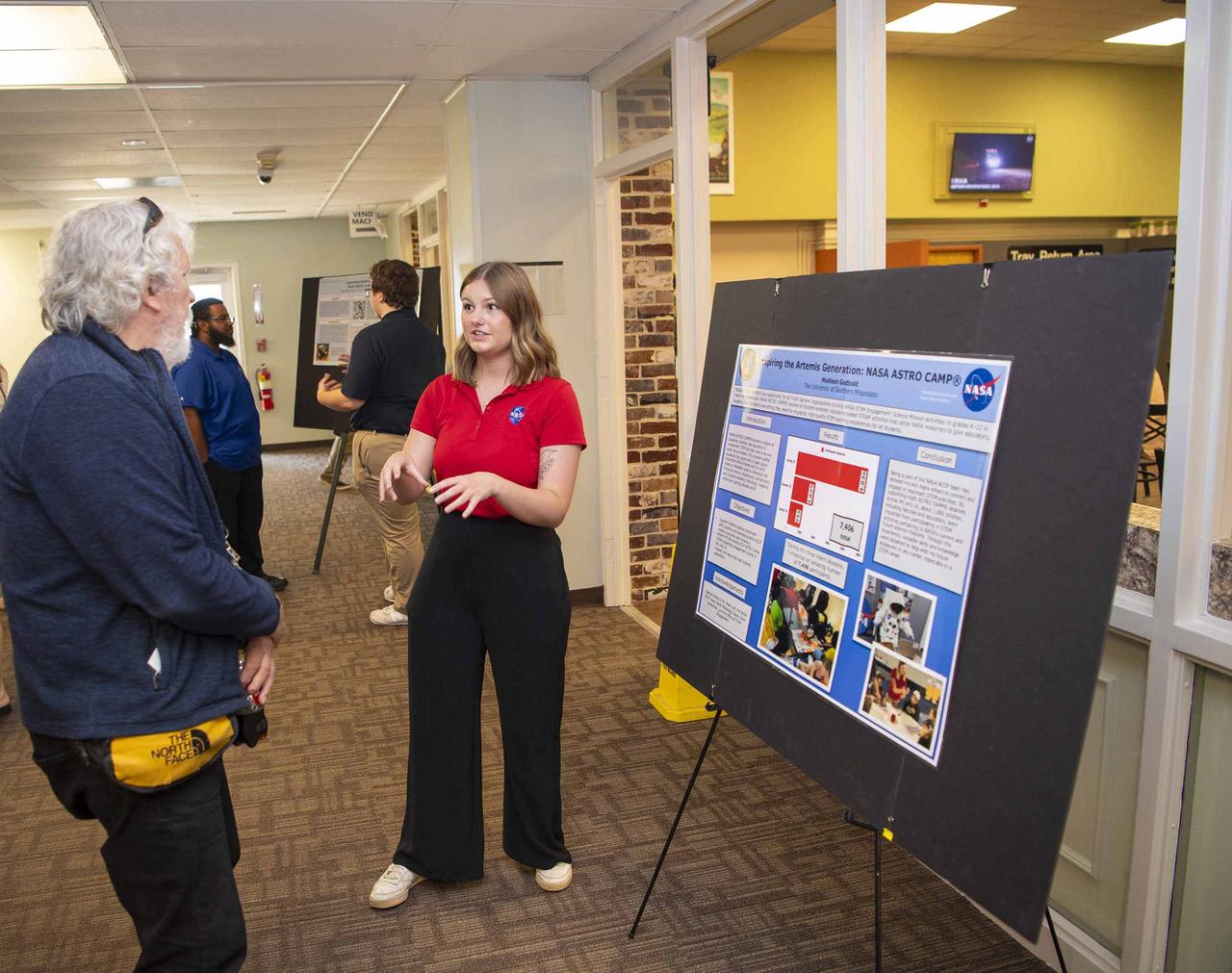
NASA Stennis summer intern Madison Godbold, right, shares about her work of inspiring the Artemis Generation through ASTRO Camp activities during an Aug. 7 event hosted by the Office of STEM Engagement. Godbold, a student at The University of Southern Mississippi in Hattiesburg, worked with the NASA Stennis Office of STEM Engagement. The poster symposium highlighted research topics, including propulsion test operations, lunar robotics, autonomous systems, STEM education, and more. NASA’s Office of STEM Engagement paid internships allow high school and college-level students to contribute to the agency’s mission to advance science, technology, aeronautics, and space exploration.
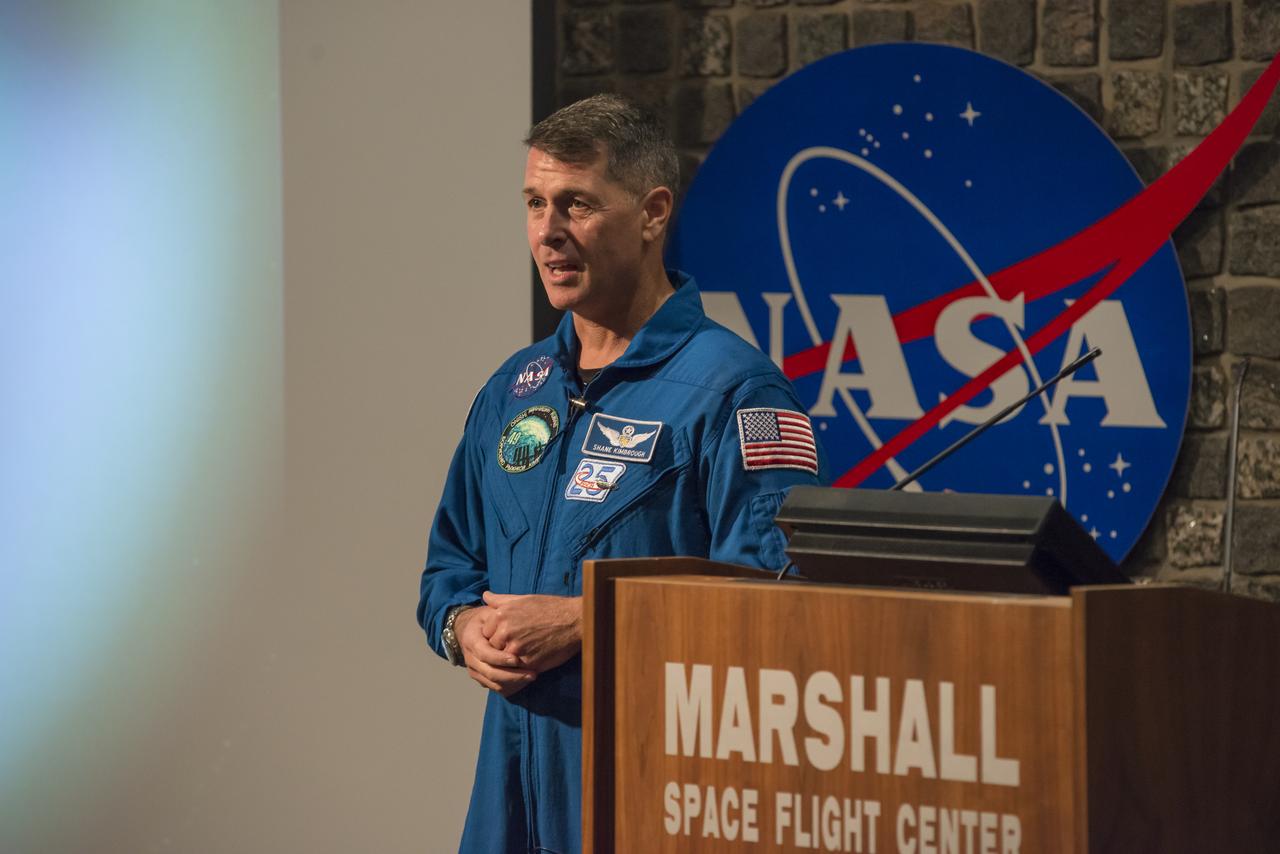
NASA astronaut Shane Kimbrough presents highlights from his Expedition 49-50 mission aboard the International Space Station Sept. 19 to students from theU.S. Space & Rocket Center's Space Camp and team members at NASA's Marshall Space Flight Center. While serving as commander of the station, Kimbrough conducted four spacewalks, during which he installed new batteries and relay boxes, and helped move a pressurized mating adapter for future commercial crew spacecraft visiting the outpost. He also contributed to hundreds of experiments in biology, biotechnology, physical science and Earthobservations. One of these experiments was the Microgravity Expanded Stem Cells investigation, results of which could lead to the treatment of diseases andinjury in space and provide a way to improve stem cell production for medical therapies on Earth.
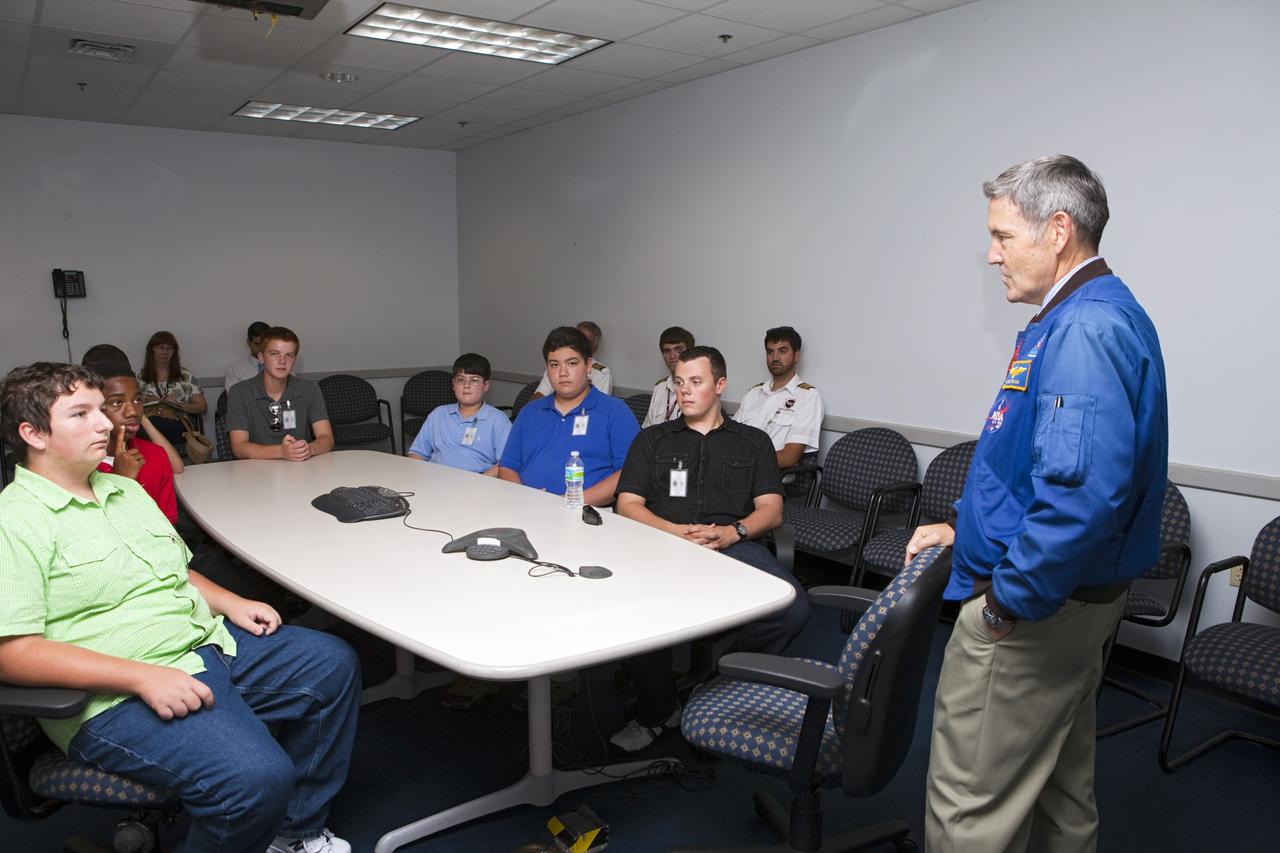
CAPE CANAVERAL, Fla. – In a support building near NASA Kennedy Space Center’s Shuttle Landing Facility, or SLF, in Florida, Center Director Bob Cabana speaks to students and their flight instructors from Florida Tech, or FIT, in Melbourne. The group arrived at the SLF in Cherokee Warrior and Cessna 172S lightweight aircraft. The middle and high school students are participating in FIT’s Av/Aero summer camp experience. They and their flight instructors toured the SLF midfield control tower, viewed F104 Starfighters and NASA Huey helicopters in the RLV Hangar, viewed the runway plaques marking wheels stop for each of the three space shuttles, and toured the Vehicle Assembly Building where space shuttle Atlantis currently is stored. Photo credit: NASA/Kim Shiflett
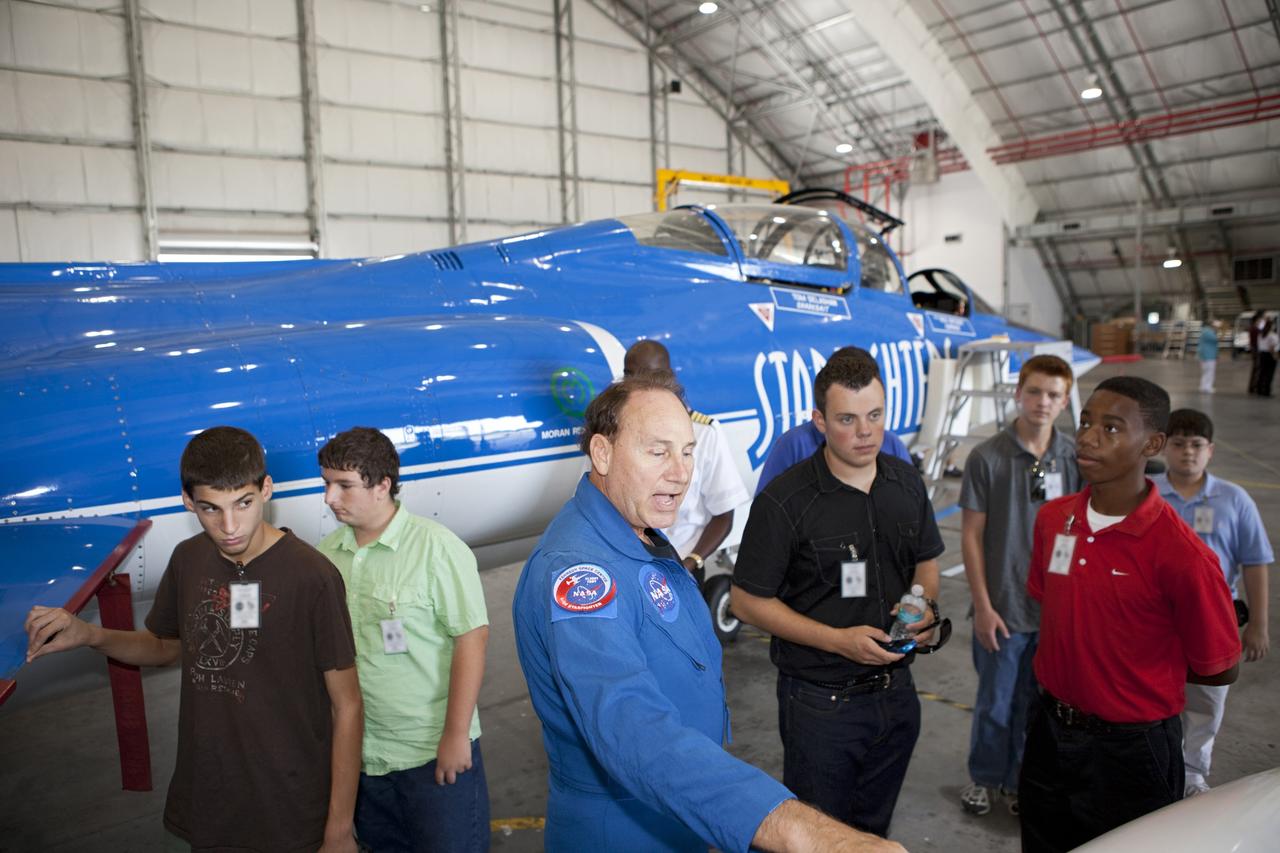
CAPE CANAVERAL, Fla. – Inside the RLV Hangar near NASA Kennedy Space Center’s Shuttle Landing Facility, or SLF, in Florida, students and their flight instructors from Florida Tech, FIT, in Melbourne, view F104 Starfighter aircraft and listen to Starfighter Director Rick Svetkoff. The flight instructors and their students arrived at the SLF in Cherokee Warrior and Cessna 172S lightweight aircraft. The middle and high school students are participating in FIT’s Av/Aero summer camp experience. They and their flight instructors toured the SLF midfield control tower, viewed F104 Starfighters and NASA Huey helicopters in the RLV Hangar, viewed the runway plaques marking wheels stop for each of the three space shuttles, and toured the Vehicle Assembly Building where space shuttle Atlantis currently is stored. Photo credit: NASA/Kim Shiflett
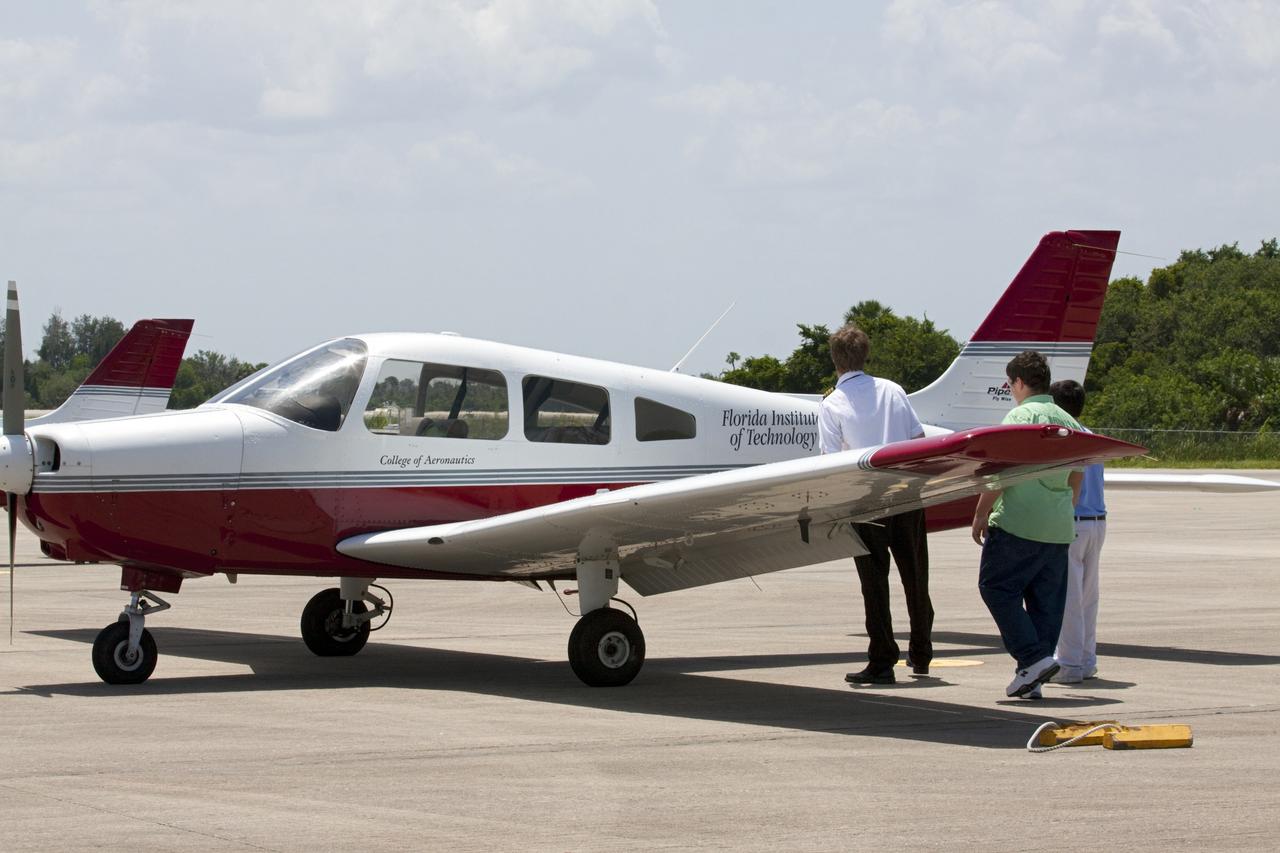
CAPE CANAVERAL, Fla. – At NASA Kennedy Space Center’s Shuttle Landing Facility, or SLF, in Florida, a flight instructor and his students inspect the lightweight aircraft they flew in earlier in the day from Florida Tech, or FIT, in Melbourne. Several instructors and their students arrived at the SLF in Cherokee Warrior and Cessna 172S lightweight aircraft. The middle and high school students are participating in FIT’s Av/Aero summer camp experience. They and their flight instructors toured the SLF midfield control tower, viewed F104 Starfighters and NASA Huey helicopters in the RLV Hangar, viewed the runway plaques marking wheels stop for each of the three space shuttles, and toured the Vehicle Assembly Building where space shuttle Atlantis currently is stored. Photo credit: NASA/Kim Shiflett
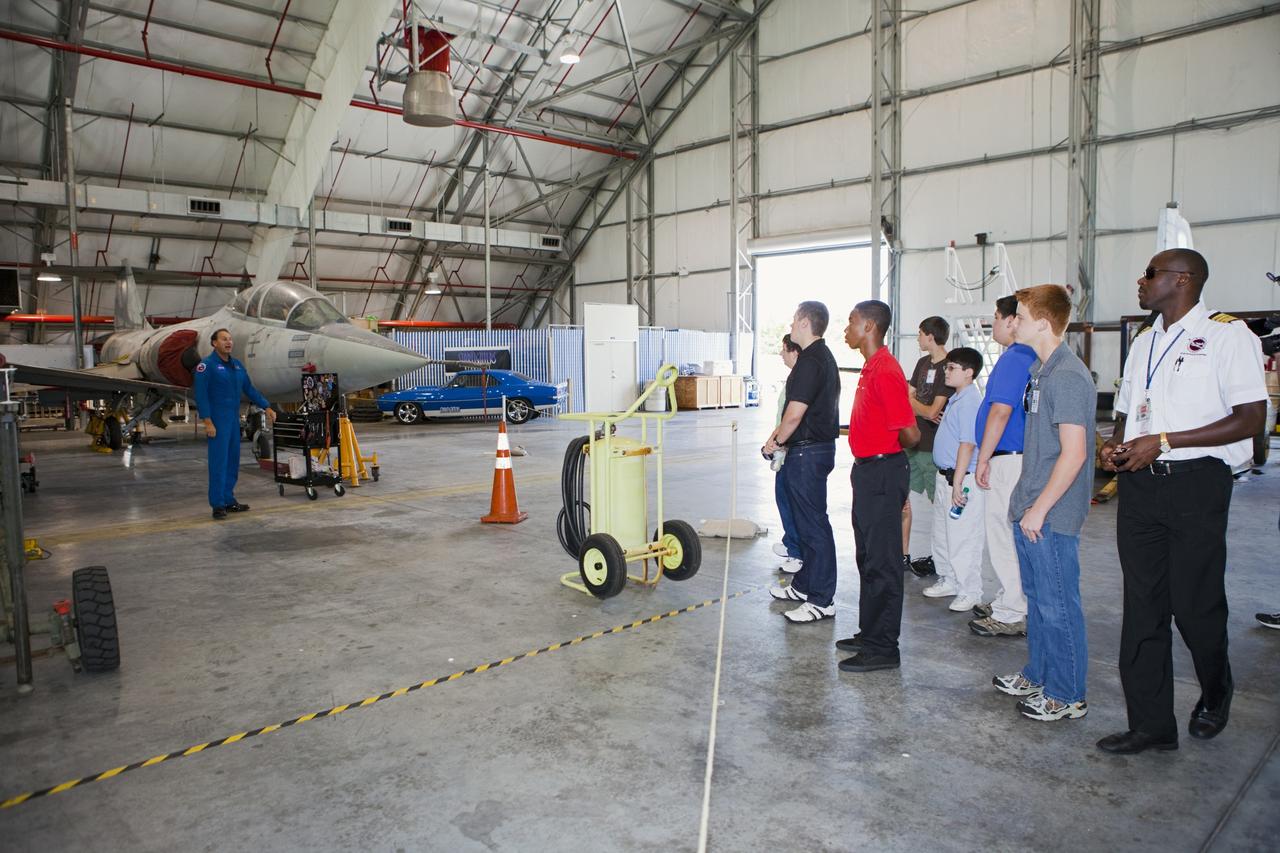
CAPE CANAVERAL, Fla. – Inside the RLV Hangar near NASA Kennedy Space Center’s Shuttle Landing Facility, or SLF, in Florida, students and their flight instructors from Florida Tech, FIT, in Melbourne view F104 Starfighter aircraft and hear a presentation from Starfighter Director Rick Svetkoff. The group arrived at the SLF in Cherokee Warrior and Cessna 172S lightweight aircraft. The middle and high school students are participating in FIT’s Av/Aero summer camp experience. They and their flight instructors toured the SLF midfield control tower, viewed F104 Starfighters and NASA Huey helicopters in the RLV Hangar, viewed the runway plaques marking wheels stop for each of the three space shuttles, and toured the Vehicle Assembly Building where space shuttle Atlantis currently is stored. Photo credit: NASA/Kim Shiflett
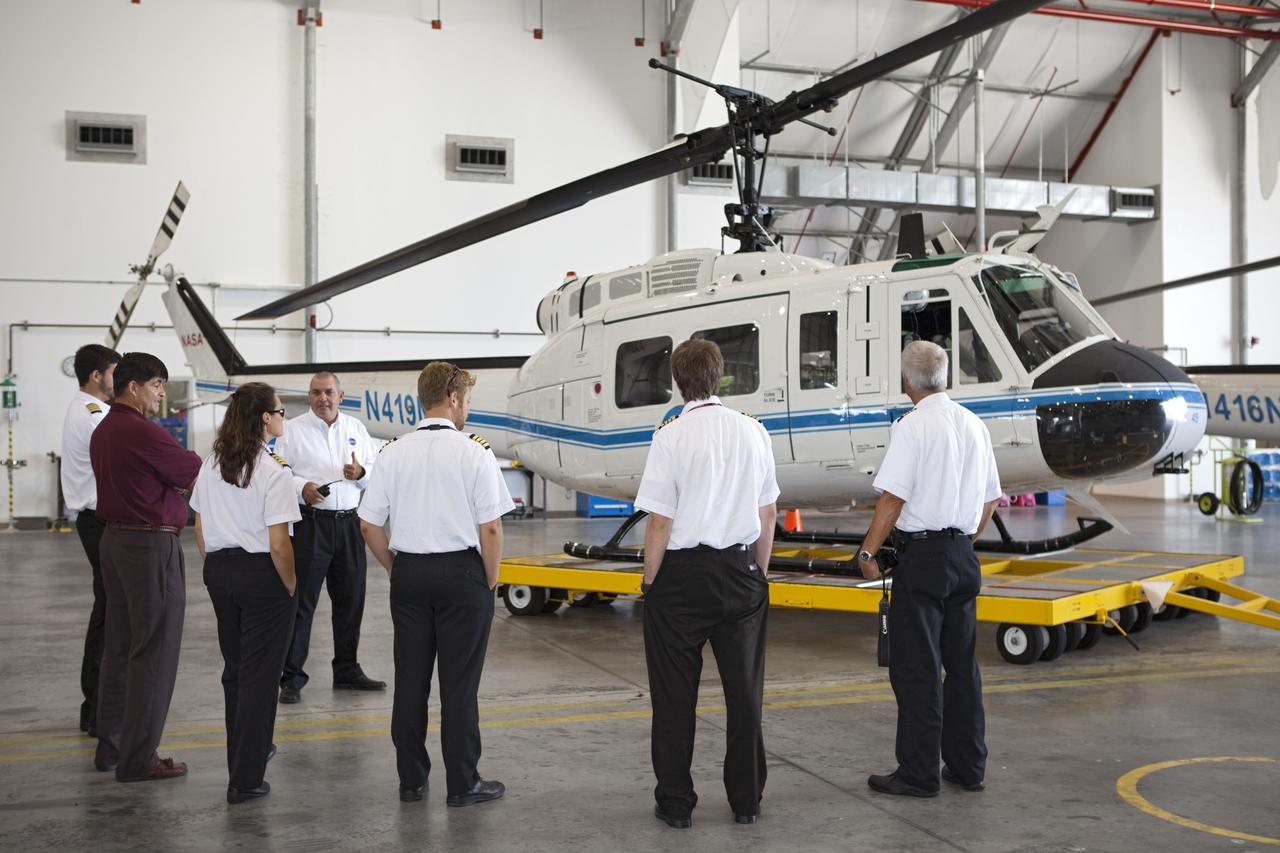
CAPE CANAVERAL, Fla. – Inside the RLV Hangar near NASA Kennedy Space Center’s Shuttle Landing Facility, or SLF, in Florida, flight instructors from Florida Tech, FIT, in Melbourne, listen to NASA Aviation Safety Officer Joe Torsani and view a NASA Huey helicopter. At left, in the red shirt is Glenn Vera, director of FIT Aviation. The flight instructors and their students arrived at the SLF in Cherokee Warrior and Cessna 172S lightweight aircraft. The middle and high school students are participating in FIT’s Av/Aero summer camp experience. They and their flight instructors toured the SLF midfield control tower, viewed F104 Starfighters and NASA Huey helicopters in the RLV Hangar, viewed the runway plaques marking wheels stop for each of the three space shuttles, and toured the Vehicle Assembly Building where space shuttle Atlantis currently is stored. Photo credit: NASA/Kim Shiflett
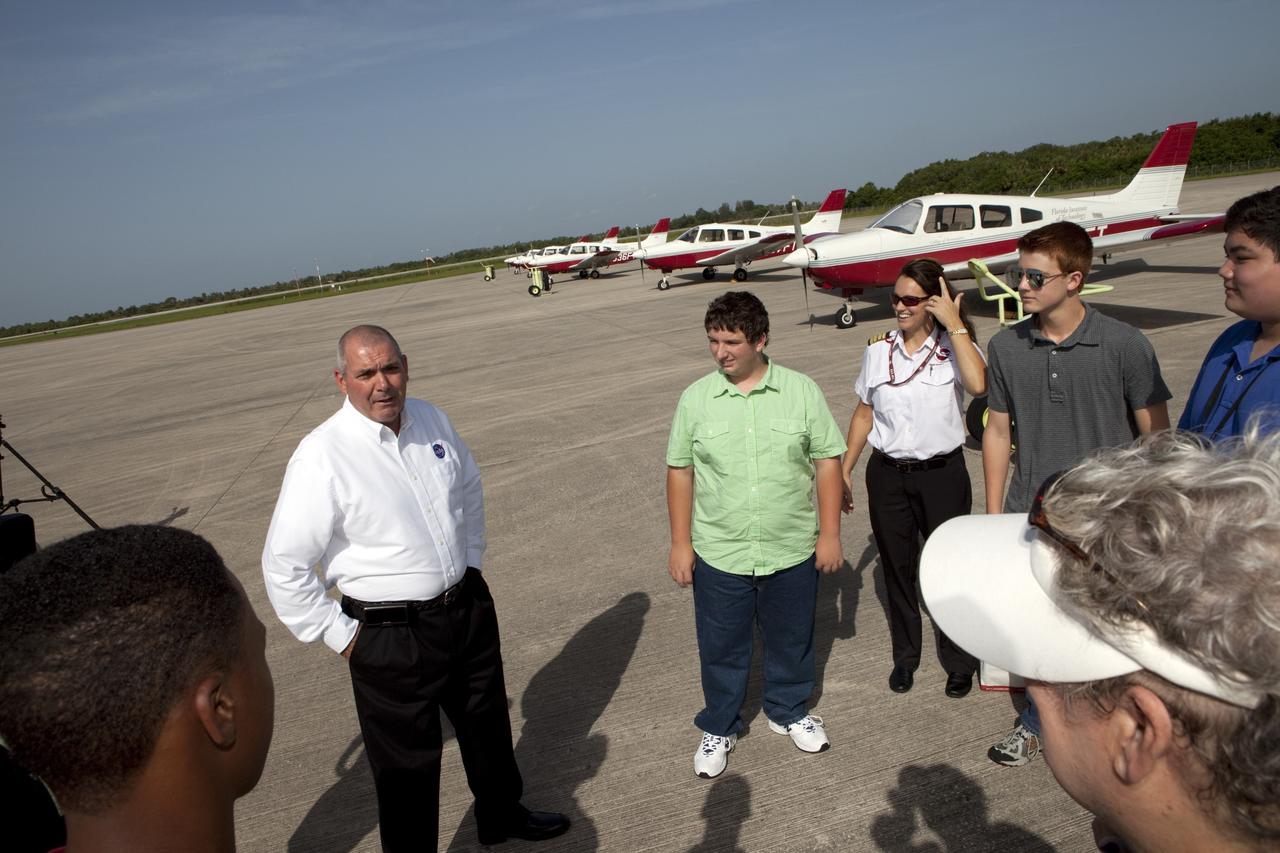
CAPE CANAVERAL, Fla. – At NASA Kennedy Space Center’s Shuttle Landing Facility, or SLF, in Florida, NASA Aviation Safety Officer Joe Torsani, at left, speaks with students and their flight instructors after they arrived in Cherokee Warrior and Cessna 172S lightweight aircraft from Florida Tech, FIT, in Melbourne. The middle and high school students are participating in FIT’s Av/Aero summer camp experience. They and their flight instructors toured the SLF midfield control tower, viewed F104 Starfighters and NASA Huey helicopters in the RLV Hangar, viewed the runway plaques marking wheels stop for each of the three space shuttles, and toured the Vehicle Assembly Building where space shuttle Atlantis currently is stored. Photo credit: NASA/Kim Shiflett
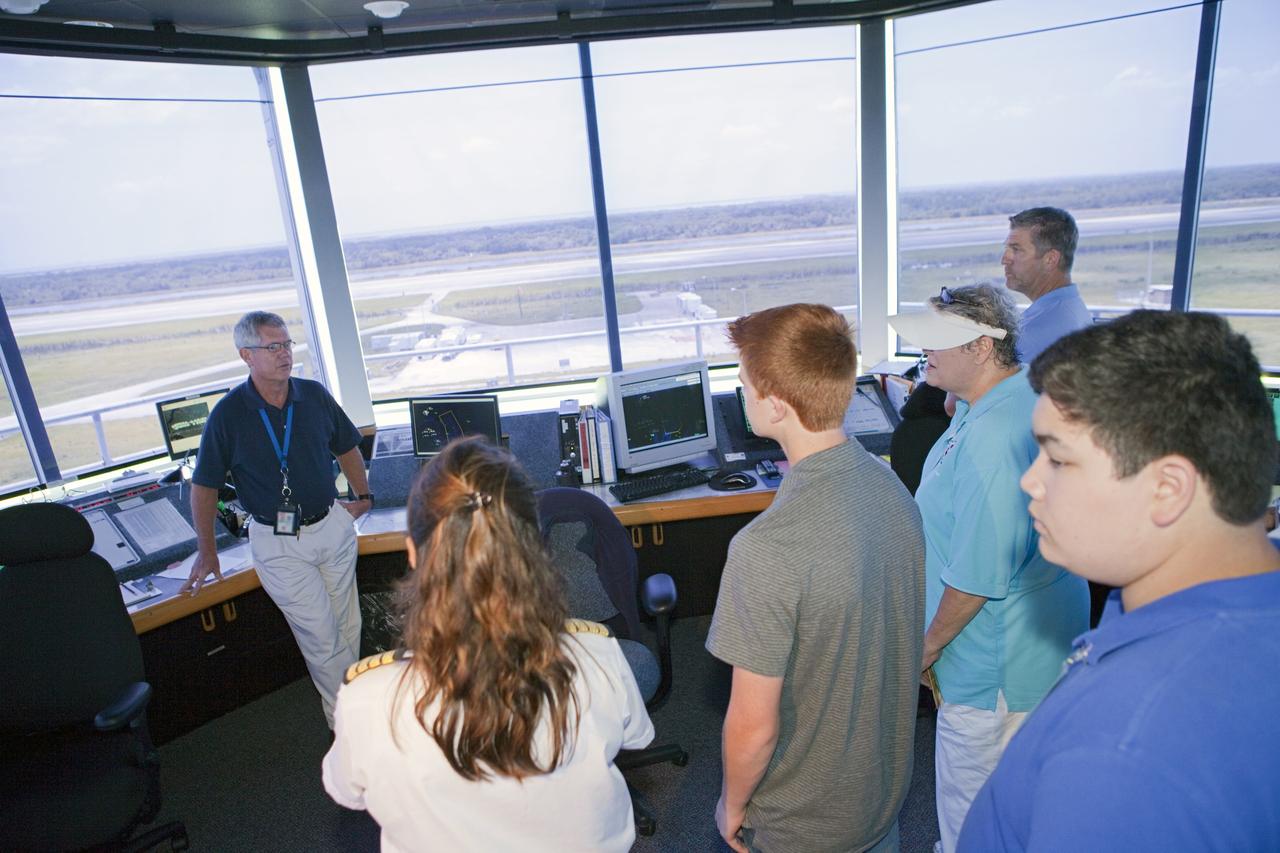
CAPE CANAVERAL, Fla. – At the Shuttle Landing Facility at NASA’s Kennedy Space Center in Florida, students and their flight instructors from Florida Tech, or FIT, in Melbourne, tour the midfield Air Traffic Control Tower. The instructors and their students arrived at the SLF in Cherokee Warrior and Cessna 172S lightweight aircraft. The middle and high school students are participating in FIT’s Av/Aero summer camp experience. They and their flight instructors toured the SLF midfield control tower, viewed F104 Starfighters and NASA Huey helicopters in the RLV Hangar, viewed the runway plaques marking wheels stop for each of the three space shuttles, and toured the Vehicle Assembly Building where space shuttle Atlantis currently is stored. Photo credit: NASA/Kim Shiflett
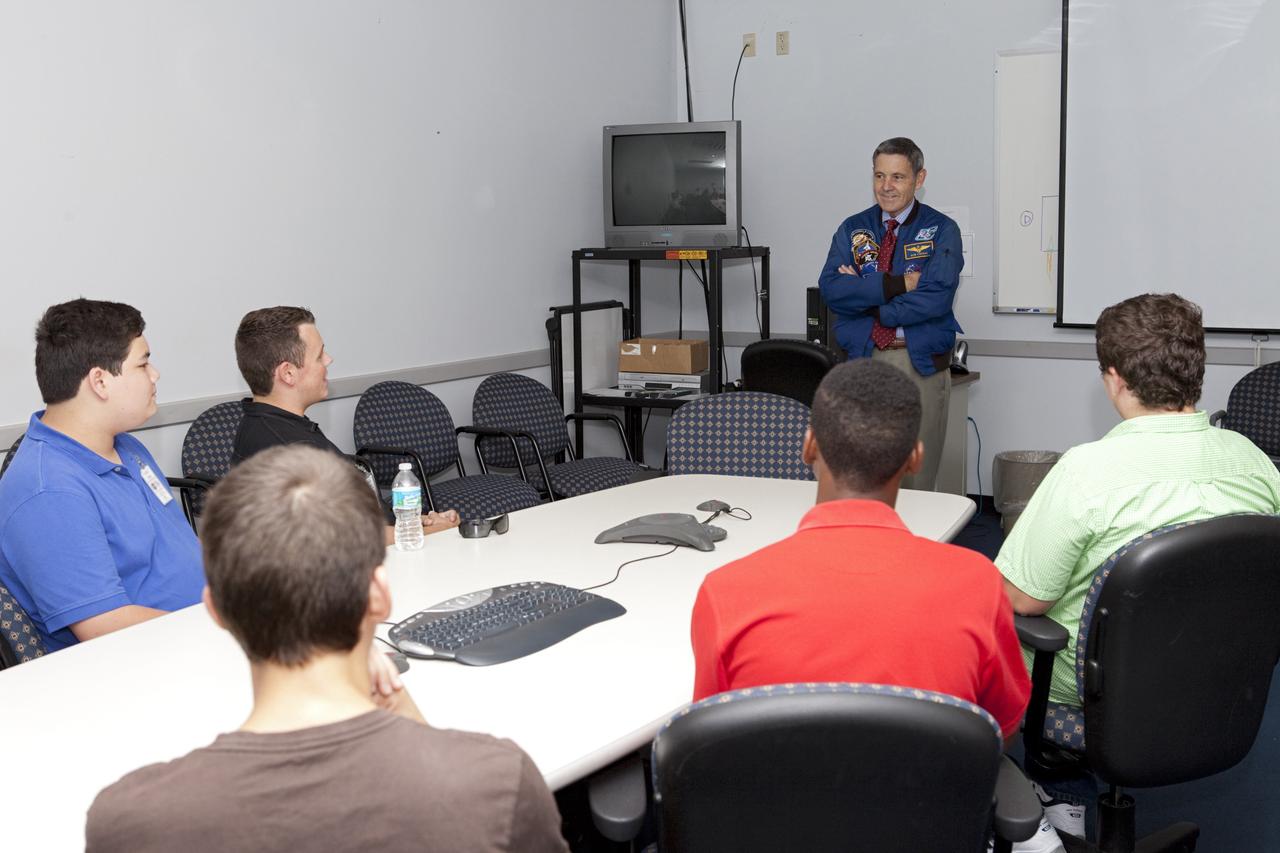
CAPE CANAVERAL, Fla. – In a support building near NASA Kennedy Space Center’s Shuttle Landing Facility, or SLF, in Florida, Center Director Bob Cabana speaks to students and their flight instructors from Florida Tech, or FIT, in Melbourne. The group arrived at the SLF in Cherokee Warrior and Cessna 172S lightweight aircraft.. The middle and high school students are participating in FIT’s Av/Aero summer camp experience. They and their flight instructors toured the SLF midfield control tower, viewed F104 Starfighters and NASA Huey helicopters in the RLV Hangar, viewed the runway plaques marking wheels stop for each of the three space shuttles, and toured the Vehicle Assembly Building where space shuttle Atlantis currently is stored. Photo credit: NASA/Kim Shiflett
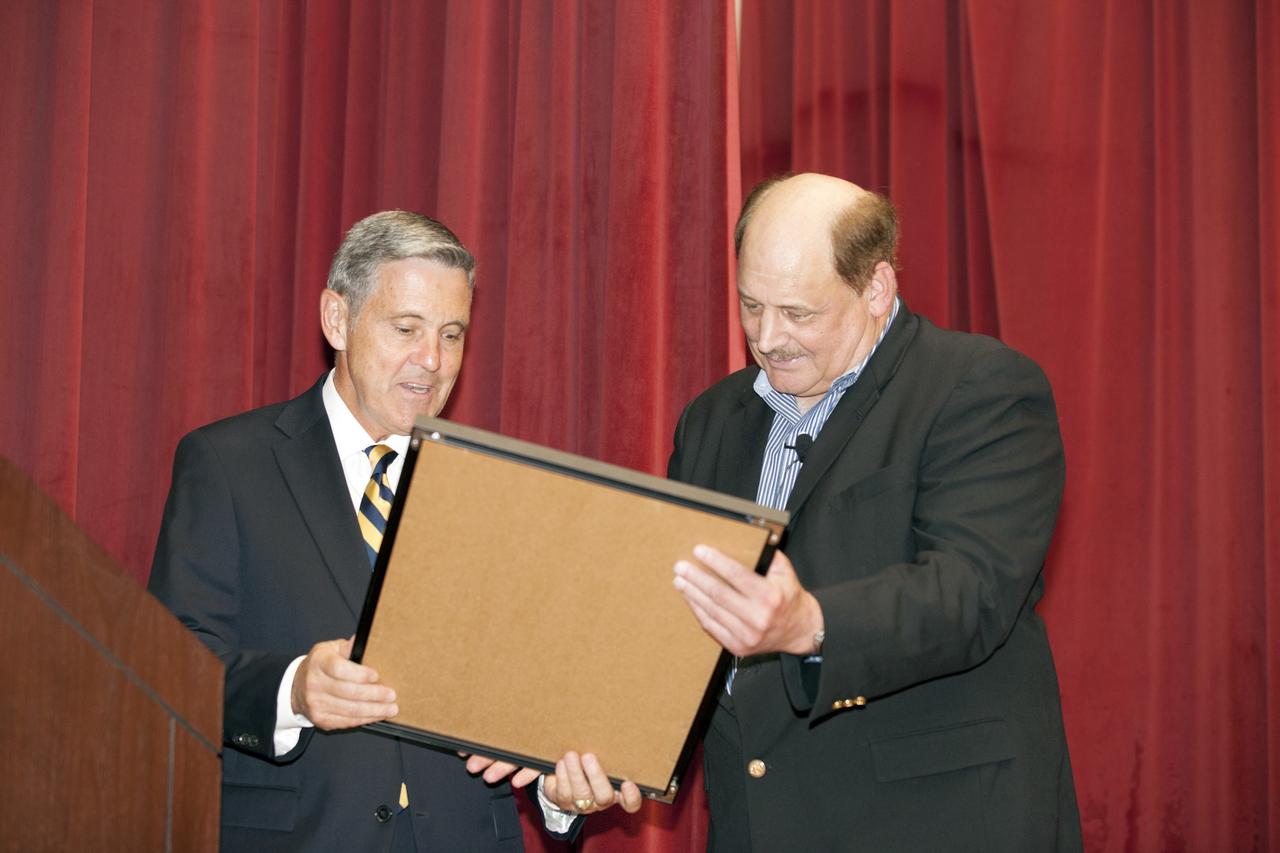
CAPE CANAVERAL, Fla. – NASA Kennedy Space Center Director Bob Cabana, left, presents a special plaque to Michael Kersjes, author and former special education teacher and football coach from Michigan, after his presentation to workers during the Disability Awareness and Action Working Group, or DAAWG, event. The theme of Kersjes' presentation was "Power of the Human Spirit." Kersjes is the author of the book, "A Smile as Big as the Moon," which told the true story of how he worked to get special education students into Space Camp, a competitive education program at the U.S. Space and Rocket Center in Huntsville, Alabama. His book was made into a movie in 2012. For information on Kennedy's diversity programs, visit http://odeo.ksc.nasa.gov. Photo credit: NASA/Kim Shiflett
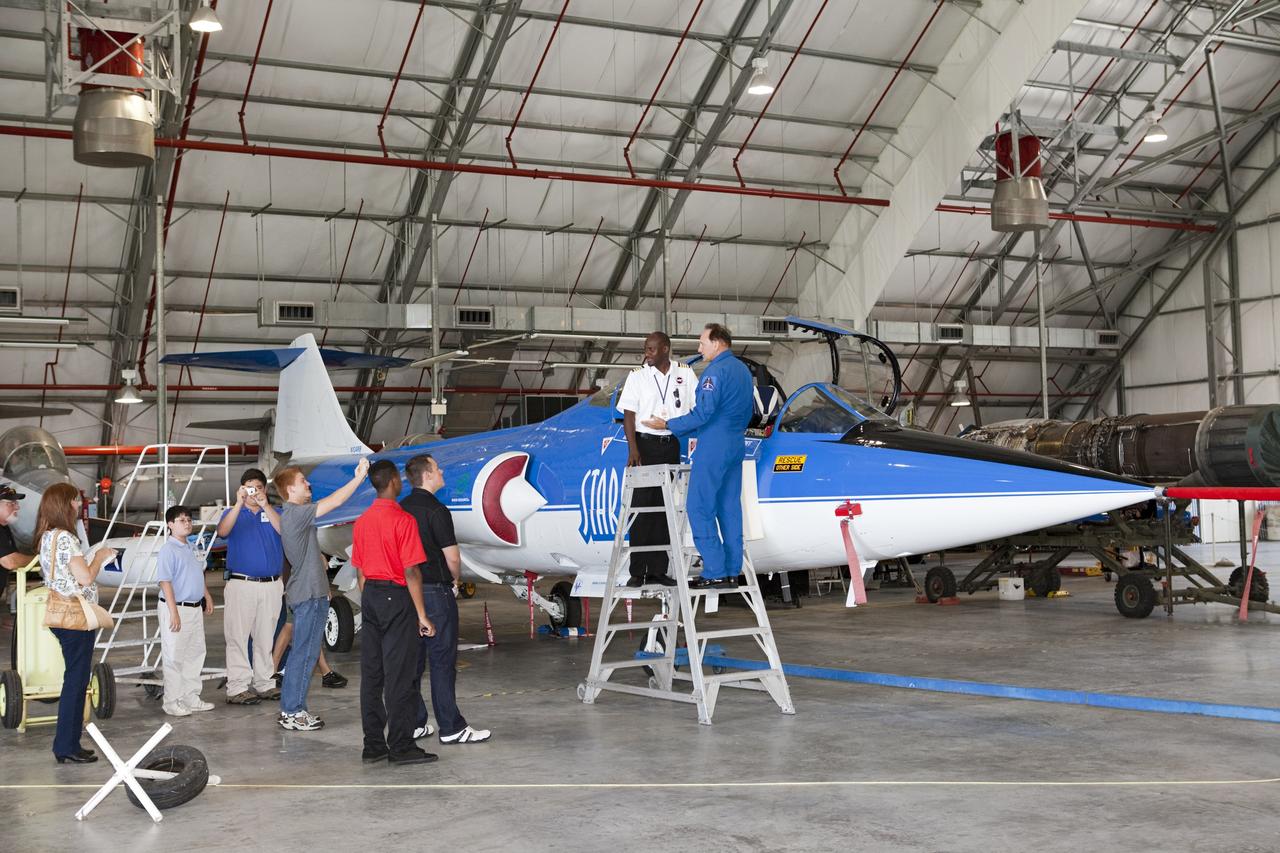
CAPE CANAVERAL, Fla. – Inside the RLV Hangar near NASA Kennedy Space Center’s Shuttle Landing Facility, or SLF, in Florida, Florida Tech, or FIT, Aviation Program Supervisor Tennesse Garvey, at left on the ladder, and several students view an F104 Starfighter. At right, on the ladder is Starfighter Director Rick Svetkoff. The FIT aviation instructors and their students arrived at the SLF in Cherokee Warrior and Cessna 172S lightweight aircraft. The middle and high school students are participating in FIT’s Av/Aero summer camp experience. They and their flight instructors toured the SLF midfield control tower, viewed F104 Starfighters and NASA Huey helicopters in the RLV Hangar, viewed the runway plaques marking wheels stop for each of the three space shuttles, and toured the Vehicle Assembly Building where space shuttle Atlantis currently is stored. Photo credit: NASA/Kim Shiflett
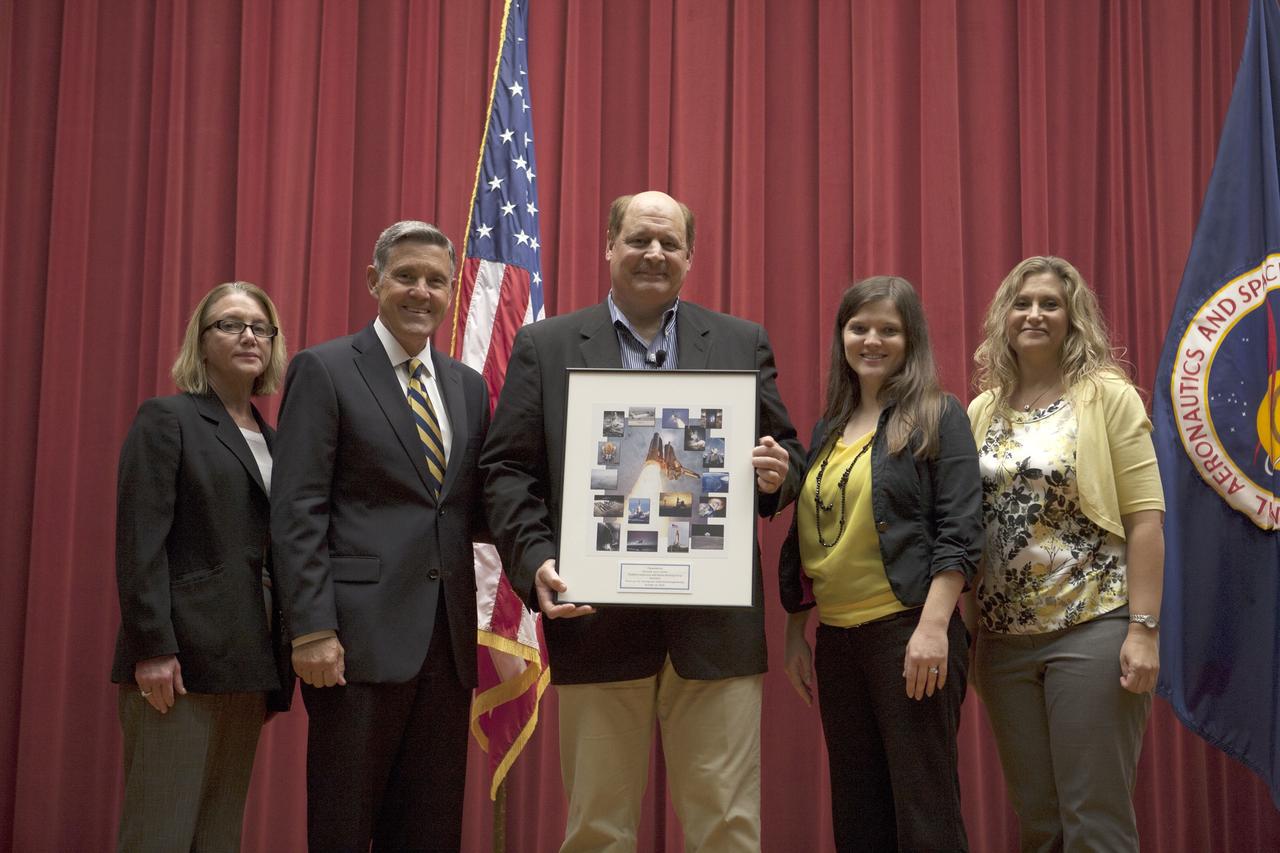
CAPE CANAVERAL, Fla. – Michael Kersjes, center, author and former special education teacher and football coach from Michigan, accepts a special plaque after his presentation to workers during the Disability Awareness and Action Working Group, or DAAWG, event at NASA's Kennedy Space Center in Florida. From left, are Susan Kroskey, Kennedy's chief financial officer and executive champion of DAAWG, Center Director Bob Cabana, and Jessica Conner and Nicole DelVesco, DAAWG co-chairpersons. The theme of Kersjes' presentation was "Power of the Human Spirit." Kersjes is the author of the book, "A Smile as Big as the Moon," which told the true story of how he worked to get special education students into Space Camp, a competitive education program at the U.S. Space and Rocket Center in Huntsville, Alabama. His book was made into a movie in 2012. For information on Kennedy's diversity programs, visit http://odeo.ksc.nasa.gov. Photo credit: NASA/Kim Shiflett
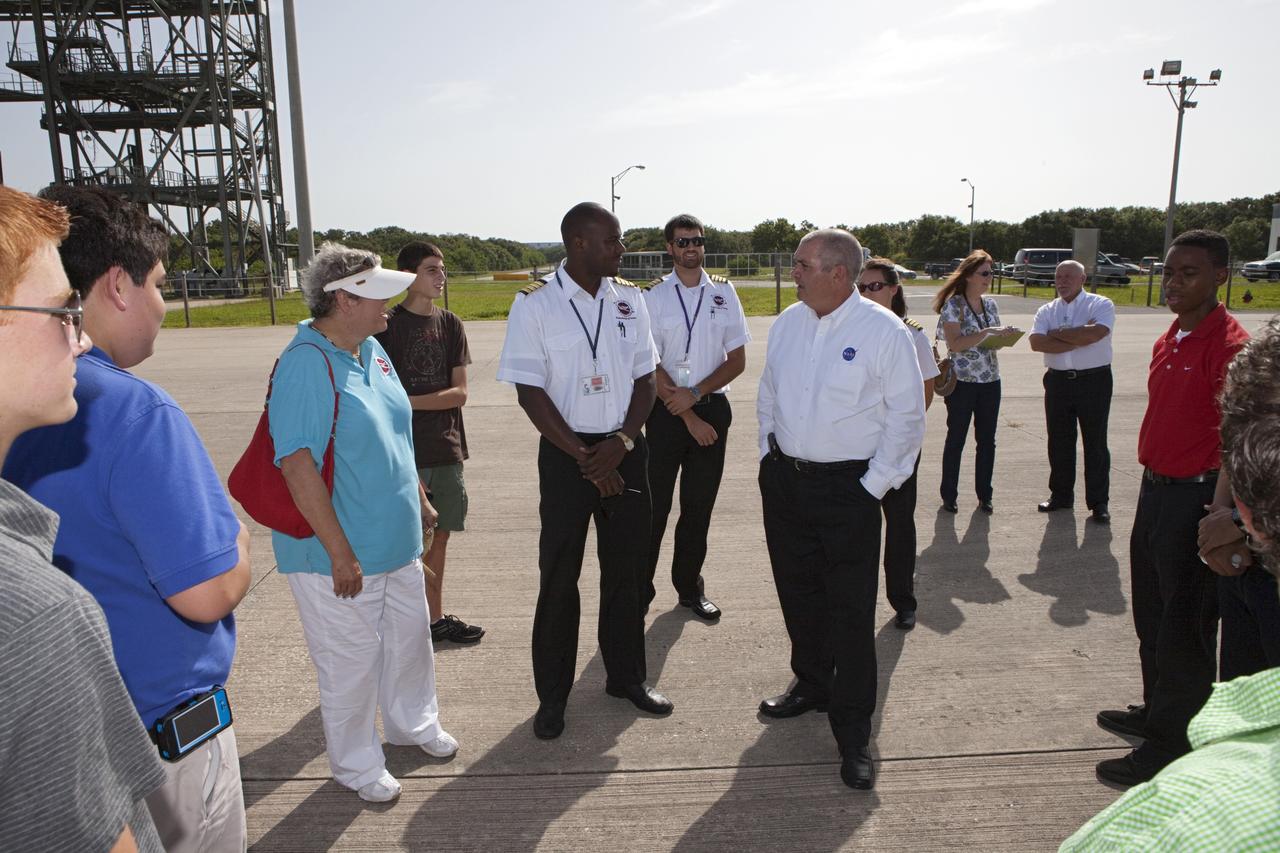
CAPE CANAVERAL, Fla. – At NASA Kennedy Space Center’s Shuttle Landing Facility, or SLF, in Florida, NASA Aviation Safety Officer Joe Torsani, at right, speaks with students and their flight instructors after they arrived in Cherokee Warrior and Cessna 172S lightweight aircraft from Florida Tech, or FIT, in Melbourne. The middle and high school students are participating in FIT’s Av/Aero summer camp experience. They and their flight instructors toured the SLF midfield control tower, viewed F104 Starfighters and NASA Huey helicopters in the RLV Hangar, viewed the runway plaques marking wheels stop for each of the three space shuttles, and toured the Vehicle Assembly Building where space shuttle Atlantis currently is stored. Photo credit: NASA/Kim Shiflett
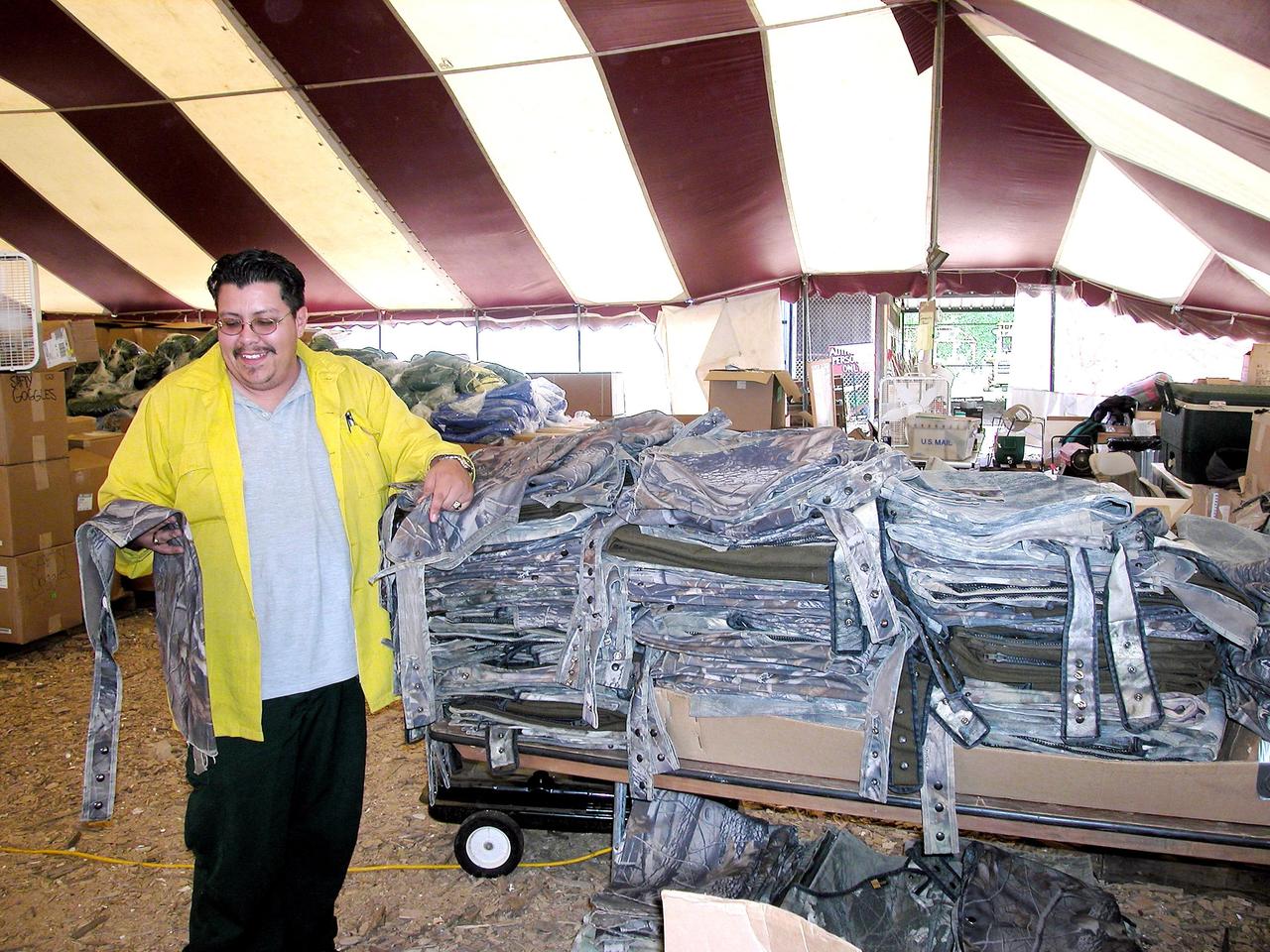
KENNEDY SPACE CENTER, FLA. -- Temporary camp worker Michael Trujillo of North New Mexico displays chaps in the supply tent at the Nacogdoches site. The chaps are used by U.S. Forest Service, Environmental Protection Agency and space program workers searching through dense forests in East Texas. Kennedy Space Center workers are participating in the Columbia Recovery efforts at the Lufkin (Texas) Command Center, four field sites in East Texas, and the Barksdale, La., hangar site. KSC is working with representatives from other NASA Centers and with those from a number of federal, state and local agencies in the recovery effort. KSC provides vehicle technical expertise in the field to identify, collect and return Shuttle hardware to KSC.
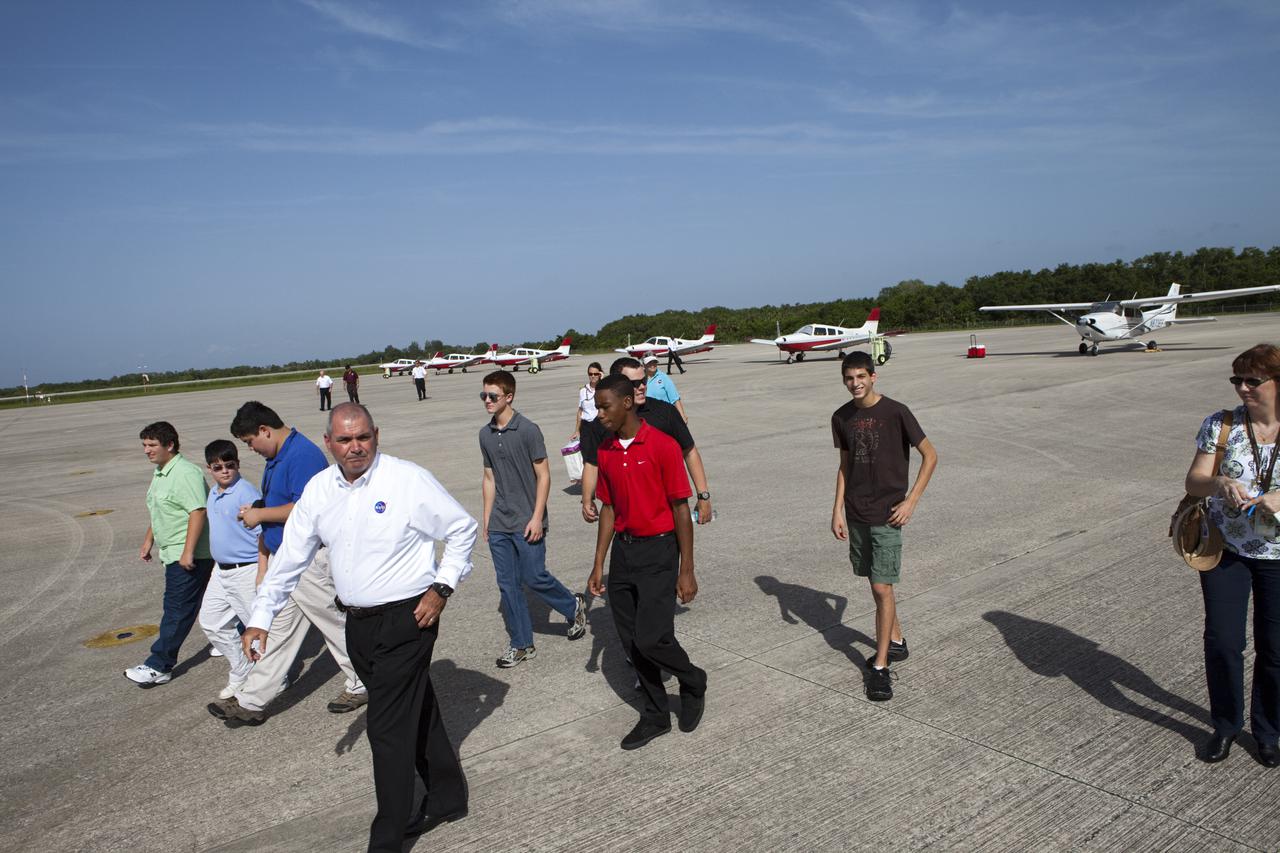
CAPE CANAVERAL, Fla. – At NASA Kennedy Space Center’s Shuttle Landing Facility, or SLF, in Florida, NASA Aviation Safety Officer Joe Torsani walks with students and their flight instructors after they arrived in Cherokee Warrior and Cessna 172S lightweight aircraft from Florida Tech, or FIT, in Melbourne. The middle and high school students are participating in FIT’s Av_Aero summer camp experience. They and their flight instructors toured the SLF midfield control tower, viewed F104 Starfighters and NASA Huey helicopters in the RLV Hangar, viewed the runway plaques marking wheels stop for each of the three space shuttles, and toured the Vehicle Assembly Building where space shuttle Atlantis currently is stored. Photo credit: NASA_Kim Shiflett
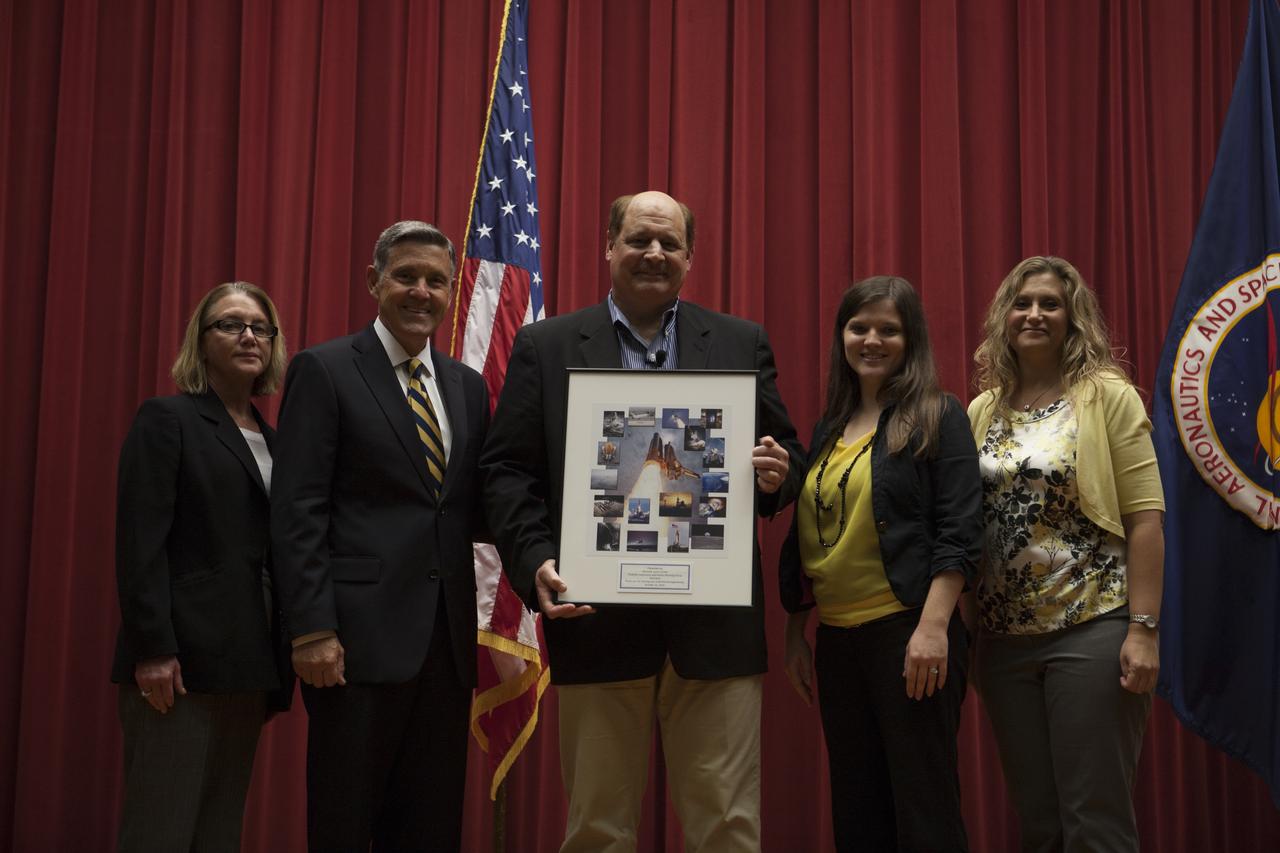
Michael Kersjes, center, author and former special education teacher and football coach from Michigan, accepts a special plaque after his presentation to workers during the Disability Awareness and Action Working Group, or DAAWG, event at NASA's Kennedy Space Center in Florida. From left, are Susan Kroskey, Kennedy's chief financial officer and executive champion of DAAWG, Center Director Bob Cabana, and Jessica Conner and Nicole DelVesco, DAAWG co-chairpersons. The theme of Kersjes' presentation was "Power of the Human Spirit." Kersjes is the author of the book, "A Smile as Big as the Moon," which told the true story of how he worked to get special education students into Space Camp, a competitive education program at the U.S. Space and Rocket Center in Huntsville, Alabama. His book was made into a movie in 2012.
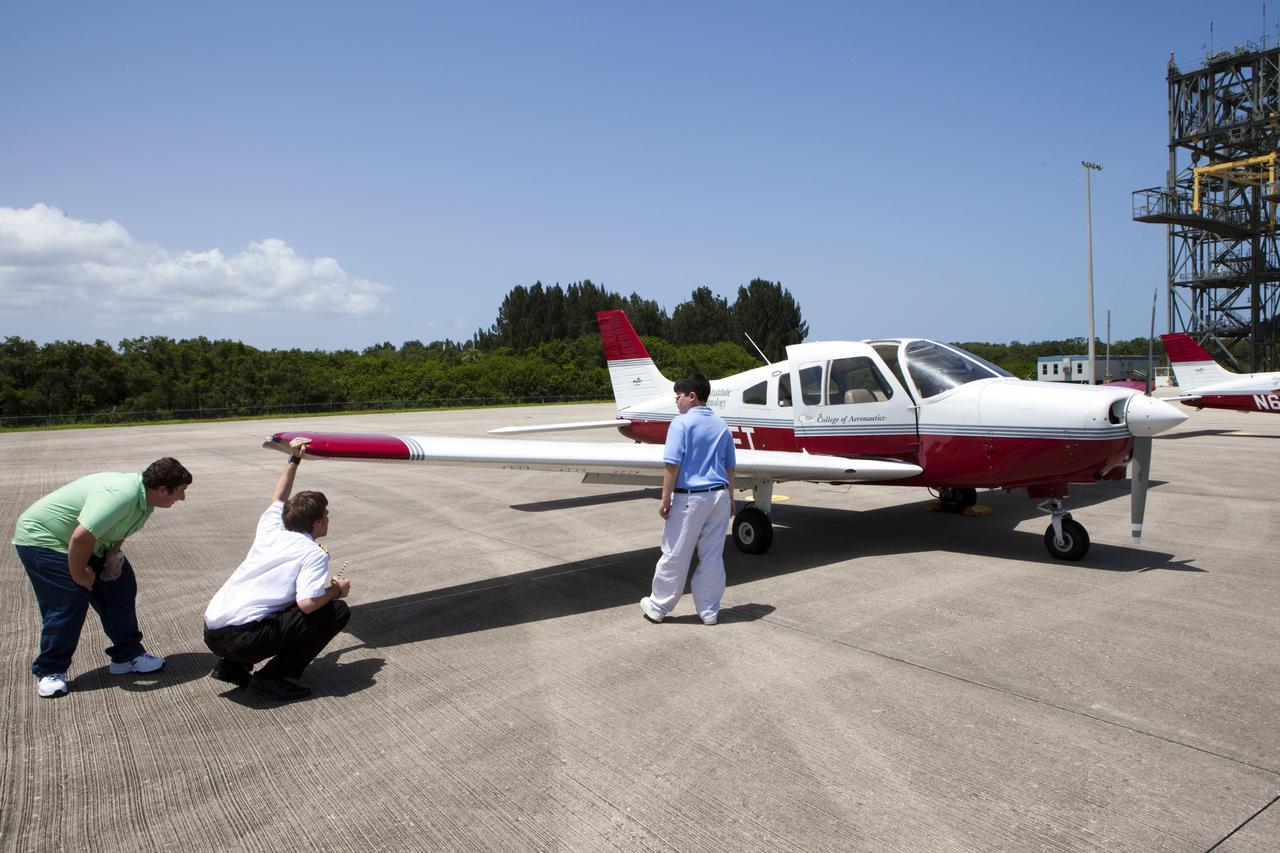
CAPE CANAVERAL, Fla. – At NASA Kennedy Space Center’s Shuttle Landing Facility, or SLF, in Florida, a flight instructor and his students inspect the lightweight aircraft they flew in earlier in the day from Florida Tech, or FIT, in Melbourne. Several instructors and their students arrived at the SLF in Cherokee Warrior and Cessna 172S lightweight aircraft. The middle and high school students are participating in FIT’s Av/Aero summer camp experience. They and their flight instructors toured the SLF midfield control tower, viewed F104 Starfighters and NASA Huey helicopters in the RLV Hangar, viewed the runway plaques marking wheels stop for each of the three space shuttles, and toured the Vehicle Assembly Building where space shuttle Atlantis currently is stored. Photo credit: NASA/Kim Shiflett
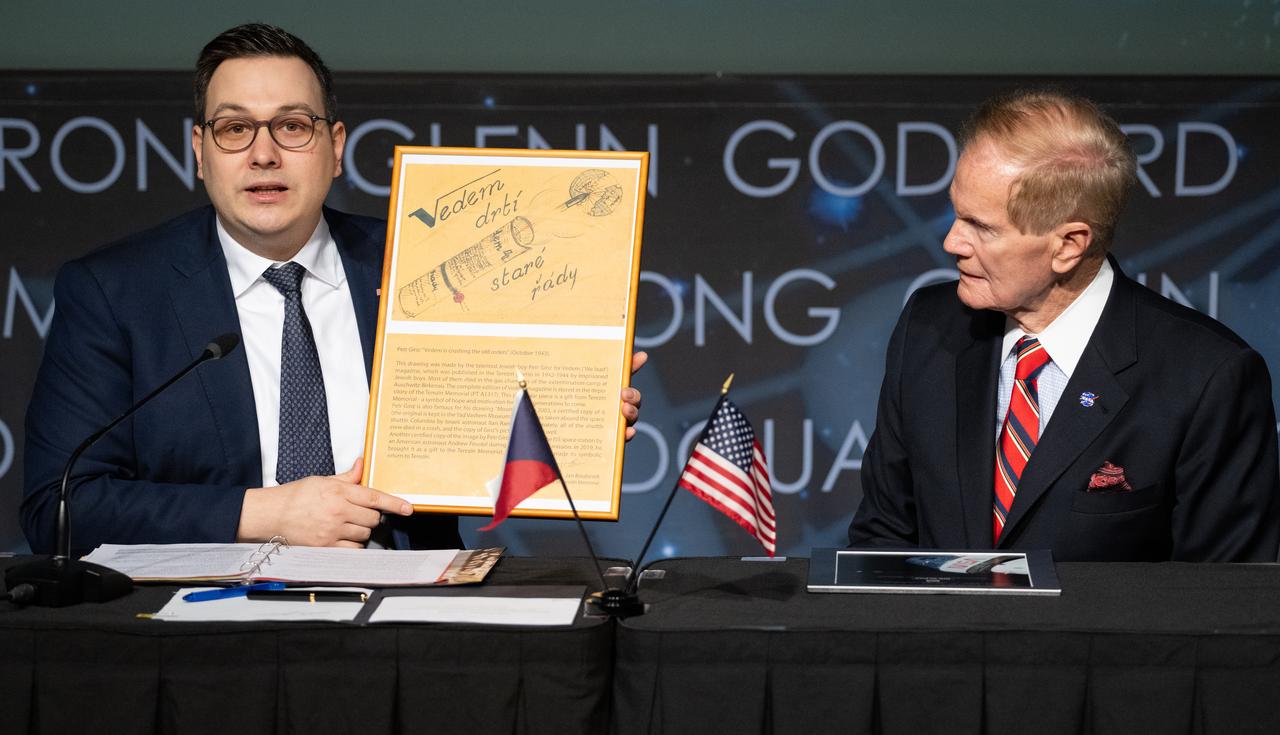
Foreign Affairs Minister for the Czech Republic Jan Lipavský, left, presents NASA Administrator Bill Nelson with a reproduction of an original drawing made by a Czechoslovak boy named Petr Ginz of partial Jewish background who was murdered at Auschwitz concentration camp in 1944, despite being of very young age, he had authored novels and made his own illustrations including this one depicting planet Earth seen from the moon, following the signing of the Artemis Accords, Wednesday, May 3, 2023, at The Mary W. Jackson NASA Headquarters building in Washington DC. The Czech Republic is the twenty fourth country to sign the Artemis Accords, which establish a practical set of principles to guide space exploration cooperation among nations participating in NASA’s Artemis program. Photo Credit: (NASA/Joel Kowsky)
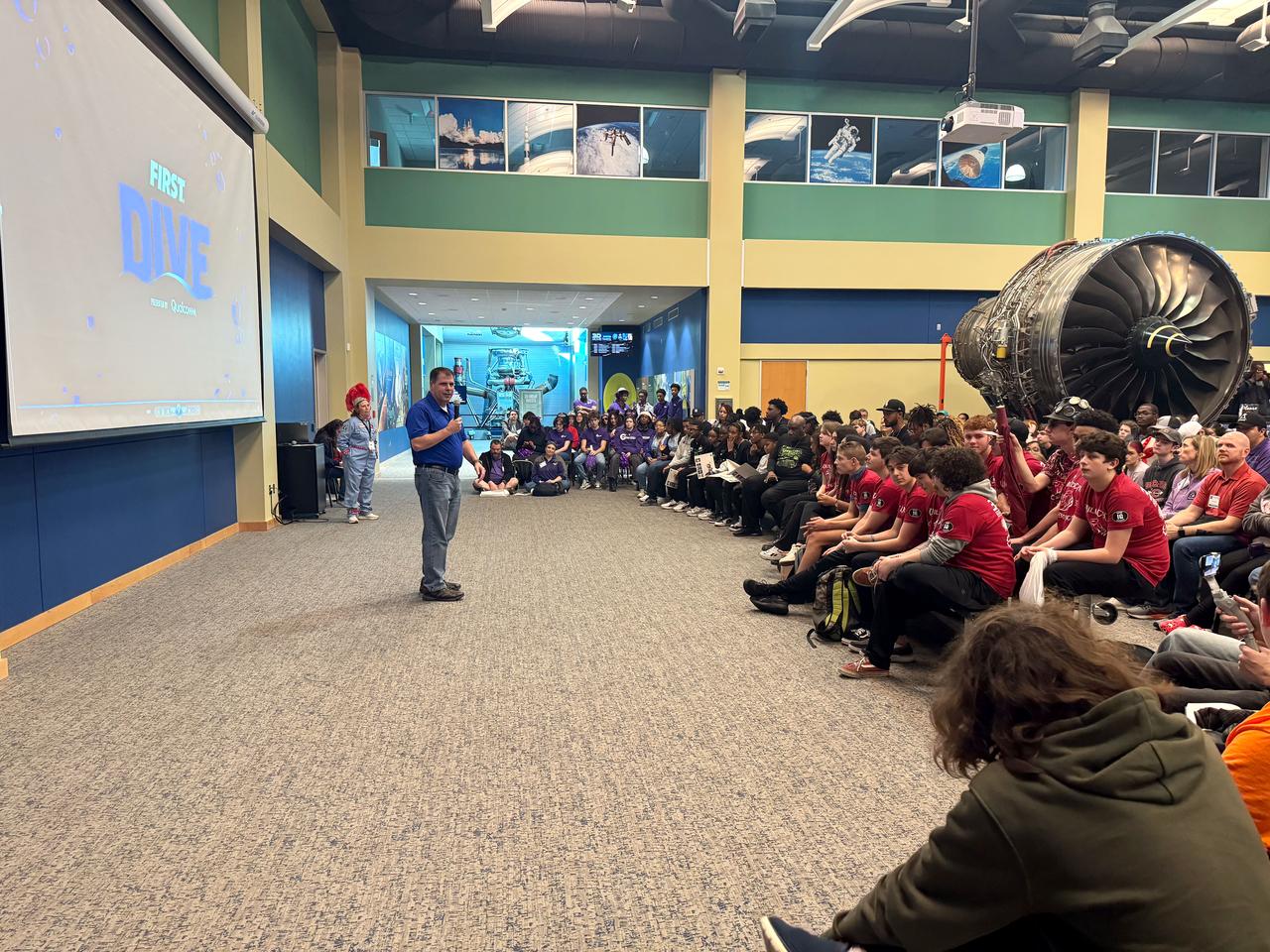
The NASA ASTRO CAMP® Community Partners (ACCP) program hosted a FIRST® Robotics Competition 2025 season kickoff event Jan. 4 at INFINITY Science Center, the official visitor center of NASA’s Stennis Space Center. NASA representatives welcomed competition teams as the event revealed the challenge for the new season. Teams will use engineering skills during the REEFSCAPE℠ challenge to strengthen one of the ocean’s most diverse habitats to build a better world. The third annual FIRST (For the Inspiration and Recognition of Science and Technology) Robotics Magnolia Regional, a NASA-sponsored event, is scheduled for March 13-15 in Laurel, Mississippi, at the South Mississippi Fairgrounds. The regional competition will serve as a championship-qualifying event for teams to compete in Houston in the world championship event in April. FIRST Robotics is described as the ultimate sport of the mind as teams concentrate and share in the excitement of success.
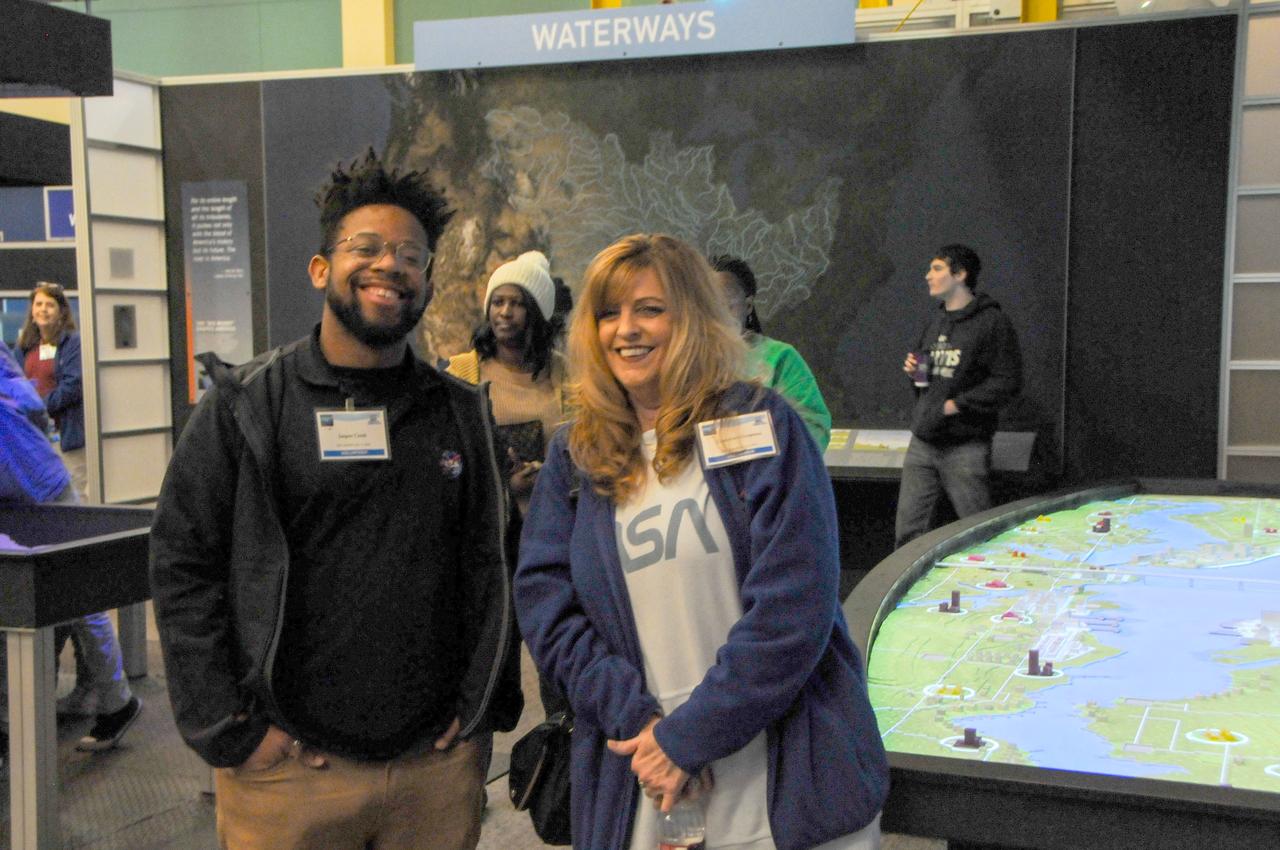
The NASA ASTRO CAMP® Community Partners (ACCP) program hosted a FIRST® Robotics Competition 2025 season kickoff event Jan. 4 at INFINITY Science Center, the official visitor center of NASA’s Stennis Space Center. NASA representatives welcomed competition teams as the event revealed the challenge for the new season. Teams will use engineering skills during the REEFSCAPE℠ challenge to strengthen one of the ocean’s most diverse habitats to build a better world. The third annual FIRST (For the Inspiration and Recognition of Science and Technology) Robotics Magnolia Regional, a NASA-sponsored event, is scheduled for March 13-15 in Laurel, Mississippi, at the South Mississippi Fairgrounds. The regional competition will serve as a championship-qualifying event for teams to compete in Houston in the world championship event in April. FIRST Robotics is described as the ultimate sport of the mind as teams concentrate and share in the excitement of success.
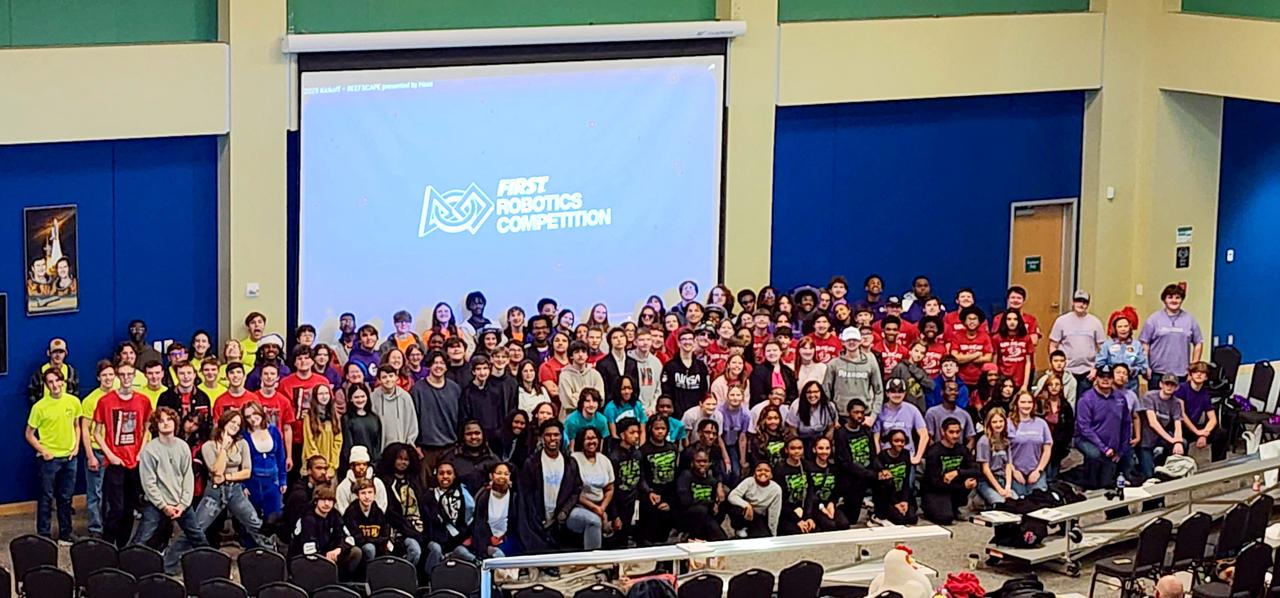
The NASA ASTRO CAMP® Community Partners (ACCP) program hosted a FIRST® Robotics Competition 2025 season kickoff event Jan. 4 at INFINITY Science Center, the official visitor center of NASA’s Stennis Space Center. NASA representatives welcomed competition teams as the event revealed the challenge for the new season. Teams will use engineering skills during the REEFSCAPE℠ challenge to strengthen one of the ocean’s most diverse habitats to build a better world. The third annual FIRST (For the Inspiration and Recognition of Science and Technology) Robotics Magnolia Regional, a NASA-sponsored event, is scheduled for March 13-15 in Laurel, Mississippi, at the South Mississippi Fairgrounds. The regional competition will serve as a championship-qualifying event for teams to compete in Houston in the world championship event in April. FIRST Robotics is described as the ultimate sport of the mind as teams concentrate and share in the excitement of success.
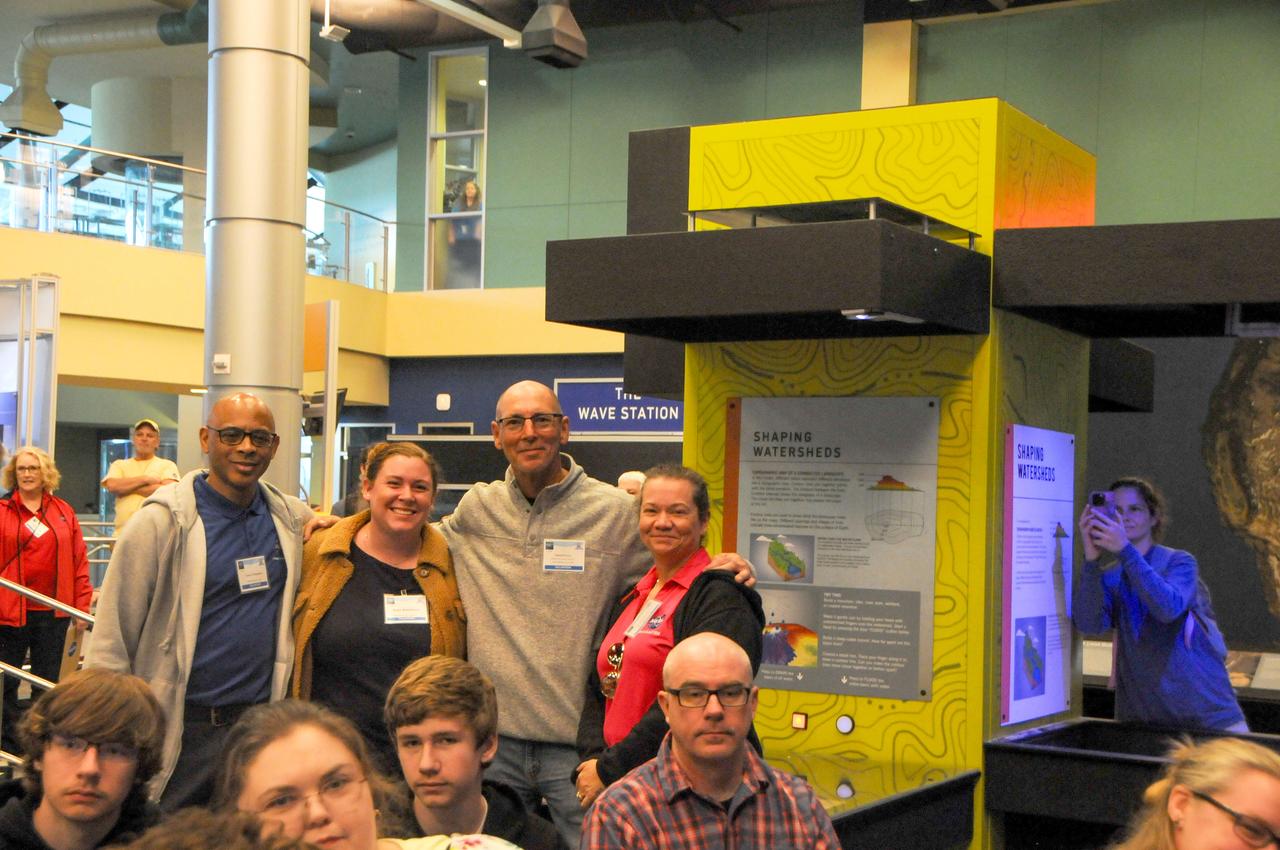
The NASA ASTRO CAMP® Community Partners (ACCP) program hosted a FIRST® Robotics Competition 2025 season kickoff event Jan. 4 at INFINITY Science Center, the official visitor center of NASA’s Stennis Space Center. NASA representatives welcomed competition teams as the event revealed the challenge for the new season. Teams will use engineering skills during the REEFSCAPE℠ challenge to strengthen one of the ocean’s most diverse habitats to build a better world. The third annual FIRST (For the Inspiration and Recognition of Science and Technology) Robotics Magnolia Regional, a NASA-sponsored event, is scheduled for March 13-15 in Laurel, Mississippi, at the South Mississippi Fairgrounds. The regional competition will serve as a championship-qualifying event for teams to compete in Houston in the world championship event in April. FIRST Robotics is described as the ultimate sport of the mind as teams concentrate and share in the excitement of success.
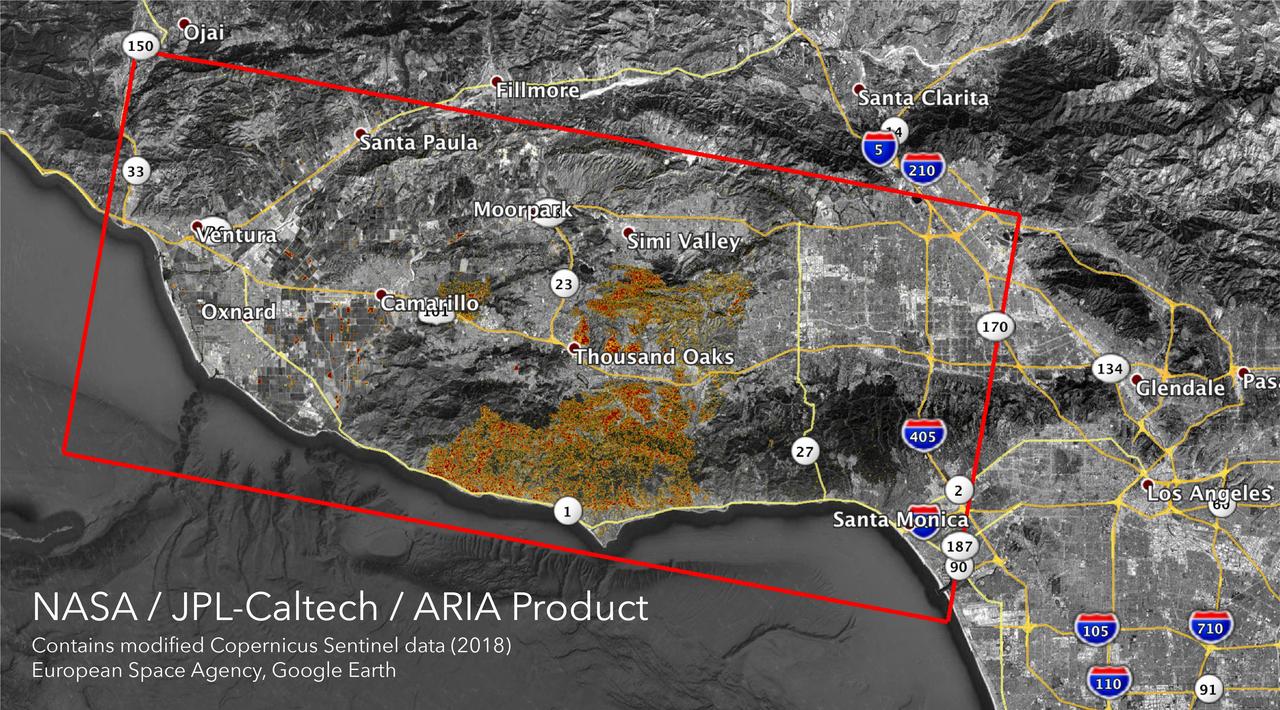
The Advanced Rapid Imaging and Analysis (ARIA) team at NASA's Jet Propulsion Laboratory in Pasadena, California, created these Damage Proxy Maps (DPMs) depicting areas in California likely damaged by the Woolsey and Camp Fires. They are derived from synthetic aperture radar (SAR) images from the Copernicus Sentinel-1 satellites, operated by the European Space Agency (ESA). The pre-event images for the Woolsey Fire in Southern California were taken before the fire on Oct. 30, 2018 and the post-event image was acquired during the fire on Nov. 11, 2018. The map covers an area of 50 miles x 25 miles (80 km x 40 km), indicated with the big red polygon. Each pixel measures about 33 yards x 33 yards (30 m x 30 m). The color variation from yellow to red indicates increasingly more significant ground surface change. The pre-event images for the Camp Fire in Northern California were taken on Nov. 4, 2018 and the post-event images were acquired during the fire on Nov. 10, 2018. The map covers an area of 55 miles x 48 miles (88 km x 77 km). As in the previous image, each pixel measures about 33 yards x 33 yards (30 m x 30 m). The color variation from yellow to red indicates increasingly more significant ground surface change. Preliminary validation for both maps was done by comparing approximate location data to Google's Crisismap. These damage proxy maps can be used as guidance to identify damaged areas with the understanding that they may be less reliable over vegetated areas including farmlands. For example, the scattered single colored pixels over vegetated areas may be false positives, and the lack of colored pixels over vegetated areas does not necessarily mean no damage. https://photojournal.jpl.nasa.gov/catalog/PIA22816
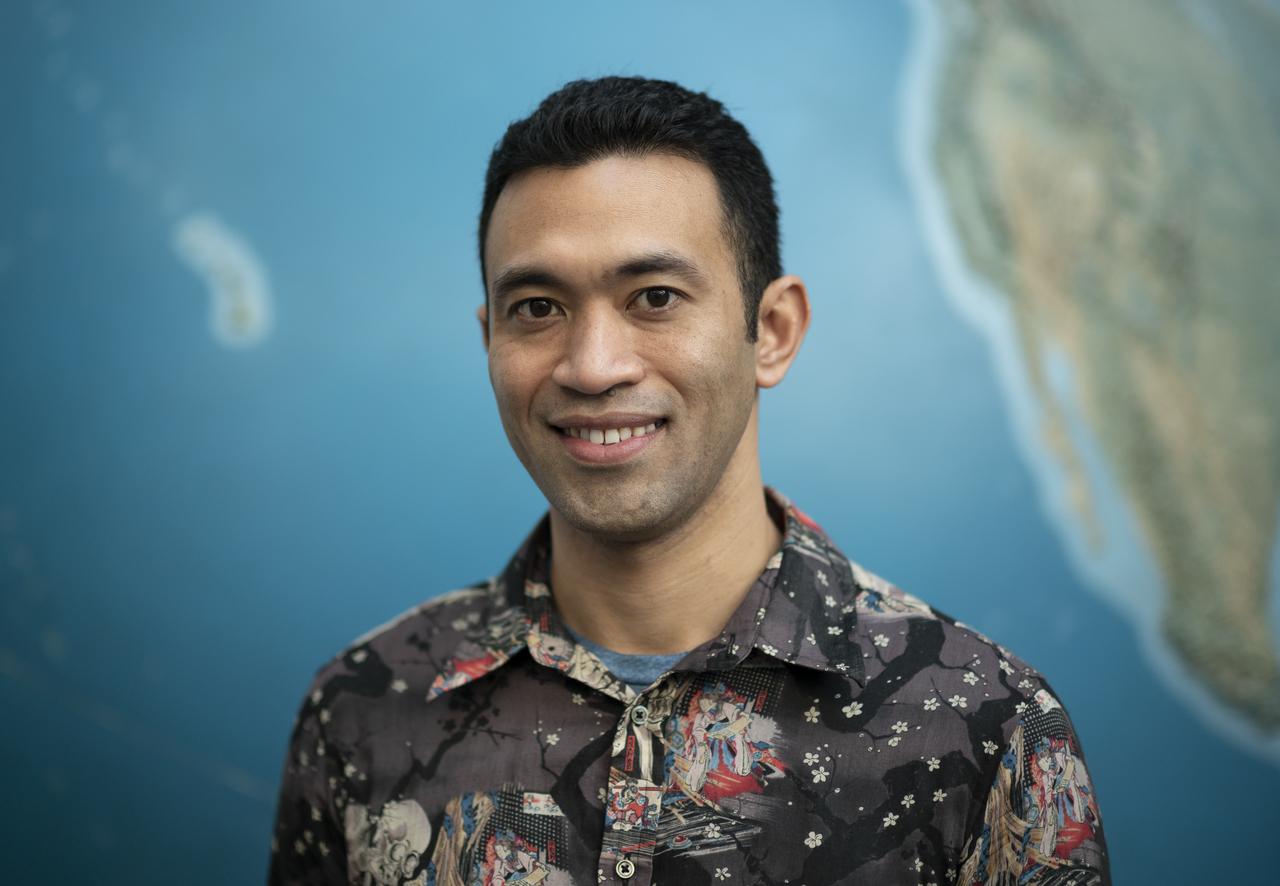
“Back home there’s a place called Mākua beach. It’s where I spent so much of my childhood. My grandfather had a little beachside camp area, and every day after school my dad and I would drive to the camp and visit my grandfather, and we’d go out fishing either on a rubber tube or a small fishing boat. There are so many memories of being with my dad and my grandfather and all of my calabash uncles there. My grandmother and my grandfather were both strongly connected to the beach. They actually both passed away on the beach, so that place has a special place in my heart. It’s a beautiful, beautiful quiet little pocket of sand and water, and every time I go back, I think of them and all of those memories. “The Hawaiians have been there for a thousand-plus years. And I have written documents that show my grandfather’s great-grandfather had an association with the area. It was a letter he wrote to a commission voicing his support for Native Hawaiian land rights in the valley. I love to go back every time I go home. Sometimes when it’s low tide, you can even find petroglyphs engraved on the rocks. There’s always something new to discover. “I know fishing is not as plentiful as it was before because of overfishing and likely other factors. Climate change is impacting a lot of coastal areas not just in Hawaii but also around the world, from erosion to coral bleaching. It’s powerful that we continue to learn how everyone and everything on Earth is interconnected. It’s what Native Hawaiians have long understood through our cosmology and approach to resource management. “That’s what makes communicating Earth science meaningful for me—knowing that indigenous Hawaiian wisdom and NASA research both point to the responsible management of and respect for the environment.” Samson Reiny, editor and senior outreach coordinator at NASA Earth Science News, Friday, Feb. 21, 2020, at NASA's Goddard Space Flight Center in Greenbelt, Md. Photo Credit: (NASA/Joel Kowsky)
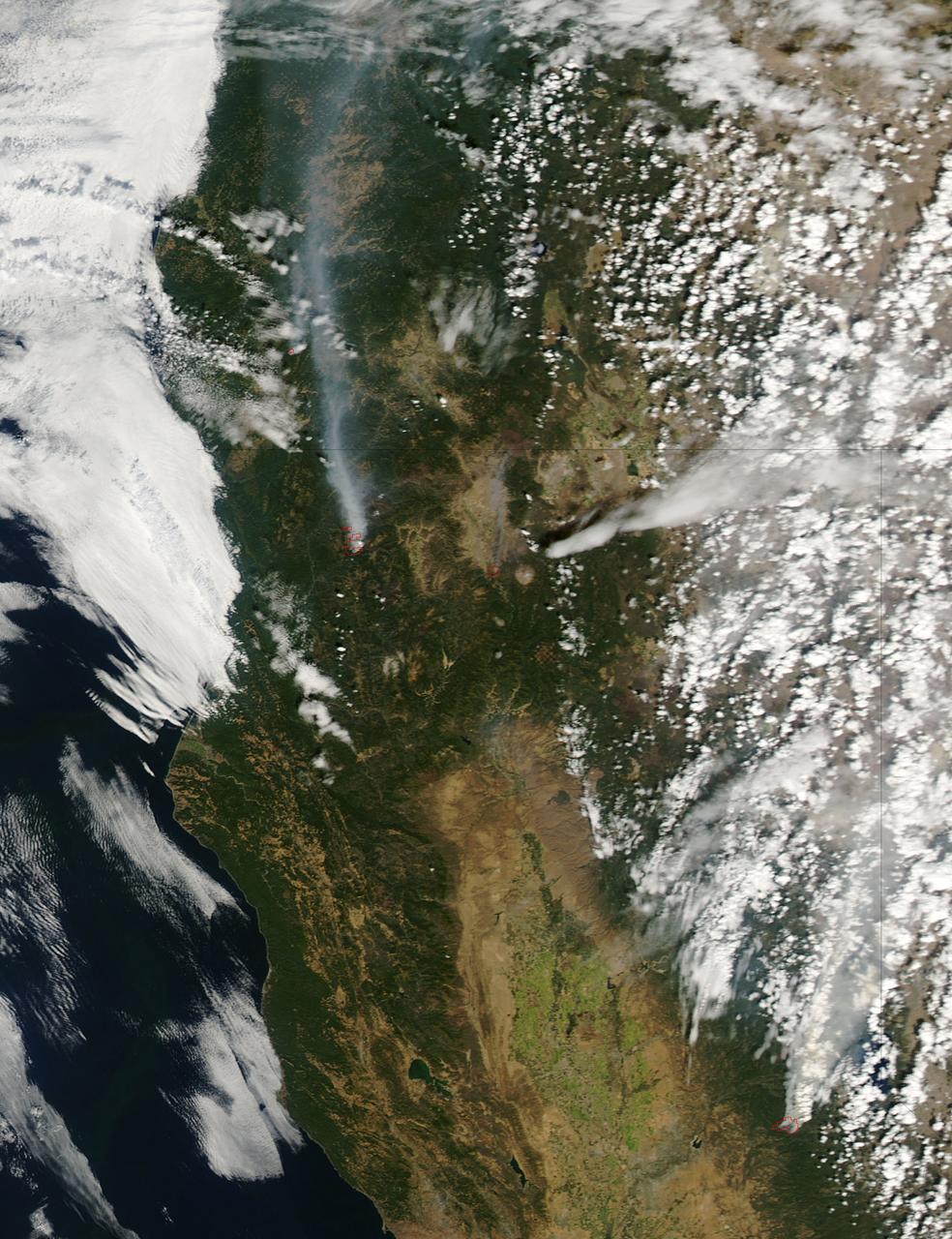
The fire season in California has been anything but cooperative this year. Hot conditions combined with a state-wide drought and dry lightning makes for unpleasant conditions and leads to an abundance of forest fires. On August 12, lightning struck and started the fire that grew into the Happy Camp Complex. Currently over 113,000 acres have been affected and the fire is only 55% contained as of today. Strong winds tested fire lines yesterday (8/15), and are expected to do so again today. Despite the high winds, existing fire lines held with no spotting or expansion outside current containment lines. The south end of the fire continued backing slowly toward Elk Creek in the Marble Mountain Wilderness. The Man Fire joined with the Happy Camp Complex yesterday and will be managed by California Interagency Incident Management Team 4 as of 6:00am on Wednesday, September 17, 2014. Nearby the Happy Camp Complex, near Mt. Shasta and the town of Weed, another fire erupted that fire officials said quickly damaged or destroyed 100 structures Monday (8/15). Hundreds of firefighters were trying to contain that fire. A California Fire spokesman said more than 300 acres were scorched and more than 100 structures damaged or destroyed in just a few hours. The blaze, dubbed the Boles Fire, also led to the closure of Interstate 5 and U.S. 97. Weed is in Siskiyou County, about 50 miles south of the California-Oregon border. With strong winds, the fire was able to rage into the community before firefighters could get equipment to the blaze. About 1,500 to 2,000 residents were being evacuated to the Siskiyou County fairgrounds. An evacuation center was set up at the county fairgrounds in Yreka. NASA's Aqua satellite collected this natural-color image with the Moderate Resolution Imaging Spectroradiometer, MODIS, instrument on September 15, 2014. Actively burning areas, detected by MODIS’s thermal bands, are outlined in red. NASA image courtesy Jeff Schmaltz LANCE/EOSDIS MODIS Rapid Response Team, GSFC. Caption by Lynn Jenner with information from Inciweb and California Department of Forestry and Fire Protection. <b><a href="http://www.nasa.gov/audience/formedia/features/MP_Photo_Guidelines.html" rel="nofollow">NASA image use policy.</a></b> <b><a href="http://www.nasa.gov/centers/goddard/home/index.html" rel="nofollow">NASA Goddard Space Flight Center</a></b> enables NASA’s mission through four scientific endeavors: Earth Science, Heliophysics, Solar System Exploration, and Astrophysics. Goddard plays a leading role in NASA’s accomplishments by contributing compelling scientific knowledge to advance the Agency’s mission. <b>Follow us on <a href="http://twitter.com/NASAGoddardPix" rel="nofollow">Twitter</a></b> <b>Like us on <a href="http://www.facebook.com/pages/Greenbelt-MD/NASA-Goddard/395013845897?ref=tsd" rel="nofollow">Facebook</a></b> <b>Find us on <a href="http://instagram.com/nasagoddard?vm=grid" rel="nofollow">Instagram</a></b>
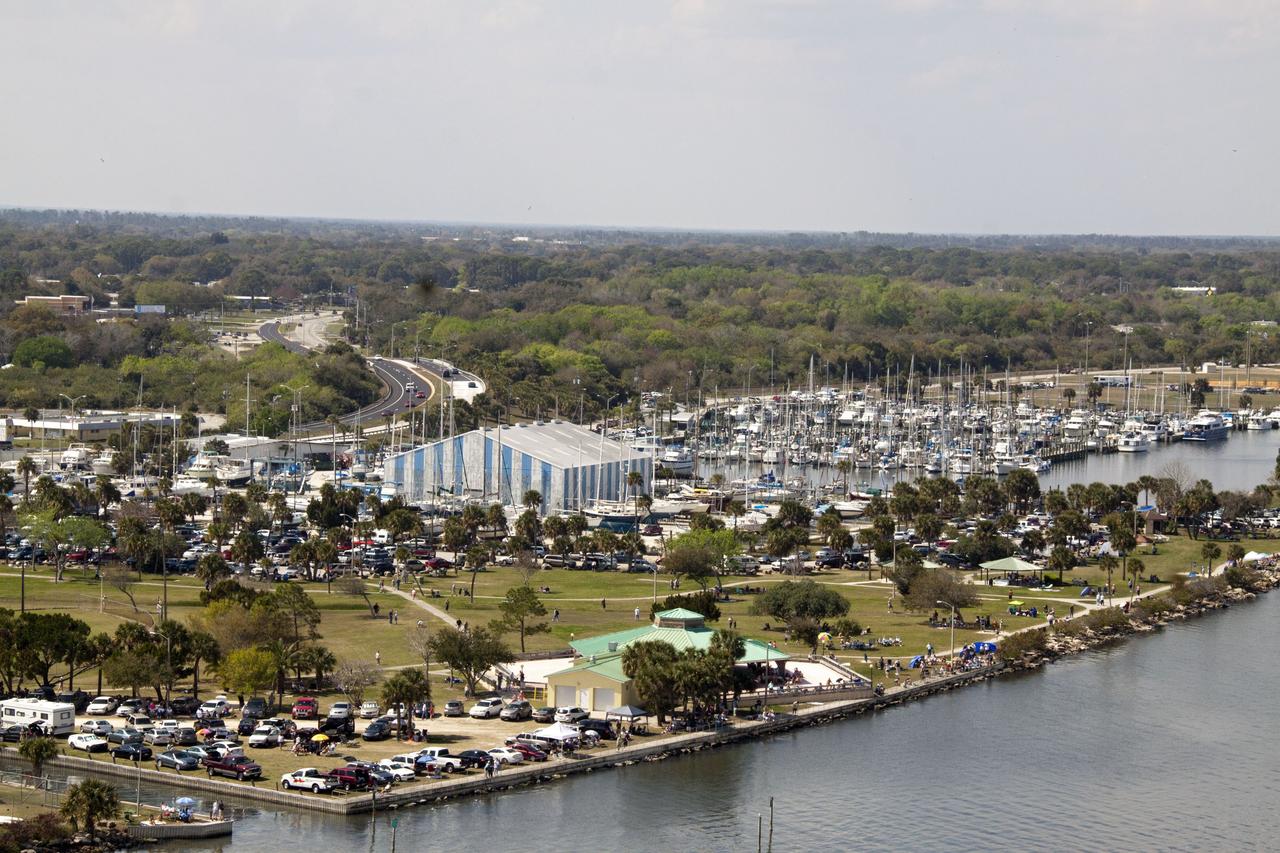
CAPE CANAVERAL, Fla. -- Folks from across the country camped out in communities surrounding NASA's Kennedy Space Center in Florida to witness space shuttle Discovery make history by lifting off on its final scheduled mission from Launch Pad 39A. Seen here is Sand Point Park near U. S. Highway 1 and State Road 406, also known as the A. Max Brewer Causeway, in Titusville, Fla. Liftoff is set for 4:50 p.m. EST on Feb. 24. Discovery and its six-member STS-133 crew will deliver the Permanent Multipurpose Module, packed with supplies and critical spare parts, as well as Robonaut 2, the dexterous humanoid astronaut helper, to the International Space Station. Discovery, which will fly its 39th mission, is scheduled to be retired following STS-133. This will be the 133rd Space Shuttle Program mission and the 35th shuttle voyage to the space station. For more information on the STS-133 mission, visit www.nasa.gov/mission_pages/shuttle/shuttlemissions/sts133/. Photo credit: NASA/Jack Pfaller
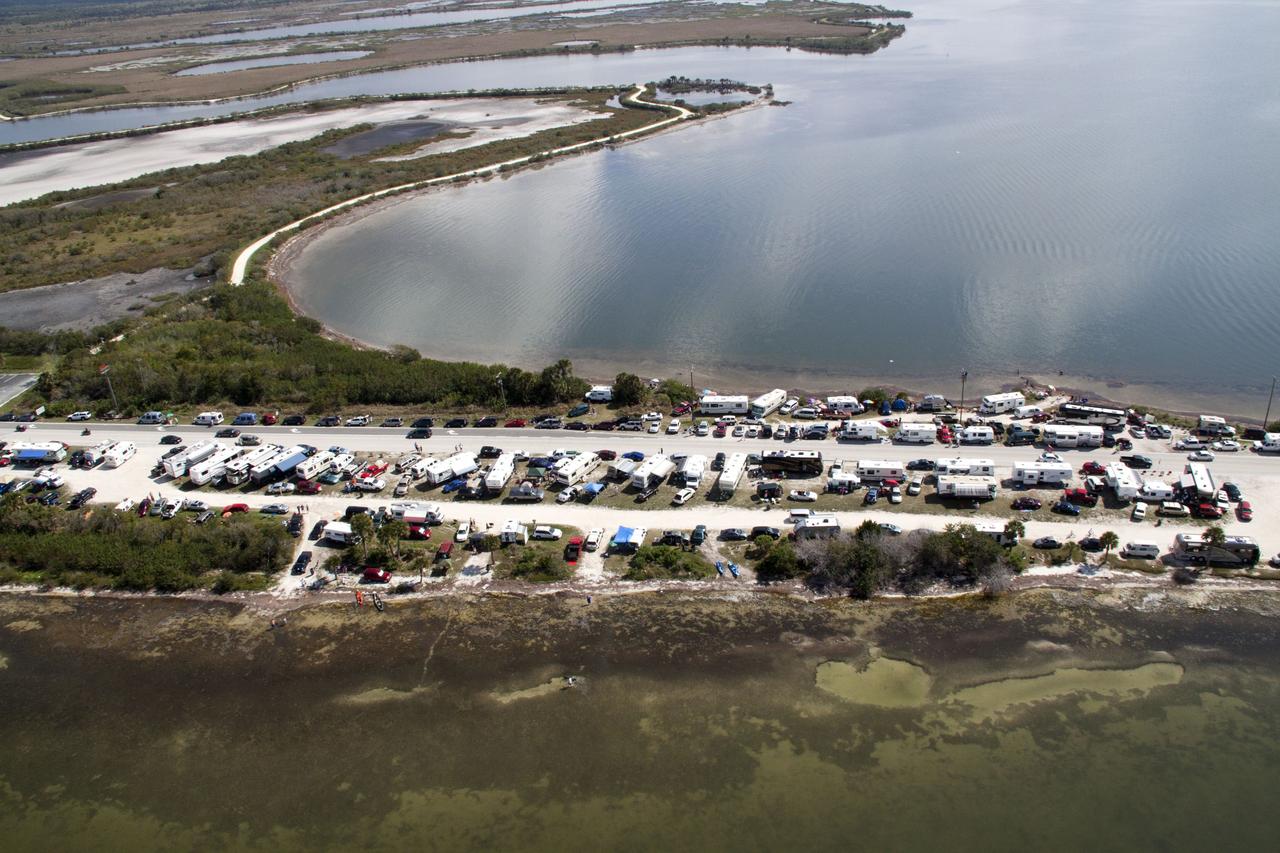
CAPE CANAVERAL, Fla. -- Folks from across the country camped out in communities surrounding NASA's Kennedy Space Center in Florida to witness space shuttle Discovery make history by lifting off on its final scheduled mission from Launch Pad 39A. Seen here, is State Road 406, also known as the A. Max Brewer Causeway, in Titusville, Fla. Liftoff is set for 4:50 p.m. EST on Feb. 24. Discovery and its six-member STS-133 crew will deliver the Permanent Multipurpose Module, packed with supplies and critical spare parts, as well as Robonaut 2, the dexterous humanoid astronaut helper, to the International Space Station. Discovery, which will fly its 39th mission, is scheduled to be retired following STS-133. This will be the 133rd Space Shuttle Program mission and the 35th shuttle voyage to the space station. For more information on the STS-133 mission, visit www.nasa.gov/mission_pages/shuttle/shuttlemissions/sts133/. Photo credit: NASA/Jack Pfaller