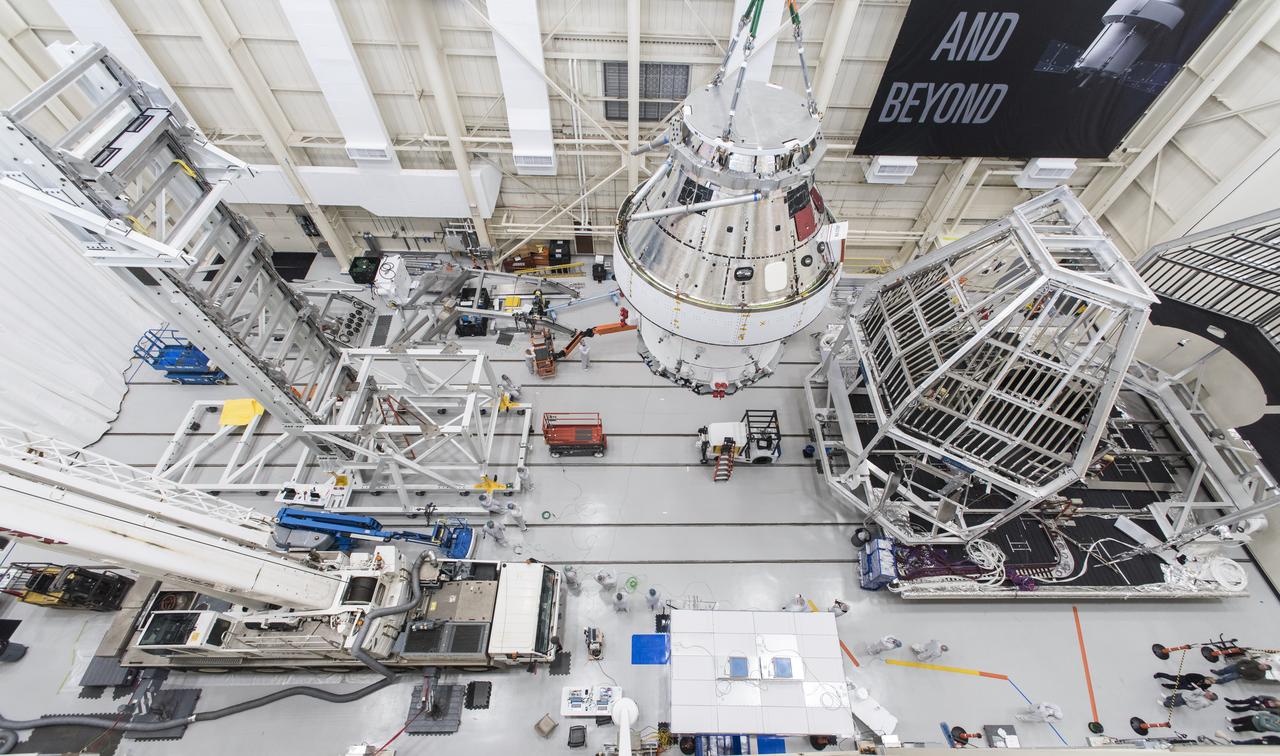
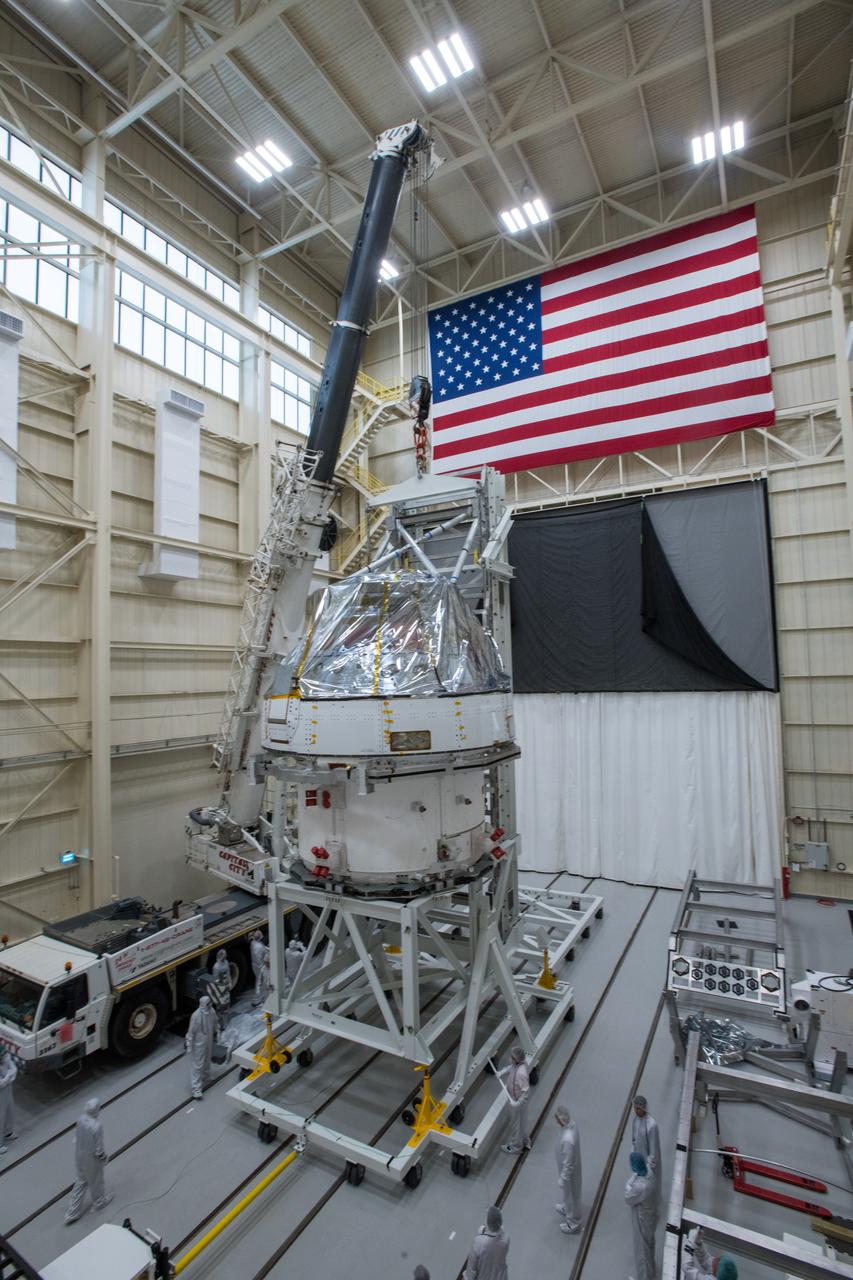
Space Environments Complex at Plum Brook Station
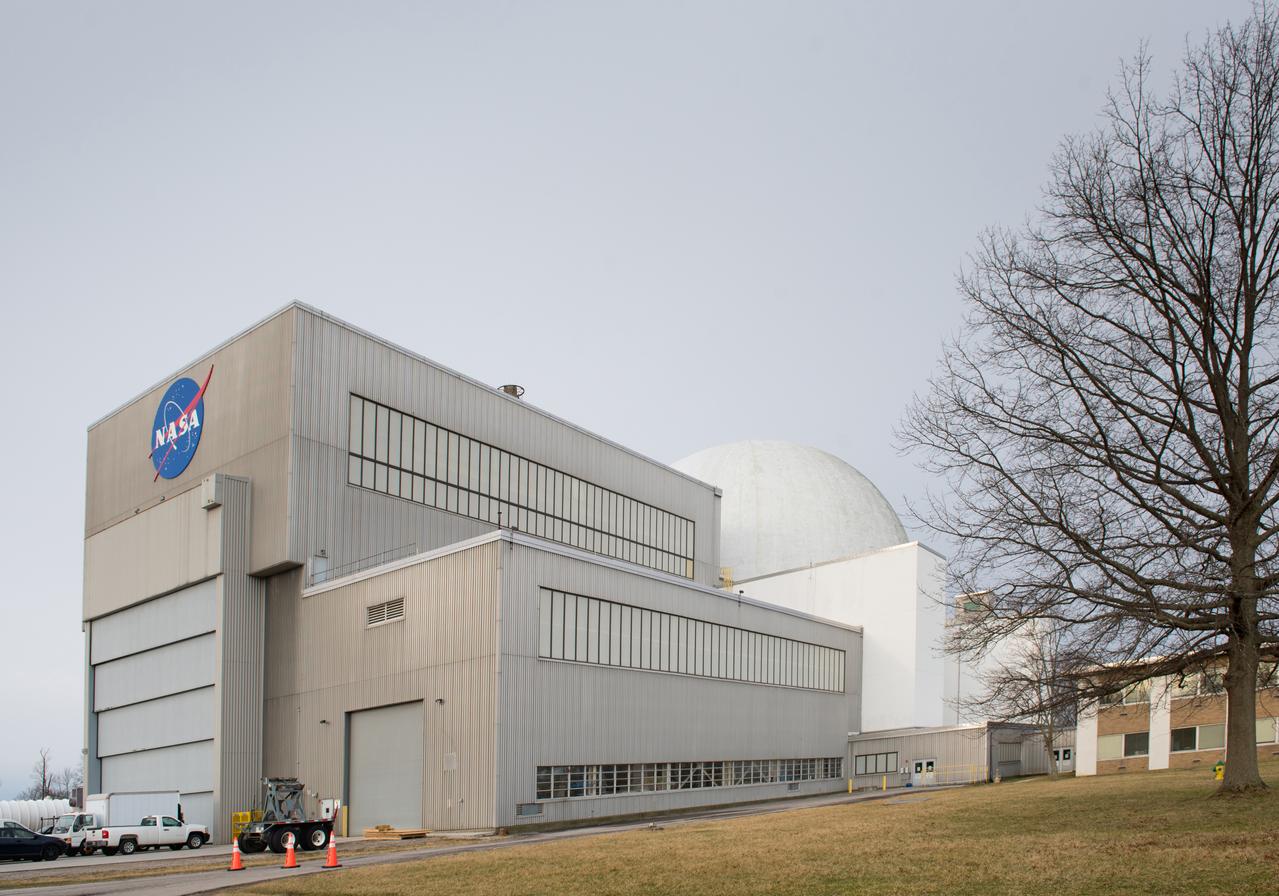
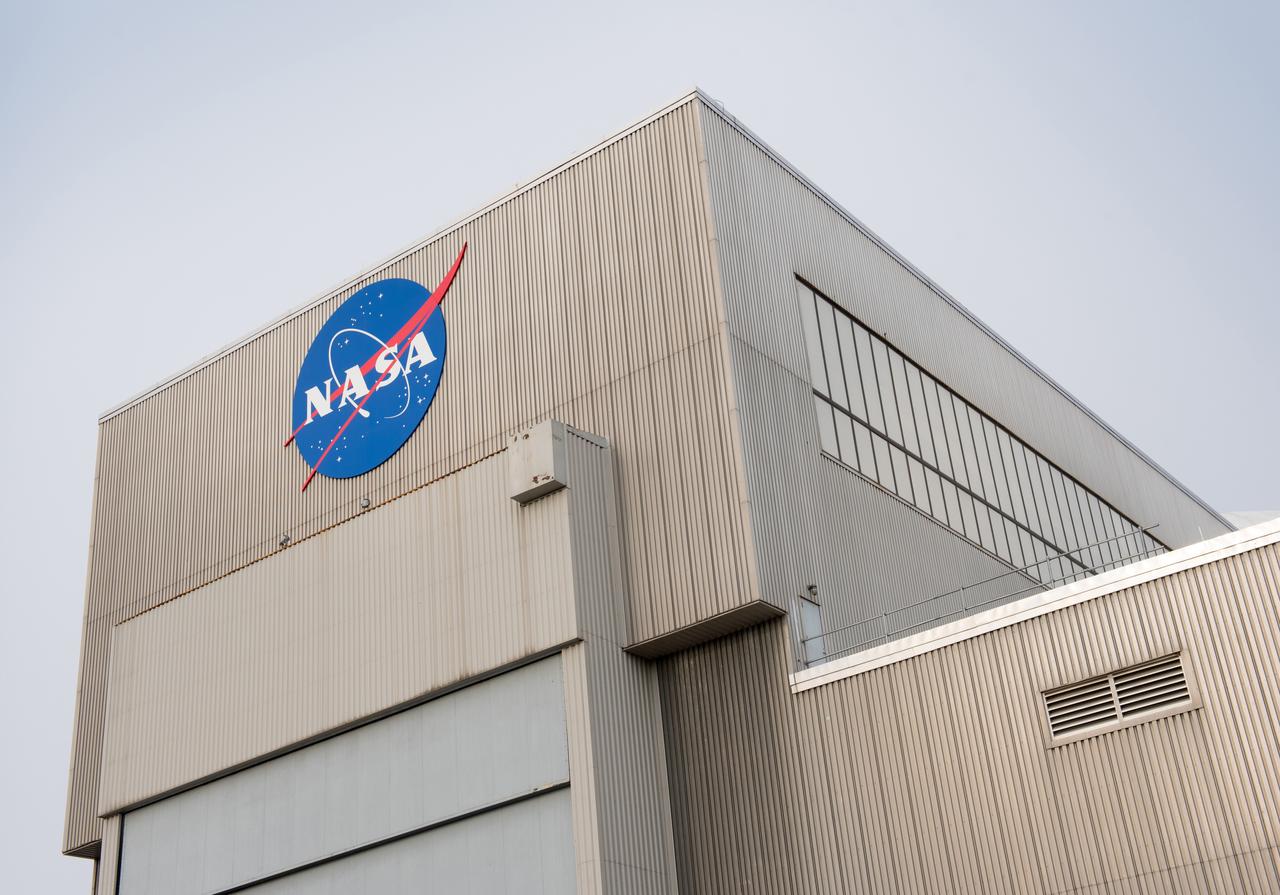
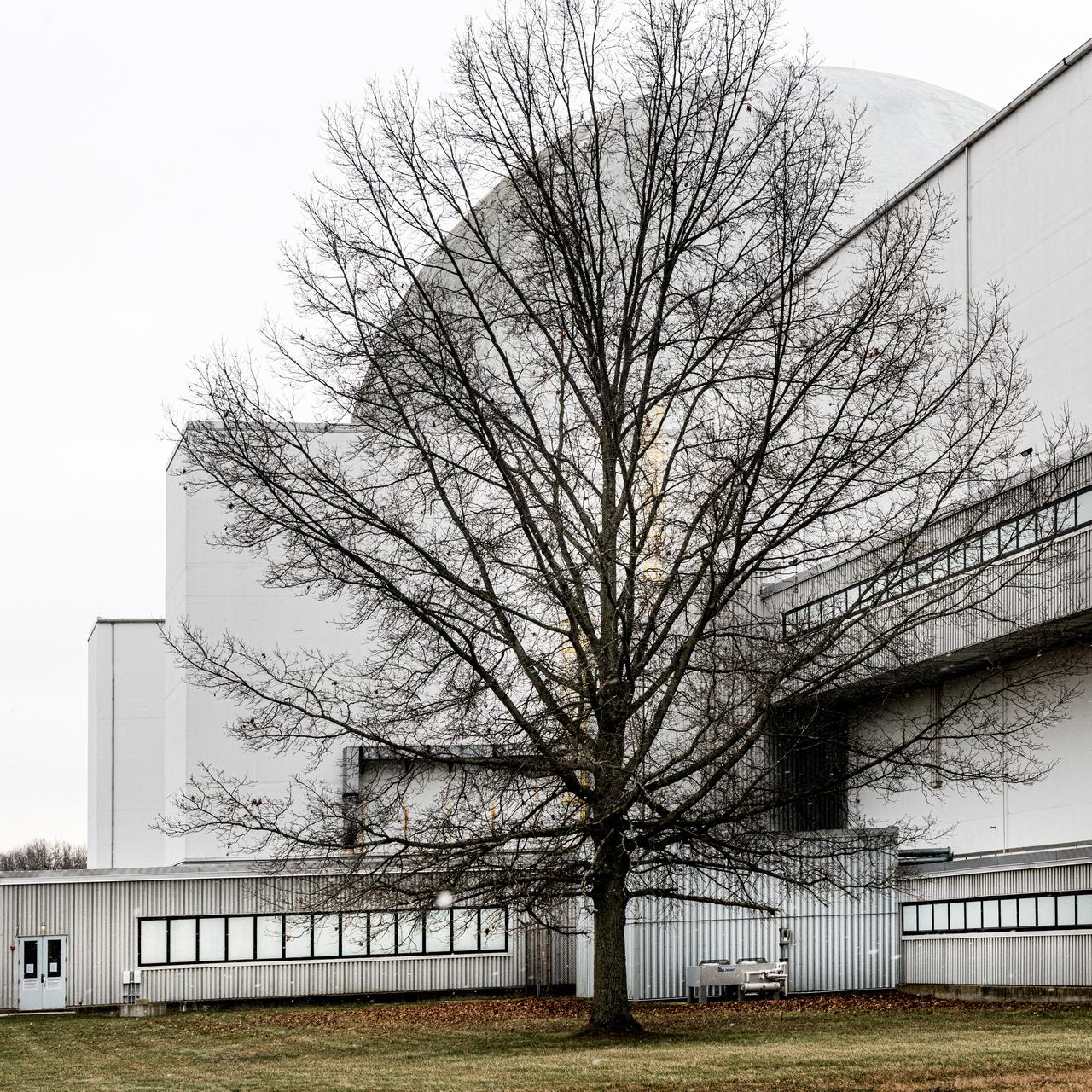
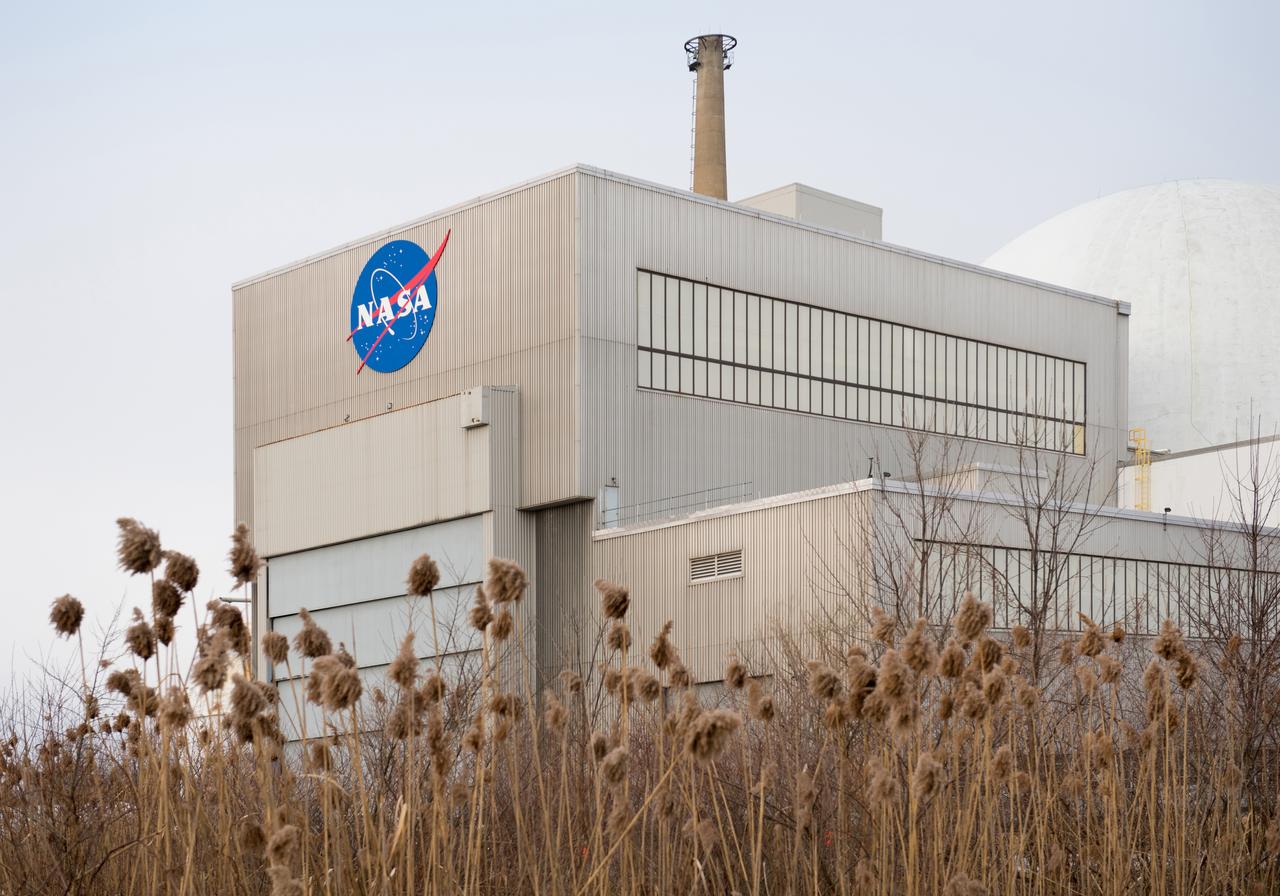
Exterior of the Space Environments Complex, SEC at the Glenn Research Center, Neil A Armstrong Test Facility
Exterior of the Space Environments Complex, SEC at the Glenn Research Center
Orion - EM-1 - Artemis Spacecraft Departure at the Space Environments Complex, SEC Thermal Vacuum Chamber at the Neil A. Armstrong Test Facility, Transportation to Mansfield Lahm Airport
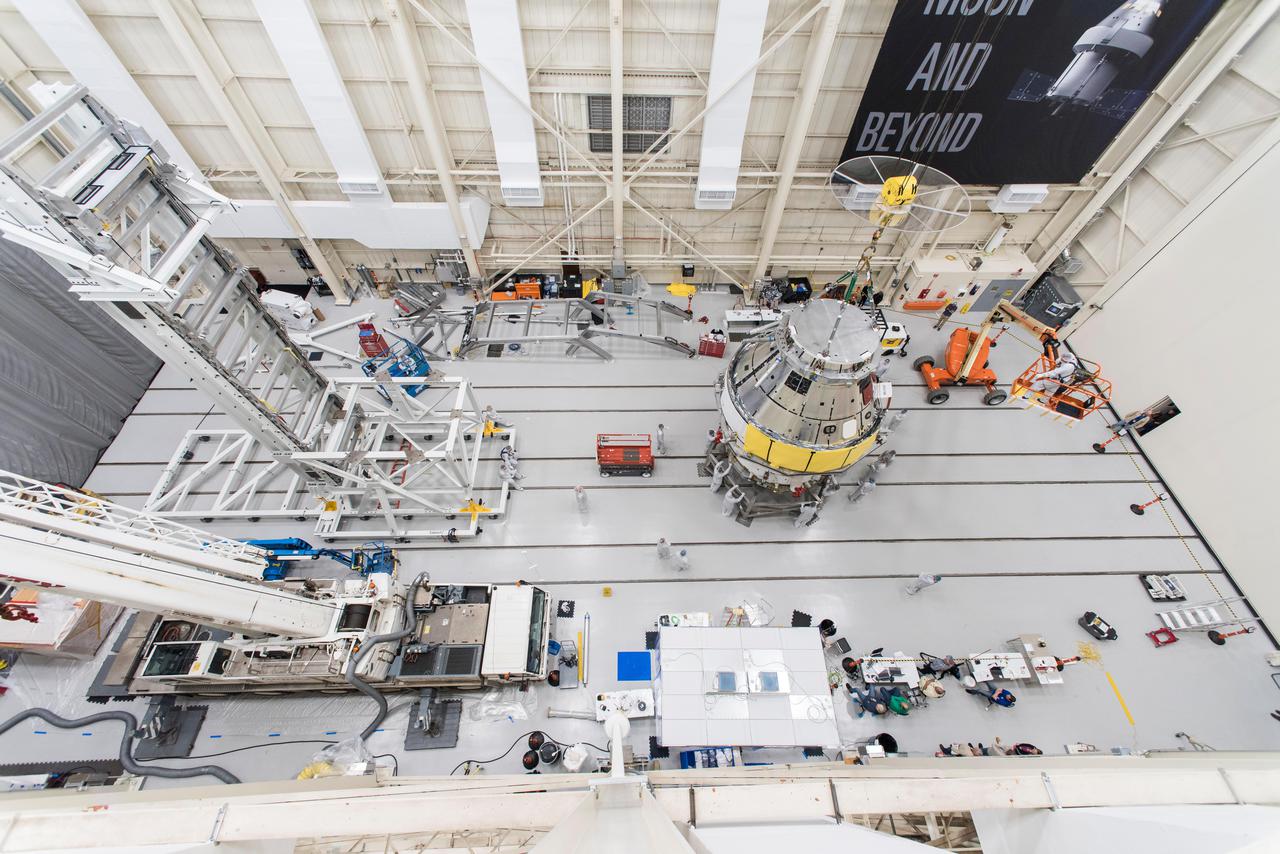
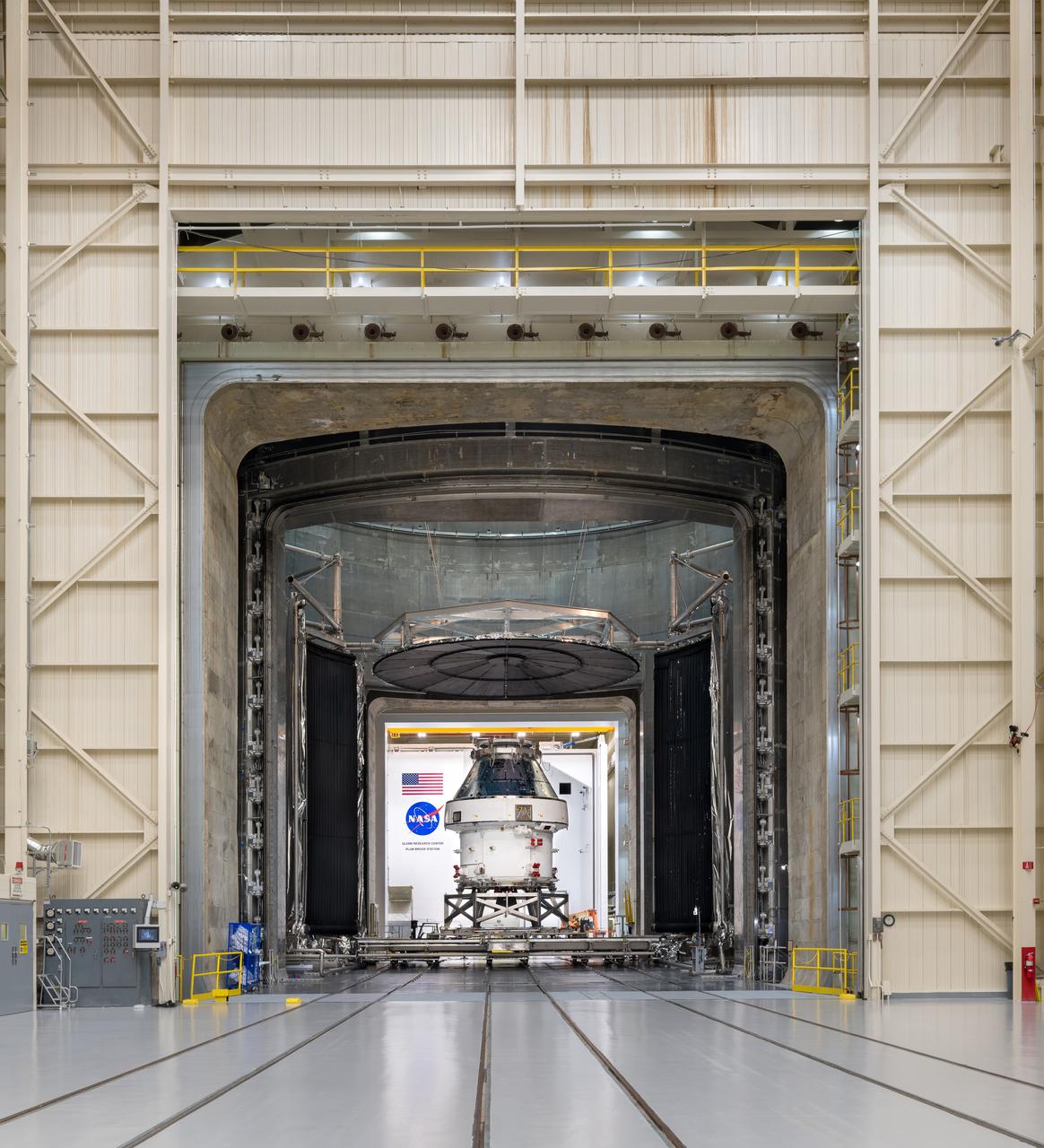
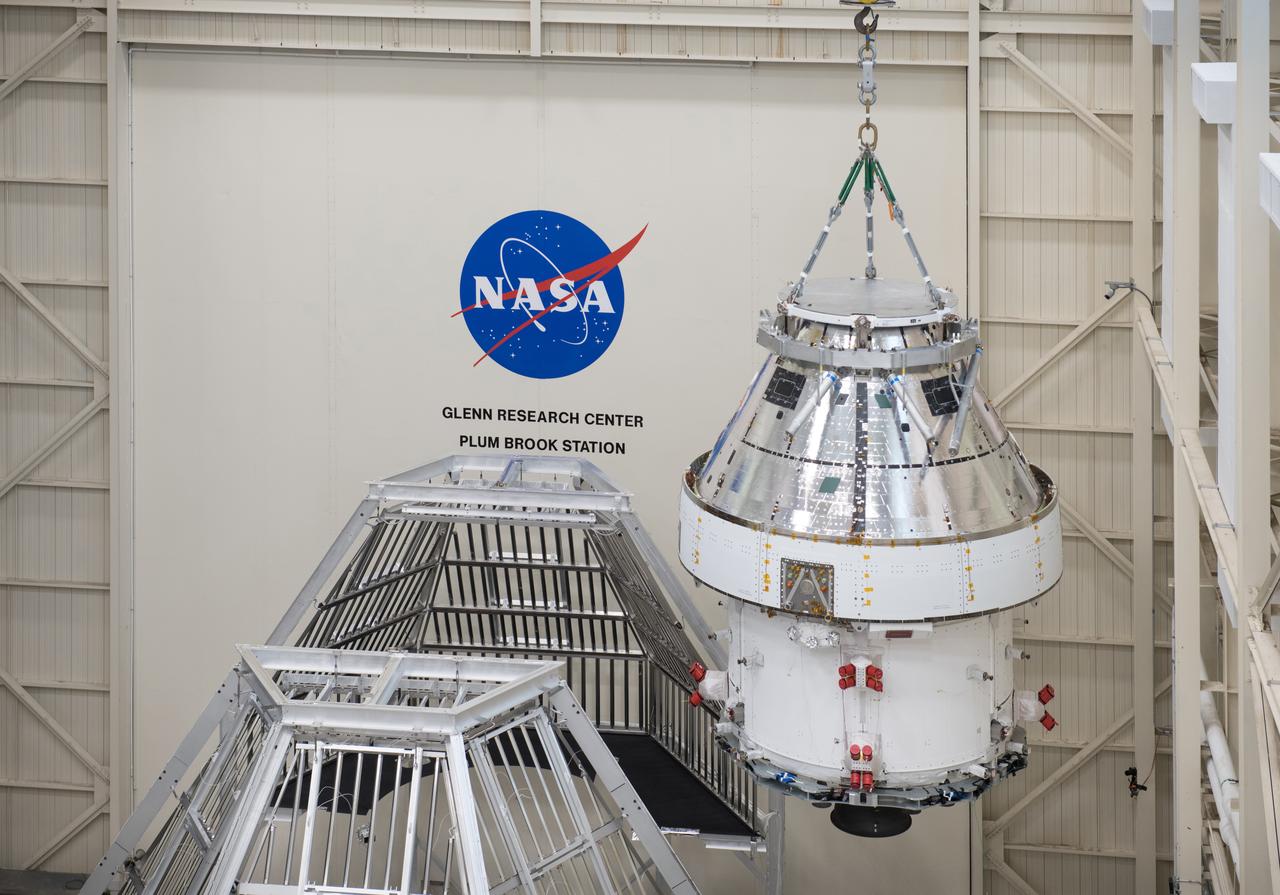
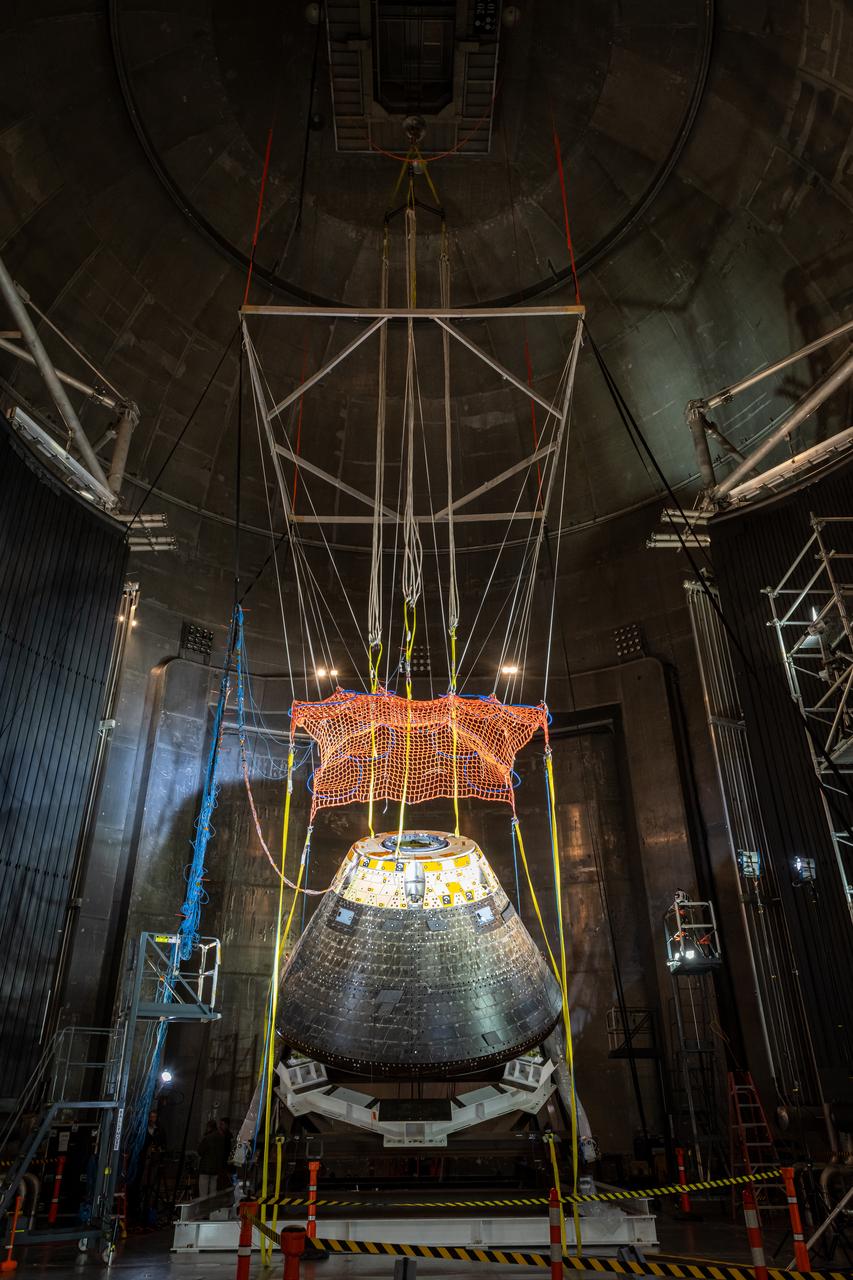
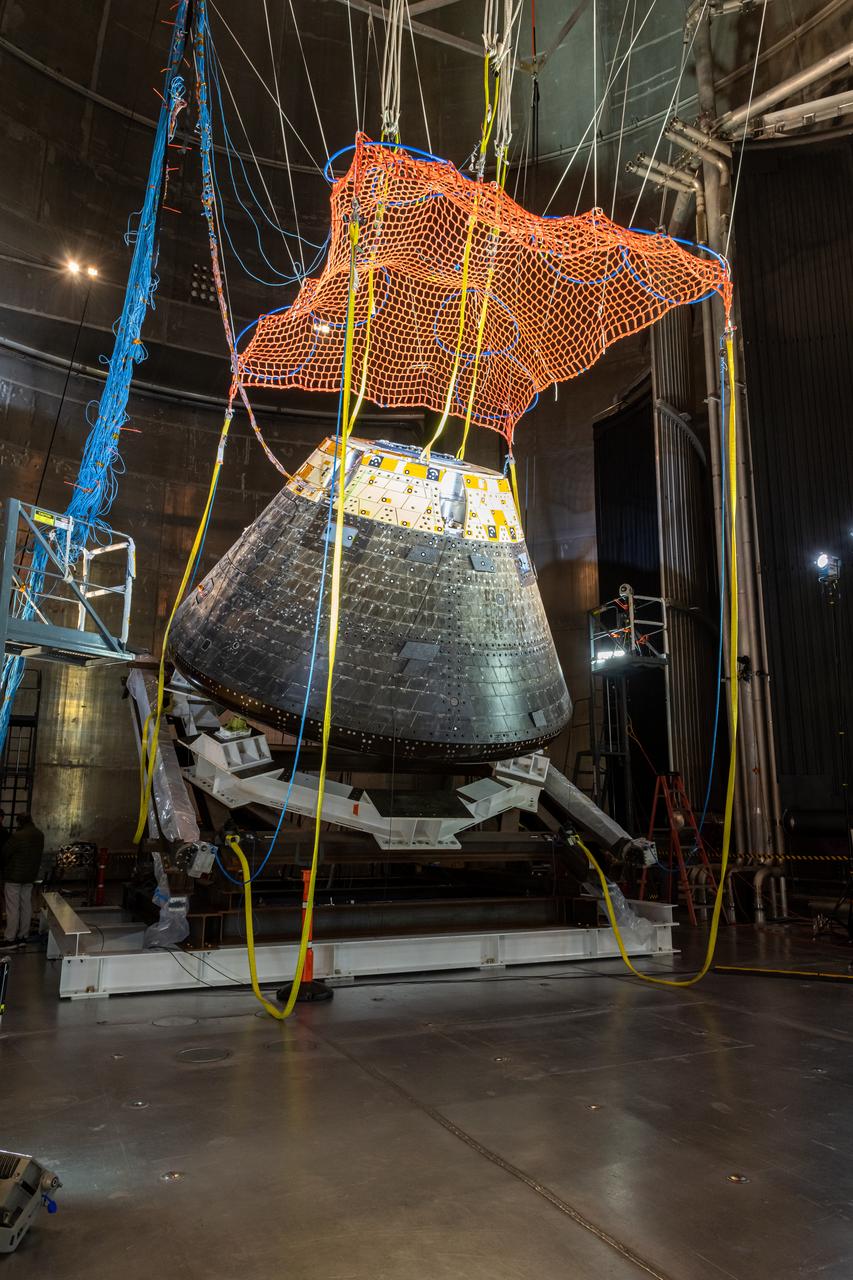
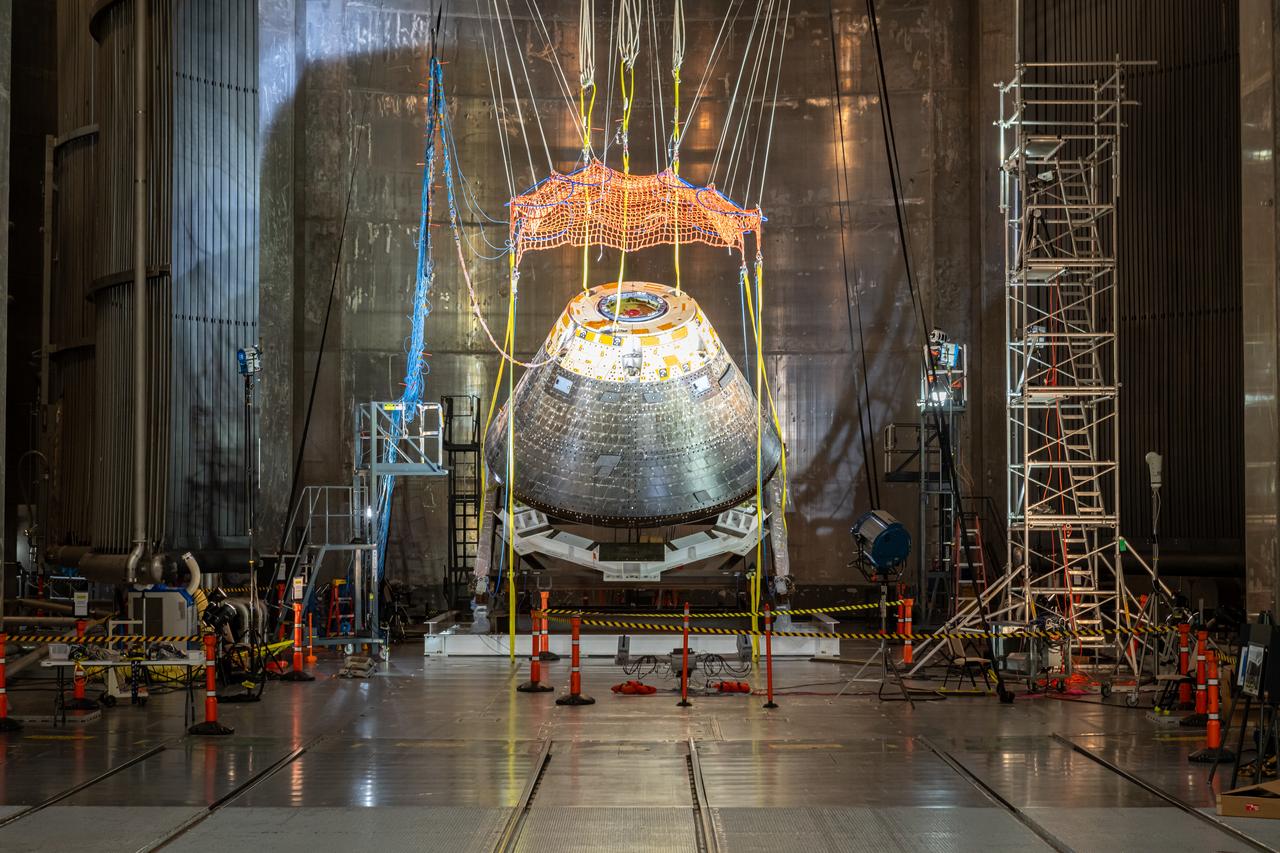
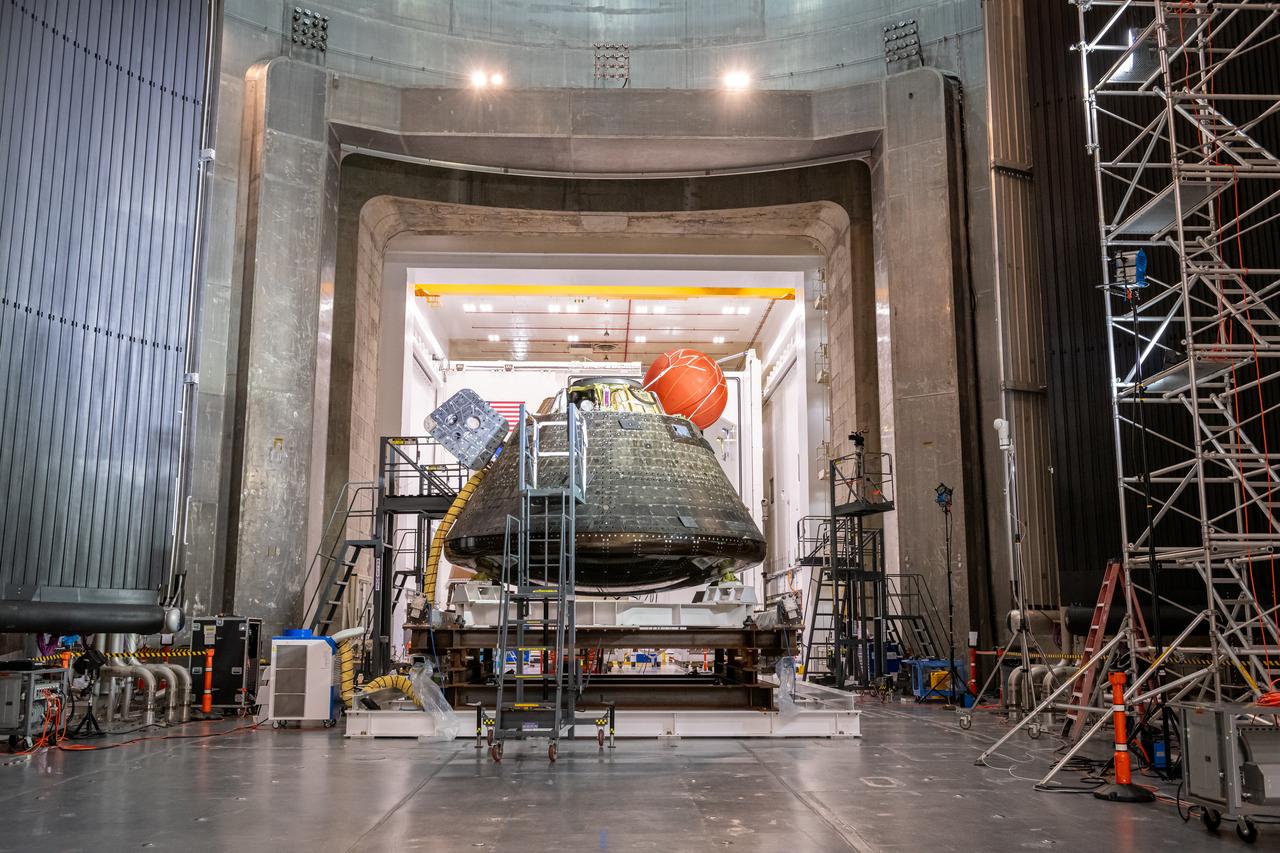
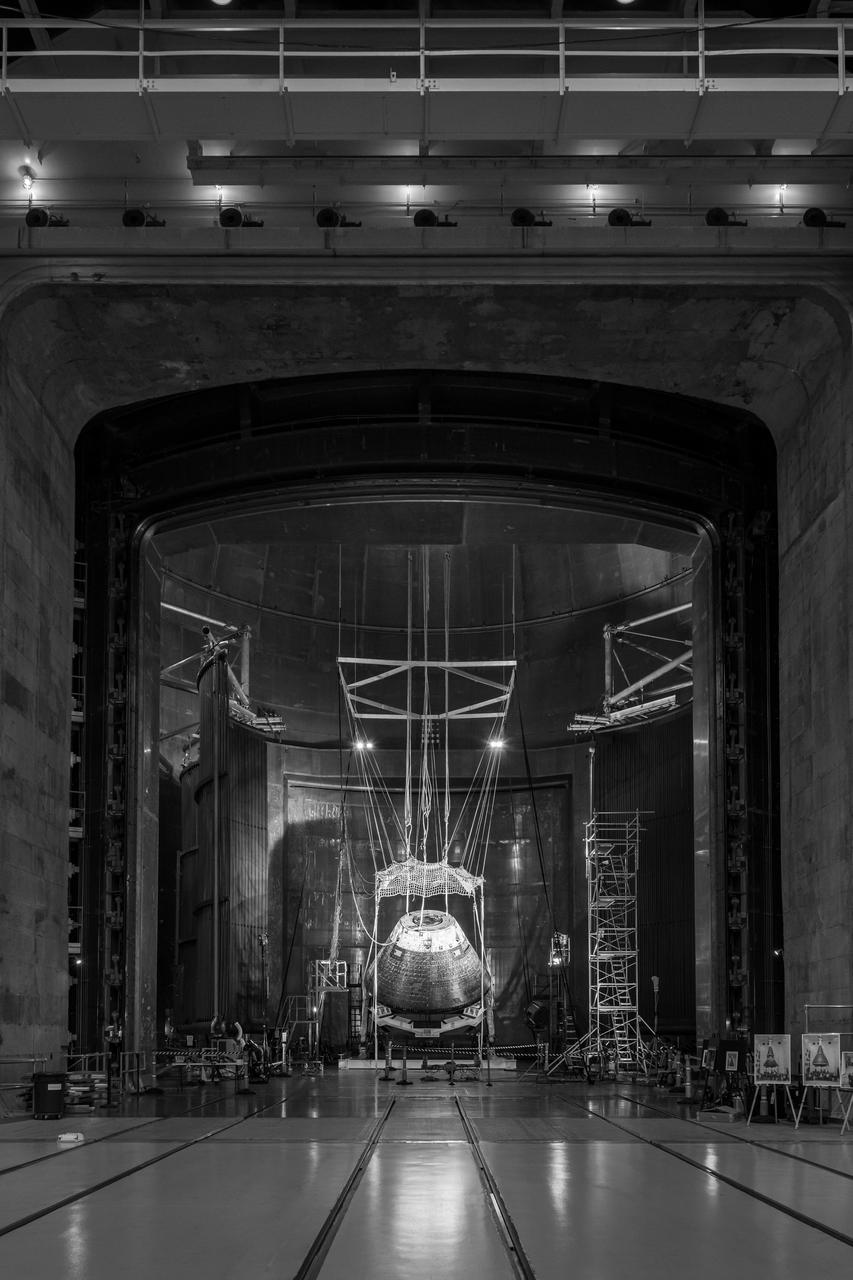
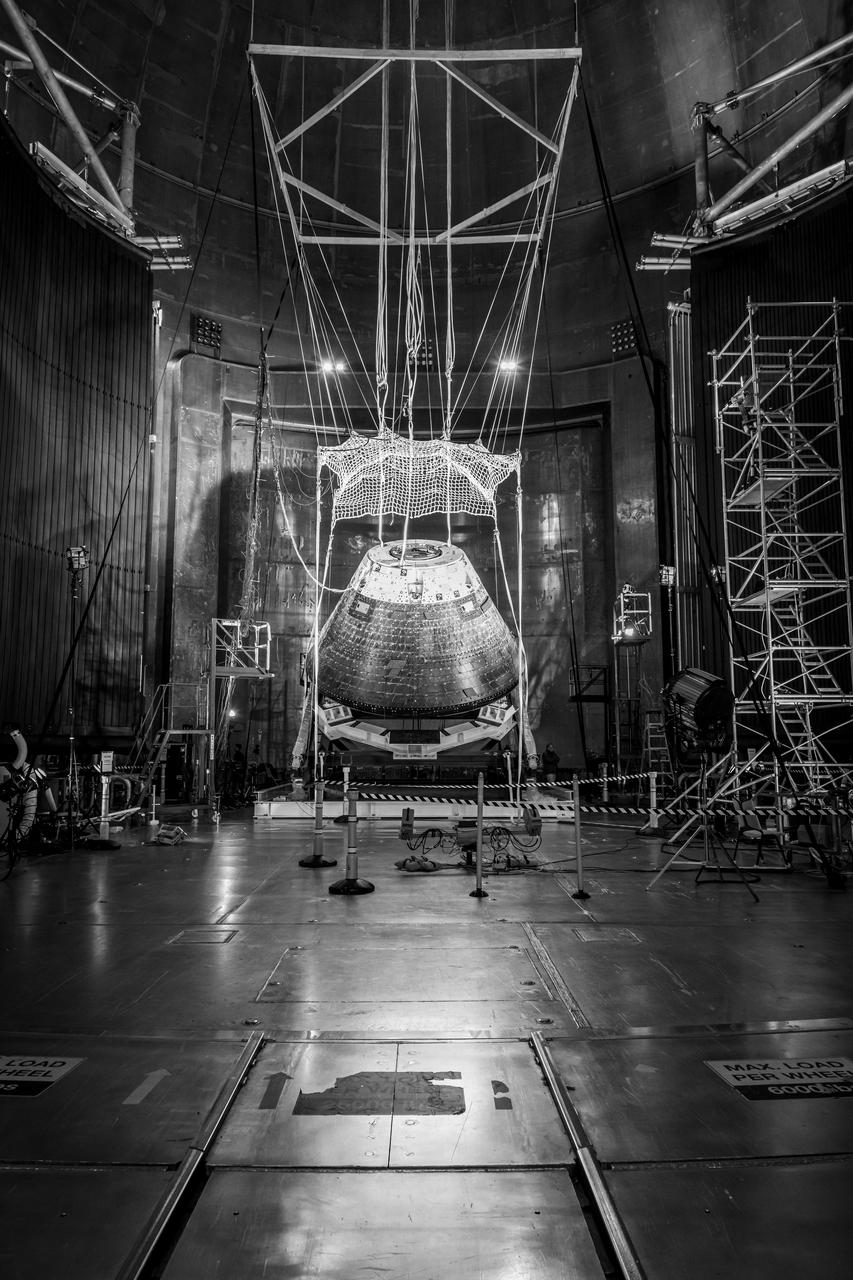
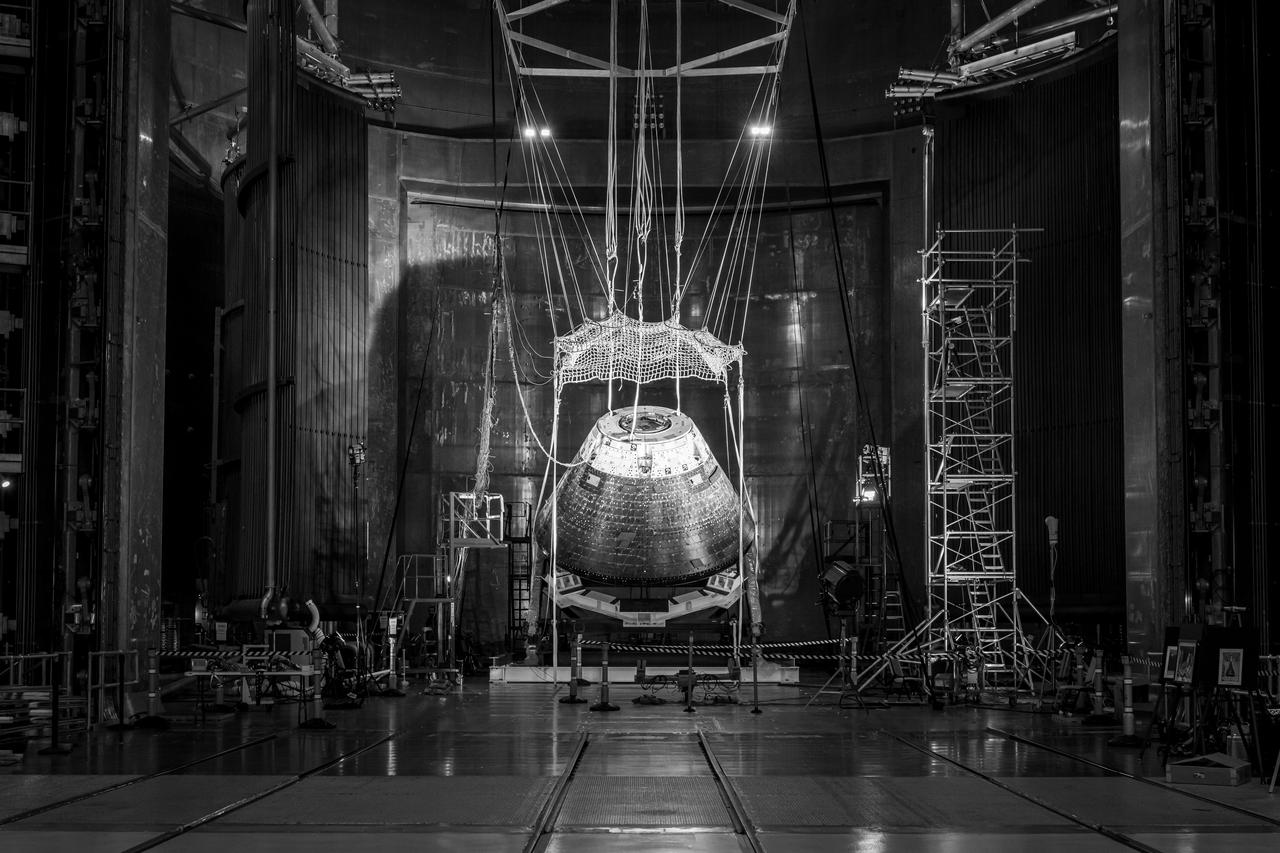
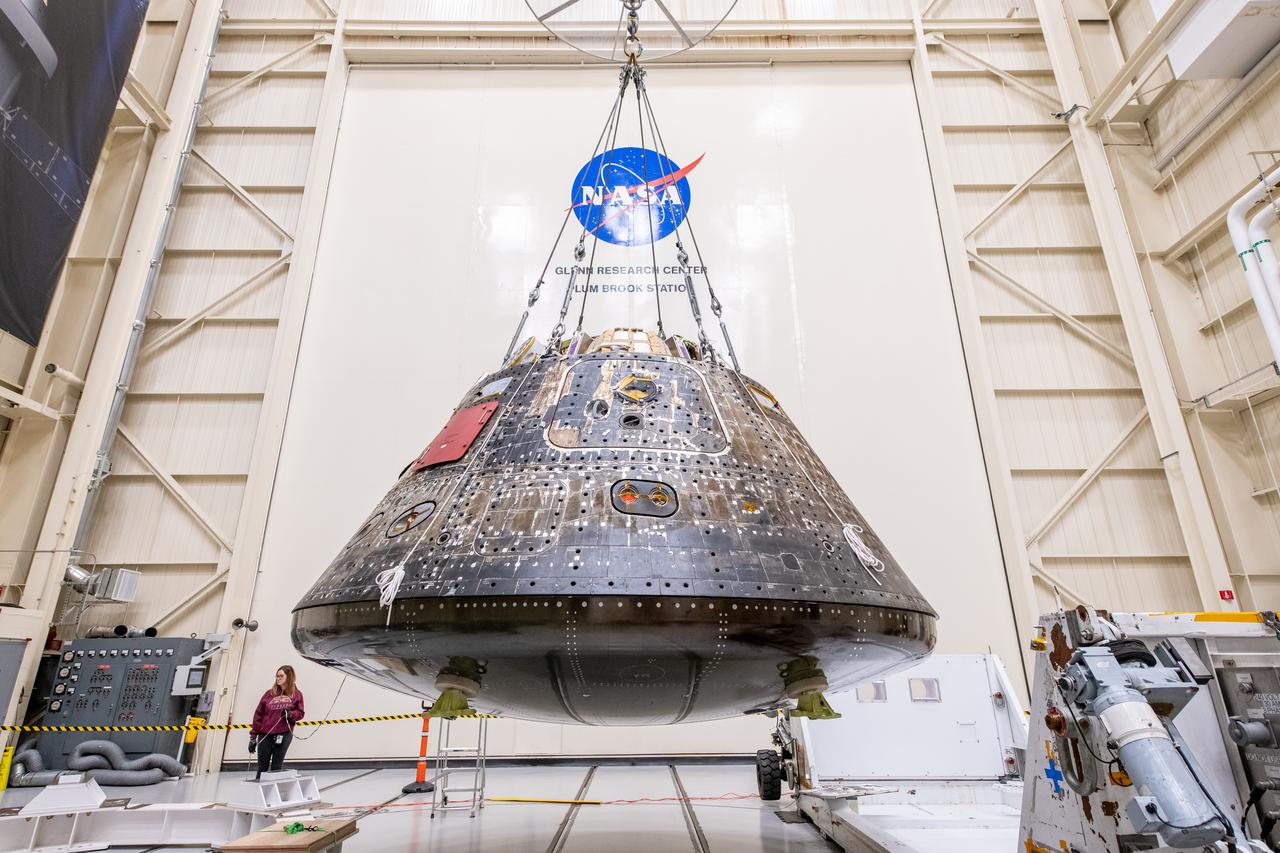
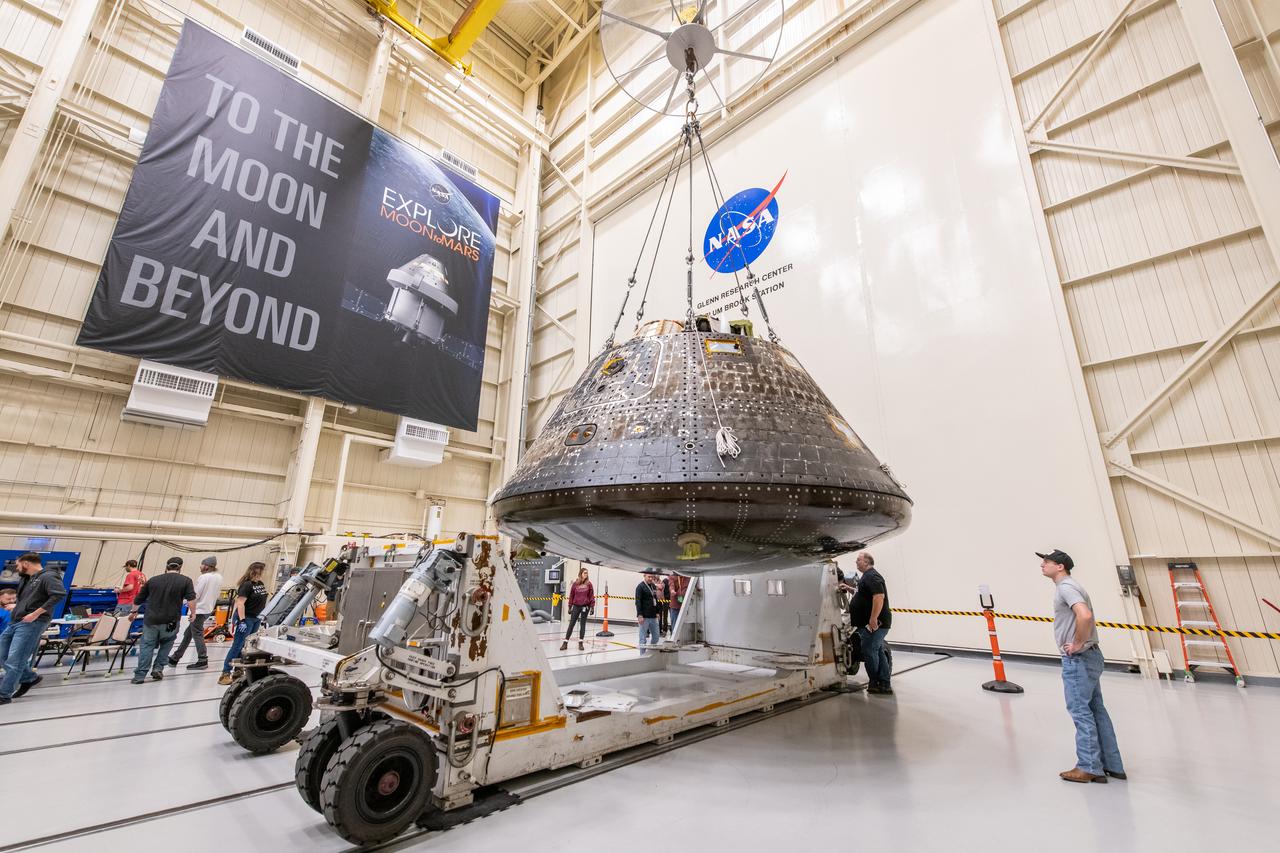
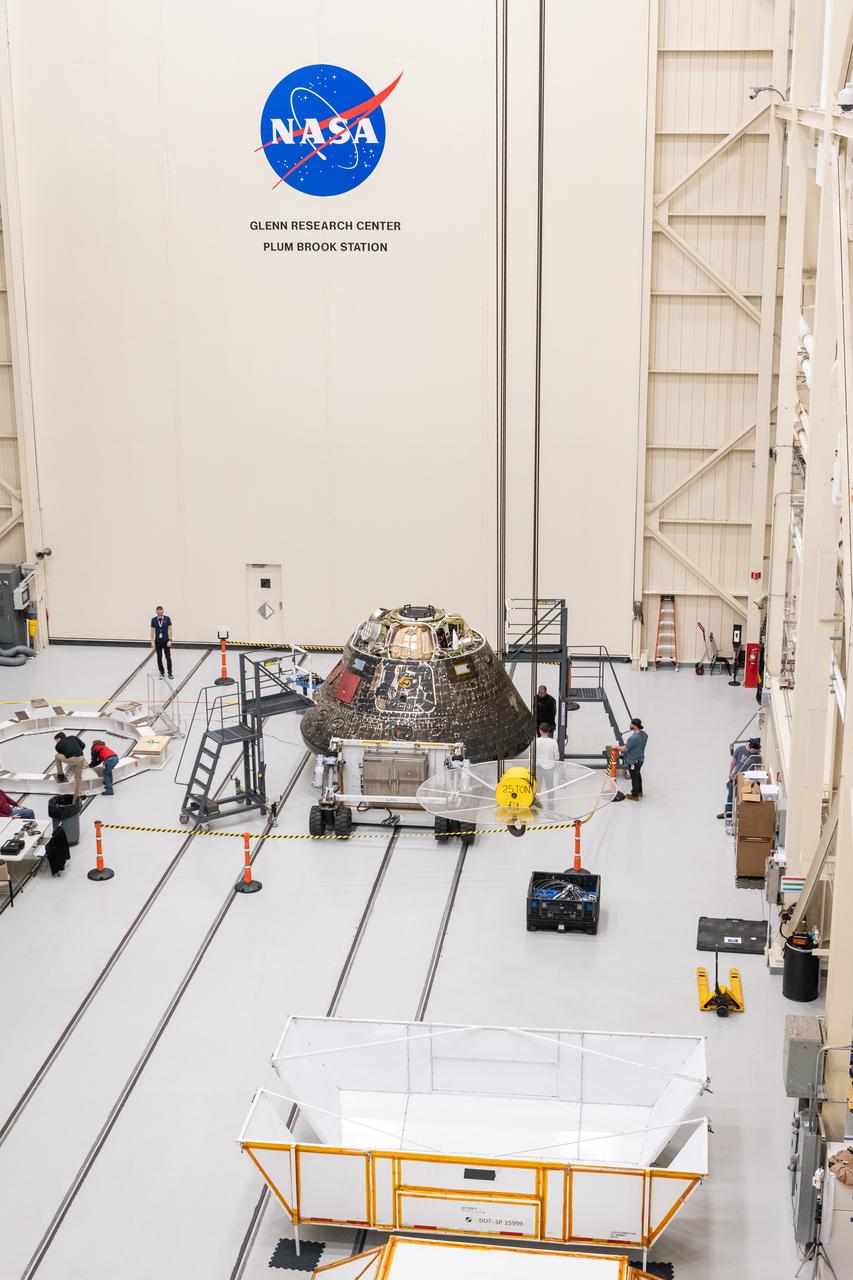
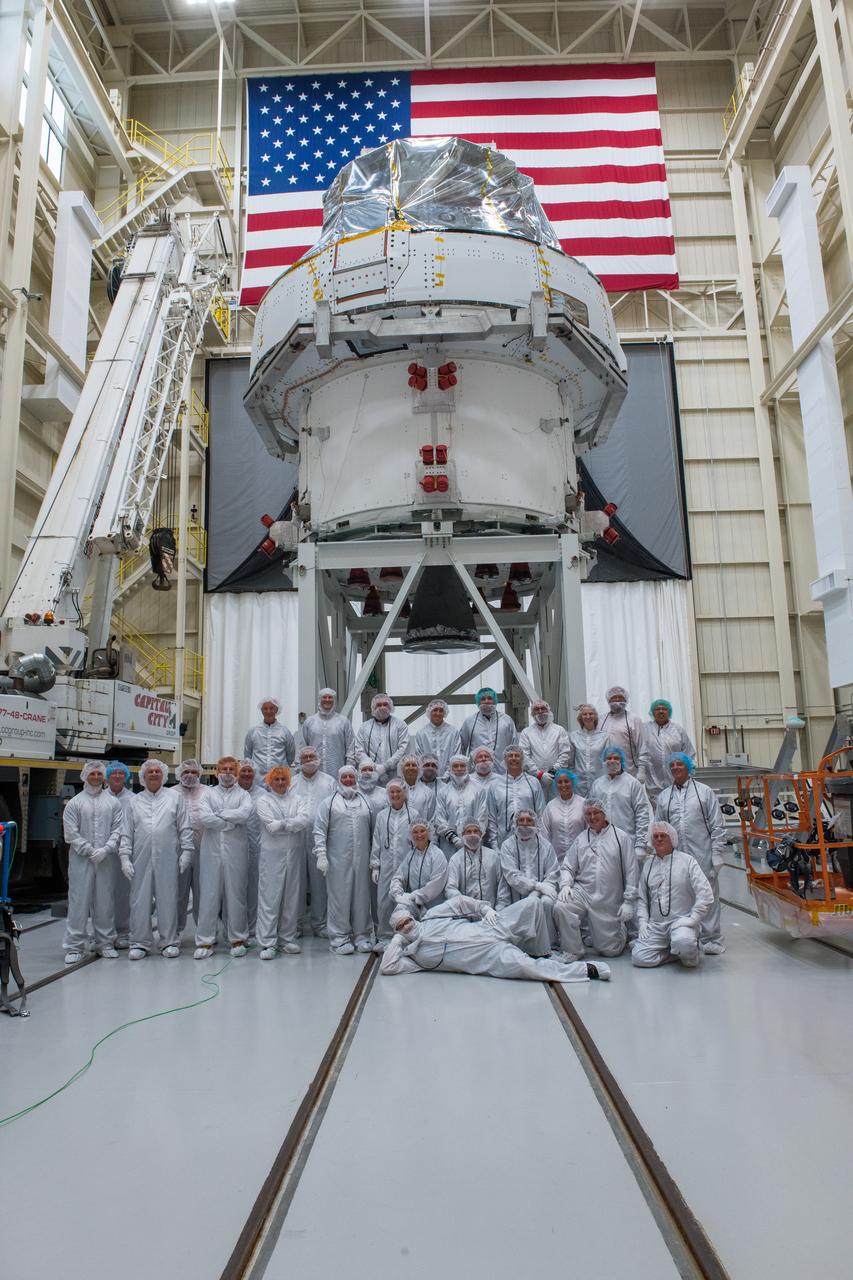
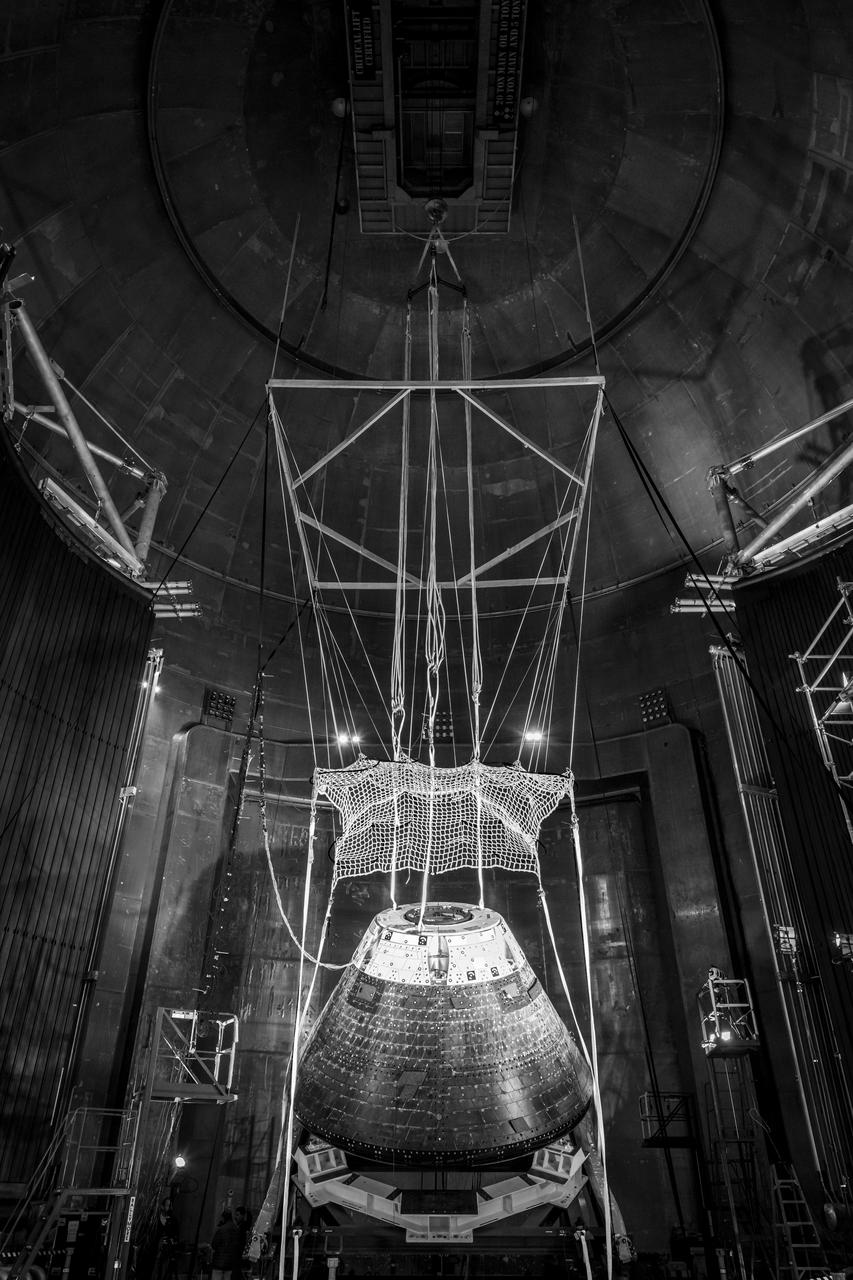
The Orion spacecraft for the Artemis I Mission, consisting of the crew module and European-built service module, sits in the NASA Glenn Research Center, Plum Brook Station, Space Environments Complex, SEC, Thermal Vacuum Chamber after more than three months of testing where it was subjected to the extreme temperatures and electromagnetic environment it will experience in the vacuum of space during Artemis missions.    Orion is a key component of Artemis I, an uncrewed test flight around the Moon that will land the first woman and next man on the lunar surface by 2024.
Orion spacecraft for the Artemis I Mission, consisting of the crew module and European-built service module, sits in the NASA Glenn Research Center, Plum Brook Station, Space Environments Complex, SEC, Thermal Vacuum Chamber
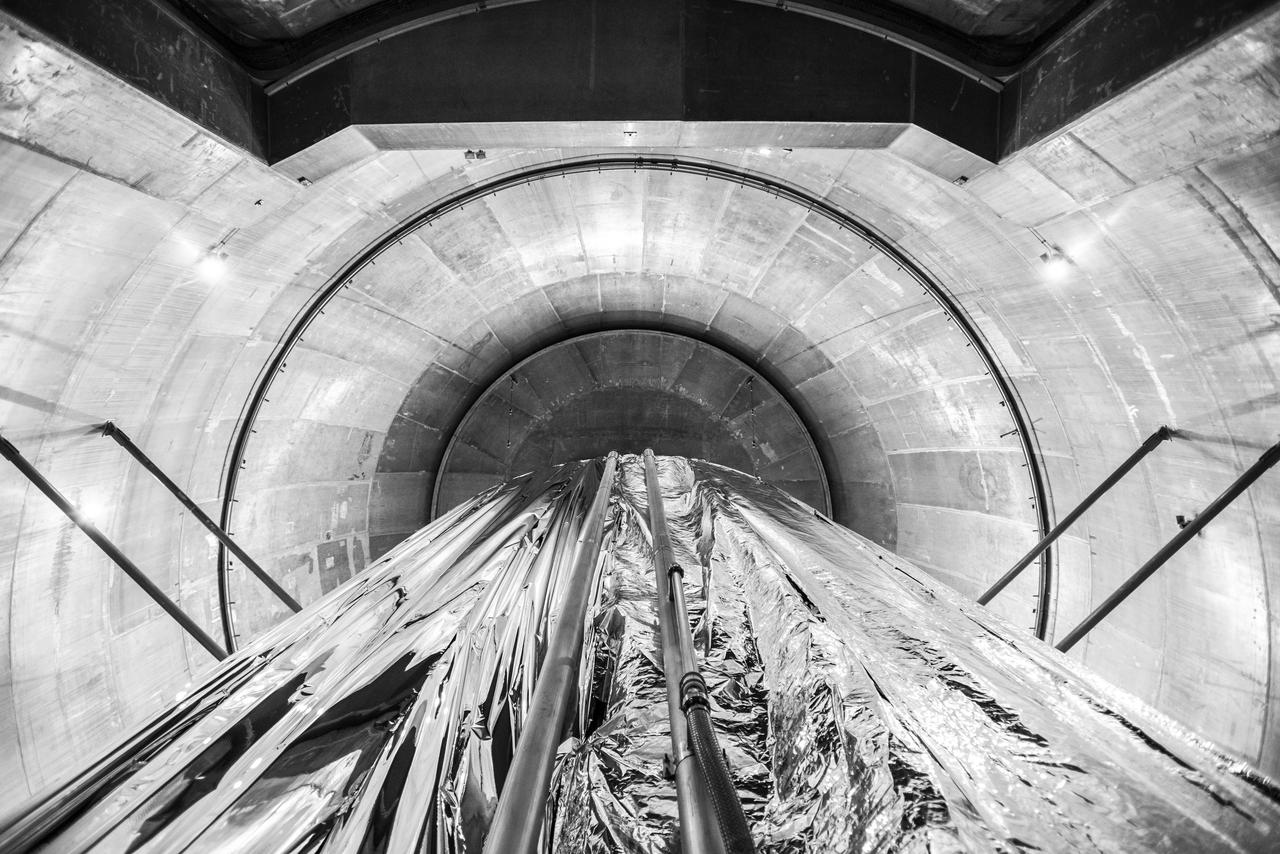
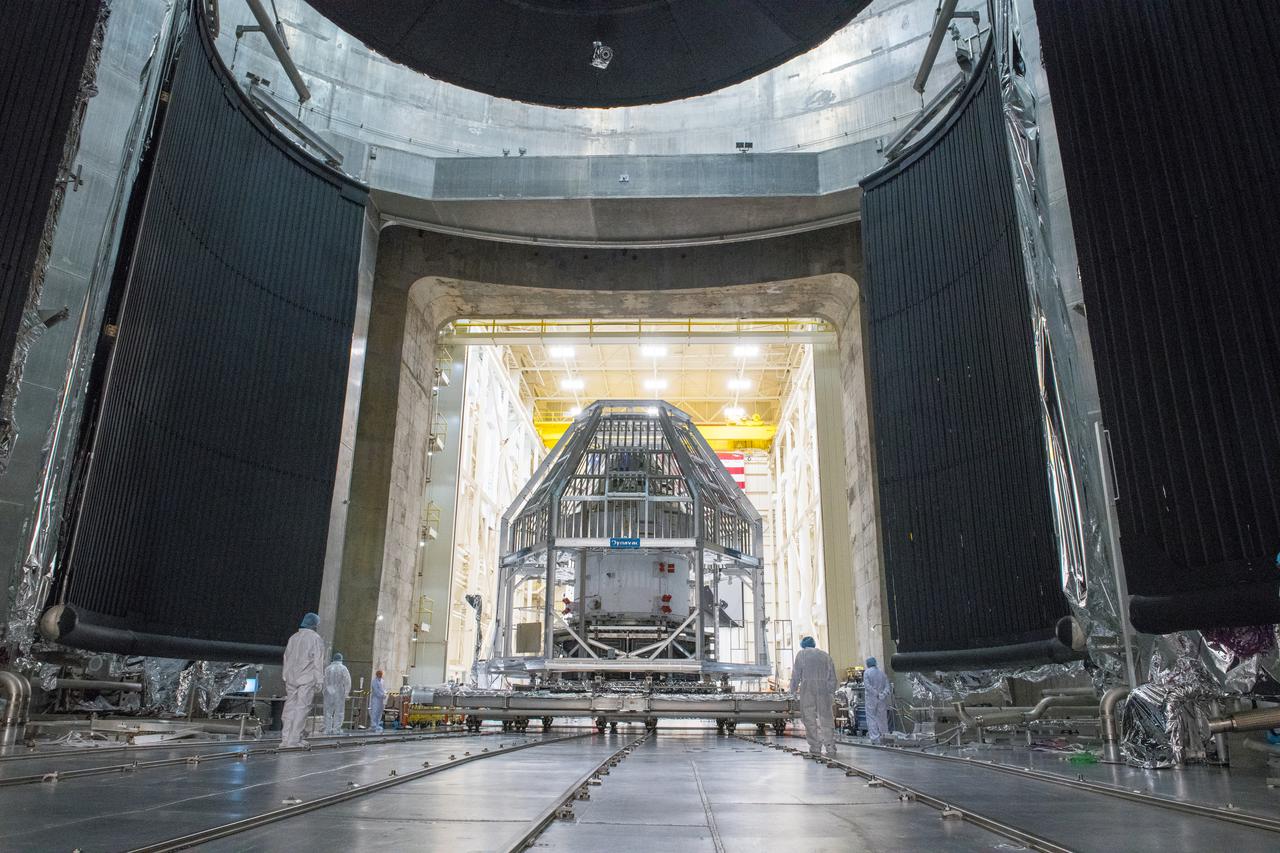
Space Environments Complex Vacuum Chamber. Cryoshroud, used to provide the thermal cold sink for Orion Vehicle testing. This view is looking at the west side of the Cryoshroud where the northwest and southwest walls intersect in the closed position.  The view is from the Space Environments Complex, SEC Vacuum Chamber floor, directly up towards the vacuum chamber dome.
GRC-2019-C-13298
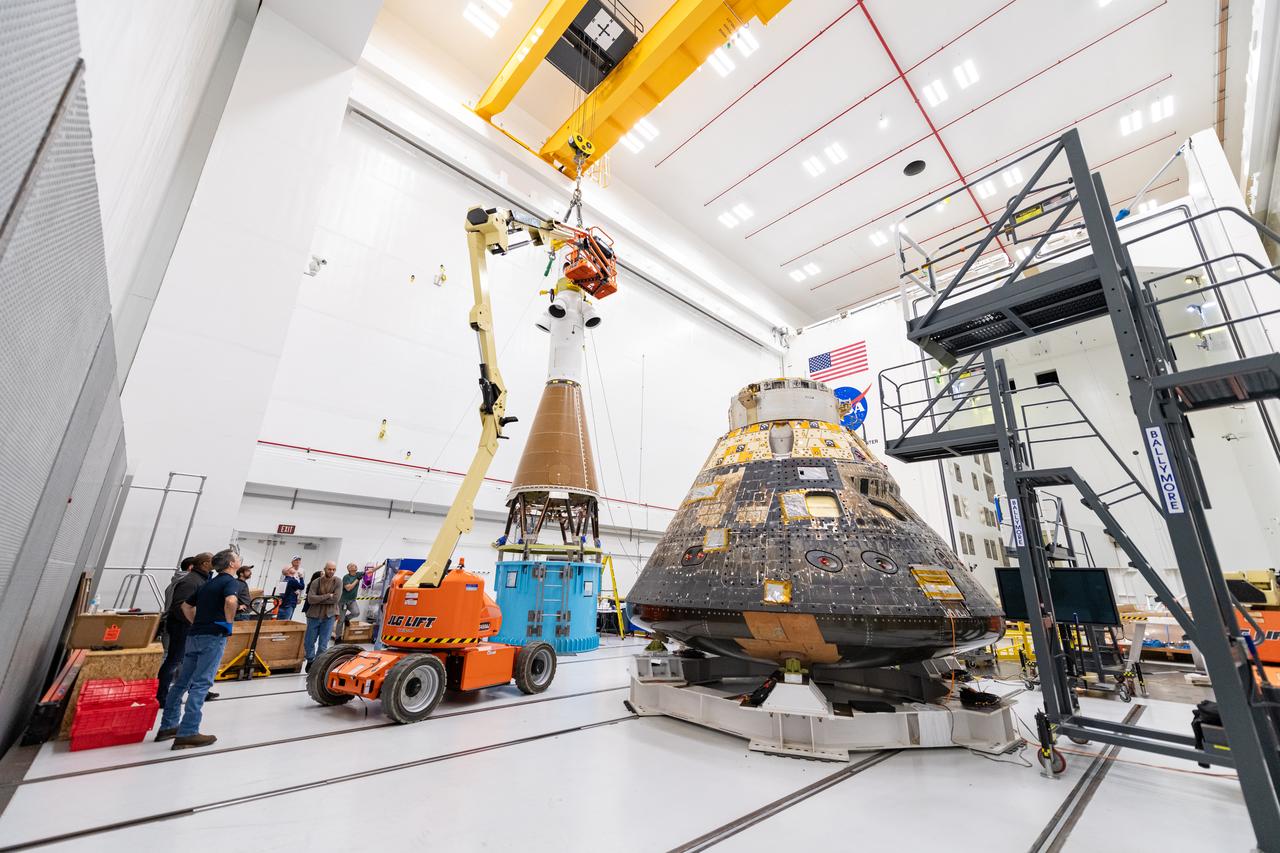
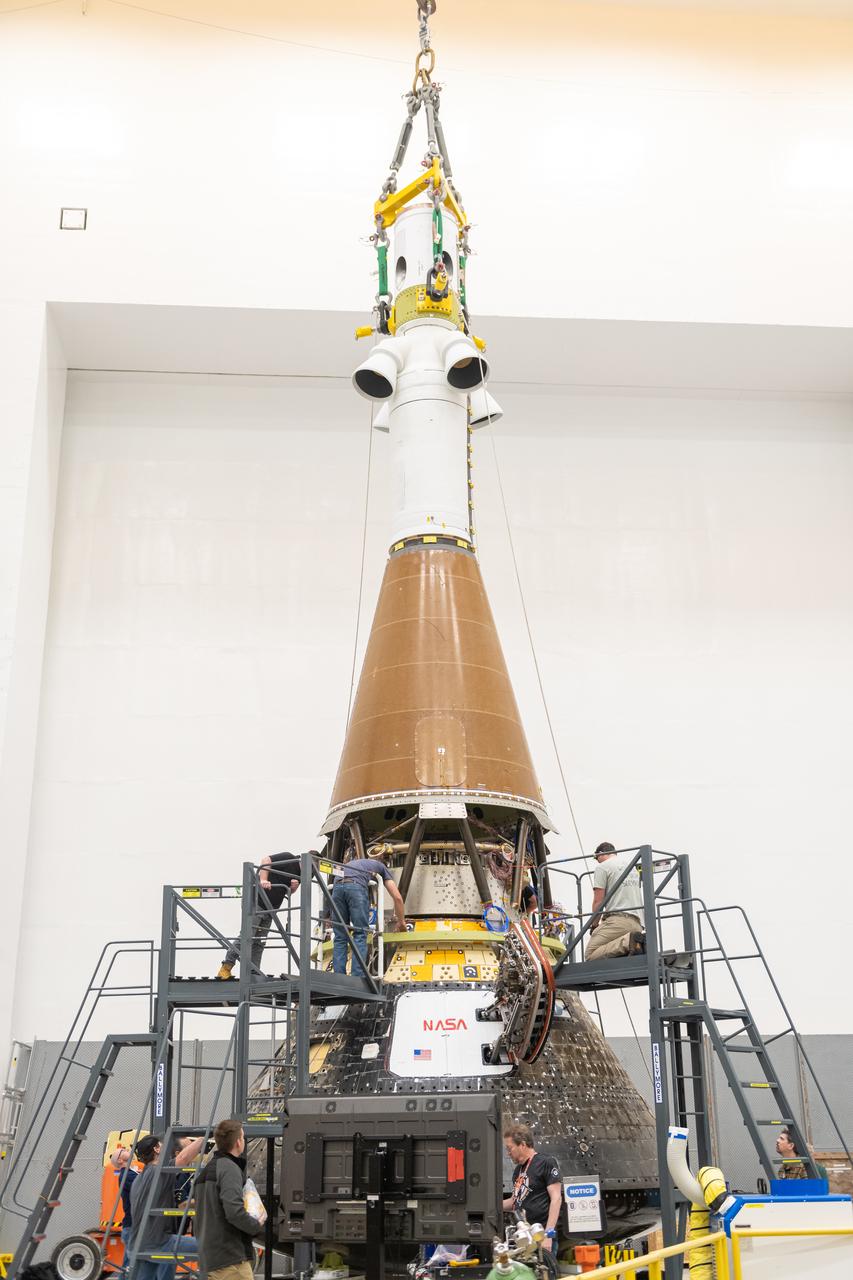
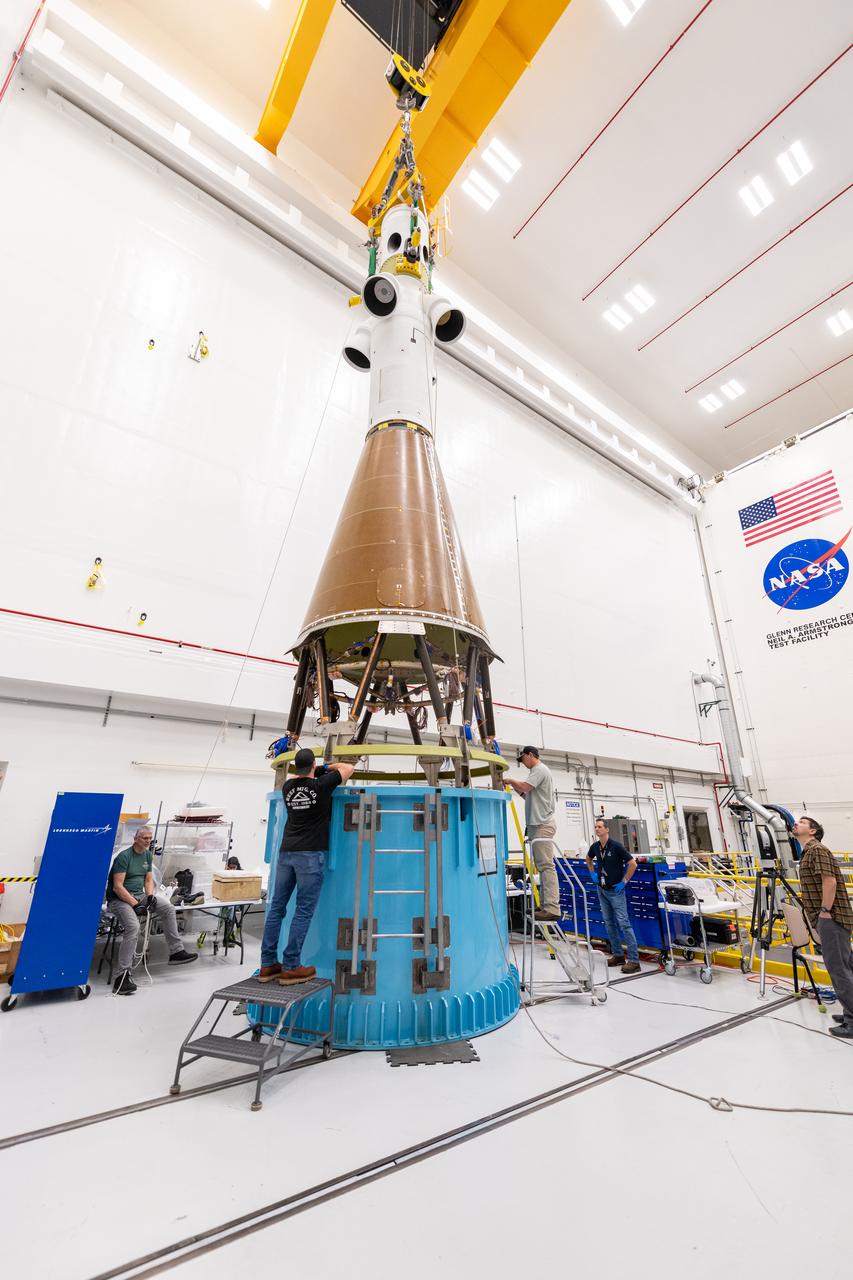
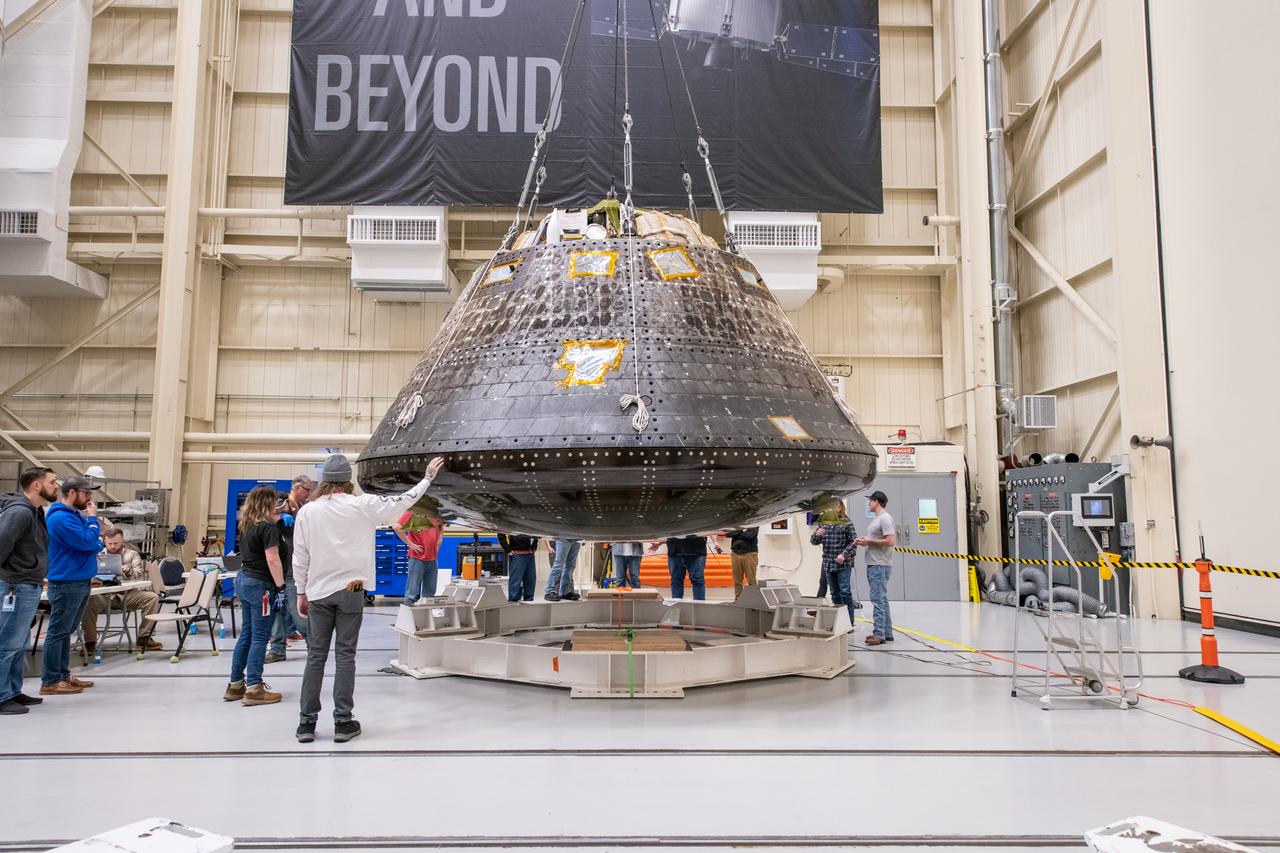
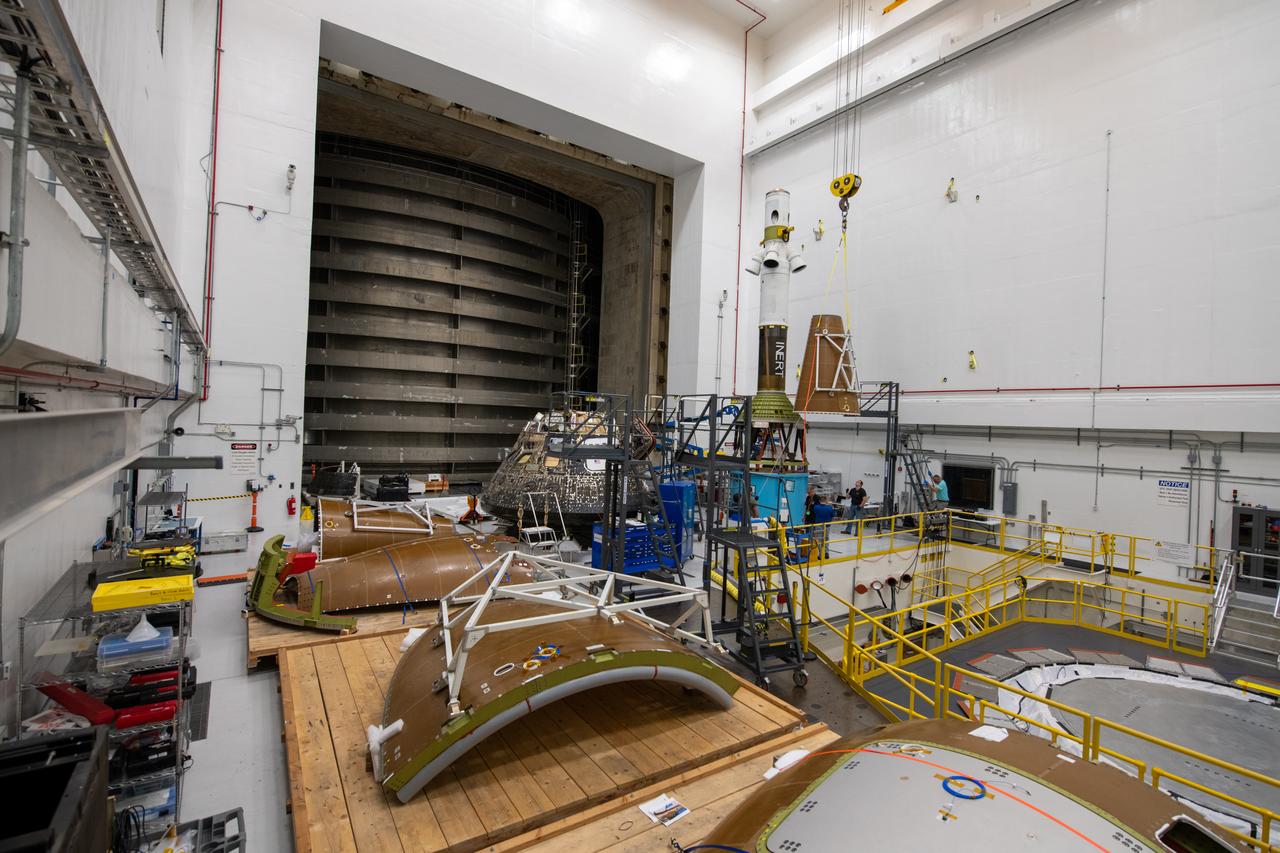
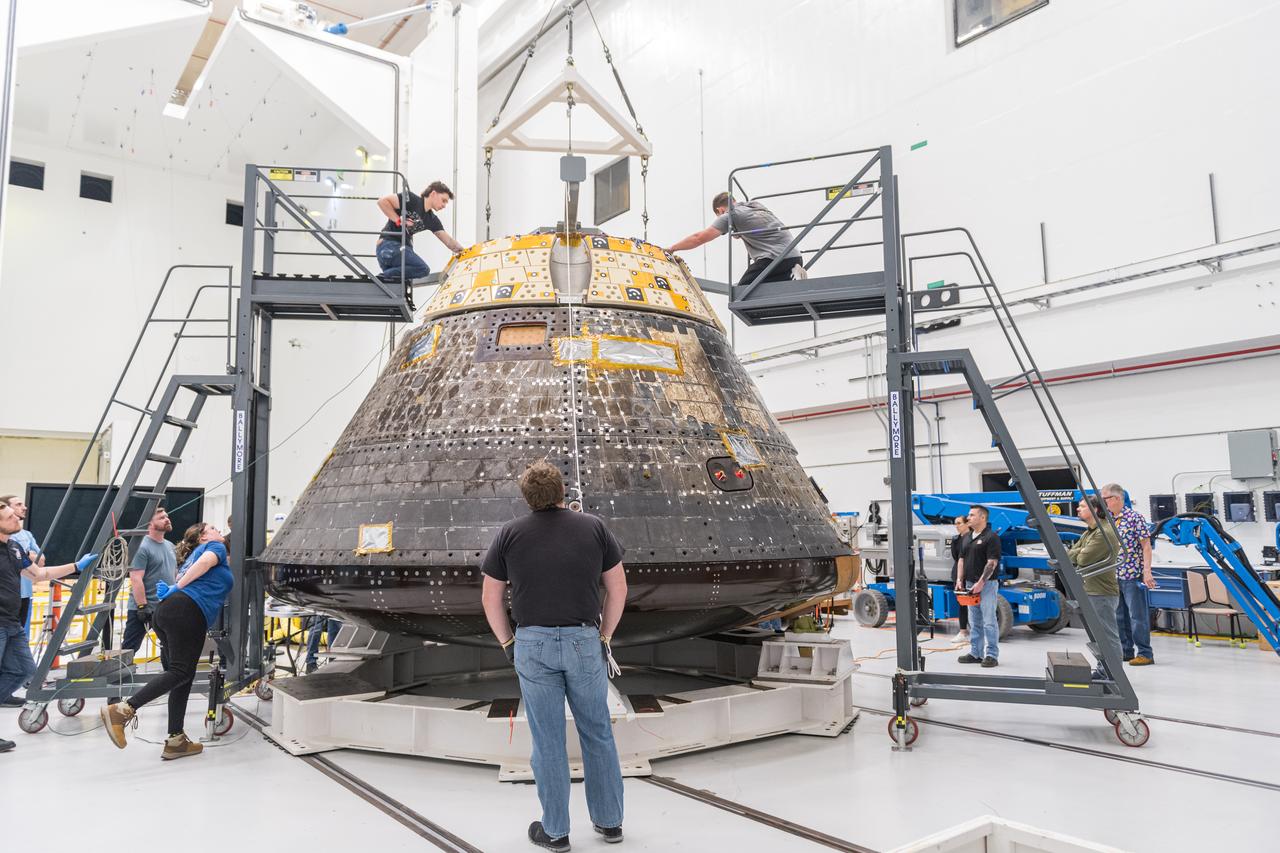
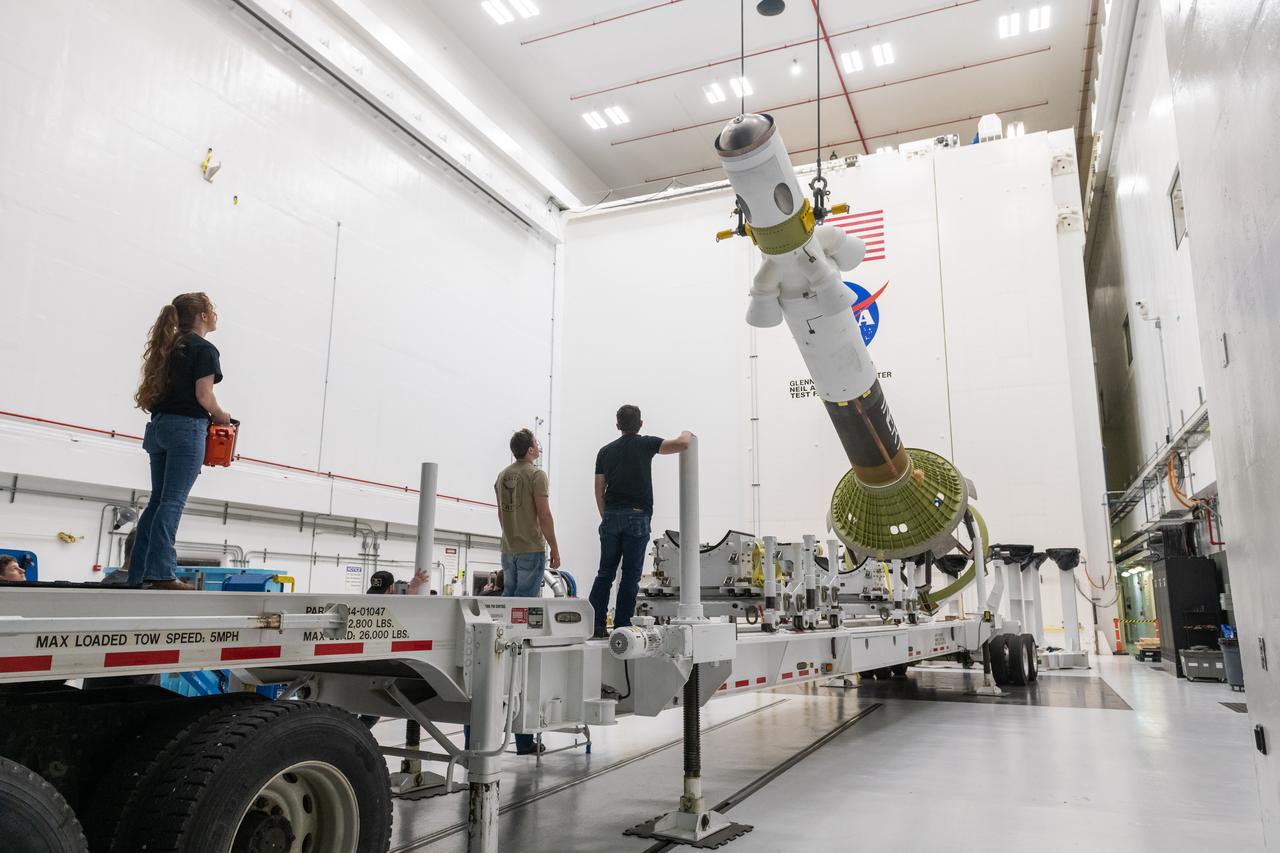
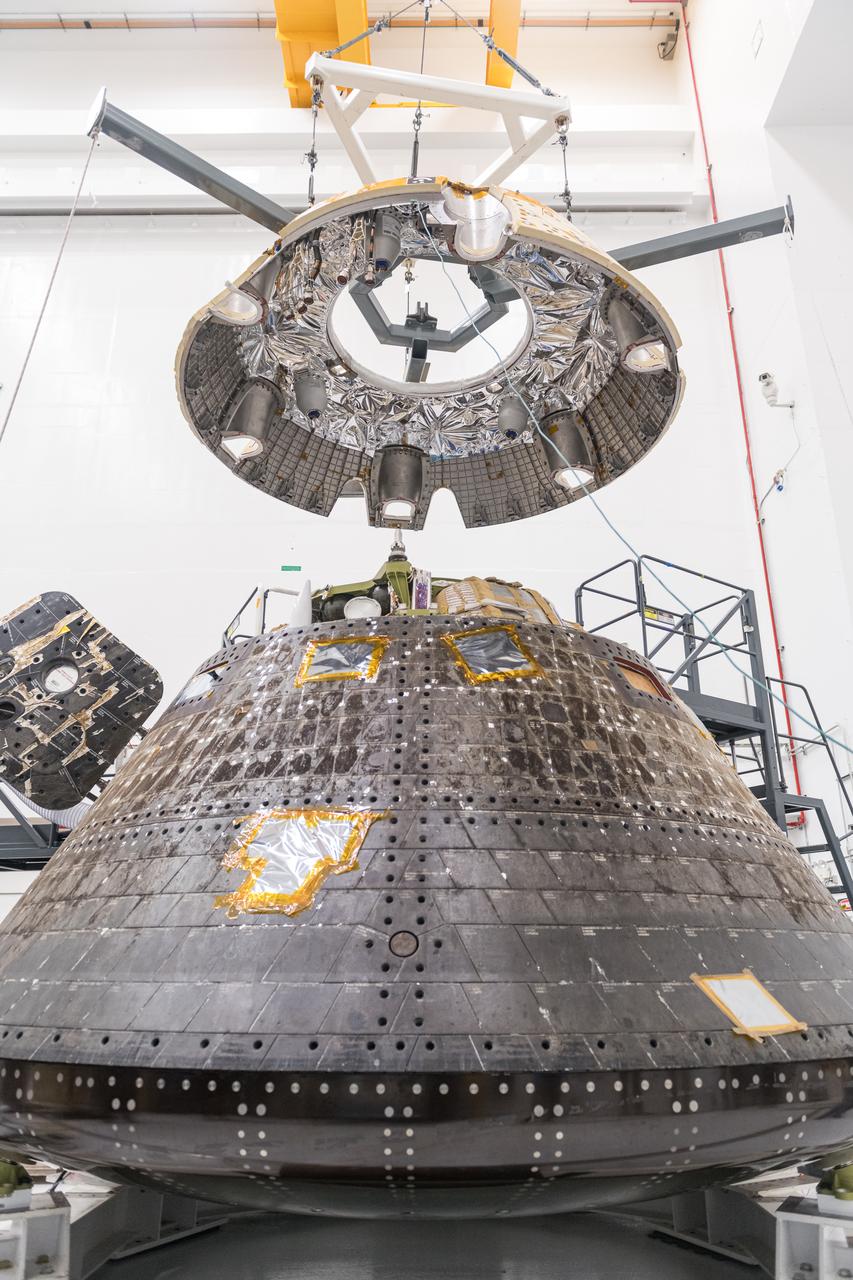
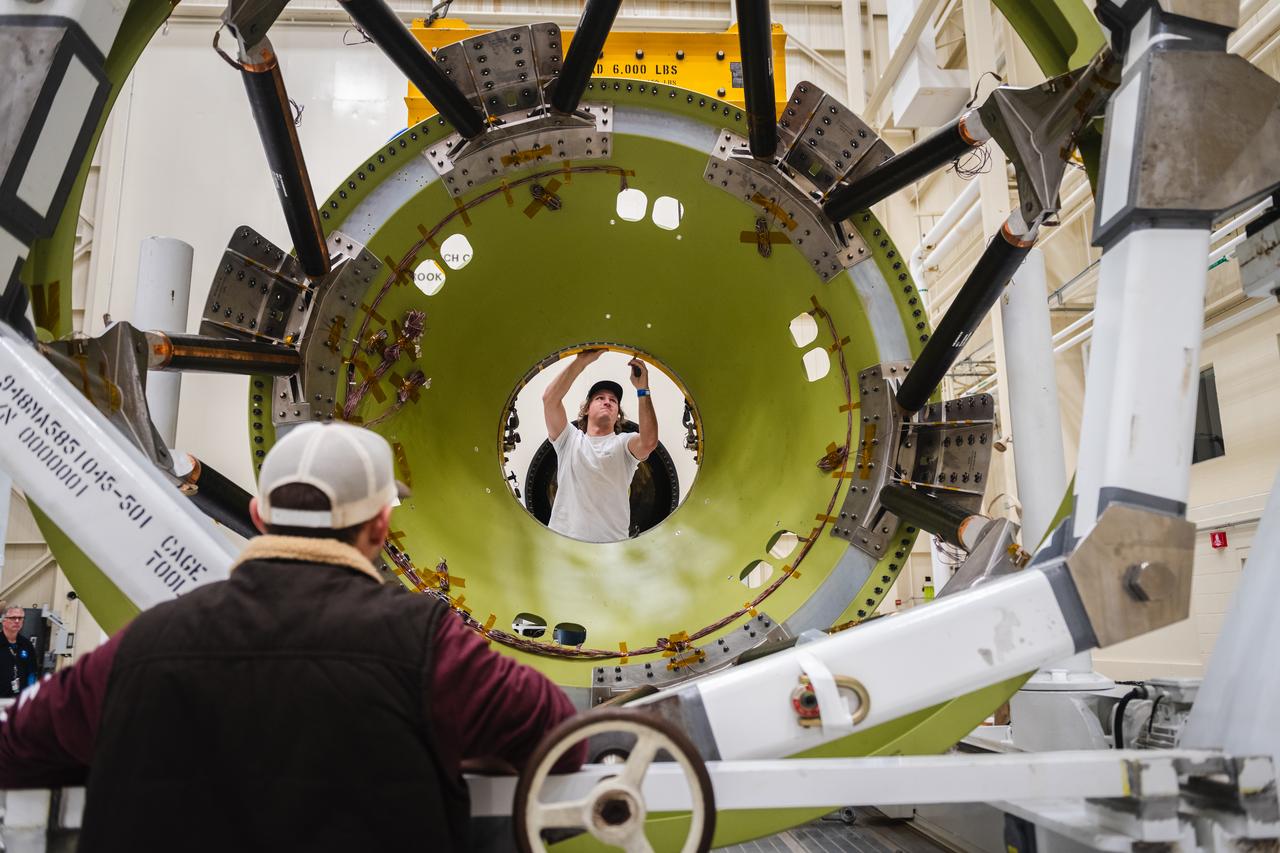
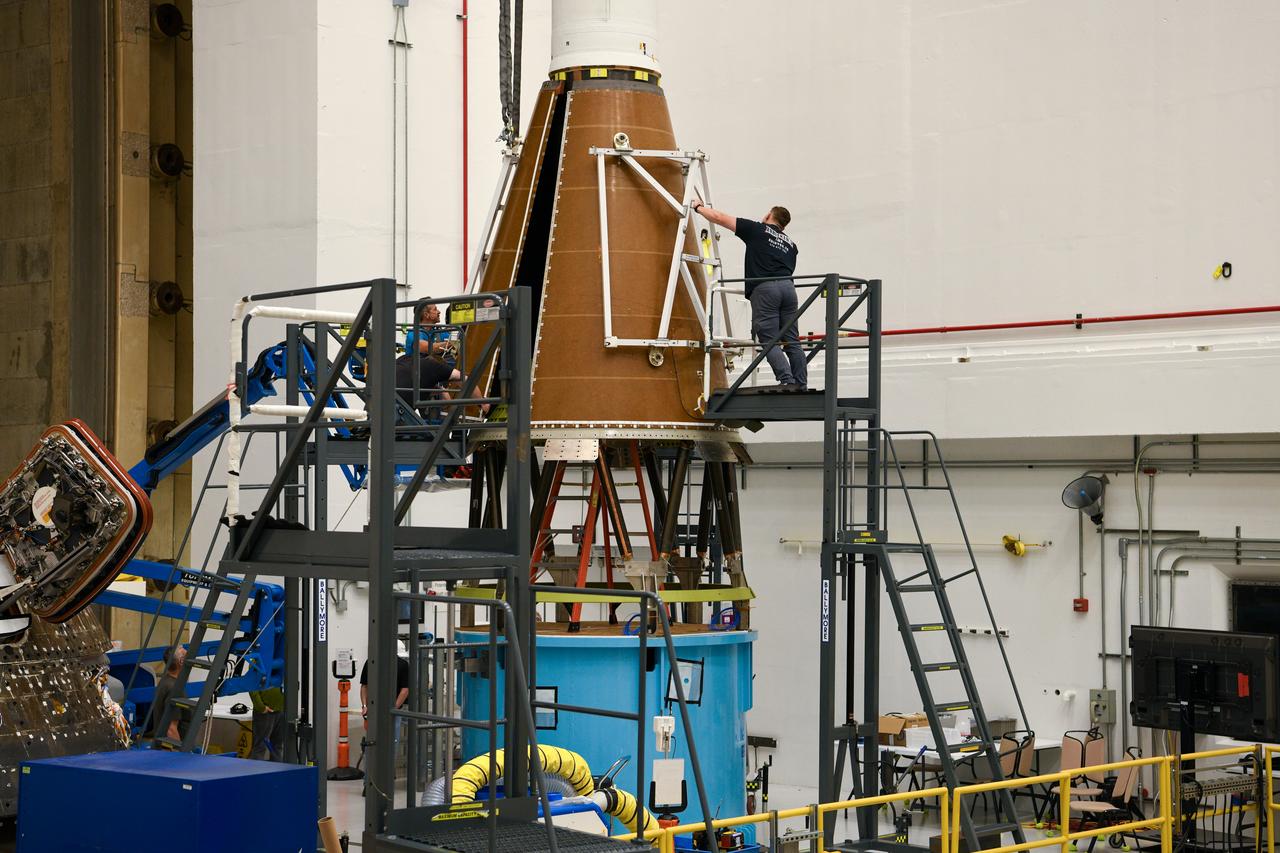
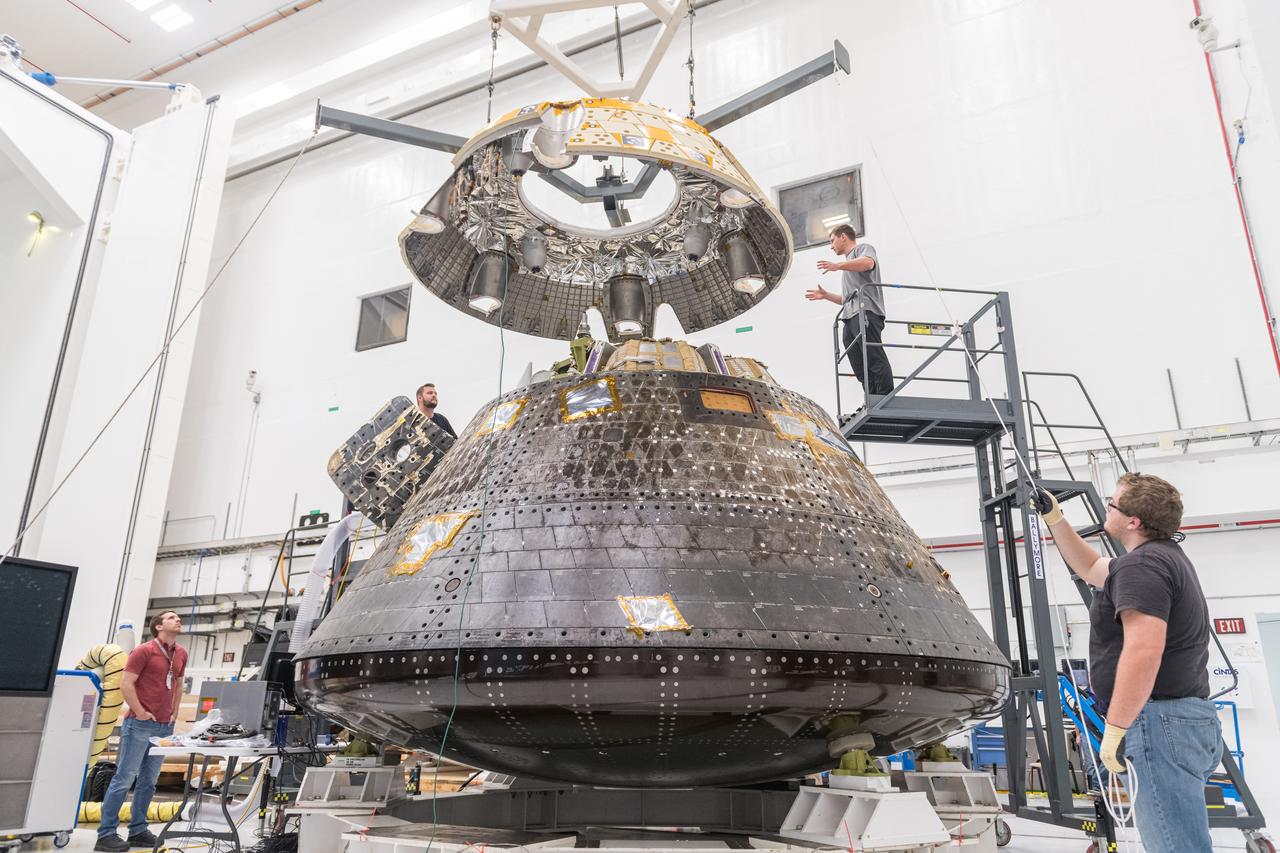
The Launch Abort Systems gets installed on to the Orion Crew Module, also known as the Orion Environmental Test Article (ETA), in preparation for testing at the Space Environments Complex at NASA’s Neil Armstrong Test Facility in Saundusky, Ohio. The ETA completed an 11-month test campaign in 2024 necessary for the safety and success of Artemis II. Photo Credit: (NASA/Jordan Salkin)
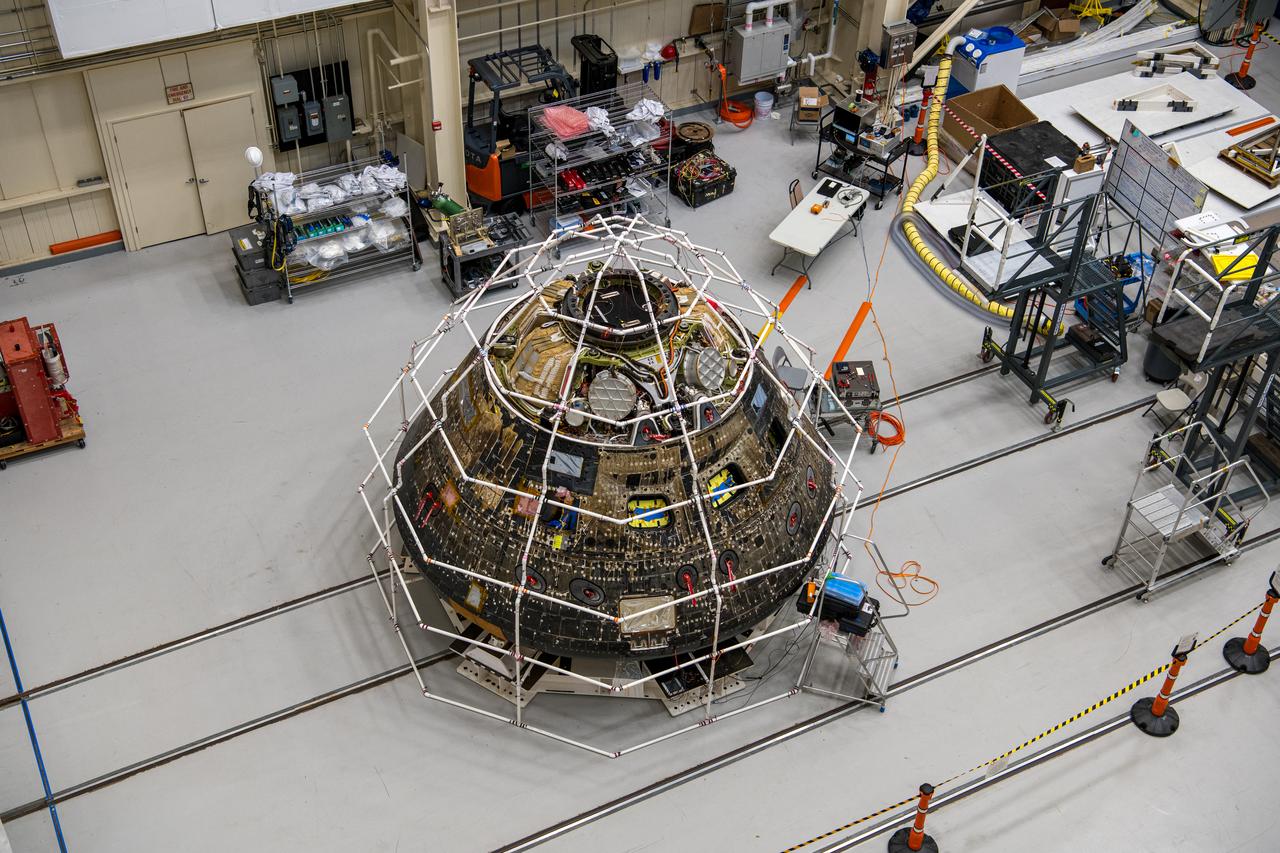
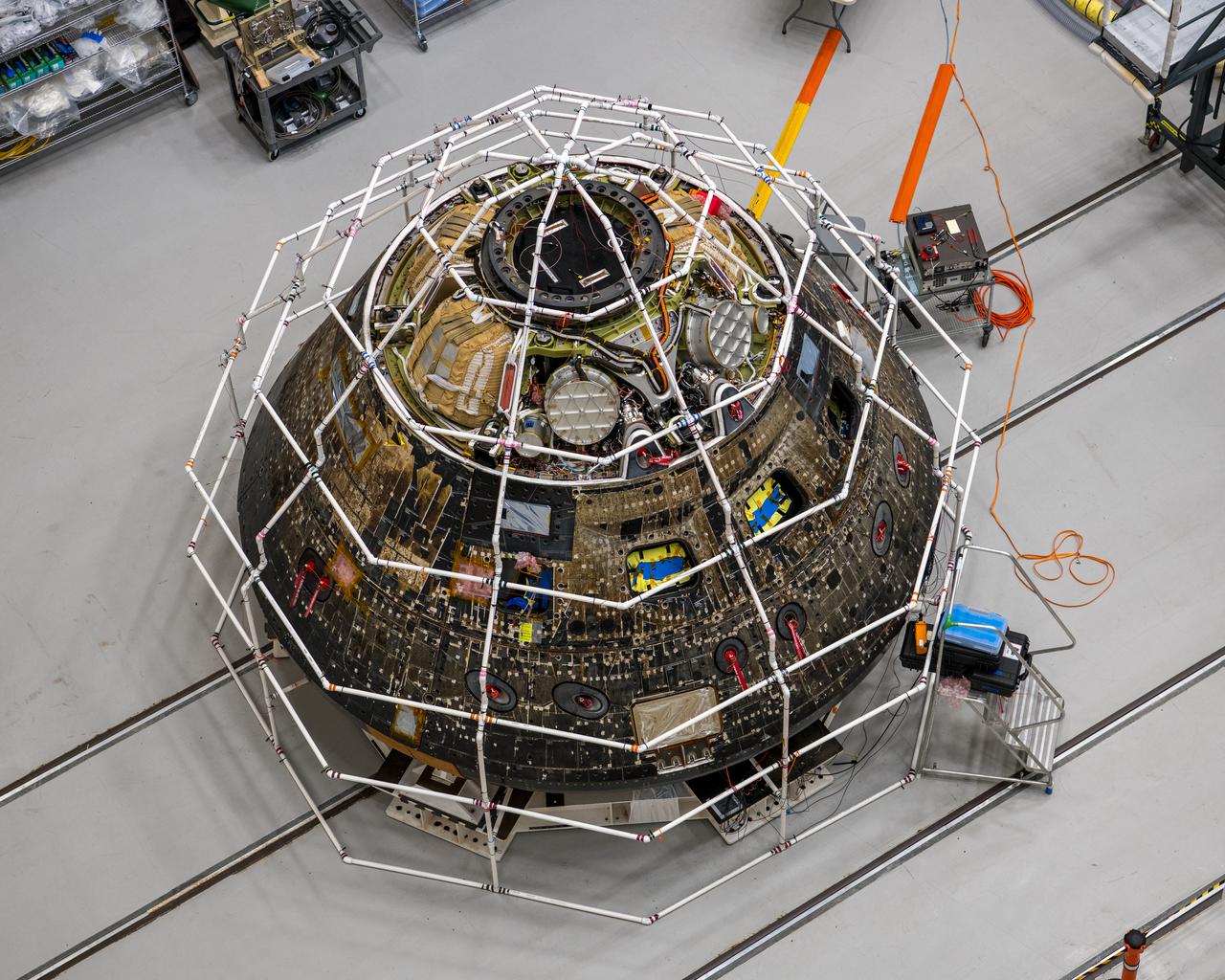
The Orion Environmental Test Article (ETA) at the Space Environments Complex at NASA’s Glenn Research Center
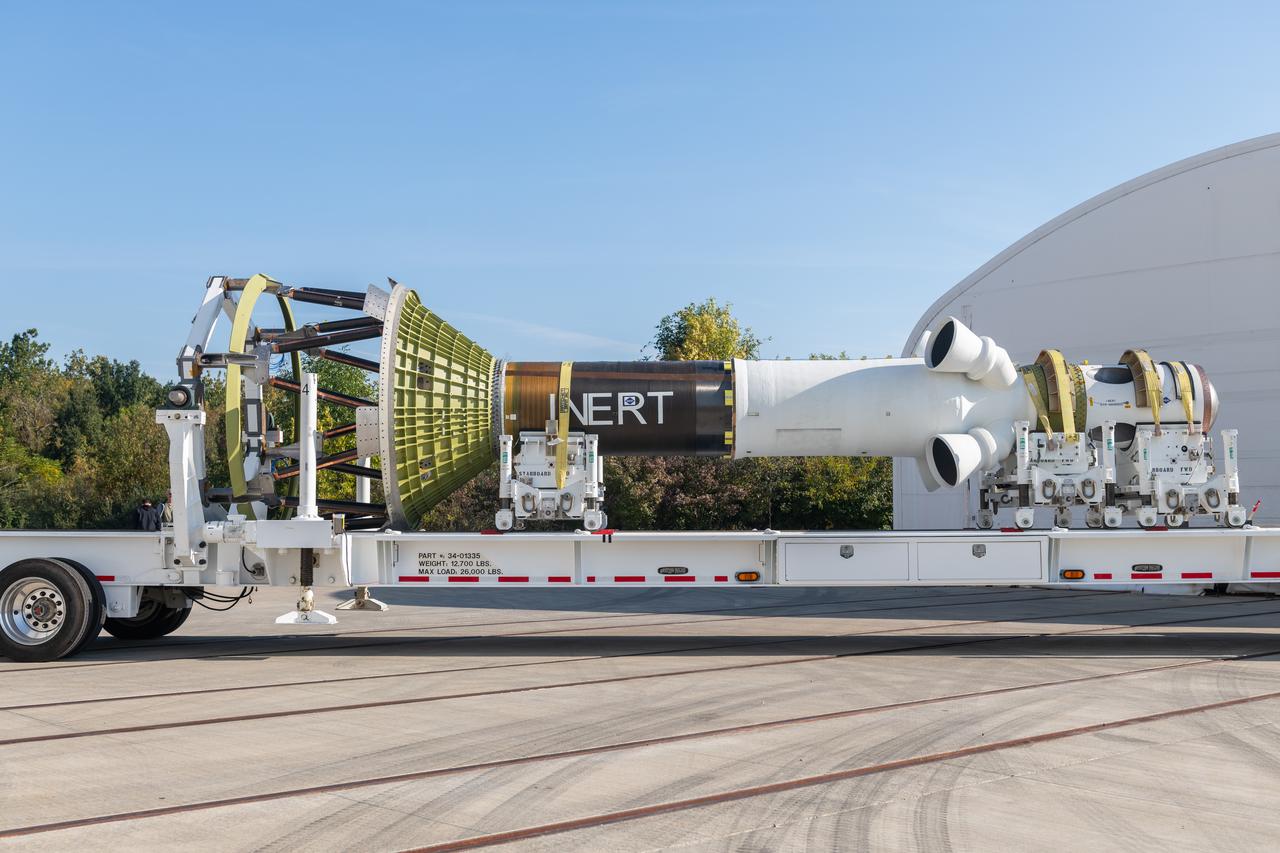
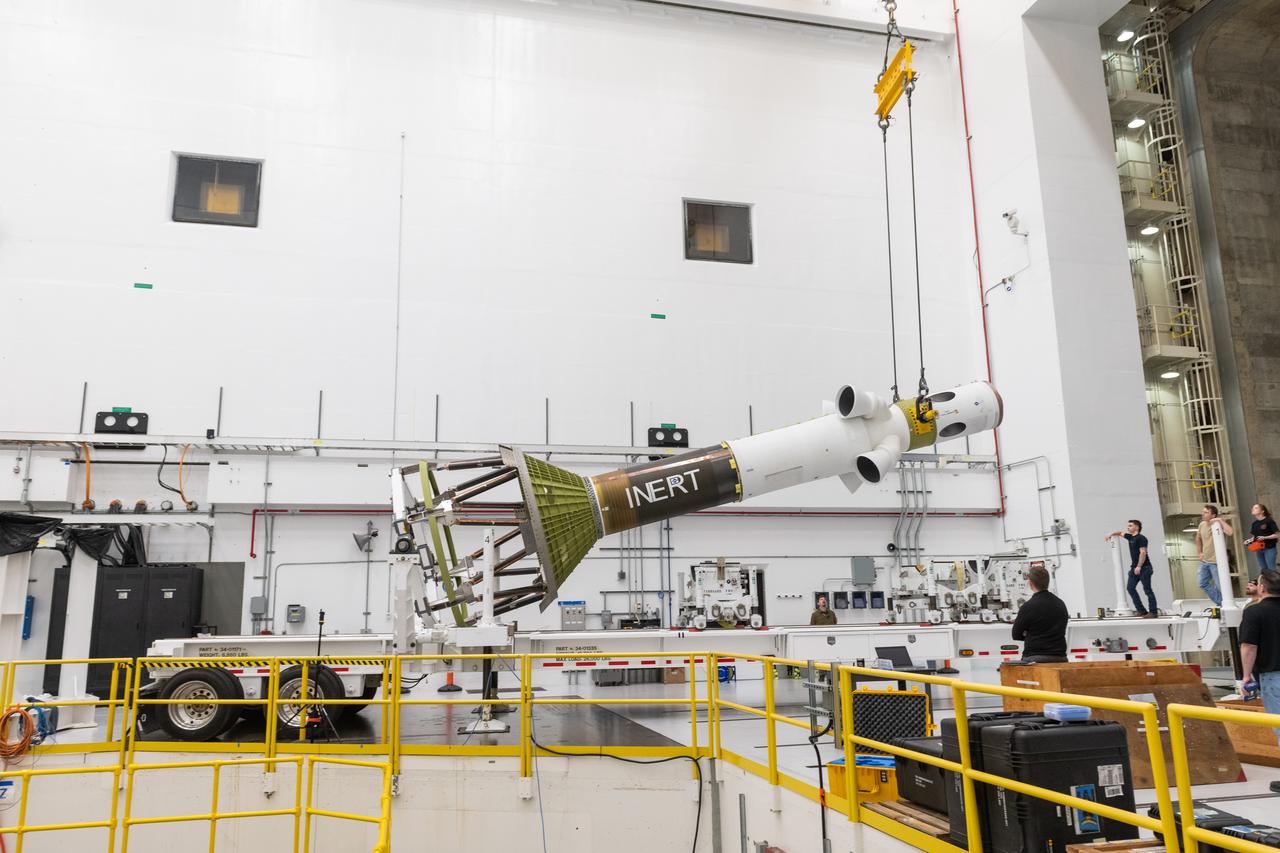
The Launch Abort Systems gets installed on to the Orion Crew Module, also known as the Orion Environmental Test Article (ETA), in preparation for testing at the Space Environments Complex at NASA’s Neil Armstrong Test Facility in Sandusky, Ohio. The ETA completed an 11-month test campaign in 2024 necessary for the safety and success of Artemis II. Photo Credit: (NASA/Jordan Salkin)
The Orion Environmental Test Article (ETA) at the Space Environments Complex at NASA’s Glenn Research Center
The Launch Abort Systems gets installed on to the Orion Crew Module, also known as the Orion Environmental Test Article (ETA), in preparation for testing at the Space Environments Complex at NASA’s Neil Armstrong Test Facility in Sandusky, Ohio. The ETA completed an 11-month test campaign in 2024 necessary for the safety and success of Artemis II. Photo Credit: (NASA/Jordan Salkin)
The Orion Environmental Test Article (ETA) at the Space Environments Complex at NASA’s Glenn Research Center
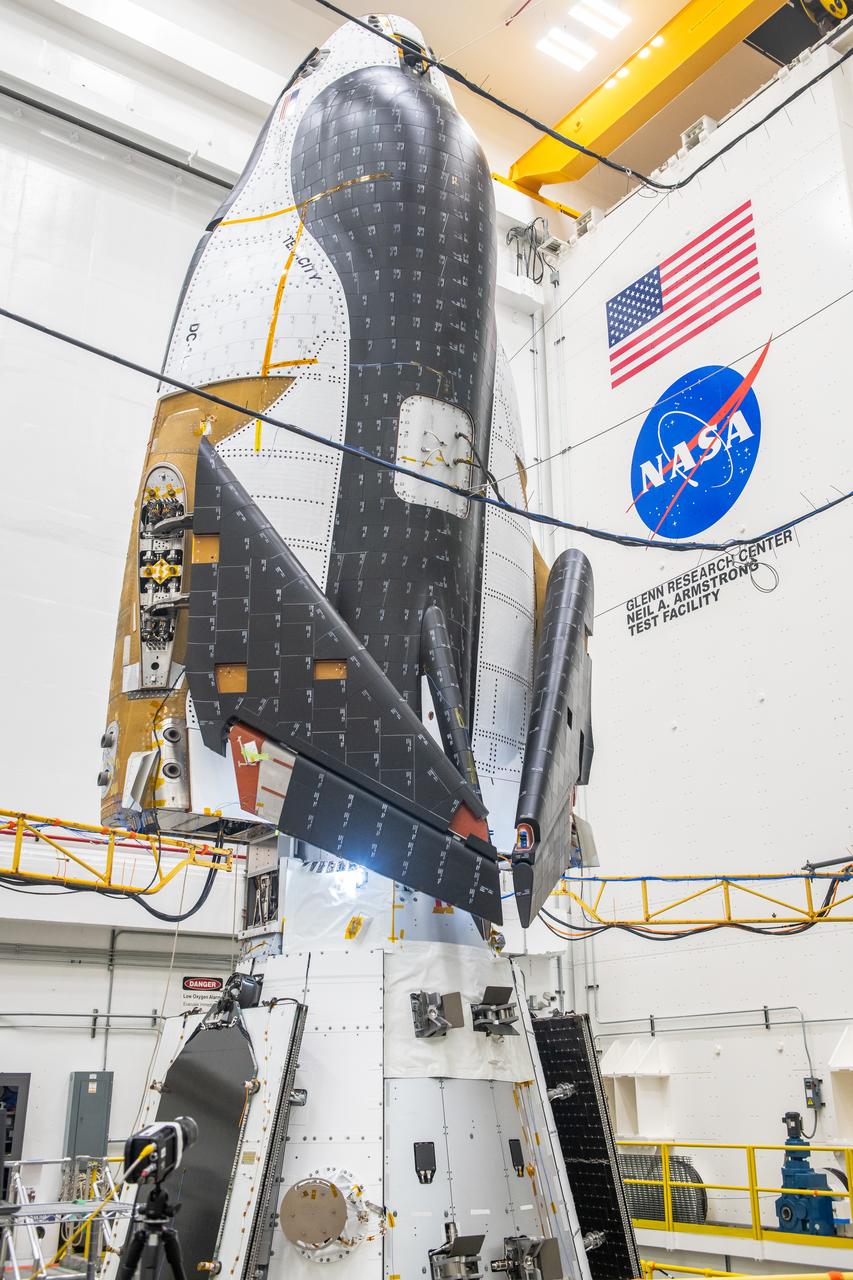
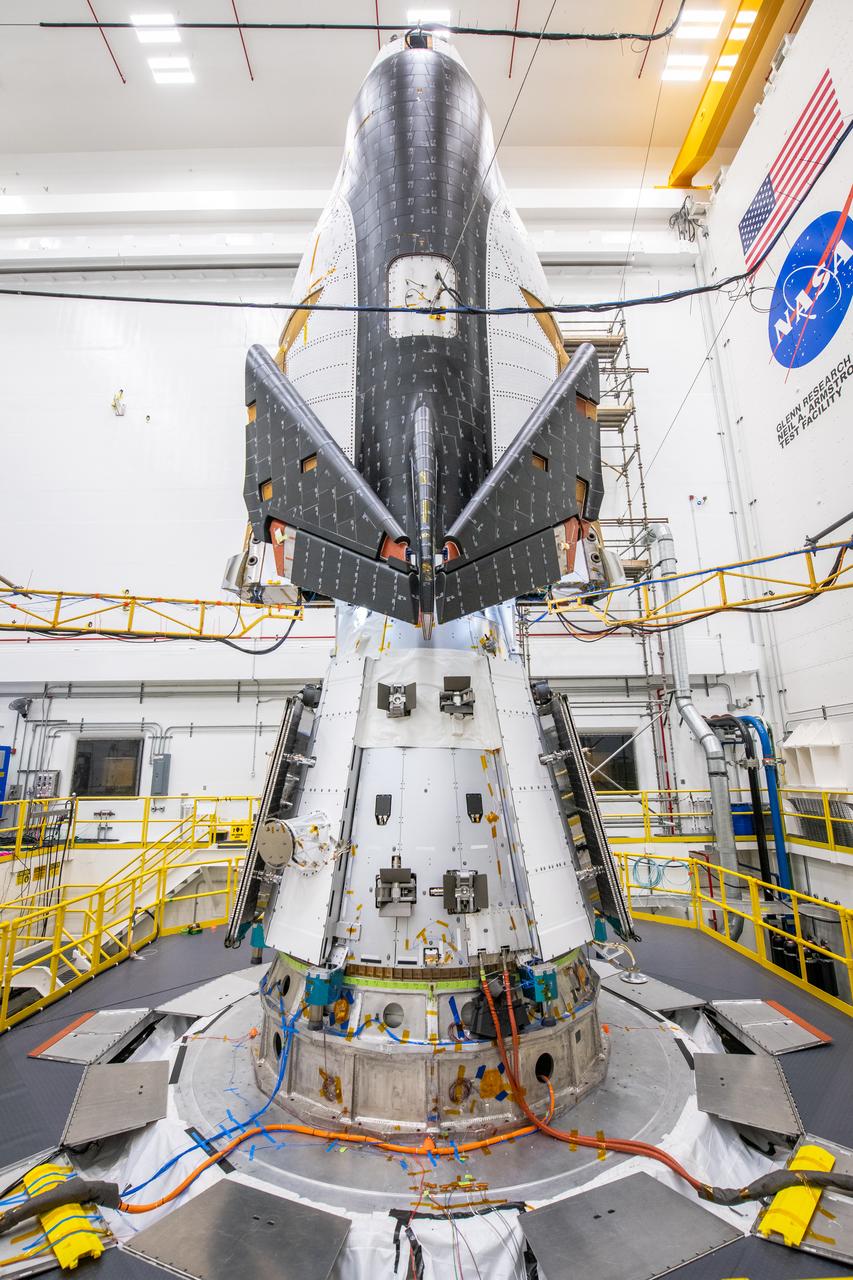
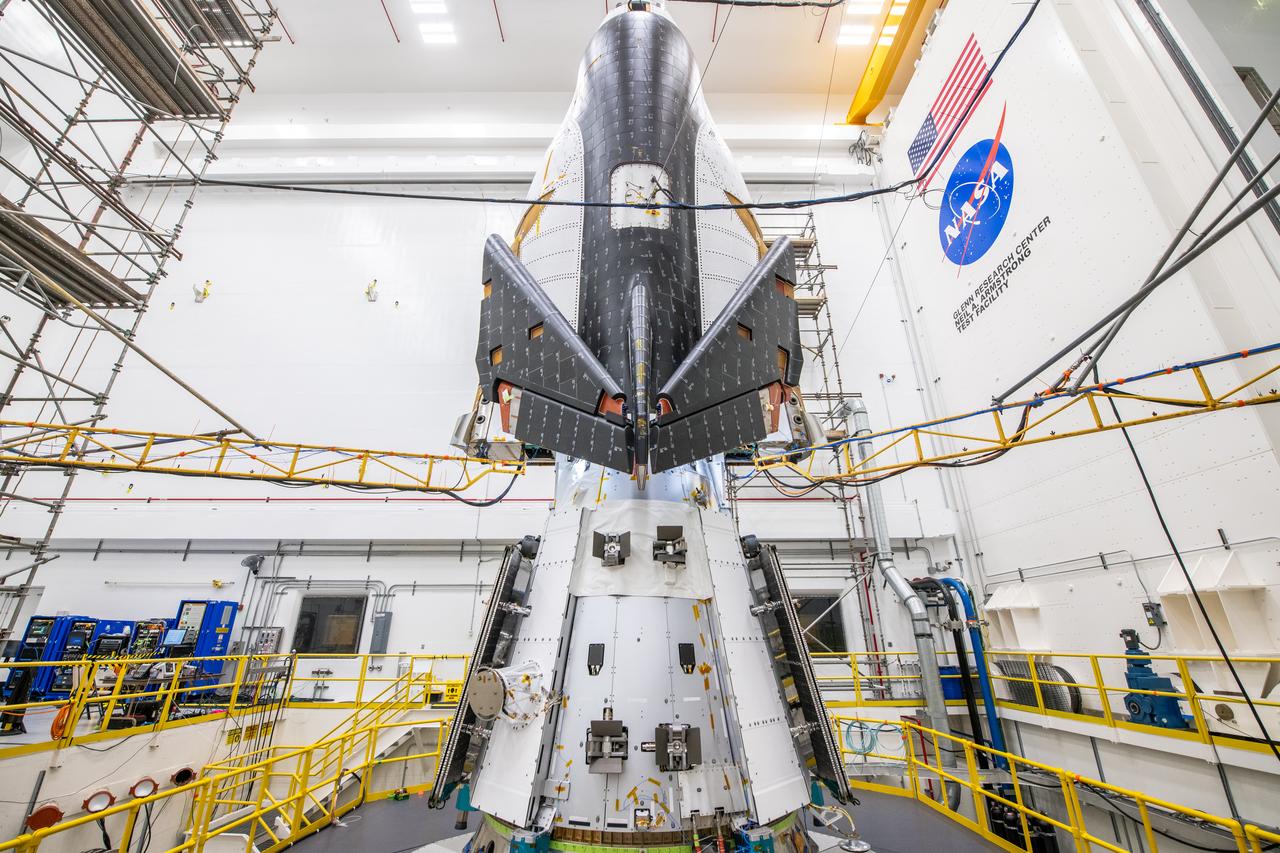
A technician in shown inside Sierra Space’s Dream Chaser spaceplane preparing for vibration testing at the Neil Armstrong Test Facility’s Mechanical Vibration Facility. Using the world’s most powerful spacecraft shaker system in February 2024, NASA exposed Dream Chaser and its Shooting Star cargo module to vibrations like those it will experience during launch and re-entry into the atmosphere. Photo Credit: (NASA/Jordan Salkin)
Sierra Space Dream Chaser Spaceplane at the Space Environments Complex
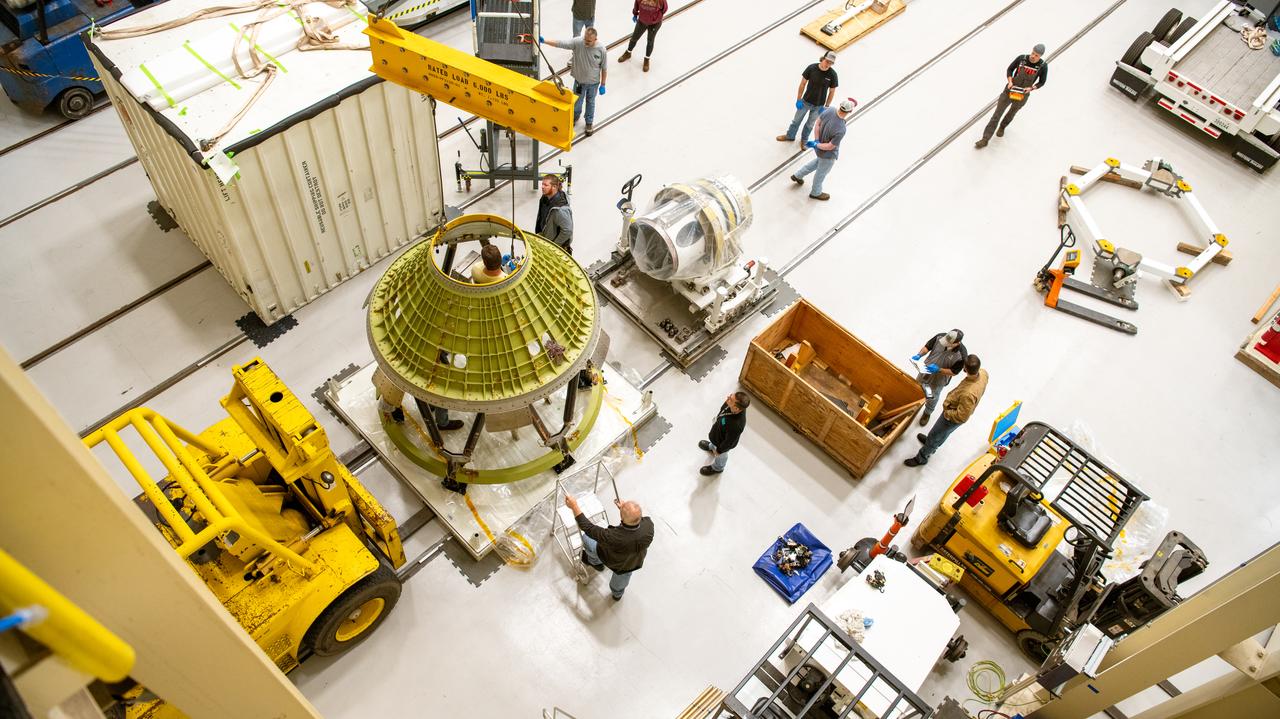
Artemis Hardware Arrival at the NASA Glenn Research Center, Plum Brook Station for testing at the Space Environments Complex, SEC
Artemis Hardware Arrival at the NASA Glenn Research Center, Plum
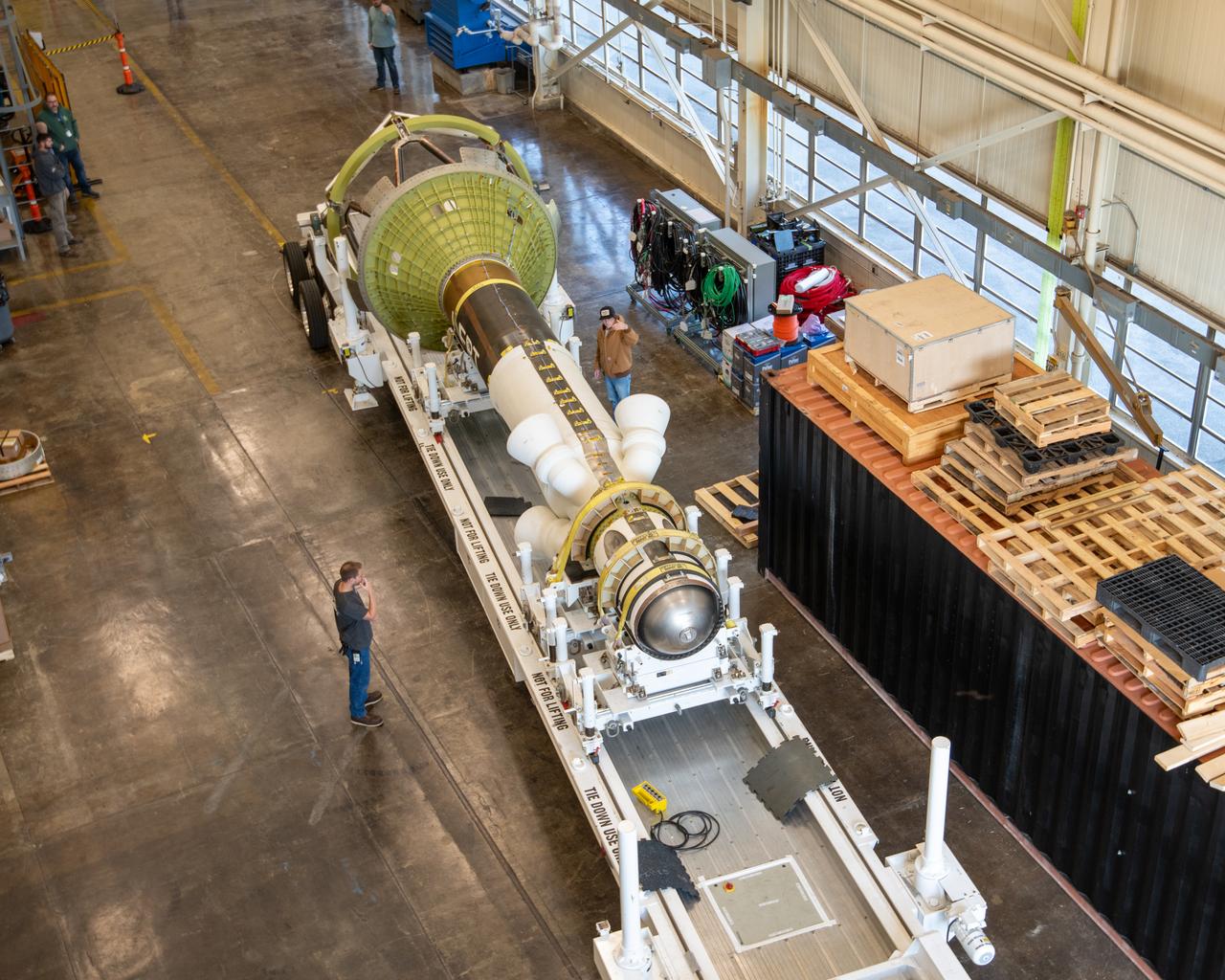
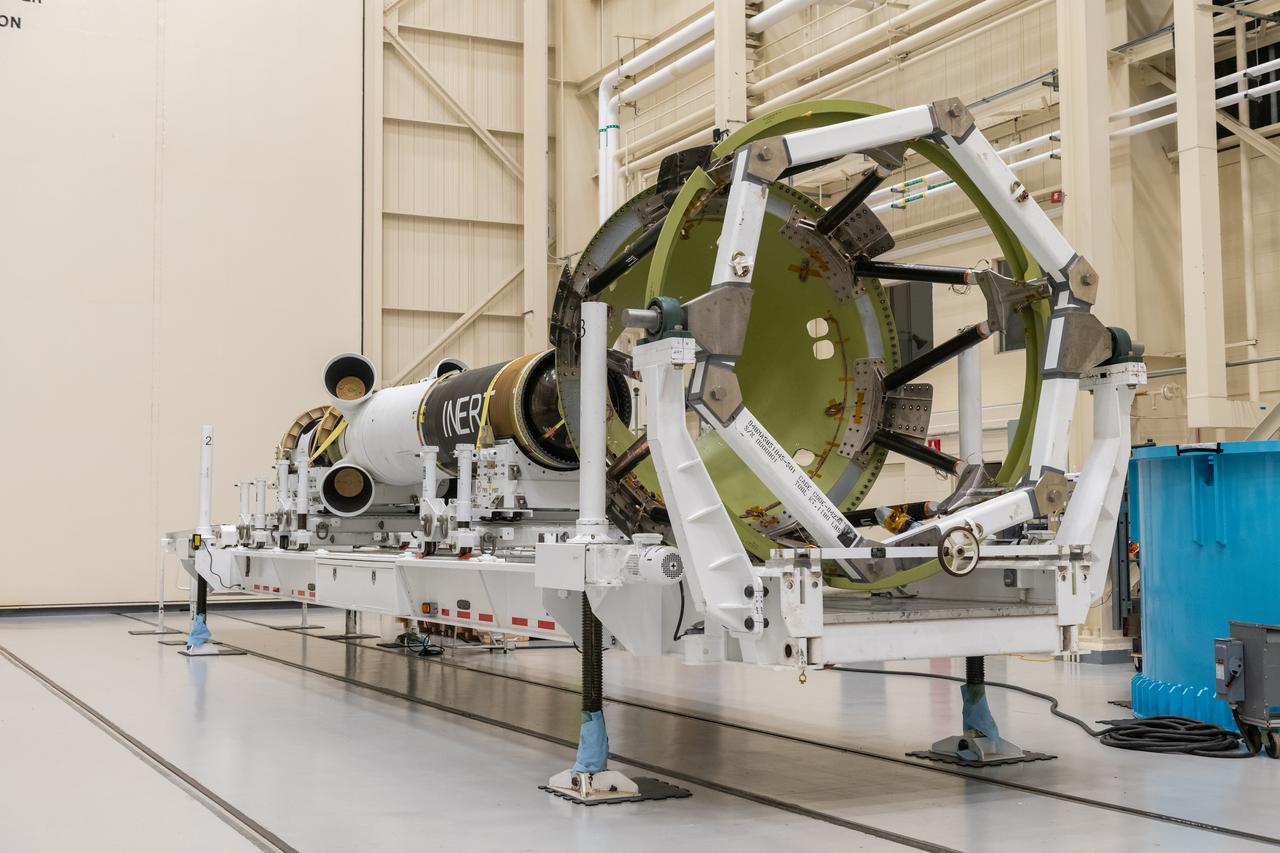
The Space Environments Complex (SEC) at the Armstrong Testing Facility stores Orion’s Launch Abort System, which will later be tested for support of Artemis II. Photo Credit: (NASA/Jordan Salkin)
Orion Environmental Test Article (ETA) Arrival to the Space Environments Complex at NASA’s Glenn Research Center
Orion - EM-1 - Artemis Spacecraft Installation in the Space Environment Complex, SEC Thermal Vacuum Chamber
Orion - EM-1 - Artemis Spacecraft is prepared for testing in the Space Expirements Complex, NASA Glenn Research Center, Plum Brook Station
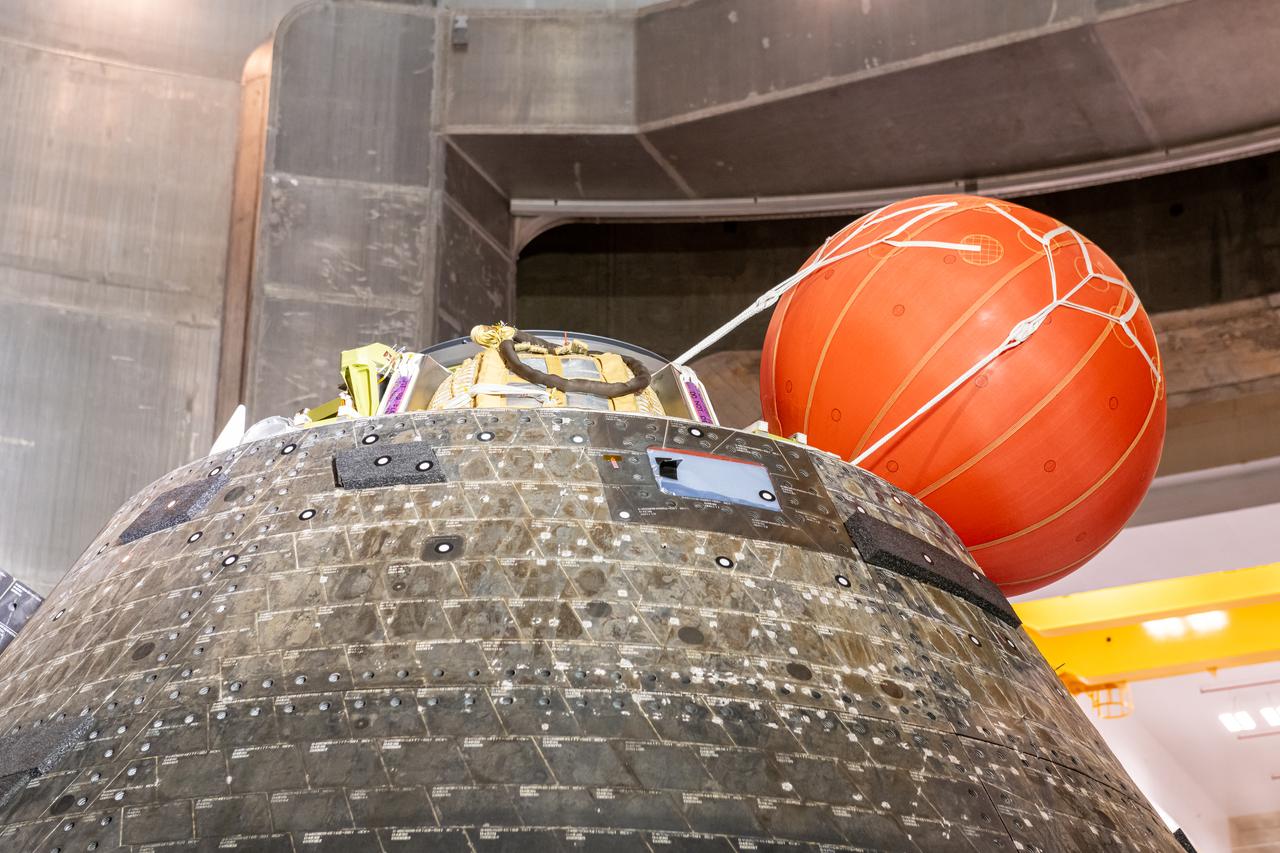
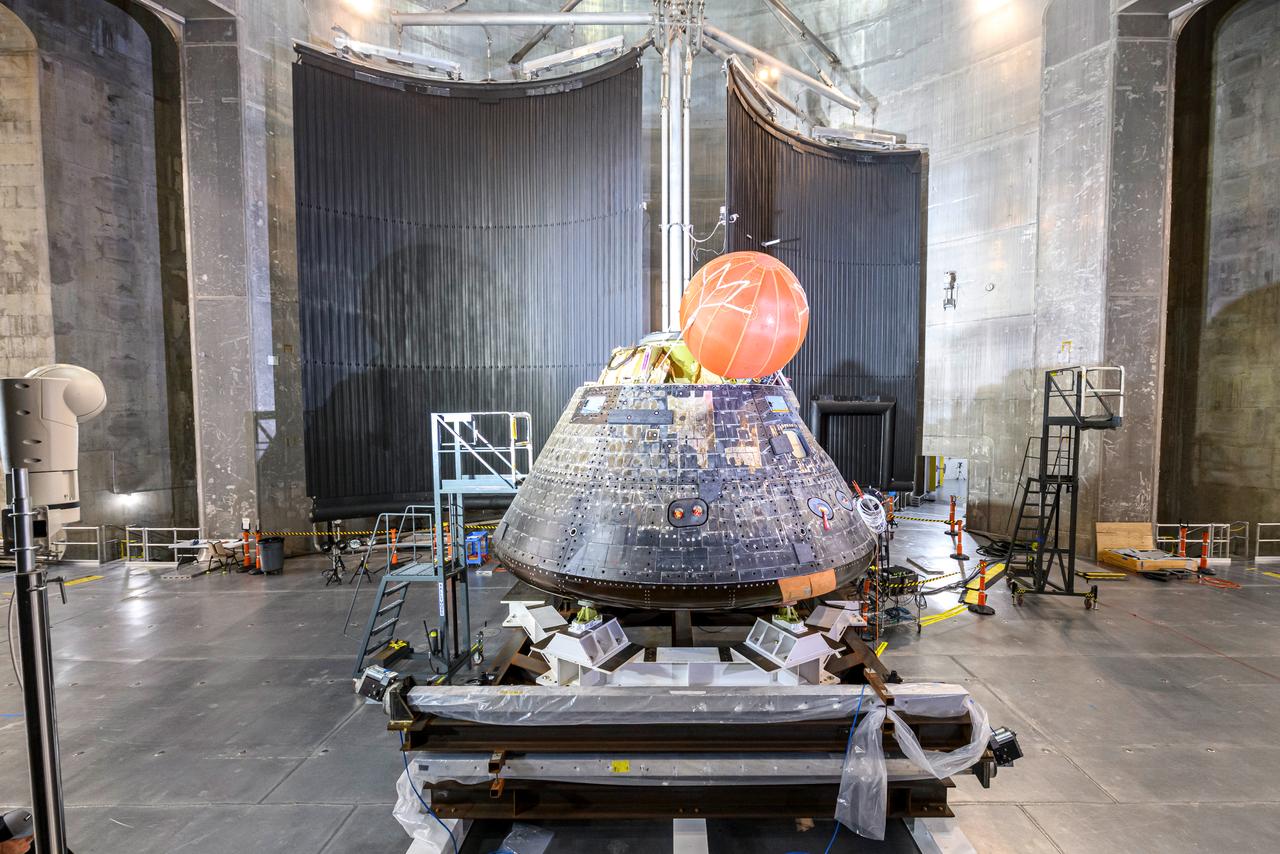
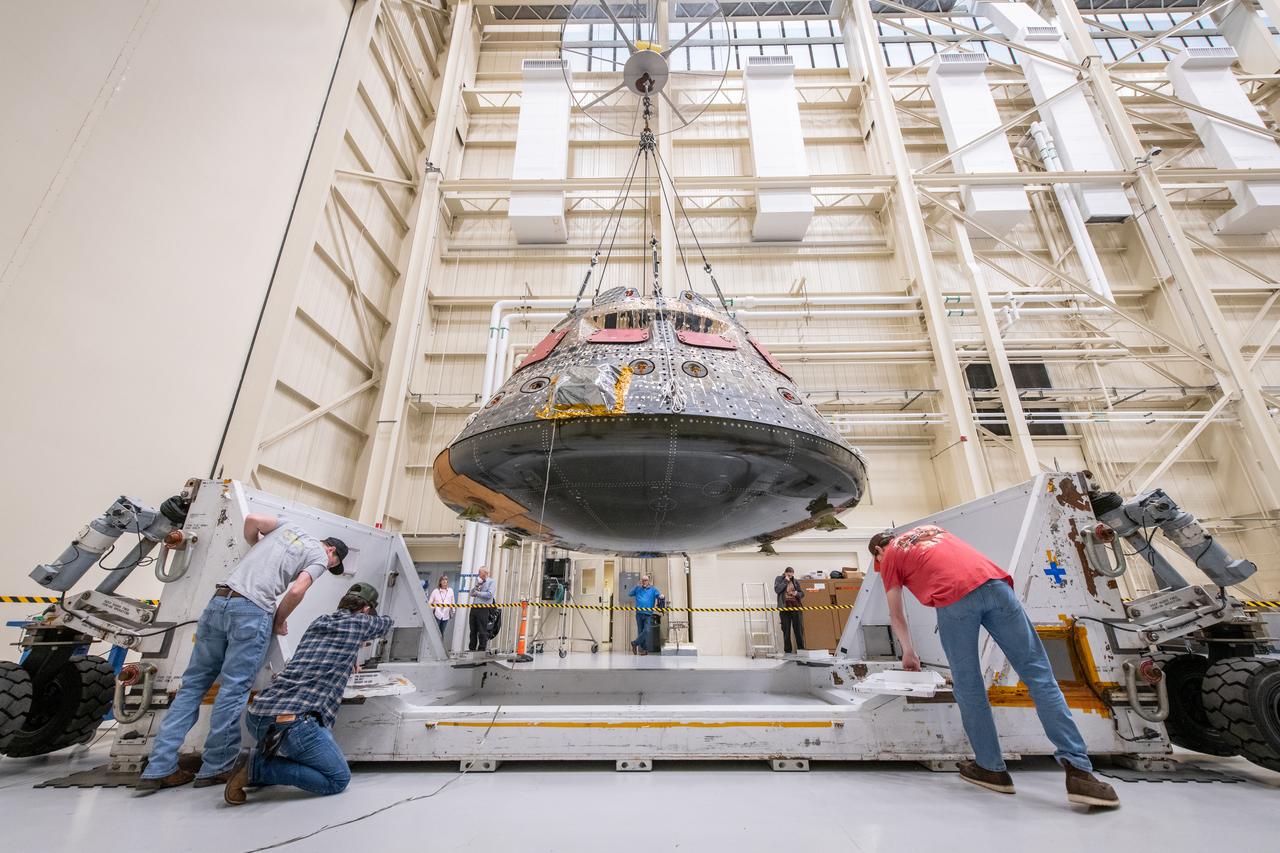
The Orion Crew Module, also known as the Orion Environmental Test Article (ETA), returned to NASA’s Neil Armstrong Test Facility in Sandusky, Ohio, in January 2024 and completed an 11-month test campaign necessary for the safety and success of Artemis II. In November 2024, experts completed the Crew Module Uprighting System Test, which is the system of five airbags on top of the capsule that inflate upon splashdown. Photo Credit: (NASA/Jordan Salkin)
Orion Crew Module Uprighting System Test at the Space Environments Complex
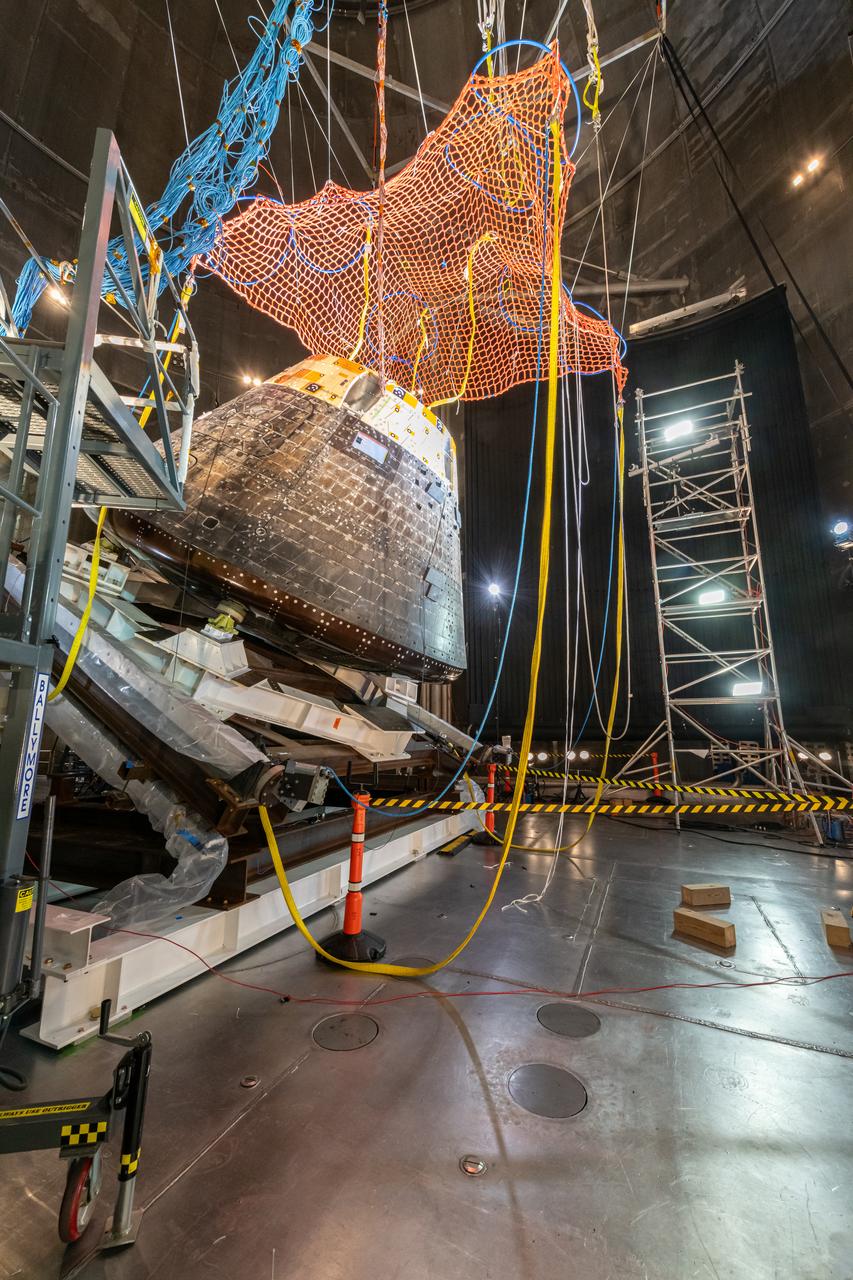
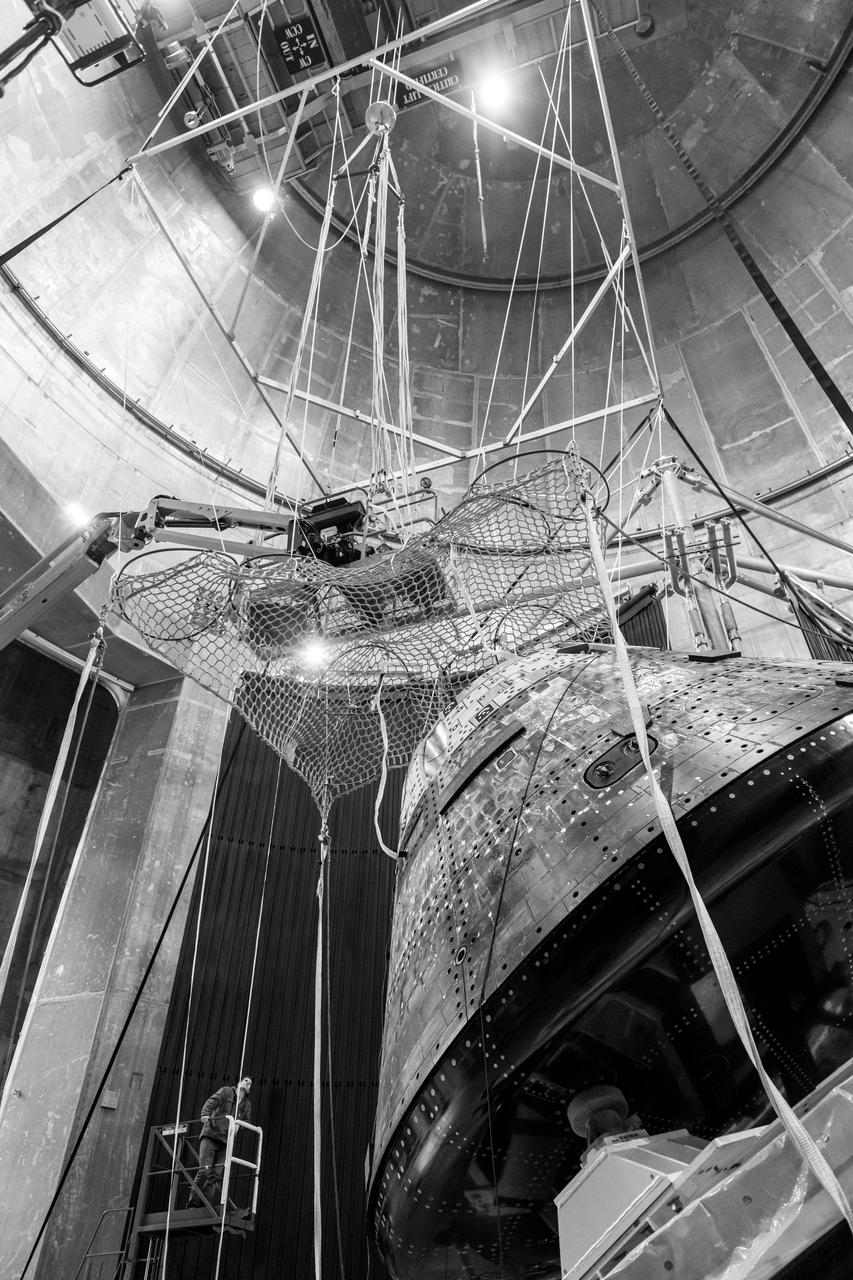
The Orion Crew Module, also known as the Orion Environmental Test Article (ETA), returned to NASA’s Neil Armstrong Test Facility in Sandusky, Ohio, in January 2024 and completed an 11-month test campaign necessary for the safety and success of Artemis II. In November 2024, experts completed the Forward Bay Cover jettison test, which is the last piece that must eject right before parachutes deploy. This image shows the setup right before the FBC deployment test. Photo Credit: (NASA/Jordan Salkin)
Forward Bay Cover jettison test at the Space Environments Complex
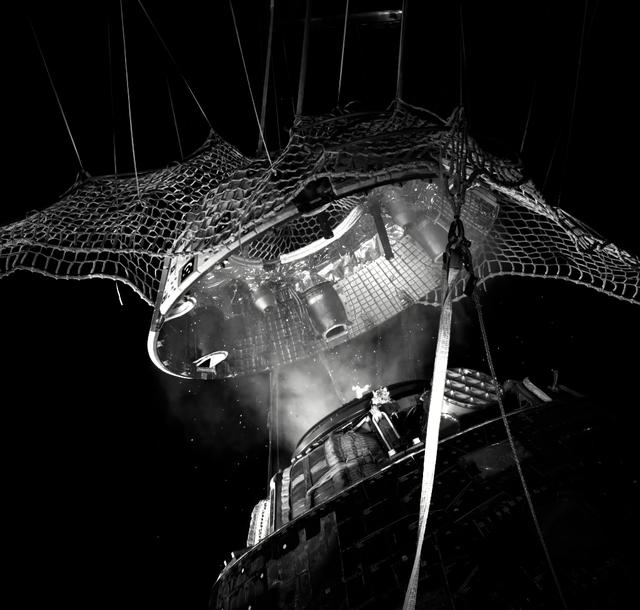
The Orion Crew Module, also known as the Orion Environmental Test Article (ETA), returned to NASA’s Neil Armstrong Test Facility in Sandusky, Ohio, in January 2024 and completed an 11-month test campaign necessary for the safety and success of Artemis II. In November 2024, experts completed the Forward Bay Cover jettison test, which is the last piece that must eject right before parachutes deploy. Photo Credit: (NASA/Quentin Schwinn and Jordan Salkin)
Forward Bay Cover jettison test at the Space Environments Complex
The Orion Crew Module, also known as the Orion Environmental Test Article (ETA), returned to NASA’s Neil Armstrong Test Facility in Sandusky, Ohio, in January 2024 and completed an 11-month test campaign necessary for the safety and success of Artemis II. In November 2024, experts completed the Forward Bay Cover jettison test, which is the last piece that must eject right before parachutes deploy. This image shows the setup right before the FBC deployment test. Photo Credit: (NASA/Jordan Salkin)
Forward Bay Cover jettison test at the Space Environments Complex
The Orion Crew Module, also known as the Orion Environmental Test Article (ETA), returned to NASA’s Neil Armstrong Test Facility in Sandusky, Ohio, in January 2024 and completed an 11-month test campaign necessary for the safety and success of Artemis II. In November 2024, experts completed the Forward Bay Cover jettison test, which is the last piece that must eject right before parachutes deploy. This image shows the setup right before the FBC deployment test. Photo Credit: (NASA/Jordan Salkin)
Forward Bay Cover jettison test at the Space Environments Complex
The Orion Crew Module, also known as the Orion Environmental Test Article (ETA), returned to NASA’s Neil Armstrong Test Facility in Sandusky, Ohio, in January 2024 and completed an 11-month test campaign necessary for the safety and success of Artemis II. In November 2024, experts completed the Crew Module Uprighting System Test, which is the system of five airbags on top of the capsule that inflate upon splashdown. Photo Credit: (NASA/Jordan Salkin)
Orion Crew Module Uprighting System Test at the Space Environments Complex
The Orion Crew Module, also known as the Orion Environmental Test Article (ETA), returned to NASA’s Neil Armstrong Test Facility in Sandusky, Ohio, in January 2024 and completed an 11-month test campaign necessary for the safety and success of Artemis II. In November 2024, experts completed the Forward Bay Cover jettison test, which is the last piece that must eject right before parachutes deploy.
Forward Bay Cover jettison test at the Space Environments Complex
The Orion Crew Module, also known as the Orion Environmental Test Article (ETA), returned to NASA’s Neil Armstrong Test Facility in Sandusky, Ohio, in January 2024 and completed an 11-month test campaign necessary for the safety and success of Artemis II. In November 2024, experts completed the Forward Bay Cover jettison test, which is the last piece that must eject right before parachutes deploy. This image shows the setup right before the FBC deployment test. Photo Credit: (NASA/Jordan Salkin)
Forward Bay Cover jettison test at the Space Environments Complex
The Orion Crew Module, also known as the Orion Environmental Test Article (ETA), returned to NASA’s Neil Armstrong Test Facility in Sandusky, Ohio, in January 2024 and completed an 11-month test campaign necessary for the safety and success of Artemis II. In November 2024, experts completed the Forward Bay Cover jettison test, which is the last piece that must eject right before parachutes deploy. This image shows the setup right before the FBC deployment test. Photo Credit: (NASA/Jordan Salkin)
Forward Bay Cover jettison test at the Space Environments Complex
The Orion Crew Module, also known as the Orion Environmental Test Article (ETA), returned to NASA’s Neil Armstrong Test Facility in Sandusky, Ohio, in January 2024 and completed an 11-month test campaign necessary for the safety and success of Artemis II. In November 2024, experts completed the Crew Module Uprighting System Test, which is the system of five airbags on top of the capsule that inflate upon splashdown. Photo Credit: (NASA/Jordan Salkin and Quentin Schwinn)
Orion Crew Module Uprighting System Test at the Space Environments Complex
The Orion Crew Module, also known as the Orion Environmental Test Article (ETA), returned to NASA’s Neil Armstrong Test Facility in Sandusky, Ohio, in January 2024 and completed an 11-month test campaign necessary for the safety and success of Artemis II. In November 2024, experts completed the Forward Bay Cover jettison test, which is the last piece that must eject right before parachutes deploy. This image shows the setup right before the FBC deployment test. Photo Credit: (NASA/Jordan Salkin)
Forward Bay Cover jettison test at the Space Environments Complex
The Orion Crew Module, also known as the Orion Environmental Test Article (ETA), returned to NASA’s Neil Armstrong Test Facility in Sandusky, Ohio, in January 2024 and completed an 11-month test campaign necessary for the safety and success of Artemis II. In November 2024, experts completed the Forward Bay Cover jettison test, which is the last piece that must eject right before parachutes deploy. This image shows the setup right before the FBC deployment test. Photo Credit: (NASA/Jordan Salkin)
Forward Bay Cover jettison test at the Space Environments Complex
The Orion Crew Module, also known as the Orion Environmental Test Article (ETA), returned to NASA’s Neil Armstrong Test Facility in Sandusky, Ohio, in January 2024 and completed an 11-month test campaign necessary for the safety and success of Artemis II. In November 2024, experts completed the Forward Bay Cover jettison test, which is the last piece that must eject right before parachutes deploy. This image shows the setup right before the FBC deployment test. Photo Credit: (NASA/Jordan Salkin)
Forward Bay Cover jettison test at the Space Environments Complex
The Orion Crew Module, also known as the Orion Environmental Test Article (ETA), returned to NASA’s Neil Armstrong Test Facility in Sandusky, Ohio, in January 2024 and completed an 11-month test campaign necessary for the safety and success of Artemis II. In November 2024, experts completed the Forward Bay Cover jettison test, which is the last piece that must eject right before parachutes deploy. This image shows the setup right before the FBC deployment test. Photo Credit: (NASA/Jordan Salkin)
Forward Bay Cover jettison test at the Space Environments Complex
The Orion Crew Module, also known as the Orion Environmental Test Article (ETA), returned to NASA’s Neil Armstrong Test Facility in Sandusky, Ohio, in January 2024 and completed an 11-month test campaign necessary for the safety and success of Artemis II. In November 2024, experts completed the Forward Bay Cover jettison test, which is the last piece that must eject right before parachutes deploy. This image shows the setup right before the FBC deployment test. Photo Credit: (NASA/Jordan Salkin)
Forward Bay Cover jettison test at the Space Environments Complex
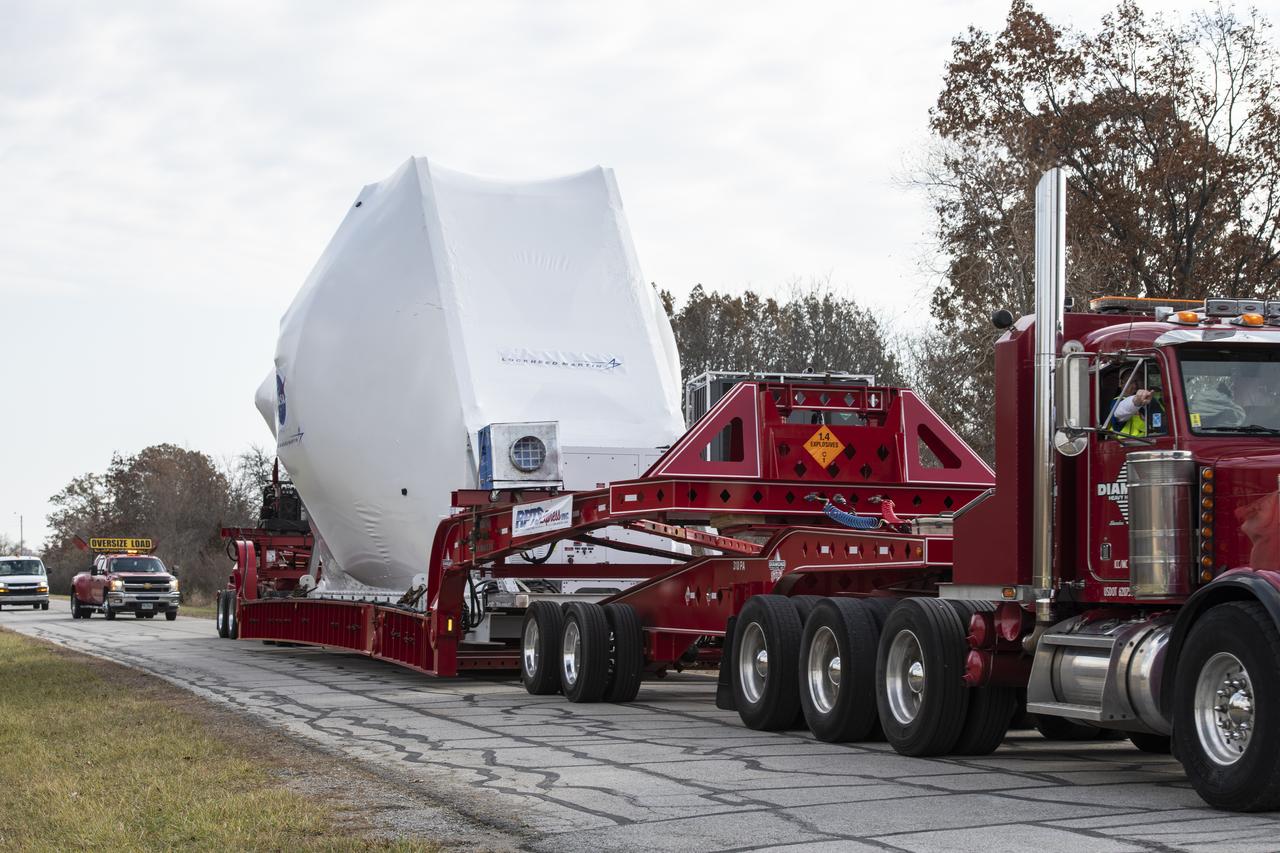
Orion - EM-1 - Artemis Spacecraft Arrival at Mansfield Lahm Airport, Transportation to Plum Brook Station and Installation in the Space Environment Complex, SEC Thermal Vacuum Chamber
The Neil Armstrong Test Facility, part of NASA’s Glenn Research Center in Cleveland, is home to multiple test facilities, including the Space Environments Complex and the In-Space Propulsion Facility, both stops for Dream Chaser. The complex is home to the Mechanical Vibration Facility, which subjects test articles to the rigorous conditions of launch.  While at Armstrong, the Dream Chaser winged spacecraft was stacked atop its Shooting Star cargo module on the vibration table to experience vibrations like those during launch and re-entry to the Earth’s atmosphere.
Sierra Space Dream Chaser Spaceplane Documentation Photographs
The Neil Armstrong Test Facility, part of NASA’s Glenn Research Center in Cleveland, is home to multiple test facilities, including the Space Environments Complex and the In-Space Propulsion Facility, both stops for Dream Chaser. The complex is home to the Mechanical Vibration Facility, which subjects test articles to the rigorous conditions of launch.  While at Armstrong, the Dream Chaser winged spacecraft was stacked atop its Shooting Star cargo module on the vibration table to experience vibrations like those during launch and re-entry to the Earth’s atmosphere.
Sierra Space Dream Chaser Spaceplane Documentation Photographs
The Neil Armstrong Test Facility, part of NASA’s Glenn Research Center in Cleveland, is home to multiple test facilities, including the Space Environments Complex and the In-Space Propulsion Facility, both stops for Dream Chaser. The complex is home to the Mechanical Vibration Facility, which subjects test articles to the rigorous conditions of launch.  While at Armstrong, the Dream Chaser winged spacecraft was stacked atop its Shooting Star cargo module on the vibration table to experience vibrations like those during launch and re-entry to the Earth’s atmosphere.
Sierra Space Dream Chaser Spaceplane Documentation Photographs
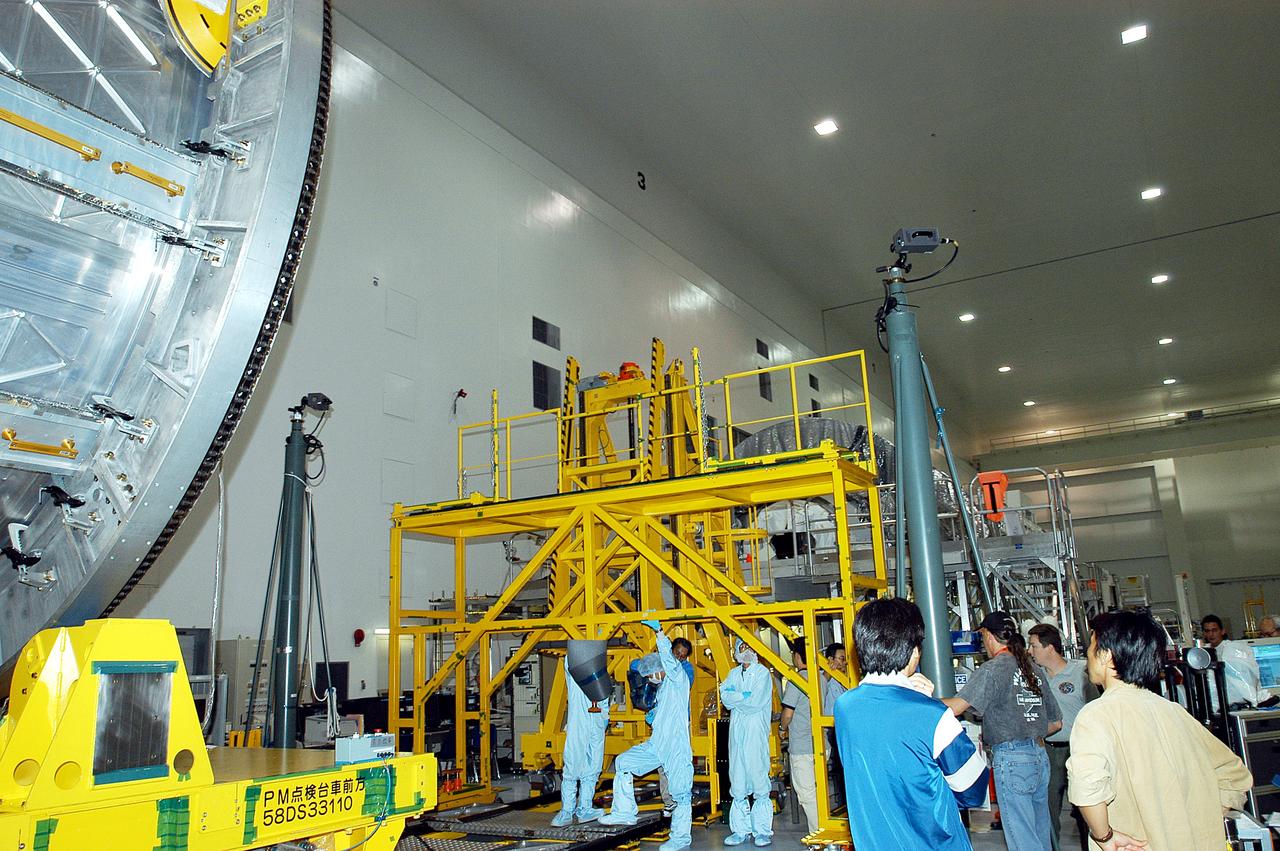
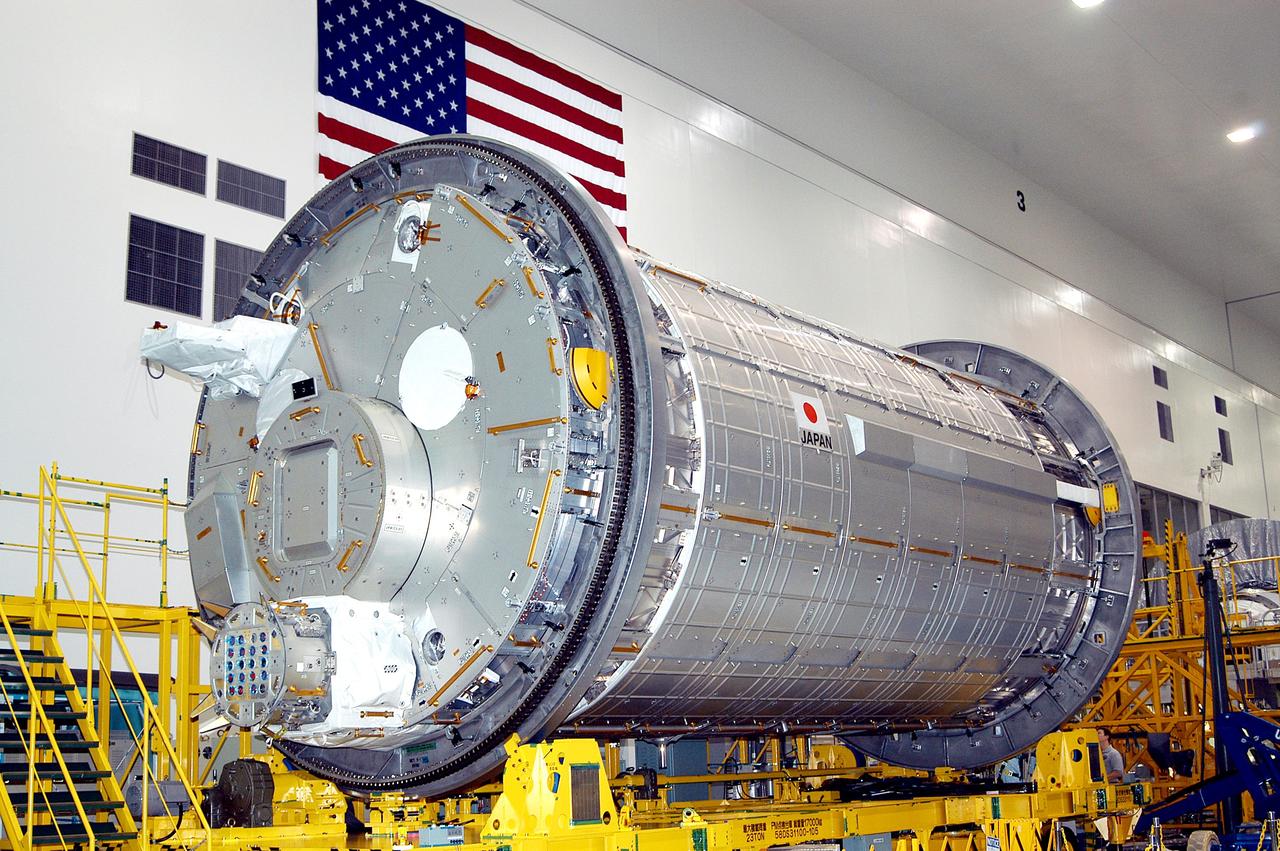
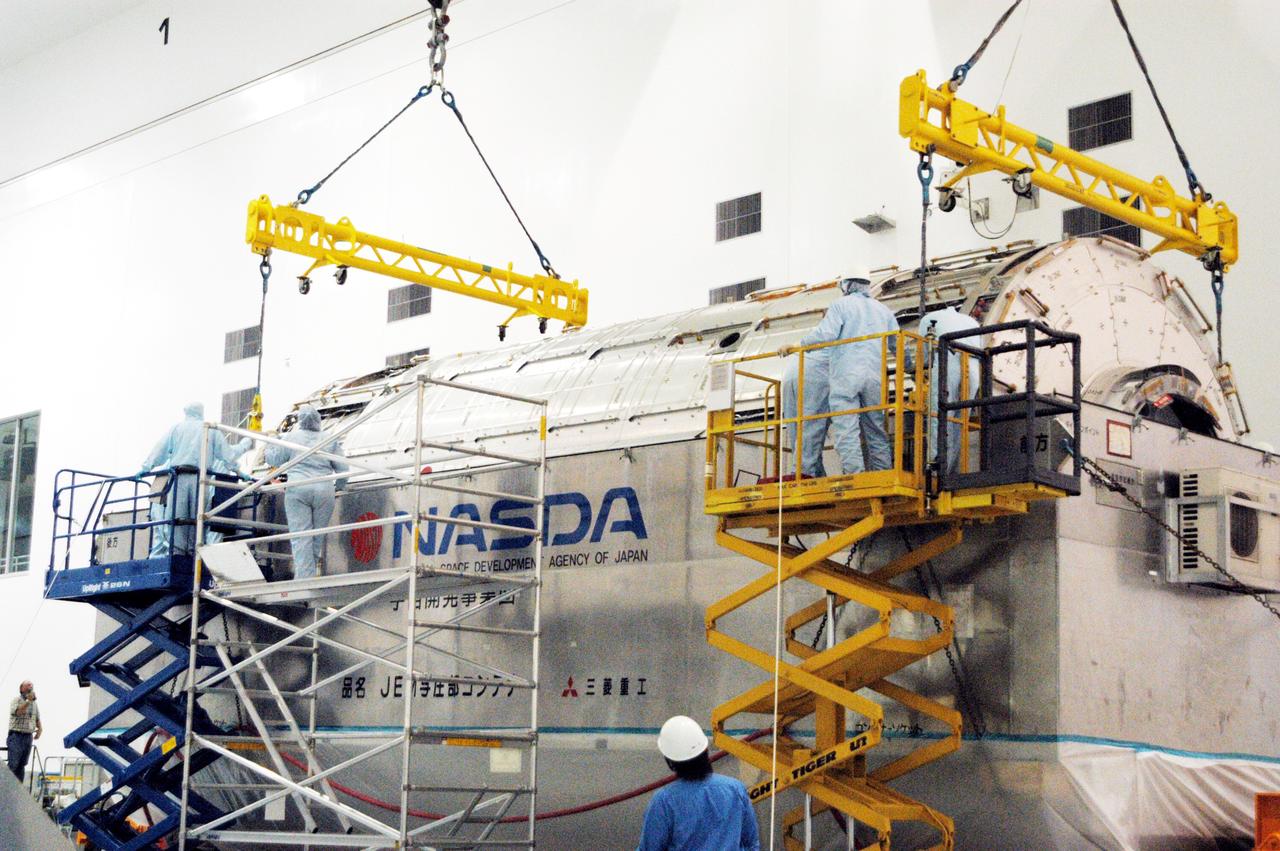
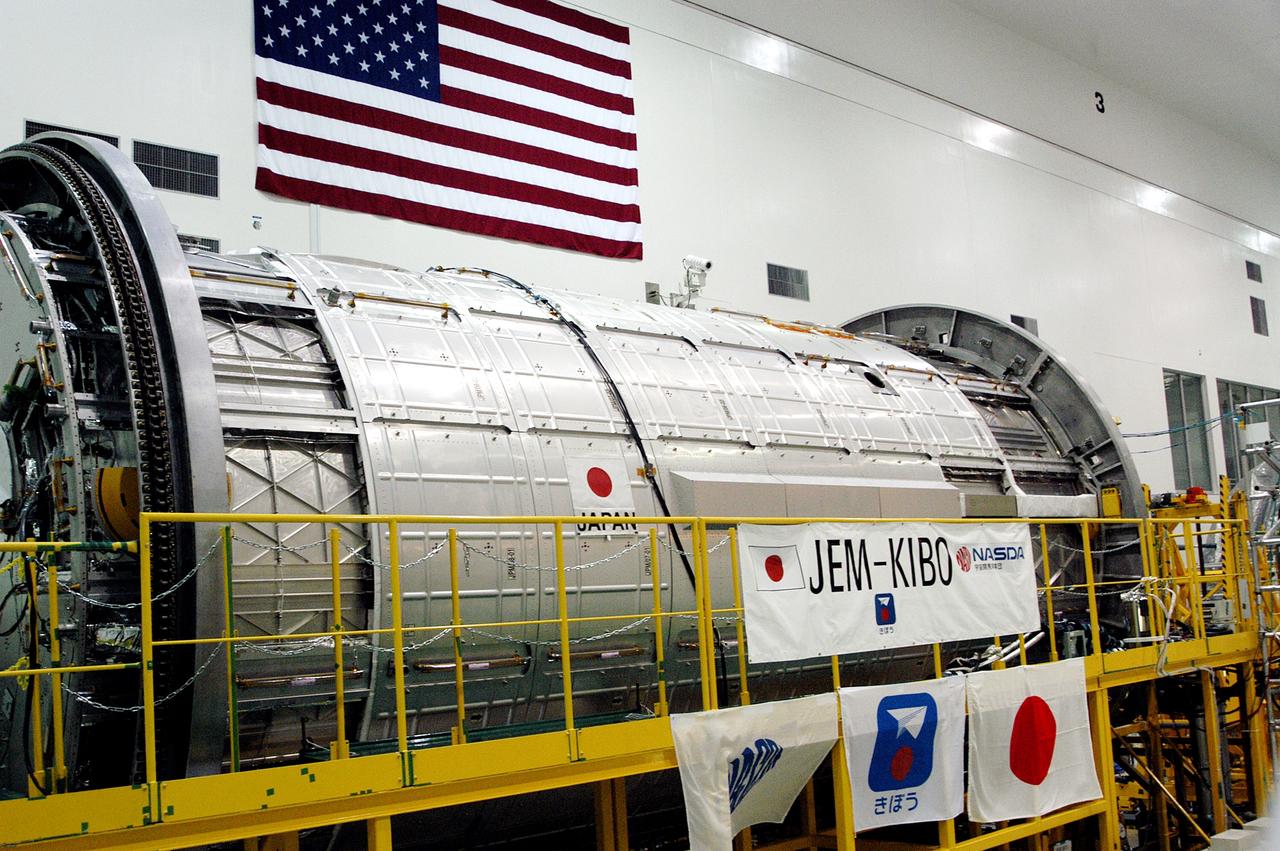
KENNEDY SPACE CENTER, FLA. -  The Japanese Experiment Module (JEM) is moved on its workstand in the Space Station Processing Facility.  The JEM will undergo pre-assembly measurements.  Developed by the Japan Aerospace Exploration Agency (JAXA), the JEM will enhance the unique research capabilities of the orbiting complex by providing an additional environment for astronauts to conduct science experiments.
KENNEDY SPACE CENTER, FLA. - The Japanese Experiment Module (JEM) is moved on its workstand in the Space Station Processing Facility. The JEM will undergo pre-assembly measurements. Developed by the Japan Aerospace Exploration Agency (JAXA), the JEM will enhance the unique research capabilities of the orbiting complex by providing an additional environment for astronauts to conduct science experiments.
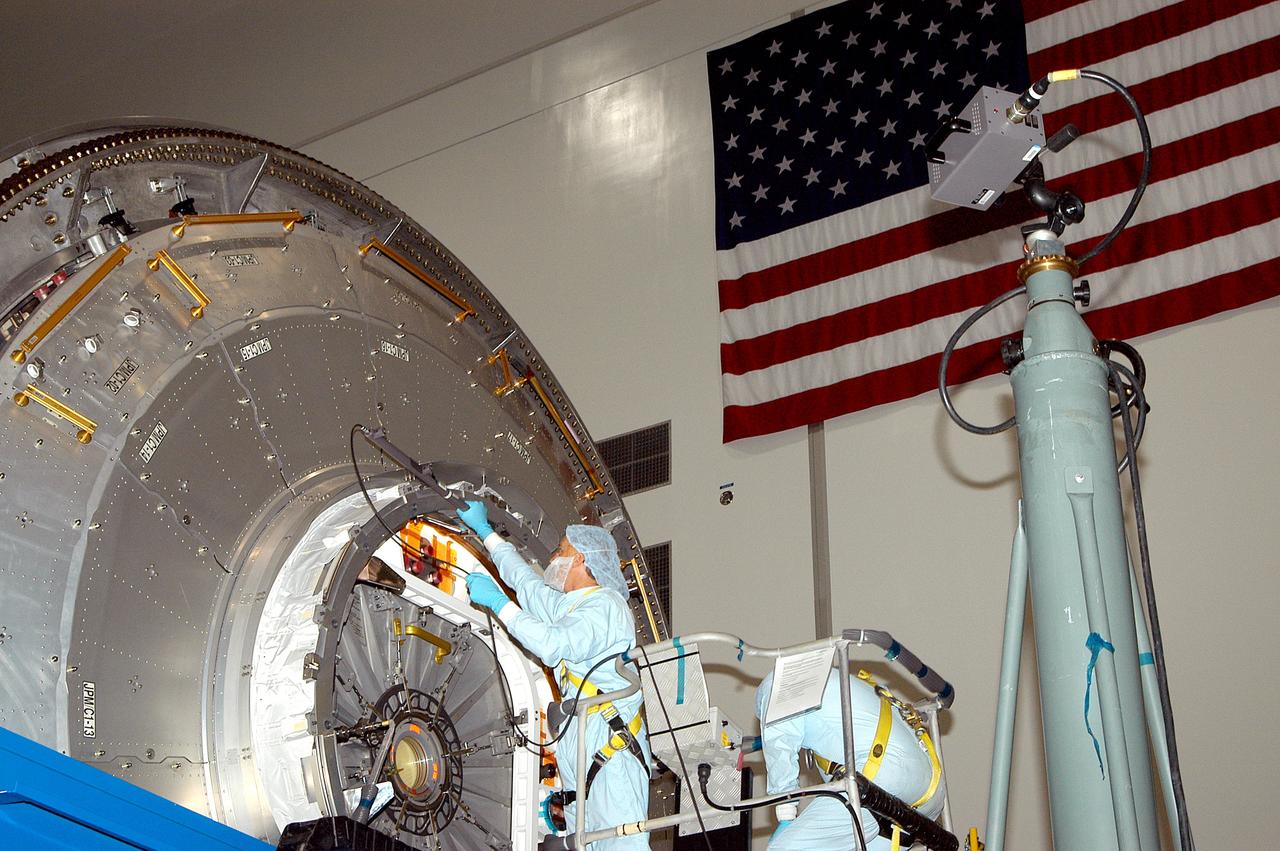
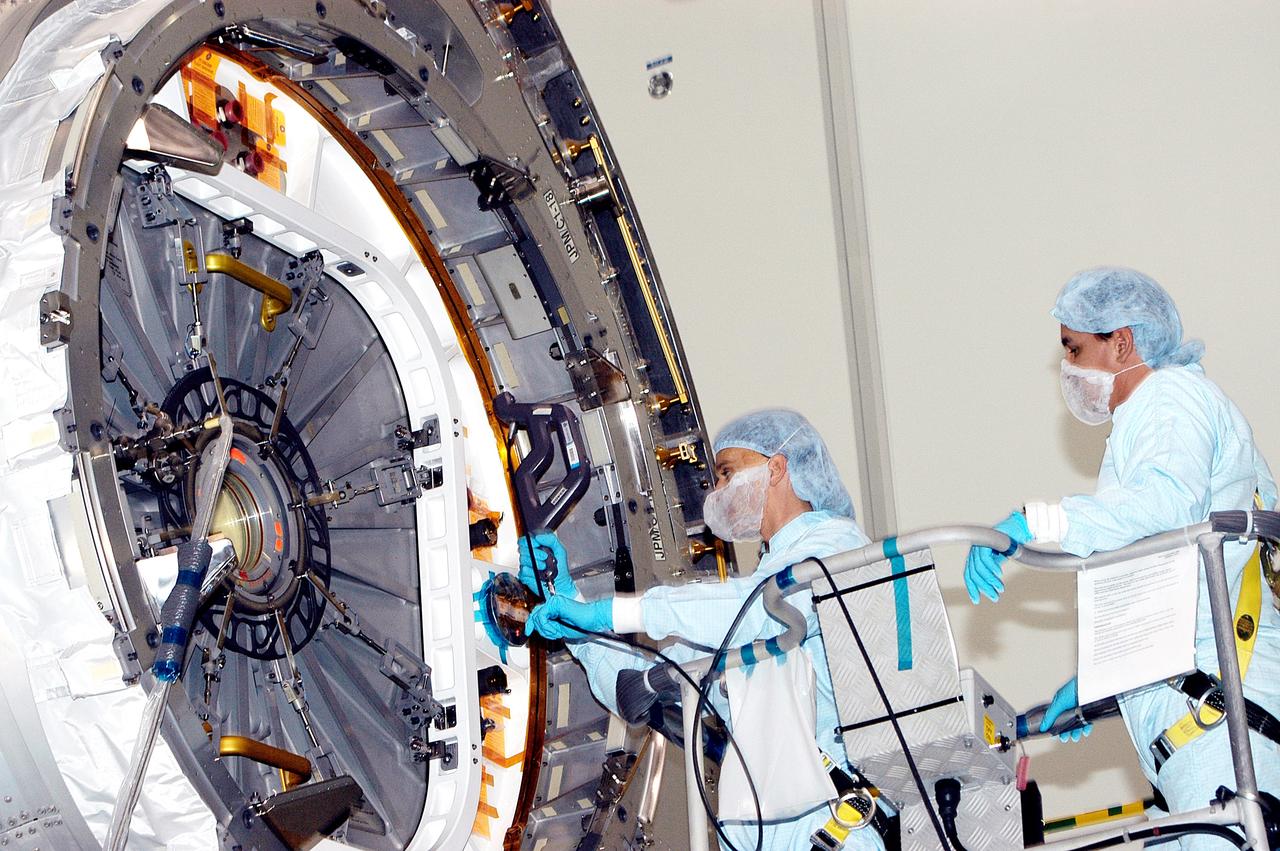
KENNEDY SPACE CENTER, FLA. - In the Space Station Processing Facility, technicians take readings for pre-assembly measurements on the Japanese Experiment Module (JEM).  Developed by the Japan Aerospace Exploration Agency (JAXA), the JEM will enhance the unique research capabilities of the orbiting complex by providing an additional environment for astronauts to conduct science experiments.
KENNEDY SPACE CENTER, FLA. - In the Space Station Processing Facility, technicians take readings for pre-assembly measurements on the Japanese Experiment Module (JEM). Developed by the Japan Aerospace Exploration Agency (JAXA), the JEM will enhance the unique research capabilities of the orbiting complex by providing an additional environment for astronauts to conduct science experiments.
KENNEDY SPACE CENTER, FLA. -  In the Space Station Processing Facility, technicians begin pre-assembly measurements on the Japanese Experiment Module (JEM).  Developed by the Japan Aerospace Exploration Agency (JAXA), the JEM will enhance the unique research capabilities of the orbiting complex by providing an additional environment for astronauts to conduct science experiments.
KENNEDY SPACE CENTER, FLA. - In the Space Station Processing Facility, technicians begin pre-assembly measurements on the Japanese Experiment Module (JEM). Developed by the Japan Aerospace Exploration Agency (JAXA), the JEM will enhance the unique research capabilities of the orbiting complex by providing an additional environment for astronauts to conduct science experiments.
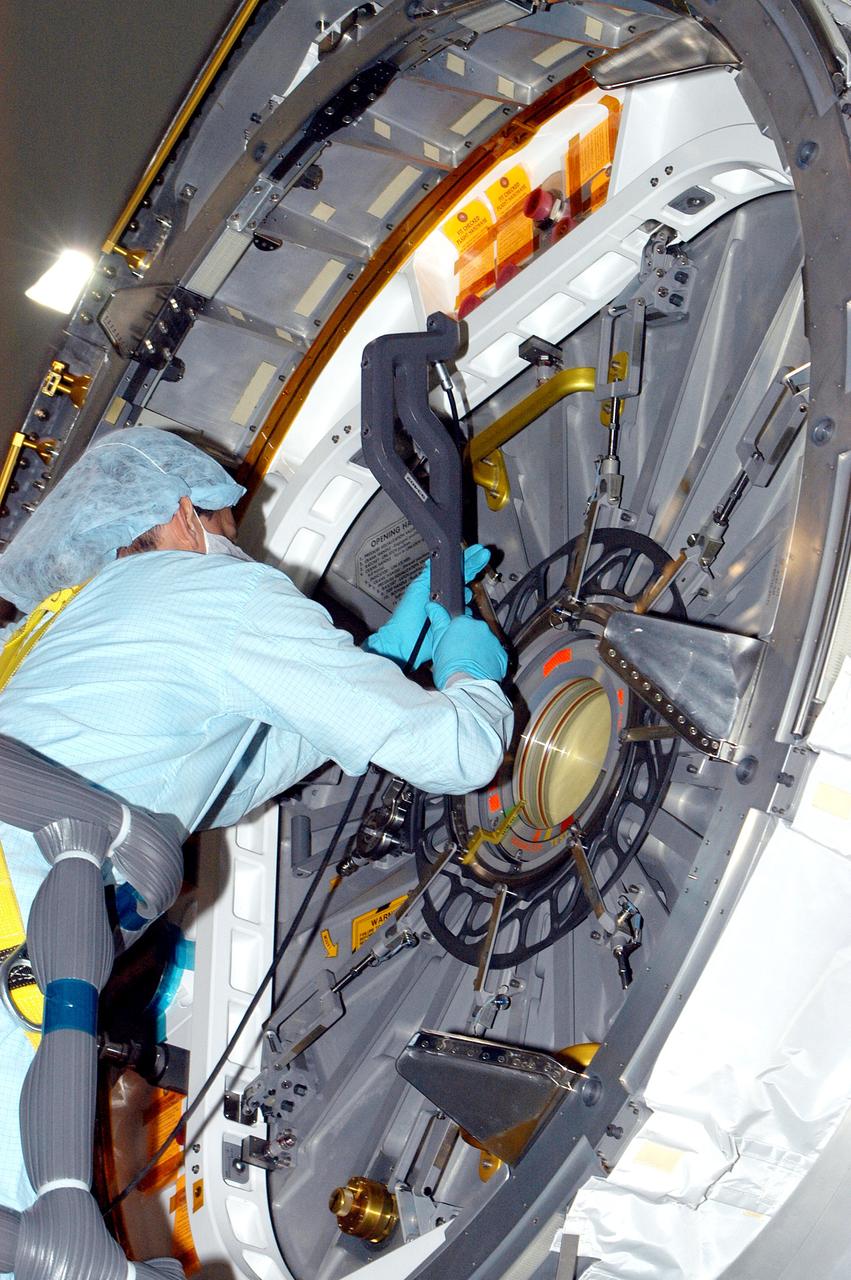
KENNEDY SPACE CENTER, FLA. - In the Space Station Processing Facility, a technician takes readings for pre-assembly measurements on the Japanese Experiment Module (JEM).  Developed by the Japan Aerospace Exploration Agency (JAXA), the JEM will enhance the unique research capabilities of the orbiting complex by providing an additional environment for astronauts to conduct science experiments.
KENNEDY SPACE CENTER, FLA. - In the Space Station Processing Facility, a technician takes readings for pre-assembly measurements on the Japanese Experiment Module (JEM). Developed by the Japan Aerospace Exploration Agency (JAXA), the JEM will enhance the unique research capabilities of the orbiting complex by providing an additional environment for astronauts to conduct science experiments.
KENNEDY SPACE CENTER, FLA. - In the Space Station Processing Facility, a technician takes readings for pre-assembly measurements on the Japanese Experiment Module (JEM).  Developed by the Japan Aerospace Exploration Agency (JAXA), the JEM will enhance the unique research capabilities of the orbiting complex by providing an additional environment for astronauts to conduct science experiments.
KENNEDY SPACE CENTER, FLA. - In the Space Station Processing Facility, a technician takes readings for pre-assembly measurements on the Japanese Experiment Module (JEM). Developed by the Japan Aerospace Exploration Agency (JAXA), the JEM will enhance the unique research capabilities of the orbiting complex by providing an additional environment for astronauts to conduct science experiments.
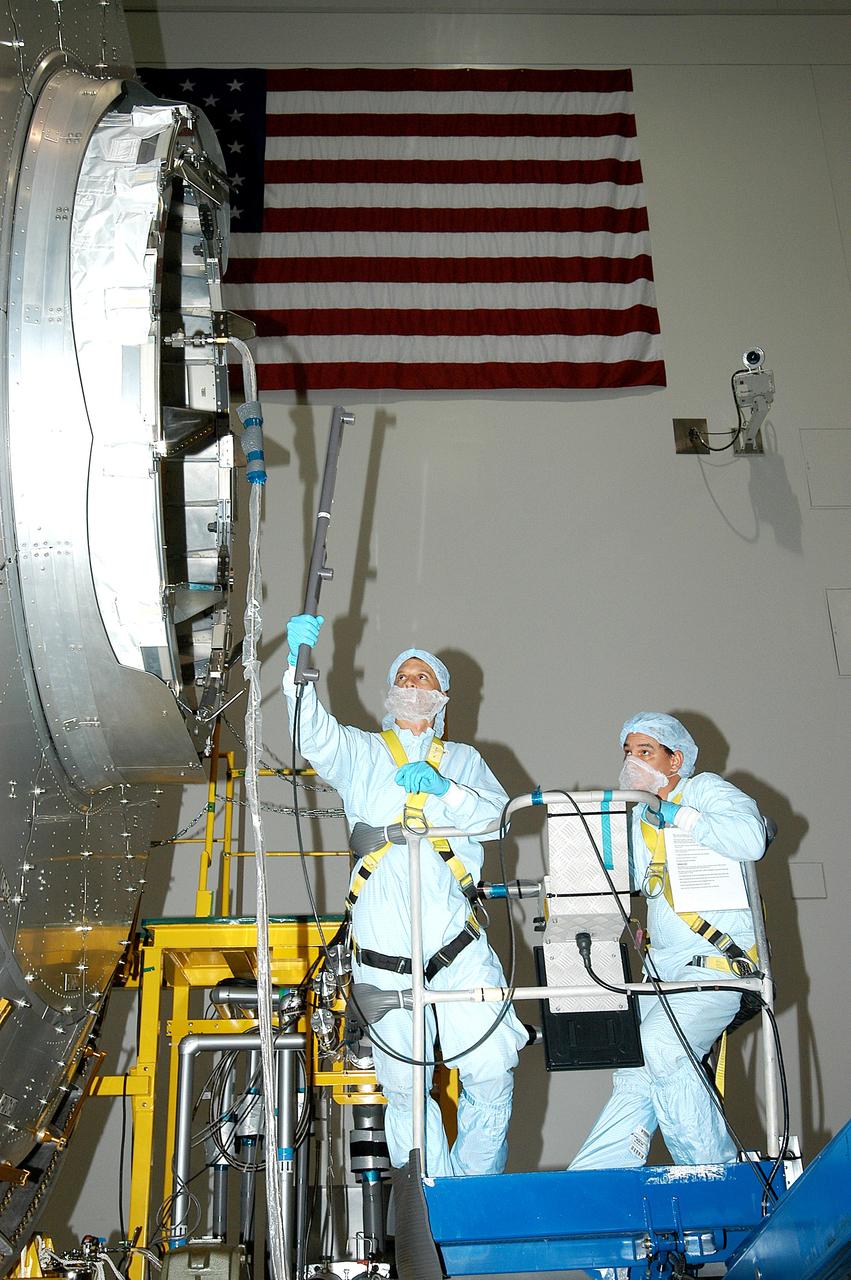
KENNEDY SPACE CENTER, FLA. - In the Space Station Processing Facility, a technician takes readings for pre-assembly measurements on the Japanese Experiment Module (JEM).  Developed by the Japan Aerospace Exploration Agency (JAXA), the JEM will enhance the unique research capabilities of the orbiting complex by providing an additional environment for astronauts to conduct science experiments.
KENNEDY SPACE CENTER, FLA. - In the Space Station Processing Facility, a technician takes readings for pre-assembly measurements on the Japanese Experiment Module (JEM). Developed by the Japan Aerospace Exploration Agency (JAXA), the JEM will enhance the unique research capabilities of the orbiting complex by providing an additional environment for astronauts to conduct science experiments.
KENNEDY SPACE CENTER, FLA. - In the Space Station Processing Facility, the Japanese Experiment Module (JEM) rests on a workstand during pre-assembly measurement activities. Developed by the Japan Aerospace Exploration Agency (JAXA), the JEM will enhance the unique research capabilities of the orbiting complex by providing an additional environment for astronauts to conduct science experiments.
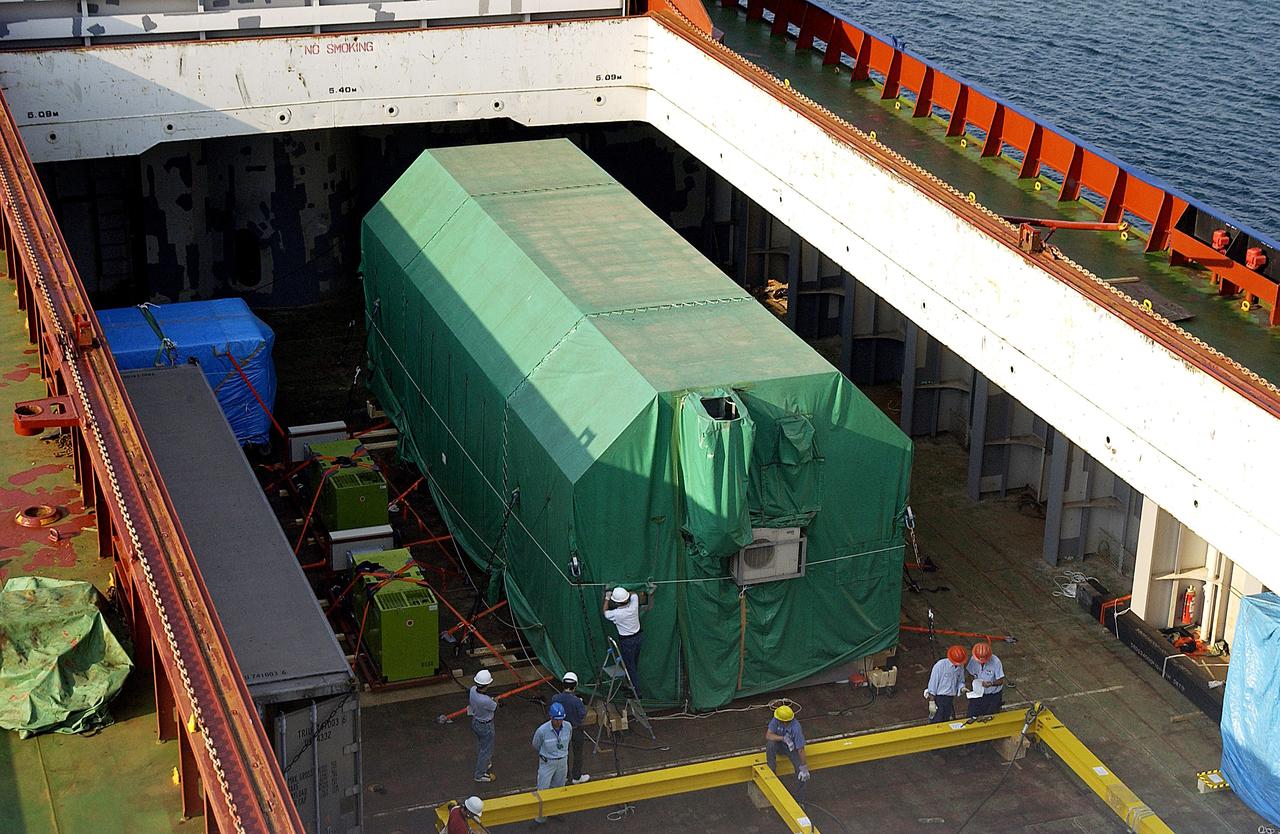
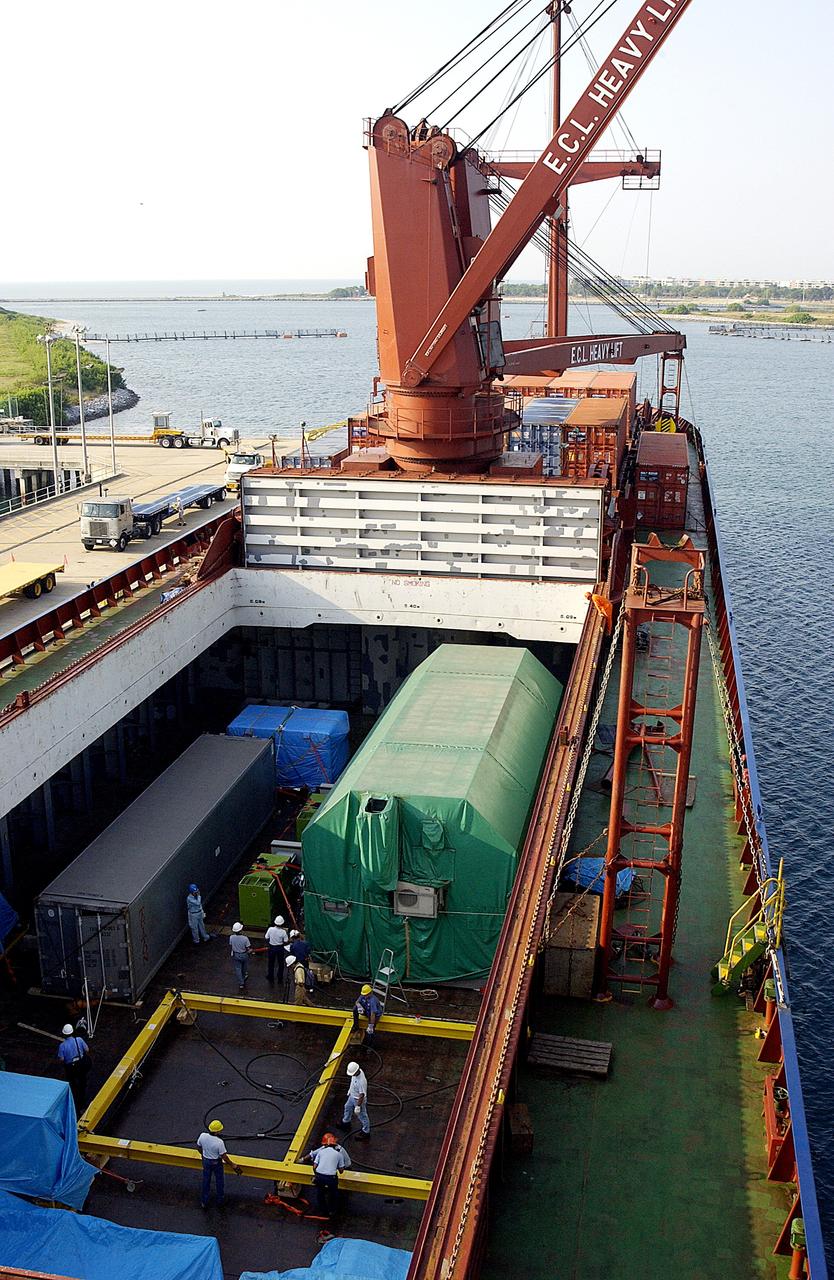
KENNEDY SPACE CENTER, FLA. - The JEM Pressurized Module is seen in the hold of the ship that carried it from Japan.  The National Space Development Agency of Japan (NASDA) built the laboratory at the Tsukuba Space Center near Tokyo.  The Pressurized Module is the first element of the JEM, Japan’s primary contribution to the space station, to be delivered to KSC. It will enhance the unique research capabilities of the orbiting complex by providing an additional shirt-sleeve environment for astronauts to conduct science experiments. The JEM also includes two logistics modules, an exposed pallet for space environment experiments and a robotic manipulator system that are still under construction in Japan. The various JEM components will be assembled in space over the course of three space shuttle missions.
KENNEDY SPACE CENTER, FLA. - The JEM Pressurized Module is seen in the hold of the ship that carried it from Japan. The National Space Development Agency of Japan (NASDA) built the laboratory at the Tsukuba Space Center near Tokyo. The Pressurized Module is the first element of the JEM, Japan’s primary contribution to the space station, to be delivered to KSC. It will enhance the unique research capabilities of the orbiting complex by providing an additional shirt-sleeve environment for astronauts to conduct science experiments. The JEM also includes two logistics modules, an exposed pallet for space environment experiments and a robotic manipulator system that are still under construction in Japan. The various JEM components will be assembled in space over the course of three space shuttle missions.
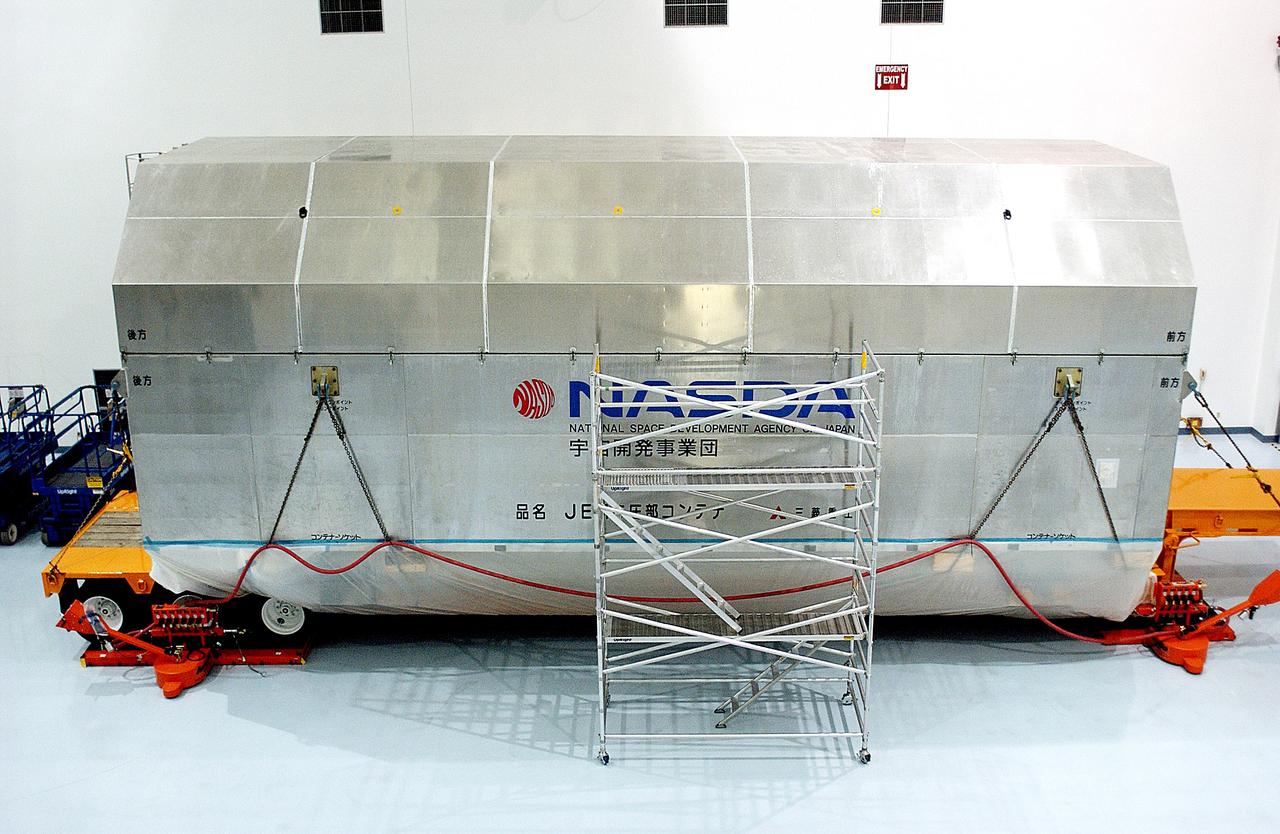
KENNEDY SPACE CENTER, FLA. - The container with the Japanese Experiment Module (JEM)’s pressurized module is inside the Space Station Processing Facility.  The National Space Development Agency of Japan (NASDA) developed the laboratory at the Tsukuba Space Center near Tokyo. The Pressurized Module is the first element of the JEM, named "Kibo" (Hope), to be delivered to KSC. The JEM is Japan's primary contribution to the Station. It will enhance the unique research capabilities of the orbiting complex by providing an additional environment for astronauts to conduct science experiments.  The JEM also includes an exposed facility (platform) for space environment experiments, a robotic manipulator system, and two logistics modules. The various JEM components will be  assembled in space over the course of three Shuttle missions.
KENNEDY SPACE CENTER, FLA. - The container with the Japanese Experiment Module (JEM)’s pressurized module is inside the Space Station Processing Facility. The National Space Development Agency of Japan (NASDA) developed the laboratory at the Tsukuba Space Center near Tokyo. The Pressurized Module is the first element of the JEM, named "Kibo" (Hope), to be delivered to KSC. The JEM is Japan's primary contribution to the Station. It will enhance the unique research capabilities of the orbiting complex by providing an additional environment for astronauts to conduct science experiments. The JEM also includes an exposed facility (platform) for space environment experiments, a robotic manipulator system, and two logistics modules. The various JEM components will be assembled in space over the course of three Shuttle missions.
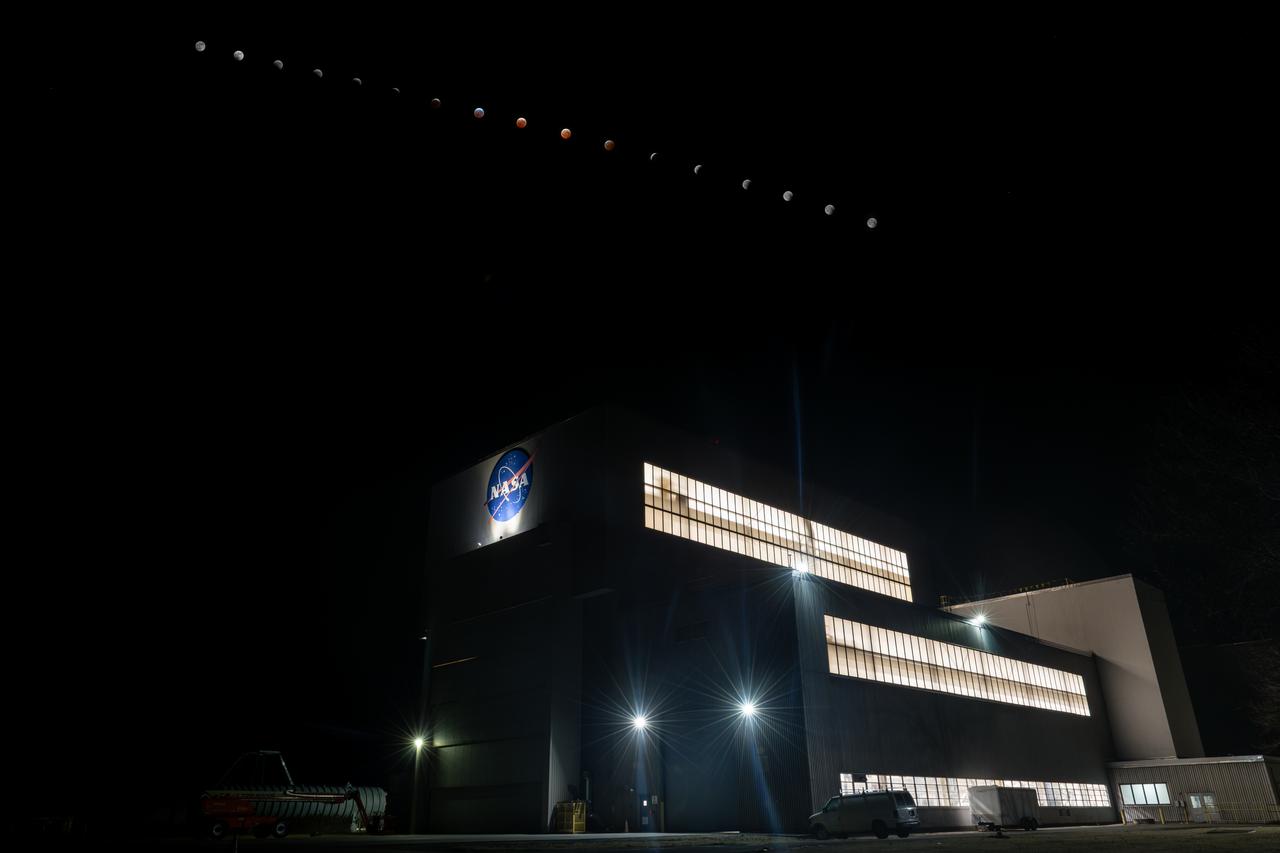
 A composite photo made from 18 images of the lunar eclipse above the Space Environments Complex at NASA’s Glenn Research Center at Neil Armstrong Test Facility in Sandusky, Ohio, during the early hours of March 14, 2025. Photo Credit: (NASA/Sara Lowthian-Hanna)
Total Lunar Eclipse and Blood Moon
Experts at NASA’s Neil Armstrong Test Facility in Sandusky, Ohio, conducted a lightning test, which simulates the electromagnetic effects of a lightning strike to the vehicle on the launch pad awaiting liftoff. The February 20, 2024, test proved the grounding path of the vehicle is operating as designed and protecting the vehicle from damage to any of its equipment or systems. Photo Credit: (NASA/Quentin Schwinn)
Orion Environmental Test Article (ETA) Lightning Test at the Space Environments Complex at NASA’s Glenn Research Center
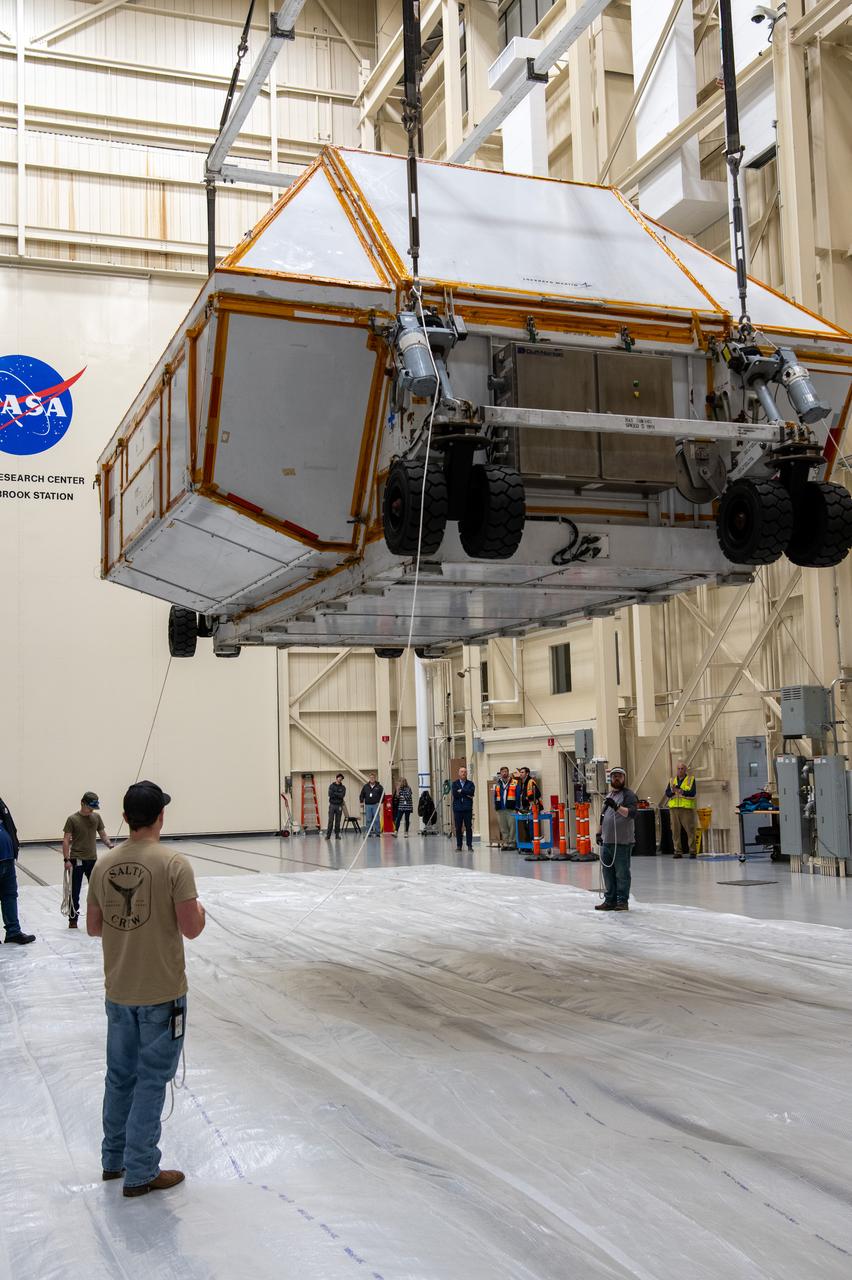
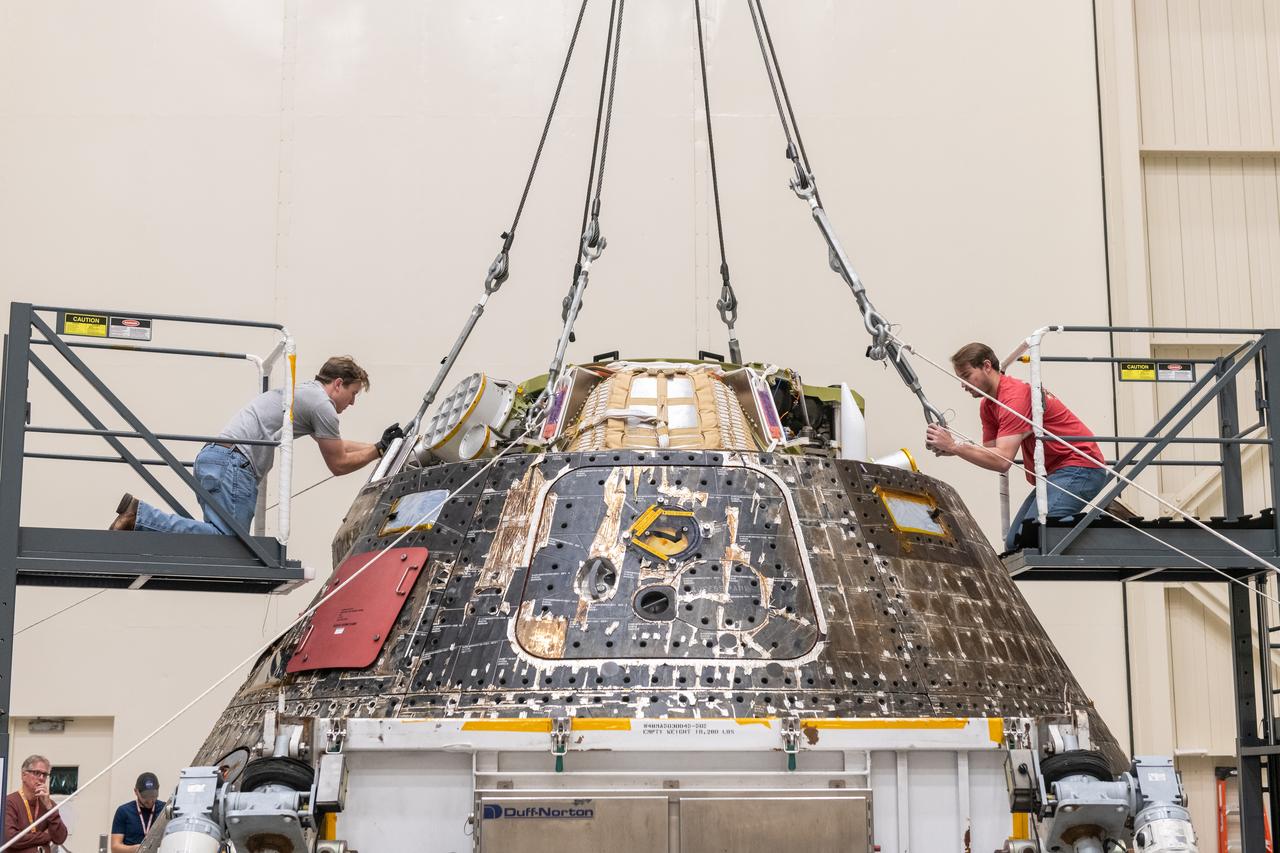
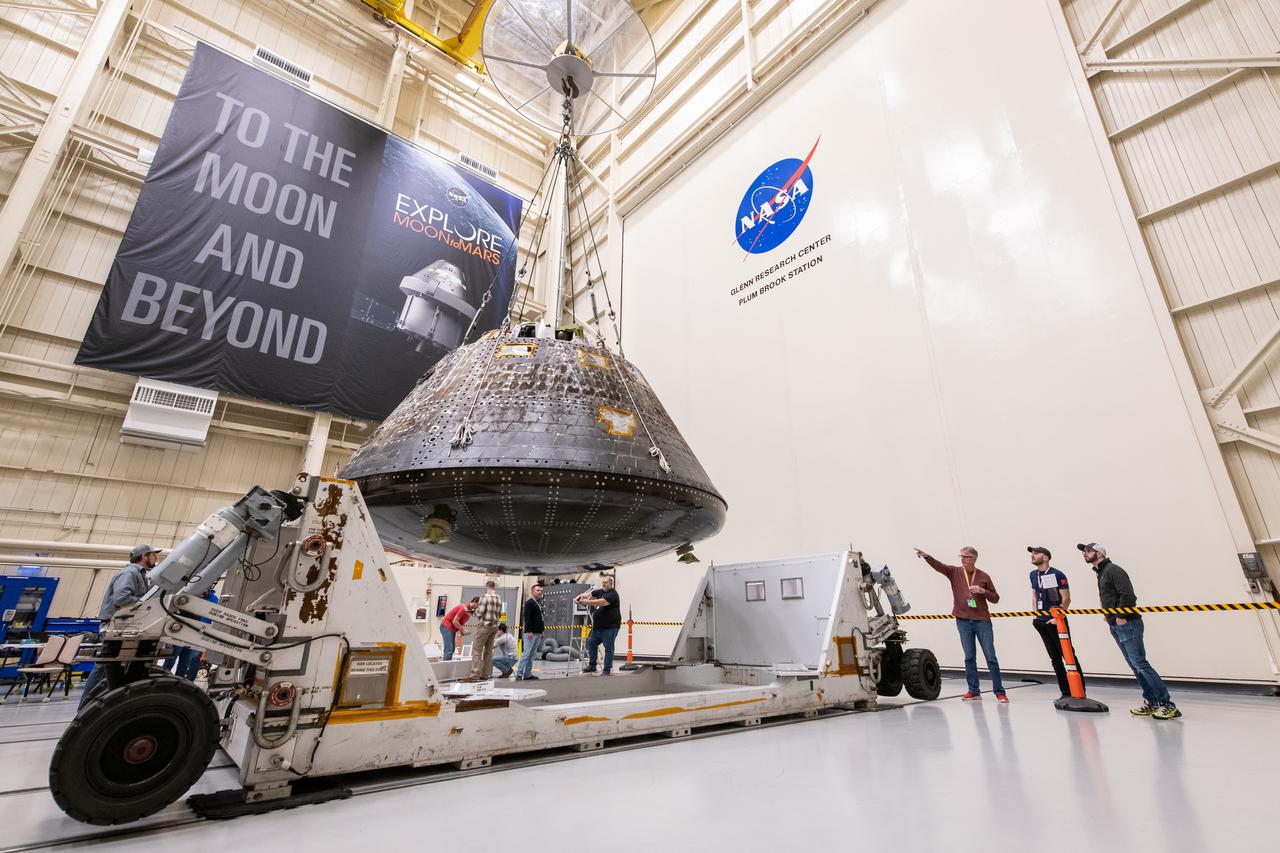
The Launch Abort System and the Orion Crew Module, also known as the Orion Environmental Test Article (ETA), returned to NASA’s Neil Armstrong Test Facility in Sandusky, Ohio, in October 2023 through January 2024 and completed an 11-month test campaign necessary for the safety and success of Artemis II.  Photo Credit: (NASA/Jordan Salkin)
Orion Environmental Test Article (ETA) Arrival to the Space Environments Complex at NASA’s Glenn Research Center
The Launch Abort System and the Orion Crew Module, also known as the Orion Environmental Test Article (ETA), returned to NASA’s Neil Armstrong Test Facility in Sandusky, Ohio, in October 2023 through January 2024 and completed an 11-month test campaign necessary for the safety and success of Artemis II. Photo Credit: (NASA/Jordan Salkin)
Orion Environmental Test Article (ETA) Arrival to the Space Environments Complex at NASA’s Glenn Research Center
The Launch Abort System and the Orion Crew Module, also known as the Orion Environmental Test Article (ETA), returned to NASA’s Neil Armstrong Test Facility in Sandusky, Ohio, in October 2023 through January 2024 and completed an 11-month test campaign necessary for the safety and success of Artemis II. Photo Credit: (NASA/Jordan Salkin)
Orion Environmental Test Article (ETA) Arrival to the Space Environments Complex at NASA’s Glenn Research Center
The Launch Abort System and the Orion Crew Module, also known as the Orion Environmental Test Article (ETA), returned to NASA’s Neil Armstrong Test Facility in Sandusky, Ohio, in October 2023 through January 2024 and completed an 11-month test campaign necessary for the safety and success of Artemis II. Photo Credit: (NASA/Jordan Salkin)
Orion Environmental Test Article (ETA) Arrival to the Space Environments Complex at NASA’s Glenn Research Center
The Launch Abort System and the Orion Crew Module, also known as the Orion Environmental Test Article (ETA), returned to NASA’s Neil Armstrong Test Facility in Sandusky, Ohio, in October 2023 through January 2024 and completed an 11-month test campaign necessary for the safety and success of Artemis II.  Photo Credit: (NASA/Quentin Schwinn)
Orion Environmental Test Article (ETA) Arrival to the Space Environments Complex at NASA’s Glenn Research Center
The Launch Abort System and the Orion Crew Module, also known as the Orion Environmental Test Article (ETA), returned to NASA’s Neil Armstrong Test Facility in Sandusky, Ohio, in October 2023 through January 2024 and completed an 11-month test campaign necessary for the safety and success of Artemis II. Photo Credit: (NASA/Jordan Salkin)
Orion Environmental Test Article (ETA) Arrival to the Space Environments Complex at NASA’s Glenn Research Center
The Launch Abort System and the Orion Crew Module, also known as the Orion Environmental Test Article (ETA), returned to NASA’s Neil Armstrong Test Facility in Sandusky, Ohio, in October 2023 through January 2024 and completed an 11-month test campaign necessary for the safety and success of Artemis II. Photo Credit: (NASA/Jordan Salkin)
Orion Environmental Test Article (ETA) Arrival to the Space Environments Complex at NASA’s Glenn Research Center
The Launch Abort System and the Orion Crew Module, also known as the Orion Environmental Test Article (ETA), returned to NASA’s Neil Armstrong Test Facility in Sandusky, Ohio, in October 2023 through January 2024 and completed an 11-month test campaign necessary for the safety and success of Artemis II. Photo Credit: (NASA/Quentin Schwinn)
The Launch Abort System prepares for testing at the Space Environments Complex at NASA’s Glenn Research Center
The Launch Abort System and the Orion Crew Module, also known as the Orion Environmental Test Article (ETA), returned to NASA’s Neil Armstrong Test Facility in Sandusky, Ohio, in October 2023 through January 2024 and completed an 11-month test campaign necessary for the safety and success of Artemis II.  Photo Credit: (NASA/Jordan Salkin)
Orion Environmental Test Article (ETA) Arrival to the Space Environments Complex at NASA’s Glenn Research Center
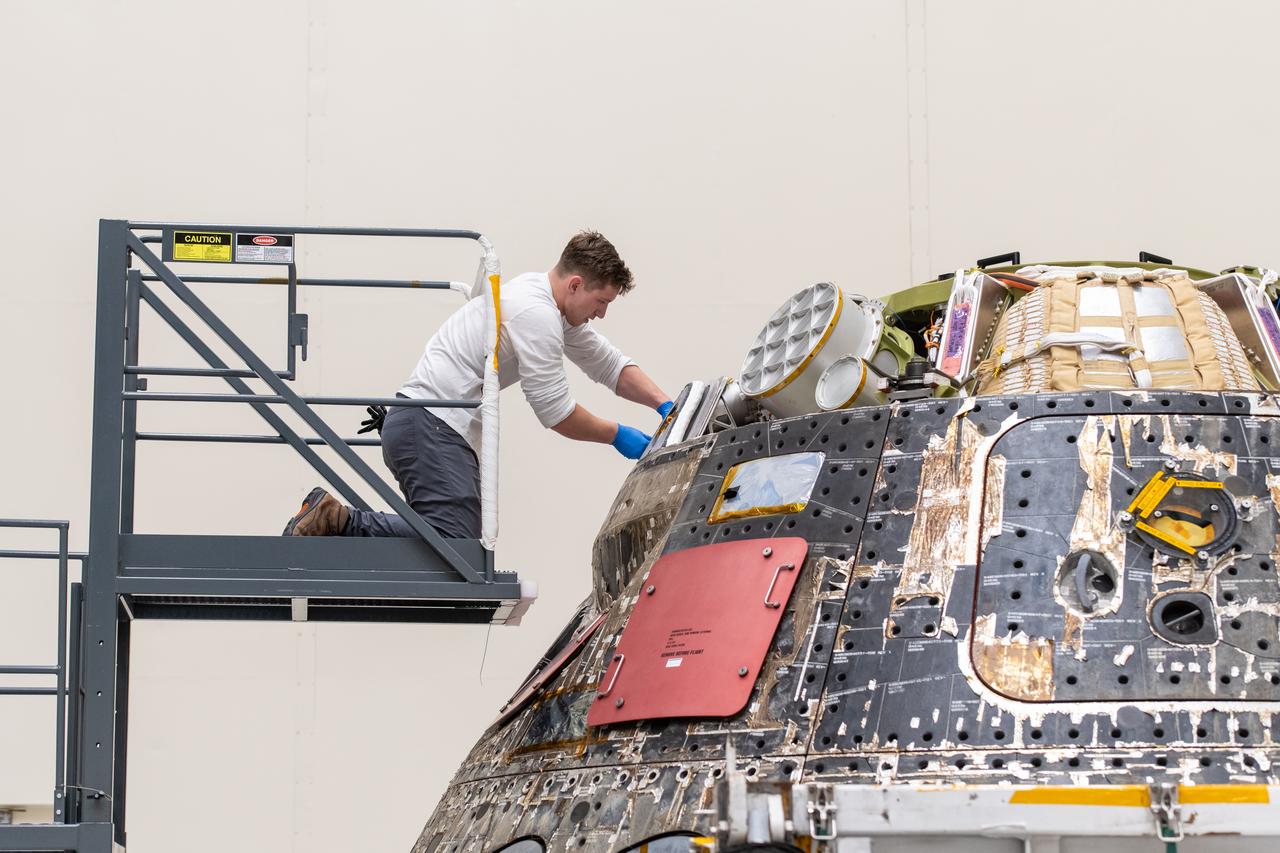
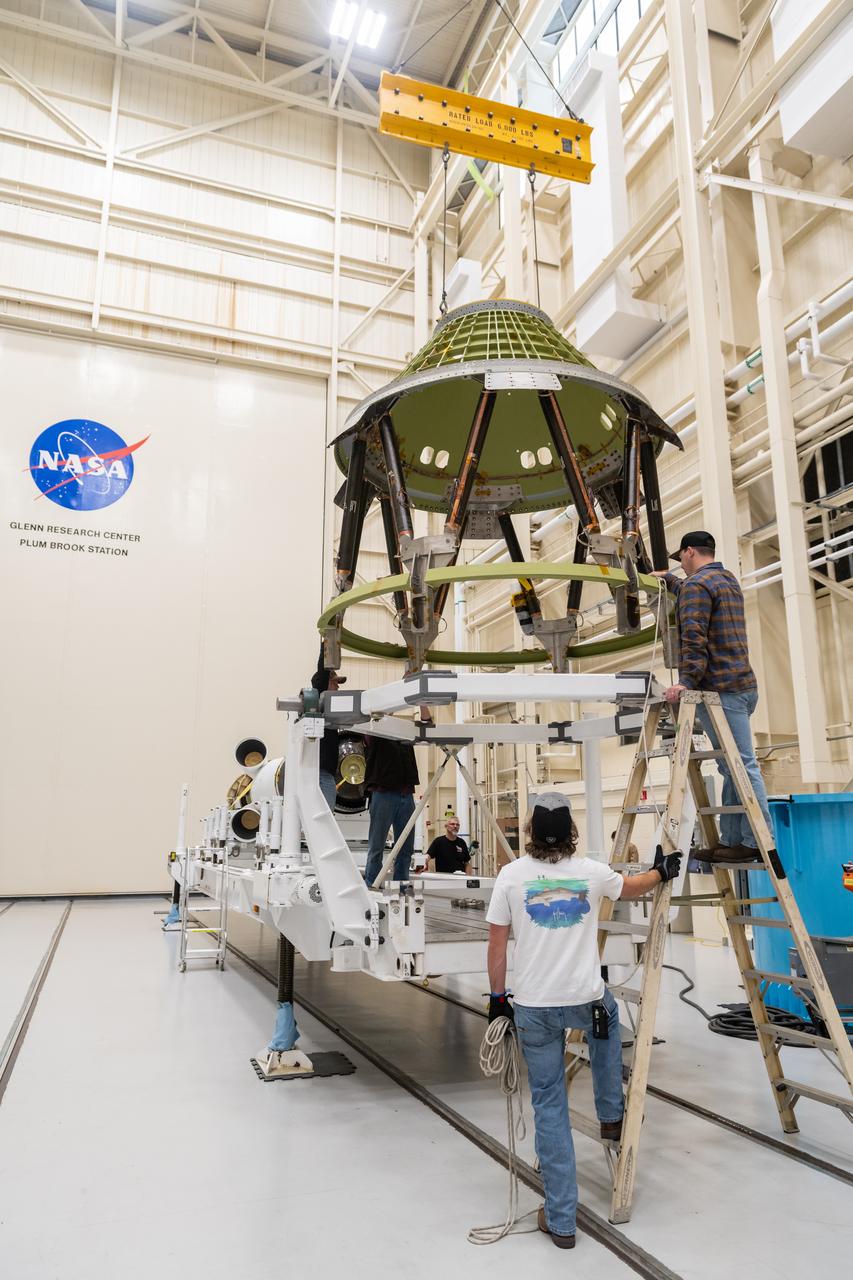
The Orion Crew Module, also known as the Orion Environmental Test Article (ETA), prepares for testing by installing the Forward Bay Cover. The Crew Module returned to NASA’s Neil Armstrong Test Facility in Sandusky, Ohio, in January 2024 and completed an 11-month test campaign necessary for the safety and success of Artemis II. Photo Credit: (NASA/Jordan Salkin)
The Orion Environmental Test Article (ETA) prepares for testing at the Space Environments Complex at NASA’s Glenn Research Center
The Launch Abort System and the Orion Crew Module, also known as the Orion Environmental Test Article (ETA), returned to NASA’s Neil Armstrong Test Facility in Sandusky, Ohio, in October 2023 through January 2024 and completed an 11-month test campaign necessary for the safety and success of Artemis II. Photo Credit: (NASA/Quentin Schwinn)
The Launch Abort System prepares for testing at the Space Environments Complex at NASA’s Glenn Research Center
The Launch Abort System and the Orion Crew Module, also known as the Orion Environmental Test Article (ETA), returned to NASA’s Neil Armstrong Test Facility in Sandusky, Ohio, in October 2023 through January 2024 and completed an 11-month test campaign necessary for the safety and success of Artemis II.  Photo Credit: (NASA/Jordan Salkin)
Orion Environmental Test Article (ETA) Arrival to the Space Environments Complex at NASA’s Glenn Research Center
The Launch Abort System and the Orion Crew Module, also known as the Orion Environmental Test Article (ETA), returned to NASA’s Neil Armstrong Test Facility in Sandusky, Ohio, in October 2023 through January 2024 and completed an 11-month test campaign necessary for the safety and success of Artemis II. Photo Credit: (NASA/Jordan Salkin)
Orion Environmental Test Article (ETA) Arrival to the Space Environments Complex at NASA’s Glenn Research Center
The Launch Abort System and the Orion Crew Module, also known as the Orion Environmental Test Article (ETA), returned to NASA’s Neil Armstrong Test Facility in Sandusky, Ohio, in October 2023 through January 2024 and completed an 11-month test campaign necessary for the safety and success of Artemis II. Photo Credit: (NASA/Quentin Schwinn)
Orion Environmental Test Article (ETA) Arrival to the Space Environments Complex at NASA’s Glenn Research Center
The Launch Abort System and the Orion Crew Module, also known as the Orion Environmental Test Article (ETA), returned to NASA’s Neil Armstrong Test Facility in Sandusky, Ohio, in October 2023 through January 2024 and completed an 11-month test campaign necessary for the safety and success of Artemis II. Photo Credit: (NASA/Jordan Salkin)
The Launch Abort System prepares for testing at the Space Environments Complex at NASA’s Glenn Research Center
The Launch Abort System and the Orion Crew Module, also known as the Orion Environmental Test Article (ETA), returned to NASA’s Neil Armstrong Test Facility in Sandusky, Ohio, in October 2023 through January 2024 and completed an 11-month test campaign necessary for the safety and success of Artemis II. Photo Credit: (NASA/Jordan Salkin)
The Launch Abort System prepares for testing at the Space Environments Complex at NASA’s Glenn Research Center
The Launch Abort System and the Orion Crew Module, also known as the Orion Environmental Test Article (ETA), returned to NASA’s Neil Armstrong Test Facility in Sandusky, Ohio, in October 2023 through January 2024 and completed an 11-month test campaign necessary for the safety and success of Artemis II. Photo Credit: (NASA/Jordan Salkin)
Orion Environmental Test Article (ETA) Arrival to the Space Environments Complex at NASA’s Glenn Research Center
The Orion Crew Module, also known as the Orion Environmental Test Article (ETA), prepares for testing by installing the Forward Bay Cover. The Crew Module returned to NASA’s Neil Armstrong Test Facility in Sandusky, Ohio, in January 2024 and completed an 11-month test campaign necessary for the safety and success of Artemis II. Photo Credit: (NASA/Jordan Salkin)
The Orion Environmental Test Article (ETA) prepares for testing at the Space Environments Complex at NASA’s Glenn Research Center
The Launch Abort System and the Orion Crew Module, also known as the Orion Environmental Test Article (ETA), returned to NASA’s Neil Armstrong Test Facility in Sandusky, Ohio, in October 2023 through January 2024 and completed an 11-month test campaign necessary for the safety and success of Artemis II. Photo Credit: (NASA/Jordan Salkin)
Orion Environmental Test Article (ETA) Arrival to the Space Environments Complex at NASA’s Glenn Research Center
The Orion Crew Module, also known as the Orion Environmental Test Article (ETA), prepares for testing by installing the Forward Bay Cover. The Crew Module returned to NASA’s Neil Armstrong Test Facility in Sandusky, Ohio, in January 2024 and completed an 11-month test campaign necessary for the safety and success of Artemis II. Photo Credit: (NASA/Jordan Salkin)
The Orion Environmental Test Article (ETA) prepares for testing at the Space Environments Complex at NASA’s Glenn Research Center
The Launch Abort System and the Orion Crew Module, also known as the Orion Environmental Test Article (ETA), returned to NASA’s Neil Armstrong Test Facility in Sandusky, Ohio, in October 2023 through January 2024 and completed an 11-month test campaign necessary for the safety and success of Artemis II. Photo Credit: (NASA/Jordan Salkin)
Orion Environmental Test Article (ETA) Arrival to the Space Environments Complex at NASA’s Glenn Research Center
The Launch Abort System and the Orion Crew Module, also known as the Orion Environmental Test Article (ETA), returned to NASA’s Neil Armstrong Test Facility in Sandusky, Ohio, in October 2023 through January 2024 and completed an 11-month test campaign necessary for the safety and success of Artemis II. Photo Credit: (NASA/Jordan Salkin)
Orion Environmental Test Article (ETA) Arrival to the Space Environments Complex at NASA’s Glenn Research Center
The Launch Abort System and the Orion Crew Module, also known as the Orion Environmental Test Article (ETA), returned to NASA’s Neil Armstrong Test Facility in Sandusky, Ohio, in October 2023 through January 2024 and completed an 11-month test campaign necessary for the safety and success of Artemis II. Photo Credit: (NASA/Jordan Salkin)
Orion Environmental Test Article (ETA) Arrival to the Space Environments Complex at NASA’s Glenn Research Center
Experts at NASA’s Neil Armstrong Test Facility in Sandusky, Ohio, conducted a lightning test, which simulates the electromagnetic effects of a lightning strike to the vehicle on the launch pad awaiting liftoff. The February 20, 2024, test proved the grounding path of the vehicle is operating as designed and protecting the vehicle from damage to any of its equipment or systems. Photo Credit: (NASA/Quentin Schwinn)
Orion Environmental Test Article (ETA) Lightning Test at the Space Environments Complex at NASA’s Glenn Research Center
The Launch Abort System and the Orion Crew Module, also known as the Orion Environmental Test Article (ETA), returned to NASA’s Neil Armstrong Test Facility in Sandusky, Ohio, in October 2023 through January 2024 and completed an 11-month test campaign necessary for the safety and success of Artemis II. Photo Credit: (NASA/Jordan Salkin)
Orion Environmental Test Article (ETA) Arrival to the Space Environments Complex at NASA’s Glenn Research Center
The Launch Abort System and the Orion Crew Module, also known as the Orion Environmental Test Article (ETA), returned to NASA’s Neil Armstrong Test Facility in Sandusky, Ohio, in October 2023 through January 2024 and completed an 11-month test campaign necessary for the safety and success of Artemis II. Photo Credit: (NASA/Quentin Schwinn)
Orion Environmental Test Article (ETA) Arrival to the Space Environments Complex at NASA’s Glenn Research Center
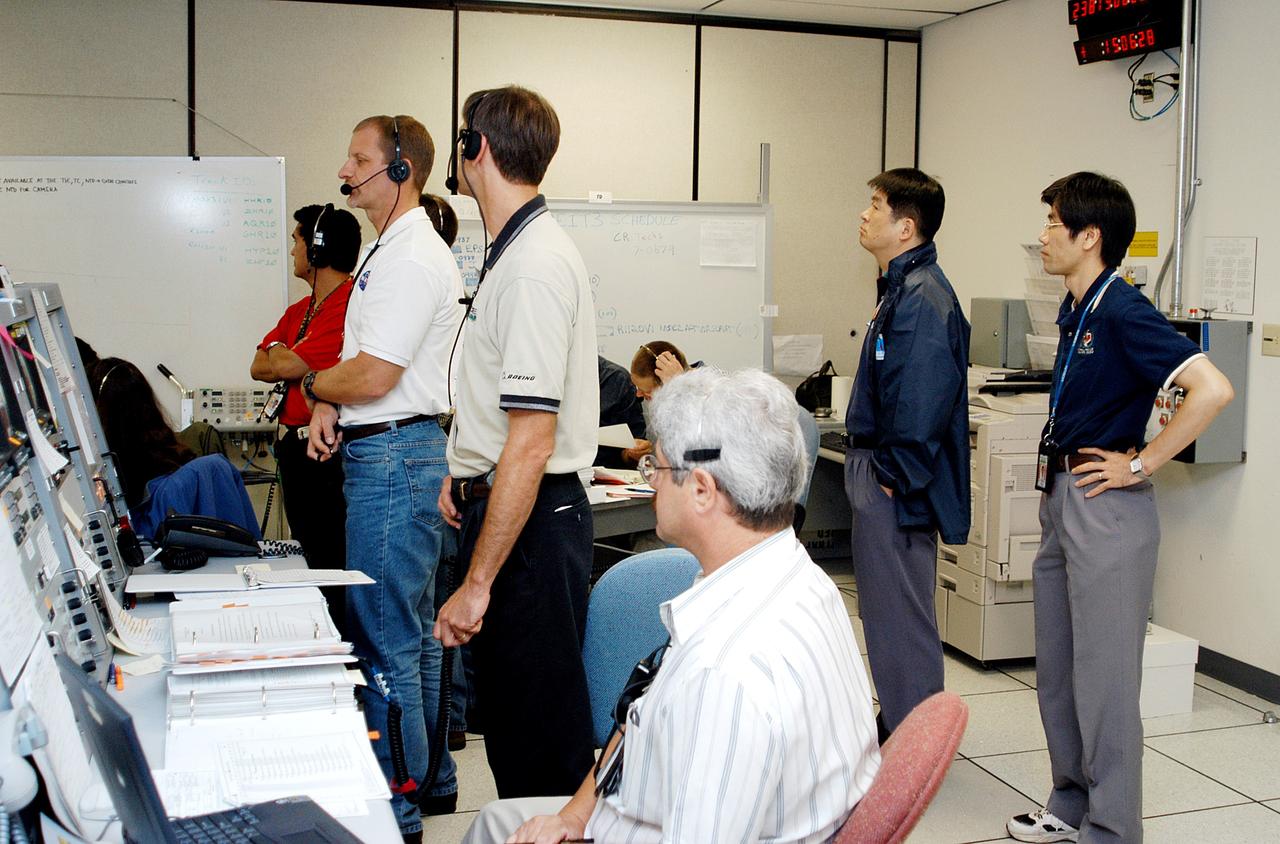
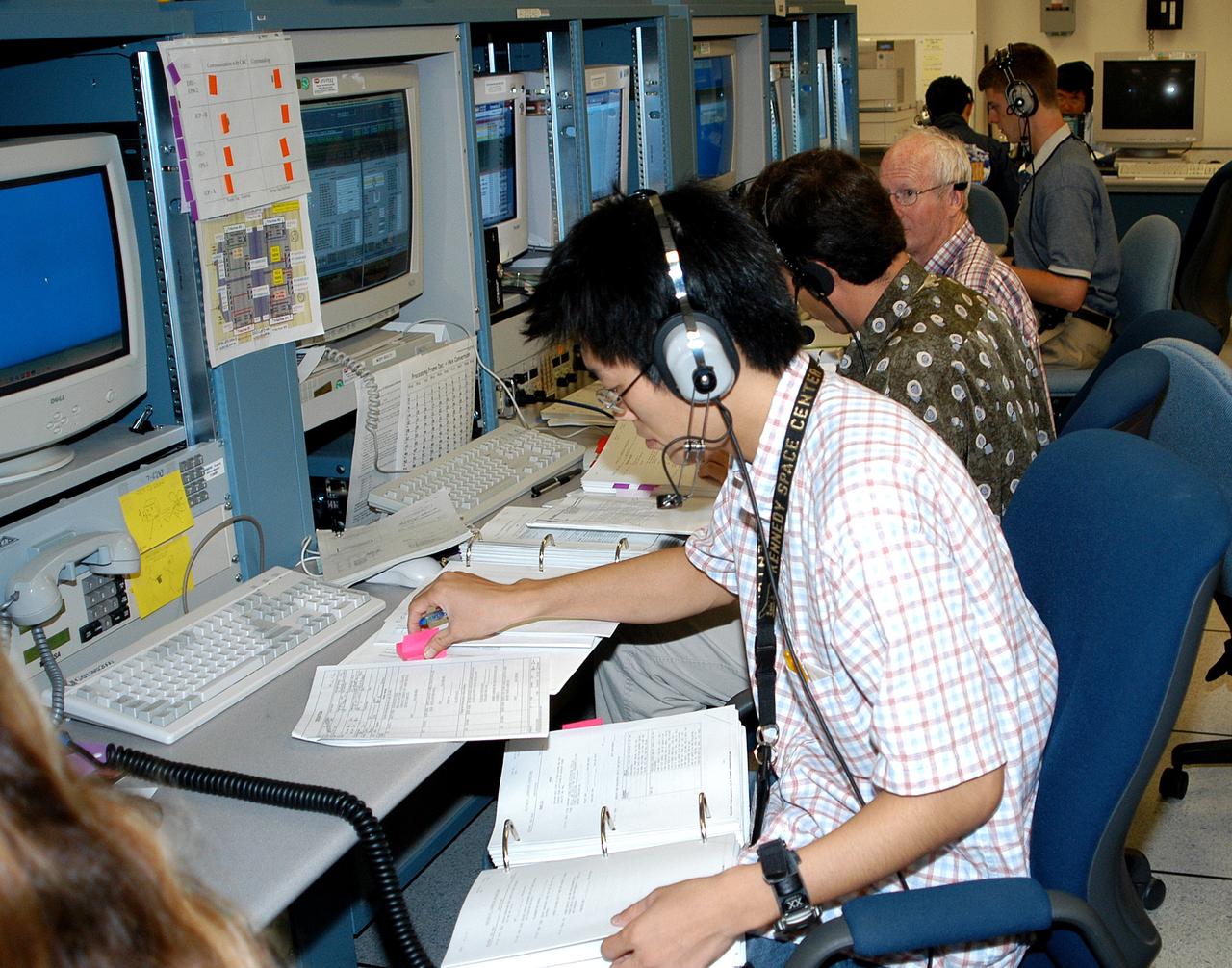
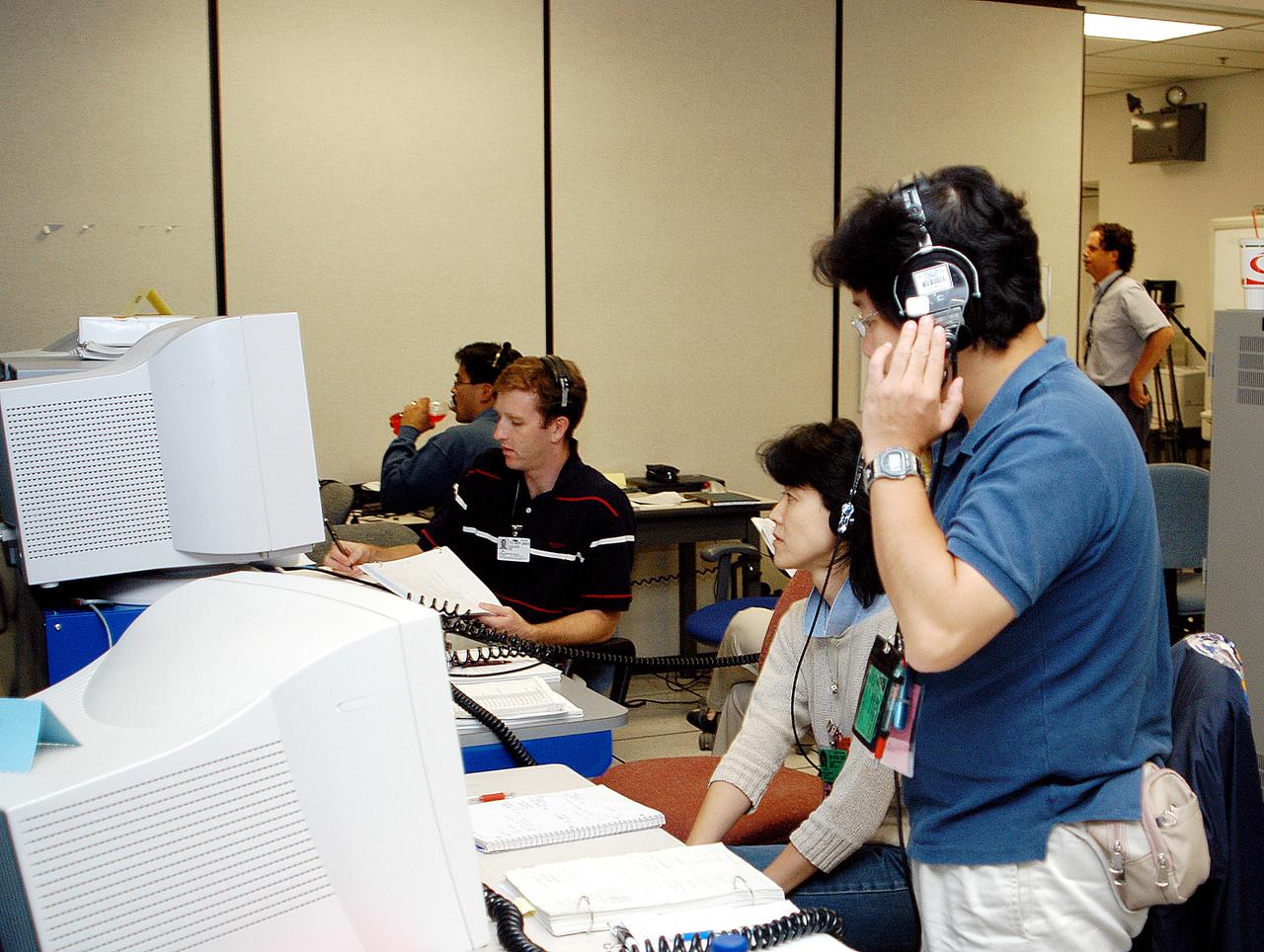
KENNEDY SPACE CENTER, FLA. -  In the Space Station Processing Facility, personnel observe sensors during a Multi-Equipment Interface Test (MEIT) on the Japanese Experiment Module (JEM).  The National Space Development Agency of Japan (NASDA) developed the laboratory at the Tsukuba Space Center near Tokyo. It is the first element, named "Kibo" (Hope), to be delivered to KSC. The JEM is Japan's primary contribution to the Station. It will enhance the unique research capabilities of the orbiting complex by providing an additional environment for astronauts to conduct science experiments.
KENNEDY SPACE CENTER, FLA. - In the Space Station Processing Facility, personnel observe sensors during a Multi-Equipment Interface Test (MEIT) on the Japanese Experiment Module (JEM). The National Space Development Agency of Japan (NASDA) developed the laboratory at the Tsukuba Space Center near Tokyo. It is the first element, named "Kibo" (Hope), to be delivered to KSC. The JEM is Japan's primary contribution to the Station. It will enhance the unique research capabilities of the orbiting complex by providing an additional environment for astronauts to conduct science experiments.
KENNEDY SPACE CENTER, FLA. - In the Space Station Processing Facility, Japanaese astronauts and personnel observe sensors during a Multi-Equipment Interface Test (MEIT) on the Japanese Experiment Module (JEM).  The National Space Development Agency of Japan (NASDA) developed the laboratory at the Tsukuba Space Center near Tokyo. It is the first element, named "Kibo" (Hope), to be delivered to KSC. The JEM is Japan's primary contribution to the Station. It will enhance the unique research capabilities of the orbiting complex by providing an additional environment for astronauts to conduct science experiments.
KENNEDY SPACE CENTER, FLA. - In the Space Station Processing Facility, Japanaese astronauts and personnel observe sensors during a Multi-Equipment Interface Test (MEIT) on the Japanese Experiment Module (JEM). The National Space Development Agency of Japan (NASDA) developed the laboratory at the Tsukuba Space Center near Tokyo. It is the first element, named "Kibo" (Hope), to be delivered to KSC. The JEM is Japan's primary contribution to the Station. It will enhance the unique research capabilities of the orbiting complex by providing an additional environment for astronauts to conduct science experiments.
KENNEDY SPACE CENTER, FLA. -  Japanese astronauts and other personnel in the Space Station Processing Facility observe sensors during a Multi-Equipment Interface Test (MEIT) on the Japanese Experiment Module (JEM).  The National Space Development Agency of Japan (NASDA) developed the laboratory at the Tsukuba Space Center near Tokyo. It is the first element, named "Kibo" (Hope), to be delivered to KSC. The JEM is Japan's primary contribution to the Station. It will enhance the unique research capabilities of the orbiting complex by providing an additional environment for astronauts to conduct science experiments.
KENNEDY SPACE CENTER, FLA. - Japanese astronauts and other personnel in the Space Station Processing Facility observe sensors during a Multi-Equipment Interface Test (MEIT) on the Japanese Experiment Module (JEM). The National Space Development Agency of Japan (NASDA) developed the laboratory at the Tsukuba Space Center near Tokyo. It is the first element, named "Kibo" (Hope), to be delivered to KSC. The JEM is Japan's primary contribution to the Station. It will enhance the unique research capabilities of the orbiting complex by providing an additional environment for astronauts to conduct science experiments.
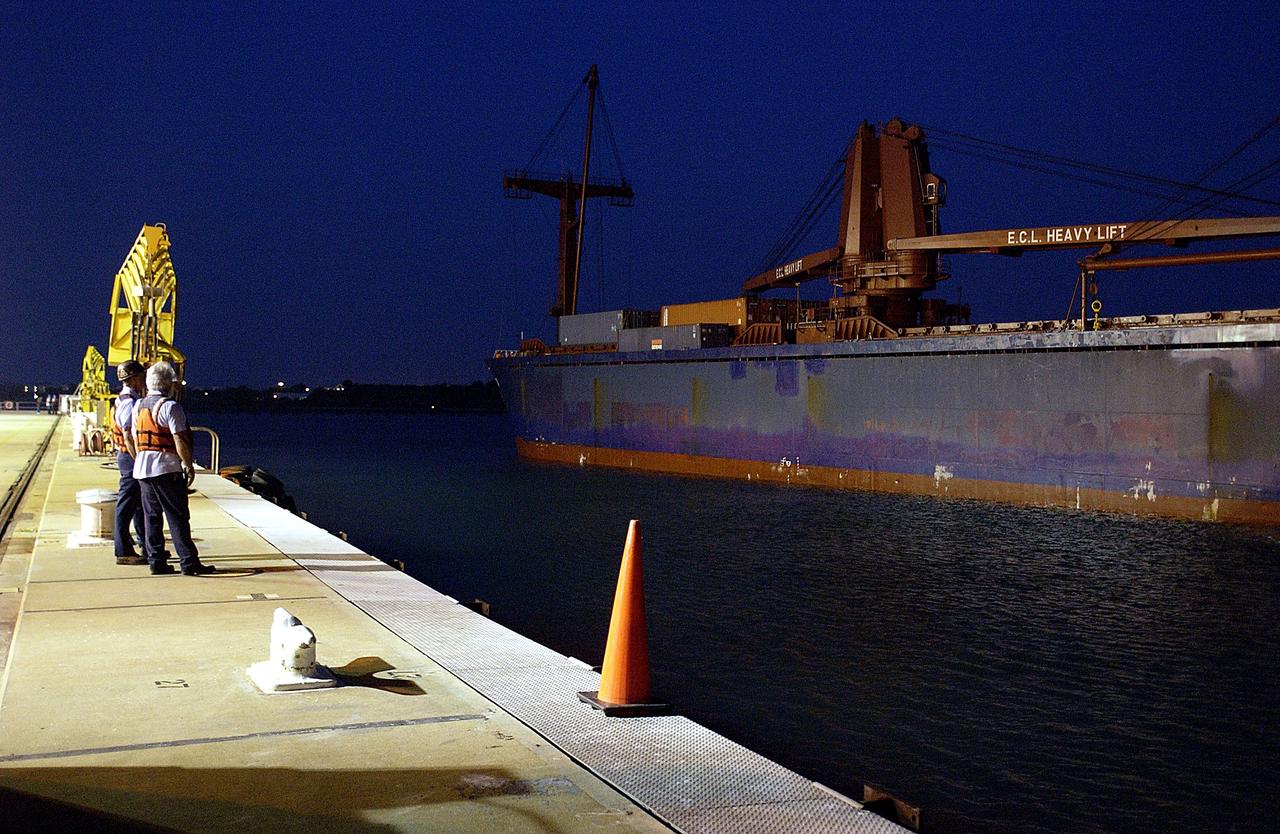
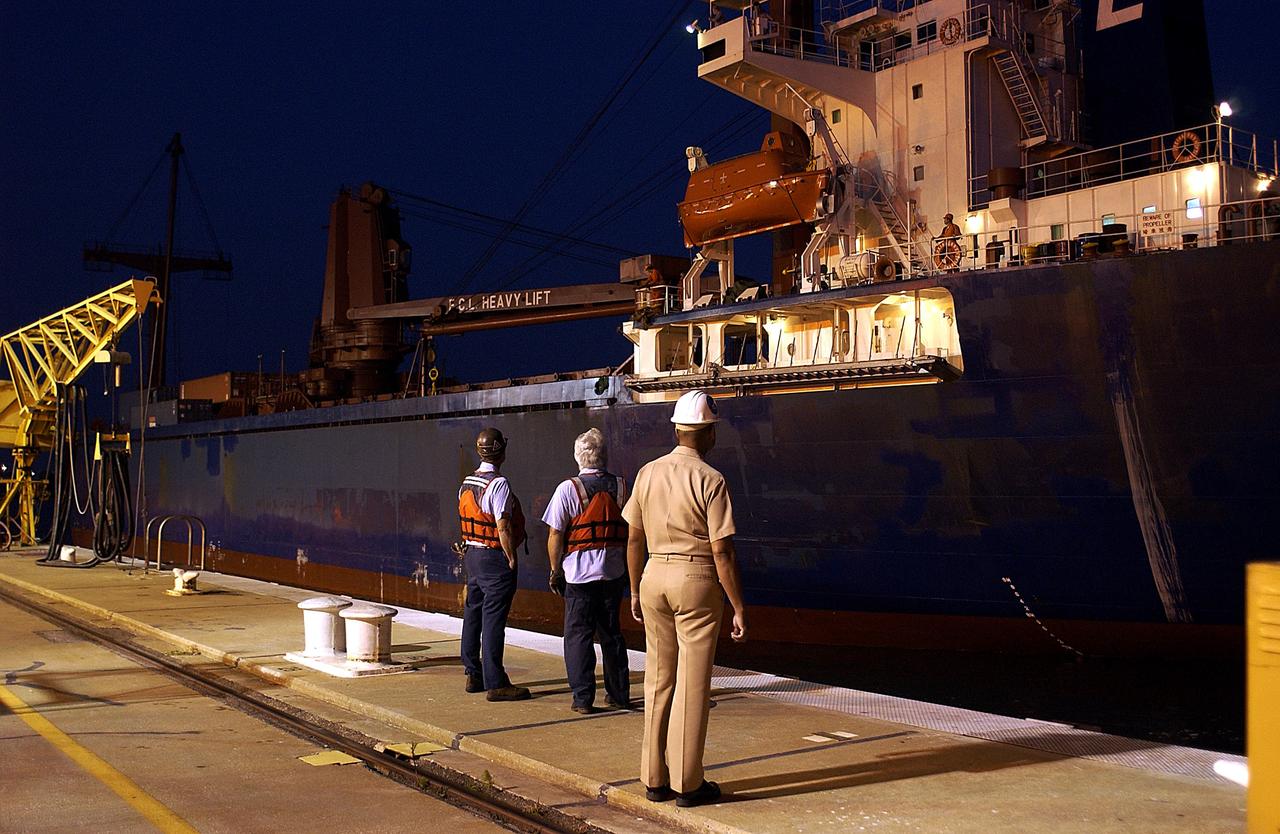
KENNEDY SPACE CENTER, FLA. -  The container transport ship carrying the JEM Pressurized Module arrives at Port Canaveral, Fla.  The National Space Development Agency of Japan (NASDA) built the laboratory at the Tsukuba Space Center near Tokyo.  The Pressurized Module is the first element of the JEM, Japan’s primary contribution to the space station, to be delivered to KSC. It will enhance the unique research capabilities of the orbiting complex by providing an additional shirt-sleeve environment for astronauts to conduct science experiments. The JEM also includes two logistics modules, an exposed pallet for space environment experiments and a robotic manipulator system that are still under construction in Japan. The various JEM components will be assembled in space over the course of three space shuttle missions.
KENNEDY SPACE CENTER, FLA. - The container transport ship carrying the JEM Pressurized Module arrives at Port Canaveral, Fla. The National Space Development Agency of Japan (NASDA) built the laboratory at the Tsukuba Space Center near Tokyo. The Pressurized Module is the first element of the JEM, Japan’s primary contribution to the space station, to be delivered to KSC. It will enhance the unique research capabilities of the orbiting complex by providing an additional shirt-sleeve environment for astronauts to conduct science experiments. The JEM also includes two logistics modules, an exposed pallet for space environment experiments and a robotic manipulator system that are still under construction in Japan. The various JEM components will be assembled in space over the course of three space shuttle missions.
KENNEDY SPACE CENTER, FLA. - The Japanese Experiment Module (JEM) Pressurized Module is ready to be offloaded from the ship that carried it from Japan.  The National Space Development Agency of Japan (NASDA) built the laboratory at the Tsukuba Space Center near Tokyo.  The Pressurized Module is the first element of the JEM, Japan’s primary contribution to the space station, to be delivered to KSC. It will enhance the unique research capabilities of the orbiting complex by providing an additional shirt-sleeve environment for astronauts to conduct science experiments. The JEM also includes two logistics modules, an exposed pallet for space environment experiments and a robotic manipulator system that are still under construction in Japan. The various JEM components will be assembled in space over the course of three space shuttle missions.
KENNEDY SPACE CENTER, FLA. - The Japanese Experiment Module (JEM) Pressurized Module is ready to be offloaded from the ship that carried it from Japan. The National Space Development Agency of Japan (NASDA) built the laboratory at the Tsukuba Space Center near Tokyo. The Pressurized Module is the first element of the JEM, Japan’s primary contribution to the space station, to be delivered to KSC. It will enhance the unique research capabilities of the orbiting complex by providing an additional shirt-sleeve environment for astronauts to conduct science experiments. The JEM also includes two logistics modules, an exposed pallet for space environment experiments and a robotic manipulator system that are still under construction in Japan. The various JEM components will be assembled in space over the course of three space shuttle missions.
KENNEDY SPACE CENTER, FLA. -  Workers in the Space Station Processing Facility attach an overhead crane to the Japanese Experiment Module (JEM) pressure module inside its canister.  The module will be removed and transferred to a work stand in the Space Station Processing Facility.  A research laboratory, the pressurized module is the first element of the JEM, named "Kibo" (Hope), to be delivered to KSC.   The National Space Development Agency of Japan (NASDA) developed the laboratory at the Tsukuba Space Center near Tokyo and is Japan's primary contribution to the Station. It will enhance the unique research capabilities of the orbiting complex by providing an additional environment for astronauts to conduct science experiments.  The JEM also includes an exposed facility (platform) for space environment experiments, a robotic manipulator system, and two logistics modules. The various JEM components will be  assembled in space over the course of three Shuttle missions.
KENNEDY SPACE CENTER, FLA. - Workers in the Space Station Processing Facility attach an overhead crane to the Japanese Experiment Module (JEM) pressure module inside its canister. The module will be removed and transferred to a work stand in the Space Station Processing Facility. A research laboratory, the pressurized module is the first element of the JEM, named "Kibo" (Hope), to be delivered to KSC. The National Space Development Agency of Japan (NASDA) developed the laboratory at the Tsukuba Space Center near Tokyo and is Japan's primary contribution to the Station. It will enhance the unique research capabilities of the orbiting complex by providing an additional environment for astronauts to conduct science experiments. The JEM also includes an exposed facility (platform) for space environment experiments, a robotic manipulator system, and two logistics modules. The various JEM components will be assembled in space over the course of three Shuttle missions.
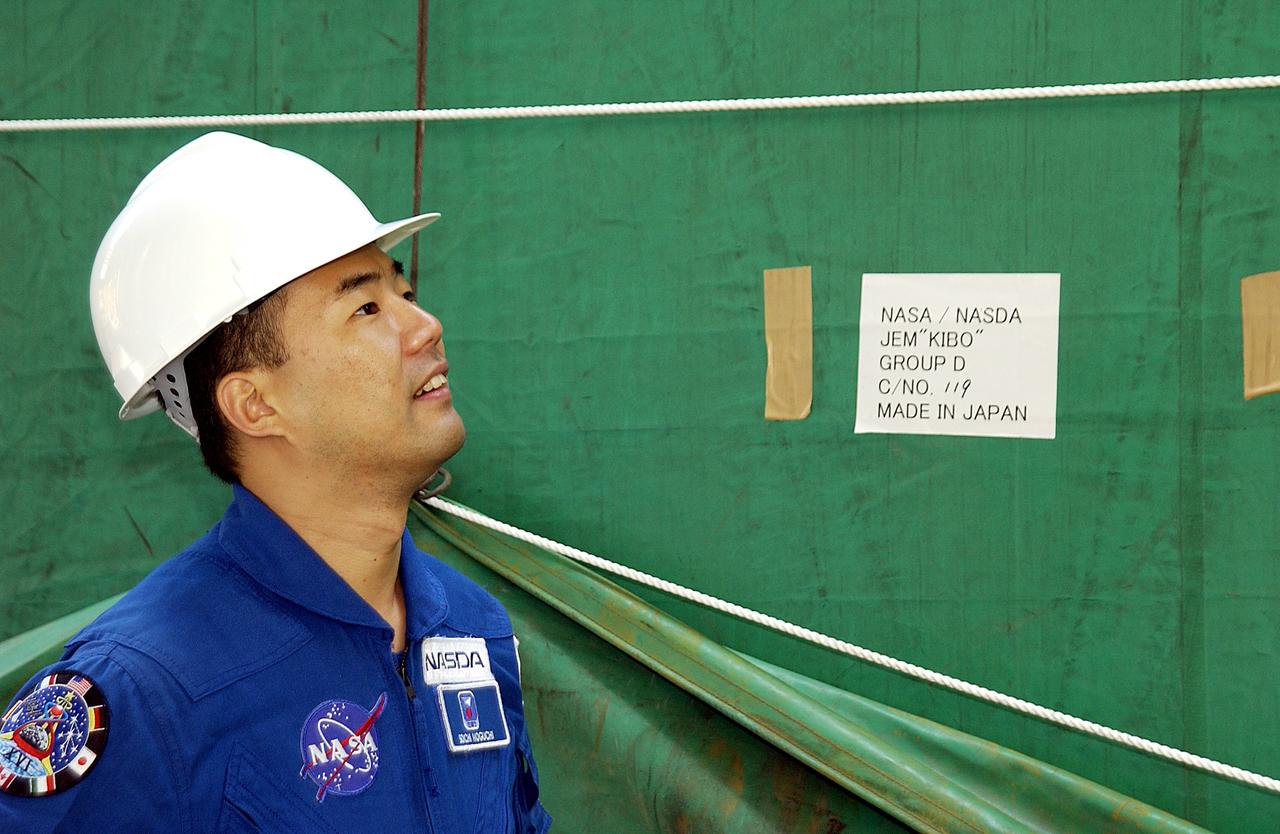
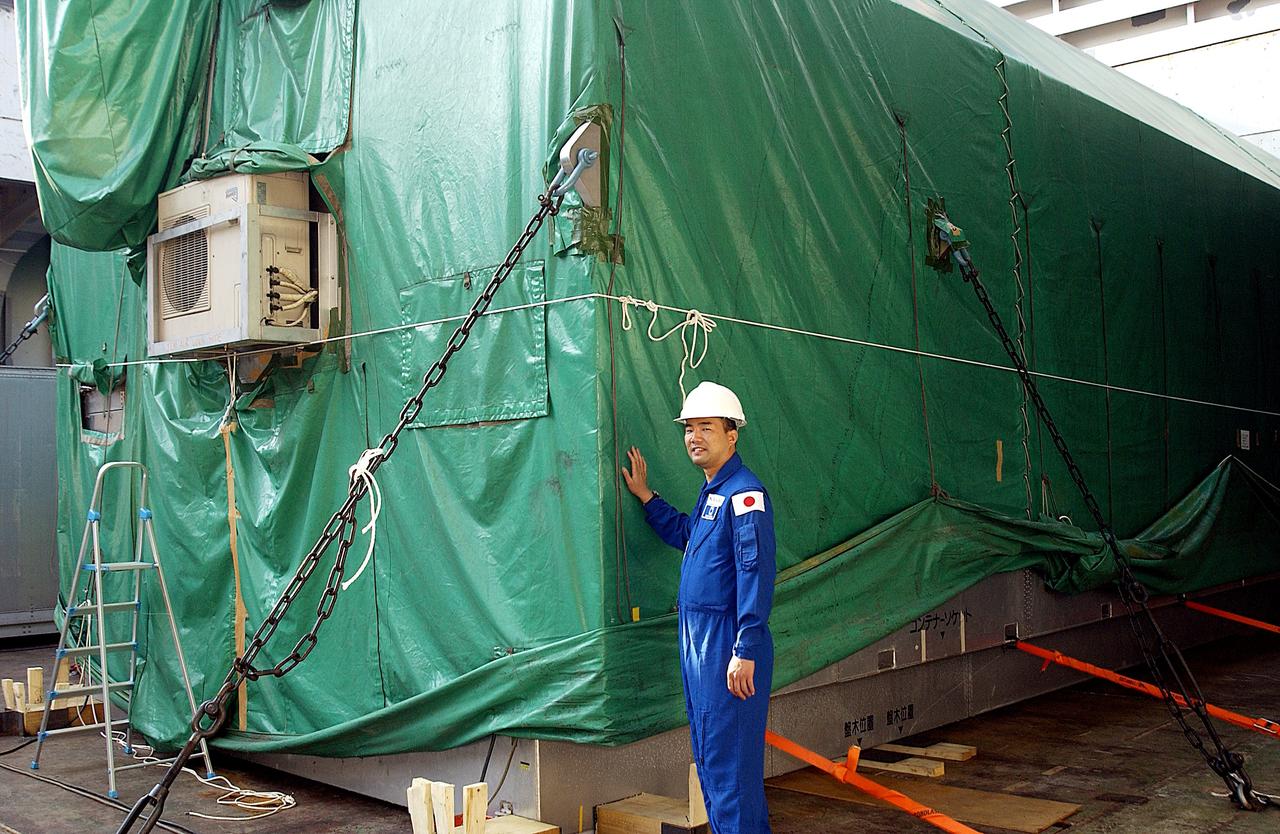
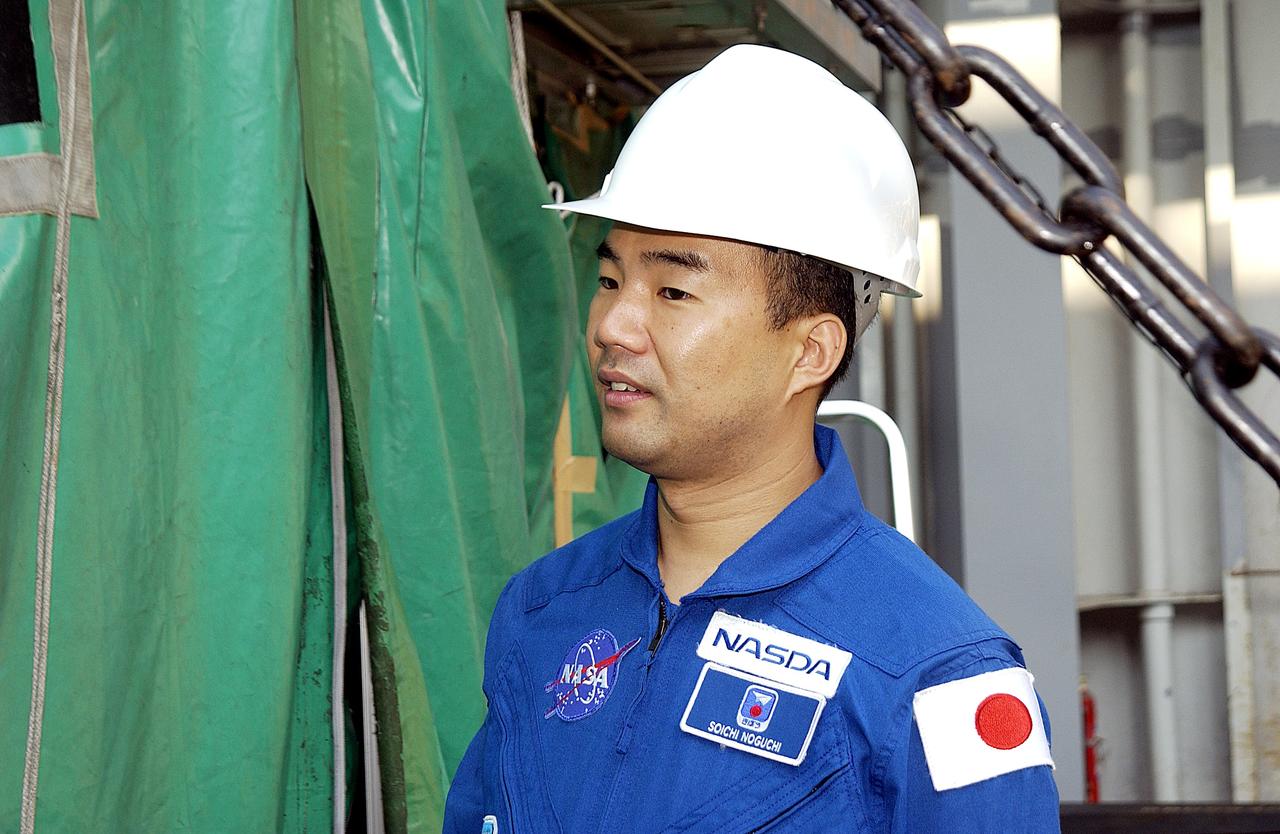
KENNEDY SPACE CENTER, FLA. - Astronaut Soichi Noguchi, with the National Space Development Agency of Japan (NASDA), looks at the Japanese Experiment Module after its arrival at Port Canaveral, Fla.   Built by the Tsukuba Space Center near Tokyo, the pressurized module is the first element of the JEM, Japan’s primary contribution to the space station, to be delivered to KSC. It will enhance the unique research capabilities of the orbiting complex by providing an additional shirt-sleeve environment for astronauts to conduct science experiments. The JEM also includes two logistics modules, an exposed pallet for space environment experiments and a robotic manipulator system that are still under construction in Japan. The various JEM components will be assembled in space over the course of three space shuttle missions. .
KENNEDY SPACE CENTER, FLA. - Astronaut Soichi Noguchi, with the National Space Development Agency of Japan (NASDA), looks at the Japanese Experiment Module after its arrival at Port Canaveral, Fla. Built by the Tsukuba Space Center near Tokyo, the pressurized module is the first element of the JEM, Japan’s primary contribution to the space station, to be delivered to KSC. It will enhance the unique research capabilities of the orbiting complex by providing an additional shirt-sleeve environment for astronauts to conduct science experiments. The JEM also includes two logistics modules, an exposed pallet for space environment experiments and a robotic manipulator system that are still under construction in Japan. The various JEM components will be assembled in space over the course of three space shuttle missions. .
KENNEDY SPACE CENTER, FLA. - Astronaut Soichi Noguchi, with the National Space Development Agency of Japan (NASDA), looks at the Japanese Experiment Module after its arrival at Port Canaveral, Fla.   Built by the Tsukuba Space Center near Tokyo, the pressurized module is the first element of the JEM, Japan’s primary contribution to the space station, to be delivered to KSC. It will enhance the unique research capabilities of the orbiting complex by providing an additional shirt-sleeve environment for astronauts to conduct science experiments. The JEM also includes two logistics modules, an exposed pallet for space environment experiments and a robotic manipulator system that are still under construction in Japan. The various JEM components will be assembled in space over the course of three space shuttle missions.
KENNEDY SPACE CENTER, FLA. - Astronaut Soichi Noguchi, with the National Space Development Agency of Japan (NASDA), looks at the Japanese Experiment Module after its arrival at Port Canaveral, Fla. Built by the Tsukuba Space Center near Tokyo, the pressurized module is the first element of the JEM, Japan’s primary contribution to the space station, to be delivered to KSC. It will enhance the unique research capabilities of the orbiting complex by providing an additional shirt-sleeve environment for astronauts to conduct science experiments. The JEM also includes two logistics modules, an exposed pallet for space environment experiments and a robotic manipulator system that are still under construction in Japan. The various JEM components will be assembled in space over the course of three space shuttle missions.
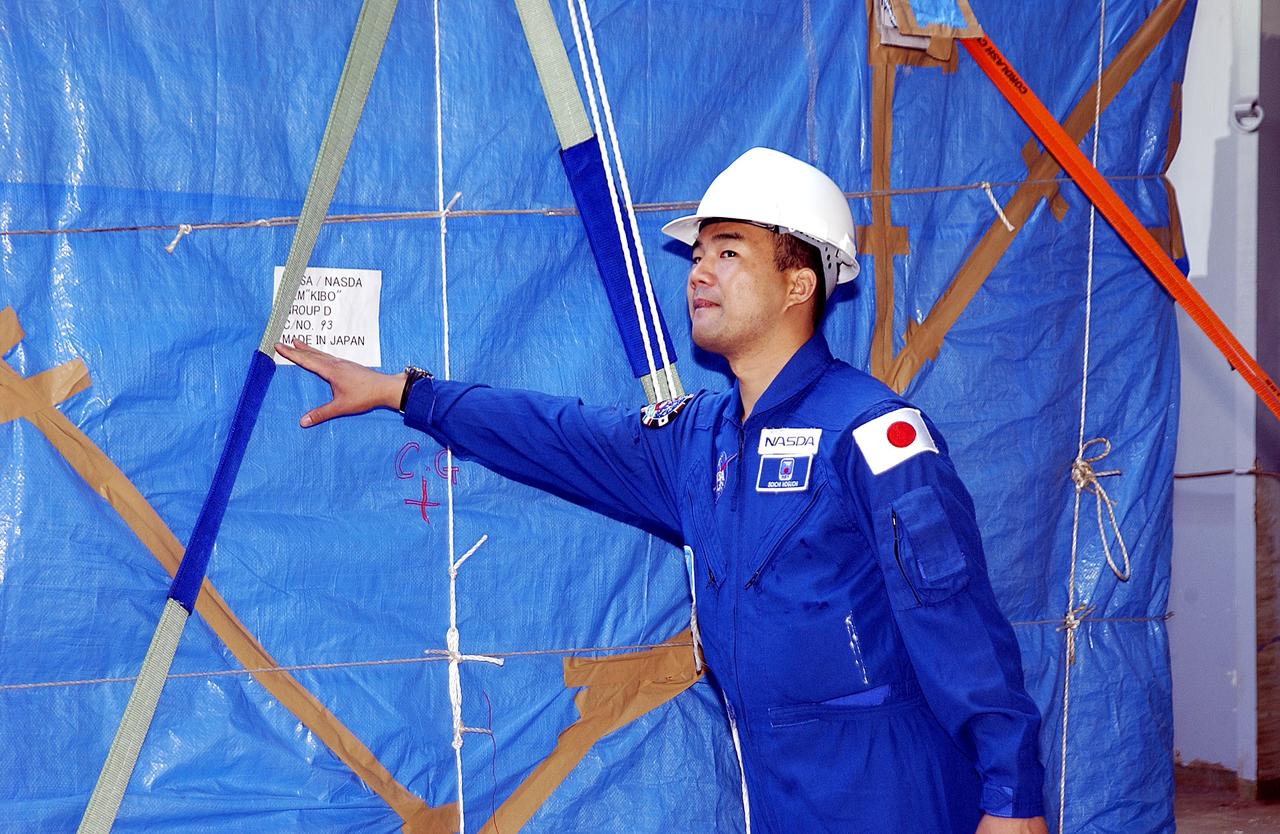
KENNEDY SPACE CENTER, FLA. - Astronaut Soichi Noguchi, with the National Space Development Agency of Japan (NASDA), stands next to the Japanese Experiment Module after its arrival at Port Canaveral, Fla.   Built by the Tsukuba Space Center near Tokyo, the pressurized module is the first element of the JEM, Japan’s primary contribution to the space station, to be delivered to KSC. It will enhance the unique research capabilities of the orbiting complex by providing an additional shirt-sleeve environment for astronauts to conduct science experiments. The JEM also includes two logistics modules, an exposed pallet for space environment experiments and a robotic manipulator system that are still under construction in Japan. The various JEM components will be assembled in space over the course of three space shuttle missions.
KENNEDY SPACE CENTER, FLA. - Astronaut Soichi Noguchi, with the National Space Development Agency of Japan (NASDA), stands next to the Japanese Experiment Module after its arrival at Port Canaveral, Fla. Built by the Tsukuba Space Center near Tokyo, the pressurized module is the first element of the JEM, Japan’s primary contribution to the space station, to be delivered to KSC. It will enhance the unique research capabilities of the orbiting complex by providing an additional shirt-sleeve environment for astronauts to conduct science experiments. The JEM also includes two logistics modules, an exposed pallet for space environment experiments and a robotic manipulator system that are still under construction in Japan. The various JEM components will be assembled in space over the course of three space shuttle missions.
KENNEDY SPACE CENTER, FLA. - The container transport ship carrying the JEM Pressurized Module arrives at Port Canaveral, Fla.  The National Space Development Agency of Japan (NASDA) built the laboratory at the Tsukuba Space Center near Tokyo.  The Pressurized Module is the first element of the JEM, Japan’s primary contribution to the space station, to be delivered to KSC. It will enhance the unique research capabilities of the orbiting complex by providing an additional shirt-sleeve environment for astronauts to conduct science experiments. The JEM also includes two logistics modules, an exposed pallet for space environment experiments and a robotic manipulator system that are still under construction in Japan. The various JEM components will be assembled in space over the course of three space shuttle missions.
KENNEDY SPACE CENTER, FLA. - The container transport ship carrying the JEM Pressurized Module arrives at Port Canaveral, Fla. The National Space Development Agency of Japan (NASDA) built the laboratory at the Tsukuba Space Center near Tokyo. The Pressurized Module is the first element of the JEM, Japan’s primary contribution to the space station, to be delivered to KSC. It will enhance the unique research capabilities of the orbiting complex by providing an additional shirt-sleeve environment for astronauts to conduct science experiments. The JEM also includes two logistics modules, an exposed pallet for space environment experiments and a robotic manipulator system that are still under construction in Japan. The various JEM components will be assembled in space over the course of three space shuttle missions.
KENNEDY SPACE CENTER, FLA. - Astronaut Soichi Noguchi, with the National Space Development Agency of Japan (NASDA), looks at the Japanese Experiment Module after its arrival at Port Canaveral, Fla.   Built by the Tsukuba Space Center near Tokyo, the pressurized module is the first element of the JEM, Japan’s primary contribution to the space station, to be delivered to KSC. It will enhance the unique research capabilities of the orbiting complex by providing an additional shirt-sleeve environment for astronauts to conduct science experiments. The JEM also includes two logistics modules, an exposed pallet for space environment experiments and a robotic manipulator system that are still under construction in Japan. The various JEM components will be assembled in space over the course of three space shuttle missions.
KENNEDY SPACE CENTER, FLA. - Astronaut Soichi Noguchi, with the National Space Development Agency of Japan (NASDA), looks at the Japanese Experiment Module after its arrival at Port Canaveral, Fla. Built by the Tsukuba Space Center near Tokyo, the pressurized module is the first element of the JEM, Japan’s primary contribution to the space station, to be delivered to KSC. It will enhance the unique research capabilities of the orbiting complex by providing an additional shirt-sleeve environment for astronauts to conduct science experiments. The JEM also includes two logistics modules, an exposed pallet for space environment experiments and a robotic manipulator system that are still under construction in Japan. The various JEM components will be assembled in space over the course of three space shuttle missions.
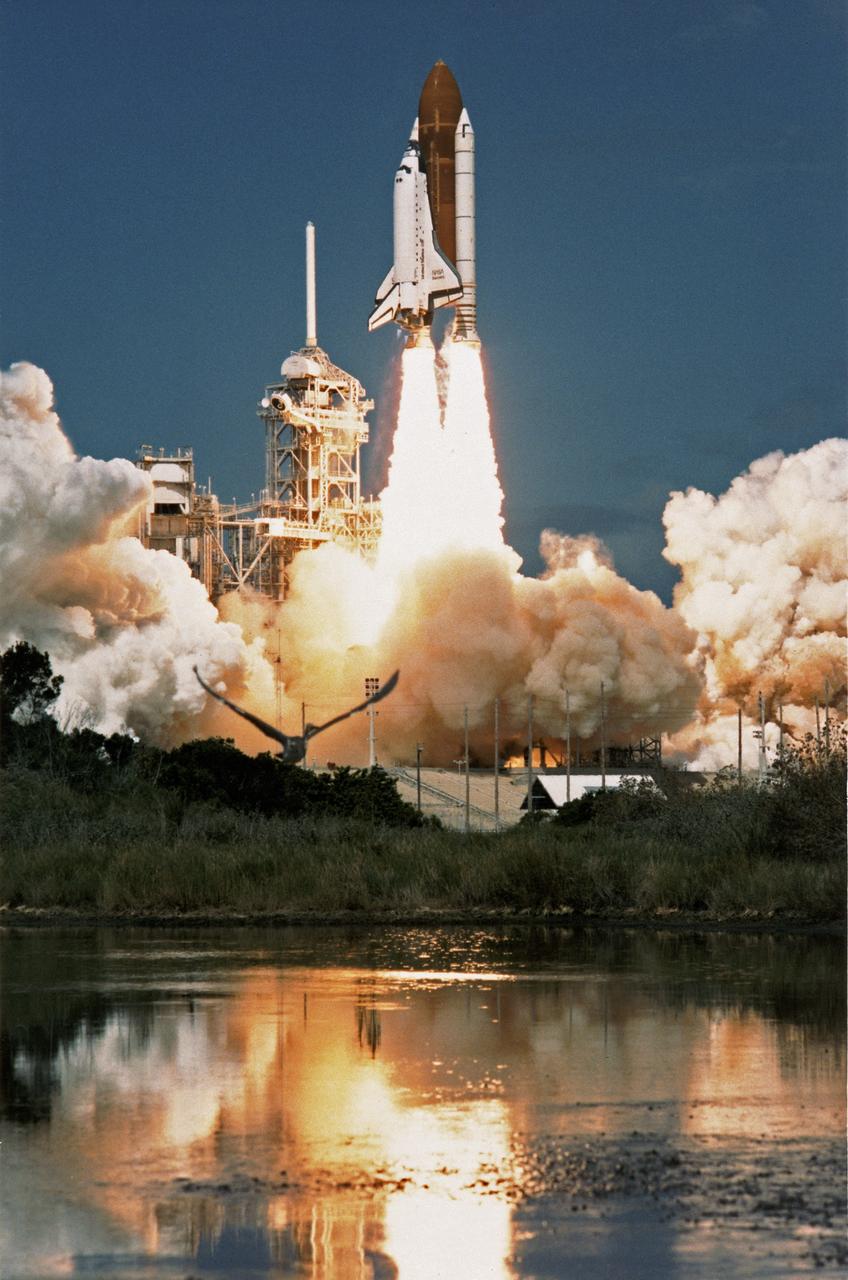
CAPE CANAVERAL, Fla. - The space shuttle Discovery and its five-man crew is launched from pad 39B at 11:37 a.m. as STS-26 embarks on a four-day mission marking America's return to space.     On the first day of orbit, the crew will deploy from the orbiter's payload bay the primary payload, the Tracking and Data Relay Satellite, or TDRS-C. The inertial upper stage, or IUS, will boost the satellite to a geosynchronous altitude from low Earth orbit. When it place, TDRS-C will relay date from low Earth orbiting spacecraft and air-to-ground voice communications sand television from shape shuttle orbiters during missions. The crew members of STST-26 are Commander Rick Hauck, Pilot Richard Covey, and mission specialists Dave Hilmers, Mike Lounge and George "Pinky" Nelson. Photo Credit: NASA
KSC-88PC-1018
CAPE CANAVERAL, Fla. - The space shuttle Discovery and its five-man crew is launched from pad 39B at 11:37 a.m. as STS-26 embarks on a four-day mission marking America's return to space.       On the first day of orbit, the crew will deploy from the orbiter's payload bay the primary payload, the Tracking and Date Relay Satellite, or TDRS-C. The inertial upper stage, or IUS, will boost the satellite to a geosynchronous altitude from low Earth orbit. When it place, TDRS-C will relay date from low Earth orbiting spacecraft and air-to-ground voice communications sand television from shape shuttle orbiters during missions. The crew members of STST-26 are Commander Rick Hauck, Pilot Richard Covey, and Mission Specialists Dave Hilmers, Mike Lounge and George "Pinky" Nelson. Photo Credit: NASA
KSC-88PC-1014
CAPE CANAVERAL, Fla. - STS-4 thunders away from Launch Pad 39A at 10:59:59 a.m. EDT, bound for a seven-day Earth orbital mission and the final developmental flight for the Space Transportation System. The fourth Space Shuttle mission is piloted by Commander Ken Mattingly and Pilot Henry Hartsfield Jr. Photo Credit: NASA
KSC-82PC-0669
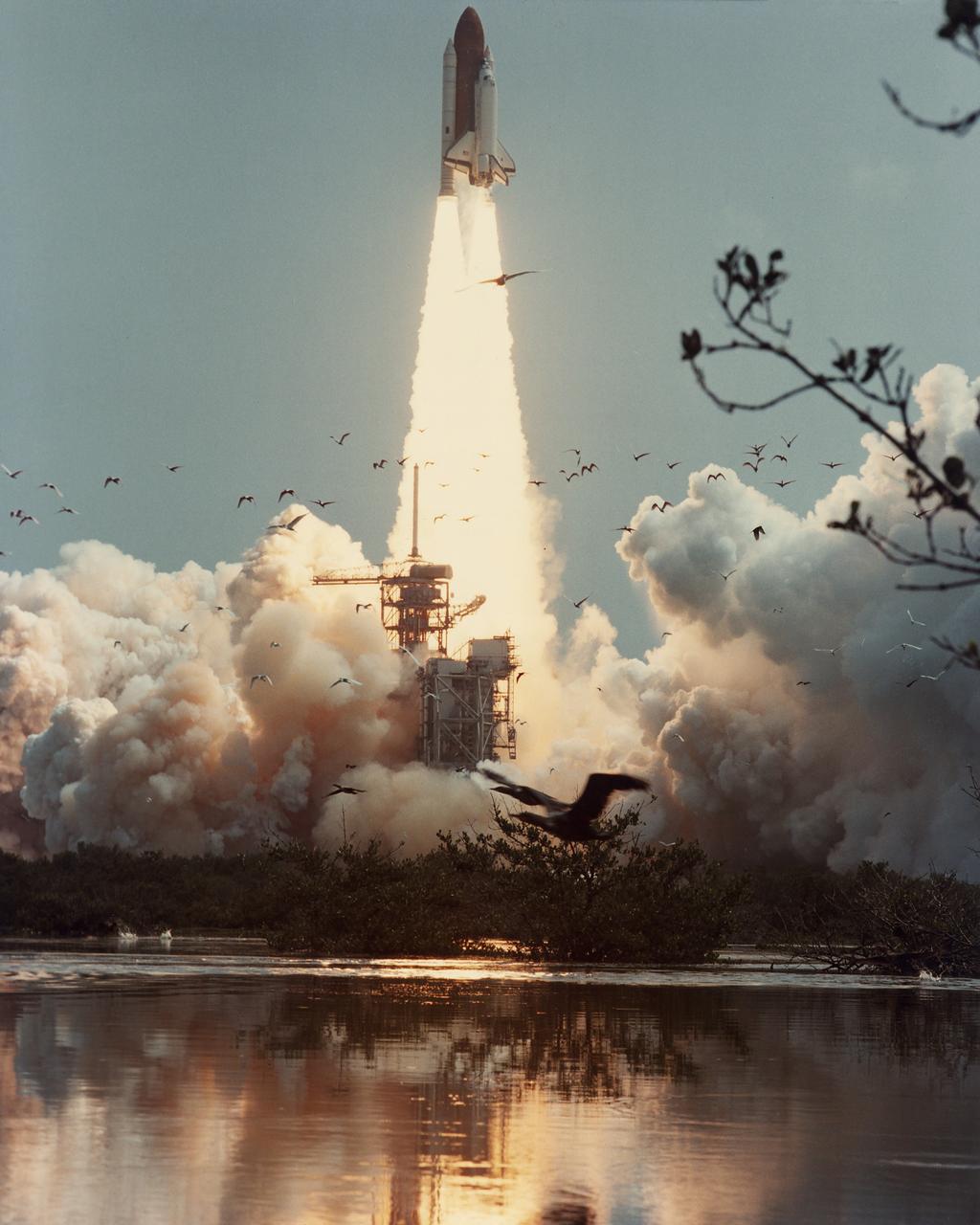
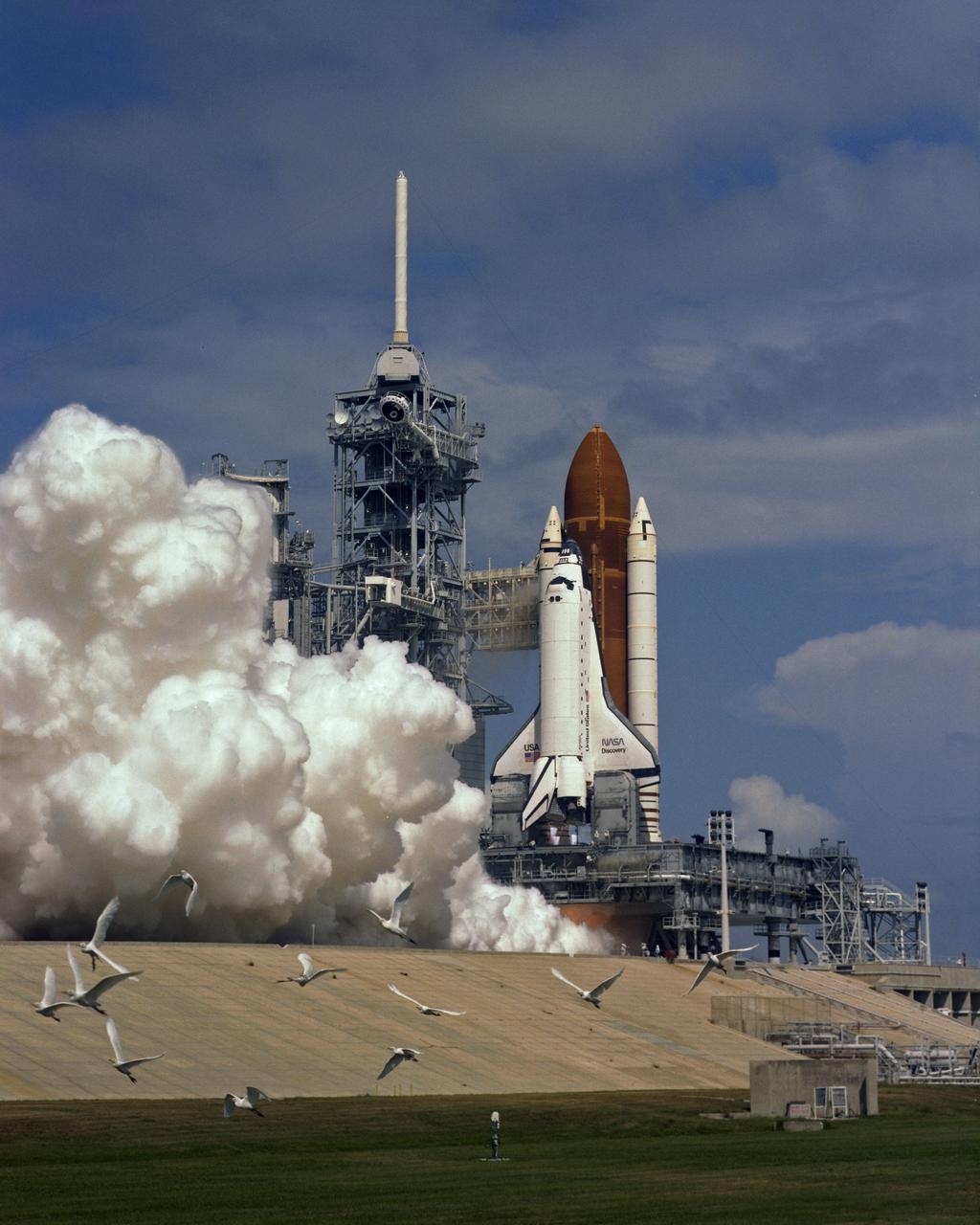
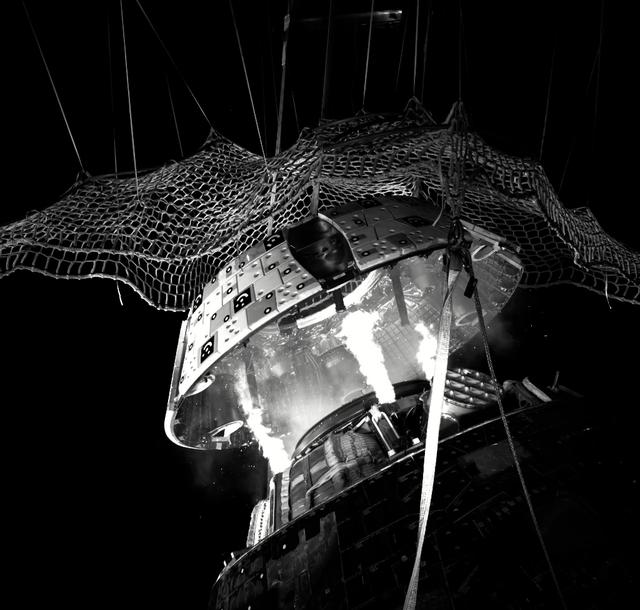
CAPE CANAVERAL, Fla. - Two majestic birds prepare for flight at Launch Complex 39 moments before the launch of Discovery on its maiden voyage. A great blue heron was startled from its perch in a lagoon south of pad A. Mission 41D was launched at 8:41 a.m. with a crew of six persons and a cargo of three satellites to be deployed. Photo Credit: NASA
KSC-84PC-0471
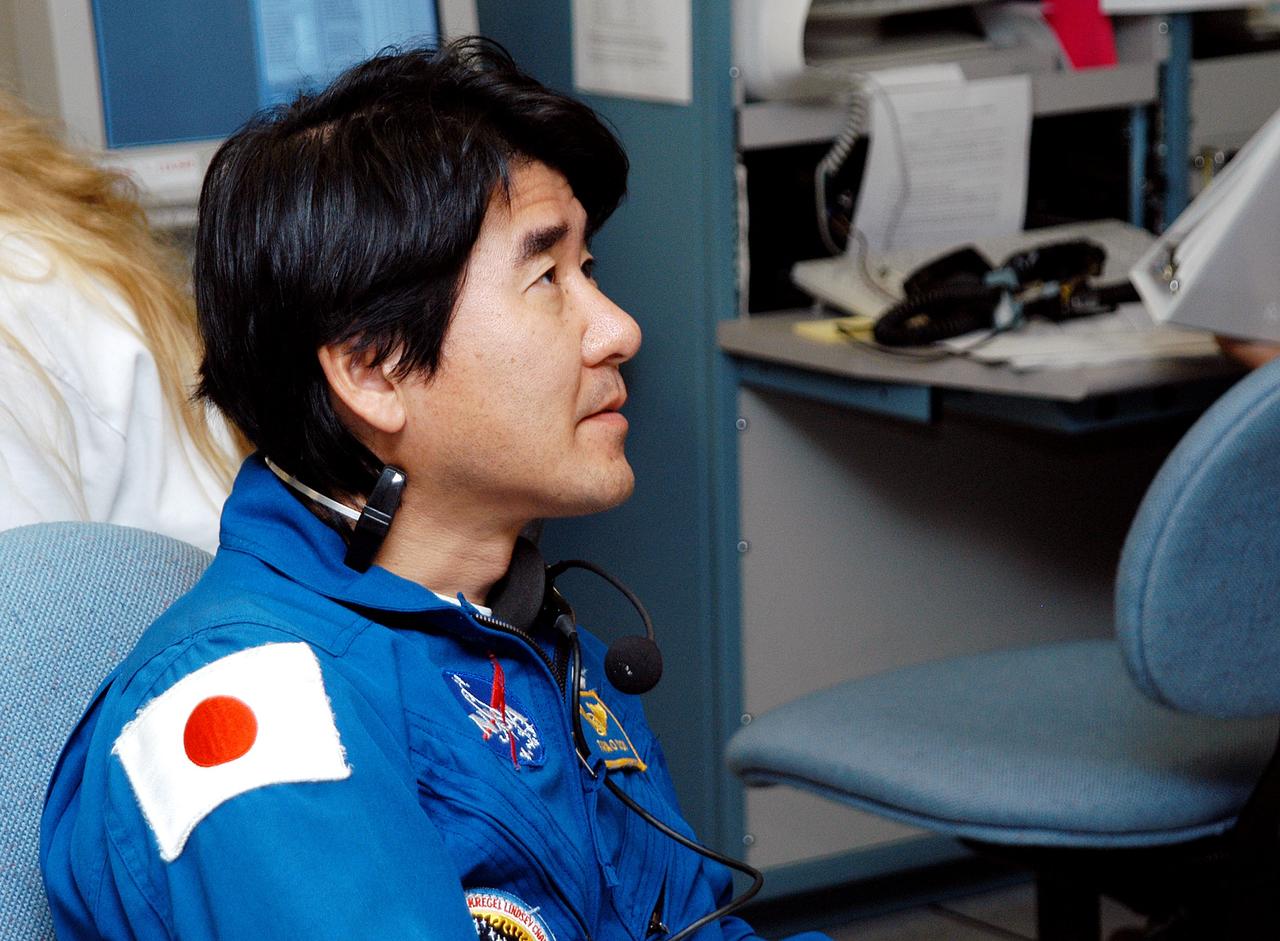
KENNEDY SPACE CENTER, FLA. -  Takao Doi, an astronaut with the National Space Development Agency of Japan (NASDA), watches the sensors  during a Multi-Equipment Interface Test (MEIT) on the Japanese Experiment Module (JEM).  NASDA  developed the laboratory at the Tsukuba Space Center near Tokyo. It is the first element, named "Kibo" (Hope), to be delivered to KSC. The JEM is Japan's primary contribution to the Station. It will enhance the unique research capabilities of the orbiting complex by providing an additional environment for astronauts to conduct science experiments.
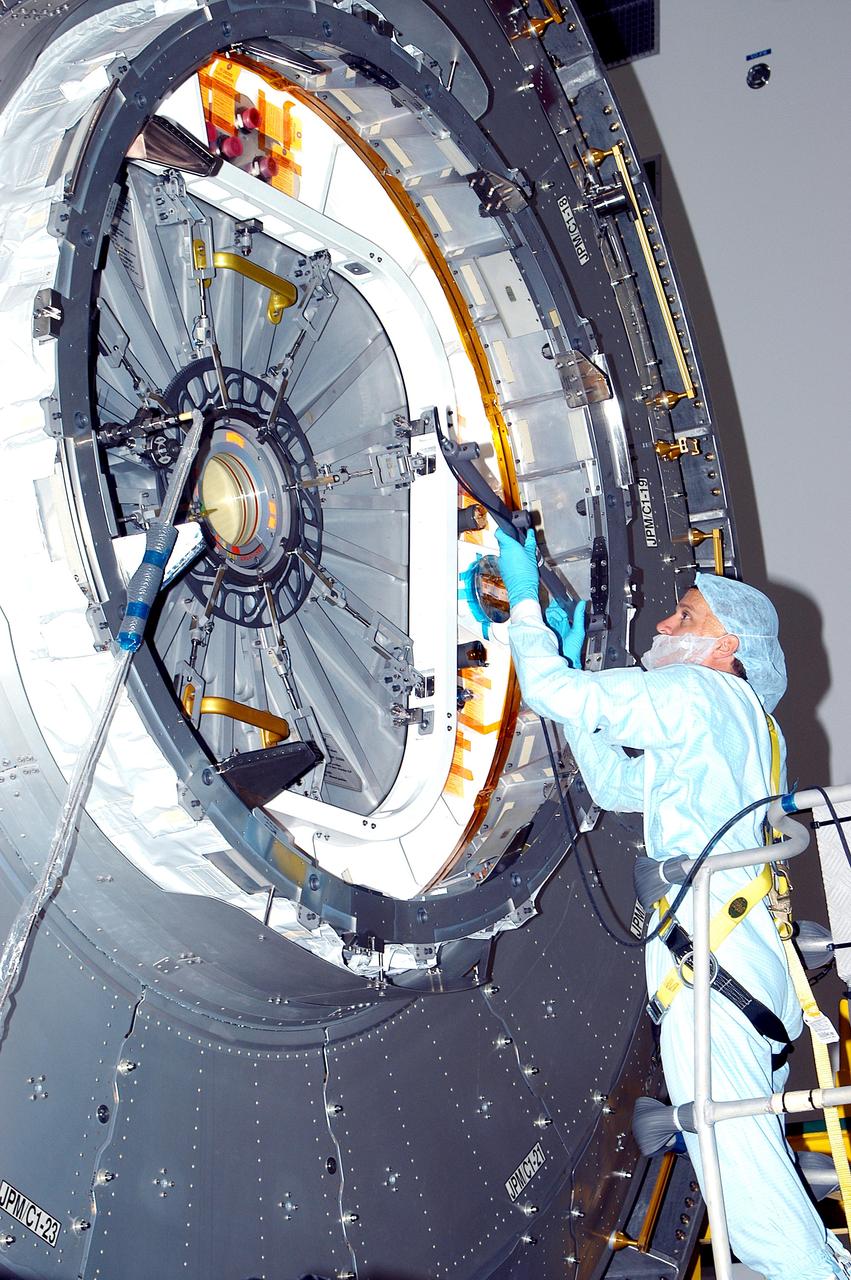
KENNEDY SPACE CENTER, FLA. - Takao Doi, an astronaut with the National Space Development Agency of Japan (NASDA), watches the sensors during a Multi-Equipment Interface Test (MEIT) on the Japanese Experiment Module (JEM). NASDA developed the laboratory at the Tsukuba Space Center near Tokyo. It is the first element, named "Kibo" (Hope), to be delivered to KSC. The JEM is Japan's primary contribution to the Station. It will enhance the unique research capabilities of the orbiting complex by providing an additional environment for astronauts to conduct science experiments.
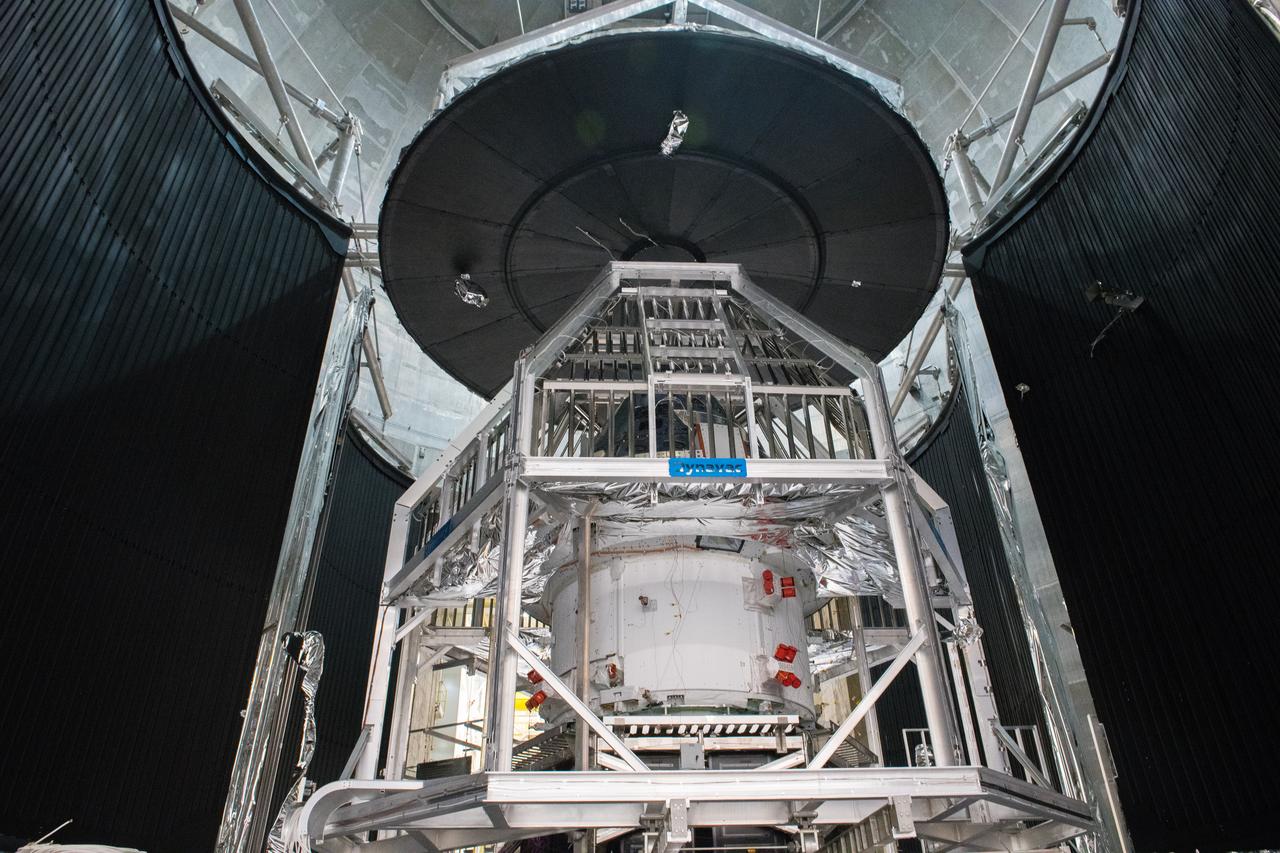
KENNEDY SPACE CENTER, FLA. - The Japanese Experiment Module (JEM), named Kibo (Hope), is undergoing a Multi-Element Integrated Test (MEIT) in the Space Station Processing Facility.  Developed by the National Space Development Agency of Japan (NASDA), the JEM is Japan's primary contribution to the Station. It will enhance the unique research capabilities of the orbiting complex by providing an additional environment for astronauts to conduct science experiments.
KENNEDY SPACE CENTER, FLA. - The Japanese Experiment Module (JEM), named Kibo (Hope), is undergoing a Multi-Element Integrated Test (MEIT) in the Space Station Processing Facility. Developed by the National Space Development Agency of Japan (NASDA), the JEM is Japan's primary contribution to the Station. It will enhance the unique research capabilities of the orbiting complex by providing an additional environment for astronauts to conduct science experiments.
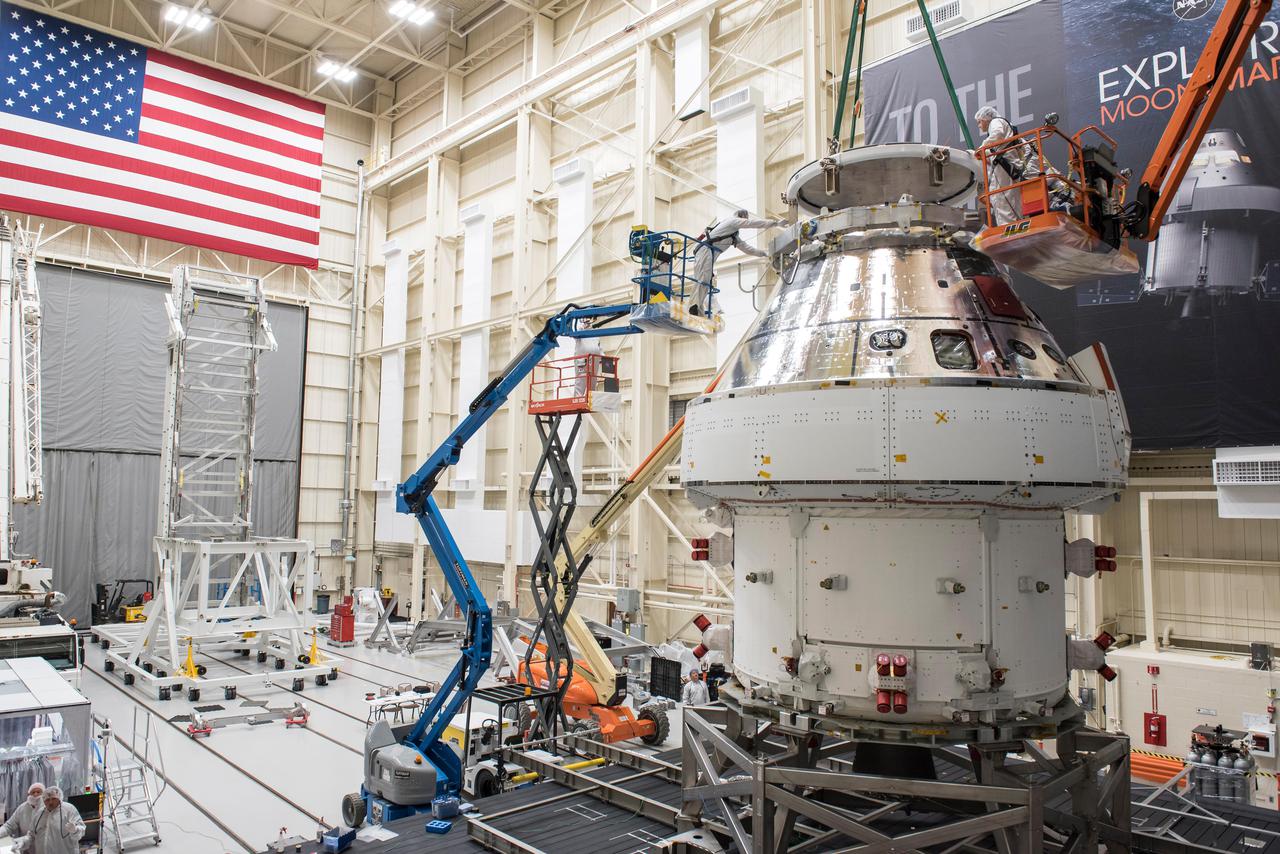
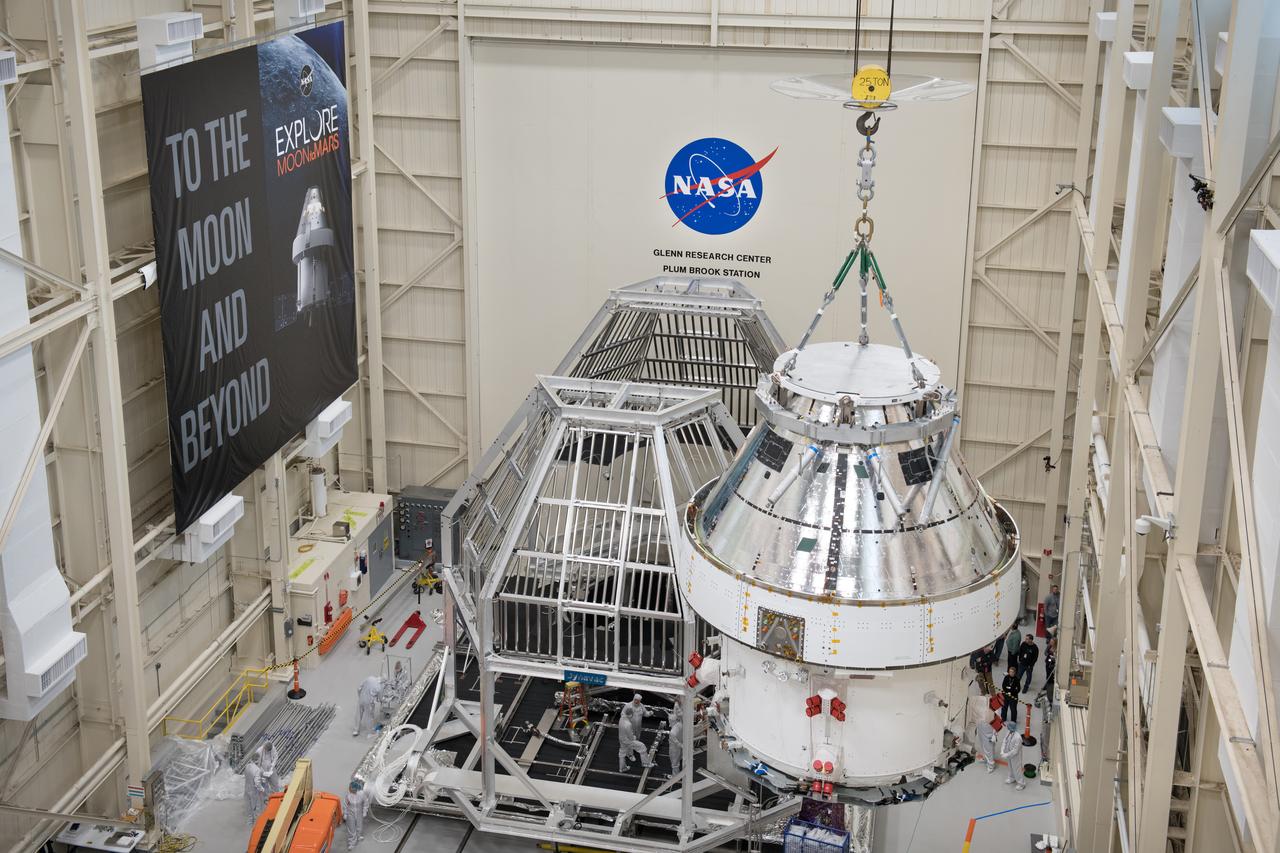
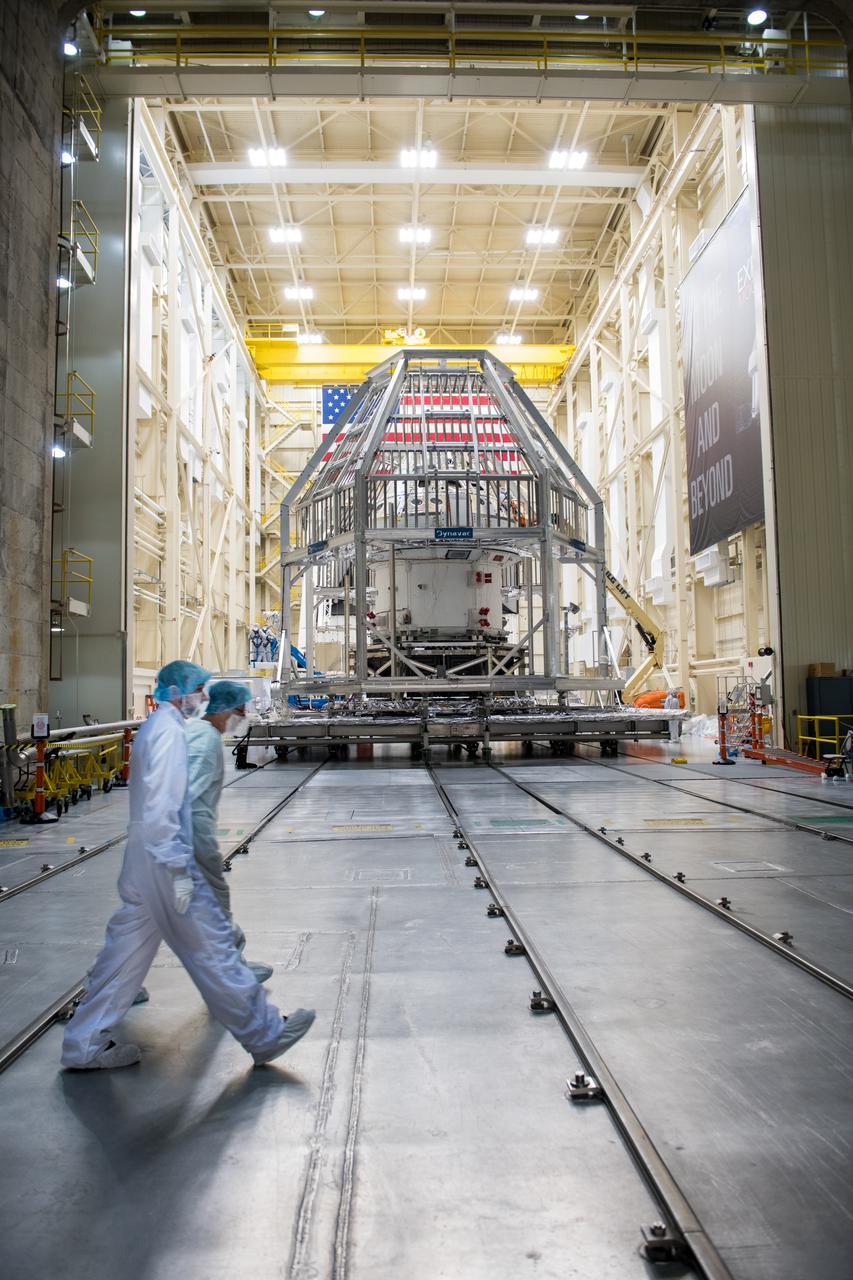
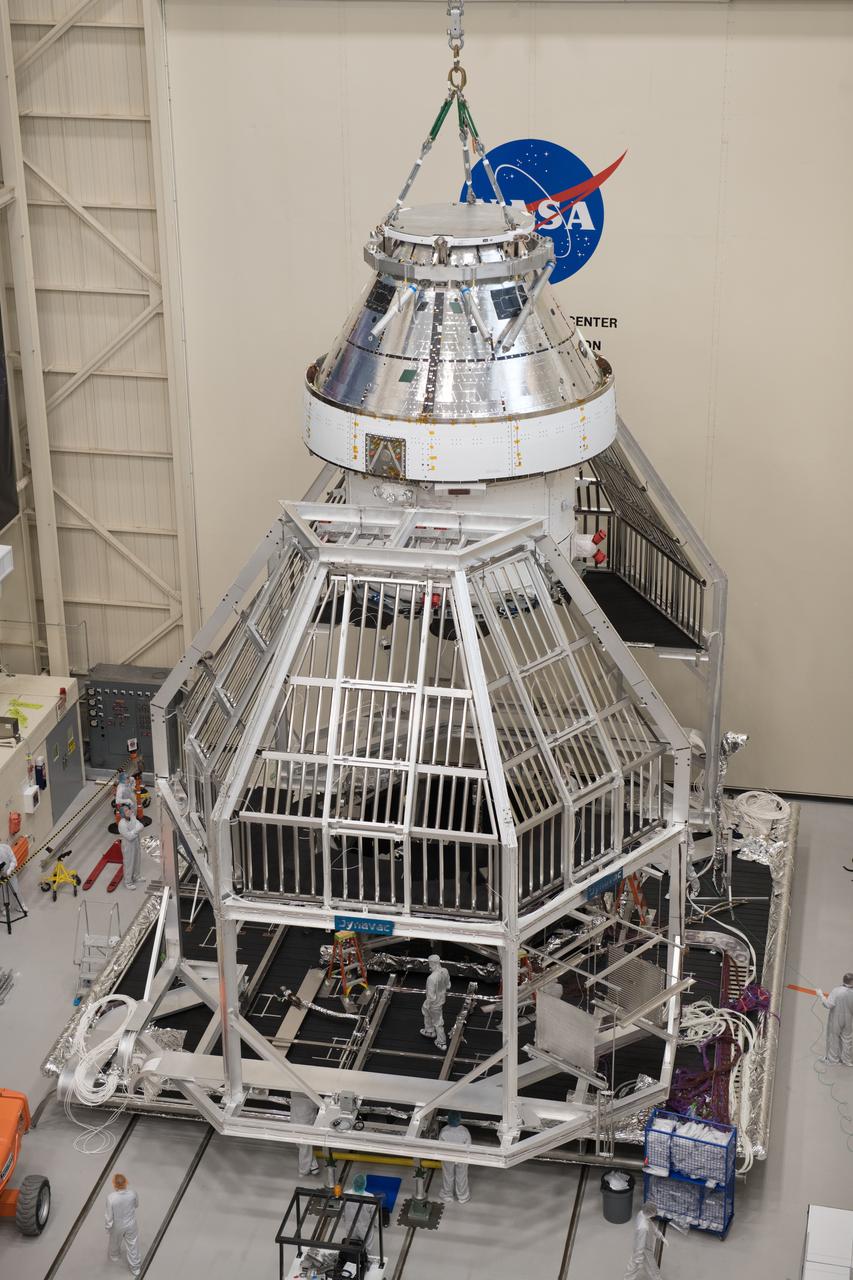
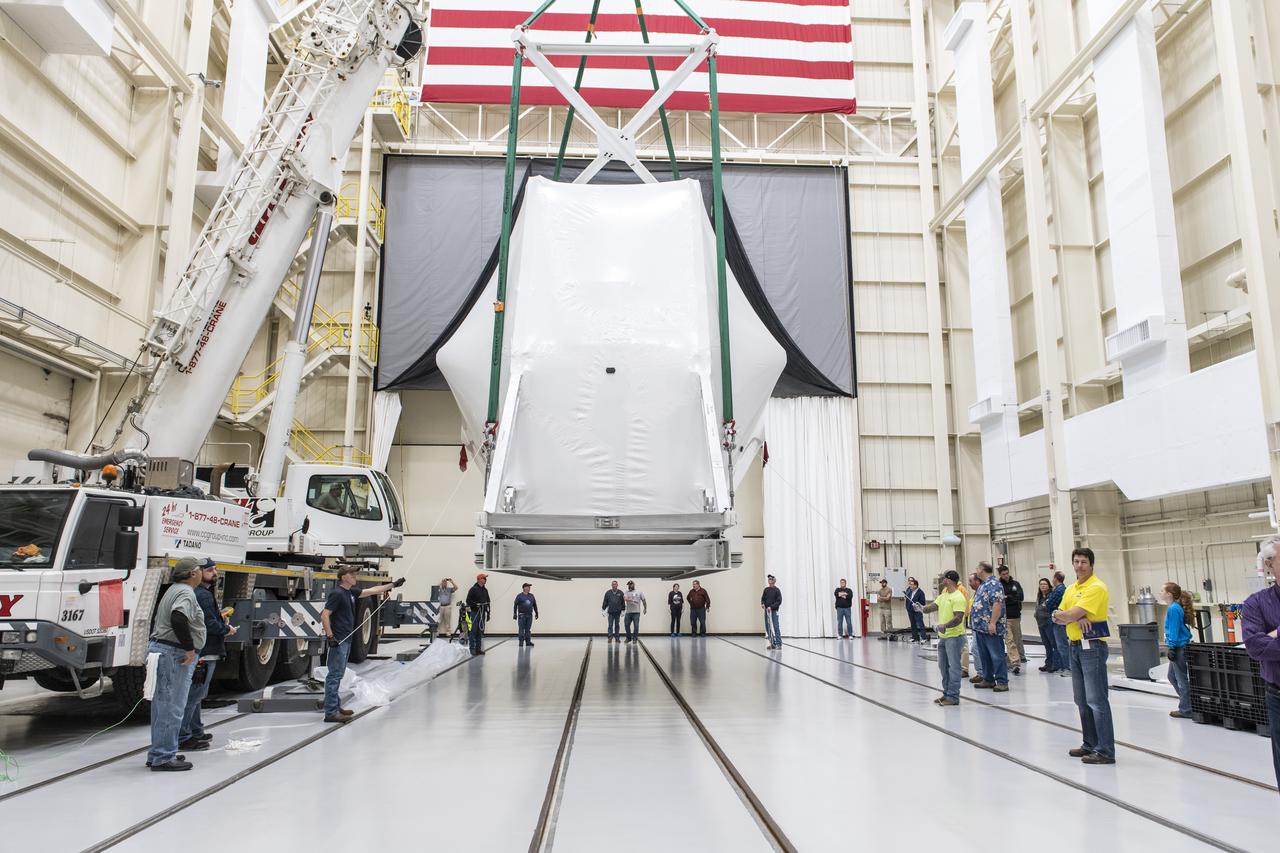
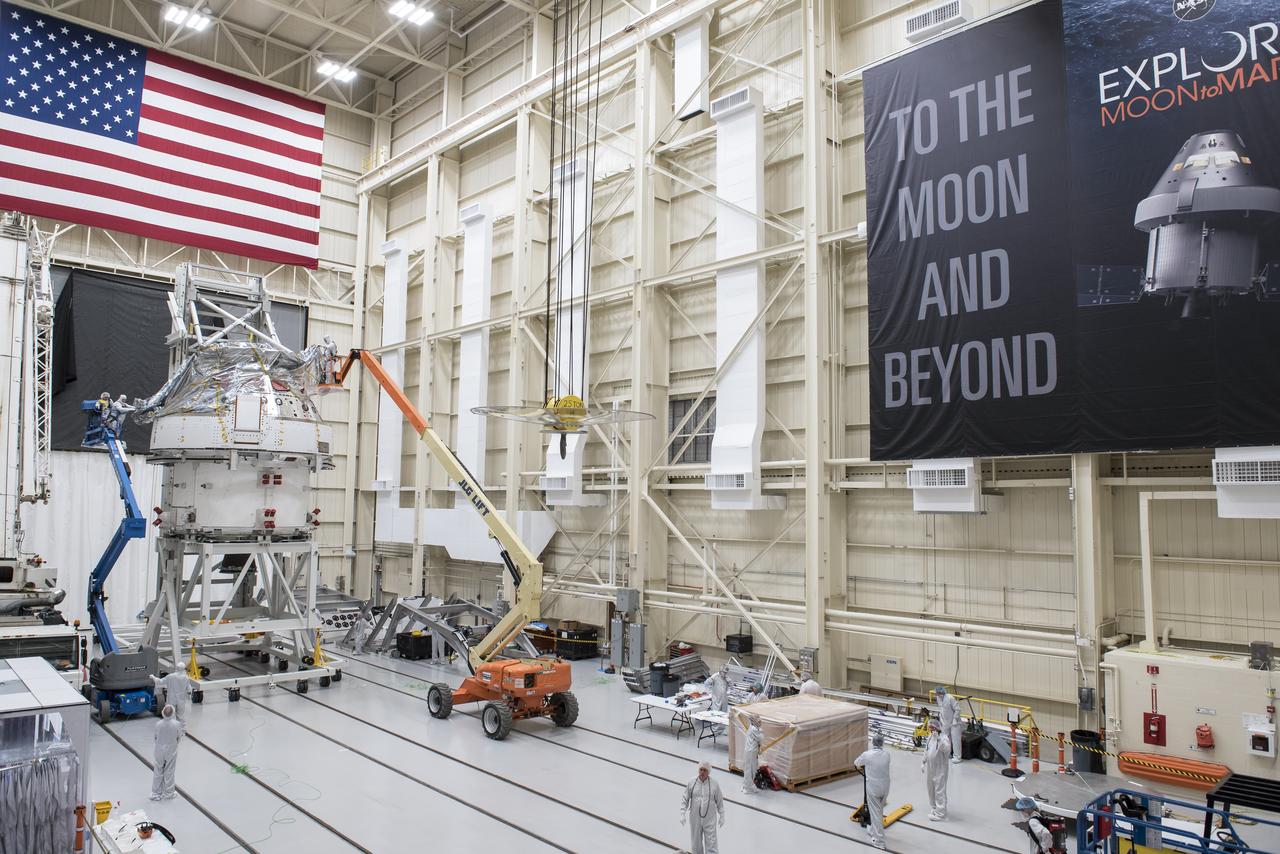
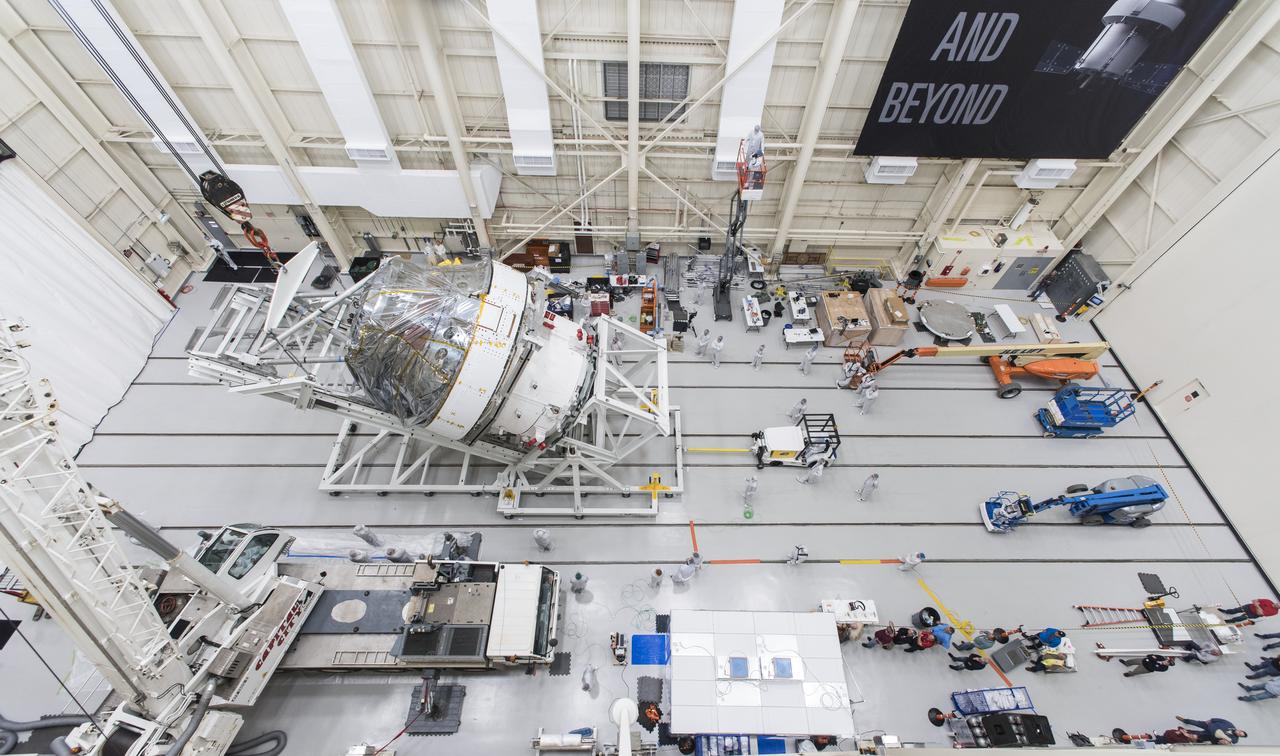
Orion Spacecraft is prepared for Space Environment Testing at the Glenn Research Center, GRC Plum Brook Station, Space Environments Complex, SEC
Orion Spacecraft is prepared for Space Environment Testing at th
Orion Spacecraft is prepared for Space Environment Testing at the Glenn Research Center, GRC Plum Brook Station, Space Environments Complex, SEC
Orion Spacecraft is prepared for Space Environment Testing at th
Orion Spacecraft Arrives at the Glenn Research Center, GRC Plum Brook Station, Space Environments Complex, SEC for Space Environment Testing
Orion Spacecraft Arrives at the Glenn Research Center, GRC Plum
Orion Spacecraft is prepared for Space Environment Testing at the Glenn Research Center, GRC Plum Brook Station, Space Environments Complex, SEC
Orion Spacecraft is prepared for Space Environment Testing at th
Orion Spacecraft is prepared for Space Environment Testing at the Glenn Research Center, GRC Plum Brook Station, Space Environments Complex, SEC
Orion Spacecraft is prepared for Space Environment Testing at th
Orion Spacecraft is prepared for Space Environment Testing at the Glenn Research Center, GRC Plum Brook Station, Space Environments Complex, SEC
Orion Spacecraft is prepared for Space Environment Testing at th
Orion Spacecraft is prepared for Space Environment Testing at the Glenn Research Center, GRC Plum Brook Station, Space Environments Complex, SEC
Orion Spacecraft is prepared for Space Environment Testing at th
Orion Spacecraft Arrives at the Glenn Research Center, GRC Plum Brook Station, Space Environments Complex, SEC for Space Environment Testing
Orion Spacecraft Arrives at the Glenn Research Center, GRC Plum
Orion Spacecraft Arrives at the Glenn Research Center, GRC Plum Brook Station, Space Environments Complex, SEC for Space Environment Testing
Orion Spacecraft Arrives at the Glenn Research Center, GRC Plum
Orion Spacecraft is prepared for Space Environment Testing at the Glenn Research Center, GRC Plum Brook Station, Space Environments Complex, SEC
Orion Spacecraft is prepared for Space Environment Testing at th
Orion Spacecraft is prepared for Space Environment Testing at the Glenn Research Center, GRC Plum Brook Station, Space Environments Complex, SEC
Orion Spacecraft is prepared for Space Environment Testing at th
Orion Spacecraft Arrives at the Glenn Research Center, GRC Plum Brook Station, Space Environments Complex, SEC for Space Environment Testing
Orion Spacecraft Arrives at the Glenn Research Center, GRC Plum