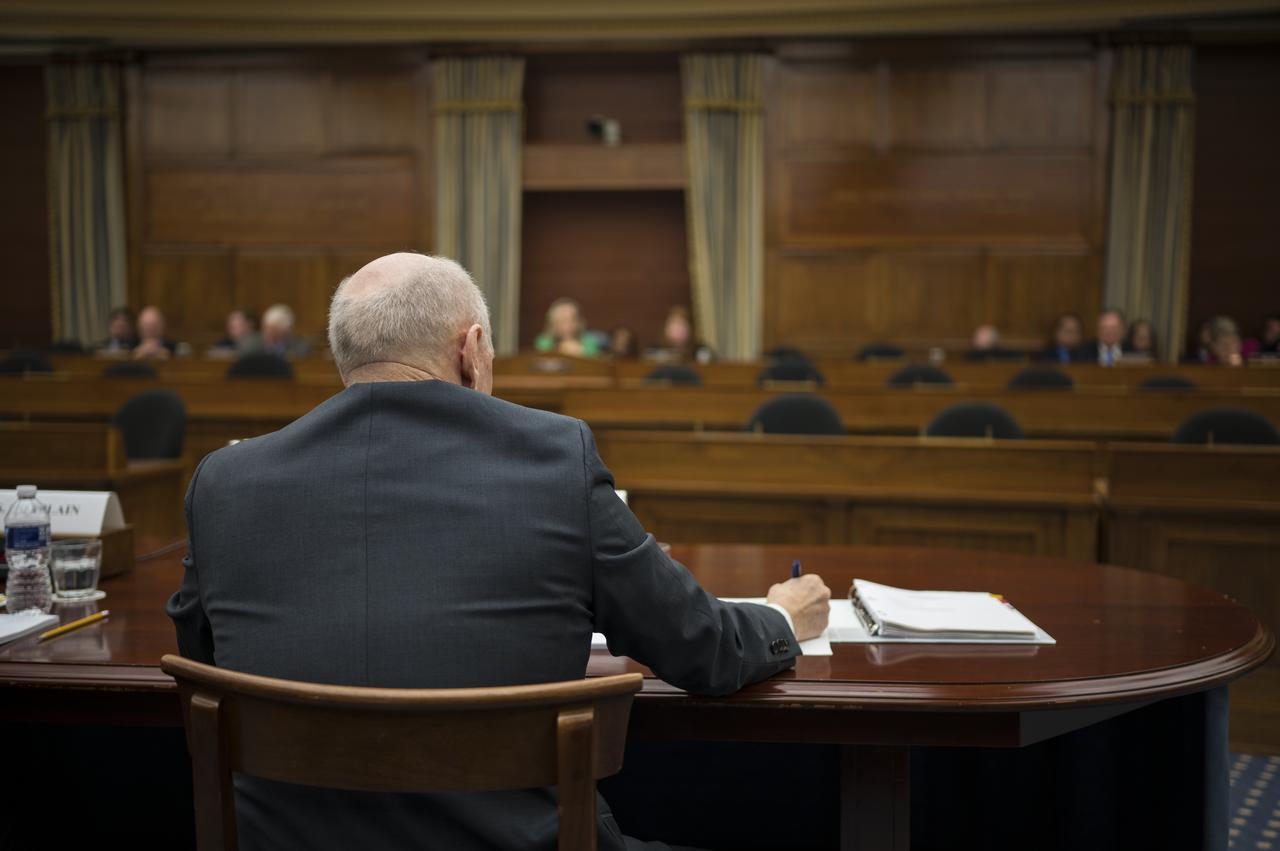
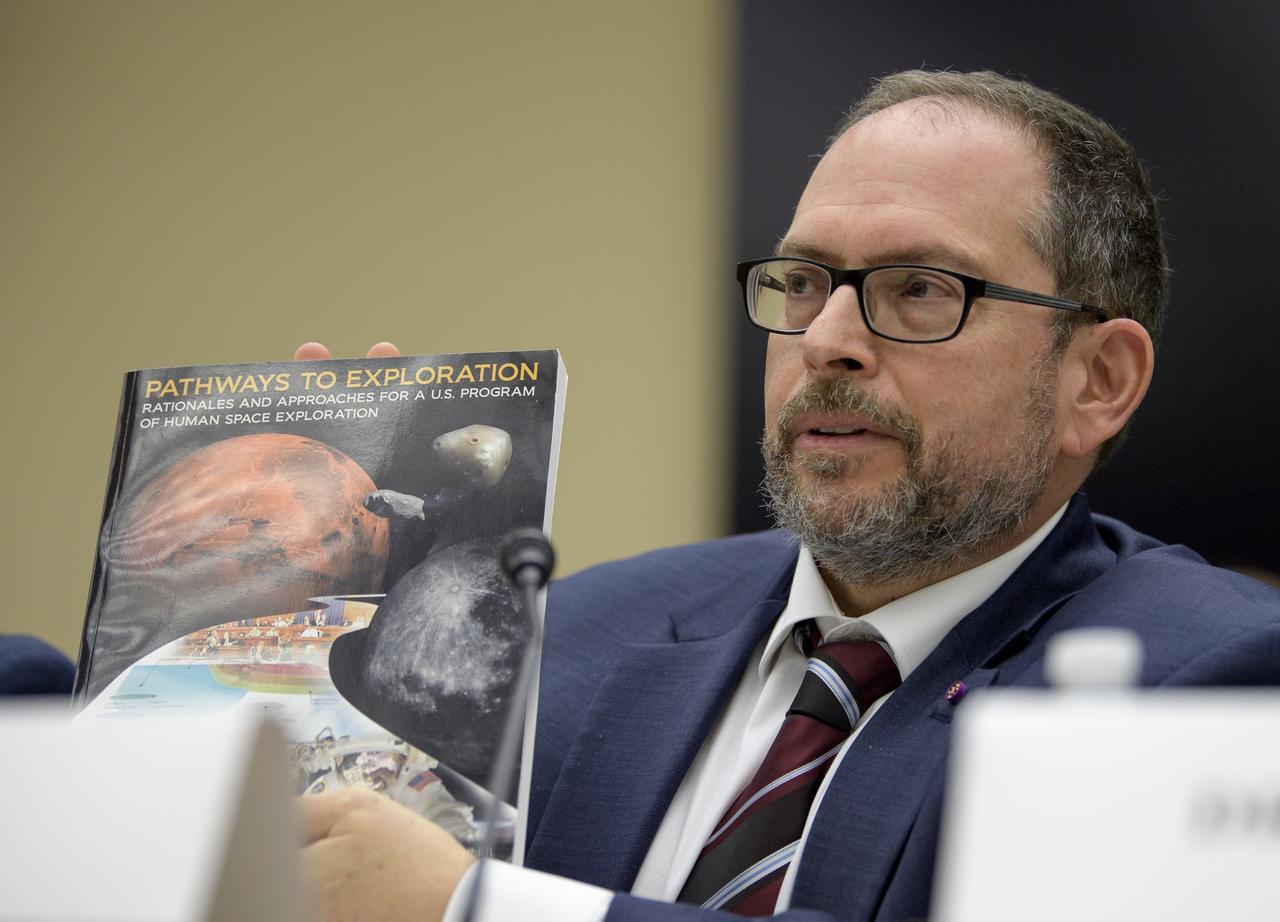
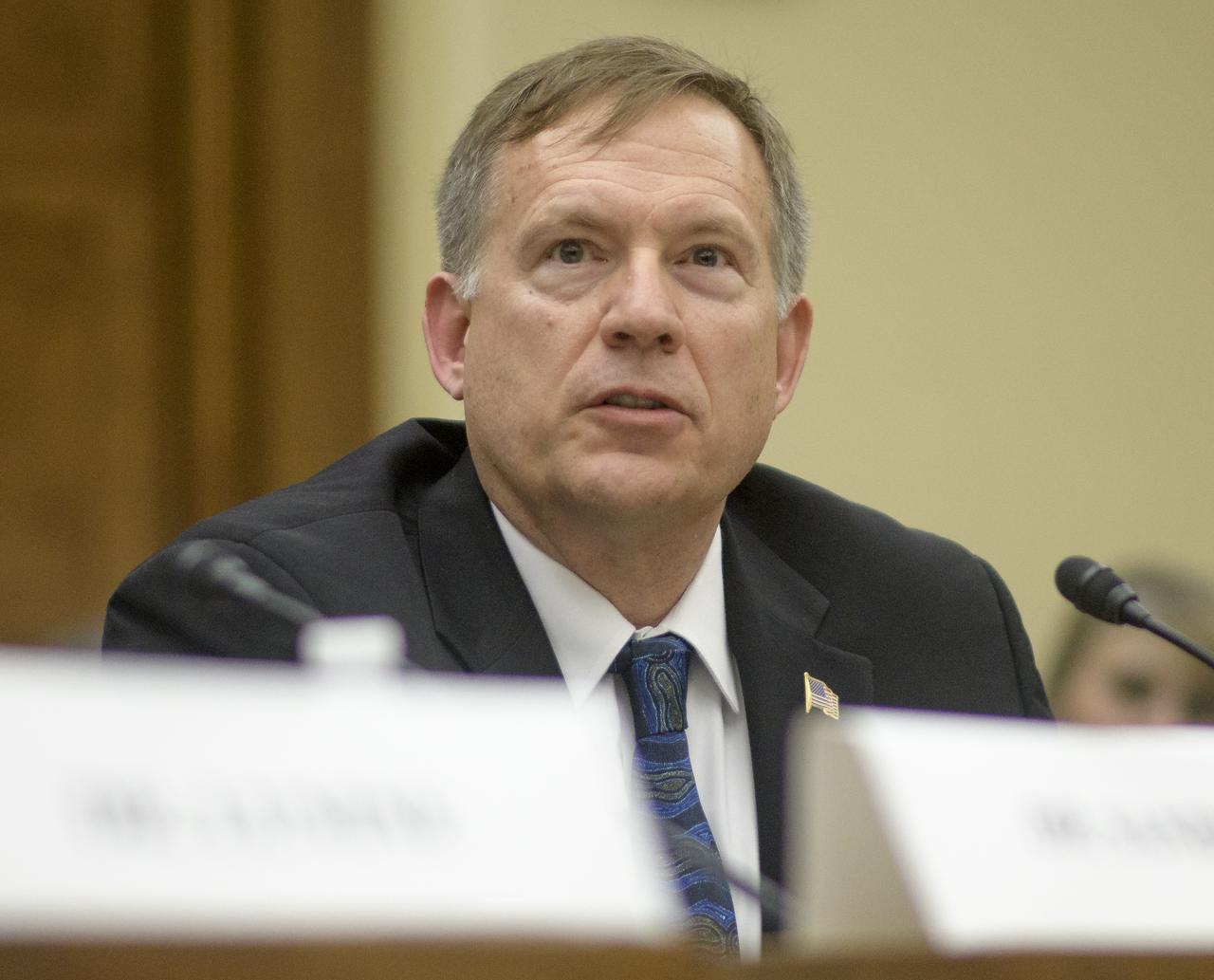
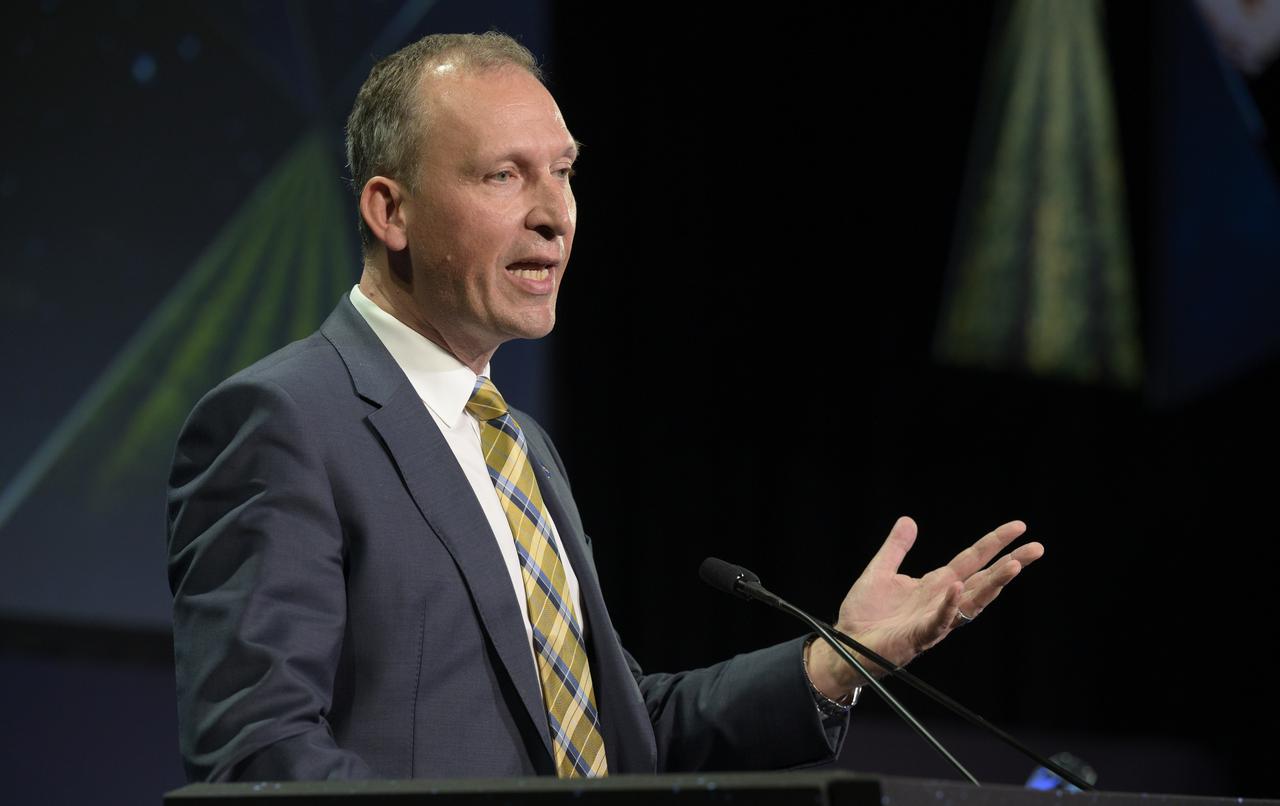
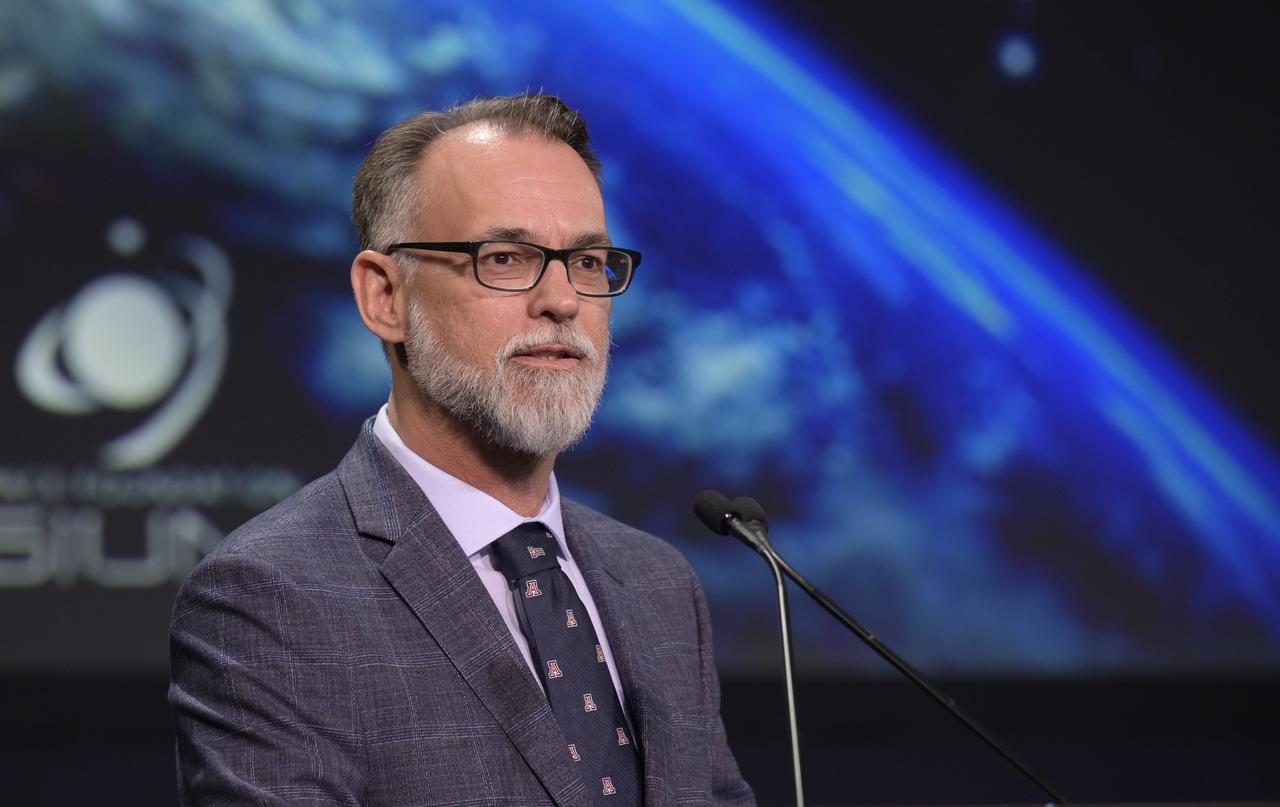
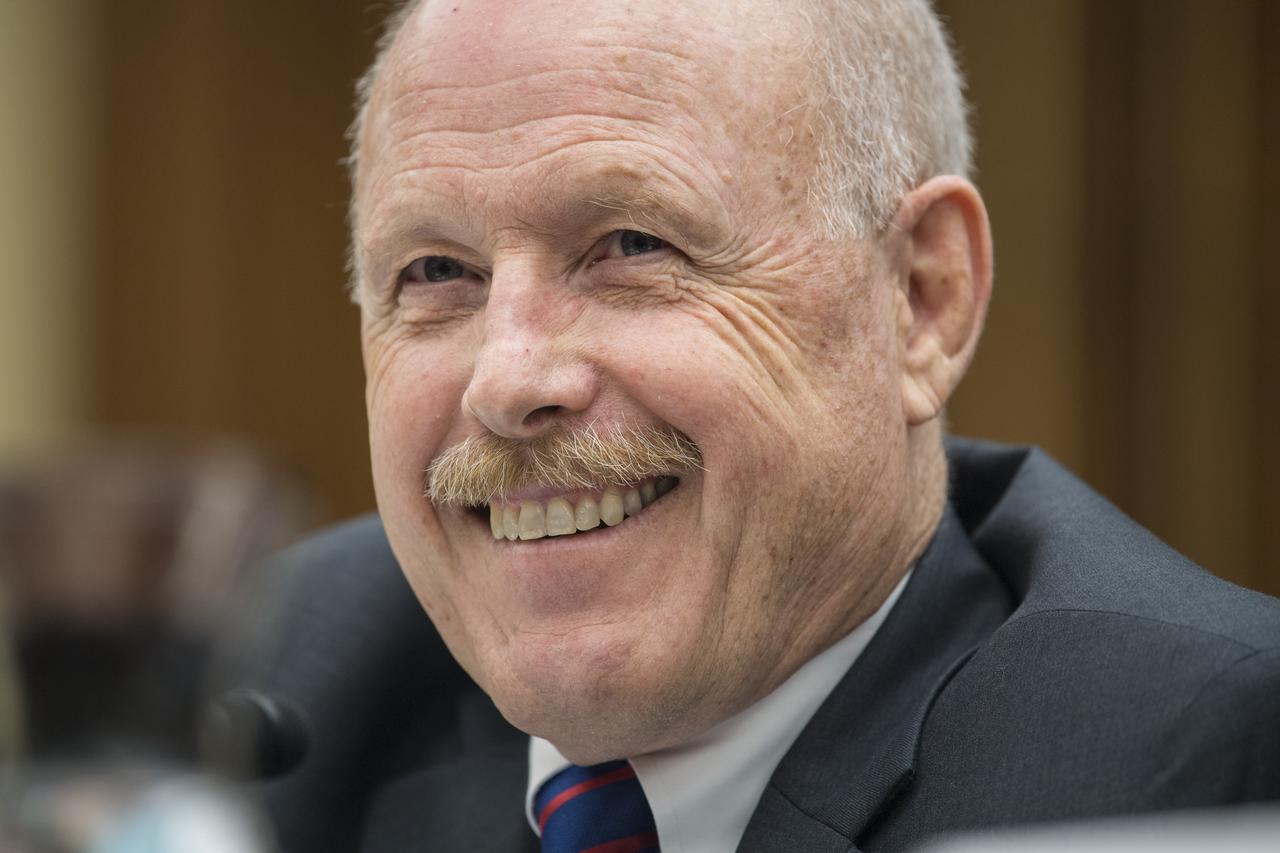
Acting NASA Associate Administrator for Human Exploration and Operations, Ken Bowersox, takes notes during a Space and Aeronautics Subcommittee of the House Science, Space, and Technology Committee hearing titled, “Developing Core Capabilities for Deep Space Exploration: An Update on NASA's SLS, Orion, and Exploration Ground Systems," Wednesday, September 18, 2019 at the Rayburn House Office Building in Washington. Photo Credit: (NASA/Aubrey Gemignani)
House Hearing on Deep Space Exploration
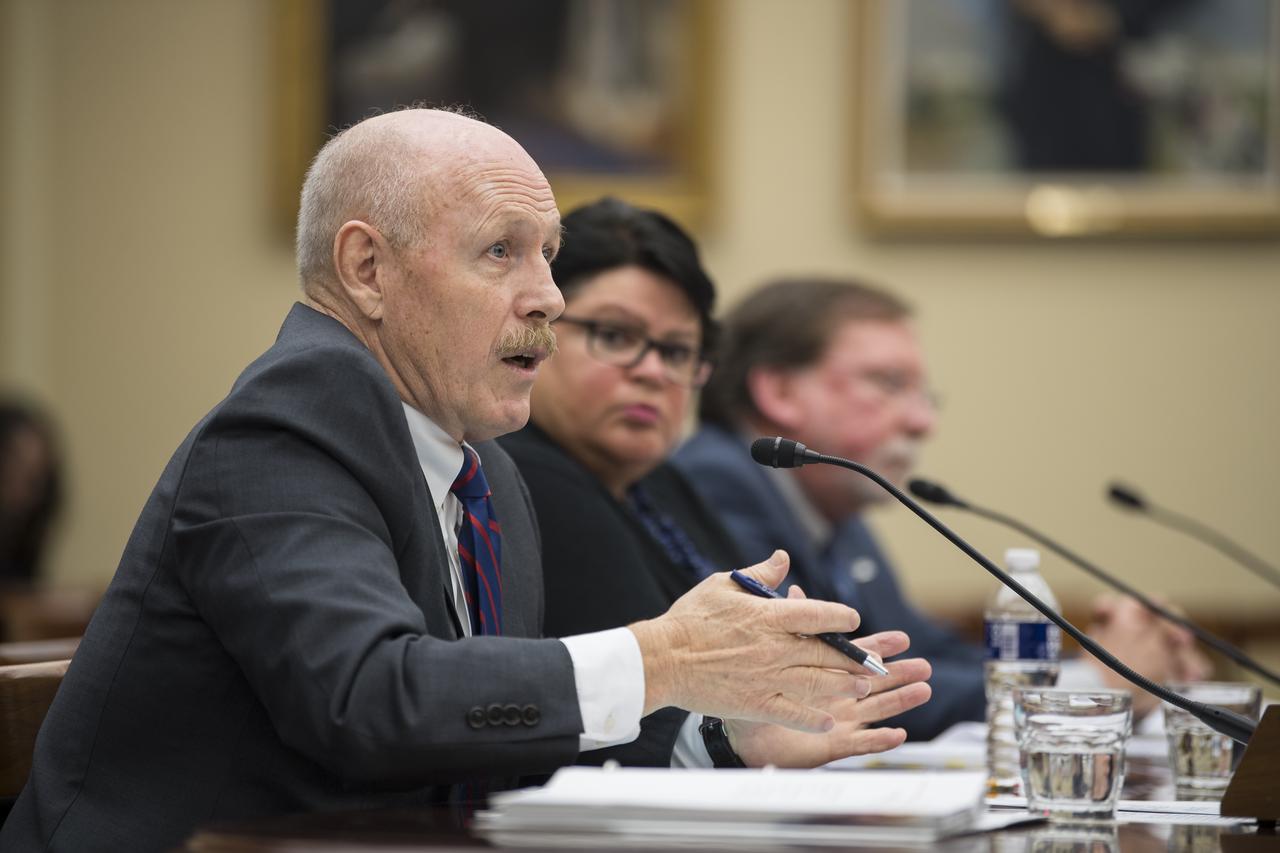
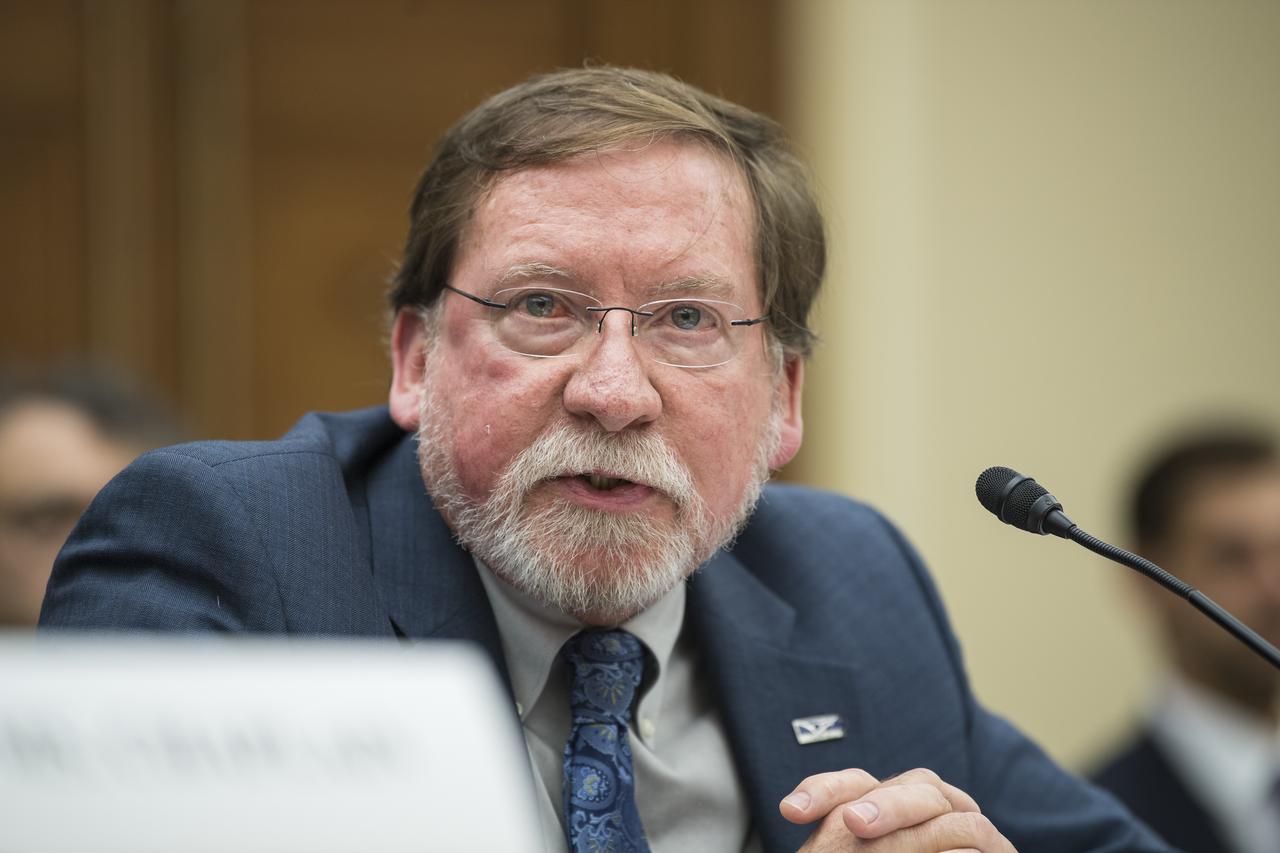
Acting NASA Associate Administrator for Human Exploration and Operations, Ken Bowersox, testifies during a Space and Aeronautics Subcommittee of the House Science, Space, and Technology Committee hearing titled, “Developing Core Capabilities for Deep Space Exploration: An Update on NASA's SLS, Orion, and Exploration Ground Systems," Wednesday, September 18, 2019 at the Rayburn House Office Building in Washington. Photo Credit: (NASA/Aubrey Gemignani)
House Hearing on Deep Space Exploration
Acting NASA Associate Administrator for Human Exploration and Operations, Ken Bowersox, takes notes during a Space and Aeronautics Subcommittee of the House Science, Space, and Technology Committee hearing titled, “Developing Core Capabilities for Deep Space Exploration: An Update on NASA's SLS, Orion, and Exploration Ground Systems," Wednesday, September 18, 2019 at the Rayburn House Office Building in Washington. Photo Credit: (NASA/Aubrey Gemignani)
House Hearing on Deep Space Exploration
Acting NASA Associate Administrator for Human Exploration and Operations, Ken Bowersox, testifies during a Space and Aeronautics Subcommittee of the House Science, Space, and Technology Committee hearing titled, “Developing Core Capabilities for Deep Space Exploration: An Update on NASA's SLS, Orion, and Exploration Ground Systems," Wednesday, September 18, 2019 at the Rayburn House Office Building in Washington. Photo Credit: (NASA/Aubrey Gemignani)
House Hearing on Deep Space Exploration
Acting NASA Associate Administrator for Human Exploration and Operations, Ken Bowersox, testifies during a Space and Aeronautics Subcommittee of the House Science, Space, and Technology Committee hearing titled, “Developing Core Capabilities for Deep Space Exploration: An Update on NASA's SLS, Orion, and Exploration Ground Systems," Wednesday, September 18, 2019 at the Rayburn House Office Building in Washington. Photo Credit: (NASA/Aubrey Gemignani)
House Hearing on Deep Space Exploration
Acting NASA Associate Administrator for Human Exploration and Operations, Ken Bowersox, testifies during a Space and Aeronautics Subcommittee of the House Science, Space, and Technology Committee hearing titled, “Developing Core Capabilities for Deep Space Exploration: An Update on NASA's SLS, Orion, and Exploration Ground Systems," Wednesday, September 18, 2019 at the Rayburn House Office Building in Washington. Photo Credit: (NASA/Aubrey Gemignani)
House Hearing on Deep Space Exploration
Acting NASA Associate Administrator for Human Exploration and Operations, Ken Bowersox, testifies during a Space and Aeronautics Subcommittee of the House Science, Space, and Technology Committee hearing titled, “Developing Core Capabilities for Deep Space Exploration: An Update on NASA's SLS, Orion, and Exploration Ground Systems," Wednesday, September 18, 2019 at the Rayburn House Office Building in Washington. Photo Credit: (NASA/Aubrey Gemignani)
House Hearing on Deep Space Exploration
Acting NASA Associate Administrator for Human Exploration and Operations, Ken Bowersox, reacts during a Space and Aeronautics Subcommittee of the House Science, Space, and Technology Committee hearing titled, “Developing Core Capabilities for Deep Space Exploration: An Update on NASA's SLS, Orion, and Exploration Ground Systems," Wednesday, September 18, 2019 at the Rayburn House Office Building in Washington. Photo Credit: (NASA/Aubrey Gemignani)
House Hearing on Deep Space Exploration
Acting NASA Associate Administrator for Human Exploration and Operations, Ken Bowersox, testifies during a Space and Aeronautics Subcommittee of the House Science, Space, and Technology Committee hearing titled, “Developing Core Capabilities for Deep Space Exploration: An Update on NASA's SLS, Orion, and Exploration Ground Systems," Wednesday, September 18, 2019 at the Rayburn House Office Building in Washington. Photo Credit: (NASA/Aubrey Gemignani)
House Hearing on Deep Space Exploration
Acting NASA Associate Administrator for Human Exploration and Operations, Ken Bowersox, testifies during a Space and Aeronautics Subcommittee of the House Science, Space, and Technology Committee hearing titled, “Developing Core Capabilities for Deep Space Exploration: An Update on NASA's SLS, Orion, and Exploration Ground Systems," Wednesday, September 18, 2019 at the Rayburn House Office Building in Washington. Photo Credit: (NASA/Aubrey Gemignani)
House Hearing on Deep Space Exploration
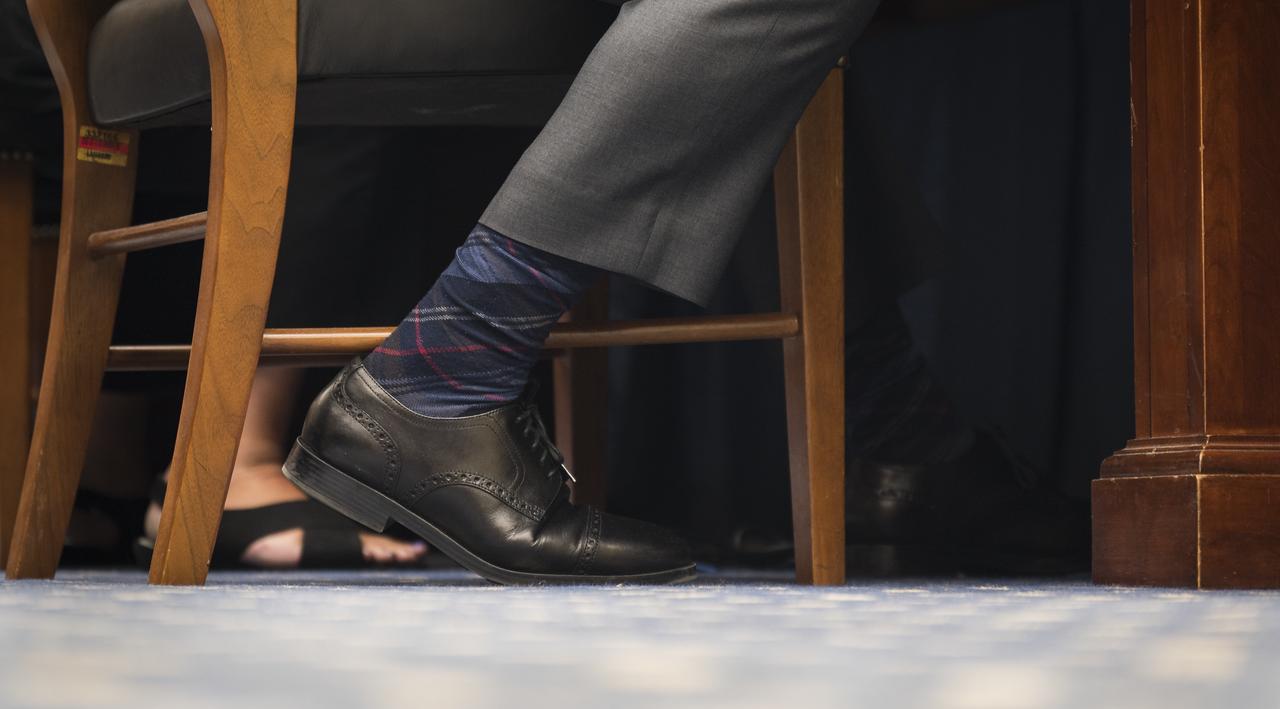
Acting NASA Associate Administrator for Human Exploration and Operations, Ken Bowersox, shoes are seen during a Space and Aeronautics Subcommittee of the House Science, Space, and Technology Committee hearing titled, “Developing Core Capabilities for Deep Space Exploration: An Update on NASA's SLS, Orion, and Exploration Ground Systems," Wednesday, September 18, 2019 at the Rayburn House Office Building in Washington. Photo Credit: (NASA/Aubrey Gemignani)
House Hearing on Deep Space Exploration
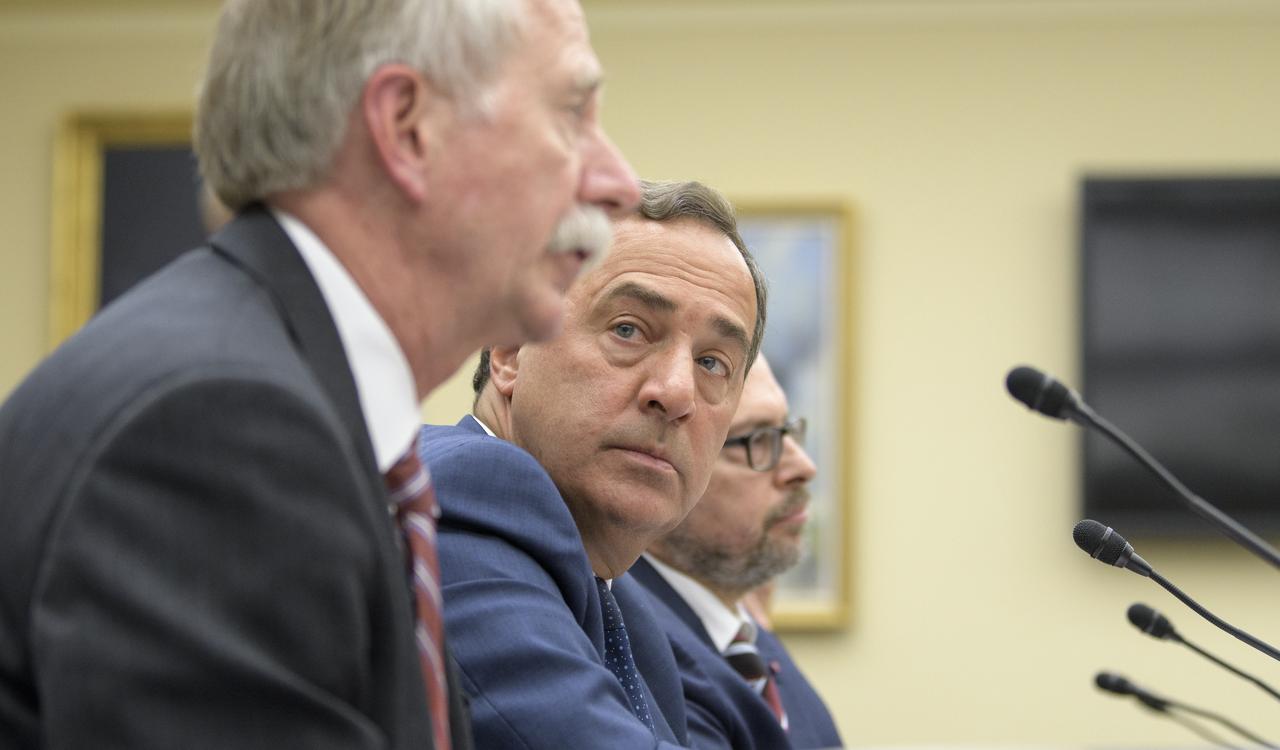
Acting NASA Associate Administrator for Human Exploration and Operations, Ken Bowersox, left, Cristina Chaplain, director, Contracting and National Security Acquisitions, U.S. Government Accountability Office (GAO), center, and Doug Cooke, owner, Cooke Concepts and Solutions, right, testify during a Space and Aeronautics Subcommittee of the House Science, Space, and Technology Committee hearing titled, “Developing Core Capabilities for Deep Space Exploration: An Update on NASA's SLS, Orion, and Exploration Ground Systems," Wednesday, September 18, 2019 at the Rayburn House Office Building in Washington. Photo Credit: (NASA/Aubrey Gemignani)
House Hearing on Deep Space Exploration
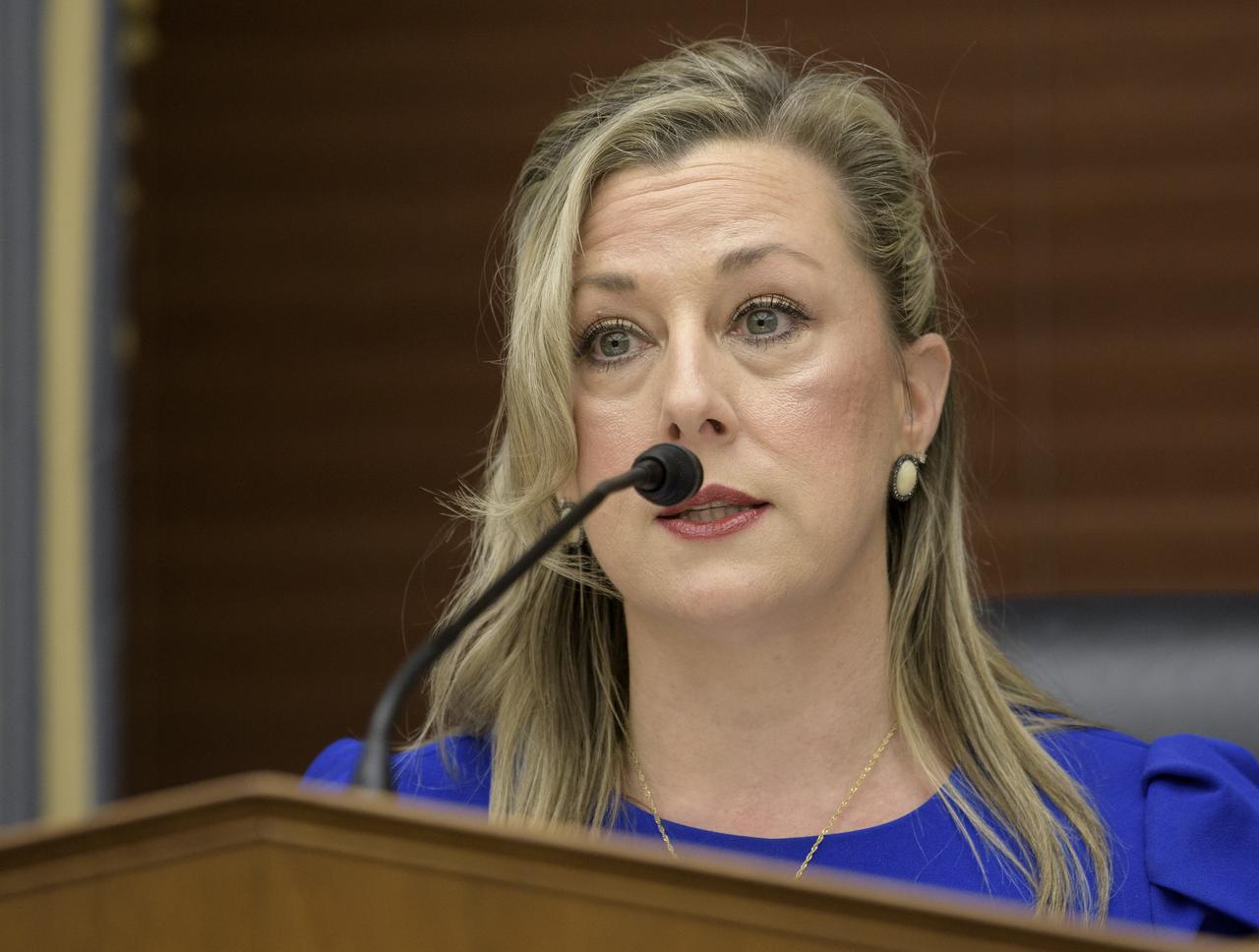
Chair of the Space and Aeronautics Subcommittee, Congresswoman Kendra Horn, D-Okla., speaks during a Space and Aeronautics Subcommittee of the House Science, Space, and Technology Committee hearing titled, “Developing Core Capabilities for Deep Space Exploration: An Update on NASA's SLS, Orion, and Exploration Ground Systems," Wednesday, September 18, 2019 at the Rayburn House Office Building in Washington. Photo Credit: (NASA/Aubrey Gemignani)
House Hearing on Deep Space Exploration
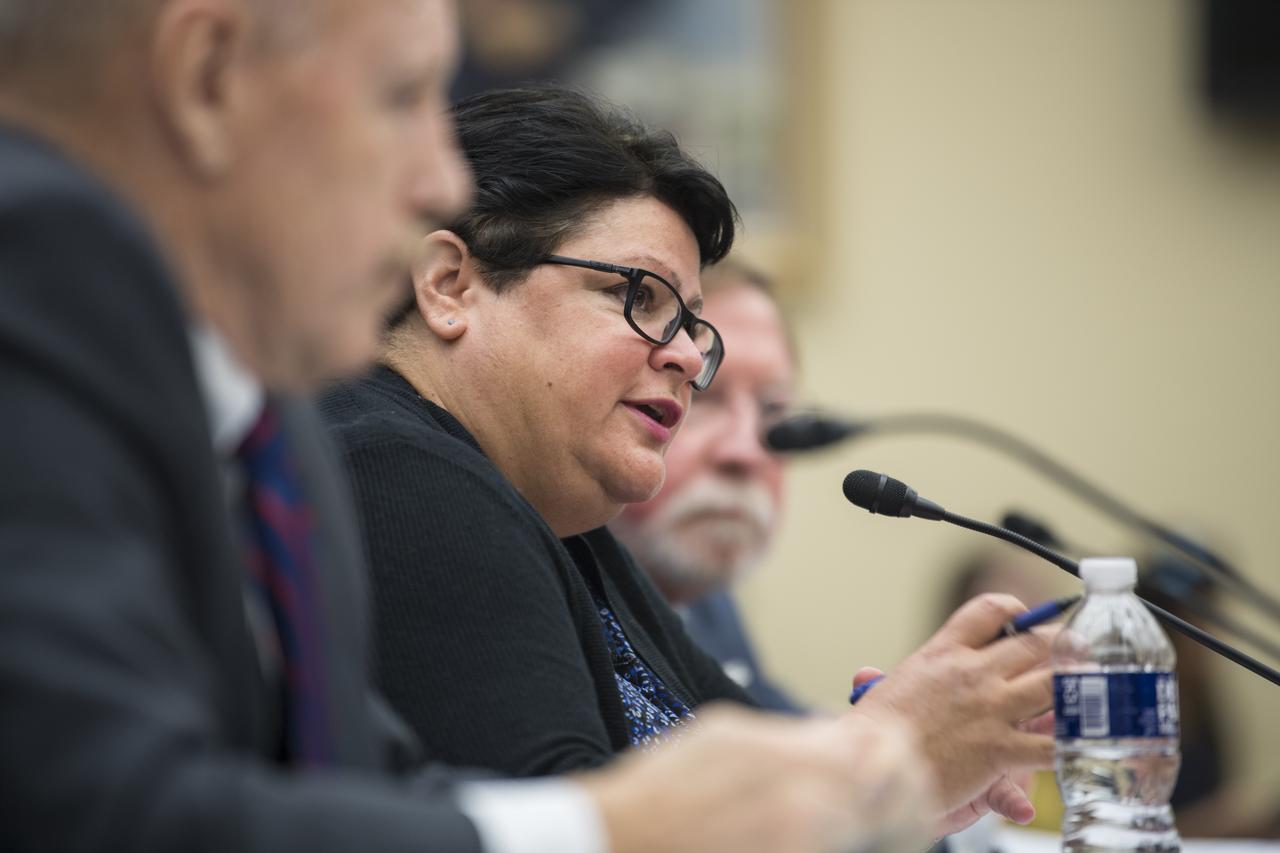
Cristina Chaplain, director, Contracting and National Security Acquisitions, U.S. Government Accountability Office (GAO), testifies during a Space and Aeronautics Subcommittee of the House Science, Space, and Technology Committee hearing titled, “Developing Core Capabilities for Deep Space Exploration: An Update on NASA's SLS, Orion, and Exploration Ground Systems," Wednesday, September 18, 2019 at the Rayburn House Office Building in Washington. Photo Credit: (NASA/Aubrey Gemignani)
House Hearing on Deep Space Exploration
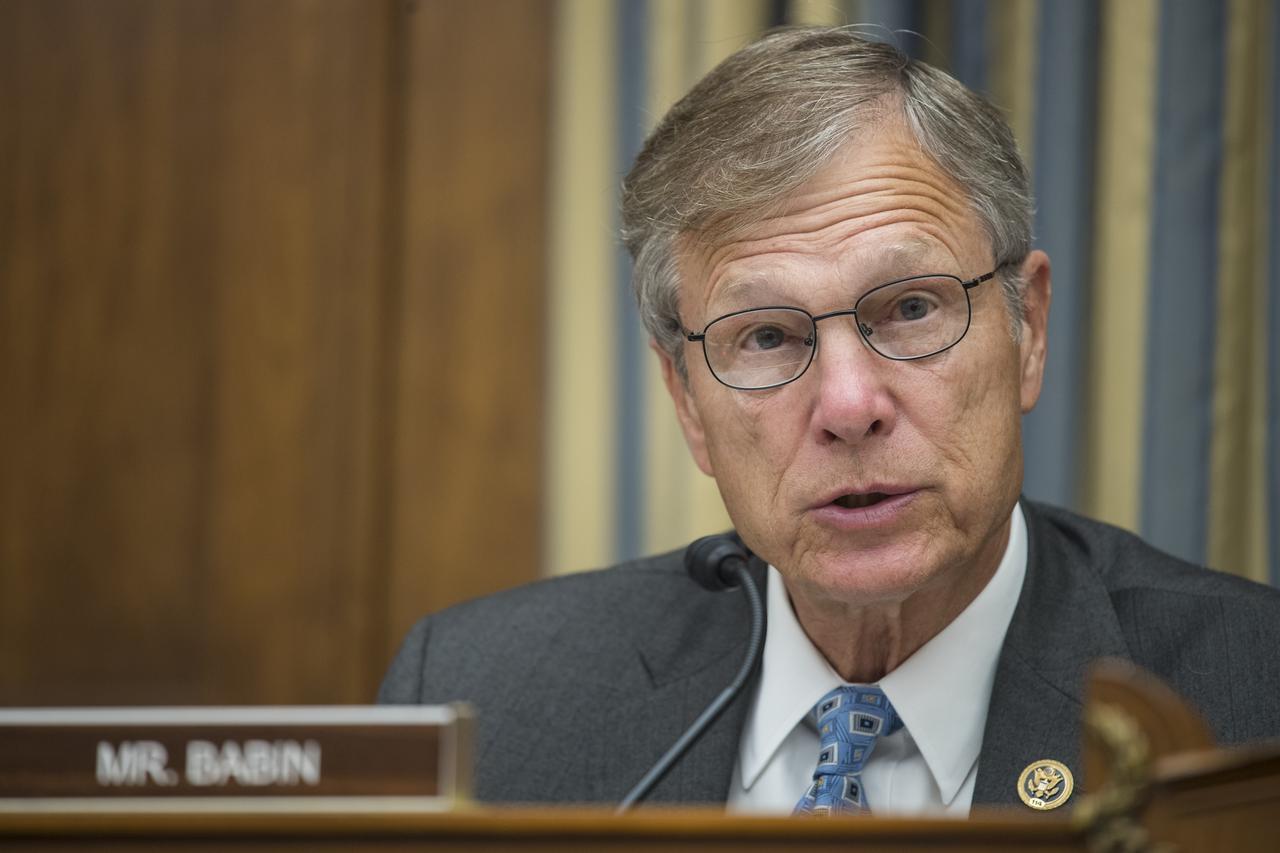
Congressman Brian Babin, R-Texas, asks a question during a Space and Aeronautics Subcommittee of the House Science, Space, and Technology Committee hearing titled, “Developing Core Capabilities for Deep Space Exploration: An Update on NASA's SLS, Orion, and Exploration Ground Systems," Wednesday, September 18, 2019 at the Rayburn House Office Building in Washington. Photo Credit: (NASA/Aubrey Gemignani)
House Hearing on Deep Space Exploration
Doug Cooke, owner, Cooke Concepts and Solutions, testifies during a Space and Aeronautics Subcommittee of the House Science, Space, and Technology Committee hearing titled, “Developing Core Capabilities for Deep Space Exploration: An Update on NASA's SLS, Orion, and Exploration Ground Systems," Wednesday, September 18, 2019 at the Rayburn House Office Building in Washington. Photo Credit: (NASA/Aubrey Gemignani)
House Hearing on Deep Space Exploration
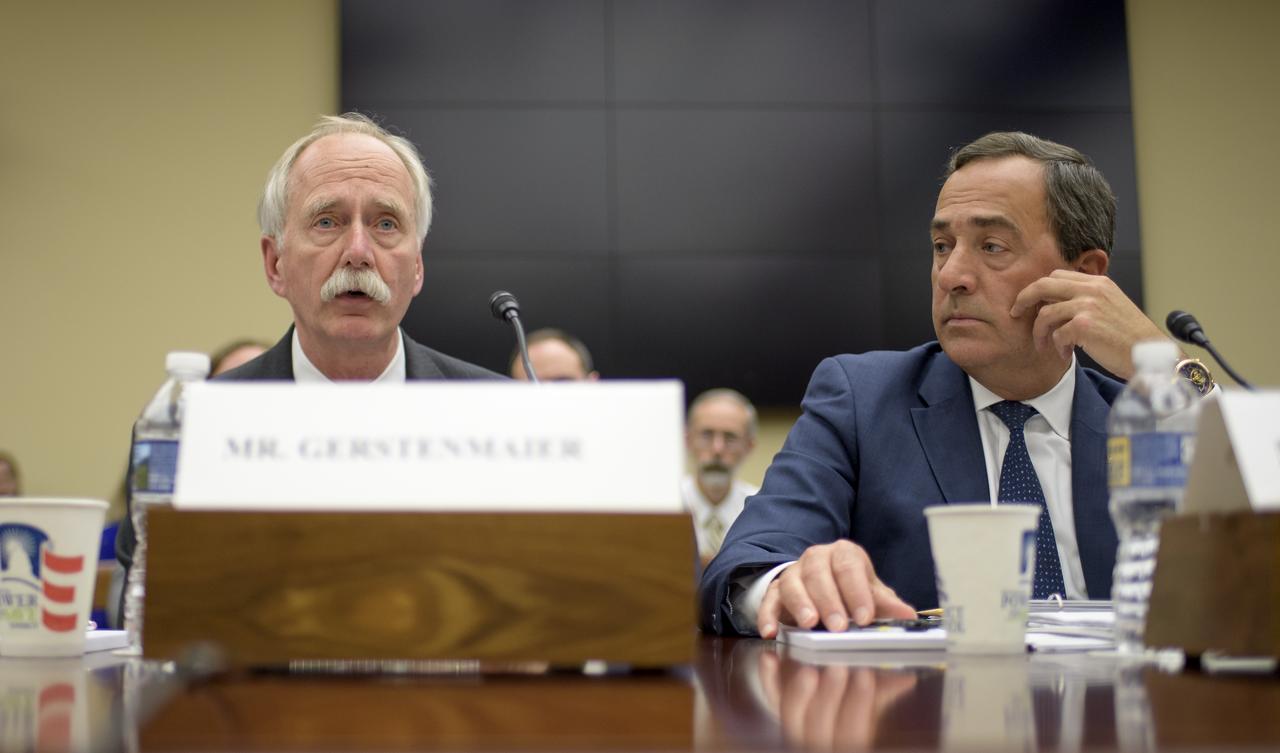
NASA Special Assistant to the Administrator Mark Sirangelo listens as NASA Associate Administrator, Human Exploration and Operations William Gerstenmaier testifies during the House Subcommittee on Space and Aeronautics hearing titled "Keeping our sights on Mars: A Review of NASA's Deep Space Exploration Programs and Lunar Proposal", Wednesday, May 8, 2019 at the Rayburn House Office Building in Washington. Photo Credit: (NASA/Bill Ingalls)
Hearing on Lunar And Deep Space Exploration
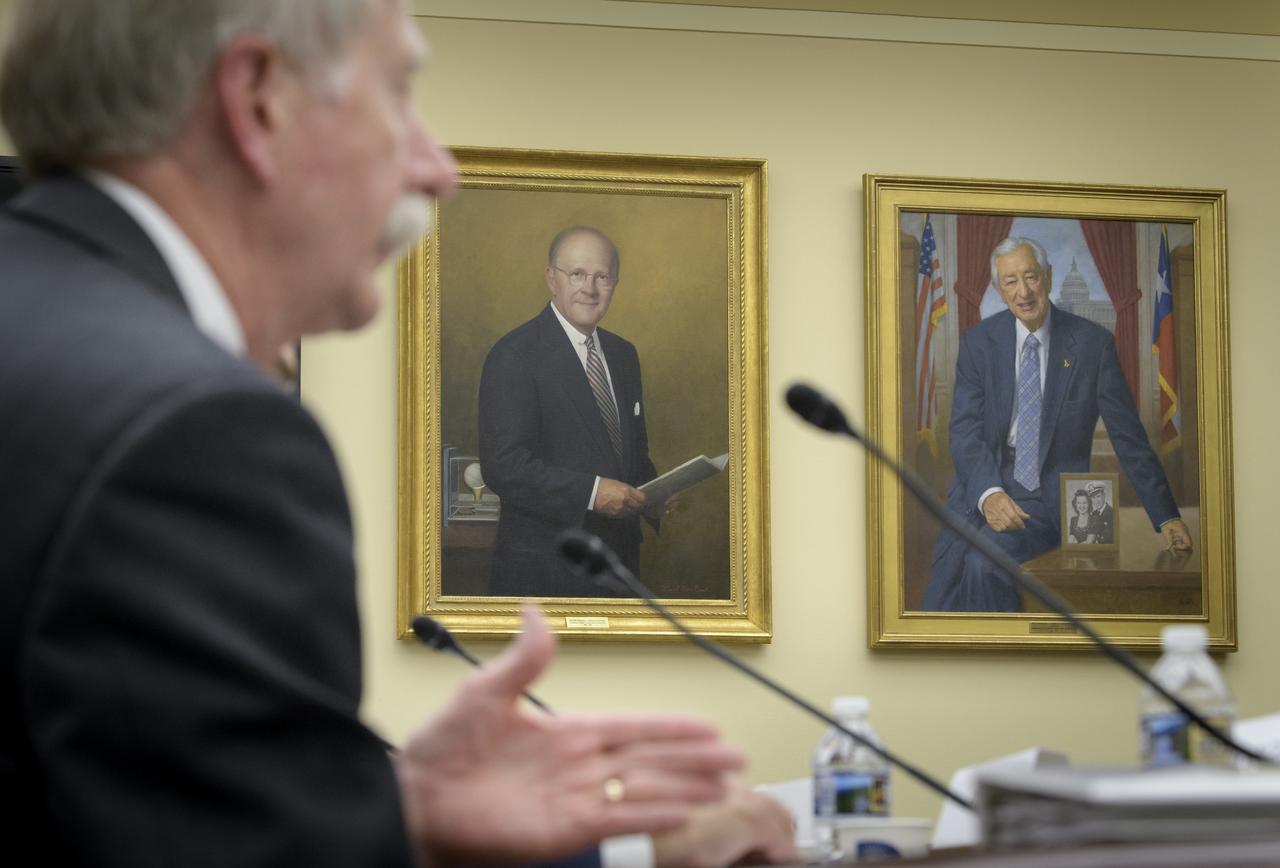
Portraits of past House Science and Technology Committee Chairmen, Sherwood Boehlert, left, and Ralph Hall are seen as NASA Associate Administrator, Human Exploration and Operations William Gerstenmaier testifies during a House Subcommittee on Space and Aeronautics hearing titled "Keeping our sights on Mars: A Review of NASA's Deep Space Exploration Programs and Lunar Proposal", Wednesday, May 8, 2019 at the Rayburn House Office Building in Washington. Photo Credit: (NASA/Bill Ingalls)
Hearing on Lunar And Deep Space Exploration
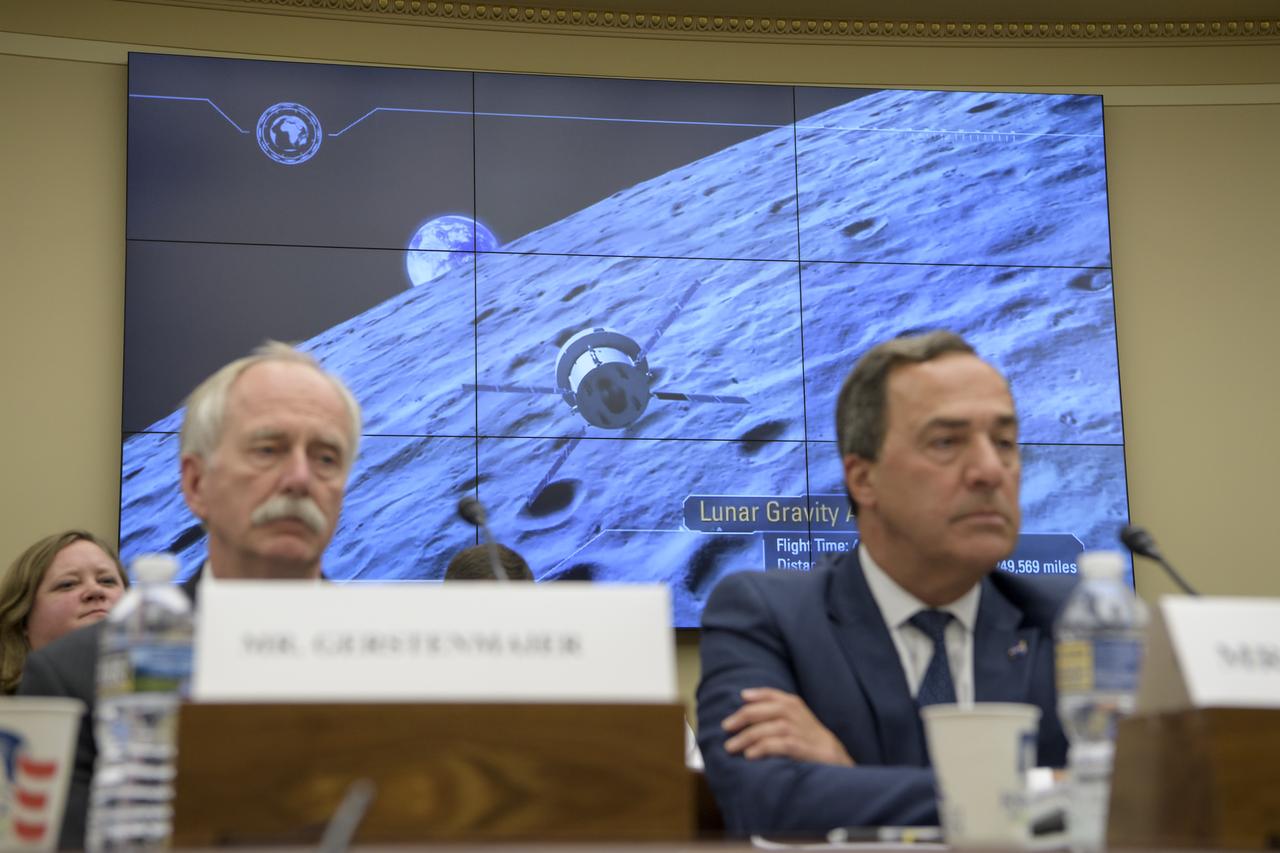
NASA Associate Administrator, Human Exploration and Operations William Gerstenmaier, left, and NASA Special Assistant to the Administrator Mark Sirangelo, watch as a video is played during the House Subcommittee on Space and Aeronautics hearing titled "Keeping our sights on Mars: A Review of NASA's Deep Space Exploration Programs and Lunar Proposal", Wednesday, May 8, 2019 at the Rayburn House Office Building in Washington. Photo Credit: (NASA/Bill Ingalls)
Hearing on Lunar And Deep Space Exploration
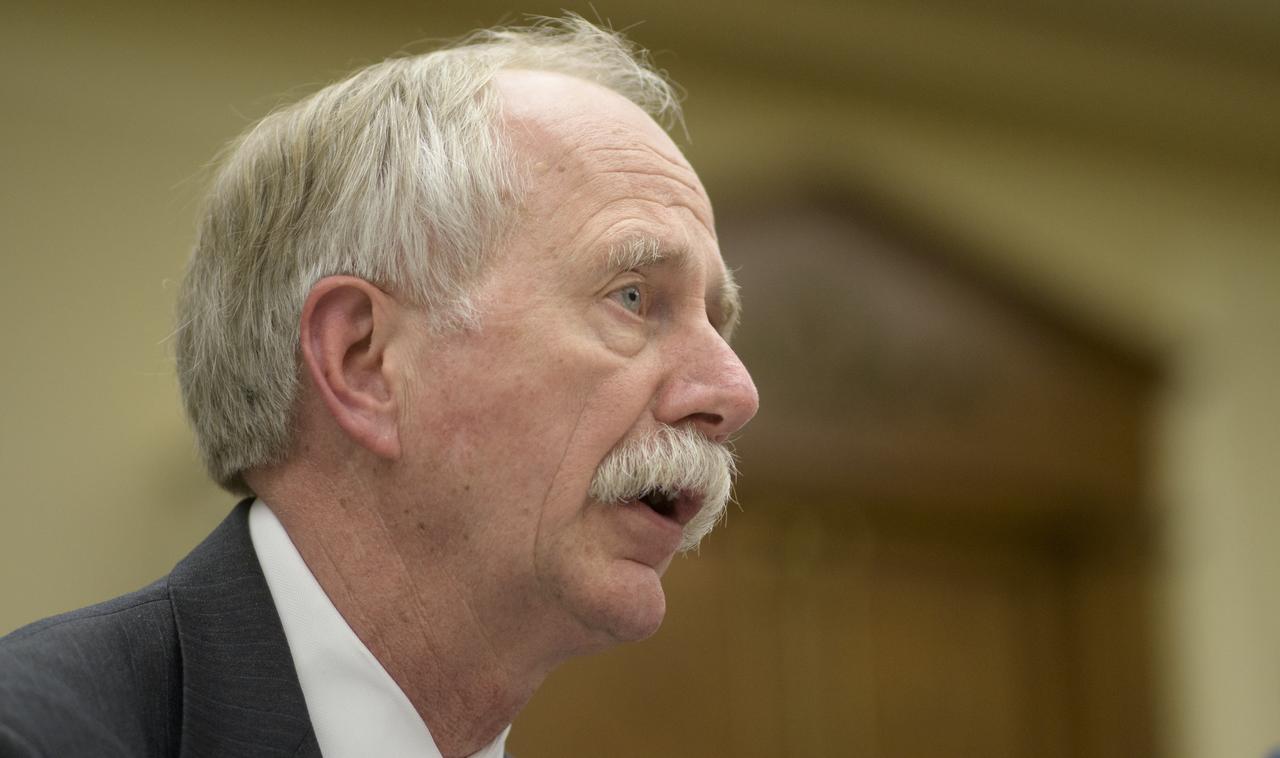
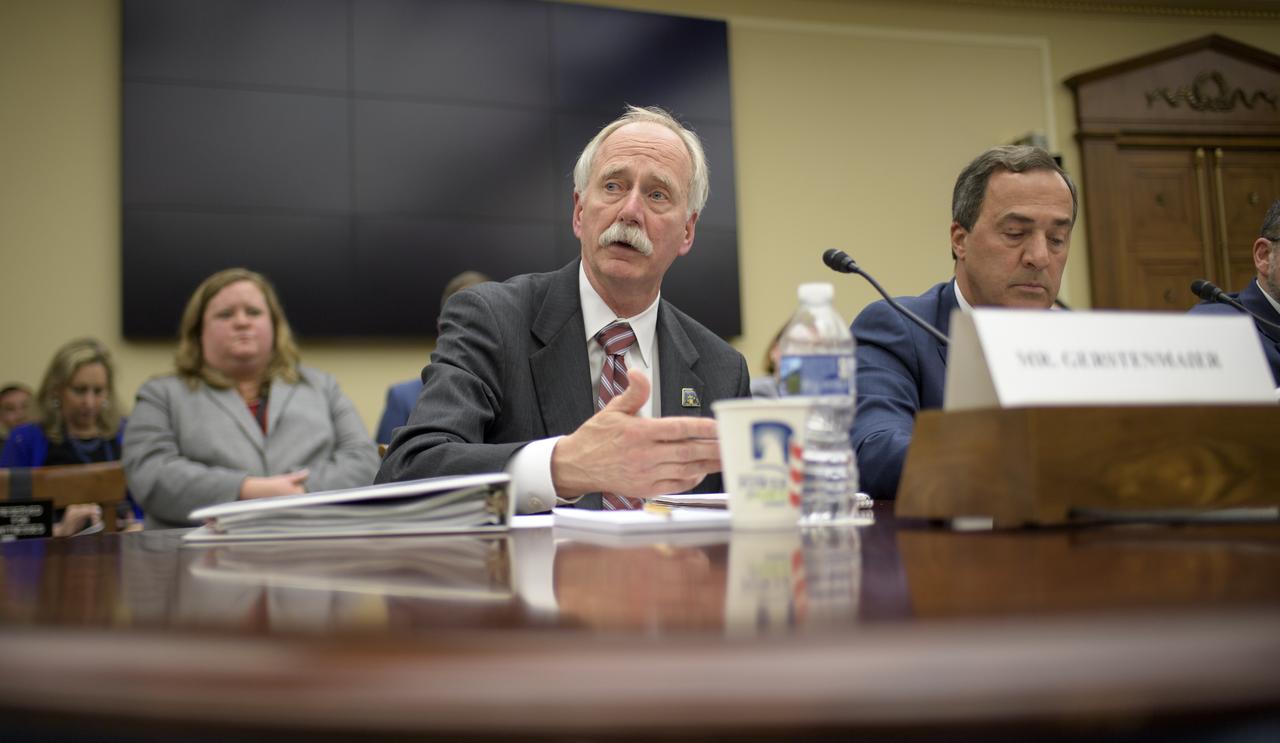
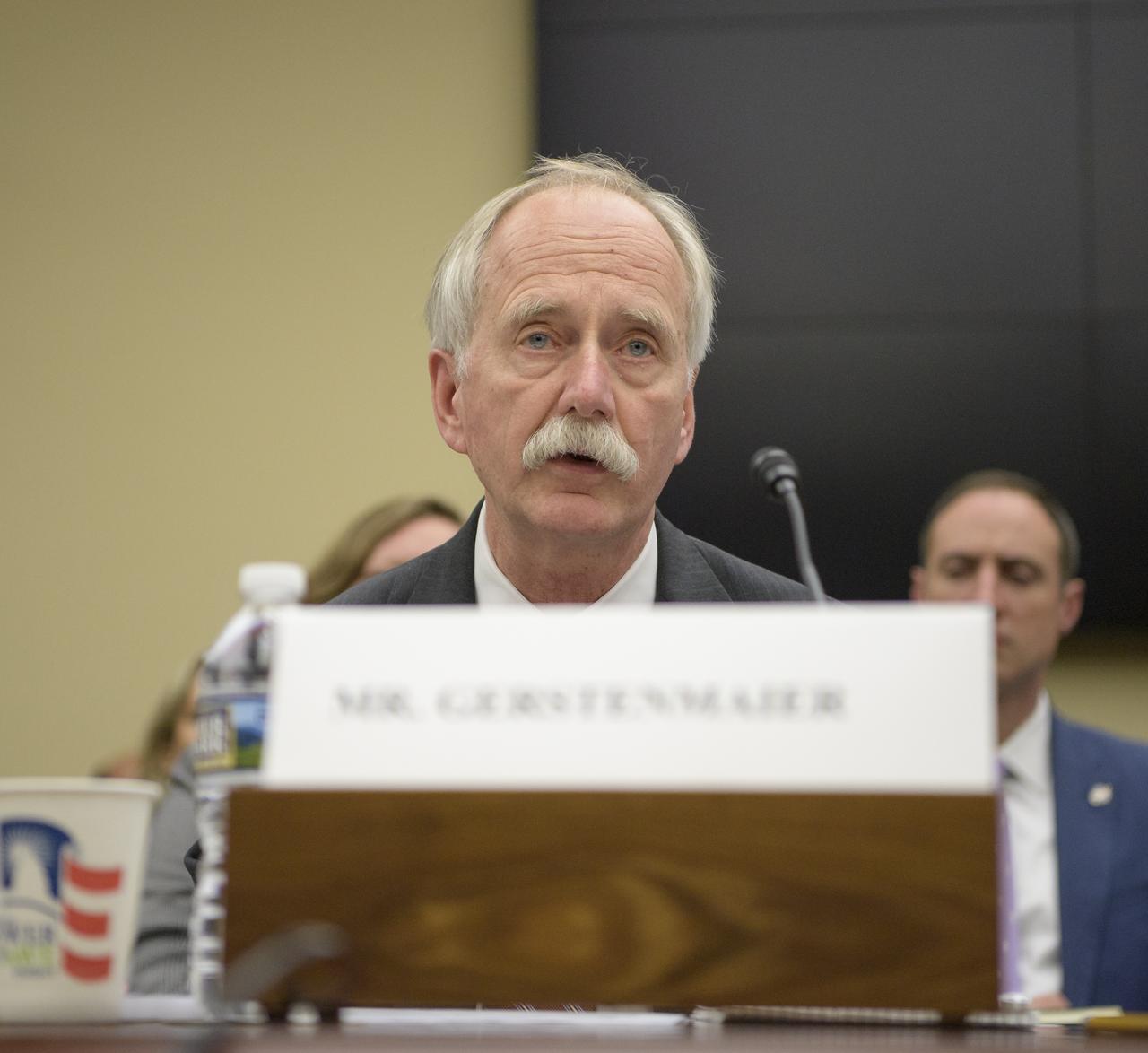
NASA Associate Administrator, Human Exploration and Operations William Gerstenmaier testifies during the House Subcommittee on Space and Aeronautics hearing titled "Keeping our sights on Mars: A Review of NASA's Deep Space Exploration Programs and Lunar Proposal", Wednesday, May 8, 2019 at the Rayburn House Office Building in Washington. Photo Credit: (NASA/Bill Ingalls)
Hearing on Lunar And Deep Space Exploration
NASA Associate Administrator, Human Exploration and Operations William Gerstenmaier testifies during the House Subcommittee on Space and Aeronautics hearing titled "Keeping our sights on Mars: A Review of NASA's Deep Space Exploration Programs and Lunar Proposal", Wednesday, May 8, 2019 at the Rayburn House Office Building in Washington. Photo Credit: (NASA/Bill Ingalls)
Hearing on Lunar And Deep Space Exploration
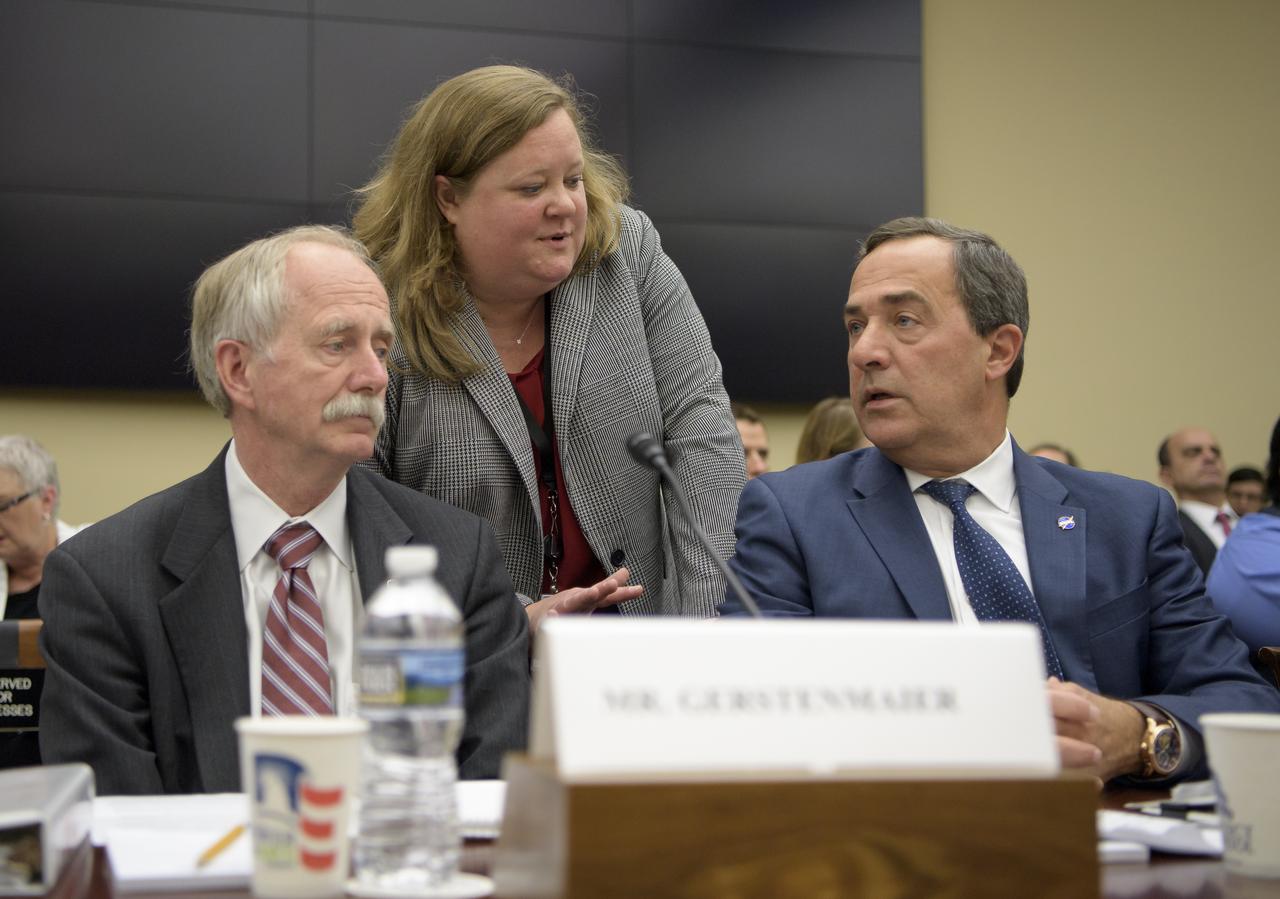
NASA Associate Administrator, Human Exploration and Operations William Gerstenmaier, left, NASA Associate Administrator for Legislative Affairs Suzanne Gillen, center, and NASA Special Assistant to the Administrator Mark Sirangelo, confer prior to the start of the House Subcommittee on Space and Aeronautics hearing titled "Keeping our sights on Mars: A Review of NASA's Deep Space Exploration Programs and Lunar Proposal", Wednesday, May 8, 2019 at the Rayburn House Office Building in Washington. Photo Credit: (NASA/Bill Ingalls)
Hearing on Lunar And Deep Space Exploration
NASA Associate Administrator, Human Exploration and Operations William Gerstenmaier testifies during the House Subcommittee on Space and Aeronautics hearing titled "Keeping our sights on Mars: A Review of NASA's Deep Space Exploration Programs and Lunar Proposal", Wednesday, May 8, 2019 at the Rayburn House Office Building in Washington. Photo Credit: (NASA/Bill Ingalls)
Hearing on Lunar And Deep Space Exploration
NASA Associate Administrator, Human Exploration and Operations William Gerstenmaier, left, and NASA Special Assistant to the Administrator Mark Sirangelo, testify during the House Subcommittee on Space and Aeronautics hearing titled "Keeping our sights on Mars: A Review of NASA's Deep Space Exploration Programs and Lunar Proposal", Wednesday, May 8, 2019 at the Rayburn House Office Building in Washington. Photo Credit: (NASA/Bill Ingalls)
Hearing on Lunar And Deep Space Exploration
NASA Special Assistant to the Administrator Mark Sirangelo testifies during the House Subcommittee on Space and Aeronautics hearing titled "Keeping our sights on Mars: A Review of NASA's Deep Space Exploration Programs and Lunar Proposal", Wednesday, May 8, 2019 at the Rayburn House Office Building in Washington. Photo Credit: (NASA/Bill Ingalls)
Hearing on Lunar And Deep Space Exploration
Chair Kendra Horn, D-OK., opens the House Subcommittee on Space and Aeronautics hearing titled "Keeping our sights on Mars: A Review of NASA's Deep Space Exploration Programs and Lunar Proposal", Wednesday, May 8, 2019 at the Rayburn House Office Building in Washington. Photo Credit: (NASA/Bill Ingalls)
Hearing on Lunar And Deep Space Exploration
NASA Special Assistant to the Administrator Mark Sirangelo testifies during the House Subcommittee on Space and Aeronautics hearing titled "Keeping our sights on Mars: A Review of NASA's Deep Space Exploration Programs and Lunar Proposal", Wednesday, May 8, 2019 at the Rayburn House Office Building in Washington. Photo Credit: (NASA/Bill Ingalls)
Hearing on Lunar And Deep Space Exploration
NASA Special Assistant to the Administrator Mark Sirangelo testifies during the House Subcommittee on Space and Aeronautics hearing titled "Keeping our sights on Mars: A Review of NASA's Deep Space Exploration Programs and Lunar Proposal", Wednesday, May 8, 2019 at the Rayburn House Office Building in Washington. Photo Credit: (NASA/Bill Ingalls)
Hearing on Lunar And Deep Space Exploration
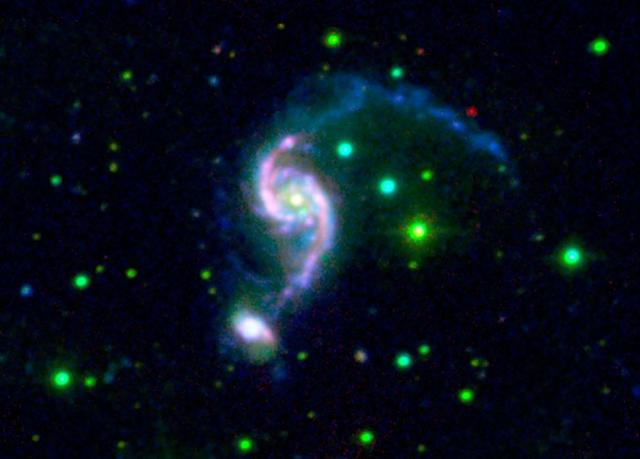
NASA Galaxy Evolution Explorer and Spitzer Space Telescope combined to show a pair of interacting galaxies might be experiencing the galactic equivalent of a mid-life crisis.
Older Galaxy Pair Has Surprisingly Youthful Glow
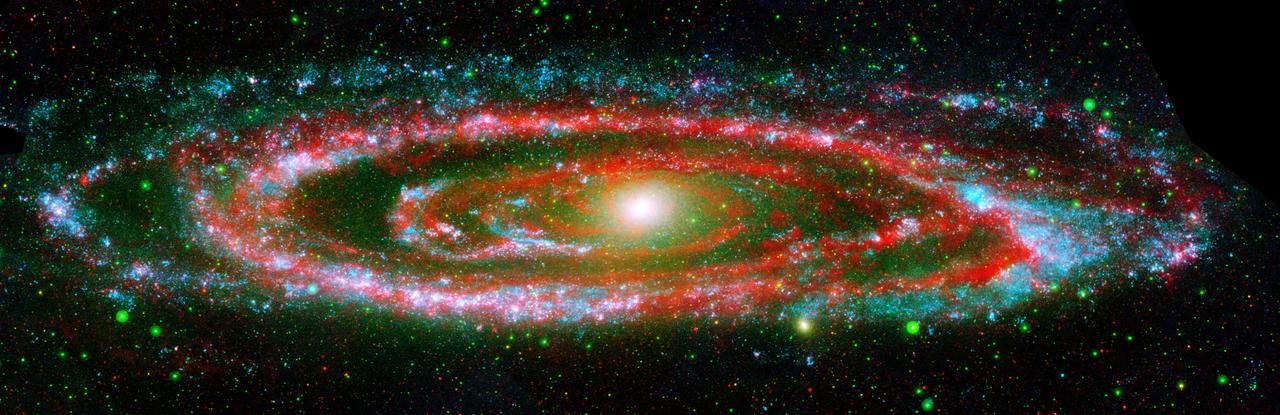
The many personalities of our great galactic neighbor, the Andromeda galaxy, are exposed in this new composite image from NASA Galaxy Evolution Explorer and Spitzer Space Telescope.
Amazing Andromeda Galaxy
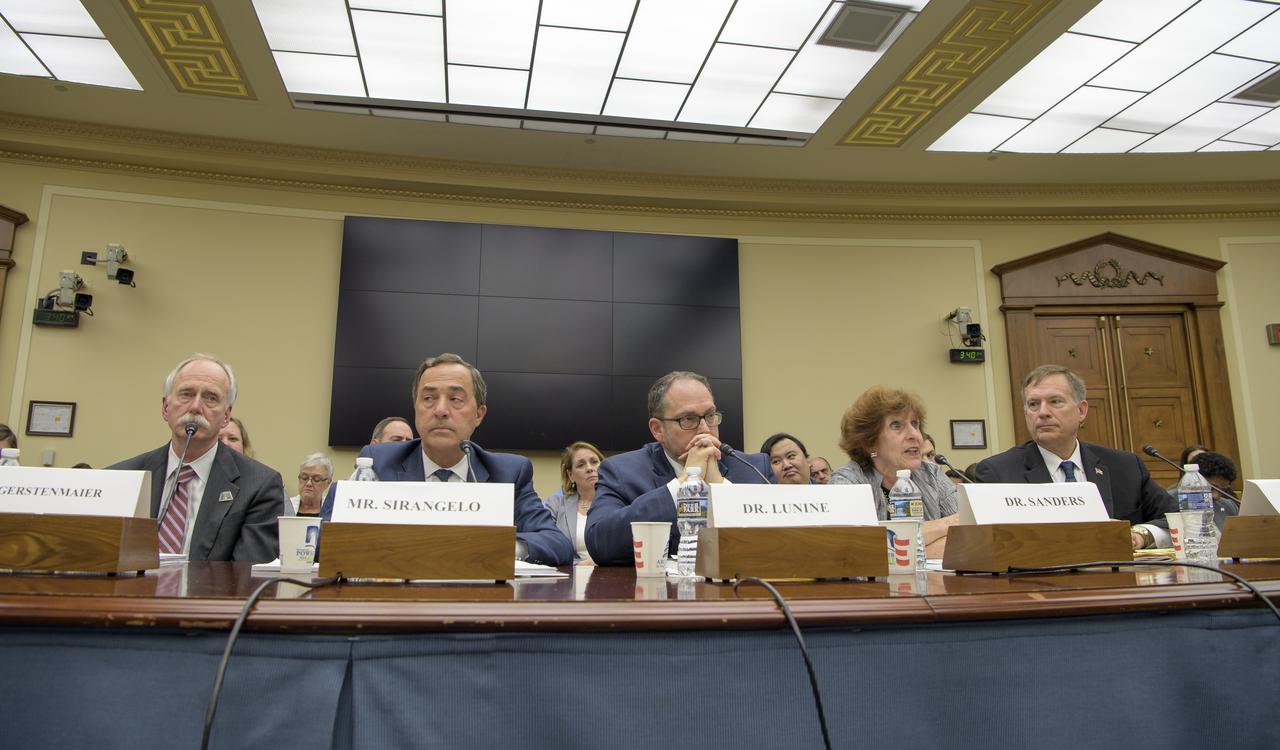
NASA Associate Administrator, Human Exploration and Operations William Gerstenmaier, left, NASA Special Assistant to the Administrator Mark Sirangelo, Director, Cornell Center for Astrophysics and Planetary Science, Co-Chair of the Former Committee on Human Spaceflight, National Academies of Sciences, Engineering, and Medicine Dr. Jonathan Lunine, Chair, Aerospace Safety Advisory Panel Dr. Patricia Sanders, and, President, Faulconer Consulting Group, LLC Mr. Walt Faulconer, right, are seen during a House Subcommittee on Space and Aeronautics hearing titled "Keeping our sights on Mars: A Review of NASA's Deep Space Exploration Programs and Lunar Proposal", Wednesday, May 8, 2019 at the Rayburn House Office Building in Washington. Photo Credit: (NASA/Bill Ingalls)
Hearing on Lunar And Deep Space Exploration
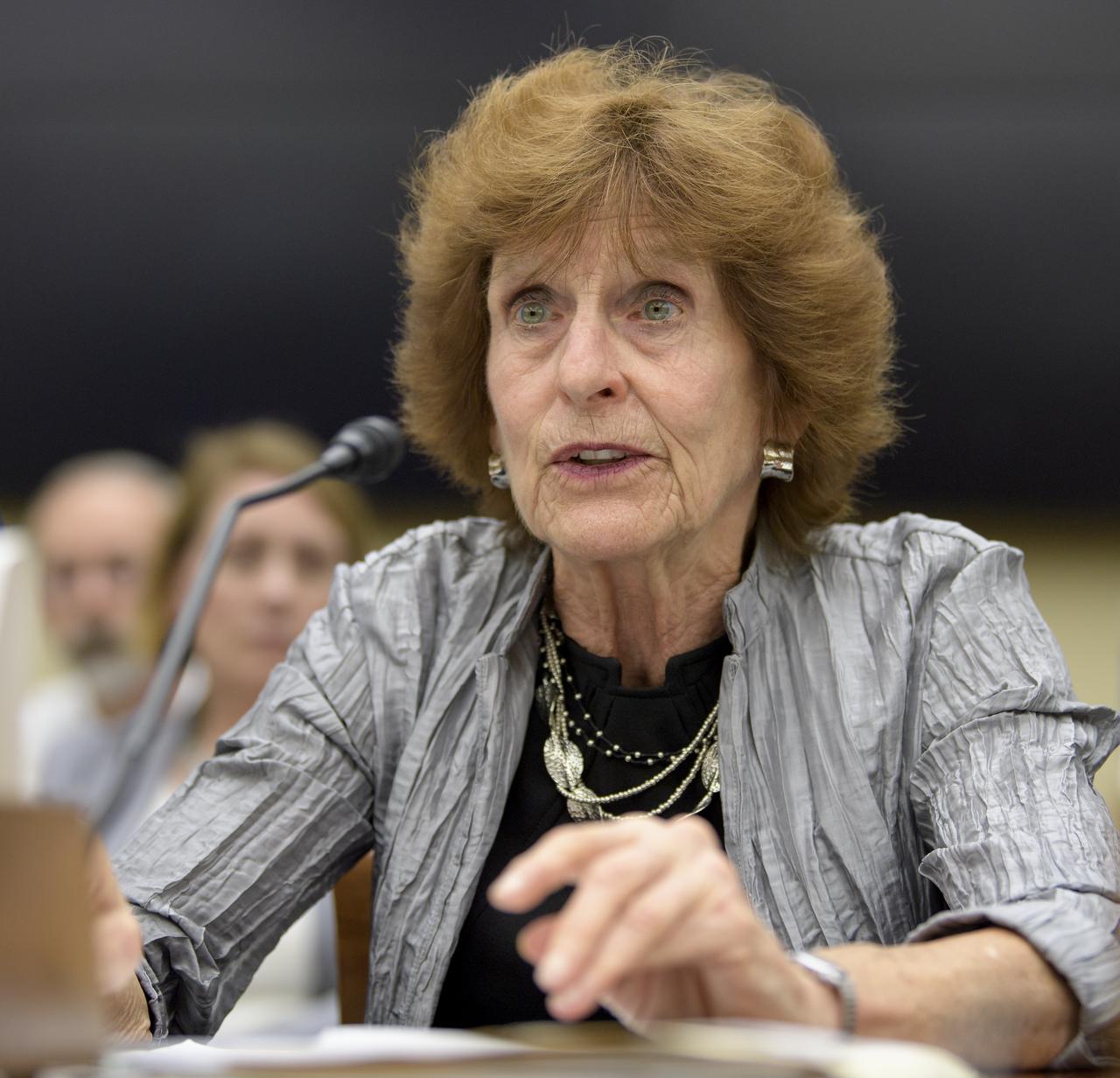
Dr. Patricia Sanders, Chair, Aerospace Safety Advisory Panel testifies during the House Subcommittee on Space and Aeronautics hearing titled "Keeping our sights on Mars: A Review of NASA's Deep Space Exploration Programs and Lunar Proposal", Wednesday, May 8, 2019 at the Rayburn House Office Building in Washington. Photo Credit: (NASA/Bill Ingalls)
Hearing on Lunar And Deep Space Exploration
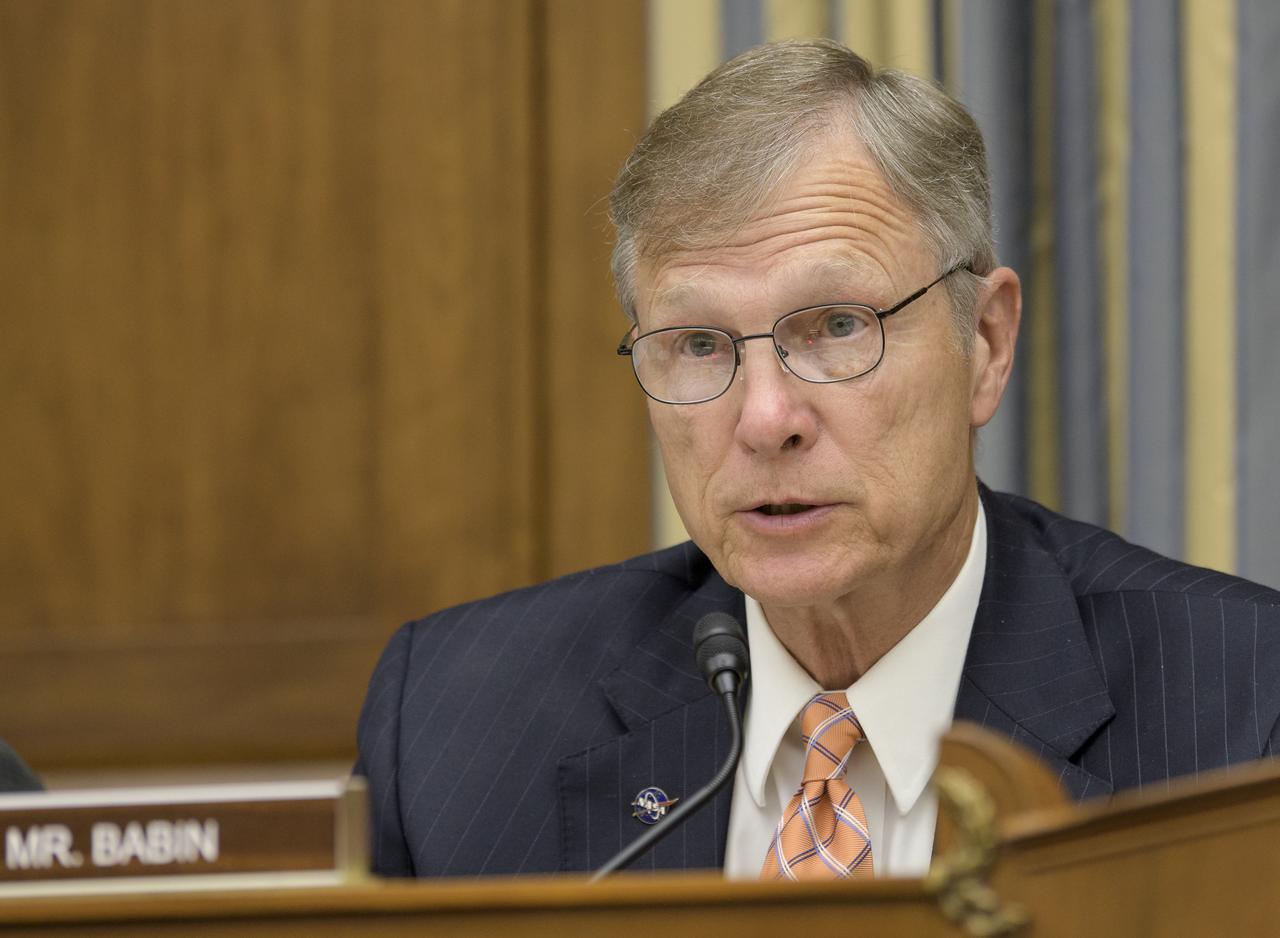
Rep. Brian Babin, R - Texas, gives opening remarks during the House Subcommittee on Space and Aeronautics hearing titled "Keeping our sights on Mars: A Review of NASA's Deep Space Exploration Programs and Lunar Proposal", Wednesday, May 8, 2019 at the Rayburn House Office Building in Washington. Photo Credit: (NASA/Bill Ingalls)
Hearing on Lunar And Deep Space Exploration
Mr. Walt Faulconer, President, Faulconer Consulting Group, LLC testifies during the House Subcommittee on Space and Aeronautics hearing titled "Keeping our sights on Mars: A Review of NASA's Deep Space Exploration Programs and Lunar Proposal", Wednesday, May 8, 2019 at the Rayburn House Office Building in Washington. Photo Credit: (NASA/Bill Ingalls)
Hearing on Lunar And Deep Space Exploration
Dr. Jonathan Lunine, Director, Cornell Center for Astrophysics and Planetary Science, Co-Chair of the Former Committee on Human Spaceflight, National Academies of Sciences, Engineering, and Medicine testifies during the House Subcommittee on Space and Aeronautics hearing titled "Keeping our sights on Mars: A Review of NASA's Deep Space Exploration Programs and Lunar Proposal", Wednesday, May 8, 2019 at the Rayburn House Office Building in Washington. Photo Credit: (NASA/Bill Ingalls)
Hearing on Lunar And Deep Space Exploration
Dr. Jonathan Lunine, Director, Cornell Center for Astrophysics and Planetary Science, Co-Chair of the Former Committee on Human Spaceflight, National Academies of Sciences, Engineering, and Medicine testifies during the House Subcommittee on Space and Aeronautics hearing titled "Keeping our sights on Mars: A Review of NASA's Deep Space Exploration Programs and Lunar Proposal", Wednesday, May 8, 2019 at the Rayburn House Office Building in Washington. Photo Credit: (NASA/Bill Ingalls)
Hearing on Lunar And Deep Space Exploration
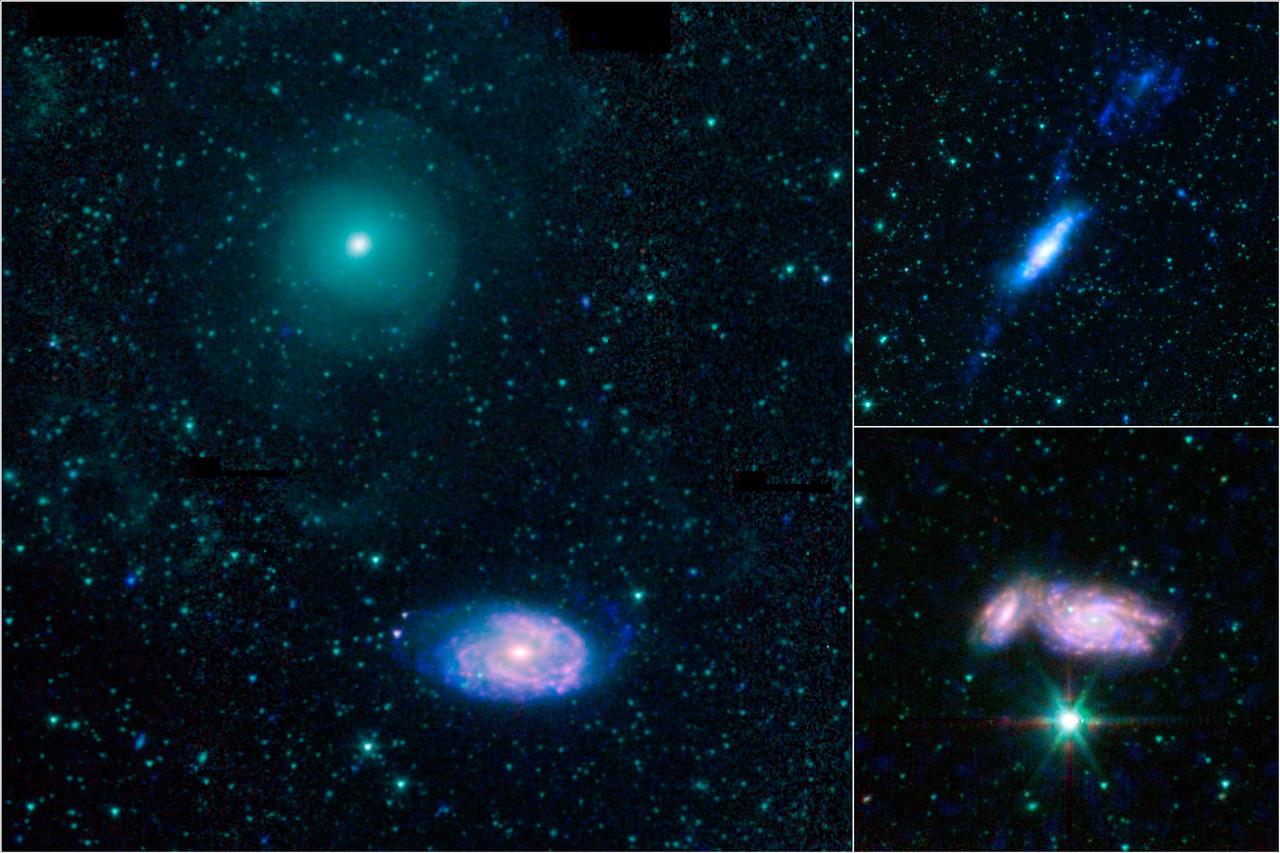
This montage combines observations from NASA Spitzer Space Telescope and NASA Galaxy Evolution Explorer GALEX spacecraft showing three examples of colliding galaxies from a new photo atlas of galactic train wrecks.
Galactic Train Wrecks
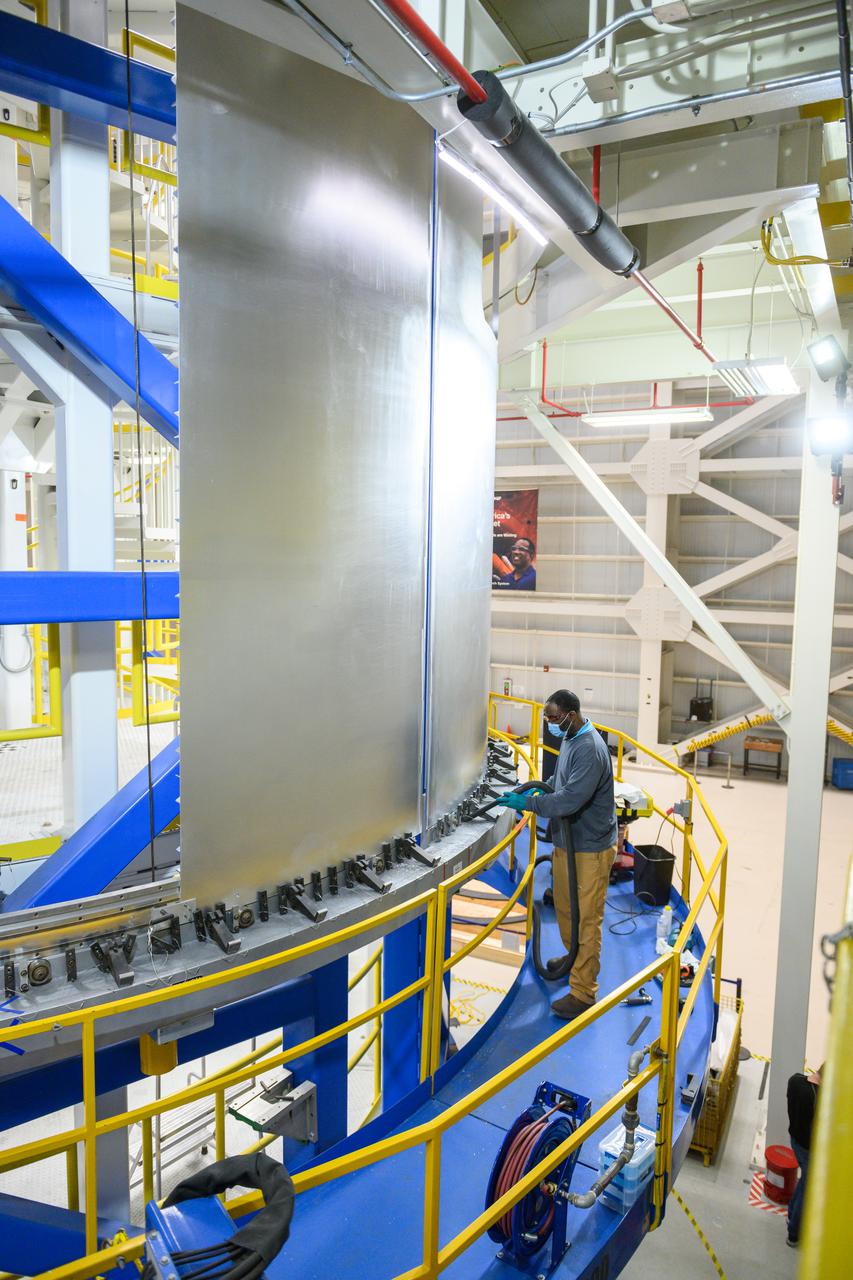
Technicians are manufacturing and testing the first in a series of initial weld confidence articles for the Exploration Upper Stage (EUS) for future flights of NASA’s Space Launch System (SLS) rocket at the agency’s Michoud Assembly Facility in New Orleans. The Exploration Upper Stage will be used on the second configuration of the SLS rocket, known as Block 1B, and will provide in-space propulsion to send astronauts in NASA’s Orion spacecraft and heavy cargo on a precise trajectory to the Moon. The Exploration Upper Stage weld confidence panels are first produced in the Vertical Weld Center at Michoud, then small sections of the panels are removed for mechanical testing and analysis in another area of the factory. Teams use weld confidence articles to verify welding procedures, interfaces between the tooling and hardware, and the structural integrity of the welds. Testing of the EUS weld confidence articles will help engineers and technicians validate welding parameters for manufacturing EUS hardware.  The first three SLS flights of NASA’s Artemis program will use an interim cryogenic propulsion stage with one RL10 engine to send Orion to the Moon. The SLS Exploration Upper Stage for flights beyond Artemis III has larger propellant tanks and four RL10 engines. The evolution of the rocket to SLS Block 1B configuration with EUS enables SLS to launch 40% more cargo to the Moon along with the crew. Manufacturing the Exploration Upper Stage is a collaborative effort between NASA and Boeing, the lead contractor for EUS and the SLS core stage.  SLS is the only rocket that can send Orion, astronauts, and supplies to the Moon in a single mission. The SLS rocket, NASA’s Orion spacecraft, Gateway, and human landing system are part of NASA’s backbone for deep space exploration. Under the Artemis program, NASA is working to land the first woman and the next man on the Moon to pave the way for sustainable exploration at the Moon and future missions to Mars. (NASA)
Exploration Upper Stage (EUS) for future flights of NASA’s Space Launch System (SLS) rocket
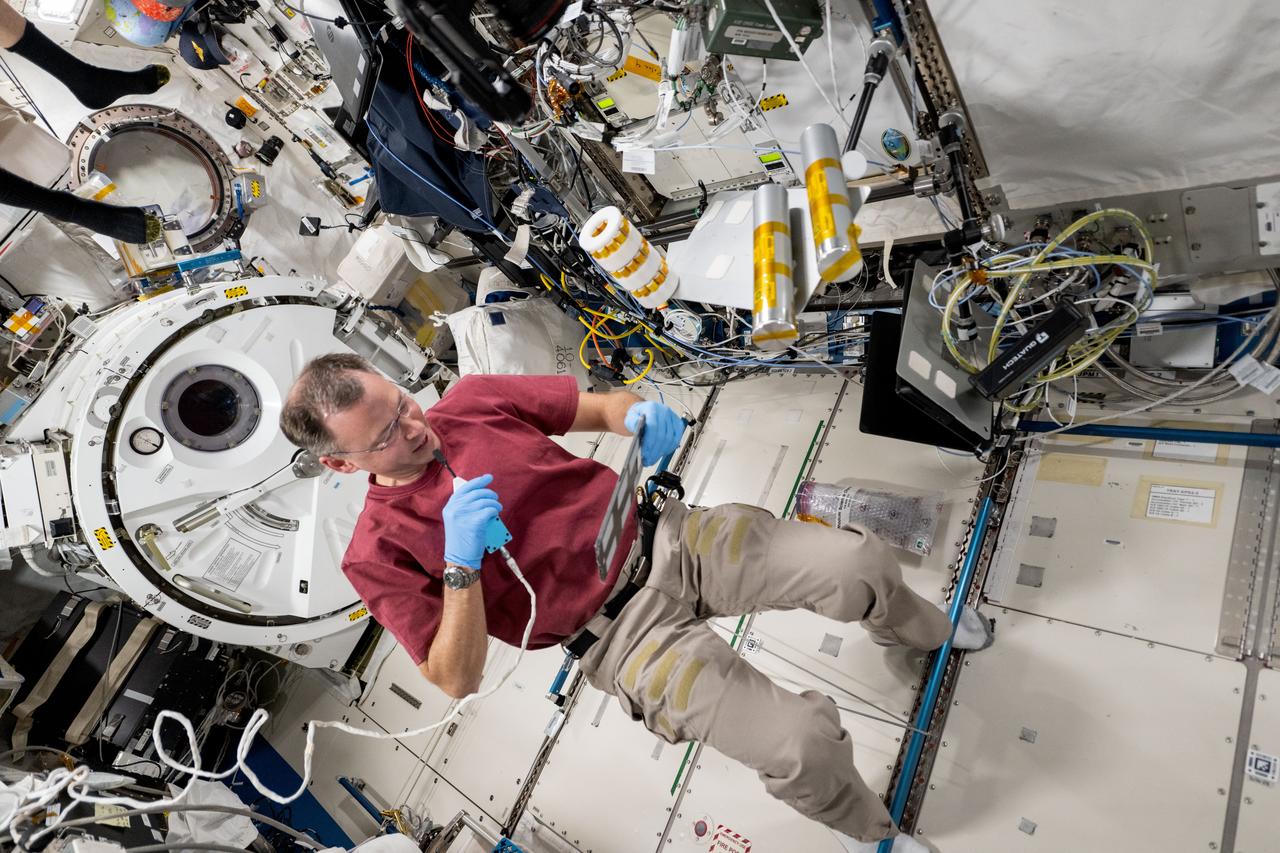
iss072e146328 (Nov. 6, 2024) --- NASA astronaut and Expedition 72 Flight Engineer Nick Hague works inside the International Space Station's Kibo laboratory module on space biology research. Hague was exploring the potential of biomanufacturing using microorganisms and cell cutlures to create food, medicine, and more in the microgravity environment reducing the need for cargo missions launched from Earth and promoting crew self-sufficiency during long-term missions.
Astronaut Nick Hague explores the potential of biomanufacturing in space
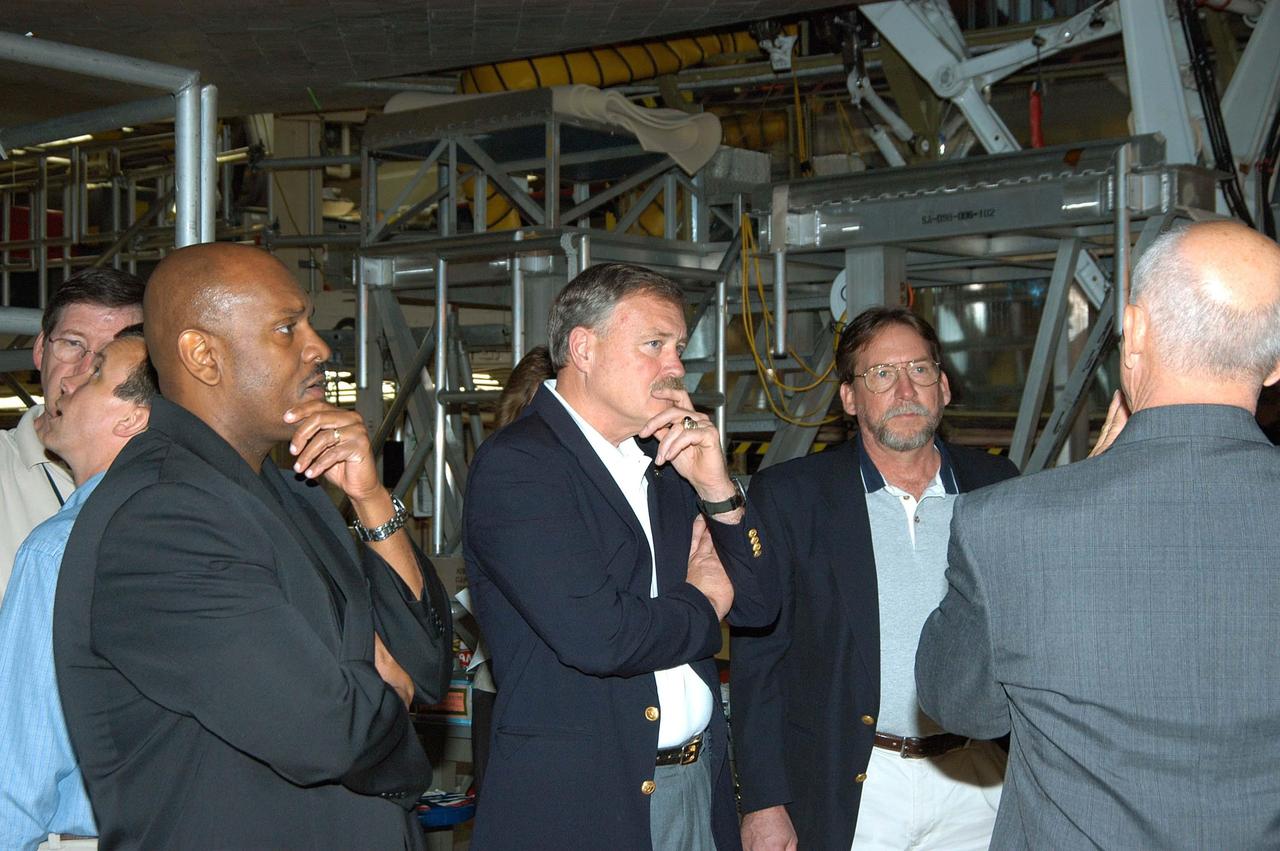
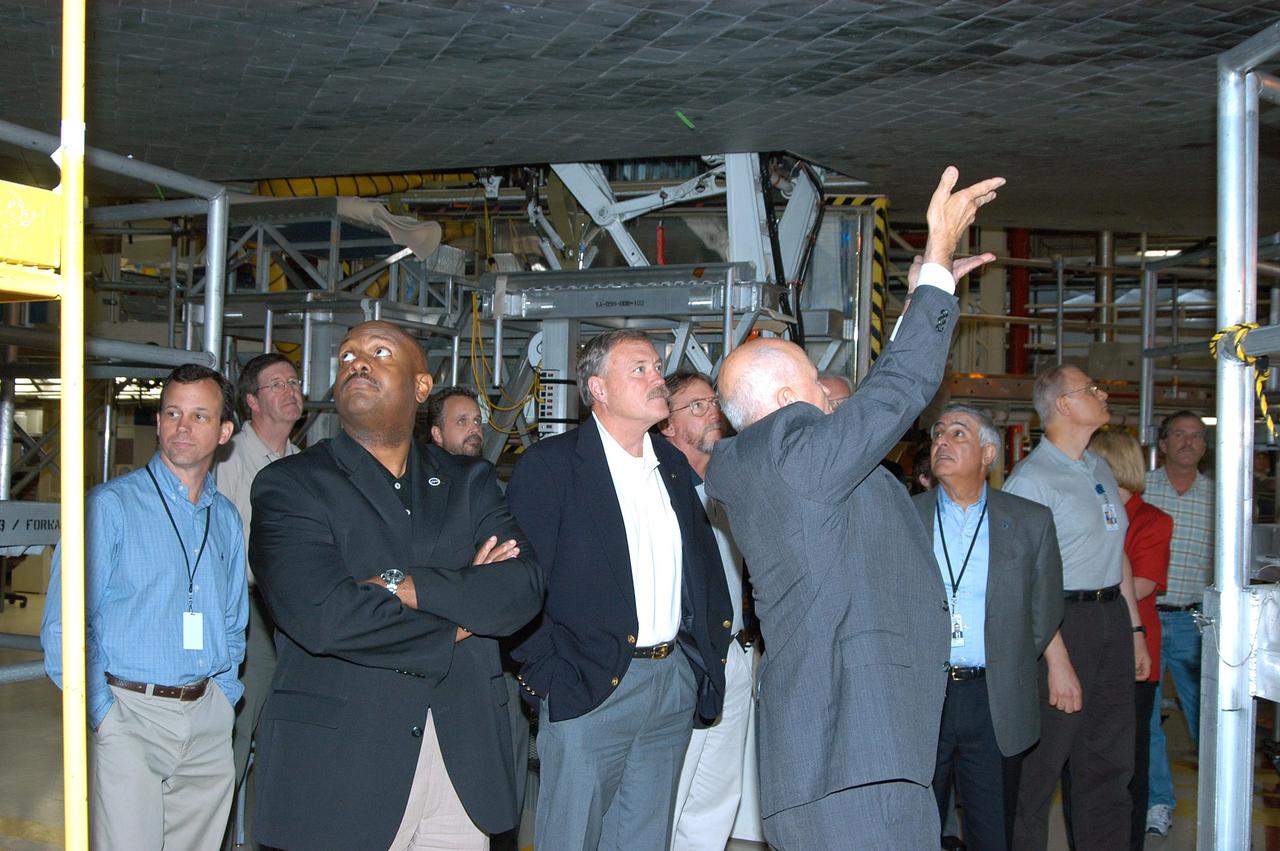
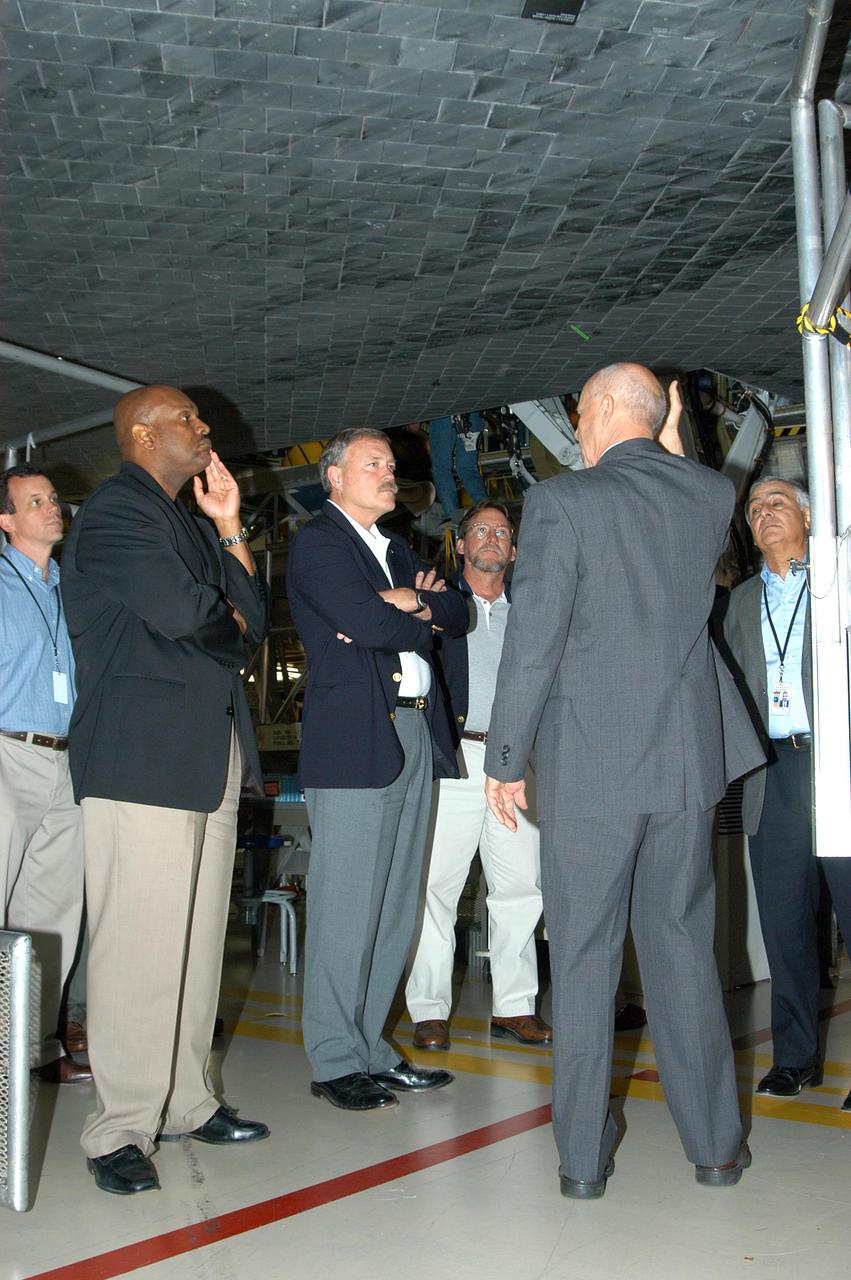
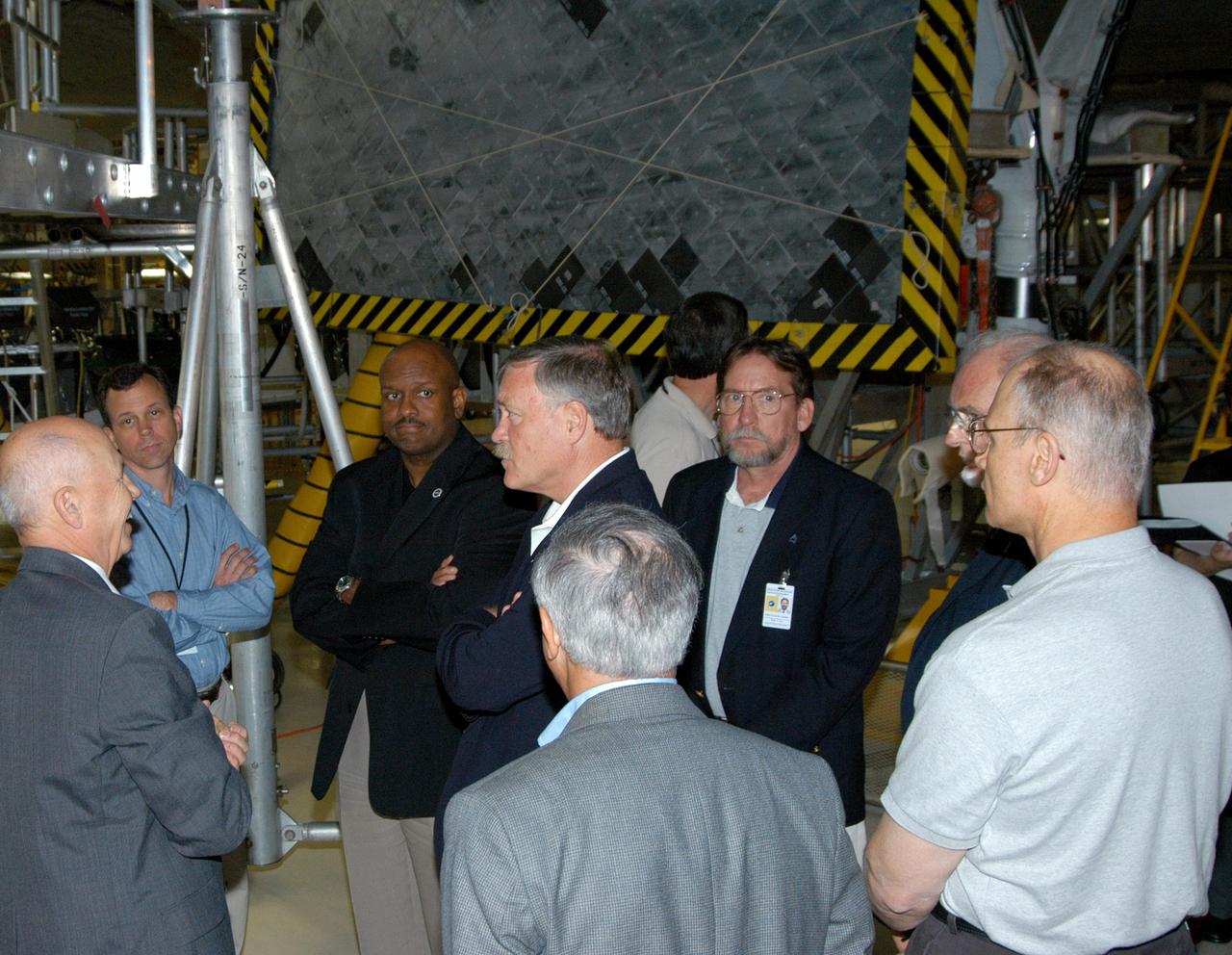
KENNEDY SPACE CENTER, FLA. -- Adm. Craig E. Steidle (center), NASA’s associate administrator, Office of Exploration Systems, listens to Conrad Nagel, chief of the Shuttle Project Office (right), during a tour of the Orbiter Processing Facility on a visit to KSC.  They are standing under the orbiter Discovery.  The Office of Exploration Systems was established to set priorities and direct the identification, development and validation of exploration systems and related technologies to support the future space vision for America.  Steidle’s visit included a tour of KSC to review the facilities and capabilities to be used to support the vision.
KSC-04pd1140
KENNEDY SPACE CENTER, FLA. -- Adm. Craig E. Steidle (center), NASA’s associate administrator, Office of Exploration Systems, listens to Conrad Nagel, chief of the Shuttle Project Office (right), during a tour of the Orbiter Processing Facility on a visit to KSC.  They are standing under the orbiter Discovery.  The Office of Exploration Systems was established to set priorities and direct the identification, development and validation of exploration systems and related technologies to support the future space vision for America.  Steidle’s visit included a tour of KSC to review the facilities and capabilities to be used to support the vision.
KSC-04pd1141
KENNEDY SPACE CENTER, FLA. -- Adm. Craig E. Steidle (center), NASA’s associate administrator, Office of Exploration Systems, tours the Orbiter Processing Facility on a visit to KSC.  At right (hands up) is Conrad Nagel, chief of the Shuttle Project Office.  They are standing under the orbiter Discovery.  The Office of Exploration Systems was established to set priorities and direct the identification, development and validation of exploration systems and related technologies to support the future space vision for America.  Steidle’s visit included a tour of KSC to review the facilities and capabilities to be used to support the vision.
KSC-04pd1139
NASA Associate Administrator for Science Thomas Zurbuchen gives remarks after the 2022 John L. “Jack” Swigert, Jr., Award for Space Exploration was presented to the OSIRIS-REx team by the Space Foundation during the 37th Space Symposium, Monday, April 4, 2022, in Colorado Springs, Colorado. The John L. “Jack” Swigert, Jr., Award for Space Exploration recognizes extraordinary accomplishments by a company, space agency, or consortium of organizations in the realm of space exploration and discovery. The award honors the memory of astronaut John L. “Jack” Swigert, Jr., one of the inspirations for the creation of Space Foundation. Photo Credit: (NASA/Bill Ingalls)
OSIRIS-REx Team Given 2022 Swigert Award for Space Exploration
University of Arizona OSIRIS-REx Principal Investigator Dante Lauretta gives remarks after the 2022 John L. “Jack” Swigert, Jr., Award for Space Exploration was presented to the OSIRIS-REx team by the Space Foundation during the 37th Space Symposium, Monday, April 4, 2022, in Colorado Springs, Colorado. The John L. “Jack” Swigert, Jr., Award for Space Exploration recognizes extraordinary accomplishments by a company, space agency, or consortium of organizations in the realm of space exploration and discovery. The award honors the memory of astronaut John L. “Jack” Swigert, Jr., one of the inspirations for the creation of Space Foundation. Photo Credit: (NASA/Bill Ingalls)
OSIRIS-REx Team Given 2022 Swigert Award for Space Exploration
KENNEDY SPACE CENTER, FLA. -- Adm. Craig E. Steidle (center), NASA’s associate administrator, Office of Exploration Systems, tours the Orbiter Processing Facility on a visit to KSC.   At left is Conrad Nagel, chief of the Shuttle Project Office.  They are standing under the left wing and wheel well of the orbiter Discovery.  The Office of Exploration Systems was established to set priorities and direct the identification, development and validation of exploration systems and related technologies to support the future space vision for America.  Steidle’s visit included a tour of KSC to review the facilities and capabilities to be used to support the vision.
KSC-04pd1142
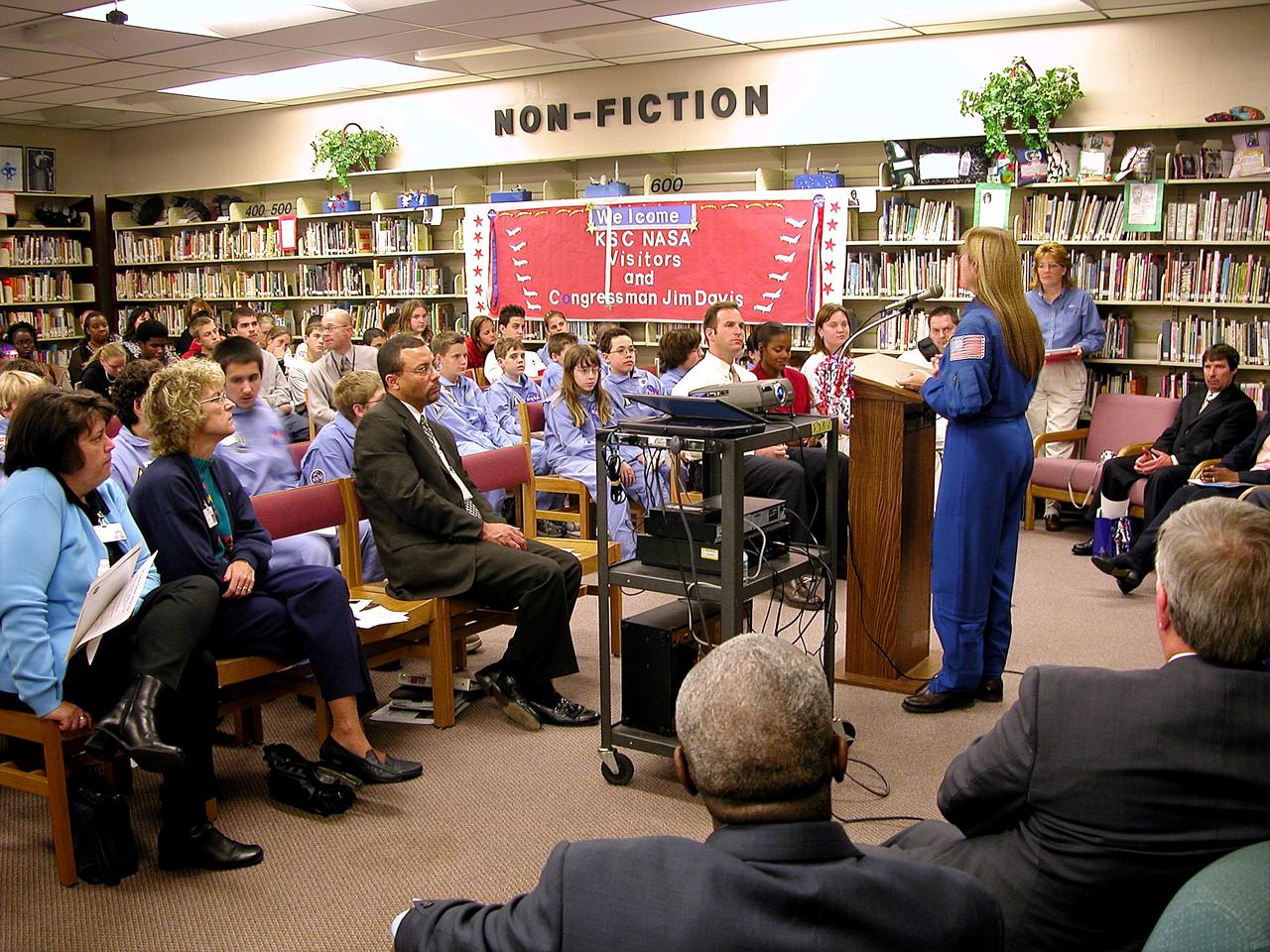
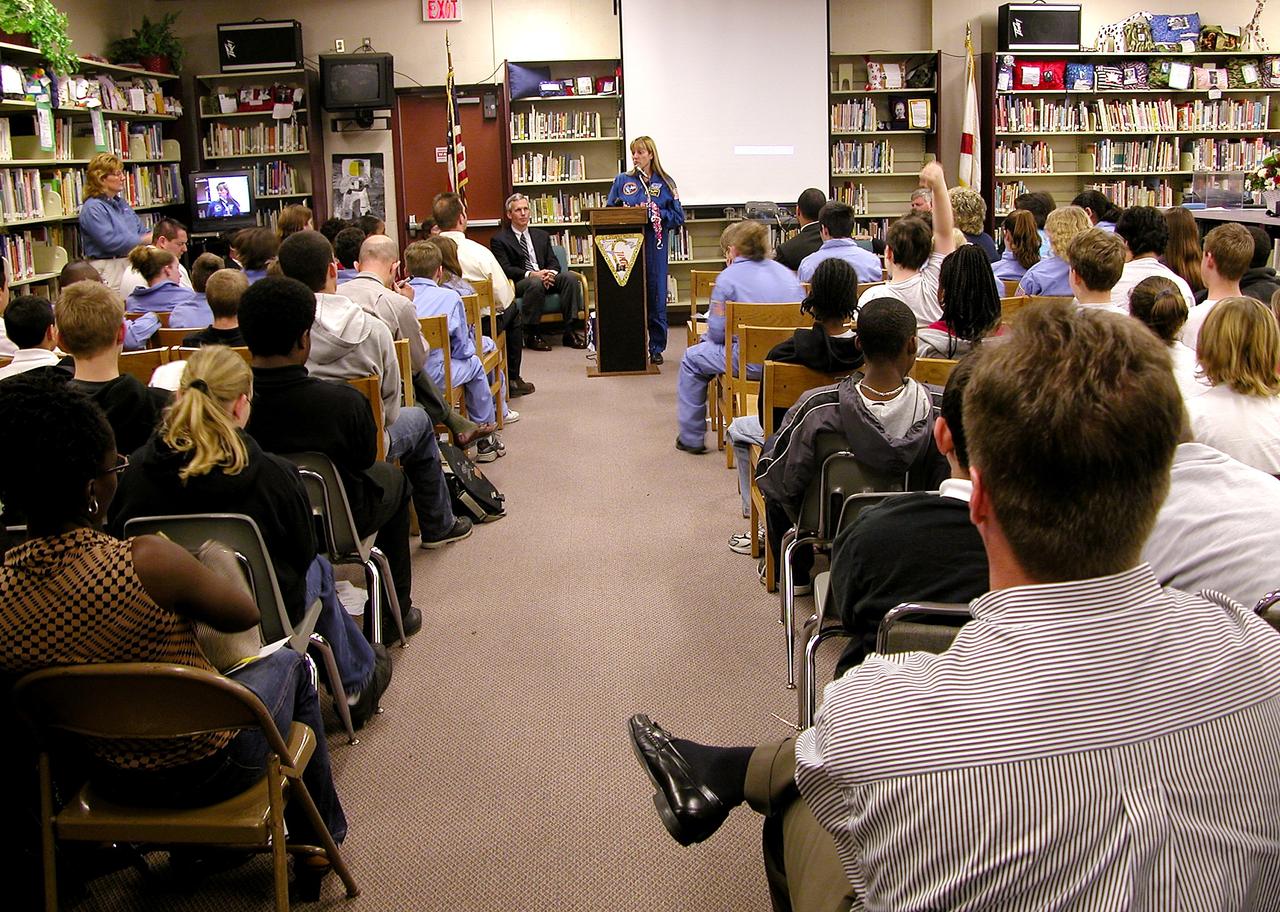
KENNEDY SPACE CENTER, FLA. - Astronaut Kay Hire talks to students in Garland V. Stewart Magnet Middle School, a NASA Explorer School (NES) in Tampa, Fla.  She joined Center Director Jim Kennedy in sharing the agency’s new vision for space exploration with the next generation of explorers. Kennedy is talking with students about our destiny as explorers, NASA’s stepping stone approach to exploring Earth, the Moon, Mars and beyond, how space impacts our lives, and how people and machines rely on each other in space.
KENNEDY SPACE CENTER, FLA. - Astronaut Kay Hire talks to students in Garland V. Stewart Magnet Middle School, a NASA Explorer School (NES) in Tampa, Fla. She joined Center Director Jim Kennedy in sharing the agency’s new vision for space exploration with the next generation of explorers. Kennedy is talking with students about our destiny as explorers, NASA’s stepping stone approach to exploring Earth, the Moon, Mars and beyond, how space impacts our lives, and how people and machines rely on each other in space.
KENNEDY SPACE CENTER, FLA. - Astronaut Kay Hire talks to students in Garland V. Stewart Magnet Middle School, a NASA Explorer School (NES) in Tampa, Fla.  She joined Center Director Jim Kennedy in sharing the agency’s new vision for space exploration with the next generation of explorers. Kennedy is talking with students about our destiny as explorers, NASA’s stepping stone approach to exploring Earth, the Moon, Mars and beyond, how space impacts our lives, and how people and machines rely on each other in space.
KENNEDY SPACE CENTER, FLA. - Astronaut Kay Hire talks to students in Garland V. Stewart Magnet Middle School, a NASA Explorer School (NES) in Tampa, Fla. She joined Center Director Jim Kennedy in sharing the agency’s new vision for space exploration with the next generation of explorers. Kennedy is talking with students about our destiny as explorers, NASA’s stepping stone approach to exploring Earth, the Moon, Mars and beyond, how space impacts our lives, and how people and machines rely on each other in space.
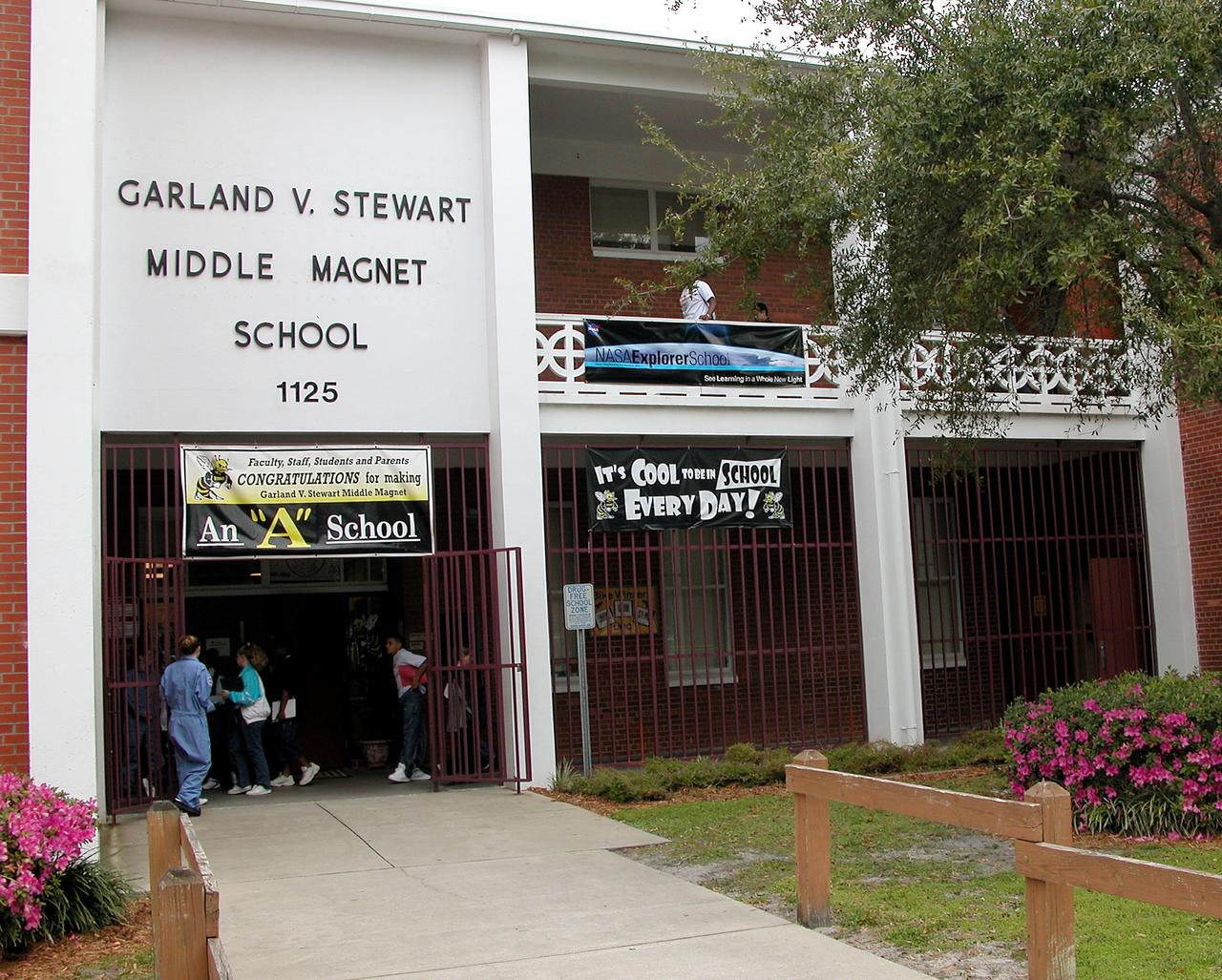
KENNEDY SPACE CENTER, FLA. - Garland V. Stewart Magnet Middle School, a NASA Explorer School (NES) in Tampa, Fla., is the site where Center Director Jim Kennedy and astronaut Kay Hire shared the agency’s new vision for space exploration with the next generation of explorers. Kennedy talked with students about our destiny as explorers, NASA’s stepping stone approach to exploring Earth, the Moon, Mars and beyond, how space impacts our lives, and how people and machines rely on each other in space.
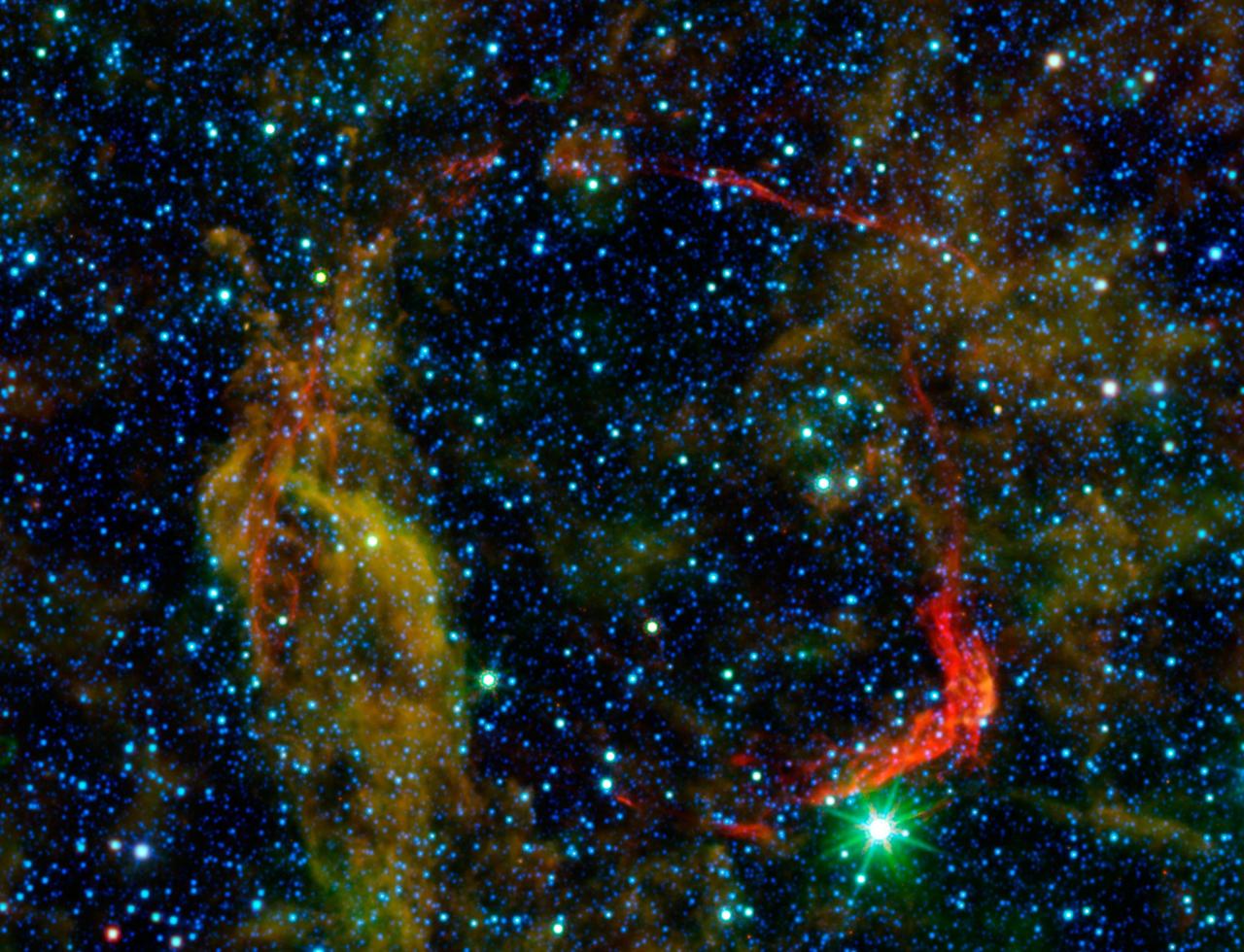
Infrared images from NASA Spitzer Space Telescope and Wide-field Infrared Survey Explorer are combined in this image of RCW 86, the dusty remains of the oldest documented example of an exploding star, or supernova.
All That Remains of Exploded Star
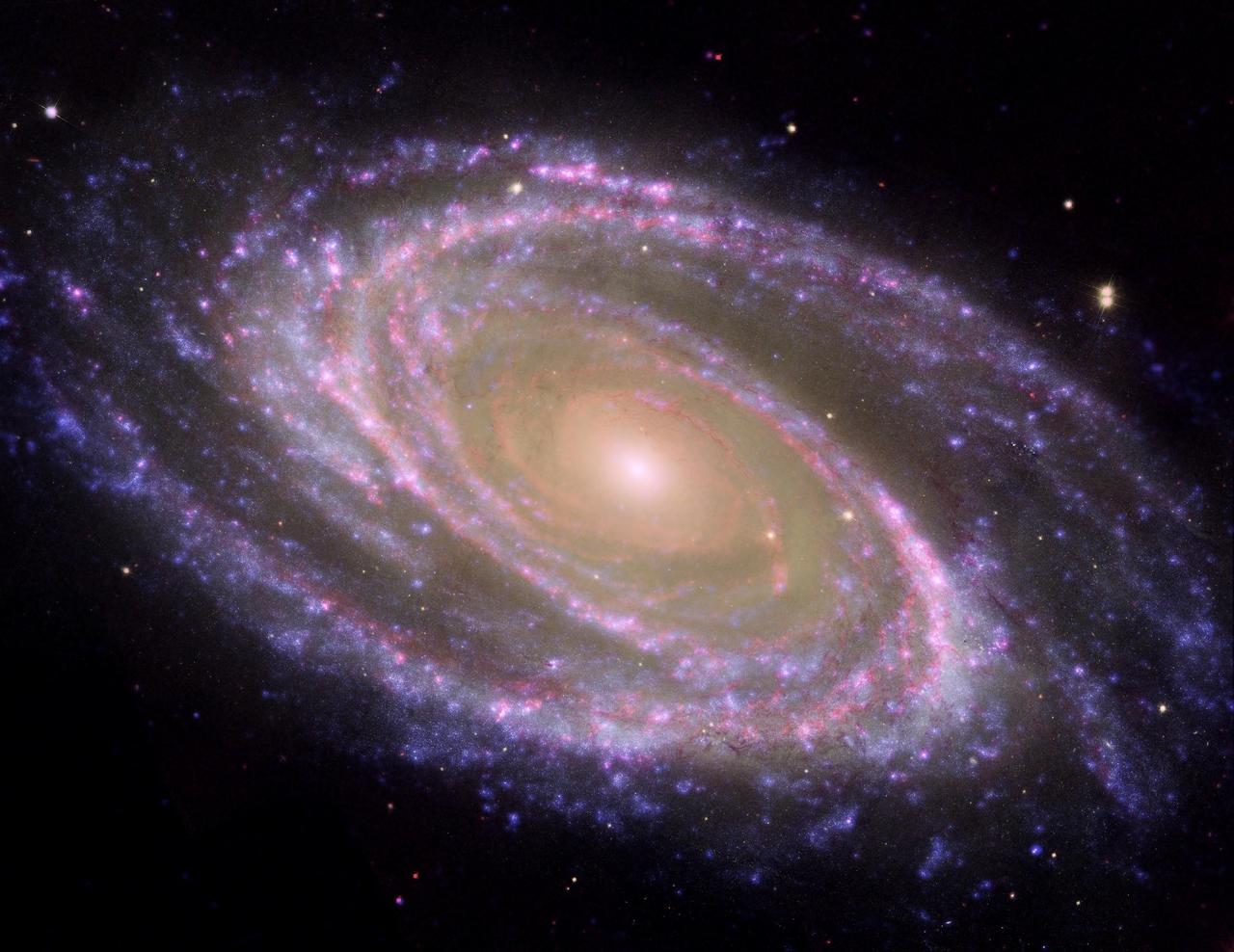
The perfectly picturesque spiral galaxy known as Messier 81, or M81, looks sharp in this new composite from NASA Spitzer and Hubble space telescopes and NASA Galaxy Evolution Explorer.
M81 Galaxy is Pretty in Pink
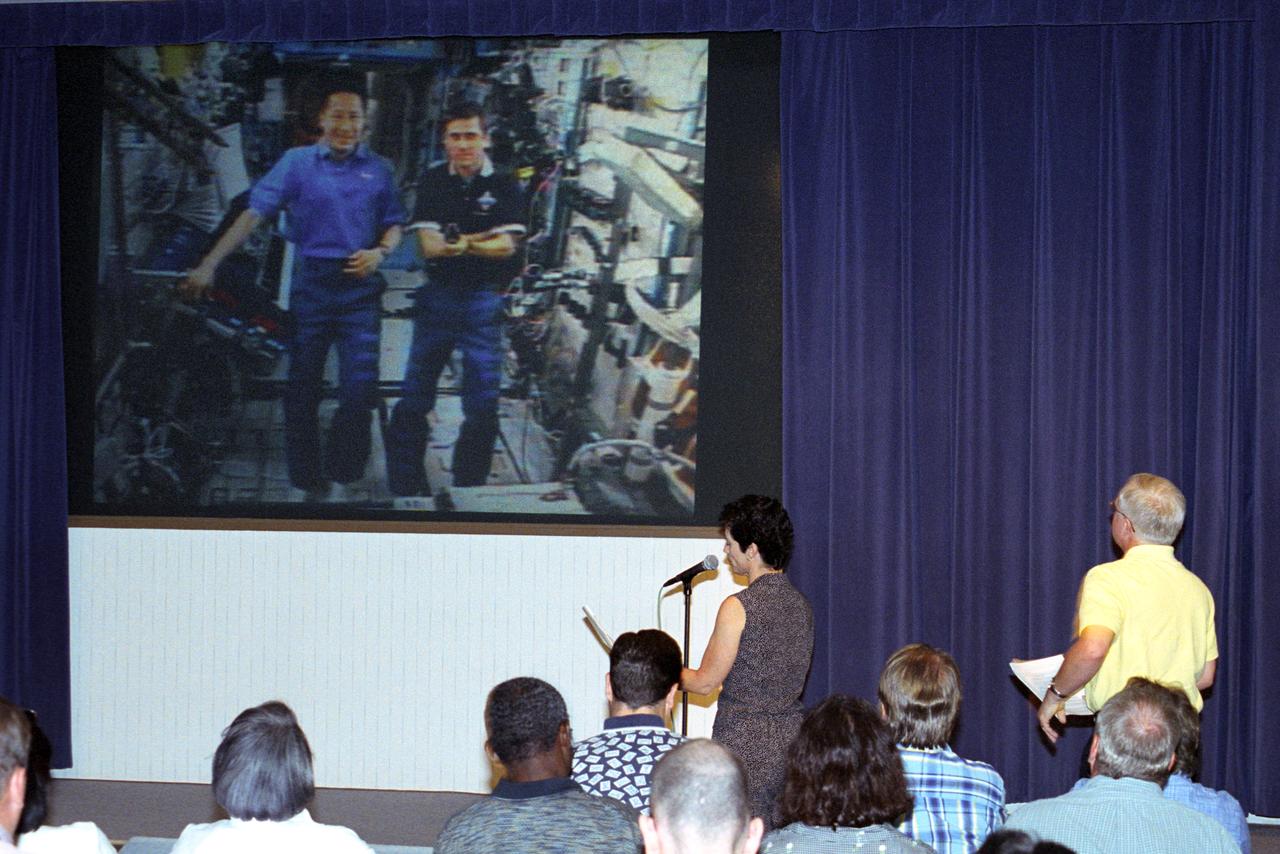
Teacher Kim Cantrell from the Edwards Air Force Base Middle School, Edwards, Calif., participating in a live uplink at NASA Dryden as part of NASA's Explorer Schools program, asks the crew of the International Space Station a question.
Teacher Kim Cantrell from the Edwards Air Force Base Middle School, Edwards, Calif., participating in a live uplink at NASA Dryden as part of NASA's Explorer Schools program, asks the crew of the International Space Station a question
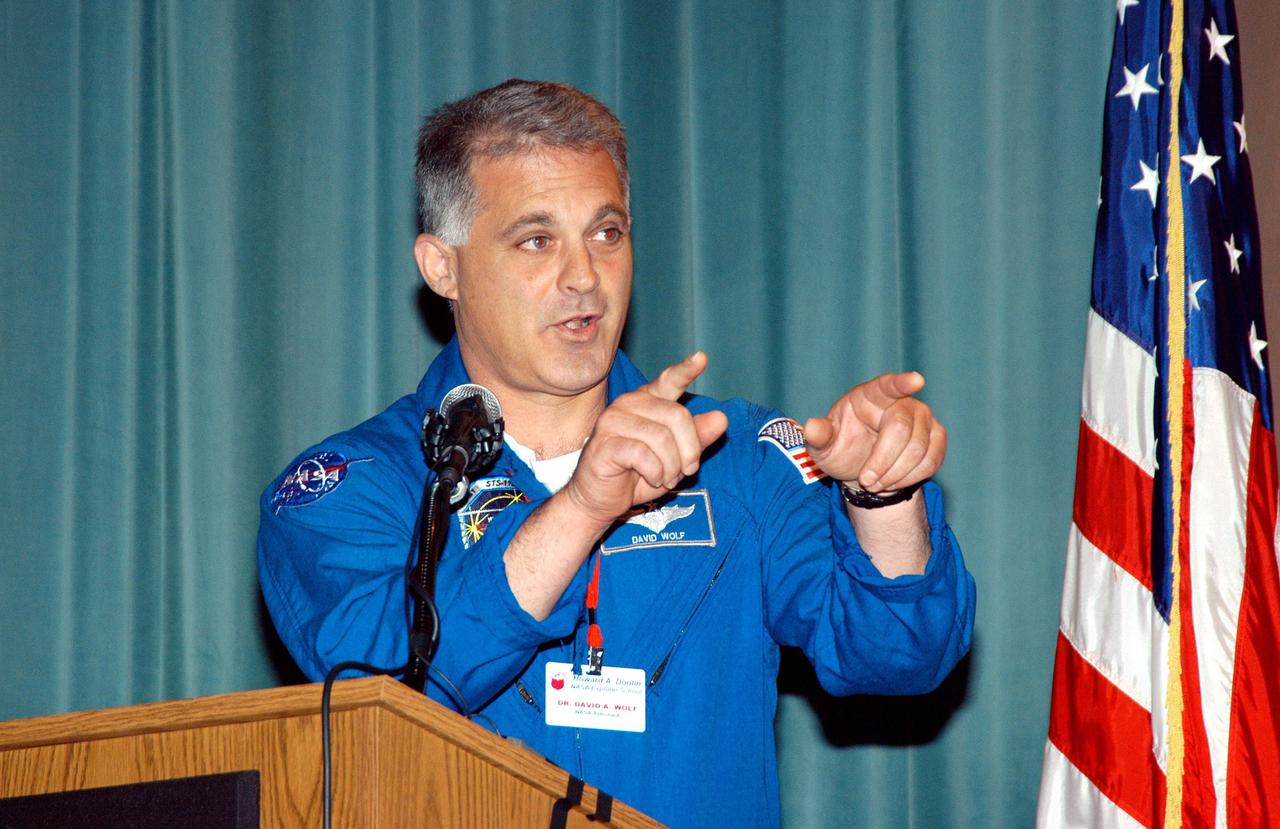
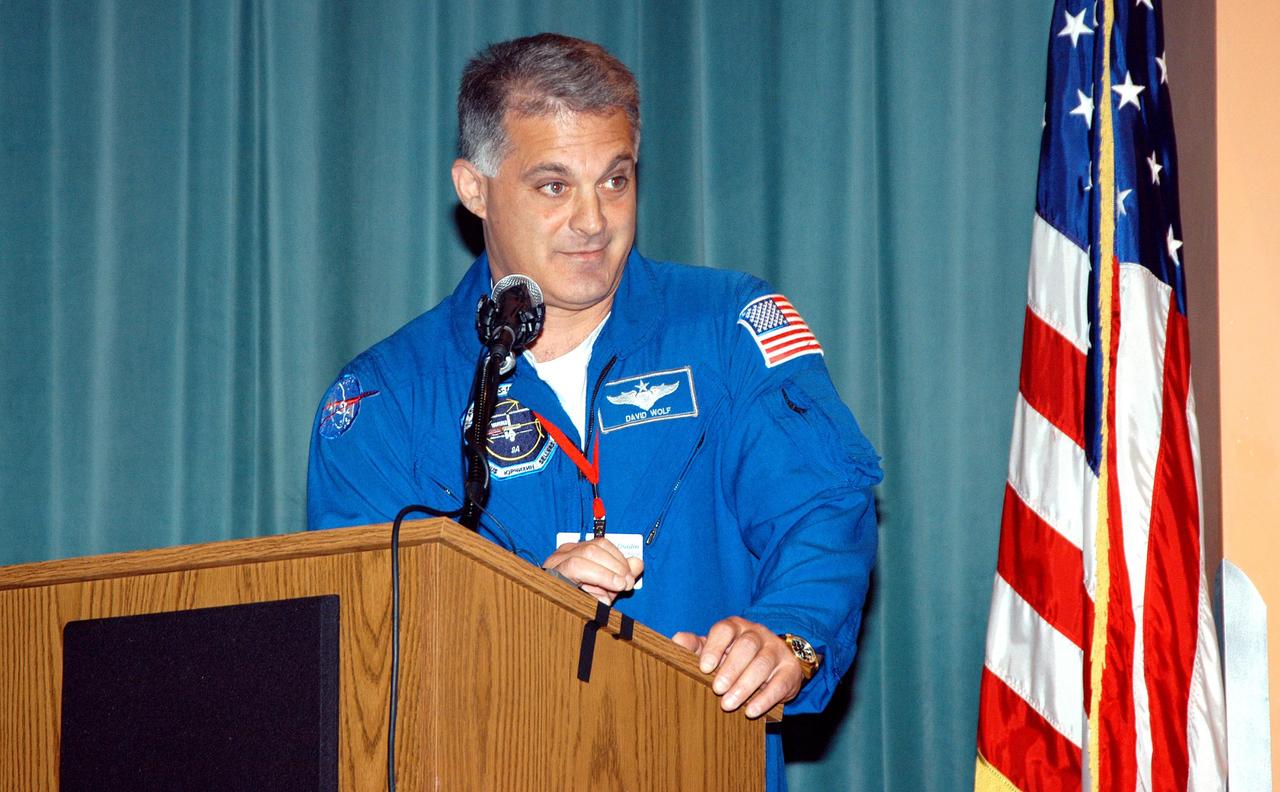
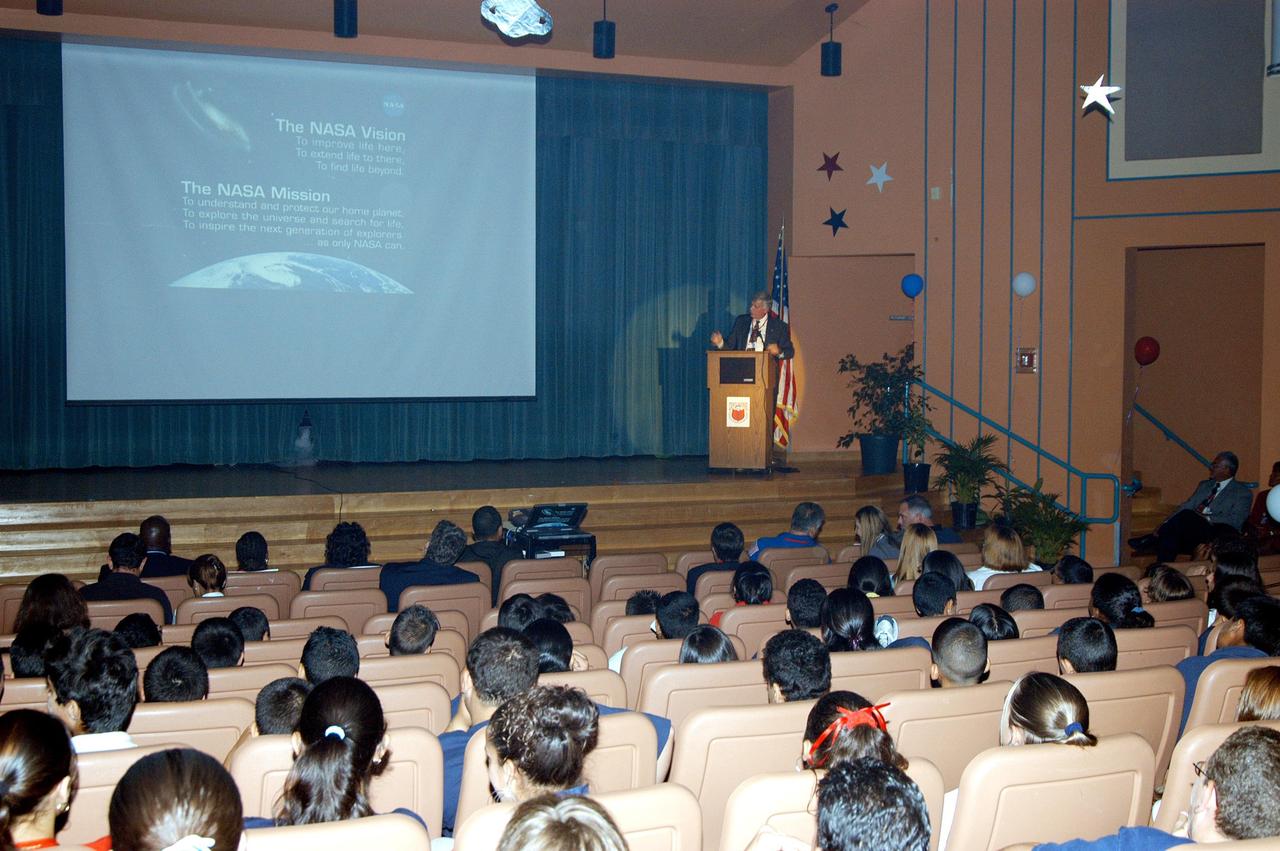
KENNEDY SPACE CENTER, FLA. -- Astronaut David Wolf addresses students and faculty of Howard A. Doolin Middle School, Miami, Fla., about his experiences in space.  Doolin Middle School is one of 100 to take part in the NASA Explorer Schools (NES) program.  Wolf joins Center Director Jim Kennedy on his visit to share America’s new vision for space exploration with the next generation of explorers.  He  is talking with students in Florida and Georgia Explorer Schools about our destiny as explorers, NASA’s stepping stone approach to exploring Earth, the Moon, Mars and beyond, how space impacts our lives, and how people and machines rely on each other in space.
KSC-04pd1159
KENNEDY SPACE CENTER, FLA. -- Astronaut David Wolf addresses students and faculty of Howard A. Doolin Middle School, Miami, Fla., about his experiences in space.  Doolin Middle School is one of 100 to take part in the NASA Explorer Schools (NES) program.  Wolf joins Center Director Jim Kennedy on his visit to share America’s new vision for space exploration with the next generation of explorers.  He  is talking with students in Florida and Georgia Explorer Schools about our destiny as explorers, NASA’s stepping stone approach to exploring Earth, the Moon, Mars and beyond, how space impacts our lives, and how people and machines rely on each other in space.
KSC-04pd1158
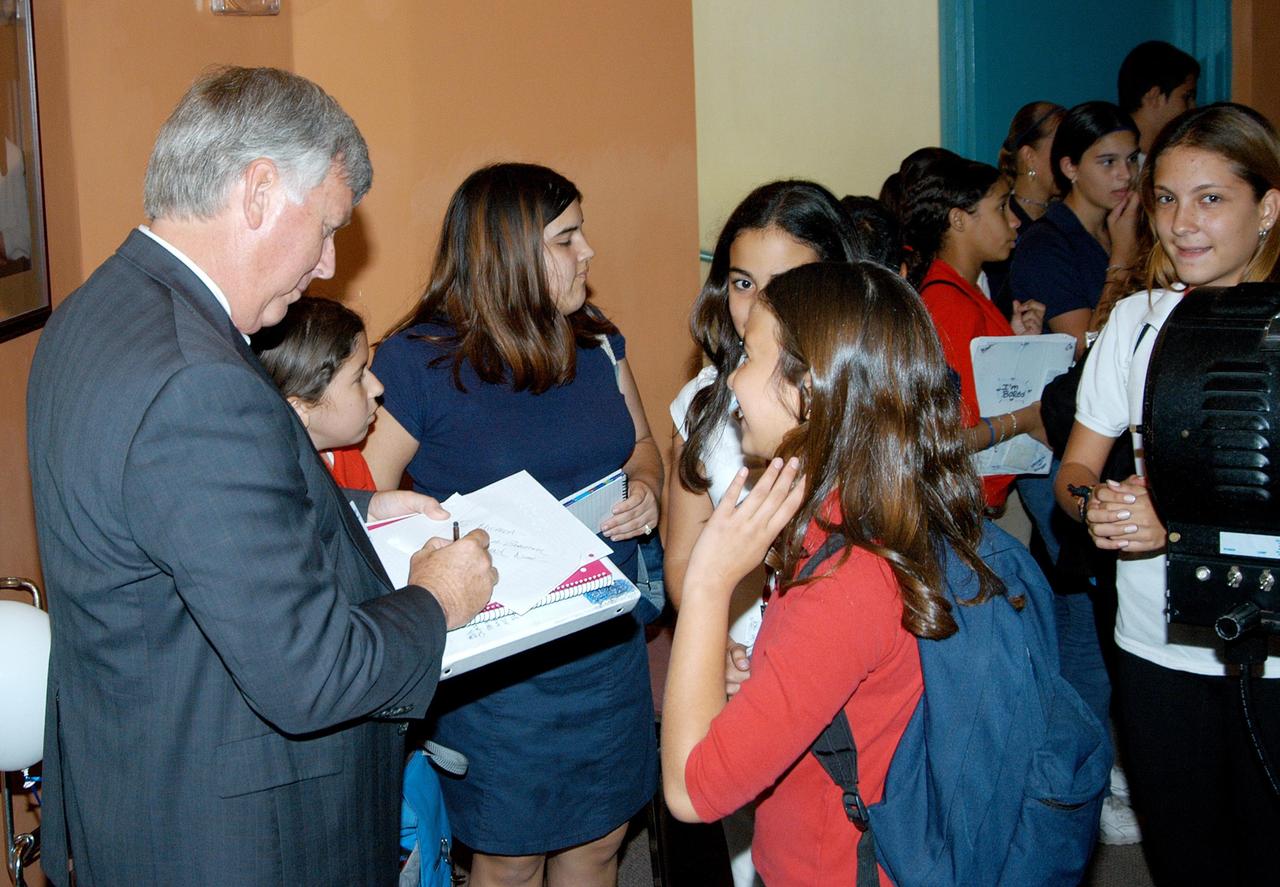
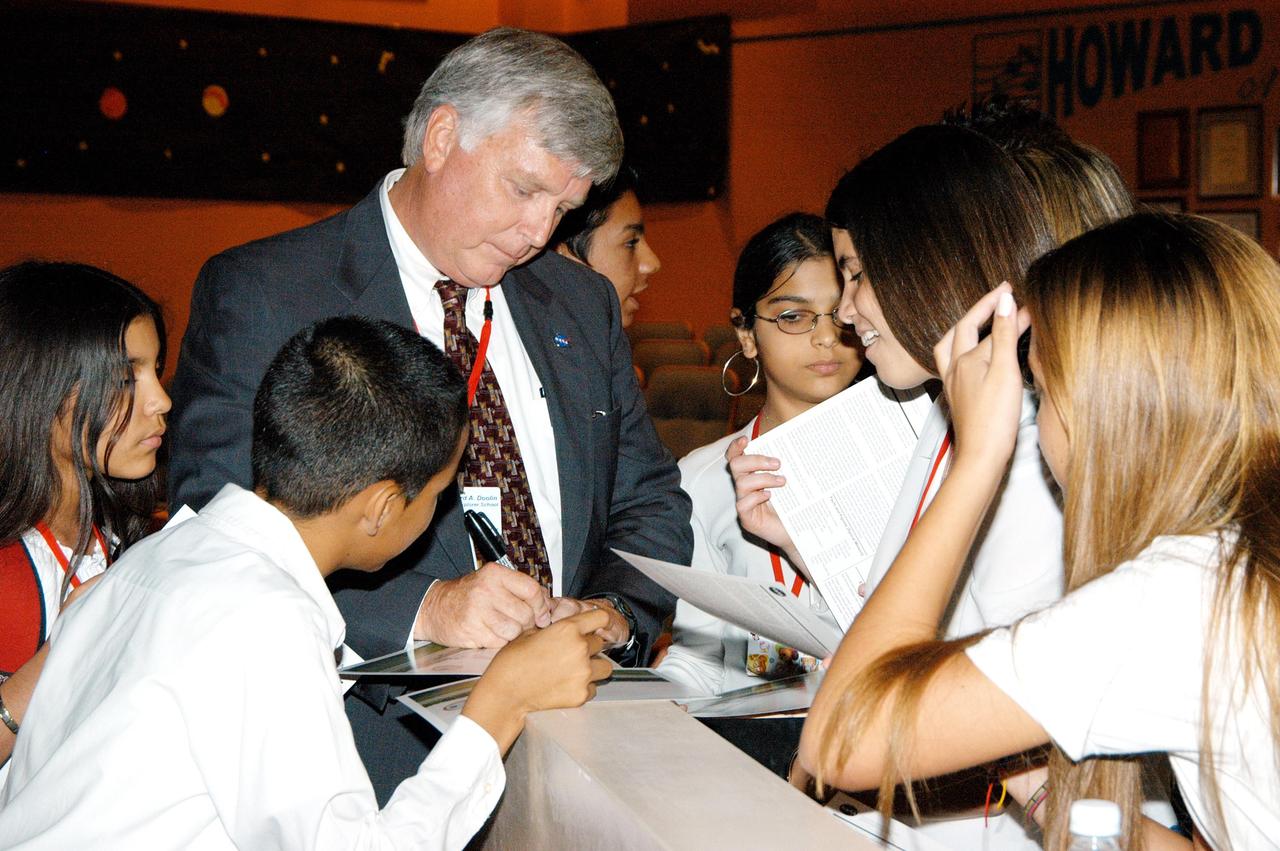
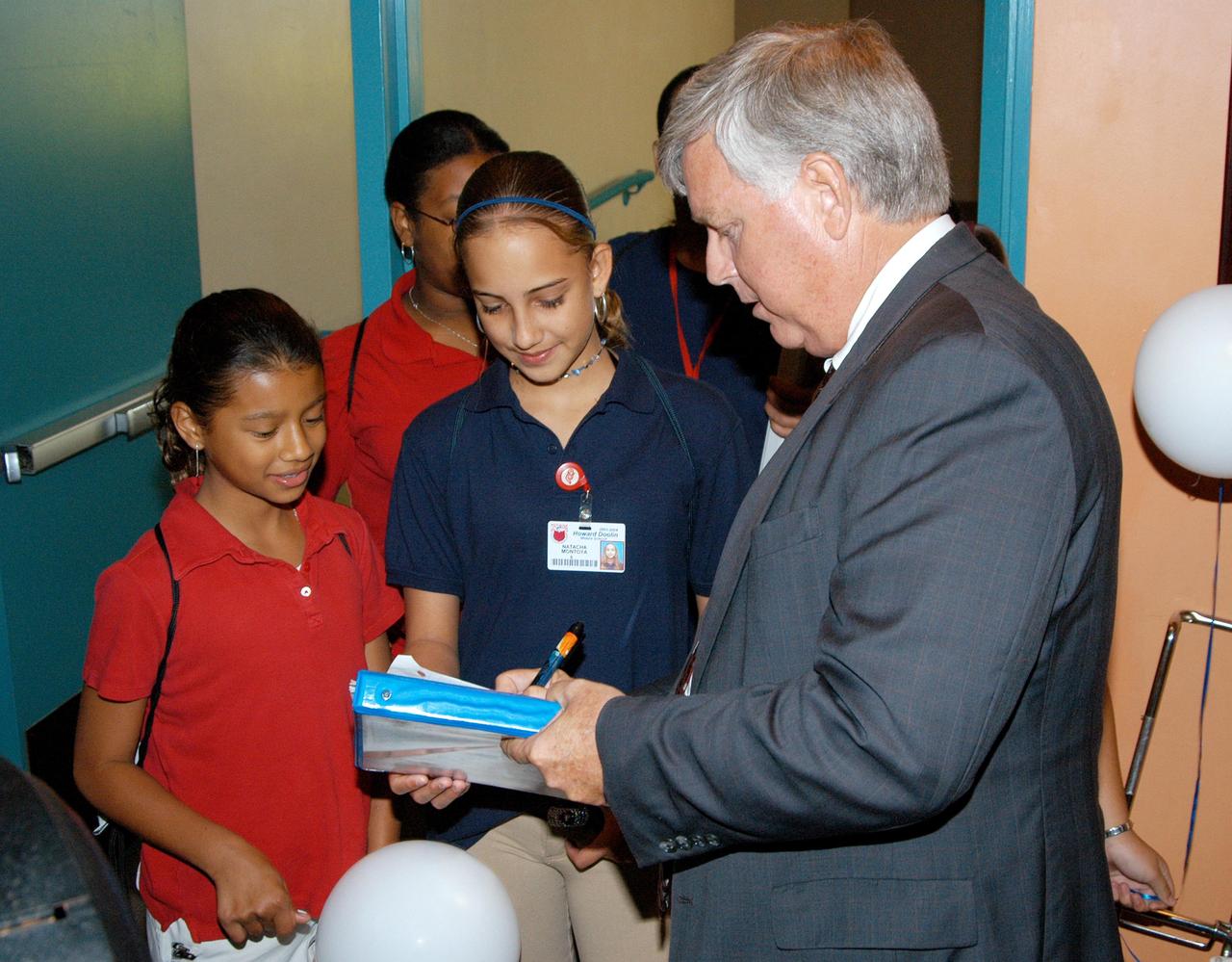
KENNEDY SPACE CENTER, FLA. -- After his presentation, Center Director Jim Kennedy signs a memento for a student at Howard A. Doolin Middle School, Miami, Fla.  The school is one of 100 taking part in the NASA Explorer Schools (NES) program.  Kennedy visited the school to share America’s new vision for space exploration with the next generation of explorers.  He is talking with students in Florida and Georgia Explorer Schools about our destiny as explorers, NASA’s stepping stone approach to exploring Earth, the Moon, Mars and beyond, how space impacts our lives, and how people and machines rely on each other in space.
KSC-04pd1171
KENNEDY SPACE CENTER, FLA. -- After his presentation, students at Howard A. Doolin Middle School, Miami, Fla., gather around Center Director Jim Kennedy as he signs a memento for a student.  The school is one of 100 taking part in the NASA Explorer Schools (NES) program.  Kennedy visited the school to share America’s new vision for space exploration with the next generation of explorers.  He is talking with students in Florida and Georgia Explorer Schools about our destiny as explorers, NASA’s stepping stone approach to exploring Earth, the Moon, Mars and beyond, how space impacts our lives, and how people and machines rely on each other in space.
KSC-04pd1172
KENNEDY SPACE CENTER, FLA. -- Center Director Jim Kennedy (center) greets a student after his presentation at Howard A. Doolin Middle School, Miami, Fla.  The school is one of 100 taking part in the NASA Explorer Schools (NES) program.  The purpose of Kennedy’s visit is to share America’s new vision for space exploration with the next generation of explorers.  He  is talking with students in Florida and Georgia Explorer Schools about our destiny as explorers, NASA’s stepping stone approach to exploring Earth, the Moon, Mars and beyond, how space impacts our lives, and how people and machines rely on each other in space.
KSC-04pd1166
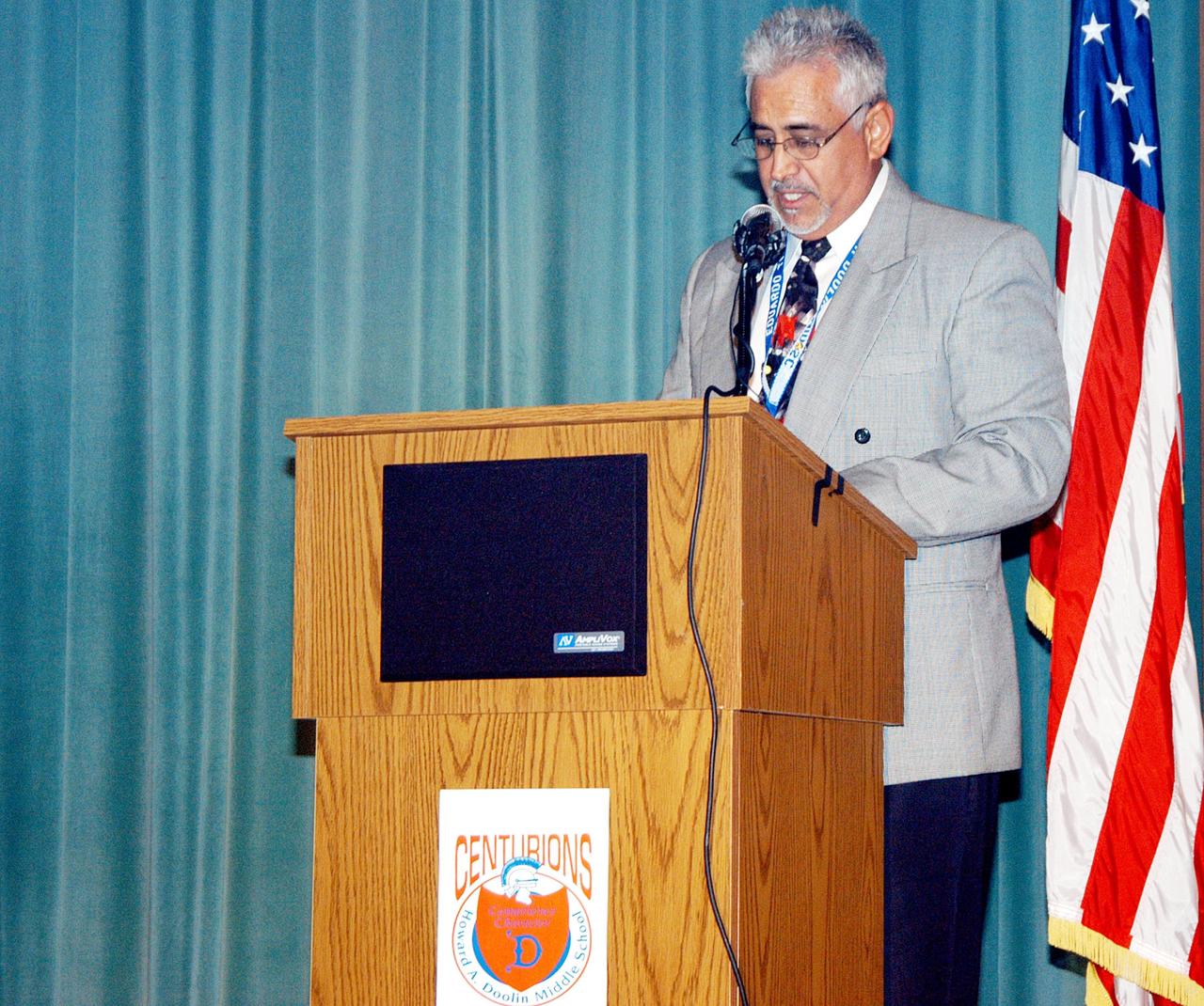
KENNEDY SPACE CENTER, FLA. -- Center Director Jim Kennedy (left) is thanked by Principal Eduardo Tillet for his presentation to the faculty and students of Howard A. Doolin Middle School, Miami, Fla.  The school is one of 100 taking part in the NASA Explorer Schools (NES) program.  The purpose of Kennedy’s visit is to share America’s new vision for space exploration with the next generation of explorers.  He  is talking with students in Florida and Georgia Explorer Schools about our destiny as explorers, NASA’s stepping stone approach to exploring Earth, the Moon, Mars and beyond, how space impacts our lives, and how people and machines rely on each other in space.
KSC-04pd1165
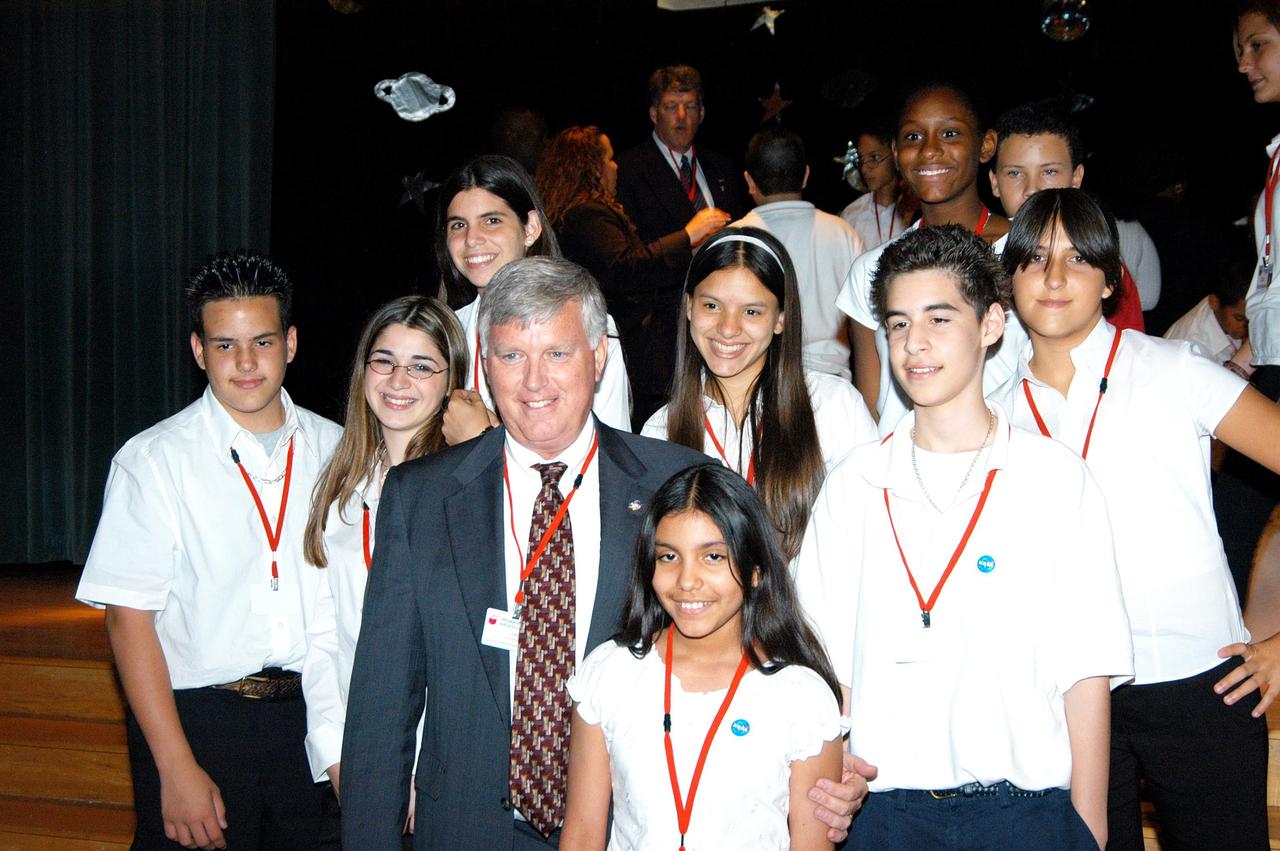
KENNEDY SPACE CENTER, FLA. -- Center Director Jim Kennedy poses for a photo with students at Howard A. Doolin Middle School, Miami, Fla.  The school is one of 100 taking part in the NASA Explorer Schools (NES) program.  The purpose of Kennedy’s visit is to share America’s new vision for space exploration with the next generation of explorers.  He is talking with students in Florida and Georgia Explorer Schools about our destiny as explorers, NASA’s stepping stone approach to exploring Earth, the Moon, Mars and beyond, how space impacts our lives, and how people and machines rely on each other in space.
KSC-04pd1168
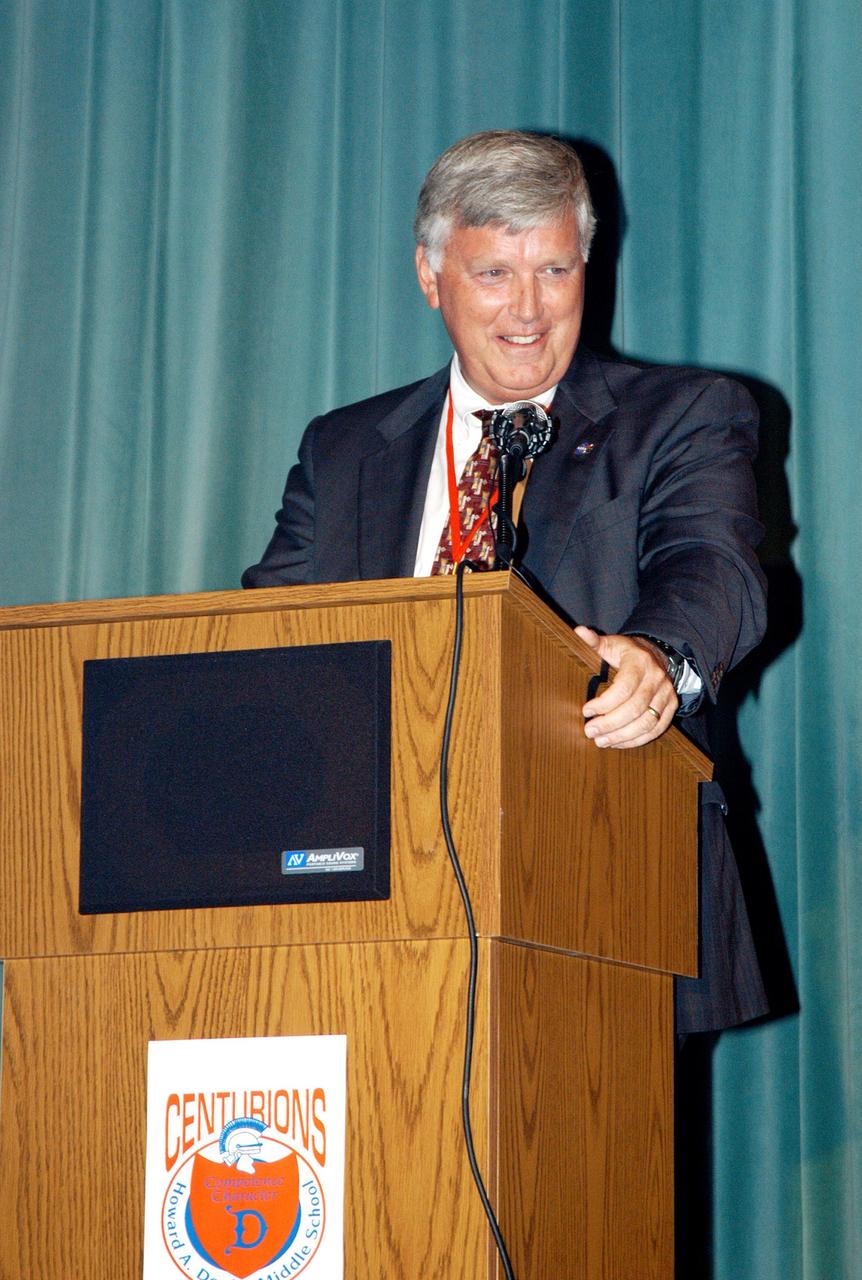
KENNEDY SPACE CENTER, FLA. -- Center Director Jim Kennedy addresses students and faculty of Howard A. Doolin Middle School, Miami, Fla.  Doolin Middle School is one of 100 to take part in the NASA Explorer Schools (NES) program.  Kennedy is visiting Explorer Schools in Florida and Georgia to share America’s new vision for space exploration with the next generation of explorers.  He  is talking with students, about our destiny as explorers, NASA’s stepping stone approach to exploring Earth, the Moon, Mars and beyond, how space impacts our lives, and how people and machines rely on each other in space.
KSC-04pd1157
KENNEDY SPACE CENTER, FLA. -- After his presentation, Center Director Jim Kennedy signs a memento for a student at Howard A. Doolin Middle School, Miami, Fla.  The school is one of 100 taking part in the NASA Explorer Schools (NES) program.  Kennedy visited the school to share America’s new vision for space exploration with the next generation of explorers.  He is talking with students in Florida and Georgia Explorer Schools about our destiny as explorers, NASA’s stepping stone approach to exploring Earth, the Moon, Mars and beyond, how space impacts our lives, and how people and machines rely on each other in space.
KSC-04pd1169
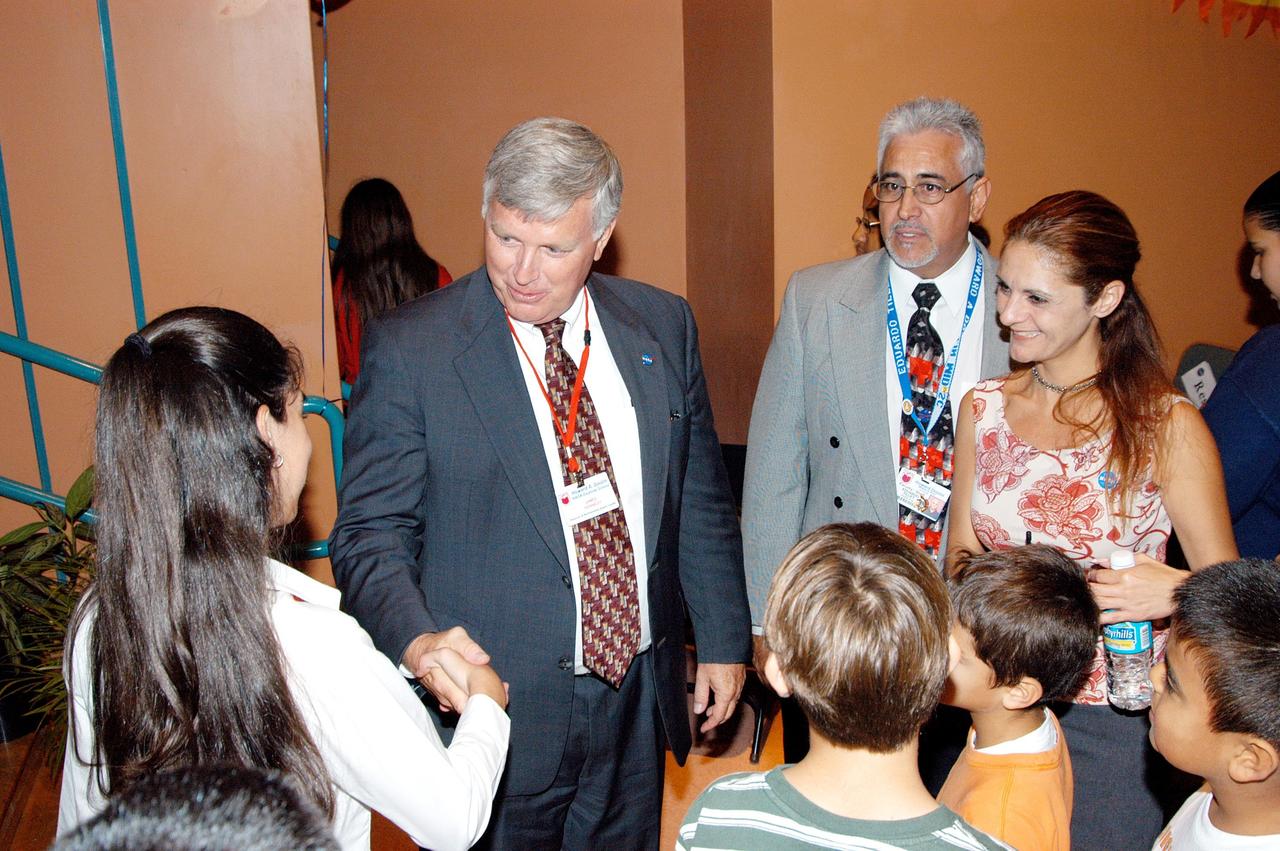
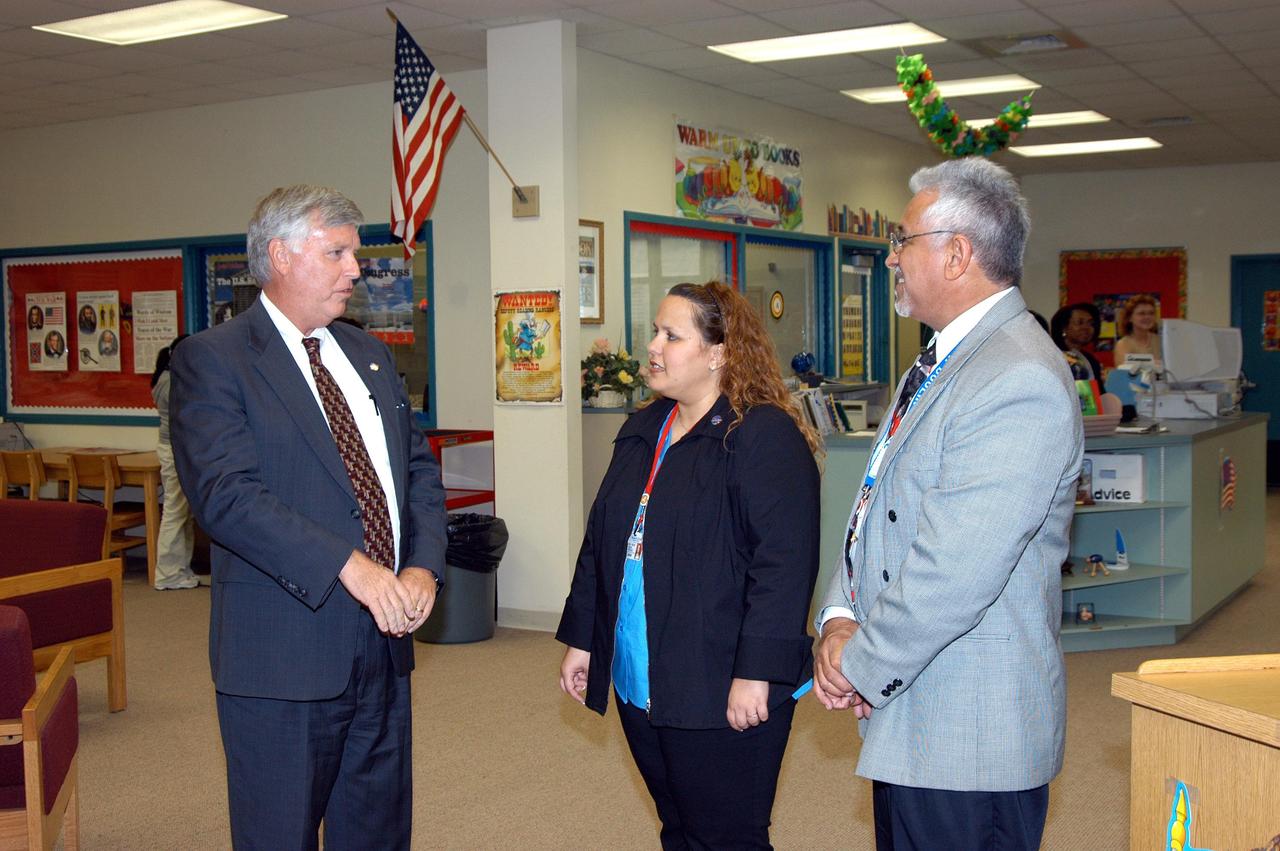
KENNEDY SPACE CENTER, FLA. -- Center Director Jim Kennedy (left) talks to Eduardo Tillet (right), principal of Howard A. Doolin Middle School, Miami, Fla., on his visit to share America’s new vision for space exploration with the next generation of explorers. Kennedy, joined by astronaut David Wolf, is talking with students about our destiny as explorers, NASA’s stepping stone approach to exploring Earth, the Moon, Mars and beyond, how space impacts our lives, and how people and machines rely on each other in space.
KSC-04pd1148
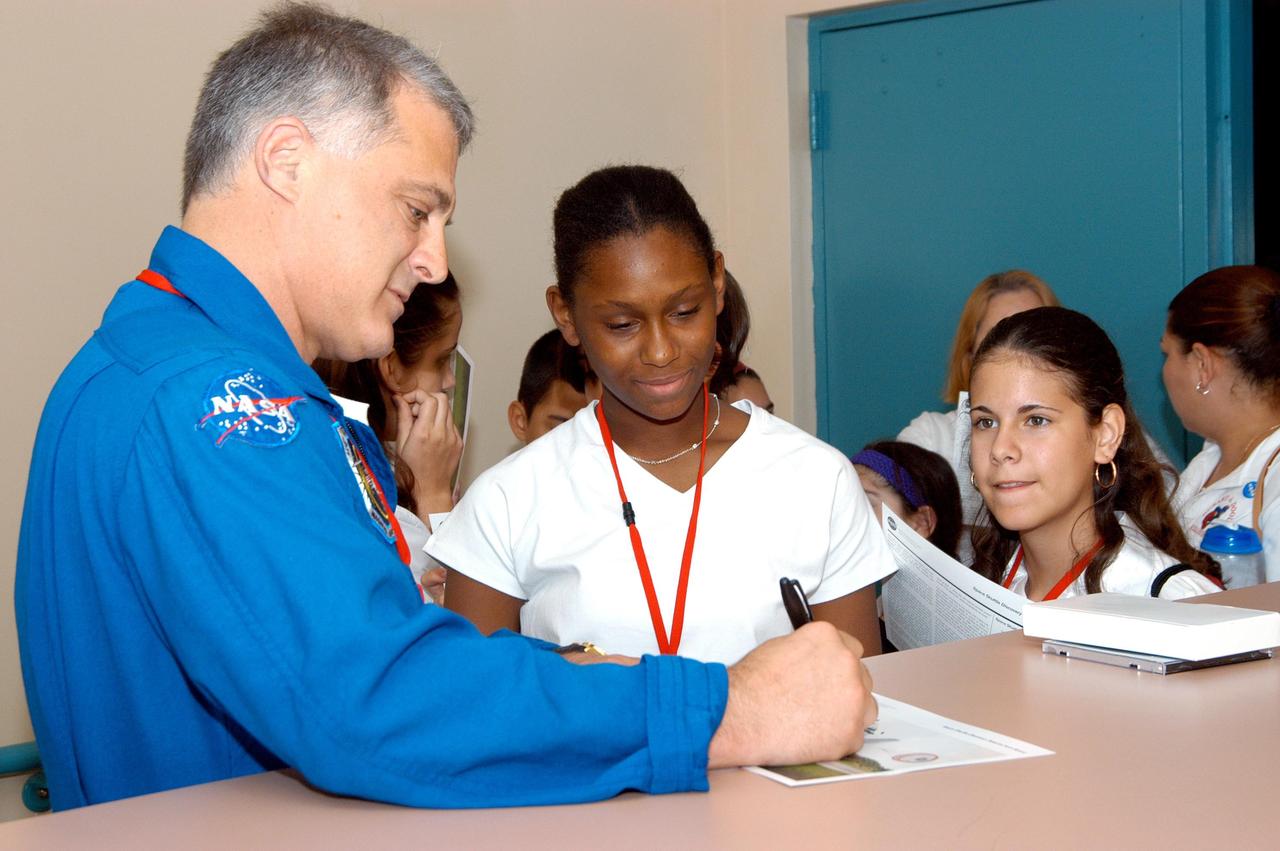
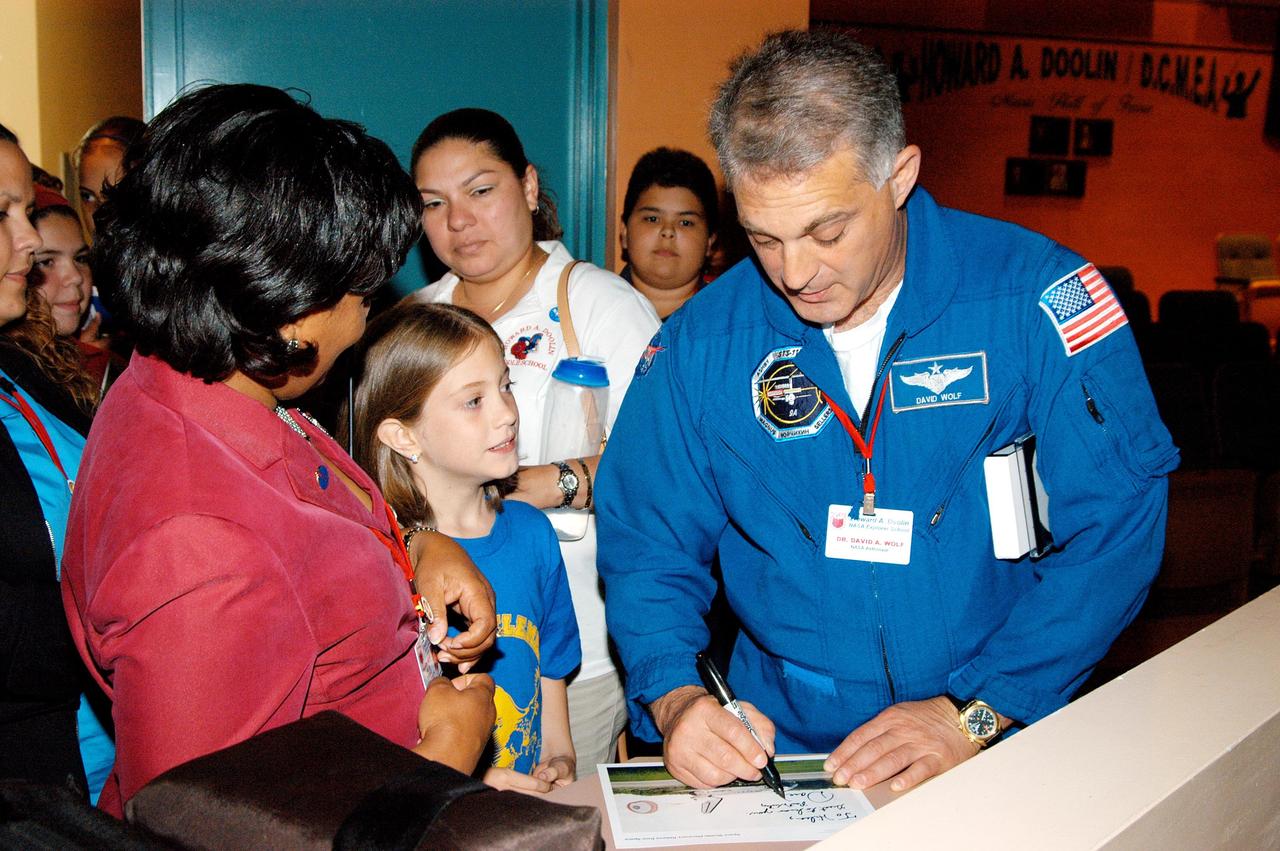
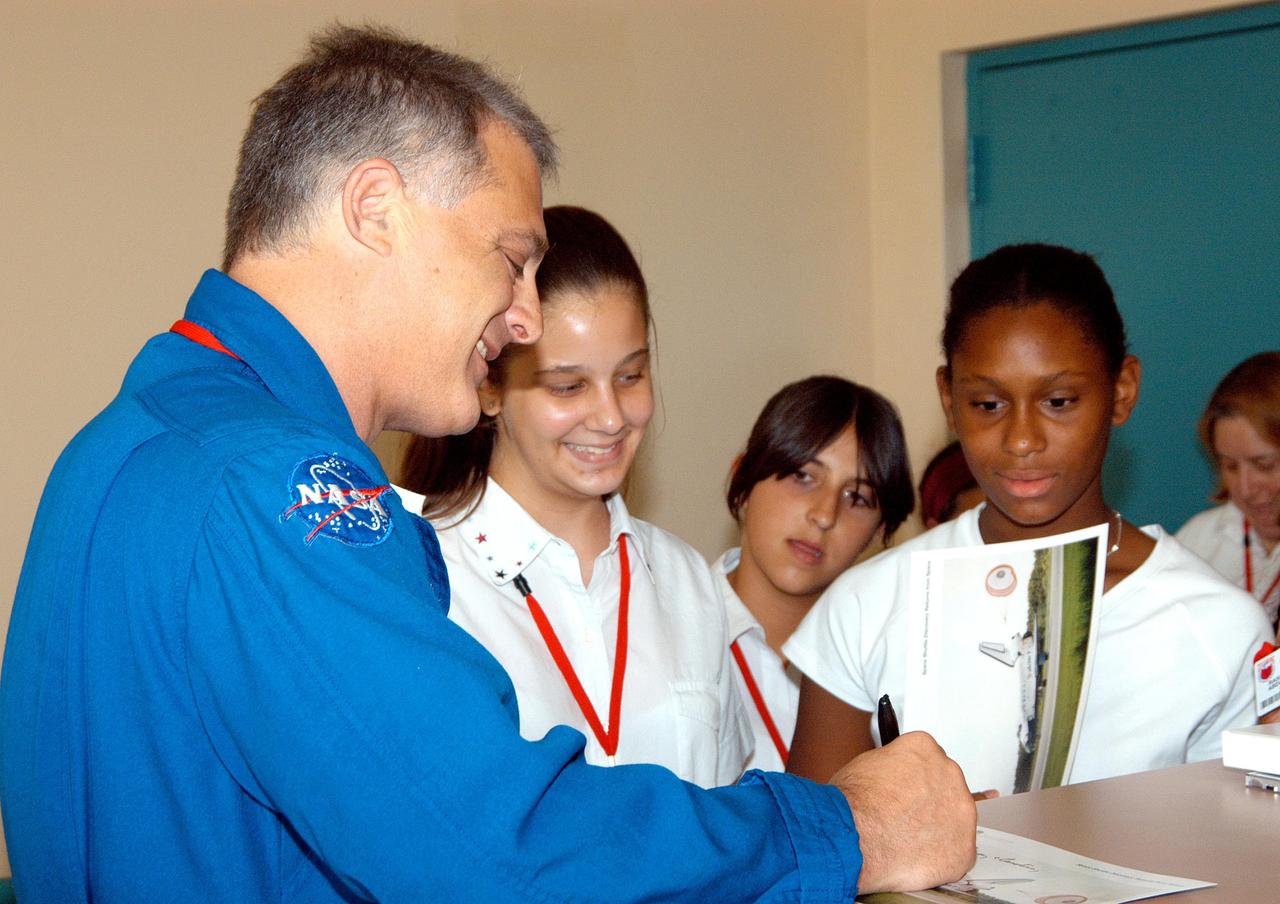
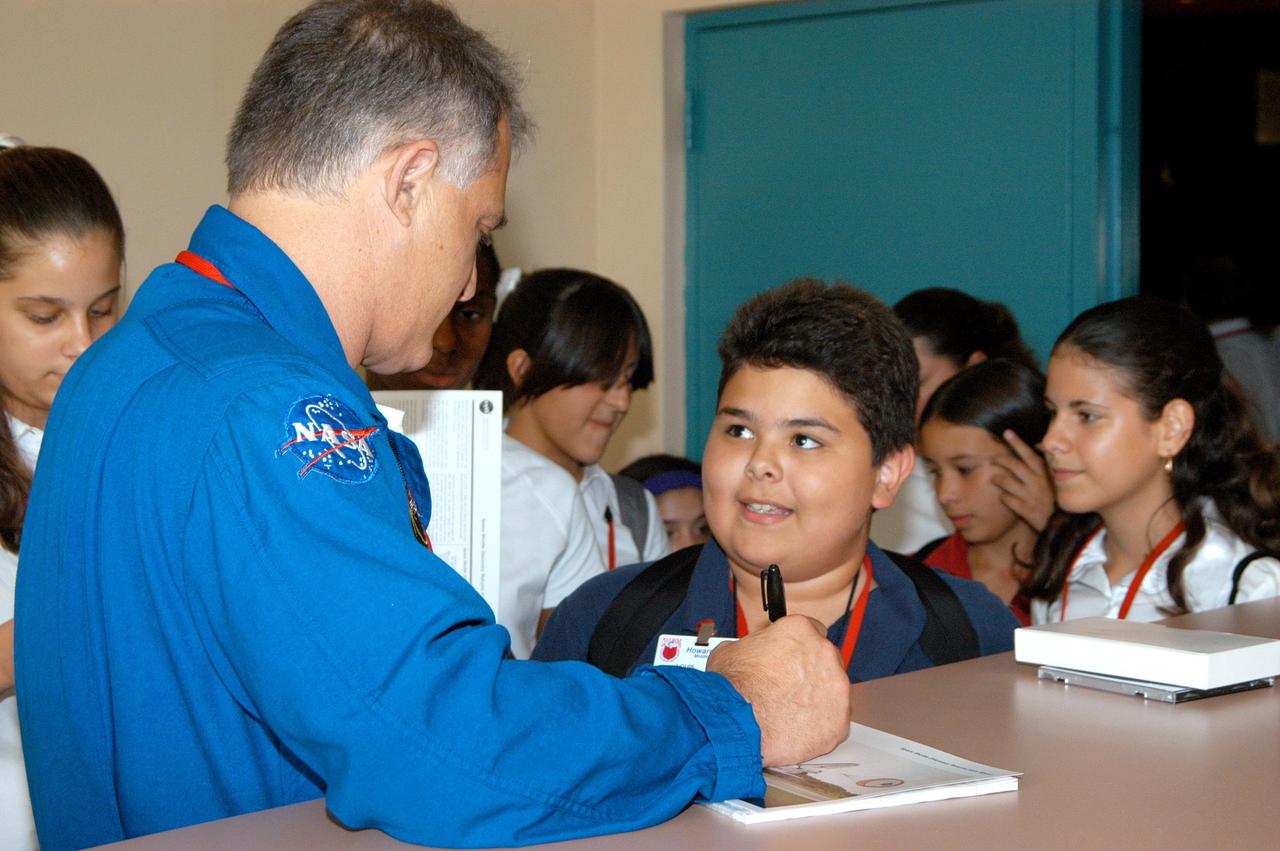
KENNEDY SPACE CENTER, FLA. -- After his presentation at Howard A. Doolin Middle School, Miami, Fla., astronaut David Wolf signs a memento for a student.  The school is one of 100 taking part in the NASA Explorer Schools (NES) program. Center Director Jim Kennedy and Wolf visited the school to share America’s new vision for space exploration with the next generation of explorers. They talked with students about our destiny as explorers, NASA’s stepping stone approach to exploring Earth, the Moon, Mars and beyond, how space impacts our lives, and how people and machines rely on each other in space.
KSC-04pd1174
KENNEDY SPACE CENTER, FLA. -- Eduardo Tillet, principal of Howard A. Doolin Middle School, Miami, Fla., welcomes Center Director Jim Kennedy, plus NASA and KSC representatives, to the school.  Doolin Middle School is one of 100 to take part in the NASA Explorer Schools (NES) program.  Kennedy is talking with students, about our destiny as explorers, NASA’s stepping stone approach to exploring Earth, the Moon, Mars and beyond, how space impacts our lives, and how people and machines rely on each other in space.  He is visiting NES schools in Florida and Georgia to share America’s new vision for space exploration with the next generation of explorers.
KSC-04pd1154
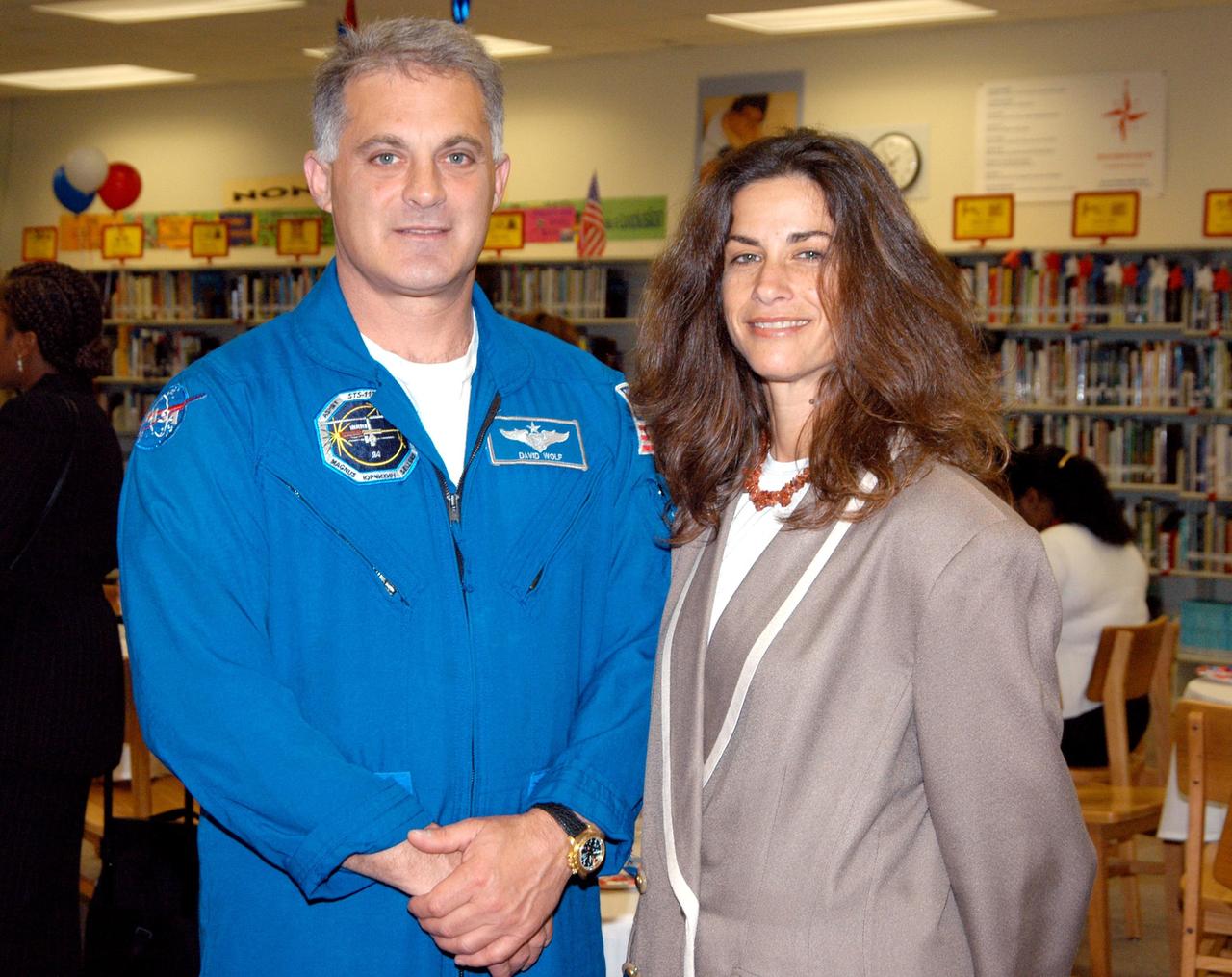
KENNEDY SPACE CENTER, FLA. -- During lunch in the library at Howard A. Doolin Middle School, Miami, Fla., astronaut David Wolf pauses for a photo with a member of the school board.  Doolin Middle School is one of 100 to take part in the NASA Explorer Schools program.  Wolf joined Center Director Jim Kennedy to share America’s new vision for space exploration with the next generation of explorers. Kennedy is talking with students about our destiny as explorers, NASA’s stepping stone approach to exploring Earth, the Moon, Mars and beyond, how space impacts our lives, and how people and machines rely on each other in space.
KSC-04pd1149
KENNEDY SPACE CENTER, FLA. -- After his presentation at Howard A. Doolin Middle School, Miami, Fla., astronaut David Wolf signs a memento for a student.  The school is one of 100 taking part in the NASA Explorer Schools (NES) program. Center Director Jim Kennedy and Wolf visited the school to share America’s new vision for space exploration with the next generation of explorers. They talked with students about our destiny as explorers, NASA’s stepping stone approach to exploring Earth, the Moon, Mars and beyond, how space impacts our lives, and how people and machines rely on each other in space.
KSC-04pd1173
KENNEDY SPACE CENTER, FLA. -- After his presentation, astronaut David Wolf signs a memento for a student at Howard A. Doolin Middle School, Miami, Fla.  The school is one of 100 taking part in the NASA Explorer Schools (NES) program. Center Director Jim Kennedy and Wolf visited the school to share America’s new vision for space exploration with the next generation of explorers. They talked with students about our destiny as explorers, NASA’s stepping stone approach to exploring Earth, the Moon, Mars and beyond, how space impacts our lives, and how people and machines rely on each other in space.
KSC-04pd1170
KENNEDY SPACE CENTER, FLA. -- Center Director Jim Kennedy addresses students and faculty of Howard A. Doolin Middle School, Miami, Fla.  Doolin Middle School is one of 100 to take part in the NASA Explorer Schools (NES) program.  Kennedy is visiting NES schools in Florida and Georgia to share America’s new vision for space exploration with the next generation of explorers.  He  is talking with students, about our destiny as explorers, NASA’s stepping stone approach to exploring Earth, the Moon, Mars and beyond, how space impacts our lives, and how people and machines rely on each other in space.
KSC-04pd1155
KENNEDY SPACE CENTER, FLA. -- After his presentation at Howard A. Doolin Middle School, Miami, Fla., astronaut David Wolf signs a memento for a student.  The school is one of 100 taking part in the NASA Explorer Schools (NES) program. Center Director Jim Kennedy and Wolf visited the school to share America’s new vision for space exploration with the next generation of explorers. They talked with students about our destiny as explorers, NASA’s stepping stone approach to exploring Earth, the Moon, Mars and beyond, how space impacts our lives, and how people and machines rely on each other in space.
KSC-04pd1175
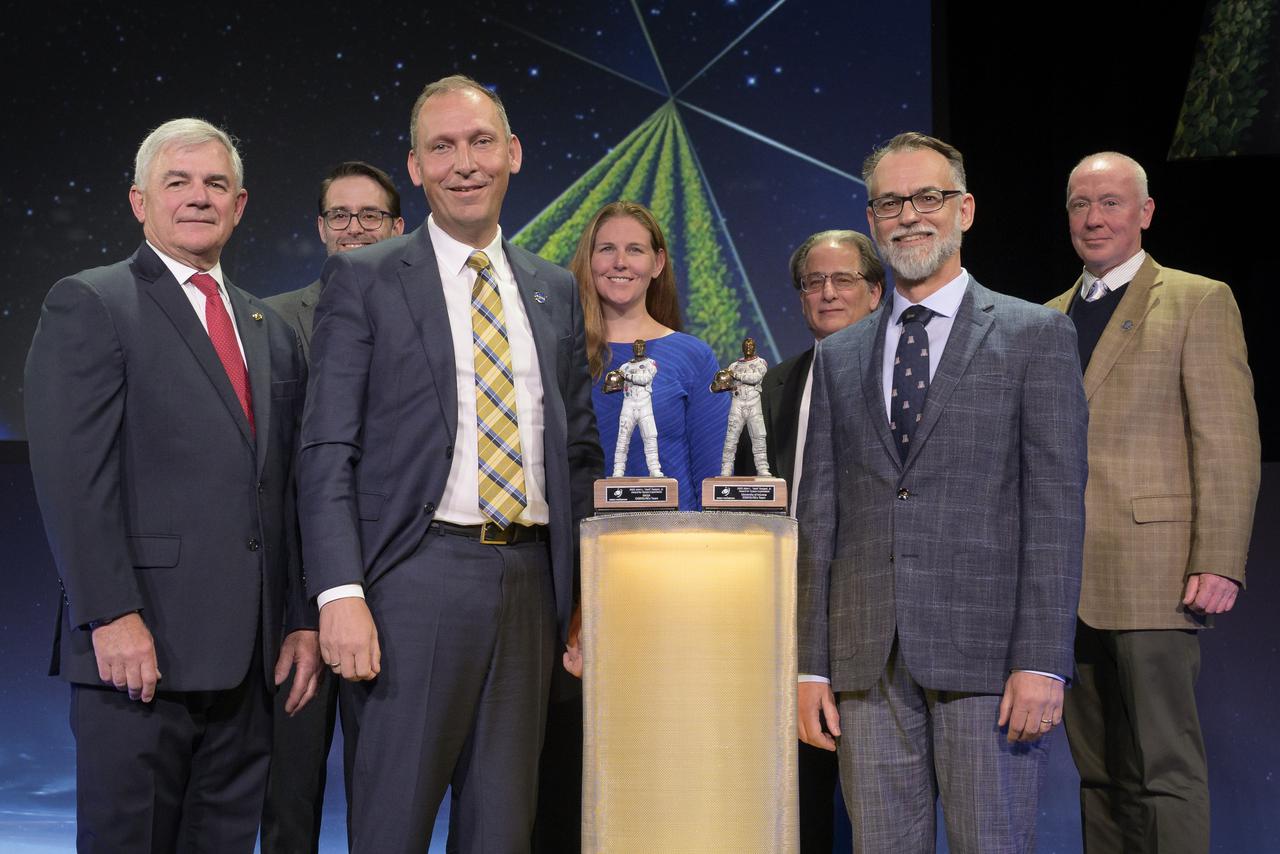
Space Foundation Chief Executive Officer Thomas E. Zelibor, Rear Admiral, USN (Ret.); left, Mike Moreau, Deputy Project Manager, Space Science Mission Operations, NASA Goddard Space Flight Center; NASA Associate Administrator for Science Thomas Zurbuchen; Sandra Freund, OSIRIS-REx Mission Operations Manager, Lockheed Martin Space; Pete Antreasian, OSIRIS-REx Navigation Team Chief, KinetX; University of Arizona OSIRIS-REx Principal Investigator Dante Lauretta; Rich Burns, Project Manager, Space Science Mission Operations, NASA Goddard Space Flight Center, right, pose for a photograph during the awarding of the 2022 John L. “Jack” Swigert, Jr., Award for Space Exploration given to the OSIRIS-REx team by the Space Foundation during the 37th Space Symposium, Monday, April 4, 2022, in Colorado Springs, Colorado. The John L. “Jack” Swigert, Jr., Award for Space Exploration recognizes extraordinary accomplishments by a company, space agency, or consortium of organizations in the realm of space exploration and discovery. The award honors the memory of astronaut John L. “Jack” Swigert, Jr., one of the inspirations for the creation of Space Foundation. Photo Credit: (NASA/Bill Ingalls)
OSIRIS-REx Team Given 2022 Swigert Award for Space Exploration
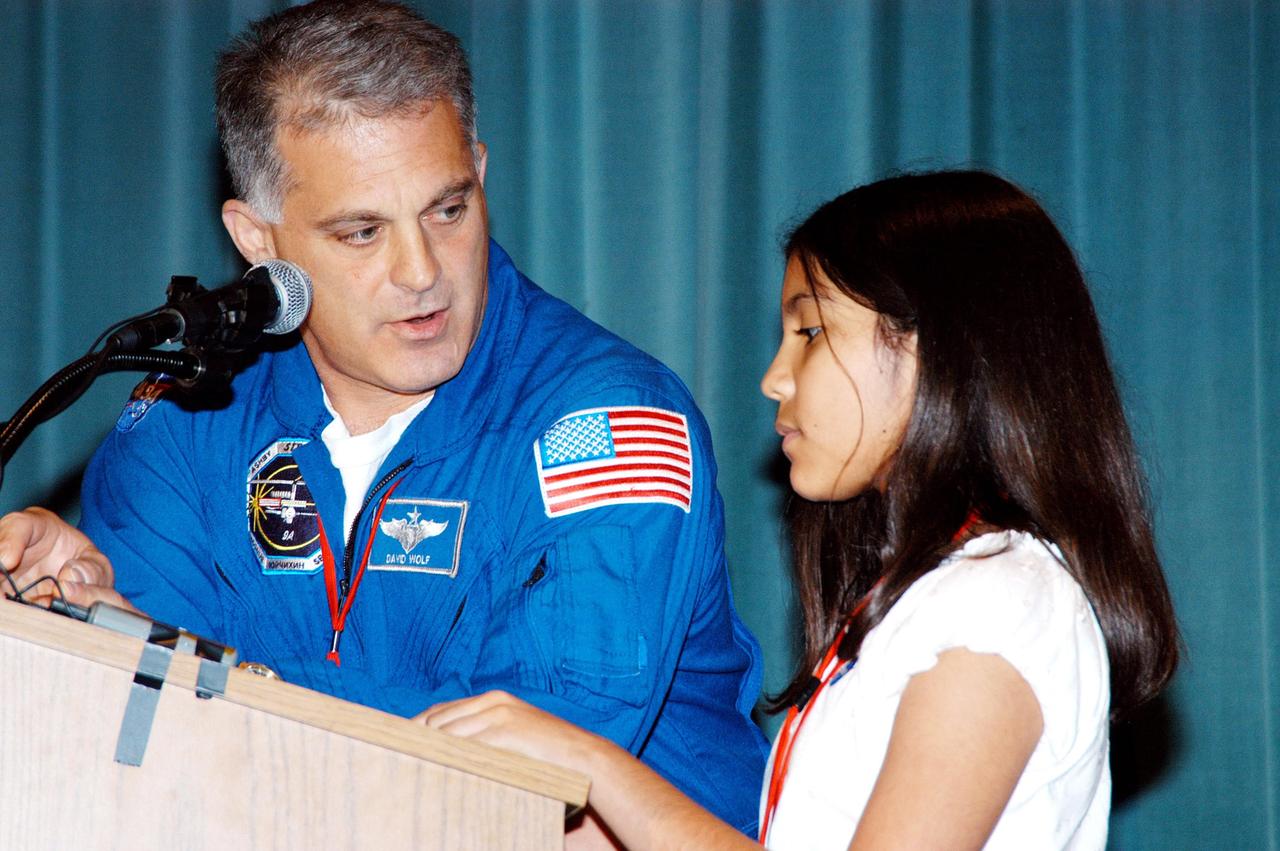
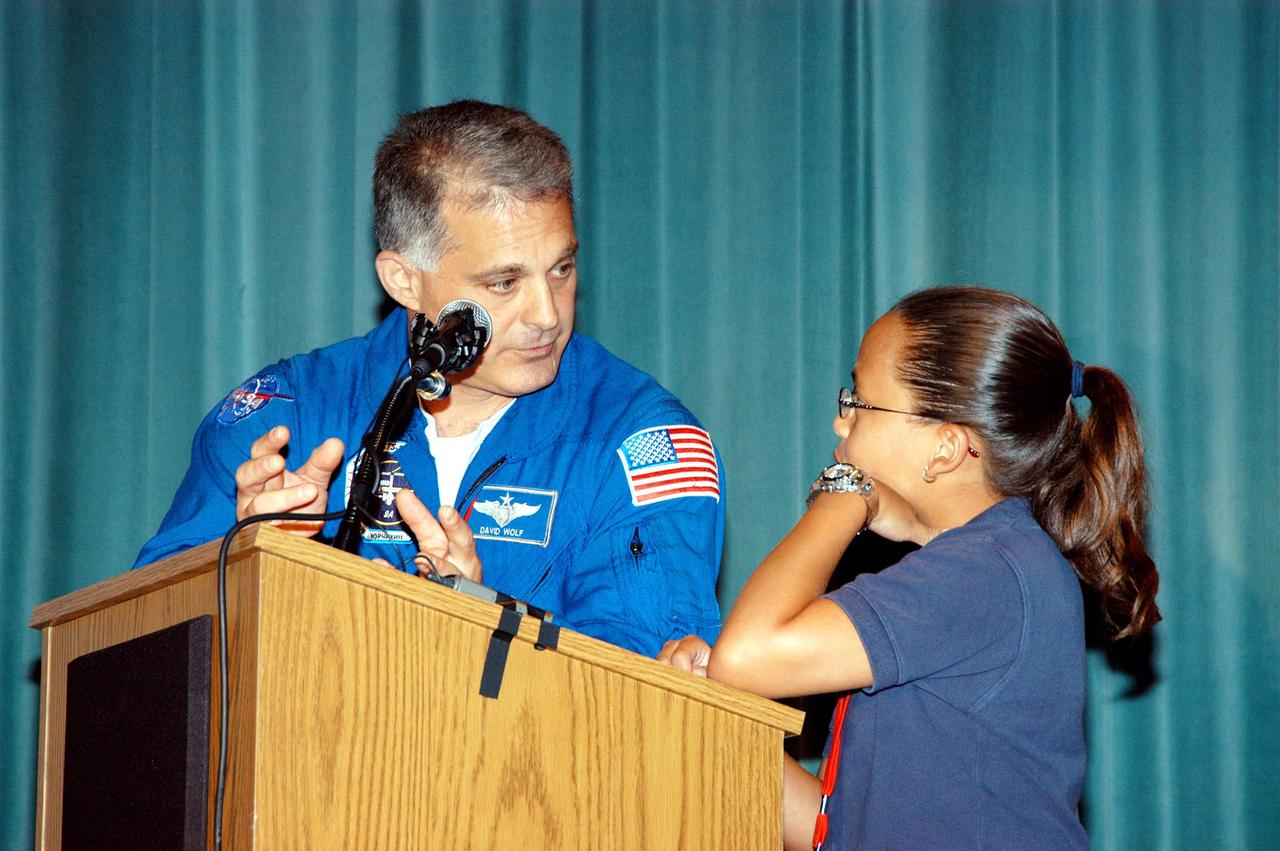
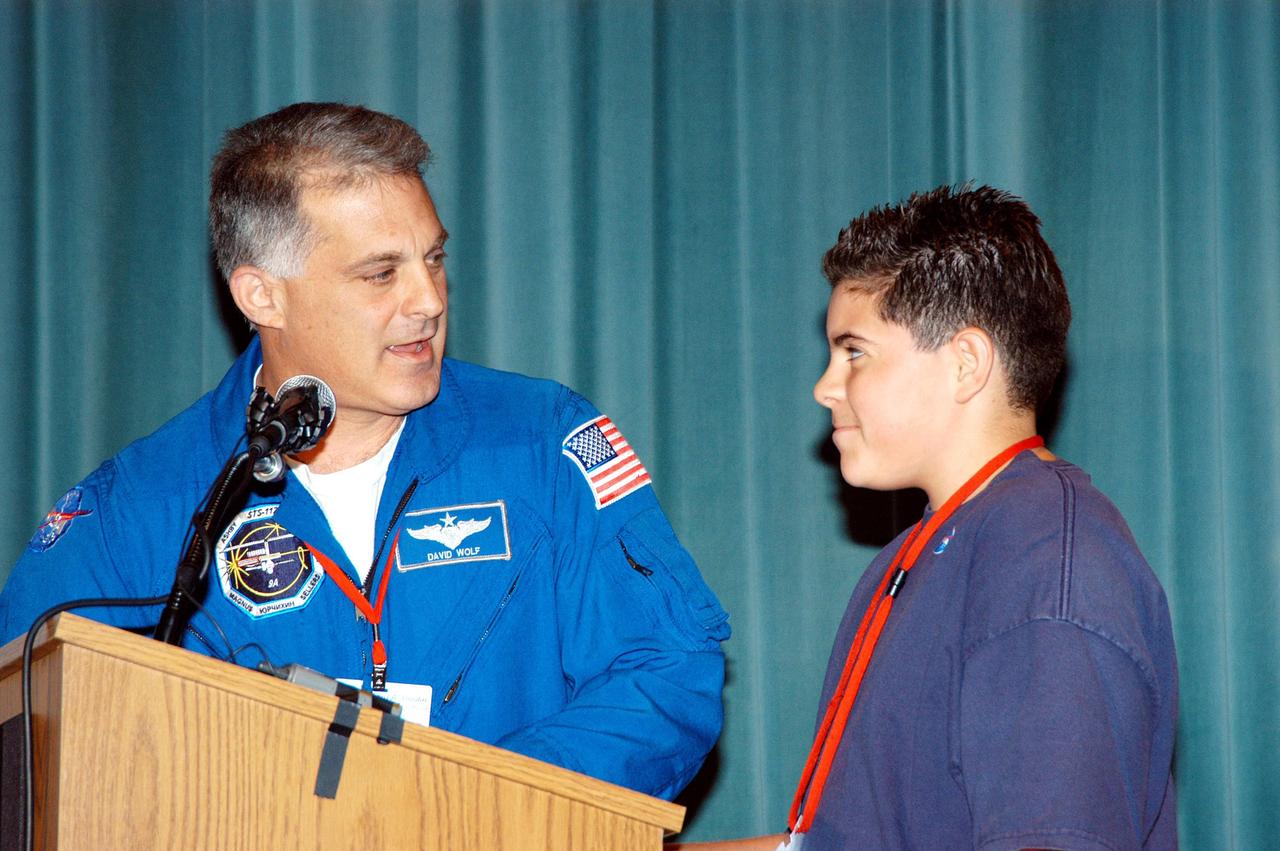
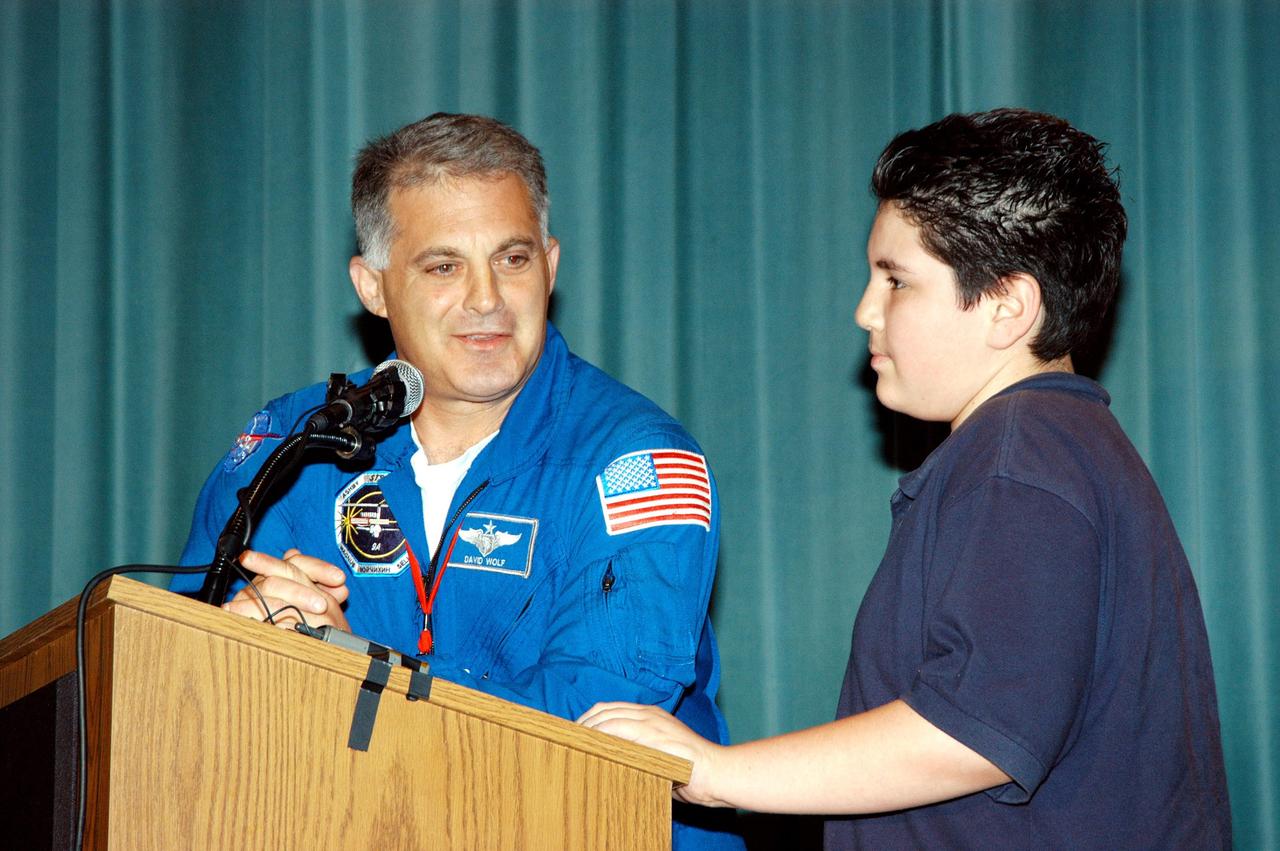
KENNEDY SPACE CENTER, FLA. -- Astronaut David Wolf answers questions from a student on stage at Howard A. Doolin Middle School, Miami, Fla., during his talk about his experiences in space.  Doolin Middle School is one of 100 to take part in the NASA Explorer Schools (NES) program.  Wolf joins Center Director Jim Kennedy (seated at lower left) on his visit to share America’s new vision for space exploration with the next generation of explorers.  He  is talking with students in Florida and Georgia Explorer Schools about our destiny as explorers, NASA’s stepping stone approach to exploring Earth, the Moon, Mars and beyond, how space impacts our lives, and how people and machines rely on each other in space.
KSC-04pd1162
KENNEDY SPACE CENTER, FLA. -- Astronaut David Wolf answers questions from a student on stage at Howard A. Doolin Middle School, Miami, Fla., during his talk about his experiences in space.  Doolin Middle School is one of 100 to take part in the NASA Explorer Schools (NES) program.  Wolf joins Center Director Jim Kennedy (seated at lower left) on his visit to share America’s new vision for space exploration with the next generation of explorers.  He  is talking with students in Florida and Georgia Explorer Schools about our destiny as explorers, NASA’s stepping stone approach to exploring Earth, the Moon, Mars and beyond, how space impacts our lives, and how people and machines rely on each other in space.
KSC-04pd1163
KENNEDY SPACE CENTER, FLA. -- Astronaut David Wolf answers questions from a student on stage at Howard A. Doolin Middle School, Miami, Fla., during his talk about his experiences in space.  Doolin Middle School is one of 100 to take part in the NASA Explorer Schools (NES) program.  Wolf joins Center Director Jim Kennedy (seated at lower left) on his visit to share America’s new vision for space exploration with the next generation of explorers.  He  is talking with students in Florida and Georgia Explorer Schools about our destiny as explorers, NASA’s stepping stone approach to exploring Earth, the Moon, Mars and beyond, how space impacts our lives, and how people and machines rely on each other in space.
KSC-04pd1164
KENNEDY SPACE CENTER, FLA. -- Astronaut David Wolf answers questions from a student on stage at Howard A. Doolin Middle School, Miami, Fla., during his talk about his experiences in space.  Doolin Middle School is one of 100 to take part in the NASA Explorer Schools (NES) program.  Wolf joins Center Director Jim Kennedy (seated at lower left) on his visit to share America’s new vision for space exploration with the next generation of explorers.  He  is talking with students in Florida and Georgia Explorer Schools about our destiny as explorers, NASA’s stepping stone approach to exploring Earth, the Moon, Mars and beyond, how space impacts our lives, and how people and machines rely on each other in space.
KSC-04pd1161
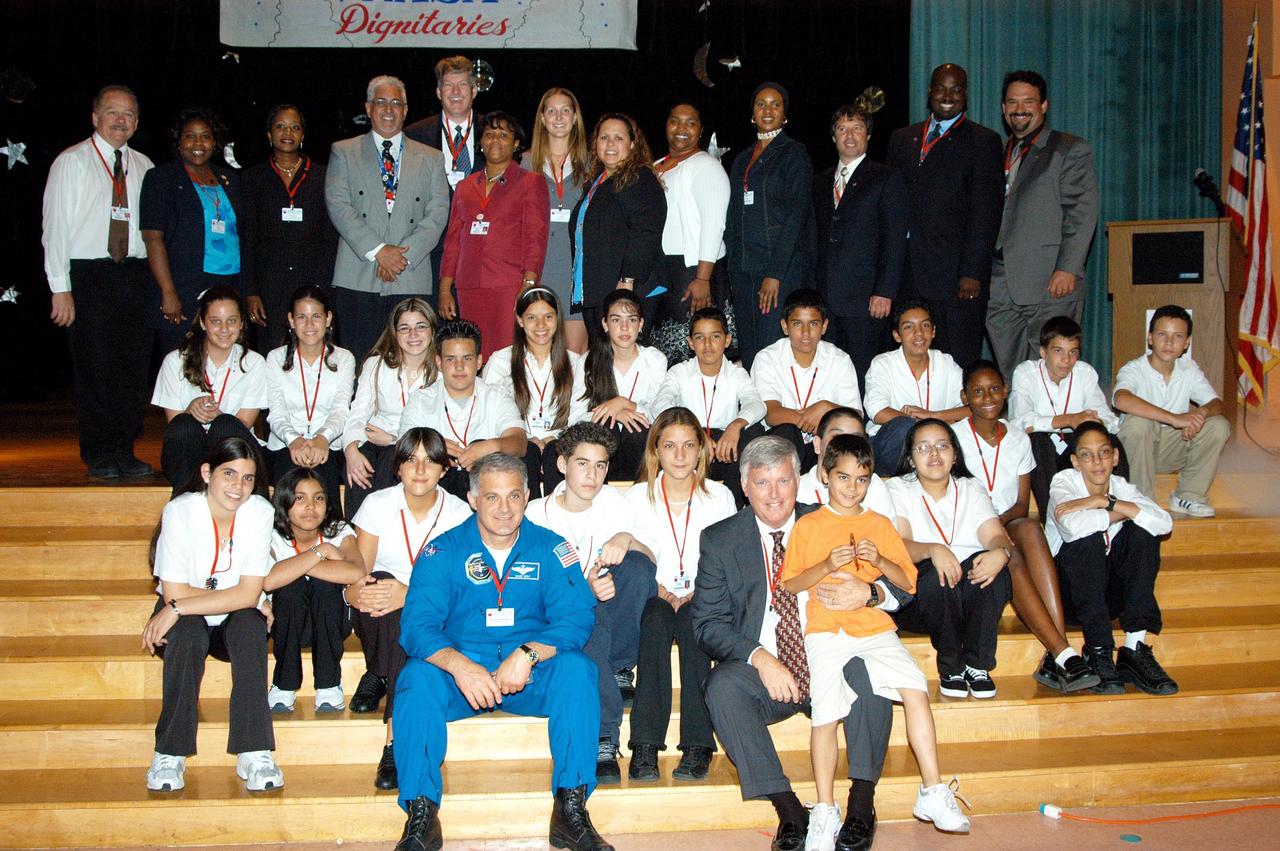
KENNEDY SPACE CENTER, FLA. -- Astronaut David Wolf (left) and Center Director Jim Kennedy (right, with boy) pose for a photo with students and faculty in Howard A. Doolin Middle School, Miami, Fla., plus other NASA and KSC representatives (rear).  The school is one of 100 taking part in the NASA Explorer Schools (NES) program.  The purpose of Kennedy’s visit is to share America’s new vision for space exploration with the next generation of explorers.  He is talking with students in Florida and Georgia Explorer Schools about our destiny as explorers, NASA’s stepping stone approach to exploring Earth, the Moon, Mars and beyond, how space impacts our lives, and how people and machines rely on each other in space.
KSC-04pd1167
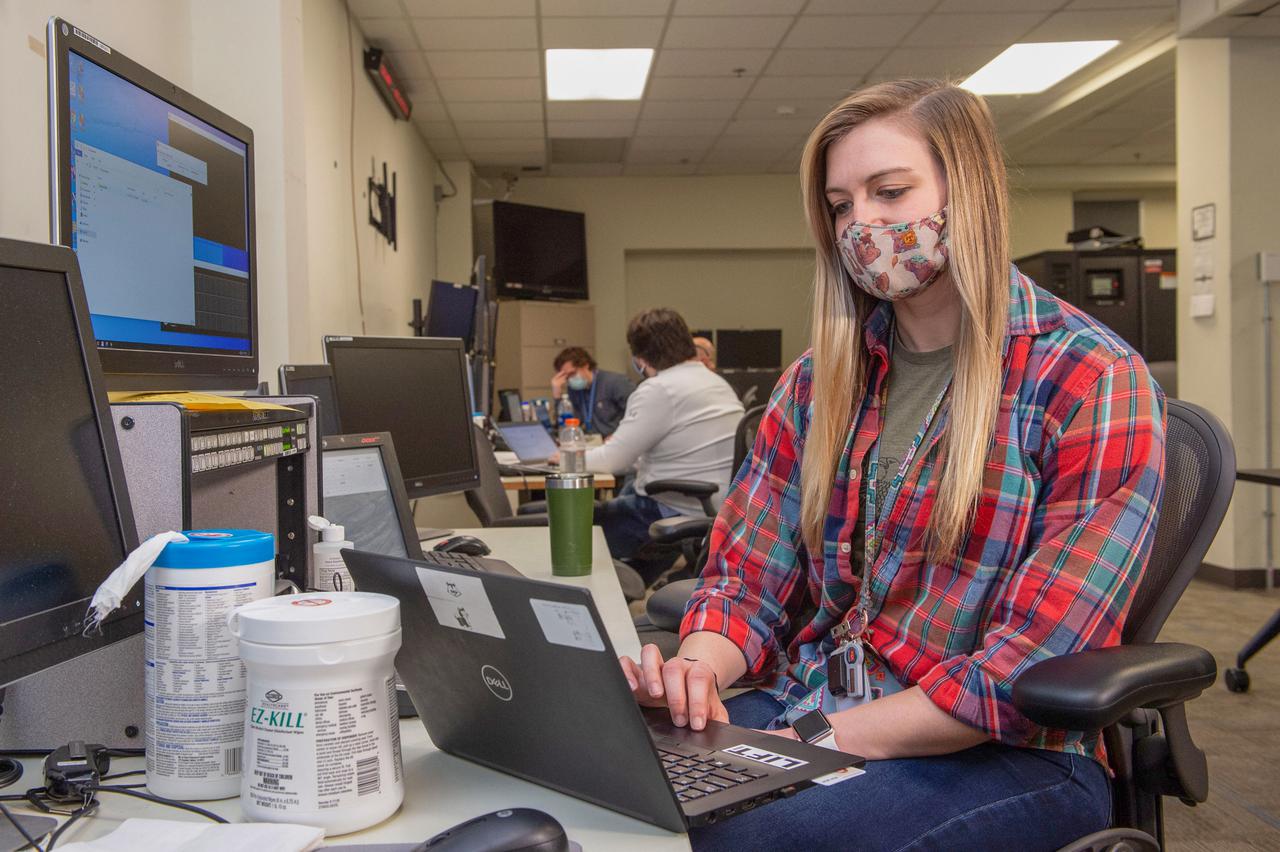
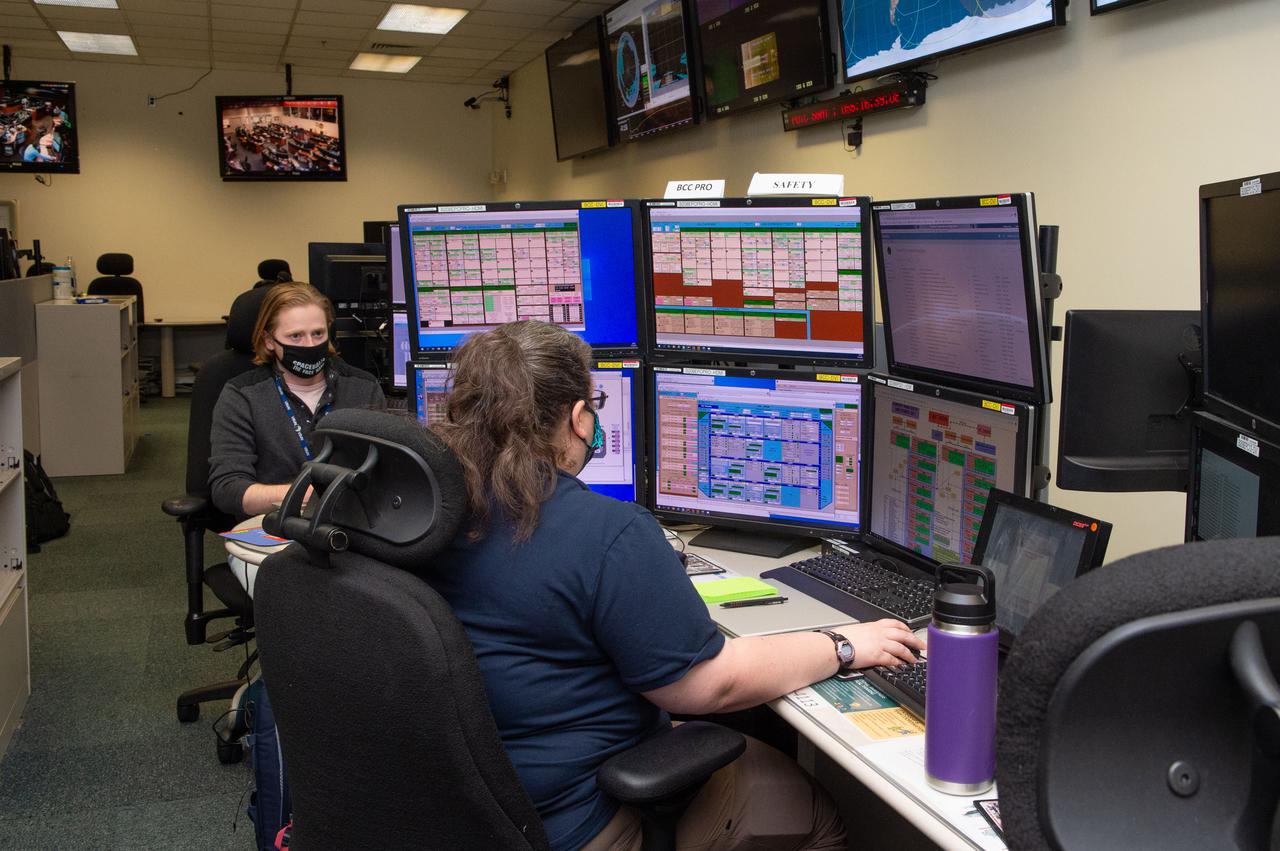
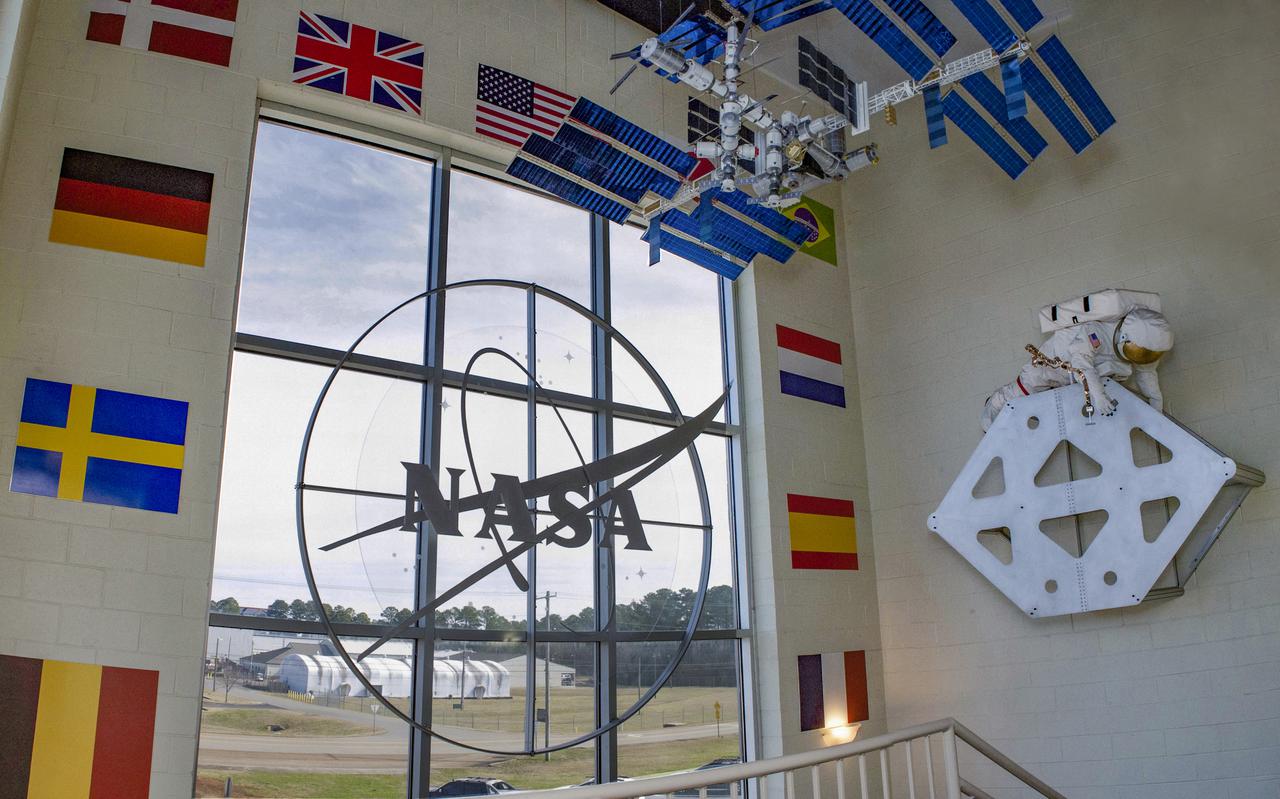
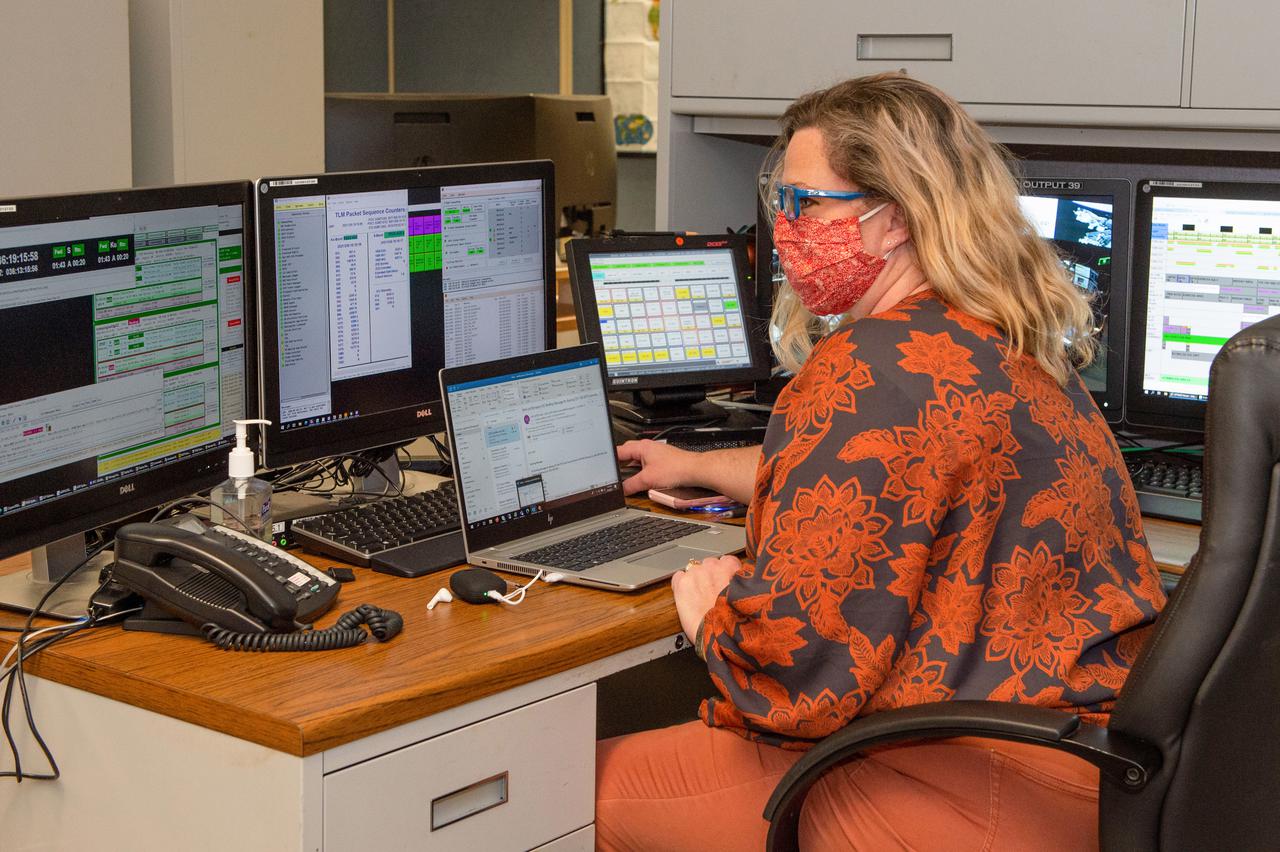
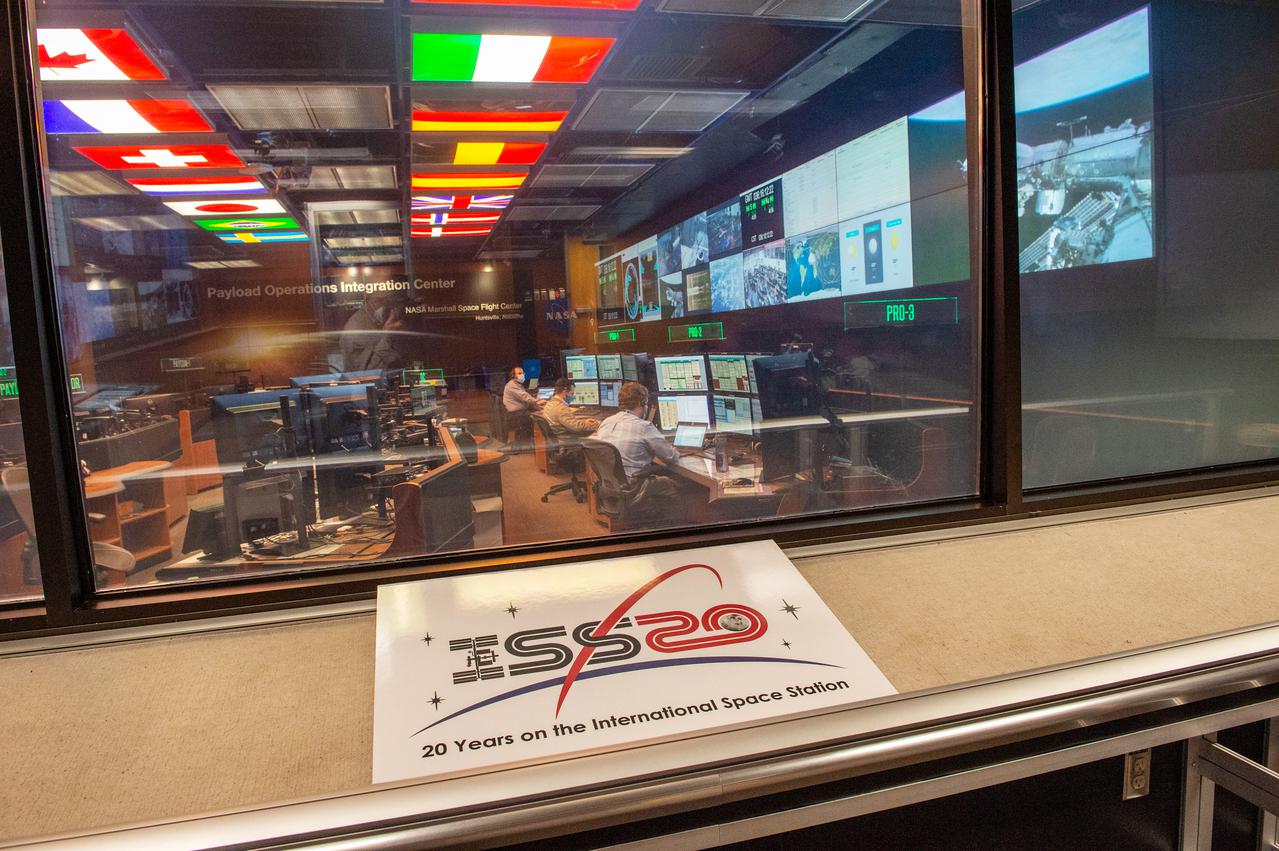
A look inside the International Space Station Payload Operations Integration Center at NASA’s Marshall Space Flight Center in Huntsville, AL.  The POIC team supports science operations on the International Space Station 24 hours a day, 7 days a week. For more than 20 years the POIC team has worked with scientists from around the world to enable the space station crew to conduct experiments that improve life on Earth and enable future exploration.
A look inside the International Space Station Payload Operations Integration Center at NASA’s Marshall Space Flight Center in Huntsville, AL. The POIC team supports science operations on the International Space Station 24 hours a day, 7 days a week. For more than 20 years the POIC team has worked with scientists from around the world to enable the space station crew to conduct experiments that improve life on Earth and enable future exploration.
A look inside the International Space Station Payload Operations Integration Center at NASA’s Marshall Space Flight Center in Huntsville, AL.  The POIC team supports science operations on the International Space Station 24 hours a day, 7 days a week. For more than 20 years the POIC team has worked with scientists from around the world to enable the space station crew to conduct experiments that improve life on Earth and enable future exploration.
A look inside the International Space Station Payload Operations Integration Center at NASA’s Marshall Space Flight Center in Huntsville, AL. The POIC team supports science operations on the International Space Station 24 hours a day, 7 days a week. For more than 20 years the POIC team has worked with scientists from around the world to enable the space station crew to conduct experiments that improve life on Earth and enable future exploration.
A look inside the International Space Station Payload Operations Integration Center at NASA’s Marshall Space Flight Center in Huntsville, AL.  The POIC team supports science operations on the International Space Station 24 hours a day, 7 days a week. For more than 20 years the POIC team has worked with scientists from around the world to enable the space station crew to conduct experiments that improve life on Earth and enable future exploration.
A look inside the International Space Station Payload Operations Integration Center at NASA’s Marshall Space Flight Center in Huntsville, AL. The POIC team supports science operations on the International Space Station 24 hours a day, 7 days a week. For more than 20 years the POIC team has worked with scientists from around the world to enable the space station crew to conduct experiments that improve life on Earth and enable future exploration.
A look inside the International Space Station Payload Operations Integration Center at NASA’s Marshall Space Flight Center in Huntsville, AL.  The POIC team supports science operations on the International Space Station 24 hours a day, 7 days a week. For more than 20 years the POIC team has worked with scientists from around the world to enable the space station crew to conduct experiments that improve life on Earth and enable future exploration.
A look inside the International Space Station Payload Operations Integration Center at NASA’s Marshall Space Flight Center in Huntsville, AL. The POIC team supports science operations on the International Space Station 24 hours a day, 7 days a week. For more than 20 years the POIC team has worked with scientists from around the world to enable the space station crew to conduct experiments that improve life on Earth and enable future exploration.
A look inside the International Space Station Payload Operations Integration Center at NASA’s Marshall Space Flight Center in Huntsville, AL.  The POIC team supports science operations on the International Space Station 24 hours a day, 7 days a week. For more than 20 years the POIC team has worked with scientists from around the world to enable the space station crew to conduct experiments that improve life on Earth and enable future exploration.
A look inside the International Space Station Payload Operations Integration Center at NASA’s Marshall Space Flight Center in Huntsville, AL. The POIC team supports science operations on the International Space Station 24 hours a day, 7 days a week. For more than 20 years the POIC team has worked with scientists from around the world to enable the space station crew to conduct experiments that improve life on Earth and enable future exploration.
A look inside the International Space Station Payload Operations Integration Center at NASA’s Marshall Space Flight Center in Huntsville, AL.  The POIC team supports science operations on the International Space Station 24 hours a day, 7 days a week. For more than 20 years the POIC team has worked with scientists from around the world to enable the space station crew to conduct experiments that improve life on Earth and enable future exploration.
A look inside the International Space Station Payload Operations Integration Center at NASA’s Marshall Space Flight Center in Huntsville, AL. The POIC team supports science operations on the International Space Station 24 hours a day, 7 days a week. For more than 20 years the POIC team has worked with scientists from around the world to enable the space station crew to conduct experiments that improve life on Earth and enable future exploration.
A look inside the International Space Station Payload Operations Integration Center at NASA’s Marshall Space Flight Center in Huntsville, AL.  The POIC team supports science operations on the International Space Station 24 hours a day, 7 days a week. For more than 20 years the POIC team has worked with scientists from around the world to enable the space station crew to conduct experiments that improve life on Earth and enable future exploration.
A look inside the International Space Station Payload Operations Integration Center at NASA’s Marshall Space Flight Center in Huntsville, AL. The POIC team supports science operations on the International Space Station 24 hours a day, 7 days a week. For more than 20 years the POIC team has worked with scientists from around the world to enable the space station crew to conduct experiments that improve life on Earth and enable future exploration.
A look inside the International Space Station Payload Operations Integration Center at NASA’s Marshall Space Flight Center in Huntsville, AL.  The POIC team supports science operations on the International Space Station 24 hours a day, 7 days a week. For more than 20 years the POIC team has worked with scientists from around the world to enable the space station crew to conduct experiments that improve life on Earth and enable future exploration.
A look inside the International Space Station Payload Operations Integration Center at NASA’s Marshall Space Flight Center in Huntsville, AL. The POIC team supports science operations on the International Space Station 24 hours a day, 7 days a week. For more than 20 years the POIC team has worked with scientists from around the world to enable the space station crew to conduct experiments that improve life on Earth and enable future exploration.
A look inside the International Space Station Payload Operations Integration Center at NASA’s Marshall Space Flight Center in Huntsville, AL.  The POIC team supports science operations on the International Space Station 24 hours a day, 7 days a week. For more than 20 years the POIC team has worked with scientists from around the world to enable the space station crew to conduct experiments that improve life on Earth and enable future exploration.
A look inside the International Space Station Payload Operations Integration Center at NASA’s Marshall Space Flight Center in Huntsville, AL. The POIC team supports science operations on the International Space Station 24 hours a day, 7 days a week. For more than 20 years the POIC team has worked with scientists from around the world to enable the space station crew to conduct experiments that improve life on Earth and enable future exploration.
A look inside the International Space Station Payload Operations Integration Center at NASA’s Marshall Space Flight Center in Huntsville, AL.  The POIC team supports science operations on the International Space Station 24 hours a day, 7 days a week. For more than 20 years the POIC team has worked with scientists from around the world to enable the space station crew to conduct experiments that improve life on Earth and enable future exploration.
A look inside the International Space Station Payload Operations Integration Center at NASA’s Marshall Space Flight Center in Huntsville, AL. The POIC team supports science operations on the International Space Station 24 hours a day, 7 days a week. For more than 20 years the POIC team has worked with scientists from around the world to enable the space station crew to conduct experiments that improve life on Earth and enable future exploration.
A look inside the International Space Station Payload Operations Integration Center at NASA’s Marshall Space Flight Center in Huntsville, AL.  The POIC team supports science operations on the International Space Station 24 hours a day, 7 days a week. For more than 20 years the POIC team has worked with scientists from around the world to enable the space station crew to conduct experiments that improve life on Earth and enable future exploration.
A look inside the International Space Station Payload Operations Integration Center at NASA’s Marshall Space Flight Center in Huntsville, AL. The POIC team supports science operations on the International Space Station 24 hours a day, 7 days a week. For more than 20 years the POIC team has worked with scientists from around the world to enable the space station crew to conduct experiments that improve life on Earth and enable future exploration.
A look inside the International Space Station Payload Operations Integration Center at NASA’s Marshall Space Flight Center in Huntsville, AL.  The POIC team supports science operations on the International Space Station 24 hours a day, 7 days a week. For more than 20 years the POIC team has worked with scientists from around the world to enable the space station crew to conduct experiments that improve life on Earth and enable future exploration.
A look inside the International Space Station Payload Operations Integration Center at NASA’s Marshall Space Flight Center in Huntsville, AL. The POIC team supports science operations on the International Space Station 24 hours a day, 7 days a week. For more than 20 years the POIC team has worked with scientists from around the world to enable the space station crew to conduct experiments that improve life on Earth and enable future exploration.
A look inside the International Space Station Payload Operations Integration Center at NASA’s Marshall Space Flight Center in Huntsville, AL.  The POIC team supports science operations on the International Space Station 24 hours a day, 7 days a week. For more than 20 years the POIC team has worked with scientists from around the world to enable the space station crew to conduct experiments that improve life on Earth and enable future exploration.
A look inside the International Space Station Payload Operations Integration Center at NASA’s Marshall Space Flight Center in Huntsville, AL. The POIC team supports science operations on the International Space Station 24 hours a day, 7 days a week. For more than 20 years the POIC team has worked with scientists from around the world to enable the space station crew to conduct experiments that improve life on Earth and enable future exploration.
A look inside the International Space Station Payload Operations Integration Center at NASA’s Marshall Space Flight Center in Huntsville, AL.  The POIC team supports science operations on the International Space Station 24 hours a day, 7 days a week. For more than 20 years the POIC team has worked with scientists from around the world to enable the space station crew to conduct experiments that improve life on Earth and enable future exploration.
A look inside the International Space Station Payload Operations Integration Center at NASA’s Marshall Space Flight Center in Huntsville, AL. The POIC team supports science operations on the International Space Station 24 hours a day, 7 days a week. For more than 20 years the POIC team has worked with scientists from around the world to enable the space station crew to conduct experiments that improve life on Earth and enable future exploration.
A look inside the International Space Station Payload Operations Integration Center at NASA’s Marshall Space Flight Center in Huntsville, AL.  The POIC team supports science operations on the International Space Station 24 hours a day, 7 days a week. For more than 20 years the POIC team has worked with scientists from around the world to enable the space station crew to conduct experiments that improve life on Earth and enable future exploration.
A look inside the International Space Station Payload Operations Integration Center at NASA’s Marshall Space Flight Center in Huntsville, AL. The POIC team supports science operations on the International Space Station 24 hours a day, 7 days a week. For more than 20 years the POIC team has worked with scientists from around the world to enable the space station crew to conduct experiments that improve life on Earth and enable future exploration.
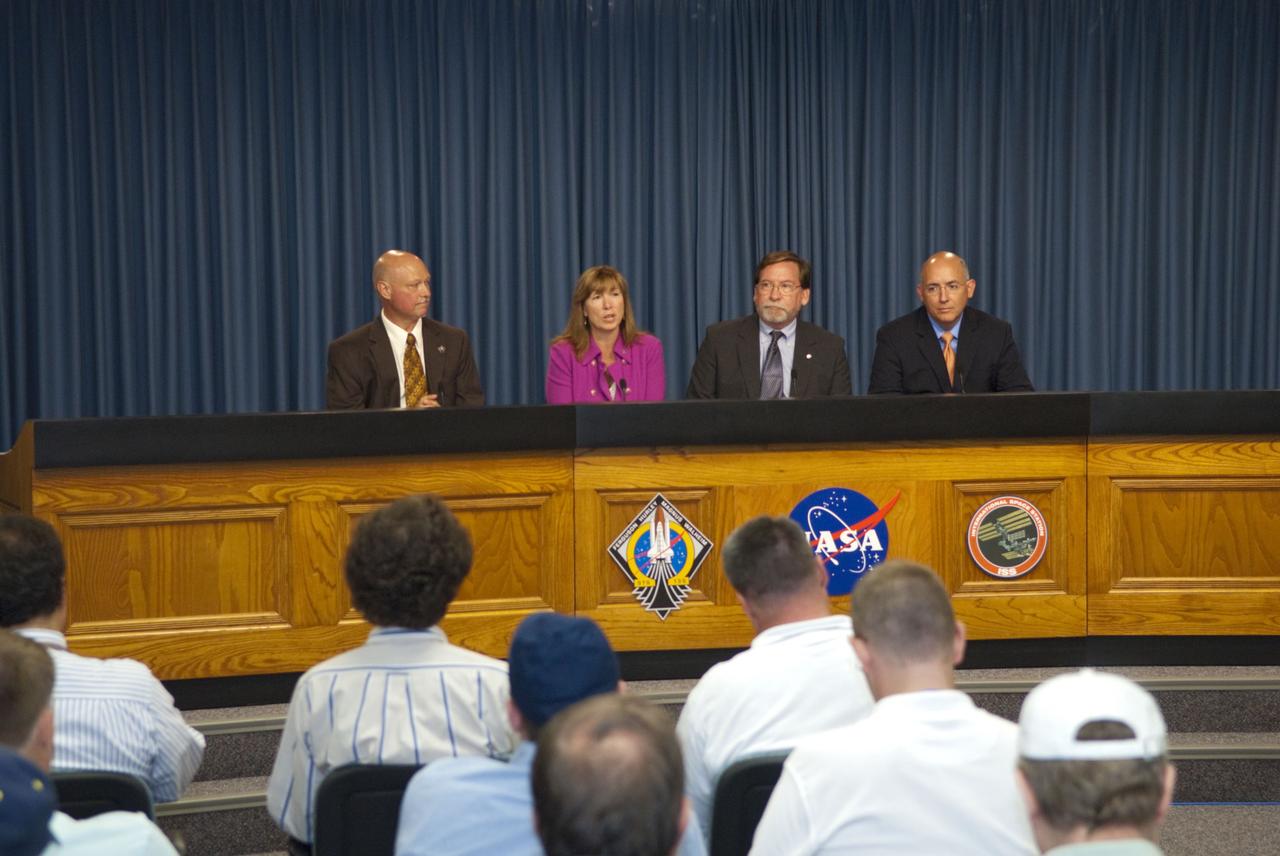
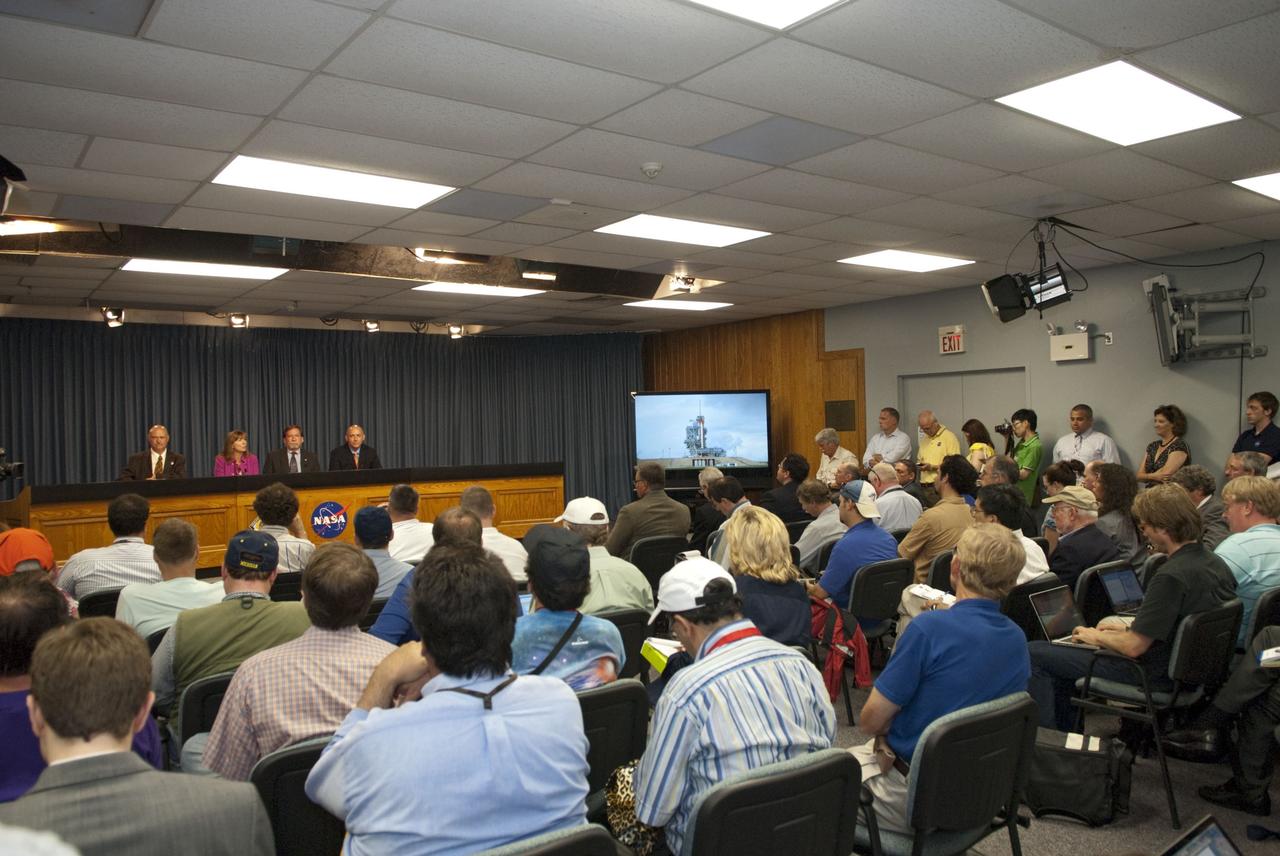
CAPE CANAVERAL, Fla. -- In the Press Site auditorium at NASA's Kennedy Space Center in Florida, media were briefed about the agency's next step for Human Space Flight. Seen here are NASA Public Affairs Officer Mike Curie (left); Lori Garver, NASA deputy administrator; Doug Cooke, Exploration Systems Mission Directorate associate administrator and Mike Suffredini, NASA International Space Station Program manager. Photo credit: NASA/Jim Grossmann
KSC-2011-5077
CAPE CANAVERAL, Fla. -- In the Press Site auditorium at NASA's Kennedy Space Center in Florida, media were briefed about the agency's next step for Human Space Flight. Seen here are NASA Public Affairs Officer Mike Curie (left); Lori Garver, NASA deputy administrator; Doug Cooke, Exploration Systems Mission Directorate associate administrator and Mike Suffredini, NASA International Space Station Program manager. Photo credit: NASA/Jim Grossmann
KSC-2011-5078
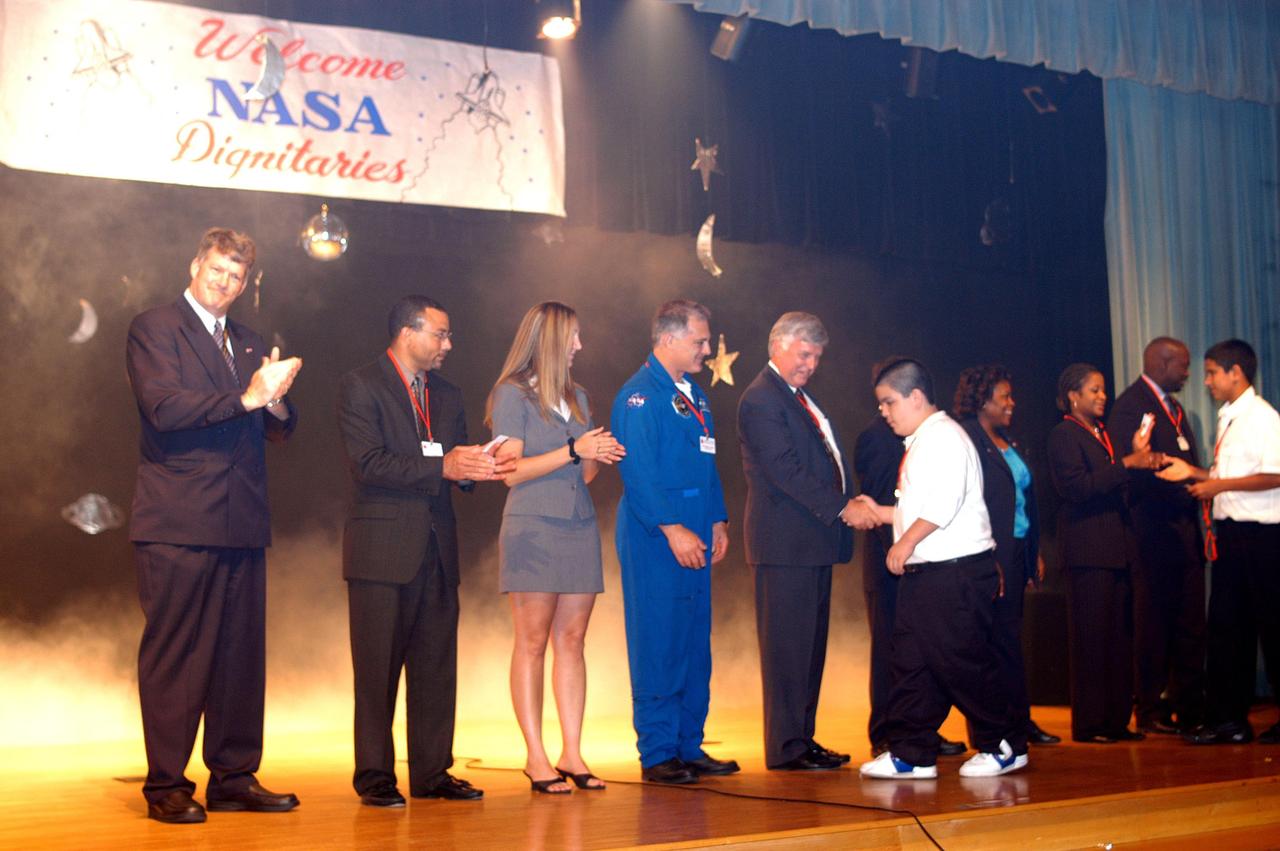
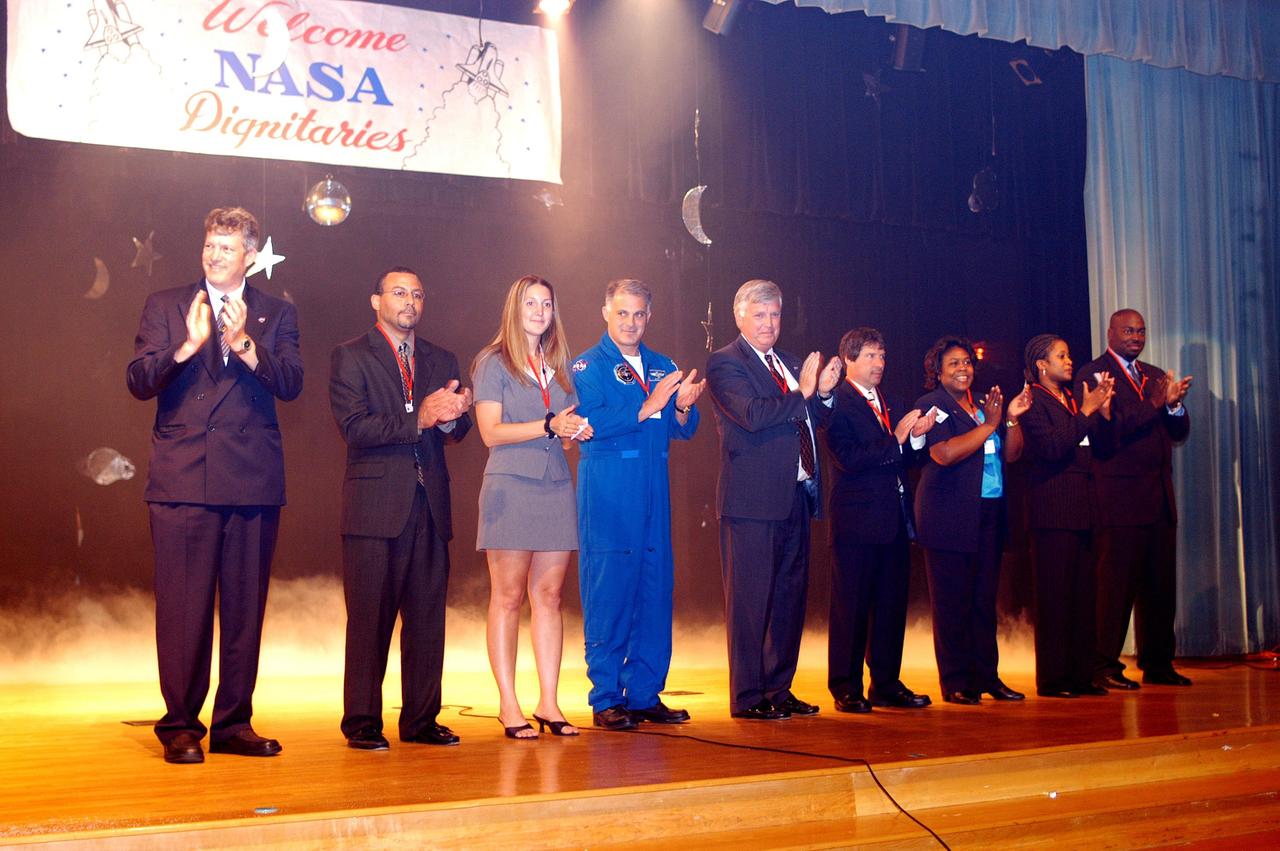
KENNEDY SPACE CENTER, FLA. -- During a visit to Howard A. Doolin Middle School, Miami, Fla., Center Director Jim Kennedy and other NASA and KSC representatives applaud faculty and students from the stage.  From left to right are Jim Gerard, Aerospace Education Services Program (AESP) representative; Steve Lewis, assistant to Kennedy; Amber Marek, with KSC External Relations; David Wolf, astronaut; Kennedy; Les Gold, AESP representative; Burdette Brown; and Patricia Leonard and Clarence Bostic, Education Programs and University Research Division.  Doolin Middle School is one of 100 to take part in the NASA Explorer Schools program.  Kennedy is talking with students, the next generation of explorers, about our destiny as explorers, NASA’s stepping stone approach to exploring Earth, the Moon, Mars and beyond, how space impacts our lives, and how people and machines rely on each other in space.
KSC-04pd1153
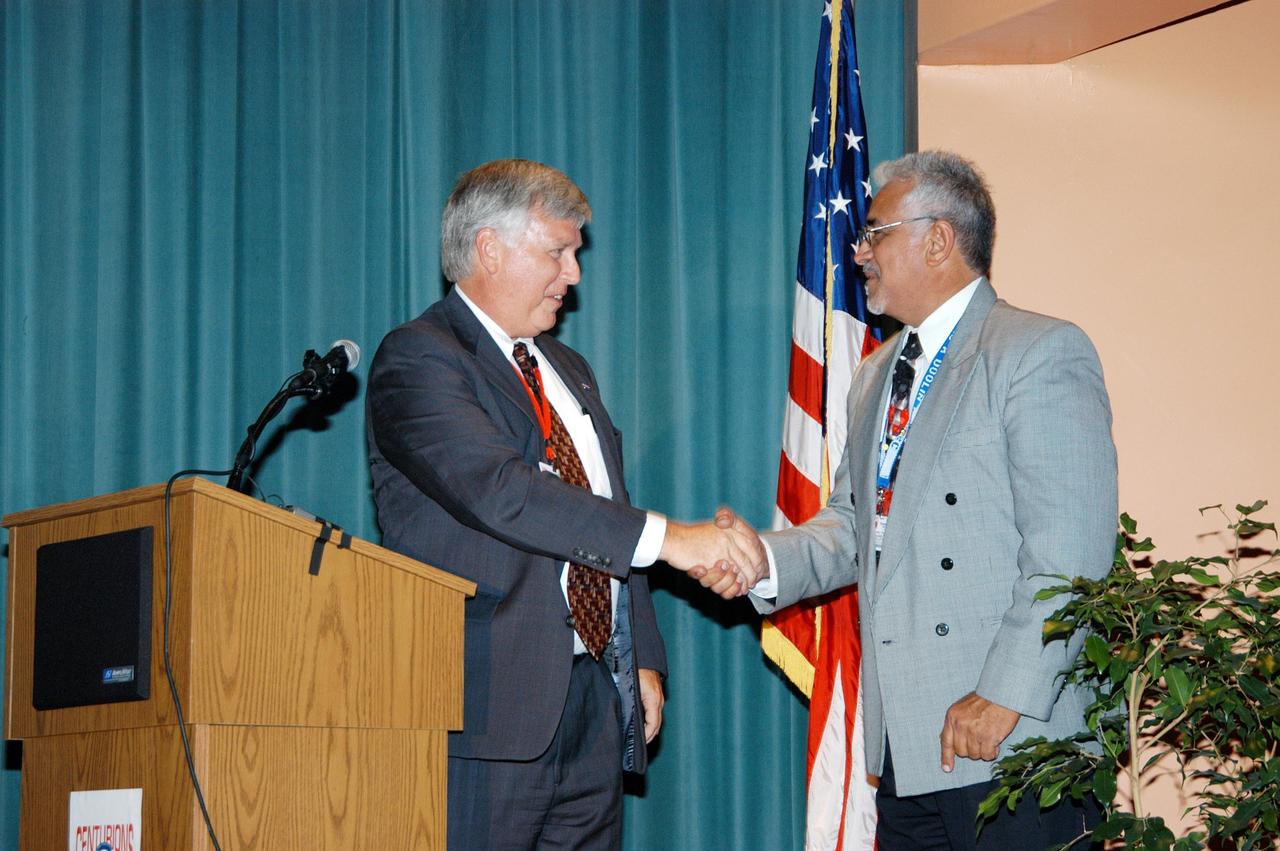
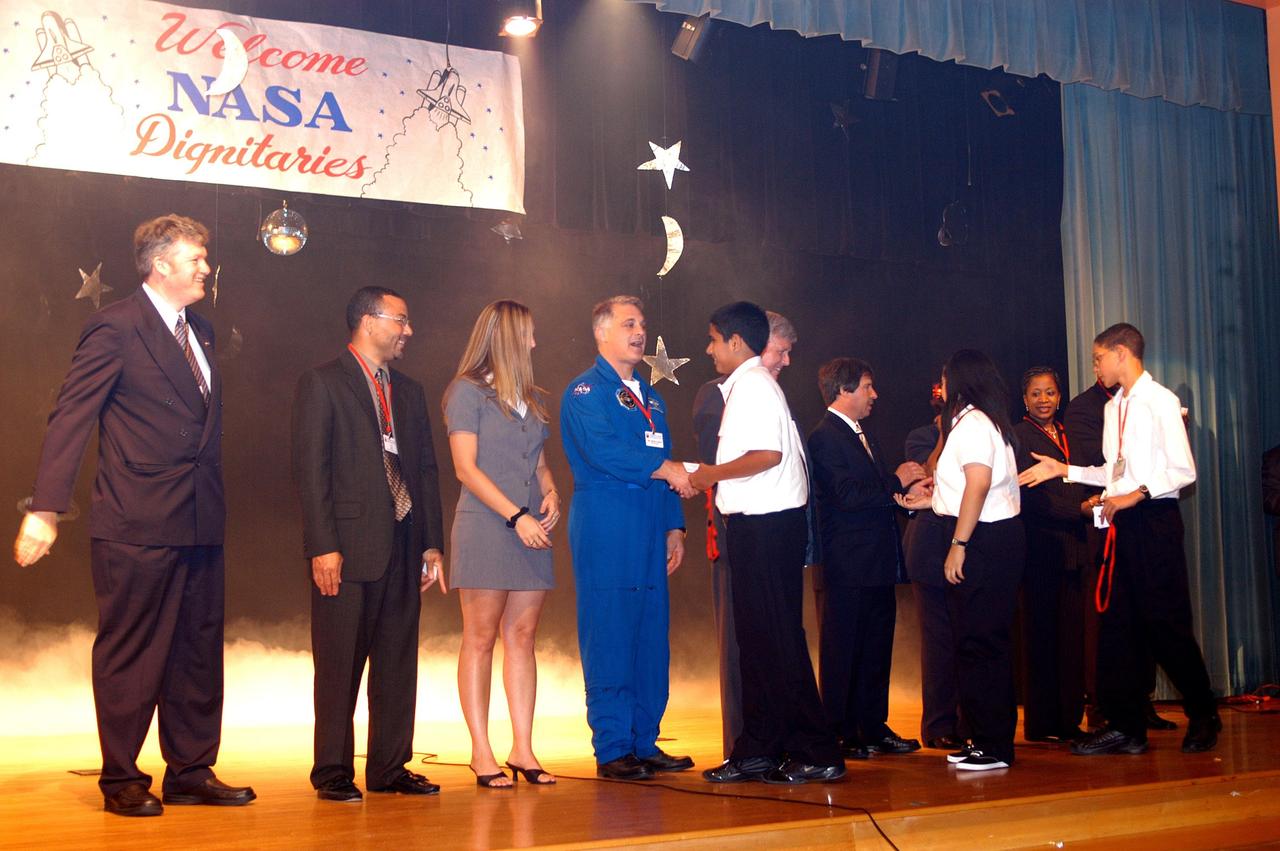
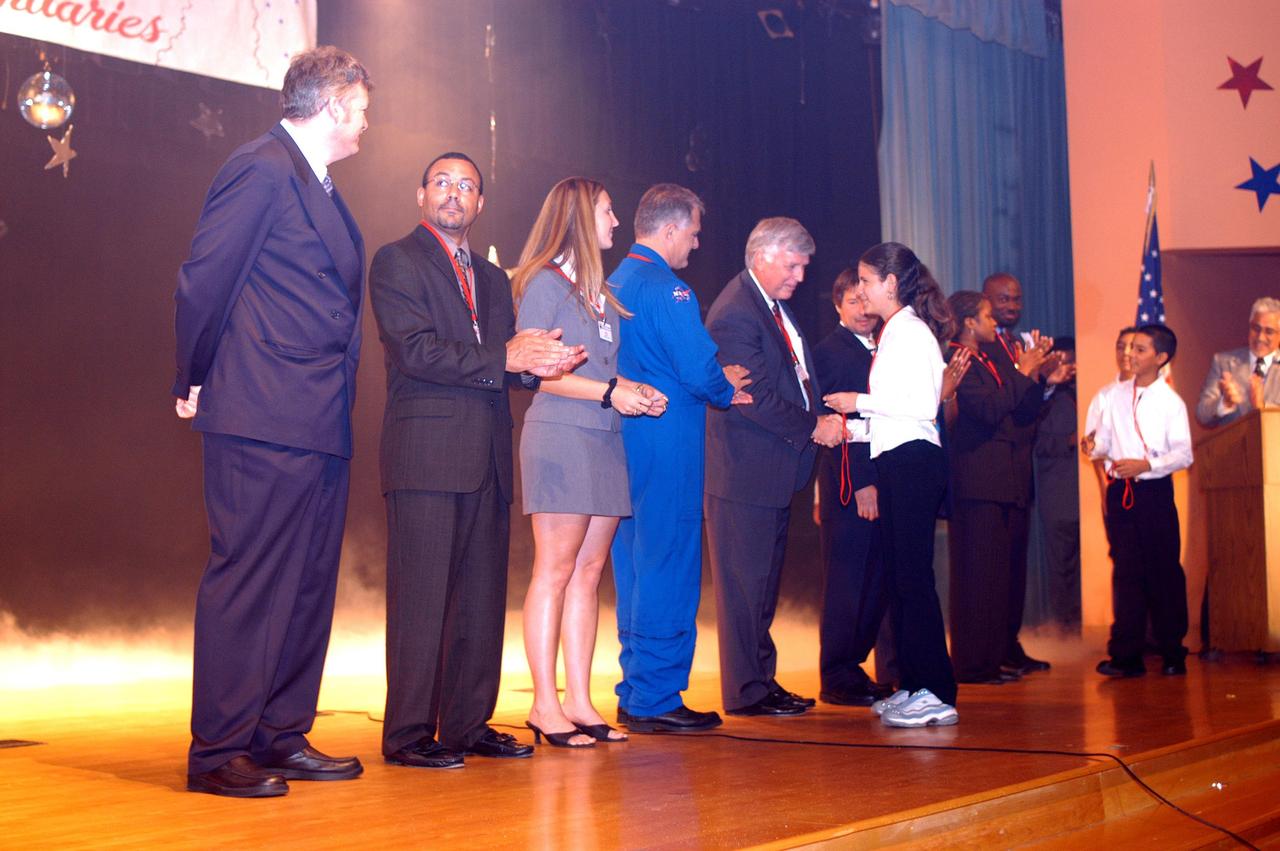
KENNEDY SPACE CENTER, FLA. -- During a visit to Howard A. Doolin Middle School, Miami, Fla., Center Director Jim Kennedy (shaking hands, center) and other NASA and KSC representatives are greeted by students on stage.  With Kennedy on stage are (left to right), Jim Gerard, Aerospace Education Services Program (AESP) representative; Steve Lewis, assistant to Kennedy; Amber Marek, with KSC External Relations; David Wolf, astronaut; Kennedy; Les Gold, AESP representative; Burdette Brown; and Patricia Leonard and Clarence Bostic, Education Programs and University Research Division.  Doolin Middle School is one of 100 to take part in the NASA Explorer Schools program.  Kennedy is talking with students, the next generation of explorers, about our destiny as explorers, NASA’s stepping stone approach to exploring Earth, the Moon, Mars and beyond, how space impacts our lives, and how people and machines rely on each other in space.
KSC-04pd1150
KENNEDY SPACE CENTER, FLA. -- During a visit to Howard A. Doolin Middle School, Miami, Fla., Center Director Jim Kennedy and other NASA and KSC representatives are greeted by students on stage.  From left to right, are Jim Gerard, Aerospace Education Services Program (AESP) representative; Steve Lewis, assistant to Kennedy; Amber Marek, with KSC External Relations; David Wolf, astronaut; Kennedy; Les Gold, AESP representative; Burdette Brown; and Patricia Leonard and Clarence Bostic, Education Programs and University Research Division.  Doolin Middle School is one of 100 to take part in the NASA Explorer Schools program.  Kennedy is talking with students, the next generation of explorers, about our destiny as explorers, NASA’s stepping stone approach to exploring Earth, the Moon, Mars and beyond, how space impacts our lives, and how people and machines rely on each other in space.
KSC-04pd1151
KENNEDY SPACE CENTER, FLA. -- During a visit to Howard A. Doolin Middle School, Miami, Fla., Center Director Jim Kennedy and other NASA and KSC representatives are greeted by students on stage.  From left to right are Jim Gerard, Aerospace Education Services Program representative; Steve Lewis, assistant to Kennedy; Amber Marek, with KSC External Relations; David Wolf, astronaut; Kennedy; Les Gold, AESP representative; Burdette Brown; and Patricia Leonard and Clarence Bostic, Education Programs and University Research Division.  Doolin Middle School is one of 100 to take part in the NASA Explorer Schools program.  Kennedy is talking with students, the next generation of explorers, about our destiny as explorers, NASA’s stepping stone approach to exploring Earth, the Moon, Mars and beyond, how space impacts our lives, and how people and machines rely on each other in space.
KSC-04pd1152
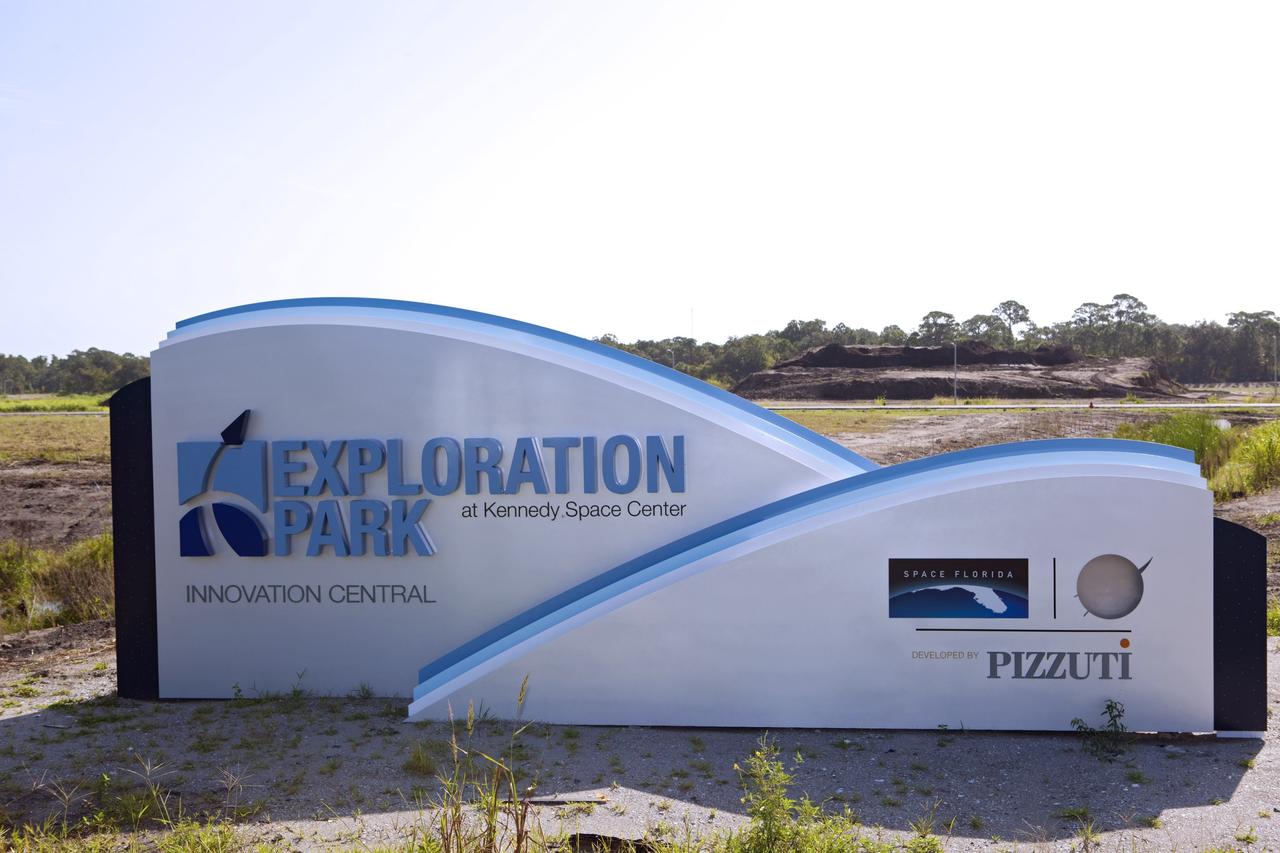
CAPE CANAVERAL, Fla. -- A new sign on Space Commerce Way marks the entrance to Exploration Park near NASA’s Kennedy Space Center in Florida.  Land in the background has been cleared for the first phase of construction.    Exploration Park encompasses 60 acres just outside Kennedy’s security gates. The park is designed to be a strategically located complex, adjacent to the Space Life Sciences Laboratory, for servicing diverse tenants and uses that will engage in activities to support the space-related activities of NASA, other government agencies and the U.S. commercial space industry. Its nine sustainable, state-of-the art buildings will include educational, office, research and laboratory, and high bay facilities and provide 350,000-square-feet of work space. Photo credit: NASA/Dimitri Gerondidakis
KSC-2012-4419
A brilliant sunrise serves as the backdrop in this panoramic view of the mobile launcher at NASA's Kennedy Space Center in Florida. The mobile launcher is equipped with a number of lines, called umbilicals, which will connect to NASA's Space Launch System (SLS) and Orion spacecraft. Exploration Ground Systems is preparing the mobile launcher and ground systems necessary to process and launch the SLS and Orion spacecraft on Exploration Mission-1 and deep space missions.
EGS Artist Photos - Mobile Launcher
A colorful sunrise serves as the backdrop in this view of the mobile launcher at NASA's Kennedy Space Center in Florida. The mobile launcher is equipped with a number of lines, called umbilicals, which will connect to NASA's Space Launch System (SLS) and Orion spacecraft. Exploration Ground Systems is preparing the mobile launcher and ground systems necessary to process and launch the SLS and Orion spacecraft on Exploration Mission-1 and deep space missions.
EGS Artist Photos - Mobile Launcher
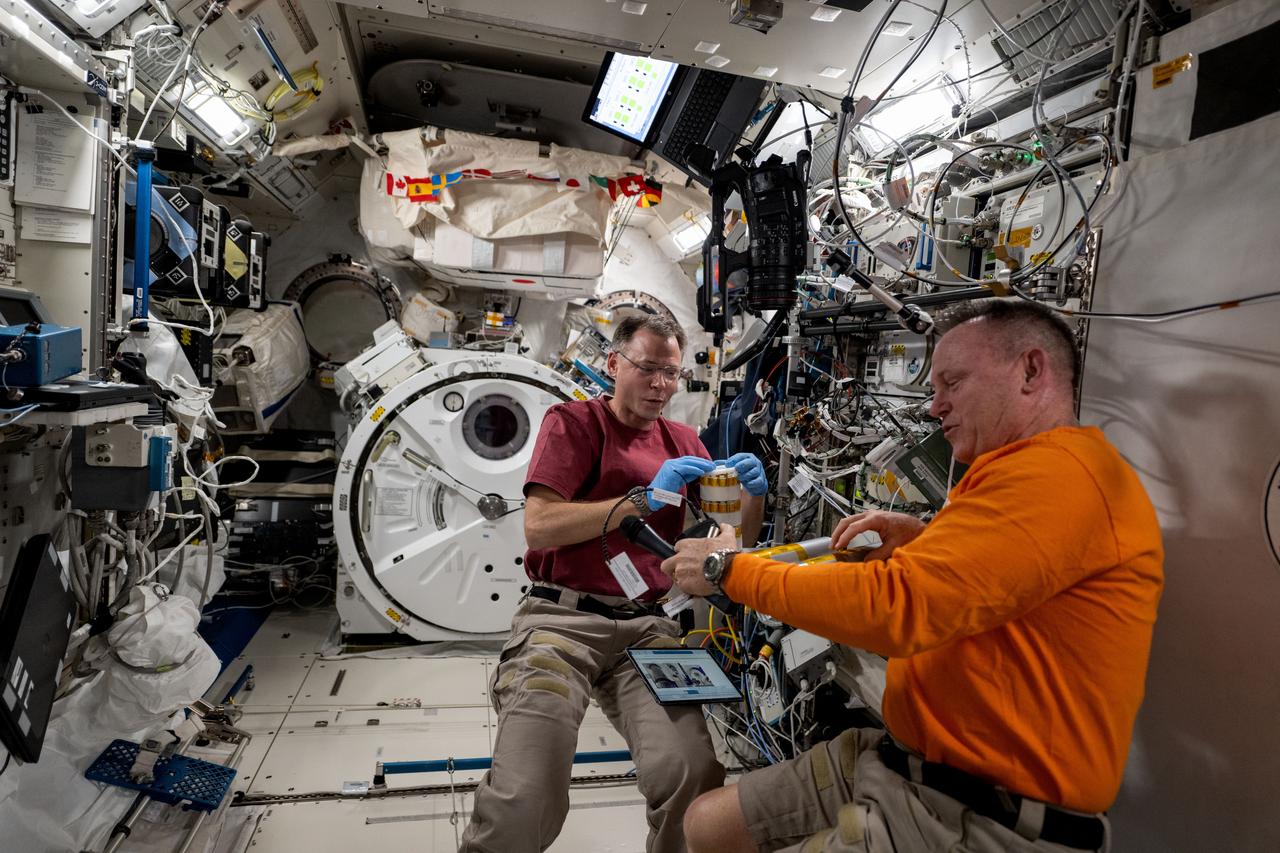
iss072e146319 (Nov. 6, 2024) --- Expedition 72 Flight Engineers (from left) Nick Hague and Butch Wilmore, both NASA astronauts, partner together inside the International Space Station's Kibo laboratory module on space biology research. Hague was exploring the potential of biomanufacturing using microorganisms and cell cutlures to create food, medicine, and more in the microgravity environment reducing the need for cargo missions launched from Earth and promoting crew self-sufficiency during long-term missions.
Astronauts Nick Hague and Butch Wilmore explore the potential of biomanufacturing in space
Illustration of the SLS Exploration Upper Stage, or EUS.   This configuration of the rocket, with the Exploration Upper Stage, will provide in-space propulsion to send astronauts in NASA’s Orion spacecraft and heavy cargo on a precise trajectory to the Moon. The evolution of the rocket to SLS Block 1B configuration with EUS enables SLS to launch 40% more cargo to the Moon along with the crew. Manufacturing both the core stage and Exploration Upper Stage is a collaborative effort between NASA and Boeing, the lead contractor for EUS and the SLS core stage. SLS is the only rocket that can send Orion, astronauts, and supplies to the Moon in a single mission. The SLS rocket, NASA’s Orion spacecraft, Gateway, and human landing system are part of NASA’s backbone for deep space exploration. Under the Artemis program, NASA is working to land the first woman and the next man on the Moon to pave the way for sustainable exploration at the Moon and future missions to Mars. (NASA)
Exploration Upper Stage - EUS - Illustration