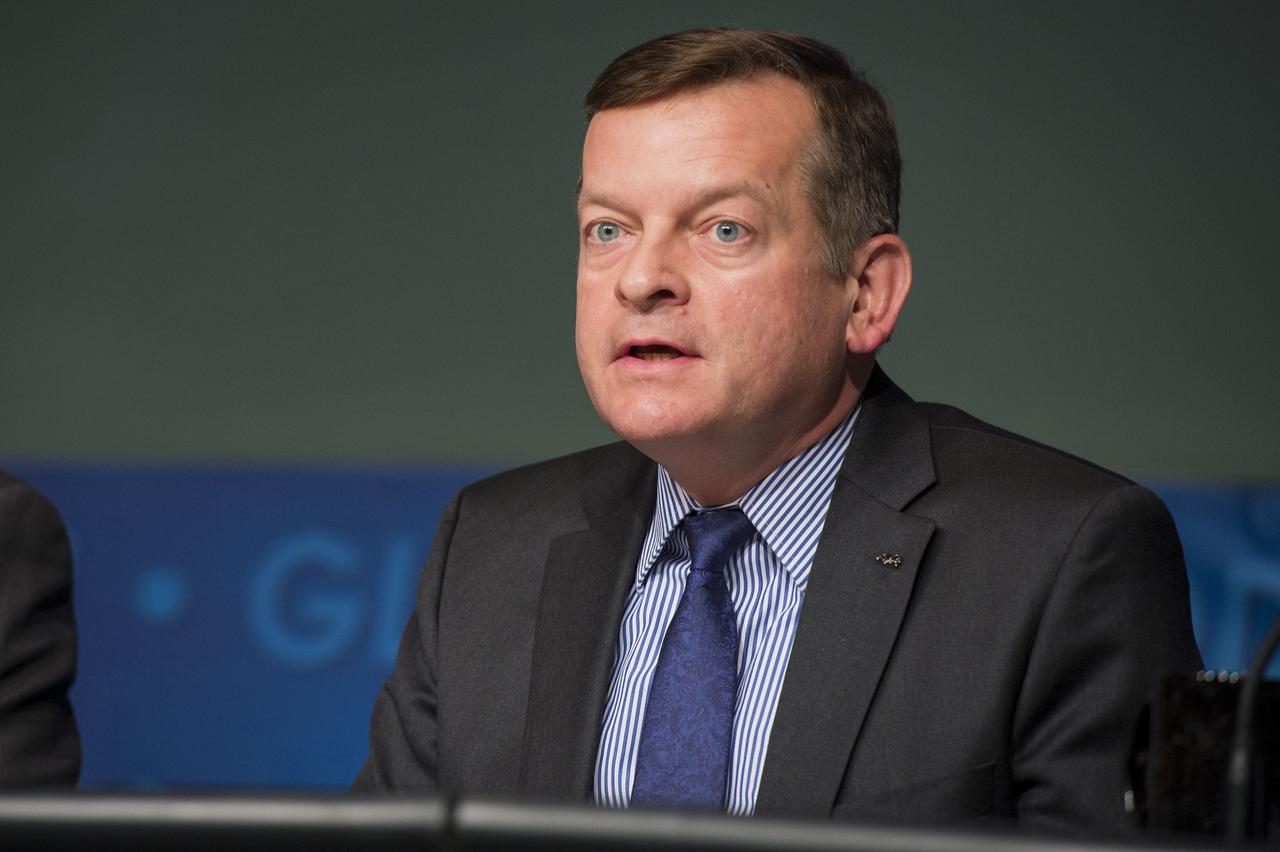
Frank Slazer, Vice President of Space Systems, Aerospace Industries Association, delivers remarks panel discussion on the Commercial Orbital Transportation Services (COTS) initiative at NASA Headquarters in Washington on Wednesday, November 13, 2013. Through COTS, NASA's partners Space Exploration Technologies Corp. (SpaceX) and Orbital Sciences Corp., developed new U.S. rockets and spacecraft, launched from U.S. soil, capable of transporting cargo to low-Earth orbit and the International Space Station. Photo Credit: (NASA/Jay Westcott)
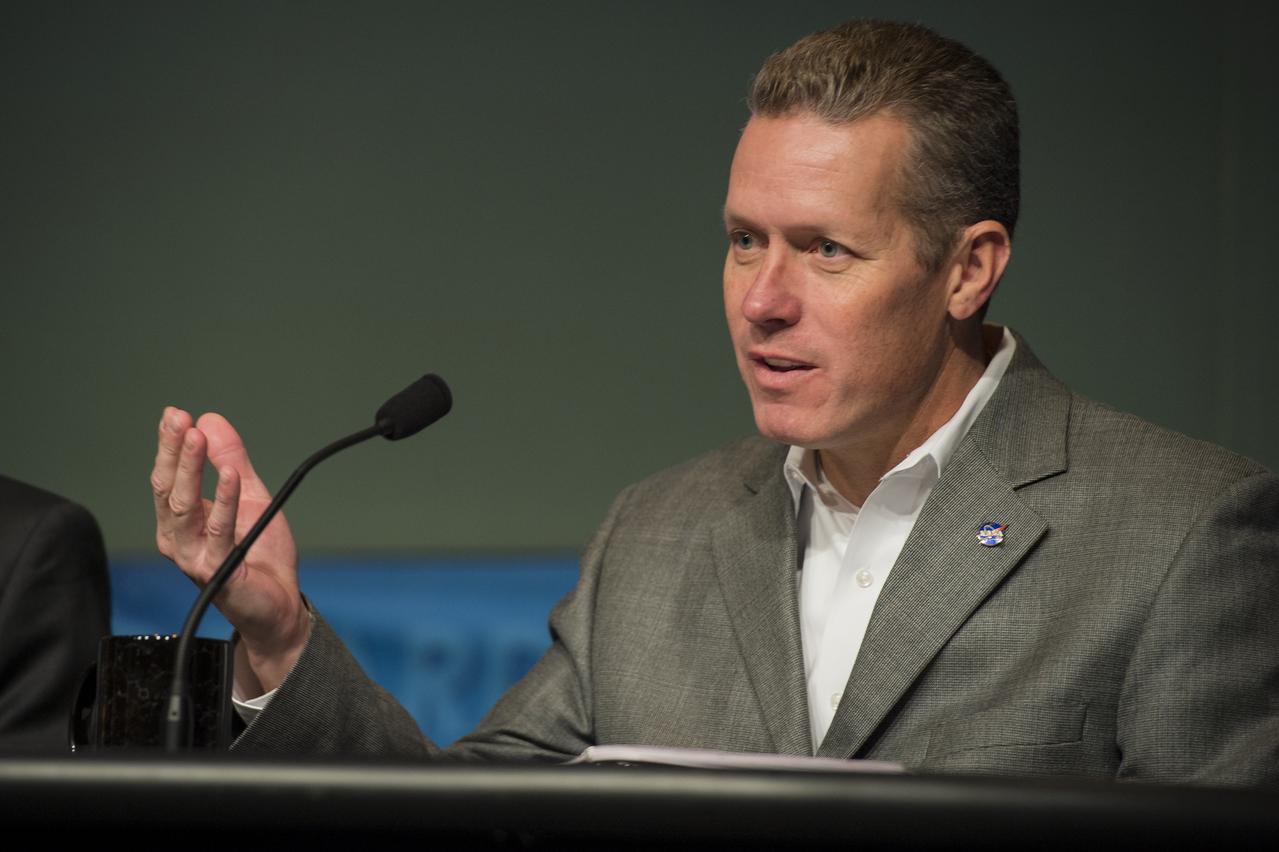
Phil McAlister, Director of Commercial Spaceflight Development at NASA, delivers remarks panel discussion on the Commercial Orbital Transportation Services (COTS) initiative at NASA Headquarters in Washington on Wednesday, November 13, 2013. Through COTS, NASA's partners Space Exploration Technologies Corp. (SpaceX) and Orbital Sciences Corp., developed new U.S. rockets and spacecraft, launched from U.S. soil, capable of transporting cargo to low-Earth orbit and the International Space Station. Photo Credit: (NASA/Jay Westcott)
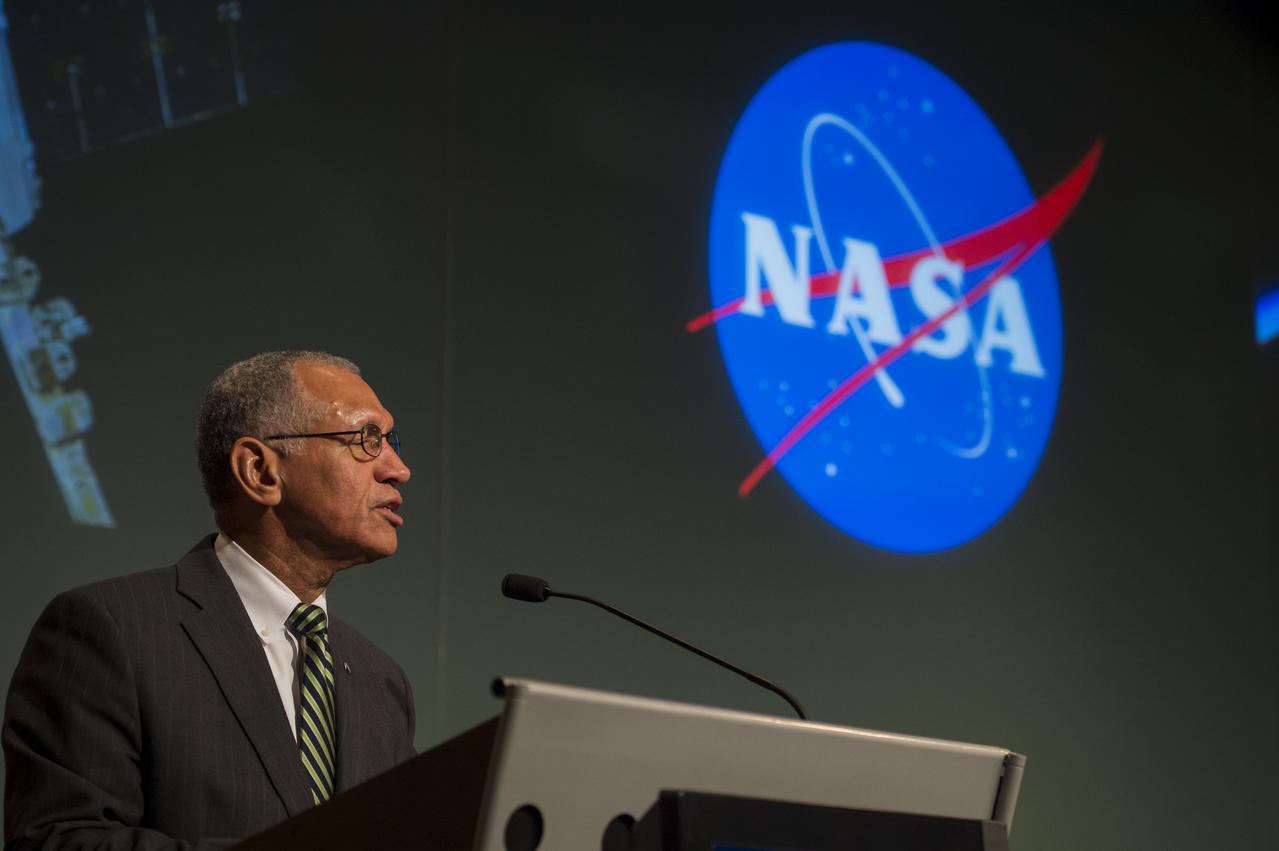
NASA Administrator Charles Bolden delivers remarks before a panel discussion on the Commercial Orbital Transportation Services (COTS) initiative at NASA Headquarters in Washington on Wednesday, November 13, 2013. Through COTS, NASA's partners Space Exploration Technologies Corp. (SpaceX) and Orbital Sciences Corp., developed new U.S. rockets and spacecraft, launched from U.S. soil, capable of transporting cargo to low-Earth orbit and the International Space Station. Photo Credit: (NASA/Jay Westcott)

Gwynne Shotwell, President of SpaceX, delivers remarks panel discussion on the Commercial Orbital Transportation Services (COTS) initiative at NASA Headquarters in Washington on Wednesday, November 13, 2013. Through COTS, NASA's partners Space Exploration Technologies Corp. (SpaceX) and Orbital Sciences Corp., developed new U.S. rockets and spacecraft, launched from U.S. soil, capable of transporting cargo to low-Earth orbit and the International Space Station. Photo Credit: (NASA/Jay Westcott)
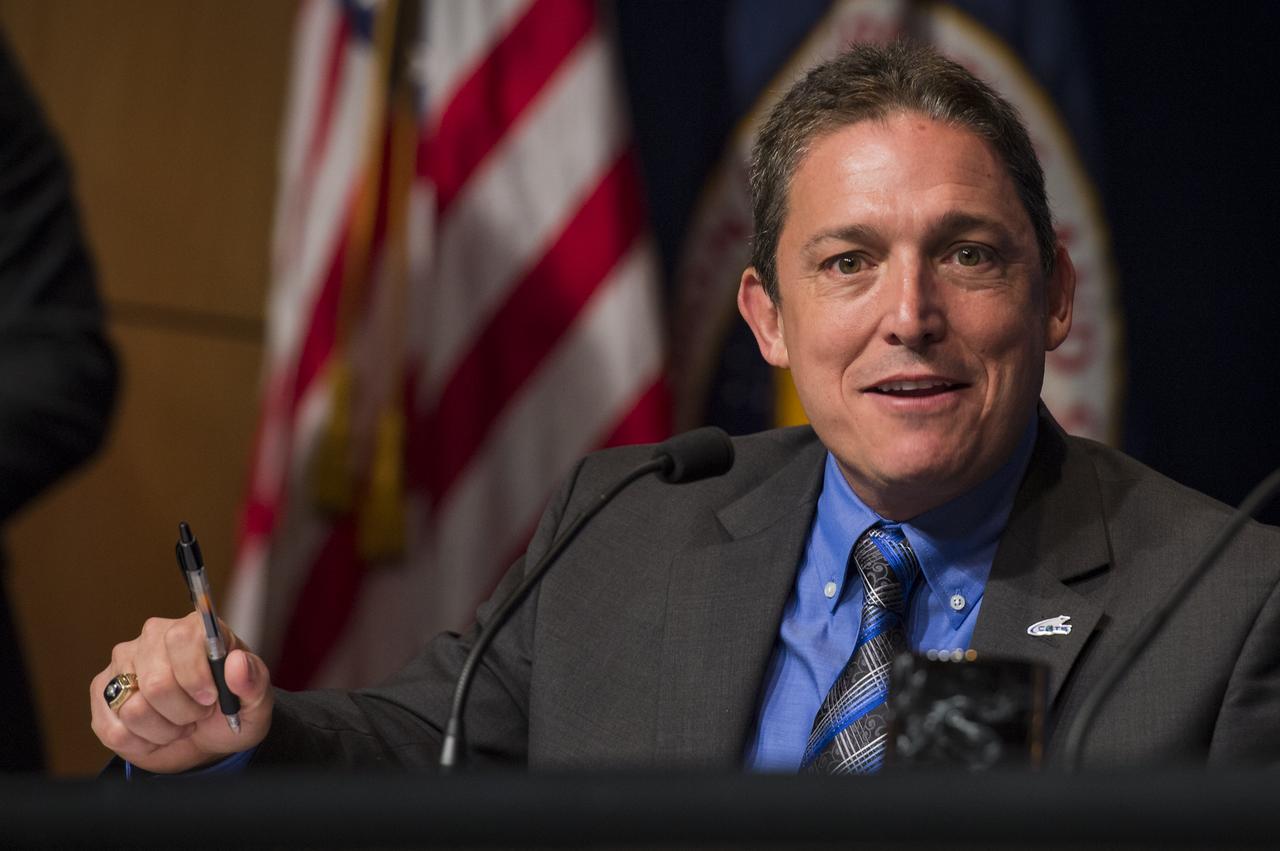
Alan Lindenmoyer, Manager of Commercial Crew and Cargo Program at NASA, delivers remarks panel discussion on the Commercial Orbital Transportation Services (COTS) initiative at NASA Headquarters in Washington on Wednesday, November 13, 2013. Through COTS, NASA's partners Space Exploration Technologies Corp. (SpaceX) and Orbital Sciences Corp., developed new U.S. rockets and spacecraft, launched from U.S. soil, capable of transporting cargo to low-Earth orbit and the International Space Station. Photo Credit: (NASA/Jay Westcott)
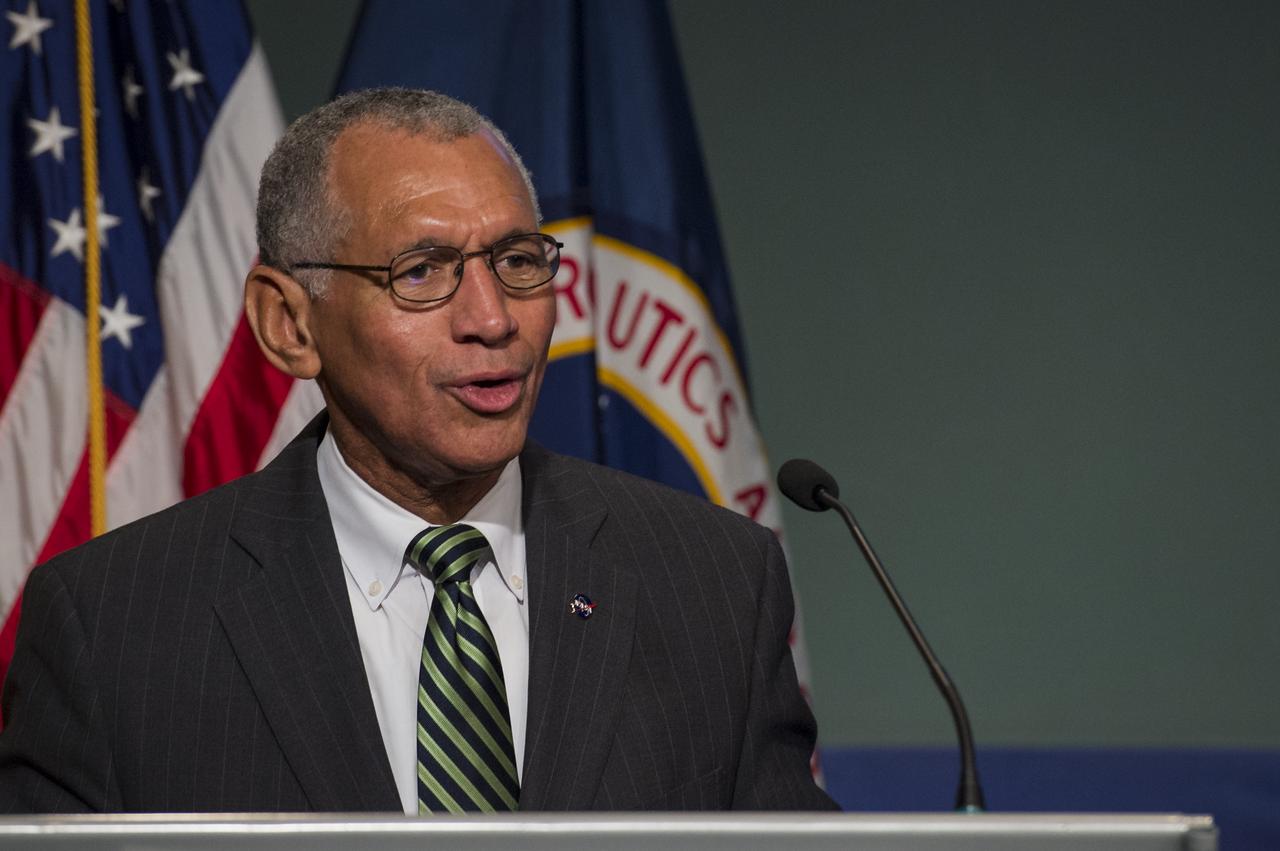
NASA Administrator Charles Bolden delivers remarks before a panel discussion on the Commercial Orbital Transportation Services (COTS) initiative at NASA Headquarters in Washington on Wednesday, November 13, 2013. Through COTS, NASA's partners Space Exploration Technologies Corp. (SpaceX) and Orbital Sciences Corp., developed new U.S. rockets and spacecraft, launched from U.S. soil, capable of transporting cargo to low-Earth orbit and the International Space Station. Photo Credit: (NASA/Jay Westcott)
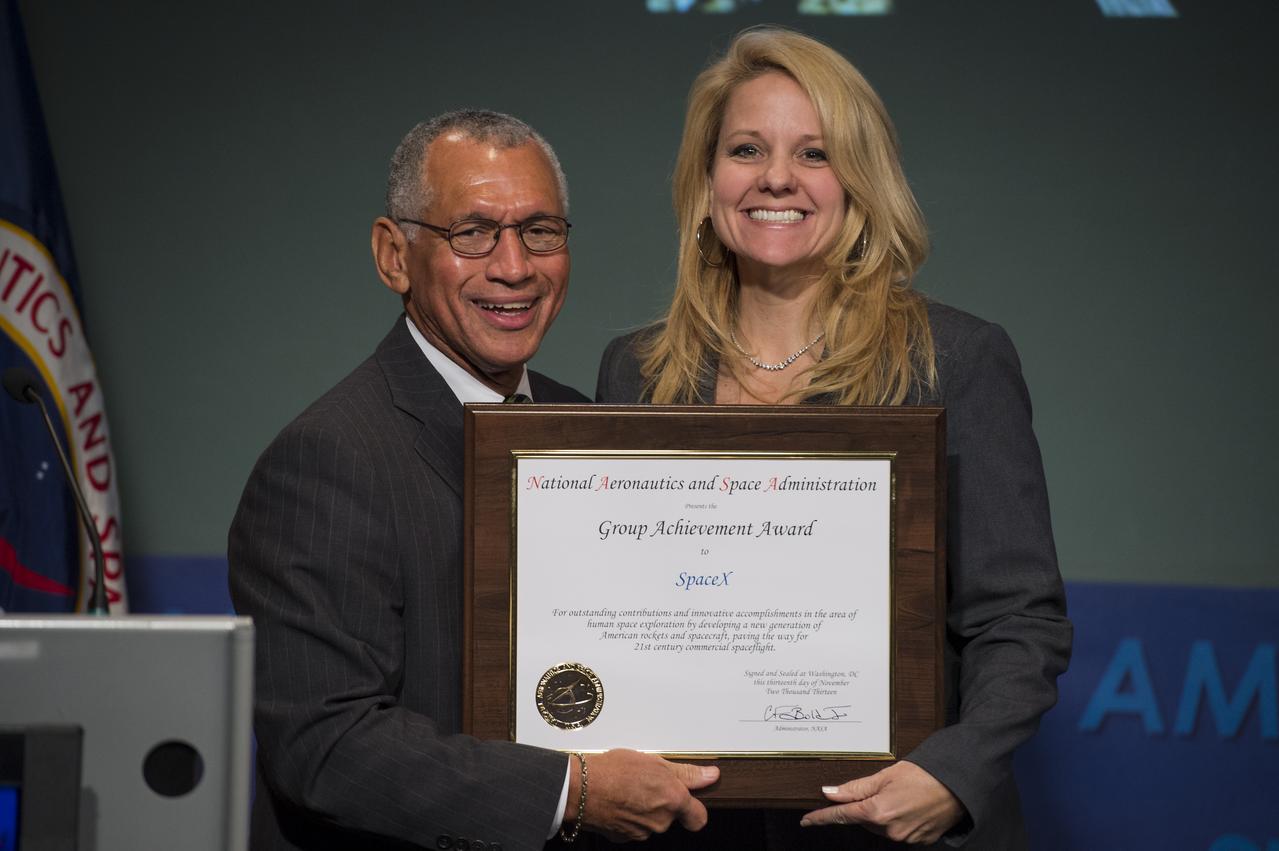
NASA Administrator Charles Bolden, left, presents NASA's Group Achievement Award to Gwynne Shotwell, President, SpaceX, at NASA Headquarters in Washington on Thursday, November 13, 2013. Shotwell received the award for outstanding contributions and innovative accomplishments in the completion of the Commercial Orbital Transportation Services (COTS) initiative. Through COTS, NASA's partners Space Exploration Technologies Corp. (SpaceX) and Orbital Sciences Corp., developed new U.S. rockets and spacecraft, launched from U.S. soil, capable of transporting cargo to low-Earth orbit and the International Space Station. Photo Credit: (NASA/Jay Westcott)
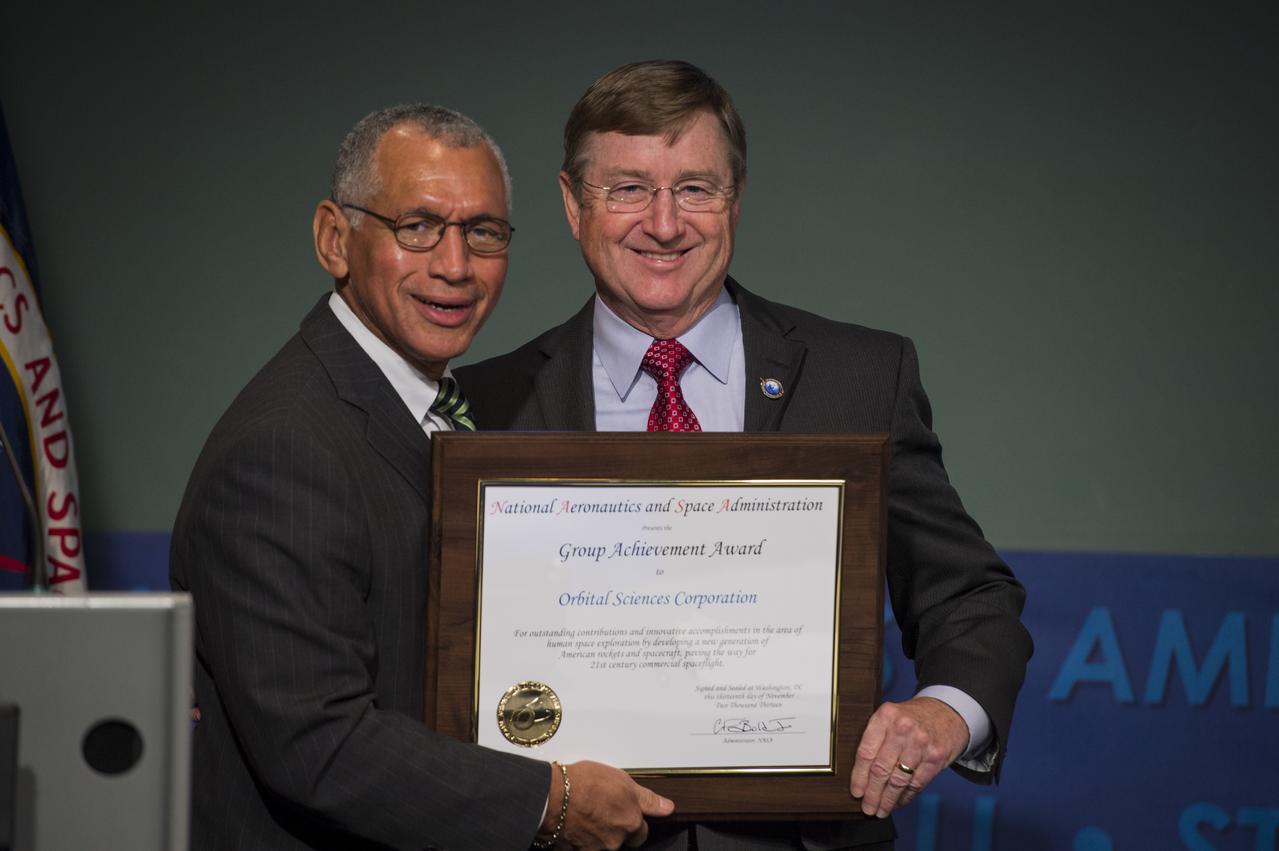
NASA Administrator Charles Bolden, left, presents NASA's Group Achievement Award to (L-R) Frank Culbertson, Executive Vice President and General Manager, Orbital Sciences Advanced Programs Group,at NASA Headquarters in Washington on Thursday, November 13, 2013. Culbertson received the award for outstanding contributions and innovative accomplishments in the completion of the Commercial Orbital Transportation Services (COTS) initiative. Through COTS, NASA's partners Space Exploration Technologies Corp. (SpaceX) and Orbital Sciences Corp., developed new U.S. rockets and spacecraft, launched from U.S. soil, capable of transporting cargo to low-Earth orbit and the International Space Station. Photo Credit: (NASA/Jay Westcott)
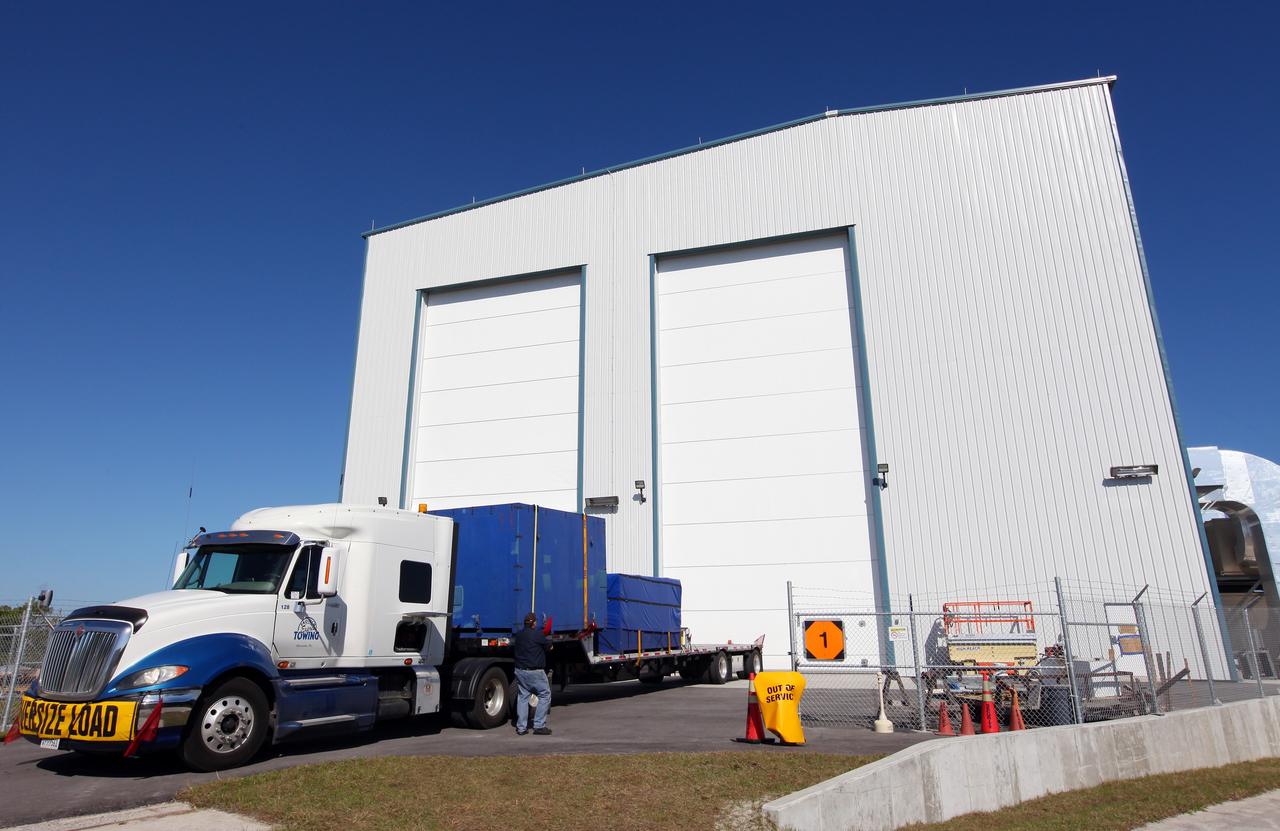
CAPE CANAVERAL, Fla. – A truck arrives at the processing hangar used by Space Exploration Technologies, or SpaceX, at Cape Canaveral Air Force Station, Fla. The truck is carrying solar array fairings to be installed on the Dragon spacecraft undergoing launch preparations inside the hangar. The spacecraft will launch on the upcoming SpaceX CRS-2 mission. The flight will be the second commercial resupply mission to the International Space Station by Space Exploration Technologies, or SpaceX. NASA has contracted for a total of 12 commercial resupply flights from SpaceX and eight from the Orbital Sciences Corp. Photo credit: NASA/Kim Shiflett

CAPE CANAVERAL, Fla. – A truck carrying the first stage of the SpaceX Falcon 9 rocket arrives at Cape Canaveral Air Force Station in Florida. The two-stage rocket will launch the company's Dragon spacecraft on the upcoming SpaceX CRS-2 mission. The flight will be the second commercial resupply mission to the International Space Station by Space Exploration Technologies, or SpaceX. NASA has contracted for a total of 12 commercial resupply flights from SpaceX and eight from the Orbital Sciences Corp. Photo credit: NASA/Jim Grossmann
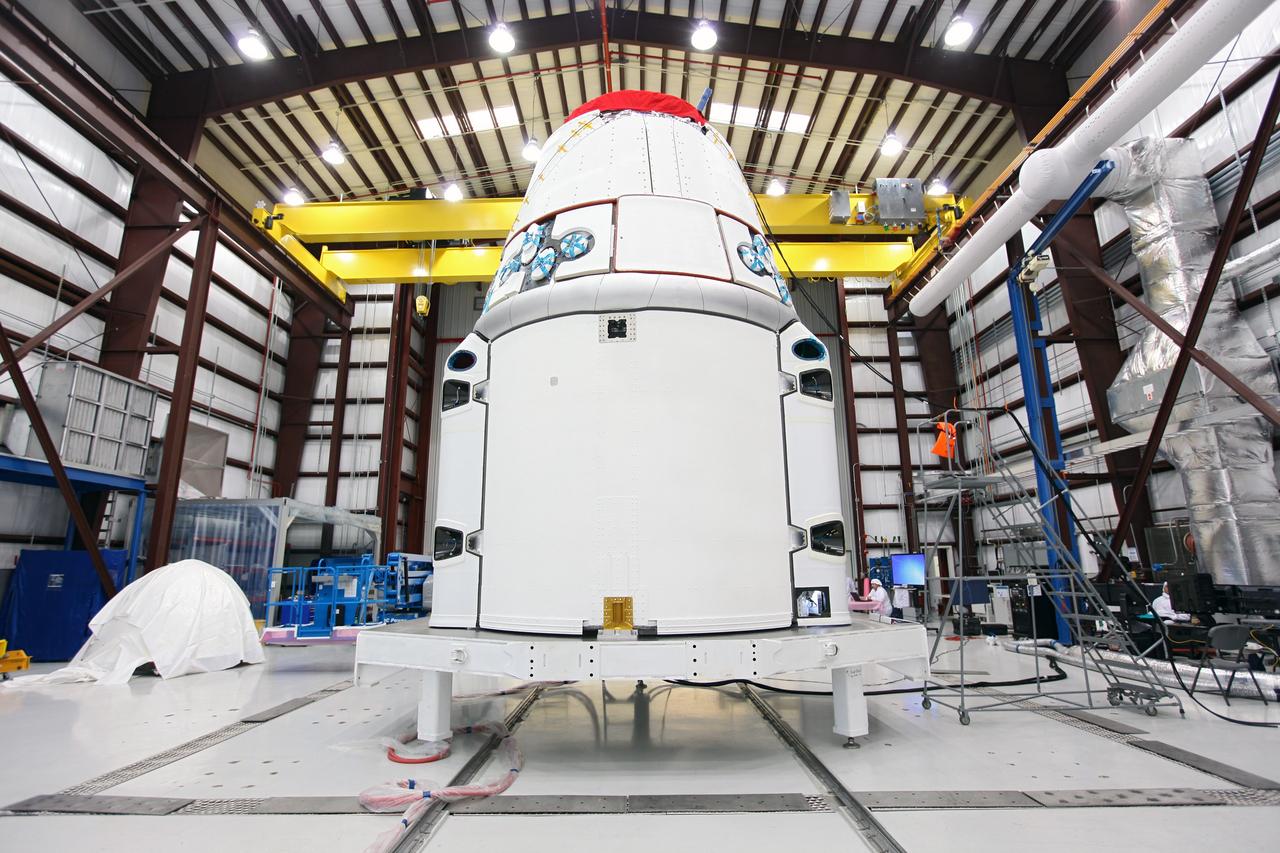
CAPE CANAVERAL, Fla. – The Space Exploration Technologies, or SpaceX, Dragon spacecraft with solar array fairings attached, stands inside a processing hangar at Cape Canaveral Air Force Station, Fla. The spacecraft will launch on the upcoming SpaceX CRS-2 mission. The flight will be the second commercial resupply mission to the International Space Station by SpaceX. NASA has contracted for a total of 12 commercial resupply flights from SpaceX and eight from the Orbital Sciences Corp. Photo credit: NASA/Kim Shiflett
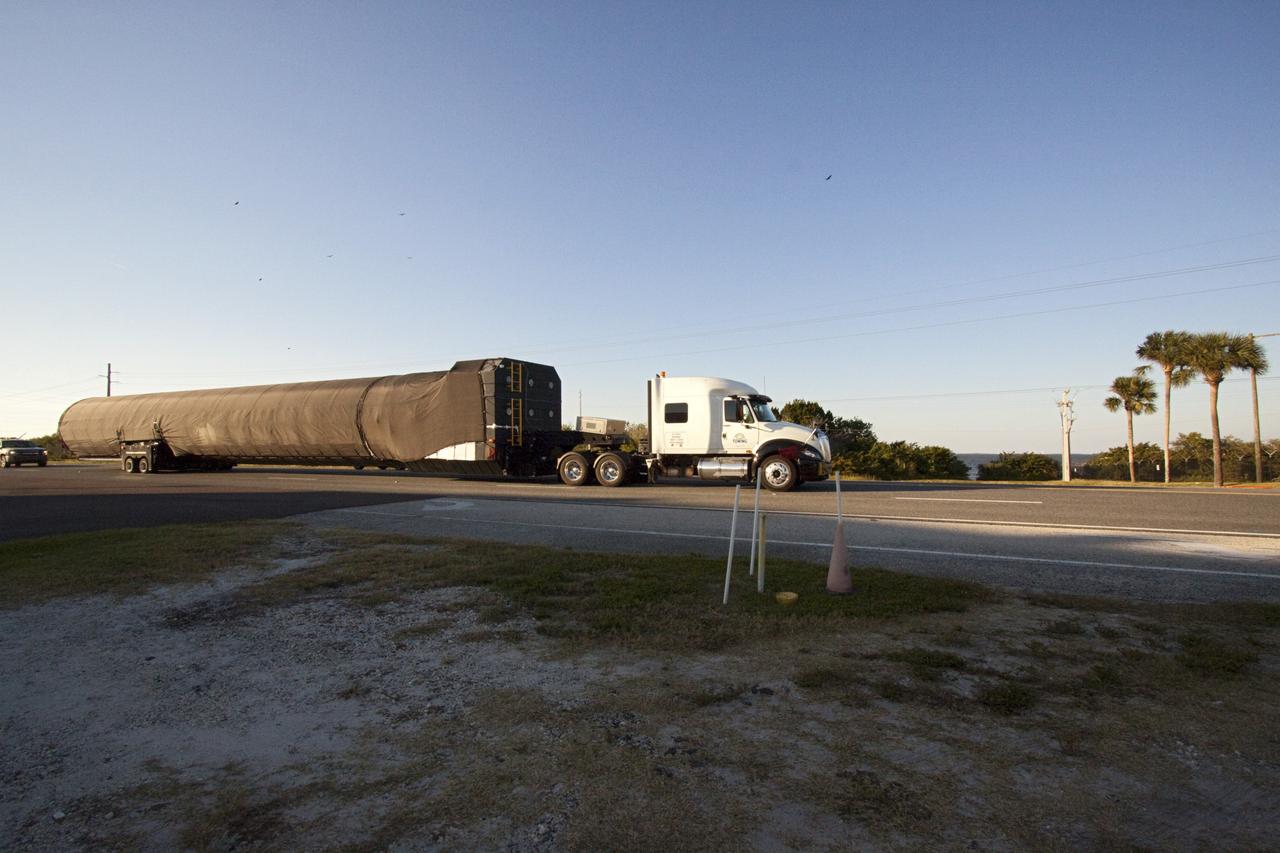
CAPE CANAVERAL, Fla. – A truck carrying the first stage of the SpaceX Falcon 9 rocket arrives at Cape Canaveral Air Force Station in Florida. The two-stage rocket will launch the company's Dragon spacecraft on the upcoming SpaceX CRS-2 mission. The flight will be the second commercial resupply mission to the International Space Station by Space Exploration Technologies, or SpaceX. NASA has contracted for a total of 12 commercial resupply flights from SpaceX and eight from the Orbital Sciences Corp. Photo credit: NASA/Jim Grossmann
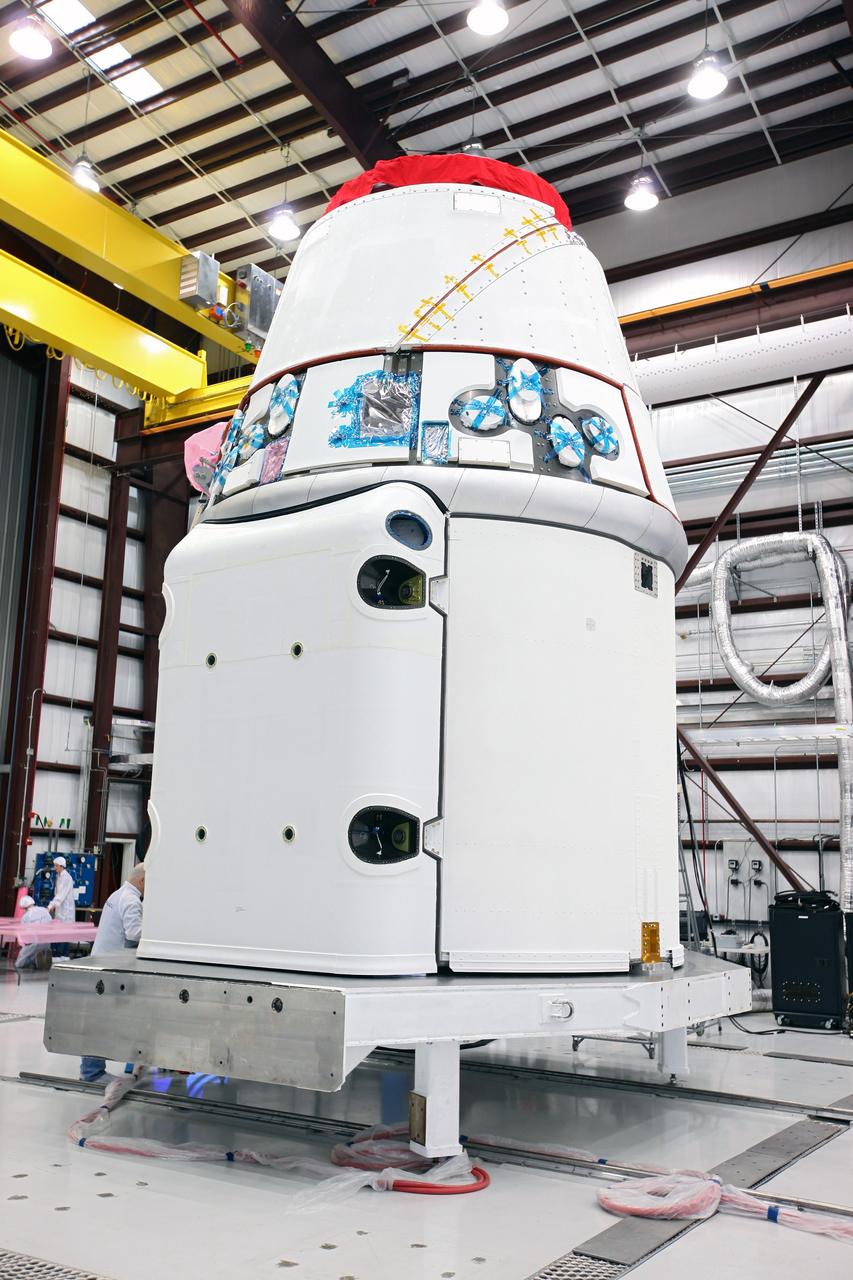
CAPE CANAVERAL, Fla. – The Space Exploration Technologies, or SpaceX, Dragon spacecraft with solar array fairings attached, stands inside a processing hangar at Cape Canaveral Air Force Station, Fla. The spacecraft will launch on the upcoming SpaceX CRS-2 mission. The flight will be the second commercial resupply mission to the International Space Station by SpaceX. NASA has contracted for a total of 12 commercial resupply flights from SpaceX and eight from the Orbital Sciences Corp. Photo credit: NASA/Kim Shiflett
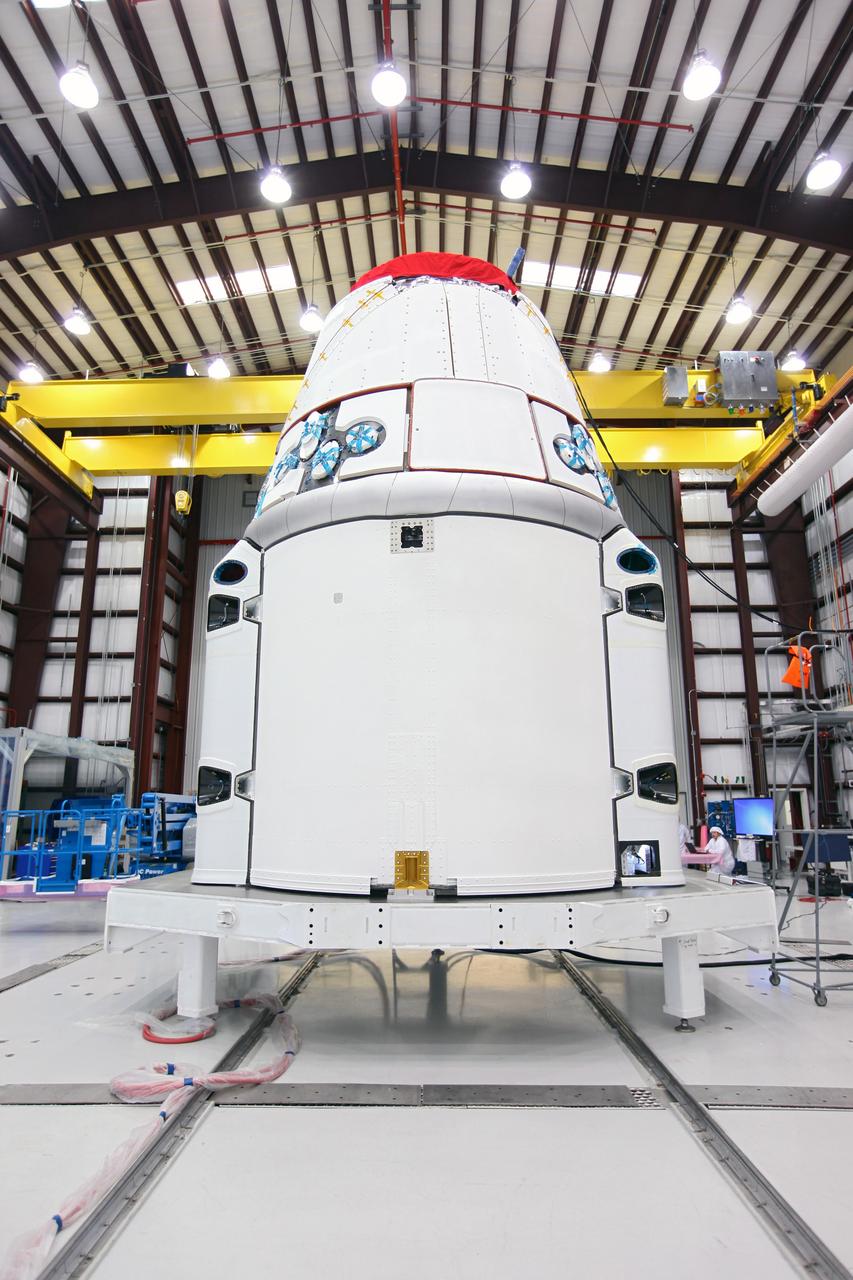
CAPE CANAVERAL, Fla. – The Space Exploration Technologies, or SpaceX, Dragon spacecraft with solar array fairings attached, stands inside a processing hangar at Cape Canaveral Air Force Station, Fla. The spacecraft will launch on the upcoming SpaceX CRS-2 mission. The flight will be the second commercial resupply mission to the International Space Station by SpaceX. NASA has contracted for a total of 12 commercial resupply flights from SpaceX and eight from the Orbital Sciences Corp. Photo credit: NASA/Kim Shiflett
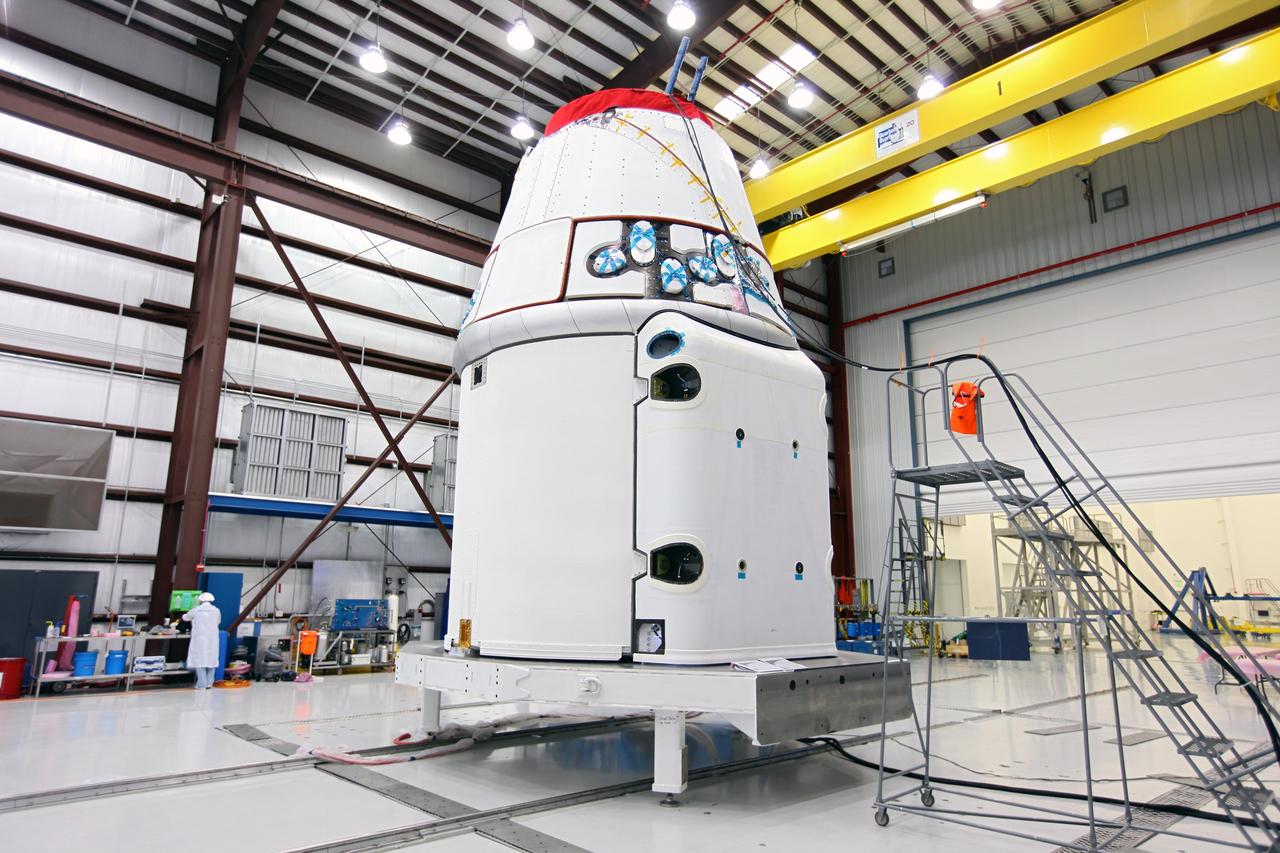
CAPE CANAVERAL, Fla. – The Space Exploration Technologies, or SpaceX, Dragon spacecraft with solar array fairings attached, stands inside a processing hangar at Cape Canaveral Air Force Station, Fla. The spacecraft will launch on the upcoming SpaceX CRS-2 mission. The flight will be the second commercial resupply mission to the International Space Station by SpaceX. NASA has contracted for a total of 12 commercial resupply flights from SpaceX and eight from the Orbital Sciences Corp. Photo credit: NASA/Kim Shiflett

CAPE CANAVERAL, Fla. – A truck carries the first stage of the SpaceX Falcon 9 rocket through the gate at Cape Canaveral Air Force Station in Florida. The two-stage rocket will launch the company's Dragon spacecraft on the upcoming SpaceX CRS-2 mission. The flight will be the second commercial resupply mission to the International Space Station by Space Exploration Technologies, or SpaceX. NASA has contracted for a total of 12 commercial resupply flights from SpaceX and eight from the Orbital Sciences Corp. Photo credit: NASA/Jim Grossmann
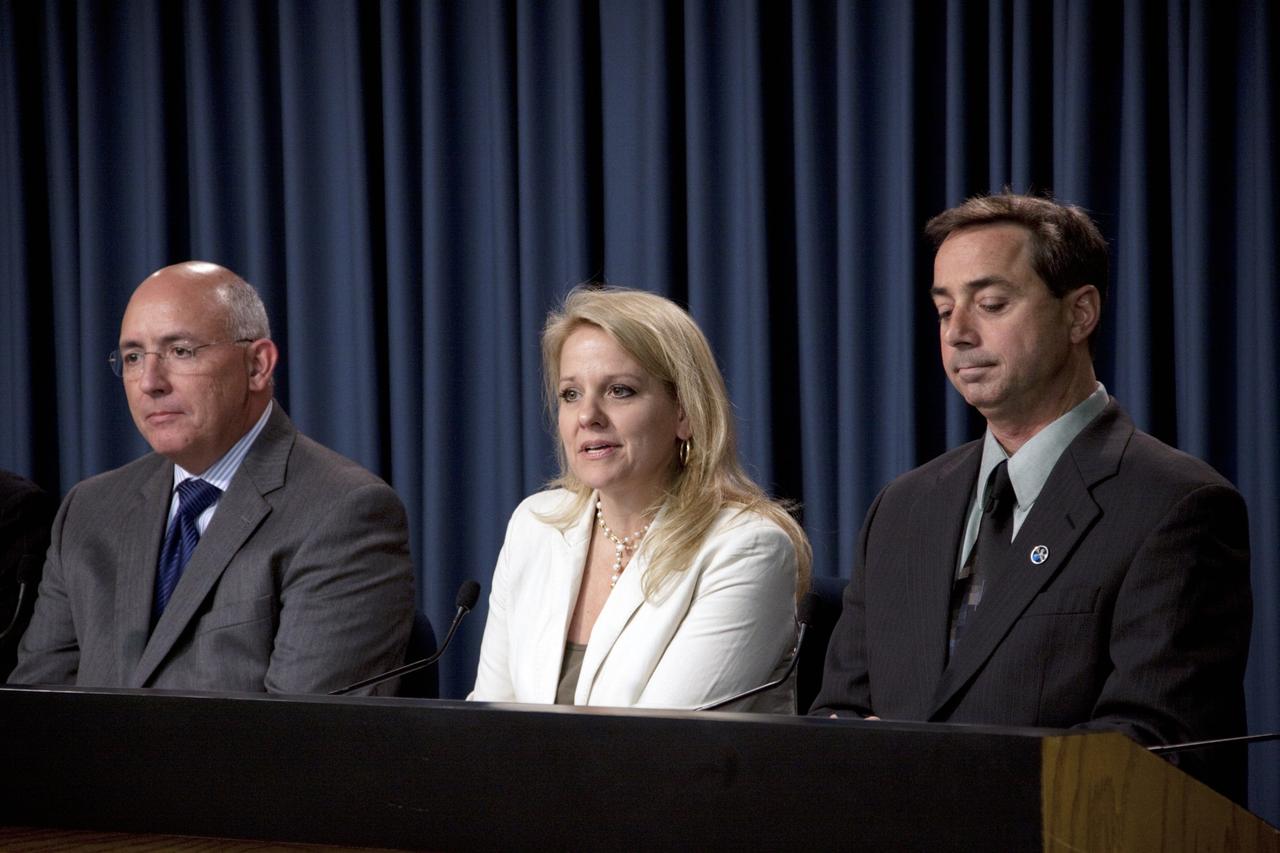
CAPE CANAVERAL, Fla. -- Gwynne Shotwell, president of Space Exploration Technologies Corp. or SpaceX, participates in a prelaunch news conference in Kennedy Space Center's Press Site auditorium in Florida. To her left is Mike Suffredini, program manager, International Space Station, Johnson Space Center and to her right is Mike McAleenan, launch weather officer, 45th Weather Squadron, Cape Canaveral Air Force Station The news conference provided the media with a status on the readiness to launch NASA's first Commercial Resupply Services, or CRS-1, mission to the International Space Station. Space Exploration Technologies Corp., or SpaceX, built both the mission's Falcon 9 rocket and Dragon capsule. Launch is scheduled for 8:35 p.m. EDT on Oct. 7 from Space Launch Complex 40 on Cape Canaveral Air Force Station. SpaceX CRS-1 is an important step toward making America’s microgravity research program self-sufficient by providing a way to deliver and return significant amounts of cargo, including science experiments, to and from the orbiting laboratory. NASA has contracted for 12 commercial resupply flights from SpaceX and eight from the Orbital Sciences Corp. For more information, visit http://www.nasa.gov/mission_pages/station/living/launch/index.html. Photo credit: NASA/Jim Grossmann The news conference provided the media with a status on the readiness to launch NASA's first Commercial Resupply Services, or CRS-1, mission to the International Space Station. Space Exploration Technologies Corp., or SpaceX, built both the mission's Falcon 9 rocket and Dragon capsule. Launch is scheduled for 8:35 p.m. EDT on Oct. 7 from Space Launch Complex 40 on Cape Canaveral Air Force Station. SpaceX CRS-1 is an important step toward making America’s microgravity research program self-sufficient by providing a way to deliver and return significant amounts of cargo, including science experiments, to and from the orbiting laboratory. NASA has contracted for 12 commercial resupply flights from SpaceX and eight from the Orbital Sciences Corp. For more information, visit http://www.nasa.gov/mission_pages/station/living/launch/index.html. Photo credit: NASA/Jim Grossmann
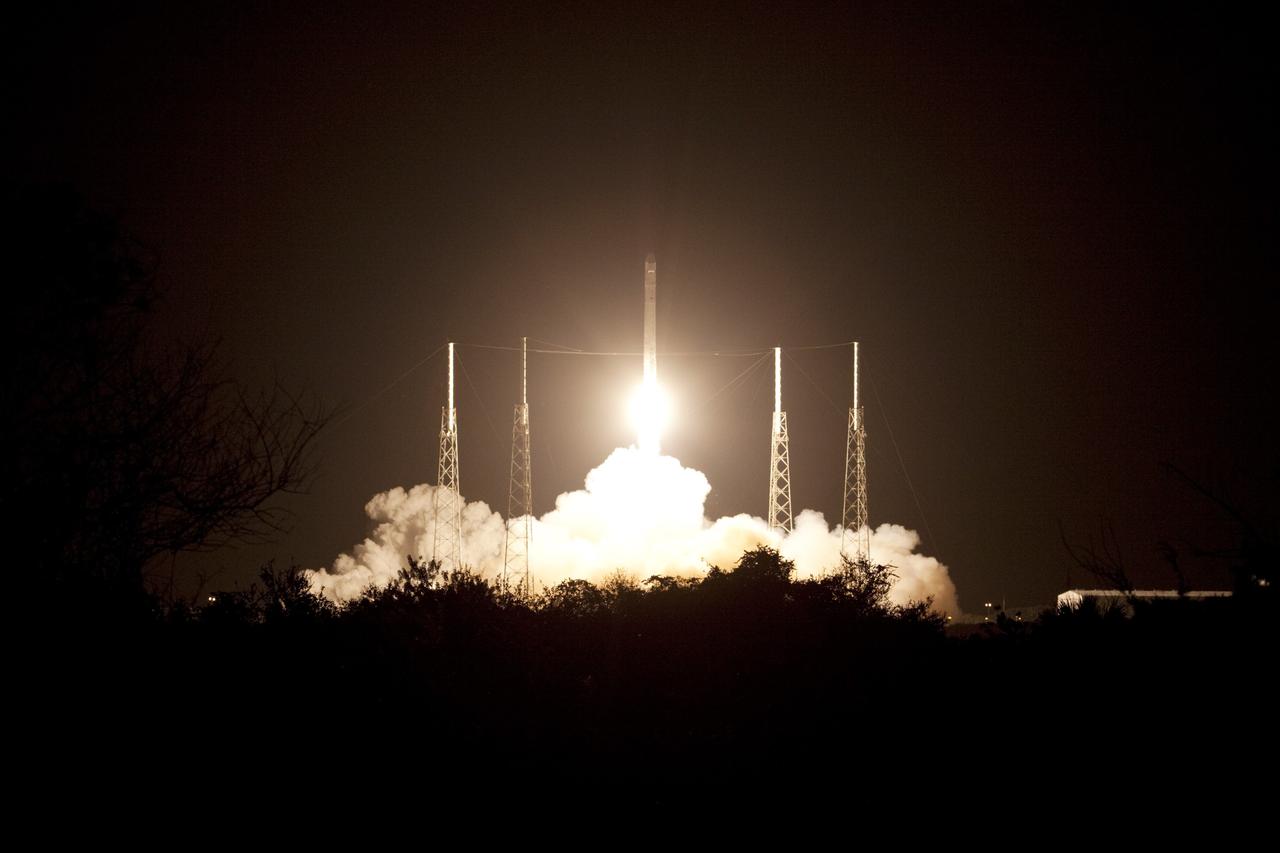
CAPE CANAVERAL, Fla. -- A rumble is heard across the Space Coast as a Falcon 9 rocket lifts off Space Launch Complex 40 on Cape Canaveral Air Force Station in Florida at 8:35 p.m. EDT, carrying a Dragon capsule to orbit. Space Exploration Technologies Corp., or SpaceX, built both the rocket and capsule for NASA's first Commercial Resupply Services, or CRS-1, mission to the International Space Station. SpaceX CRS-1 is an important step toward making America’s microgravity research program self-sufficient by providing a way to deliver and return significant amounts of cargo, including science experiments, to and from the orbiting laboratory. NASA has contracted for 12 commercial resupply flights from SpaceX and eight from the Orbital Sciences Corp. For more information, visit http://www.nasa.gov/mission_pages/station/living/launch/index.html. Photo credit: NASA/Jim Grossmann
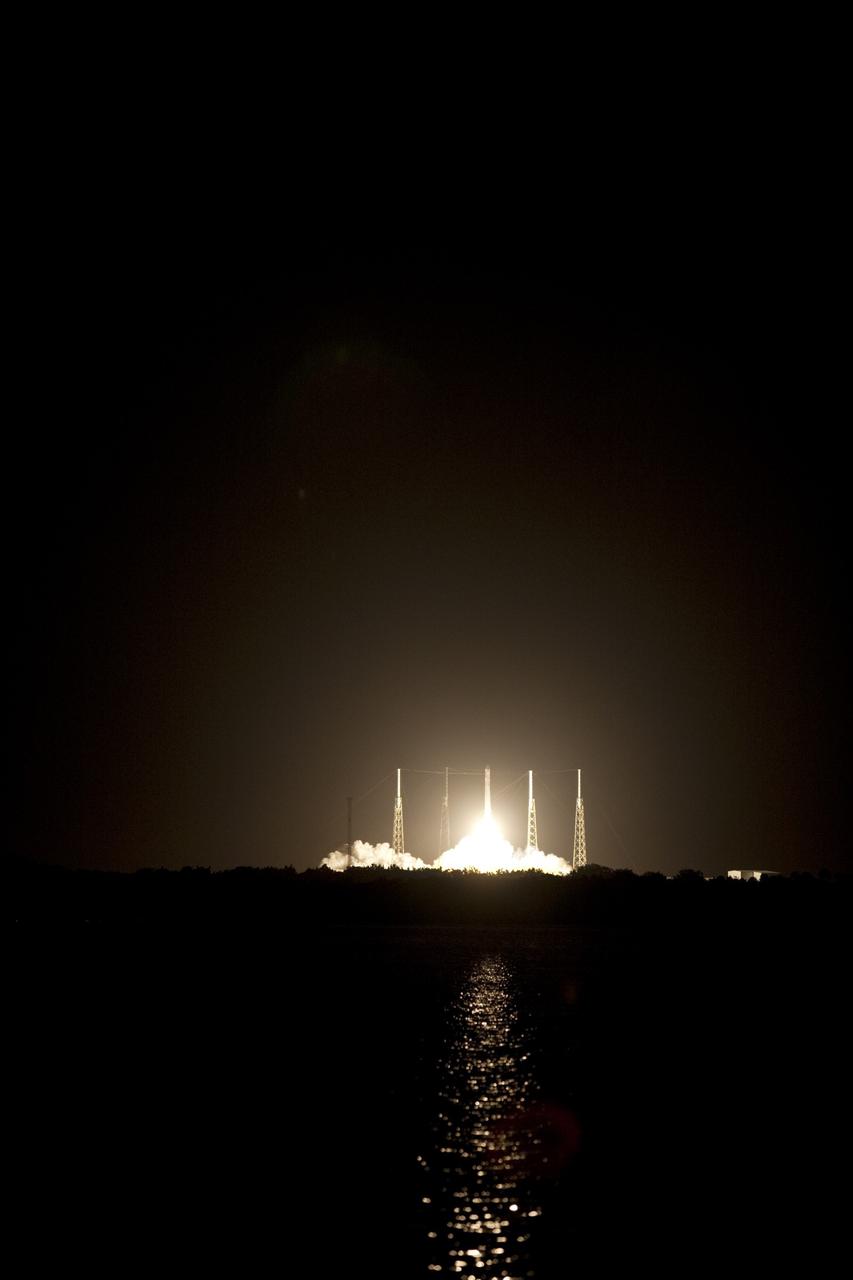
CAPE CANAVERAL, Fla. -- A rumble is heard across the Space Coast as a Falcon 9 rocket lifts off Space Launch Complex 40 on Cape Canaveral Air Force Station in Florida at 8:35 p.m. EDT, carrying a Dragon capsule to orbit. Space Exploration Technologies Corp., or SpaceX, built both the rocket and capsule for NASA's first Commercial Resupply Services, or CRS-1, mission to the International Space Station. SpaceX CRS-1 is an important step toward making America’s microgravity research program self-sufficient by providing a way to deliver and return significant amounts of cargo, including science experiments, to and from the orbiting laboratory. NASA has contracted for 12 commercial resupply flights from SpaceX and eight from the Orbital Sciences Corp. For more information, visit http://www.nasa.gov/mission_pages/station/living/launch/index.html. Photo credit: NASA/Glenn Benson
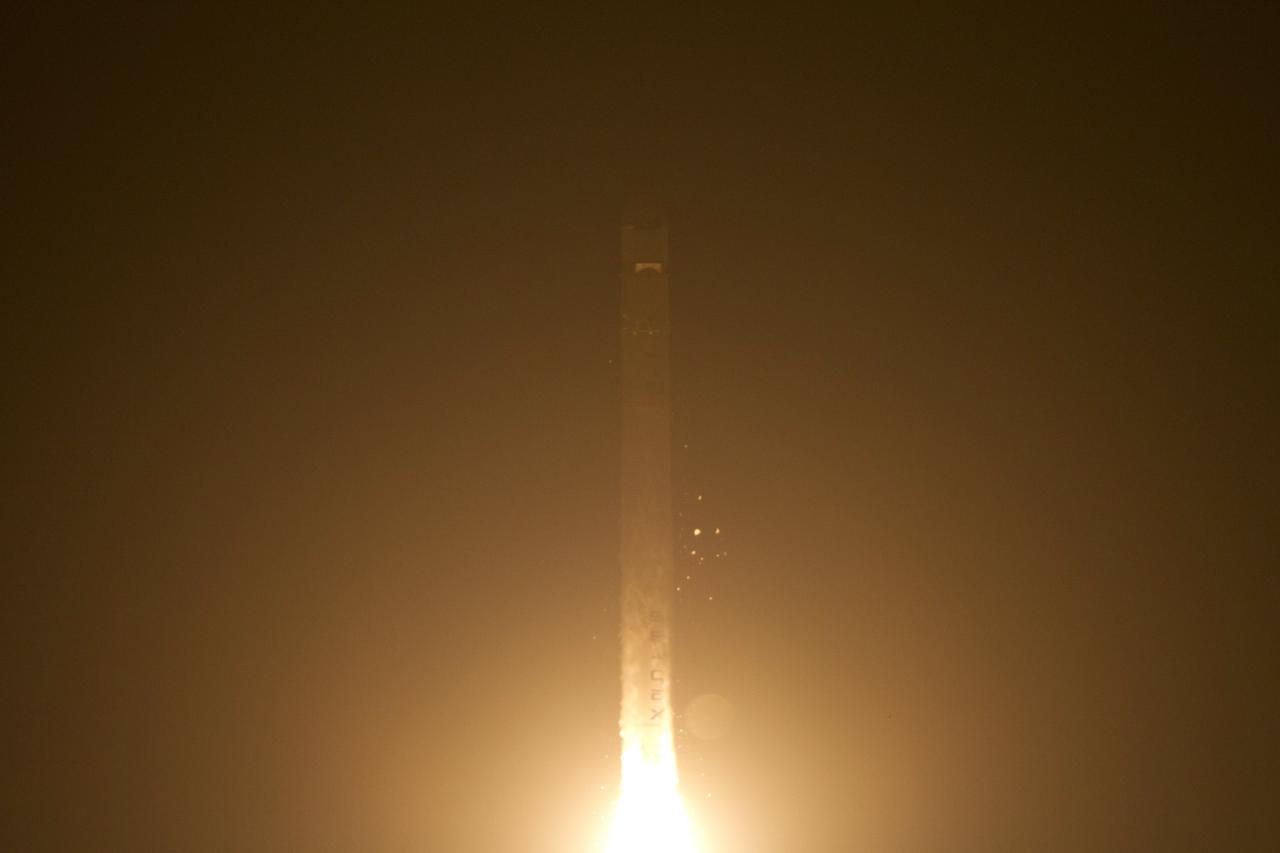
CAPE CANAVERAL, Fla. - At Space Launch Complex 40 on Cape Canaveral Air Force Station in Florida a Falcon 9 rocket carrying a Dragon capsule lifts off at 8:35 p.m. EDT. Space Exploration Technologies Corp., or SpaceX, built both the rocket and capsule for NASA's first Commercial Resupply Services, or CRS-1, mission to the International Space Station. SpaceX CRS-1 is an important step toward making America’s microgravity research program self-sufficient by providing a way to deliver and return significant amounts of cargo, including science experiments, to and from the orbiting laboratory. NASA has contracted for 12 commercial resupply flights from SpaceX and eight from the Orbital Sciences Corp. For more information, visit http://www.nasa.gov/mission_pages/station/living/launch/index.html Photo credit: NASA/Ken Allen
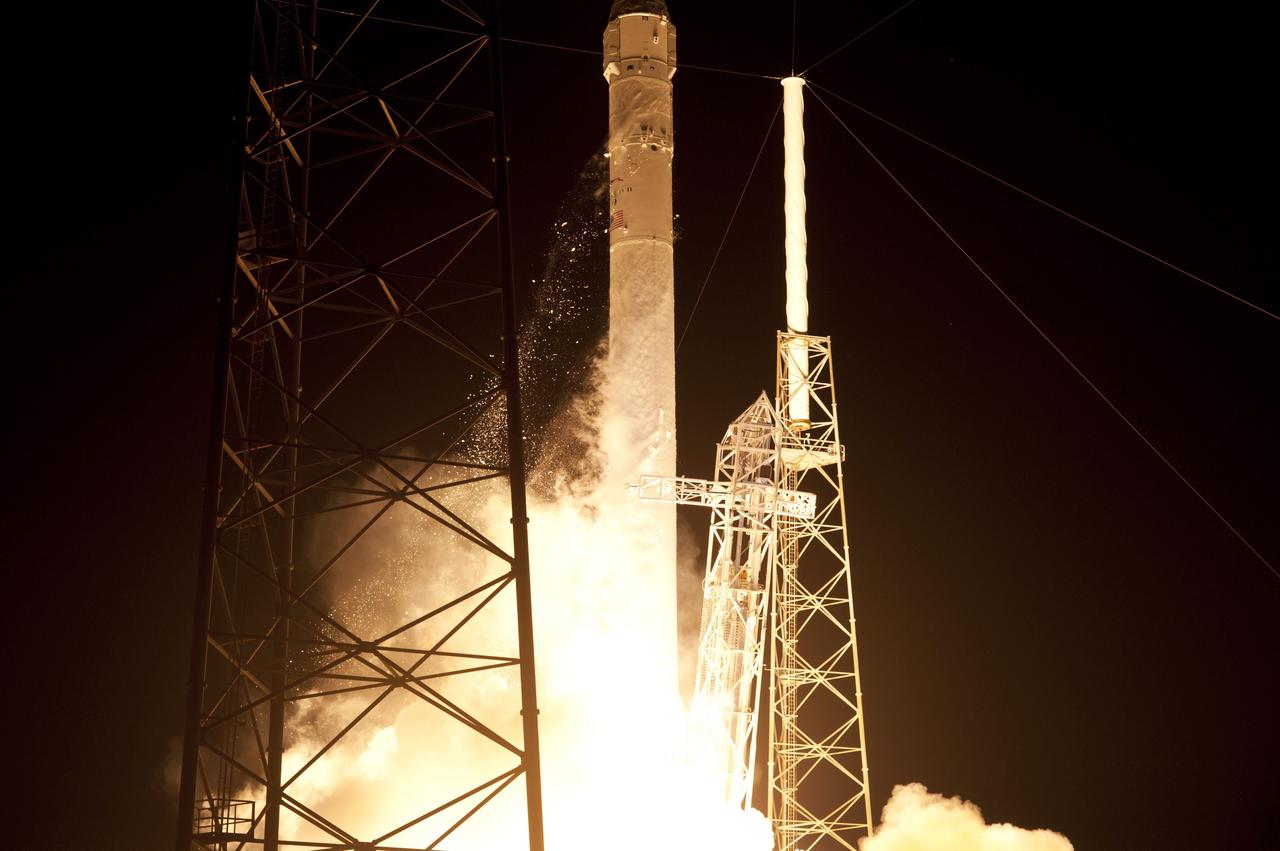
CAPE CANAVERAL, Fla. - Space Launch Complex 40 on Cape Canaveral Air Force Station in Florida comes alive as the Merlin engines ignite under the Falcon 9 rocket carrying a Dragon capsule to orbit. Liftoff was at 8:35 p.m. EDT. Space Exploration Technologies Corp., or SpaceX, built both the rocket and capsule for NASA's first Commercial Resupply Services, or CRS-1, mission to the International Space Station. SpaceX CRS-1 is an important step toward making America’s microgravity research program self-sufficient by providing a way to deliver and return significant amounts of cargo, including science experiments, to and from the orbiting laboratory. NASA has contracted for 12 commercial resupply flights from SpaceX and eight from the Orbital Sciences Corp. For more information, visit http://www.nasa.gov/mission_pages/station/living/launch/index.html Photo credit: NASA/Rusty Backer
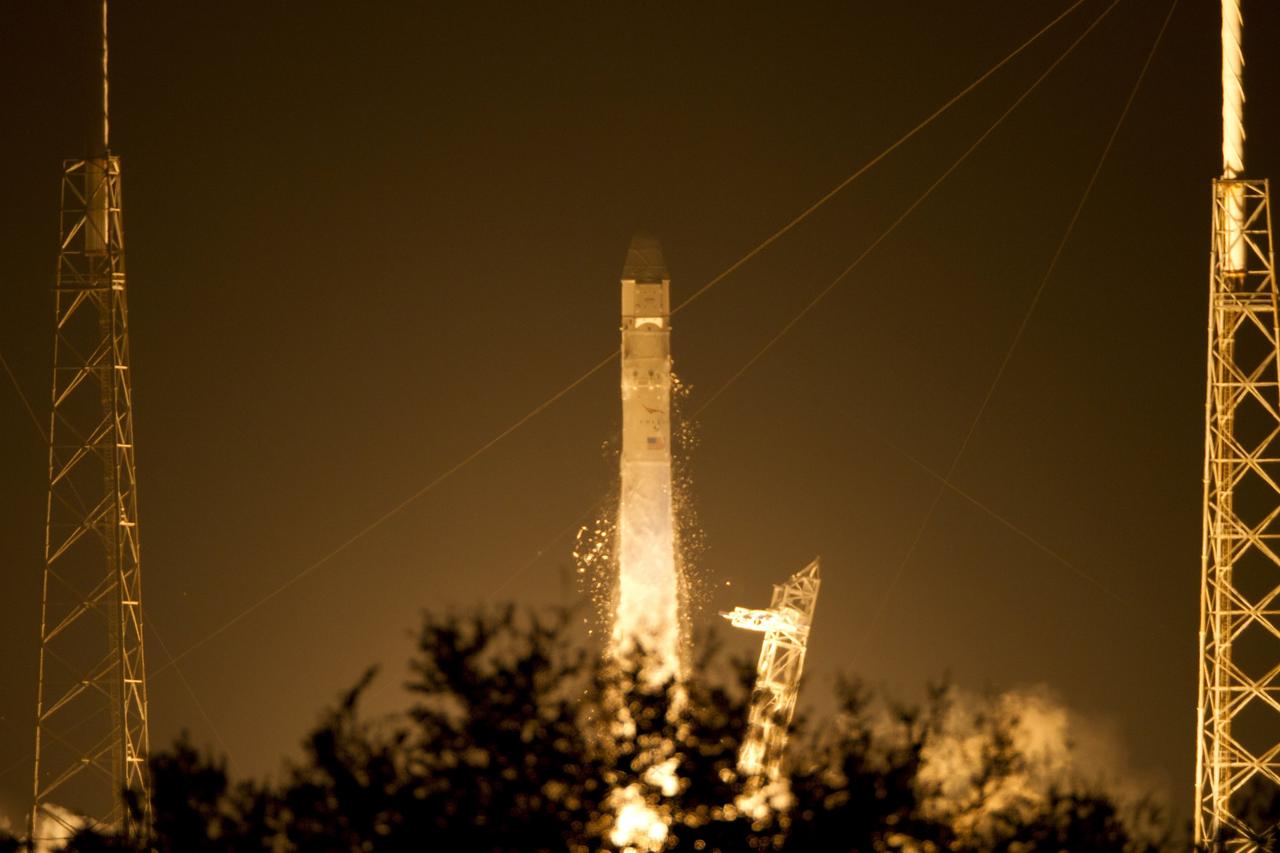
CAPE CANAVERAL, Fla. - At Space Launch Complex 40 on Cape Canaveral Air Force Station in Florida a Falcon 9 rocket carrying a Dragon capsule lifts off at 8:35 p.m. EDT. Space Exploration Technologies Corp., or SpaceX, built both the rocket and capsule for NASA's first Commercial Resupply Services, or CRS-1, mission to the International Space Station. SpaceX CRS-1 is an important step toward making America’s microgravity research program self-sufficient by providing a way to deliver and return significant amounts of cargo, including science experiments, to and from the orbiting laboratory. NASA has contracted for 12 commercial resupply flights from SpaceX and eight from the Orbital Sciences Corp. For more information, visit http://www.nasa.gov/mission_pages/station/living/launch/index.html Photo credit: NASA/Ken Allen
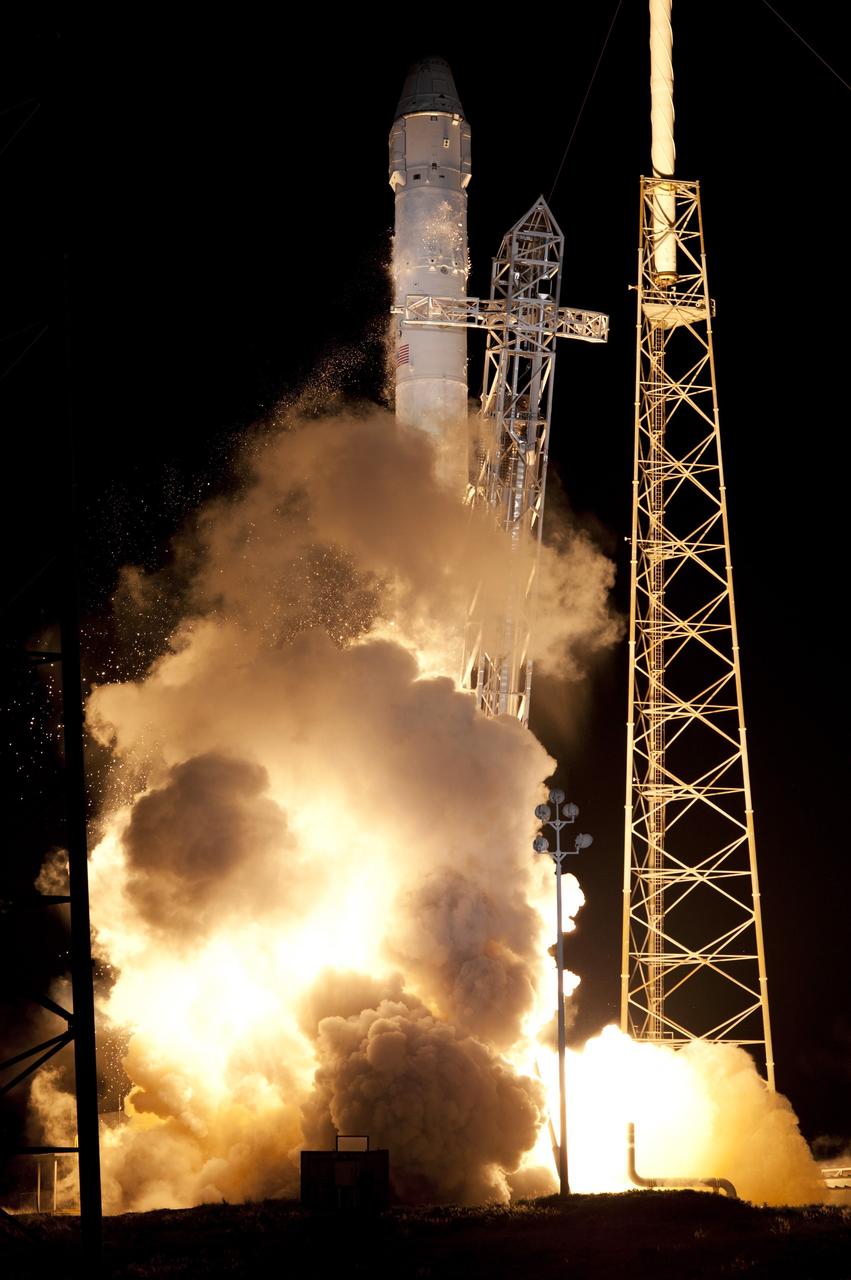
CAPE CANAVERAL, Fla. - Space Launch Complex 40 on Cape Canaveral Air Force Station in Florida comes alive as the Merlin engines ignite under the Falcon 9 rocket carrying a Dragon capsule to orbit. Liftoff was at 8:35 p.m. EDT. Space Exploration Technologies Corp., or SpaceX, built both the rocket and capsule for NASA's first Commercial Resupply Services, or CRS-1, mission to the International Space Station. SpaceX CRS-1 is an important step toward making America’s microgravity research program self-sufficient by providing a way to deliver and return significant amounts of cargo, including science experiments, to and from the orbiting laboratory. NASA has contracted for 12 commercial resupply flights from SpaceX and eight from the Orbital Sciences Corp. For more information, visit http://www.nasa.gov/mission_pages/station/living/launch/index.html Photo credit: NASA/ Rick Wetherington and Tim Powers
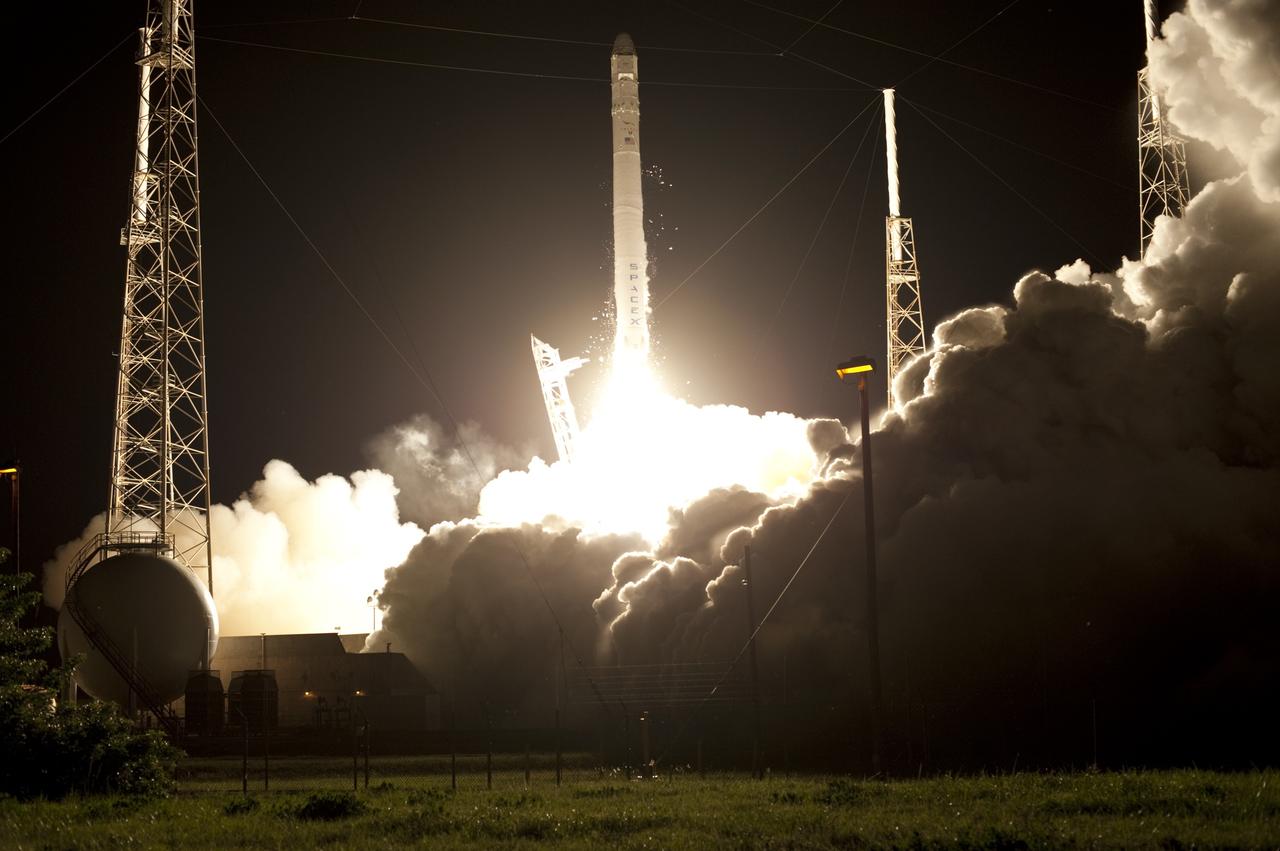
CAPE CANAVERAL, Fla. -- Space Launch Complex 40 on Cape Canaveral Air Force Station in Florida comes alive as the Merlin engines ignite under the Falcon 9 rocket carrying a Dragon capsule to orbit. Liftoff was at 8:35 p.m. EDT. Space Exploration Technologies Corp., or SpaceX, built both the rocket and capsule for NASA's first Commercial Resupply Services, or CRS-1, mission to the International Space Station. SpaceX CRS-1 is an important step toward making America’s microgravity research program self-sufficient by providing a way to deliver and return significant amounts of cargo, including science experiments, to and from the orbiting laboratory. NASA has contracted for 12 commercial resupply flights from SpaceX and eight from the Orbital Sciences Corp. For more information, visit http://www.nasa.gov/mission_pages/station/living/launch/index.html. Photo credit: NASA/Tony Gray and Rick Wetherington
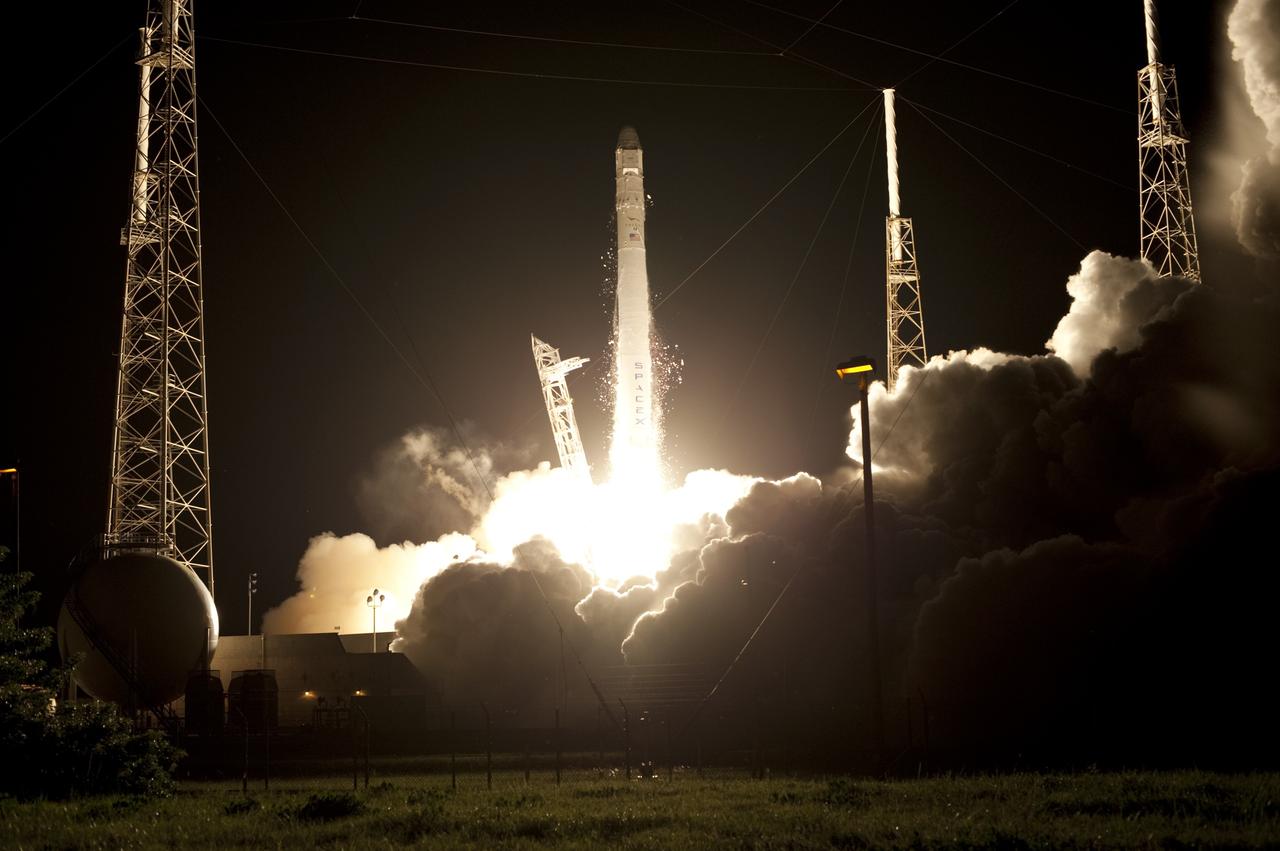
CAPE CANAVERAL, Fla. -- A Dragon capsule begins its much-anticipated journey to orbit atop a Falcon 9 rocket at 8:35 p.m. EDT from Space Launch Complex 40 on Cape Canaveral Air Force Station in Florida. Space Exploration Technologies Corp., or SpaceX, built both the rocket and capsule for NASA's first Commercial Resupply Services, or CRS-1, mission to the International Space Station. SpaceX CRS-1 is an important step toward making America’s microgravity research program self-sufficient by providing a way to deliver and return significant amounts of cargo, including science experiments, to and from the orbiting laboratory. NASA has contracted for 12 commercial resupply flights from SpaceX and eight from the Orbital Sciences Corp. For more information, visit http://www.nasa.gov/mission_pages/station/living/launch/index.html. Photo credit: NASA/Tony Gray and Rick Wetherington
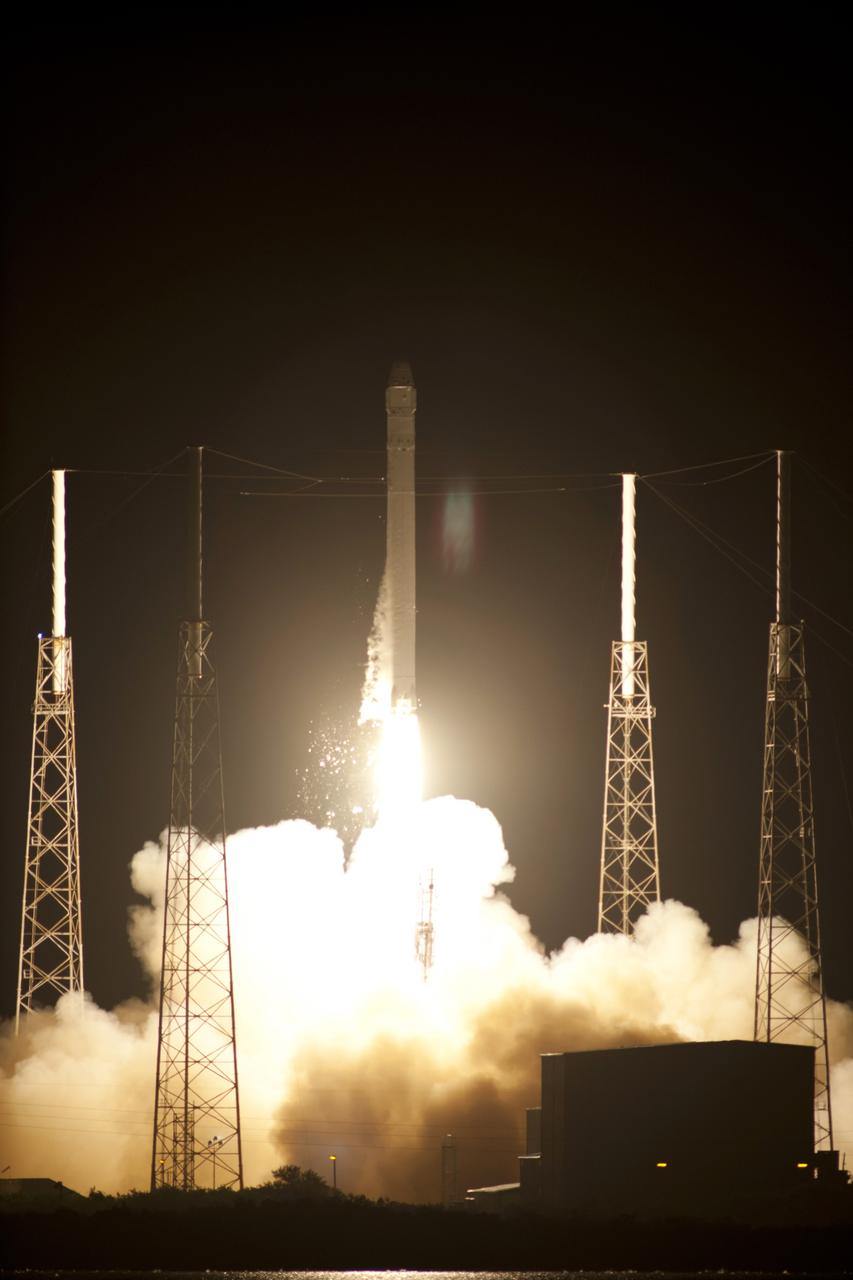
CAPE CANAVERAL, Fla. - Space Launch Complex 40 on Cape Canaveral Air Force Station in Florida comes alive as the Merlin engines ignite under the Falcon 9 rocket carrying a Dragon capsule to orbit. Liftoff was at 8:35 p.m. EDT. Space Exploration Technologies Corp., or SpaceX, built both the rocket and capsule for NASA's first Commercial Resupply Services, or CRS-1, mission to the International Space Station. SpaceX CRS-1 is an important step toward making America’s microgravity research program self-sufficient by providing a way to deliver and return significant amounts of cargo, including science experiments, to and from the orbiting laboratory. NASA has contracted for 12 commercial resupply flights from SpaceX and eight from the Orbital Sciences Corp. For more information, visit http://www.nasa.gov/mission_pages/station/living/launch/index.html Photo credit: NASA/Tony Gray
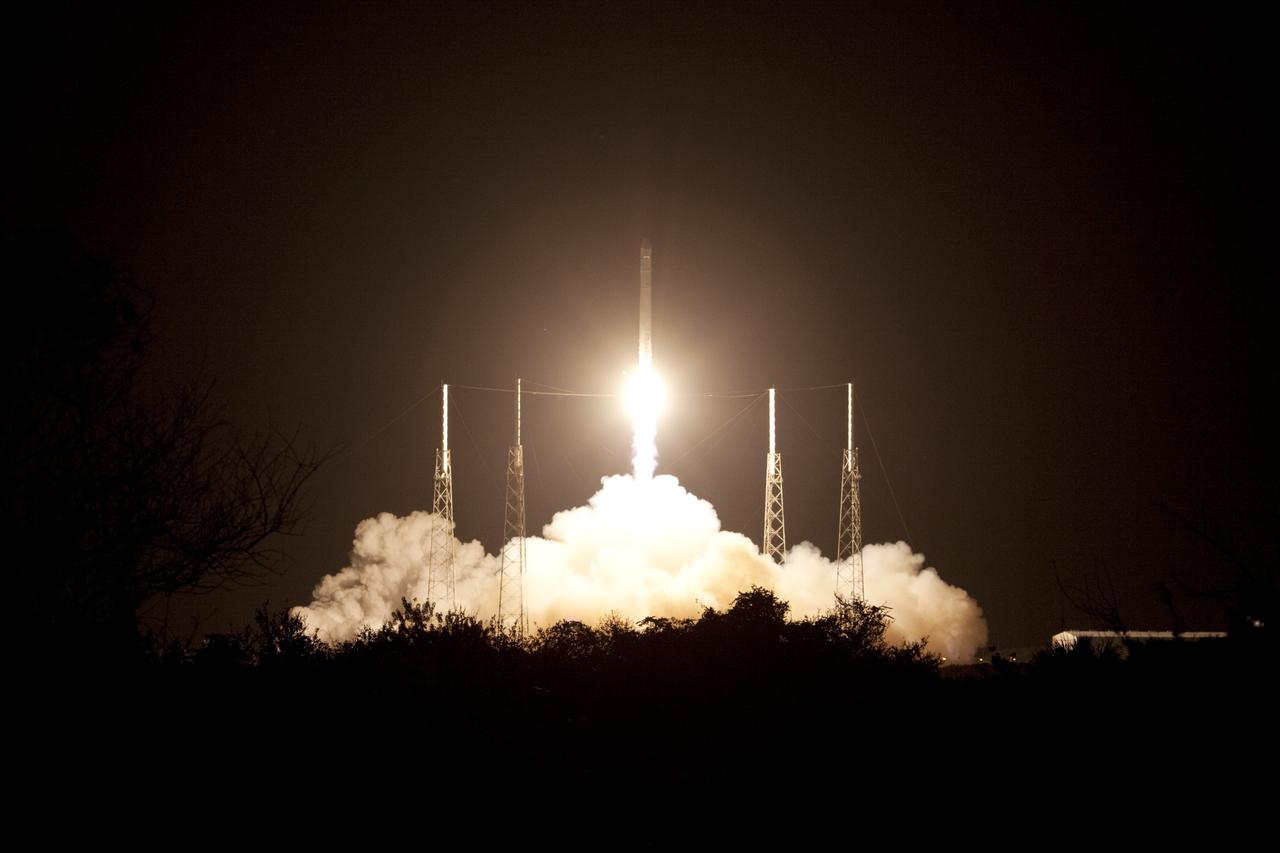
CAPE CANAVERAL, Fla. -- A Dragon capsule begins its journey to orbit atop a Falcon 9 rocket at 8:35 p.m. EDT from Space Launch Complex 40 on Cape Canaveral Air Force Station in Florida. Space Exploration Technologies Corp., or SpaceX, built both the rocket and capsule for NASA's first Commercial Resupply Services, or CRS-1, mission to the International Space Station. SpaceX CRS-1 is an important step toward making America’s microgravity research program self-sufficient by providing a way to deliver and return significant amounts of cargo, including science experiments, to and from the orbiting laboratory. NASA has contracted for 12 commercial resupply flights from SpaceX and eight from the Orbital Sciences Corp. For more information, visit http://www.nasa.gov/mission_pages/station/living/launch/index.html. Photo credit: NASA/Jim Grossmann
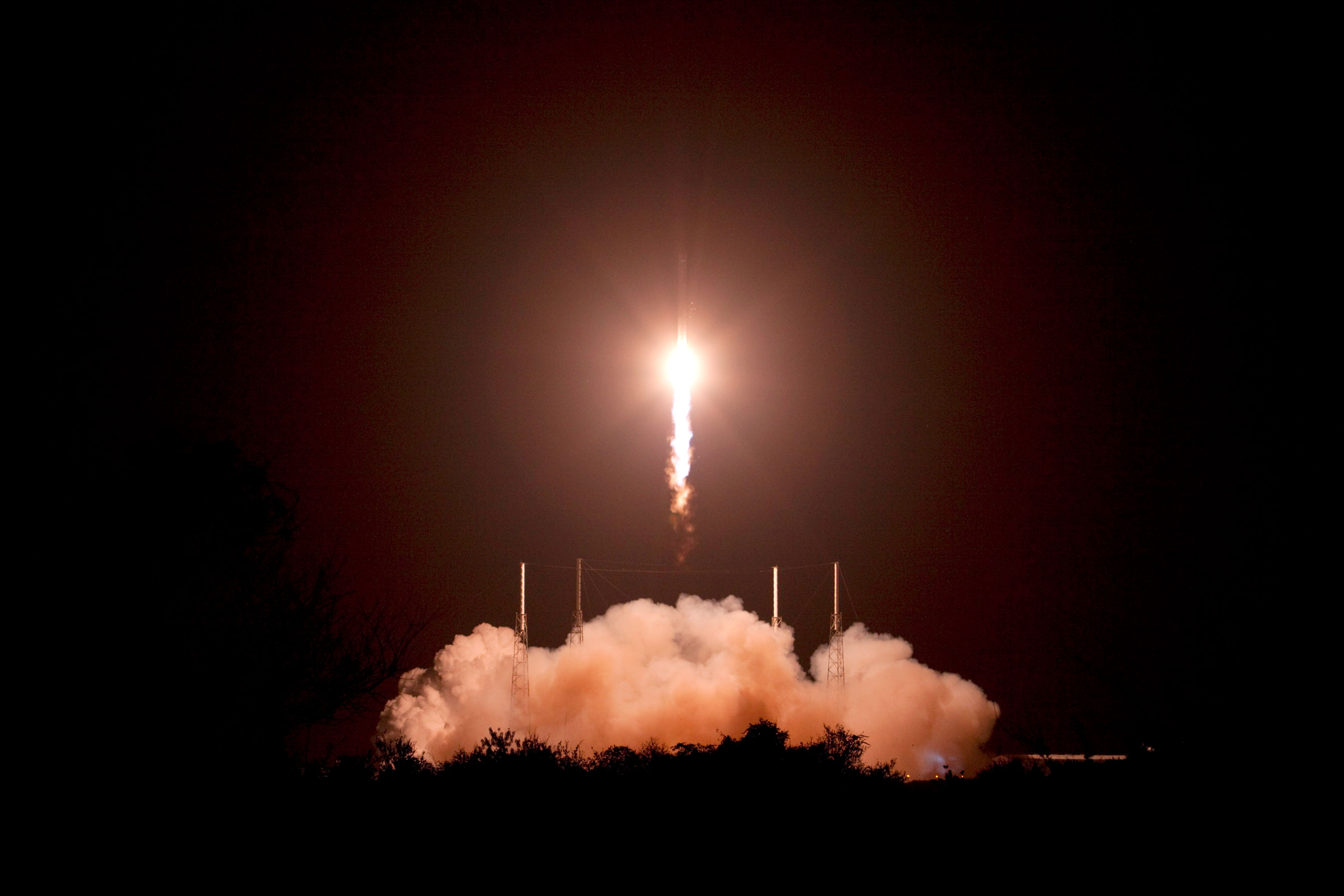
CAPE CANAVERAL, Fla. -- A Falcon 9 rocket makes its way into the night sky over Space Launch Complex 40 on Cape Canaveral Air Force Station in Florida carrying a Dragon capsule to orbit. Launch was at 8:35 p.m. EDT. Space Exploration Technologies Corp., or SpaceX, built both the rocket and capsule for NASA's first Commercial Resupply Services, or CRS-1, mission to the International Space Station. SpaceX CRS-1 is an important step toward making America’s microgravity research program self-sufficient by providing a way to deliver and return significant amounts of cargo, including science experiments, to and from the orbiting laboratory. NASA has contracted for 12 commercial resupply flights from SpaceX and eight from the Orbital Sciences Corp. For more information, visit http://www.nasa.gov/mission_pages/station/living/launch/index.html. Photo credit: NASA/Jim Grossmann
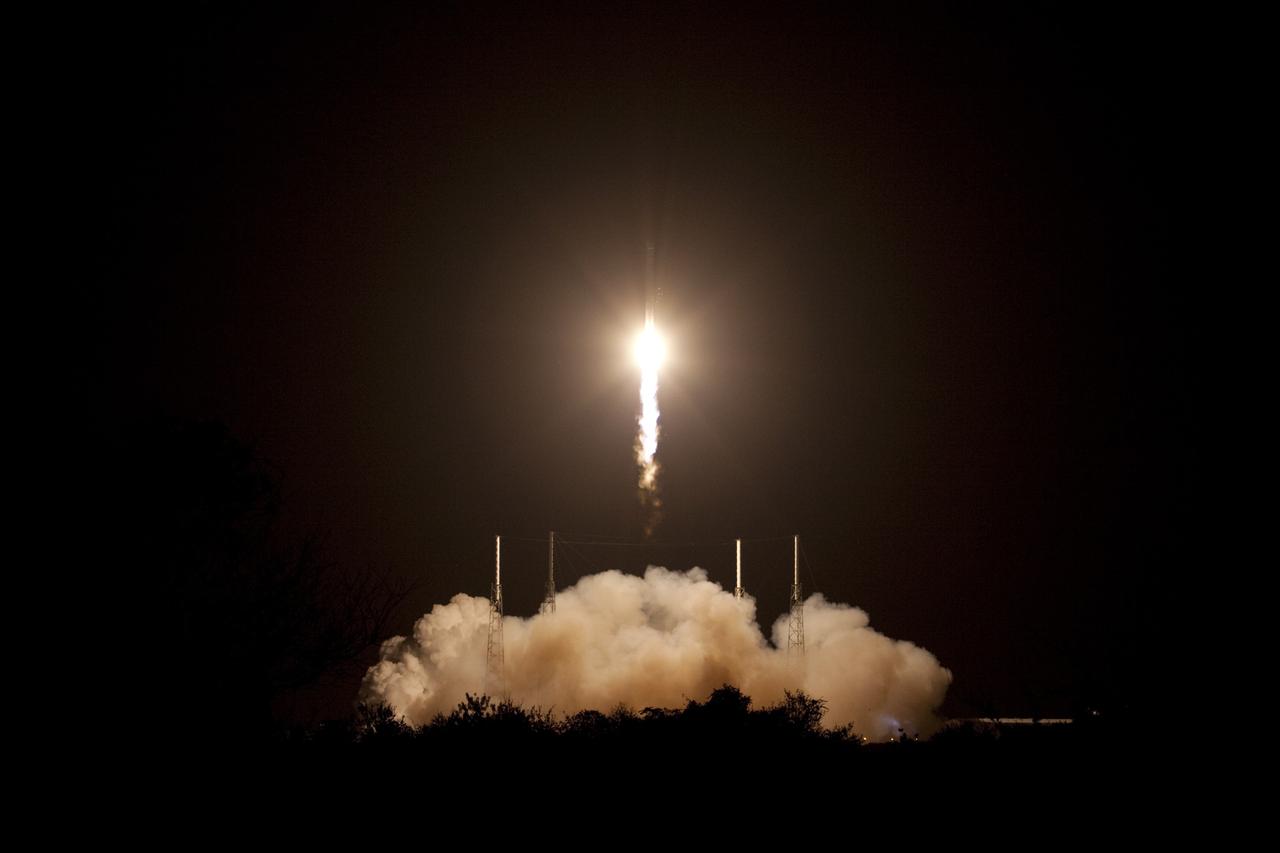
CAPE CANAVERAL, Fla. -- A Falcon 9 rocket makes its way into the night sky over Space Launch Complex 40 on Cape Canaveral Air Force Station in Florida carrying a Dragon capsule to orbit. Launch was at 8:35 p.m. EDT. Space Exploration Technologies Corp., or SpaceX, built both the rocket and capsule for NASA's first Commercial Resupply Services, or CRS-1, mission to the International Space Station. SpaceX CRS-1 is an important step toward making America’s microgravity research program self-sufficient by providing a way to deliver and return significant amounts of cargo, including science experiments, to and from the orbiting laboratory. NASA has contracted for 12 commercial resupply flights from SpaceX and eight from the Orbital Sciences Corp. For more information, visit http://www.nasa.gov/mission_pages/station/living/launch/index.html. Photo credit: NASA/Jim Grossmann
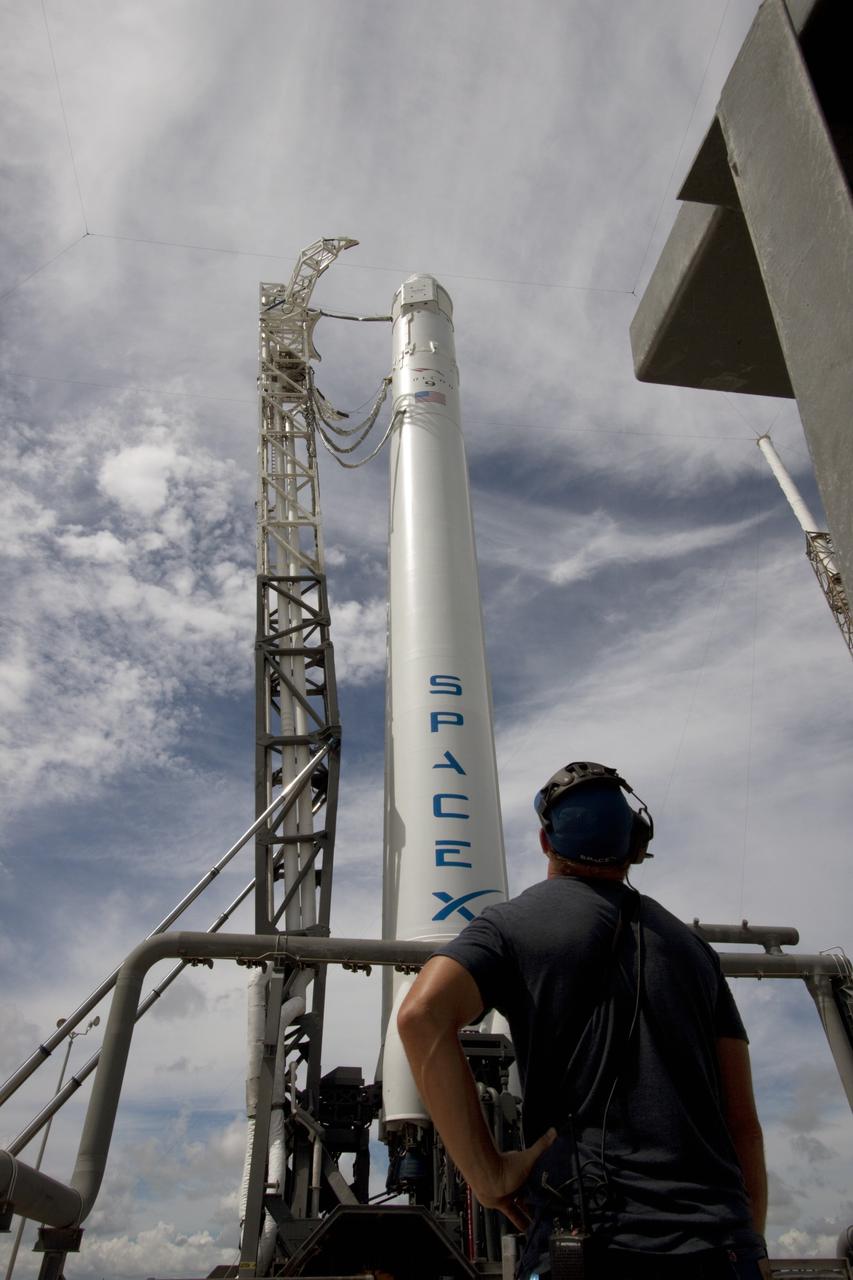
CAPE CANAVERAL, Fla. -- Umbilical lines are attached to a Falcon 9 rocket with a Dragon capsule secured atop on the pad at Space Launch Complex 40 on Cape Canaveral Air Force Station in Florida. Space Exploration Technologies Corp., or SpaceX, built both the rocket and capsule for NASA's first Commercial Resupply Services, or CRS-1, mission to the International Space Station. The vertical lift was complete at 1 p.m. EDT. SpaceX CRS-1 is an important step toward making America’s microgravity research program self-sufficient by providing a way to deliver and return significant amounts of cargo, including science experiments, to and from the orbiting laboratory. Launch is scheduled for 8:35 p.m. EDT on Oct. 7. NASA has contracted for 12 commercial resupply flights from SpaceX and eight from the Orbital Sciences Corp. For more information, visit http://www.nasa.gov/mission_pages/station/living/launch/index.html. Photo credit: NASA/Jim Grossmann
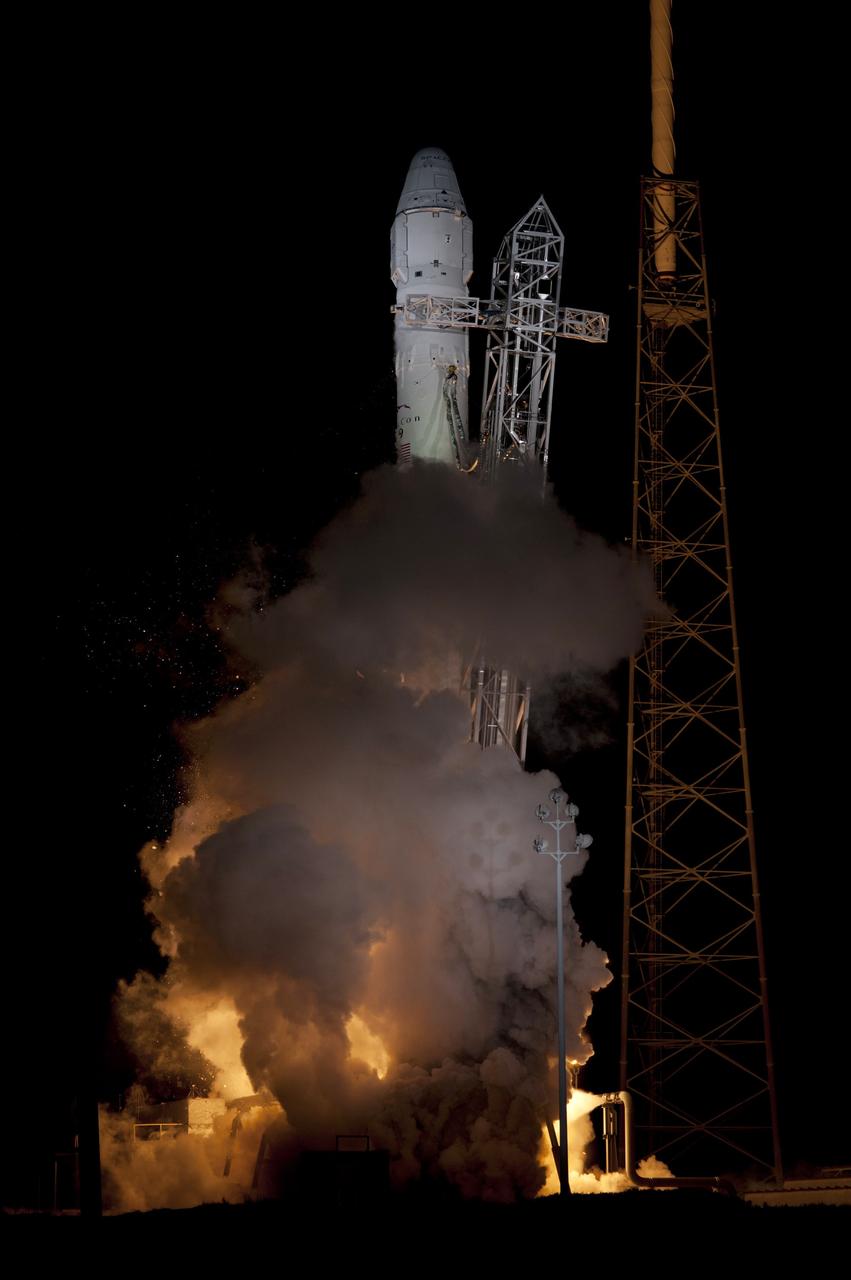
CAPE CANAVERAL, Fla. - Space Launch Complex 40 on Cape Canaveral Air Force Station in Florida comes alive as the Merlin engines ignite under the Falcon 9 rocket carrying a Dragon capsule to orbit. Liftoff was at 8:35 p.m. EDT. Space Exploration Technologies Corp., or SpaceX, built both the rocket and capsule for NASA's first Commercial Resupply Services, or CRS-1, mission to the International Space Station. SpaceX CRS-1 is an important step toward making America’s microgravity research program self-sufficient by providing a way to deliver and return significant amounts of cargo, including science experiments, to and from the orbiting laboratory. NASA has contracted for 12 commercial resupply flights from SpaceX and eight from the Orbital Sciences Corp. For more information, visit http://www.nasa.gov/mission_pages/station/living/launch/index.html Photo credit: NASA/ Rick Wetherington and Tim Powers
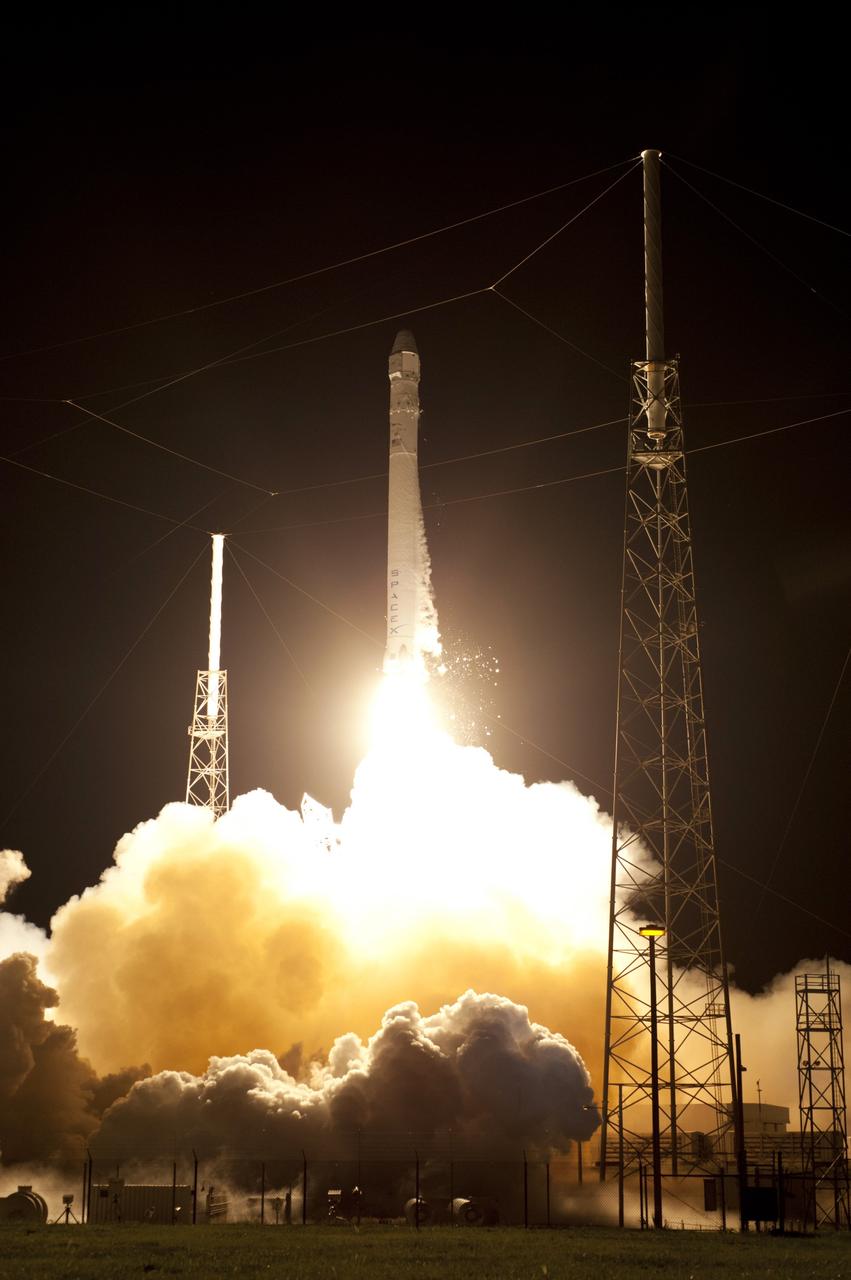
CAPE CANAVERAL, Fla. - Space Launch Complex 40 on Cape Canaveral Air Force Station in Florida comes alive as the Merlin engines ignite under the Falcon 9 rocket carrying a Dragon capsule to orbit. Liftoff was at 8:35 p.m. EDT. Space Exploration Technologies Corp., or SpaceX, built both the rocket and capsule for NASA's first Commercial Resupply Services, or CRS-1, mission to the International Space Station. SpaceX CRS-1 is an important step toward making America’s microgravity research program self-sufficient by providing a way to deliver and return significant amounts of cargo, including science experiments, to and from the orbiting laboratory. NASA has contracted for 12 commercial resupply flights from SpaceX and eight from the Orbital Sciences Corp. For more information, visit http://www.nasa.gov/mission_pages/station/living/launch/index.html Photo credit: NASA/Rick Wetherington and Tony Gray
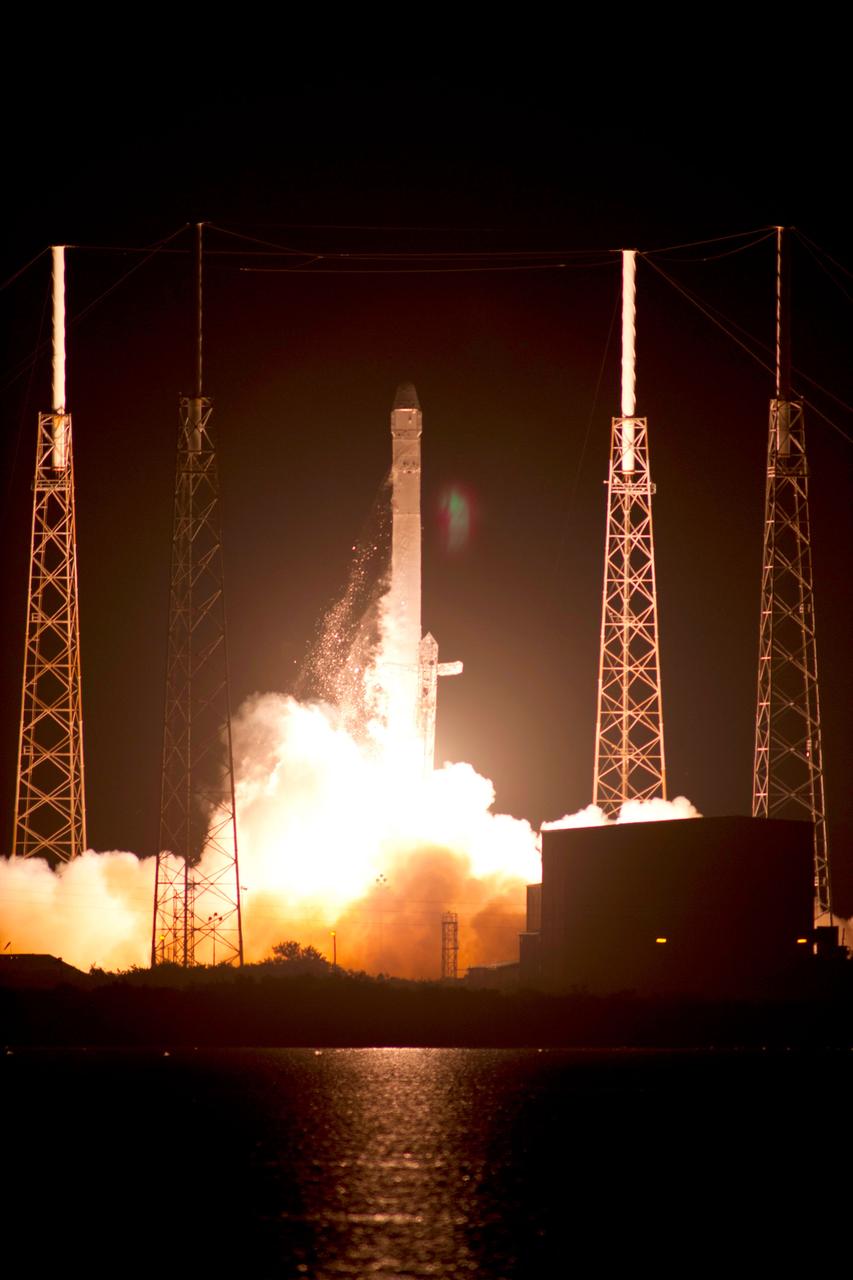
CAPE CANAVERAL, Fla. - Space Launch Complex 40 on Cape Canaveral Air Force Station in Florida comes alive as the Merlin engines ignite under the Falcon 9 rocket carrying a Dragon capsule to orbit. Liftoff was at 8:35 p.m. EDT. Space Exploration Technologies Corp., or SpaceX, built both the rocket and capsule for NASA's first Commercial Resupply Services, or CRS-1, mission to the International Space Station. SpaceX CRS-1 is an important step toward making America’s microgravity research program self-sufficient by providing a way to deliver and return significant amounts of cargo, including science experiments, to and from the orbiting laboratory. NASA has contracted for 12 commercial resupply flights from SpaceX and eight from the Orbital Sciences Corp. For more information, visit http://www.nasa.gov/mission_pages/station/living/launch/index.html Photo credit: NASA/Tony Gray
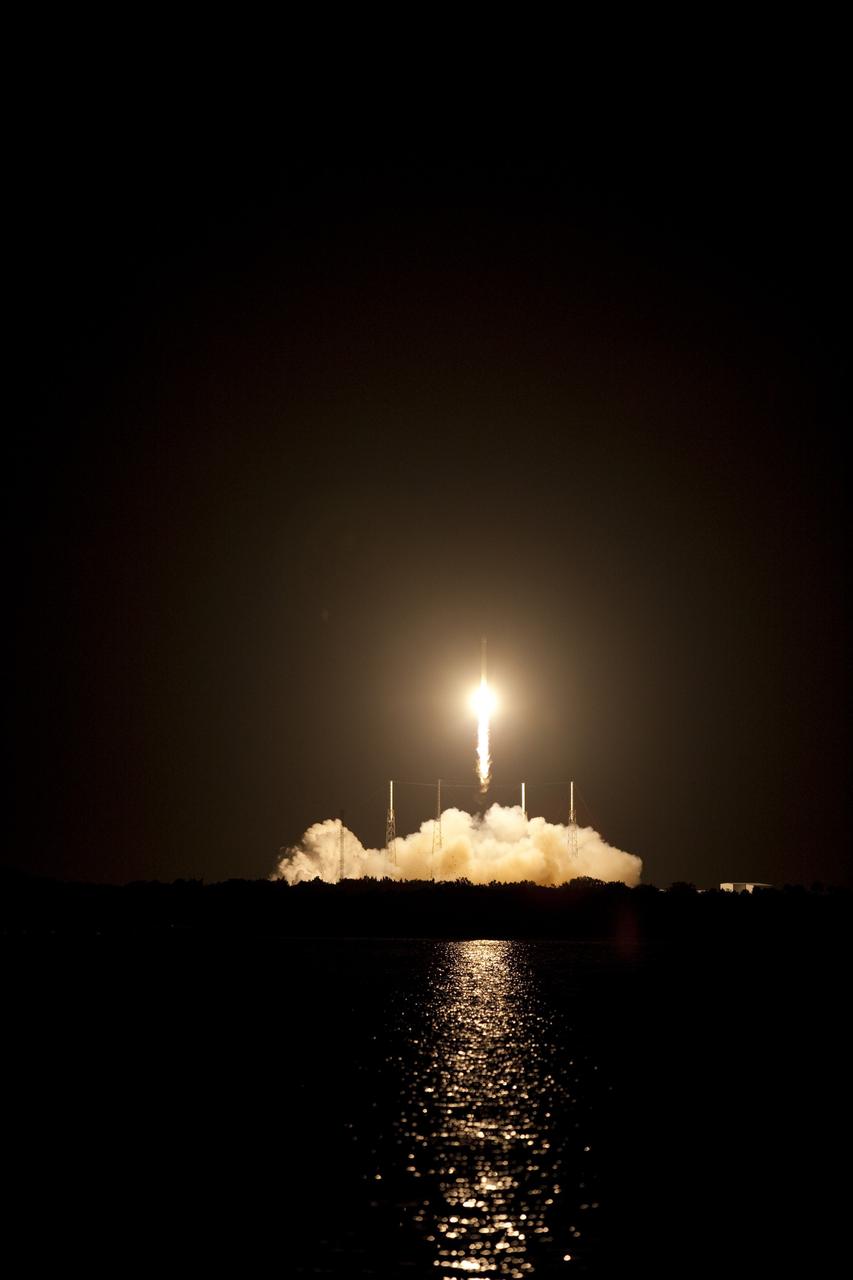
CAPE CANAVERAL, Fla. -- Plumes of exhaust and smoke billow around the lightning masts on Space Launch Complex 40 on Cape Canaveral Air Force Station in Florida as a Falcon 9 rocket lifts off at 8:35 p.m. EDT, carrying a Dragon capsule to orbit. Space Exploration Technologies Corp., or SpaceX, built both the rocket and capsule for NASA's first Commercial Resupply Services, or CRS-1, mission to the International Space Station. SpaceX CRS-1 is an important step toward making America’s microgravity research program self-sufficient by providing a way to deliver and return significant amounts of cargo, including science experiments, to and from the orbiting laboratory. NASA has contracted for 12 commercial resupply flights from SpaceX and eight from the Orbital Sciences Corp. For more information, visit http://www.nasa.gov/mission_pages/station/living/launch/index.html. Photo credit: NASA/Glenn Benson
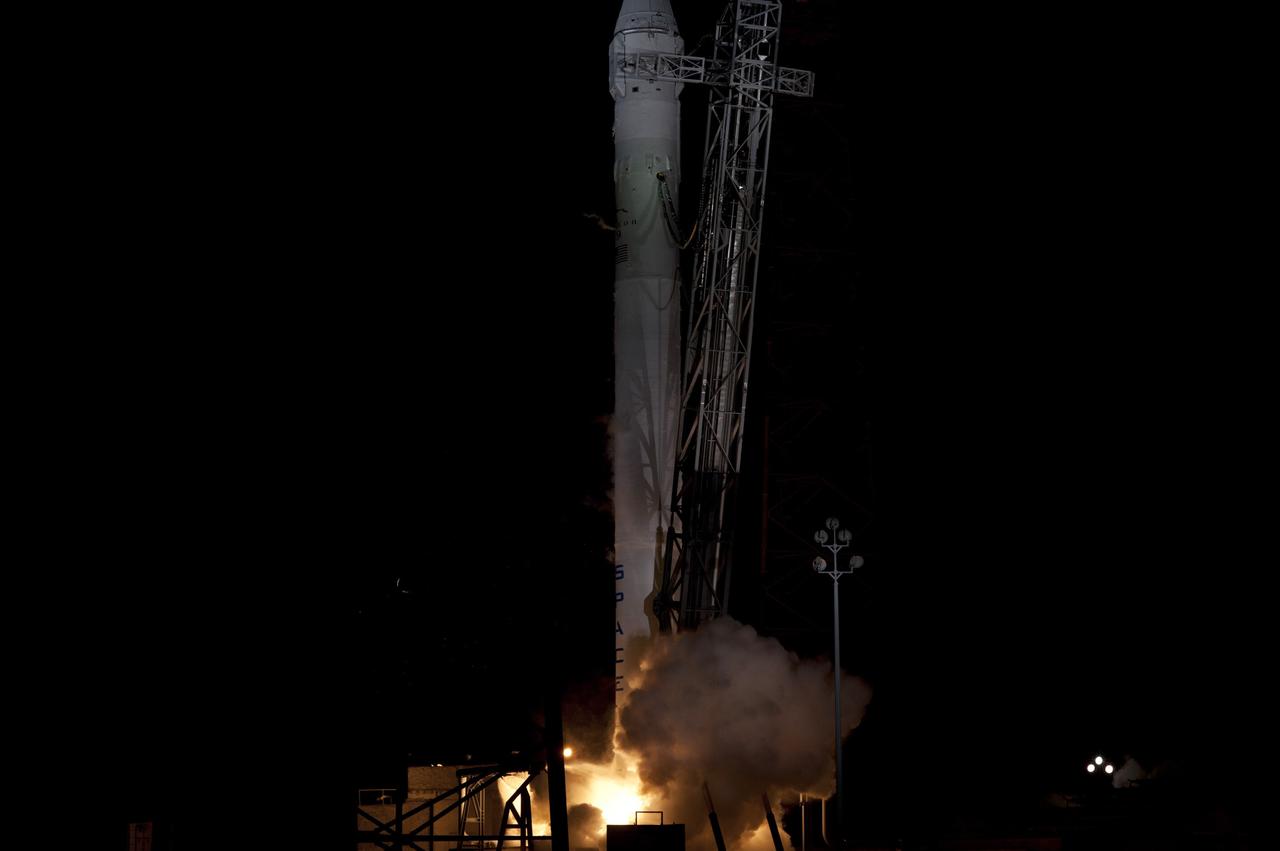
CAPE CANAVERAL, Fla. - Space Launch Complex 40 on Cape Canaveral Air Force Station in Florida comes alive as the Merlin engines ignite under the Falcon 9 rocket carrying a Dragon capsule to orbit. Liftoff was at 8:35 p.m. EDT. Space Exploration Technologies Corp., or SpaceX, built both the rocket and capsule for NASA's first Commercial Resupply Services, or CRS-1, mission to the International Space Station. SpaceX CRS-1 is an important step toward making America’s microgravity research program self-sufficient by providing a way to deliver and return significant amounts of cargo, including science experiments, to and from the orbiting laboratory. NASA has contracted for 12 commercial resupply flights from SpaceX and eight from the Orbital Sciences Corp. For more information, visit http://www.nasa.gov/mission_pages/station/living/launch/index.html Photo credit: NASA/Rusty Backer
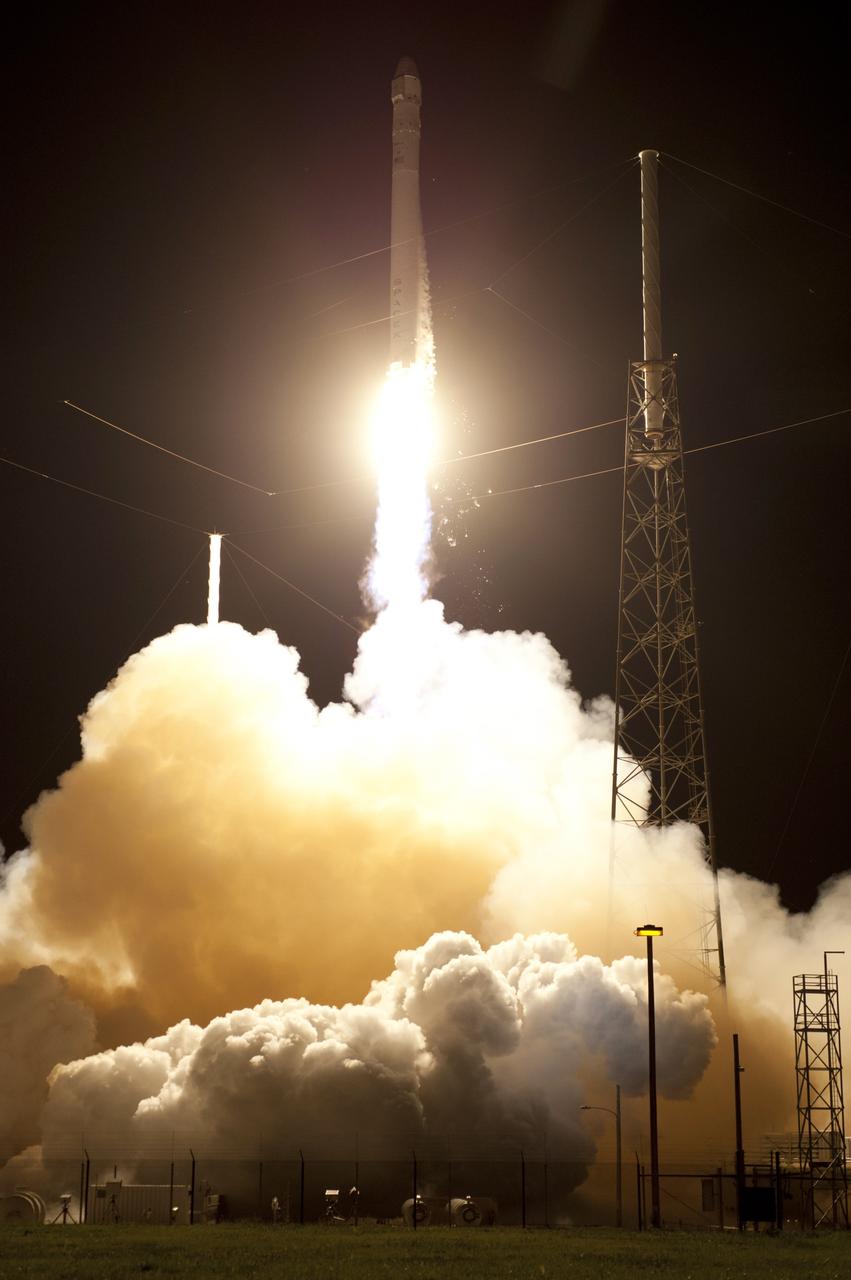
CAPE CANAVERAL, Fla. - Space Launch Complex 40 on Cape Canaveral Air Force Station in Florida comes alive as the Merlin engines ignite under the Falcon 9 rocket carrying a Dragon capsule to orbit. Liftoff was at 8:35 p.m. EDT. Space Exploration Technologies Corp., or SpaceX, built both the rocket and capsule for NASA's first Commercial Resupply Services, or CRS-1, mission to the International Space Station. SpaceX CRS-1 is an important step toward making America’s microgravity research program self-sufficient by providing a way to deliver and return significant amounts of cargo, including science experiments, to and from the orbiting laboratory. NASA has contracted for 12 commercial resupply flights from SpaceX and eight from the Orbital Sciences Corp. For more information, visit http://www.nasa.gov/mission_pages/station/living/launch/index.html Photo credit: NASA/Rick Wetherington and Tony Gray
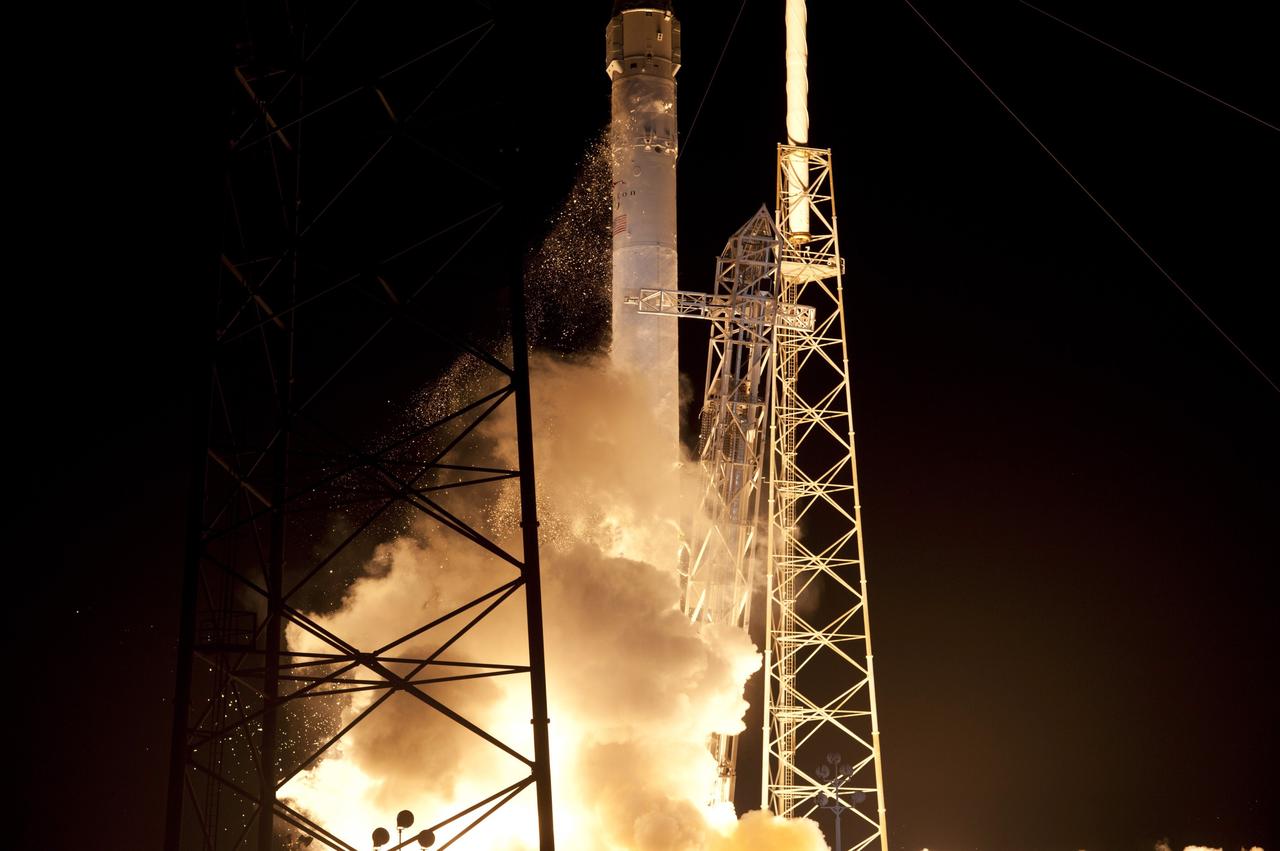
CAPE CANAVERAL, Fla. - Space Launch Complex 40 on Cape Canaveral Air Force Station in Florida comes alive as the Merlin engines ignite under the Falcon 9 rocket carrying a Dragon capsule to orbit. Liftoff was at 8:35 p.m. EDT. Space Exploration Technologies Corp., or SpaceX, built both the rocket and capsule for NASA's first Commercial Resupply Services, or CRS-1, mission to the International Space Station. SpaceX CRS-1 is an important step toward making America’s microgravity research program self-sufficient by providing a way to deliver and return significant amounts of cargo, including science experiments, to and from the orbiting laboratory. NASA has contracted for 12 commercial resupply flights from SpaceX and eight from the Orbital Sciences Corp. For more information, visit http://www.nasa.gov/mission_pages/station/living/launch/index.html Photo credit: NASA/Rusty Backer
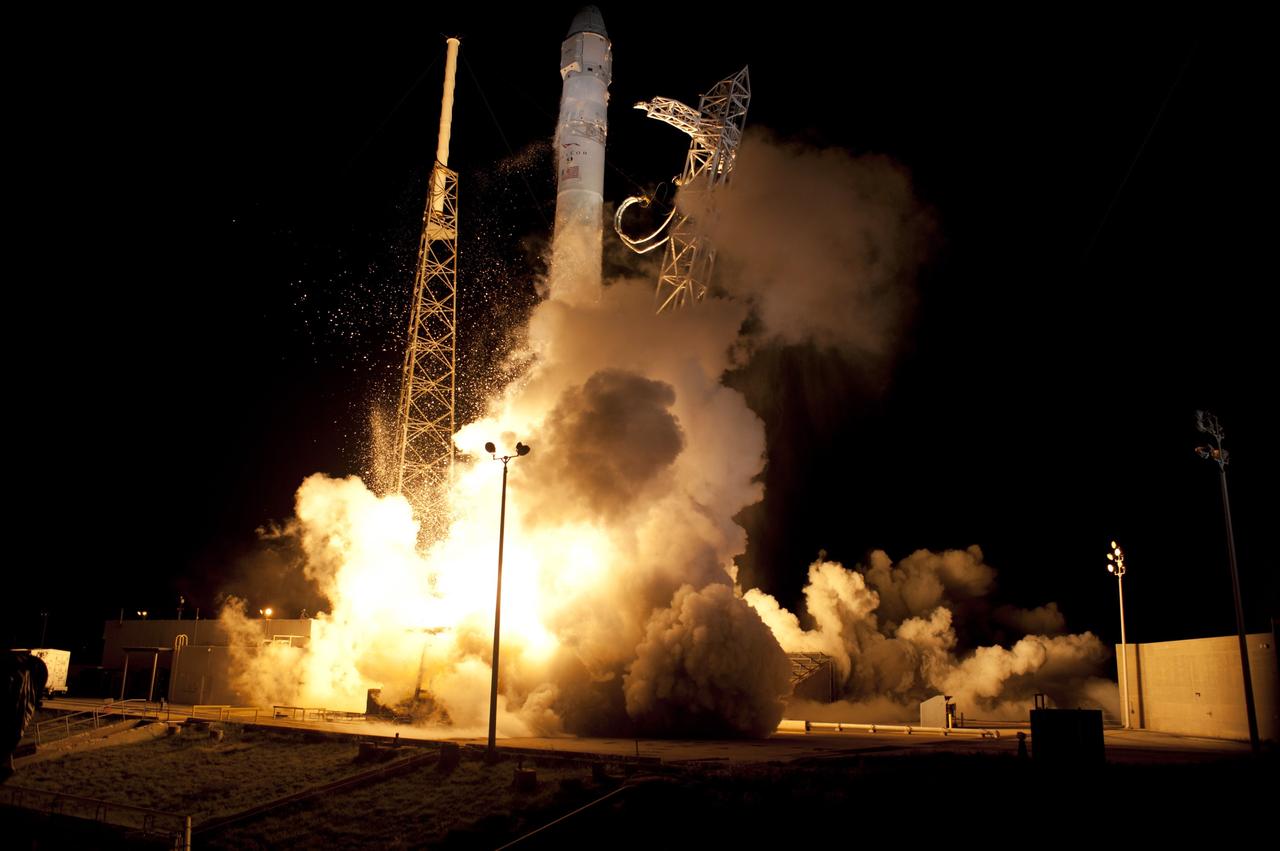
CAPE CANAVERAL, Fla. - Space Launch Complex 40 on Cape Canaveral Air Force Station in Florida comes alive as the Merlin engines ignite under the Falcon 9 rocket carrying a Dragon capsule to orbit. Liftoff was at 8:35 p.m. EDT. Space Exploration Technologies Corp., or SpaceX, built both the rocket and capsule for NASA's first Commercial Resupply Services, or CRS-1, mission to the International Space Station. SpaceX CRS-1 is an important step toward making America’s microgravity research program self-sufficient by providing a way to deliver and return significant amounts of cargo, including science experiments, to and from the orbiting laboratory. NASA has contracted for 12 commercial resupply flights from SpaceX and eight from the Orbital Sciences Corp. For more information, visit http://www.nasa.gov/mission_pages/station/living/launch/index.html Photo credit: NASA/ Rick Wetherington and Tim Powers
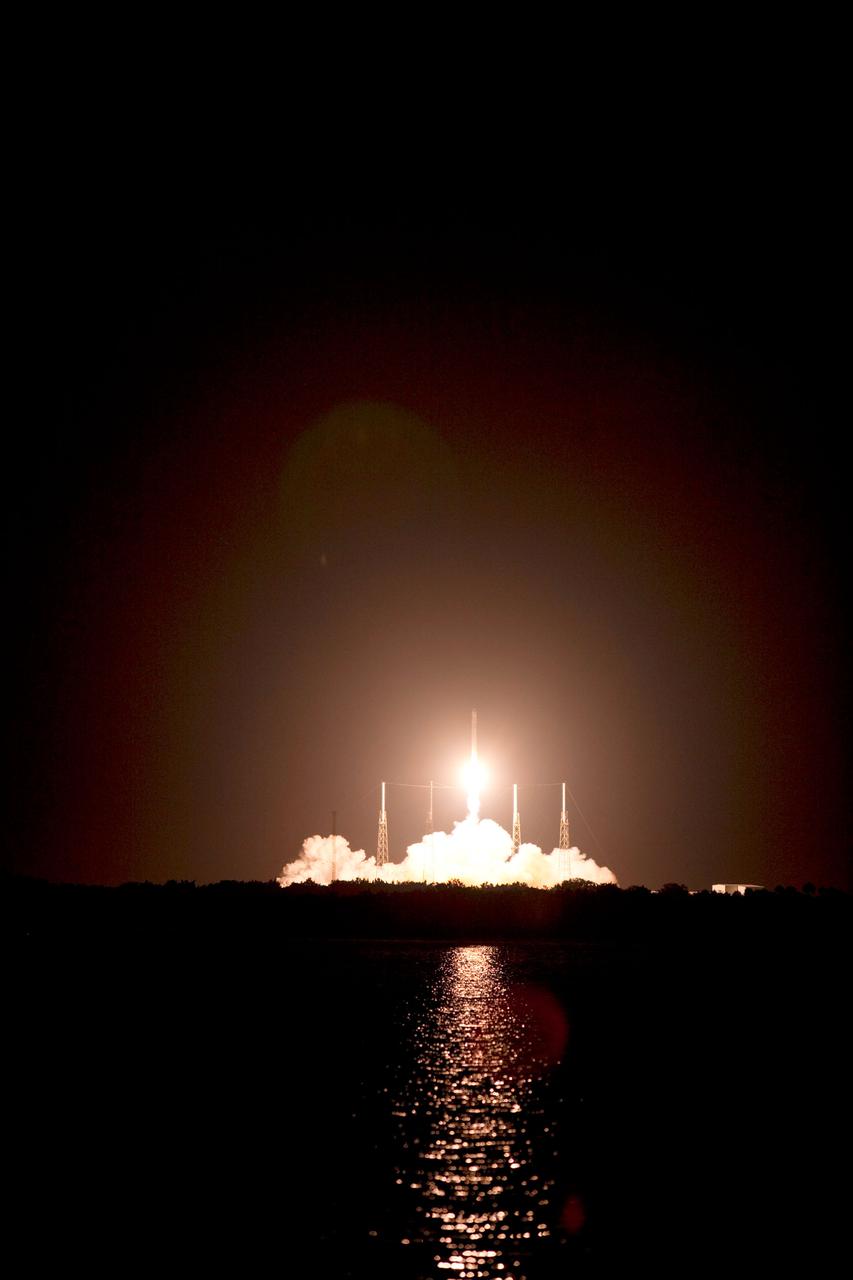
CAPE CANAVERAL, Fla. -- Space Launch Complex 40 on Cape Canaveral Air Force Station in Florida is illuminated by a Falcon 9 rocket as it lifts off at 8:35 p.m. EDT carrying a Dragon capsule to orbit. Space Exploration Technologies Corp., or SpaceX, built both the rocket and capsule for NASA's first Commercial Resupply Services, or CRS-1, mission to the International Space Station. SpaceX CRS-1 is an important step toward making America’s microgravity research program self-sufficient by providing a way to deliver and return significant amounts of cargo, including science experiments, to and from the orbiting laboratory. NASA has contracted for 12 commercial resupply flights from SpaceX and eight from the Orbital Sciences Corp. For more information, visit http://www.nasa.gov/mission_pages/station/living/launch/index.html. Photo credit: NASA/Glenn Benson
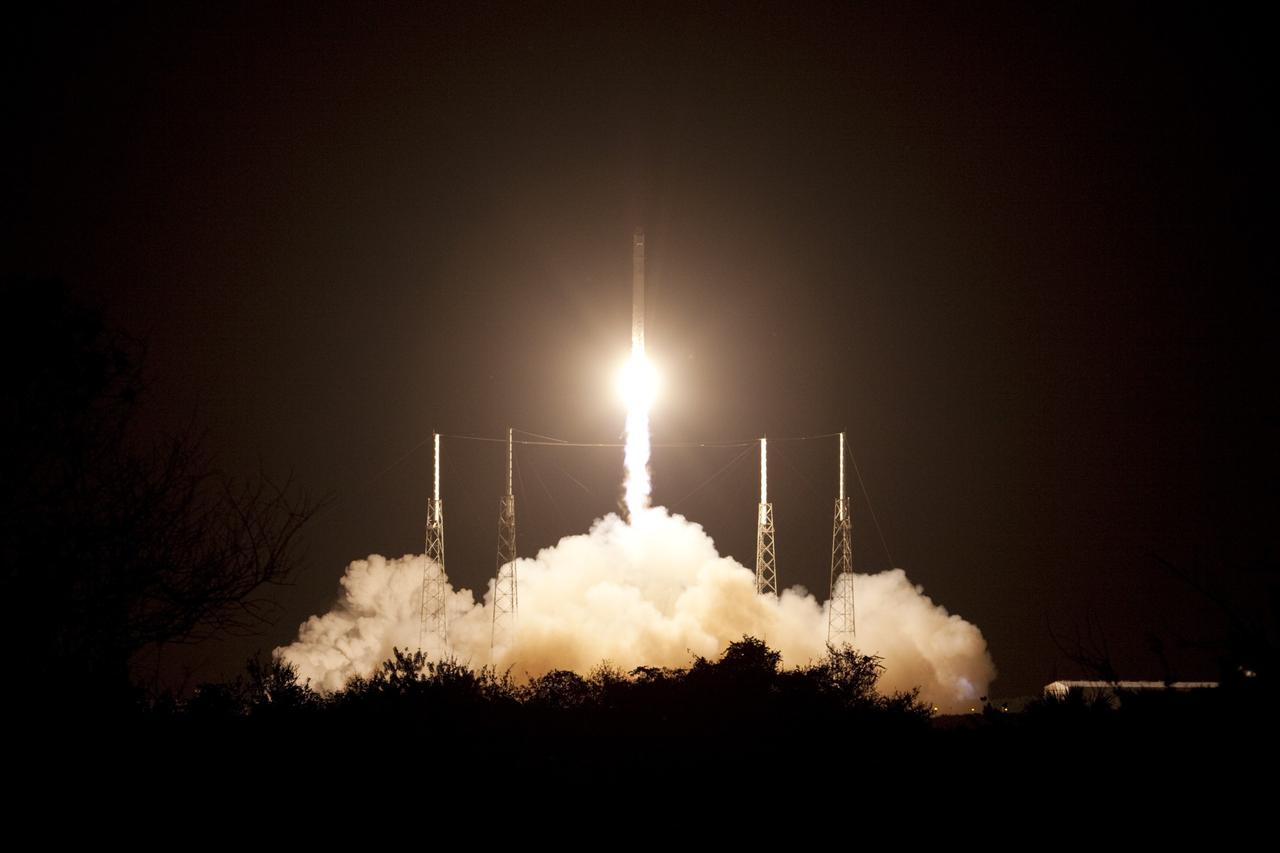
CAPE CANAVERAL, Fla. -- Space Launch Complex 40 on Cape Canaveral Air Force Station in Florida is illuminated by a Falcon 9 rocket as it lifts off at 8:35 p.m. EDT carrying a Dragon capsule to orbit. Space Exploration Technologies Corp., or SpaceX, built both the rocket and capsule for NASA's first Commercial Resupply Services, or CRS-1, mission to the International Space Station. SpaceX CRS-1 is an important step toward making America’s microgravity research program self-sufficient by providing a way to deliver and return significant amounts of cargo, including science experiments, to and from the orbiting laboratory. NASA has contracted for 12 commercial resupply flights from SpaceX and eight from the Orbital Sciences Corp. For more information, visit http://www.nasa.gov/mission_pages/station/living/launch/index.html. Photo credit: NASA/Jim Grossmann
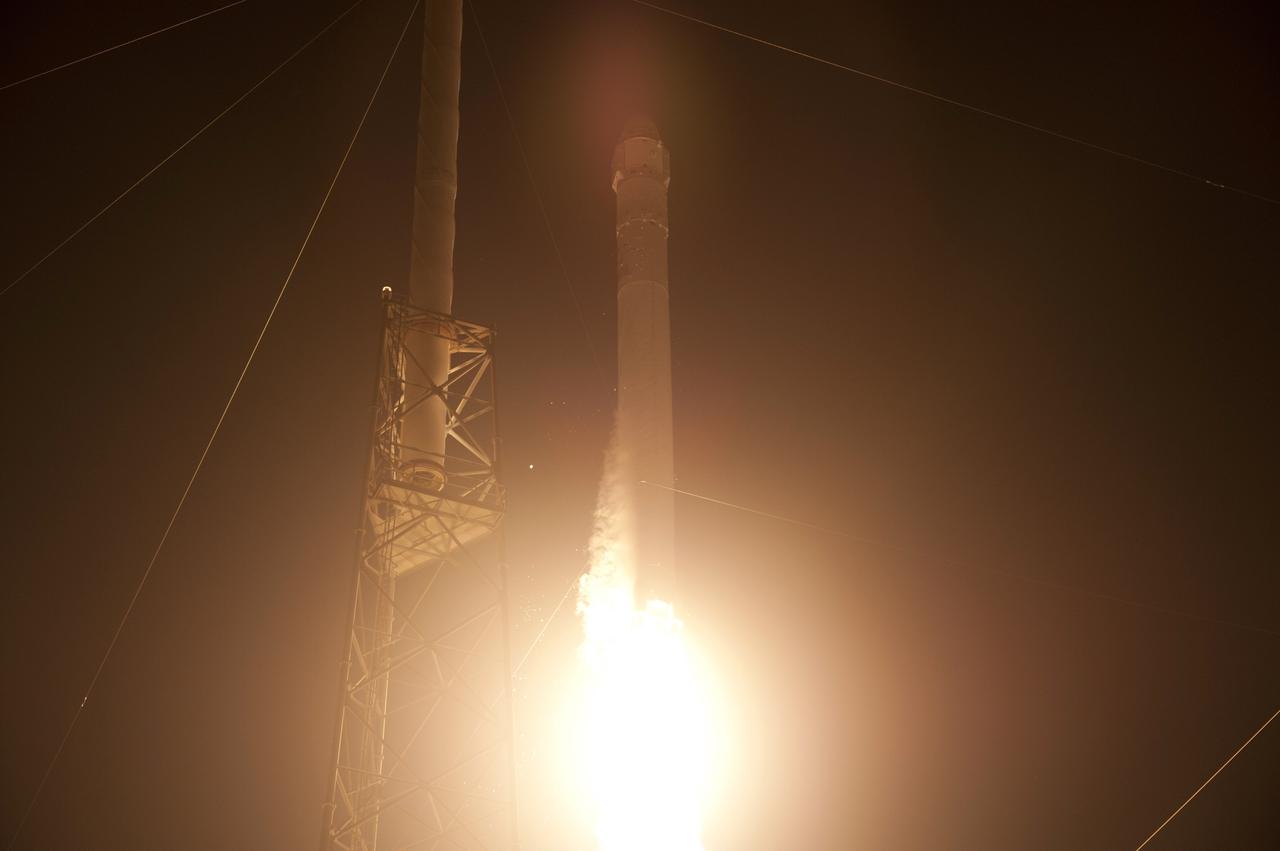
CAPE CANAVERAL, Fla. - Space Launch Complex 40 on Cape Canaveral Air Force Station in Florida comes alive as the Merlin engines ignite under the Falcon 9 rocket carrying a Dragon capsule to orbit. Liftoff was at 8:35 p.m. EDT. Space Exploration Technologies Corp., or SpaceX, built both the rocket and capsule for NASA's first Commercial Resupply Services, or CRS-1, mission to the International Space Station. SpaceX CRS-1 is an important step toward making America’s microgravity research program self-sufficient by providing a way to deliver and return significant amounts of cargo, including science experiments, to and from the orbiting laboratory. NASA has contracted for 12 commercial resupply flights from SpaceX and eight from the Orbital Sciences Corp. For more information, visit http://www.nasa.gov/mission_pages/station/living/launch/index.html Photo credit: NASA/Rusty Backer
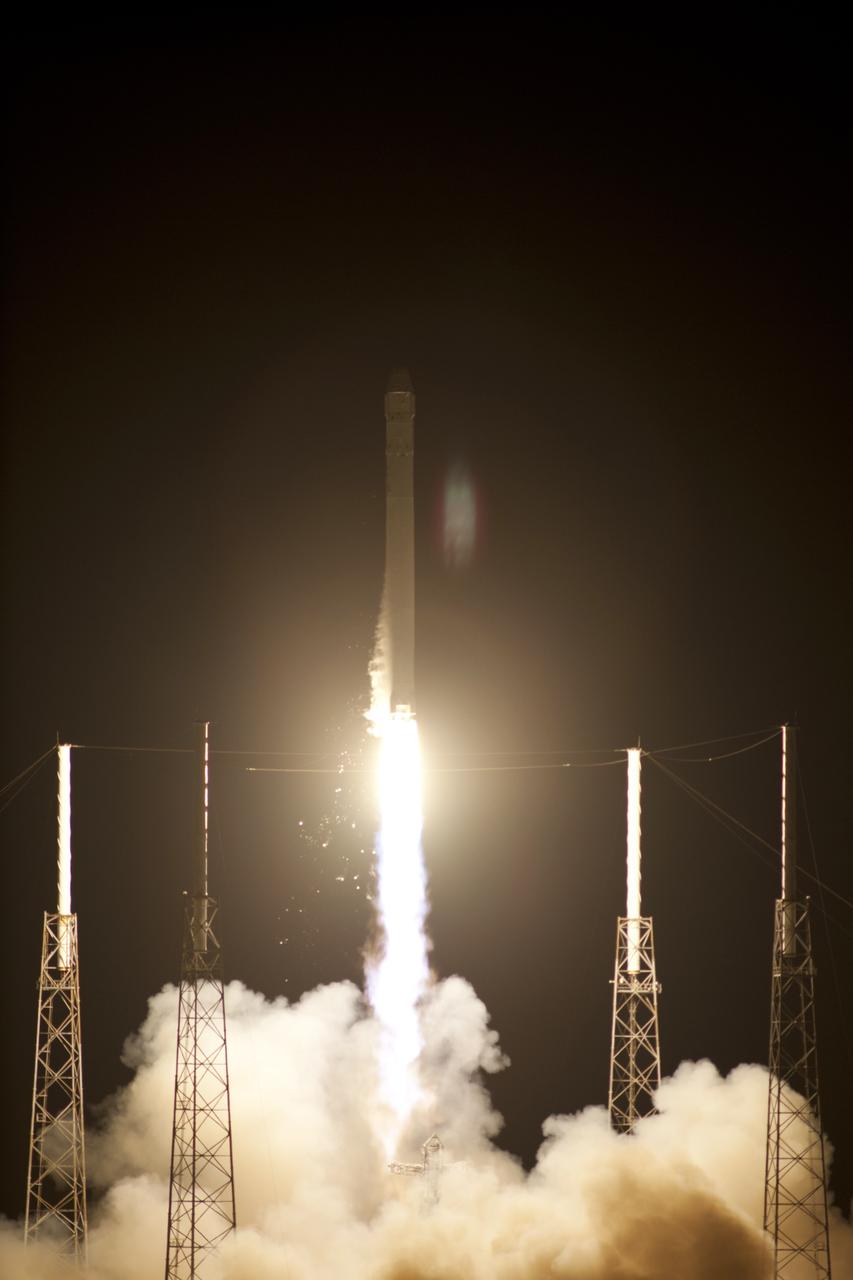
CAPE CANAVERAL, Fla. - At Space Launch Complex 40 on Cape Canaveral Air Force Station in Florida a Falcon 9 rocket carrying a Dragon capsule lifts off at 8:35 p.m. EDT. Space Exploration Technologies Corp., or SpaceX, built both the rocket and capsule for NASA's first Commercial Resupply Services, or CRS-1, mission to the International Space Station. SpaceX CRS-1 is an important step toward making America’s microgravity research program self-sufficient by providing a way to deliver and return significant amounts of cargo, including science experiments, to and from the orbiting laboratory. NASA has contracted for 12 commercial resupply flights from SpaceX and eight from the Orbital Sciences Corp. For more information, visit http://www.nasa.gov/mission_pages/station/living/launch/index.html Photo credit: NASA/Tony Gray
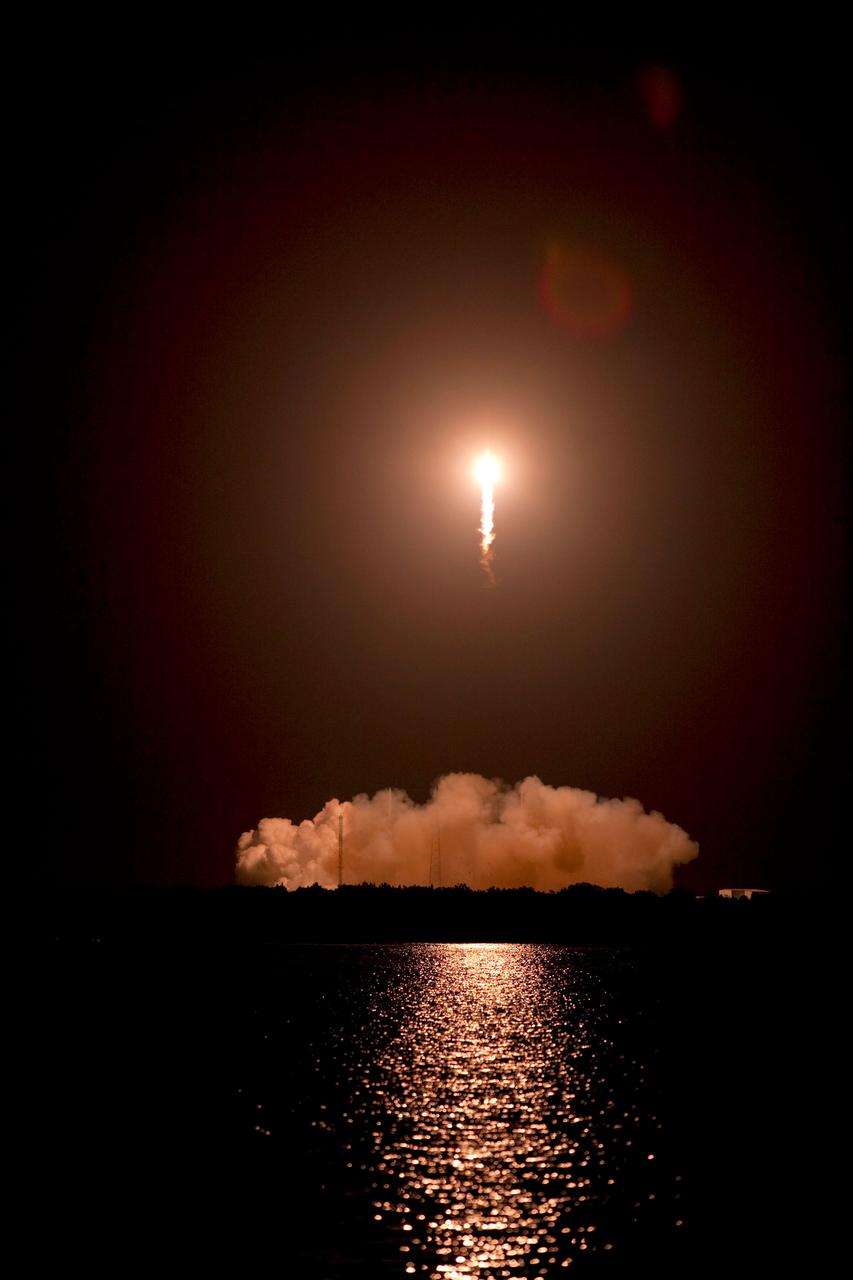
CAPE CANAVERAL, Fla. -- A Falcon 9 rocket cuts its way through the clouds over Space Launch Complex 40 on Cape Canaveral Air Force Station in Florida carrying a Dragon capsule to orbit. Launch was at 8:35 p.m. EDT. Space Exploration Technologies Corp., or SpaceX, built both the rocket and capsule for NASA's first Commercial Resupply Services, or CRS-1, mission to the International Space Station. SpaceX CRS-1 is an important step toward making America’s microgravity research program self-sufficient by providing a way to deliver and return significant amounts of cargo, including science experiments, to and from the orbiting laboratory. NASA has contracted for 12 commercial resupply flights from SpaceX and eight from the Orbital Sciences Corp. For more information, visit http://www.nasa.gov/mission_pages/station/living/launch/index.html. Photo credit: NASA/Glenn Benson
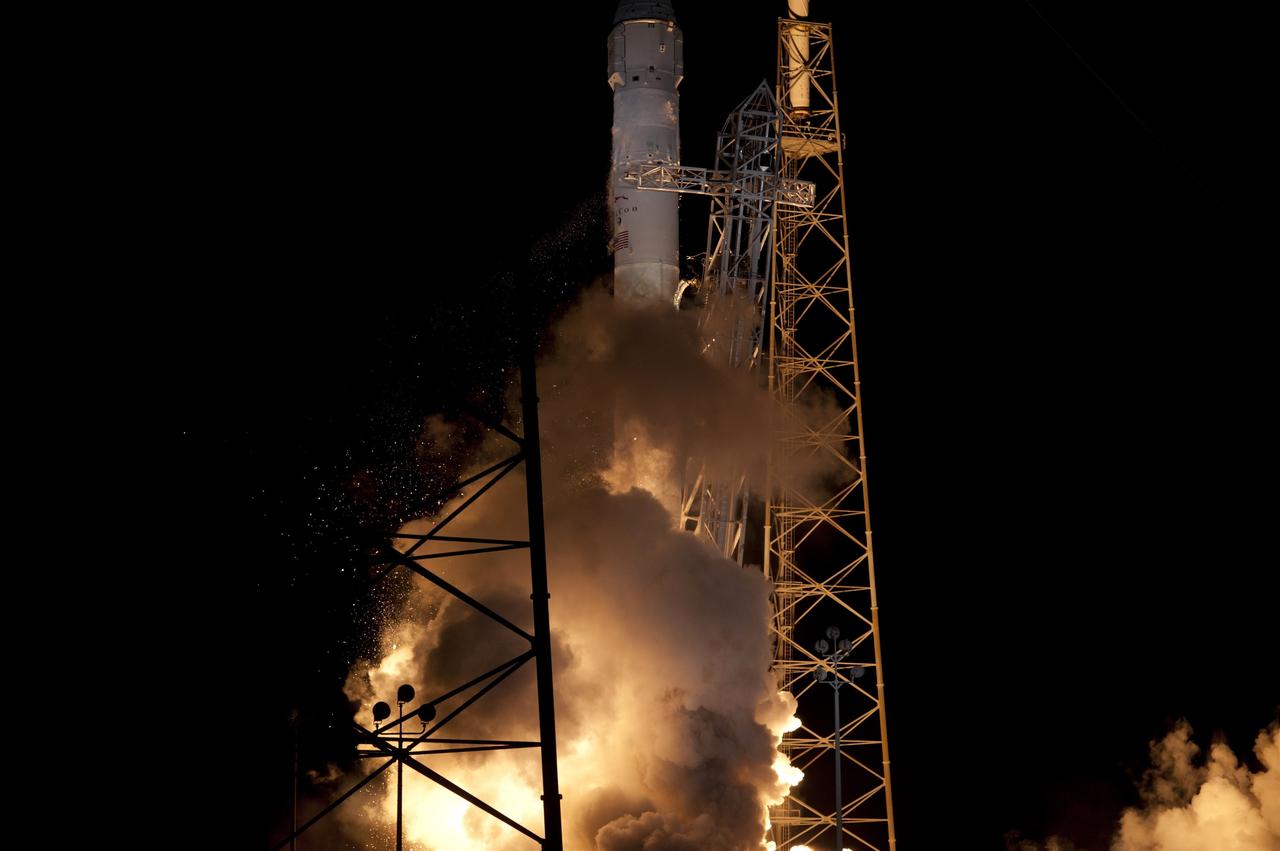
CAPE CANAVERAL, Fla. - Space Launch Complex 40 on Cape Canaveral Air Force Station in Florida comes alive as the Merlin engines ignite under the Falcon 9 rocket carrying a Dragon capsule to orbit. Liftoff was at 8:35 p.m. EDT. Space Exploration Technologies Corp., or SpaceX, built both the rocket and capsule for NASA's first Commercial Resupply Services, or CRS-1, mission to the International Space Station. SpaceX CRS-1 is an important step toward making America’s microgravity research program self-sufficient by providing a way to deliver and return significant amounts of cargo, including science experiments, to and from the orbiting laboratory. NASA has contracted for 12 commercial resupply flights from SpaceX and eight from the Orbital Sciences Corp. For more information, visit http://www.nasa.gov/mission_pages/station/living/launch/index.html Photo credit: NASA/Rusty Backer
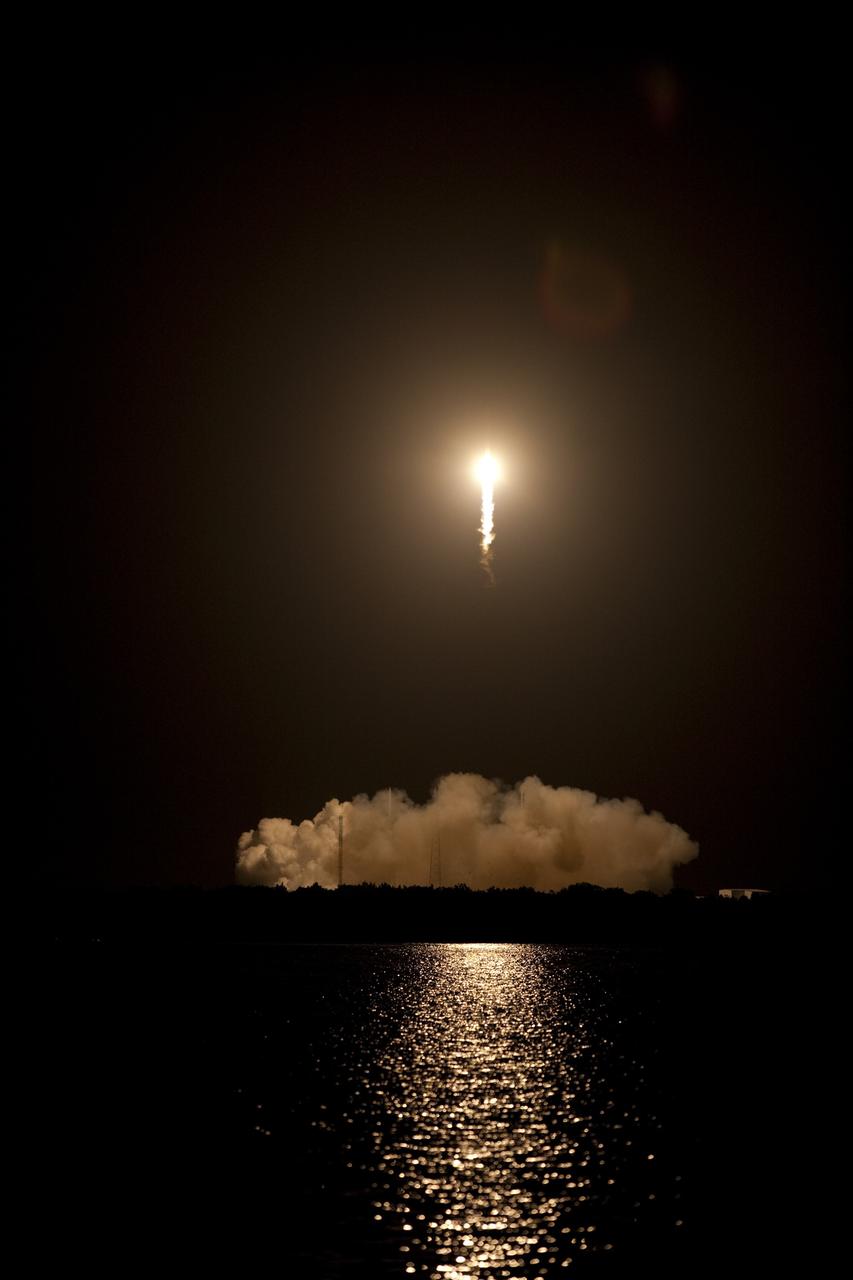
CAPE CANAVERAL, Fla. -- A Falcon 9 rocket cuts its way through the clouds over Space Launch Complex 40 on Cape Canaveral Air Force Station in Florida carrying a Dragon capsule to orbit. Launch was at 8:35 p.m. EDT. Space Exploration Technologies Corp., or SpaceX, built both the rocket and capsule for NASA's first Commercial Resupply Services, or CRS-1, mission to the International Space Station. SpaceX CRS-1 is an important step toward making America’s microgravity research program self-sufficient by providing a way to deliver and return significant amounts of cargo, including science experiments, to and from the orbiting laboratory. NASA has contracted for 12 commercial resupply flights from SpaceX and eight from the Orbital Sciences Corp. For more information, visit http://www.nasa.gov/mission_pages/station/living/launch/index.html. Photo credit: NASA/Glenn Benson
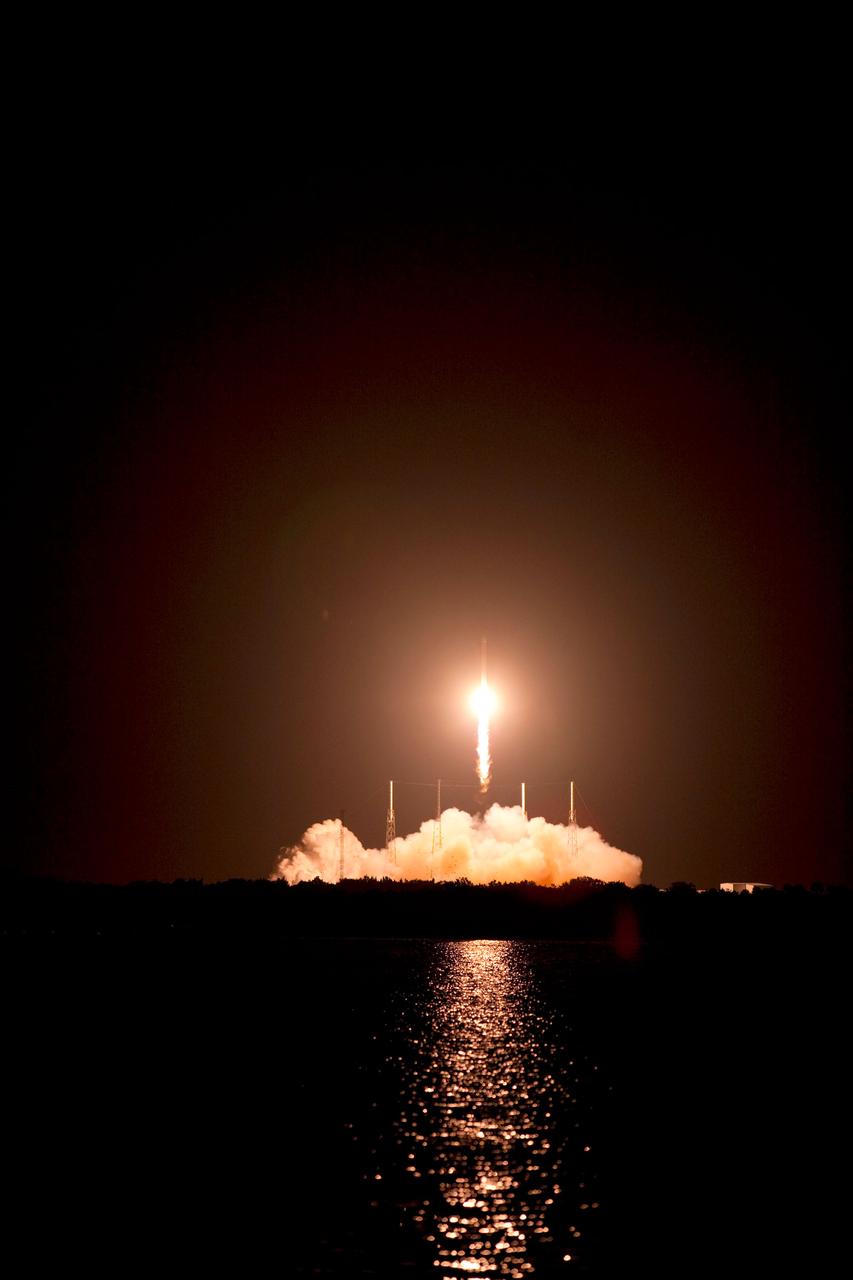
CAPE CANAVERAL, Fla. -- Plumes of exhaust and smoke billow around the lightning masts on Space Launch Complex 40 on Cape Canaveral Air Force Station in Florida as a Falcon 9 rocket lifts off at 8:35 p.m. EDT, carrying a Dragon capsule to orbit. Space Exploration Technologies Corp., or SpaceX, built both the rocket and capsule for NASA's first Commercial Resupply Services, or CRS-1, mission to the International Space Station. SpaceX CRS-1 is an important step toward making America’s microgravity research program self-sufficient by providing a way to deliver and return significant amounts of cargo, including science experiments, to and from the orbiting laboratory. NASA has contracted for 12 commercial resupply flights from SpaceX and eight from the Orbital Sciences Corp. For more information, visit http://www.nasa.gov/mission_pages/station/living/launch/index.html. Photo credit: NASA/Glenn Benson
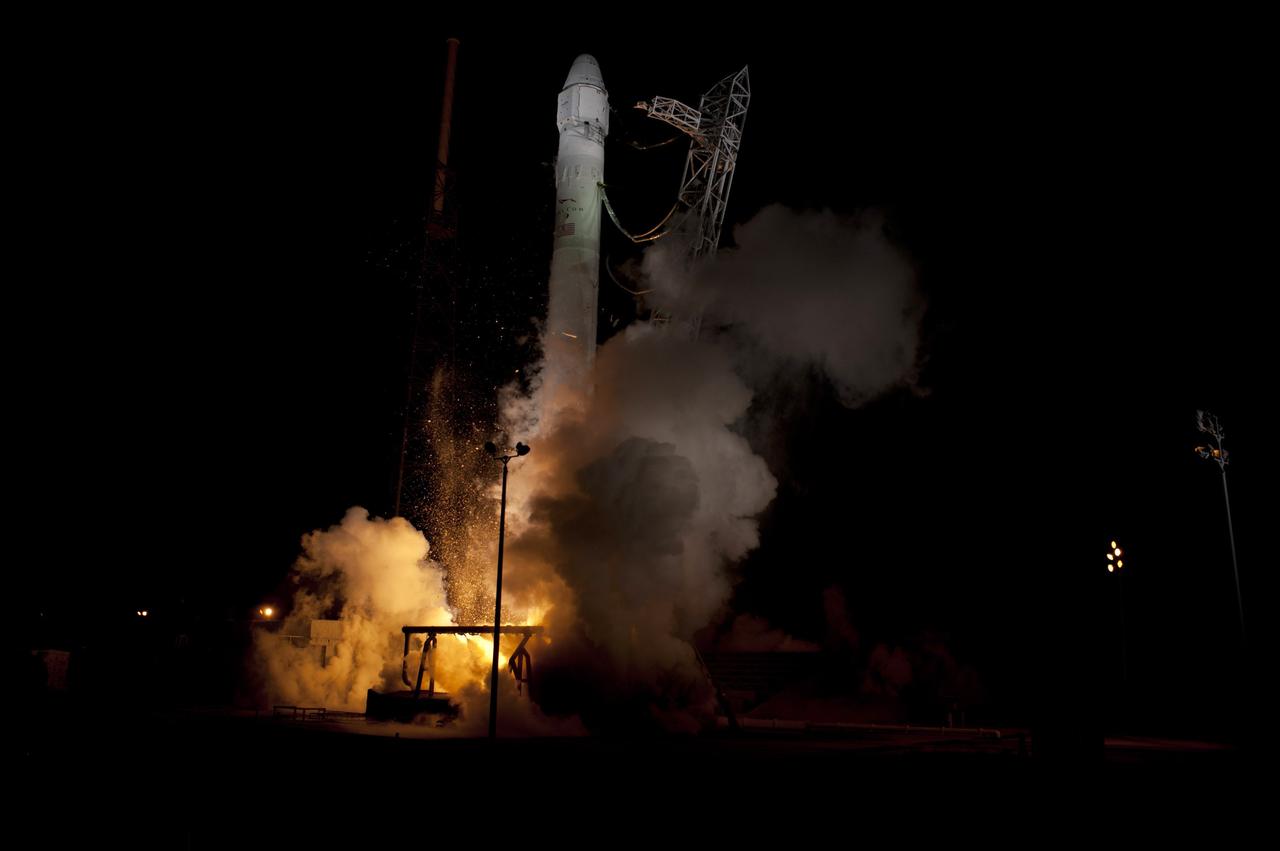
CAPE CANAVERAL, Fla. - Space Launch Complex 40 on Cape Canaveral Air Force Station in Florida comes alive as the Merlin engines ignite under the Falcon 9 rocket carrying a Dragon capsule to orbit. Liftoff was at 8:35 p.m. EDT. Space Exploration Technologies Corp., or SpaceX, built both the rocket and capsule for NASA's first Commercial Resupply Services, or CRS-1, mission to the International Space Station. SpaceX CRS-1 is an important step toward making America’s microgravity research program self-sufficient by providing a way to deliver and return significant amounts of cargo, including science experiments, to and from the orbiting laboratory. NASA has contracted for 12 commercial resupply flights from SpaceX and eight from the Orbital Sciences Corp. For more information, visit http://www.nasa.gov/mission_pages/station/living/launch/index.html Photo credit: NASA/ Rick Wetherington and Tim Powers
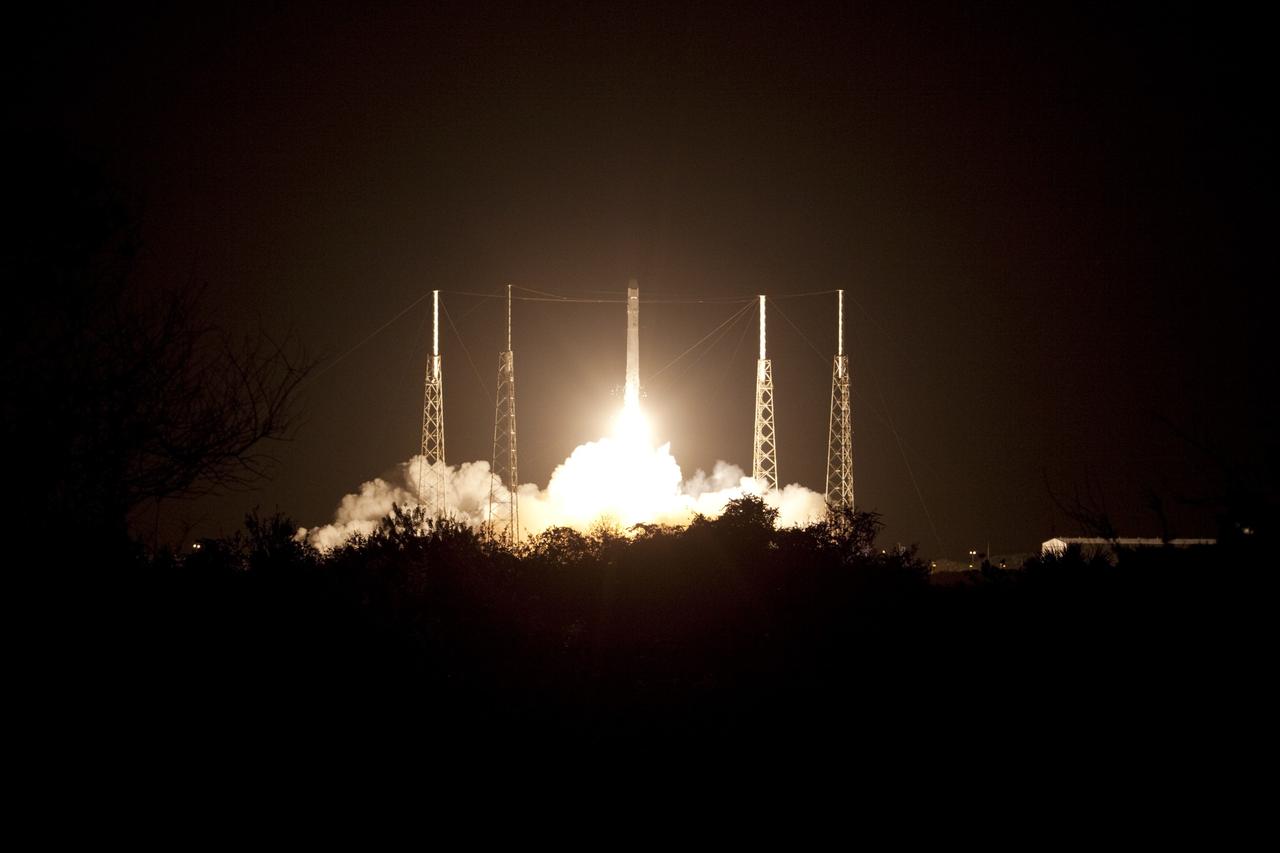
CAPE CANAVERAL, Fla. -- A Falcon 9 rocket lifts off Space Launch Complex 40 on Cape Canaveral Air Force Station in Florida at 8:35 p.m. EDT, carrying a Dragon capsule to orbit. Space Exploration Technologies Corp., or SpaceX, built both the rocket and capsule for NASA's first Commercial Resupply Services, or CRS-1, mission to the International Space Station. SpaceX CRS-1 is an important step toward making America’s microgravity research program self-sufficient by providing a way to deliver and return significant amounts of cargo, including science experiments, to and from the orbiting laboratory. NASA has contracted for 12 commercial resupply flights from SpaceX and eight from the Orbital Sciences Corp. For more information, visit http://www.nasa.gov/mission_pages/station/living/launch/index.html. Photo credit: NASA/Jim Grossmann
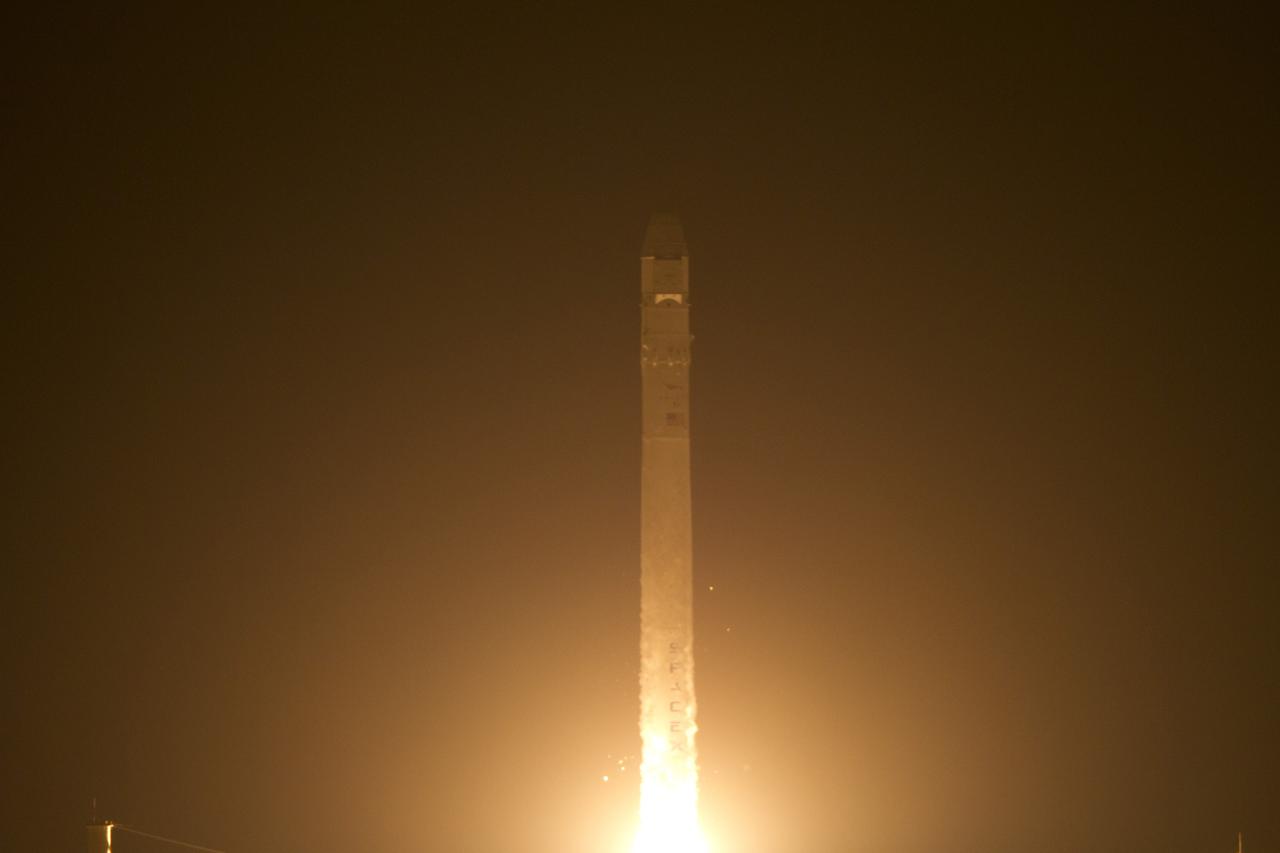
CAPE CANAVERAL, Fla. - At Space Launch Complex 40 on Cape Canaveral Air Force Station in Florida a Falcon 9 rocket carrying a Dragon capsule lifts off at 8:35 p.m. EDT. Space Exploration Technologies Corp., or SpaceX, built both the rocket and capsule for NASA's first Commercial Resupply Services, or CRS-1, mission to the International Space Station. SpaceX CRS-1 is an important step toward making America’s microgravity research program self-sufficient by providing a way to deliver and return significant amounts of cargo, including science experiments, to and from the orbiting laboratory. NASA has contracted for 12 commercial resupply flights from SpaceX and eight from the Orbital Sciences Corp. For more information, visit http://www.nasa.gov/mission_pages/station/living/launch/index.html Photo credit: NASA/Ken Allen
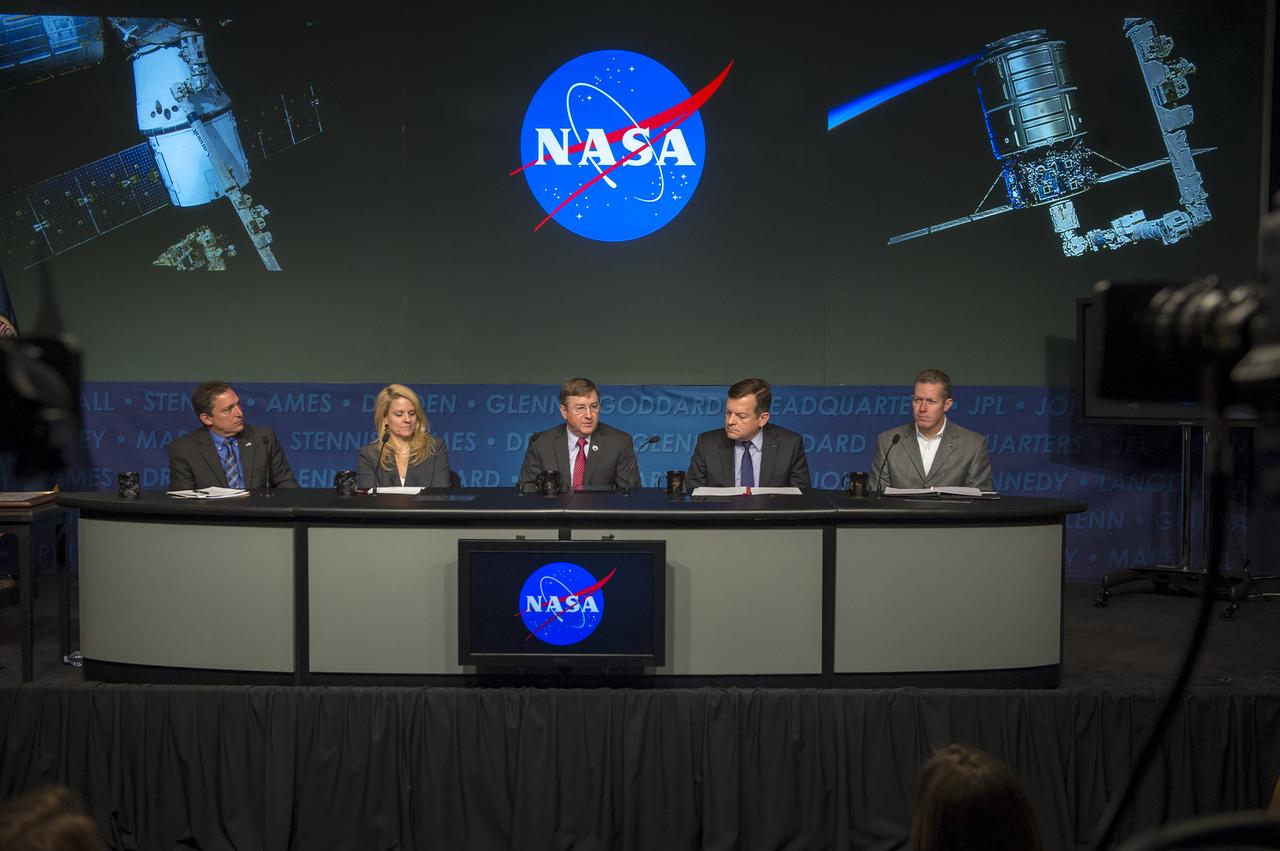
L-R: Alan Lindenmoyer, Manager of Commercial Crew and Cargo Program, NASA; Gwynne Shotwell, President, SpaceX; Frank Culbertson, Executive Vice President and General Manager, Orbital Sciences Advanced Programs Group; Frank Slazer, Vice President of Space Systems, Aerospace Industries Association and Phil McAlister, Director of Commercial Spaceflight Development at NASA, participate in a panel discussion on the Commercial Orbital Transportation Services (COTS) initiative at NASA Headquarters in Washington on Wednesday, November 13, 2013. Through COTS, NASA's partners Space Exploration Technologies Corp. (SpaceX) and Orbital Sciences Corp., developed new U.S. rockets and spacecraft, launched from U.S. soil, capable of transporting cargo to low-Earth orbit and the International Space Station. Photo Credit: (NASA/Jay Westcott)
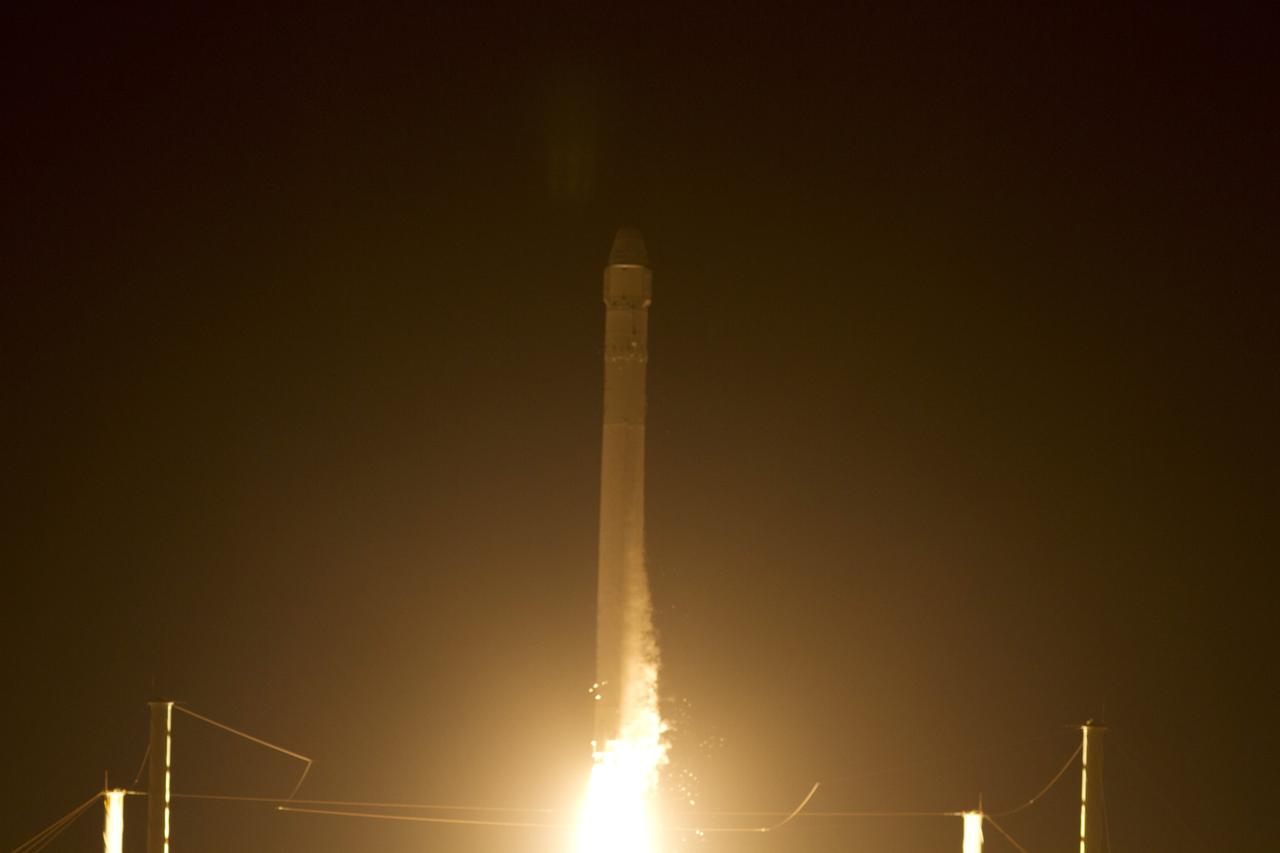
CAPE CANAVERAL, Fla. - At Space Launch Complex 40 on Cape Canaveral Air Force Station in Florida a Falcon 9 rocket carrying a Dragon capsule lifts off at 8:35 p.m. EDT. Space Exploration Technologies Corp., or SpaceX, built both the rocket and capsule for NASA's first Commercial Resupply Services, or CRS-1, mission to the International Space Station. SpaceX CRS-1 is an important step toward making America’s microgravity research program self-sufficient by providing a way to deliver and return significant amounts of cargo, including science experiments, to and from the orbiting laboratory. NASA has contracted for 12 commercial resupply flights from SpaceX and eight from the Orbital Sciences Corp. For more information, visit http://www.nasa.gov/mission_pages/station/living/launch/index.html Photo credit: NASA/Gina Mitchell and George Roberts
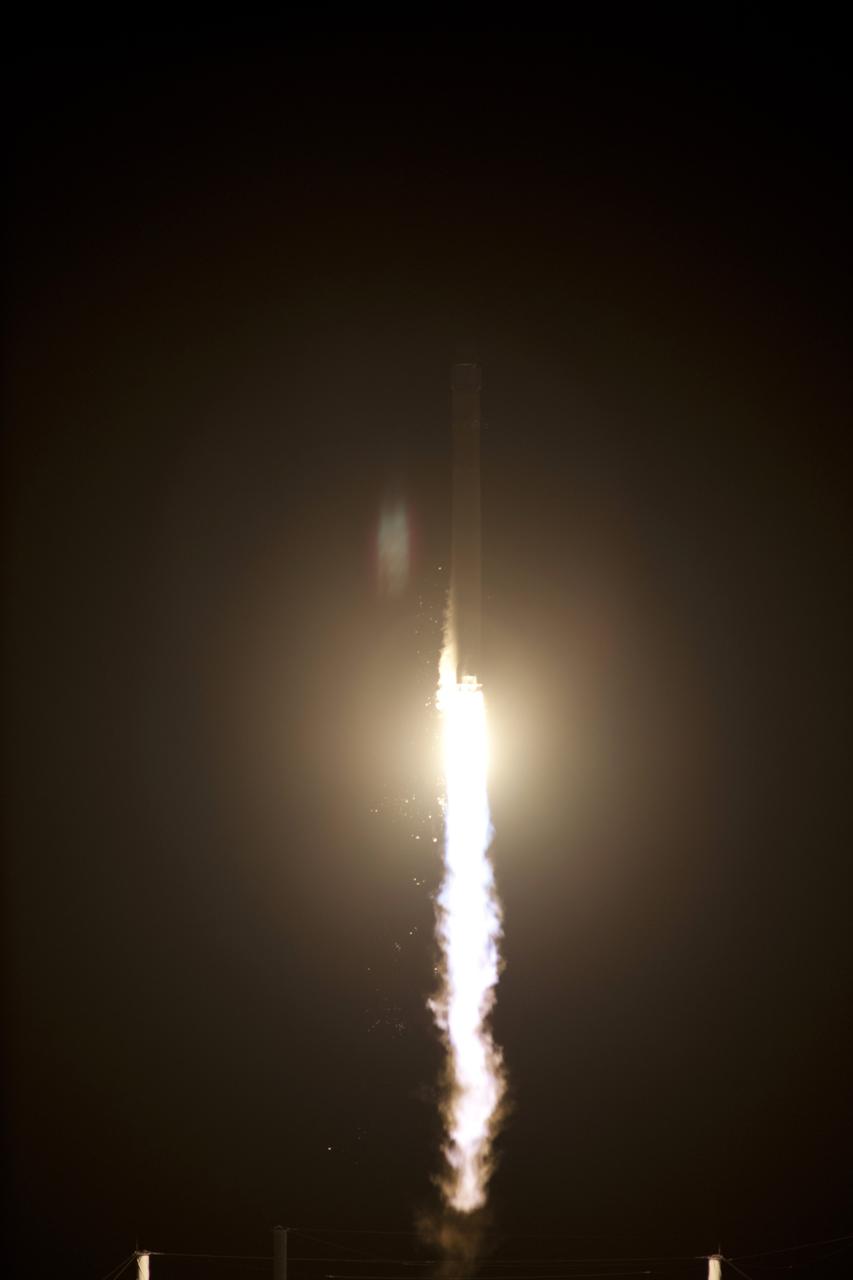
CAPE CANAVERAL, Fla. - At Space Launch Complex 40 on Cape Canaveral Air Force Station in Florida a Falcon 9 rocket carrying a Dragon capsule lifts off at 8:35 p.m. EDT. Space Exploration Technologies Corp., or SpaceX, built both the rocket and capsule for NASA's first Commercial Resupply Services, or CRS-1, mission to the International Space Station. SpaceX CRS-1 is an important step toward making America’s microgravity research program self-sufficient by providing a way to deliver and return significant amounts of cargo, including science experiments, to and from the orbiting laboratory. NASA has contracted for 12 commercial resupply flights from SpaceX and eight from the Orbital Sciences Corp. For more information, visit http://www.nasa.gov/mission_pages/station/living/launch/index.html Photo credit: NASA/Tony Gray
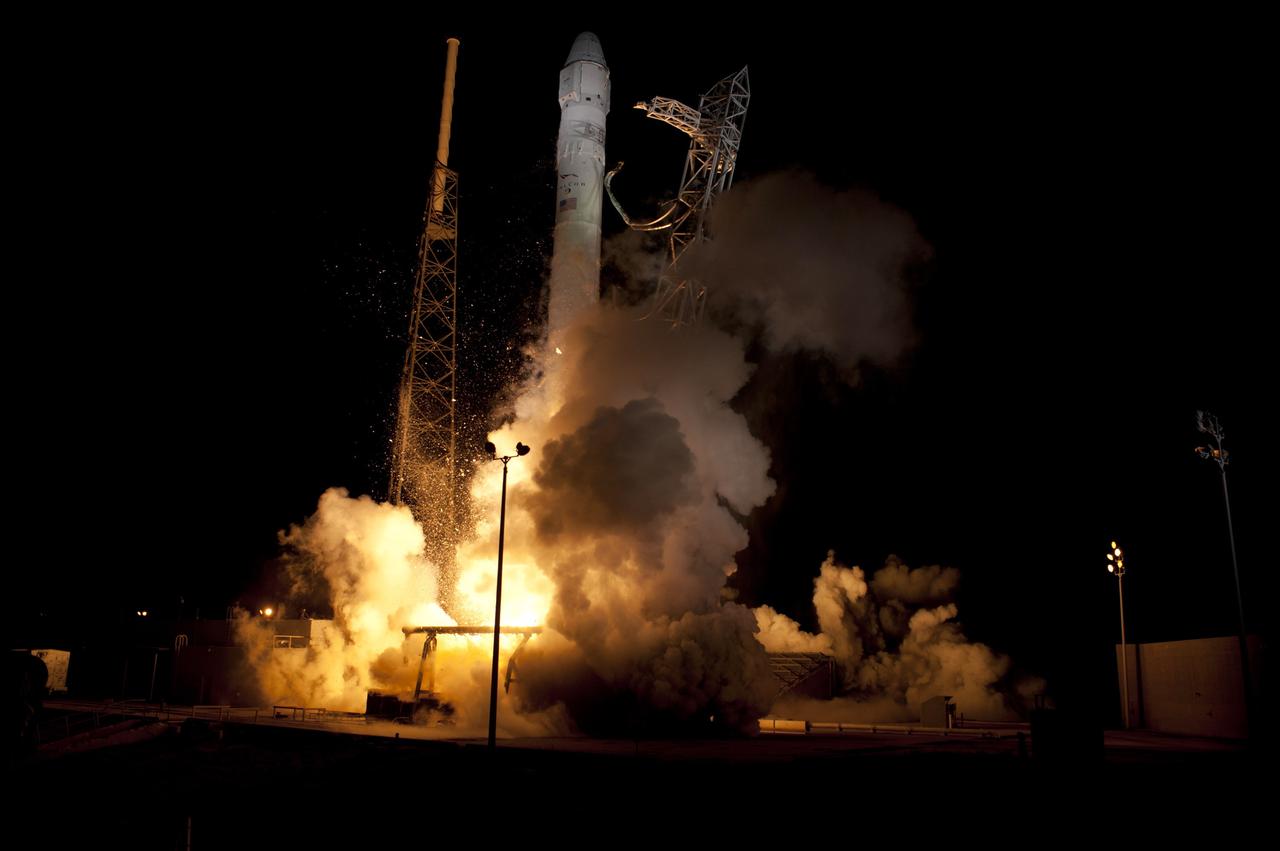
CAPE CANAVERAL, Fla. - Space Launch Complex 40 on Cape Canaveral Air Force Station in Florida comes alive as the Merlin engines ignite under the Falcon 9 rocket carrying a Dragon capsule to orbit. Liftoff was at 8:35 p.m. EDT. Space Exploration Technologies Corp., or SpaceX, built both the rocket and capsule for NASA's first Commercial Resupply Services, or CRS-1, mission to the International Space Station. SpaceX CRS-1 is an important step toward making America’s microgravity research program self-sufficient by providing a way to deliver and return significant amounts of cargo, including science experiments, to and from the orbiting laboratory. NASA has contracted for 12 commercial resupply flights from SpaceX and eight from the Orbital Sciences Corp. For more information, visit http://www.nasa.gov/mission_pages/station/living/launch/index.html Photo credit: NASA/ Rick Wetherington and Tim Powers
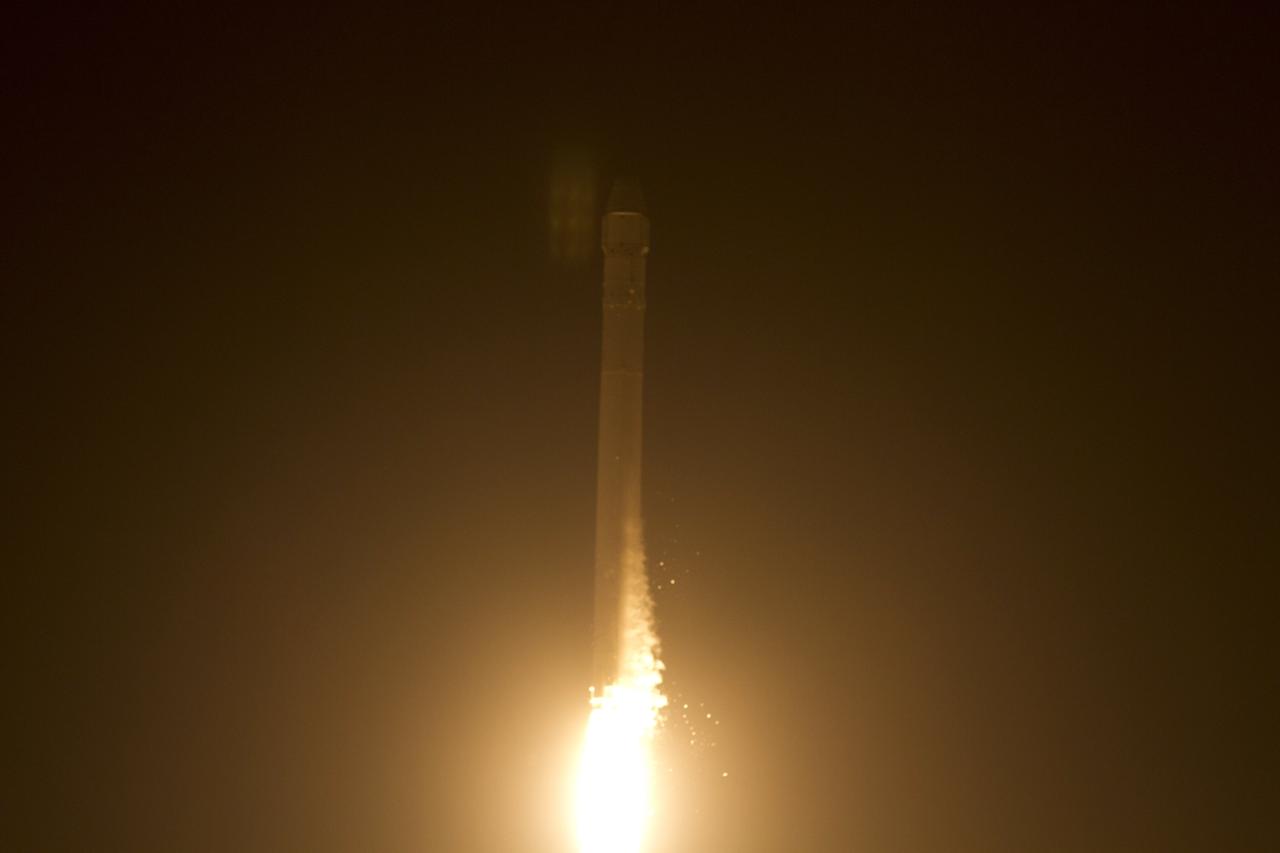
CAPE CANAVERAL, Fla. - At Space Launch Complex 40 on Cape Canaveral Air Force Station in Florida a Falcon 9 rocket carrying a Dragon capsule lifts off at 8:35 p.m. EDT. Space Exploration Technologies Corp., or SpaceX, built both the rocket and capsule for NASA's first Commercial Resupply Services, or CRS-1, mission to the International Space Station. SpaceX CRS-1 is an important step toward making America’s microgravity research program self-sufficient by providing a way to deliver and return significant amounts of cargo, including science experiments, to and from the orbiting laboratory. NASA has contracted for 12 commercial resupply flights from SpaceX and eight from the Orbital Sciences Corp. For more information, visit http://www.nasa.gov/mission_pages/station/living/launch/index.html Photo credit: NASA/Gina Mitchell and George Roberts
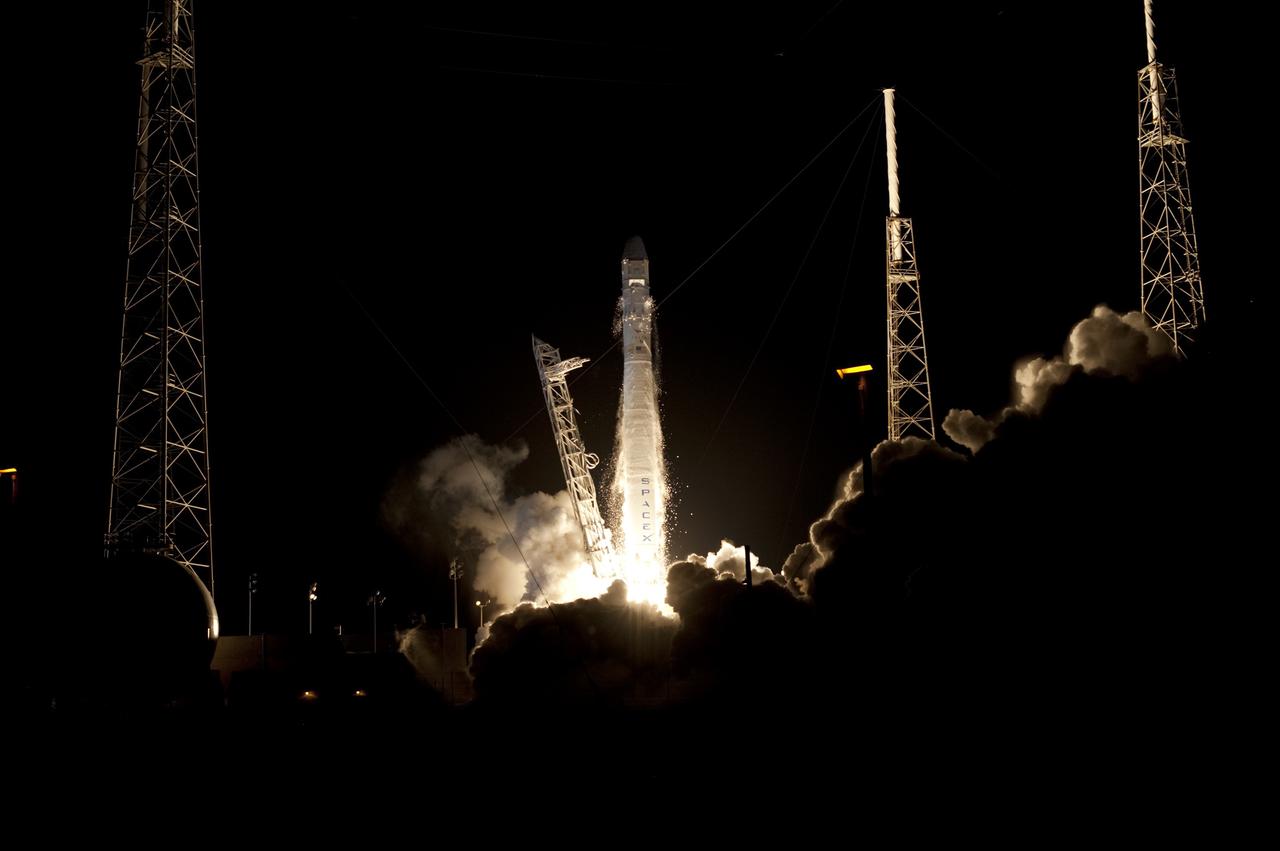
CAPE CANAVERAL, Fla. -- Plumes of exhaust and smoke form around a Falcon 9 rocket at 8:35 p.m. EDT as it lifts off Space Launch Complex 40 on Cape Canaveral Air Force Station in Florida, carrying a Dragon capsule to orbit. Space Exploration Technologies Corp., or SpaceX, built both the rocket and capsule for NASA's first Commercial Resupply Services, or CRS-1, mission to the International Space Station. SpaceX CRS-1 is an important step toward making America’s microgravity research program self-sufficient by providing a way to deliver and return significant amounts of cargo, including science experiments, to and from the orbiting laboratory. NASA has contracted for 12 commercial resupply flights from SpaceX and eight from the Orbital Sciences Corp. For more information, visit http://www.nasa.gov/mission_pages/station/living/launch/index.html. Photo credit: NASA/Tony Gray and Rick Wetherington
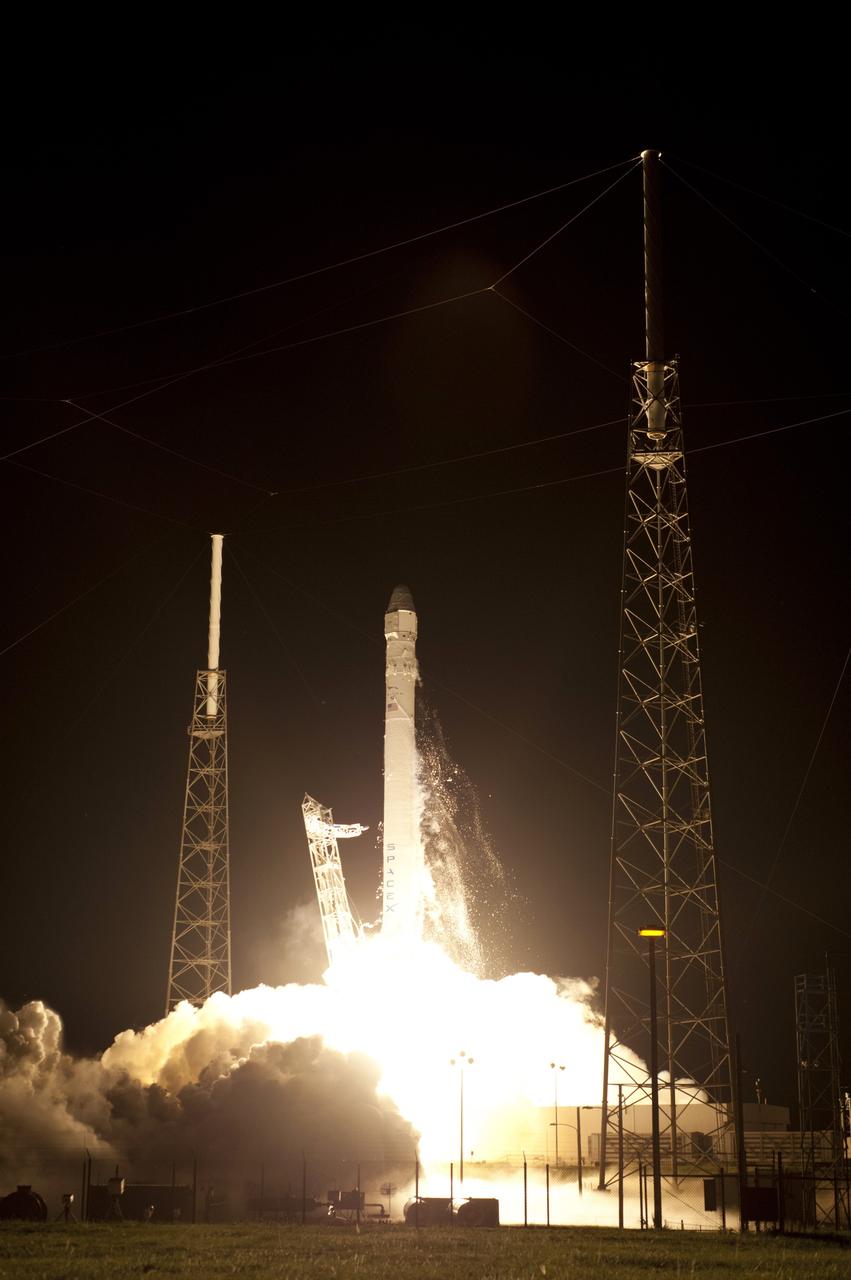
CAPE CANAVERAL, Fla. - Space Launch Complex 40 on Cape Canaveral Air Force Station in Florida comes alive as the Merlin engines ignite under the Falcon 9 rocket carrying a Dragon capsule to orbit. Liftoff was at 8:35 p.m. EDT. Space Exploration Technologies Corp., or SpaceX, built both the rocket and capsule for NASA's first Commercial Resupply Services, or CRS-1, mission to the International Space Station. SpaceX CRS-1 is an important step toward making America’s microgravity research program self-sufficient by providing a way to deliver and return significant amounts of cargo, including science experiments, to and from the orbiting laboratory. NASA has contracted for 12 commercial resupply flights from SpaceX and eight from the Orbital Sciences Corp. For more information, visit http://www.nasa.gov/mission_pages/station/living/launch/index.html Photo credit: NASA/Rick Wetherington and Tony Gray
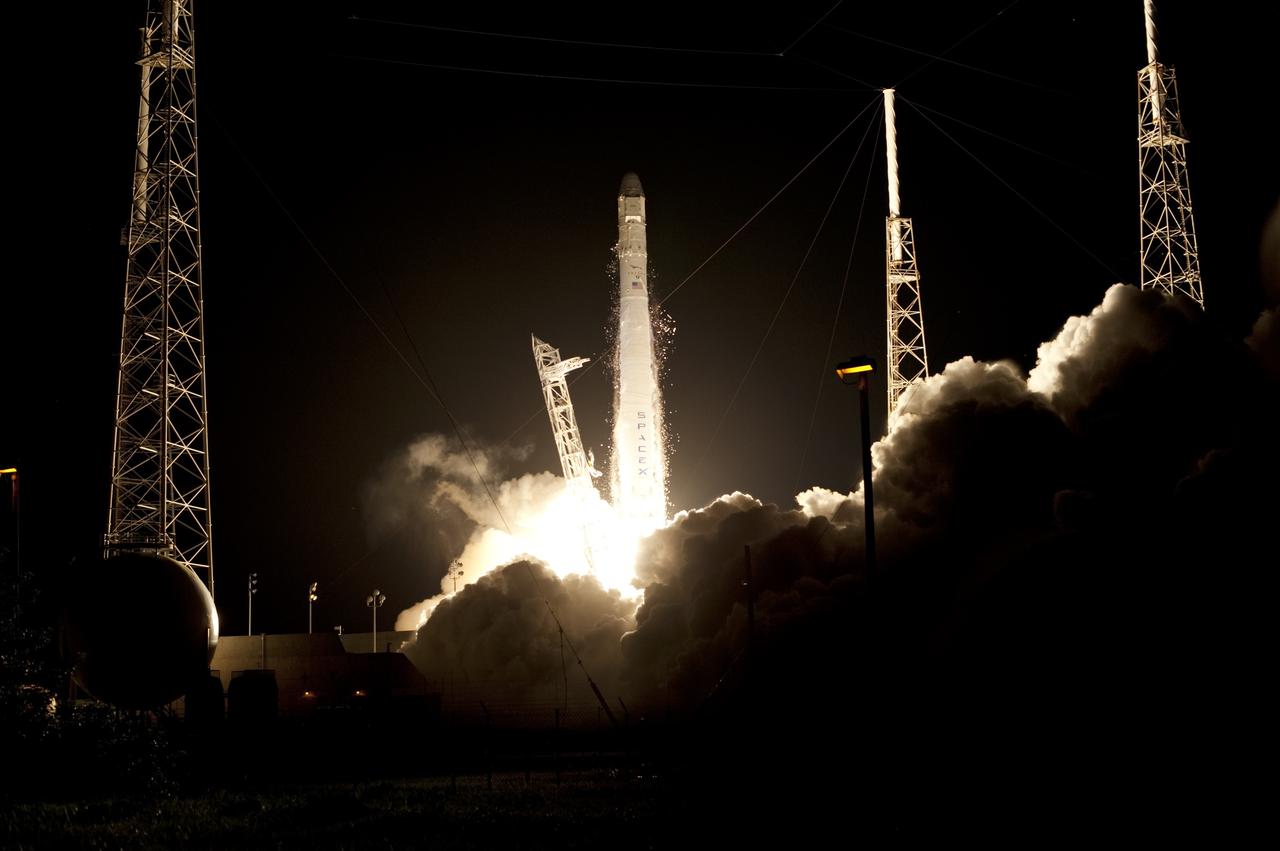
CAPE CANAVERAL, Fla. -- A Falcon 9 rocket roars to life on Space Launch Complex 40 on Cape Canaveral Air Force Station in Florida at 8:35 p.m. EDT, carrying a Dragon capsule to orbit. Space Exploration Technologies Corp., or SpaceX, built both the rocket and capsule for NASA's first Commercial Resupply Services, or CRS-1, mission to the International Space Station. SpaceX CRS-1 is an important step toward making America’s microgravity research program self-sufficient by providing a way to deliver and return significant amounts of cargo, including science experiments, to and from the orbiting laboratory. NASA has contracted for 12 commercial resupply flights from SpaceX and eight from the Orbital Sciences Corp. For more information, visit http://www.nasa.gov/mission_pages/station/living/launch/index.html. Photo credit: NASA/Tony Gray and Rick Wetherington
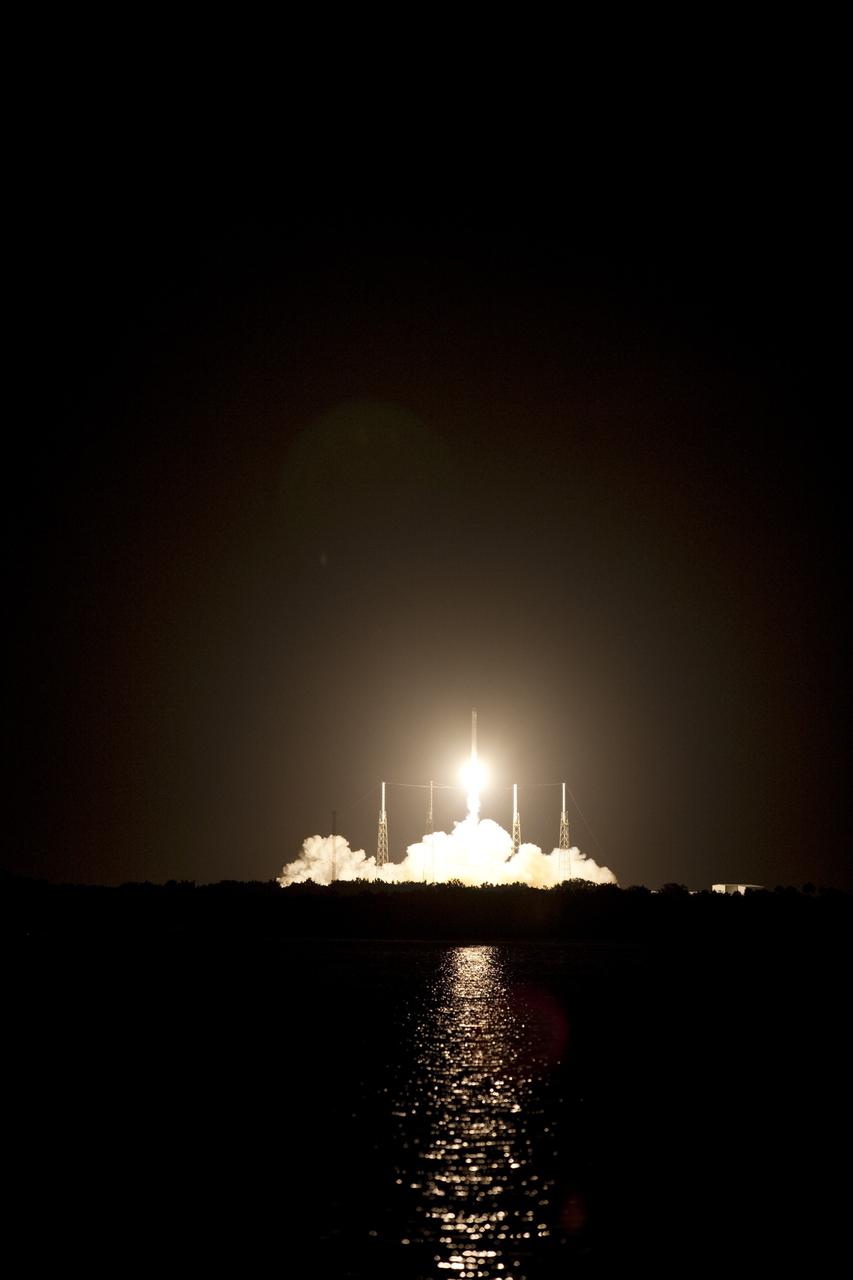
CAPE CANAVERAL, Fla. -- Space Launch Complex 40 on Cape Canaveral Air Force Station in Florida is illuminated by a Falcon 9 rocket as it lifts off at 8:35 p.m. EDT carrying a Dragon capsule to orbit. Space Exploration Technologies Corp., or SpaceX, built both the rocket and capsule for NASA's first Commercial Resupply Services, or CRS-1, mission to the International Space Station. SpaceX CRS-1 is an important step toward making America’s microgravity research program self-sufficient by providing a way to deliver and return significant amounts of cargo, including science experiments, to and from the orbiting laboratory. NASA has contracted for 12 commercial resupply flights from SpaceX and eight from the Orbital Sciences Corp. For more information, visit http://www.nasa.gov/mission_pages/station/living/launch/index.html. Photo credit: NASA/Glenn Benson
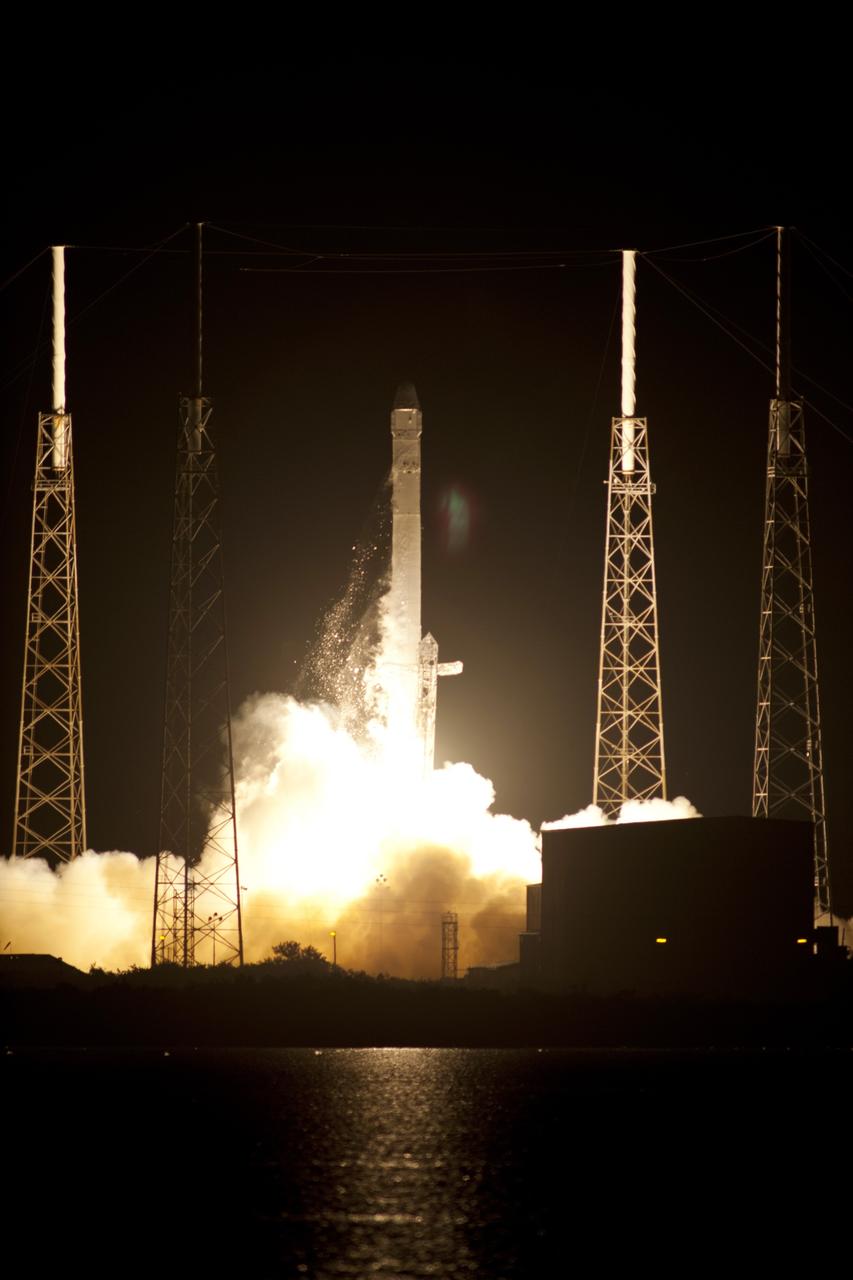
CAPE CANAVERAL, Fla. - Space Launch Complex 40 on Cape Canaveral Air Force Station in Florida comes alive as the Merlin engines ignite under the Falcon 9 rocket carrying a Dragon capsule to orbit. Liftoff was at 8:35 p.m. EDT. Space Exploration Technologies Corp., or SpaceX, built both the rocket and capsule for NASA's first Commercial Resupply Services, or CRS-1, mission to the International Space Station. SpaceX CRS-1 is an important step toward making America’s microgravity research program self-sufficient by providing a way to deliver and return significant amounts of cargo, including science experiments, to and from the orbiting laboratory. NASA has contracted for 12 commercial resupply flights from SpaceX and eight from the Orbital Sciences Corp. For more information, visit http://www.nasa.gov/mission_pages/station/living/launch/index.html Photo credit: NASA/Tony Gray
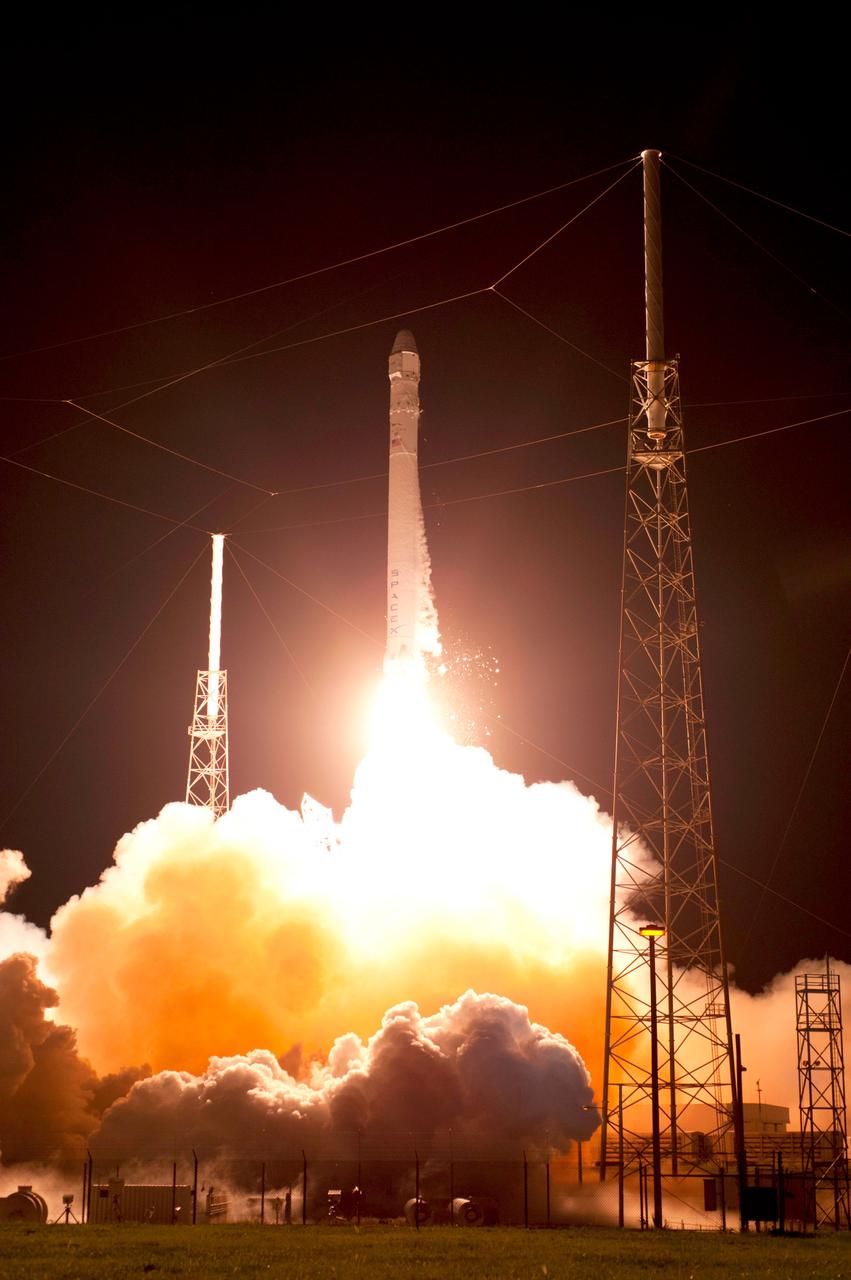
CAPE CANAVERAL, Fla. - Space Launch Complex 40 on Cape Canaveral Air Force Station in Florida comes alive as the Merlin engines ignite under the Falcon 9 rocket carrying a Dragon capsule to orbit. Liftoff was at 8:35 p.m. EDT. Space Exploration Technologies Corp., or SpaceX, built both the rocket and capsule for NASA's first Commercial Resupply Services, or CRS-1, mission to the International Space Station. SpaceX CRS-1 is an important step toward making America’s microgravity research program self-sufficient by providing a way to deliver and return significant amounts of cargo, including science experiments, to and from the orbiting laboratory. NASA has contracted for 12 commercial resupply flights from SpaceX and eight from the Orbital Sciences Corp. For more information, visit http://www.nasa.gov/mission_pages/station/living/launch/index.html Photo credit: NASA/Rick Wetherington and Tony Gray
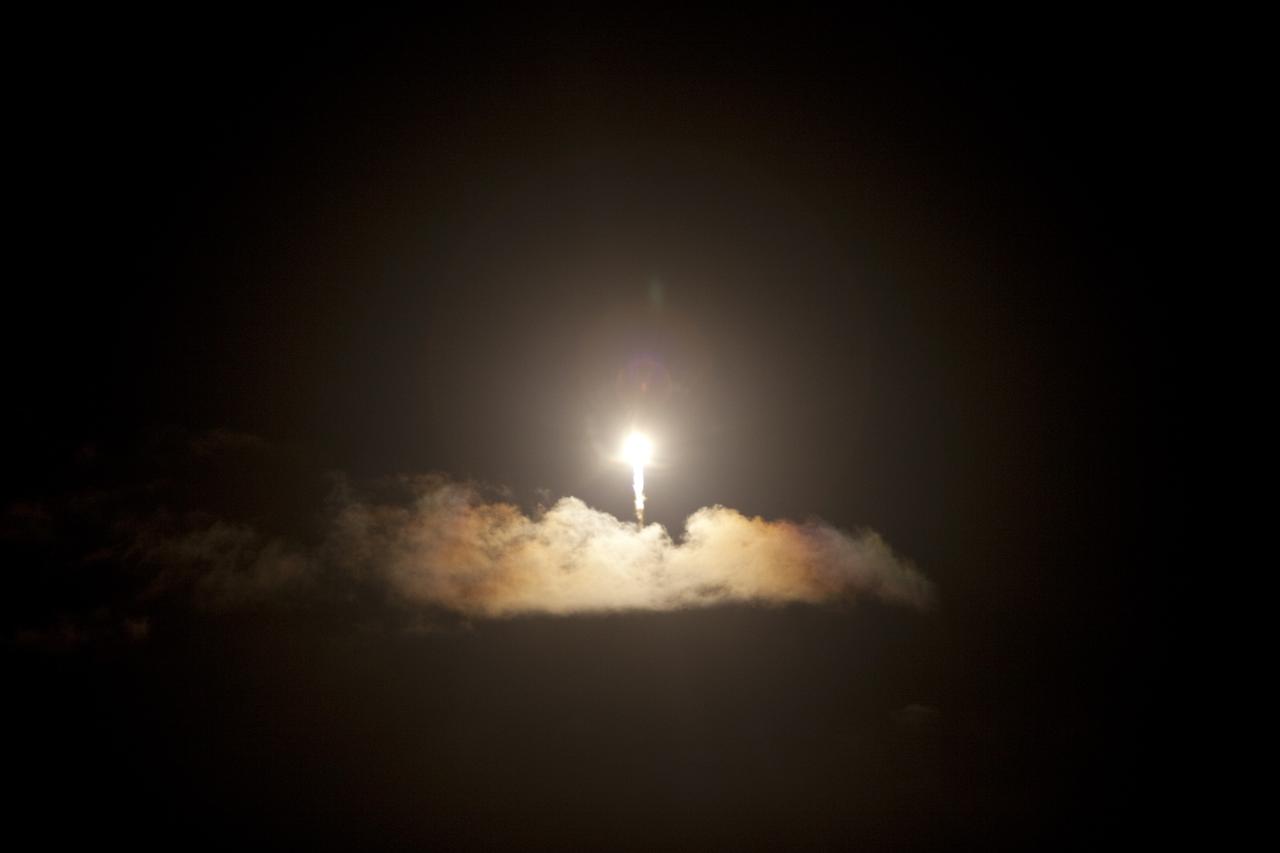
CAPE CANAVERAL, Fla. -- The clouds over Space Launch Complex 40 on Cape Canaveral Air Force Station in Florida light up as a Falcon 9 rocket passes through, carrying a Dragon capsule to orbit. Liftoff was at 8:35 p.m. EDT. Space Exploration Technologies Corp., or SpaceX, built both the rocket and capsule for NASA's first Commercial Resupply Services, or CRS-1, mission to the International Space Station. SpaceX CRS-1 is an important step toward making America’s microgravity research program self-sufficient by providing a way to deliver and return significant amounts of cargo, including science experiments, to and from the orbiting laboratory. NASA has contracted for 12 commercial resupply flights from SpaceX and eight from the Orbital Sciences Corp. For more information, visit http://www.nasa.gov/mission_pages/station/living/launch/index.html. Photo credit: NASA/Gianni Woods
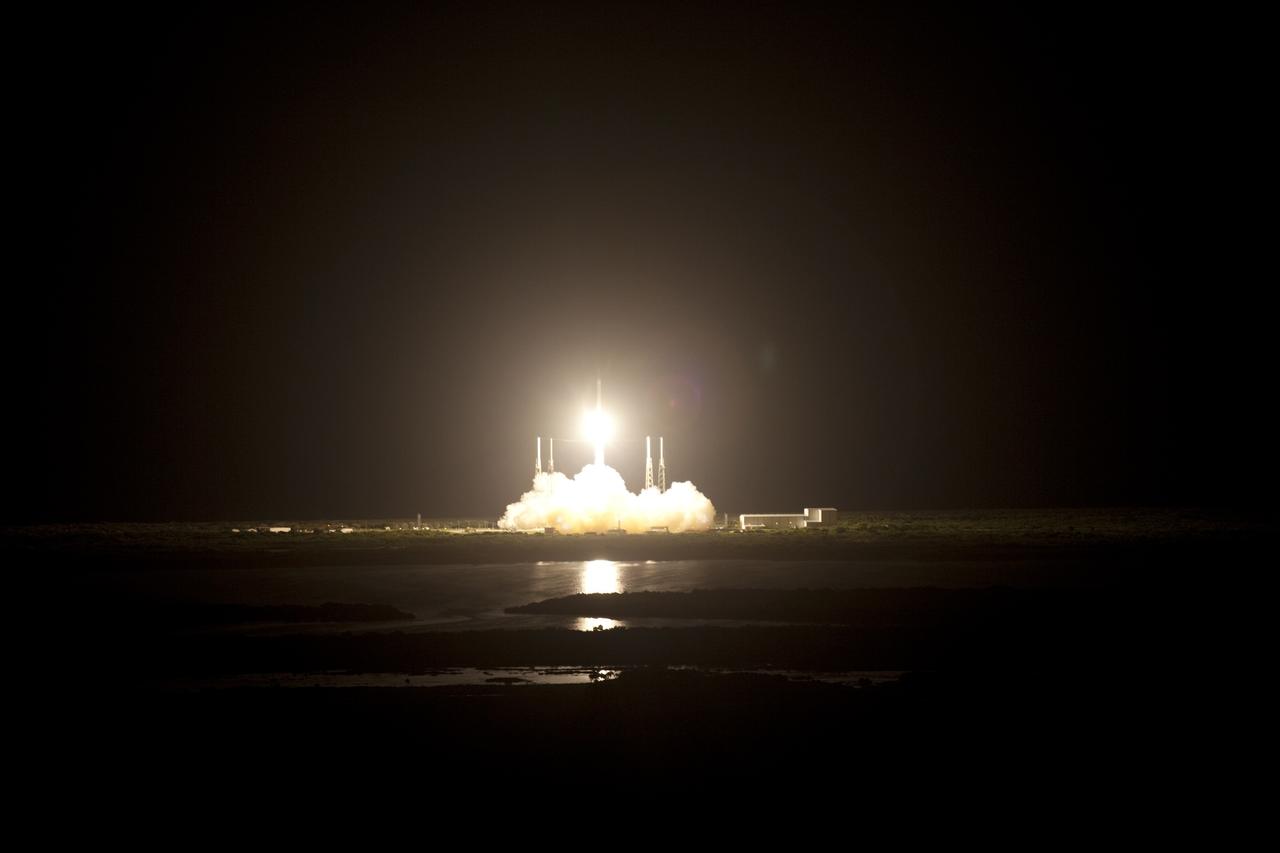
CAPE CANAVERAL, Fla. -- Plumes of exhaust and smoke billow around the lightning masts on Space Launch Complex 40 on Cape Canaveral Air Force Station in Florida as a Falcon 9 rocket lifts off at 8:35 p.m. EDT, carrying a Dragon capsule to orbit. Space Exploration Technologies Corp., or SpaceX, built both the rocket and capsule for NASA's first Commercial Resupply Services, or CRS-1, mission to the International Space Station. SpaceX CRS-1 is an important step toward making America’s microgravity research program self-sufficient by providing a way to deliver and return significant amounts of cargo, including science experiments, to and from the orbiting laboratory. NASA has contracted for 12 commercial resupply flights from SpaceX and eight from the Orbital Sciences Corp. For more information, visit http://www.nasa.gov/mission_pages/station/living/launch/index.html. Photo credit: NASA/Gianni Woods
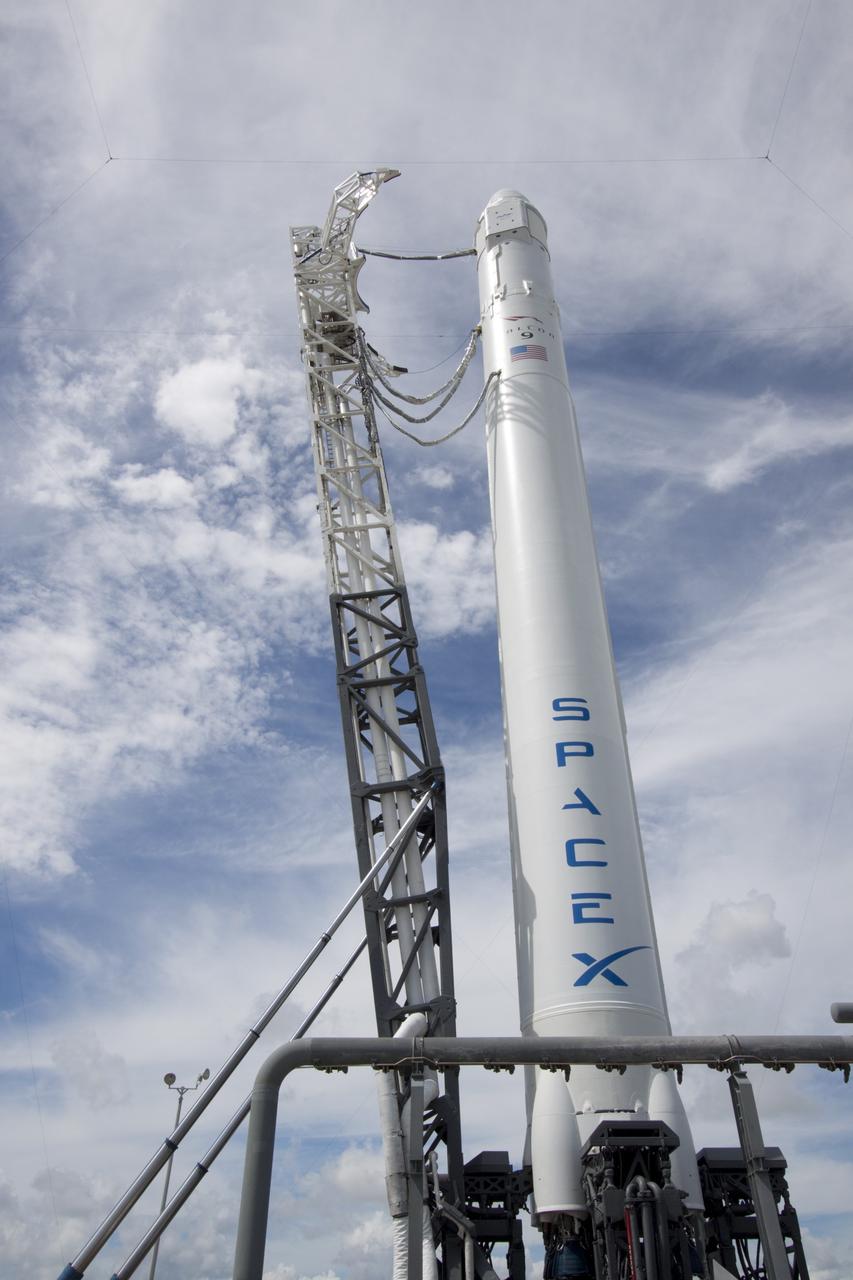
CAPE CANAVERAL, Fla. -- Umbilical lines are attached to a Falcon 9 rocket with a Dragon capsule secured atop on the pad at Space Launch Complex 40 on Cape Canaveral Air Force Station in Florida. Space Exploration Technologies Corp., or SpaceX, built both the rocket and capsule for NASA's first Commercial Resupply Services, or CRS-1, mission to the International Space Station. The vertical lift was complete at 1 p.m. EDT. SpaceX CRS-1 is an important step toward making America’s microgravity research program self-sufficient by providing a way to deliver and return significant amounts of cargo, including science experiments, to and from the orbiting laboratory. Launch is scheduled for 8:35 p.m. EDT on Oct. 7. NASA has contracted for 12 commercial resupply flights from SpaceX and eight from the Orbital Sciences Corp. For more information, visit http://www.nasa.gov/mission_pages/station/living/launch/index.html. Photo credit: NASA/Jim Grossmann
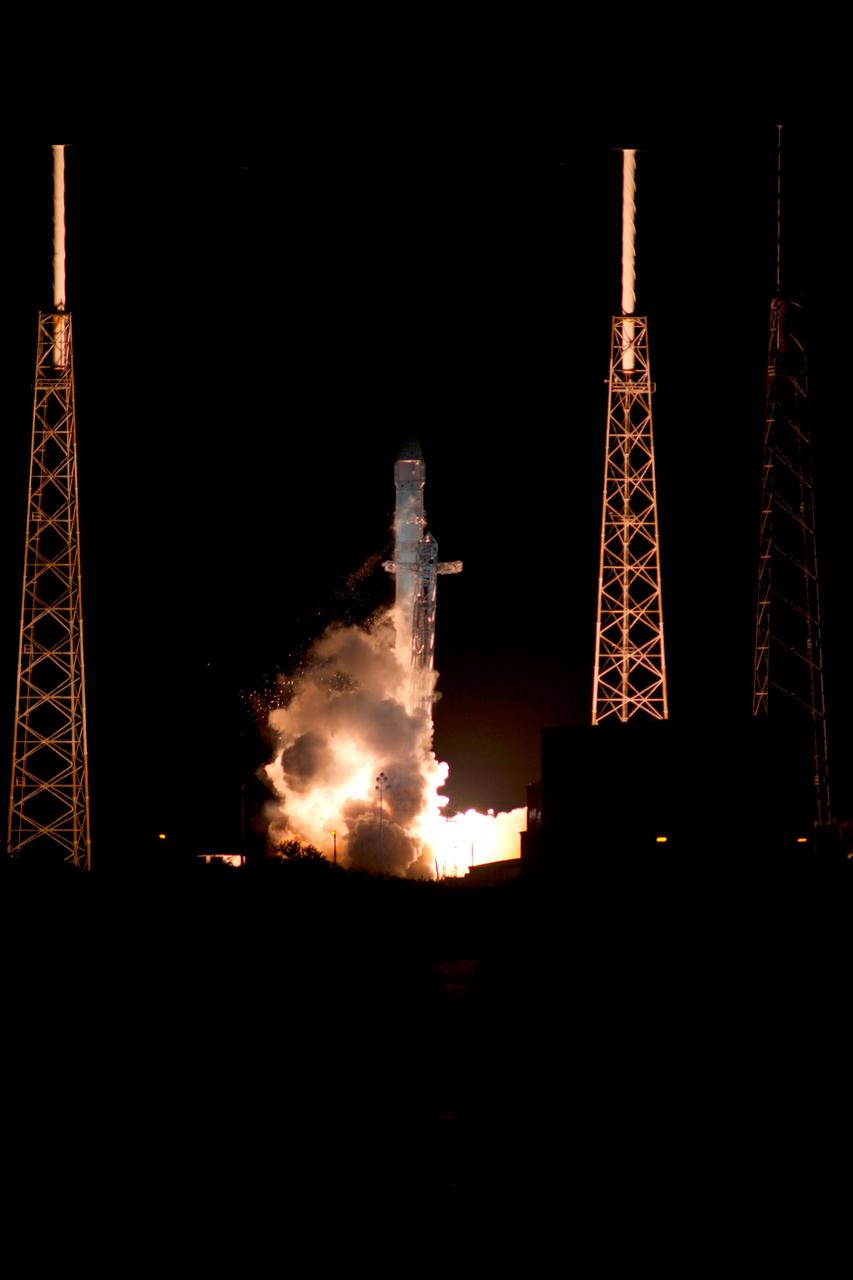
CAPE CANAVERAL, Fla. - Space Launch Complex 40 on Cape Canaveral Air Force Station in Florida comes alive as the Merlin engines ignite under the Falcon 9 rocket carrying a Dragon capsule to orbit. Liftoff was at 8:35 p.m. EDT. Space Exploration Technologies Corp., or SpaceX, built both the rocket and capsule for NASA's first Commercial Resupply Services, or CRS-1, mission to the International Space Station. SpaceX CRS-1 is an important step toward making America’s microgravity research program self-sufficient by providing a way to deliver and return significant amounts of cargo, including science experiments, to and from the orbiting laboratory. NASA has contracted for 12 commercial resupply flights from SpaceX and eight from the Orbital Sciences Corp. For more information, visit http://www.nasa.gov/mission_pages/station/living/launch/index.html Photo credit: NASA/Tony Gray
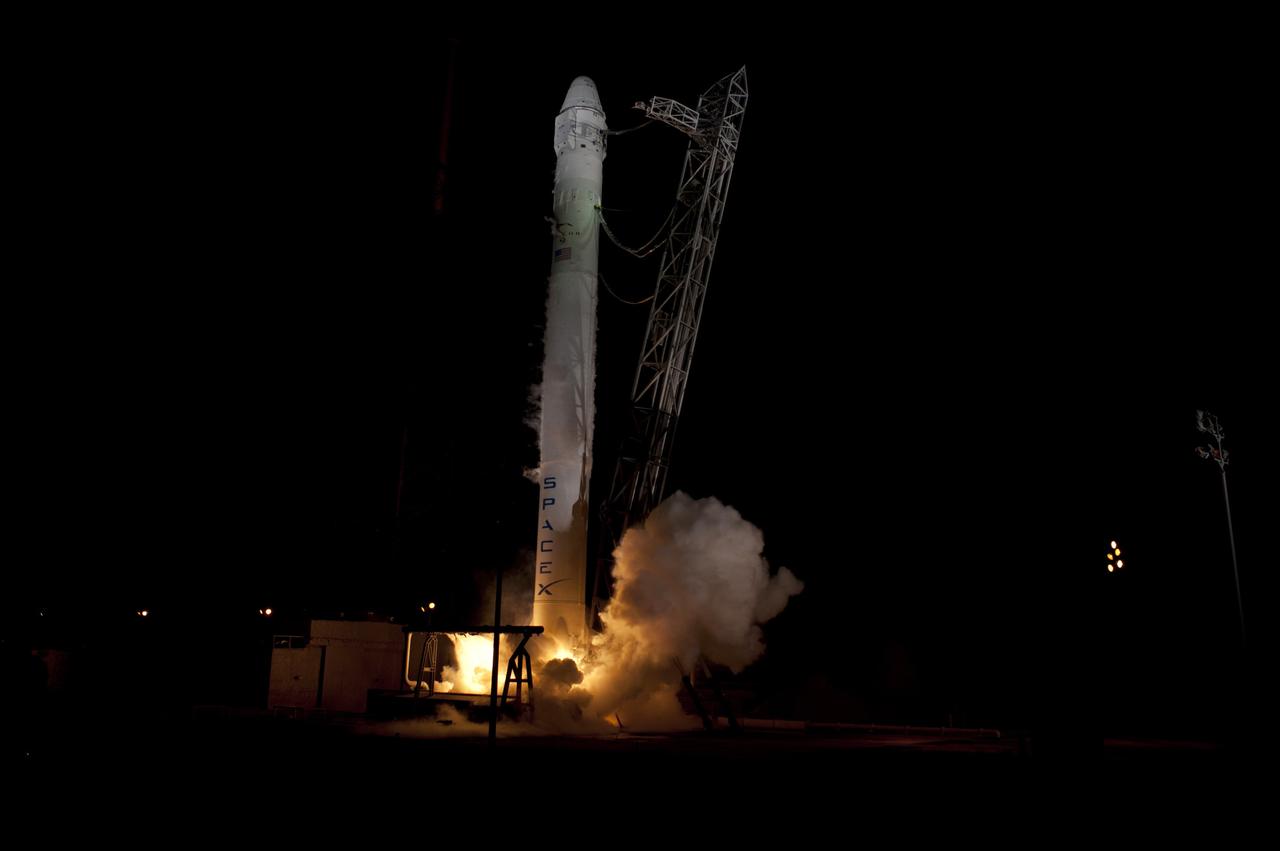
CAPE CANAVERAL, Fla. - Space Launch Complex 40 on Cape Canaveral Air Force Station in Florida comes alive as the Merlin engines ignite under the Falcon 9 rocket carrying a Dragon capsule to orbit. Liftoff was at 8:35 p.m. EDT. Space Exploration Technologies Corp., or SpaceX, built both the rocket and capsule for NASA's first Commercial Resupply Services, or CRS-1, mission to the International Space Station. SpaceX CRS-1 is an important step toward making America’s microgravity research program self-sufficient by providing a way to deliver and return significant amounts of cargo, including science experiments, to and from the orbiting laboratory. NASA has contracted for 12 commercial resupply flights from SpaceX and eight from the Orbital Sciences Corp. For more information, visit http://www.nasa.gov/mission_pages/station/living/launch/index.html Photo credit: NASA/ Rick Wetherington and Tim Powers
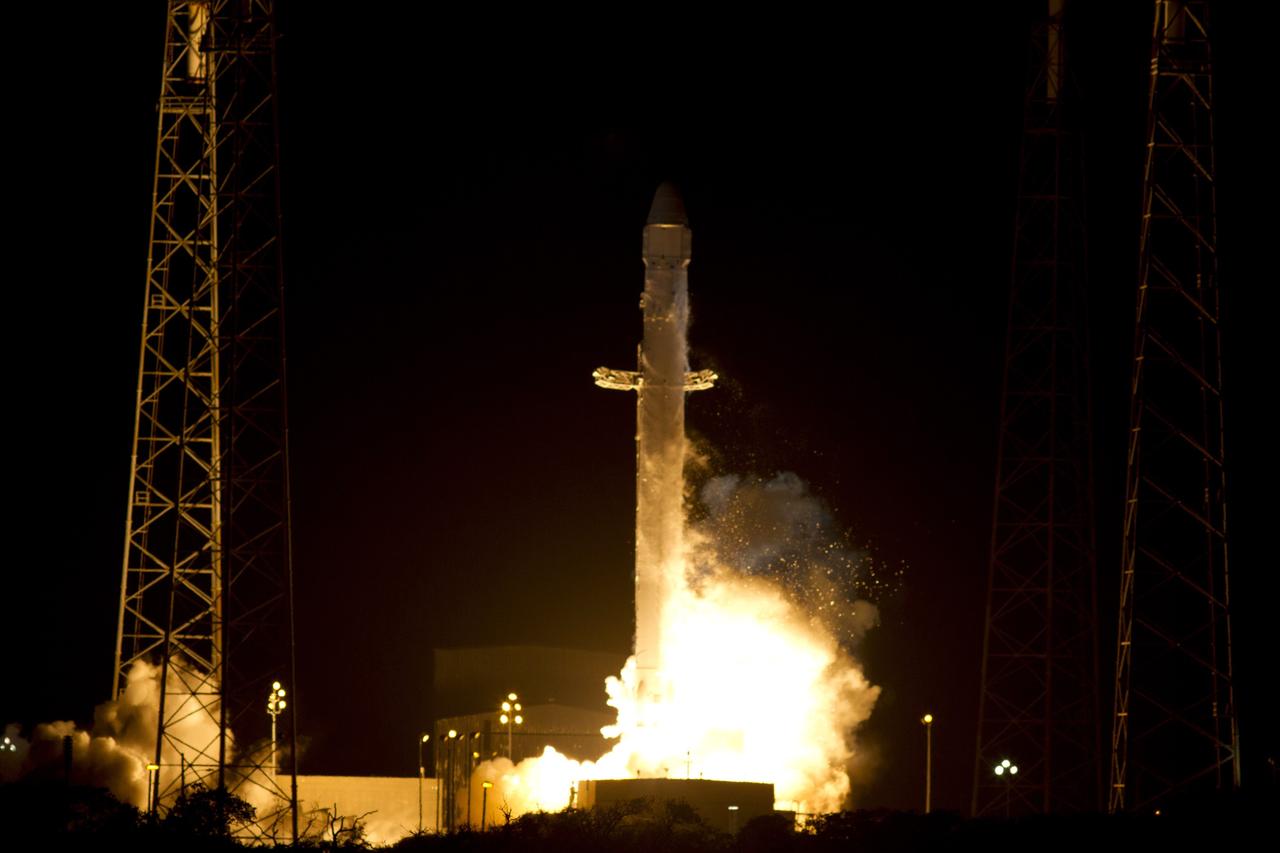
CAPE CANAVERAL, Fla. - Space Launch Complex 40 on Cape Canaveral Air Force Station in Florida comes alive as the Merlin engines ignite under the Falcon 9 rocket carrying a Dragon capsule to orbit. Liftoff was at 8:35 p.m. EDT. Space Exploration Technologies Corp., or SpaceX, built both the rocket and capsule for NASA's first Commercial Resupply Services, or CRS-1, mission to the International Space Station. SpaceX CRS-1 is an important step toward making America’s microgravity research program self-sufficient by providing a way to deliver and return significant amounts of cargo, including science experiments, to and from the orbiting laboratory. NASA has contracted for 12 commercial resupply flights from SpaceX and eight from the Orbital Sciences Corp. For more information, visit http://www.nasa.gov/mission_pages/station/living/launch/index.html Photo credit: NASA/Gina Mitchell and George Roberts
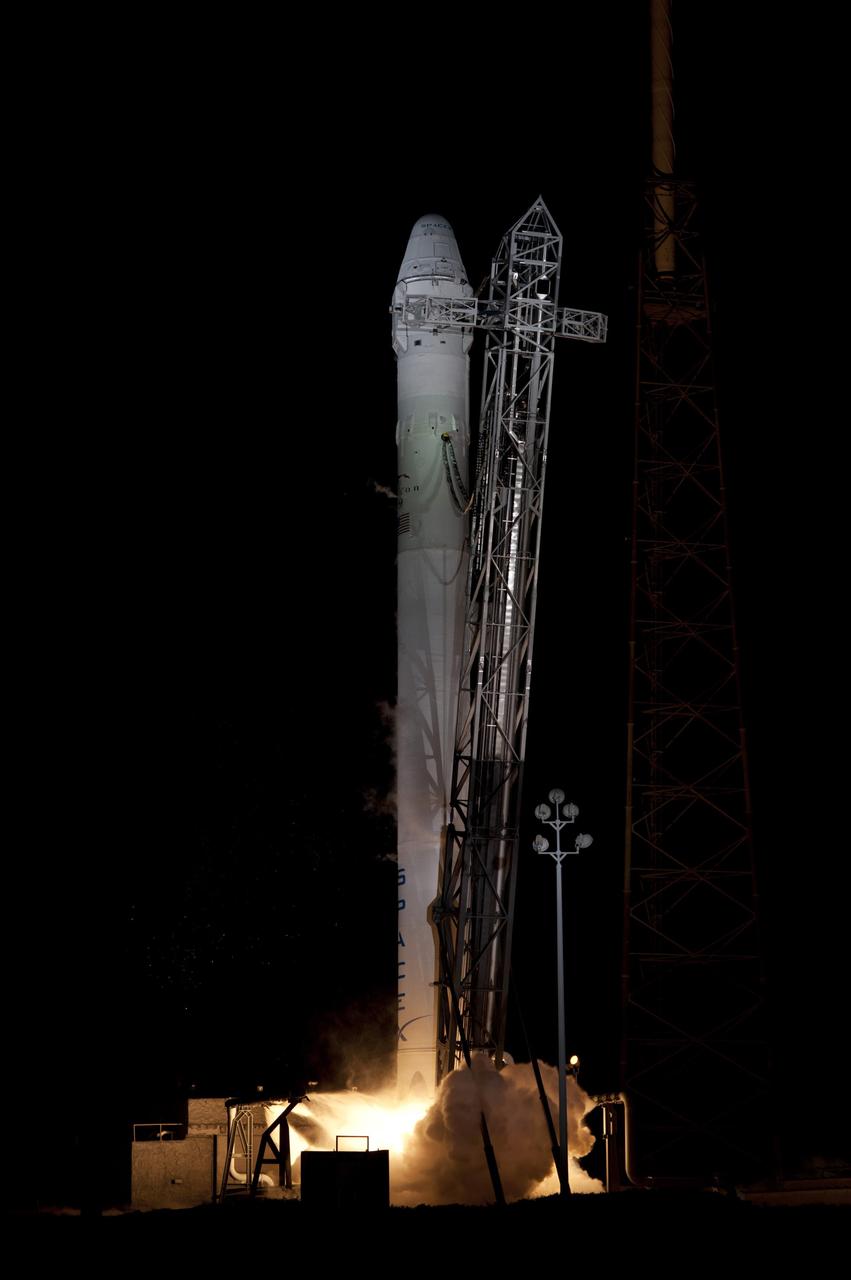
CAPE CANAVERAL, Fla. - Space Launch Complex 40 on Cape Canaveral Air Force Station in Florida comes alive as the Merlin engines ignite under the Falcon 9 rocket carrying a Dragon capsule to orbit. Liftoff was at 8:35 p.m. EDT. Space Exploration Technologies Corp., or SpaceX, built both the rocket and capsule for NASA's first Commercial Resupply Services, or CRS-1, mission to the International Space Station. SpaceX CRS-1 is an important step toward making America’s microgravity research program self-sufficient by providing a way to deliver and return significant amounts of cargo, including science experiments, to and from the orbiting laboratory. NASA has contracted for 12 commercial resupply flights from SpaceX and eight from the Orbital Sciences Corp. For more information, visit http://www.nasa.gov/mission_pages/station/living/launch/index.html Photo credit: NASA/ Rick Wetherington and Tim Powers
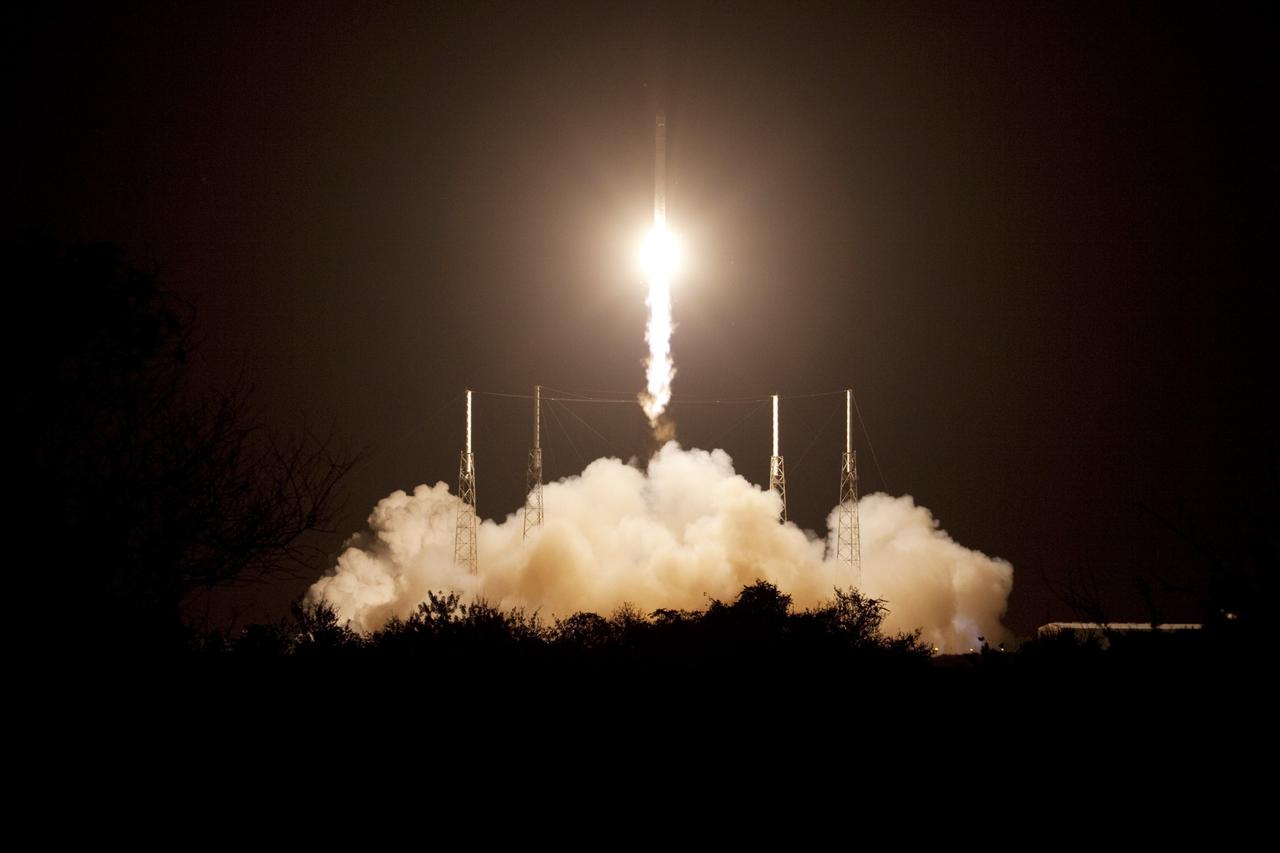
CAPE CANAVERAL, Fla. -- A Falcon 9 rocket makes its way into the clouds over Space Launch Complex 40 on Cape Canaveral Air Force Station in Florida carrying a Dragon capsule to orbit. Launch was at 8:35 p.m. EDT. Space Exploration Technologies Corp., or SpaceX, built both the rocket and capsule for NASA's first Commercial Resupply Services, or CRS-1, mission to the International Space Station. SpaceX CRS-1 is an important step toward making America’s microgravity research program self-sufficient by providing a way to deliver and return significant amounts of cargo, including science experiments, to and from the orbiting laboratory. NASA has contracted for 12 commercial resupply flights from SpaceX and eight from the Orbital Sciences Corp. For more information, visit http://www.nasa.gov/mission_pages/station/living/launch/index.html. Photo credit: NASA/Jim Grossmann
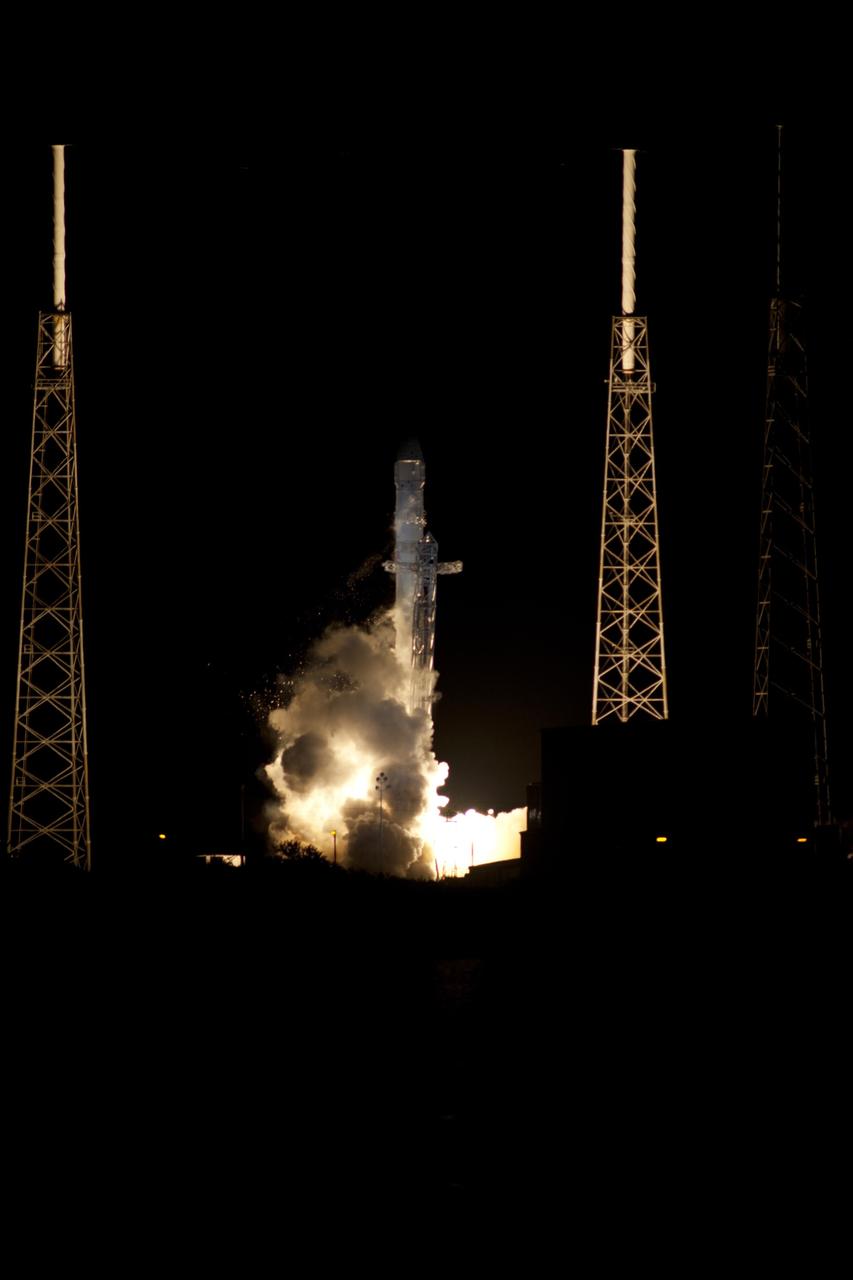
CAPE CANAVERAL, Fla. - Space Launch Complex 40 on Cape Canaveral Air Force Station in Florida comes alive as the Merlin engines ignite under the Falcon 9 rocket carrying a Dragon capsule to orbit. Liftoff was at 8:35 p.m. EDT. Space Exploration Technologies Corp., or SpaceX, built both the rocket and capsule for NASA's first Commercial Resupply Services, or CRS-1, mission to the International Space Station. SpaceX CRS-1 is an important step toward making America’s microgravity research program self-sufficient by providing a way to deliver and return significant amounts of cargo, including science experiments, to and from the orbiting laboratory. NASA has contracted for 12 commercial resupply flights from SpaceX and eight from the Orbital Sciences Corp. For more information, visit http://www.nasa.gov/mission_pages/station/living/launch/index.html Photo credit: NASA/Tony Gray
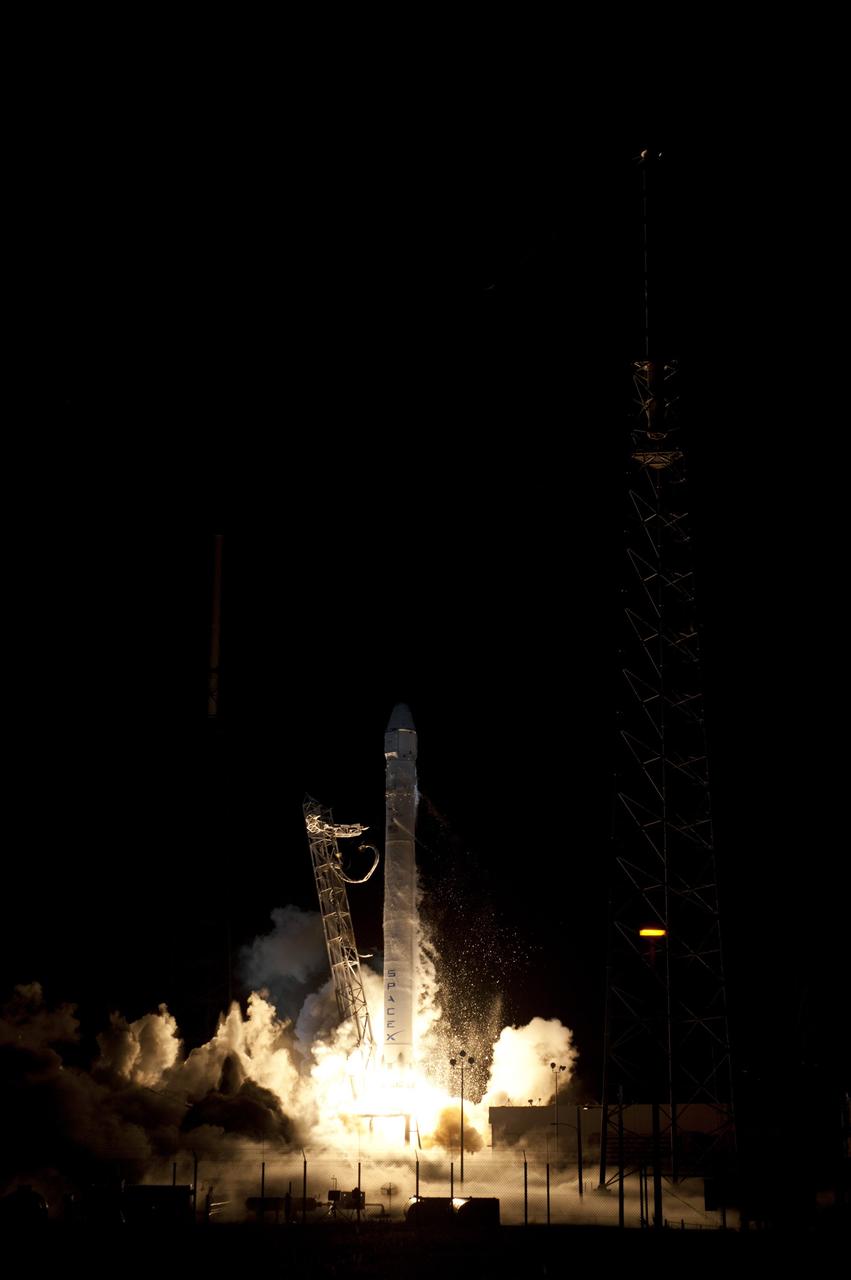
CAPE CANAVERAL, Fla. - Space Launch Complex 40 on Cape Canaveral Air Force Station in Florida comes alive as the Merlin engines ignite under the Falcon 9 rocket carrying a Dragon capsule to orbit. Liftoff was at 8:35 p.m. EDT. Space Exploration Technologies Corp., or SpaceX, built both the rocket and capsule for NASA's first Commercial Resupply Services, or CRS-1, mission to the International Space Station. SpaceX CRS-1 is an important step toward making America’s microgravity research program self-sufficient by providing a way to deliver and return significant amounts of cargo, including science experiments, to and from the orbiting laboratory. NASA has contracted for 12 commercial resupply flights from SpaceX and eight from the Orbital Sciences Corp. For more information, visit http://www.nasa.gov/mission_pages/station/living/launch/index.html Photo credit: NASA/Rick Wetherington and Tony Gray
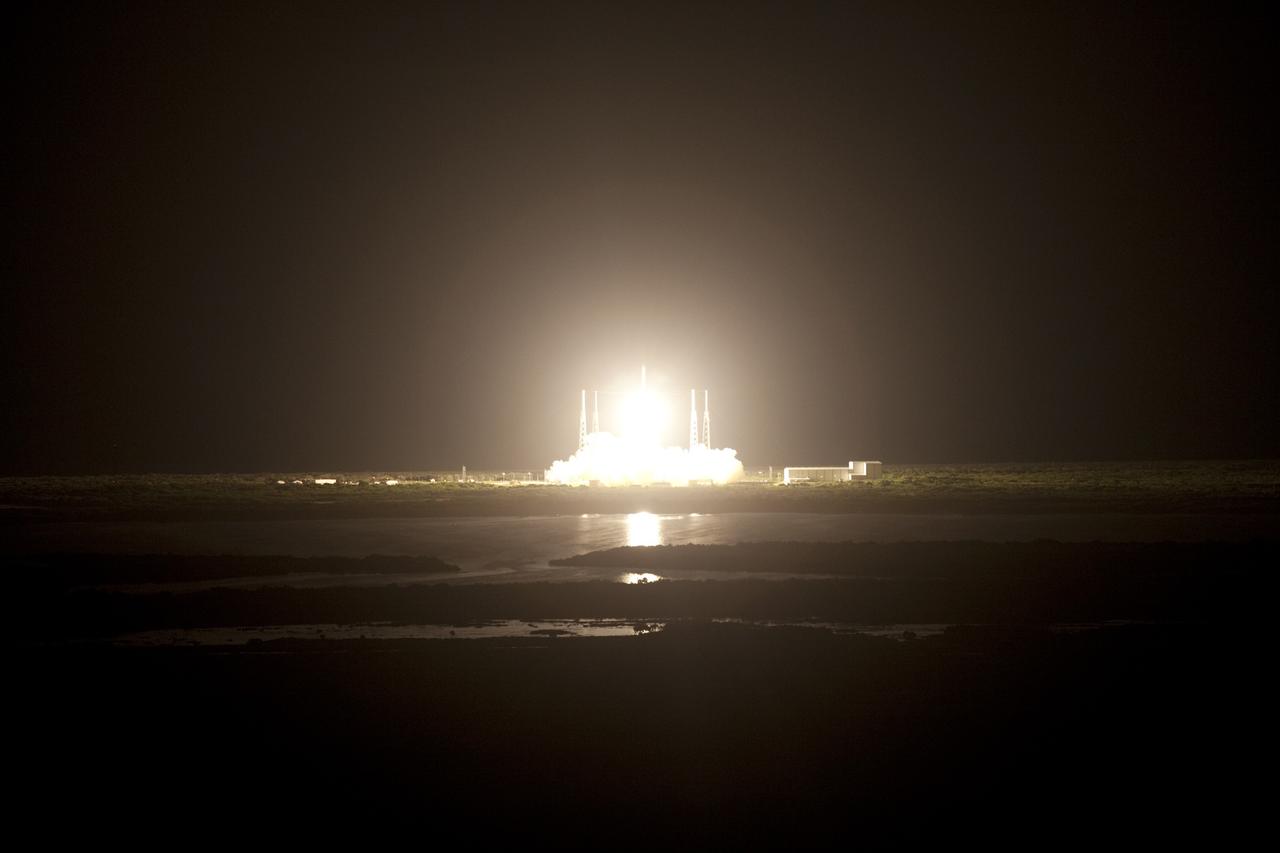
CAPE CANAVERAL, Fla. -- Space Launch Complex 40 on Cape Canaveral Air Force Station in Florida is illuminated by a Falcon 9 rocket as it lifts off at 8:35 p.m. EDT carrying a Dragon capsule to orbit. Space Exploration Technologies Corp., or SpaceX, built both the rocket and capsule for NASA's first Commercial Resupply Services, or CRS-1, mission to the International Space Station. SpaceX CRS-1 is an important step toward making America’s microgravity research program self-sufficient by providing a way to deliver and return significant amounts of cargo, including science experiments, to and from the orbiting laboratory. NASA has contracted for 12 commercial resupply flights from SpaceX and eight from the Orbital Sciences Corp. For more information, visit http://www.nasa.gov/mission_pages/station/living/launch/index.html. Photo credit: NASA/Gianni Woods
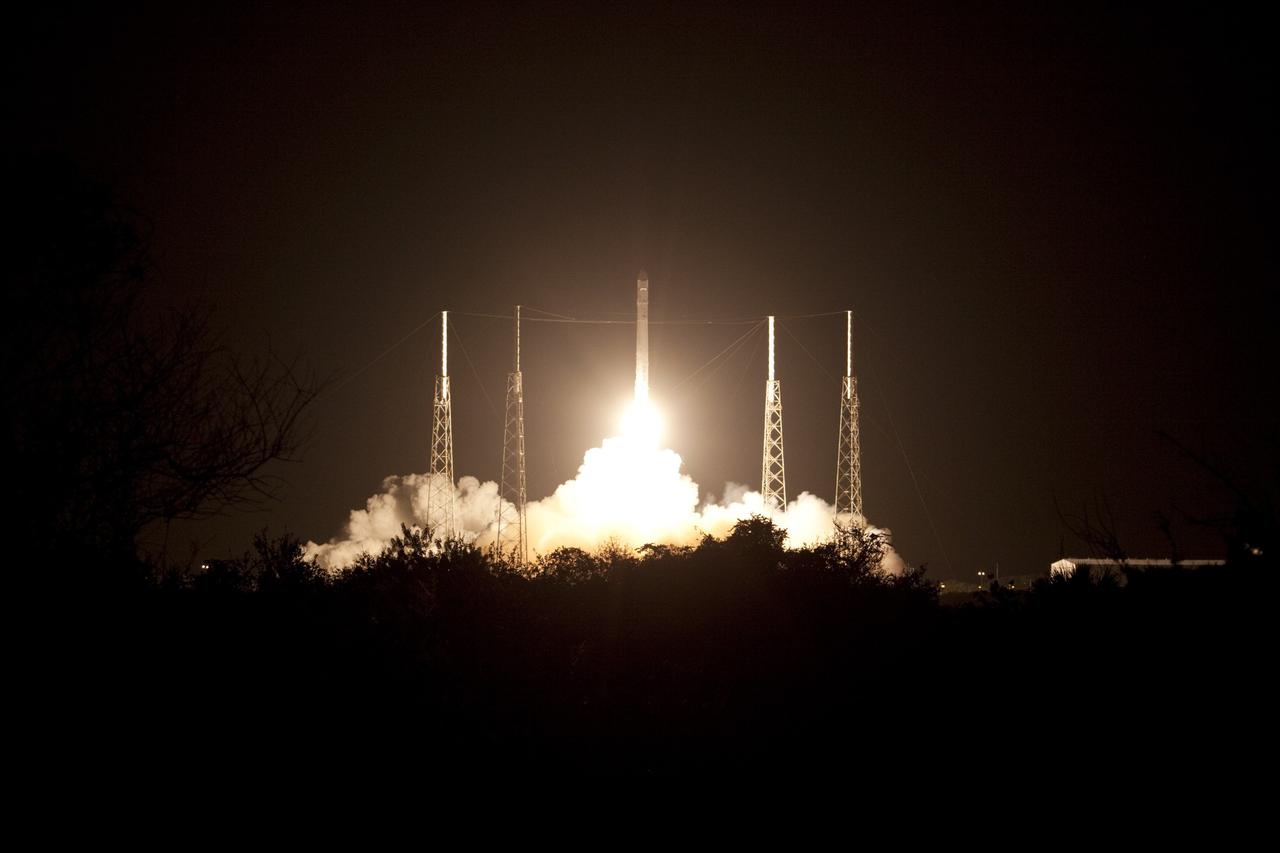
CAPE CANAVERAL, Fla. -- Plumes of exhaust and smoke form around a Falcon 9 rocket at 8:35 p.m. EDT as it lifts off Space Launch Complex 40 on Cape Canaveral Air Force Station in Florida, carrying a Dragon capsule to orbit. Space Exploration Technologies Corp., or SpaceX, built both the rocket and capsule for NASA's first Commercial Resupply Services, or CRS-1, mission to the International Space Station. SpaceX CRS-1 is an important step toward making America’s microgravity research program self-sufficient by providing a way to deliver and return significant amounts of cargo, including science experiments, to and from the orbiting laboratory. NASA has contracted for 12 commercial resupply flights from SpaceX and eight from the Orbital Sciences Corp. For more information, visit http://www.nasa.gov/mission_pages/station/living/launch/index.html. Photo credit: NASA/Jim Grossmann
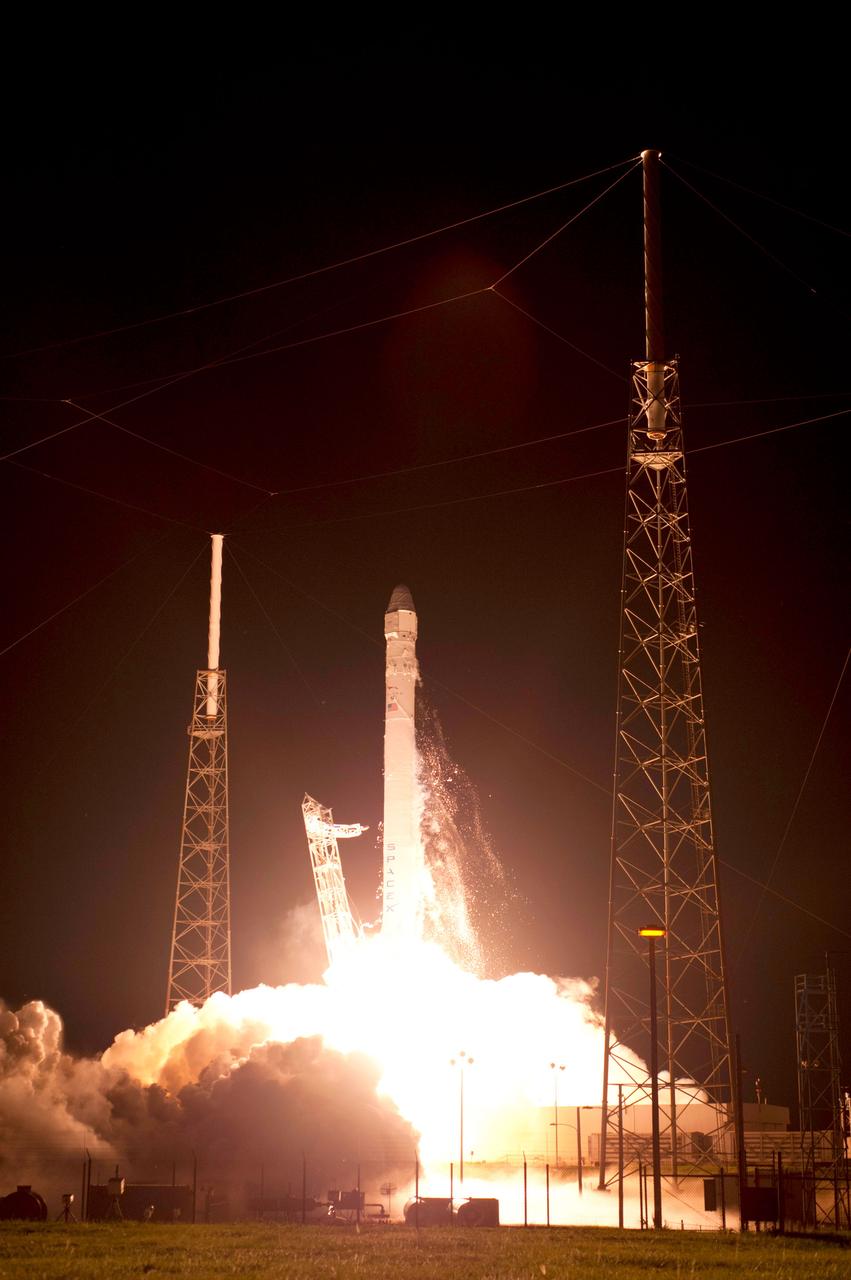
CAPE CANAVERAL, Fla. - Space Launch Complex 40 on Cape Canaveral Air Force Station in Florida comes alive as the Merlin engines ignite under the Falcon 9 rocket carrying a Dragon capsule to orbit. Liftoff was at 8:35 p.m. EDT. Space Exploration Technologies Corp., or SpaceX, built both the rocket and capsule for NASA's first Commercial Resupply Services, or CRS-1, mission to the International Space Station. SpaceX CRS-1 is an important step toward making America’s microgravity research program self-sufficient by providing a way to deliver and return significant amounts of cargo, including science experiments, to and from the orbiting laboratory. NASA has contracted for 12 commercial resupply flights from SpaceX and eight from the Orbital Sciences Corp. For more information, visit http://www.nasa.gov/mission_pages/station/living/launch/index.html Photo credit: NASA/Rick Wetherington and Tony Gray
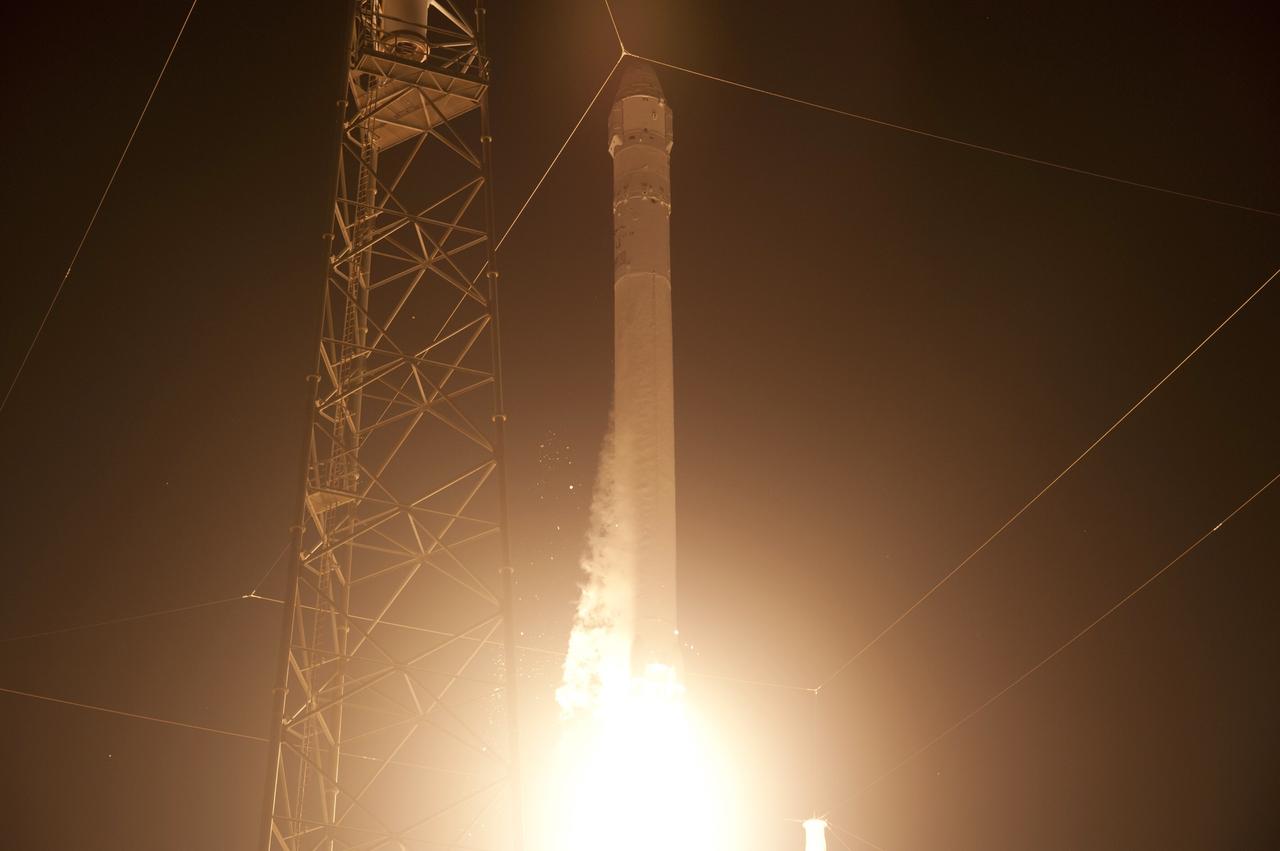
CAPE CANAVERAL, Fla. - Space Launch Complex 40 on Cape Canaveral Air Force Station in Florida comes alive as the Merlin engines ignite under the Falcon 9 rocket carrying a Dragon capsule to orbit. Liftoff was at 8:35 p.m. EDT. Space Exploration Technologies Corp., or SpaceX, built both the rocket and capsule for NASA's first Commercial Resupply Services, or CRS-1, mission to the International Space Station. SpaceX CRS-1 is an important step toward making America’s microgravity research program self-sufficient by providing a way to deliver and return significant amounts of cargo, including science experiments, to and from the orbiting laboratory. NASA has contracted for 12 commercial resupply flights from SpaceX and eight from the Orbital Sciences Corp. For more information, visit http://www.nasa.gov/mission_pages/station/living/launch/index.html Photo credit: NASA/Rusty Backer
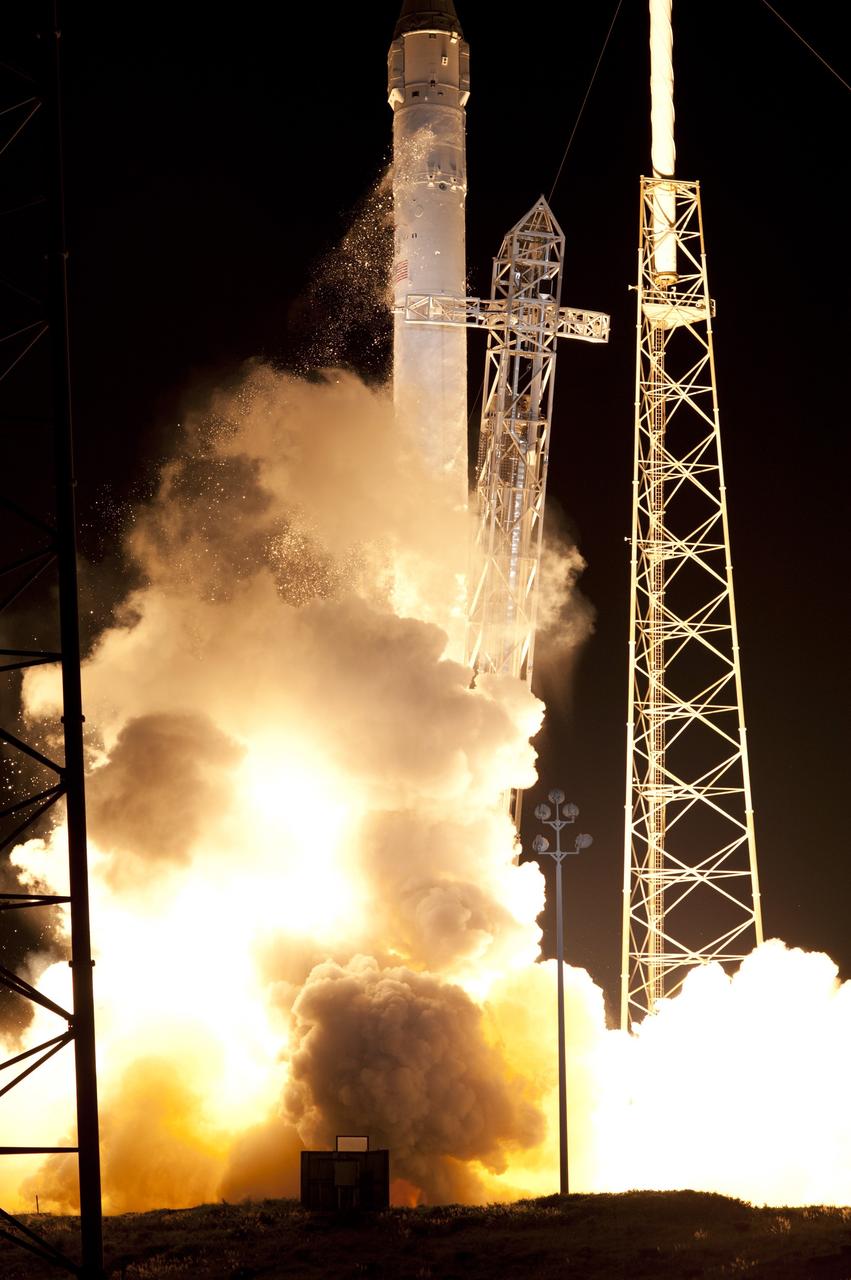
CAPE CANAVERAL, Fla. - Space Launch Complex 40 on Cape Canaveral Air Force Station in Florida comes alive as the Merlin engines ignite under the Falcon 9 rocket carrying a Dragon capsule to orbit. Liftoff was at 8:35 p.m. EDT. Space Exploration Technologies Corp., or SpaceX, built both the rocket and capsule for NASA's first Commercial Resupply Services, or CRS-1, mission to the International Space Station. SpaceX CRS-1 is an important step toward making America’s microgravity research program self-sufficient by providing a way to deliver and return significant amounts of cargo, including science experiments, to and from the orbiting laboratory. NASA has contracted for 12 commercial resupply flights from SpaceX and eight from the Orbital Sciences Corp. For more information, visit http://www.nasa.gov/mission_pages/station/living/launch/index.html Photo credit: NASA/ Rick Wetherington and Tim Powers
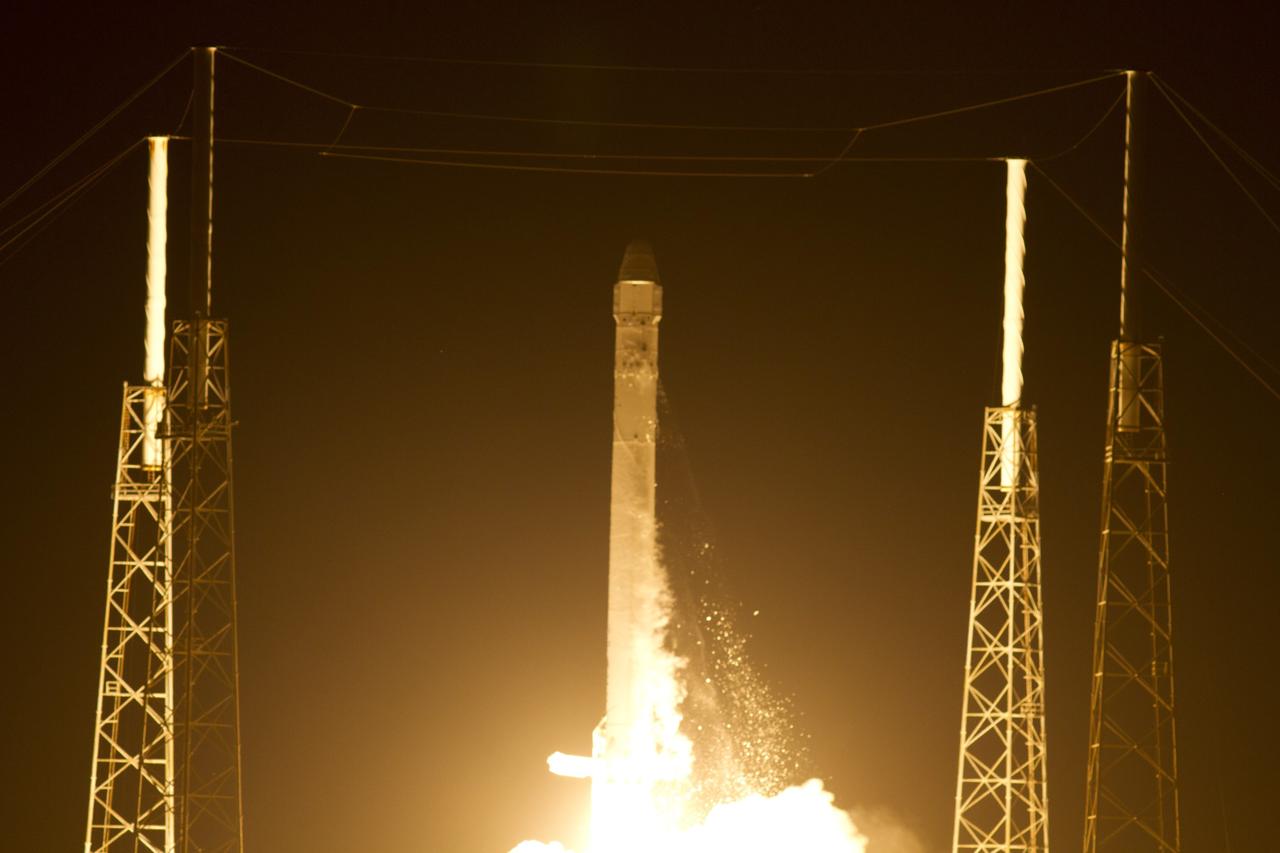
CAPE CANAVERAL, Fla. - Space Launch Complex 40 on Cape Canaveral Air Force Station in Florida comes alive as the Merlin engines ignite under the Falcon 9 rocket carrying a Dragon capsule to orbit. Liftoff was at 8:35 p.m. EDT. Space Exploration Technologies Corp., or SpaceX, built both the rocket and capsule for NASA's first Commercial Resupply Services, or CRS-1, mission to the International Space Station. SpaceX CRS-1 is an important step toward making America’s microgravity research program self-sufficient by providing a way to deliver and return significant amounts of cargo, including science experiments, to and from the orbiting laboratory. NASA has contracted for 12 commercial resupply flights from SpaceX and eight from the Orbital Sciences Corp. For more information, visit http://www.nasa.gov/mission_pages/station/living/launch/index.html Photo credit: NASA/Gina Mitchell and George Roberts
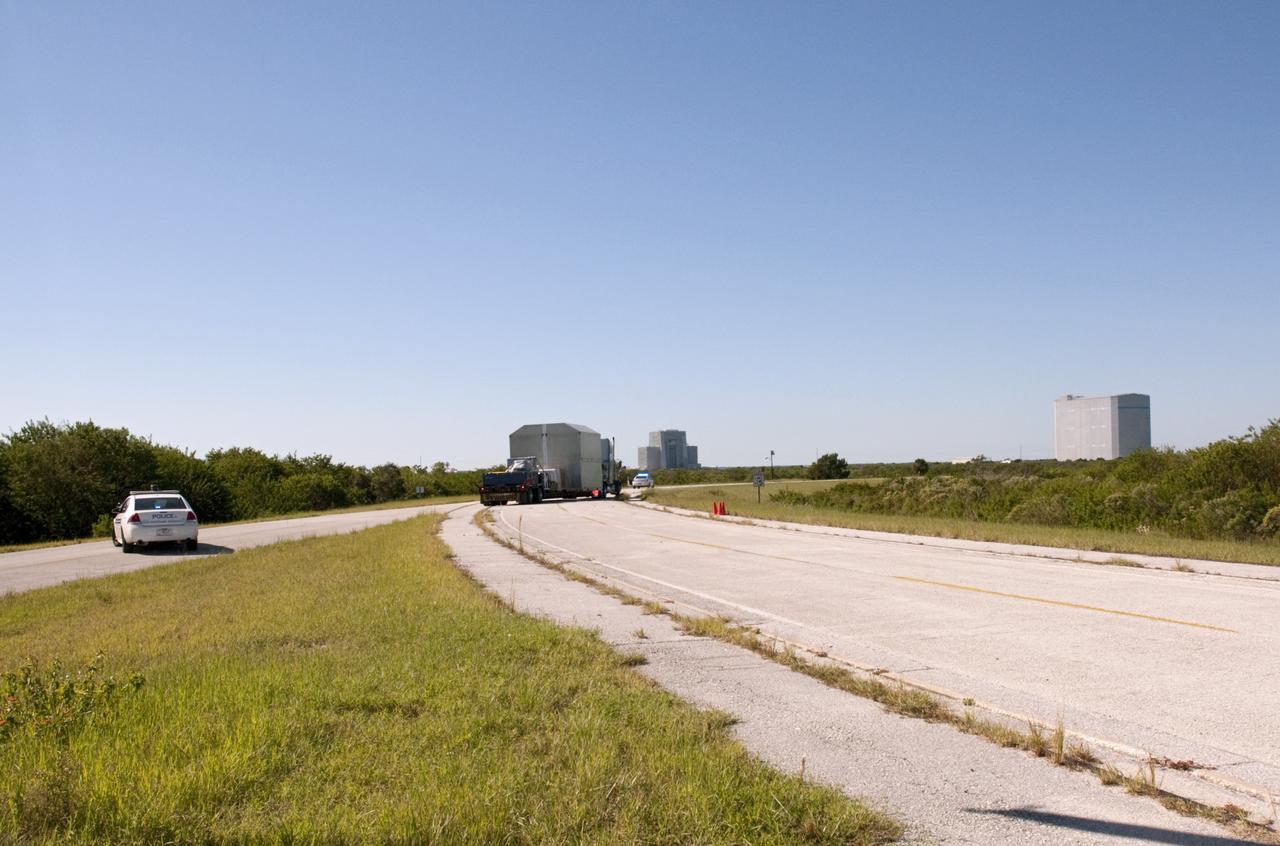
A truck brings the latest Space Exploration Technologies Corp. (SpaceX) Dragon capsule to Cape Canaveral Air Force Station in Florida on Oct. 23 so it can be processed and attached to the top of a Falcon 9 rocket on Space Launch Complex-40 for the company's next demonstration test flight for NASA's Commercial Orbital Transportation Services (COTS) program. SpaceX is one of two companies under contract with NASA to take cargo to the International Space Station. NASA is working with SpaceX to combine its last two demonstration flights, and if approved, the Falcon 9 rocket would launch the Dragon capsule to the orbiting laboratory for a docking within the next several months. Photo credit: NASA/ Charisse Nahser
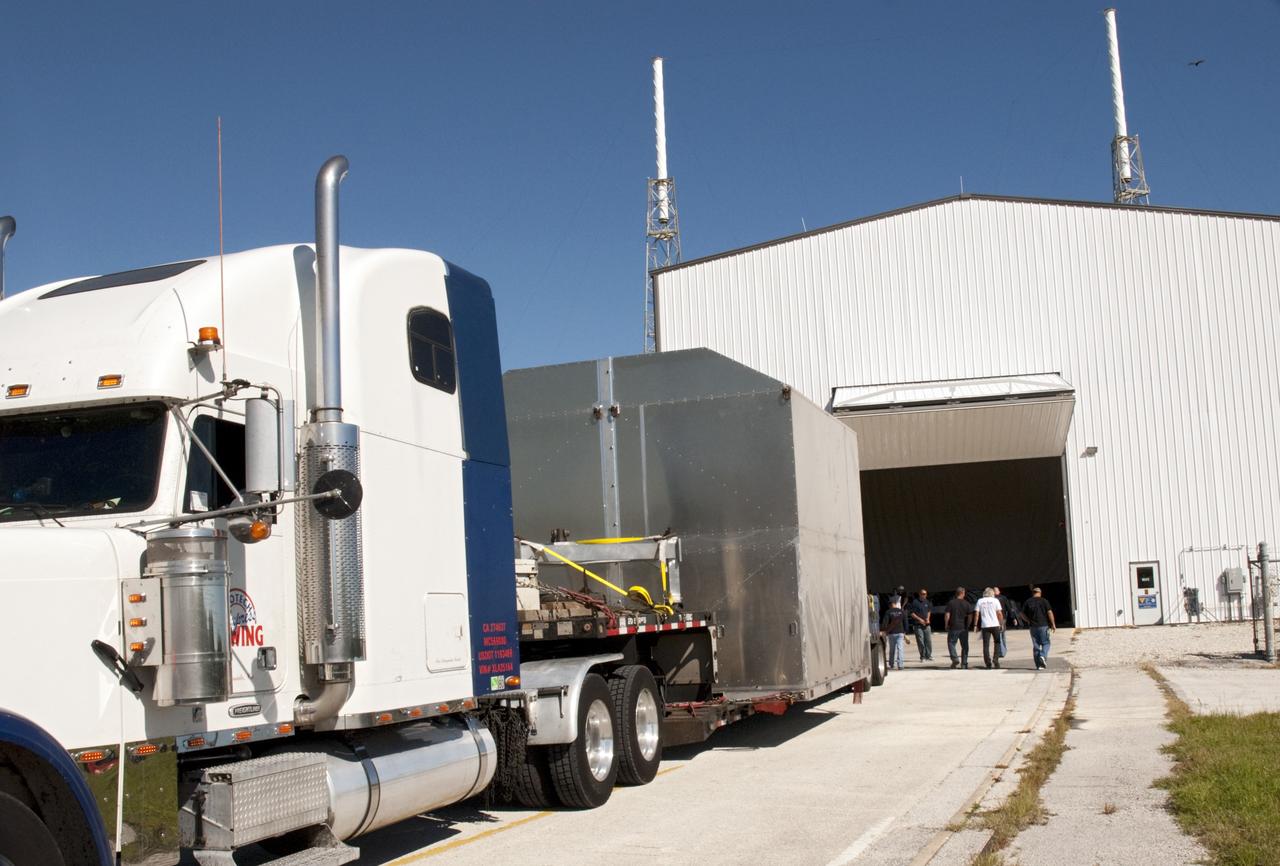
A truck carries the latest Space Exploration Technologies Corp. (SpaceX) Dragon capsule to Cape Canaveral Air Force Station in Florida on Oct. 23 so it can be processed and attached to the top of a Falcon 9 rocket on Space Launch Complex-40 for the company's next demonstration test flight for NASA's Commercial Orbital Transportation Services (COTS) program. SpaceX is one of two companies under contract with NASA to take cargo to the International Space Station. NASA is working with SpaceX to combine its last two demonstration flights, and if approved, the Falcon 9 rocket would launch the Dragon capsule to the orbiting laboratory for a docking within the next several months. Photo credit: NASA/ Charisse Nahser
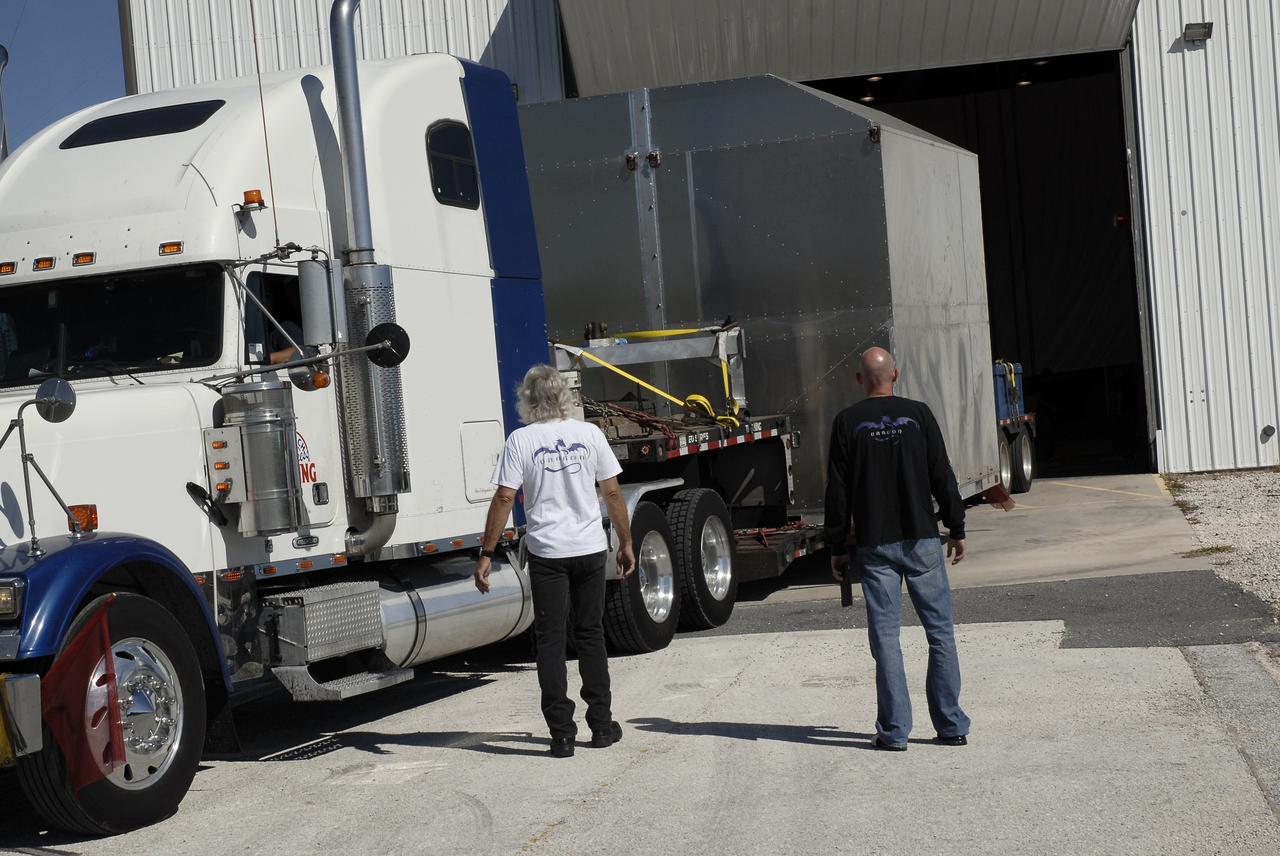
A truck carries the latest Space Exploration Technologies Corp. (SpaceX) Dragon capsule to Cape Canaveral Air Force Station in Florida on Oct. 23 so it can be processed and attached to the top of a Falcon 9 rocket on Space Launch Complex-40 for the company's next demonstration test flight for NASA's Commercial Orbital Transportation Services (COTS) program. SpaceX is one of two companies under contract with NASA to take cargo to the International Space Station. NASA is working with SpaceX to combine its last two demonstration flights, and if approved, the Falcon 9 rocket would launch the Dragon capsule to the orbiting laboratory for a docking within the next several months. Photo credit: NASA/ Charisse Nahser
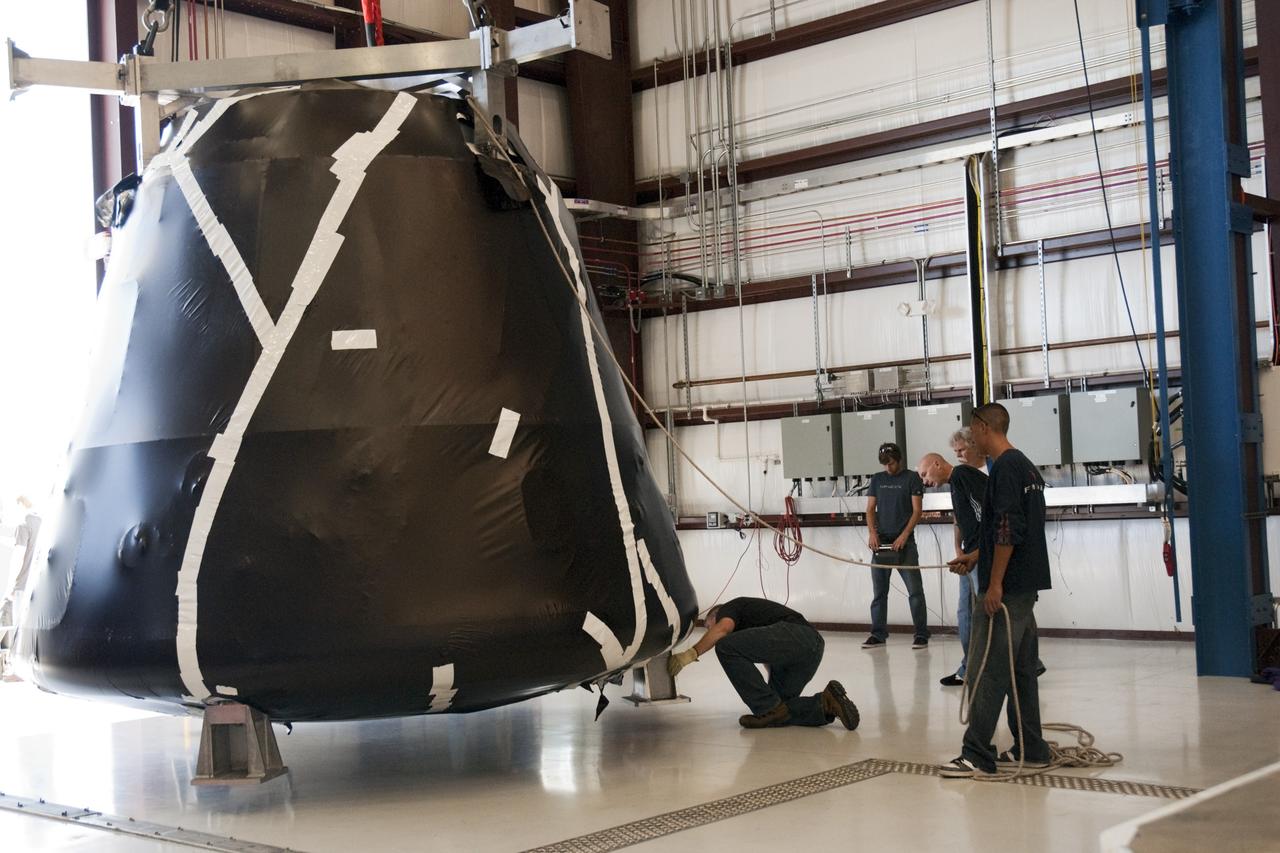
Workers lower the latest Space Exploration Technologies Corp. (SpaceX) Dragon capsule at Cape Canaveral Air Force Station in Florida on Oct. 23 so it can be processed and attached to the top of a Falcon 9 rocket on Space Launch Complex-40 for the company's next demonstration test flight for NASA's Commercial Orbital Transportation Services (COTS) program. SpaceX is one of two companies under contract with NASA to take cargo to the International Space Station. NASA is working with SpaceX to combine its last two demonstration flights, and if approved, the Falcon 9 rocket would launch the Dragon capsule to the orbiting laboratory for a docking within the next several months. Photo credit: NASA/ Charisse Nahser
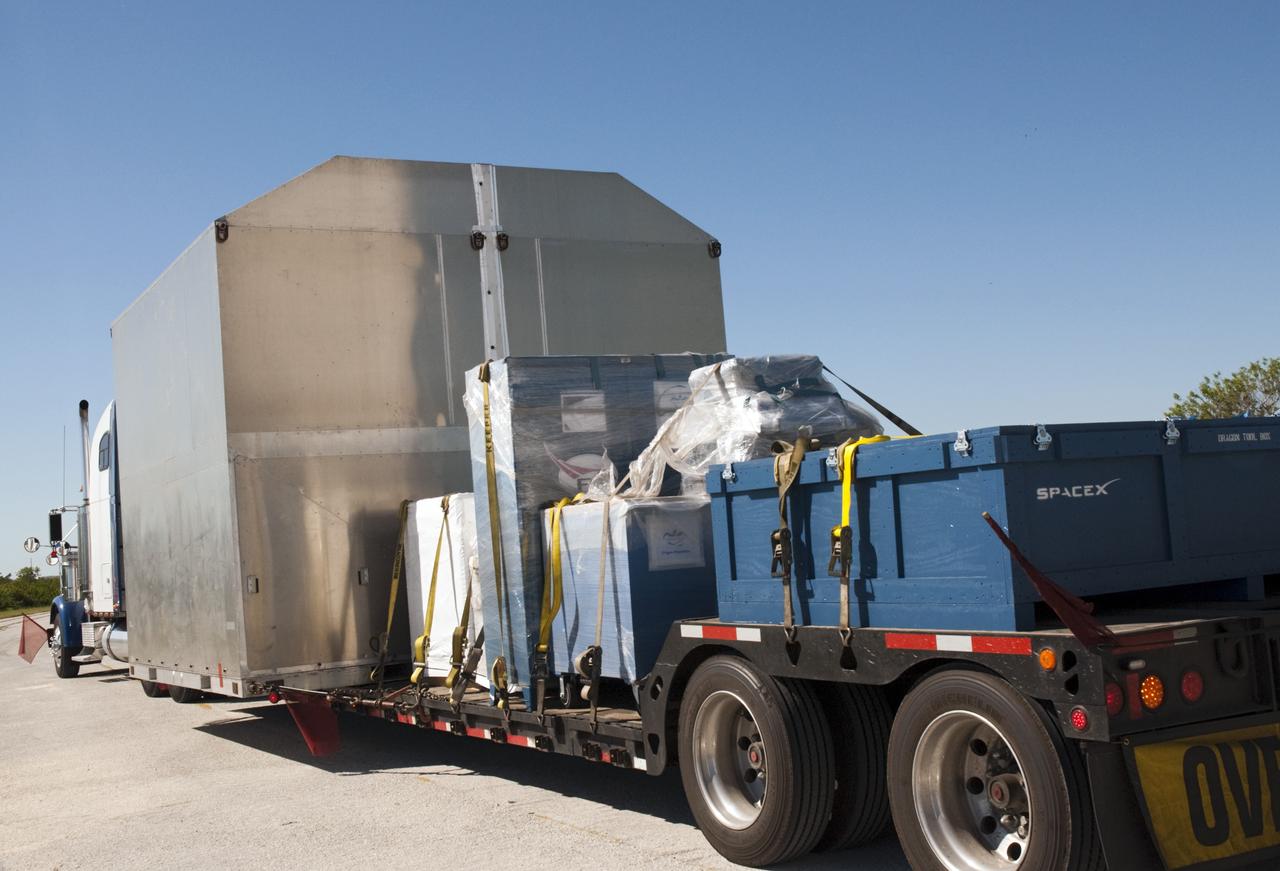
A truck carries the latest Space Exploration Technologies Corp. (SpaceX) Dragon capsule to Cape Canaveral Air Force Station in Florida on Oct. 23 so it can be processed and attached to the top of a Falcon 9 rocket on Space Launch Complex-40 for the company's next demonstration test flight for NASA's Commercial Orbital Transportation Services (COTS) program. SpaceX is one of two companies under contract with NASA to take cargo to the International Space Station. NASA is working with SpaceX to combine its last two demonstration flights, and if approved, the Falcon 9 rocket would launch the Dragon capsule to the orbiting laboratory for a docking within the next several months. Photo credit: NASA/ Charisse Nahser
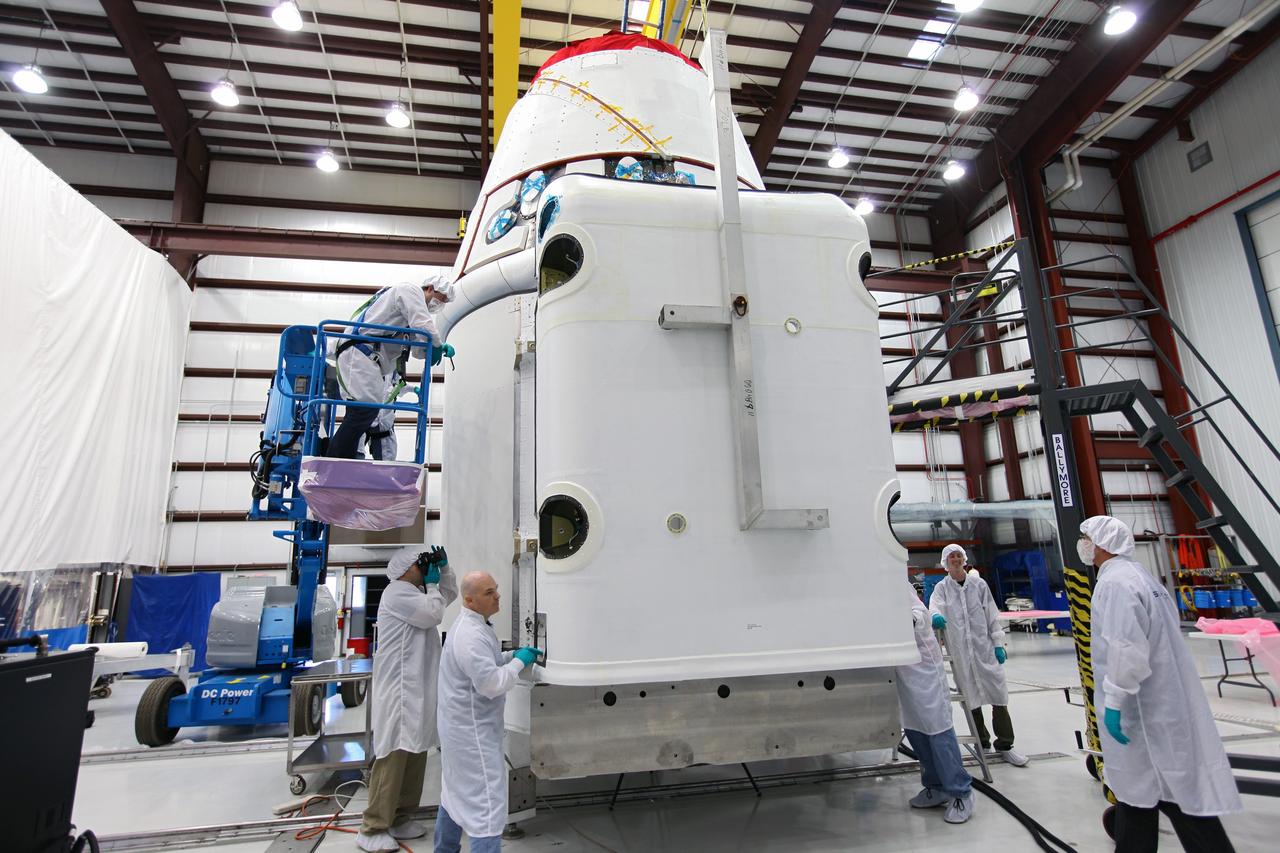
CAPE CANAVERAL, Fla. – Workers guide a solar array fairing into place inside the processing hangar used by Space Exploration Technologies, or SpaceX, at Cape Canaveral Air Force Station, Fla. The fairing will be installed on the Dragon spacecraft undergoing launch preparations inside the hangar. The spacecraft will launch on the upcoming SpaceX CRS-2 mission. The flight will be the second commercial resupply mission to the International Space Station by SpaceX. NASA has contracted for a total of 12 commercial resupply flights from SpaceX and eight from the Orbital Sciences Corp. Photo credit: NASA/Kim Shiflett
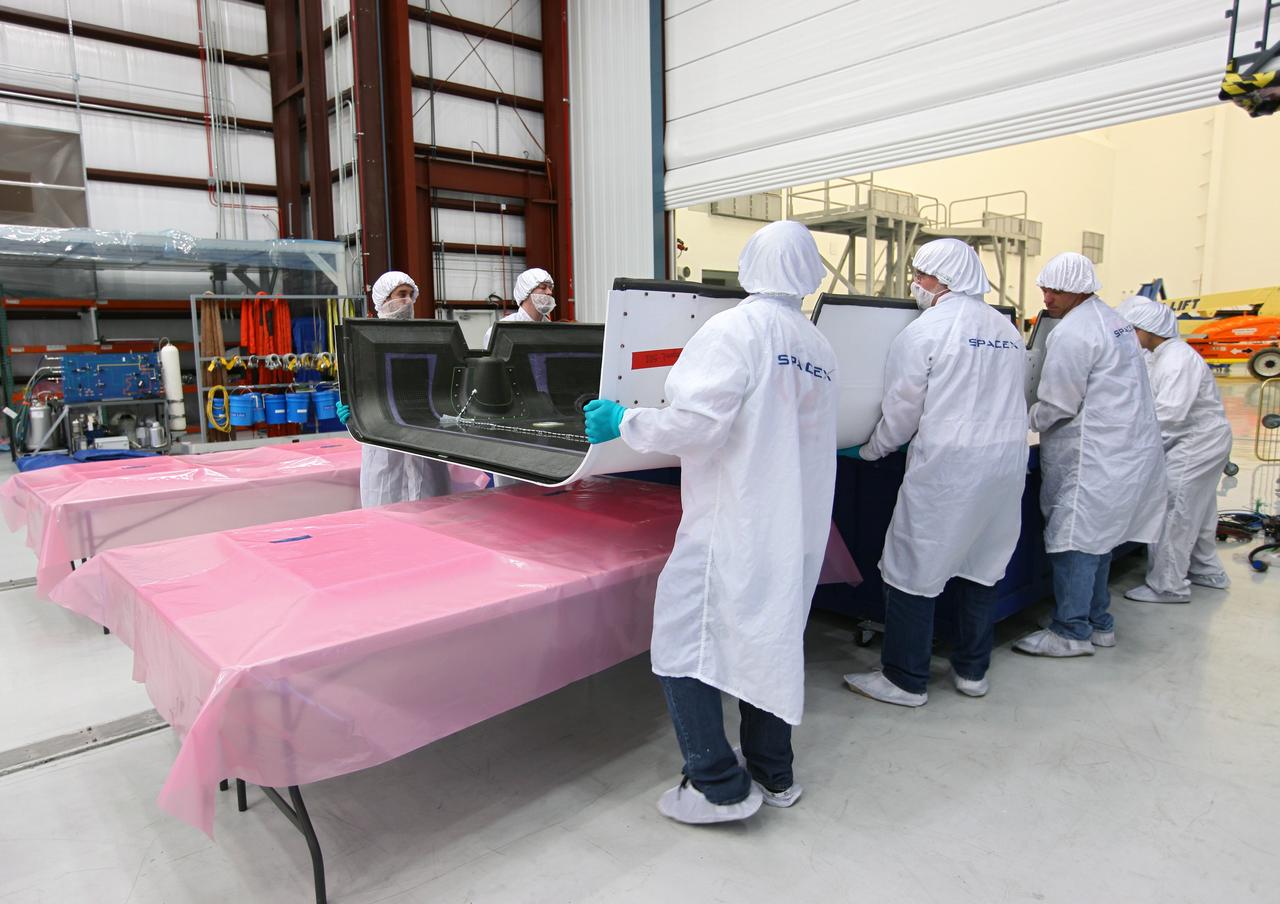
CAPE CANAVERAL, Fla. – Workers lift a solar array fairing at the processing hangar used by Space Exploration Technologies, or SpaceX, at Cape Canaveral Air Force Station, Fla. The fairings are to be installed on the Dragon spacecraft undergoing launch preparations inside the hangar. The spacecraft will launch on the upcoming SpaceX CRS-2 mission. The flight will be the second commercial resupply mission to the International Space Station by SpaceX. NASA has contracted for a total of 12 commercial resupply flights from SpaceX and eight from the Orbital Sciences Corp. Photo credit: NASA/Kim Shiflett
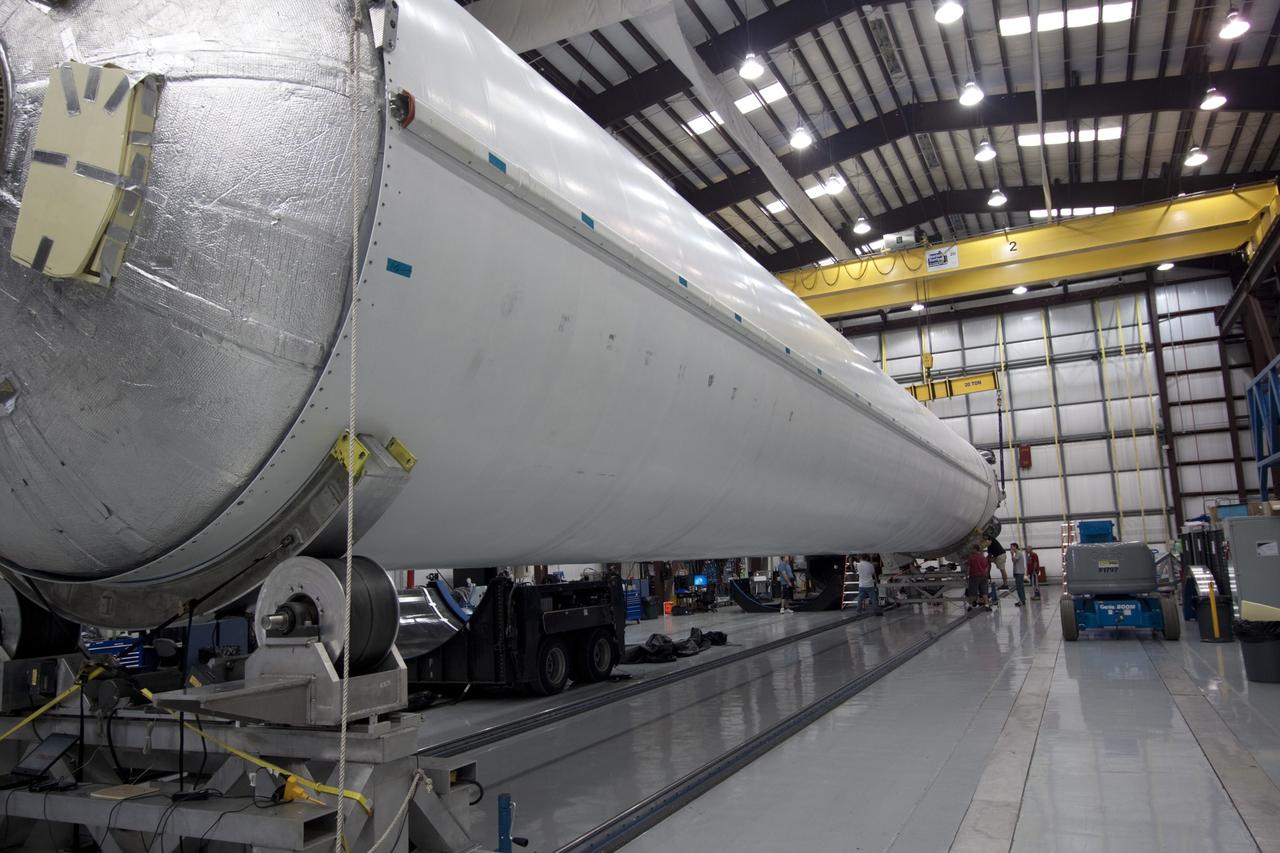
CAPE CANAVERAL, Fla. – The first stage of the Falcon 9 rocket is placed in a workstand inside the SpaceX Falcon Hangar at Launch Complex 40 on Cape Canaveral Air Force Station in Florida. The two-stage rocket will launch the company's Dragon spacecraft on the upcoming SpaceX CRS-2 mission. The flight will be the second commercial resupply mission to the International Space Station by Space Exploration Technologies, or SpaceX. NASA has contracted for a total of 12 commercial resupply flights from SpaceX and eight from the Orbital Sciences Corp. Photo credit: NASA/Jim Grossmann
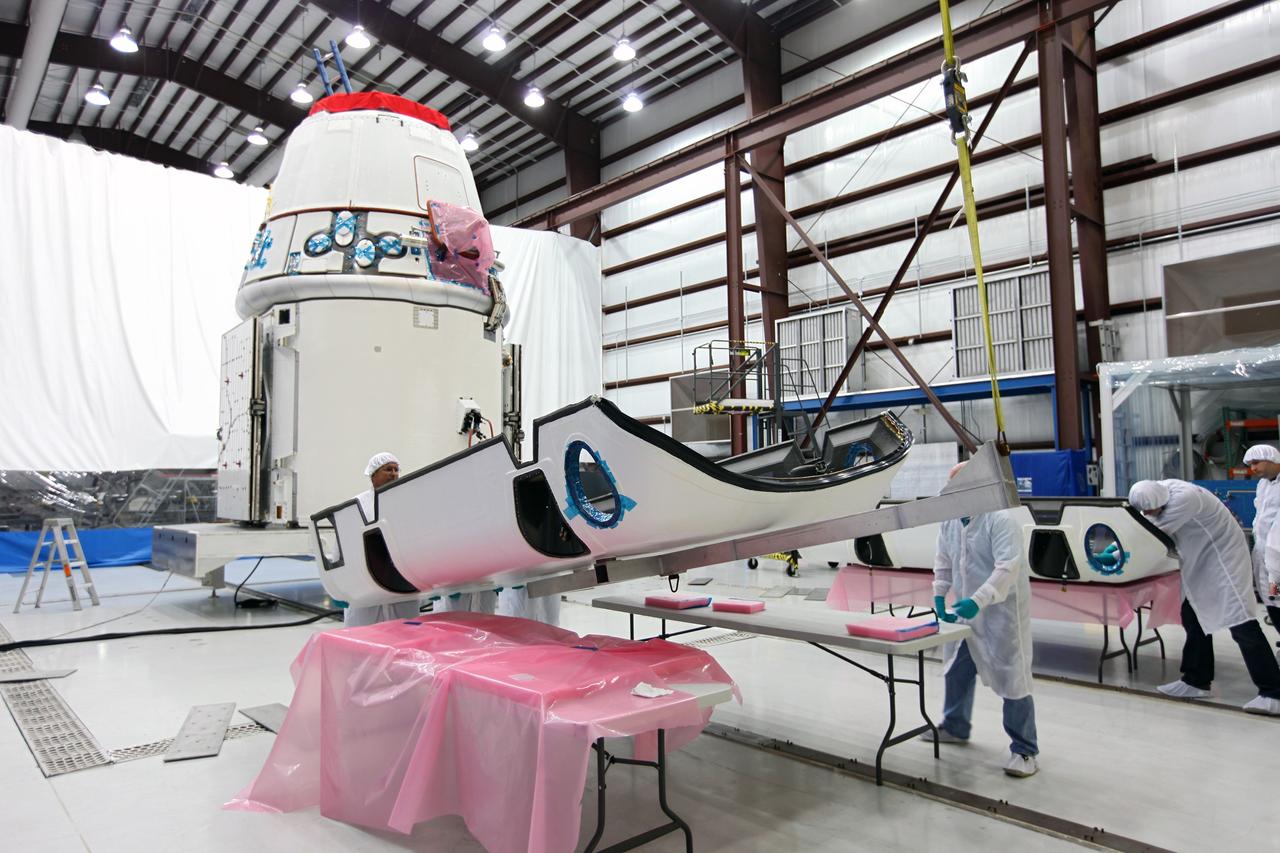
CAPE CANAVERAL, Fla. – Workers lift a solar array fairing at the processing hangar used by Space Exploration Technologies, or SpaceX, at Cape Canaveral Air Force Station, Fla. The fairing will be installed on the Dragon spacecraft undergoing launch preparations inside the hangar. The spacecraft will launch on the upcoming SpaceX CRS-2 mission. The flight will be the second commercial resupply mission to the International Space Station by SpaceX. NASA has contracted for a total of 12 commercial resupply flights from SpaceX and eight from the Orbital Sciences Corp. Photo credit: NASA/Kim Shiflett
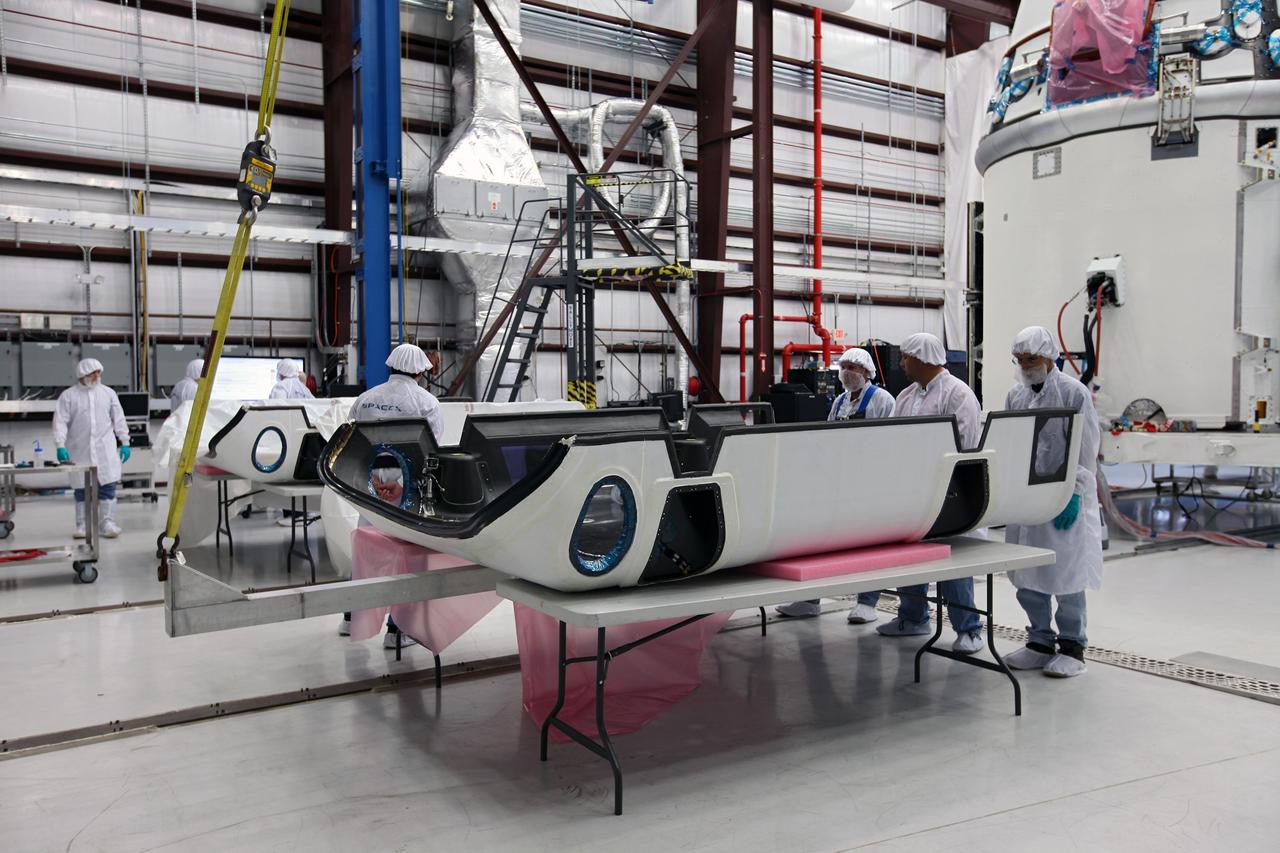
CAPE CANAVERAL, Fla. – Workers prepare to lift a solar array fairing at the processing hangar used by Space Exploration Technologies, or SpaceX, at Cape Canaveral Air Force Station, Fla. The fairing will be installed on the Dragon spacecraft undergoing launch preparations inside the hangar. The spacecraft will launch on the upcoming SpaceX CRS-2 mission. The flight will be the second commercial resupply mission to the International Space Station by SpaceX. NASA has contracted for a total of 12 commercial resupply flights from SpaceX and eight from the Orbital Sciences Corp. Photo credit: NASA/Kim Shiflett
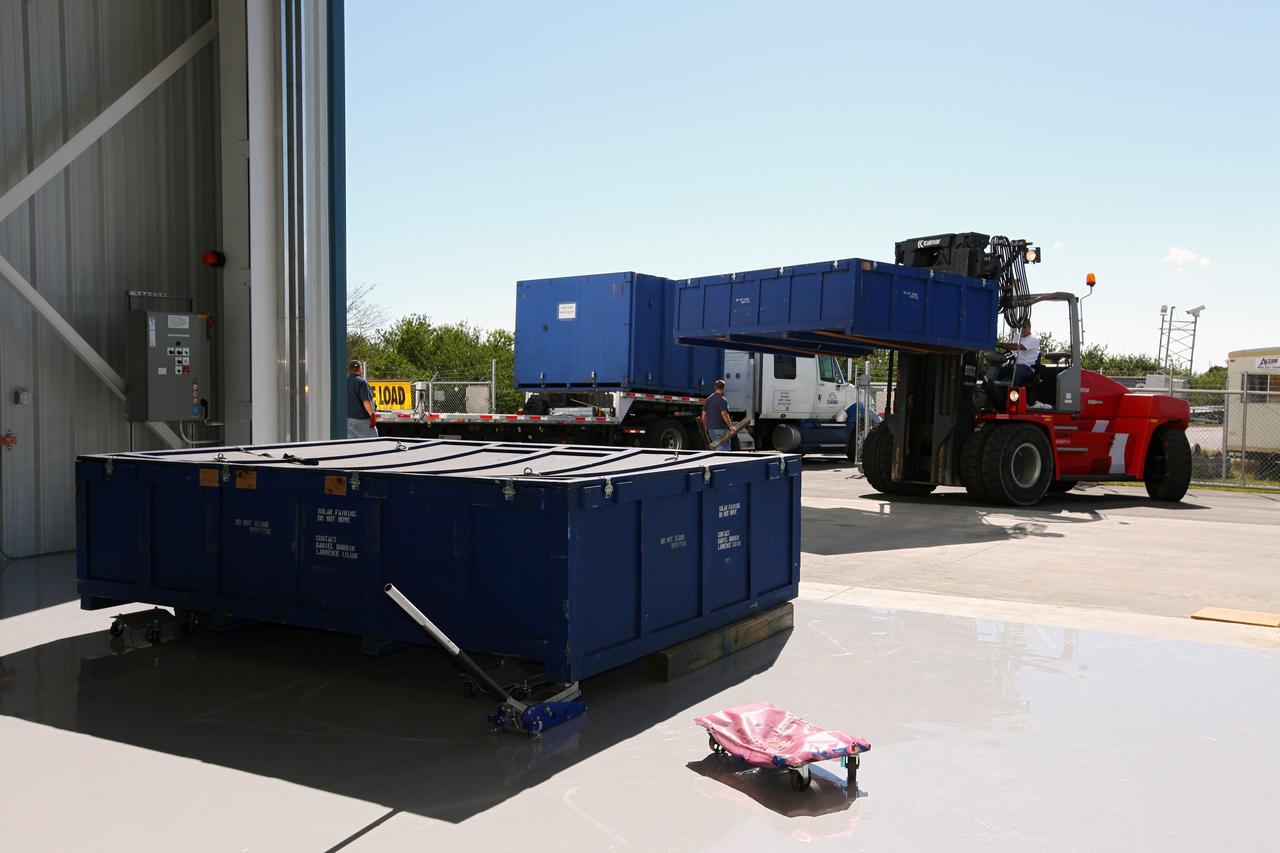
CAPE CANAVERAL, Fla. – A forklift moves containers from a truck at the processing hangar used by Space Exploration Technologies, or SpaceX, at Cape Canaveral Air Force Station, Fla. The truck is carrying solar array fairings to be installed on the Dragon spacecraft undergoing launch preparations inside the hangar. The spacecraft will launch on the upcoming SpaceX CRS-2 mission. The flight will be the second commercial resupply mission to the International Space Station by SpaceX. NASA has contracted for a total of 12 commercial resupply flights from SpaceX and eight from the Orbital Sciences Corp. Photo credit: NASA/Kim Shiflett
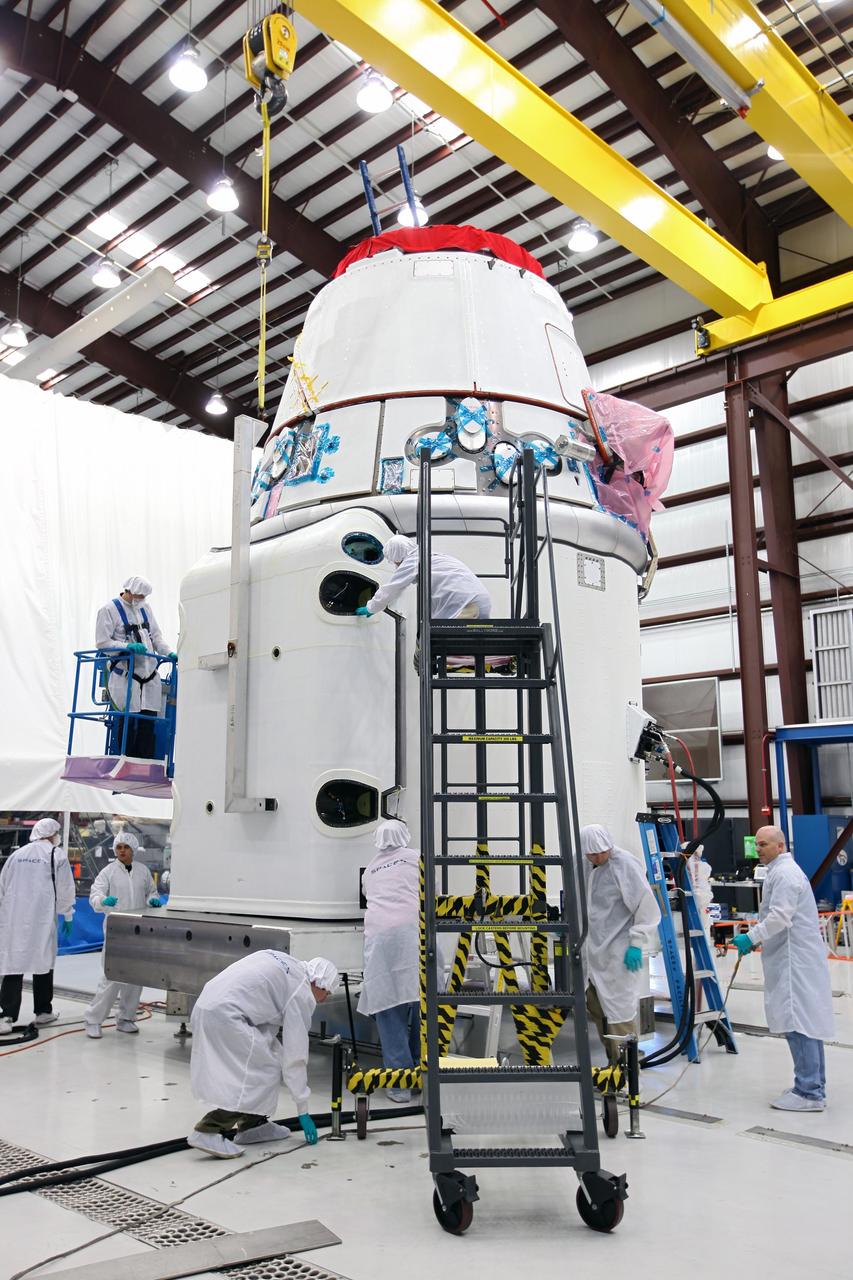
CAPE CANAVERAL, Fla. – Workers guide a solar array fairing into place inside the processing hangar used by Space Exploration Technologies, or SpaceX, at Cape Canaveral Air Force Station, Fla. The fairing will be installed on the Dragon spacecraft undergoing launch preparations inside the hangar. The spacecraft will launch on the upcoming SpaceX CRS-2 mission. The flight will be the second commercial resupply mission to the International Space Station by SpaceX. NASA has contracted for a total of 12 commercial resupply flights from SpaceX and eight from the Orbital Sciences Corp. Photo credit: NASA/Kim Shiflett
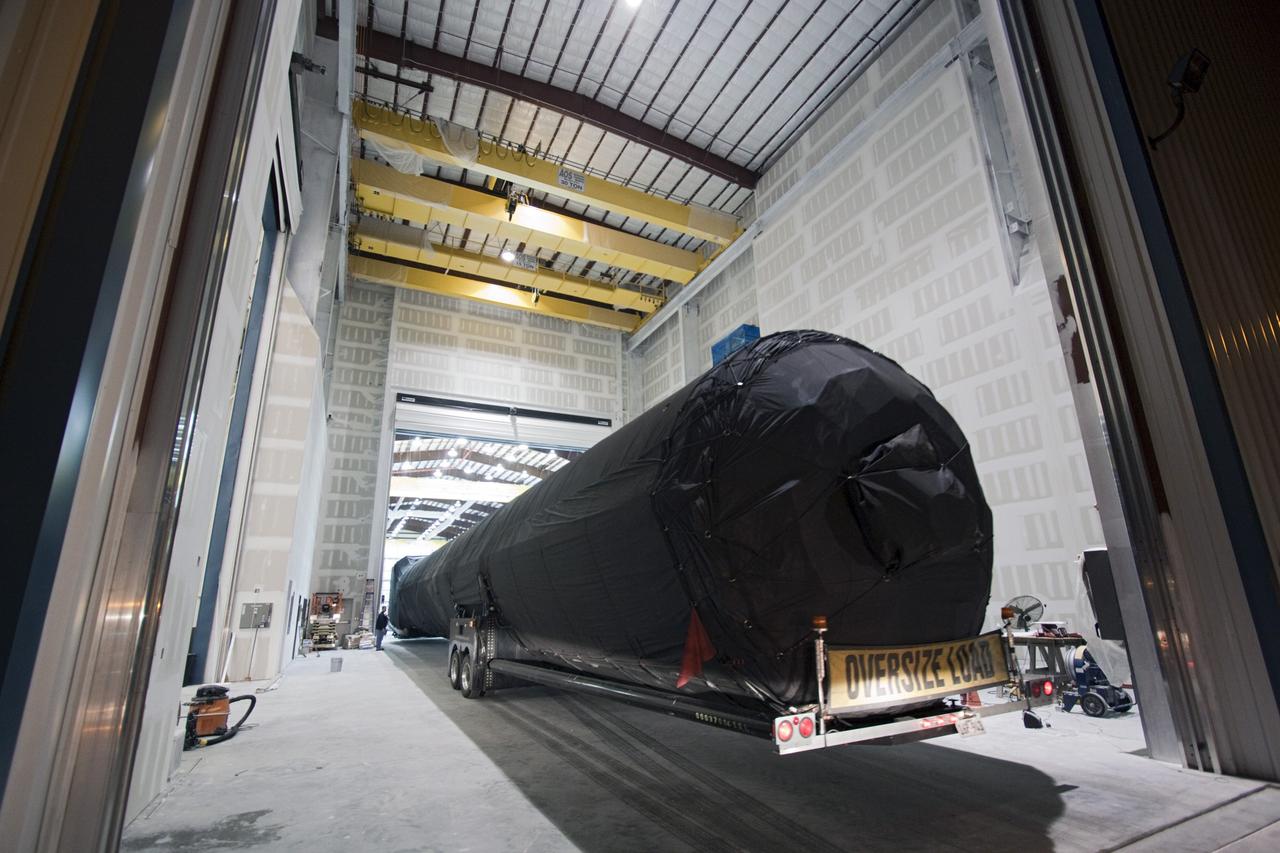
CAPE CANAVERAL, Fla. – A truck pulls the first stage of the Falcon 9 rocket inside the SpaceX Falcon Hangar at Launch Complex 40 on Cape Canaveral Air Force Station in Florida. The two-stage rocket will launch the company's Dragon spacecraft on the upcoming SpaceX CRS-2 mission. The flight will be the second commercial resupply mission to the International Space Station by Space Exploration Technologies, or SpaceX. NASA has contracted for a total of 12 commercial resupply flights from SpaceX and eight from the Orbital Sciences Corp. Photo credit: NASA/Jim Grossmann
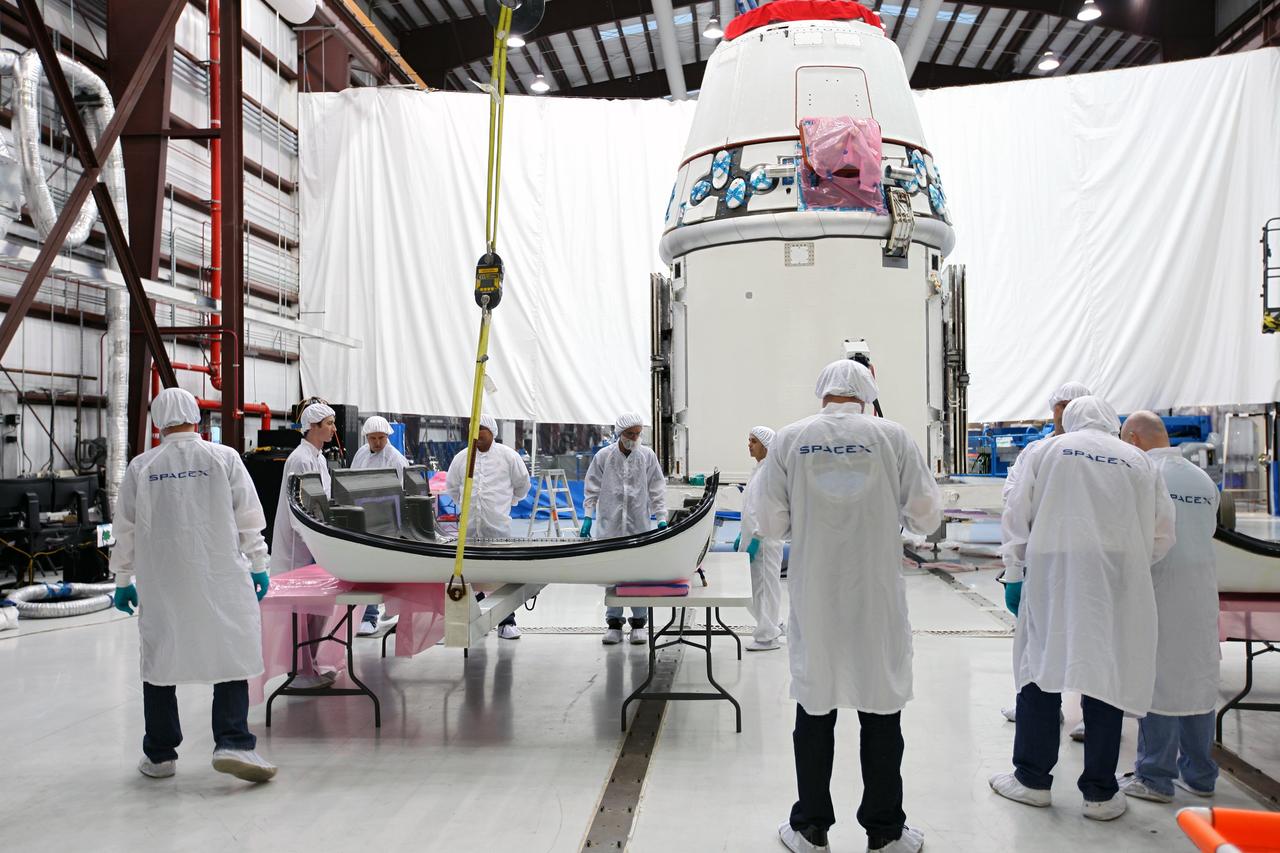
CAPE CANAVERAL, Fla. – Workers prepare to lift a solar array fairing at the processing hangar used by Space Exploration Technologies, or SpaceX, at Cape Canaveral Air Force Station, Fla. The fairing will be installed on the Dragon spacecraft undergoing launch preparations inside the hangar. The spacecraft will launch on the upcoming SpaceX CRS-2 mission. The flight will be the second commercial resupply mission to the International Space Station by SpaceX. NASA has contracted for a total of 12 commercial resupply flights from SpaceX and eight from the Orbital Sciences Corp. Photo credit: NASA/Kim Shiflett
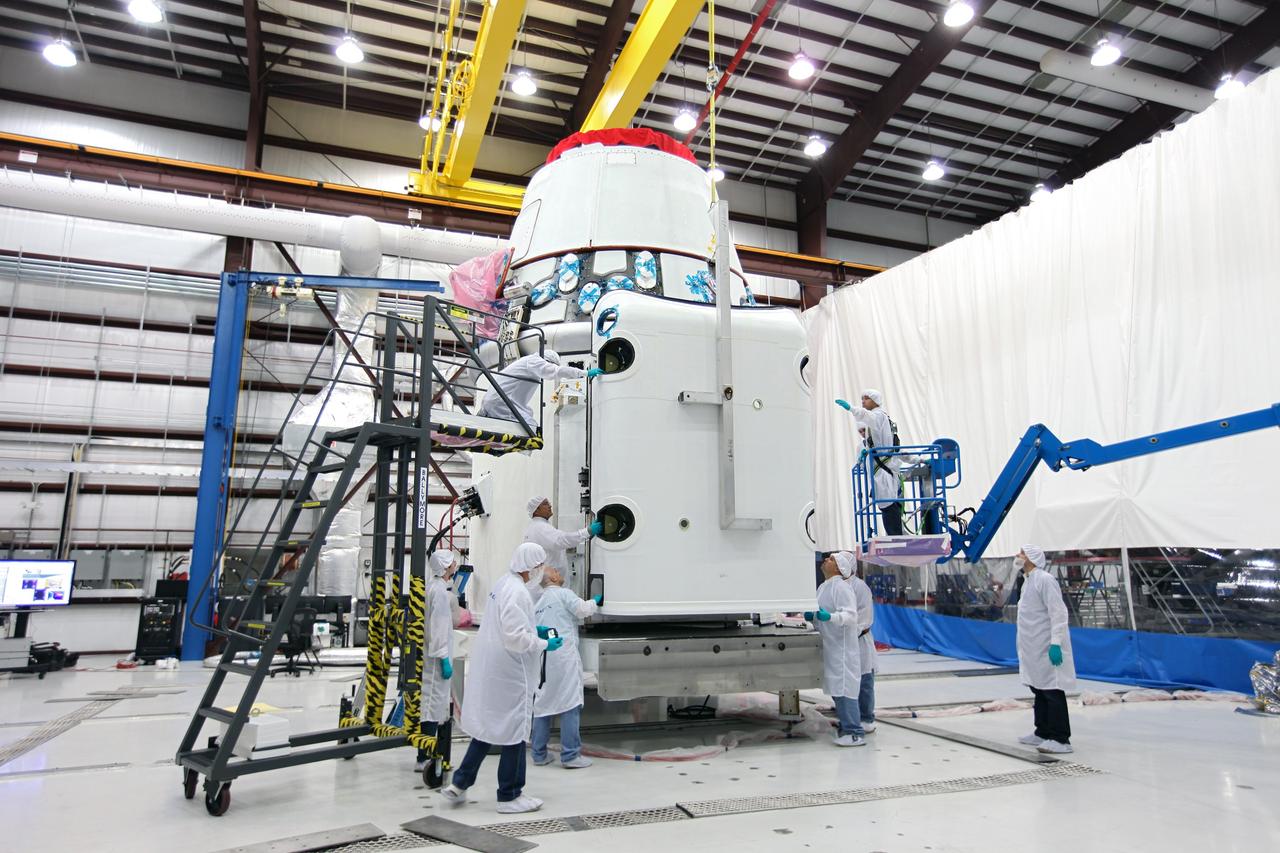
CAPE CANAVERAL, Fla. – Workers guide a solar array fairing into place inside the processing hangar used by Space Exploration Technologies, or SpaceX, at Cape Canaveral Air Force Station, Fla. The fairing will be installed on the Dragon spacecraft undergoing launch preparations inside the hangar. The spacecraft will launch on the upcoming SpaceX CRS-2 mission. The flight will be the second commercial resupply mission to the International Space Station by SpaceX. NASA has contracted for a total of 12 commercial resupply flights from SpaceX and eight from the Orbital Sciences Corp. Photo credit: NASA/Kim Shiflett
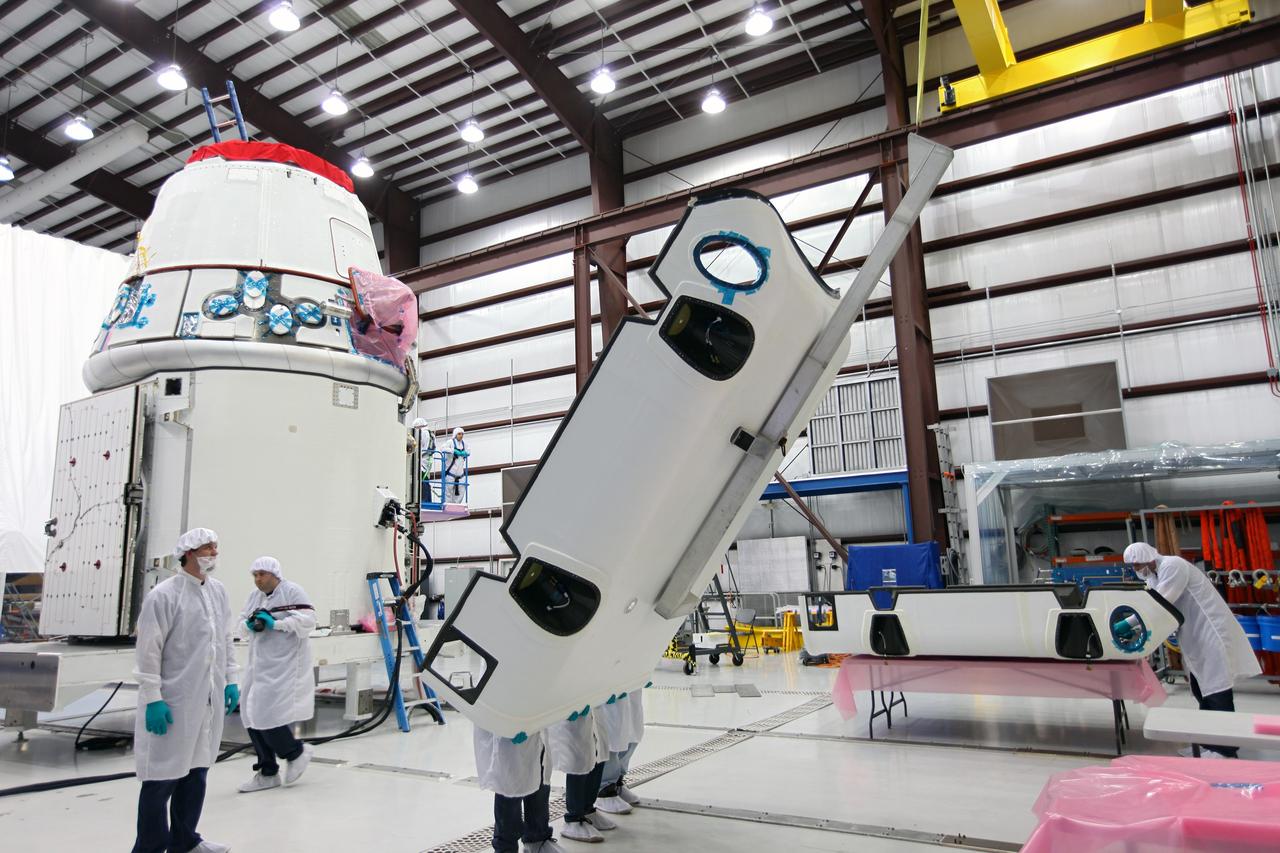
CAPE CANAVERAL, Fla. – Workers lift a solar array fairing at the processing hangar used by Space Exploration Technologies, or SpaceX, at Cape Canaveral Air Force Station, Fla. The fairing will be installed on the Dragon spacecraft undergoing launch preparations inside the hangar. The spacecraft will launch on the upcoming SpaceX CRS-2 mission. The flight will be the second commercial resupply mission to the International Space Station by SpaceX. NASA has contracted for a total of 12 commercial resupply flights from SpaceX and eight from the Orbital Sciences Corp. Photo credit: NASA/Kim Shiflett
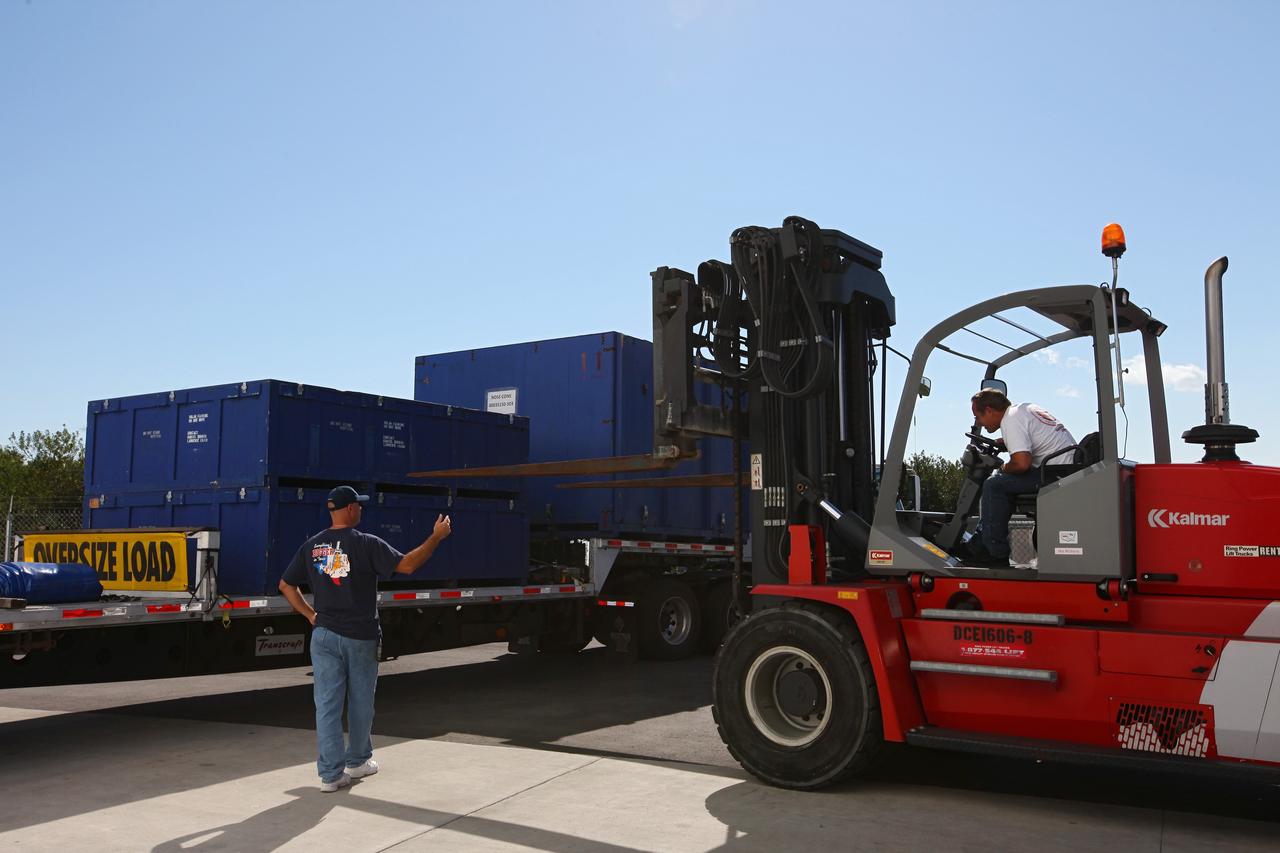
CAPE CANAVERAL, Fla. – Workers lift containers from a truck at the processing hangar used by Space Exploration Technologies, or SpaceX, at Cape Canaveral Air Force Station, Fla. The truck is carrying solar array fairings to be installed on the Dragon spacecraft undergoing launch preparations inside the hangar. The spacecraft will launch on the upcoming SpaceX CRS-2 mission. The flight will be the second commercial resupply mission to the International Space Station by SpaceX. NASA has contracted for a total of 12 commercial resupply flights from SpaceX and eight from the Orbital Sciences Corp. Photo credit: NASA/Kim Shiflett
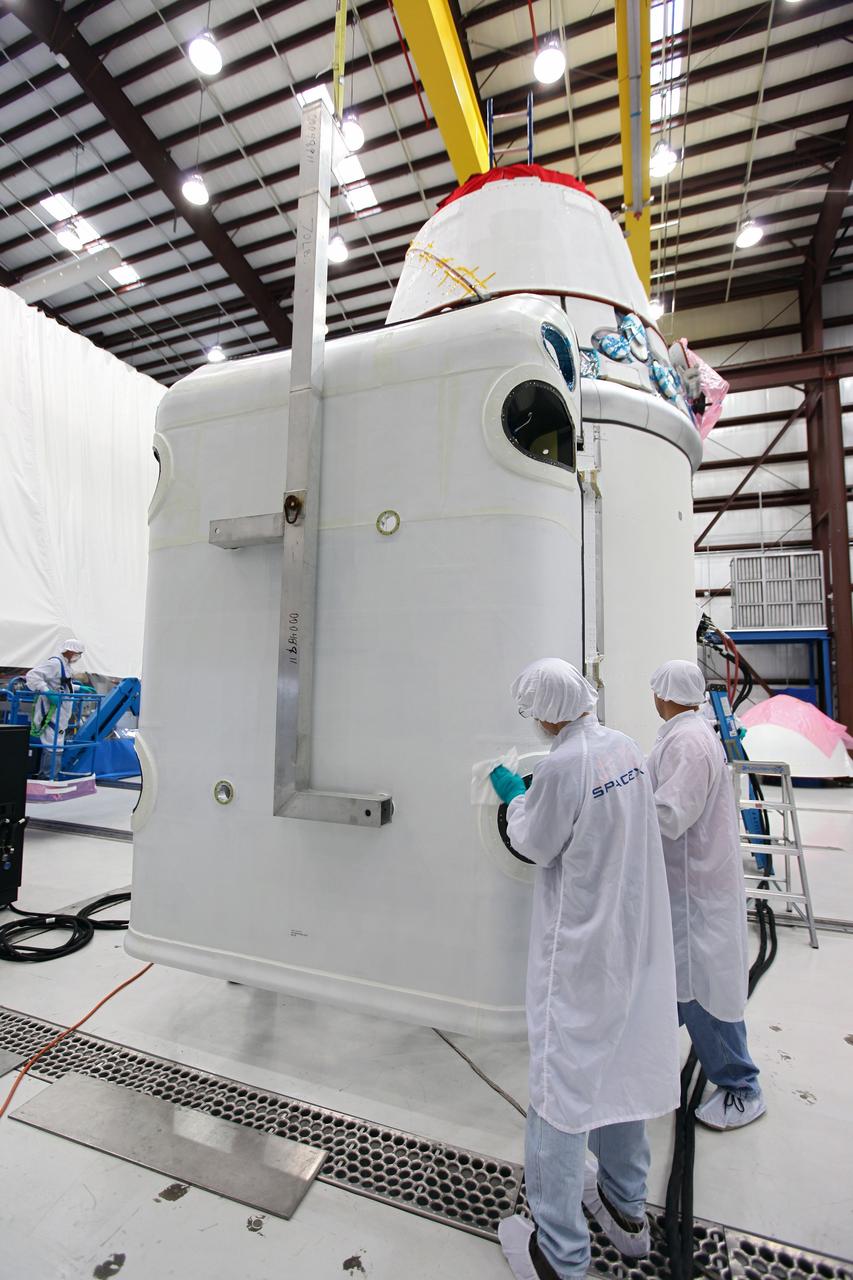
CAPE CANAVERAL, Fla. – Workers guide a solar array fairing into place inside the processing hangar used by Space Exploration Technologies, or SpaceX, at Cape Canaveral Air Force Station, Fla. The fairing will be installed on the Dragon spacecraft undergoing launch preparations inside the hangar. The spacecraft will launch on the upcoming SpaceX CRS-2 mission. The flight will be the second commercial resupply mission to the International Space Station by SpaceX. NASA has contracted for a total of 12 commercial resupply flights from SpaceX and eight from the Orbital Sciences Corp. Photo credit: NASA/Kim Shiflett

CAPE CANAVERAL, Fla. – Workers prepare solar array fairings at the processing hangar used by Space Exploration Technologies, or SpaceX, at Cape Canaveral Air Force Station, Fla. The fairings are to be installed on the Dragon spacecraft undergoing launch preparations inside the hangar. The spacecraft will launch on the upcoming SpaceX CRS-2 mission. The flight will be the second commercial resupply mission to the International Space Station by SpaceX. NASA has contracted for a total of 12 commercial resupply flights from SpaceX and eight from the Orbital Sciences Corp. Photo credit: NASA/Kim Shiflett
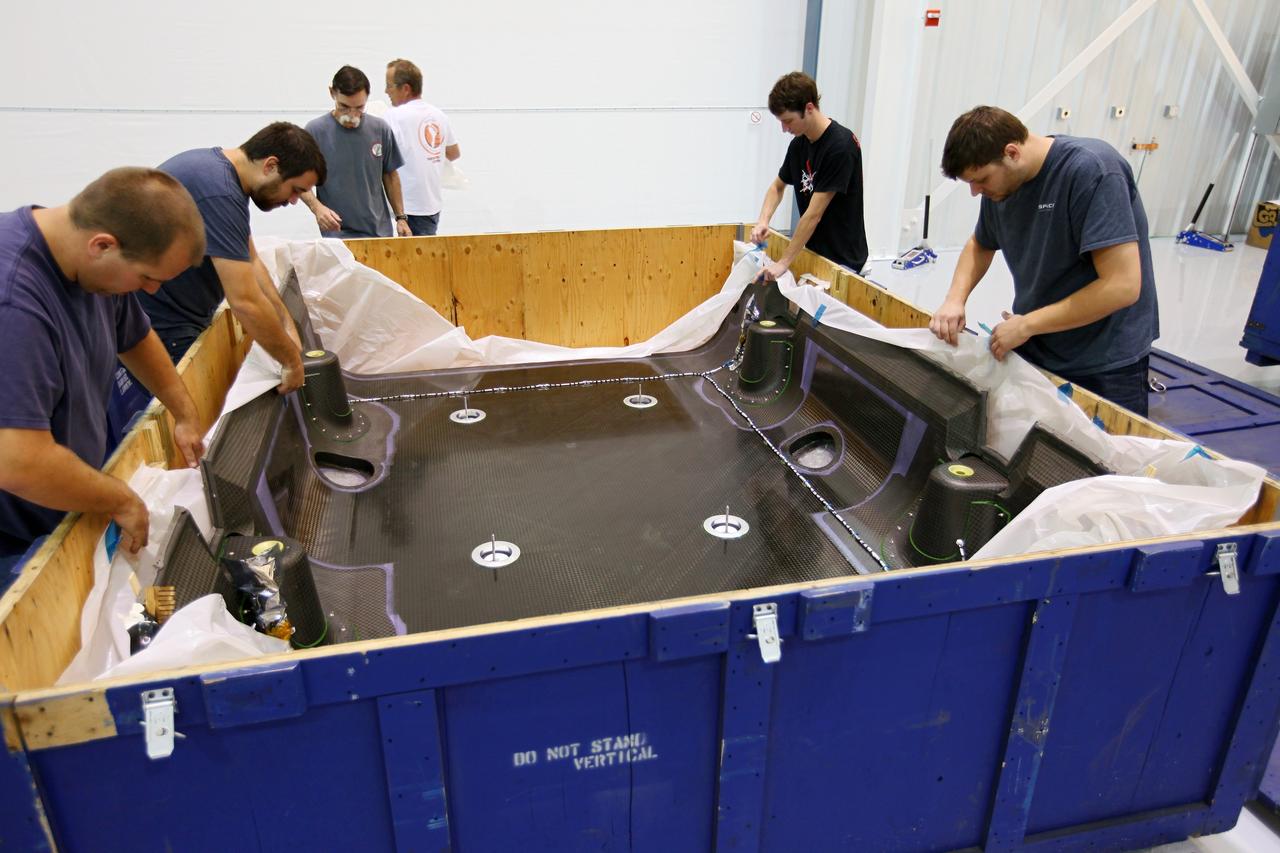
CAPE CANAVERAL, Fla. – Workers inspect a solar array fairing at the processing hangar used by Space Exploration Technologies, or SpaceX, at Cape Canaveral Air Force Station, Fla. The fairings are to be installed on the Dragon spacecraft undergoing launch preparations inside the hangar. The spacecraft will launch on the upcoming SpaceX CRS-2 mission. The flight will be the second commercial resupply mission to the International Space Station by SpaceX. NASA has contracted for a total of 12 commercial resupply flights from SpaceX and eight from the Orbital Sciences Corp. Photo credit: NASA/Kim Shiflett
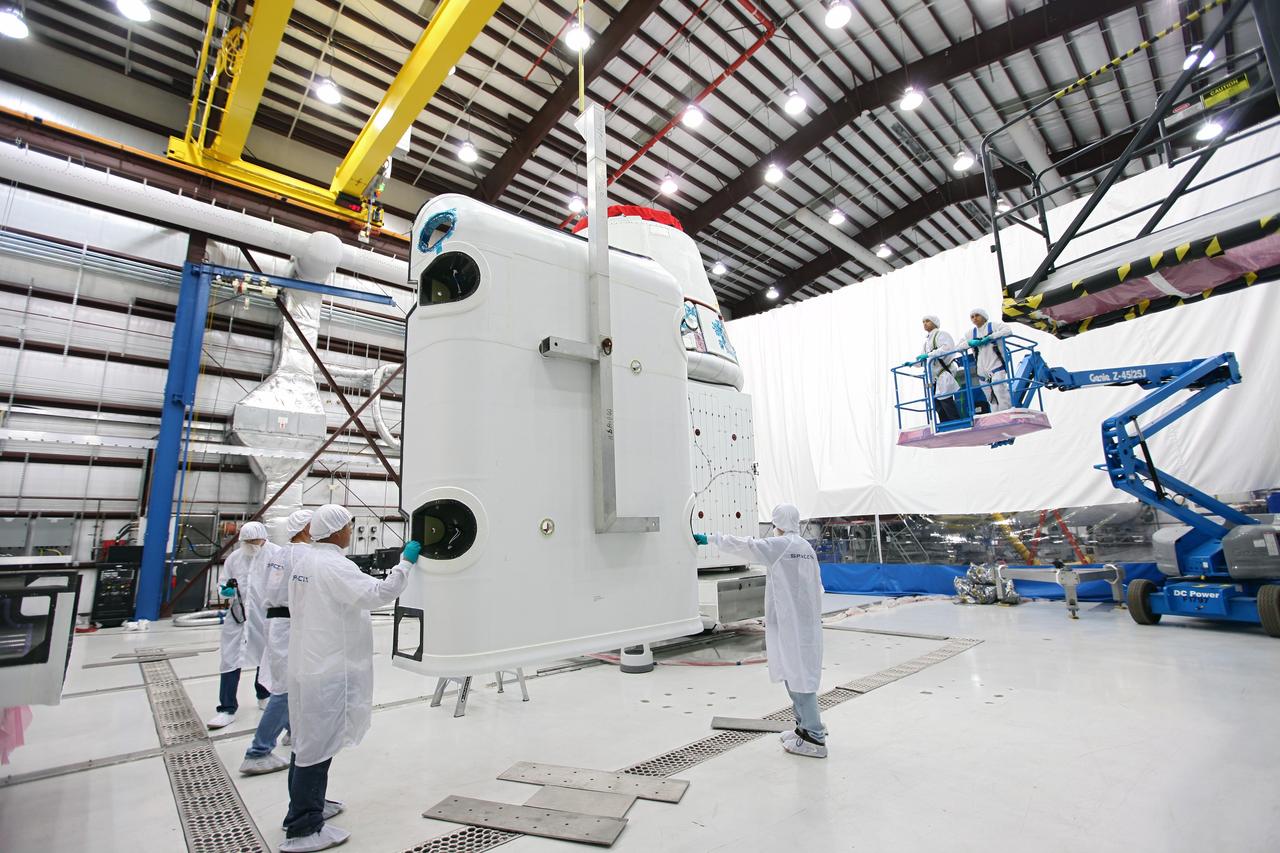
CAPE CANAVERAL, Fla. – Workers guide a solar array fairing into place inside the processing hangar used by Space Exploration Technologies, or SpaceX, at Cape Canaveral Air Force Station, Fla. The fairing will be installed on the Dragon spacecraft undergoing launch preparations inside the hangar. The spacecraft will launch on the upcoming SpaceX CRS-2 mission. The flight will be the second commercial resupply mission to the International Space Station by SpaceX. NASA has contracted for a total of 12 commercial resupply flights from SpaceX and eight from the Orbital Sciences Corp. Photo credit: NASA/Kim Shiflett

CAPE CANAVERAL, Fla. – Workers guide a solar array fairing into place inside the processing hangar used by Space Exploration Technologies, or SpaceX, at Cape Canaveral Air Force Station, Fla. The fairing will be installed on the Dragon spacecraft undergoing launch preparations inside the hangar. The spacecraft will launch on the upcoming SpaceX CRS-2 mission. The flight will be the second commercial resupply mission to the International Space Station by SpaceX. NASA has contracted for a total of 12 commercial resupply flights from SpaceX and eight from the Orbital Sciences Corp. Photo credit: NASA/Kim Shiflett
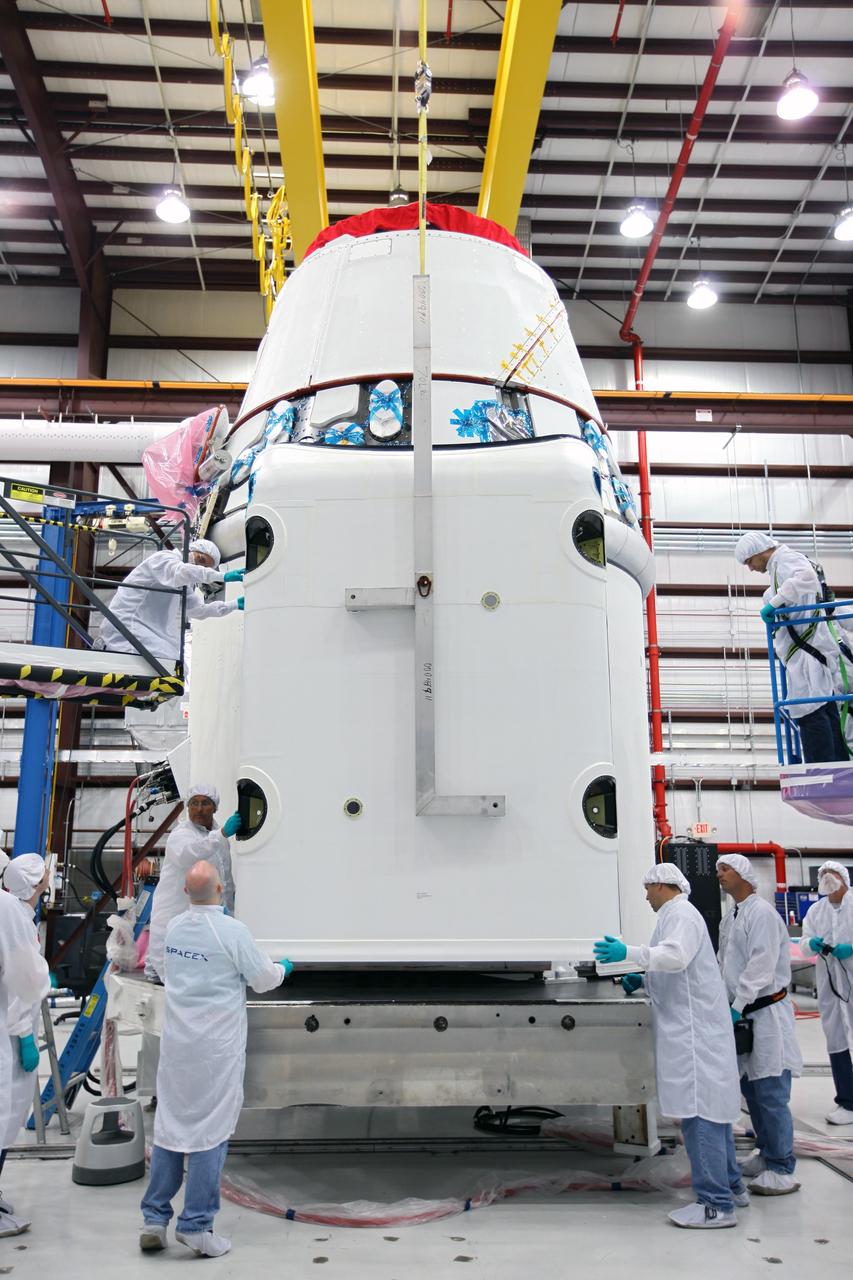
CAPE CANAVERAL, Fla. – Workers guide a solar array fairing into place inside the processing hangar used by Space Exploration Technologies, or SpaceX, at Cape Canaveral Air Force Station, Fla. The fairing will be installed on the Dragon spacecraft undergoing launch preparations inside the hangar. The spacecraft will launch on the upcoming SpaceX CRS-2 mission. The flight will be the second commercial resupply mission to the International Space Station by SpaceX. NASA has contracted for a total of 12 commercial resupply flights from SpaceX and eight from the Orbital Sciences Corp. Photo credit: NASA/Kim Shiflett
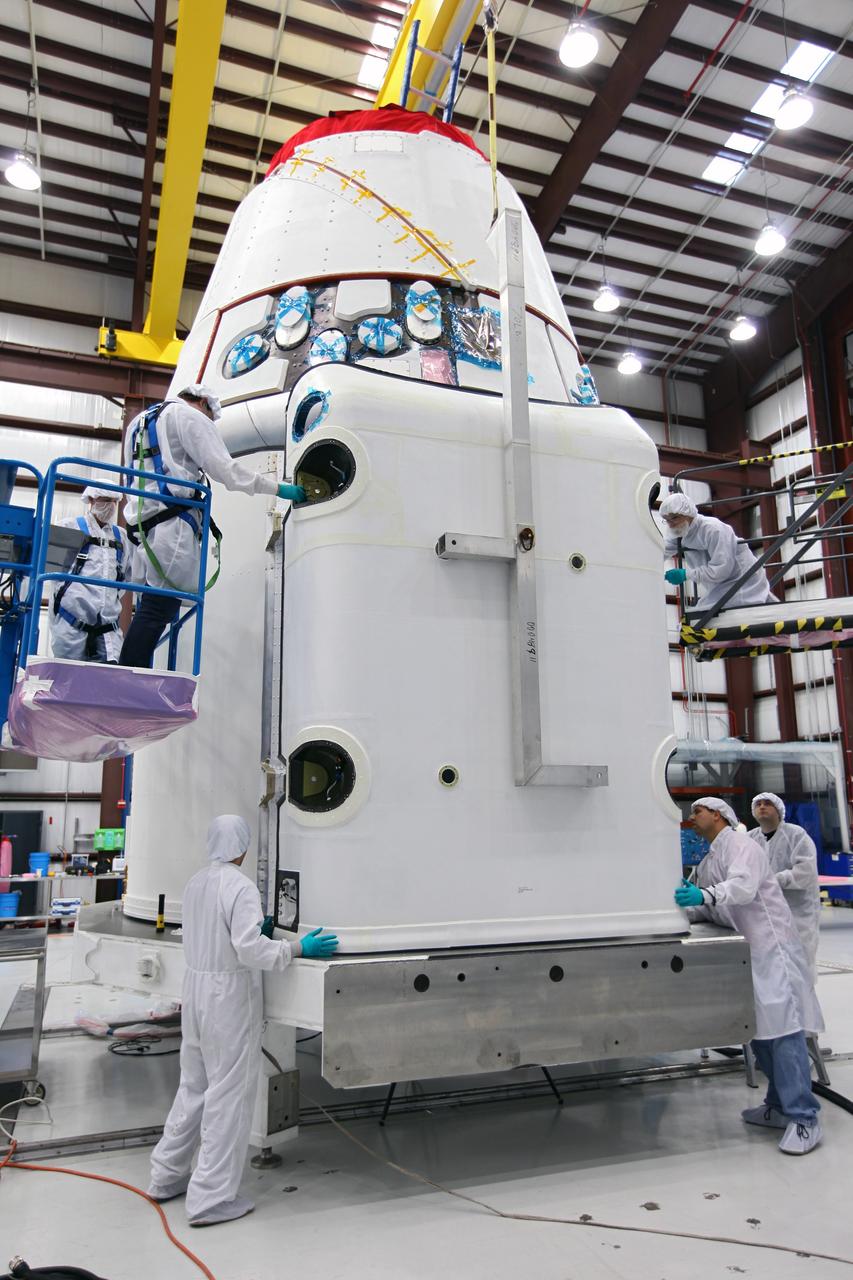
CAPE CANAVERAL, Fla. – Workers guide a solar array fairing into place inside the processing hangar used by Space Exploration Technologies, or SpaceX, at Cape Canaveral Air Force Station, Fla. The fairing will be installed on the Dragon spacecraft undergoing launch preparations inside the hangar. The spacecraft will launch on the upcoming SpaceX CRS-2 mission. The flight will be the second commercial resupply mission to the International Space Station by SpaceX. NASA has contracted for a total of 12 commercial resupply flights from SpaceX and eight from the Orbital Sciences Corp. Photo credit: NASA/Kim Shiflett