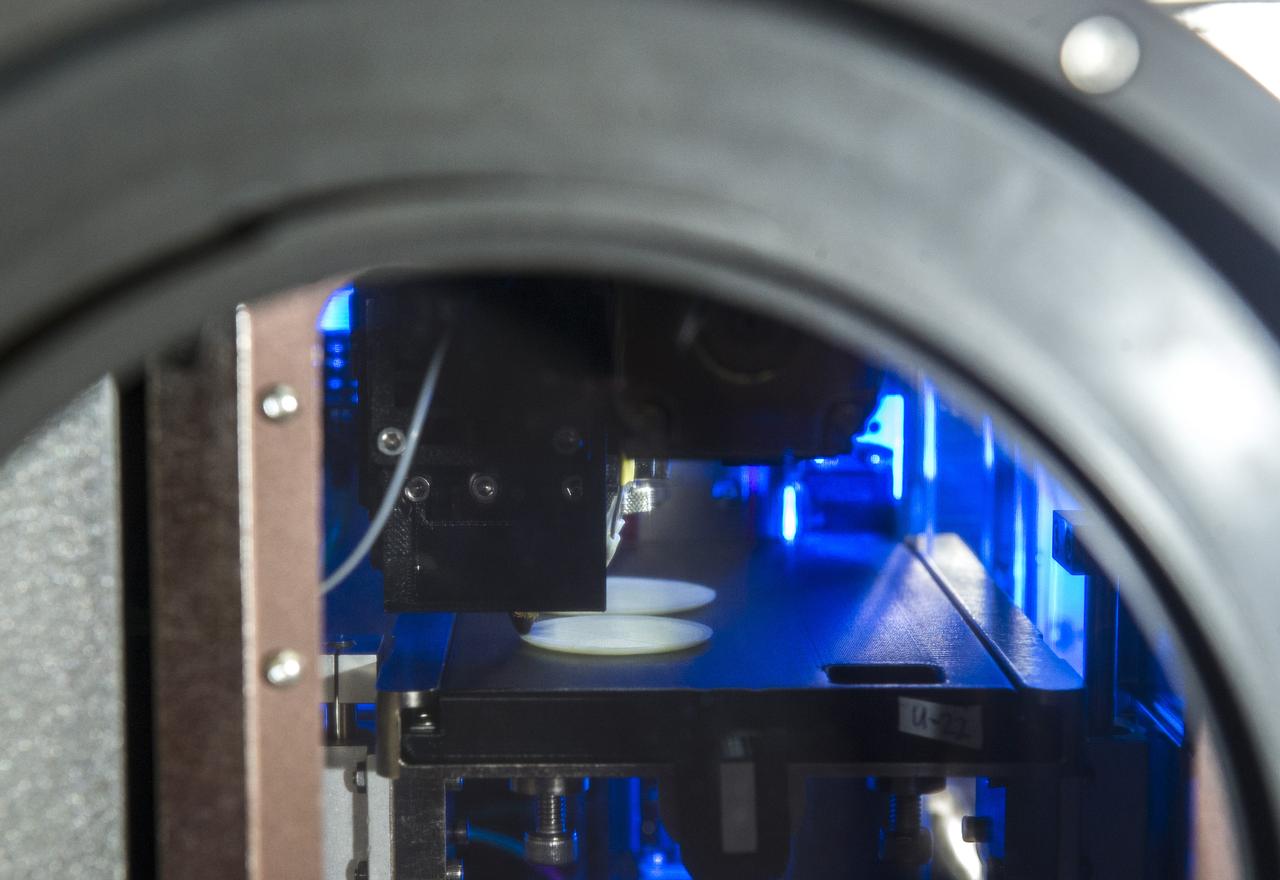
MADE IN SPACE” 3D PRINTER PRINTING TEST SAMPLES WHILE PRINTER IS IN MICROGRAVITY GLOVE BOX
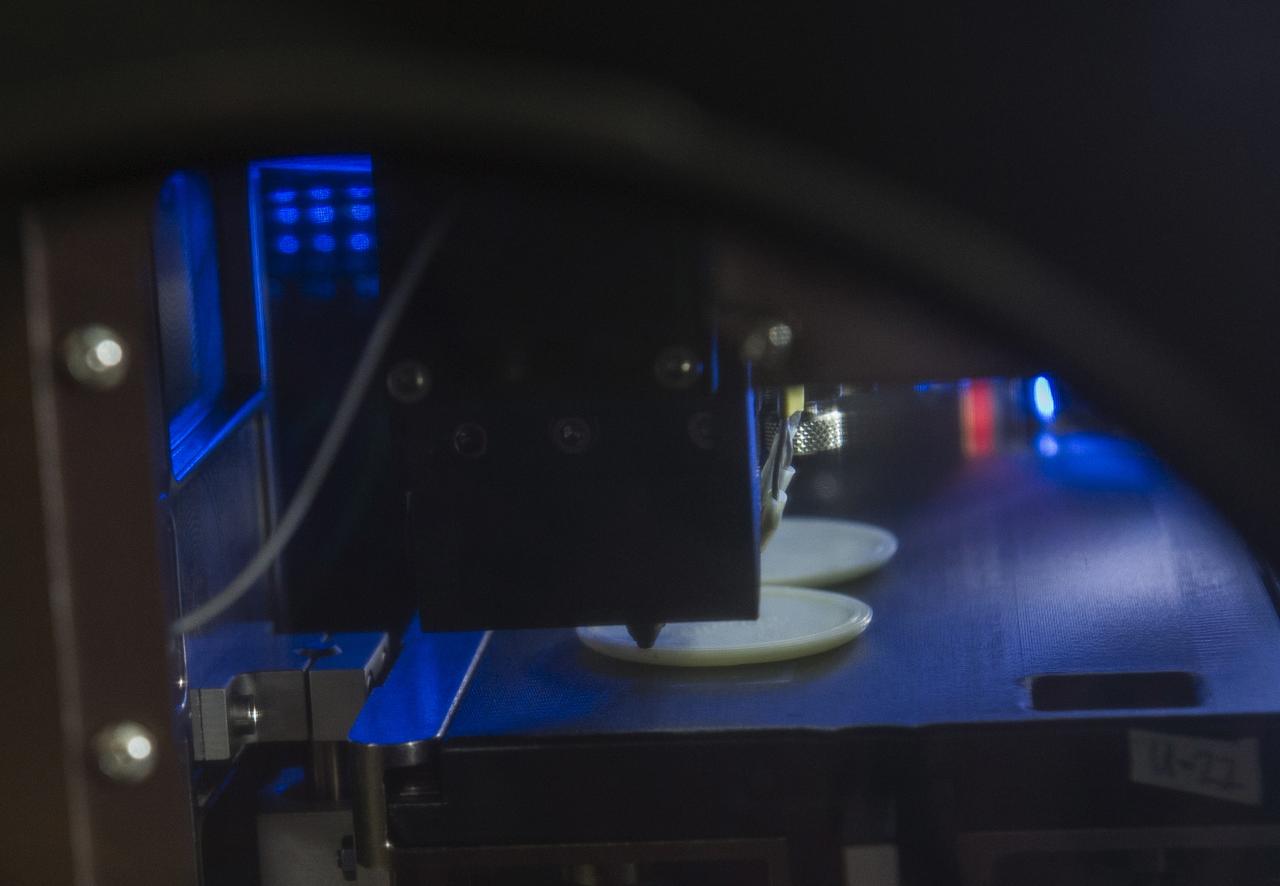
MADE IN SPACE” 3D PRINTER PRINTING TEST SAMPLES WHILE PRINTER IS IN MICROGRAVITY GLOVE BOX
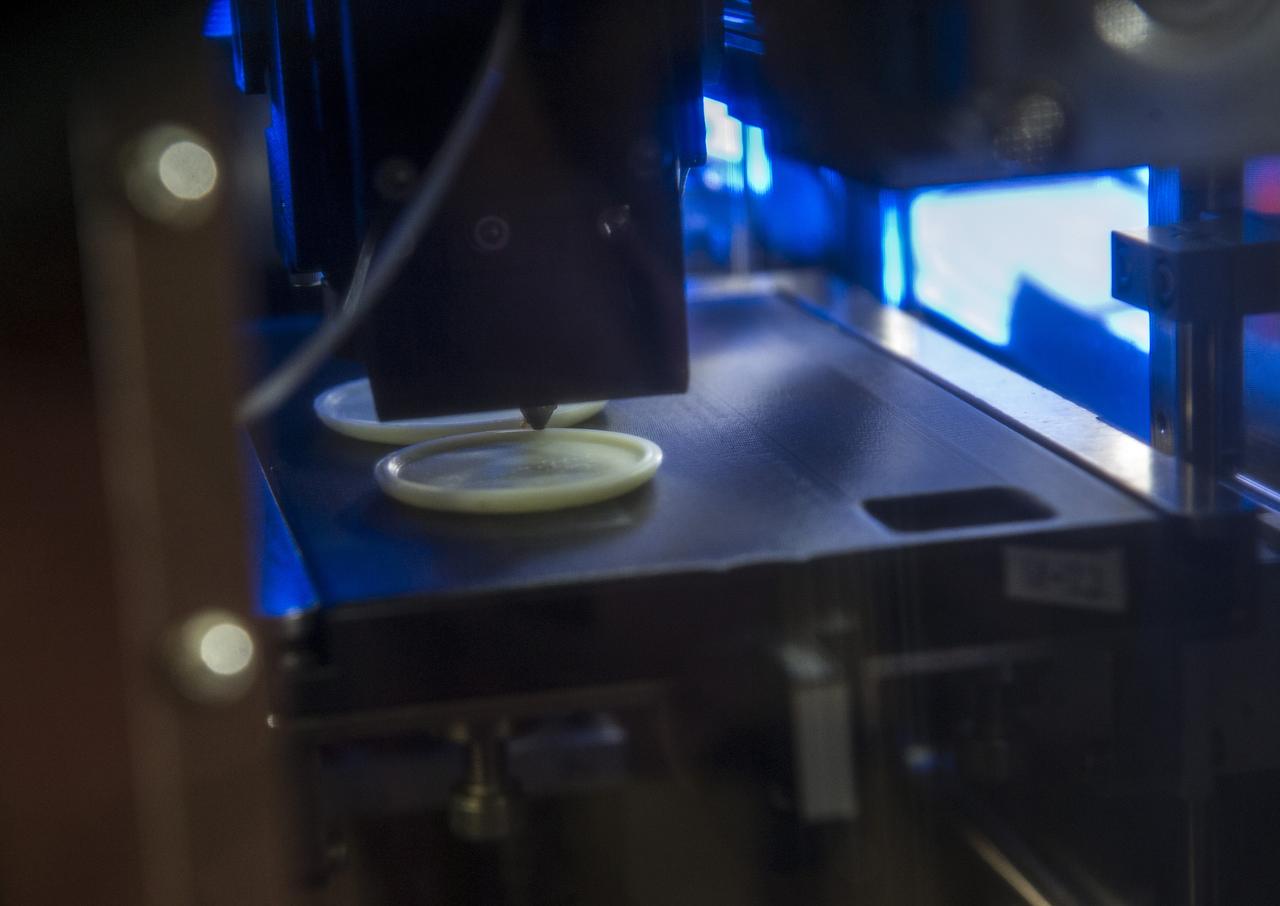
MADE IN SPACE” 3D PRINTER PRINTING TEST SAMPLES WHILE PRINTER IS IN MICROGRAVITY GLOVE BOX
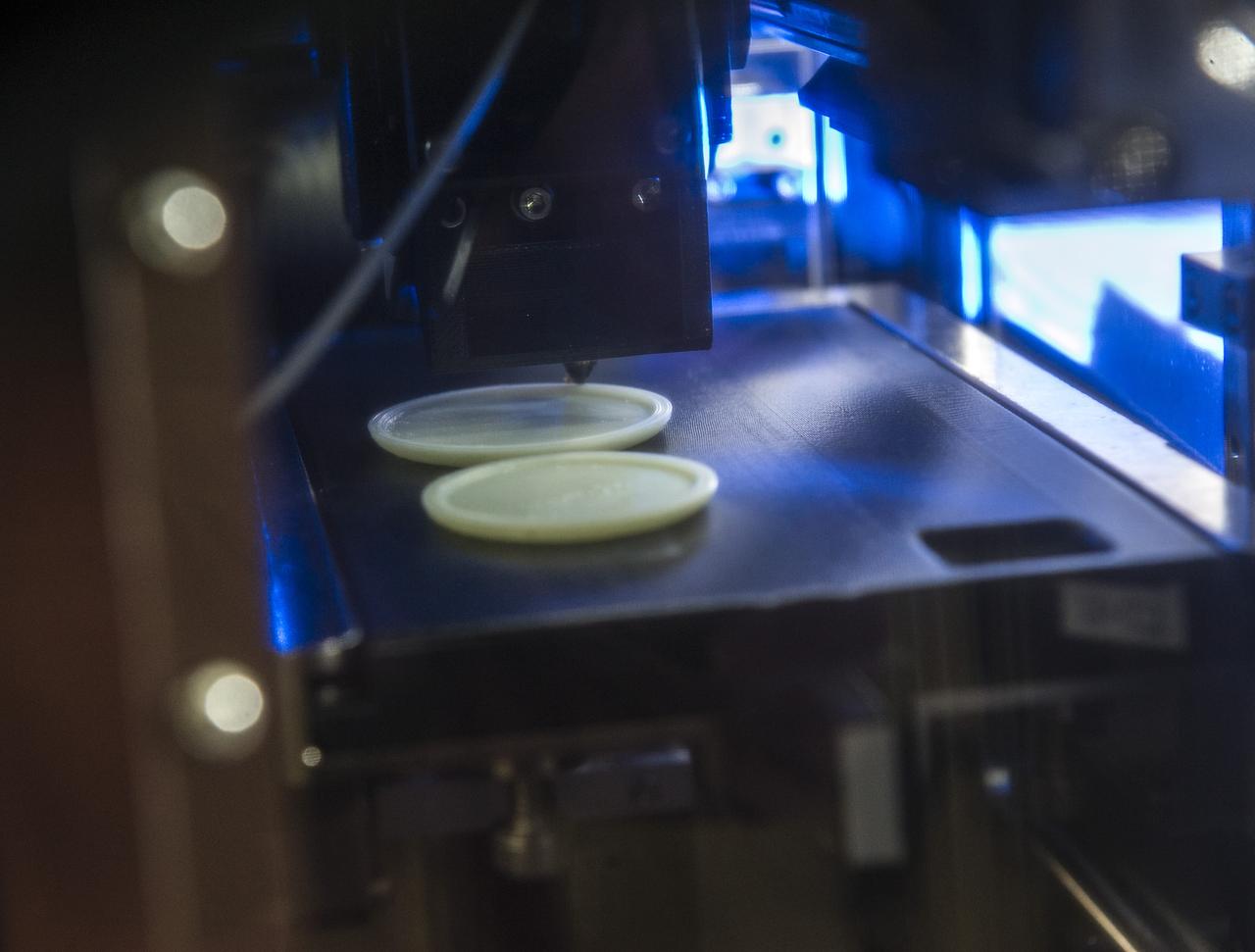
MADE IN SPACE” 3D PRINTER PRINTING TEST SAMPLES WHILE PRINTER IS IN MICROGRAVITY GLOVE BOX
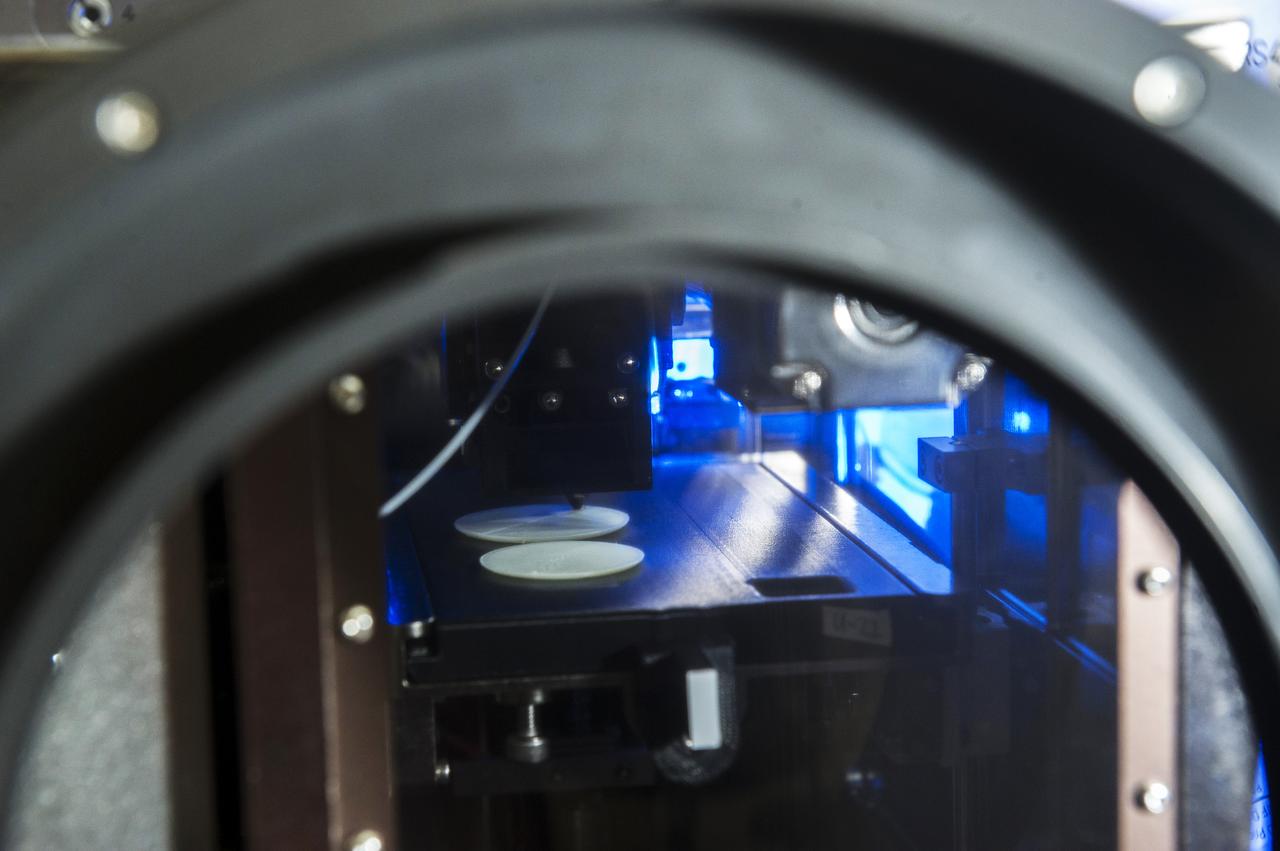
MADE IN SPACE” 3D PRINTER PRINTING TEST SAMPLES WHILE PRINTER IS IN MICROGRAVITY GLOVE BOX
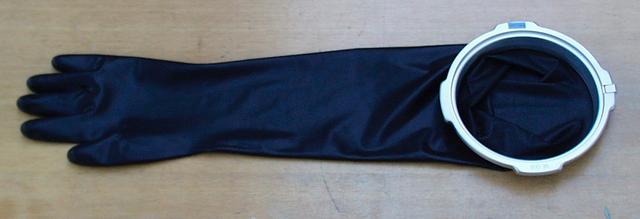
This photo shows a rubber glove and its attachment ring for the Microgravity Science Glovebox (MSG) being developed by the European Space Agency (ESA) and NASA for use aboard the International Space Station (ISS). Scientists will use the MSG to carry out multidisciplinary studies in combustion science, fluid physics and materials science. The MSG is managed by NASA's Marshall Space Flight Center (MSFC). Photo Credit: NASA/MSFC
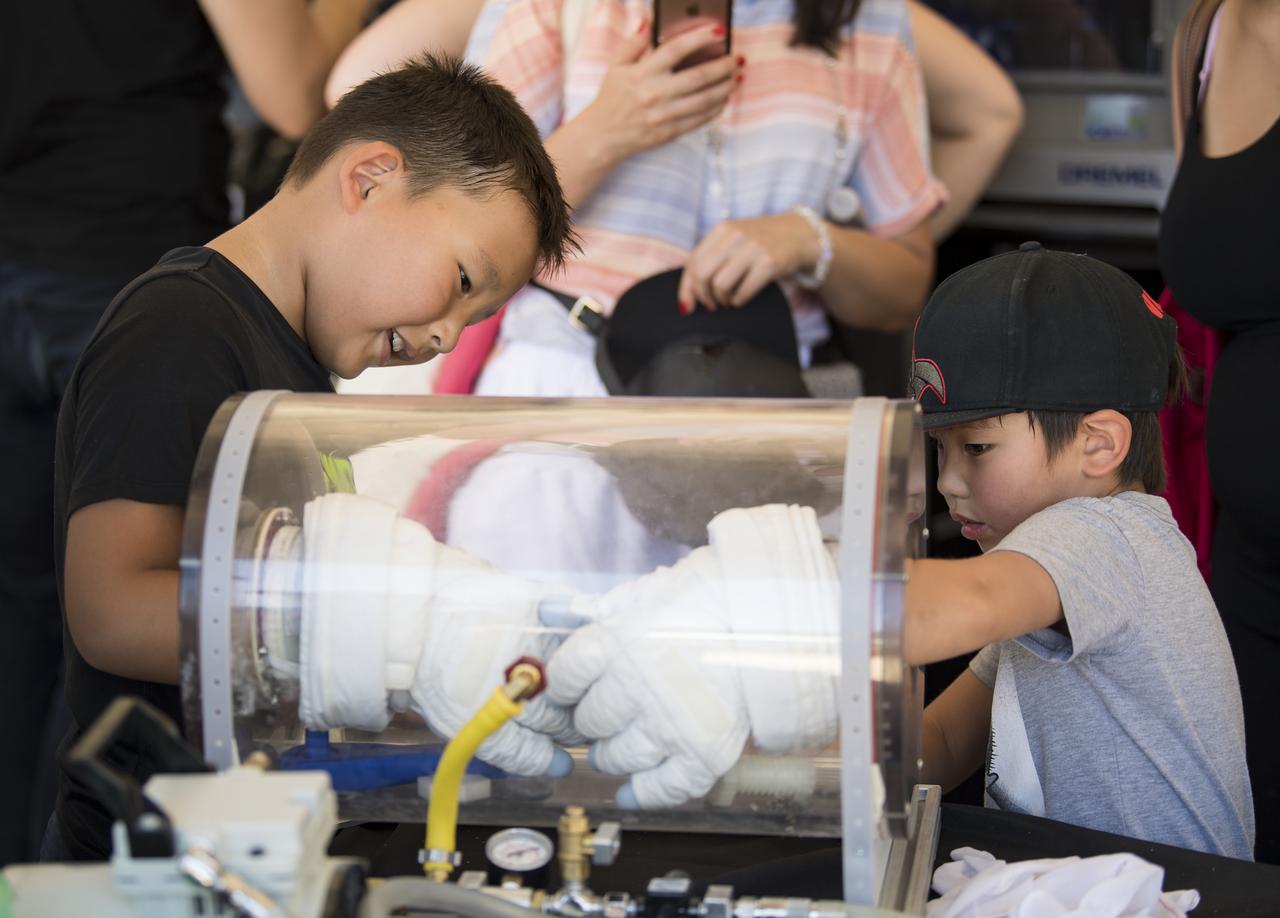
Visitors test out some space gloves at the Apollo 11 50th Anniversary celebration on the National Mall, Friday, July 19, 2019 in Washington. Apollo 11 was the first mission to land astronauts on the Moon and launched on July 16, 1969 with astronauts Neil Armstrong, Michael Collins, and Buzz Aldrin. Photo Credit: (NASA/Aubrey Gemignani)
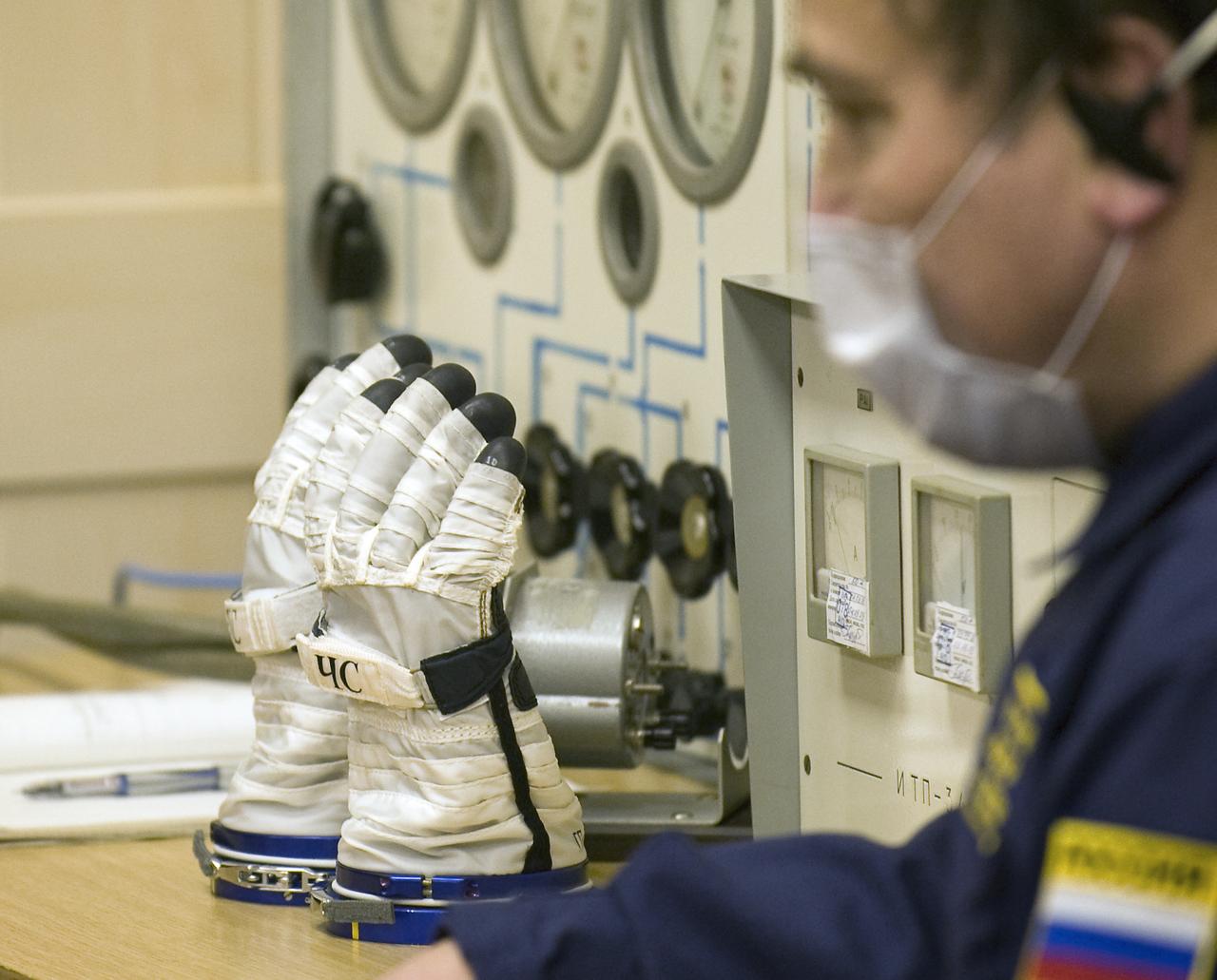
Expedition 19 Flight Engineer Michael R. Barratt's Russian Sokol suit gloves are ready for him to wear during the pressure check procedure prior to the Soyuz launch to the International Space Station with Commander Gennady I. Padalka and Spaceflight Participant Charles Simonyi on Thursday, March 26, 2009 in Baikonur, Kazakhstan. (Photo Credit: NASA/Bill Ingalls)
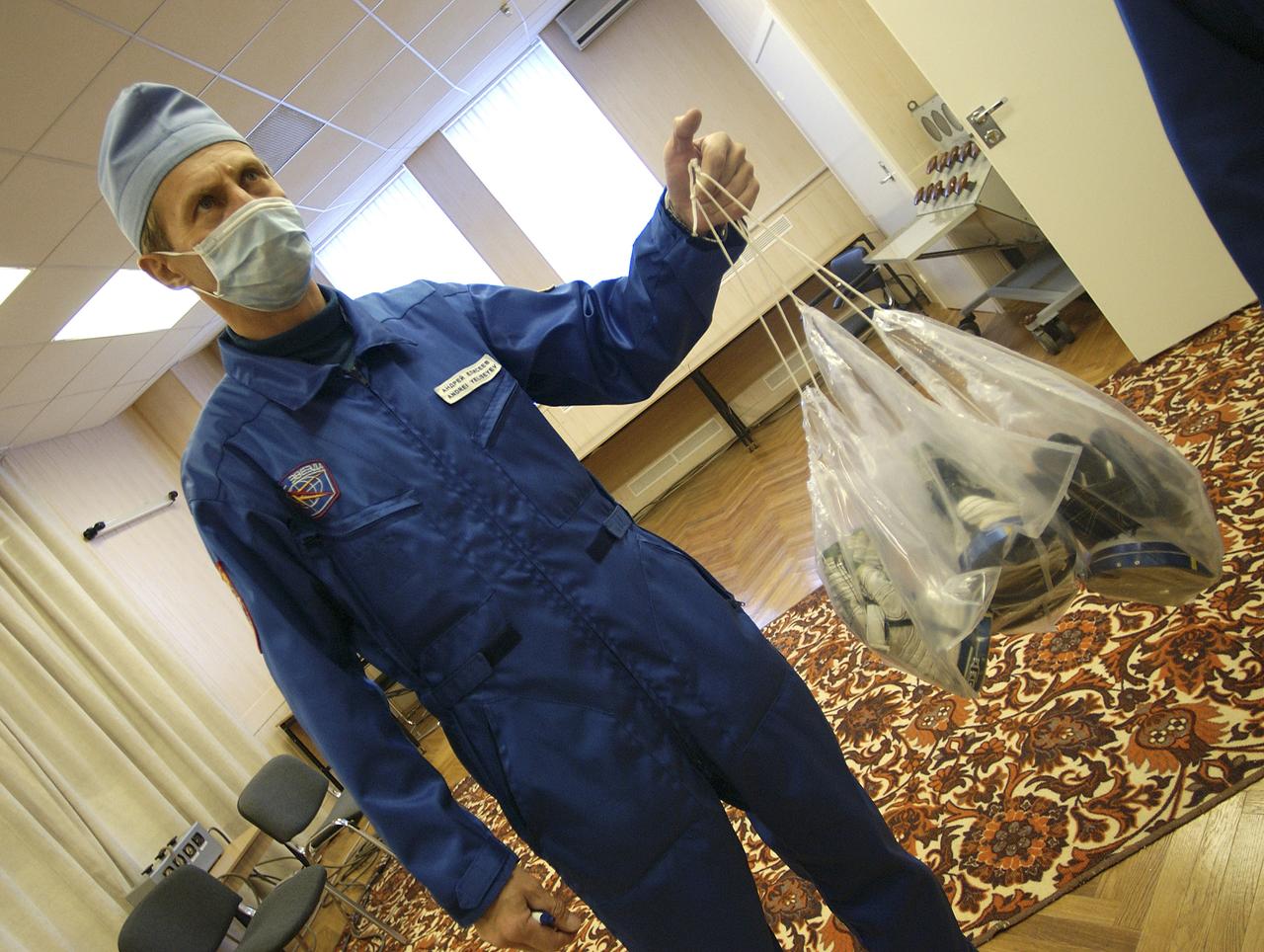
A Russian Suit Technician carries the gloves of all three Expedition 10 crew members Friday, October 5, 2004, at the Baikonur Cosmodrome in Kazakhstan. Expedition 10 Commander and NASA Science Officer Leroy Chiao, Russian Space Forces cosmonaut Yuri Shargin and Flight Engineer and Soyuz Commander Salizhan Sharipov will launch on October 14th to the International Space Station. Photo Credit: (NASA/Bill Ingalls)
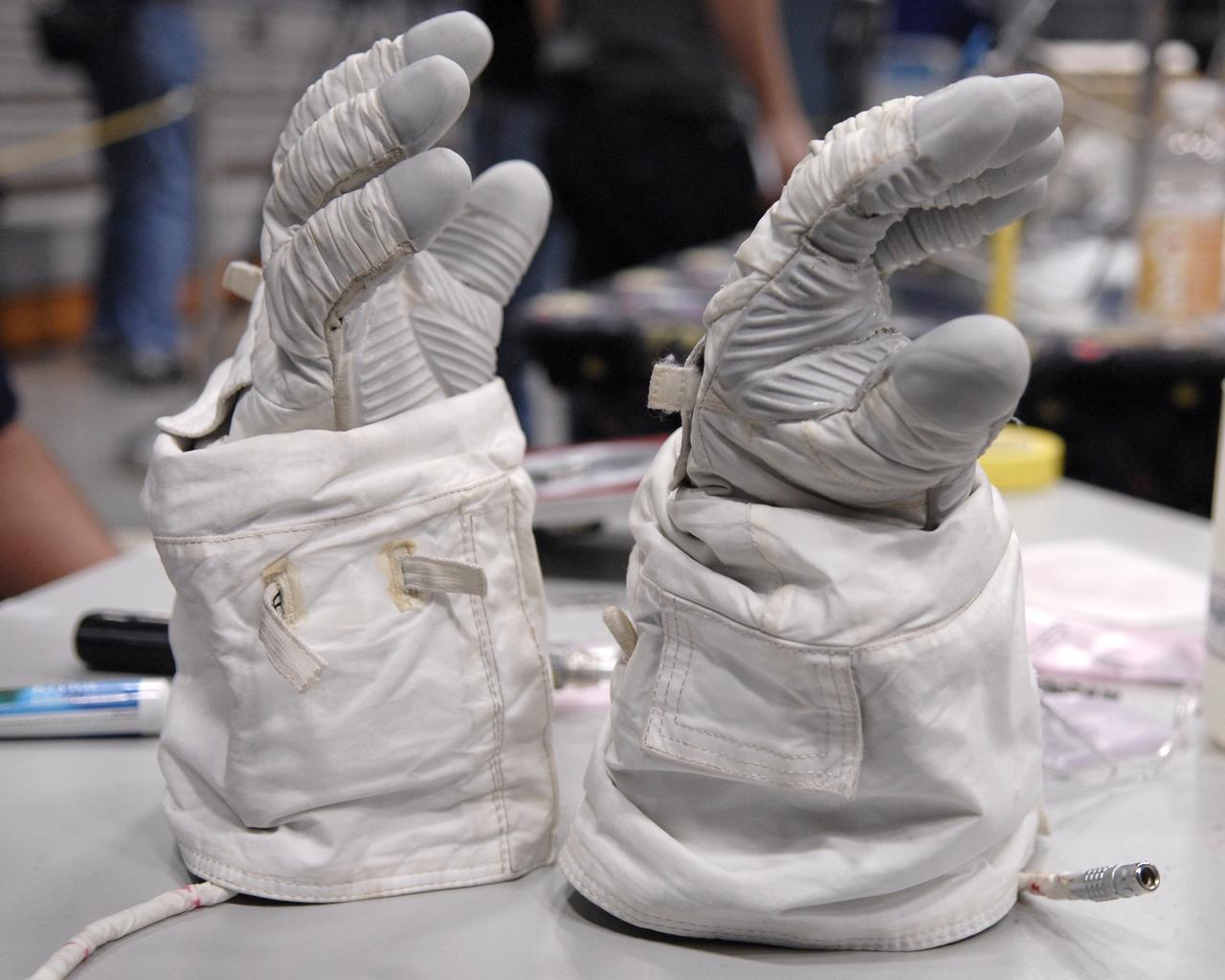
CAPE CANAVERAL, Fla. – These newly designed gloves are entries in the 2009 Astronaut Glove Challenge, part of NASA’s Centennial Challenges Program, at the Astronaut Hall of Fame near NASA’s Kennedy Space Center in Florida. The nationwide competition focused on developing improved pressure suit gloves for astronauts to use while working in space. During the challenge, inventors tested the gloves to measure dexterity and strength during operation in a glove box which simulates the vacuum of space. Centennial Challenges is NASA’s program of technology prizes for the citizen-inventor. The winning prize for the Glove Challenge is $250,000 provided by the Centennial Challenges Program. Photo credit: NASA/Kim Shiflett
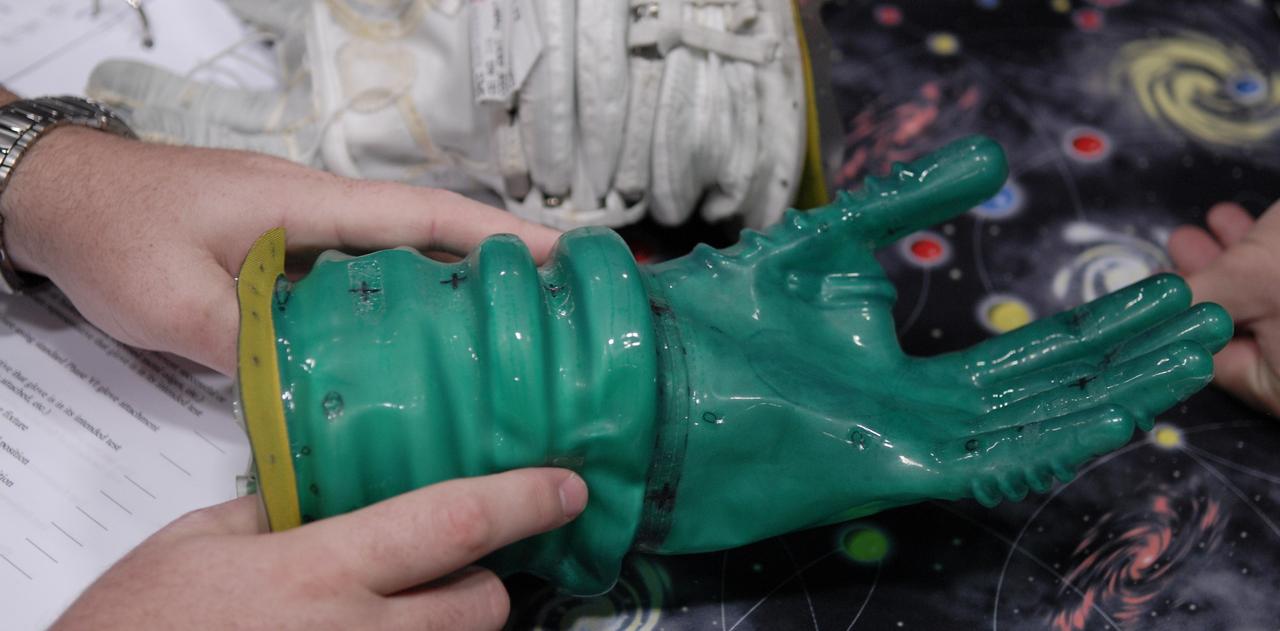
CAPE CANAVERAL, Fla. – This newly designed glove is one of the entries in the 2009 Astronaut Glove Challenge, part of NASA’s Centennial Challenges Program, at the Astronaut Hall of Fame near NASA’s Kennedy Space Center in Florida. The nationwide competition focused on developing improved pressure suit gloves for astronauts to use while working in space. During the challenge, inventors tested the gloves to measure dexterity and strength during operation in a glove box which simulates the vacuum of space. Centennial Challenges is NASA’s program of technology prizes for the citizen-inventor. The winning prize for the Glove Challenge is $250,000 provided by the Centennial Challenges Program. Photo credit: NASA/Kim Shiflett

CAPE CANAVERAL, Fla. – A representative of ILC Dover prepares a newly designed glove for a dexterity and flexibility test during the 2009 Astronaut Glove Challenge, part of NASA’s Centennial Challenges Program, at the Astronaut Hall of Fame near NASA’s Kennedy Space Center in Florida. The nationwide competition focused on developing improved pressure suit gloves for astronauts to use while working in space. During the challenge, inventors tested the gloves to measure dexterity and strength during operation in a glove box which simulates the vacuum of space. Centennial Challenges is NASA’s program of technology prizes for the citizen-inventor. The winning prize for the Glove Challenge is $250,000 provided by the Centennial Challenges Program. Photo credit: NASA/Kim Shiflett
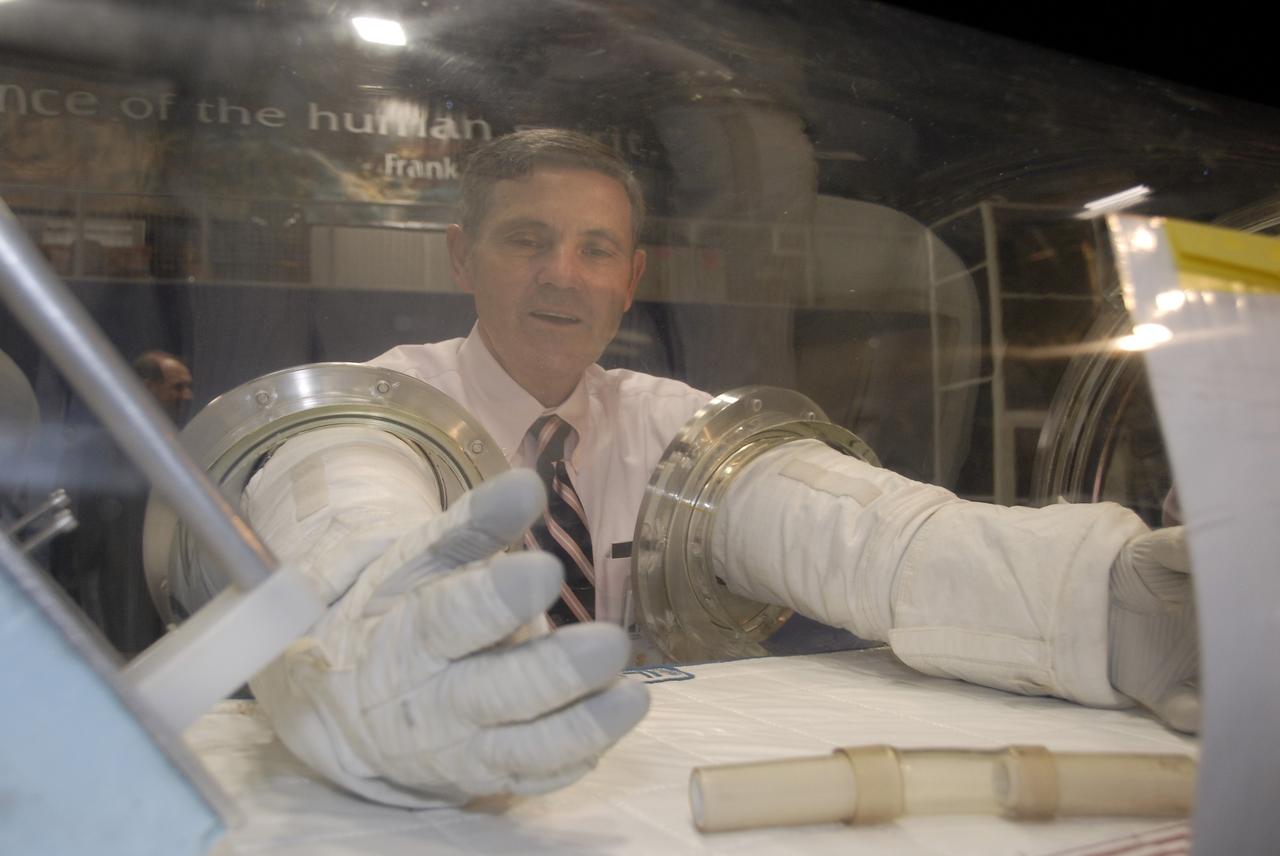
CAPE CANAVERAL, Fla. – At the Astronaut Hall of Fame near NASA’s Kennedy Space Center in Florida, Kennedy Director Bob Cabana, a former astronaut, tries out a pair of space gloves for their dexterity and flexibility in a glove box at the 2009 Astronaut Glove Challenge, part of NASA’s Centennial Challenges Program. The nationwide competition focused on developing improved pressure suit gloves for astronauts to use while working in space. During the challenge, the gloves were submitted to burst tests, joint force tests and tests to measure their dexterity and strength during operation in a glove box which simulates the vacuum of space. Centennial Challenges is NASA’s program of technology prizes for the citizen-inventor. The winning prize for the Glove Challenge is $250,000 provided by the Centennial Challenges Program. Photo credit: NASA/Kim Shiflett
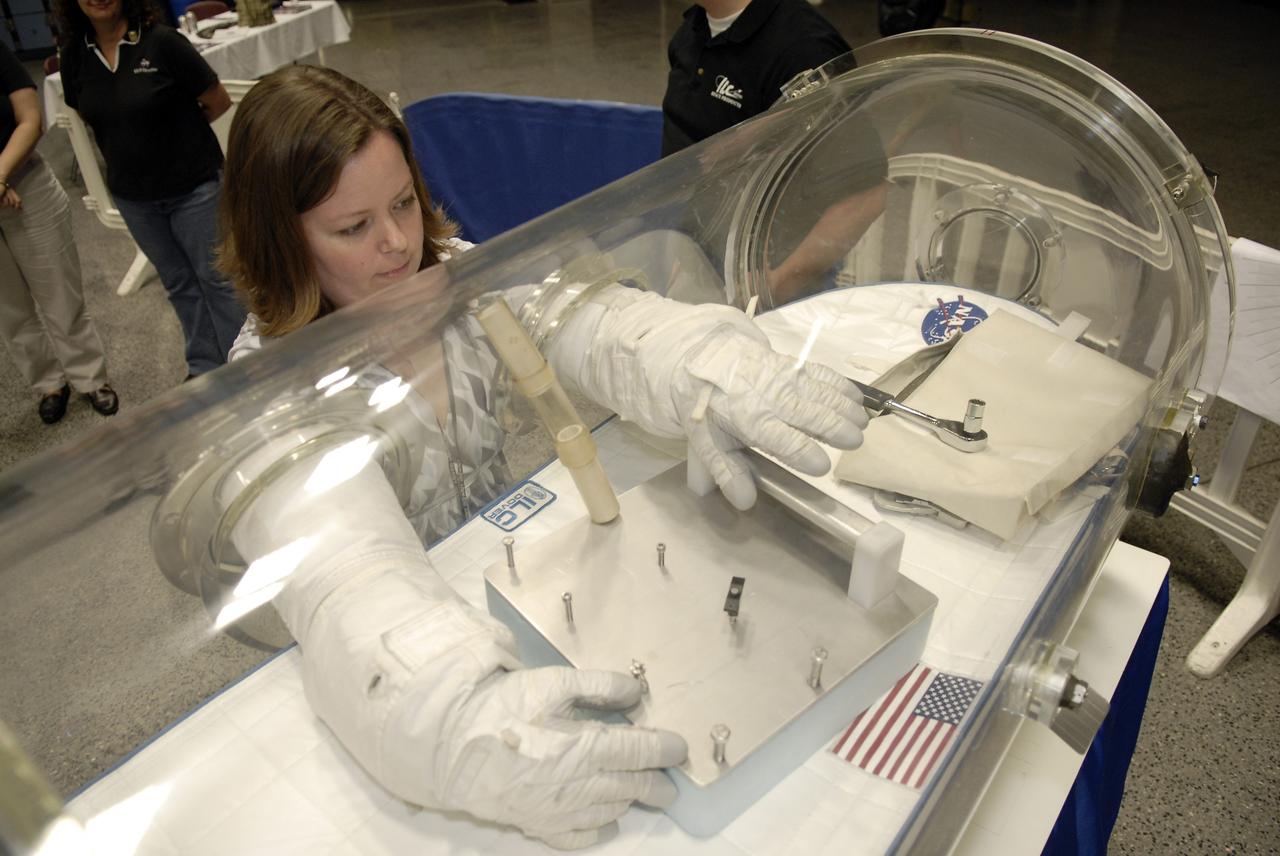
CAPE CANAVERAL, Fla. – At the Astronaut Hall of Fame near NASA’s Kennedy Space Center in Florida, Anna Heiney, a Public Affairs support writer with Abacus Technology at Kennedy, tries out a pair of space gloves for their dexterity and flexibility in a glove box at the 2009 Astronaut Glove Challenge, part of NASA’s Centennial Challenges Program. Looking over his shoulder is Kennedy Director Bob Cabana. The nationwide competition focused on developing improved pressure suit gloves for astronauts to use while working in space. During the challenge, the gloves were submitted to burst tests, joint force tests and tests to measure their dexterity and strength during operation in a glove box which simulates the vacuum of space. Centennial Challenges is NASA’s program of technology prizes for the citizen-inventor. The winning prize for the Glove Challenge is $250,000 provided by the Centennial Challenges Program. Photo credit: NASA/Kim Shiflett
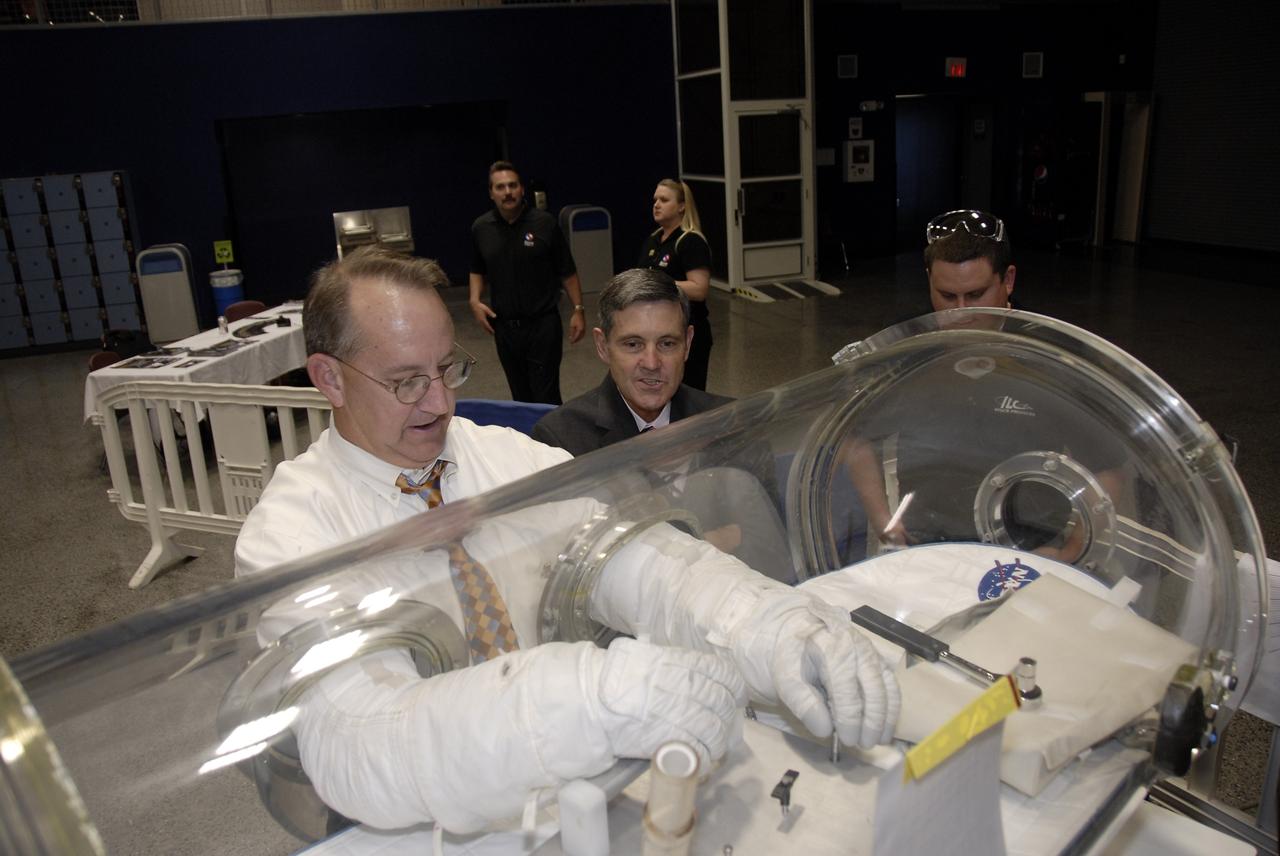
CAPE CANAVERAL, Fla. – At the Astronaut Hall of Fame near NASA’s Kennedy Space Center in Florida, Patrick Simpkins, director of Engineering at Kennedy, tries out a pair of space gloves for their dexterity and flexibility in a glove box at the 2009 Astronaut Glove Challenge, part of NASA’s Centennial Challenges Program. Looking over his shoulder is Kennedy Director Bob Cabana. The nationwide competition focused on developing improved pressure suit gloves for astronauts to use while working in space. During the challenge, the gloves were submitted to burst tests, joint force tests and tests to measure their dexterity and strength during operation in a glove box which simulates the vacuum of space. Centennial Challenges is NASA’s program of technology prizes for the citizen-inventor. The winning prize for the Glove Challenge is $250,000 provided by the Centennial Challenges Program. Photo credit: NASA/Kim Shiflett
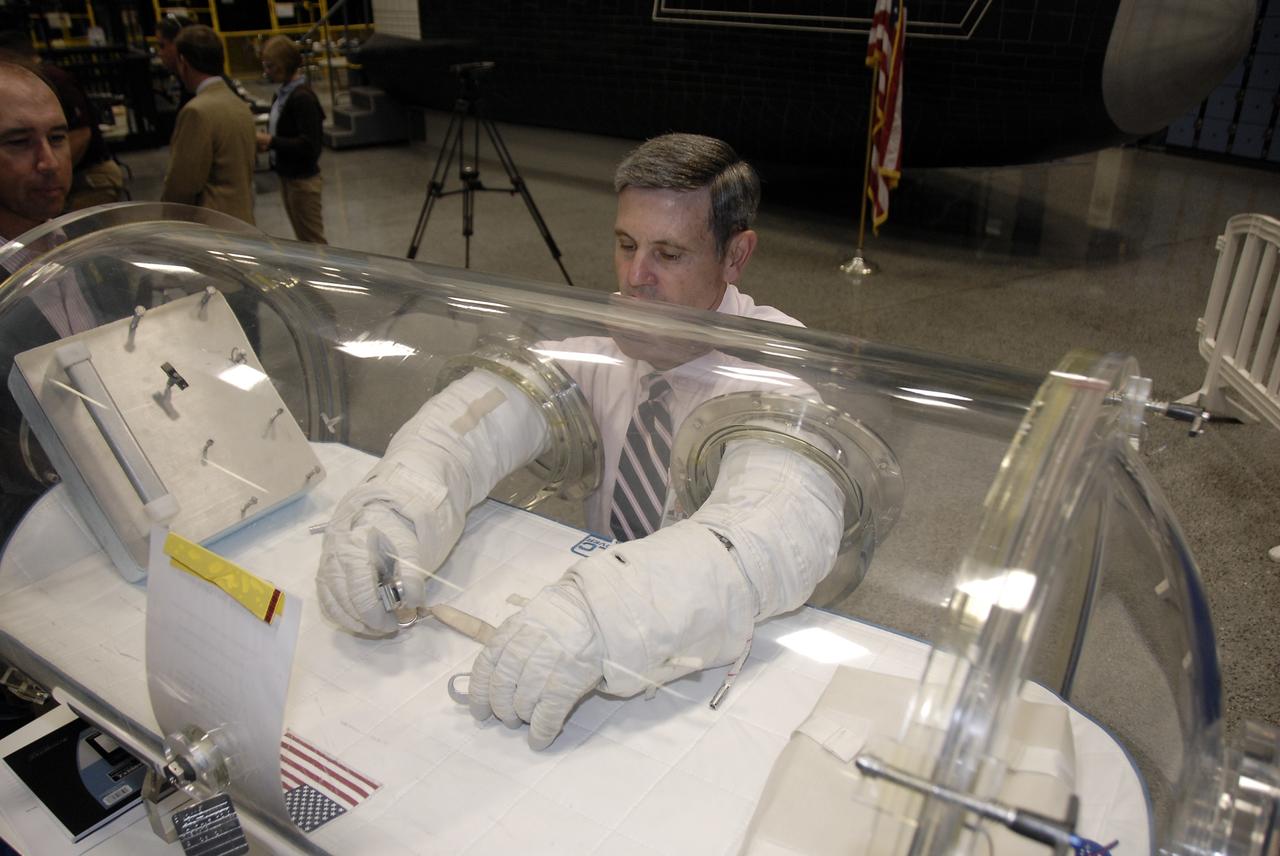
CAPE CANAVERAL, Fla. – At the Astronaut Hall of Fame near NASA’s Kennedy Space Center in Florida, Kennedy Director Bob Cabana, a former astronaut, tries out a pair of space gloves for their dexterity and flexibility in a glove box at the 2009 Astronaut Glove Challenge, part of NASA’s Centennial Challenges Program. The nationwide competition focused on developing improved pressure suit gloves for astronauts to use while working in space. During the challenge, the gloves were submitted to burst tests, joint force tests and tests to measure their dexterity and strength during operation in a glove box which simulates the vacuum of space. Centennial Challenges is NASA’s program of technology prizes for the citizen-inventor. The winning prize for the Glove Challenge is $250,000 provided by the Centennial Challenges Program. Photo credit: NASA/Kim Shiflett
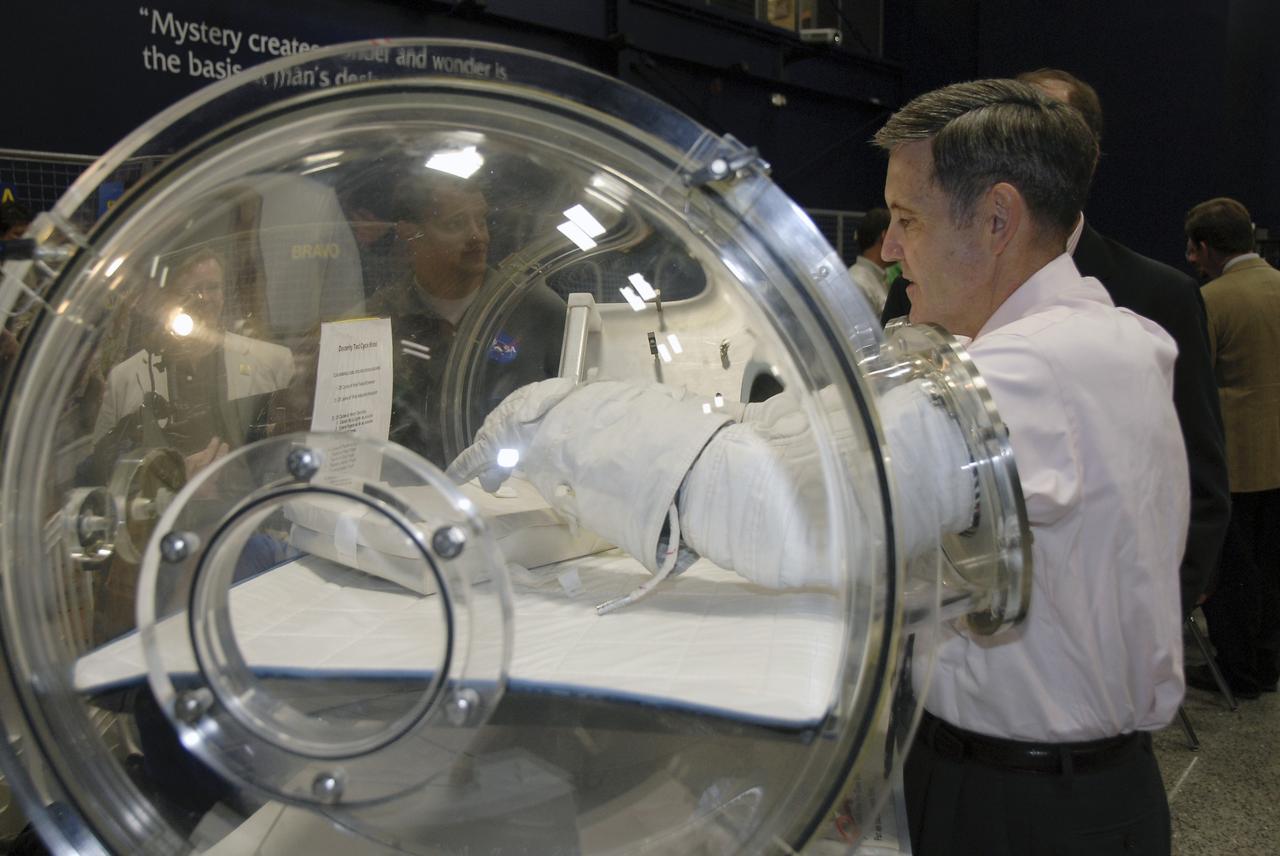
CAPE CANAVERAL, Fla. – At the Astronaut Hall of Fame near NASA’s Kennedy Space Center in Florida, Kennedy Director Bob Cabana, a former astronaut, tests a pair of space gloves for their dexterity and flexibility in a glove box at the 2009 Astronaut Glove Challenge, part of NASA’s Centennial Challenges Program. The nationwide competition focused on developing improved pressure suit gloves for astronauts to use while working in space. During the challenge, the gloves were submitted to burst tests, joint force tests and tests to measure their dexterity and strength during operation in a glove box which simulates the vacuum of space. Centennial Challenges is NASA’s program of technology prizes for the citizen-inventor. The winning prize for the Glove Challenge is $250,000 provided by the Centennial Challenges Program. Photo credit: NASA/Kim Shiflett

CAPE CANAVERAL, Fla. – Independent inventor Peter Homer, left, founder of Flagsuit LLC, inserts a glove which he designed into a glove box for a demonstration of its dexterity and flexibility during the 2009 Astronaut Glove Challenge, part of NASA’s Centennial Challenges Program, at the Astronaut Hall of Fame near NASA’s Kennedy Space Center in Florida. Homer was the winner of the competition held in 2007. The nationwide competition focused on developing improved pressure suit gloves for astronauts to use while working in space. During the challenge, inventors tested the gloves to measure dexterity and strength during operation in a glove box which simulates the vacuum of space. Centennial Challenges is NASA’s program of technology prizes for the citizen-inventor. The winning prize for the Glove Challenge is $250,000 provided by the Centennial Challenges Program. Photo credit: NASA/Kim Shiflett
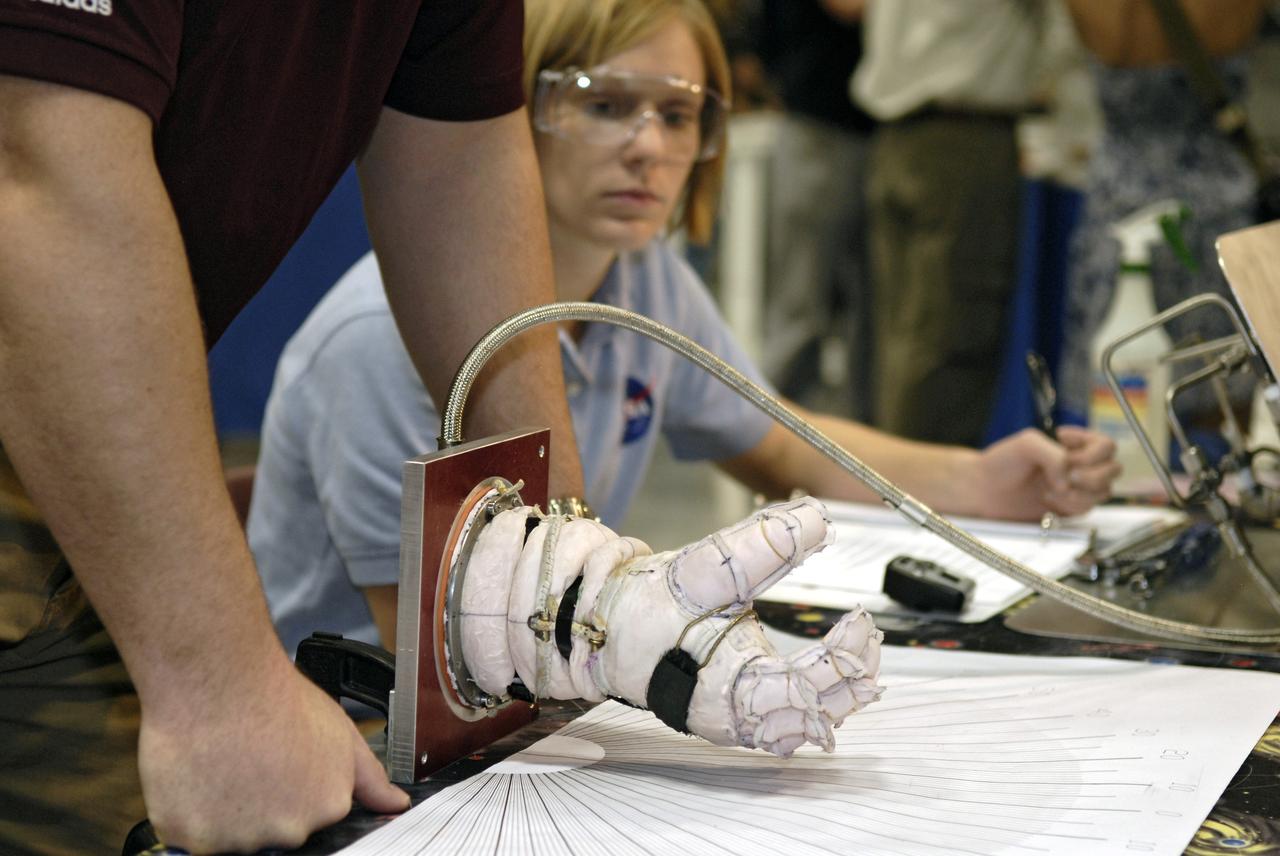
CAPE CANAVERAL, Fla. – This newly designed glove, one of the entries in the 2009 Astronaut Glove Challenge, undergoes a joint force test the 2009 Astronaut Glove Challenge, part of NASA’s Centennial Challenges Program, at the Astronaut Hall of Fame near NASA’s Kennedy Space Center in Florida. The nationwide competition focused on developing improved pressure suit gloves for astronauts to use while working in space. During the challenge, inventors tested the gloves to measure dexterity and strength during operation in a glove box which simulates the vacuum of space. Centennial Challenges is NASA’s program of technology prizes for the citizen-inventor. The winning prize for the Glove Challenge is $250,000 provided by the Centennial Challenges Program. Photo credit: NASA/Kim Shiflett

CAPE CANAVERAL, Fla. – Independent inventor Peter Homer, founder of Flagsuit LLC, inserts a glove which he designed into a glove box for a dexterity and flexibility test during the 2009 Astronaut Glove Challenge, part of NASA’s Centennial Challenges Program, at the Astronaut Hall of Fame near NASA’s Kennedy Space Center in Florida. Homer was the winner of the competition held in 2007. The nationwide competition focused on developing improved pressure suit gloves for astronauts to use while working in space. During the challenge, inventors tested the gloves to measure dexterity and strength during operation in a glove box which simulates the vacuum of space. Centennial Challenges is NASA’s program of technology prizes for the citizen-inventor. The winning prize for the Glove Challenge is $250,000 provided by the Centennial Challenges Program. Photo credit: NASA/Kim Shiflett
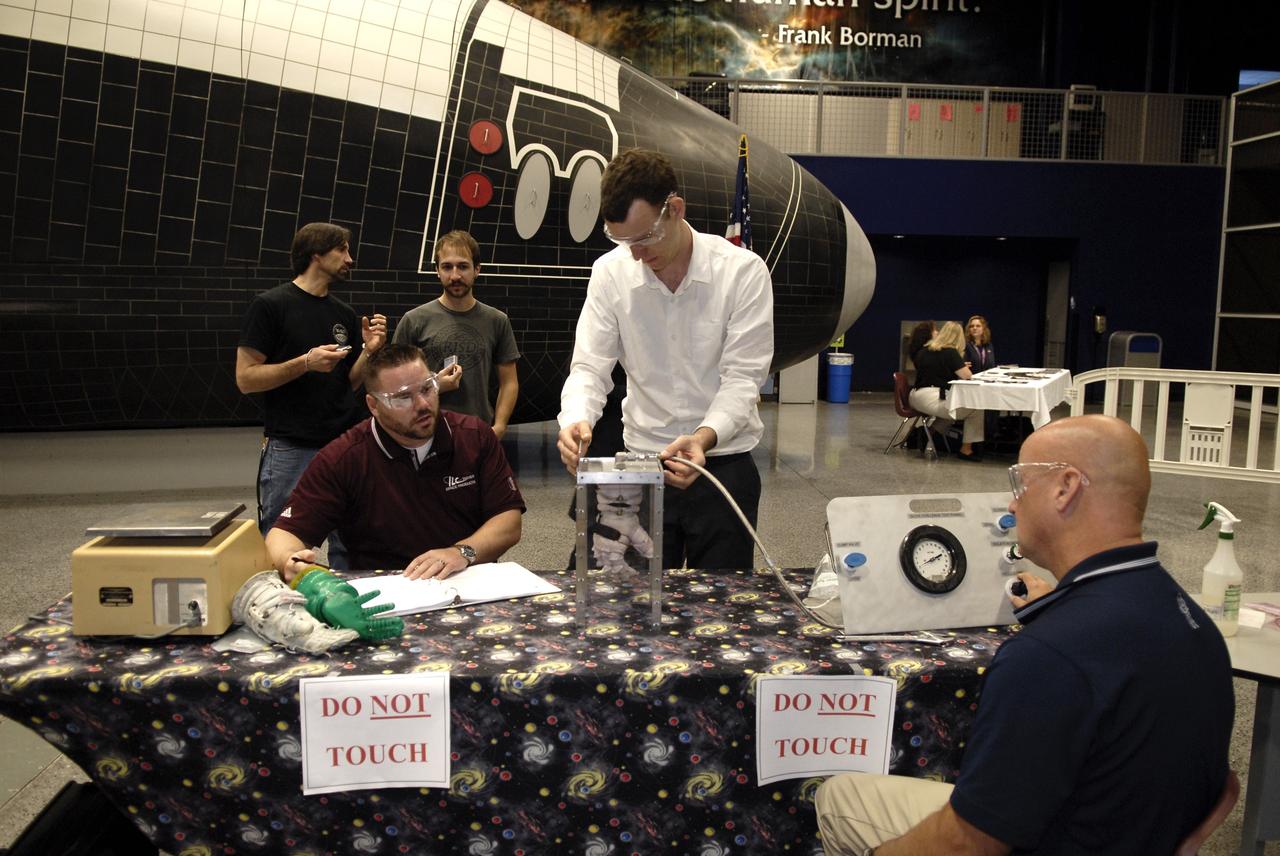
CAPE CANAVERAL, Fla. – Independent inventor Ted Southern of Brooklyn, N.Y., submits a glove which he designed to a burst test as representatives of ILC Dover monitor how much internal pressure the glove can withstand. Southern is a participant in the 2009 Astronaut Glove Challenge, part of NASA’s Centennial Challenges Program, being held at the Astronaut Hall of Fame near NASA’s Kennedy Space Center in Florida. The nationwide competition focused on developing improved pressure suit gloves for astronauts to use while working in space. During the challenge, inventors tested the gloves to measure dexterity and strength during operation in a glove box which simulates the vacuum of space. Centennial Challenges is NASA’s program of technology prizes for the citizen-inventor. The winning prize for the Glove Challenge is $250,000 provided by the Centennial Challenges Program. Photo credit: NASA/Kim Shiflett
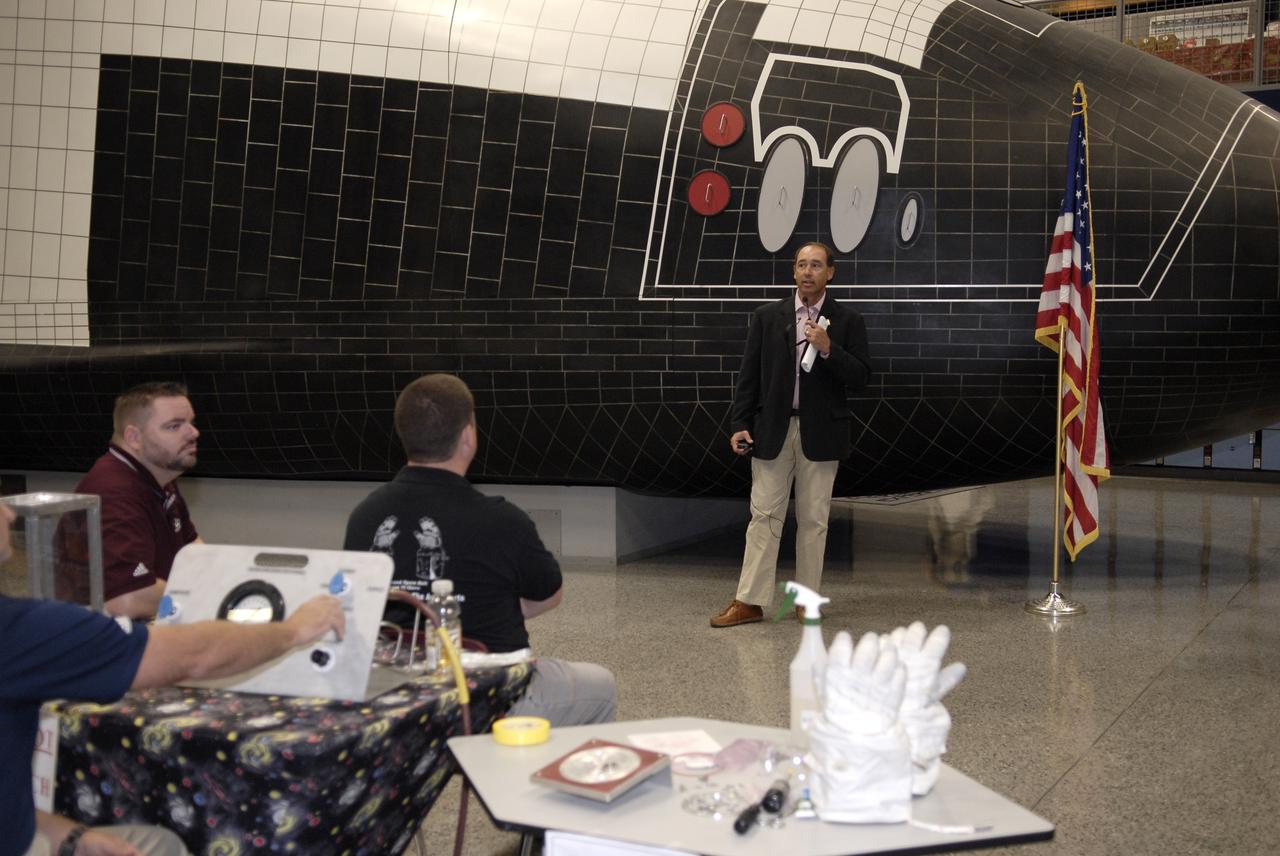
CAPE CANAVERAL, Fla. – Andy Petro, at microphone, manager of NASA Centennial Challenges, addresses the participants in the 2009 Astronaut Glove Challenge, part of NASA’s Centennial Challenges Program, at the Astronaut Hall of Fame near NASA’s Kennedy Space Center in Florida. The nationwide competition focused on developing improved pressure suit gloves for astronauts to use while working in space. During the challenge, inventors tested the gloves to measure dexterity and strength during operation in a glove box which simulates the vacuum of space. Centennial Challenges is NASA’s program of technology prizes for the citizen-inventor. The winning prize for the Glove Challenge is $250,000 provided by the Centennial Challenges Program. Photo credit: NASA/Kim Shiflett
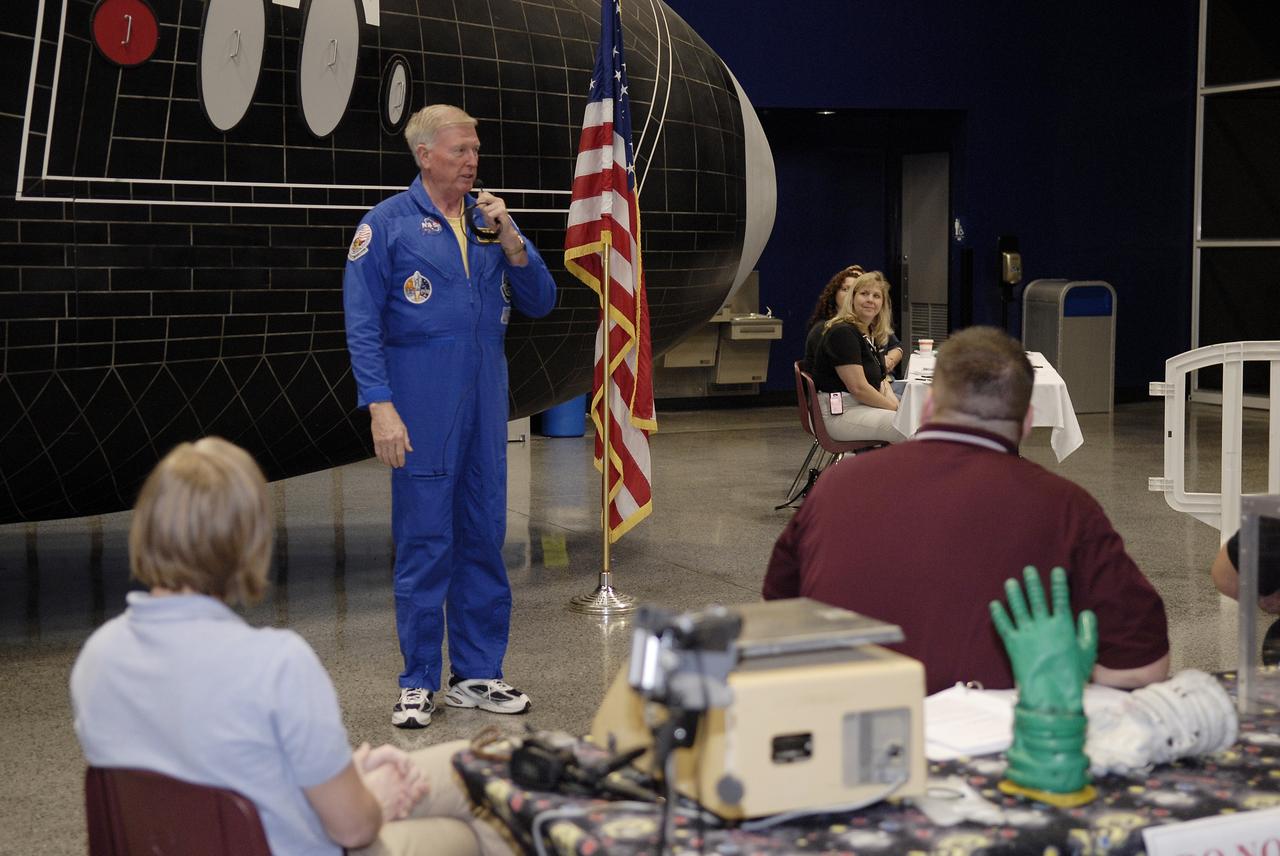
CAPE CANAVERAL, Fla. – Former NASA astronaut Jon McBride, at microphone, addresses the participants in the 2009 Astronaut Glove Challenge, part of NASA’s Centennial Challenges Program, at the Astronaut Hall of Fame near NASA’s Kennedy Space Center in Florida. The nationwide competition focused on developing improved pressure suit gloves for astronauts to use while working in space. During the challenge, inventors tested the gloves to measure dexterity and strength during operation in a glove box which simulates the vacuum of space. Centennial Challenges is NASA’s program of technology prizes for the citizen-inventor. The winning prize for the Glove Challenge is $250,000 provided by the Centennial Challenges Program. Photo credit: NASA/Kim Shiflett
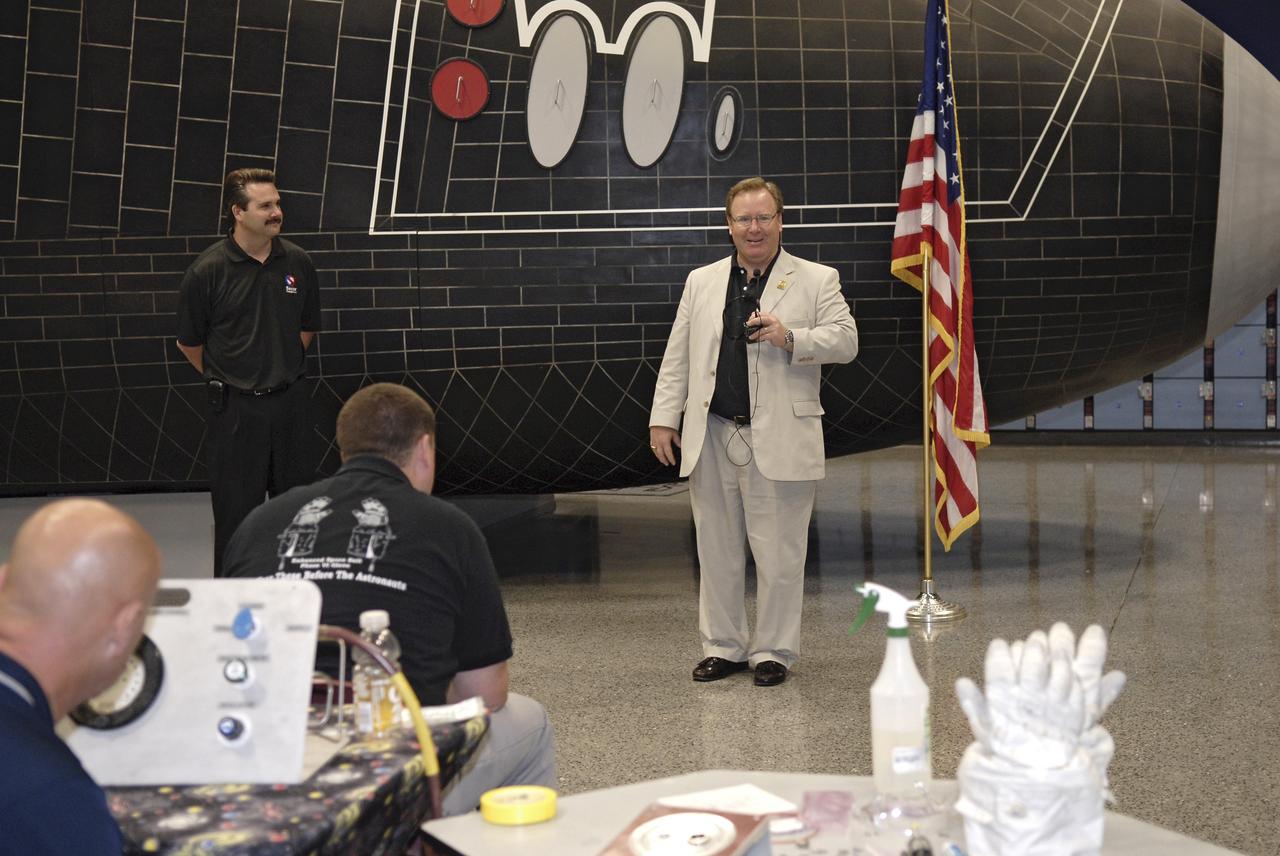
CAPE CANAVERAL, Fla. – Doug Comstock, at microphone, director of the NASA Innovative Partnerships Program, addresses the participants in the 2009 Astronaut Glove Challenge, part of NASA’s Centennial Challenges Program, at the Astronaut Hall of Fame near NASA’s Kennedy Space Center in Florida. The nationwide competition focused on developing improved pressure suit gloves for astronauts to use while working in space. During the challenge, inventors tested the gloves to measure dexterity and strength during operation in a glove box which simulates the vacuum of space. Centennial Challenges is NASA’s program of technology prizes for the citizen-inventor. The winning prize for the Glove Challenge is $250,000 provided by the Centennial Challenges Program. Photo credit: NASA/Kim Shiflett
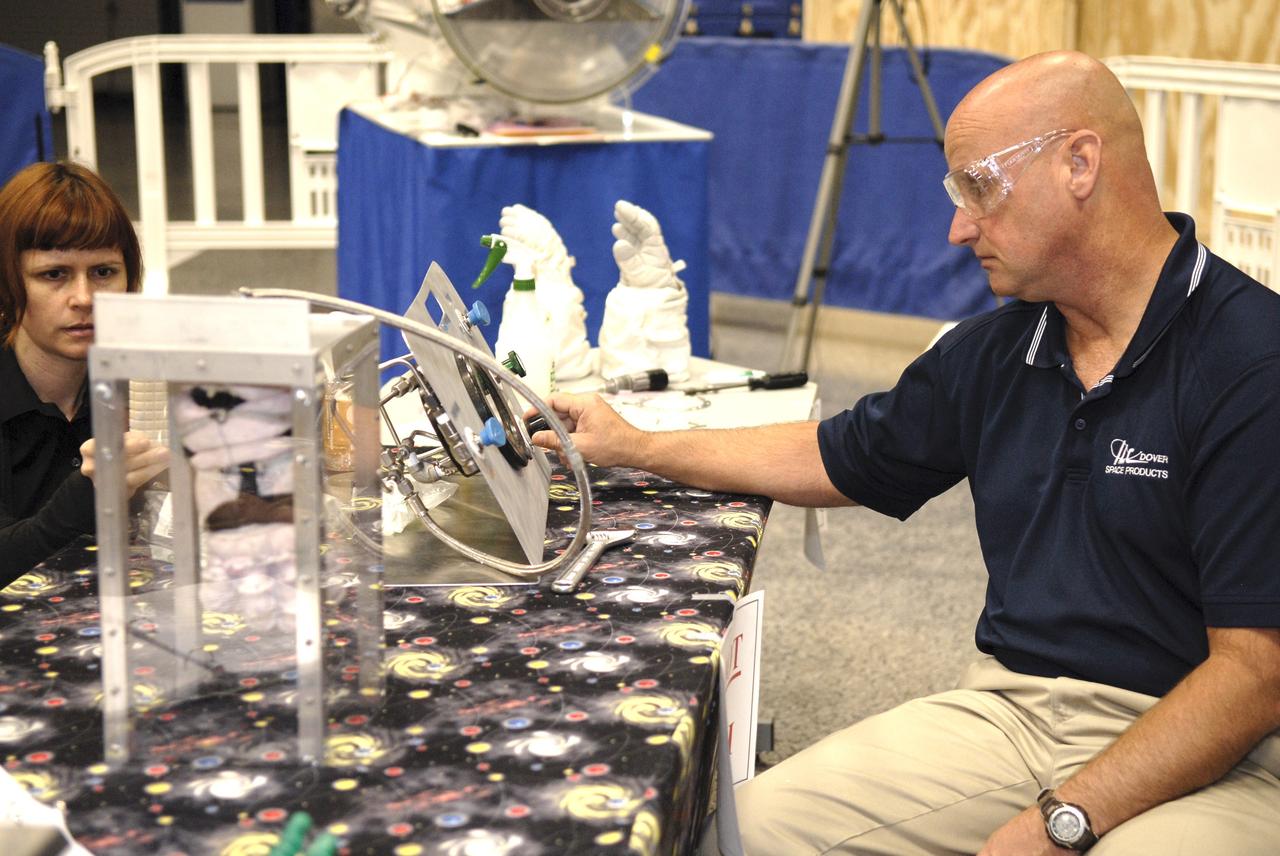
CAPE CANAVERAL, Fla. – A representative of ILC Dover monitors how much internal pressure a newly designed glove can withstand during a burst test at the 2009 Astronaut Glove Challenge, part of NASA’s Centennial Challenges Program, at the Astronaut Hall of Fame near NASA’s Kennedy Space Center in Florida. The nationwide competition focused on developing improved pressure suit gloves for astronauts to use while working in space. During the challenge, inventors tested the gloves to measure dexterity and strength during operation in a glove box which simulates the vacuum of space. Centennial Challenges is NASA’s program of technology prizes for the citizen-inventor. The winning prize for the Glove Challenge is $250,000 provided by the Centennial Challenges Program. Photo credit: NASA/Kim Shiflett
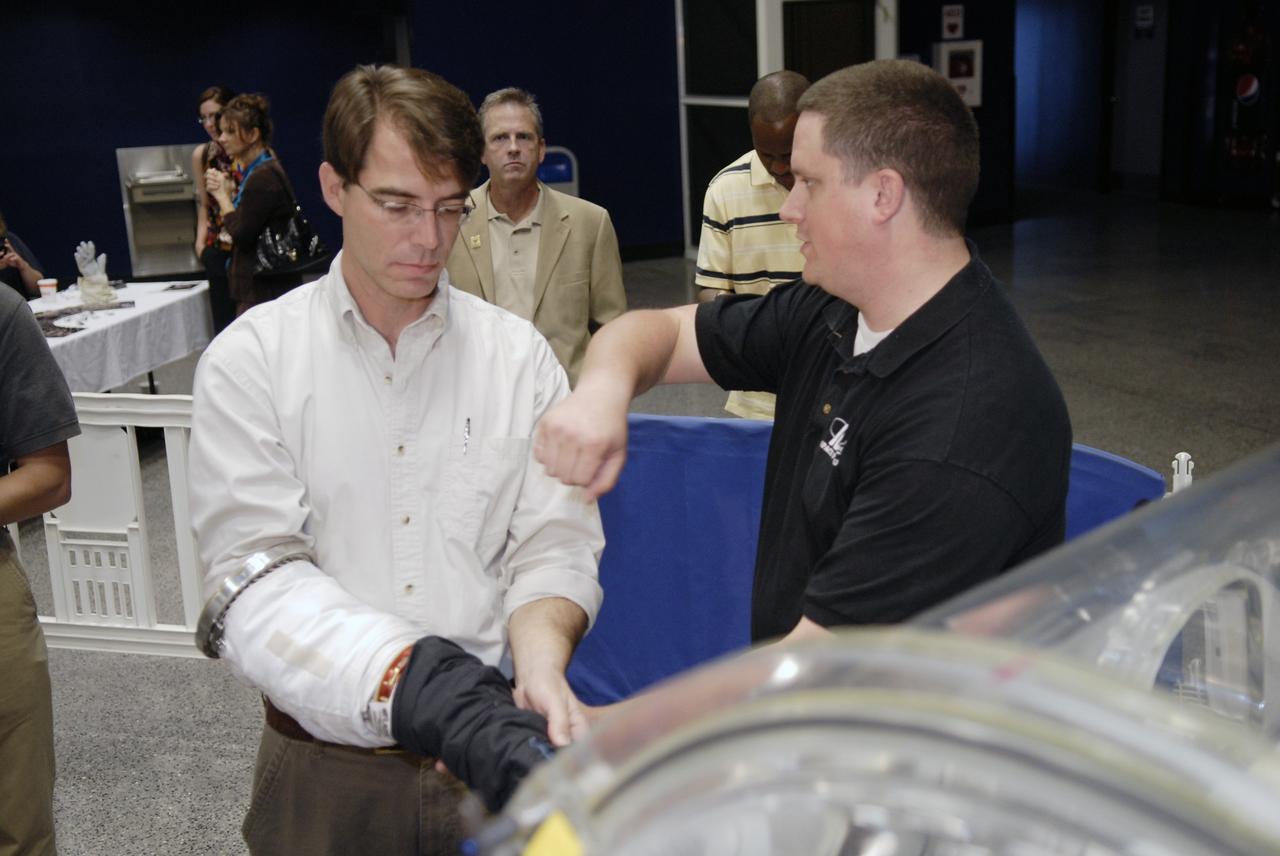
CAPE CANAVERAL, Fla. – Independent inventor Peter Homer, founder of Flagsuit LLC, submits a glove which he designed to a dexterity and flexibility test during the 2009 Astronaut Glove Challenge, part of NASA’s Centennial Challenges Program, at the Astronaut Hall of Fame near NASA’s Kennedy Space Center in Florida. Homer was the winner of the competition held in 2007. The nationwide competition focused on developing improved pressure suit gloves for astronauts to use while working in space. During the challenge, inventors tested the gloves to measure dexterity and strength during operation in a glove box which simulates the vacuum of space. Centennial Challenges is NASA’s program of technology prizes for the citizen-inventor. The winning prize for the Glove Challenge is $250,000 provided by the Centennial Challenges Program. Photo credit: NASA/Kim Shiflett
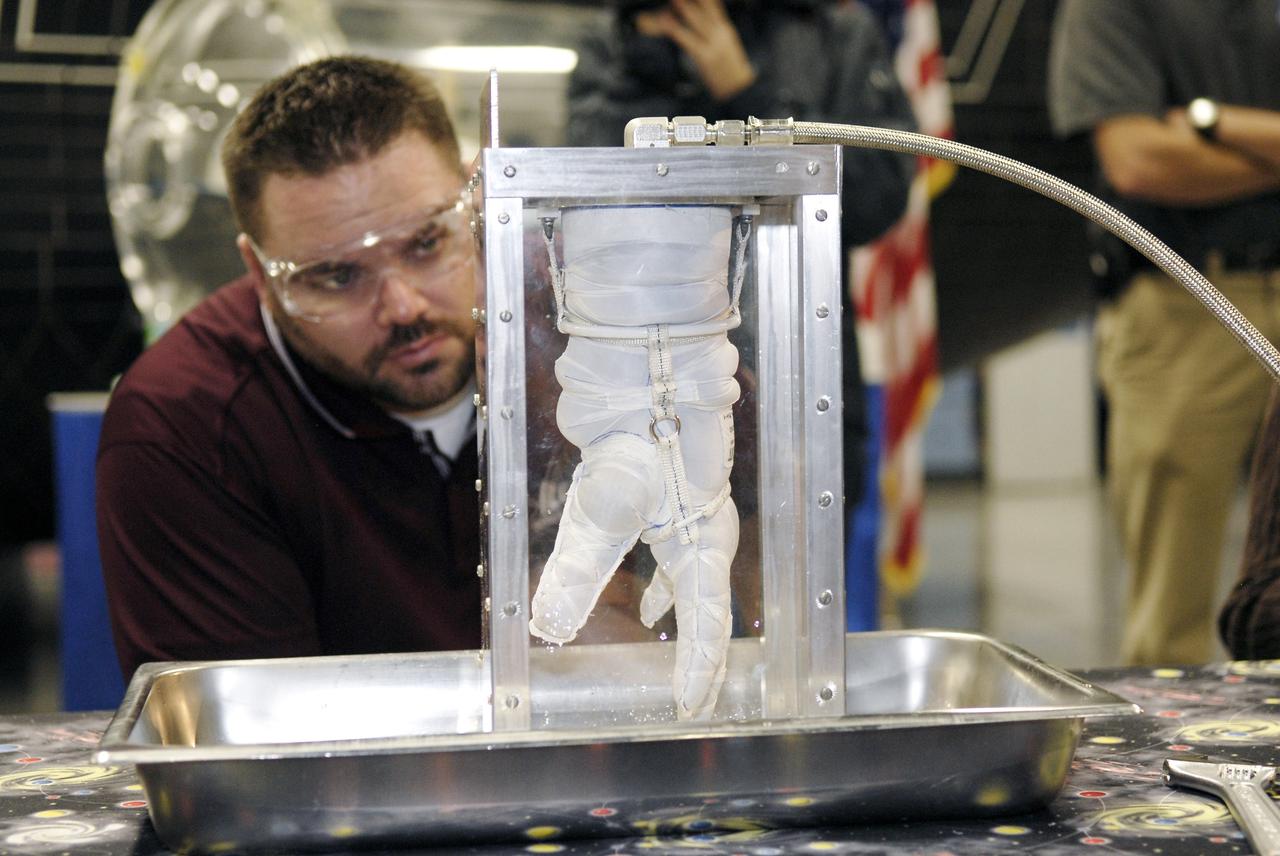
CAPE CANAVERAL, Fla. – A representative of ILC Dover monitors how much internal pressure a newly designed glove can withstand during a burst test at the 2009 Astronaut Glove Challenge, part of NASA’s Centennial Challenges Program, at the Astronaut Hall of Fame near NASA’s Kennedy Space Center in Florida. The nationwide competition focused on developing improved pressure suit gloves for astronauts to use while working in space. During the challenge, the gloves were submitted to burst tests, joint force tests and tests to measure their dexterity and strength during operation in a glove box which simulates the vacuum of space. Centennial Challenges is NASA’s program of technology prizes for the citizen-inventor. The winning prize for the Glove Challenge is $250,000 provided by the Centennial Challenges Program. Photo credit: NASA/Kim Shiflett
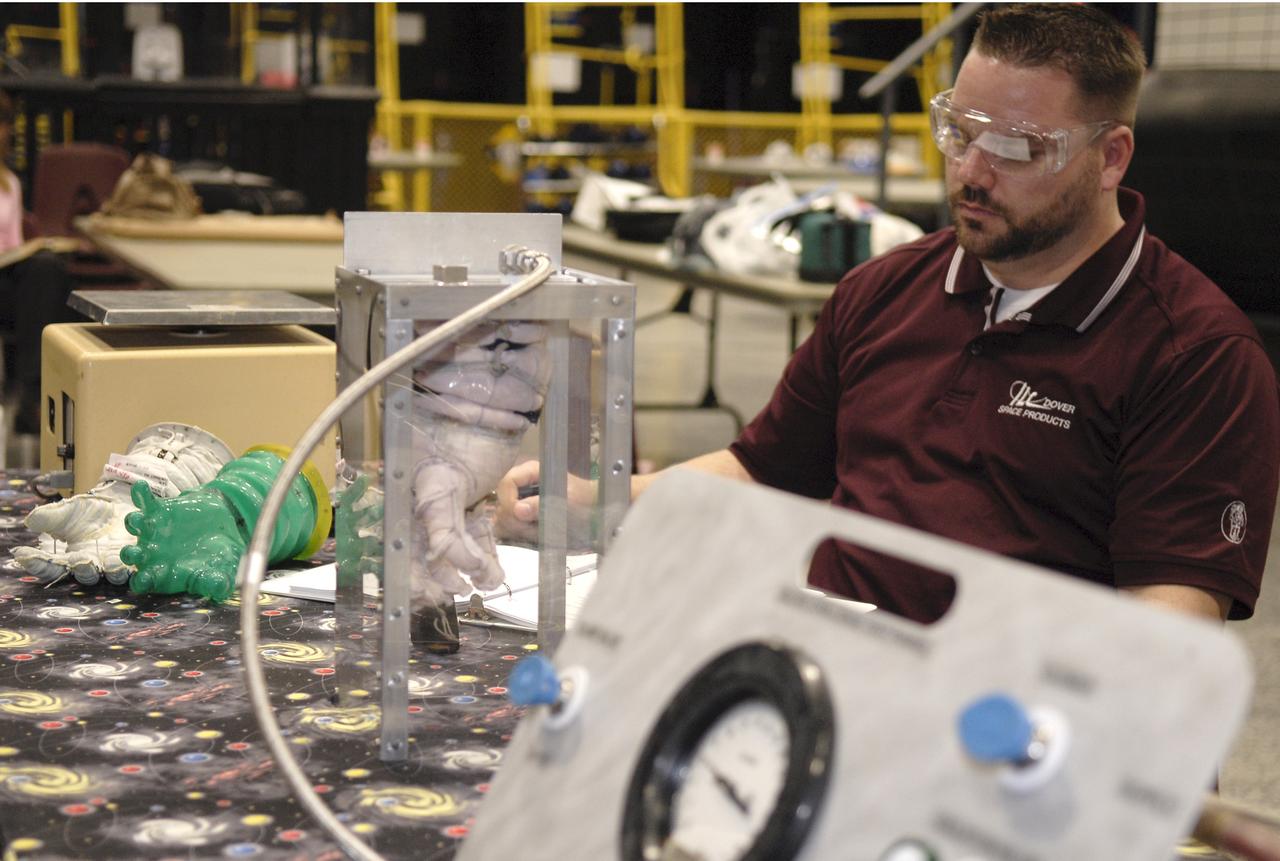
CAPE CANAVERAL, Fla. – A representative of ILC Dover monitors how much internal pressure a newly designed glove can withstand during a burst test at the 2009 Astronaut Glove Challenge, part of NASA’s Centennial Challenges Program, at the Astronaut Hall of Fame near NASA’s Kennedy Space Center in Florida. The nationwide competition focused on developing improved pressure suit gloves for astronauts to use while working in space. During the challenge, inventors tested the gloves to measure dexterity and strength during operation in a glove box which simulates the vacuum of space. Centennial Challenges is NASA’s program of technology prizes for the citizen-inventor. The winning prize for the Glove Challenge is $250,000 provided by the Centennial Challenges Program. Photo credit: NASA/Kim Shiflett
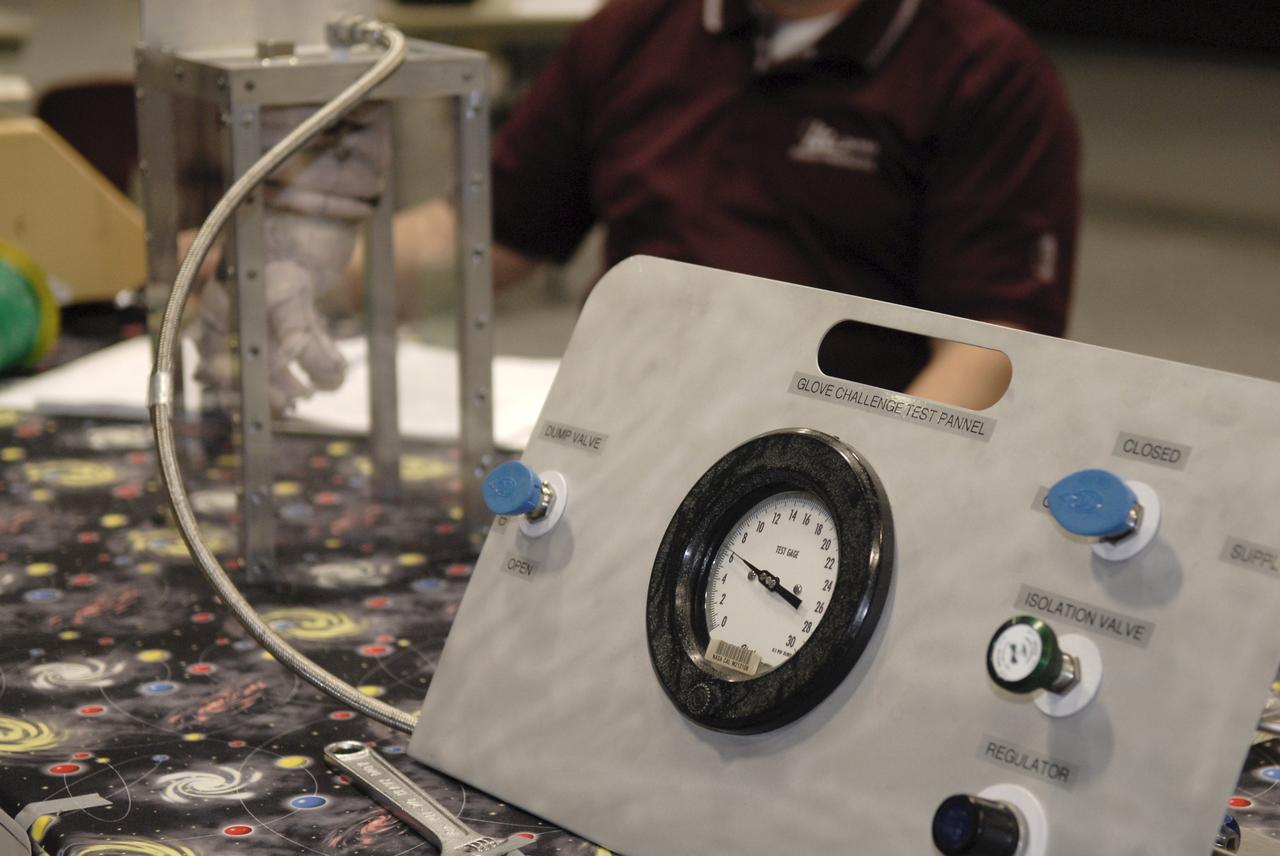
CAPE CANAVERAL, Fla. – This gauge is measuring how much internal pressure a newly designed glove can withstand during a burst test at the 2009 Astronaut Glove Challenge, part of NASA’s Centennial Challenges Program, at the Astronaut Hall of Fame near NASA’s Kennedy Space Center in Florida. The nationwide competition focused on developing improved pressure suit gloves for astronauts to use while working in space. During the challenge, inventors tested the gloves to measure dexterity and strength during operation in a glove box which simulates the vacuum of space. Centennial Challenges is NASA’s program of technology prizes for the citizen-inventor. The winning prize for the Glove Challenge is $250,000 provided by the Centennial Challenges Program. Photo credit: NASA/Kim Shiflett
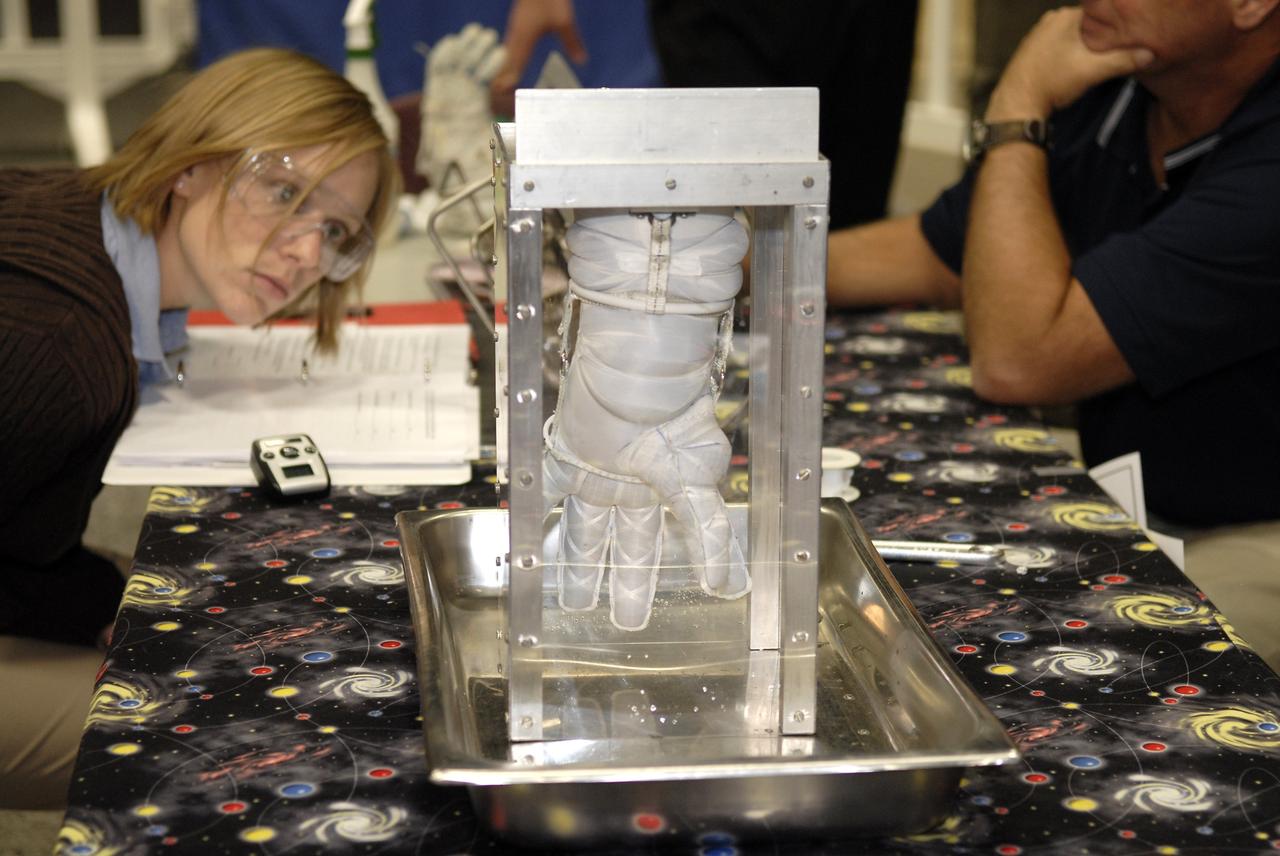
CAPE CANAVERAL, Fla. – A newly designed glove is submitted to a burst test to determine how much internal pressure it can withstand at the 2009 Astronaut Glove Challenge, part of NASA’s Centennial Challenges Program, at the Astronaut Hall of Fame near NASA’s Kennedy Space Center in Florida. The nationwide competition focused on developing improved pressure suit gloves for astronauts to use while working in space. During the challenge, the gloves were submitted to burst tests, joint force tests and tests to measure their dexterity and strength during operation in a glove box which simulates the vacuum of space. Centennial Challenges is NASA’s program of technology prizes for the citizen-inventor. The winning prize for the Glove Challenge is $250,000 provided by the Centennial Challenges Program. Photo credit: NASA/Kim Shiflett
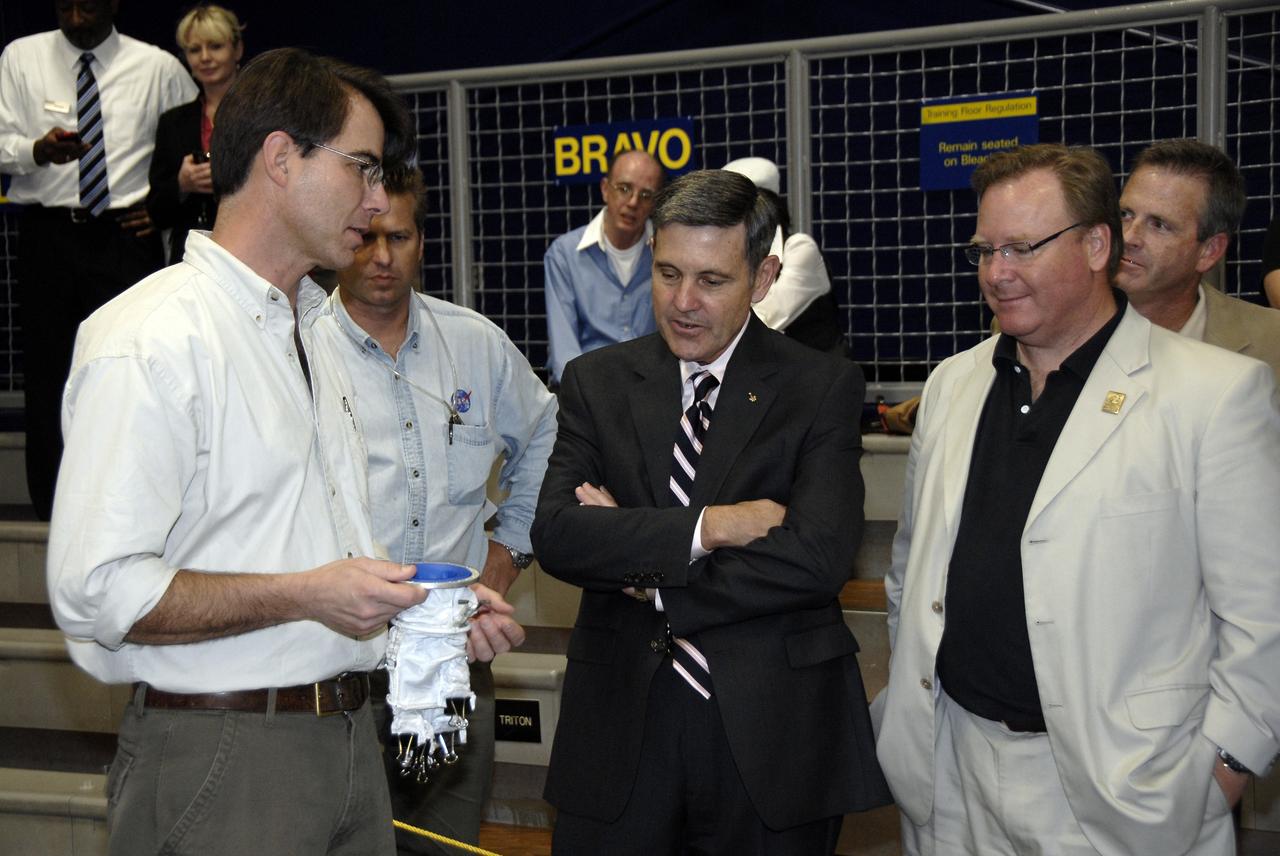
CAPE CANAVERAL, Fla. - At the Astronaut Hall of Fame near NASA’s Kennedy Space Center in Florida, first-prize winner Peter Homer, left, of Southwest Harbor, Maine, talks with Kennedy Director Bob Cabana and Doug Comstock, director of the NASA Innovative Partnerships Program, about his winning glove design in the 2009 Astronaut Glove Challenge, part of NASA’s Centennial Challenges Program. The nationwide competition focused on developing improved pressure suit gloves for astronauts to use while working in space. During the challenge, the gloves were submitted to burst tests, joint force tests and tests to measure their dexterity and strength during operation in a glove box which simulates the vacuum of space. Centennial Challenges is NASA’s program of technology prizes for the citizen-inventor. The winning prize for the Glove Challenge is $250,000 provided by the Centennial Challenges Program. Photo credit: NASA/Kim Shiflett
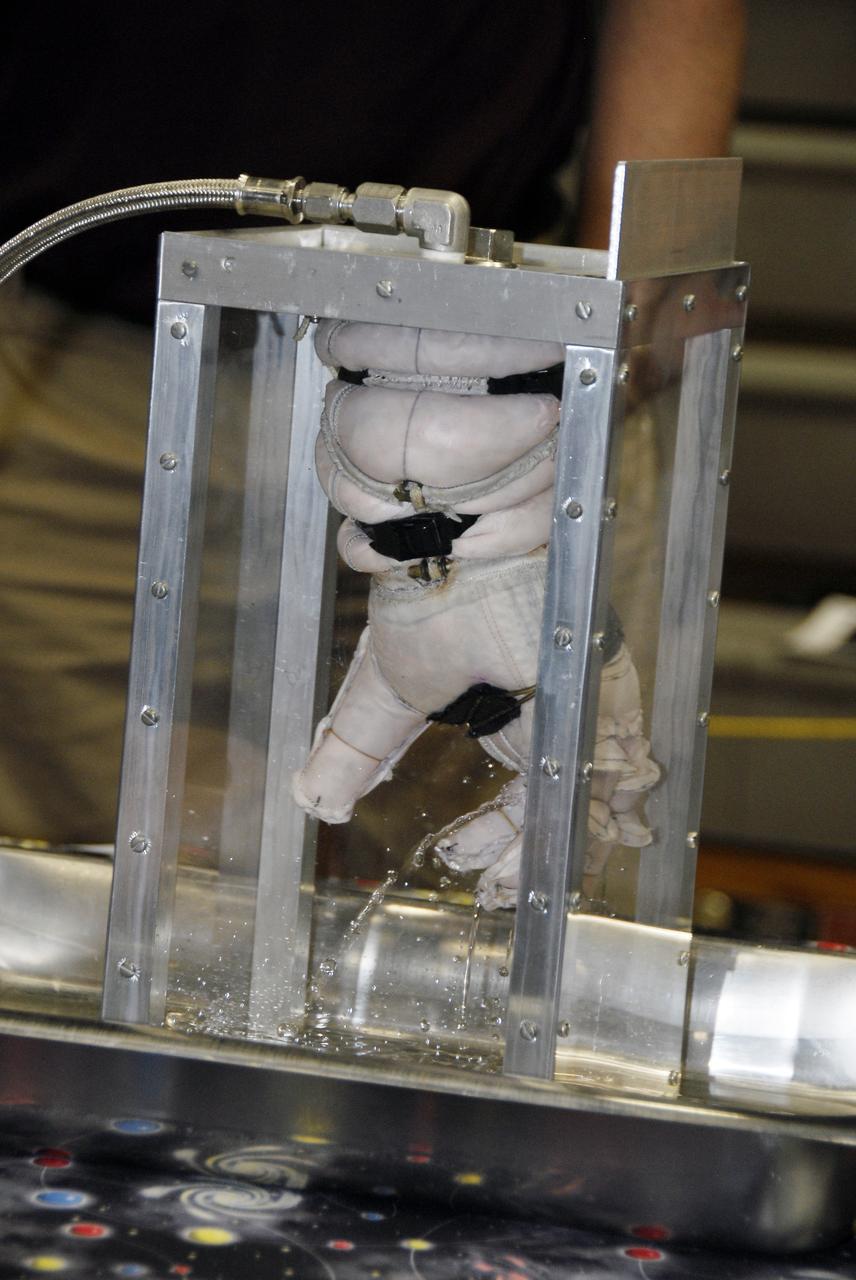
CAPE CANAVERAL, Fla. – A newly designed glove is submitted to a burst test to determine how much internal pressure it can withstand at the 2009 Astronaut Glove Challenge, part of NASA’s Centennial Challenges Program, at the Astronaut Hall of Fame near NASA’s Kennedy Space Center in Florida. The nationwide competition focused on developing improved pressure suit gloves for astronauts to use while working in space. During the challenge, the gloves were submitted to burst tests, joint force tests and tests to measure their dexterity and strength during operation in a glove box which simulates the vacuum of space. Centennial Challenges is NASA’s program of technology prizes for the citizen-inventor. The winning prize for the Glove Challenge is $250,000 provided by the Centennial Challenges Program. Photo credit: NASA/Kim Shiflett
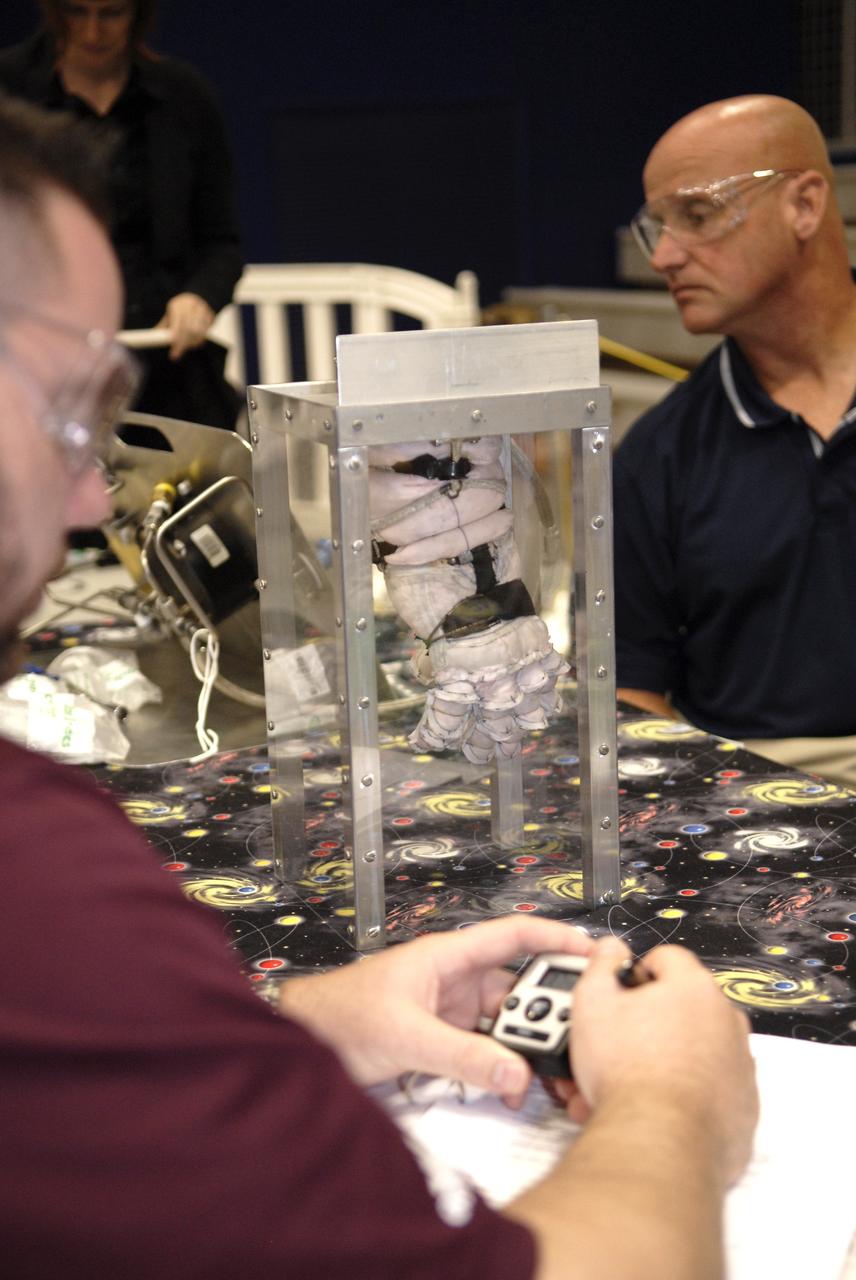
CAPE CANAVERAL, Fla. – Representatives of ILC Dover monitor how much internal pressure a newly designed glove can withstand during a burst test at the 2009 Astronaut Glove Challenge, part of NASA’s Centennial Challenges Program, at the Astronaut Hall of Fame near NASA’s Kennedy Space Center in Florida. The nationwide competition focused on developing improved pressure suit gloves for astronauts to use while working in space. During the challenge, inventors tested the gloves to measure dexterity and strength during operation in a glove box which simulates the vacuum of space. Centennial Challenges is NASA’s program of technology prizes for the citizen-inventor. The winning prize for the Glove Challenge is $250,000 provided by the Centennial Challenges Program. Photo credit: NASA/Kim Shiflett
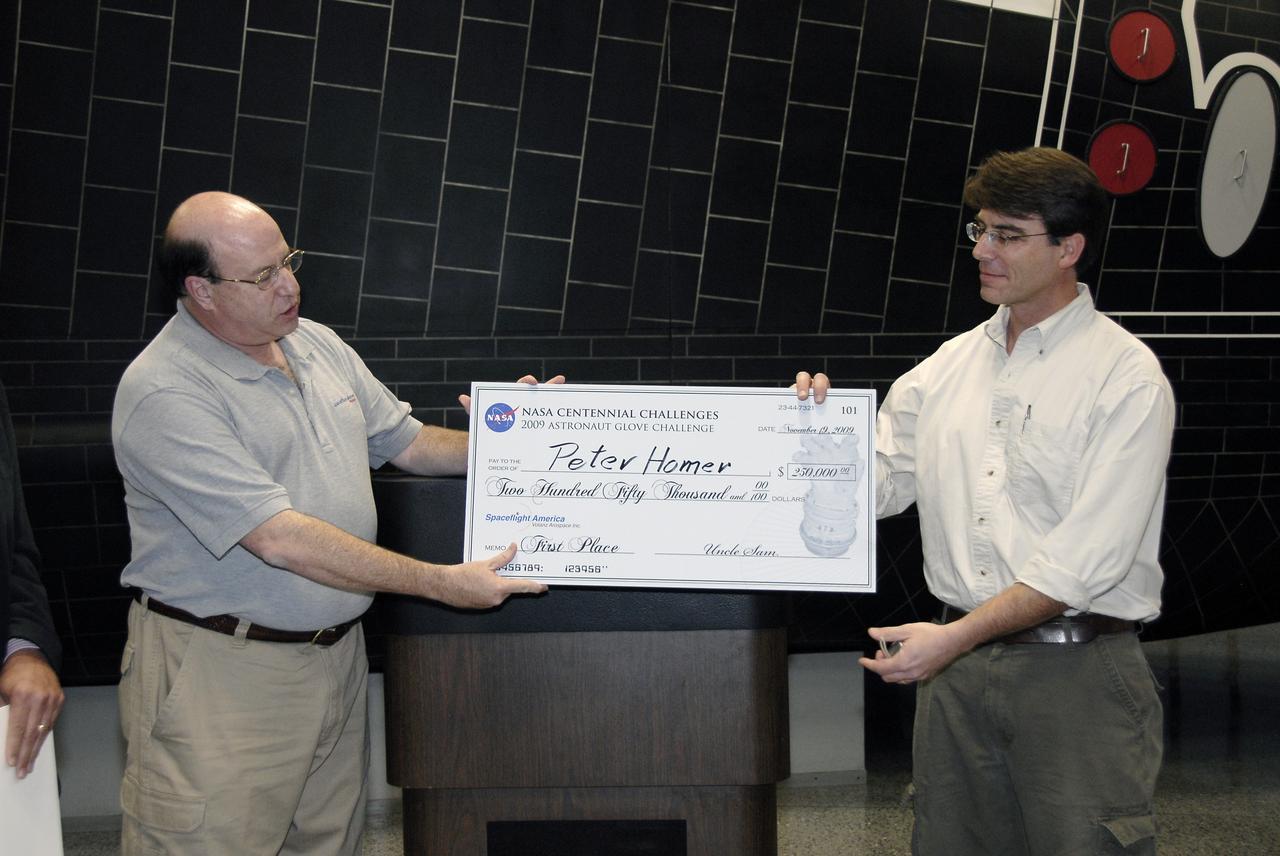
CAPE CANAVERAL, Fla. – Alan Hayes, left, chairman of Volanz Aerospace Inc., presents Peter Homer of Southwest Harbor, Maine, with the first place prize of $250,000 at the 2009 Astronaut Glove Challenge, part of NASA’s Centennial Challenges Program, at the Astronaut Hall of Fame near NASA’s Kennedy Space Center in Florida. The nationwide competition focused on developing improved pressure suit gloves for astronauts to use while working in space. During the challenge, the gloves were submitted to burst tests, joint force tests and tests to measure their dexterity and strength during operation in a glove box which simulates the vacuum of space. Centennial Challenges is NASA’s program of technology prizes for the citizen-inventor. The winning prize for the Glove Challenge is $250,000 provided by the Centennial Challenges Program. Photo credit: NASA/Kim Shiflett
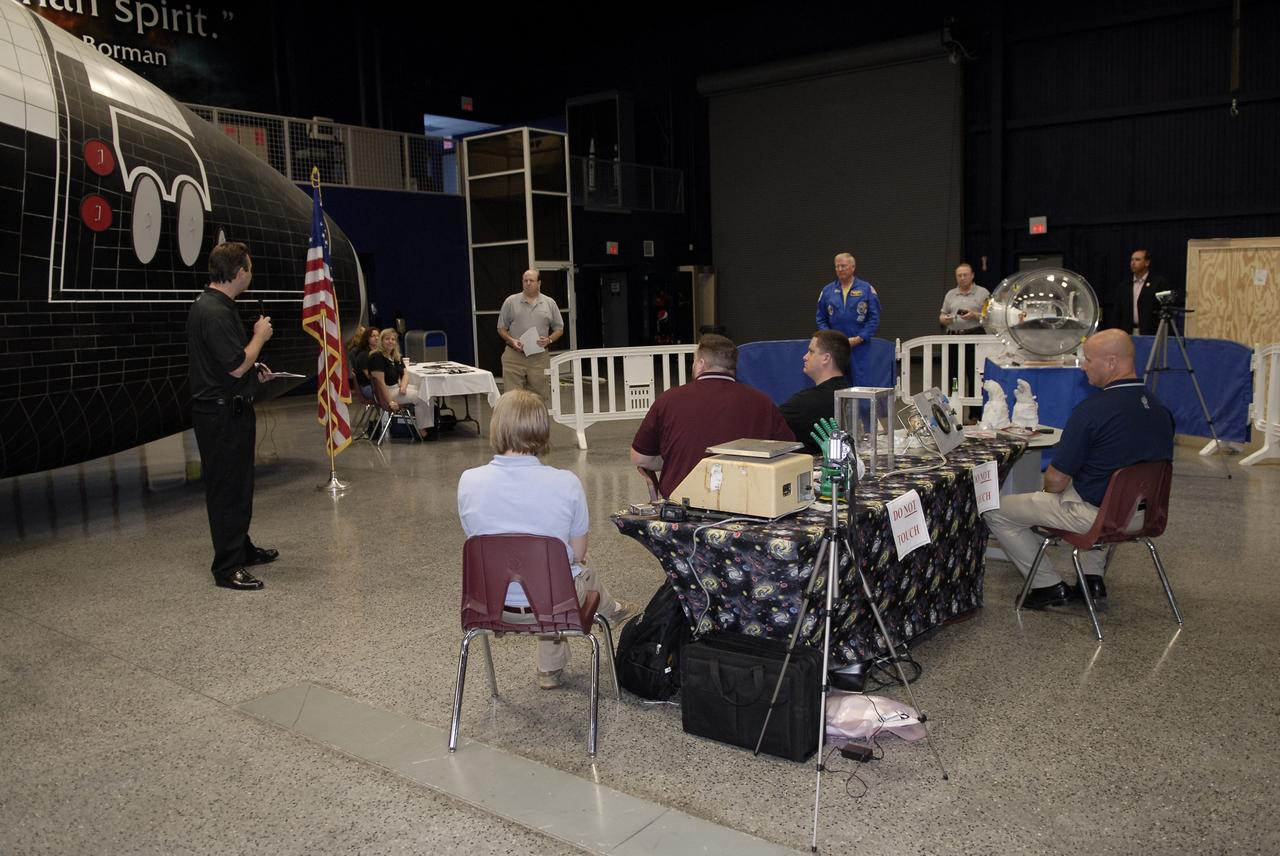
CAPE CANAVERAL, Fla. – Paul Secor, left, of Secor Strategies LLC, addresses the participants in the 2009 Astronaut Glove Challenge, part of NASA’s Centennial Challenges Program, at the Astronaut Hall of Fame near NASA’s Kennedy Space Center in Florida. Secor Strategies LLC, of Titusville, Fla., is a sponsor of the event and provided local logistical services. The nationwide competition focused on developing improved pressure suit gloves for astronauts to use while working in space. During the challenge, inventors tested the gloves to measure dexterity and strength during operation in a glove box which simulates the vacuum of space. Centennial Challenges is NASA’s program of technology prizes for the citizen-inventor. The winning prize for the Glove Challenge is $250,000 provided by the Centennial Challenges Program. Photo credit: NASA/Kim Shiflett
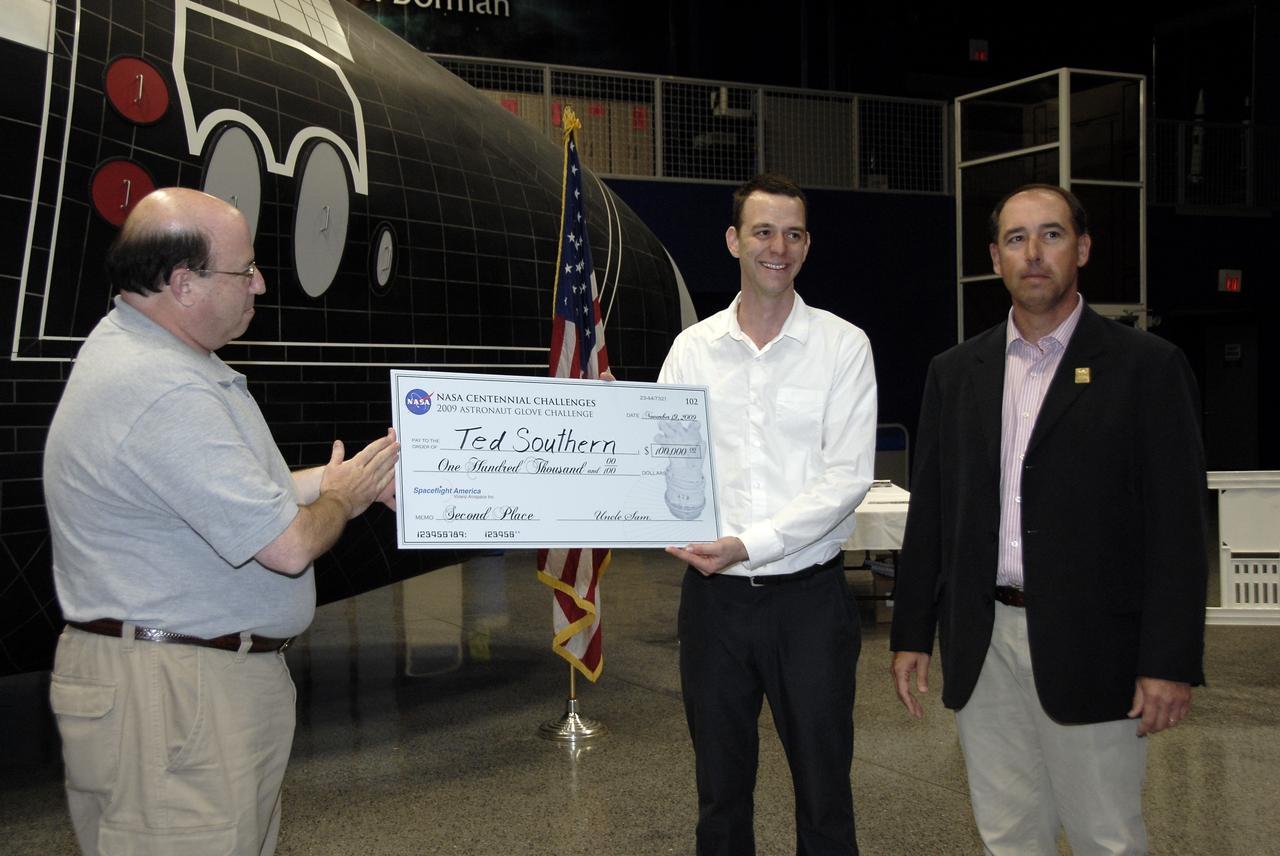
CAPE CANAVERAL, Fla. – Alan Hayes, left, chairman of Volanz Aerospace Inc., presents Ted Southern of Brooklyn, N.Y., with the second place prize of $100,000 at the 2009 Astronaut Glove Challenge, part of NASA’s Centennial Challenges Program, as Andy Petro, manager of NASA Centennial Challenges, stands by at the Astronaut Hall of Fame near NASA’s Kennedy Space Center in Florida. The nationwide competition focused on developing improved pressure suit gloves for astronauts to use while working in space. During the challenge, the gloves were submitted to burst tests, joint force tests and tests to measure their dexterity and strength during operation in a glove box which simulates the vacuum of space. Centennial Challenges is NASA’s program of technology prizes for the citizen-inventor. The winning prize for the Glove Challenge is $250,000 provided by the Centennial Challenges Program. Photo credit: NASA/Kim Shiflett
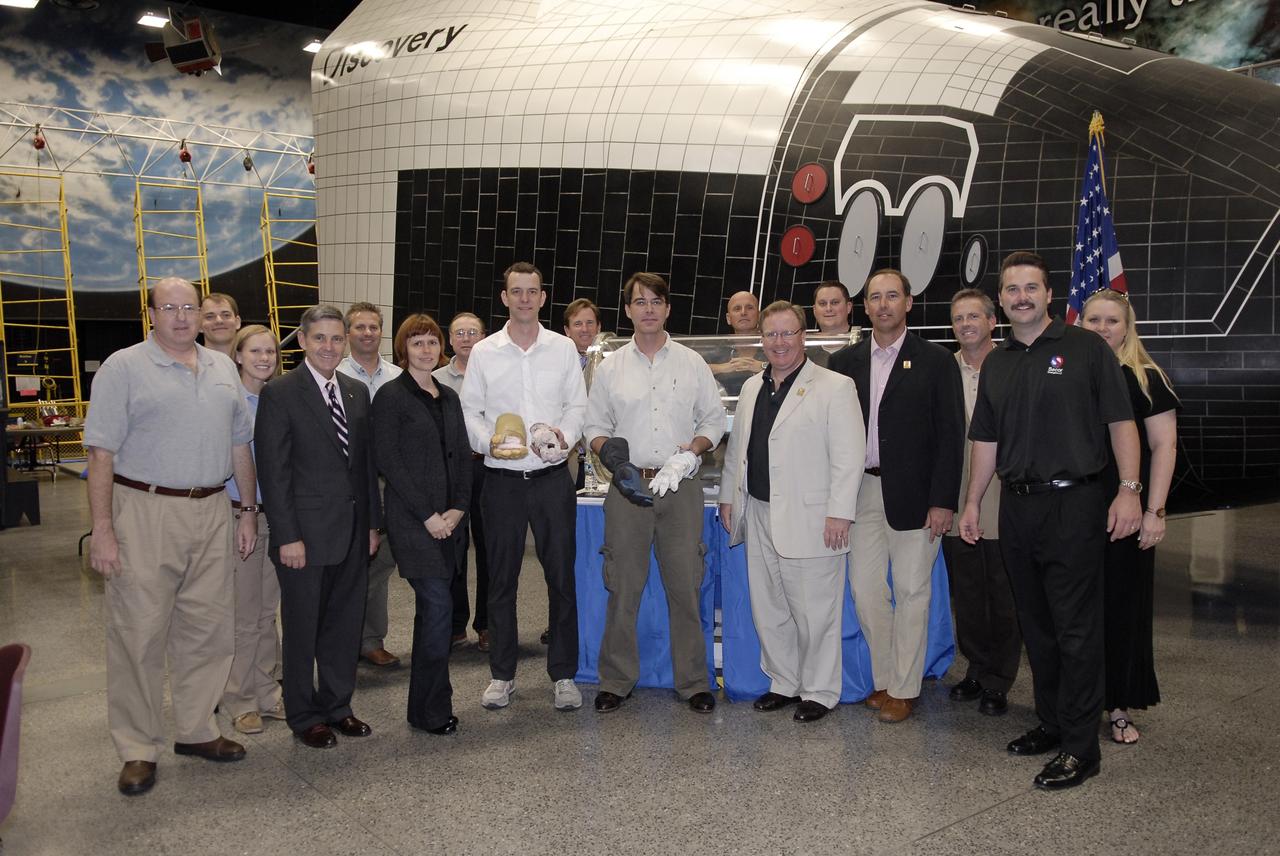
CAPE CANAVERAL, Fla. – At the Astronaut Hall of Fame near NASA’s Kennedy Space Center in Florida, participants in the 2009 Astronaut Glove Challenge, part of NASA’s Centennial Challenges Program, pose for a group portrait. In the center of the front row are the winners, Ted Southern of Brooklyn, N.Y., at left, and Peter Homer of Southwest Harbor, Maine. The nationwide competition focused on developing improved pressure suit gloves for astronauts to use while working in space. During the challenge, the gloves were submitted to burst tests, joint force tests and tests to measure their dexterity and strength during operation in a glove box which simulates the vacuum of space. Centennial Challenges is NASA’s program of technology prizes for the citizen-inventor. The winning prize for the Glove Challenge is $250,000 provided by the Centennial Challenges Program. Photo credit: NASA/Kim Shiflett
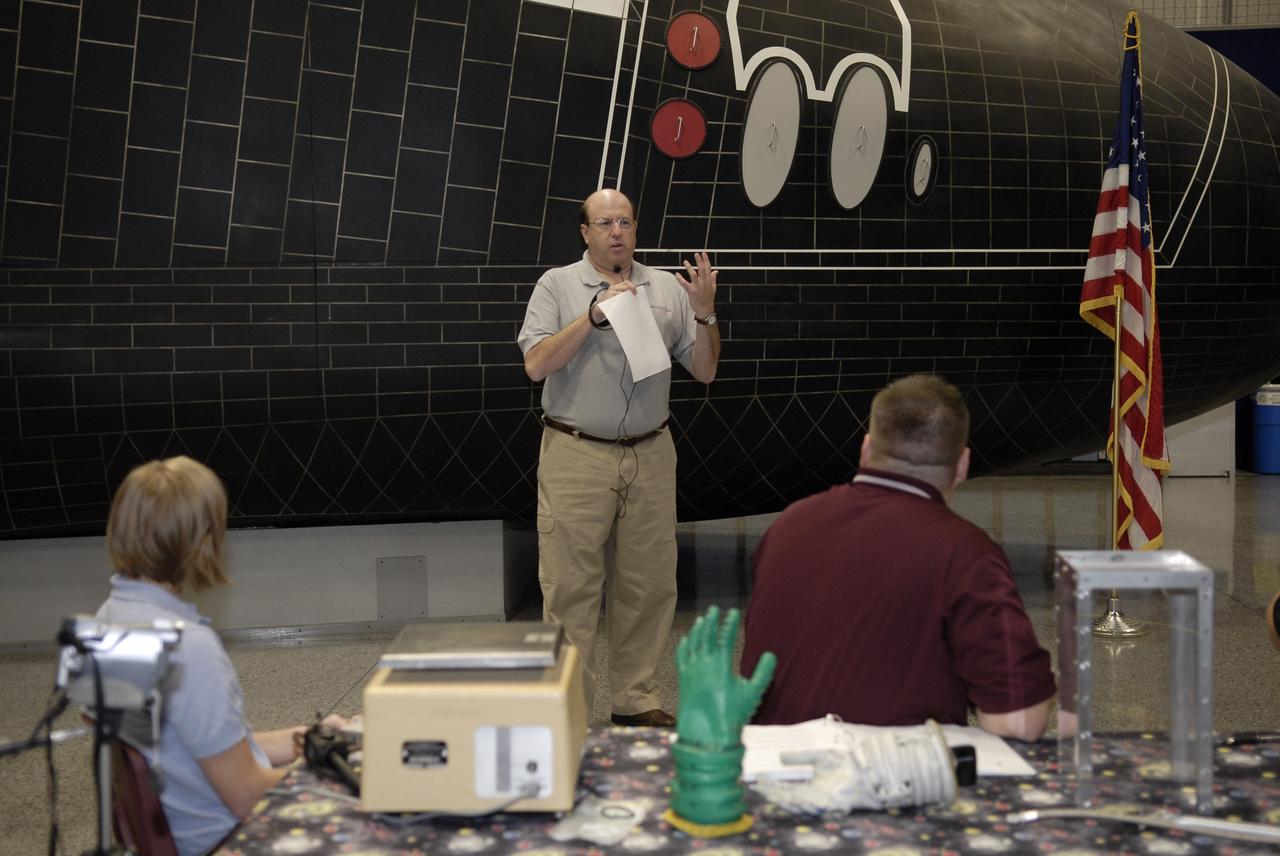
CAPE CANAVERAL, Fla. – Alan Hayes, at microphone, chairman of Volanz Aerospace Inc., addresses the participants in the 2009 Astronaut Glove Challenge, part of NASA’s Centennial Challenges Program, at the Astronaut Hall of Fame near NASA’s Kennedy Space Center in Florida. Volanz Aerospace Inc., of Owings, Md., administers the competition at no cost to NASA. The nationwide competition focused on developing improved pressure suit gloves for astronauts to use while working in space. During the challenge, inventors tested the gloves to measure dexterity and strength during operation in a glove box which simulates the vacuum of space. Centennial Challenges is NASA’s program of technology prizes for the citizen-inventor. The winning prize for the Glove Challenge is $250,000 provided by the Centennial Challenges Program. Photo credit: NASA/Kim Shiflett
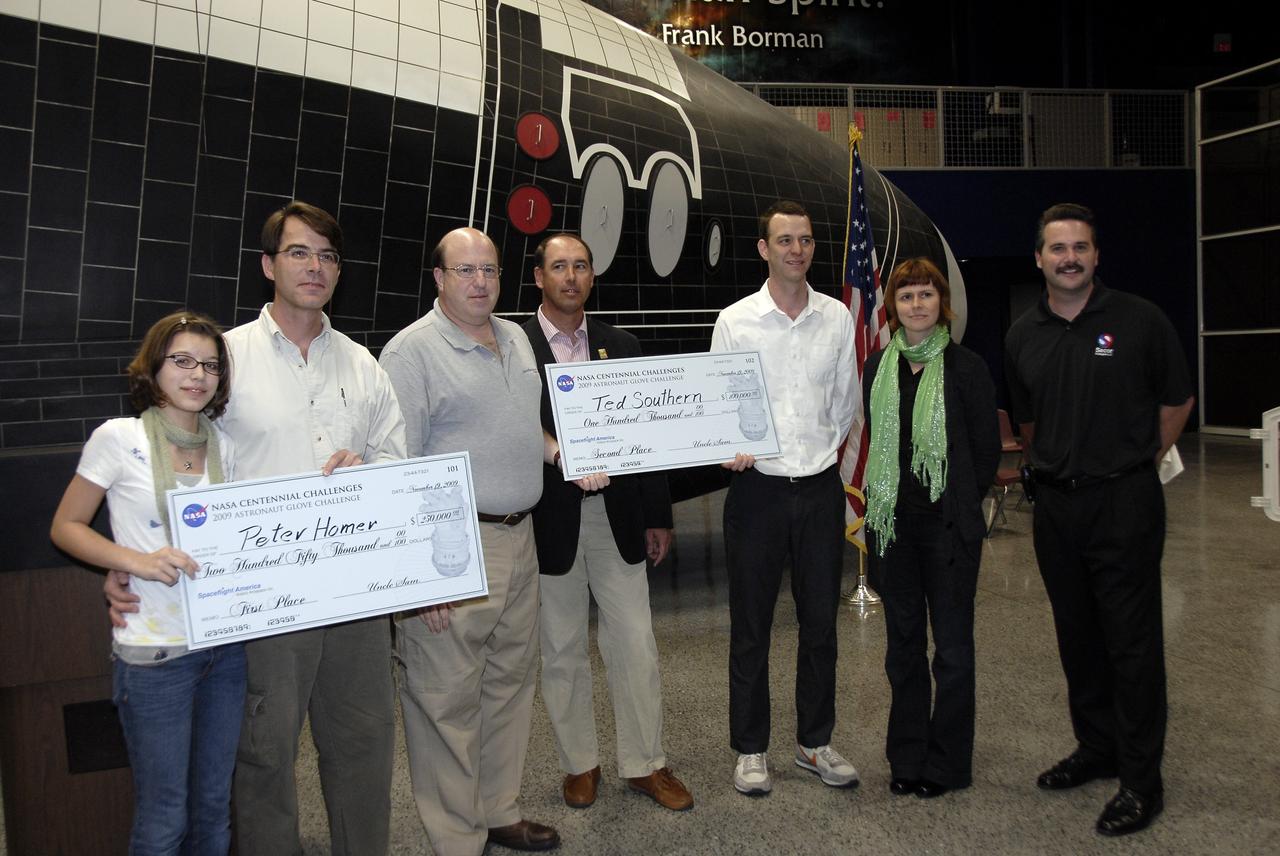
CAPE CANAVERAL, Fla. - At the Astronaut Hall of Fame near NASA’s Kennedy Space Center in Florida, the winners of the 2009 Astronaut Glove Challenge, part of NASA’s Centennial Challenges Program, pose for a group photograph with their friends, family and the event organizers. From left are Caroline Homer and her father, Peter Homer, winner of the $250,000 first prize; Alan Hayes, chairman of Volanz Aerospace Inc.; Andy Petro, manager of NASA Centennial Challenges; Ted Southern, winner of the $100,000 second prize; his friend and glove tester Amy Miller; and Paul Secor, Secor Strategies LLC. The nationwide competition focused on developing improved pressure suit gloves for astronauts to use while working in space. During the challenge, the gloves were submitted to burst tests, joint force tests and tests to measure their dexterity and strength during operation in a glove box which simulates the vacuum of space. Centennial Challenges is NASA’s program of technology prizes for the citizen-inventor. The winning prize for the Glove Challenge is $250,000 provided by the Centennial Challenges Program. Photo credit: NASA/Kim Shiflett
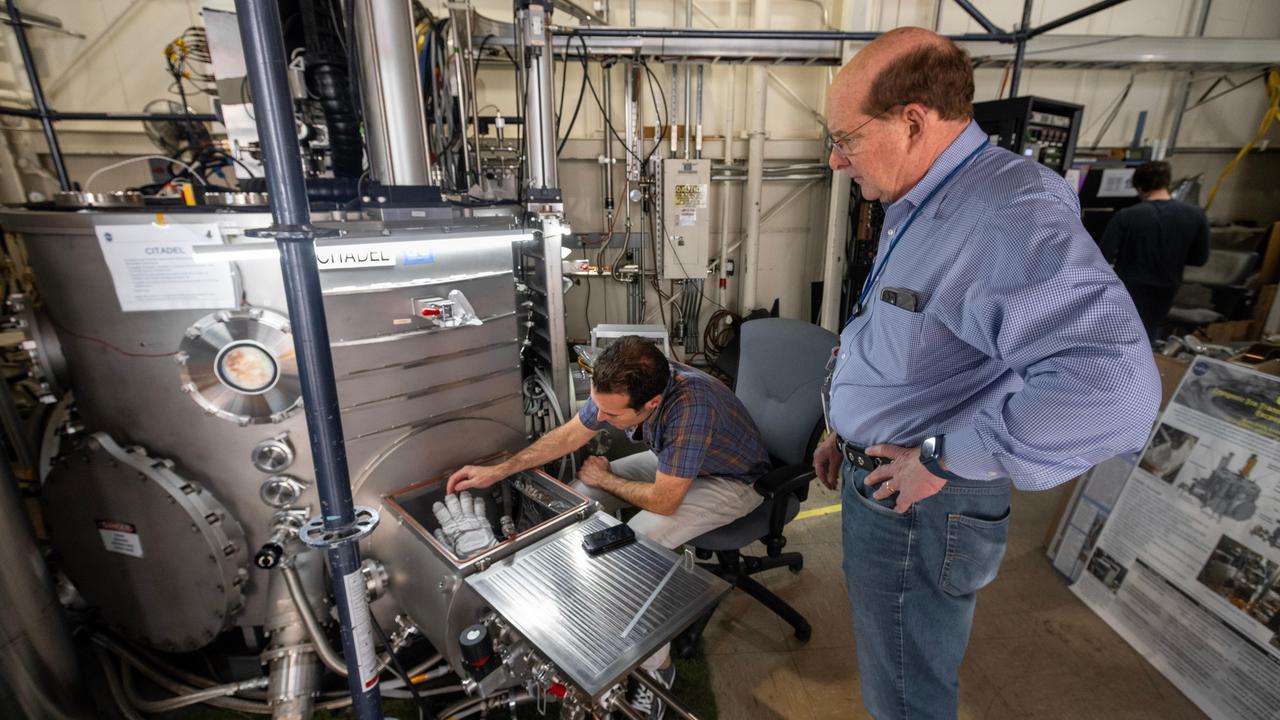
Spacesuit engineer Shane McFarland, left, of the Advanced Suit Team at NASA's Johnson Space Center prepares an astronaut glove for thermal vacuum testing inside a chamber at the agency's Jet Propulsion Laboratory in Southern California on Nov. 1, 2023. Tim Brady of the NASA Engineering and Safety Center (NESC), which spearheaded the glove testing campaign, looks on as McFarland positions the glove in a load lock – one of four small drawer-like chambers through which test materials are inserted into the larger main chamber of a facility called CITADEL (Cryogenic Ice Testing, Acquisition Development, and Excavation Laboratory). The glove was tested at vacuum and temperatures as low as minus 352 degrees Fahrenheit (minus 213 degrees Celsius) – temperatures as frigid as those Artemis III astronauts could experience on the Moon's South Pole. Built to prepare potential future robotic spacecraft for the frosty, low-pressure conditions on ocean worlds like Jupiter's frozen moon Europa, CITADEL has also proven key to evaluating how astronaut gloves and boots hold up in extraordinary cold. The NASA Engineering and Safety Center spearheaded a glove testing campaign in CITADEL from October 2023 to March 2024. Part of a spacesuit design called the Extravehicular Mobility Unit, the gloves tested in the chamber are the sixth version of a glove NASA began using in the 1980s. The testing in CITADEL showed that the legacy glove would not meet thermal requirements in the more challenging lunar South Pole environment. In addition to spotting vulnerabilities with existing suits, the CITADEL experiments will help NASA develop this unique test capability and prepare criteria for standardized, repeatable, and inexpensive test methods for the next-generation lunar suit being built by Axiom Space. https://photojournal.jpl.nasa.gov/catalog/PIA26591
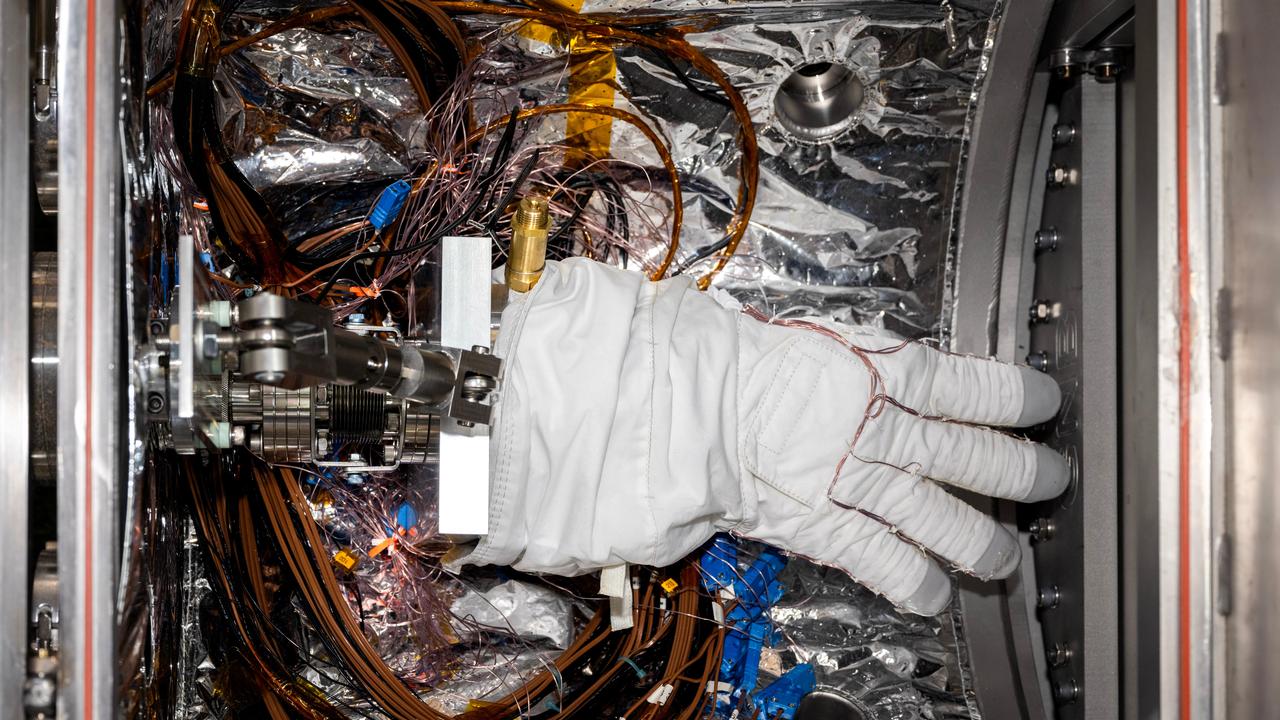
An astronaut glove designed for use during spacewalks on the International Space Station is prepared for thermal vacuum testing inside a chamber at NASA's Jet Propulsion Laboratory in Southern California on Nov. 1, 2023. The glove lies in a load lock, one of four small drawer-like chambers through which test materials are inserted into the larger main chamber of a facility called CITADEL (Cryogenic Ice Testing, Acquisition Development, and Excavation Laboratory). The glove was tested at vacuum and temperatures as low as minus 352 degrees Fahrenheit (minus 213 degrees Celsius) – temperatures as frigid as those Artemis III astronauts could experience on the Moon's South Pole. Built to prepare potential future robotic spacecraft for the frosty, low-pressure conditions on ocean worlds like Jupiter's frozen moon Europa, CITADEL has also proven key to evaluating how astronaut gloves and boots hold up in extraordinary cold. The NASA Engineering and Safety Center spearheaded a glove testing campaign in CITADEL from October 2023 to March 2024. Part of a spacesuit design called the Extravehicular Mobility Unit, the gloves tested in the chamber are the sixth version of a glove NASA began using in the 1980s. The testing in CITADEL showed that the legacy glove would not meet thermal requirements in the more challenging lunar South Pole environment. In addition to spotting vulnerabilities with existing suits, the CITADEL experiments will help NASA develop this unique test capability and prepare criteria for standardized, repeatable, and inexpensive test methods for the next-generation lunar suit being built by Axiom Space. https://photojournal.jpl.nasa.gov/catalog/PIA26430
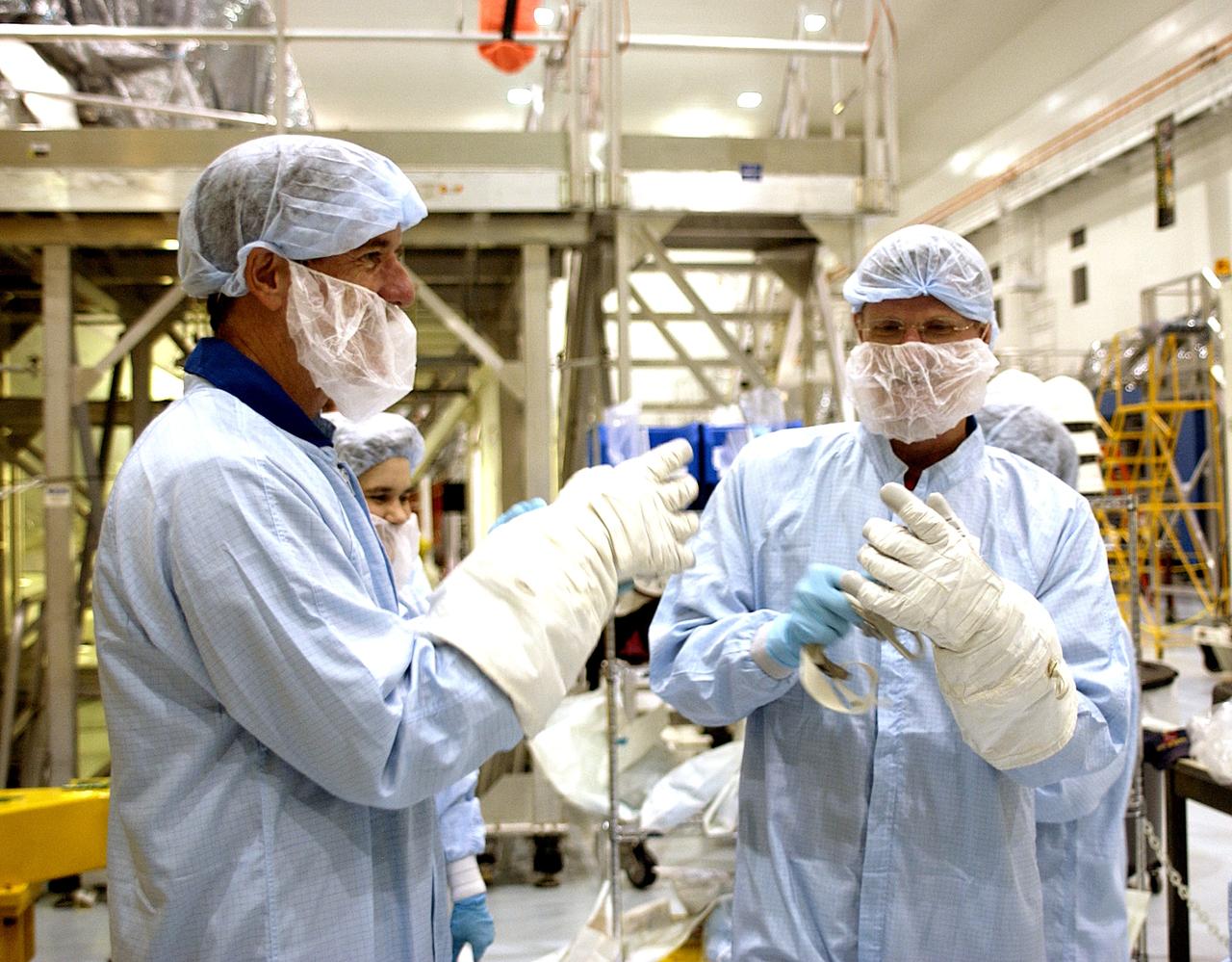
KENNEDY SPACE CENTER, FLA. - STS-117 Mission Specialist James Reilly (left) and STS-115 Mission Specialist Joseph Tanner (right) put on protective gloves before their checkout of the Japanese Experiment Module (JEM) in the Space Station Processing Facility. Reilly and Tanner are at KSC for equipment familiarization, a routine part of astronaut training and launch preparations.
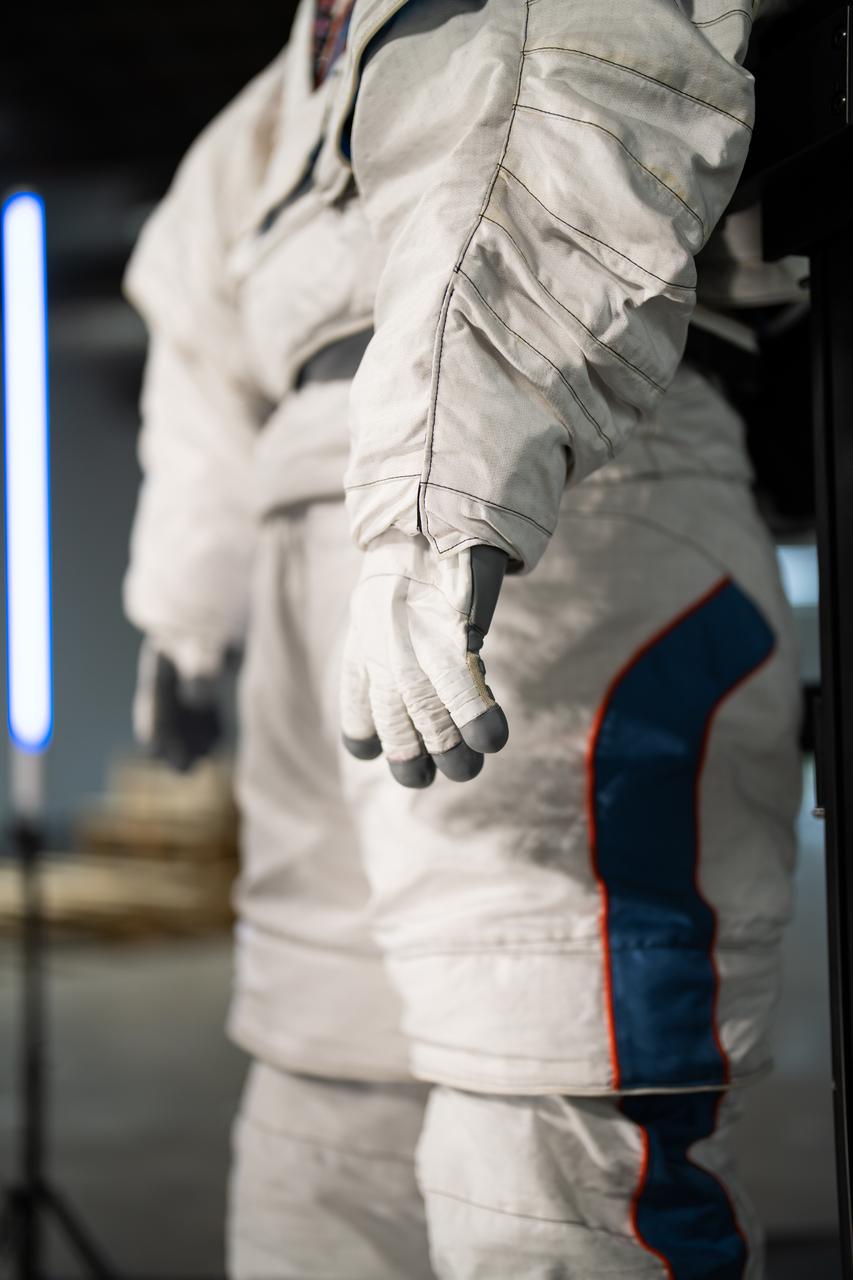
An up close image of a glove on Axiom Space's AxEMU (Axiom Extravehicular Mobility Unit) lunar spacesuit. Image Credit: Axiom Space
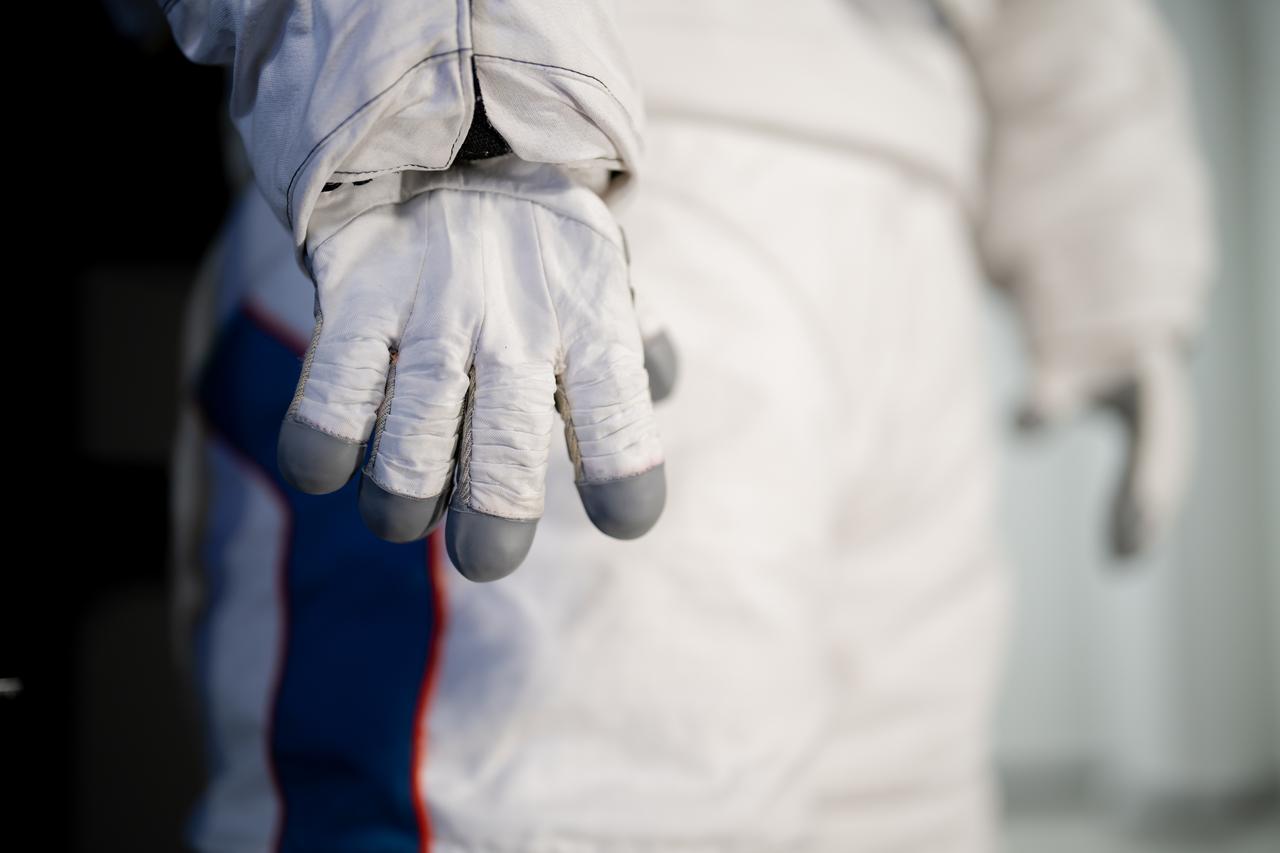
An up close image of a glove on Axiom Space's AxEMU (Axiom Extravehicular Mobility Unit) lunar spacesuit. Image Credit: Axiom Space
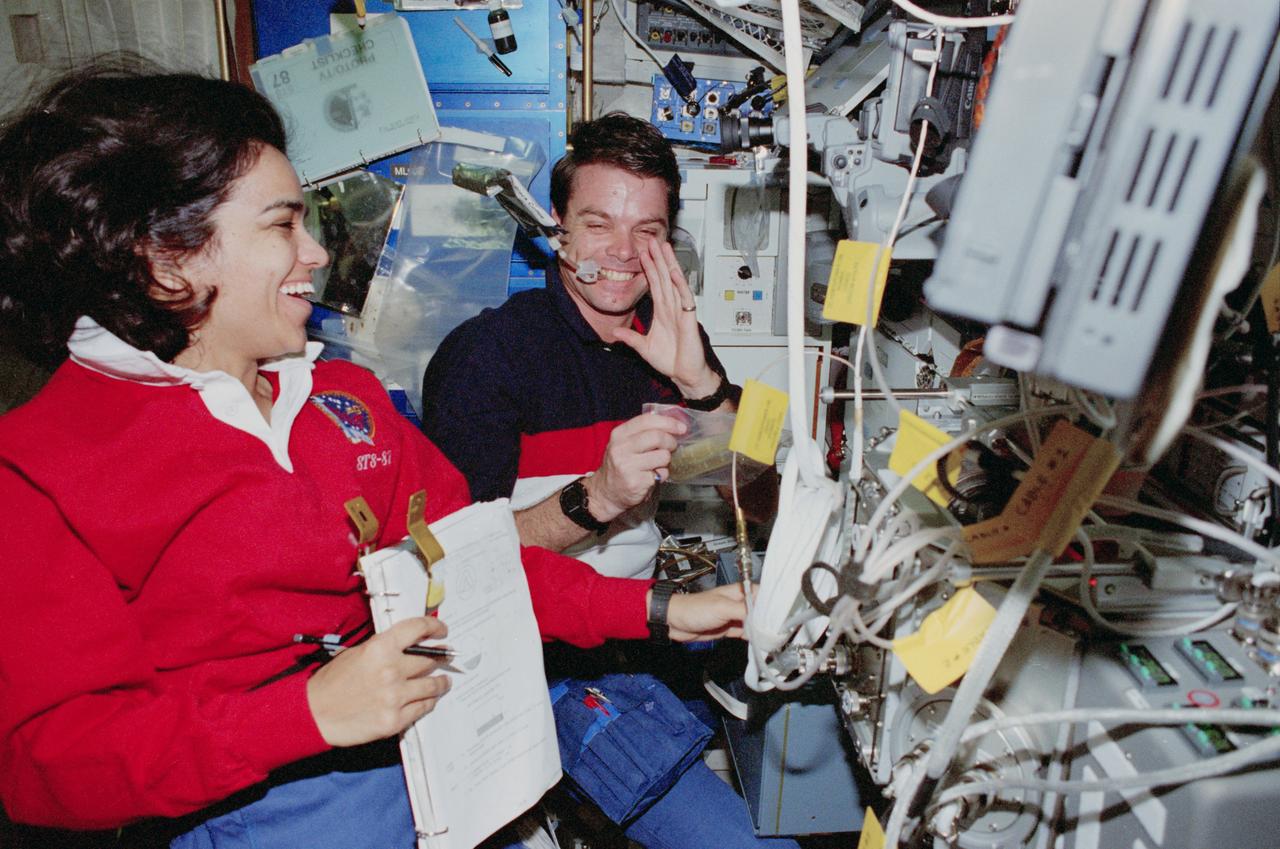
STS087-332-010 (19 November – 5 December 1997) --- Astronaut Kevin R. Kregel doesn't bother to "break" for coffee as he enjoys a serving while sharing work at the Space Shuttle Columbia's microgravity glove box with astronaut Kalpana Chawla. The glove box's (right edge of frame) proximity to the galley (partially obscured behind the mission commander) makes the time economy measure an easy task for the three-time space veteran. Chawla, mission specialist, is making her initial space flight.
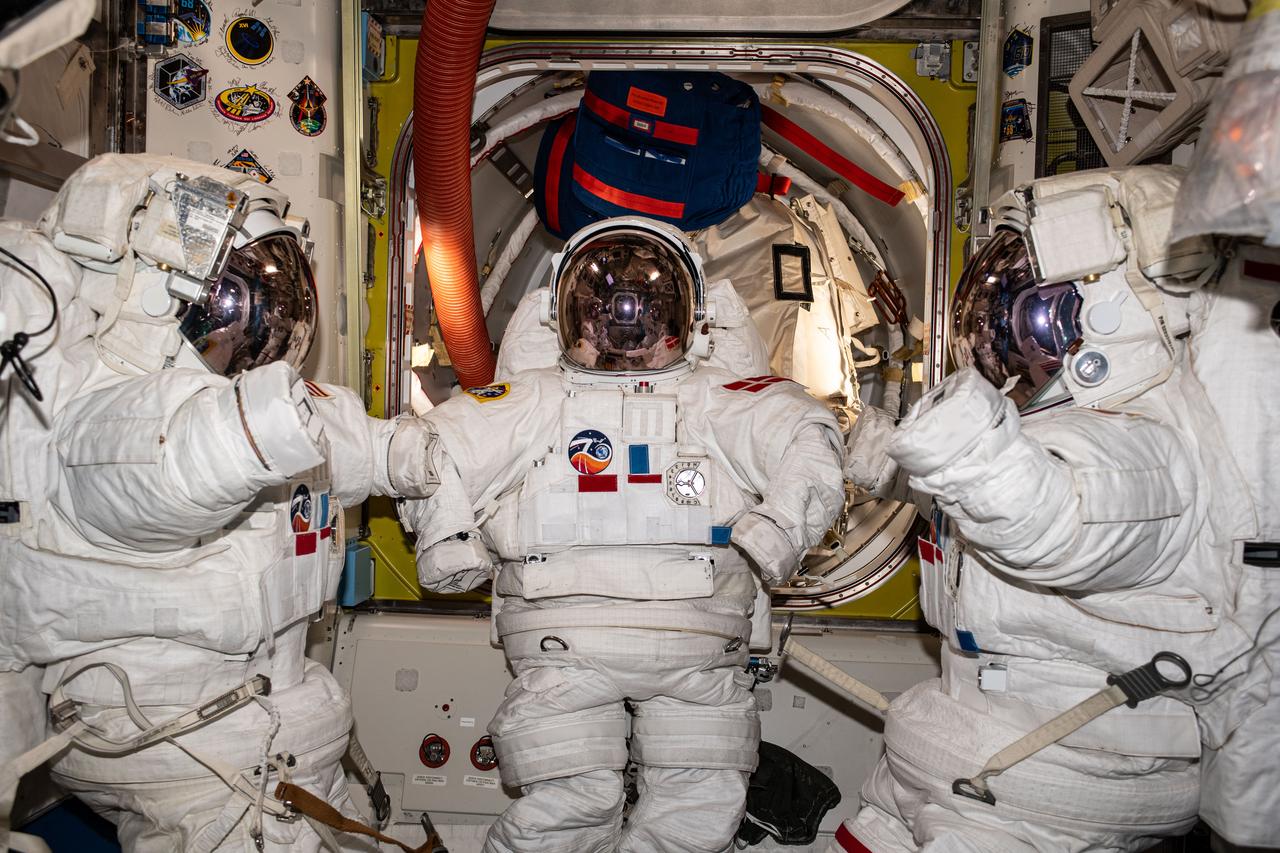
iss070e021451 (Nov. 7, 2023) --- Three near-assembled spacesuits, with their gloves unattached, are pictured inside the International Space Station's Quest airlock ahead of an upcoming spacewalk.
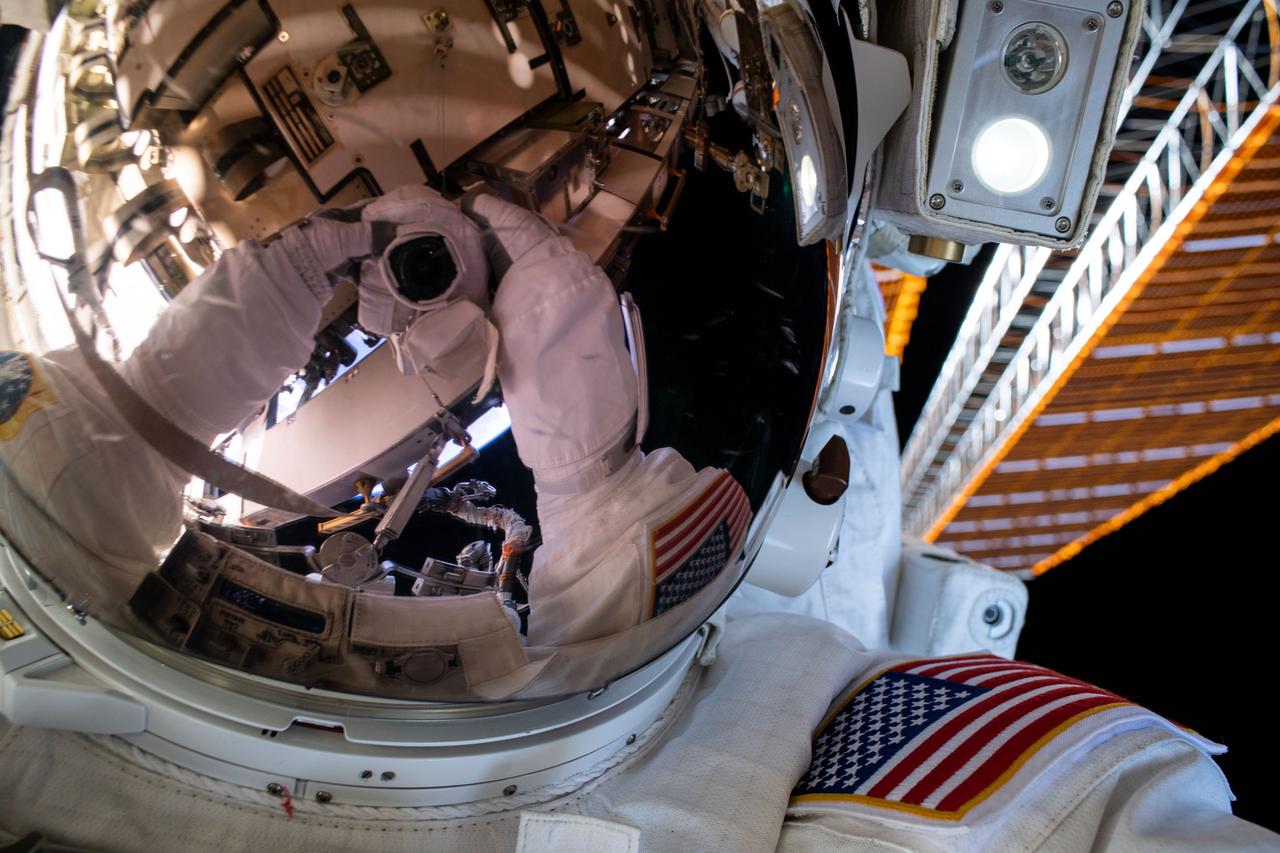
iss063e033403 (June 26, 2020) --- A spacewalker's spacesuit gloves and camera are reflected in the helmet visor in this "space-selfie" taken during a six-hour and seven-minute spacewalk.
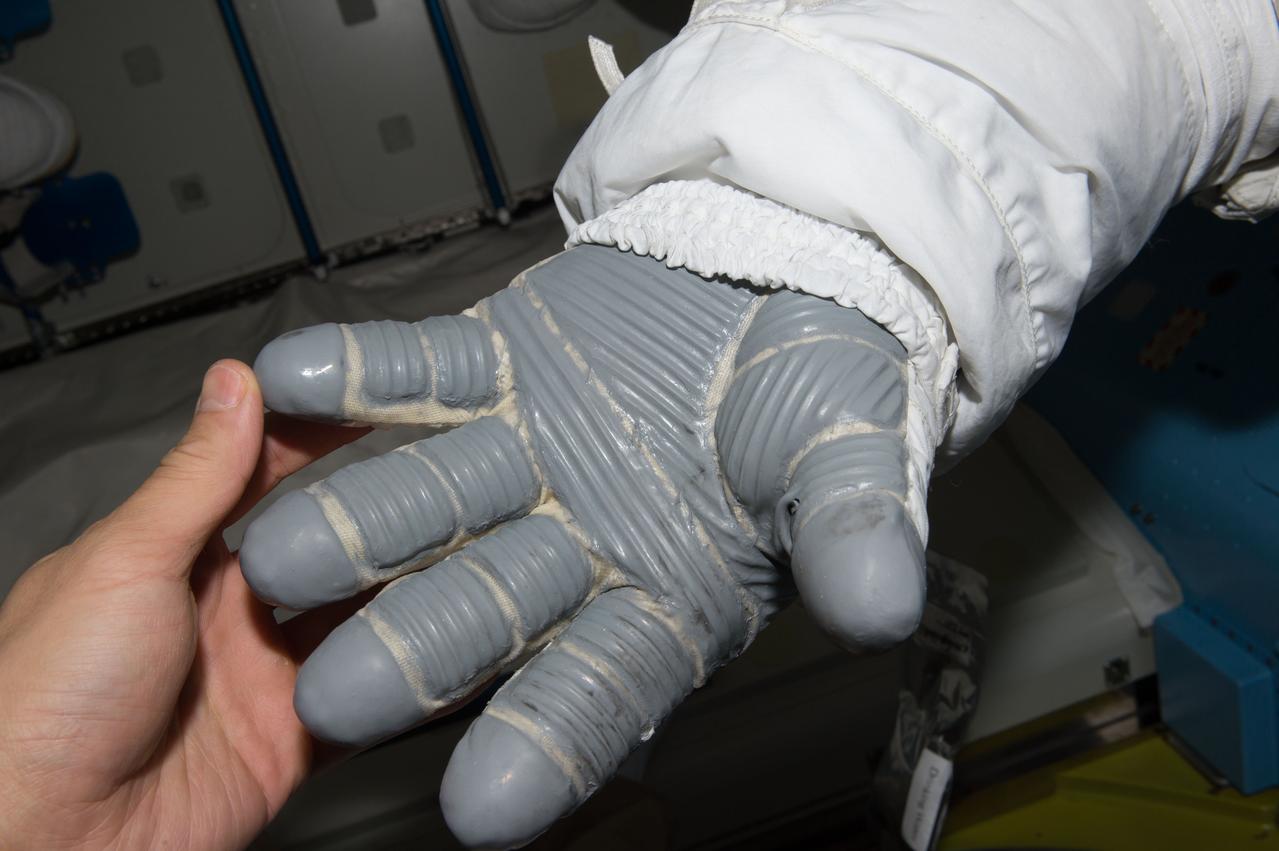
ss048e061332 (08/19/2016) --- Checking the space gloves before and after a spacewalk is part of the detailed check list astronauts go through to provide absolute safety. Both NASA astronaut Jeff Williams and Kate Rubens took part in the important inspections before and after their 19 Aug 2016 spacewalk to install a new docking adapter . A cut in the glove could subject the astronaut to the extreme temperatures of outer space and the escape of oxygen, both of which could be fatal.
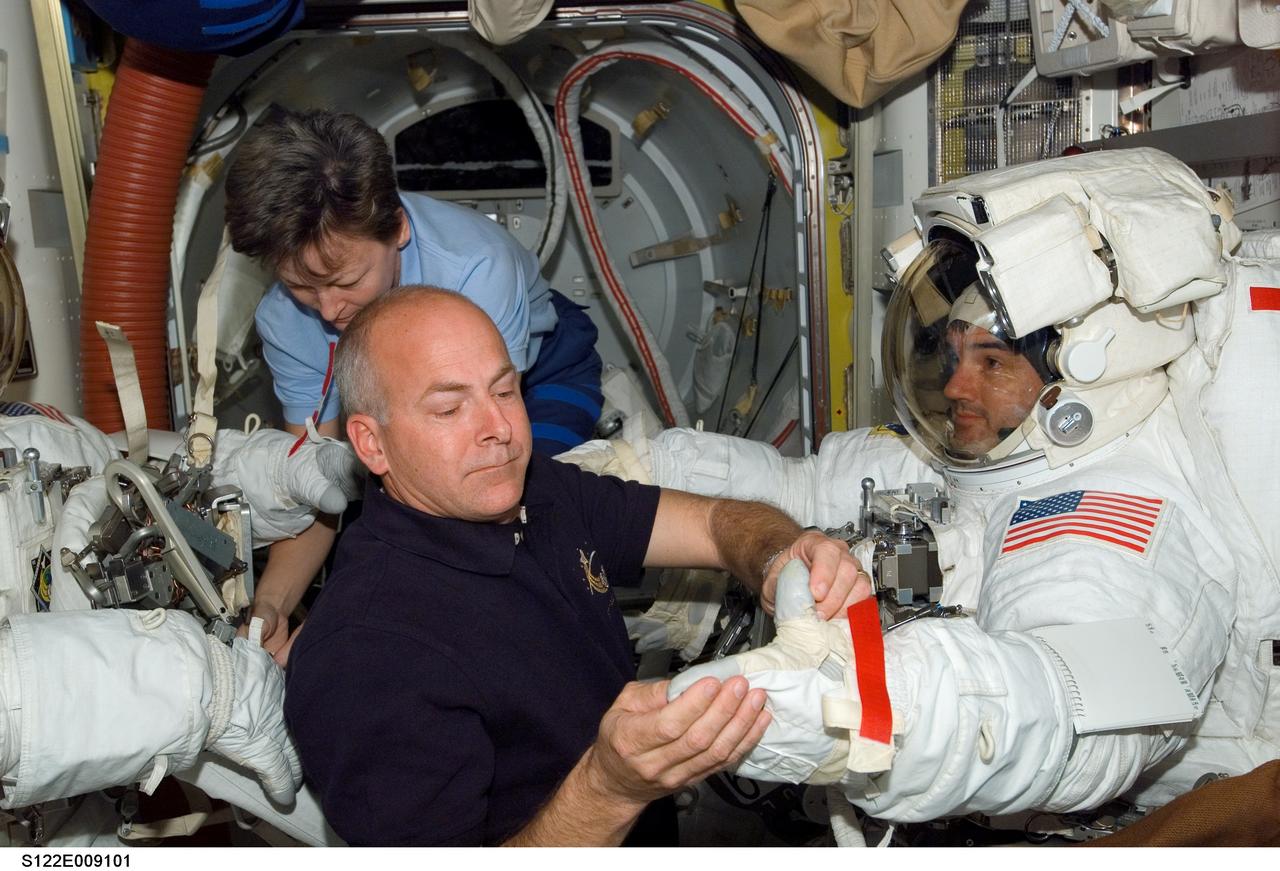
S122-E-009101 (15 Feb. 2008) --- Astronaut Alan Poindexter, STS-122 pilot, inspects the gloves of astronaut Rex Walheim, mission specialist, following the ingress of astronauts Walheim and Stanley Love (partially out of frame at left) following the final space walk of a busy week. Astronaut Peggy Whitson, the International Space Station's Expedition 16 commander, checks Love's gloves.
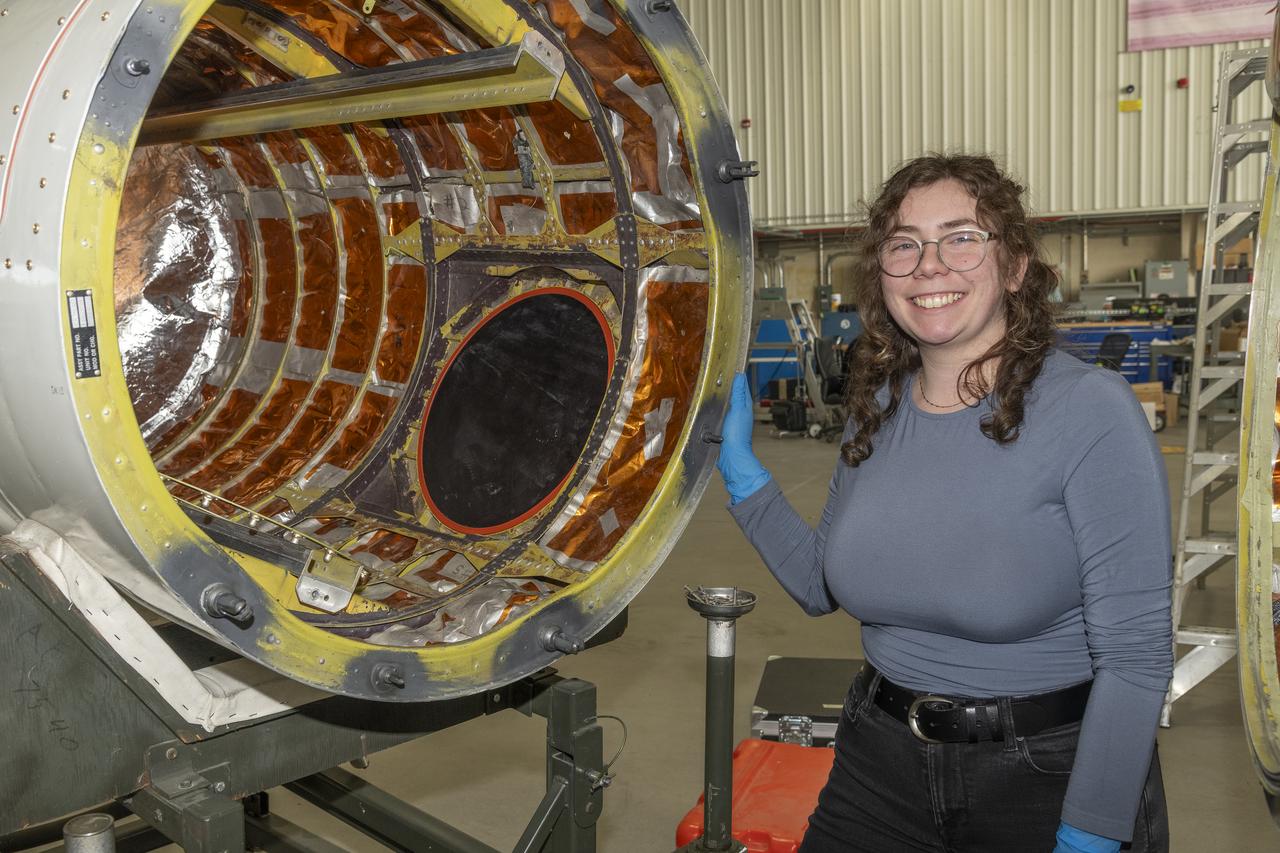
A team of experts prepares the ER-2 aircraft at Armstrong Flight Research Center in Edwards, California for the GSFC Lidar Observation and Validation Experiment (GLOVE) in February 2025. Researcher Jennifer Moore from NASA’s Goddard Space Flight Center smiles beside the ER-2 aircraft’s forebody pod where the Cloud Physics Lidar (CPL) instrument will be installed. As a collaboration between engineers, scientists, and aircraft professionals, GLOVE aims to improve satellite data products for Earth Science applications.
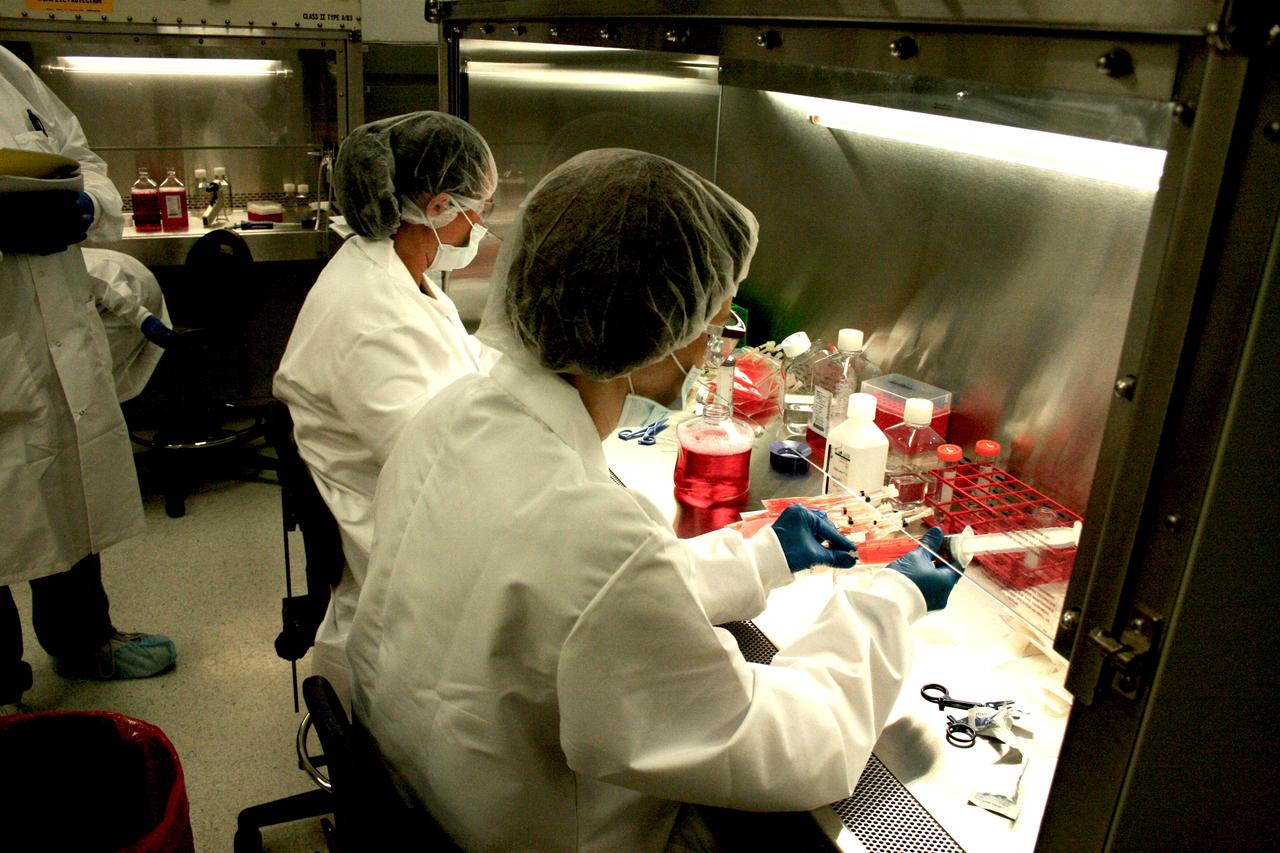
STS-131 payload; Ames Space Bio-Sciences Lab, Dr Eduardo Almeida P. I.; Scientists prepare cell bioreactors within glove box at Kennedy Space Center (KSC)
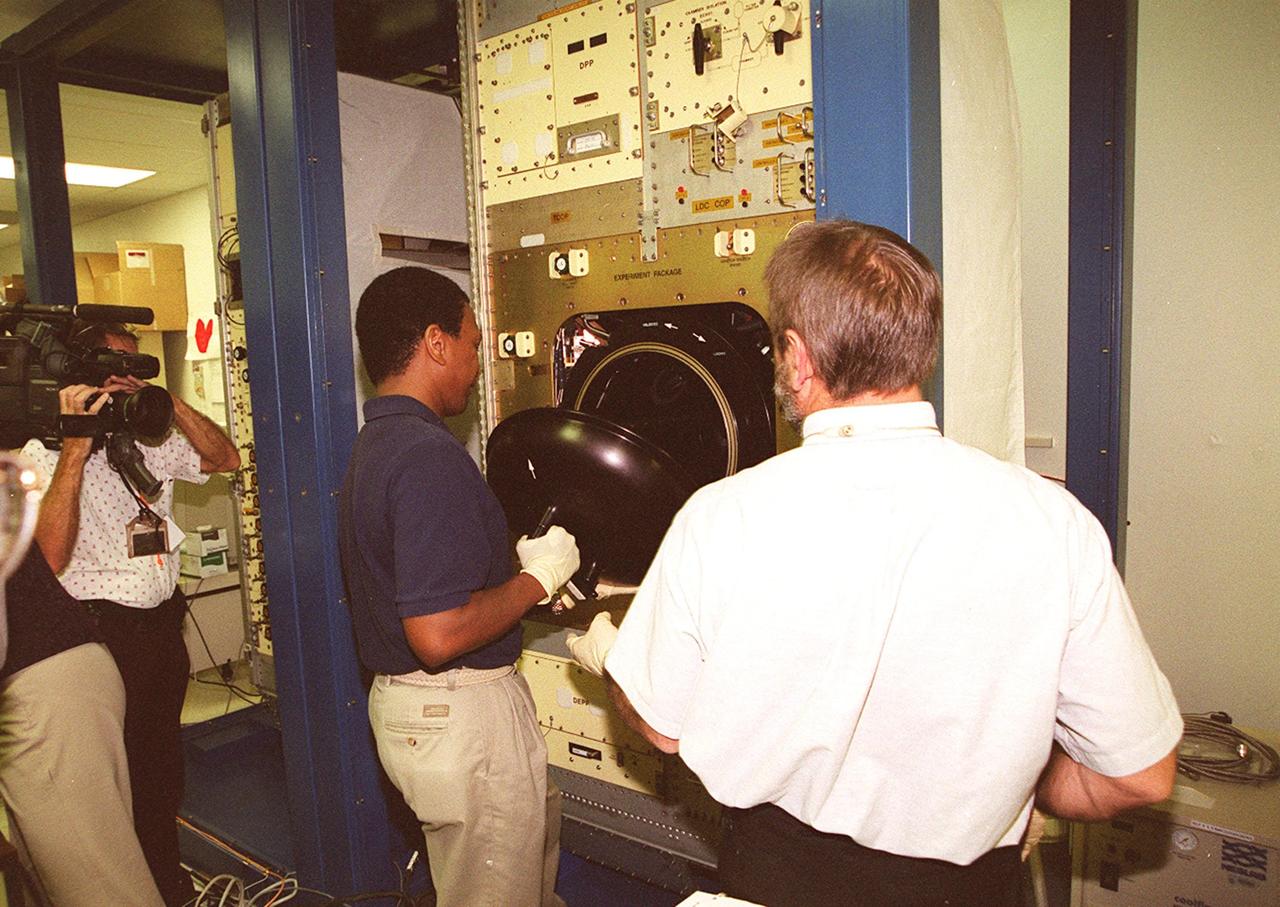
KENNEDY SPACE CENTER, FLA. -- At SPACEHAB, STS-107 Mission Specialist Michael Anderson (gloved, in center) gets hands-on experience with equipment. Identified as a research mission, STS-107 is scheduled for launch July 19, 2001
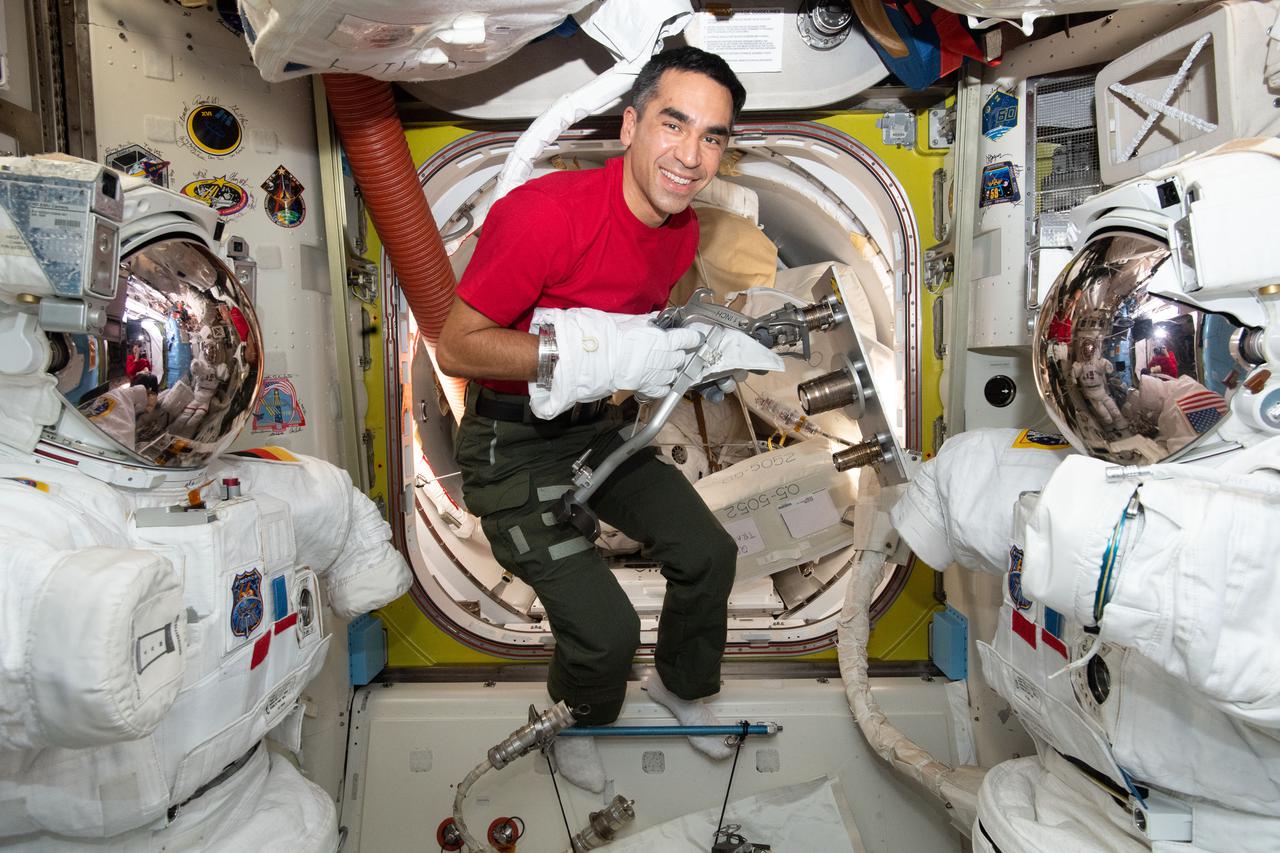
iss066e146485 (Feb. 19, 2022) --- NASA astronaut and Expedition 66 Flight Engineer Raja Chari tests using tools while wearing a spacesuit glove inside the International Space Station's U.S. Quest airlock.
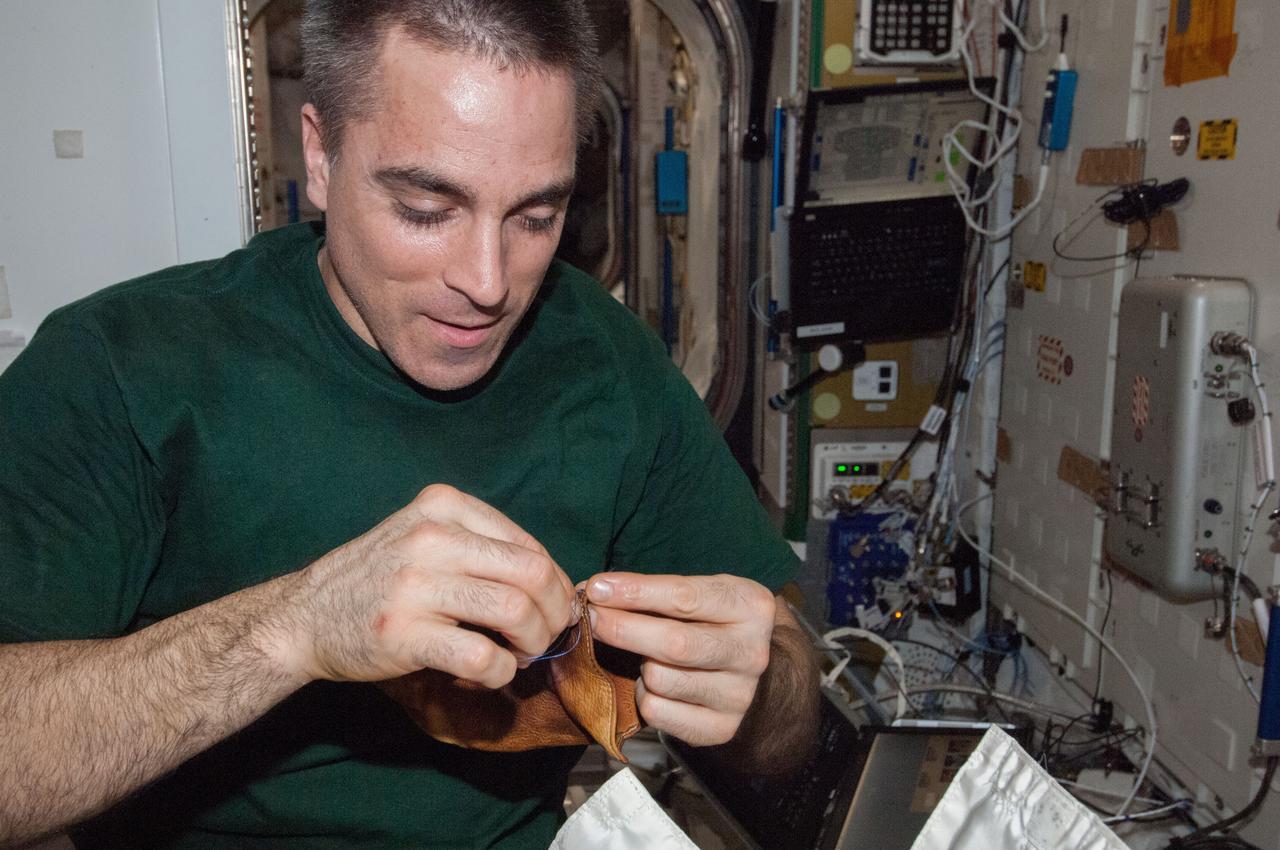
ISS036-E-021862 (21 July 2013) --- NASA astronaut Chris Cassidy, Expedition 36 flight engineer, uses a sewing kit to repair a glove in the Tranquility node of the International Space Station.
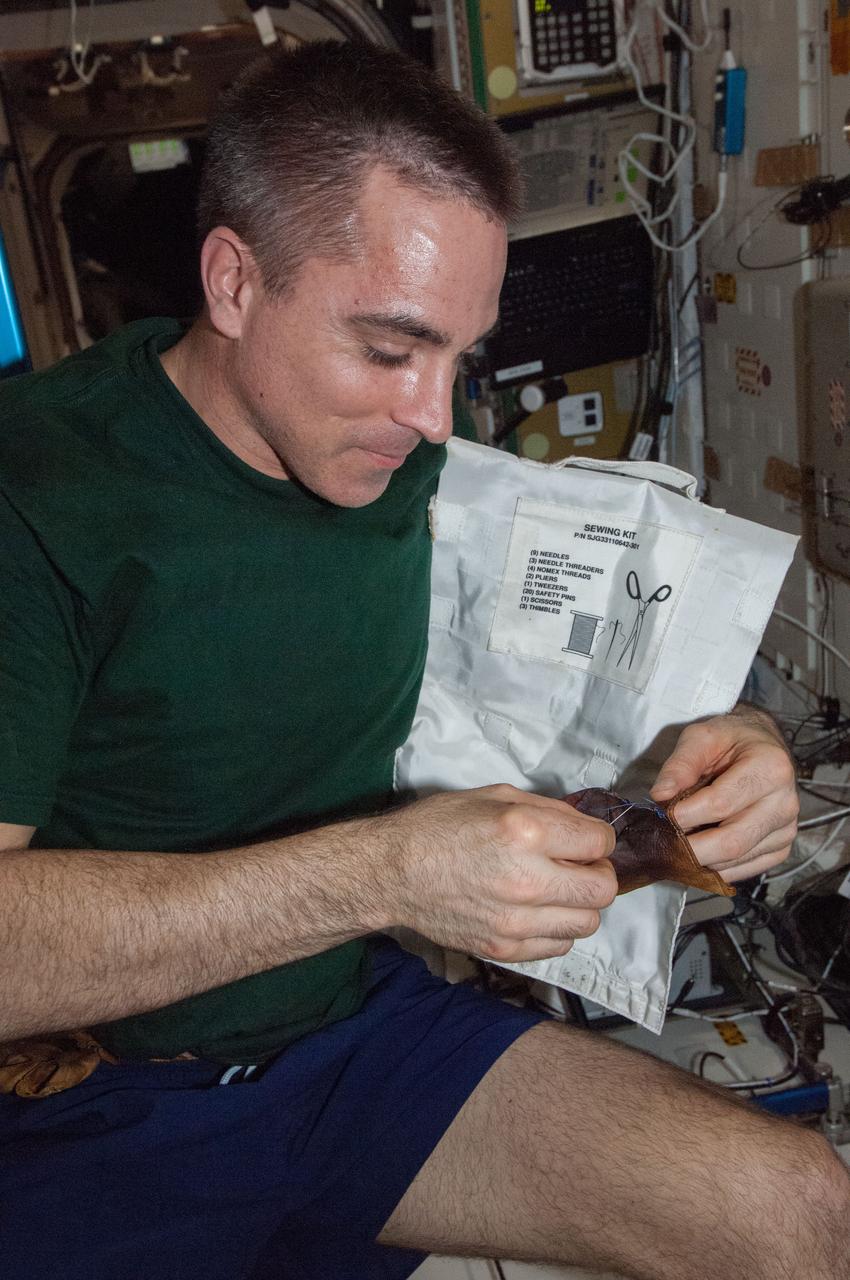
ISS036-E-021856 (21 July 2013) --- NASA astronaut Chris Cassidy, Expedition 36 flight engineer, uses a sewing kit to repair a glove in the Tranquility node of the International Space Station.
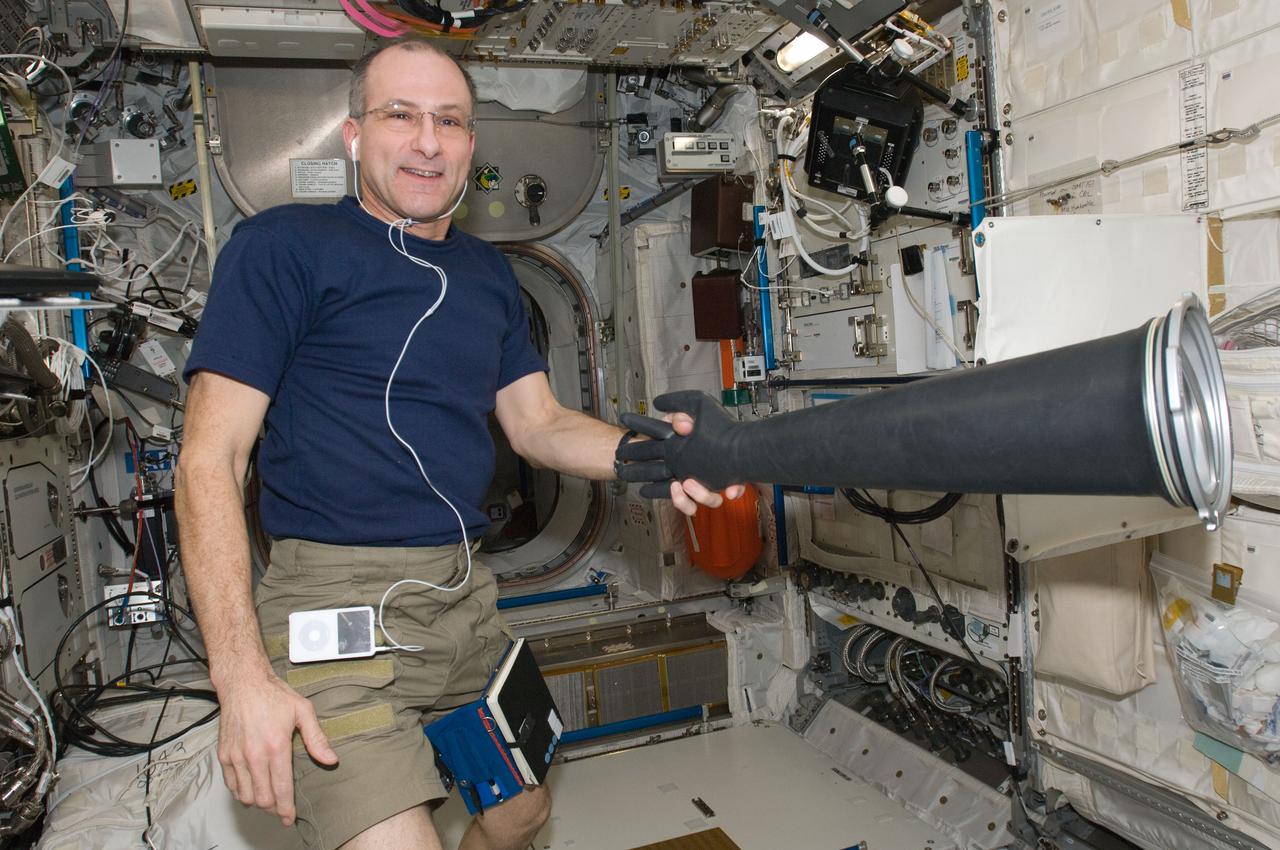
ISS030-E-049556 (17 Jan. 2012) --- NASA astronaut Don Pettit, Expedition 30 flight engineer, holds a Microgravity Science Glovebox (MSG) glove in the Columbus laboratory of the International Space Station.
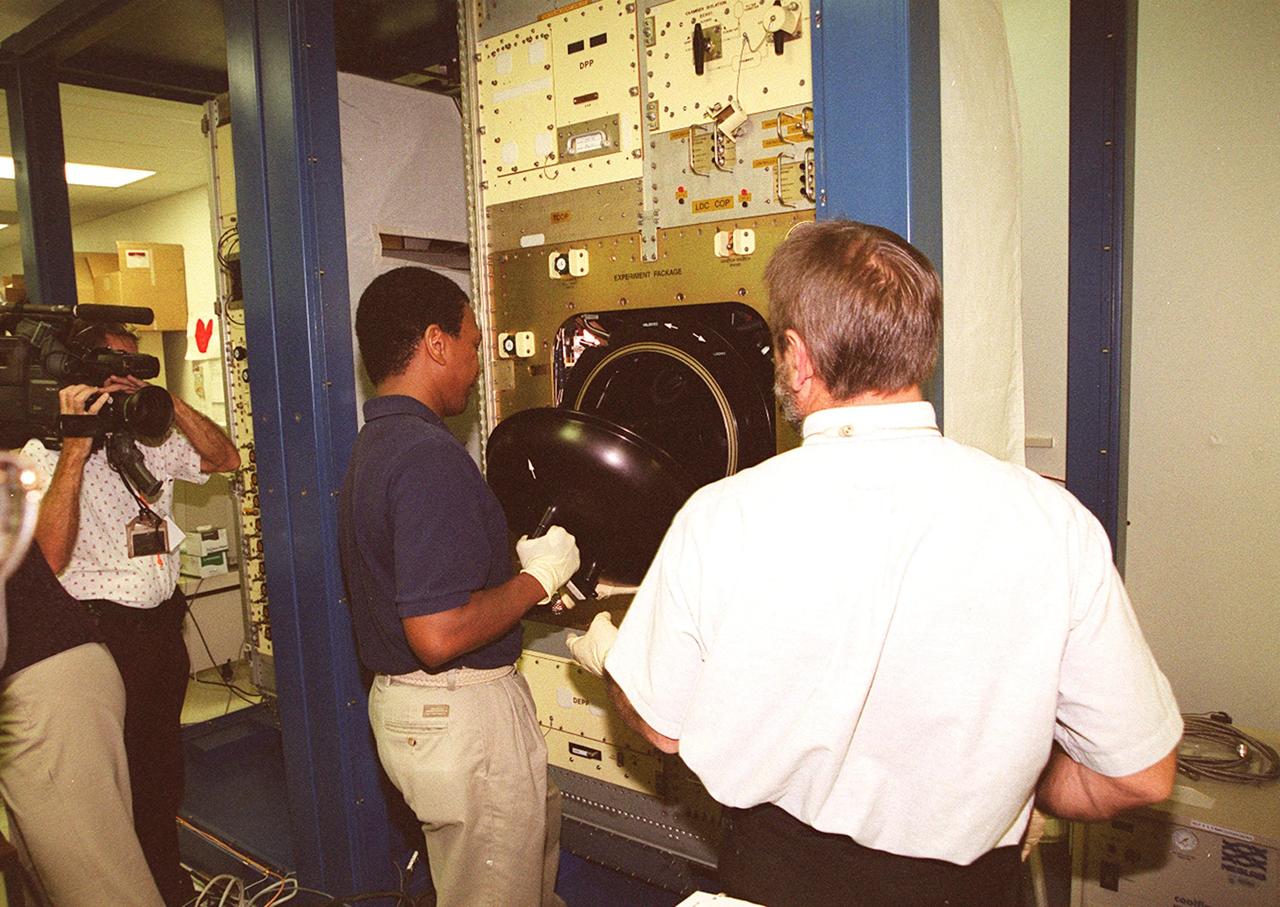
KENNEDY SPACE CENTER, FLA. -- At SPACEHAB, STS-107 Mission Specialist Michael Anderson (gloved, in center) gets hands-on experience with equipment. Identified as a research mission, STS-107 is scheduled for launch July 19, 2001
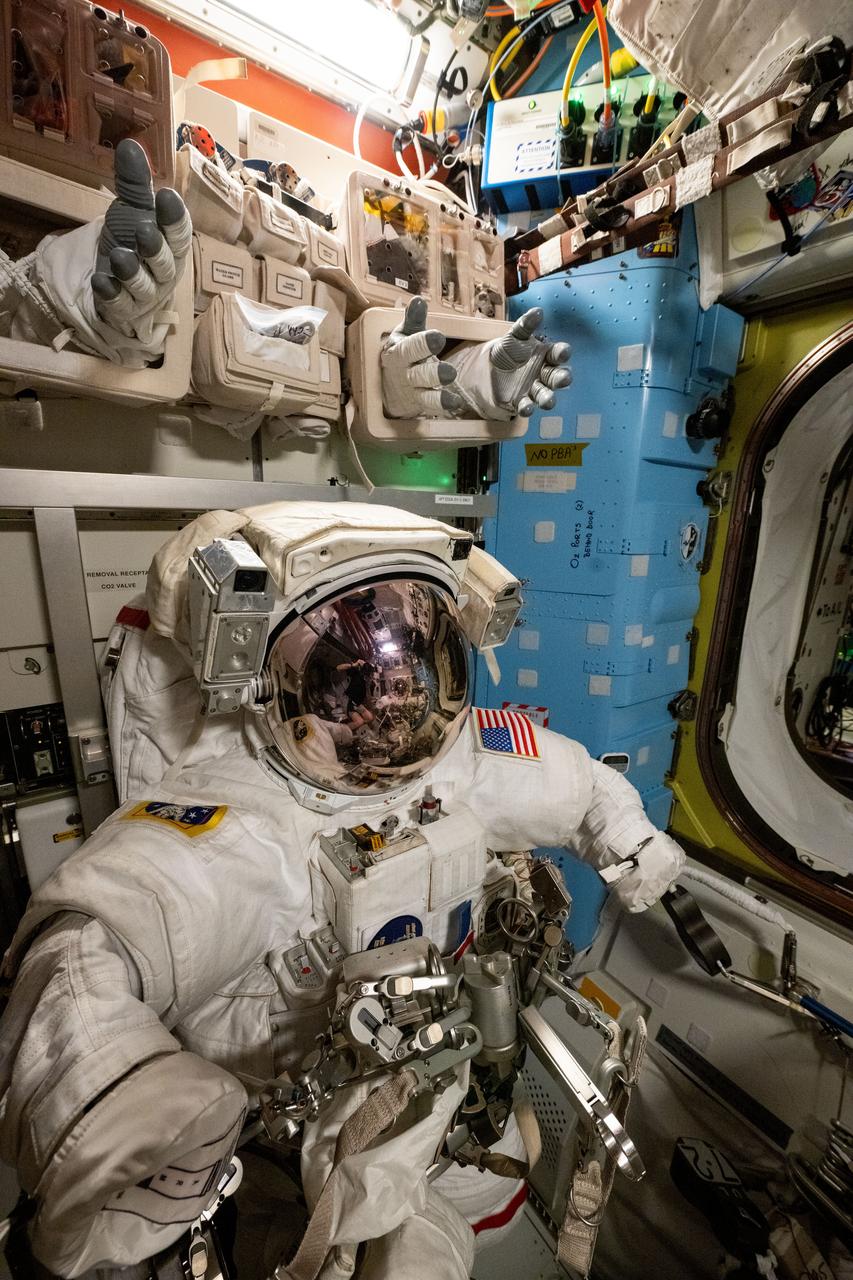
iss072e518461 (Jan. 23, 2025) --- A spacesuit is pictured staged inside the International Space Station's Quest airlock ahead of a spacewalk planned for NASA astronauts Suni Williams and Butch Wilmore. The two spacewalkers are scheduled to exit the Quest airlock on Jan. 30 to remove a radio frequency group antenna assembly and search for microbes outside the orbital outpost. At top, spacesuit gloves are stowed above the spacesuits for easy access when astronauts are preparing to begin a spacewalk.
The first International Space Station experiment facility--the Microgravity Glovebox Ground Unit--has been delivered to Marshall Space Flight Center's Microgravity Development Laboratory. The glovebox is a facility that provides a sealed work area accessed by the crew in gloves. This glovebox will be used at the Marshall laboratory throughout the Space Station era.
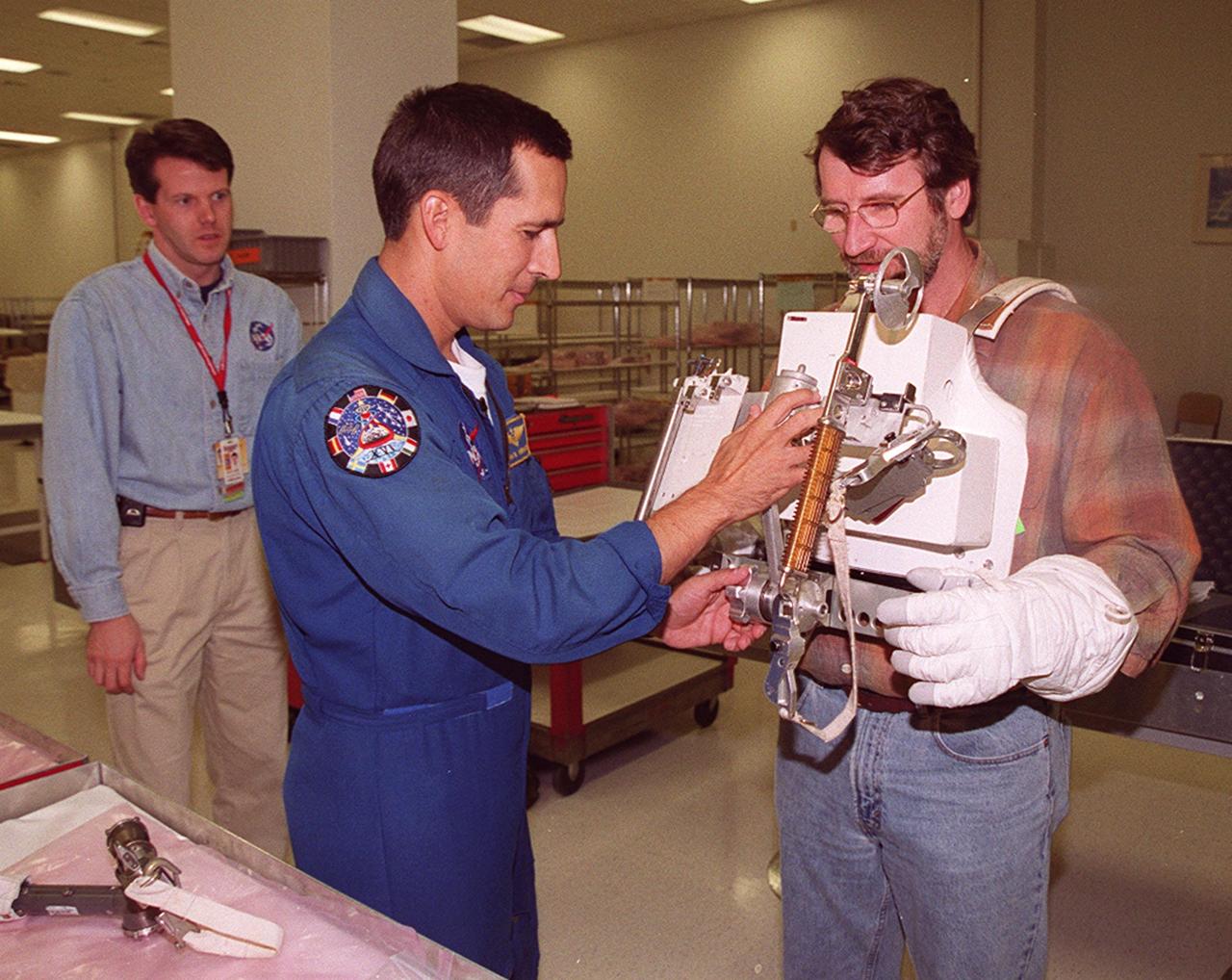
KENNEDY SPACE CENER, FLA. -- Norm Abram, master carpenter of television’s "This Old House" and "The New Yankee Workshop," tries out a tool used in space while wearing gloves that are part of the spacewalking suits. Abram is at KSC to film an episode of "This Old House.

JSC2009-E-244194 (23 Nov. 2009) --- Astronaut George Zamka, STS-130 commander, examines an Extravehicular Mobility Unit (EMU) glove during a training session in the Space Vehicle Mockup Facility at NASA's Johnson Space Center.
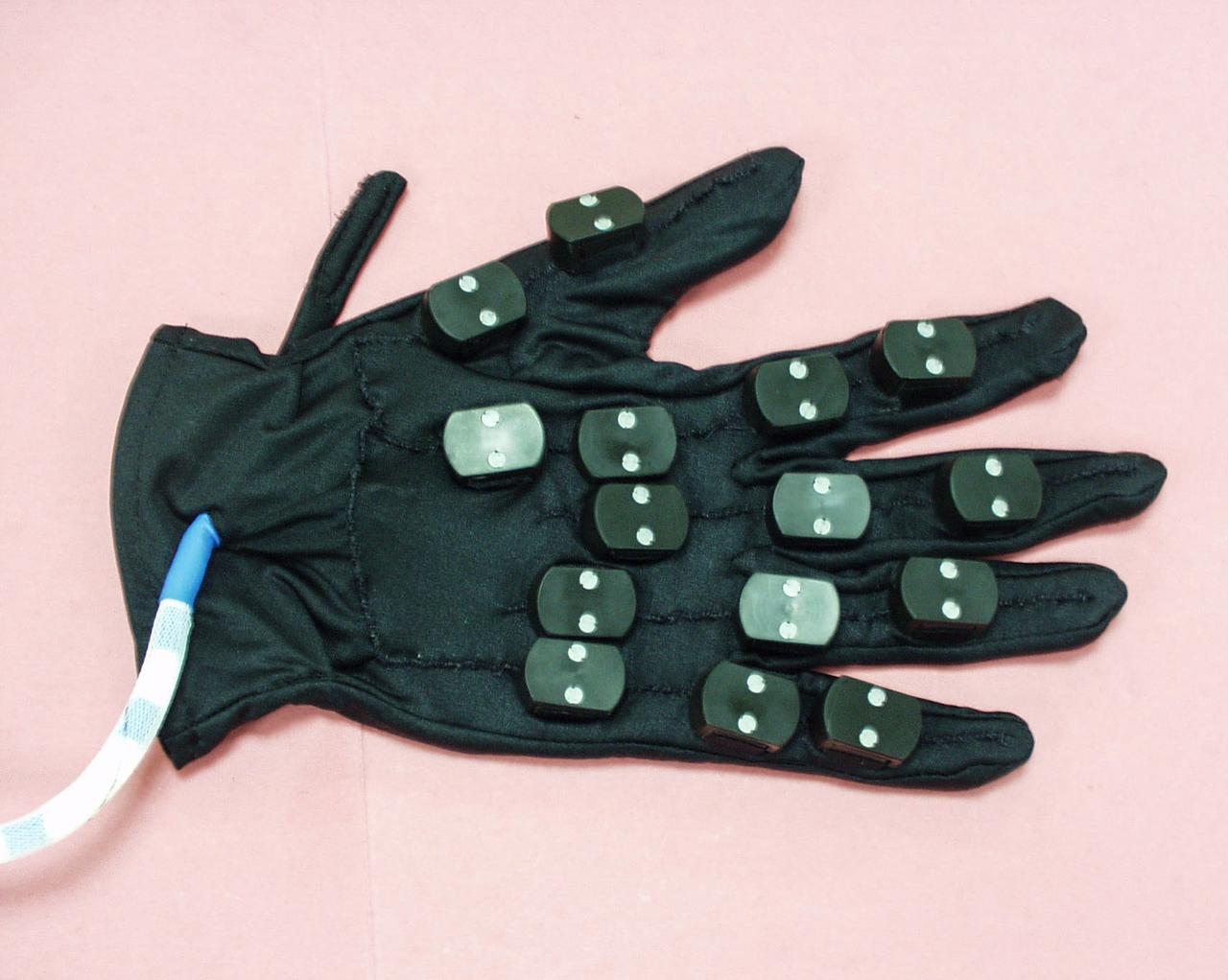
jsc2021e009416 (7/15/2002) --- A preflight view of the Hand Posture Analyzer (HPA) Posture Acquisition Glove (PAG). The Hand Posture Analyzer (HPA) facility helps to examine the way hand and arm muscles are used differently aboard the International Space Station (ISS). Image courtesy of the Italian Space Agency (ASI).
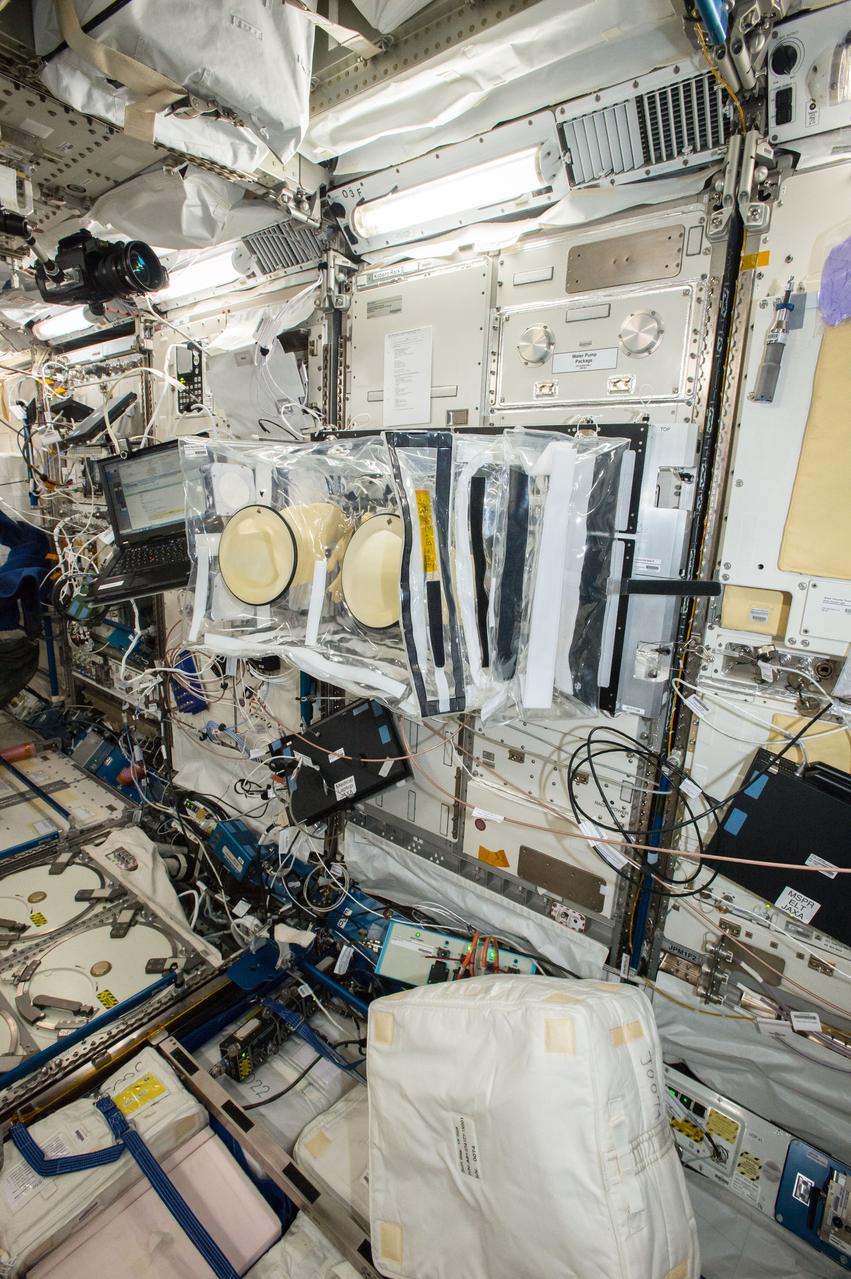
iss048e042371 (Jul. 21, 2016) --- Glove Box set up on the Kobairo Rack for the Mouse Epigenetics experiment in the Kibo Japanese Experiment Pressurized Module (JPM). The Mouse Epigenetics experiment studies the effects of the space environment on genetic activity, which can be used as a proxy for understanding how the human body changes in space.
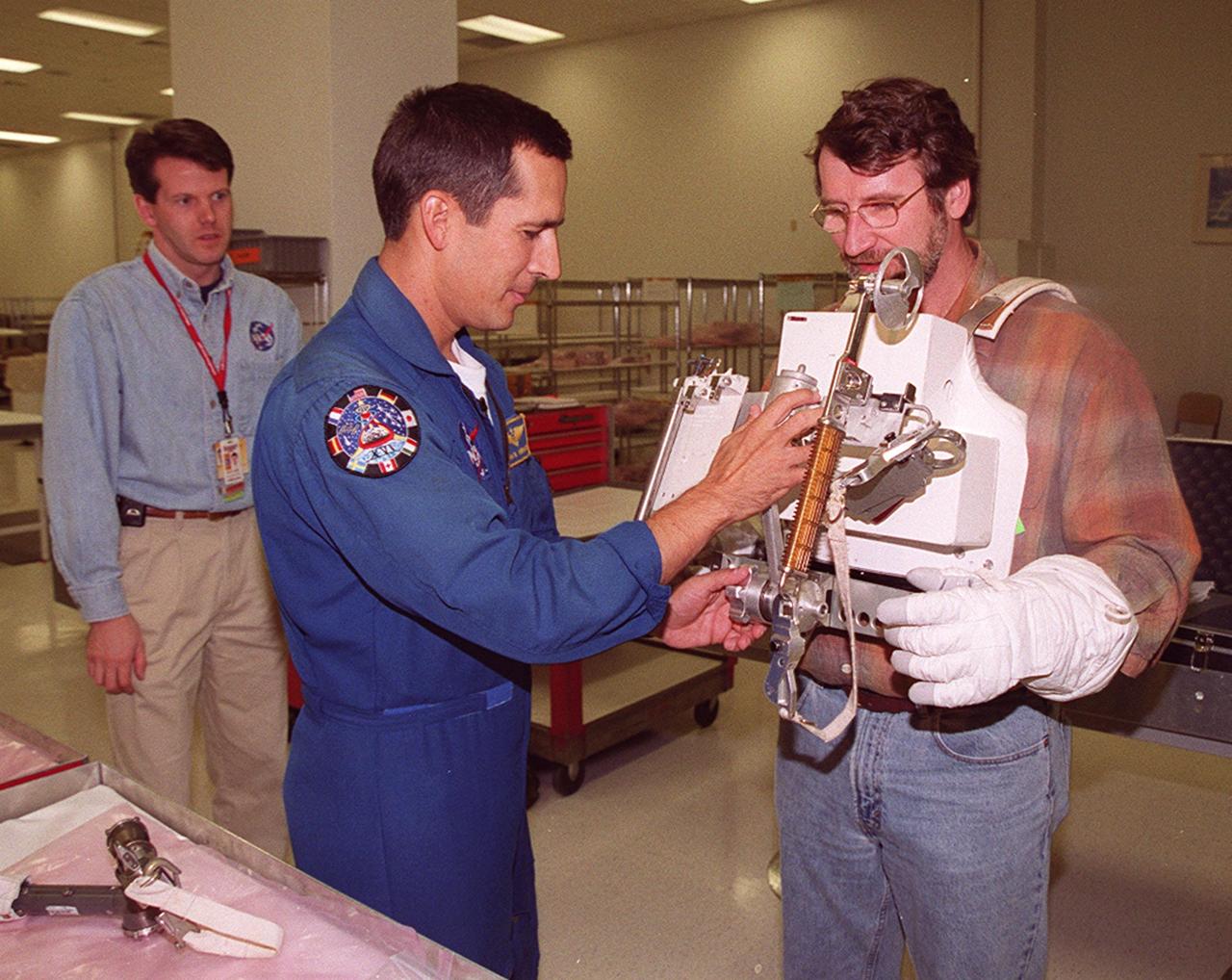
KENNEDY SPACE CENER, FLA. -- Norm Abram, master carpenter of television’s "This Old House" and "The New Yankee Workshop," tries out a tool used in space while wearing gloves that are part of the spacewalking suits. Abram is at KSC to film an episode of "This Old House.
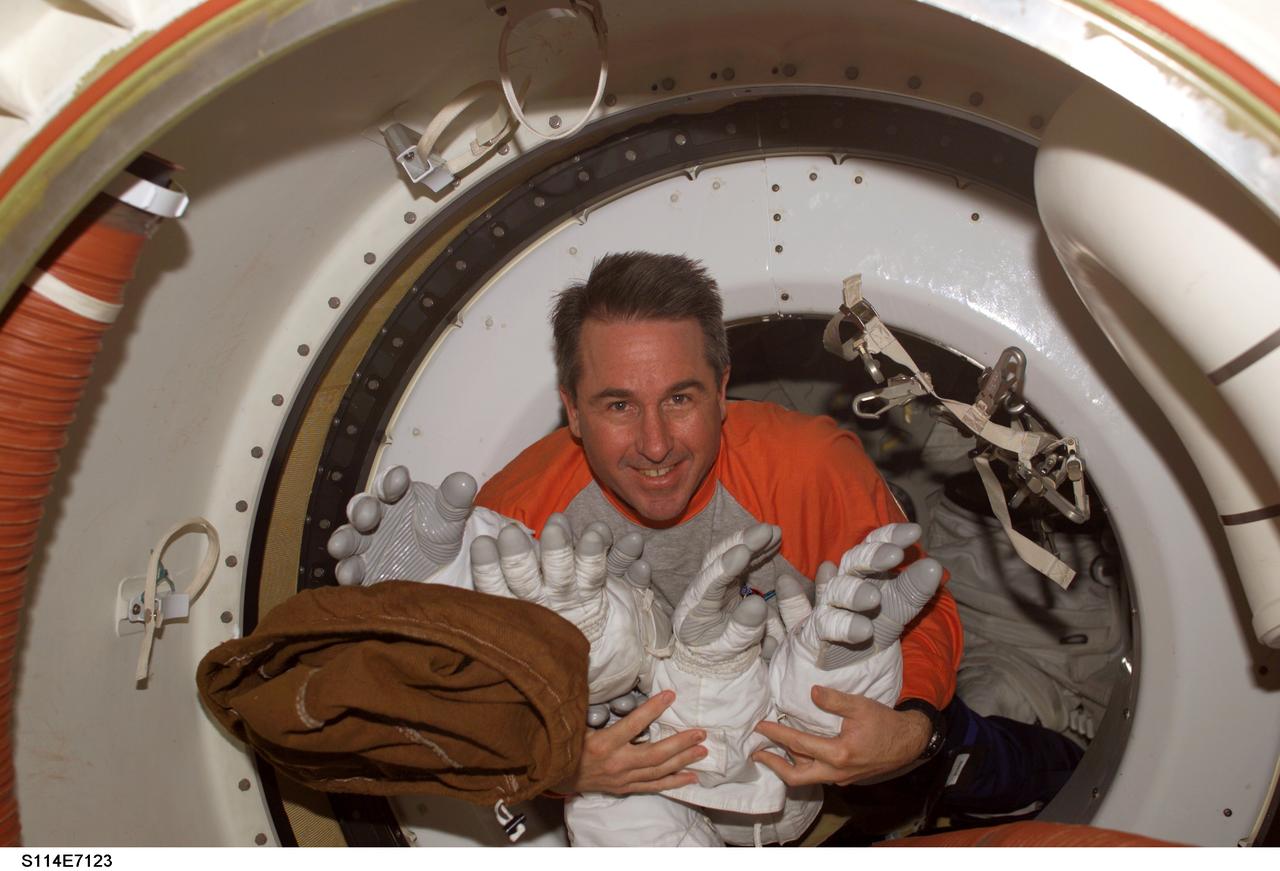
S114-E-7123 (5 August 2005) --- Astronaut Stephen K. Robinson, STS-114 mission specialist, holds Extravehicular Mobility Unit (EMU) spacesuit gloves as he floats through a hatch while Space Shuttle Discovery was docked to the International Space Station.
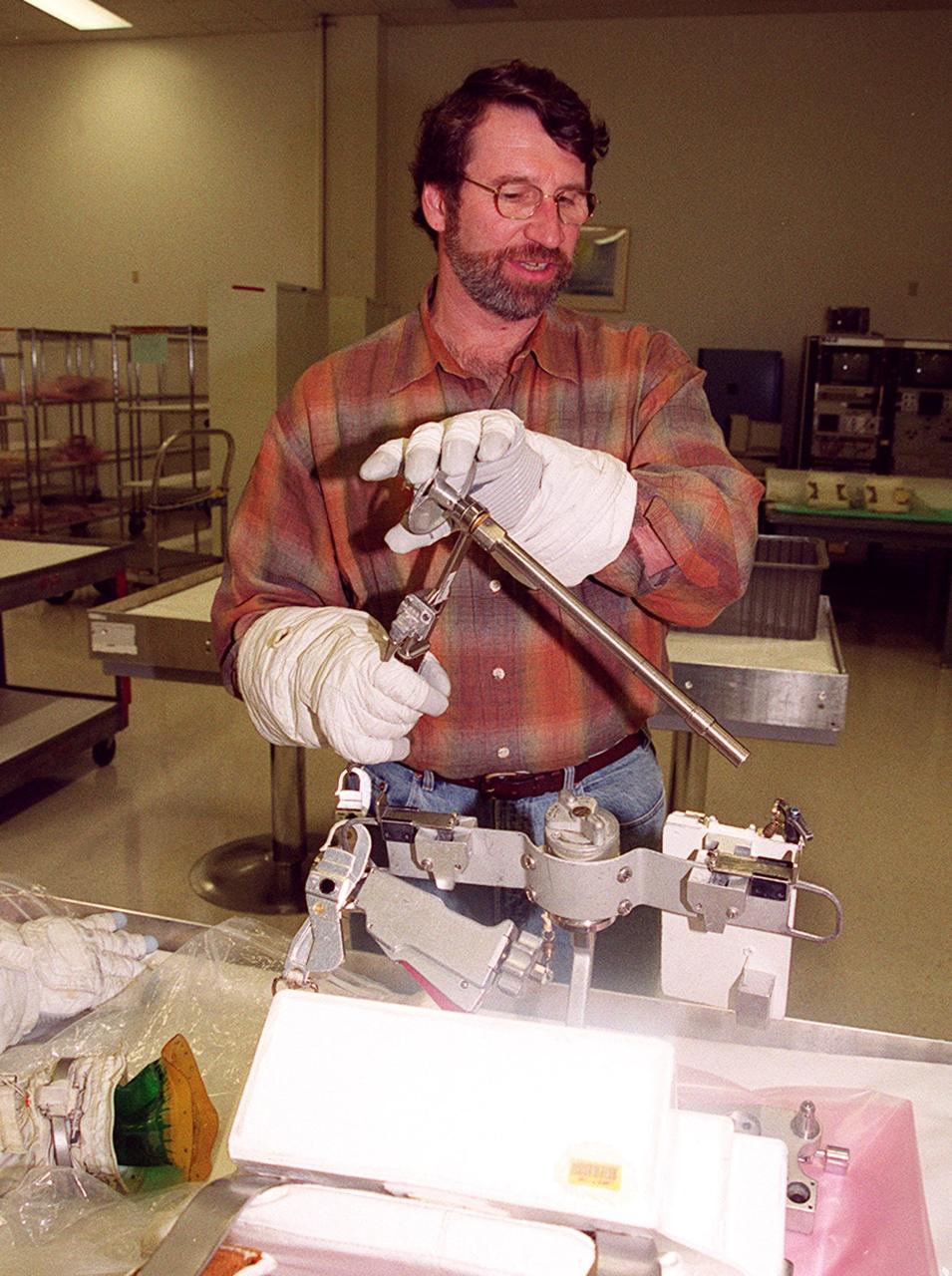
KENNEDY SPACE CENTER, FLA. -- Norm Abram, master carpenter of television’s "This Old House" and "The New Yankee Workshop," tries out a tool used in space while wearing gloves that are part of the spacewalking suits. Abram is at KSC to film an episode of "This Old House.
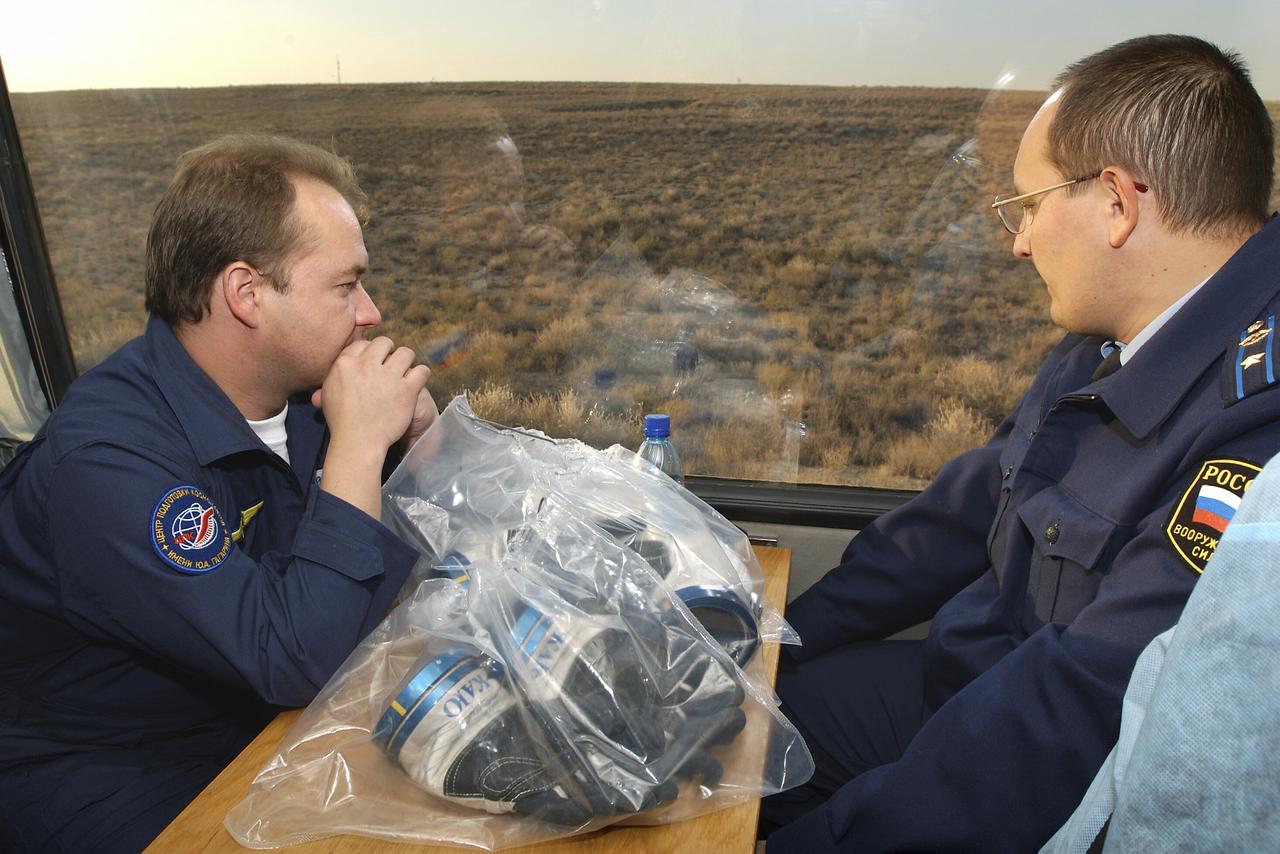
With the gloves of each of the crew member in bags on a table in front of them, space suit technicians look out the bus window during the short ride to the launch pad, Saturday, Oct. 18, 2003, at the Baikonur Cosmodrome in Kazakhstan for the liftoff of a Soyuz TMA-3 vehicle to the International Space Station. Photo Credit (NASA/Bill Ingalls)
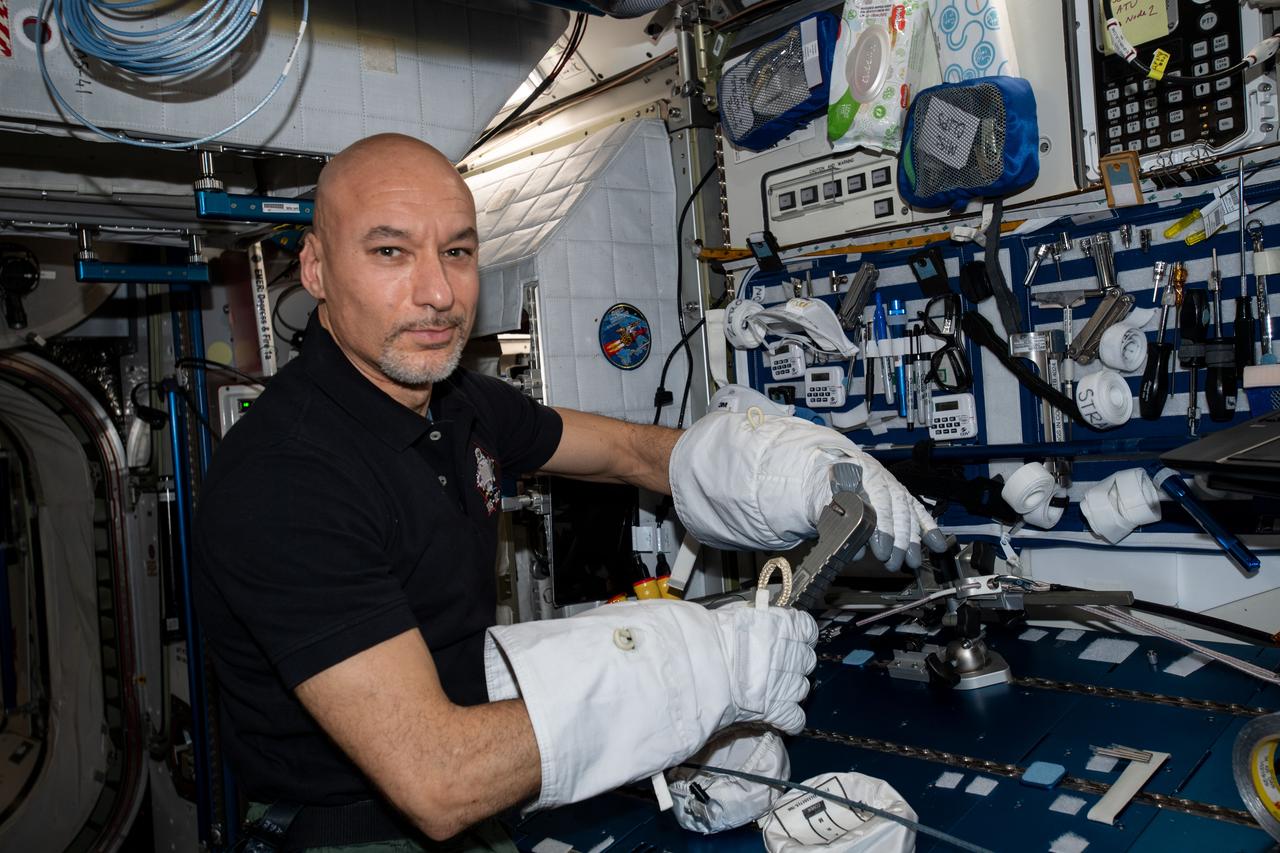
iss061e038284 (Nov. 12, 2019) --- ESA (European Space Agency) astronaut Luca Parmitano tests the usage of specialized spacewalking tools while wearing U.S. spacesuit gloves. The tools were designed specifically for the complex repair work planned for the International Space Station's cosmic particle detector, the Alpha Magnetic Spectrometer.
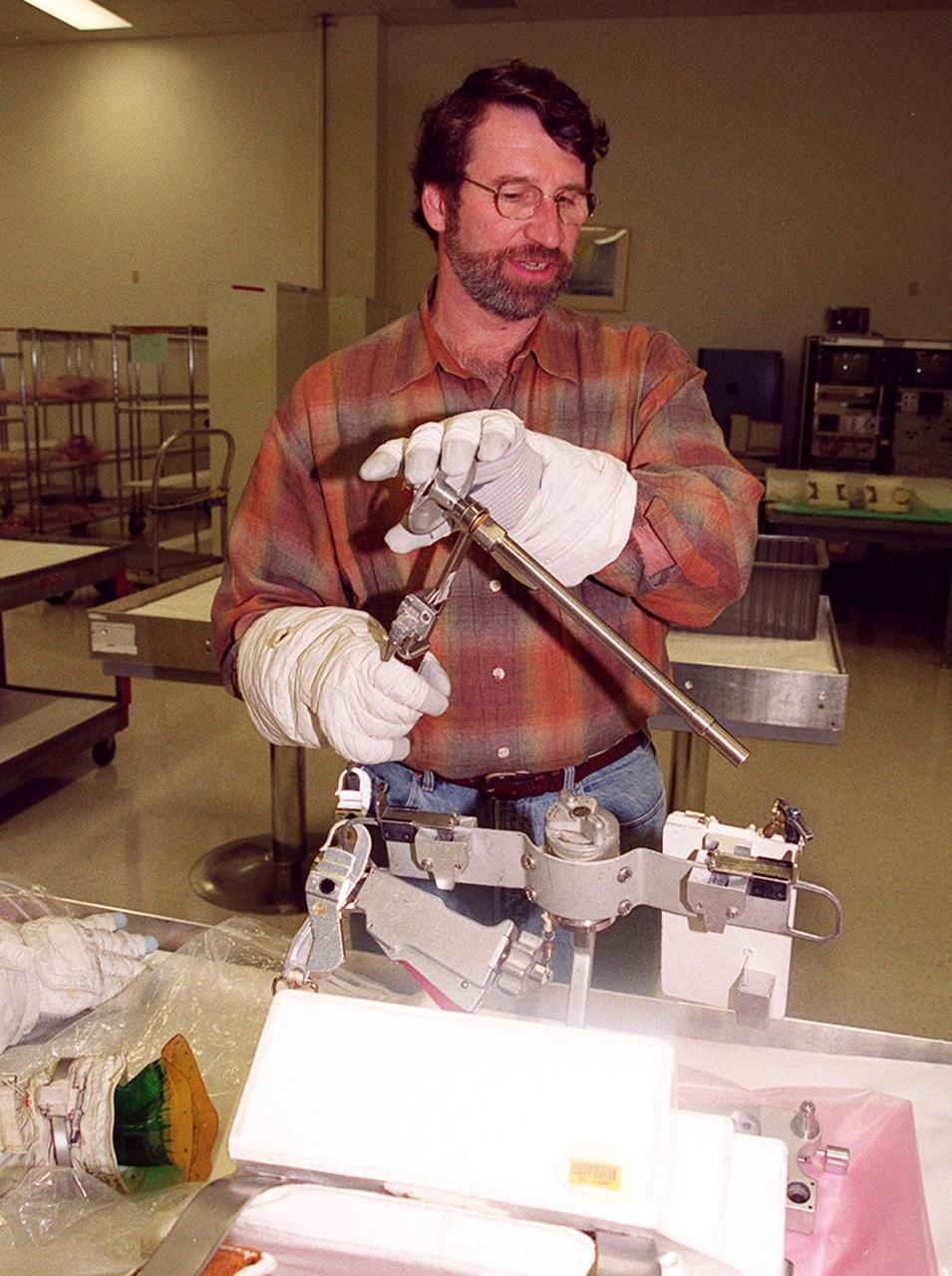
KENNEDY SPACE CENTER, FLA. -- Norm Abram, master carpenter of television’s "This Old House" and "The New Yankee Workshop," tries out a tool used in space while wearing gloves that are part of the spacewalking suits. Abram is at KSC to film an episode of "This Old House.
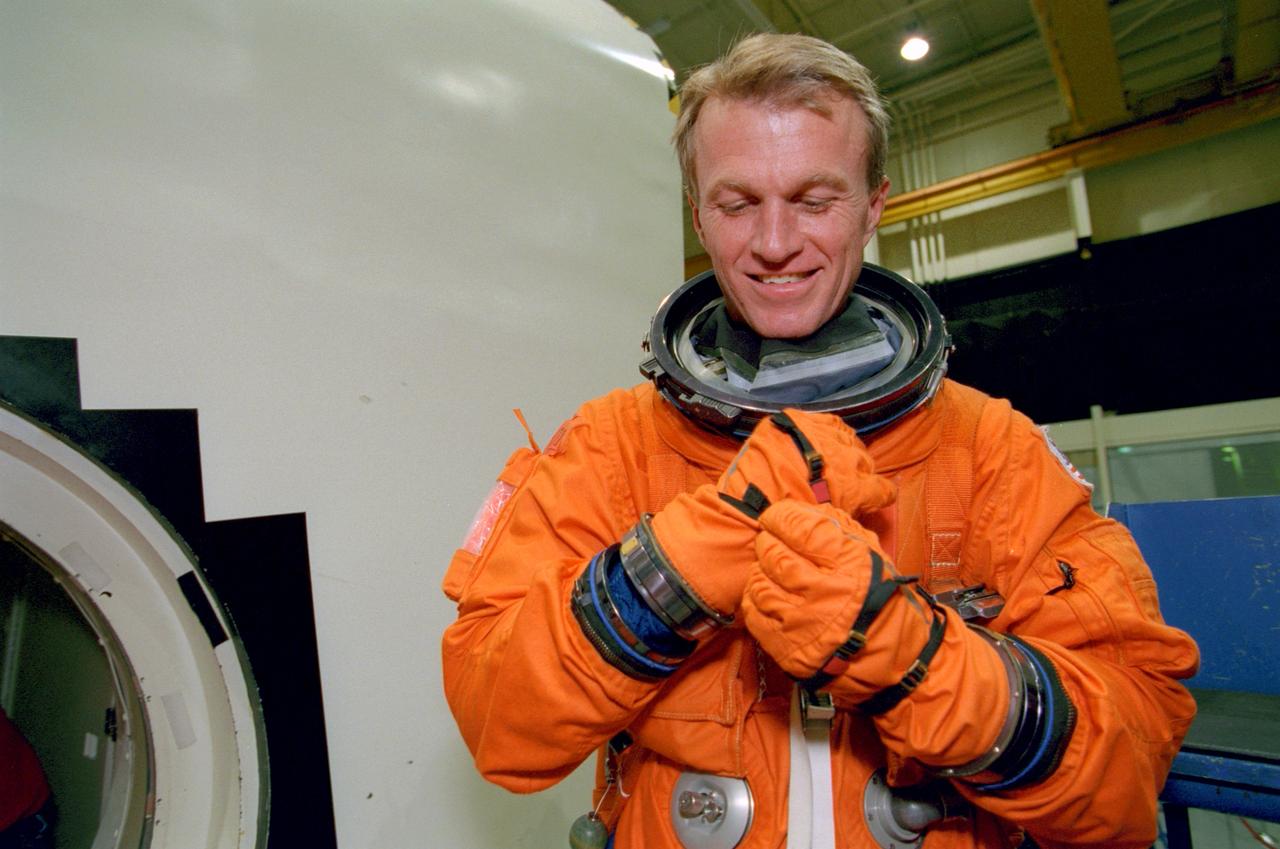
S99-07627 (15 July 1999) --- Astronant Brent W. Jett, STS-97 mission commander, adjusts a glove on his pressure suit during an emergency egress training excercise with the crew compartment trainer (CCT) in the Johnson Space Center's Systems Integration Facility.
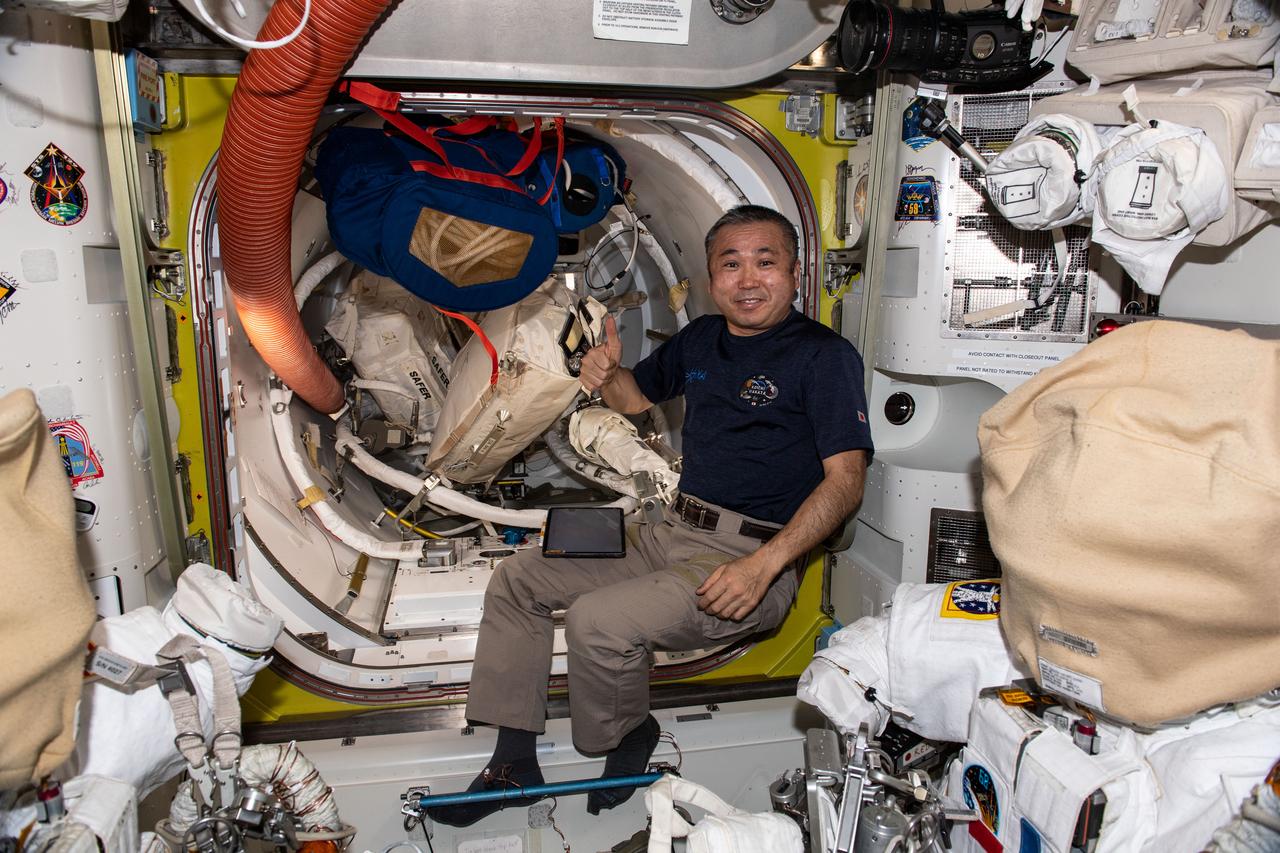
iss068e044024 (Jan. 31, 2023) --- Expedition 68 Flight Engineer Koichi Wakata of the Japan Aerospace Exploration Agency (JAXA) is pictured inside the International Space Station's Quest airlock while organizing spacewalk tools and hardware. In the foreground, are two Extravehicular Mobility Units (EMUs), or spacesuits, with their helmets covered and the lower arms and gloves detached.
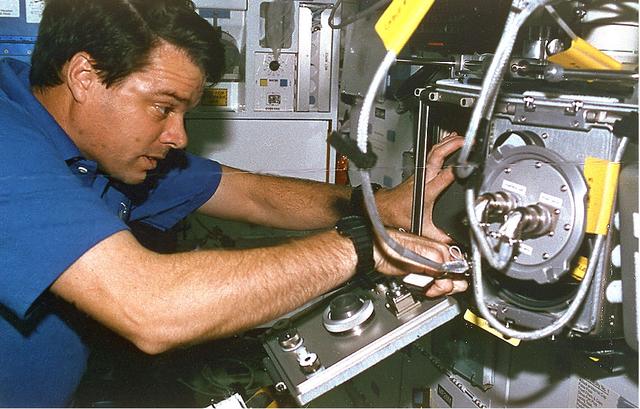
Onboard Space Shuttle Columbia (STS-87) Mission Commander Kevin R. Kregel sets up the mid-deck glove box during early hours of the 16-day United States Microgravity Payload 4 (USMP-4) mission. Kregel was joined by four other astronauts and a Ukrainian payload specialist for the mission.
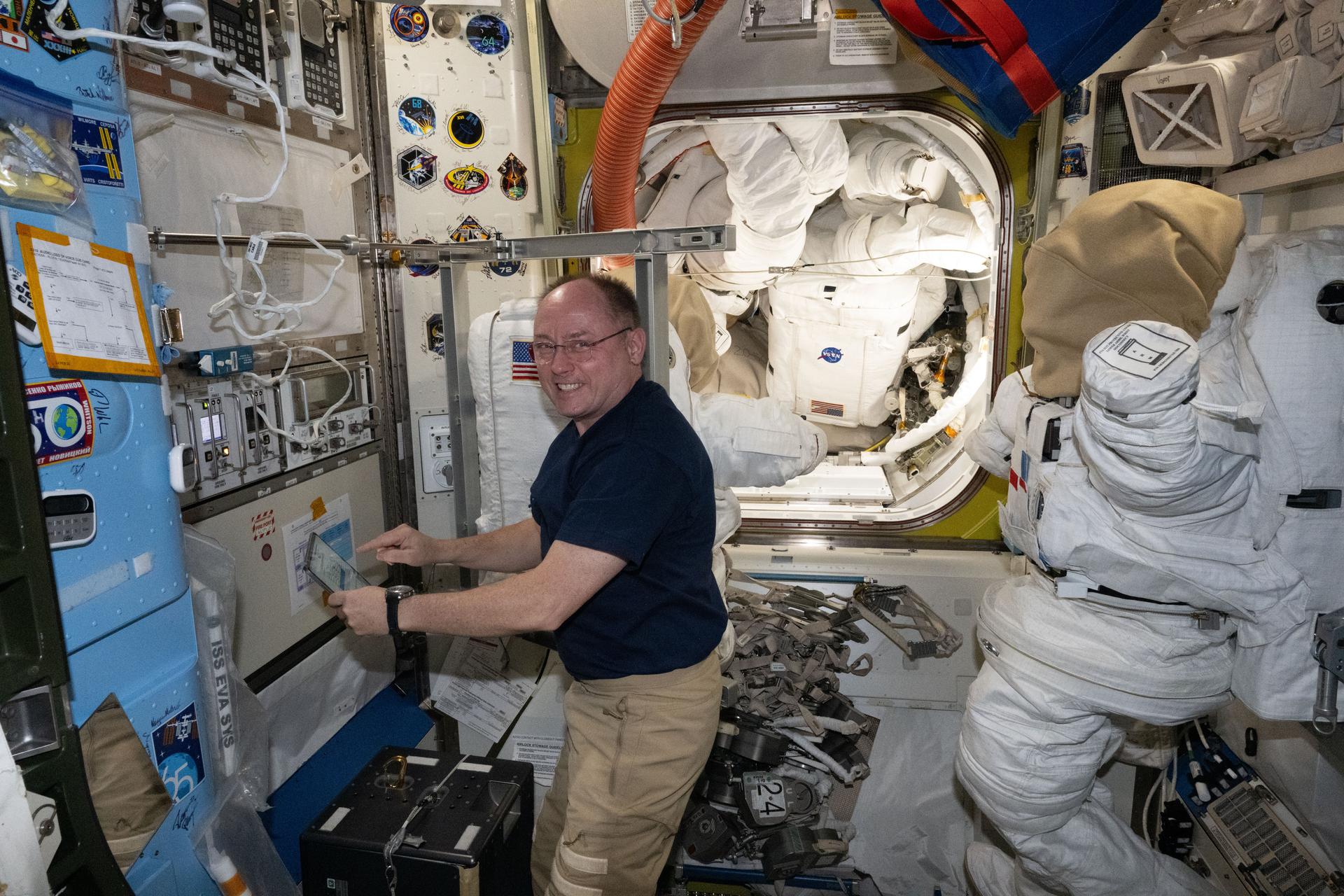
iss073e0865402 (Oct. 6, 2025) --- NASA astronaut and Expedition 73 Flight Engineer Mike Fincke performs maintenance tasks inside the International Space Station’s Quest airlock. Behind him, a U.S. spacesuit is secured to a metallic donning structure on the airlock wall, with its gloves removed and a protective cover placed over the helmet.
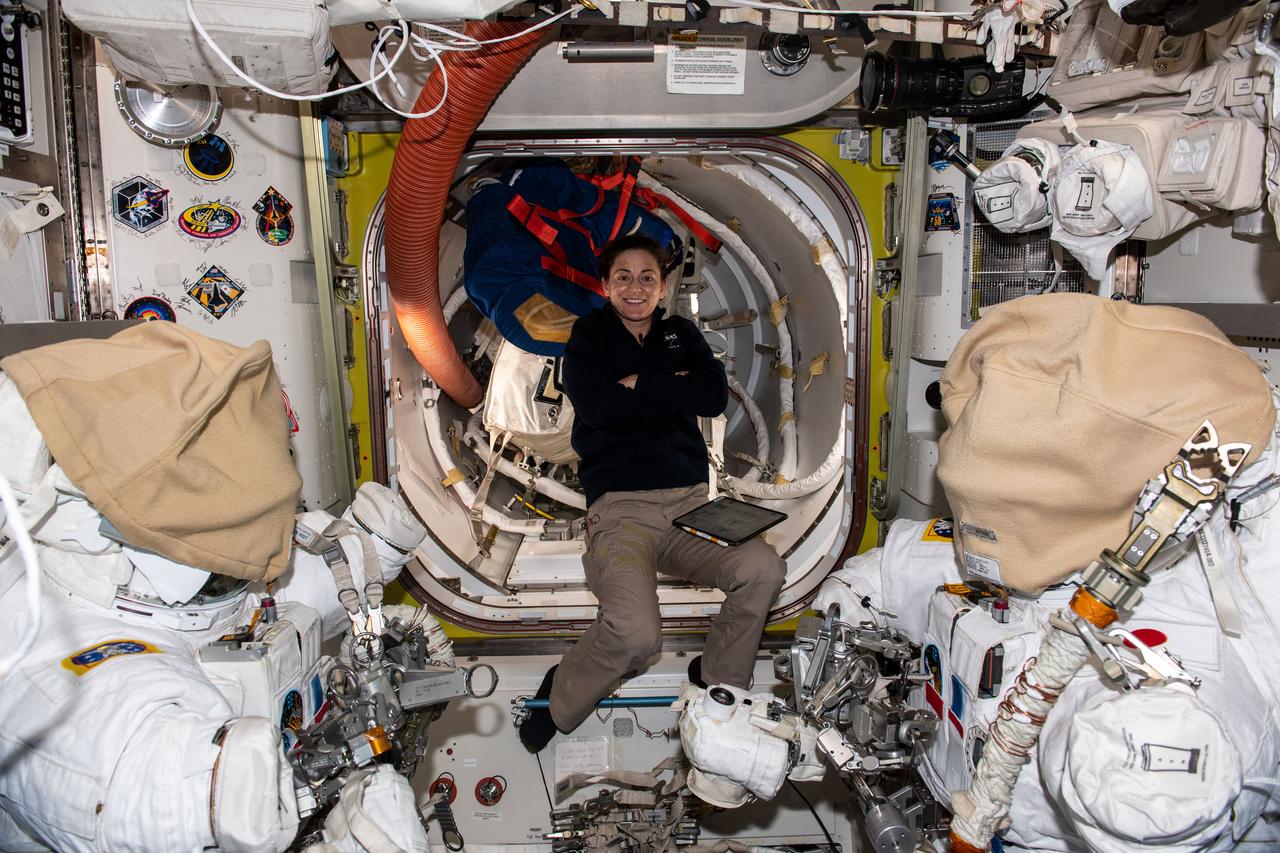
iss068e044025 (Jan. 31, 2023) --- NASA astronaut and Expedition 68 Flight Engineer Nicole Mann is pictured inside the International Space Station's Quest airlock while organizing spacewalk tools and hardware. In the foreground, are two Extravehicular Mobility Units (EMUs), or spacesuits, with their helmets covered and the lower arms and gloves detached.
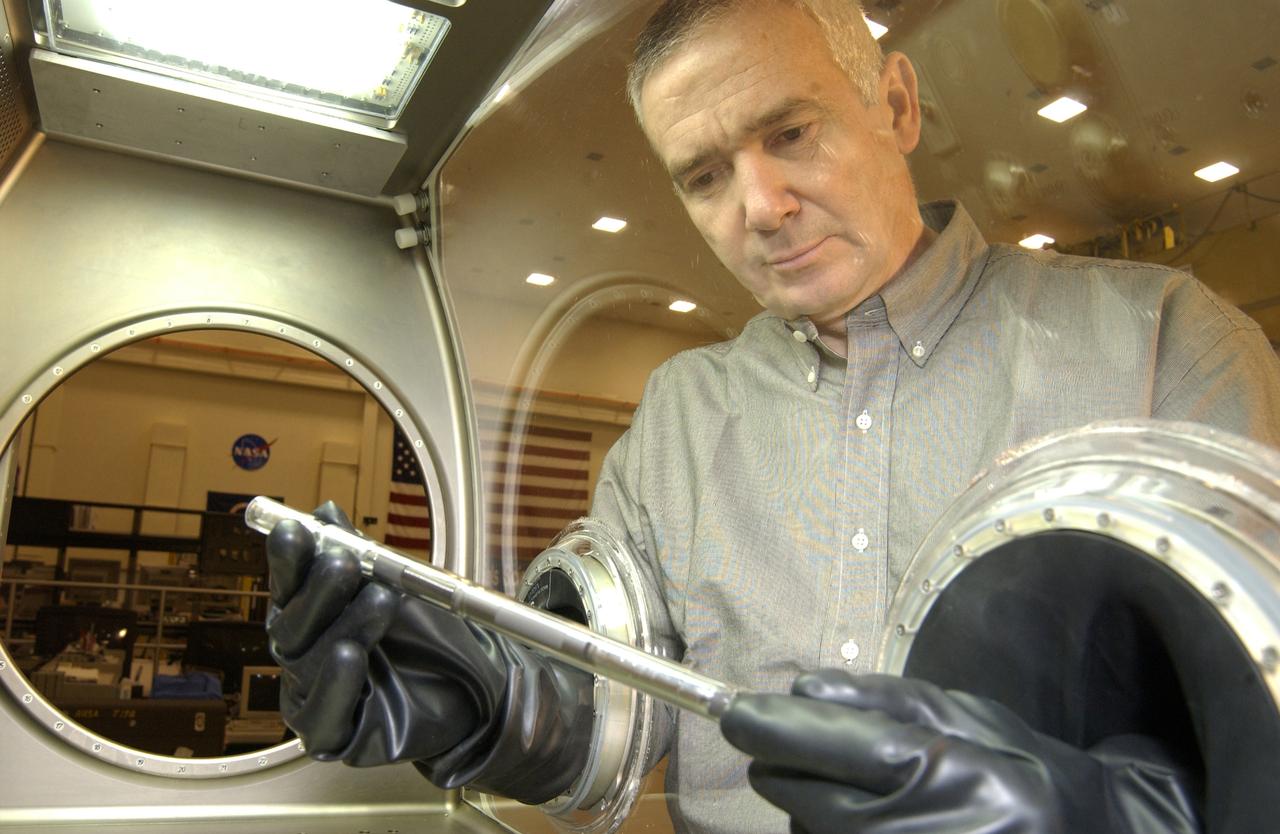
One of the first materials science experiments on the International Space Station -- the Solidification Using a Baffle in Sealed Ampoules (SUBSA) -- will be conducted during Expedition Five inside the Microgravity Science Glovebox. The glovebox is the first dedicated facility delivered to the Station for microgravity physical science research, and this experiment will be the first one operated inside the glovebox. The glovebox's sealed work environment makes it an ideal place for the furnace that will be used to melt semiconductor crystals. Astronauts can change out samples and manipulate the experiment by inserting their hands into a pair of gloves that reach inside the sealed box. Dr. Aleksandar Ostrogorsky, a materials scientist from the Rensselaer Polytechnic Institute, Troy, N.Y., and the principal investigator for the SUBSA experiment, uses the gloves to examine an ampoule like the ones used for his experiment inside the glovebox's work area. The Microgravity Science Glovebox and the SUBSA experiment are managed by NASA's Marshall Space Flight Center in Huntsville, Ala.

S91-51633 (November 1991) --- Astronaut Roberta L. Bondar, Canadian payload specialist.
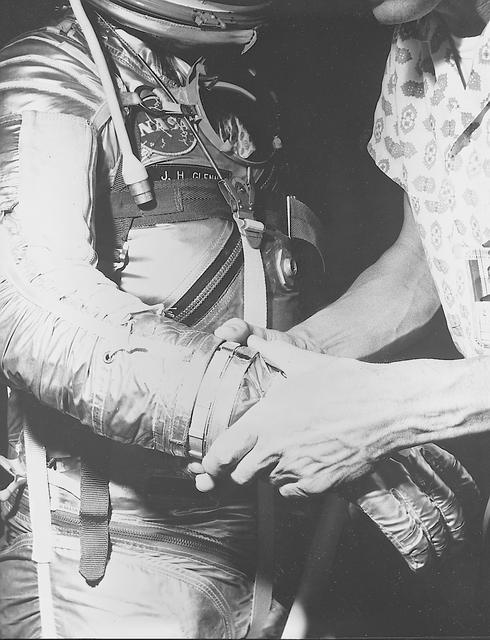
S62-00249 (1962) --- View of astronaut John H. Glenn Jr. being fitted with gloves for his spacesuit during preflight training activities at Cape Canaveral, Florida. Glenn is assisted by suit technician Joe Schmitt. Photo credit: NASA

S91-52649 (Nov 1991) ---- Astronaut Ulf Merbold, PhD, European Space Agency (ESA) Payload Specialist for STS-42, International Microgravity Laboratory (IML-1).
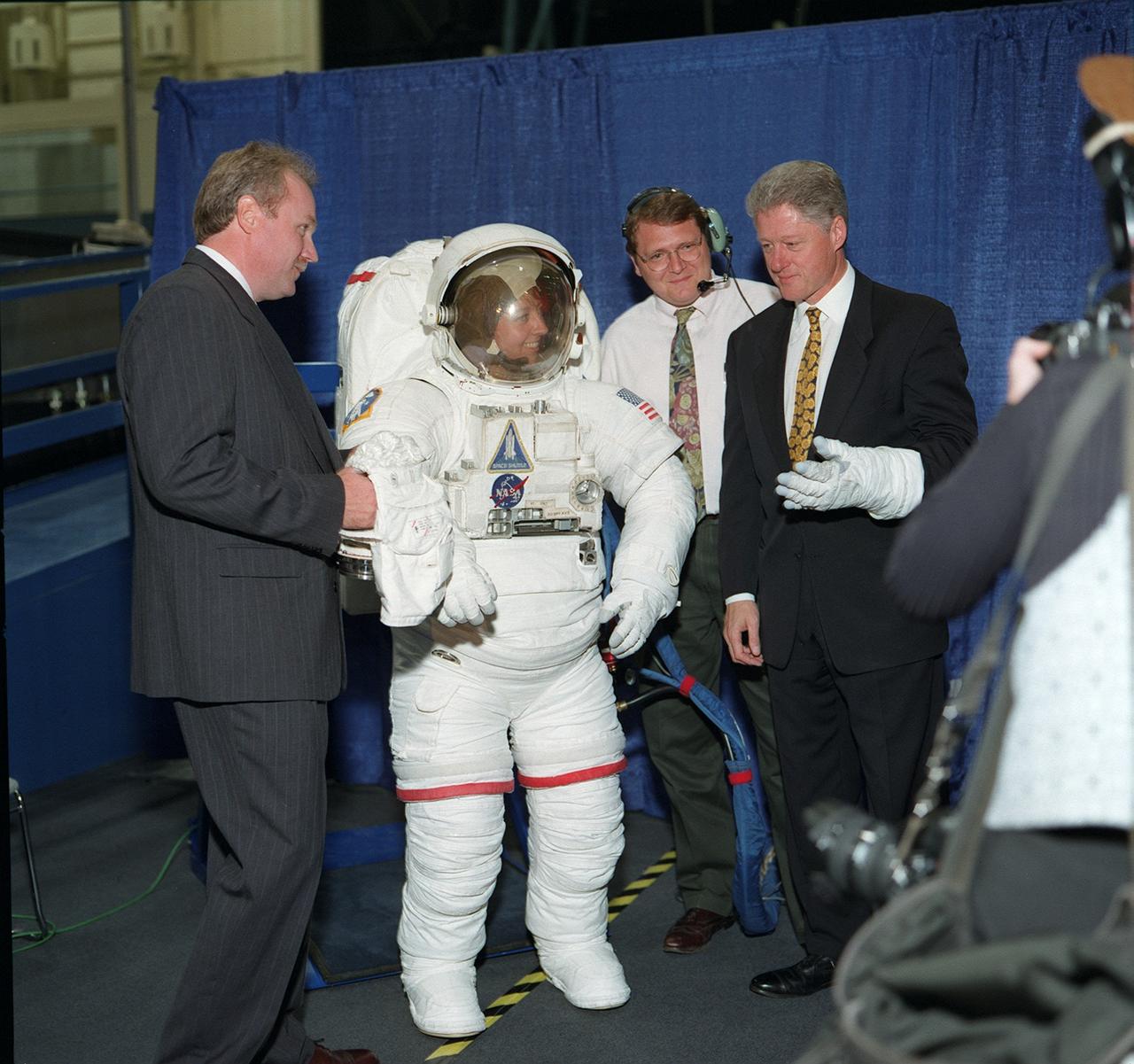
S98-05013 (14 April 1998) --- President Bill Clinton tries on a glove from the Space Shuttle extravehicular mobility unit (EMU) space suit during an April 14 visit to the Johnson Space Center (JSC). In the suit is Amy Ross, a JSC engineer. Others pictured are William E. (Bill) Spenny (left) of the EVA and Spacesuit Systems Branch in the Crew and Thermal Systems Division, Engineering Directorate; and Stephen N. Anderson (second right) of ILC. Photo Credit: NASA or the National Aeronautics and Space Administration
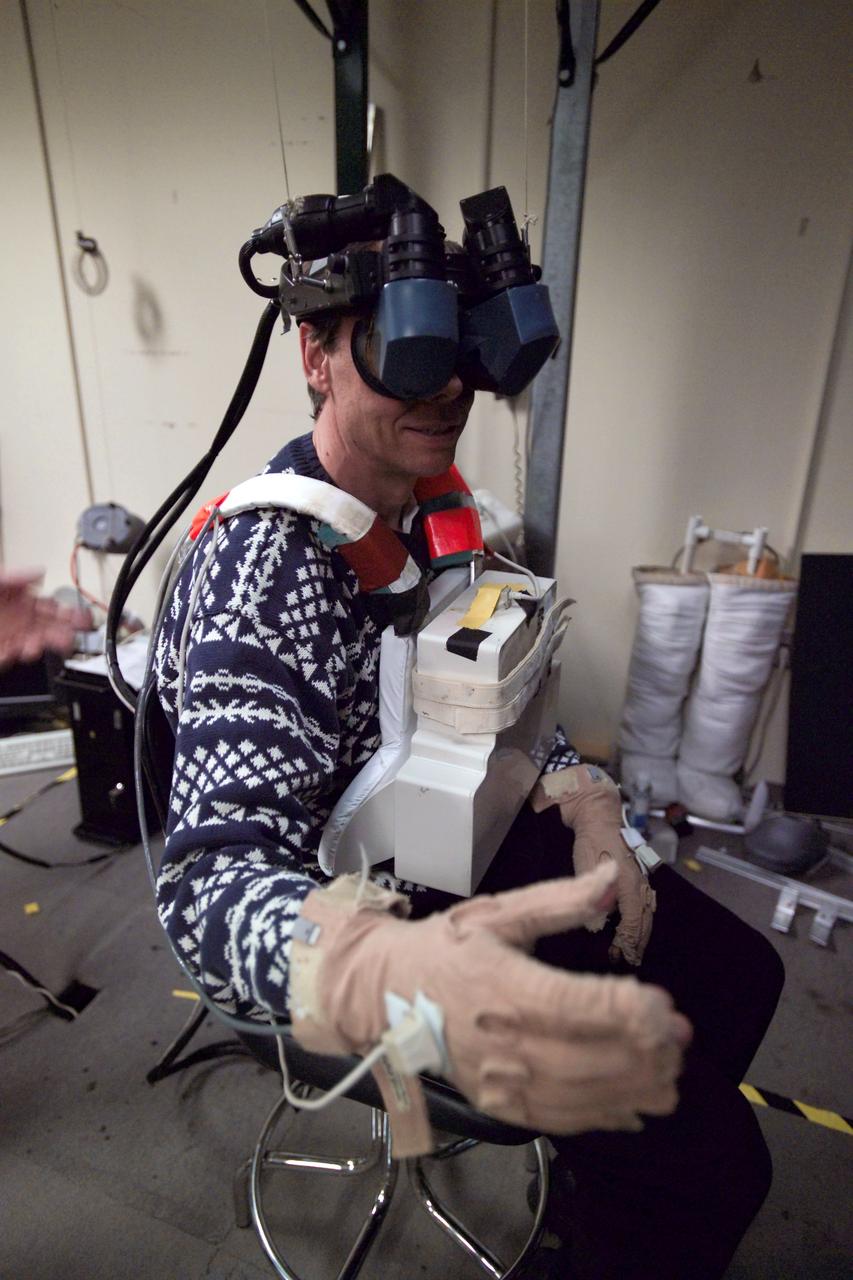
JSC2005-E-04513 (3 Feb. 2005) --- European Space Agency (ESA) astronaut Christer Fuglesang, STS-116 mission specialist, uses virtual reality hardware in the Space Vehicle Mockup Facility at the Johnson Space Center to rehearse some of his duties on the upcoming mission to the international space station. This type of virtual reality training allows the astronauts to wear a helmet and special gloves while looking at computer displays simulating actual movements around the various locations on the station hardware with which they will be working.
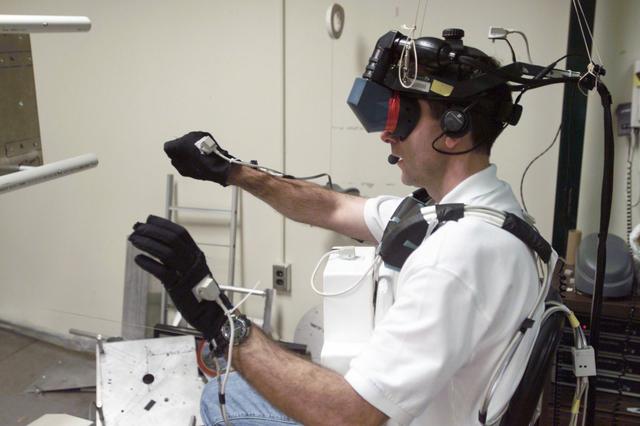
JSC2001-E-39084 (18 October 2001) --- Astronaut Philippe Perrin, STS-111 mission specialist, uses specialized gear in the virtual reality lab at the Johnson Space Center (JSC) to train for his duties aboard the Space Shuttle Endeavour. This type of virtual reality training allows the astronauts to wear a helmet and special gloves while looking at computer displays simulating actual movements around the various locations on the International Space Station (ISS) hardware with which they will be working. Perrin represents CNES, the French Space Agency.

KENNEDY SPACE CENTER, FLA. -- STS-123 Mission Specialist Rick Linnehan adjusts his gloves during suitup for launch on space shuttle Endeavour. The crew will make a record-breaking 16-day mission to the International Space Station. On STS-123, Endeavour and its crew will deliver the first section of the Japan Aerospace Exploration Agency's Kibo laboratory and the Canadian Space Agency's two-armed robotic system, Dextre. Launch is scheduled for 2:28 a.m. EDT March 11. Photo credit: NASA/Kim Shiflett
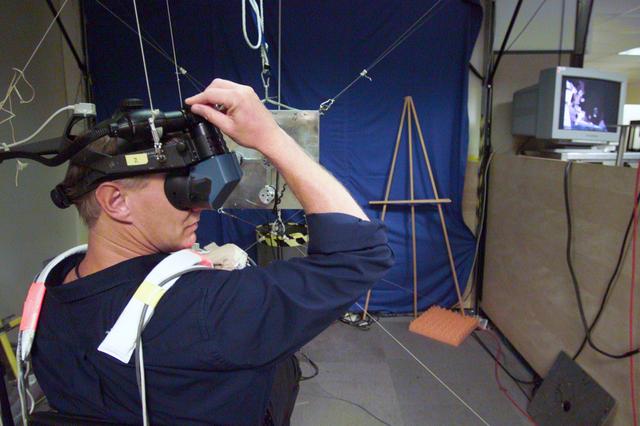
JSC2002-E-34618 (21 August 2002) --- Astronaut Piers J. Sellers, STS-112 mission specialist, uses virtual reality hardware in the Space Vehicle Mockup Facility at the Johnson Space Center (JSC) to rehearse some of his duties on the upcoming mission to the International Space Station (ISS). This type of virtual reality training allows the astronauts to wear a helmet and special gloves while looking at computer displays simulating actual movements around the various locations on the International Space Station (ISS) hardware with which they will be working.
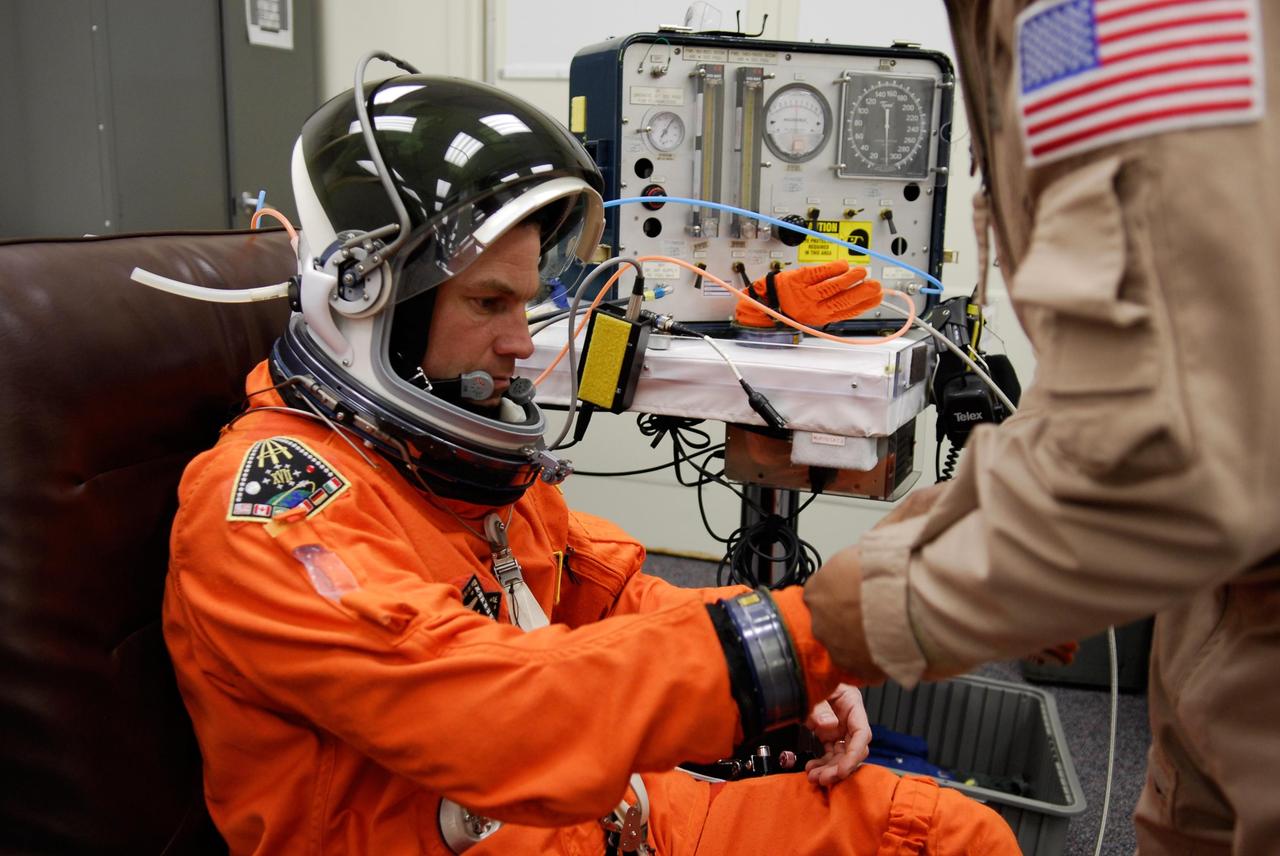
KENNEDY SPACE CENTER, FLA. --Mission Specialist Stanley Love gets help with his gloves to complete his suitup for launch of space shuttle Atlantis on the STS-122 mission. The launch, scheduled for 2:45 p.m. EST, will be the third attempt for Atlantis since December 2007 to carry the European Space Agency's Columbus laboratory to the International Space Station. During the 11-day mission, the crew's prime objective is to attach the laboratory to the Harmony module, adding to the station's size and capabilities. Photo credit: NASA/Kim Shiflett
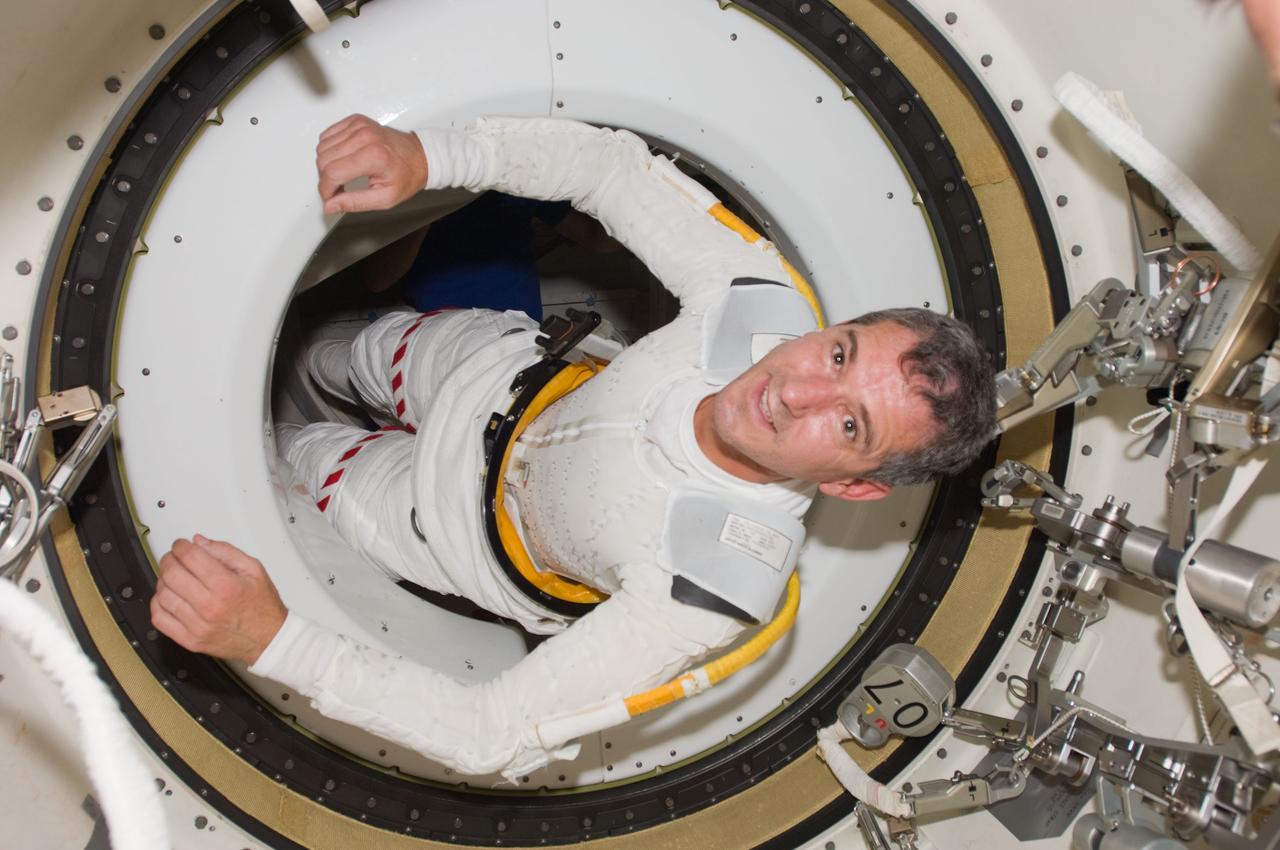
S125-E-007803 (15 May 2009) --- Judging by his countenance, astronaut Michael Good onboard the Space Shuttle Atlantis is enjoying his first experience not only in space but in participating in a very important space walk, as well. The mission specialist is lacking the gloves, helmet and outer torso part of the extravehicular mobility unit space suit, but he is wearing the pants portion. Astronauts Good and Mike Massimino successfully completed the second of five scheduled sessions of extravehicular activity for this crew.
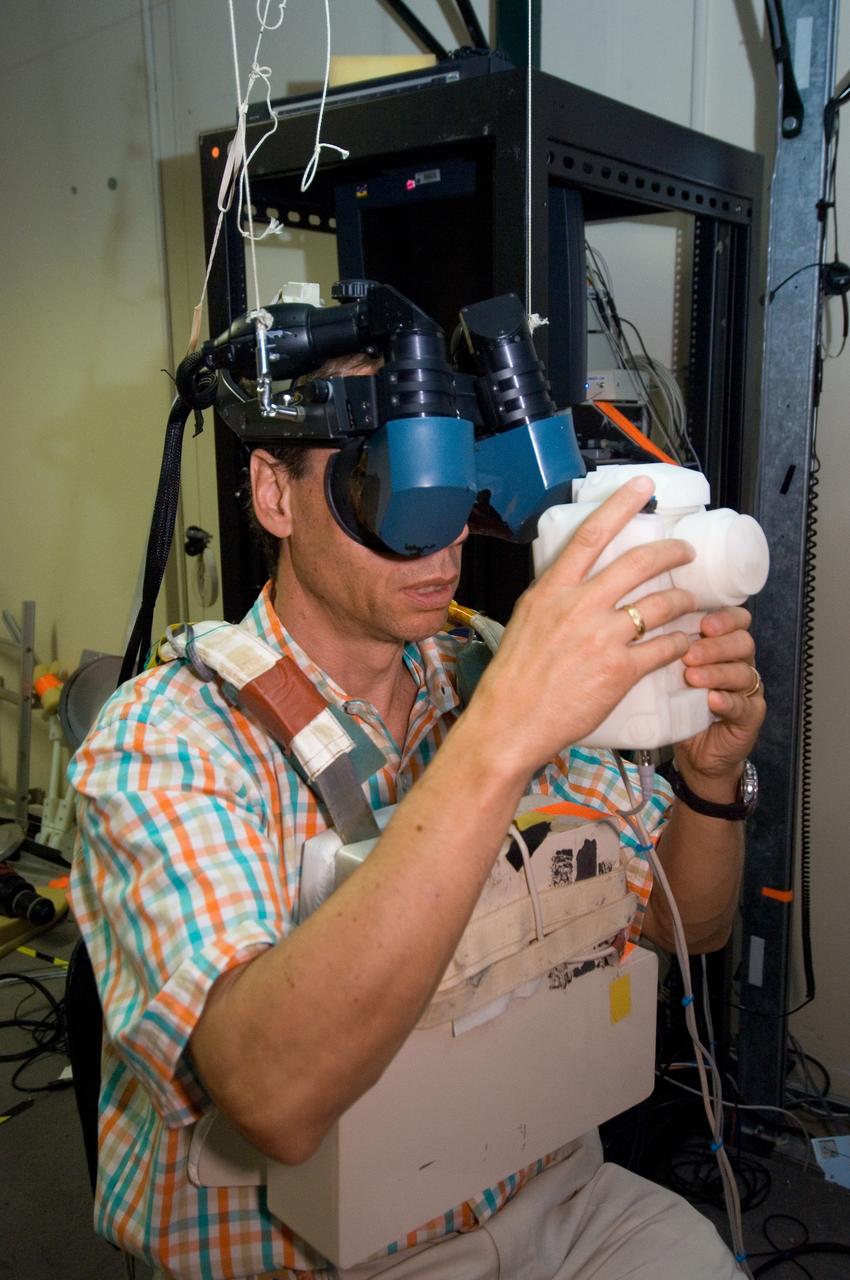
JSC2006-E-33309 (7 Aug. 2006) --- European Space Agency (ESA) astronaut Christer Fuglesang, STS-116 mission specialist, uses virtual reality hardware in the Space Vehicle Mockup Facility at the Johnson Space Center to rehearse some of his duties on the upcoming mission to the International Space Station. This type of virtual reality training allows the astronauts to wear a helmet and special gloves while looking at computer displays simulating actual movements around the various locations on the station hardware with which they will be working.
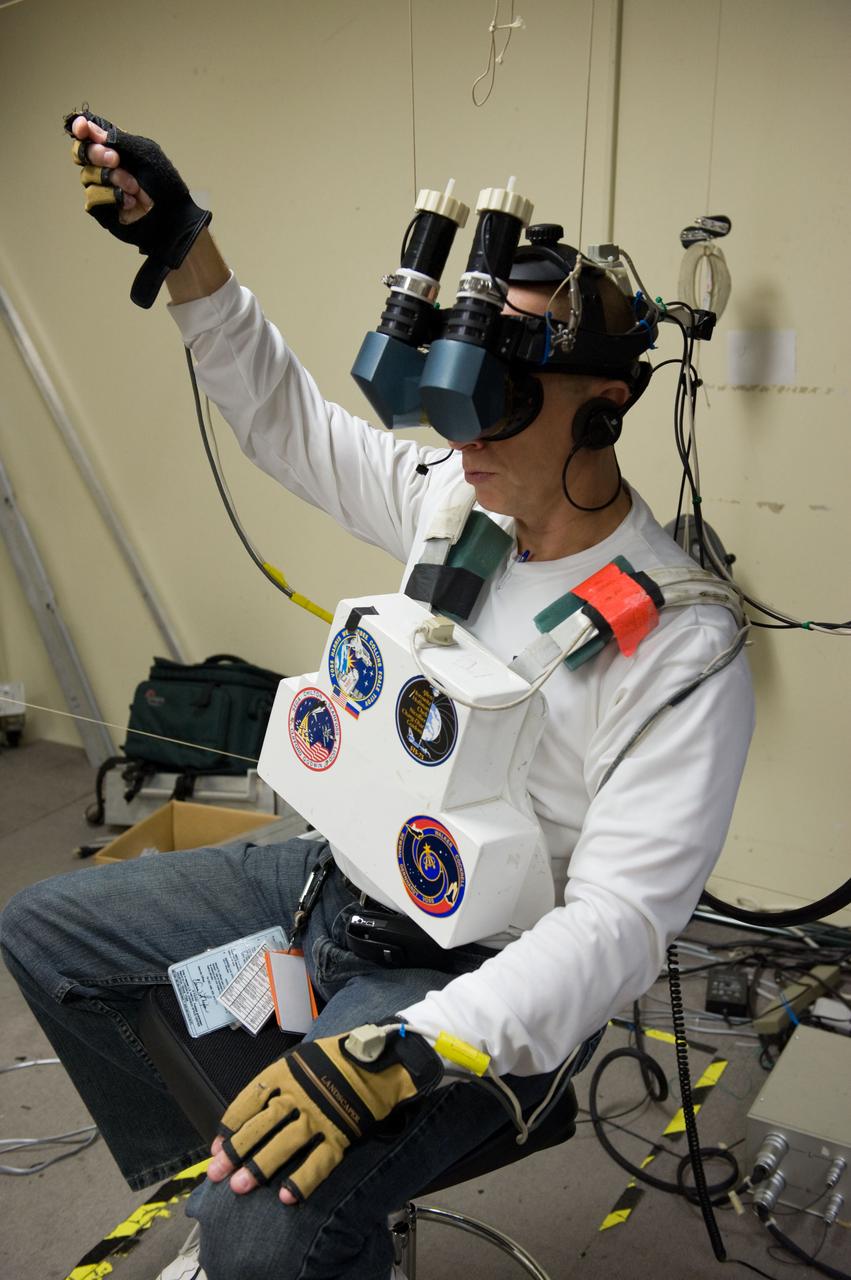
JSC2009-E-214340 (25 Sept. 2009) --- NASA astronaut Clayton Anderson, STS-131 mission specialist, uses virtual reality hardware in the Space Vehicle Mock-up Facility at NASA's Johnson Space Center to rehearse some of his duties on the upcoming mission to the International Space Station. This type of virtual reality training allows the astronauts to wear a helmet and special gloves while looking at computer displays simulating actual movements around the various locations on the station hardware with which they will be working.
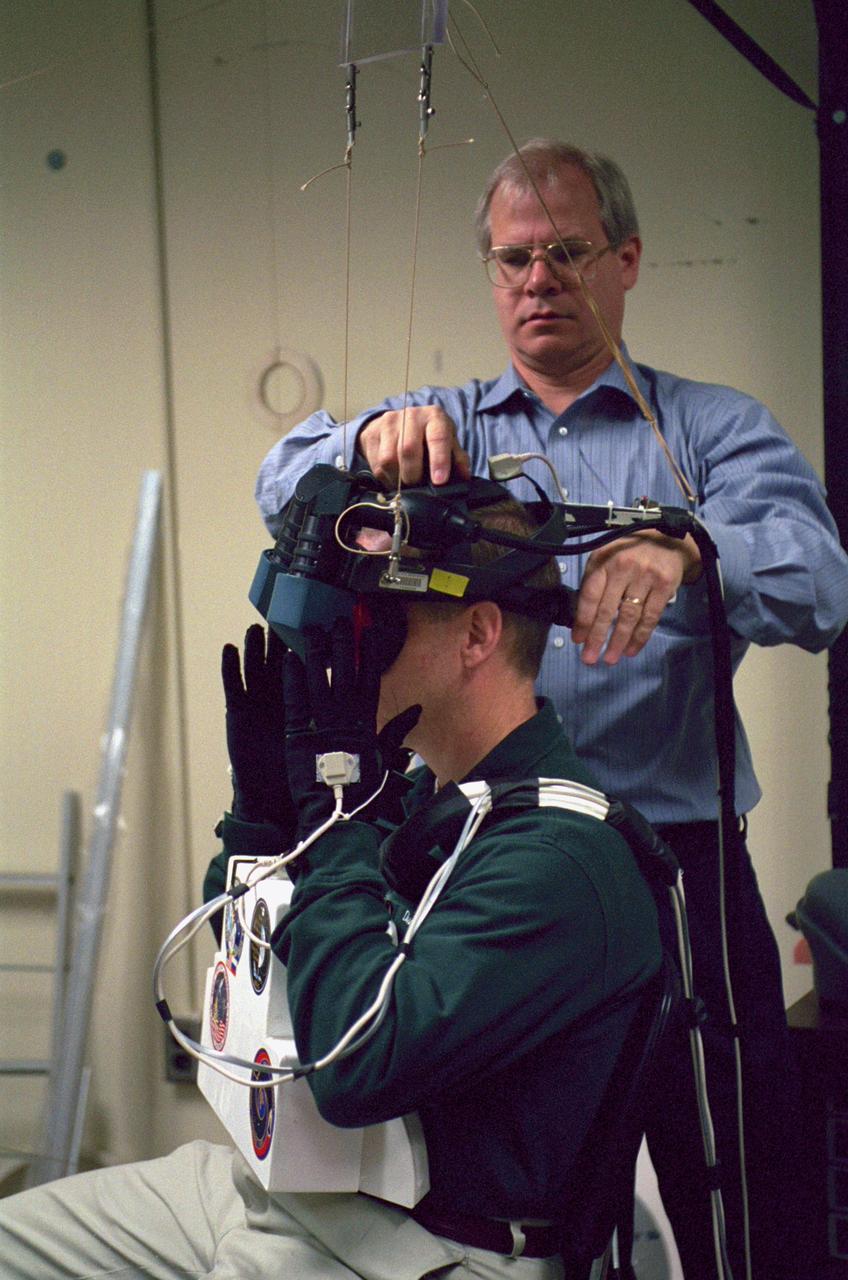
JSC2001-00748 (15 March 2001) --- Astronaut Patrick G. Forrester, STS-105 mission specialist, prepares to use specialized gear in the virtual reality lab at the Johnson Space Center (JSC) to train for his duties aboard the Space Shuttle Discovery. This type of virtual reality training allows the astronauts to wear a helmet and special gloves while looking at computer displays simulating actual movements around the various locations on the International Space Station (ISS) hardware with which they will be working.
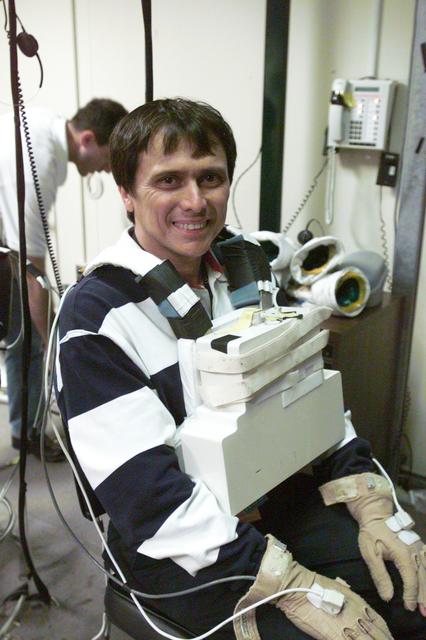
JSC2001-E-39080 (18 October 2001) --- Astronaut Franklin R. Chang-Diaz, STS-111 mission specialist, prepares to use specialized gear in the virtual reality lab at the Johnson Space Center (JSC) to train for his duties aboard the Space Shuttle Endeavour. This type of virtual reality training allows the astronauts to wear a helmet and special gloves while looking at computer displays simulating actual movements around the various locations on the International Space Station (ISS) hardware with which they will be working.
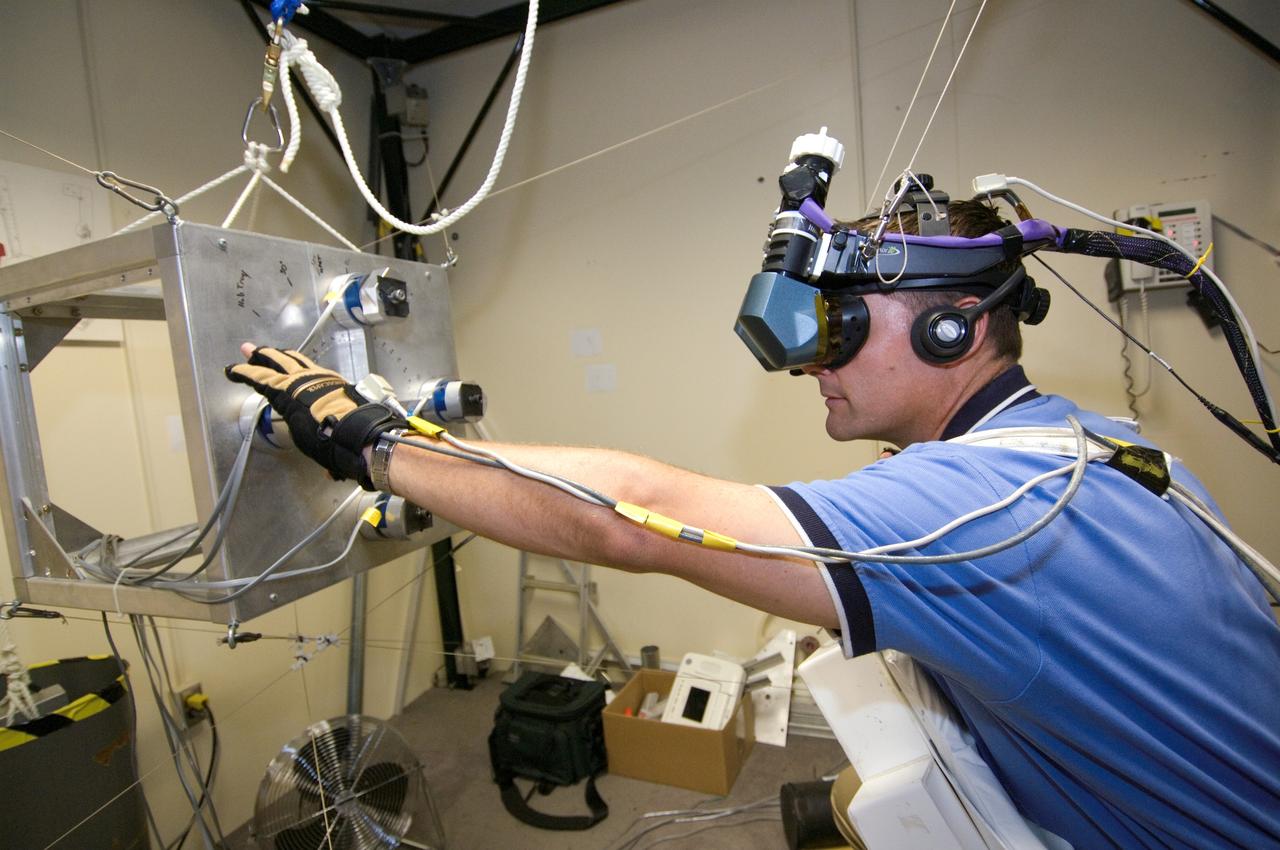
JSC2007-E-41537 (9 Aug. 2007) --- Astronaut Douglas H. Wheelock, STS-120 mission specialist, uses virtual reality hardware in the Space Vehicle Mockup Facility at Johnson Space Center to rehearse some of his duties on the upcoming mission to the International Space Station. This type of virtual reality training allows the astronauts to wear special gloves and other gear while looking at computer displays simulating actual movements around the various locations on the station hardware with which they will be working.
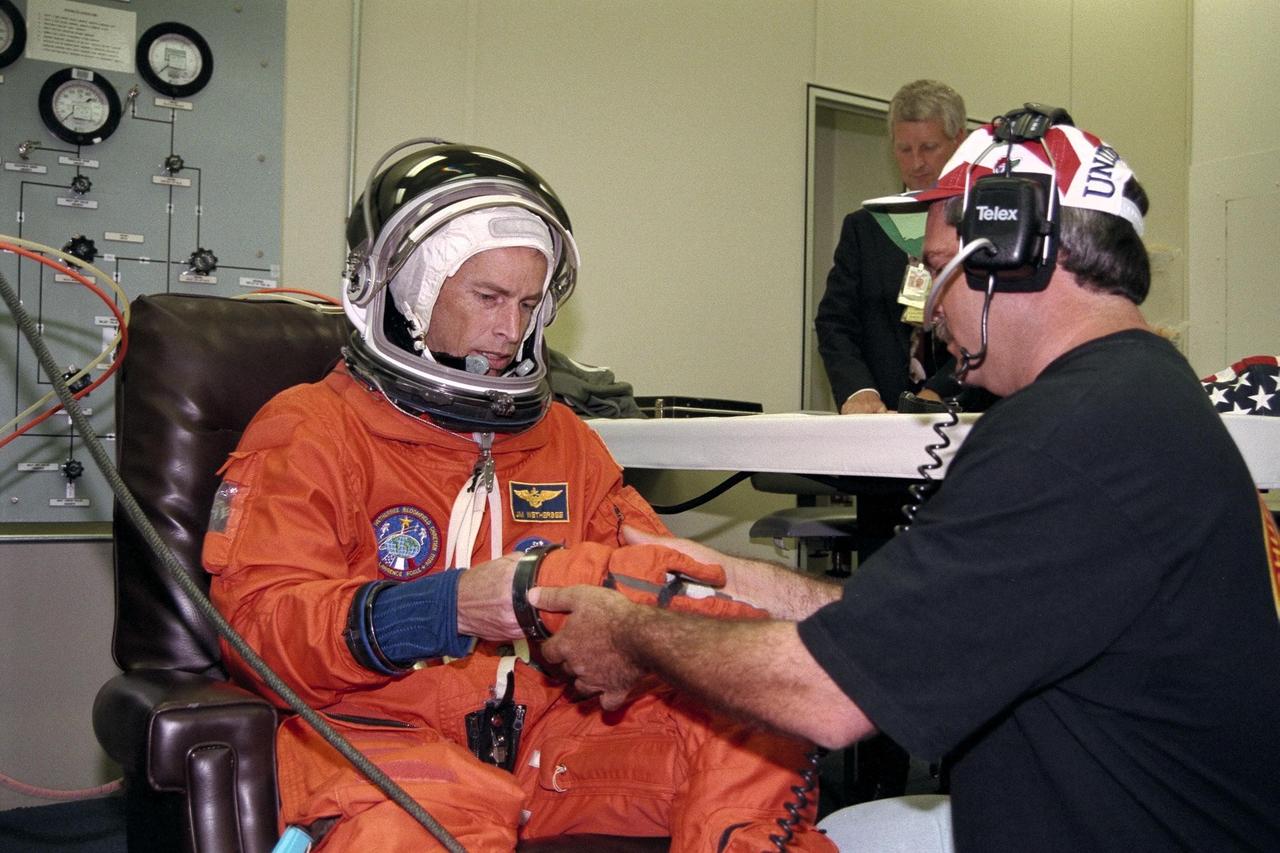
STS-86 Commander James D. Wetherbee gets help from a suit technician while donning the gloves of his launch and entry suit in the Operations and Checkout Building. This will be Wetherbee’s fourth spaceflight. He and the six other crew members will depart shortly for Launch Pad 39A, where the Space Shuttle Atlantis awaits liftoff on a 10-day mission slated to be the seventh docking of the Space Shuttle with the Russian Space Station Mir
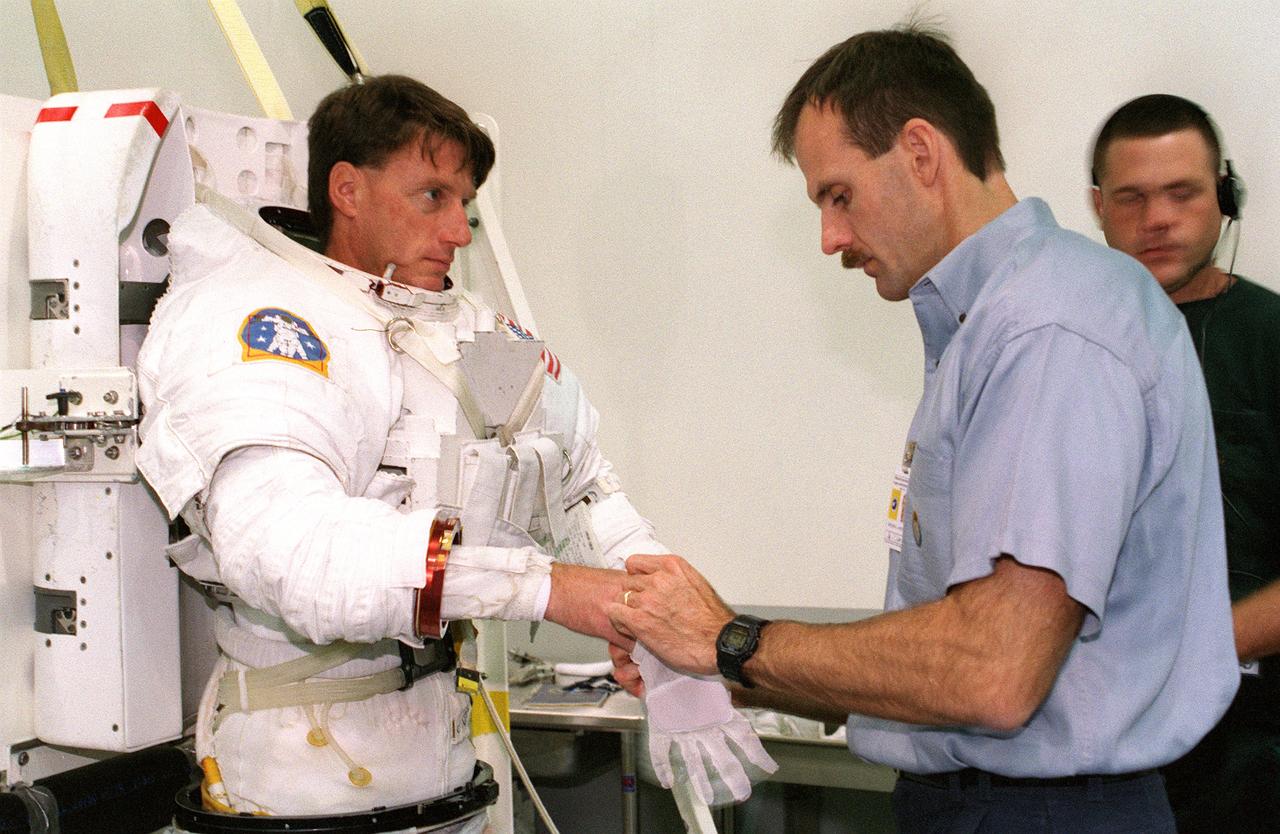
S99-08358 (26 July 1999) --- Astronaut Steven L. Smith (right), mission specialist, assists fellow MS, astronaut C. Michael Foale, with the gloves on his extravehicular mobility unit (EMU) space suit prior to a rehearsal of some of the STS-103 space walk chores in the Neutral Buoyancy Laboratory (NBL). A mockup of part of the Hubble Space Telescope (HST) lies at the bottom of the nearby pool to serve as a prop for the rehearsals of Foale and his crewmates.
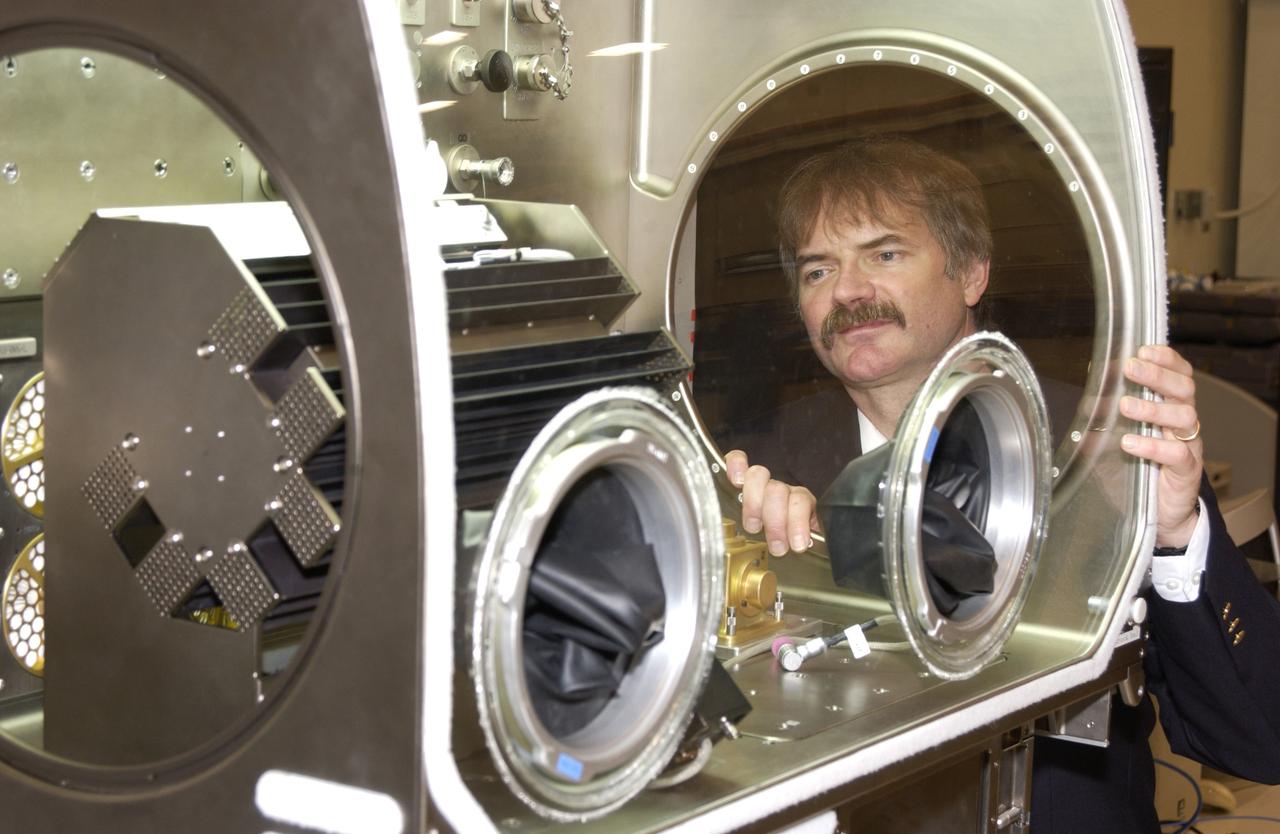
Dr. Richard Grugel, a materials scientist at NASA's Marshall Space Flight in Huntsville, Ala., examines the furnace used to conduct his Pore Formation and Mobility Investigation -- one of the first two materials science experiments to be conducted on the International Space Station. This experiment studies materials processes similar to those used to make components used in jet engines. Grugel's furnace was installed in the Microgravity Science Glovebox through the circular port on the side. In space, crewmembers are able to change out samples using the gloves on the front of the facility's work area.
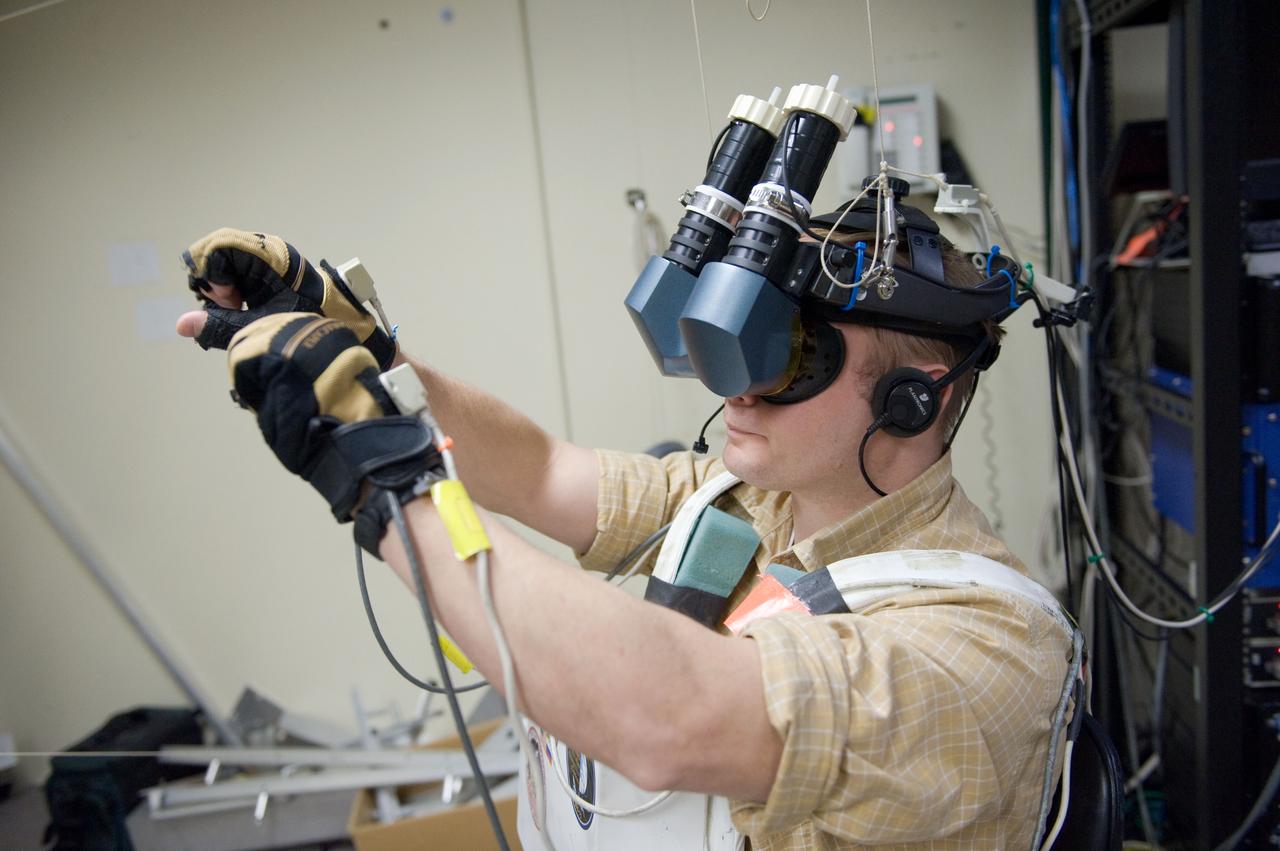
JSC2010-E-043685 (25 March 2010) --- NASA astronaut Michael Fincke, STS-134 mission specialist, uses virtual reality hardware in the Space Vehicle Mock-up Facility at NASA's Johnson Space Center to rehearse some of his duties on the upcoming mission to the International Space Station. This type of virtual reality training allows the astronauts to wear a helmet and special gloves while looking at computer displays simulating actual movements around the various locations on the station hardware with which they will be working.
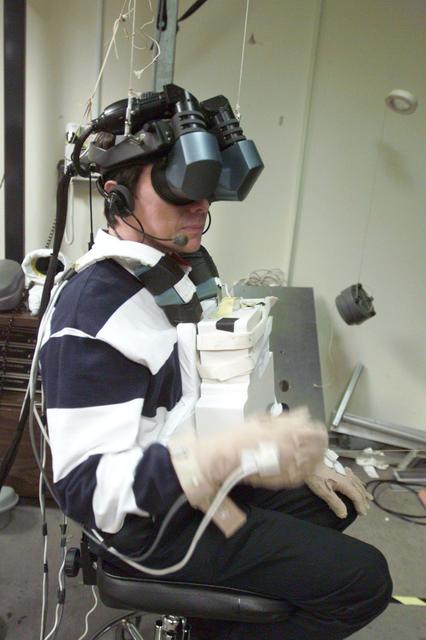
JSC2001-E-39083 (18 October 2001) --- Astronaut Franklin R. Chang-Diaz, STS-111 mission specialist, uses specialized gear in the virtual reality lab at the Johnson Space Center (JSC) to train for his duties aboard the Space Shuttle Endeavour. This type of virtual reality training allows the astronauts to wear a helmet and special gloves while looking at computer displays simulating actual movements around the various locations on the International Space Station (ISS) hardware with which they will be working.
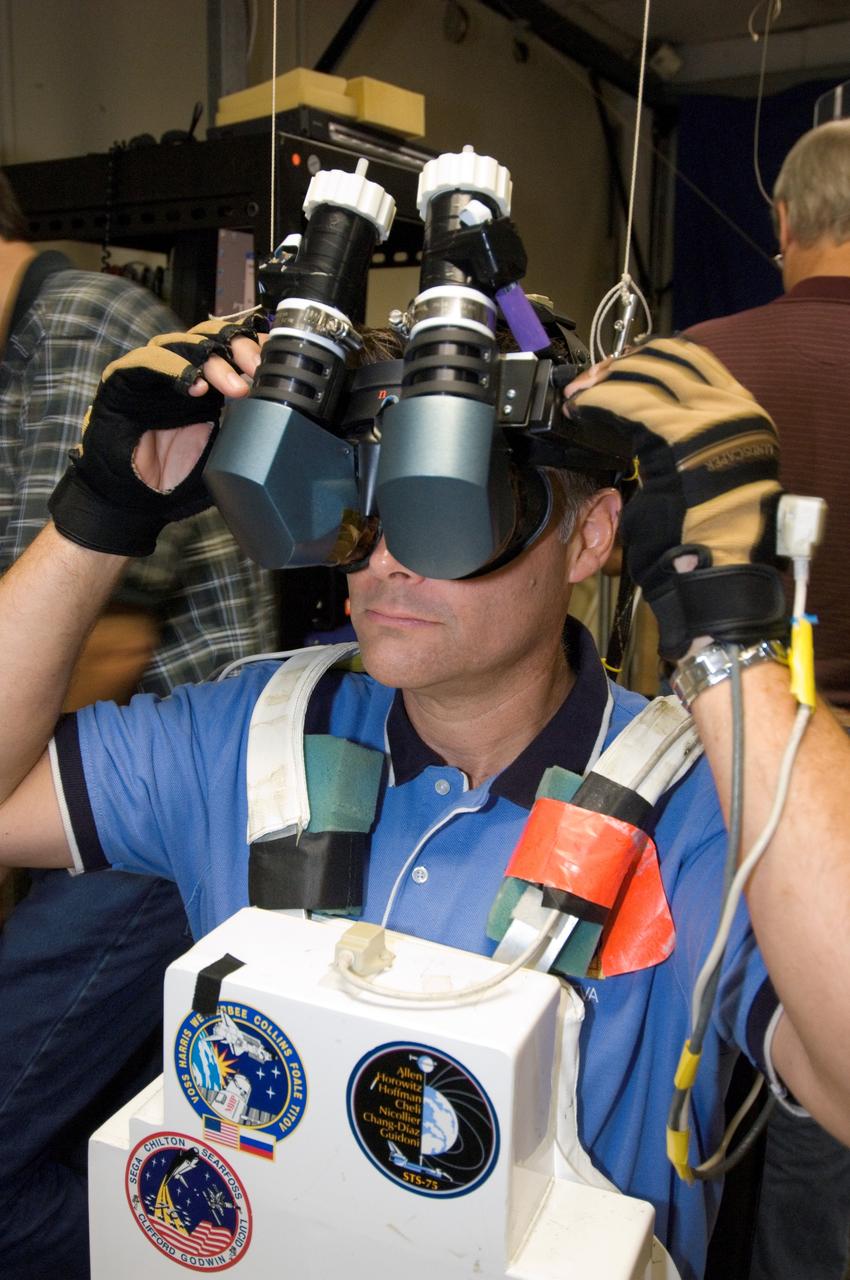
JSC2007-E-41535 (9 Aug. 2007) --- Astronaut Douglas H. Wheelock, STS-120 mission specialist, uses virtual reality hardware in the Space Vehicle Mockup Facility at Johnson Space Center to rehearse some of his duties on the upcoming mission to the International Space Station. This type of virtual reality training allows the astronauts to wear special gloves and other gear while looking at computer displays simulating actual movements around the various locations on the station hardware with which they will be working.
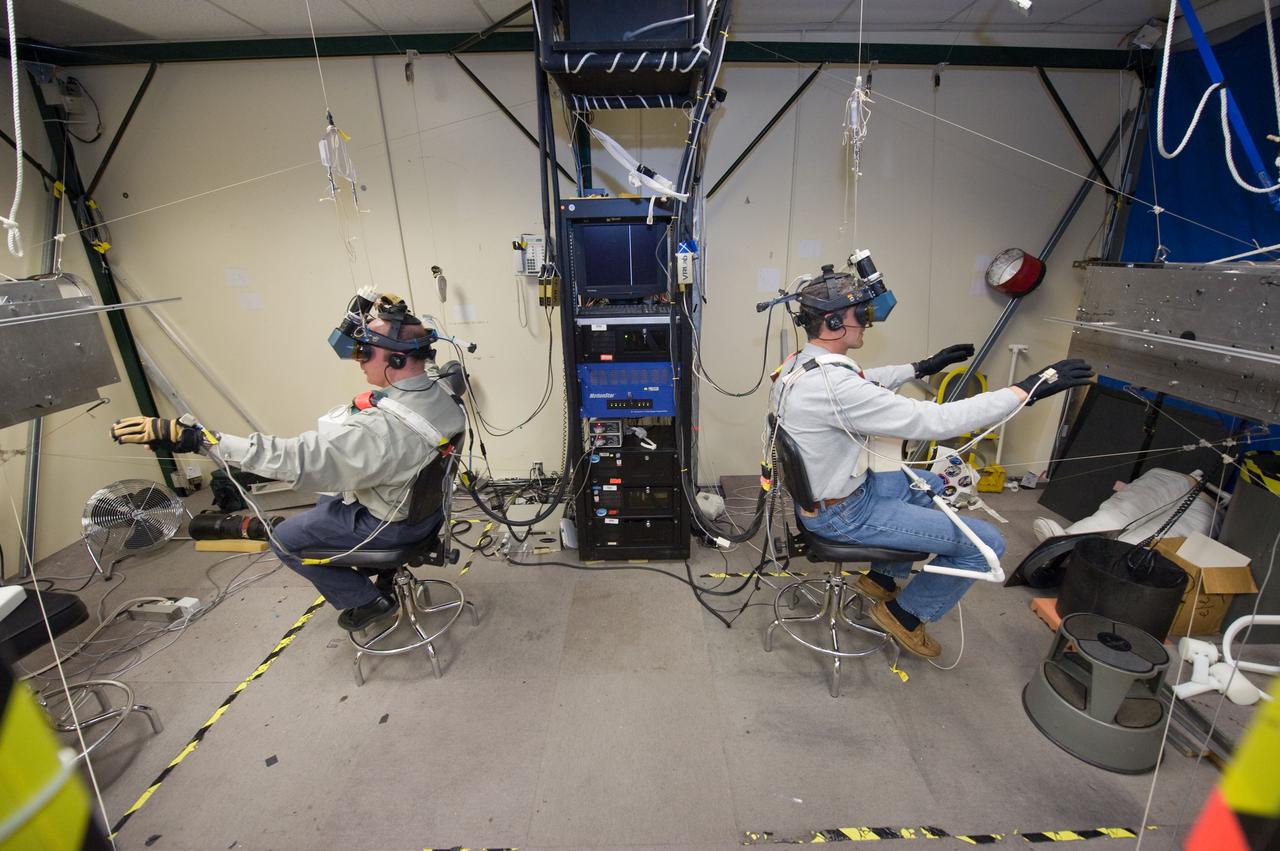
JSC2010-E-014960 (28 Jan. 2010) --- NASA astronauts Garrett Reisman (left) and Michael Good, both STS-132 mission specialists, use virtual reality hardware in the Space Vehicle Mock-up Facility at NASA's Johnson Space Center to rehearse some of their duties on the upcoming mission to the International Space Station. This type of virtual reality training allows the astronauts to wear a helmet and special gloves while looking at computer displays simulating actual movements around the various locations on the station hardware with which they will be working.
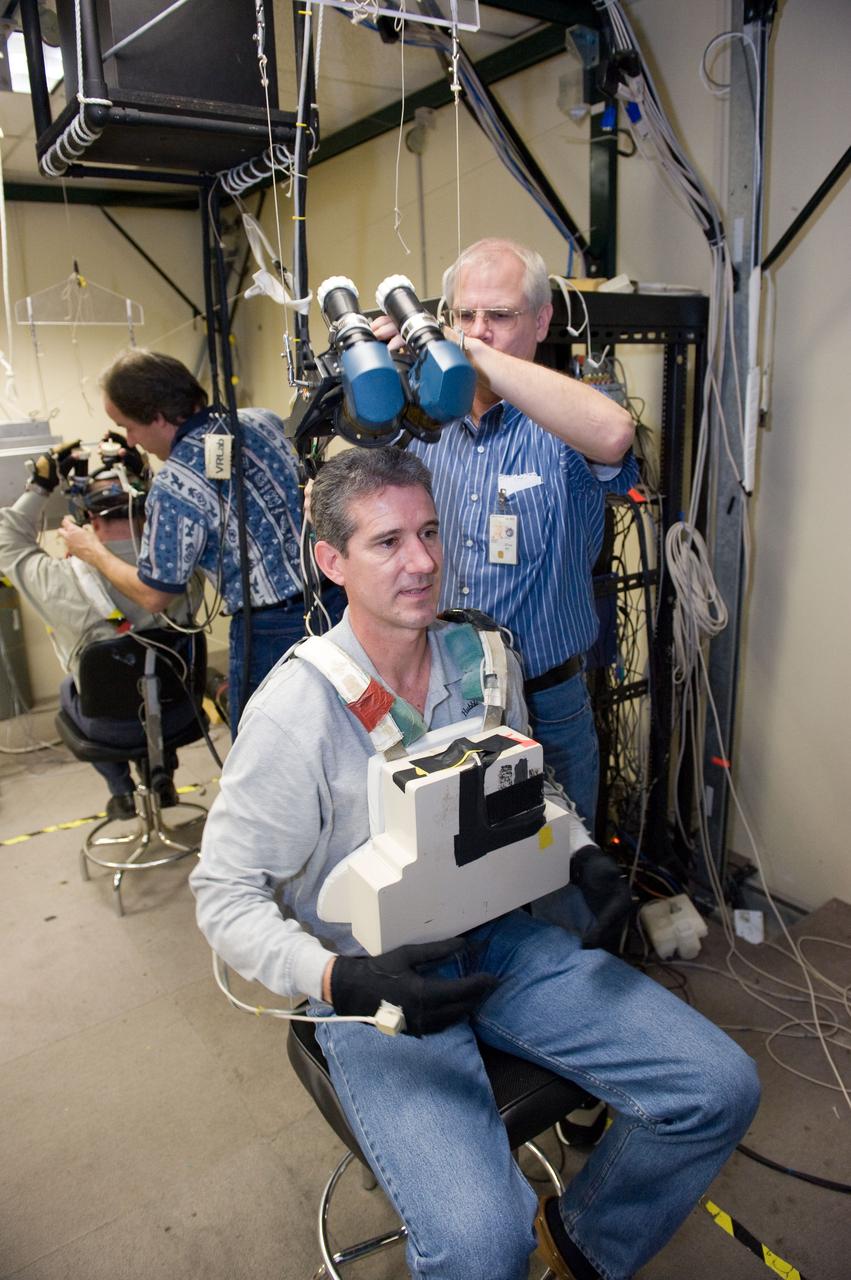
JSC2010-E-014957 (28 Jan. 2010) --- NASA astronaut Michael Good, STS-132 mission specialist, uses virtual reality hardware in the Space Vehicle Mock-up Facility at NASA's Johnson Space Center to rehearse some of his duties on the upcoming mission to the International Space Station. This type of virtual reality training allows the astronauts to wear a helmet and special gloves while looking at computer displays simulating actual movements around the various locations on the station hardware with which they will be working. David Homan assisted Good.
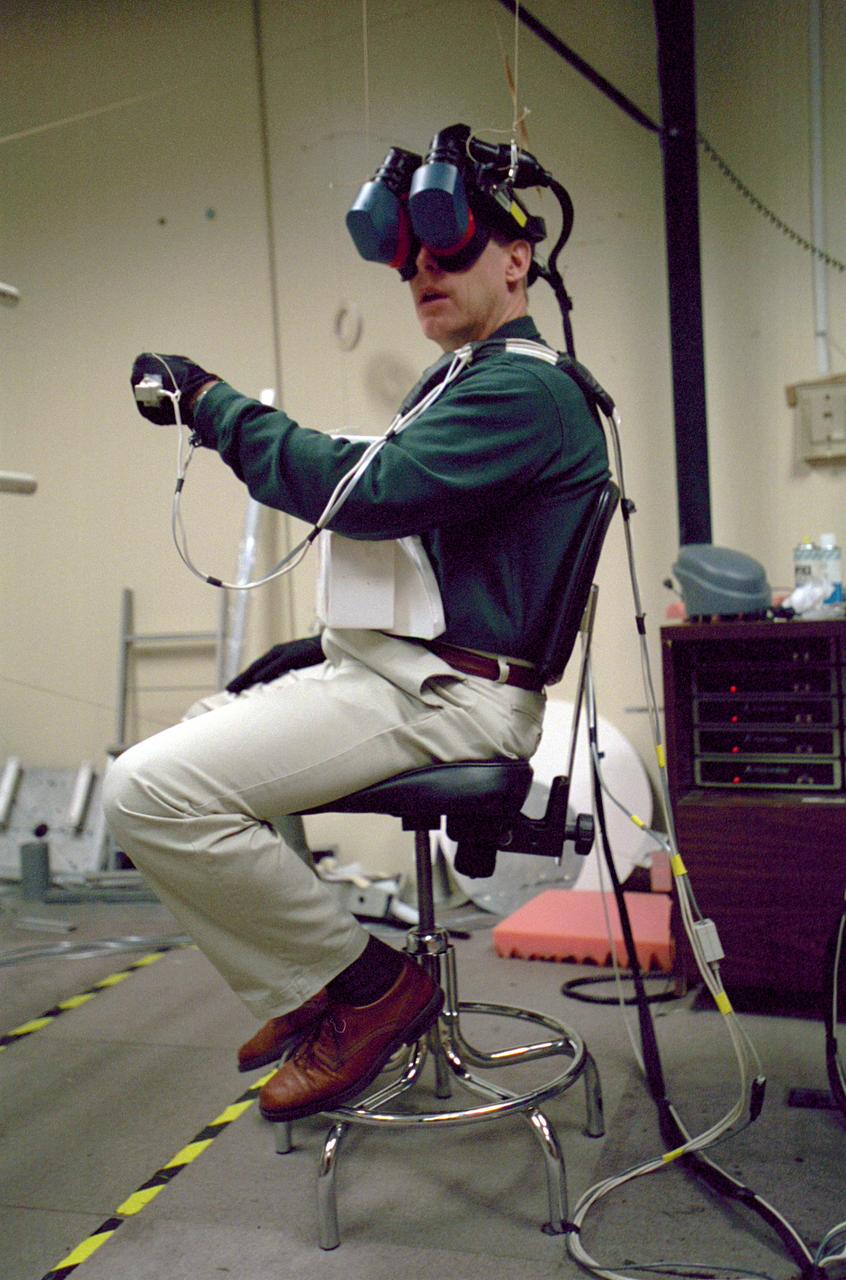
JSC2001-00754 (15 March 2001) --- Astronaut Patrick G. Forrester, STS-105 mission specialist, uses specialized gear in the virtual reality lab at the Johnson Space Center (JSC) to train for his duties aboard the Space Shuttle Discovery. This type of virtual reality training allows the astronauts to wear a helmet and special gloves while looking at computer displays simulating actual movements around the various locations on the International Space Station (ISS) hardware with which they will be working.
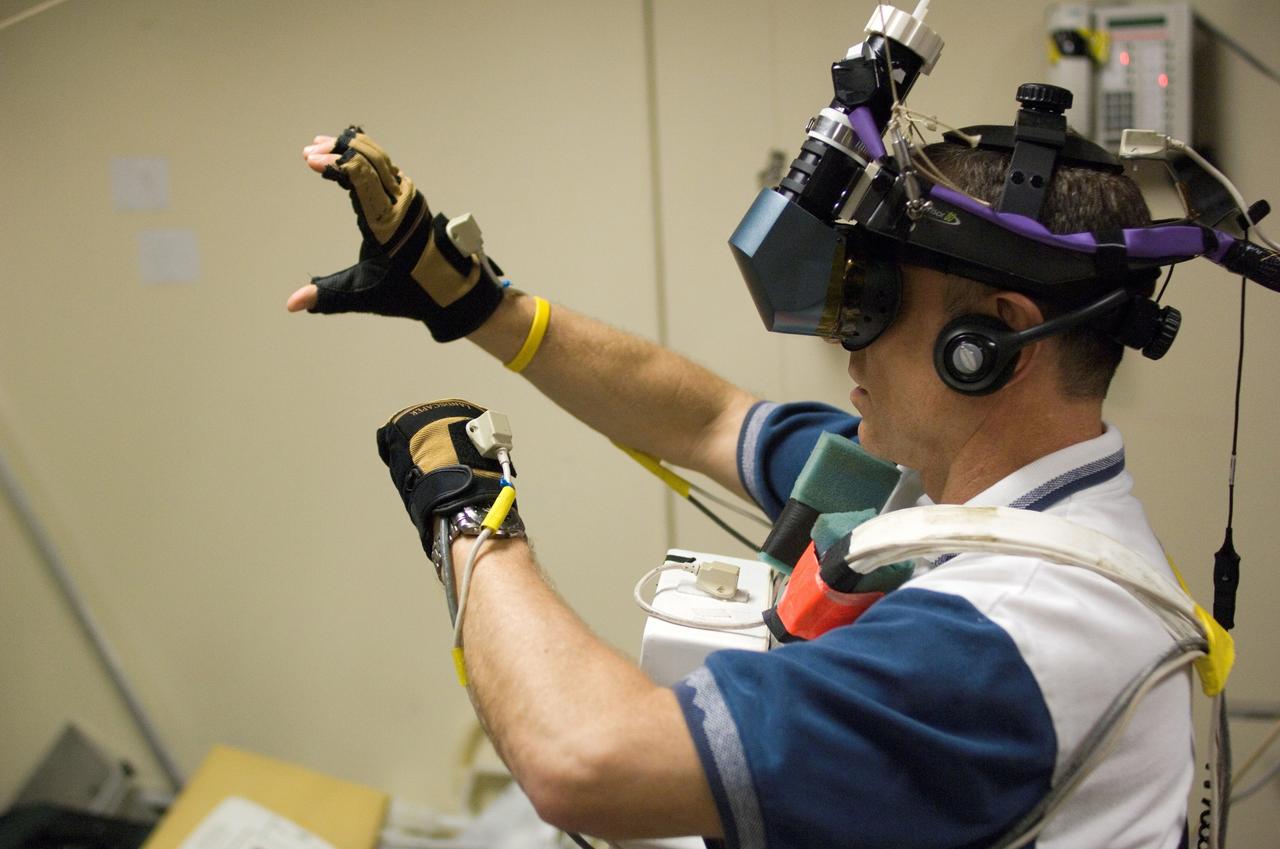
STS-118 astronaut and mission specialist Dafydd R. “Dave” Williams, representing the Canadian Space Agency, uses Virtual Reality Hardware in the Space Vehicle Mock Up Facility at the Johnson Space Center to rehearse some of his duties for the upcoming mission. This type of virtual reality training allows the astronauts to wear special gloves and other gear while looking at a computer that displays simulating actual movements around the various locations on the station hardware which with they will be working.