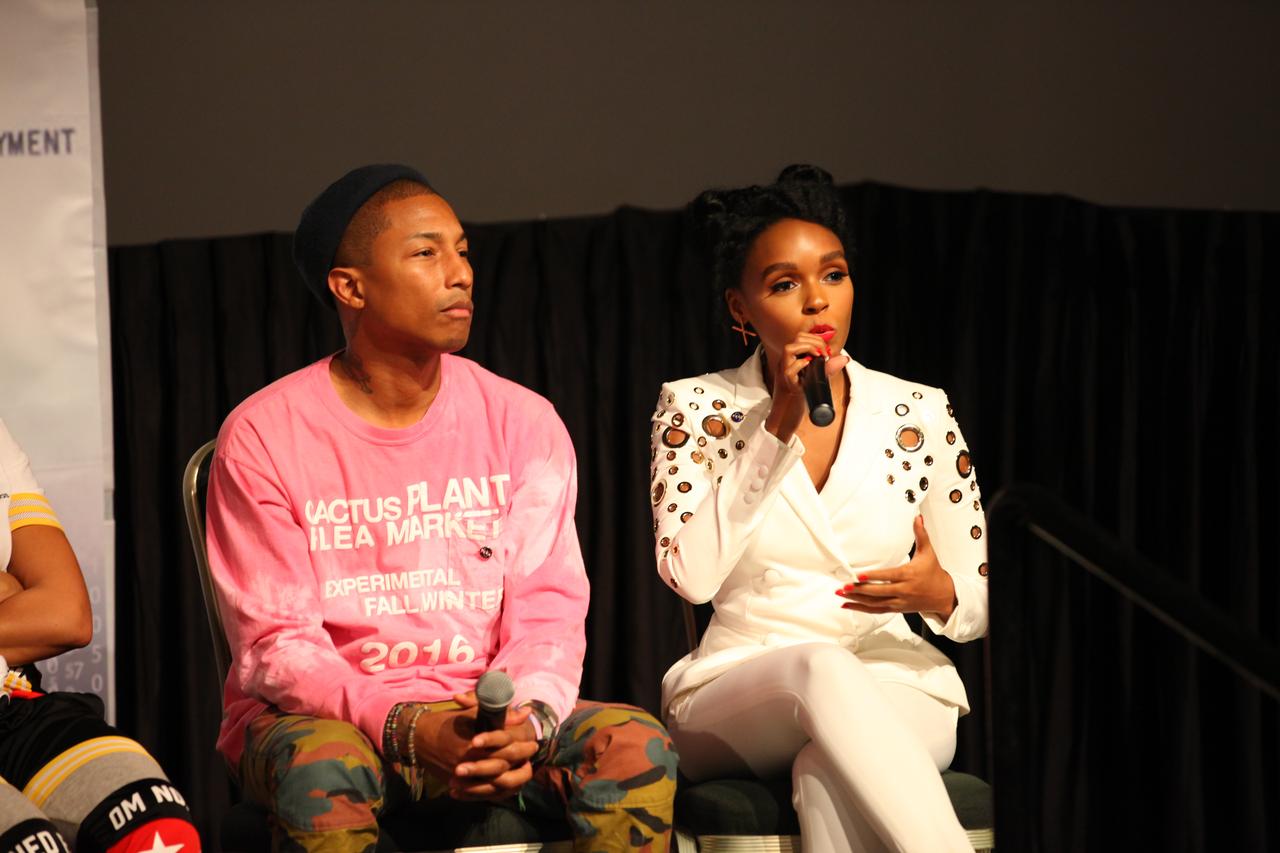
In the IMAX Theater of the Kennedy Space Center Visitor Complex Cast and crew members of the upcoming motion picture "Hidden Figures" participate in a question and answer session. From the left are Pharrell Williams, musician and producer of “Hidden Figures," and Janelle Monáe, who portrays Mary Jackson in the film. The movie chronicles the lives of Katherine Johnson, Dorothy Vaughan and Mary Jackson, three African-American women who worked for NASA as human "computers.” Their mathematical calculations were crucial to the success of Project Mercury missions including John Glenn’s orbital flight aboard Friendship 7 in 1962. The film is due in theaters in January 2017.
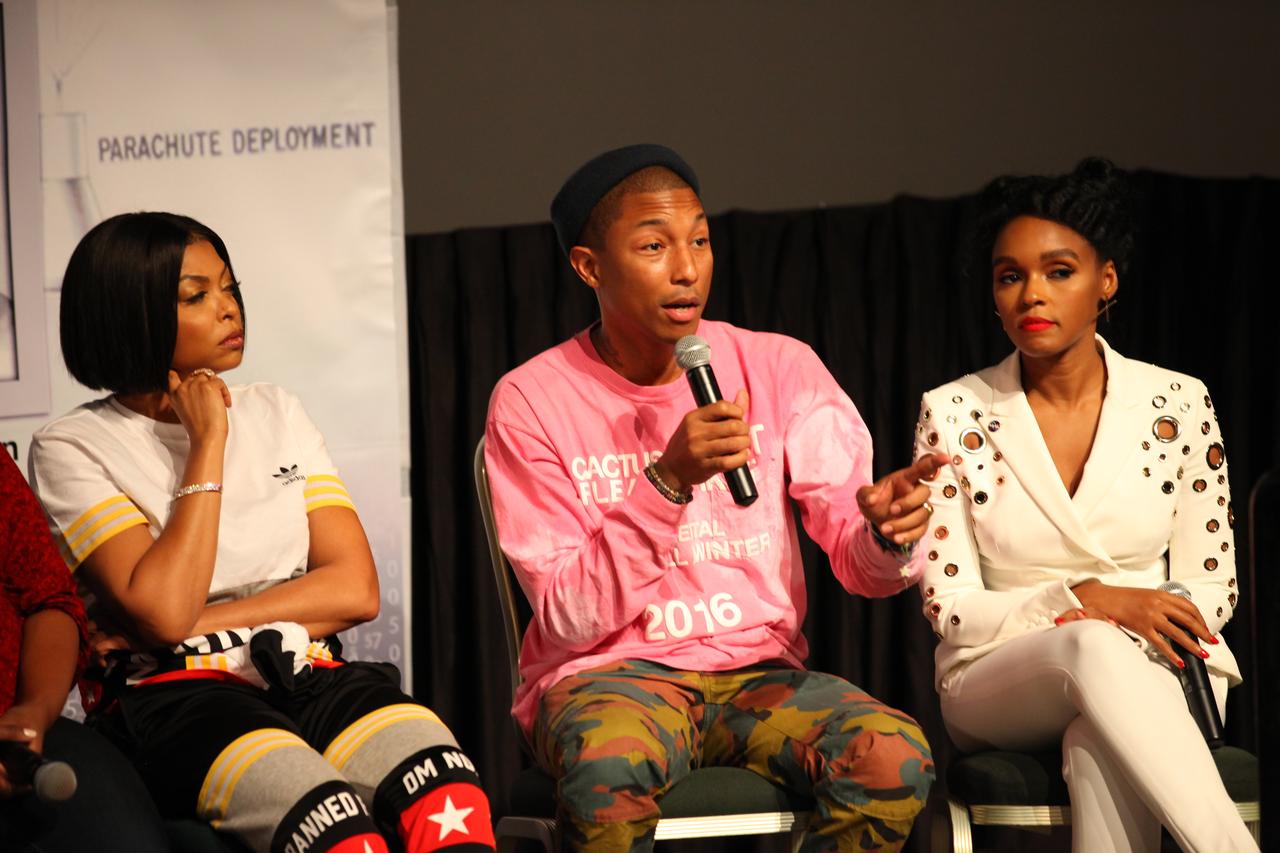
In the IMAX Theater of the Kennedy Space Center Visitor Complex Cast and crew members of the upcoming motion picture "Hidden Figures" participate in a question and answer session. From the left are Taraji P. Henson, who portrays Katherine Johnson in the film, Pharrell Williams, musician and producer of “Hidden Figures," and Janelle Monáe, who portrays Mary Jackson. The movie chronicles the lives of Katherine Johnson, Dorothy Vaughan and Mary Jackson, three African-American women who worked for NASA as human "computers.” Their mathematical calculations were crucial to the success of Project Mercury missions including John Glenn’s orbital flight aboard Friendship 7 in 1962. The film is due in theaters in January 2017.
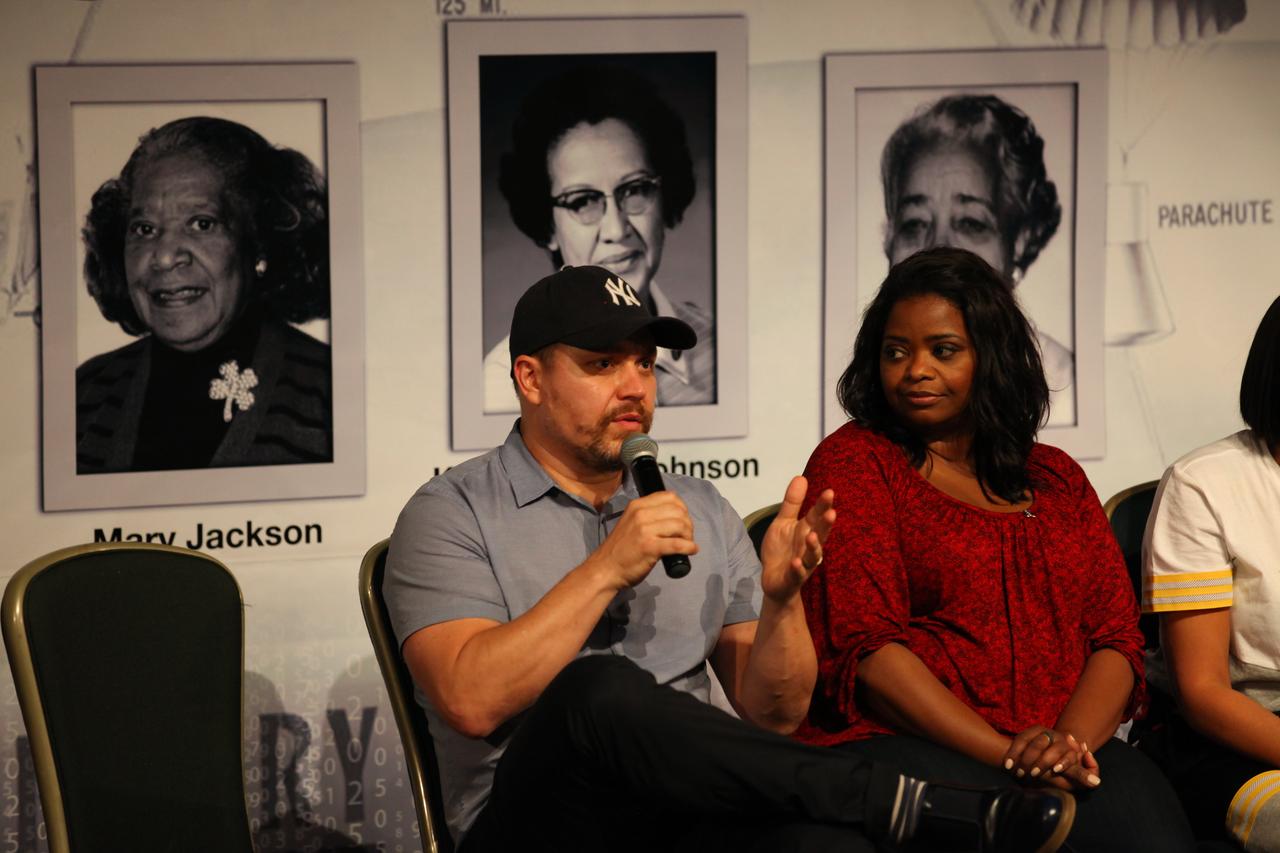
In the IMAX Theater of the Kennedy Space Center Visitor Complex Cast and crew members of the upcoming motion picture "Hidden Figures" participate in a question and answer session. From the left are Ted Melfi, writer and director of “Hidden Figures,” and Octavia Spencer, who portrays Dorothy Vaughan in the film. The movie is based on the book of the same title, by Margot Lee Shetterly. It chronicles the lives of Katherine Johnson, Dorothy Vaughan and Mary Jackson, three African-American women who worked for NASA as human "computers.” Their mathematical calculations were crucial to the success of Project Mercury missions including John Glenn’s orbital flight aboard Friendship 7 in 1962. The film is due in theaters in January 2017.
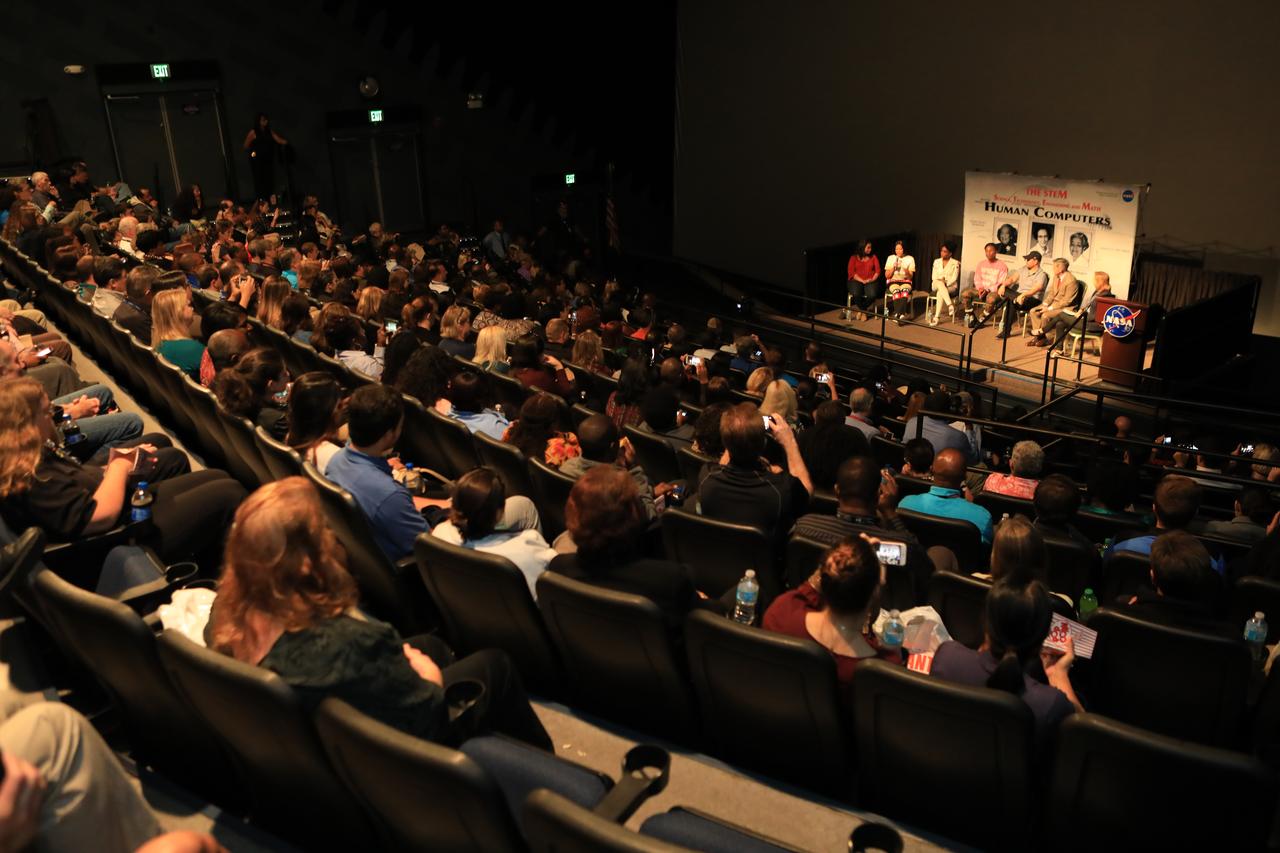
In the IMAX Theater of the Kennedy Space Center Visitor Complex Cast and crew members of the upcoming motion picture "Hidden Figures" participate in a question and answer session. The movie is based on the book of the same title, by Margot Lee Shetterly. It chronicles the lives of Katherine Johnson, Dorothy Vaughan and Mary Jackson, three African-American women who worked for NASA as human "computers.” Their mathematical calculations were crucial to the success of Project Mercury missions including John Glenn’s orbital flight aboard Friendship 7 in 1962. The film is due in theaters in January 2017.
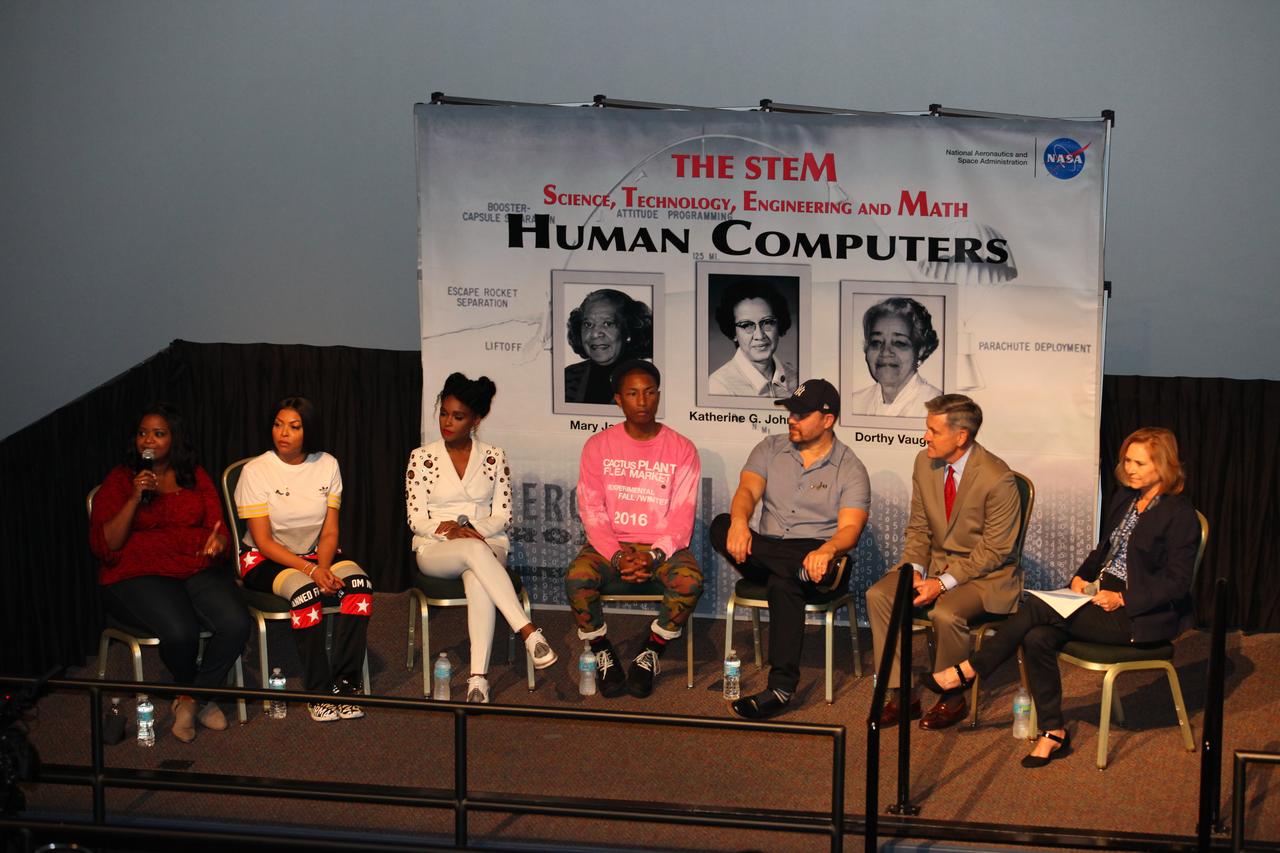
In the IMAX Theater of the Kennedy Space Center Visitor Complex Cast and crew members of the upcoming motion picture "Hidden Figures" participate in a question and answer session. From the left are Octavia Spencer, who portrays Dorothy Vaughan in the film, Taraji P. Henson, who portrays Katherine Johnson, Janelle Monáe, who portrays Mary Jackson, Pharrell Williams, musician and producer of “Hidden Figures," Ted Melfi, writer and director of “Hidden Figures,” center director Bob Cabana, and Janet Petro, deputy center director. The movie is based on the book of the same title, by Margot Lee Shetterly. It chronicles the lives of Katherine Johnson, Dorothy Vaughan and Mary Jackson, three African-American women who worked for NASA as human "computers.” Their mathematical calculations were crucial to the success of Project Mercury missions including John Glenn’s orbital flight aboard Friendship 7 in 1962. The film is due in theaters in January 2017.
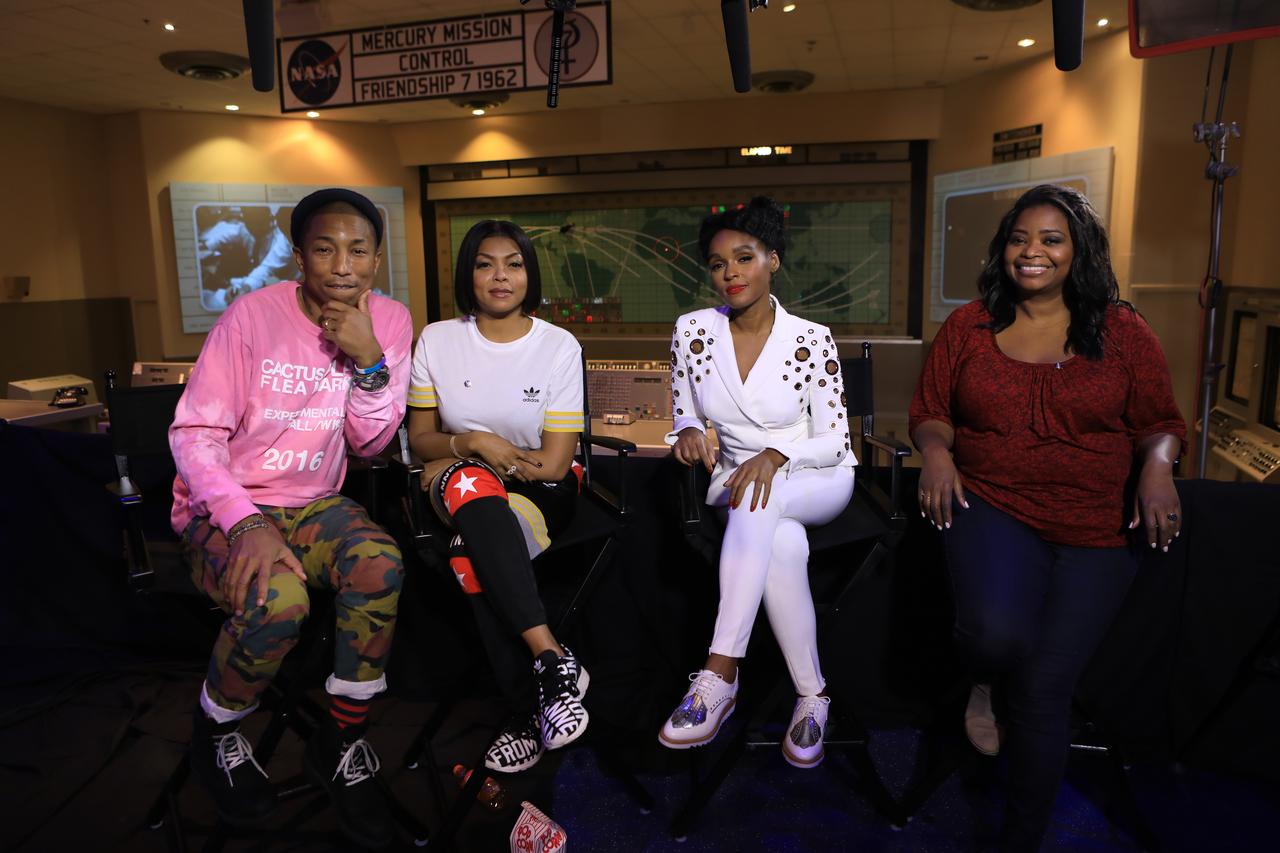
Cast and crew members of the upcoming motion picture "Hidden Figures" participate in a question and answer session at the Kennedy Space Center Visitor Complex. From the left are Pharrell Williams, musician and producer of “Hidden Figures," Taraji P. Henson, who portrays Katherine Johnson in the film, Janelle Monáe, who portrays Mary Jackson, and Octavia Spencer, who portrays Dorothy Vaughan. They are seated in front of the original consoles of the Mercury Mission Control room with the world map that was used to follow the path of capsules between tracking stations. The movie is based on the book of the same title, by Margot Lee Shetterly. It chronicles the lives of Katherine Johnson, Dorothy Vaughan and Mary Jackson, three African-American women who worked for NASA as human "computers.” Their mathematical calculations were crucial to the success of Project Mercury missions including John Glenn’s orbital flight aboard Friendship 7 in 1962. The film is due in theaters in January 2017.
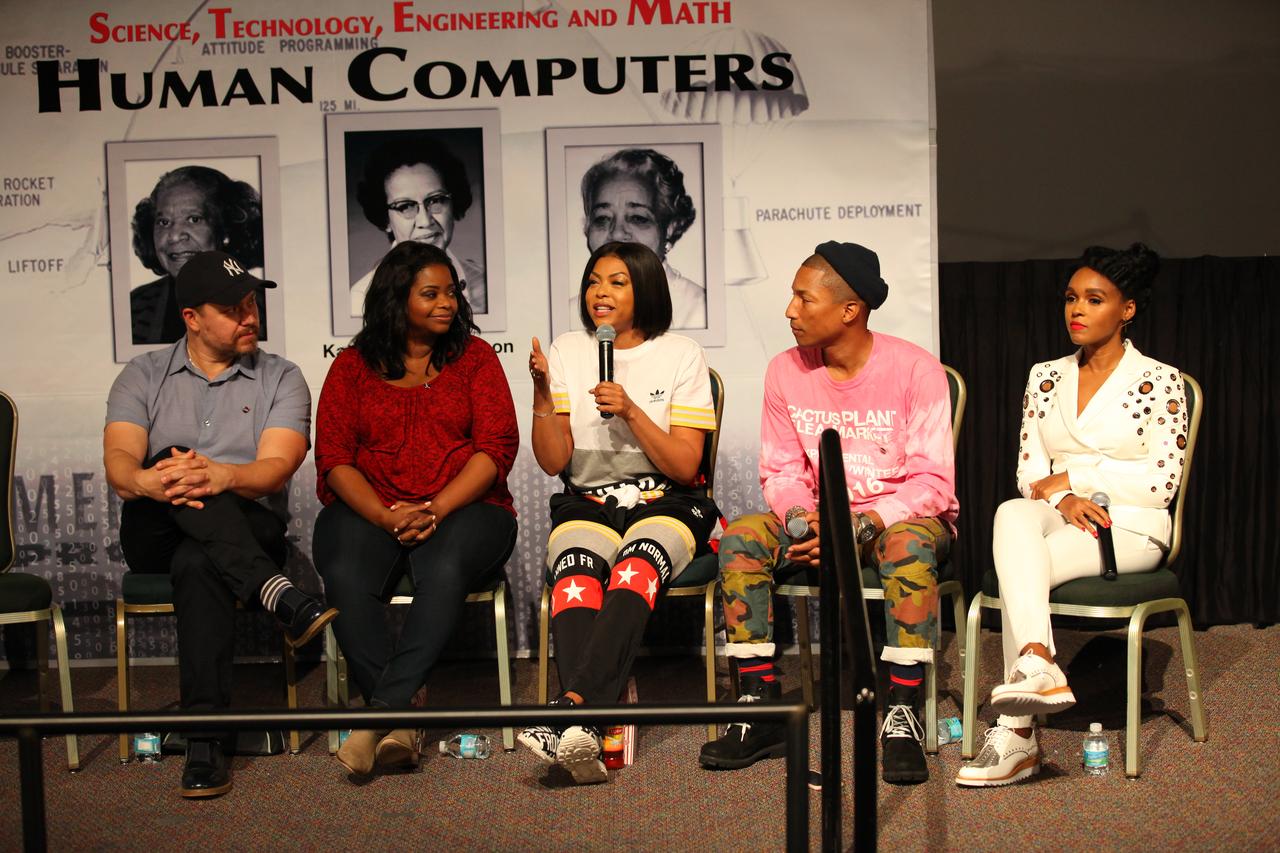
In the IMAX Theater of the Kennedy Space Center Visitor Complex Cast and crew members of the upcoming motion picture "Hidden Figures" participate in a question and answer session. From the left are Ted Melfi, writer and director of “Hidden Figures,” Octavia Spencer, who portrays Dorothy Vaughan in the film, Taraji P. Henson, who portrays Katherine Johnson, Pharrell Williams, musician and producer of “Hidden Figures," and Janelle Monáe, who portrays Mary Jackson. The movie is based on the book of the same title, by Margot Lee Shetterly. It chronicles the lives of Katherine Johnson, Dorothy Vaughan and Mary Jackson, three African-American women who worked for NASA as human "computers.” Their mathematical calculations were crucial to the success of Project Mercury missions including John Glenn’s orbital flight aboard Friendship 7 in 1962. The film is due in theaters in January 2017.
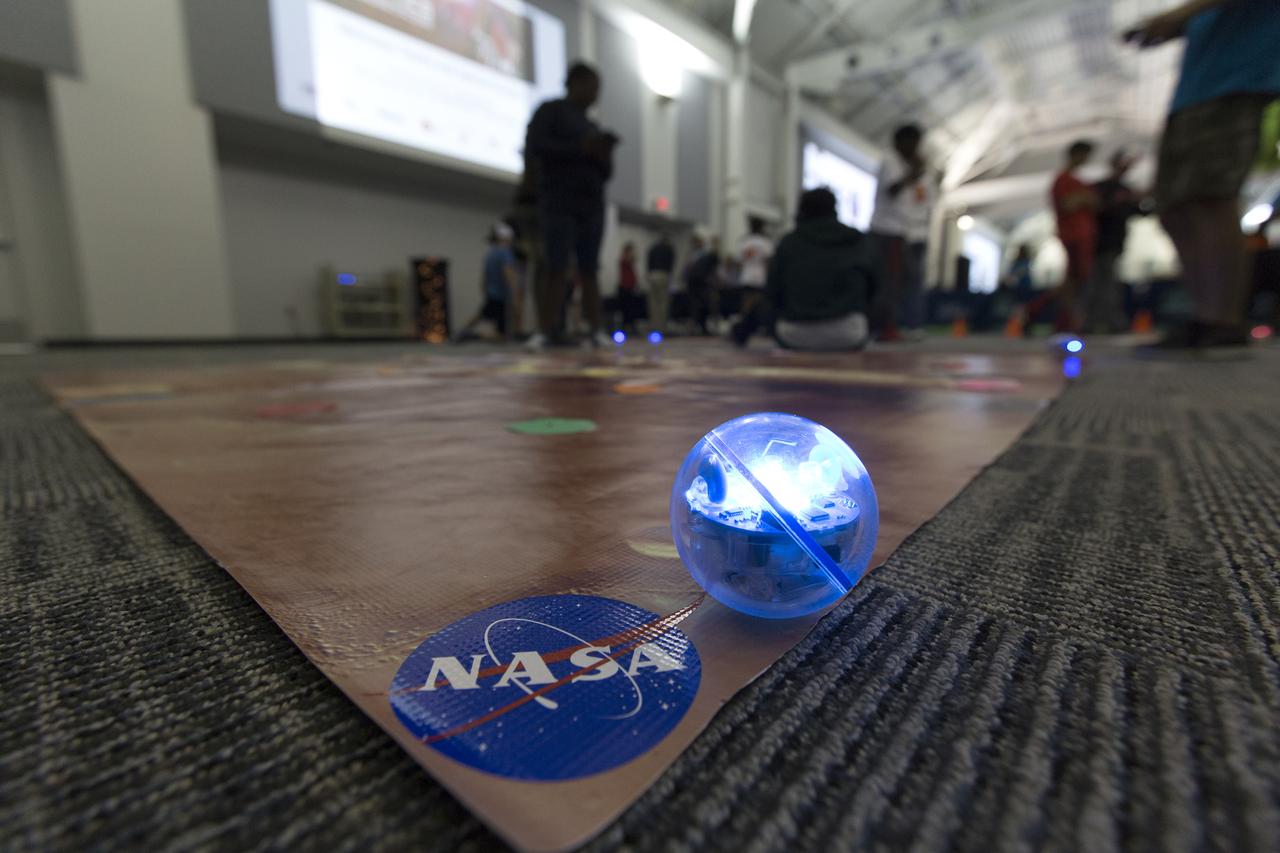
A programmable off-the-shelf Sphero robot is shown on a Mars mat at the Center for Space Education at NASA's Kennedy Space Center in Florida. The Spheros were available for students to practice their programming skills by navigating the robots around a challenge course on the mat. Students used the mat and Sphero robots during "loss of signal" times when the connection to the International Space Station was temporarily unavailable. Teams from across the state of Florida were gathered at Kennedy for the finals of the Zero Robotics Middle School Summer Program national championship. The five-week program allows rising sixth- through ninth-graders to write programs for small satellites called SPHERES (Synchronized, Position, Hold, Engage, Reorient, Experimental Satellites). Finalists saw their code tested aboard the orbiting laboratory.
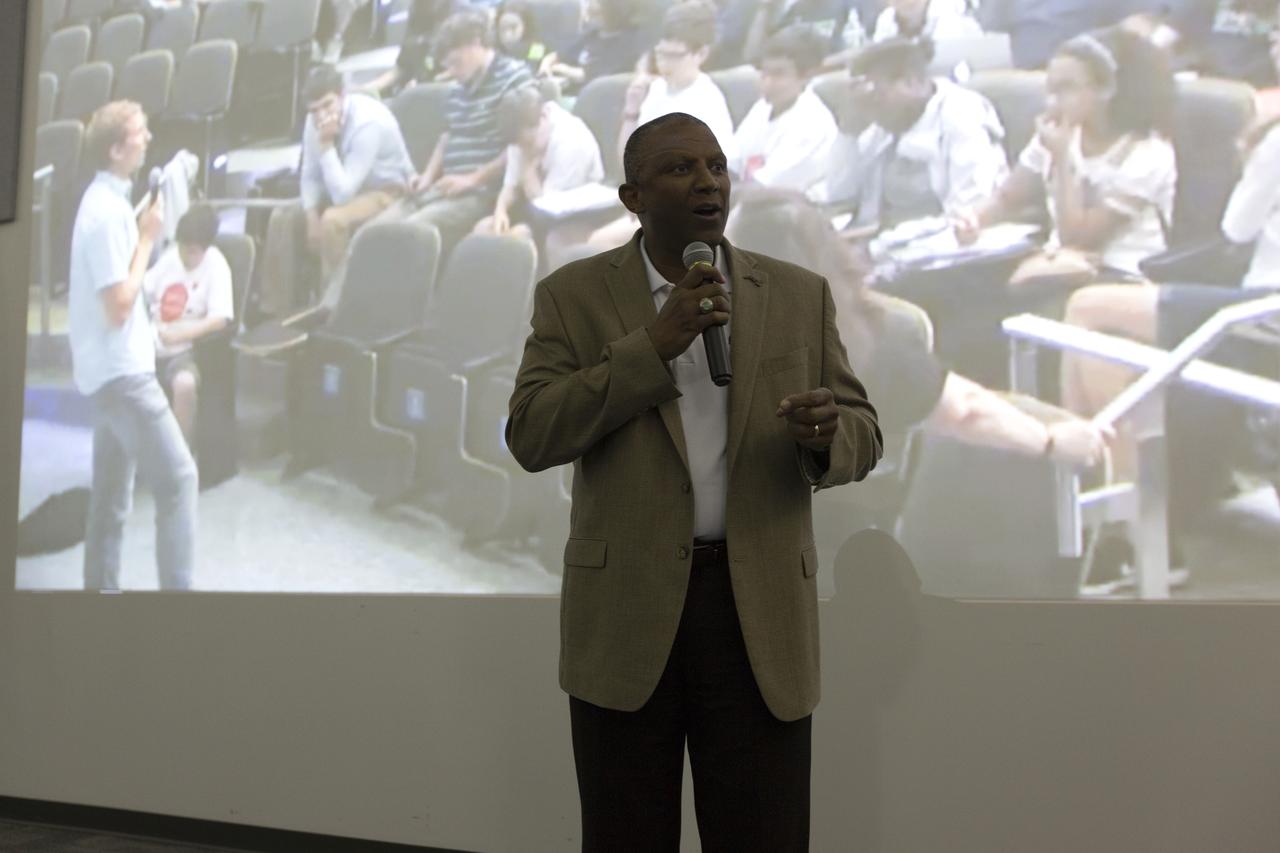
NASA Kennedy Space Center Associate Director Kelvin Manning speaks to students and sponsors in the spaceport’s Center for Space Education. Teams from across the state of Florida were gathered at Kennedy for the finals of the Zero Robotics Middle School Summer Program national championship. The five-week program allows rising sixth- through ninth-graders to write programs for small satellites called SPHERES (Synchronized, Position, Hold, Engage, Reorient, Experimental Satellites). Finalists saw their code tested aboard the International Space Station.
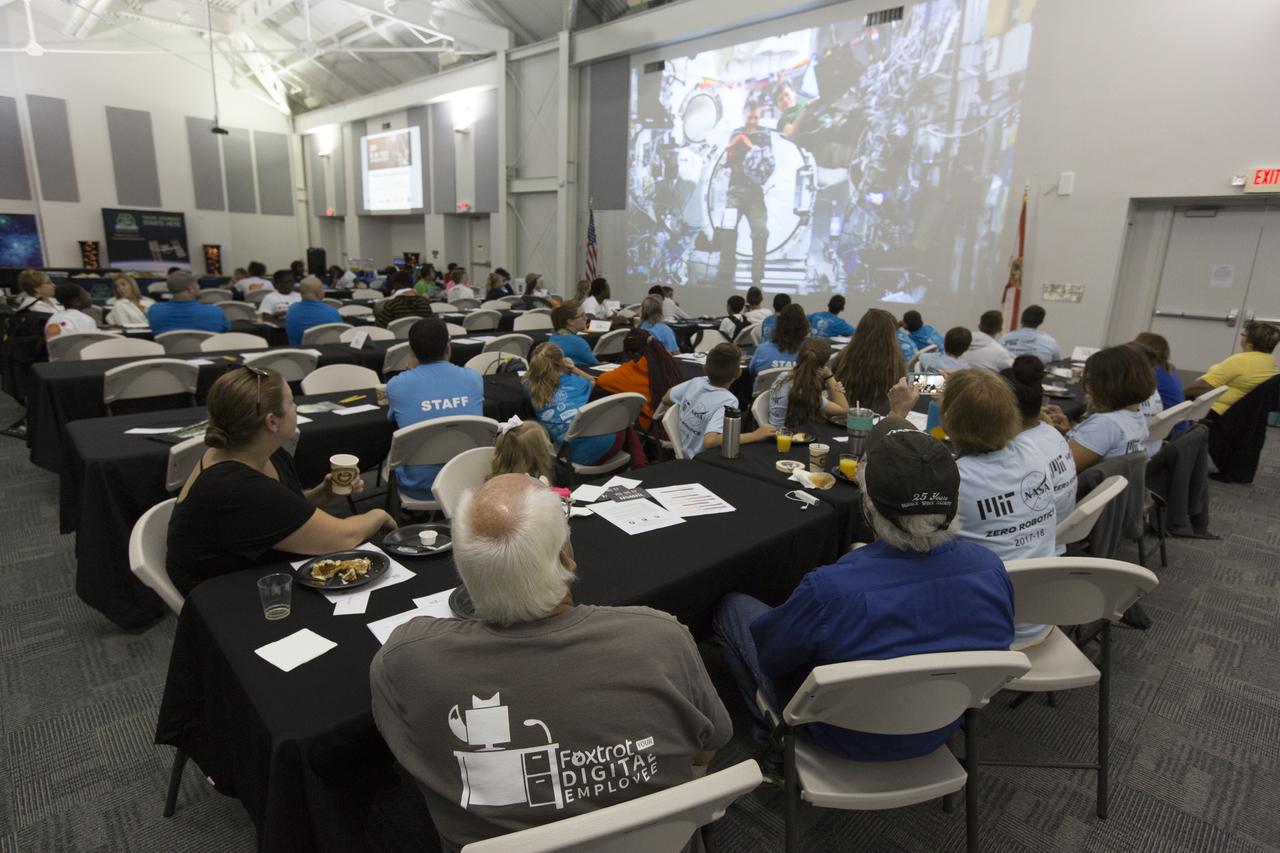
Students and sponsors hear from astronauts aboard the International Space Station on a big screen in the Center for Space Education at NASA’s Kennedy Space Center in Florida. Teams from across the state of Florida were gathered at Kennedy for the finals of the Zero Robotics Middle School Summer Program national championship. The five-week program allows rising sixth- through ninth-graders to write programs for small satellites called SPHERES (Synchronized, Position, Hold, Engage, Reorient, Experimental Satellites). Finalists saw their code tested aboard the orbiting laboratory.
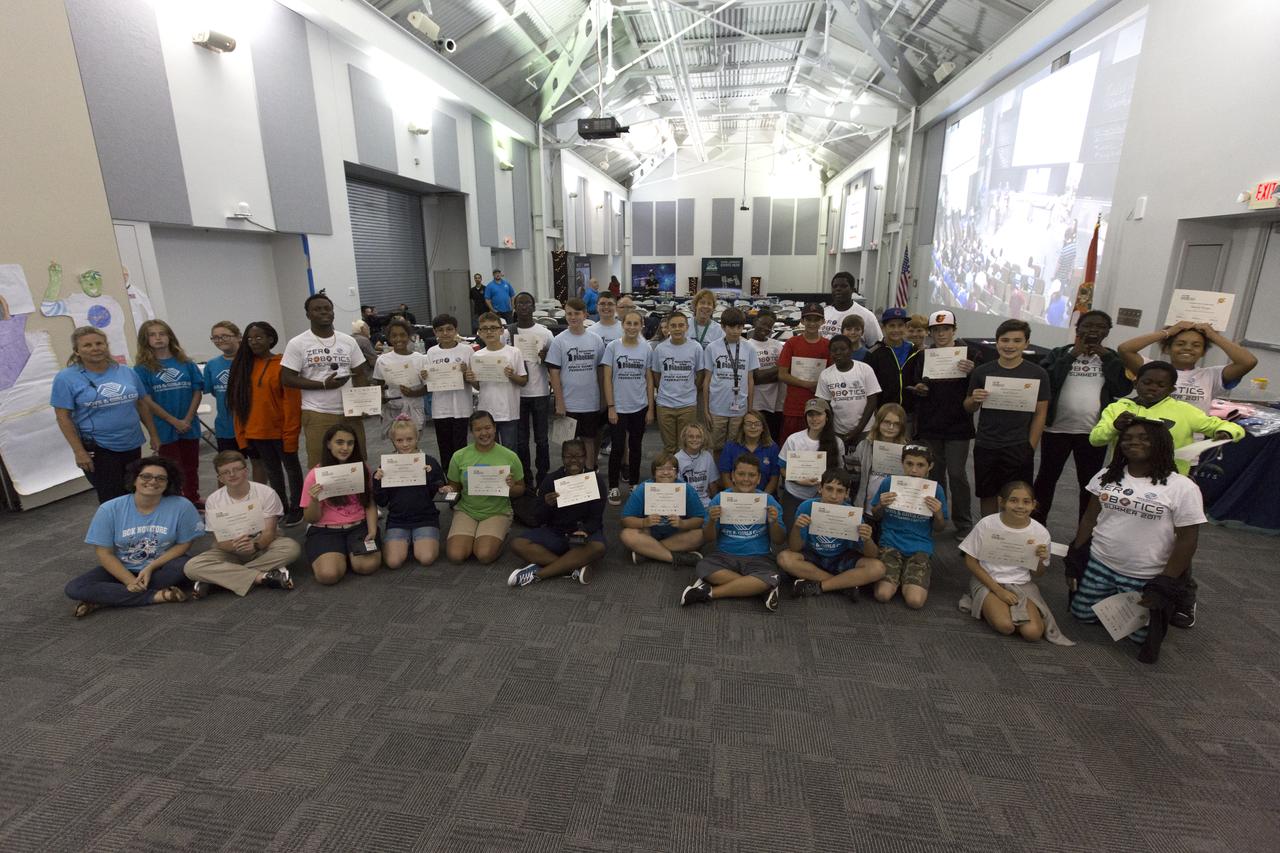
Students and their sponsors gather for a commemorative photo in the Center for Space Education at NASA’s Kennedy Space Center in Florida after participating in the finals of the Zero Robotics Middle School Summer Program national championship. The five-week program allows rising sixth- through ninth-graders to write programs for small satellites called SPHERES (Synchronized, Position, Hold, Engage, Reorient, Experimental Satellites). Finalists saw their code tested aboard the International Space Station.
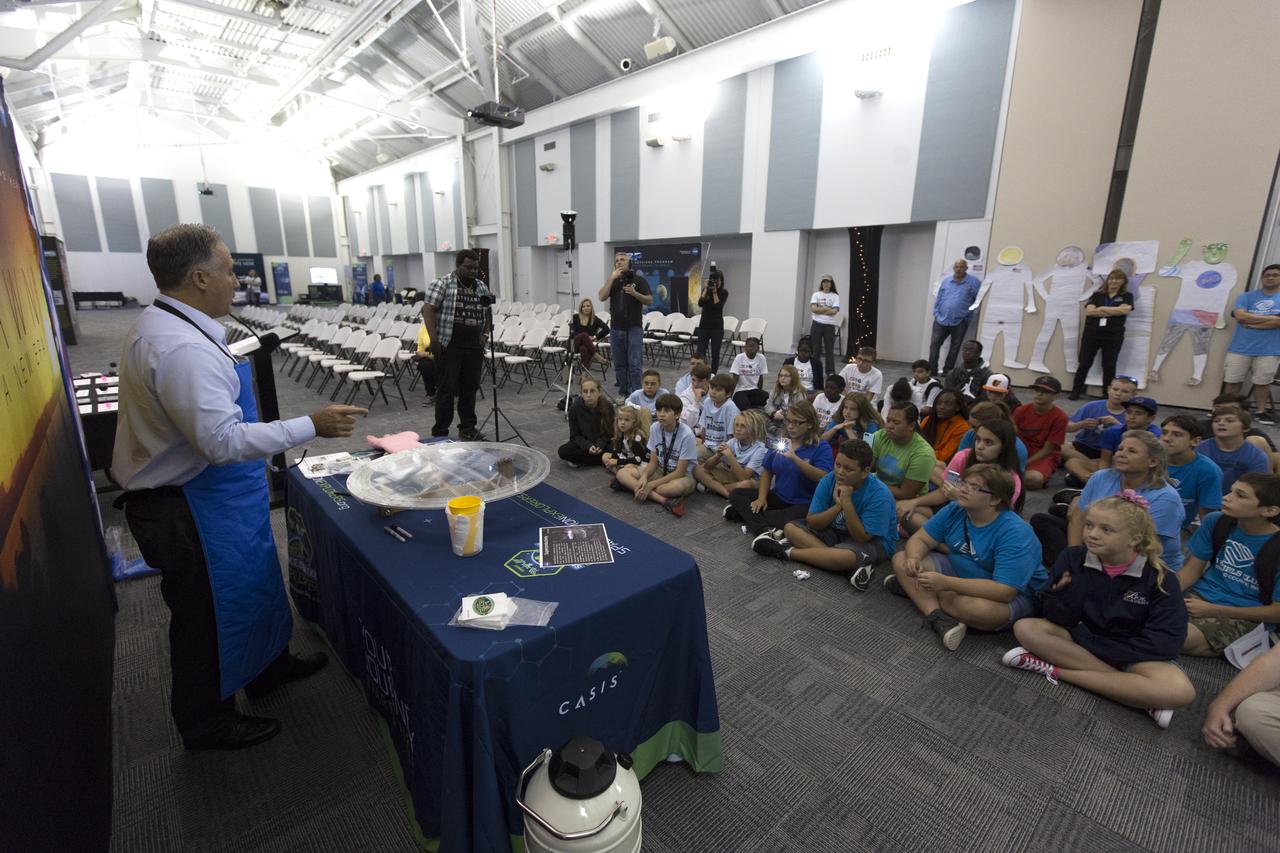
NASA Kennedy Space Center's Trent Smith conducts a quantum levitation demonstration, using liquid nitrogen, metal and a magnetic track, for students and their sponsors in the Center for Space Education at NASA’s Kennedy Space Center in Florida. Teams from across the state of Florida were gathered at Kennedy for the finals of the Zero Robotics Middle School Summer Program national championship. The five-week program allows rising sixth- through ninth-graders to write programs for small satellites called SPHERES (Synchronized, Position, Hold, Engage, Reorient, Experimental Satellites). Finalists saw their code tested aboard the International Space Station.
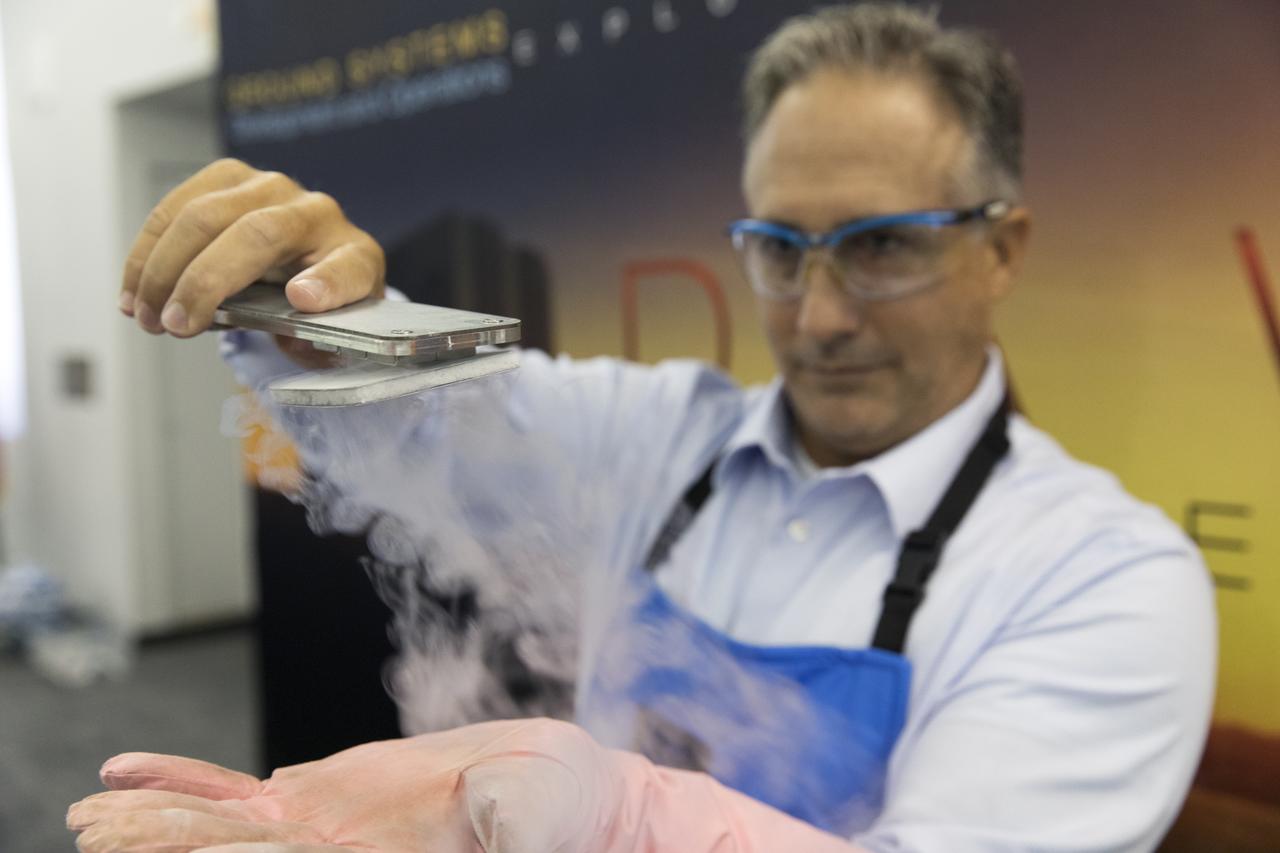
NASA Kennedy Space Center's Trent Smith conducts a quantum levitation demonstration, using liquid nitrogen, metal and a magnetic track, for students and their sponsors in the Center for Space Education at NASA’s Kennedy Space Center in Florida. Teams from across the state of Florida were gathered at Kennedy for the finals of the Zero Robotics Middle School Summer Program national championship. The five-week program allows rising sixth- through ninth-graders to write programs for small satellites called SPHERES (Synchronized, Position, Hold, Engage, Reorient, Experimental Satellites). Finalists saw their code tested aboard the International Space Station.
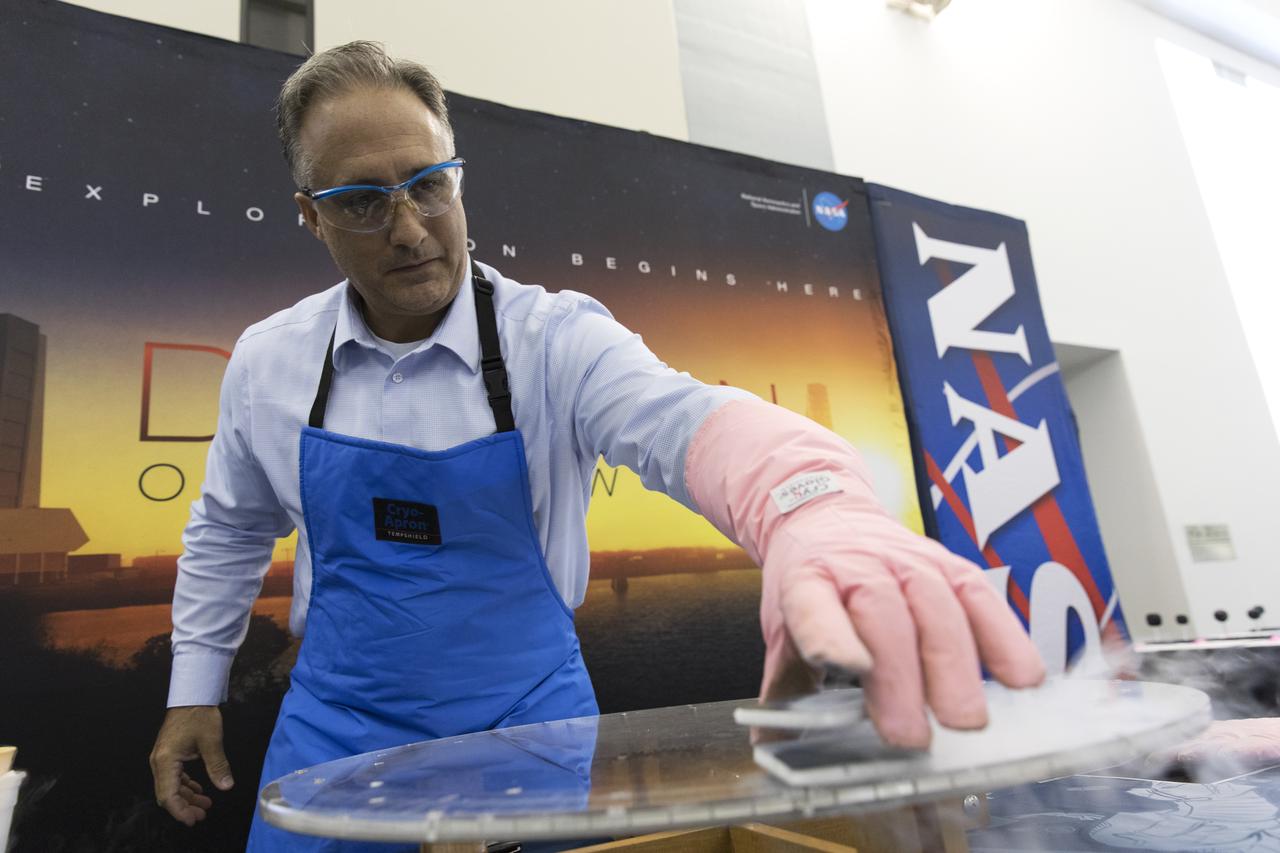
NASA Kennedy Space Center's Trent Smith conducts a quantum levitation demonstration, using liquid nitrogen, metal and a magnetic track, for students and their sponsors in the Center for Space Education at NASA’s Kennedy Space Center in Florida. Teams from across the state of Florida were gathered at Kennedy for the finals of the Zero Robotics Middle School Summer Program national championship. The five-week program allows rising sixth- through ninth-graders to write programs for small satellites called SPHERES (Synchronized, Position, Hold, Engage, Reorient, Experimental Satellites). Finalists saw their code tested aboard the International Space Station.
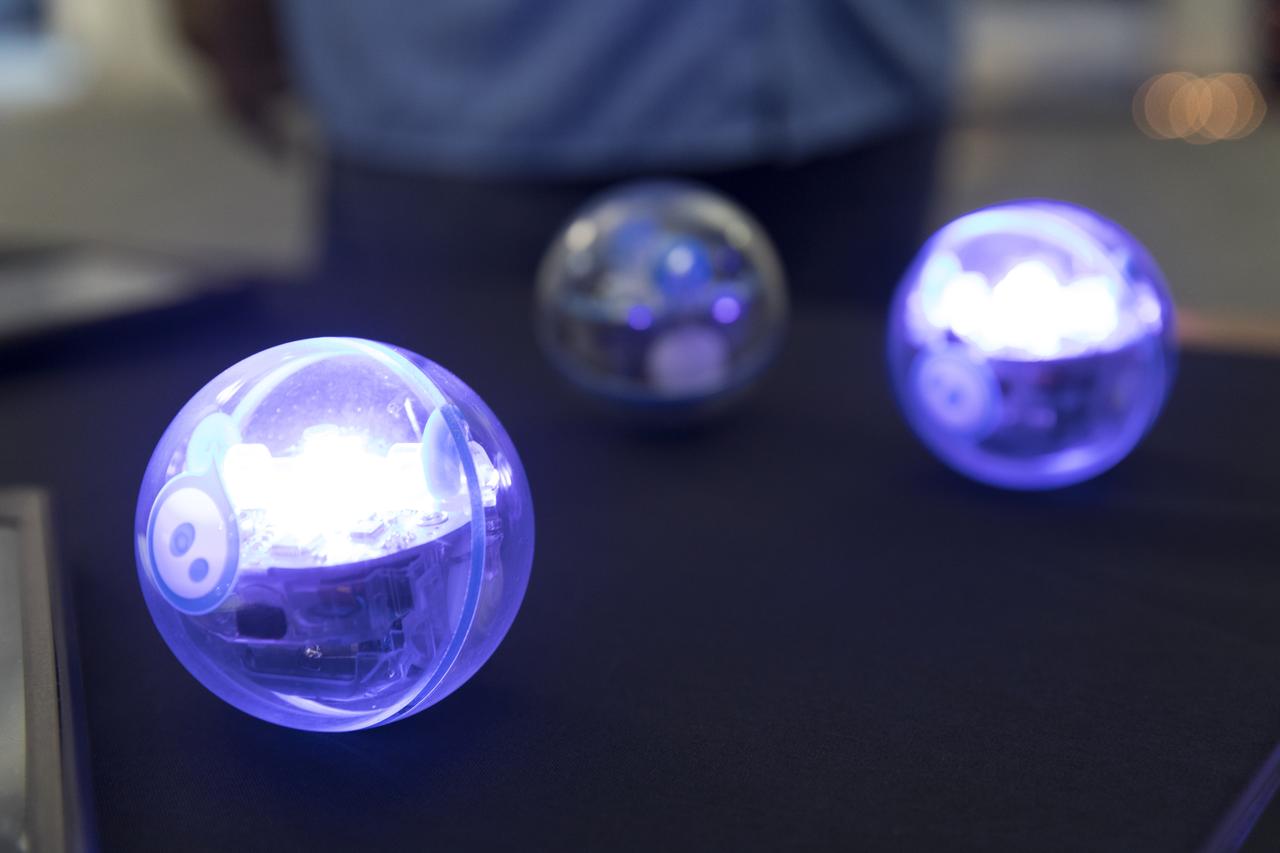
A trio of programmable off-the-shelf Sphero robots are shown at the Center for Space Education at NASA's Kennedy Space Center in Florida. The Spheros were available for students to practice their programming skills during "loss of signal" times when the connection to the International Space Station was temporarily unavailable. Teams from across the state of Florida were gathered at Kennedy for the finals of the Zero Robotics Middle School Summer Program national championship. The five-week program allows rising sixth- through ninth-graders to write programs for small satellites called SPHERES (Synchronized, Position, Hold, Engage, Reorient, Experimental Satellites). Finalists saw their code tested aboard the orbiting laboratory.
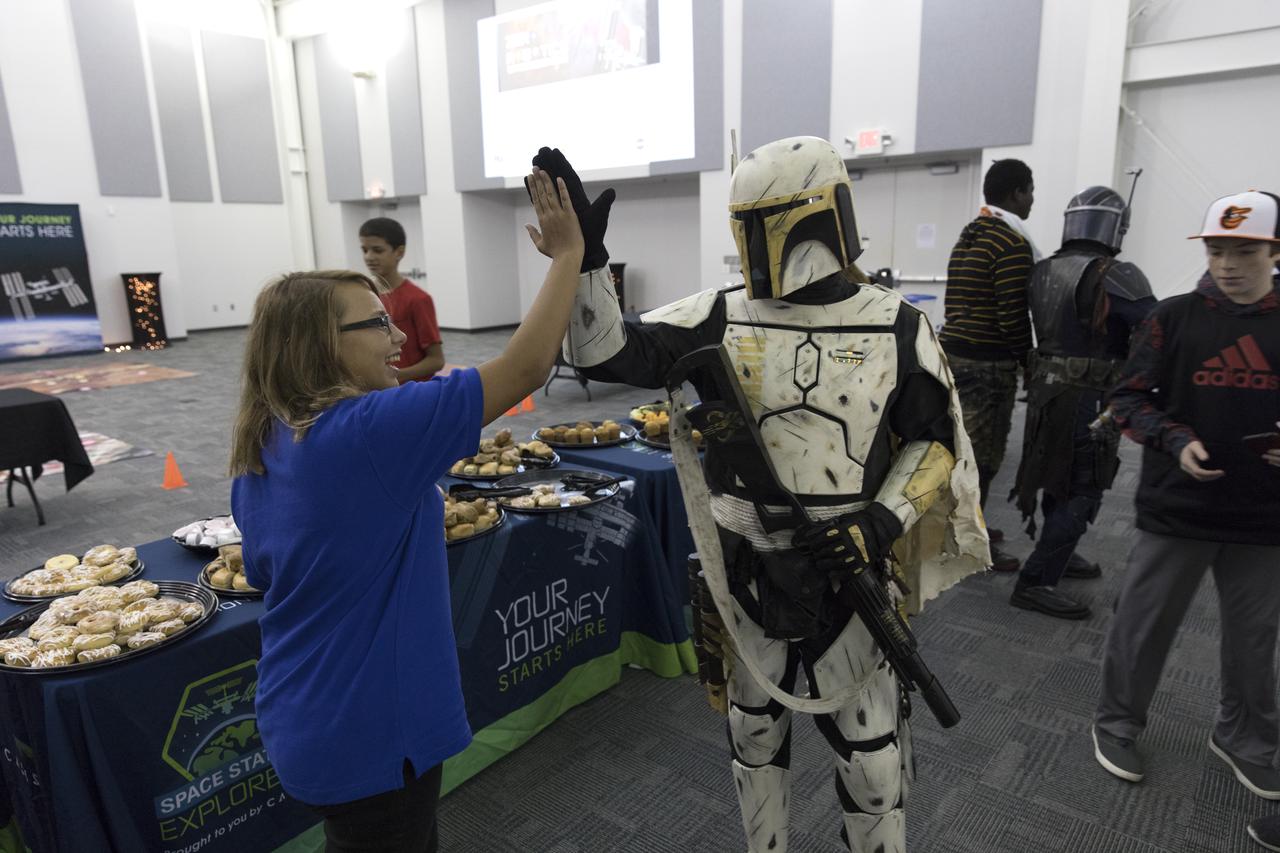
A middle-school student high-fives a Star Wars character from the 501st Legion in the Center for Space Education at NASA’s Kennedy Space Center in Florida. Teams from across the state of Florida were gathered at Kennedy for the finals of the Zero Robotics Middle School Summer Program national championship. The five-week program allows rising sixth- through ninth-graders to write programs for small satellites called SPHERES (Synchronized, Position, Hold, Engage, Reorient, Experimental Satellites). Finalists saw their code tested aboard the International Space Station.
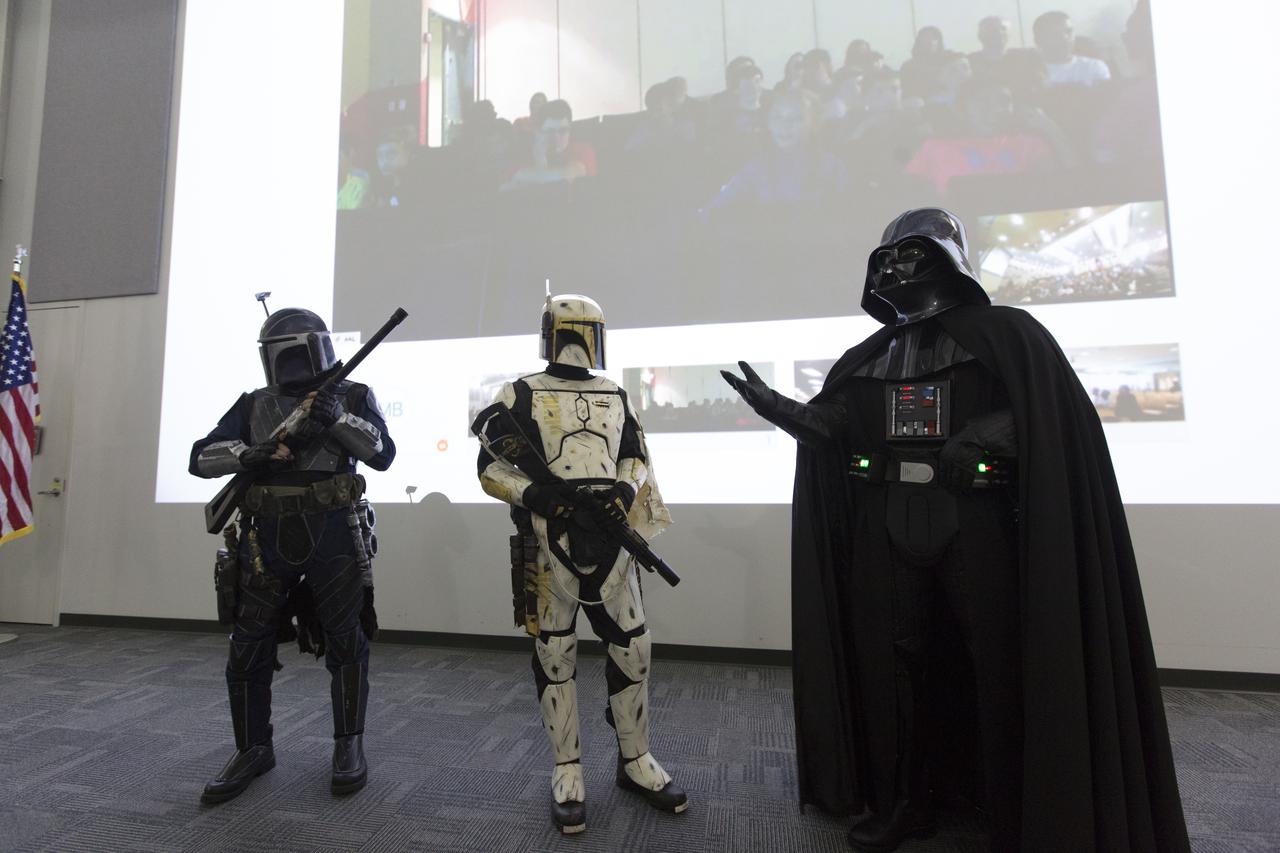
Darth Vader and other Star Wars characters from the 501st Legion address students and sponsors in the Center for Space Education at NASA’s Kennedy Space Center in Florida. Teams from across the state of Florida were gathered at Kennedy for the finals of the Zero Robotics Middle School Summer Program national championship. The five-week program allows rising sixth- through ninth-graders to write programs for small satellites called SPHERES (Synchronized, Position, Hold, Engage, Reorient, Experimental Satellites). Finalists saw their code tested aboard the International Space Station.
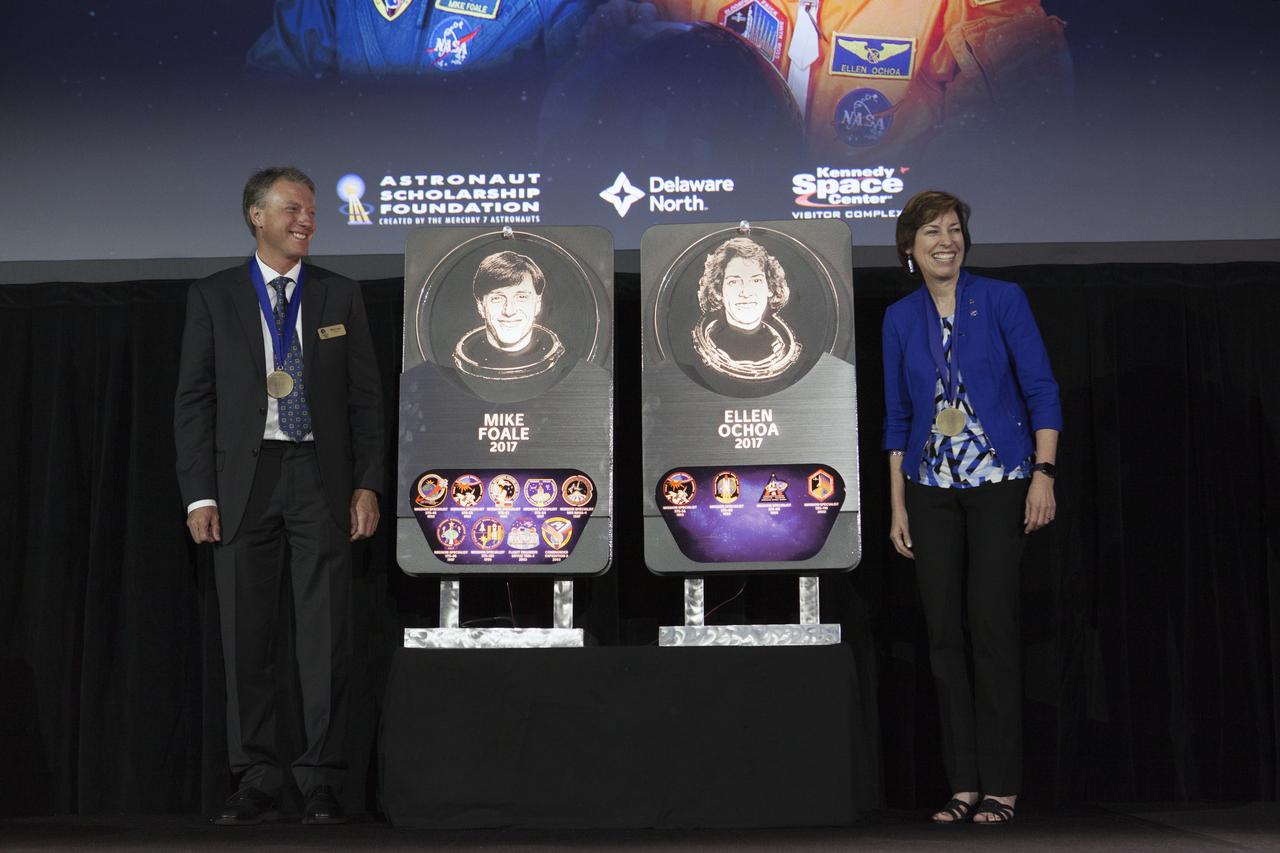
In the Space Shuttle Atlantis facility at NASA's Kennedy Space Center Visitor Complex in Florida, space shuttle astronauts Michael Foale left, and, Ellen Ochoa, pose with their plaques after being inducted into the U.S. Astronaut Hall of Fame.
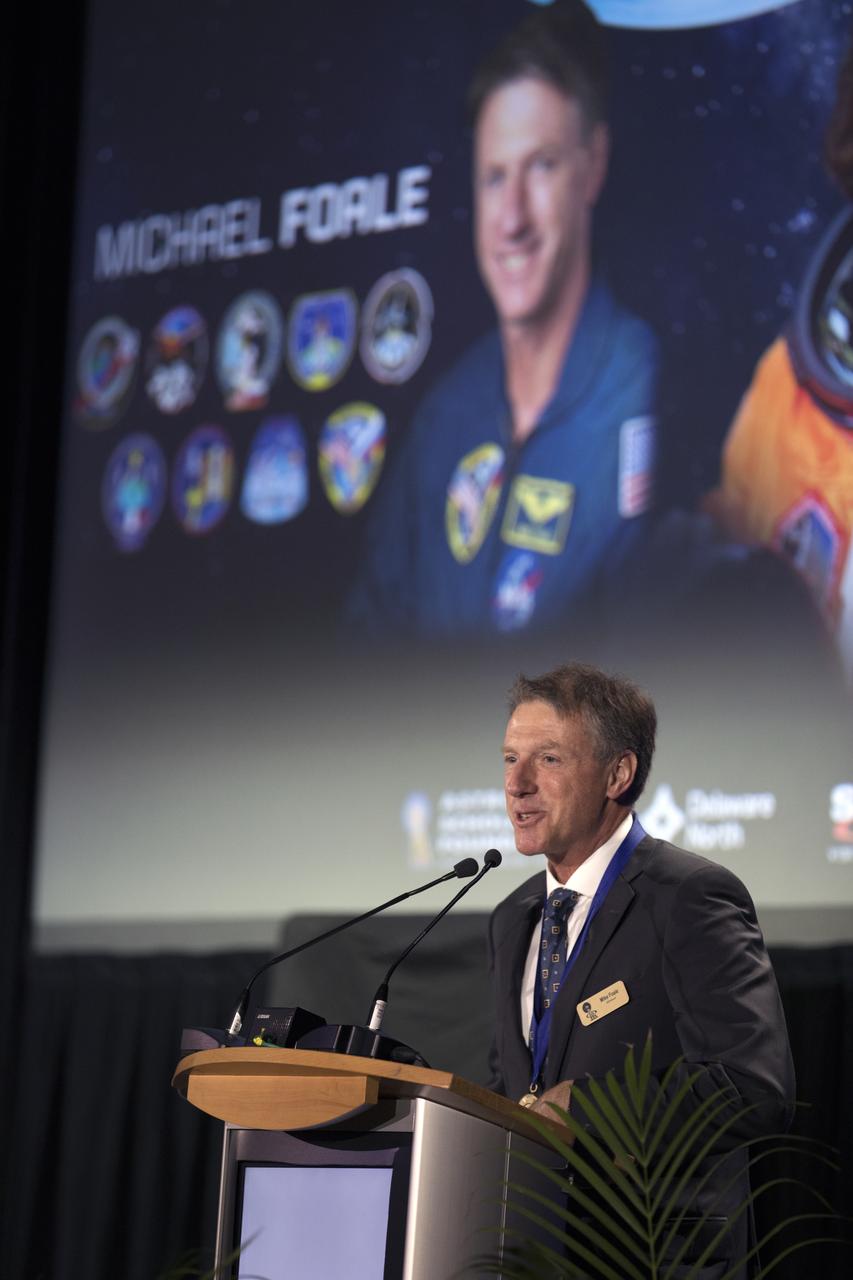
Michael Foale, who flew six missions into space, speaks during the U.S. Astronaut Hall of Fame ceremony. The ceremony took place in the Space Shuttle Atlantis facility at the Kennedy Space Center Visitor Complex in Florida.
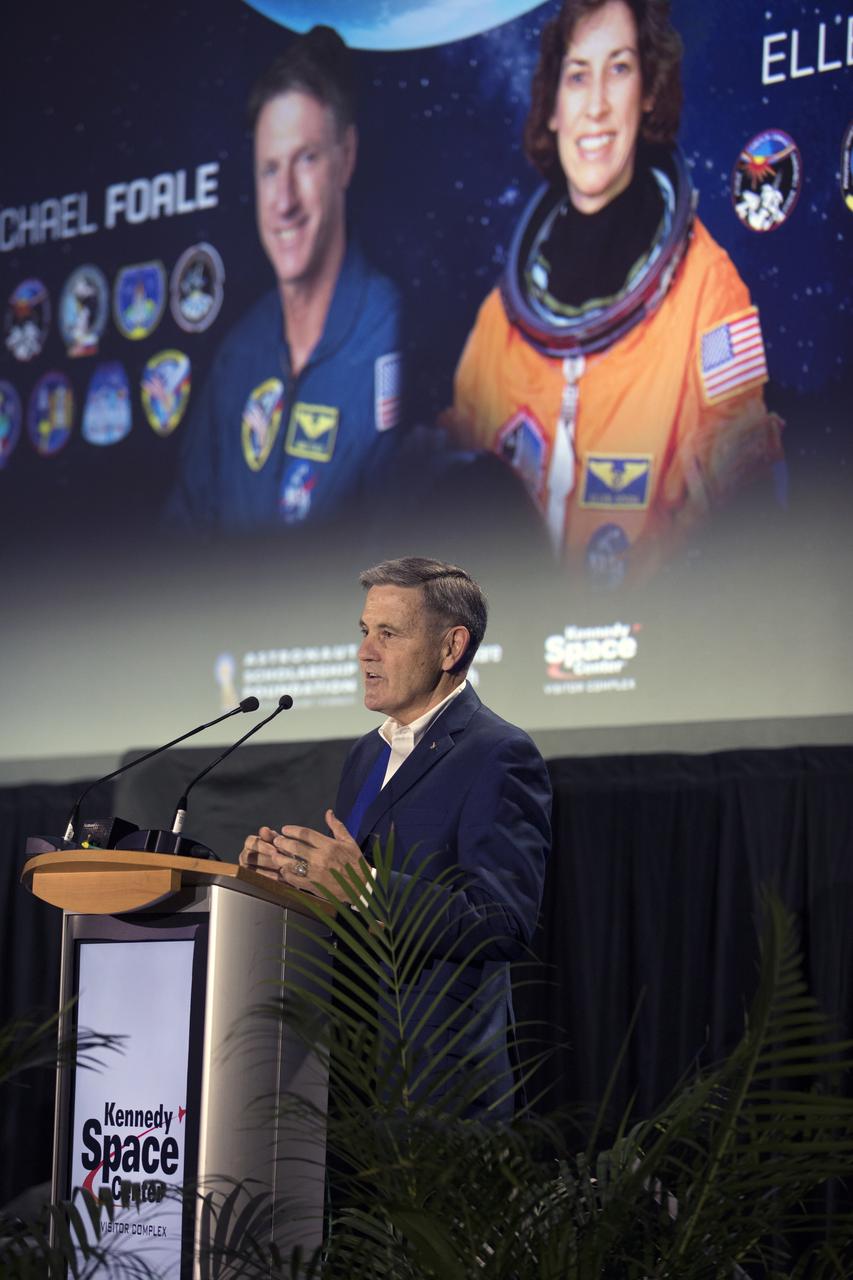
NASA's Kennedy Space Center Director Bob Cabana, also a member of the U.S. Astronaut Hall of Fame, honored Ellen Ochoa and Michael Foale during ceremonies on May 19, 2017. The activity took place in the Space Shuttle Atlantis facility at the Kennedy Space Center Visitor Complex in Florida.
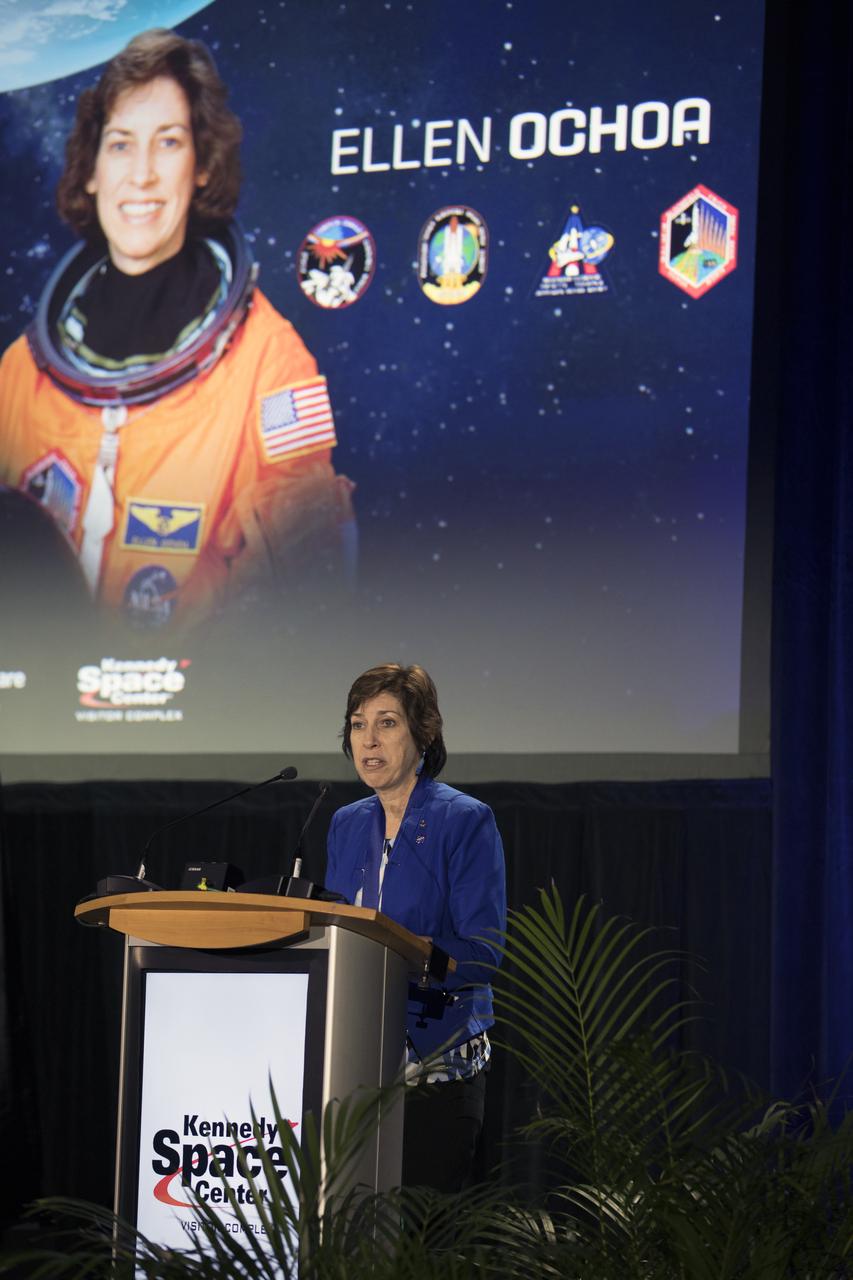
Ellen Ochoa, who was a mission specialist on four space shuttle missions, speaks during the U.S. Astronaut Hall of Fame ceremony. She is now director of NASA's Johnson Space Center. The activity took place in the Space Shuttle Atlantis facility at the Kennedy Space Center Visitor Complex in Florida.
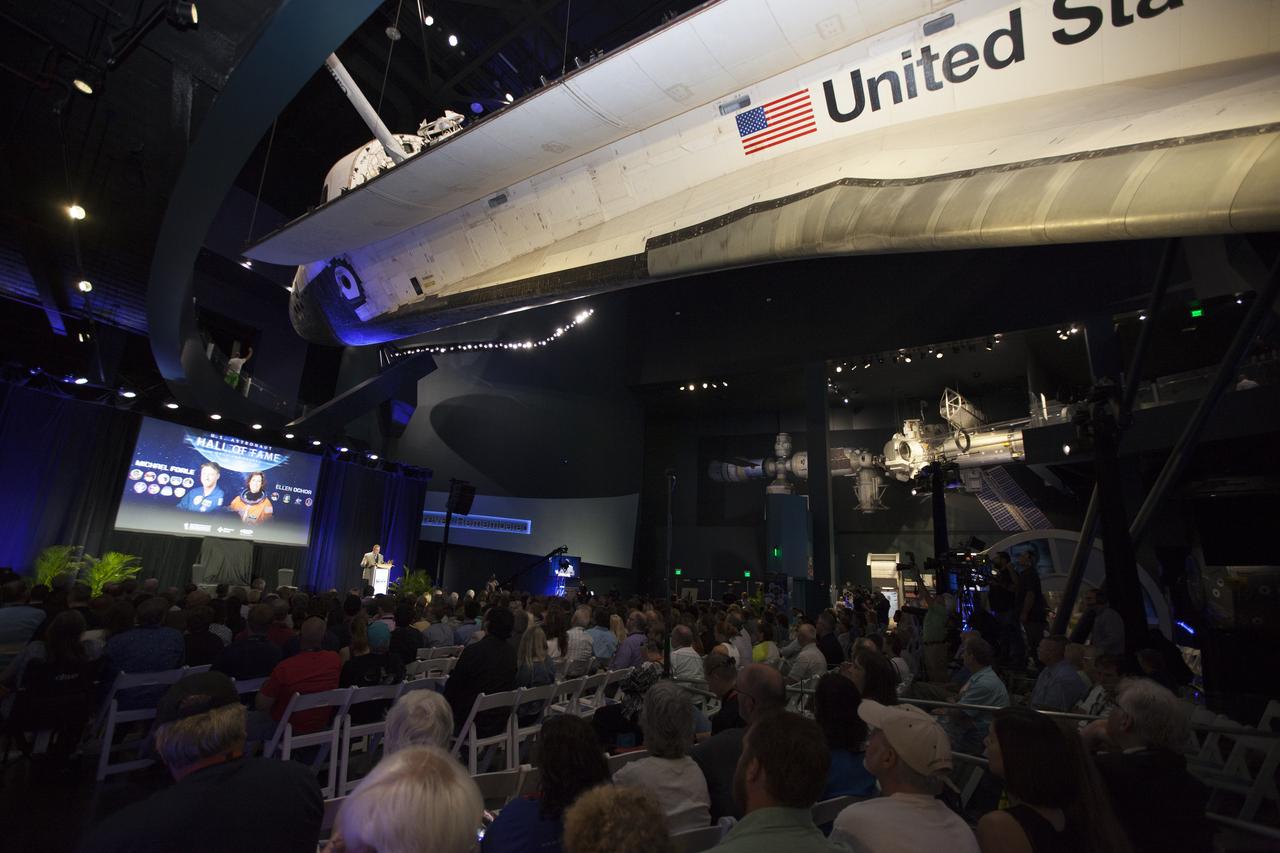
In the Space Shuttle Atlantis facility at the Kennedy Space Center Visitor Complex in Florida, guests sit under the famed spacecraft during the U.S. Hall of Fame activity. During this year's ceremonies, space shuttle astronauts Ellen Ochoa and Michael Foale were enshrined.
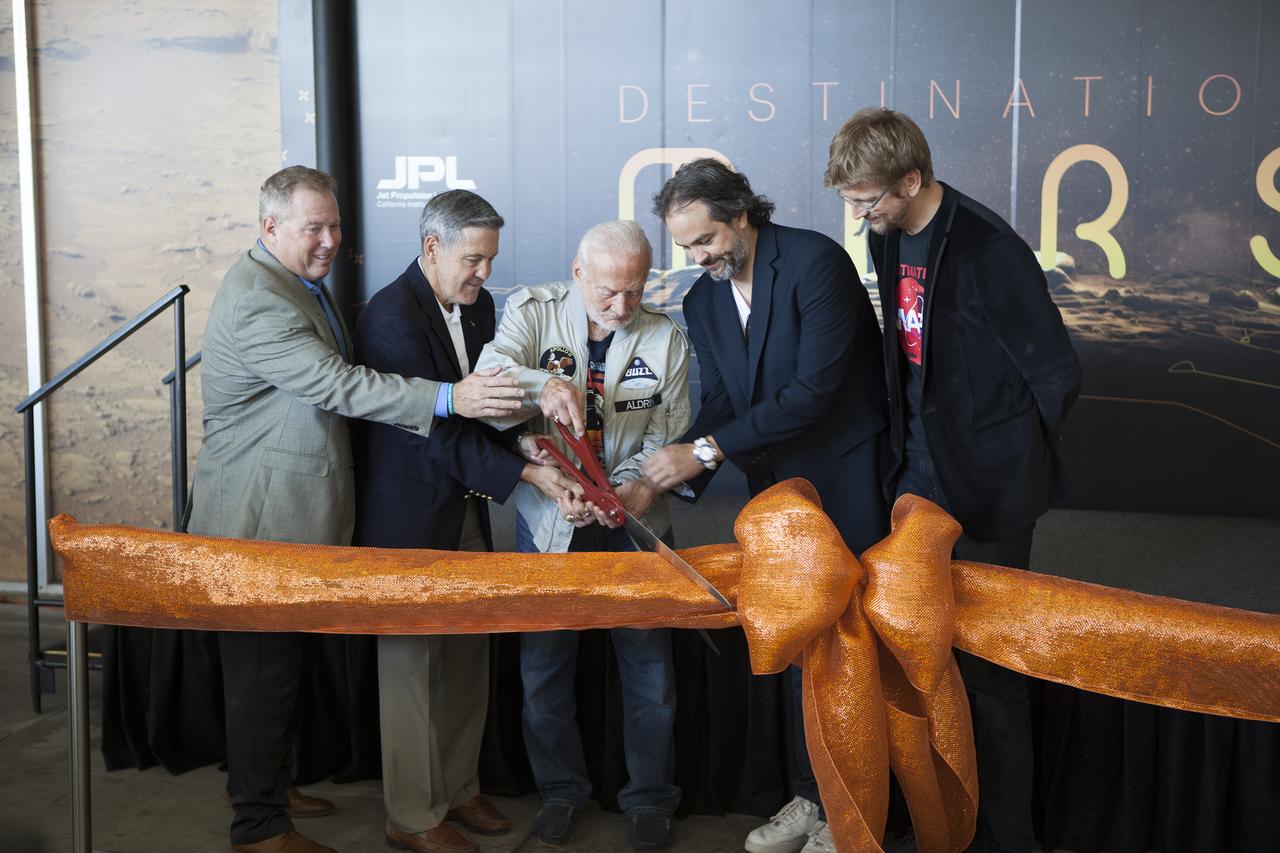
A ceremonial ribbon is cut for the opening of new Destination: Mars experience at the Kennedy Space Center Visitor Complex. From the left are Therrin Protze, chief operating officer of the visitor complex, center director Bob Cabana, Apollo 11 astronaut Buzz Aldrin, Kudo Tsunoda of Microsoft, and Jeff Norris of NASA’s Jet Propulsion Laboratory (JPL) in Pasadena, California. Destination: Mars gives guests an opportunity to “visit” several sites on Mars using real imagery from NASA’s Curiosity Mars Rover. Based on OnSight, a tool created by JPL, the experience brings guests together with a holographic version of Aldrin as they are guided to Mars using Microsoft HoloLens mixed reality headset. Photo credit: NASA/Charles Babir
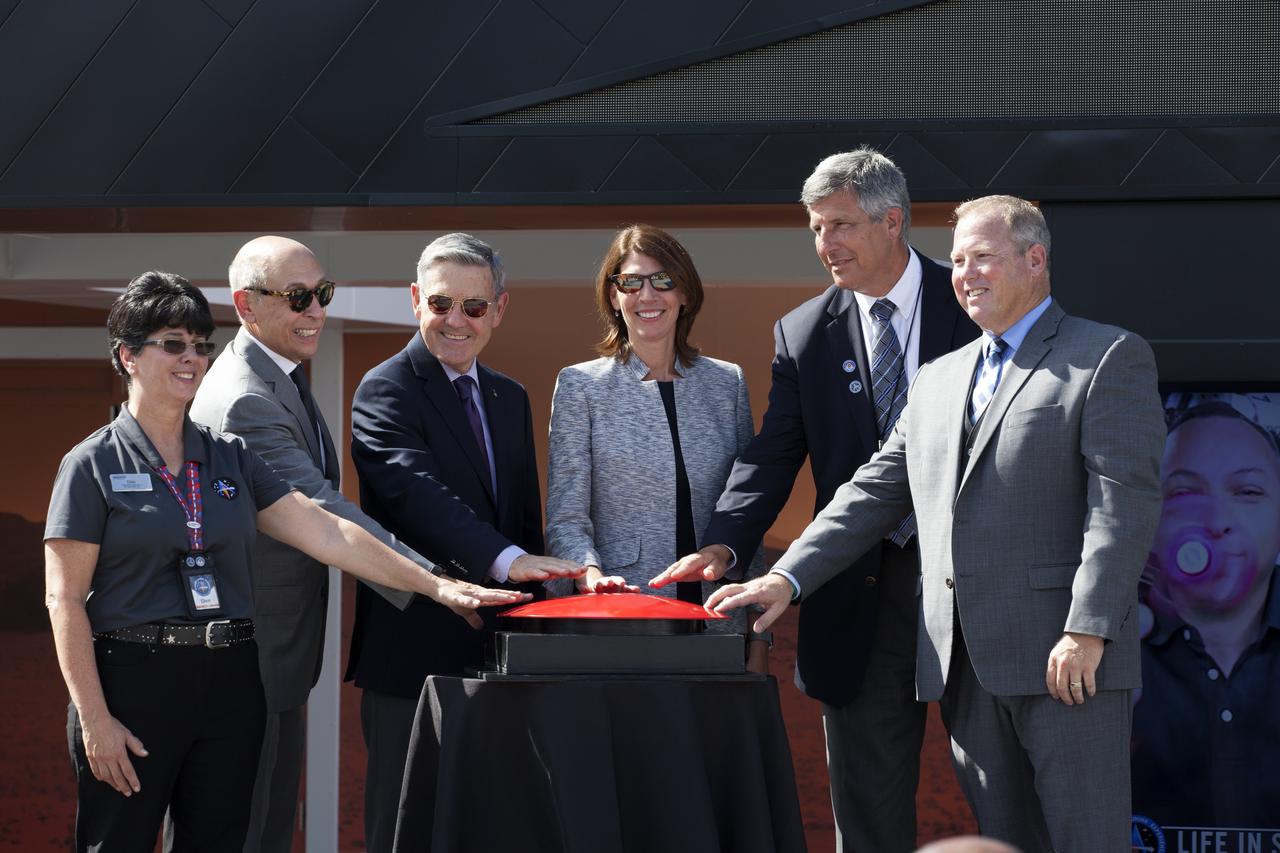
Officials at the Kennedy Space Center Visitor Complex prepare to push a ceremonial button to "launch" the facility's new Astronaut Training Experience (ATX). Participating, from the left, are: Dee Maynard, private education program manager for the Kennedy visitor complex, Rick Abramson, chief customer officer for Delaware North, Kennedy Director Bob Cabana, Lisa Callahan vice president and general manager of Commercial Civil Space at Lockheed Martin Space, Jim Houser, executive vice president and chief operating officer for Delaware North, and Therrin Protze, chief operating officer of the Kennedy visitor complex. The ATX uses three-dimensional computer display simulation technology to "transport" participants to Mars, training them to live and work in the environment of the Red Planet. The educational experience also teaches what it’s like to travel there. The facility uses NASA science to address engineering challenges in space travel. Lockheed Martin is the title sponsor for the Astronaut Training Experience.
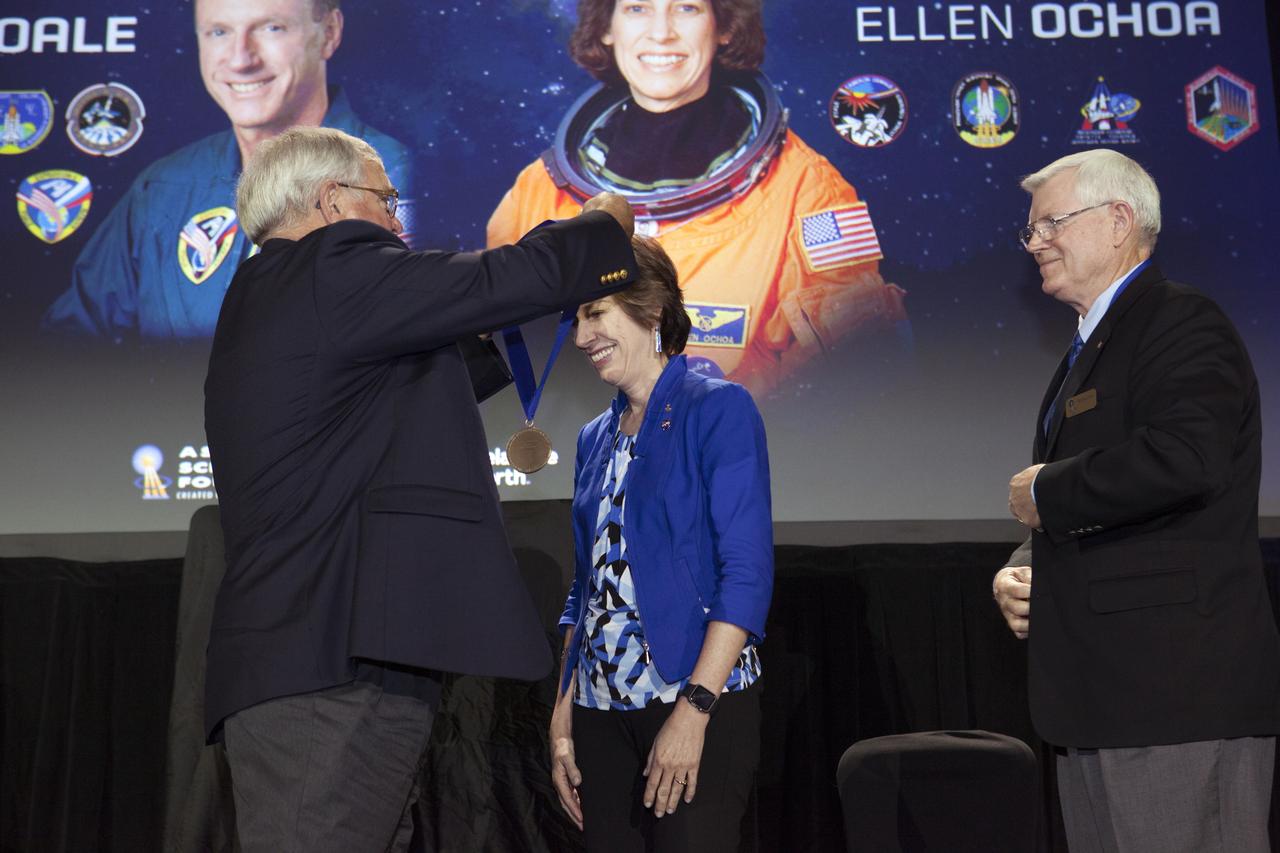
In the Space Shuttle Atlantis facility at the Kennedy Space Center Visitor Complex in Florida, Astronaut Scholarship Foundation Chairman Dan Brandenstein, left, also a Hall of Fame astronaut, presents inductee Ellen Ochoa with her hall of fame medal. Former Johnson Space Center Director Mike Coats, right, a Hall of Fame member, presented Ochoa for induction. During this year's ceremonies, space shuttle astronaut Michael Foale also was enshrined.
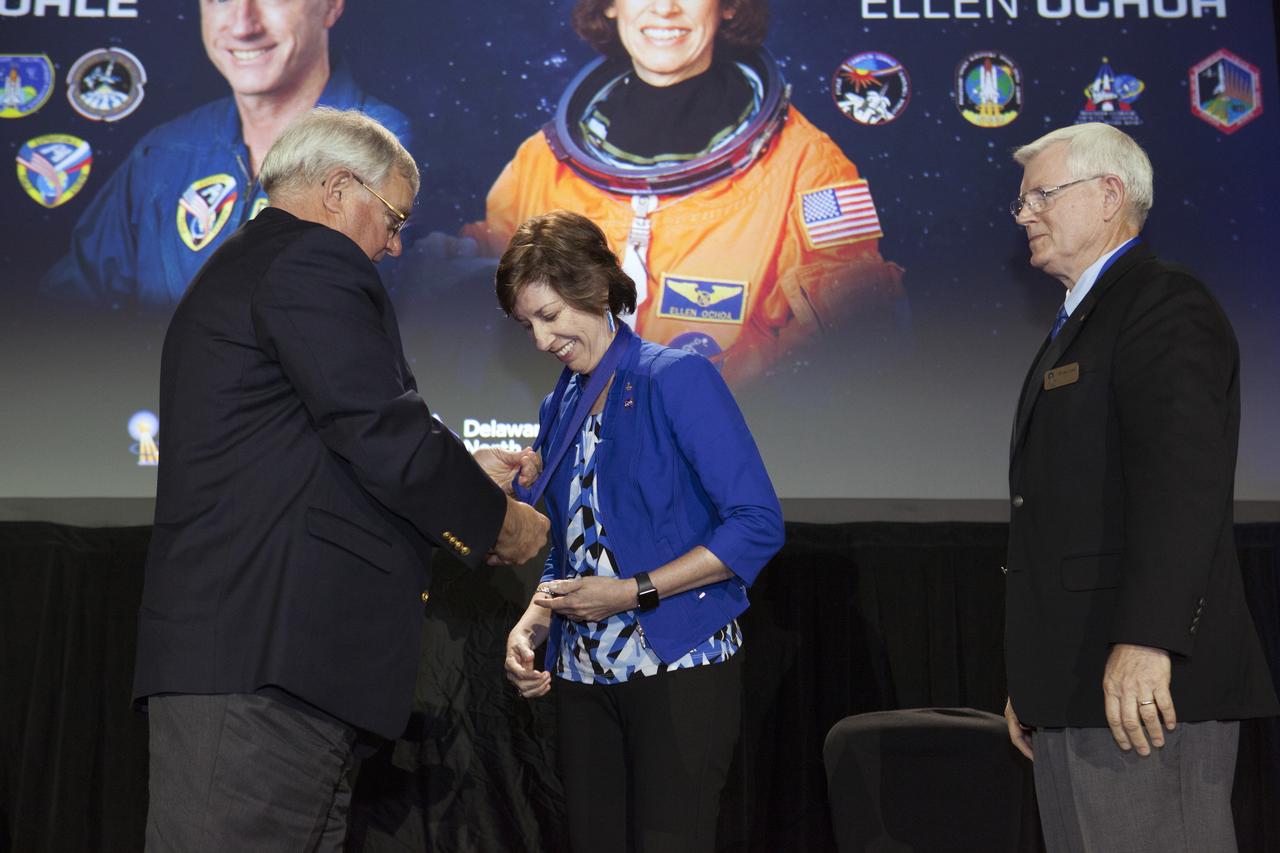
In the Space Shuttle Atlantis facility at the Kennedy Space Center Visitor Complex in Florida, Astronaut Scholarship Foundation Chairman Dan Brandenstein, left, also a Hall of Fame astronaut, presents inductee Ellen Ochoa with her hall of fame medal. Former Johnson Space Center Director Mike Coats, right, a Hall of Fame member, presented Ochoa for induction. During this year's ceremonies, space shuttle astronaut Michael Foale also was enshrined.
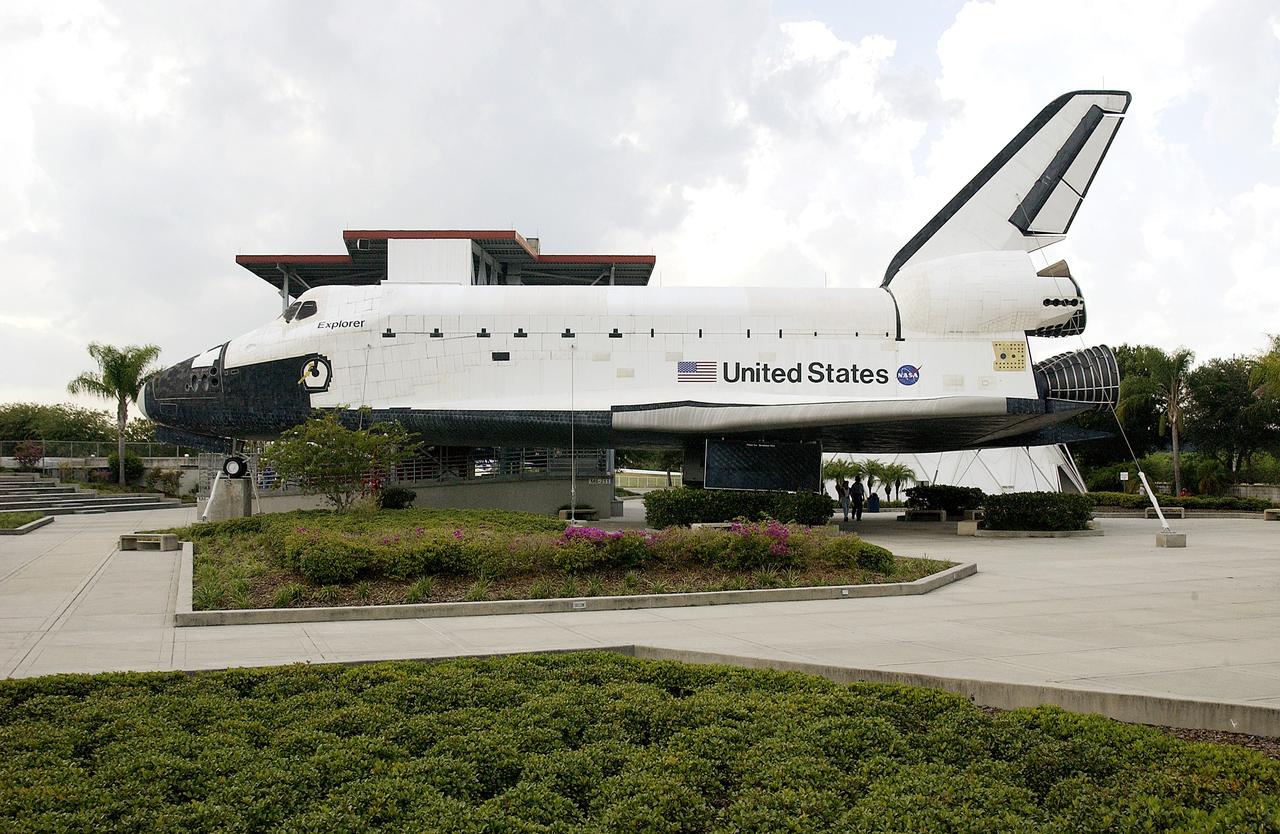
KENNEDY SPACE CENTER, FLA. - One of the featured displays at the KSC Visitor Complex is this full-size replica of a Space Shuttle Orbiter, in the Shuttle Plaza.
KENNEDY SPACE CENTER, FLA. - One of the featured displays at the KSC Visitor Complex is this full-size replica of a Space Shuttle Orbiter, in the Shuttle Plaza.
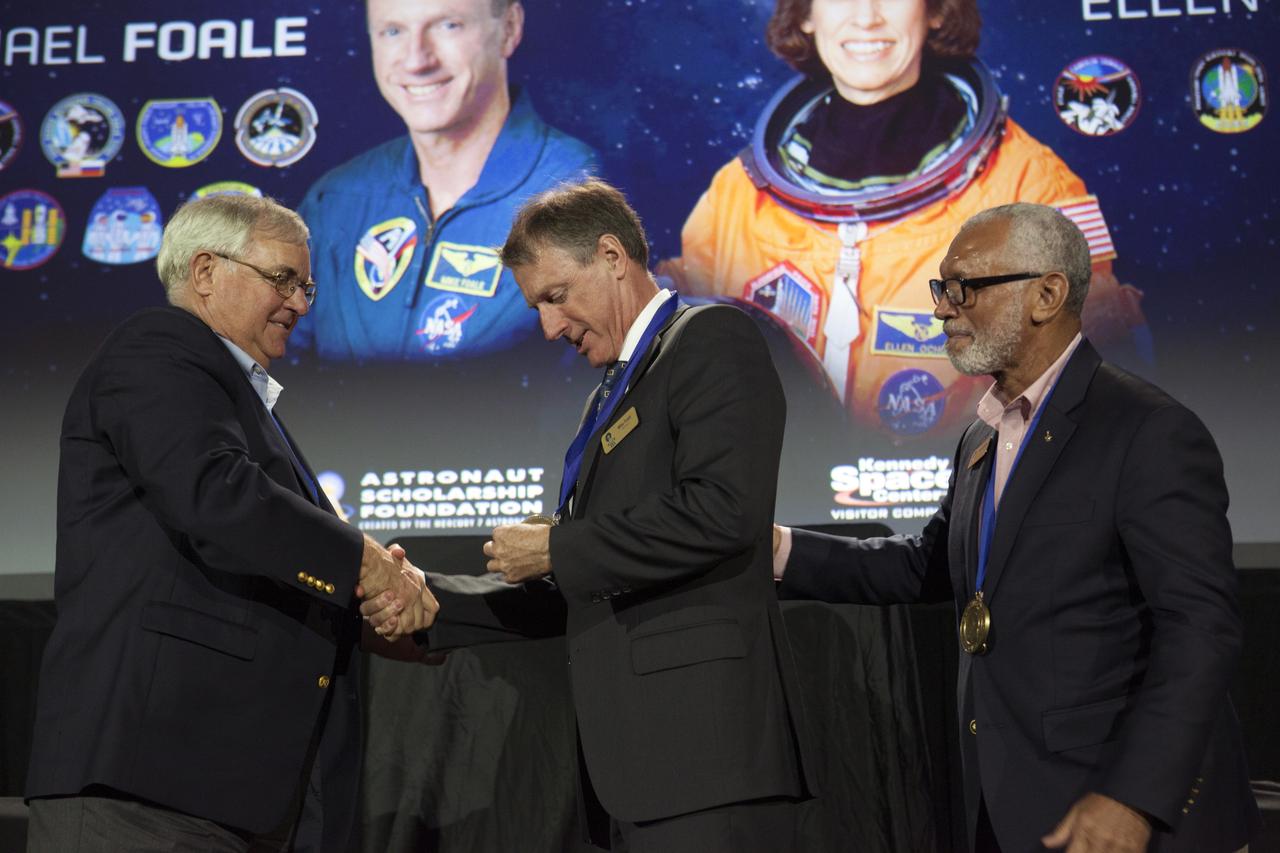
In the Space Shuttle Atlantis facility at the Kennedy Space Center Visitor Complex in Florida, Astronaut Scholarship Foundation Chairman Dan Brandenstein, left, also a Hall of Fame astronaut, presents inductee Michael Foale with his hall of fame medal. Former NASA Administrator Charlie Bolden, right, a Hall of Fame member, presented Foale for induction. During this year's ceremonies, space shuttle astronaut Ellen Ochoa also was enshrined.
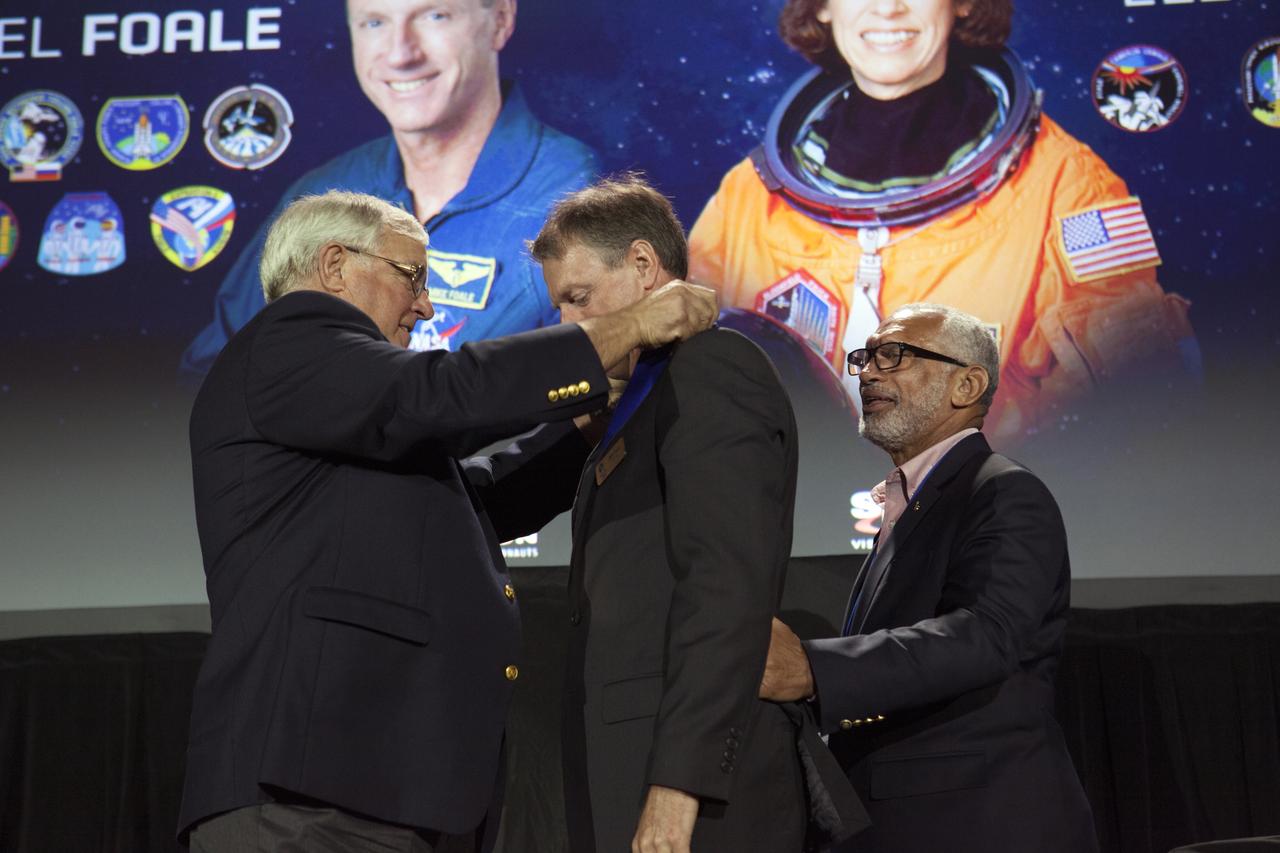
In the Space Shuttle Atlantis facility at the Kennedy Space Center Visitor Complex in Florida, Astronaut Scholarship Foundation Chairman Dan Brandenstein, left, also a Hall of Fame astronaut, presents inductee Michael Foale with his hall of fame medal. Former NASA Administrator Charlie Bolden, right, a Hall of Fame member, presented Foale for induction. During this year's ceremonies, space shuttle astronaut Ellen Ochoa also was enshrined.
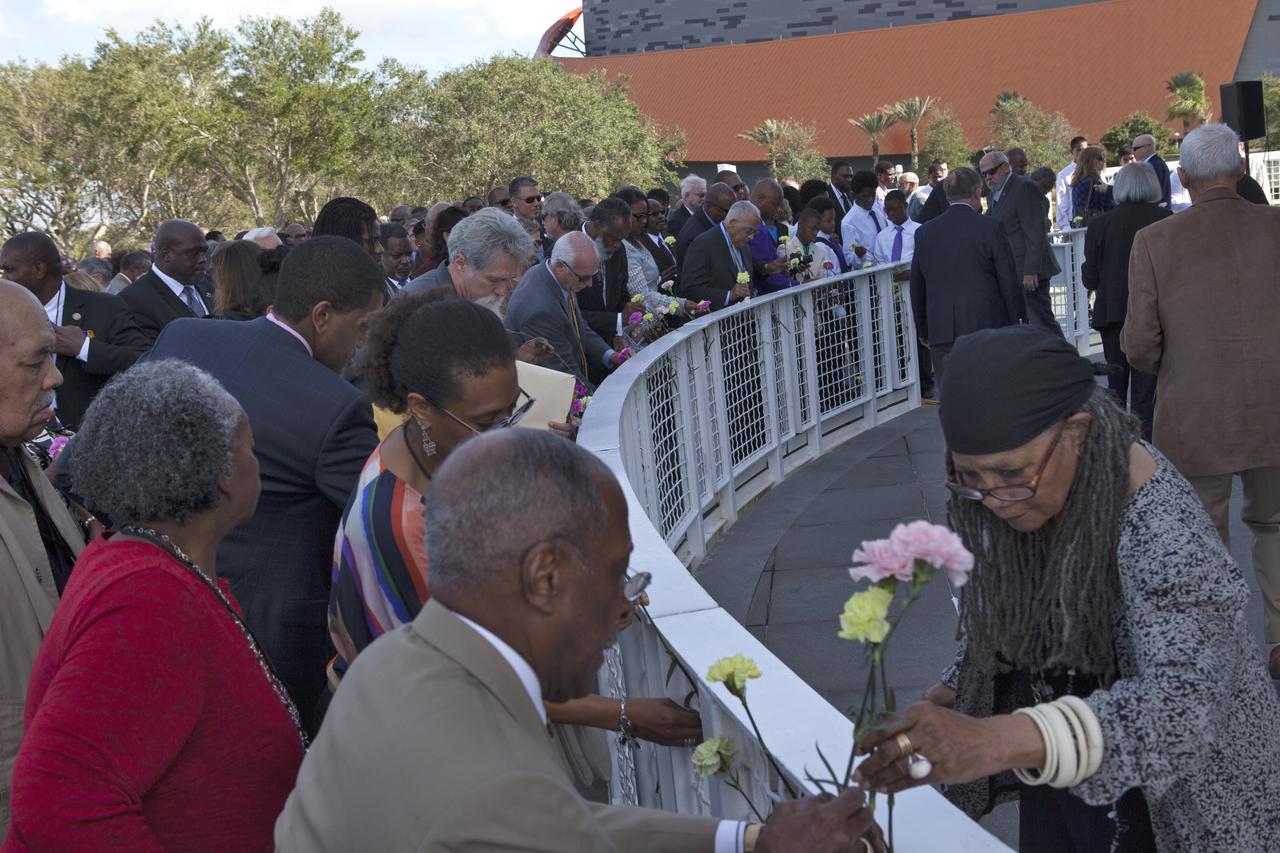
Following an Astronauts Memorial Foundation tribute honoring U.S. Air Foce Maj. Robert Lawrence, guests place flowers at the Space Mirror Memorial at the Kennedy Space Center Visitor Complex. Selected in 1967 for the Manned Orbiting Laboratory Program, Lawrence was the first African-American astronaut. He lost his life in a training accident 50 years ago. The ceremony took place in the Center for Space Education at the Kennedy Space Center Visitor Complex.
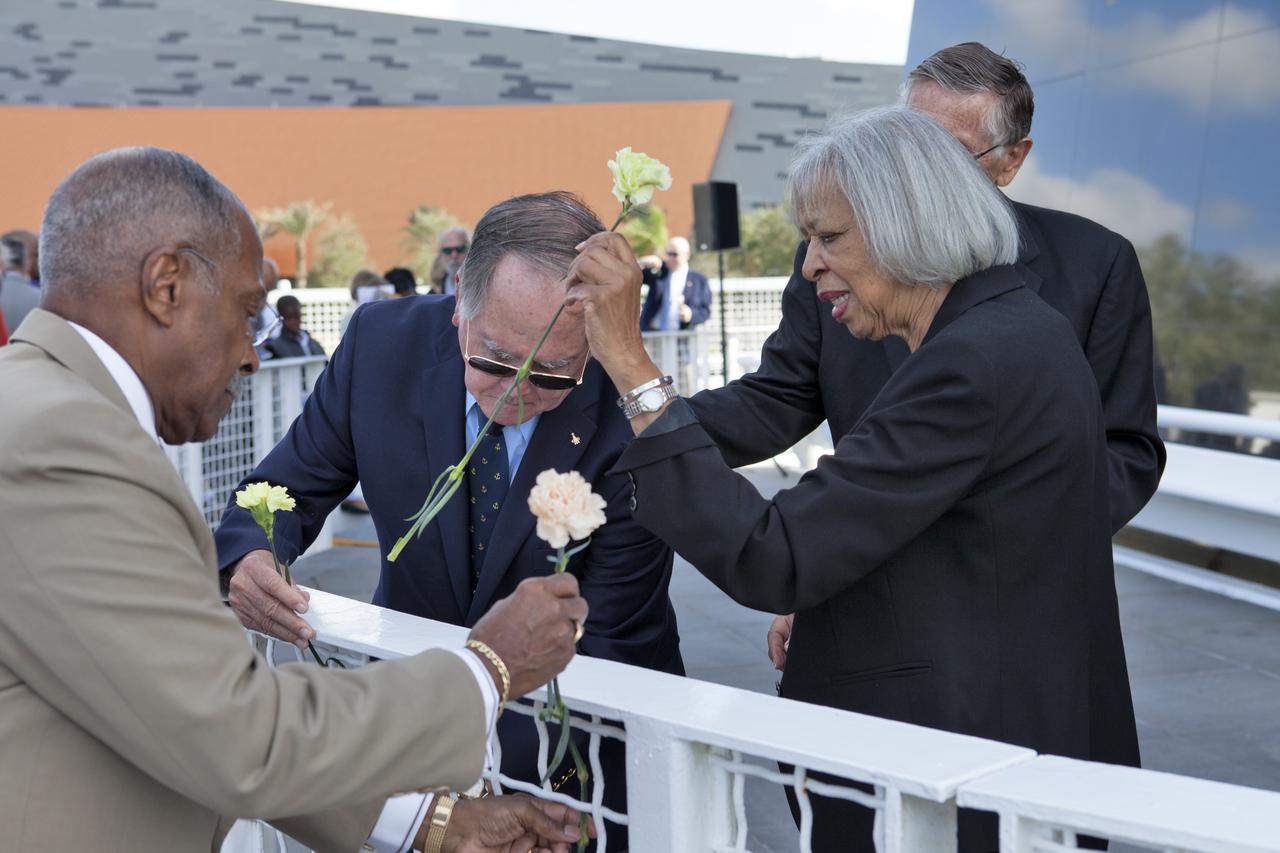
During an Astronauts Memorial Foundation tribute honoring U.S. Air Foce Maj. Robert Lawrence, his sister, Barbara Lawrence, Ph.D., far right, places a flower at the Space Mirror Memorial at the Kennedy Space Center Visitor Complex. Selected in 1967 for the Manned Orbiting Laboratory Program, Lawrence was the first African-American astronaut. He lost his life in a training accident 50 years ago. The ceremony took place in the Center for Space Education at the Kennedy Space Center Visitor Complex.
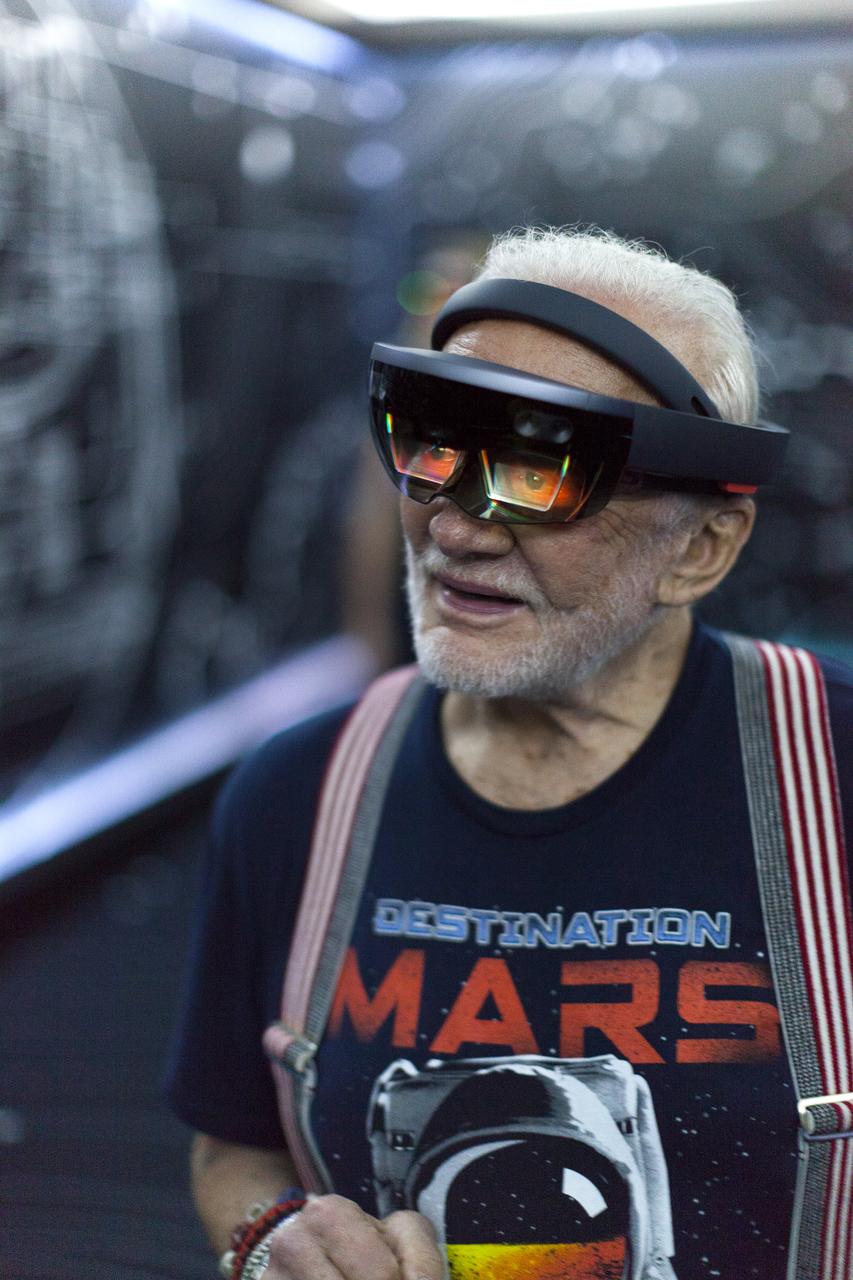
Apollo 11 astronaut Buzz Aldrin tries out Microsoft HoloLens mixed reality headset during a preview of the new Destination: Mars experience at the Kennedy Space Center Visitor Complex. Destination: Mars gives guests an opportunity to “visit” several sites on Mars using real imagery from NASA’s Curiosity Mars Rover. Based on OnSight, a tool created by NASA’s Jet Propulsion Laboratory in Pasadena, California, the experience brings guests together with a holographic version of Aldrin as they are guided to Mars using the headset. Photo credit: NASA/Charles Babir
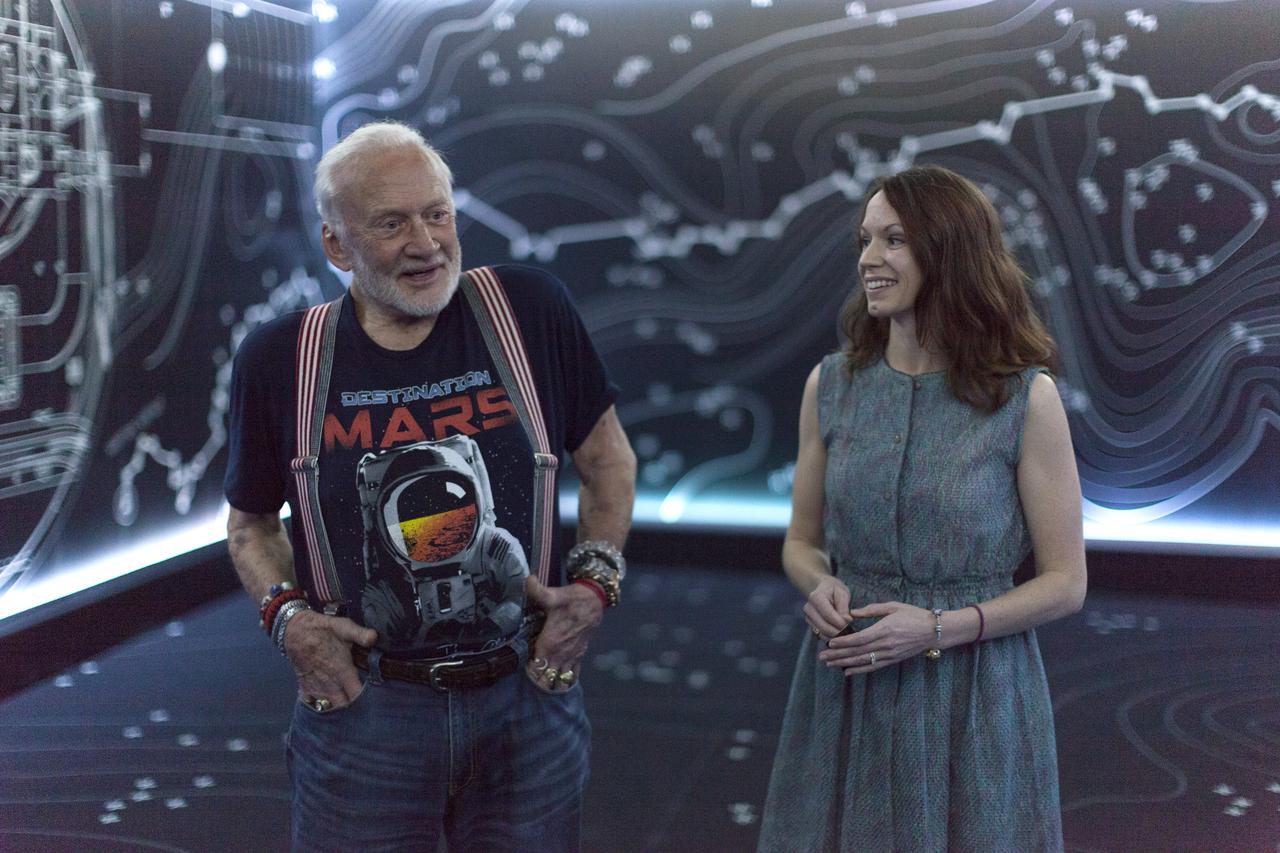
Apollo 11 astronaut Buzz Aldrin, left and Erisa Hines of NASA’s Jet Propulsion Laboratory (JPL) in Pasadena, California, speak to members of the news media during a preview of the new Destination: Mars experience at the Kennedy Space Center Visitor Complex. Destination: Mars gives guests an opportunity to “visit” several sites on Mars using real imagery from NASA’s Curiosity Mars Rover. Based on OnSight, a tool created by JPL, the experience brings guests together with a holographic version of Aldrin and Curiosity rover driver Hines as they are guided to Mars using Microsoft HoloLens mixed reality headset. Photo credit: NASA/Charles Babir
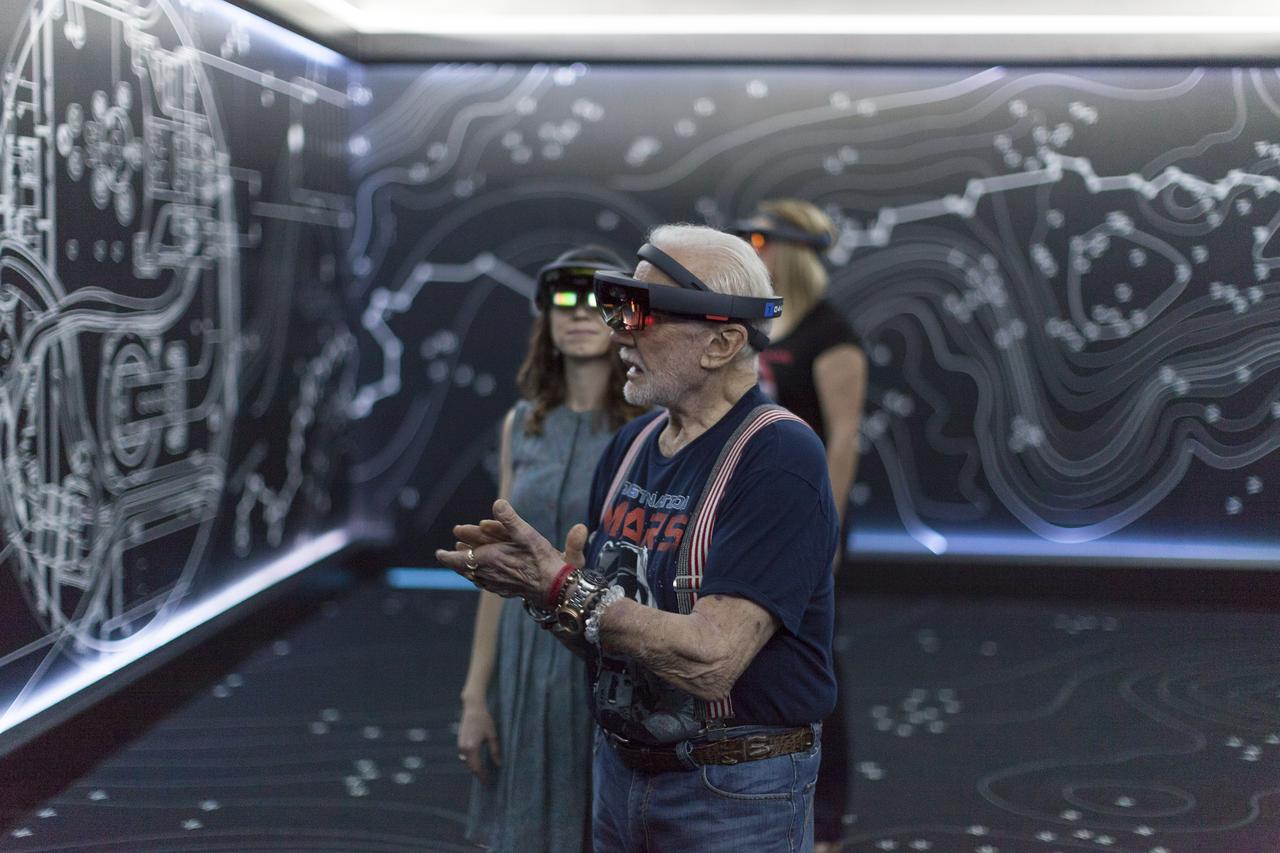
Apollo 11 astronaut Buzz Aldrin, right and Erisa Hines of NASA’s Jet Propulsion Laboratory (JPL) in Pasadena, California, speak to members of the news media during a preview of the new Destination: Mars experience at the Kennedy Space Center Visitor Complex. Destination: Mars gives guests an opportunity to “visit” several sites on Mars using real imagery from NASA’s Curiosity Mars Rover. Based on OnSight, a tool created by JPL, the experience brings guests together with a holographic version of Aldrin and Curiosity rover driver Hines as they are guided to Mars using Microsoft HoloLens mixed reality headset. Photo credit: NASA/Charles Babir
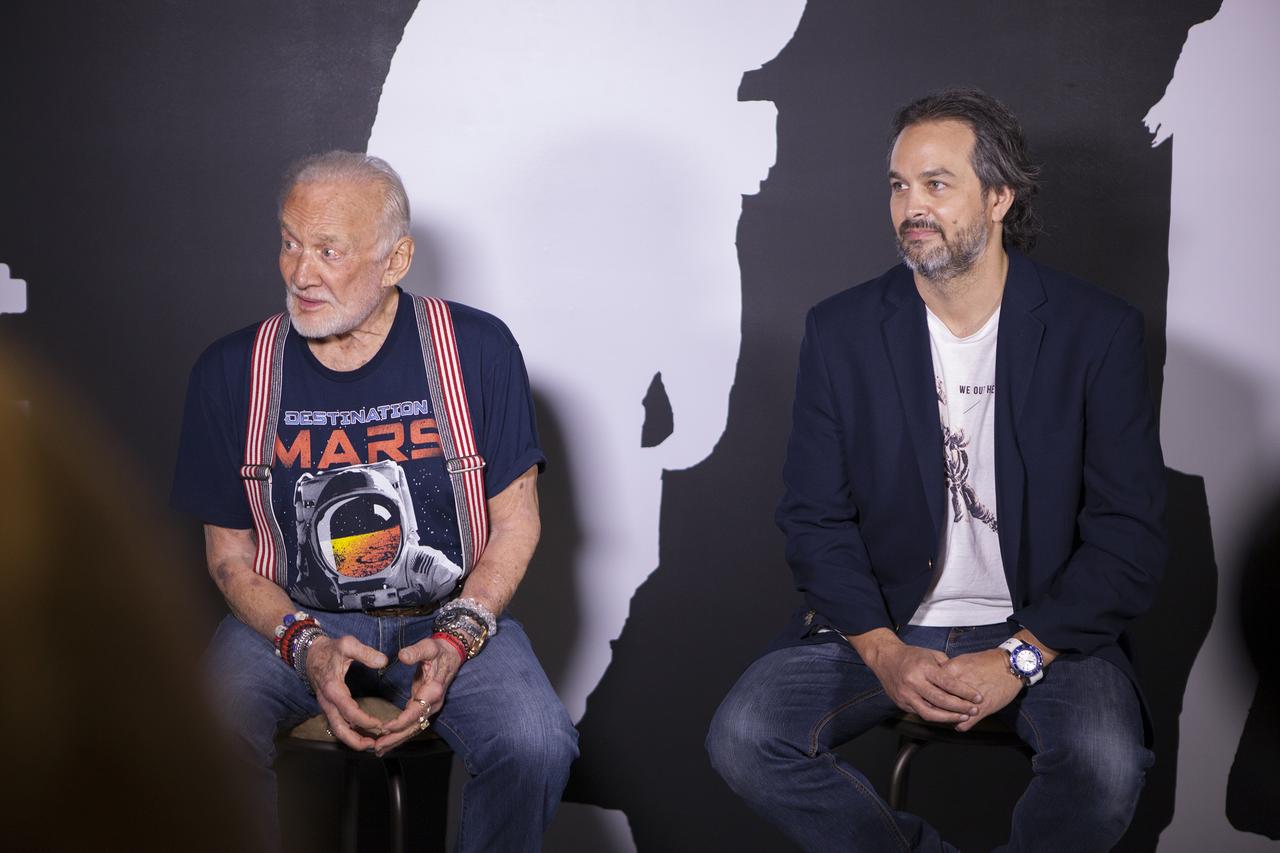
Apollo 11 astronaut Buzz Aldrin, left, and Kudo Tsunoda of Microsoft, speak to members of the news media during a preview of the new Destination: Mars experience at the Kennedy Space Center Visitor Complex. Destination: Mars gives guests an opportunity to “visit” several sites on Mars using real imagery from NASA’s Curiosity Mars Rover. Based on OnSight, a tool created by NASA’s Jet Propulsion Laboratory in Pasadena, California, the experience brings guests together with a holographic version of Aldrin as they are guided to Mars using Microsoft HoloLens mixed reality headset. Photo credit: NASA/Charles Babir
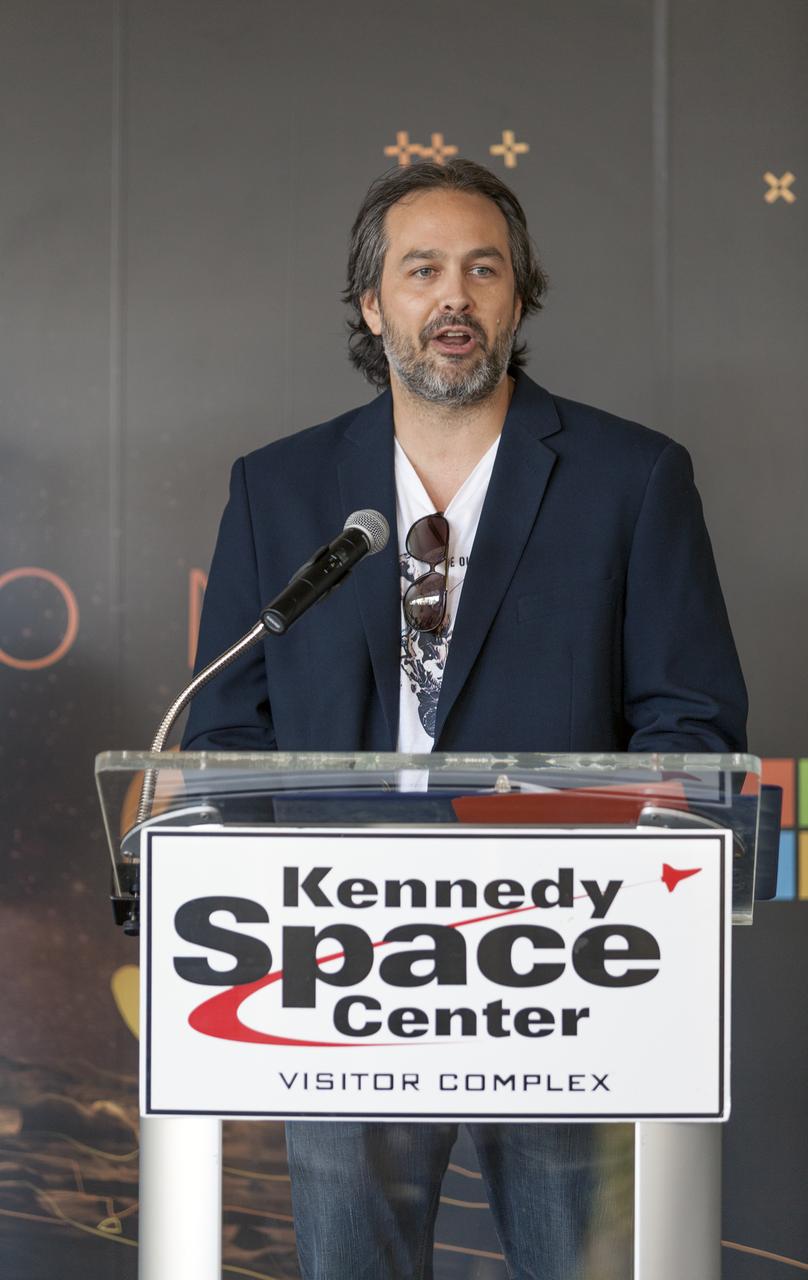
Kudo Tsunoda of Microsoft, speaks to members of the news media during a preview of the new Destination: Mars experience at the Kennedy Space Center Visitor Complex. Destination: Mars gives guests an opportunity to “visit” several sites on Mars using real imagery from NASA’s Curiosity Mars Rover. Based on OnSight, a tool created by NASA’s Jet Propulsion Laboratory in Pasadena, California, the experience brings guests together with a holographic version of Apollo 11 astronaut Buzz Aldrin as they are guided to Mars using Microsoft HoloLens mixed reality headset. Photo credit: NASA/Charles Babir
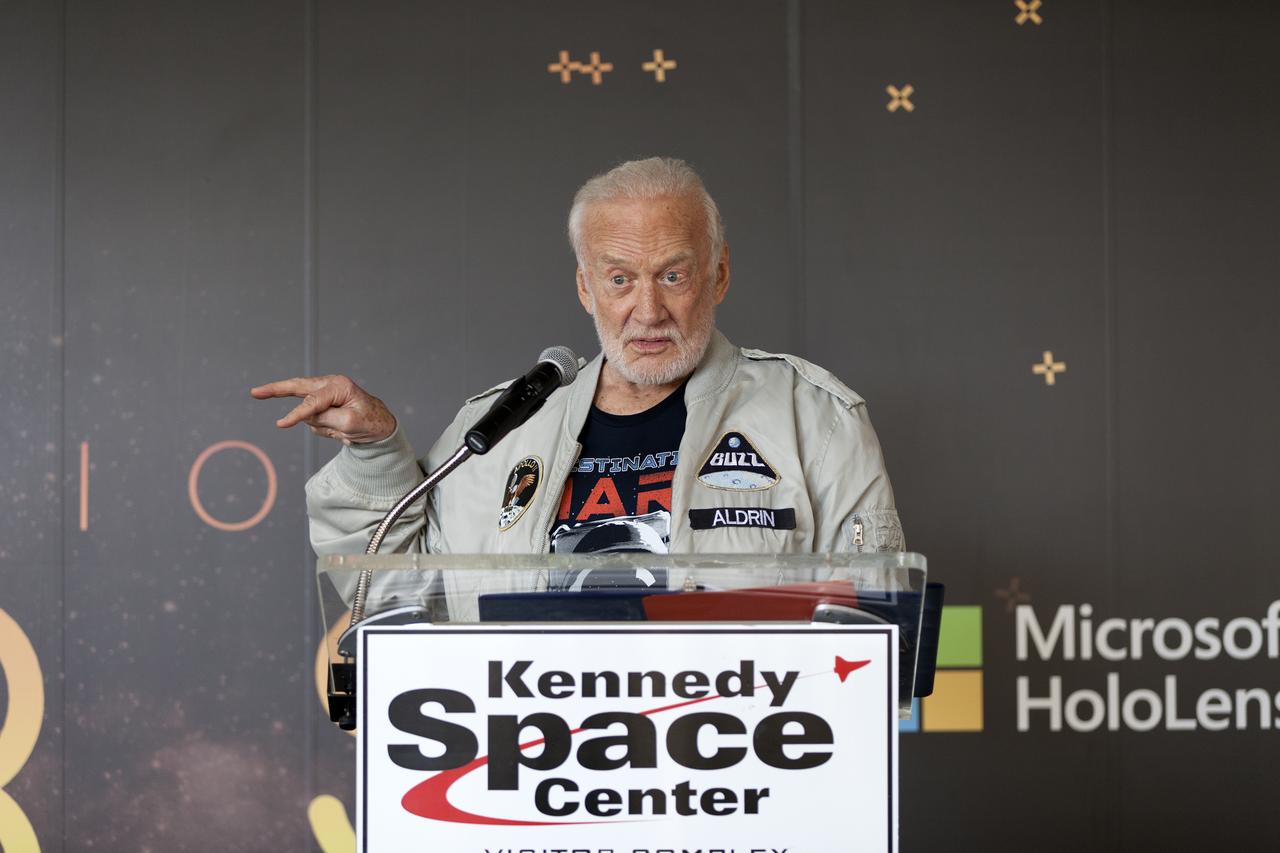
Apollo 11 astronaut Buzz Aldrin speaks to members of the news media during a preview of the new Destination: Mars experience at the Kennedy Space Center Visitor Complex. Destination: Mars gives guests an opportunity to “visit” several sites on Mars using real imagery from NASA’s Curiosity Mars Rover. Based on OnSight, a tool created by NASA’s Jet Propulsion Laboratory in Pasadena, California, the experience brings guests together with a holographic version of Aldrin as they are guided to Mars using Microsoft HoloLens mixed reality headset. Photo credit: NASA/Charles Babir
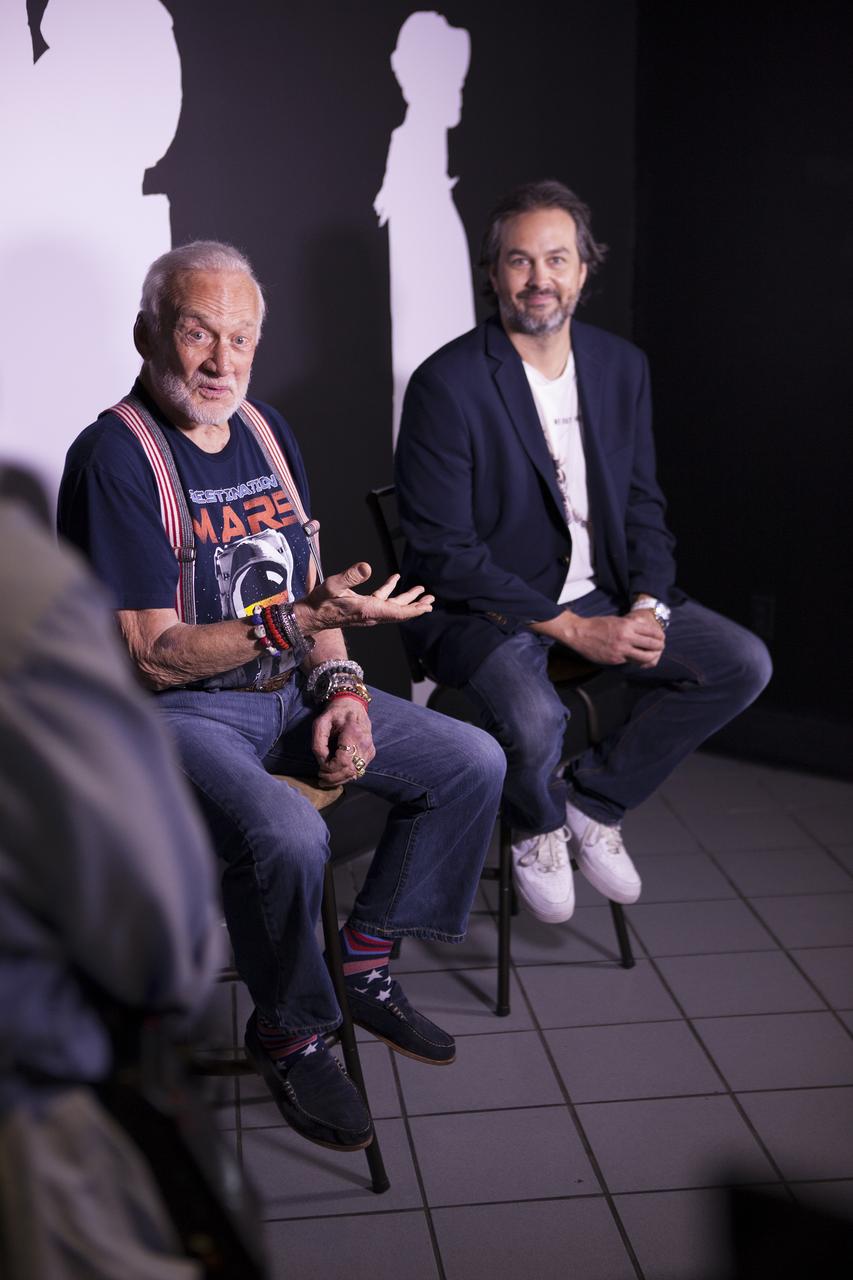
Apollo 11 astronaut Buzz Aldrin, left, and Kudo Tsunoda of Microsoft, speak to members of the news media during a preview of the new Destination: Mars experience at the Kennedy Space Center Visitor Complex. Destination: Mars gives guests an opportunity to “visit” several sites on Mars using real imagery from NASA’s Curiosity Mars Rover. Based on OnSight, a tool created by NASA’s Jet Propulsion Laboratory in Pasadena, California, the experience brings guests together with a holographic version of Aldrin as they are guided to Mars using Microsoft HoloLens mixed reality headset. Photo credit: NASA/Charles Babir
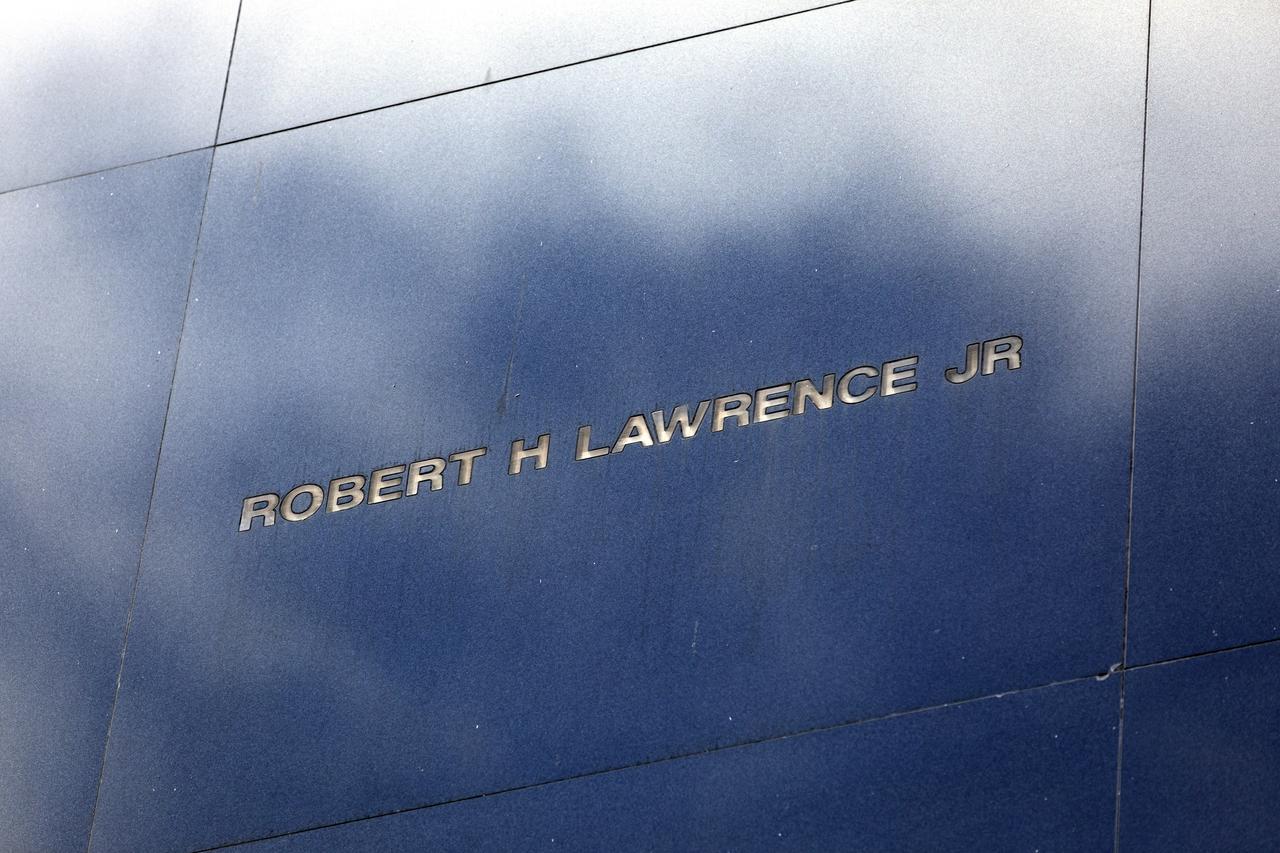
At the Kennedy Space Center's Visitor Complex, the name of U.S. Air Foce Maj. Robert Lawrence is one of those included on the Space Mirror Memorial which honors those lost in efforts to explore space. Selected in 1967 for the Manned Orbiting Laboratory Program, Lawrence was the first African-American astronaut. He lost his life in a training accident 50 years ago. The ceremony took place in the Center for Space Education at the Kennedy visitor complex.
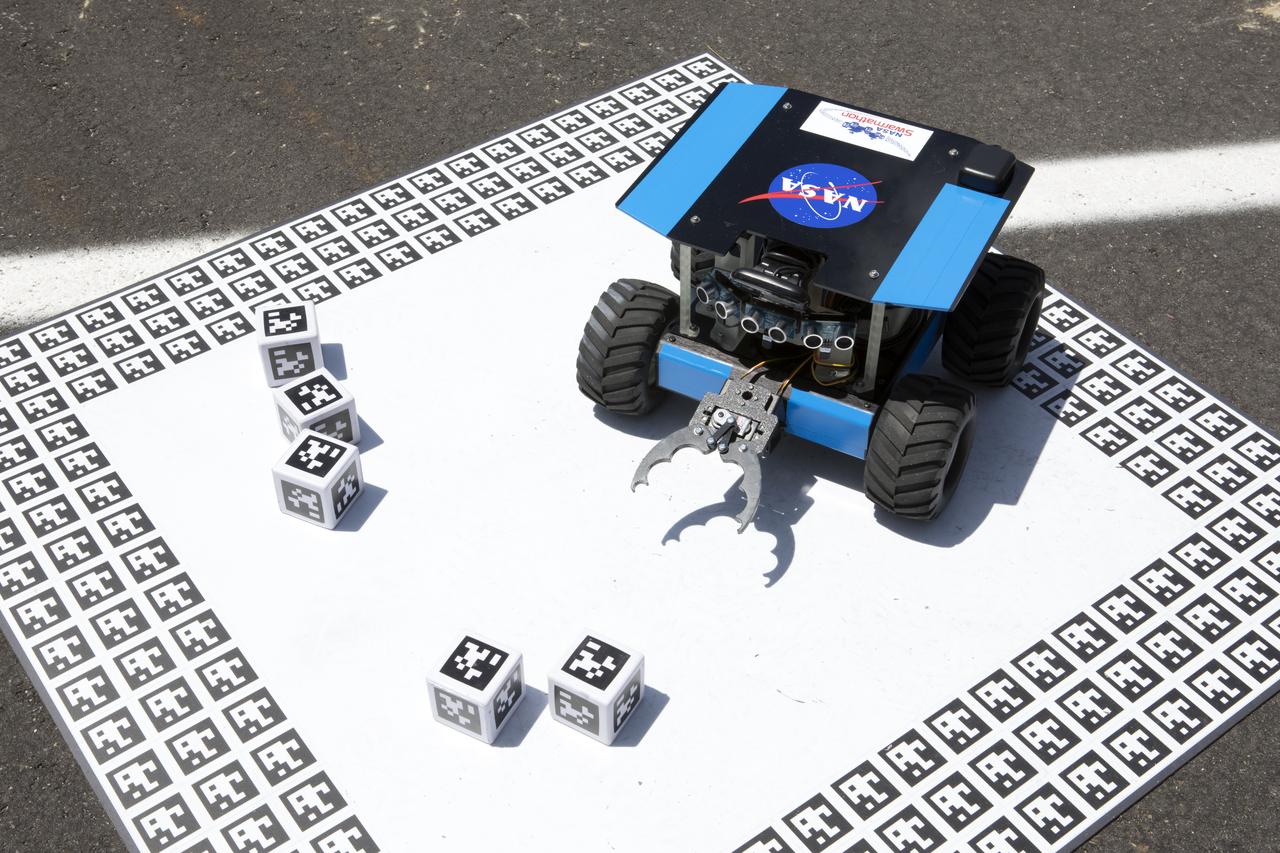
A cube identified with an AprilTag, similar to a barcode, is delivered to a "home" square in the middle of a competition arena during the Swarmathon competition. At the Kennedy Space Center Visitor Complex, student teams developed search algorithms for the Swarmies to operate autonomously, communicating and interacting as a collective swarm similar to ants foraging for food.
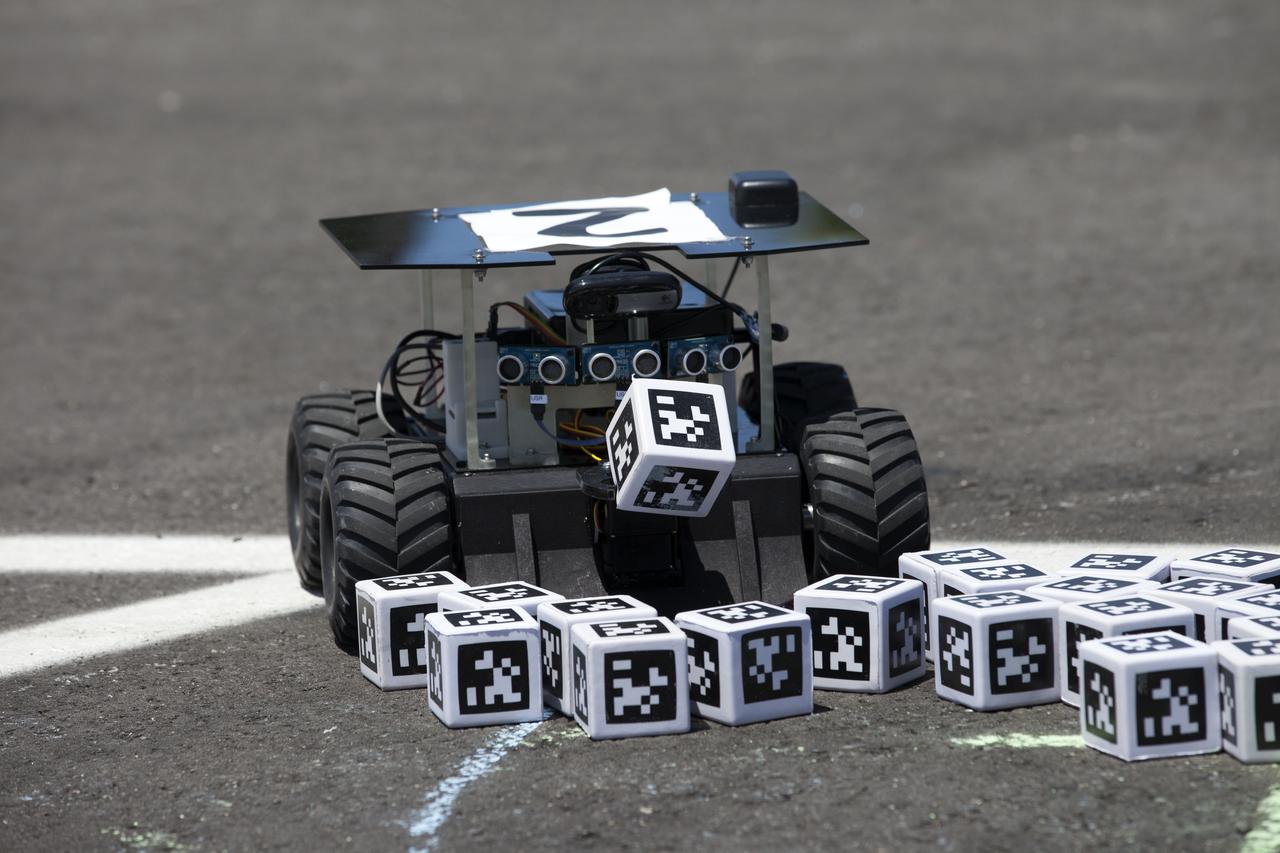
A Swarmie robot finds a "resource" cube marked with an AprilTag, similar to a barcode. In the Swarmathon competition at the Kennedy Space Center Visitor Complex, students were asked to develop computer code for the small robots, programming them to look for "resources" in the form of cubes with AprilTags.
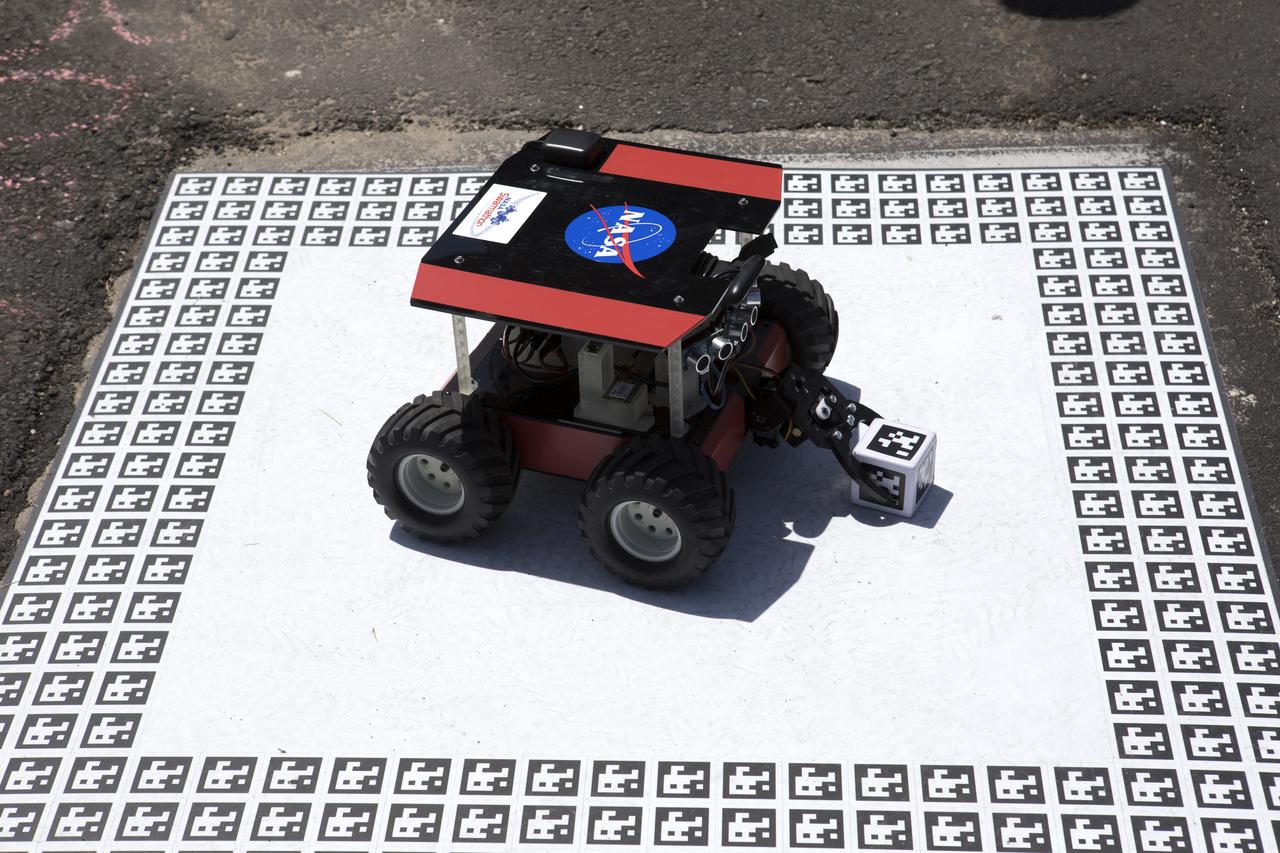
A cube identified with an AprilTag, similar to a barcode, is delivered to a "home" square in the middle of a competition arena during the Swarmathon competition. At the Kennedy Space Center Visitor Complex, student teams developed search algorithms for the Swarmies to operate autonomously, communicating and interacting as a collective swarm similar to ants foraging for food.
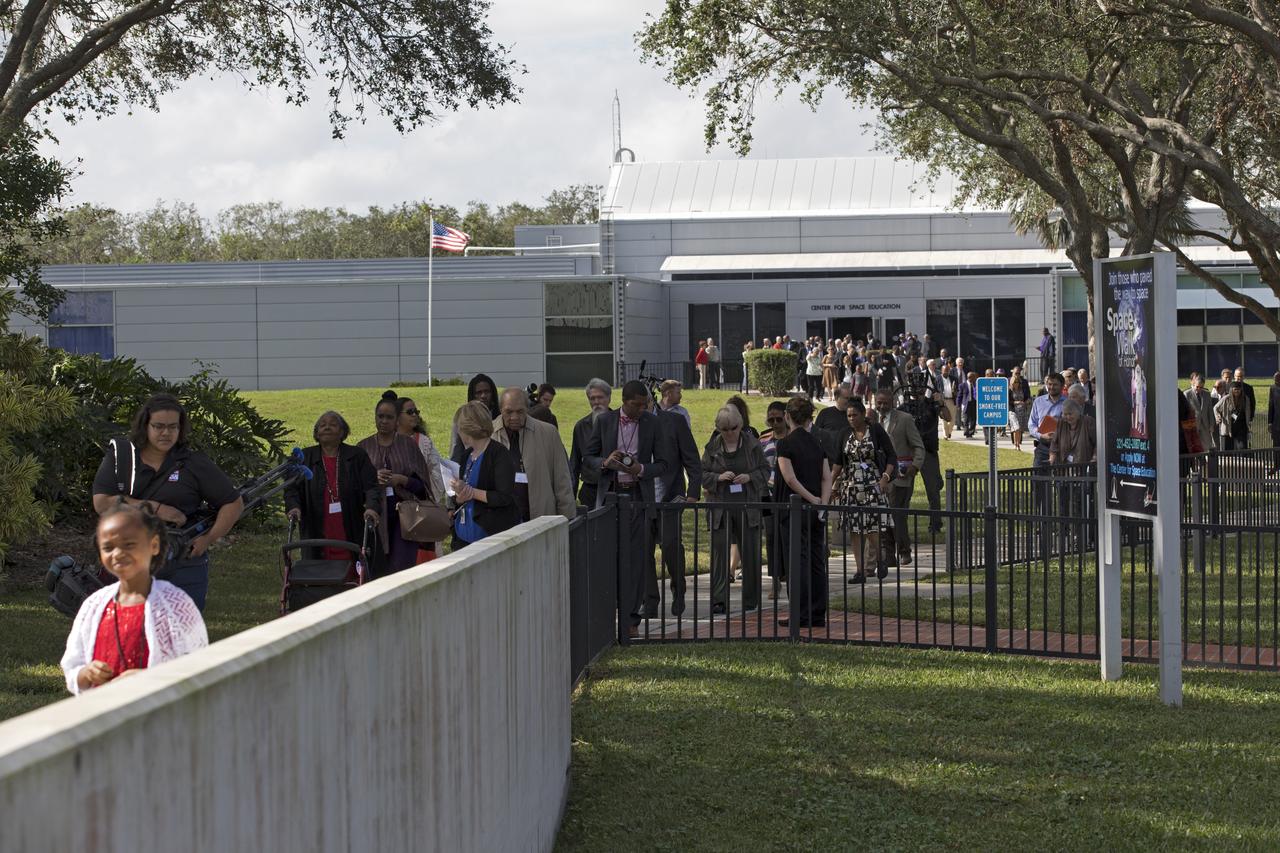
During an Astronauts Memorial Foundation tribute honoring U.S. Air Foce Maj. Robert Lawrence, guests walk to the Space Mirror Memorial at the Kennedy Space Center's Visitor Complex. Selected in 1967 for the Manned Orbiting Laboratory Program, Lawrence was the first African-American astronaut. He lost his life in a training accident 50 years ago. The ceremony took place in the Center for Space Education at the Kennedy visitor complex.
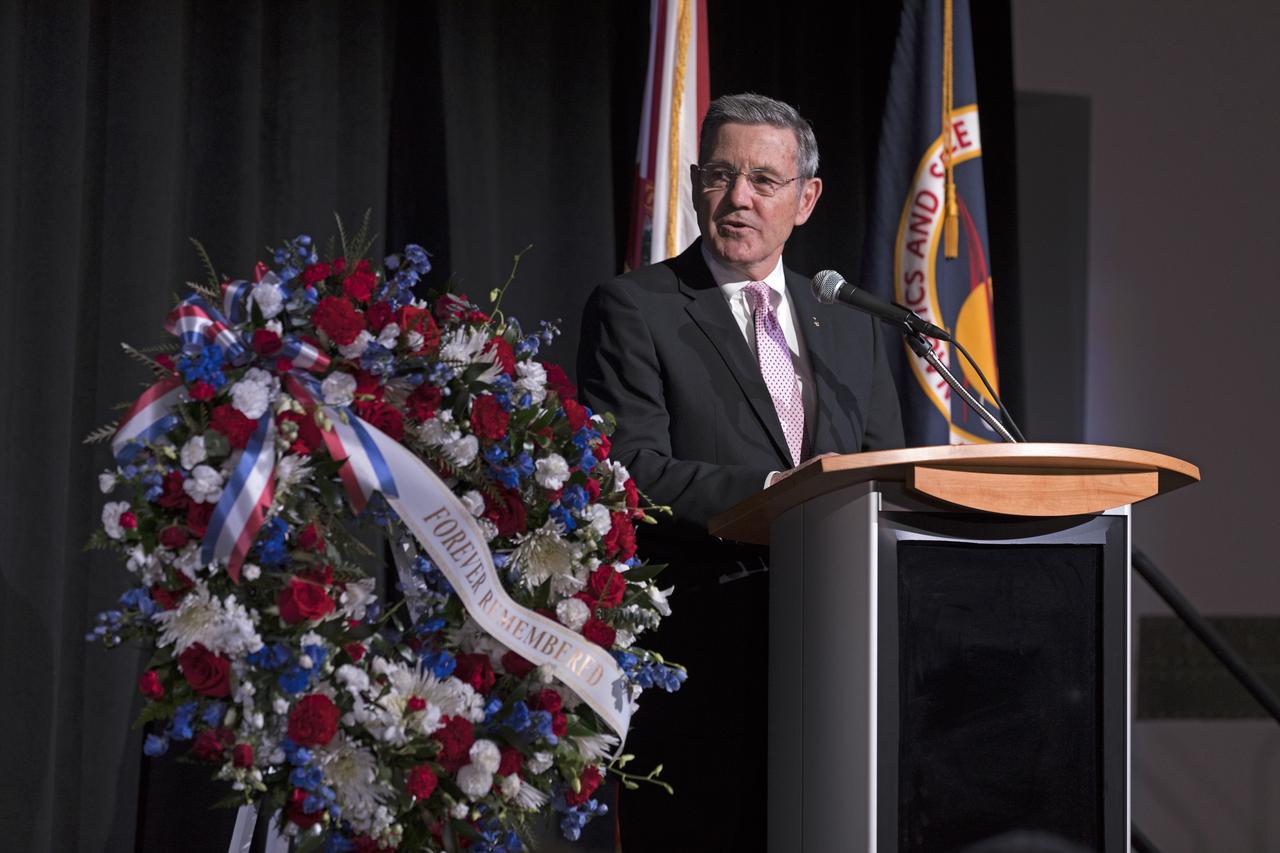
Kennedy Space Center Director Bob Cabana speaks during this year's Day of Remembrance ceremony at the Kennedy Space Center Visitor Complex. Each year spaceport employees and guests join others throughout NASA honoring the contributions of astronauts who have perished in the conquest of space.
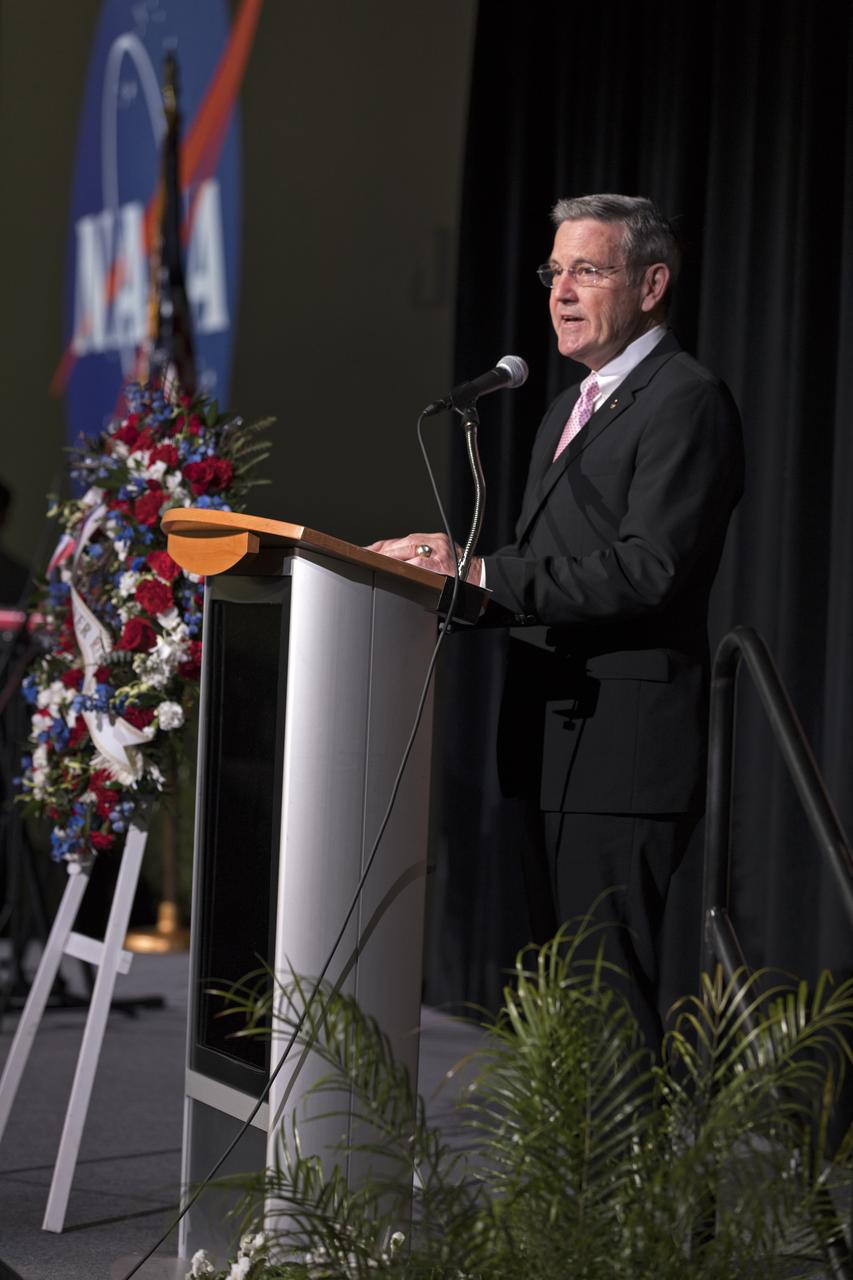
Kennedy Space Center Director Bob Cabana speaks during this year's Day of Remembrance ceremony at the Kennedy Space Center Visitor Complex. Each year spaceport employees and guests join others throughout NASA honoring the contributions of astronauts who have perished in the conquest of space.
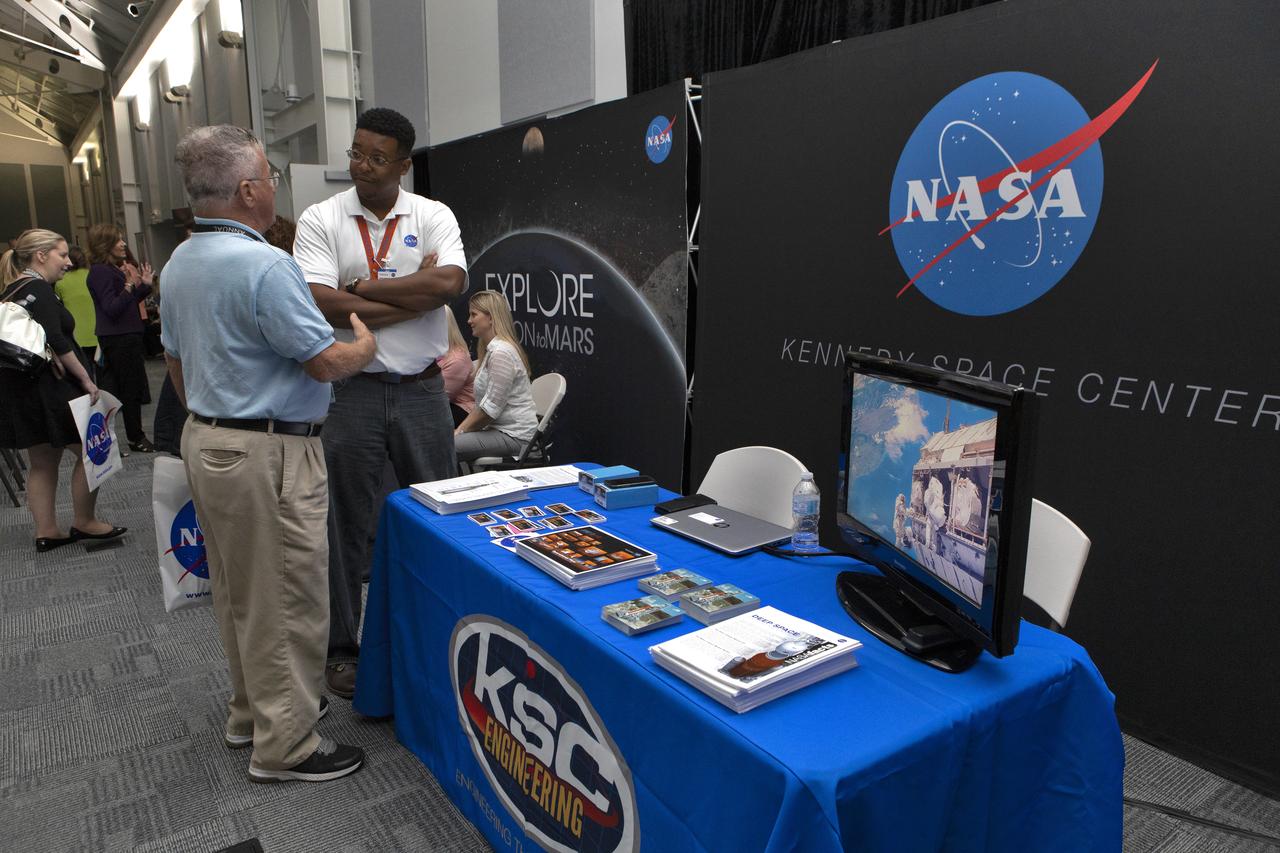
A guest visits with a representative from the Engineering Directorate during NASA Kennedy Space Center Director Bob Cabana’s update to community leaders, business executives, partners, educators and government leaders March 29, 2019, at the Kennedy Space Center Visitor Complex in Florida. Cabana’s presentation covered recent accomplishments and future plans for Kennedy-led programs, including the Commercial Crew Program, Exploration Ground Systems, Launch Services Program, Exploration Research and Technology, and Center Planning and Development. After the presentation, guests had the opportunity to ask questions and visit displays from the programs and some of the commercial partners.
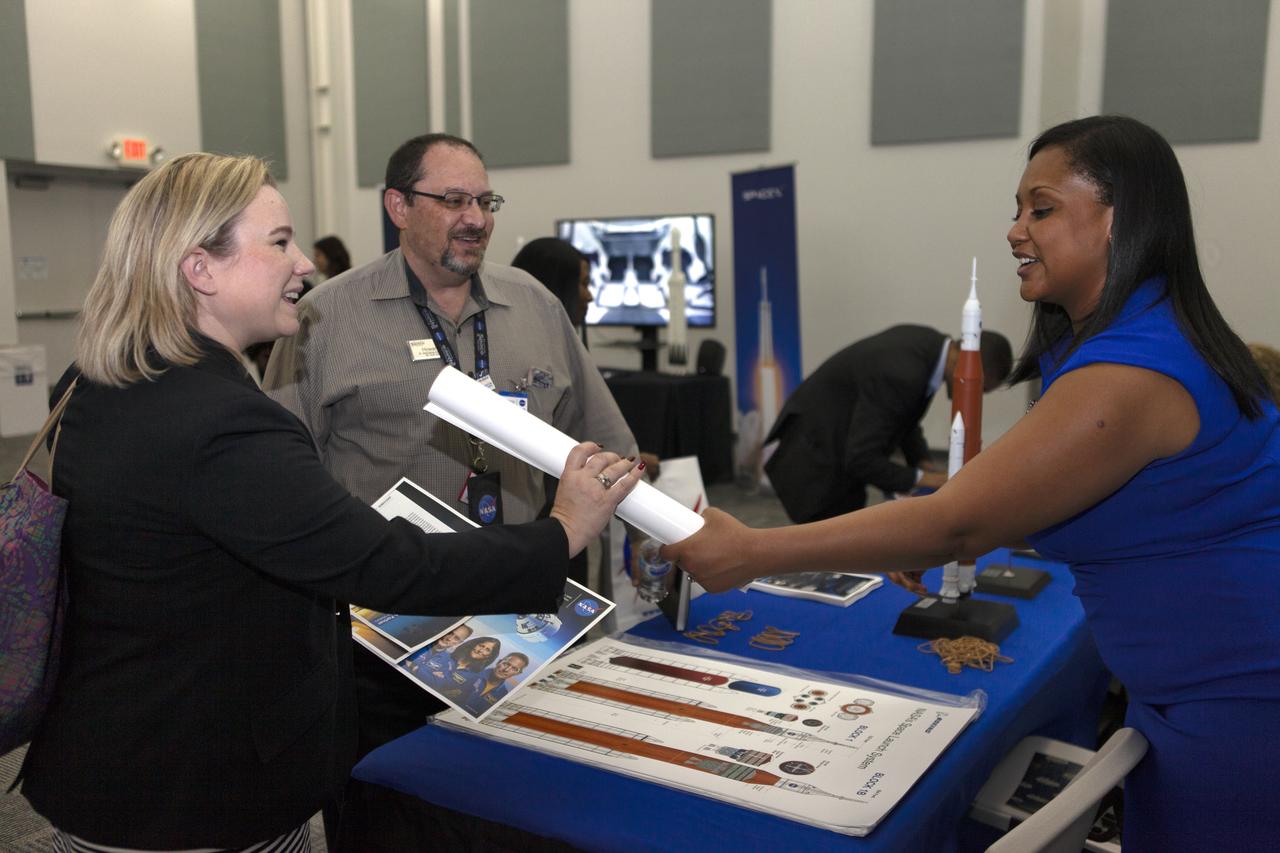
Guests visit with a representative from Boeing before NASA Kennedy Space Center Director Bob Cabana’s update to community leaders, business executives, partners, educators and government leaders March 29, 2019, at the Kennedy Space Center Visitor Complex in Florida. Cabana’s presentation covered recent accomplishments and future plans for Kennedy-led programs, including the Commercial Crew Program, Exploration Ground Systems, Launch Services Program, Exploration Research and Technology, and Center Planning and Development. After the presentation, guests had the opportunity to ask questions and visit displays from the programs and some of the commercial partners.
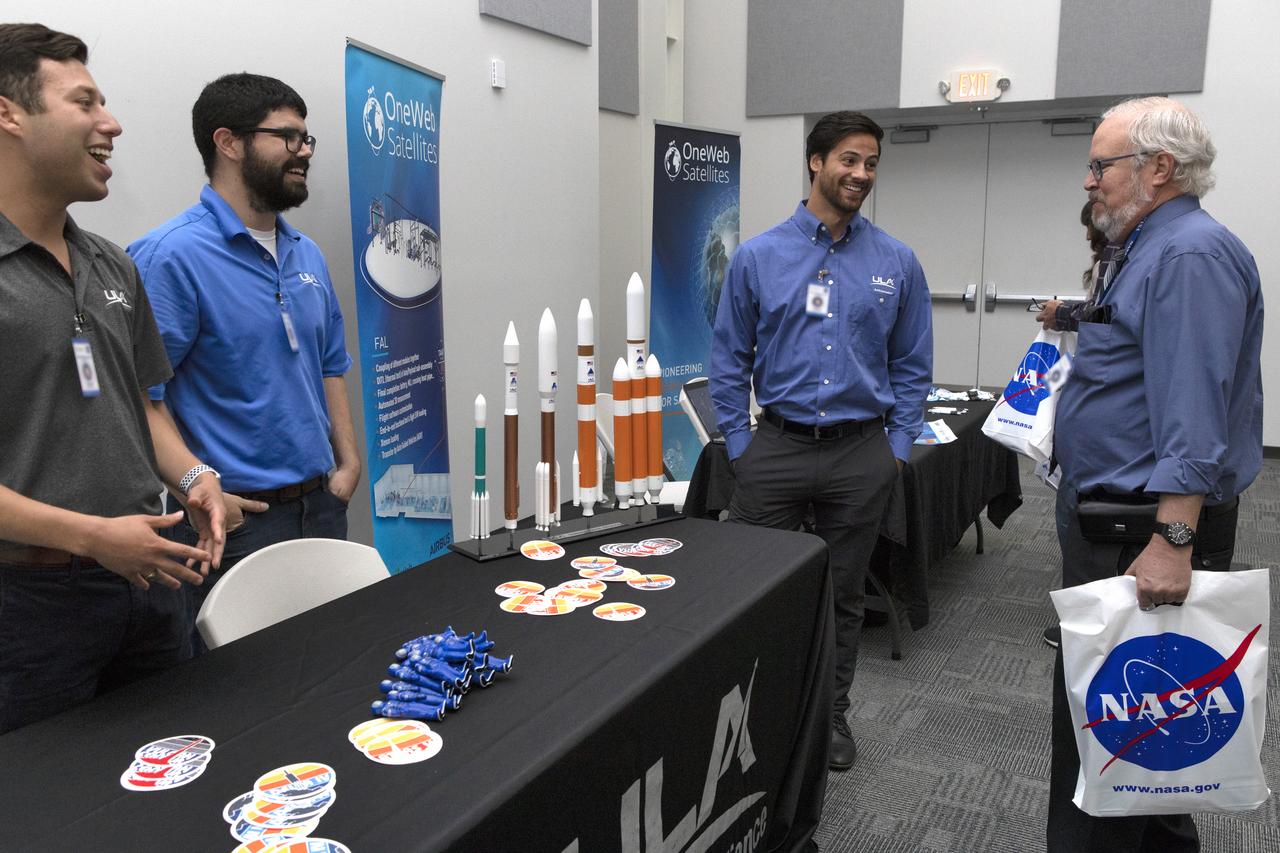
Guests visit with representatives from United Launch Alliance during NASA Kennedy Space Center Director Bob Cabana’s update to community leaders, business executives, partners, educators and government leaders March 29, 2019, at the Kennedy Space Center Visitor Complex in Florida. Cabana’s presentation covered recent accomplishments and future plans for Kennedy-led programs, including the Commercial Crew Program, Exploration Ground Systems, Launch Services Program, Exploration Research and Technology, and Center Planning and Development. After the presentation, guests had the opportunity to ask questions and visit displays from the programs and some of the commercial partners.
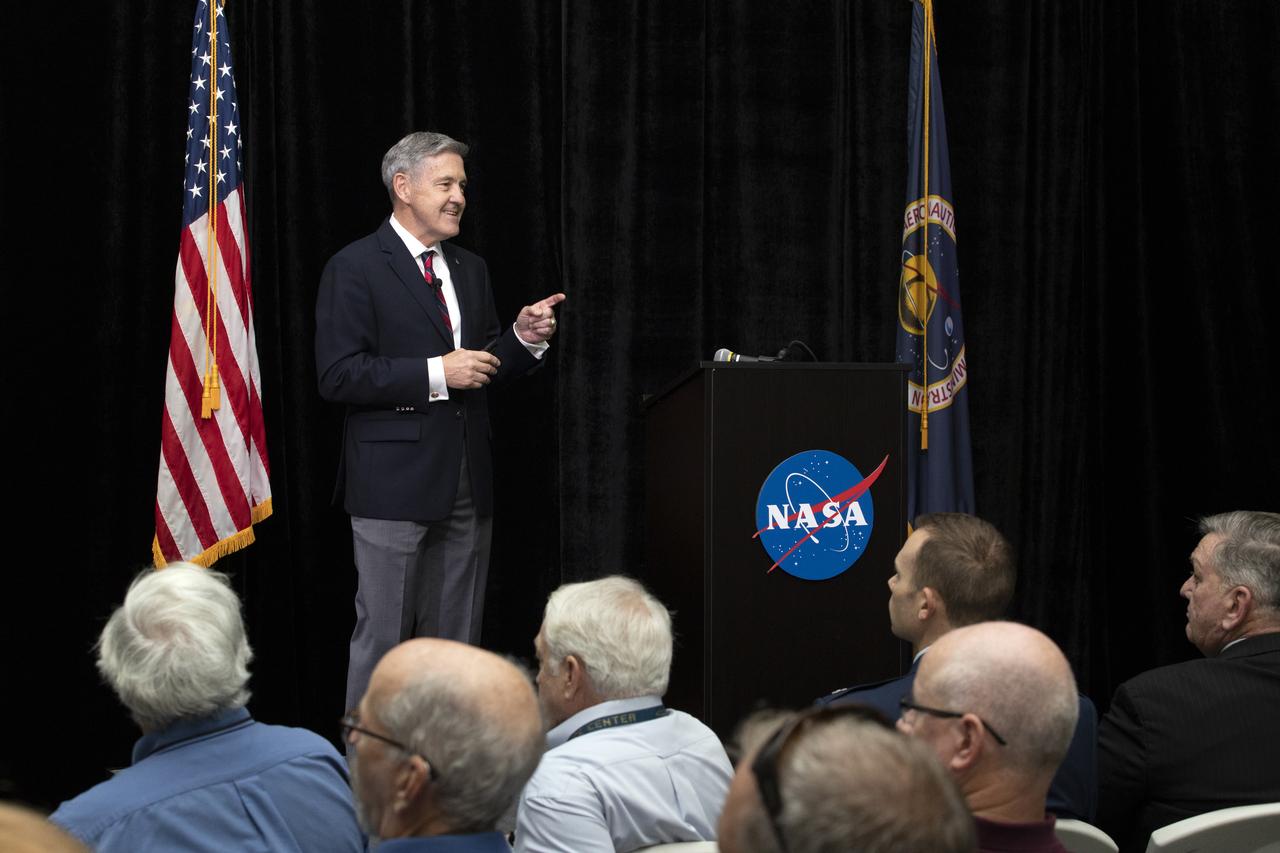
NASA Kennedy Space Center Director Bob Cabana updates community leaders, business executives, partners, educators and government leaders on Kennedy-led programs and accomplishments during a presentation March 29, 2019, at the Kennedy Space Center Visitor Complex in Florida. Cabana recapped achievements and future plans for the Commercial Crew Program, Exploration Ground Systems, Launch Services Program, Exploration Research and Technology, and Center Planning and Development. After the presentation, guests had the opportunity to ask questions and visit displays from the programs and some of the commercial partners.
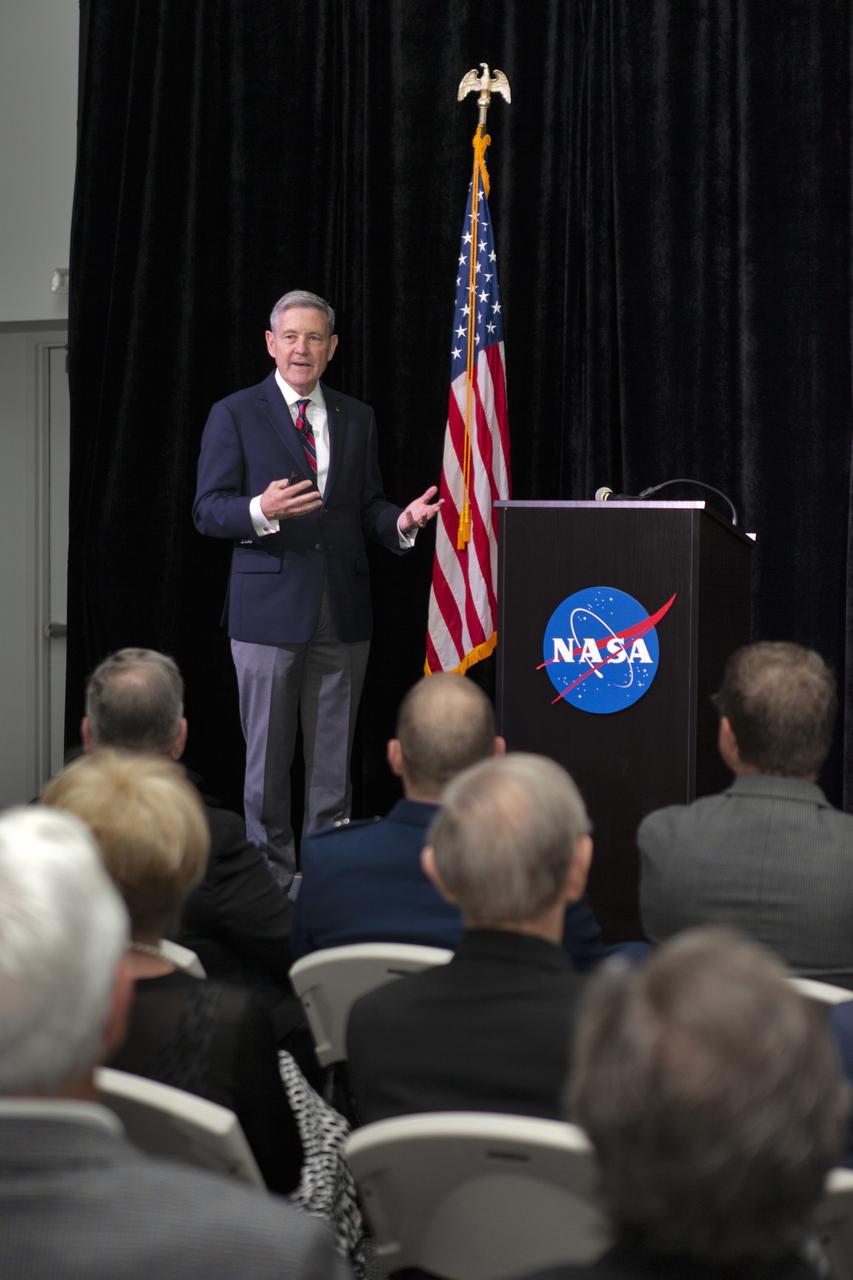
NASA Kennedy Space Center Director Bob Cabana updates community leaders, business executives, partners, educators and government leaders on Kennedy-led programs and accomplishments during a presentation March 29, 2019, at the Kennedy Space Center Visitor Complex in Florida. Cabana recapped achievements and future plans for the Commercial Crew Program, Exploration Ground Systems, Launch Services Program, Exploration Research and Technology, and Center Planning and Development. After the presentation, guests had the opportunity to ask questions and visit displays from the programs and some of the commercial partners.
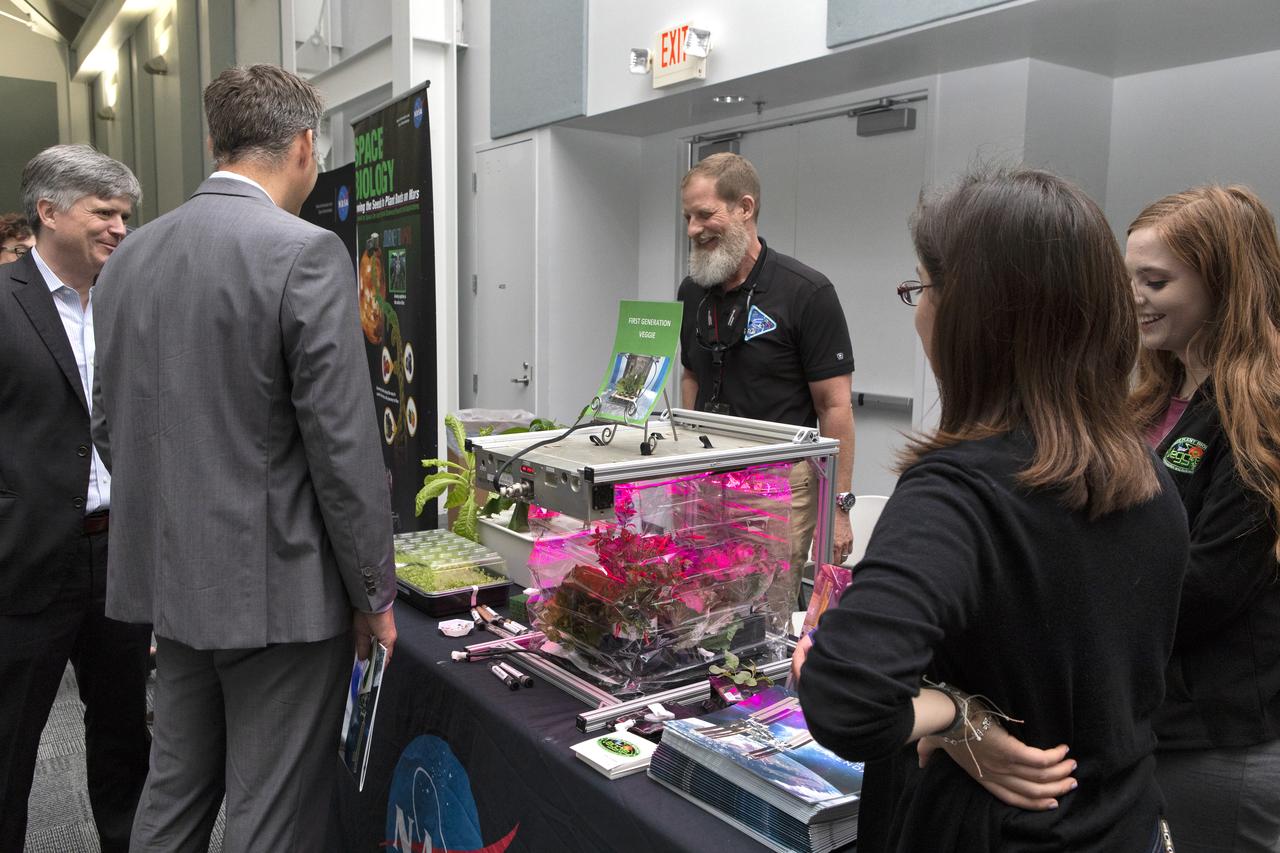
Guests visit with a representative from Exploration Research and Technology during NASA Kennedy Space Center Director Bob Cabana’s update to community leaders, business executives, partners, educators and government leaders March 29, 2019, at the Kennedy Space Center Visitor Complex in Florida. Cabana’s presentation covered recent accomplishments and future plans for Kennedy-led programs, including the Commercial Crew Program, Exploration Ground Systems, Launch Services Program, Exploration Research and Technology, and Center Planning and Development. After the presentation, guests had the opportunity to ask questions and visit displays from the programs and some of the commercial partners.
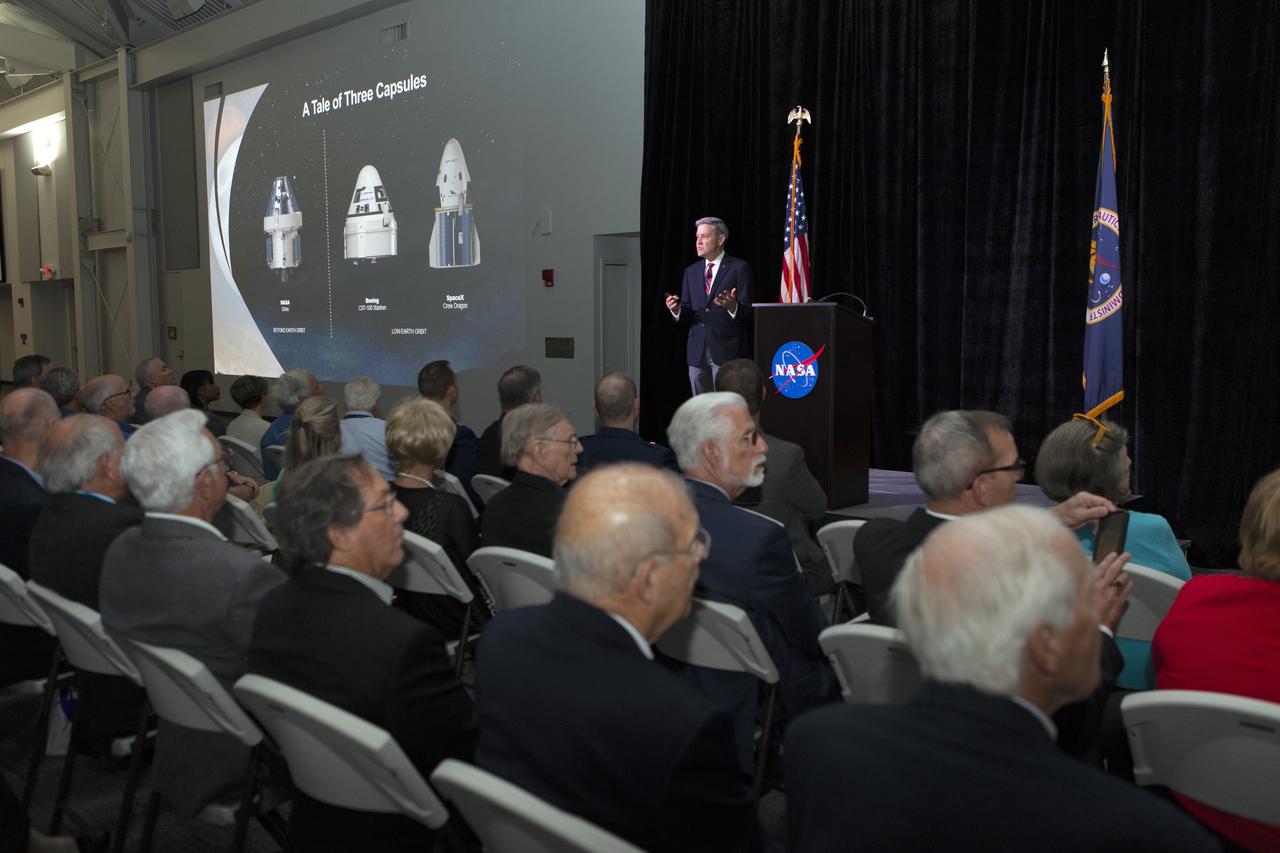
NASA Kennedy Space Center Director Bob Cabana updates community leaders, business executives, partners, educators and government leaders on Kennedy-led programs and accomplishments during a presentation March 29, 2019, at the Kennedy Space Center Visitor Complex in Florida. Cabana recapped achievements and future plans for the Commercial Crew Program, Exploration Ground Systems, Launch Services Program, Exploration Research and Technology, and Center Planning and Development. After the presentation, guests had the opportunity to ask questions and visit displays from the programs and some of the commercial partners.
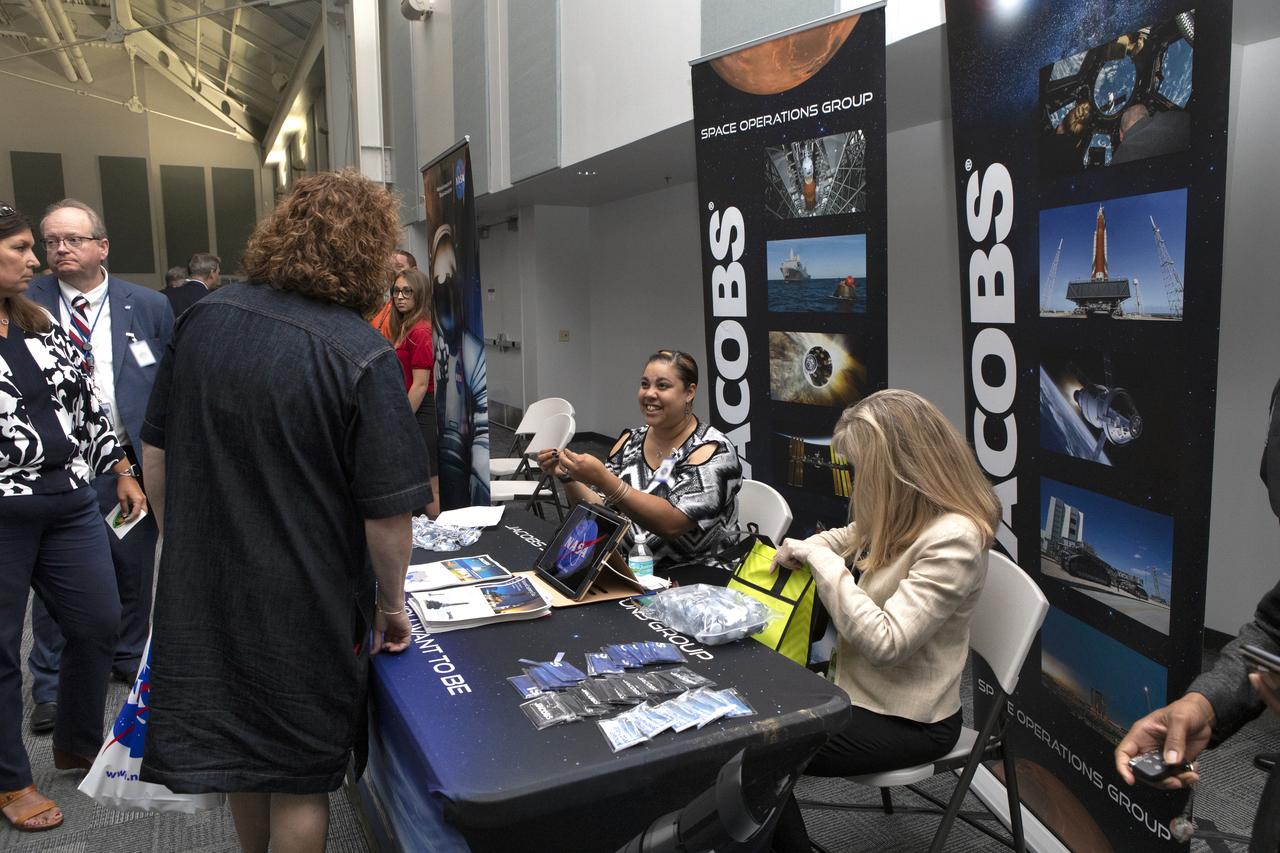
A guest visits with representatives from Jacobs during NASA Kennedy Space Center Director Bob Cabana’s update to community leaders, business executives, partners, educators and government leaders March 29, 2019, at the Kennedy Space Center Visitor Complex in Florida. Cabana’s presentation covered recent accomplishments and future plans for Kennedy-led programs, including the Commercial Crew Program, Exploration Ground Systems, Launch Services Program, Exploration Research and Technology, and Center Planning and Development. After the presentation, guests had the opportunity to ask questions and visit displays from the programs and some of the commercial partners.
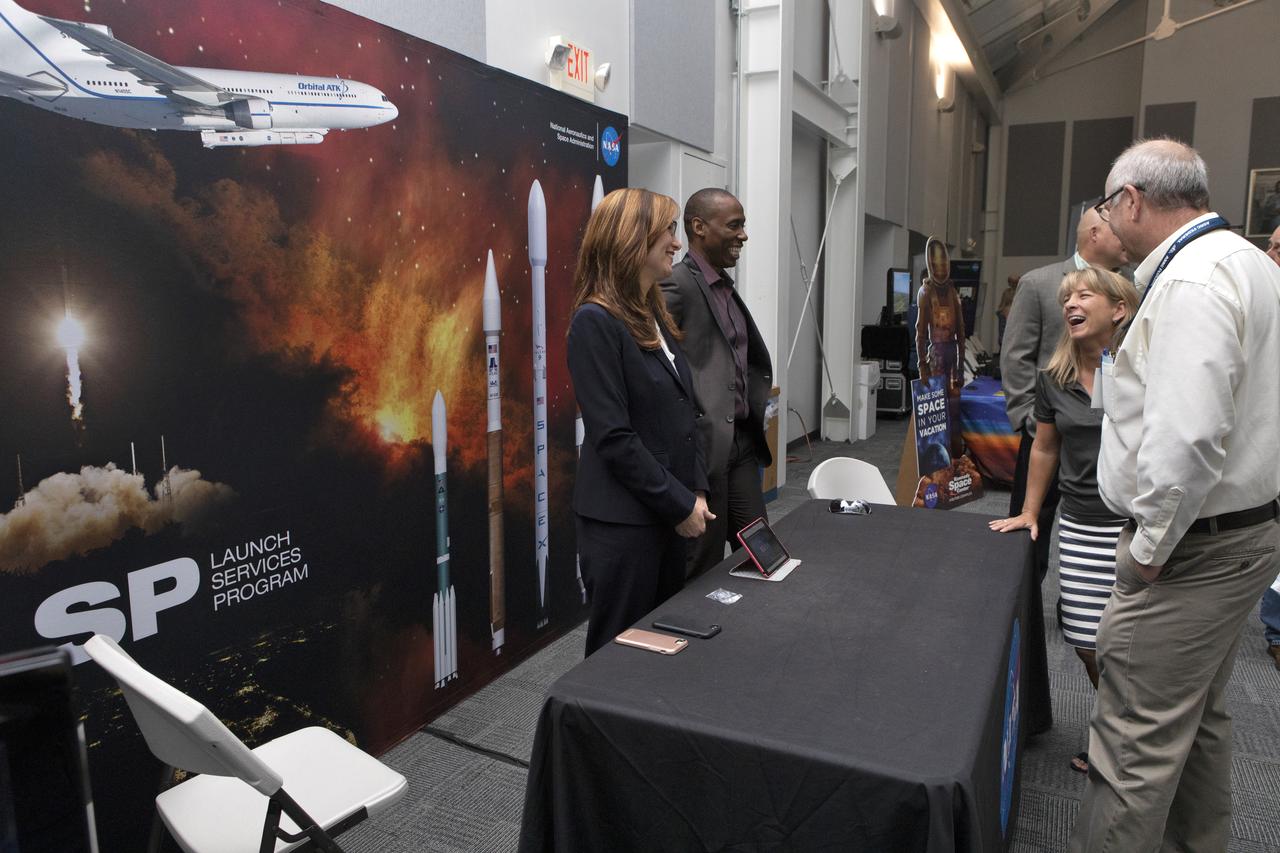
Guests visit with representatives from the Launch Services Program (LSP) during NASA Kennedy Space Center Director Bob Cabana’s update to community leaders, business executives, partners, educators and government leaders March 29, 2019, at the Kennedy Space Center Visitor Complex in Florida. Cabana’s presentation covered recent accomplishments and future plans for Kennedy-led programs, including the Commercial Crew Program, Exploration Ground Systems, LSP, Exploration Research and Technology, and Center Planning and Development. After the presentation, guests had the opportunity to ask questions and visit displays from the programs and some of the commercial partners.
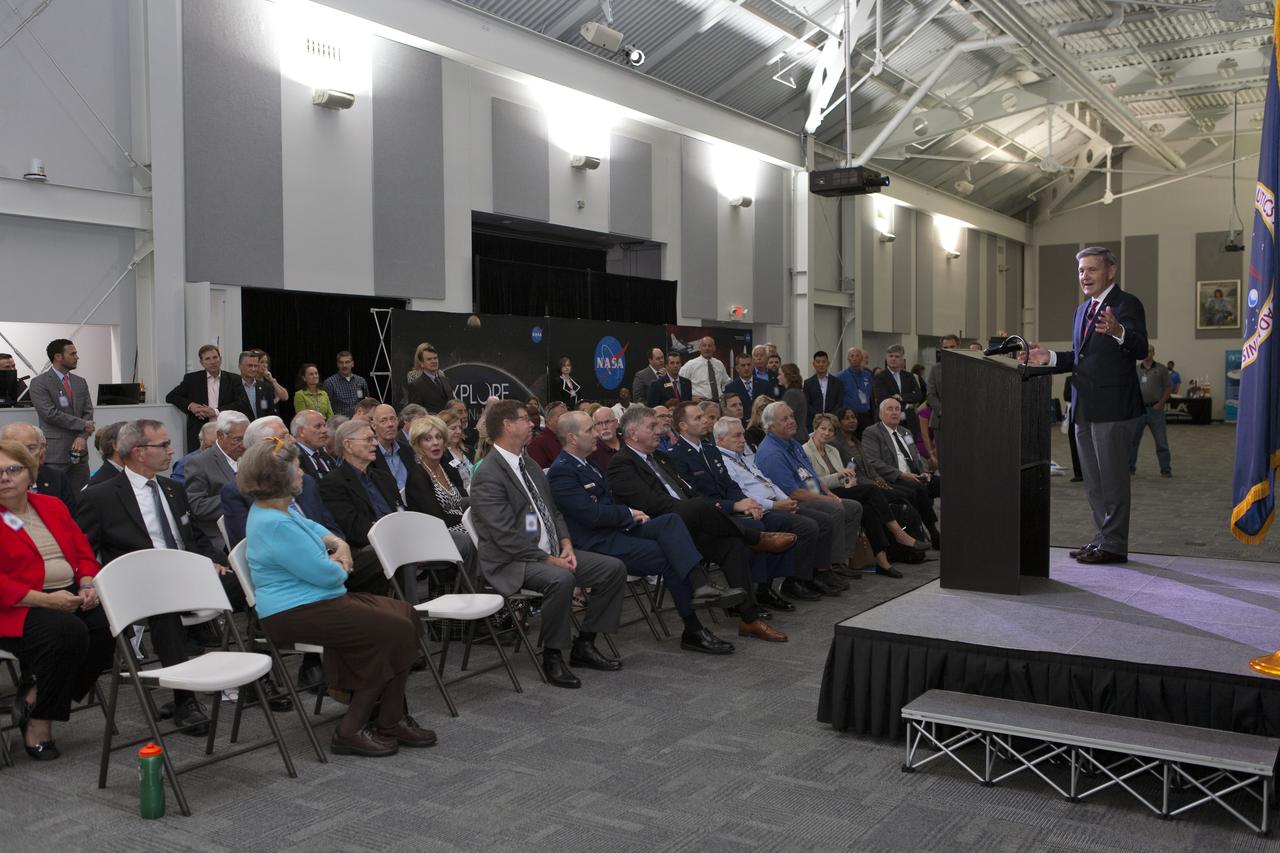
NASA Kennedy Space Center Director Bob Cabana, far right, updates community leaders, business executives, partners, educators and government leaders on Kennedy-led programs and accomplishments during a presentation March 29, 2019, at the Kennedy Space Center Visitor Complex in Florida. Cabana recapped achievements and future plans for the Commercial Crew Program, Exploration Ground Systems, Launch Services Program, Exploration Research and Technology, and Center Planning and Development. After the presentation, guests had the opportunity to ask questions and visit displays from the programs and some of the commercial partners.
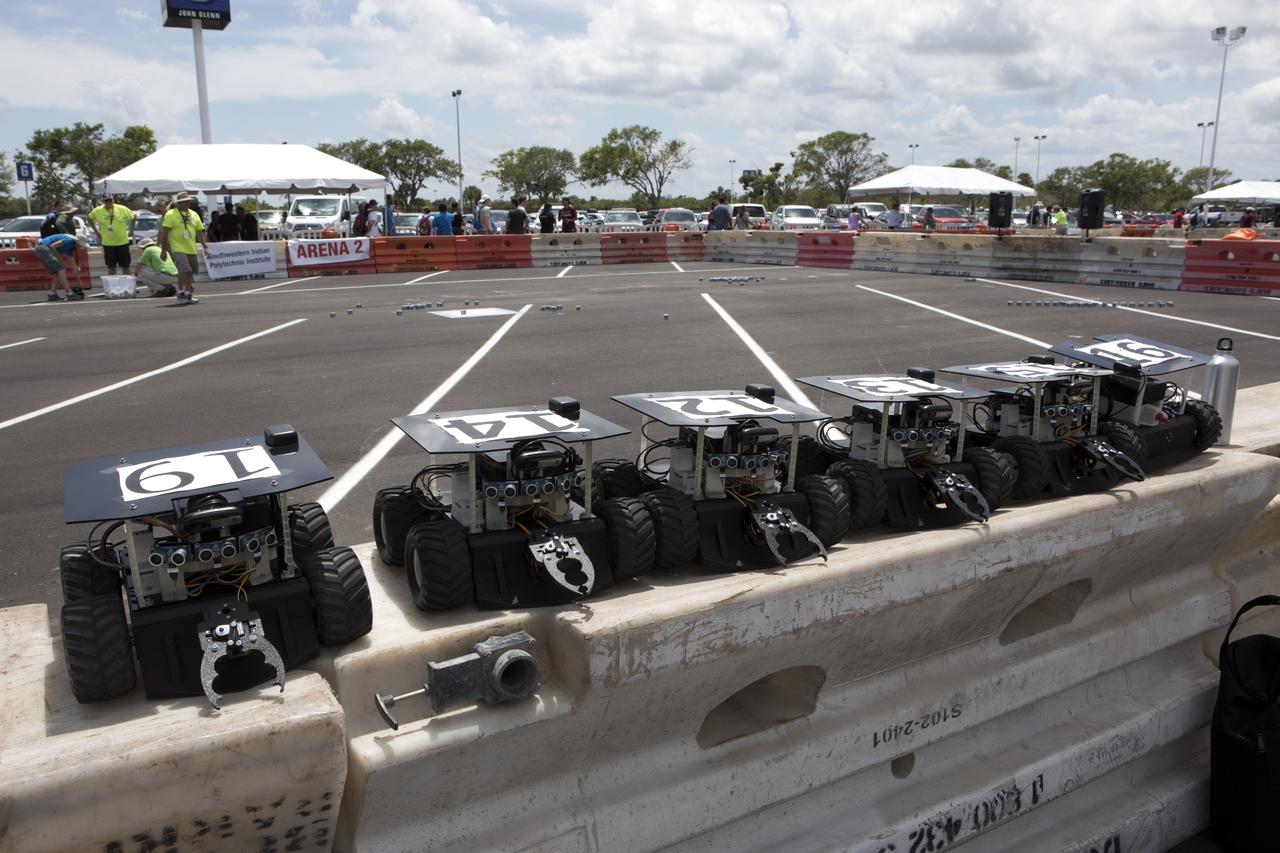
In the Swarmathon competition at the Kennedy Space Center Visitor Complex, students were asked to develop computer code for the small robots, programming them to look for "resources" in the form of cubes with AprilTags, similar to barcodes. Teams developed search algorithms for the Swarmies to operate autonomously, communicating and interacting as a collective swarm similar to ants foraging for food.
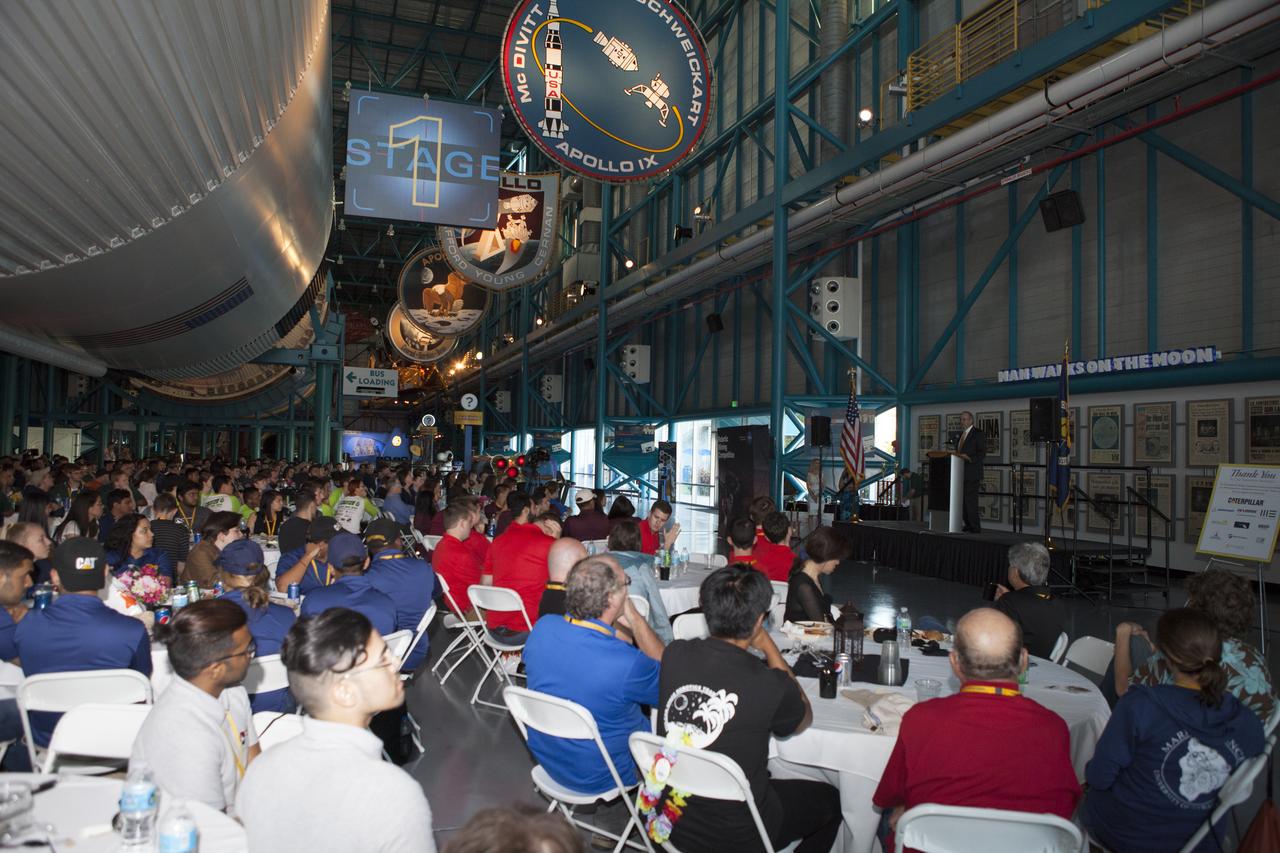
Inside the Apollo-Saturn V Center at the Kennedy Space Center Visitor Complex in Florida, Pat Simpkins, director of the Engineering Directorate at Kennedy Space Center, speaks to the teams during the award ceremony for NASA's 8th Annual Robotic Mining Competition. More than 40 student teams from colleges and universities around the U.S. used their uniquely-designed mining robots to dig in a supersized sandbox filled with BP-1, or simulated Martian soil, and participated in other competition requirements, May 22-26, at the visitor complex. The Robotic Mining Competition is a NASA Human Exploration and Operations Mission Directorate project designed to encourage students in science, technology, engineering and math, or STEM fields. The project provides a competitive environment to foster innovative ideas and solutions that could be used on NASA's Journey to Mars.
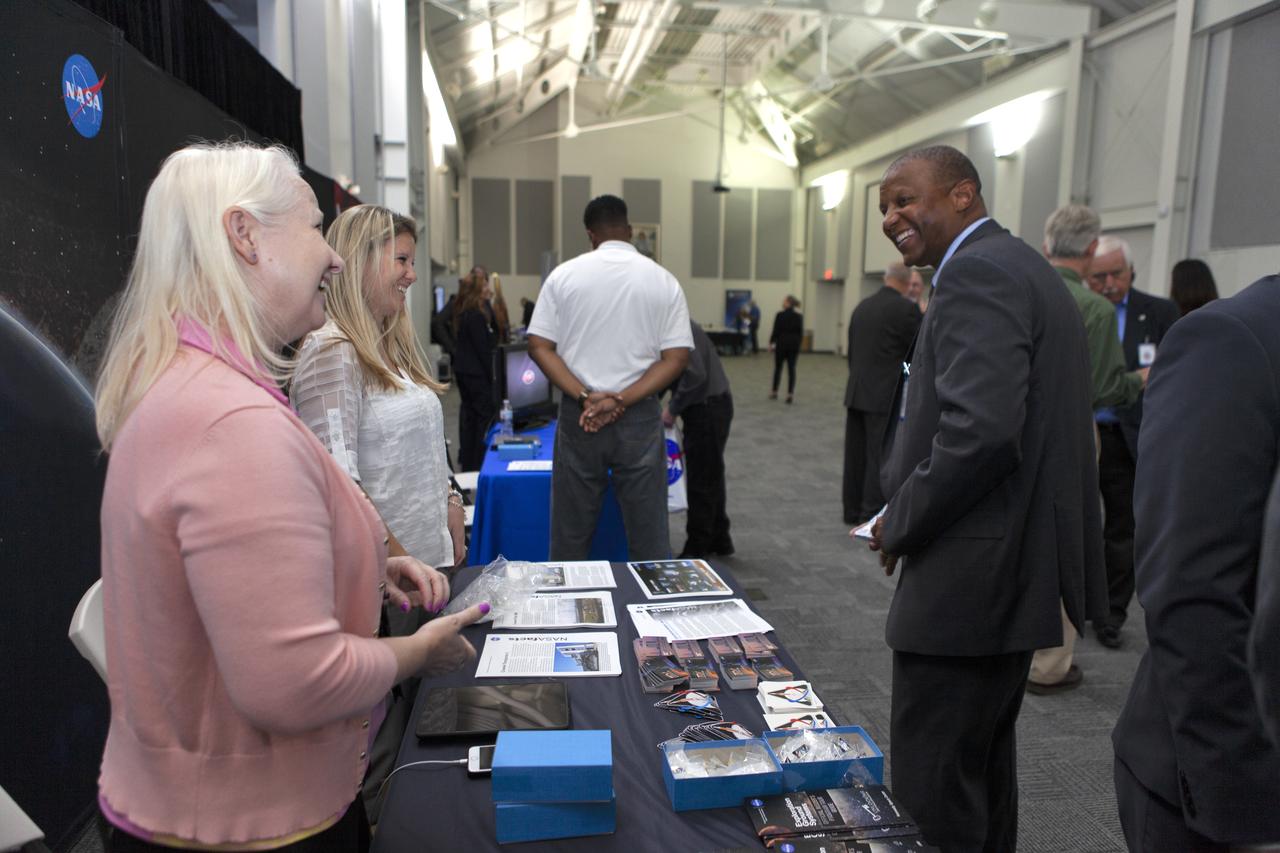
Kelvin Manning, Kennedy associate director, technical, at right, visits with representatives from Exploration Ground Systems during the center director update to community leaders, business executives, partners, educators and government leaders on March 29, 2019, at the Kennedy Space Center Visitor Complex in Florida. Center Director Bob Cabana recapped achievements and future plans for Kennedy-led programs, including the Commercial Crew Program, Exploration Ground Systems, Launch Services Program, Exploration Research and Technology, and Center Planning and Development. After the presentation, guests had the opportunity to ask questions and visit displays from the programs and some of the commercial partners.
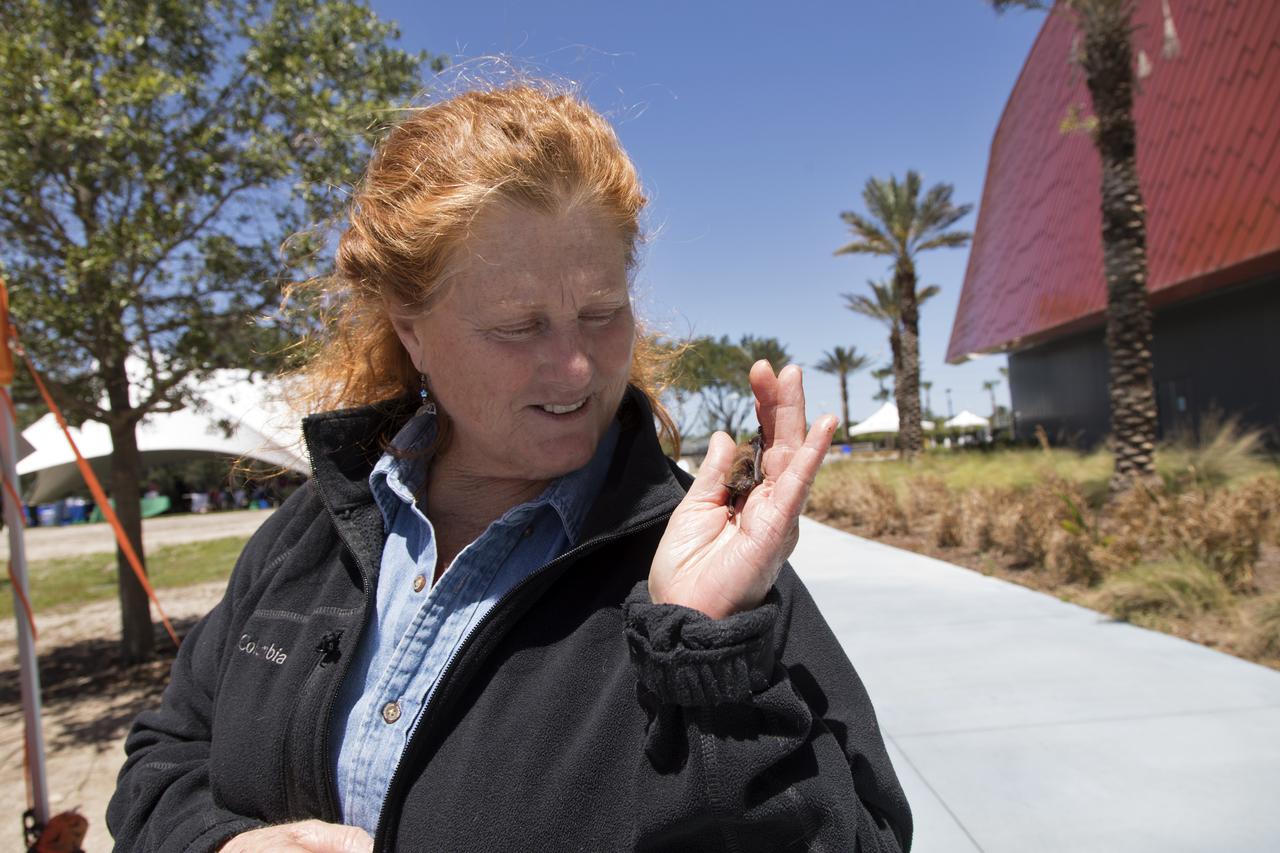
During the annual Earth Day celebration at the Kennedy Space Center Visitor Complex, Shari Blissett-Clark of the Florida Bat Conservancy displays one of the mammals. The event took place during the annual Earth Day celebration at the Kennedy Space Center Visitor Complex, guests have an opportunity to learn more about energy awareness, the environment and sustainability.
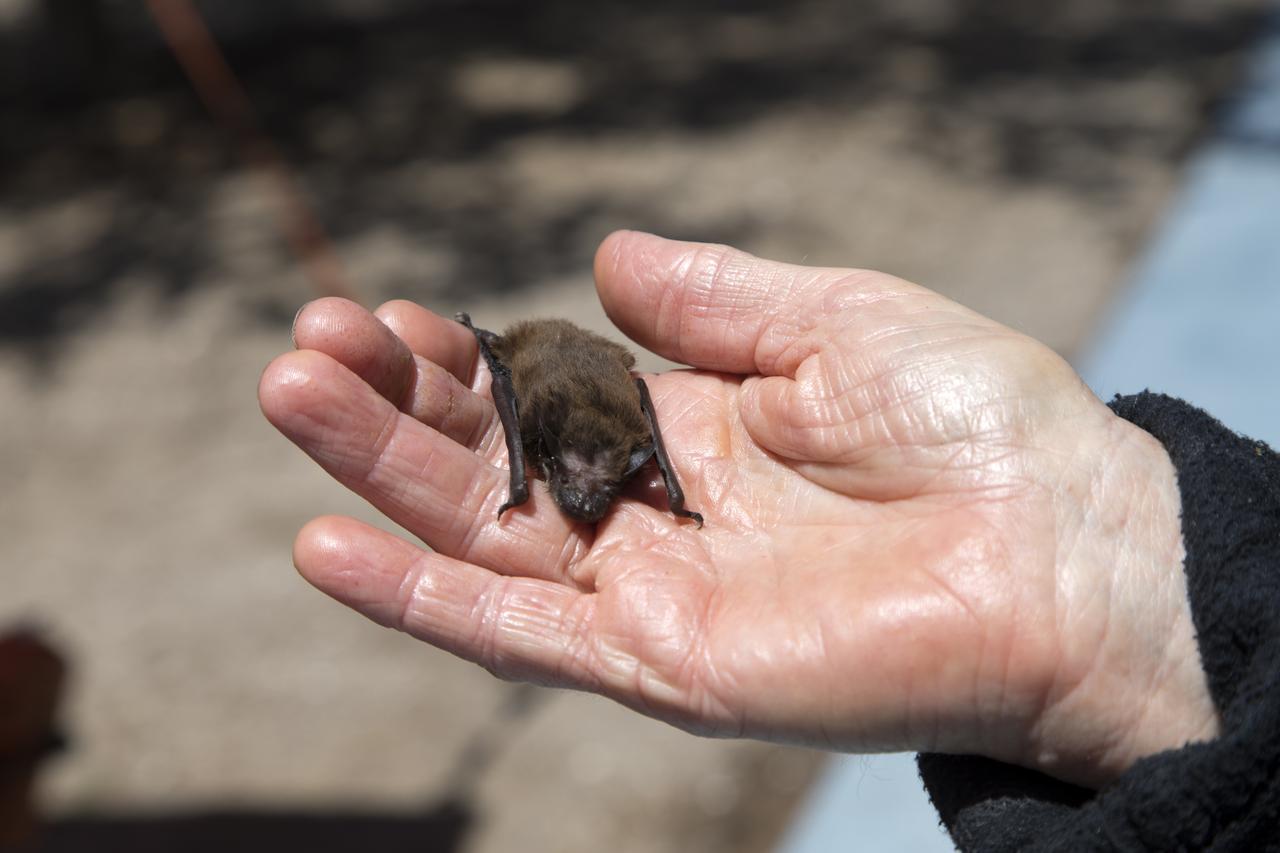
During the annual Earth Day celebration at the Kennedy Space Center Visitor Complex, Shari Blissett-Clark of the Florida Bat Conservancy displays one of the mammals. The event took place during the annual Earth Day celebration at the Kennedy Space Center Visitor Complex, guests have an opportunity to learn more about energy awareness, the environment and sustainability.

Supervisory employees from NASA’s Kennedy Space Center participated in the Supervisor Cohort “Action Day” hosted by Leadership for the Future at Kennedy Space Center Visitor Complex in Florida on Friday, June 7, 2024. NASA Kennedy’s Leadership for the Future supervisor cohort initiative focuses on creating a space for supervisors to engage in providing solutions for important topics on center, as well as supporting the development of the supervisory community. The Leadership for the Future Champions hosted the Action Day to share expectations, form the teams, scope the projects, and launch. Leadership for the Future Champions, comprising several of the spaceport’s senior leaders, select the supervisor cohorts with the goal of advancing the spaceport, the agency, and America’s leadership in space.
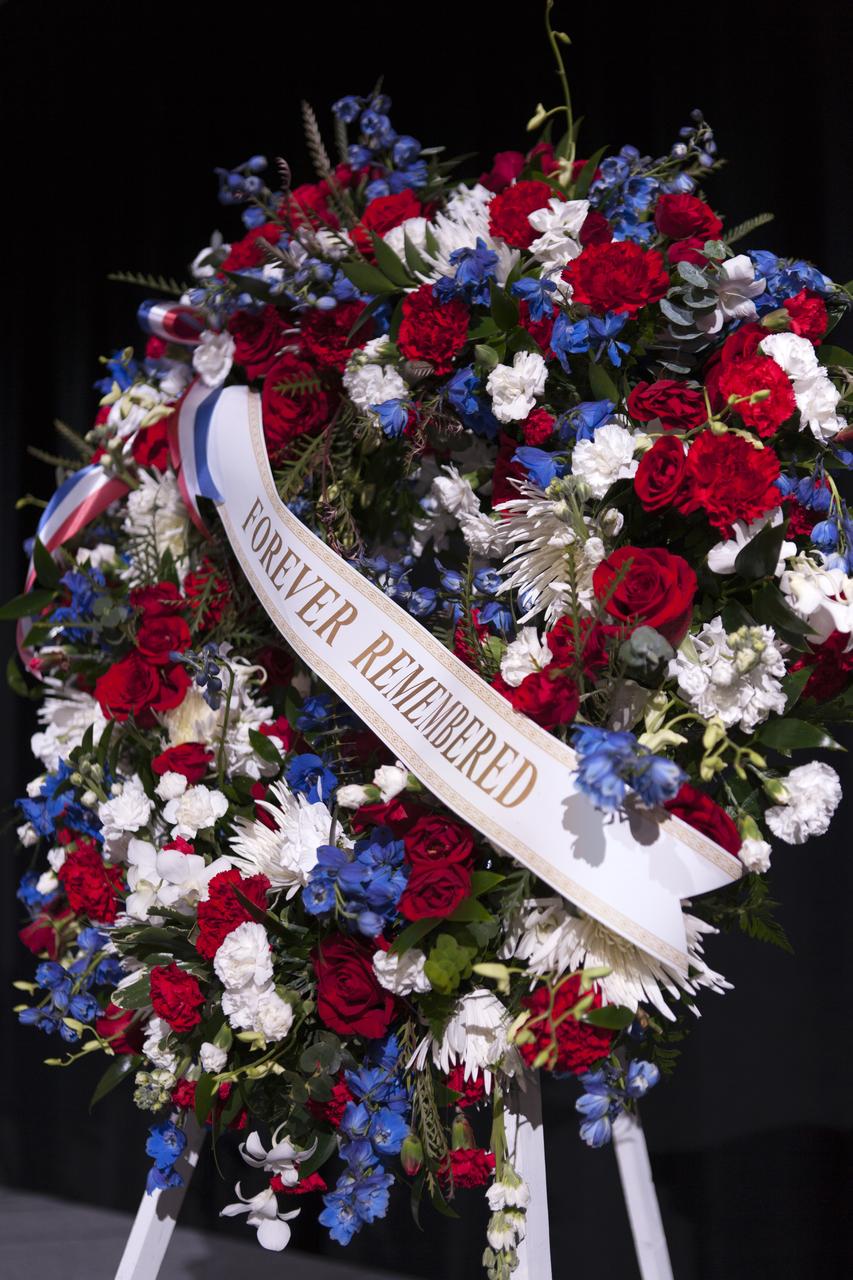
A memorial wreath stands in the Center for Space Education during this year's Day of Remembrance ceremony at the Kennedy Space Center Visitor Complex. Each year spaceport employees and guests join others throughout NASA honoring the contributions of astronauts who have perished in the conquest of space.
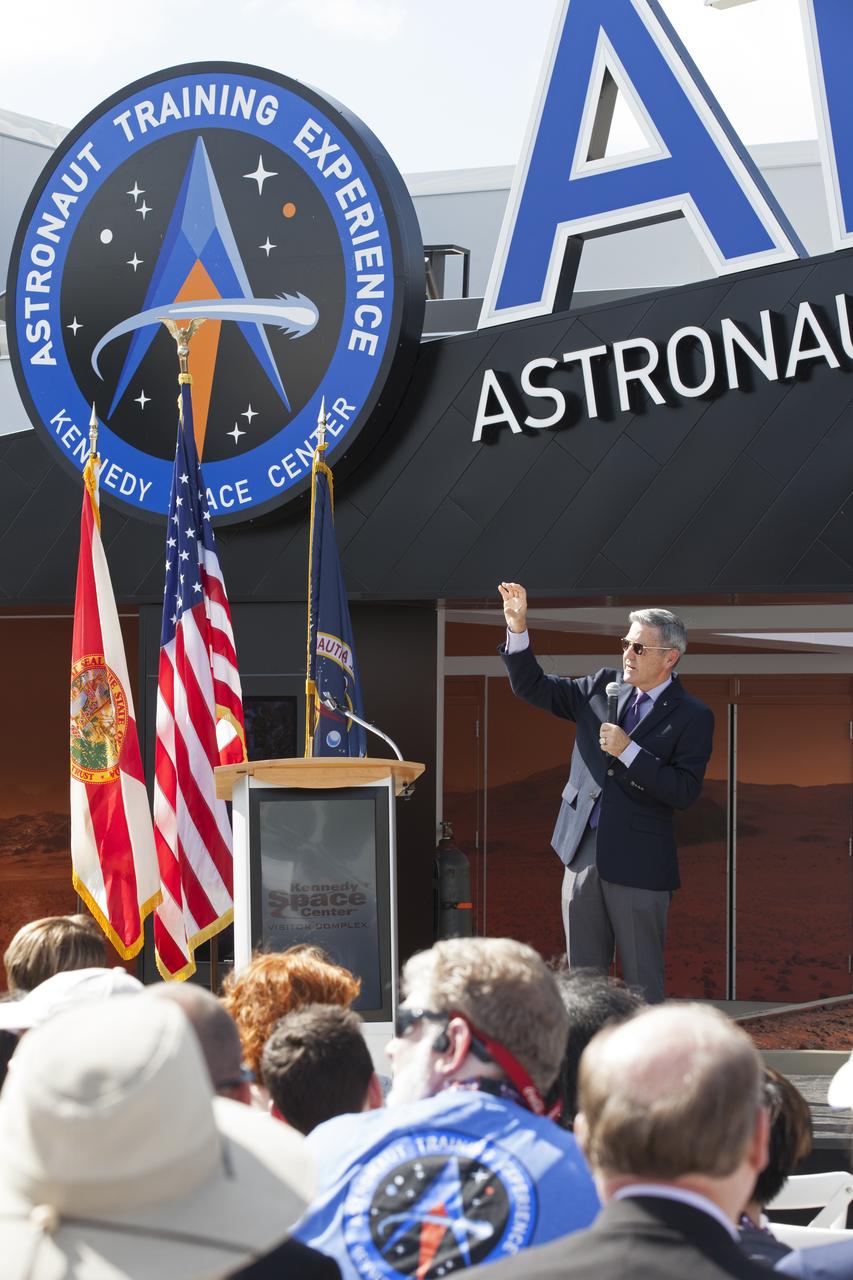
Kennedy Space Center Director Bob Cabana speaks to guests attending the opening ceremony for the new Astronaut Training Experience (ATX) at the Kennedy Space Center Visitor Complex. The ATX uses three-dimensional computer display simulation technology to "transport" participants to Mars, training them to live and work in the environment of the Red Planet. The educational experience also teaches what it’s like to travel there. The facility uses NASA science to address engineering challenges in space travel. Lockheed Martin is the title sponsor for the Astronaut Training Experience.
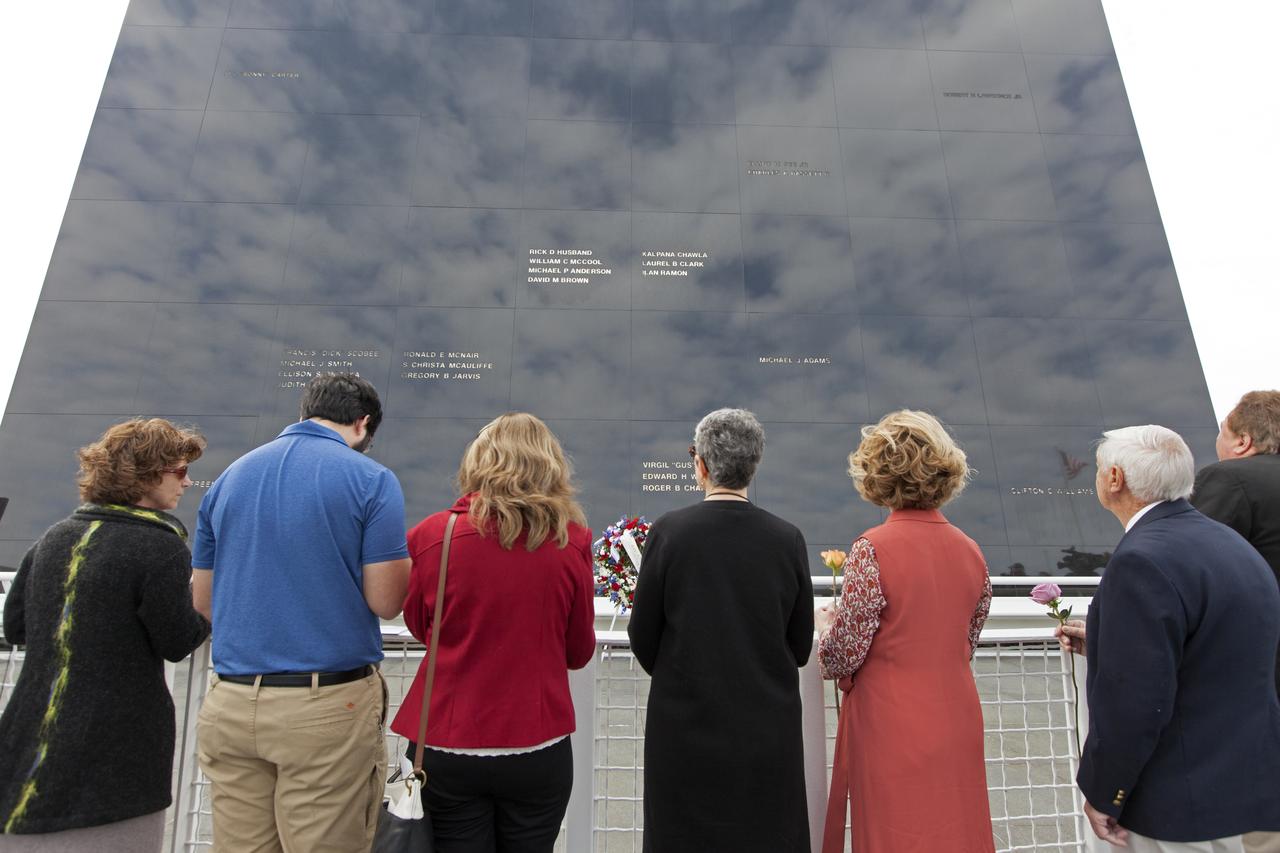
Family members of astronauts honored on the Space Mirror Memorial participate in the Day of Remembrance ceremony at Kennedy Space Center Visitor Complex. Each year spaceport employees and guests join others throughout NASA honoring the contributions of astronauts who have perished in the conquest of space.
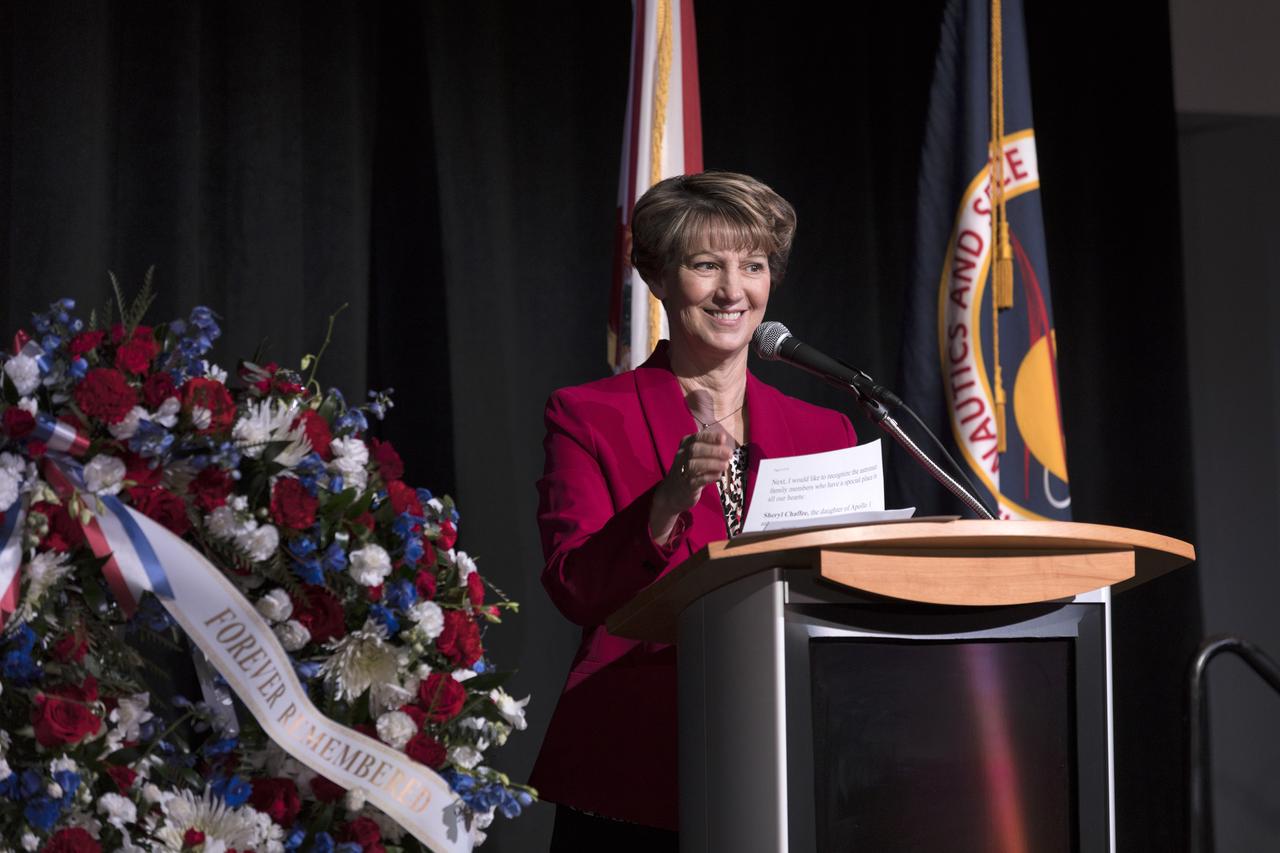
Astronauts Memorial Foundation Board Chair Eileen Collins, a former space shuttle commander, speaks during this year's Day of Remembrance ceremony at the Kennedy Space Center Visitor Complex. Each year spaceport employees and guests join others throughout NASA honoring the contributions of astronauts who have perished in the conquest of space.
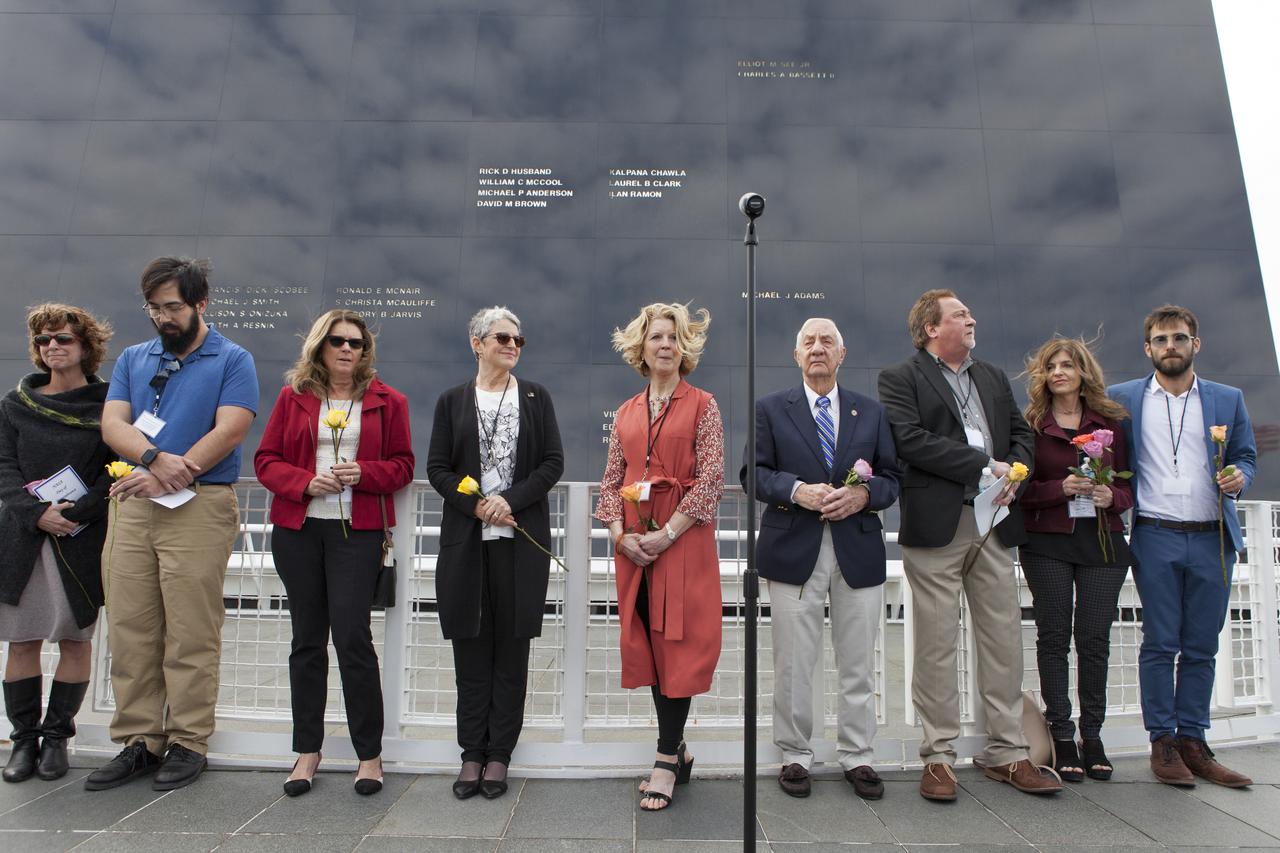
Family members of astronauts honored on the Space Mirror Memorial participate in the Day of Remembrance ceremony at Kennedy Space Center Visitor Complex. Each year spaceport employees and guests join others throughout NASA honoring the contributions of astronauts who have perished in the conquest of space.
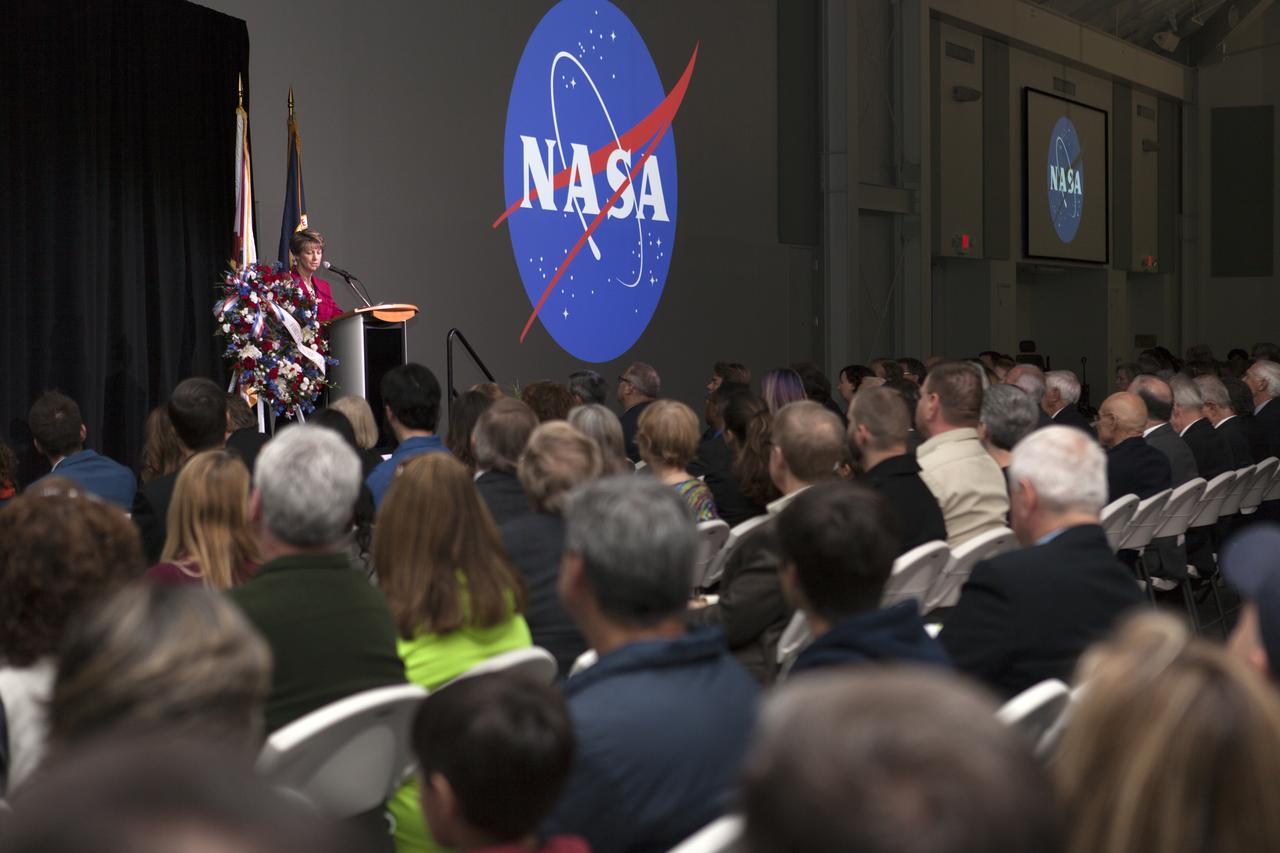
Astronauts Memorial Foundation Board Chair Eileen Collins, a former space shuttle commander, speaks during this year's Day of Remembrance ceremony at the Kennedy Space Center Visitor Complex. Each year spaceport employees and guests join others throughout NASA honoring the contributions of astronauts who have perished in the conquest of space.
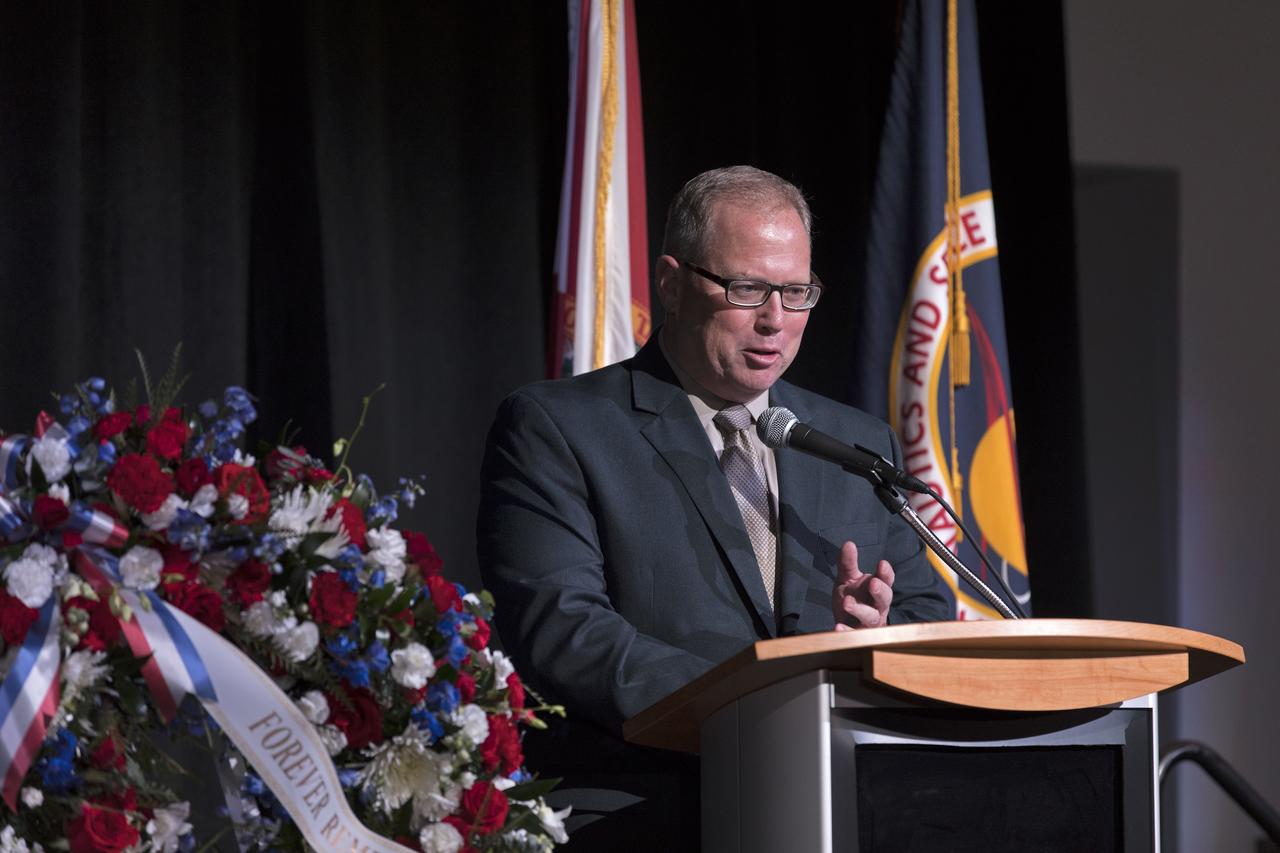
Therrin Protze, chief operating officer of Delaware North, speaks during this year's Day of Remembrance ceremony at the Kennedy Space Center Visitor Complex. Each year spaceport employees and guests join others throughout NASA honoring the contributions of astronauts who have perished in the conquest of space.
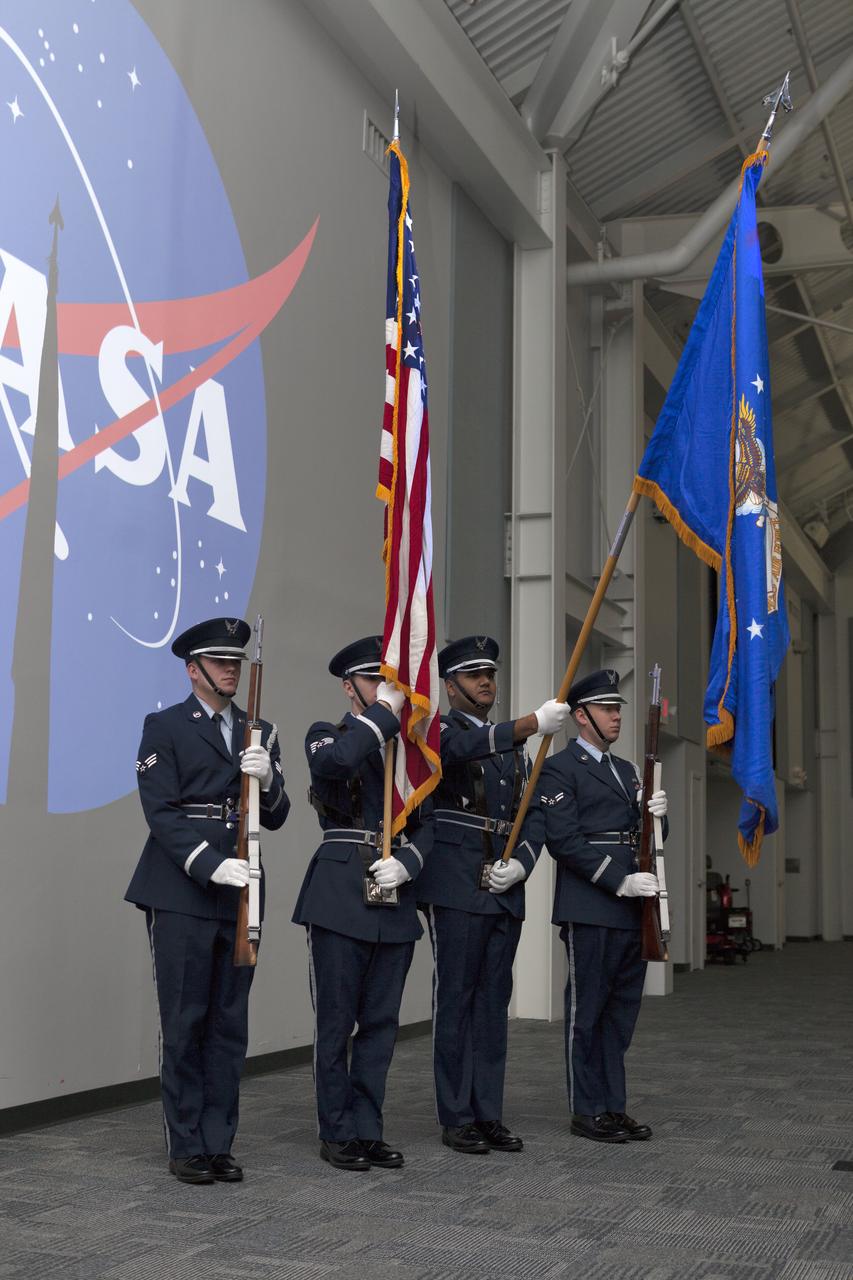
The Patrick Air Force Base color guard presents the colors during the playing of the national anthem during this year's Day of Remembrance ceremony at the Kennedy Space Center Visitor Complex. Each year spaceport employees and guests join others throughout NASA honoring the contributions of astronauts who have perished in the conquest of space.
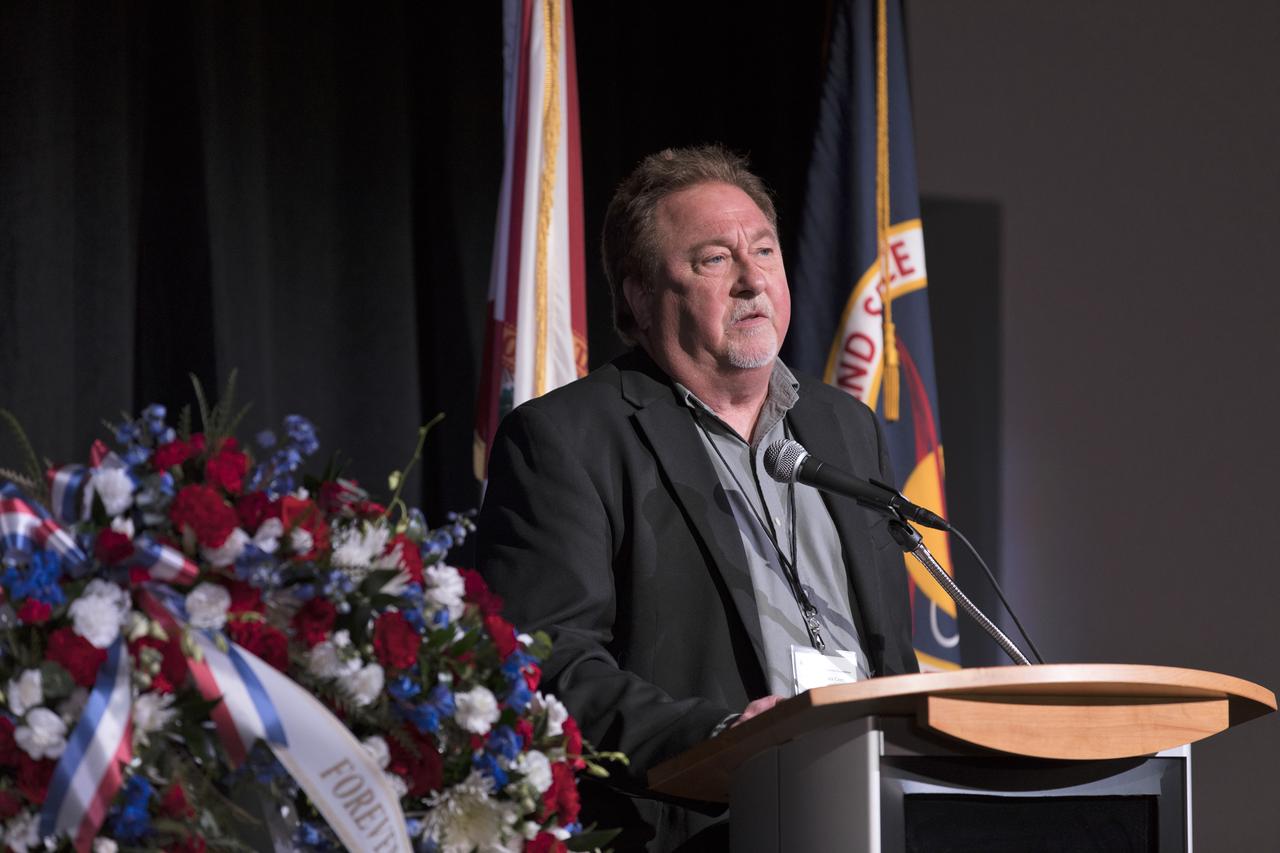
Brent Adams, son of U.S. Air Force astronaut Mike Adams, speaks during this year's Day of Remembrance ceremony at the Kennedy Space Center Visitor Complex. Each year spaceport employees and guests join others throughout NASA honoring the contributions of astronauts who have perished in the conquest of space.
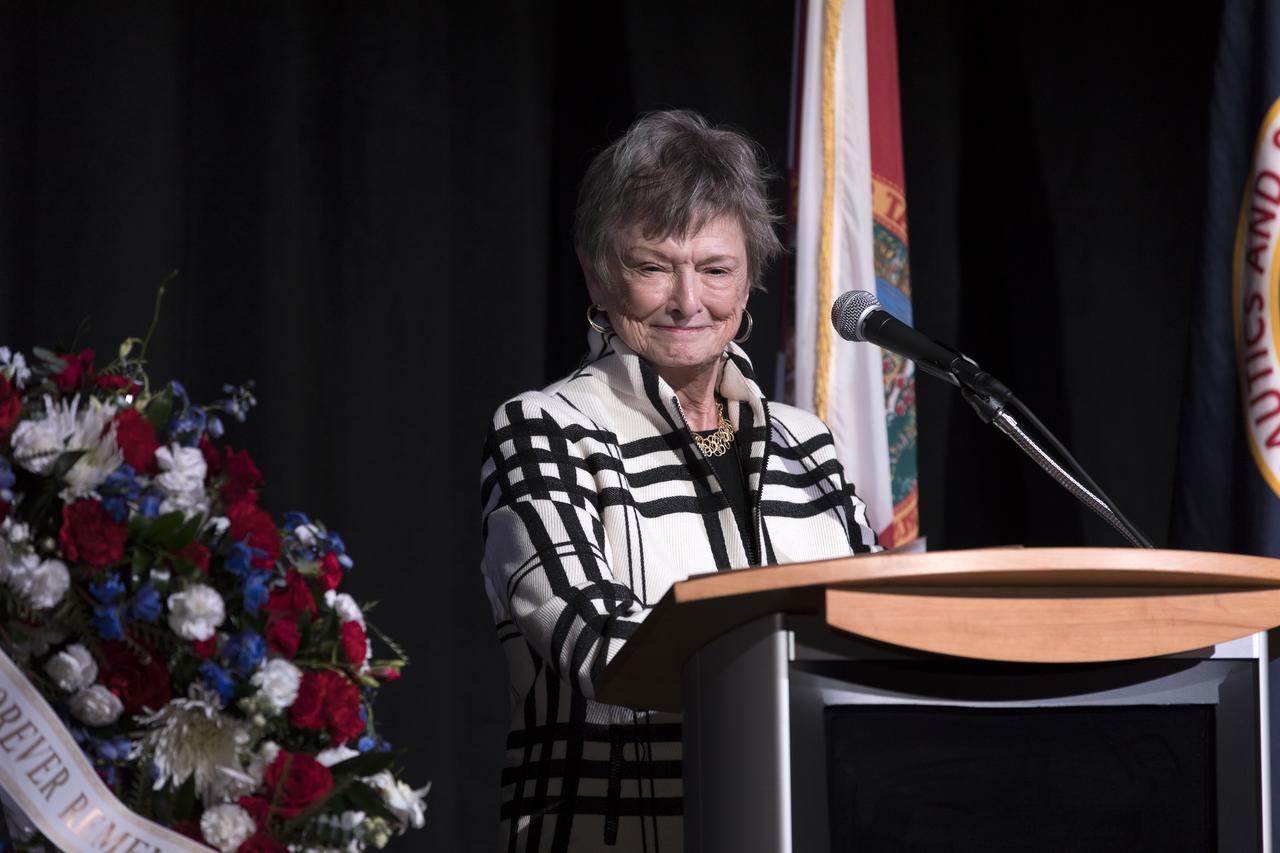
Beth Williams, widow of NASA astronaut Clifton Williams, speaks during this year's Day of Remembrance ceremony at the Kennedy Space Center Visitor Complex. Each year spaceport employees and guests join others throughout NASA honoring the contributions of astronauts who have perished in the conquest of space.
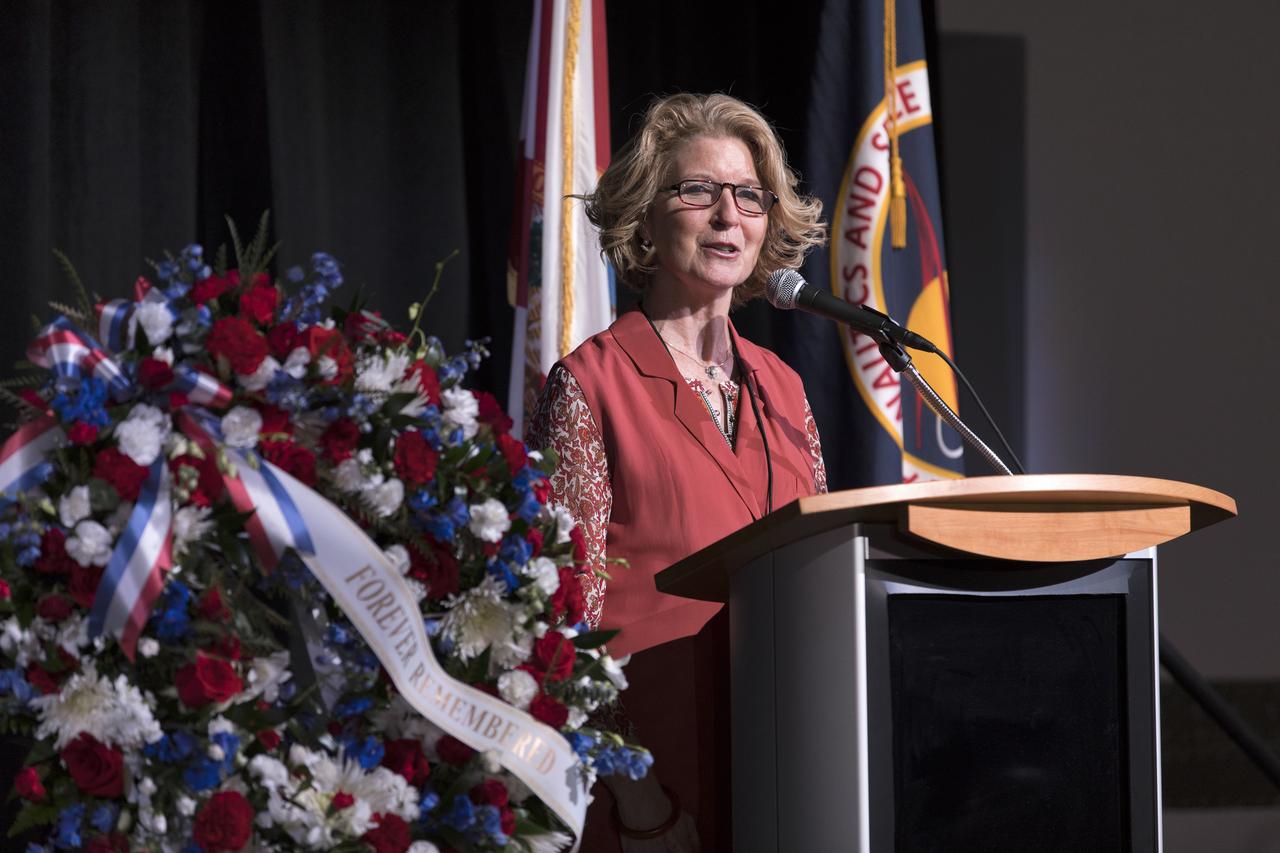
Sally Kneuven, daughter of NASA astronaut Elliot See, speaks during this year's Day of Remembrance ceremony at the Kennedy Space Center Visitor Complex. Each year spaceport employees and guests join others throughout NASA honoring the contributions of astronauts who have perished in the conquest of space.
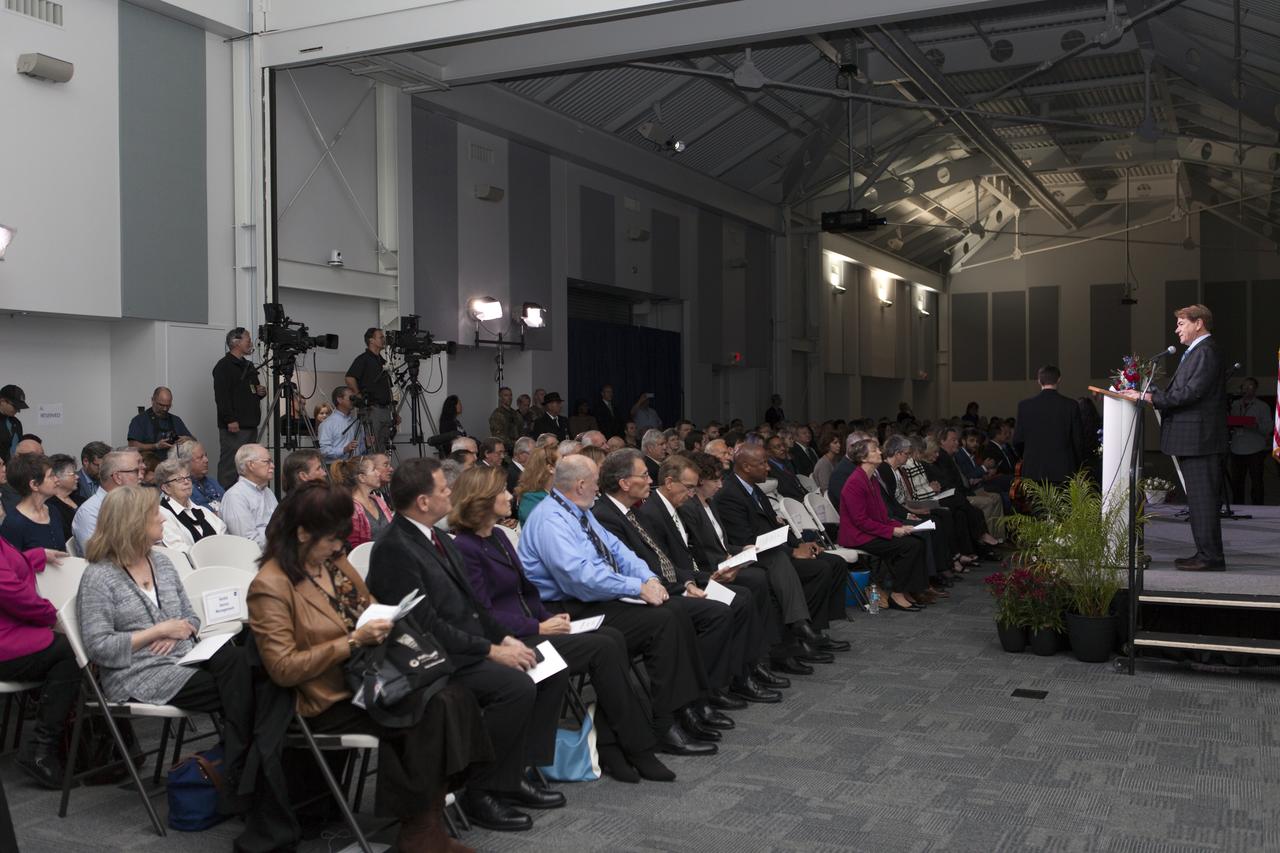
State Sen. Thad Altman, president and CEO of the Astronauts Memorial Foundation, speaks during this year's Day of Remembrance ceremony at the Kennedy Space Center Visitor Complex. Each year spaceport employees and guests join others throughout NASA honoring the contributions of astronauts who have perished in the conquest of space.

Karen Stevenson, daughter of astronaut Charles Bassett, speaks during this year's Day of Remembrance ceremony at the Kennedy Space Center Visitor Complex. Each year spaceport employees and guests join others throughout NASA honoring the contributions of astronauts who have perished in the conquest of space.
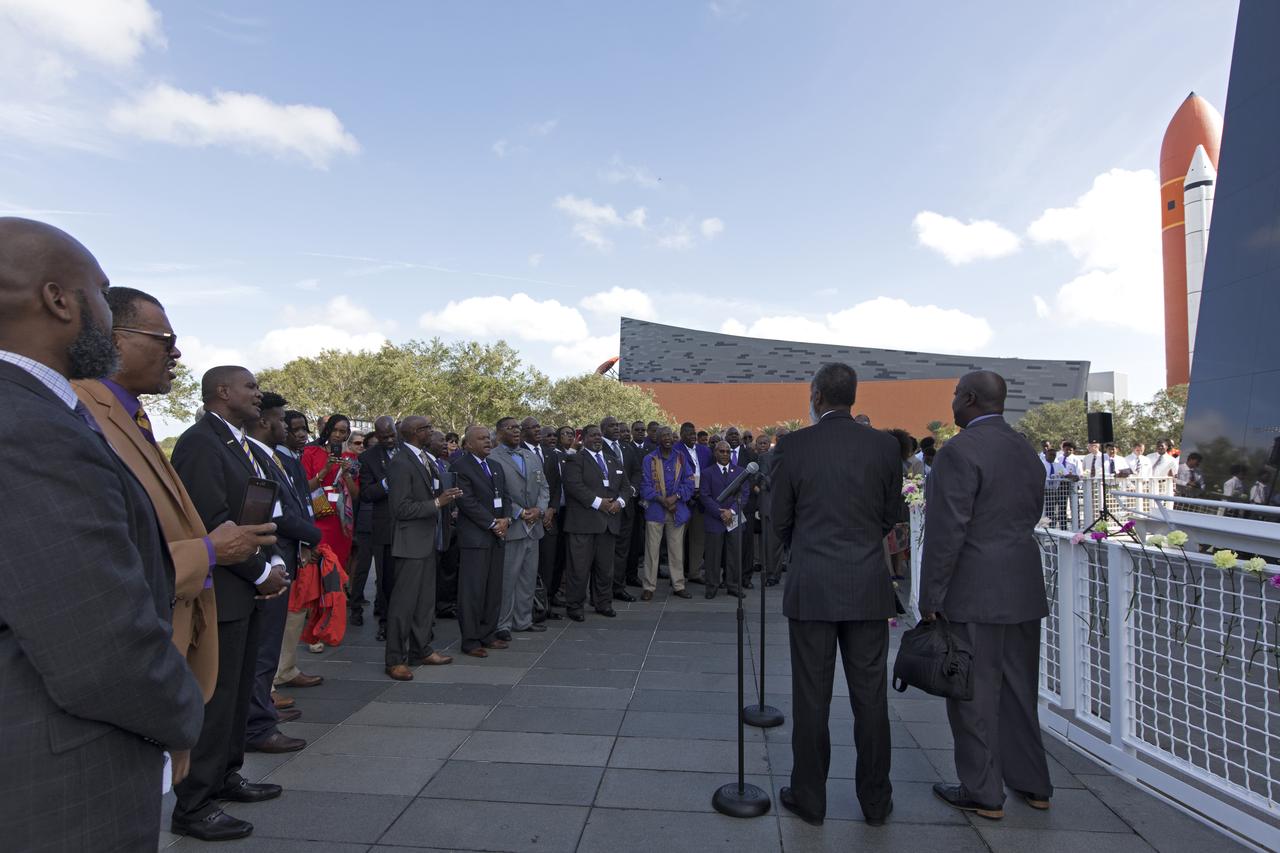
Following an Astronauts Memorial Foundation tribute honoring U.S. Air Foce Maj. Robert Lawrence, guests listen to speakers at the Space Mirror Memorial at the Kenendy Space Center Visitor Compelx. Selected in 1967 for the Manned Orbiting Laboratory Program, Lawrence was the first African-American astronaut. He lost his life in a training accident 50 years ago. The ceremony took place in the Center for Space Education at the Kennedy Space Center Visitor Complex.
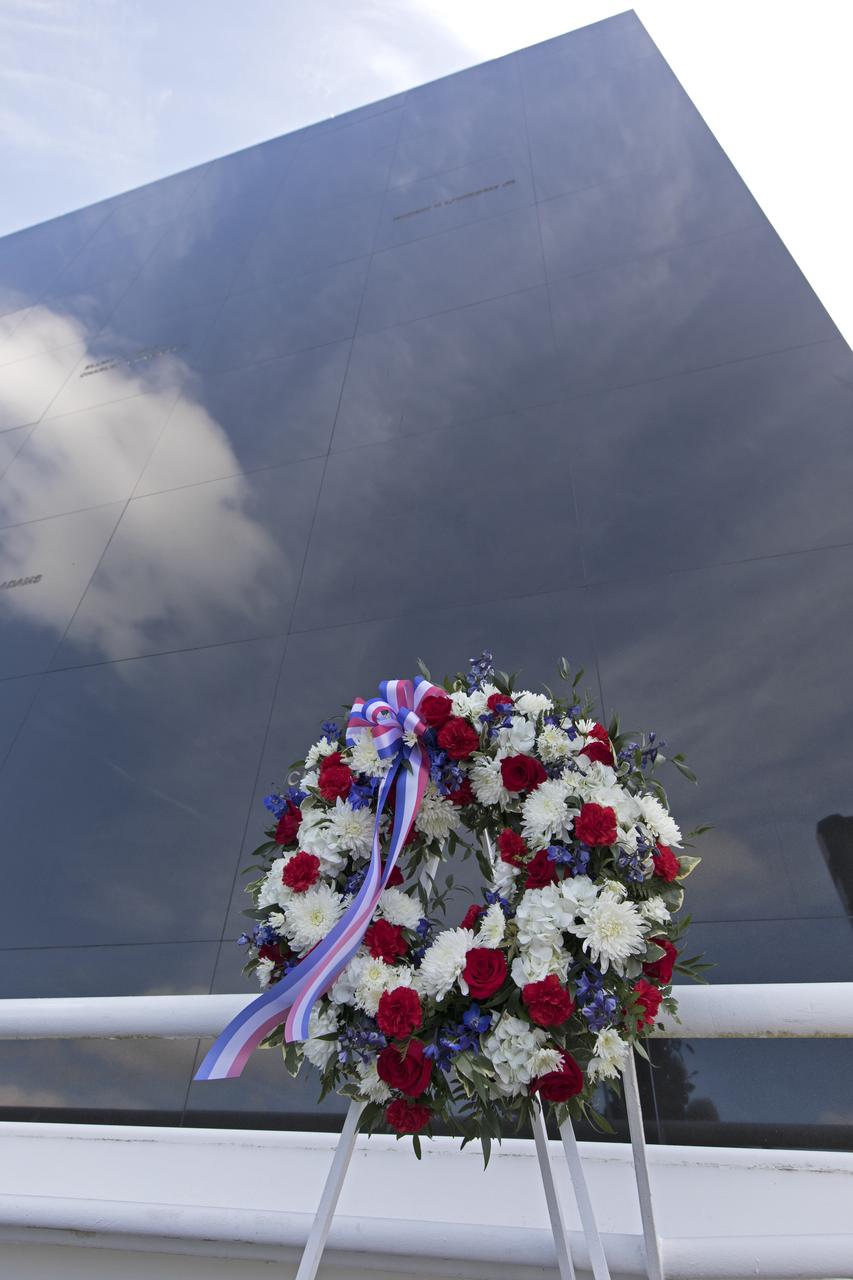
Following an Astronauts Memorial Foundation tribute honoring U.S. Air Foce Maj. Robert Lawrence, a wreath was place at the Space Mirror Memorial at the Kenendy Space Center Visitor Compelx. Selected in 1967 for the Manned Orbiting Laboratory Program, Lawrence was the first African-American astronaut. He lost his life in a training accident 50 years ago. The ceremony took place in the Center for Space Education at the Kennedy Space Center Visitor Complex.
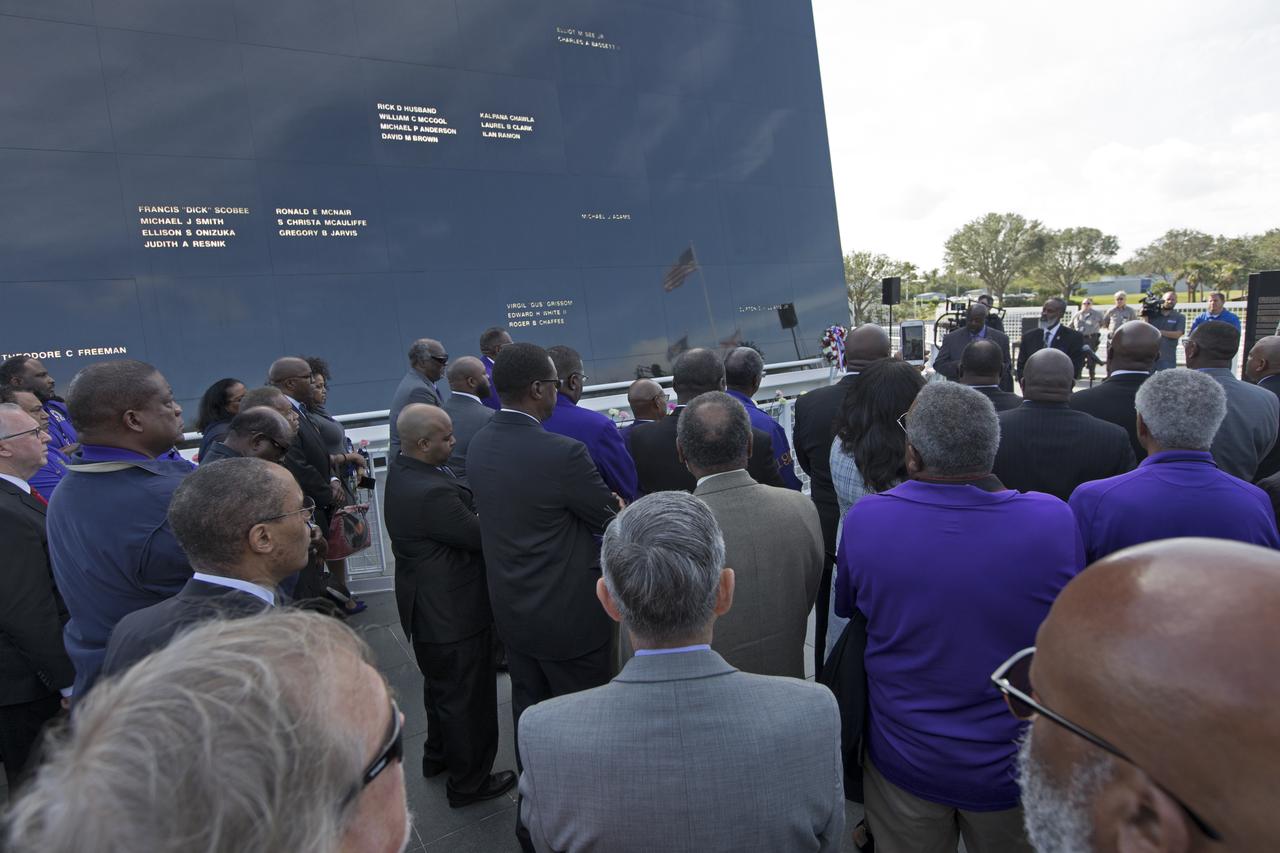
Following an Astronauts Memorial Foundation tribute honoring U.S. Air Foce Maj. Robert Lawrence, guests gathered at the Space Mirror Memorial at the Kenendy Space Center Visitor Compelx. Selected in 1967 for the Manned Orbiting Laboratory Program, Lawrence was the first African-American astronaut. He lost his life in a training accident 50 years ago. The ceremony took place in the Center for Space Education at the Kennedy Space Center Visitor Complex.
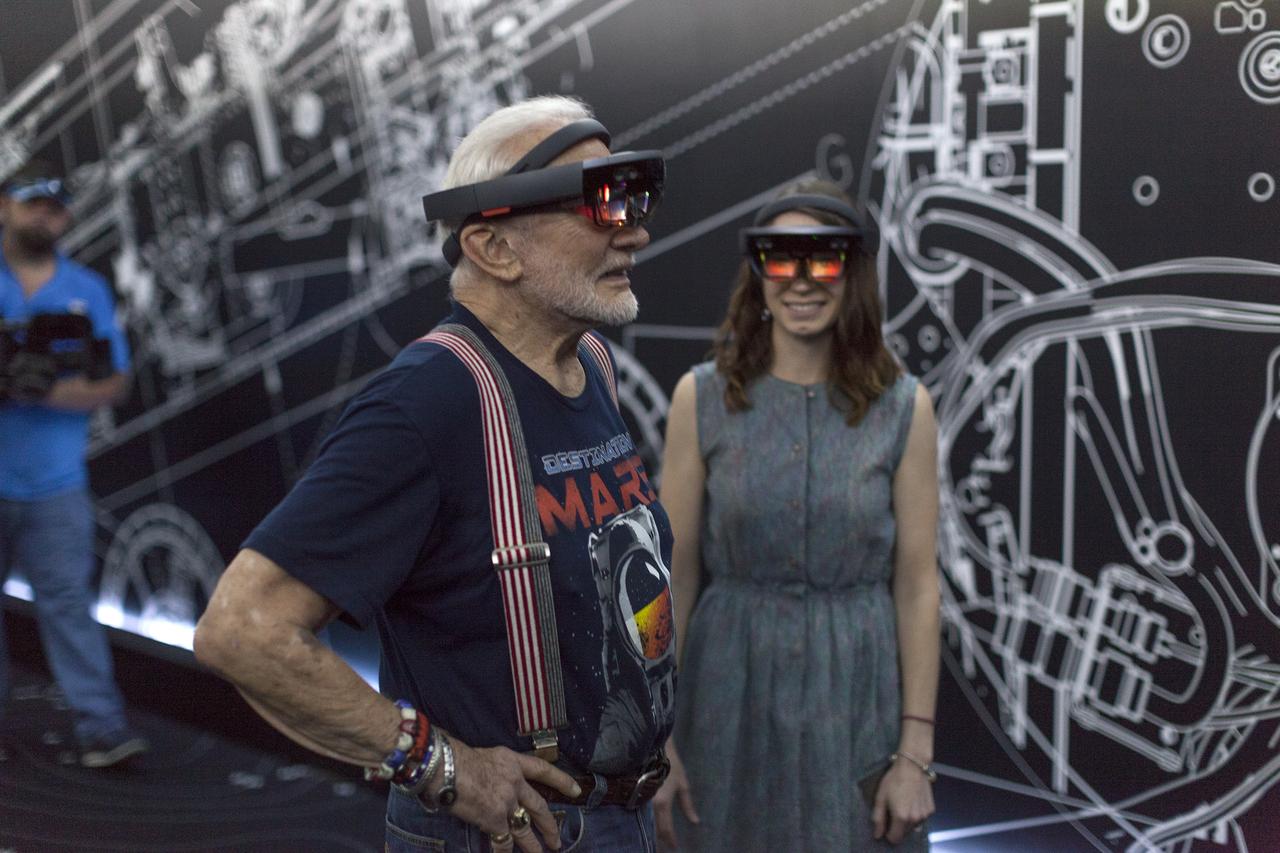
Apollo 11 astronaut Buzz Aldrin, left and Erisa Hines of NASA’s Jet Propulsion Laboratory (JPL) in Pasadena, California, try out Microsoft HoloLens mixed reality headset during a preview of the new Destination: Mars experience at the Kennedy Space Center Visitor Complex. Destination: Mars gives guests an opportunity to “visit” several sites on Mars using real imagery from NASA’s Curiosity Mars Rover. Based on OnSight, a tool created by NASA’s Jet Propulsion Laboratory in Pasadena, California, the experience brings guests together with a holographic version of Aldrin and Curiosity rover driver Hines as they are guided to Mars using Microsoft HoloLens mixed reality headset. Photo credit: NASA/Charles Babir
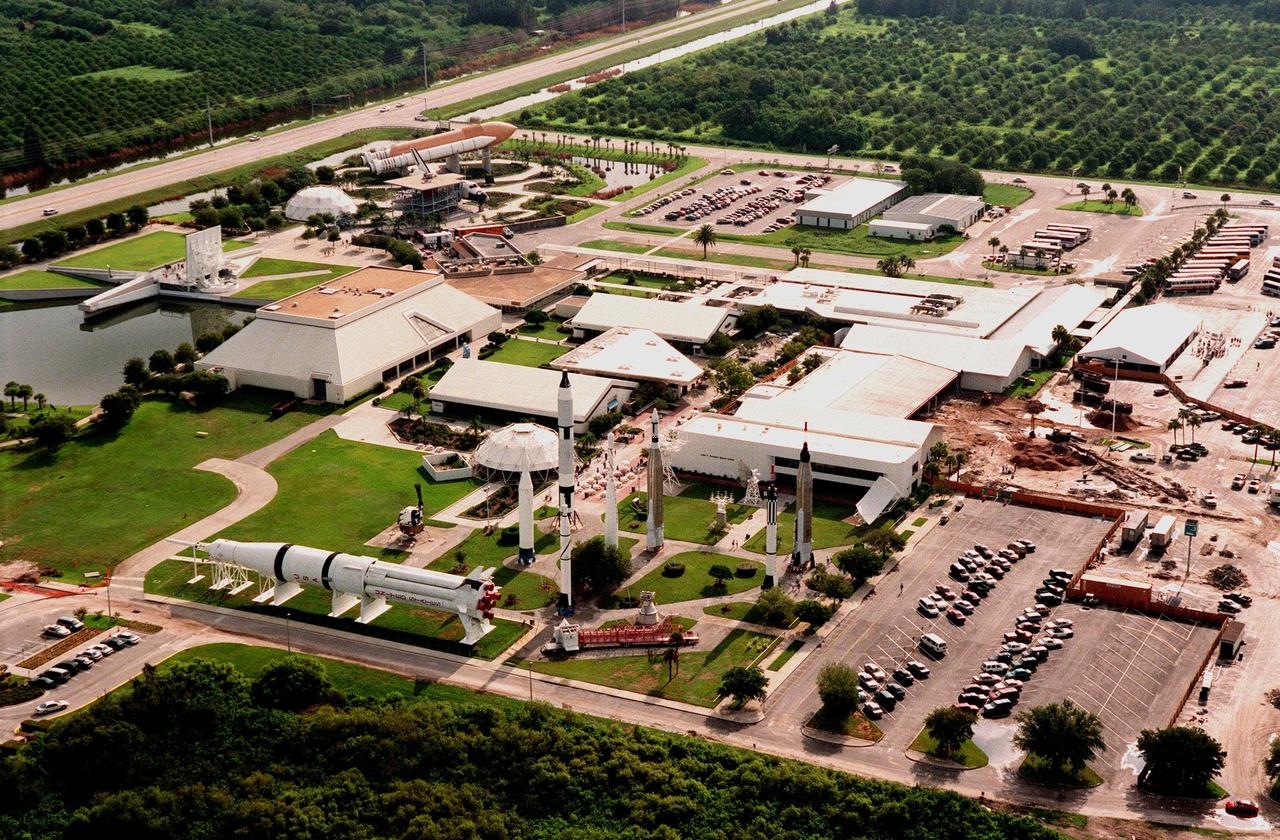
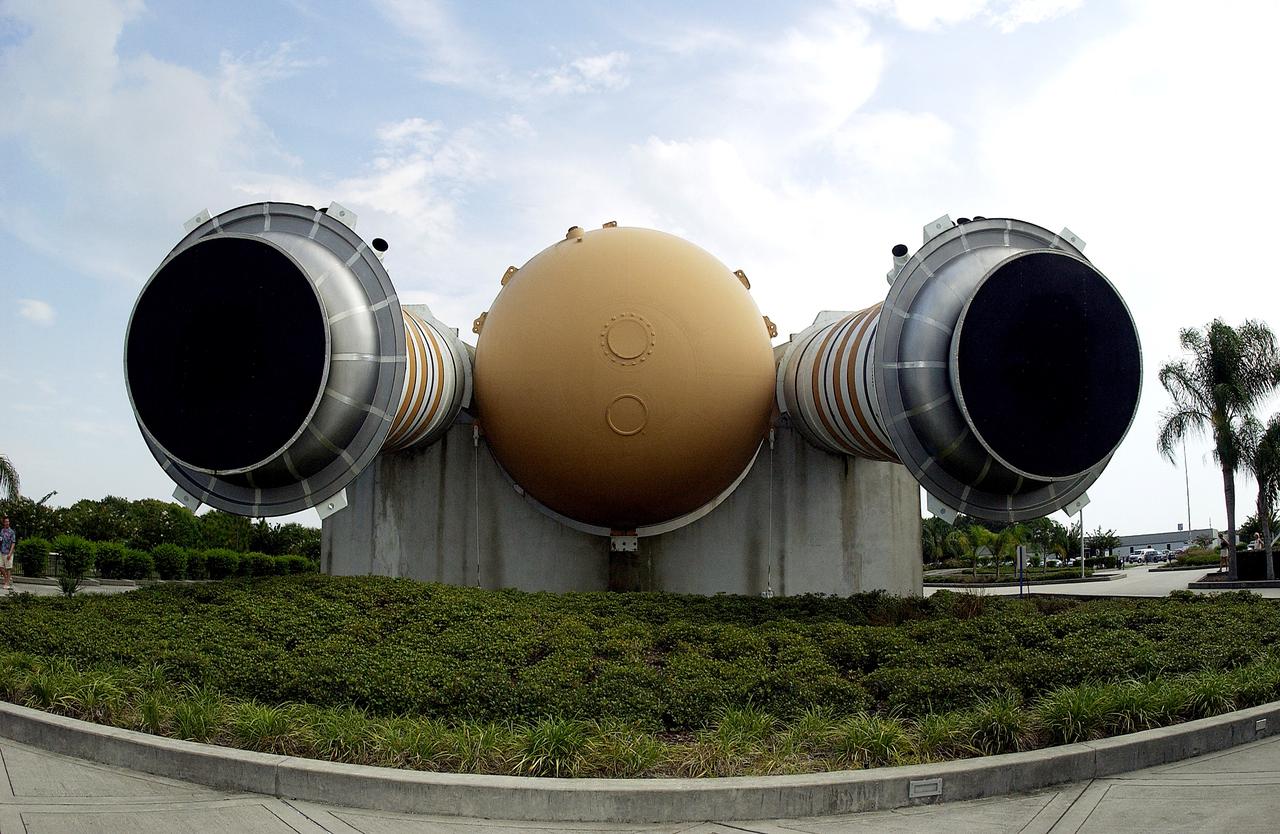
The Kennedy Space Center Visitor Complex, shown in this aerial view looking east, sprawls across 70 acres on Florida's Space Coast. It is located off State Road 405, NASA Parkway, six miles inside the Space Center entrance. SR 405 can be seen at the top left of the photo. In the foreground is the display of rockets that have played a significant role in the growth of the space program. Just above that, left to right, can be seen the Theater Complex, Space Flight Exhibit Building and Spaceport Central. Other buildings clustered at the center are the Cafeteria, Souvenir Sales Building, and Ticket Pavilion. To the left of the Theater Complex are the Astronaut Memorial, the Post Show Dome, and the Shuttle/Gantry mockup. Not seen in the photo is the Center for Space Education.

The Kennedy Space Center Visitor Complex kicked off its "Summer of Mars" promotion with a ceremony which included former NASA astronaut Jon McBride, who serves as director of Astronaut Education Programs for the visitor complex. The "Summer of Mars" promotion is designed to provide guests with a better understanding of NASA's studies of the Red Planet.
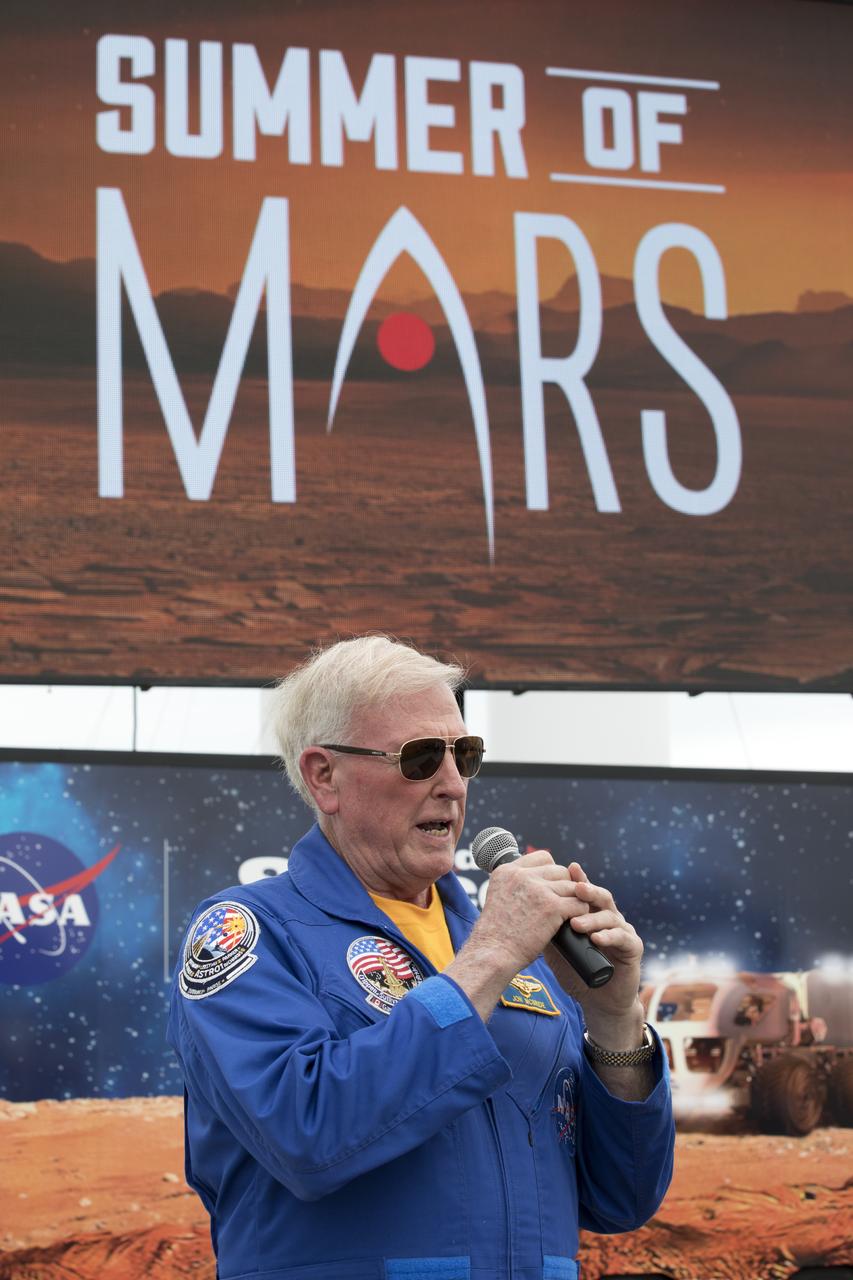
The Kennedy Space Center Visitor Complex kicked off its "Summer of Mars" promotion with a ceremony which included former NASA astronaut Jon McBride, who serves as director of Astronaut Education Programs for the visitor complex. The "Summer of Mars" promotion is designed to provide guests with a better understanding of NASA's studies of the Red Planet.
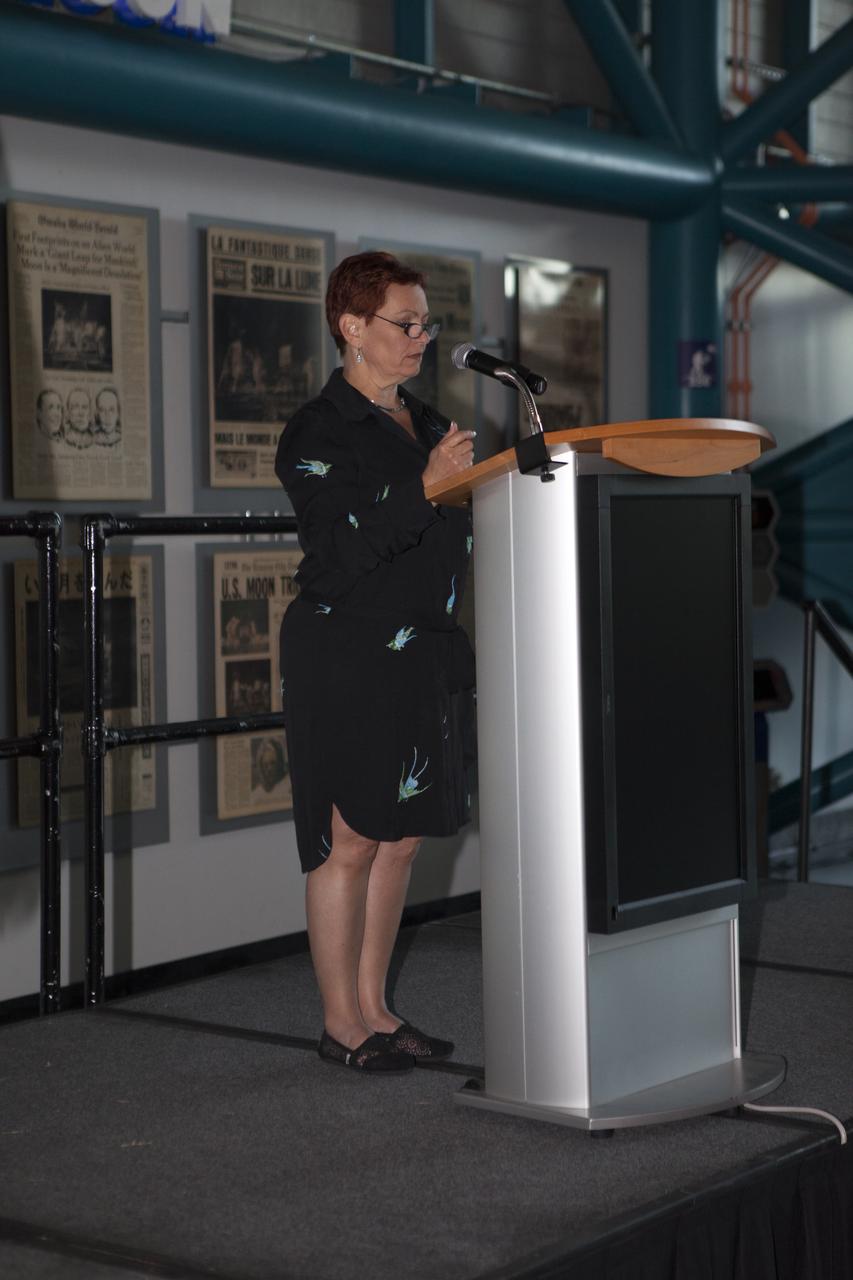
Inside the Apollo-Saturn V Center at the Kennedy Space Center Visitor Complex in Florida, Lisa May, with Murphian Systems, presents the Judges Innovation Award during the award ceremony for NASA's 8th Annual Robotic Mining Competition. More than 40 student teams from colleges and universities around the U.S. used their uniquely-designed mining robots to dig in a supersized sandbox filled with BP-1, or simulated Martian soil, and participated in other competition requirements, May 22-26, at the visitor complex. The Robotic Mining Competition is a NASA Human Exploration and Operations Mission Directorate project designed to encourage students in science, technology, engineering and math, or STEM fields. The project provides a competitive environment to foster innovative ideas and solutions that could be used on NASA's Journey to Mars.
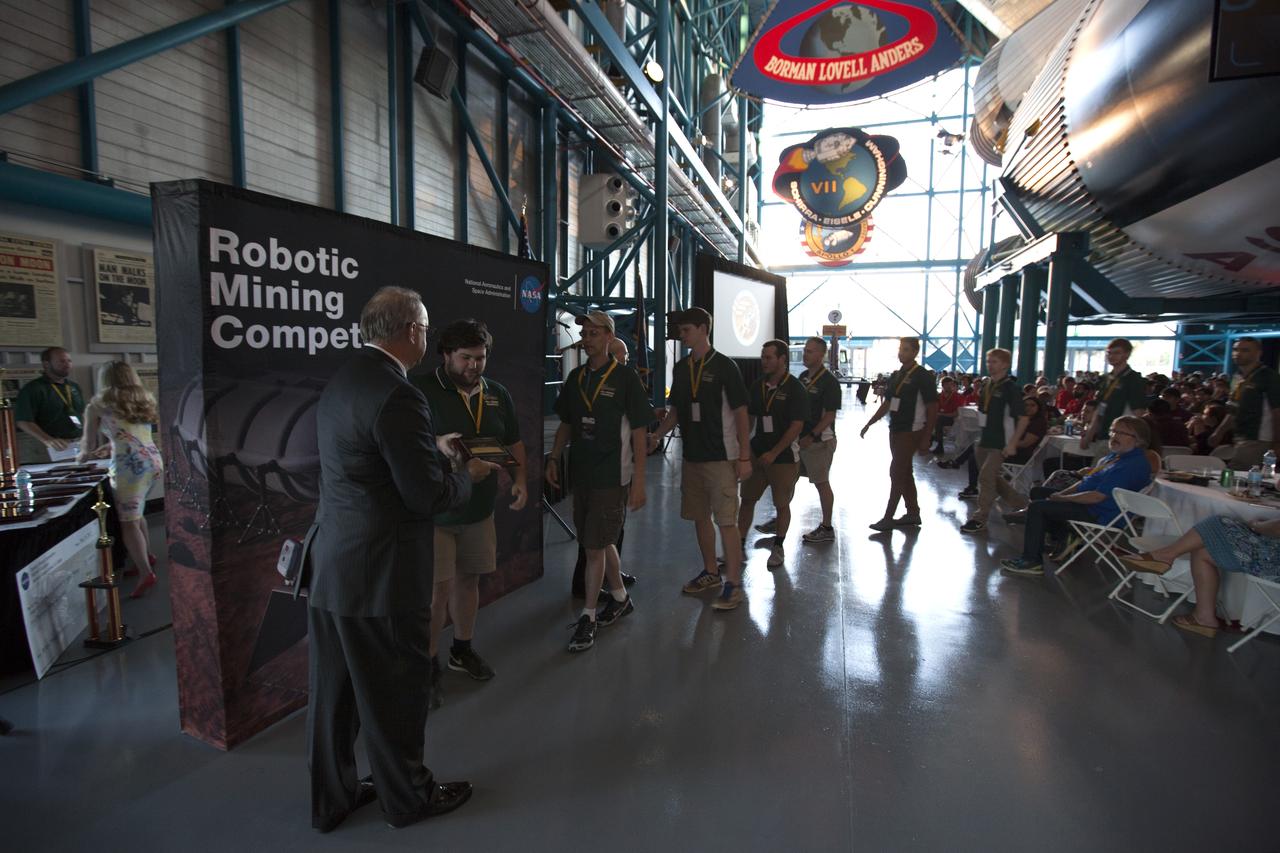
Inside the Apollo-Saturn V Center at the Kennedy Space Center Visitor Complex in Florida, team members from the University of North Carolina at Charlotte receive third-place in the Caterpillar Autonomy Award during the award ceremony for NASA's 8th Annual Robotic Mining Competition. More than 40 student teams from colleges and universities around the U.S. used their uniquely-designed mining robots to dig in a supersized sandbox filled with BP-1, or simulated Martian soil, and participated in other competition requirements, May 22-26, at the visitor complex. The Robotic Mining Competition is a NASA Human Exploration and Operations Mission Directorate project designed to encourage students in science, technology, engineering and math, or STEM fields. The project provides a competitive environment to foster innovative ideas and solutions that could be used on NASA's Journey to Mars.
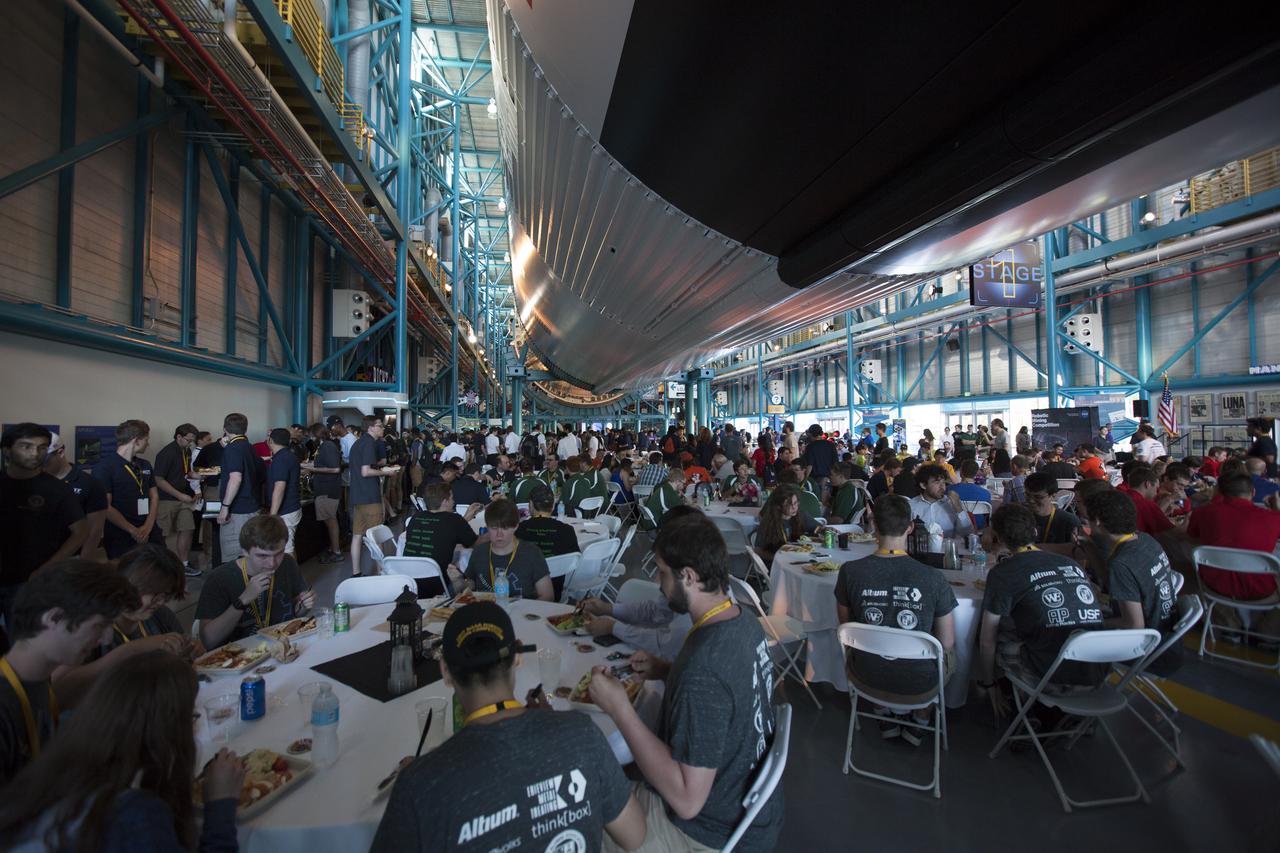
Inside the Apollo-Saturn V Center at NASA's Kennedy Space Center Visitor Complex in Florida, teams from the 8th Annual Robotic Mining Competition eat dinner before the awards ceremony begins. More than 40 student teams from colleges and universities around the U.S. used their mining robots to dig in a supersized sandbox filled with BP-1, or simulated Martian soil, and participated in other competition requirements, May 22-26 at the visitor complex. The Robotic Mining Competition is a NASA Human Exploration and Operations Mission Directorate project designed to encourage students in science, technology, engineering and math, or STEM fields. The project provides a competitive environment to foster innovative ideas and solutions that could be used on NASA's Journey to Mars.
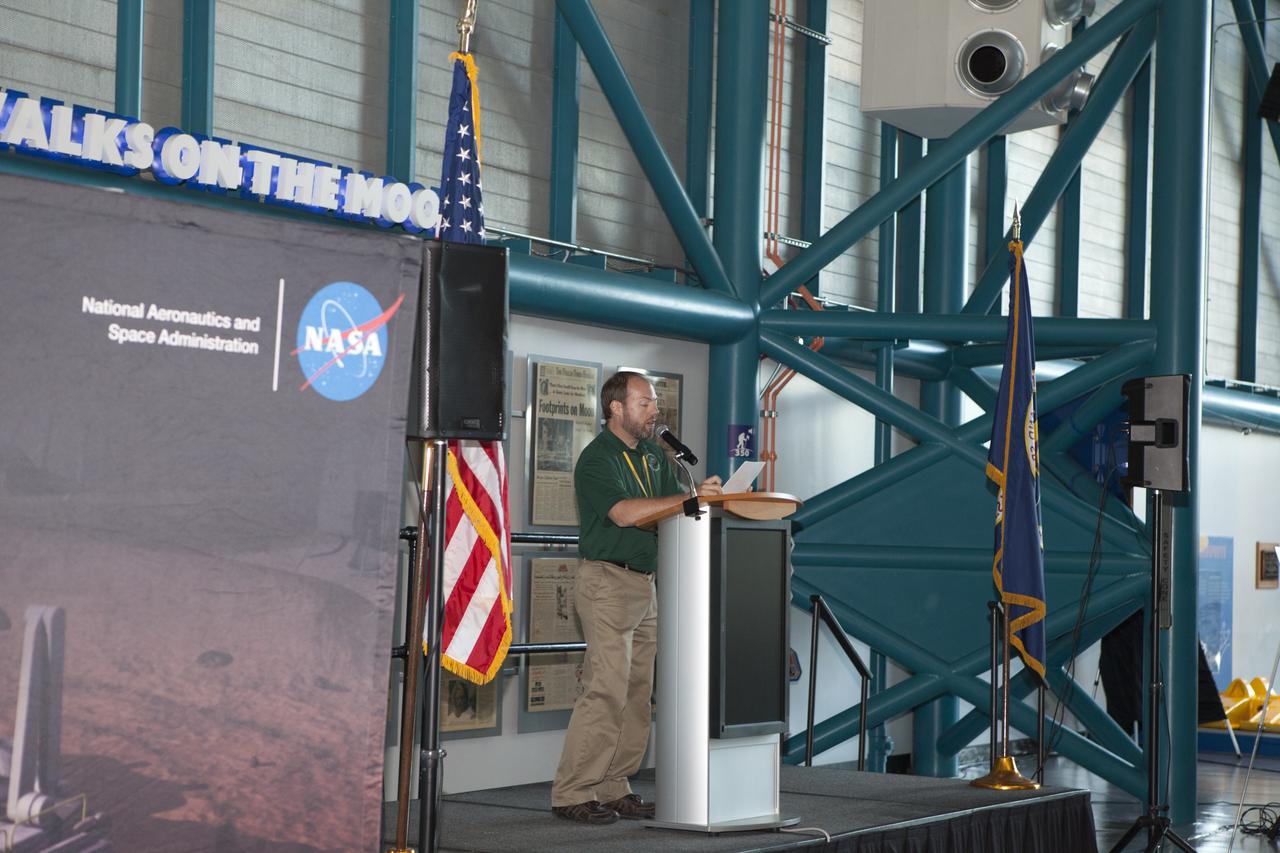
Kurt Leucht, a NASA engineer and event emcee, welcomes guests to the awards ceremony for NASA's 8th Annual Robotic Mining Competition in the Apollo-Saturn V Center at the Kennedy Space Center Visitor Complex in Florida. More than 40 student teams from colleges and universities around the U.S. used their uniquely-designed mining robots to dig in a supersized sandbox filled with BP-1, or simulated Martian soil, and participated in other competition requirements, May 22-26 at the visitor complex. The Robotic Mining Competition is a NASA Human Exploration and Operations Mission Directorate project designed to encourage students in science, technology, engineering and math, or STEM fields. The project provides a competitive environment to foster innovative ideas and solutions that could be used on NASA's Journey to Mars.
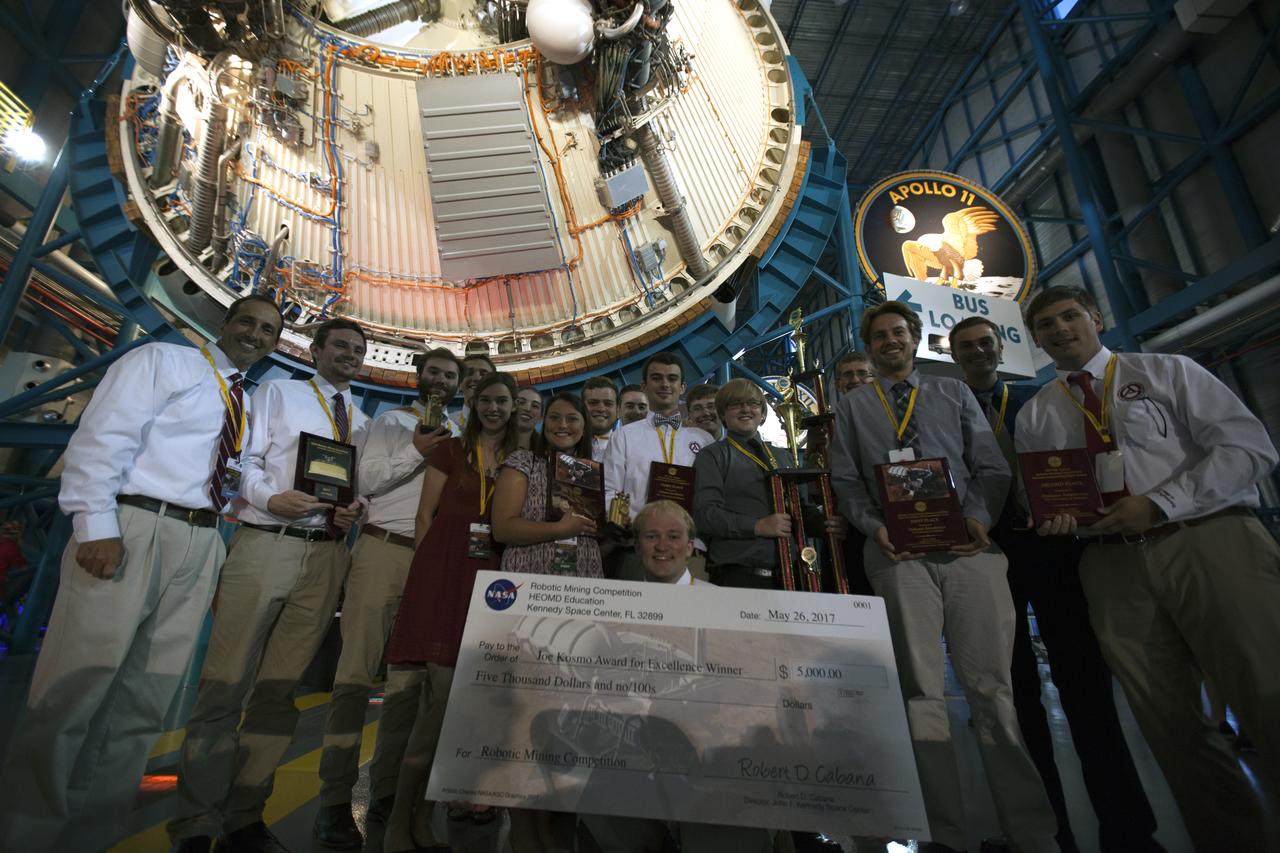
Team Astrobotics from The University of Alabama won the top award, the Joe Kosmo Award for Excellence, and several other awards, during NASA's 8th Annual Robotic Competition award ceremony inside the Apollo-Saturn V Center at the Kennedy Space Center Visitor Complex in Florida. More than 40 student teams from colleges and universities around the U.S. used their uniquely-designed mining robots to dig in a supersized sandbox filled with BP-1, or simulated Martian soil, and participated in other competition requirements, May 22-26, at the visitor complex. The Robotic Mining Competition is a NASA Human Exploration and Operations Mission Directorate project designed to encourage students in science, technology, engineering and math, or STEM fields. The project provides a competitive environment to foster innovative ideas and solutions that could be used on NASA's Journey to Mars.

Undergraduate and graduate students with teams that participated in NASA's 8th Annual Robotic Mining Competition eat dinner in the Apollo-Saturn V Center at NASA's Kennedy Space Center Visitor Complex in Florida, before the awards ceremony. More than 40 student teams from colleges and universities around the U.S. used their uniquely-designed mining robots to dig in a supersized sandbox filled with BP-1, or simulated Martian soil, and participated in other competition requirements, May 22-26 at the visitor complex. The Robotic Mining Competition is a NASA Human Exploration and Operations Mission Directorate project designed to encourage students in science, technology, engineering and math, or STEM fields. The project provides a competitive environment to foster innovative ideas and solutions that could be used on NASA's Journey to Mars.
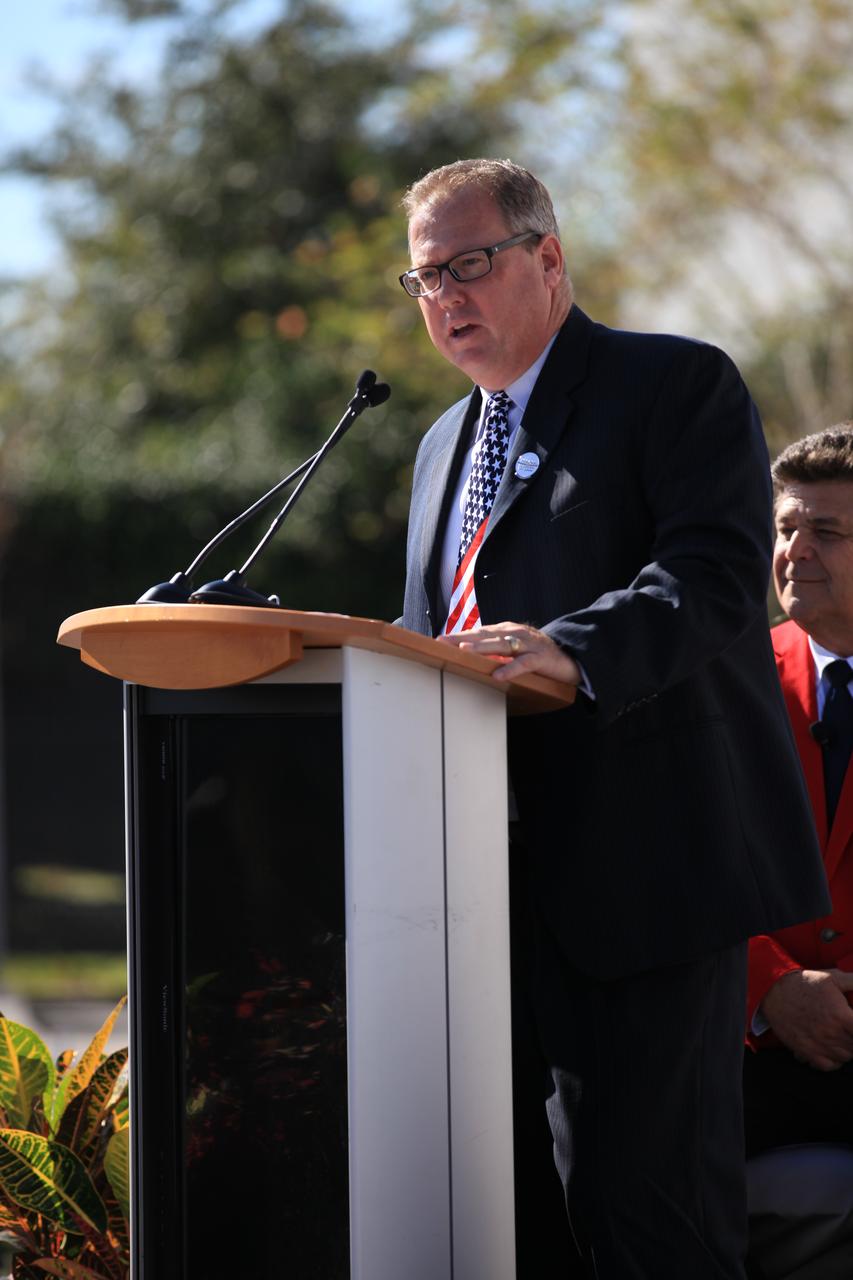
Therrin Protze, chief operating officer of the Kennedy Space Center Visitor Complex, speaks to guests during the opening of the Heroes and Legends attraction at the Kennedy Space Center Visitor Complex. The new facility includes the U.S. Astronaut Hall of Fame and looks back to the pioneering efforts of Mercury, Gemini and Apollo. It sets the stage by providing the background and context for space exploration and the legendary men and women who pioneered the nation's journey into space.
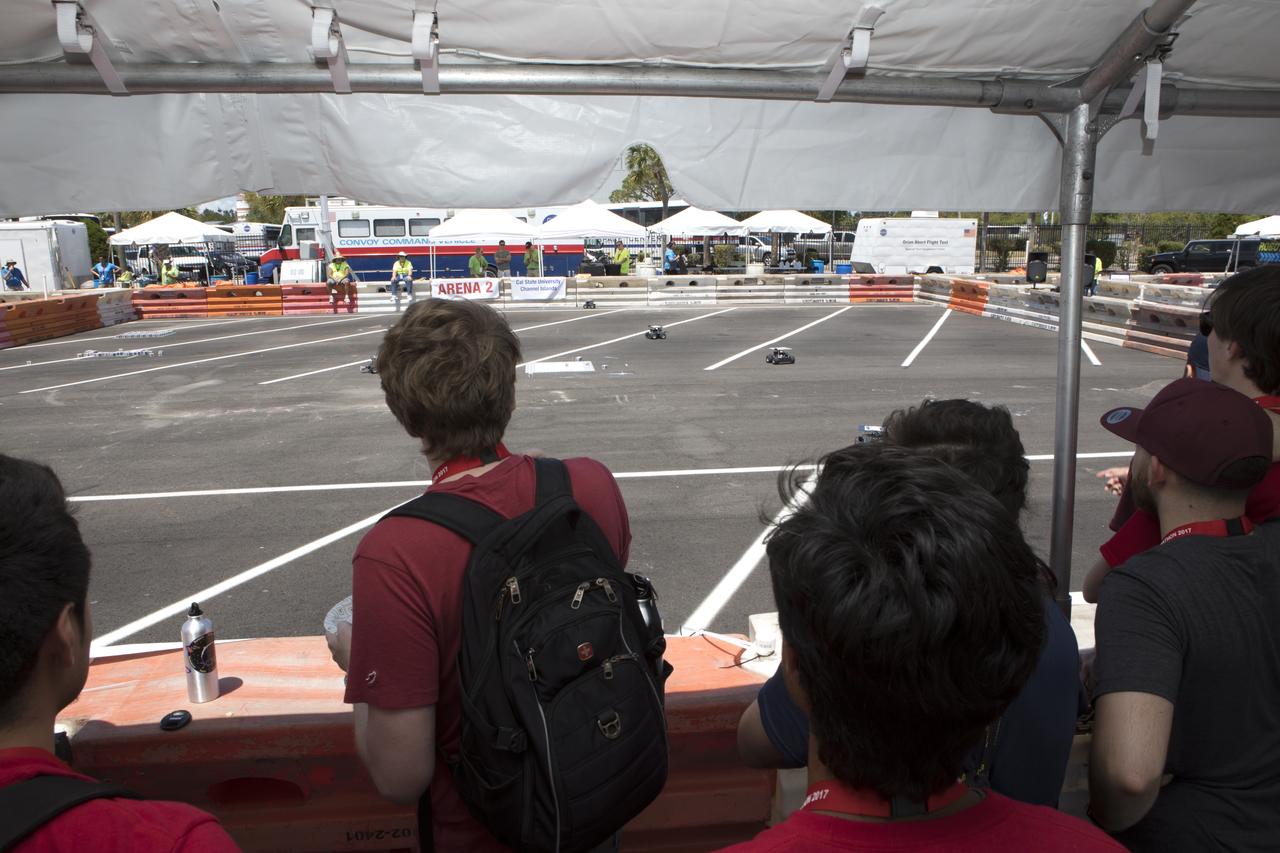
At the Kennedy Space Center Visitor Complex, students monitor progress as their Swarmie robots as they search for "resources." The goal is for the robots to pick up cubes with AprilTags, which are similar to bar codes. The Swarmies then move the cubes to a white square in the center of the completion arena. The small, four-wheeled robots are designed to effectively and efficiently locate hidden resources while astronauts explore distant destinations such as the moon or Mars.
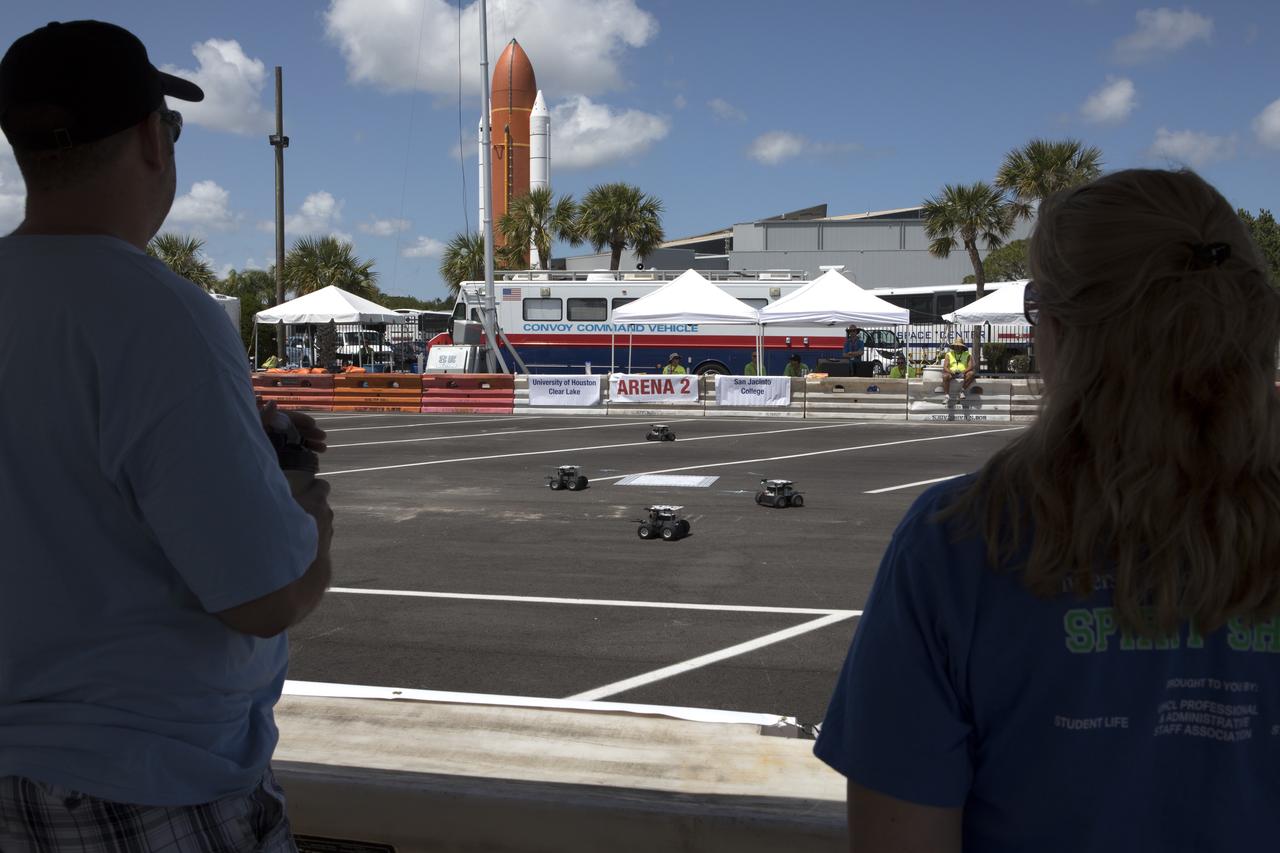
At the Kennedy Space Center Visitor Complex, students monitor progress as their Swarmie robots as they search for "resources." The goal is for the robots to pick up cubes with AprilTags, which are similar to bar codes. The Swarmies then move the cubes to a white square in the center of the completion arena. The small, four-wheeled robots are designed to effectively and efficiently locate hidden resources while astronauts explore distant destinations such as the moon or Mars.
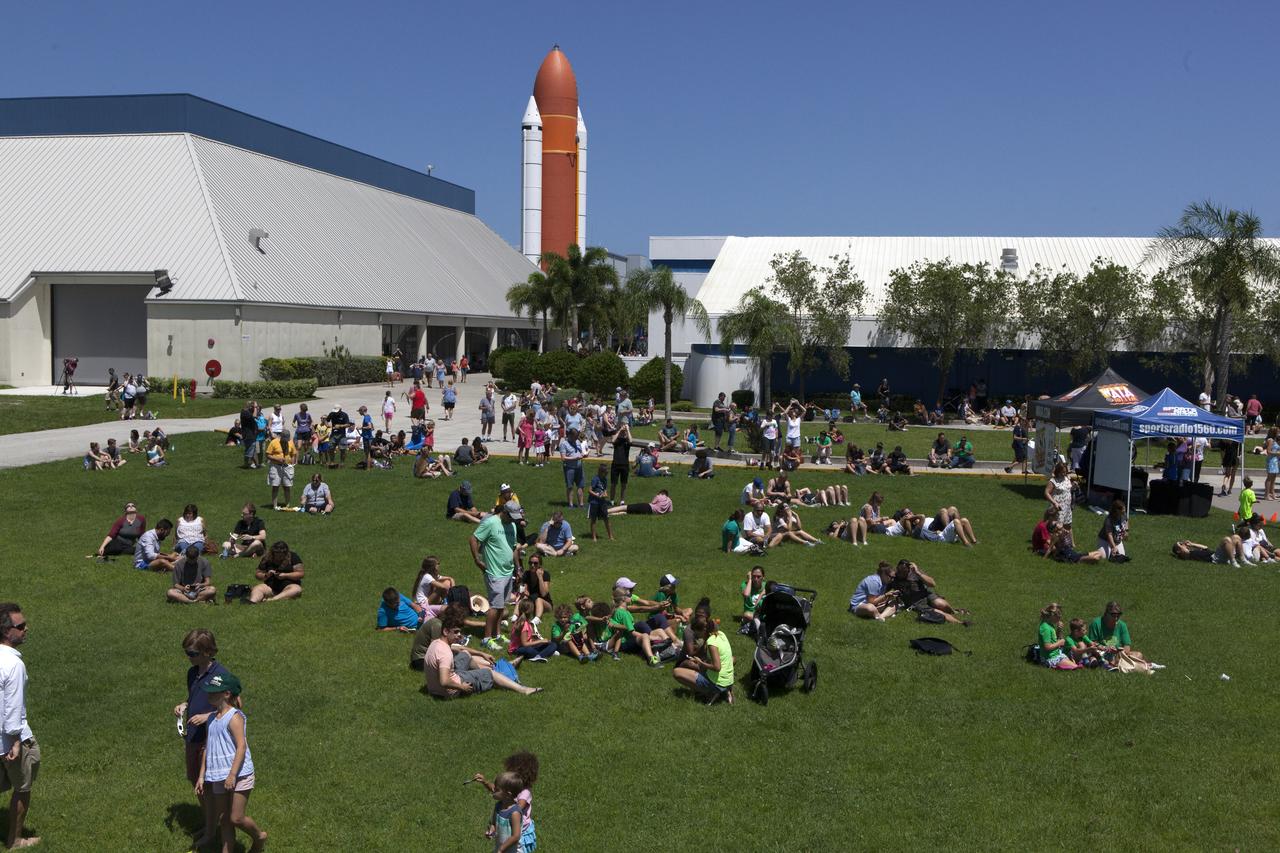
From the Kennedy Space Center Visitor Complex, guests joined Americans from coast to coast following the solar eclipse. Although a partial eclipse on Florida's Space Coast, young and old alike found many ways to watch the rare astronomical event. As the Moon passed between Earth and the midafternoon Sun, a shadow moved across the landscape. The 70-mile-wide totality path, or "umbral cone" -- where the entire Sun will vanish behind the Moon -- stretched across 14 states, from Oregon to South Carolina.
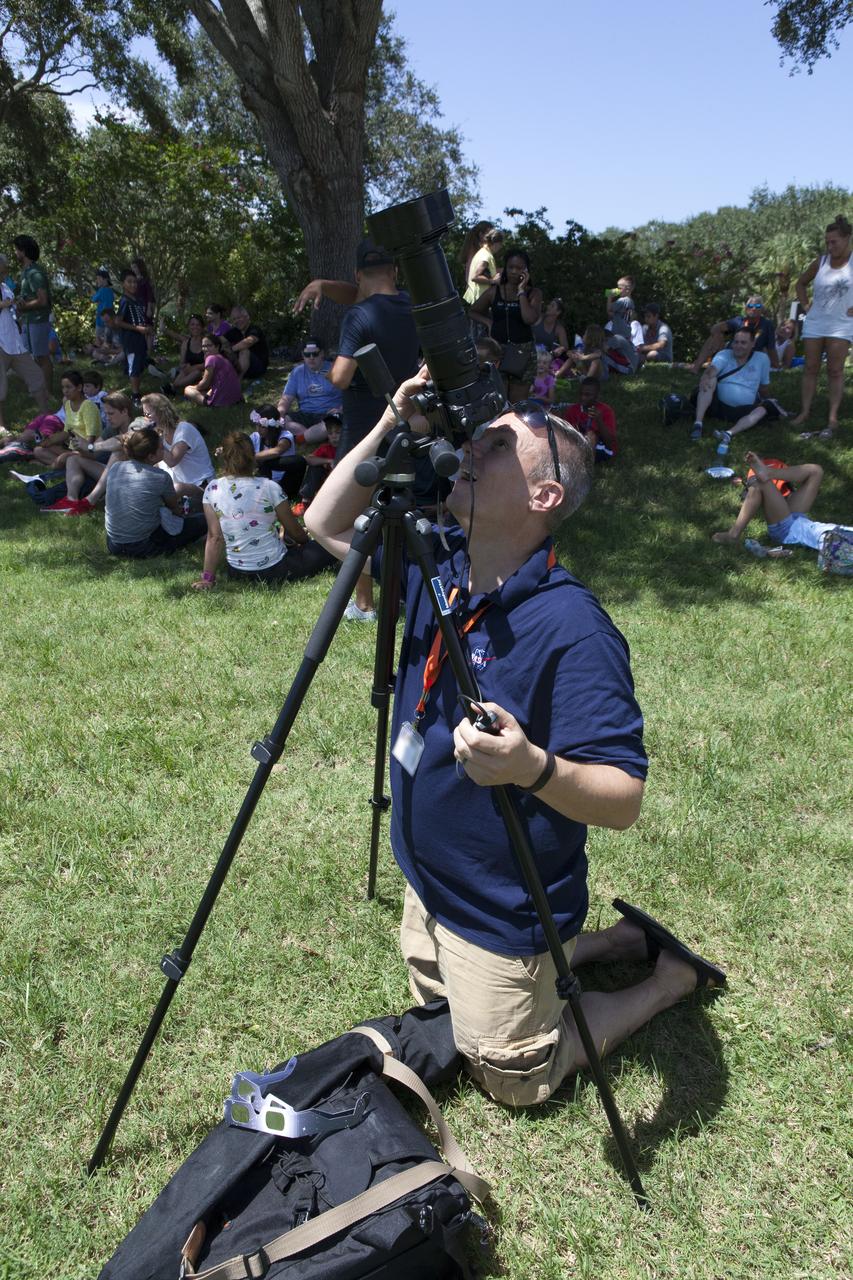
From the Kennedy Space Center Visitor Complex, guests joined Americans from coast to coast following the solar eclipse. Although a partial eclipse on Florida's Space Coast, young and old alike found many ways to watch the rare astronomical event. As the Moon passed between Earth and the midafternoon Sun, a shadow moved across the landscape. The 70-mile-wide totality path, or "umbral cone" -- where the entire Sun will vanish behind the Moon -- stretched across 14 states, from Oregon to South Carolina.
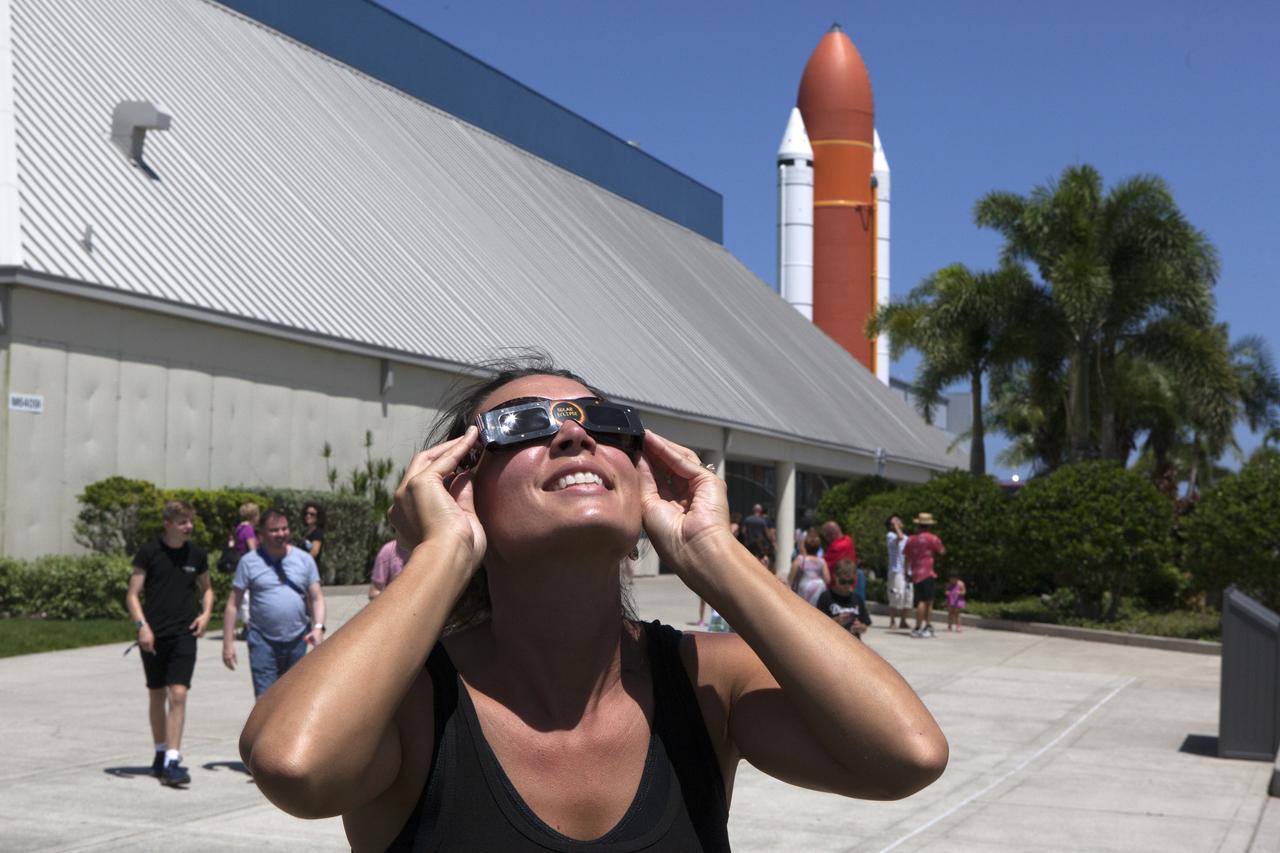
From the Kennedy Space Center Visitor Complex, guests joined Americans from coast to coast following the solar eclipse. Although a partial eclipse on Florida's Space Coast, young and old alike found many ways to watch the rare astronomical event. As the Moon passed between Earth and the midafternoon Sun, a shadow moved across the landscape. The 70-mile-wide totality path, or "umbral cone" -- where the entire Sun will vanish behind the Moon -- stretched across 14 states, from Oregon to South Carolina.
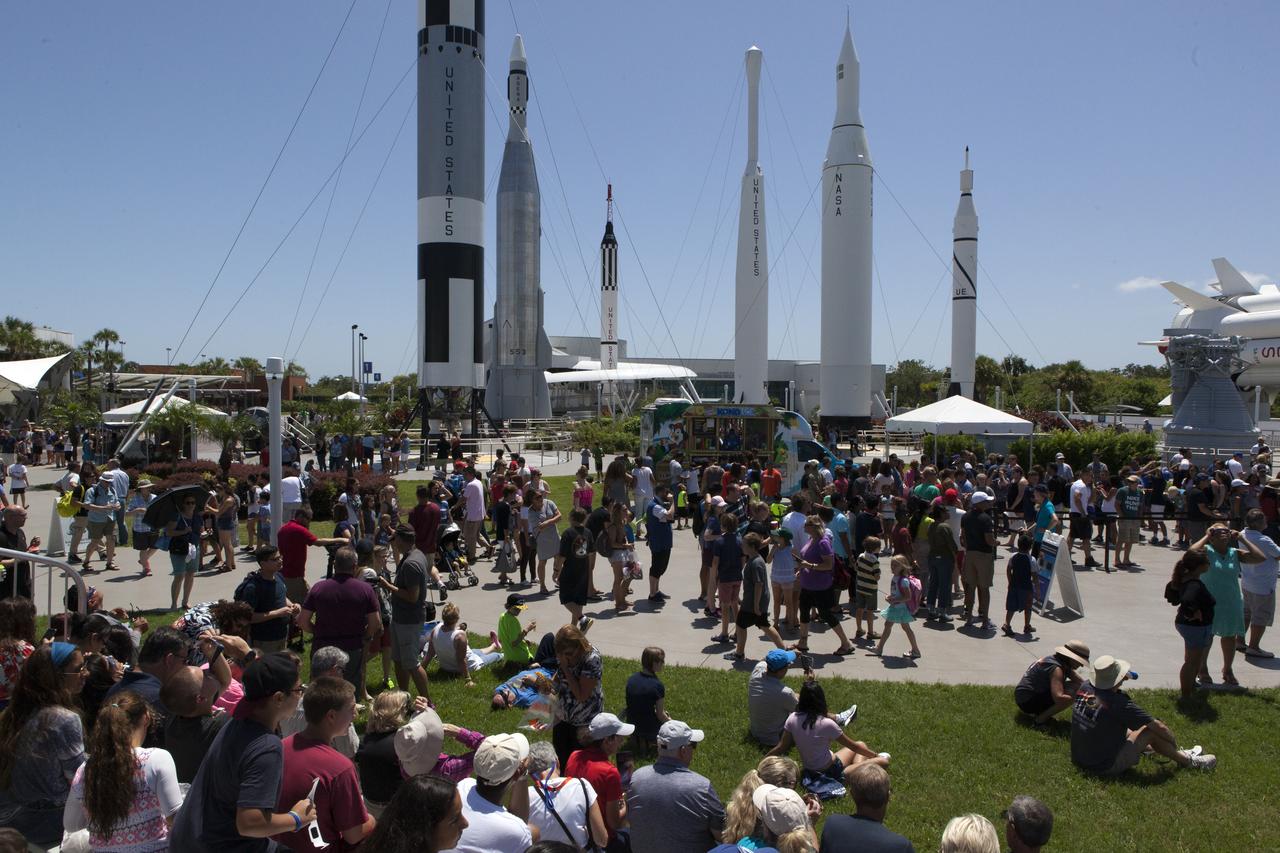
From the Kennedy Space Center Visitor Complex, guests joined Americans from coast to coast following the solar eclipse. Although a partial eclipse on Florida's Space Coast, young and old alike found many ways to watch the rare astronomical event. As the Moon passed between Earth and the midafternoon Sun, a shadow moved across the landscape. The 70-mile-wide totality path, or "umbral cone" -- where the entire Sun will vanish behind the Moon -- stretched across 14 states, from Oregon to South Carolina.
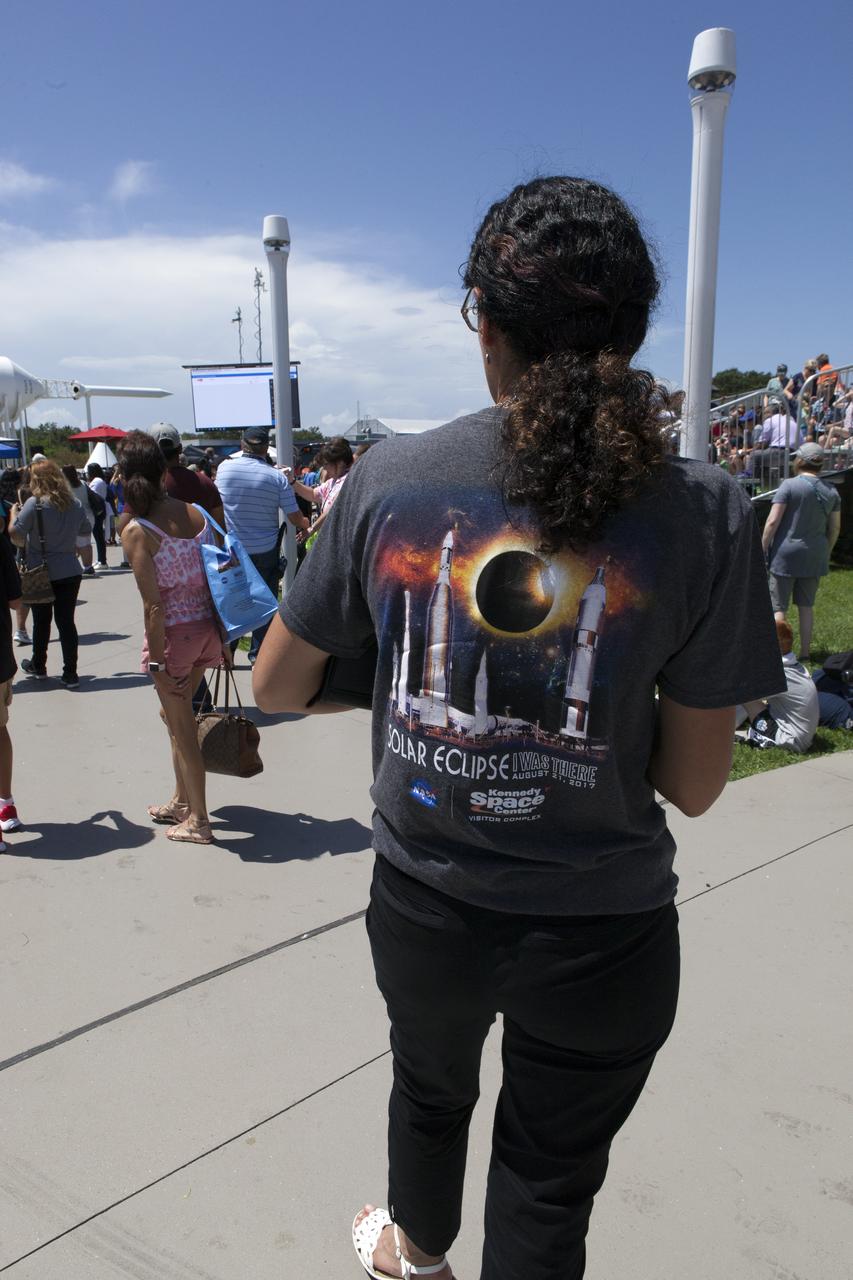
From the Kennedy Space Center Visitor Complex, guests joined Americans from coast to coast following the solar eclipse. Although a partial eclipse on Florida's Space Coast, young and old alike found many ways to watch the rare astronomical event. As the Moon passed between Earth and the midafternoon Sun, a shadow moved across the landscape. The 70-mile-wide totality path, or "umbral cone" -- where the entire Sun will vanish behind the Moon -- stretched across 14 states, from Oregon to South Carolina.
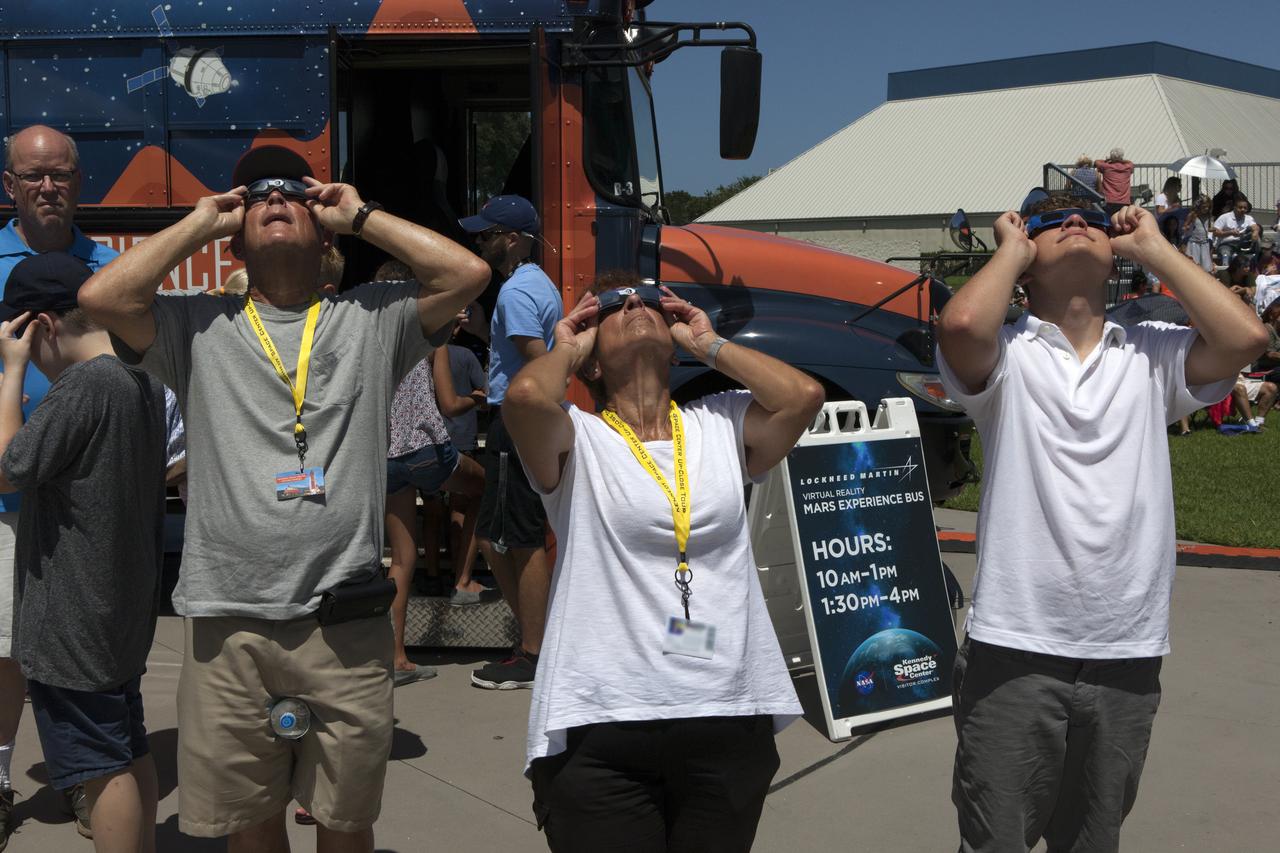
From the Kennedy Space Center Visitor Complex, guests joined Americans from coast to coast following the solar eclipse. Although a partial eclipse on Florida's Space Coast, young and old alike found many ways to watch the rare astronomical event. As the Moon passed between Earth and the midafternoon Sun, a shadow moved across the landscape. The 70-mile-wide totality path, or "umbral cone" -- where the entire Sun will vanish behind the Moon -- stretched across 14 states, from Oregon to South Carolina.
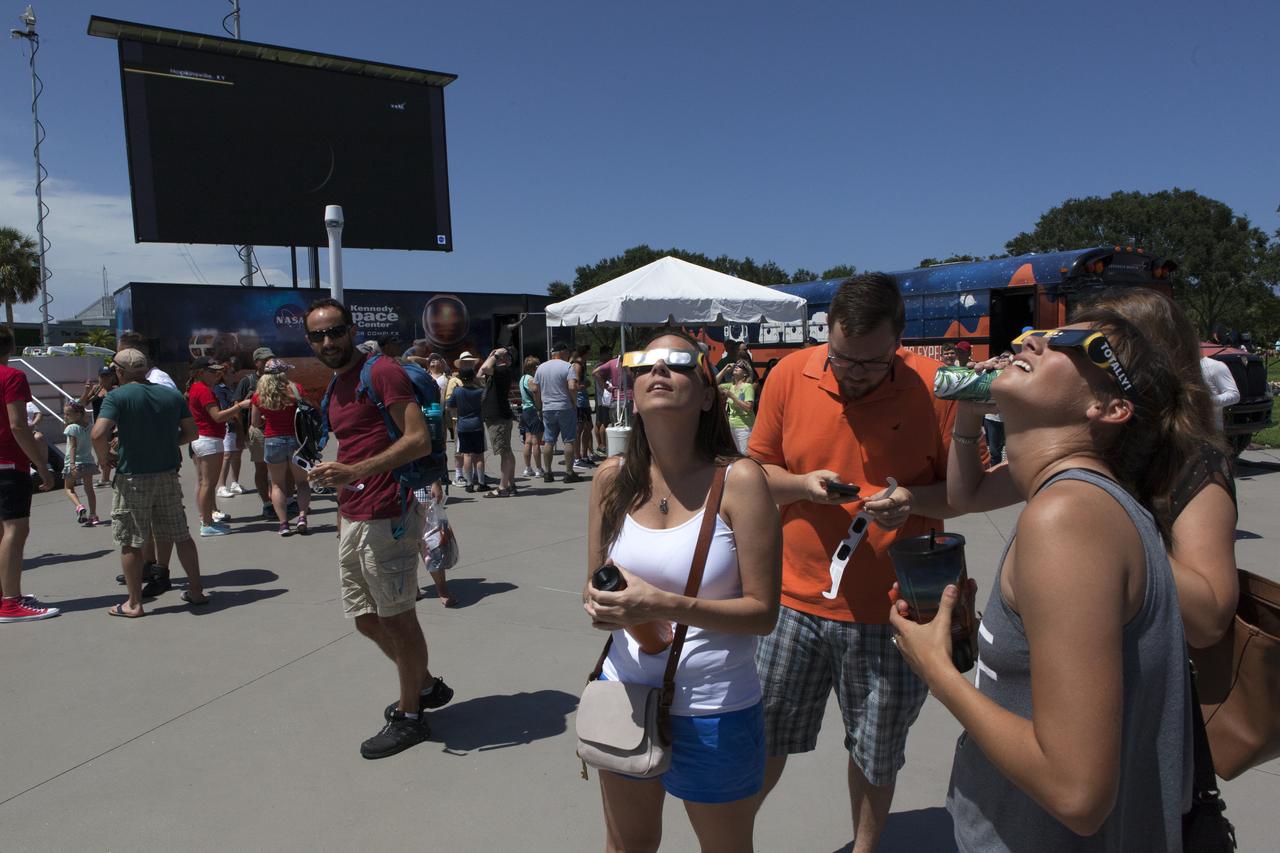
From the Kennedy Space Center Visitor Complex, guests joined Americans from coast to coast following the solar eclipse. Although a partial eclipse on Florida's Space Coast, young and old alike found many ways to watch the rare astronomical event. As the Moon passed between Earth and the midafternoon Sun, a shadow moved across the landscape. The 70-mile-wide totality path, or "umbral cone" -- where the entire Sun will vanish behind the Moon -- stretched across 14 states, from Oregon to South Carolina.
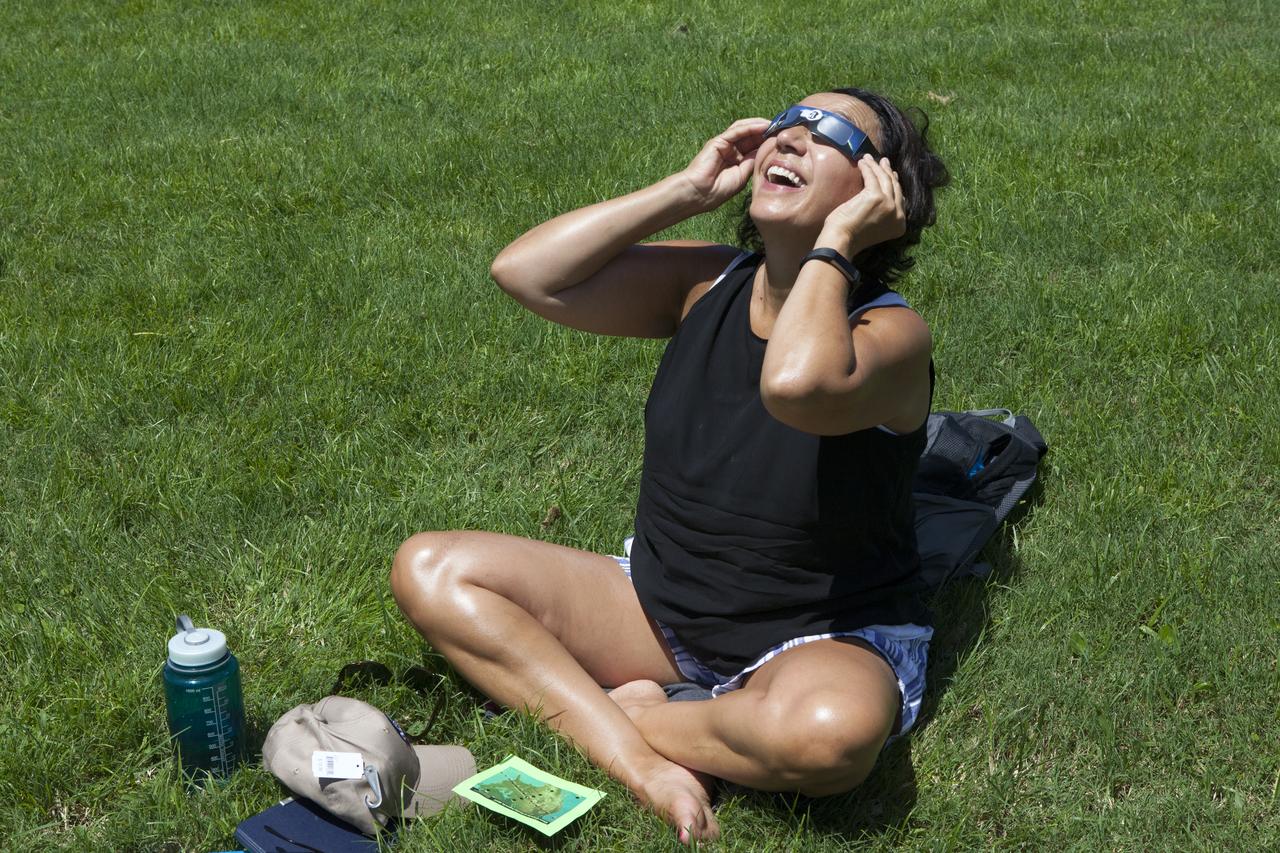
From the Kennedy Space Center Visitor Complex, guests joined Americans from coast to coast following the solar eclipse. Although a partial eclipse on Florida's Space Coast, young and old alike found many ways to watch the rare astronomical event. As the Moon passed between Earth and the midafternoon Sun, a shadow moved across the landscape. The 70-mile-wide totality path, or "umbral cone" -- where the entire Sun will vanish behind the Moon -- stretched across 14 states, from Oregon to South Carolina.
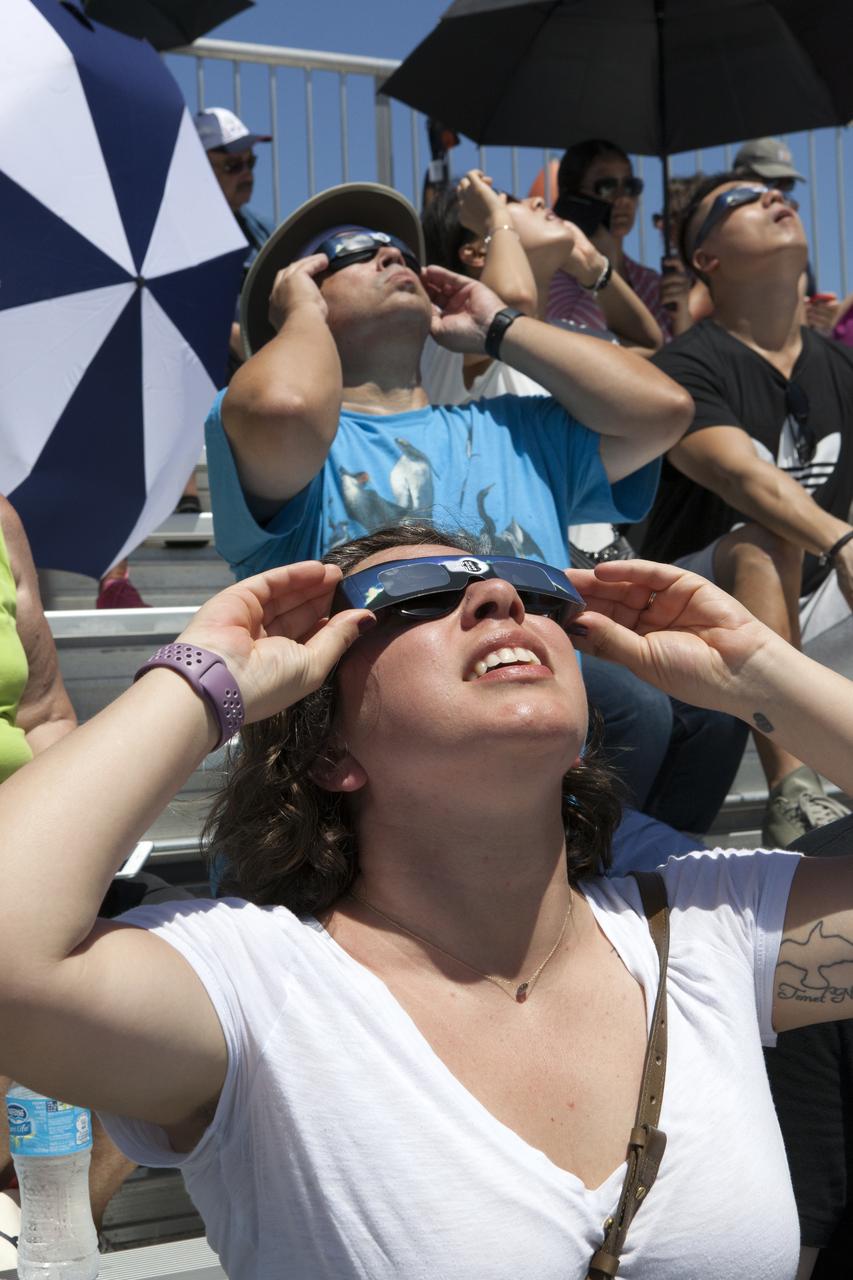
From the Kennedy Space Center Visitor Complex, guests joined Americans from coast to coast following the solar eclipse. Although a partial eclipse on Florida's Space Coast, young and old alike found many ways to watch the rare astronomical event. As the Moon passed between Earth and the midafternoon Sun, a shadow moved across the landscape. The 70-mile-wide totality path, or "umbral cone" -- where the entire Sun will vanish behind the Moon -- stretched across 14 states, from Oregon to South Carolina.