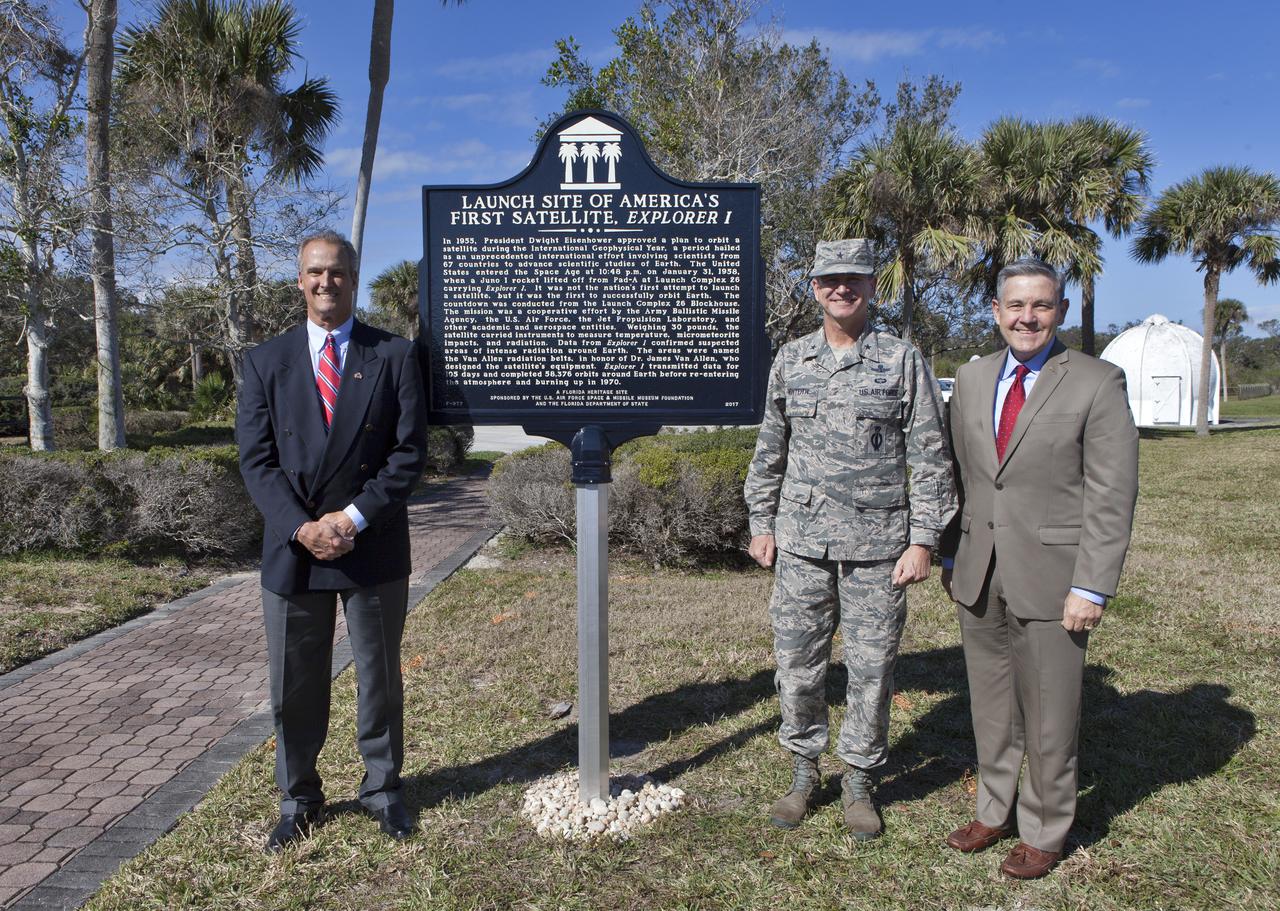
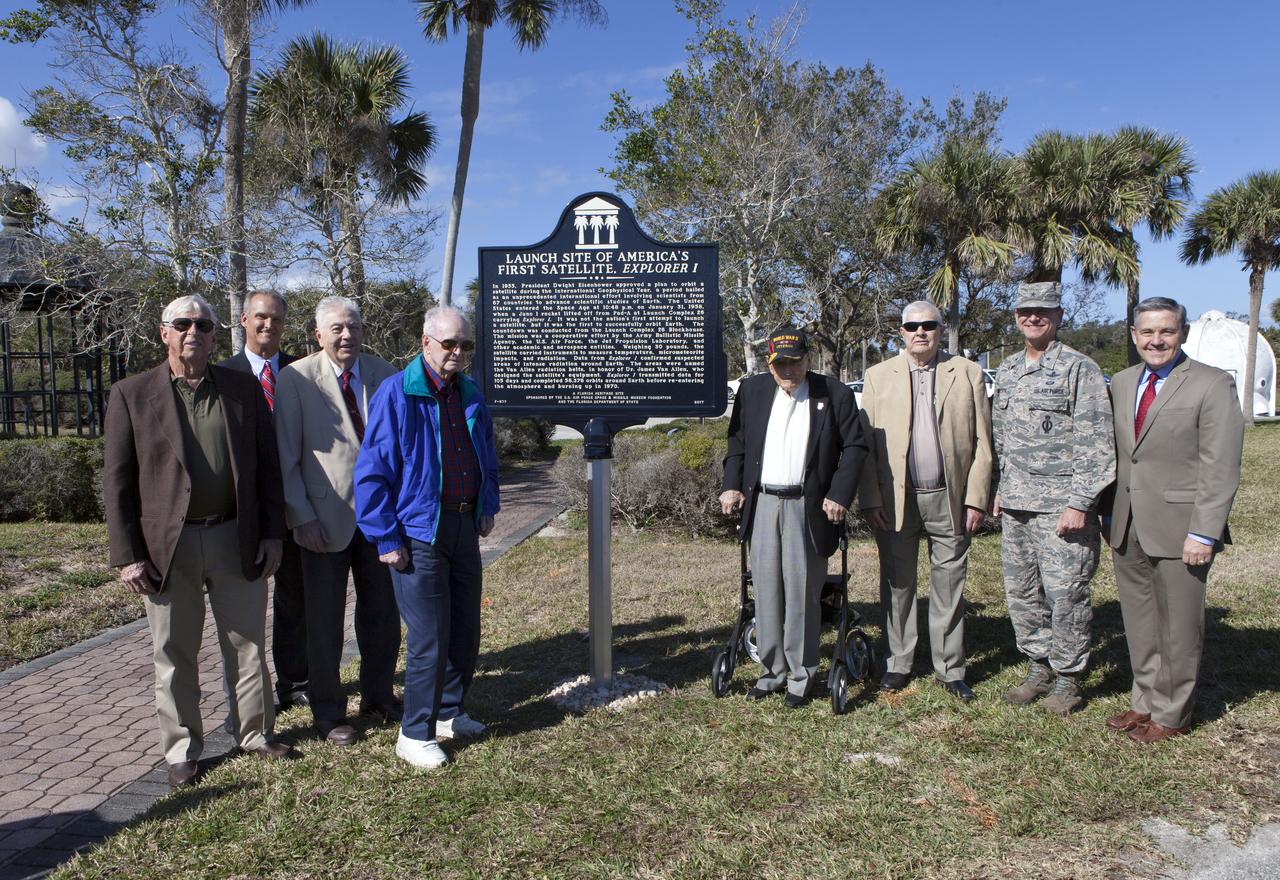
Launch team members who supported the launch of America's first satellite, Explorer 1, pose at a newly unveiled historical marker with Ray Sands, chairman of the Air Force Space and Missile Foundation -- sponsor of the marker, Brig. Gen. Wayne Monteith, 45th Space Wing commander and director of the Eastern Range, and Kennedy Space Center Director Bob Cabana. The event tool place at the site of the launch 60 years ago, Space Launch Complex 26 at Cape Canaveral Air Force Station.
Explorer 1 60th Anniversary
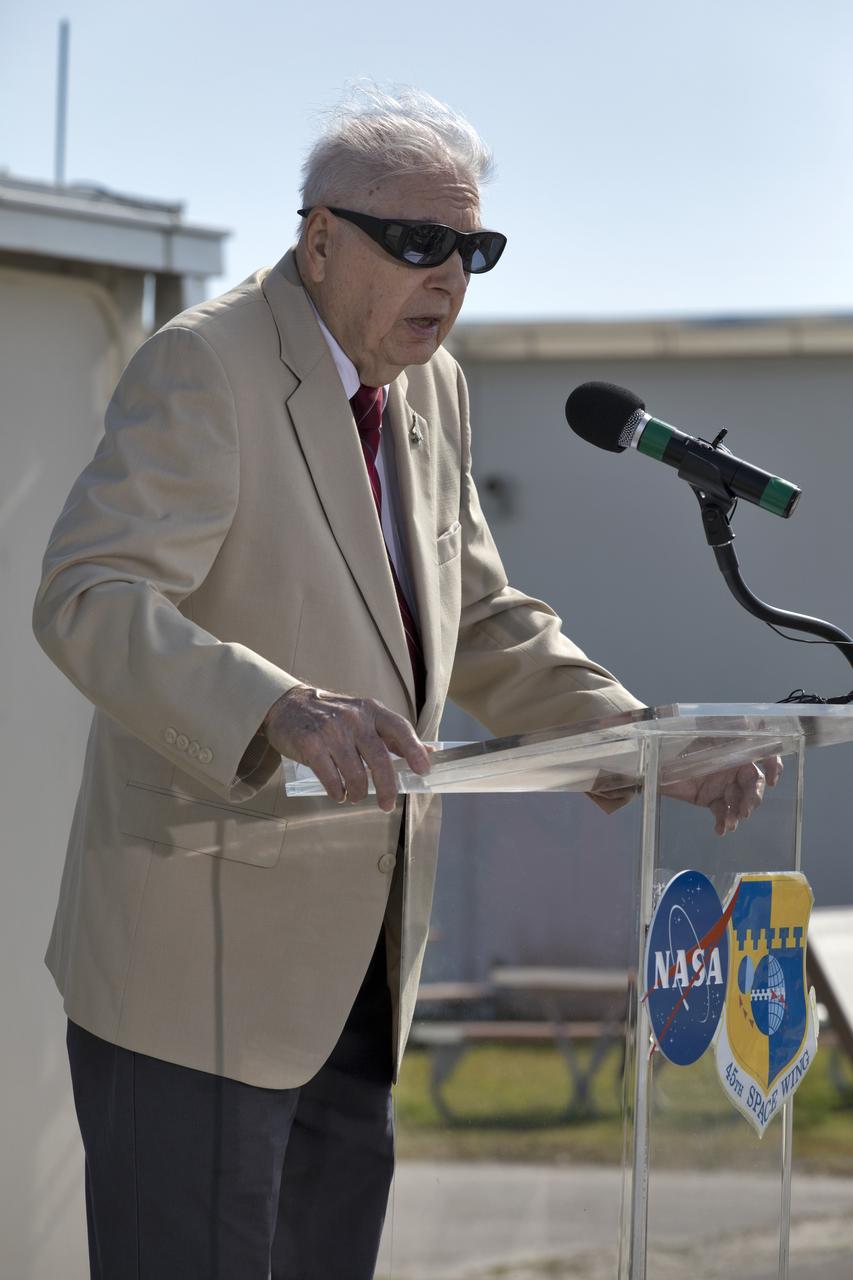
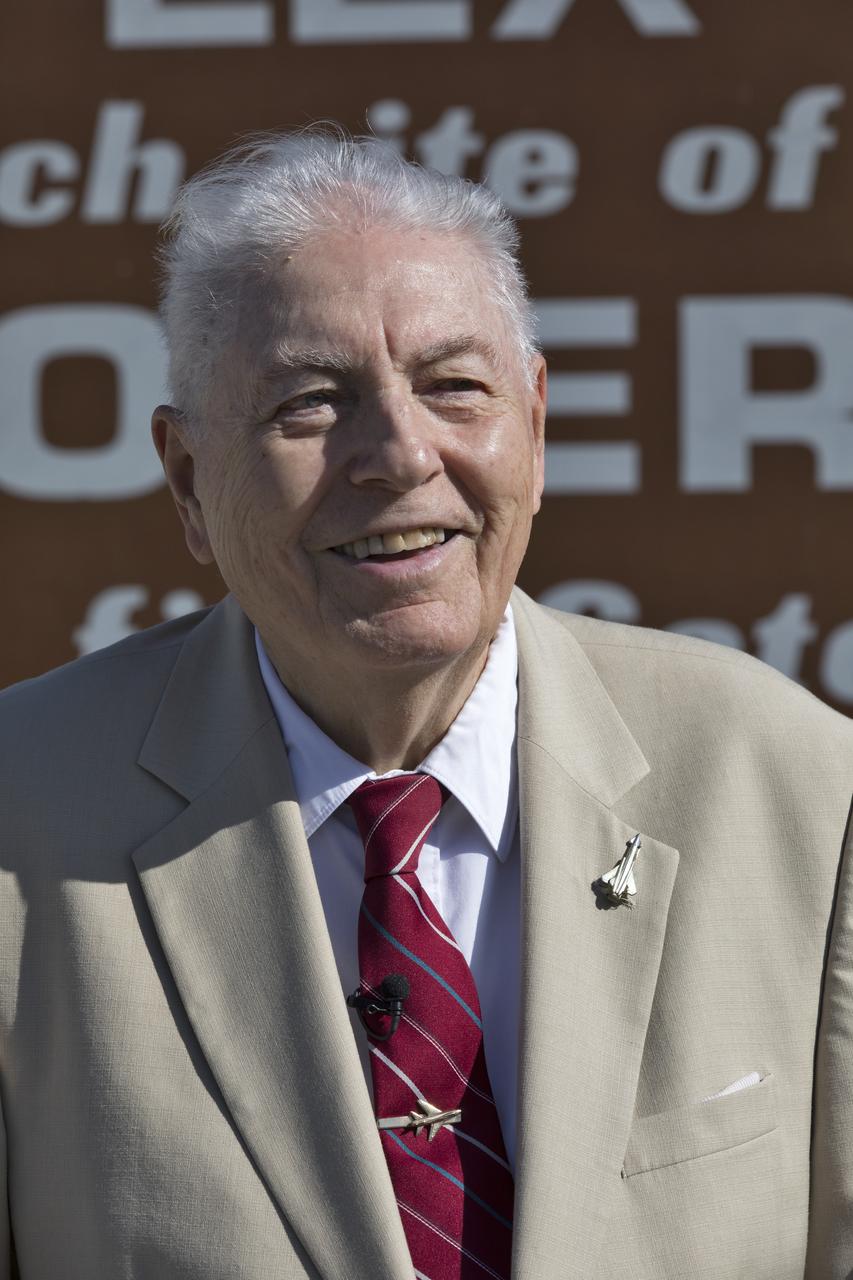
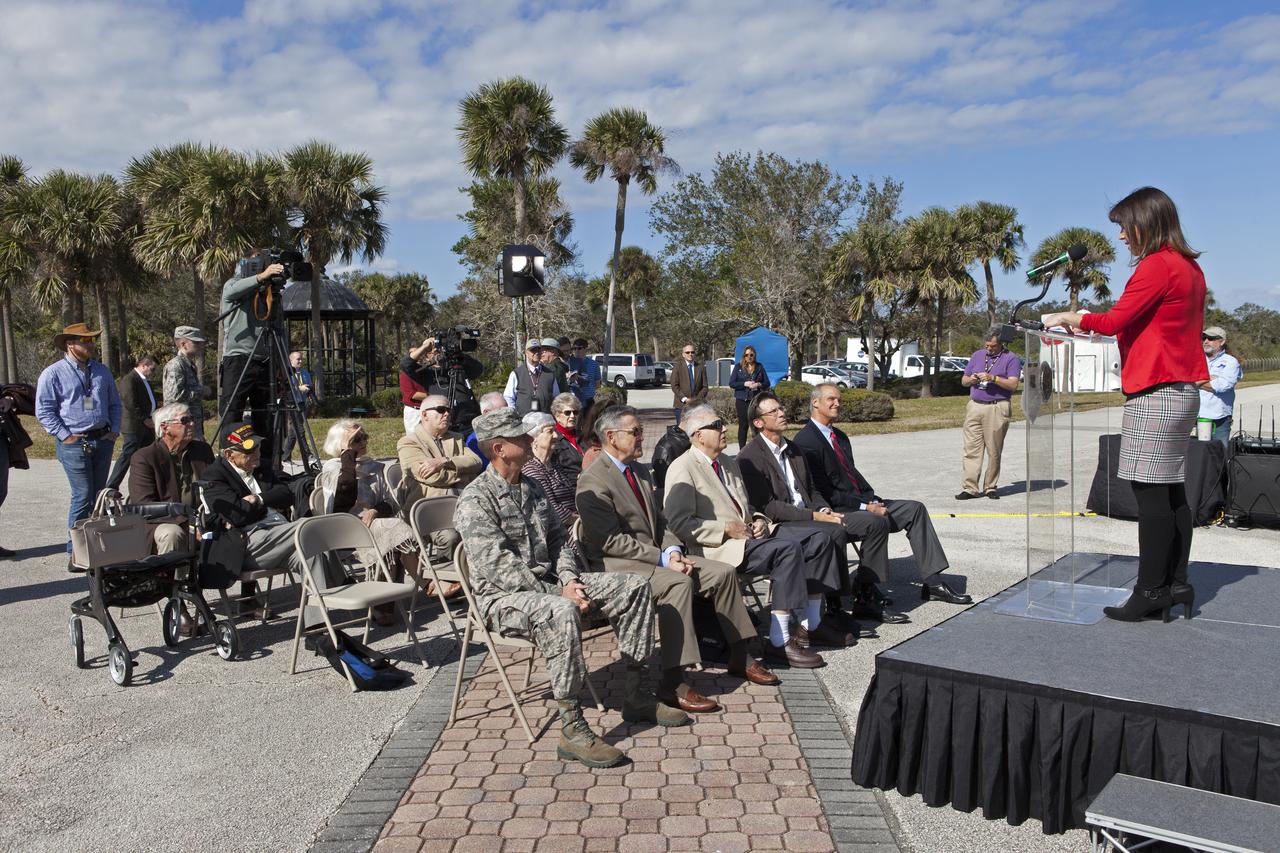
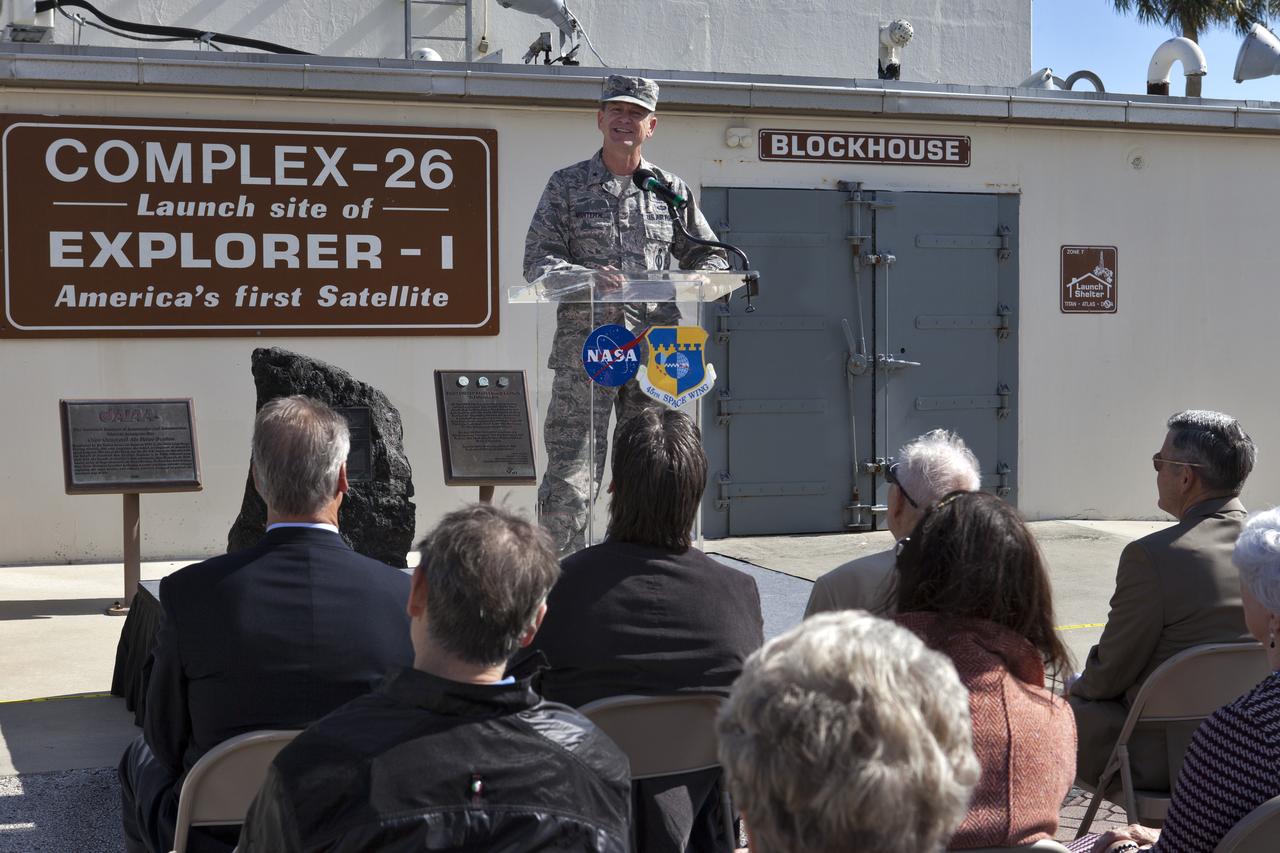
Dr. John Meisenheimer, launch weather officer for Explorer 1, speaks to guests at an event celebrating the 60th anniversary of America's first satellite. The ceremony took place in front of the Space Launch Complex 26 blockhouse at Cape Canaveral Air Force Station where the Explorer 1 satellite was launched atop a Jupiter C rocket on Jan. 31, 1958. During operation, the satellite's cosmic ray detector discovered radiation belts around Earth which were named for Dr. James Van Allen, principal investigator for the satellite.
Explorer 1 60th Anniversary
Dr. John Meisenheimer, launch weather officer for Explorer 1, speaks to guests at an event celebrating the 60th anniversary of America's first satellite. The ceremony took place in front of the Space Launch Complex 26 blockhouse at Cape Canaveral Air Force Station where the Explorer 1 satellite was launched atop a Jupiter C rocket on Jan. 31, 1958. During operation, the satellite's cosmic ray detector discovered radiation belts around Earth which were named for Dr. James Van Allen, principal investigator for the satellite.
Explorer 1 60th Anniversary
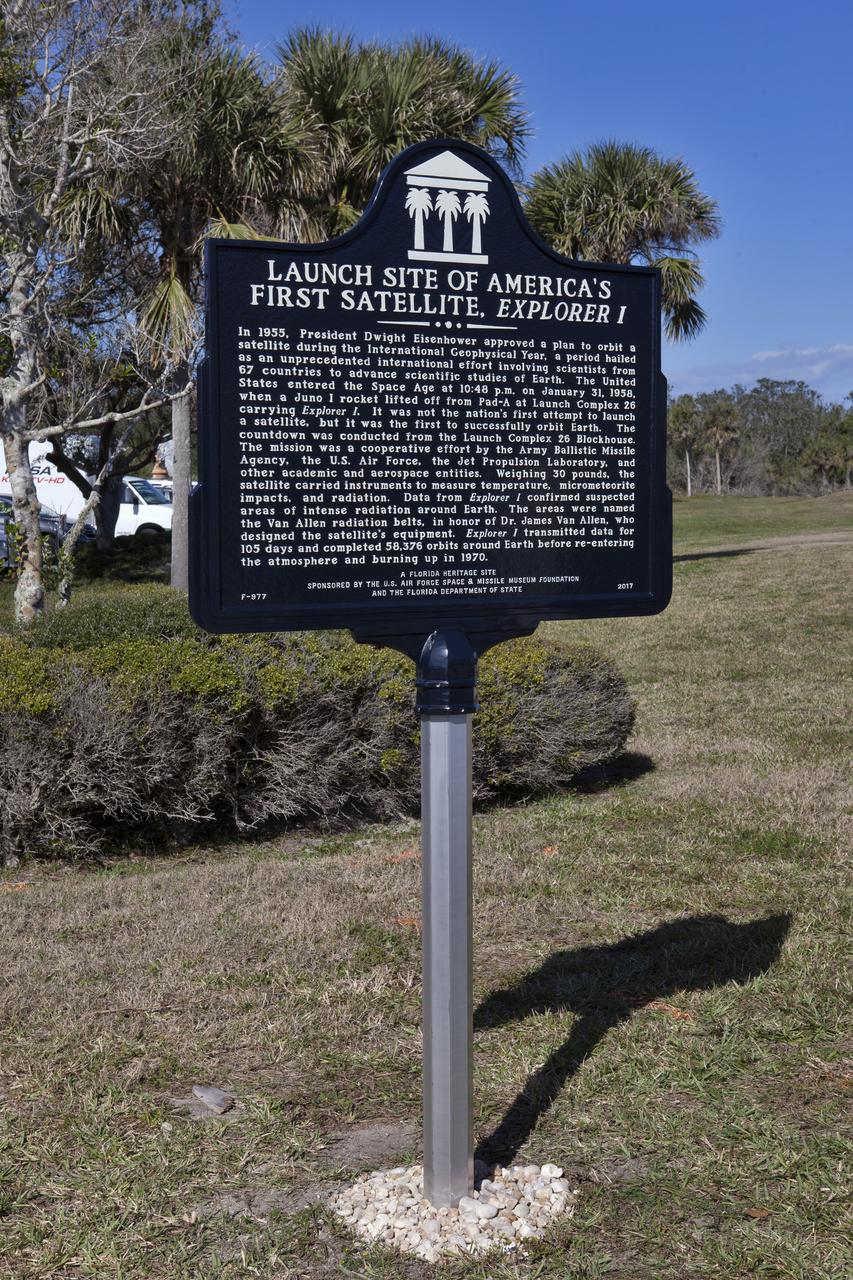
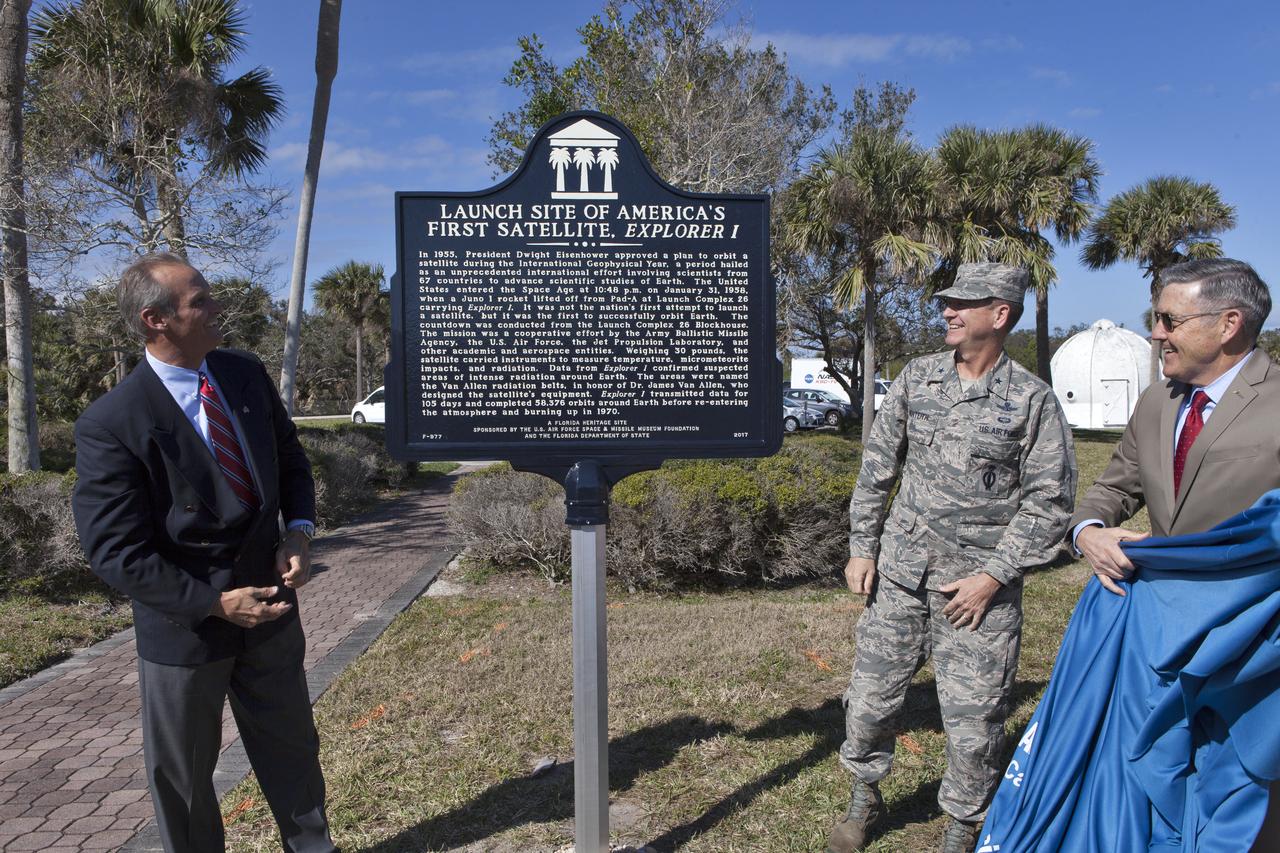
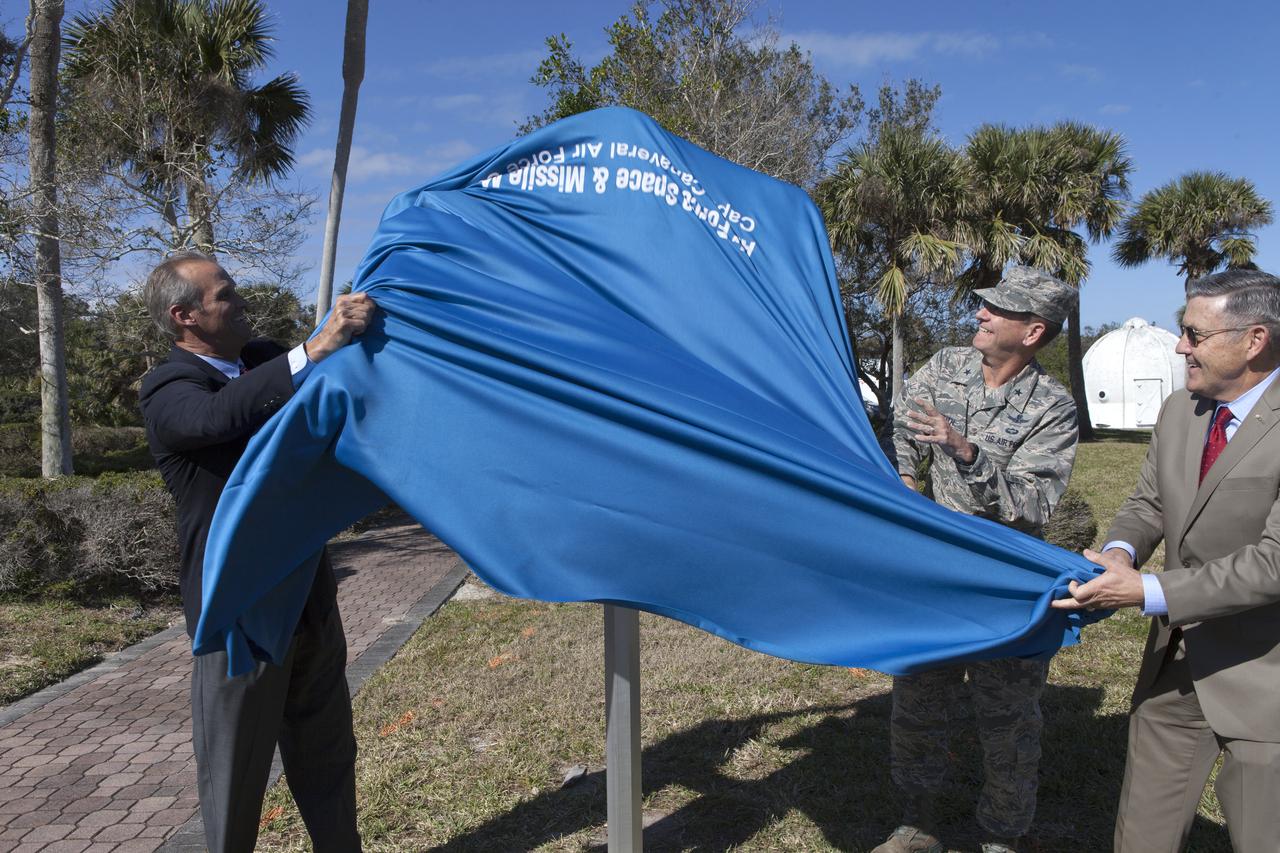
During a ceremony at Cape Canaveral Air Force Station's Space launch Complex 26 a historical marker has been unveiled noting the launch of America's first satellite, Explorer 1. The satellite was launched atop a Jupiter C rocket on Jan. 31, 1958. During operation, the satellite's cosmic ray detector discovered radiation belts around Earth which were named for Dr. James Van Allen, principal investigator for the satellite.
Explorer 1 60th Anniversary
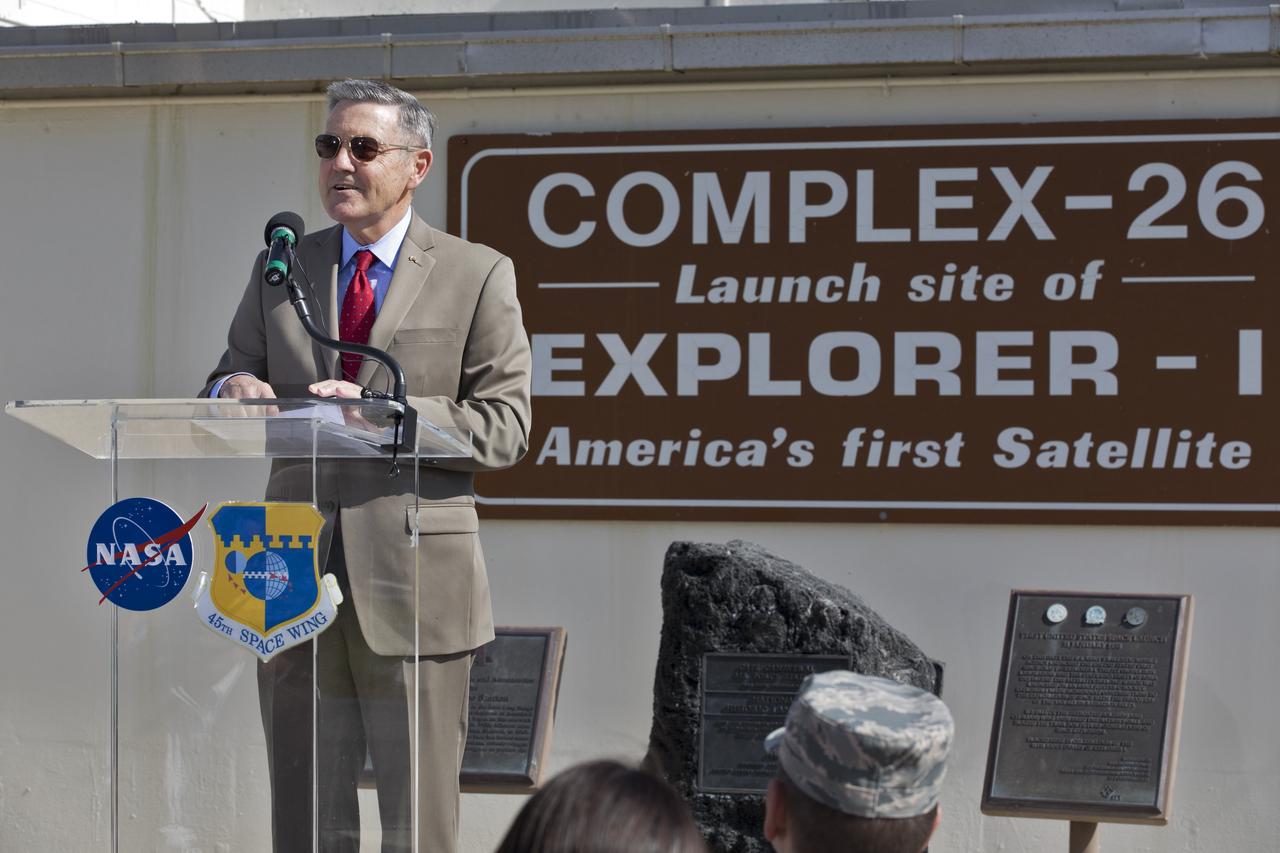
Kennedy Space Center Director Bob Cabana speaks to guests at an event celebrating the 60th anniversary of America's first satellite. The ceremony took place in front of the Space Launch Complex 26 blockhouse at Cape Canaveral Air Force Station where the Explorer 1 satellite was launched atop a Jupiter C rocket on Jan. 31, 1958. During operation, the satellite's cosmic ray detector discovered radiation belts around Earth which were named for Dr. James Van Allen, principal investigator for the satellite.
Explorer 1 60th Anniversary
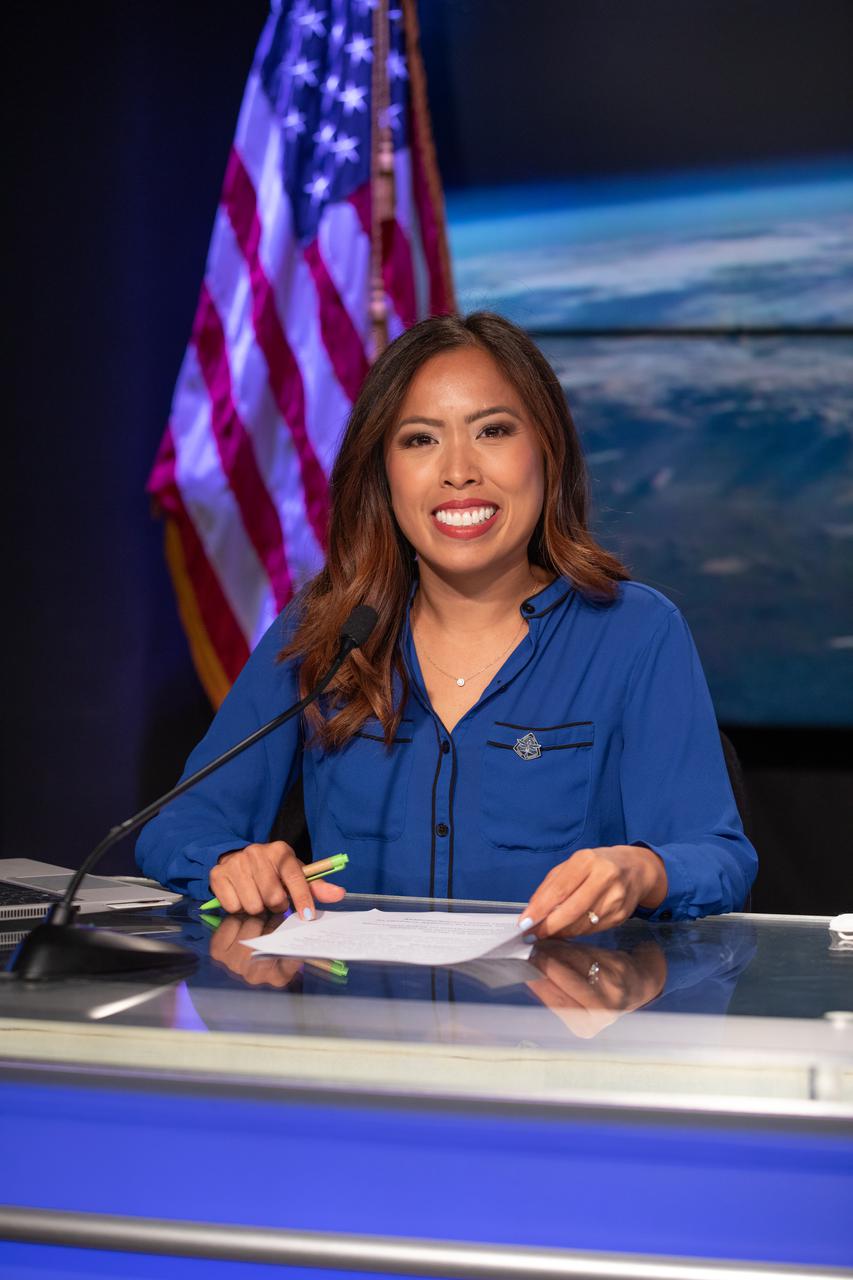
Tori McLendon of NASA Communications, speaks to guests at an event celebrating the 60th anniversary of America's first satellite. The ceremony took place in front of the Space Launch Complex 26 blockhouse at Cape Canaveral Air Force Station where the Explorer 1 satellite was launched atop a Jupiter C rocket on Jan. 31, 1958. During operation, the satellite's cosmic ray detector discovered radiation belts around Earth which were named for Dr. James Van Allen, principal investigator for the satellite.
Explorer 1 60th Anniversary
During a ceremony at Cape Canaveral Air Force Station's Space Launch Complex 26 a historical marker is unveiled noting the launch of America's first satellite, Explorer 1. From the left, Ray Sands, chairman of the Air Force Space and Missile Foundation -- sponsor of the marker, Brig. Gen. Wayne Monteith, 45th Space Wing commander and director of the Eastern Range and Kennedy Space Center Director Bob Cabana. The Explorer 1 satellite was launched atop a Jupiter C rocket on Jan. 31, 1958. During operation, the satellite's cosmic ray detector discovered radiation belts around Earth which were named for Dr. James Van Allen, principal investigator for the satellite.
Explorer 1 60th Anniversary
During a ceremony at Cape Canaveral Air Force Station's Space Launch Complex 26 a historical marker is unveiled noting the launch of America's first satellite, Explorer 1. From the left, Ray Sands, chairman of the Air Force Space and Missile Foundation -- sponsor of the marker, Brig. Gen. Wayne Monteith, 45th Space Wing commander and director of the Eastern Range and Kennedy Space Center Director Bob Cabana. The Explorer 1 satellite was launched atop a Jupiter C rocket on Jan. 31, 1958. During operation, the satellite's cosmic ray detector discovered radiation belts around Earth which were named for Dr. James Van Allen, principal investigator for the satellite.
Explorer 1 60th Anniversary
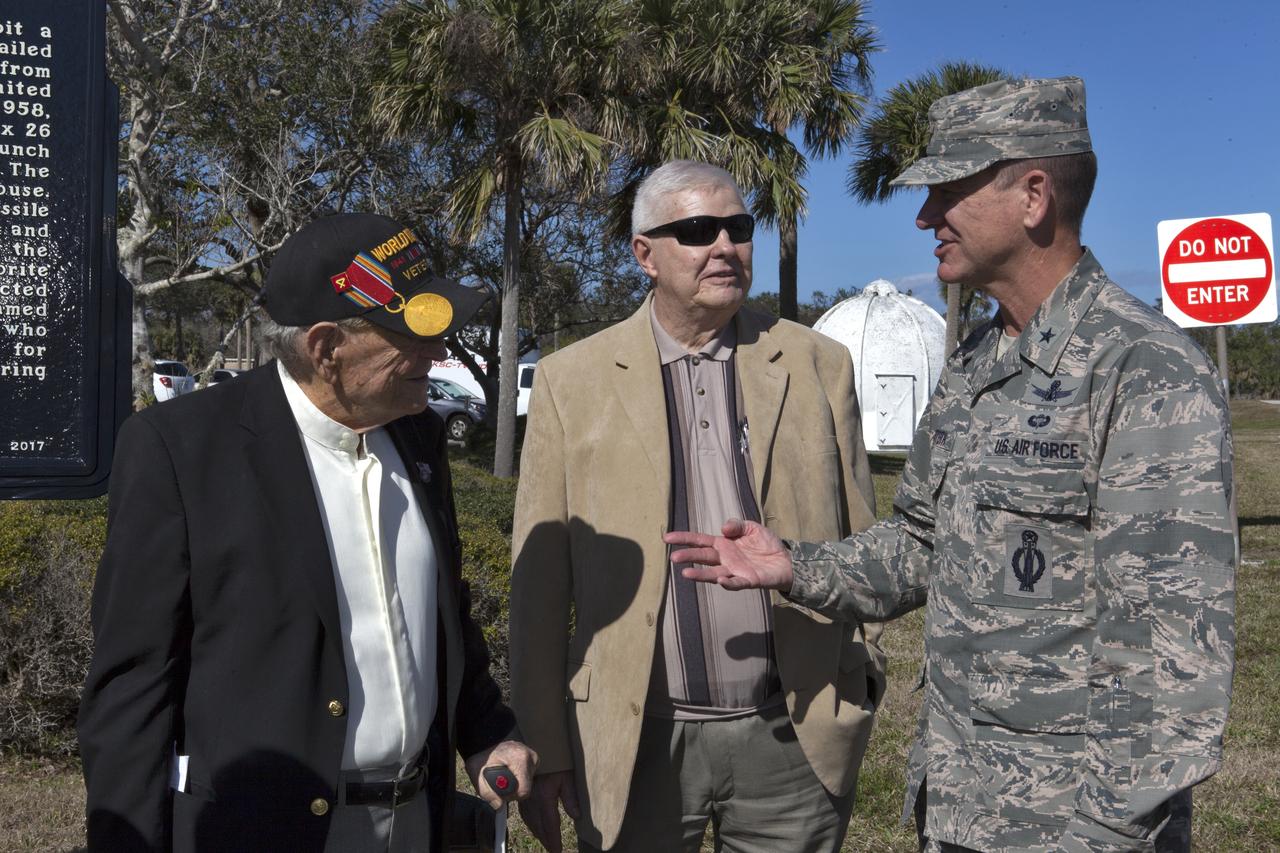
Brig. Gen. Wayne Monteith, 45th Space Wing commander and director of the Eastern Range, right, speaks with Launch team members who supported the launch of America's first satellite, Explorer 1. They spoke following an event celebrating the 60th anniversary of America's first satellite. The ceremony took place in front of the Space Launch Complex 26 blockhouse at Cape Canaveral Air Force Station where the Explorer 1 satellite was launched atop a Jupiter C rocket on Jan. 31, 1958. During operation, the satellite's cosmic ray detector discovered radiation belts around Earth which were named for Dr. James Van Allen, principal investigator for the satellite.
Explorer 1 60th Anniversary
Brig. Gen. Wayne Monteith, 45th Space Wing commander and director of the Eastern Range, speaks to guests at an event celebrating the 60th anniversary of America's first satellite. The ceremony took place in front of the Space Launch Complex 26 blockhouse at Cape Canaveral Air Force Station where the Explorer 1 satellite was launched atop a Jupiter C rocket on Jan. 31, 1958. During operation, the satellite's cosmic ray detector discovered radiation belts around Earth which were named for Dr. James Van Allen, principal investigator for the satellite.
Explorer 1 60th Anniversary
During a ceremony at Cape Canaveral Air Force Station's Space Launch Complex 26 a historical marker has been unveiled noting the launch of America's first satellite, Explorer 1. From the left, Ray Sands, chairman of the Air Force Space and Missile Foundation -- sponsor of the marker, Brig. Gen. Wayne Monteith, 45th Space Wing commander and director of the Eastern Range and Kennedy Space Center Director Bob Cabana. The Explorer 1 satellite was launched atop a Jupiter C rocket on Jan. 31, 1958. During operation, the satellite's cosmic ray detector discovered radiation belts around Earth which were named for Dr. James Van Allen, principal investigator for the satellite.
Explorer 1 60th Anniversary
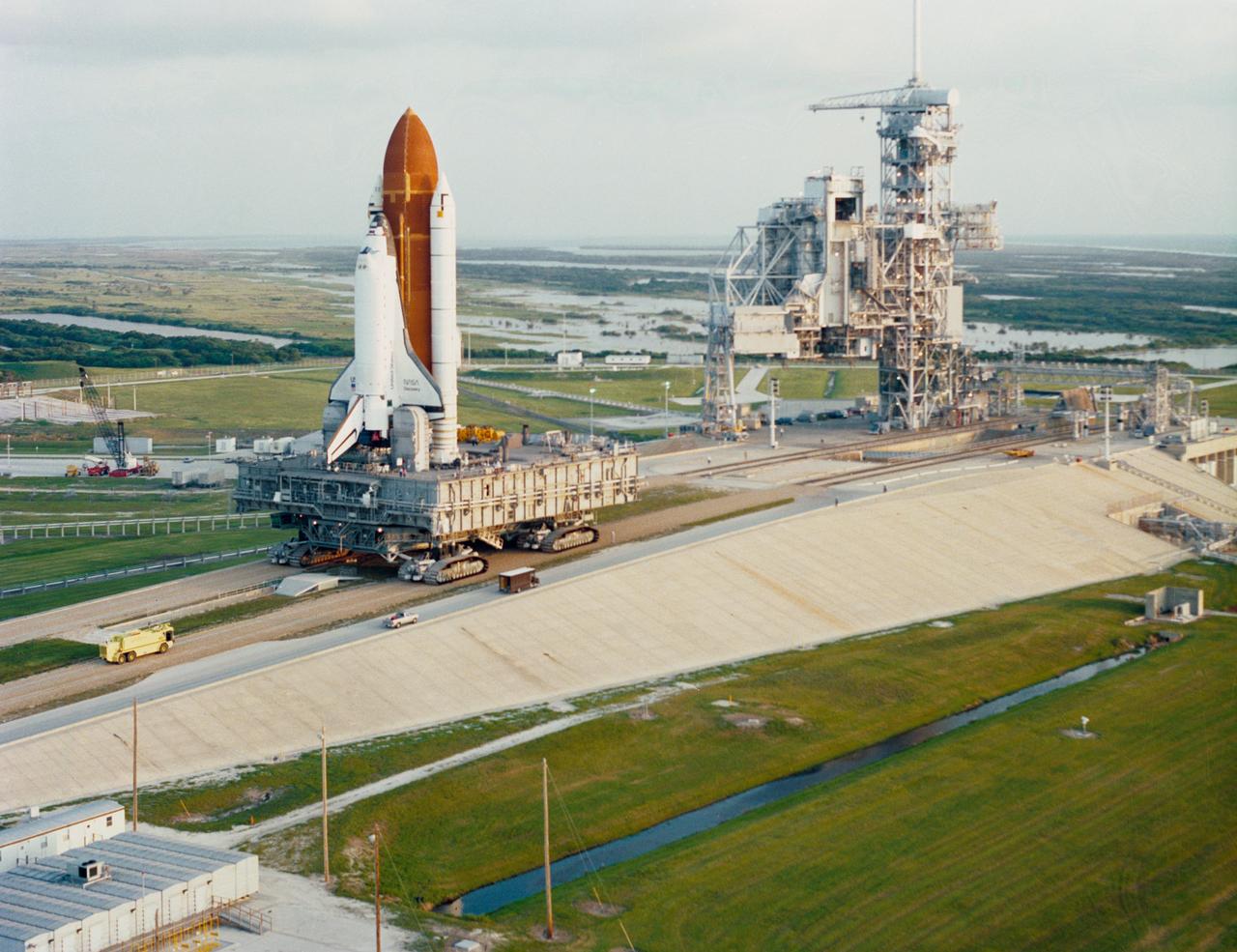
STS-26 Discovery, Orbiter Vehicle (OV) 103, rolls out to Kennedy Space Center (KSC) launch complex (LC) pad 39B on top of the crawler transporter. OV-103 nears LC pad 39B after a six-hour journey from the vehicle assembly building (VAB). When locked onto the nearby rotating service structure (RSS), work will continue to ready the vehicle for the STS-26 launch later in the summer.
STS-26 Discovery, Orbiter Vehicle (OV) 103, roll out to KSC LC pad 39B
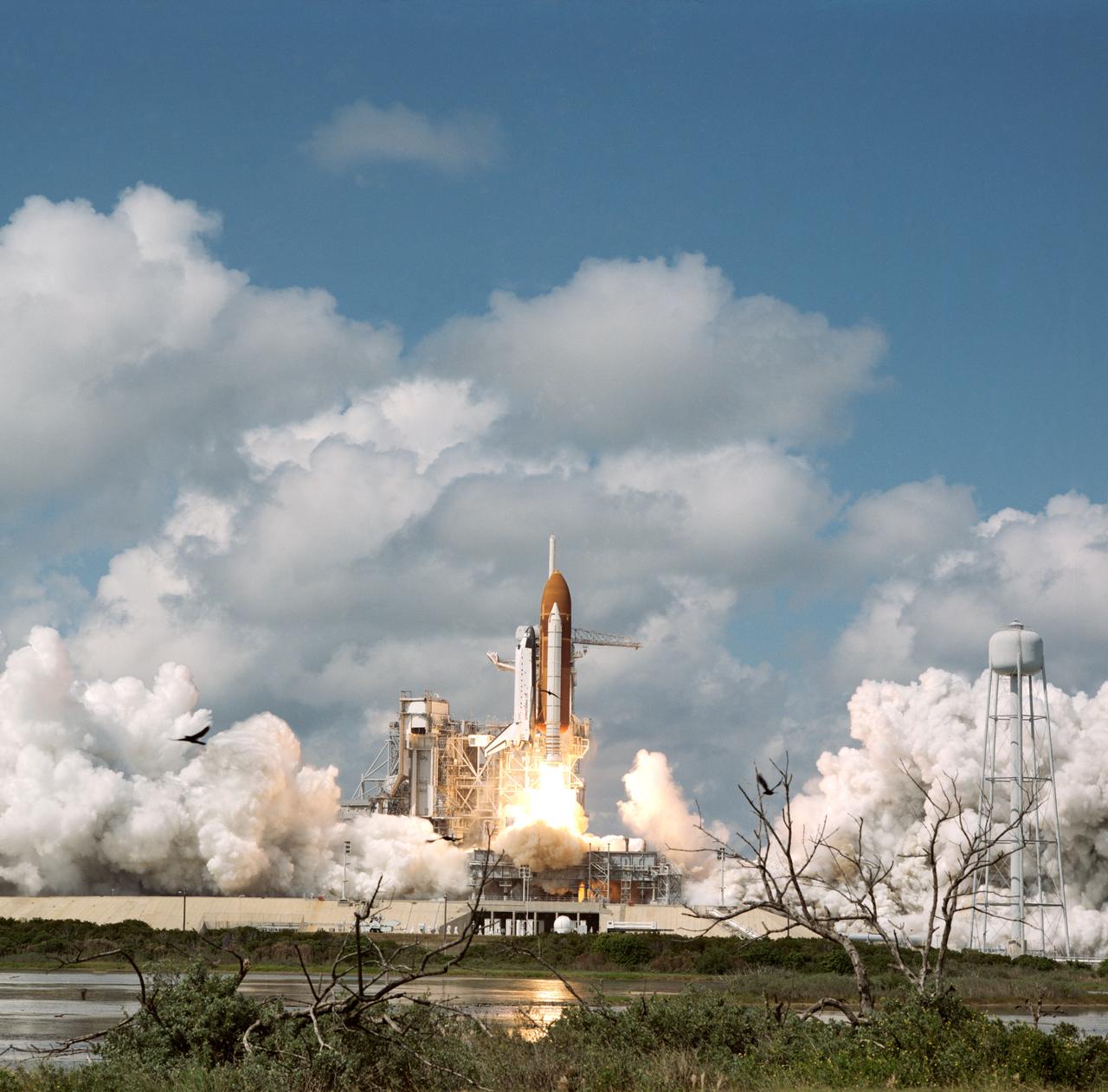
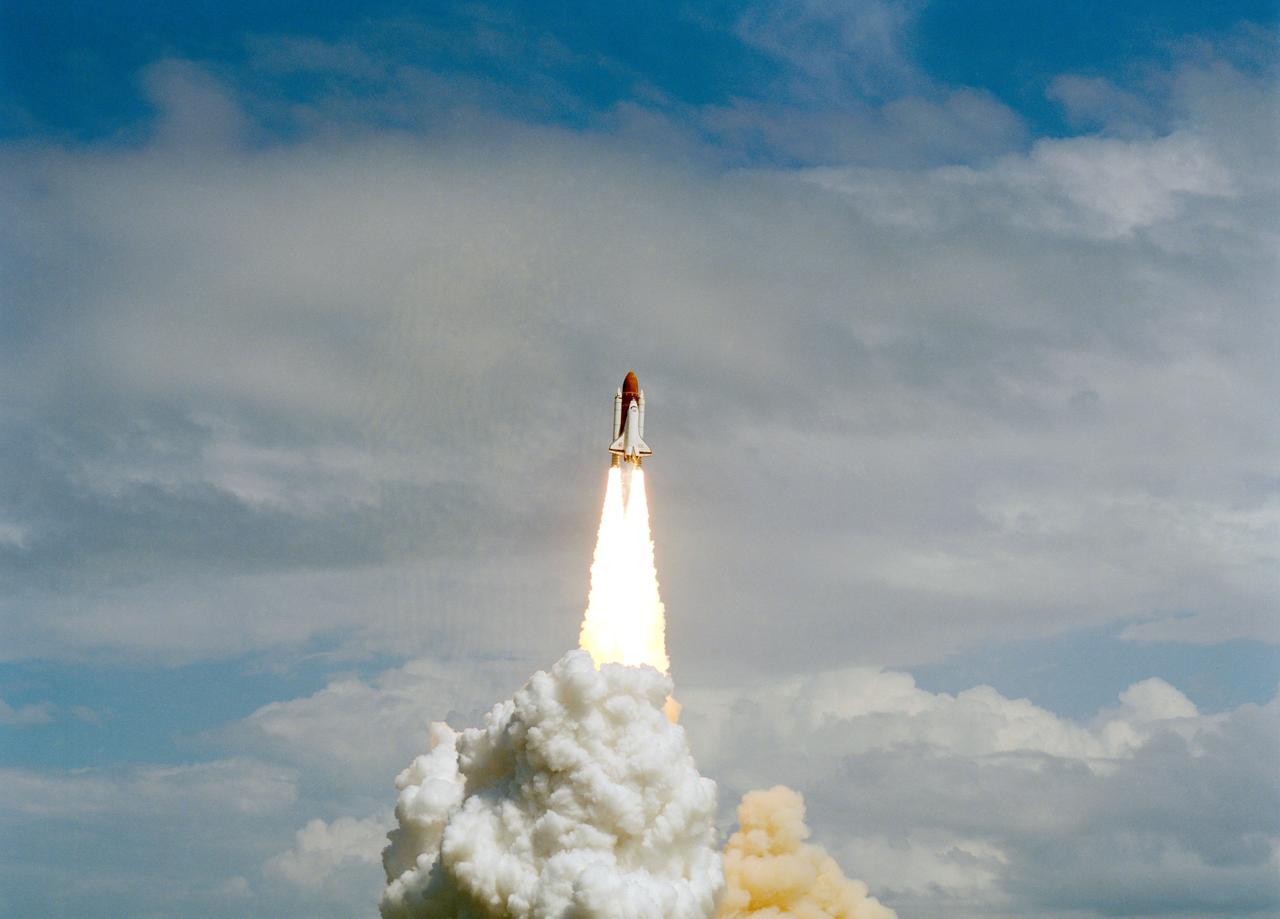
STS-26 Discovery, Orbiter Vehicle (OV) 103, lifts off from mobile launcher platform at Kennedy Space Center (KSC) Launch Complex (LC) pad 39B. Riding atop the orange external tank (ET), OV-103 heads for Earth orbit as the exhaust plumes from the two solid rocket boosters (SRBs) cover the mobile launcher platform and the area surrounding the launch pad. SRB firings are reflected in a nearby waterway. In the foreground are trees and several birds in flight. STS-26 marks OV-103's first flight since September 1985 and NASA's first manned mission since the 51L Challenger accident, 01-28-86.
STS-26 Discovery, Orbiter Vehicle (OV) 103, lifts off from KSC LC pad 39B
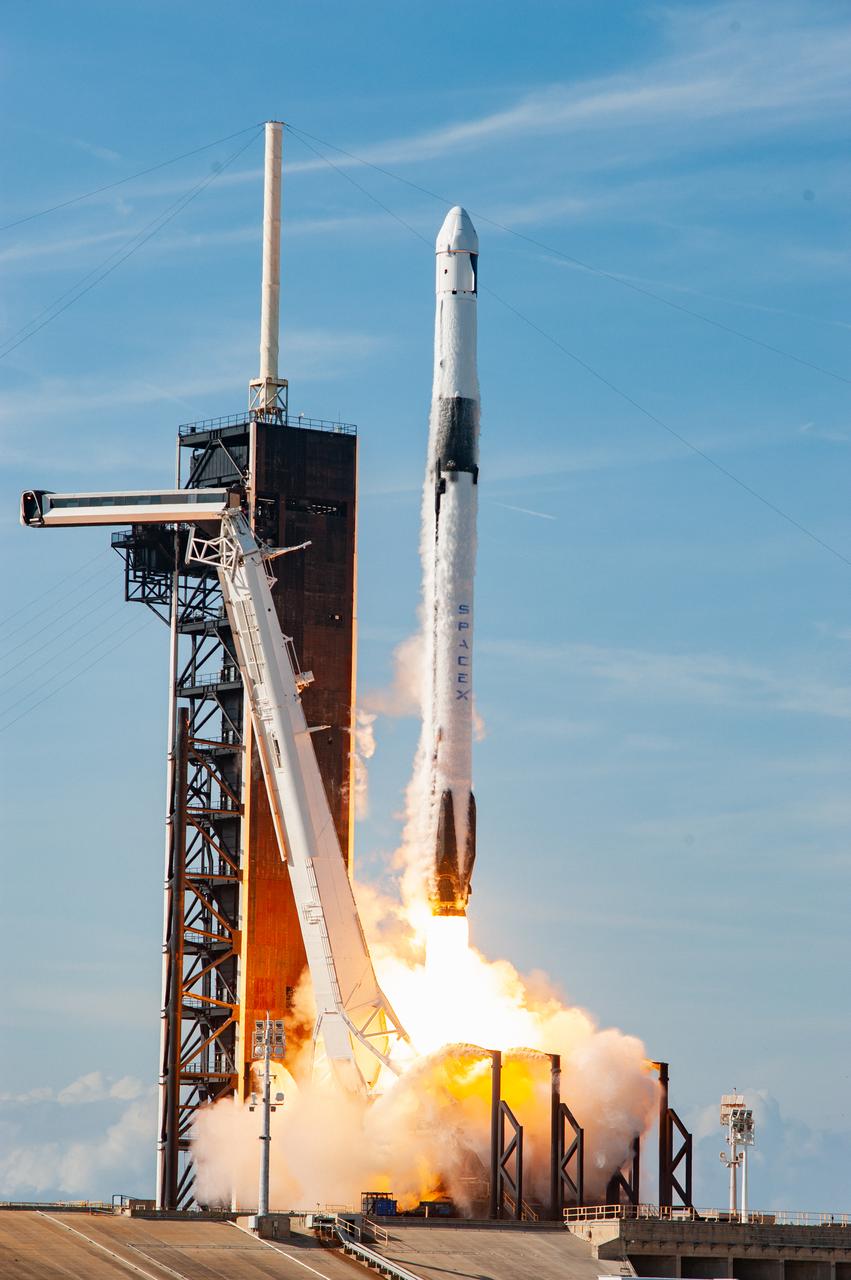
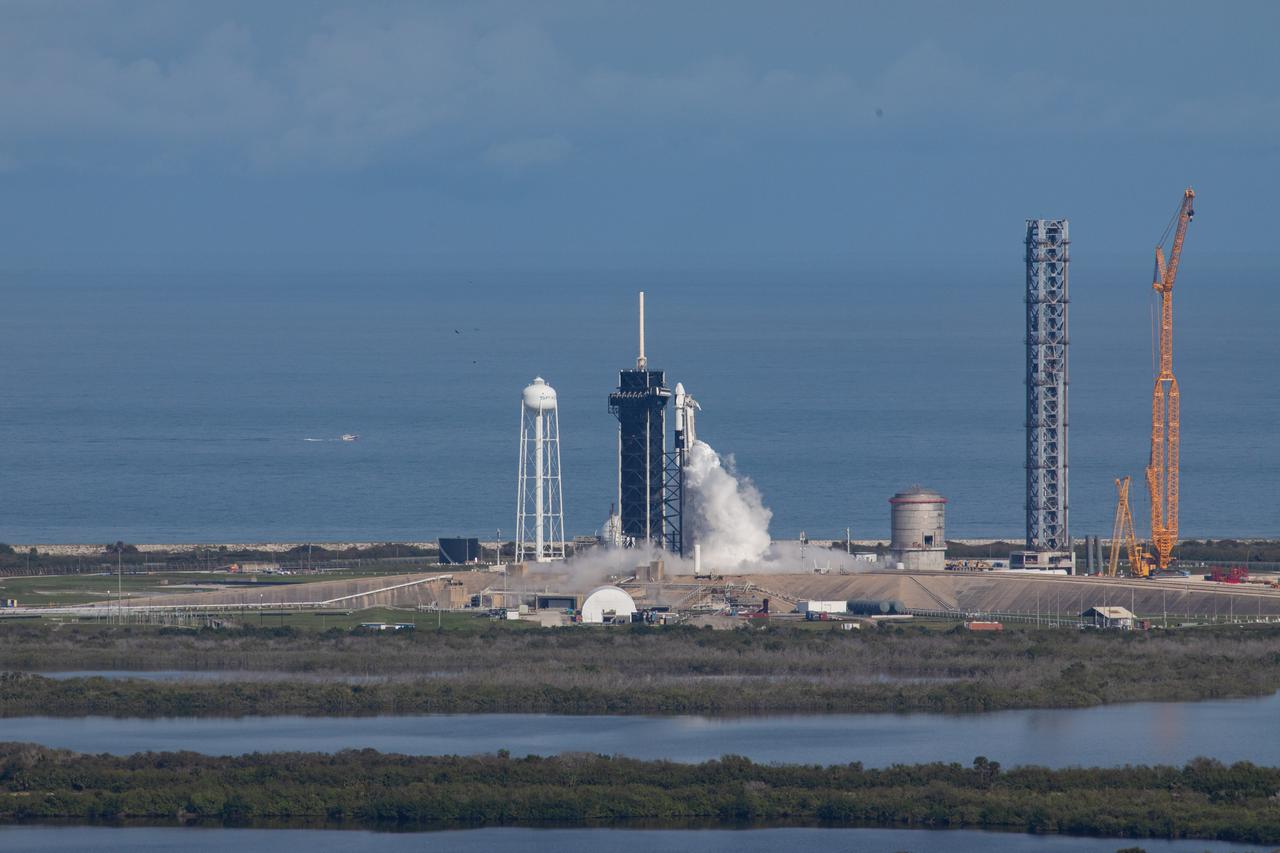
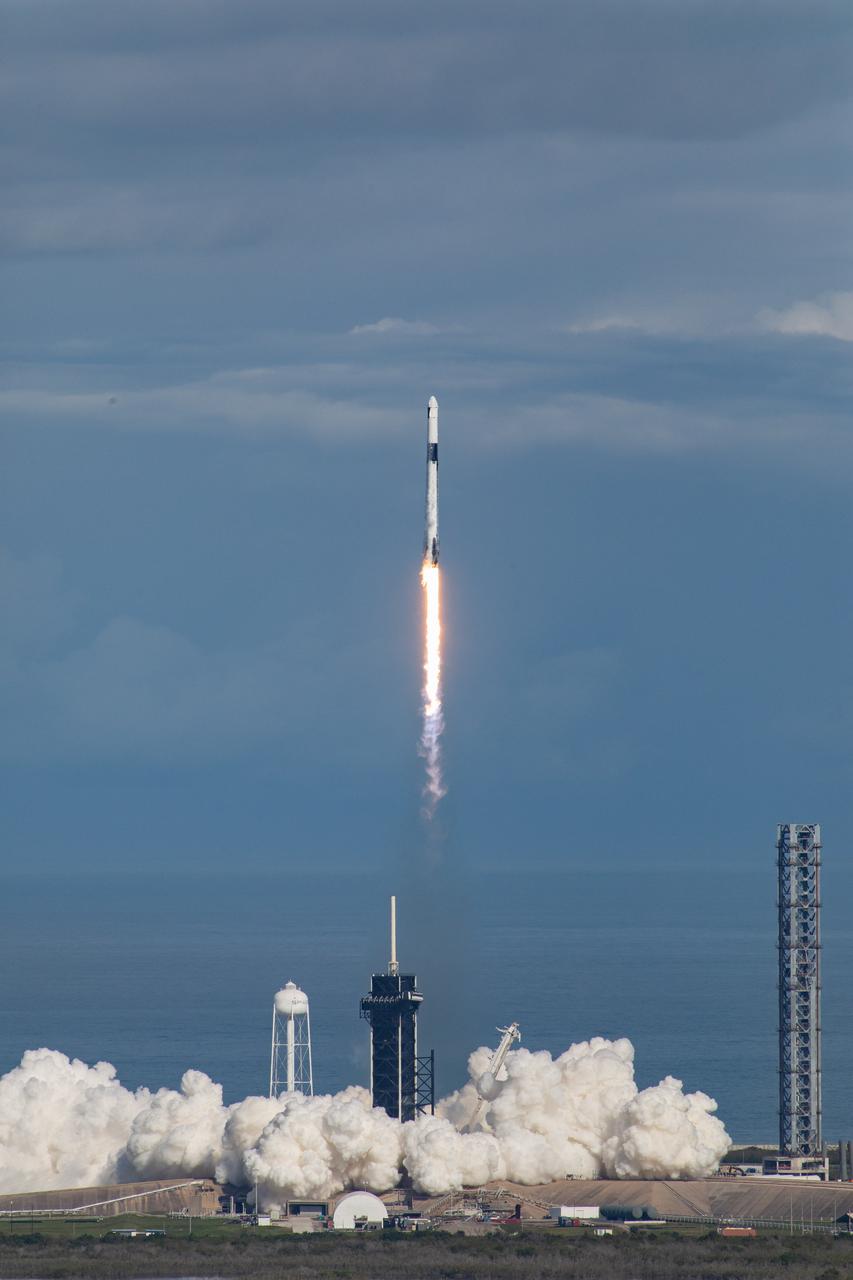
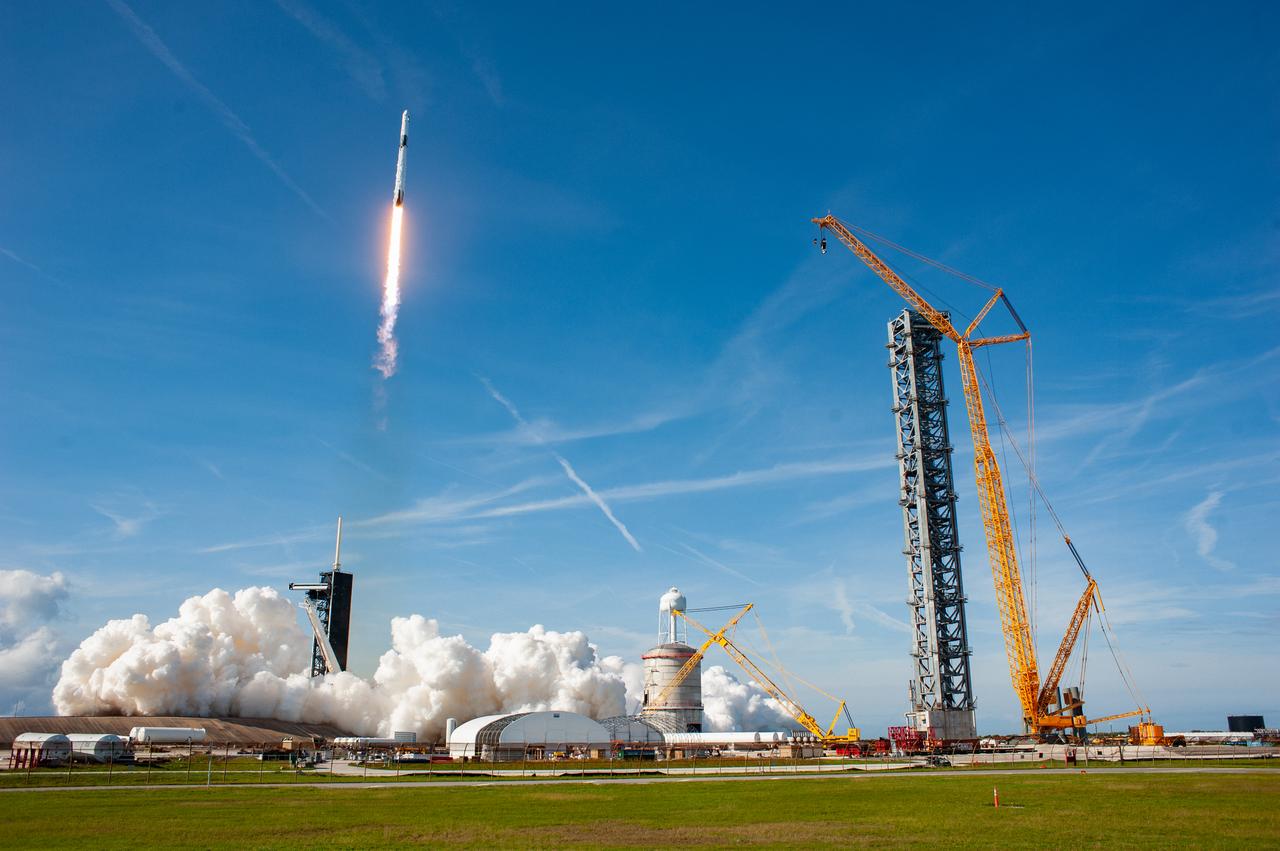
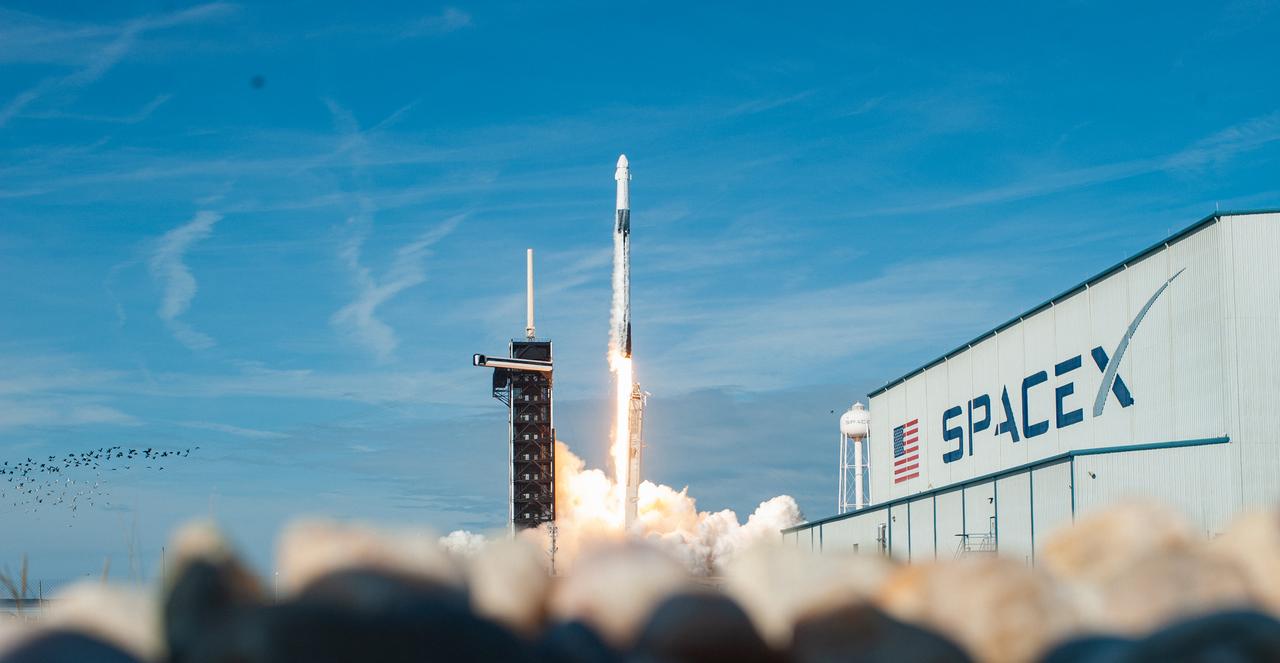
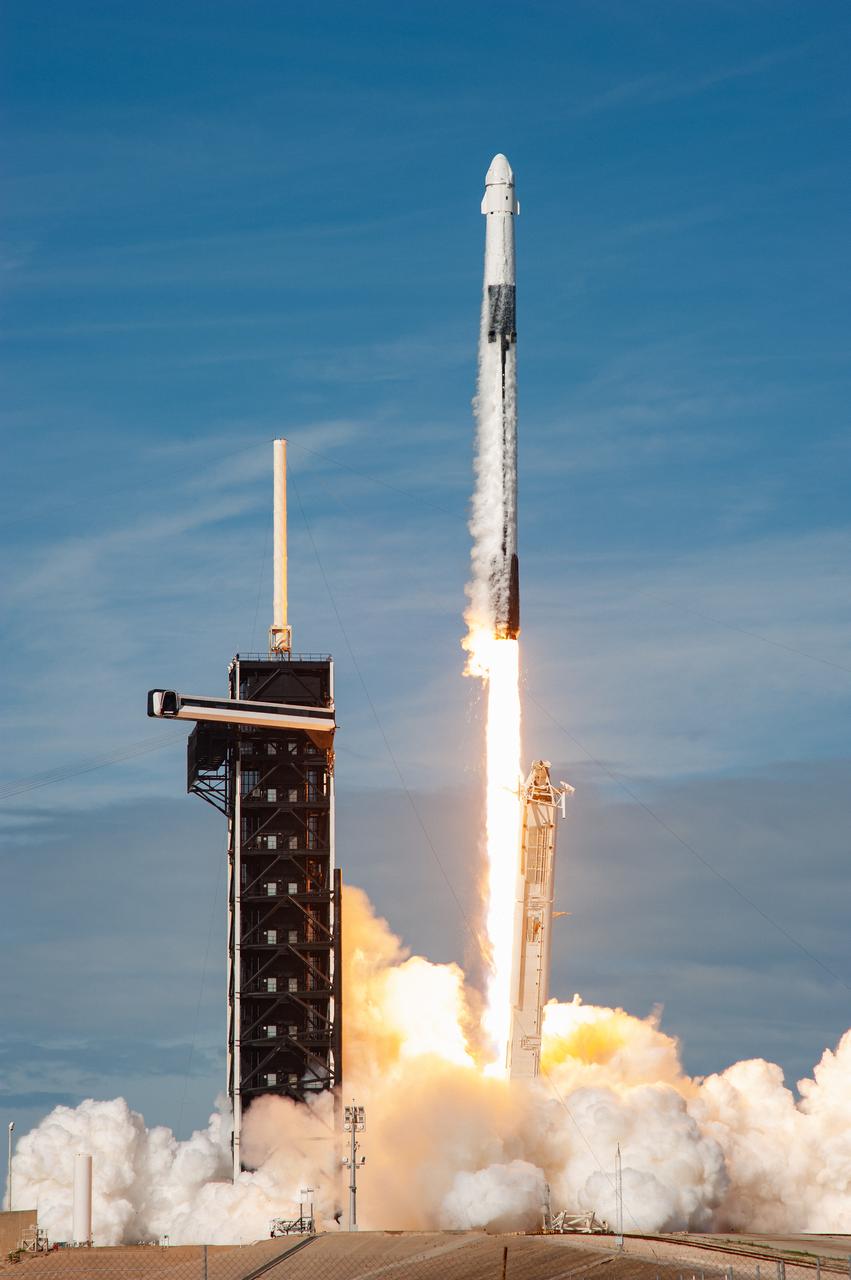
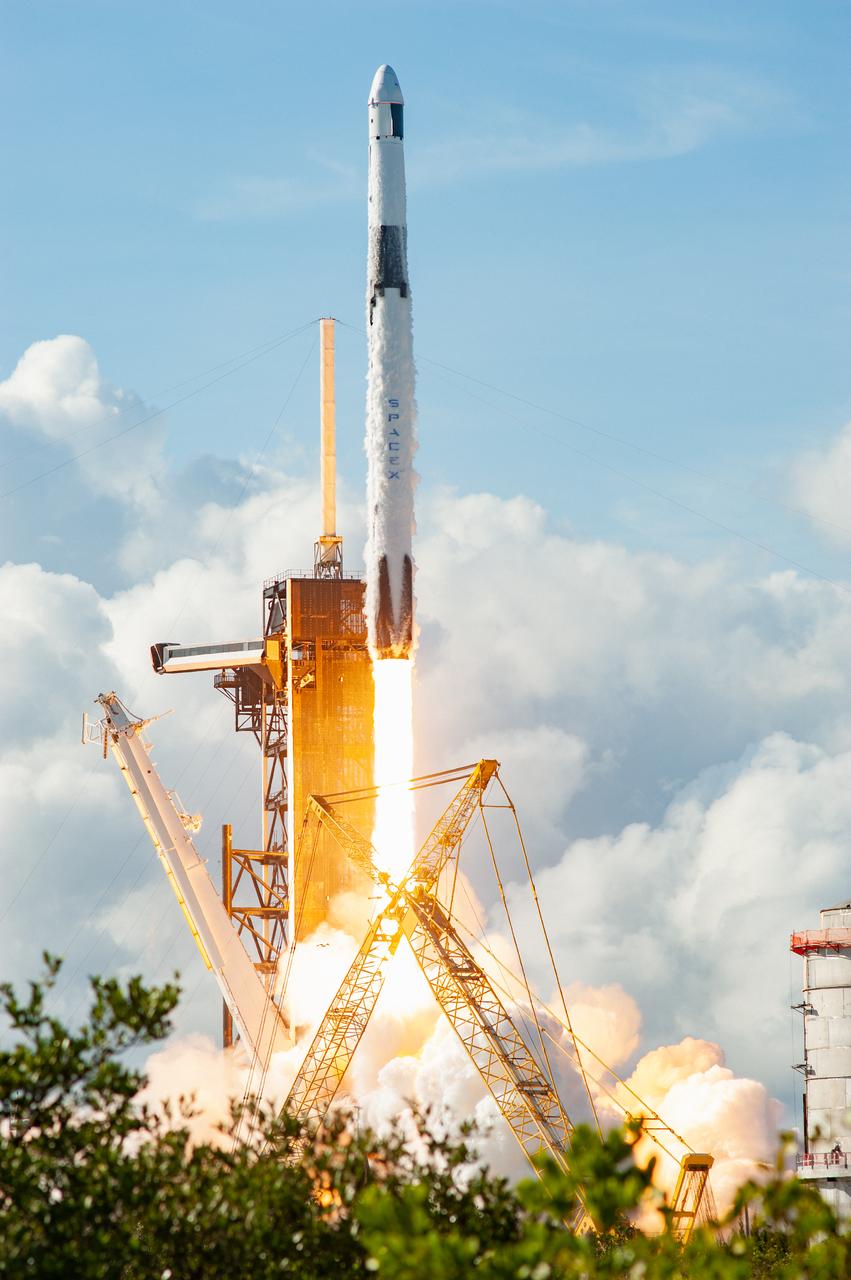
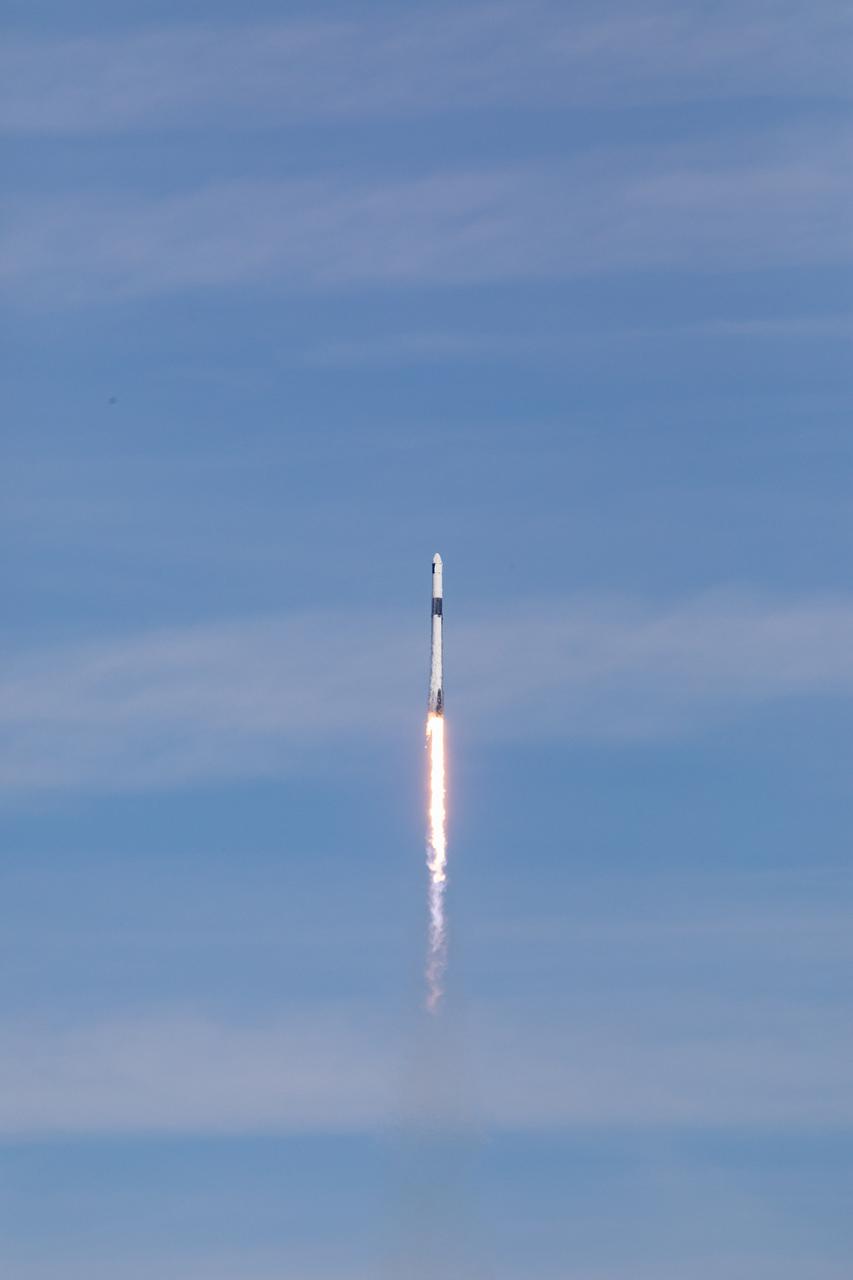
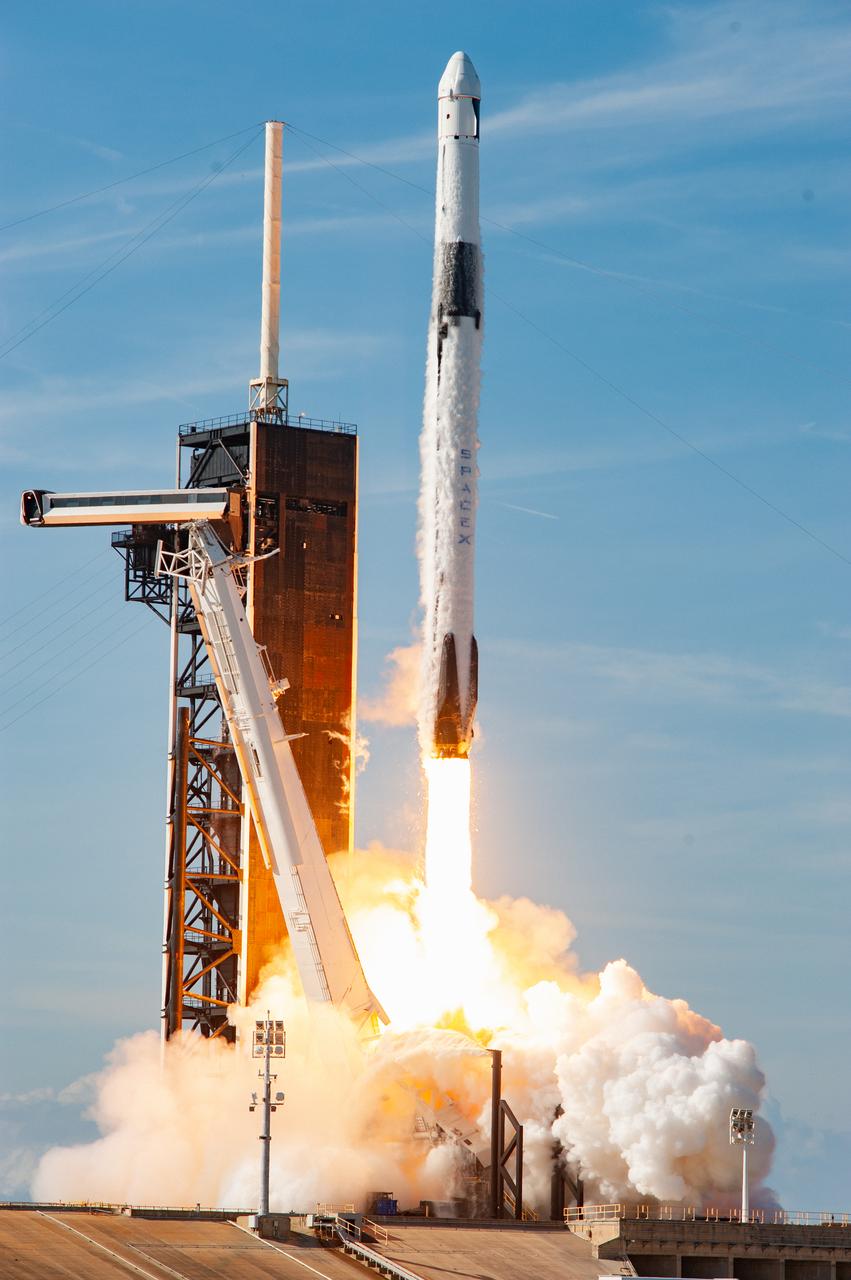
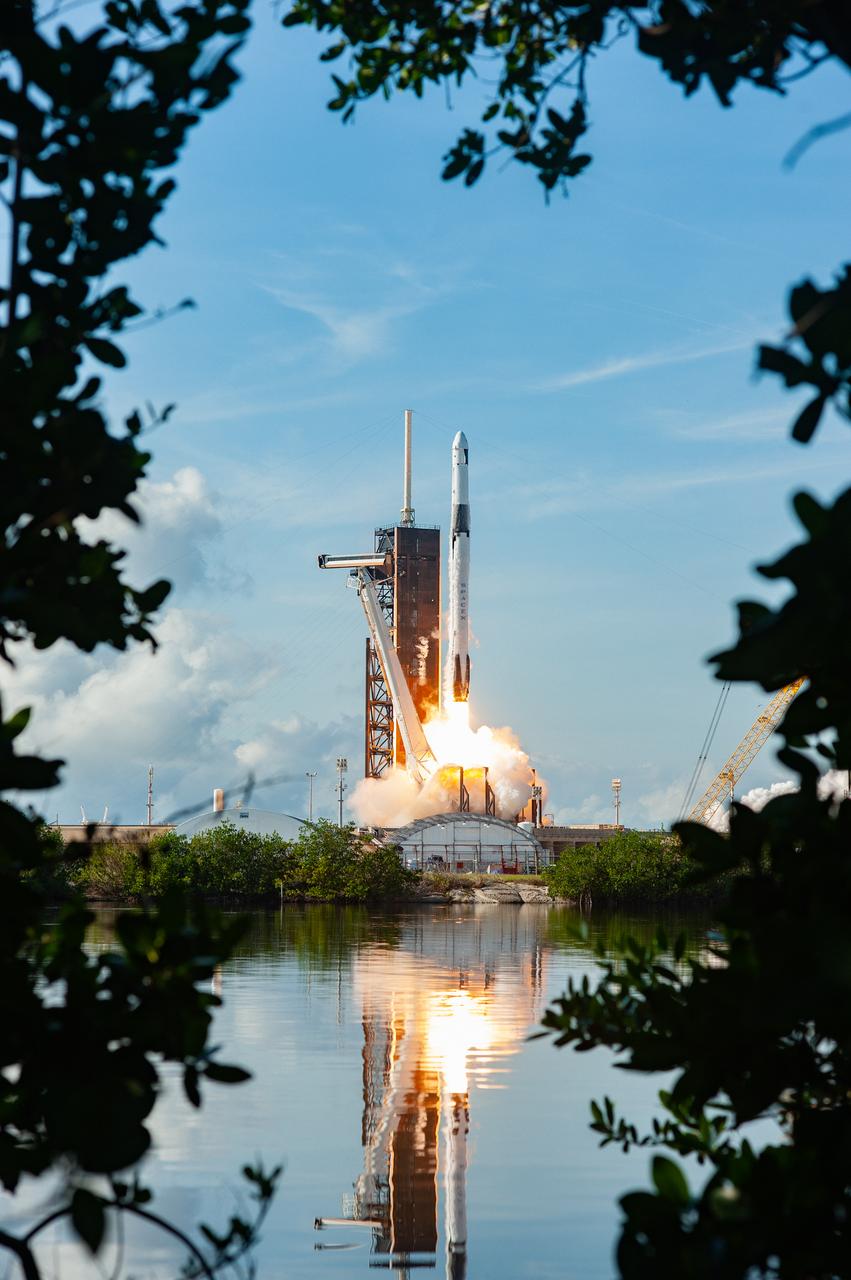
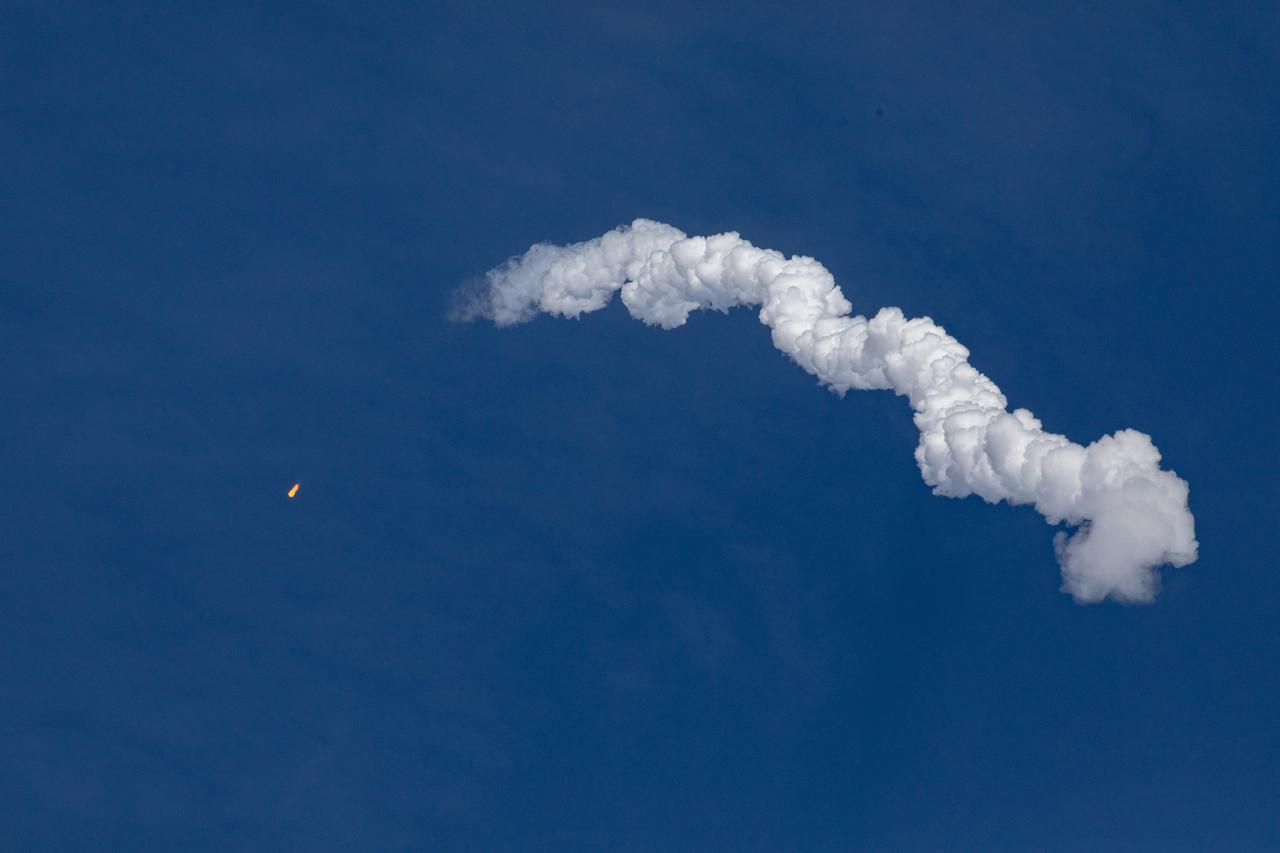
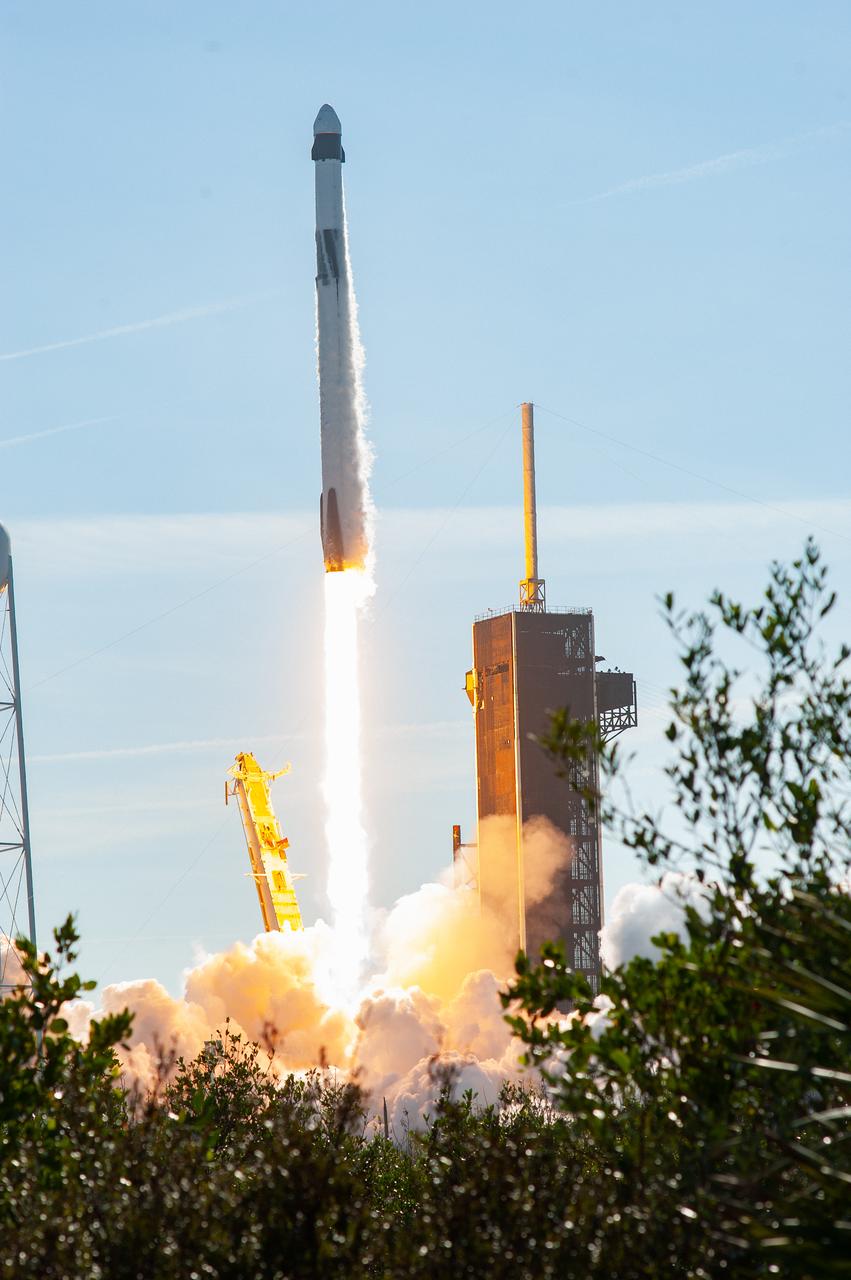
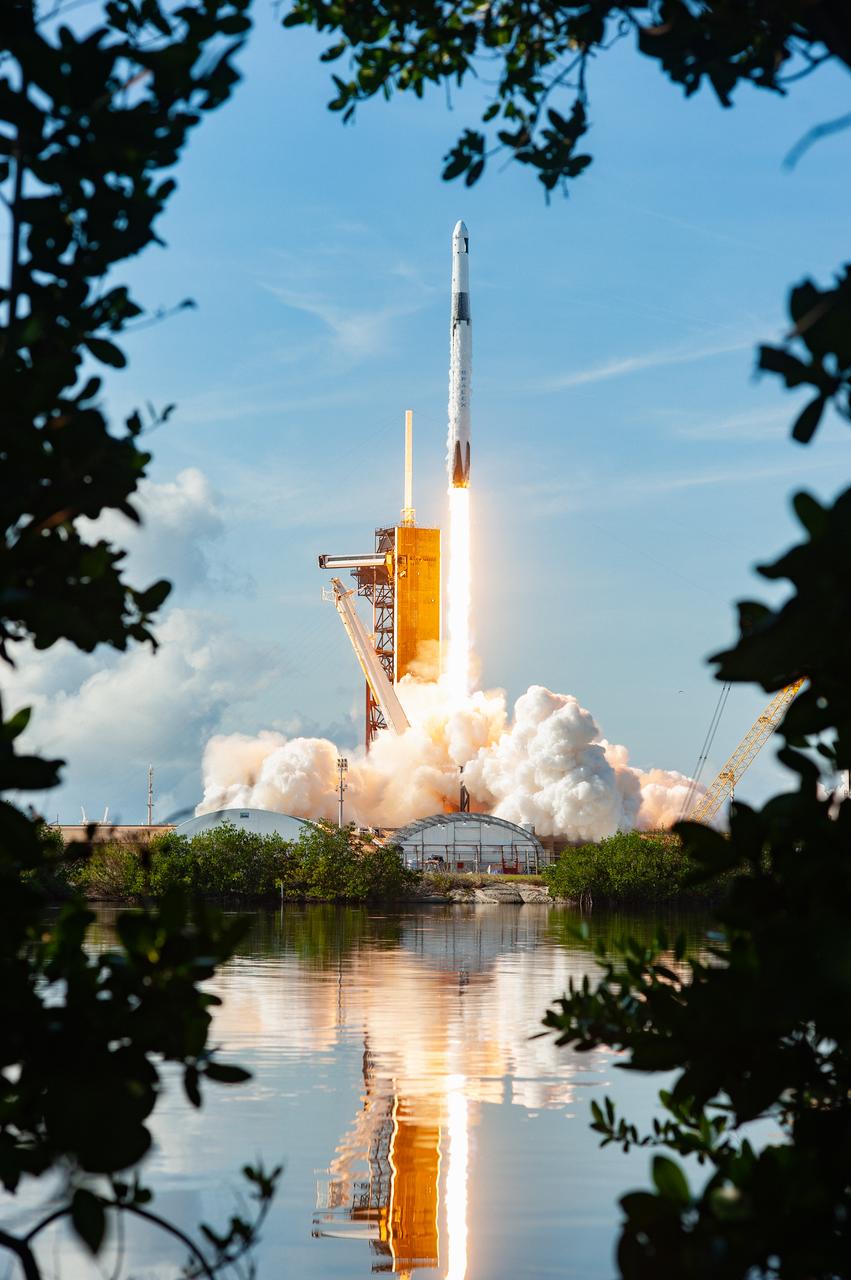
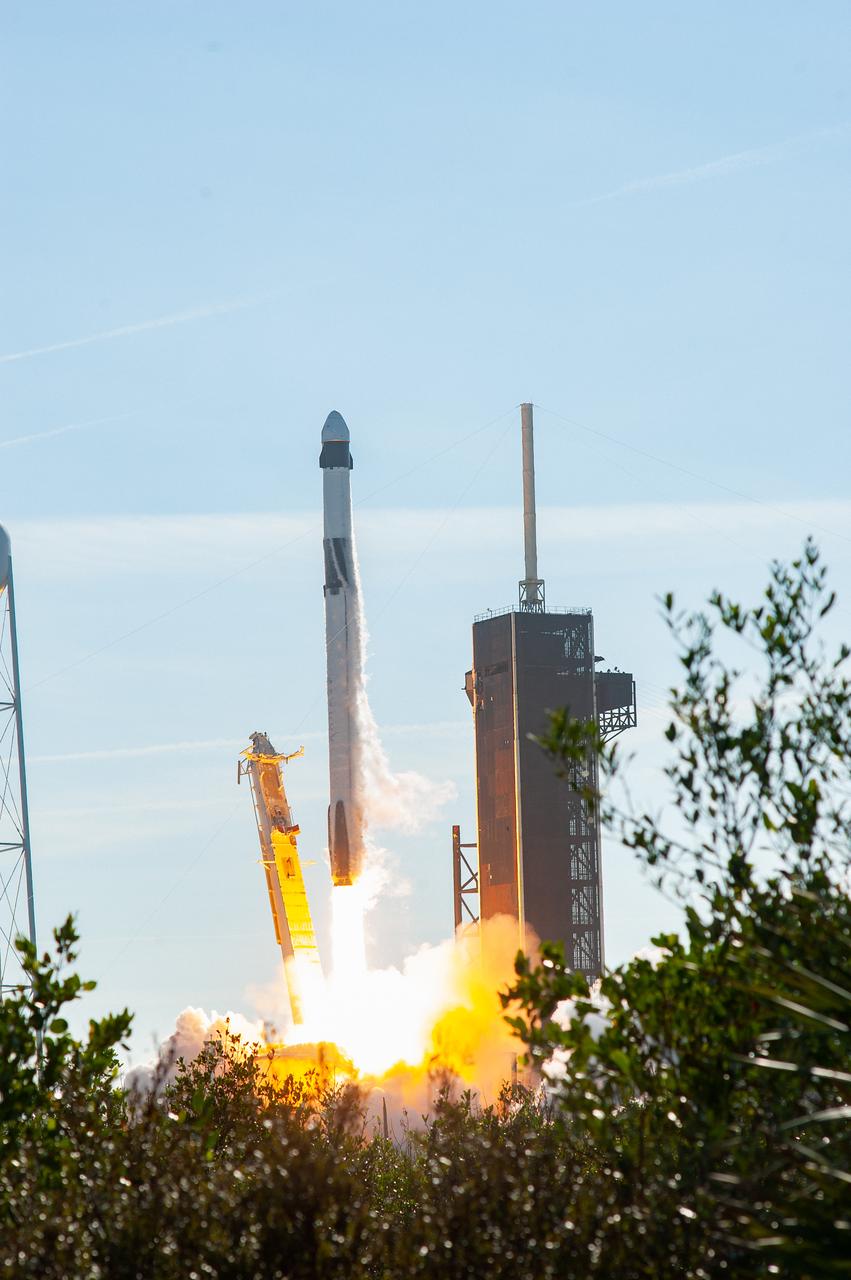
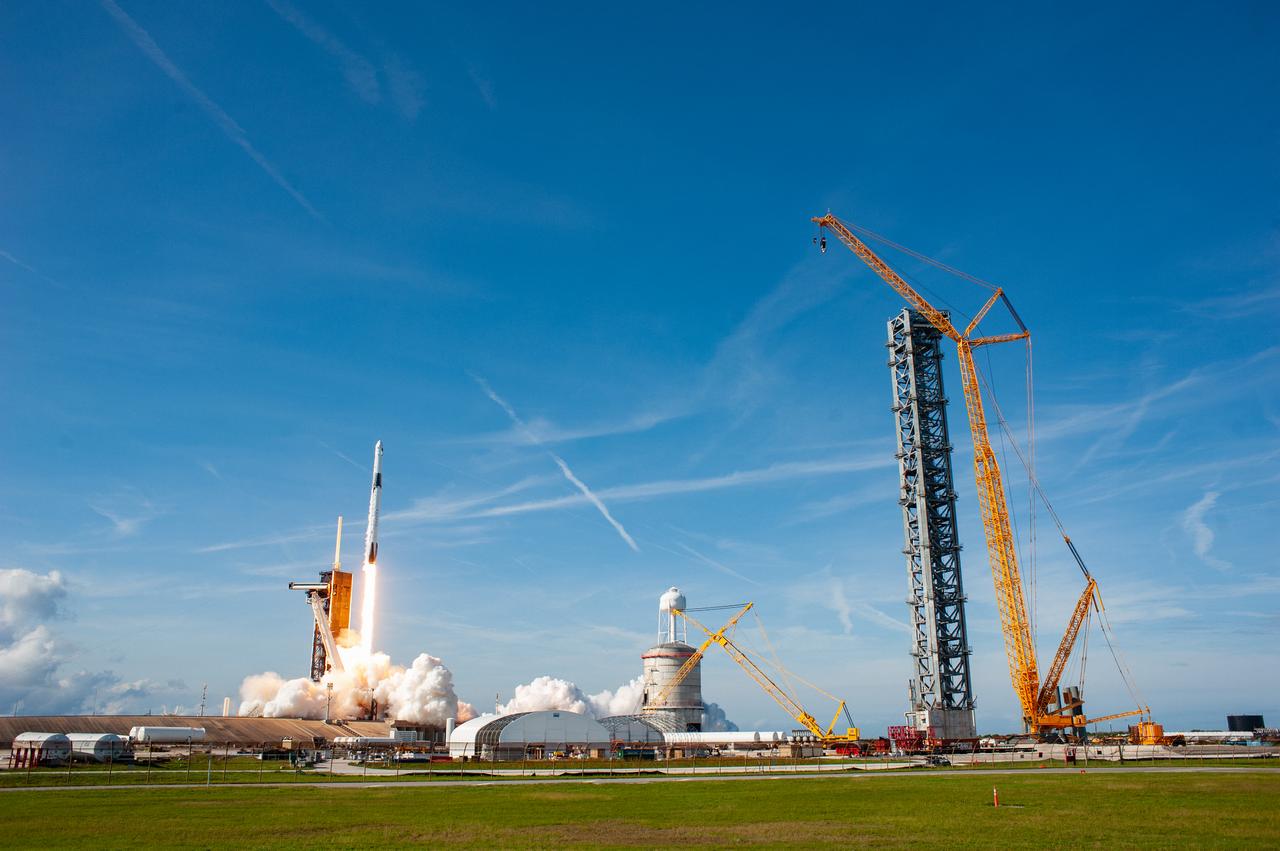
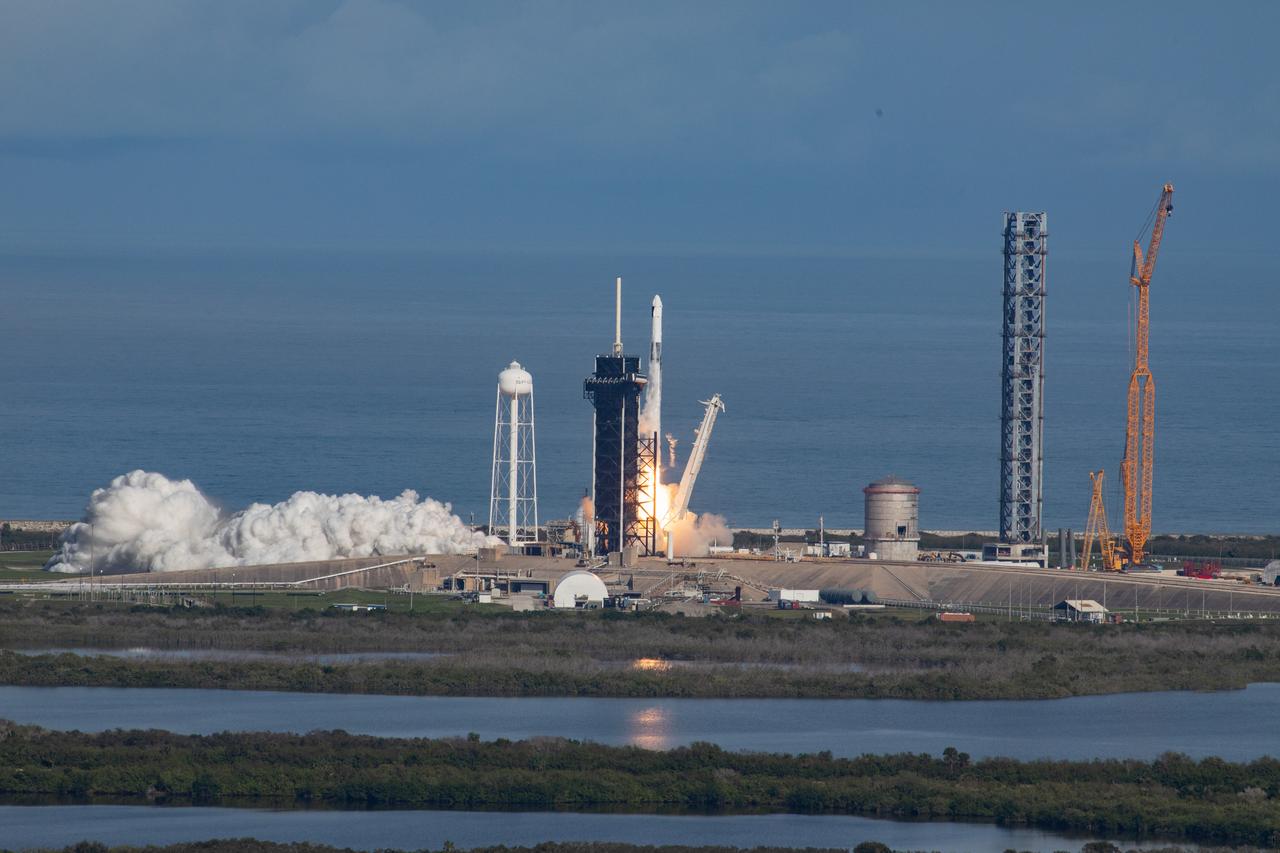
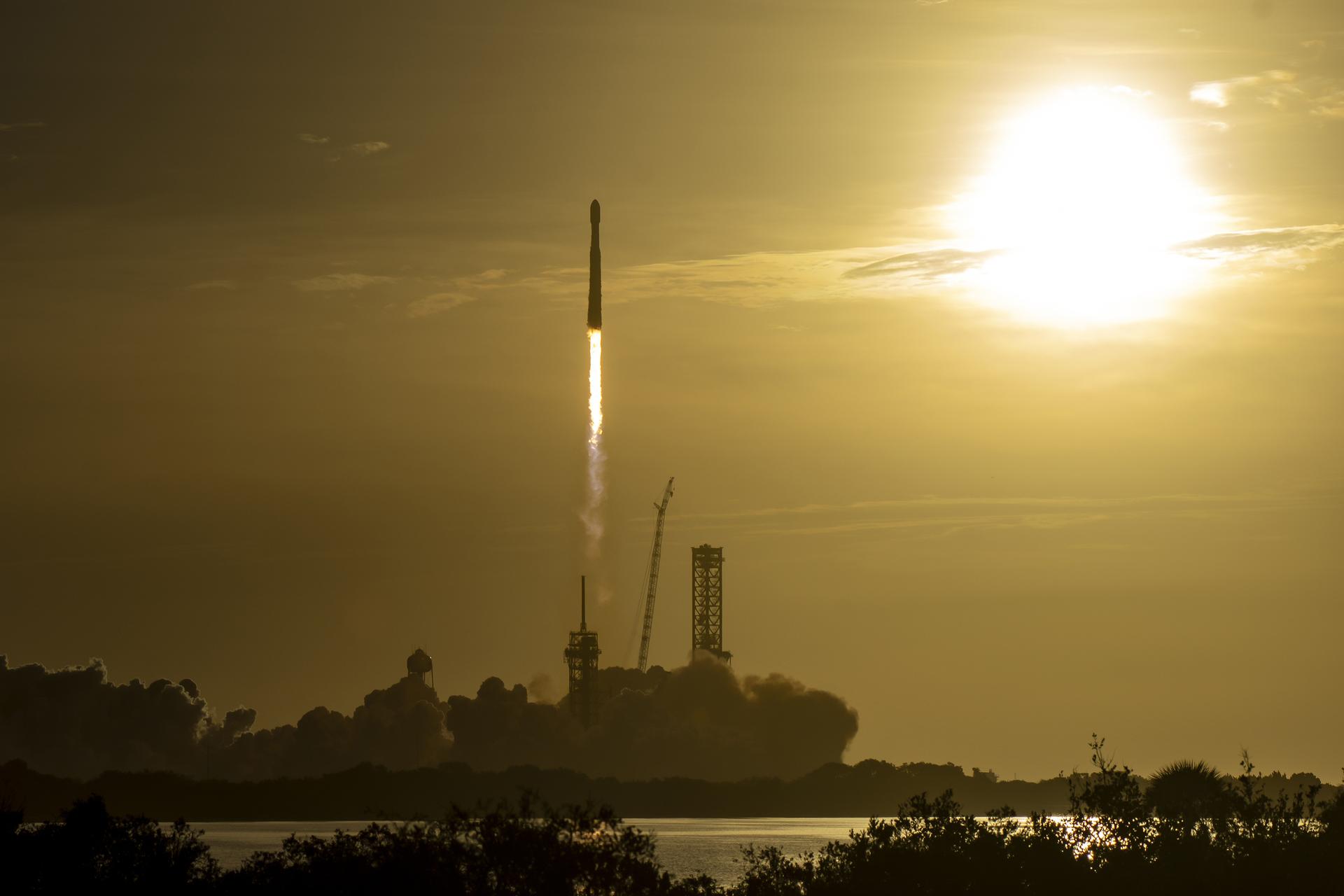
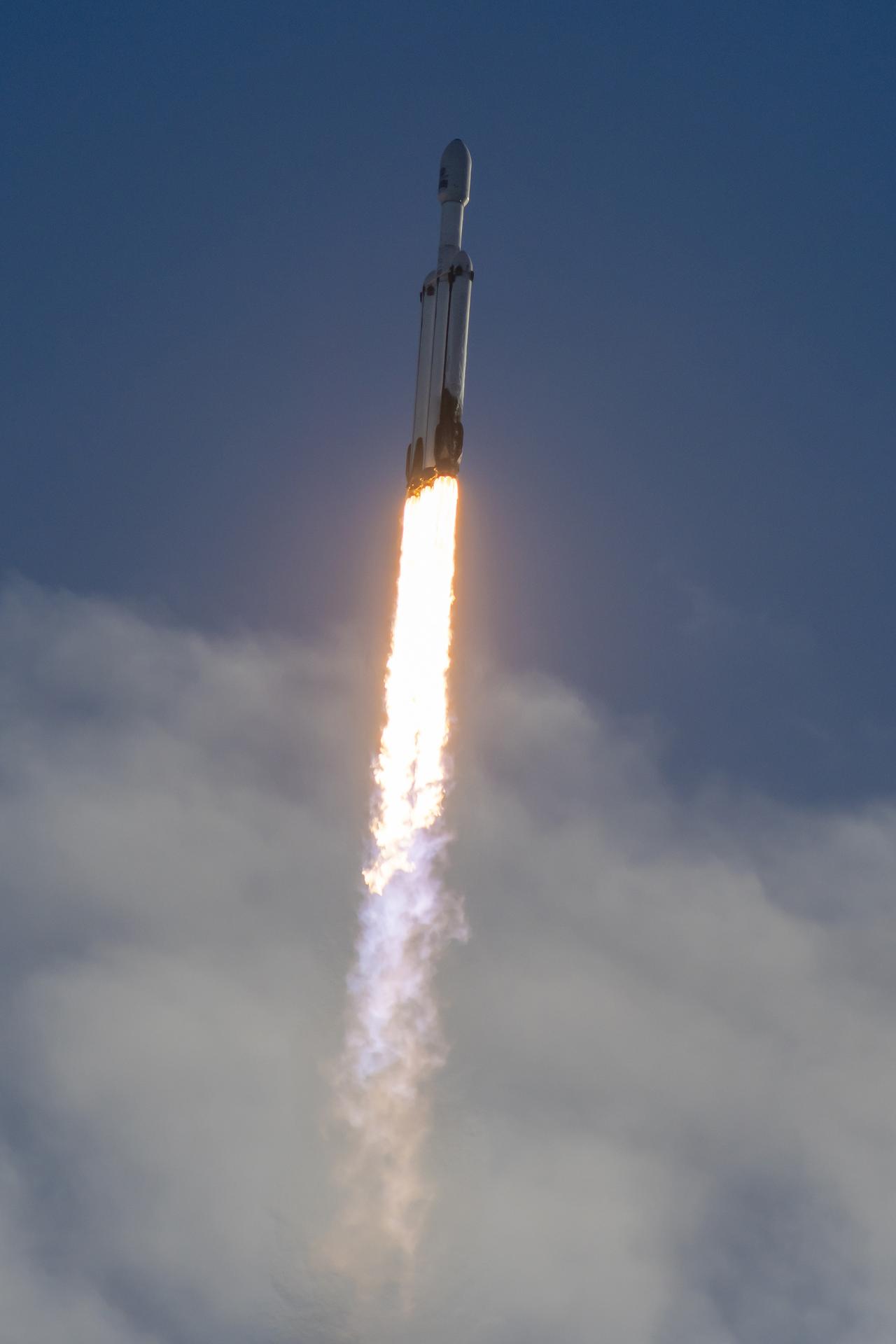
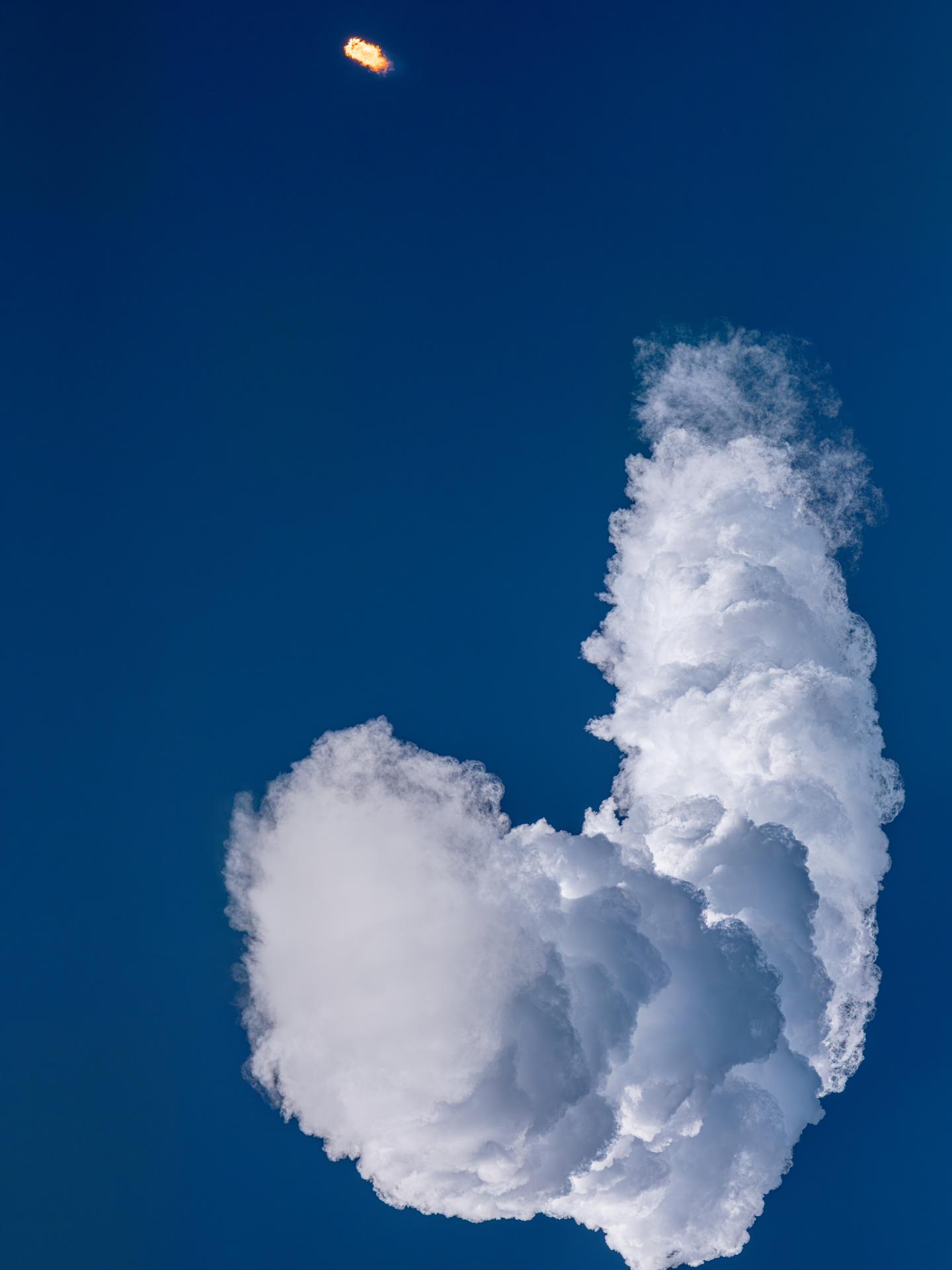
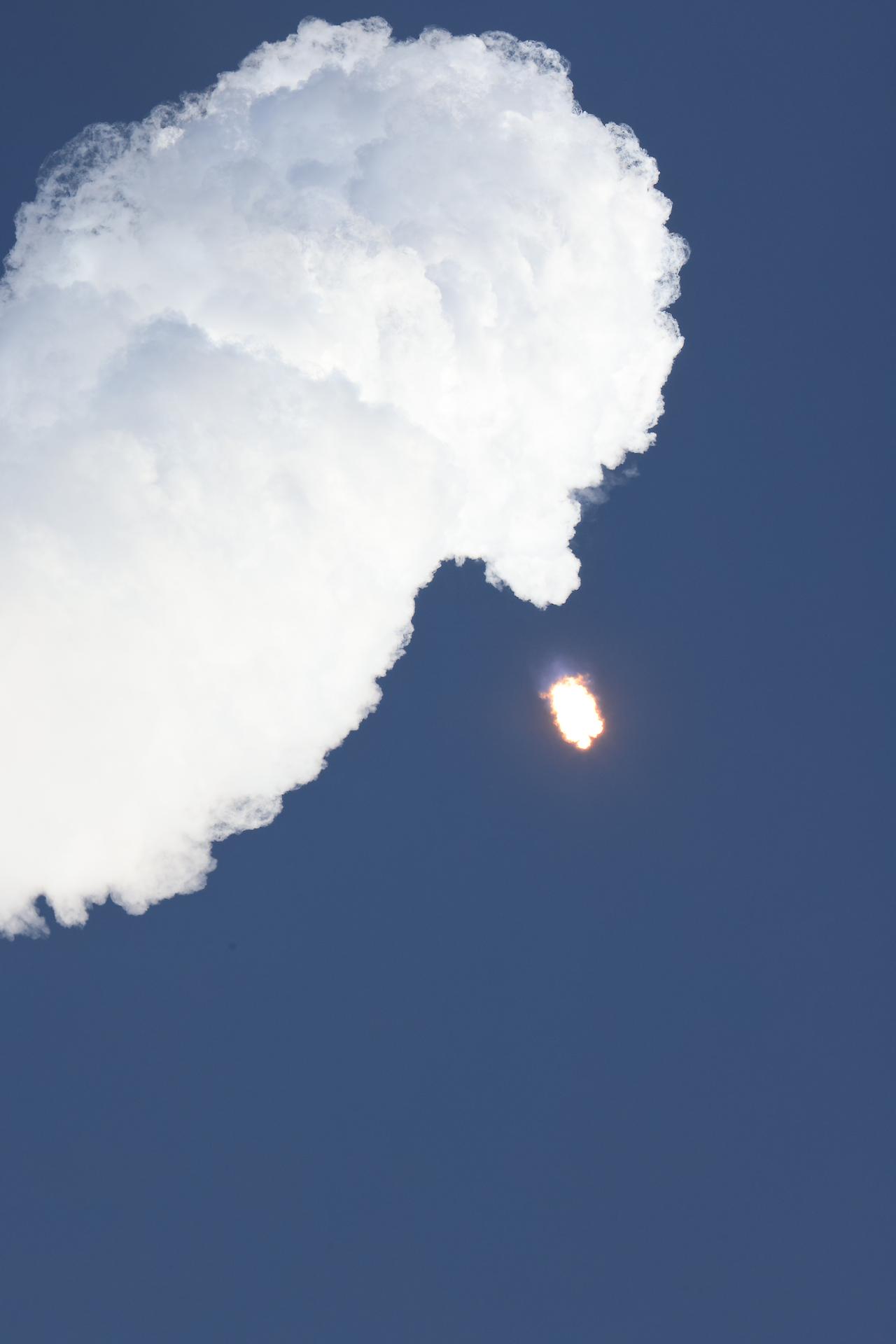
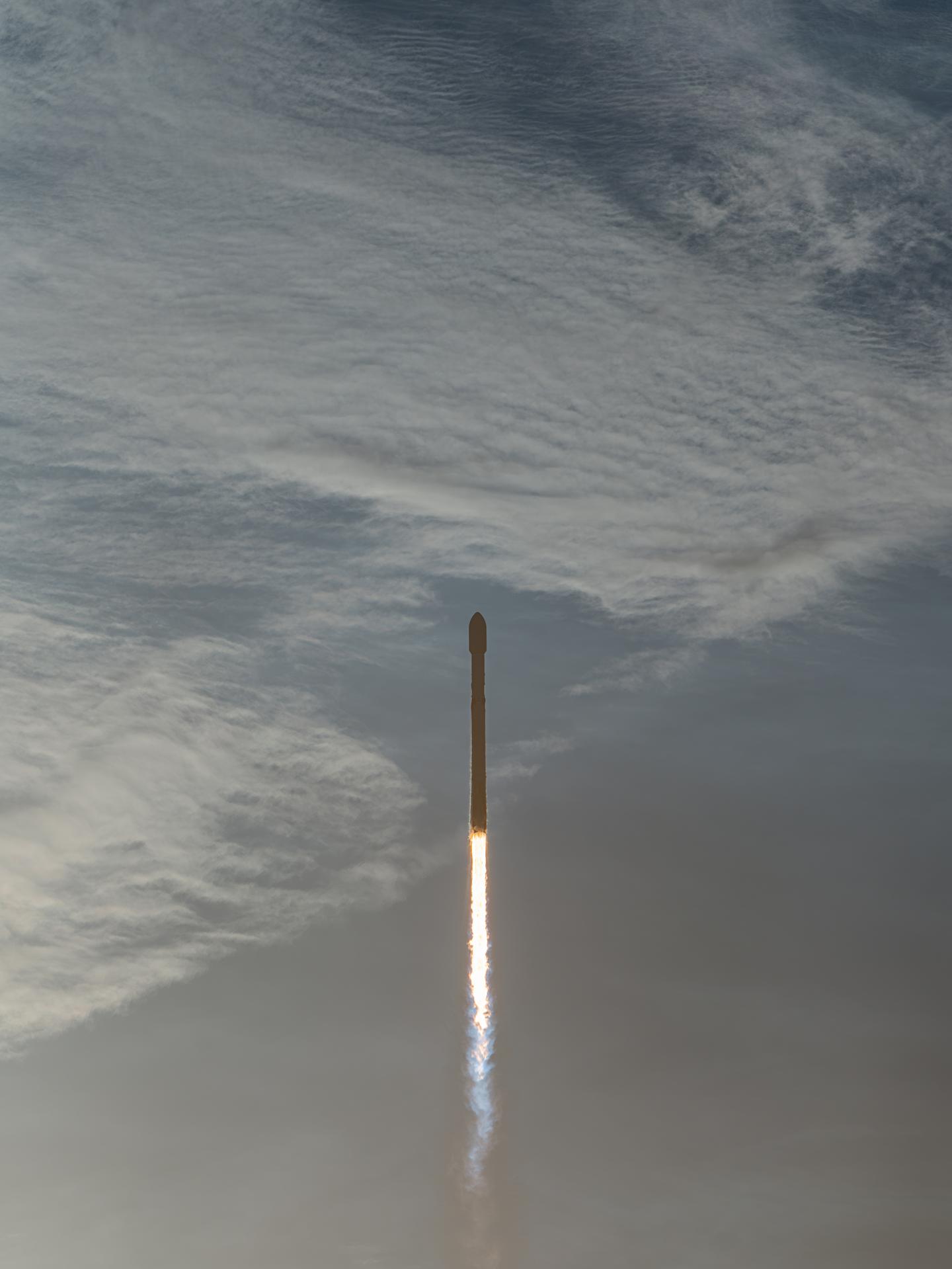
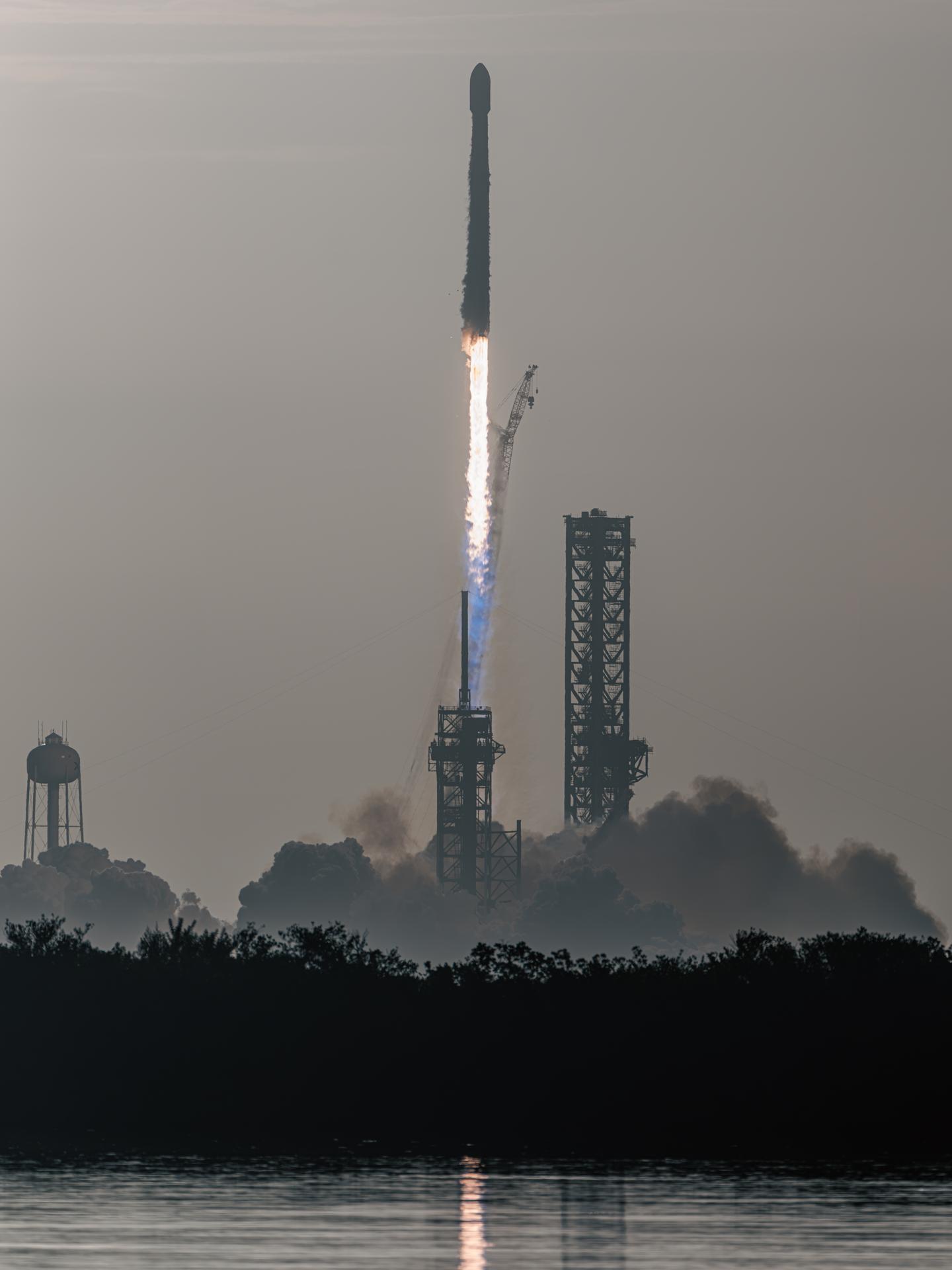
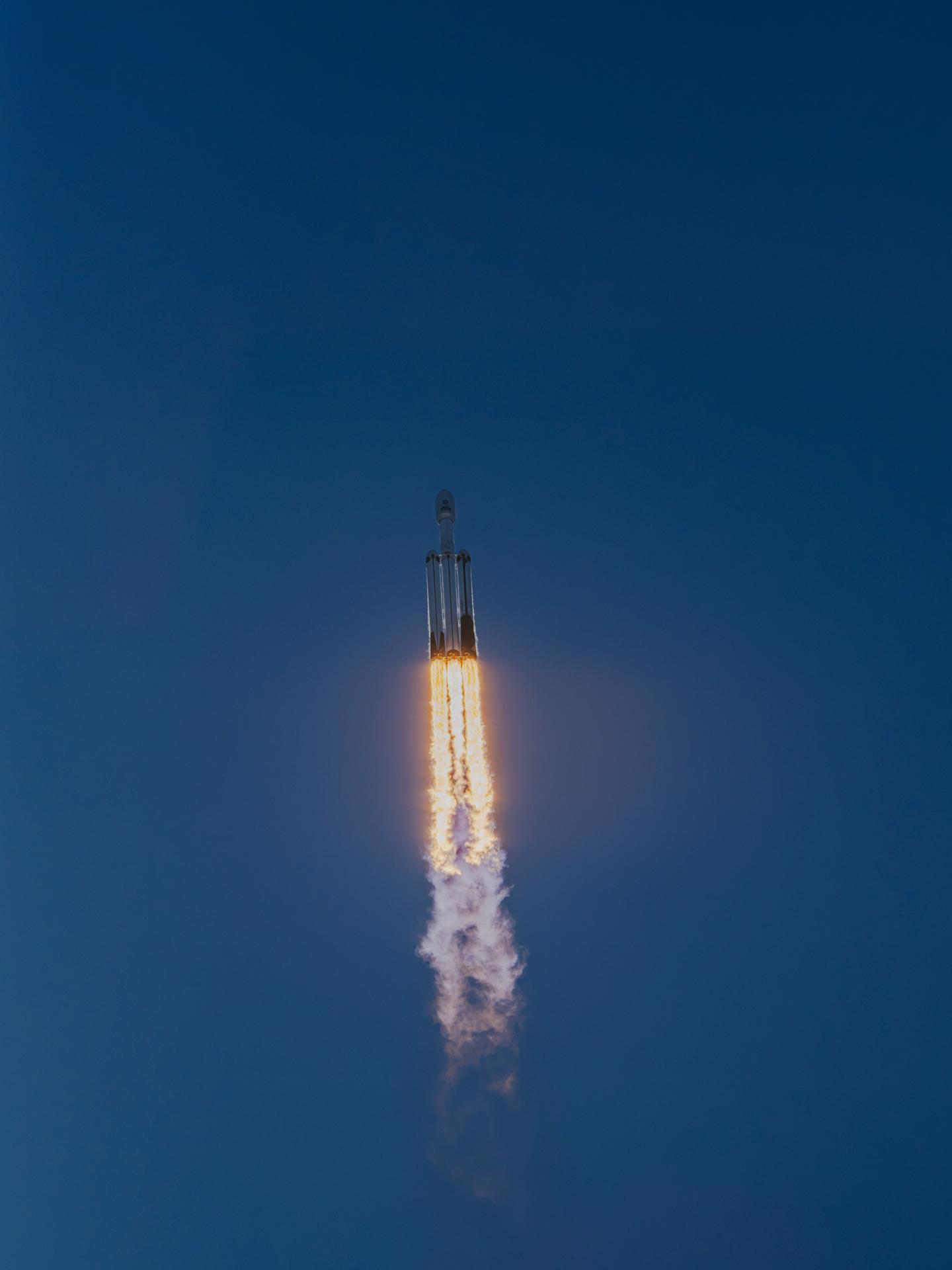
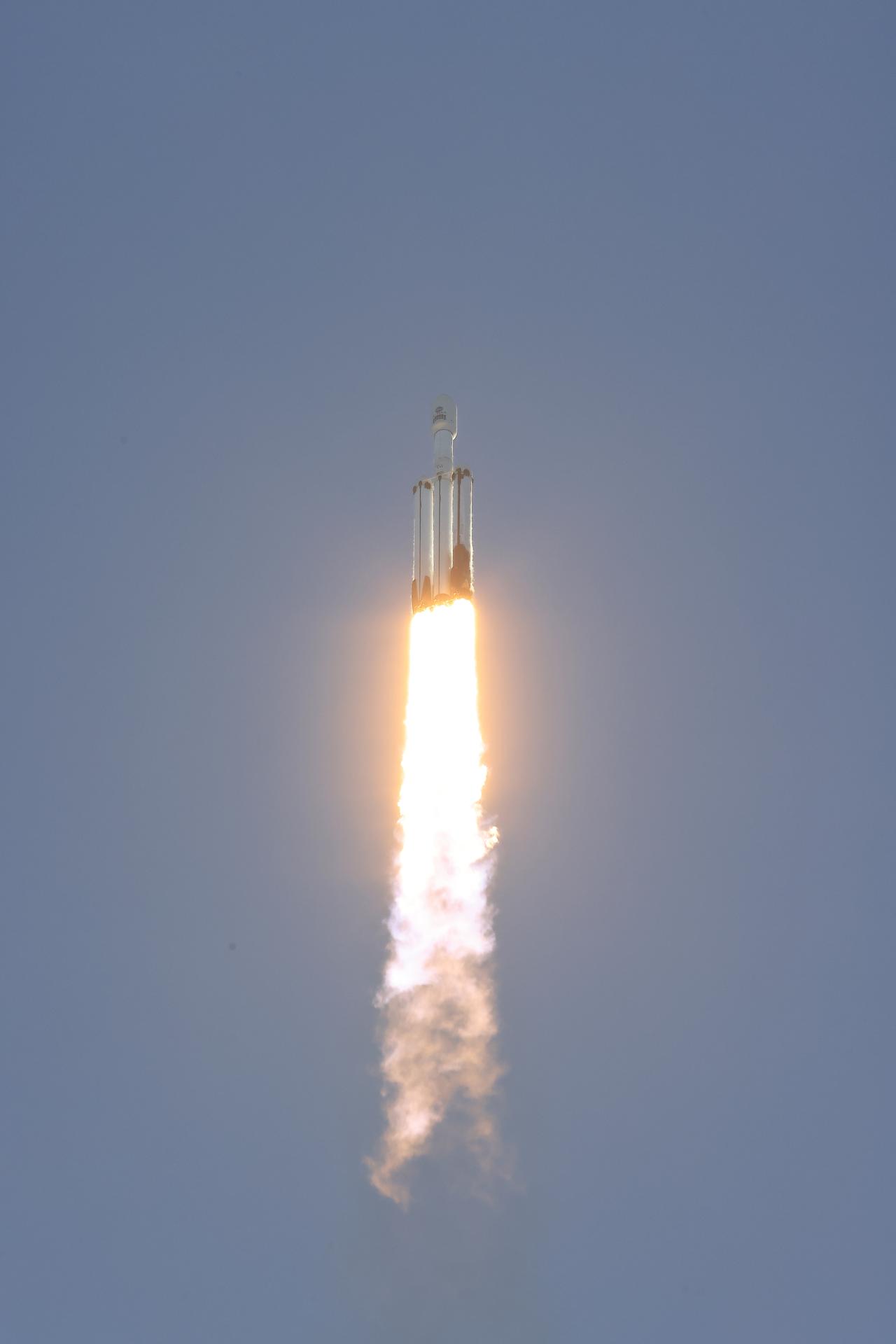
The SpaceX Falcon 9 rocket carrying the Dragon cargo spacecraft lifts off from Launch Complex 39A at NASA’s Kennedy Space Center in Florida on Nov. 26, 2022, on the company’s 26th commercial resupply services mission for the agency to the International Space Station. Liftoff was at 2:20 p.m. EST. Dragon will deliver more than 7,700 pounds of cargo, including a variety of NASA investigations, supplies, and equipment to the crew aboard the space station, including the next pair of ISS Roll Out Solar Arrays (iROSAs). The spacecraft is expected to spend about a month attached to the orbiting outpost before it returns to Earth with research and return cargo, splashing down off the coast of Florida.
SpaceX CRS-26 Liftoff, Remote Cam #4
A SpaceX Falcon 9 rocket soars upward after its liftoff from Launch Complex 39A at NASA’s Kennedy Space Center in Florida on Nov. 26, 2022, on the company’s 26th Commercial Resupply Services mission for the agency to the International Space Station. The Dragon cargo spacecraft will deliver about 7,700 pounds of science and research, supplies, and equipment to the crew aboard the space station, including the next pair of ISS Roll Out Solar Arrays (iROSAs). The spacecraft is expected to spend about a month attached to the orbiting outpost before it returns to Earth with research and return cargo, splashing down off the coast of Florida.
NASA/SpaceX CRS-26 Liftoff
The SpaceX Falcon 9 rocket carrying the Dragon cargo spacecraft lifts off from Launch Complex 39A at NASA’s Kennedy Space Center in Florida on Nov. 26, 2022, on the company’s 26th commercial resupply services mission for the agency to the International Space Station. Liftoff was at 2:20 p.m. EST. Dragon will deliver more than 7,700 pounds of cargo, including a variety of NASA investigations, supplies, and equipment to the crew aboard the space station, including the next pair of ISS Roll Out Solar Arrays (iROSAs). The spacecraft is expected to spend about a month attached to the orbiting outpost before it returns to Earth with research and return cargo, splashing down off the coast of Florida.
NASA/SpaceX CRS-26 Liftoff
The SpaceX Falcon 9 rocket carrying the Dragon cargo spacecraft lifts off from Launch Complex 39A at NASA’s Kennedy Space Center in Florida on Nov. 26, 2022, on the company’s 26th commercial resupply services mission for the agency to the International Space Station. Liftoff was at 2:20 p.m. EST. Dragon will deliver more than 7,700 pounds of cargo, including a variety of NASA investigations, supplies, and equipment to the crew aboard the space station, including the next pair of ISS Roll Out Solar Arrays (iROSAs). The spacecraft is expected to spend about a month attached to the orbiting outpost before it returns to Earth with research and return cargo, splashing down off the coast of Florida.
NASA/SpaceX CRS-26 Liftoff
The SpaceX Falcon 9 rocket carrying the Dragon cargo spacecraft lifts off from Launch Complex 39A at NASA’s Kennedy Space Center in Florida on Nov. 26, 2022, on the company’s 26th commercial resupply services mission for the agency to the International Space Station. Liftoff was at 2:20 p.m. EST. Dragon will deliver more than 7,700 pounds of cargo, including a variety of NASA investigations, supplies, and equipment to the crew aboard the space station, including the next pair of ISS Roll Out Solar Arrays (iROSAs). The spacecraft is expected to spend about a month attached to the orbiting outpost before it returns to Earth with research and return cargo, splashing down off the coast of Florida.
SpaceX CRS-26 Liftoff, Remote Cam #6
The SpaceX Falcon 9 rocket carrying the Dragon cargo spacecraft lifts off from Launch Complex 39A at NASA’s Kennedy Space Center in Florida on Nov. 26, 2022, on the company’s 26th commercial resupply services mission for the agency to the International Space Station. Liftoff was at 2:20 p.m. EST. Dragon will deliver more than 7,700 pounds of cargo, including a variety of NASA investigations, supplies, and equipment to the crew aboard the space station, including the next pair of ISS Roll Out Solar Arrays (iROSAs). The spacecraft is expected to spend about a month attached to the orbiting outpost before it returns to Earth with research and return cargo, splashing down off the coast of Florida.
SpaceX CRS-26 Liftoff, Remote Cam #3
The SpaceX Falcon 9 rocket carrying the Dragon cargo spacecraft lifts off from Launch Complex 39A at NASA’s Kennedy Space Center in Florida on Nov. 26, 2022, on the company’s 26th commercial resupply services mission for the agency to the International Space Station. Liftoff was at 2:20 p.m. EST. Dragon will deliver more than 7,700 pounds of cargo, including a variety of NASA investigations, supplies, and equipment to the crew aboard the space station, including the next pair of ISS Roll Out Solar Arrays (iROSAs). The spacecraft is expected to spend about a month attached to the orbiting outpost before it returns to Earth with research and return cargo, splashing down off the coast of Florida.
NASA/SpaceX CRS-26 Liftoff
The SpaceX Falcon 9 rocket carrying the Dragon cargo spacecraft lifts off from Launch Complex 39A at NASA’s Kennedy Space Center in Florida on Nov. 26, 2022, on the company’s 26th commercial resupply services mission for the agency to the International Space Station. Liftoff was at 2:20 p.m. EST. Dragon will deliver more than 7,700 pounds of cargo, including a variety of NASA investigations, supplies, and equipment to the crew aboard the space station, including the next pair of ISS Roll Out Solar Arrays (iROSAs). The spacecraft is expected to spend about a month attached to the orbiting outpost before it returns to Earth with research and return cargo, splashing down off the coast of Florida.
SpaceX CRS-26 Liftoff, Remote Cam #1
The SpaceX Falcon 9 rocket carrying the Dragon cargo spacecraft lifts off from Launch Complex 39A at NASA’s Kennedy Space Center in Florida on Nov. 26, 2022, on the company’s 26th commercial resupply services mission for the agency to the International Space Station. Liftoff was at 2:20 p.m. EST. Dragon will deliver more than 7,700 pounds of cargo, including a variety of NASA investigations, supplies, and equipment to the crew aboard the space station, including the next pair of ISS Roll Out Solar Arrays (iROSAs). The spacecraft is expected to spend about a month attached to the orbiting outpost before it returns to Earth with research and return cargo, splashing down off the coast of Florida.
SpaceX CRS-26 Liftoff, Remote Cam #2
The SpaceX Falcon 9 rocket carrying the Dragon cargo spacecraft lifts off from Launch Complex 39A at NASA’s Kennedy Space Center in Florida on Nov. 26, 2022, on the company’s 26th commercial resupply services mission for the agency to the International Space Station. Liftoff was at 2:20 p.m. EST. Dragon will deliver more than 7,700 pounds of cargo, including a variety of NASA investigations, supplies, and equipment to the crew aboard the space station, including the next pair of ISS Roll Out Solar Arrays (iROSAs). The spacecraft is expected to spend about a month attached to the orbiting outpost before it returns to Earth with research and return cargo, splashing down off the coast of Florida.
SpaceX CRS-26 Liftoff, Remote Cam #1
The SpaceX Falcon 9 rocket carrying the Dragon cargo spacecraft lifts off from Launch Complex 39A at NASA’s Kennedy Space Center in Florida on Nov. 26, 2022, on the company’s 26th commercial resupply services mission for the agency to the International Space Station. Liftoff was at 2:20 p.m. EST. Dragon will deliver more than 7,700 pounds of cargo, including a variety of NASA investigations, supplies, and equipment to the crew aboard the space station, including the next pair of ISS Roll Out Solar Arrays (iROSAs). The spacecraft is expected to spend about a month attached to the orbiting outpost before it returns to Earth with research and return cargo, splashing down off the coast of Florida.
SpaceX CRS-26 Liftoff, Remote Cam #3
The SpaceX Falcon 9 rocket carrying the Dragon cargo spacecraft lifts off from Launch Complex 39A at NASA’s Kennedy Space Center in Florida on Nov. 26, 2022, on the company’s 26th commercial resupply services mission for the agency to the International Space Station. Liftoff was at 2:20 p.m. EST. Dragon will deliver more than 7,700 pounds of cargo, including a variety of NASA investigations, supplies, and equipment to the crew aboard the space station, including the next pair of ISS Roll Out Solar Arrays (iROSAs). The spacecraft is expected to spend about a month attached to the orbiting outpost before it returns to Earth with research and return cargo, splashing down off the coast of Florida.
SpaceX CRS-26 Liftoff, Remote Cam #4
A SpaceX Falcon 9 rocket soars upward after its liftoff from Launch Complex 39A at NASA’s Kennedy Space Center in Florida on Nov. 26, 2022, on the company’s 26th Commercial Resupply Services mission for the agency to the International Space Station. The Dragon cargo spacecraft will deliver about 7,700 pounds of science and research, supplies, and equipment to the crew aboard the space station, including the next pair of ISS Roll Out Solar Arrays (iROSAs). The spacecraft is expected to spend about a month attached to the orbiting outpost before it returns to Earth with research and return cargo, splashing down off the coast of Florida.
NASA/SpaceX CRS-26 Liftoff
The SpaceX Falcon 9 rocket carrying the Dragon cargo spacecraft lifts off from Launch Complex 39A at NASA’s Kennedy Space Center in Florida on Nov. 26, 2022, on the company’s 26th commercial resupply services mission for the agency to the International Space Station. Liftoff was at 2:20 p.m. EST. Dragon will deliver more than 7,700 pounds of cargo, including a variety of NASA investigations, supplies, and equipment to the crew aboard the space station, including the next pair of ISS Roll Out Solar Arrays (iROSAs). The spacecraft is expected to spend about a month attached to the orbiting outpost before it returns to Earth with research and return cargo, splashing down off the coast of Florida.
SpaceX CRS-26 Liftoff, Remote Cam #7
The SpaceX Falcon 9 rocket carrying the Dragon cargo spacecraft lifts off from Launch Complex 39A at NASA’s Kennedy Space Center in Florida on Nov. 26, 2022, on the company’s 26th commercial resupply services mission for the agency to the International Space Station. Liftoff was at 2:20 p.m. EST. Dragon will deliver more than 7,700 pounds of cargo, including a variety of NASA investigations, supplies, and equipment to the crew aboard the space station, including the next pair of ISS Roll Out Solar Arrays (iROSAs). The spacecraft is expected to spend about a month attached to the orbiting outpost before it returns to Earth with research and return cargo, splashing down off the coast of Florida.
SpaceX CRS-26 Liftoff, Remote Cam #5
The SpaceX Falcon 9 rocket carrying the Dragon cargo spacecraft lifts off from Launch Complex 39A at NASA’s Kennedy Space Center in Florida on Nov. 26, 2022, on the company’s 26th commercial resupply services mission for the agency to the International Space Station. Liftoff was at 2:20 p.m. EST. Dragon will deliver more than 7,700 pounds of cargo, including a variety of NASA investigations, supplies, and equipment to the crew aboard the space station, including the next pair of ISS Roll Out Solar Arrays (iROSAs). The spacecraft is expected to spend about a month attached to the orbiting outpost before it returns to Earth with research and return cargo, splashing down off the coast of Florida.
SpaceX CRS-26 Liftoff, Remote Cam #5
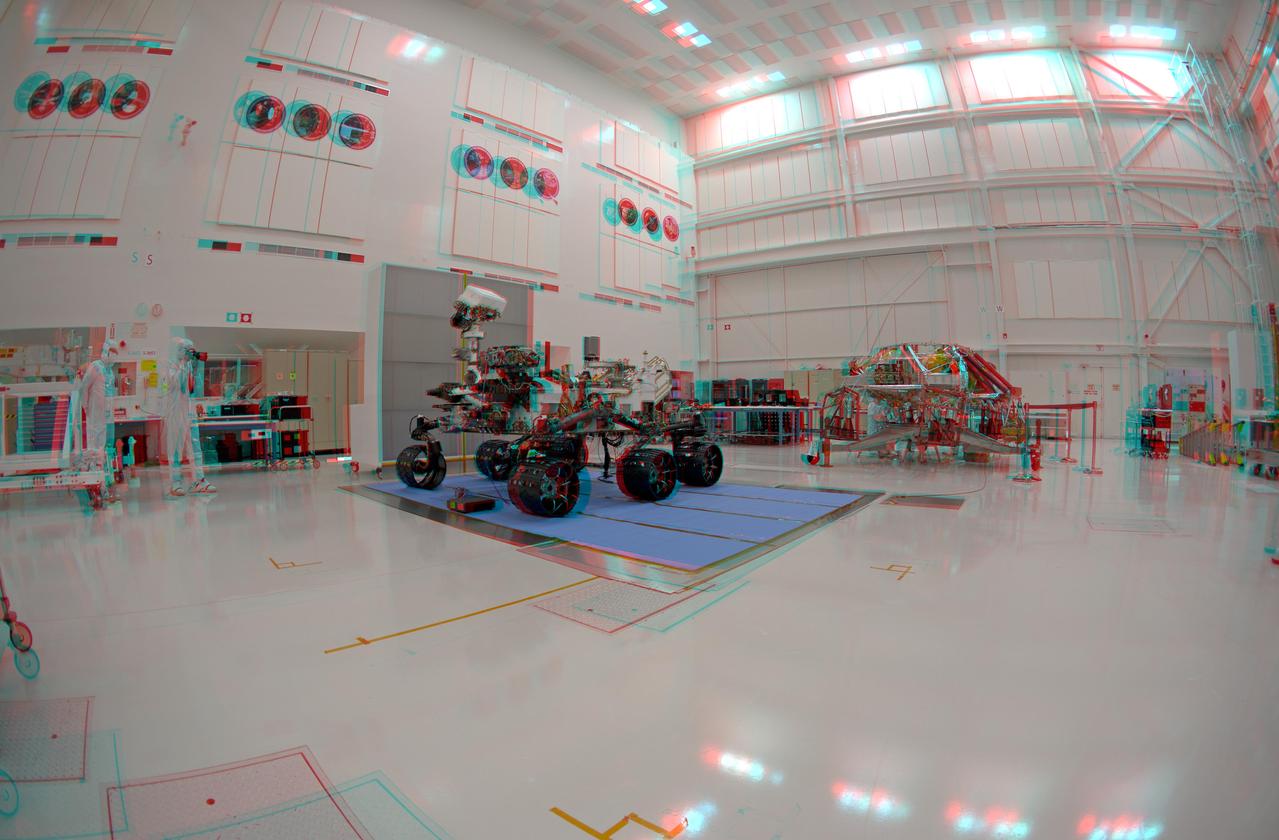
NASA Curiosity rover and its rocket-powered descent vehicle pose for a portrait at JPL Spacecraft Assembly Facility prior to its launch on November 26, 2011 from the Space Launch Complex 41 on Cape Canaveral Air Force Station in Florida.
3-D Anaglyph Fish-eye View of NASA Curiosity Rover and its Rocket-Powered Descent Vehicle
S67-43593 (26 Aug. 1967) --- The completely assembled Apollo Saturn 501 launch vehicle mated to the Apollo spacecraft 017 on Launch Complex 39A, Kennedy Space Center. The fully assembled vehicle was transported to the launch complex on the crawler.
A/S 501 ROLLOUT
STS-26 Discovery, Orbiter Vehicle (OV) 103, rises into a cloudy sky and heads for Earth orbit atop the external tank (ET) as exhaust plumes billow from the two solid rocket boosters (SRBs) during liftoff from Kennedy Space Center (KSC) Launch Complex (LC) pad 39B. STS-26 marks OV-103's first flight since September 1985 and NASA's first manned mission since 51L Challenger accident, 01-28-86.
STS-26 Discovery, Orbiter Vehicle (OV) 103, lifts off from KSC LC pad 39B
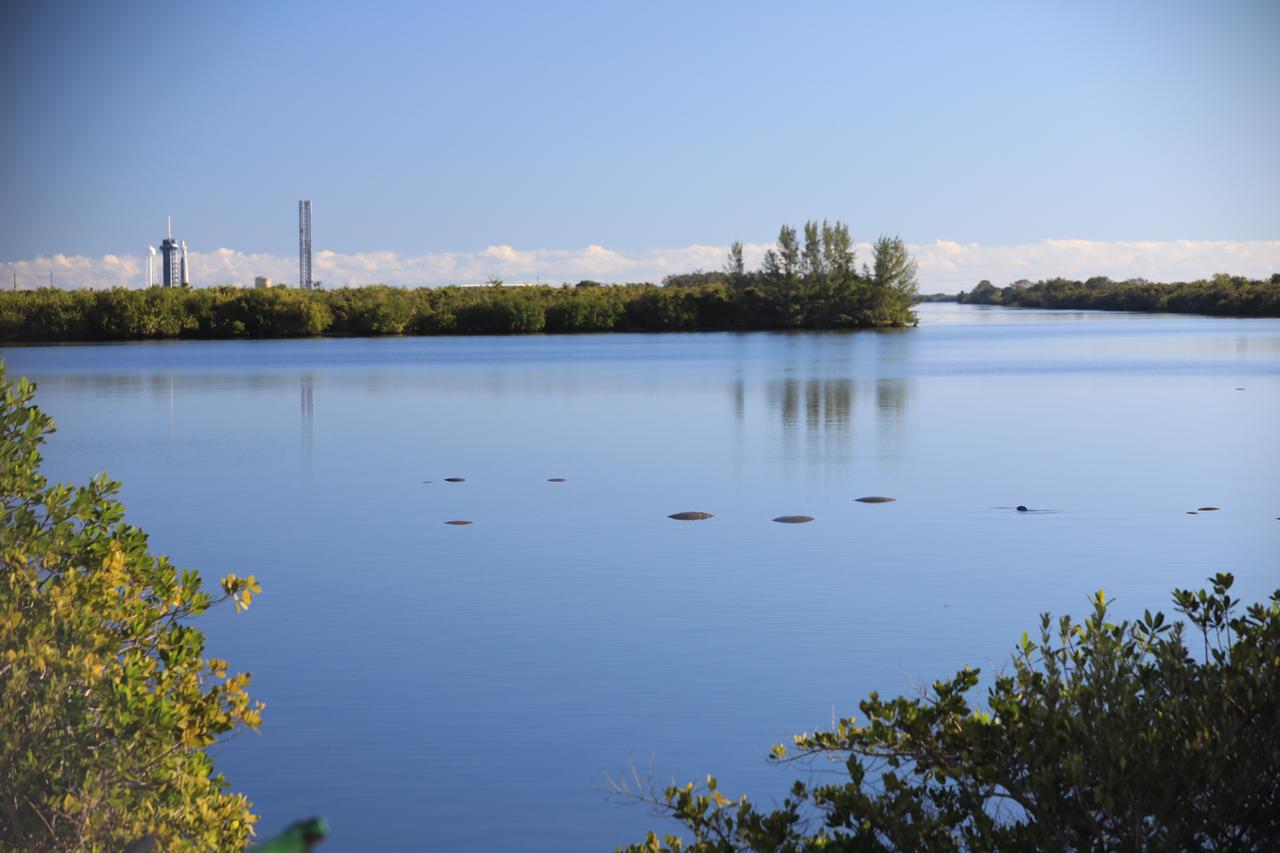
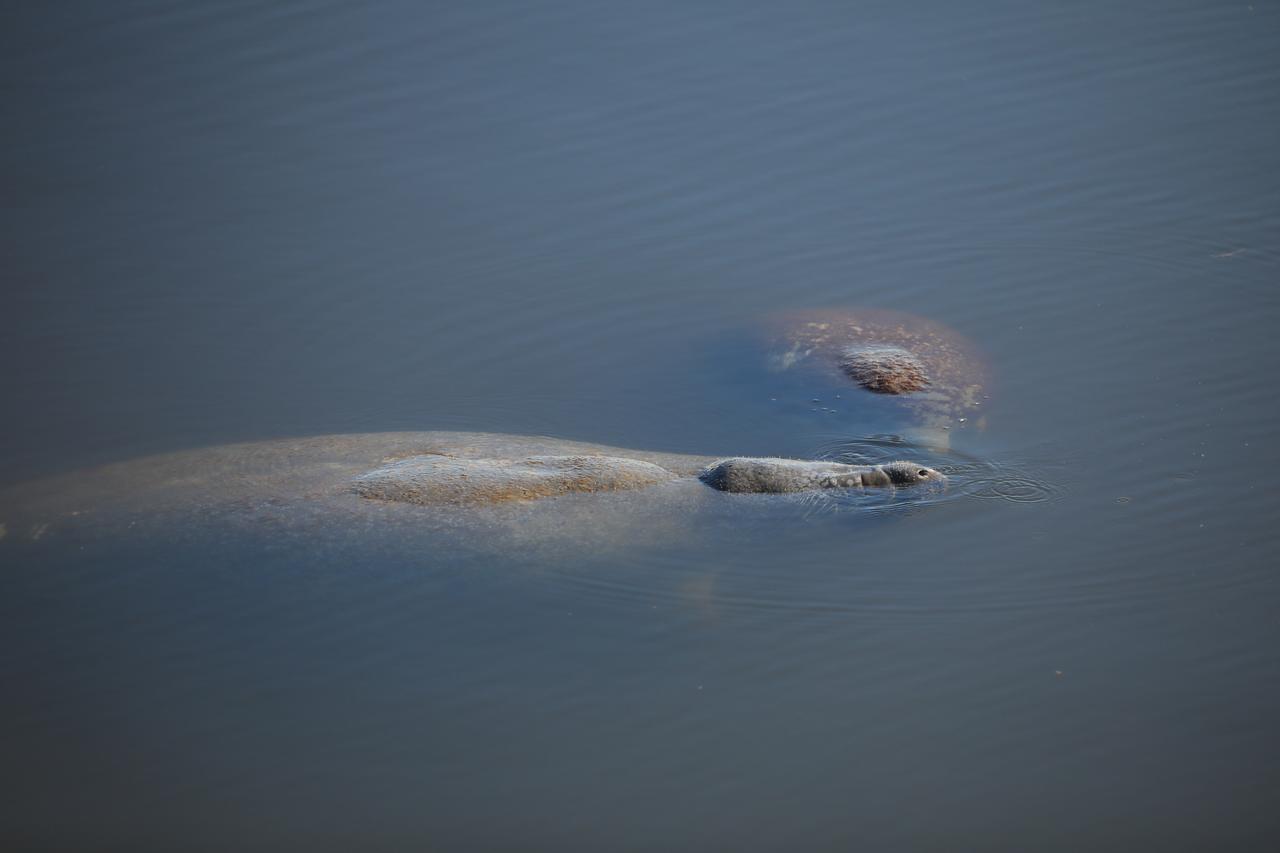
Several manatees swim in the turn basin of Launch Complex 39 at NASA’s Kennedy Space Center in Florida on Tuesday, Nov. 26, 2024. NASA Kennedy shares a boundary with the Merritt Island Wildlife National Refuge and is home to more than 1,500 species of plants and animals on 140,000 acres.
Wildlife at KSC
Several manatees swim in  the turn basin of Launch Complex 39 at NASA’s Kennedy Space Center in Florida on Tuesday, Nov. 26, 2024. NASA Kennedy shares a boundary with the Merritt Island Wildlife National Refuge and is home to more than 1,500 species of plants and animals on 140,000 acres.
Wildlife at KSC
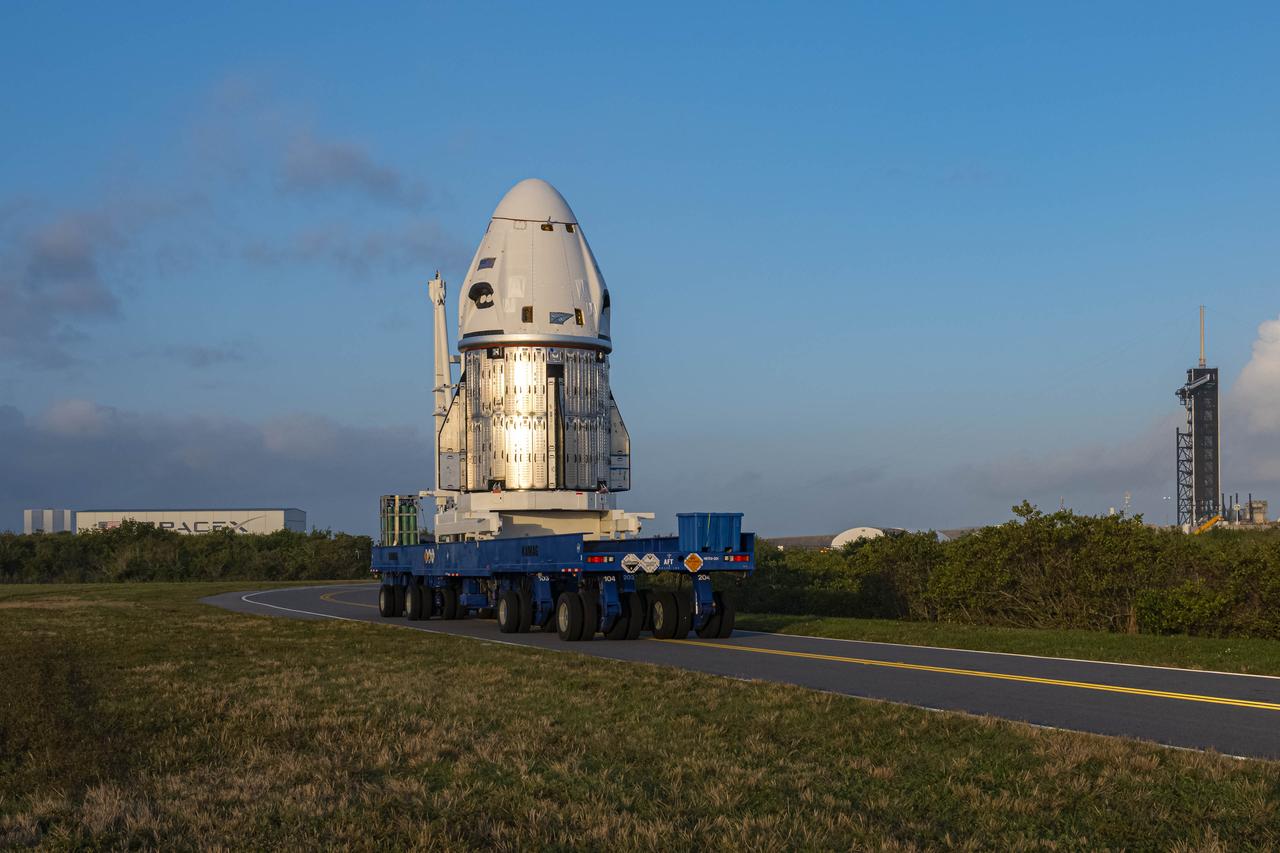
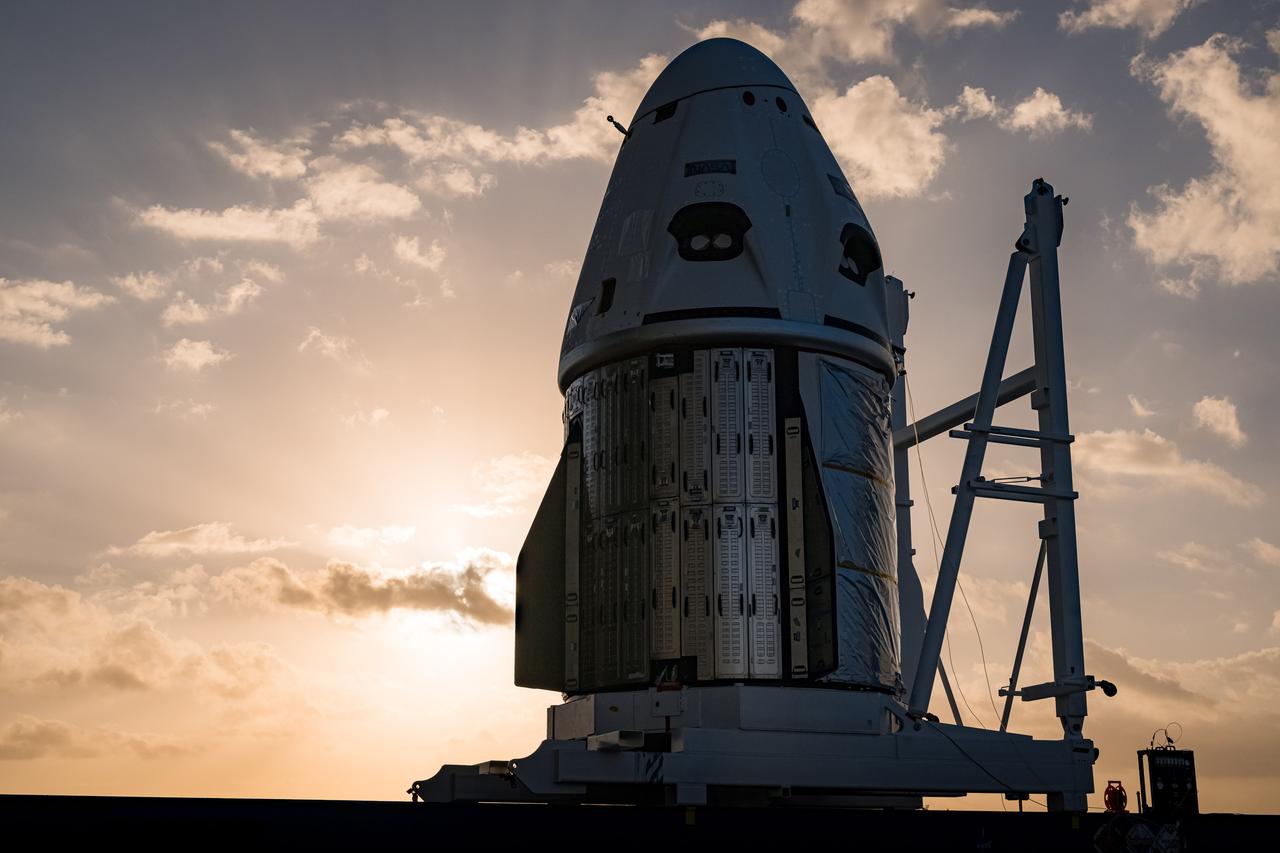
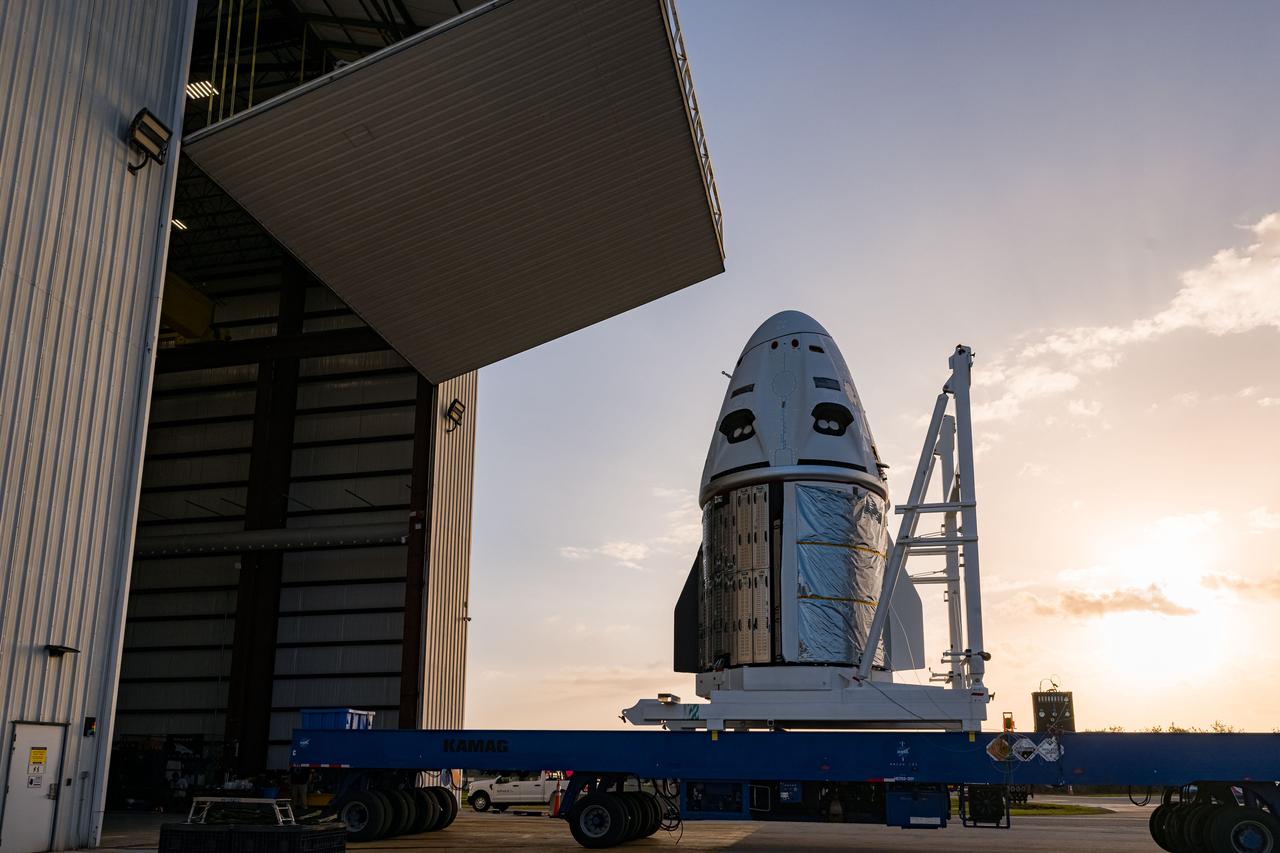
The Crew Dragon Endeavour spacecraft for NASA’s SpaceX Crew-6 mission arrives at SpaceX’s hangar at Kennedy Space Center’s Launch Complex 39A in Florida on Feb. 19, 2023. The capsule arrived at the launch complex after making the short journey from its nearby processing facility at Cape Canaveral Space Force Station. NASA astronauts Stephen Bowen, commander; Warren “Woody” Hoburg, pilot; and mission specialists astronaut Sultan Alneyadi and Roscosmos cosmonaut Andrey Fedyaev wil lift off aboard Endeavour – on the company’s Falcon 9 rocket – from Launch Complex 39A at Kennedy. Liftoff is targeted for no earlier than 2:07 a.m. EST Sunday, Feb. 26.
NASA's SpaceX Crew-6 Dragon Arrival
The Crew Dragon Endeavour spacecraft for NASA’s SpaceX Crew-6 mission arrives at SpaceX’s hangar at Kennedy Space Center’s Launch Complex 39A in Florida on Feb. 19, 2023. The capsule arrived at the launch complex after making the short journey from its nearby processing facility at Cape Canaveral Space Force Station. NASA astronauts Stephen Bowen, commander; Warren “Woody” Hoburg, pilot; and mission specialists astronaut Sultan Alneyadi and Roscosmos cosmonaut Andrey Fedyaev wil lift off aboard Endeavour – on the company’s Falcon 9 rocket – from Launch Complex 39A at Kennedy. Liftoff is targeted for no earlier than 2:07 a.m. EST Sunday, Feb. 26.
NASA's SpaceX Crew-6 Dragon Arrival
The Crew Dragon Endeavour spacecraft for NASA’s SpaceX Crew-6 mission arrives at SpaceX’s hangar at Kennedy Space Center’s Launch Complex 39A in Florida on Feb. 19, 2023. The capsule arrived at the launch complex after making the short journey from its nearby processing facility at Cape Canaveral Space Force Station. NASA astronauts Stephen Bowen, commander; Warren “Woody” Hoburg, pilot; and mission specialists astronaut Sultan Alneyadi and Roscosmos cosmonaut Andrey Fedyaev wil lift off aboard Endeavour – on the company’s Falcon 9 rocket – from Launch Complex 39A at Kennedy. Liftoff is targeted for no earlier than 2:07 a.m. EST Sunday, Feb. 26.
NASA's SpaceX Crew-6 Dragon Arrival
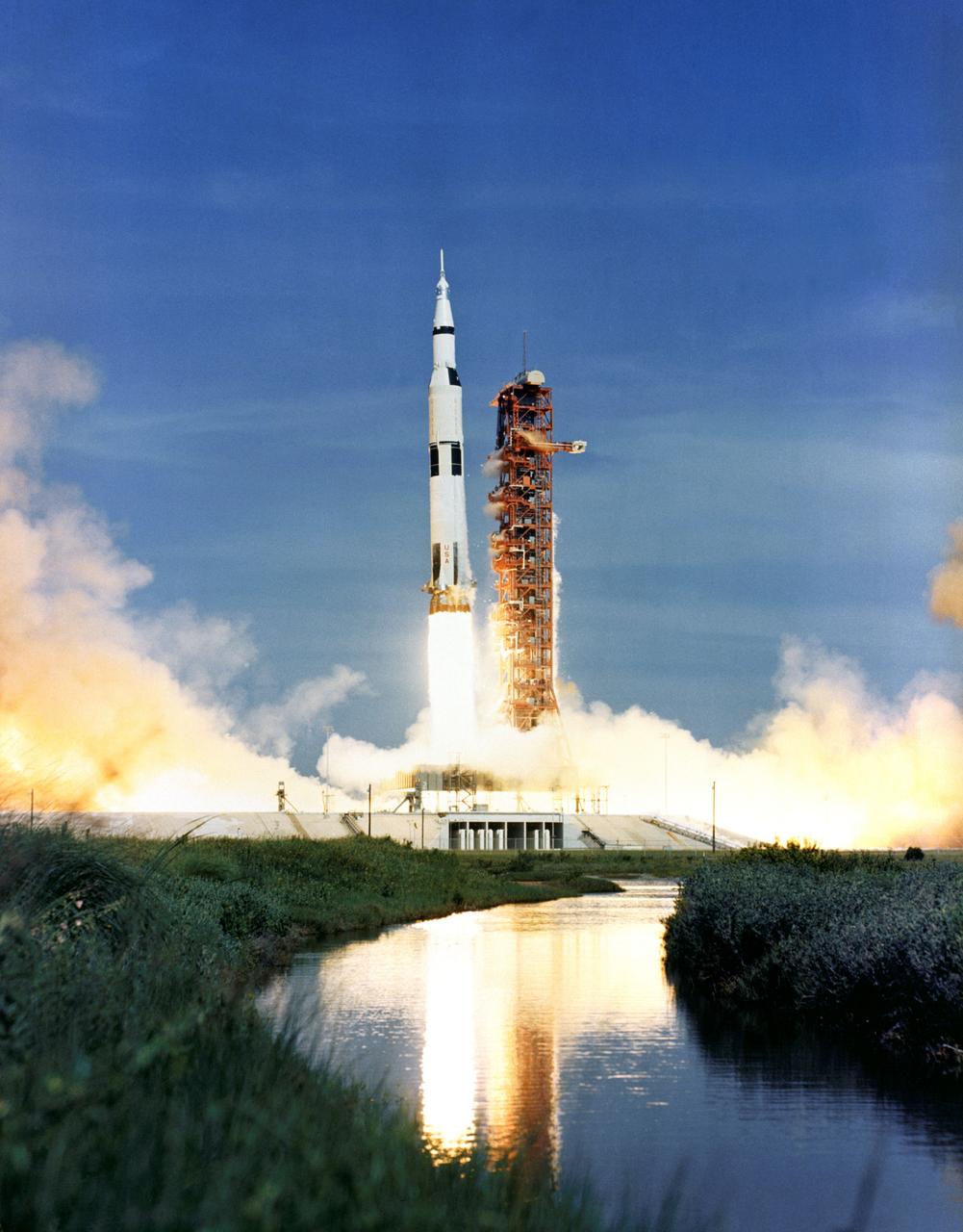
S71-41810 (26 July 1971) --- The 363-feet tall Apollo 15 (Spacecraft 112/Lunar Module 10/Saturn 510) space vehicle is launched from Pad A, Launch Complex 39, Kennedy Space Center, Florida, at 9:34:00.79 a.m., July 26, 1971, on a lunar landing mission. Aboard the Apollo 15 spacecraft were astronauts David R. Scott, commander; Alfred M. Worden, commander module pilot; and James B. Irwin, lunar module pilot. Apollo 15 is the National Aeronautics and Space Administration's (NASA) fourth manned lunar landing mission.
APOLLO XV - (LIFTOFF) - CAPE
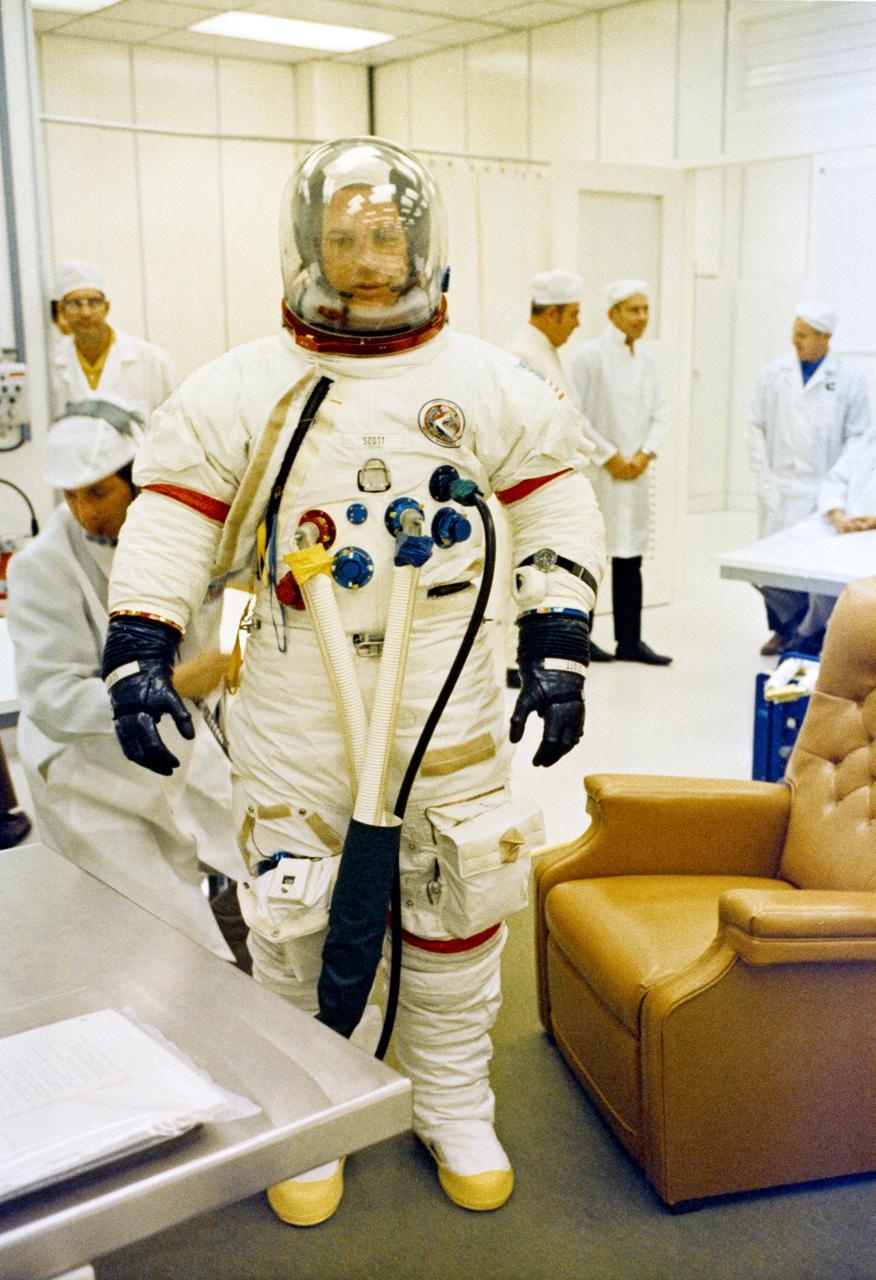
S71-41409 (26 July 1971) --- Astronaut David R. Scott, commander of the Apollo 15 lunar landing mission, goes through suiting up operations in the Kennedy Space Center's (KSC) Manned Spacecraft Operations Building (MSOB) during the Apollo 15 prelaunch countdown. Minutes later astronauts Scott; Alfred M. Worden, command module pilot; and James B. Irwin, lunar module pilot, rode a special transport van over to Pad A, Launch Complex 39, where their spacecraft awaited them. The Apollo 15 space vehicle was launched at 9:34:00:79 a.m. (EDT), July 26, 1971.
PRELAUNCH - (SUITING-UP) APOLLO 15 - KSC
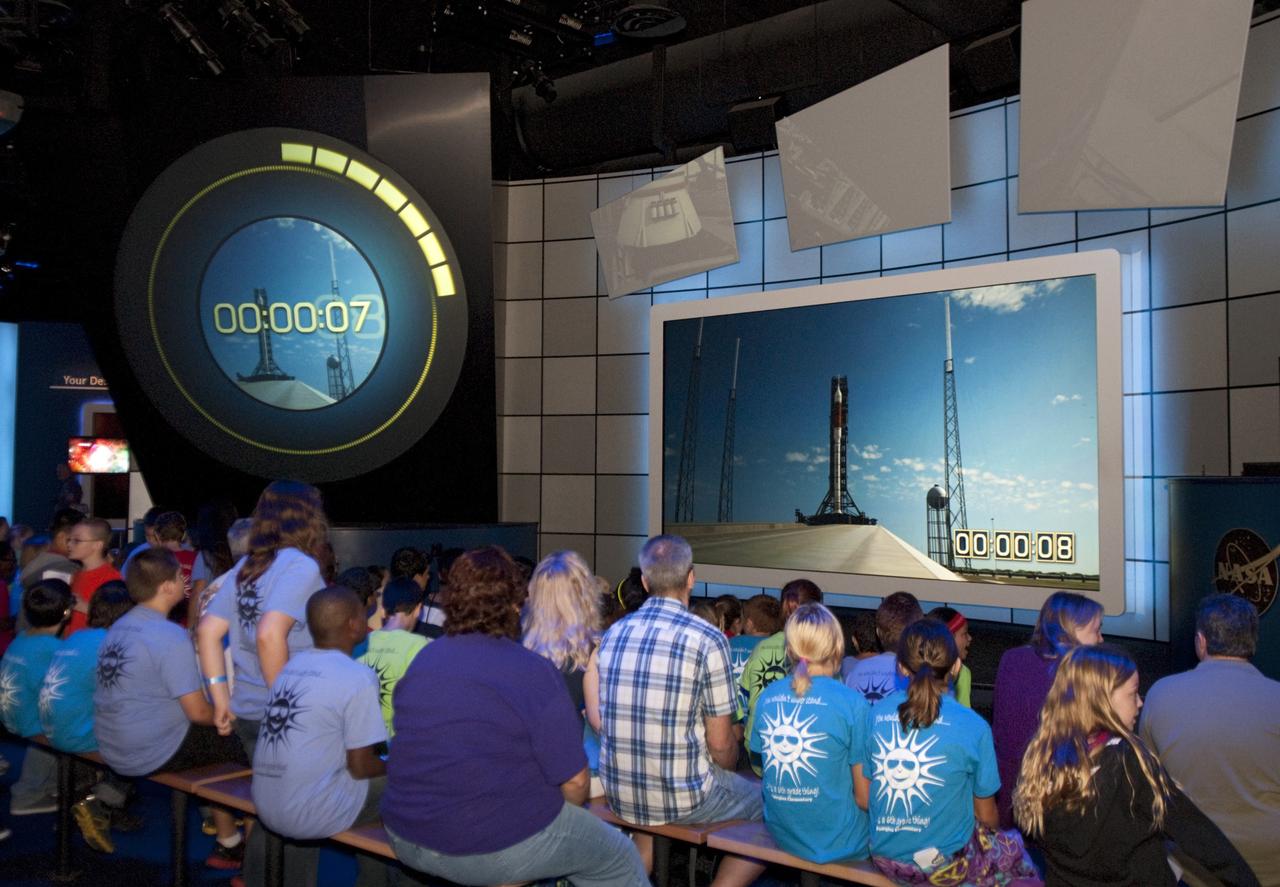
CAPE CANAVERAL, Fla. – At the Kennedy Space Center Visitor Complex in Florida sixth-grade students watch a video presentation about a future rocket launch.      Between Nov. 26 and Dec. 7, 2012, about 5,300 sixth-graders in Brevard County, Florida were bused to Kennedy's Visitor Complex for Brevard Space Week, an educational program designed to encourage interest in science, technology, engineering and mathematics STEM careers. Photo credit: NASA/Tim Jacobs
KSC-2012-6389
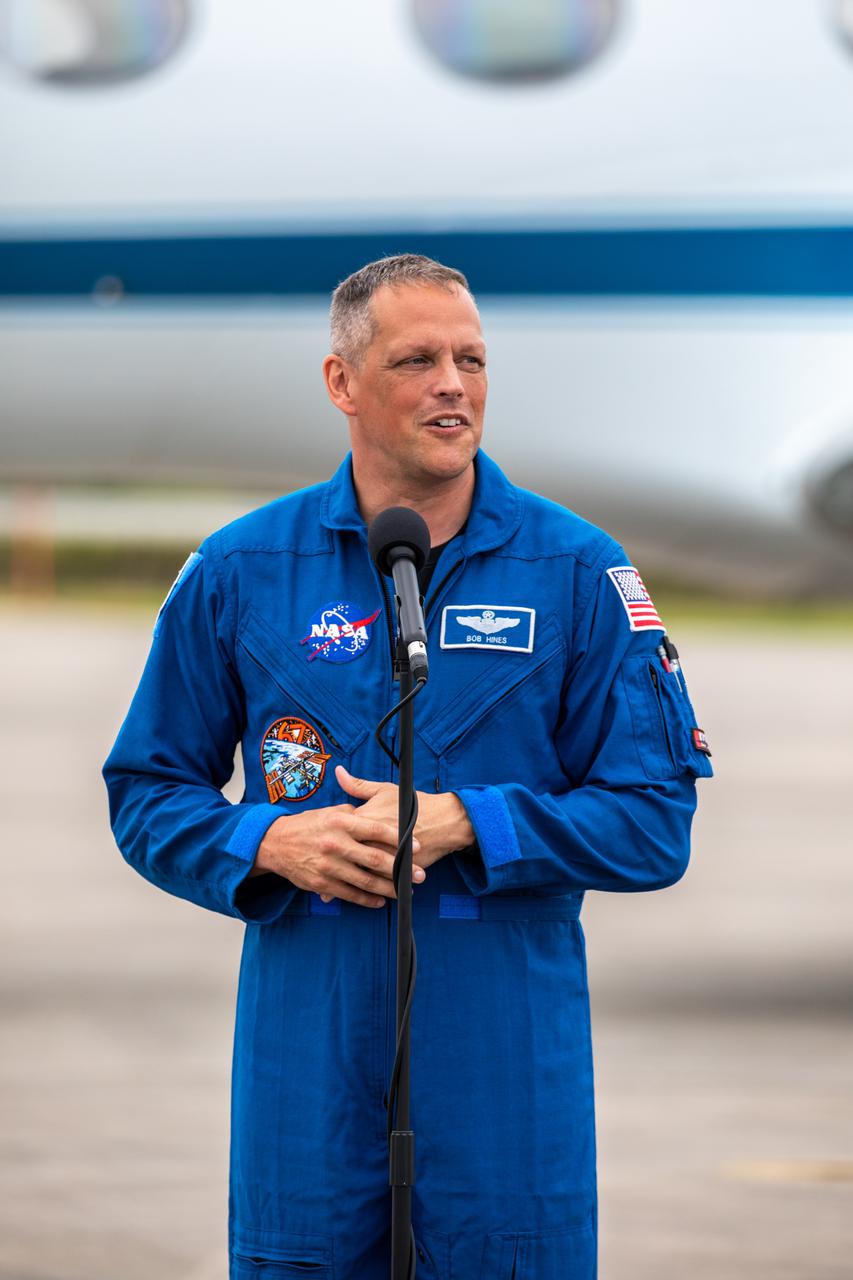
NASA astronaut Bob Hines speaks to members of the news media during crew arrival for NASA’s SpaceX Crew-4 mission at the Launch and Landing Facility at Kennedy Space Center in Florida on April 18, 2022. Hines, along with NASA astronauts Kjell Lindgren and Jessica Watkins, and ESA (European Space Agency) astronaut Samantha Cristoforetti, will launch aboard SpaceX’s Crew Dragon and Falcon 9 rocket on April 23, 2022. Launch is targeted for 5:26 a.m. EDT from Kennedy’s Launch Complex 39A.
NASA Hosts Media Event for the agency’s SpaceX Crew-4 Mission
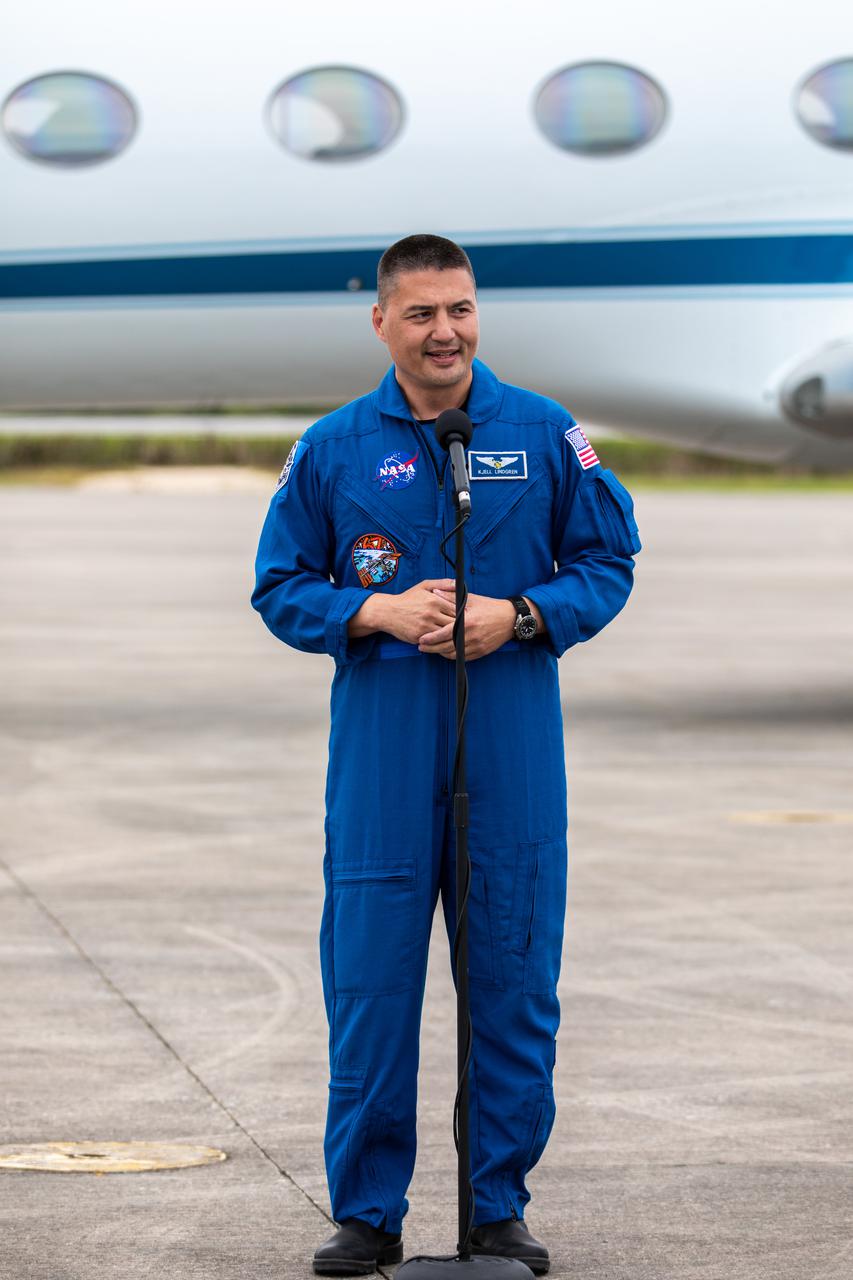
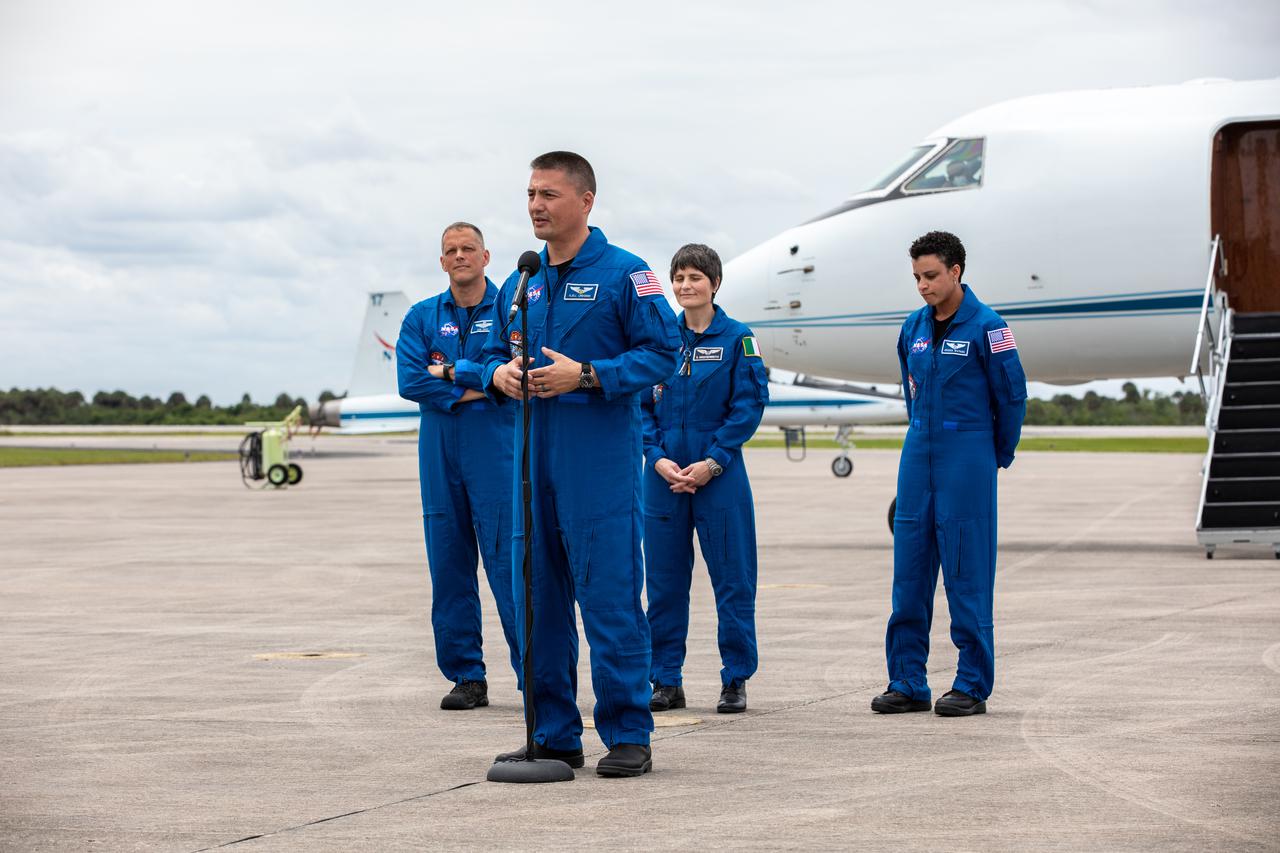
NASA astronaut Kjell Lindgren speaks to members of the news media during crew arrival for NASA’s SpaceX Crew-4 mission at the Launch and Landing Facility at Kennedy Space Center in Florida on April 18, 2022. Lindgren, along with NASA astronauts Bob Hines and Jessica Watkins, and ESA (European Space Agency) astronaut Samantha Cristoforetti, will launch aboard SpaceX’s Crew Dragon and Falcon 9 rocket on April 23, 2022. Launch is targeted for 5:26 a.m. EDT from Kennedy’s Launch Complex 39A.
NASA Hosts Media Event for the agency’s SpaceX Crew-4 Mission
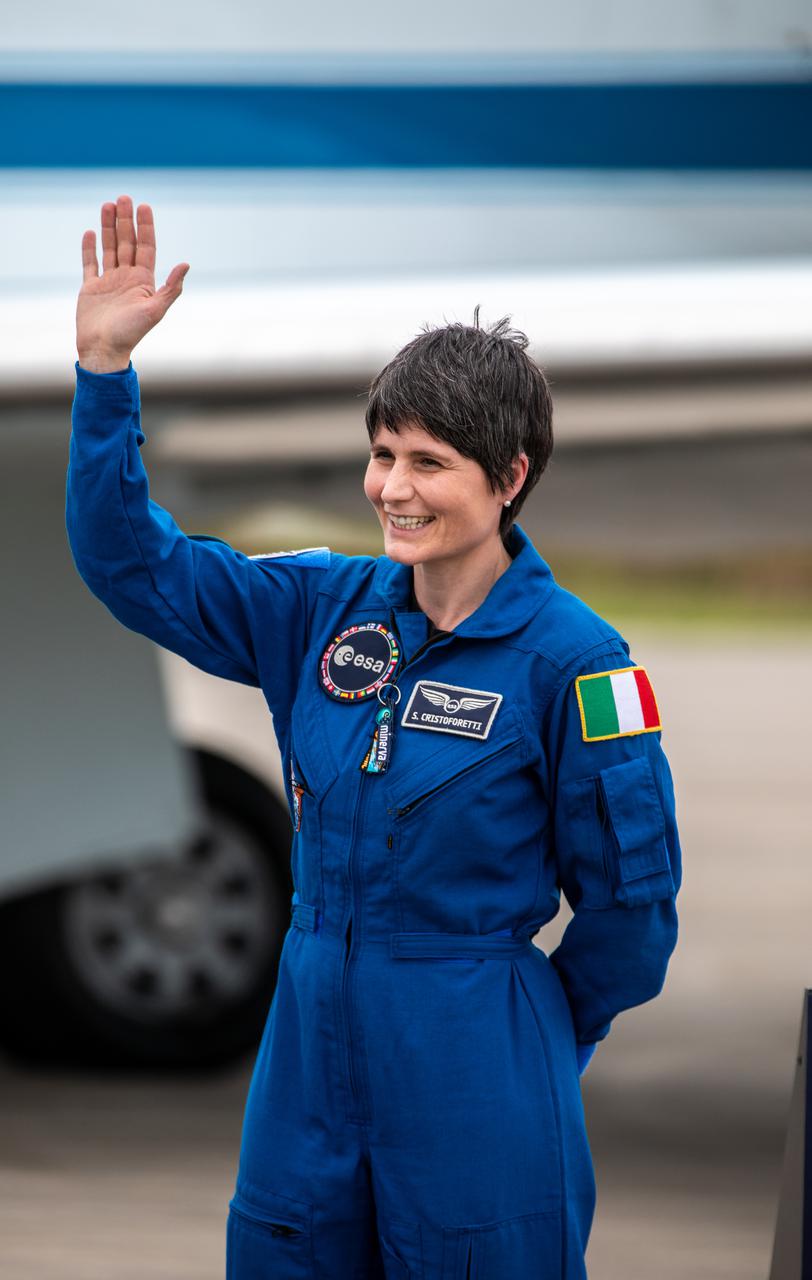
ESA (European Space Agency) astronaut Samantha Cristoforetti speaks to members of the news media during crew arrival for NASA’s SpaceX Crew-4 mission at the Launch and Landing Facility at Kennedy Space Center in Florida on April 18, 2022. Cristoforetti,  along with NASA astronauts Bob Hines, Kjell Lindgren, and Jessica Watkins, will launch aboard SpaceX’s Crew Dragon and Falcon 9 rocket on April 23, 2022. Launch is targeted for 5:26 a.m. EDT from Kennedy’s Launch Complex 39A.
NASA Hosts Media Event for the agency’s SpaceX Crew-4 Mission
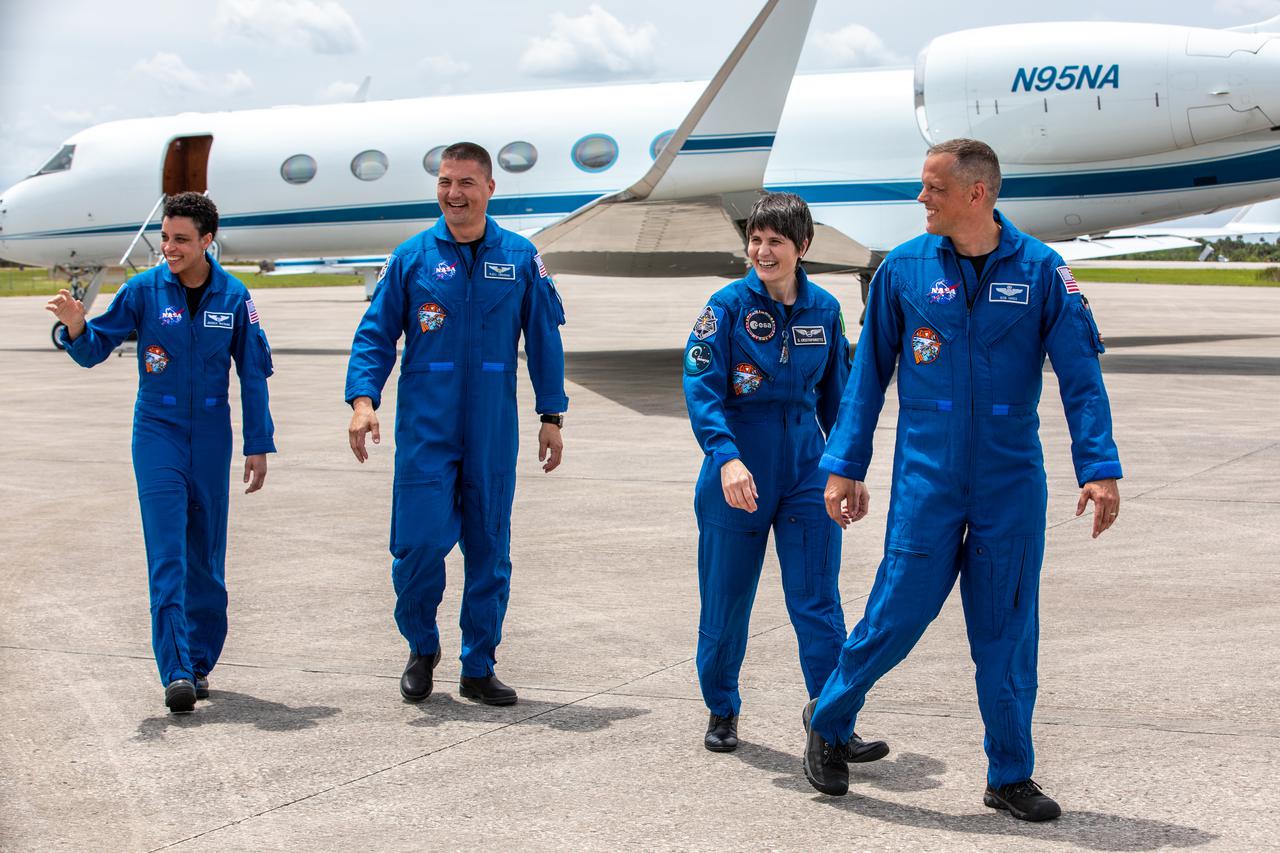
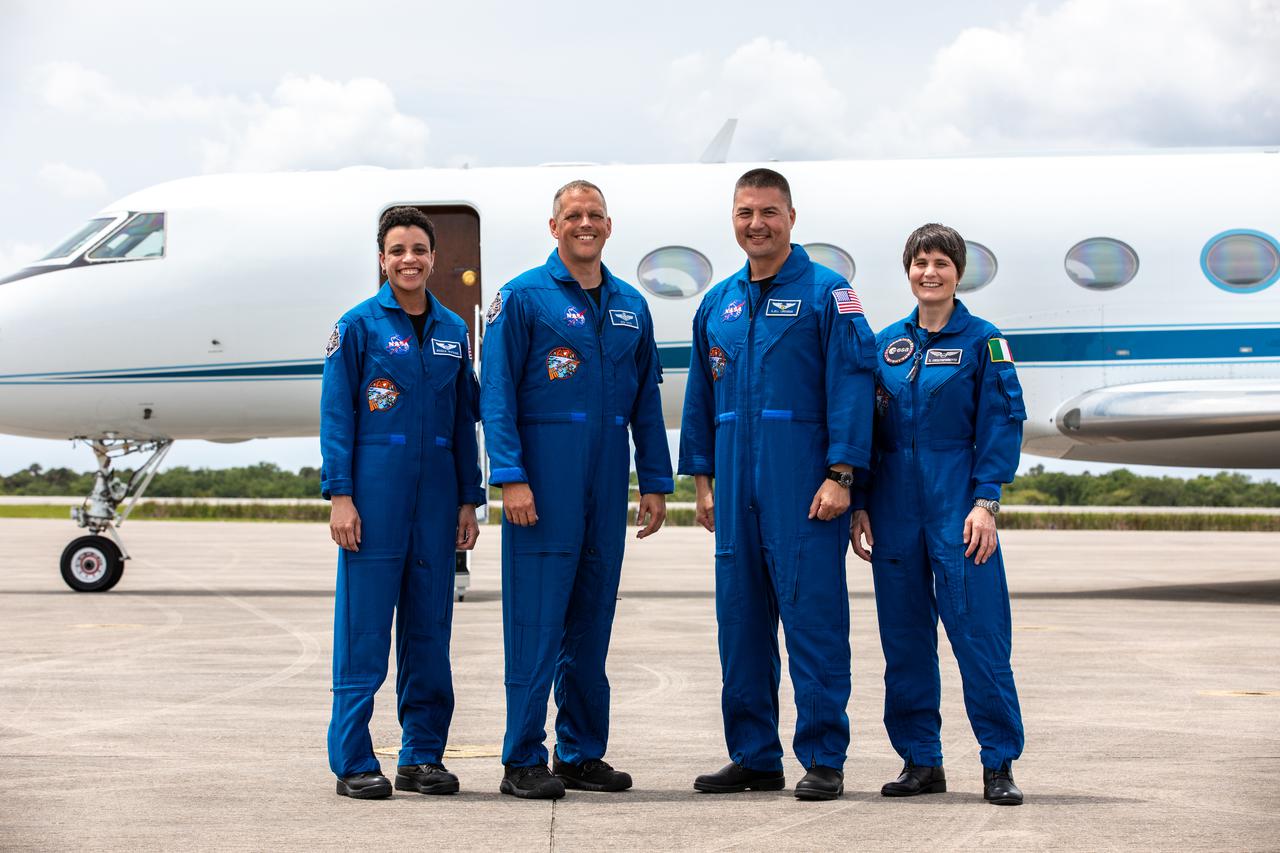
SpaceX Crew-4 astronauts, from left, Jessica Watkins, Bob Hines, and Kjell Lindgren, along with ESA (European Space Agency) astronaut Samantha Cristoforetti, pause for a photograph after arriving at the Launch and Landing Facility at Kennedy Space Center in Florida on April 18, 2022. The astronauts will enter quarantine at the center’s astronaut crew quarters, as they await launch aboard the Crew Dragon on a SpaceX Falcon 9 rocket. Launch is targeted for 5:26 a.m. EDT on April 23, 2022, from Kennedy’s Launch Complex 39A.
NASA Hosts Media Event for the agency’s SpaceX Crew-4 Mission
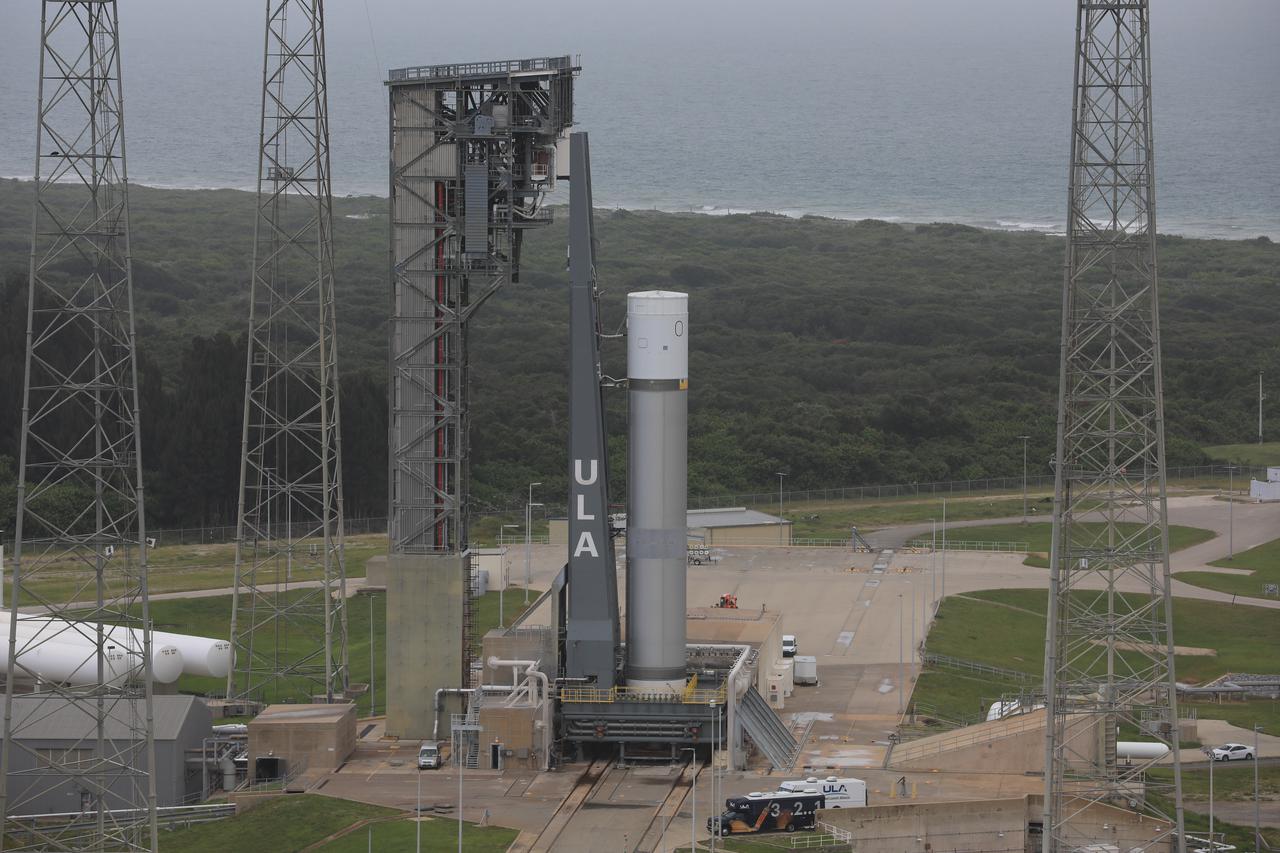
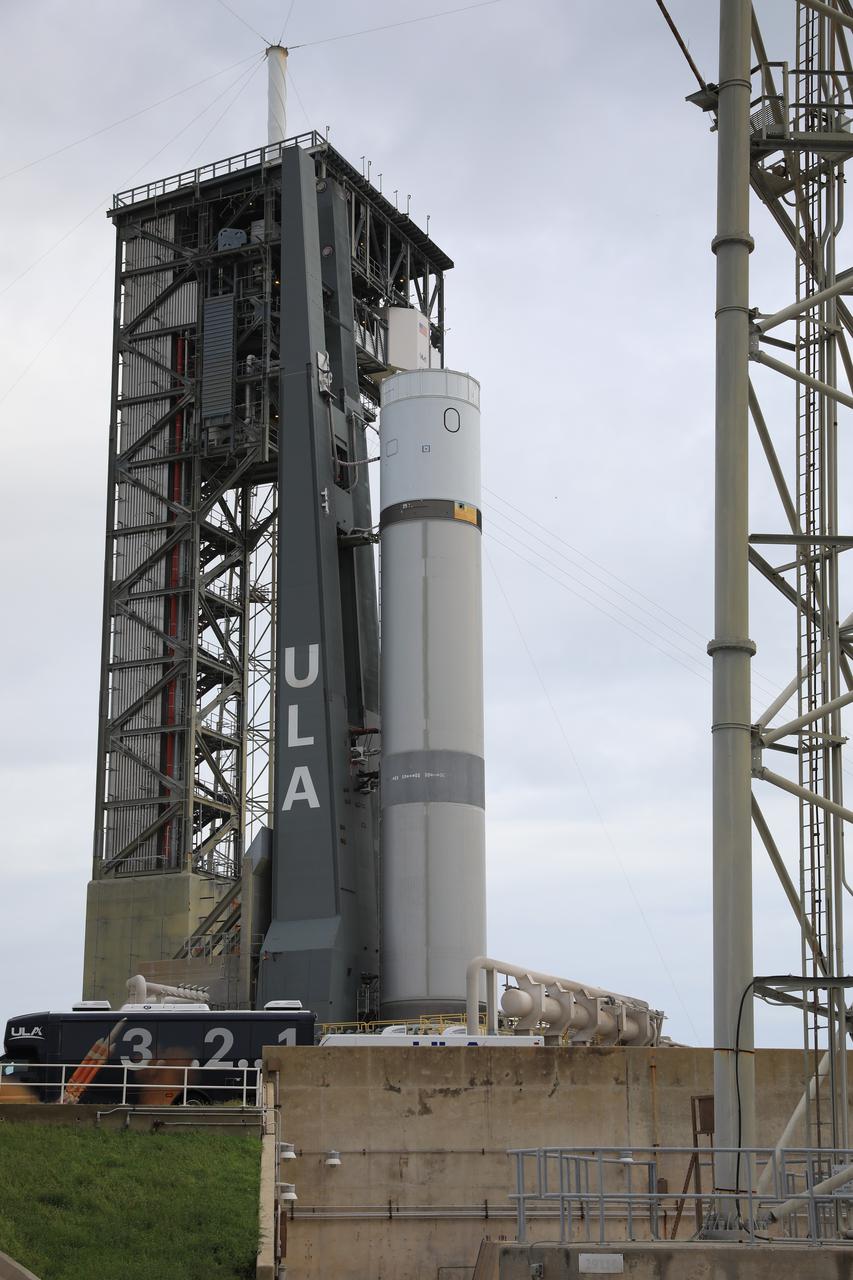
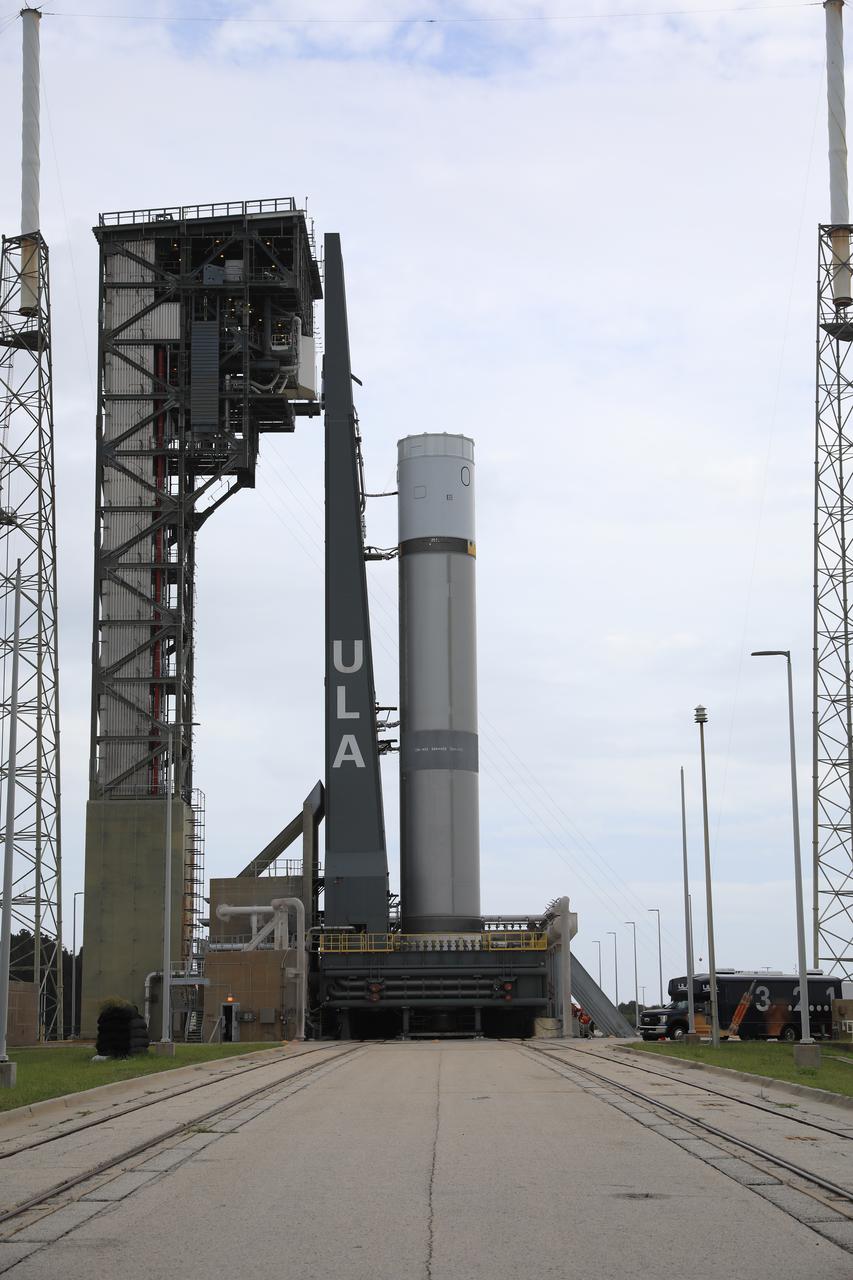
A pathfinder test article of United Launch Alliance’s (ULA) Vulcan Centaur rocket is seen at Space Launch Complex 41 at Cape Canaveral Space Force Station in Florida on Aug. 26, 2021. The pathfinder booster is undergoing a series of fueling tests to validate the infrastructure in place at the launch pad and allow the launch team to rehearse countdown operations before the Vulcan’s first flight.
ULA Vulcan Rocket Unveiled at SLC-41
SpaceX Crew-4 astronauts arrive at the Launch and Landing Facility at Kennedy Space Center in Florida on April 18, 2022. From left are Jessica Watkins, Kjell Lindgren, ESA (European Space Agency) astronaut Samantha Cristoforetti, and Bob Hines. The astronauts will enter quarantine at the center’s astronaut crew quarters, as they await launch aboard the Crew Dragon on a SpaceX Falcon 9 rocket. Launch is targeted for 5:26 a.m. EDT on April 23, 2022, from Kennedy’s Launch Complex 39A.
NASA Hosts Media Event for the agency’s SpaceX Crew-4 Mission
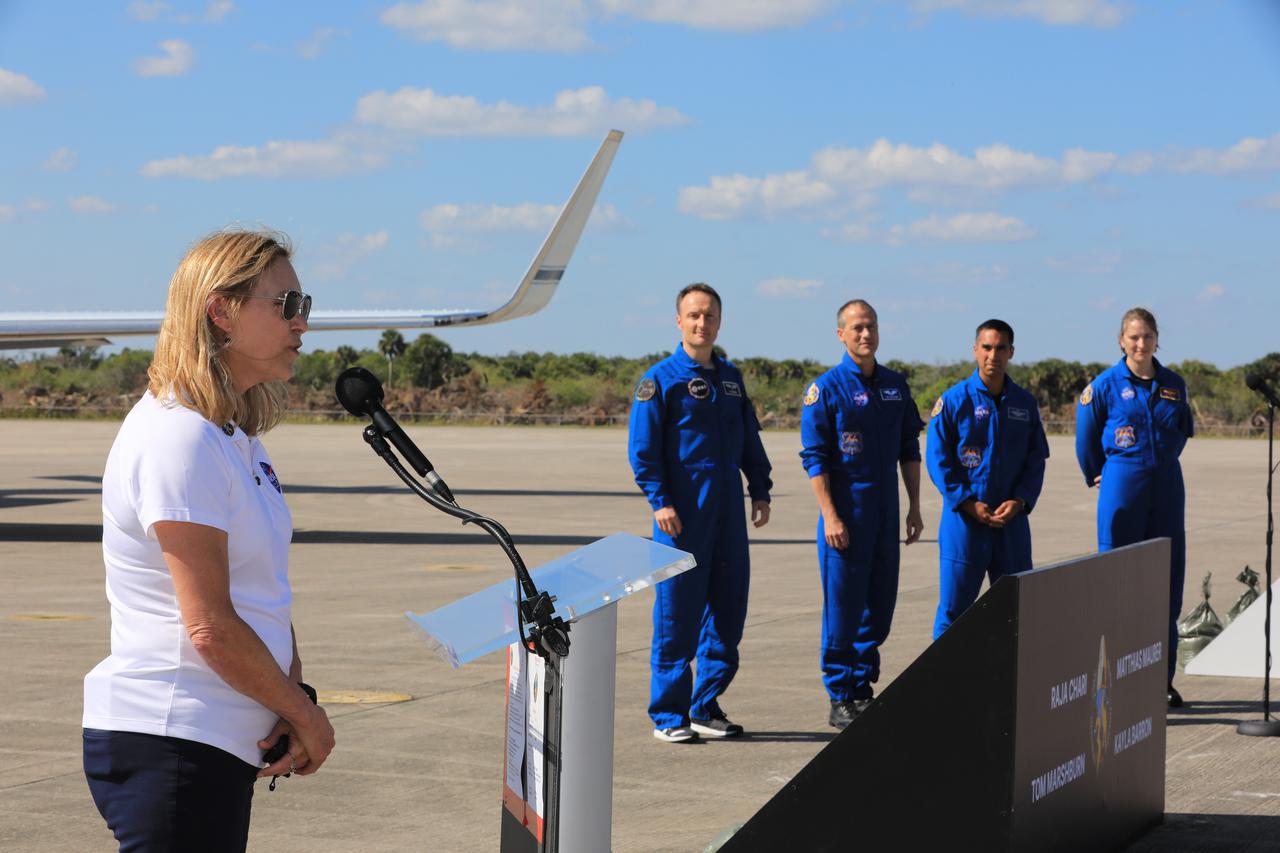
Kennedy Space Center Director Janet Petro, far left, greets the crew members of NASA’s SpaceX Crew-3 mission after their arrival at the center’s Launch and Landing Facility in Florida on Oct. 26, 2021. From left are European Space Agency astronaut Matthias Maurer, and NASA astronauts Tom Marshburn, Raja Chari, and Kayla Barron. Crew-3 will launch aboard the Crew Dragon on a SpaceX Falcon 9 rocket. Launch is targeted for 2:21 a.m. EDT on October 31 from Launch Complex 39A.
NASA Hosts Media Event for the agency’s SpaceX Crew-3 Mission
NASA astronaut Bob Hines speaks to members of the news media during crew arrival for NASA’s SpaceX Crew-4 mission at the Launch and Landing Facility at Kennedy Space Center in Florida on April 18, 2022. Hines, along with NASA astronauts Kjell Lindgren and Jessica Watkins, and ESA (European Space Agency) astronaut Samantha Cristoforetti, will launch aboard SpaceX’s Crew Dragon and Falcon 9 rocket on April 23, 2022. Launch is targeted for 5:26 a.m. EDT from Kennedy’s Launch Complex 39A.
NASA Hosts Media Event for the agency’s SpaceX Crew-4 Mission
A pathfinder test article of United Launch Alliance’s (ULA) Vulcan Centaur rocket is seen at Space Launch Complex 41 at Cape Canaveral Space Force Station in Florida on Aug. 26, 2021. The pathfinder booster is undergoing a series of fueling tests to validate the infrastructure in place at the launch pad and allow the launch team to rehearse countdown operations before the Vulcan’s first flight.
ULA Vulcan Rocket Unveiled at SLC-41
A pathfinder test article of United Launch Alliance’s (ULA) Vulcan Centaur rocket is seen at Space Launch Complex 41 at Cape Canaveral Space Force Station in Florida on Aug. 26, 2021. The pathfinder booster is undergoing a series of fueling tests to validate the infrastructure in place at the launch pad and allow the launch team to rehearse countdown operations before the Vulcan’s first flight.
ULA Vulcan Rocket Unveiled at SLC-41
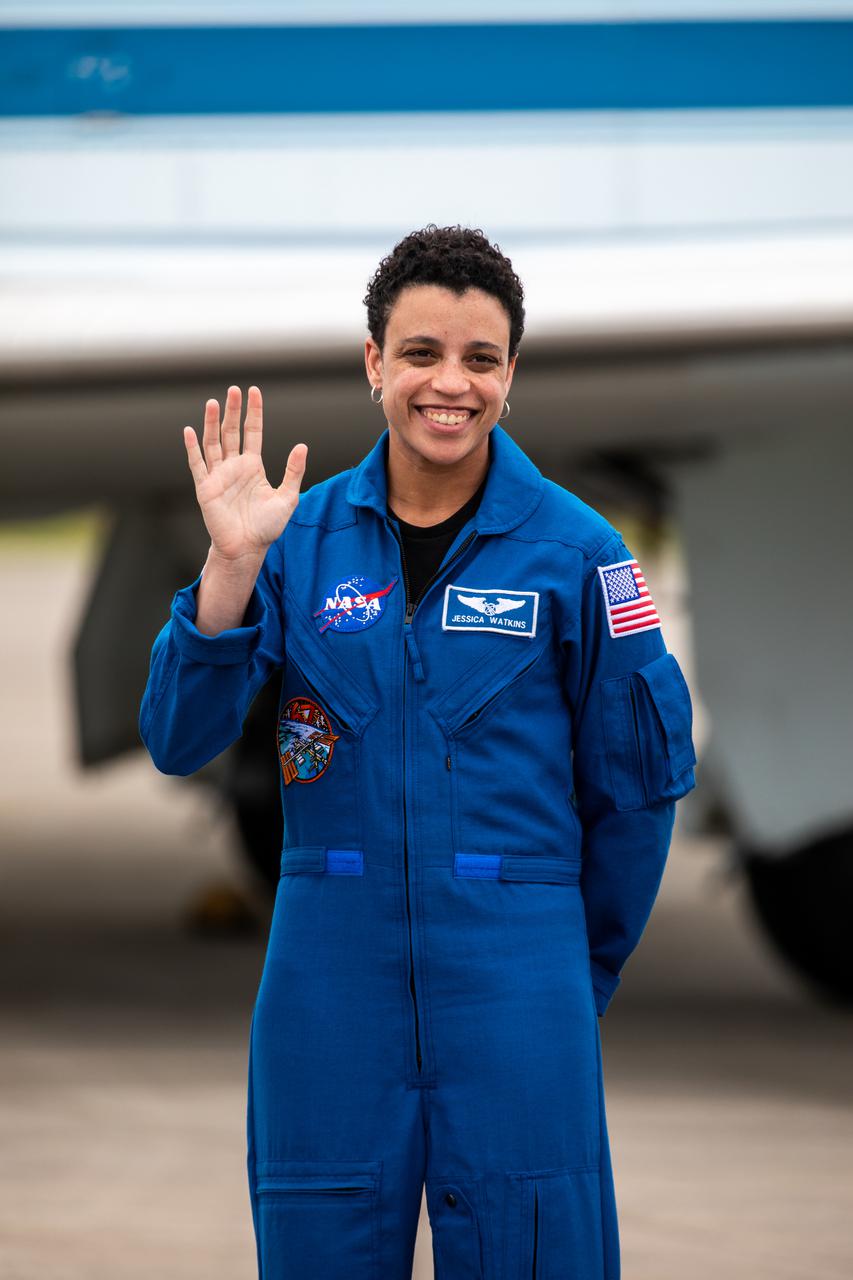
NASA astronaut Jessica Watkins speaks to members of the news media during crew arrival for NASA’s SpaceX Crew-4 mission at the Launch and Landing Facility at Kennedy Space Center in Florida on April 18, 2022. Watkins, along with NASA astronauts Kjell Lindgren and Bob Hines, and ESA (European Space Agency) astronaut Samantha Cristoforetti, will launch aboard SpaceX’s Crew Dragon and Falcon 9 rocket on April 23, 2022. Launch is targeted for 5:26 a.m. EDT from Kennedy’s Launch Complex 39A.
NASA Hosts Media Event for the agency’s SpaceX Crew-4 Mission
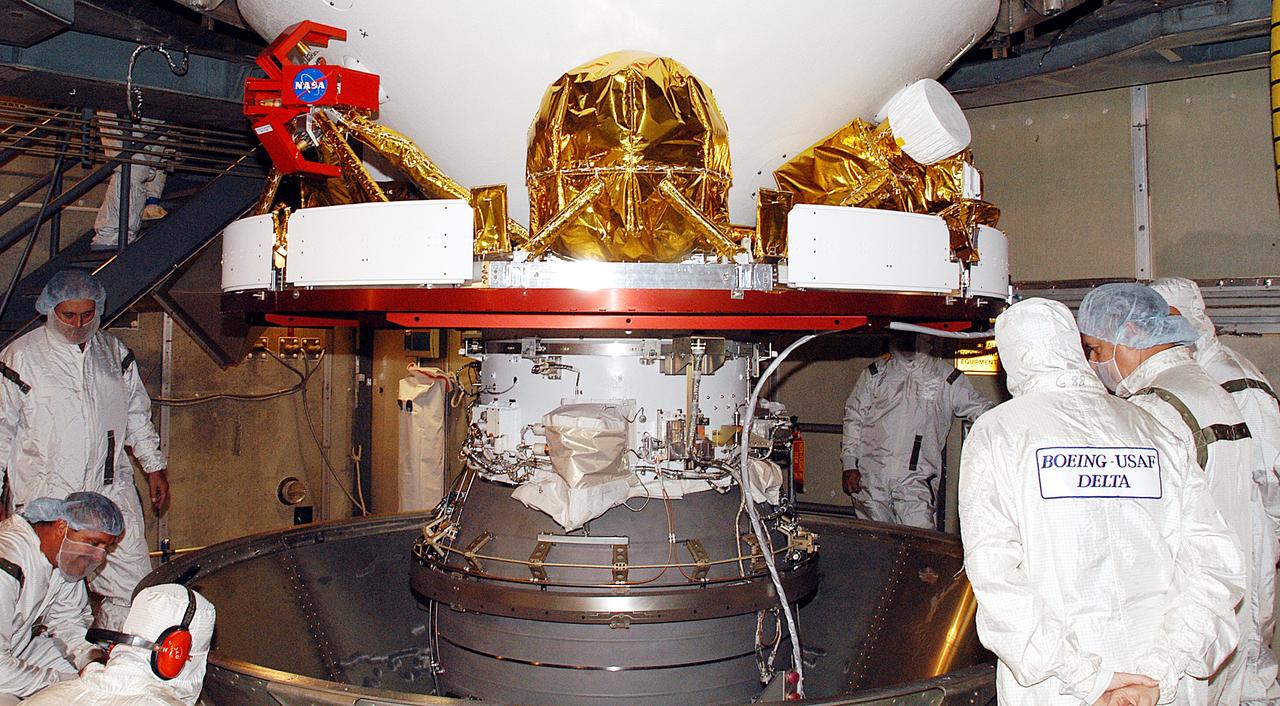
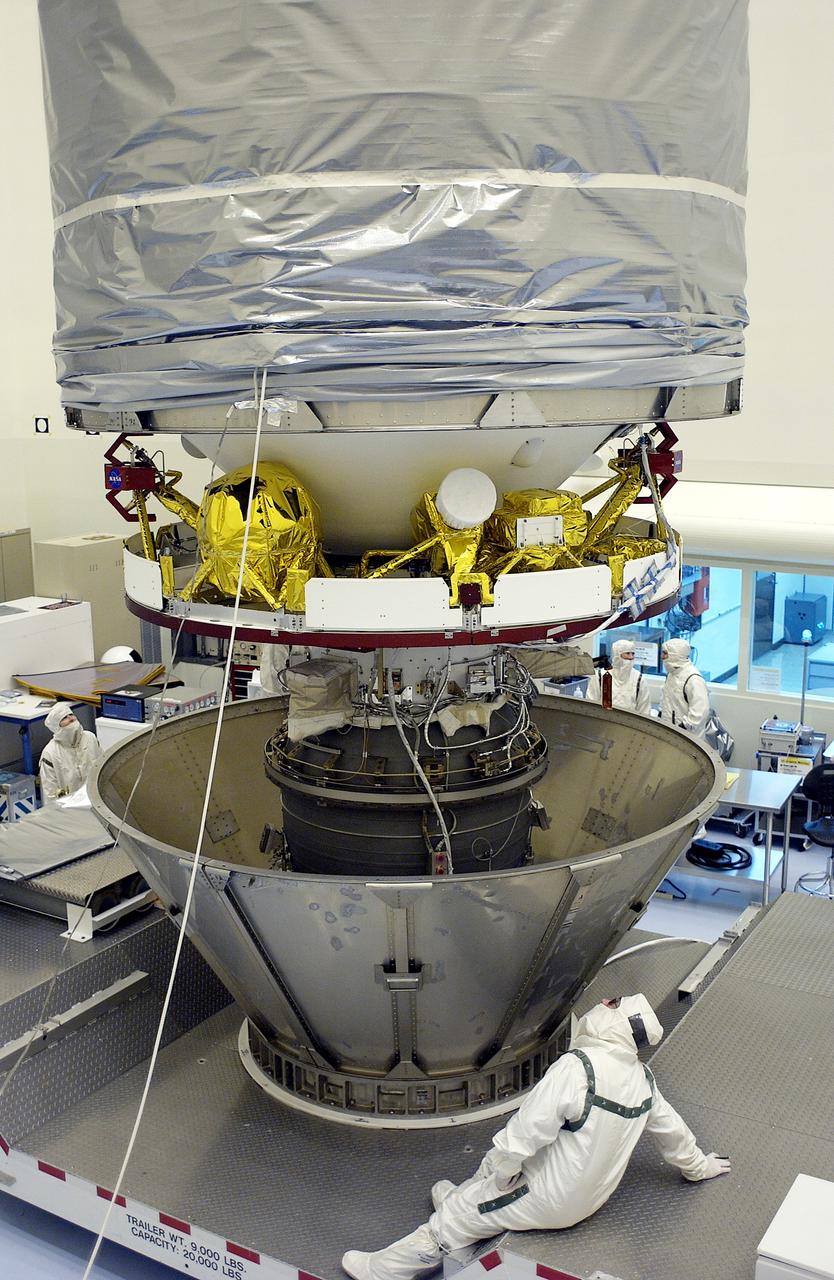
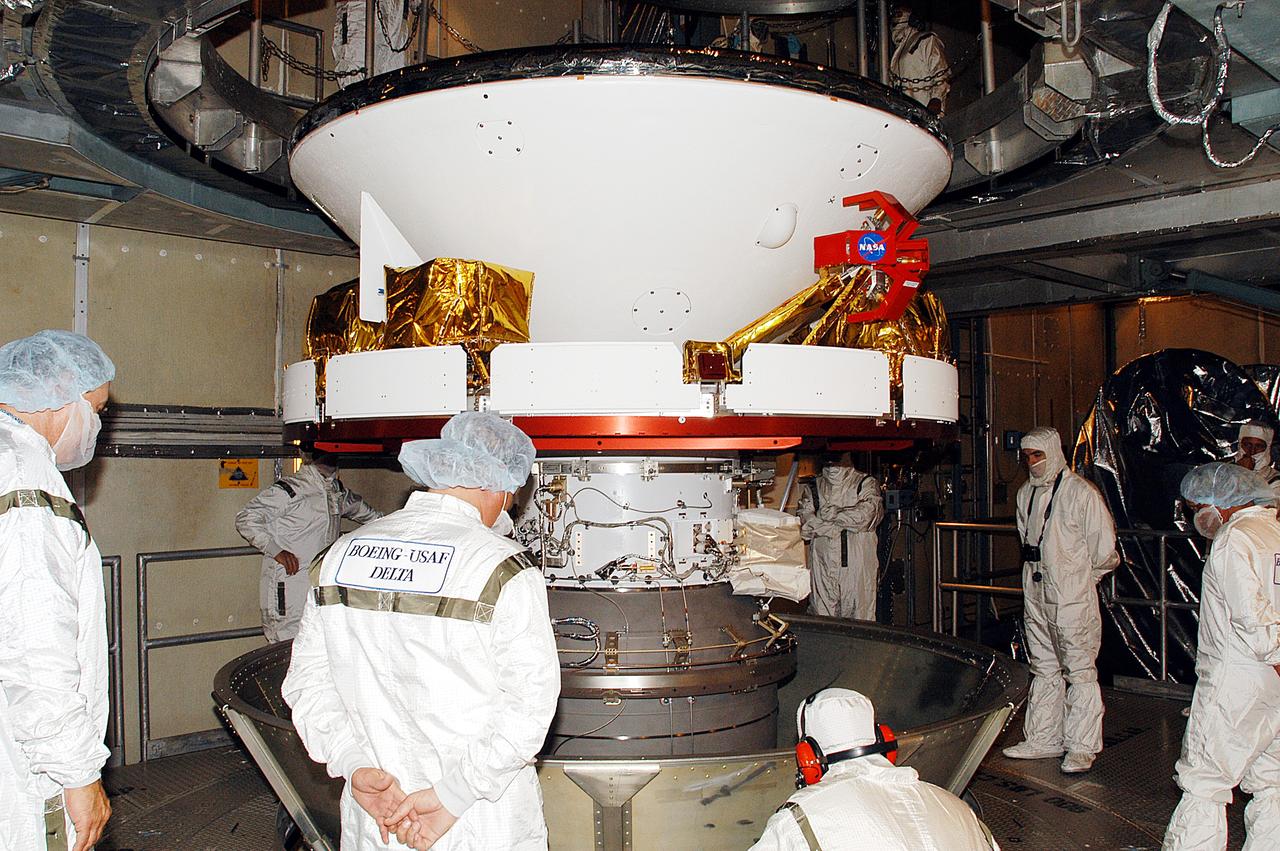
KENNEDY SPACE CENTER, FLA. -   The canister is lifted off the Mars Exploration Rover 1 (MER-B) in the gantry on Launch Complex 17-B, Cape Canaveral Air Force Station.  The second of twin rovers being sent to Mars, it is equipped with a robotic arm, a drilling tool, three spectrometers, and four pairs of cameras that allow it to have a human-like, 3D view of the terrain. Each rover could travel as far as 100 meters in one day to act as Mars scientists' eyes and hands, exploring an environment where humans can't yet go.  MER-B is scheduled to launch June 26 at one of two available times,  12:27:31 a.m. EDT or 1:08:45 a.m. EDT.
KENNEDY SPACE CENTER, FLA. - The canister is lifted off the Mars Exploration Rover 1 (MER-B) in the gantry on Launch Complex 17-B, Cape Canaveral Air Force Station. The second of twin rovers being sent to Mars, it is equipped with a robotic arm, a drilling tool, three spectrometers, and four pairs of cameras that allow it to have a human-like, 3D view of the terrain. Each rover could travel as far as 100 meters in one day to act as Mars scientists' eyes and hands, exploring an environment where humans can't yet go. MER-B is scheduled to launch June 26 at one of two available times, 12:27:31 a.m. EDT or 1:08:45 a.m. EDT.
KENNEDY SPACE CENTER, FLA. -    In the gantry on Launch Complex 17-B, Cape Canaveral Air Force Station, Mars Exploration Rover 1 (MER-B) is revealed after removal of the canister.  The second of twin rovers being sent to Mars, it is equipped with a robotic arm, a drilling tool, three spectrometers, and four pairs of cameras that allow it to have a human-like, 3D view of the terrain. Each rover could travel as far as 100 meters in one day to act as Mars scientists' eyes and hands, exploring an environment where humans can't yet go.  MER-B is scheduled to launch June 26 at one of two available times,  12:27:31 a.m. EDT or 1:08:45 a.m. EDT.
KENNEDY SPACE CENTER, FLA. - In the gantry on Launch Complex 17-B, Cape Canaveral Air Force Station, Mars Exploration Rover 1 (MER-B) is revealed after removal of the canister. The second of twin rovers being sent to Mars, it is equipped with a robotic arm, a drilling tool, three spectrometers, and four pairs of cameras that allow it to have a human-like, 3D view of the terrain. Each rover could travel as far as 100 meters in one day to act as Mars scientists' eyes and hands, exploring an environment where humans can't yet go. MER-B is scheduled to launch June 26 at one of two available times, 12:27:31 a.m. EDT or 1:08:45 a.m. EDT.
KENNEDY SPACE CENTER, FLA. -   In the gantry on Launch Complex 17-B, Cape Canaveral Air Force Station, workers start removing the canister from around the Mars Exploration Rover 1 (MER-B).  The second of twin rovers being sent to Mars, it is equipped with a robotic arm, a drilling tool, three spectrometers, and four pairs of cameras that allow it to have a human-like, 3D view of the terrain. Each rover could travel as far as 100 meters in one day to act as Mars scientists' eyes and hands, exploring an environment where humans can't yet go.  MER-B is scheduled to launch June 26 at one of two available times,  12:27:31 a.m. EDT or 1:08:45 a.m. EDT.
KENNEDY SPACE CENTER, FLA. - In the gantry on Launch Complex 17-B, Cape Canaveral Air Force Station, workers start removing the canister from around the Mars Exploration Rover 1 (MER-B). The second of twin rovers being sent to Mars, it is equipped with a robotic arm, a drilling tool, three spectrometers, and four pairs of cameras that allow it to have a human-like, 3D view of the terrain. Each rover could travel as far as 100 meters in one day to act as Mars scientists' eyes and hands, exploring an environment where humans can't yet go. MER-B is scheduled to launch June 26 at one of two available times, 12:27:31 a.m. EDT or 1:08:45 a.m. EDT.
KENNEDY SPACE CENTER, FLA. -    In the gantry on Launch Complex 17-B, Cape Canaveral Air Force Station, Mars Exploration Rover 1 (MER-B) is revealed after removal of the canister.  The second of twin rovers being sent to Mars, it is equipped with a robotic arm, a drilling tool, three spectrometers, and four pairs of cameras that allow it to have a human-like, 3D view of the terrain. Each rover could travel as far as 100 meters in one day to act as Mars scientists' eyes and hands, exploring an environment where humans can't yet go.  MER-B is scheduled to launch June 26 at one of two available times,  12:27:31 a.m. EDT or 1:08:45 a.m. EDT.
KENNEDY SPACE CENTER, FLA. - In the gantry on Launch Complex 17-B, Cape Canaveral Air Force Station, Mars Exploration Rover 1 (MER-B) is revealed after removal of the canister. The second of twin rovers being sent to Mars, it is equipped with a robotic arm, a drilling tool, three spectrometers, and four pairs of cameras that allow it to have a human-like, 3D view of the terrain. Each rover could travel as far as 100 meters in one day to act as Mars scientists' eyes and hands, exploring an environment where humans can't yet go. MER-B is scheduled to launch June 26 at one of two available times, 12:27:31 a.m. EDT or 1:08:45 a.m. EDT.
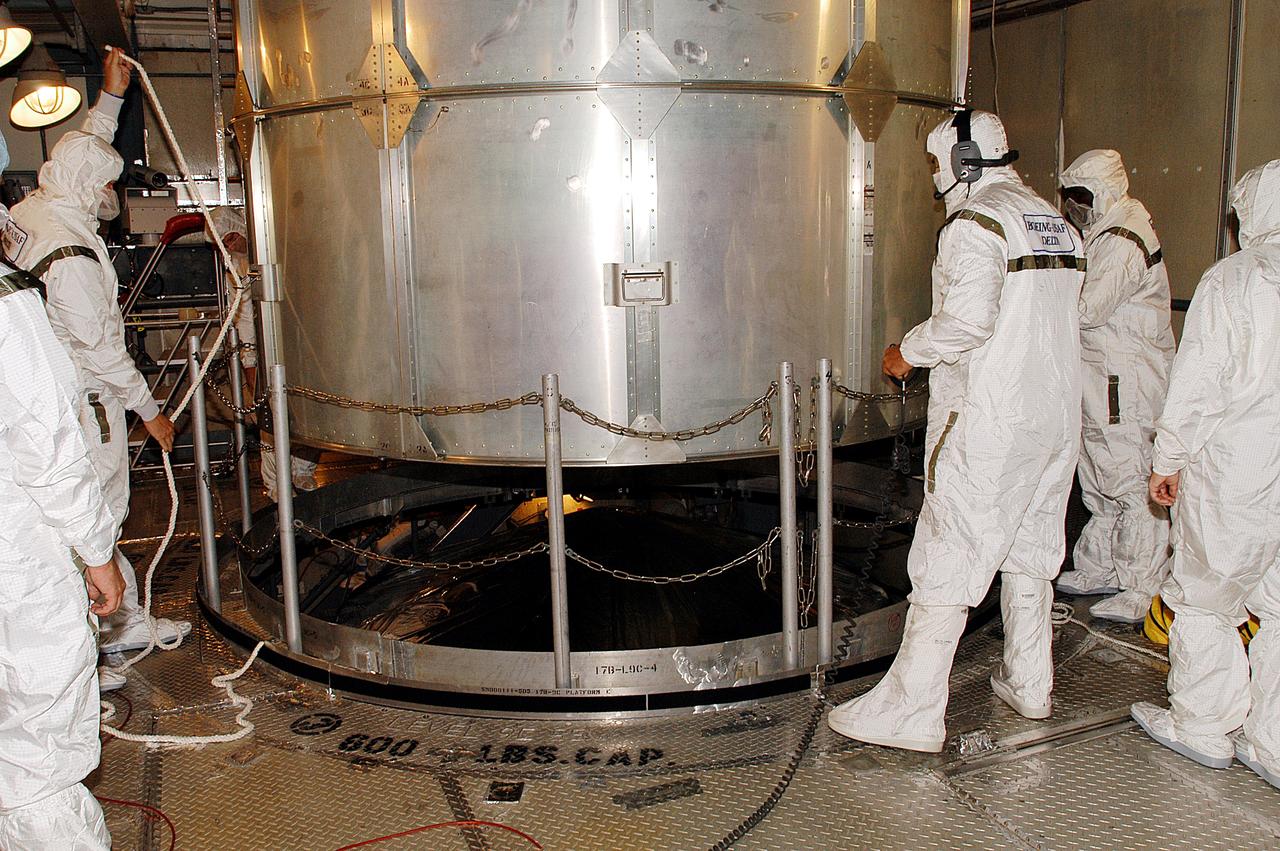
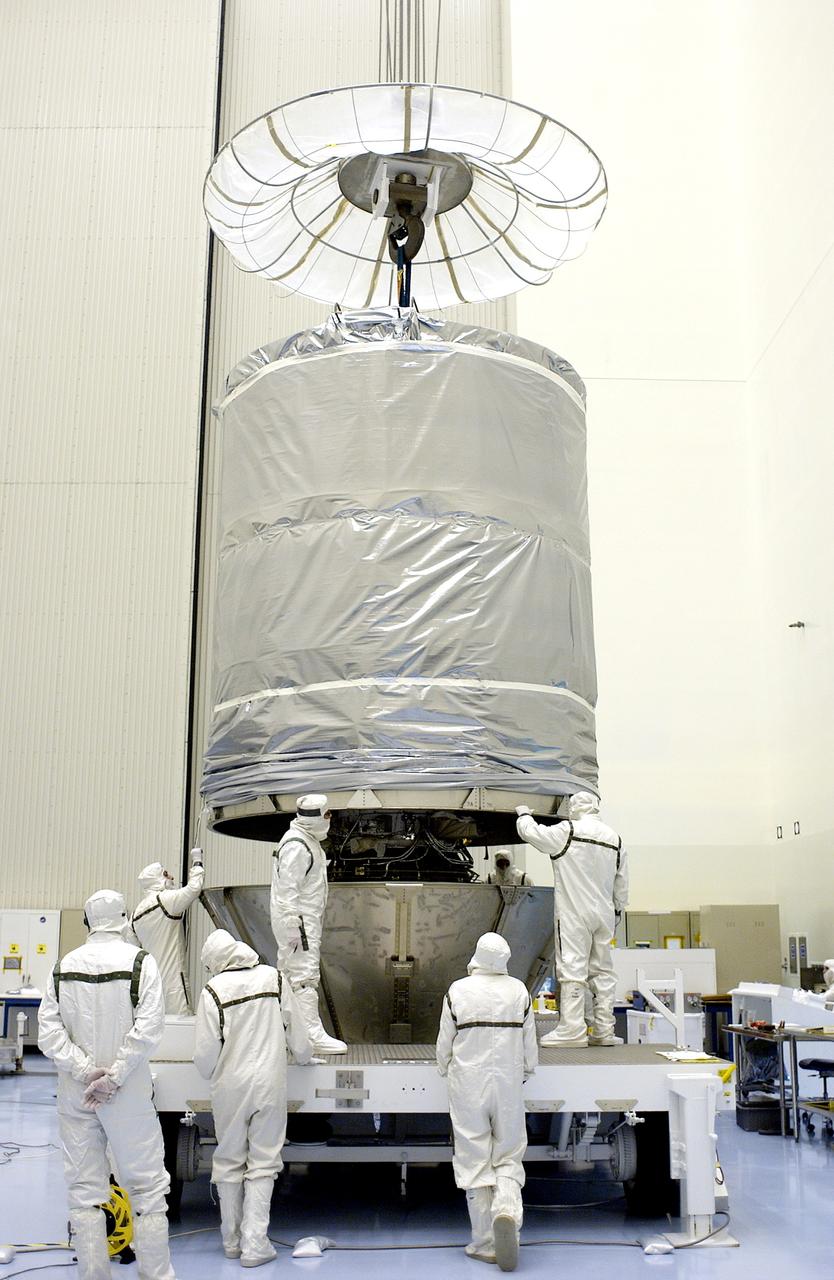
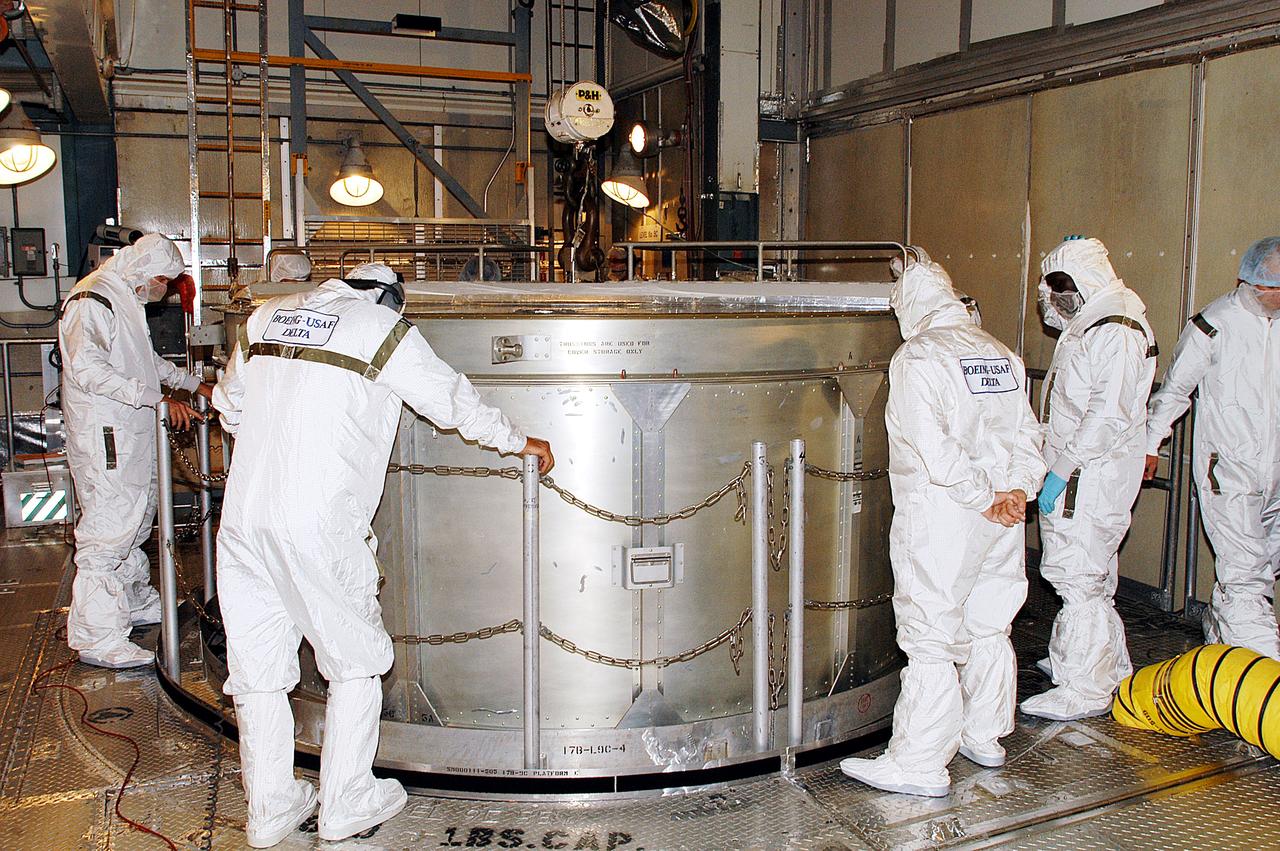
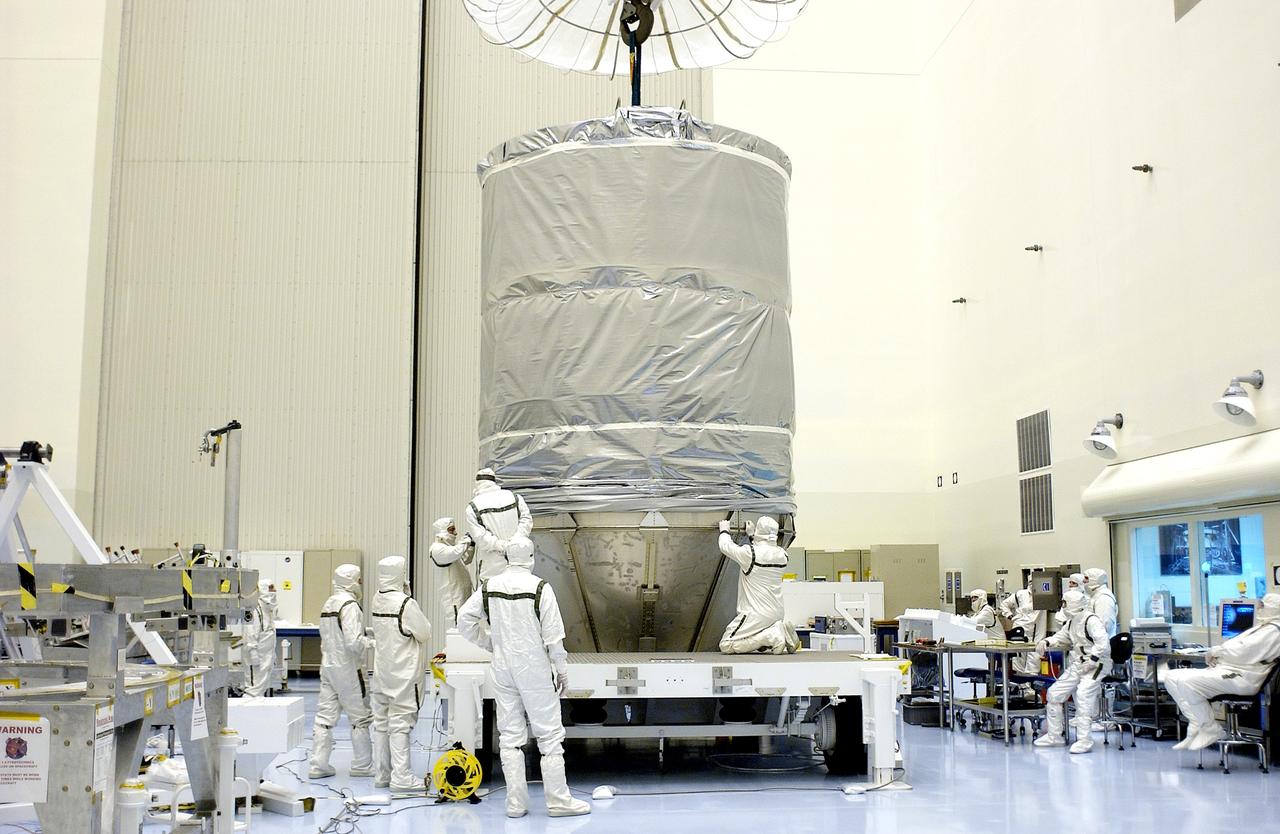
KENNEDY SPACE CENTER, FLA. - In the Payload Hazardous Servicing Facility, the cylindrical payload canister is lowered around Mars Exploration Rover 1 (MER-B).  Once secure inside the canister, the rover will be transported to Launch Complex 17-B, Cape Canaveral Air Force Station, for mating with the Delta rocket.  The second of twin rovers being sent to Mars, it is equipped with a robotic arm, a drilling tool, three spectrometers, and four pairs of cameras that allow it to have a human-like, 3D view of the terrain. Each rover could travel as far as 100 meters in one day to act as Mars scientists' eyes and hands, exploring an environment where humans can't yet go.  MER-B is scheduled to launch from Pad 17-B June 26 at one of two available times,  12:27:31 a.m. EDT or 1:08:45 a.m. EDT.
KENNEDY SPACE CENTER, FLA. - In the Payload Hazardous Servicing Facility, the cylindrical payload canister is lowered around Mars Exploration Rover 1 (MER-B). Once secure inside the canister, the rover will be transported to Launch Complex 17-B, Cape Canaveral Air Force Station, for mating with the Delta rocket. The second of twin rovers being sent to Mars, it is equipped with a robotic arm, a drilling tool, three spectrometers, and four pairs of cameras that allow it to have a human-like, 3D view of the terrain. Each rover could travel as far as 100 meters in one day to act as Mars scientists' eyes and hands, exploring an environment where humans can't yet go. MER-B is scheduled to launch from Pad 17-B June 26 at one of two available times, 12:27:31 a.m. EDT or 1:08:45 a.m. EDT.
KENNEDY SPACE CENTER, FLA. - In the Payload Hazardous Servicing Facility, workers maneuver the cylindrical payload canister into place around Mars Exploration Rover 1 (MER-B).  Once secure inside the canister, the rover will be transported to Launch Complex 17-B, Cape Canaveral Air Force Station, for mating with the Delta rocket.  The second of twin rovers being sent to Mars, it is equipped with a robotic arm, a drilling tool, three spectrometers, and four pairs of cameras that allow it to have a human-like, 3D view of the terrain. Each rover could travel as far as 100 meters in one day to act as Mars scientists' eyes and hands, exploring an environment where humans can't yet go.  MER-B is scheduled to launch from Pad 17-B June 26 at one of two available times,  12:27:31 a.m. EDT or 1:08:45 a.m. EDT.
KENNEDY SPACE CENTER, FLA. - In the Payload Hazardous Servicing Facility, workers maneuver the cylindrical payload canister into place around Mars Exploration Rover 1 (MER-B). Once secure inside the canister, the rover will be transported to Launch Complex 17-B, Cape Canaveral Air Force Station, for mating with the Delta rocket. The second of twin rovers being sent to Mars, it is equipped with a robotic arm, a drilling tool, three spectrometers, and four pairs of cameras that allow it to have a human-like, 3D view of the terrain. Each rover could travel as far as 100 meters in one day to act as Mars scientists' eyes and hands, exploring an environment where humans can't yet go. MER-B is scheduled to launch from Pad 17-B June 26 at one of two available times, 12:27:31 a.m. EDT or 1:08:45 a.m. EDT.
KENNEDY SPACE CENTER, FLA. - Workers in the Payload Hazardous Servicing Facility secure the lower panels of a payload canister around Mars Exploration Rover 1 (MER-B).  The rover will be transported to Launch Complex 17-B, Cape Canaveral Air Force Station, for mating with the Delta rocket.  The second of twin rovers being sent to Mars, it is equipped with a robotic arm, a drilling tool, three spectrometers, and four pairs of cameras that allow it to have a human-like, 3D view of the terrain. Each rover could travel as far as 100 meters in one day to act as Mars scientists' eyes and hands, exploring an environment where humans can't yet go.  MER-B is scheduled to launch from Pad 17-B June 26 at one of two available times,  12:27:31 a.m. EDT or 1:08:45 a.m. EDT.
KENNEDY SPACE CENTER, FLA. - Workers in the Payload Hazardous Servicing Facility secure the lower panels of a payload canister around Mars Exploration Rover 1 (MER-B). The rover will be transported to Launch Complex 17-B, Cape Canaveral Air Force Station, for mating with the Delta rocket. The second of twin rovers being sent to Mars, it is equipped with a robotic arm, a drilling tool, three spectrometers, and four pairs of cameras that allow it to have a human-like, 3D view of the terrain. Each rover could travel as far as 100 meters in one day to act as Mars scientists' eyes and hands, exploring an environment where humans can't yet go. MER-B is scheduled to launch from Pad 17-B June 26 at one of two available times, 12:27:31 a.m. EDT or 1:08:45 a.m. EDT.
KENNEDY SPACE CENTER, FLA. - In the Payload Hazardous Servicing Facility, workers secure the cylindrical payload canister to the lower panels surrounding Mars Exploration Rover 1 (MER-B).  Once secure inside the canister, the rover will be transported to Launch Complex 17-B, Cape Canaveral Air Force Station, for mating with the Delta rocket.  The second of twin rovers being sent to Mars, it is equipped with a robotic arm, a drilling tool, three spectrometers, and four pairs of cameras that allow it to have a human-like, 3D view of the terrain. Each rover could travel as far as 100 meters in one day to act as Mars scientists' eyes and hands, exploring an environment where humans can't yet go.  MER-B is scheduled to launch from Pad 17-B June 26 at one of two available times,  12:27:31 a.m. EDT or 1:08:45 a.m. EDT.
KENNEDY SPACE CENTER, FLA. - In the Payload Hazardous Servicing Facility, workers secure the cylindrical payload canister to the lower panels surrounding Mars Exploration Rover 1 (MER-B). Once secure inside the canister, the rover will be transported to Launch Complex 17-B, Cape Canaveral Air Force Station, for mating with the Delta rocket. The second of twin rovers being sent to Mars, it is equipped with a robotic arm, a drilling tool, three spectrometers, and four pairs of cameras that allow it to have a human-like, 3D view of the terrain. Each rover could travel as far as 100 meters in one day to act as Mars scientists' eyes and hands, exploring an environment where humans can't yet go. MER-B is scheduled to launch from Pad 17-B June 26 at one of two available times, 12:27:31 a.m. EDT or 1:08:45 a.m. EDT.
Megan Cruz, NASA Communications, moderates a Crew-4 press briefing April 26, 2022, at NASA’s Kennedy Space Center in Florida ahead of the agency’s SpaceX Crew-4 launch. Crew-4 is the fourth crew rotation flight to the International Space Station as part of NASA’s Commercial Crew Program. The SpaceX Crew Dragon capsule will launch atop the company’s Falcon 9 rocket from Launch Complex 39A to the space station on Wednesday, April 27, at 3:52 a.m. EDT.
SpaceX Crew-4 Administrator Briefing
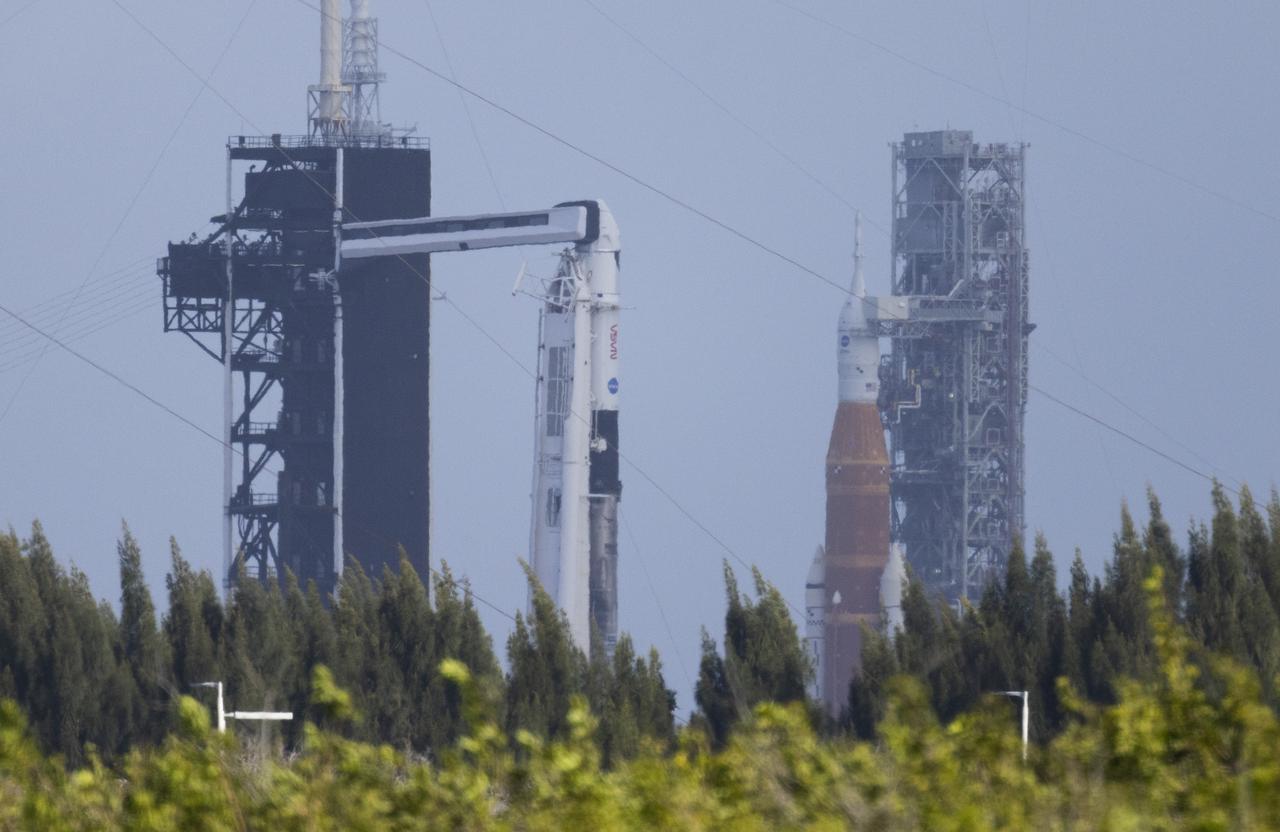
NASA’s Space Launch System (SLS) rocket with the Orion spacecraft aboard is seen atop a mobile launcher at Launch Complex 39B, right, as a SpaceX Falcon 9 rocket with the company's Crew Dragon spacecraft onboard is seen on the launch pad at Launch Complex 39A as preparations continue for the Crew-4 mission, Friday, April 22, 2022, at NASA’s Kennedy Space Center in Florida. NASA’s SpaceX Crew-4 mission is the fourth crew rotation mission of the SpaceX Crew Dragon spacecraft and Falcon 9 rocket to the International Space Station as part of the agency’s Commercial Crew Program. NASA astronauts Kjell Lindgren, Robert Hines, Jessica Watkins, and ESA (European Space Agency) astronaut Samantha Cristoforetti are scheduled to launch no earlier than April 26, from Launch Complex 39A at the Kennedy Space Center. Photo Credit: (NASA/Joel Kowsky)
SpaceX Crew-4 Preflight
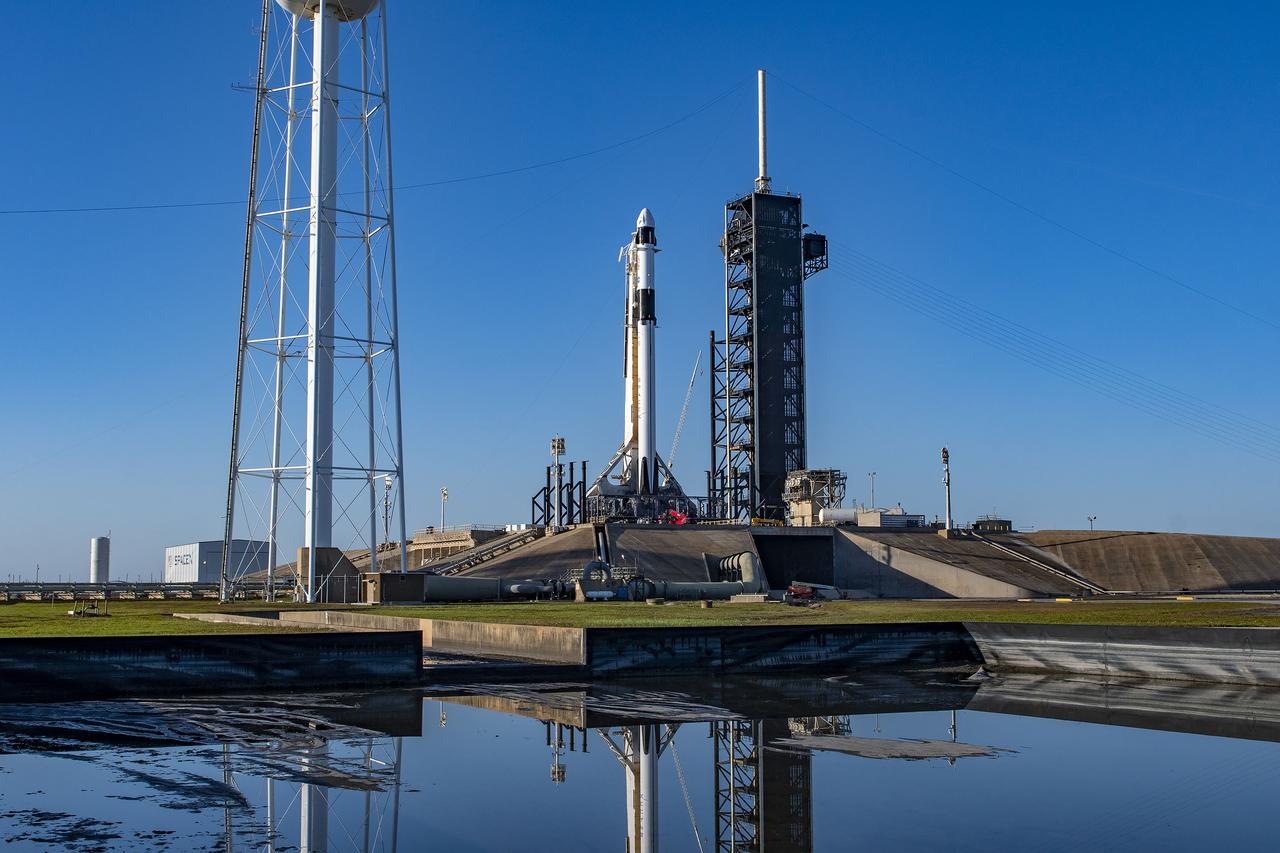
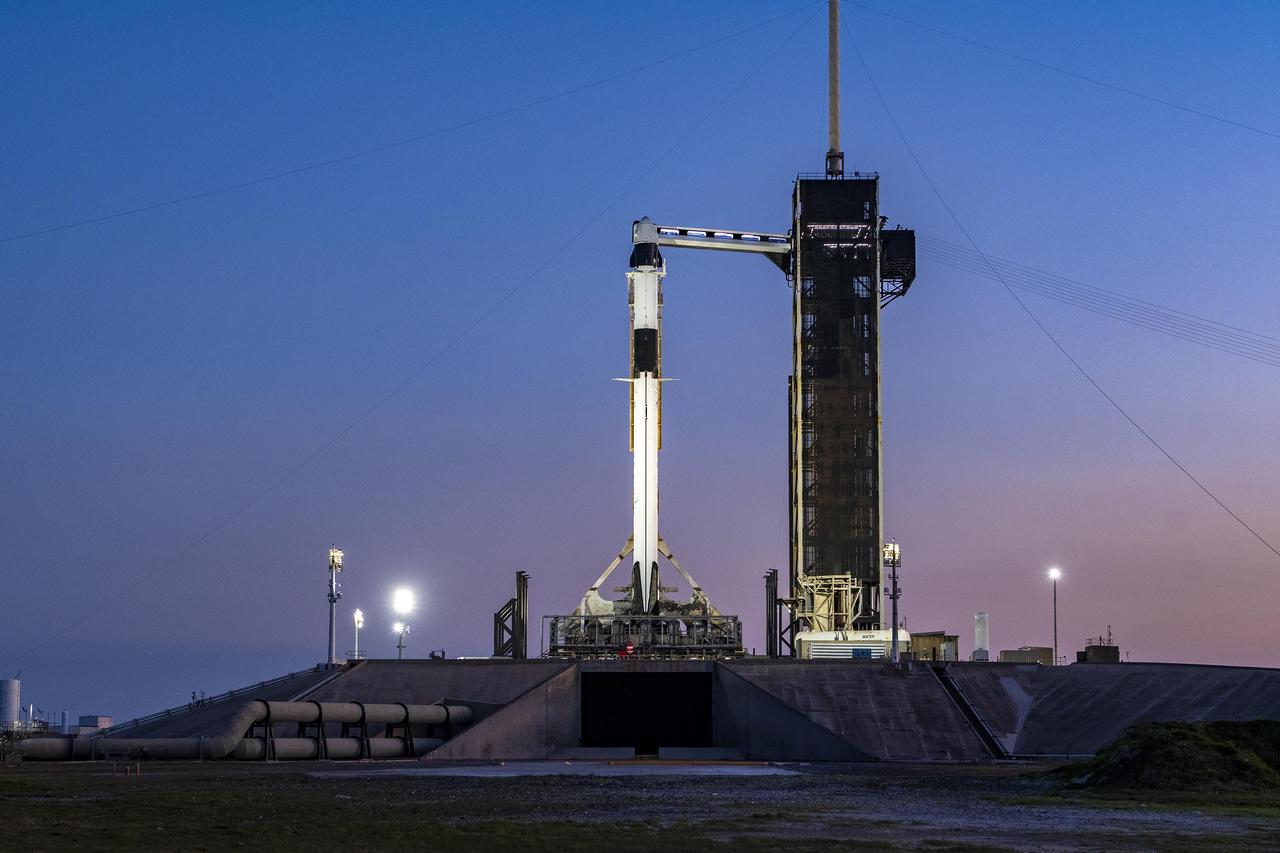
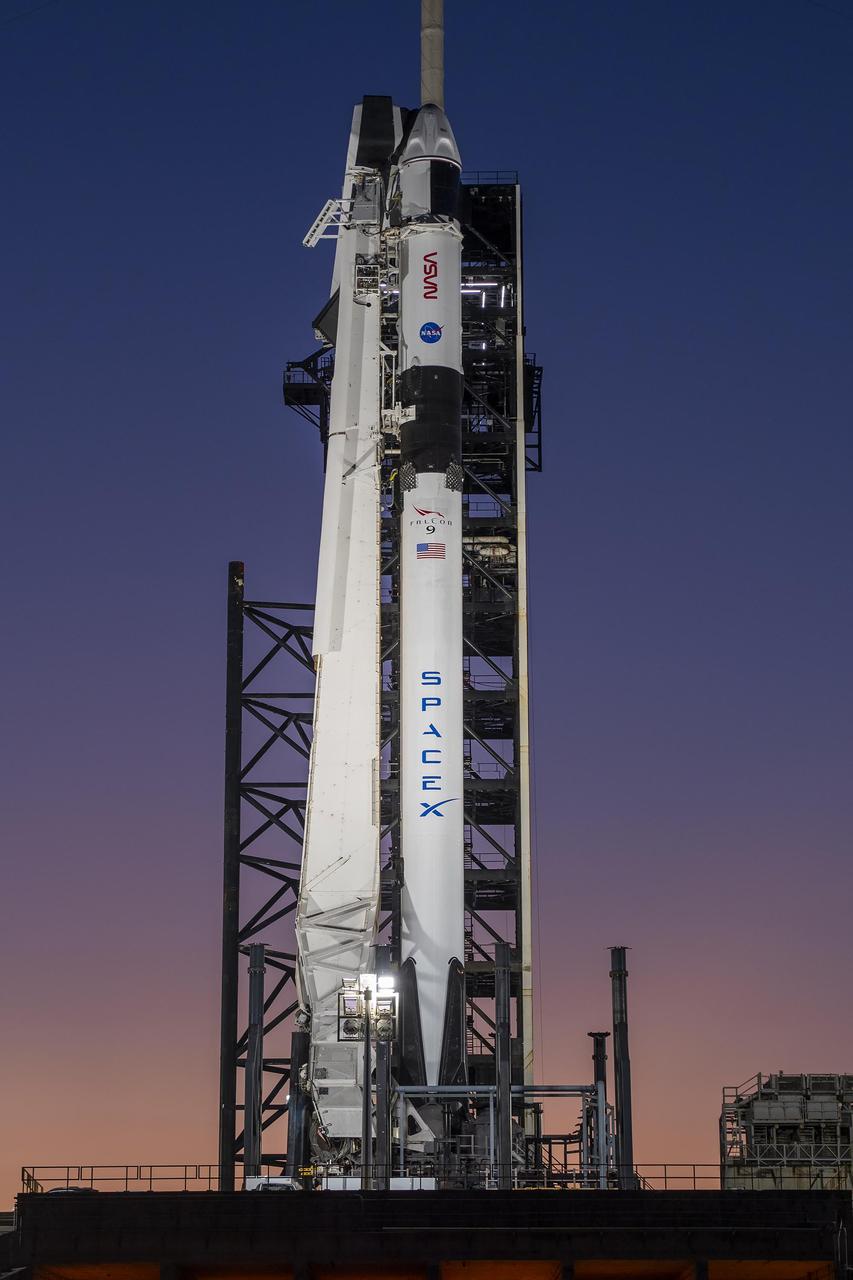
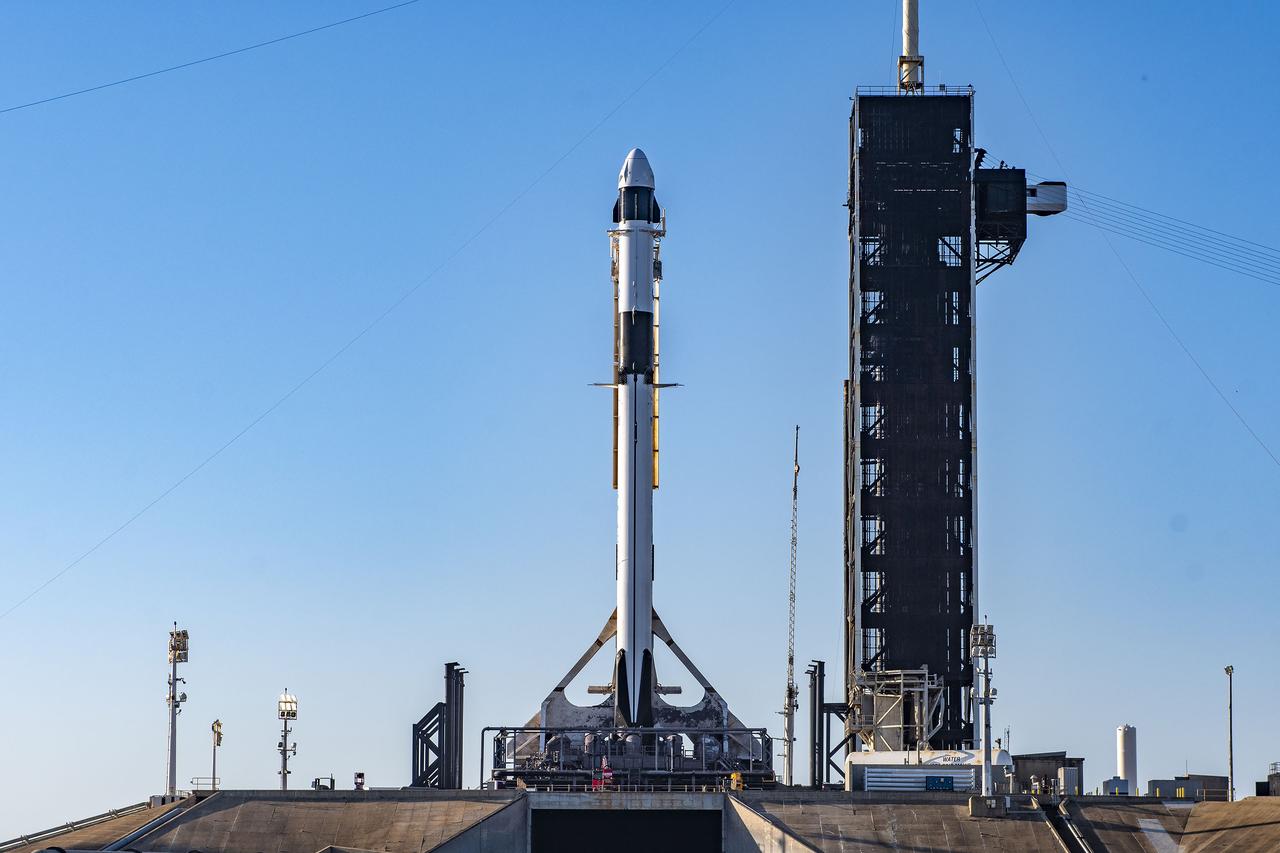
SpaceX’s Falcon 9 rocket, with the Dragon spacecraft atop, is vertical at NASA’s Kennedy Space Center Launch Complex 39A in Florida on Monday, Feb. 26, 2024, ahead of NASA’s SpaceX Crew-8 launch to the International Space Station. The eighth crew rotation mission with SpaceX and the ninth flight of Dragon with people as part of the agency’s Commercial Crew Program is slated to carry NASA astronauts Matthew Dominick, Michael Barratt, and Jeanette Epps, and Roscosmos cosmonaut Alexander Grebenkin to the station from Launch Complex 39A no earlier than 12:04 a.m. EST on March 1, 2024.
NASA/SpaceX Crew-8 Vertical at LC-39A
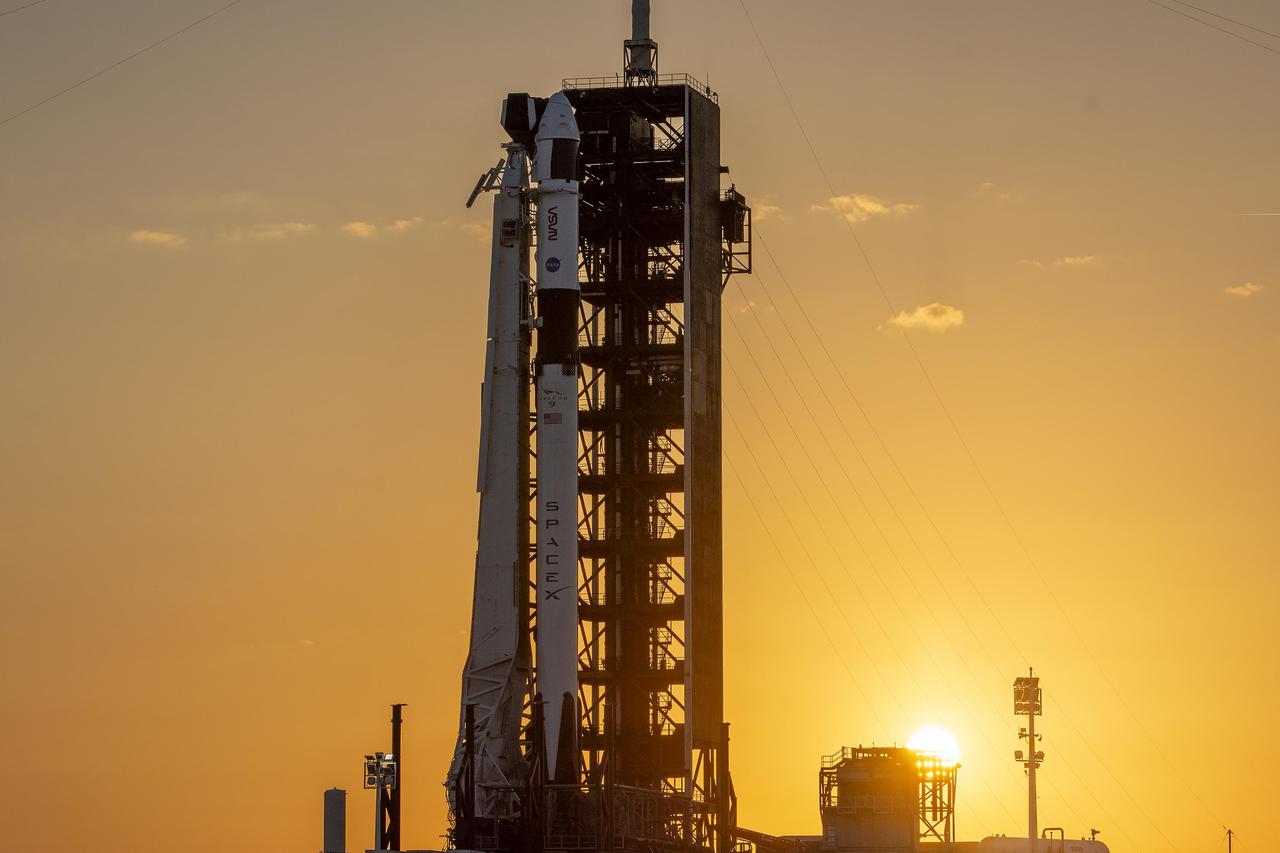
A SpaceX Falcon 9 rocket with the company's Dragon spacecraft on top is seen at sunset on the launch pad at Launch Complex 39A on Monday, Feb. 26, 2024, as preparations continue for NASA’s SpaceX Crew-8 mission at NASA’s Kennedy Space Center in Florida. The eighth crew rotation mission with SpaceX and the ninth flight of Dragon with people as part of the agency’s Commercial Crew Program is slated to carry NASA astronauts Matthew Dominick, Michael Barratt, and Jeanette Epps, and Roscosmos cosmonaut Alexander Grebenkin to the International Space Station from Launch Complex 39A no earlier than 12:04 a.m. EST on Friday, March 1.
SpaceX Crew-8 Sunset at LC-39A
SpaceX’s Falcon 9 rocket, with the Dragon spacecraft atop, is vertical at NASA’s Kennedy Space Center Launch Complex 39A in Florida on Monday, Feb. 26, 2024, ahead of NASA’s SpaceX Crew-8 launch to the International Space Station. The eighth crew rotation mission with SpaceX and the ninth flight of Dragon with people as part of the agency’s Commercial Crew Program is slated to carry NASA astronauts Matthew Dominick, Michael Barratt, and Jeanette Epps, and Roscosmos cosmonaut Alexander Grebenkin to the station from Launch Complex 39A no earlier than 12:04 a.m. EST on March 1, 2024.
NASA/SpaceX Crew-8 Vertical at LC-39A
A SpaceX Falcon 9 rocket with the company's Dragon spacecraft on top is seen at sunset on the launch pad at Launch Complex 39A on Monday, Feb. 26, 2024, as preparations continue for NASA’s SpaceX Crew-8 mission at NASA’s Kennedy Space Center in Florida. The eighth crew rotation mission with SpaceX and the ninth flight of Dragon with people as part of the agency’s Commercial Crew Program is slated to carry NASA astronauts Matthew Dominick, Michael Barratt, and Jeanette Epps, and Roscosmos cosmonaut Alexander Grebenkin to the International Space Station from Launch Complex 39A no earlier than 12:04 a.m. EST on Friday, March 1.
SpaceX Crew-8 Sunset at LC-39A
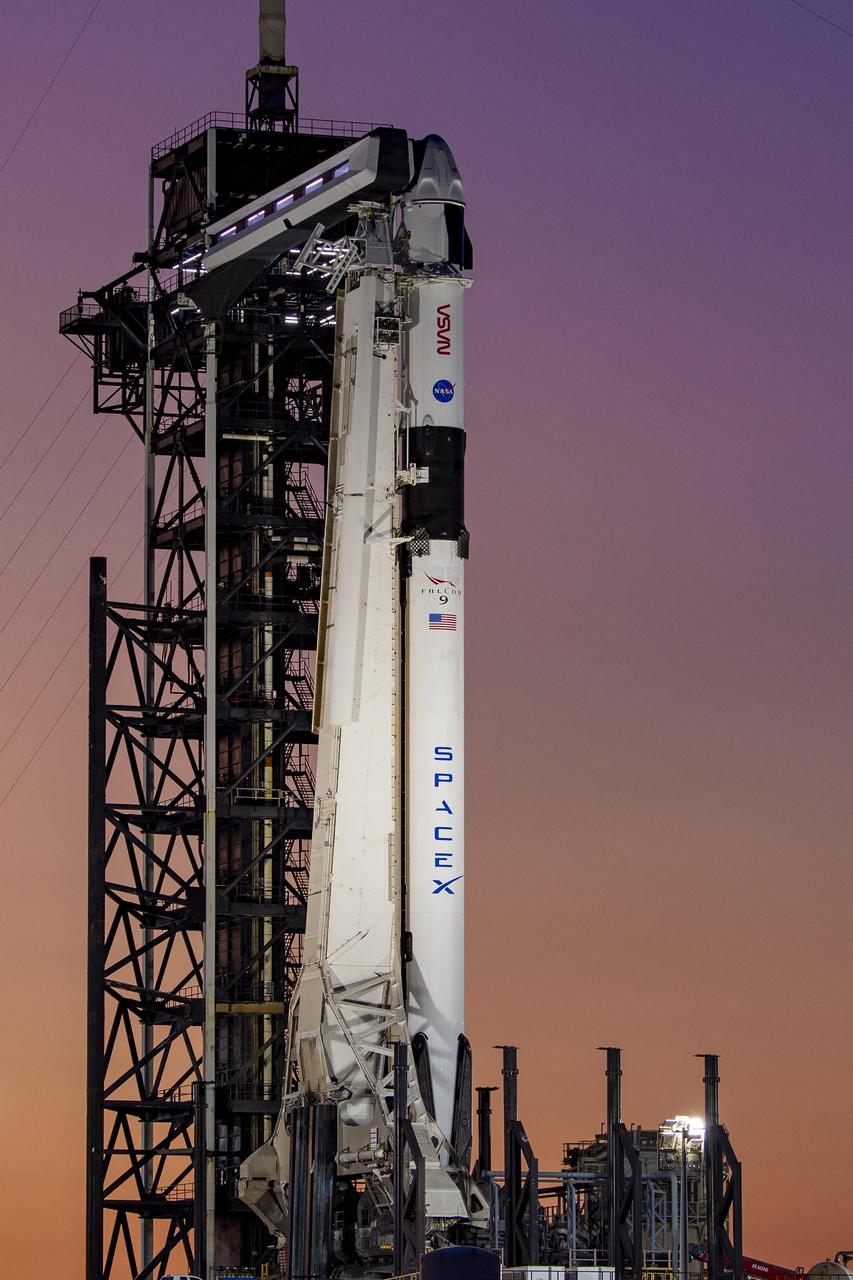
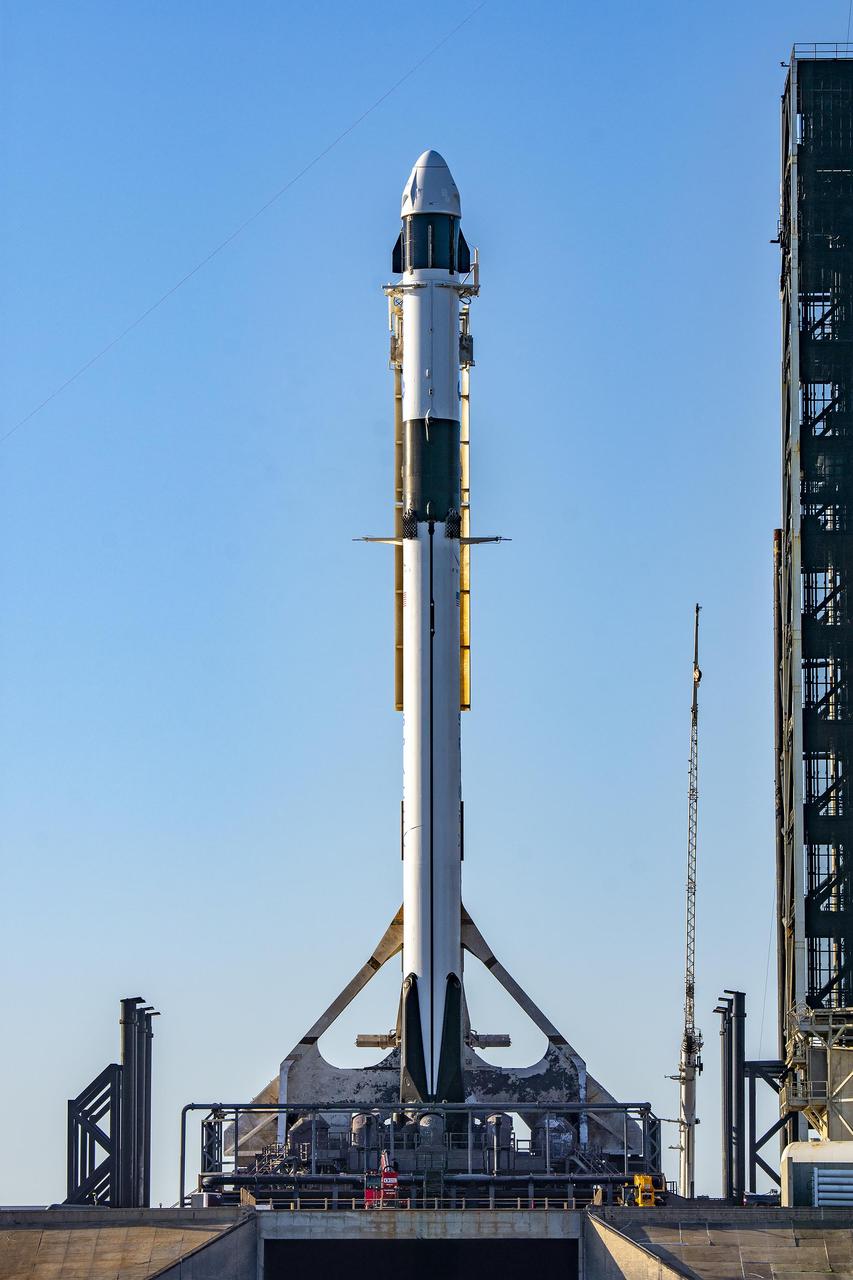
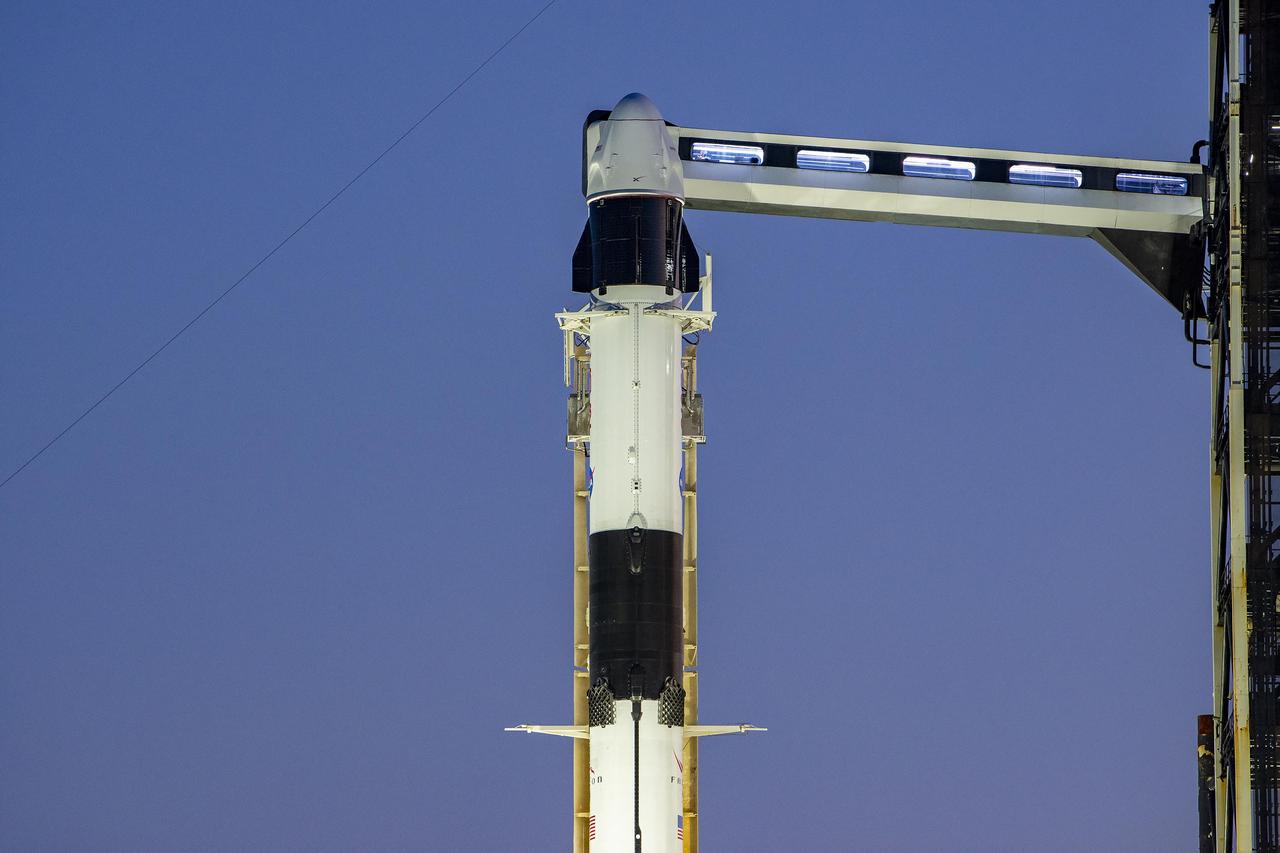
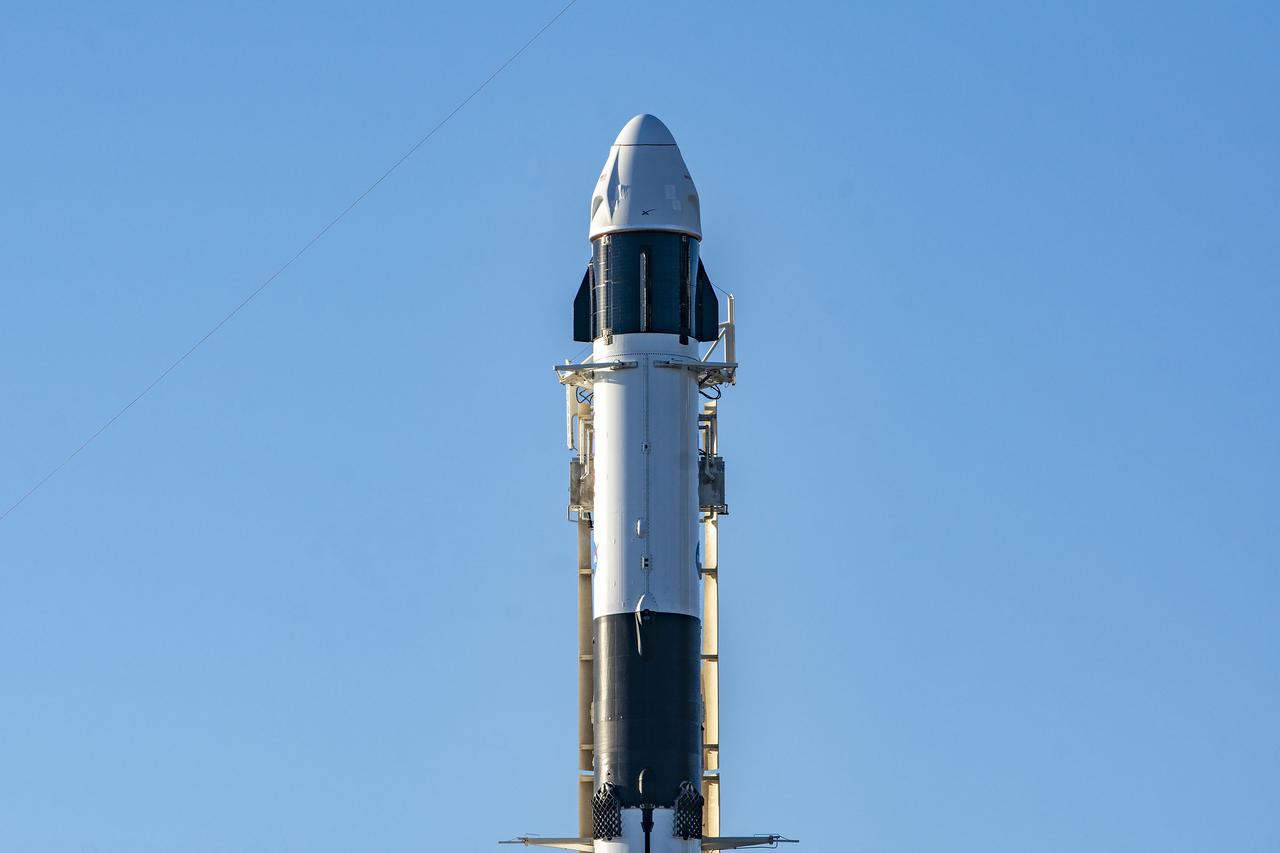
In view here is a closeup of SpaceX’s Dragon spacecraft atop the company’s Falcon 9 rocket at NASA’s Kennedy Space Center Launch Complex 39A in Florida on Monday, Feb. 26, 2024, ahead of the agency’s SpaceX Crew-8 launch to the International Space Station. NASA astronauts Matthew Dominick, Michael Barratt, and Jeanette Epps, and Roscosmos cosmonaut Alexander Grebenkin will fly to the station for a science expedition mission as part of NASA’s Commercial Crew Program from Launch Complex 39A no earlier than 12:04 a.m. EST on Friday, March 1, 2024.
NASA/SpaceX Crew-8 Vertical at LC-39A
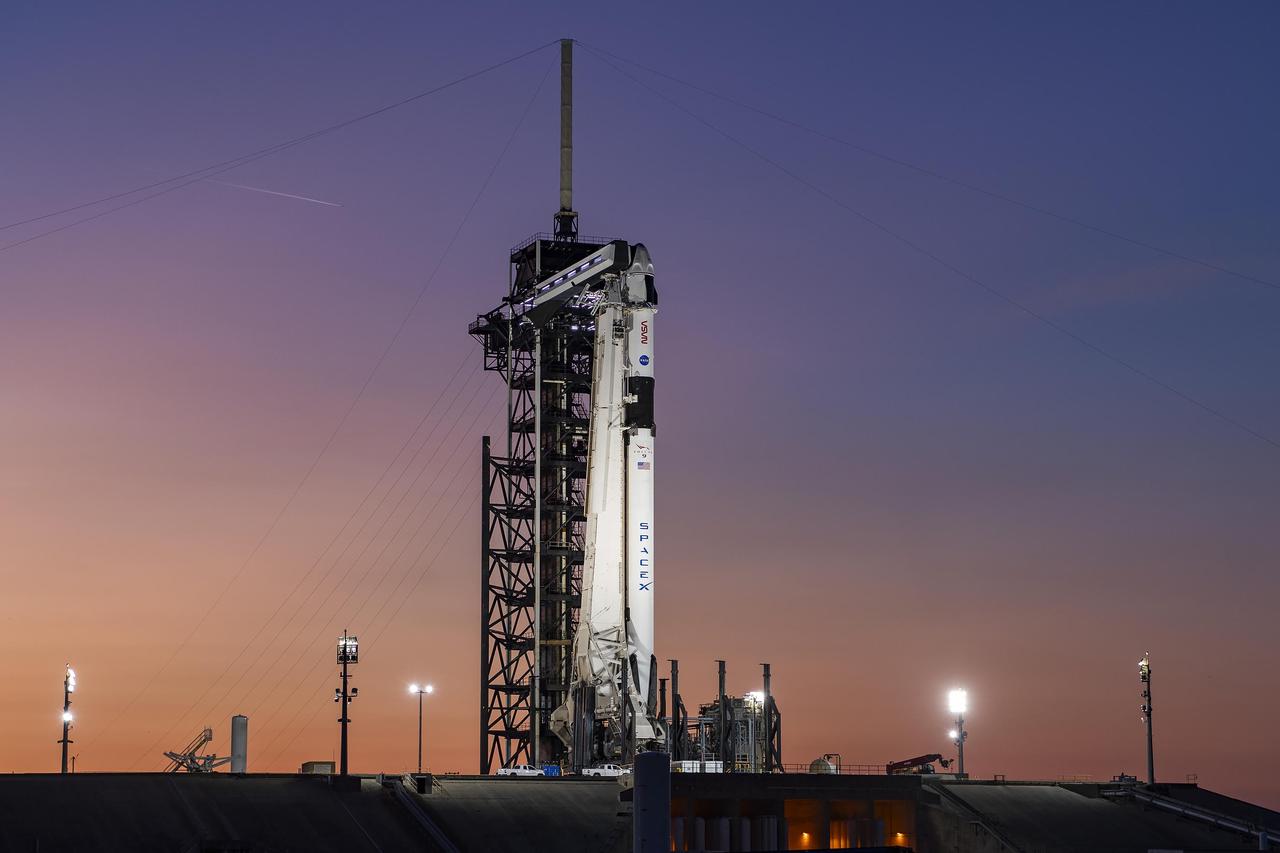
A colorful sunset serves as the backdrop for SpaceX’s Falcon 9 rocket and Dragon spacecraft on the pad at Launch Complex 39A at Kennedy Space Center in Florida on Monday, Feb. 26, 2024, ahead of NASA’s SpaceX Crew-8 mission. The crew members of NASA’s SpaceX Crew-8 mission, NASA astronauts Matthew Dominick, Michael Barratt, and Jeanette Epps, and Roscosmos cosmonaut Alexander Grebenkin, are slated to launch to the International Space Station no earlier than 12:04 a.m. EST on Friday, March 1, from Launch Complex 39A.
SpaceX Crew-8 Sunset at LC-39A
A colorful sunset serves as the backdrop for SpaceX’s Falcon 9 rocket and Dragon spacecraft on the pad at Launch Complex 39A at Kennedy Space Center in Florida on Monday, Feb. 26, 2024, ahead of NASA’s SpaceX Crew-8 mission. The crew members of NASA’s SpaceX Crew-8 mission, NASA astronauts Matthew Dominick, Michael Barratt, and Jeanette Epps, and Roscosmos cosmonaut Alexander Grebenkin, are slated to launch to the International Space Station no earlier than 12:04 a.m. EST on Friday, March 1, from Launch Complex 39A.
SpaceX Crew-8 Sunset at LC-39A
A colorful sunset serves as the backdrop for SpaceX’s Falcon 9 rocket and Dragon spacecraft on the pad at Launch Complex 39A at Kennedy Space Center in Florida on Monday, Feb. 26, 2024, ahead of NASA’s SpaceX Crew-8 mission. The crew members of NASA’s SpaceX Crew-8 mission, NASA astronauts Matthew Dominick, Michael Barratt, and Jeanette Epps, and Roscosmos cosmonaut Alexander Grebenkin, are slated to launch to the International Space Station no earlier than 12:04 a.m. EST on Friday, March 1, from Launch Complex 39A.
SpaceX Crew-8 Sunset at LC-39A
A colorful sunset serves as the backdrop for SpaceX’s Falcon 9 rocket and Dragon spacecraft on the pad at Launch Complex 39A at Kennedy Space Center in Florida on Monday, Feb. 26, 2024, ahead of NASA’s SpaceX Crew-8 mission. The crew members of NASA’s SpaceX Crew-8 mission, NASA astronauts Matthew Dominick, Michael Barratt, and Jeanette Epps, and Roscosmos cosmonaut Alexander Grebenkin, are slated to launch to the International Space Station no earlier than 12:04 a.m. EST on Friday, March 1, from Launch Complex 39A.
SpaceX Crew-8 Sunset at LC-39A
SpaceX’s Falcon 9 rocket, with the Dragon spacecraft atop, is vertical at NASA’s Kennedy Space Center Launch Complex 39A in Florida on Monday, Feb. 26, 2024, ahead of NASA’s SpaceX Crew-8 launch to the International Space Station. The eighth crew rotation mission with SpaceX and the ninth flight of Dragon with people as part of the agency’s Commercial Crew Program is slated to carry NASA astronauts Matthew Dominick, Michael Barratt, and Jeanette Epps, and Roscosmos cosmonaut Alexander Grebenkin to the station from Launch Complex 39A no earlier than 12:04 a.m. EST on March 1, 2024.
NASA/SpaceX Crew-8 Vertical at LC-39A
NASA Associate Administrator Bob Cabana greets the crew members of NASA’s SpaceX Crew-3 mission after their arrival at the center’s Launch and Landing Facility in Florida on Oct. 26, 2021. From left are European Space Agency astronaut Matthias Maurer, and NASA astronauts Tom Marshburn, Raja Chari, and Kayla Barron. Crew-3 will launch aboard the Crew Dragon on a SpaceX Falcon 9 rocket. Launch is targeted for 2:21 a.m. EDT on October 31 from Launch Complex 39A.
NASA Hosts Media Event for the agency’s SpaceX Crew-3 Mission
A/S 201 was launched from the Kennedy Space Center Launch Complex 34 at 11:12 a.m., 02/26/1966. The instrumented Apollo Command and Service Module, and, a spacecraft Lunar Excursion Module Adapter, was successfully launched on the unmanned suborbital mission by the Saturn 1B to check spacecraft launch vehicle mechanical compatibility and to test the spacecraft heat shield in a high-velocity re-entry mode.     CAPE KENNEDY, FL
APOLLO/SATURN (A/S) 201 - LAUNCH - CAPE
NASA astronaut Michael Barratt is photographed inside the crew access arm at Launch Complex 39A at NASA’s Kennedy Space Center in Florida during a dress rehearsal on Monday, Feb. 26, 2024, in preparation for NASA’s SpaceX Crew-8 mission. NASA’s SpaceX Crew-8 will send Barratt, along with NASA astronauts Jeanette Epps and Matthew Dominick, and Roscosmos cosmonaut Alexander Grebenkin, to the International Space Station for a stay of about six months as part of the agency’s Commercial Crew Program. Liftoff from Kennedy’s Launch Complex 39A is scheduled for 12:04 a.m. EST on Friday, March 1.
SpaceX Crew-8 Dry Dress Rehearsal
Roscosmos cosmonaut Alexander Grebenkin is photographed inside the crew access arm at Launch Complex 39A at NASA’s Kennedy Space Center in Florida during a dress rehearsal on Monday, Feb. 26, 2024, in preparation for NASA’s SpaceX Crew-8 mission. NASA’s SpaceX Crew-8 will send Grebenkin, along with NASA astronauts Jeanette Epps, Michael Barratt, and Matthew Dominick, to the International Space Station for a stay of about six months as part of the agency’s Commercial Crew Program. Liftoff from Kennedy’s Launch Complex 39A is scheduled for 12:04 a.m. EST on Friday, March 1.
SpaceX Crew-8 Dry Dress Rehearsal
NASA astronaut Jeanette Epps is photographed inside the crew access arm at Launch Complex 39A at NASA’s Kennedy Space Center in Florida during a dress rehearsal on Monday, Feb. 26, 2024, in preparation for NASA’s SpaceX Crew-8 mission. NASA’s SpaceX Crew-8 will send Epps, along with NASA astronauts Michael Barratt and Matthew Dominick, and Roscosmos cosmonaut Alexander Grebenkin, to the International Space Station for a stay of about six months as part of the agency’s Commercial Crew Program. Liftoff from Kennedy’s Launch Complex 39A is scheduled for 12:04 a.m. EST on Friday, March 1.
SpaceX Crew-8 Dry Dress Rehearsal
NASA astronaut Matthew Dominick is photographed inside the crew access arm at Launch Complex 39A at NASA’s Kennedy Space Center in Florida during a dress rehearsal on Monday, Feb. 26, 2024, in preparation for NASA’s SpaceX Crew-8 mission. NASA’s SpaceX Crew-8 will send Dominick, along with NASA astronauts Jeanette Epps and Michael Barratt, and Roscosmos cosmonaut Alexander Grebenkin, to the International Space Station for a stay of about six months as part of the agency’s Commercial Crew Program. Liftoff from Kennedy’s Launch Complex 39A is scheduled for 12:04 a.m. EST on Friday, March 1.
SpaceX Crew-8 Dry Dress Rehearsal
NASA’s SpaceX Crew-4 Flight Readiness Review takes place at Kennedy Space Center on April 15, 2022. The mission is targeted to launch from the Florida Spaceport’s Launch Complex 39A on April 23, 2022, at 5:26 a.m. EDT. NASA astronauts Kjell Lindgren, Bob Hines, and Jessica Watkins, and ESA (European Space Agency) astronaut Samantha Cristoforetti will fly to the station aboard SpaceX’s Crew Dragon, powered by the company’s Falcon 9 rocket.
SpaceX Crew-4 Agency FRR and Post-FRR News Conference
NASA’s SpaceX Crew-4 Flight Readiness Review takes place at Kennedy Space Center on April 15, 2022. The mission is targeted to launch from the Florida Spaceport’s Launch Complex 39A on April 23, 2022, at 5:26 a.m. EDT. NASA astronauts Kjell Lindgren, Bob Hines, and Jessica Watkins, and ESA (European Space Agency) astronaut Samantha Cristoforetti will fly to the station aboard SpaceX’s Crew Dragon, powered by the company’s Falcon 9 rocket.
SpaceX Crew-4 Agency FRR and Post-FRR News Conference
KENNEDY SPACE CENTER, FLA. -   Center Director Jim Kennedy (far left) and STS-114 Mission Commander Eileen Collins (center) present a photo of the launch of Discovery to Dr. Thomas Howard, chief medical officer of the V.A. Outpatient Clinic in Viera, Fla.  The presentation is part of the dedication of a hospital wing in honor of space shuttle Discovery, to be known as the Discovery wing. Collins and her crew have returned to Florida especially for a celebration in the KSC Visitor Complex of the successful return to flight mission that launched July 26 of this year.
KSC-05pd2381
KENNEDY SPACE CENTER, FLA.  --  In the Vehicle Assembly Building, workers check foam repairs on Atlantis' external tank.  In late February, Atlantis' external tank received hail damage during a severe thunderstorm that passed through the Kennedy Space Center Launch Complex 39 area. The hail caused visible divots in the giant tank's foam insulation as well as minor surface damage to about 26 heat shield tiles on the shuttle's left wing.  The launch now is targeted for June 8.   Photo credit: NASA/Jack Pfaller
KSC-07pd0928
Members of NASA’s SpaceX Crew-8 from left to right, NASA astronaut Jeanette Epps and Roscosmos cosmonaut Alexander Grebenkin are photographed in their SpaceX spacesuits at Launch Complex 39A in front of the SpaceX Dragon spacecraft during a dress rehearsal on Monday, Feb. 26, 2024, in preparation for the Crew-8 mission at NASA’s Kennedy Space Center in Florida. NASA’s SpaceX Crew-8 is the eighth crew rotation mission with SpaceX to the station and the ninth flight of Dragon with people as part of the agency’s Commercial Crew Program. Liftoff from Launch Complex 39A is scheduled for 12:04 a.m. EST on Friday, March 1.
SpaceX Crew-8 Dry Dress Rehearsal
Members of NASA’s SpaceX Crew-8 from left to right, NASA astronauts Jeanette Epps, mission specialist; Michael Barratt, pilot; Matthew Dominick, commander; and Roscosmos cosmonaut Alexander Grebenkin, mission specialist; are photographed inside the crew access arm at Launch Complex 39A at NASA’s Kennedy Space Center in Florida during a dress rehearsal on Monday, Feb. 26, 2024, in preparation for the Crew-8 mission. NASA’s SpaceX Crew-8 is the eighth crew rotation mission with SpaceX to the station and the ninth flight of Dragon with people as part of the agency’s Commercial Crew Program. Liftoff from Launch Complex 39A is scheduled for 12:04 a.m. EST on Friday, March 1.
SpaceX Crew-8 Dry Dress Rehearsal
A dolphin swims in the turn basin of Launch Complex 39 at NASA’s Kennedy Space Center in Florida on Tuesday, Nov. 26, 2024. A SpaceX Falcon 9 rocket also can be seen in the background at Launch Pad 39A. Dolphins are a frequent sight in the rivers around NASA Kennedy, which shares a boundary with the Merritt Island Wildlife National Refuge and more than 1,500 species of plants and animals on 140,000 acres.
Wildlife at KSC
A SpaceX Falcon 9 rocket, with the company’s Dragon cargo spacecraft atop, is raised to a vertical position at NASA Kennedy Space Center’s Launch Complex 39A on Nov. 21, 2022, in preparation for the 26th commercial resupply services launch to the International Space Station. The mission will deliver new science investigations, supplies, and equipment to the crew aboard the space station, including the next pair of ISS Roll Out Solar Arrays (iROSAs). Liftoff is scheduled for 3:54 p.m. EST on Monday, Nov. 22, from Kennedy’s Launch Complex 39A.
SpaceX CRS-26 Vertical at LC-39A
A SpaceX Falcon 9 rocket, with the company’s Dragon cargo spacecraft atop, is raised to a vertical position at NASA Kennedy Space Center’s Launch Complex 39A on Nov. 21, 2022, in preparation for the 26th commercial resupply services launch to the International Space Station. The mission will deliver new science investigations, supplies, and equipment to the crew aboard the space station, including the next pair of ISS Roll Out Solar Arrays (iROSAs). Liftoff is scheduled for 3:54 p.m. EST on Monday, Nov. 22, from Kennedy’s Launch Complex 39A.
SpaceX CRS-26 Vertical at LC-39A
Seen here is the SpaceX Dragon cargo spacecraft atop the company’s Falcon 9 rocket after being raised to a vertical position at NASA’s Kennedy Space Center in Florida on Nov. 21, 2022, in preparation for the 26th commercial resupply services launch to the International Space Station. The mission will deliver new science investigations, supplies, and equipment to the crew aboard the space station, including the next pair of ISS Roll Out Solar Arrays (iROSAs). Liftoff is scheduled for 3:54 p.m. EST on Monday, Nov. 22, from Kennedy’s Launch Complex 39A.
SpaceX CRS-26 Vertical at LC-39A
KENNEDY SPACE CENTER, FLA. --  Following the debut of its new attraction, Shuttle Launch Experience, on May 26, the Kennedy Space Center Visitor Complex treated guests to a concert by the instrumental group Mannheim Steamroller, seen here.  Mannheim Steamroller, known for its digital-classic-rock style, recorded sound from the last space shuttle liftoff at Kennedy Space Center, and has incorporated it into its music. Photo credit: NASA/George Shelton
KSC-07pd1316
KENNEDY SPACE CENTER, FLA. -- Following the debut of its new attraction, Shuttle Launch Experience, on May 26, the Kennedy Space Center Visitor Complex treated guests to a concert by the instrumental group Mannheim Steamroller, seen here. Known for its digital-classic-rock style, Mannheim Steamroller recorded sound from the last space shuttle liftoff at Kennedy Space Center, and has incorporated it into its music.  Photo credit: NASA/George Shelton
KSC-07pd1319
KENNEDY SPACE CENTER, FLA. --  Following the debut of its new attraction, Shuttle Launch Experience, on May 26, the Kennedy Space Center Visitor Complex treated guests to a concert by the instrumental group Mannheim Steamroller, seen here.  Known for its digital-classic-rock style, Mannheim Steamroller recorded sound from the last space shuttle liftoff at Kennedy Space Center, and has incorporated it into its music. Photo credit: NASA/George Shelton
KSC-07pd1318
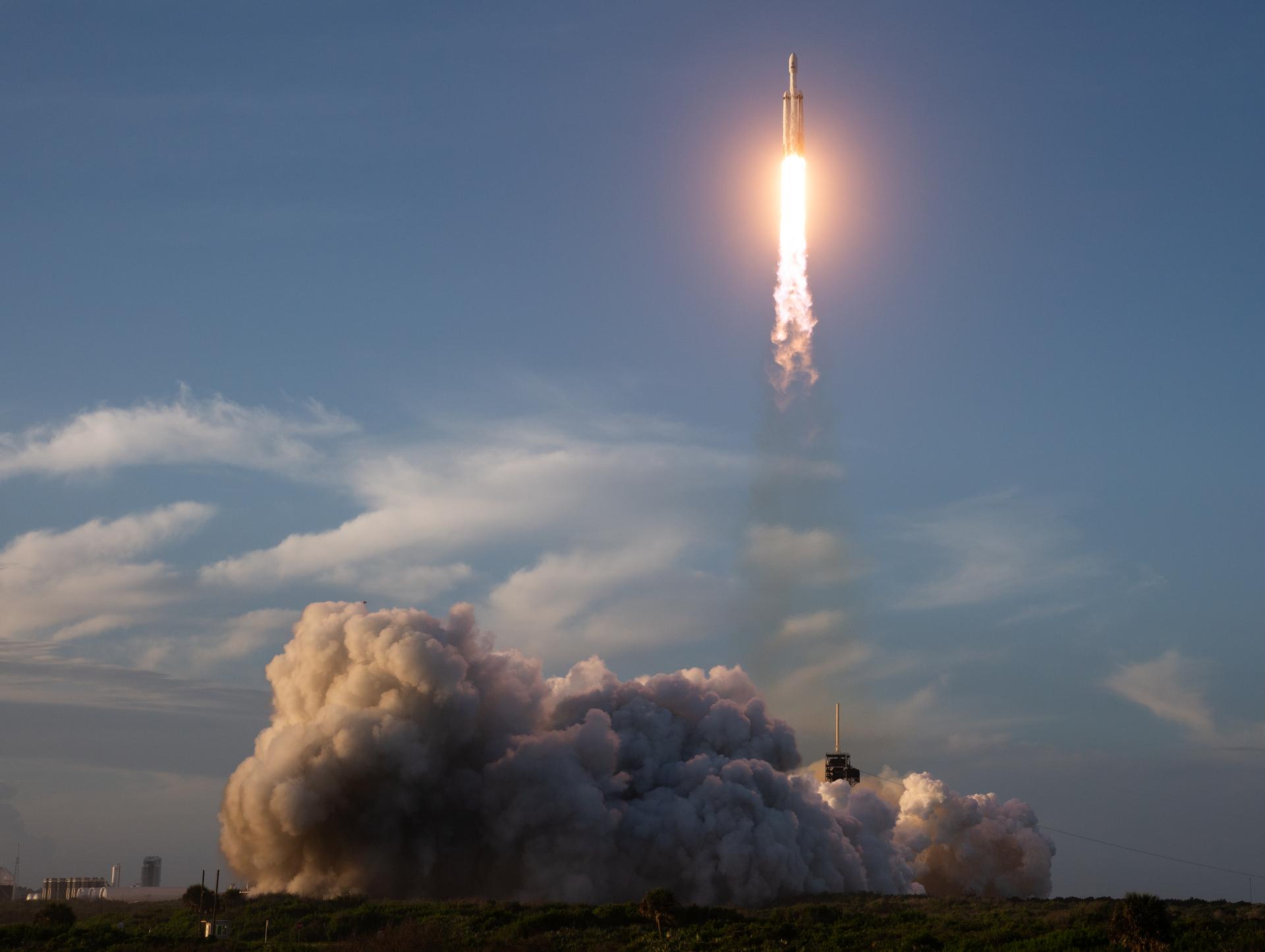
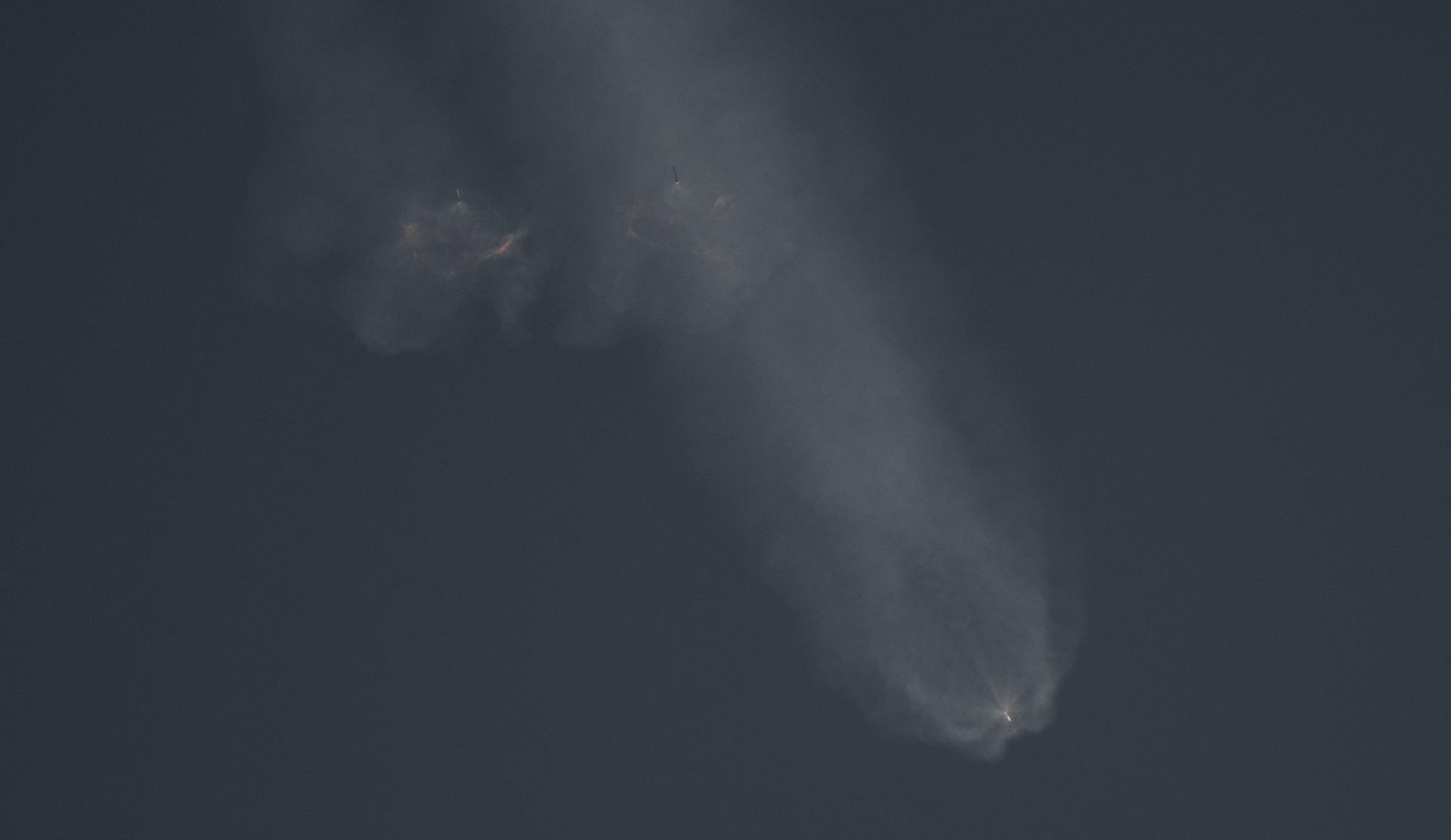
A SpaceX Falcon 9 rocket soars into the sky at 3:27 a.m. EDT on Saturday, Aug. 26, from Kennedy Space Center’s Launch Complex 39A in Florida, carrying NASA’s SpaceX Crew-7 crew members to the International Space Station. Aboard SpaceX’s Dragon spacecraft are NASA astronaut Jasmin Moghbeli, ESA (European Space Agency) astronaut Andreas Mogensen, JAXA (Japan Aerospace Exploration Agency) astronaut Satoshi Furukawa, and Roscosmos cosmonaut Konstantin Borisov.
NASA’s SpaceX Crew-7 Live Launch Coverage
A SpaceX Falcon 9 rocket lifts off the pad at 3:27 a.m. EDT on Saturday, Aug. 26, from Kennedy Space Center’s Launch Complex 39A in Florida, carrying NASA’s SpaceX Crew-7 crew members to the International Space Station. Aboard SpaceX’s Dragon spacecraft are NASA astronaut Jasmin Moghbeli, ESA (European Space Agency) astronaut Andreas Mogensen, JAXA (Japan Aerospace Exploration Agency) astronaut Satoshi Furukawa, and Roscosmos cosmonaut Konstantin Borisov.
NASA’s SpaceX Crew-7 Live Launch Coverage
KENNEDY SPACE CENTER, FLA. -  In NASA Kennedy Space Center’s Assembly and  Refurbishment Facility, STS-114 Mission Specialists Soichi Noguchi and Stephen Robinson speak to a crowd of employees.  They and other crew members are visiting several sites during their return to Kennedy Space Center. They have returned to Florida especially for a celebration in the KSC Visitor Complex of the successful return to flight mission that launched July 26 of this year.
KSC-05pd2370
SpaceX’s Crew Dragon – named Freedom by the Crew-4 astronauts – atop the company’s Falcon 9 rocket, rolls out to Launch Complex 39A at NASA’s Kennedy Space Center on April 19, 2022. NASA astronauts Kjell Lindgren, Bob Hines, and Jessica Watkins, and ESA (European Space Agency) astronaut Samantha Cristoforetti, who arrived at Kennedy one day ago, will fly to the International Space Station on NASA’s SpaceX Crew-4 mission. Liftoff is targeted for Saturday, April 23, at 5:26 a.m. EDT.
SpaceX Crew-4 Rollout
A SpaceX Falcon 9 rocket lifts off the pad at 3:27 a.m. EDT on Saturday, Aug. 26, from Kennedy Space Center’s Launch Complex 39A in Florida, carrying NASA’s SpaceX Crew-7 crew members to the International Space Station. Aboard SpaceX’s Dragon spacecraft are NASA astronaut Jasmin Moghbeli, ESA (European Space Agency) astronaut Andreas Mogensen, JAXA (Japan Aerospace Exploration Agency) astronaut Satoshi Furukawa, and Roscosmos cosmonaut Konstantin Borisov.
NASA’s SpaceX Crew-7 Live Launch Coverage
KENNEDY SPACE CENTER, FLA. -  In NASA Kennedy Space Center’s Assembly and  Refurbishment Facility, STS-114 Mission Specialist Soichi Noguchi speaks to employees.  At right is Mission Specialist Stephen Robinson.  They and other crew members are visiting several sites during their return to Kennedy Space Center. They have returned to Florida especially for a celebration in the KSC Visitor Complex of the successful return to flight mission that launched July 26 of this year.
KSC-05pd2368
A SpaceX Falcon 9 rocket lifts off the pad at 3:27 a.m. EDT on Saturday, Aug. 26, from Kennedy Space Center’s Launch Complex 39A in Florida, carrying NASA’s SpaceX Crew-7 crew members to the International Space Station. Aboard SpaceX’s Dragon spacecraft are NASA astronaut Jasmin Moghbeli, ESA (European Space Agency) astronaut Andreas Mogensen, JAXA (Japan Aerospace Exploration Agency) astronaut Satoshi Furukawa, and Roscosmos cosmonaut Konstantin Borisov.
NASA’s SpaceX Crew-7 Live Launch Coverage
KENNEDY SPACE CENTER, FLA. -  In NASA Kennedy Space Center’s Assembly and  Refurbishment Facility, STS-114 Mission Specialist Stephen Robinson speaks to employees.  At right is Mission Specialist Soichi Noguchi.  They and other crew members are visiting several sites during their return to Kennedy Space Center. They have returned to Florida especially for a celebration in the KSC Visitor Complex of the successful return to flight mission that launched July 26 of this year.
KSC-05pd2369
A SpaceX Falcon 9 rocket lifts off the pad at 3:27 a.m. EDT on Saturday, Aug. 26, from Kennedy Space Center’s Launch Complex 39A in Florida, carrying NASA’s SpaceX Crew-7 crew members to the International Space Station. Aboard SpaceX’s Dragon spacecraft are NASA astronaut Jasmin Moghbeli, ESA (European Space Agency) astronaut Andreas Mogensen, JAXA (Japan Aerospace Exploration Agency) astronaut Satoshi Furukawa, and Roscosmos cosmonaut Konstantin Borisov.
NASA’s SpaceX Crew-7 Live Launch Coverage
KENNEDY SPACE CENTER, FLA. -  In NASA Kennedy Space Center’s Assembly and  Refurbishment Facility, employees crowd around STS-114 Mission Specialist Stephen Robinson as he signs mementos for them.  Robinson joined Mission Specialist Soichi Noguchi to talk to the employees about their successful mission.  They and other crew members are visiting several sites during their return to Kennedy Space Center. They have returned to Florida especially for a celebration in the KSC Visitor Complex of the successful return to flight mission that launched July 26 of this year.
KSC-05pd2371