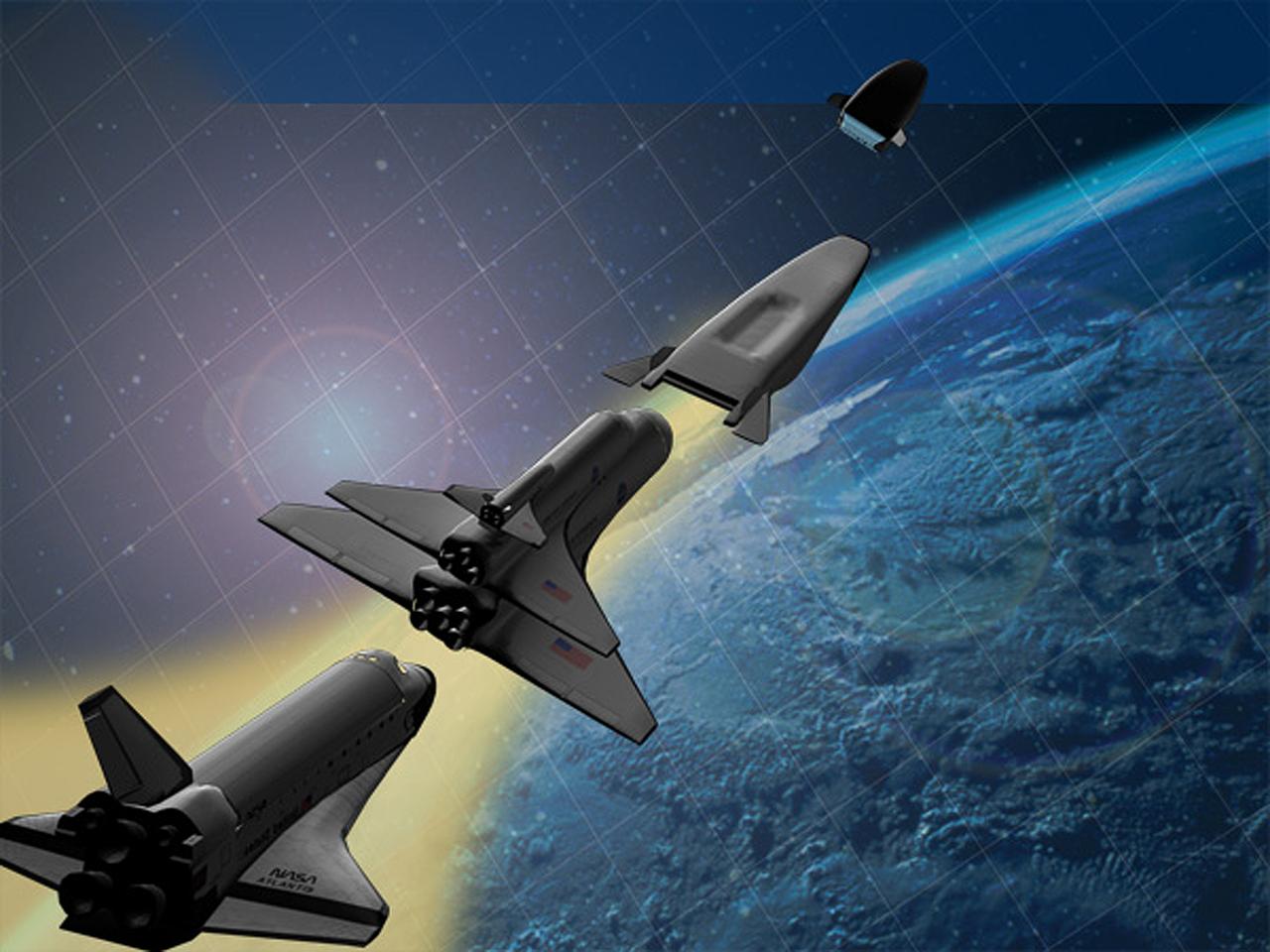
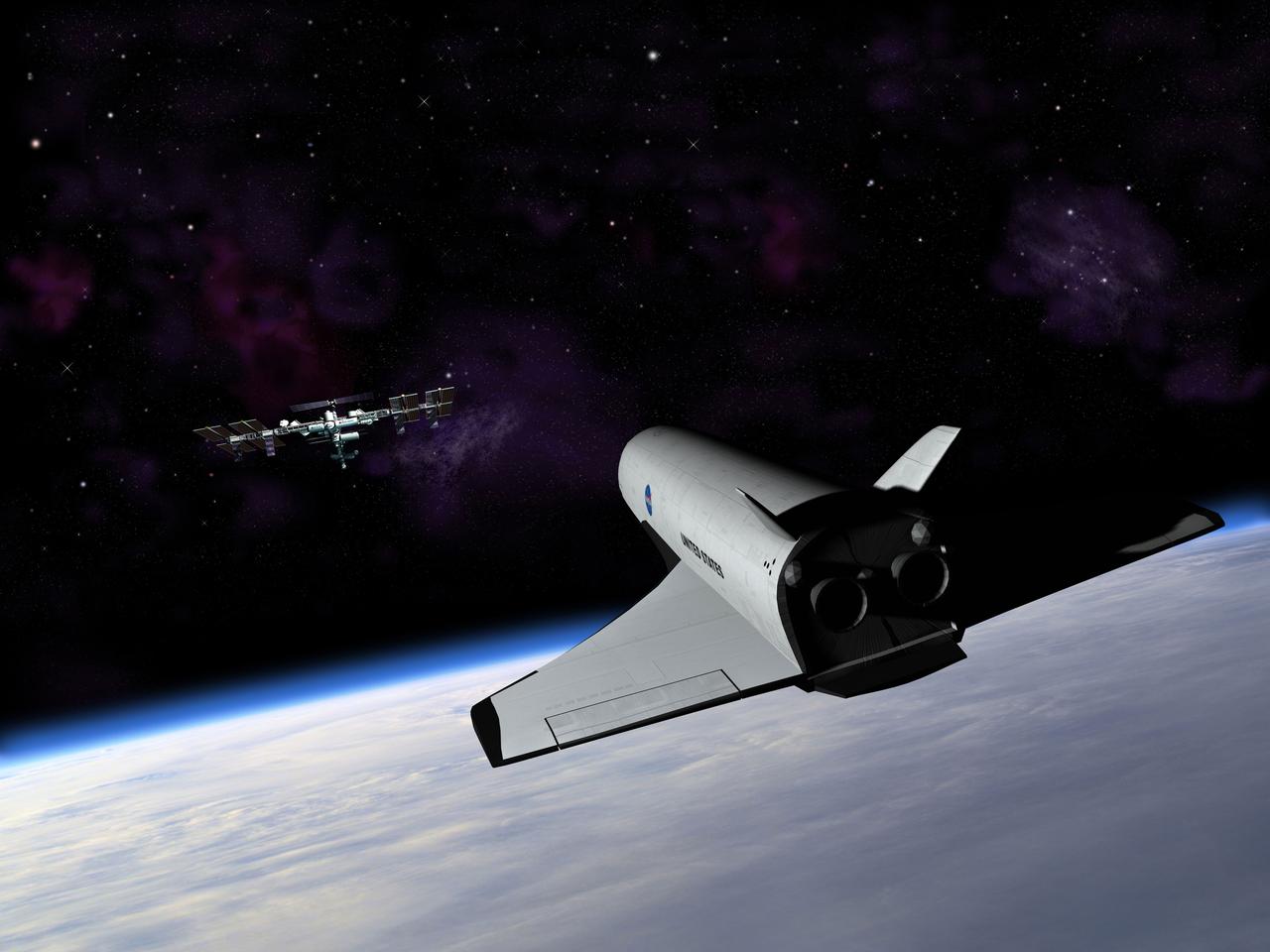
NASA's Marshall Space Flight Center in Huntsville, Alabama, manages the Space Launch Initiative (SLI), NASA's priority developmental program focused on empowering America's leadership in space. SLI includes commercial, higher education, and Defense partnerships and contracts to offer widespread participation in both the risk and success of developing our nation's next-generation reusable launch vehicle. This photo depicts an artist's concept of a future second-generation launch vehicle enroute to the International Space Station. For the SLI, architecture definition includes all components of the next-generation reusable launch system: Earth-to-orbit vehicles (the Space Shuttle is the first generation earth-to-orbit vehicle), crew transfer vehicles, transfer stages, ground processing systems, flight operations systems, and development of business case strategies. Three contractor teams have each been funded to develop potential second-generation reusable launch system architectures: The Boeing Company of Seal Beach, California; Lockheed Martin Corporation of Denver, Colorado along with a team including Northrop Grumman of El Segundo, California; and Orbital Sciences Corporation of Dulles, Virginia.
Advanced Space Transportation Program (ASTP)
NASA's Marshall Space Flight Center in Huntsville, Alabama, manages the Space Launch Initiative (SLI), NASA's priority developmental program focused on empowering America's leadership in space. SLI includes commercial, higher education and defense partnerships and contracts to offer widespread participation in both the risk and success of developing our nation's next-generation reusable launch vehicle. This photo depicts an artist's concept of a future second-generation launch vehicle during separation of stages. For SLI, architecture definition includes all components of the next-generation reusable launch system: Earth-to-orbit vehicles (the Space Shuttle is the first-generation earth-to-orbit vehicle), crew transfer vehicles, transfer stages, ground processing systems, flight operations systems, and development of business case strategies. Three contractor teams have each been funded to develop potential second generation reusable launch system architectures: The Boeing Company of Seal Beach, California; Lockheed Martin Corporation of Denver, Colorado; a team including Northrop Grumman of El Segundo, California; and Orbital Sciences Corporation of Dulles, Virginia.
Advanced Space Transportation Program (ASTP)
NASA's Marshall Space Flight Center in Huntsville, Alabama, manages the Space Launch Initiative (SLI), NASA's priority developmental program focused on empowering America's leadership in space. SLI includes commercial, higher education, and defense partnerships and contracts to offer widespread participation in both the risk and success of developing our nation's next-generation reusable launch vehicle. This photo depicts an artist's concept of a future second-generation launch vehicle. For the SLI, architecture definition includes all components of the next-generation reusable launch system: Earth-to-orbit vehicles (the Space Shuttle is the first generation earth-to-orbit vehicle), crew transfer vehicles, transfer stages, ground processing systems, flight operations systems, and development of business case strategies. Three contractor teams have each been funded to develop potential second- generation reusable launch system architectures: The Boeing Company of Seal Beach, California; Lockheed Martin Corporation of Denver, Colorado along with a team including Northrop Grumman of El Segundo, California; and Orbital Sciences Corporation of Dulles, Virginia.
Advanced Space Transportation Program (ASTP)
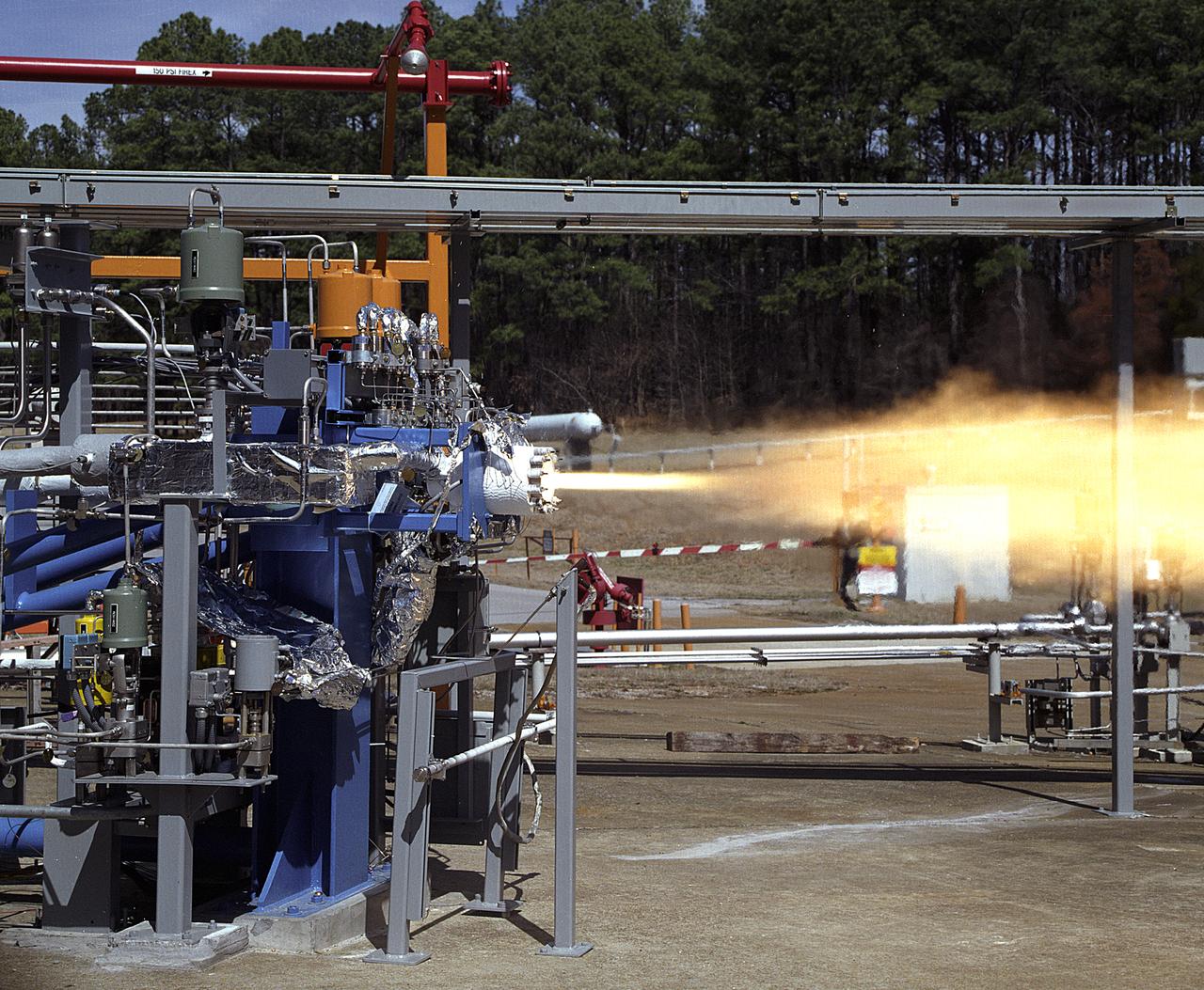
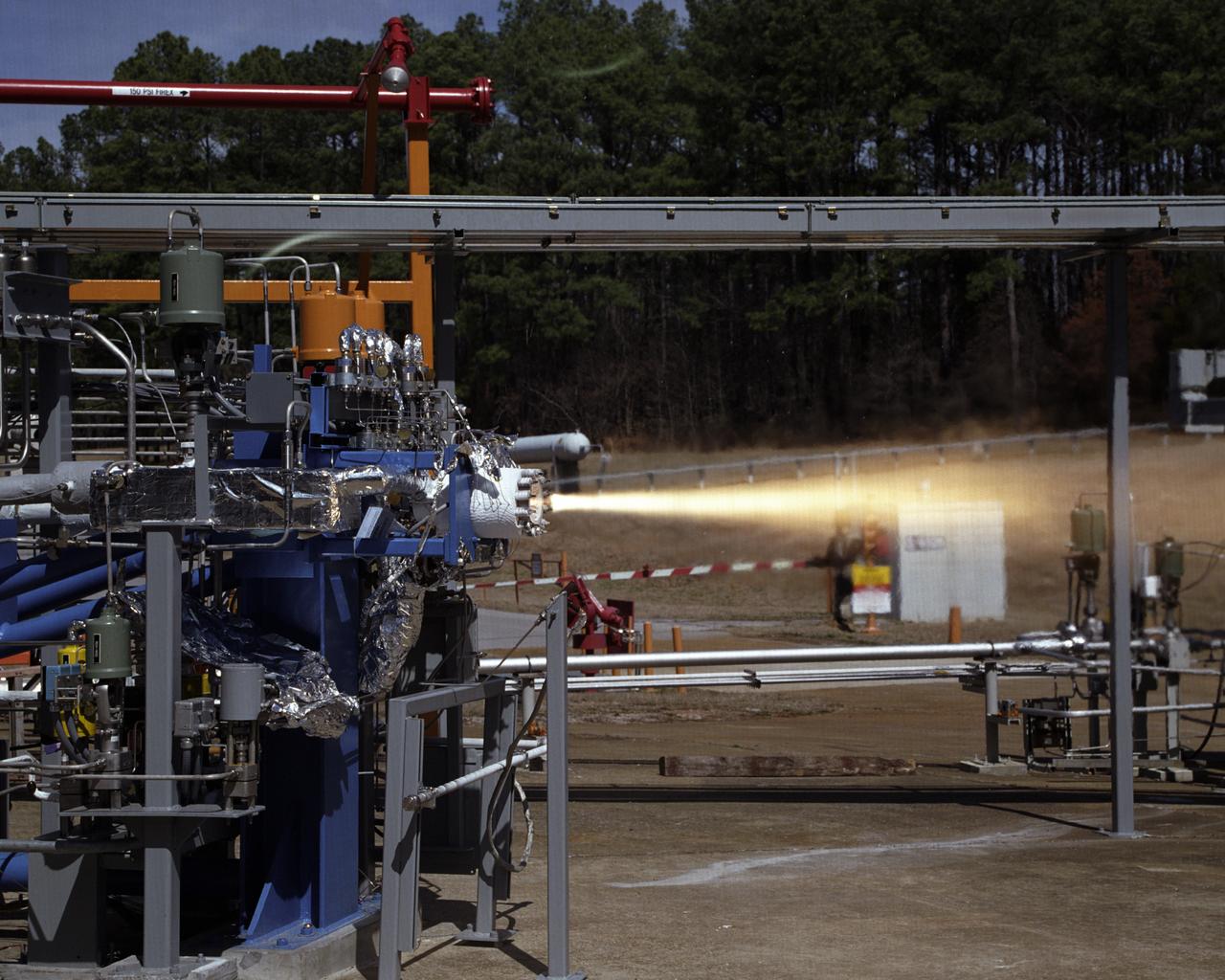
NASA's Marshall Space Flight Center (MSFC) in Huntsville, Alabama, has begun a series of engine tests on the Reaction Control Engine developed by TRW Space and Electronics for NASA's Space Launch Initiative (SLI). SLI is a technology development effort aimed at improving the safety, reliability, and cost effectiveness of space travel for reusable launch vehicles. The engine in this photo, the first engine tested at MSFC that includes SLI technology, was tested for two seconds at a chamber pressure of 185 pounds per square inch absolute (psia). Propellants used were liquid oxygen as an oxidizer and liquid hydrogen as fuel. Designed to maneuver vehicles in orbit, the engine is used as an auxiliary propulsion system for docking, reentry, fine-pointing, and orbit transfer while the vehicle is in orbit. The Reaction Control Engine has two unique features. It uses nontoxic chemicals as propellants, which creates a safer environment with less maintenance and quicker turnaround time between missions, and it operates in dual thrust modes, combining two engine functions into one engine. The engine operates at both 25 and 1,000 pounds of force, reducing overall propulsion weight and allowing vehicles to easily maneuver in space. The force of low level thrust allows the vehicle to fine-point maneuver and dock, while the force of the high level thrust is used for reentry, orbital transfer, and course positioning.
Research Technology
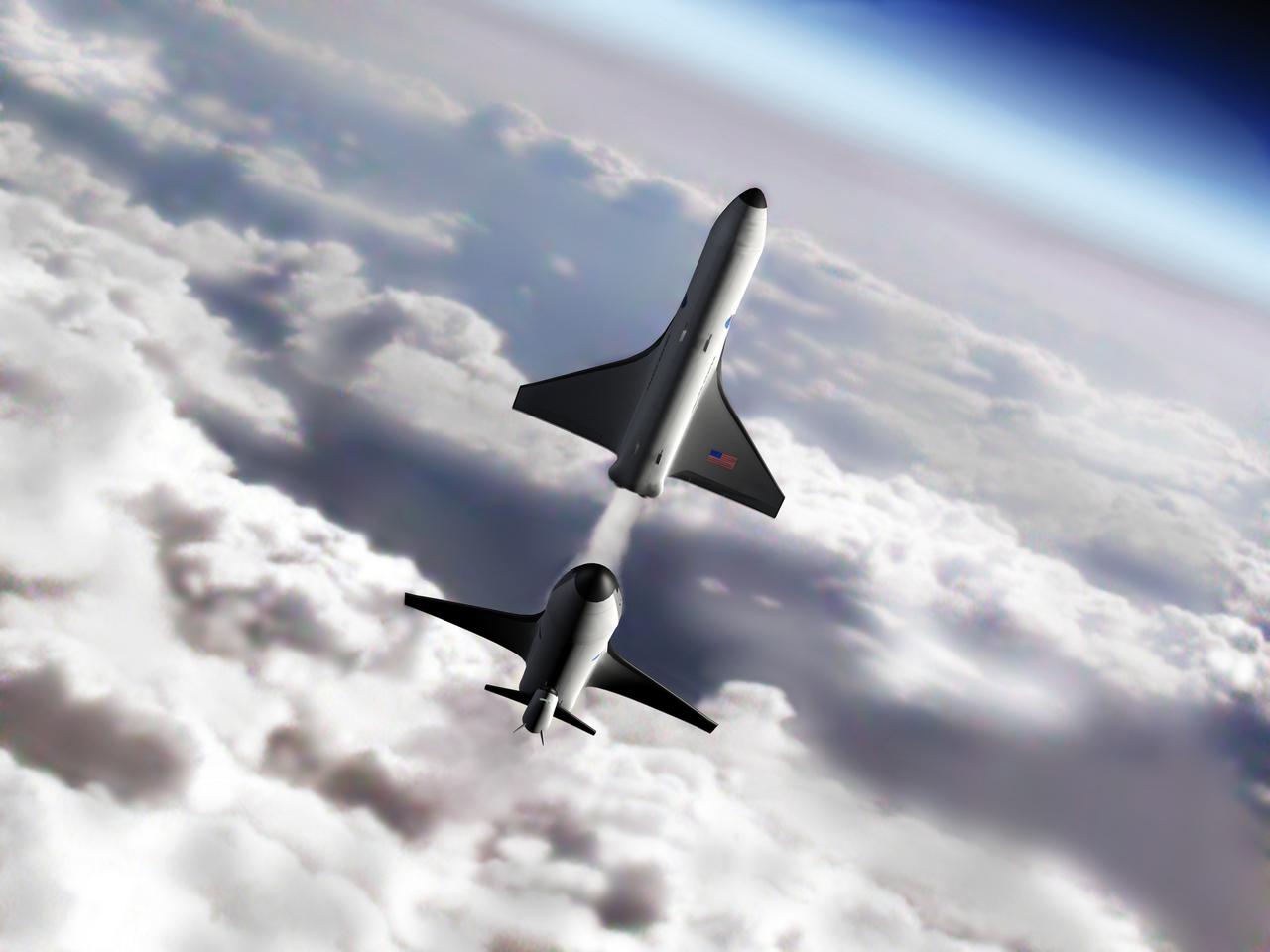
This is a computer generated image of a Shuttle launch utilizing 2nd generation Reusable Launch Vehicle (RLV) flyback boosters, a futuristic concept that is currently undergoing study by NASA's Space Launch Initiative (SLI) Propulsion Office, managed by the Marshall Space Fight Center in Huntsville, Alabama, working in conjunction with the Agency's Glenn Research Center in Cleveland, Ohio. Currently, after providing thrust to the Space Shuttle, the solid rocket boosters are parachuted into the sea and are retrieved for reuse. The SLI is considering vehicle concepts that would fly first-stage boosters back to a designated landing site after separation from the orbital vehicle. These flyback boosters would be powered by several jet engines integrated into the booster capable of providing over 100,000 pounds of thrust. The study will determine the requirements for the engines, identify risk mitigation activities, and identify costs associated with risk mitigation and jet engine development and production, as well as determine candidate jet engine options to pursue for the flyback booster.
Advanced Space Transportation Program (ASTP)
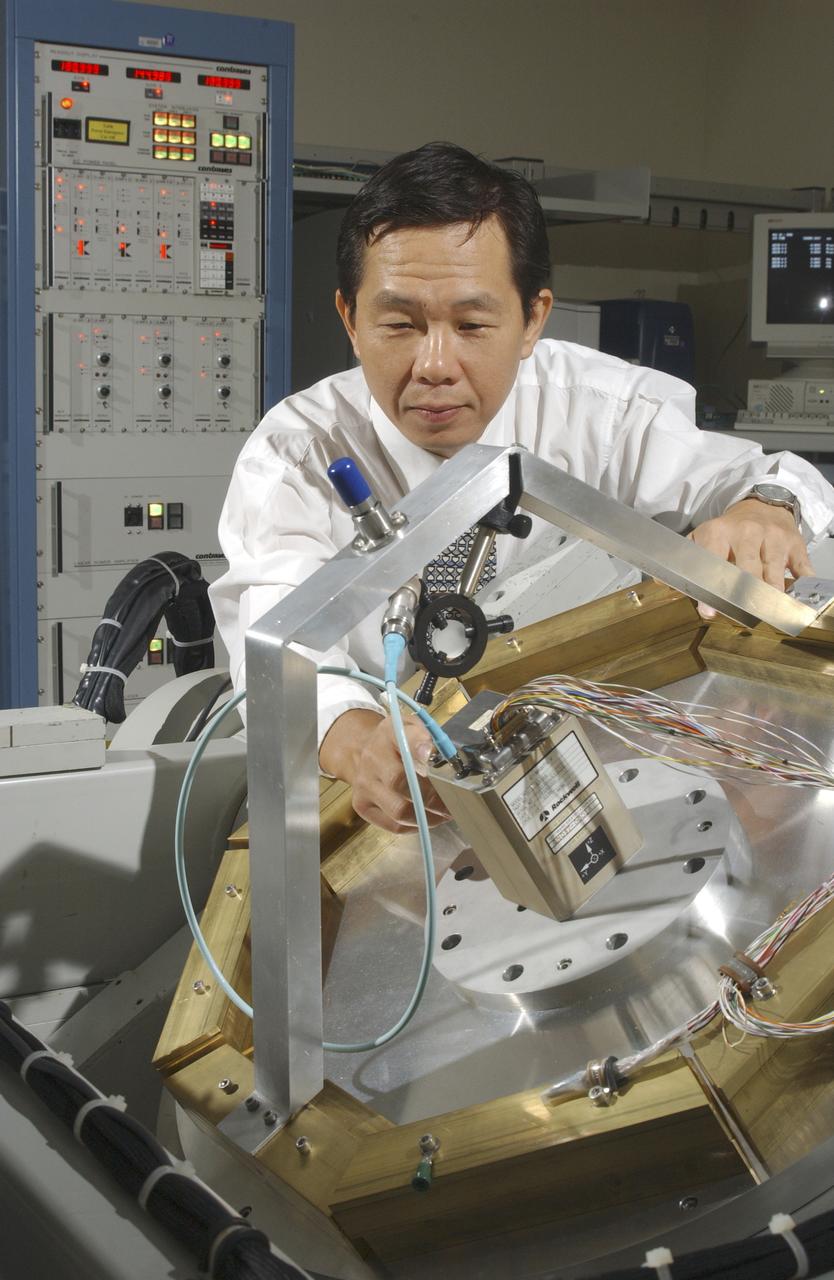
An array of components in a laboratory at NASA's Marshall Space Flight Center (MSFC) is being tested by the Flight Mechanics Office to develop an integrated navigation system for the second generation reusable launch vehicle. The laboratory is testing Global Positioning System (GPS) components, a satellite-based location and navigation system, and Inertial Navigation System (INS) components, sensors on a vehicle that determine angular velocity and linear acceleration at various points. The GPS and INS components work together to provide a space vehicle with guidance and navigation, like the push of the OnStar button in your car assists you with directions to a specific address. The integration will enable the vehicle operating system to track where the vehicle is in space and define its trajectory. The use of INS components for navigation is not new to space technology. The Space Shuttle currently uses them. However, the Space Launch Initiative is expanding the technology to integrate GPS and INS components to allow the vehicle to better define its position and more accurately determine vehicle acceleration and velocity. This advanced technology will lower operational costs and enhance the safety of reusable launch vehicles by providing a more comprehensive navigation system with greater capabilities. In this photograph, Dr. Jason Chuang of MSFC inspects an INS component in the laboratory.
Research Technology
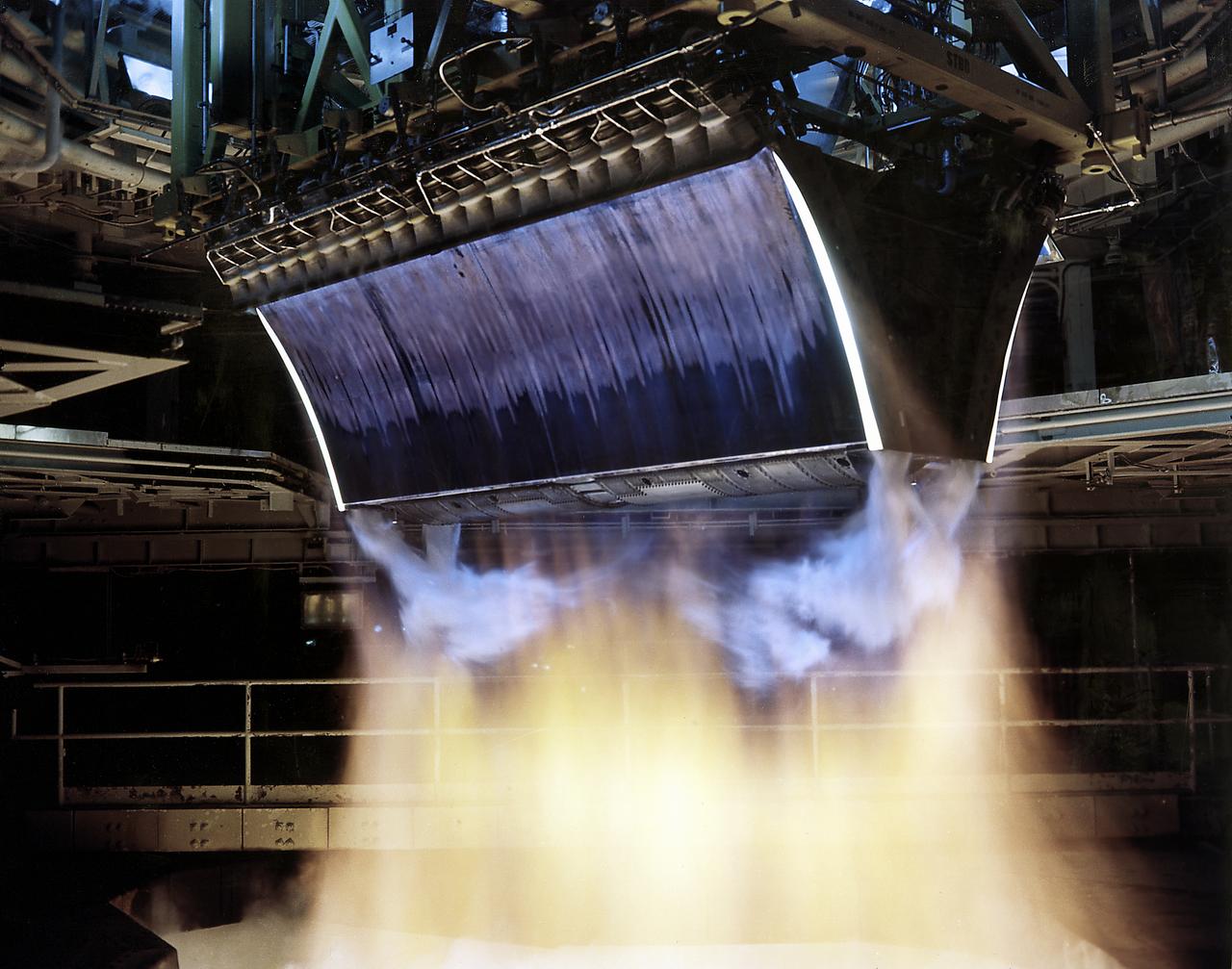
The test of twin Linear Aerospike XRS-2200 engines, originally built for the X-33 program, was performed on August 6, 2001 at NASA's Sternis Space Center, Mississippi. The engines were fired for the planned 90 seconds and reached a planned maximum power of 85 percent. NASA's Second Generation Reusable Launch Vehicle Program , also known as the Space Launch Initiative (SLI), is making advances in propulsion technology with this third and final successful engine hot fire, designed to test electro-mechanical actuators. Information learned from this hot fire test series about new electro-mechanical actuator technology, which controls the flow of propellants in rocket engines, could provide key advancements for the propulsion systems for future spacecraft. The Second Generation Reusable Launch Vehicle Program, led by NASA's Marshall Space Flight Center in Huntsville, Alabama, is a technology development program designed to increase safety and reliability while reducing costs for space travel. The X-33 program was cancelled in March 2001.
Research Technology
Engineers at the Marshall Space Flight Center (MSFC) have begun a series of engine tests on a new breed of space propulsion: a Reaction Control Engine developed for the Space Launch Initiative (SLI). The engine, developed by TRW Space and Electronics of Redondo Beach, California, is an auxiliary propulsion engine designed to maneuver vehicles in orbit. It is used for docking, reentry, attitude control, and fine-pointing while the vehicle is in orbit. The engine uses nontoxic chemicals as propellants, a feature that creates a safer environment for ground operators, lowers cost, and increases efficiency with less maintenance and quicker turnaround time between missions. Testing includes 30 hot-firings. This photograph shows the first engine test performed at MSFC that includes SLI technology. Another unique feature of the Reaction Control Engine is that it operates at dual thrust modes, combining two engine functions into one engine. The engine operates at both 25 and 1,000 pounds of force, reducing overall propulsion weight and allowing vehicles to easily maneuver in space. The low-level thrust of 25 pounds of force allows the vehicle to fine-point maneuver and dock while the high-level thrust of 1,000 pounds of force is used for reentry, orbit transfer, and coarse positioning. SLI is a NASA-wide research and development program, managed by the MSFC, designed to improve safety, reliability, and cost effectiveness of space travel for second generation reusable launch vehicles.
Research Technology
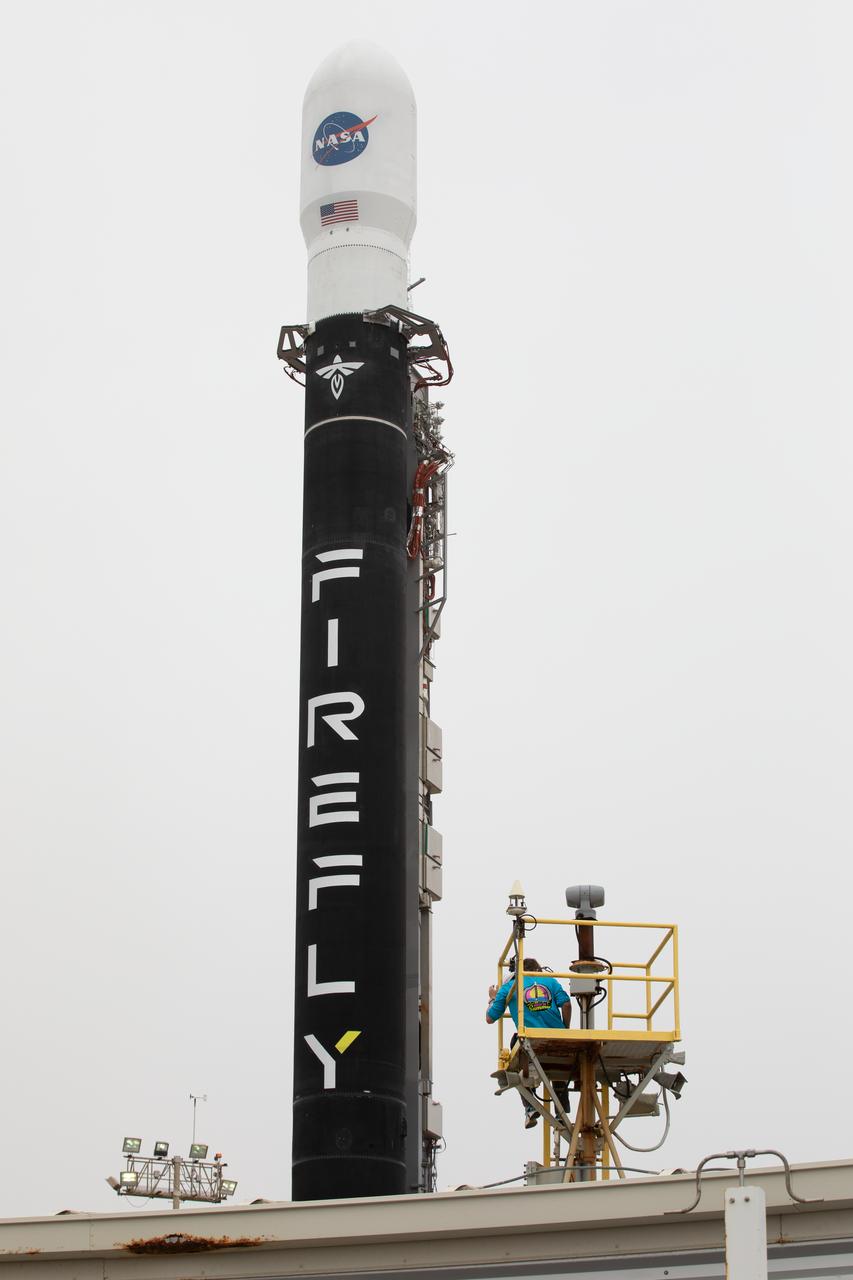
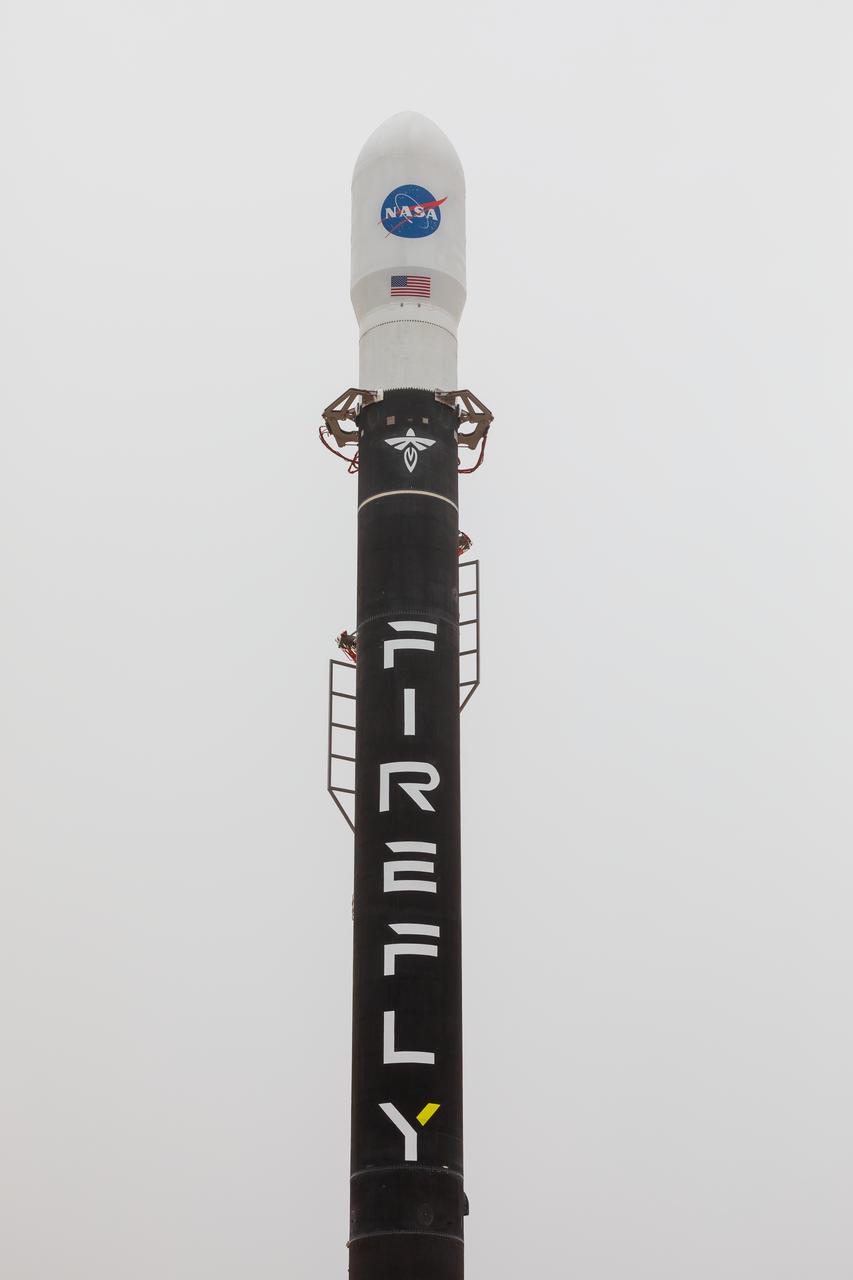
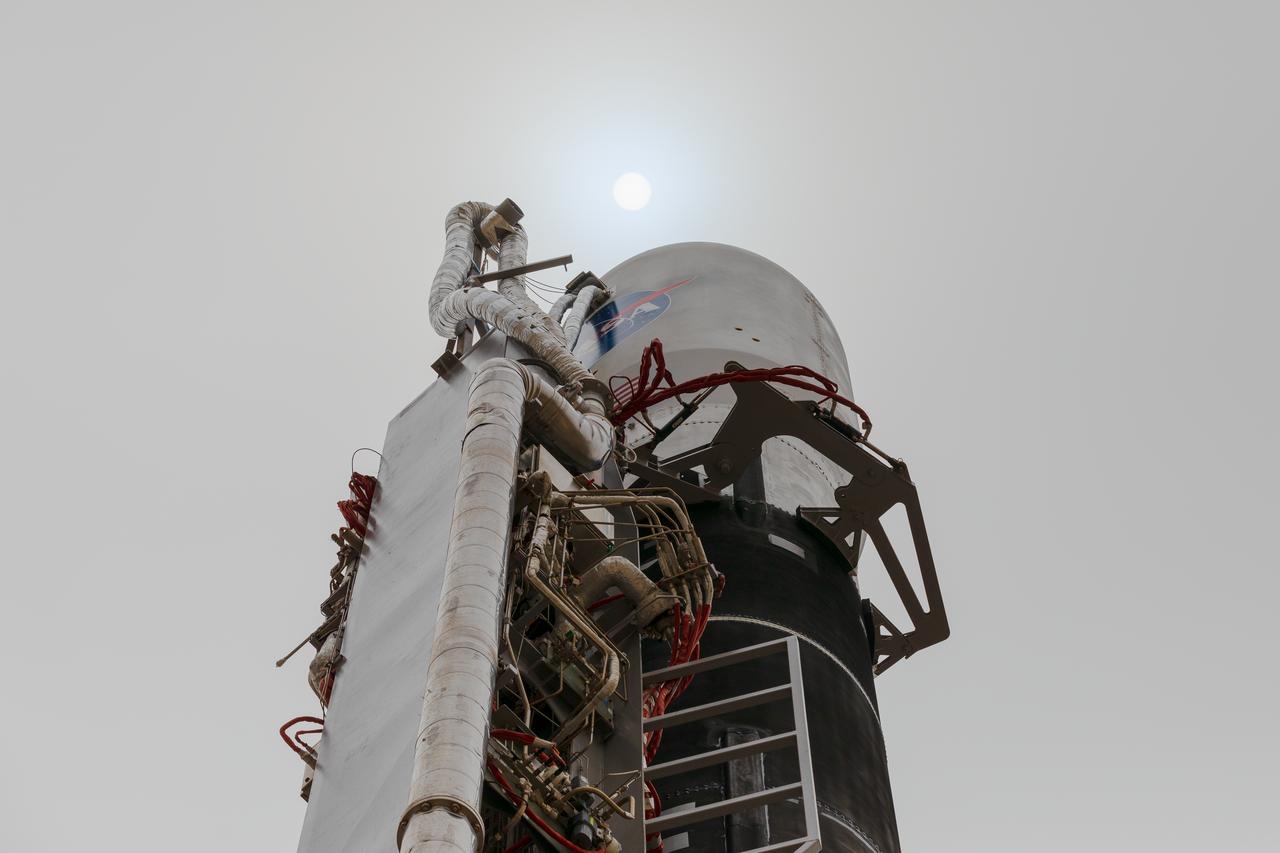
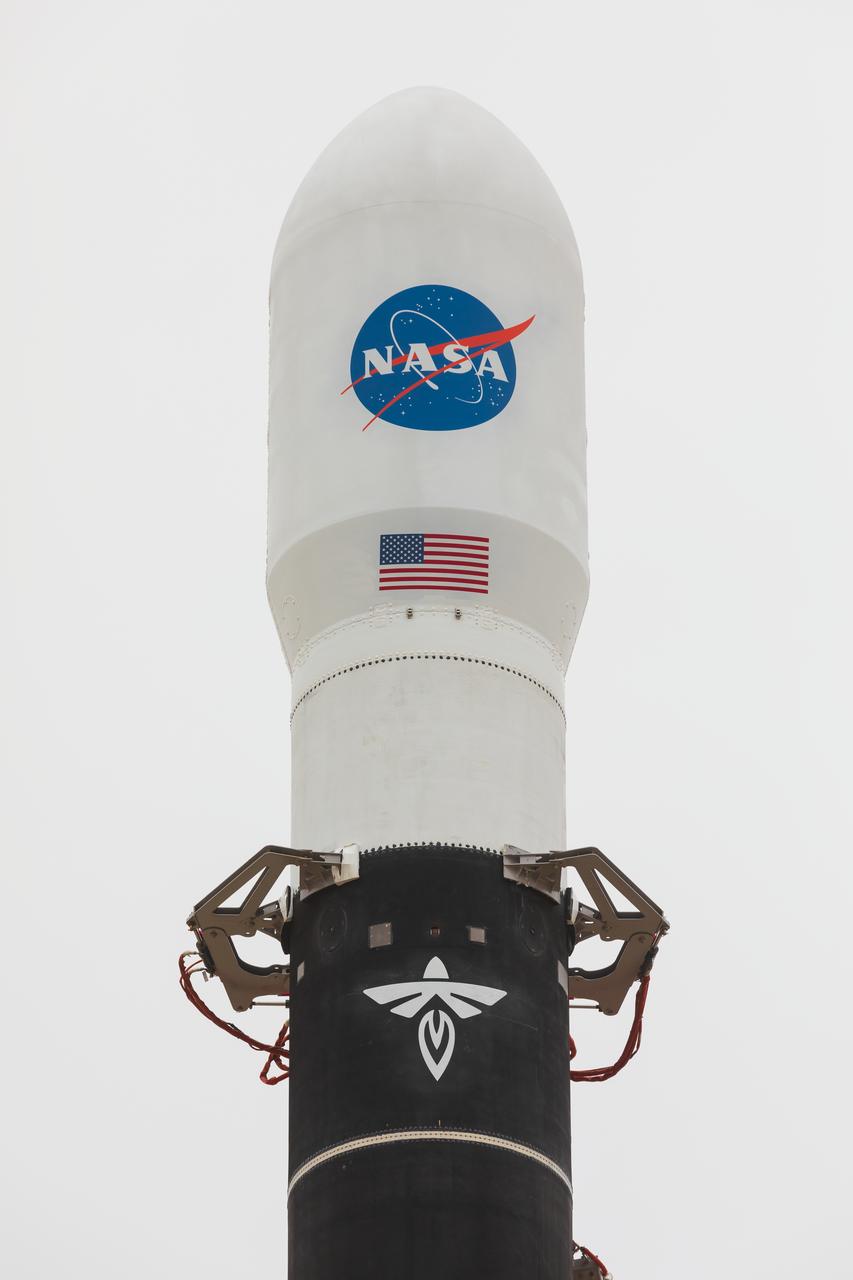
Firefly Aerospace’s Alpha rocket carrying eight CubeSats as part of NASA’s CubeSat Launch Initiative’s (CSLI) ELaNa 43 (Educational Launch of Nanosatellites) mission stands vertical at Space Launch Complex 2 at Vandenberg Space Force Base, California, on Monday, July 1, 2024. Firefly Aerospace is one of three companies selected to fly small satellites to space under NASA’s Launch Services Program Venture-Class Launch Services Demonstration 2 (VCLS Demo 2) contract awarded in December 2020.
Firefly Demo 2 Prelaunch Imagery
Firefly Aerospace’s Alpha rocket carrying eight CubeSats as part of NASA’s CubeSat Launch Initiative’s (CSLI) ELaNa 43 (Educational Launch of Nanosatellites) mission stands vertical at Space Launch Complex 2 at Vandenberg Space Force Base, California, on Monday, July 1, 2024. Firefly Aerospace is one of three companies selected to fly small satellites to space under NASA’s Launch Services Program Venture-Class Launch Services Demonstration 2 (VCLS Demo 2) contract awarded in December 2020.
Firefly Demo 2 Prelaunch Imagery
Firefly Aerospace’s Alpha rocket carrying eight CubeSats as part of NASA’s CubeSat Launch Initiative’s (CSLI) ELaNa 43 (Educational Launch of Nanosatellites) mission stands vertical at Space Launch Complex 2 at Vandenberg Space Force Base, California, on Monday, July 1, 2024. Firefly Aerospace is one of three companies selected to fly small satellites to space under NASA’s Launch Services Program Venture-Class Launch Services Demonstration 2 (VCLS Demo 2) contract awarded in December 2020.
Firefly Demo 2 Prelaunch Imagery
Firefly Aerospace’s Alpha rocket carrying eight CubeSats as part of NASA’s CubeSat Launch Initiative’s (CSLI) ELaNa 43 (Educational Launch of Nanosatellites) mission stands vertical at Space Launch Complex 2 at Vandenberg Space Force Base, California, on Monday, July 1, 2024. Firefly Aerospace is one of three companies selected to fly small satellites to space under NASA’s Launch Services Program Venture-Class Launch Services Demonstration 2 (VCLS Demo 2) contract awarded in December 2020.
Firefly Demo 2 Prelaunch Imagery
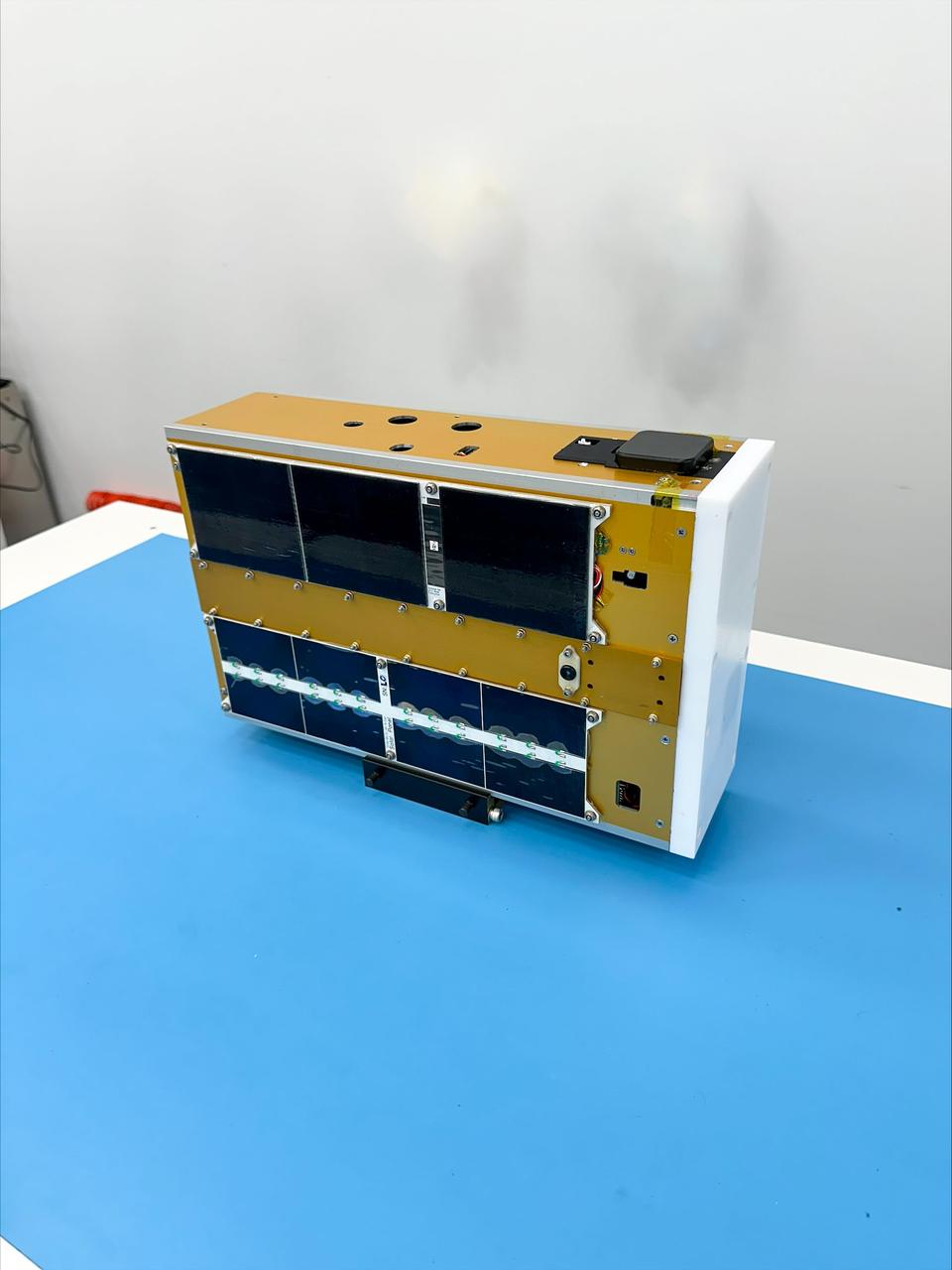
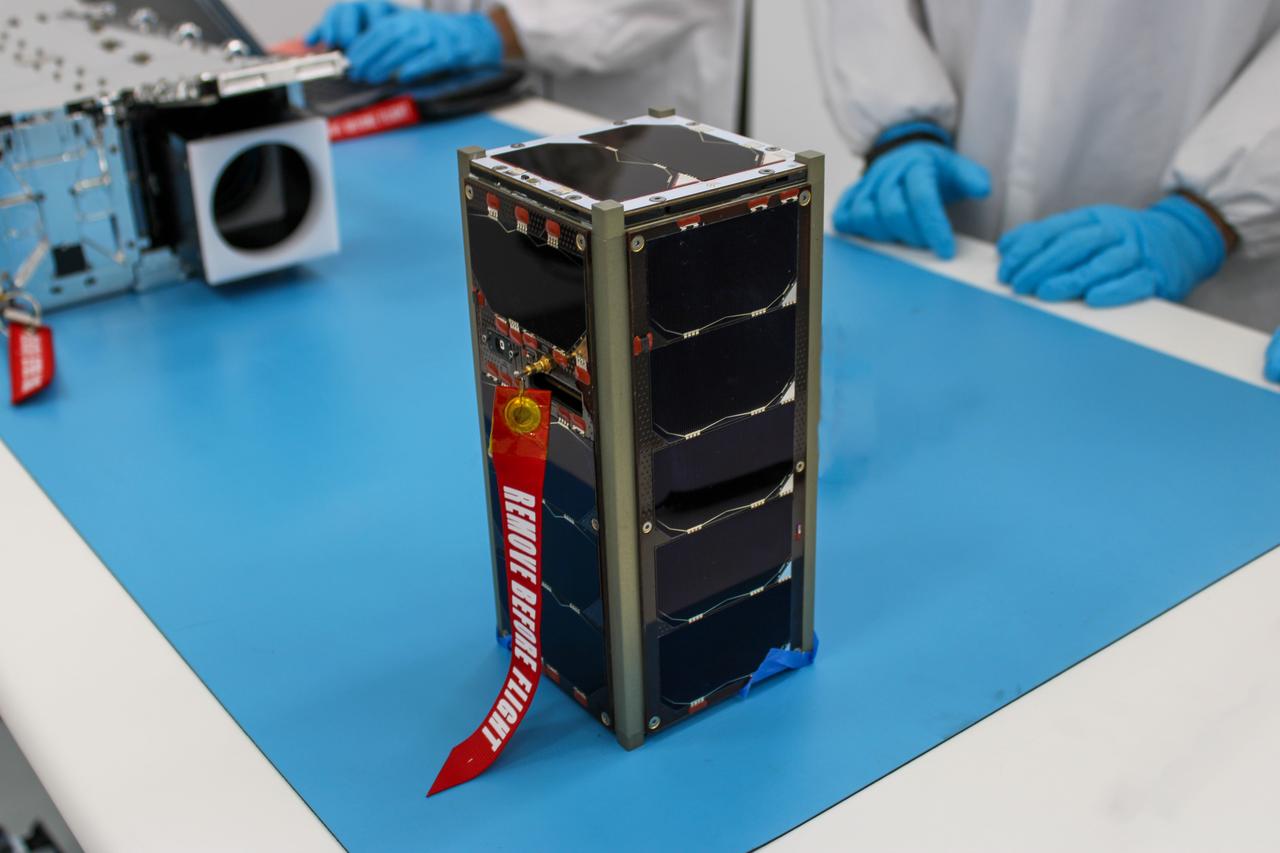
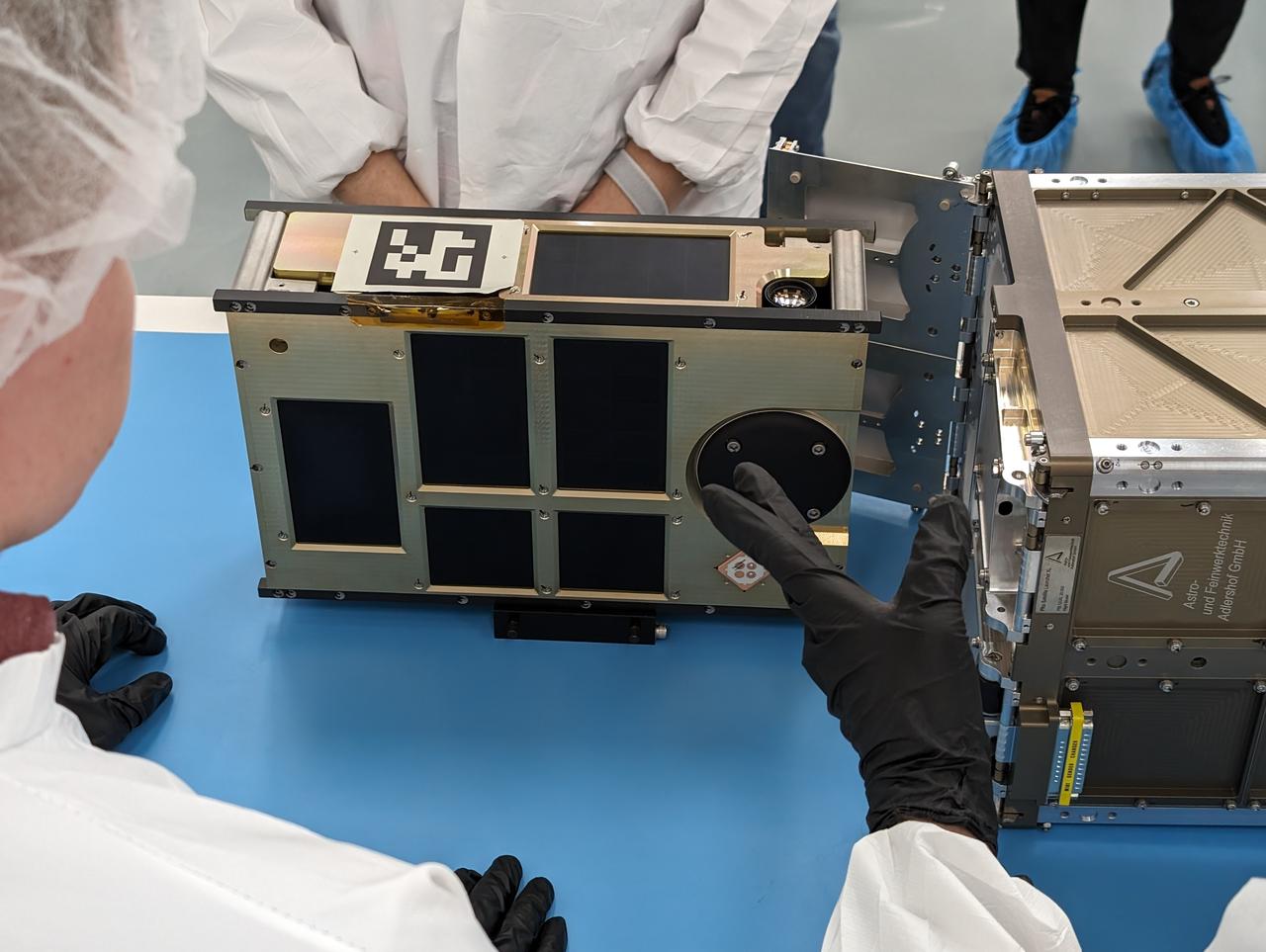
A Satellite for Optimal Control and Imaging (SOC-i) CubeSat awaits integration at Firefly’s Payload Processing Facility at Vandenberg Space Force Base, California on Thursday, June 6, 2024. SOC-i, along with several other CubeSats, will launch to space on an Alpha rocket during NASA’s Educational Launch of Nanosatellites (ELaNa) 43 mission as part of the agency’s CubeSat Launch Initiative and Firefly’s Venture-Class Launch Services Demonstration 2 contract.
Firefly Demo-2 Payload Processing - SOC-I Integration
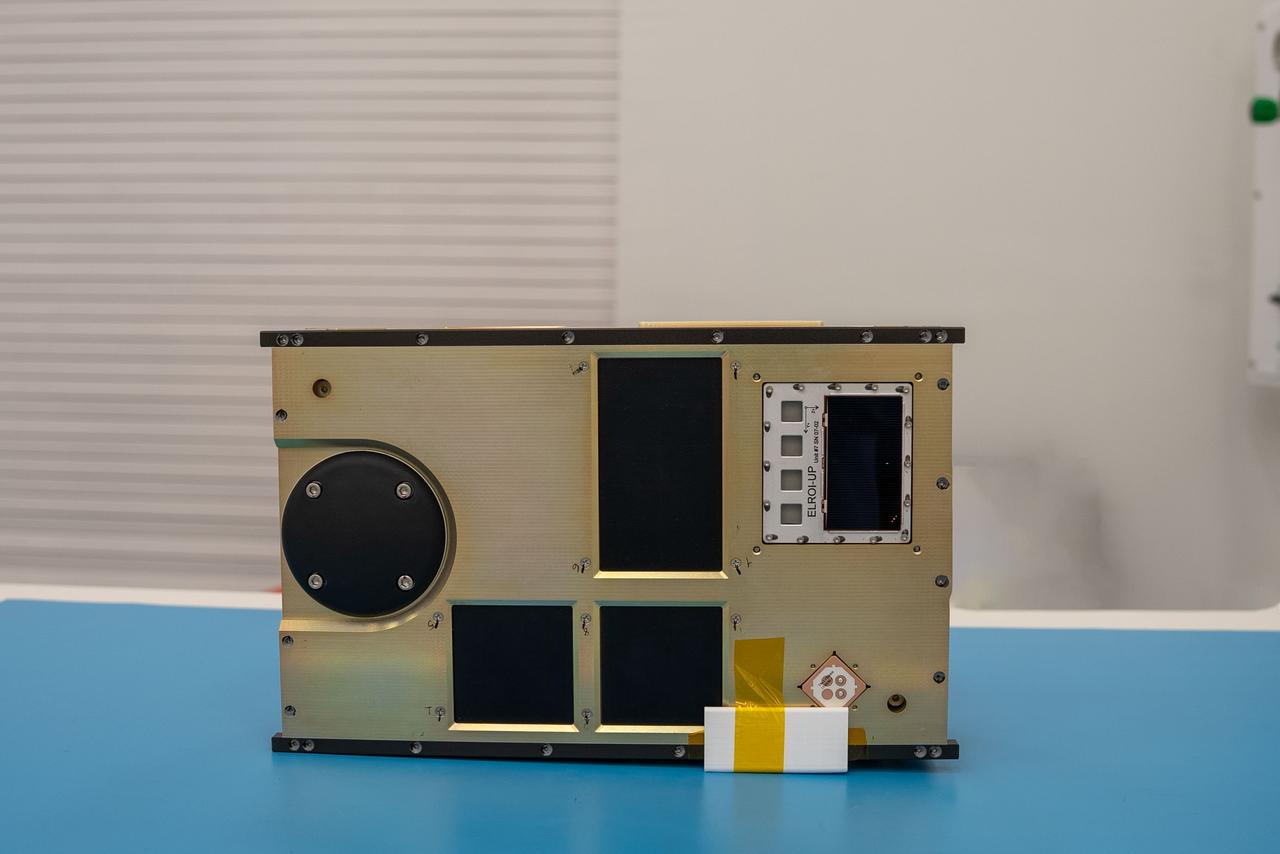
NASA’s TechEdSat-11 (TES-11) CubeSat awaits integration at Firefly’s Payload Processing Facility at Vandenberg Space Force Base, California on Saturday, June 8, 2024. Serenity, along with several other CubeSats, will launch to space on an Alpha rocket during NASA’s Educational Launch of Nanosatellites (ELaNa) 43 mission as part of the agency’s CubeSat Launch Initiative and Firefly’s Venture-Class Launch Services Demonstration 2 contract.
Firefly Demo-2 Payload Processing - TecEdSat Integration
A Satellite for Optimal Control and Imaging (SOC-i) CubeSat awaits integration at Firefly’s Payload Processing Facility at Vandenberg Space Force Base, California on Thursday, June 6, 2024. SOC-i, along with several other CubeSats, will launch to space on an Alpha rocket during NASA’s Educational Launch of Nanosatellites (ELaNa) 43 mission as part of the agency’s CubeSat Launch Initiative and Firefly’s Venture-Class Launch Services Demonstration 2 contract.
Firefly Demo-2 Payload Processing - SOC-I Integration
NASA’s TechEdSat-11 (TES-11) CubeSat awaits integration at Firefly’s Payload Processing Facility at Vandenberg Space Force Base, California on Saturday, June 8, 2024. Serenity, along with several other CubeSats, will launch to space on an Alpha rocket during NASA’s Educational Launch of Nanosatellites (ELaNa) 43 mission as part of the agency’s CubeSat Launch Initiative and Firefly’s Venture-Class Launch Services Demonstration 2 contract.
Firefly Demo-2 Payload Processing - TecEdSat Integration
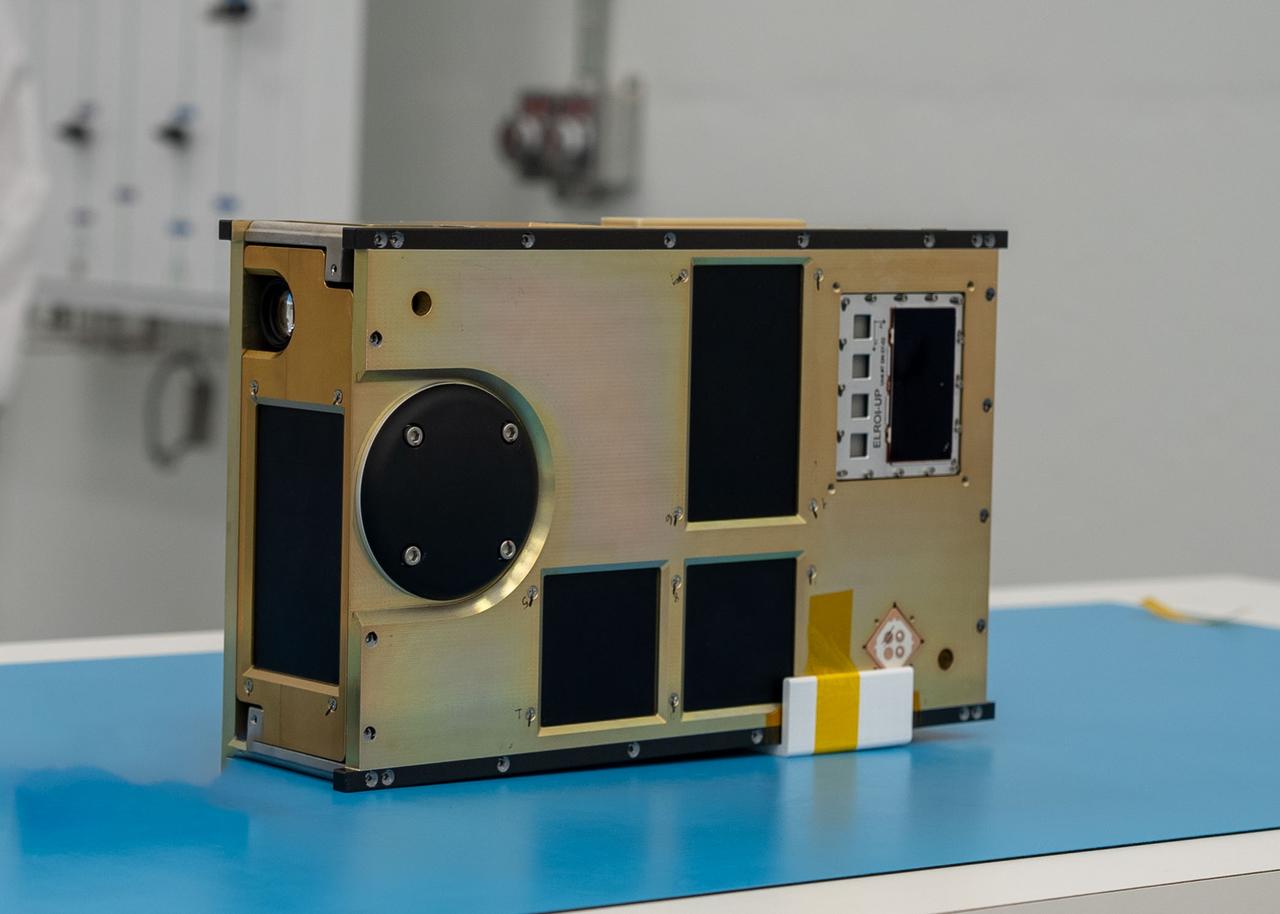
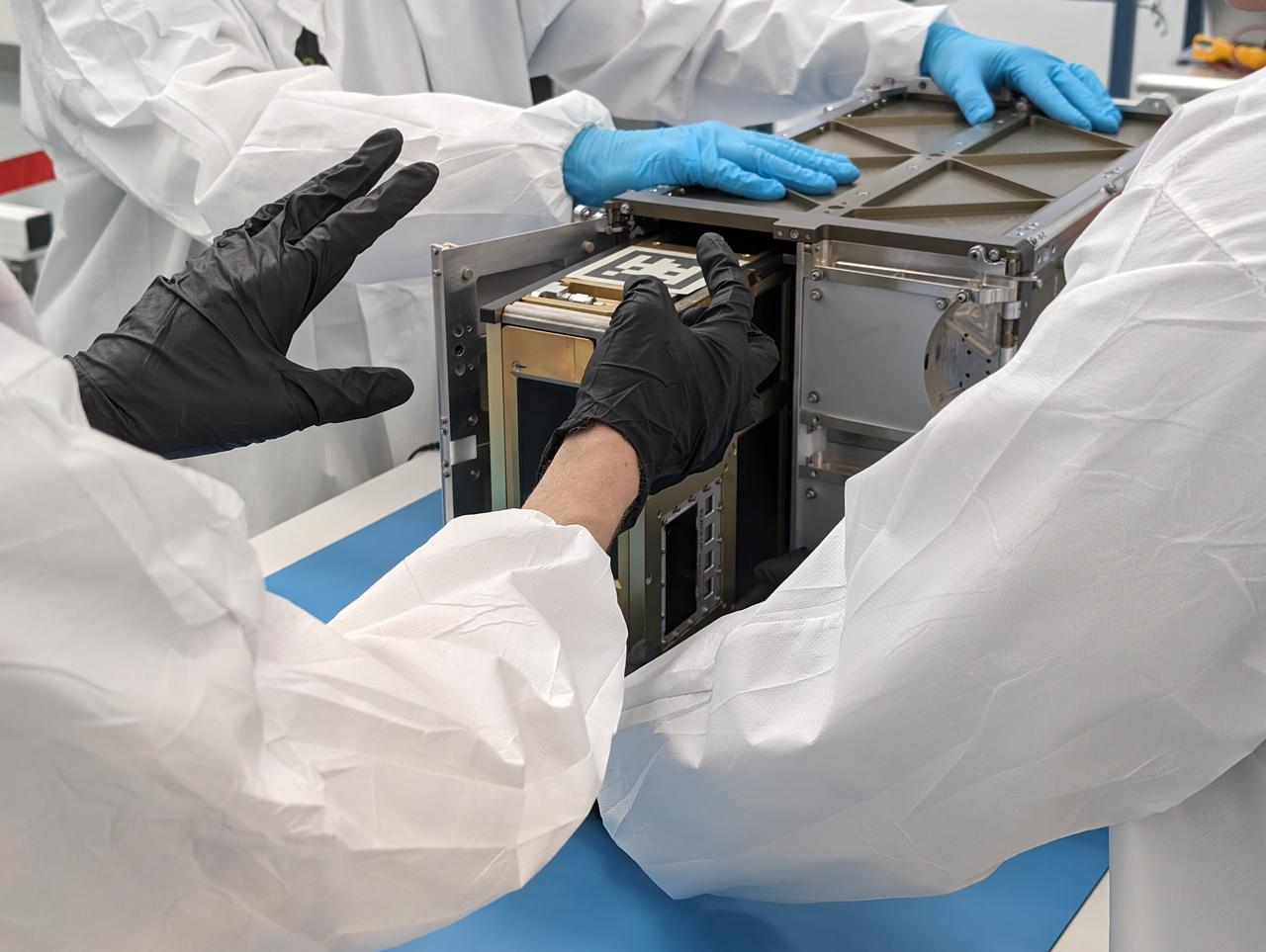
NASA’s CubeSat R5 Spacecraft 4 (R5-S4) awaits integration at Firefly’s Payload Processing Facility at Vandenberg Space Force Base, California on Wednesday, April 24, 2024. R5-S4, along with several other CubeSats, will launch to space on an Alpha rocket during NASA’s Educational Launch of Nanosatellites (ELaNa) 43 mission as part of the agency’s CubeSat Launch Initiative and Firefly’s Venture-Class Launch Services Demonstration 2 contract.
Firefly Demo-2 Payload Processing - R5-S4 Integration
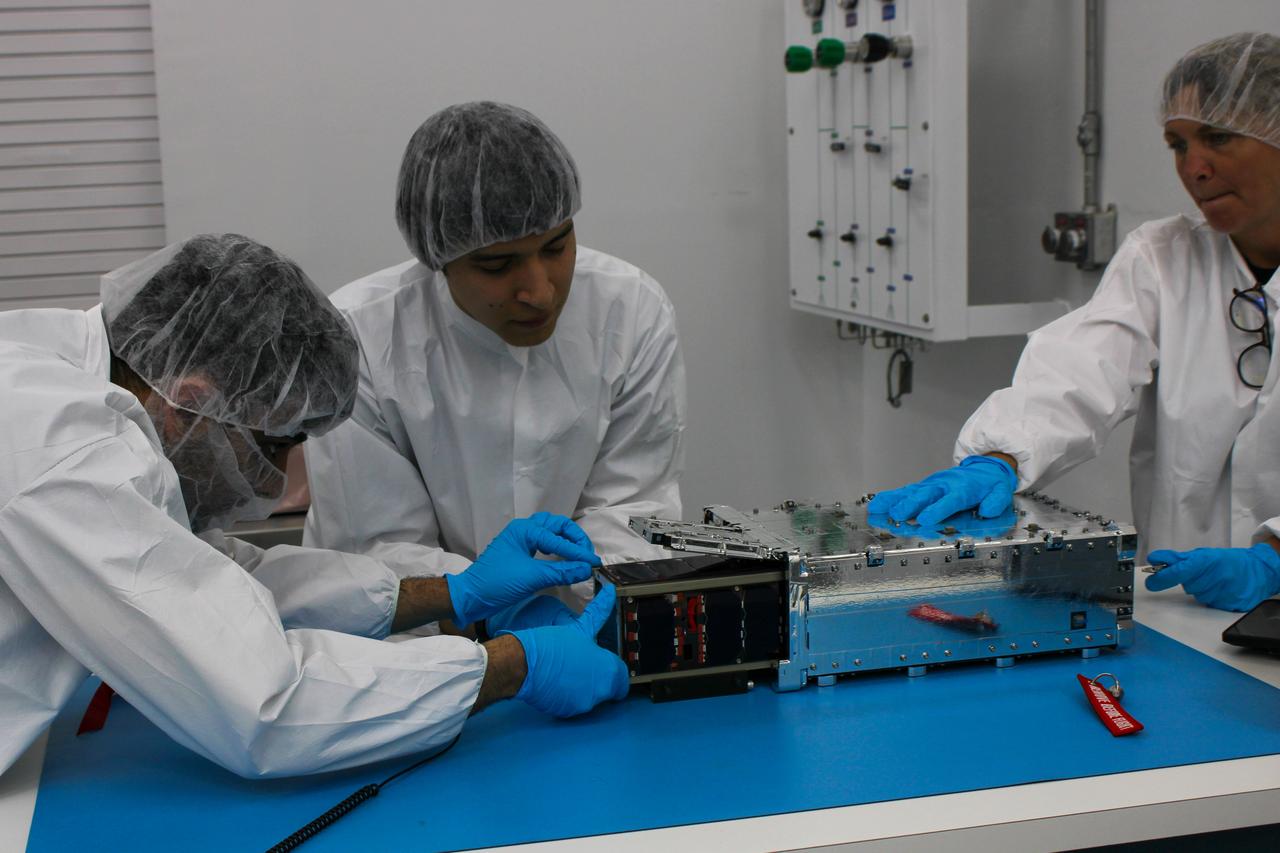
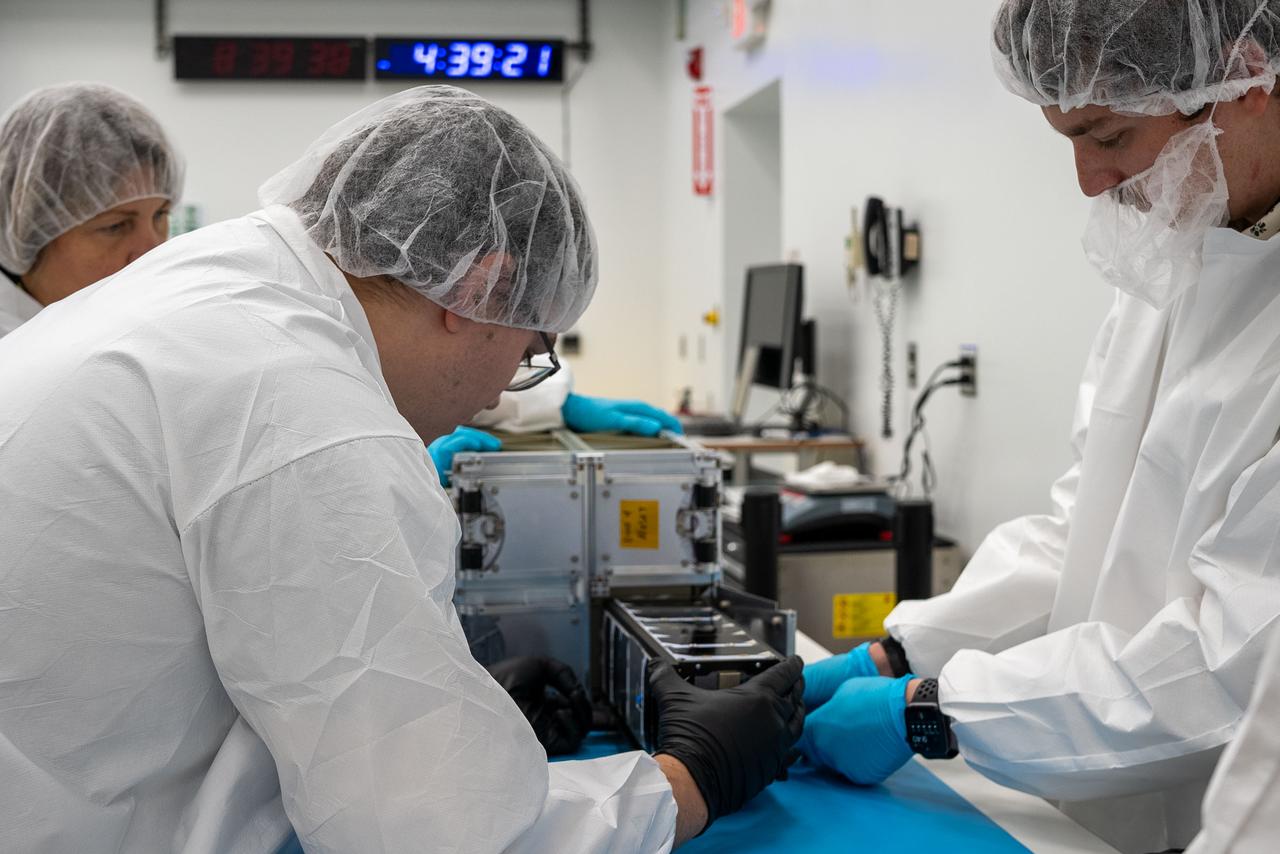
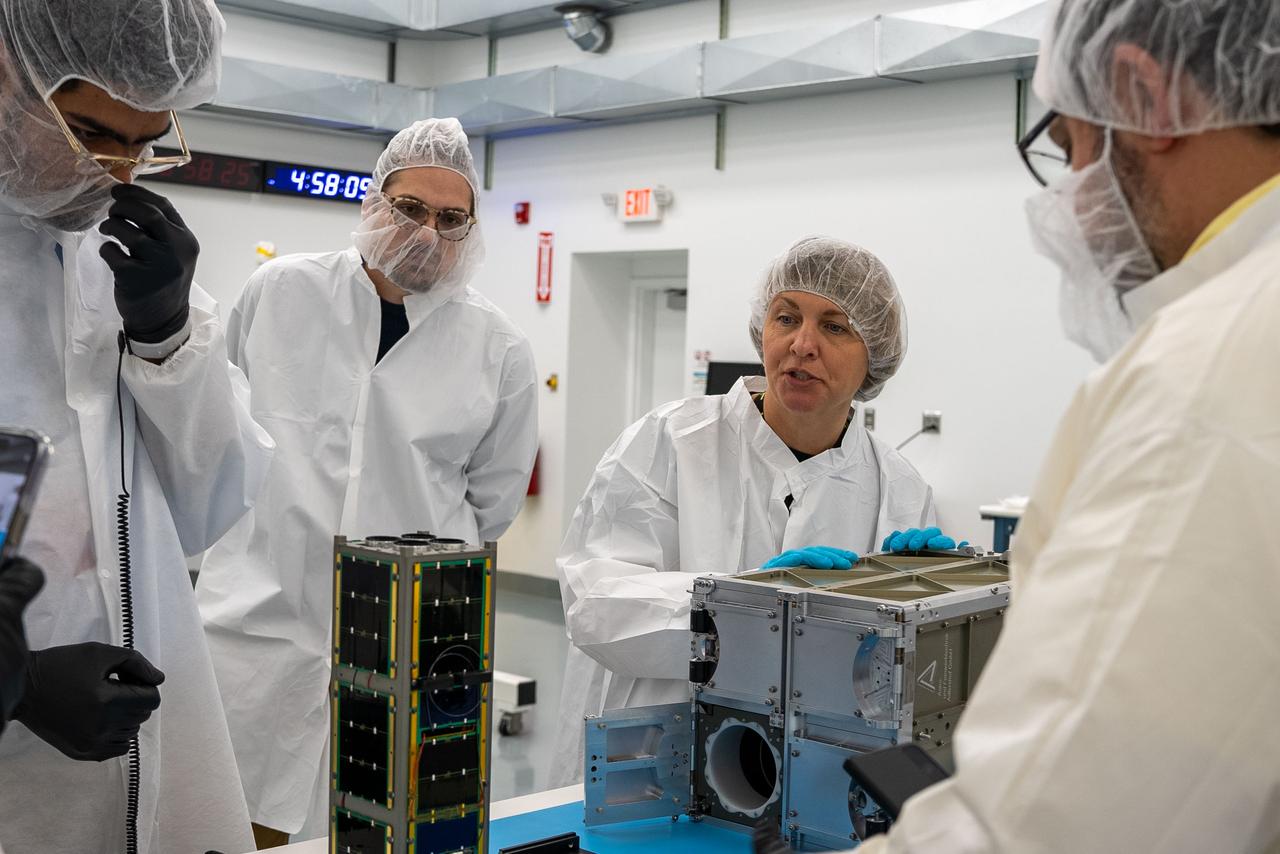
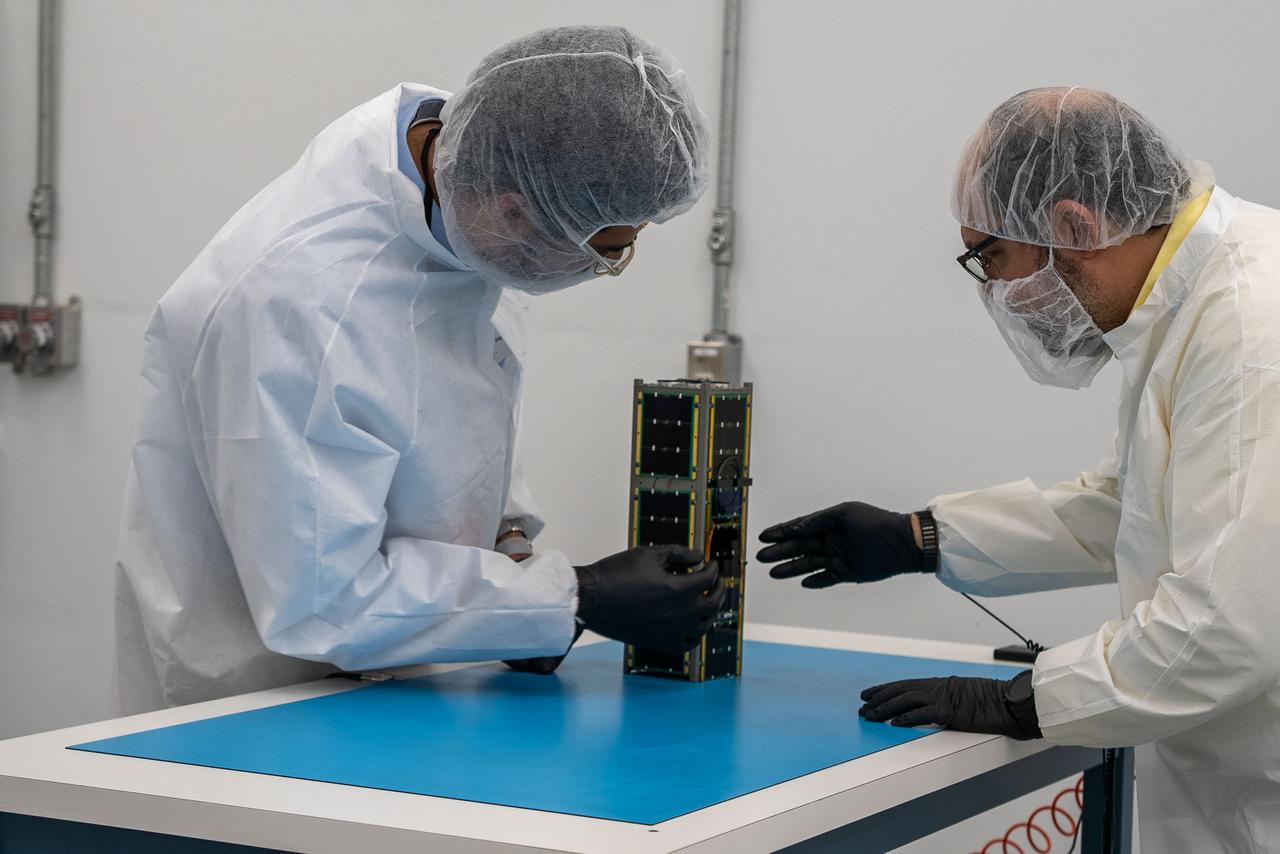
Technicians with the University of Kansas prepare their KUbeSat-1 for integration at Firefly’s Payload Processing Facility at Vandenberg Space Force Base, California on Thursday, April 25, 2024. KUbeSat-1, along with several other CubeSats, will launch to space on an Alpha rocket during NASA’s Educational Launch of Nanosatellites (ELaNa) 43 mission as part of the agency’s CubeSat Launch Initiative and Firefly’s Venture-Class Launch Services Demonstration 2 contract.
Firefly Demo-2 Payload Processing - KUbeSat-1 Integration
NASA’s CubeSat R5 Spacecraft 4 (R5-S4) awaits integration at Firefly’s Payload Processing Facility at Vandenberg Space Force Base, California on Wednesday, April 24, 2024. R5-S4, along with several other CubeSats, will launch to space on an Alpha rocket during NASA’s Educational Launch of Nanosatellites (ELaNa) 43 mission as part of the agency’s CubeSat Launch Initiative and Firefly’s Venture-Class Launch Services Demonstration 2 contract.
Firefly Demo-2 Payload Processing - R5-S4 Integration
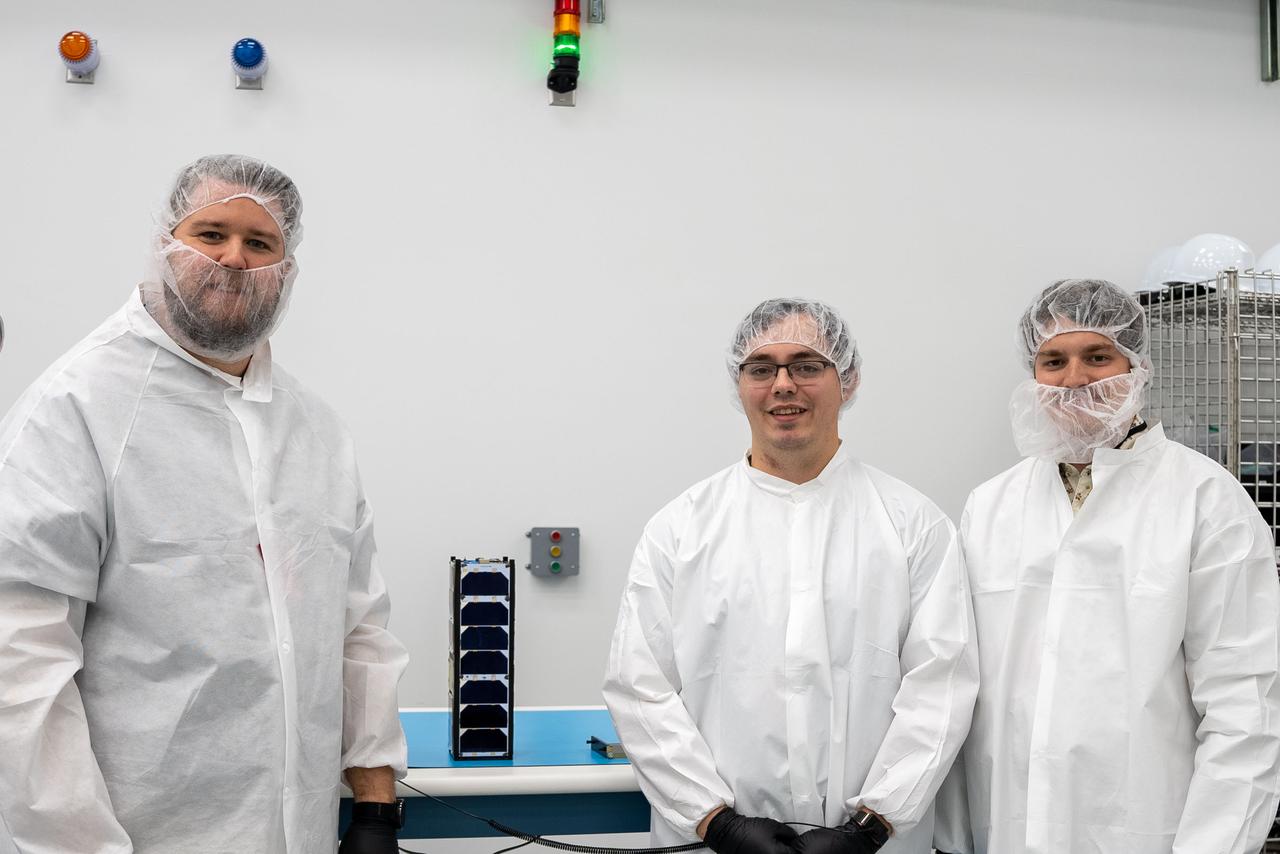
Serenity, a 3U CubeSat, awaits integration at Firefly’s Payload Processing Facility at Vandenberg Space Force Base, California on Friday, June 7, 2024. Serenity, along with several other CubeSats, will launch to space on an Alpha rocket during NASA’s Educational Launch of Nanosatellites (ELaNa) 43 mission as part of the agency’s CubeSat Launch Initiative and Firefly’s Venture-Class Launch Services Demonstration 2 contract.
Firefly Demo-2 Payload Processing - Serenity Integration
Technicians with the University of Kansas prepare their KUbeSat-1 for integration at Firefly’s Payload Processing Facility at Vandenberg Space Force Base, California on Thursday, April 25, 2024. KUbeSat-1, along with several other CubeSats, will launch to space on an Alpha rocket during NASA’s Educational Launch of Nanosatellites (ELaNa) 43 mission as part of the agency’s CubeSat Launch Initiative and Firefly’s Venture-Class Launch Services Demonstration 2 contract.
Firefly Demo-2 Payload Processing - KUbeSat-1 Integration
Technicians with the University of Kansas prepare their KUbeSat-1 for integration at Firefly’s Payload Processing Facility at Vandenberg Space Force Base, California on Thursday, April 25, 2024. KUbeSat-1, along with several other CubeSats, will launch to space on an Alpha rocket during NASA’s Educational Launch of Nanosatellites (ELaNa) 43 mission as part of the agency’s CubeSat Launch Initiative and Firefly’s Venture-Class Launch Services Demonstration 2 contract.
Firefly Demo-2 Payload Processing - KUbeSat-1 Integration
A CubeSat named CatSat from the University of Arizona awaits integration at Firefly’s Payload Processing Facility at Vandenberg Space Force Base, California on Thursday, April 25, 2024. CatSat, along with several other CubeSats, will launch to space on an Alpha rocket during NASA’s Educational Launch of Nanosatellites (ELaNa) 43 mission as part of the agency’s CubeSat Launch Initiative and Firefly’s Venture-Class Launch Services Demonstration 2 contract.
Firefly Demo-2 Payload Processing - CatSat Integration
Technicians from the University of Maine prepare CubeSat MESAT-1 for integration at Firefly’s Payload Processing Facility at Vandenberg Space Force Base, California on Monday, April 22, 2024. MESAT-1, along with seven other payloads, will be integrated into a Firefly Aerospace Alpha rocket for NASA’s Educational Launch of Nanosatellites (ELaNa) 43 mission as part of the agency’s CubeSat Launch Initiative and Firefly’s Venture-Class Launch Services Demonstration 2 contract.
Firefly Demo-2 Payload Processing - MESAT1 Intergration
Technicians from the University of Maine prepare CubeSat MESAT-1 for integration at Firefly’s Payload Processing Facility at Vandenberg Space Force Base, California on Monday, April 22, 2024. MESAT-1, along with seven other payloads, will be integrated into a Firefly Aerospace Alpha rocket for NASA’s Educational Launch of Nanosatellites (ELaNa) 43 mission as part of the agency’s CubeSat Launch Initiative and Firefly’s Venture-Class Launch Services Demonstration 2 contract.
Firefly Demo-2 Payload Processing - MESAT1 Intergration
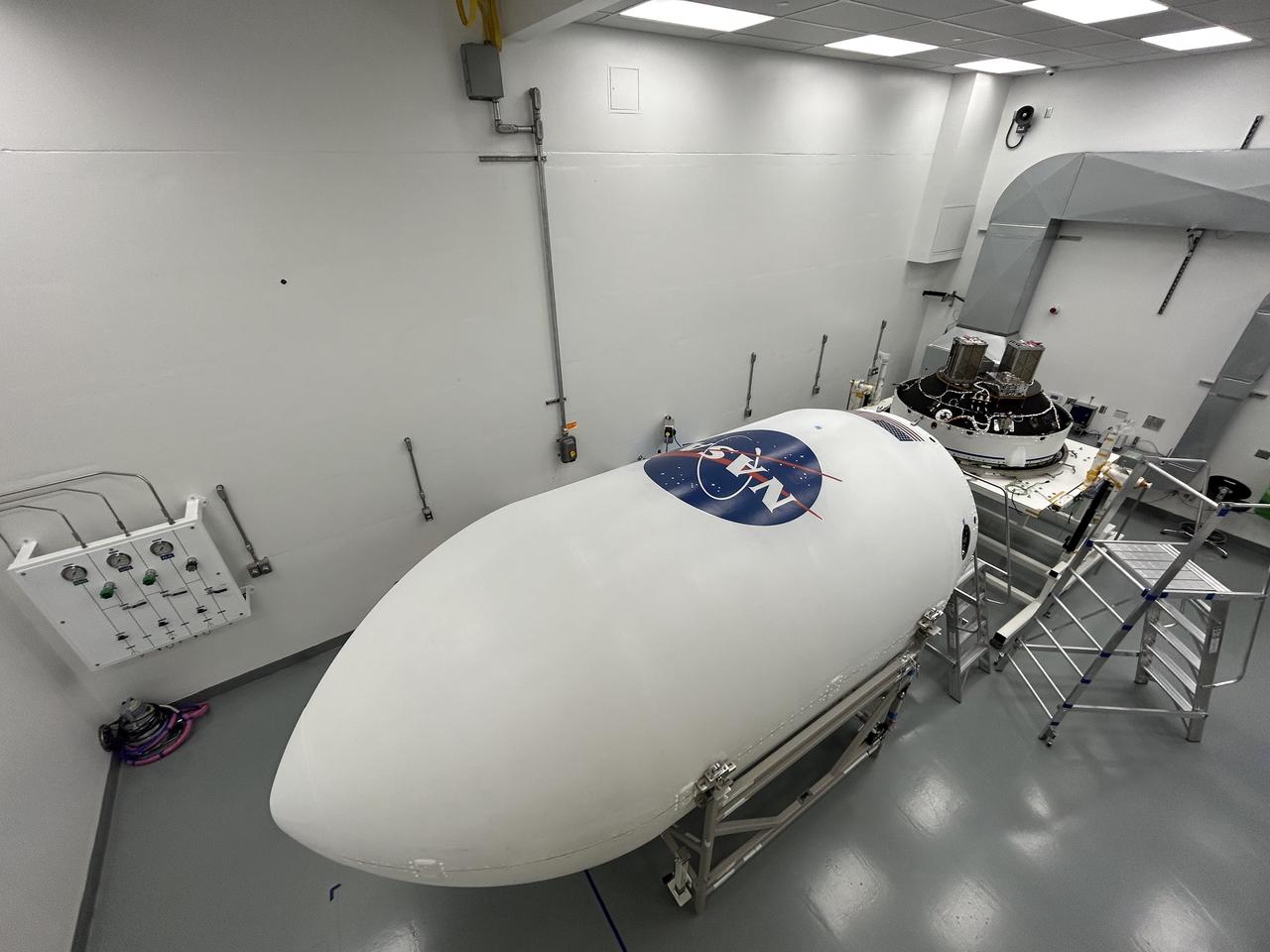
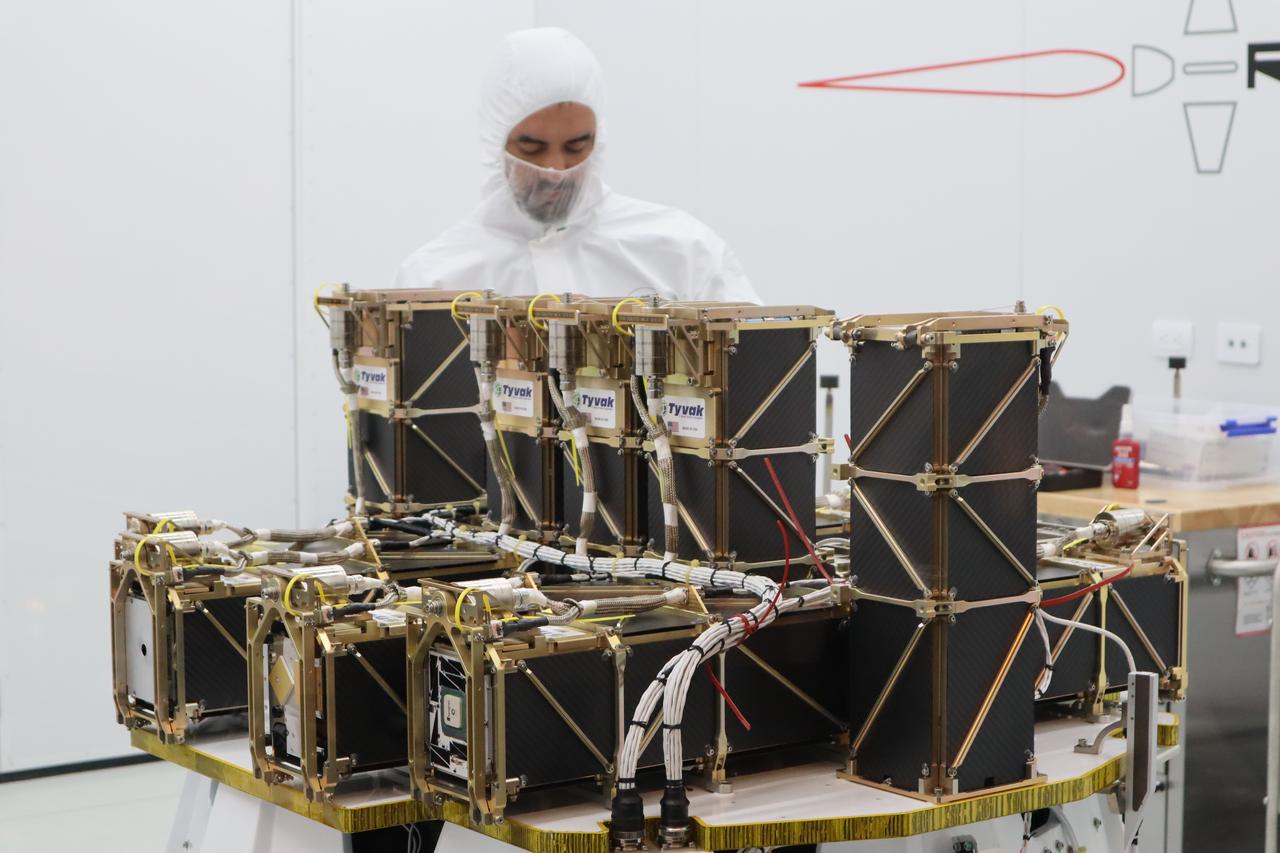
Technicians inside Firefly Aerospace’s Payload Processing Facility at Vandenberg Space Force Base, California, integrate eight CubeSats as part of NASA’s CubeSat Launch Initiative’s (CSLI) ELaNa (Educational Launch of Nanosatellites) 43 mission into payload fairings on Sunday, June 30, 2024. The mission will launch on the company’s Alpha rocket from Vandenberg’s Space Launch Complex 2. Firefly Aerospace is one of three companies selected to fly small satellites to space under NASA’s Launch Services Program Venture-Class Launch Services Demonstration 2 (VCLS Demo 2) contract awarded in December 2020.
Firefly Demo 2 Fairing in Clean Room
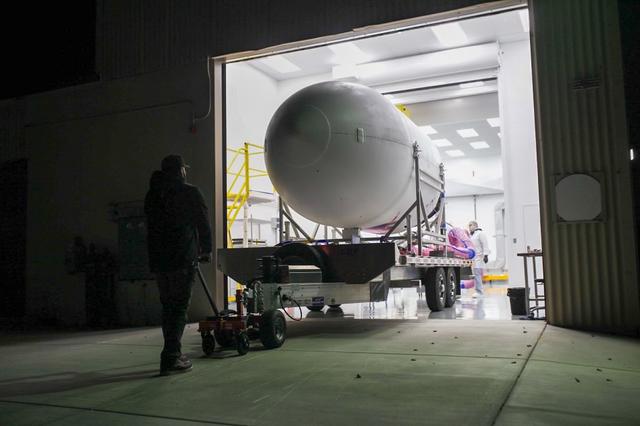
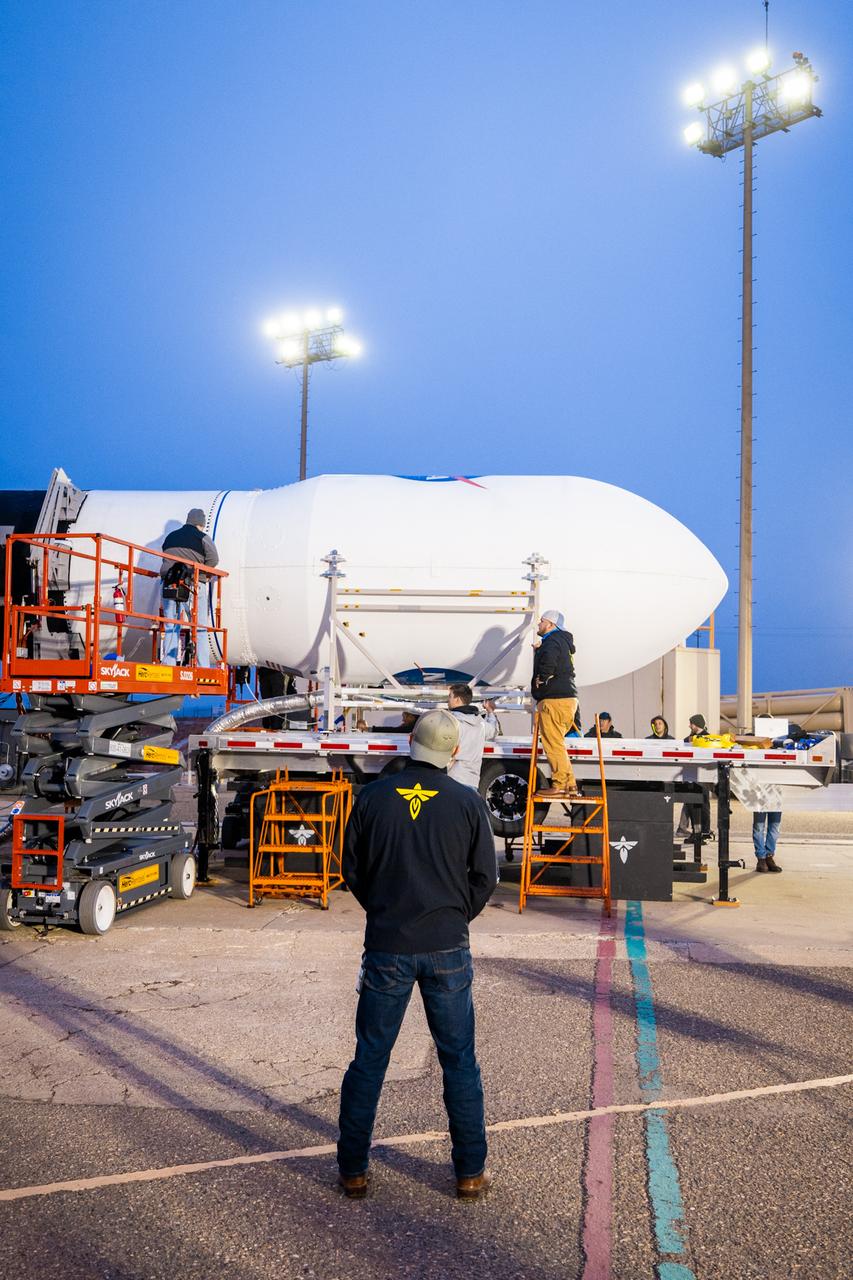
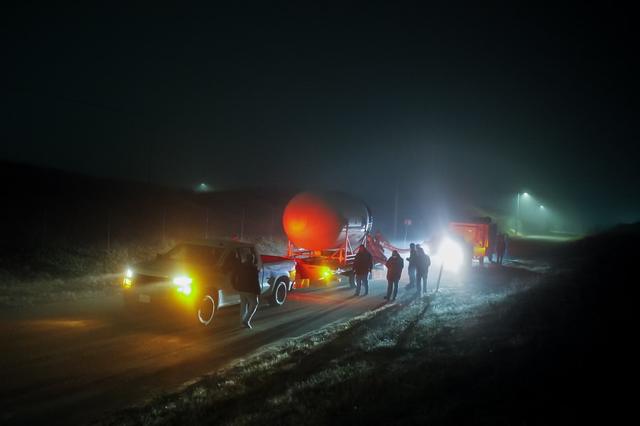
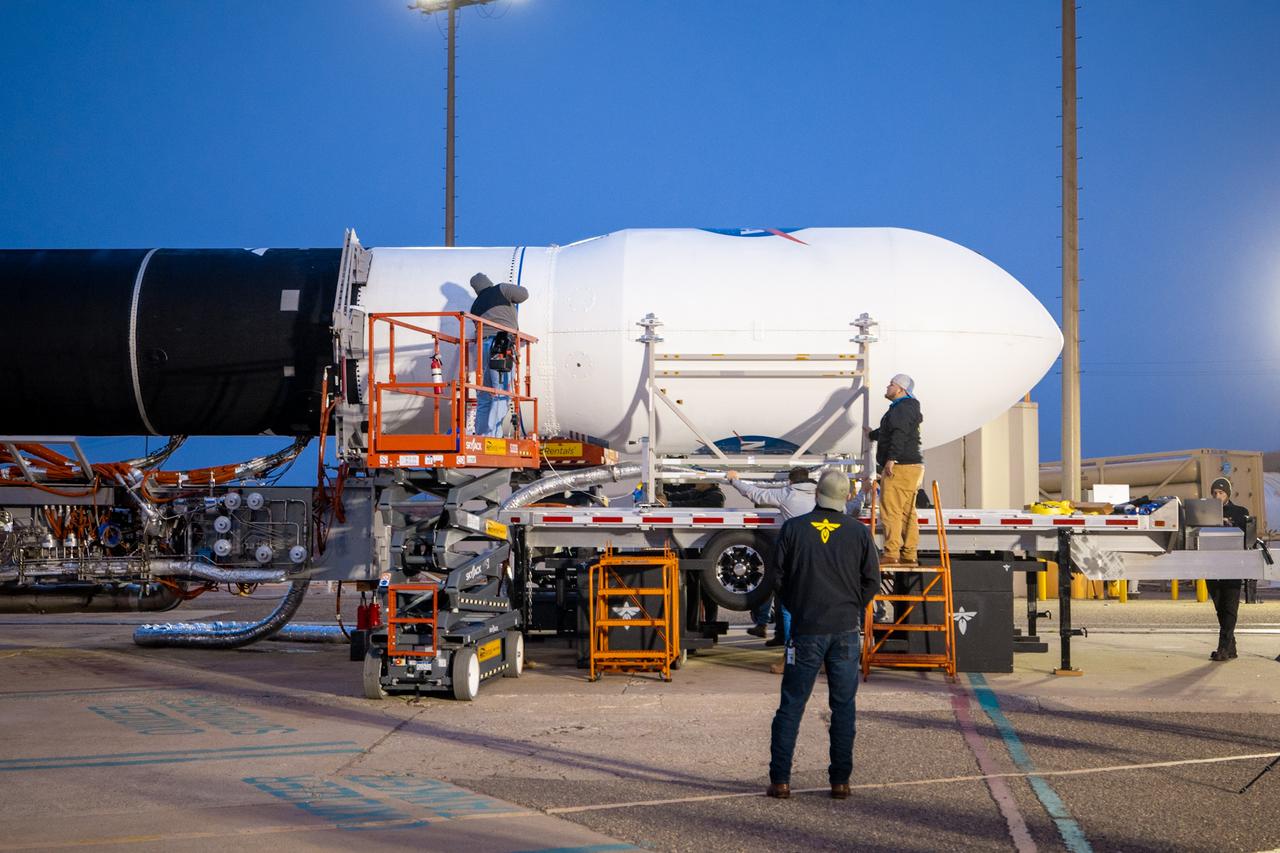
Firefly Aerospace’s Alpha rocket carrying eight CubeSats as part of NASA’s CubeSat Launch Initiative’s (CSLI) ELaNa (Educational Launch of Nanosatellites) 43 mission rolls out of the company’s Payload Processing Facility to Space Launch Complex 2 at Vandenberg Space Force Base, California, on Sunday, June 30, 2024. Firefly Aerospace is one of three companies selected to fly small satellites to space under NASA’s Launch Services Program Venture-Class Launch Services Demonstration 2 (VCLS Demo 2) contract awarded in December 2020.
Firefly Demo 2 Payload Roll to Pad
Firefly Aerospace’s Alpha rocket carrying eight CubeSats as part of NASA’s CubeSat Launch Initiative’s (CSLI) ELaNa (Educational Launch of Nanosatellites) 43 mission rolls out of the company’s Payload Processing Facility to Space Launch Complex 2 at Vandenberg Space Force Base, California, on Sunday, June 30, 2024. Firefly Aerospace is one of three companies selected to fly small satellites to space under NASA’s Launch Services Program Venture-Class Launch Services Demonstration 2 (VCLS Demo 2) contract awarded in December 2020.
Firefly Demo 2 Payload Roll to Pad
Firefly Aerospace’s Alpha rocket carrying eight CubeSats as part of NASA’s CubeSat Launch Initiative’s (CSLI) ELaNa (Educational Launch of Nanosatellites) 43 mission rolls out of the company’s Payload Processing Facility to Space Launch Complex 2 at Vandenberg Space Force Base, California, on Sunday, June 30, 2024. Firefly Aerospace is one of three companies selected to fly small satellites to space under NASA’s Launch Services Program Venture-Class Launch Services Demonstration 2 (VCLS Demo 2) contract awarded in December 2020.
Firefly Demo 2 Payload Mate to Rocket
Firefly Aerospace’s Alpha rocket carrying eight CubeSats as part of NASA’s CubeSat Launch Initiative’s (CSLI) ELaNa (Educational Launch of Nanosatellites) 43 mission rolls out of the company’s Payload Processing Facility to Space Launch Complex 2 at Vandenberg Space Force Base, California, on Sunday, June 30, 2024. Firefly Aerospace is one of three companies selected to fly small satellites to space under NASA’s Launch Services Program Venture-Class Launch Services Demonstration 2 (VCLS Demo 2) contract awarded in December 2020.
Firefly Demo 2 Payload Mate to Rocket
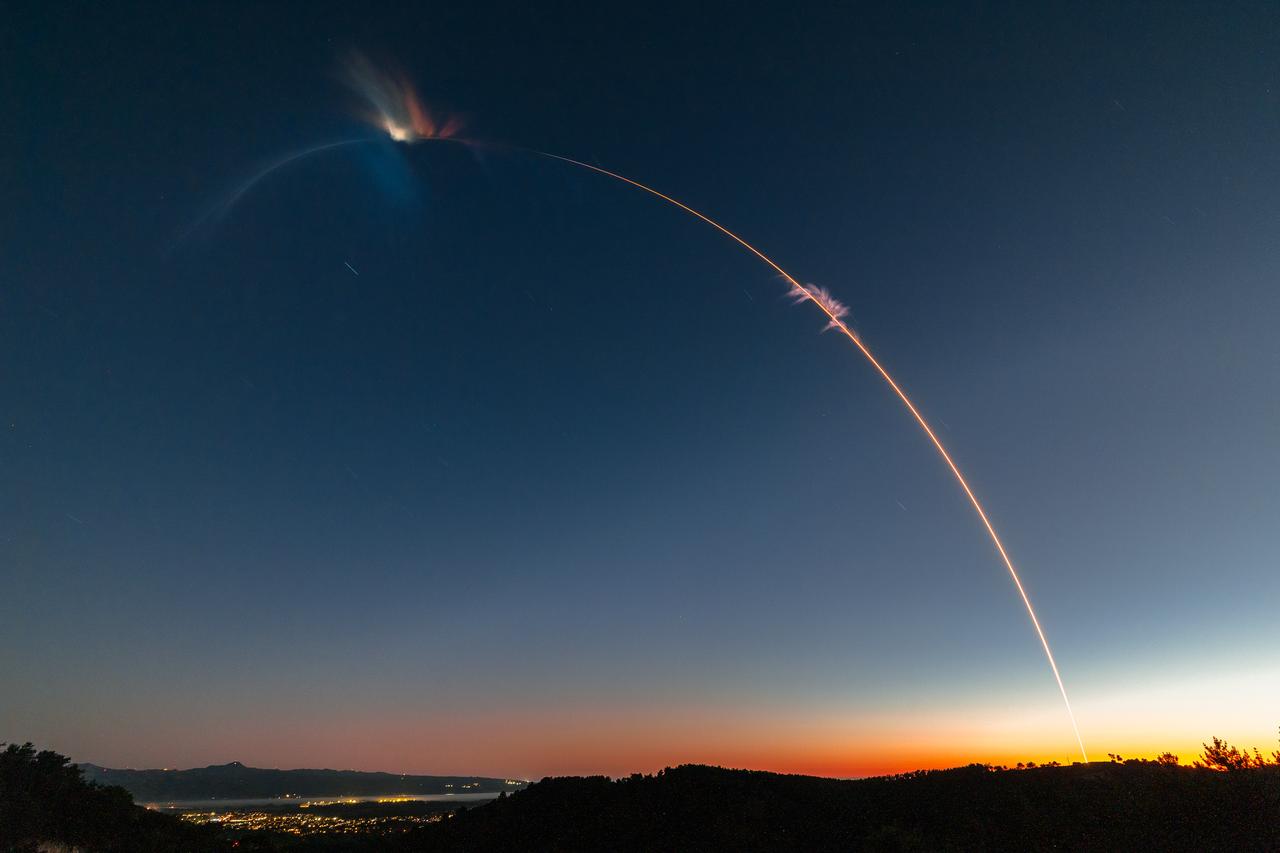
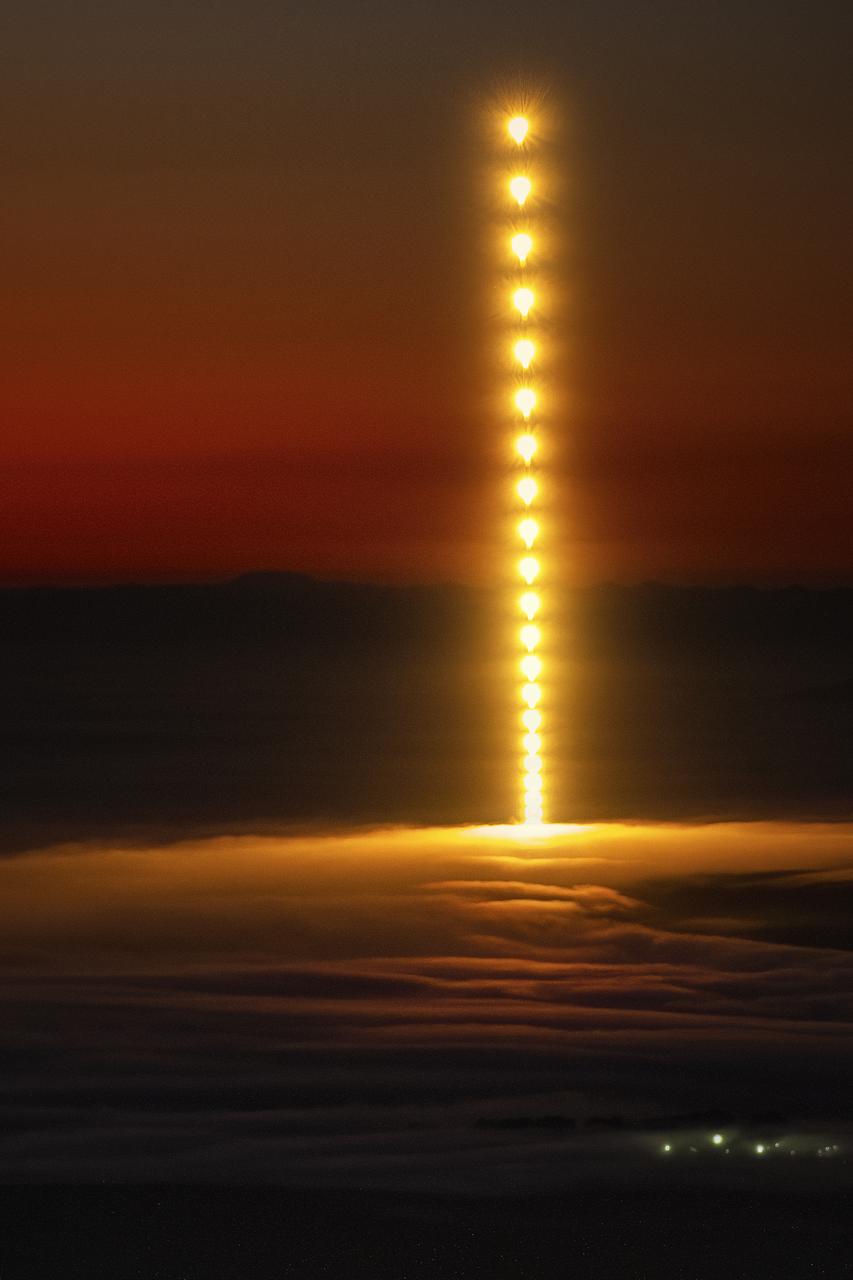
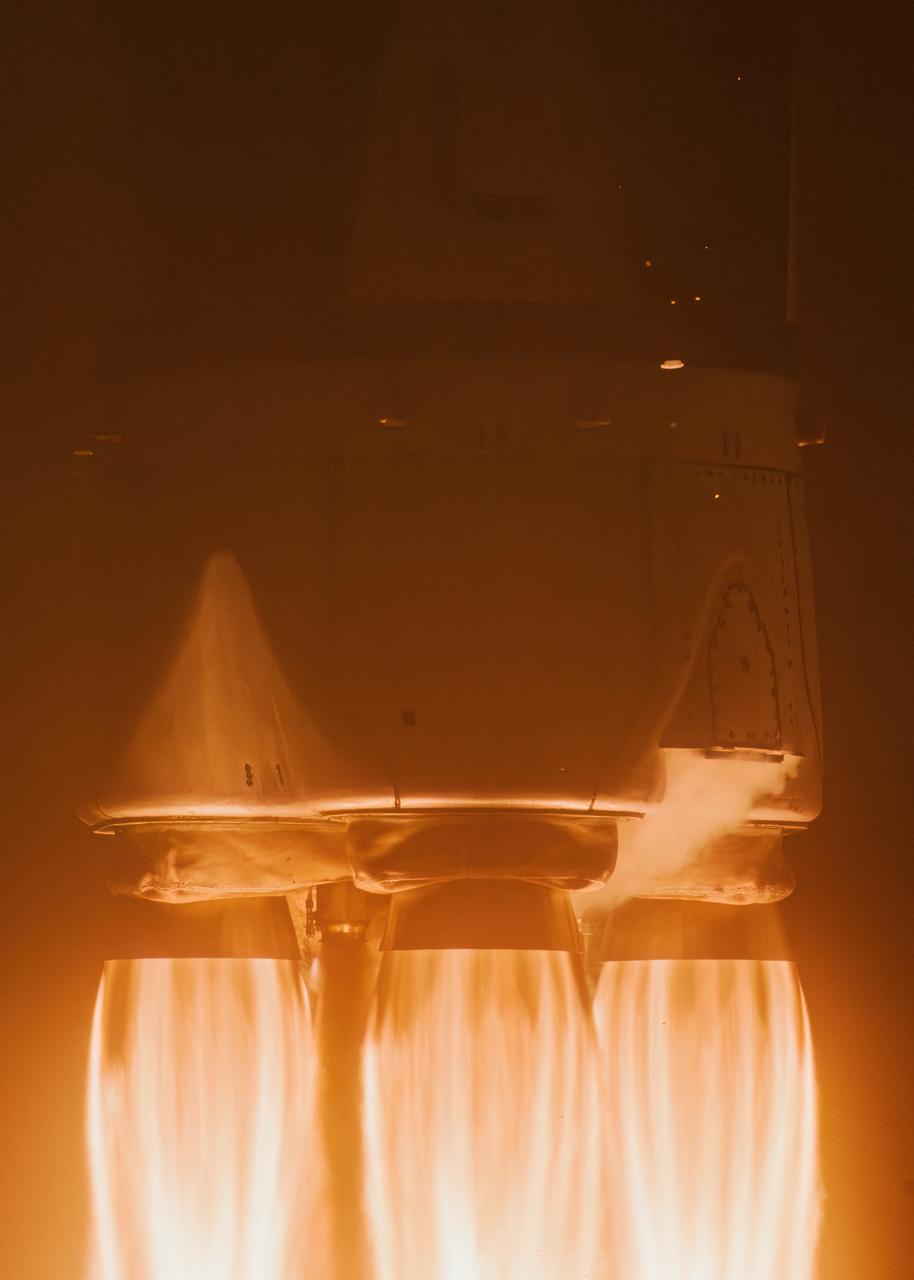
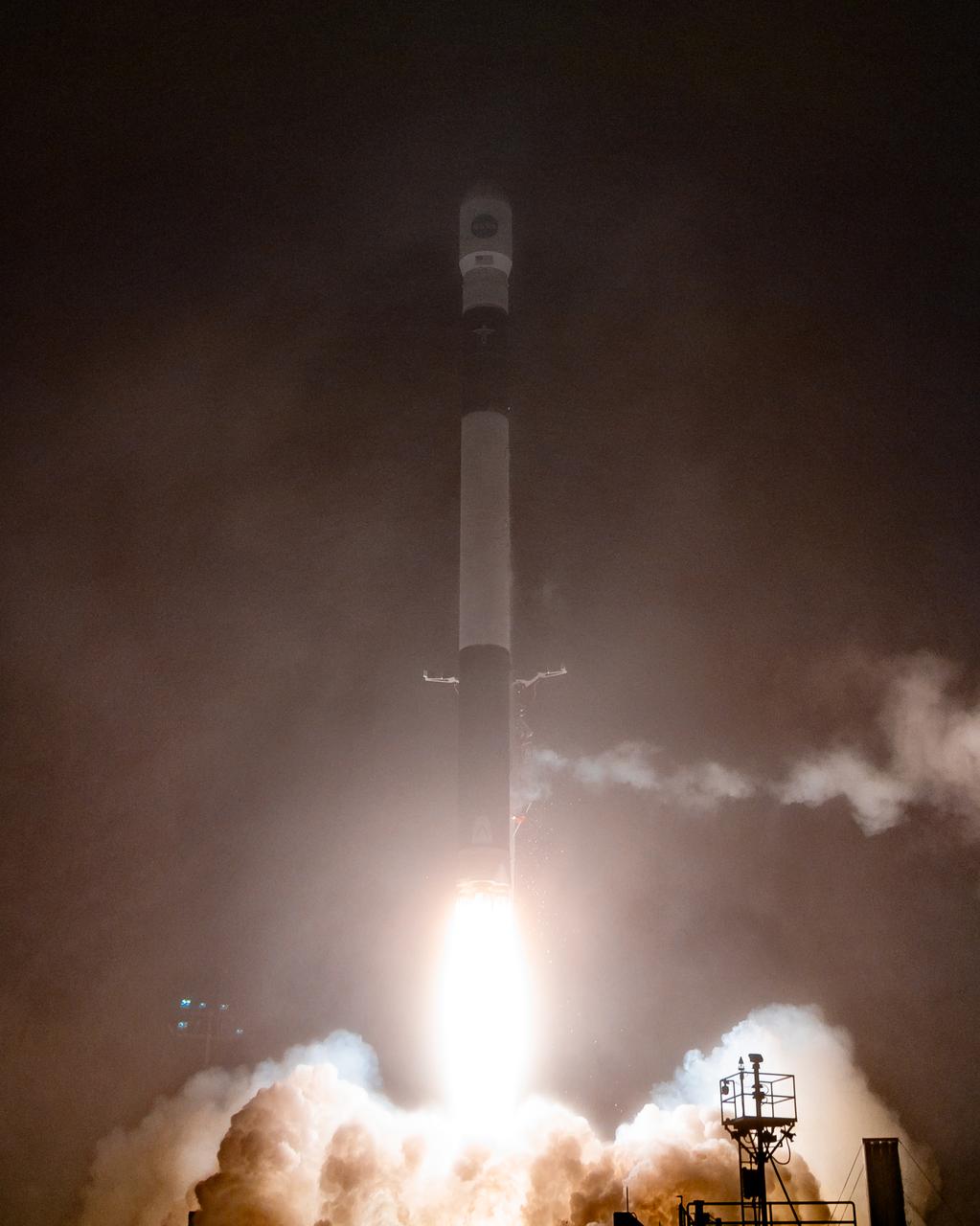
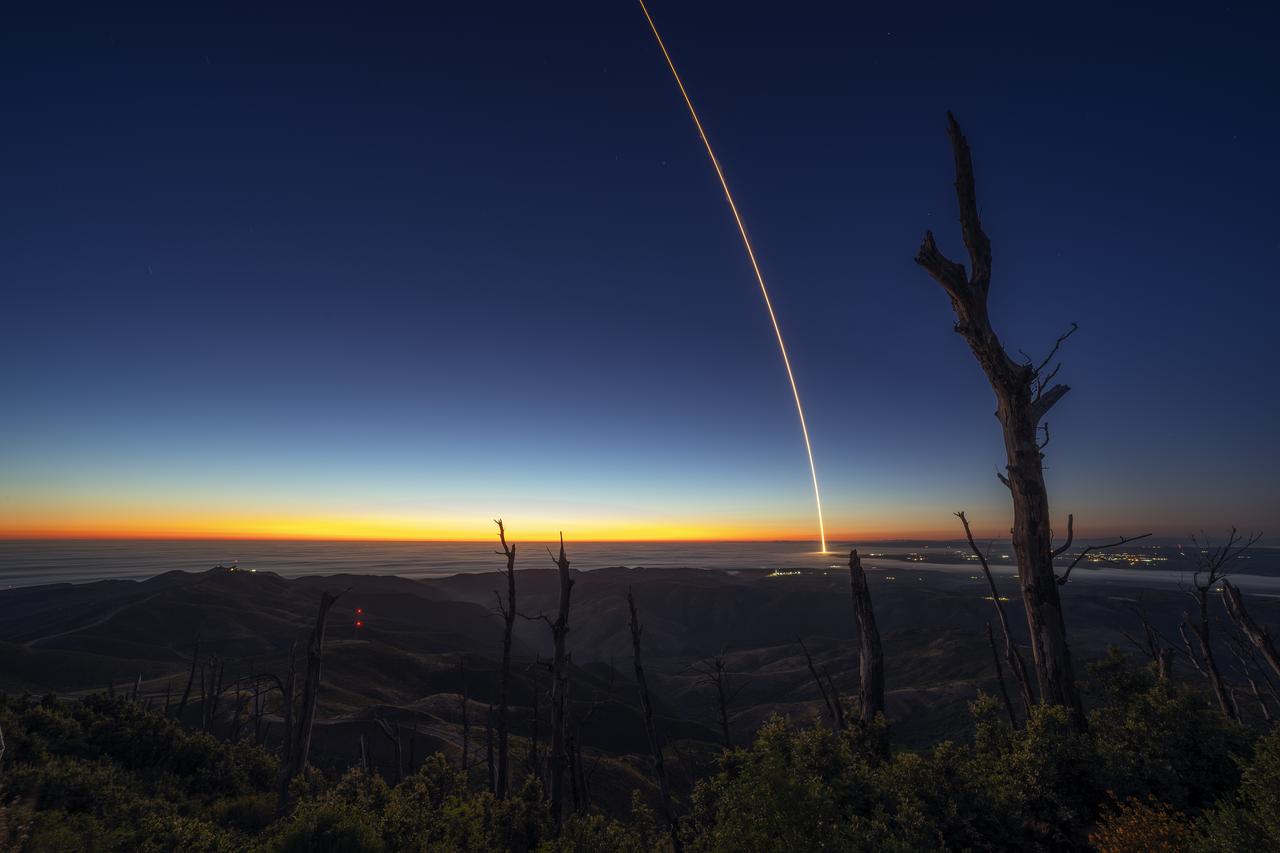
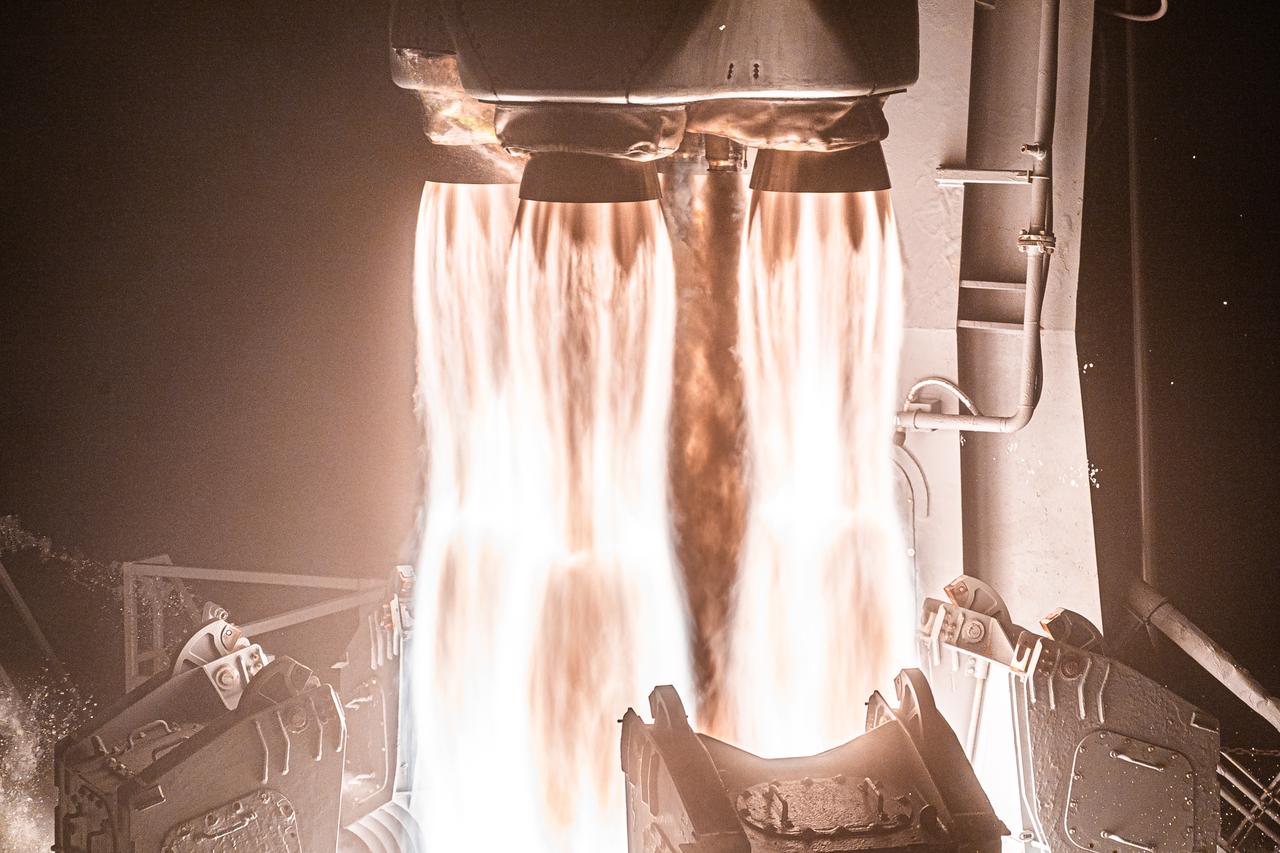
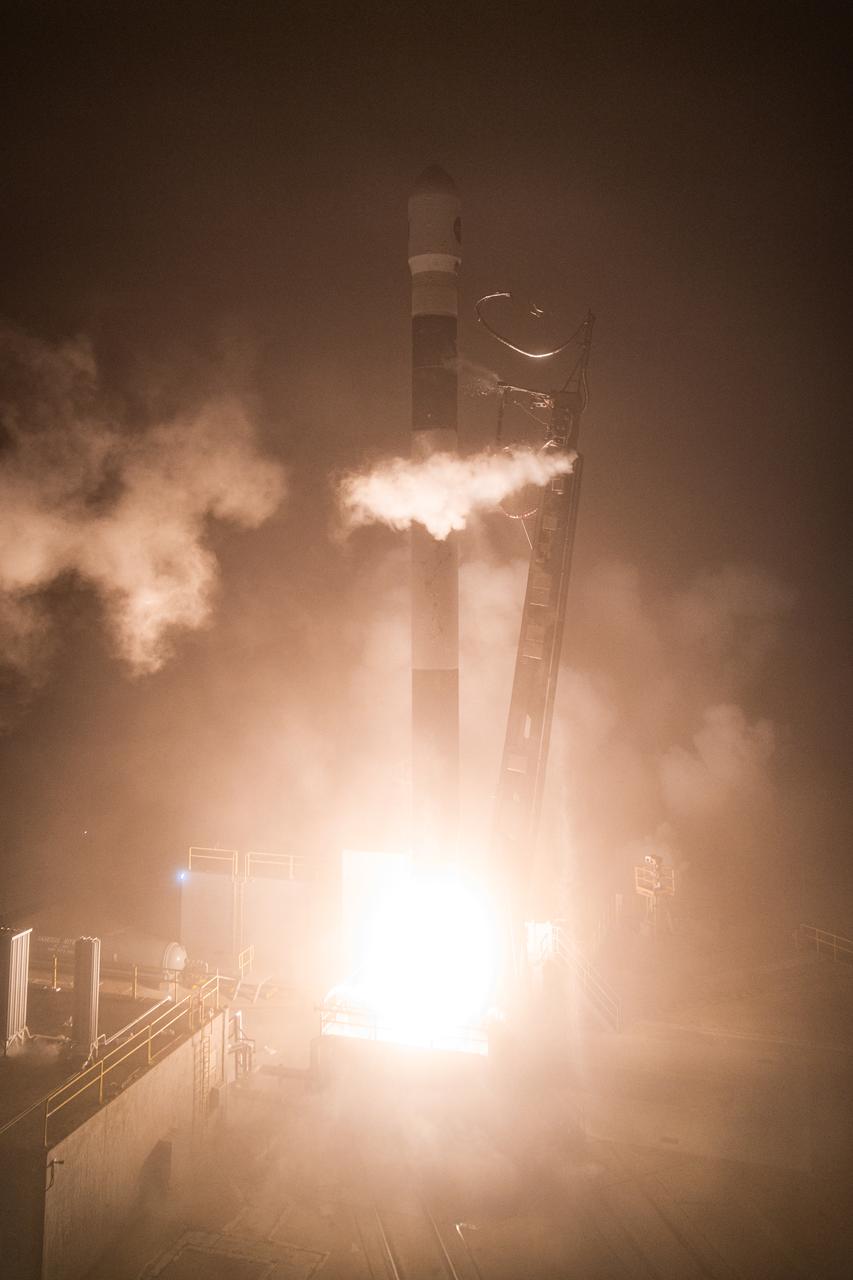
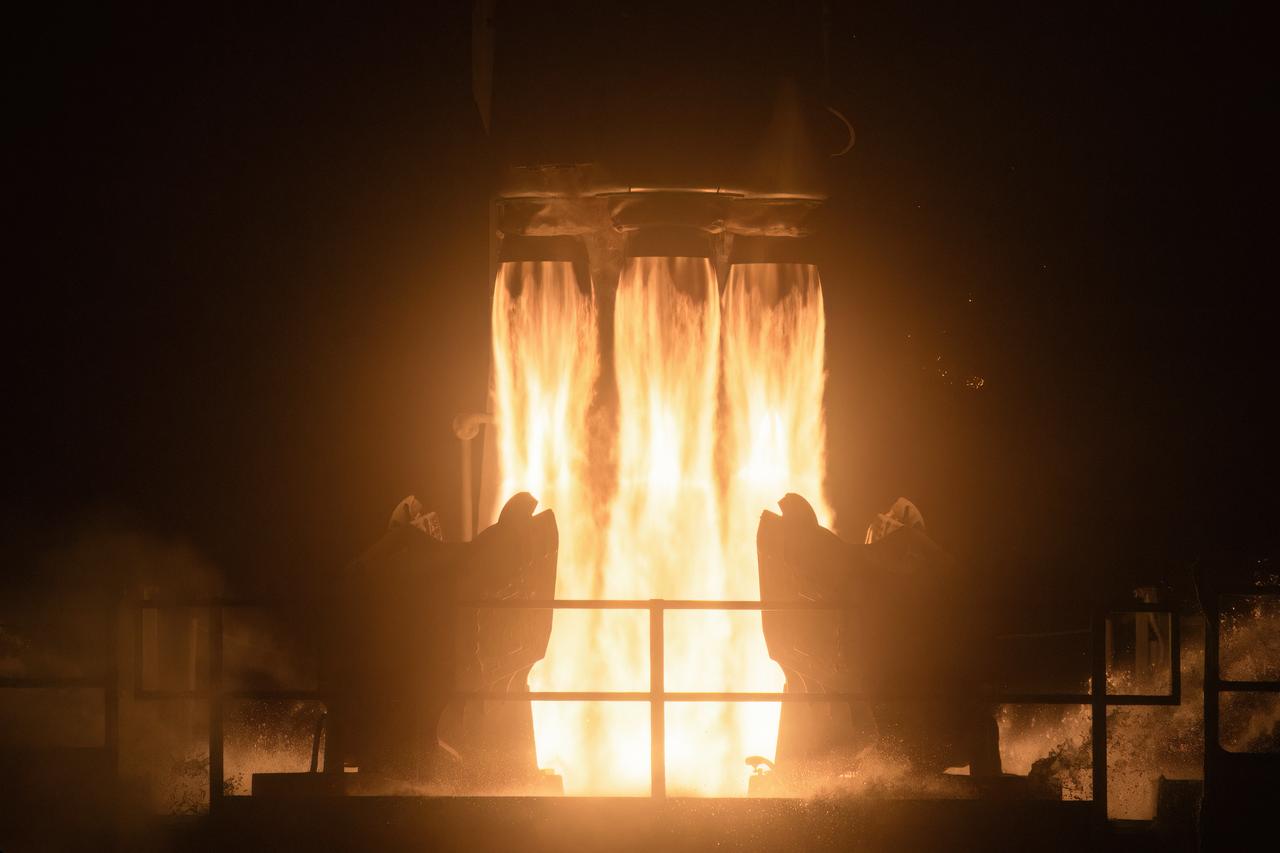
Firefly Aerospace’s Alpha rocket carrying eight CubeSats as part of NASA’s CubeSat Launch Initiative (CSLI) lifts off from Space Launch Complex 2 at Vandenberg Space Force Base in California at 9:04 p.m. PDT Wednesday, July 3, 2024. The successful launch of the rocket, named “Noise of Summer,” completed the company’s Venture-Class Launch Services Demonstration 2 (VCLS Demo 2) contract with the agency. The CubeSat missions were designed by universities and NASA centers to conduct climate studies, satellite technology development, and educational outreach to students.
Firefly Demo 2 Launch
Firefly Aerospace’s Alpha rocket carrying eight CubeSats as part of NASA’s CubeSat Launch Initiative (CSLI) lifts off from Space Launch Complex 2 at Vandenberg Space Force Base in California at 9:04 p.m. PDT Wednesday, July 3, 2024. The successful launch of the rocket, named “Noise of Summer,” completed the company’s Venture-Class Launch Services Demonstration 2 (VCLS Demo 2) contract with the agency. The CubeSat missions were designed by universities and NASA centers to conduct climate studies, satellite technology development, and educational outreach to students.
Firefly Demo 2 Launch
Firefly Aerospace’s Alpha rocket carrying eight CubeSats as part of NASA’s CubeSat Launch Initiative (CSLI) lifts off from Space Launch Complex 2 at Vandenberg Space Force Base in California at 9:04 p.m. PDT Wednesday, July 3, 2024. The successful launch of the rocket, named “Noise of Summer,” completed the company’s Venture-Class Launch Services Demonstration 2 (VCLS Demo 2) contract with the agency. The CubeSat missions were designed by universities and NASA centers to conduct climate studies, satellite technology development, and educational outreach to students.
Firefly Demo 2 Launch
Firefly Aerospace’s Alpha rocket carrying eight CubeSats as part of NASA’s CubeSat Launch Initiative (CSLI) lifts off from Space Launch Complex 2 at Vandenberg Space Force Base in California at 9:04 p.m. PDT Wednesday, July 3, 2024. The successful launch of the rocket, named “Noise of Summer,” completed the company’s Venture-Class Launch Services Demonstration 2 (VCLS Demo 2) contract with the agency. The CubeSat missions were designed by universities and NASA centers to conduct climate studies, satellite technology development, and educational outreach to students.
Firefly Demo 2 Launch
Firefly Aerospace’s Alpha rocket carrying eight CubeSats as part of NASA’s CubeSat Launch Initiative (CSLI) lifts off from Space Launch Complex 2 at Vandenberg Space Force Base in California at 9:04 p.m. PDT Wednesday, July 3, 2024. The successful launch of the rocket, named “Noise of Summer,” completed the company’s Venture-Class Launch Services Demonstration 2 (VCLS Demo 2) contract with the agency. The CubeSat missions were designed by universities and NASA centers to conduct climate studies, satellite technology development, and educational outreach to students.
Firefly Demo 2 Launch
Firefly Aerospace’s Alpha rocket carrying eight CubeSats as part of NASA’s CubeSat Launch Initiative (CSLI) lifts off from Space Launch Complex 2 at Vandenberg Space Force Base in California at 9:04 p.m. PDT Wednesday, July 3, 2024. The successful launch of the rocket, named “Noise of Summer,” completed the company’s Venture-Class Launch Services Demonstration 2 (VCLS Demo 2) contract with the agency. The CubeSat missions were designed by universities and NASA centers to conduct climate studies, satellite technology development, and educational outreach to students.
Firefly Demo 2 Launch
Firefly Aerospace’s Alpha rocket carrying eight CubeSats as part of NASA’s CubeSat Launch Initiative (CSLI) lifts off from Space Launch Complex 2 at Vandenberg Space Force Base in California at 9:04 p.m. PDT Wednesday, July 3, 2024. The successful launch of the rocket, named “Noise of Summer,” completed the company’s Venture-Class Launch Services Demonstration 2 (VCLS Demo 2) contract with the agency. The CubeSat missions were designed by universities and NASA centers to conduct climate studies, satellite technology development, and educational outreach to students.
Firefly Demo 2 Launch
Firefly Aerospace’s Alpha rocket carrying eight CubeSats as part of NASA’s CubeSat Launch Initiative (CSLI) lifts off from Space Launch Complex 2 at Vandenberg Space Force Base in California at 9:04 p.m. PDT Wednesday, July 3, 2024. The successful launch of the rocket, named “Noise of Summer,” completed the company’s Venture-Class Launch Services Demonstration 2 (VCLS Demo 2) contract with the agency. The CubeSat missions were designed by universities and NASA centers to conduct climate studies, satellite technology development, and educational outreach to students.
Firefly Demo 2 Launch
Firefly Aerospace’s Alpha rocket carrying eight CubeSats as part of NASA’s CubeSat Launch Initiative (CSLI) lifts off from Space Launch Complex 2 at Vandenberg Space Force Base in California at 9:04 p.m. PDT Wednesday, July 3, 2024. The successful launch of the rocket, named “Noise of Summer,” completed the company’s Venture-Class Launch Services Demonstration 2 (VCLS Demo 2) contract with the agency. The CubeSat missions were designed by universities and NASA centers to conduct climate studies, satellite technology development, and educational outreach to students.
Firefly Demo 2 Launch
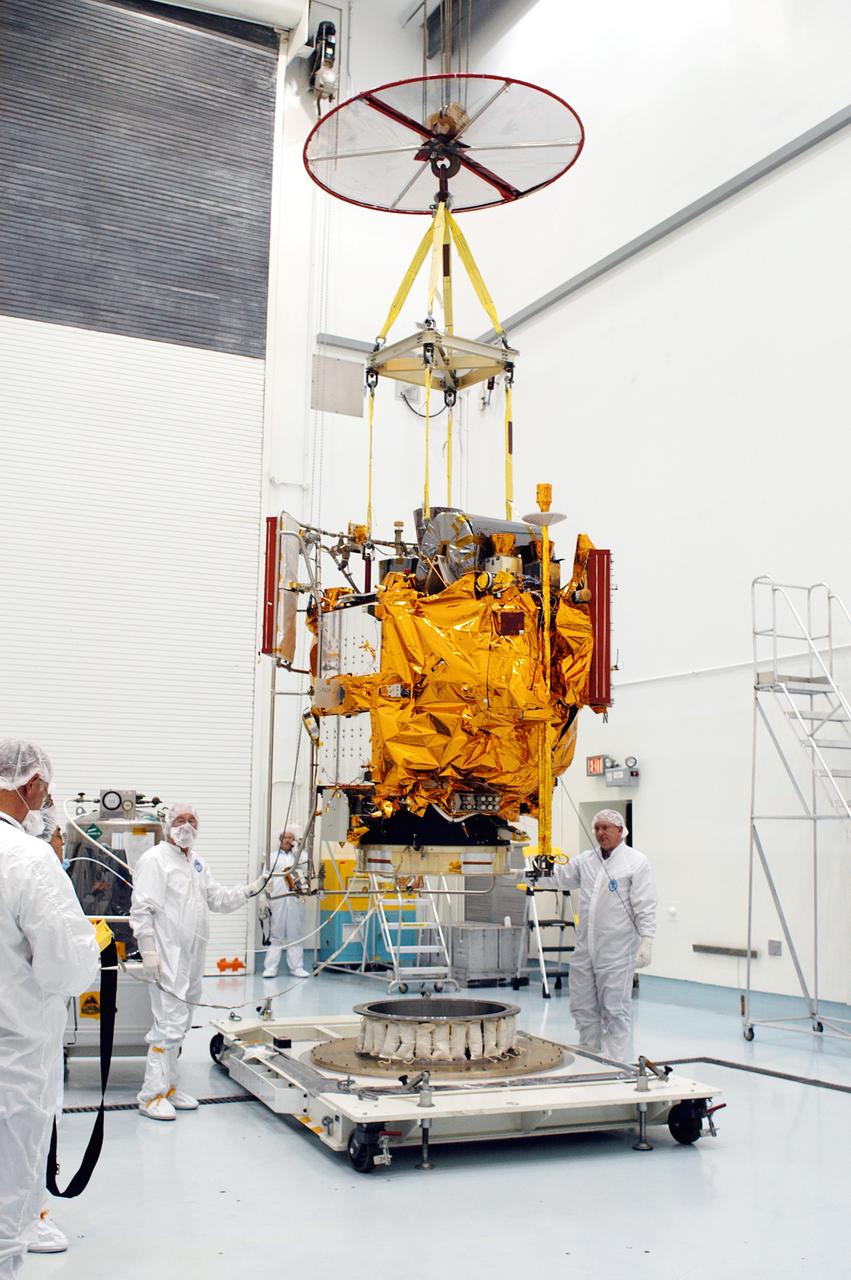
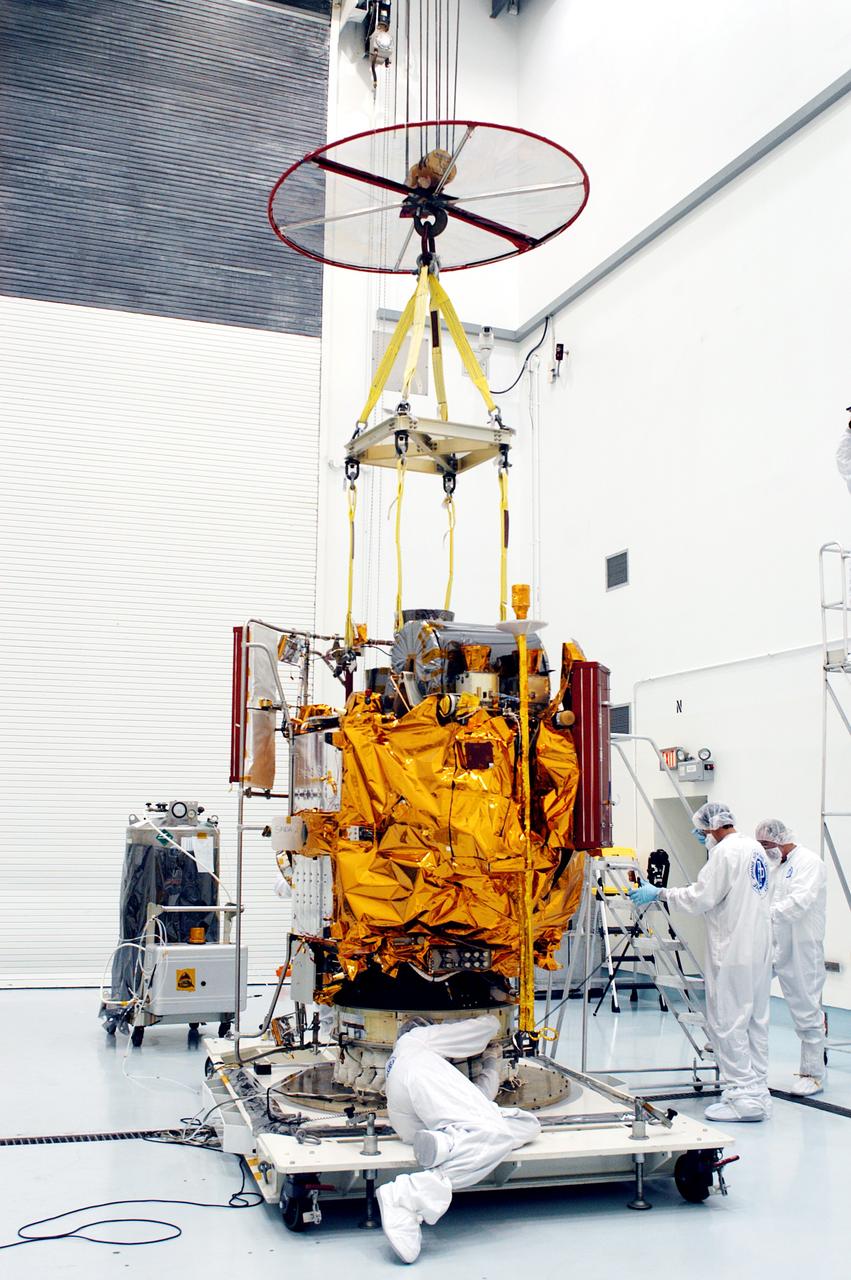
KENNEDY SPACE CENTER, FLA. -  At the Astrotech Space Operations processing facilities, an overhead crane moves NASA’s MESSENGER spacecraft toward a work stand. There employees of the Johns Hopkins University Applied Physics Laboratory, builders of the spacecraft, will perform an initial state-of-health check.  Then processing for launch can begin, including checkout of the power systems, communications systems and control systems.  The thermal blankets will also be attached for flight.  MESSENGER - short for MErcury Surface, Space ENvironment, GEochemistry and Ranging - will be launched May 11 on a six-year mission aboard a Boeing Delta II rocket.  Liftoff is targeted for 2:26 a.m. EDT on Tuesday, May 11.
KENNEDY SPACE CENTER, FLA. - At the Astrotech Space Operations processing facilities, an overhead crane moves NASA’s MESSENGER spacecraft toward a work stand. There employees of the Johns Hopkins University Applied Physics Laboratory, builders of the spacecraft, will perform an initial state-of-health check. Then processing for launch can begin, including checkout of the power systems, communications systems and control systems. The thermal blankets will also be attached for flight. MESSENGER - short for MErcury Surface, Space ENvironment, GEochemistry and Ranging - will be launched May 11 on a six-year mission aboard a Boeing Delta II rocket. Liftoff is targeted for 2:26 a.m. EDT on Tuesday, May 11.
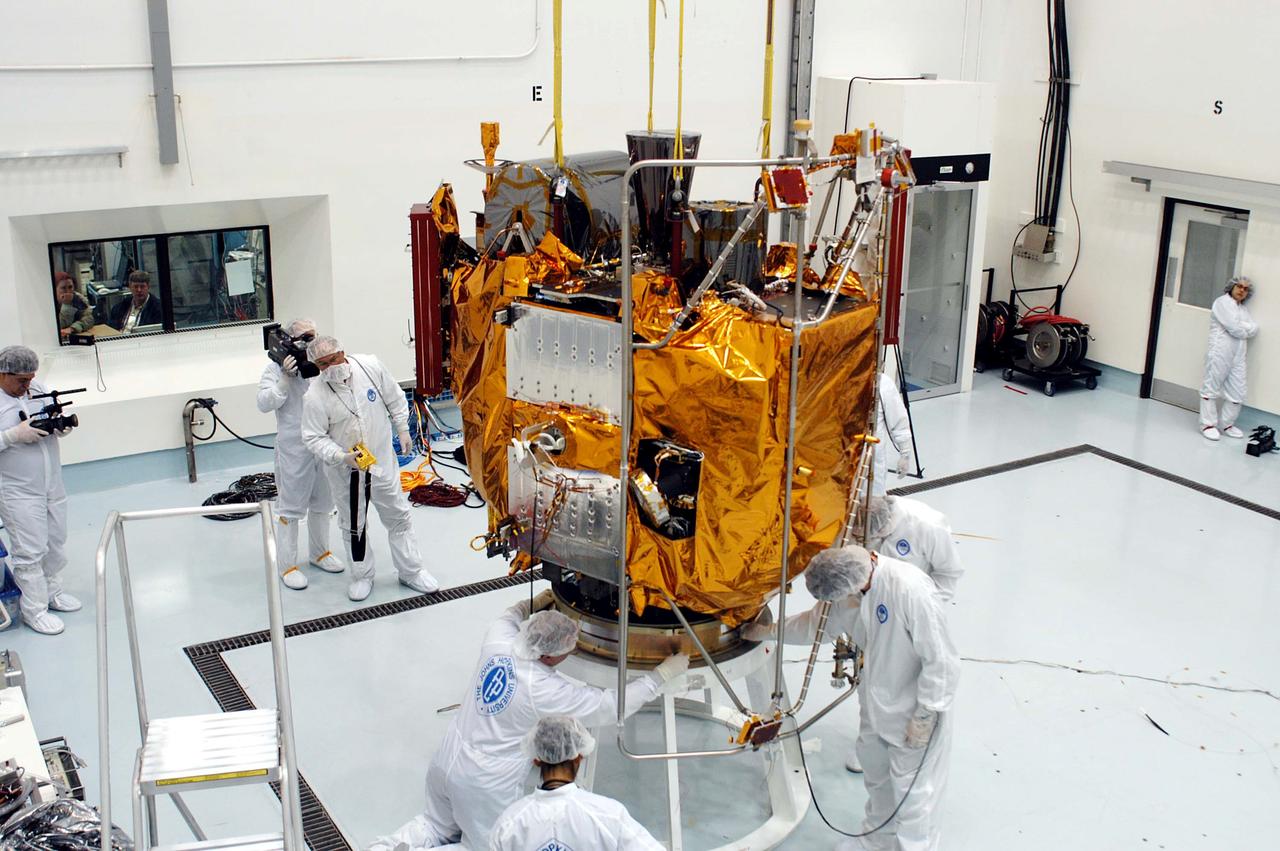
KENNEDY SPACE CENTER, FLA. -  At the Astrotech Space Operations processing facilities, NASA’s MESSENGER spacecraft is secure after transfer to the work stand. There employees of the Johns Hopkins University Applied Physics Laboratory, builders of the spacecraft, will perform an initial state-of-health check.  Then processing for launch can begin, including checkout of the power systems, communications systems and control systems.  The thermal blankets will also be attached for flight.  MESSENGER - short for MErcury Surface, Space ENvironment, GEochemistry and Ranging - will be launched May 11 on a six-year mission aboard a Boeing Delta II rocket.  Liftoff is targeted for 2:26 a.m. EDT on Tuesday, May 11.
KENNEDY SPACE CENTER, FLA. - At the Astrotech Space Operations processing facilities, NASA’s MESSENGER spacecraft is secure after transfer to the work stand. There employees of the Johns Hopkins University Applied Physics Laboratory, builders of the spacecraft, will perform an initial state-of-health check. Then processing for launch can begin, including checkout of the power systems, communications systems and control systems. The thermal blankets will also be attached for flight. MESSENGER - short for MErcury Surface, Space ENvironment, GEochemistry and Ranging - will be launched May 11 on a six-year mission aboard a Boeing Delta II rocket. Liftoff is targeted for 2:26 a.m. EDT on Tuesday, May 11.
KENNEDY SPACE CENTER, FLA. -  At the Astrotech Space Operations processing facilities, an overhead crane lowers NASA’s MESSENGER spacecraft onto a work stand. There employees of the Johns Hopkins University Applied Physics Laboratory, builders of the spacecraft, will perform an initial state-of-health check.  Then processing for launch can begin, including checkout of the power systems, communications systems and control systems.  The thermal blankets will also be attached for flight.  MESSENGER - short for MErcury Surface, Space ENvironment, GEochemistry and Ranging - will be launched May 11 on a six-year mission aboard a Boeing Delta II rocket.  Liftoff is targeted for 2:26 a.m. EDT on Tuesday, May 11.
KENNEDY SPACE CENTER, FLA. - At the Astrotech Space Operations processing facilities, an overhead crane lowers NASA’s MESSENGER spacecraft onto a work stand. There employees of the Johns Hopkins University Applied Physics Laboratory, builders of the spacecraft, will perform an initial state-of-health check. Then processing for launch can begin, including checkout of the power systems, communications systems and control systems. The thermal blankets will also be attached for flight. MESSENGER - short for MErcury Surface, Space ENvironment, GEochemistry and Ranging - will be launched May 11 on a six-year mission aboard a Boeing Delta II rocket. Liftoff is targeted for 2:26 a.m. EDT on Tuesday, May 11.
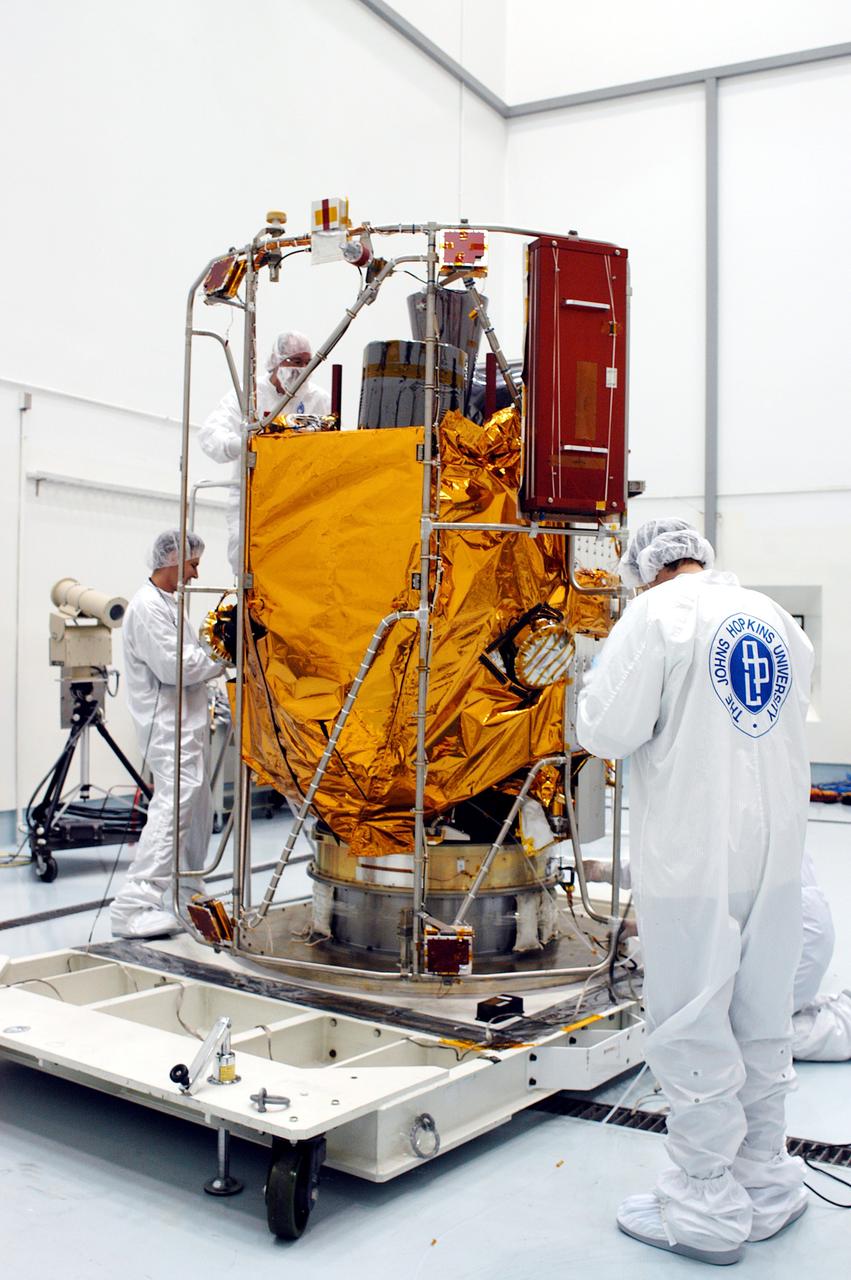
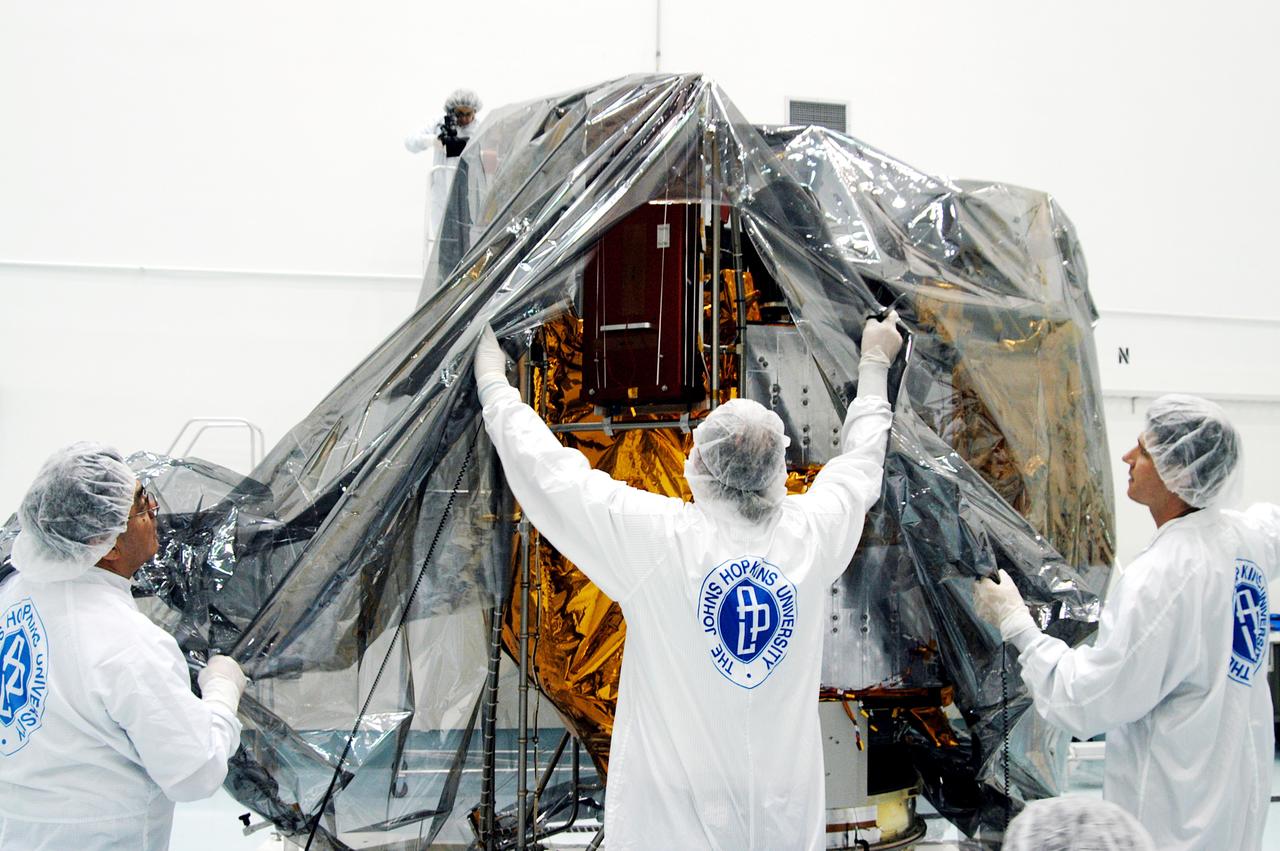
KENNEDY SPACE CENTER, FLA. -  In the high bay clean room at the Astrotech Space Operations processing facilities near KSC, NASA’s MESSENGER spacecraft is revealed.  Employees of the Johns Hopkins University Applied Physics Laboratory, builders of the spacecraft, will perform an initial state-of-health check.  Then processing for launch can begin, including checkout of the power systems, communications systems and control systems.  The thermal blankets will also be attached for flight.  MESSENGER - short for MErcury Surface, Space ENvironment, GEochemistry and Ranging - will be launched May 11 on a six-year mission aboard a Boeing Delta II rocket.  Liftoff is targeted for 2:26 a.m. EDT on Tuesday, May 11.
KENNEDY SPACE CENTER, FLA. - In the high bay clean room at the Astrotech Space Operations processing facilities near KSC, NASA’s MESSENGER spacecraft is revealed. Employees of the Johns Hopkins University Applied Physics Laboratory, builders of the spacecraft, will perform an initial state-of-health check. Then processing for launch can begin, including checkout of the power systems, communications systems and control systems. The thermal blankets will also be attached for flight. MESSENGER - short for MErcury Surface, Space ENvironment, GEochemistry and Ranging - will be launched May 11 on a six-year mission aboard a Boeing Delta II rocket. Liftoff is targeted for 2:26 a.m. EDT on Tuesday, May 11.
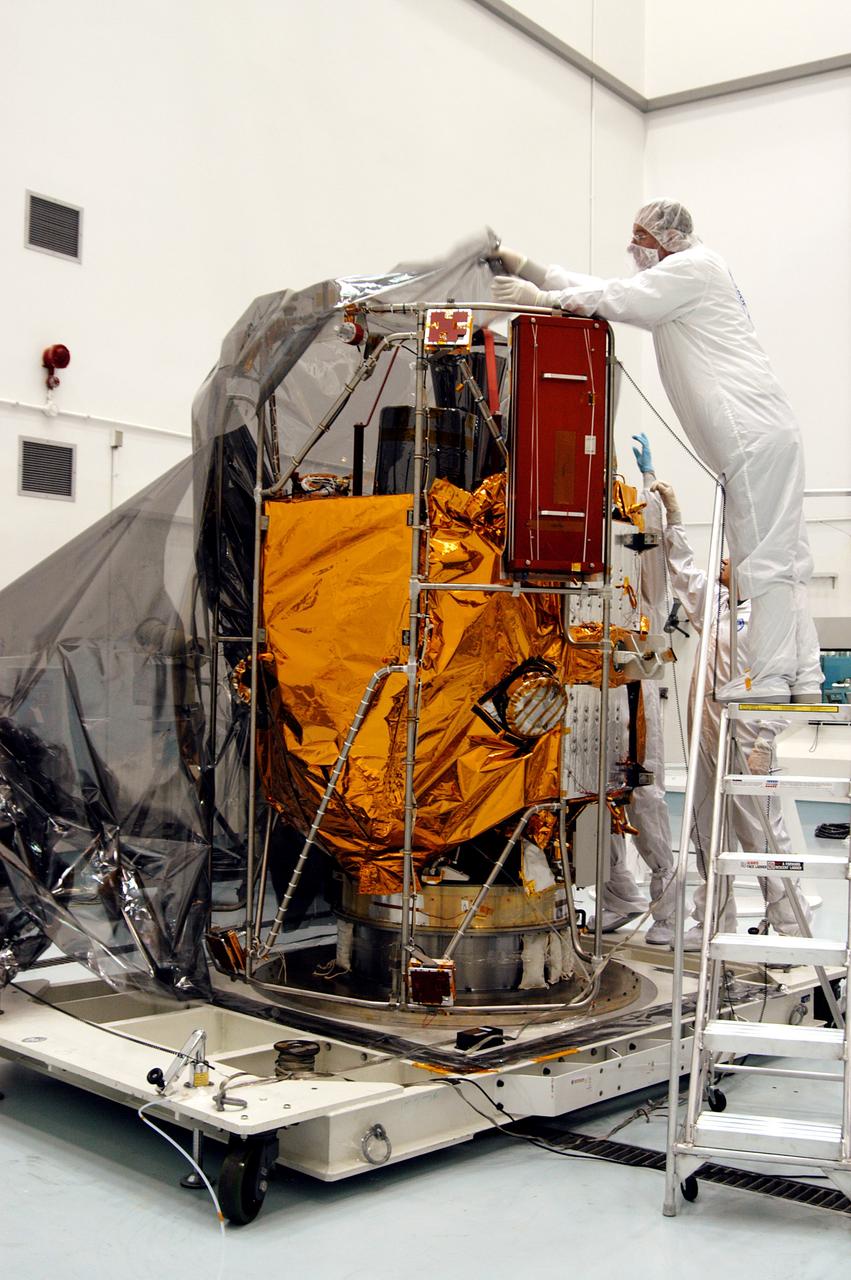
KENNEDY SPACE CENTER, FLA. -  In the high bay clean room at the Astrotech Space Operations processing facilities near KSC, workers remove the protective cover from NASA’s MESSENGER spacecraft.  Employees of the Johns Hopkins University Applied Physics Laboratory, builders of the spacecraft, will perform an initial state-of-health check.  Then processing for launch can begin, including checkout of the power systems, communications systems and control systems.  The thermal blankets will also be attached for flight.  MESSENGER - short for MErcury Surface, Space ENvironment, GEochemistry and Ranging - will be launched May 11 on a six-year mission aboard a Boeing Delta II rocket.  Liftoff is targeted for 2:26 a.m. EDT on Tuesday, May 11.
KENNEDY SPACE CENTER, FLA. - In the high bay clean room at the Astrotech Space Operations processing facilities near KSC, workers remove the protective cover from NASA’s MESSENGER spacecraft. Employees of the Johns Hopkins University Applied Physics Laboratory, builders of the spacecraft, will perform an initial state-of-health check. Then processing for launch can begin, including checkout of the power systems, communications systems and control systems. The thermal blankets will also be attached for flight. MESSENGER - short for MErcury Surface, Space ENvironment, GEochemistry and Ranging - will be launched May 11 on a six-year mission aboard a Boeing Delta II rocket. Liftoff is targeted for 2:26 a.m. EDT on Tuesday, May 11.
KENNEDY SPACE CENTER, FLA. -  At the Astrotech Space Operations processing facilities, workers check the placement of NASA’s MESSENGER spacecraft on a work stand. There employees of the Johns Hopkins University Applied Physics Laboratory, builders of the spacecraft, will perform an initial state-of-health check.  Then processing for launch can begin, including checkout of the power systems, communications systems and control systems.  The thermal blankets will also be attached for flight.  MESSENGER - short for MErcury Surface, Space ENvironment, GEochemistry and Ranging - will be launched May 11 on a six-year mission aboard a Boeing Delta II rocket.  Liftoff is targeted for 2:26 a.m. EDT on Tuesday, May 11.
KENNEDY SPACE CENTER, FLA. - At the Astrotech Space Operations processing facilities, workers check the placement of NASA’s MESSENGER spacecraft on a work stand. There employees of the Johns Hopkins University Applied Physics Laboratory, builders of the spacecraft, will perform an initial state-of-health check. Then processing for launch can begin, including checkout of the power systems, communications systems and control systems. The thermal blankets will also be attached for flight. MESSENGER - short for MErcury Surface, Space ENvironment, GEochemistry and Ranging - will be launched May 11 on a six-year mission aboard a Boeing Delta II rocket. Liftoff is targeted for 2:26 a.m. EDT on Tuesday, May 11.
KENNEDY SPACE CENTER, FLA. -  In the high bay clean room at the Astrotech Space Operations processing facilities near KSC, workers remove the protective cover from NASA’s MESSENGER spacecraft.  Employees of the Johns Hopkins University Applied Physics Laboratory, builders of the spacecraft, will perform an initial state-of-health check.  Then processing for launch can begin, including checkout of the power systems, communications systems and control systems.  The thermal blankets will also be attached for flight.  MESSENGER - short for MErcury Surface, Space ENvironment, GEochemistry and Ranging - will be launched May 11 on a six-year mission aboard a Boeing Delta II rocket.  Liftoff is targeted for 2:26 a.m. EDT on Tuesday, May 11.
KENNEDY SPACE CENTER, FLA. - In the high bay clean room at the Astrotech Space Operations processing facilities near KSC, workers remove the protective cover from NASA’s MESSENGER spacecraft. Employees of the Johns Hopkins University Applied Physics Laboratory, builders of the spacecraft, will perform an initial state-of-health check. Then processing for launch can begin, including checkout of the power systems, communications systems and control systems. The thermal blankets will also be attached for flight. MESSENGER - short for MErcury Surface, Space ENvironment, GEochemistry and Ranging - will be launched May 11 on a six-year mission aboard a Boeing Delta II rocket. Liftoff is targeted for 2:26 a.m. EDT on Tuesday, May 11.
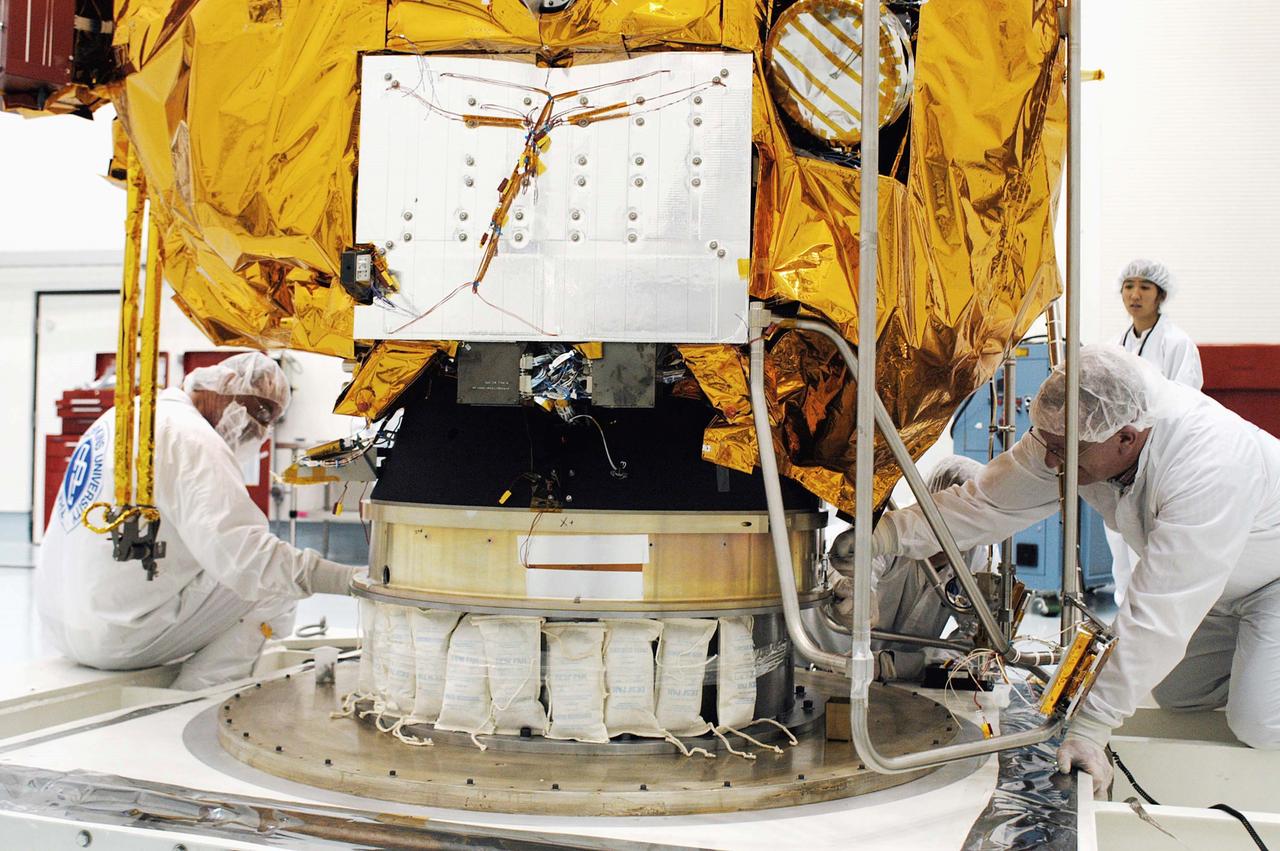
KENNEDY SPACE CENTER, FLA. -  In the high bay clean room at the Astrotech Space Operations processing facilities near KSC, workers prepare NASA’s MESSENGER spacecraft for transfer to a work stand.  There employees of the Johns Hopkins University Applied Physics Laboratory, builders of the spacecraft, will perform an initial state-of-health check.  Then processing for launch can begin, including checkout of the power systems, communications systems and control systems.  The thermal blankets will also be attached for flight.  MESSENGER - short for MErcury Surface, Space ENvironment, GEochemistry and Ranging - will be launched May 11 on a six-year mission aboard a Boeing Delta II rocket.  Liftoff is targeted for 2:26 a.m. EDT on Tuesday, May 11.
KENNEDY SPACE CENTER, FLA. - In the high bay clean room at the Astrotech Space Operations processing facilities near KSC, workers prepare NASA’s MESSENGER spacecraft for transfer to a work stand. There employees of the Johns Hopkins University Applied Physics Laboratory, builders of the spacecraft, will perform an initial state-of-health check. Then processing for launch can begin, including checkout of the power systems, communications systems and control systems. The thermal blankets will also be attached for flight. MESSENGER - short for MErcury Surface, Space ENvironment, GEochemistry and Ranging - will be launched May 11 on a six-year mission aboard a Boeing Delta II rocket. Liftoff is targeted for 2:26 a.m. EDT on Tuesday, May 11.
KENNEDY SPACE CENTER, FLA. -  At the Astrotech Space Operations processing facilities, an overhead crane lowers NASA’s MESSENGER spacecraft onto a work stand. There employees of the Johns Hopkins University Applied Physics Laboratory, builders of the spacecraft, will perform an initial state-of-health check.  Then processing for launch can begin, including checkout of the power systems, communications systems and control systems.  The thermal blankets will also be attached for flight.  MESSENGER - short for MErcury Surface, Space ENvironment, GEochemistry and Ranging - will be launched May 11 on a six-year mission aboard a Boeing Delta II rocket.  Liftoff is targeted for 2:26 a.m. EDT on Tuesday, May 11.
KENNEDY SPACE CENTER, FLA. - At the Astrotech Space Operations processing facilities, an overhead crane lowers NASA’s MESSENGER spacecraft onto a work stand. There employees of the Johns Hopkins University Applied Physics Laboratory, builders of the spacecraft, will perform an initial state-of-health check. Then processing for launch can begin, including checkout of the power systems, communications systems and control systems. The thermal blankets will also be attached for flight. MESSENGER - short for MErcury Surface, Space ENvironment, GEochemistry and Ranging - will be launched May 11 on a six-year mission aboard a Boeing Delta II rocket. Liftoff is targeted for 2:26 a.m. EDT on Tuesday, May 11.
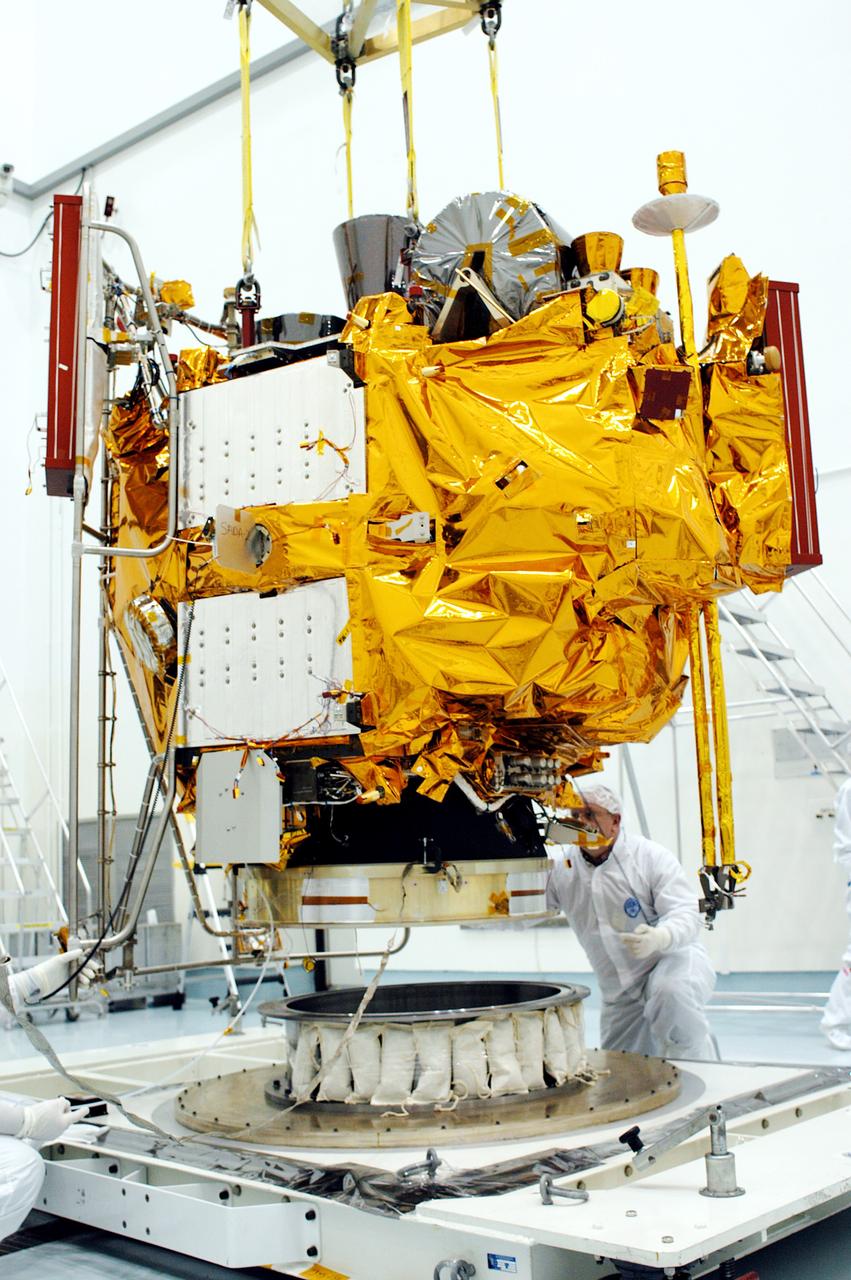
KENNEDY SPACE CENTER, FLA. -  At the Astrotech Space Operations processing facilities, NASA’s MESSENGER spacecraft is lifted off the pallet for transfer to a work stand. There employees of the Johns Hopkins University Applied Physics Laboratory, builders of the spacecraft, will perform an initial state-of-health check.  Then processing for launch can begin, including checkout of the power systems, communications systems and control systems.  The thermal blankets will also be attached for flight.  MESSENGER - short for MErcury Surface, Space ENvironment, GEochemistry and Ranging - will be launched May 11 on a six-year mission aboard a Boeing Delta II rocket.  Liftoff is targeted for 2:26 a.m. EDT on Tuesday, May 11.
KENNEDY SPACE CENTER, FLA. - At the Astrotech Space Operations processing facilities, NASA’s MESSENGER spacecraft is lifted off the pallet for transfer to a work stand. There employees of the Johns Hopkins University Applied Physics Laboratory, builders of the spacecraft, will perform an initial state-of-health check. Then processing for launch can begin, including checkout of the power systems, communications systems and control systems. The thermal blankets will also be attached for flight. MESSENGER - short for MErcury Surface, Space ENvironment, GEochemistry and Ranging - will be launched May 11 on a six-year mission aboard a Boeing Delta II rocket. Liftoff is targeted for 2:26 a.m. EDT on Tuesday, May 11.
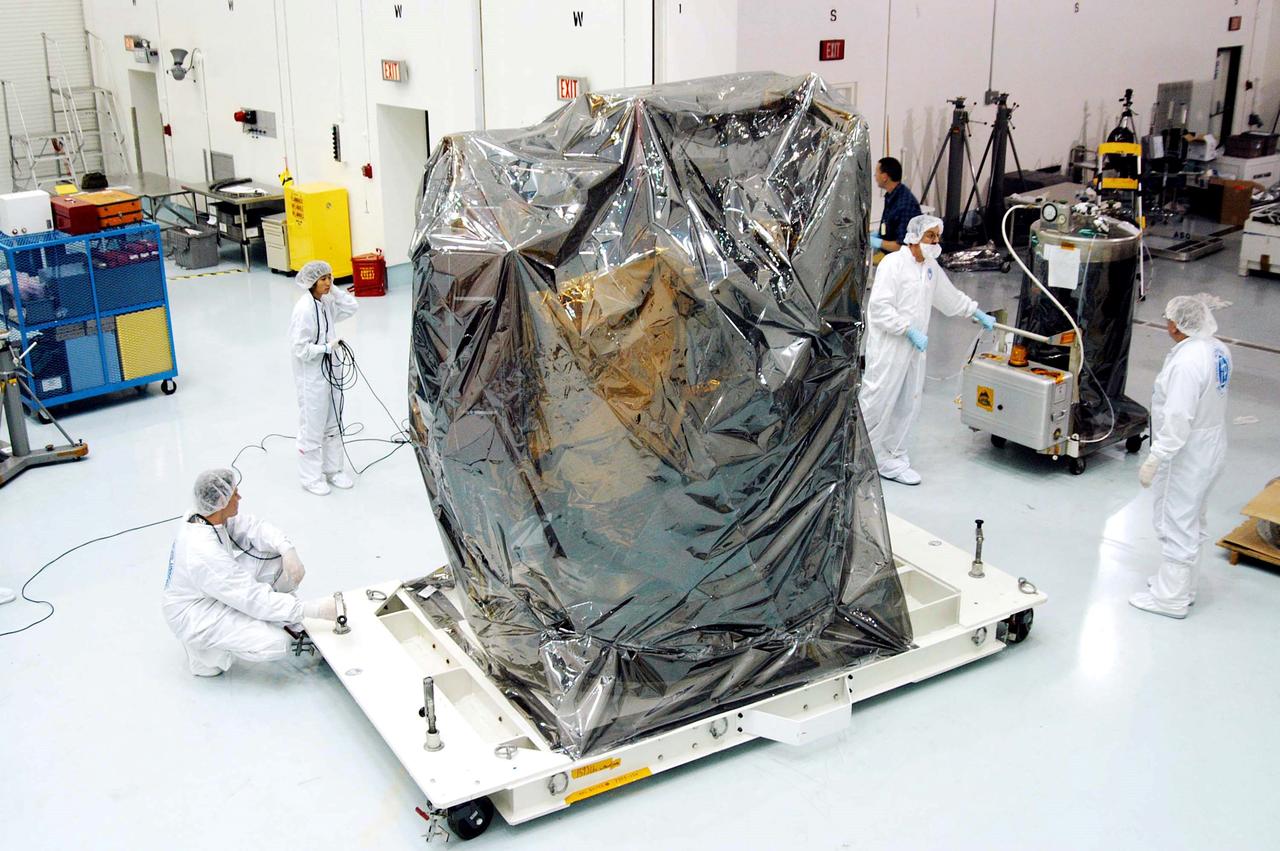
KENNEDY SPACE CENTER, FLA. -  At the Astrotech Space Operations processing facilities near KSC, workers move NASA’s MESSENGER spacecraft into a high bay clean room.  Employees of the Johns Hopkins University Applied Physics Laboratory, builders of the spacecraft, will perform an initial state-of-health check.  Then processing for launch can begin, including checkout of the power systems, communications systems and control systems.  The thermal blankets will also be attached for flight.  MESSENGER - short for MErcury Surface, Space ENvironment, GEochemistry and Ranging - will be launched May 11 on a six-year mission aboard a Boeing Delta II rocket.  Liftoff is targeted for 2:26 a.m. EDT on Tuesday, May 11.
KENNEDY SPACE CENTER, FLA. - At the Astrotech Space Operations processing facilities near KSC, workers move NASA’s MESSENGER spacecraft into a high bay clean room. Employees of the Johns Hopkins University Applied Physics Laboratory, builders of the spacecraft, will perform an initial state-of-health check. Then processing for launch can begin, including checkout of the power systems, communications systems and control systems. The thermal blankets will also be attached for flight. MESSENGER - short for MErcury Surface, Space ENvironment, GEochemistry and Ranging - will be launched May 11 on a six-year mission aboard a Boeing Delta II rocket. Liftoff is targeted for 2:26 a.m. EDT on Tuesday, May 11.
KENNEDY SPACE CENTER, FLA. -  At the Astrotech Space Operations processing facilities, NASA’s MESSENGER spacecraft is lifted off the pallet for transfer to a work stand. There employees of the Johns Hopkins University Applied Physics Laboratory, builders of the spacecraft, will perform an initial state-of-health check.  Then processing for launch can begin, including checkout of the power systems, communications systems and control systems.  The thermal blankets will also be attached for flight.  MESSENGER - short for MErcury Surface, Space ENvironment, GEochemistry and Ranging - will be launched May 11 on a six-year mission aboard a Boeing Delta II rocket.  Liftoff is targeted for 2:26 a.m. EDT on Tuesday, May 11.
KENNEDY SPACE CENTER, FLA. - At the Astrotech Space Operations processing facilities, NASA’s MESSENGER spacecraft is lifted off the pallet for transfer to a work stand. There employees of the Johns Hopkins University Applied Physics Laboratory, builders of the spacecraft, will perform an initial state-of-health check. Then processing for launch can begin, including checkout of the power systems, communications systems and control systems. The thermal blankets will also be attached for flight. MESSENGER - short for MErcury Surface, Space ENvironment, GEochemistry and Ranging - will be launched May 11 on a six-year mission aboard a Boeing Delta II rocket. Liftoff is targeted for 2:26 a.m. EDT on Tuesday, May 11.
KENNEDY SPACE CENTER, FLA. -  At the Astrotech Space Operations processing facilities, workers check the placement of NASA’s MESSENGER spacecraft on a work stand. There employees of the Johns Hopkins University Applied Physics Laboratory, builders of the spacecraft, will perform an initial state-of-health check.  Then processing for launch can begin, including checkout of the power systems, communications systems and control systems.  The thermal blankets will also be attached for flight.  MESSENGER - short for MErcury Surface, Space ENvironment, GEochemistry and Ranging - will be launched May 11 on a six-year mission aboard a Boeing Delta II rocket.  Liftoff is targeted for 2:26 a.m. EDT on Tuesday, May 11.
KENNEDY SPACE CENTER, FLA. - At the Astrotech Space Operations processing facilities, workers check the placement of NASA’s MESSENGER spacecraft on a work stand. There employees of the Johns Hopkins University Applied Physics Laboratory, builders of the spacecraft, will perform an initial state-of-health check. Then processing for launch can begin, including checkout of the power systems, communications systems and control systems. The thermal blankets will also be attached for flight. MESSENGER - short for MErcury Surface, Space ENvironment, GEochemistry and Ranging - will be launched May 11 on a six-year mission aboard a Boeing Delta II rocket. Liftoff is targeted for 2:26 a.m. EDT on Tuesday, May 11.
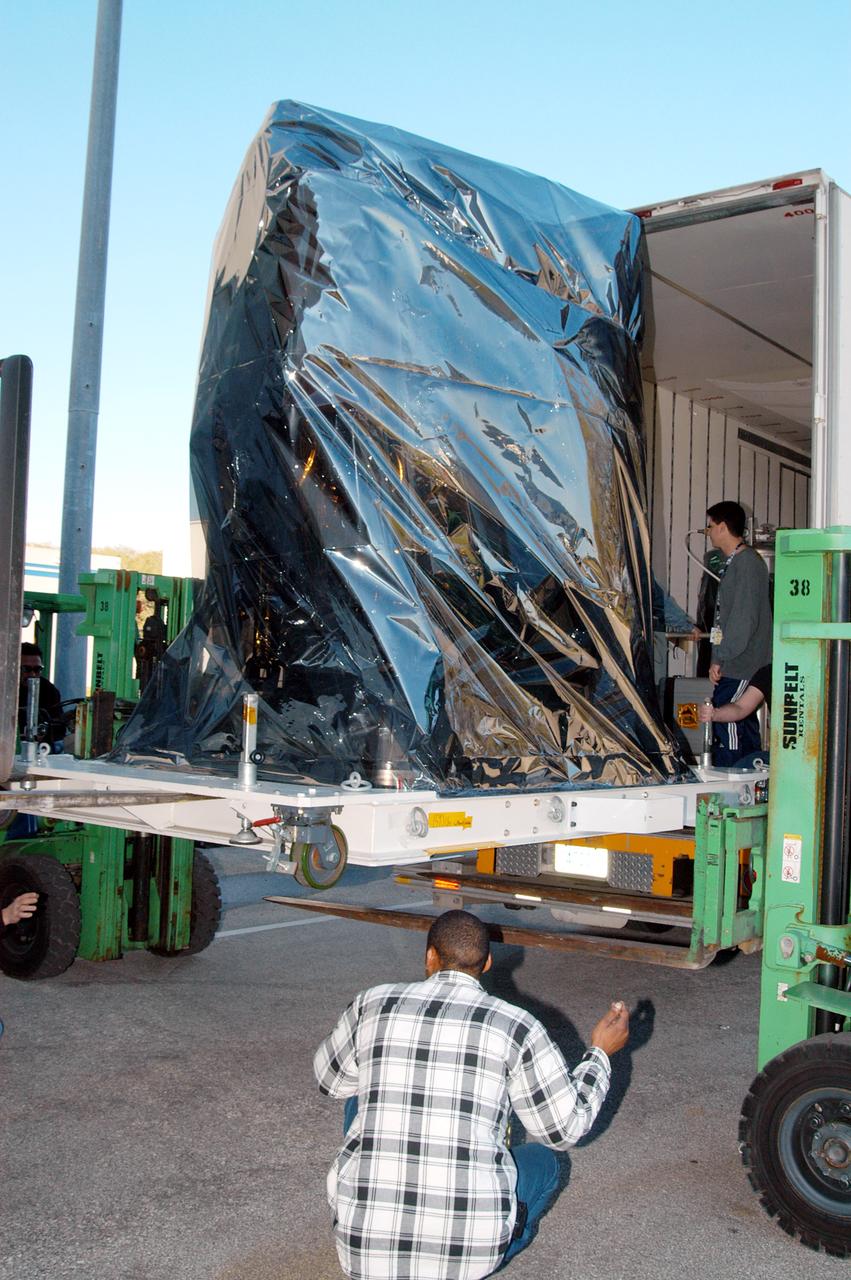
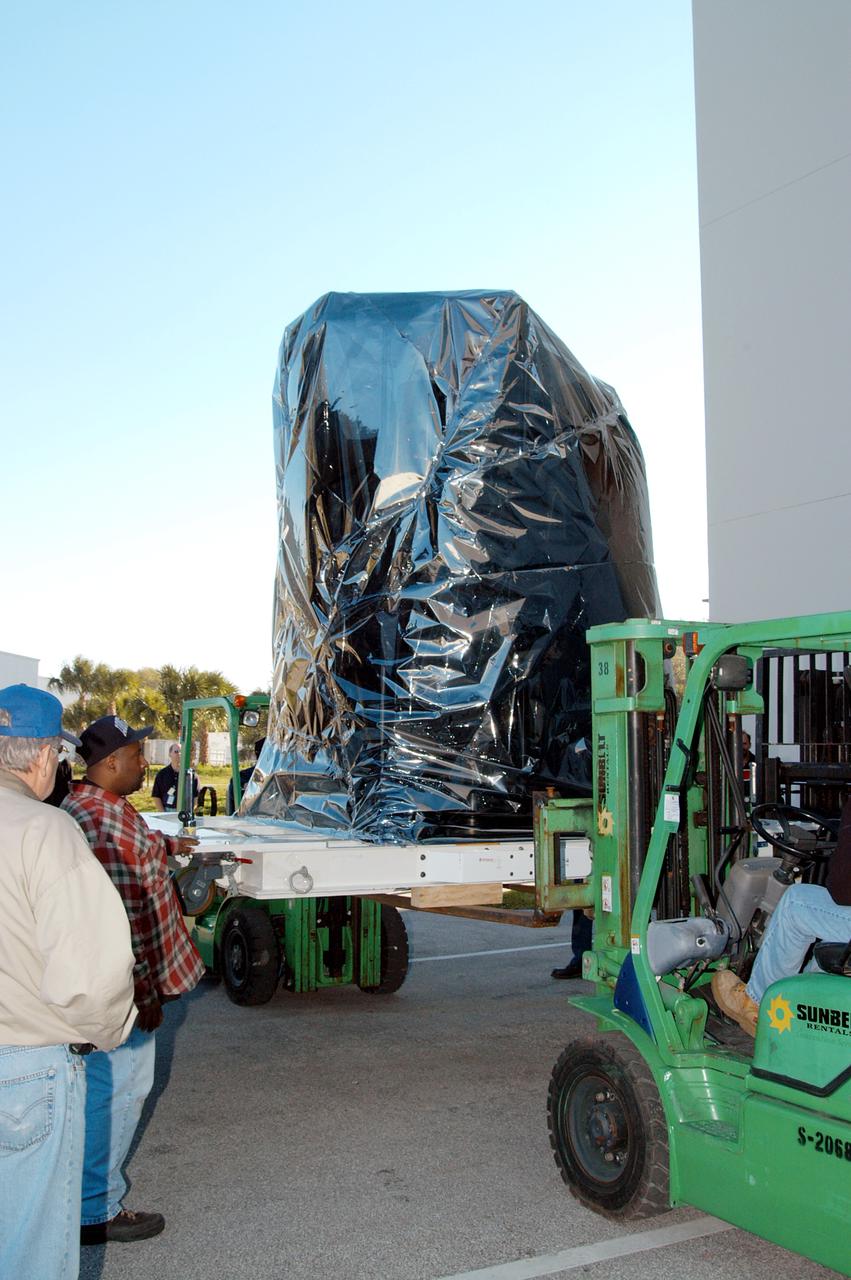
KENNEDY SPACE CENTER, FLA. -  At the Astrotech Space Operations processing facilities near KSC, a lift helps offload NASA’s MESSENGER spacecraft shipped from NASA’s Goddard Space Flight Center in Greenbelt, Md.  MESSENGER - short for MErcury Surface, Space ENvironment, GEochemistry and Ranging - will be taken into a high bay clean room and employees of the Johns Hopkins University Applied Physics Laboratory, builders of the spacecraft, will perform an initial state-of-health check.  Then processing for launch can begin, including checkout of the power systems, communications systems and control systems.  The thermal blankets will also be attached for flight.  MESSENGER will be launched May 11 on a six-year mission aboard a Boeing Delta II rocket.  Liftoff is targeted for 2:26 a.m. EDT on Tuesday, May 11.
KENNEDY SPACE CENTER, FLA. - At the Astrotech Space Operations processing facilities near KSC, a lift helps offload NASA’s MESSENGER spacecraft shipped from NASA’s Goddard Space Flight Center in Greenbelt, Md. MESSENGER - short for MErcury Surface, Space ENvironment, GEochemistry and Ranging - will be taken into a high bay clean room and employees of the Johns Hopkins University Applied Physics Laboratory, builders of the spacecraft, will perform an initial state-of-health check. Then processing for launch can begin, including checkout of the power systems, communications systems and control systems. The thermal blankets will also be attached for flight. MESSENGER will be launched May 11 on a six-year mission aboard a Boeing Delta II rocket. Liftoff is targeted for 2:26 a.m. EDT on Tuesday, May 11.
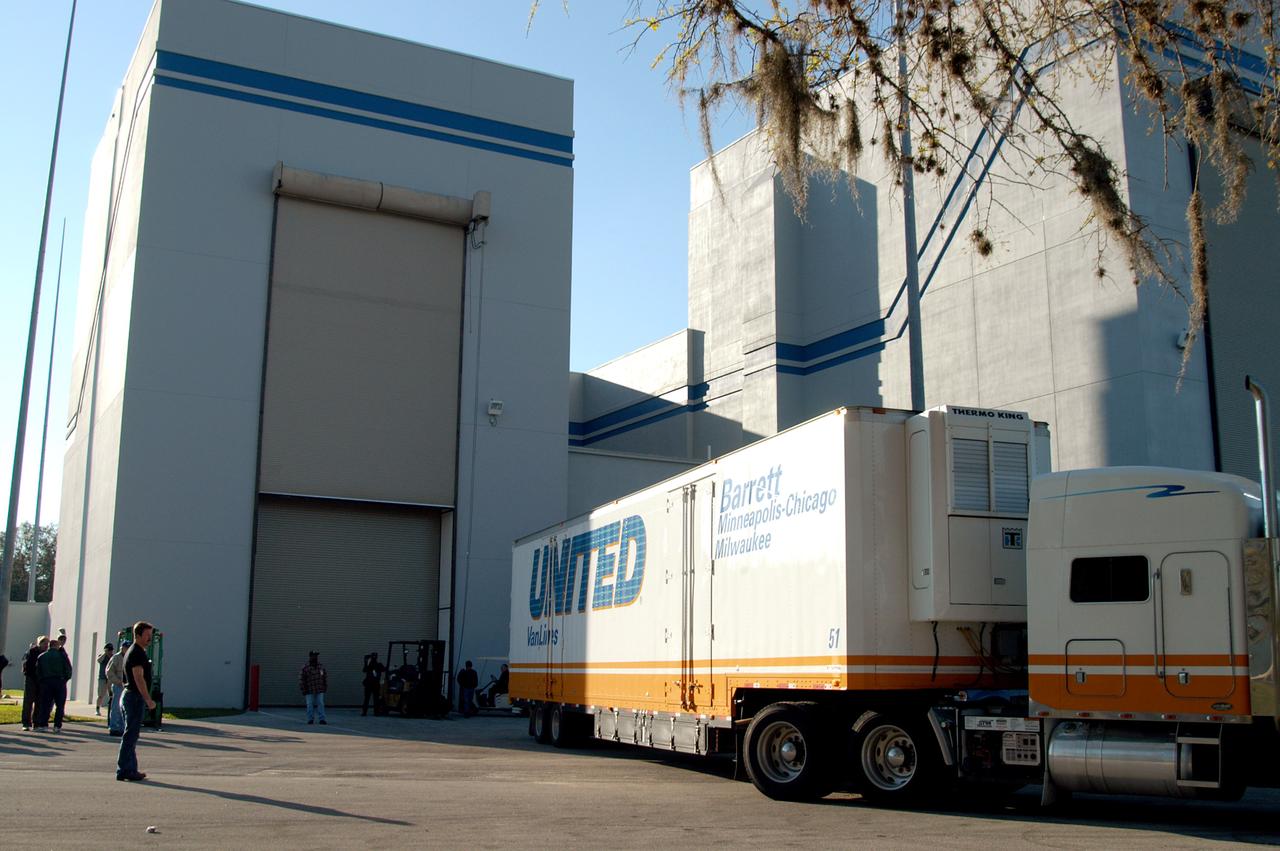
KENNEDY SPACE CENTER, FLA. -  Shipped in an air-conditioned transportation van from NASA’s Goddard Space Flight Center in Greenbelt, Md., NASA’s MESSENGER spacecraft, the first Mercury orbiter, arrives at the Astrotech Space Operations processing facilities near KSC.    MESSENGER - short for MErcury Surface, Space ENvironment, GEochemistry and Ranging - will be offloaded and taken into a high bay clean room.  After the spacecraft is removed from its shipping container, employees of the Johns Hopkins University Applied Physics Laboratory, builders of the spacecraft, will perform an initial state-of-health check.  Then processing for launch can begin, including checkout of the power systems, communications systems and control systems.  The thermal blankets will also be attached for flight.  MESSENGER will be launched May 11 on a six-year mission aboard a Boeing Delta II rocket.  Liftoff is targeted for 2:26 a.m. EDT on Tuesday, May 11.
KENNEDY SPACE CENTER, FLA. - Shipped in an air-conditioned transportation van from NASA’s Goddard Space Flight Center in Greenbelt, Md., NASA’s MESSENGER spacecraft, the first Mercury orbiter, arrives at the Astrotech Space Operations processing facilities near KSC. MESSENGER - short for MErcury Surface, Space ENvironment, GEochemistry and Ranging - will be offloaded and taken into a high bay clean room. After the spacecraft is removed from its shipping container, employees of the Johns Hopkins University Applied Physics Laboratory, builders of the spacecraft, will perform an initial state-of-health check. Then processing for launch can begin, including checkout of the power systems, communications systems and control systems. The thermal blankets will also be attached for flight. MESSENGER will be launched May 11 on a six-year mission aboard a Boeing Delta II rocket. Liftoff is targeted for 2:26 a.m. EDT on Tuesday, May 11.
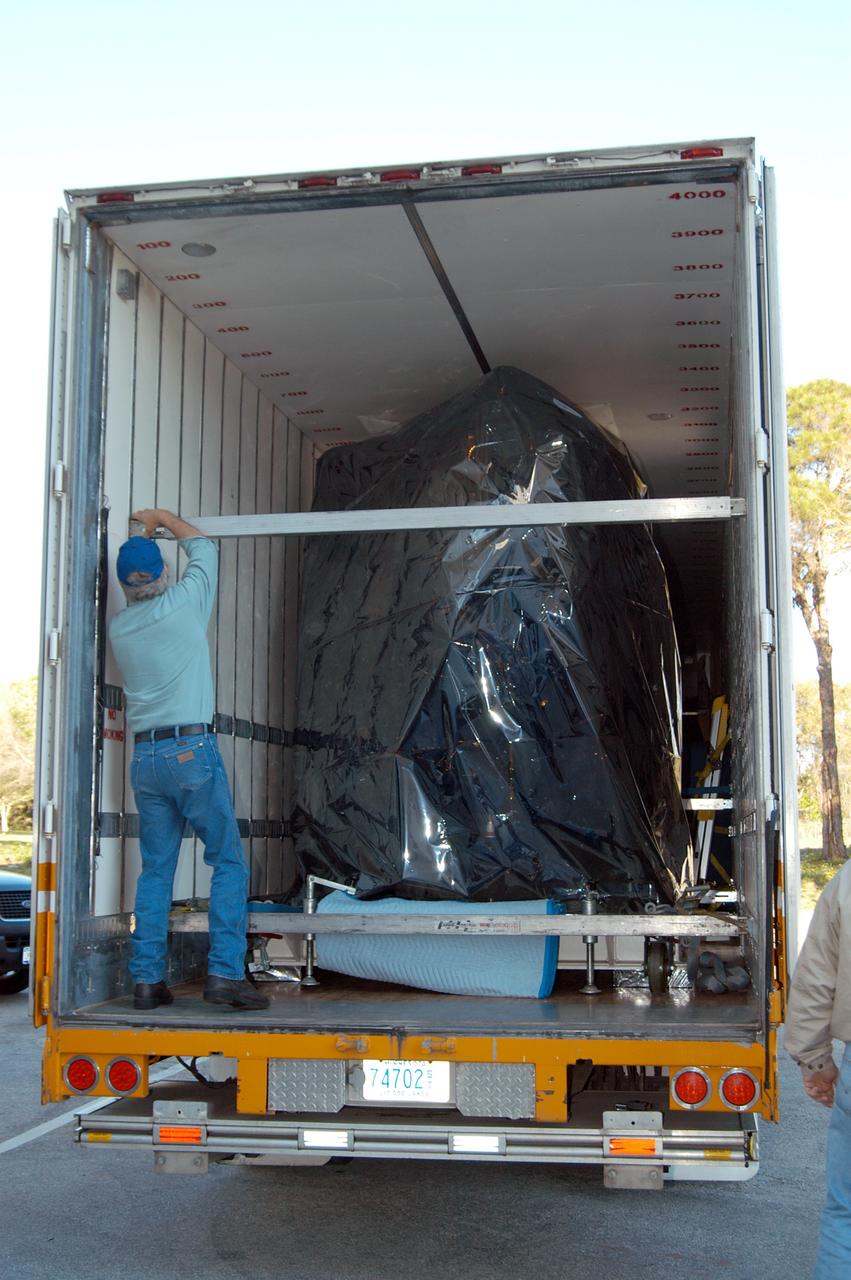
KENNEDY SPACE CENTER, FLA. -  Doors are open on the air-conditioned transportation van that carried NASA’s MESSENGER spacecraft from NASA’s Goddard Space Flight Center in Greenbelt, Md., to the Astrotech Space Operations processing facilities near KSC.  After offloading, MESSENGER - short for MErcury Surface, Space ENvironment, GEochemistry and Ranging - will be taken into a high bay clean room and employees of the Johns Hopkins University Applied Physics Laboratory, builders of the spacecraft, will perform an initial state-of-health check.  Then processing for launch can begin, including checkout of the power systems, communications systems and control systems.  The thermal blankets will also be attached for flight.  MESSENGER will be launched May 11 on a six-year mission aboard a Boeing Delta II rocket.  Liftoff is targeted for 2:26 a.m. EDT on Tuesday, May 11.
KENNEDY SPACE CENTER, FLA. - Doors are open on the air-conditioned transportation van that carried NASA’s MESSENGER spacecraft from NASA’s Goddard Space Flight Center in Greenbelt, Md., to the Astrotech Space Operations processing facilities near KSC. After offloading, MESSENGER - short for MErcury Surface, Space ENvironment, GEochemistry and Ranging - will be taken into a high bay clean room and employees of the Johns Hopkins University Applied Physics Laboratory, builders of the spacecraft, will perform an initial state-of-health check. Then processing for launch can begin, including checkout of the power systems, communications systems and control systems. The thermal blankets will also be attached for flight. MESSENGER will be launched May 11 on a six-year mission aboard a Boeing Delta II rocket. Liftoff is targeted for 2:26 a.m. EDT on Tuesday, May 11.
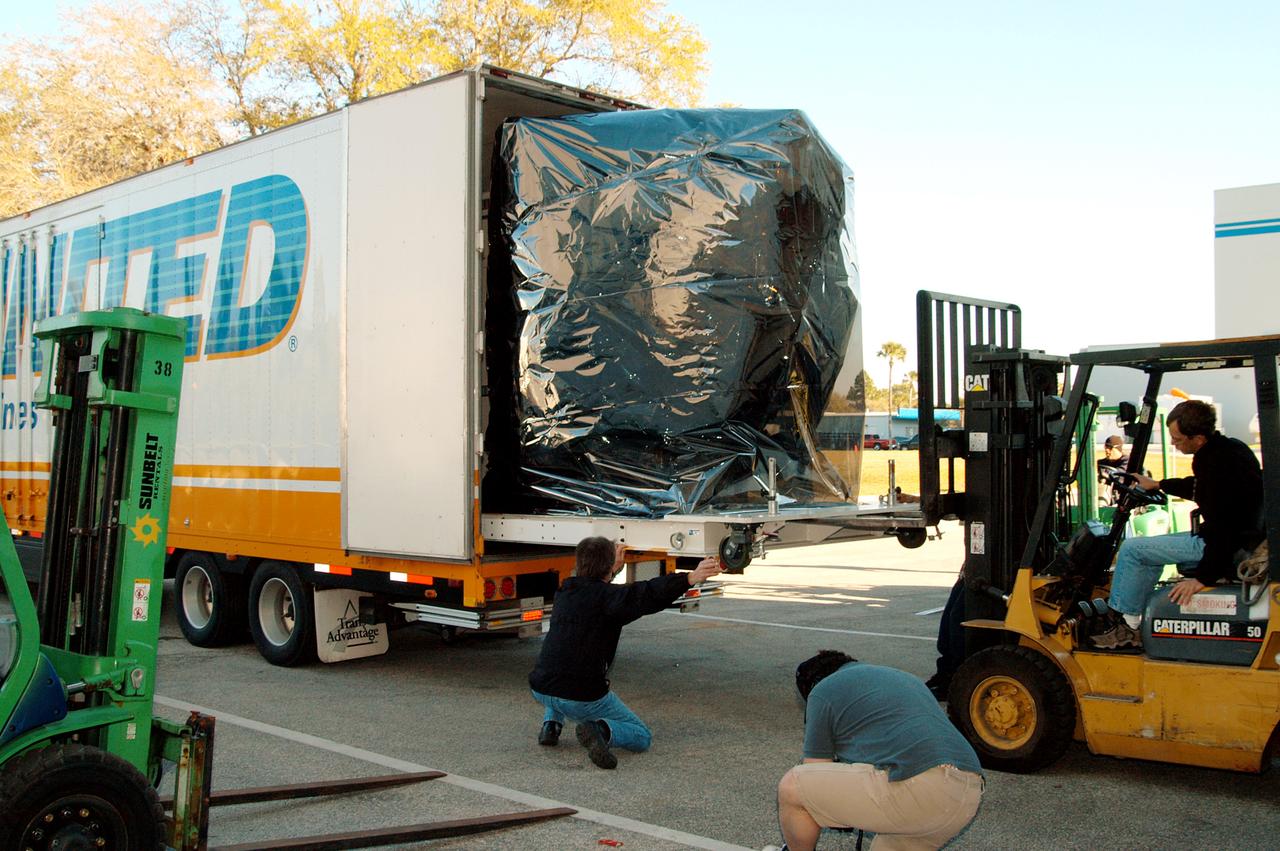
KENNEDY SPACE CENTER, FLA. -  At the Astrotech Space Operations processing facilities near KSC, NASA’s MESSENGER spacecraft from NASA’s Goddard Space Flight Center in Greenbelt, Md., is offloaded.  MESSENGER - short for MErcury Surface, Space ENvironment, GEochemistry and Ranging - will be taken into a high bay clean room and employees of the Johns Hopkins University Applied Physics Laboratory, builders of the spacecraft, will perform an initial state-of-health check.  Then processing for launch can begin, including checkout of the power systems, communications systems and control systems.  The thermal blankets will also be attached for flight.  MESSENGER will be launched May 11 on a six-year mission aboard a Boeing Delta II rocket.  Liftoff is targeted for 2:26 a.m. EDT on Tuesday, May 11.
KENNEDY SPACE CENTER, FLA. - At the Astrotech Space Operations processing facilities near KSC, NASA’s MESSENGER spacecraft from NASA’s Goddard Space Flight Center in Greenbelt, Md., is offloaded. MESSENGER - short for MErcury Surface, Space ENvironment, GEochemistry and Ranging - will be taken into a high bay clean room and employees of the Johns Hopkins University Applied Physics Laboratory, builders of the spacecraft, will perform an initial state-of-health check. Then processing for launch can begin, including checkout of the power systems, communications systems and control systems. The thermal blankets will also be attached for flight. MESSENGER will be launched May 11 on a six-year mission aboard a Boeing Delta II rocket. Liftoff is targeted for 2:26 a.m. EDT on Tuesday, May 11.
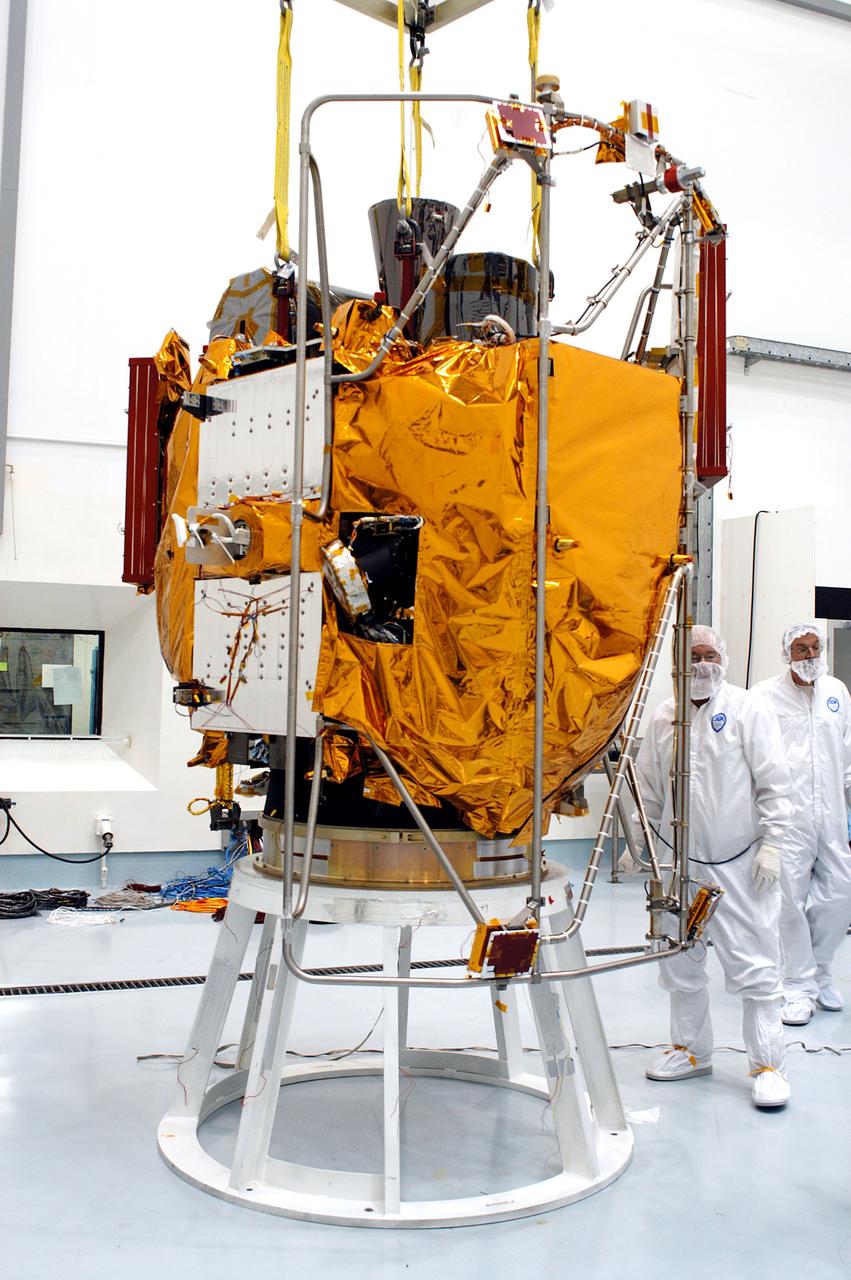
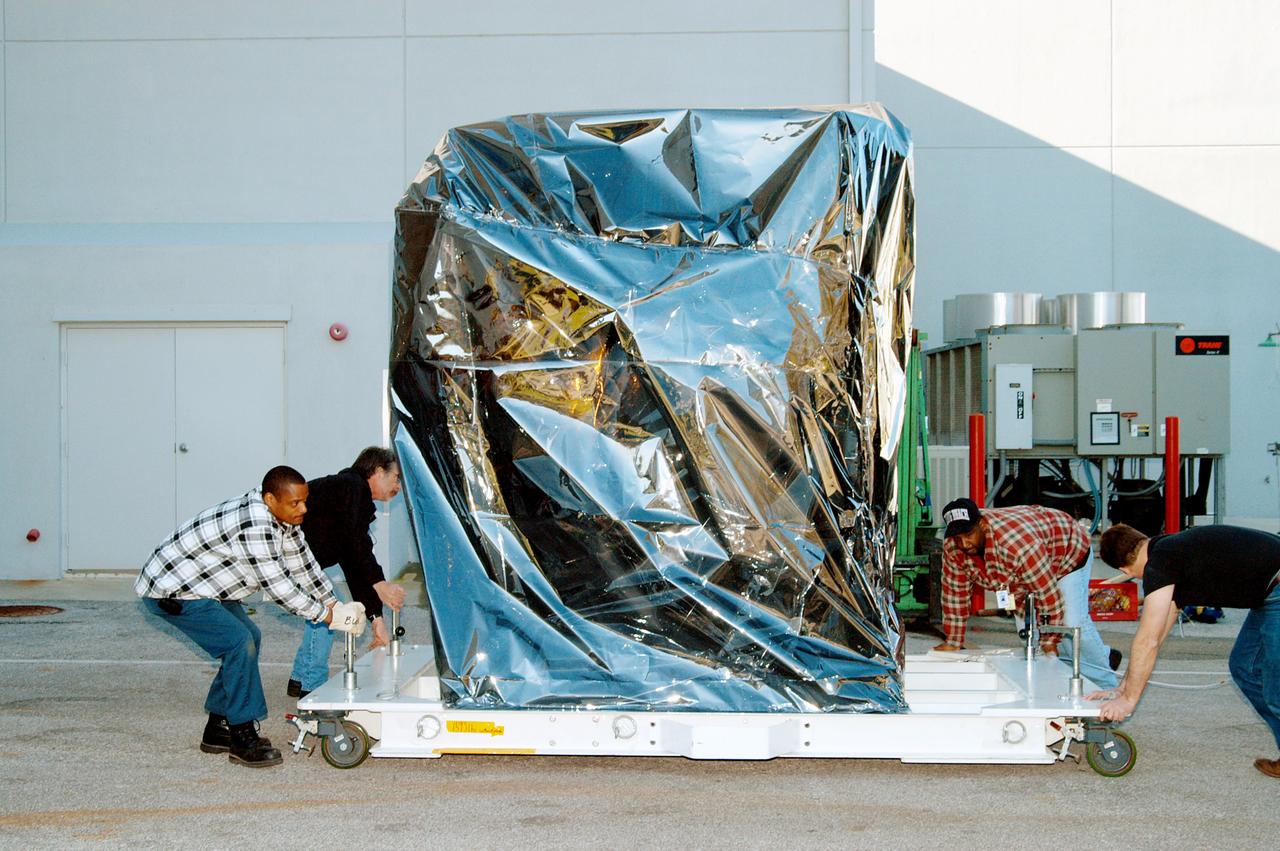
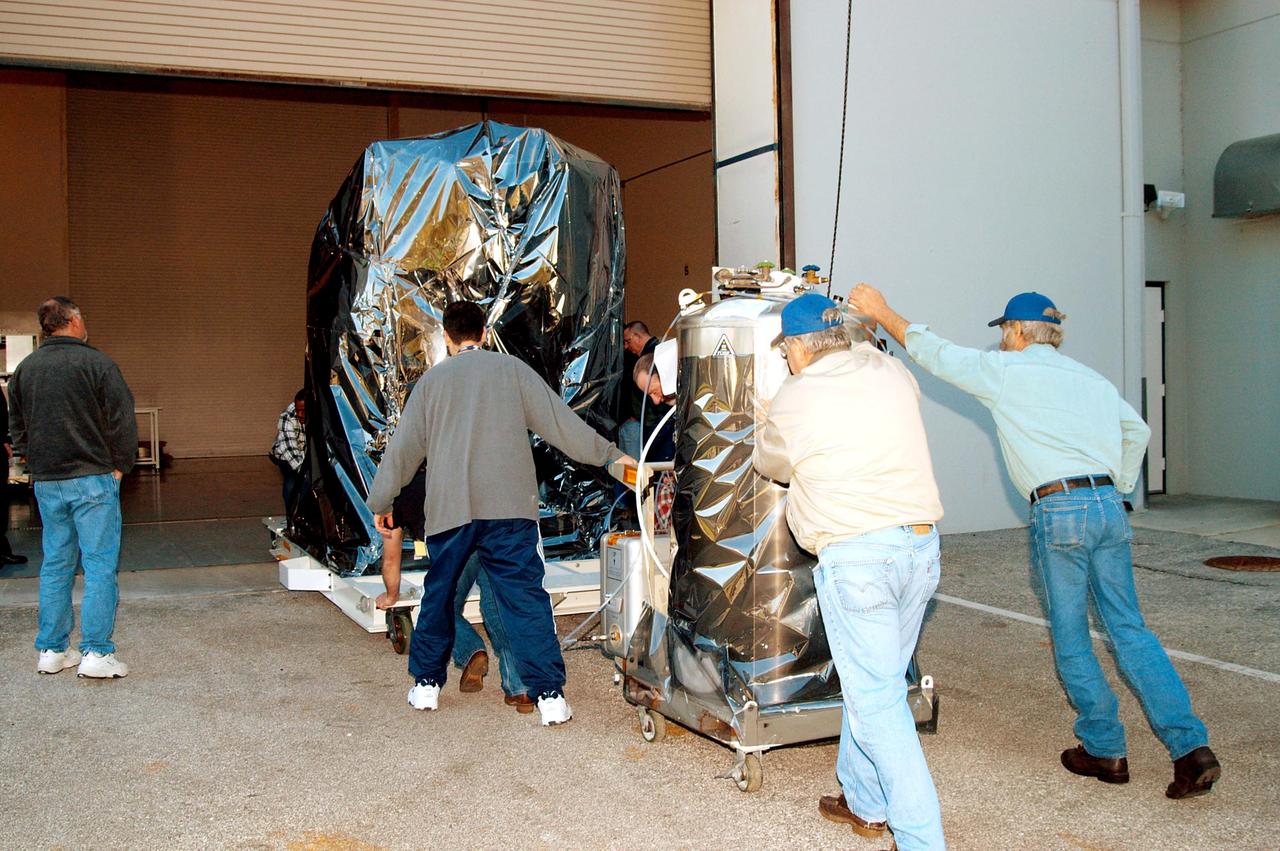
KENNEDY SPACE CENTER, FLA. -  At the Astrotech Space Operations processing facilities near KSC, workers begin moving NASA’s MESSENGER spacecraft into the building  MESSENGER - short for MErcury Surface, Space ENvironment, GEochemistry and Ranging - is being taken into a high bay clean room where employees of the Johns Hopkins University Applied Physics Laboratory, builders of the spacecraft, will perform an initial state-of-health check.  Then processing for launch can begin, including checkout of the power systems, communications systems and control systems.  The thermal blankets will also be attached for flight.  MESSENGER will be launched May 11 on a six-year mission aboard a Boeing Delta II rocket.  Liftoff is targeted for 2:26 a.m. EDT on Tuesday, May 11.
KENNEDY SPACE CENTER, FLA. - At the Astrotech Space Operations processing facilities near KSC, workers begin moving NASA’s MESSENGER spacecraft into the building MESSENGER - short for MErcury Surface, Space ENvironment, GEochemistry and Ranging - is being taken into a high bay clean room where employees of the Johns Hopkins University Applied Physics Laboratory, builders of the spacecraft, will perform an initial state-of-health check. Then processing for launch can begin, including checkout of the power systems, communications systems and control systems. The thermal blankets will also be attached for flight. MESSENGER will be launched May 11 on a six-year mission aboard a Boeing Delta II rocket. Liftoff is targeted for 2:26 a.m. EDT on Tuesday, May 11.
KENNEDY SPACE CENTER, FLA. -  In the high bay clean room at the Astrotech Space Operations processing facilities near KSC, workers attach an overhead crane to NASA’s MESSENGER spacecraft.  The spacecraft will be moved to a work stand where employees of the Johns Hopkins University Applied Physics Laboratory, builders of the spacecraft, will perform an initial state-of-health check.  Then processing for launch can begin, including checkout of the power systems, communications systems and control systems.  The thermal blankets will also be attached for flight.  MESSENGER - short for MErcury Surface, Space ENvironment, GEochemistry and Ranging - will be launched May 11 on a six-year mission aboard a Boeing Delta II rocket.  Liftoff is targeted for 2:26 a.m. EDT on Tuesday, May 11.
KENNEDY SPACE CENTER, FLA. - In the high bay clean room at the Astrotech Space Operations processing facilities near KSC, workers attach an overhead crane to NASA’s MESSENGER spacecraft. The spacecraft will be moved to a work stand where employees of the Johns Hopkins University Applied Physics Laboratory, builders of the spacecraft, will perform an initial state-of-health check. Then processing for launch can begin, including checkout of the power systems, communications systems and control systems. The thermal blankets will also be attached for flight. MESSENGER - short for MErcury Surface, Space ENvironment, GEochemistry and Ranging - will be launched May 11 on a six-year mission aboard a Boeing Delta II rocket. Liftoff is targeted for 2:26 a.m. EDT on Tuesday, May 11.
KENNEDY SPACE CENTER, FLA. -  At the Astrotech Space Operations processing facilities near KSC, workers check the moveable pallet holding NASA’s MESSENGER spacecraft.  MESSENGER - short for MErcury Surface, Space ENvironment, GEochemistry and Ranging - will be taken into a high bay clean room and employees of the Johns Hopkins University Applied Physics Laboratory, builders of the spacecraft, will perform an initial state-of-health check.  Then processing for launch can begin, including checkout of the power systems, communications systems and control systems.  The thermal blankets will also be attached for flight.  MESSENGER will be launched May 11 on a six-year mission aboard a Boeing Delta II rocket.  Liftoff is targeted for 2:26 a.m. EDT on Tuesday, May 11.
KENNEDY SPACE CENTER, FLA. - At the Astrotech Space Operations processing facilities near KSC, workers check the moveable pallet holding NASA’s MESSENGER spacecraft. MESSENGER - short for MErcury Surface, Space ENvironment, GEochemistry and Ranging - will be taken into a high bay clean room and employees of the Johns Hopkins University Applied Physics Laboratory, builders of the spacecraft, will perform an initial state-of-health check. Then processing for launch can begin, including checkout of the power systems, communications systems and control systems. The thermal blankets will also be attached for flight. MESSENGER will be launched May 11 on a six-year mission aboard a Boeing Delta II rocket. Liftoff is targeted for 2:26 a.m. EDT on Tuesday, May 11.
KENNEDY SPACE CENTER, FLA. -  In the high bay clean room at the Astrotech Space Operations processing facilities near KSC, workers get ready to remove the protective cover from NASA’s MESSENGER spacecraft.  Employees of the Johns Hopkins University Applied Physics Laboratory, builders of the spacecraft, will perform an initial state-of-health check.  Then processing for launch can begin, including checkout of the power systems, communications systems and control systems.  The thermal blankets will also be attached for flight.  MESSENGER - short for MErcury Surface, Space ENvironment, GEochemistry and Ranging - will be launched May 11 on a six-year mission aboard a Boeing Delta II rocket.  Liftoff is targeted for 2:26 a.m. EDT on Tuesday, May 11.
KENNEDY SPACE CENTER, FLA. - In the high bay clean room at the Astrotech Space Operations processing facilities near KSC, workers get ready to remove the protective cover from NASA’s MESSENGER spacecraft. Employees of the Johns Hopkins University Applied Physics Laboratory, builders of the spacecraft, will perform an initial state-of-health check. Then processing for launch can begin, including checkout of the power systems, communications systems and control systems. The thermal blankets will also be attached for flight. MESSENGER - short for MErcury Surface, Space ENvironment, GEochemistry and Ranging - will be launched May 11 on a six-year mission aboard a Boeing Delta II rocket. Liftoff is targeted for 2:26 a.m. EDT on Tuesday, May 11.
KENNEDY SPACE CENTER, FLA. -  In the high bay clean room at the Astrotech Space Operations processing facilities near KSC, workers prepare to attach an overhead crane to NASA’s MESSENGER spacecraft.  The spacecraft will be moved to a work stand where employees of the Johns Hopkins University Applied Physics Laboratory, builders of the spacecraft, will perform an initial state-of-health check.  Then processing for launch can begin, including checkout of the power systems, communications systems and control systems.  The thermal blankets will also be attached for flight.  MESSENGER - short for MErcury Surface, Space ENvironment, GEochemistry and Ranging - will be launched May 11 on a six-year mission aboard a Boeing Delta II rocket.  Liftoff is targeted for 2:26 a.m. EDT on Tuesday, May 11.
KENNEDY SPACE CENTER, FLA. - In the high bay clean room at the Astrotech Space Operations processing facilities near KSC, workers prepare to attach an overhead crane to NASA’s MESSENGER spacecraft. The spacecraft will be moved to a work stand where employees of the Johns Hopkins University Applied Physics Laboratory, builders of the spacecraft, will perform an initial state-of-health check. Then processing for launch can begin, including checkout of the power systems, communications systems and control systems. The thermal blankets will also be attached for flight. MESSENGER - short for MErcury Surface, Space ENvironment, GEochemistry and Ranging - will be launched May 11 on a six-year mission aboard a Boeing Delta II rocket. Liftoff is targeted for 2:26 a.m. EDT on Tuesday, May 11.
KENNEDY SPACE CENTER, FLA. -  At the Astrotech Space Operations processing facilities near KSC, a lift begins lowering NASA’s MESSENGER spacecraft onto the ground.  MESSENGER - short for MErcury Surface, Space ENvironment, GEochemistry and Ranging - will be taken into a high bay clean room and employees of the Johns Hopkins University Applied Physics Laboratory, builders of the spacecraft, will perform an initial state-of-health check.  Then processing for launch can begin, including checkout of the power systems, communications systems and control systems.  The thermal blankets will also be attached for flight.  MESSENGER will be launched May 11 on a six-year mission aboard a Boeing Delta II rocket.  Liftoff is targeted for 2:26 a.m. EDT on Tuesday, May 11.
KENNEDY SPACE CENTER, FLA. - At the Astrotech Space Operations processing facilities near KSC, a lift begins lowering NASA’s MESSENGER spacecraft onto the ground. MESSENGER - short for MErcury Surface, Space ENvironment, GEochemistry and Ranging - will be taken into a high bay clean room and employees of the Johns Hopkins University Applied Physics Laboratory, builders of the spacecraft, will perform an initial state-of-health check. Then processing for launch can begin, including checkout of the power systems, communications systems and control systems. The thermal blankets will also be attached for flight. MESSENGER will be launched May 11 on a six-year mission aboard a Boeing Delta II rocket. Liftoff is targeted for 2:26 a.m. EDT on Tuesday, May 11.
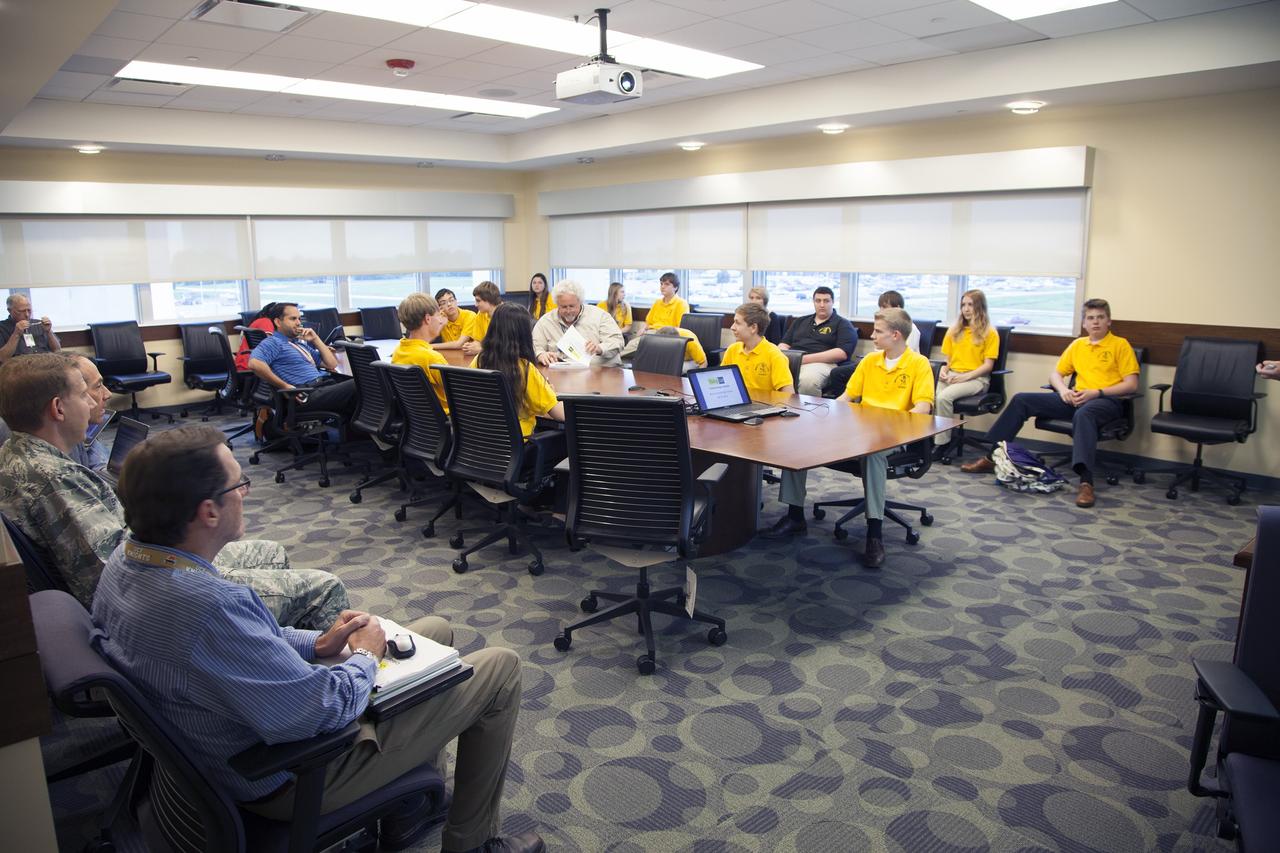
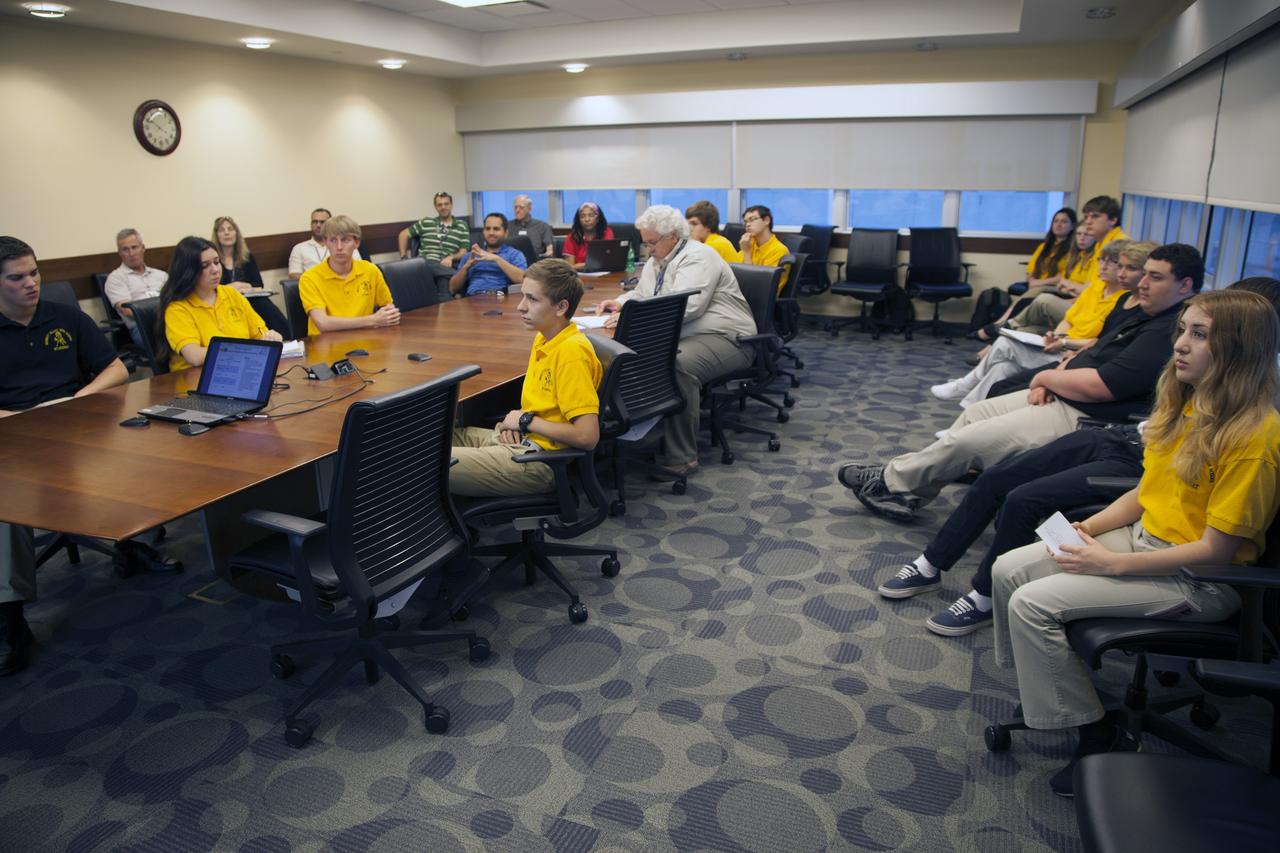
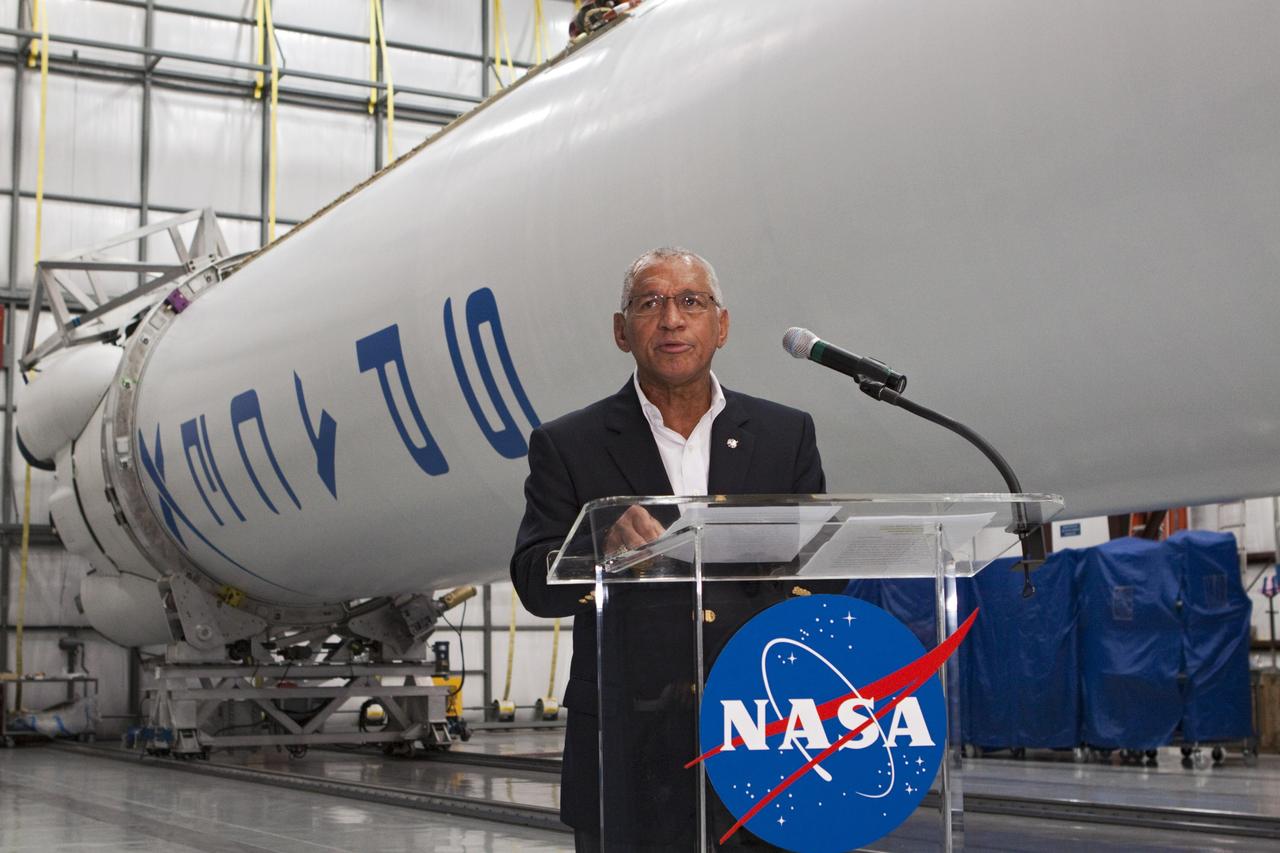
CAPE CANAVERAL, Fla. – Merritt Island High School students and their NASA mentors participate in a Critical Design Review of StangSat concepts in the Operations and Checkout Building at NASA's Kennedy Space Center in Florida.    StangSat is one of many CubeSats under development in a class of research spacecraft called nanosatellites. The cube-shaped satellites measure about 4 inches on each side, have a volume of about 1 quart and weigh less than 3 pounds. To date, 27 CubeSats have launched through the initiative as part of the agency's Launch Services Program's Educational Launch of Nanosatellite Program. This year, four separate launches will carry 17 CubeSats. To learn more about the CubeSat Launch Initiative, visit http://go.nasa.gov/CubeSat_initiative.  Photo credit: NASA/Ben Smegelsky
KSC-2014-2114
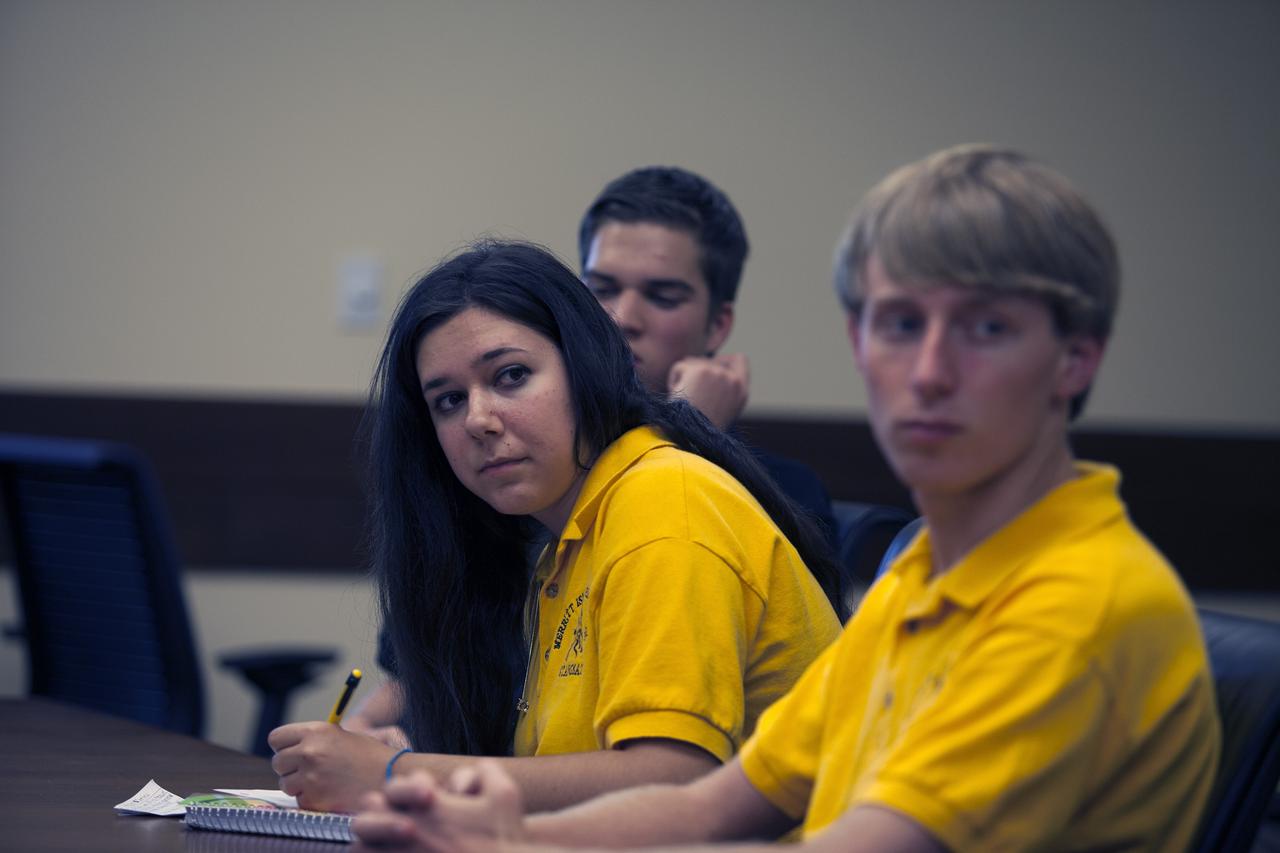
CAPE CANAVERAL, Fla. – Merritt Island High School students participate in a Critical Design Review of StangSat concepts with NASA engineers in the Operations and Checkout Building at NASA's Kennedy Space Center in Florida.     StangSat is one of many CubeSats under development in a class of research spacecraft called nanosatellites. The cube-shaped satellites measure about 4 inches on each side, have a volume of about 1 quart and weigh less than 3 pounds. To date, 27 CubeSats have launched through the initiative as part of the agency's Launch Services Program's Educational Launch of Nanosatellite Program. This year, four separate launches will carry 17 CubeSats. To learn more about the CubeSat Launch Initiative, visit http://go.nasa.gov/CubeSat_initiative.  Photo credit: NASA/Ben Smegelsky
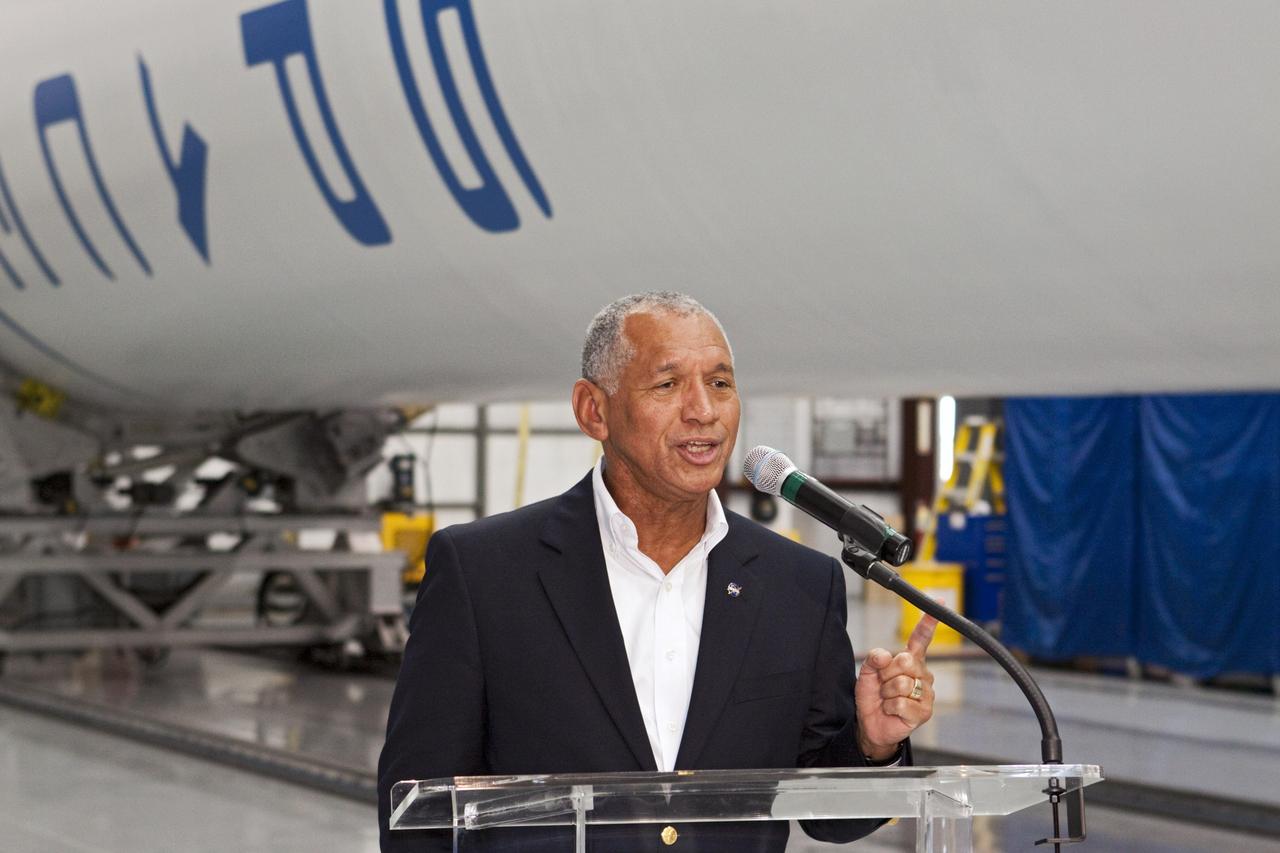
KSC-2014-2111
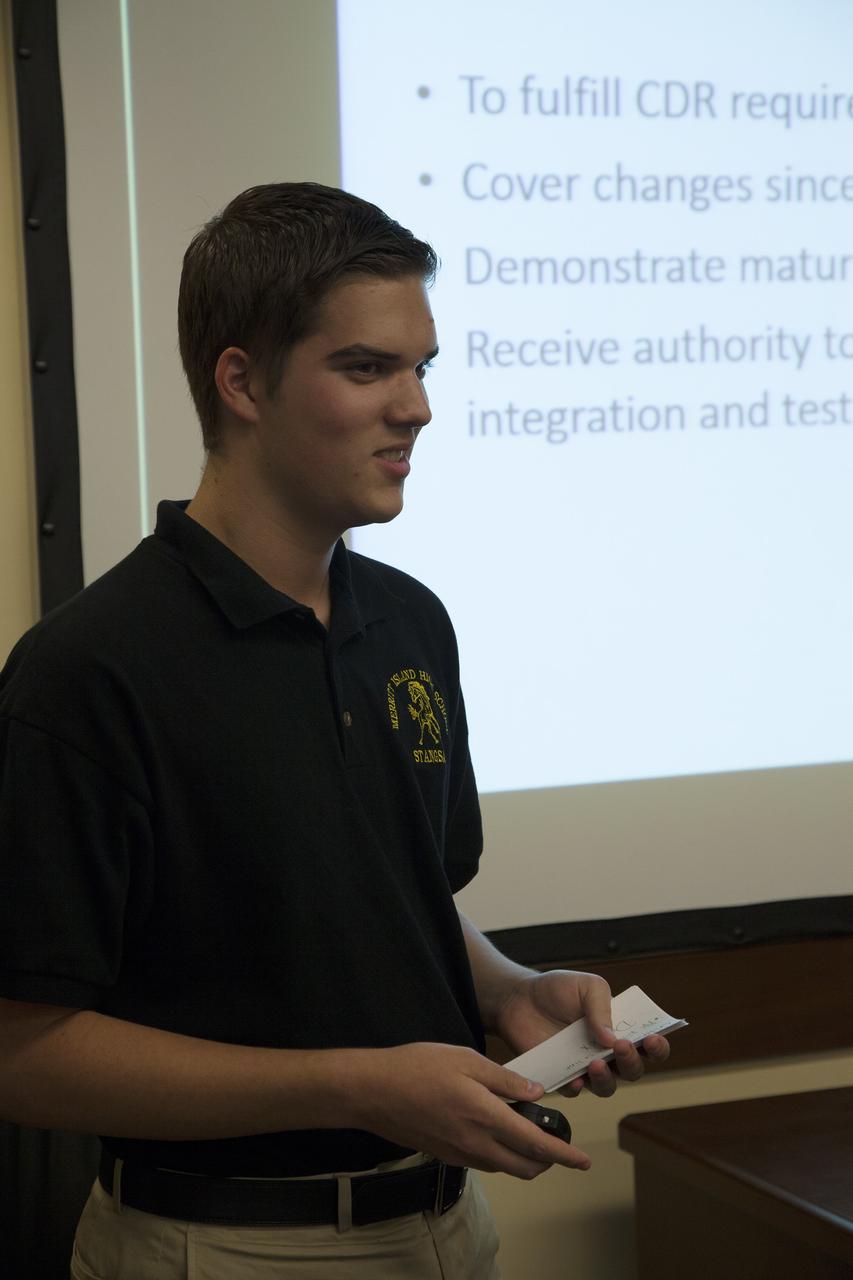
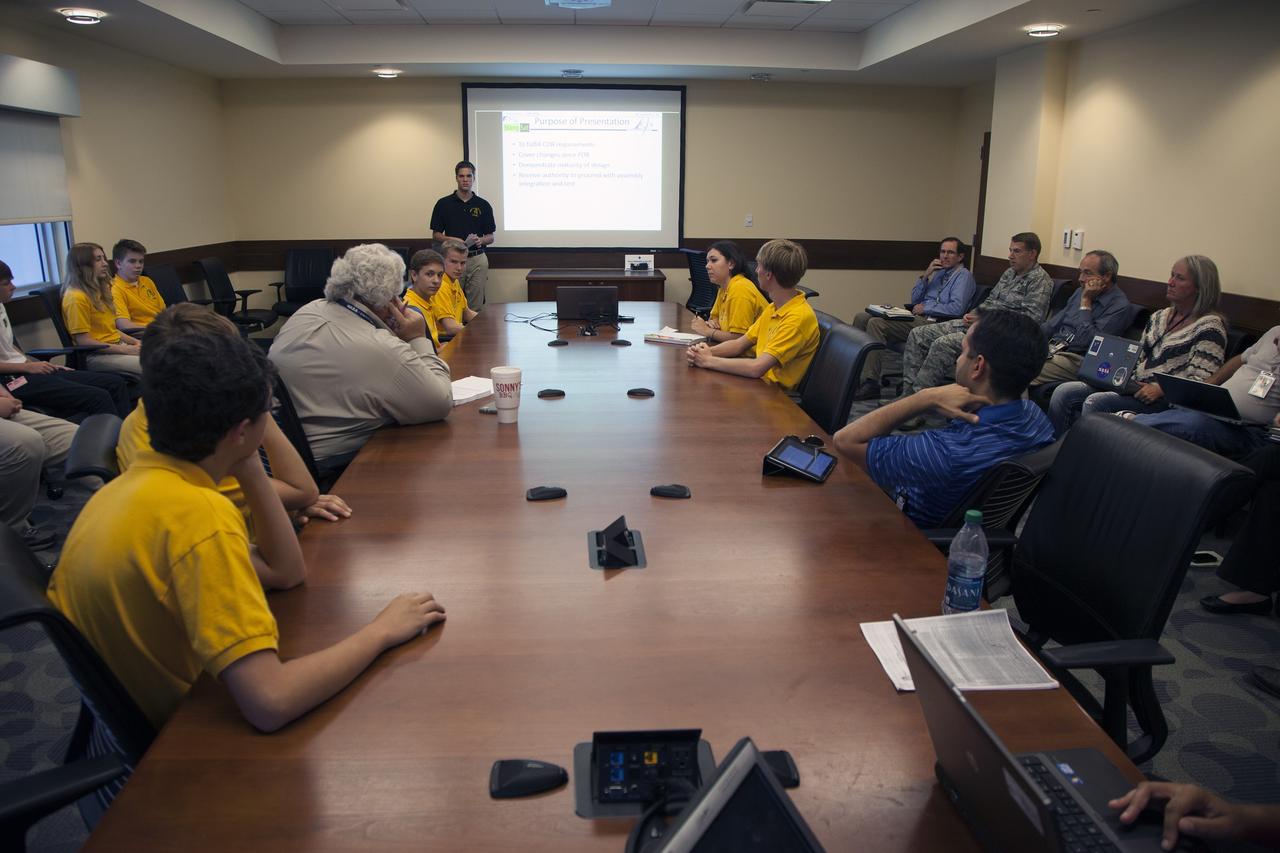
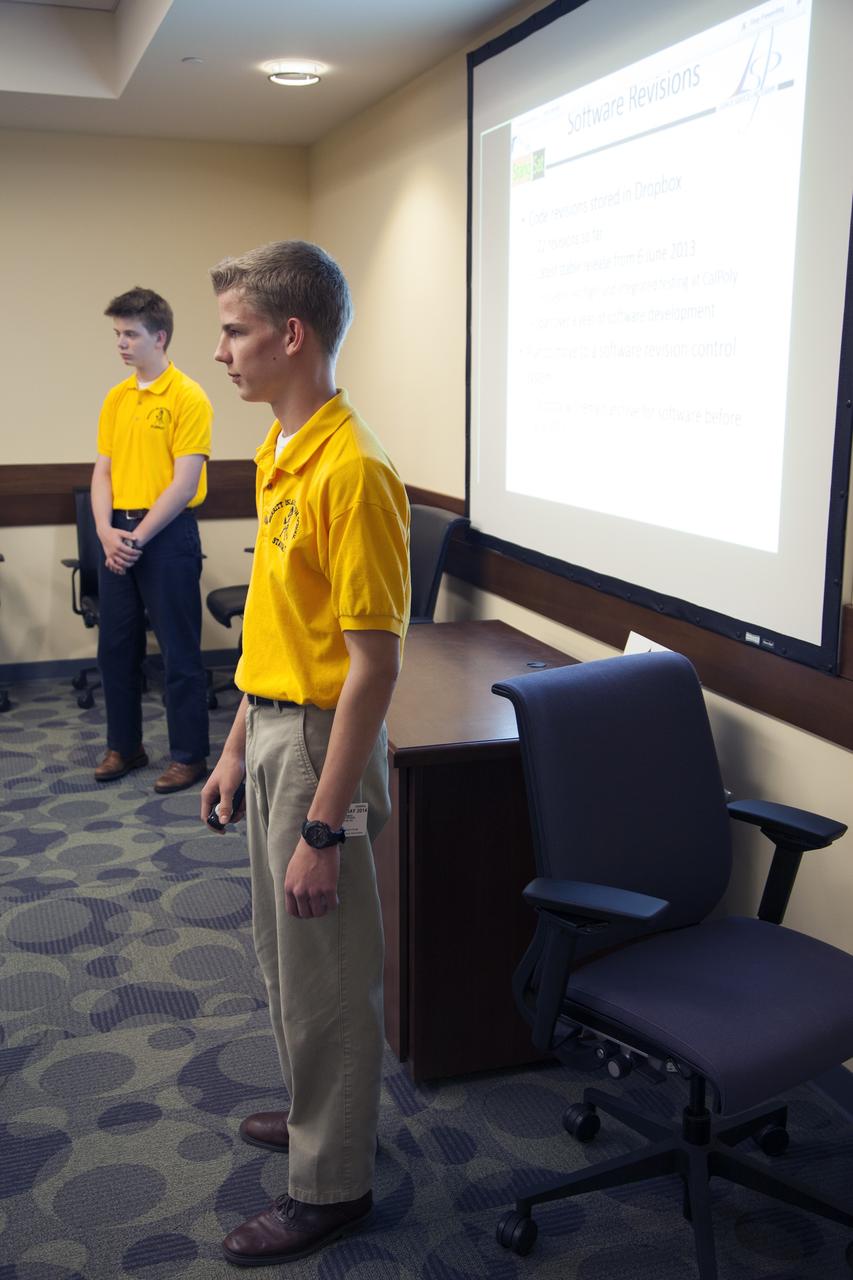
CAPE CANAVERAL, Fla. – A student representing a team from Merritt Island High School presents their StangSat concepts to NASA engineers at a Critical Design Review in the Operations and Checkout Building at NASA's Kennedy Space Center in Florida.      StangSat is one of many CubeSats under development in a class of research spacecraft called nanosatellites. The cube-shaped satellites measure about 4 inches on each side, have a volume of about 1 quart and weigh less than 3 pounds. To date, 27 CubeSats have launched through the initiative as part of the agency's Launch Services Program's Educational Launch of Nanosatellite Program. This year, four separate launches will carry 17 CubeSats. To learn more about the CubeSat Launch Initiative, visit http://go.nasa.gov/CubeSat_initiative.  Photo credit: NASA/Ben Smegelsky
KSC-2014-2110
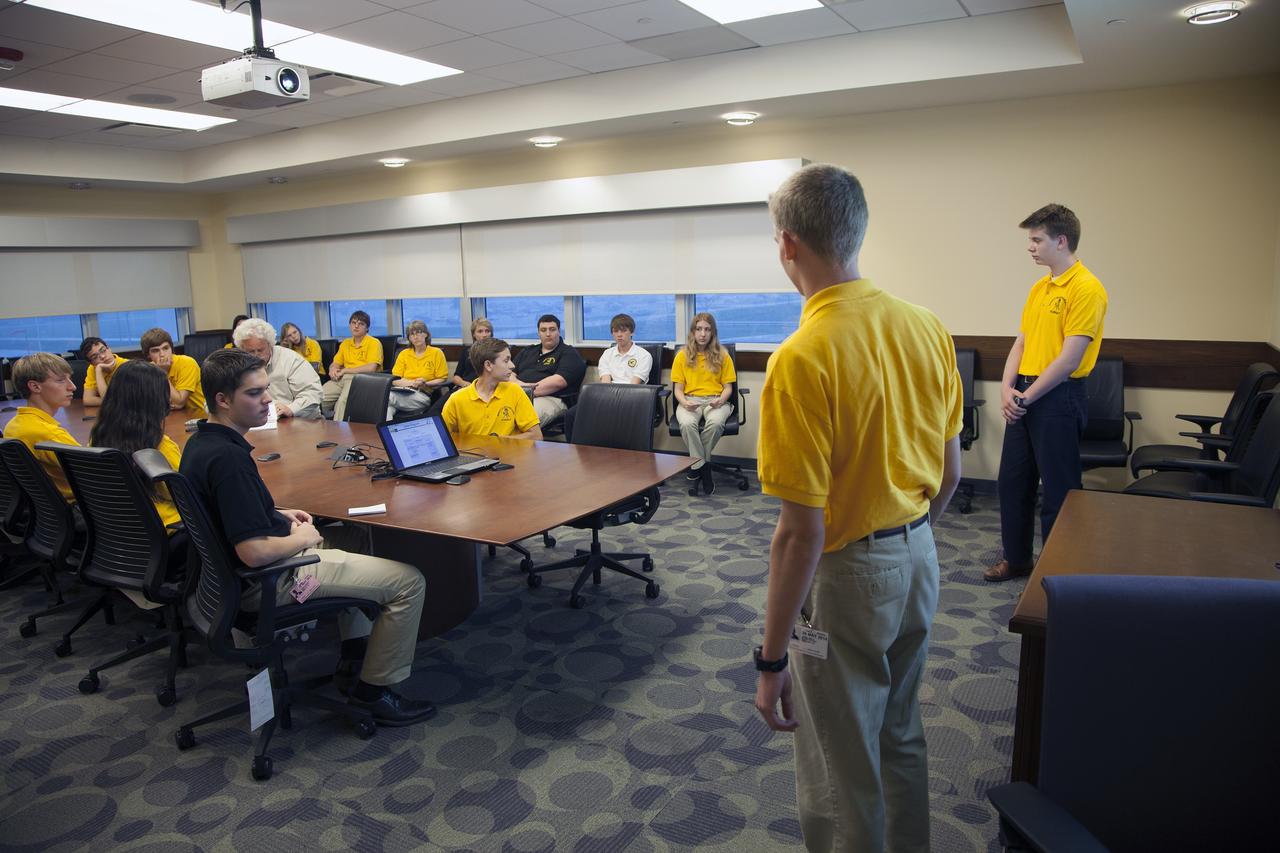
CAPE CANAVERAL, Fla. – Students representing a team from Merritt Island High School present their StangSat concepts to NASA engineers at a Critical Design Review in the Operations and Checkout Building at NASA's Kennedy Space Center in Florida.    StangSat is one of many CubeSats under development in a class of research spacecraft called nanosatellites. The cube-shaped satellites measure about 4 inches on each side, have a volume of about 1 quart and weigh less than 3 pounds. To date, 27 CubeSats have launched through the initiative as part of the agency's Launch Services Program's Educational Launch of Nanosatellite Program. This year, four separate launches will carry 17 CubeSats. To learn more about the CubeSat Launch Initiative, visit http://go.nasa.gov/CubeSat_initiative.  Photo credit: NASA/Ben Smegelsky
KSC-2014-2112
CAPE CANAVERAL, Fla. – Students representing a team from Merritt Island High School present their StangSat concepts to NASA engineers at a Critical Design Review in the Operations and Checkout Building at NASA's Kennedy Space Center in Florida.    StangSat is one of many CubeSats under development in a class of research spacecraft called nanosatellites. The cube-shaped satellites measure about 4 inches on each side, have a volume of about 1 quart and weigh less than 3 pounds. To date, 27 CubeSats have launched through the initiative as part of the agency's Launch Services Program's Educational Launch of Nanosatellite Program. This year, four separate launches will carry 17 CubeSats. To learn more about the CubeSat Launch Initiative, visit http://go.nasa.gov/CubeSat_initiative.  Photo credit: NASA/Ben Smegelsky
KSC-2014-2113
CAPE CANAVERAL, Fla. – A student representing a team from Merritt Island High School presents their StangSat concepts to NASA engineers at a Critical Design Review in the Operations and Checkout Building at NASA's Kennedy Space Center in Florida.         StangSat is one of many CubeSats under development in a class of research spacecraft called nanosatellites. The cube-shaped satellites measure about 4 inches on each side, have a volume of about 1 quart and weigh less than 3 pounds. To date, 27 CubeSats have launched through the initiative as part of the agency's Launch Services Program's Educational Launch of Nanosatellite Program. This year, four separate launches will carry 17 CubeSats. To learn more about the CubeSat Launch Initiative, visit http://go.nasa.gov/CubeSat_initiative.  Photo credit: NASA/Ben Smegelsky
KSC-2014-2109
CAPE CANAVERAL, Fla. – Merritt Island High School students and their NASA mentors participate in a Critical Design Review of StangSat concepts in the Operations and Checkout Building at NASA's Kennedy Space Center in Florida.         StangSat is one of many CubeSats under development in a class of research spacecraft called nanosatellites. The cube-shaped satellites measure about 4 inches on each side, have a volume of about 1 quart and weigh less than 3 pounds. To date, 27 CubeSats have launched through the initiative as part of the agency's Launch Services Program's Educational Launch of Nanosatellite Program. This year, four separate launches will carry 17 CubeSats. To learn more about the CubeSat Launch Initiative, visit http://go.nasa.gov/CubeSat_initiative.  Photo credit: NASA/Ben Smegelsky
KSC-2014-2108
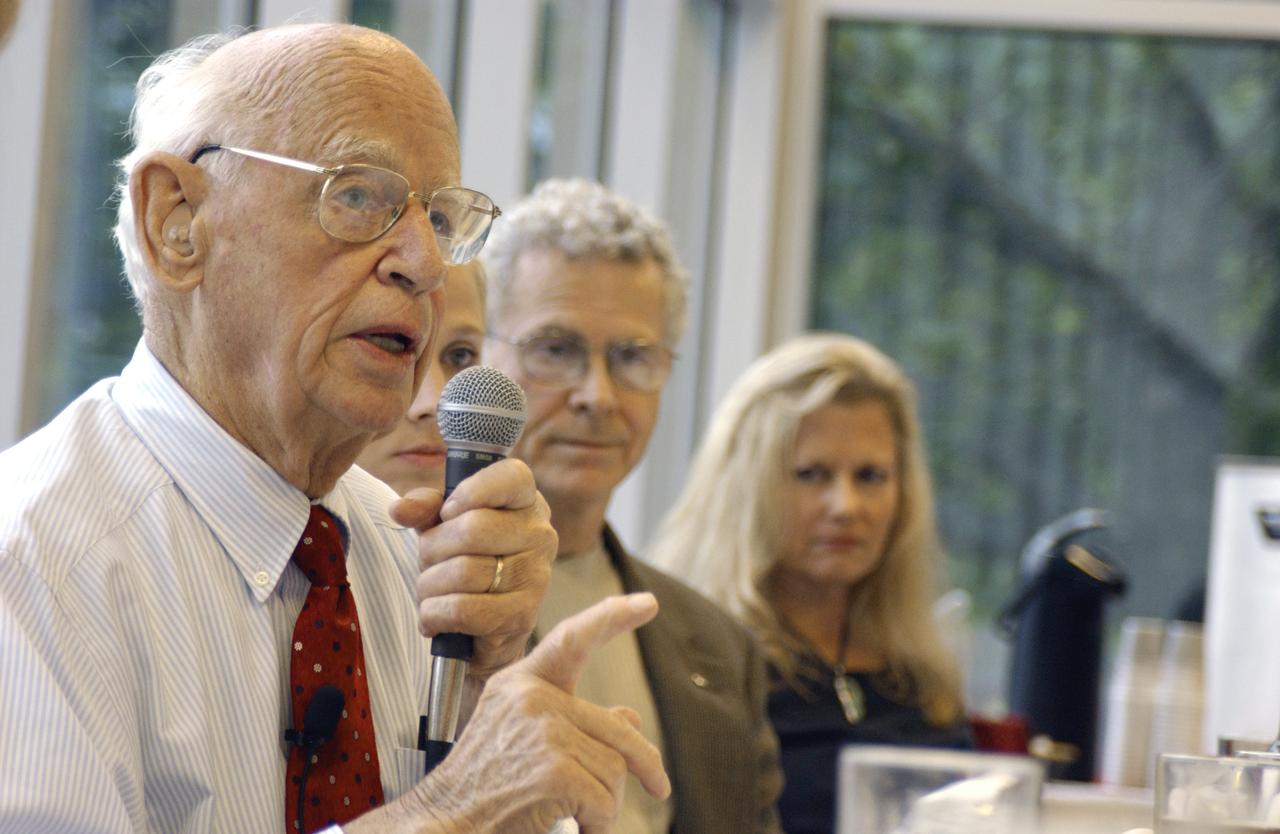
Dr. Ernst Stuhlinger, a member of von Braun's original German rocket team who directed the Research Projects Office, spoke about the importance of teachers in his life during a reception honoring educators attending the NASA Student Launch Initiative Rocketry Workshop at the Marshall Space Flight Center in July, 2003.
Around Marshall
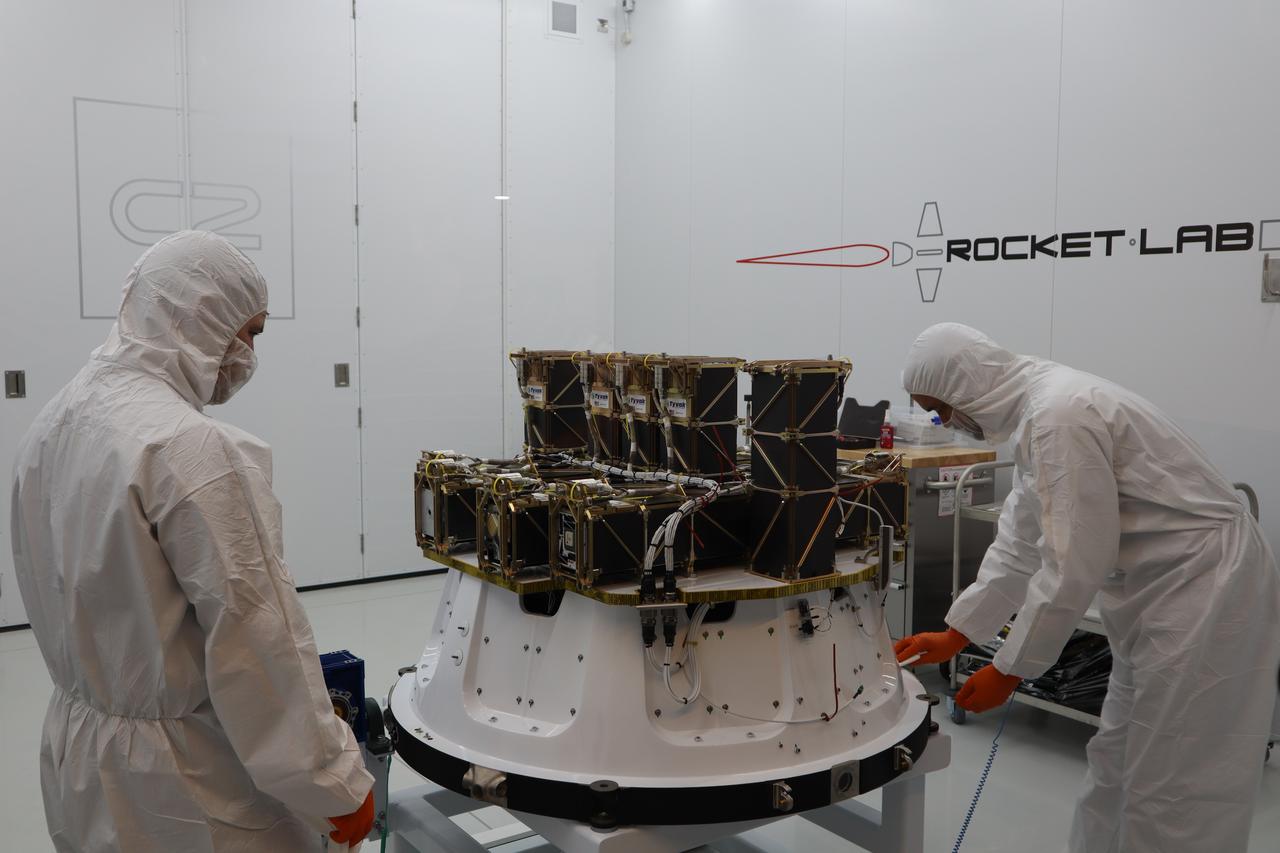
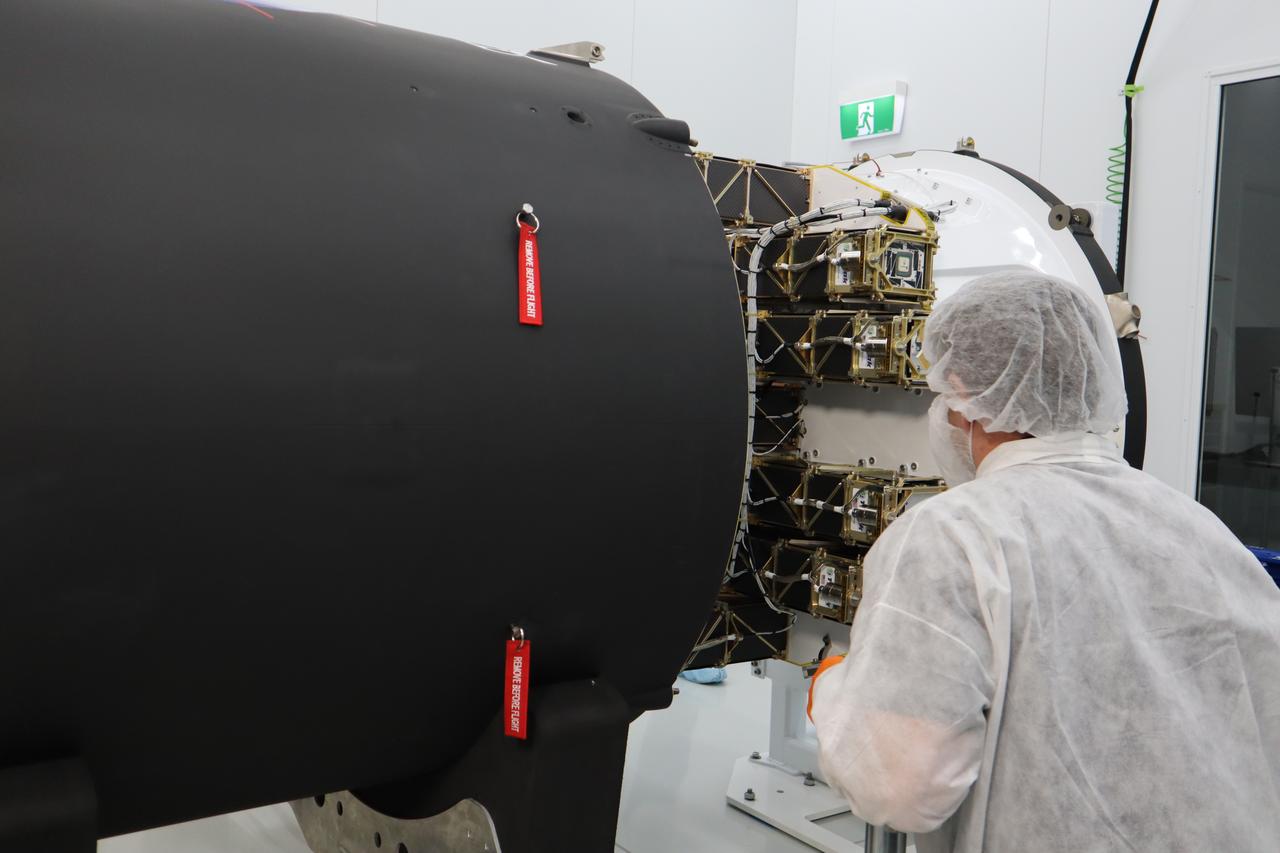
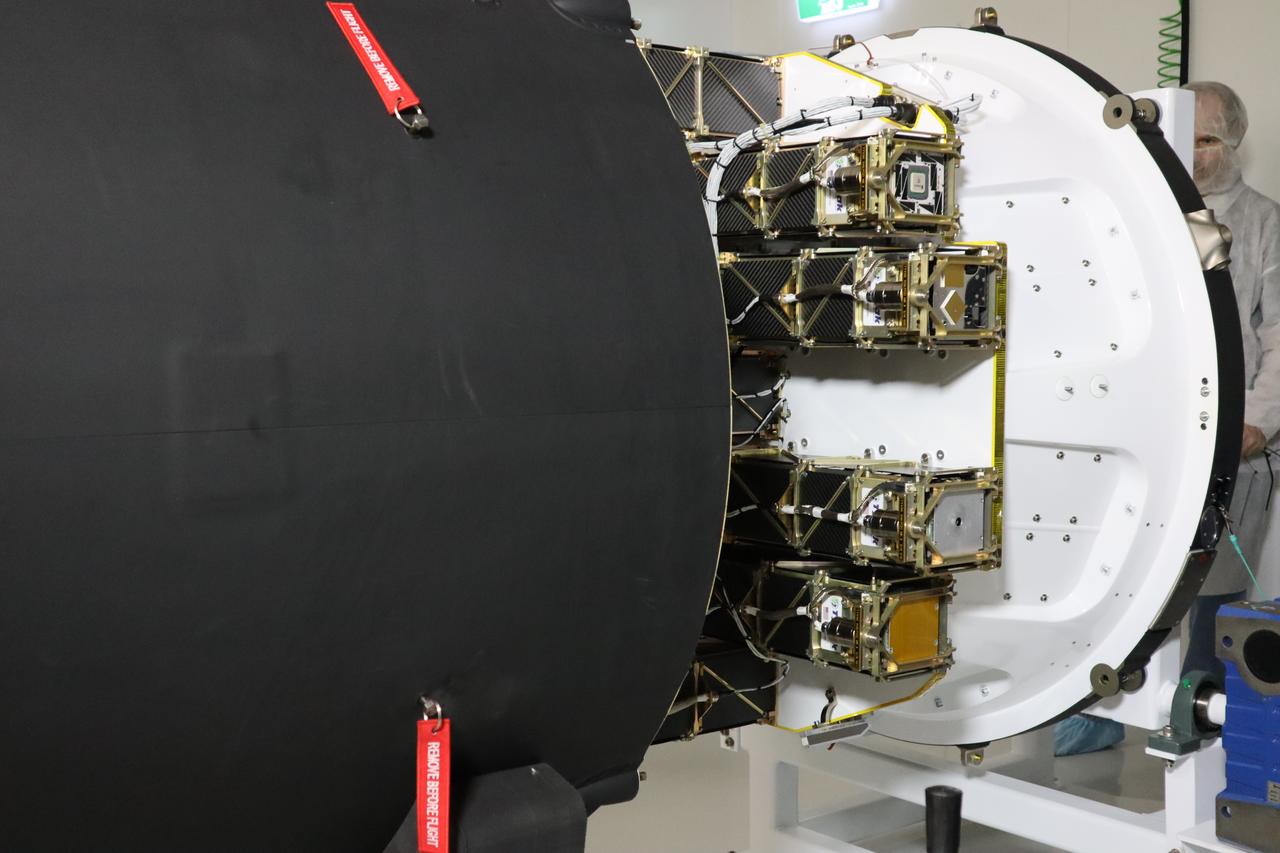
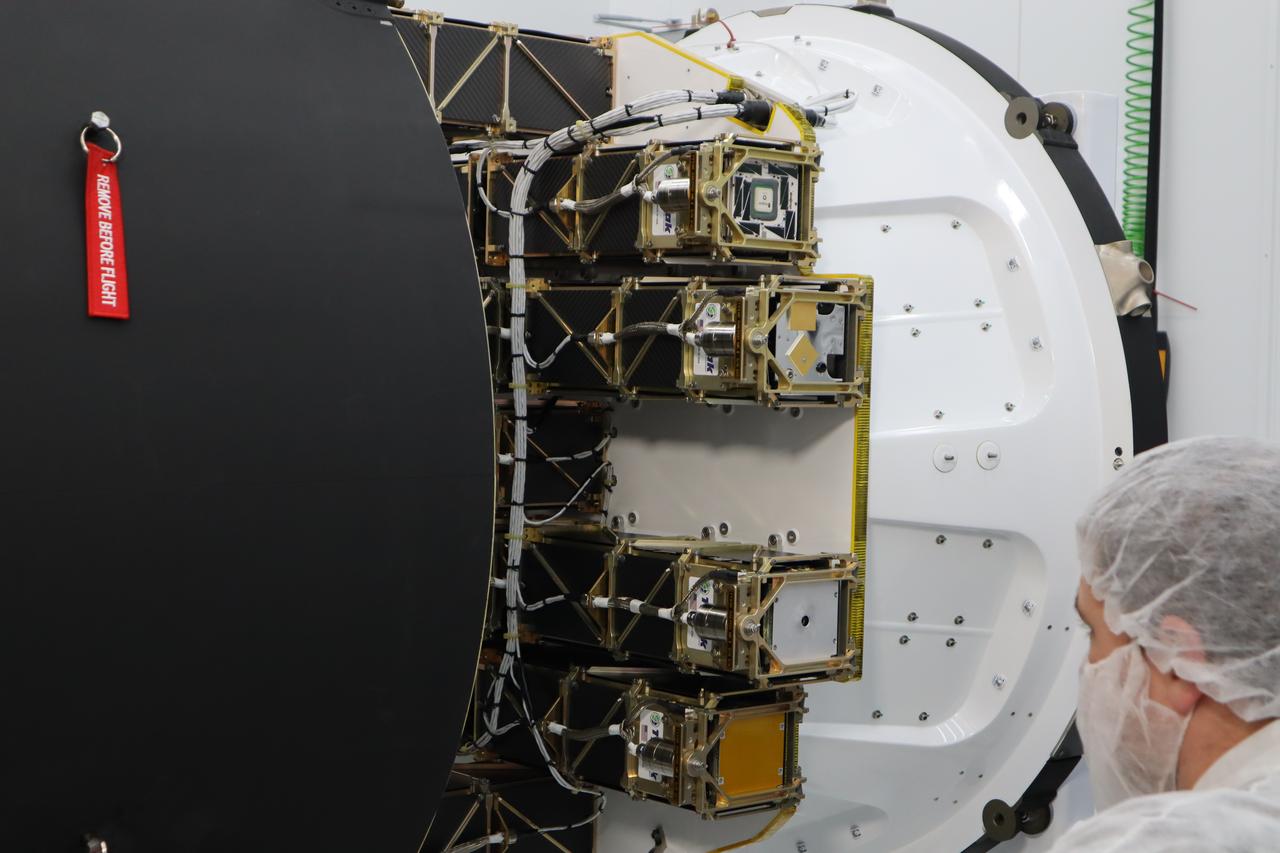
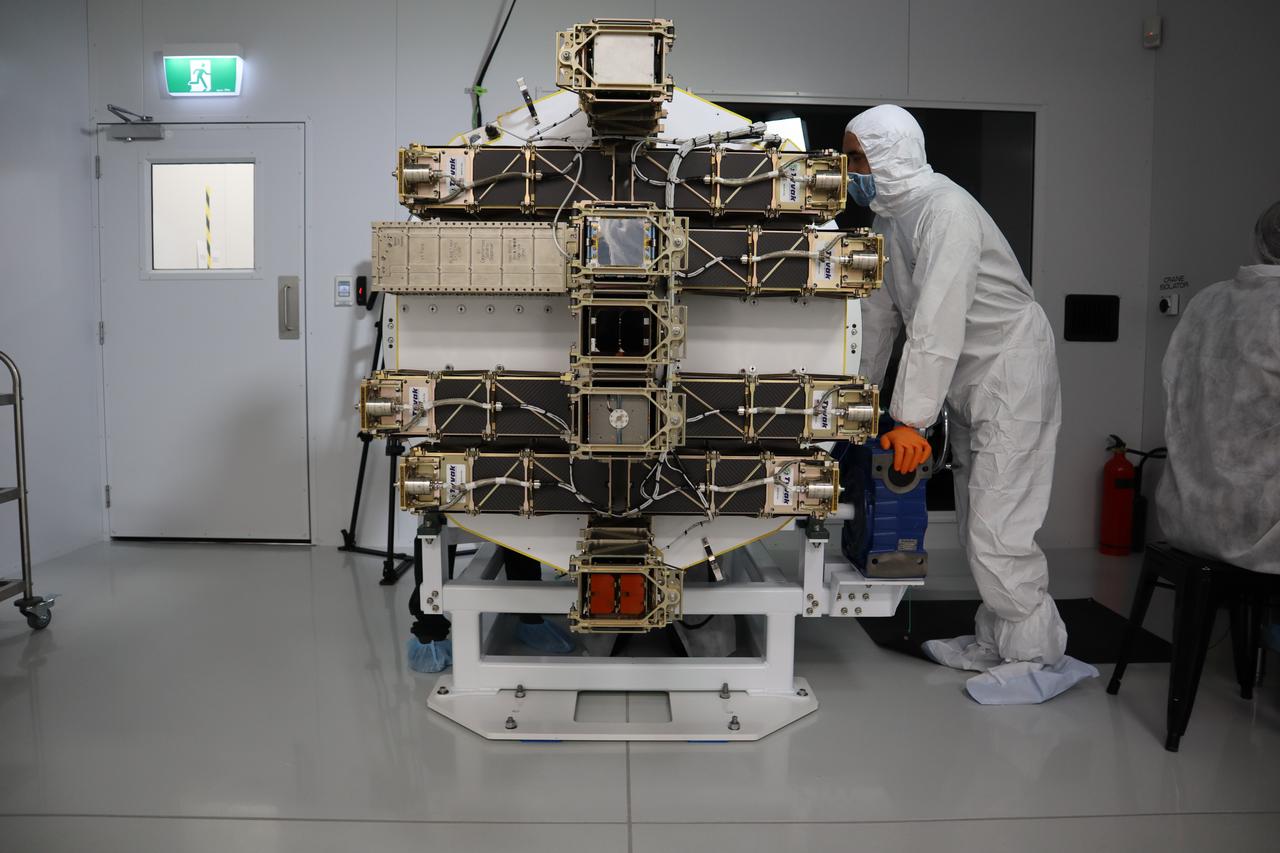
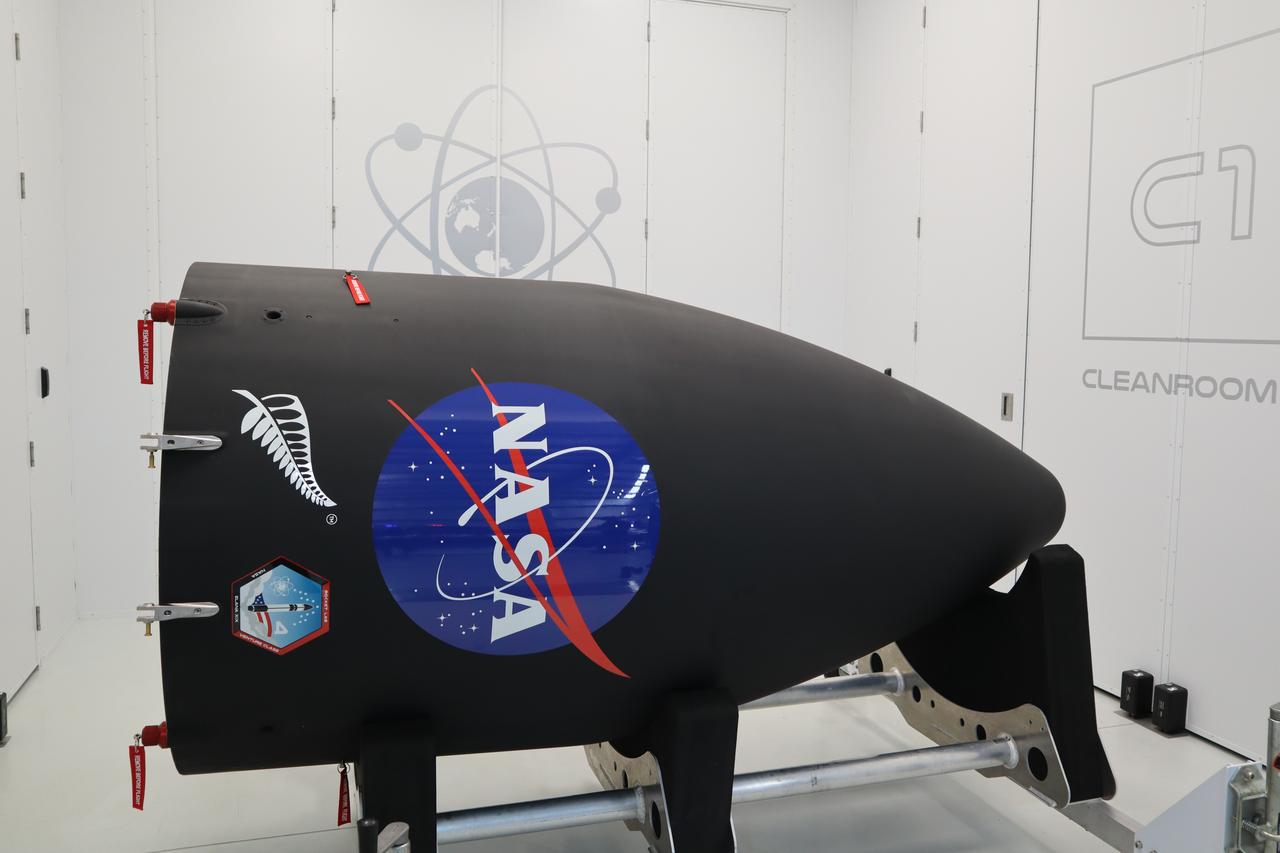
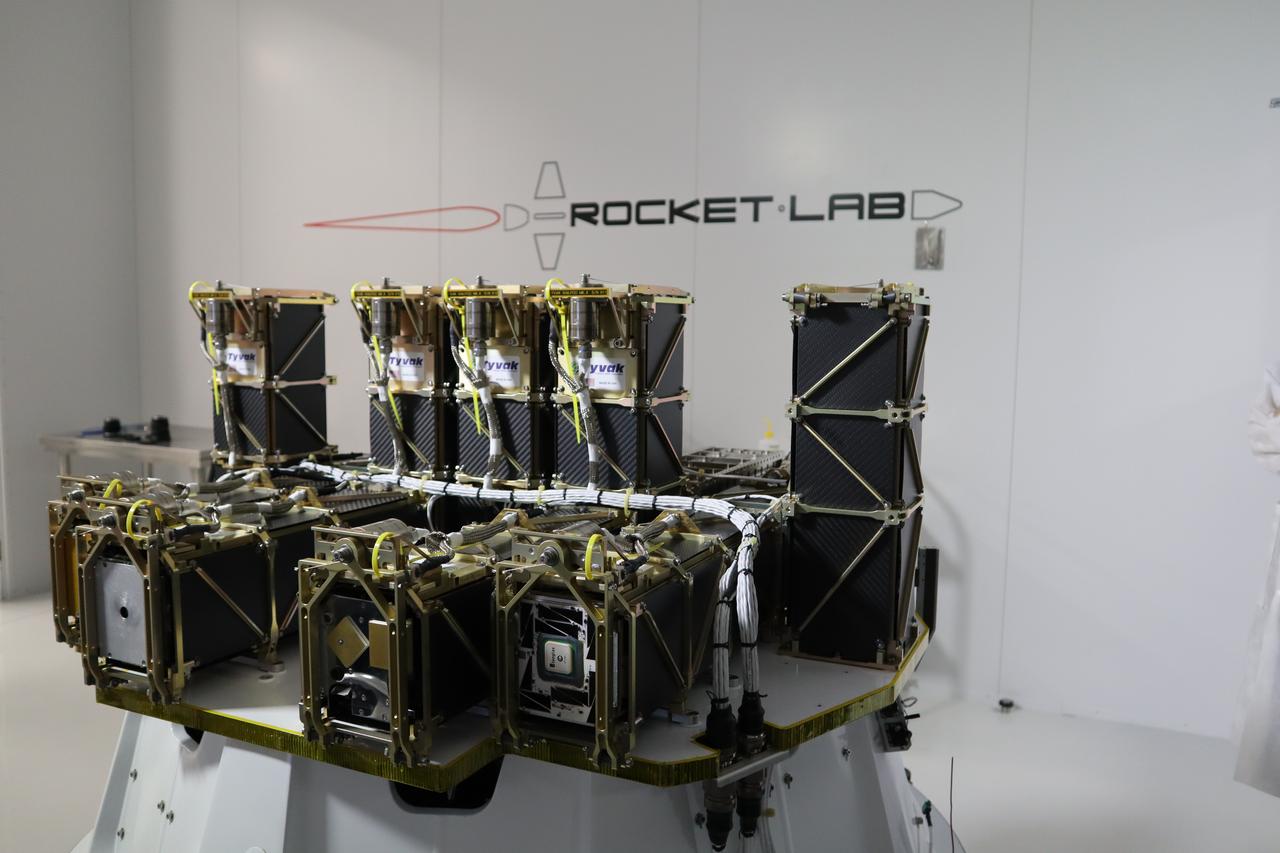
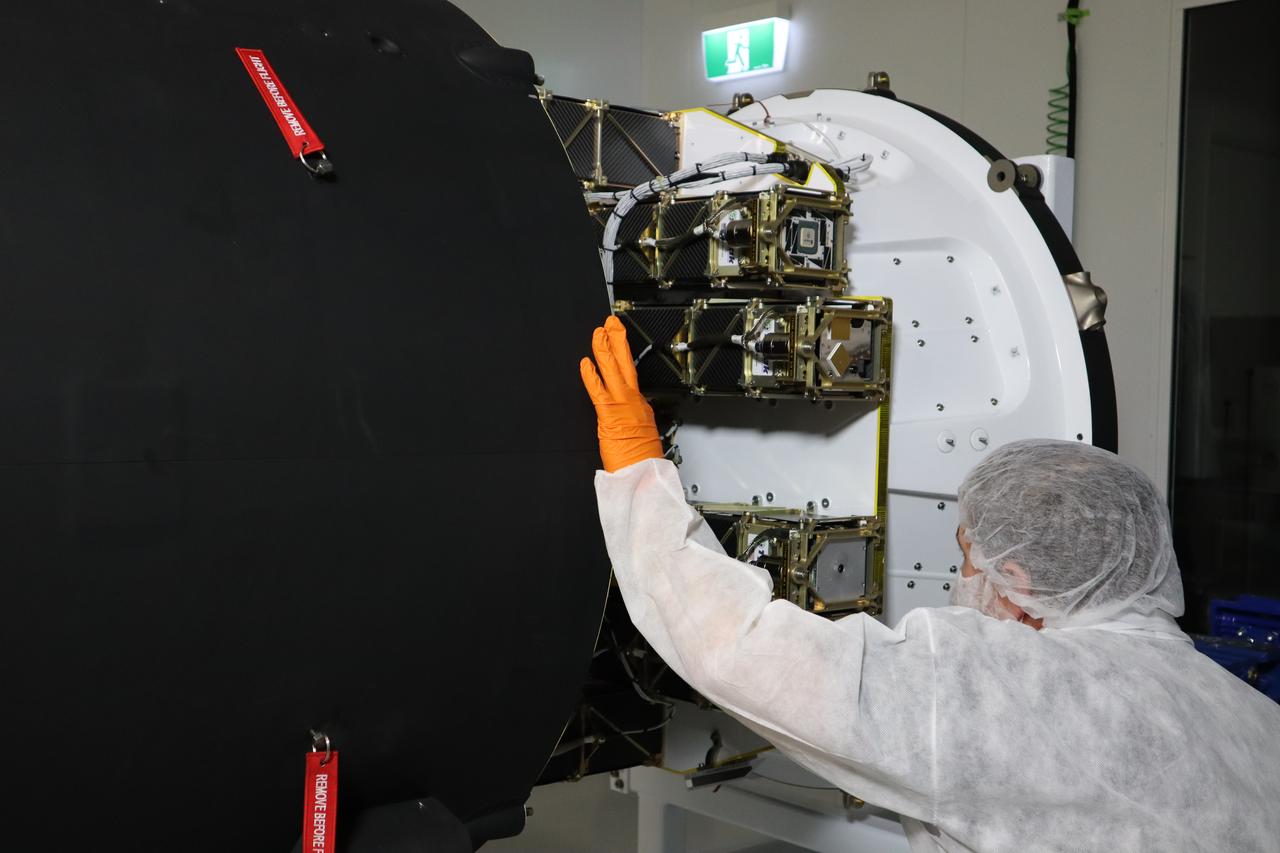
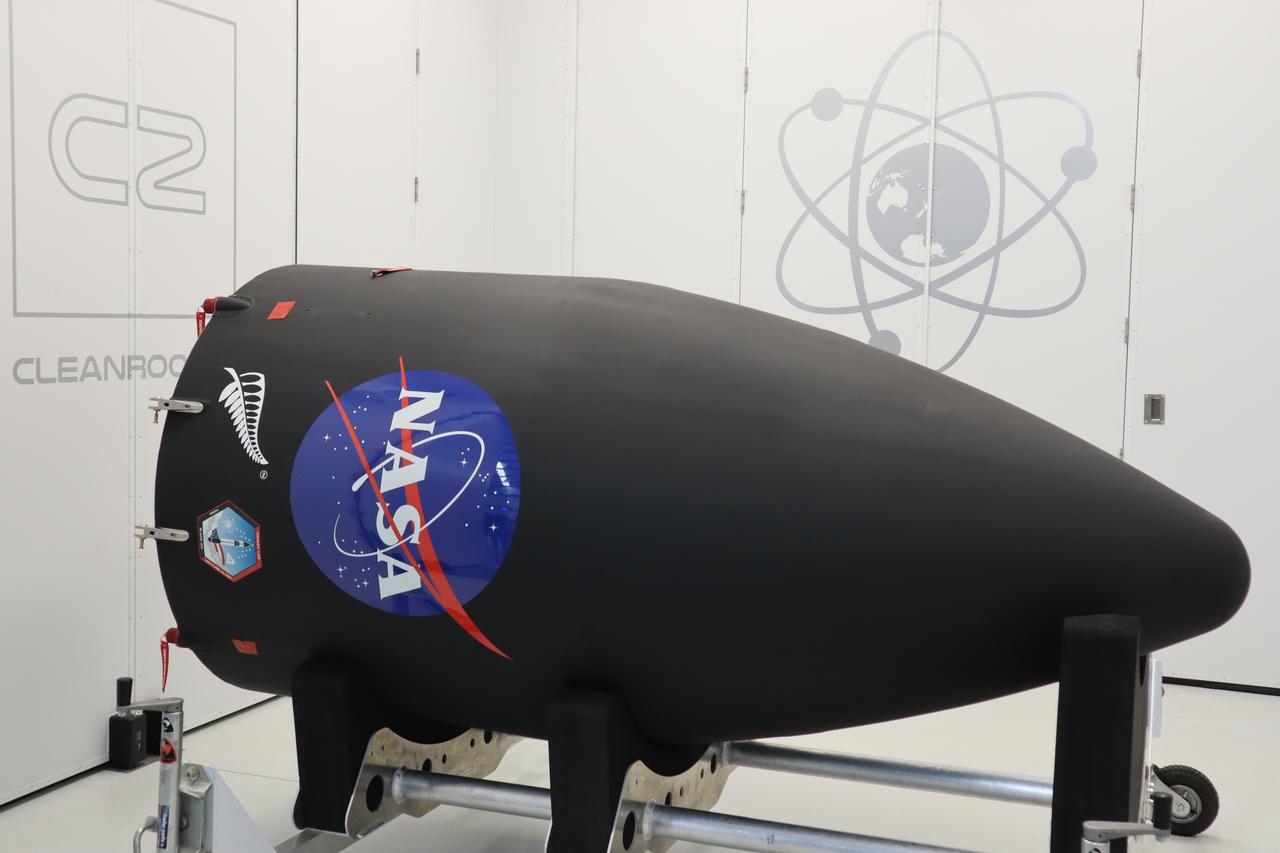
The Educational Launch of Nanosatellites 19 (ELaNa 19) payload has been encapsulated inside the Rocket Lab Electron rocket payload fairing on Dec. 1, 2018, at the company’s facility in New Zealand. The ELaNa 19 payload comprises 10 CubeSats selected through NASA’s CubeSat Launch Initiative. The liftoff marks the debut of the agency’s innovative Venture Class Launch Services (VCLS) effort. Managed by NASA’s Launch Services Program at Kennedy Space Center in Florida, VCLS was developed to offer small payloads dedicated rides to space.
ELaNa 19 Payload Encapsulation
The Educational Launch of Nanosatellites 19 (ELaNa 19) payload has been encapsulated inside the Rocket Lab Electron rocket payload fairing on Dec. 1, 2018, at the company’s facility in New Zealand. The ELaNa 19 payload comprises 10 CubeSats selected through NASA’s CubeSat Launch Initiative. The liftoff marks the debut of the agency’s innovative Venture Class Launch Services (VCLS) effort. Managed by NASA’s Launch Services Program at Kennedy Space Center in Florida, VCLS was developed to offer small payloads dedicated rides to space.
ELaNa 19 Payload Encapsulation
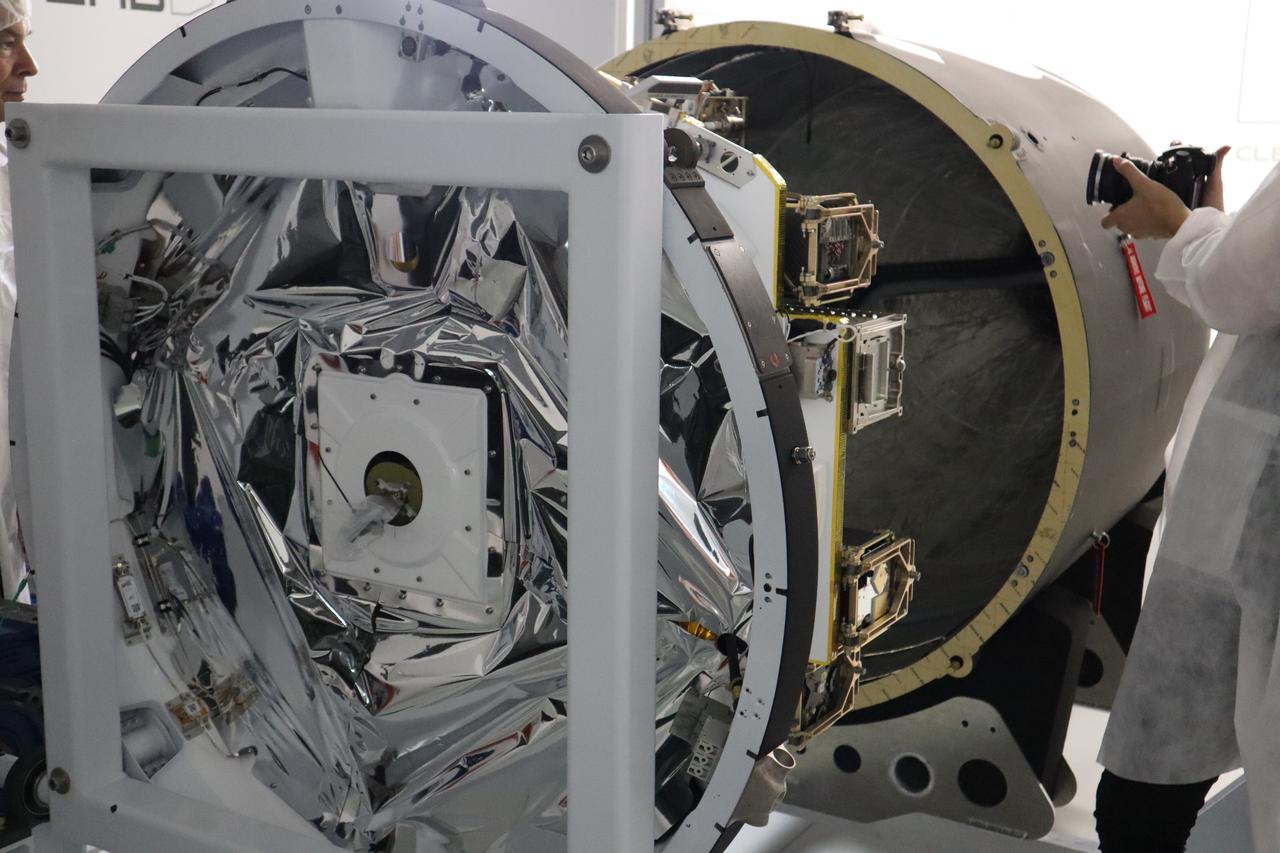
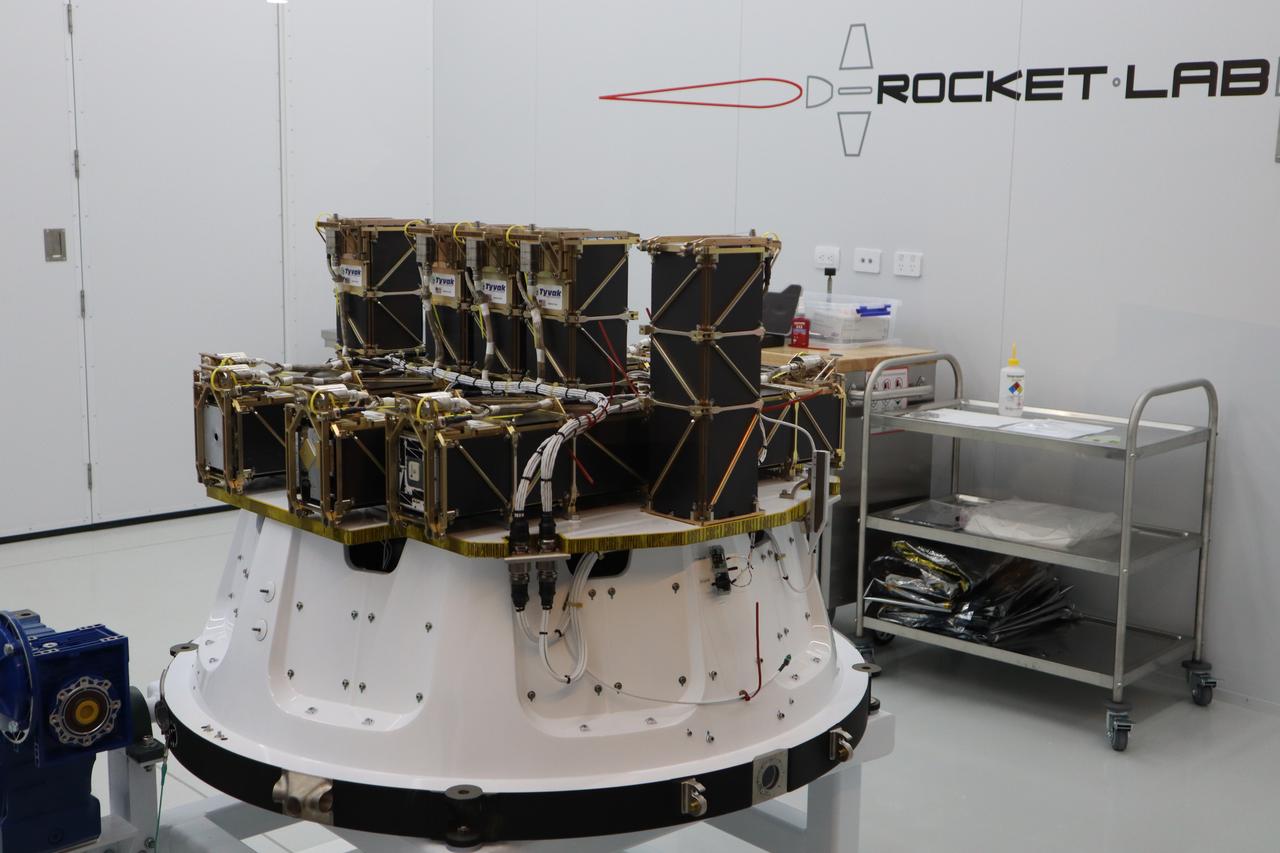
The Educational Launch of Nanosatellites 19 (ELaNa 19) payload is prepared to be encapsulated inside the Rocket Lab Electron rocket payload fairing on Dec. 1, 2018, at the company’s facility in New Zealand. The ELaNa 19 payload comprises 10 CubeSats selected through NASA’s CubeSat Launch Initiative. The liftoff marks the debut of the agency’s innovative Venture Class Launch Services (VCLS) effort. Managed by NASA’s Launch Services Program at Kennedy Space Center in Florida, VCLS was developed to offer small payloads dedicated rides to space.
ELaNa 19 Payload Encapsulation
The Educational Launch of Nanosatellites 19 (ELaNa 19) payload is prepared to be encapsulated inside the Rocket Lab Electron rocket payload fairing on Dec. 1, 2018, at the company’s facility in New Zealand. The ELaNa 19 payload comprises 10 CubeSats selected through NASA’s CubeSat Launch Initiative. The liftoff marks the debut of the agency’s innovative Venture Class Launch Services (VCLS) effort. Managed by NASA’s Launch Services Program at Kennedy Space Center in Florida, VCLS was developed to offer small payloads dedicated rides to space.
ELaNa 19 Payload Encapsulation
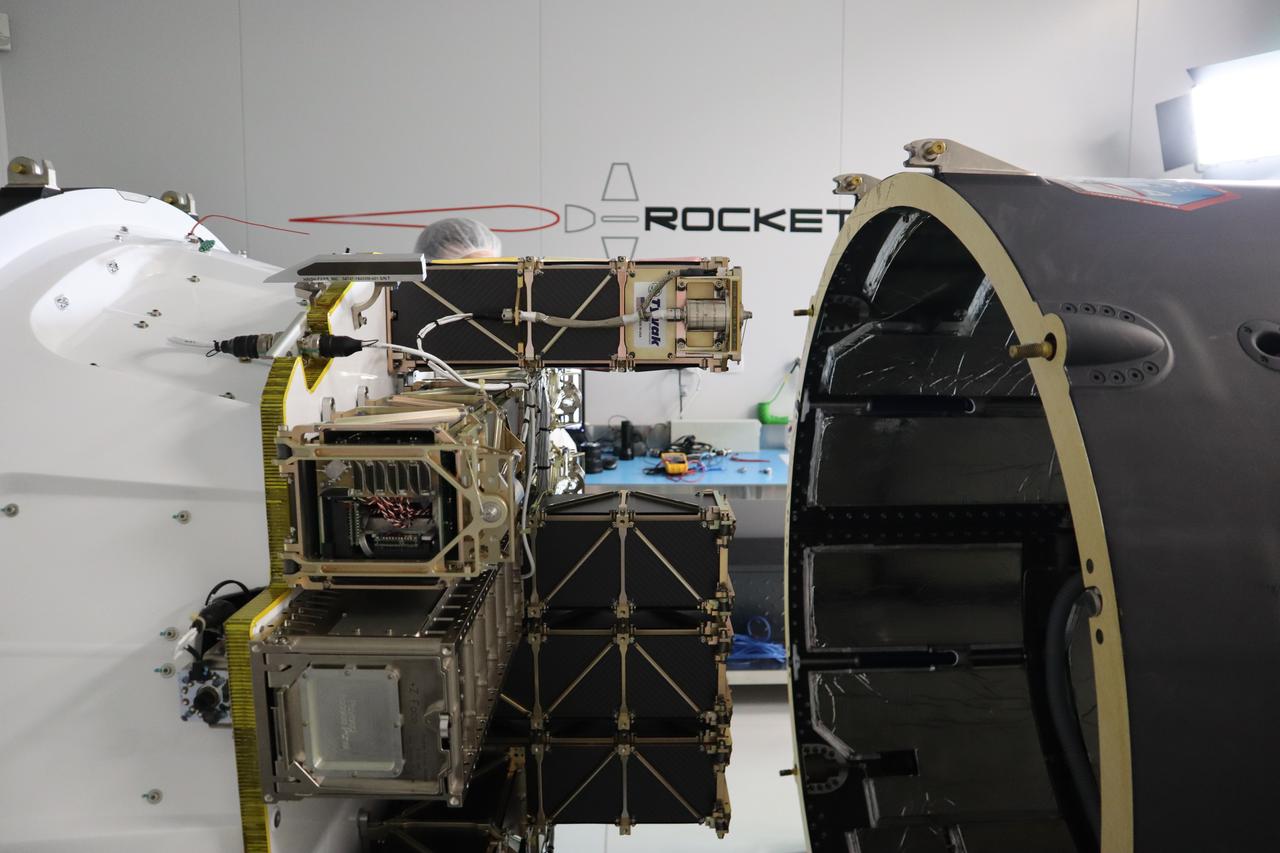
The Educational Launch of Nanosatellites 19 (ELaNa 19) payload is encapsulated inside the Rocket Lab Electron rocket payload fairing on Dec. 1, 2018, at the company’s facility in New Zealand. The ELaNa 19 payload comprises 10 CubeSats selected through NASA’s CubeSat Launch Initiative. The liftoff marks the debut of the agency’s innovative Venture Class Launch Services (VCLS) effort. Managed by NASA’s Launch Services Program at Kennedy Space Center in Florida, VCLS was developed to offer small payloads dedicated rides to space.
ELaNa 19 Payload Encapsulation
The Educational Launch of Nanosatellites 19 (ELaNa 19) payload is encapsulated inside the Rocket Lab Electron rocket payload fairing on Dec. 1, 2018, at the company’s facility in New Zealand. The ELaNa 19 payload comprises 10 CubeSats selected through NASA’s CubeSat Launch Initiative. The liftoff marks the debut of the agency’s innovative Venture Class Launch Services (VCLS) effort. Managed by NASA’s Launch Services Program at Kennedy Space Center in Florida, VCLS was developed to offer small payloads dedicated rides to space.
ELaNa 19 Payload Encapsulation
The Educational Launch of Nanosatellites 19 (ELaNa 19) payload is encapsulated inside the Rocket Lab Electron rocket payload fairing on Dec. 1, 2018, at the company’s facility in New Zealand. The ELaNa 19 payload comprises 10 CubeSats selected through NASA’s CubeSat Launch Initiative. The liftoff marks the debut of the agency’s innovative Venture Class Launch Services (VCLS) effort. Managed by NASA’s Launch Services Program at Kennedy Space Center in Florida, VCLS was developed to offer small payloads dedicated rides to space.
ELaNa 19 Payload Encapsulation
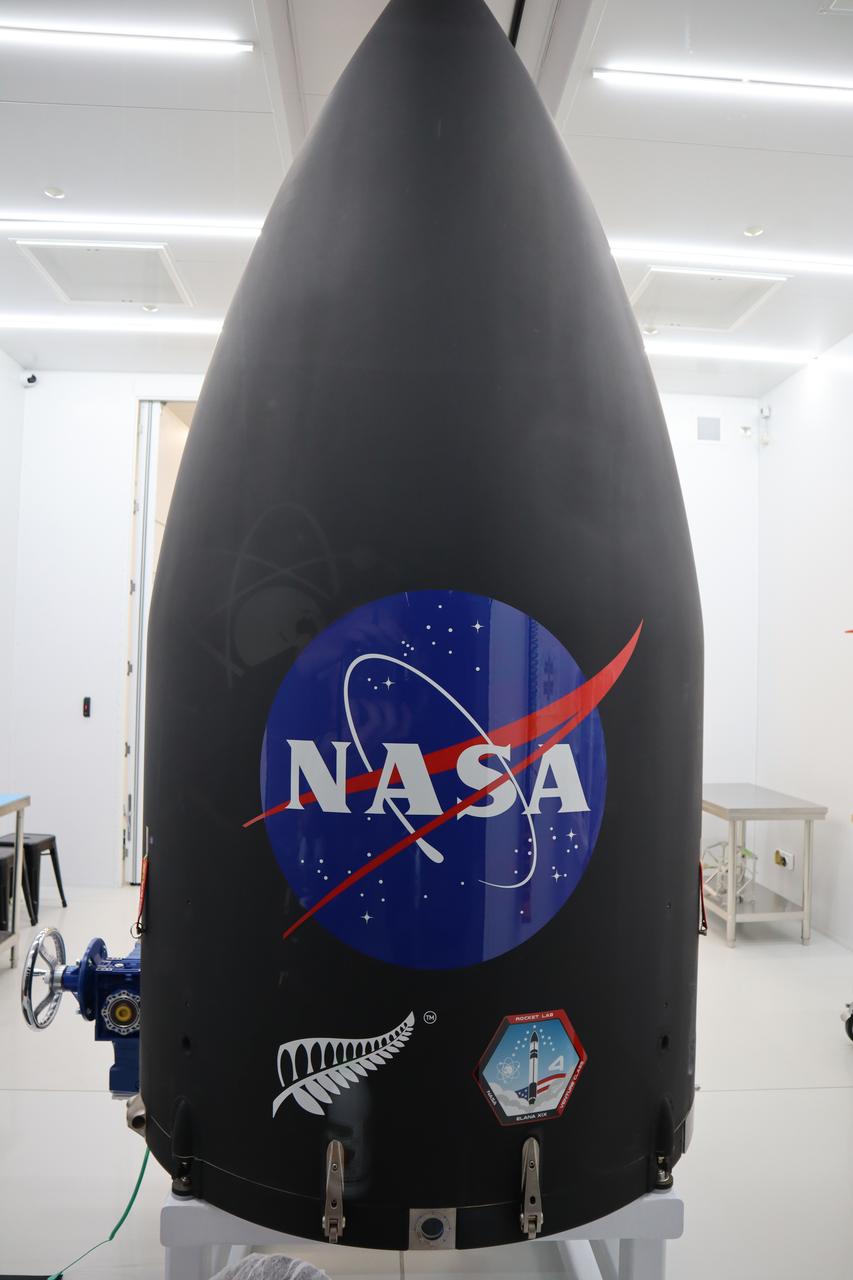
The Rocket Lab Electron rocket payload fairing is prepared for the encapsulation of the Educational Launch of Nanosatellites 19 (ELaNa 19) payload on Dec. 1, 2018, at the company’s facility in New Zealand. The ELaNa 19 payload comprises 10 CubeSats selected through NASA’s CubeSat Launch Initiative. The liftoff marks the debut of the agency’s innovative Venture Class Launch Services (VCLS) effort. Managed by NASA’s Launch Services Program at Kennedy Space Center in Florida, VCLS was developed to offer small payloads dedicated rides to space.
ELaNa 19 Payload Encapsulation
The Educational Launch of Nanosatellites 19 (ELaNa 19) payload has been encapsulated inside the Rocket Lab Electron rocket payload fairing on Dec. 1, 2018, at the company’s facility in New Zealand. The ELaNa 19 payload comprises 10 CubeSats selected through NASA’s CubeSat Launch Initiative. The liftoff marks the debut of the agency’s innovative Venture Class Launch Services (VCLS) effort. Managed by NASA’s Launch Services Program at Kennedy Space Center in Florida, VCLS was developed to offer small payloads dedicated rides to space.
ELaNa 19 Payload Encapsulation
The Educational Launch of Nanosatellites 19 (ELaNa 19) payload has been encapsulated inside the Rocket Lab Electron rocket payload fairing on Dec. 1, 2018, at the company’s facility in New Zealand. The ELaNa 19 payload comprises 10 CubeSats selected through NASA’s CubeSat Launch Initiative. The liftoff marks the debut of the agency’s innovative Venture Class Launch Services (VCLS) effort. Managed by NASA’s Launch Services Program at Kennedy Space Center in Florida, VCLS was developed to offer small payloads dedicated rides to space.
ELaNa 19 Payload Encapsulation
The Educational Launch of Nanosatellites 19 (ELaNa 19) payload is encapsulated inside the Rocket Lab Electron rocket payload fairing on Dec. 1, 2018, at the company’s facility in New Zealand. The ELaNa 19 payload comprises 10 CubeSats selected through NASA’s CubeSat Launch Initiative. The liftoff marks the debut of the agency’s innovative Venture Class Launch Services (VCLS) effort. Managed by NASA’s Launch Services Program at Kennedy Space Center in Florida, VCLS was developed to offer small payloads dedicated rides to space.
ELaNa 19 Payload Encapsulation
The Educational Launch of Nanosatellites 19 (ELaNa 19) payload is prepared to be encapsulated inside the Rocket Lab Electron rocket payload fairing on Dec. 1, 2018, at the company’s facility in New Zealand. The ELaNa 19 payload comprises 10 CubeSats selected through NASA’s CubeSat Launch Initiative. The liftoff marks the debut of the agency’s innovative Venture Class Launch Services (VCLS) effort. Managed by NASA’s Launch Services Program at Kennedy Space Center in Florida, VCLS was developed to offer small payloads dedicated rides to space.
ELaNa 19 Payload Encapsulation
The Educational Launch of Nanosatellites 19 (ELaNa 19) payload is prepared to be encapsulated inside the Rocket Lab Electron rocket payload fairing on Dec. 1, 2018, at the company’s facility in New Zealand. The ELaNa 19 payload comprises 10 CubeSats selected through NASA’s CubeSat Launch Initiative. The liftoff marks the debut of the agency’s innovative Venture Class Launch Services (VCLS) effort. Managed by NASA’s Launch Services Program at Kennedy Space Center in Florida, VCLS was developed to offer small payloads dedicated rides to space.
ELaNa 19 Payload Encapsulation
The Educational Launch of Nanosatellites 19 (ELaNa 19) payload is encapsulated inside the Rocket Lab Electron rocket payload fairing on Dec. 1, 2018, at the company’s facility in New Zealand. The ELaNa 19 payload comprises 10 CubeSats selected through NASA’s CubeSat Launch Initiative. The liftoff marks the debut of the agency’s innovative Venture Class Launch Services (VCLS) effort. Managed by NASA’s Launch Services Program at Kennedy Space Center in Florida, VCLS was developed to offer small payloads dedicated rides to space.
ELaNa 19 Payload Encapsulation
The Educational Launch of Nanosatellites 19 (ELaNa 19) payload is prepared to be encapsulated inside the Rocket Lab Electron rocket payload fairing on Dec. 1, 2018, at the company’s facility in New Zealand. The ELaNa 19 payload comprises 10 CubeSats selected through NASA’s CubeSat Launch Initiative. The liftoff marks the debut of the agency’s innovative Venture Class Launch Services (VCLS) effort. Managed by NASA’s Launch Services Program at Kennedy Space Center in Florida, VCLS was developed to offer small payloads dedicated rides to space.
ELaNa 19 Payload Encapsulation
The Educational Launch of Nanosatellites 19 (ELaNa 19) payload is encapsulated inside the Rocket Lab Electron rocket payload fairing on Dec. 1, 2018, at the company’s facility in New Zealand. The ELaNa 19 payload comprises 10 CubeSats selected through NASA’s CubeSat Launch Initiative. The liftoff marks the debut of the agency’s innovative Venture Class Launch Services (VCLS) effort. Managed by NASA’s Launch Services Program at Kennedy Space Center in Florida, VCLS was developed to offer small payloads dedicated rides to space.
ELaNa 19 Payload Encapsulation
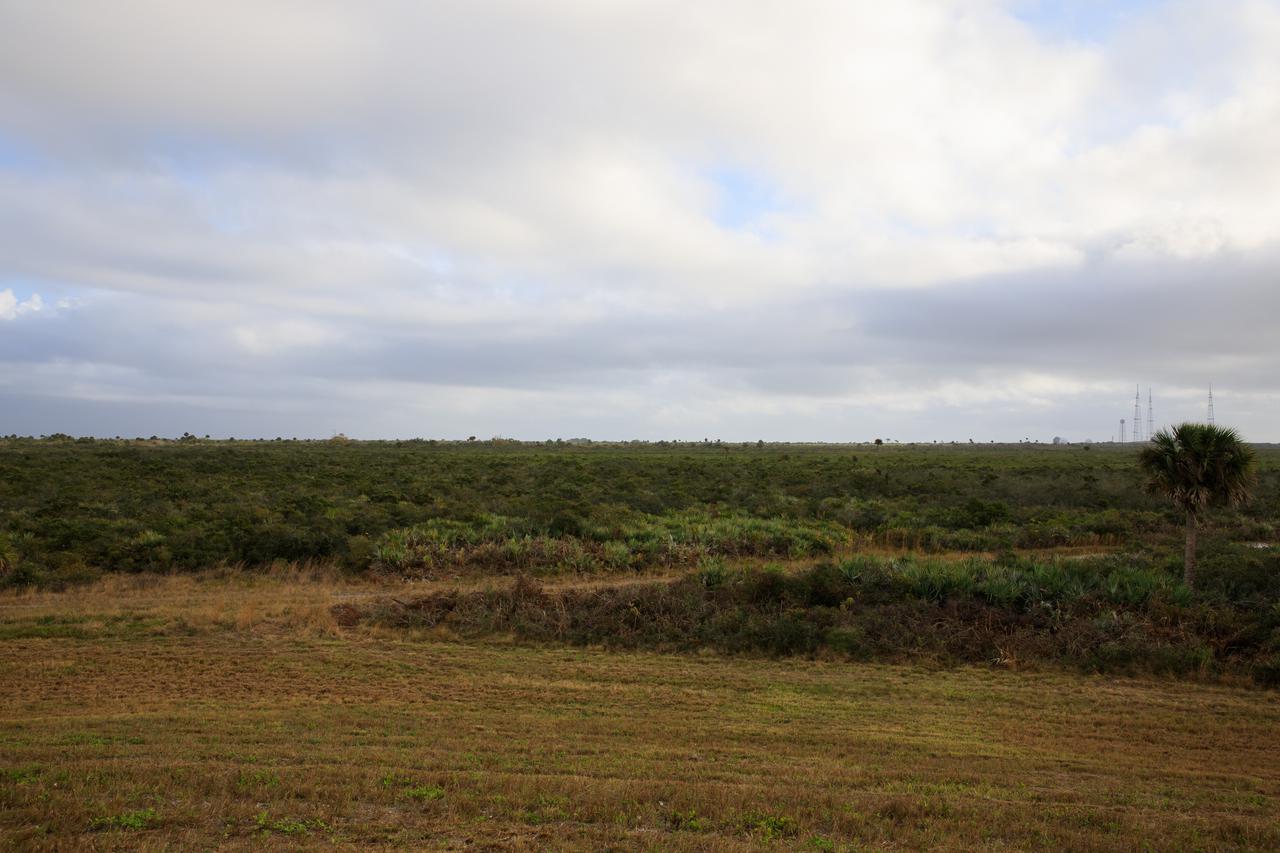
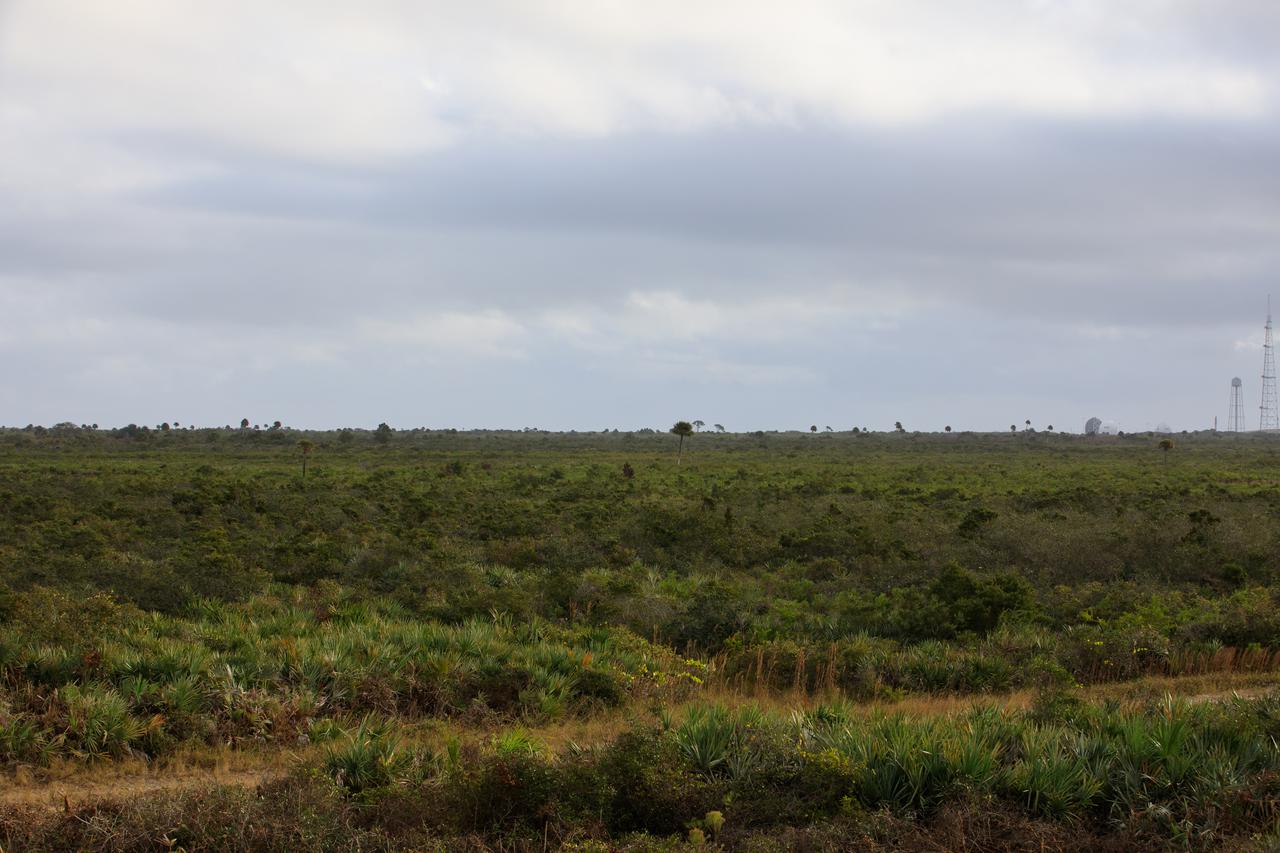
A view of a proposed new launch site, Launch Complex 49, on Dec. 20, 2021, at NASA’s Kennedy Space Center in Florida. In response to an inquiry from SpaceX, NASA is preparing to conduct environmental assessments to develop the proposed launch site. The 175-acre site, located north of Launch Complex 39B within the center’s security perimeter, would support the launch and landing of SpaceX’s Starship and Super Heavy launch vehicle. NASA and SpaceX are moving forward with the initial environmental assessment before concluding a potential agreement to develop the property.
Launch Complex 49 Site
A view of a proposed new launch site, Launch Complex 49, on Dec. 20, 2021, at NASA’s Kennedy Space Center in Florida. In response to an inquiry from SpaceX, NASA is preparing to conduct environmental assessments to develop the proposed launch site. The 175-acre site, located north of Launch Complex 39B within the center’s security perimeter, would support the launch and landing of SpaceX’s Starship and Super Heavy launch vehicle. NASA and SpaceX are moving forward with the initial environmental assessment before concluding a potential agreement to develop the property.
Launch Complex 49 Site
Teams with Astrobotic install the NASA meatball decal on Astrobotic’s Peregrine lunar lander on Tuesday, Nov. 14, 2023, at the Astrotech Space Operations Facility near the agency’s Kennedy Space Center in Florida. Peregrine will launch onboard a United Launch Alliance Vulcan rocket targeted for no earlier than Dec. 24, 2023, from Launch Complex 41 at Cape Canaveral Space Force Station in Florida. The lander will carry a suite of NASA payloads to the Moon as part of the agency’s CLPS (Commercial Lunar Payload Services) initiative and Artemis program.
Astrobotic Lunar Lander NASA Meatball Install
Teams with Astrobotic install the NASA meatball decal on Astrobotic’s Peregrine lunar lander on Tuesday, Nov. 14, 2023, at the Astrotech Space Operations Facility near the agency’s Kennedy Space Center in Florida. Peregrine will launch onboard a United Launch Alliance Vulcan rocket targeted for no earlier than Dec. 24, 2023, from Launch Complex 41 at Cape Canaveral Space Force Station in Florida. The lander will carry a suite of NASA payloads to the Moon as part of the agency’s CLPS (Commercial Lunar Payload Services) initiative and Artemis program.
Astrobotic Lunar Lander NASA Meatball Install
Teams with Astrobotic install the NASA meatball decal on Astrobotic’s Peregrine lunar lander on Tuesday, Nov. 14, 2023, at the Astrotech Space Operations Facility near the agency’s Kennedy Space Center in Florida. Peregrine will launch onboard a United Launch Alliance Vulcan rocket targeted for no earlier than Dec. 24, 2023, from Launch Complex 41 at Cape Canaveral Space Force Station in Florida. The lander will carry a suite of NASA payloads to the Moon as part of the agency’s CLPS (Commercial Lunar Payload Services) initiative and Artemis program.
Astrobotic Lunar Lander NASA Meatball Install
Teams with Astrobotic install the NASA meatball decal on Astrobotic’s Peregrine lunar lander on Tuesday, Nov. 14, 2023, at the Astrotech Space Operations Facility near the agency’s Kennedy Space Center in Florida. Peregrine will launch onboard a United Launch Alliance Vulcan rocket targeted for no earlier than Dec. 24, 2023, from Launch Complex 41 at Cape Canaveral Space Force Station in Florida. The lander will carry a suite of NASA payloads to the Moon as part of the agency’s CLPS (Commercial Lunar Payload Services) initiative and Artemis program.
Astrobotic Lunar Lander NASA Meatball Install
A NASA engineer installs the agency’s CubeSat R5 Spacecraft 4 (R5-S4) into the dispenser at Firefly Aerospace's Payload Processing Facility at Vandenberg Space Force Base, California on Wednesday, April 24, 2024. The spacecraft will soon be integrated for launch aboard the company’s Alpha rocket, as part of launch services provided for NASA's CubeSat Launch Initiative and Educational Launch of Nanosatellites 43 mission in support of the agency ’s Venture-Class Launch Services Demonstration 2 contract.
Firefly Demo-2 Payload Processing
NASA and Firefly Aerospace engineers review the integration plan for the agency’s CubeSat R5 Spacecraft 4 (R5-S4) at Firefly Aerospace’s Payload Processing Facility at Vandenberg Space Force Base, California on Wednesday, April 24, 2024. The spacecraft will soon be integrated for launch aboard the company’s Alpha rocket, as part of launch services provided for NASA's CubeSat Launch Initiative and Educational Launch of Nanosatellites 43 mission in support of the agency ’s Venture-Class Launch Services Demonstration 2 contract.
Firefly Demo-2 Payload Processing
Ahead of launch as part of NASA’s Commercial Lunar Payload Services (CLPS) initiative, Astrobotic’s Peregrine lunar lander is encapsulated in the payload fairing, or nose cone, of United Launch Alliance’s Vulcan rocket on Nov. 21, 2023, at Astrotech Space Operations Facility near the agency’s Kennedy Space Center in Florida.  Launch of Astrobotic’s Peregrine Mission One will carry NASA and commercial payloads to the Moon in early 2024 to study the lunar exosphere, thermal properties, and hydrogen abundance of the lunar regolith, magnetic fields, and the radiation environment of the lunar surface.
Astrobotic's Lander Encapsulation
Ahead of launch as part of NASA’s Commercial Lunar Payload Services (CLPS) initiative, Astrobotic’s Peregrine lunar lander is encapsulated in the payload fairing, or nose cone, of United Launch Alliance’s Vulcan rocket on Nov. 21, 2023, at Astrotech Space Operations Facility near the agency’s Kennedy Space Center in Florida.  Launch of Astrobotic’s Peregrine Mission One will carry NASA and commercial payloads to the Moon in early 2024 to study the lunar exosphere, thermal properties, and hydrogen abundance of the lunar regolith, magnetic fields, and the radiation environment of the lunar surface.
Astrobotic's Lander Encapsulation
CAPE CANAVERAL, Fla. -- Inside the Space Exploration Technologies, or SpaceX, processing facility near NASA’s Kennedy Space Center in Florida, NASA Administrator Charlie Bolden announced new milestones in the nation’s commercial space initiatives.     Bolden announced that SpaceX has completed its Space Act Agreement with NASA for Commercial Orbital Transportation Services. SpaceX is scheduled to launch the first of its 12 contracted cargo flights to the space station from Cape Canaveral this October, under NASA’s Commercial Resupply Services Program. Bolden also announced NASA partner Sierra Nevada Corp. has conducted its first milestone under the agency’s recently announced Commercial Crew Integrated Capability initiative. The milestone, a program implementation plan review, marks an important first step in Sierra Nevada’s efforts to develop a crew transportation system with its Dream Chaser spacecraft. Through NASA’s commercial space initiatives and programs, the agency is providing investments to stimulate the American commercial space industry. Photo credit: NASA/Kim Shiflett
KSC-2012-4586
CAPE CANAVERAL, Fla. -- Inside the Space Exploration Technologies, or SpaceX, processing facility near NASA’s Kennedy Space Center in Florida, Scott Thurston, partner integration office manager with the Commercial Crew Program, talks to the media prior to an announcement from NASA Administrator Charles Bolden about new milestones in the nation’s commercial space initiatives.     Bolden announced that SpaceX has completed its Space Act Agreement with NASA for Commercial Orbital Transportation Services. SpaceX is scheduled to launch the first of its 12 contracted cargo flights to the space station from Cape Canaveral this October, under NASA’s Commercial Resupply Services Program. Bolden also announced NASA partner Sierra Nevada Corp. has conducted its first milestone under the agency’s recently announced Commercial Crew Integrated Capability initiative. The milestone, a program implementation plan review, marks an important first step in Sierra Nevada’s efforts to develop a crew transportation system with its Dream Chaser spacecraft. Through NASA’s commercial space initiatives and programs, the agency is providing investments to stimulate the American commercial space industry. Photo credit: NASA/Kim Shiflett
KSC-2012-4583
CAPE CANAVERAL, Fla. -- Inside the Space Exploration Technologies, or SpaceX, processing facility near NASA’s Kennedy Space Center in Florida, NASA Administrator Charlie Bolden announced new milestones in the nation’s commercial space initiatives.     Bolden announced that SpaceX has completed its Space Act Agreement with NASA for Commercial Orbital Transportation Services. SpaceX is scheduled to launch the first of its 12 contracted cargo flights to the space station from Cape Canaveral this October, under NASA’s Commercial Resupply Services Program. Bolden also announced NASA partner Sierra Nevada Corp. has conducted its first milestone under the agency’s recently announced Commercial Crew Integrated Capability initiative. The milestone, a program implementation plan review, marks an important first step in Sierra Nevada’s efforts to develop a crew transportation system with its Dream Chaser spacecraft. Through NASA’s commercial space initiatives and programs, the agency is providing investments to stimulate the American commercial space industry. Photo credit: NASA/Kim Shiflett
KSC-2012-4584
CAPE CANAVERAL, Fla. -- Inside the Space Exploration Technologies, or SpaceX, processing facility near NASA’s Kennedy Space Center in Florida, NASA Administrator Charlie Bolden announced new milestones in the nation’s commercial space initiatives.     Bolden announced that SpaceX has completed its Space Act Agreement with NASA for Commercial Orbital Transportation Services. SpaceX is scheduled to launch the first of its 12 contracted cargo flights to the space station from Cape Canaveral this October, under NASA’s Commercial Resupply Services Program. Bolden also announced NASA partner Sierra Nevada Corp. has conducted its first milestone under the agency’s recently announced Commercial Crew Integrated Capability initiative. The milestone, a program implementation plan review, marks an important first step in Sierra Nevada’s efforts to develop a crew transportation system with its Dream Chaser spacecraft. Through NASA’s commercial space initiatives and programs, the agency is providing investments to stimulate the American commercial space industry. Photo credit: NASA/Kim Shiflett
KSC-2012-4585