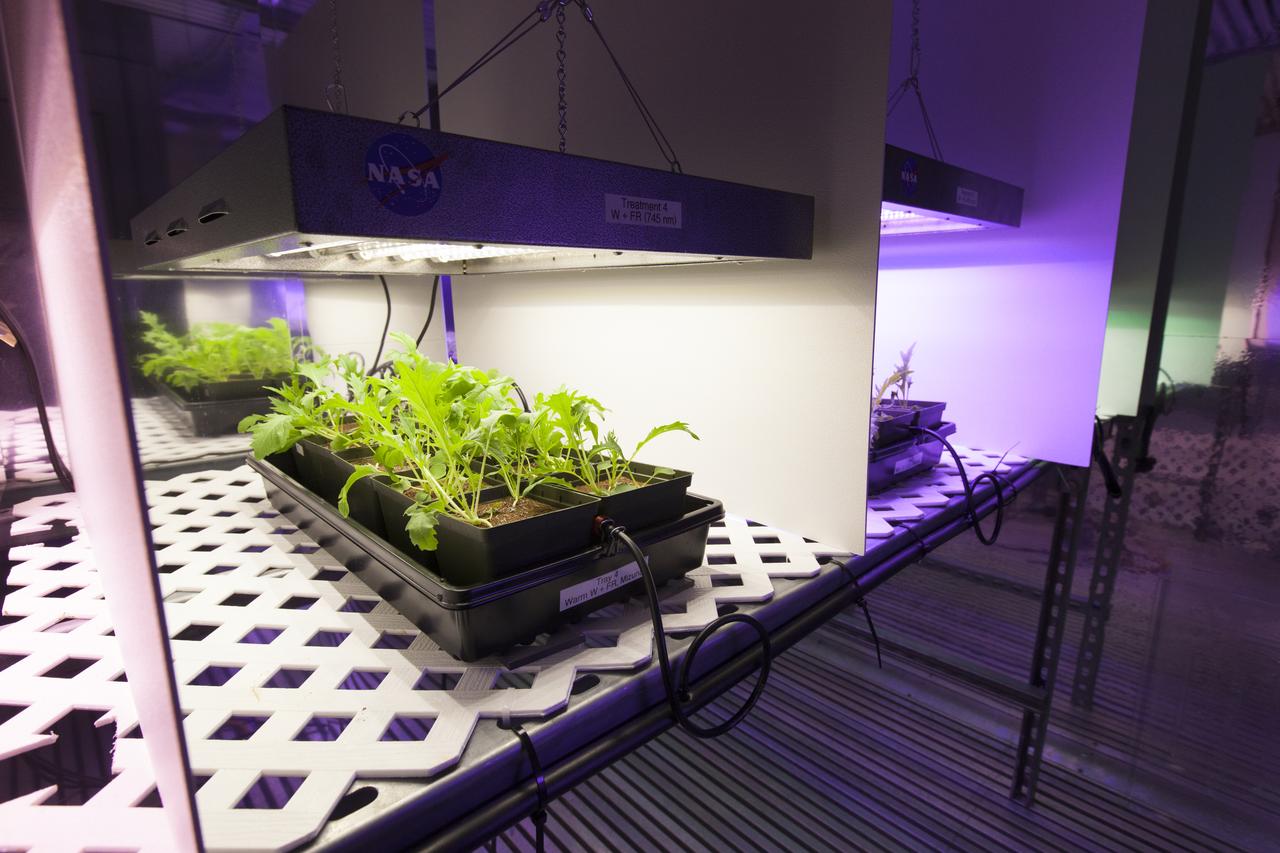
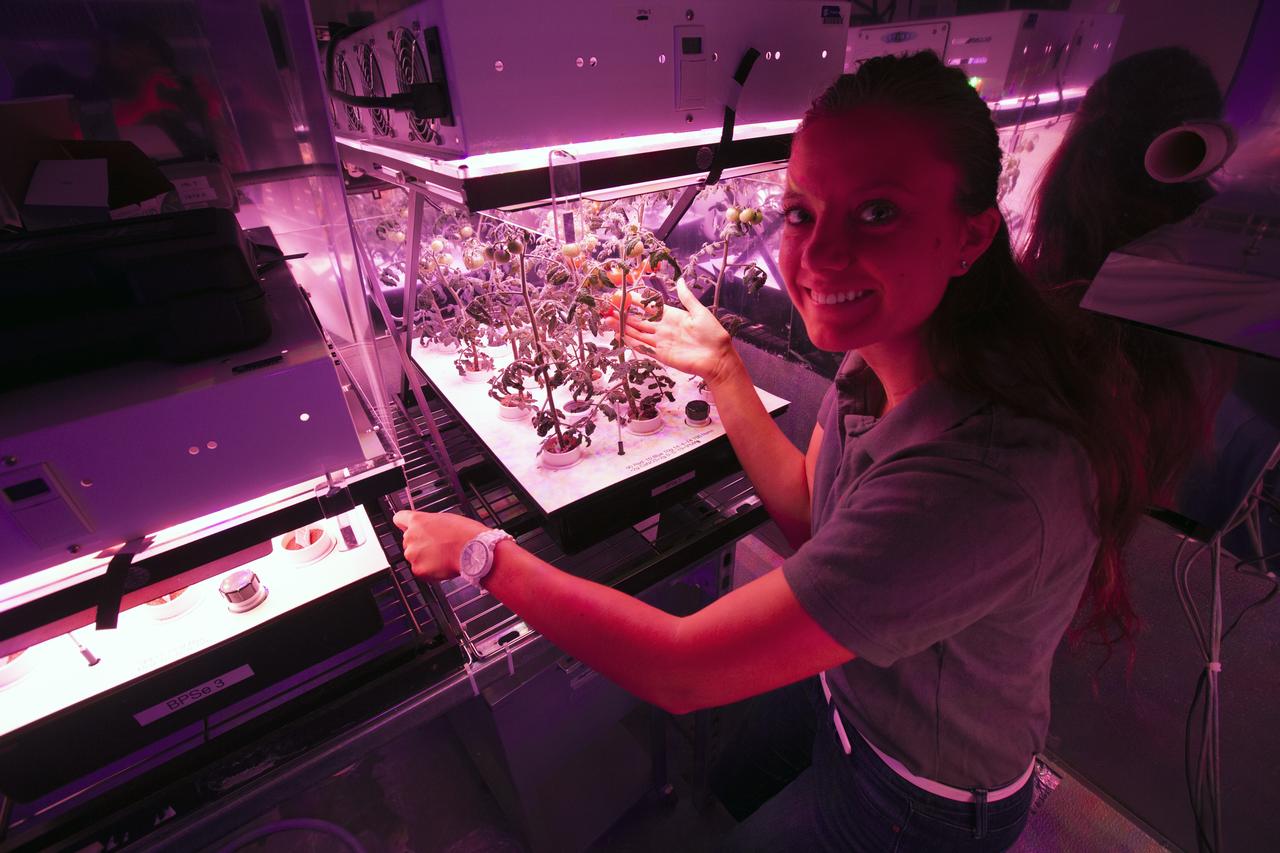
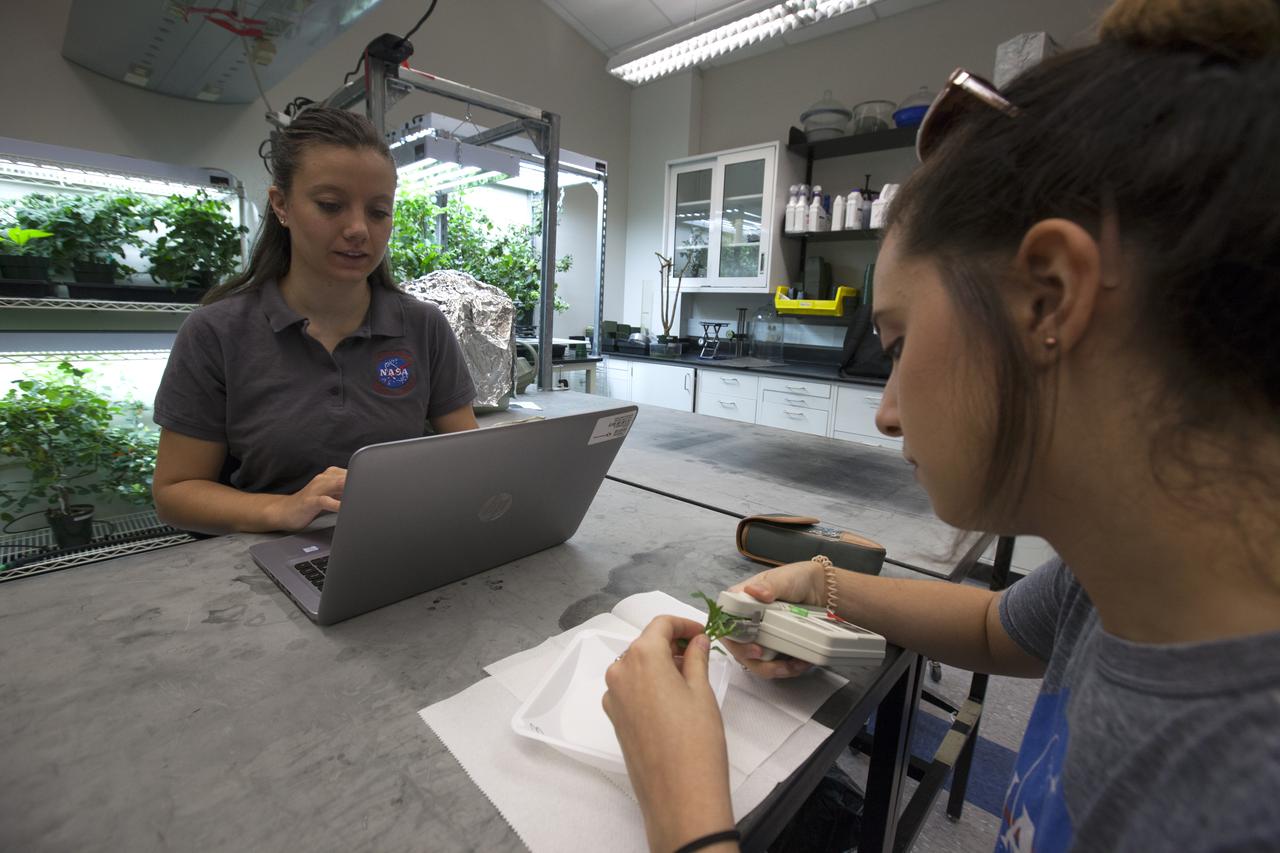
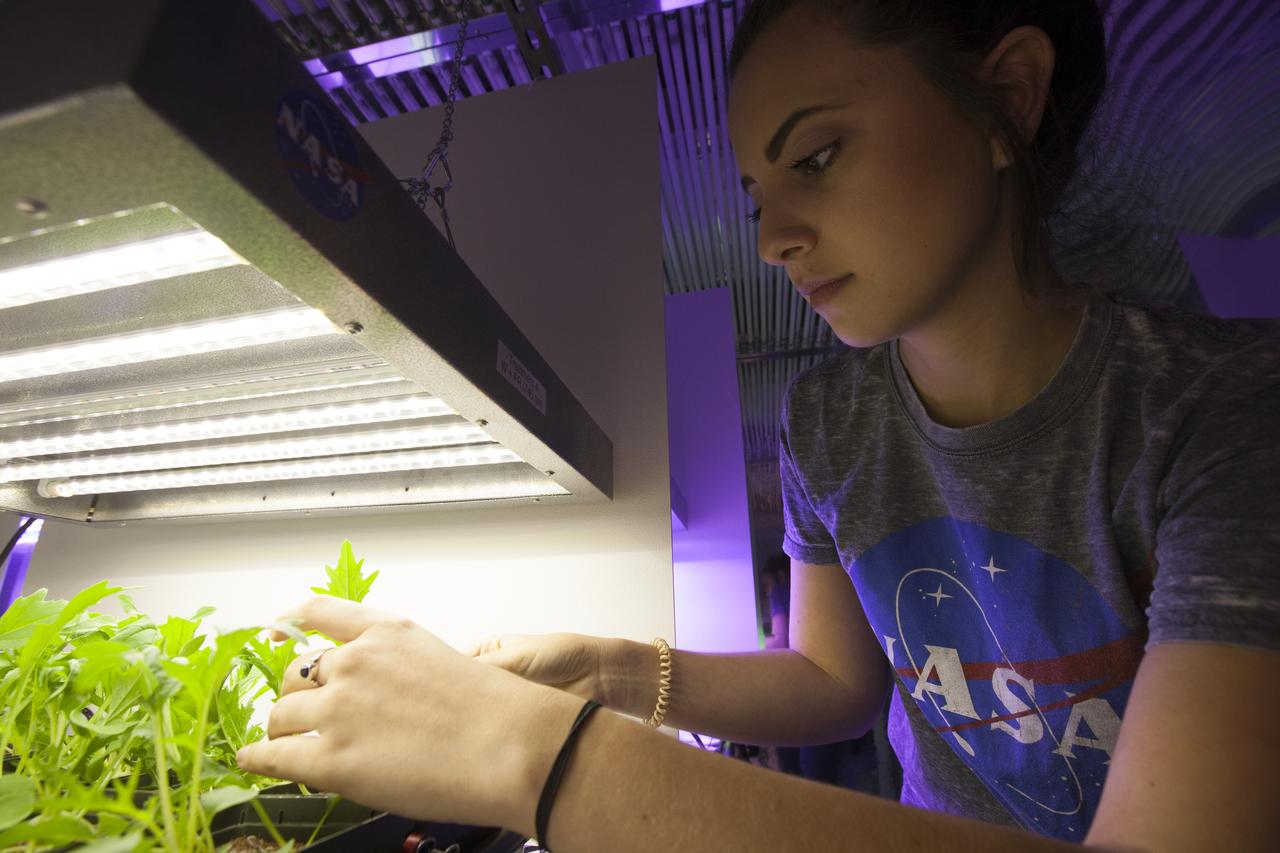
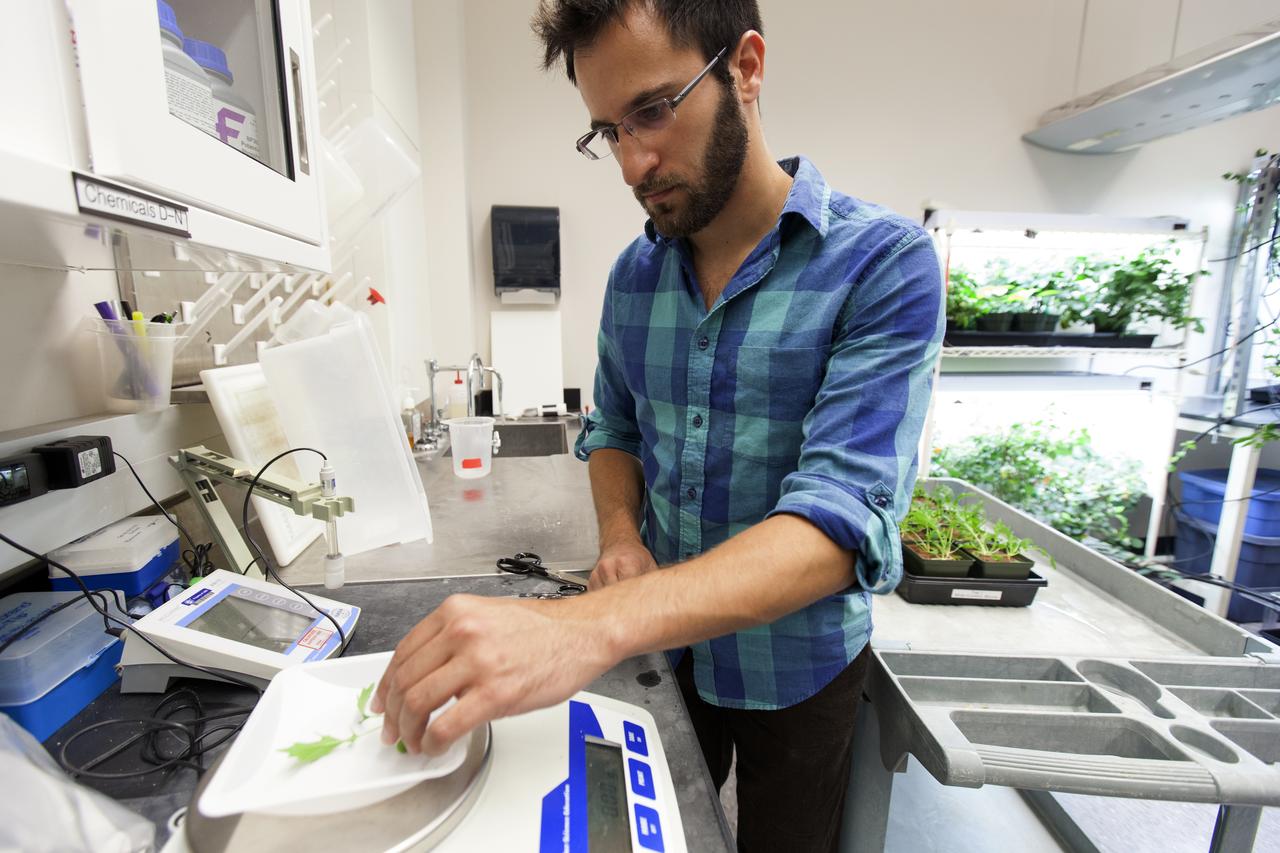
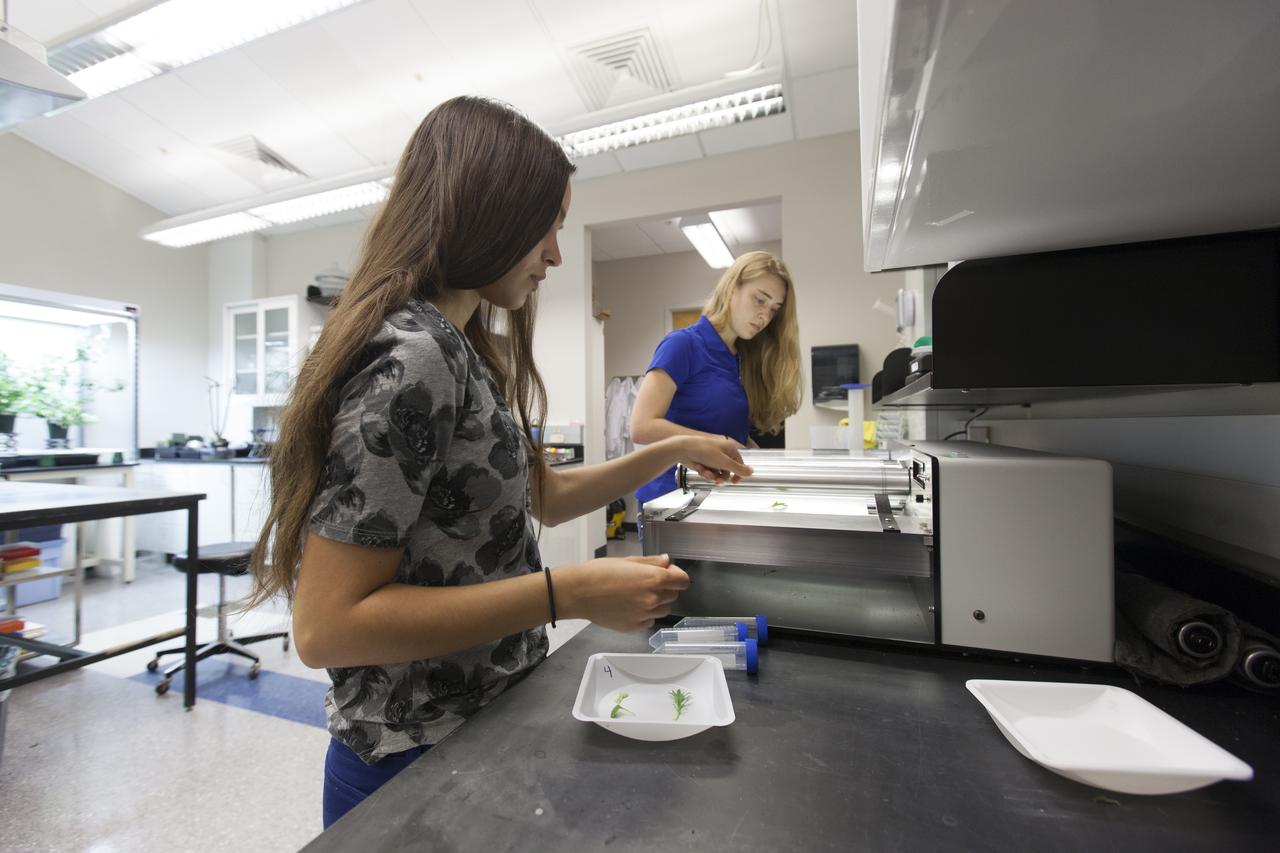
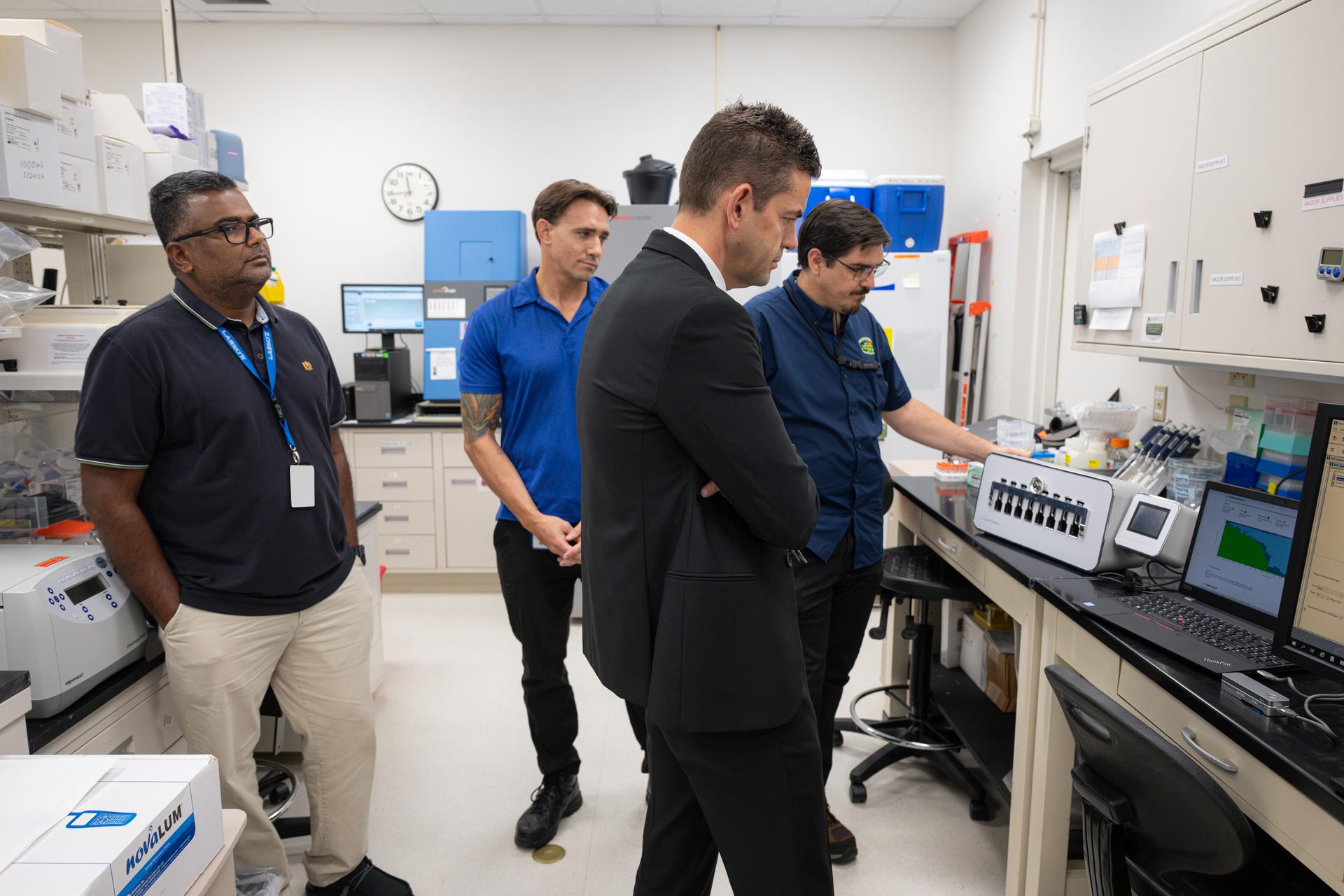
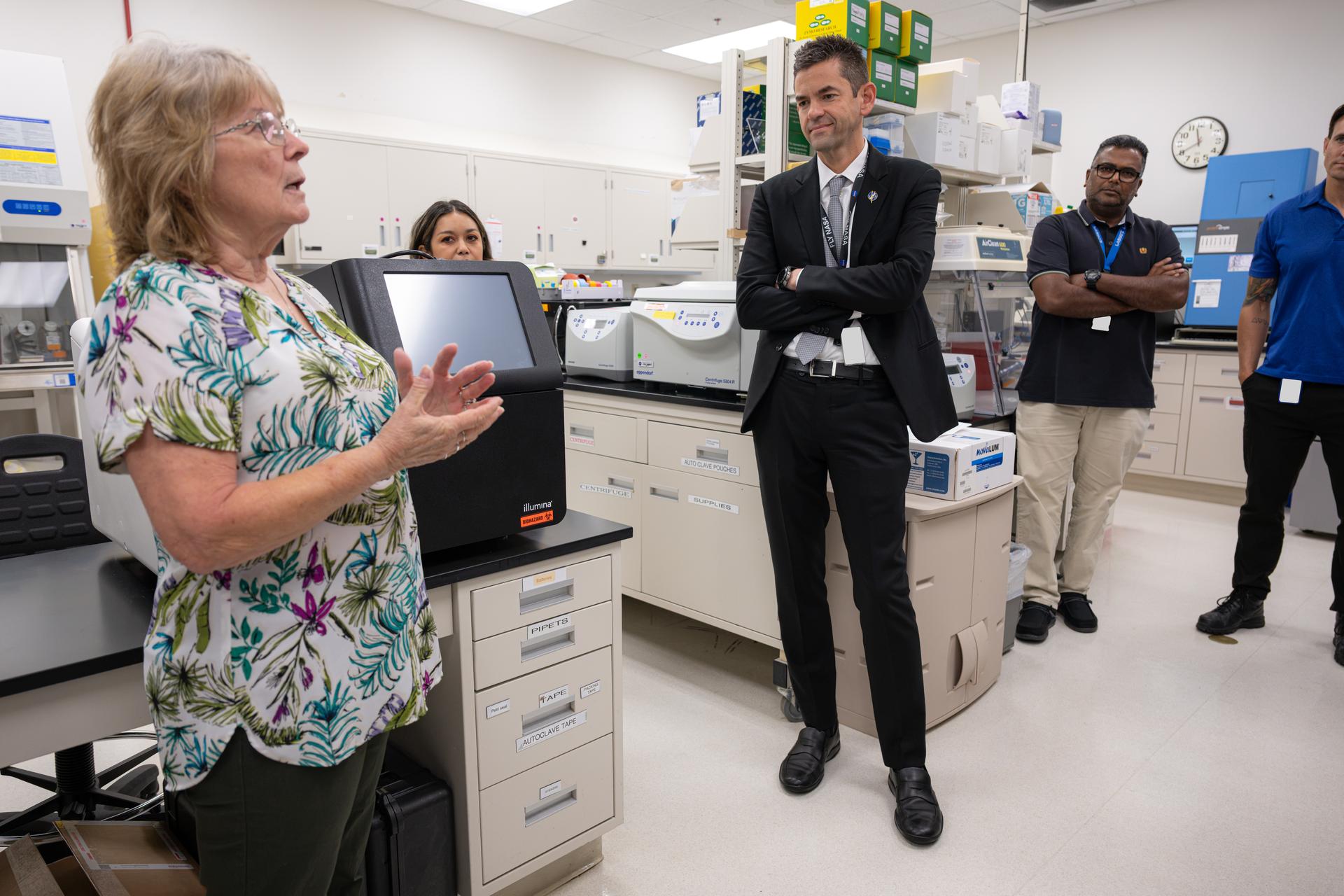
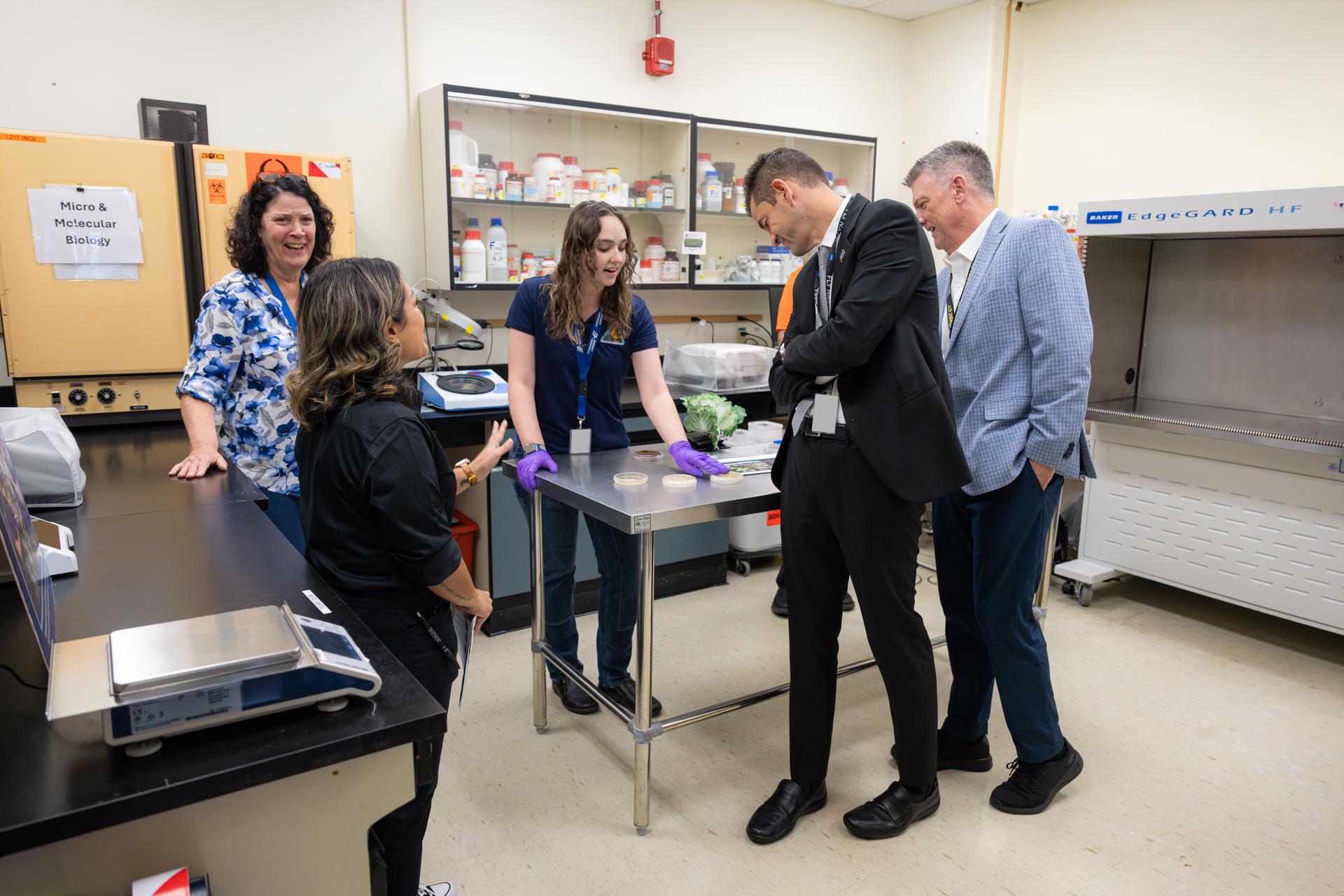
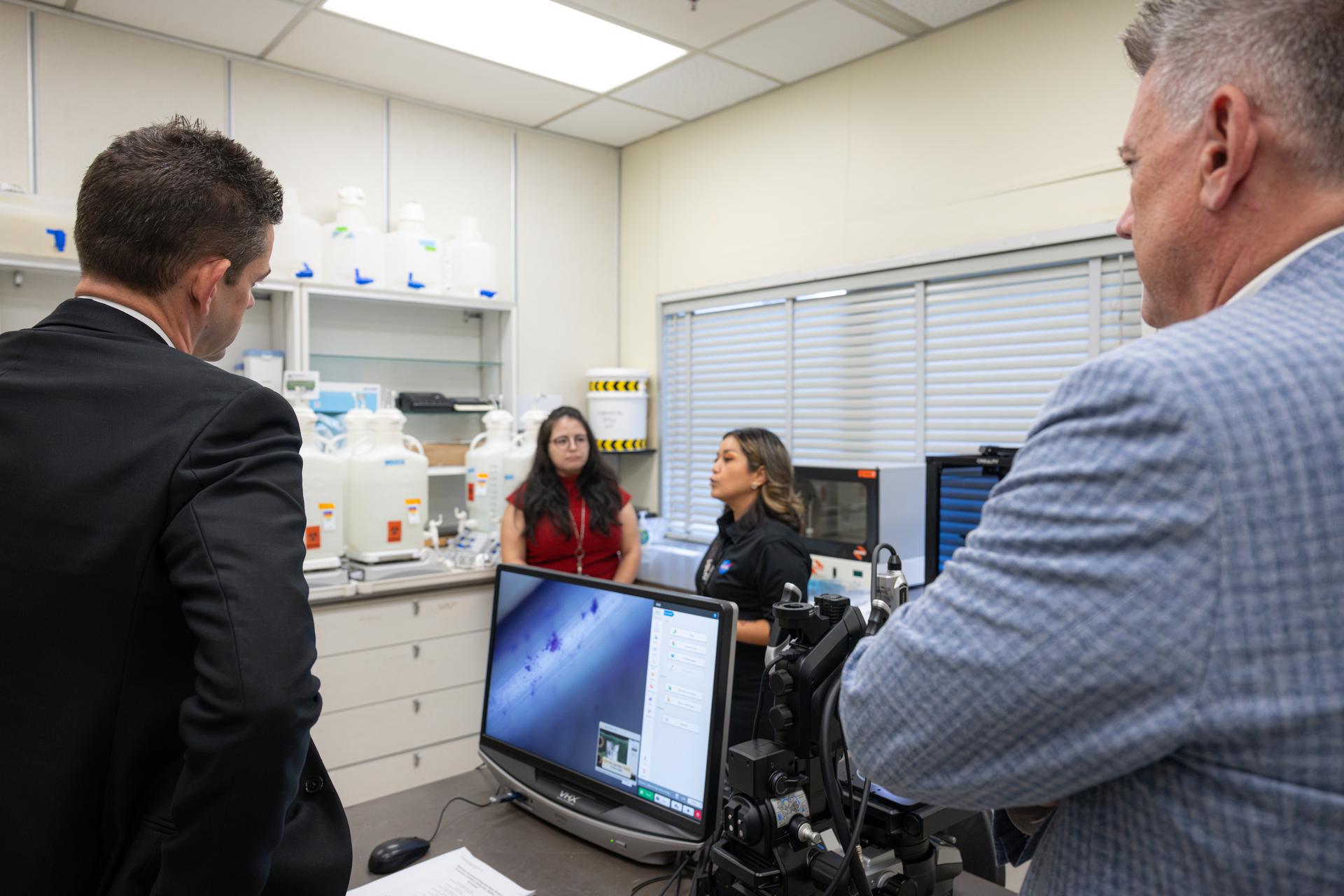
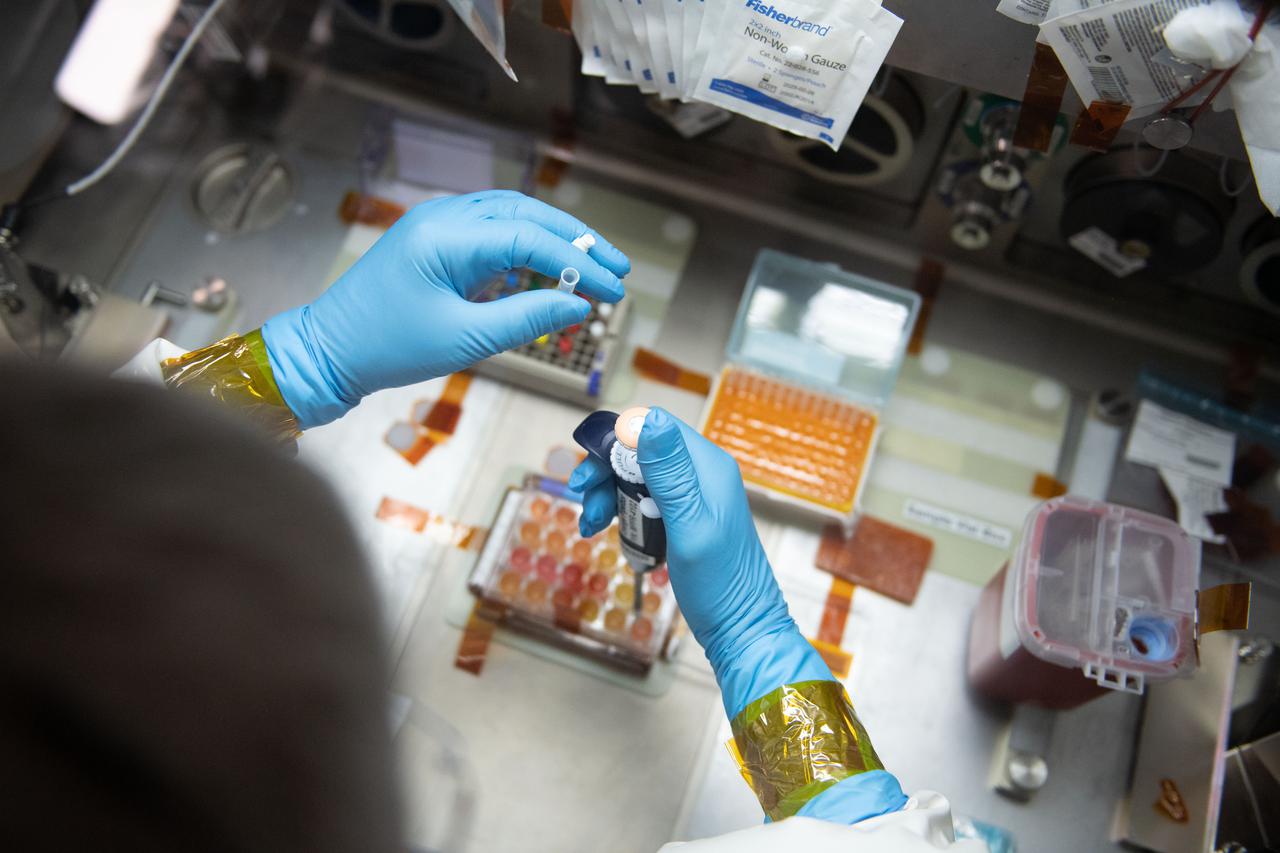
In the Space Life Sciences Laboratory at NASA's Kennedy Space Center in Florida, student interns are joining agency scientists, contributing in the area of plant growth research for food production in space. The agency attracts its future workforce through the NASA Internship, Fellowships and Scholarships, or NIFS, Program.
Training the Future - Interns Harvesting & Testing Plant Experim
In the Space Life Sciences Laboratory at NASA's Kennedy Space Center in Florida, student interns are joining agency scientists, contributing in the area of plant growth research for food production in space. The agency attracts its future workforce through the NASA Internship, Fellowships and Scholarships, or NIFS, Program.
Training the Future - Interns Harvesting & Testing Plant Experim
In the Space Life Sciences Laboratory at NASA's Kennedy Space Center in Florida, student interns are joining agency scientists, contributing in the area of plant growth research for food production in space. The agency attracts its future workforce through the NASA Internship, Fellowships and Scholarships, or NIFS, Program.
Training the Future - Interns Harvesting & Testing Plant Experim
In the Space Life Sciences Laboratory at NASA's Kennedy Space Center in Florida, student interns such as Ayla Grandpre are joining agency scientists, contributing in the area of plant growth research for food production in space. Grandpre is majoring in computer science and chemistry at Rocky Mountain College in Billings, Montana. The agency attracts its future workforce through the NASA Internship, Fellowships and Scholarships, or NIFS, Program.
Training the Future - Interns Harvesting & Testing Plant Experim
In the Space Life Sciences Laboratory at NASA's Kennedy Space Center in Florida, student interns such as Ayla Grandpre, left, and Payton Barnwell are joining agency scientists, contributing in the area of plant growth research for food production in space. Grandpre is pursuing a degree in computer science and chemistry at Rocky Mountain College in Billings, Montana. Barnwell is a mechanical engineering and nanotechnology major at Florida Polytechnic University. The agency attracts its future workforce through the NASA Internship, Fellowships and Scholarships, or NIFS, Program.
Training the Future - Interns Harvesting & Testing Plant Experim
In the Space Life Sciences Laboratory at NASA's Kennedy Space Center in Florida, student interns such as Payton Barnwell are joining agency scientists, contributing in the area of plant growth research for food production in space. Barnwell is a mechanical engineering and nanotechnology major at Florida Polytechnic University. The agency attracts its future workforce through the NASA Internship, Fellowships and Scholarships, or NIFS, Program.
Training the Future - Interns Harvesting & Testing Plant Experim
In the Space Life Sciences Laboratory at NASA's Kennedy Space Center in Florida, student interns such as Alex Litvin are joining agency scientists, contributing in the area of plant growth research for food production in space. Litvin is pursuing doctorate in horticulture at Iowa State University. The agency attracts its future workforce through the NASA Internship, Fellowships and Scholarships, or NIFS, Program.
Training the Future - Interns Harvesting & Testing Plant Experim
In the Space Life Sciences Laboratory at NASA's Kennedy Space Center in Florida, student interns such as Emma Boehm, left, and Jessica Scotten are joining agency scientists, contributing in the area of plant growth research for food production in space. Boehm is pursuing a degree in ecology and evolution at the University of Minnesota. Scotten is majoring in microbiology at Oregon State University. The agency attracts its future workforce through the NASA Internship, Fellowships and Scholarships, or NIFS, Program.
Training the Future - Interns Harvesting & Testing Plant Experim
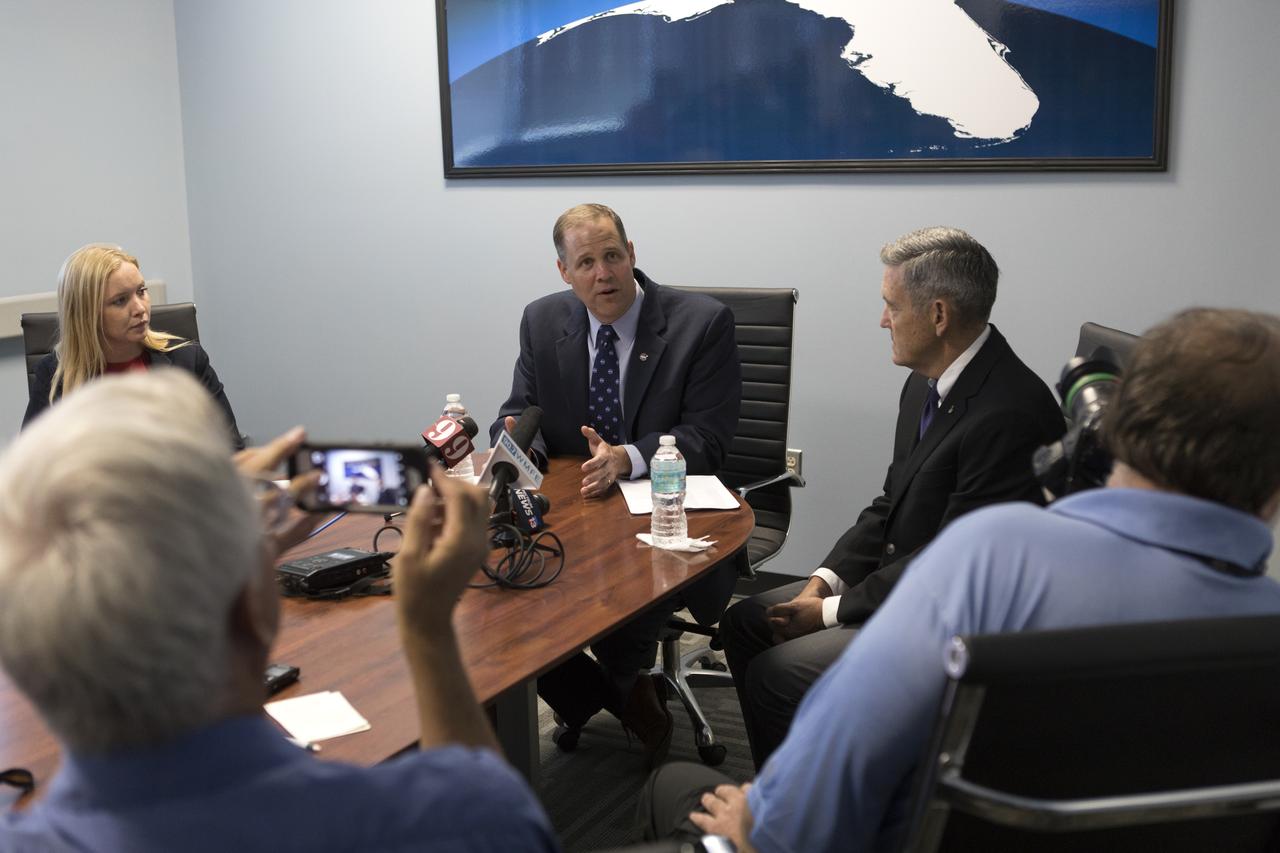
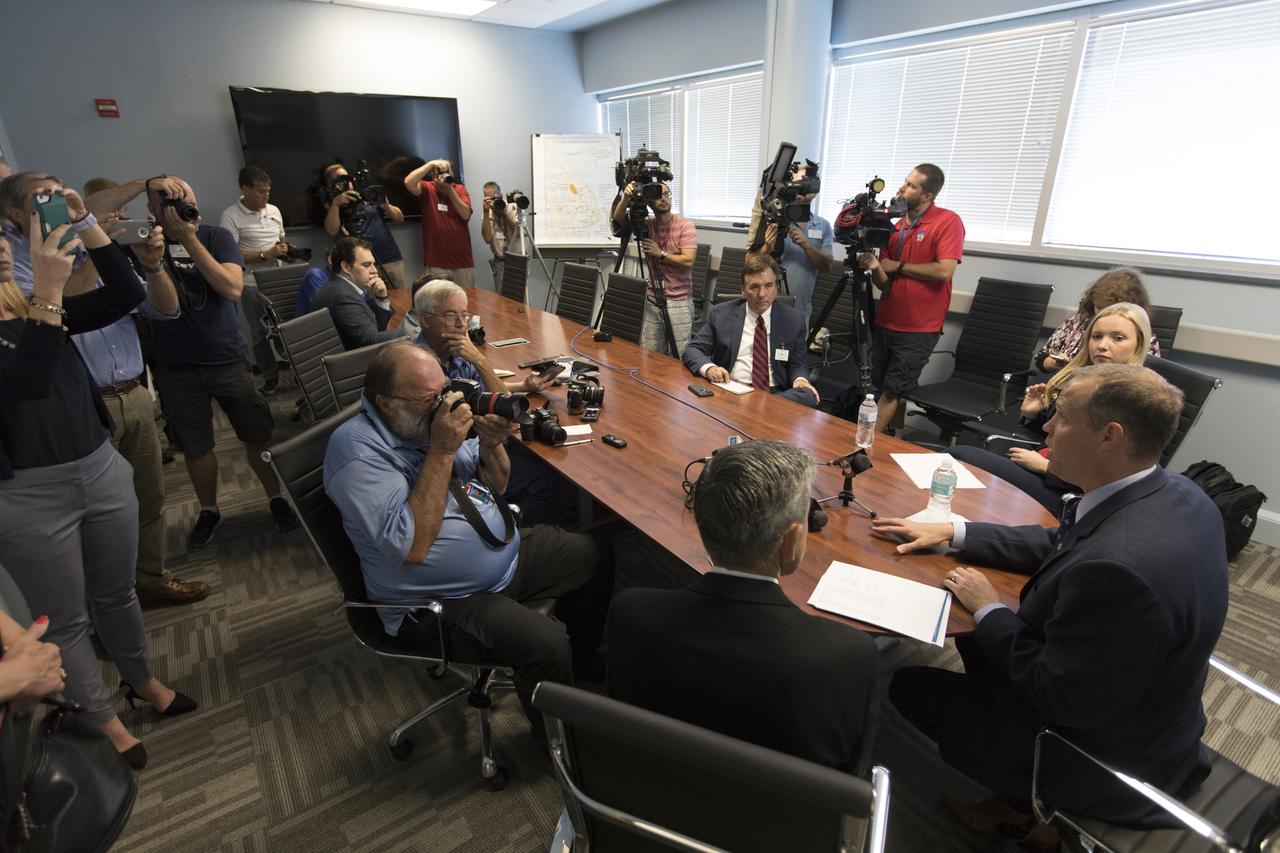
NASA Administrator Jim Bridenstine, center, talks with members of the local media in a conference room inside the Space Life Sciences Laboratory during his tour of Kennedy Space Center in Florida, on Aug. 7, 2018. Seated at right is Kennedy Center Director Bob Cabana. The administrator toured Kennedy facilities and received updates on various center accomplishments.
NASA Administrator Jim Bridenstine Visits KSC - Space Life Scien
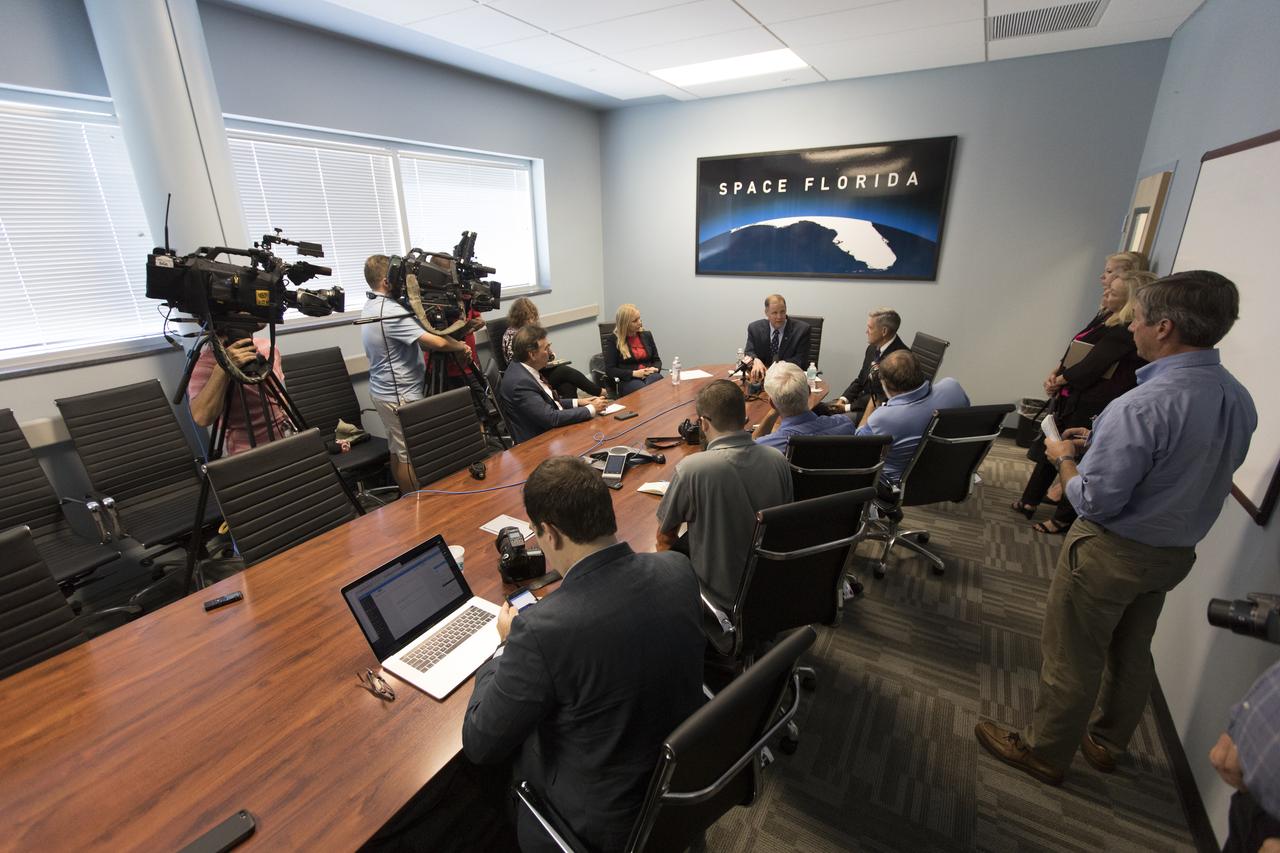
NASA Administrator Jim Bridenstine, seated, far end of the table, center, talks with members of the local media in a conference room inside the Space Life Sciences Laboratory during his tour of Kennedy Space Center in Florida, on Aug. 7, 2018. Seated next to him is Kennedy Center Director Bob Cabana. The administrator toured Kennedy facilities and received updates on various center accomplishments.
NASA Administrator Jim Bridenstine Visits KSC - Space Life Scien
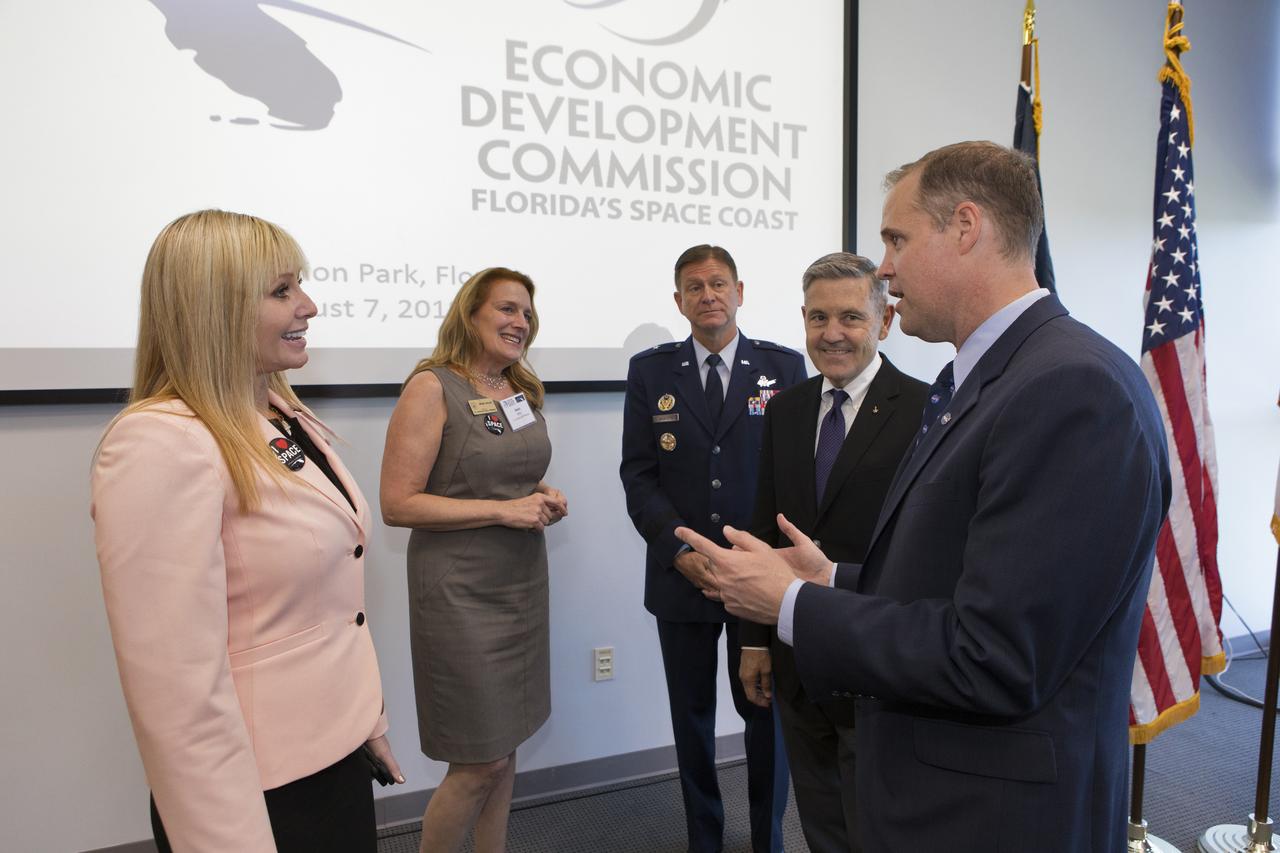
NASA Administrator Jim Bridenstine, far right, talks with participants of an Economic Development Commission roundtable discussion hosted by Space Florida at the Space Life Sciences Laboratory on Aug. 7, 2018, near NASA's Kennedy Space Center in Florida. In view next to Bridenstine is Kennedy Center Director Bob Cabana, and Brigadier General Wayne Monteith, commander, 45th Space Wing, and director, Eastern Range, at Patrick Air Force Base in Florida. The administrator also toured Kennedy facilities and received updates on various center accomplishments.
NASA Administrator Jim Bridenstine Visits KSC - Space Life Scien
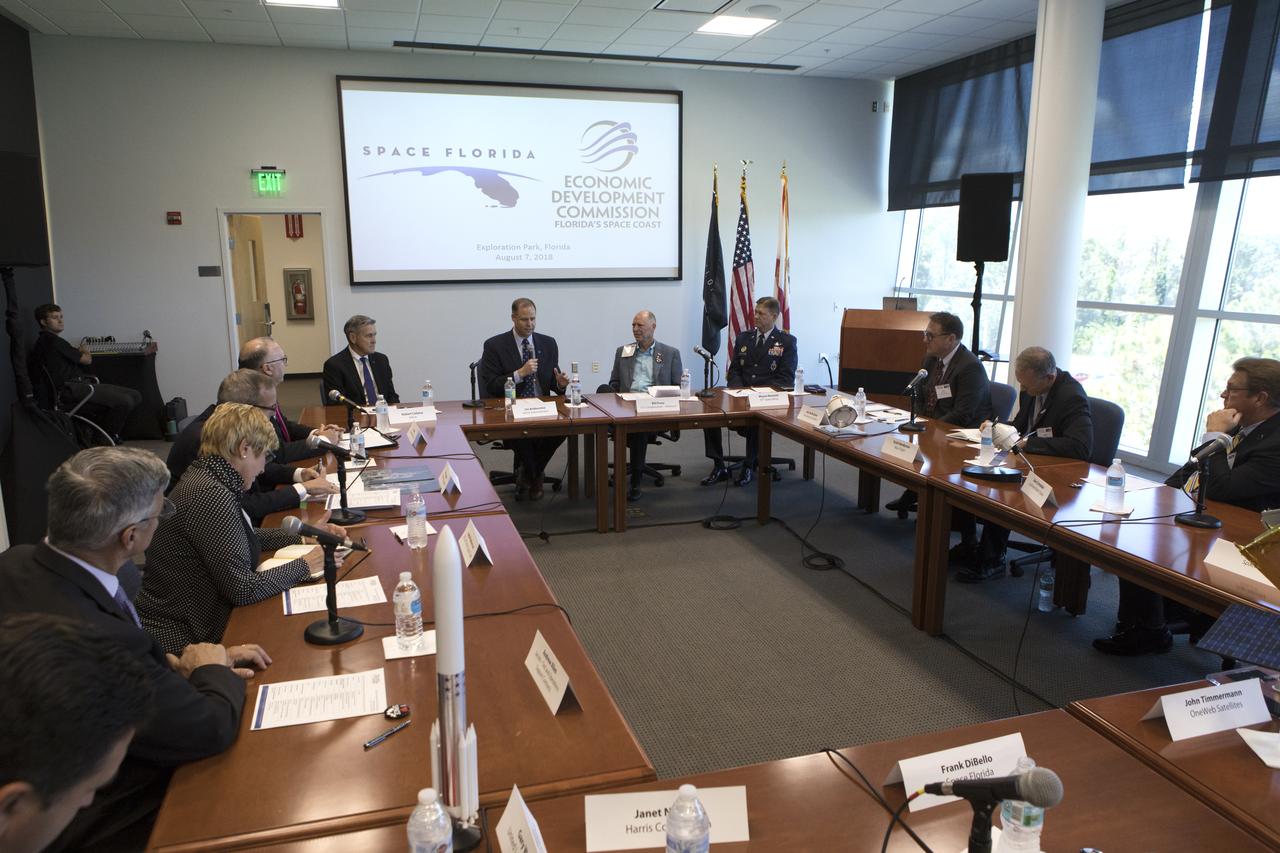
NASA Administrator Jim Bridenstine, center, facing away from the camera, participates in an Economic Development Commission roundtable discussion hosted by Space Florida at the Space Life Sciences Laboratory on Aug. 7, 2018, near NASA's Kennedy Space Center in Florida. At right is Kennedy Center Director Bob Cabana. The administrator also toured Kennedy facilities and received updates on various center accomplishments.
NASA Administrator Jim Bridenstine Visits KSC - Space Life Scien
NASA Administrator Jim Bridenstine, seated at far right, talks with members of the local media in a conference room inside the Space Life Sciences Laboratory during his tour of Kennedy Space Center in Florida, on Aug. 7, 2018. Seated at his left is Kennedy Center Director Bob Cabana. The administrator toured Kennedy facilities and received updates on various center accomplishments.
NASA Administrator Jim Bridenstine Visits KSC - Space Life Scien
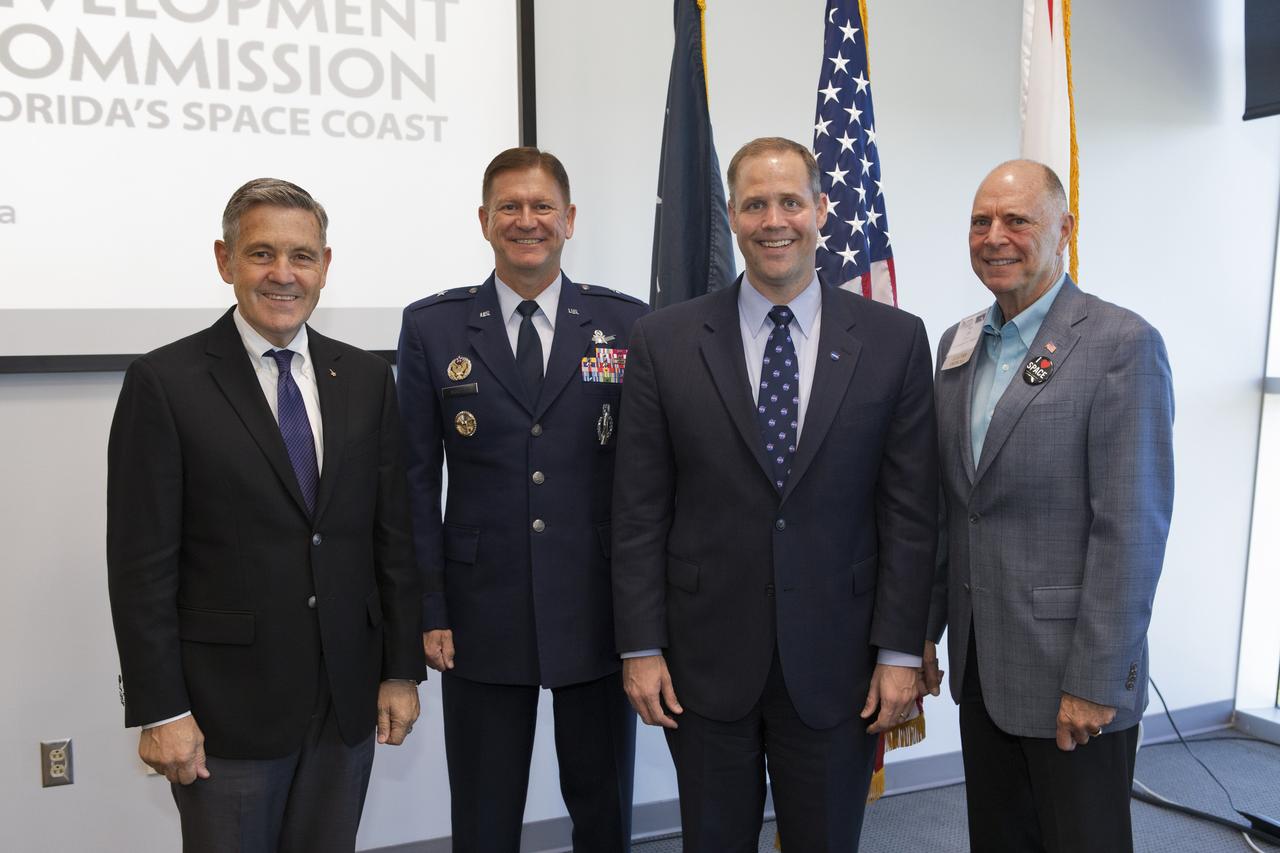
NASA Administrator Jim Bridenstine, second from right, participates in an Economic Development Commission roundtable discussion hosted by Space Florida at the Space Life Sciences Laboratory on Aug. 7, 2018, near NASA's Kennedy Space Center in Florida. With him, from left, are Kennedy Center Director Bob Cabana; Brigadier General Wayne Monteith, commander, 45th Space Wing, and director, Eastern Range, Patrick Air Force Base in Florida;  and U.S. Rep. Bill Posey. The administrator also toured Kennedy facilities and received updates on various center accomplishments.
NASA Administrator Jim Bridenstine Visits KSC - Space Life Scien
NASA Administrator Jim Bridenstine, seated at the far table, center, participates in an Economic Development Commission roundtable discussion hosted by Space Florida at the Space Life Sciences Laboratory on Aug. 7, 2018, near NASA's Kennedy Space Center in Florida. Seated at left is Kennedy Center Director Bob Cabana. Seated at right is U.S. Rep. Bill Posey, and Brigadier General Wayne Monteith, commander, 45th Space Wing, and director, Eastern Range, Patrick Air Force Base in Florida. The administrator also toured Kennedy facilities and received updates on various center accomplishments.
NASA Administrator Jim Bridenstine Visits KSC - Space Life Scien
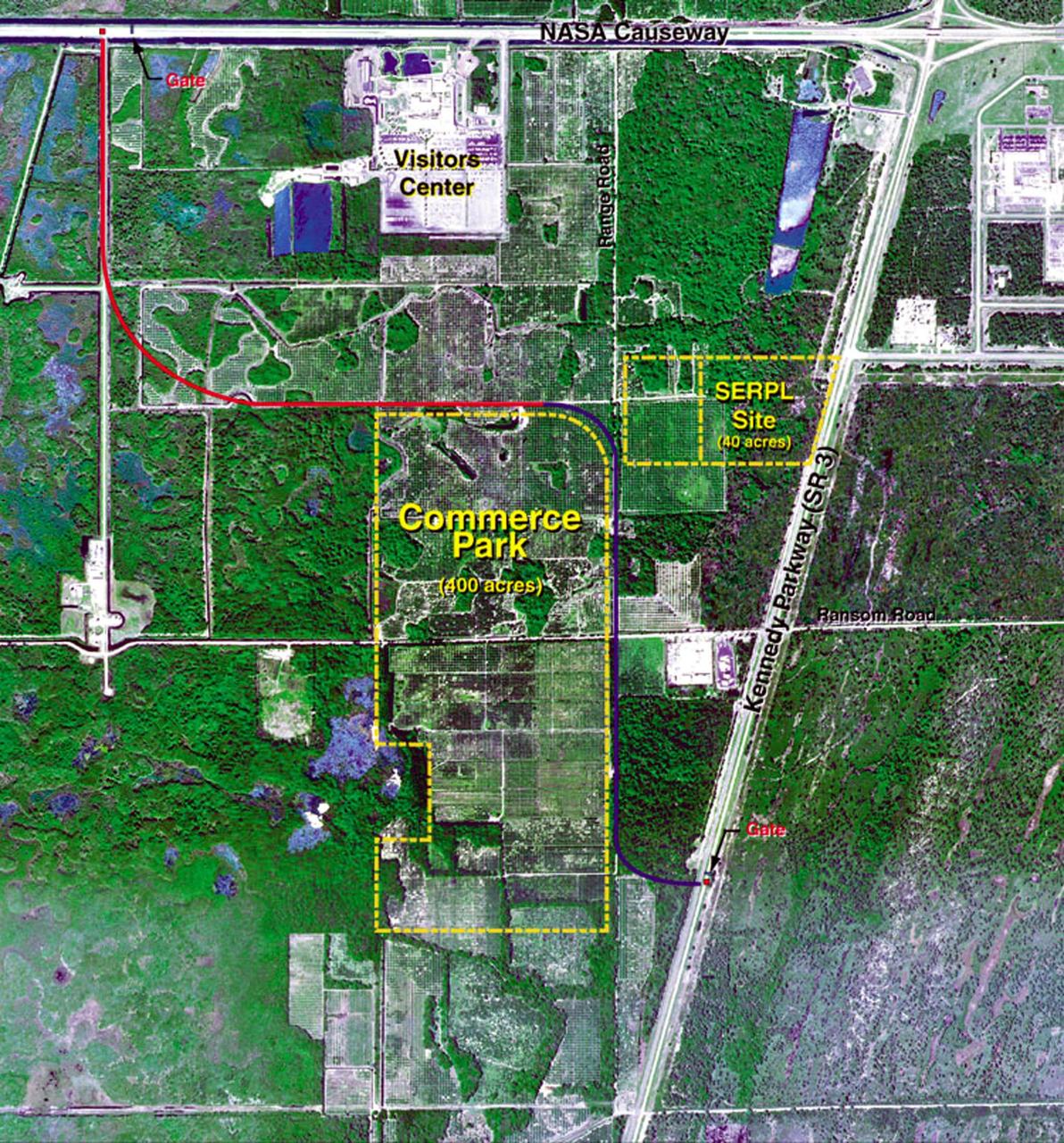
This diagram shows the planned locations of the Space Experiment Research and Processing Laboratory (SERPL) and the Space Station Commerce Park at Kennedy Space Center. The SERPL is a planned 100,000-square-foot laboratory that will provide expanded and upgraded facilities for hosting International Space Station experiment processing. In addition, it will provide better support for other biological and life sciences payload processing at KSC. It will serve as a magnet facility for the planned 400-acre Commerce Park.
KSC-00PADIG-020
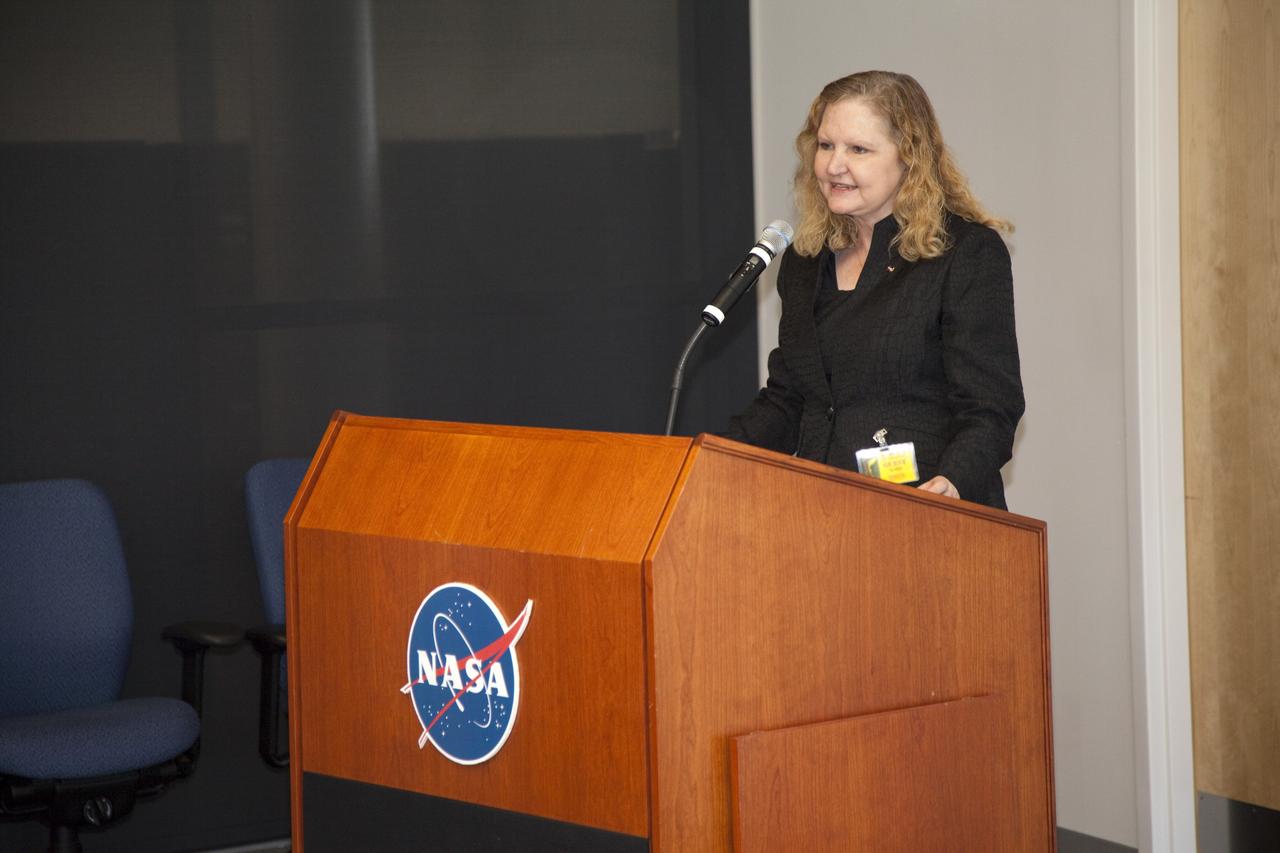
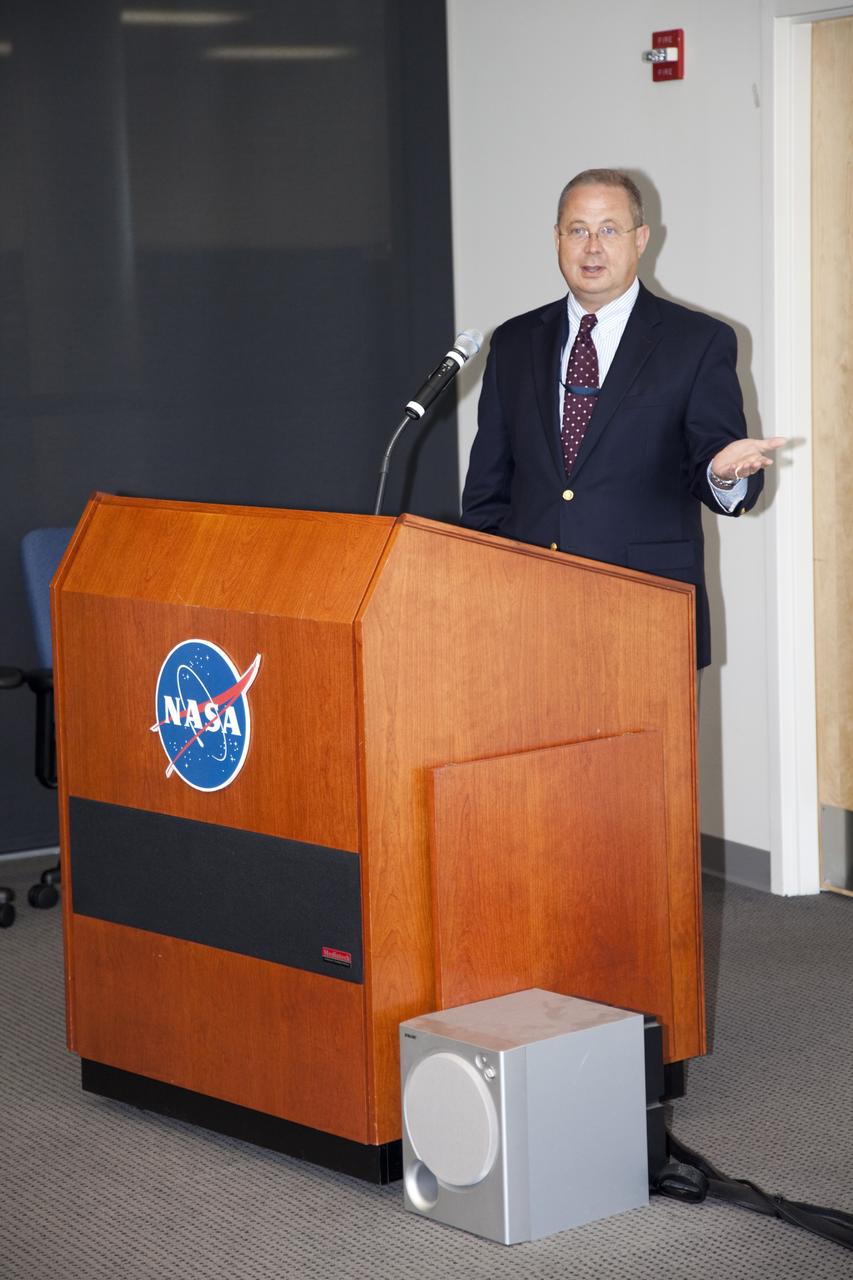
CAPE CANAVERAl, Fla. - Karen L. Thompson, chief technologist for Kennedy Space Center, speaks during a visit by Dr. Mason Peck, NASA's chief Technologist, to to Kennedy Space Center's Space Life Sciences Laboratory. Peck toured the lab facility during a visit to the space center. Photo credit: NASA/Frankie Martin
KSC-2012-4091
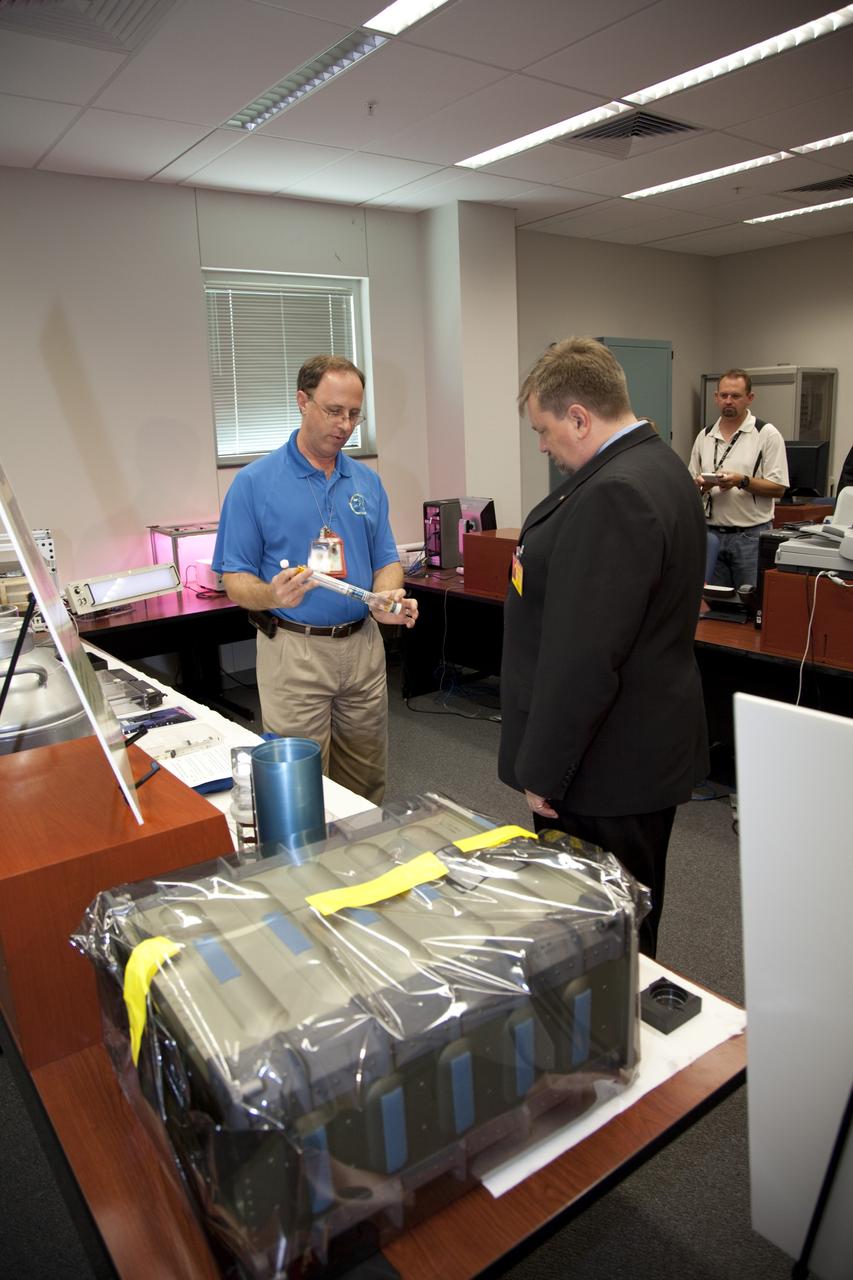
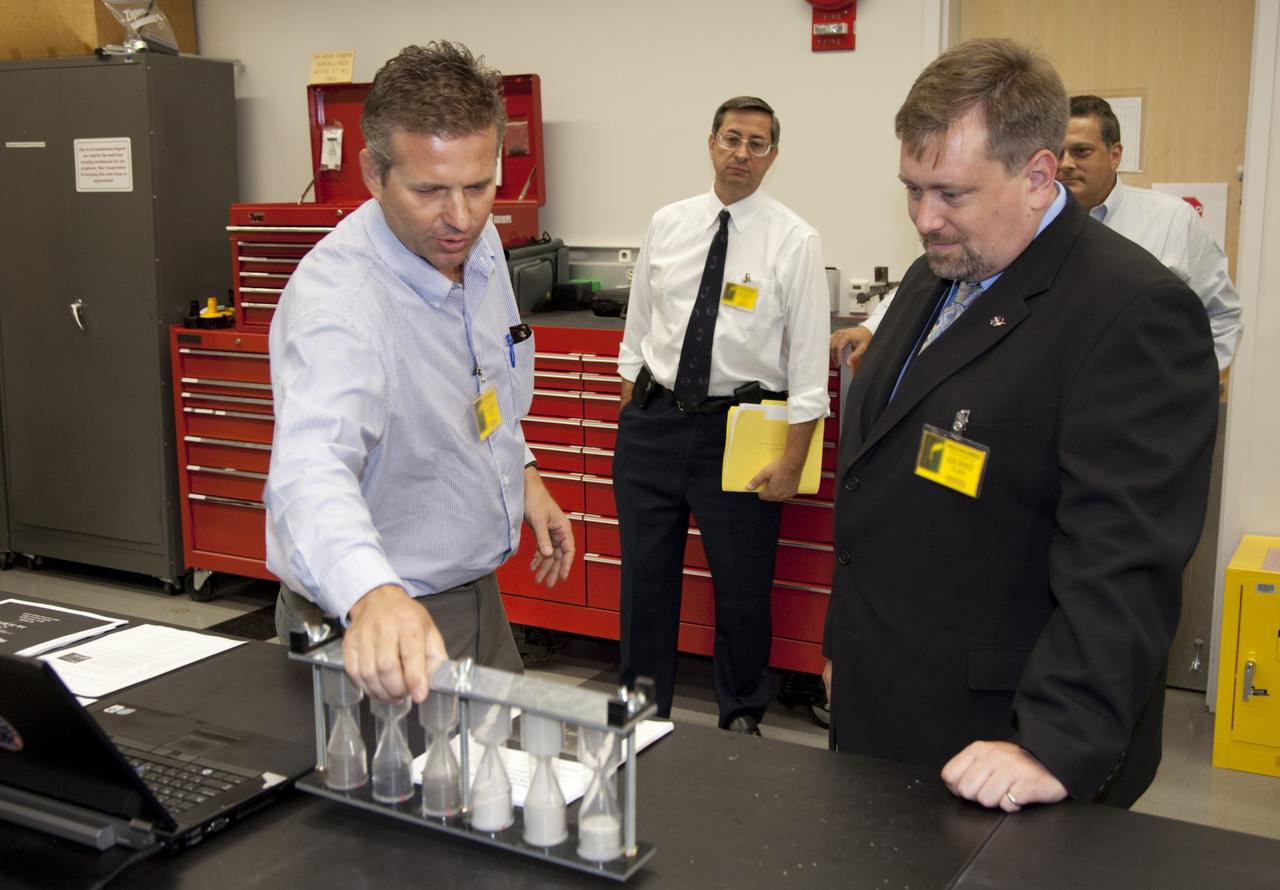
CAPE CANAVERAL, Fla. – David Reed, left, explains an innovation developed at NASA's Kennedy Space Center to Mason Peck, center, NASA's chief Technologist, during Pecks' tour of the Space Life Sciences Laboratory at Kennedy. Peck toured the lab facility during a visit to the space center. Photo credit: NASA/Frankie Martin
KSC-2012-4082
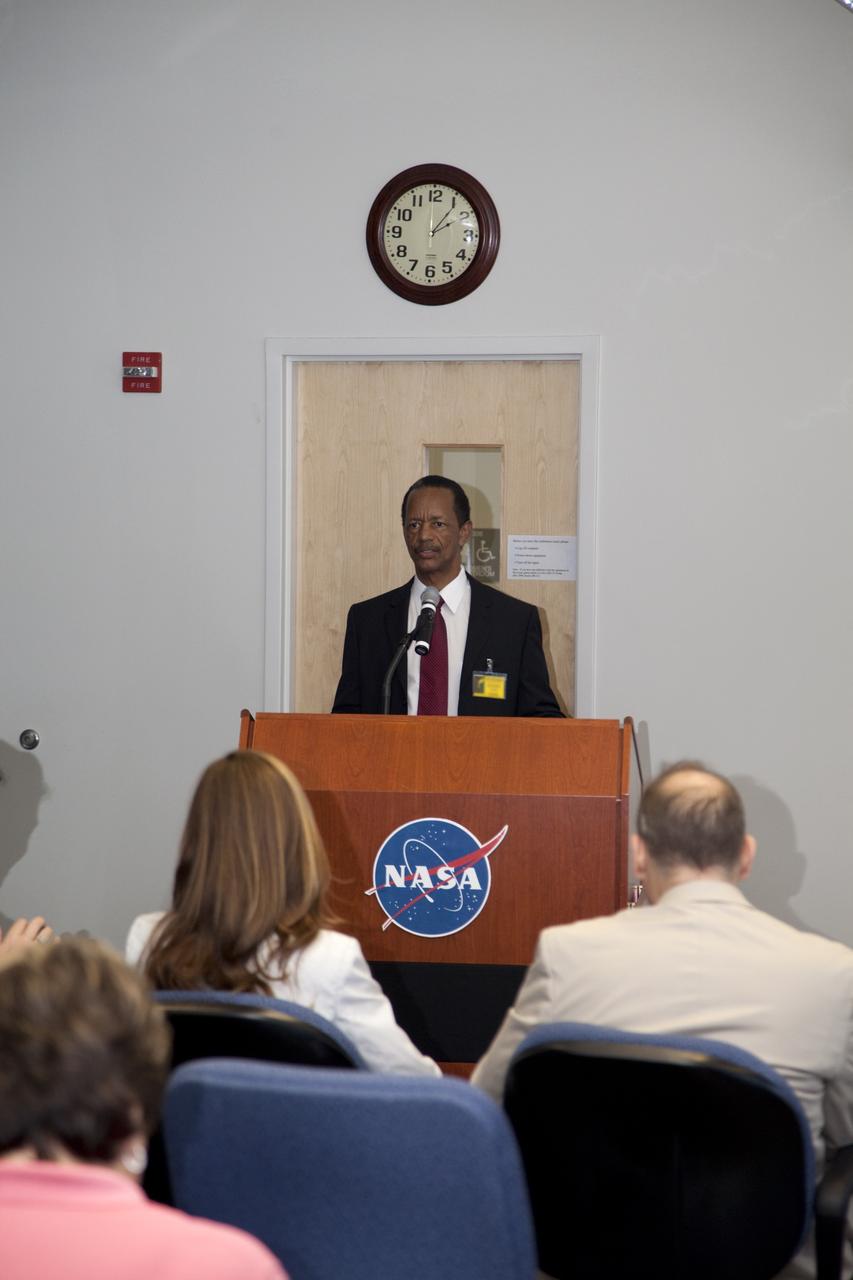
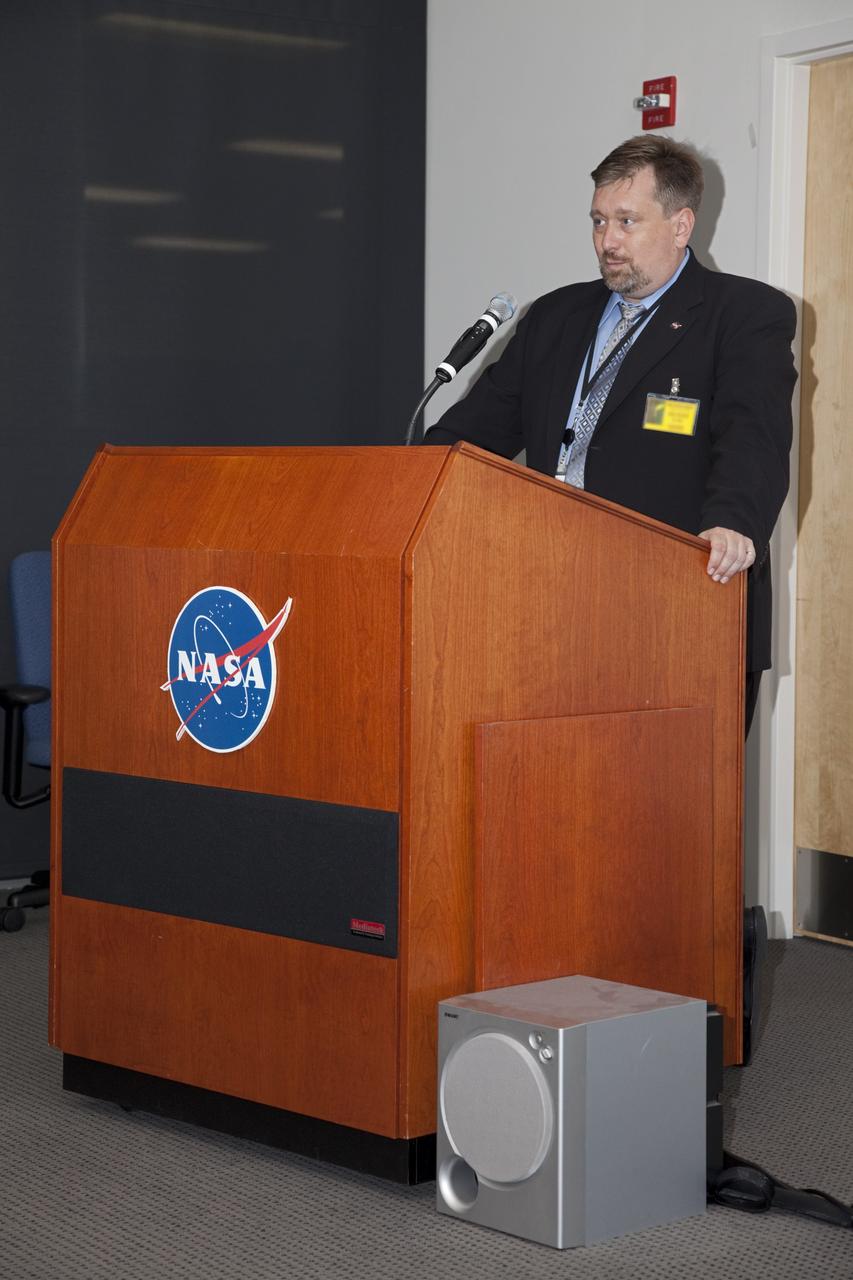
CAPE CANAVERAl, Fla. - Martin Belson, president and CEO of Diversified Industries CEIS, speaks during a visit by Dr. Mason Peck, NASA's chief Technologist, to Kennedy Space Center's Space Life Sciences Laboratory. Peck toured the lab facility during a visit to the space center. Photo credit: NASA/Frankie Martin
KSC-2012-4093
CAPE CANAVERAl, Fla. - James Stanley, chief technologist for Qinetiq North America, speaks during a visit by Dr. Mason Peck, NASA's chief Technologist, to Kennedy Space Center's Space Life Sciences Laboratory. Peck toured the lab facility during a visit to the space center. Photo credit: NASA/Frankie Martin
KSC-2012-4092
CAPE CANAVERAl, Fla. - Dr. Mason Peck, NASA's chief Technologist, speaks during a visit to the Space Life Sciences Laboratory at Kennedy Space Center. Peck toured the lab facility during a visit to the space center. Photo credit: NASA/Frankie Martin
KSC-2012-4094
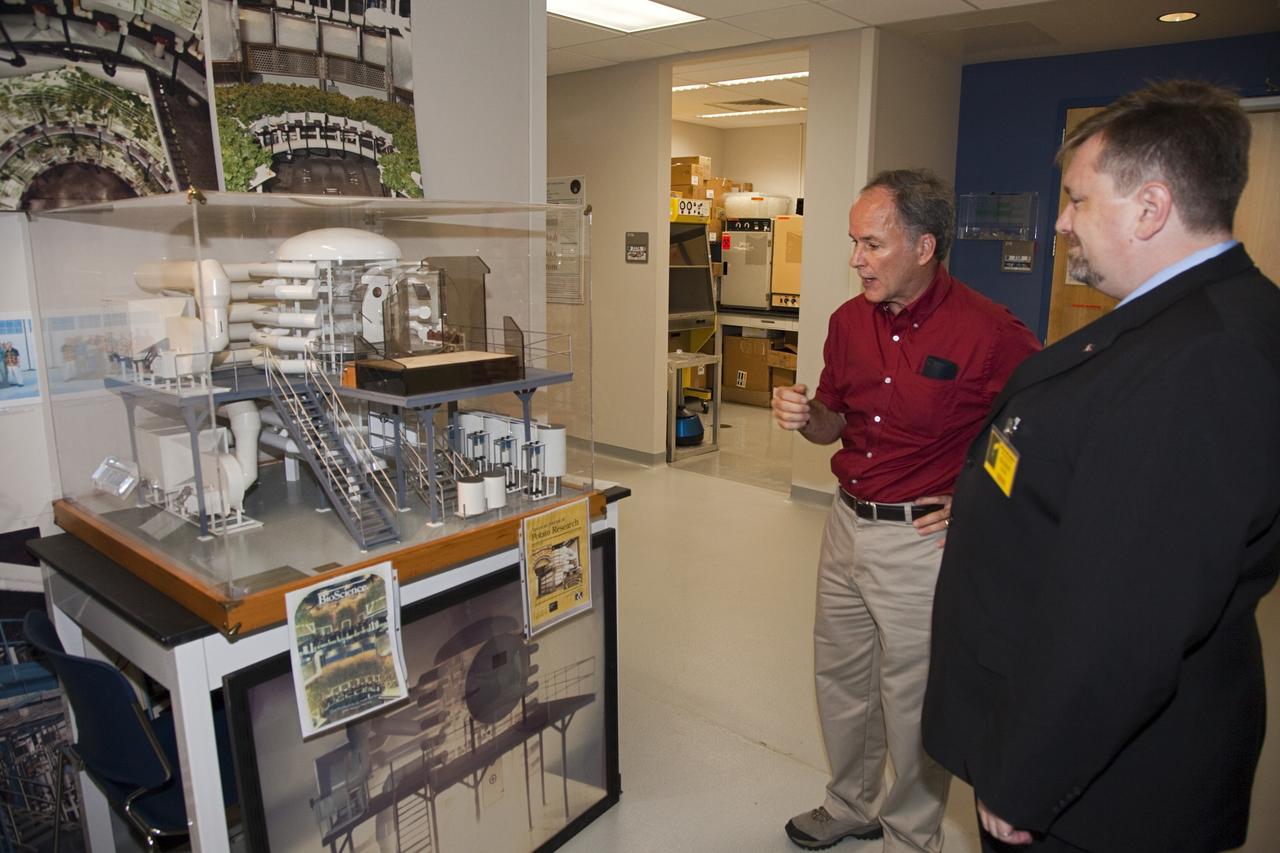
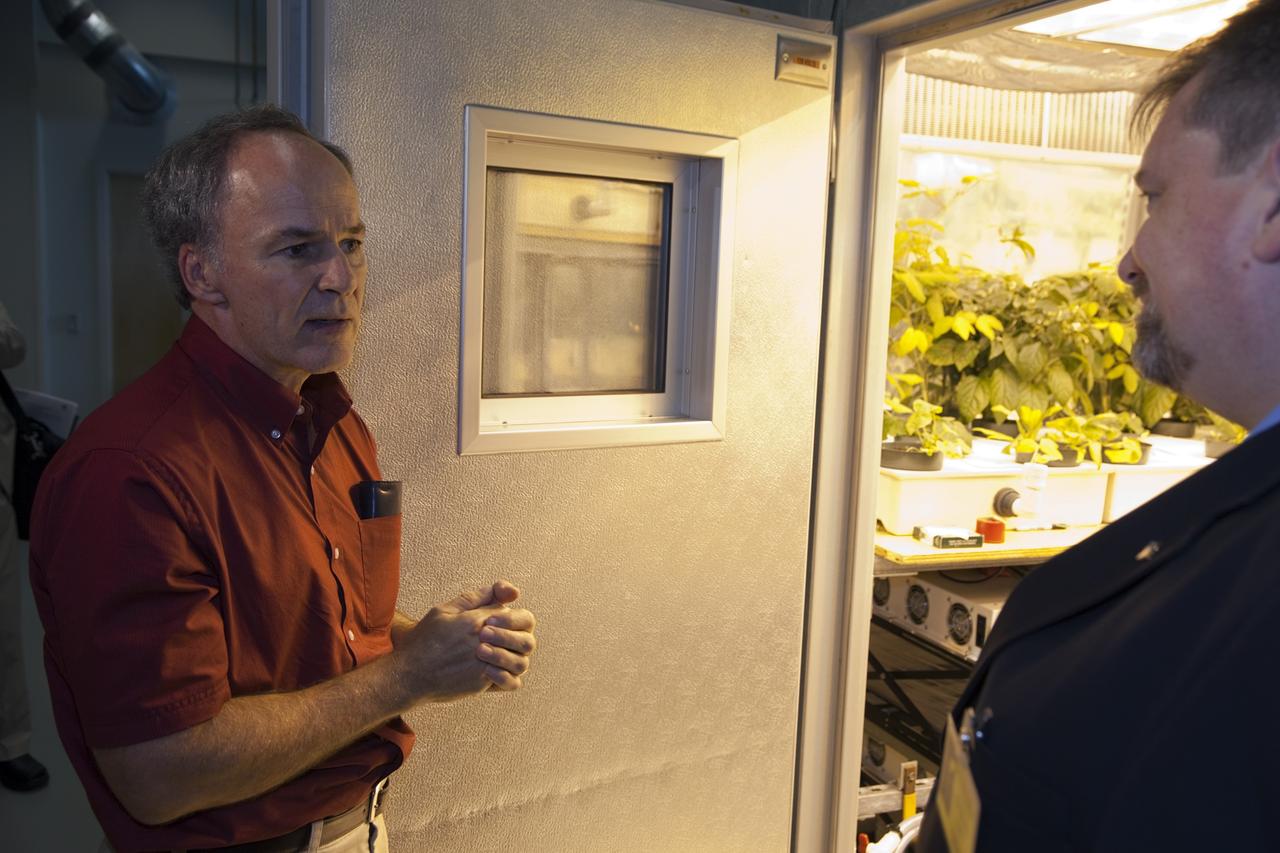
CAPE CANAVERAl, Fla. - Dr. Ray Wheeler, left, explains a plant experiment to Dr. Mason Peck, NASA's chief Technologist, during a tour of the Space Life Sciences Laboratory at Kennedy. Peck toured the lab facility during a visit to the space center. Photo credit: NASA/Frankie Martin
KSC-2012-4088
CAPE CANAVERAl, Fla. - Robert Mueller, left, explains differences in lunar, Martian and Earth soil using simulants to Dr. Mason Peck, NASA's chief Technologist, during a tour of the Space Life Sciences Laboratory at Kennedy. Peck toured the lab facility during a visit to the space center. Photo credit: NASA/Frankie Martin
KSC-2012-4085
CAPE CANAVERAl, Fla. - Robert Mueller, left, explains differences in lunar, Martian and Earth soil using simulants to Dr. Mason Peck, NASA's chief Technologist, during a tour of the Space Life Sciences Laboratory at Kennedy. Peck toured the lab facility during a visit to the space center. Photo credit: NASA/Frankie Martin
KSC-2012-4086
CAPE CANAVERAl, Fla. - Dr. Mason Peck, NASA's chief Technologist, saw some plant experiments during a tour of the Space Life Sciences Laboratory at Kennedy. Peck toured the lab facility during a visit to the space center. Photo credit: NASA/Frankie Martin
KSC-2012-4087
CAPE CANAVERAl, Fla. - Dr. Ray Wheeler, left, explains plant growth experimentation facilities to Dr. Mason Peck, NASA's chief Technologist, during a tour of the Space Life Sciences Laboratory at Kennedy. Peck toured the lab facility during a visit to the space center. Photo credit: NASA/Frankie Martin
KSC-2012-4089
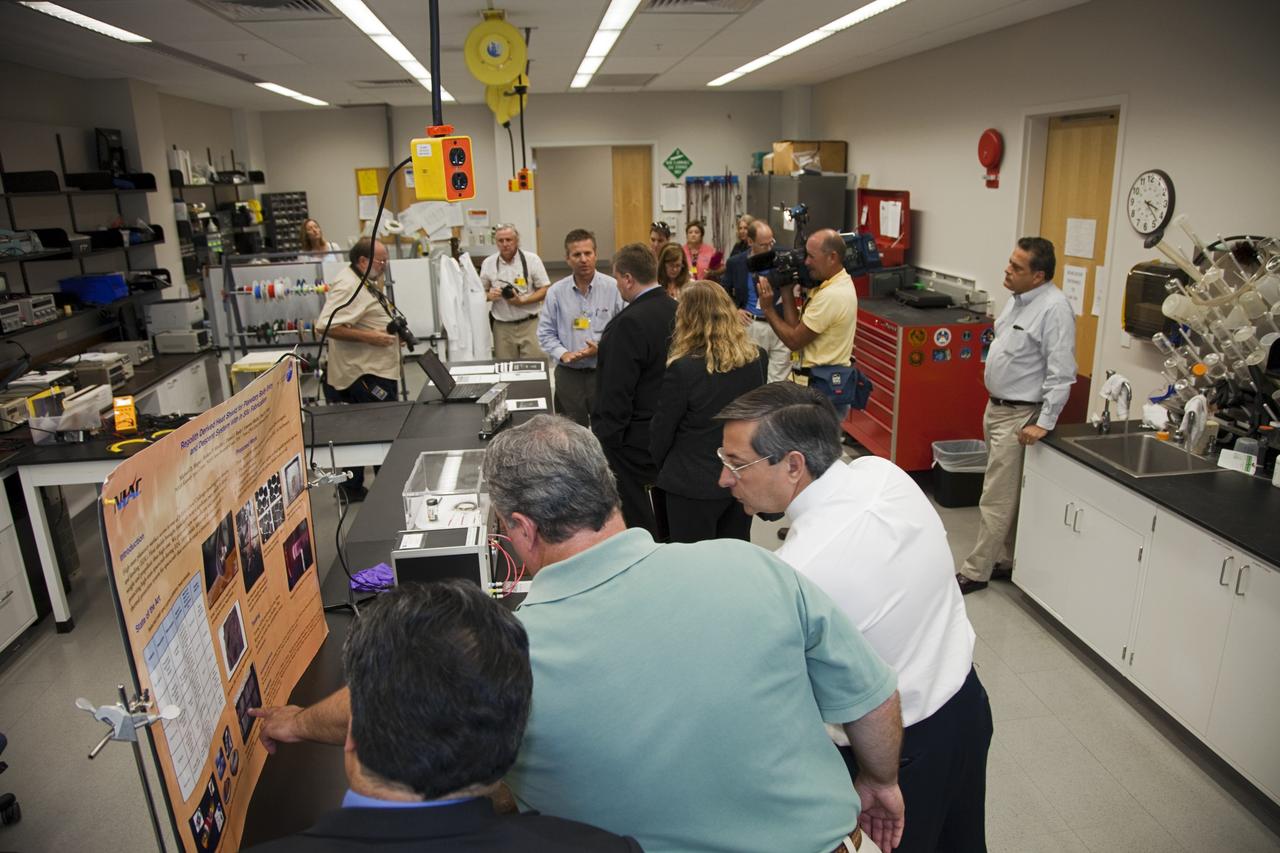
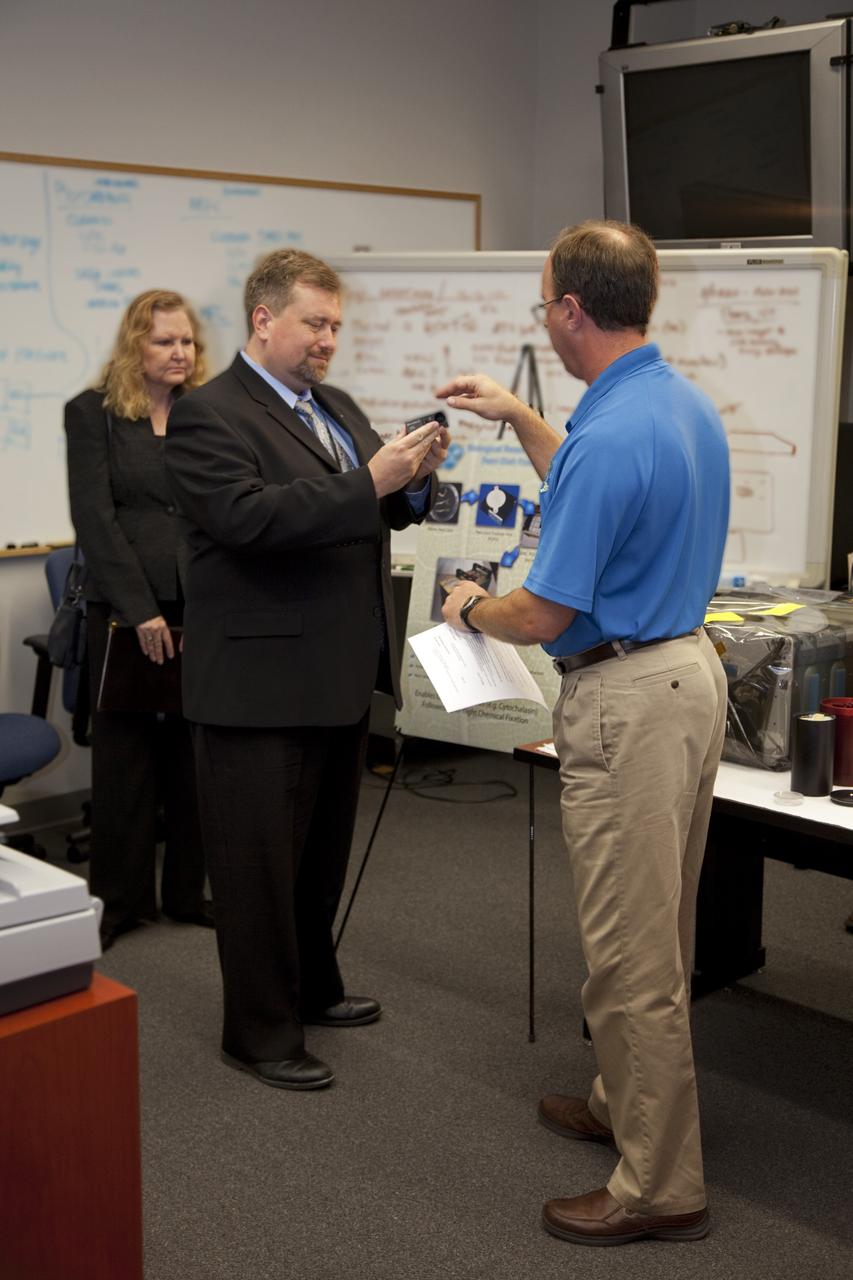
CAPE CANAVERAl, Fla. - Dr. Mason Peck, center, NASA's chief Technologist, listens as Michael Hogue, right, explains an innovation during Pecks' tour of the Space Life Sciences Laboratory at Kennedy. Peck toured the lab facility during a visit to the space center. Photo credit: NASA/Frankie Martin
KSC-2012-4083
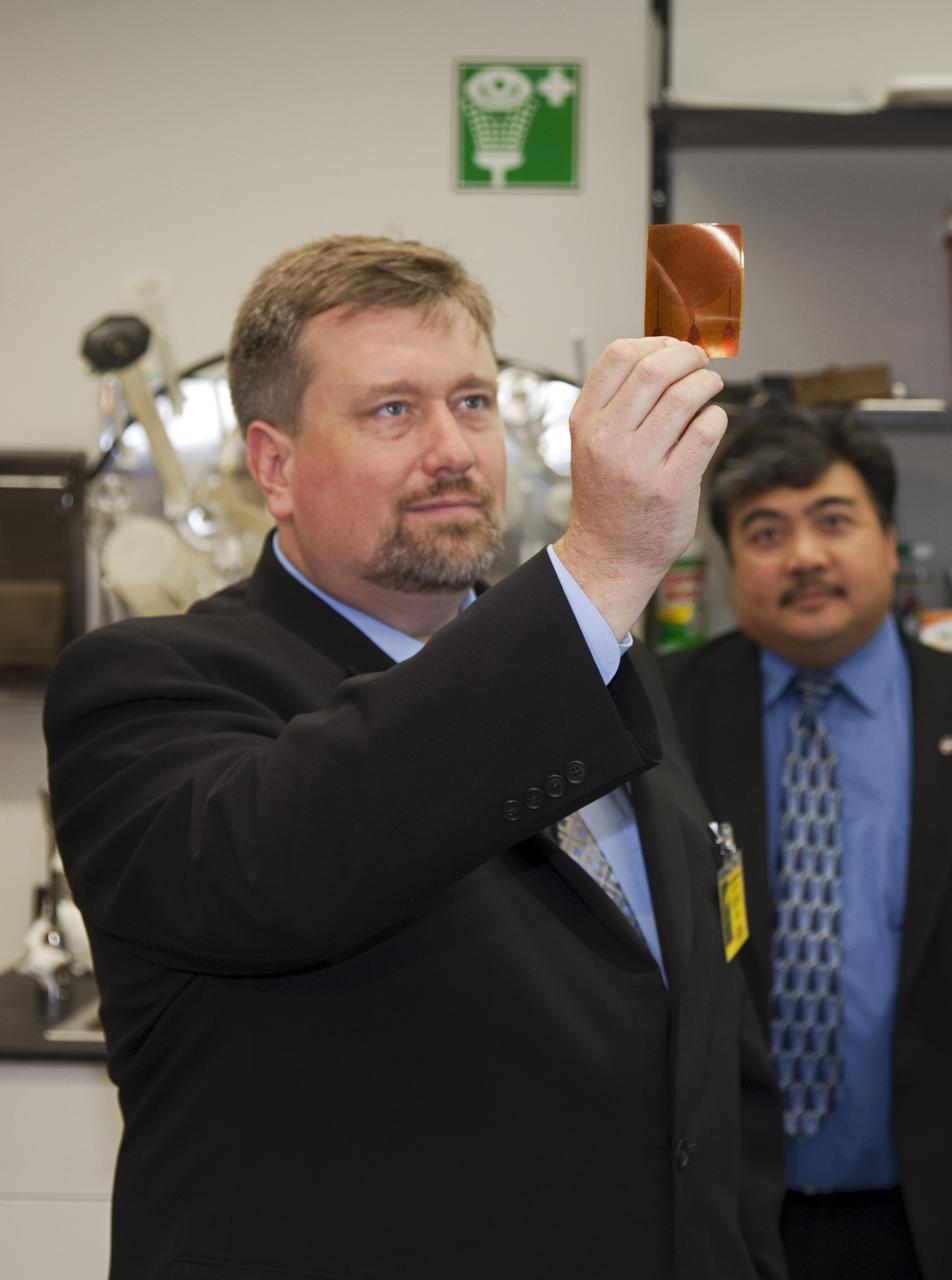
CAPE CANAVERAl, Fla. - Dr. Mason Peck, left, NASA's chief Technologist, examines an innovative conductive material during a tour of the Space Life Sciences Laboratory at Kennedy. Peck toured the lab facility during a visit to the space center. Photo credit: NASA/Frankie Martin
KSC-2012-4084
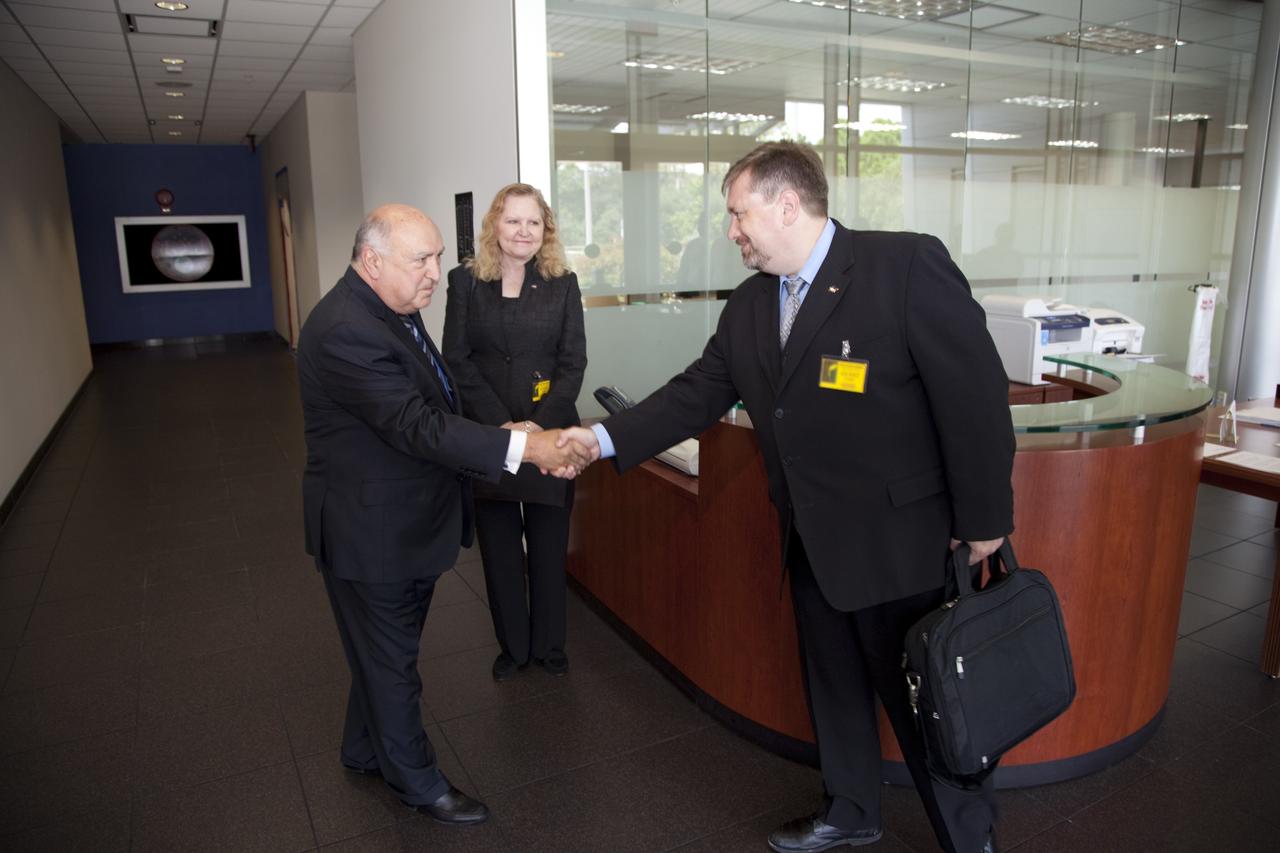
CAPE CANAVERAL, Fla. – Dr. Mason Peck, right, NASA's chief Technologist, greets Frank DiBello, president and CEO of Space Florida as Karen L. Thompson, chief technologist for Kennedy Space Center, looks on. Space Florida manages the Space Life Sciences Laboratory at Kennedy. Peck toured the lab facility during a visit to the space center. Photo credit: NASA/Frankie Martin
KSC-2012-4080
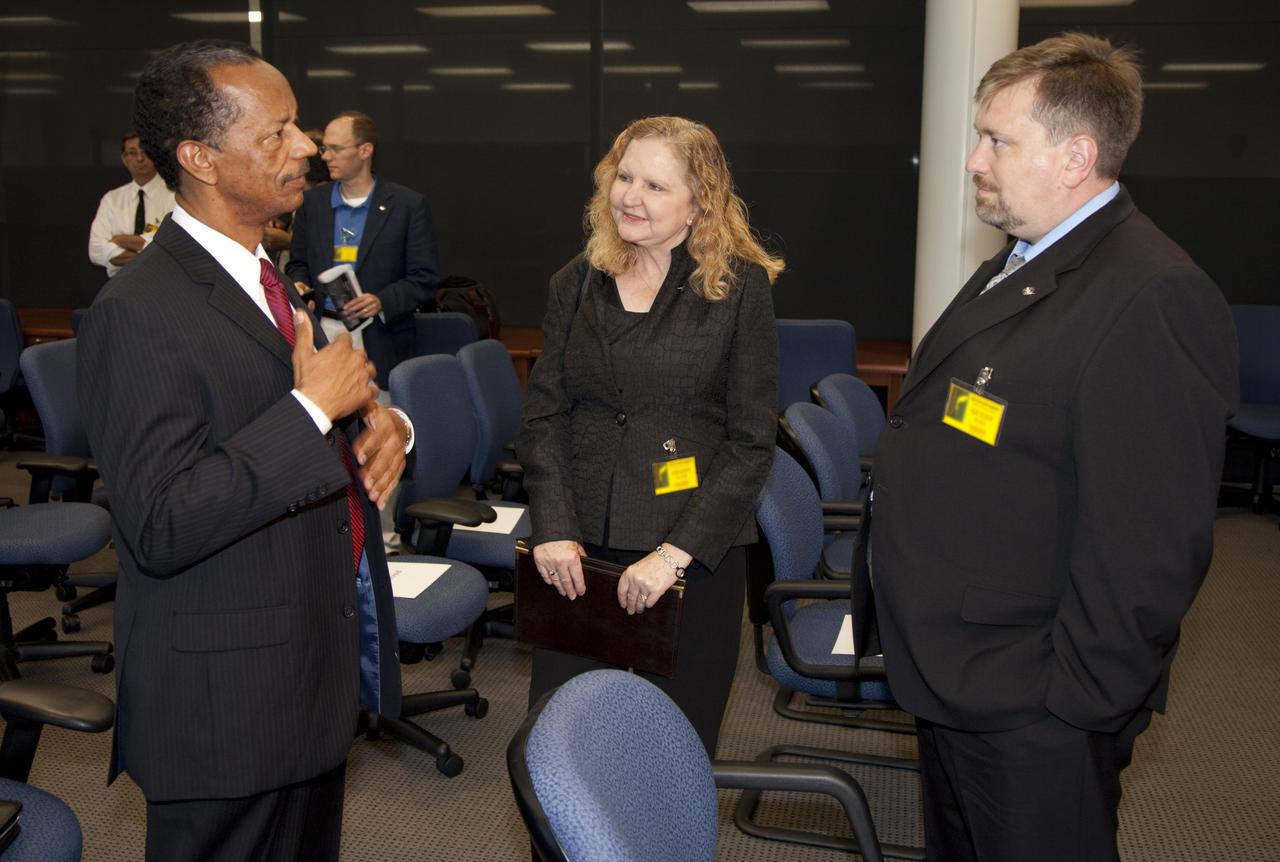
CAPE CANAVERAl, Fla. - Dr. Mason Peck, right, NASA's chief Technologist, talks with Martin Belson, president and CEO of Diversified Industries CEIS, as Karen L. Thompson, chief technologist for Kennedy Space Center, looks on. Peck toured  Kennedy Space Center's Space Life Sciences Laboratory during a visit to the space center. Photo credit: NASA/Frankie Martin
KSC-2012-4090
CAPE CANAVERAL, Fla. – Dr. Mason Peck, center, NASA's chief Technologist, listens as David Reed, right, explains an innovation during Pecks' tour of the Space Life Sciences Laboratory at Kennedy. Karen L. Thompson, chief technologist for Kennedy Space Center, looks on. Peck toured the lab facility during a visit to the space center. Photo credit: NASA/Frankie Martin
KSC-2012-4081
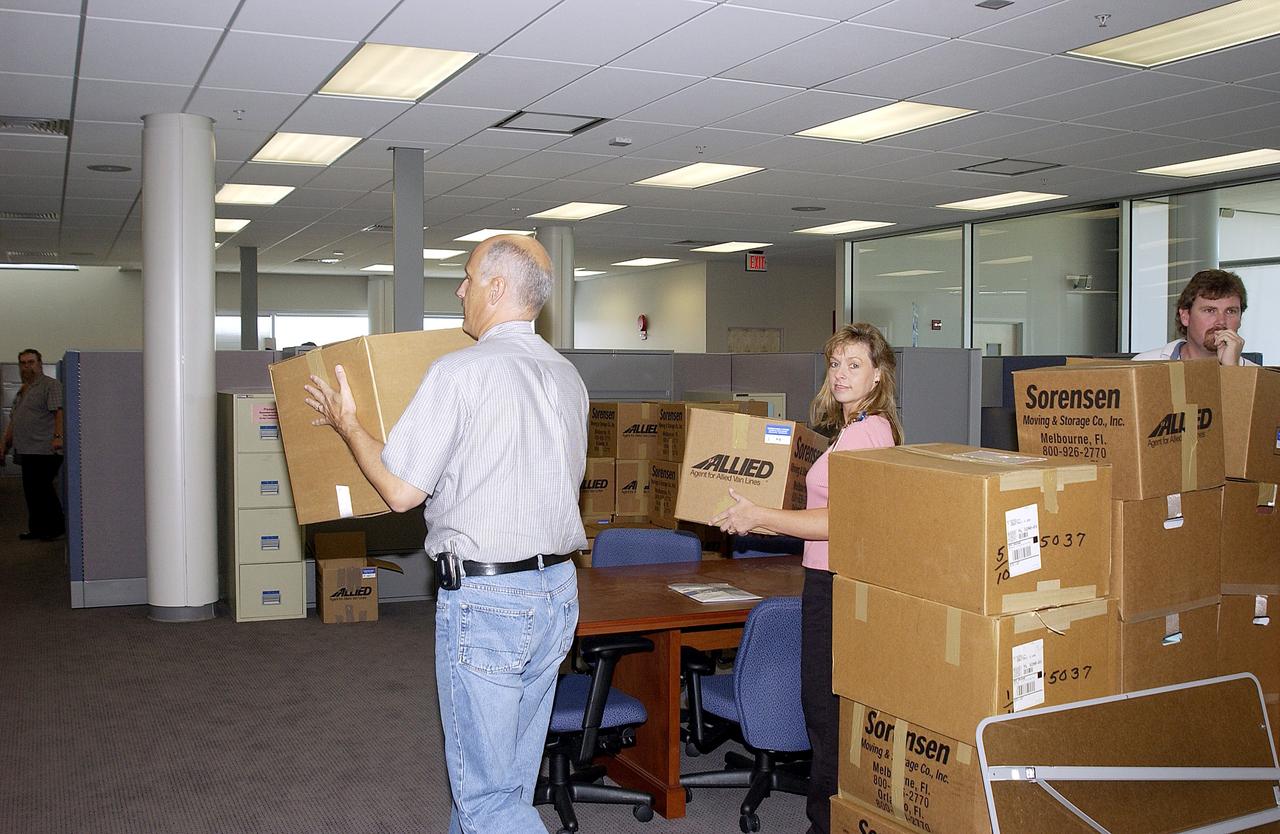
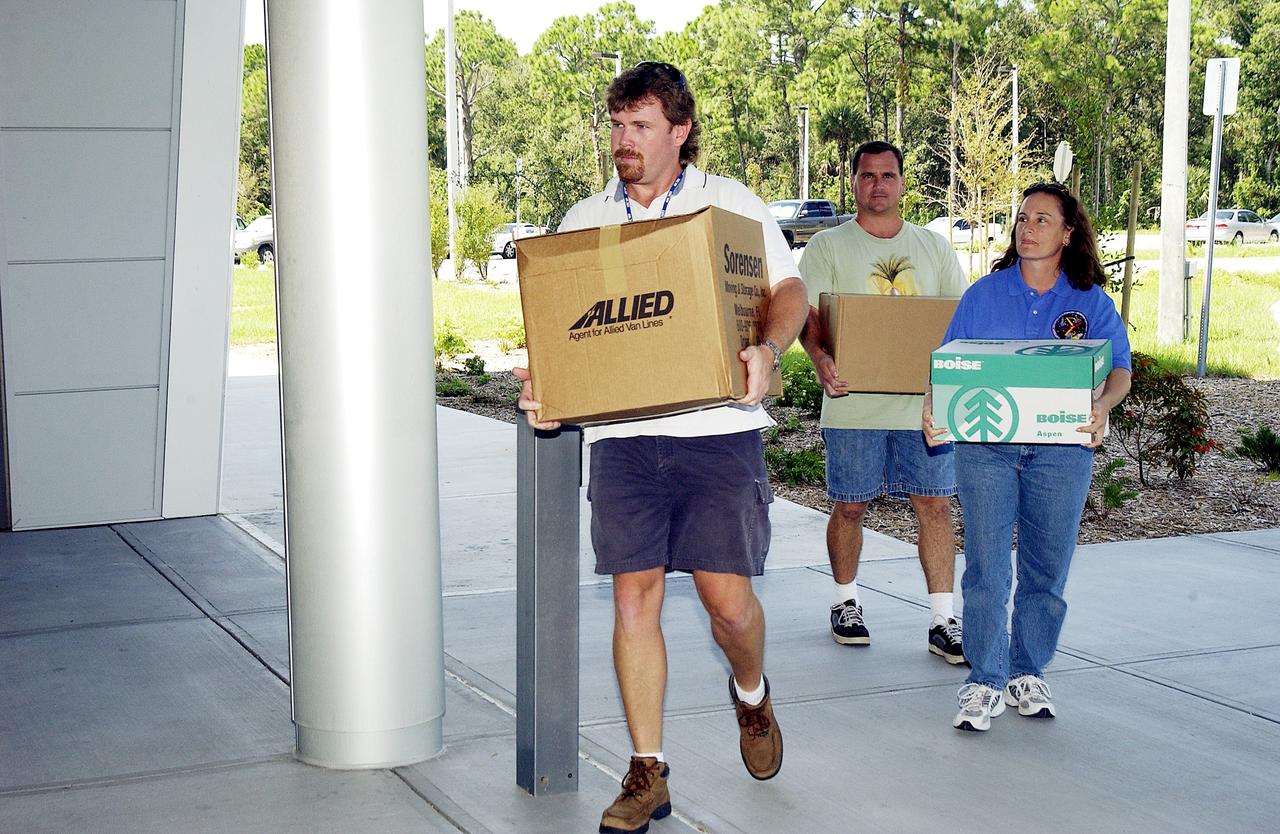
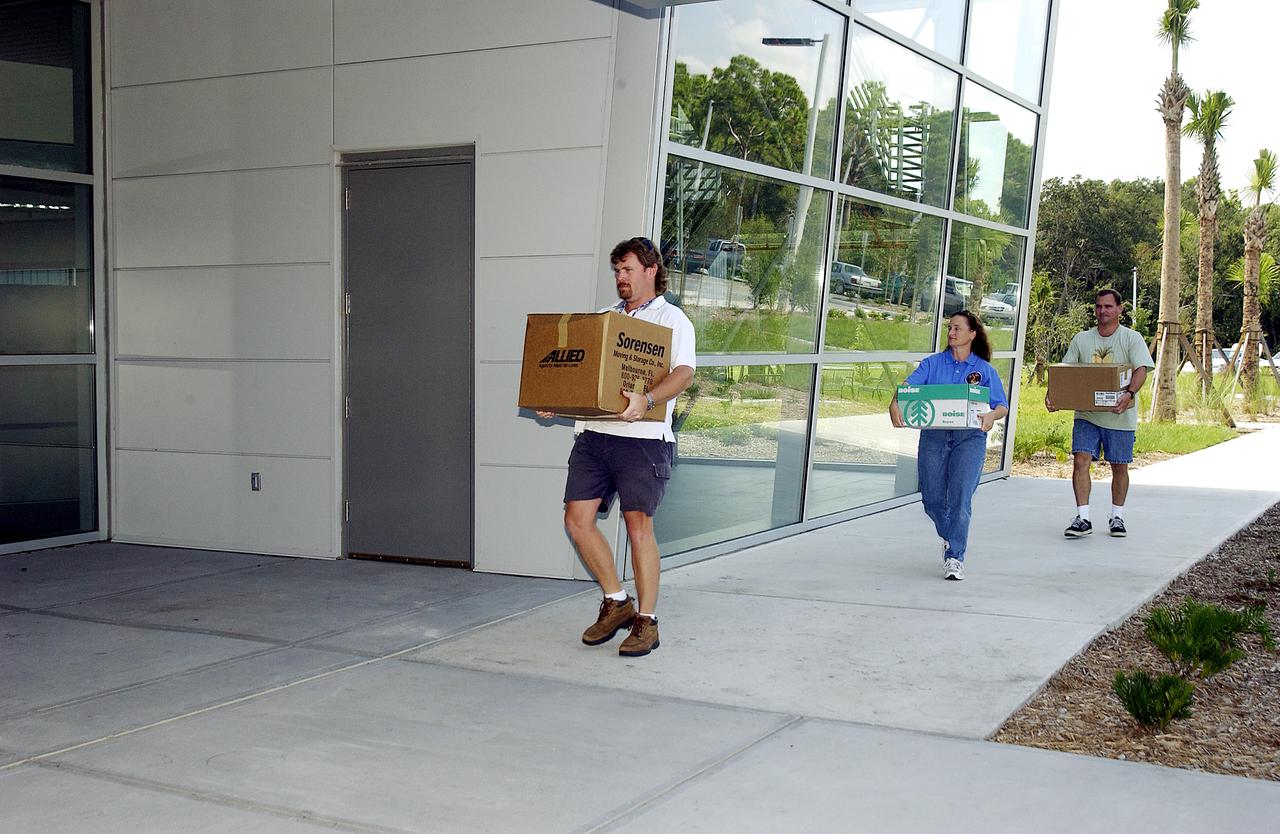
KENNEDY SPACE CENTER, FLA. -  Dynamac employees (from left) Larry Burns, Debbie Wells and Neil  Yorio carry boxes of hardware into the Space Life Sciences Lab (SLSL), formerly known as the Space Experiment Research and Processing Laboratory (SERPL).  They are transferring equipment from Hangar L. The new lab is a state-of-the-art facility being built for ISS biotechnology research. Developed as a partnership between NASA-KSC and the State of Florida, NASA’s life sciences contractor will be the primary tenant of the facility, leasing space to conduct flight experiment processing and NASA-sponsored research. About 20 percent of the facility will be available for use by Florida’s university researchers through the Florida Space Research Institute.
KENNEDY SPACE CENTER, FLA. - Dynamac employees (from left) Larry Burns, Debbie Wells and Neil Yorio carry boxes of hardware into the Space Life Sciences Lab (SLSL), formerly known as the Space Experiment Research and Processing Laboratory (SERPL). They are transferring equipment from Hangar L. The new lab is a state-of-the-art facility being built for ISS biotechnology research. Developed as a partnership between NASA-KSC and the State of Florida, NASA’s life sciences contractor will be the primary tenant of the facility, leasing space to conduct flight experiment processing and NASA-sponsored research. About 20 percent of the facility will be available for use by Florida’s university researchers through the Florida Space Research Institute.
KENNEDY SPACE CENTER, FLA. -  The Space Life Sciences Lab (SLSL), formerly known as the Space Experiment Research and Processing Laboratory (SERPL), is nearing completion.  The new lab is a state-of-the-art facility being built for ISS biotechnology research. Developed as a partnership between NASA-KSC and the State of Florida, NASA’s life sciences contractor will be the primary tenant of the facility, leasing space to conduct flight experiment processing and NASA-sponsored research. About 20 percent of the facility will be available for use by Florida’s university researchers through the Florida Space Research Institute.
KENNEDY SPACE CENTER, FLA. - The Space Life Sciences Lab (SLSL), formerly known as the Space Experiment Research and Processing Laboratory (SERPL), is nearing completion. The new lab is a state-of-the-art facility being built for ISS biotechnology research. Developed as a partnership between NASA-KSC and the State of Florida, NASA’s life sciences contractor will be the primary tenant of the facility, leasing space to conduct flight experiment processing and NASA-sponsored research. About 20 percent of the facility will be available for use by Florida’s university researchers through the Florida Space Research Institute.
KENNEDY SPACE CENTER, FLA. -  Ivan Rodriguez, with Bionetics, and Michelle Crouch and Larry Burns, with Dynamac, carry boxes of equipment into the Space Life Sciences Lab (SLSL), formerly known as the Space Experiment Research and Processing Laboratory (SERPL).    They are transferring equipment from Hangar L. The new lab is a state-of-the-art facility being built for ISS biotechnology research. Developed as a partnership between NASA-KSC and the State of Florida, NASA’s life sciences contractor will be the primary tenant of the facility, leasing space to conduct flight experiment processing and NASA-sponsored research. About 20 percent of the facility will be available for use by Florida’s university researchers through the Florida Space Research Institute.
KENNEDY SPACE CENTER, FLA. - Ivan Rodriguez, with Bionetics, and Michelle Crouch and Larry Burns, with Dynamac, carry boxes of equipment into the Space Life Sciences Lab (SLSL), formerly known as the Space Experiment Research and Processing Laboratory (SERPL). They are transferring equipment from Hangar L. The new lab is a state-of-the-art facility being built for ISS biotechnology research. Developed as a partnership between NASA-KSC and the State of Florida, NASA’s life sciences contractor will be the primary tenant of the facility, leasing space to conduct flight experiment processing and NASA-sponsored research. About 20 percent of the facility will be available for use by Florida’s university researchers through the Florida Space Research Institute.
NASA Administrator Jim Bridenstine, seated at the far end of table, center, visited the agency's Kennedy Space Center in Florida, on Aug. 7, 2018. Bridenstine talked with Commercial Crew Program (CCP) leadership inside a conference room at the Operations and Checkout Building. At right is Kennedy Center Director Bob Cabana. At left is Kathy Lueders, CCP manager. The administrator also toured facilities and received updates on the program.
NASA Administrator Jim Bridenstine Visits KSC - Space Life Scien
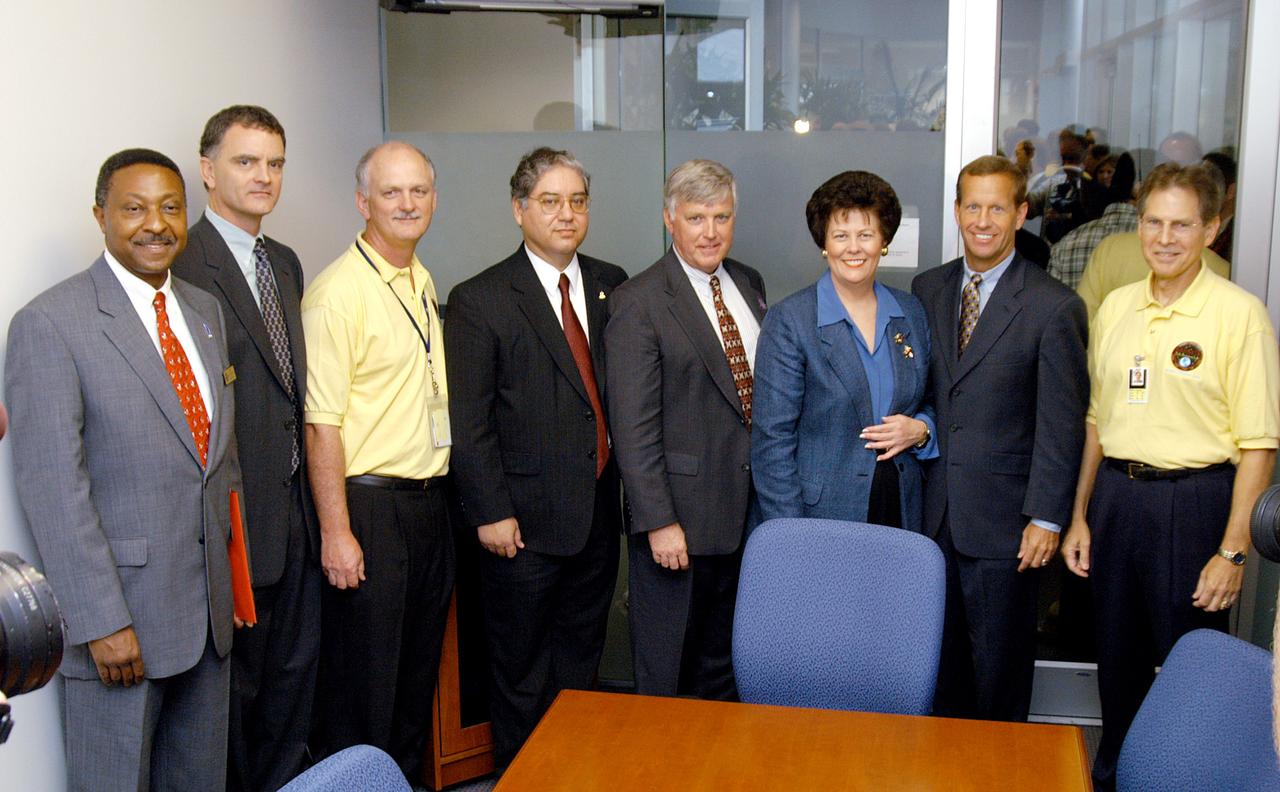
KENNEDY SPACE CENTER, FLA. -  Officials of the NASA-Kennedy Space Center and the state of Florida pose for a group portrait at a dedication and ribbon-cutting ceremony for the Space Life Sciences Lab at the new lab. From left are Capt. Winston Scott, executive director of the Florida Space Authority; Dr. Robert J. Ferl, director of Space Agriculture Biotechnology Research and Education (SABRE), University of Florida; Charlie Quincy, chief of the Biological Sciences Office, Kennedy Space Center; Jose Perez-Morales, NASA Project Manager for the Space Life Sciences Lab; Jim Kennedy, director of the Kennedy Space Center; The Honorable Toni Jennings, lieutenant governor of the state of Florida; Frank T. Brogan, president of the Florida Atlantic University; and Dr. Samuel Durrance, executive director of the Florida Space Research Institute.  Completed in August, the facility encompasses more than 100,000 square feet and was formerly known as the Space Experiment Research and Processing Laboratory or SERPL. The state, through the Florida Space Authority, built the research lab which is host to NASA, NASA’s Life Sciences Services contractor Dynamac Corp., Bionetics Corp., and researchers from the University of Florida.  Dynamac Corp. leases the facility.  The Florida Space Research Institute is responsible for gaining additional tenants from outside the NASA community.
KENNEDY SPACE CENTER, FLA. - Officials of the NASA-Kennedy Space Center and the state of Florida pose for a group portrait at a dedication and ribbon-cutting ceremony for the Space Life Sciences Lab at the new lab. From left are Capt. Winston Scott, executive director of the Florida Space Authority; Dr. Robert J. Ferl, director of Space Agriculture Biotechnology Research and Education (SABRE), University of Florida; Charlie Quincy, chief of the Biological Sciences Office, Kennedy Space Center; Jose Perez-Morales, NASA Project Manager for the Space Life Sciences Lab; Jim Kennedy, director of the Kennedy Space Center; The Honorable Toni Jennings, lieutenant governor of the state of Florida; Frank T. Brogan, president of the Florida Atlantic University; and Dr. Samuel Durrance, executive director of the Florida Space Research Institute. Completed in August, the facility encompasses more than 100,000 square feet and was formerly known as the Space Experiment Research and Processing Laboratory or SERPL. The state, through the Florida Space Authority, built the research lab which is host to NASA, NASA’s Life Sciences Services contractor Dynamac Corp., Bionetics Corp., and researchers from the University of Florida. Dynamac Corp. leases the facility. The Florida Space Research Institute is responsible for gaining additional tenants from outside the NASA community.
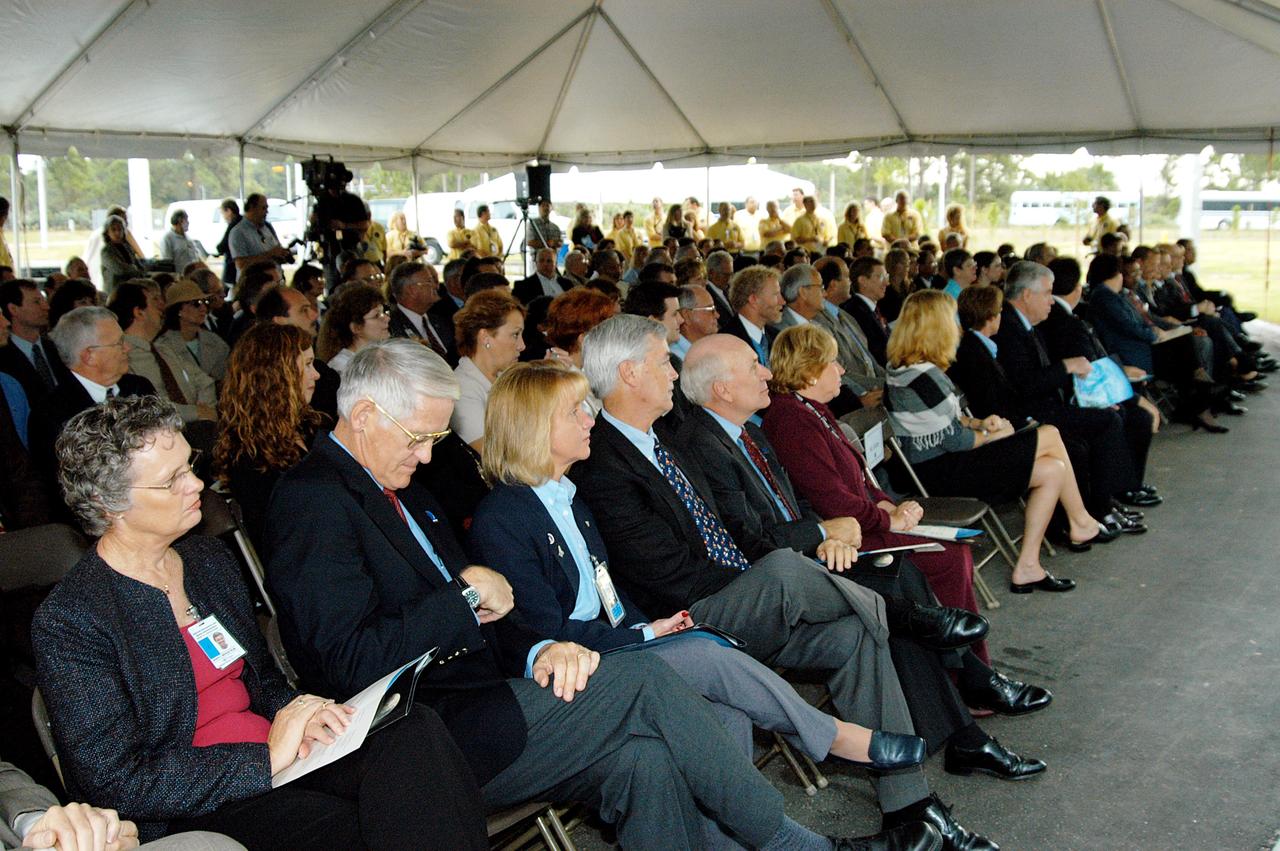
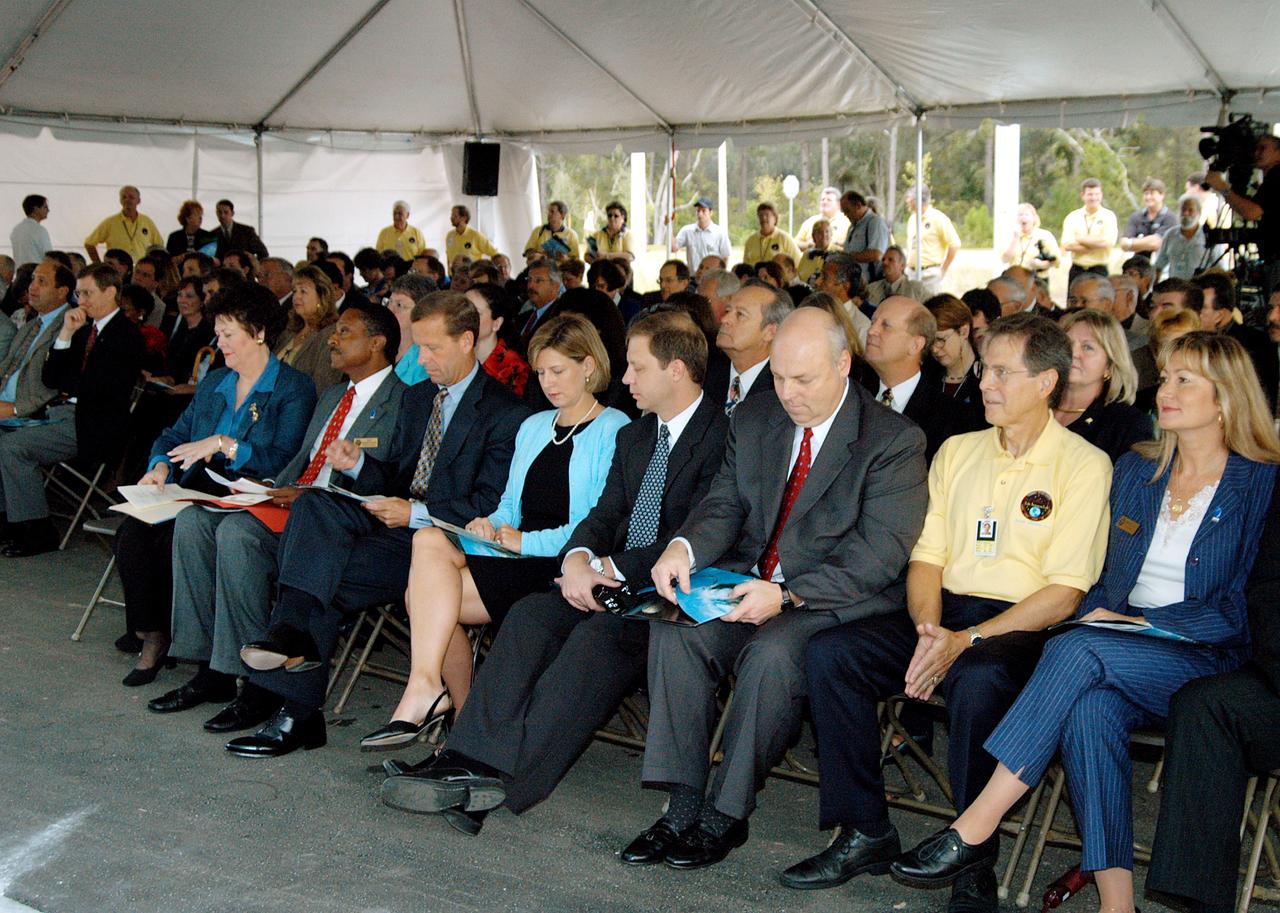
KENNEDY SPACE CENTER, FLA. -  Dignitaries, invited guests, space center employees, and the media gather for a dedication and ribbon-cutting ceremony for the Space Life Sciences Lab hosted by NASA-Kennedy Space Center and the state of Florida at the new lab. Completed in August, the facility encompasses more than 100,000 square feet and was formerly known as the Space Experiment Research and Processing Laboratory or SERPL. The state, through the Florida Space Authority, built the research lab which is host to NASA, NASA’s Life Sciences Services contractor Dynamac Corp., Bionetics Corp., and researchers from the University of Florida.  Dynamac Corp. leases the facility.  The Florida Space Research Institute is responsible for gaining additional tenants from outside the NASA community.
KENNEDY SPACE CENTER, FLA. - Dignitaries, invited guests, space center employees, and the media gather for a dedication and ribbon-cutting ceremony for the Space Life Sciences Lab hosted by NASA-Kennedy Space Center and the state of Florida at the new lab. Completed in August, the facility encompasses more than 100,000 square feet and was formerly known as the Space Experiment Research and Processing Laboratory or SERPL. The state, through the Florida Space Authority, built the research lab which is host to NASA, NASA’s Life Sciences Services contractor Dynamac Corp., Bionetics Corp., and researchers from the University of Florida. Dynamac Corp. leases the facility. The Florida Space Research Institute is responsible for gaining additional tenants from outside the NASA community.
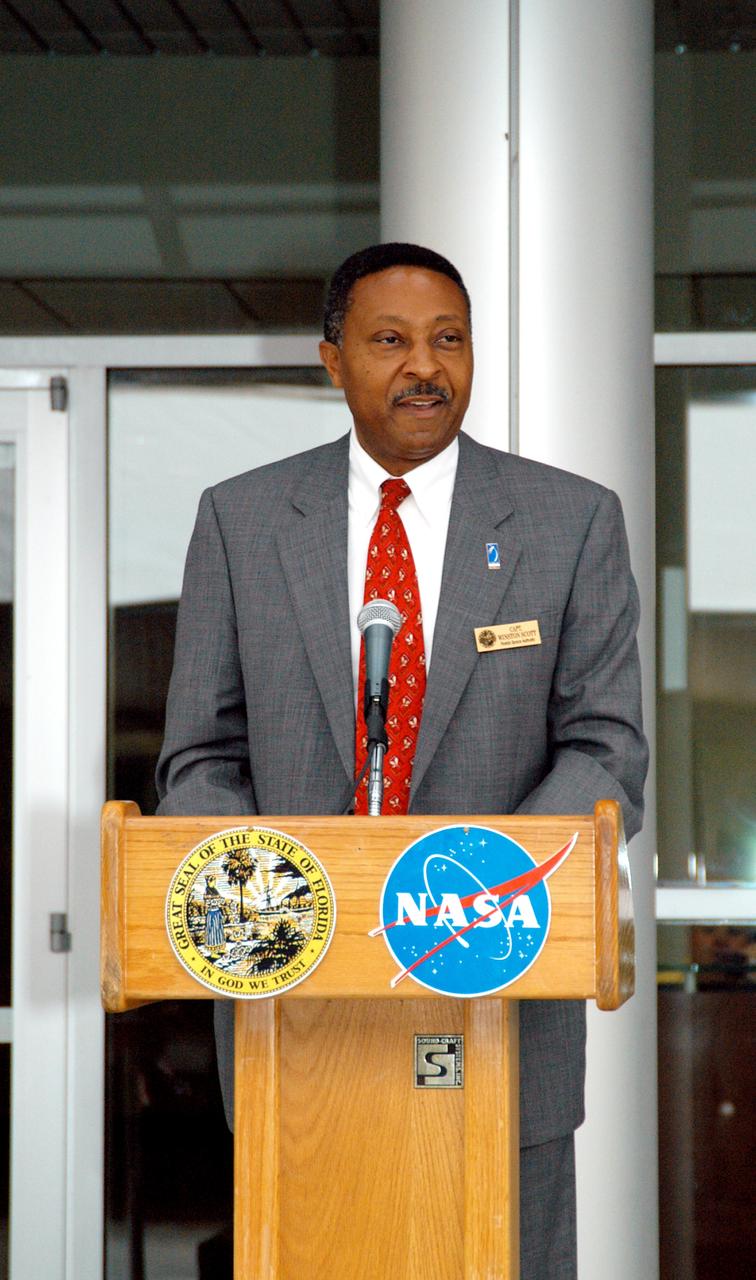
KENNEDY SPACE CENTER, FLA. -  Capt. Winston Scott, executive director of the Florida Space Authority, speaks at a dedication and ribbon-cutting ceremony for the Space Life Sciences Lab hosted by NASA-Kennedy Space Center and the state of Florida at the new lab. Completed in August, the facility encompasses more than 100,000 square feet and was formerly known as the Space Experiment Research and Processing Laboratory or SERPL. The state, through the Florida Space Authority, built the research lab which is host to NASA, NASA’s Life Sciences Services contractor Dynamac Corp., Bionetics Corp., and researchers from the University of Florida.  Dynamac Corp. leases the facility.  The Florida Space Research Institute is responsible for gaining additional tenants from outside the NASA community.
KENNEDY SPACE CENTER, FLA. - Capt. Winston Scott, executive director of the Florida Space Authority, speaks at a dedication and ribbon-cutting ceremony for the Space Life Sciences Lab hosted by NASA-Kennedy Space Center and the state of Florida at the new lab. Completed in August, the facility encompasses more than 100,000 square feet and was formerly known as the Space Experiment Research and Processing Laboratory or SERPL. The state, through the Florida Space Authority, built the research lab which is host to NASA, NASA’s Life Sciences Services contractor Dynamac Corp., Bionetics Corp., and researchers from the University of Florida. Dynamac Corp. leases the facility. The Florida Space Research Institute is responsible for gaining additional tenants from outside the NASA community.
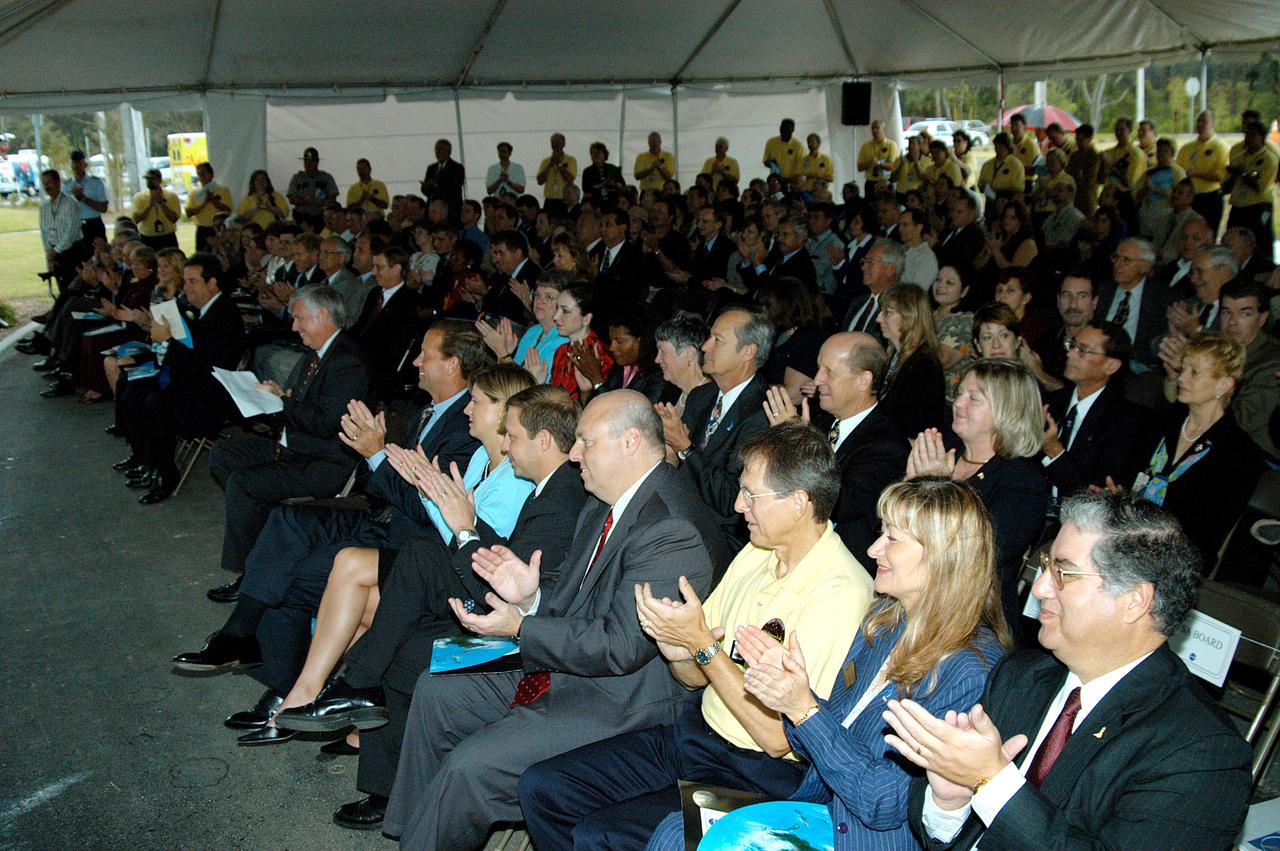
KENNEDY SPACE CENTER, FLA. -  Dignitaries, invited guests, space center employees, and the media show their appreciation for the speakers at a dedication and ribbon-cutting ceremony for the Space Life Sciences Lab hosted by NASA-Kennedy Space Center and the state of Florida at the new lab. Completed in August, the facility encompasses more than 100,000 square feet and was formerly known as the Space Experiment Research and Processing Laboratory or SERPL. The state, through the Florida Space Authority, built the research lab which is host to NASA, NASA’s Life Sciences Services contractor Dynamac Corp., Bionetics Corp., and researchers from the University of Florida.  Dynamac Corp. leases the facility.  The Florida Space Research Institute is responsible for gaining additional tenants from outside the NASA community.
KENNEDY SPACE CENTER, FLA. - Dignitaries, invited guests, space center employees, and the media show their appreciation for the speakers at a dedication and ribbon-cutting ceremony for the Space Life Sciences Lab hosted by NASA-Kennedy Space Center and the state of Florida at the new lab. Completed in August, the facility encompasses more than 100,000 square feet and was formerly known as the Space Experiment Research and Processing Laboratory or SERPL. The state, through the Florida Space Authority, built the research lab which is host to NASA, NASA’s Life Sciences Services contractor Dynamac Corp., Bionetics Corp., and researchers from the University of Florida. Dynamac Corp. leases the facility. The Florida Space Research Institute is responsible for gaining additional tenants from outside the NASA community.
KENNEDY SPACE CENTER, FLA. -  Dignitaries, invited guests, space center employees, and the media gather for a dedication and ribbon-cutting ceremony for the Space Life Sciences Lab hosted by NASA-Kennedy Space Center and the state of Florida at the new lab. Completed in August, the facility encompasses more than 100,000 square feet and was formerly known as the Space Experiment Research and Processing Laboratory or SERPL. The state, through the Florida Space Authority, built the research lab which is host to NASA, NASA’s Life Sciences Services contractor Dynamac Corp., Bionetics Corp., and researchers from the University of Florida.  Dynamac Corp. leases the facility.  The Florida Space Research Institute is responsible for gaining additional tenants from outside the NASA community.
KENNEDY SPACE CENTER, FLA. - Dignitaries, invited guests, space center employees, and the media gather for a dedication and ribbon-cutting ceremony for the Space Life Sciences Lab hosted by NASA-Kennedy Space Center and the state of Florida at the new lab. Completed in August, the facility encompasses more than 100,000 square feet and was formerly known as the Space Experiment Research and Processing Laboratory or SERPL. The state, through the Florida Space Authority, built the research lab which is host to NASA, NASA’s Life Sciences Services contractor Dynamac Corp., Bionetics Corp., and researchers from the University of Florida. Dynamac Corp. leases the facility. The Florida Space Research Institute is responsible for gaining additional tenants from outside the NASA community.
KENNEDY SPACE CENTER, FLA. -  Frank T. Brogan, president of the Florida Atlantic University, speaks at a dedication and ribbon-cutting ceremony for the Space Life Sciences Lab hosted by NASA-Kennedy Space Center and the state of Florida at the new lab. Completed in August, the facility encompasses more than 100,000 square feet and was formerly known as the Space Experiment Research and Processing Laboratory or SERPL. The state, through the Florida Space Authority, built the research lab which is host to NASA, NASA’s Life Sciences Services contractor Dynamac Corp., Bionetics Corp., and researchers from the University of Florida.  Dynamac Corp. leases the facility.  The Florida Space Research Institute is responsible for gaining additional tenants from outside the NASA community.
KENNEDY SPACE CENTER, FLA. - Frank T. Brogan, president of the Florida Atlantic University, speaks at a dedication and ribbon-cutting ceremony for the Space Life Sciences Lab hosted by NASA-Kennedy Space Center and the state of Florida at the new lab. Completed in August, the facility encompasses more than 100,000 square feet and was formerly known as the Space Experiment Research and Processing Laboratory or SERPL. The state, through the Florida Space Authority, built the research lab which is host to NASA, NASA’s Life Sciences Services contractor Dynamac Corp., Bionetics Corp., and researchers from the University of Florida. Dynamac Corp. leases the facility. The Florida Space Research Institute is responsible for gaining additional tenants from outside the NASA community.
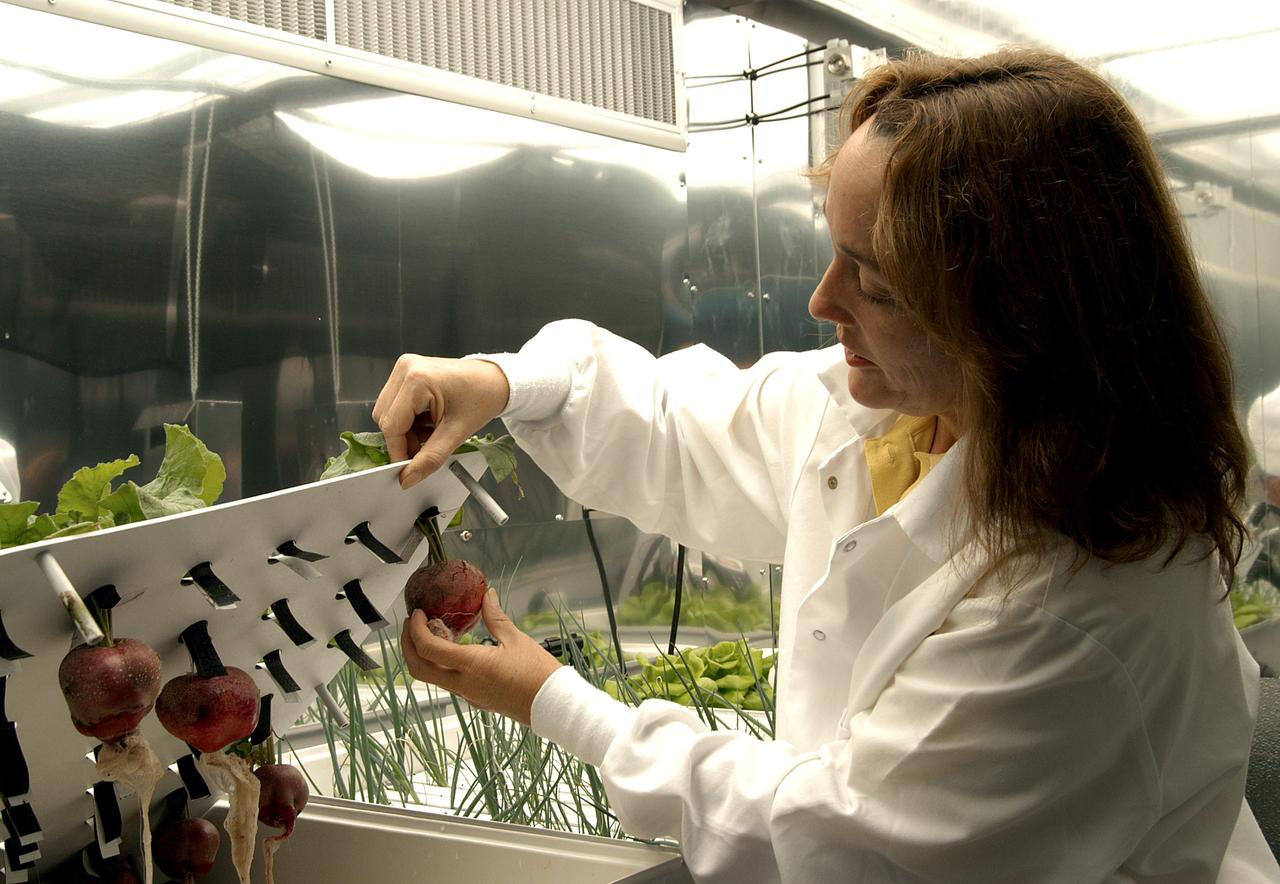
KENNEDY SPACE CENTER, FLA. -- Sharon Edney, with Dynamac Corp., checks the growth of radishes being grown hydroponically for study in the Space Life Sciences Lab.  The 100,000 square-foot facility houses labs for NASA’s ongoing research efforts, microbiology/microbial ecology studies and analytical chemistry labs. Also calling the new lab home are facilities for space flight-experiment and flight-hardware development, new plant growth chambers, and an Orbiter Environment Simulator that will be used to conduct ground control experiments in simulated flight conditions for space flight experiments.  The SLS Lab, formerly known as the Space Experiment Research and Processing Laboratory or SERPL, provides space for NASA’s Life Sciences Services contractor Dynamac Corporation, Bionetics Corporation, and researchers from the University of Florida. NASA’s Office of Biological and Physical Research will use the facility for processing life sciences experiments that will be conducted on the International Space Station. The SLS Lab is the magnet facility for the International Space Research Park at KSC being developed in partnership with Florida Space Authority.
KENNEDY SPACE CENTER, FLA. -- Sharon Edney, with Dynamac Corp., checks the growth of radishes being grown hydroponically for study in the Space Life Sciences Lab. The 100,000 square-foot facility houses labs for NASA’s ongoing research efforts, microbiology/microbial ecology studies and analytical chemistry labs. Also calling the new lab home are facilities for space flight-experiment and flight-hardware development, new plant growth chambers, and an Orbiter Environment Simulator that will be used to conduct ground control experiments in simulated flight conditions for space flight experiments. The SLS Lab, formerly known as the Space Experiment Research and Processing Laboratory or SERPL, provides space for NASA’s Life Sciences Services contractor Dynamac Corporation, Bionetics Corporation, and researchers from the University of Florida. NASA’s Office of Biological and Physical Research will use the facility for processing life sciences experiments that will be conducted on the International Space Station. The SLS Lab is the magnet facility for the International Space Research Park at KSC being developed in partnership with Florida Space Authority.
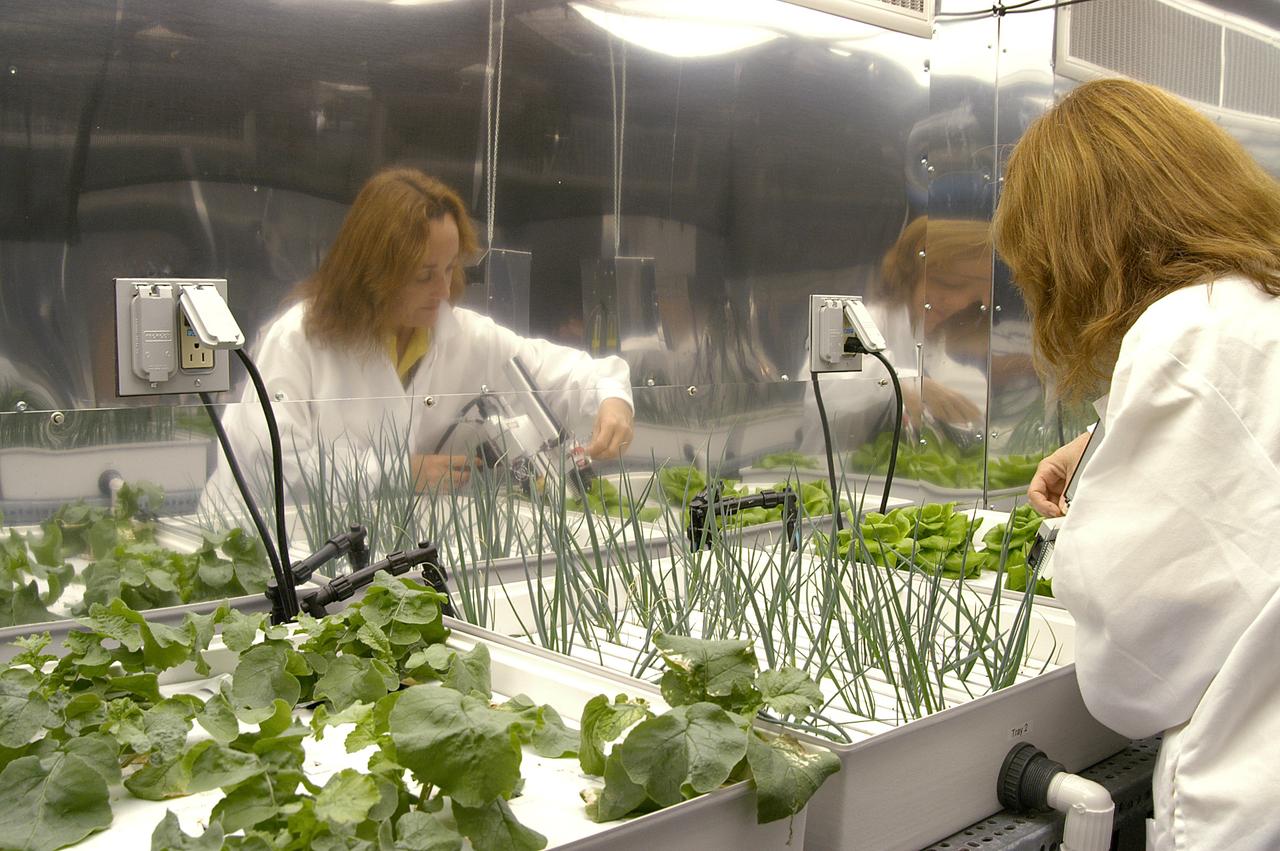
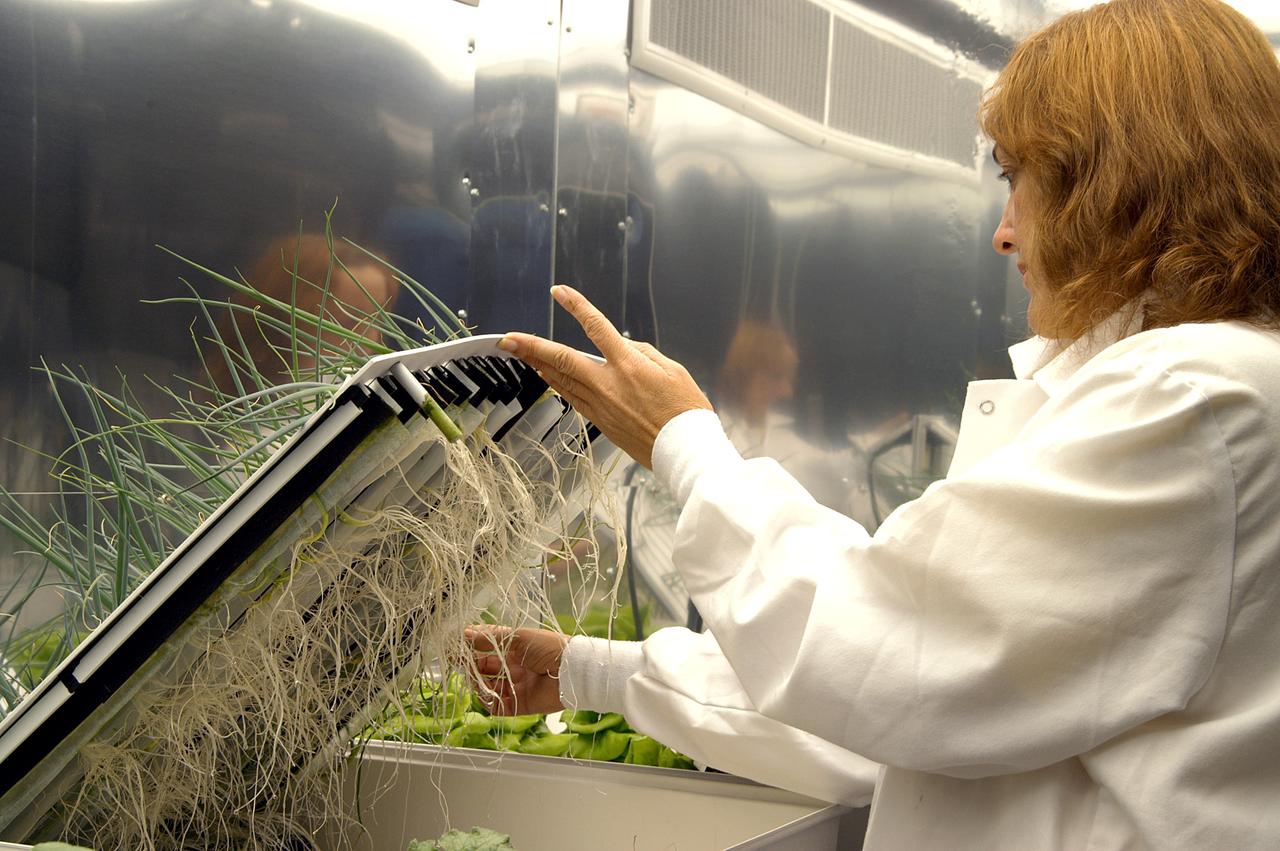
KENNEDY SPACE CENTER, FLA. -- Sharon Edney, with Dynamac Corp., checks the roots of green onions being grown hydroponically for study in the Space Life Sciences Lab.  The 100,000 square-foot facility houses labs for NASA’s ongoing research efforts, microbiology/microbial ecology studies and analytical chemistry labs. Also calling the new lab home are facilities for space flight-experiment and flight-hardware development, new plant growth chambers, and an Orbiter Environment Simulator that will be used to conduct ground control experiments in simulated flight conditions for space flight experiments.  The SLS Lab, formerly known as the Space Experiment Research and Processing Laboratory or SERPL, provides space for NASA’s Life Sciences Services contractor Dynamac Corporation, Bionetics Corporation, and researchers from the University of Florida. NASA’s Office of Biological and Physical Research will use the facility for processing life sciences experiments that will be conducted on the International Space Station. The SLS Lab is the magnet facility for the International Space Research Park at KSC being developed in partnership with Florida Space Authority.
KENNEDY SPACE CENTER, FLA. -- Sharon Edney, with Dynamac Corp., checks the roots of green onions being grown hydroponically for study in the Space Life Sciences Lab. The 100,000 square-foot facility houses labs for NASA’s ongoing research efforts, microbiology/microbial ecology studies and analytical chemistry labs. Also calling the new lab home are facilities for space flight-experiment and flight-hardware development, new plant growth chambers, and an Orbiter Environment Simulator that will be used to conduct ground control experiments in simulated flight conditions for space flight experiments. The SLS Lab, formerly known as the Space Experiment Research and Processing Laboratory or SERPL, provides space for NASA’s Life Sciences Services contractor Dynamac Corporation, Bionetics Corporation, and researchers from the University of Florida. NASA’s Office of Biological and Physical Research will use the facility for processing life sciences experiments that will be conducted on the International Space Station. The SLS Lab is the magnet facility for the International Space Research Park at KSC being developed in partnership with Florida Space Authority.
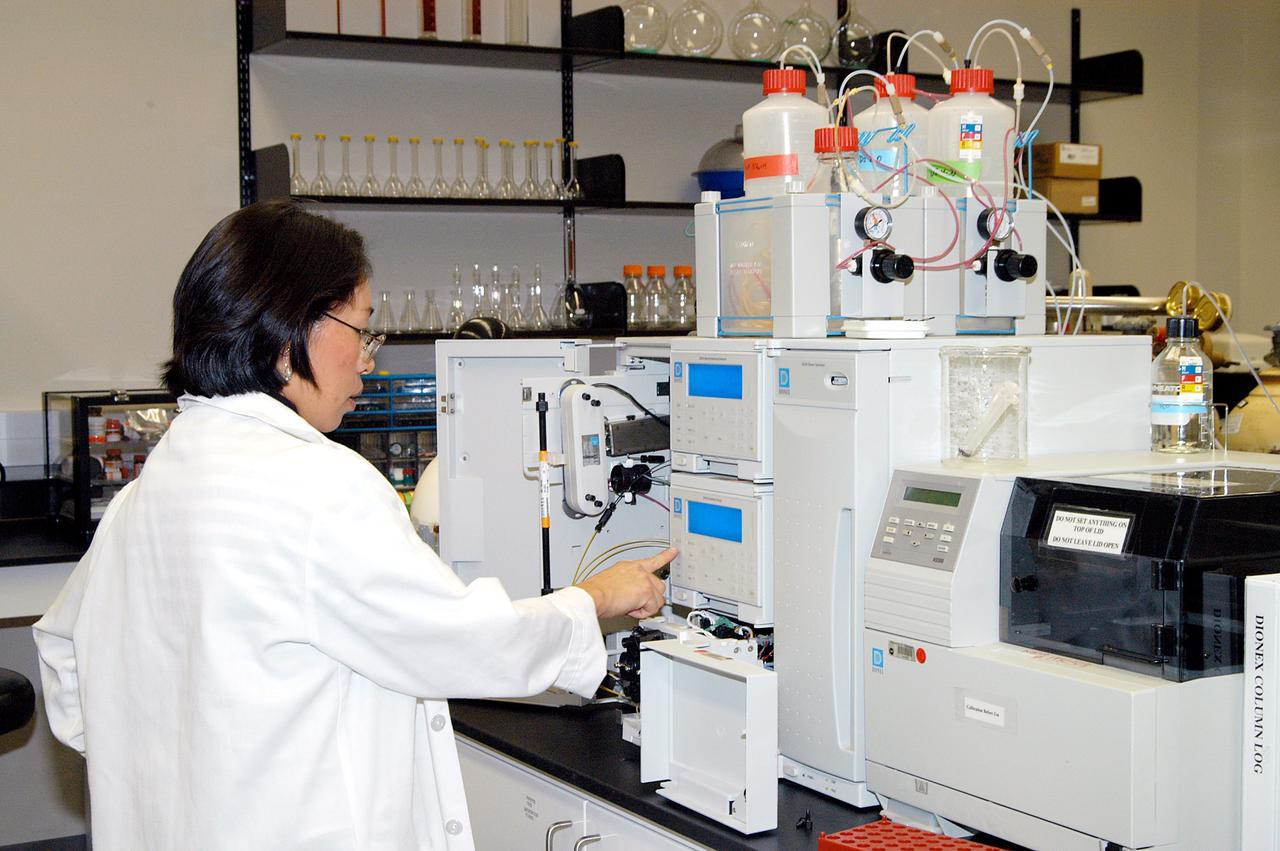
KENNEDY SPACE CENTER, FLA. -- In the Space Life Sciences Lab, Lanfang Levine, with Dynamac Corp., transfers material into a sample bottle for analysis.  She is standing in front of new equipment in the lab that will provide gas chromatography and mass spectrometry.  The equipment will enable analysis of volatile compounds, such as from plants.  The 100,000 square-foot facility houses labs for NASA’s ongoing research efforts, microbiology/microbial ecology studies and analytical chemistry labs. Also calling the new lab home are facilities for space flight-experiment and flight-hardware development, new plant growth chambers, and an Orbiter Environment Simulator that will be used to conduct ground control experiments in simulated flight conditions for space flight experiments.  The SLS Lab, formerly known as the Space Experiment Research and Processing Laboratory or SERPL, provides space for NASA’s Life Sciences Services contractor Dynamac Corporation, Bionetics Corporation, and researchers from the University of Florida. NASA’s Office of Biological and Physical Research will use the facility for processing life sciences experiments that will be conducted on the International Space Station. The SLS Lab is the magnet facility for the International Space Research Park at KSC being developed in partnership with Florida Space Authority.
KENNEDY SPACE CENTER, FLA. -- In the Space Life Sciences Lab, Lanfang Levine, with Dynamac Corp., transfers material into a sample bottle for analysis. She is standing in front of new equipment in the lab that will provide gas chromatography and mass spectrometry. The equipment will enable analysis of volatile compounds, such as from plants. The 100,000 square-foot facility houses labs for NASA’s ongoing research efforts, microbiology/microbial ecology studies and analytical chemistry labs. Also calling the new lab home are facilities for space flight-experiment and flight-hardware development, new plant growth chambers, and an Orbiter Environment Simulator that will be used to conduct ground control experiments in simulated flight conditions for space flight experiments. The SLS Lab, formerly known as the Space Experiment Research and Processing Laboratory or SERPL, provides space for NASA’s Life Sciences Services contractor Dynamac Corporation, Bionetics Corporation, and researchers from the University of Florida. NASA’s Office of Biological and Physical Research will use the facility for processing life sciences experiments that will be conducted on the International Space Station. The SLS Lab is the magnet facility for the International Space Research Park at KSC being developed in partnership with Florida Space Authority.
KENNEDY SPACE CENTER, FLA. -- Sharon Edney, with Dynamac Corp., measures photosynthesis on Bibb lettuce being grown hydroponically for study in the Space Life Sciences Lab.  The 100,000 square-foot facility houses labs for NASA’s ongoing research efforts, microbiology/microbial ecology studies and analytical chemistry labs. Also calling the new lab home are facilities for space flight-experiment and flight-hardware development, new plant growth chambers, and an Orbiter Environment Simulator that will be used to conduct ground control experiments in simulated flight conditions for space flight experiments.  The SLS Lab, formerly known as the Space Experiment Research and Processing Laboratory or SERPL, provides space for NASA’s Life Sciences Services contractor Dynamac Corporation, Bionetics Corporation, and researchers from the University of Florida. NASA’s Office of Biological and Physical Research will use the facility for processing life sciences experiments that will be conducted on the International Space Station. The SLS Lab is the magnet facility for the International Space Research Park at KSC being developed in partnership with Florida Space Authority.
KENNEDY SPACE CENTER, FLA. -- Sharon Edney, with Dynamac Corp., measures photosynthesis on Bibb lettuce being grown hydroponically for study in the Space Life Sciences Lab. The 100,000 square-foot facility houses labs for NASA’s ongoing research efforts, microbiology/microbial ecology studies and analytical chemistry labs. Also calling the new lab home are facilities for space flight-experiment and flight-hardware development, new plant growth chambers, and an Orbiter Environment Simulator that will be used to conduct ground control experiments in simulated flight conditions for space flight experiments. The SLS Lab, formerly known as the Space Experiment Research and Processing Laboratory or SERPL, provides space for NASA’s Life Sciences Services contractor Dynamac Corporation, Bionetics Corporation, and researchers from the University of Florida. NASA’s Office of Biological and Physical Research will use the facility for processing life sciences experiments that will be conducted on the International Space Station. The SLS Lab is the magnet facility for the International Space Research Park at KSC being developed in partnership with Florida Space Authority.
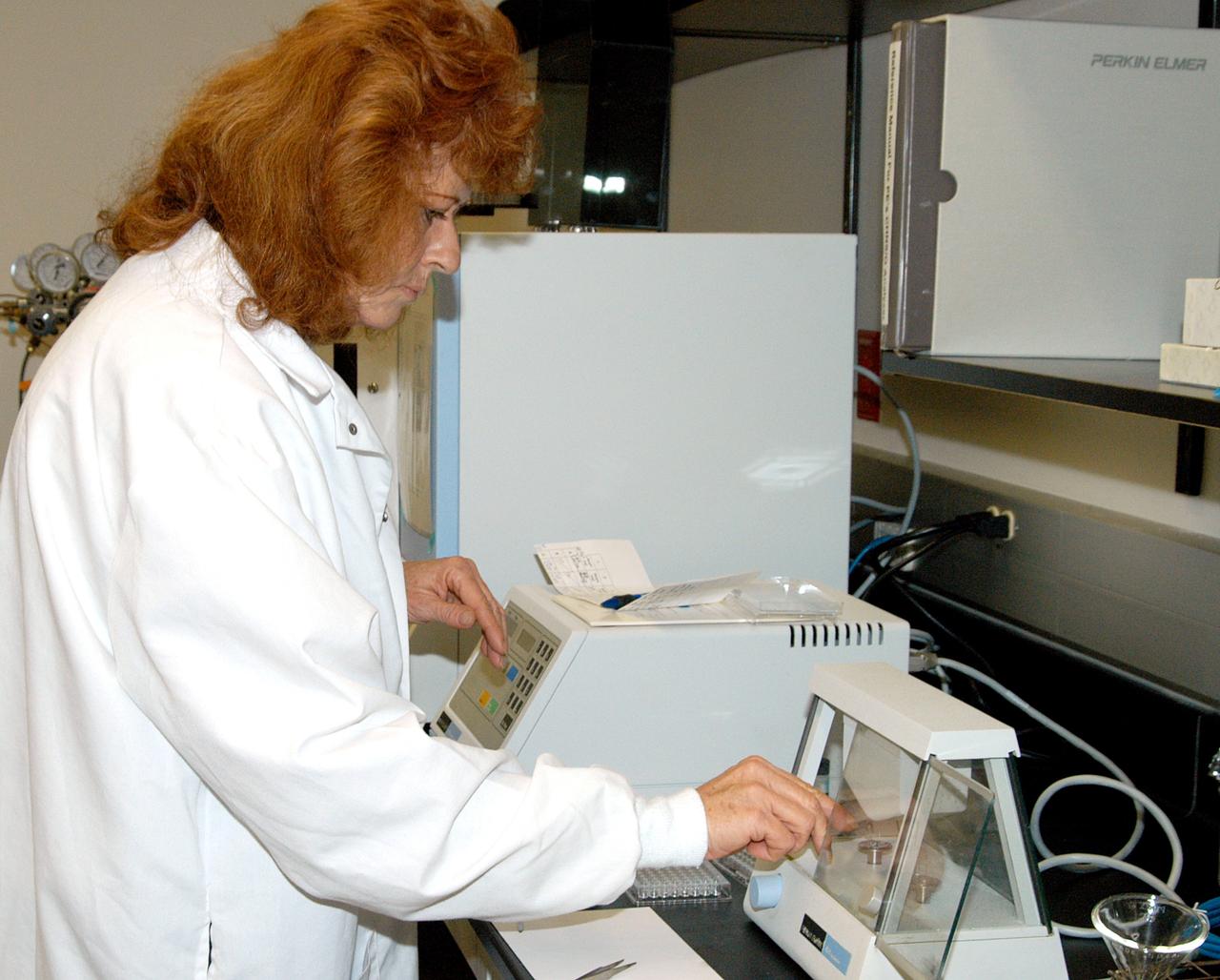
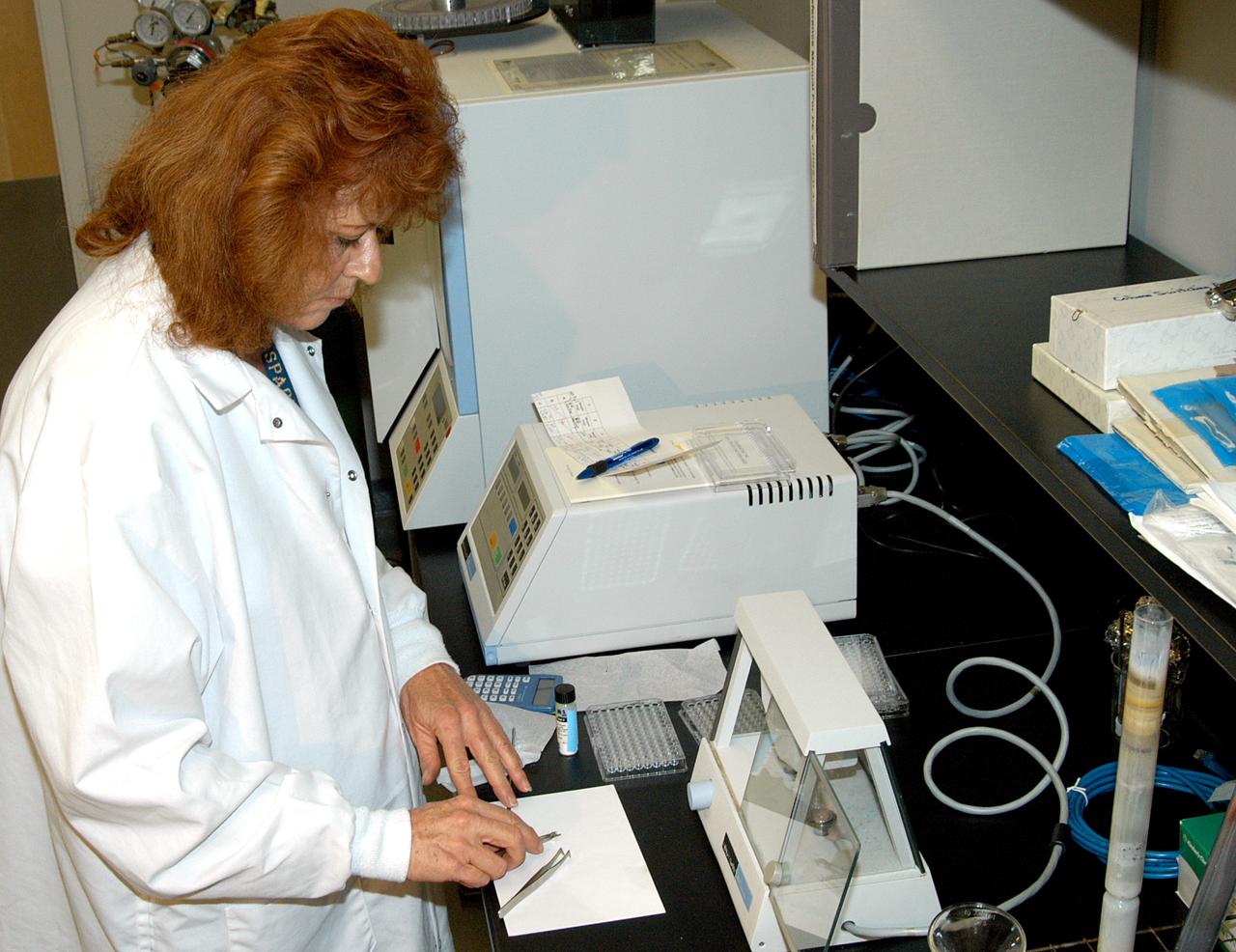
KENNEDY SPACE CENTER, FLA. -- In the Space Life Sciences (SLS) Lab, Jan Bauer, with Dynamac Corp., places samples of onion tissue in the elemental analyzer, which analyzes for carbon, hydrogen, nitrogen and sulfur. The 100,000 square-foot SLS houses labs for NASA’s ongoing research efforts, microbiology/microbial ecology studies and analytical chemistry labs. Also calling the new lab home are facilities for space flight-experiment and flight-hardware development, new plant growth chambers, and an Orbiter Environment Simulator that will be used to conduct ground control experiments in simulated flight conditions for space flight experiments.  The SLS Lab, formerly known as the Space Experiment Research and Processing Laboratory or SERPL, provides space for NASA’s Life Sciences Services contractor Dynamac Corporation, Bionetics Corporation, and researchers from the University of Florida. NASA’s Office of Biological and Physical Research will use the facility for processing life sciences experiments that will be conducted on the International Space Station. The SLS Lab is the magnet facility for the International Space Research Park at KSC being developed in partnership with Florida Space Authority.
KENNEDY SPACE CENTER, FLA. -- In the Space Life Sciences (SLS) Lab, Jan Bauer, with Dynamac Corp., places samples of onion tissue in the elemental analyzer, which analyzes for carbon, hydrogen, nitrogen and sulfur. The 100,000 square-foot SLS houses labs for NASA’s ongoing research efforts, microbiology/microbial ecology studies and analytical chemistry labs. Also calling the new lab home are facilities for space flight-experiment and flight-hardware development, new plant growth chambers, and an Orbiter Environment Simulator that will be used to conduct ground control experiments in simulated flight conditions for space flight experiments. The SLS Lab, formerly known as the Space Experiment Research and Processing Laboratory or SERPL, provides space for NASA’s Life Sciences Services contractor Dynamac Corporation, Bionetics Corporation, and researchers from the University of Florida. NASA’s Office of Biological and Physical Research will use the facility for processing life sciences experiments that will be conducted on the International Space Station. The SLS Lab is the magnet facility for the International Space Research Park at KSC being developed in partnership with Florida Space Authority.
KENNEDY SPACE CENTER, FLA. -- Lanfang Levine, with Dynamac Corp., helps install a Dionex DX-500 IC/HPLC system  in the Space Life Sciences Lab.  The equipment will enable analysis of volatile compounds, such as from plants. The 100,000 square-foot facility houses labs for NASA’s ongoing research efforts, microbiology/microbial ecology studies and analytical chemistry labs. Also calling the new lab home are facilities for space flight-experiment and flight-hardware development, new plant growth chambers, and an Orbiter Environment Simulator that will be used to conduct ground control experiments in simulated flight conditions for space flight experiments.  The SLS Lab, formerly known as the Space Experiment Research and Processing Laboratory or SERPL, provides space for NASA’s Life Sciences Services contractor Dynamac Corporation, Bionetics Corporation, and researchers from the University of Florida. NASA’s Office of Biological and Physical Research will use the facility for processing life sciences experiments that will be conducted on the International Space Station. The SLS Lab is the magnet facility for the International Space Research Park at KSC being developed in partnership with Florida Space Authority.
KENNEDY SPACE CENTER, FLA. -- Lanfang Levine, with Dynamac Corp., helps install a Dionex DX-500 IC/HPLC system in the Space Life Sciences Lab. The equipment will enable analysis of volatile compounds, such as from plants. The 100,000 square-foot facility houses labs for NASA’s ongoing research efforts, microbiology/microbial ecology studies and analytical chemistry labs. Also calling the new lab home are facilities for space flight-experiment and flight-hardware development, new plant growth chambers, and an Orbiter Environment Simulator that will be used to conduct ground control experiments in simulated flight conditions for space flight experiments. The SLS Lab, formerly known as the Space Experiment Research and Processing Laboratory or SERPL, provides space for NASA’s Life Sciences Services contractor Dynamac Corporation, Bionetics Corporation, and researchers from the University of Florida. NASA’s Office of Biological and Physical Research will use the facility for processing life sciences experiments that will be conducted on the International Space Station. The SLS Lab is the magnet facility for the International Space Research Park at KSC being developed in partnership with Florida Space Authority.
KENNEDY SPACE CENTER, FLA. -- In the Space Life Sciences (SLS) Lab, Jan Bauer, with Dynamac Corp., weighs samples of onion tissue for processing in the elemental analyzer behind it.  The equipment analyzes for carbon, hydrogen, nitrogen and sulfur. The 100,000 square-foot SLS houses labs for NASA’s ongoing research efforts, microbiology/microbial ecology studies and analytical chemistry labs. Also calling the new lab home are facilities for space flight-experiment and flight-hardware development, new plant growth chambers, and an Orbiter Environment Simulator that will be used to conduct ground control experiments in simulated flight conditions for space flight experiments.  The SLS Lab, formerly known as the Space Experiment Research and Processing Laboratory or SERPL, provides space for NASA’s Life Sciences Services contractor Dynamac Corporation, Bionetics Corporation, and researchers from the University of Florida. NASA’s Office of Biological and Physical Research will use the facility for processing life sciences experiments that will be conducted on the International Space Station. The SLS Lab is the magnet facility for the International Space Research Park at KSC being developed in partnership with Florida Space Authority.
KENNEDY SPACE CENTER, FLA. -- In the Space Life Sciences (SLS) Lab, Jan Bauer, with Dynamac Corp., weighs samples of onion tissue for processing in the elemental analyzer behind it. The equipment analyzes for carbon, hydrogen, nitrogen and sulfur. The 100,000 square-foot SLS houses labs for NASA’s ongoing research efforts, microbiology/microbial ecology studies and analytical chemistry labs. Also calling the new lab home are facilities for space flight-experiment and flight-hardware development, new plant growth chambers, and an Orbiter Environment Simulator that will be used to conduct ground control experiments in simulated flight conditions for space flight experiments. The SLS Lab, formerly known as the Space Experiment Research and Processing Laboratory or SERPL, provides space for NASA’s Life Sciences Services contractor Dynamac Corporation, Bionetics Corporation, and researchers from the University of Florida. NASA’s Office of Biological and Physical Research will use the facility for processing life sciences experiments that will be conducted on the International Space Station. The SLS Lab is the magnet facility for the International Space Research Park at KSC being developed in partnership with Florida Space Authority.
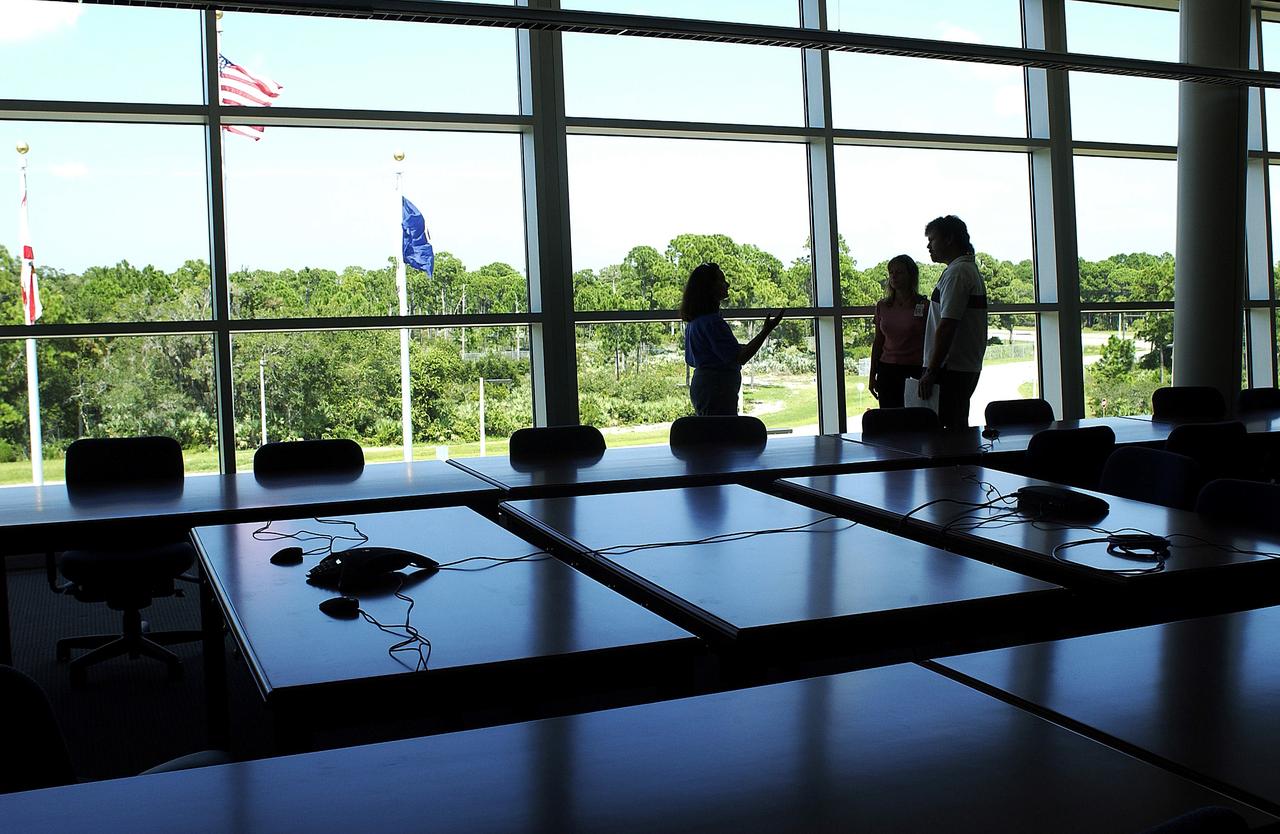
KENNEDY SPACE CENTER, FLA. - Dynamac employees Debbie Wells, Michelle Crouch and Larry Burns are silhouetted as they talk inside a conference room of the Space Life Sciences Lab (SLSL), formerly known as the Space Experiment Research and Processing Laboratory (SERPL).  They have been transferring equipment from Hangar L.  The new lab is a state-of-the-art facility being built for ISS biotechnology research. Developed as a partnership between NASA-KSC and the State of Florida, NASA’s life sciences contractor will be the primary tenant of the facility, leasing space to conduct flight experiment processing and NASA-sponsored research. About 20 percent of the facility will be available for use by Florida’s university researchers through the Florida Space Research Institute.
KENNEDY SPACE CENTER, FLA. - Dynamac employees Debbie Wells, Michelle Crouch and Larry Burns are silhouetted as they talk inside a conference room of the Space Life Sciences Lab (SLSL), formerly known as the Space Experiment Research and Processing Laboratory (SERPL). They have been transferring equipment from Hangar L. The new lab is a state-of-the-art facility being built for ISS biotechnology research. Developed as a partnership between NASA-KSC and the State of Florida, NASA’s life sciences contractor will be the primary tenant of the facility, leasing space to conduct flight experiment processing and NASA-sponsored research. About 20 percent of the facility will be available for use by Florida’s university researchers through the Florida Space Research Institute.
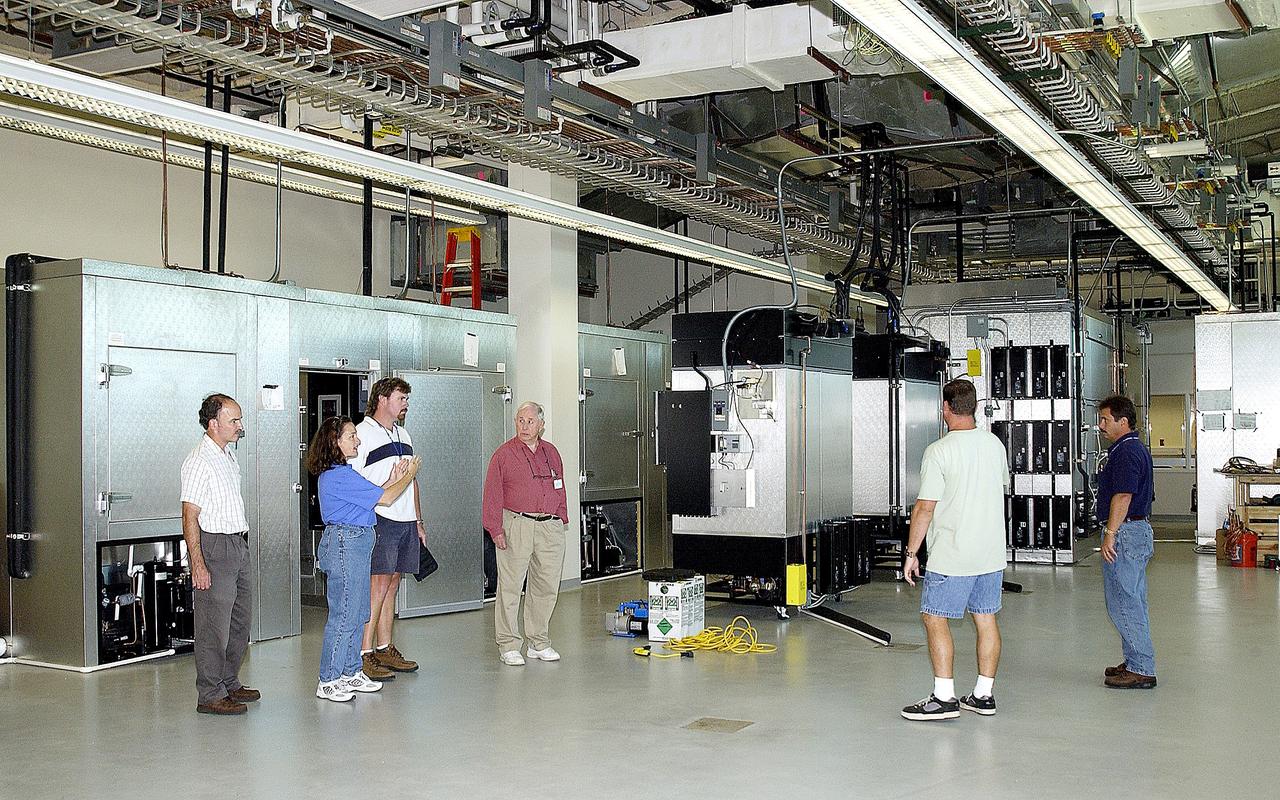
KENNEDY SPACE CENTER, FLA. -  Employees check out the new chamber facilities of the Space Life Sciences Lab (SLSL), formerly known as the Space Experiment Research and Processing Laboratory (SERPL).  From left are Ray Wheeler, with NASA; Debbie Wells and Larry Burns, with Dynamac; A.O. Rule, president of Environmental Growth Chambers, Inc. (ECG); Neil Yorio, with Dynamac; and John Wiezchowski, with ECG.  The SLSL is a state-of-the-art facility being built for ISS biotechnology research. Developed as a partnership between NASA-KSC and the State of Florida, NASA’s life sciences contractor will be the primary tenant of the facility, leasing space to conduct flight experiment processing and NASA-sponsored research. About 20 percent of the facility will be available for use by Florida’s university researchers through the Florida Space Research Institute.
KENNEDY SPACE CENTER, FLA. - Employees check out the new chamber facilities of the Space Life Sciences Lab (SLSL), formerly known as the Space Experiment Research and Processing Laboratory (SERPL). From left are Ray Wheeler, with NASA; Debbie Wells and Larry Burns, with Dynamac; A.O. Rule, president of Environmental Growth Chambers, Inc. (ECG); Neil Yorio, with Dynamac; and John Wiezchowski, with ECG. The SLSL is a state-of-the-art facility being built for ISS biotechnology research. Developed as a partnership between NASA-KSC and the State of Florida, NASA’s life sciences contractor will be the primary tenant of the facility, leasing space to conduct flight experiment processing and NASA-sponsored research. About 20 percent of the facility will be available for use by Florida’s university researchers through the Florida Space Research Institute.
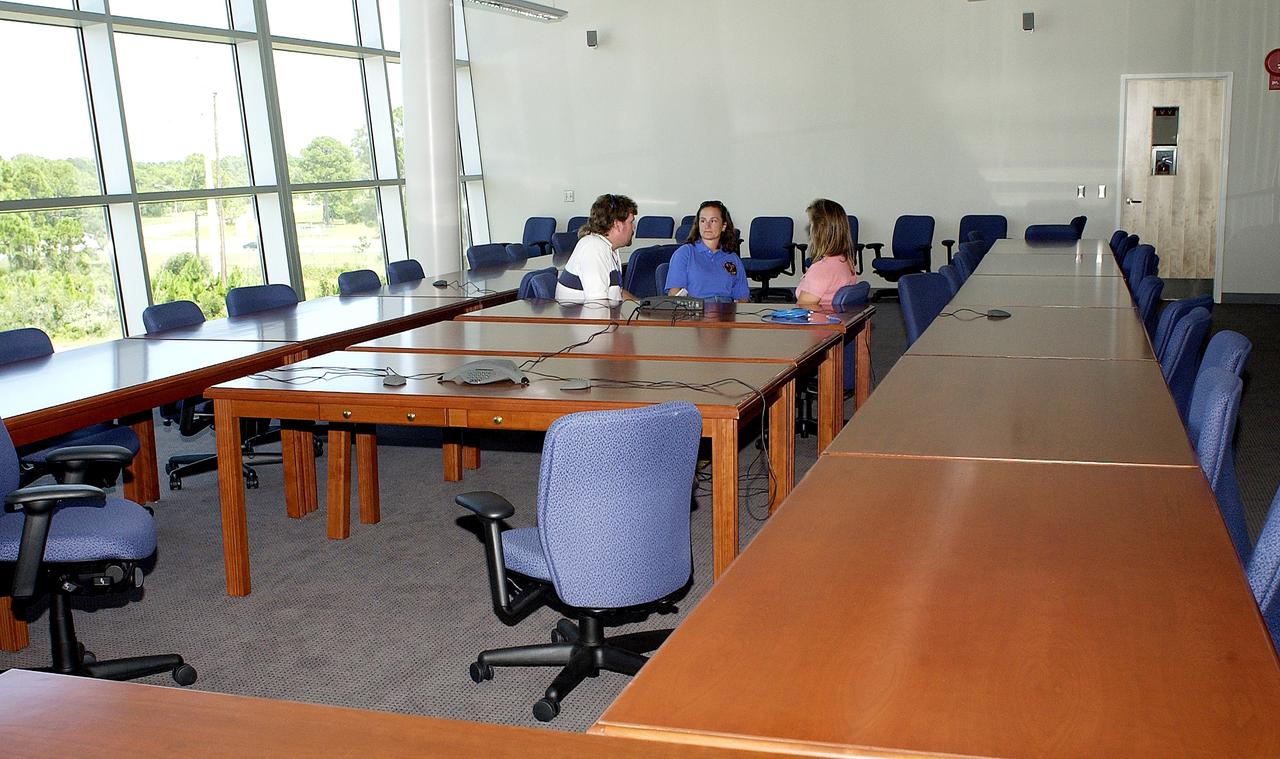
KENNEDY SPACE CENTER, FLA. - Dynamac employees (from left) Larry Burns, Debbie Wells and Michelle Crouch talk in a conference room of the Space Life Sciences Lab (SLSL), formerly known as the Space Experiment Research and Processing Laboratory (SERPL). They have been transferring equipment from Hangar L.  The new lab is a state-of-the-art facility being built for ISS biotechnology research. Developed as a partnership between NASA-KSC and the State of Florida, NASA’s life sciences contractor will be the primary tenant of the facility, leasing space to conduct flight experiment processing and NASA-sponsored research. About 20 percent of the facility will be available for use by Florida’s university researchers through the Florida Space Research Institute.
KENNEDY SPACE CENTER, FLA. - Dynamac employees (from left) Larry Burns, Debbie Wells and Michelle Crouch talk in a conference room of the Space Life Sciences Lab (SLSL), formerly known as the Space Experiment Research and Processing Laboratory (SERPL). They have been transferring equipment from Hangar L. The new lab is a state-of-the-art facility being built for ISS biotechnology research. Developed as a partnership between NASA-KSC and the State of Florida, NASA’s life sciences contractor will be the primary tenant of the facility, leasing space to conduct flight experiment processing and NASA-sponsored research. About 20 percent of the facility will be available for use by Florida’s university researchers through the Florida Space Research Institute.
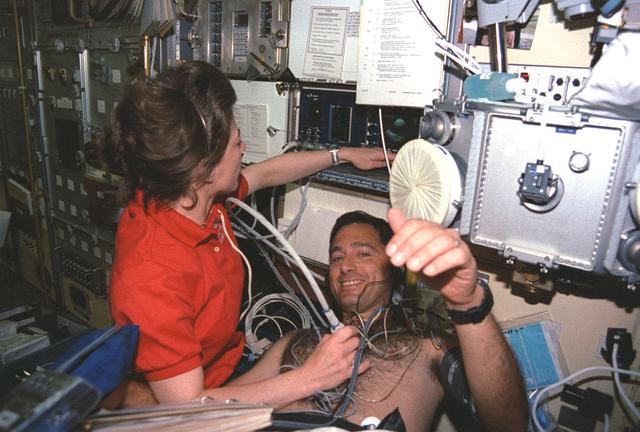
Onboard Space Shuttle Columbia (STS-50) payload commander Bornie Dunbar performs life science experiments on crewmember payload specialist Lawrence Delucas in the United States Microgravity Laboratory (USML-1) science module.
Microgravity
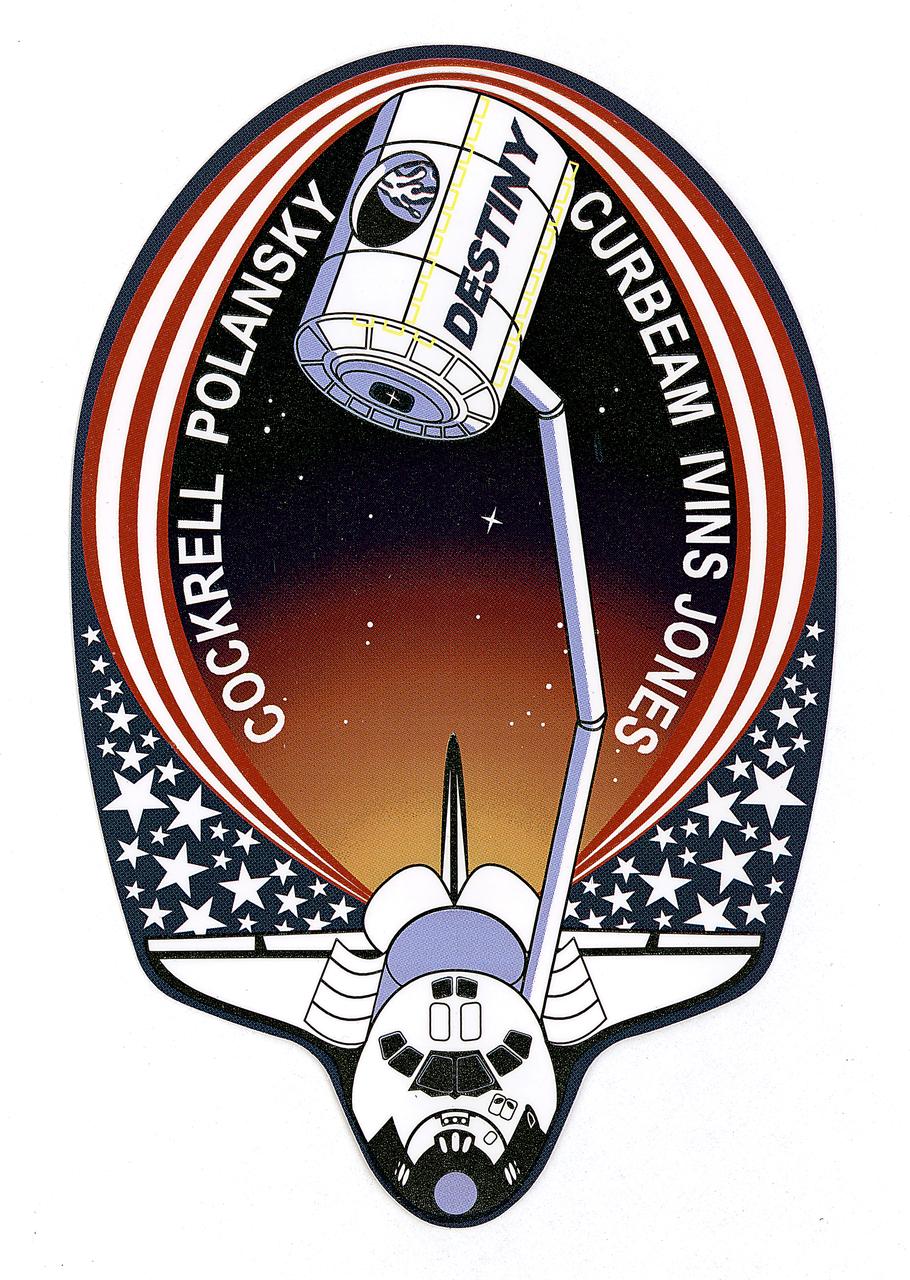
This is the insignia for STS-98, which marks a major milestone in assembly of the International Space Station (ISS). Atlantis' crew delivered the United States Laboratory, Destiny, to the ISS. Destiny will be the centerpiece of the ISS, a weightless laboratory where expedition crews will perform unprecedented research in the life sciences, materials sciences, Earth sciences, and microgravity sciences. The laboratory is also the nerve center of the Station, performing guidance, control, power distribution, and life support functions. With Destiny's arrival, the Station will begin to fulfill its promise of returning the benefits of space research to Earth's citizens. The crew patch depicts the Space Shuttle with Destiny held high above the payload bay just before its attachment to the ISS. Red and white stripes, with a deep blue field of white stars, border the Shuttle and Destiny to symbolize the continuing contribution of the United States to the ISS. The constellation Hercules, seen just below Destiny, captures the Shuttle and Station's team efforts in bringing the promise of orbital scientific research to life. The reflection of Earth in Destiny's window emphasizes the connection between space exploration and life on Earth.
International Space Station (ISS)
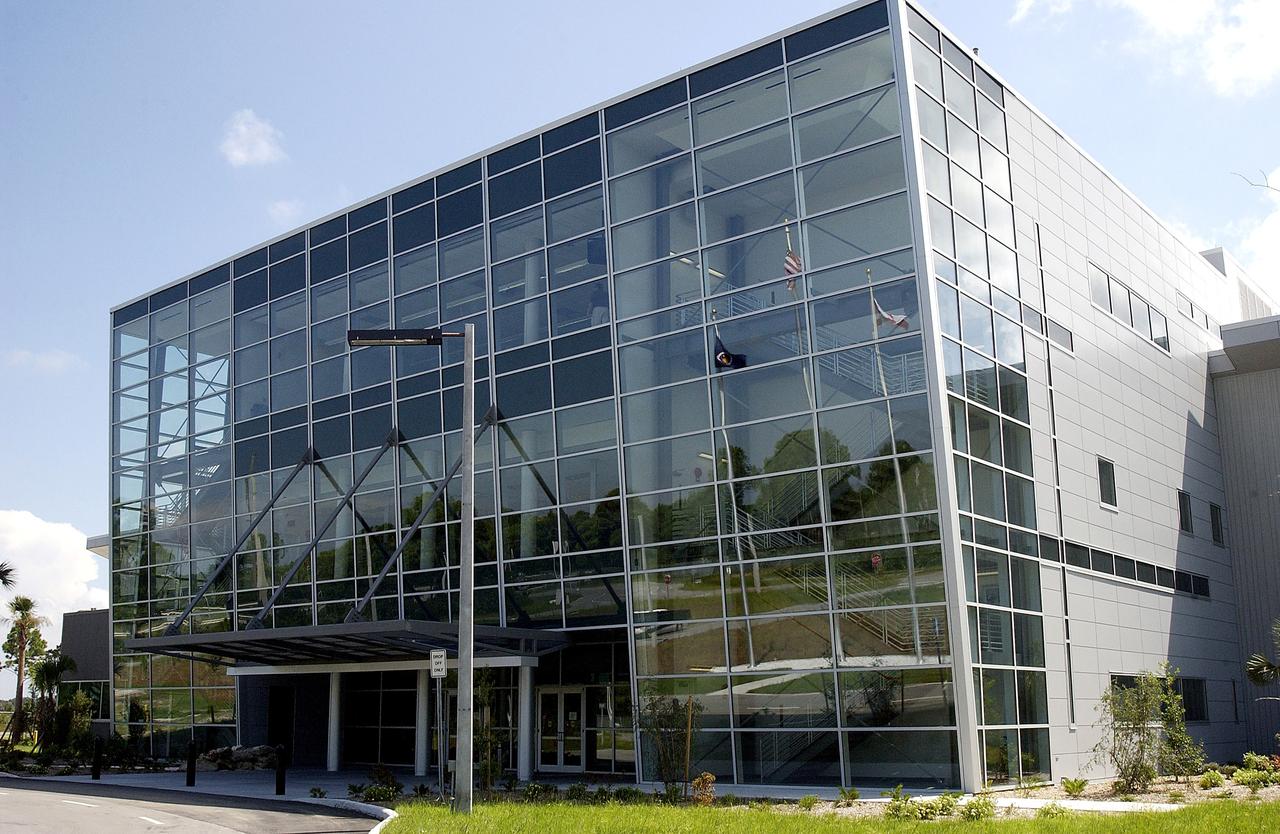
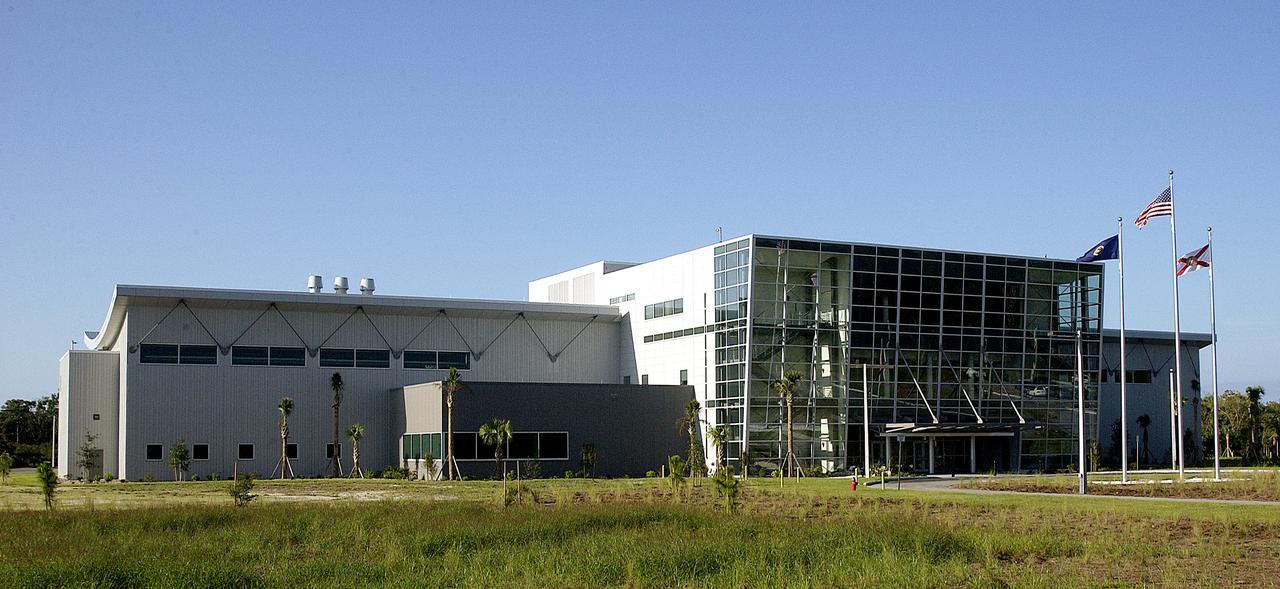
The Space Life Sciences Lab (SLSL), formerly known as the Space Experiment Research and Processing Laboratory (SERPL), is a state-of-the-art facility built for ISS biotechnology research. Developed as a partnership between NASA-KSC and the State of Florida, NASA’s life sciences contractor is the primary tenant of the facility, leasing space to conduct flight experiment processing and NASA-sponsored research. About 20 percent of the facility will be available for use by Florida’s university researchers through the Florida Space Research Institute.
Space Life Sciences Lab
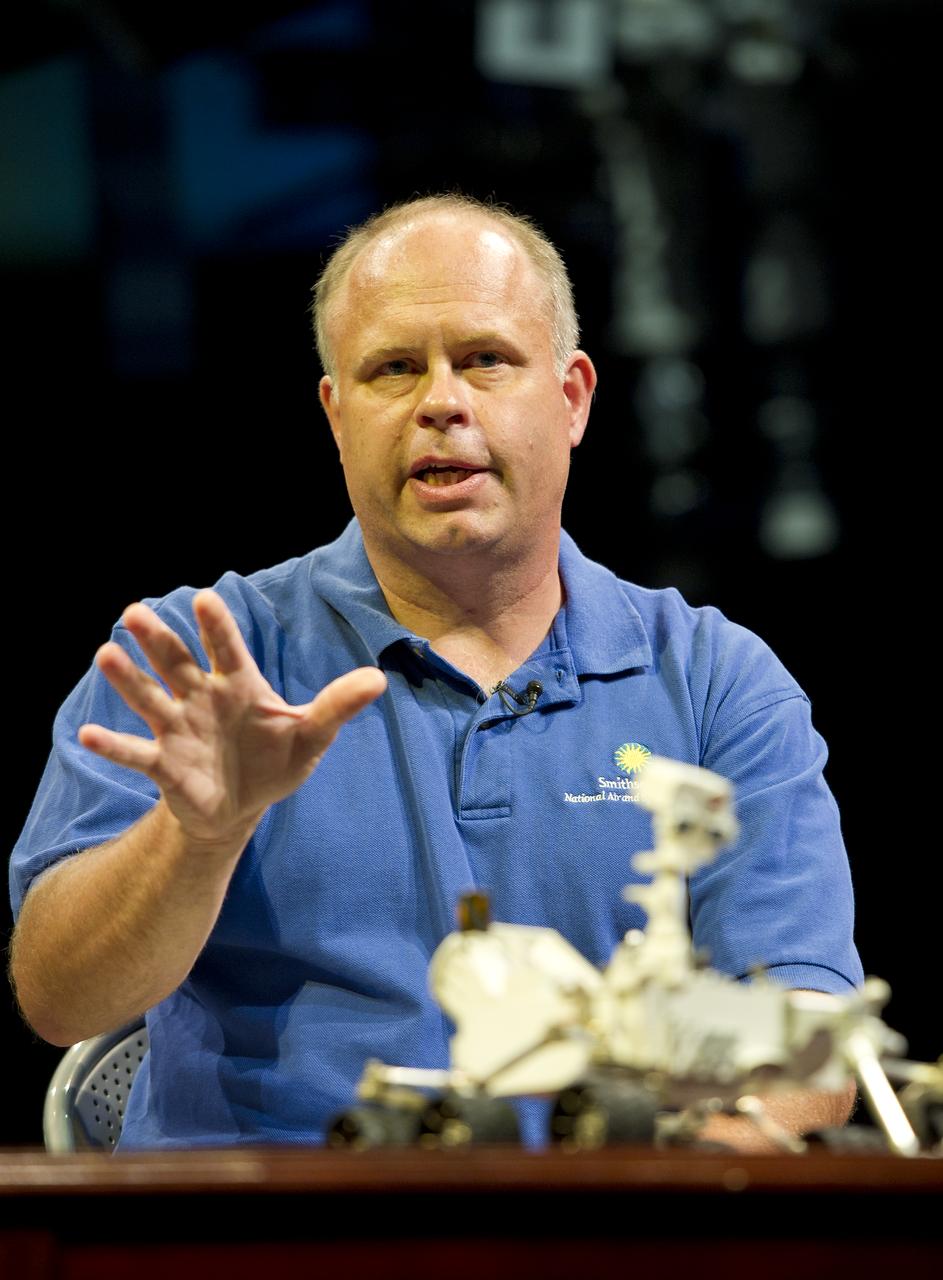
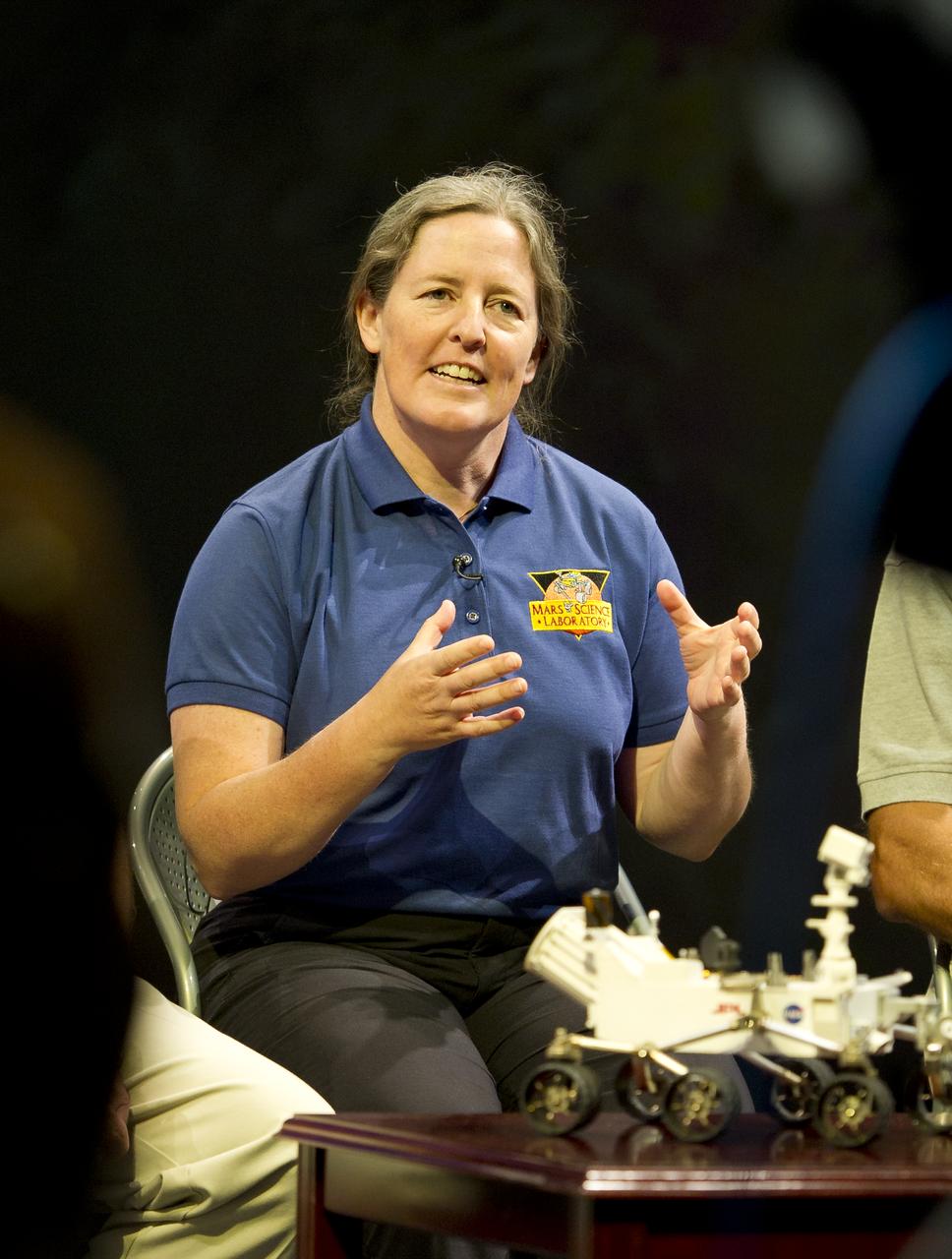
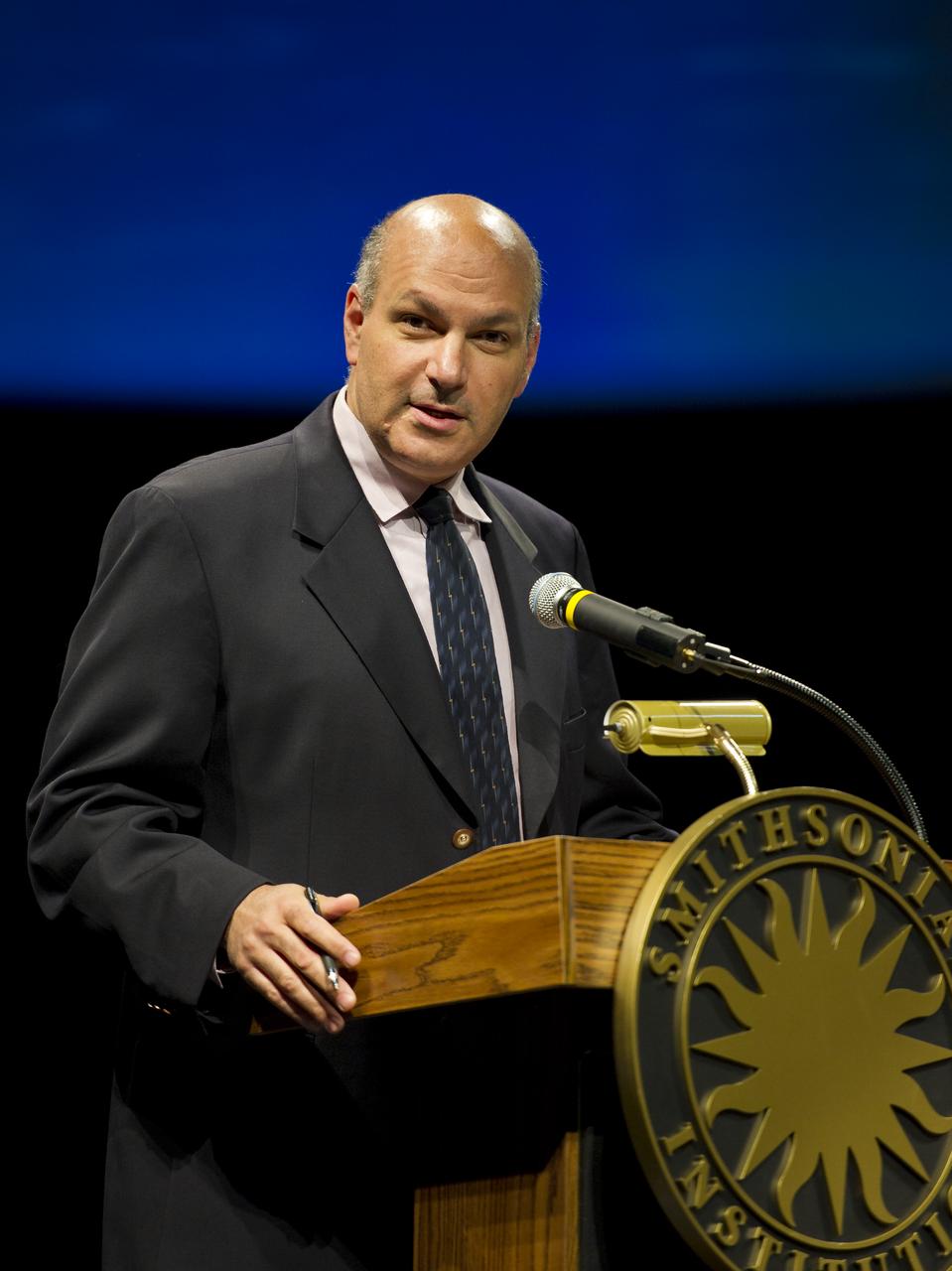
John Grant, geologist, Smithsonian National Air and Space Museum in Washington, speaks at a Mars Science Laboratory (MSL) press conference at the Smithsonian's National Air and Space Museum on Friday, July 22, 2011 in Washington.  The Mars Science Laboratory (MSL), or Curiosity, is scheduled to launch late this year from NASA's Kennedy Space Center in Florida and land in August 2012.  Curiosity is twice as long and more than five times as heavy as previous Mars rovers.  The rover will study whether the landing region at Gale crater had favorable environmental conditions for supporting microbial life and for preserving clues about whether life ever existed.  Photo Credit:  (NASA/Carla Cioffi)
Mars Science Laboratory Press Conference
ISS038-E-044829 (10 Feb. 2014) --- NASA astronaut Rick Mastracchio, Expedition 38 flight engineer, prepares to use an ultraviolet light to decontaminate hardware used for life science experiments inside the Microgravity Science Glovebox (MSG) in the Destiny laboratory of the International Space Station.
Mastracchio installs MSG LSAH Decontamination System
NASA chief scientist, Dr. Waleed Abdalati, speaks at a Mars Science Laboratory (MSL) press conference at the Smithsonian's National Air and Space Museum on Friday, July 22, 2011 in Washington.  The Mars Science Laboratory (MSL), or Curiosity, is scheduled to launch late this year from NASA's Kennedy Space Center in Florida and land in August 2012.  Curiosity is twice as long and more than five times as heavy as previous Mars rovers.  The rover will study whether the landing region at Gale crater had favorable environmental conditions for supporting microbial life and for preserving clues about whether life ever existed.  Photo Credit:  (NASA/Carla Cioffi)
Mars Science Laboratory Press Conference
Dawn Sumner, geologist, University of California, Davis speaks at a Mars Science Laboratory (MSL) press conference at the Smithsonian's National Air and Space Museum on Friday, July 22, 2011 in Washington.  The Mars Science Laboratory (MSL), or Curiosity, is scheduled to launch late this year from NASA's Kennedy Space Center in Florida and land in August 2012.  Curiosity is twice as long and more than five times as heavy as previous Mars rovers.  The rover will study whether the landing region at Gale crater had favorable environmental conditions for supporting microbial life and for preserving clues about whether life ever existed.  Photo Credit:  (NASA/Carla Cioffi)
Mars Science Laboratory Press Conference
KENNEDY SPACE CENTER, FLA. -  The Honorable Toni Jennings (left), lieutenant governor of the state of Florida, and Frank T. Brogan, president of Florida Atlantic University, receive a briefing on the research that will be conducted in the Space Life Sciences Lab from Dr. Robert J. Ferl (right), director of Space Agriculture Biotechnology Research and Education (SABRE), University of Florida.  Jennings and Brogan are speaking at a dedication and ribbon-cutting ceremony for the lab hosted by NASA-Kennedy Space Center and the state of Florida at the new lab. Completed in August, the facility encompasses more than 100,000 square feet and was formerly known as the Space Experiment Research and Processing Laboratory or SERPL. The state, through the Florida Space Authority, built the research lab which is host to NASA, NASA’s Life Sciences Services contractor Dynamac Corp., Bionetics Corp., and researchers from the University of Florida.  Dynamac Corp. leases the facility.  The Florida Space Research Institute is responsible for gaining additional tenants from outside the NASA community.
KENNEDY SPACE CENTER, FLA. - The Honorable Toni Jennings (left), lieutenant governor of the state of Florida, and Frank T. Brogan, president of Florida Atlantic University, receive a briefing on the research that will be conducted in the Space Life Sciences Lab from Dr. Robert J. Ferl (right), director of Space Agriculture Biotechnology Research and Education (SABRE), University of Florida. Jennings and Brogan are speaking at a dedication and ribbon-cutting ceremony for the lab hosted by NASA-Kennedy Space Center and the state of Florida at the new lab. Completed in August, the facility encompasses more than 100,000 square feet and was formerly known as the Space Experiment Research and Processing Laboratory or SERPL. The state, through the Florida Space Authority, built the research lab which is host to NASA, NASA’s Life Sciences Services contractor Dynamac Corp., Bionetics Corp., and researchers from the University of Florida. Dynamac Corp. leases the facility. The Florida Space Research Institute is responsible for gaining additional tenants from outside the NASA community.
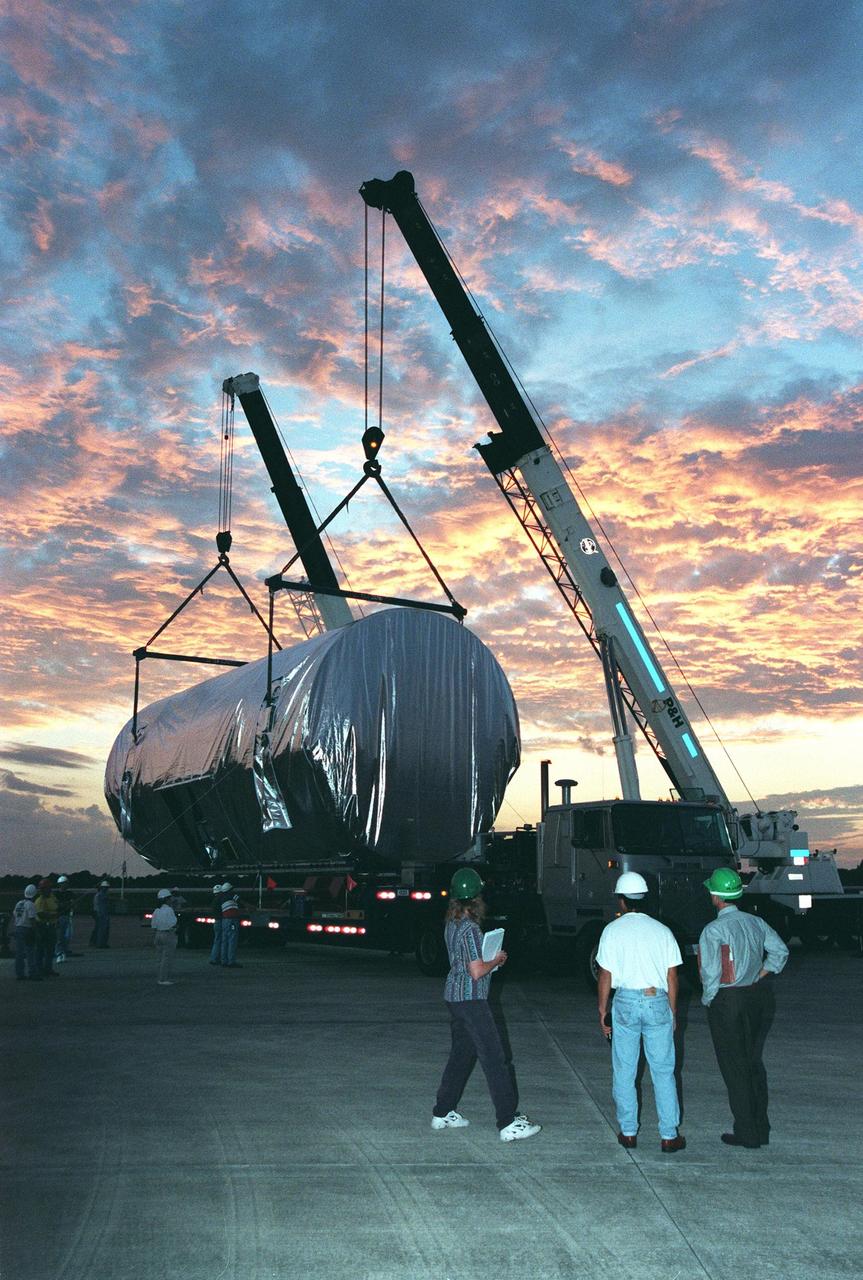
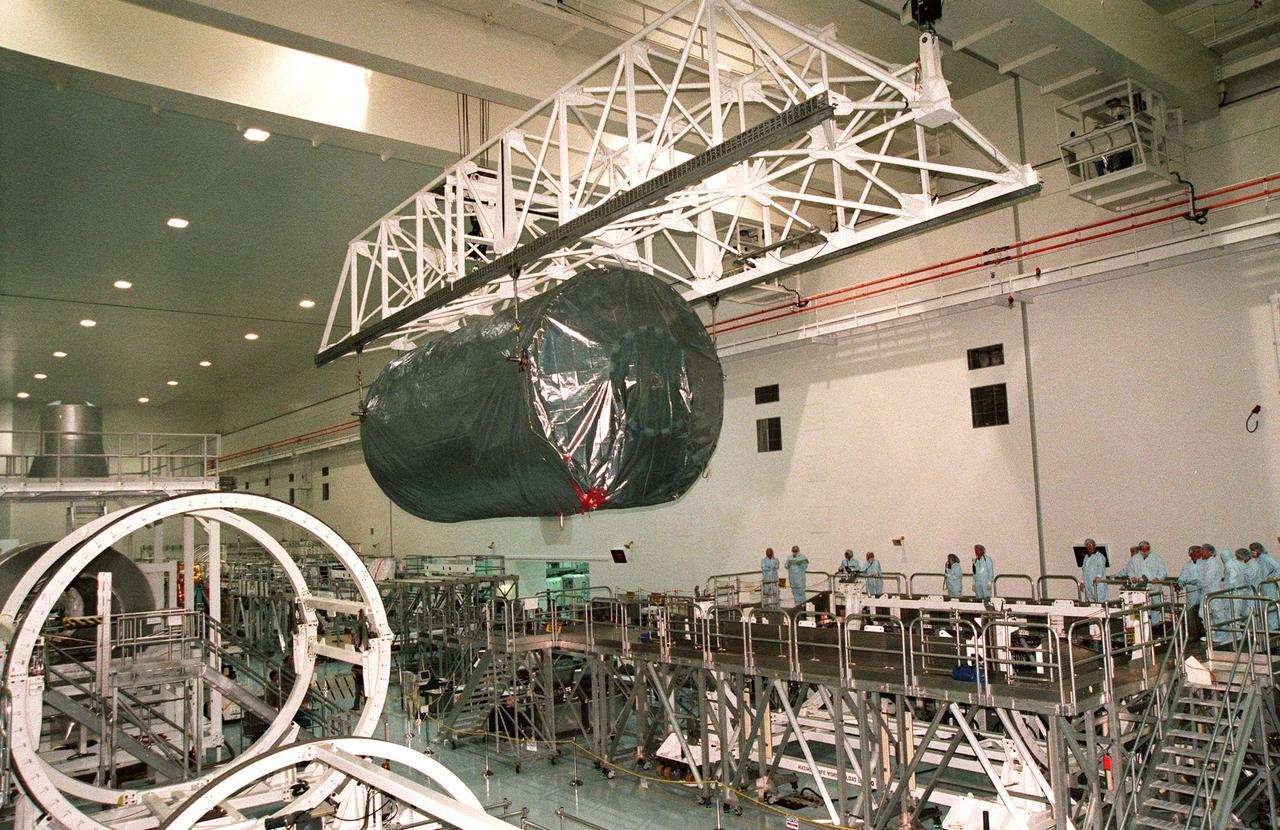
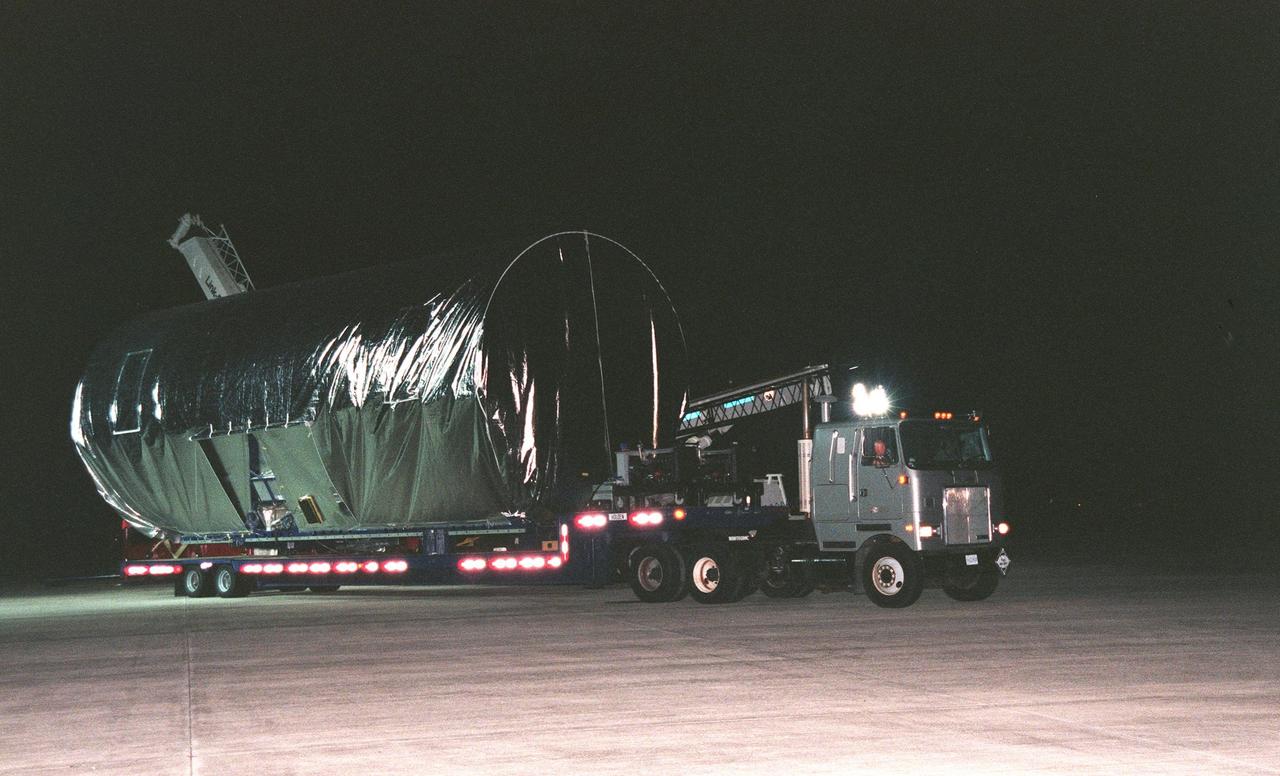
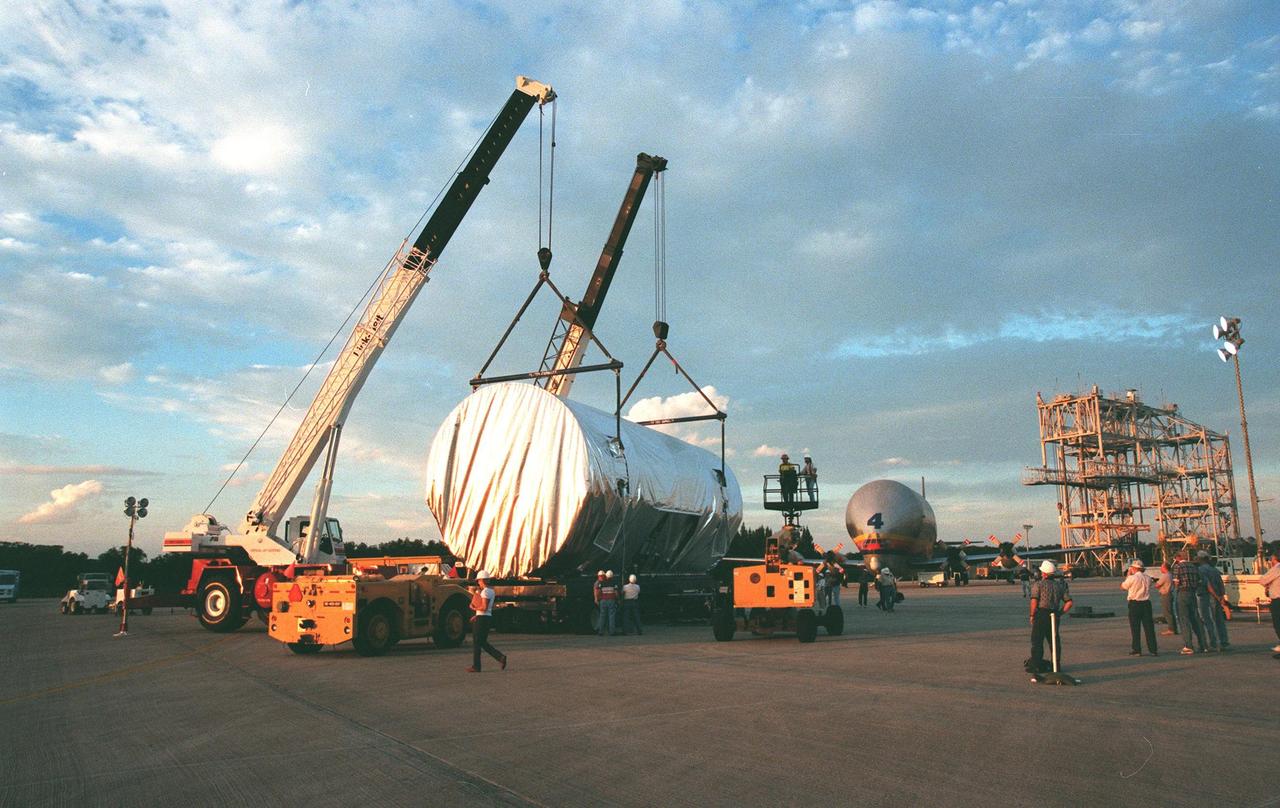
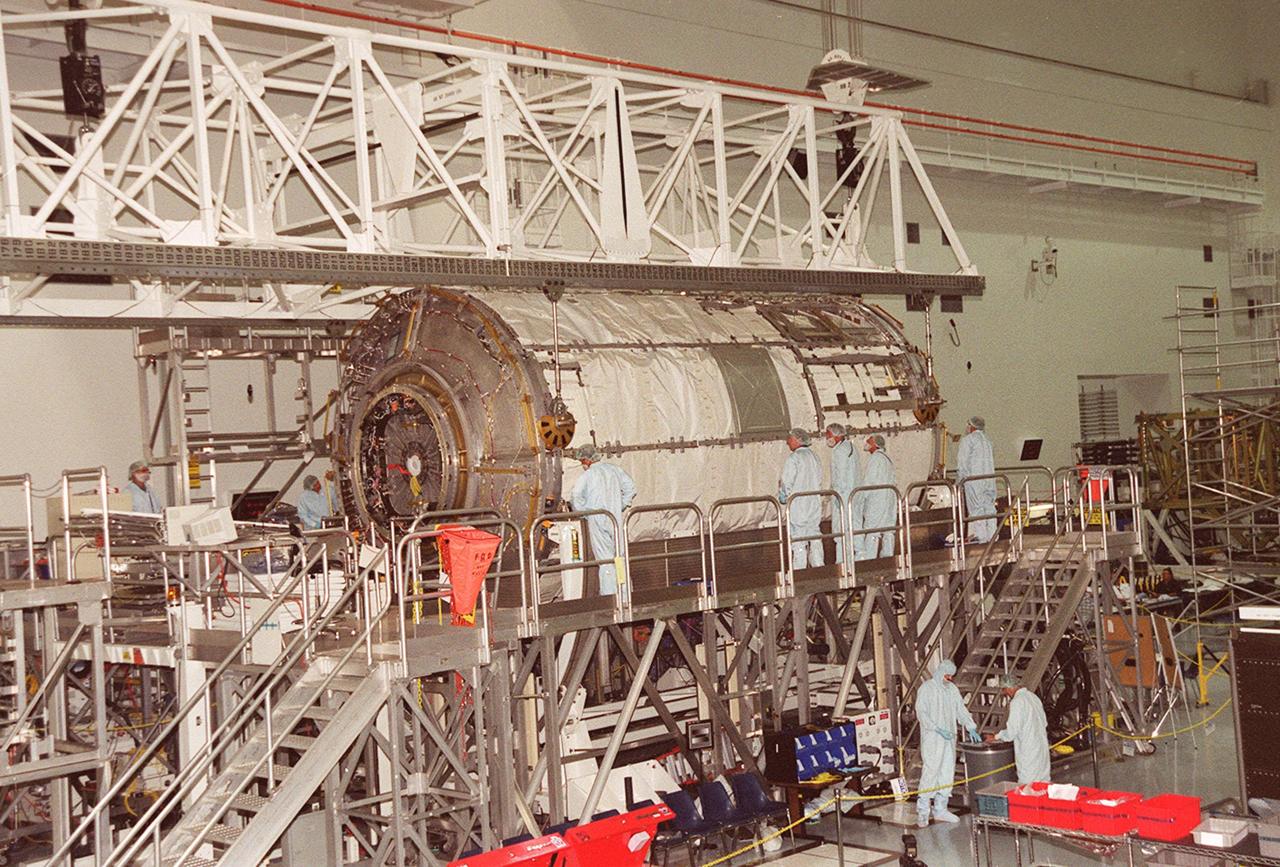
KENNEDY SPACE CENTER, FLA. -- In the growing dark of night, cranes maneuver the canister containing the U.S. laboratory module onto the bed of a trailer, waiting with its lights on for the move to the Space Station Processing Facility. Intended for the International Space Station, the lab is scheduled to undergo pre-launch preparations before its launch aboard the Shuttle Endeavour on mission STS-98. The laboratory comprises three cylindrical sections with two end cones. Each end-cone contains a hatch opening for entering and exiting the lab. The lab will provide a shirtsleeve environment for research in the areas of life science, microgravity science, Earth science and space science. Designated Flight 5A, this mission is targeted for launch in early 2000
KSC-98pc1706
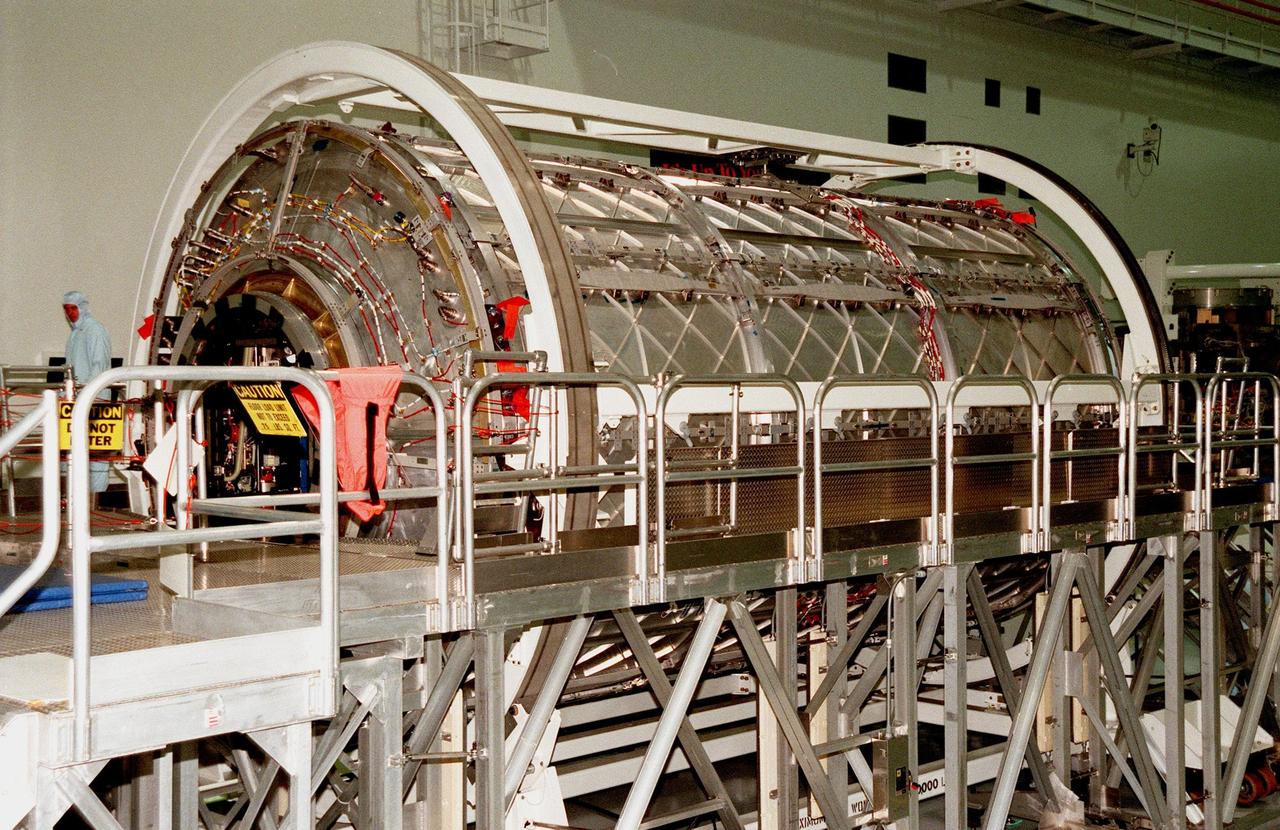
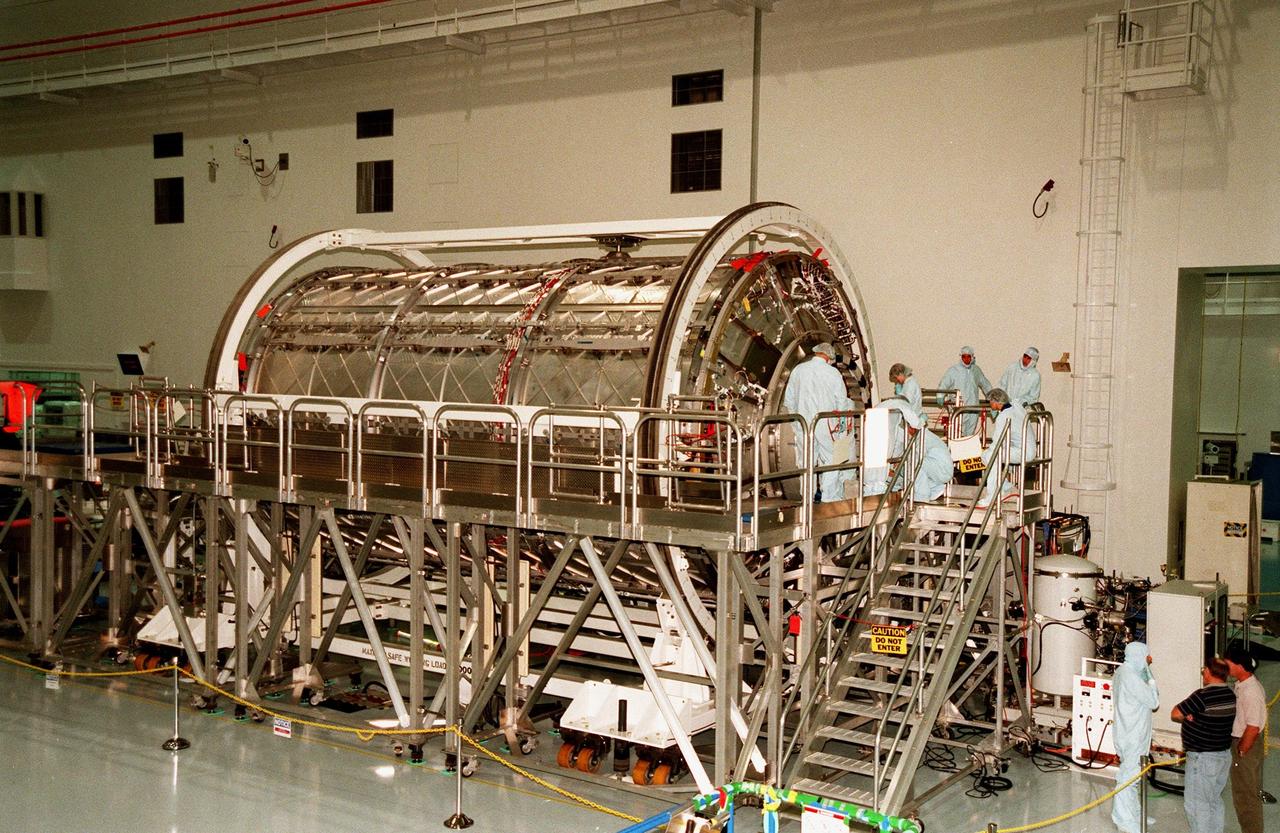
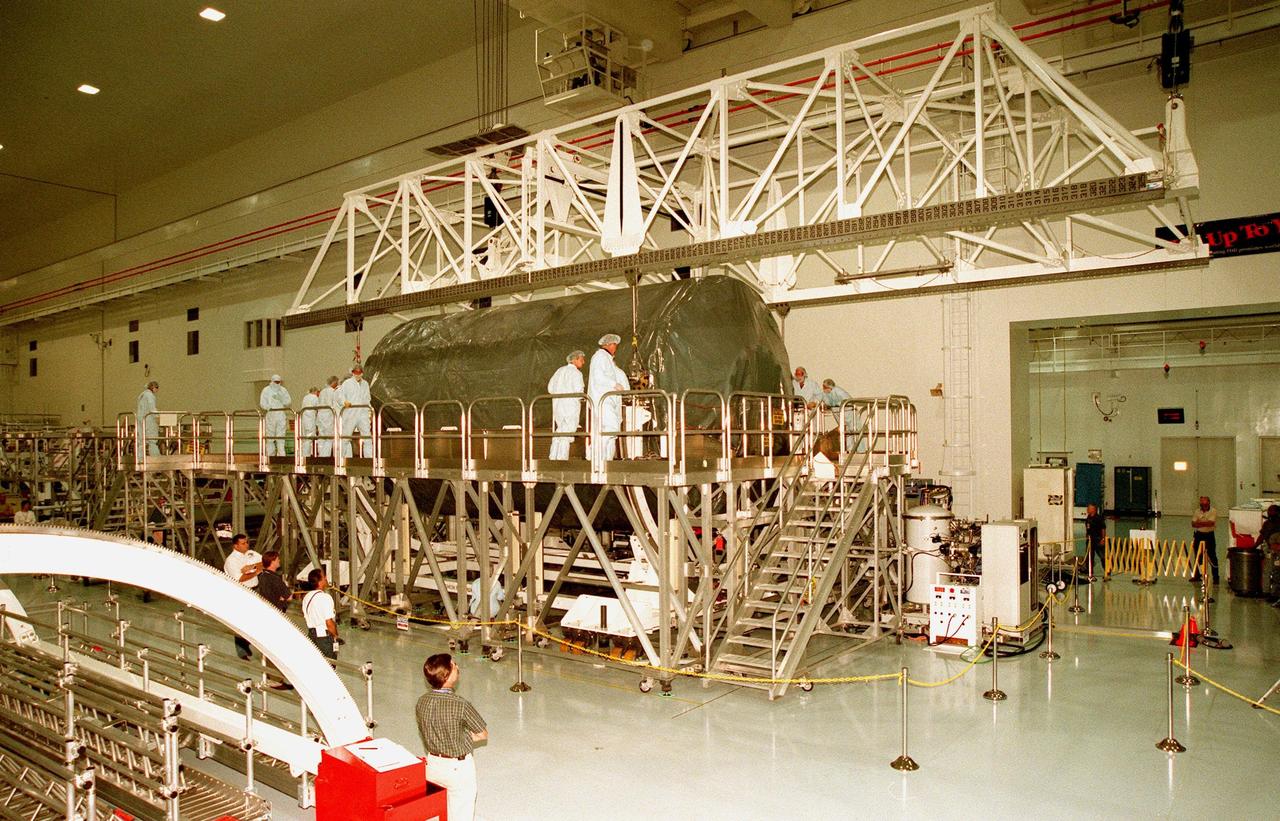
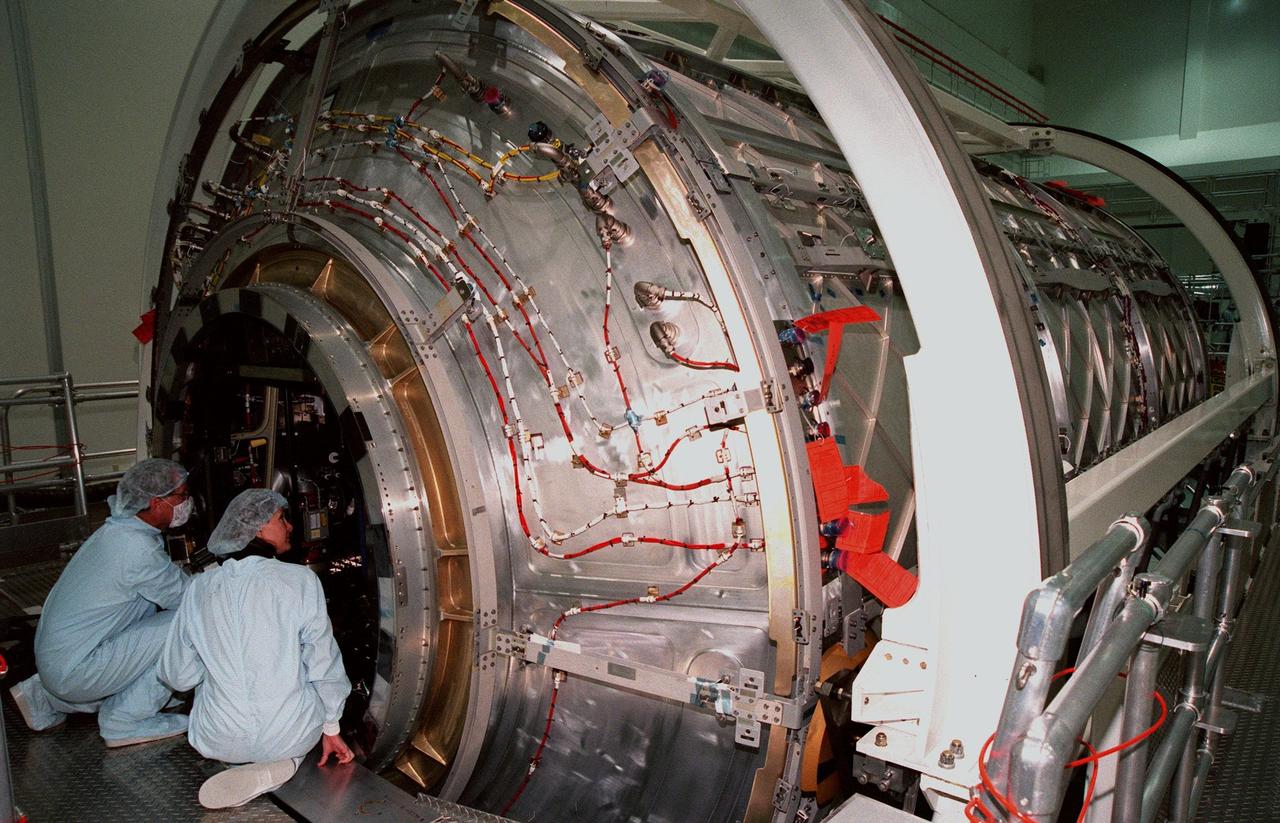
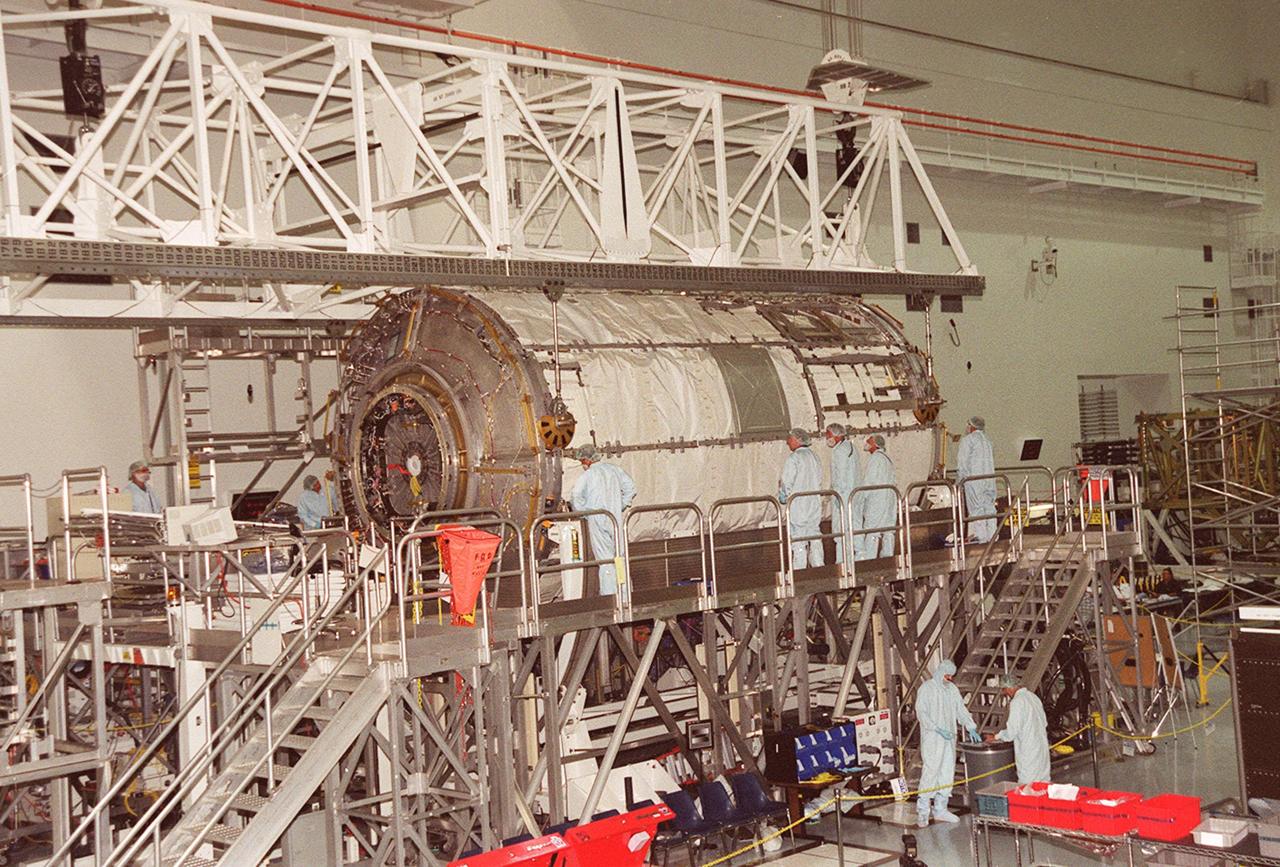
KENNEDY SPACE CENTER, FLA. -- On a workstand in the Space Station Processing Facility, KSC workers take a look at the U.S. laboratory module, an element of the International Space Station, after its protective cover has been removed. The lab will undergo pre-launch preparations before its launch aboard the Shuttle Endeavour on mission STS-98. The laboratory comprises three cylindrical sections with two end cones. Each end-cone contains a hatch opening for entering and exiting the lab. The lab will provide a shirtsleeve environment for research in the areas of life science, microgravity science, Earth science and space science. Designated Flight 5A, this mission is targeted for launch in early 2000
KSC-98pc1714
KENNEDY SPACE CENTER, FLA. -- On a workstand in the Space Station Processing Facility, the U.S. laboratory module, an element of the International Space Station, is ready for pre-launch preparations before its launch aboard the Shuttle Endeavour on mission STS-98. The laboratory comprises three cylindrical sections with two end cones. Each end-cone contains a hatch opening for entering and exiting the lab. The lab will provide a shirtsleeve environment for research in the areas of life science, microgravity science, Earth science and space science. Designated Flight 5A, this mission is targeted for launch in early 2000
KSC-98pc1715
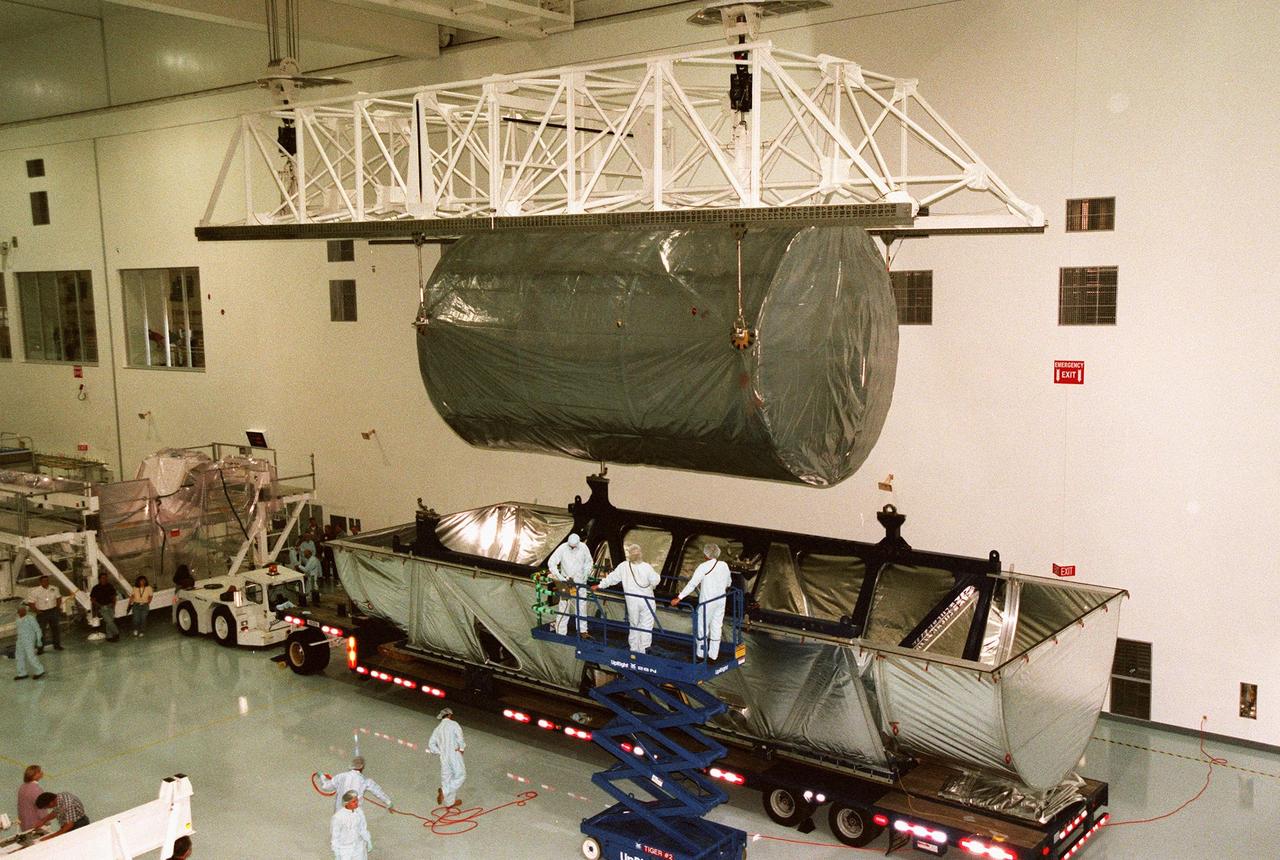
KENNEDY SPACE CENTER, FLA. -- A crane is attached to the U.S. laboratory module in order to transfer it to a truck. Intended for the International Space Station, the lab is being moved to the Space Station Processing Facility for pre-launch preparations. Scheduled for launch aboard the Shuttle Endeavour on mission STS-98, the laboratory comprises three cylindrical sections with two end cones. Each end-cone contains a hatch opening for entering and exiting the lab. The lab will provide a shirtsleeve environment for research in the areas of life science, microgravity science, Earth science and space science. Designated Flight 5A, this mission is targeted for launch in early 2000
KSC-98pc1703
KENNEDY SPACE CENTER, FLA. -- A second crane is attached to the canister containing the U.S. laboratory module in order to transfer it to a truck. Intended for the International Space Station, the lab is being moved to the Space Station Processing Facility for pre-launch preparations. Scheduled for launch aboard the Shuttle Endeavour on mission STS-98, the laboratory comprises three cylindrical sections with two end cones. Each end-cone contains a hatch opening for entering and exiting the lab. The lab will provide a shirtsleeve environment for research in the areas of life science, microgravity science, Earth science and space science. Designated Flight 5A, this mission is targeted for launch in early 2000
KSC-98pc1704
KENNEDY SPACE CENTER, FLA. -- After nightfall, a truck carrying the container that holds the U.S. laboratory module begins the trip from the Shuttle Landing Facility to the Space Station Processing Facility. Intended for the International Space Station, the lab is scheduled to undergo pre-launch preparations before its launch aboard the Shuttle Endeavour on mission STS-98. The laboratory comprises three cylindrical sections with two end cones. Each end-cone contains a hatch opening for entering and exiting the lab. The lab will provide a shirtsleeve environment for research in the areas of life science, microgravity science, Earth science and space science. Designated Flight 5A, this mission is targeted for launch in early 2000
KSC-98pc1708
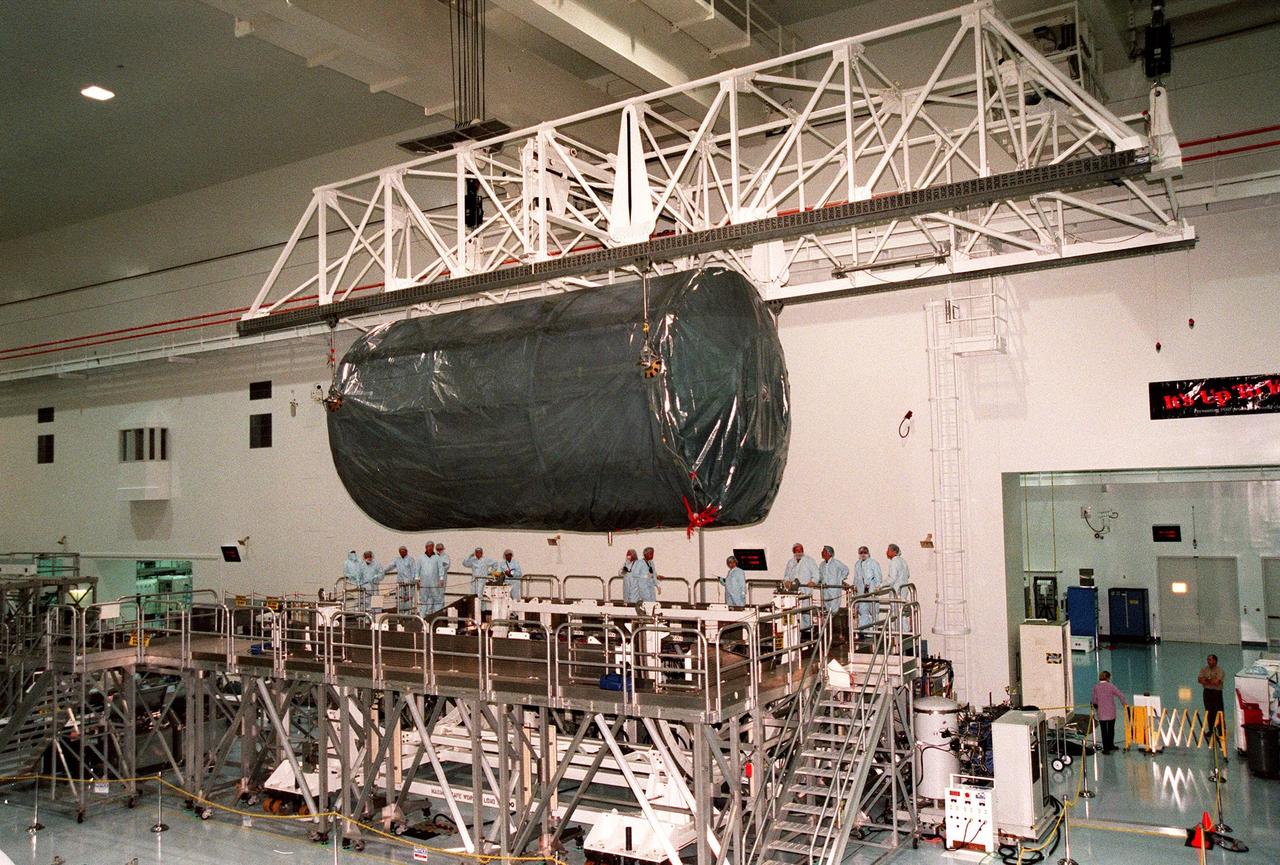
KENNEDY SPACE CENTER, FLA. -- An overhead crane in the high bay of the Space Station Processing Facility moves the U.S. laboratory module, an element of the International Space Station, toward the workstand on the right. KSC workers watch its movement. The lab will undergo pre-launch preparations before its launch aboard the Shuttle Endeavour on mission STS-98. The laboratory comprises three cylindrical sections with two end cones. Each end-cone contains a hatch opening for entering and exiting the lab. The lab will provide a shirtsleeve environment for research in the areas of life science, microgravity science, Earth science and space science. Designated Flight 5A, this mission is targeted for launch in early 2000
KSC-98pc1711
KENNEDY SPACE CENTER, FLA. -- KSC workers watch as an overhead crane in the high bay of the Space Station Processing Facility lowers the U.S. laboratory module, an element of the International Space Station, onto the workstand. The lab will undergo pre-launch preparations before its launch aboard the Shuttle Endeavour on mission STS-98. The laboratory comprises three cylindrical sections with two end cones. Each end-cone contains a hatch opening for entering and exiting the lab. The lab will provide a shirtsleeve environment for research in the areas of life science, microgravity science, Earth science and space science. Designated Flight 5A, this mission is targeted for launch in early 2000
KSC-98pc1713
KENNEDY SPACE CENTER, FLA. -- An overhead crane in the high bay of the Space Station Processing Facility moves the U.S. laboratory module, an element of the International Space Station, toward its workstand. The lab will undergo pre-launch preparations before its launch aboard the Shuttle Endeavour on mission STS-98. The laboratory comprises three cylindrical sections with two end cones. Each end-cone contains a hatch opening for entering and exiting the lab. The lab will provide a shirtsleeve environment for research in the areas of life science, microgravity science, Earth science and space science. Designated Flight 5A, this mission is targeted for launch in early 2000
KSC-98pc1710
KENNEDY SPACE CENTER, FLA. -- An overhead crane in the high bay of the Space Station Processing Facility lowers the U.S. laboratory module, an element of the International Space Station, onto the workstand as KSC workers watch. The lab will undergo pre-launch preparations before its launch aboard the Shuttle Endeavour on mission STS-98. The laboratory comprises three cylindrical sections with two end cones. Each end-cone contains a hatch opening for entering and exiting the lab. The lab will provide a shirtsleeve environment for research in the areas of life science, microgravity science, Earth science and space science. Designated Flight 5A, this mission is targeted for launch in early 2000
KSC-98pc1712
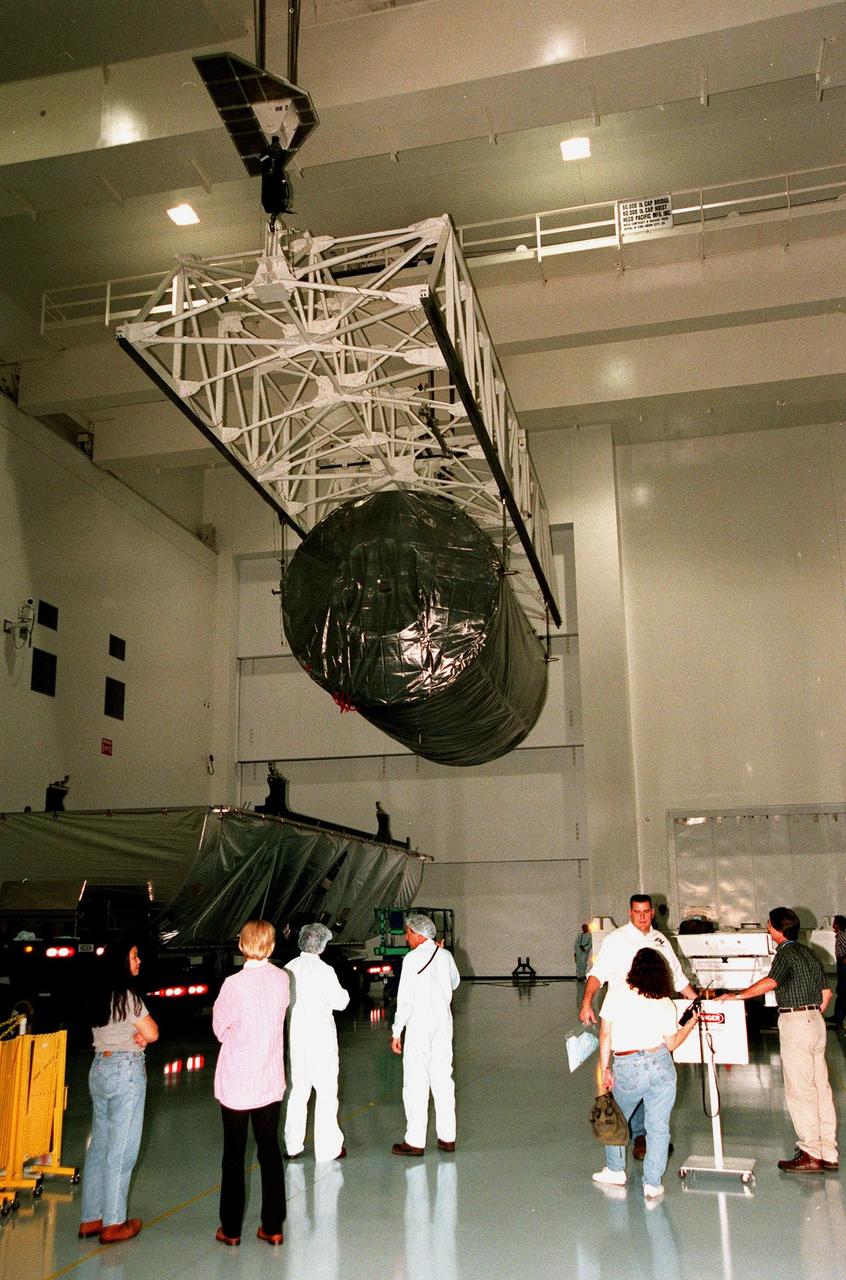
KENNEDY SPACE CENTER, FLA. -- The U.S. laboratory module, an element of the International Space Station, is lifted by a crane from its canister in the Space Station Processing Facility. The lab will undergo pre-launch preparations before its launch aboard the Shuttle Endeavour on mission STS-98. The laboratory comprises three cylindrical sections with two end cones. Each end-cone contains a hatch opening for entering and exiting the lab. The lab will provide a shirtsleeve environment for research in the areas of life science, microgravity science, Earth science and space science. Designated Flight 5A, this mission is targeted for launch in early 2000
KSC-98pc1709
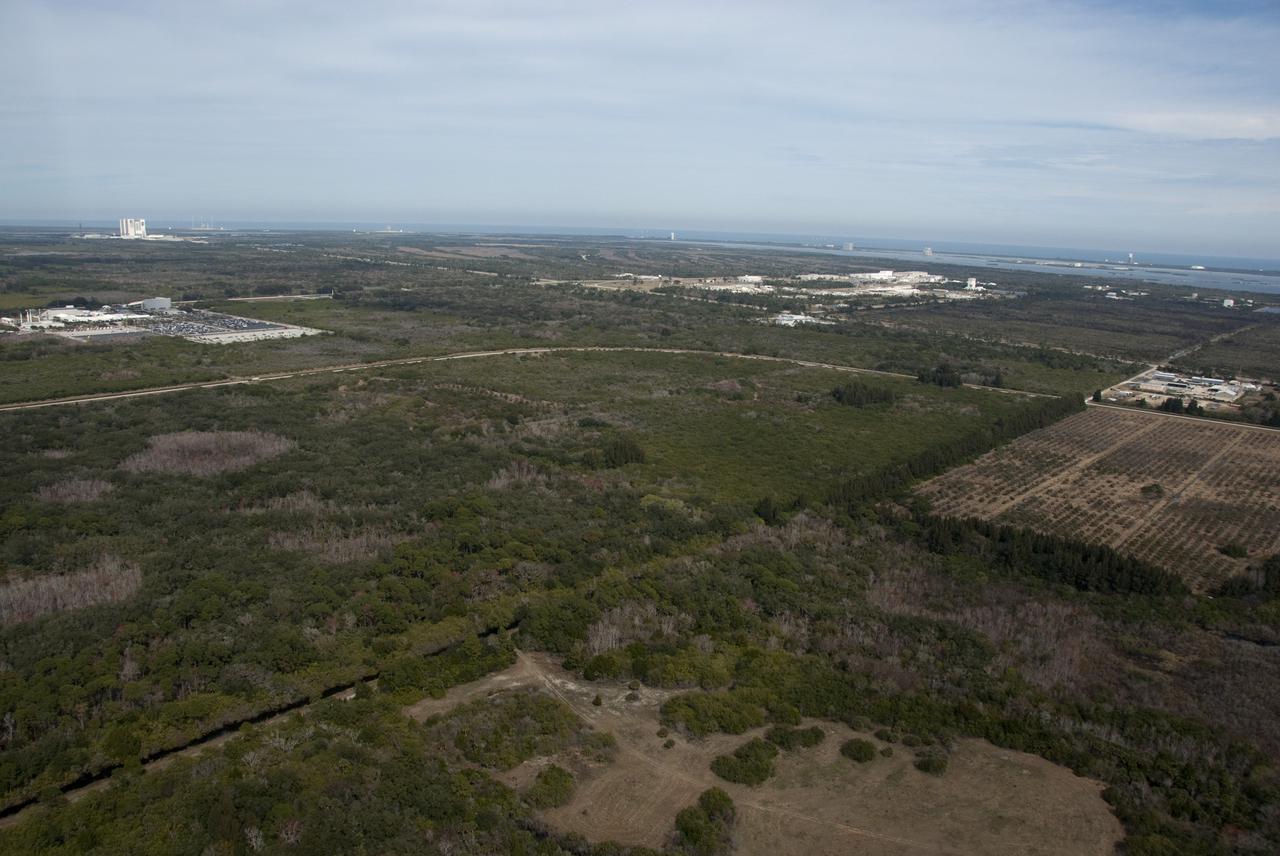
CAPE CANAVERAL, Fla. - Land located south of NASA's Kennedy Space Center Visitor Complex in Florida and adjacent to the Space Life Sciences Laboratory is the proposed site for Exploration Park.  Kennedy and Space Florida, an independent special district of the State of Florida, have partnered to enable the development of a mixed-use technology and commerce park. Exploration Park will become home to diverse private sector technology and innovation enterprises offering opportunities to grow and deploy commercial space capabilities and will respond to national priorities in science and technology. The park is expected to attract tenants engaged in space technology, space commerce and space education. In addition, NASA and Space Florida plan to incorporate the existing 100,000 square foot Space Life Sciences Laboratory into the park, broadening the lab's accessibility and use beyond NASA. For more information, visit www.explorationpark.com. Photo credit: NASA_Kim Shiflett
KSC-2010-2247
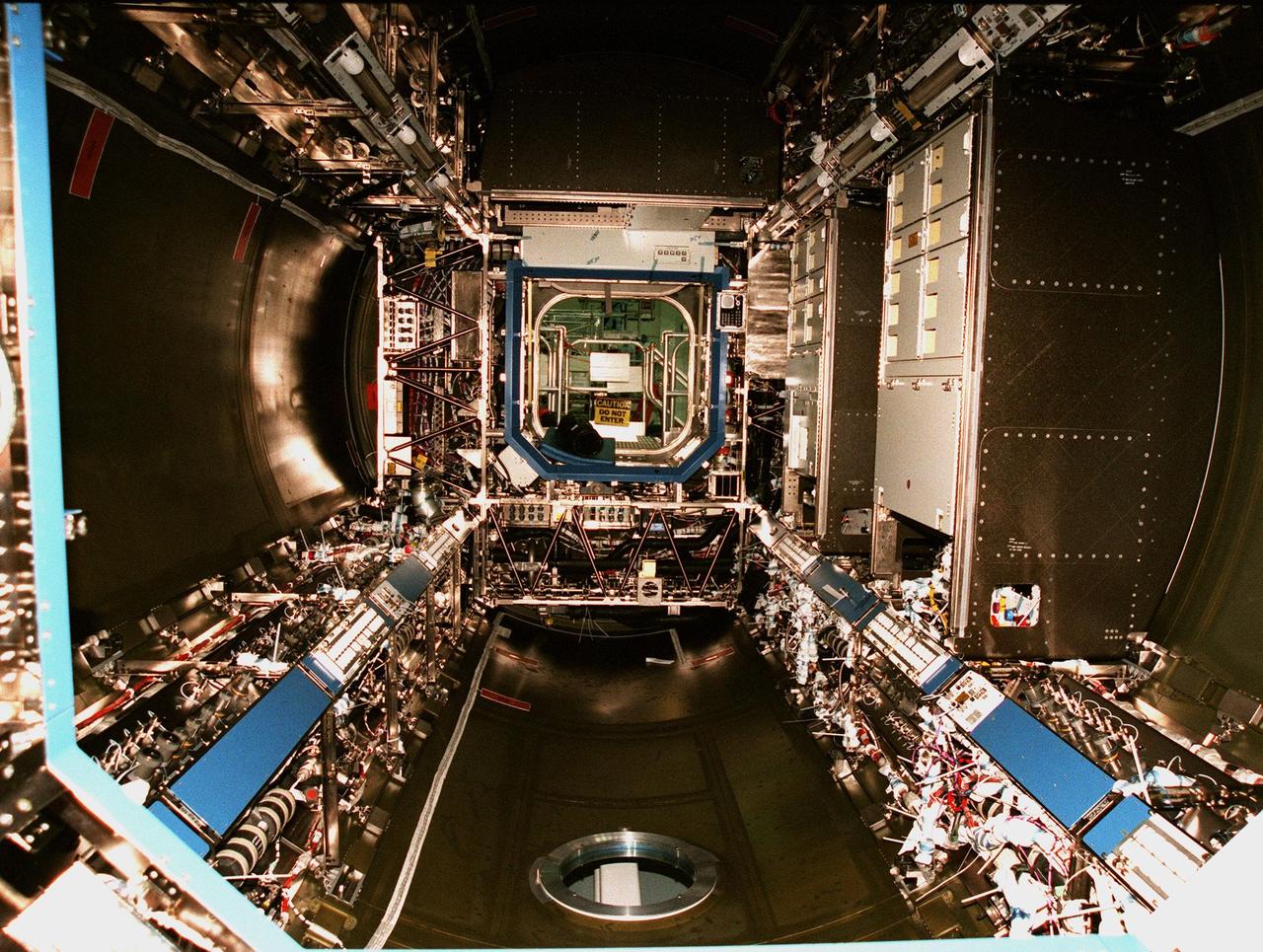
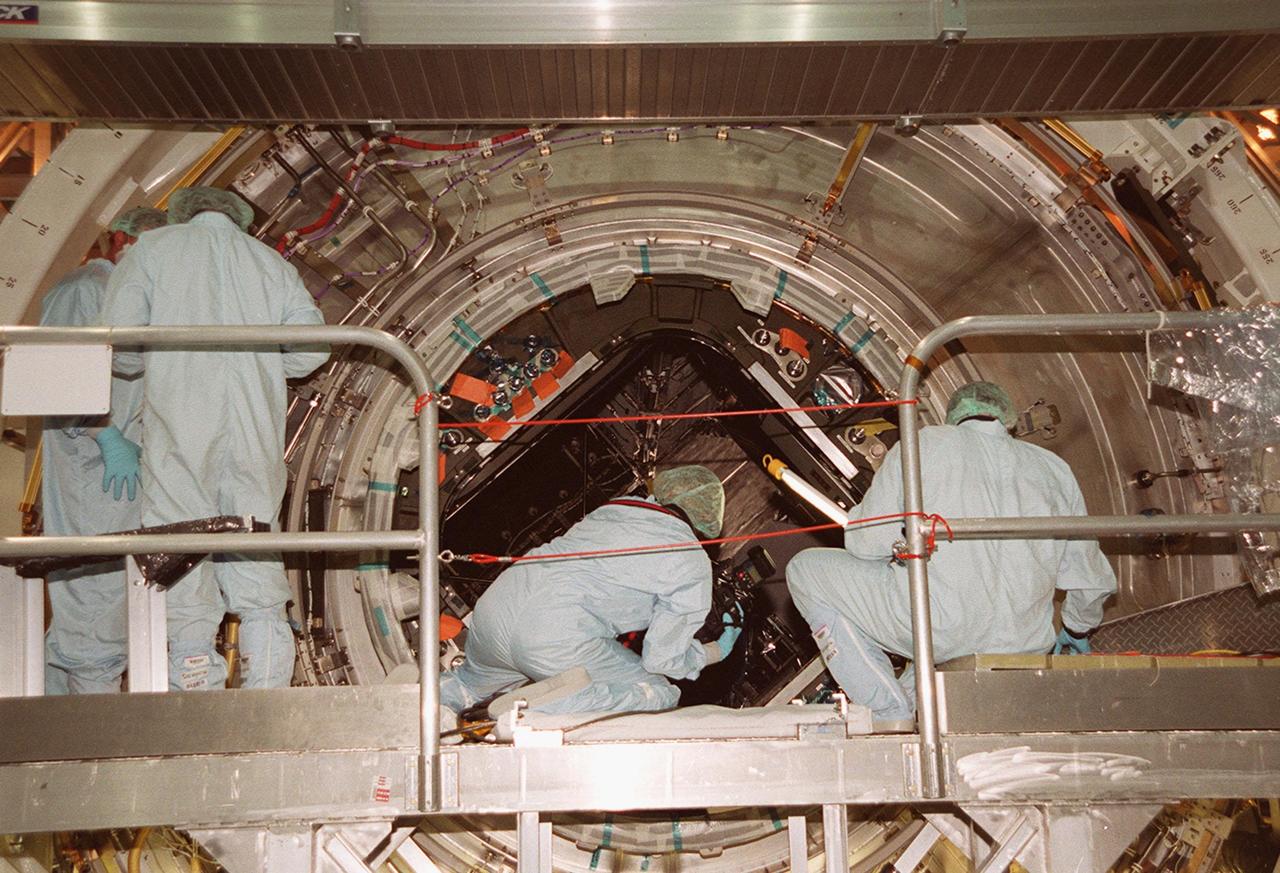
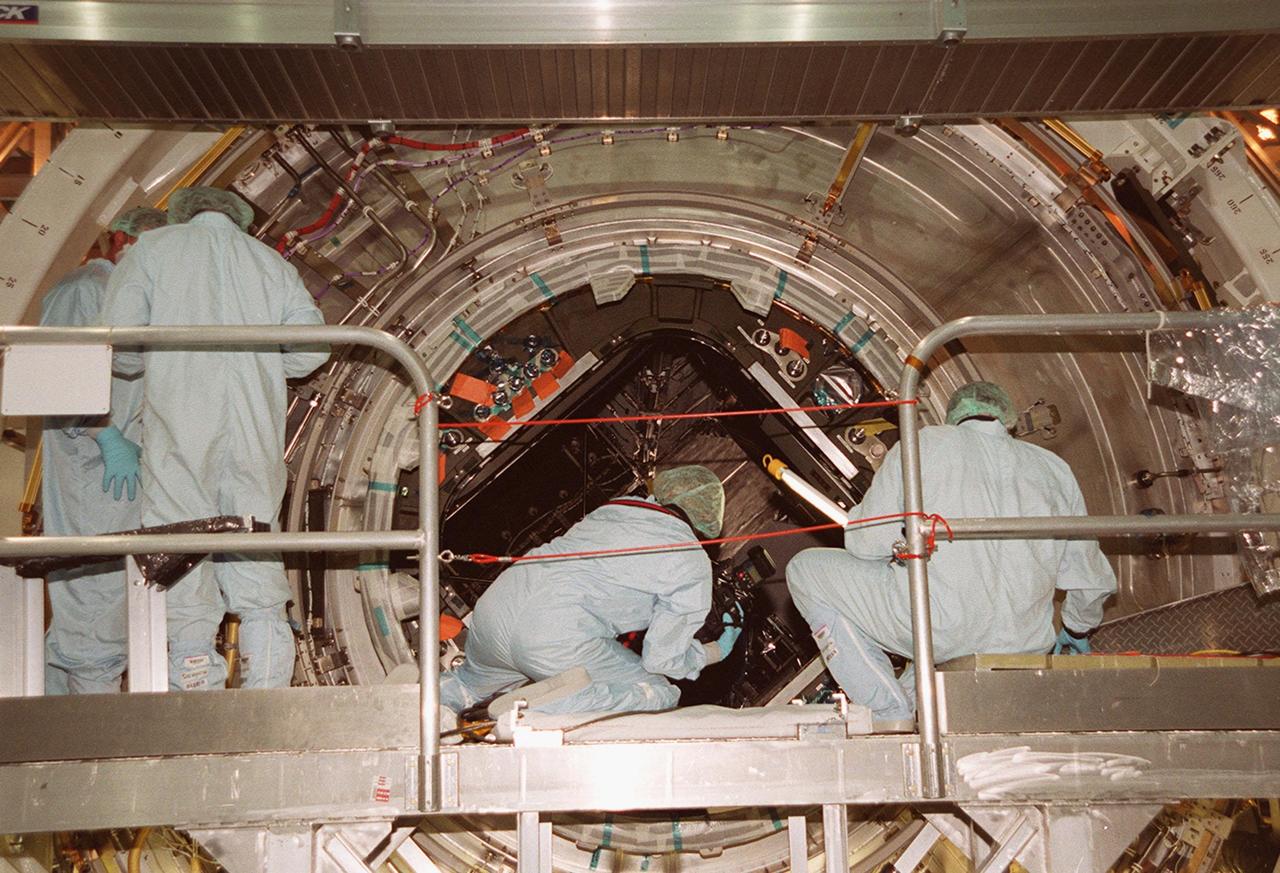
KENNEDY SPACE CENTER, FLA. -- The inside of the U.S. laboratory module is seen after the opening of a hatch on one end. An element of the International Space Station, the lab is undergoing pre-launch preparations before its launch aboard the Shuttle Endeavour on mission STS-98. The laboratory comprises three cylindrical sections with two end cones. Each end-cone contains a hatch opening for entering and exiting the lab. The lab will provide a shirtsleeve environment for research in the areas of life science, microgravity science, Earth science and space science. Designated Flight 5A, this mission is targeted for launch in early 2000
KSC-98pc1716
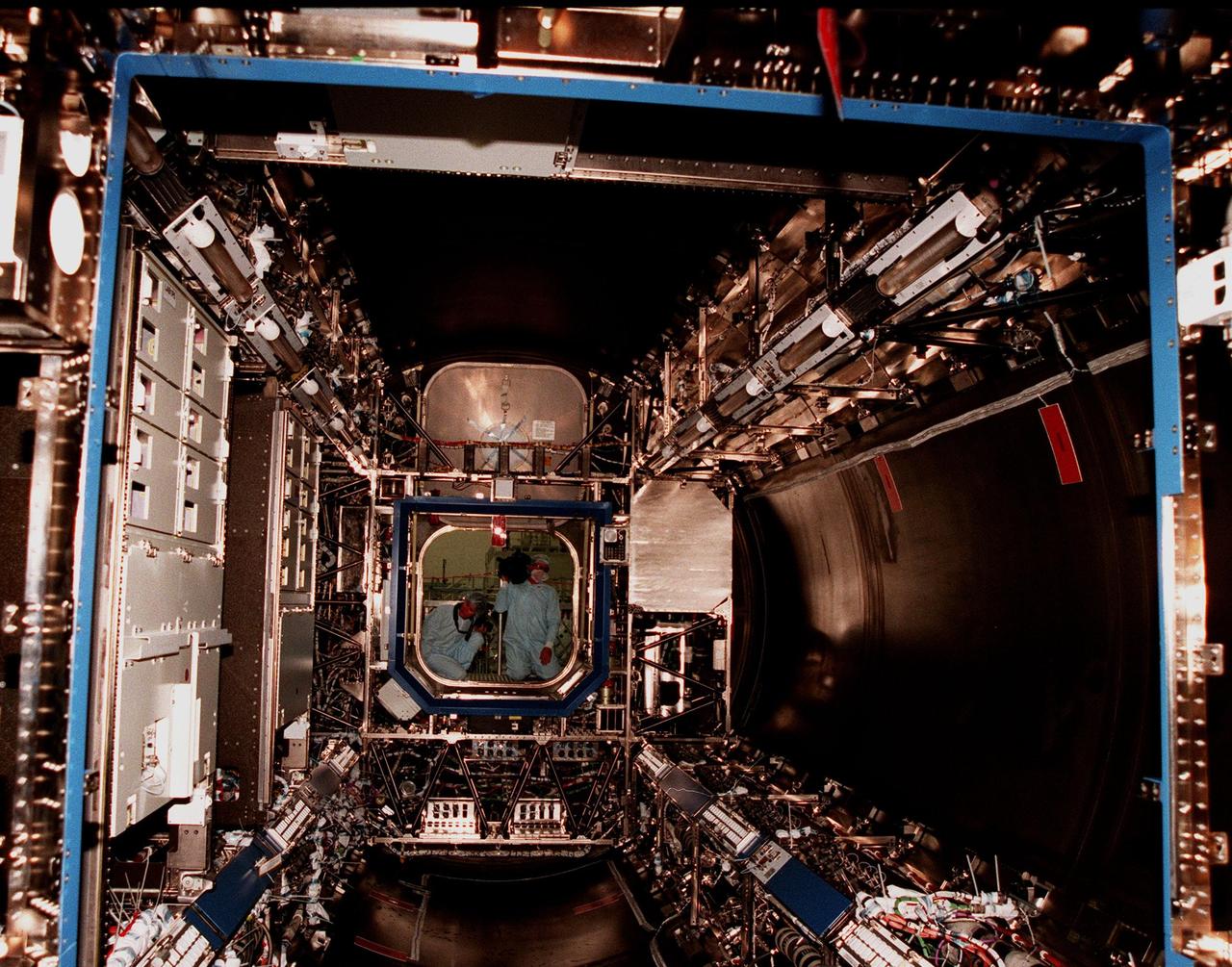
KENNEDY SPACE CENTER, FLA. -- Workers peer inside after opening an end-cone of the U.S. laboratory module, an element of the International Space Station. The lab is undergoing pre-launch preparations before its launch aboard the Shuttle Endeavour on mission STS-98. The laboratory comprises three cylindrical sections with two end cones. Each end-cone contains a hatch opening for entering and exiting the lab. The lab will provide a shirtsleeve environment for research in the areas of life science, microgravity science, Earth science and space science. Designated Flight 5A, this mission is targeted for launch in early 2000
KSC-98pc1717
KENNEDY SPACE CENTER, FLA. -- Workers peer through the hatch of an end-cone on the U.S. laboratory module, an element of the International Space Station. The lab is undergoing pre-launch preparations before its launch aboard the Shuttle Endeavour on mission STS-98. The laboratory comprises three cylindrical sections with two end cones. Each end-cone contains a hatch opening for entering and exiting the lab. The lab will provide a shirtsleeve environment for research in the areas of life science, microgravity science, Earth science and space science. Designated Flight 5A, this mission is targeted for launch in early 2000
KSC-98pc1718
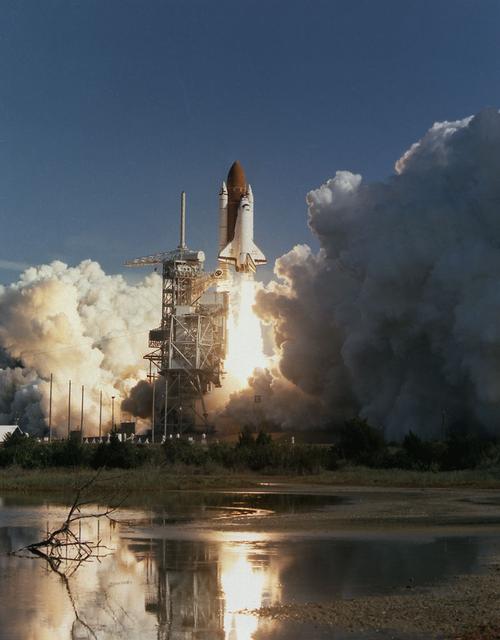
Space Shuttle Discovery (STS-42) lifted off from Kennedy Space Center (KSC) with International Microgravity Laboratory (IML-1) aboard the orbiter's cargo bay. IML missions were devoted to material and life sciences studies using the Spacelab Long Module.
Space Shuttle Project
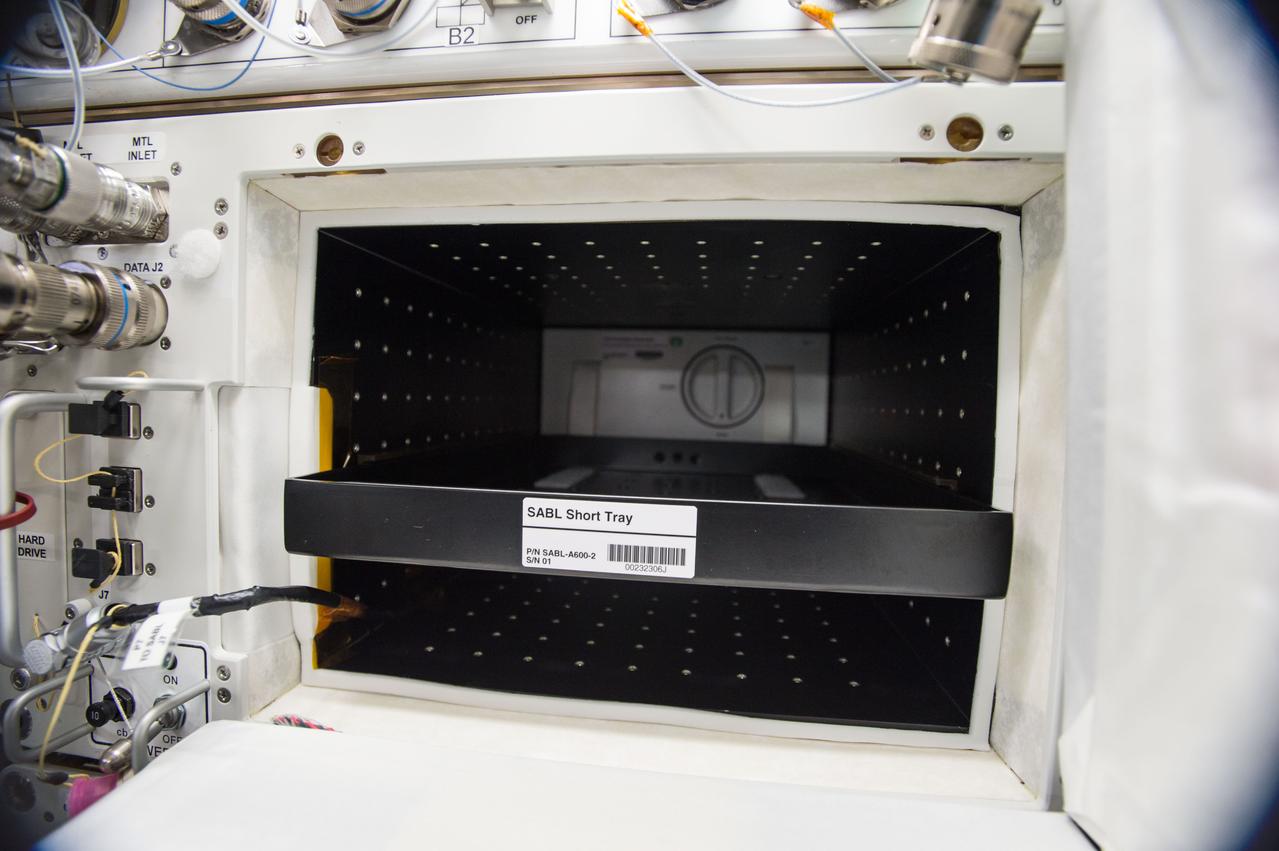
iss048e042380(7/21/2016) --- A view of the Space Automated Bioproduct Laboratory (SABL) Short Tray inside the SABL 2 following installation of the Carbon Dioxide (CO2) Incubator Controller. Image was taken during Heart Cells experiment setup in the Destiny U.S. Laboratory. The Space Automated Bioproduct Laboratory (SABL) supports a wide variety of experiments in the life, physical and material sciences with a focus on supporting research of biological systems and processes.
Heart Cells CO2 Incubator Controller Setup in SABL
KENNEDY SPACE CENTER, FLA. -  Dynamac employees (from left) Larry Burns, Debbie Wells and Neil  Yorio carry boxes of hardware into the Space Life Sciences Lab (SLSL), formerly known as the Space Experiment Research and Processing Laboratory (SERPL).   They are transferring equipment from Hangar L. The new lab is a state-of-the-art facility being built for ISS biotechnology research. Developed as a partnership between NASA-KSC and the State of Florida, NASA’s life sciences contractor will be the primary tenant of the facility, leasing space to conduct flight experiment processing and NASA-sponsored research. About 20 percent of the facility will be available for use by Florida’s university researchers through the Florida Space Research Institute.
KSC-03pd-2642
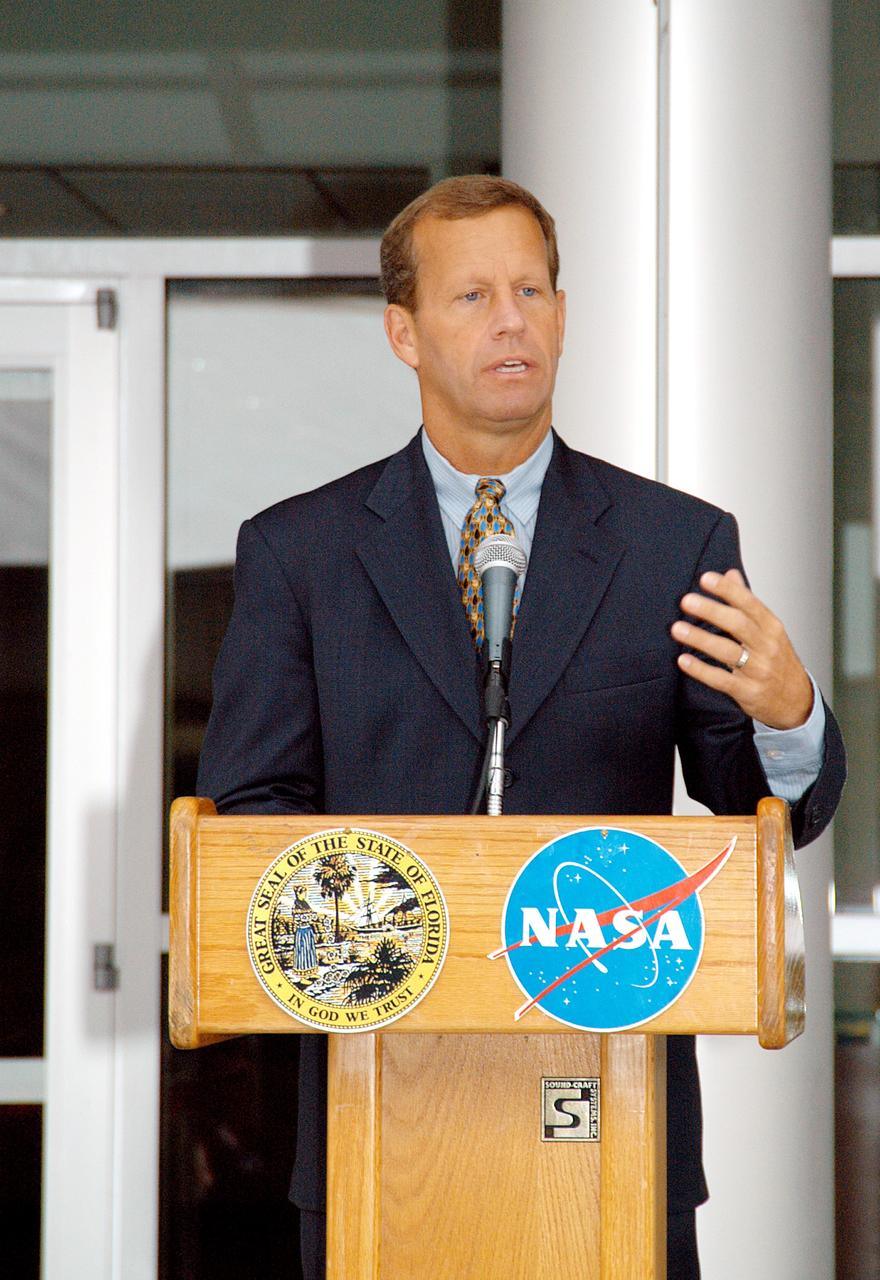
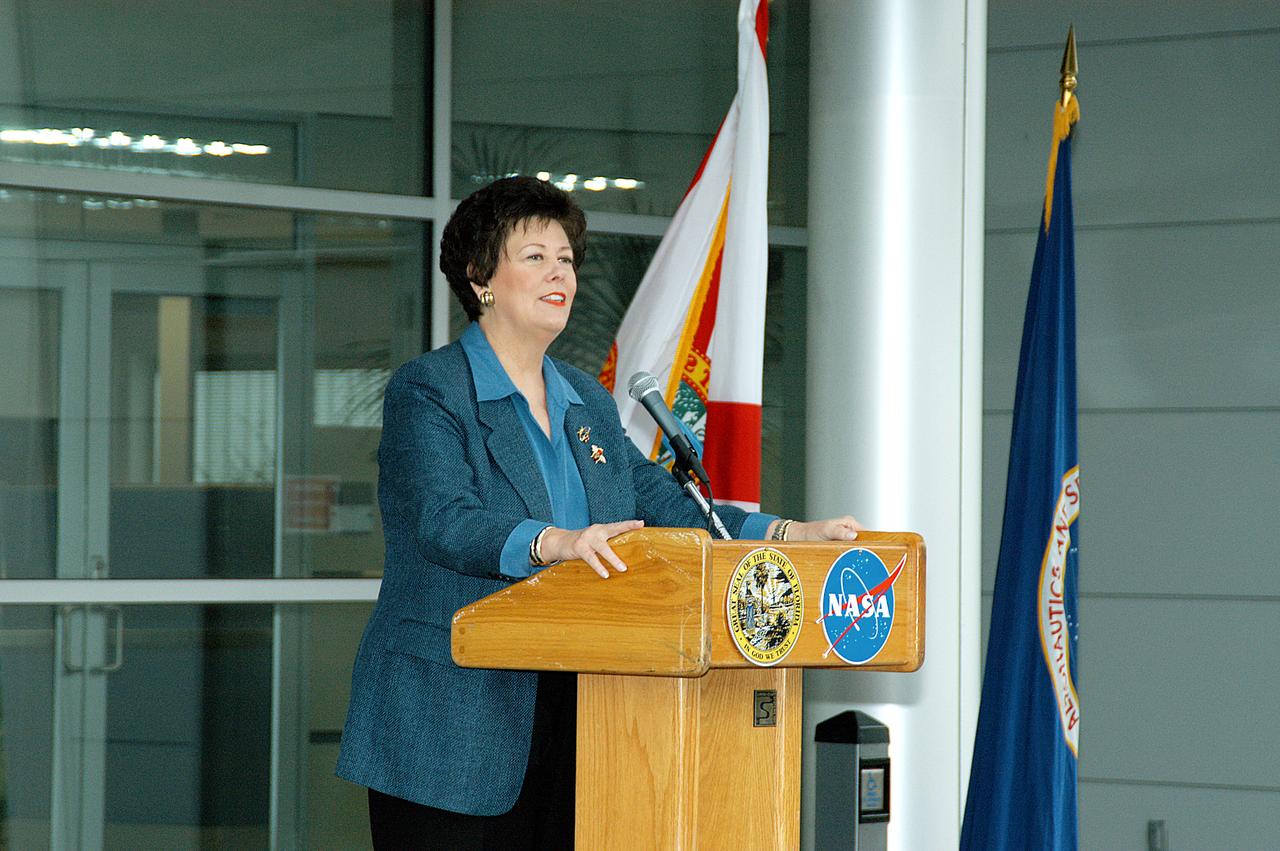
The Honorable Toni Jennings, lieutenant governor of the state of Florida, speaks at a dedication and ribbon-cutting ceremony for the Space Life Sciences Lab hosted by NASA-Kennedy Space Center and the state of Florida at the new lab. Completed in August, the facility encompasses more than 100,000 square feet and was formerly known as the Space Experiment Research and Processing Laboratory or SERPL. The state, through the Florida Space Authority, built the research lab which is host to NASA, NASA’s Life Sciences Services contractor Dynamac Corp., Bionetics Corp., and researchers from the University of Florida. Dynamac Corp. leases the facility. The Florida Space Research Institute is responsible for gaining additional tenants from outside the NASA community.
SLSL Ribbon-cutting Ceremony
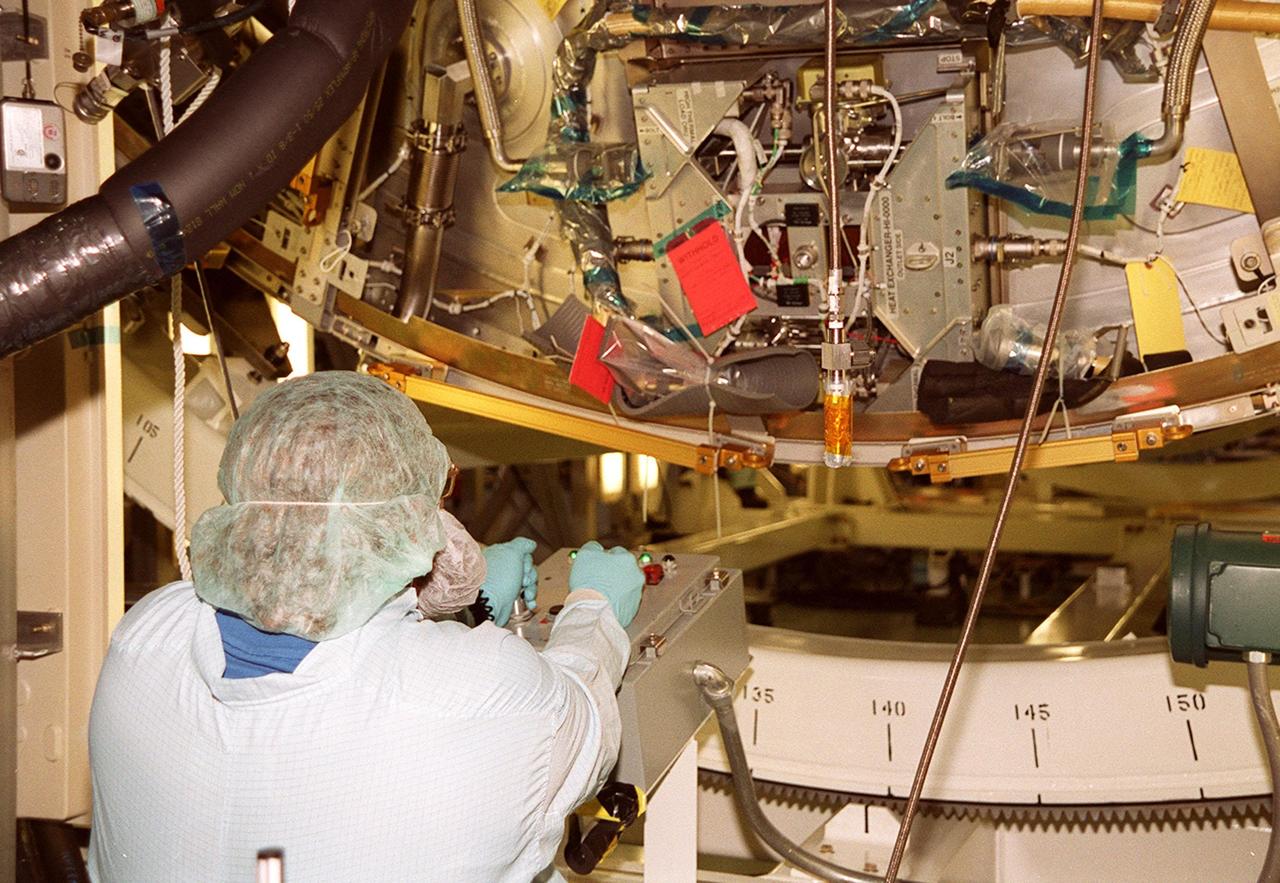
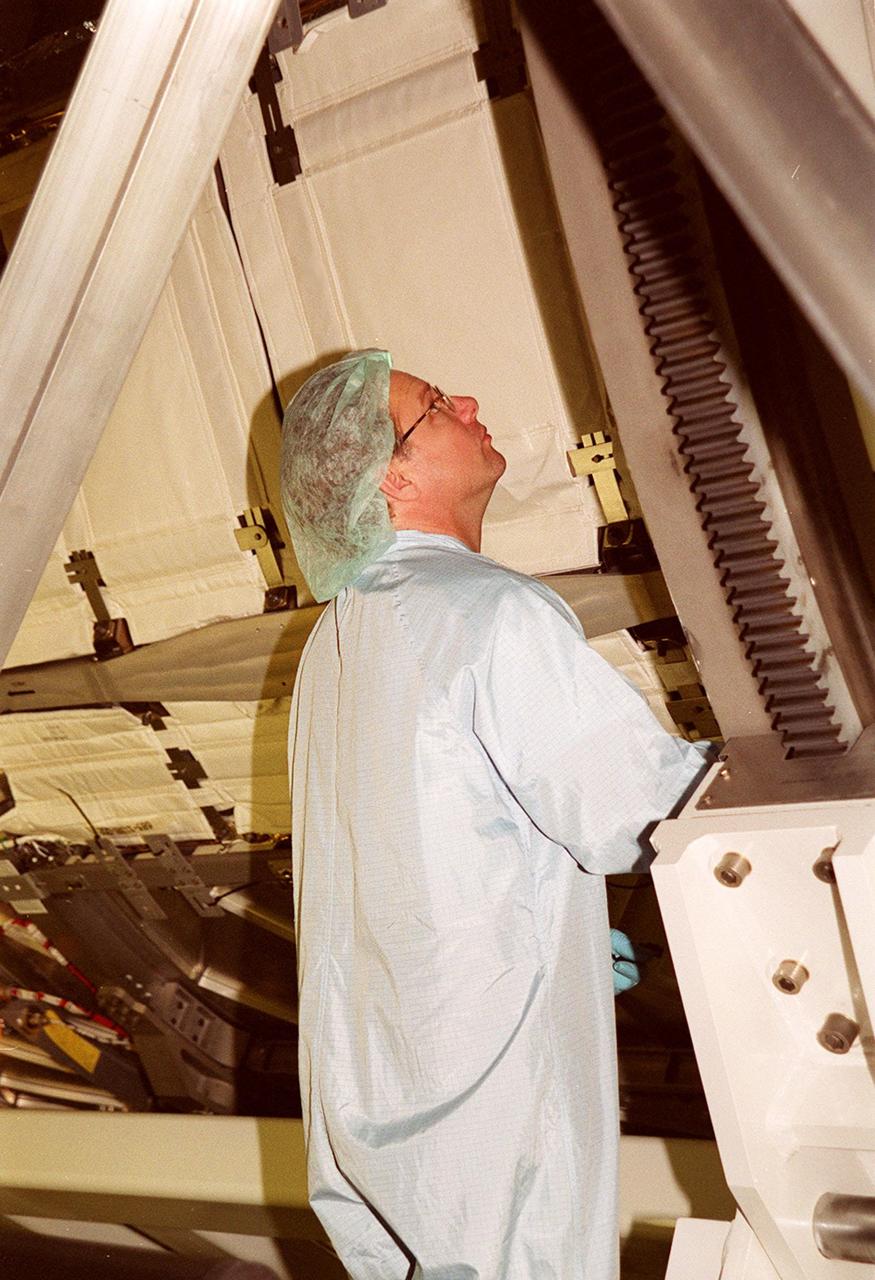
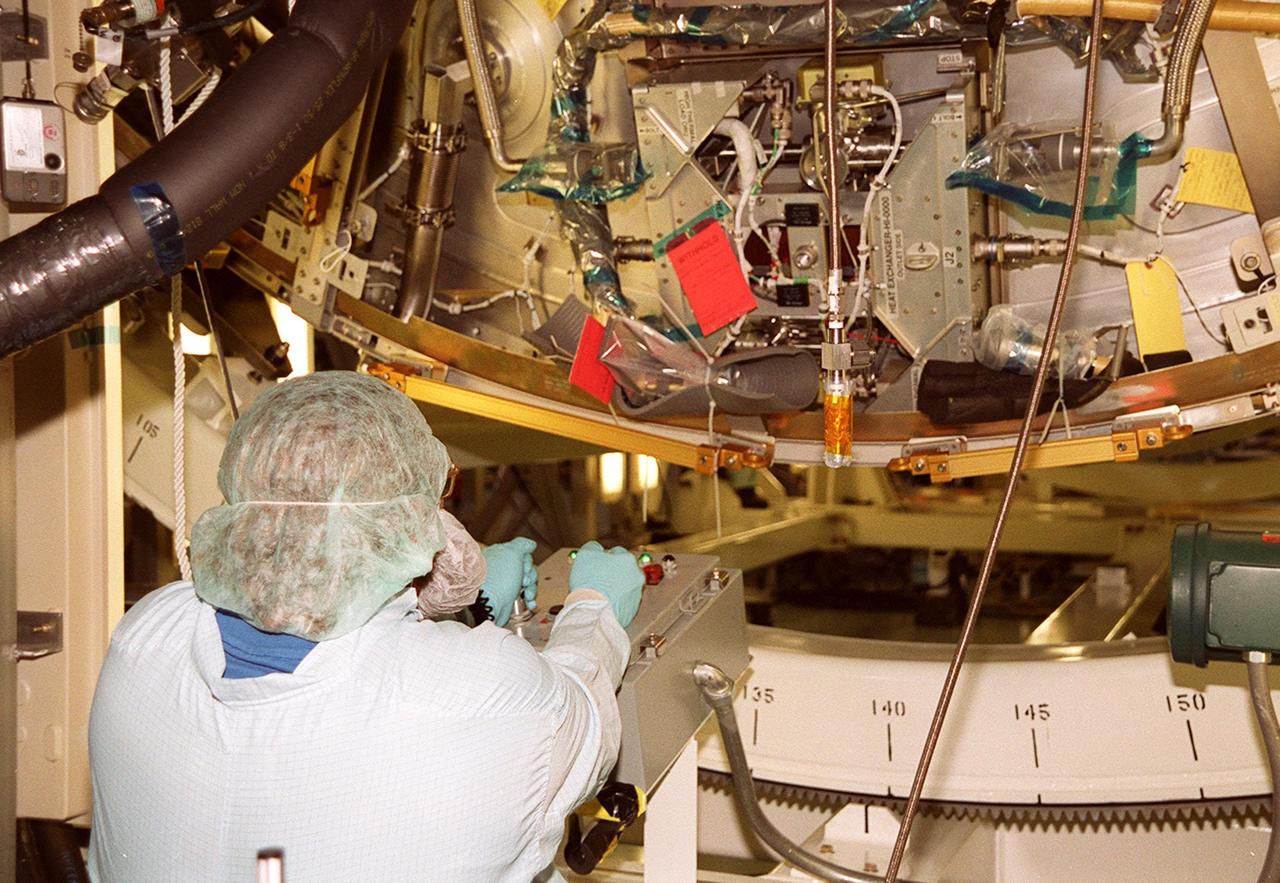
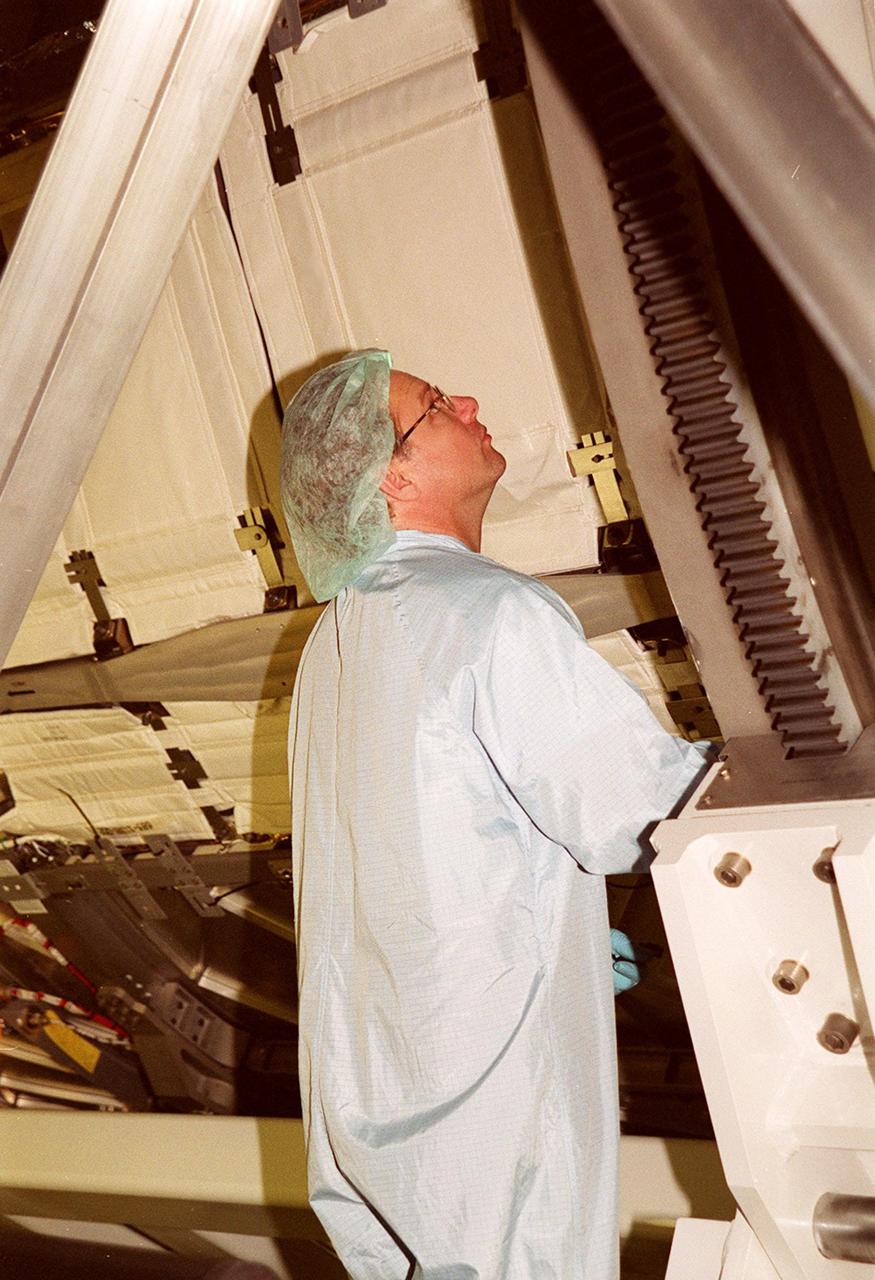
KENNEDY SPACE CENTER, FLA. -- In the Space Station Processing Facility, technicians watch closely as the U.S. Laboratory Destiny rotates. A component of the International Space Station, Destiny is scheduled to fly on mission STS-98 in early 2001. During the mission, the crew will install the Lab during a series of three space walks. The STS-98 mission will provide the station with science research facilities and expand its power, life support and control capabilities. The U.S. Lab module continues a long tradition of microgravity materials research, first conducted by Skylab and later Shuttle and Spacelab missions. Destiny is expected to be a major feature in future research, providing facilities for biotechnology, fluid physics, combustion, and life sciences research
KSC-00pp0797
KENNEDY SPACE CENTER, Fla. -- In the Space Station Processing Facility, technicians watch closely as the U.S. Laboratory Destiny rotates. A component of the International Space Station, Destiny is scheduled to fly on mission STS-98 in early 2001. During the mission, the crew will install the Lab during a series of three space walks. The STS-98 mission will provide the station with science research facilities and expand its power, life support and control capabilities. The U.S. Lab module continues a long tradition of microgravity materials research, first conducted by Skylab and later Shuttle and Spacelab missions. Destiny is expected to be a major feature in future research, providing facilities for biotechnology, fluid physics, combustion, and life sciences research.
KSC-00pp0798
KENNEDY SPACE CENTER, FLA. -- In the Space Station Processing Facility, a worker controls the rotation of the U.S. Laboratory Destiny. A component of the International Space Station, Destiny is scheduled to fly on mission STS-98 in early 2001. During the mission, the crew will install the Lab during a series of three space walks. The STS-98 mission will provide the station with science research facilities and expand its power, life support and control capabilities. The U.S. Lab module continues a long tradition of microgravity materials research, first conducted by Skylab and later Shuttle and Spacelab missions. Destiny is expected to be a major feature in future research, providing facilities for biotechnology, fluid physics, combustion, and life sciences research
KSC-00pp0796
KENNEDY SPACE CENTER, FLA. -- In the Space Station Processing Facility, technicians watch closely as the U.S. Laboratory Destiny rotates. A component of the International Space Station, Destiny is scheduled to fly on mission STS-98 in early 2001. During the mission, the crew will install the Lab during a series of three space walks. The STS-98 mission will provide the station with science research facilities and expand its power, life support and control capabilities. The U.S. Lab module continues a long tradition of microgravity materials research, first conducted by Skylab and later Shuttle and Spacelab missions. Destiny is expected to be a major feature in future research, providing facilities for biotechnology, fluid physics, combustion, and life sciences research
KSC00pp0797
KENNEDY SPACE CENTER, FLA. -- In the Space Station Processing Facility, a worker checks the U.S. Laboratory Destiny as it rotates. A component of the International Space Station, Destiny is scheduled to fly on mission STS-98 in early 2001. During the mission, the crew will install the Lab during a series of three space walks. The STS-98 mission will provide the station with science research facilities and expand its power, life support and control capabilities. The U.S. Lab module continues a long tradition of microgravity materials research, first conducted by Skylab and later Shuttle and Spacelab missions. Destiny is expected to be a major feature in future research, providing facilities for biotechnology, fluid physics, combustion, and life sciences research
KSC-00pp0793
KENNEDY SPACE CENTER, FLA. -- In the Space Station Processing Facility, a worker checks the U.S. Laboratory Destiny as it rotates. A component of the International Space Station, Destiny is scheduled to fly on mission STS-98 in early 2001. During the mission, the crew will install the Lab during a series of three space walks. The STS-98 mission will provide the station with science research facilities and expand its power, life support and control capabilities. The U.S. Lab module continues a long tradition of microgravity materials research, first conducted by Skylab and later Shuttle and Spacelab missions. Destiny is expected to be a major feature in future research, providing facilities for biotechnology, fluid physics, combustion, and life sciences research
KSC00pp0793
KENNEDY SPACE CENTER, FLA. -- In the Space Station Processing Facility, a worker controls the rotation of the U.S. Laboratory Destiny. A component of the International Space Station, Destiny is scheduled to fly on mission STS-98 in early 2001. During the mission, the crew will install the Lab during a series of three space walks. The STS-98 mission will provide the station with science research facilities and expand its power, life support and control capabilities. The U.S. Lab module continues a long tradition of microgravity materials research, first conducted by Skylab and later Shuttle and Spacelab missions. Destiny is expected to be a major feature in future research, providing facilities for biotechnology, fluid physics, combustion, and life sciences research
KSC00pp0796
KENNEDY SPACE CENTER, Fla. -- In the Space Station Processing Facility, technicians watch closely as the U.S. Laboratory Destiny rotates. A component of the International Space Station, Destiny is scheduled to fly on mission STS-98 in early 2001. During the mission, the crew will install the Lab during a series of three space walks. The STS-98 mission will provide the station with science research facilities and expand its power, life support and control capabilities. The U.S. Lab module continues a long tradition of microgravity materials research, first conducted by Skylab and later Shuttle and Spacelab missions. Destiny is expected to be a major feature in future research, providing facilities for biotechnology, fluid physics, combustion, and life sciences research.
KSC00pp0798
This is an onboard photo of space shuttle Atlantis (STS-66) astronaut Scott E. Parazynski, in the International Microgravity Laboratory (IML), performing a series of experiments devoted to material and life sciences studies using the Spacelab Long Module (SLM). STS-066 was launched on November 3, 1994.
Space Shuttle Project
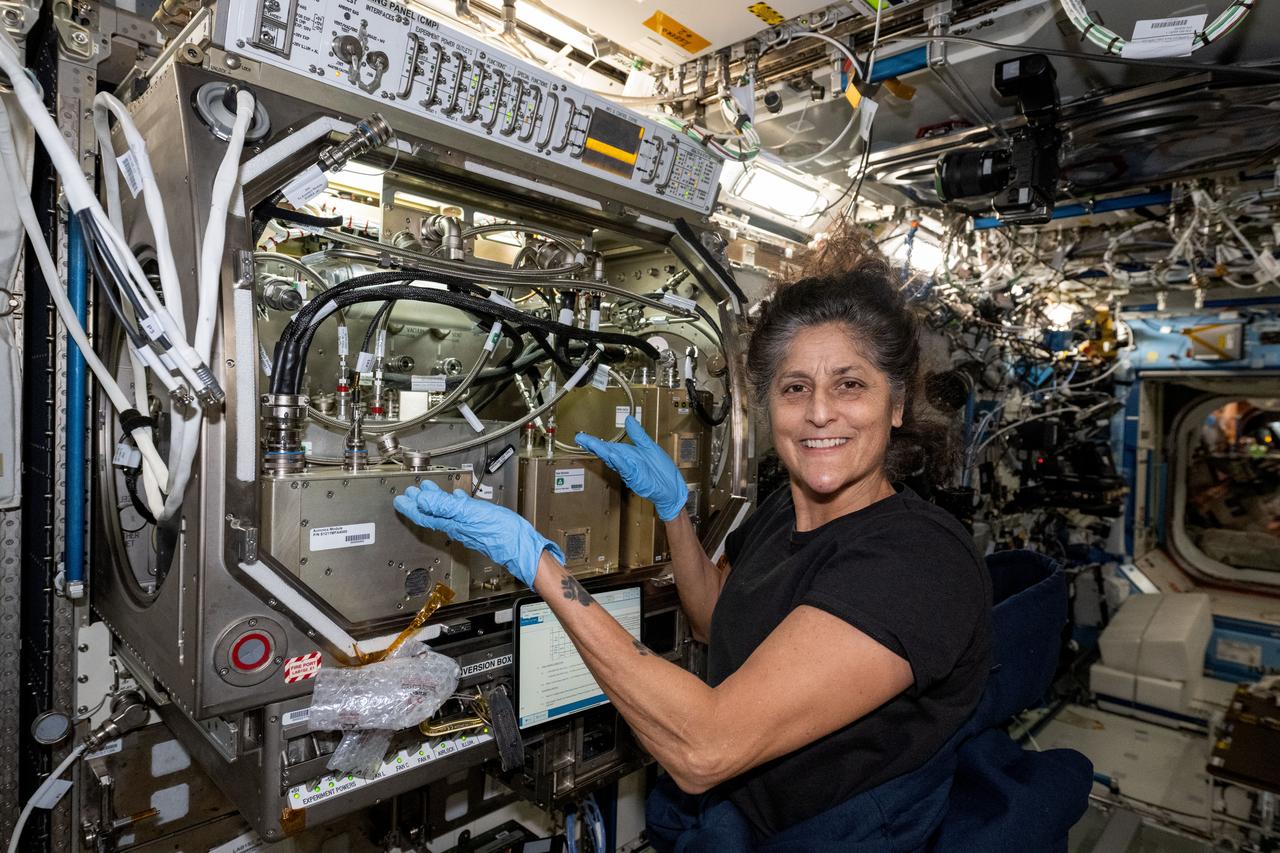
iss071e485832 (Aug. 15, 2024) --- NASA astronaut and Boeing Crew Flight Test Pilot Suni Williams installs the Packed Bed Reactor Experiment, experimental life support hardware, inside the Microgravity Science Glovebox located aboard the International Space Station's Destiny laboratory.
iss071e485832
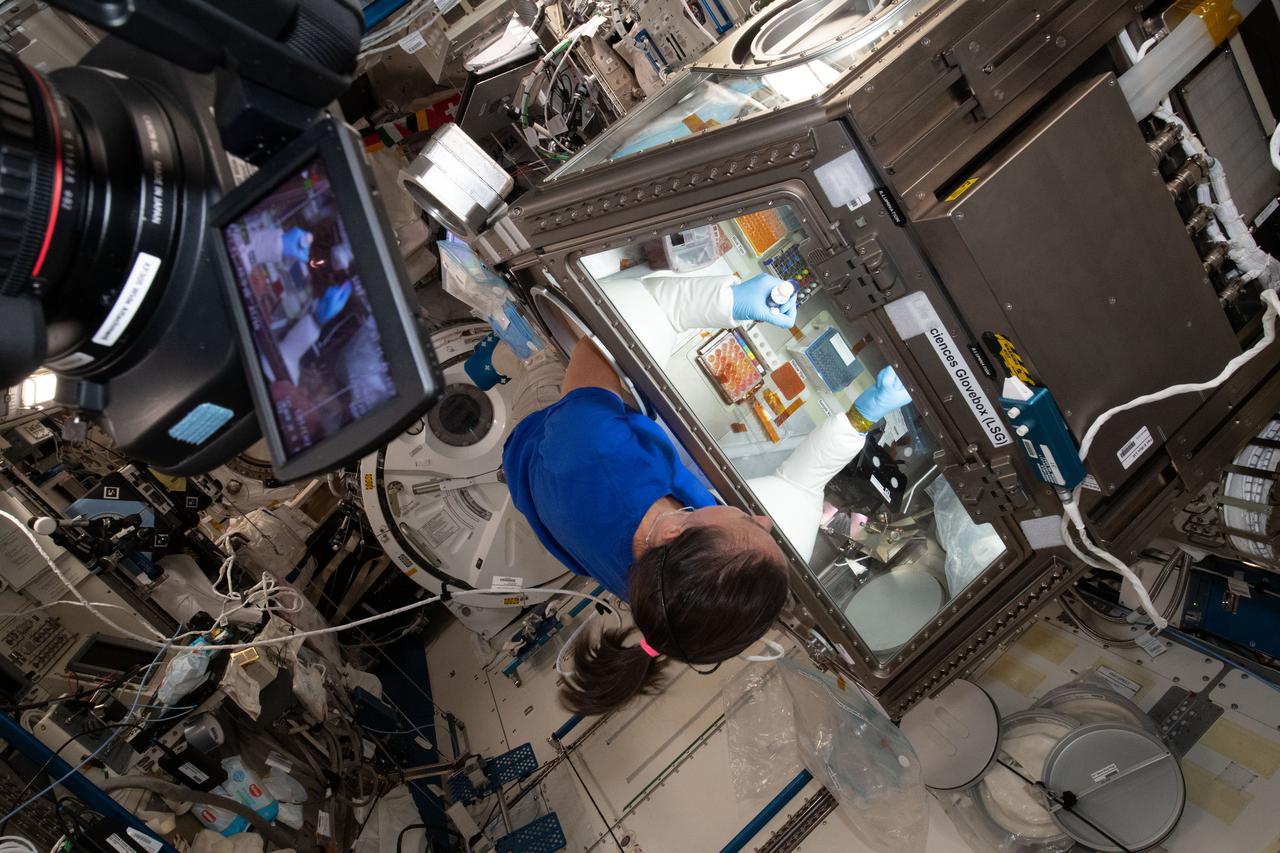
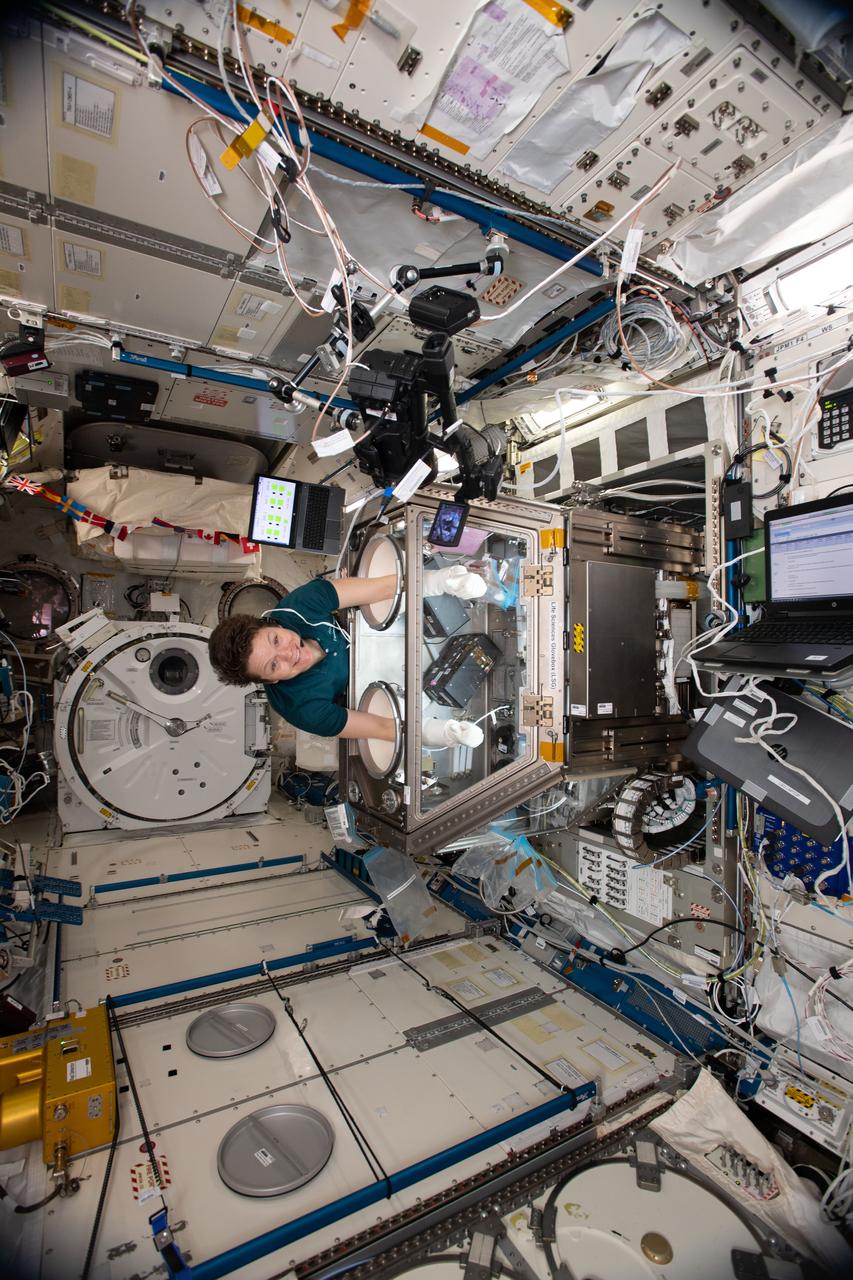
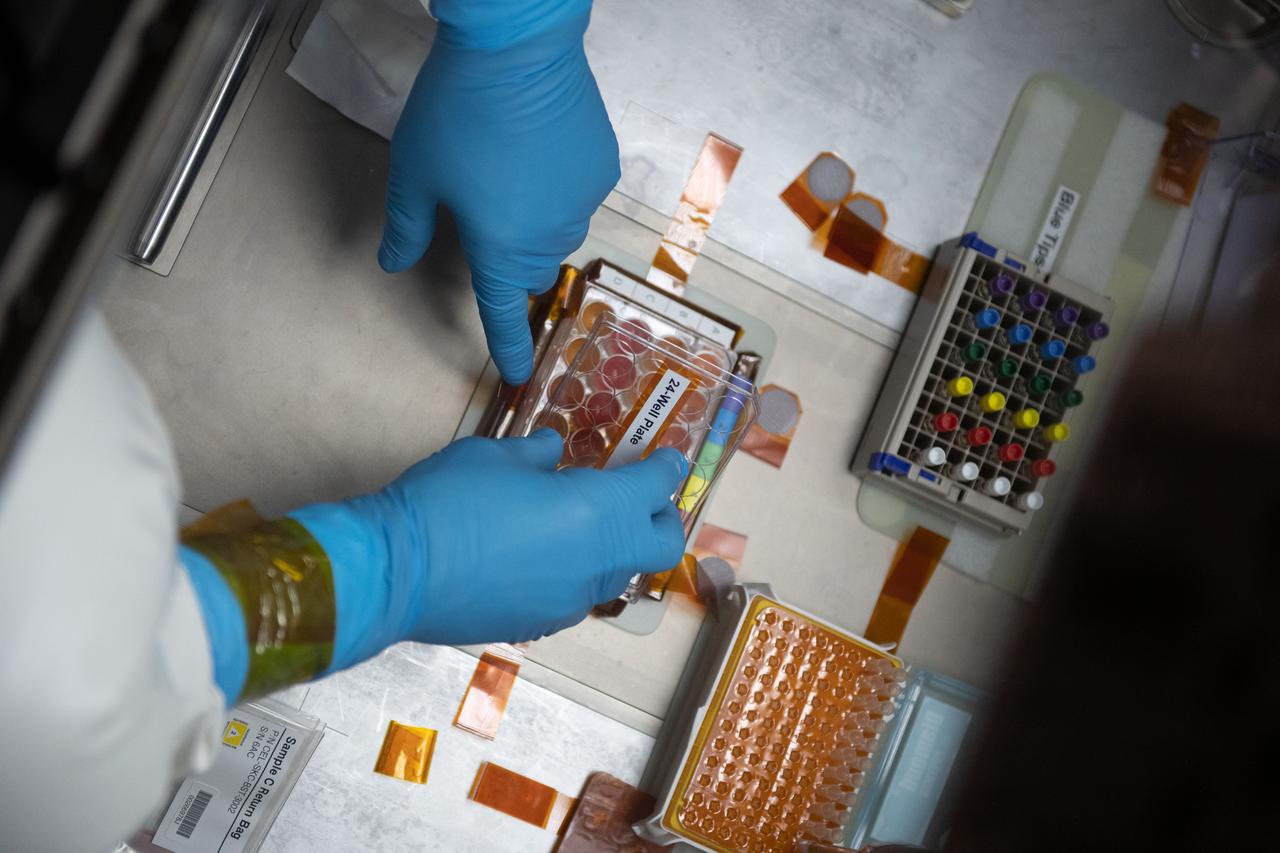
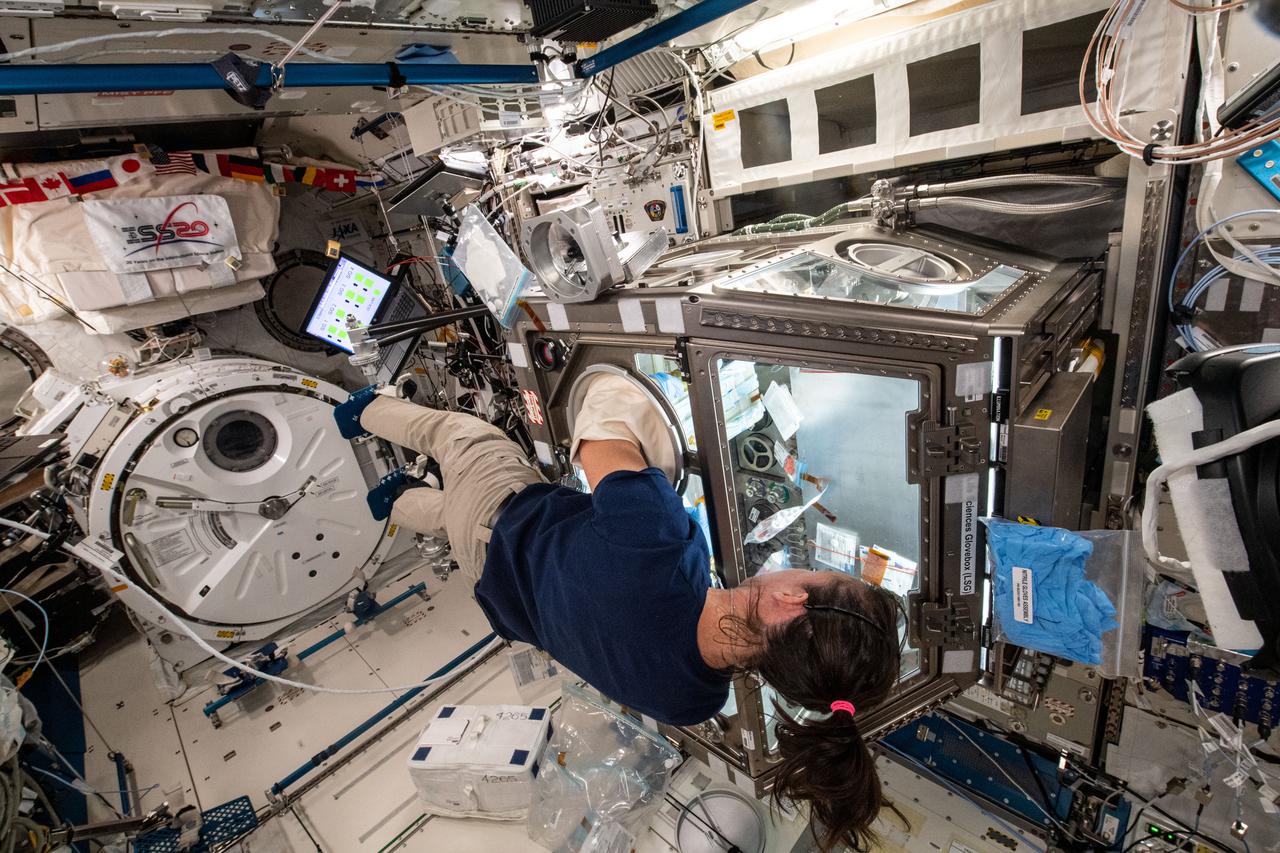
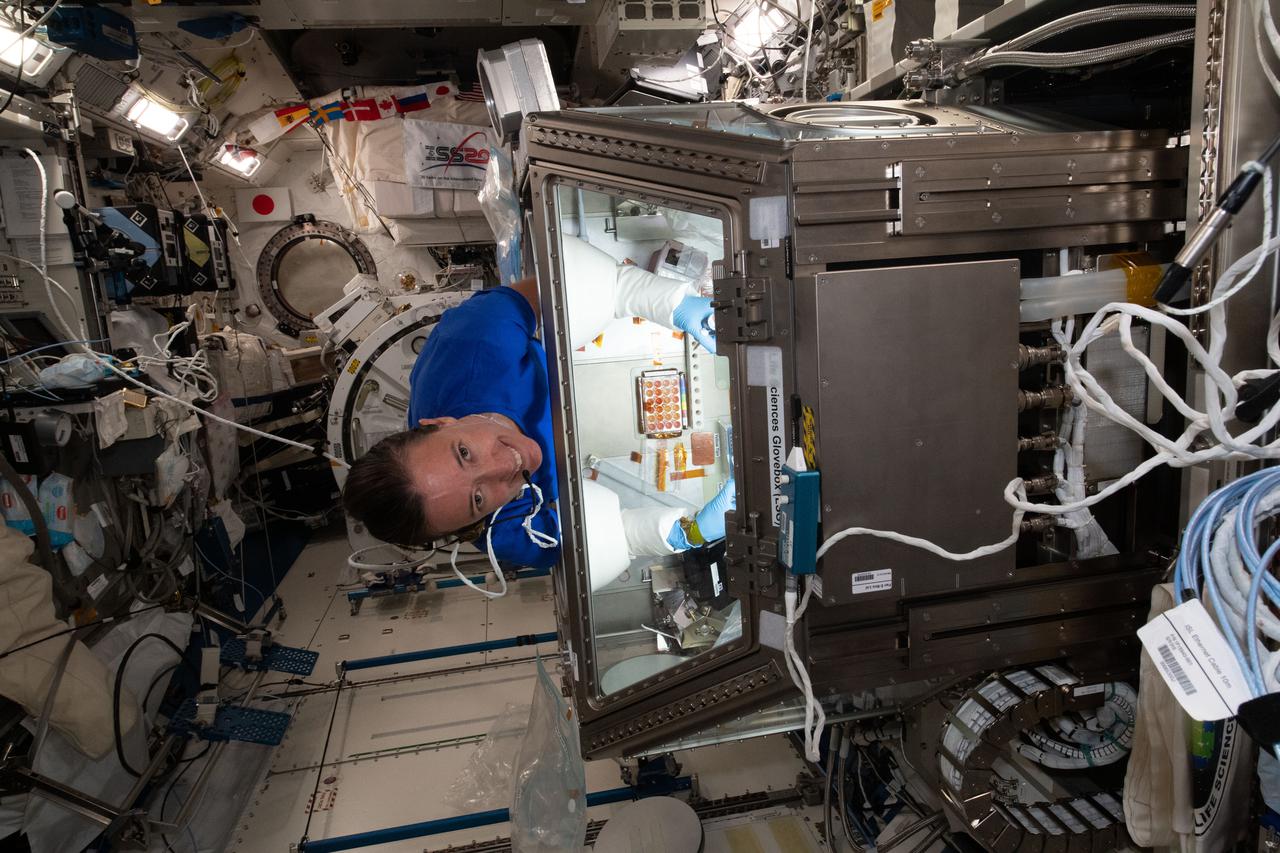
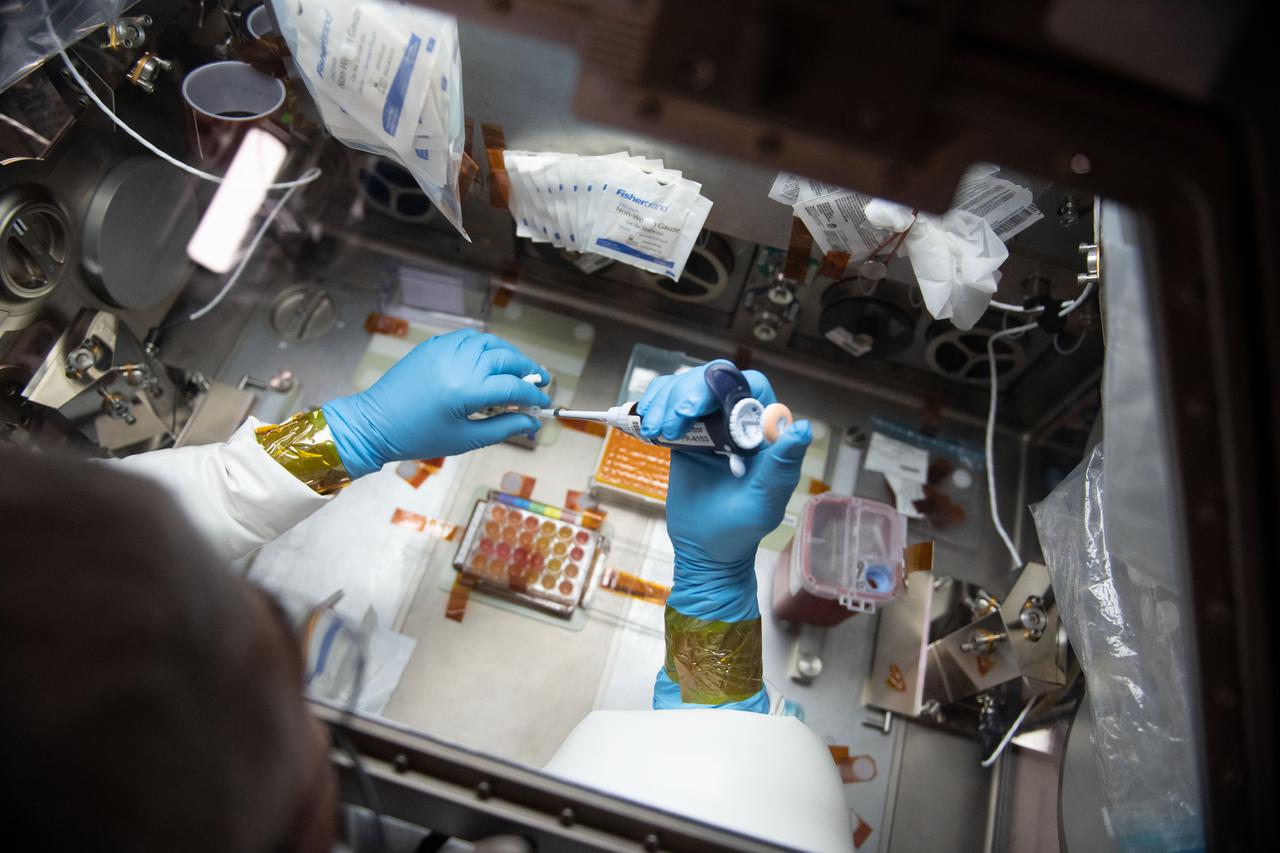
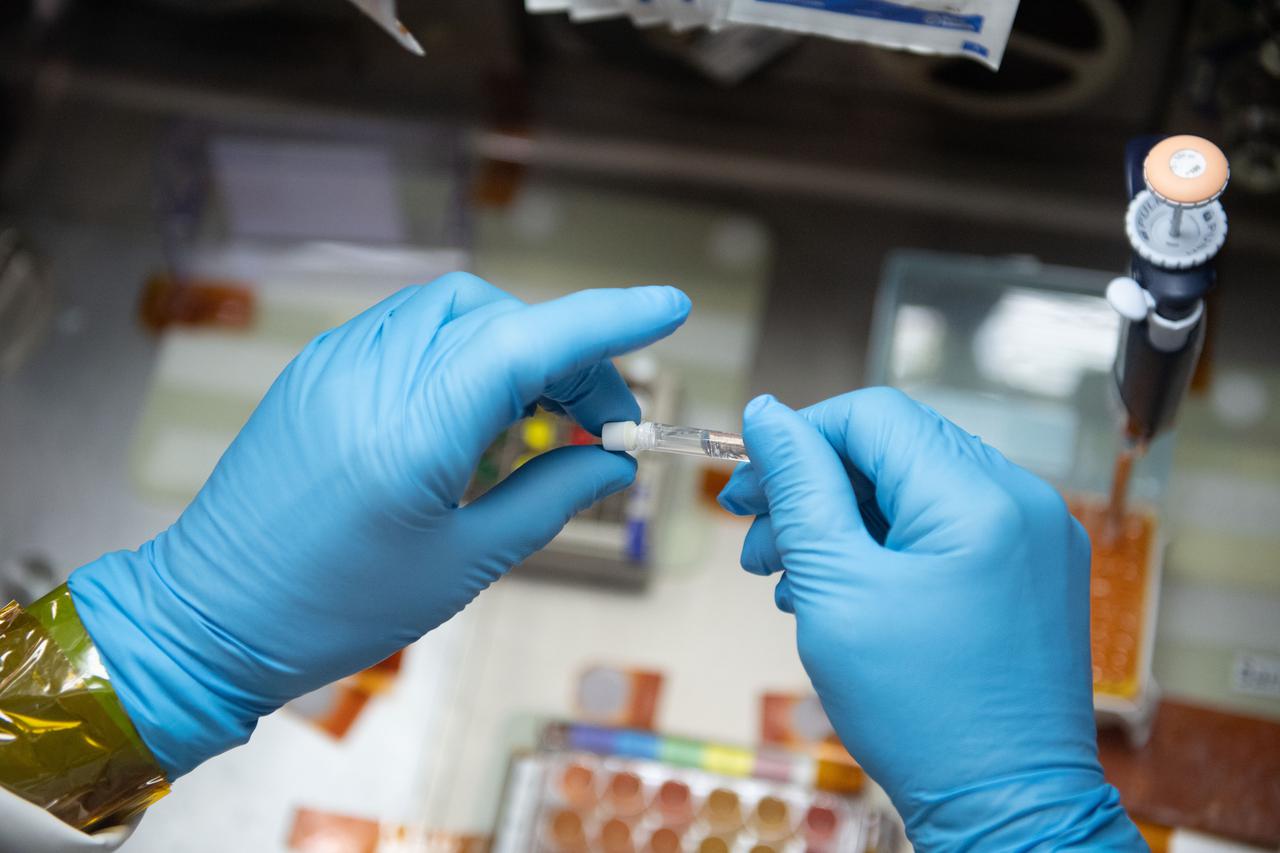
iss065e056805 (5/22/2021) --- NASA astronaut Mark Vande Hei works inside the Life Science Glovebox (LSG) for the Celestial Immunity study that may provide insights into new vaccines and drugs possibly advancing the commercialization of space. The LSG is located in the Kibo laboratory module from the Japan Aerospace Exploration Agency.
iss065e056805
iss064e015250 (Dec. 24, 2020) --- NASA astronaut and Expedition 64 Flight Engineer Kate Rubins works inside the Life Sciences Glovebox (LSG) servicing engineered heart tissue samples for the Cardinal Heart study that seeks to understand space-caused cell and tissue abnormalities. The LSG is located inside Japan's Kibo laboratory module.
iss064e015250
iss065e056810 (5/22/2021) --- NASA astronaut Mark Vande Hei works inside the Life Science Glovebox (LSG) for the Celestial Immunity study that may provide insights into new vaccines and drugs possibly advancing the commercialization of space. The LSG is located in the Kibo laboratory module from the Japan Aerospace Exploration Agency.
iss065e056810
iss065e056791 (5/22/2021) --- NASA astronaut Mark Vande Hei works inside the Life Science Glovebox (LSG) for the Celestial Immunity study that may provide insights into new vaccines and drugs possibly advancing the commercialization of space. The LSG is located in the Kibo laboratory module from the Japan Aerospace Exploration Agency.
iss065e056791
iss071e485839 (Aug. 15, 2024) --- NASA astronaut and Boeing Crew Flight Test Pilot Suni Williams installs the Packed Bed Reactor Experiment, experimental life support hardware, inside the Microgravity Science Glovebox located aboard the International Space Station's Destiny laboratory module.
iss071e485839
iss065e026426 (May 6, 2021) --- NASA astronaut and Expedition 65 Flight Engineer Megan McArthur services donor cells inside the Kibo laboratory module's Life Science Glovebox for the Celestial Immunity study. The human research investigation may provide insights into new vaccines and drugs possibly advancing the commercialization of space.
iss065e026426
iss065e026996 (5/8/2021) --- NASA astronaut Megan McArthur services donor cells inside the Kibo laboratory module's Life Science Glovebox for the Celestial Immunity study. The human research investigation may provide insights into new vaccines and drugs possibly advancing the commercialization of space.
iss065e026996
iss059e060922 (May 10, 2019) --- NASA astronaut Anne McClain works on Kidney Cells hardware inside the Life Sciences Glovebox located in Japan's Kibo laboratory module. Kidney Cells is an investigation that is seeking innovative treatments for kidney stones, osteoporosis and toxic chemical exposures to protect the health of astronauts in space and humans on Earth.
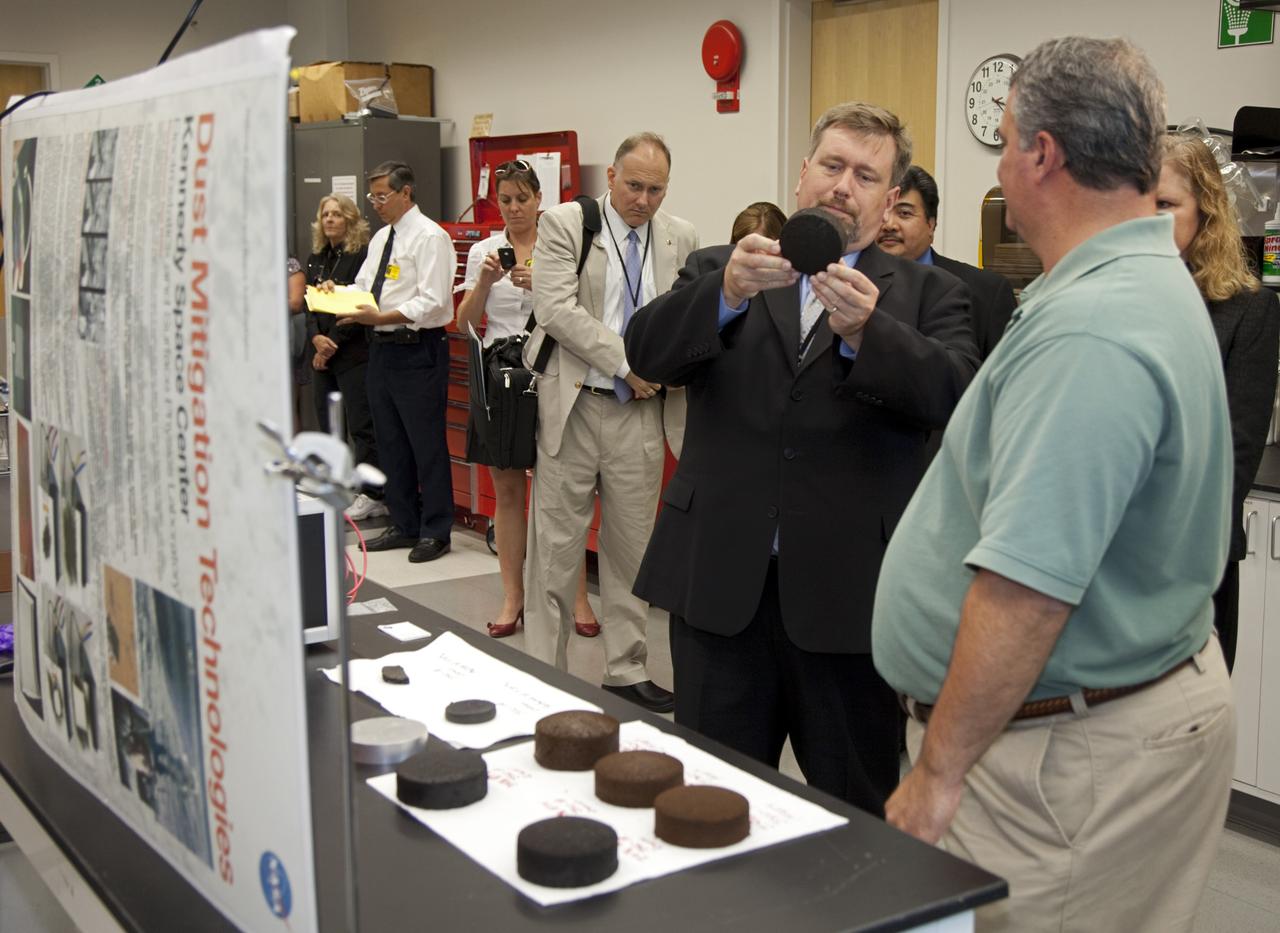
Kidney cells
iss065e056790 (5/22/2021) --- NASA astronaut Mark Vande Hei works inside the Life Science Glovebox (LSG) for the Celestial Immunity study that may provide insights into new vaccines and drugs possibly advancing the commercialization of space. The LSG is located in the Kibo laboratory module from the Japan Aerospace Exploration Agency.
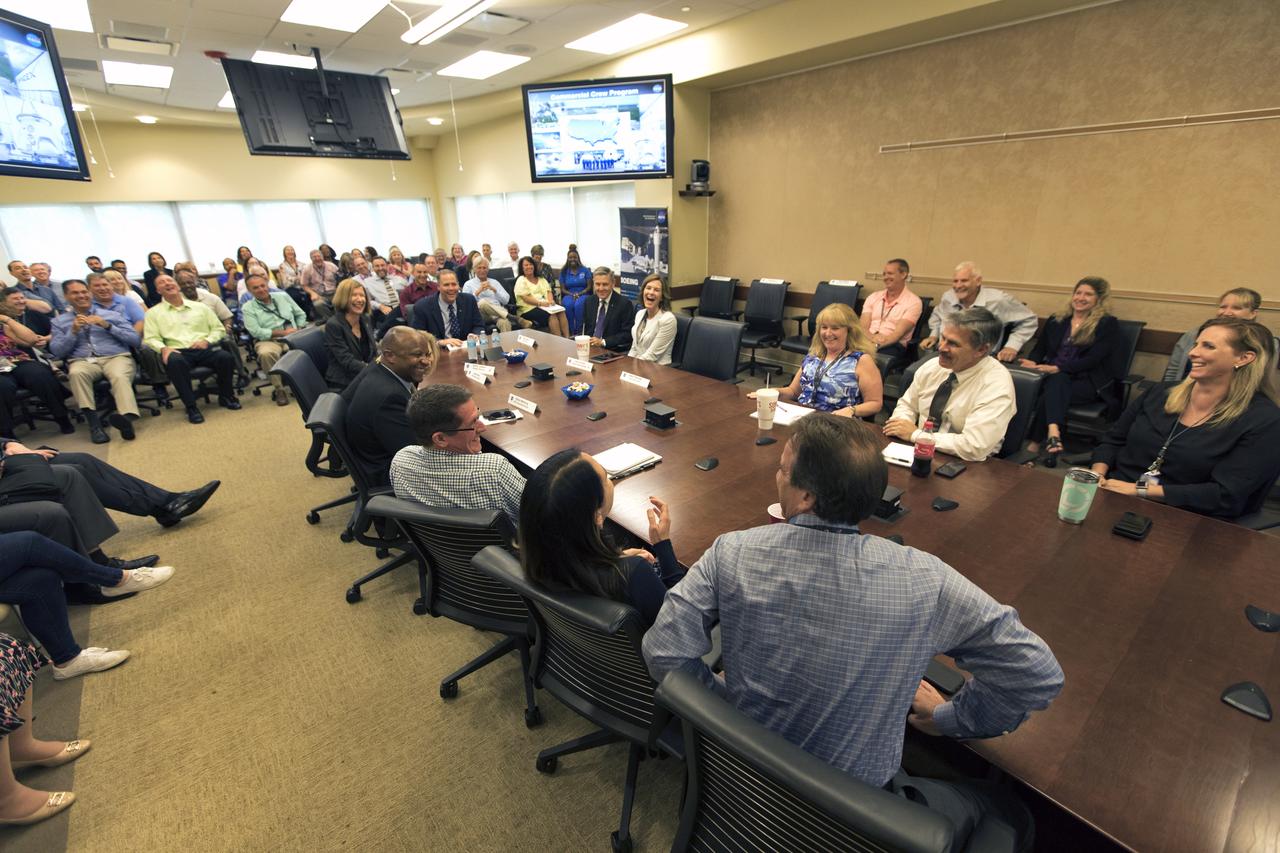
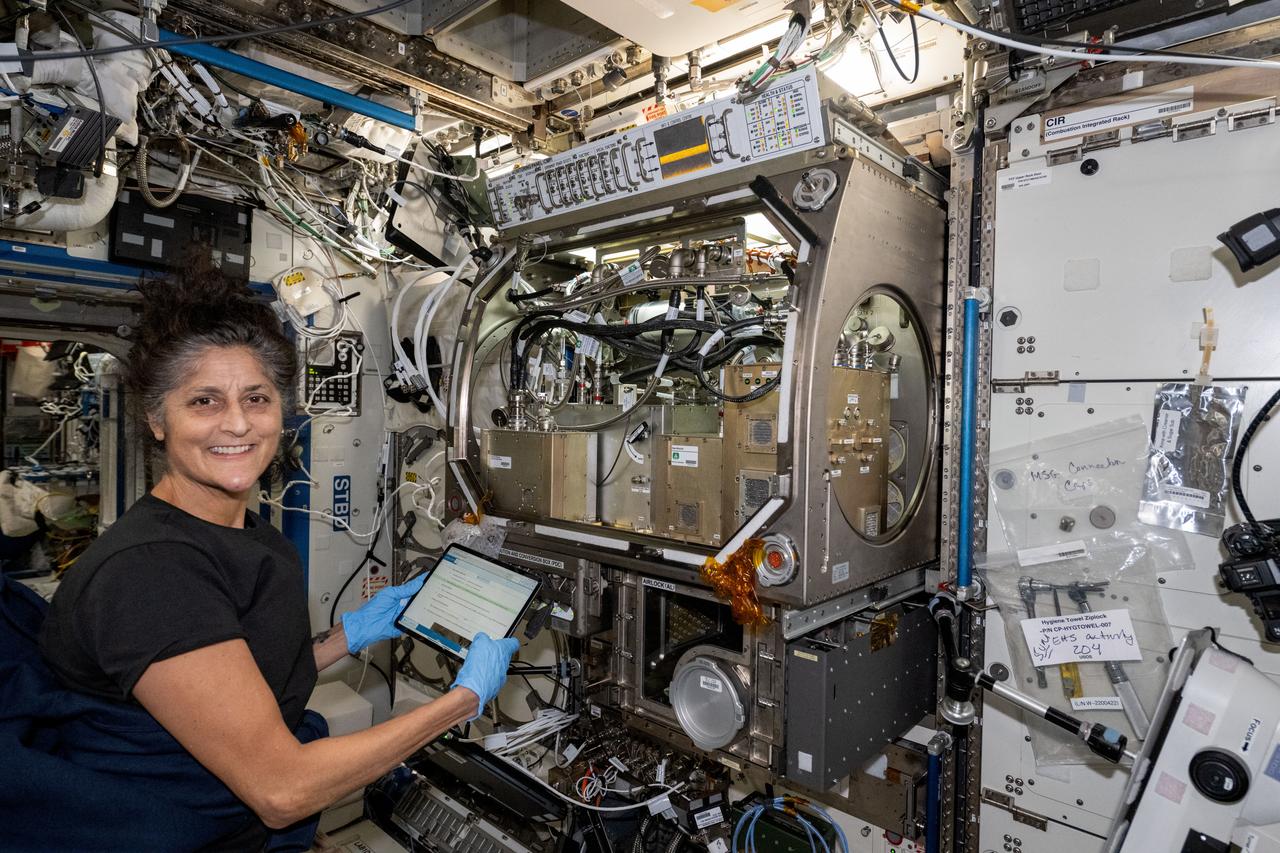
iss065e056790
iss057e055227 (Oct. 19, 2018) --- Expedition 57 Commander Alexander Gerst of ESA (European Space Agency), surrounded by exercise and science gear inside the U.S. Destiny laboratory, gives a thumbs up sign after completing maintenance work on a Life Support Rack.
iss057e055227
iss065e026994 (5/8/2021) --- NASA astronaut Megan McArthur services donor cells inside the Kibo laboratory module's Life Science Glovebox for the Celestial Immunity study. The human research investigation may provide insights into new vaccines and drugs possibly advancing the commercialization of space.
iss065e026994
iss065e023172 (May 6, 2021) --- NASA astronaut and Expedition 65 Flight Engineer Megan McArthur services donor cells inside the Kibo laboratory module's Life Science Glovebox for the Celestial Immunity study. The human research investigation may provide insights into new vaccines and drugs possibly advancing the commercialization of space.
iss065e023172