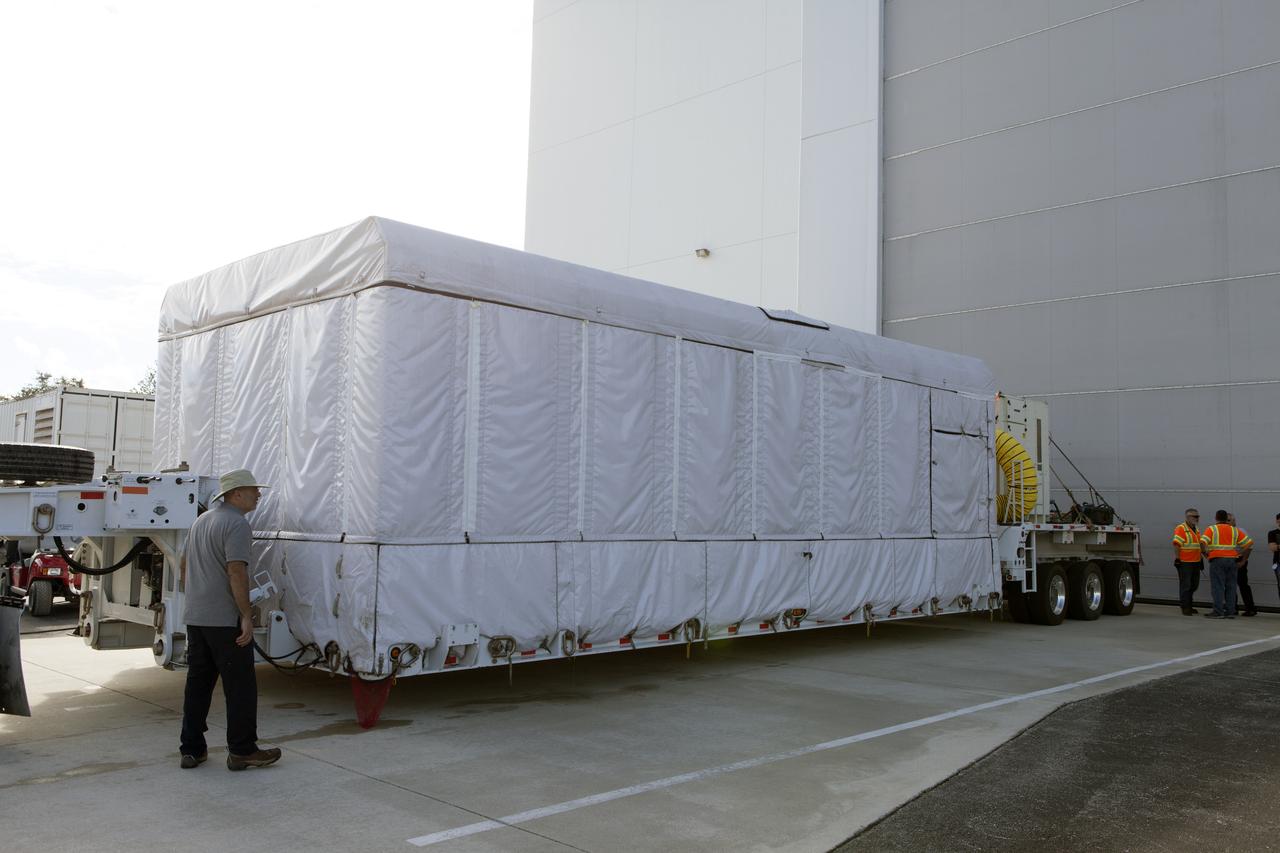
NOAA's Geostationary Operation Environmental Satellite-S (GOES-S) arrives at Astrotech Space Operations in Titusville, Florida, to prepare it for launch. The facility is located near NASA's Kennedy Space Center. GOES-S is the second in a series of four advanced geostationary weather satellites. The GOES-R series - consisting of the GOES-R, GOES-S, GOES-T and GOES-U spacecraft - will significantly improve the detection and observation of environmental phenomena that directly affect public safety, protection of property and the nation's economic health and prosperity. GOES-S is slated to launch March 1, 2018 aboard a United Launch Alliance Atlas V rocket from Cape Canaveral Air Force Station in Florida.
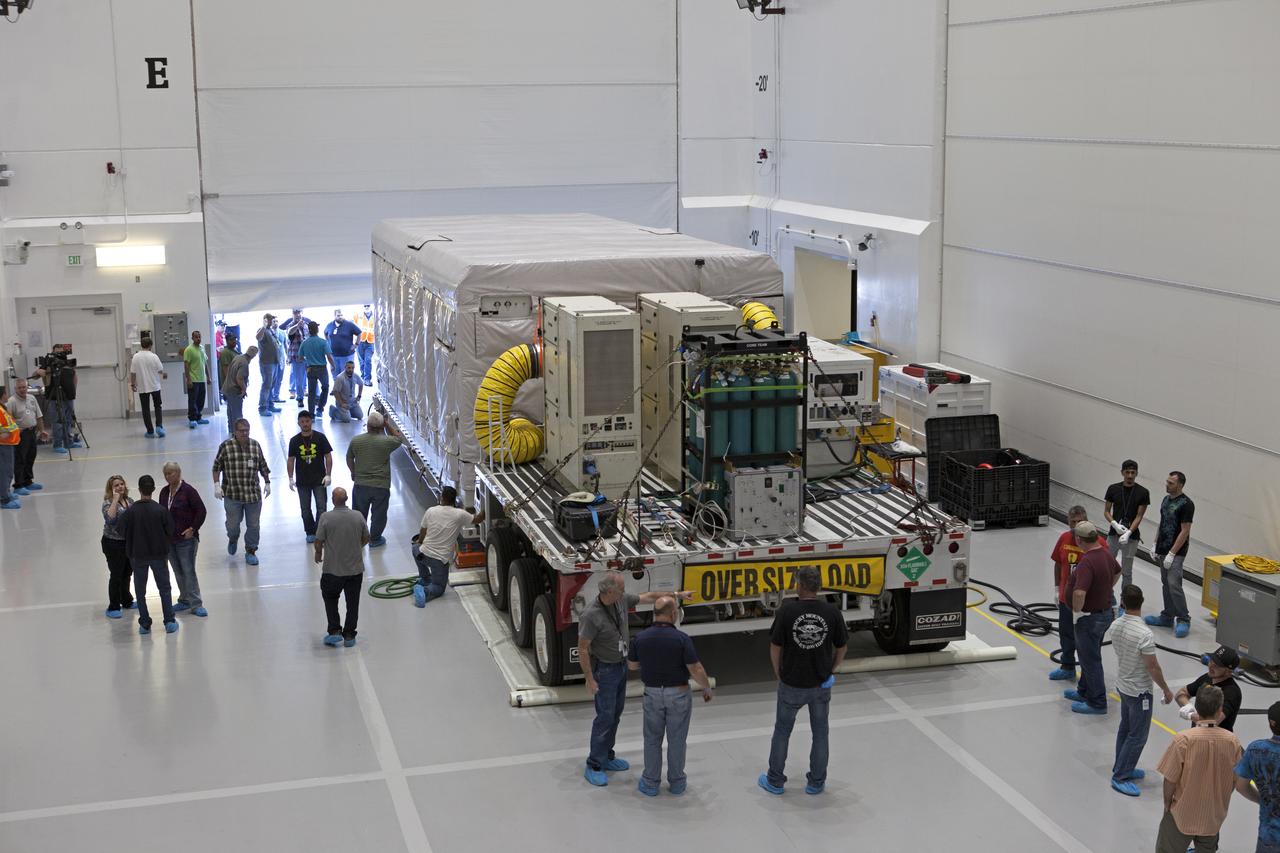
NOAA's Geostationary Operation Environmental Satellite-S (GOES-S) arrives inside Astrotech Space Operations in Titusville, Florida, to prepare it for launch. The facility is located near NASA's Kennedy Space Center. GOES-S is the second in a series of four advanced geostationary weather satellites. The GOES-R series - consisting of the GOES-R, GOES-S, GOES-T and GOES-U spacecraft - will significantly improve the detection and observation of environmental phenomena that directly affect public safety, protection of property and the nation's economic health and prosperity. GOES-S is slated to launch March 1, 2018 aboard a United Launch Alliance Atlas V rocket from Cape Canaveral Air Force Station in Florida.
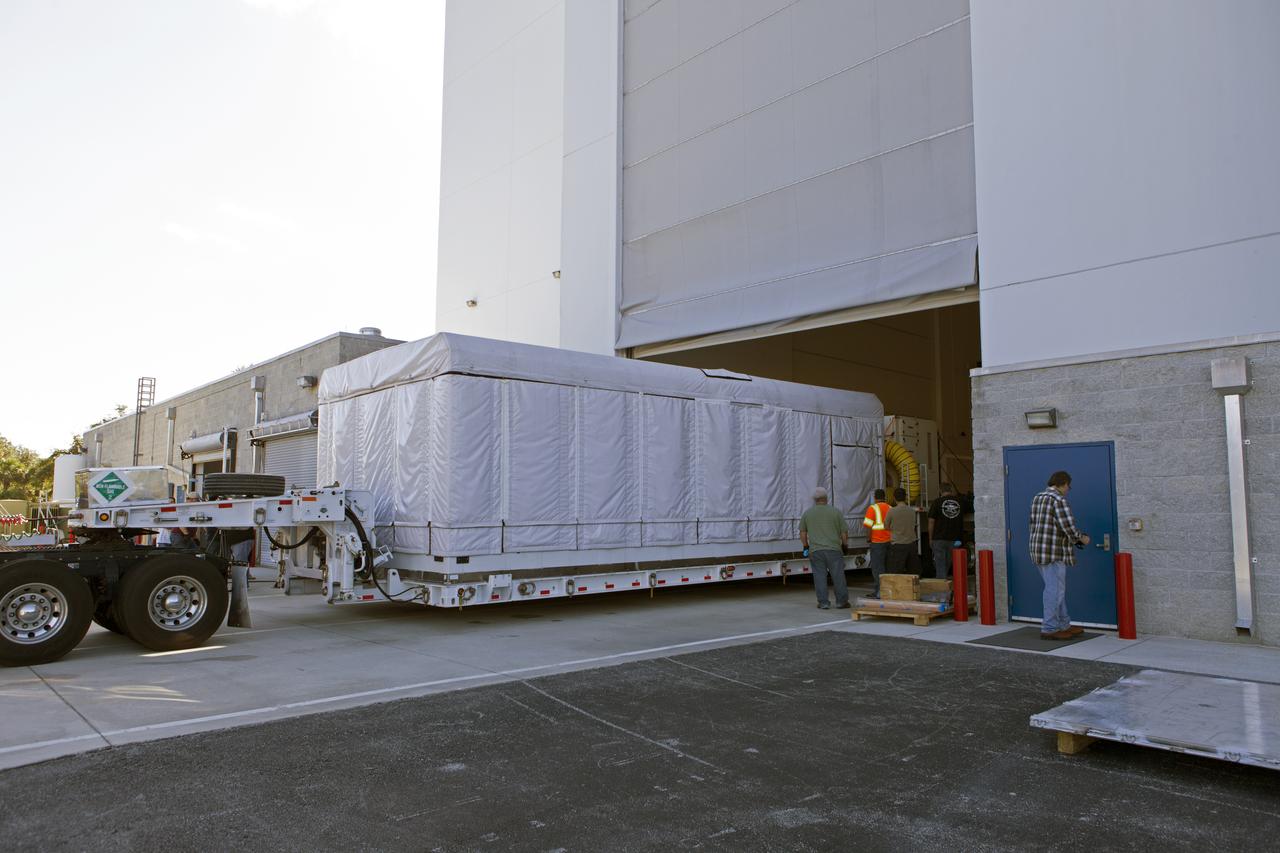
NOAA's Geostationary Operation Environmental Satellite-S (GOES-S) arrives at Astrotech Space Operations in Titusville, Florida, to prepare it for launch. The facility is located near NASA's Kennedy Space Center. GOES-S is the second in a series of four advanced geostationary weather satellites. The GOES-R series - consisting of the GOES-R, GOES-S, GOES-T and GOES-U spacecraft - will significantly improve the detection and observation of environmental phenomena that directly affect public safety, protection of property and the nation's economic health and prosperity. GOES-S is slated to launch March 1, 2018 aboard a United Launch Alliance Atlas V rocket from Cape Canaveral Air Force Station in Florida.
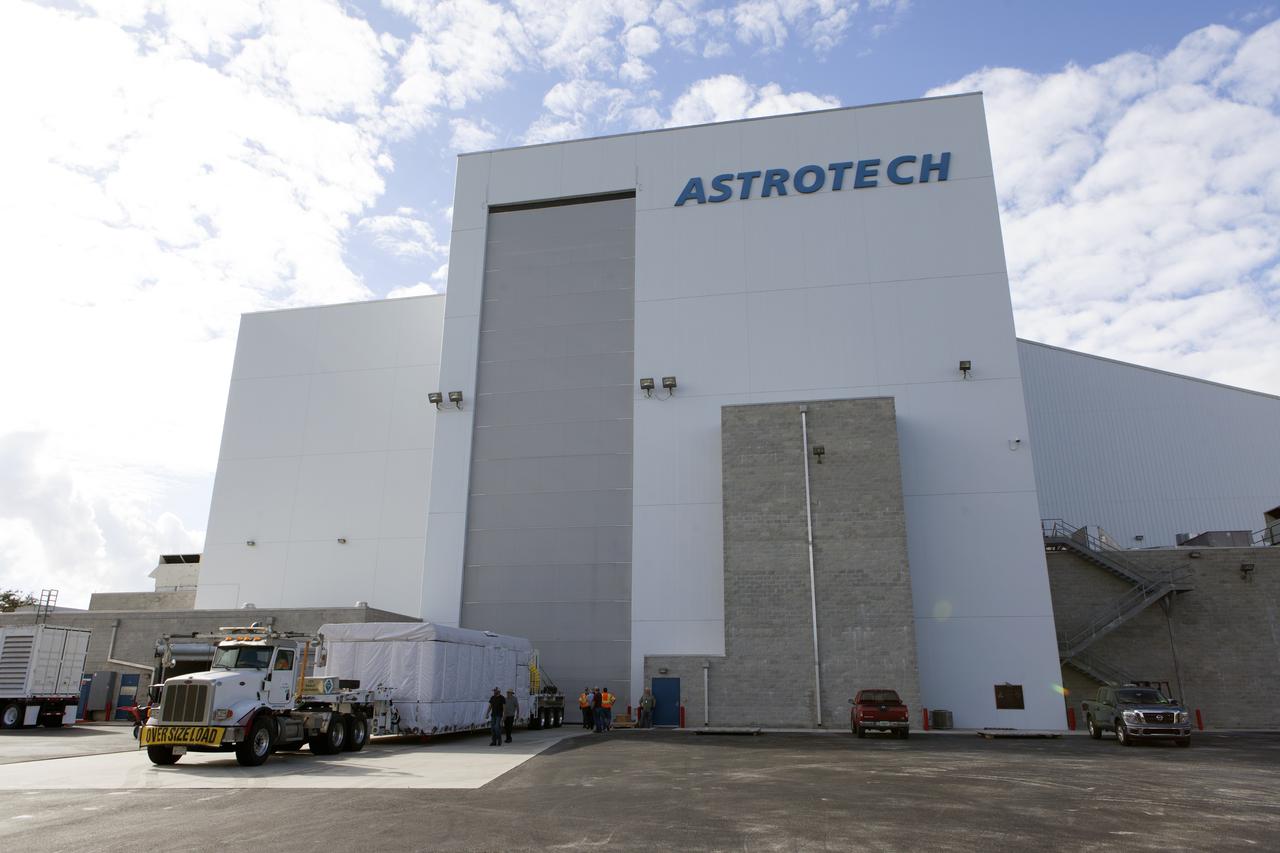
NOAA's Geostationary Operation Environmental Satellite-S (GOES-S) arrives at Astrotech Space Operations in Titusville, Florida, to prepare it for launch. The facility is located near NASA's Kennedy Space Center. GOES-S is the second in a series of four advanced geostationary weather satellites. The GOES-R series - consisting of the GOES-R, GOES-S, GOES-T and GOES-U spacecraft - will significantly improve the detection and observation of environmental phenomena that directly affect public safety, protection of property and the nation's economic health and prosperity. GOES-S is slated to launch March 1, 2018 aboard a United Launch Alliance Atlas V rocket from Cape Canaveral Air Force Station in Florida.
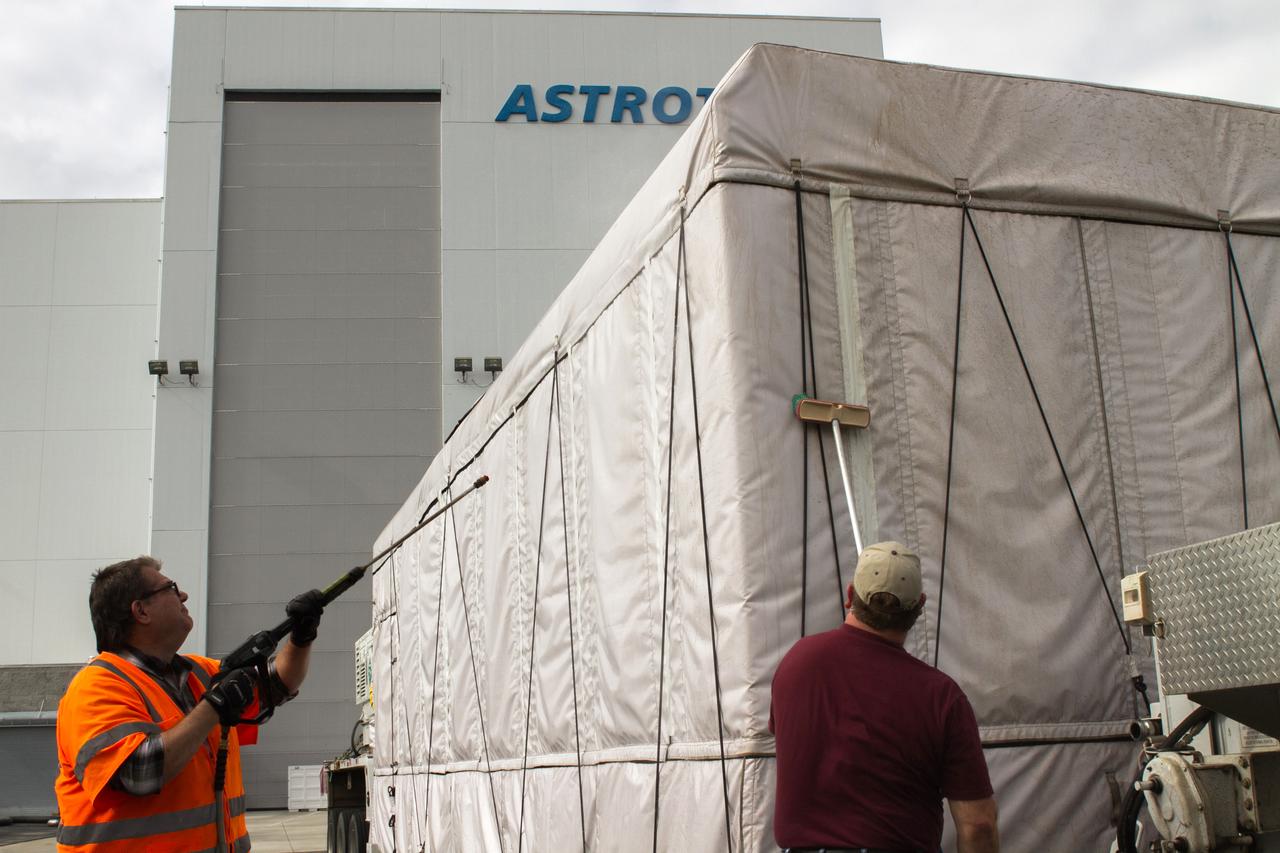
NOAA's Geostationary Operation Environmental Satellite-S (GOES-S) arrives at Astrotech Space Operations in Titusville, Florida, to prepare it for launch. The facility is located near NASA's Kennedy Space Center. GOES-S is the second in a series of four advanced geostationary weather satellites. The GOES-R series - consisting of the GOES-R, GOES-S, GOES-T and GOES-U spacecraft - will significantly improve the detection and observation of environmental phenomena that directly affect public safety, protection of property and the nation's economic health and prosperity. GOES-S is slated to launch March 1, 2018 aboard a United Launch Alliance Atlas V rocket from Cape Canaveral Air Force Station in Florida.
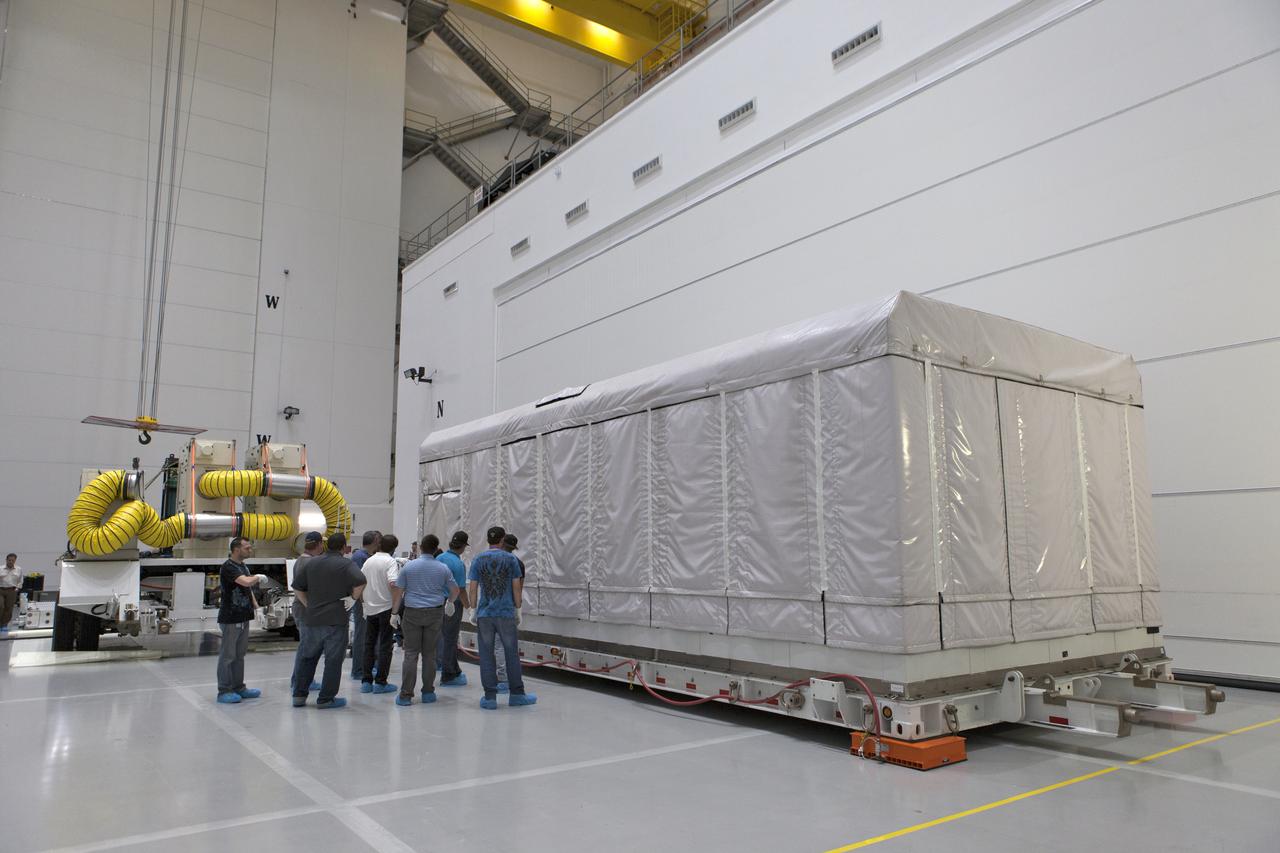
NOAA's Geostationary Operation Environmental Satellite-S (GOES-S) arrives inside Astrotech Space Operations in Titusville, Florida, to prepare it for launch. The facility is located near NASA's Kennedy Space Center. GOES-S is the second in a series of four advanced geostationary weather satellites. The GOES-R series - consisting of the GOES-R, GOES-S, GOES-T and GOES-U spacecraft - will significantly improve the detection and observation of environmental phenomena that directly affect public safety, protection of property and the nation's economic health and prosperity. GOES-S is slated to launch March 1, 2018 aboard a United Launch Alliance Atlas V rocket from Cape Canaveral Air Force Station in Florida.
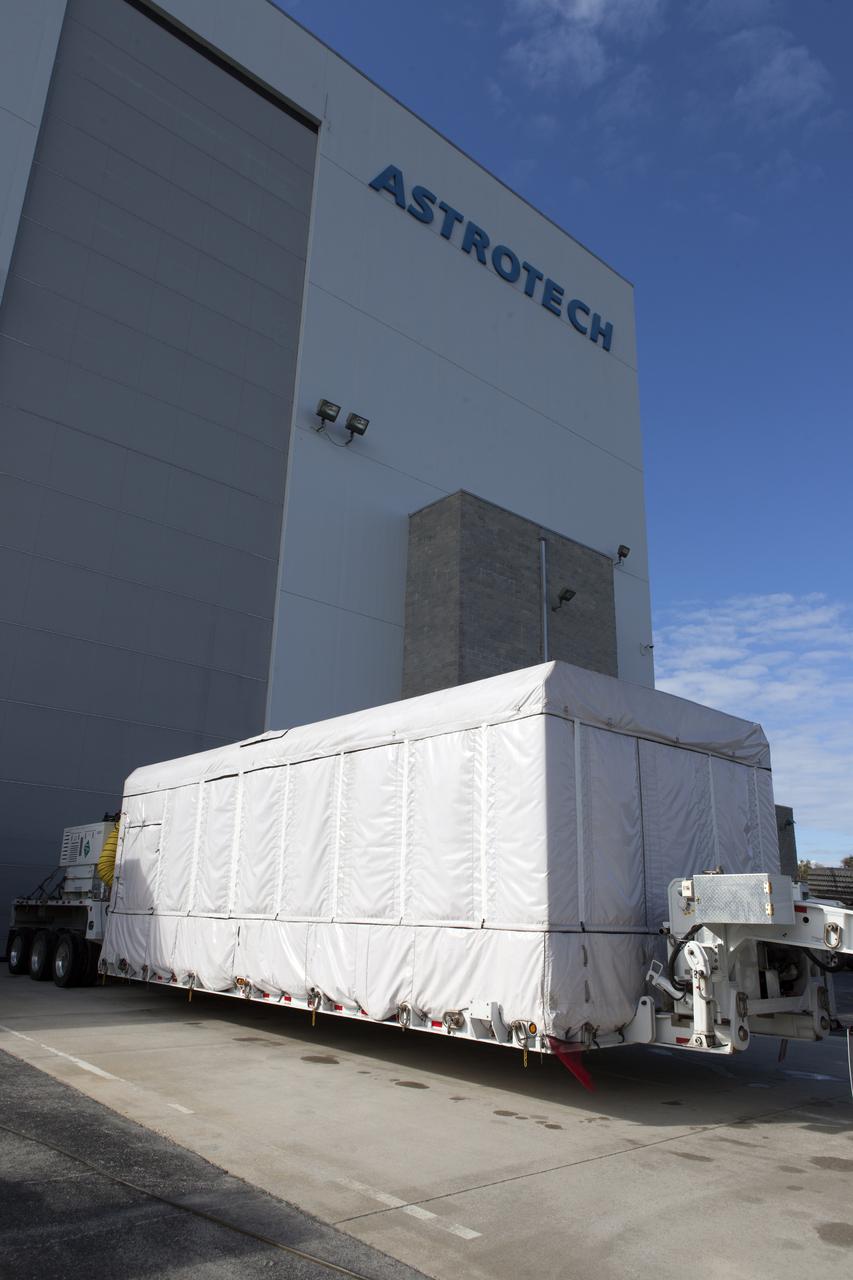
NOAA's Geostationary Operation Environmental Satellite-S (GOES-S) arrives at Astrotech Space Operations in Titusville, Florida, to prepare it for launch. The facility is located near NASA's Kennedy Space Center. GOES-S is the second in a series of four advanced geostationary weather satellites. The GOES-R series - consisting of the GOES-R, GOES-S, GOES-T and GOES-U spacecraft - will significantly improve the detection and observation of environmental phenomena that directly affect public safety, protection of property and the nation's economic health and prosperity. GOES-S is slated to launch March 1, 2018 aboard a United Launch Alliance Atlas V rocket from Cape Canaveral Air Force Station in Florida.
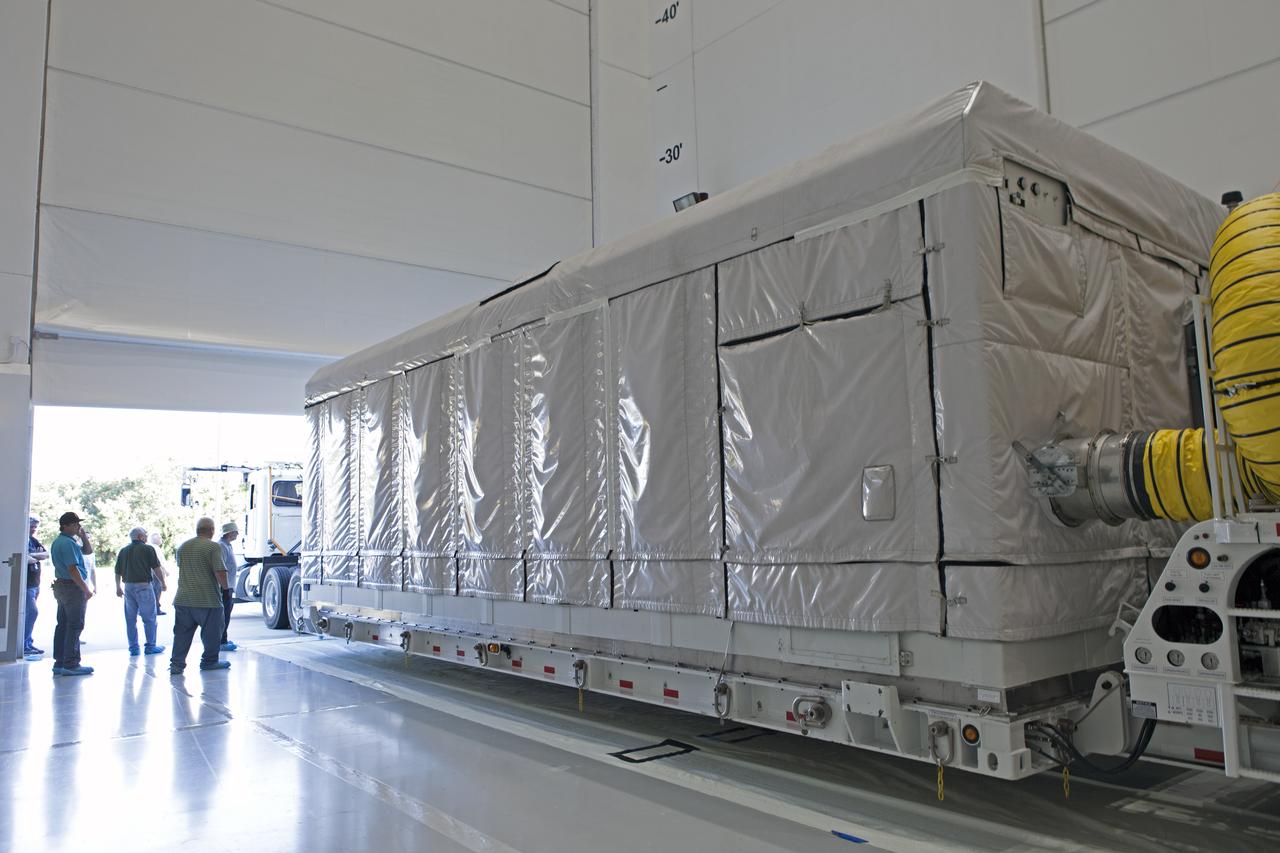
NOAA's Geostationary Operation Environmental Satellite-S (GOES-S) arrives at Astrotech Space Operations in Titusville, Florida, to prepare it for launch. The facility is located near NASA's Kennedy Space Center. GOES-S is the second in a series of four advanced geostationary weather satellites. The GOES-R series - consisting of the GOES-R, GOES-S, GOES-T and GOES-U spacecraft - will significantly improve the detection and observation of environmental phenomena that directly affect public safety, protection of property and the nation's economic health and prosperity. GOES-S is slated to launch March 1, 2018 aboard a United Launch Alliance Atlas V rocket from Cape Canaveral Air Force Station in Florida.
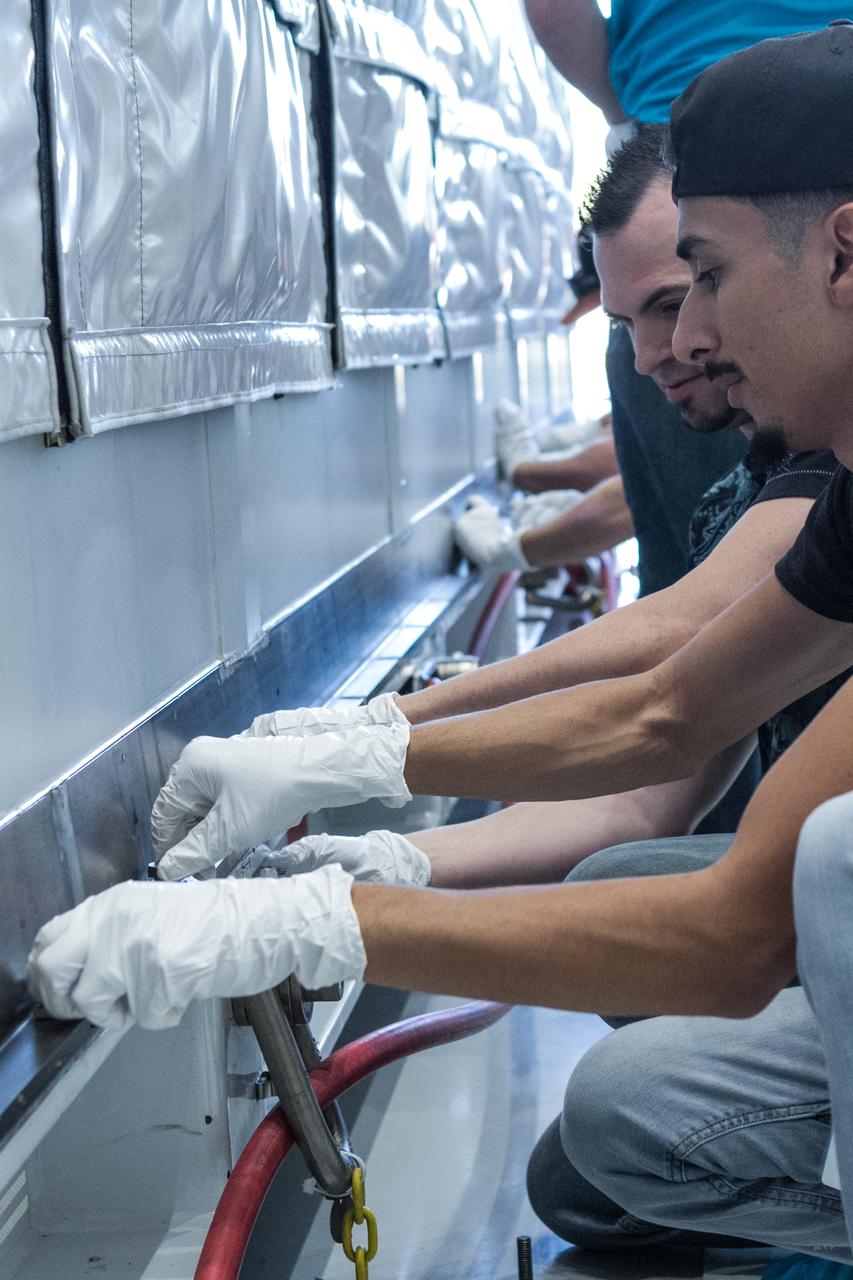
At Astrotech Space Operations in Titusville, Florida, technicians and engineers prepare to remove NOAA's Geostationary Operation Environmental Satellite-S (GOES-S) from its shipping container. GOES-S is the second in a series of four advanced geostationary weather satellites. The GOES-R series - consisting of the GOES-R, GOES-S, GOES-T and GOES-U spacecraft - will significantly improve the detection and observation of environmental phenomena that directly affect public safety, protection of property and the nation's economic health and prosperity. GOES-S is slated to launch March 1, 2018 aboard a United Launch Alliance Atlas V rocket from Cape Canaveral Air Force Station in Florida.
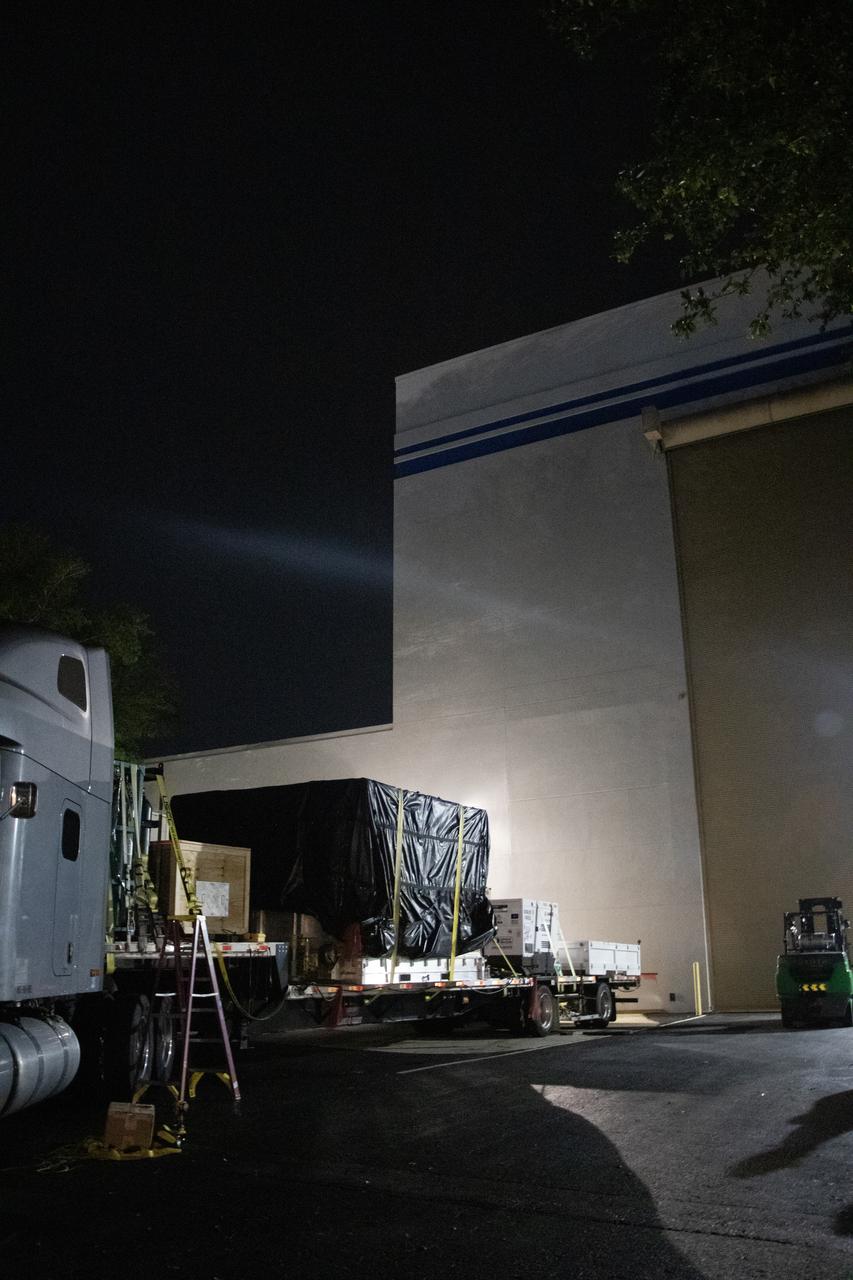
The transport carrier containing NASA’s IMAP (Interstellar Mapping and Acceleration Probe) arrives Saturday, May 10, 2025 at the Astrotech Space Operations Facility near the agency’s Kennedy Space Center in Florida where it will undergo checkout operations, fueling, and encapsulation. IMAP will study how the Sun shapes the boundaries of the heliosphere, the bubble protecting around our solar system. IMAP is targeting launch this fall aboard a SpaceX Falcon 9 rocket from Launch Complex 39A at NASA Kennedy.
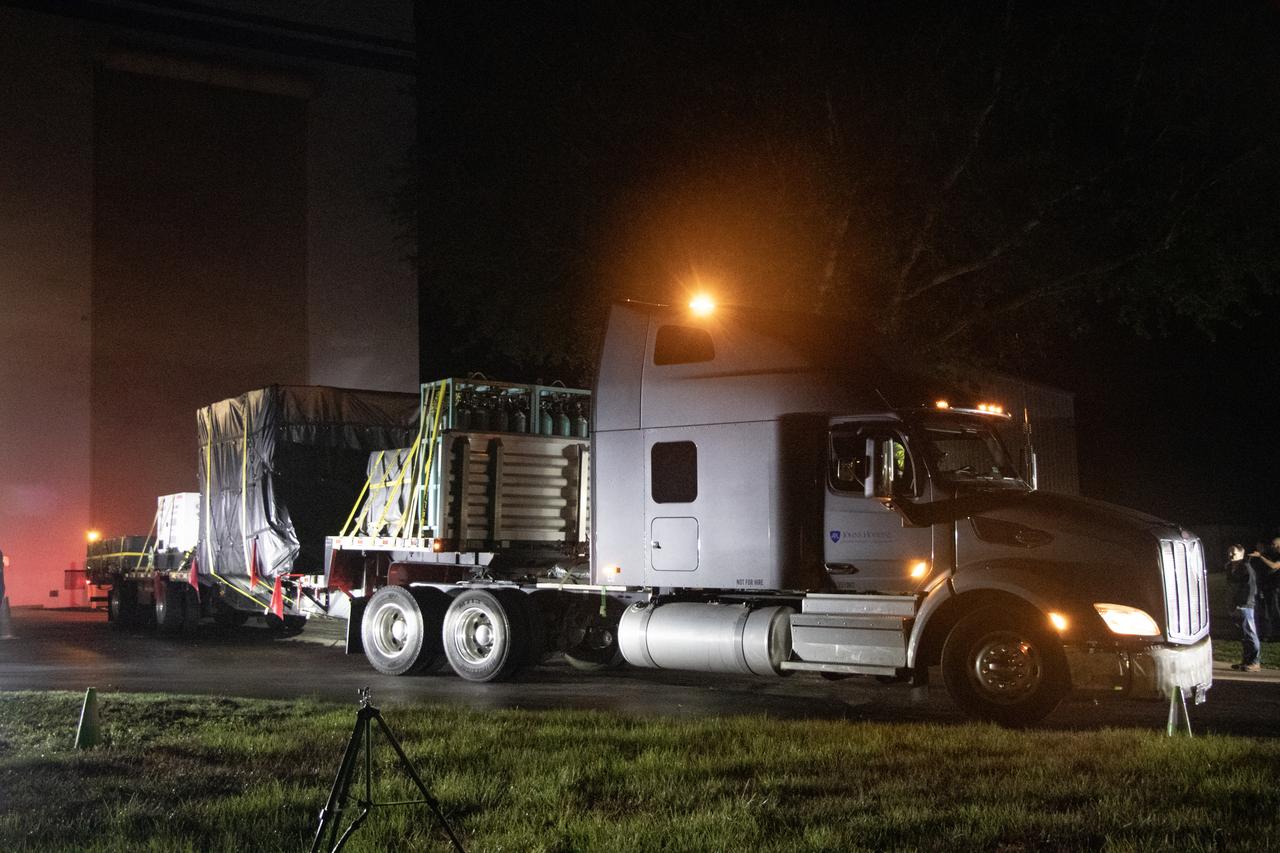
The transport carrier containing NASA’s IMAP (Interstellar Mapping and Acceleration Probe) arrives Saturday, May 10, 2025 at the Astrotech Space Operations Facility near the agency’s Kennedy Space Center in Florida where it will undergo checkout operations, fueling, and encapsulation. IMAP will study how the Sun shapes the boundaries of the heliosphere, the bubble protecting around our solar system. IMAP is targeting launch this fall aboard a SpaceX Falcon 9 rocket from Launch Complex 39A at NASA Kennedy.
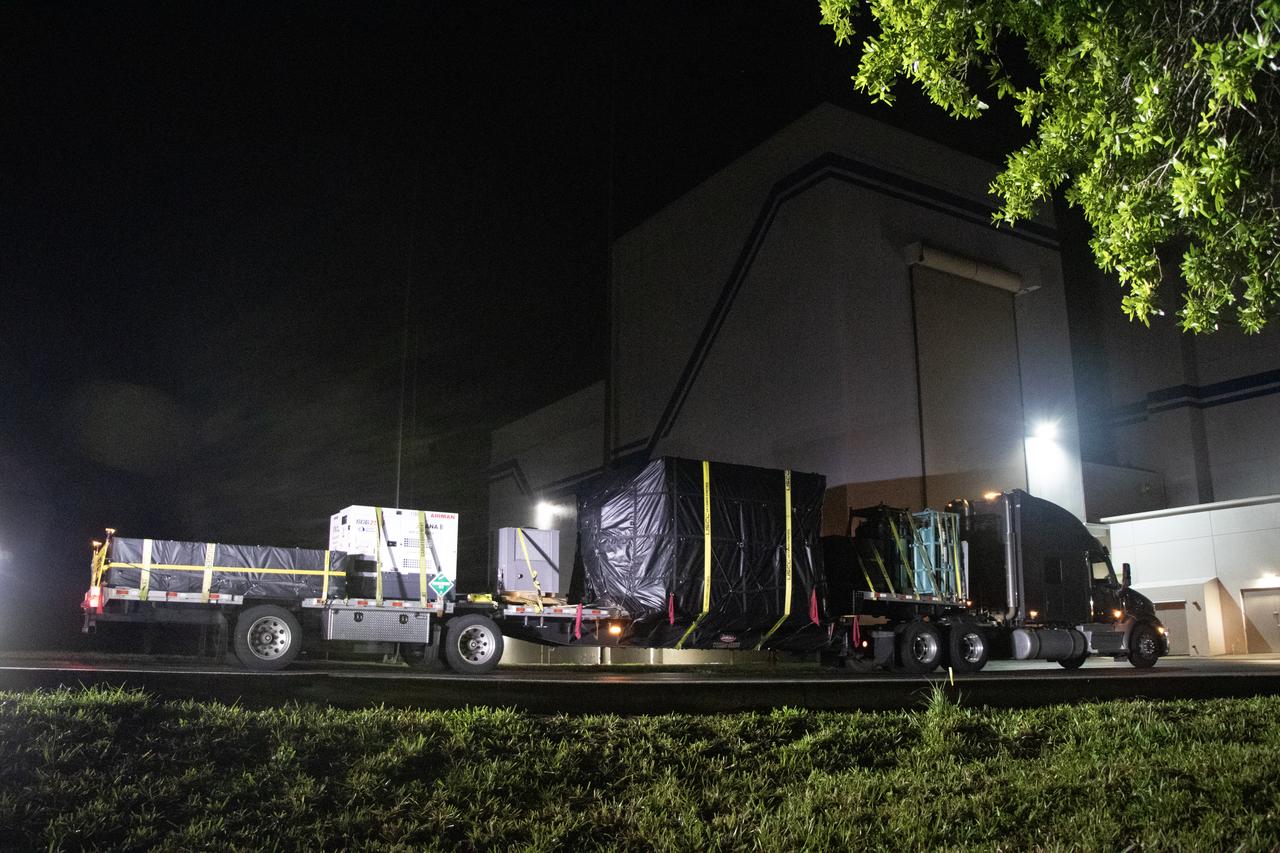
The transport carrier containing NASA’s IMAP (Interstellar Mapping and Acceleration Probe) arrives Saturday, May 10, 2025 at the Astrotech Space Operations Facility near the agency’s Kennedy Space Center in Florida where it will undergo checkout operations, fueling, and encapsulation. IMAP will study how the Sun shapes the boundaries of the heliosphere, the bubble protecting around our solar system. IMAP is targeting launch this fall aboard a SpaceX Falcon 9 rocket from Launch Complex 39A at NASA Kennedy.
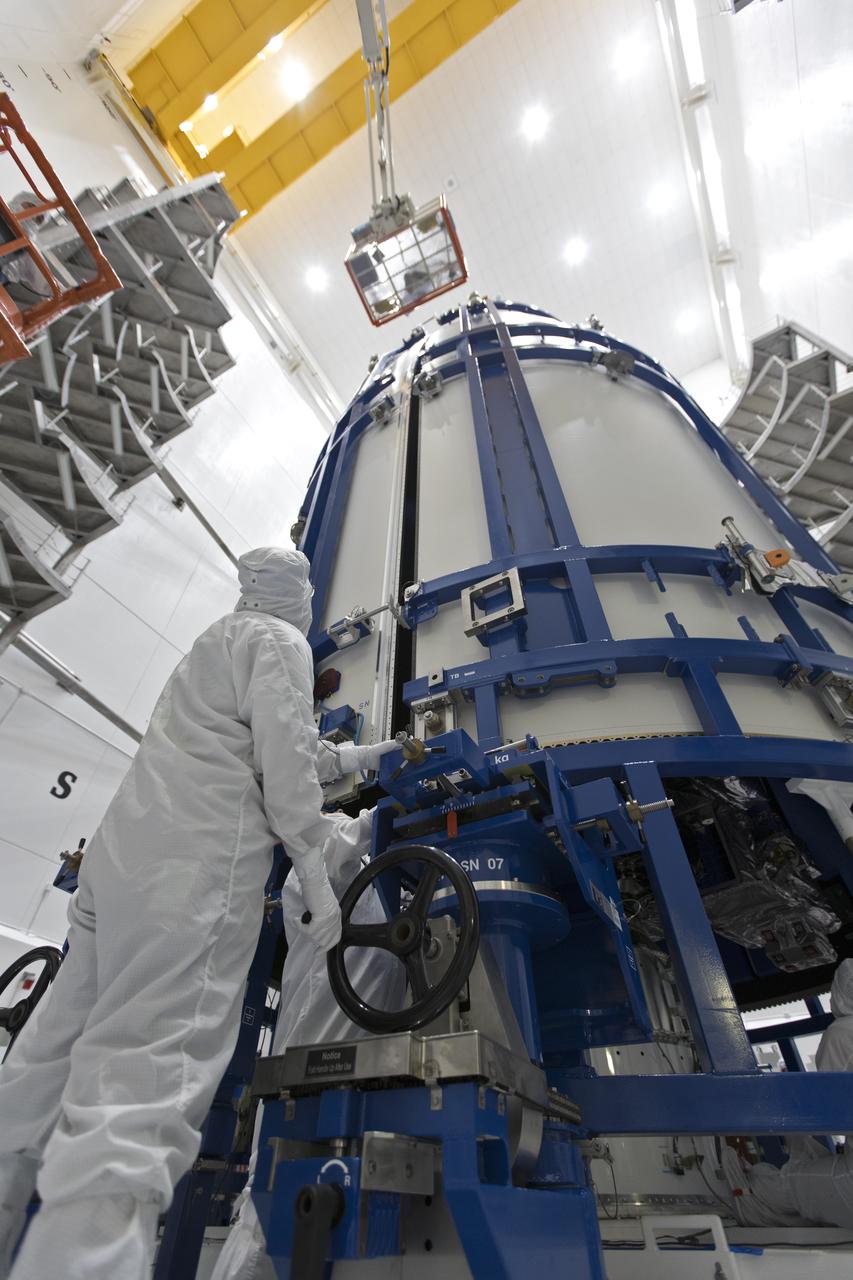
In a clean room at Astrotech Space Operations in Titusville, Florida, technicians and engineers monitor progress as NOAA's Geostationary Operational Environmental Satellite-S, or GOES-S, is encapsulated in its payload fairing. It soon will be moved to Space Launch Complex 41 at Cape Canaveral Air Force Station for mounting atop the Atlas V rocket that will boost the satellite to orbit. GOES-S is the second in a series of four advanced geostationary weather satellites that will significantly improve the detection and observation of environmental phenomena that directly affect public safety, protection of property and the nation's economic health and prosperity. GOES-S is slated to launch March 1, 2018 aboard a United Launch Alliance Atlas V rocket.
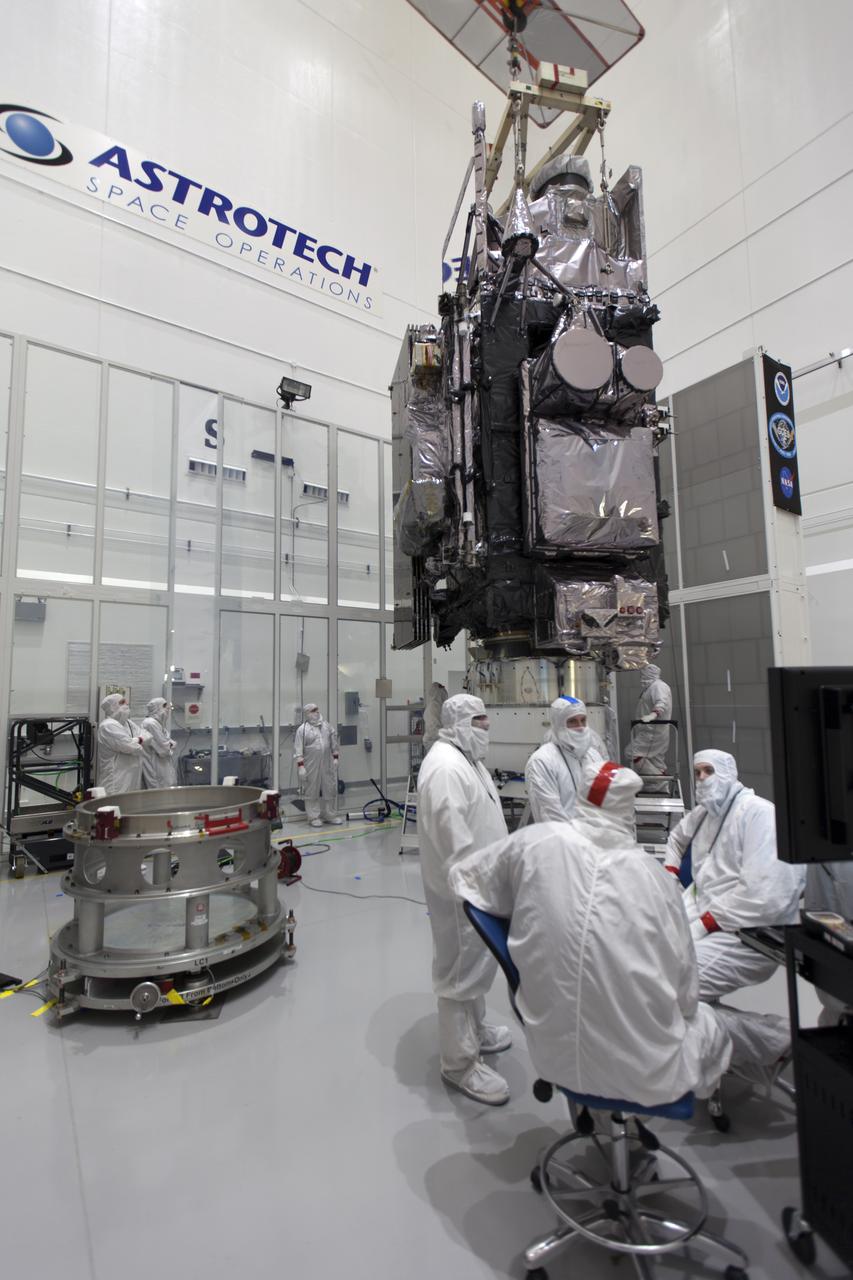
In a clean room at Astrotech Space Operations in Titusville, Florida, technicians and engineers monitor progress as NOAA's Geostationary Operational Environmental Satellite-S, or GOES-S, is mated to its payload attach fitting. It soon will be moved to Space Launch Complex 41 at Cape Canaveral Air Force Station for mounting atop the Atlas V rocket that will boost the satellite to orbit. GOES-S is the second in a series of four advanced geostationary weather satellites that will significantly improve the detection and observation of environmental phenomena that directly affect public safety, protection of property and the nation's economic health and prosperity. GOES-S is slated to launch March 1, 2018 aboard a United Launch Alliance Atlas V rocket.
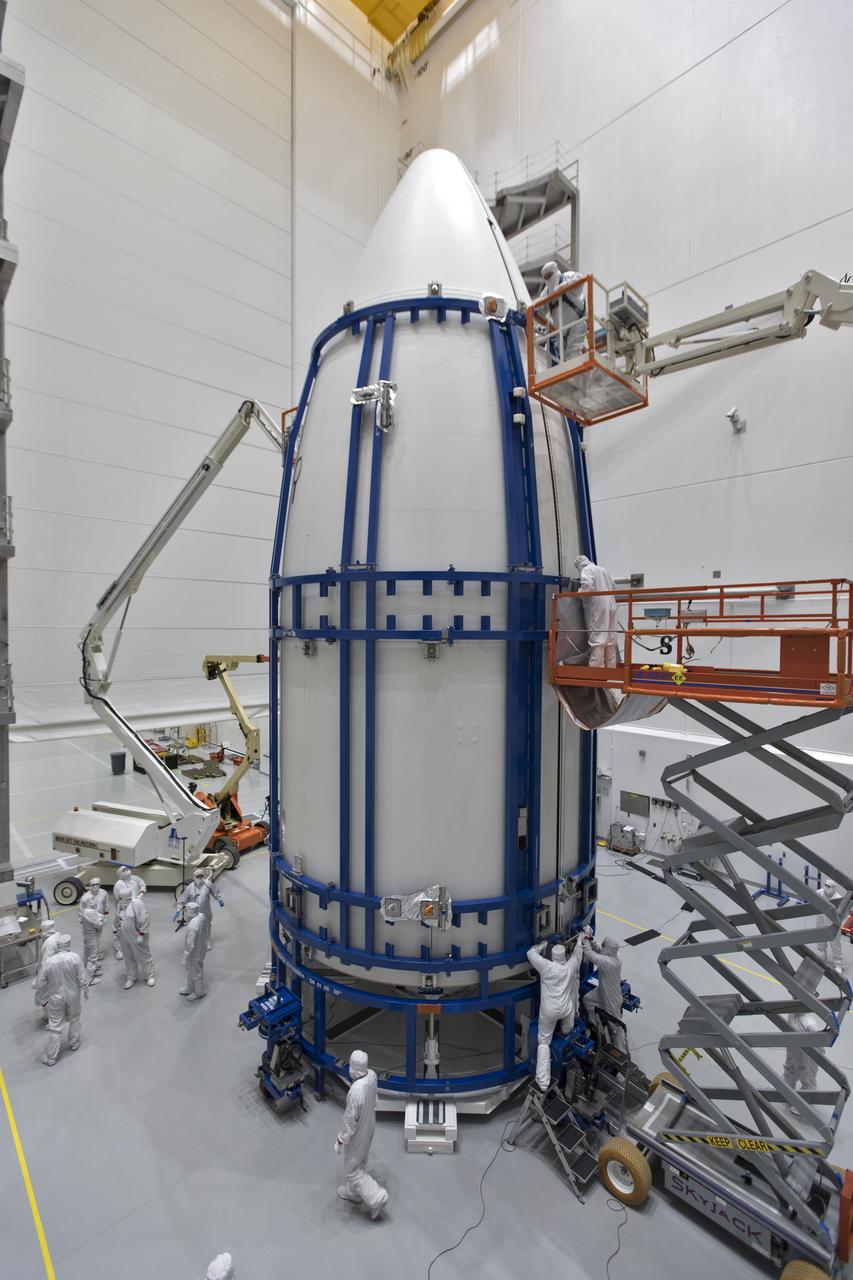
In a clean room at Astrotech Space Operations in Titusville, Florida, technicians and engineers monitor progress as NOAA's Geostationary Operational Environmental Satellite-S, or GOES-S, is encapsulated in its payload fairing. It soon will be moved to Space Launch Complex 41 at Cape Canaveral Air Force Station for mounting atop the Atlas V rocket that will boost the satellite to orbit. GOES-S is the second in a series of four advanced geostationary weather satellites that will significantly improve the detection and observation of environmental phenomena that directly affect public safety, protection of property and the nation's economic health and prosperity. GOES-S is slated to launch March 1, 2018 aboard a United Launch Alliance Atlas V rocket.
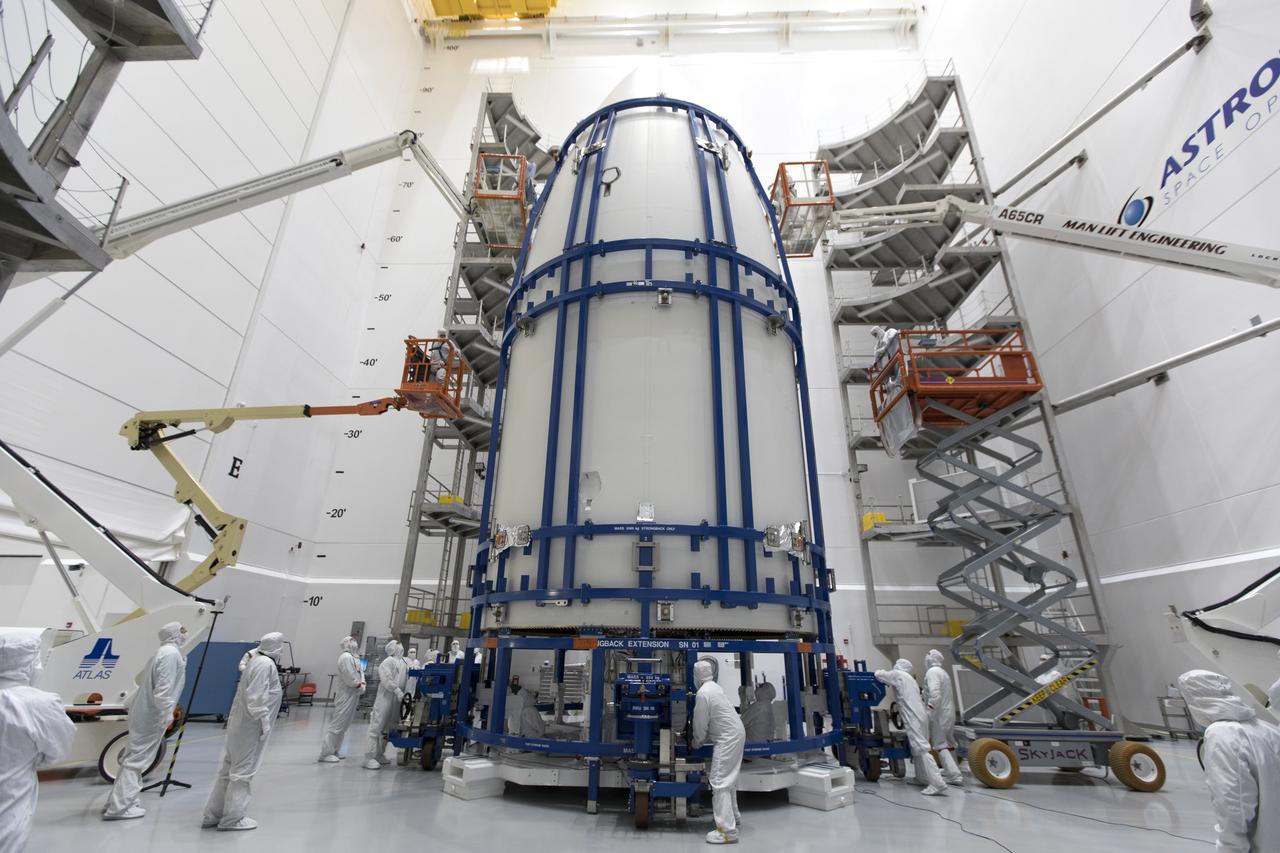
In a clean room at Astrotech Space Operations in Titusville, Florida, technicians and engineers monitor progress as NOAA's Geostationary Operational Environmental Satellite-S, or GOES-S, is encapsulated in its payload fairing. It soon will be moved to Space Launch Complex 41 at Cape Canaveral Air Force Station for mounting atop the Atlas V rocket that will boost the satellite to orbit. GOES-S is the second in a series of four advanced geostationary weather satellites that will significantly improve the detection and observation of environmental phenomena that directly affect public safety, protection of property and the nation's economic health and prosperity. GOES-S is slated to launch March 1, 2018 aboard a United Launch Alliance Atlas V rocket.

Two small spacecrafts satellites that make up NASA’s ESCAPADE (Escape and Plasma Acceleration and Dynamics Explorers) mission to Mars arrived at Astrotech Space Operations in Titusville, near NASA’s Kennedy Space Center in Florida on Sunday, Aug. 19, 2024. Set to launch from Blue Origin’s New Glenn rocket, the Rocket Lab spacecraft will study the solar wind and how the solar wind interacts with Mars’ magnetic environment and how this interaction drives the planet’s atmospheric escape.

Two small spacecrafts satellites that make up NASA’s ESCAPADE (Escape and Plasma Acceleration and Dynamics Explorers) mission to Mars arrived at Astrotech Space Operations in Titusville, near NASA’s Kennedy Space Center in Florida on Sunday, Aug. 19, 2024. Set to launch from Blue Origin’s New Glenn rocket, the Rocket Lab spacecraft will study the solar wind and how the solar wind interacts with Mars’ magnetic environment and how this interaction drives the planet’s atmospheric escape.

Two small spacecrafts satellites that make up NASA’s ESCAPADE (Escape and Plasma Acceleration and Dynamics Explorers) mission to Mars arrived at Astrotech Space Operations in Titusville, near NASA’s Kennedy Space Center in Florida on Sunday, Aug. 19, 2024. Set to launch from Blue Origin’s New Glenn rocket, the Rocket Lab spacecraft will study the solar wind and how the solar wind interacts with Mars’ magnetic environment and how this interaction drives the planet’s atmospheric escape.
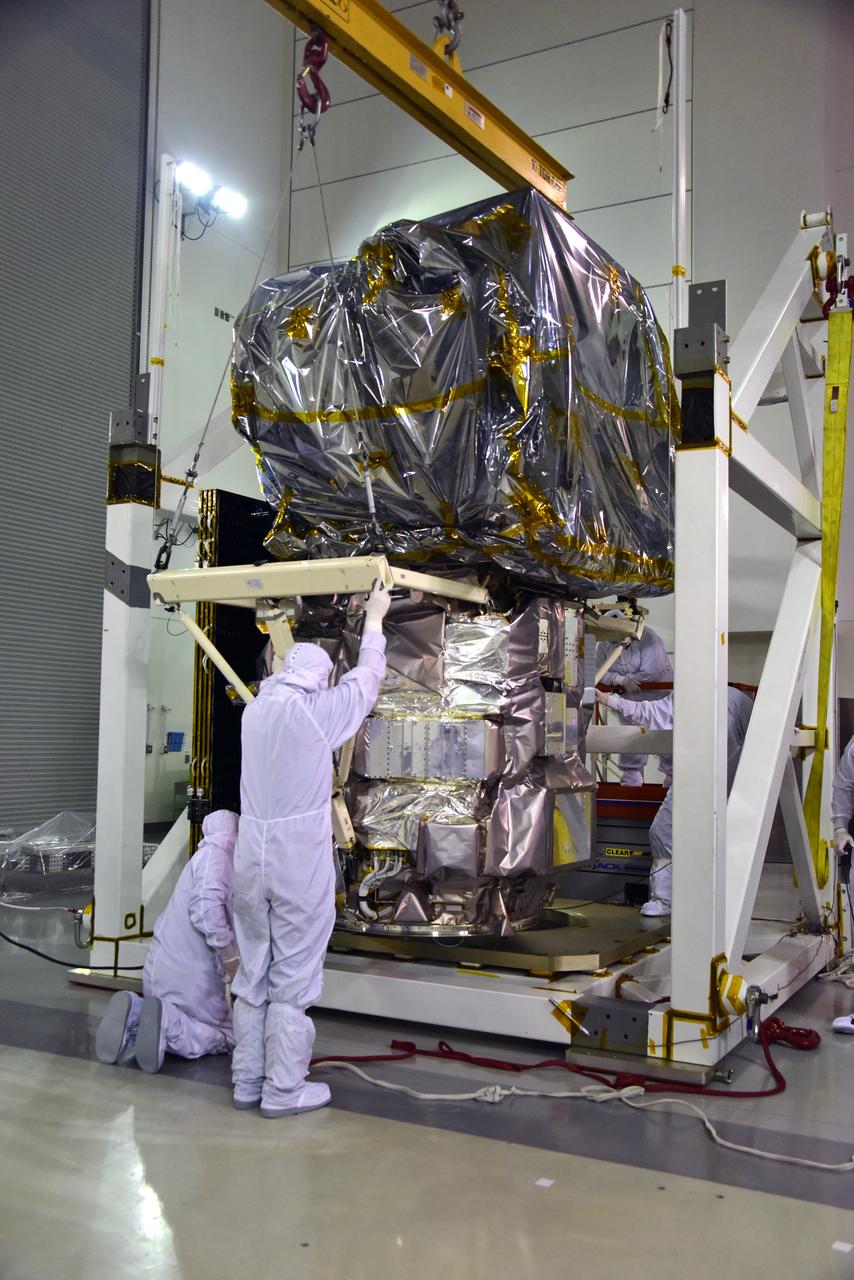
Technicians assist as a crane rotates NASA's Ice, Cloud and land Elevation Satellite-2 (ICESat-2) into position for removal and lift to a work stand in the high bay of the Astrotech Space Operations facility on June 14, 2018, at Vandenberg Air Force Base in California. ICESat-2 was shipped from the Northrop Grumman facility in Gilbert, Arizona, where it was built and tested. The satellite is scheduled to launch from Space Launch Complex-2 at Vandenberg on the final United Launch Alliance Delta II rocket. ICESat-2 will measure the height of a changing Earth, one laser pulse at a time, 10,000 laser pulses a second. The satellite will carry the Advanced Topographic Laser Altimeter System. ICESat-2 will help scientists investigate why, and how much our planet's frozen and icy areas, called the cryosphere, is changing in a warming climate.
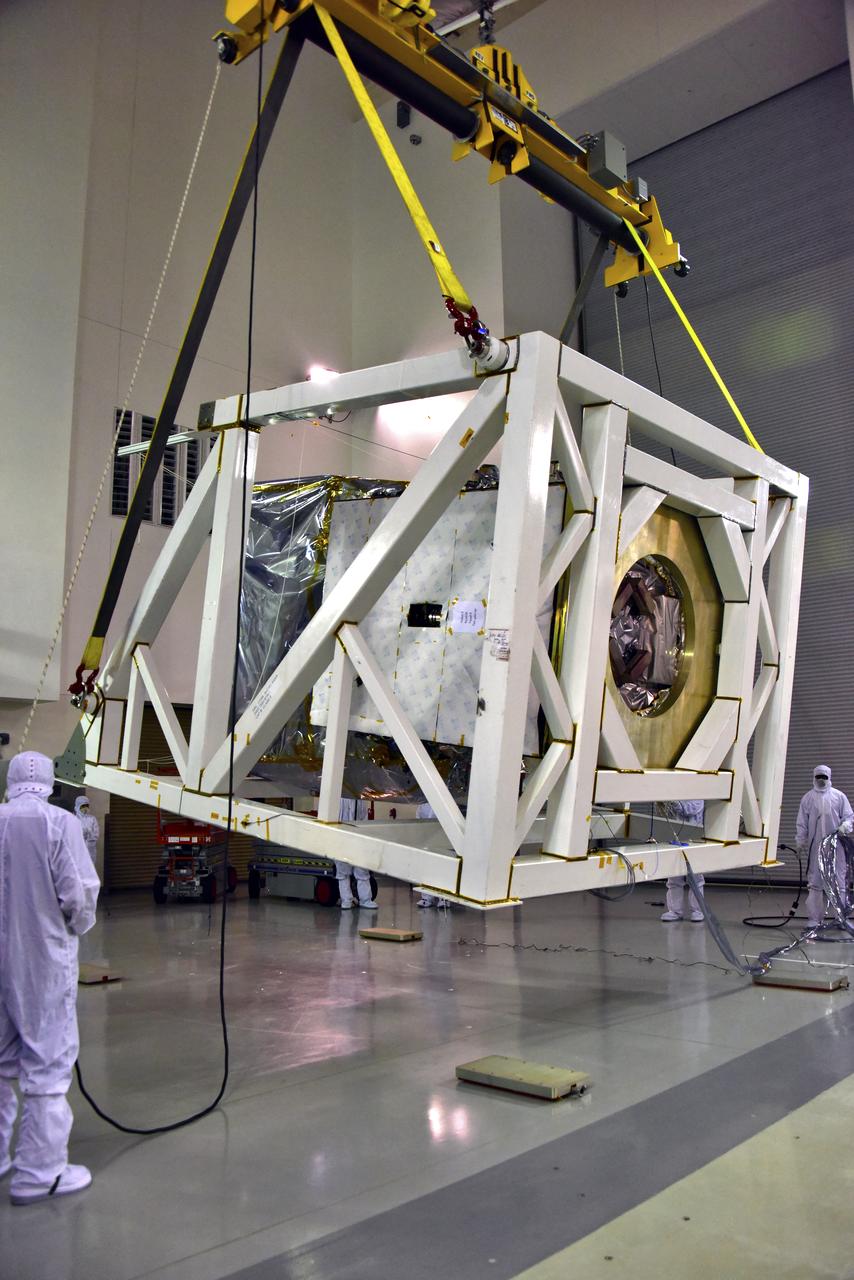
NASA's Ice, Cloud and land Elevation Satellite-2 (ICESat-2) is lifted in its fixture inside the high bay of the Astrotech Space Operations facility on June 14, 2018, at Vandenberg Air Force Base in California. ICESat-2 was shipped from the Northrop Grumman facility in Gilbert, Arizona, where it was built and tested. The satellite is scheduled to launch from Space Launch Complex-2 at Vandenberg on the final United Launch Alliance Delta II rocket. ICESat-2 will measure the height of a changing Earth, one laser pulse at a time, 10,000 laser pulses a second. The satellite will carry the Advanced Topographic Laser Altimeter System. ICESat-2 will help scientists investigate why, and how much our planet's frozen and icy areas, called the cryosphere, is changing in a warming climate.
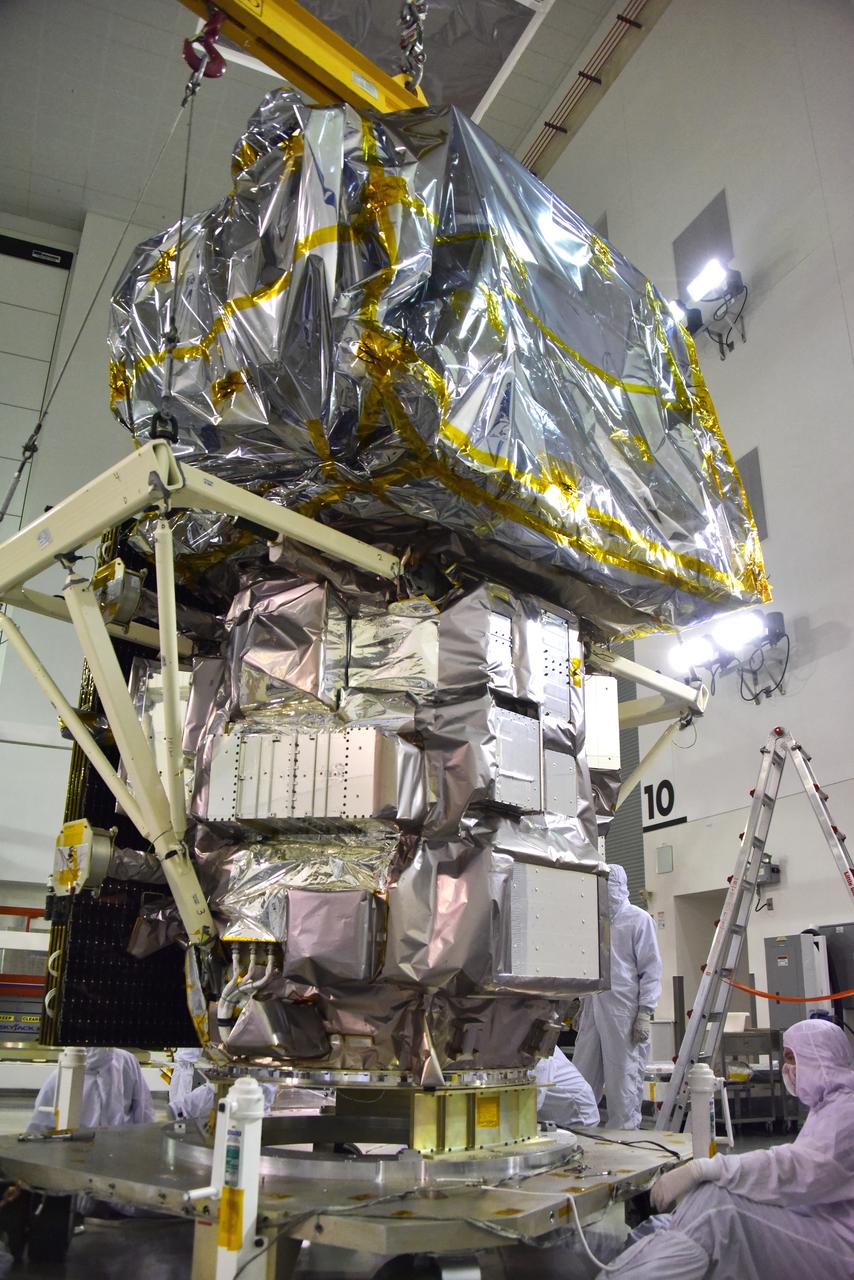
Technicians assist as a crane lowers NASA's Ice, Cloud and land Elevation Satellite-2 (ICESat-2) onto a work stand in the high bay of the Astrotech Space Operations facility on June 14, 2018, at Vandenberg Air Force Base in California. ICESat-2 was shipped from the Northrop Grumman facility in Gilbert, Arizona, where it was built and tested. The satellite is scheduled to launch from Space Launch Complex-2 at Vandenberg on the final United Launch Alliance Delta II rocket. ICESat-2 will measure the height of a changing Earth, one laser pulse at a time, 10,000 laser pulses a second. The satellite will carry the Advanced Topographic Laser Altimeter System. ICESat-2 will help scientists investigate why, and how much our planet's frozen and icy areas, called the cryosphere, is changing in a warming climate.
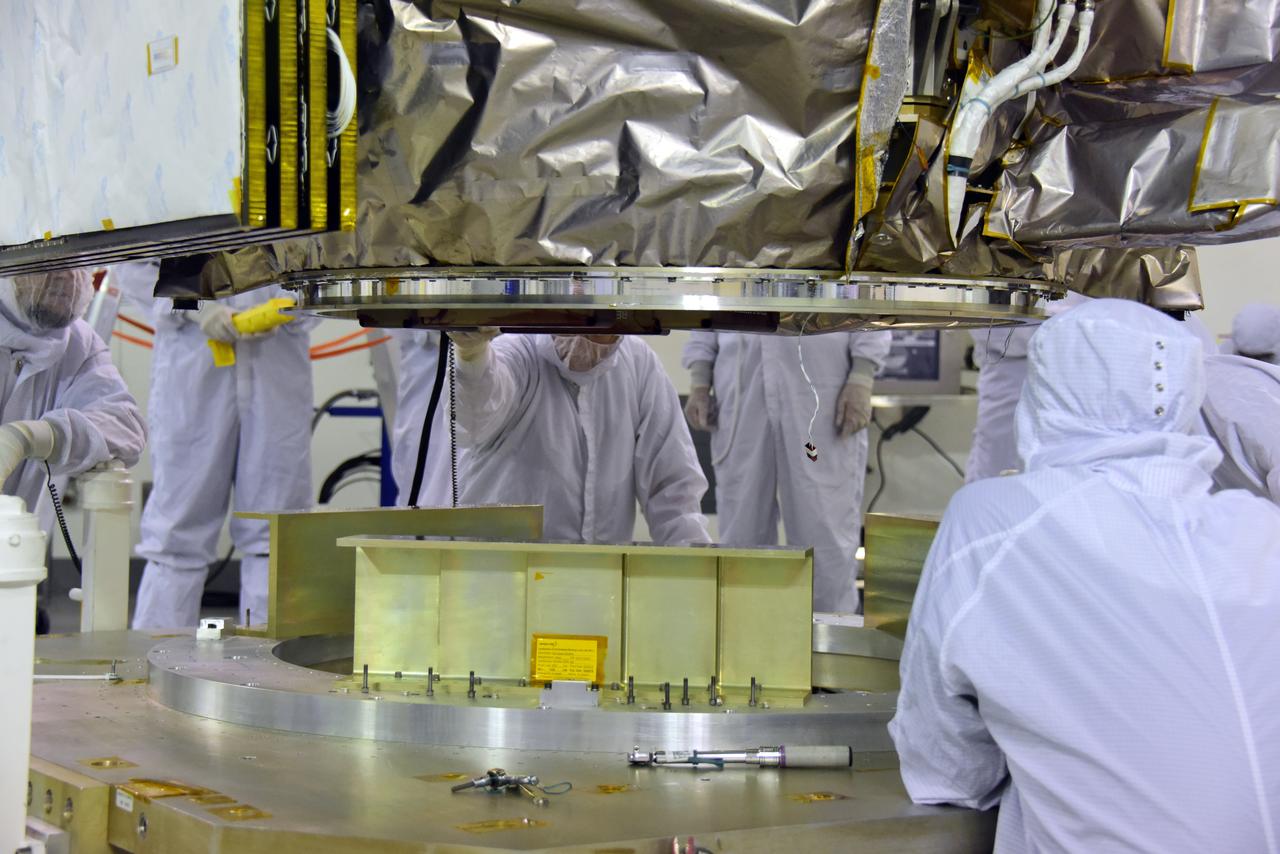
Technicians assist as a crane lowers NASA's Ice, Cloud and land Elevation Satellite-2 (ICESat-2) onto a work stand in the high bay of the Astrotech Space Operations facility on June 14, 2018, at Vandenberg Air Force Base in California. ICESat-2 was shipped from the Northrop Grumman facility in Gilbert, Arizona, where it was built and tested. The satellite is scheduled to launch from Space Launch Complex-2 at Vandenberg on the final United Launch Alliance Delta II rocket. ICESat-2 will measure the height of a changing Earth, one laser pulse at a time, 10,000 laser pulses a second. The satellite will carry the Advanced Topographic Laser Altimeter System. ICESat-2 will help scientists investigate why, and how much our planet's frozen and icy areas, called the cryosphere, is changing in a warming climate.
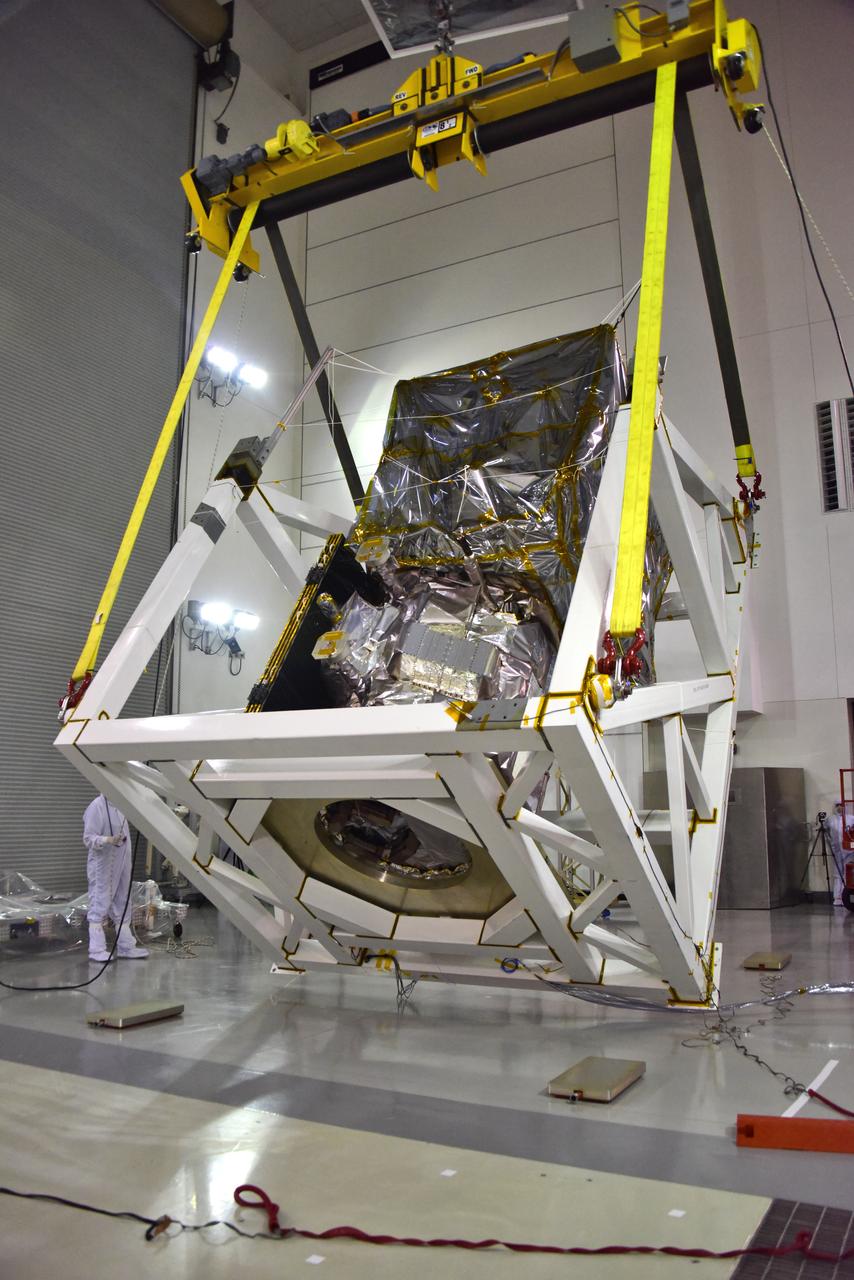
A crane is used to rotate NASA's Ice, Cloud and land Elevation Satellite-2 (ICESat-2) in its fixture inside the high bay of the Astrotech Space Operations facility on June 14, 2018, at Vandenberg Air Force Base in California. ICESat-2 was shipped from the Northrop Grumman facility in Gilbert, Arizona, where it was built and tested. The satellite is scheduled to launch from Space Launch Complex-2 at Vandenberg on the final United Launch Alliance Delta II rocket. ICESat-2 will measure the height of a changing Earth, one laser pulse at a time, 10,000 laser pulses a second. The satellite will carry the Advanced Topographic Laser Altimeter System. ICESat-2 will help scientists investigate why, and how much our planet's frozen and icy areas, called the cryosphere, is changing in a warming climate.
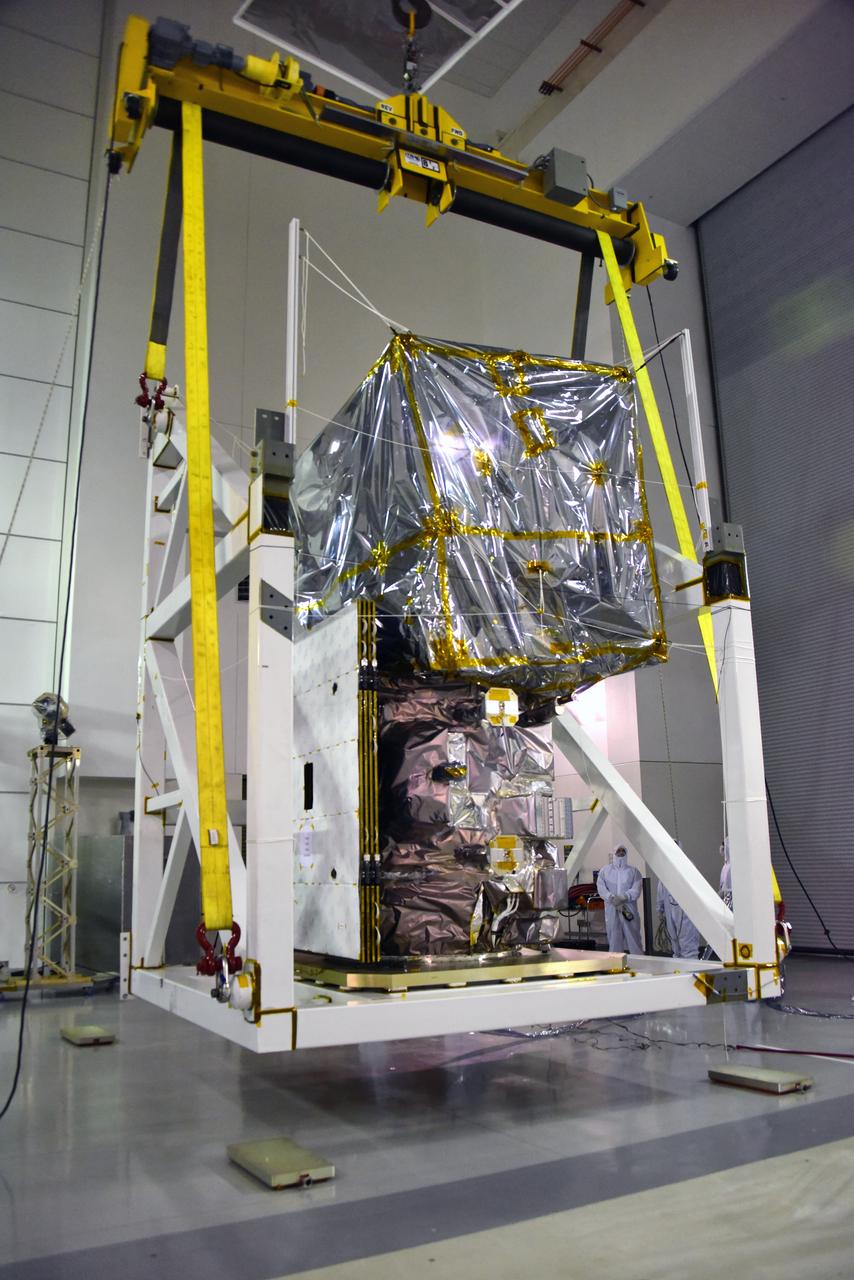
A crane rotates NASA's Ice, Cloud and land Elevation Satellite-2 (ICESat-2) in its fixture inside the high bay of the Astrotech Space Operations facility on June 14, 2018, at Vandenberg Air Force Base in California. ICESat-2 was shipped from the Northrop Grumman facility in Gilbert, Arizona, where it was built and tested. The satellite is scheduled to launch from Space Launch Complex-2 at Vandenberg on the final United Launch Alliance Delta II rocket. ICESat-2 will measure the height of a changing Earth, one laser pulse at a time, 10,000 laser pulses a second. The satellite will carry the Advanced Topographic Laser Altimeter System. ICESat-2 will help scientists investigate why, and how much our planet's frozen and icy areas, called the cryosphere, is changing in a warming climate.
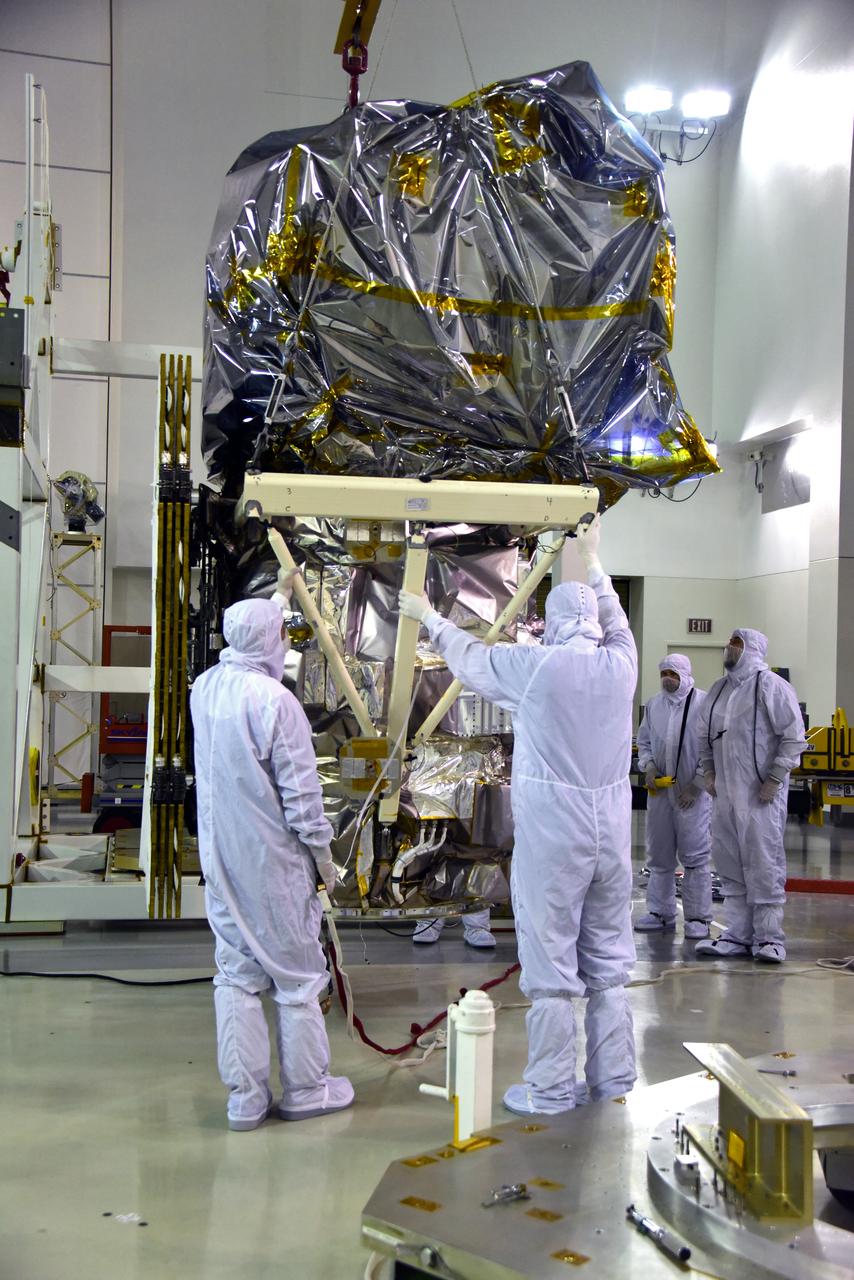
Technicians remove NASA's Ice, Cloud and land Elevation Satellite-2 (ICESat-2) from its fixture inside the high bay of the Astrotech Space Operations facility on June 14, 2018, at Vandenberg Air Force Base in California. The satellite will be secured on a work stand for processing. ICESat-2 was shipped from the Northrop Grumman facility in Gilbert, Arizona, where it was built and tested. The satellite is scheduled to launch from Space Launch Complex-2 at Vandenberg on the final United Launch Alliance Delta II rocket. ICESat-2 will measure the height of a changing Earth, one laser pulse at a time, 10,000 laser pulses a second. The satellite will carry the Advanced Topographic Laser Altimeter System. ICESat-2 will help scientists investigate why, and how much our planet's frozen and icy areas, called the cryosphere, is changing in a warming climate.
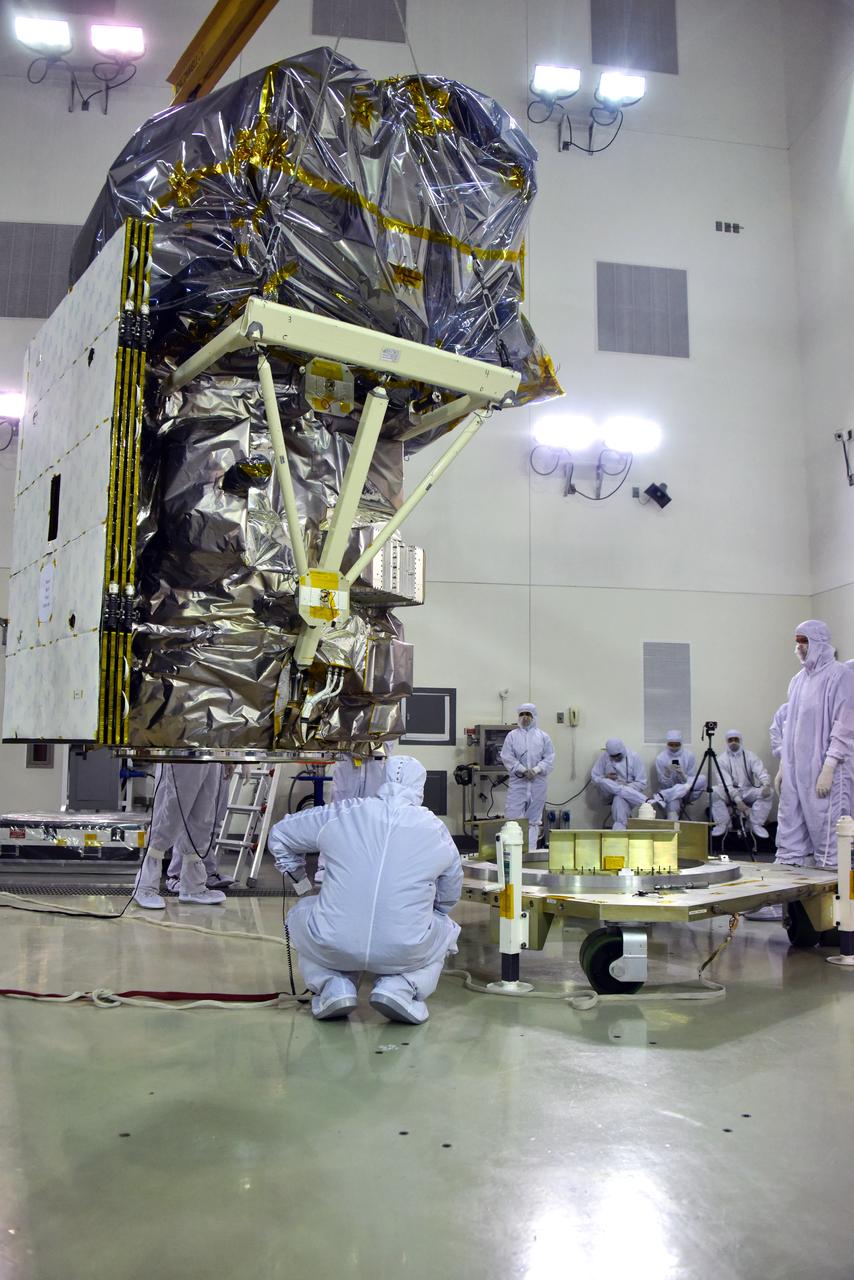
Technicians monitor the progress as NASA's Ice, Cloud and land Elevation Satellite-2 (ICESat-2) is removed from its fixture in the high bay of the Astrotech Space Operations facility on June 14, 2018, at Vandenberg Air Force Base in California. The satellite will be secured on a work stand for processing. ICESat-2 was shipped from the Northrop Grumman facility in Gilbert, Arizona, where it was built and tested. The satellite is scheduled to launch from Space Launch Complex-2 at Vandenberg on the final United Launch Alliance Delta II rocket. ICESat-2 will measure the height of a changing Earth, one laser pulse at a time, 10,000 laser pulses a second. The satellite will carry the Advanced Topographic Laser Altimeter System. ICESat-2 will help scientists investigate why, and how much our planet's frozen and icy areas, called the cryosphere, is changing in a warming climate.
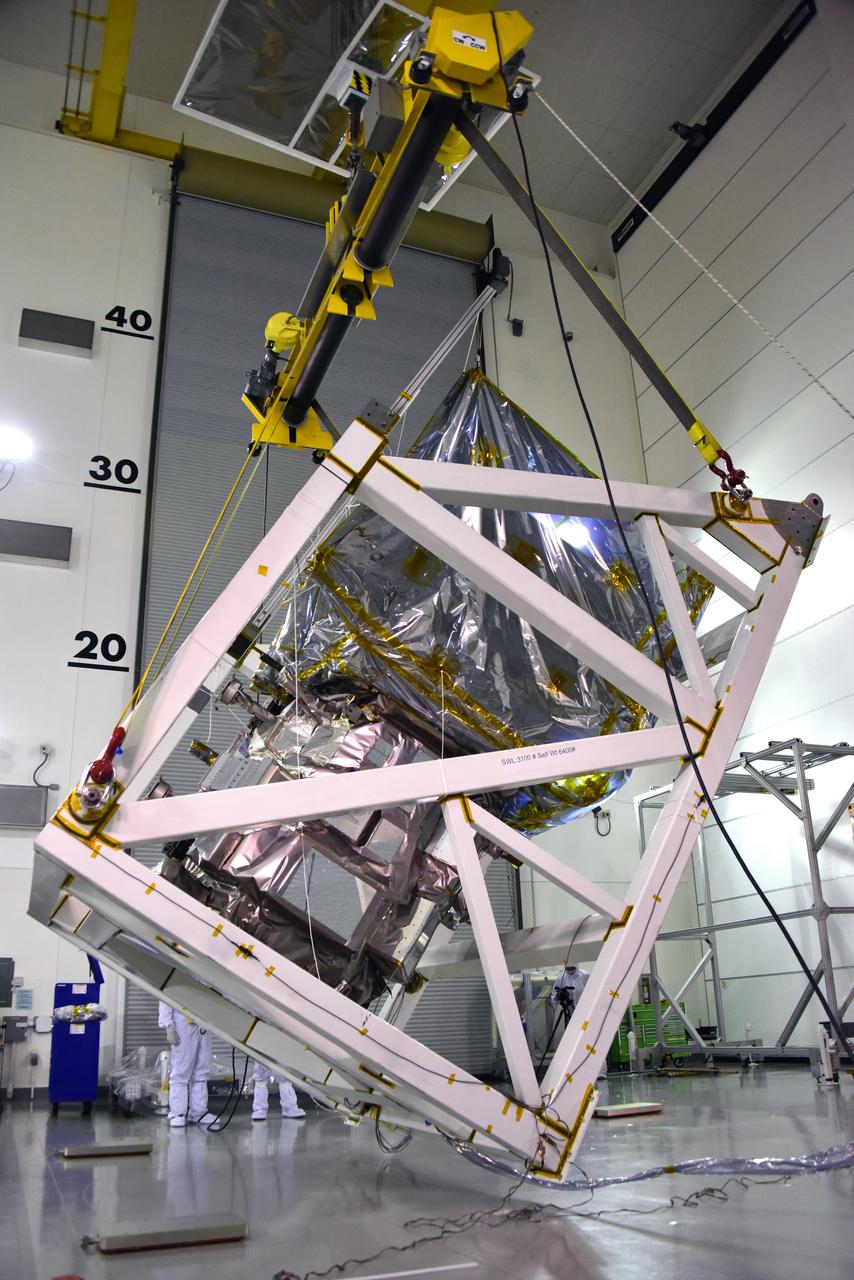
A crane is used to rotate NASA's Ice, Cloud and land Elevation Satellite-2 (ICESat-2) in its fixture inside the high bay of the Astrotech Space Operations facility on June 14, 2018, at Vandenberg Air Force Base in California. ICESat-2 was shipped from the Northrop Grumman facility in Gilbert, Arizona, where it was built and tested. The satellite is scheduled to launch from Space Launch Complex-2 at Vandenberg on the final United Launch Alliance Delta II rocket. ICESat-2 will measure the height of a changing Earth, one laser pulse at a time, 10,000 laser pulses a second. The satellite will carry the Advanced Topographic Laser Altimeter System. ICESat-2 will help scientists investigate why, and how much our planet's frozen and icy areas, called the cryosphere, is changing in a warming climate.
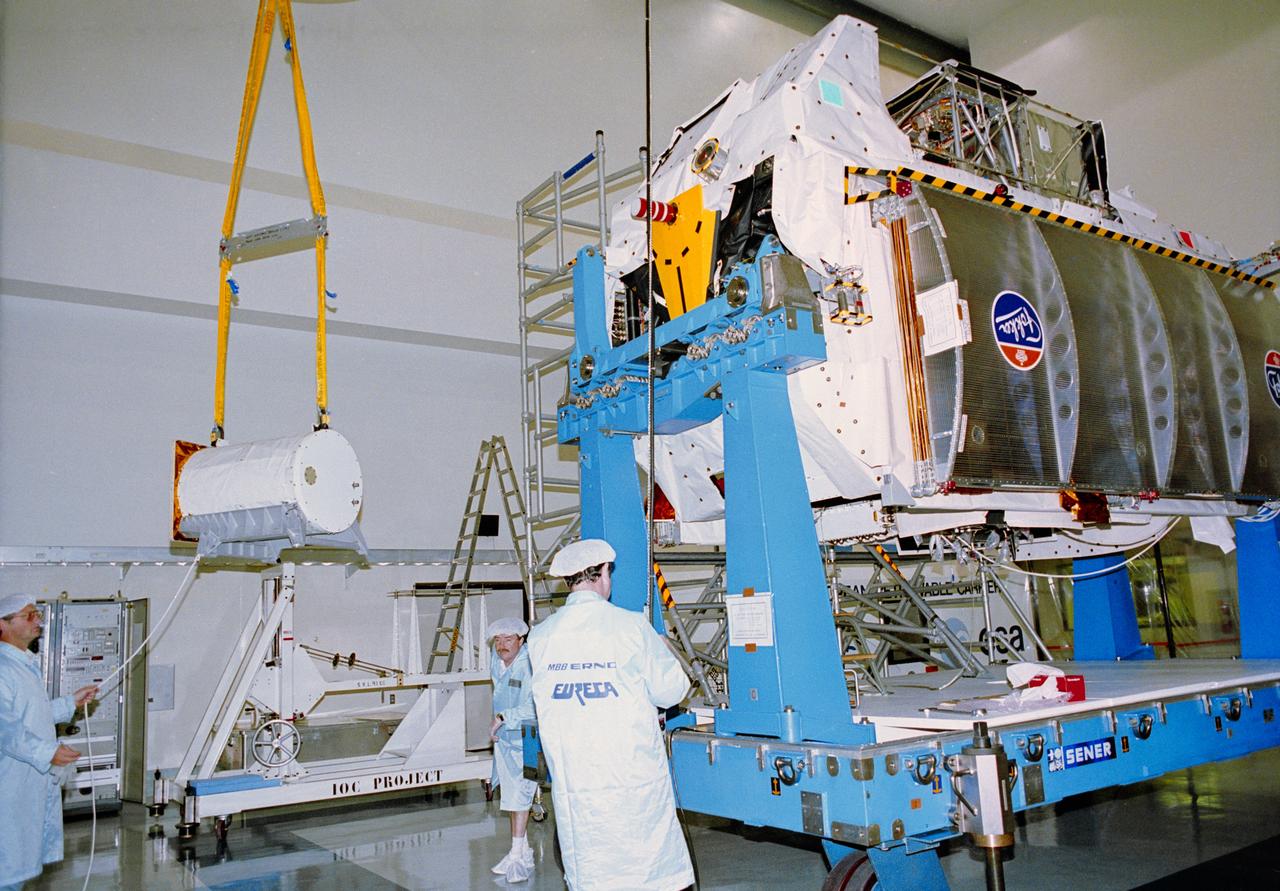
S92-41442 (3 Dec 1991) --- At the Astrotech Space Operations spacecraft processing facility in Titusville, German aerospace workers check out the European Retrievable Carrier (EURECA) after removing it from the shipping container. The approximately 10,000-pound spacecraft is scheduled to return to KSC next April to undergo final preparations for launch on the STS-46 mission. Sponsored by the European Space Agency, EURECA is a free-flying reusable research platform that will be deployed during the flight and retrieved at a later date by another Shuttle crew.
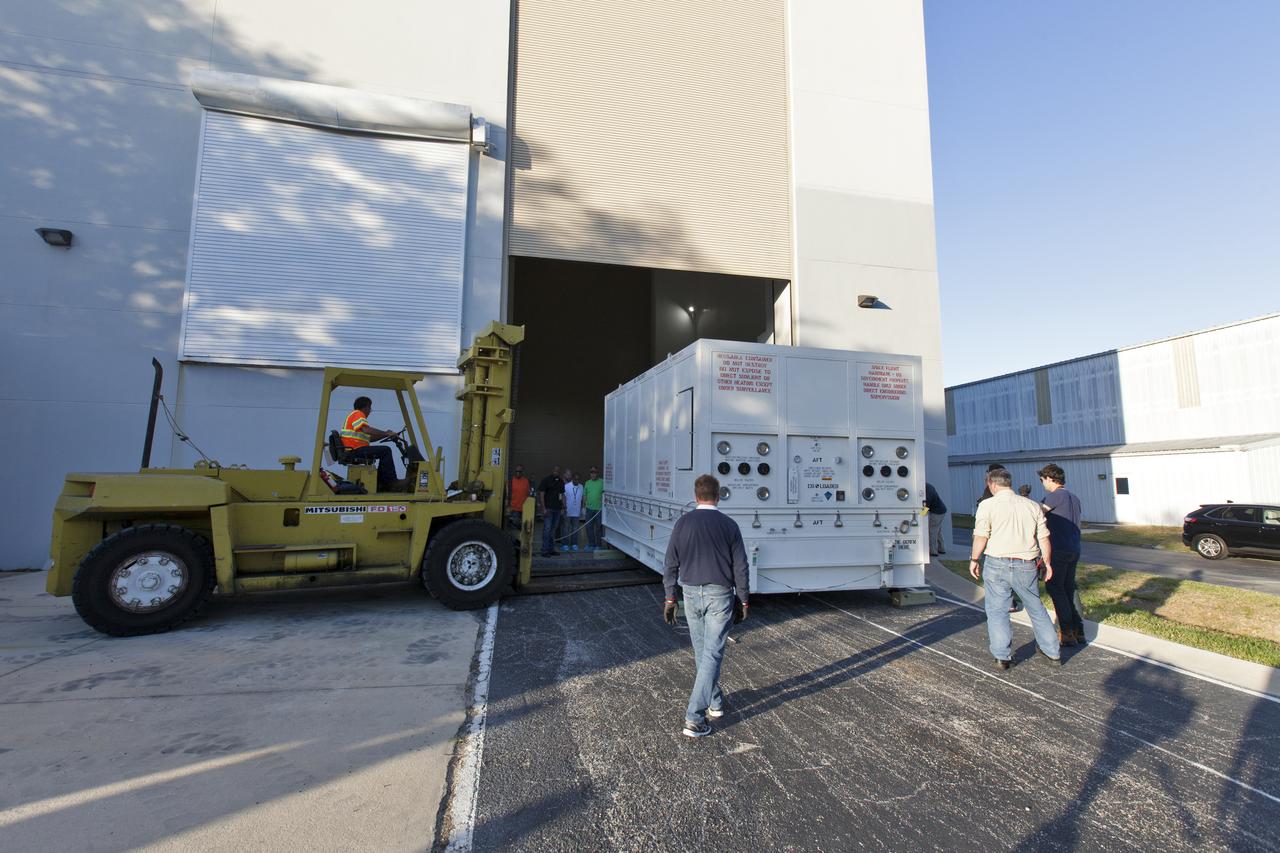
NASA's Parker Solar Probe, secured in its shipping container, arrives at the Astrotech processing facility near the agency's Kennedy Space Center in Florida. The spacecraft arrived aboard a U.S. Air Force C-5 transport aircraft at Space Coast Regional Airport in Titusville, Florida. The Parker Solar Probe will launch on a United Launch Alliance Delta IV Heavy rocket from Space Launch Complex 37 at Cape Canaveral Air Force Station in Florida in July 2018. The mission will perform the closest-ever observations of a star when it travels through the Sun's atmosphere, called the corona. The probe will rely on measurements and imaging to revolutionize our understanding of the corona and the Sun-Earth connection.
Technicians offloaded NASA’s Carruthers Geocorona Observatory following the spacecraft’s arrival on Sunday, July 20, 2025, at the Astrotech Space Operations Facility near the agency’s Kennedy Space Center in Florida. The Carruthers Geocorona Observatory is a small satellite set to operate at Lagrange Point 1 (L1), an orbit point between the Earth and Sun about one million miles away, to study the Earth’s exosphere, the outermost part of the atmosphere. Carruthers will use its ultraviolet cameras to monitor how space weather from the Sun impacts the exosphere.
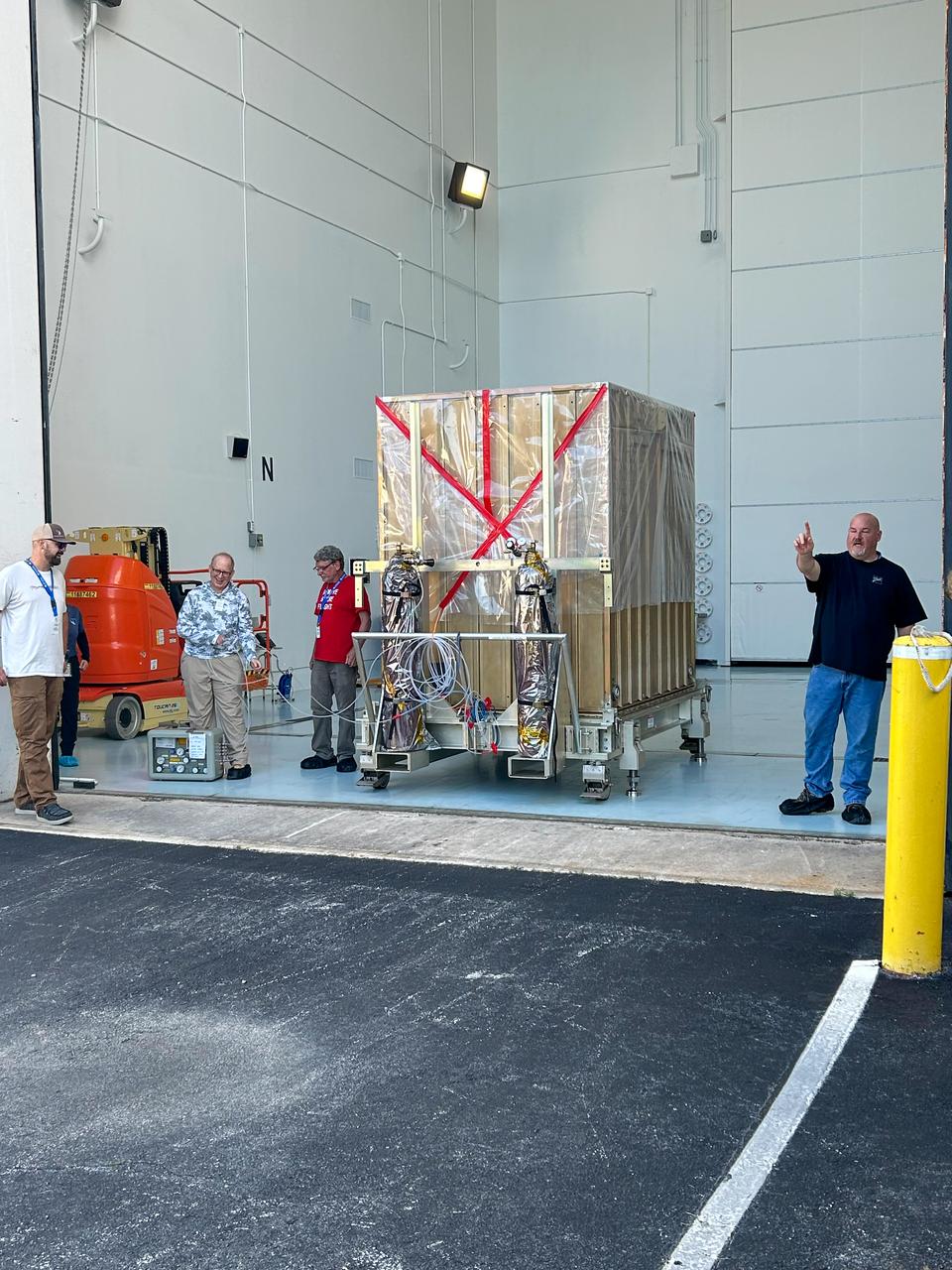
Technicians offloaded NASA’s Carruthers Geocorona Observatory following the spacecraft’s arrival on Monday, July 201, 2025, at the Astrotech Space Operations Facility near the agency’s Kennedy Space Center in Florida. The Carruthers Geocorona Observatory is a small satellite set to operate at Lagrange Point 1 (L1), an orbit point between the Earth and Sun about one million miles away, to study the Earth’s exosphere, the outermost part of the atmosphere. Carruthers will use its ultraviolet cameras to monitor how space weather from the Sun impacts the exosphere.
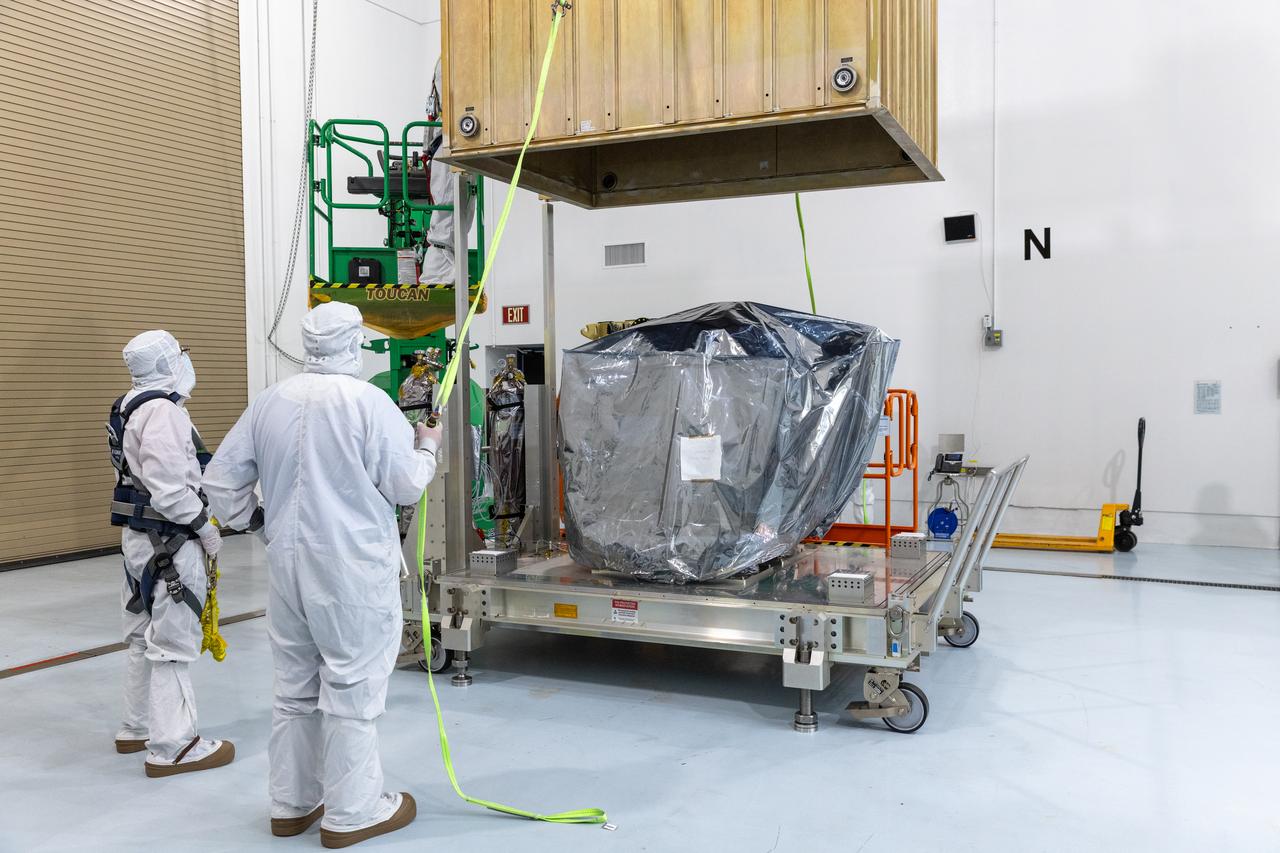
Technicians remove the protective casing covering NASA’s Carruthers Geocorona Observatory on Monday, July 21, 2025, at the Astrotech Space Operations Facility near the agency’s Kennedy Space Center in Florida. The Carruthers Geocorona Observatory is a small satellite set to operate at Lagrange Point 1 (L1), an orbit point between the Earth and Sun about one million miles away. Carruthers will use its ultraviolet cameras to monitor how space weather from the Sun impacts the exosphere, the outermost part of Earth’s atmosphere. The observatory will launch as a rideshare with NASA’s (Interstellar Mapping and Acceleration Probe) no earlier than September 2025.
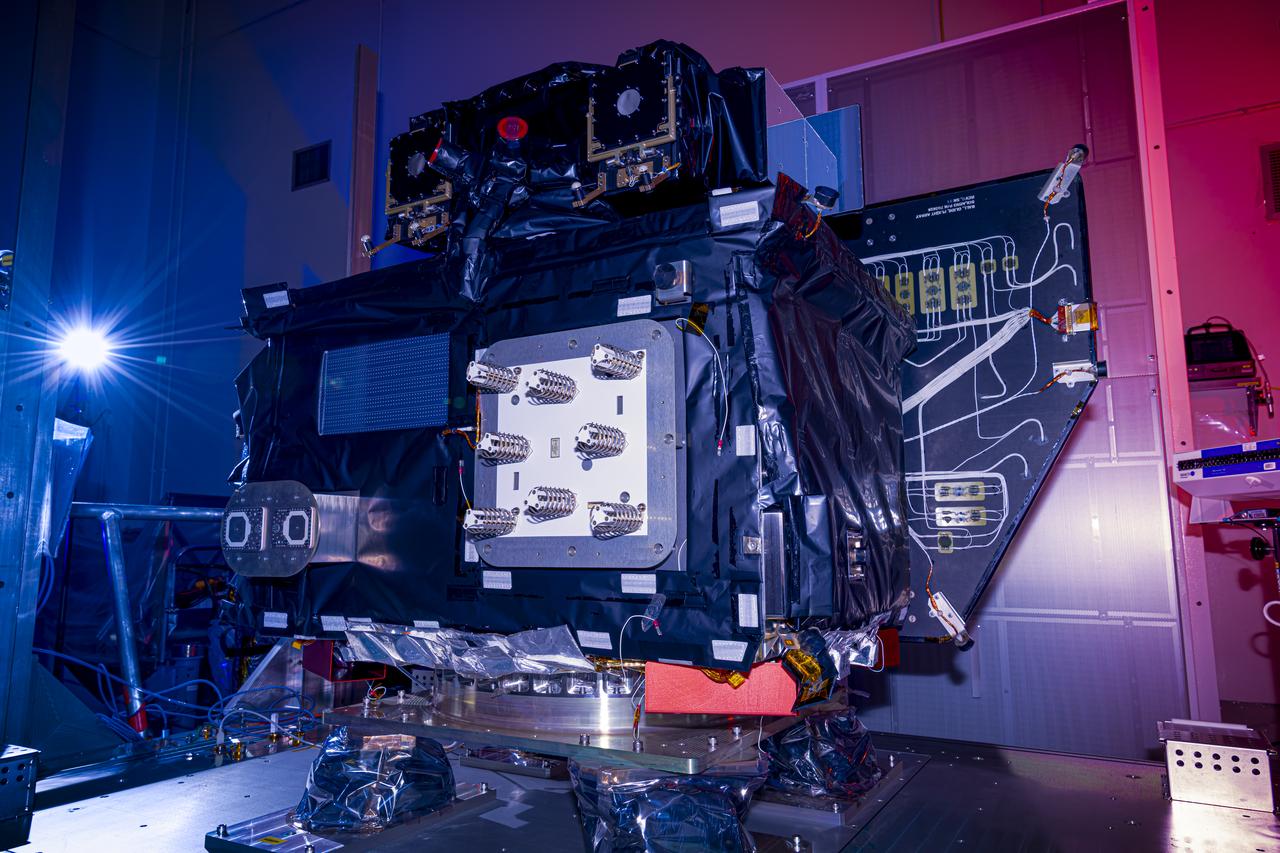
A photographer captures a photo of NASA’s Carruthers Geocorona Observatory on Wednesday, July 23, 2025, following arrival and unboxing of the observatory at the Astrotech Space Operations Facility near the agency’s Kennedy Space Center in Florida. The Carruthers Geocorona Observatory is a small satellite set to operate at Lagrange Point 1 (L1), an orbit point between the Earth and Sun about one million miles away. Carruthers will use its ultraviolet cameras to monitor how space weather from the Sun impacts the exosphere, the outermost part of Earth’s atmosphere. The observatory will launch as a rideshare with NASA’s (Interstellar Mapping and Acceleration Probe) no earlier than September 2025.
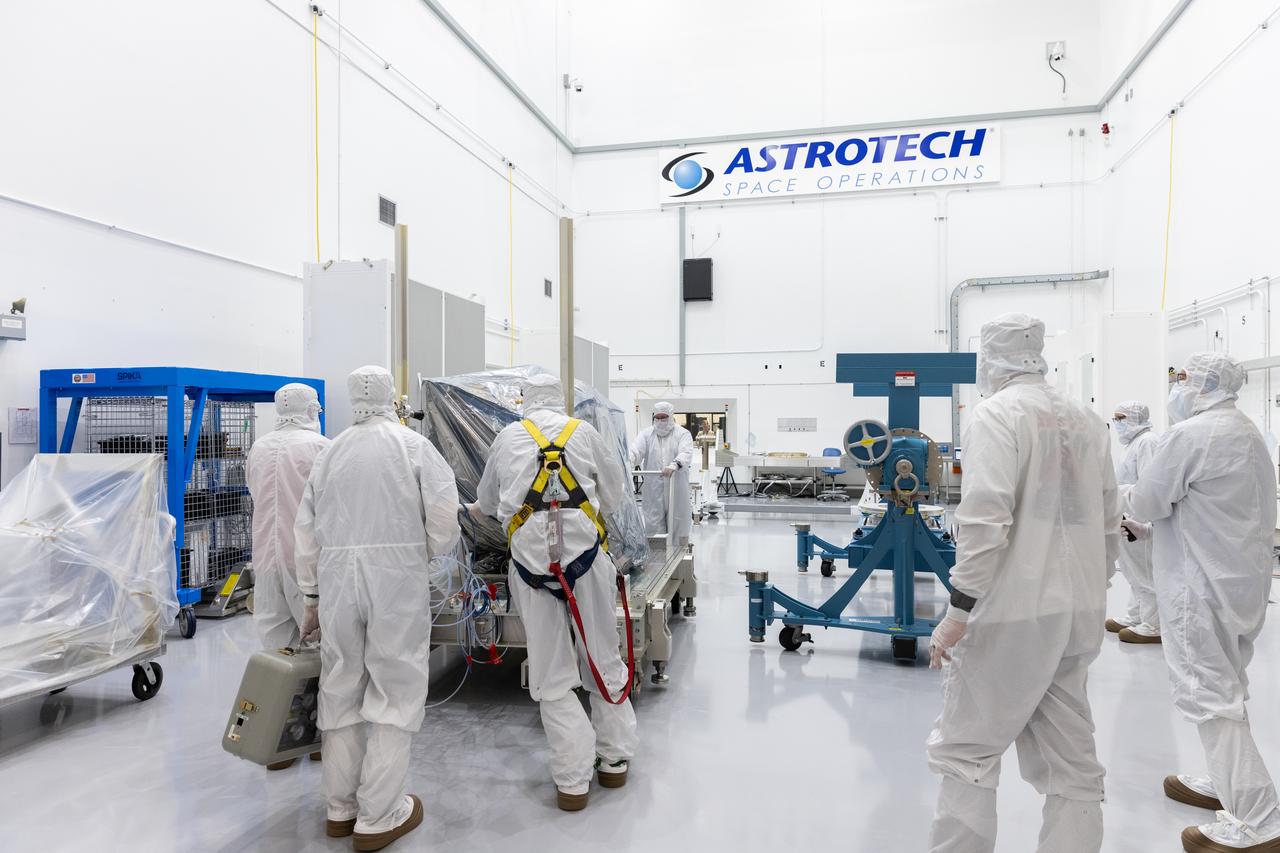
Technicians remove the protective casing covering NASA’s Carruthers Geocorona Observatory on Monday, July 21, 2025, at the Astrotech Space Operations Facility near the agency’s Kennedy Space Center in Florida. The Carruthers Geocorona Observatory is a small satellite set to operate at Lagrange Point 1 (L1), an orbit point between the Earth and Sun about one million miles away. Carruthers will use its ultraviolet cameras to monitor how space weather from the Sun impacts the exosphere, the outermost part of Earth’s atmosphere. The observatory will launch as a rideshare with NASA’s (Interstellar Mapping and Acceleration Probe) no earlier than September 2025.
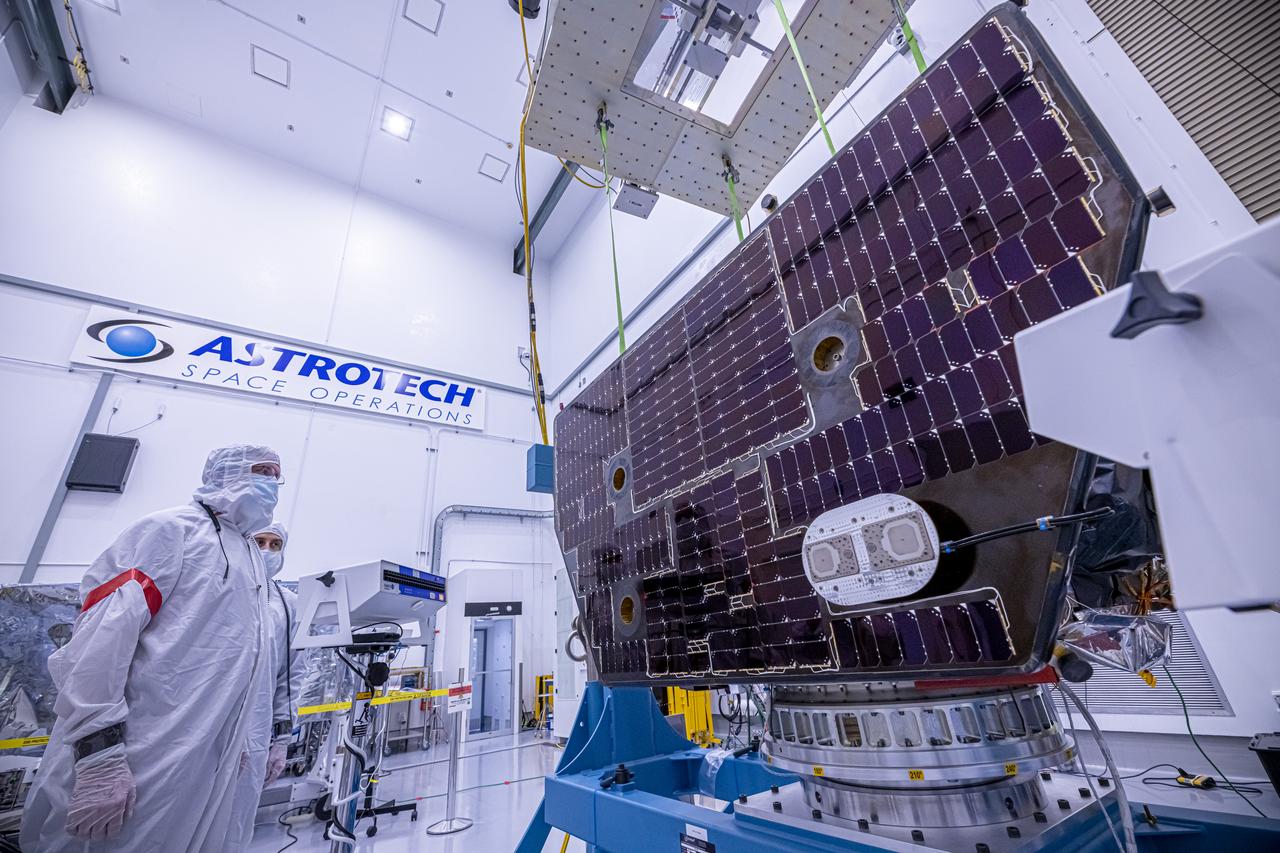
A crane lifts NASA’s Carruthers Geocorona Observatory on Thursday, July 24, 2025, at the Astrotech Space Operations Facility near the agency’s Kennedy Space Center in Florida. The Carruthers Geocorona Observatory is a small satellite set to operate at Lagrange Point 1 (L1), an orbit point between the Earth and Sun about one million miles away. Carruthers will use its ultraviolet cameras to monitor how space weather from the Sun impacts the exosphere, the outermost part of Earth’s atmosphere. The observatory will launch as a rideshare with NASA’s IMAP (Interstellar Mapping and Acceleration Probe) no earlier than September 2025.
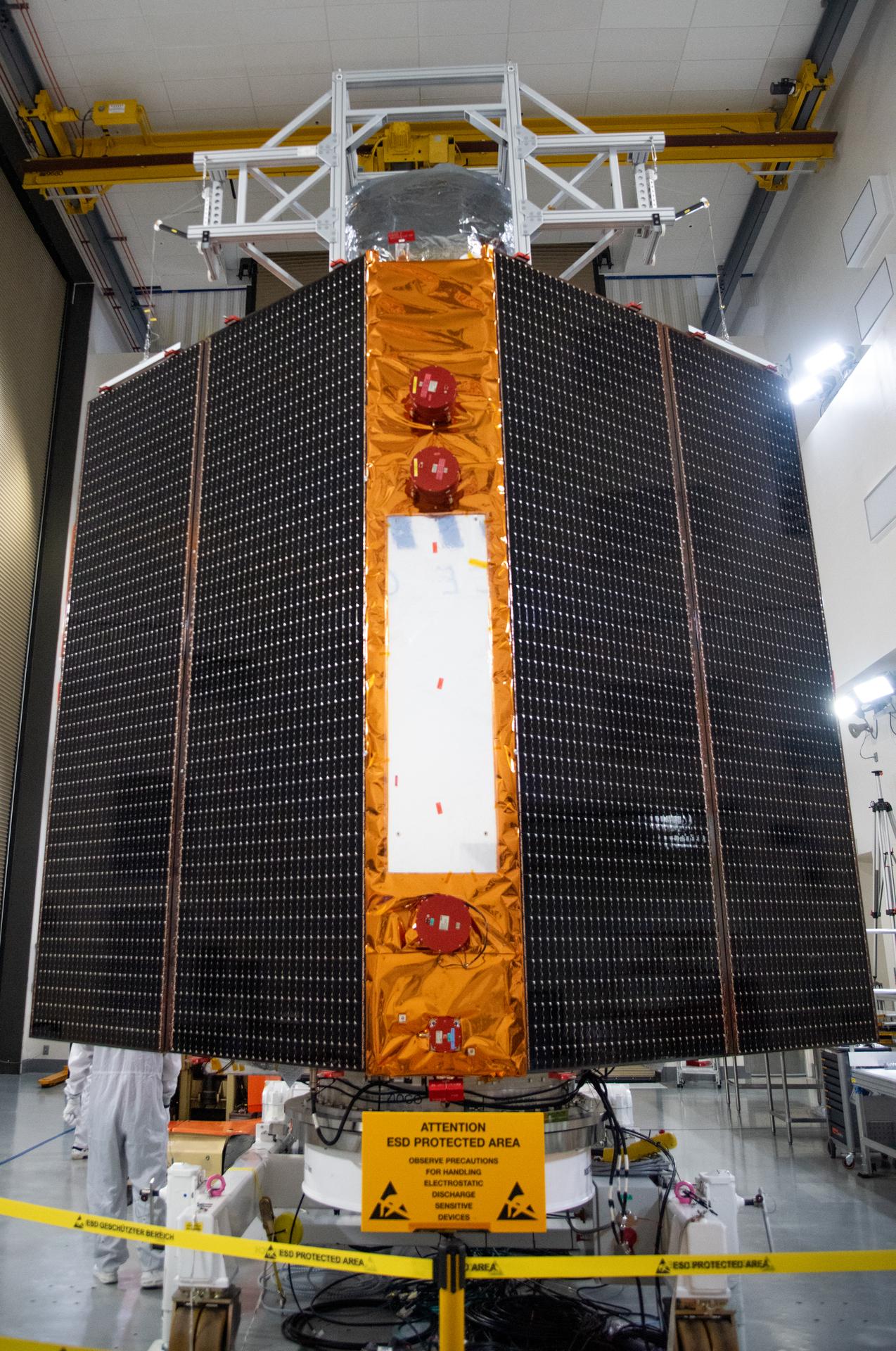
Technicians test the solar arrays during processing of the Sentinel-6B spacecraft during prelaunch operations at the Astrotech Space Operations payload processing facility at Vandenberg Space Force Base in California on Thursday, Oct. 16, 2025. Sentinel-6B will undergo detailed inspections, tests, and fueling in a cleanroom as it prepares for a November launch on a SpaceX Falcon 9 rocket. A collaboration between NASA, ESA (European Space Agency), EUMETSAT (European Organisation for the Exploitation of Meteorological Satellites), and the National Oceanic and Atmospheric Administration (NOAA), Sentinel-6B is designed to measure sea levels down to roughly an inch for about 90% of the world’s oceans.
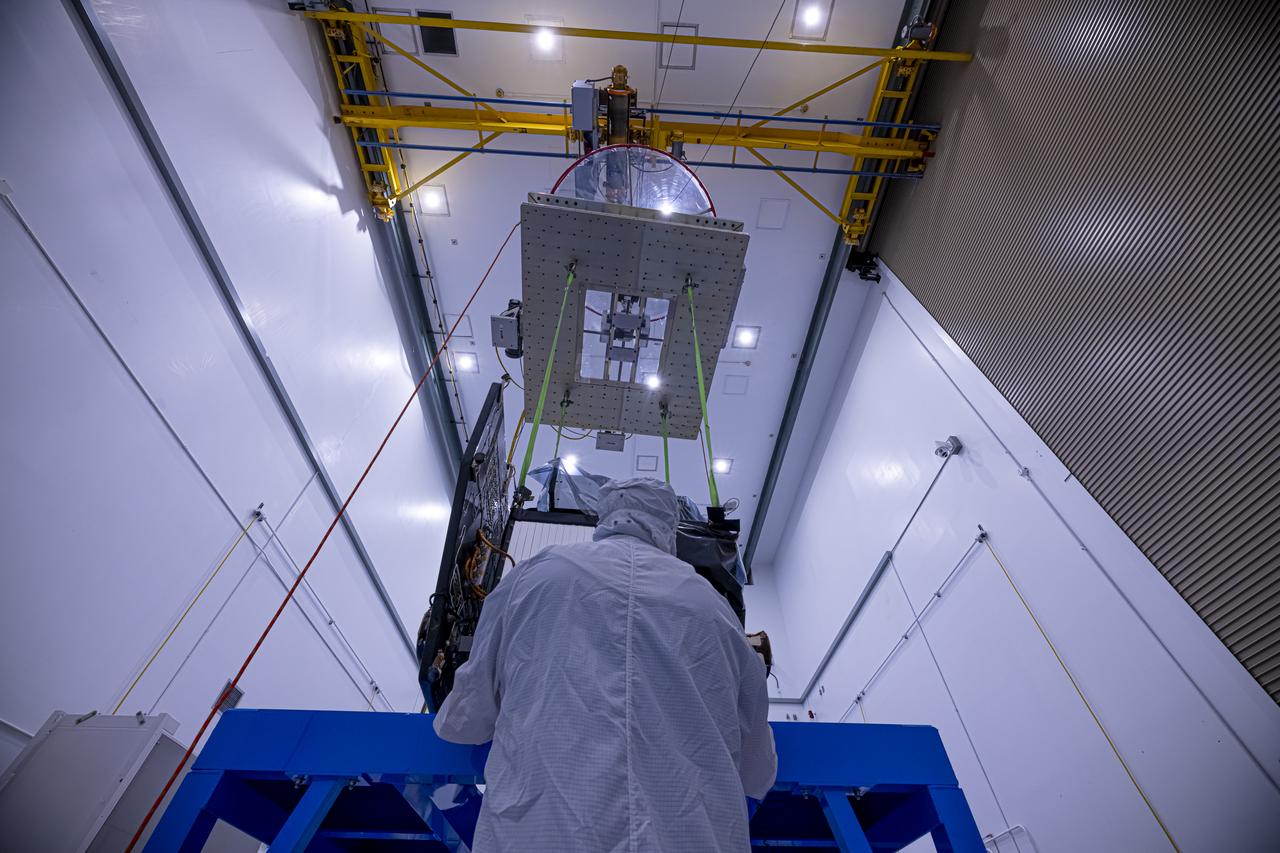
A crane lifts NASA’s Carruthers Geocorona Observatory on Thursday, July 24, 2025, at the Astrotech Space Operations Facility near the agency’s Kennedy Space Center in Florida. The Carruthers Geocorona Observatory is a small satellite set to operate at Lagrange Point 1 (L1), an orbit point between the Earth and Sun about one million miles away. Carruthers will use its ultraviolet cameras to monitor how space weather from the Sun impacts the exosphere, the outermost part of Earth’s atmosphere. The observatory will launch as a rideshare with NASA’s IMAP (Interstellar Mapping and Acceleration Probe) no earlier than September 2025.
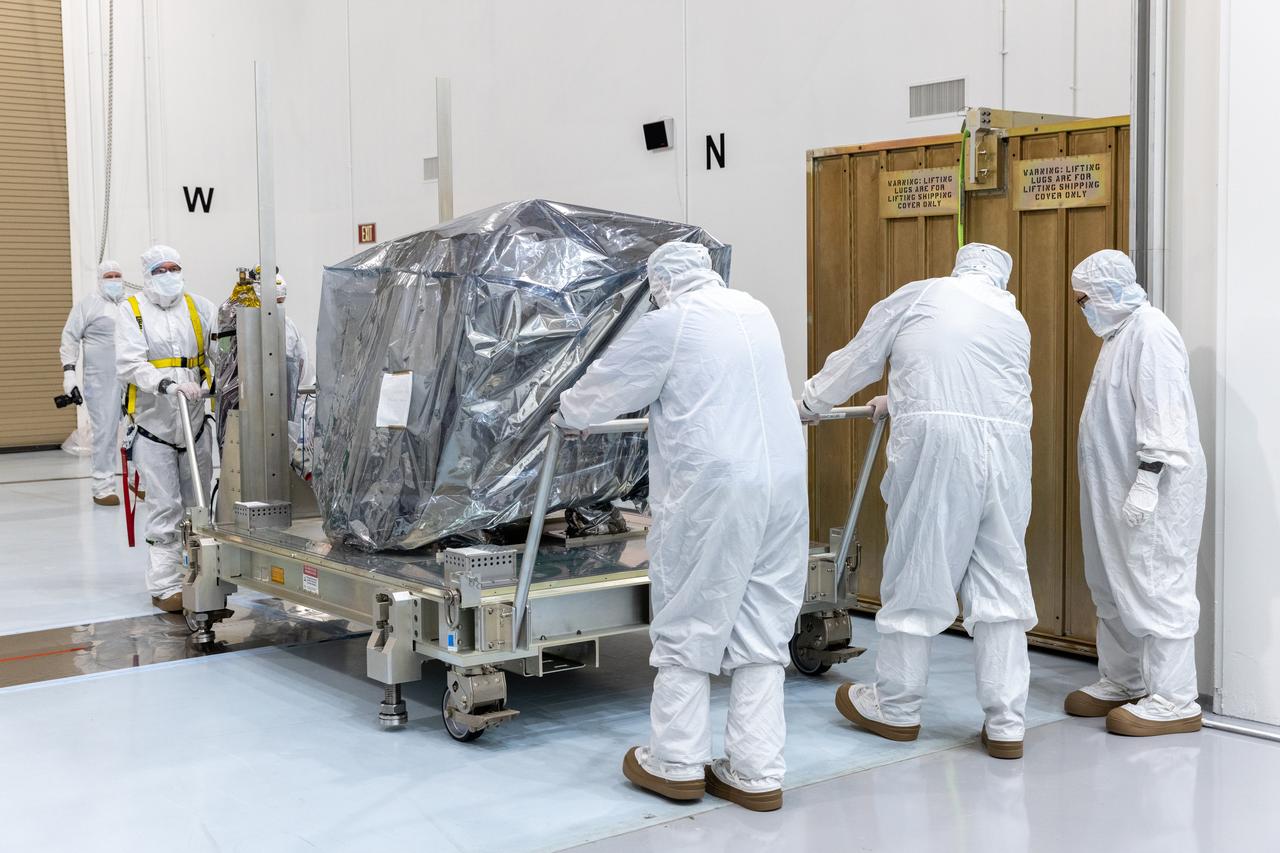
Technicians remove the protective casing covering NASA’s Carruthers Geocorona Observatory on Monday, July 21, 2025, at the Astrotech Space Operations Facility near the agency’s Kennedy Space Center in Florida. The Carruthers Geocorona Observatory is a small satellite set to operate at Lagrange Point 1 (L1), an orbit point between the Earth and Sun about one million miles away. Carruthers will use its ultraviolet cameras to monitor how space weather from the Sun impacts the exosphere, the outermost part of Earth’s atmosphere. The observatory will launch as a rideshare with NASA’s (Interstellar Mapping and Acceleration Probe) no earlier than September 2025.
Technicians inspect NASA’s Carruthers Geocorona Observatory on Wednesday, July 23, 2025, following arrival and unboxing of the observatory at the Astrotech Space Operations Facility near the agency’s Kennedy Space Center in Florida. The Carruthers Geocorona Observatory is a small satellite set to operate at Lagrange Point 1 (L1), an orbit point between the Earth and Sun about one million miles away. Carruthers will use its ultraviolet cameras to monitor how space weather from the Sun impacts the exosphere, the outermost part of Earth’s atmosphere. The observatory will launch as a rideshare with NASA’s IMAP (Interstellar Mapping and Acceleration Probe) no earlier than September 2025.
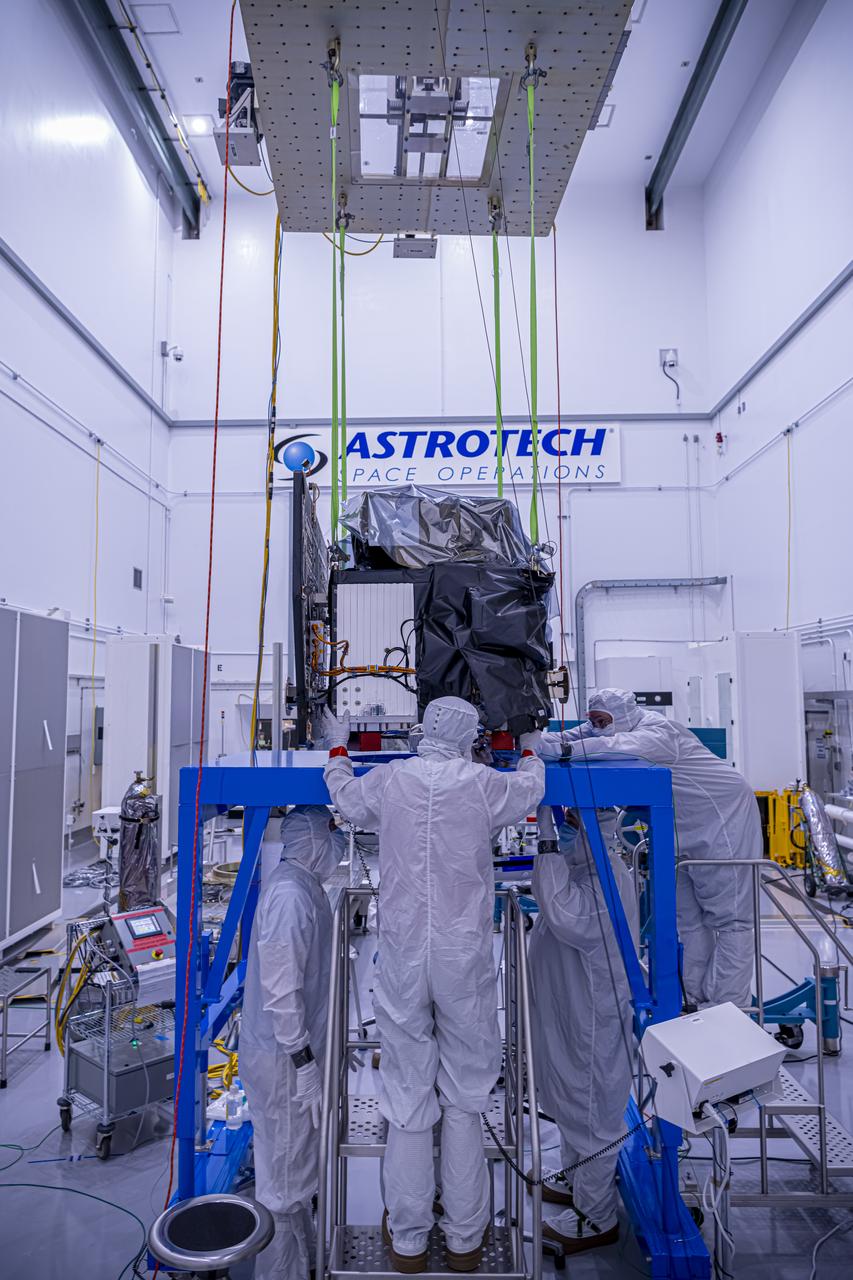
A crane lifts NASA’s Carruthers Geocorona Observatory on Thursday, July 24, 2025, at the Astrotech Space Operations Facility near the agency’s Kennedy Space Center in Florida. The Carruthers Geocorona Observatory is a small satellite set to operate at Lagrange Point 1 (L1), an orbit point between the Earth and Sun about one million miles away. Carruthers will use its ultraviolet cameras to monitor how space weather from the Sun impacts the exosphere, the outermost part of Earth’s atmosphere. The observatory will launch as a rideshare with NASA’s IMAP (Interstellar Mapping and Acceleration Probe) no earlier than September 2025.
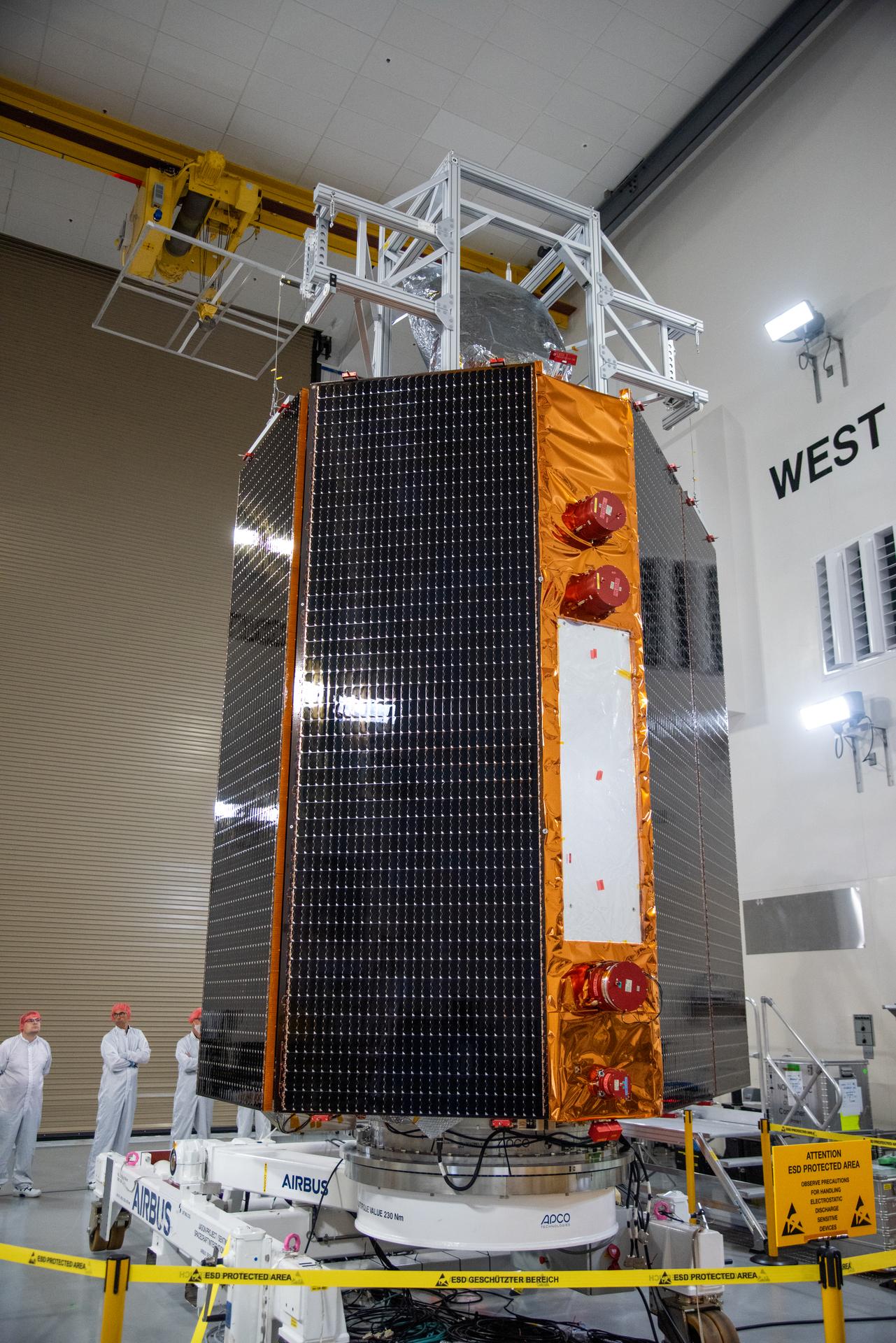
Technicians test the solar arrays during processing of the Sentinel-6B spacecraft during prelaunch operations at the Astrotech Space Operations payload processing facility at Vandenberg Space Force Base in California on Thursday, Oct. 16, 2025. Sentinel-6B will undergo detailed inspections, tests, and fueling in a cleanroom as it prepares for a November launch on a SpaceX Falcon 9 rocket. A collaboration between NASA, ESA (European Space Agency), EUMETSAT (European Organisation for the Exploitation of Meteorological Satellites), and the National Oceanic and Atmospheric Administration (NOAA), Sentinel-6B is designed to measure sea levels down to roughly an inch for about 90% of the world’s oceans.
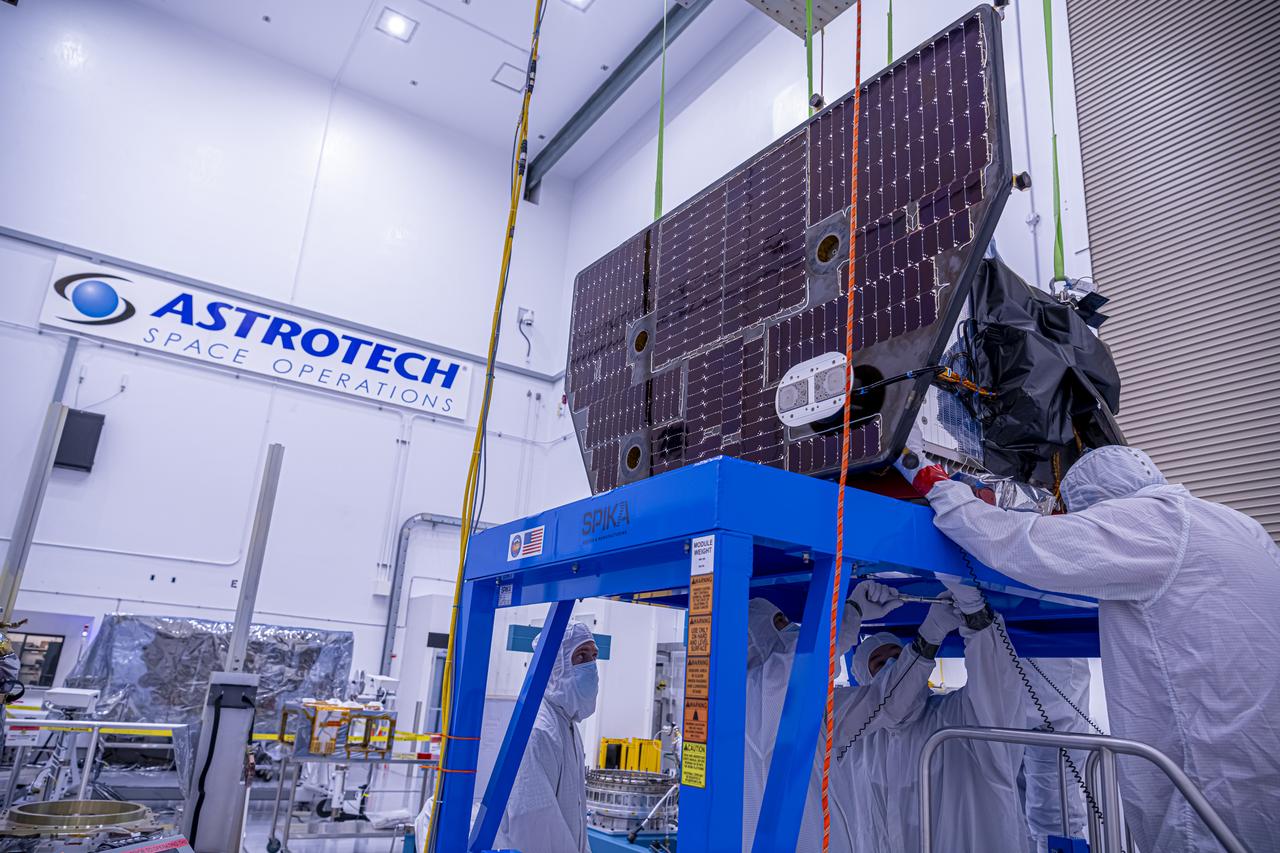
A crane lifts NASA’s Carruthers Geocorona Observatory on Thursday, July 24, 2025, at the Astrotech Space Operations Facility near the agency’s Kennedy Space Center in Florida. The Carruthers Geocorona Observatory is a small satellite set to operate at Lagrange Point 1 (L1), an orbit point between the Earth and Sun about one million miles away. Carruthers will use its ultraviolet cameras to monitor how space weather from the Sun impacts the exosphere, the outermost part of Earth’s atmosphere. The observatory will launch as a rideshare with NASA’s IMAP (Interstellar Mapping and Acceleration Probe) no earlier than September 2025.
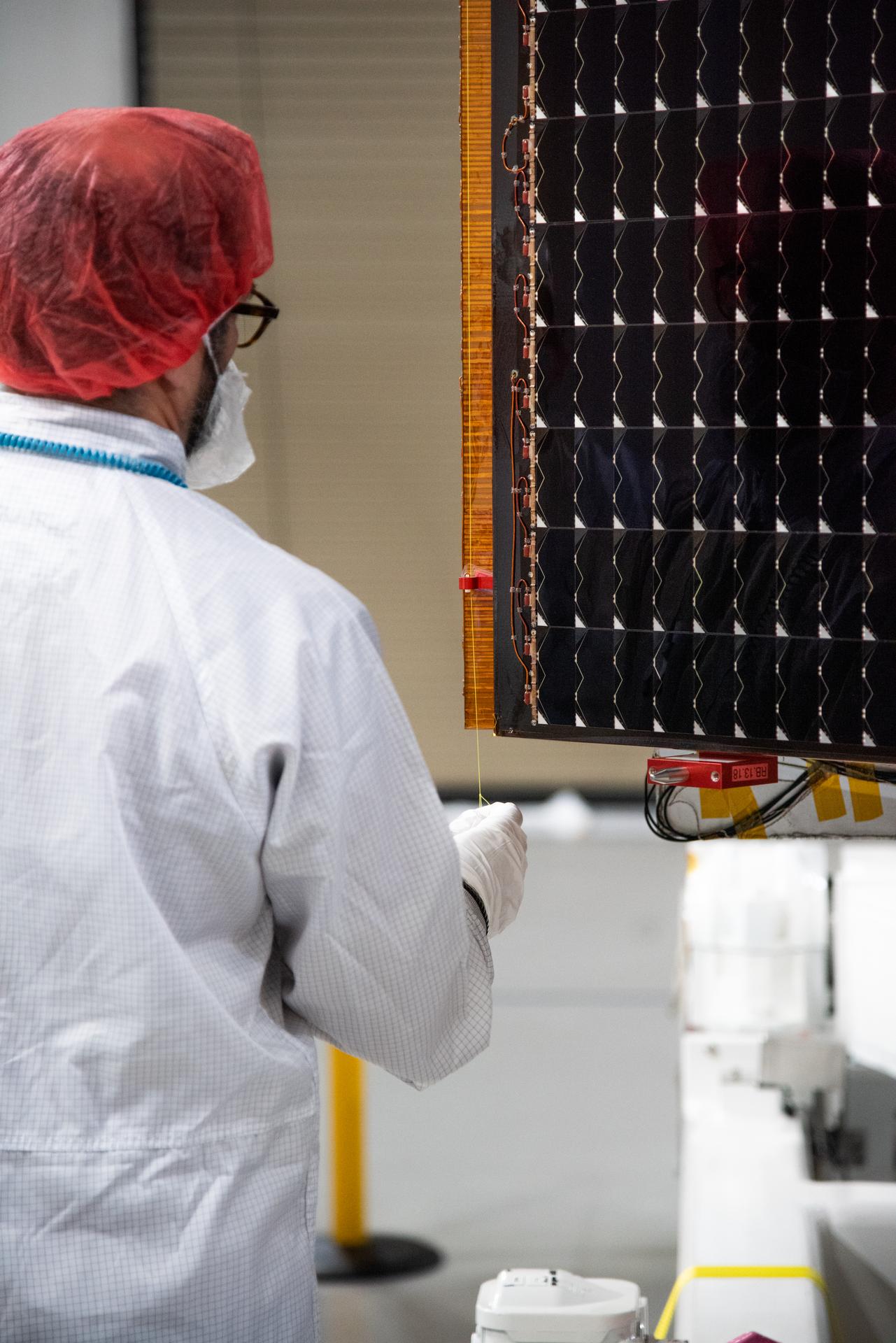
Technicians test the solar arrays during processing of the Sentinel-6B spacecraft during prelaunch operations at the Astrotech Space Operations payload processing facility at Vandenberg Space Force Base in California on Thursday, Oct. 16, 2025. Sentinel-6B will undergo detailed inspections, tests, and fueling in a cleanroom as it prepares for a November launch on a SpaceX Falcon 9 rocket. A collaboration between NASA, ESA (European Space Agency), EUMETSAT (European Organisation for the Exploitation of Meteorological Satellites), and the National Oceanic and Atmospheric Administration (NOAA), Sentinel-6B is designed to measure sea levels down to roughly an inch for about 90% of the world’s oceans.
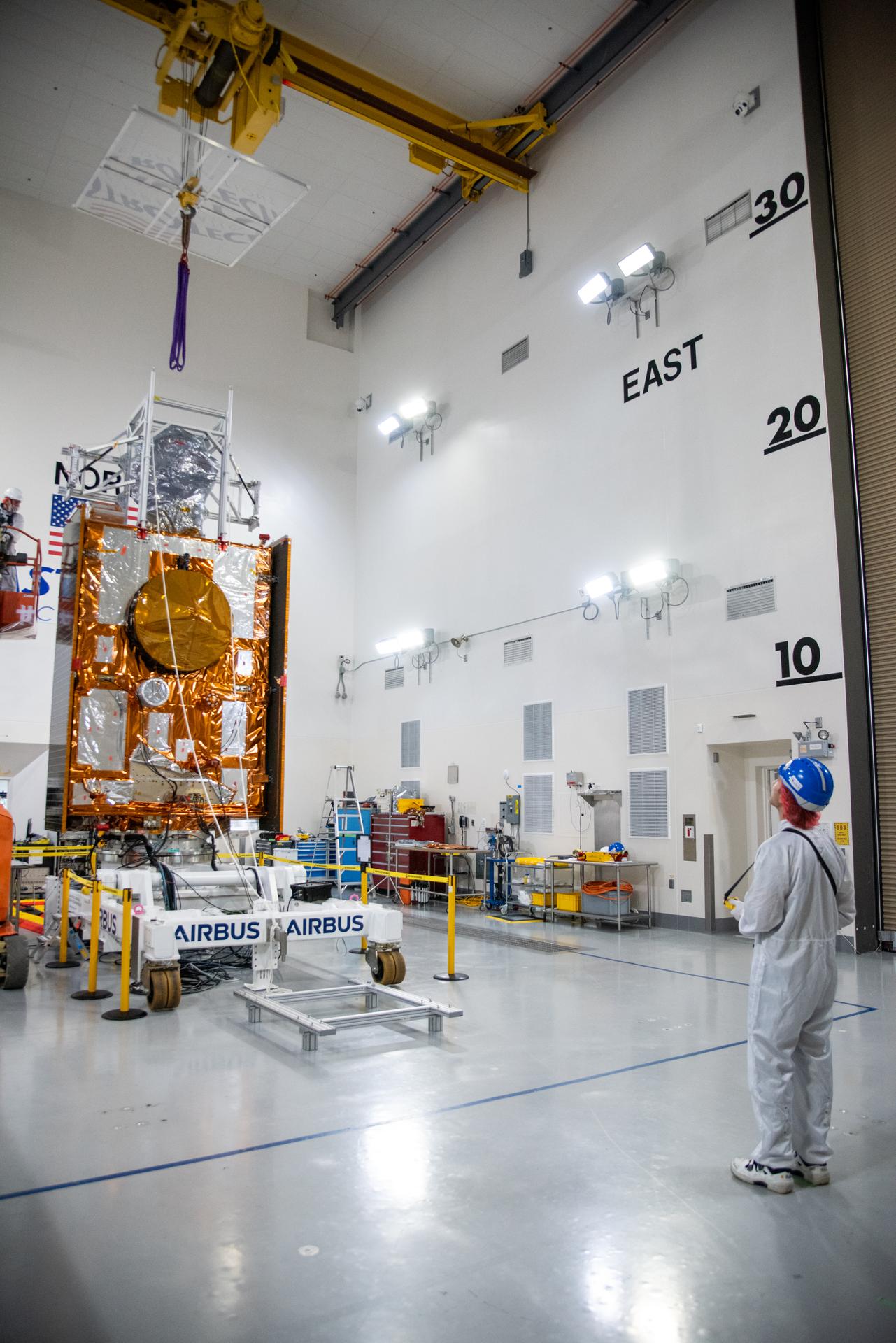
Technicians use a crane during processing of the Sentinel-6B spacecraft on its work stand during prelaunch operations at the Astrotech Space Operations payload processing facility at Vandenberg Space Force Base in California on Thursday, Oct. 16, 2025. Sentinel-6B will undergo detailed inspections, tests, and fueling in a cleanroom as it prepares for a November launch on a SpaceX Falcon 9 rocket. A collaboration between NASA, ESA (European Space Agency), EUMETSAT (European Organisation for the Exploitation of Meteorological Satellites), and the National Oceanic and Atmospheric Administration (NOAA), Sentinel-6B is designed to measure sea levels down to roughly an inch for about 90% of the world’s oceans.
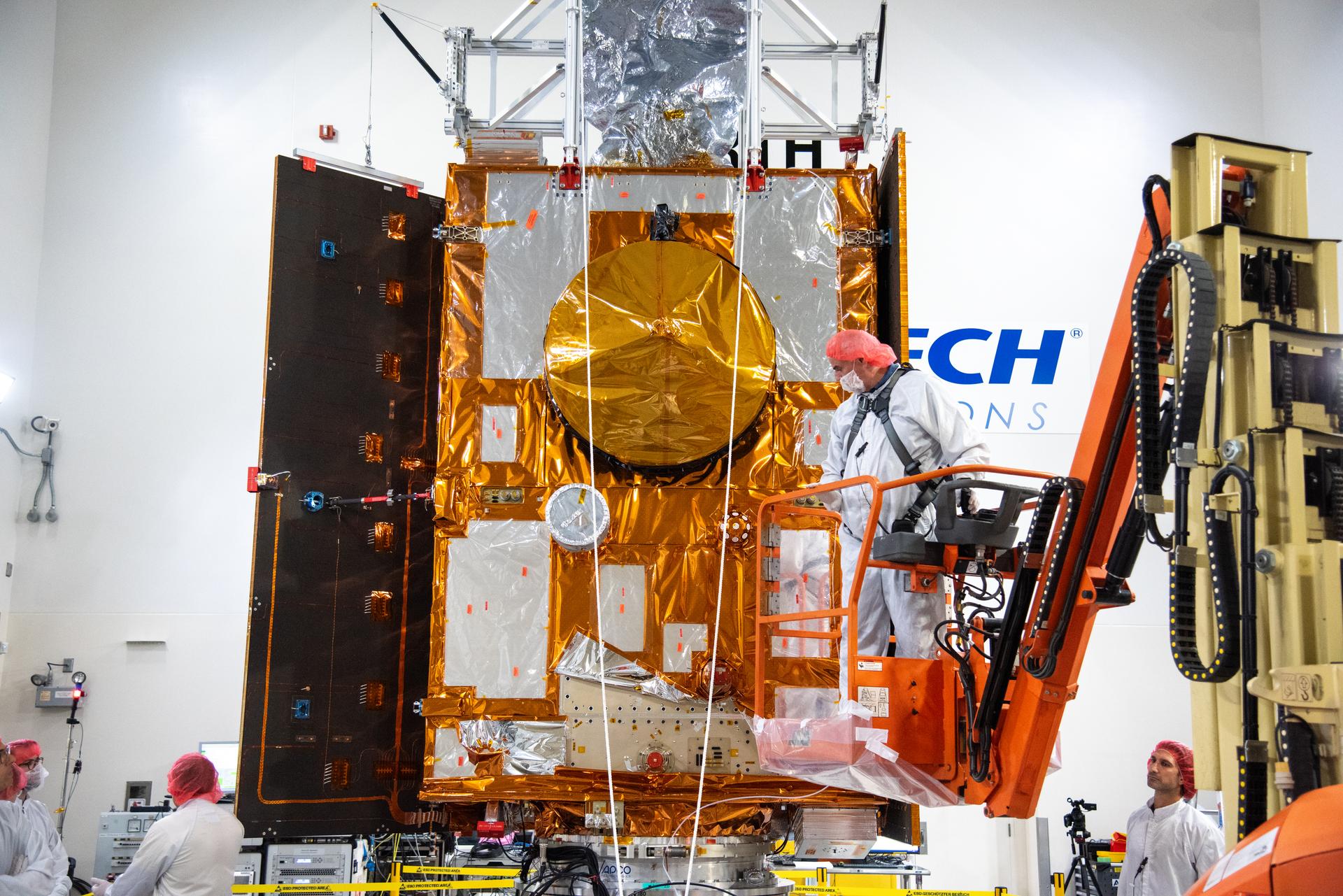
Technicians test the solar arrays during processing of the Sentinel-6B spacecraft during prelaunch operations at the Astrotech Space Operations payload processing facility at Vandenberg Space Force Base in California on Thursday, Oct. 16, 2025. Sentinel-6B will undergo detailed inspections, tests, and fueling in a cleanroom as it prepares for a November launch on a SpaceX Falcon 9 rocket. A collaboration between NASA, ESA (European Space Agency), EUMETSAT (European Organisation for the Exploitation of Meteorological Satellites), and the National Oceanic and Atmospheric Administration (NOAA), Sentinel-6B is designed to measure sea levels down to roughly an inch for about 90% of the world’s oceans.
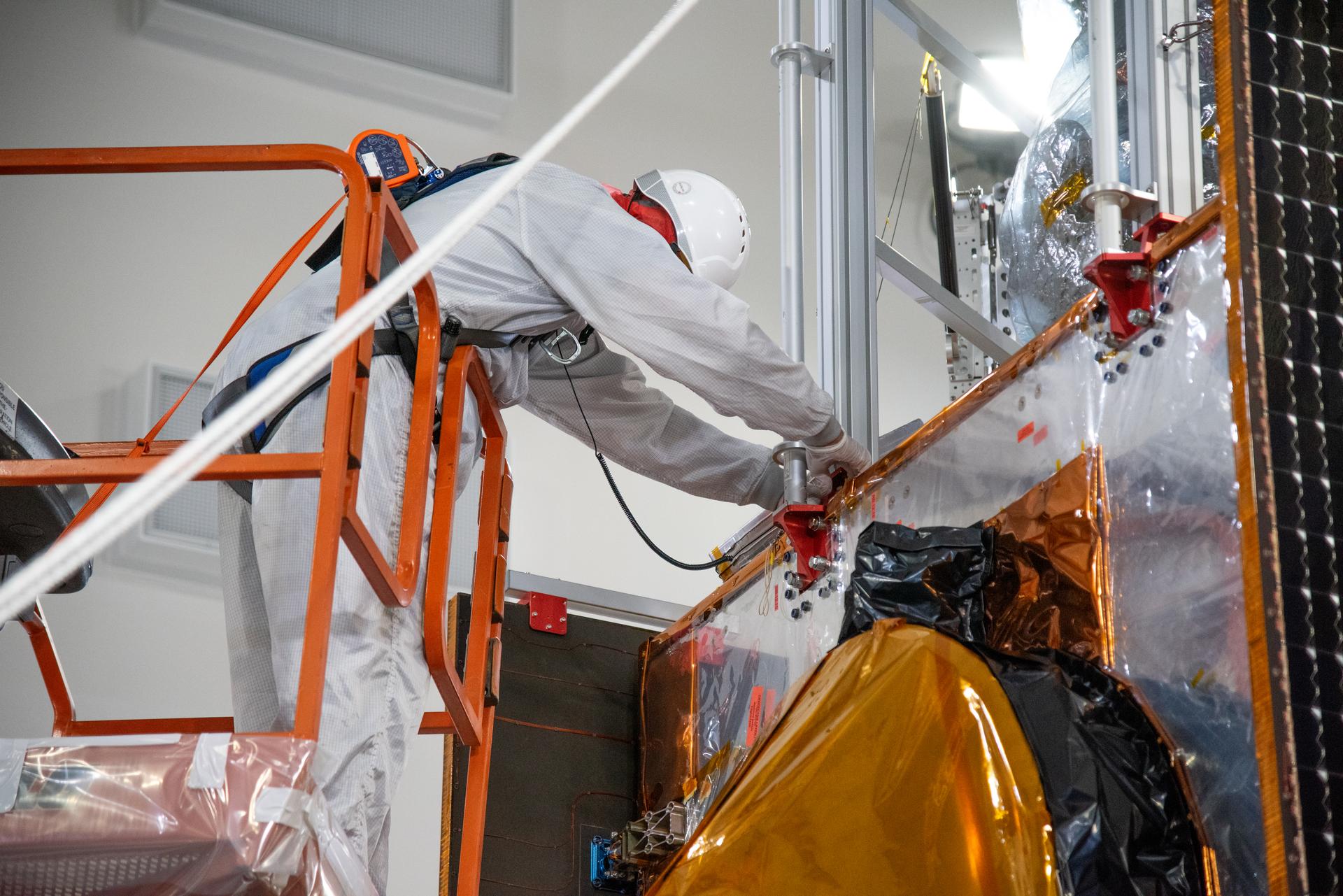
Technicians use a crane during processing of the Sentinel-6B spacecraft on its work stand during prelaunch operations at the Astrotech Space Operations payload processing facility at Vandenberg Space Force Base in California on Thursday, Oct. 16, 2025. Sentinel-6B will undergo detailed inspections, tests, and fueling in a cleanroom as it prepares for a November launch on a SpaceX Falcon 9 rocket. A collaboration between NASA, ESA (European Space Agency), EUMETSAT (European Organisation for the Exploitation of Meteorological Satellites), and the National Oceanic and Atmospheric Administration (NOAA), Sentinel-6B is designed to measure sea levels down to roughly an inch for about 90% of the world’s oceans.
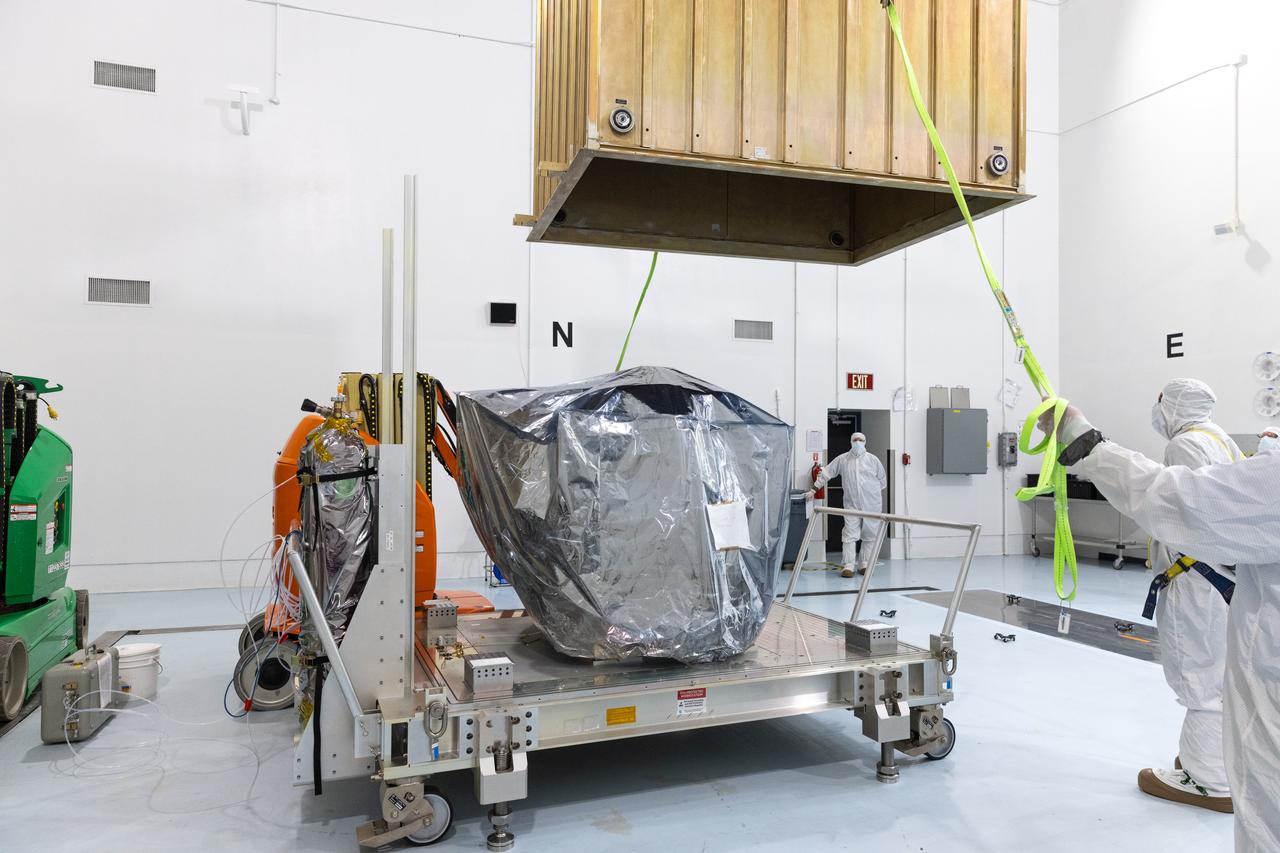
Technicians remove the protective casing covering NASA’s Carruthers Geocorona Observatory on Monday, July 21, 2025, at the Astrotech Space Operations Facility near the agency’s Kennedy Space Center in Florida. The Carruthers Geocorona Observatory is a small satellite set to operate at Lagrange Point 1 (L1), an orbit point between the Earth and Sun about one million miles away. Carruthers will use its ultraviolet cameras to monitor how space weather from the Sun impacts the exosphere, the outermost part of Earth’s atmosphere. The observatory will launch as a rideshare with NASA’s (Interstellar Mapping and Acceleration Probe) no earlier than September 2025.
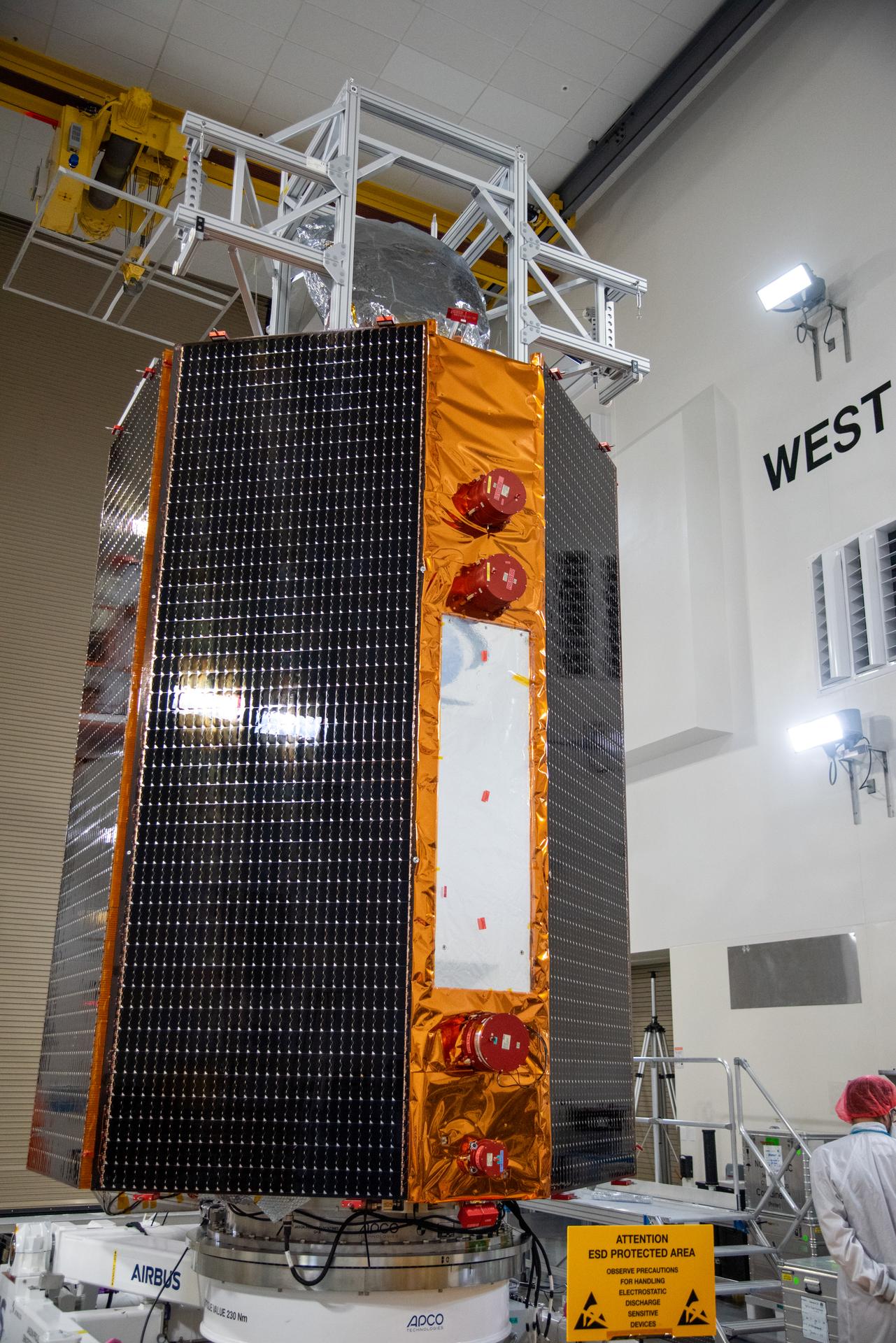
Technicians test the solar arrays during processing of the Sentinel-6B spacecraft during prelaunch operations at the Astrotech Space Operations payload processing facility at Vandenberg Space Force Base in California on Thursday, Oct. 16, 2025. Sentinel-6B will undergo detailed inspections, tests, and fueling in a cleanroom as it prepares for a November launch on a SpaceX Falcon 9 rocket. A collaboration between NASA, ESA (European Space Agency), EUMETSAT (European Organisation for the Exploitation of Meteorological Satellites), and the National Oceanic and Atmospheric Administration (NOAA), Sentinel-6B is designed to measure sea levels down to roughly an inch for about 90% of the world’s oceans.
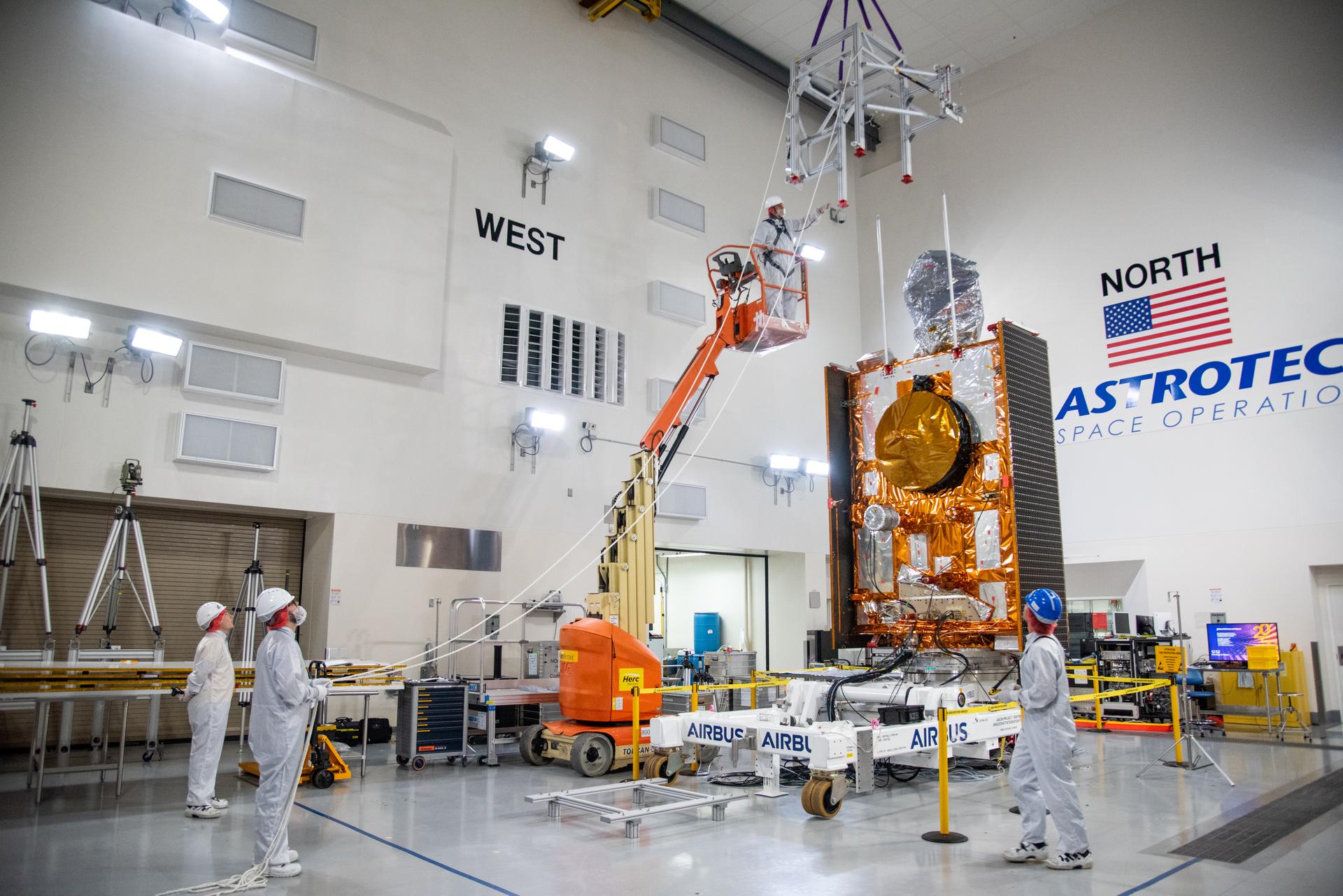
Technicians use a crane during processing of the Sentinel-6B spacecraft on its work stand during prelaunch operations at the Astrotech Space Operations payload processing facility at Vandenberg Space Force Base in California on Thursday, Oct. 16, 2025. Sentinel-6B will undergo detailed inspections, tests, and fueling in a cleanroom as it prepares for a November launch on a SpaceX Falcon 9 rocket. A collaboration between NASA, ESA (European Space Agency), EUMETSAT (European Organisation for the Exploitation of Meteorological Satellites), and the National Oceanic and Atmospheric Administration (NOAA), Sentinel-6B is designed to measure sea levels down to roughly an inch for about 90% of the world’s oceans.
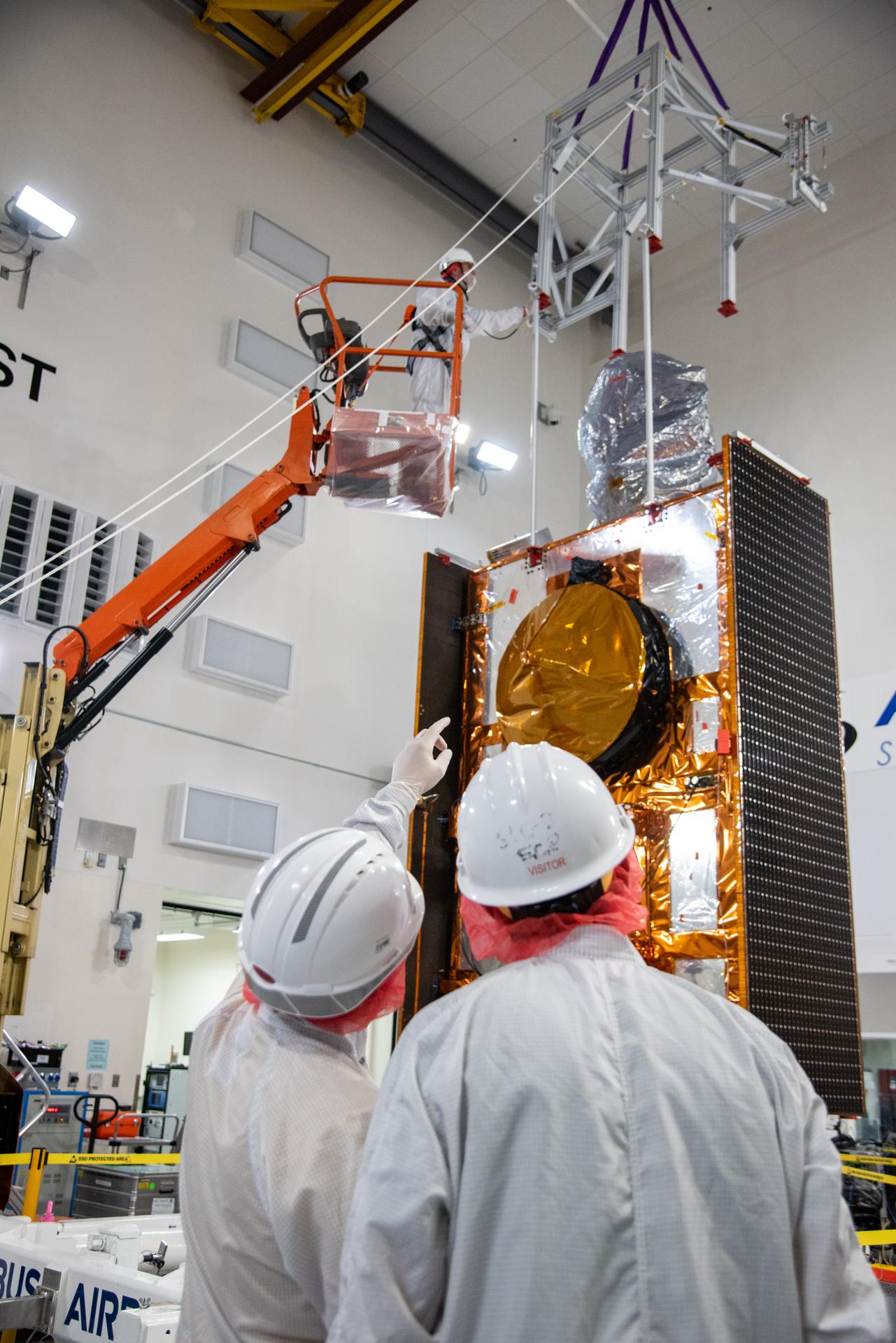
Technicians use a crane during processing of the Sentinel-6B spacecraft on its work stand during prelaunch operations at the Astrotech Space Operations payload processing facility at Vandenberg Space Force Base in California on Thursday, Oct. 16, 2025. Sentinel-6B will undergo detailed inspections, tests, and fueling in a cleanroom as it prepares for a November launch on a SpaceX Falcon 9 rocket. A collaboration between NASA, ESA (European Space Agency), EUMETSAT (European Organisation for the Exploitation of Meteorological Satellites), and the National Oceanic and Atmospheric Administration (NOAA), Sentinel-6B is designed to measure sea levels down to roughly an inch for about 90% of the world’s oceans.
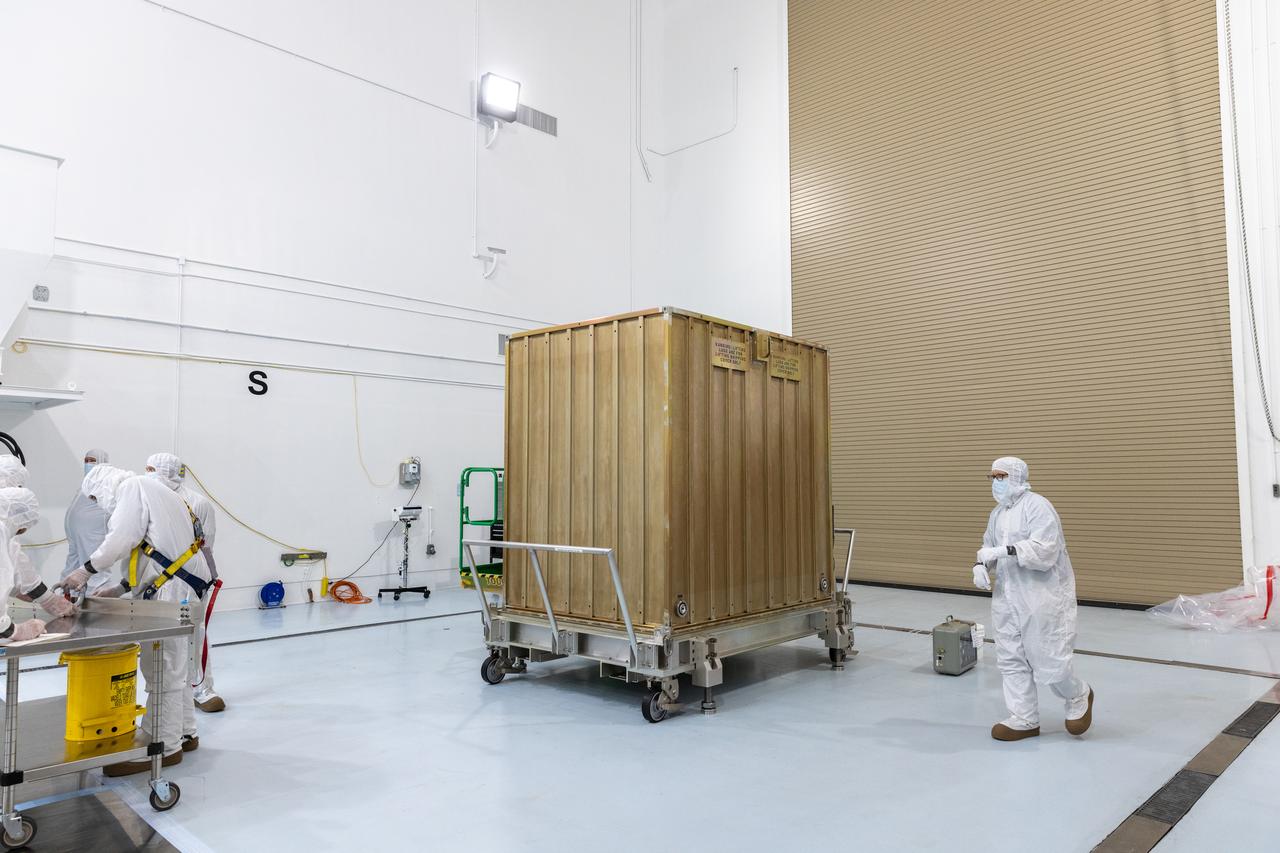
Technicians prepare to remove the protective casing covering NASA’s Carruthers Geocorona Observatory on Monday, July 21, 2025, at the Astrotech Space Operations Facility near the agency’s Kennedy Space Center in Florida. The Carruthers Geocorona Observatory is a small satellite set to operate at Lagrange Point 1 (L1), an orbit point between the Earth and Sun about one million miles away. Carruthers will use its ultraviolet cameras to monitor how space weather from the Sun impacts the exosphere, the outermost part of Earth’s atmosphere. The observatory will launch as a rideshare with NASA’s (Interstellar Mapping and Acceleration Probe) no earlier than September 2025.
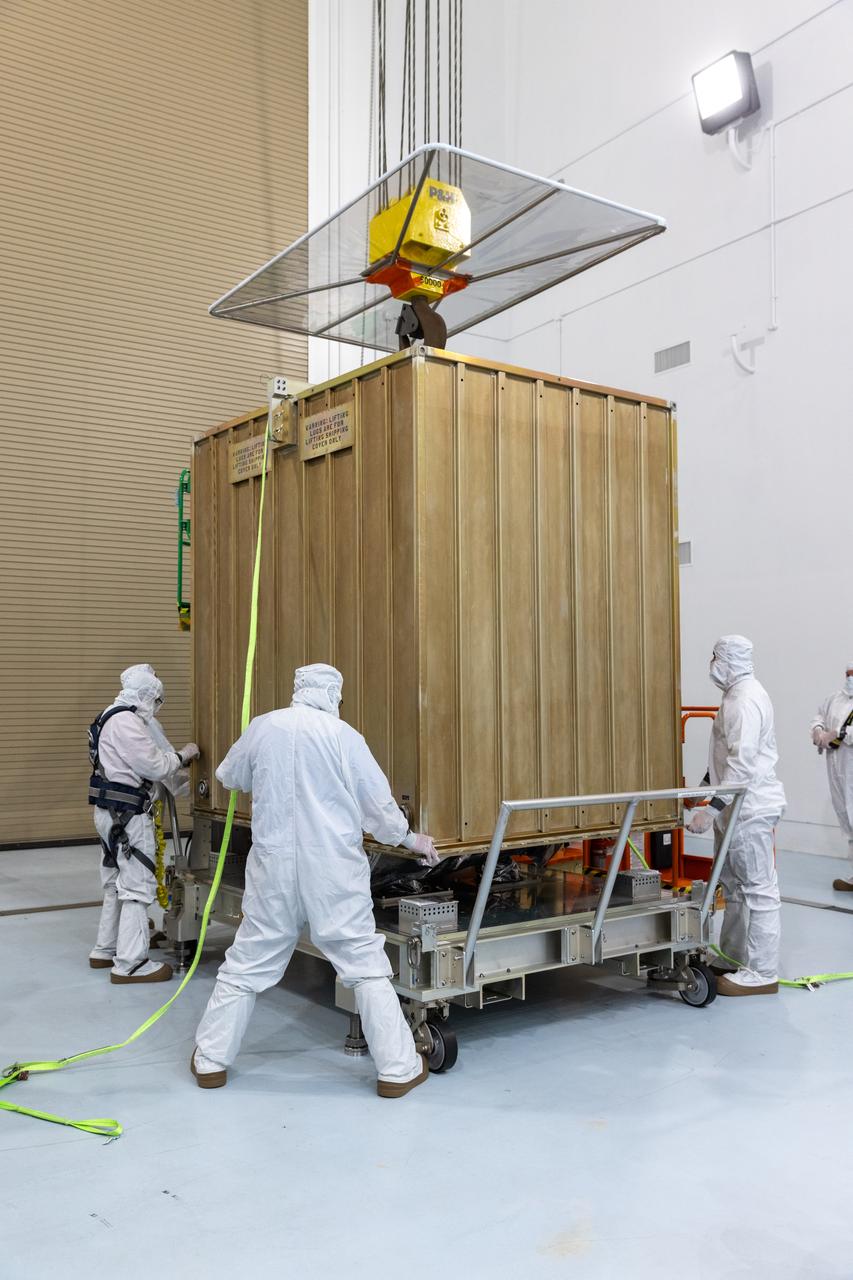
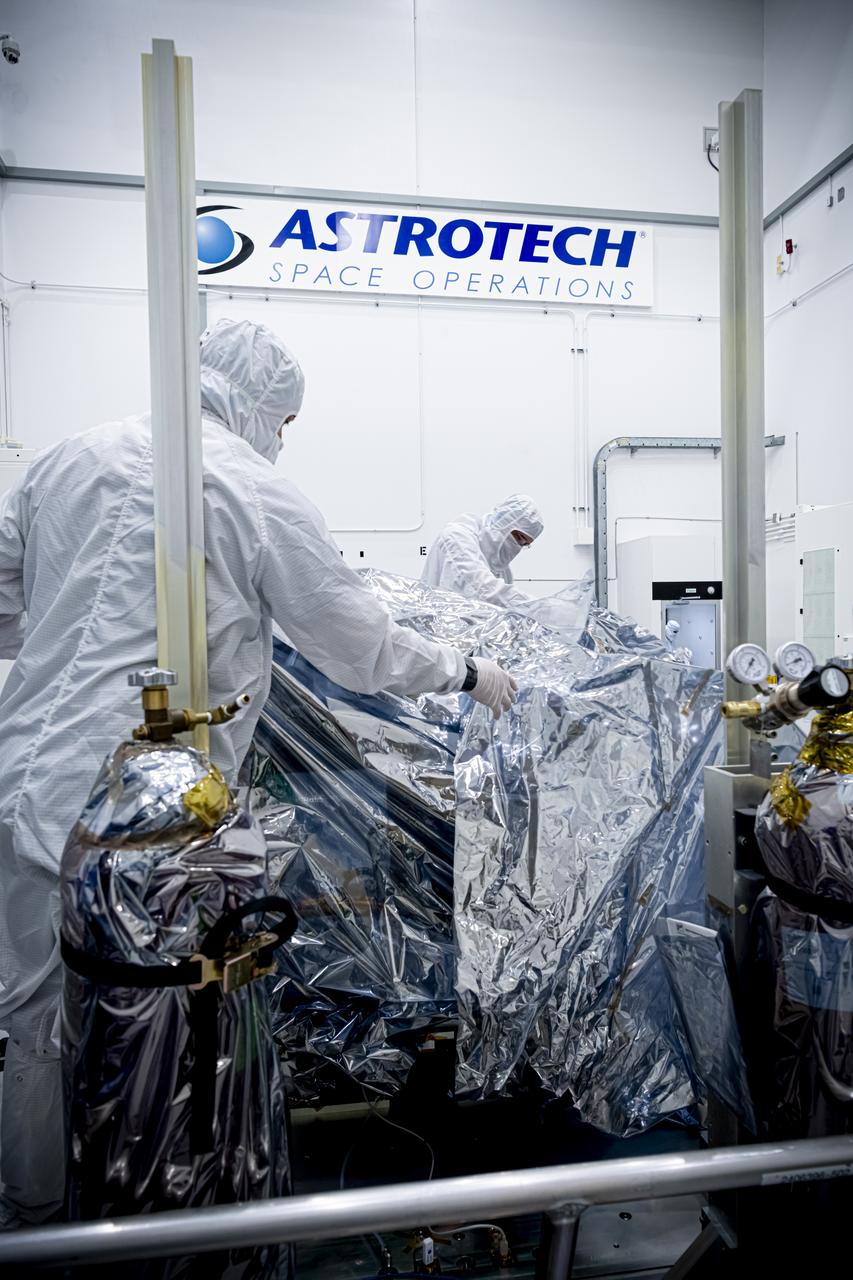
Technicians prepare to remove the protective casing covering NASA’s Carruthers Geocorona Observatory on Monday, July 21, 2025, at the Astrotech Space Operations Facility near the agency’s Kennedy Space Center in Florida. The Carruthers Geocorona Observatory is a small satellite set to operate at Lagrange Point 1 (L1), an orbit point between the Earth and Sun about one million miles away. Carruthers will use its ultraviolet cameras to monitor how space weather from the Sun impacts the exosphere, the outermost part of Earth’s atmosphere. The observatory will launch as a rideshare with NASA’s (Interstellar Mapping and Acceleration Probe) no earlier than September 2025.
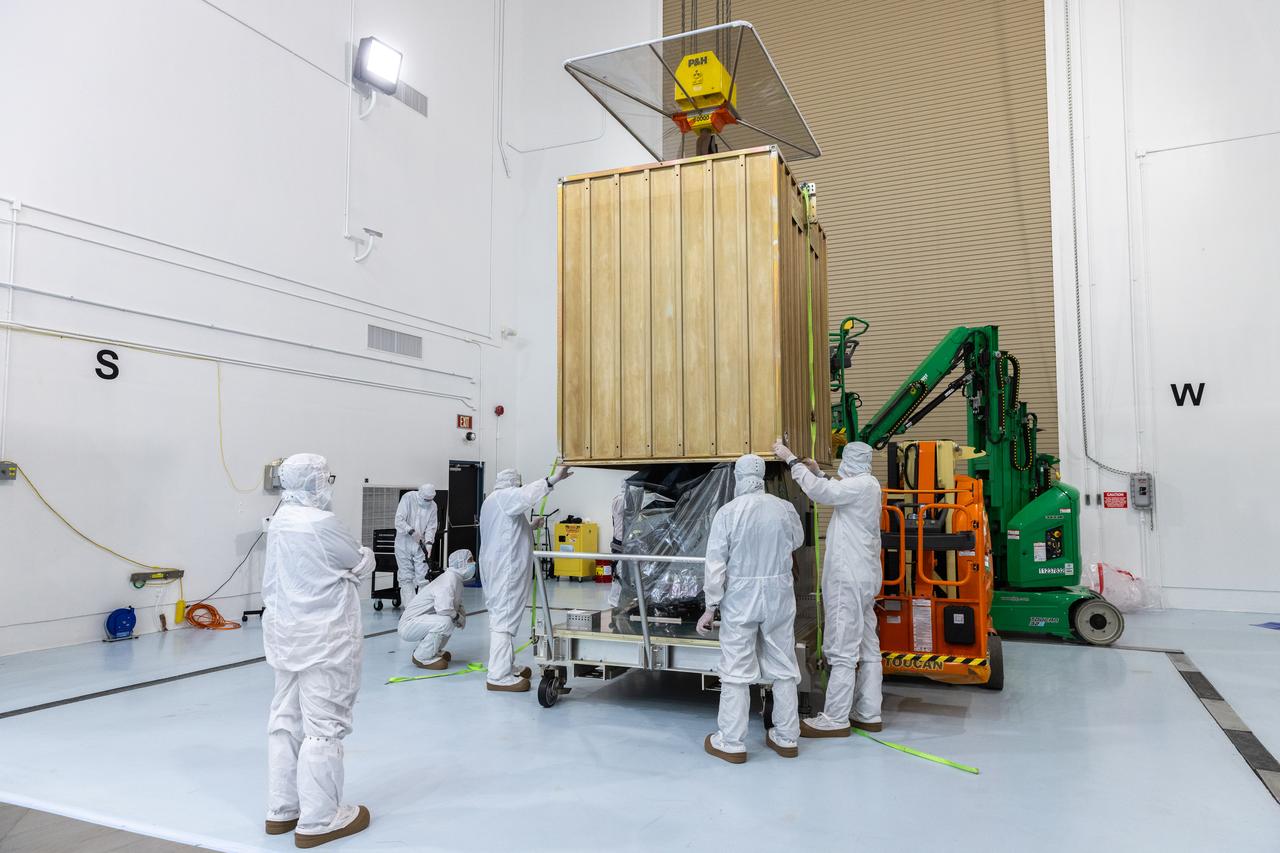
Technicians prepare to remove the protective casing covering NASA’s Carruthers Geocorona Observatory on Monday, July 21, 2025, at the Astrotech Space Operations Facility near the agency’s Kennedy Space Center in Florida. The Carruthers Geocorona Observatory is a small satellite set to operate at Lagrange Point 1 (L1), an orbit point between the Earth and Sun about one million miles away. Carruthers will use its ultraviolet cameras to monitor how space weather from the Sun impacts the exosphere, the outermost part of Earth’s atmosphere. The observatory will launch as a rideshare with NASA’s (Interstellar Mapping and Acceleration Probe) no earlier than September 2025.
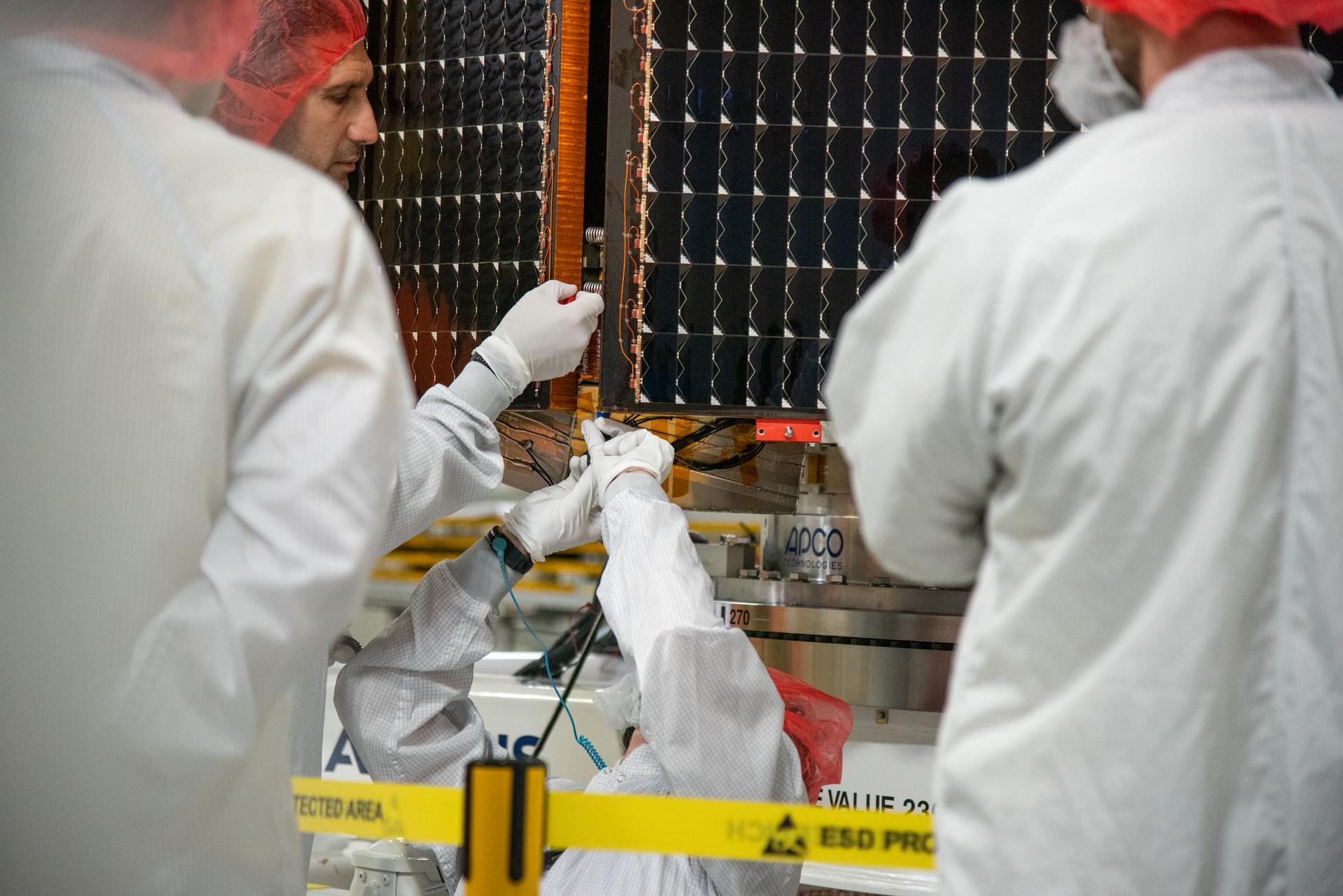
Technicians test the solar arrays during processing of the Sentinel-6B spacecraft during prelaunch operations at the Astrotech Space Operations payload processing facility at Vandenberg Space Force Base in California on Thursday, Oct. 16, 2025. Sentinel-6B will undergo detailed inspections, tests, and fueling in a cleanroom as it prepares for a November launch on a SpaceX Falcon 9 rocket. A collaboration between NASA, ESA (European Space Agency), EUMETSAT (European Organisation for the Exploitation of Meteorological Satellites), and the National Oceanic and Atmospheric Administration (NOAA), Sentinel-6B is designed to measure sea levels down to roughly an inch for about 90% of the world’s oceans.
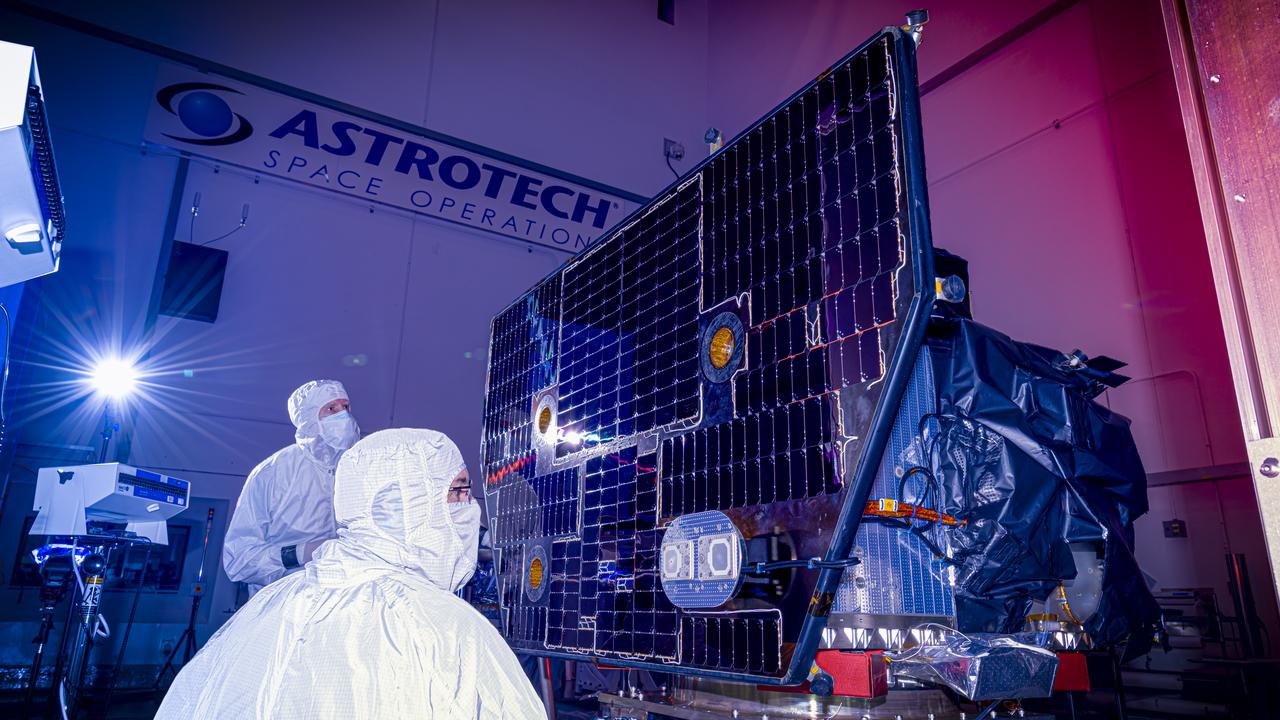
Technicians inspect the solar array panel attached to NASA’s Carruthers Geocorona Observatory on Wednesday, July 23, 2025, at the Astrotech Space Operations Facility near the agency’s Kennedy Space Center in Florida. The solar array will use the Sun to help power Carruthers Geocorona Observatory as it operates at Lagrange Point 1 (L1), an orbit point between the Earth and Sun about one million miles away. Carruthers will use its ultraviolet cameras to monitor how space weather from the Sun impacts the exosphere, the outermost part of Earth’s atmosphere. The observatory will launch as a rideshare with NASA’s IMAP (Interstellar Mapping and Acceleration Probe) no earlier than September 2025.
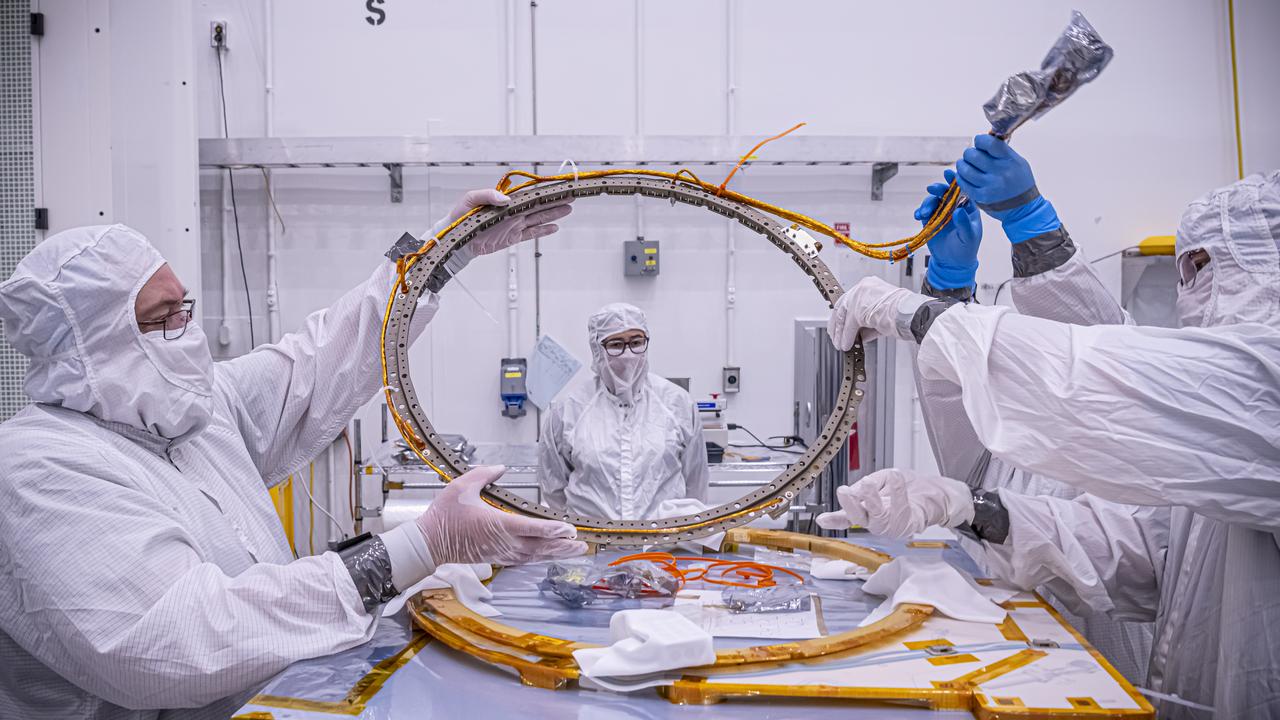
Technicians inspect a motorized light band for NASA’s Carruthers Geocorona Observatory on Tuesday, July 22, 2025, at the Astrotech Space Operations Facility near the agency’s Kennedy Space Center in Florida. The Carruthers Geocorona Observatory is a small satellite set to operate at Lagrange Point 1 (L1), an orbit point between the Earth and Sun about one million miles away. Carruthers will use its ultraviolet cameras to monitor how space weather from the Sun impacts the exosphere, the outermost part of Earth’s atmosphere. The observatory will launch as a rideshare with NASA’s IMAP (Interstellar Mapping and Acceleration Probe) no earlier than September 2025.
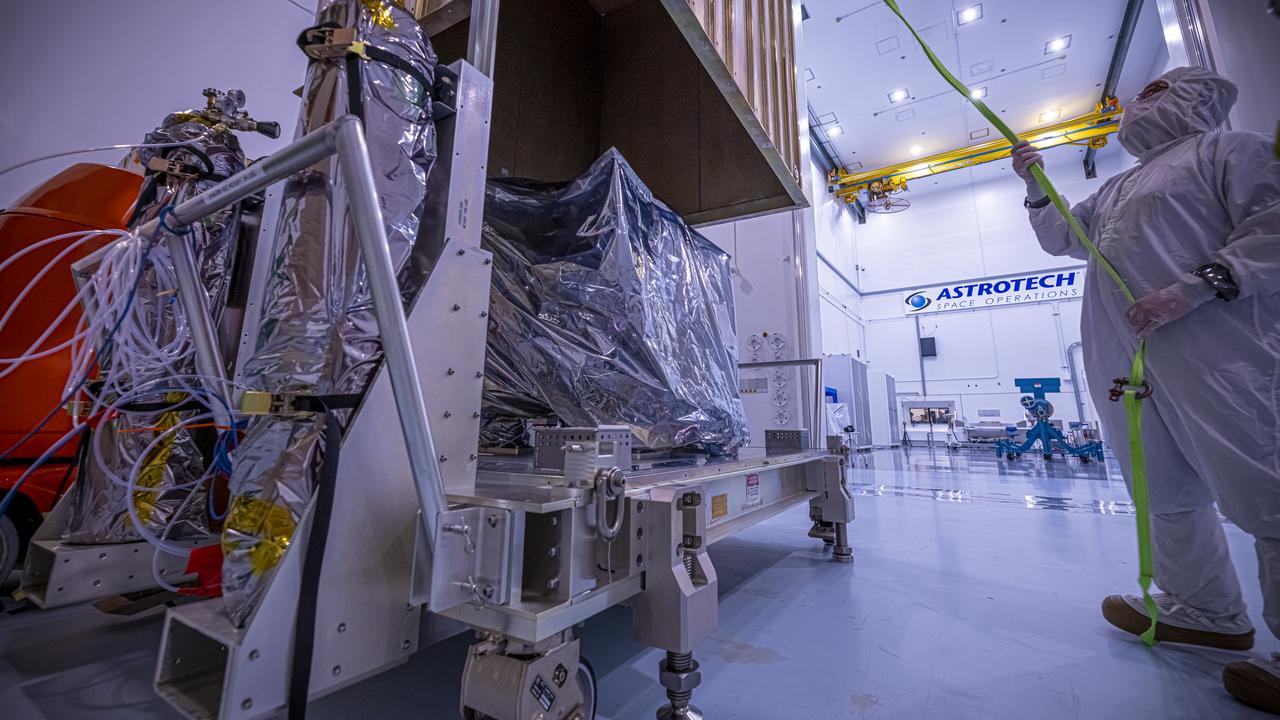
Technicians remove the transport container covering NASA’s Carruthers Geocorona Observatory on Monday, July 21, 2025, at the Astrotech Space Operations Facility near the agency’s Kennedy Space Center in Florida. The Carruthers Geocorona Observatory is a small satellite set to operate at Lagrange Point 1 (L1), an orbit point between the Earth and Sun about one million miles away. Carruthers will use its ultraviolet cameras to monitor how space weather from the Sun impacts the exosphere, the outermost part of Earth’s atmosphere. The observatory will launch as a rideshare with NASA’s IMAP (Interstellar Mapping and Acceleration Probe) no earlier than September 2025.

Technicians inspect NASA’s Carruthers Geocorona Observatory on Wednesday, July 23, 2025, following arrival and unboxing of the observatory at the Astrotech Space Operations Facility near the agency’s Kennedy Space Center in Florida. The Carruthers Geocorona Observatory is a small satellite set to operate at Lagrange Point 1 (L1), an orbit point between the Earth and Sun about one million miles away. Carruthers will use its ultraviolet cameras to monitor how space weather from the Sun impacts the exosphere, the outermost part of Earth’s atmosphere. The observatory will launch as a rideshare with NASA’s IMAP (Interstellar Mapping and Acceleration Probe) no earlier than September 2025.
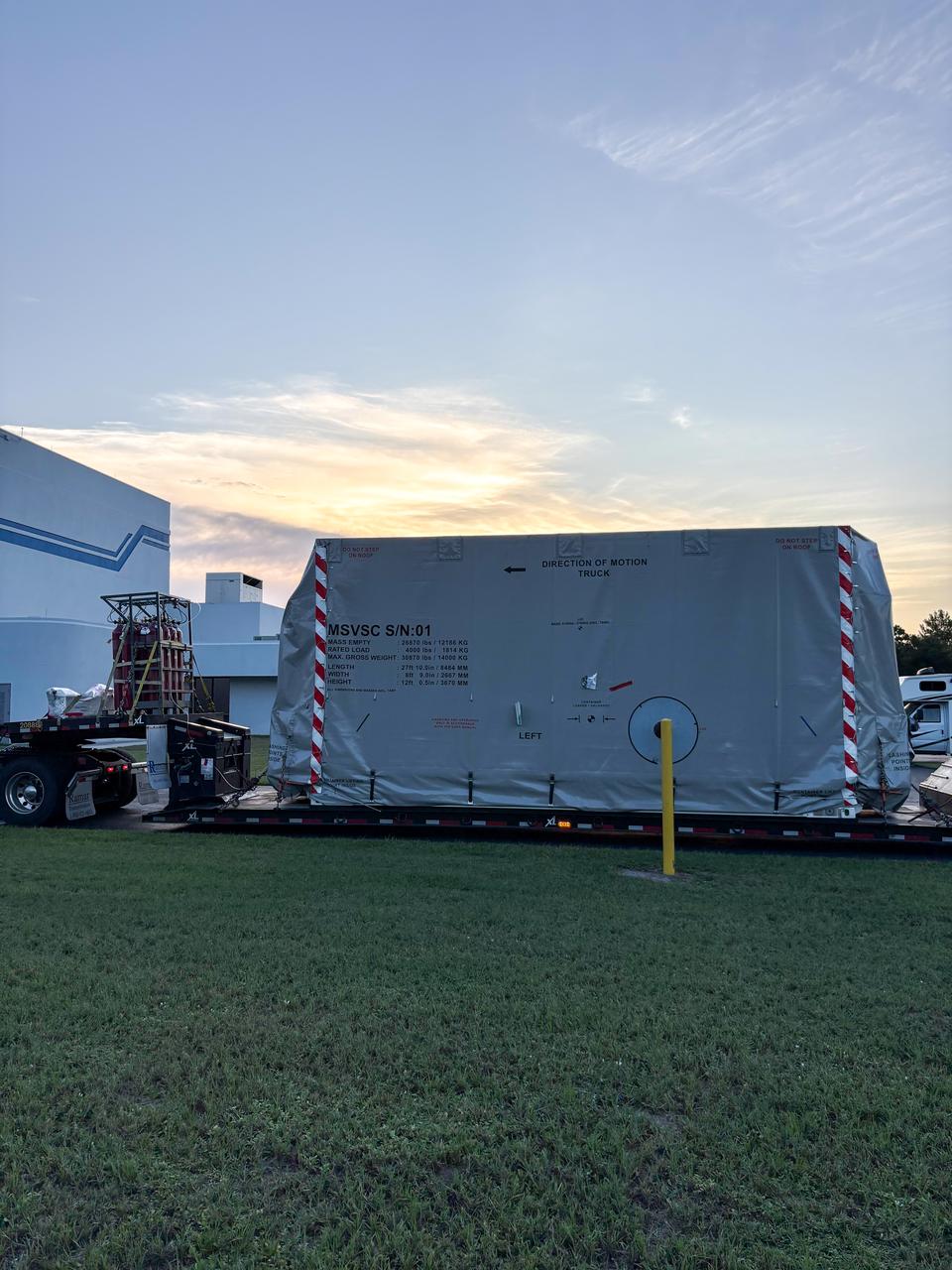
The National Oceanic and Atmospheric Administration’s (NOAA) Space Weather Follow On–Lagrange 1 (SWFO-L1) Observatory, set to provide quicker and more accurate space weather forecasts, arrived Sunday, July 20, 2025, at the Astrotech Space Operations Facility near NASA’s Kennedy Space Center in Florida. The SWFO-L1 mission will monitor the Sun and near-Earth environment using a suite of instruments that provide real-time measurements of solar activity.
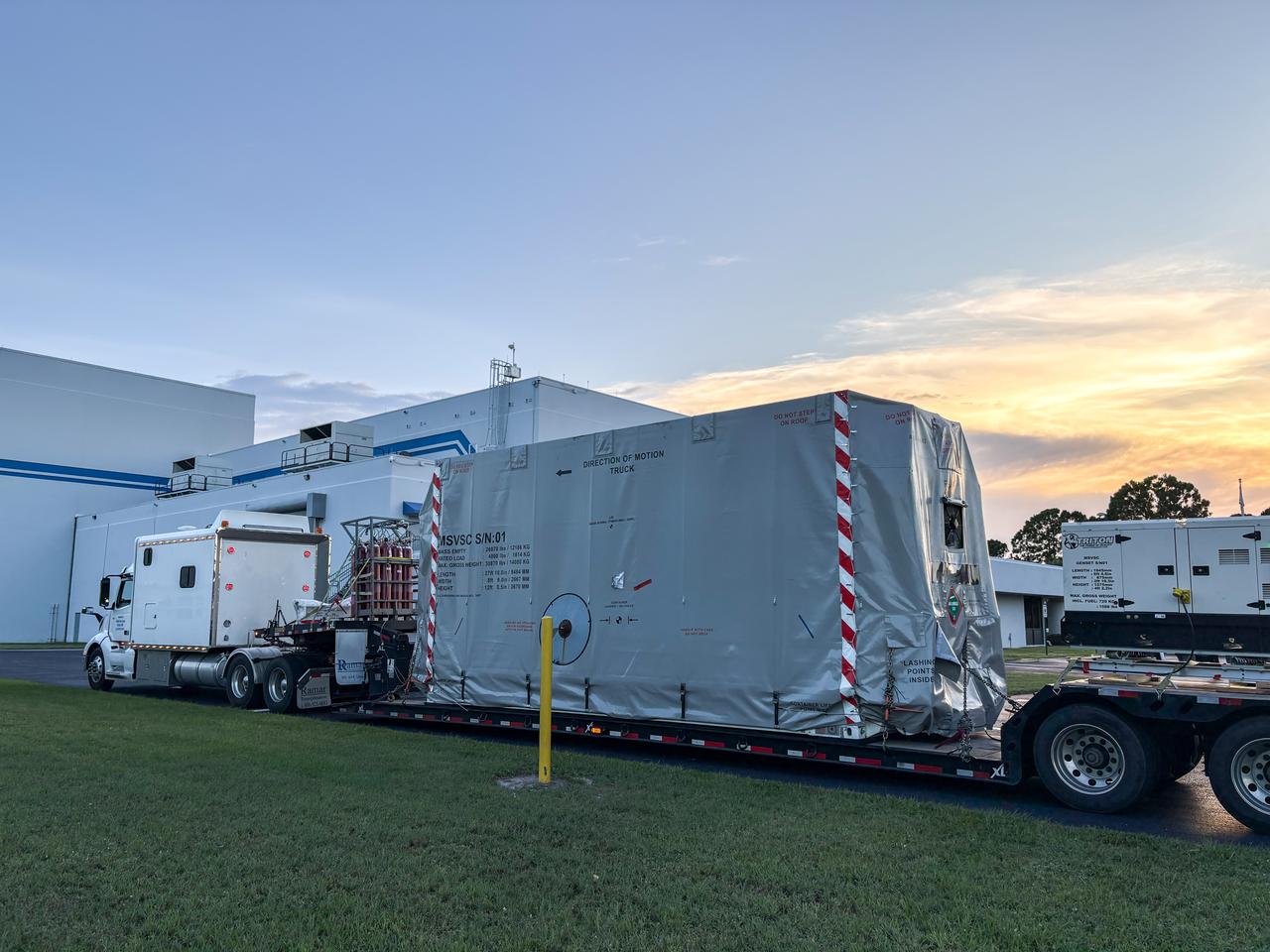
The National Oceanic and Atmospheric Administration’s (NOAA) Space Weather Follow On–Lagrange 1 (SWFO-L1) Observatory, set to provide quicker and more accurate space weather forecasts, arrived Sunday, July 20, 2025, at the Astrotech Space Operations Facility near NASA’s Kennedy Space Center in Florida. The SWFO-L1 mission will monitor the Sun and near-Earth environment using a suite of instruments that provide real-time measurements of solar activity.
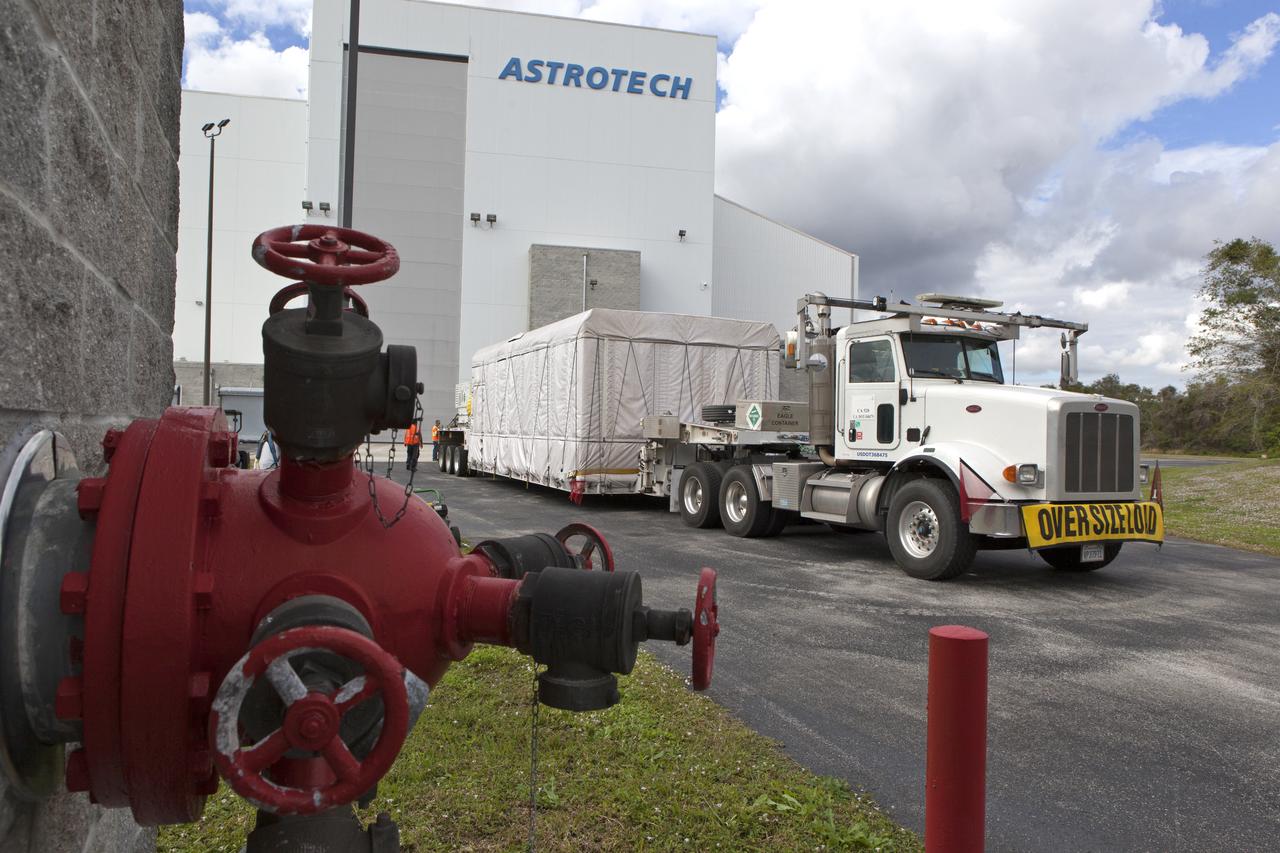
NOAA's Geostationary Operation Environmental Satellite-S (GOES-S) arrives at Astrotech Space Operations in Titusville, Florida, to prepare it for launch. The facility is located near NASA's Kennedy Space Center. GOES-S is the second in a series of four advanced geostationary weather satellites. The GOES-R series - consisting of the GOES-R, GOES-S, GOES-T and GOES-U spacecraft - will significantly improve the detection and observation of environmental phenomena that directly affect public safety, protection of property and the nation's economic health and prosperity. GOES-S is slated to launch March 1, 2018 aboard a United Launch Alliance Atlas V rocket from Cape Canaveral Air Force Station in Florida.
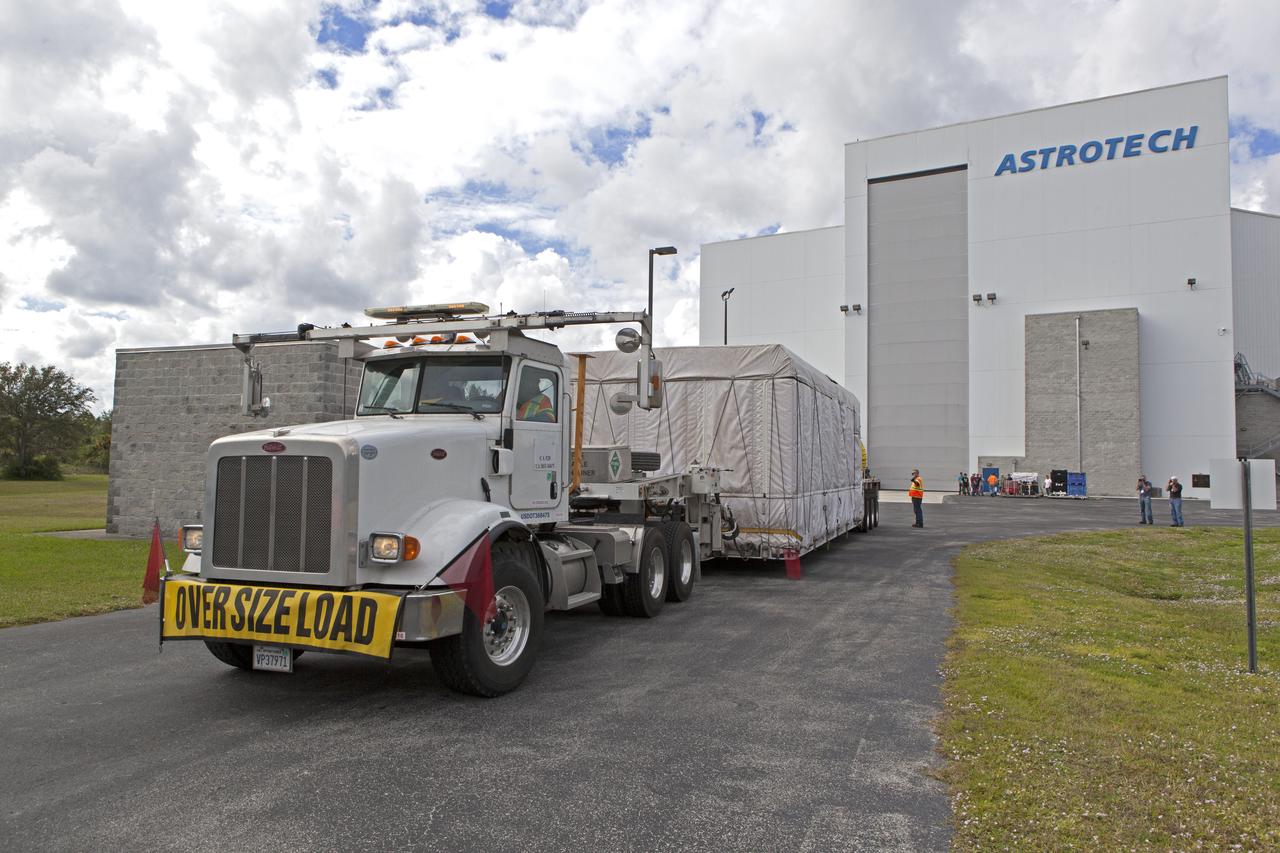
NOAA's Geostationary Operation Environmental Satellite-S (GOES-S) arrives at Astrotech Space Operations in Titusville, Florida, to prepare it for launch. The facility is located near NASA's Kennedy Space Center. GOES-S is the second in a series of four advanced geostationary weather satellites. The GOES-R series - consisting of the GOES-R, GOES-S, GOES-T and GOES-U spacecraft - will significantly improve the detection and observation of environmental phenomena that directly affect public safety, protection of property and the nation's economic health and prosperity. GOES-S is slated to launch March 1, 2018 aboard a United Launch Alliance Atlas V rocket from Cape Canaveral Air Force Station in Florida.
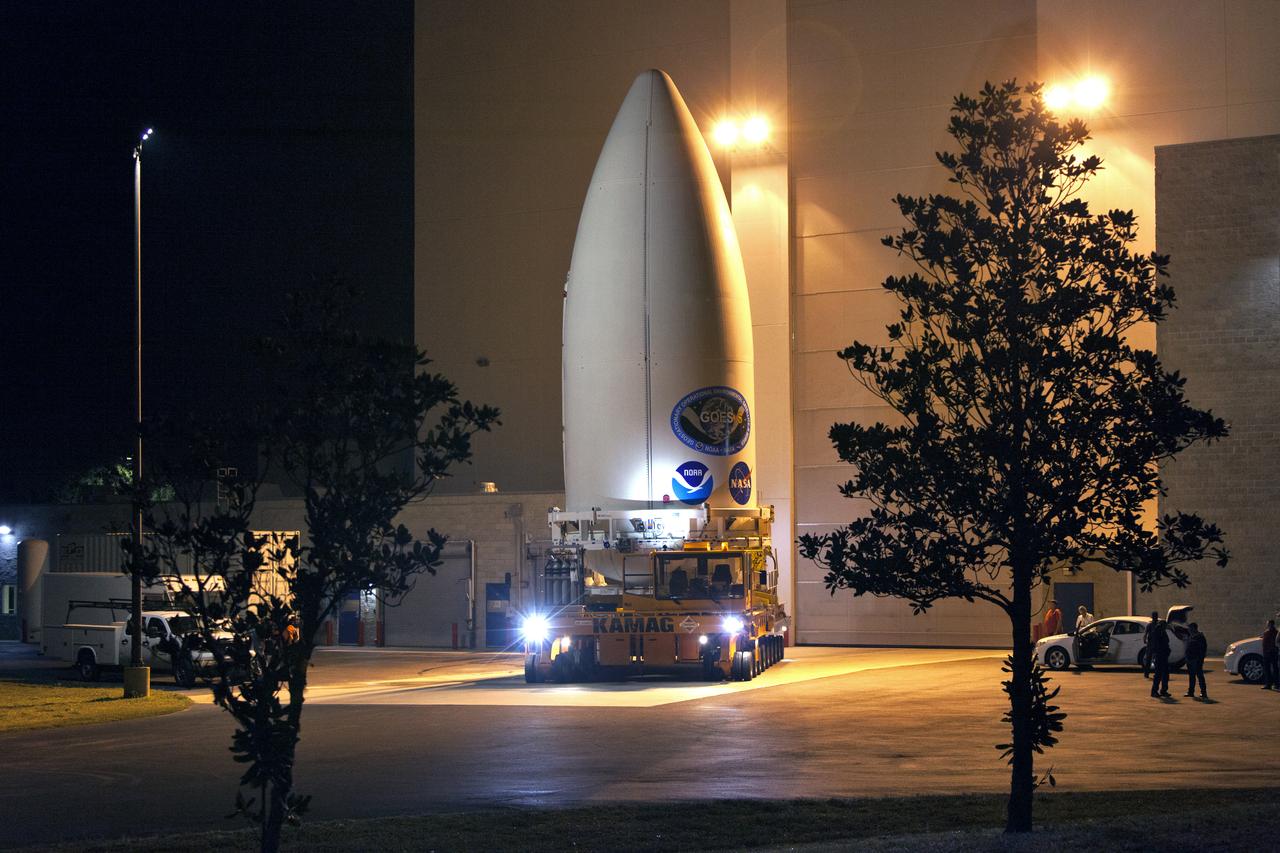
The payload fairing containing NOAA's Geostationary Operational Environmental Satellite-S (GOES-S), secured on a transporter, departs the Astrotech Space Operations facility in Titusville, Florida. GOES-S will be transported to the United Launch Alliance (ULA) Vertical Integration Facility at Space Launch Complex 41 at Cape Canaveral Air Force Station in Florida. The payload fairing will be lifted and mated to the ULA Atlas V rocket. GOES-S is the second in a series of four advanced geostationary weather satellites. GOES-S is slated to launch aboard the ULA Atlas V on March 1.
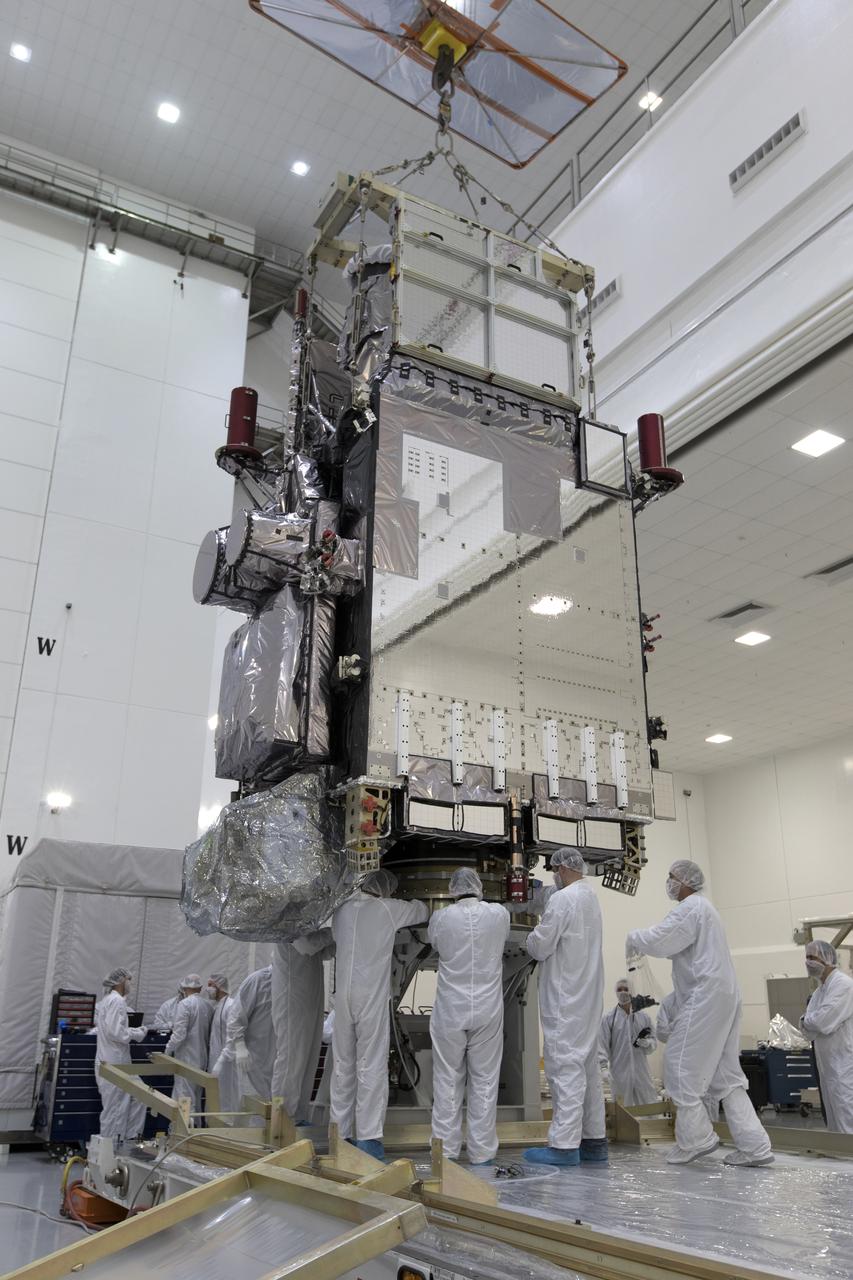
At Astrotech Space Operations in Titusville, Florida, technicians and engineers inspect NOAA's Geostationary Operational Environmental Satellite-S (GOES-S). The facility is located near NASA's Kennedy Space Center. GOES-S is the second in a series of four advanced geostationary weather satellites. The GOES-R series - consisting of the GOES-R, GOES-S, GOES-T and GOES-U spacecraft - will significantly improve the detection and observation of environmental phenomena that directly affect public safety, protection of property and the nation's economic health and prosperity. GOES-S is slated to launch March 1, 2018 aboard a United Launch Alliance Atlas V rocket from Cape Canaveral Air Force Station in Florida.
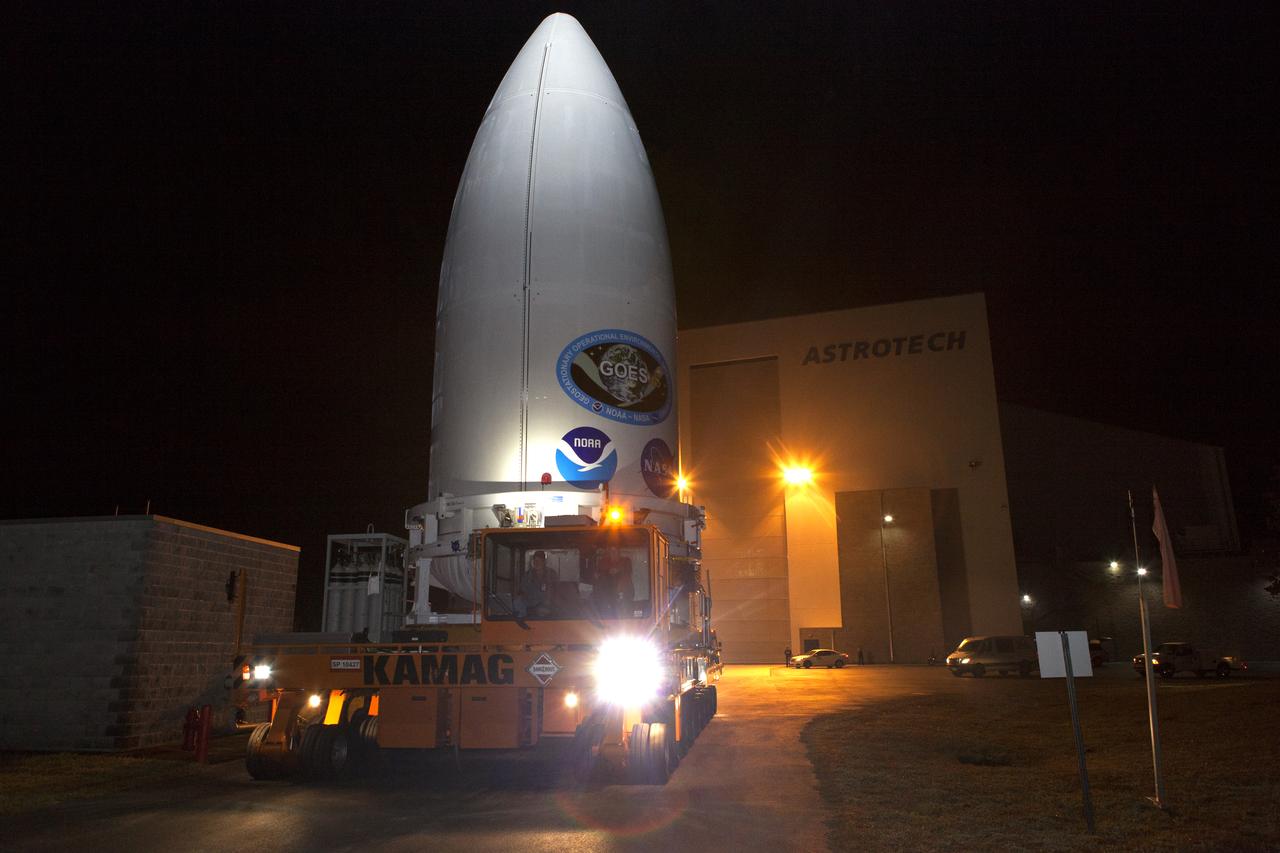
The payload fairing containing NOAA's Geostationary Operational Environmental Satellite-S (GOES-S), secured on a transporter, departs the Astrotech Space Operations facility in Titusville, Florida. GOES-S will be transported to the United Launch Alliance (ULA) Vertical Integration Facility at Space Launch Complex 41 at Cape Canaveral Air Force Station in Florida. The payload fairing will be lifted and mated to the ULA Atlas V rocket. GOES-S is the second in a series of four advanced geostationary weather satellites. GOES-S is slated to launch aboard the ULA Atlas V on March 1.
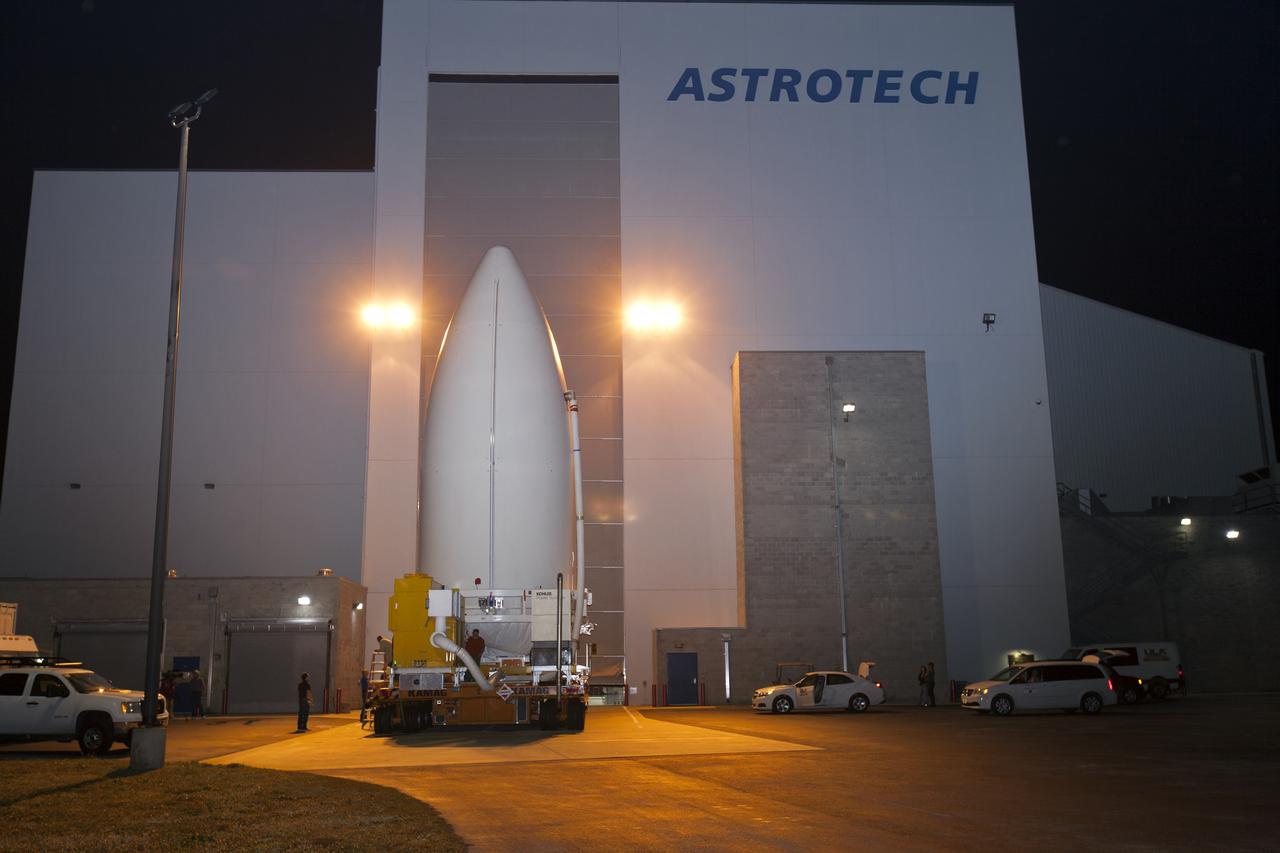
Secured on a transporter, the payload fairing containing NOAA's Geostationary Operational Environmental Satellite-S (GOES-S) departs the Astrotech Space Operations facility in Titusville, Florida. GOES-S will be transported to the United Launch Alliance (ULA) Vertical Integration Facility at Space Launch Complex 41 at Cape Canaveral Air Force Station in Florida. The payload fairing will be lifted and mated to the ULA Atlas V rocket. GOES-S is the second in a series of four advanced geostationary weather satellites. GOES-S is slated to launch aboard the ULA Atlas V on March 1.
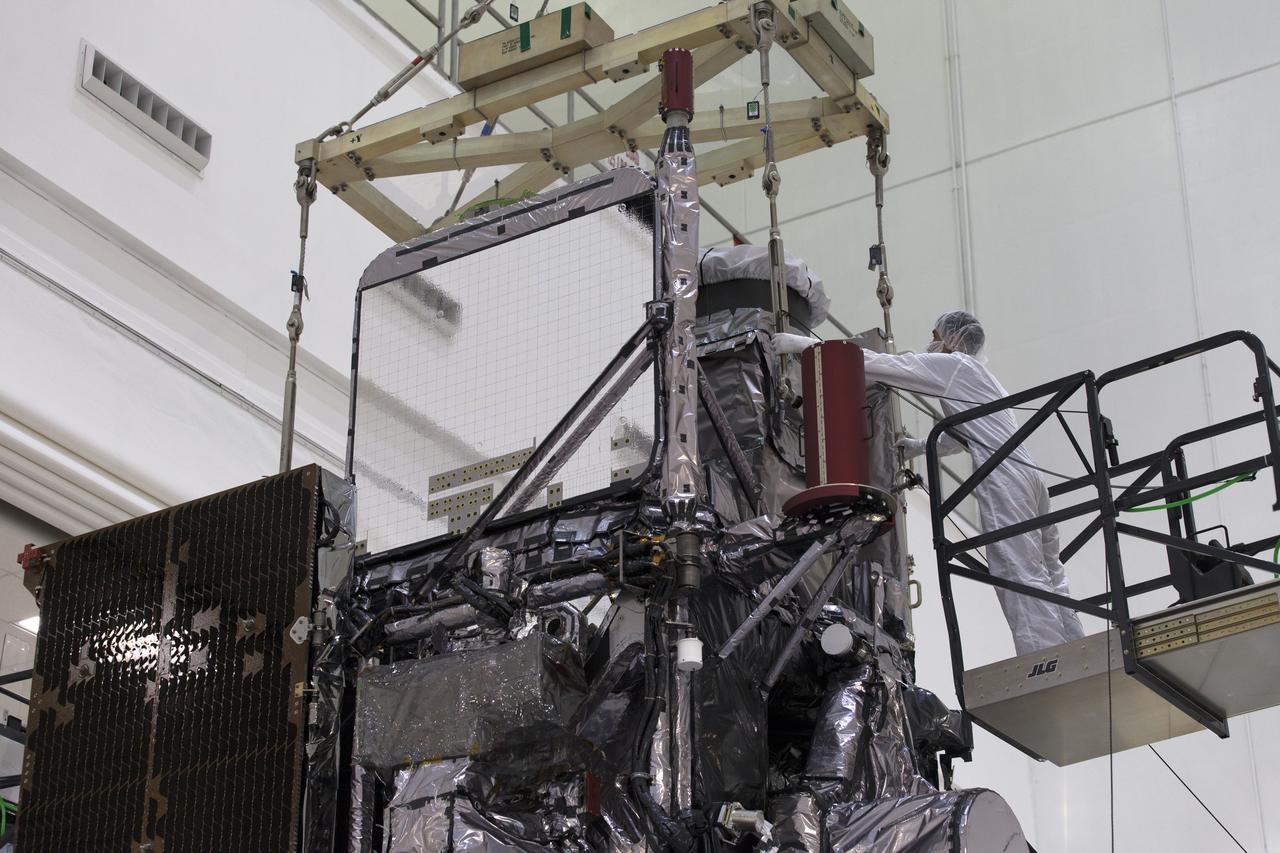
At Astrotech Space Operations in Titusville, Florida, a technician inspects NOAA's Geostationary Operational Environmental Satellite-S (GOES-S). The facility is located near NASA's Kennedy Space Center. GOES-S is the second in a series of four advanced geostationary weather satellites. The GOES-R series - consisting of the GOES-R, GOES-S, GOES-T and GOES-U spacecraft - will significantly improve the detection and observation of environmental phenomena that directly affect public safety, protection of property and the nation's economic health and prosperity. GOES-S is slated to launch March 1, 2018 aboard a United Launch Alliance Atlas V rocket from Cape Canaveral Air Force Station in Florida.
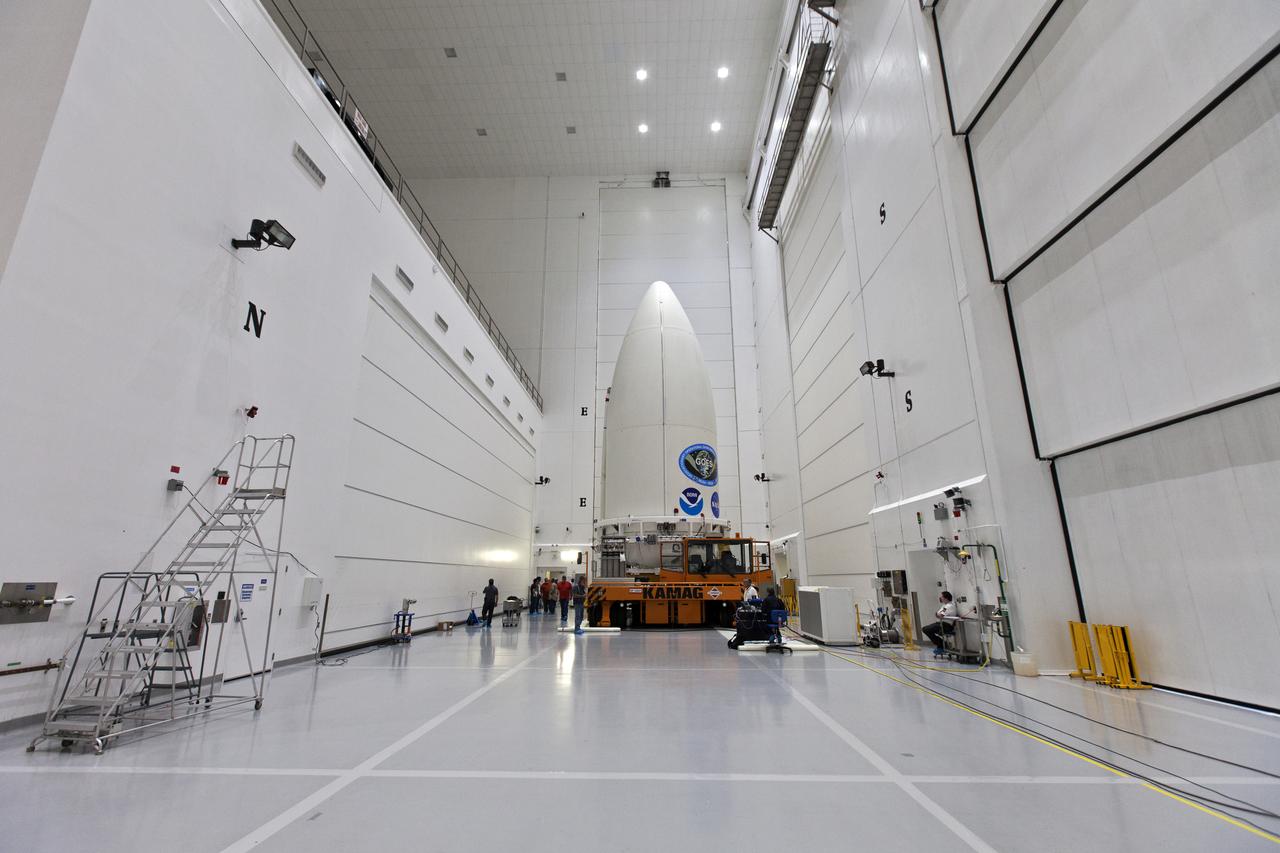
NOAA's Geostationary Operational Environmental Satellite-S (GOES-S) is secured in its payload fairing inside the high bay at Astrotech Space Operations facility in Titusville, Florida. GOES-S will be transported to the United Launch Alliance (ULA) Vertical Integration Facility at Space Launch Complex 41 at Cape Canaveral Air Force Station in Florida. The payload fairing will be lifted and mated to the ULA Atlas V rocket. GOES-S is the second in a series of four advanced geostationary weather satellites. GOES-S is slated to launch aboard the ULA Atlas V on March 1.
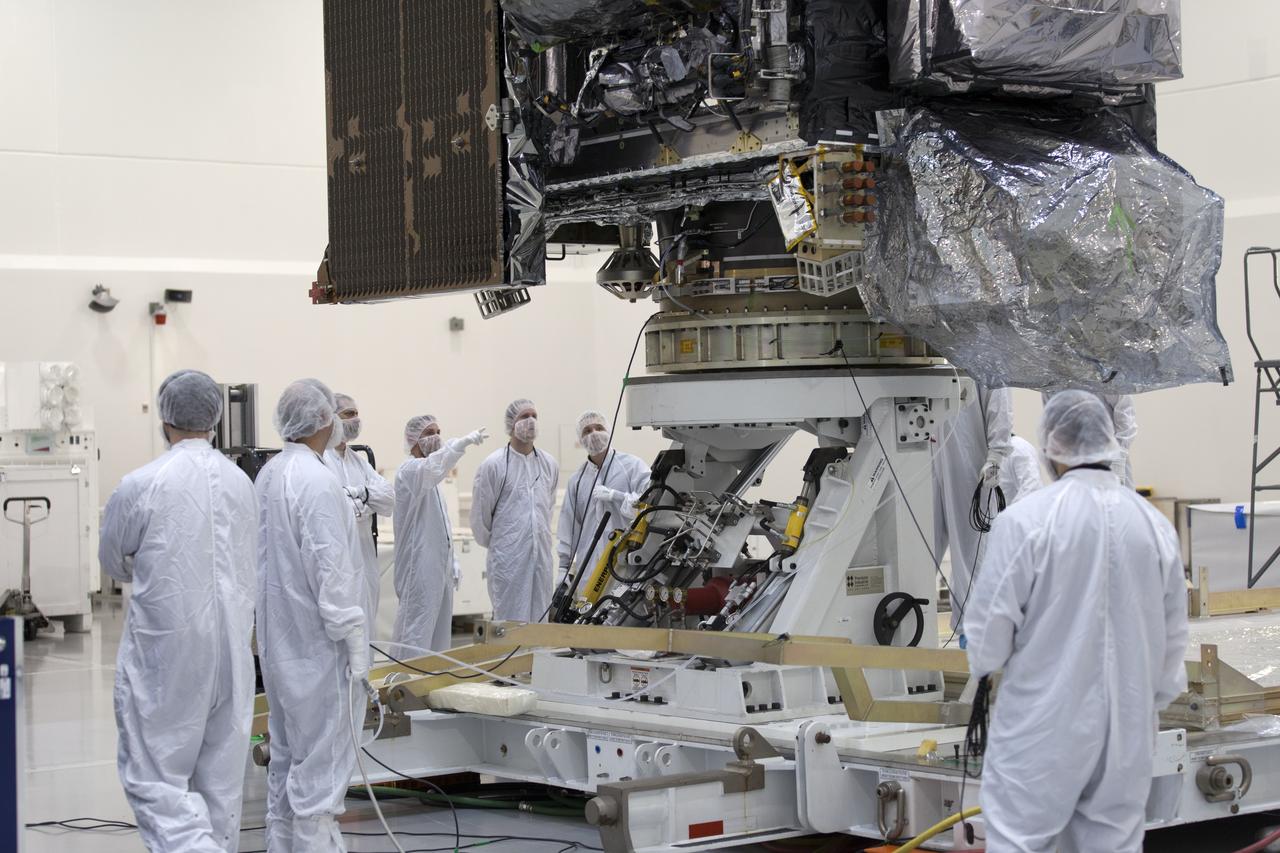
At Astrotech Space Operations in Titusville, Florida, technicians and engineers inspect NOAA's Geostationary Operational Environmental Satellite-S (GOES-S). The facility is located near NASA's Kennedy Space Center. GOES-S is the second in a series of four advanced geostationary weather satellites. The GOES-R series - consisting of the GOES-R, GOES-S, GOES-T and GOES-U spacecraft - will significantly improve the detection and observation of environmental phenomena that directly affect public safety, protection of property and the nation's economic health and prosperity. GOES-S is slated to launch March 1, 2018 aboard a United Launch Alliance Atlas V rocket from Cape Canaveral Air Force Station in Florida.
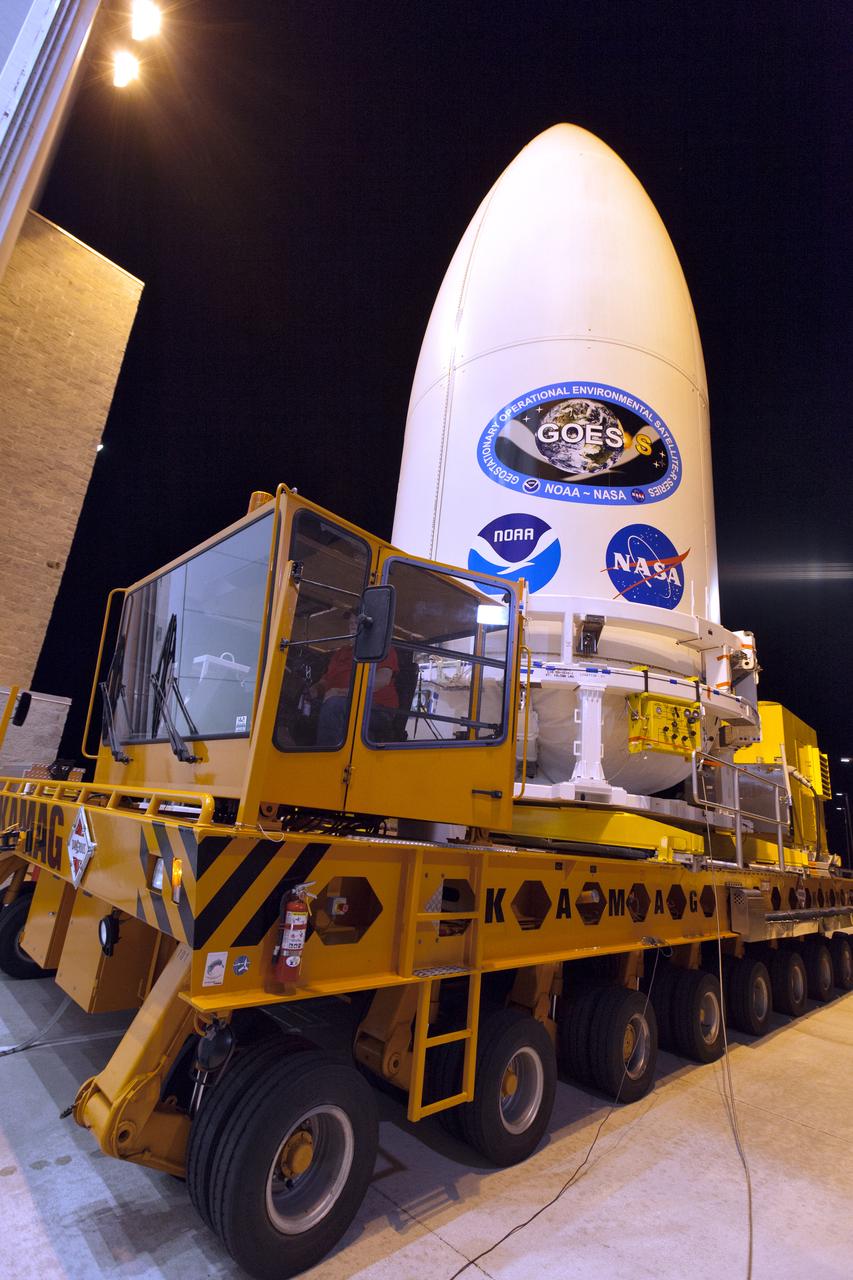
The payload fairing containing NOAA's Geostationary Operational Environmental Satellite-S (GOES-S) is secured on a transporter and moved out of the Astrotech Space Operations facility in Titusville, Florida. GOES-S will be transported to the United Launch Alliance (ULA) Vertical Integration Facility at Space Launch Complex 41 at Cape Canaveral Air Force Station in Florida. The payload fairing will be lifted and mated to the ULA Atlas V rocket. GOES-S is the second in a series of four advanced geostationary weather satellites. GOES-S is slated to launch aboard the ULA Atlas V on March 1.
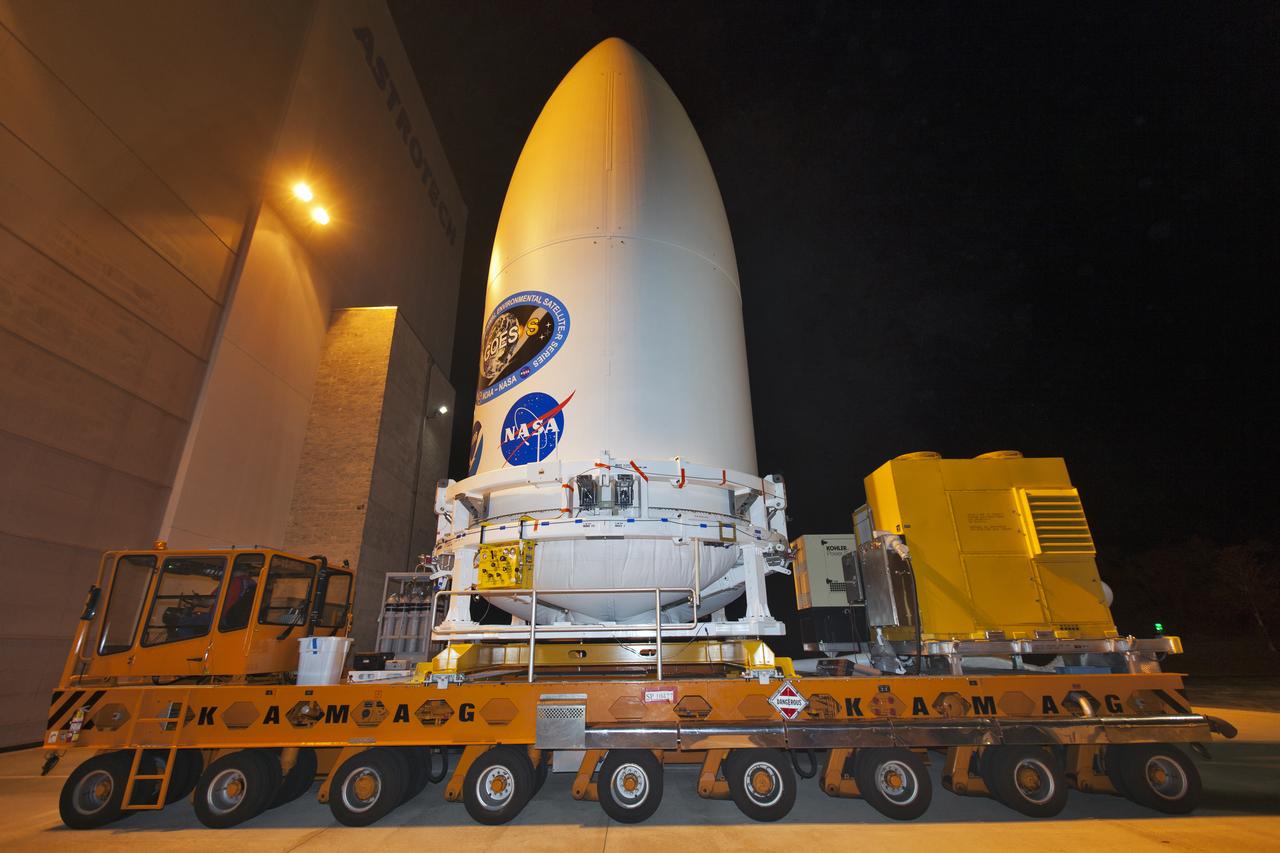
Secured on a transporter, the payload fairing containing NOAA's Geostationary Operational Environmental Satellite-S (GOES-S) departs the Astrotech Space Operations facility in Titusville, Florida. GOES-S will be transported to the United Launch Alliance (ULA) Vertical Integration Facility at Space Launch Complex 41 at Cape Canaveral Air Force Station in Florida. The payload fairing will be lifted and mated to the ULA Atlas V rocket. GOES-S is the second in a series of four advanced geostationary weather satellites. GOES-S is slated to launch aboard the ULA Atlas V on March 1.
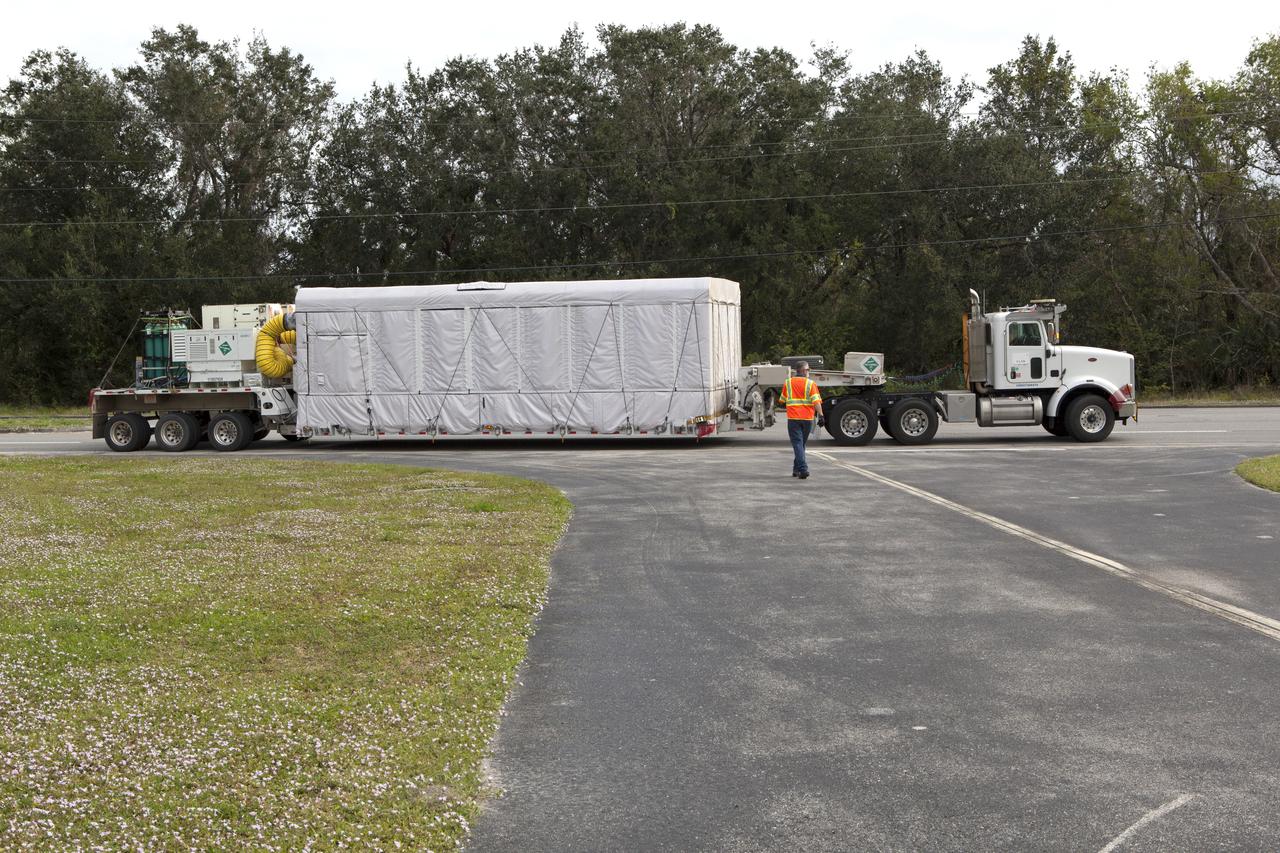
NOAA's Geostationary Operation Environmental Satellite-S (GOES-S) arrives at Astrotech Space Operations in Titusville, Florida, to prepare it for launch. The facility is located near NASA's Kennedy Space Center. GOES-S is the second in a series of four advanced geostationary weather satellites. The GOES-R series - consisting of the GOES-R, GOES-S, GOES-T and GOES-U spacecraft - will significantly improve the detection and observation of environmental phenomena that directly affect public safety, protection of property and the nation's economic health and prosperity. GOES-S is slated to launch March 1, 2018 aboard a United Launch Alliance Atlas V rocket from Cape Canaveral Air Force Station in Florida.
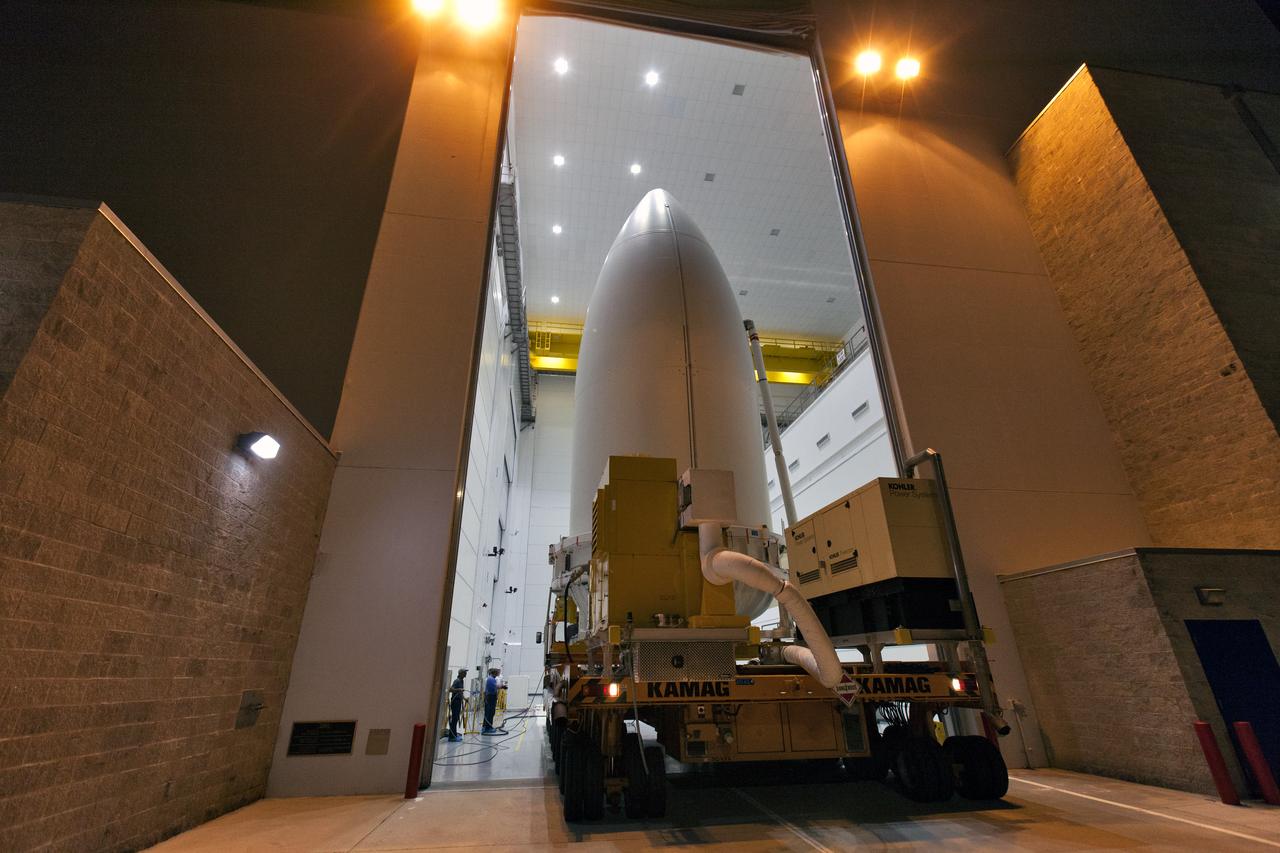
The payload fairing containing NOAA's Geostationary Operational Environmental Satellite-S (GOES-S) is secured on a transporter and moved out of the Astrotech Space Operations facility in Titusville, Florida. GOES-S will be transported to the United Launch Alliance (ULA) Vertical Integration Facility at Space Launch Complex 41 at Cape Canaveral Air Force Station in Florida. The payload fairing will be lifted and mated to the ULA Atlas V rocket. GOES-S is the second in a series of four advanced geostationary weather satellites. GOES-S is slated to launch aboard the ULA Atlas V on March 1.
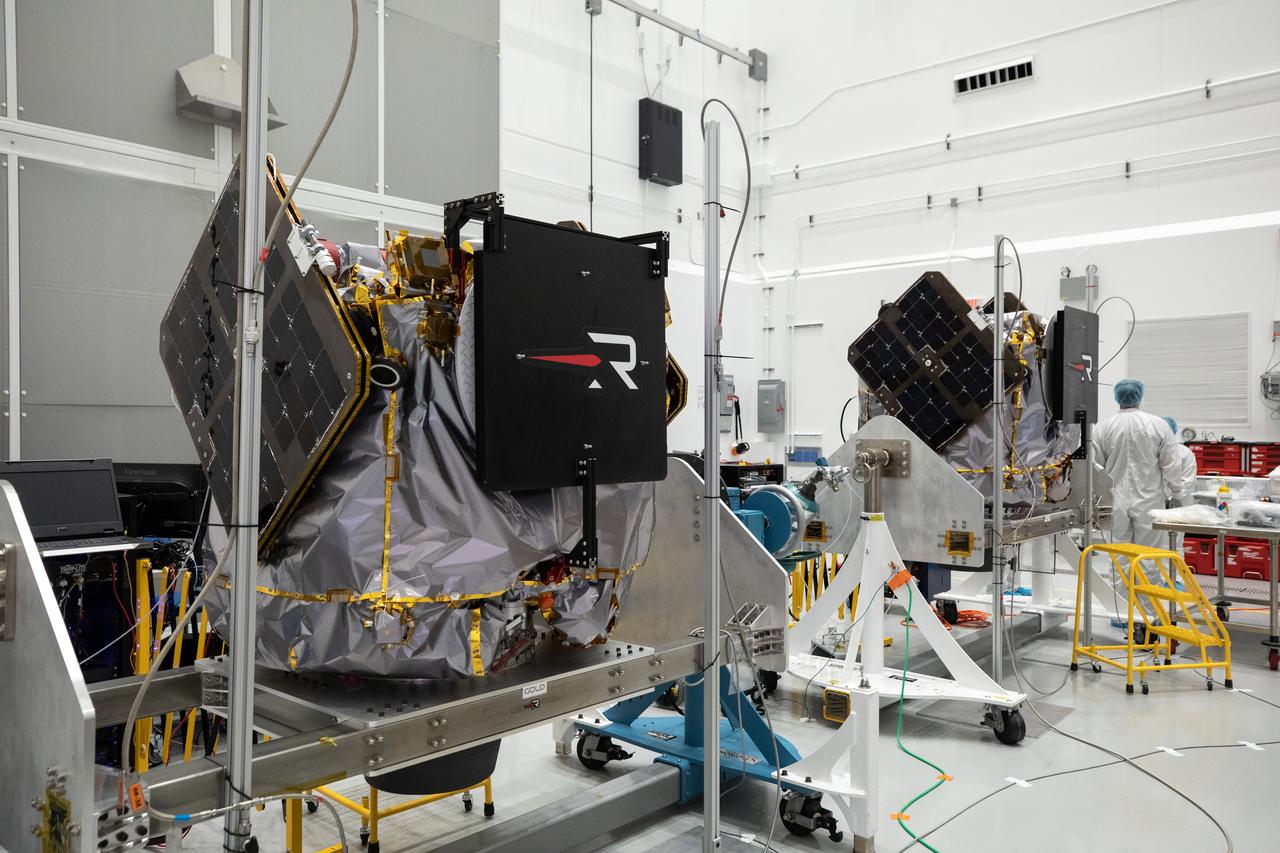
NASA’s ESCAPADE (Escape and Plasma Acceleration and Dynamics Explorers) identical dual spacecraft are inspected and processed on dollies in a high bay of the Astrotech Space Operations Facility near the agency’s Kennedy Space Center in Florida on Thursday, Aug. 22, 2024. As the first multi-spacecraft orbital science mission to Mars, ESCAPADE’s twin orbiters will take simultaneous observations from different locations around the planet and reveal the real-time response to space weather and how the Martian magnetosphere changes over time.
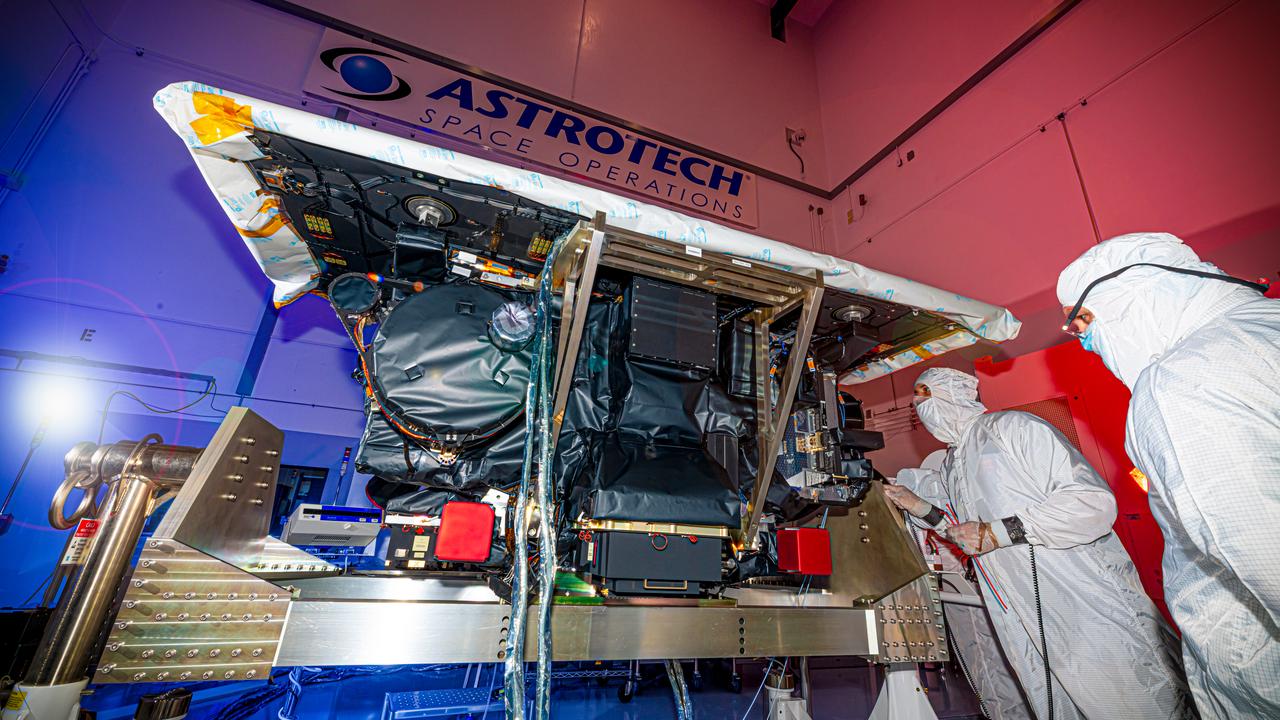
Technicians inspect the National Oceanic and Atmospheric Administration’s (NOAA) Space Weather Follow On–Lagrange 1 (SWFO-L1) Observatory on Thursday, July 24, 2025, following the arrival and unboxing of the observatory at the Astrotech Space Operations Facility near NASA’s Kennedy Space Center in Florida. The SWFO-L1 mission will monitor the Sun and near-Earth environment using a suite of instruments that provide real-time measurements of solar activity. The observatory will launch as a rideshare with NASA’s IMAP (Interstellar Mapping and Acceleration Probe) no earlier than September 2025.
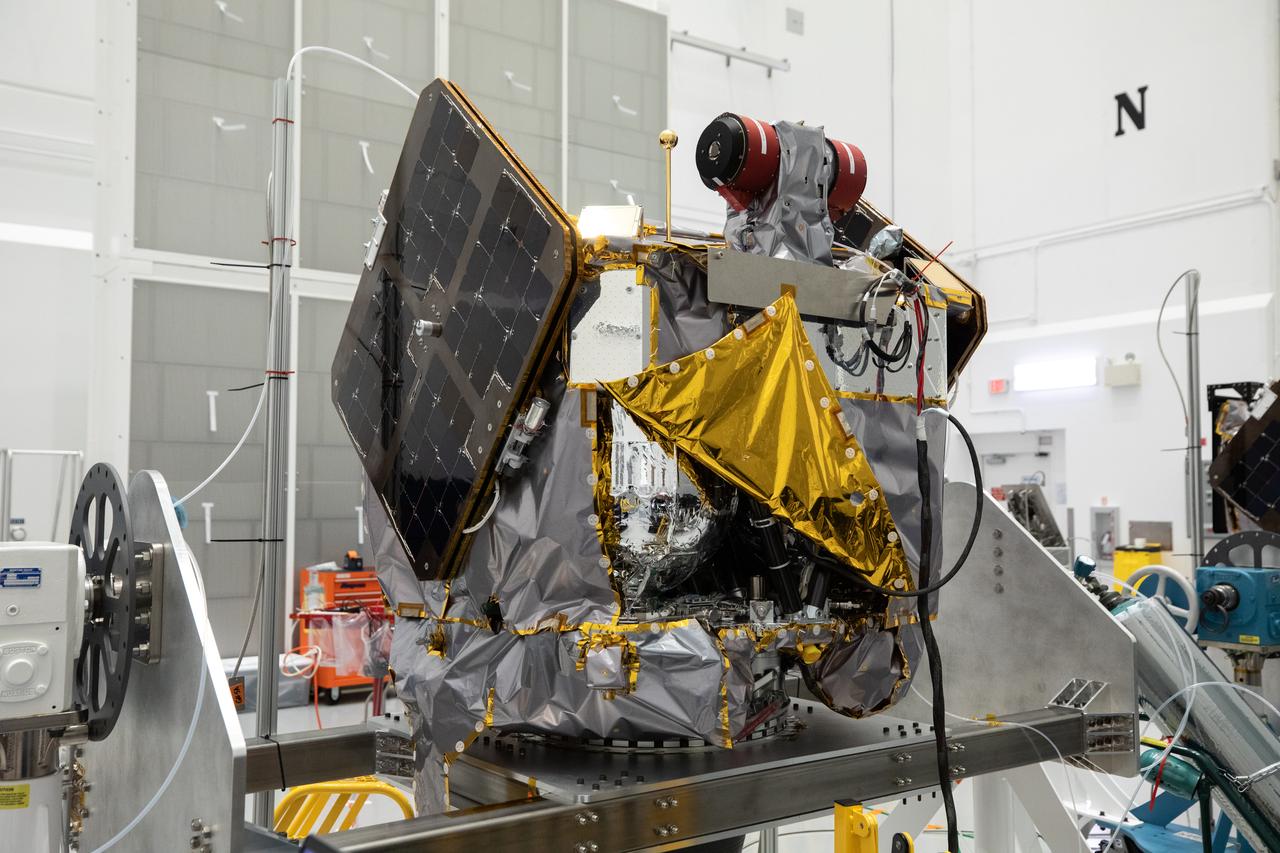
NASA’s ESCAPADE (Escape and Plasma Acceleration and Dynamics Explorers) identical dual spacecraft are inspected and processed on dollies in a high bay of the Astrotech Space Operations Facility near the agency’s Kennedy Space Center in Florida on Thursday, Aug. 22, 2024. As the first multi-spacecraft orbital science mission to Mars, ESCAPADE’s twin orbiters will take simultaneous observations from different locations around the planet and reveal the real-time response to space weather and how the Martian magnetosphere changes over time.
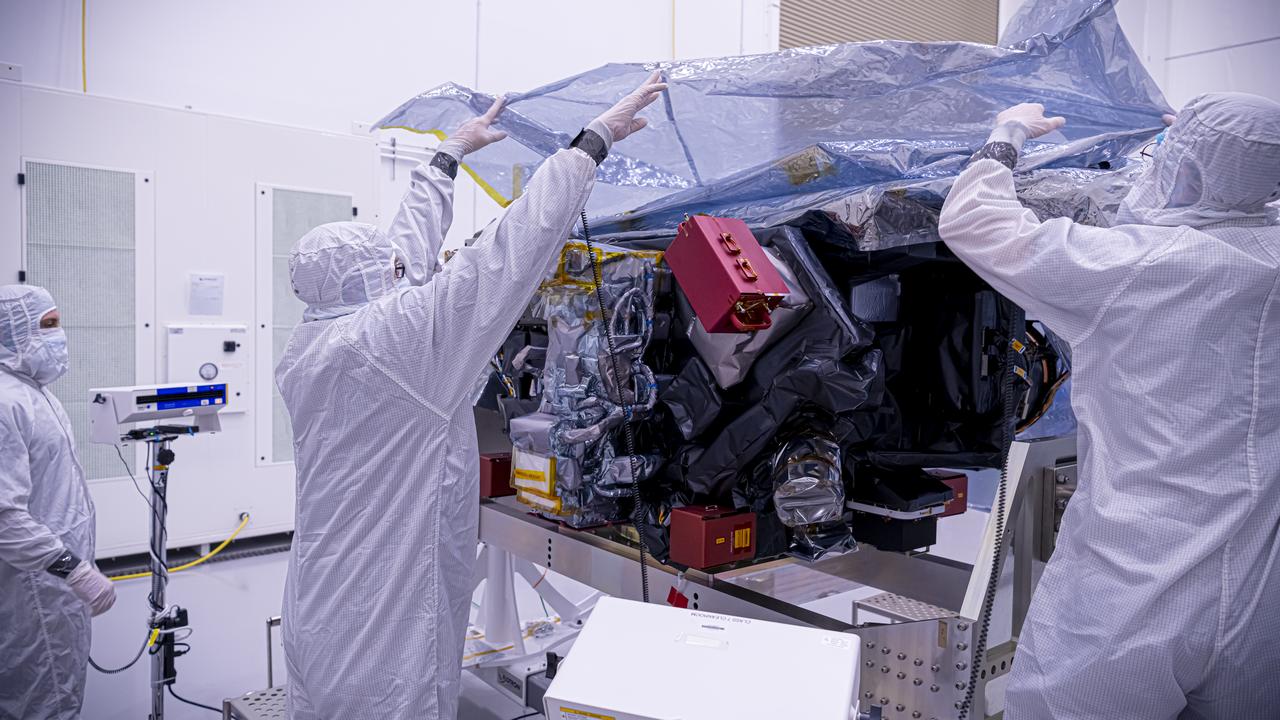
Technicians inspect the National Oceanic and Atmospheric Administration’s (NOAA) Space Weather Follow On–Lagrange 1 (SWFO-L1) Observatory on Thursday, July 24, 2025, following the arrival and unboxing of the observatory at the Astrotech Space Operations Facility near NASA’s Kennedy Space Center in Florida. The SWFO-L1 mission will monitor the Sun and near-Earth environment using a suite of instruments that provide real-time measurements of solar activity. The observatory will launch as a rideshare with NASA’s IMAP (Interstellar Mapping and Acceleration Probe) no earlier than September 2025.
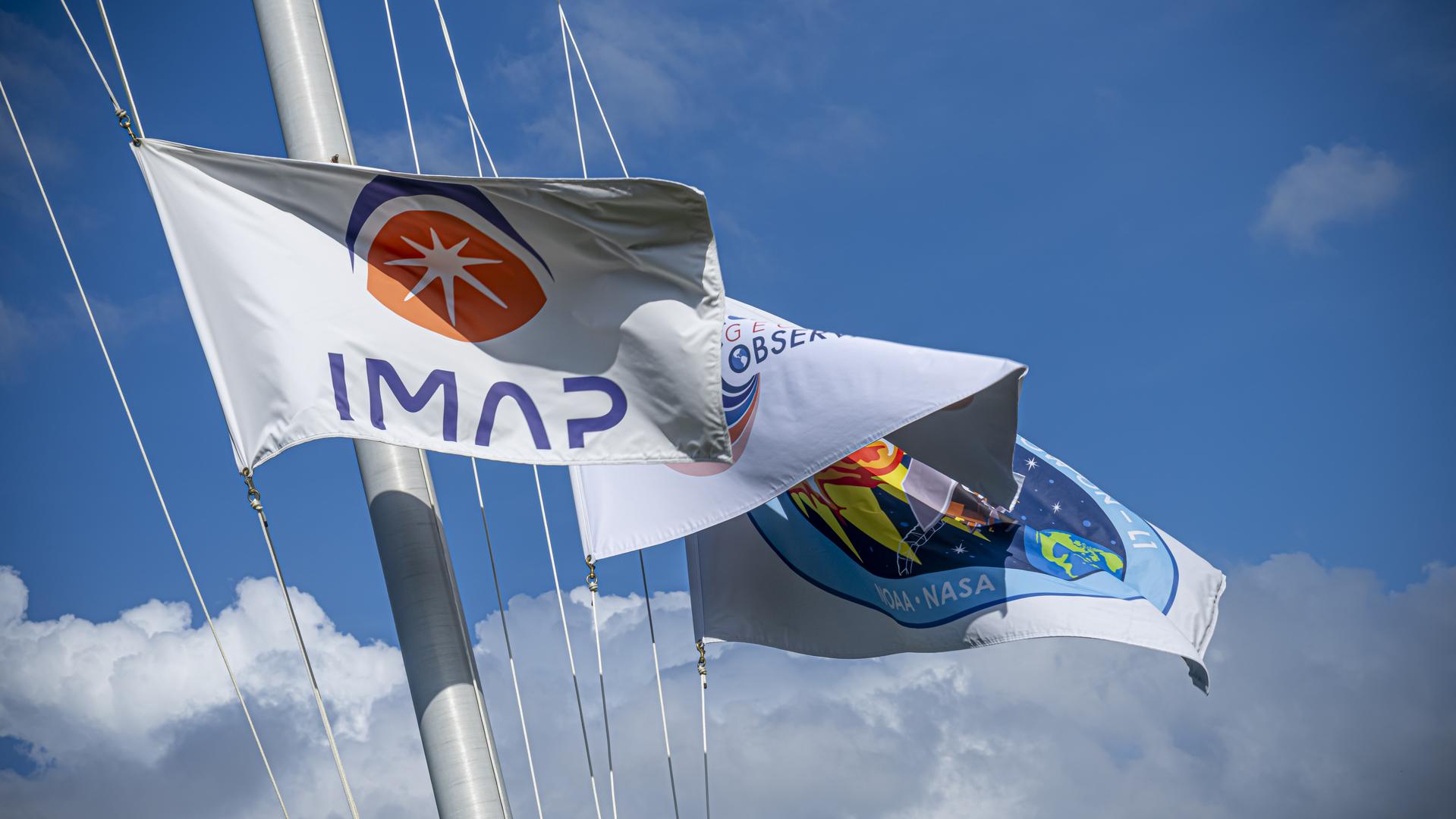
Flags for NASA’s IMAP (Interstellar Mapping and Acceleration Probe) mission and its two rideshares, NASA’s exosphere-studying Carruthers Geocorona Observatory and National Oceanic and Atmospheric Administration’s (NOAA) Space Weather Follow On–Lagrange 1 (SWFO-L1) spacecraft fly outside Astrotech Space Operations Facility near NASA’s Kennedy Space Center in Florida. Launch of the three missions on a SpaceX Falcon 9 rocket is targeted for no earlier than Tuesday, Sept. 23, 2025, from Launch Complex 39A at NASA Kennedy.
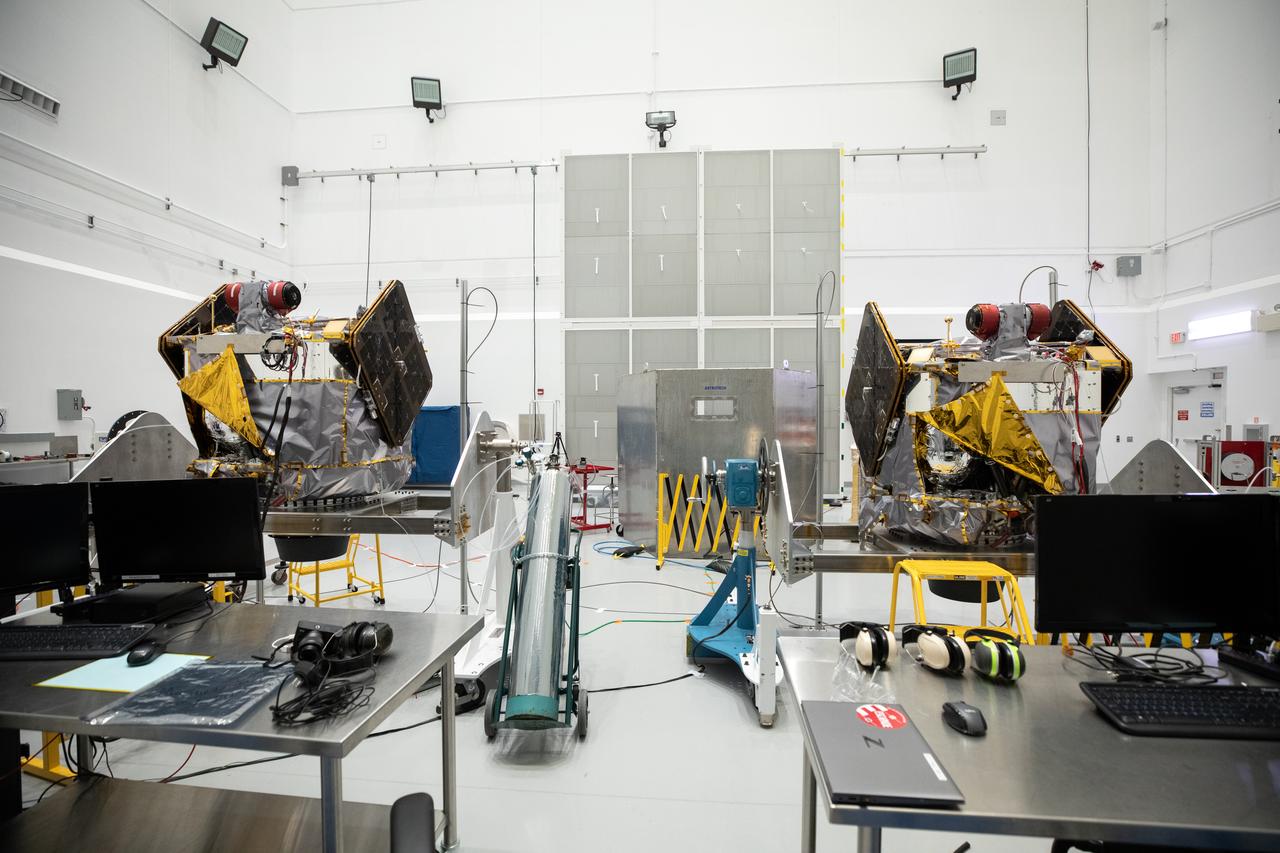
NASA’s ESCAPADE (Escape and Plasma Acceleration and Dynamics Explorers) identical dual spacecraft are inspected and processed on dollies in a high bay of the Astrotech Space Operations Facility near the agency’s Kennedy Space Center in Florida on Thursday, Aug. 22, 2024. As the first multi-spacecraft orbital science mission to Mars, ESCAPADE’s twin orbiters will take simultaneous observations from different locations around the planet and reveal the real-time response to space weather and how the Martian magnetosphere changes over time.
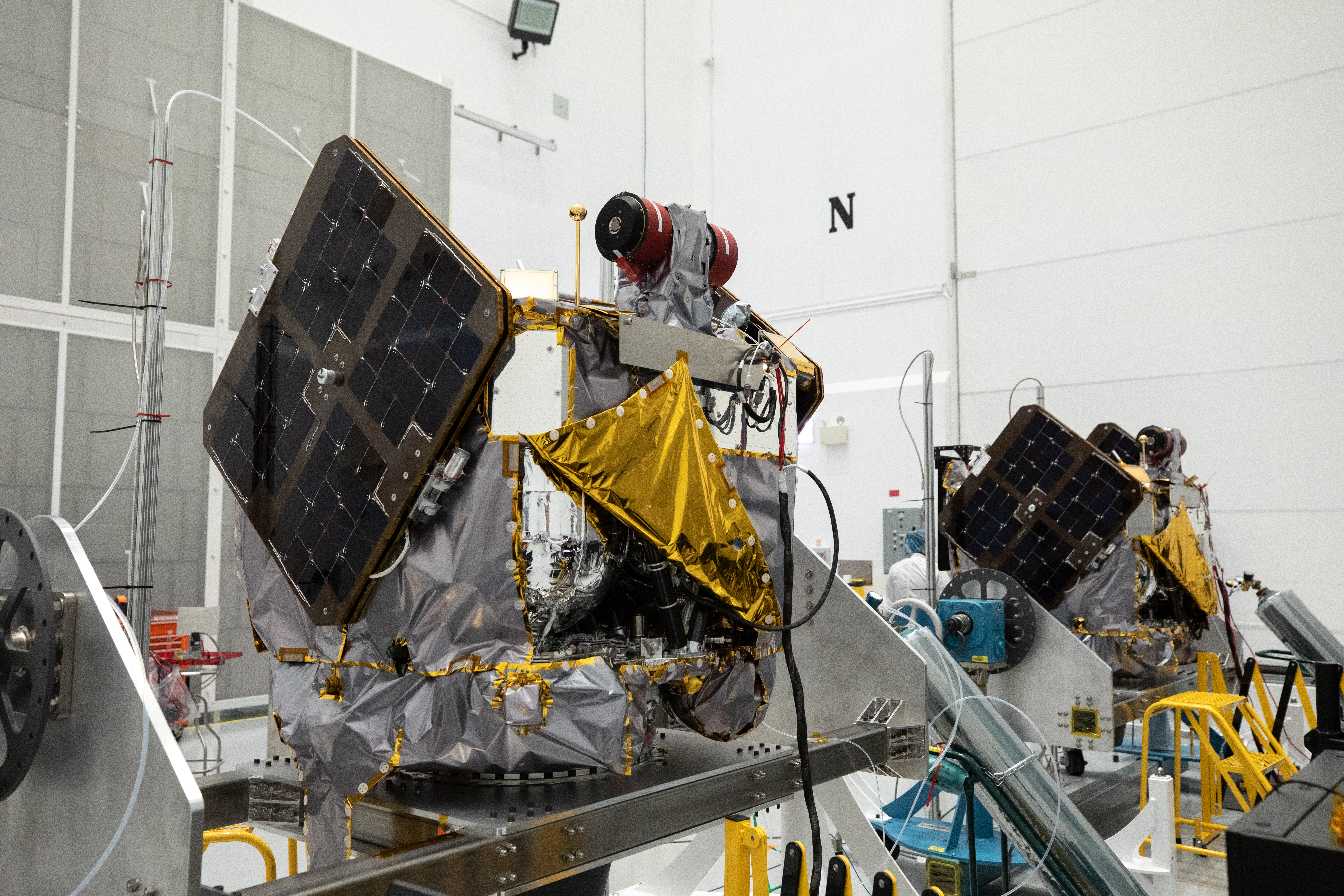
NASA’s ESCAPADE (Escape and Plasma Acceleration and Dynamics Explorers) identical dual spacecraft are inspected and processed on dollies in a high bay of the Astrotech Space Operations Facility near the agency’s Kennedy Space Center in Florida on Thursday, Aug. 22, 2024. As the first multi-spacecraft orbital science mission to Mars, ESCAPADE’s twin orbiters will take simultaneous observations from different locations around the planet and reveal the real-time response to space weather and how the Martian magnetosphere changes over time.
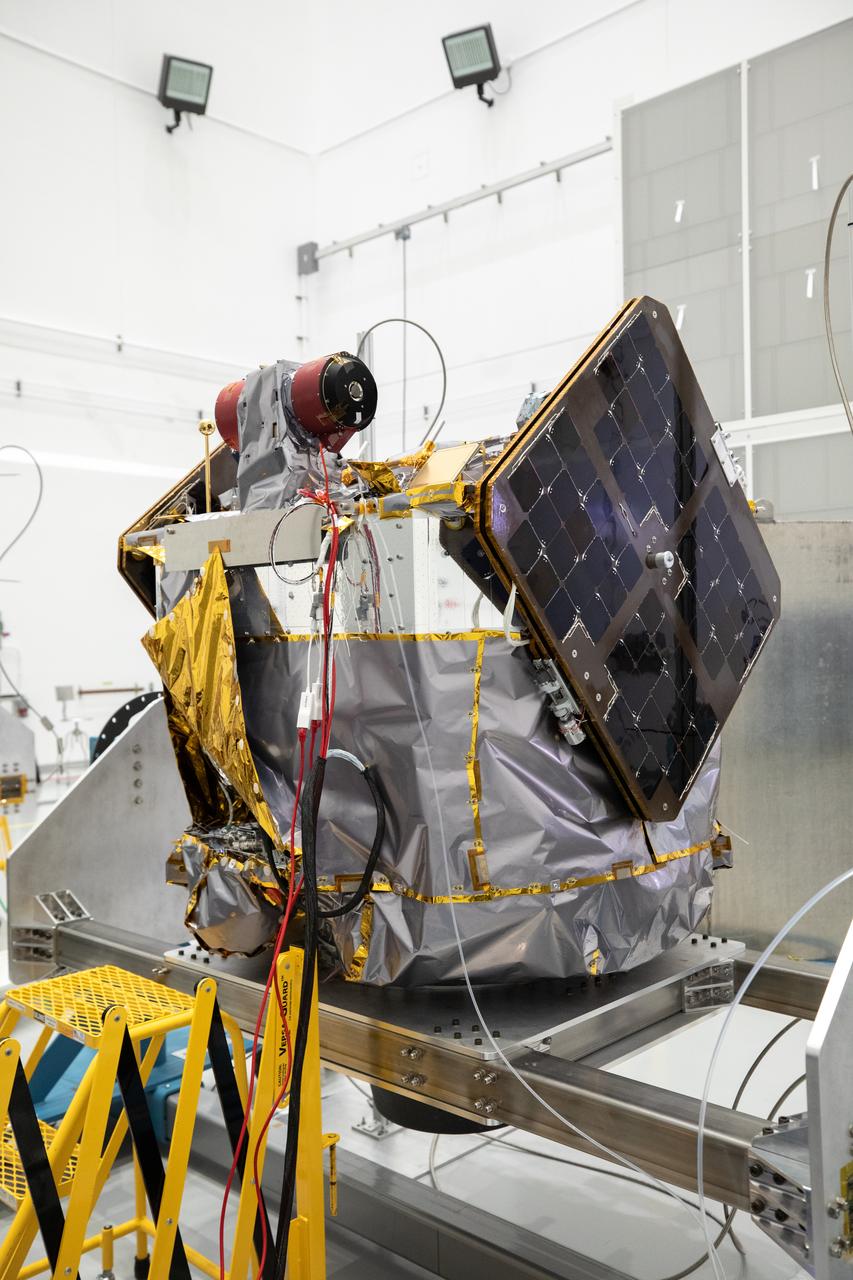
NASA’s ESCAPADE (Escape and Plasma Acceleration and Dynamics Explorers) identical dual spacecraft are inspected and processed on dollies in a high bay of the Astrotech Space Operations Facility near the agency’s Kennedy Space Center in Florida on Thursday, Aug. 22, 2024. As the first multi-spacecraft orbital science mission to Mars, ESCAPADE’s twin orbiters will take simultaneous observations from different locations around the planet and reveal the real-time response to space weather and how the Martian magnetosphere changes over time.
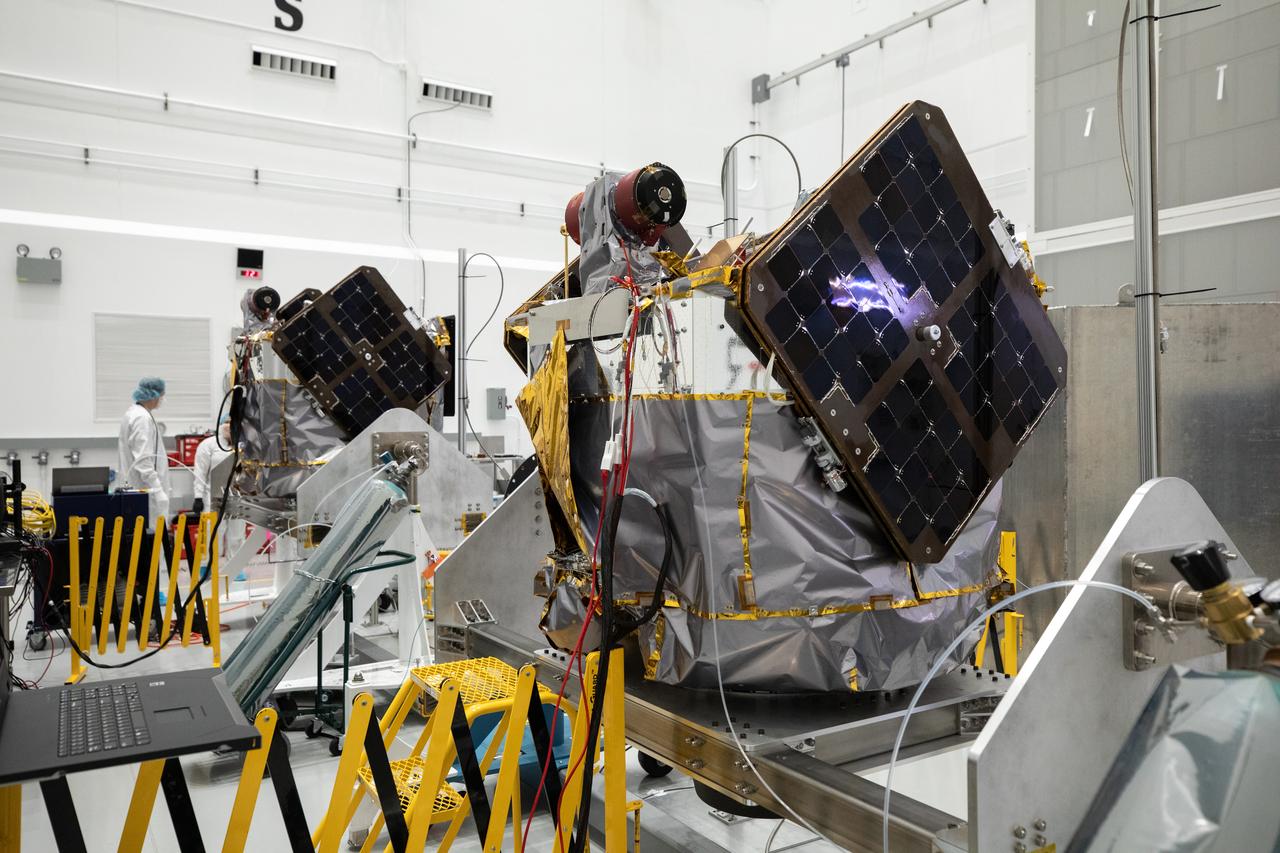
NASA’s ESCAPADE (Escape and Plasma Acceleration and Dynamics Explorers) identical dual spacecraft are inspected and processed on dollies in a high bay of the Astrotech Space Operations Facility near the agency’s Kennedy Space Center in Florida on Thursday, Aug. 22, 2024. As the first multi-spacecraft orbital science mission to Mars, ESCAPADE’s twin orbiters will take simultaneous observations from different locations around the planet and reveal the real-time response to space weather and how the Martian magnetosphere changes over time.

NASA’s ESCAPADE (Escape and Plasma Acceleration and Dynamics Explorers) identical dual spacecraft are inspected and processed on dollies in a high bay of the Astrotech Space Operations Facility near the agency’s Kennedy Space Center in Florida on Thursday, Aug. 22, 2024. As the first multi-spacecraft orbital science mission to Mars, ESCAPADE’s twin orbiters will take simultaneous observations from different locations around the planet and reveal the real-time response to space weather and how the Martian magnetosphere changes over time.
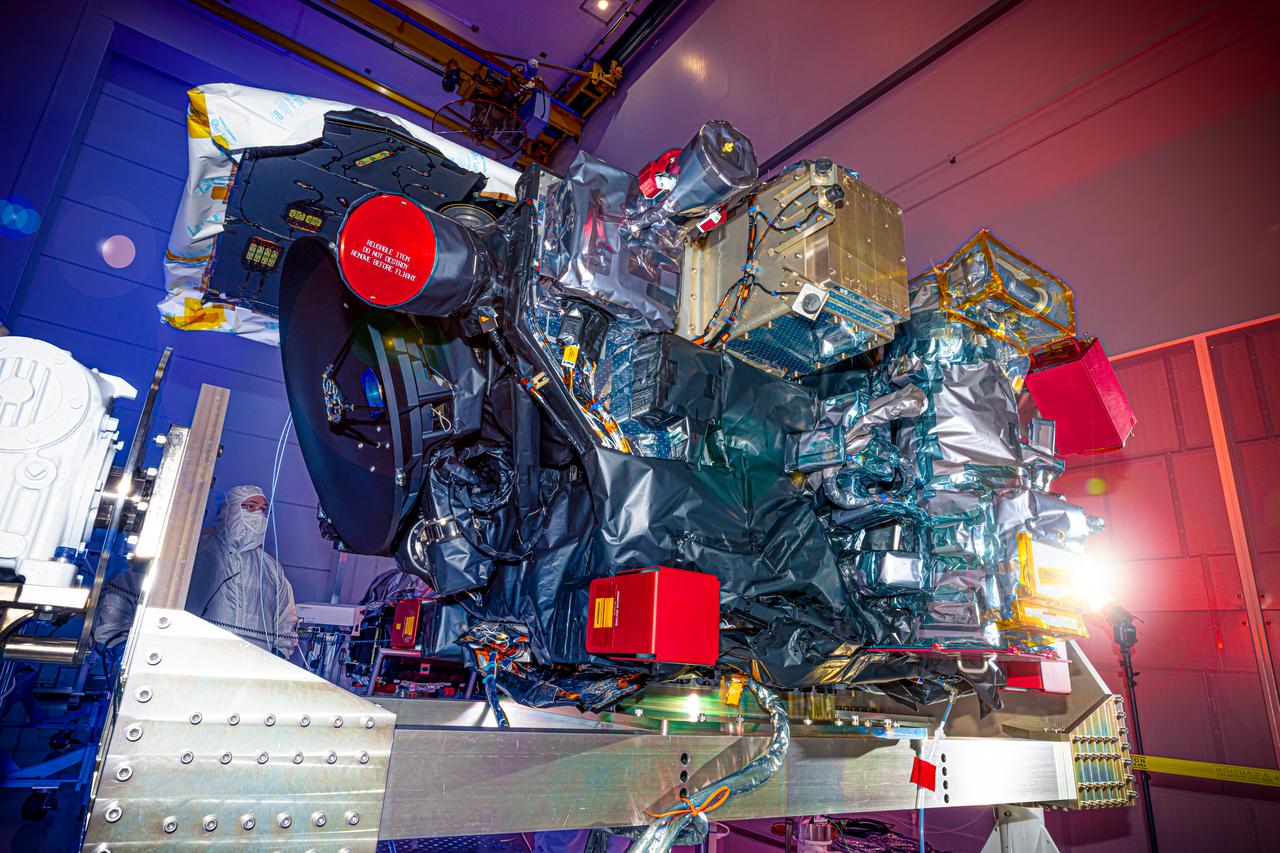
Technicians inspect the National Oceanic and Atmospheric Administration’s (NOAA) Space Weather Follow On–Lagrange 1 (SWFO-L1) Observatory on Thursday, July 24, 2025, following the arrival and unboxing of the observatory at the Astrotech Space Operations Facility near NASA’s Kennedy Space Center in Florida. The SWFO-L1 mission will monitor the Sun and near-Earth environment using a suite of instruments that provide real-time measurements of solar activity. The observatory will launch as a rideshare with NASA’s IMAP (Interstellar Mapping and Acceleration Probe) no earlier than September 2025.

Technicians inspect the National Oceanic and Atmospheric Administration’s (NOAA) Space Weather Follow On–Lagrange 1 (SWFO-L1) Observatory on Thursday, July 24, 2025, following the arrival and unboxing of the observatory at the Astrotech Space Operations Facility near NASA’s Kennedy Space Center in Florida. The SWFO-L1 mission will monitor the Sun and near-Earth environment using a suite of instruments that provide real-time measurements of solar activity. The observatory will launch as a rideshare with NASA’s IMAP (Interstellar Mapping and Acceleration Probe) no earlier than September 2025.
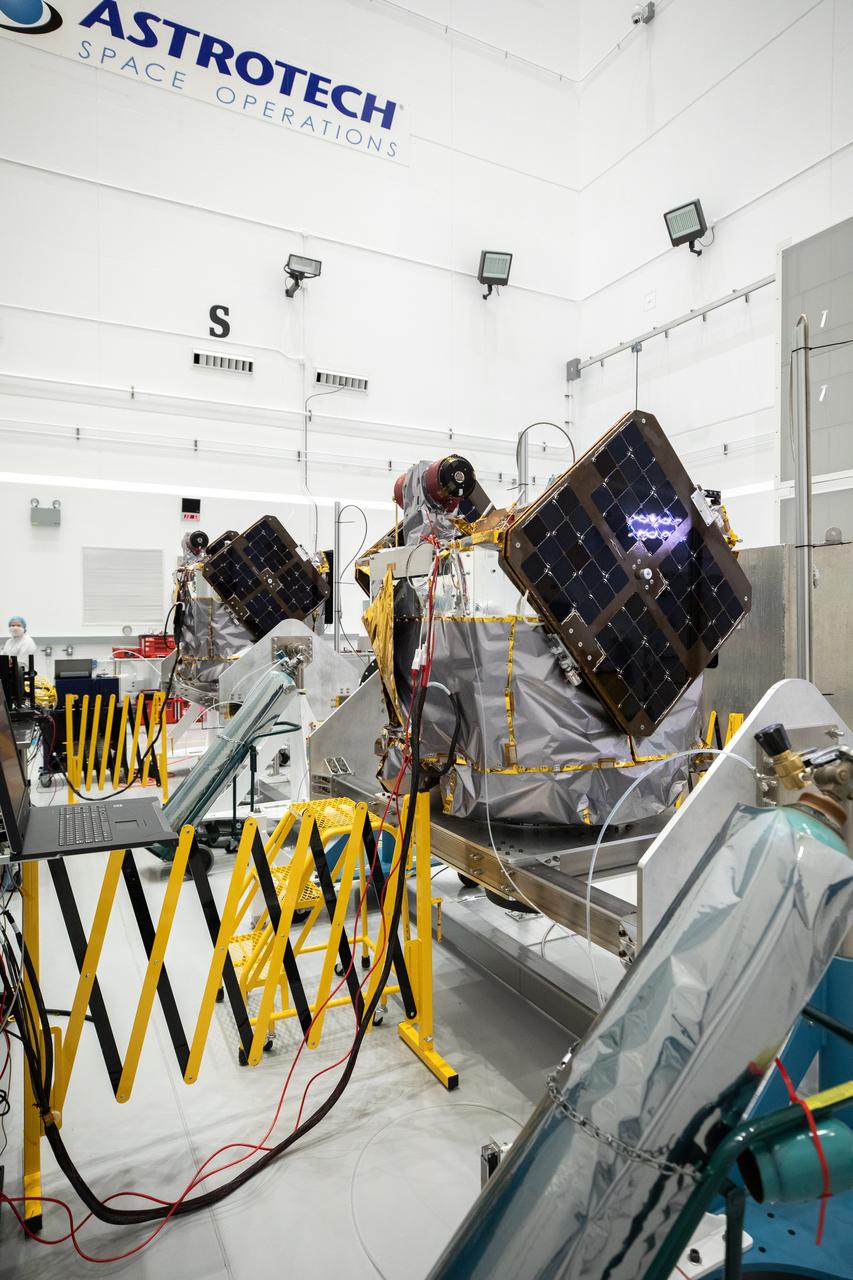
NASA’s ESCAPADE (Escape and Plasma Acceleration and Dynamics Explorers) identical dual spacecraft are inspected and processed on dollies in a high bay of the Astrotech Space Operations Facility near the agency’s Kennedy Space Center in Florida on Thursday, Aug. 22, 2024. As the first multi-spacecraft orbital science mission to Mars, ESCAPADE’s twin orbiters will take simultaneous observations from different locations around the planet and reveal the real-time response to space weather and how the Martian magnetosphere changes over time.
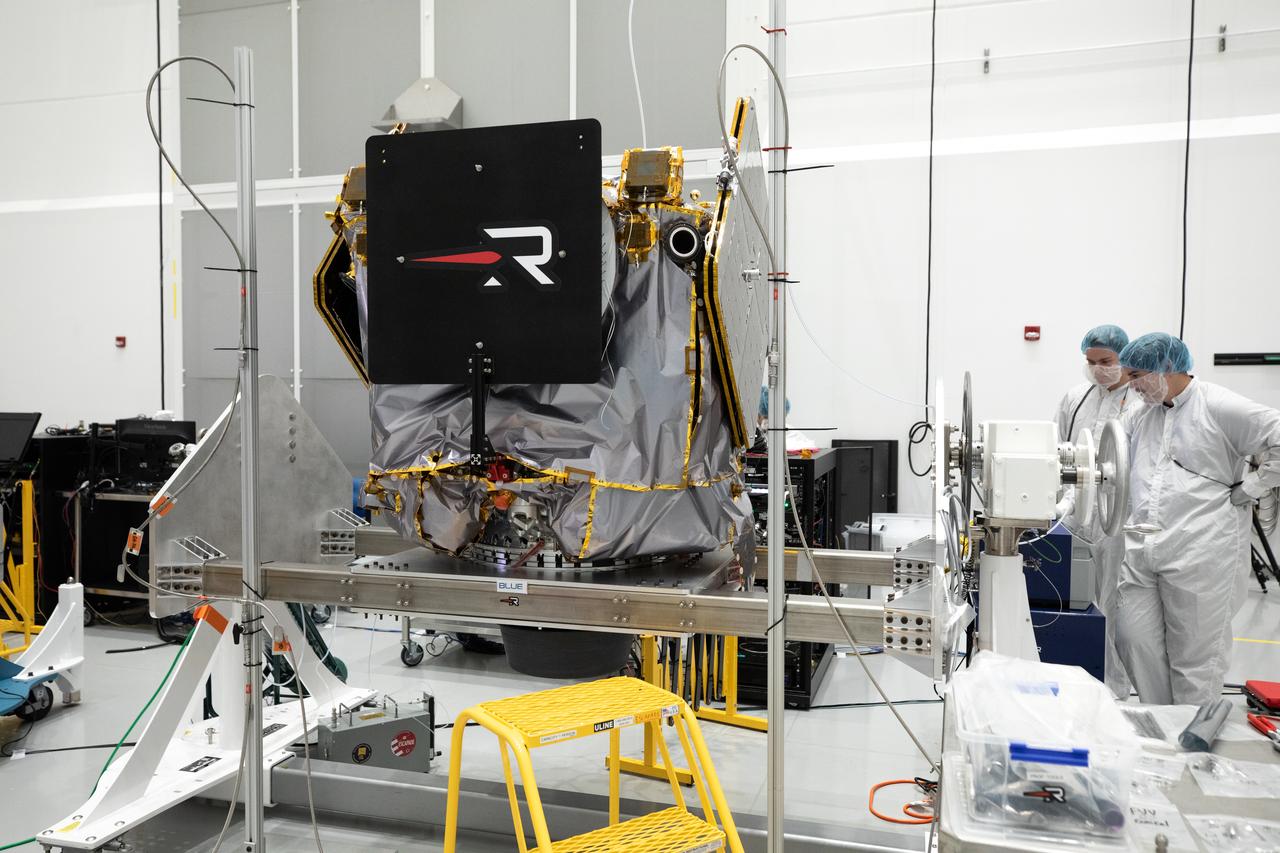
NASA’s ESCAPADE (Escape and Plasma Acceleration and Dynamics Explorers) identical dual spacecraft are inspected and processed on dollies in a high bay of the Astrotech Space Operations Facility near the agency’s Kennedy Space Center in Florida on Thursday, Aug. 22, 2024. As the first multi-spacecraft orbital science mission to Mars, ESCAPADE’s twin orbiters will take simultaneous observations from different locations around the planet and reveal the real-time response to space weather and how the Martian magnetosphere changes over time.
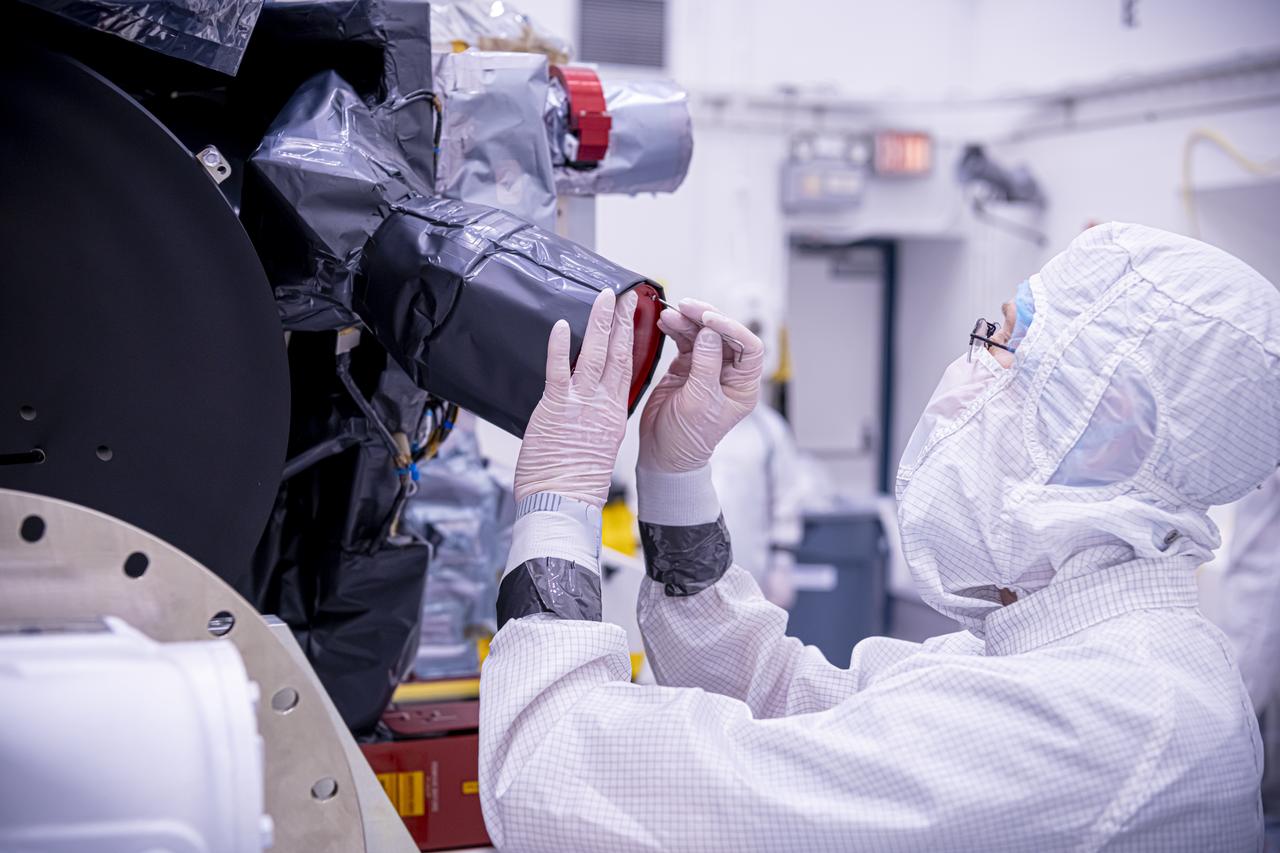
Technicians inspect the National Oceanic and Atmospheric Administration’s (NOAA) Space Weather Follow On–Lagrange 1 (SWFO-L1) Observatory on Thursday, July 24, 2025, following the arrival and unboxing of the observatory at the Astrotech Space Operations Facility near NASA’s Kennedy Space Center in Florida. The SWFO-L1 mission will monitor the Sun and near-Earth environment using a suite of instruments that provide real-time measurements of solar activity. The observatory will launch as a rideshare with NASA’s IMAP (Interstellar Mapping and Acceleration Probe) no earlier than September 2025.
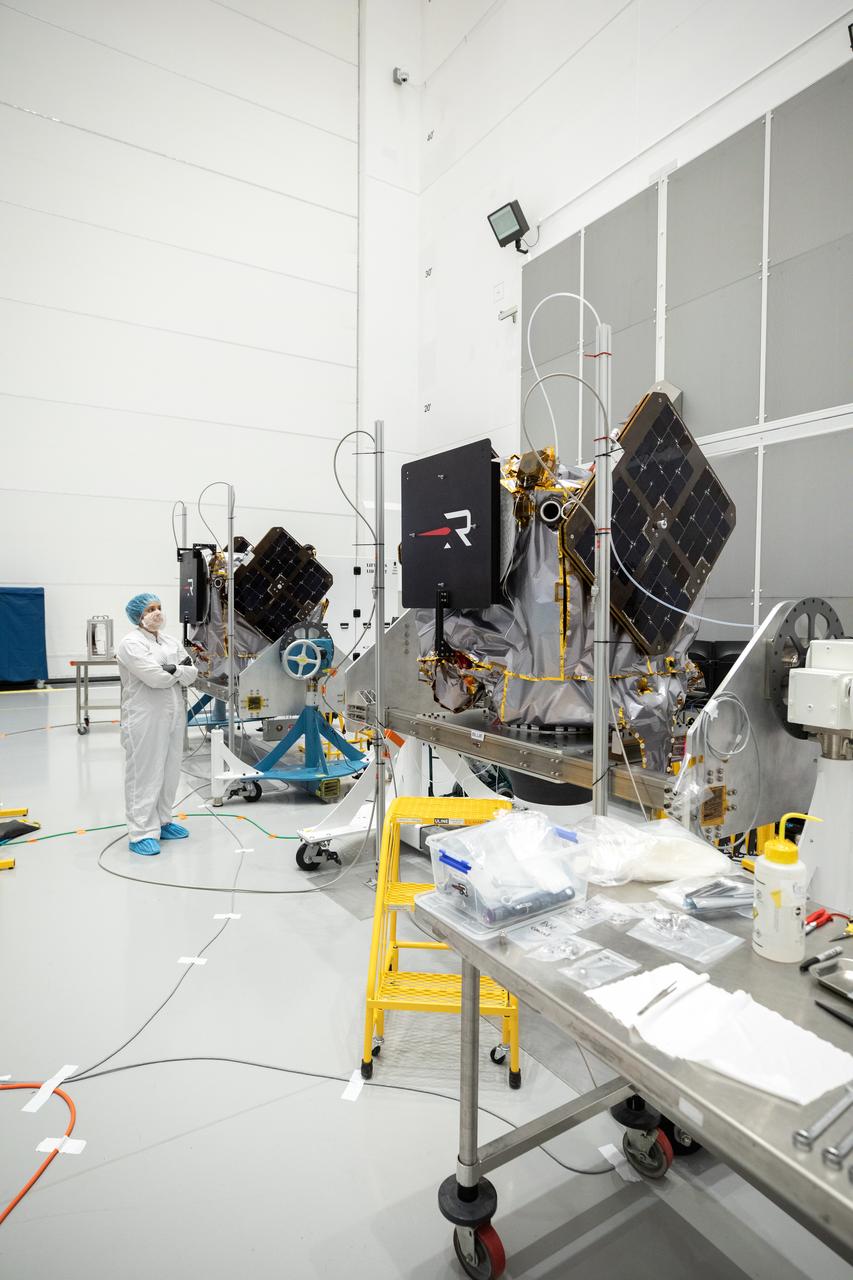
NASA’s ESCAPADE (Escape and Plasma Acceleration and Dynamics Explorers) identical dual spacecraft are inspected and processed on dollies in a high bay of the Astrotech Space Operations Facility near the agency’s Kennedy Space Center in Florida on Thursday, Aug. 22, 2024. As the first multi-spacecraft orbital science mission to Mars, ESCAPADE’s twin orbiters will take simultaneous observations from different locations around the planet and reveal the real-time response to space weather and how the Martian magnetosphere changes over time.
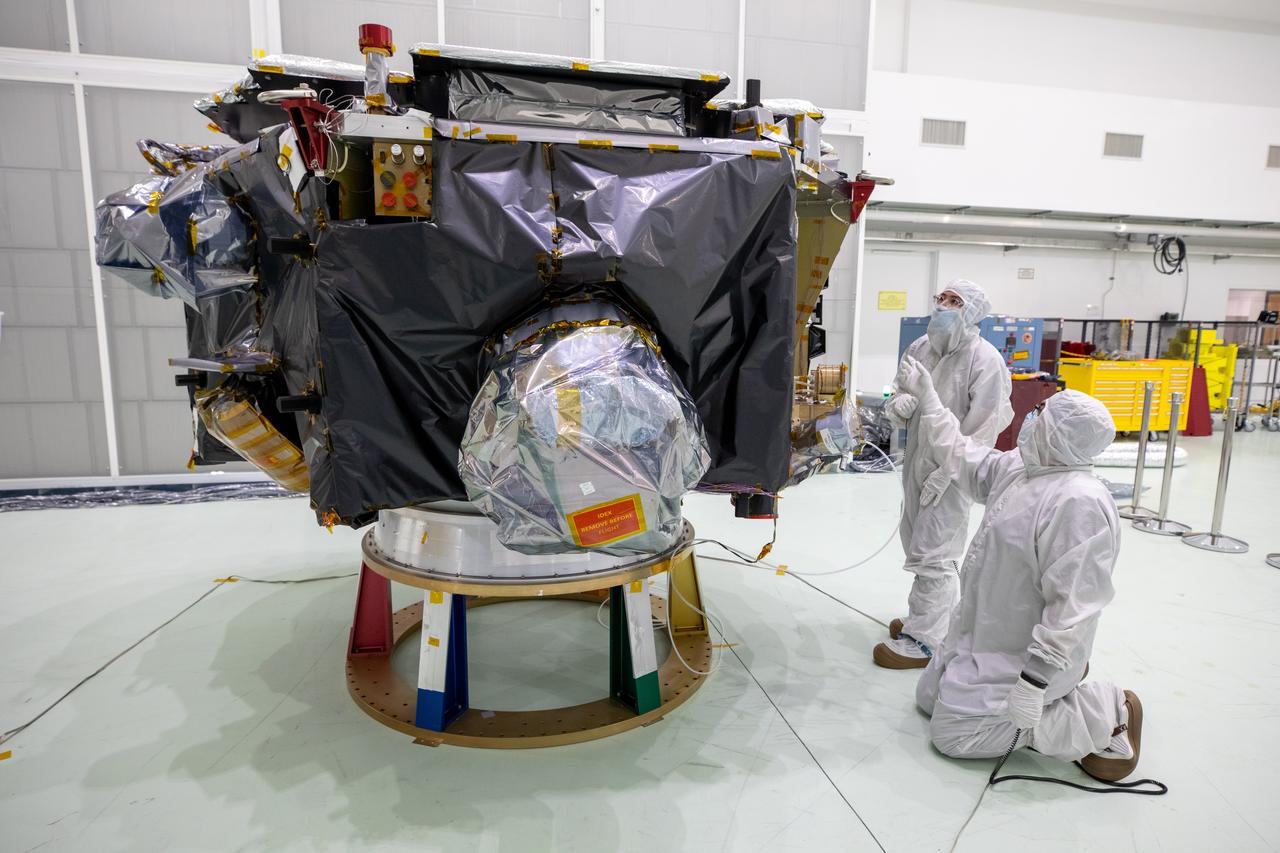
Technicians remove protective coverings form NASA’s IMAP (Interstellar Mapping and Acceleration Probe) inside the high bay at the Astrotech Space Operations Facility near the agency’s Kennedy Space Center in Florida on Thursday, May 29,2025. The observatory will study how the Sun shapes the boundaries of the heliosphere, the bubble protecting around our solar system, and is targeted for launch this fall aboard a SpaceX Falcon 9 rocket from Launch Complex 39A at NASA Kennedy.
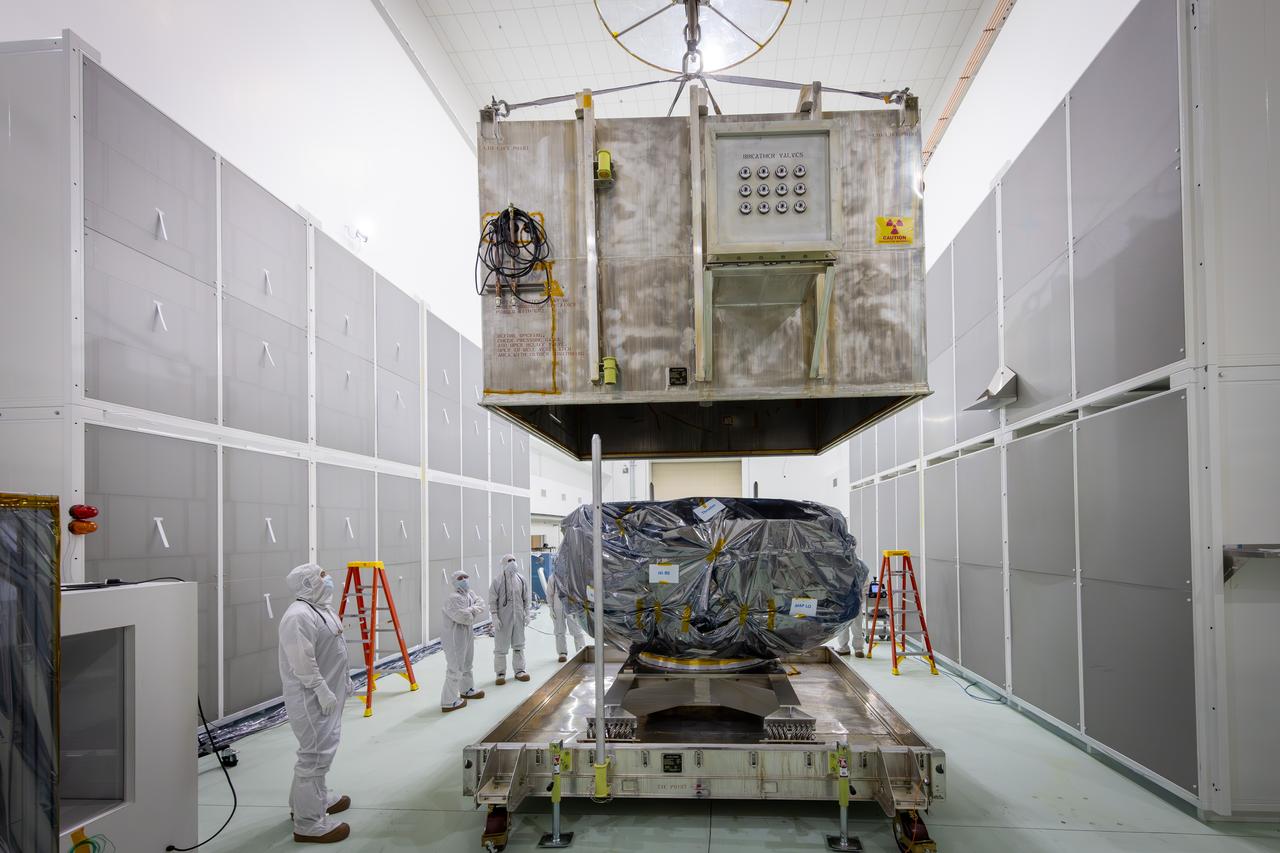
Technicians remove NASA’s IMAP (Interstellar Mapping and Acceleration Probe) spacecraft from its shipping container inside the high bay at the Astrotech Space Operations Facility near the agency’s Kennedy Space Center in Florida on Thursday, May 29, 2025. The observatory will study how the Sun shapes the boundaries of the heliosphere, the bubble protecting around our solar system, and is targeted for launch this fall aboard a SpaceX Falcon 9 rocket from Launch Complex 39A at NASA Kennedy.
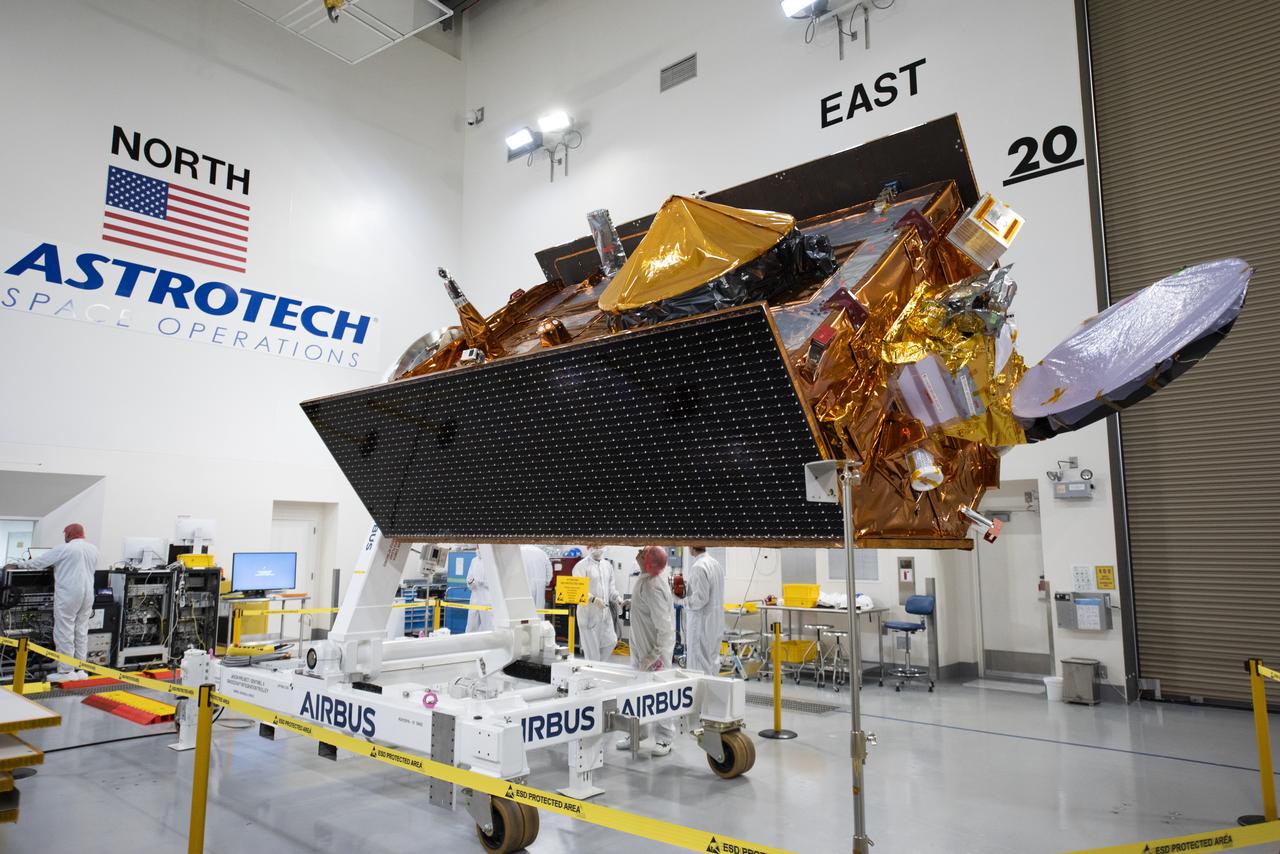
Technicians transfer the Sentinel-6B spacecraft from the NASA hangar to the Astrotech Space Operations payload processing facility at Vandenberg Space Force Base in California on Thursday, Sept. 25, 2025. Sentinel-6B will undergo detailed inspections, tests, and fueling in a cleanroom as it prepares for a November launch on a SpaceX Falcon 9 rocket. The spacecraft is designed to measure sea levels down to roughly an inch for about 90% of the world’s oceans. Sentinel-6B also will extend the record of atmospheric temperatures, begun by Sentinel-6 Michael Freilich, out to a decade.
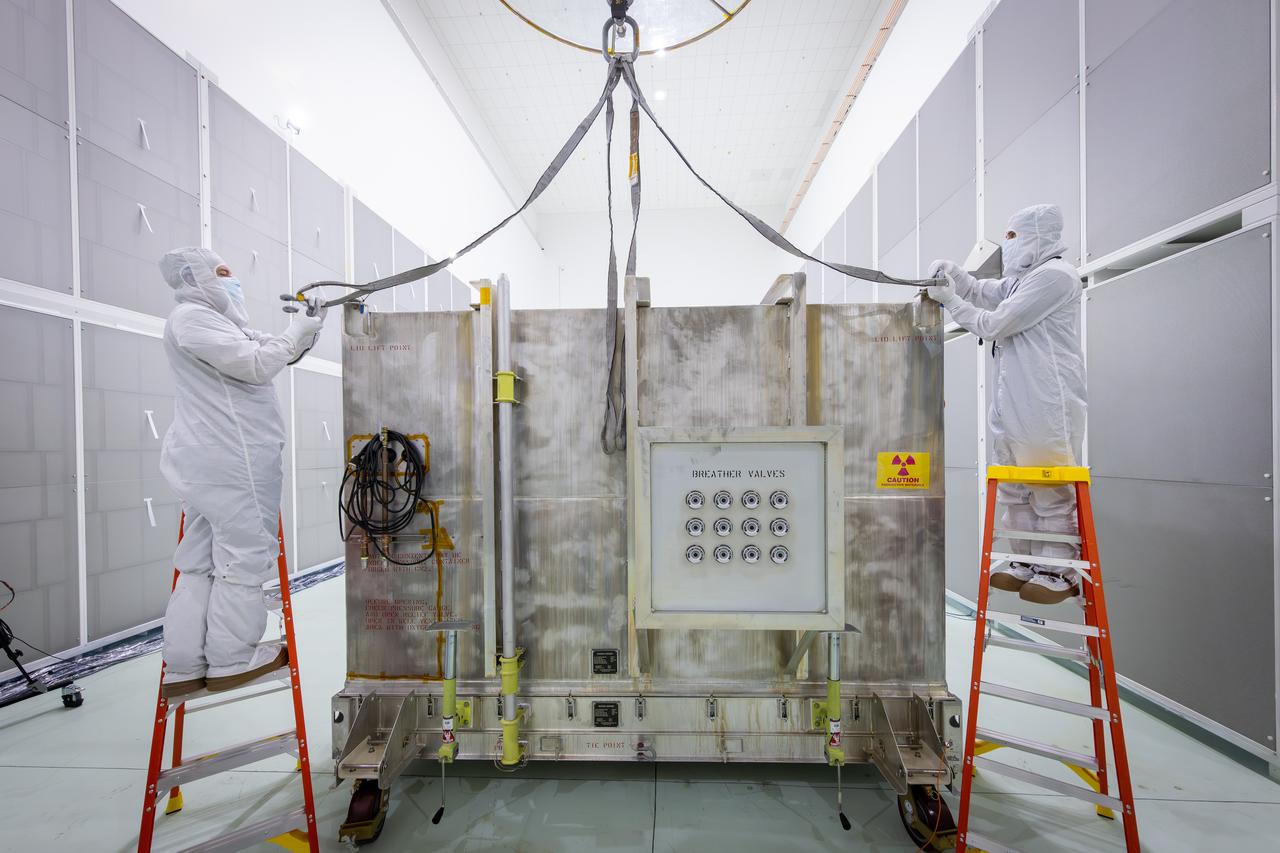
Technicians remove NASA’s IMAP (Interstellar Mapping and Acceleration Probe) spacecraft from its shipping container inside the high bay at the Astrotech Space Operations Facility near the agency’s Kennedy Space Center in Florida on Thursday, May 29, 2025. The observatory will study how the Sun shapes the boundaries of the heliosphere, the bubble protecting around our solar system, and is targeted for launch this fall aboard a SpaceX Falcon 9 rocket from Launch Complex 39A at NASA Kennedy.
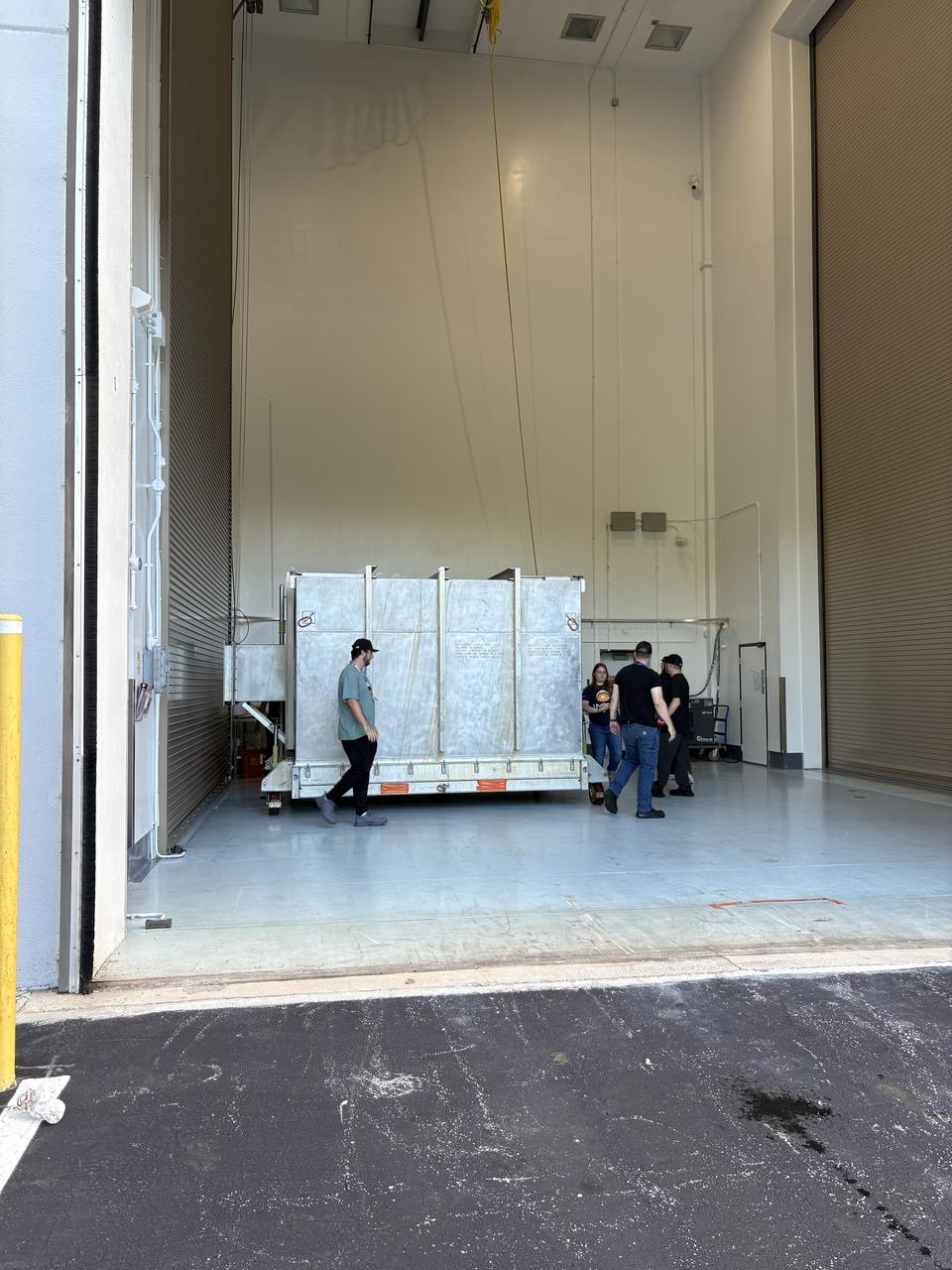
NASA’s IMAP (Interstellar Mapping and Acceleration Probe) observatory arrives at Building 2 where technicians will load 317 pounds (or 144 kilograms) of hydrazine into three tanks into the spacecraft at the Astrotech Space Operations Facility near NASA’s Kennedy Space Center in Florida on Tuesday, Aug. 12, 2025. IMAP will explore and map the boundaries of the heliosphere — a huge bubble created by the Sun’s wind that encapsulates our entire solar system — and study how the heliosphere interacts with the local galactic neighborhood beyond.
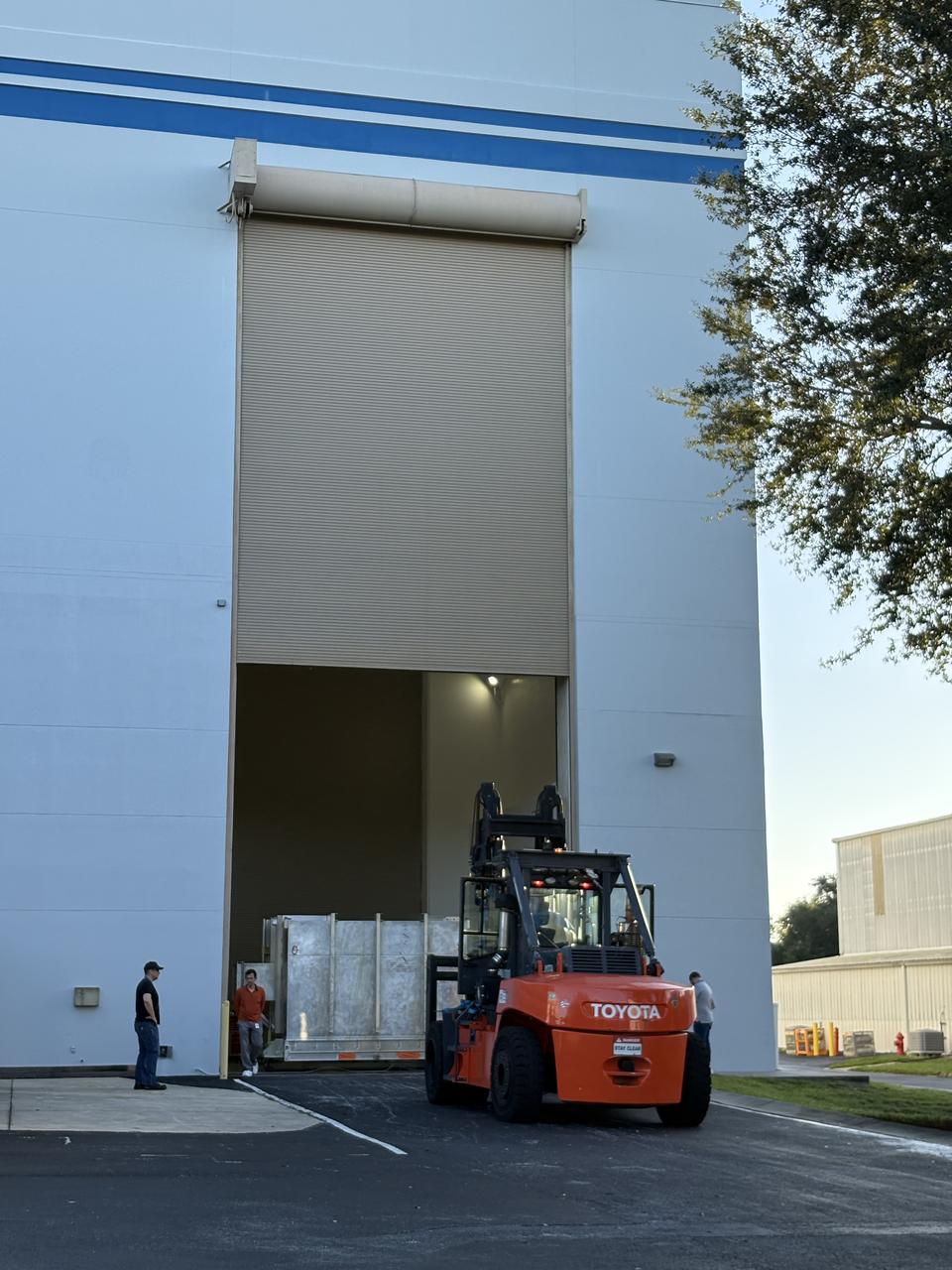
Technicians prepare to transport NASA’s IMAP (Interstellar Mapping and Acceleration Probe) observatory to Building 2 where they will load 317 pounds (or 144 kilograms) of hydrazine into three tanks into the spacecraft at the Astrotech Space Operations Facility near NASA’s Kennedy Space Center in Florida on Tuesday, Aug. 12, 2025. IMAP will explore and map the boundaries of the heliosphere — a huge bubble created by the Sun’s wind that encapsulates our entire solar system — and study how the heliosphere interacts with the local galactic neighborhood beyond.
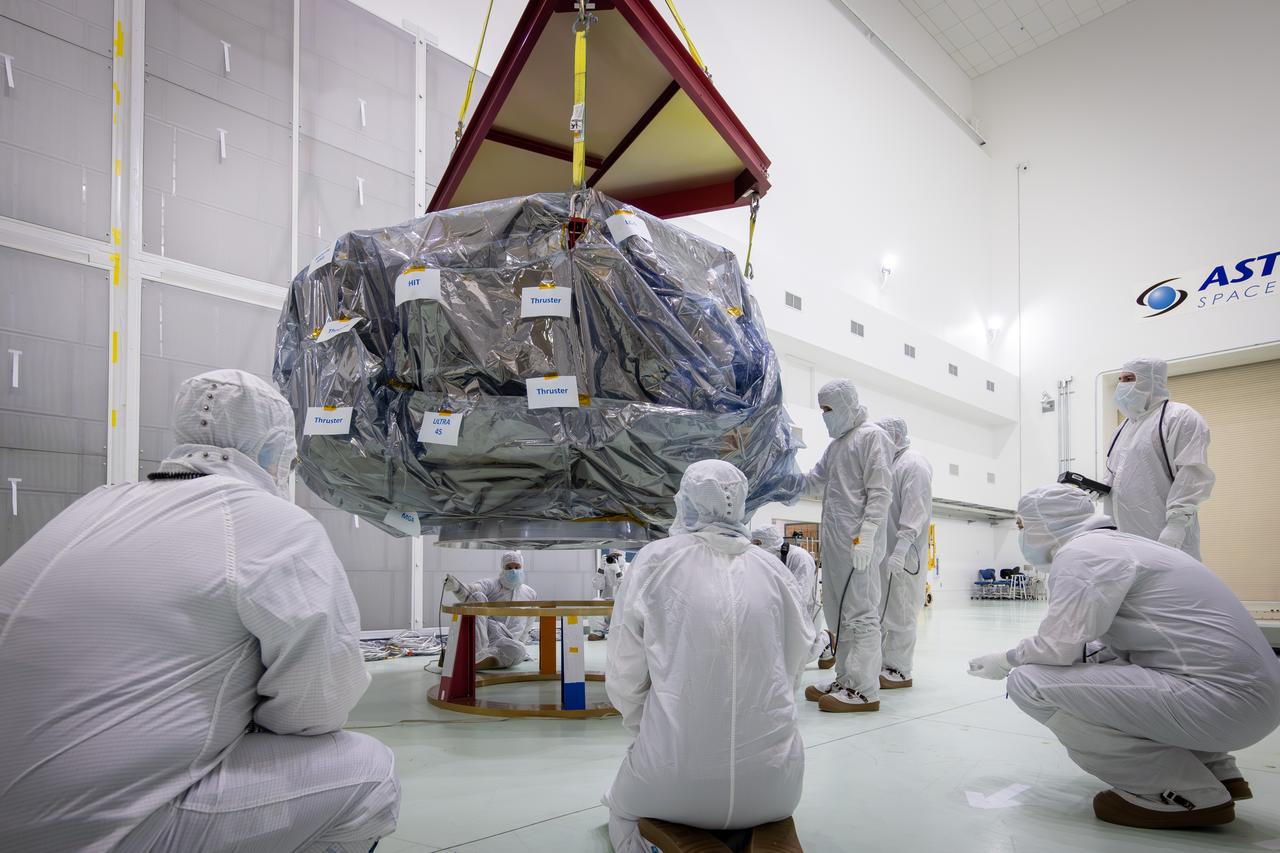
Technicians lift NASA’s IMAP (Interstellar Mapping and Acceleration Probe) spacecraft onto a work stand inside the high bay at the Astrotech Space Operations Facility near the agency’s Kennedy Space Center in Florida on Thursday, May 29, 2025. The observatory will study how the Sun shapes the boundaries of the heliosphere, the bubble protecting around our solar system, and is targeted for launch this fall aboard a SpaceX Falcon 9 rocket from Launch Complex 39A at NASA Kennedy.
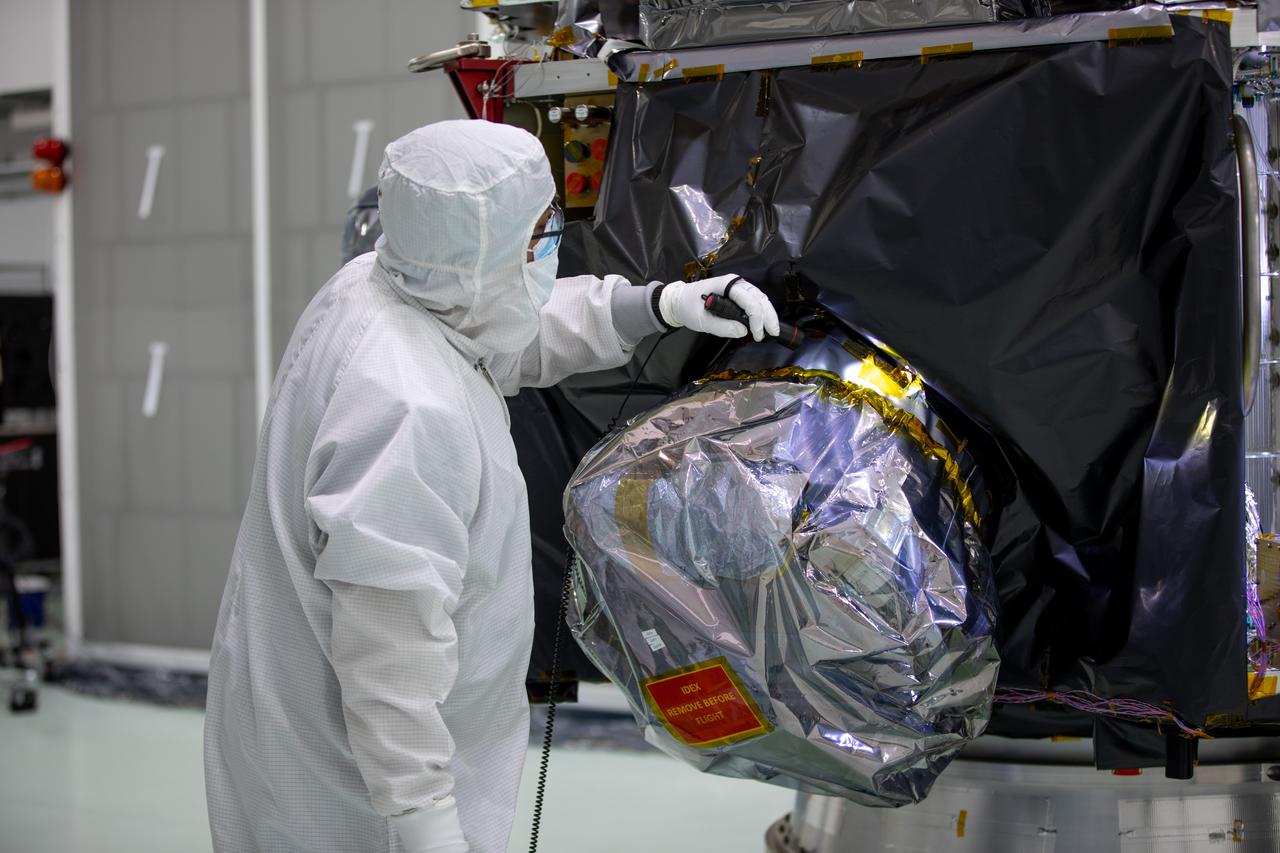
Technicians remove protective coverings form NASA’s IMAP (Interstellar Mapping and Acceleration Probe) inside the high bay at the Astrotech Space Operations Facility near the agency’s Kennedy Space Center in Florida on Thursday, May 29,2025. The observatory will study how the Sun shapes the boundaries of the heliosphere, the bubble protecting around our solar system, and is targeted for launch this fall aboard a SpaceX Falcon 9 rocket from Launch Complex 39A at NASA Kennedy.
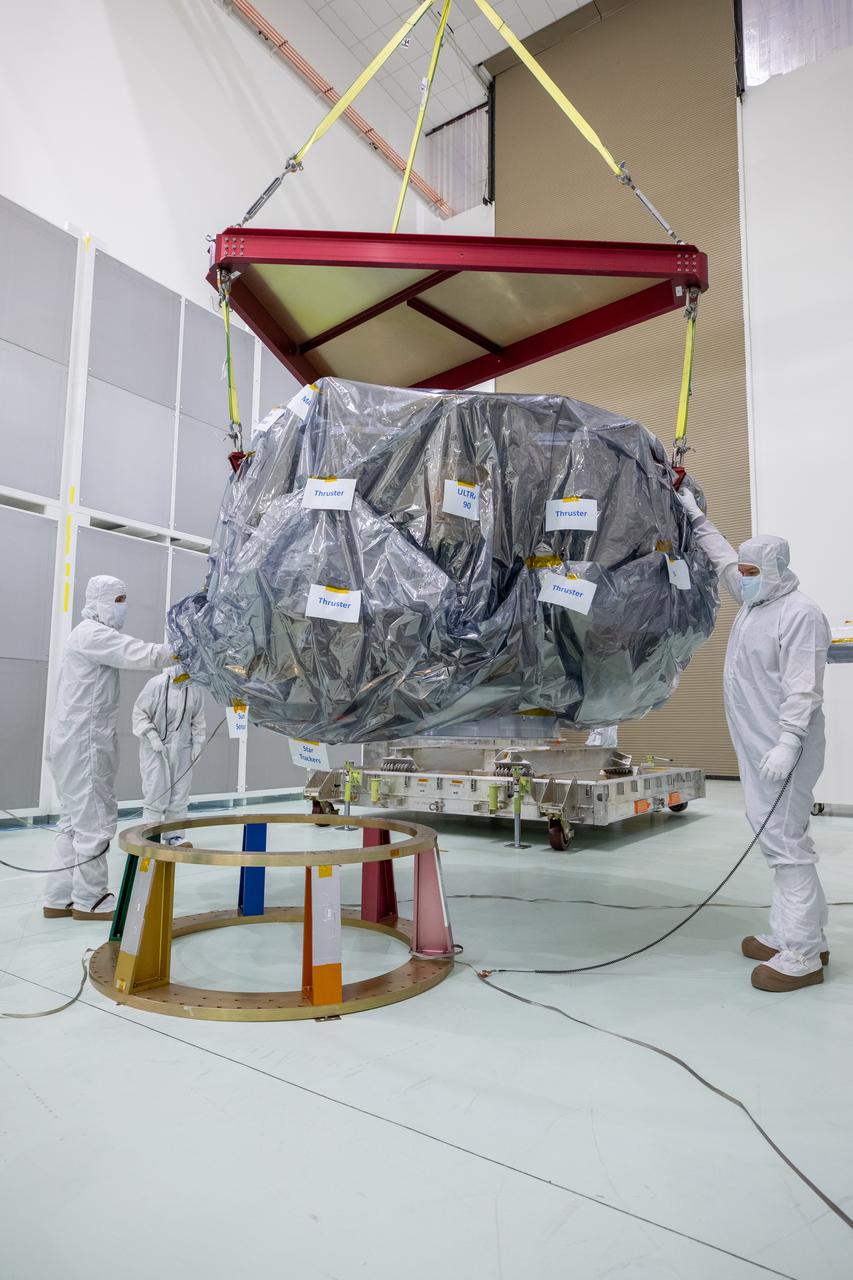
Technicians lift NASA’s IMAP (Interstellar Mapping and Acceleration Probe) spacecraft onto a work stand inside the high bay at the Astrotech Space Operations Facility near the agency’s Kennedy Space Center in Florida on Thursday, May 29, 2025. The observatory will study how the Sun shapes the boundaries of the heliosphere, the bubble protecting around our solar system, and is targeted for launch this fall aboard a SpaceX Falcon 9 rocket from Launch Complex 39A at NASA Kennedy.
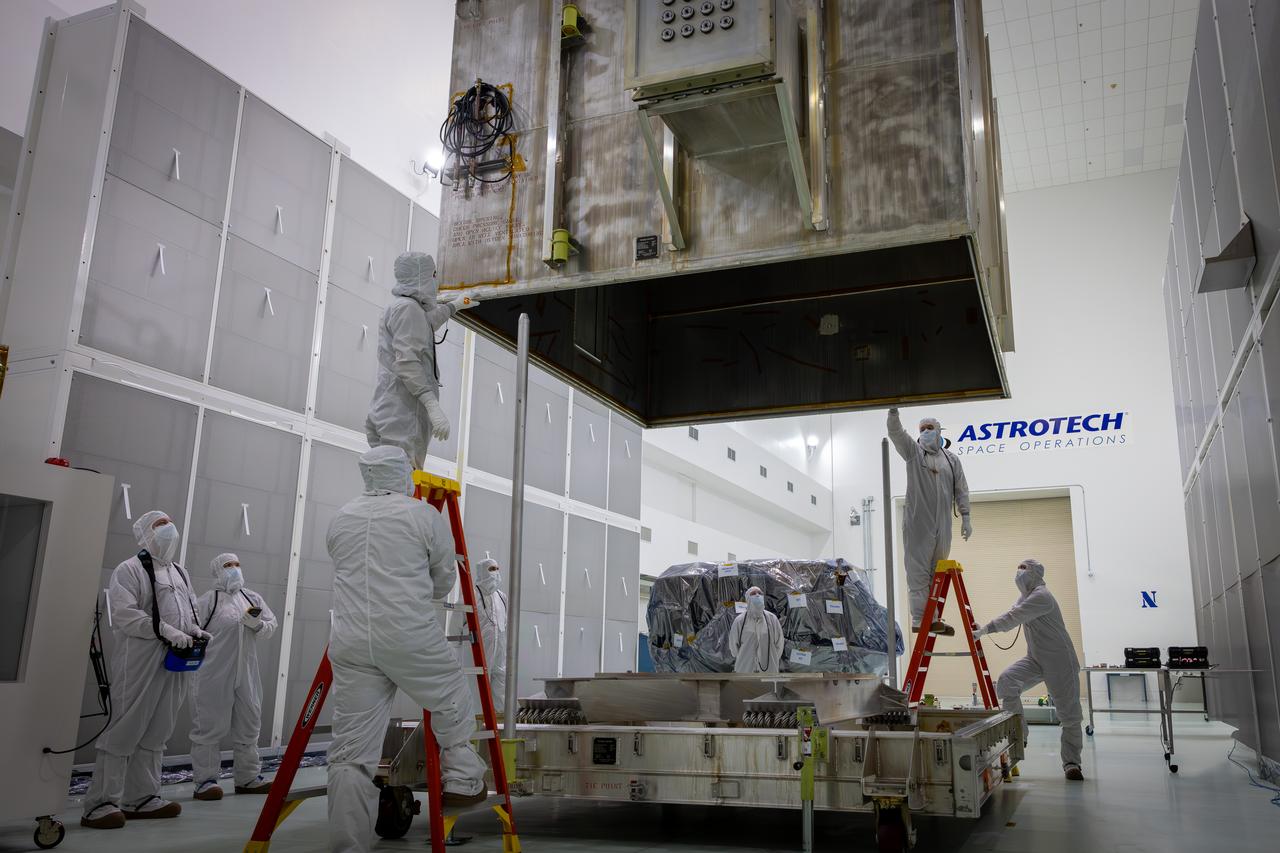
Technicians remove NASA’s IMAP (Interstellar Mapping and Acceleration Probe) spacecraft from its shipping container inside the high bay at the Astrotech Space Operations Facility near the agency’s Kennedy Space Center in Florida on Thursday, May 29, 2025. The observatory will study how the Sun shapes the boundaries of the heliosphere, the bubble protecting around our solar system, and is targeted for launch this fall aboard a SpaceX Falcon 9 rocket from Launch Complex 39A at NASA Kennedy.