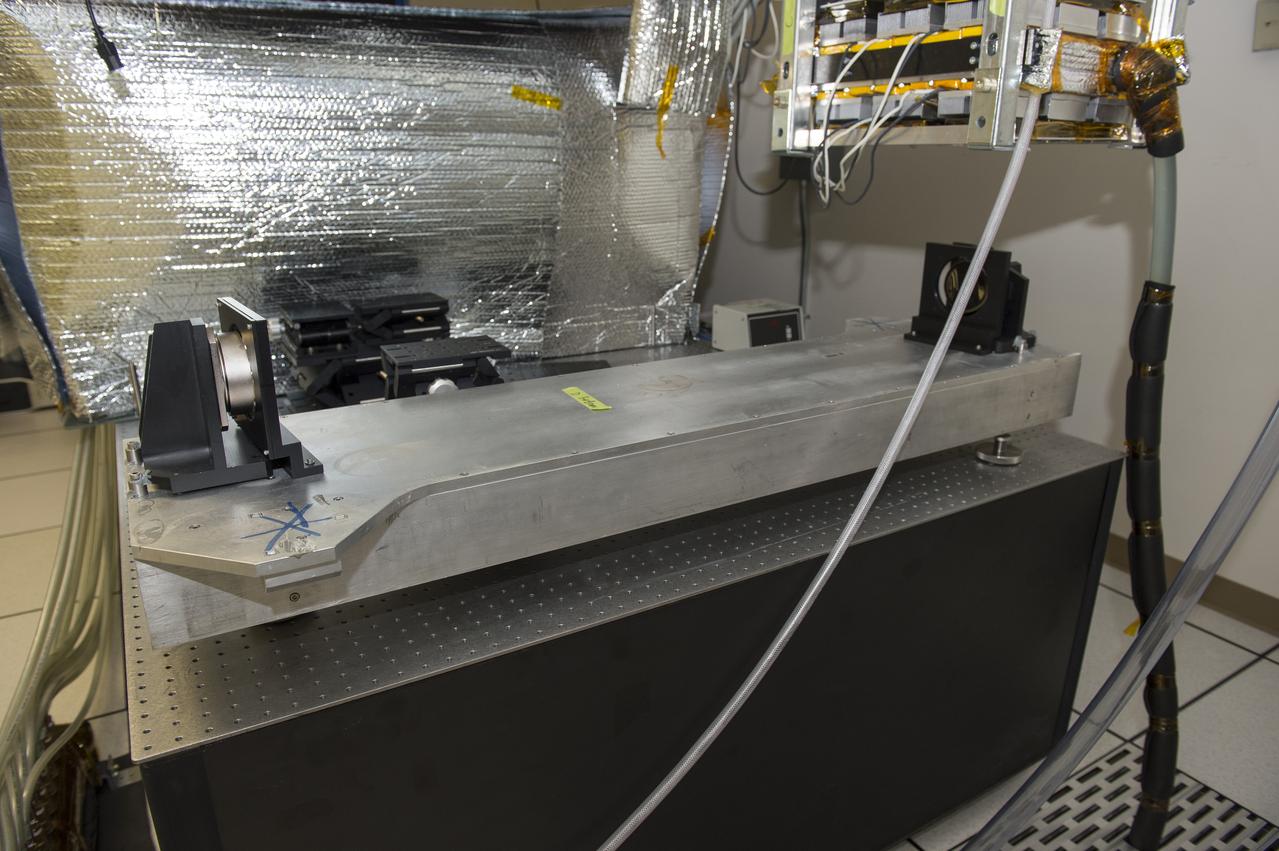
Next Generation PIAA mirrors were made by Tinsley and are inside the enclosure. Shows dummy set-up uning early PIAA mirors made by Axsys on loan to Ames from JPL.
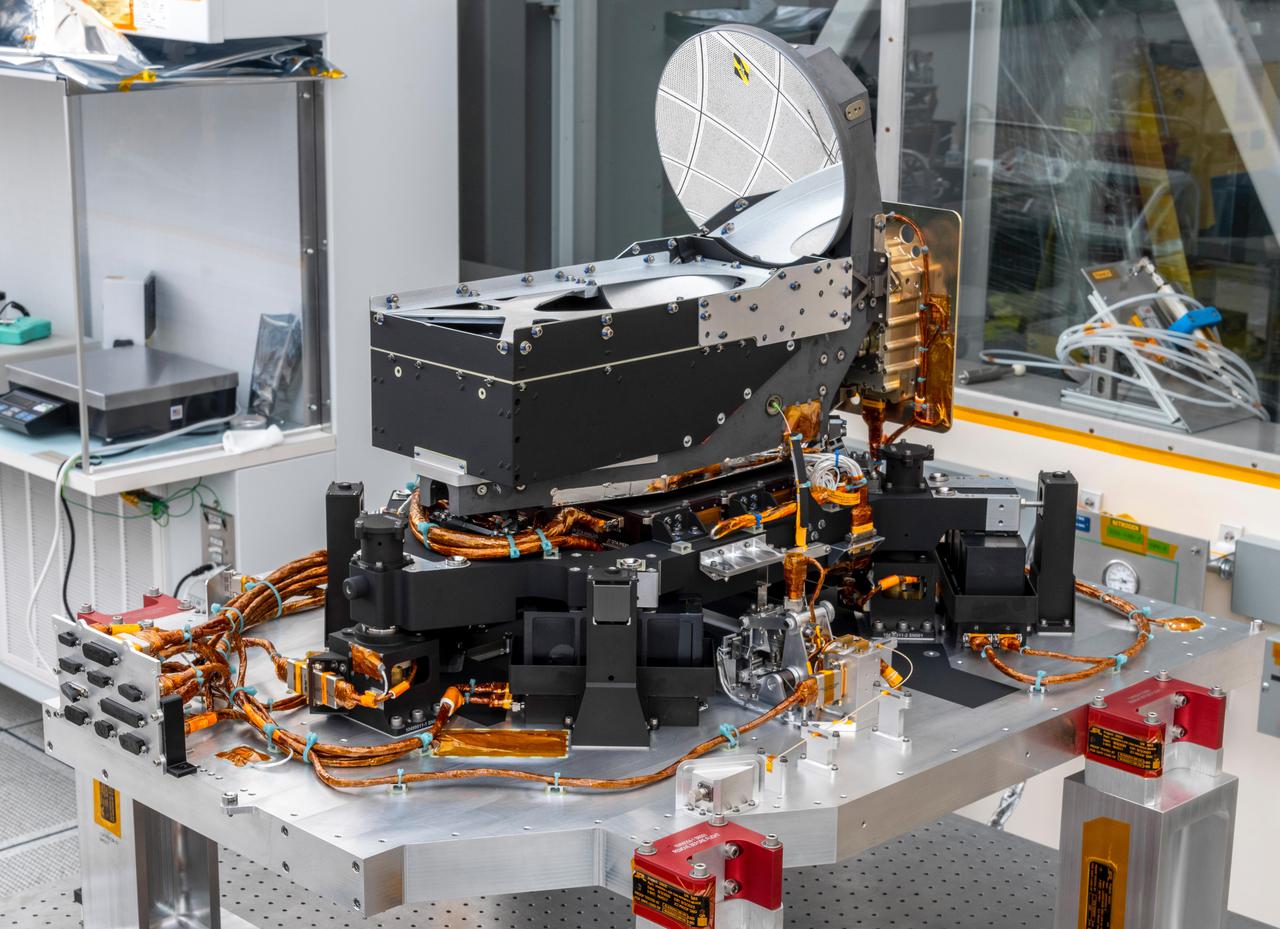
The Deep Space Optical Communications (DSOC) technology demonstration's flight laser transceiver is shown at NASA's Jet Propulsion Laboratory in Southern California in April 2021, before being installed inside its box-like enclosure that was later integrated with NASA's Psyche spacecraft. The transceiver consists of a near-infrared laser transmitter to send high-rate data to Earth, and a sensitive photon-counting camera to receive ground-transmitted low-rate data. The transceiver is mounted on an assembly of struts and actuators – shown in this photograph – that stabilizes the optics from spacecraft vibrations. The DSOC experiment is the agency's first demonstration of optical communications beyond the Earth-Moon system. DSOC is a system that consists of this flight laser transceiver, a ground laser transmitter, and a ground laser receiver. New advanced technologies have been implemented in each of these elements. The transceiver will "piggyback" on NASA's Psyche spacecraft when it launches in August 2022 to the metal-rich asteroid of the same name. The DSOC technology demonstration will begin shortly after launch and continue as the spacecraft travels from Earth to its gravity-assist flyby of Mars. https://photojournal.jpl.nasa.gov/catalog/PIA24569
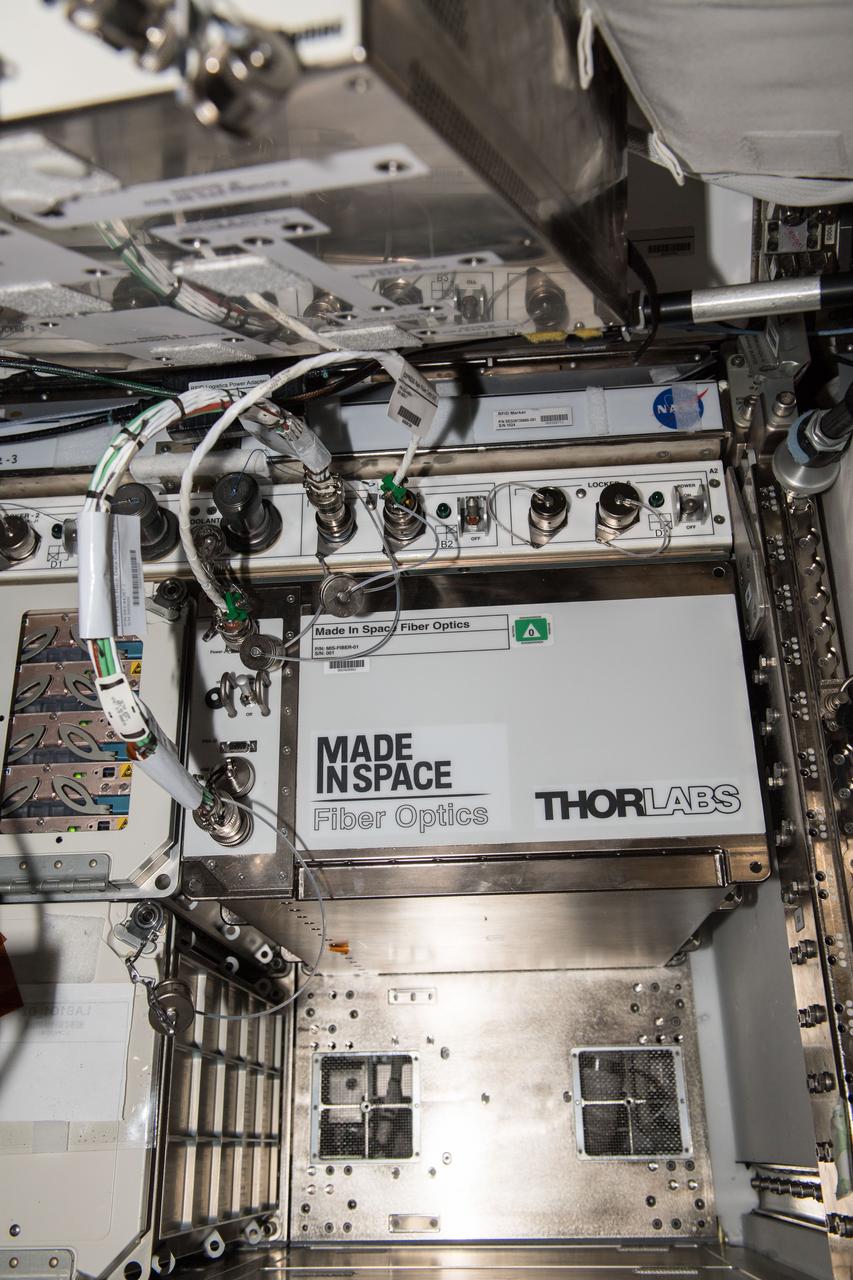
iss054e005568 (12-26-2017) --- View of the Made In Space Fiber Optics Locker installed in ExPRESS (Expedite the Processing of Experiments to Space Station) Rack 7. The Optical Fiber Production in Microgravity (Made In Space Fiber Optics) investigation demonstrates the merits of manufacturing fiber optic filaments in microgravity.
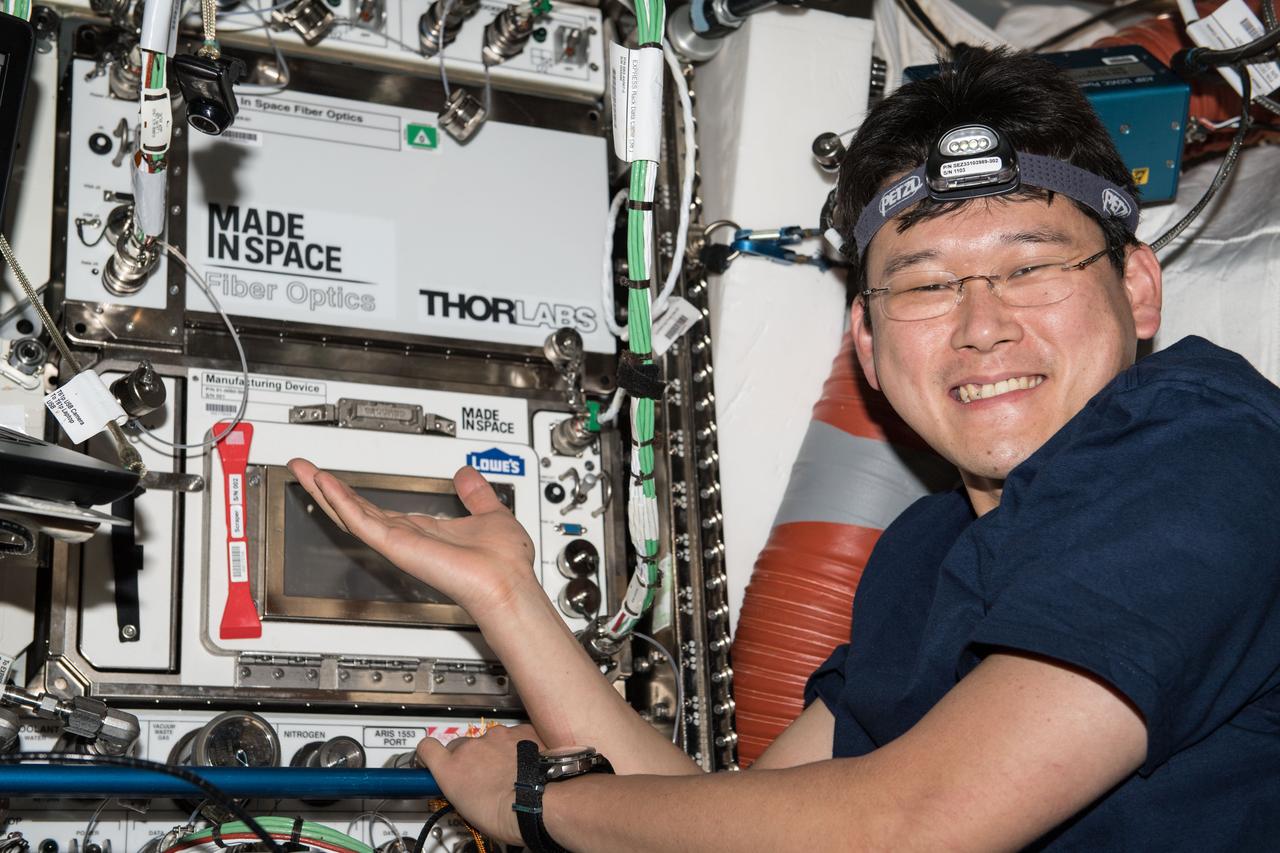
iss054e005575 (12-26-2017) --- Japan Aerospace Exploration Agency (JAXA) astronaut Norishige Kanai poses for a photo with the installed Made in Space Fiber Optics Locker and the re-installed Additive Manufacturing Facility (AMF) Manufacturing Device (ManD). Photo was taken in the Destiny U.S. Laboratory abord the International Space Station (ISS). The Optical Fiber Production in Microgravity (Made In Space Fiber Optics) investigation demonstrates the merits of manufacturing fiber optic filaments in microgravity.
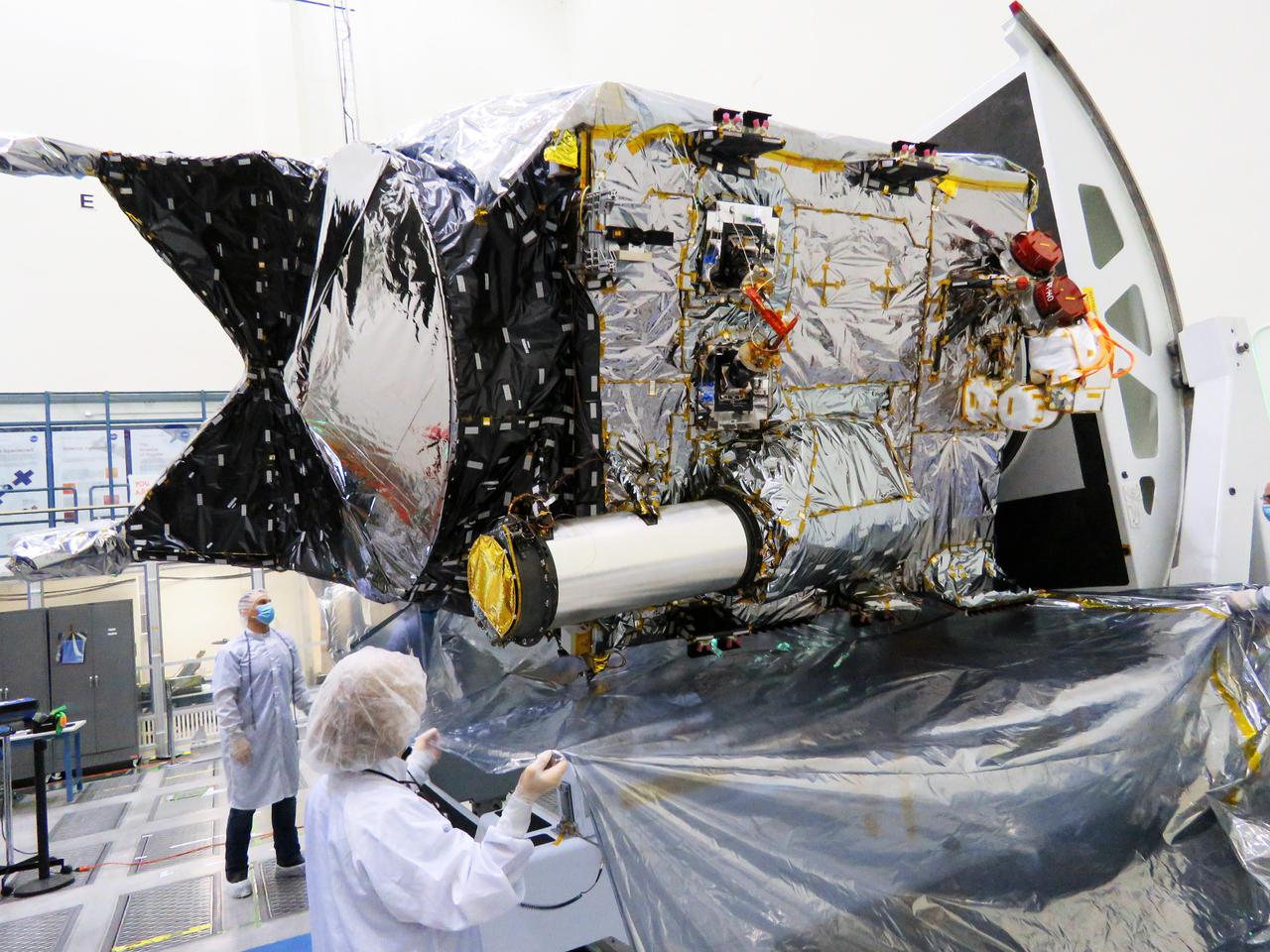
The Deep Space Optical Communications (DSOC) technology demonstration's flight laser transceiver can be easily identified on NASA's Psyche spacecraft, seen in this December 2021 photograph inside a clean room at the agency's Jet Propulsion Laboratory in Southern California. DSOC's tube-like gray/silver sunshade can be seen protruding from the side of the spacecraft. The bulge to which the sunshade is attached is DSOC's transceiver, which consists of a near-infrared laser transmitter to send high-rate data to Earth and a sensitive photon-counting camera to receive ground-transmitted low-rate data. The DSOC experiment is the agency's first demonstration of optical communications beyond the Earth-Moon system. DSOC is a system that consists of this flight laser transceiver, a ground laser transmitter, and a ground laser receiver. New advanced technologies have been implemented in each of these elements. The transceiver will "piggyback" on NASA's Psyche spacecraft when it launches in August 2022 to the metal-rich asteroid of the same name. The DSOC technology demonstration will begin shortly after launch and continue as the spacecraft travels from Earth to its gravity-assist flyby of Mars. https://photojournal.jpl.nasa.gov/catalog/PIA24570
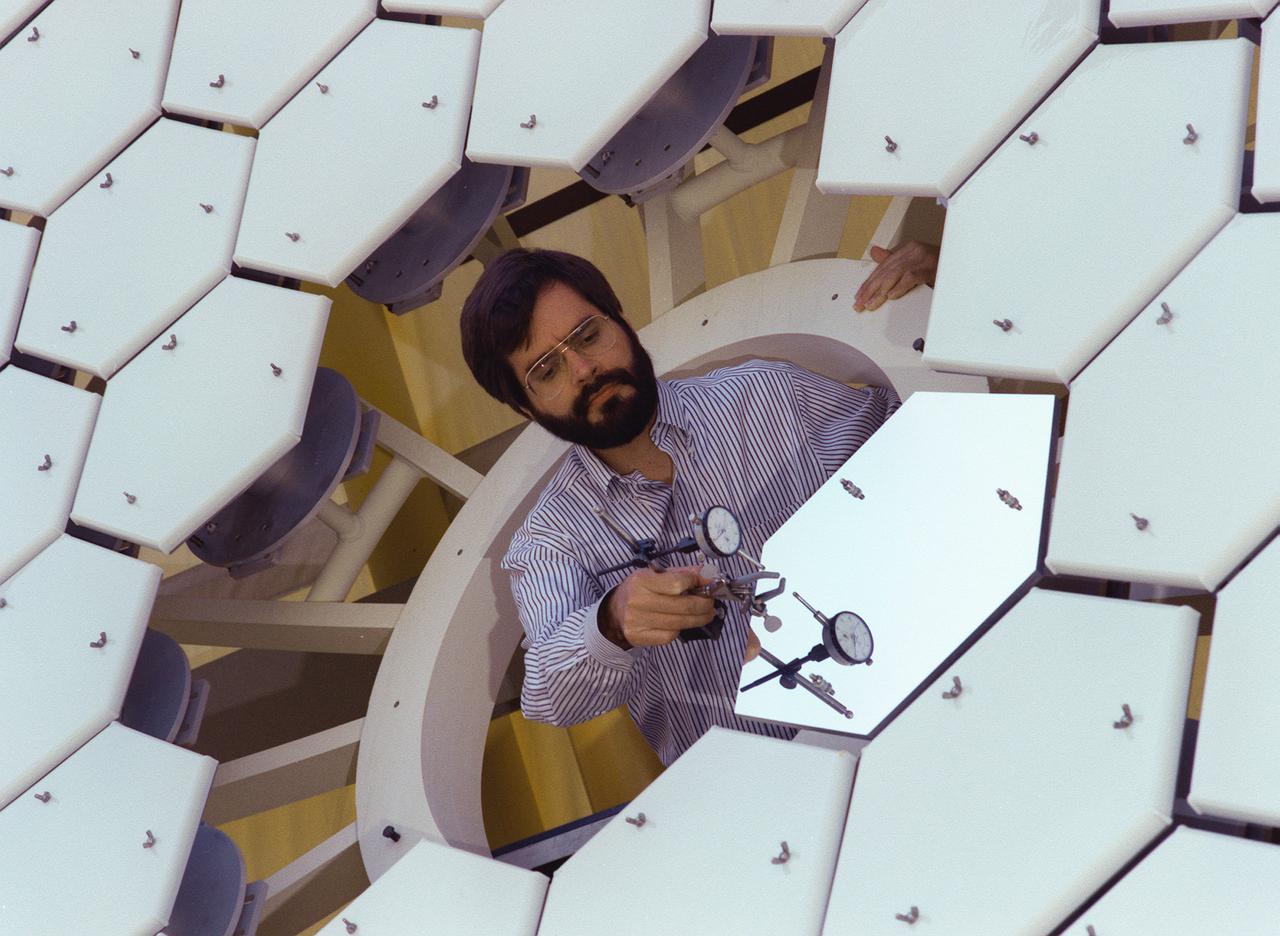
NASA's Space Optics Manufacturing Technology Center has been working to expand our view of the universe via sophisticated new telescopes. The Optics Center's goal is to develop low-cost, advanced space optics technologies for the NASA program in the 21st century, including the long-term goal of imaging Earth-like planets in distant solar systems. A segmented array of mirrors was designed by the Space Optics Manufacturing Technology Center for the solar concentrator test stand at the Marshall Space Flight Center (MSFC) for powering solar thermal propulsion engines. Each hexagon mirror has a spherical surface to approximate a parabolic concentrator when combined into the entire 18-foot diameter array. The aluminum mirrors were polished with a diamond turning machine that creates a glass-like reflective finish on metal. The precision fabrication machinery at the Space Optics Manufacturing Technology Center at MSFC can polish specialized optical elements to a world class quality of smoothness. This image shows optics physicist, Vince Huegele, examining one of the 144-segment hexagonal mirrors of the 18-foot diameter array at the MSFC solar concentrator test stand.
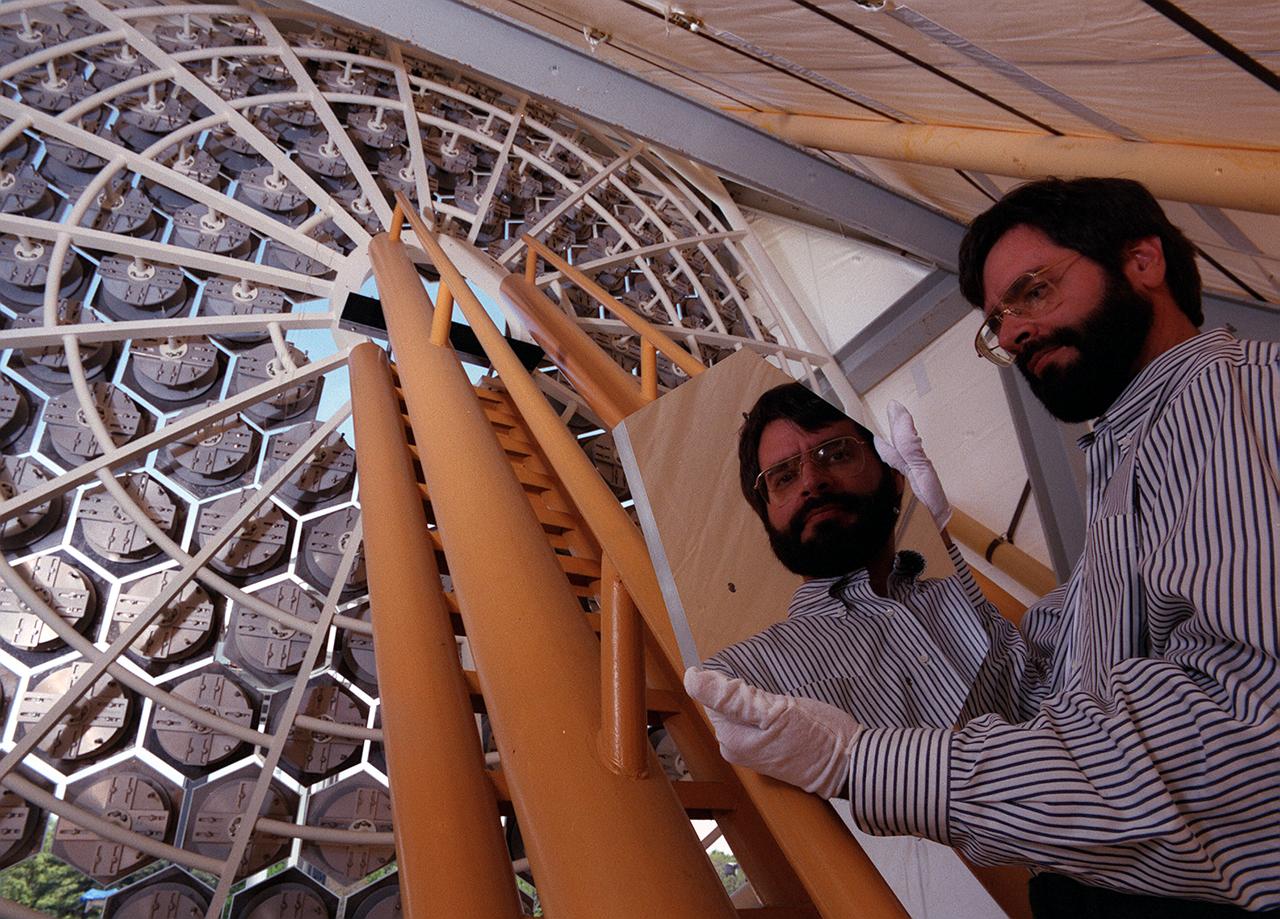
NASA's Space Optics Manufacturing Technology Center has been working to expand our view of the universe via sophisticated new telescopes. The Optics Center's goal is to develop low-cost, advanced space optics technologies for the NASA program in the 21st century, including the long-term goal of imaging Earth-like planets in distant solar systems. A segmented array of mirrors was designed by the Space Optics Manufacturing Technology Center for solar the concentrator test stand at the Marshall Space Flight Center (MSFC) for powering solar thermal propulsion engines. Each hexagon mirror has a spherical surface to approximate a parabolic concentrator when combined into the entire 18-foot diameter array. The aluminum mirrors were polished with a diamond turning machine, that creates a glass-like reflective finish on metal. The precision fabrication machinery at the Space Optics Manufacturing Technology Center at MSFC can polish specialized optical elements to a world class quality of smoothness. This image shows optics physicist, Vince Huegele, examining one of the 144-segment hexagonal mirrors of the 18-foot diameter array at the MSFC solar concentrator test stand.
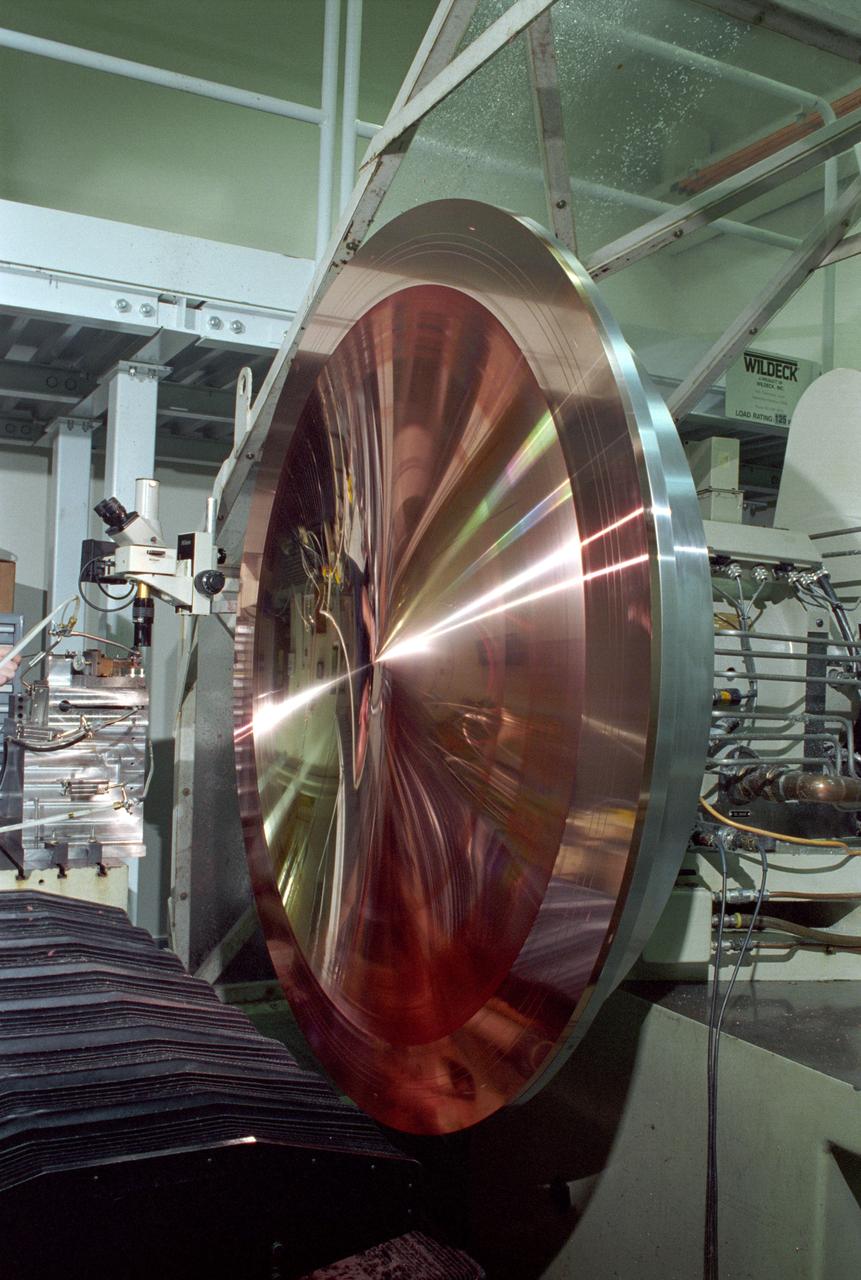
This king-size copper disk, manufactured at the Space Optics Manufacturing and Technology Center (SOMTC) at the Marshall Space Flight Center (MSFC), is a special mold for making high resolution monitor screens. This master mold will be used to make several other molds, each capable of forming hundreds of screens that have a type of lens called a Fresnel lens. Weighing much less than conventional optics, Fresnel lenses have multiple concentric grooves, each formed to a precise angle, that together create the curvature needed to focus and project images. MSFC leads NASA's space optics manufacturing technology development as a technology leader for diamond turning. The machine used to manufacture this mold is among many one-of-a-kind pieces of equipment of MSFC's SOMTC.
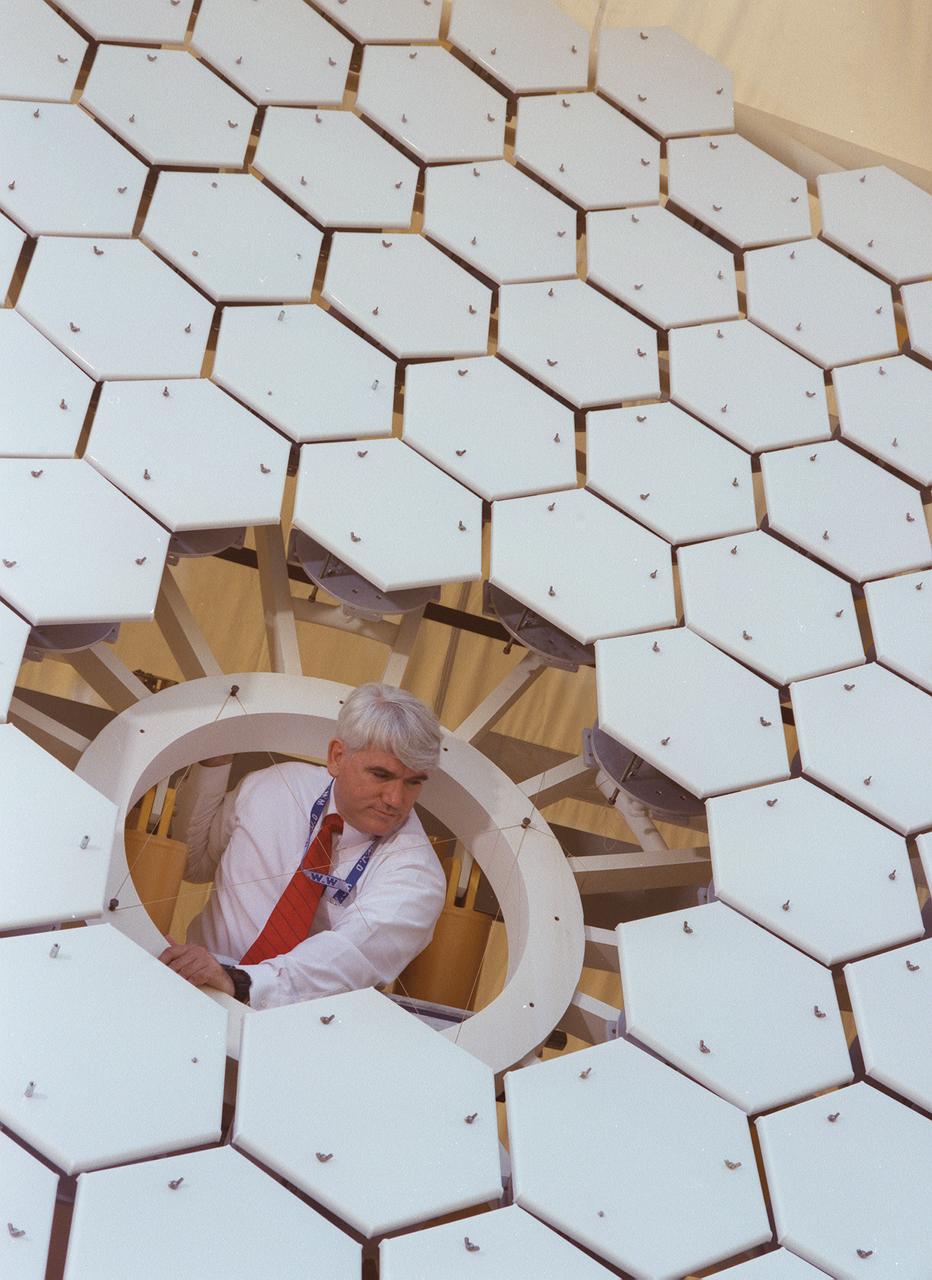
A team of engineers at Marshall Space Flight Center (MSFC) has designed, fabricated, and tested the first solar thermal engine, a non-chemical rocket that produces lower thrust but has better thrust efficiency than the chemical combustion engines. This segmented array of mirrors is the solar concentrator test stand at MSFC for firing the thermal propulsion engines. The 144 mirrors are combined to form an 18-foot diameter array concentrator. The mirror segments are aluminum hexagons that have the reflective surface cut into it by a diamond turning machine, which is developed by MSFC Space Optics Manufacturing Technology Center.

This pair of images of the Long Island, New York region is a comparison of an optical photograph (top) and a radar image (bottom), both taken in darkness in April 1994. The photograph at the top was taken by the Endeavour astronauts at about 3 a.m. Eastern time on April 20, 1994. The image at the bottom was acquired at about the same time four days earlier on April 16,1994 by the Spaceborne Imaging Radar-C/X-Band Synthetic Aperture Radar (SIR-C/X-SAR) system aboard the space shuttle Endeavour. Both images show an area approximately 100 kilometers by 40 kilometers (62 miles by 25 miles) that is centered at 40.7 degrees North latitude and 73.5 degrees West longitude. North is toward the upper right. The optical image is dominated by city lights, which are particularly bright in the densely developed urban areas of New York City located on the left half of the photo. The brightest white zones appear on the island of Manhattan in the left center, and Central Park can be seen as a darker area in the middle of Manhattan. To the northeast (right) of the city, suburban Long Island appears as a less densely illuminated area, with the brightest zones occurring along major transportation and development corridors. Since radar is an active sensing system that provides its own illumination, the radar image shows a great amount of surface detail, despite the night-time acquisition. The colors in the radar image were obtained using the following radar channels: red represents the L-band (horizontally transmitted and received); green represents the L-band (horizontally transmitted and vertically received); blue represents the C-band (horizontally transmitted and vertically received). In this image, the water surface - the Atlantic Ocean along the bottom edge and Long Island Sound shown at the top edge - appears red because small waves at the surface strongly reflect the horizontally transmitted and received L-band radar signal. Networks of highways and railroad lines are clearly visible in the radar image; many of them can also be seen as bright lines i the optical image. The runways of John F. Kennedy International Airport appear as a dark rectangle in Jamaica Bay on the left side of the image. Developed areas appear generally as bright green and orange, while agricultural, protected and undeveloped areas appear darker blue or purple. This contrast can be seen on the barrier islands along the south coast of Long Island, which are heavily developed in the Rockaway and Long Beach areas south and east of Jamaica Bay, but further to the east, the islands are protected and undeveloped. http://photojournal.jpl.nasa.gov/catalog/PIA01785
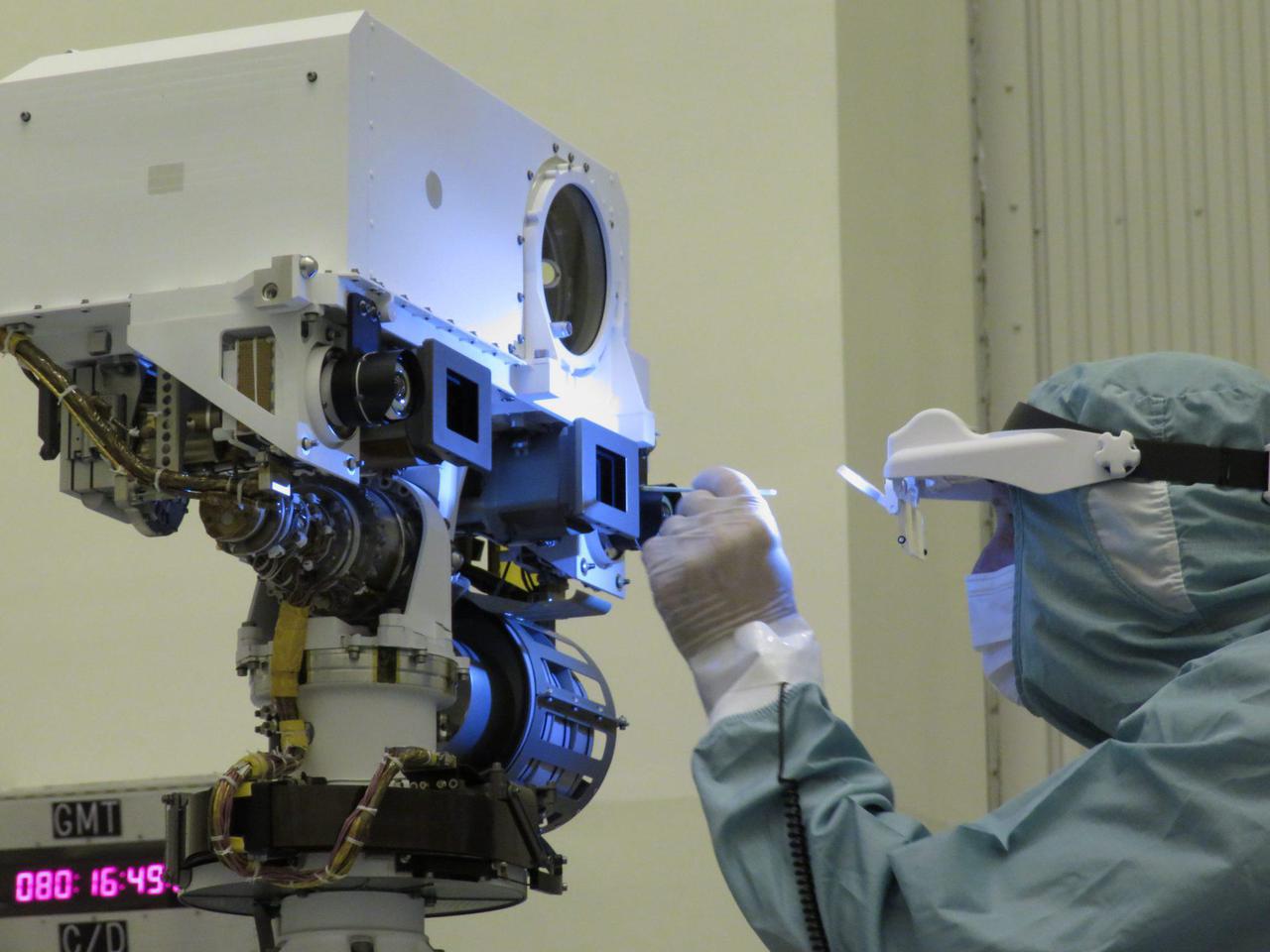
A JPL optical technician performs a final inspection and swab cleaning of the front optics of the Mars 2020 mission's Perseverance rover Mastcam-Z cameras at the Kennedy Space Center in Florida in March 2020. https://photojournal.jpl.nasa.gov/catalog/PIA24197
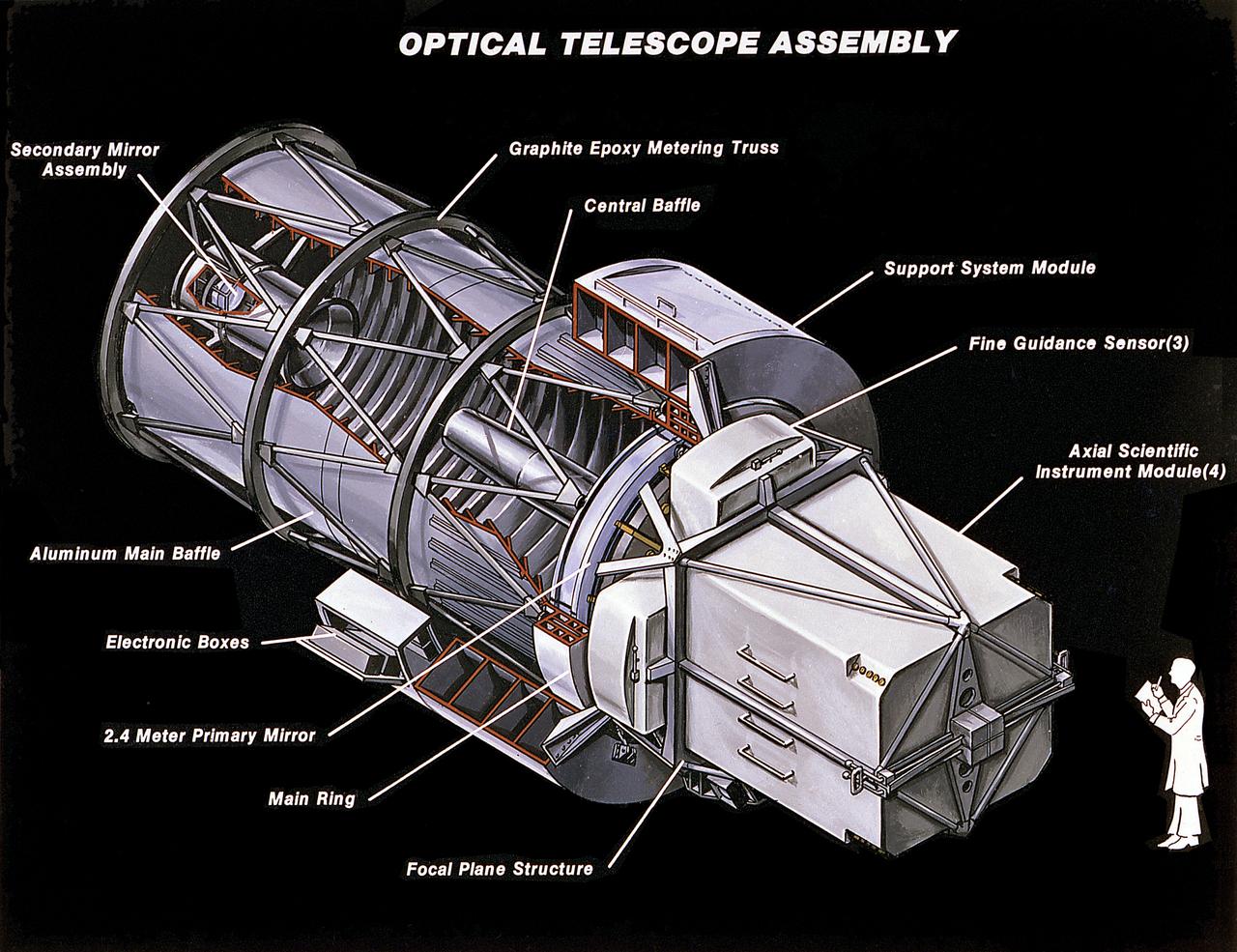
This image illustrates the Hubble Space Telescope's (HST's) Optical Telescope Assembly (OTA). One of the three major elements of the HST, the OTA consists of two mirrors (a primary mirror and a secondary mirror), support trusses, and the focal plane structure. The mirrors collect and focus light from selected celestial objects and are housed near the center of the telescope. The primary mirror captures light from objects in space and focuses it toward the secondary mirror. The secondary mirror redirects the light to a focal plane where the Scientific Instruments are located. The primary mirror is 94.5 inches (2.4 meters) in diameter and the secondary mirror is 12.2 inches (0.3 meters) in diameter. The purpose of the HST, the most complex and sensitive optical telescope ever made, is to study the cosmos from a low-Earth Orbit. By placing the telescope in space, astronomers are able to collect data that is free of the Earth's atmosphere. The HST detects objects 25 times fainter than the dimmest objects seen from the Earth and provides astronomers with an observable universe 250 times larger than visible from ground-based telescopes, perhaps as far away as 14 billion light-years. The HST views galaxies, stars, planets, comets, possibly other solar systems, and even unusual phenomena such as quasars, with 10 times the clarity of ground-based telescopes. The spacecraft is 42.5 feet (13 meters) long and weighs 25,000 pounds (11,600 kilograms). The HST was deployed from the Space Shuttle Discovery (STS-31 mission) into Earth orbit in April 1990. The Marshall Space Flight Center had responsibility for design, development, and construction of the HST. The Perkin-Elmer Corporation, in Danbury, Cornecticut, developed the optical system and guidance sensors. The Lockheed Missile and Space Company of Sunnyvale, California produced the protective outer shroud and spacecraft systems, and assembled and tested the finished telescope.
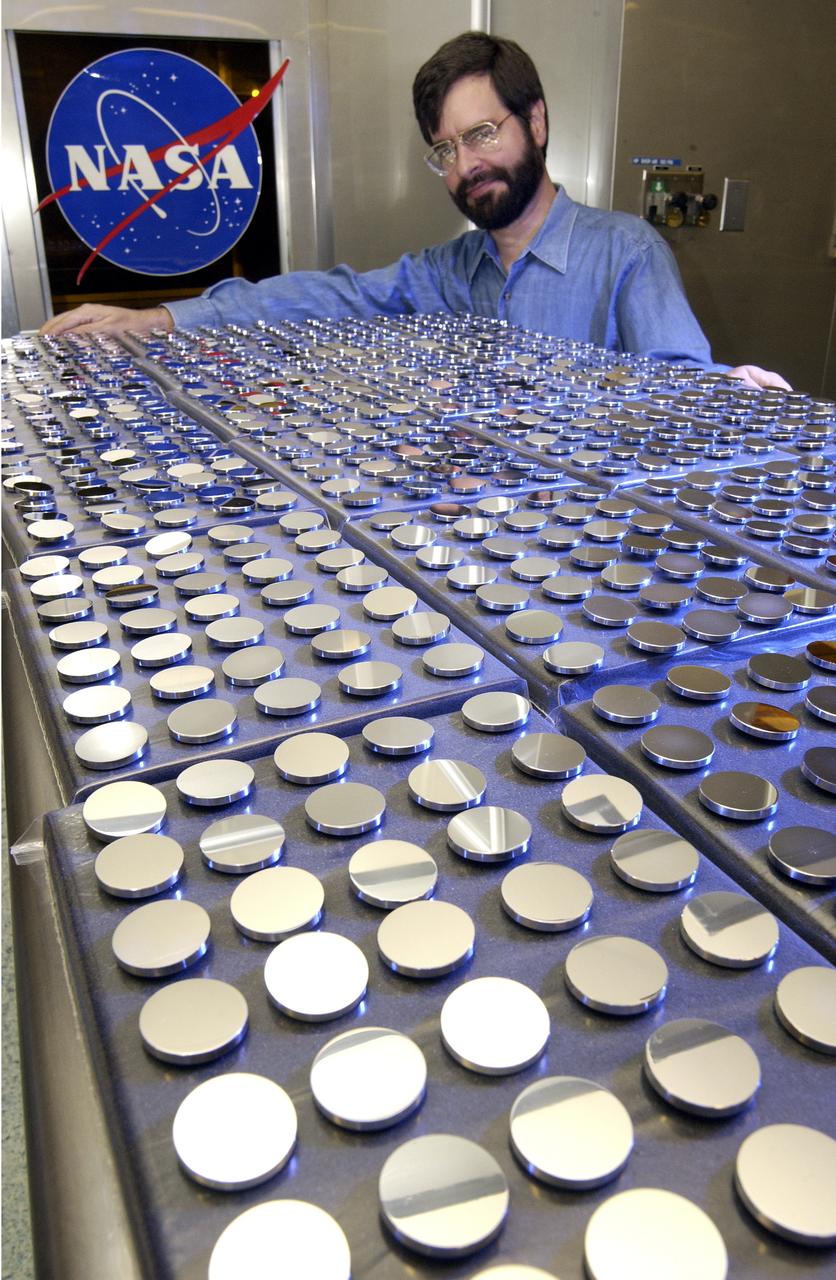
In this photograph, Vince Huegele of the Marshall Space Flight Center's (MSFC's) Space Optics Manufacturing Technology Center (SOMTC) inspects the coating on the mirrors for Starshine 3, a satellite that resembles a high-tech disco ball that was placed into Earth orbit. The sphere, which is covered by hundreds of quarter-sized mirrors that reflect sunlight to observers on the ground, helps students study the effects of solar activity on the Earth's atmosphere. Ed White Middle School in Huntsville, Alabama is among 500 schools worldwide whose students helped grind and polish mirrors for the Starshine 3 satellite as a part of the Starshine Project. The total of up to 1,500 mirrors will improve the sunlight flash rate and make the satellite more visible at twilight as it orbits the Earth. These mirrors have been coated with a scratch-resistant, anti-oxidizing layer of silicon dioxide by optical engineers and technicians at the Hill Air Force Base in Utah and MSFC. Starshine-3 was launched on an Athena I unmarned launch vehicle out of the Kodiak Launch Complex, Alaska, on September 29, 2001. Starshine 3 is nearly 37 inches (1 meter) in diameter, weighs 200 pounds (91 kilograms), and carries 1500 mirrors that were polished by approximately 40,000 students in 1,000 schools in 30 countries. Three small, optically-reflective spherical Starshine student satellites have been designed by the U.S. Naval Research Laboratory and built by an informal volunteer coalition of organizations and individuals in the U.S. and Canada. This coalition, called Project Starshine, is headquartered in Monument, Colorado.
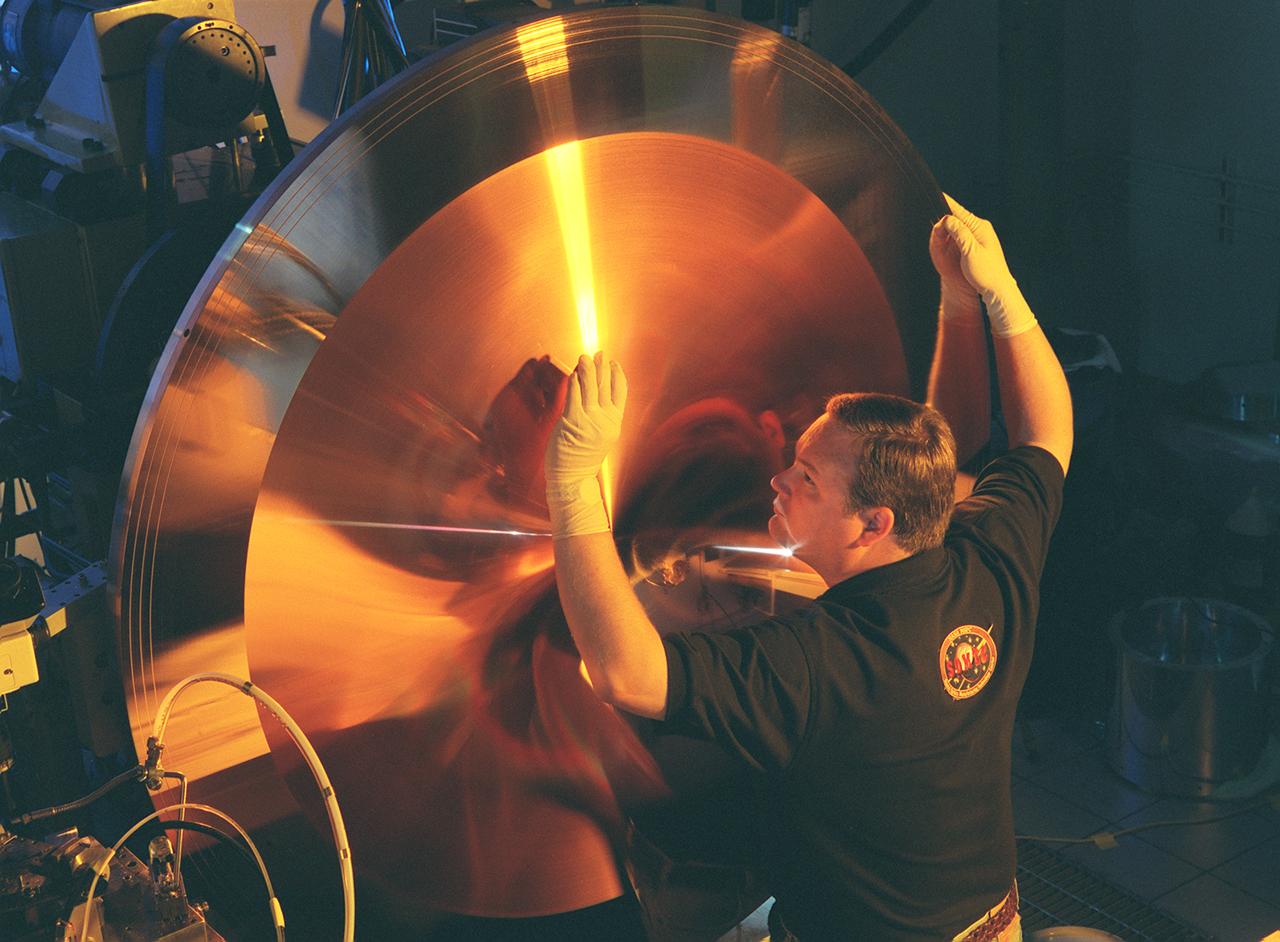
This photograph shows Wes Brown, Marshall Space Flight Center's (MSFC's) lead diamond tuner, an expert in the science of using diamond-tipped tools to cut metal, inspecting the mold's physical characteristics to ensure the uniformity of its more than 6,000 grooves. This king-size copper disk, manufactured at the Space Optics Manufacturing and Technology Center (SOMTC) at MSFC, is a special mold for making high resolution monitor screens. This master mold will be used to make several other molds, each capable of forming hundreds of screens that have a type of lens called a fresnel lens. Weighing much less than conventional optics, fresnel lenses have multiple concentric grooves, each formed to a precise angle, that together create the curvature needed to focus and project images. The MSFC leads NASA's space optics manufacturing technology development as a technology leader for diamond turning. The machine used to manufacture this mold is among many one-of-a-kind pieces of equipment of MSFC's SOMTC.
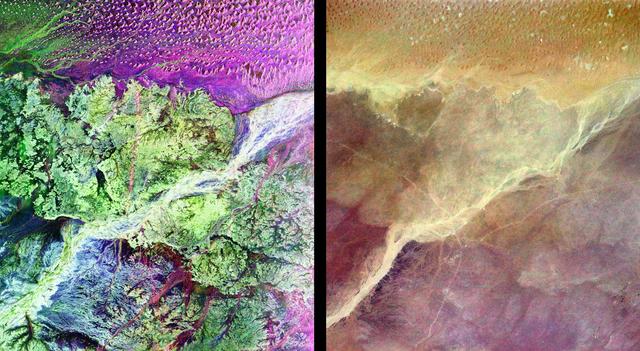
This pair of images from space shows a portion of the southern Empty Quarter of the Arabian Peninsula in the country of Oman. On the left is a radar image of the region around the site of the fabled Lost City of Ubar, discovered in 1992 with the aid of remote sensing data. On the right is an enhanced optical image taken by the shuttle astronauts. Ubar existed from about 2800 BC to about 300 AD. and was a remote desert outpost where caravans were assembled for the transport of frankincense across the desert. The actual site of the fortress of the Lost City of Ubar, currently under excavation, is too small to show in either image. However, tracks leading to the site, and surrounding tracks, show as prominent, but diffuse, reddish streaks in the radar image. Although used in modern times, field investigations show many of these tracks were in use in ancient times as well. Mapping of these tracks on regional remote sensing images provided by the Landsat satellite was a key to recognizing the site as Ubar. The prominent magenta colored area is a region of large sand dunes. The green areas are limestone rocks, which form a rocky desert floor. A major wadi, or dry stream bed, runs across the scene and appears as a white line. The radar images, and ongoing field investigations, will help shed light on an early civilization about which little in known. The radar image was taken by the Spaceborne Imaging Radar C/X-Band Synthetic Aperture Radar (SIR-C/X-SAR) and is centered at 18 degrees North latitude and 53 degrees East longitude. The image covers an area about 50 kilometers by 100 kilometers (31 miles by 62 miles). The colors in the image are assigned to different frequencies and polarizations of the radar as follows: red is L-band, horizontally transmitted, horizontally received; blue is C-band horizontally transmitted, horizontally received; green is L-band horizontally transmitted, vertically received. SIR-C/X-SAR, a joint mission of the German, Italian and the United States space agencies, is part of NASA's Mission to Planet Earth. http://photojournal.jpl.nasa.gov/catalog/PIA01302
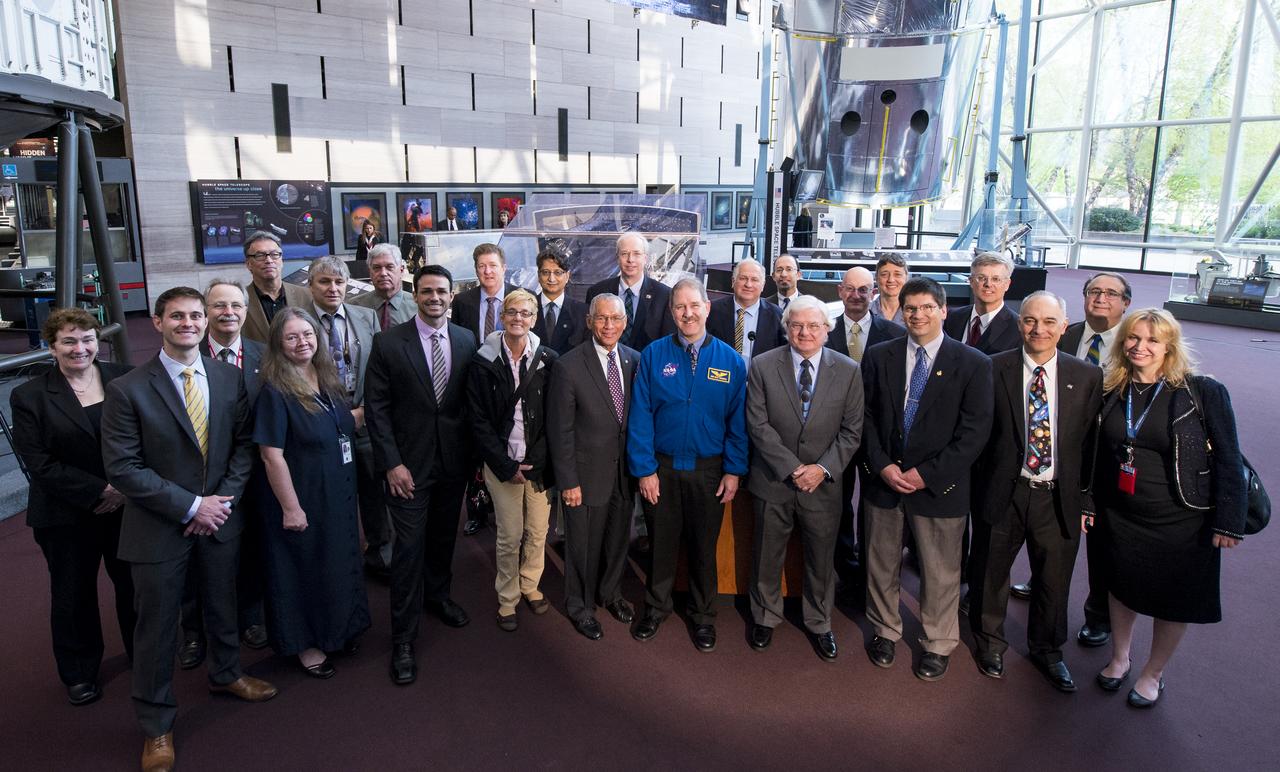
Individuals in attendance who had a hand in the development or servicing of the Hubble Space Telescope pose for a group photo at an event unveiling a new exhibit featuring Hubble's Corrective Optics Space Telescope Axial Replacement (COSTAR) and the WFPC2 on Wednesday, April 23, 2014 at the Smithsonian National Air and Space Museum in Washington, DC. COSTAR and WFPC2 were installed in Hubble during the first space shuttle servicing mission in 1993 and returned to Earth on the fifth and final servicing mission in 2009. Photo Credit: (NASA/Joel Kowsky)
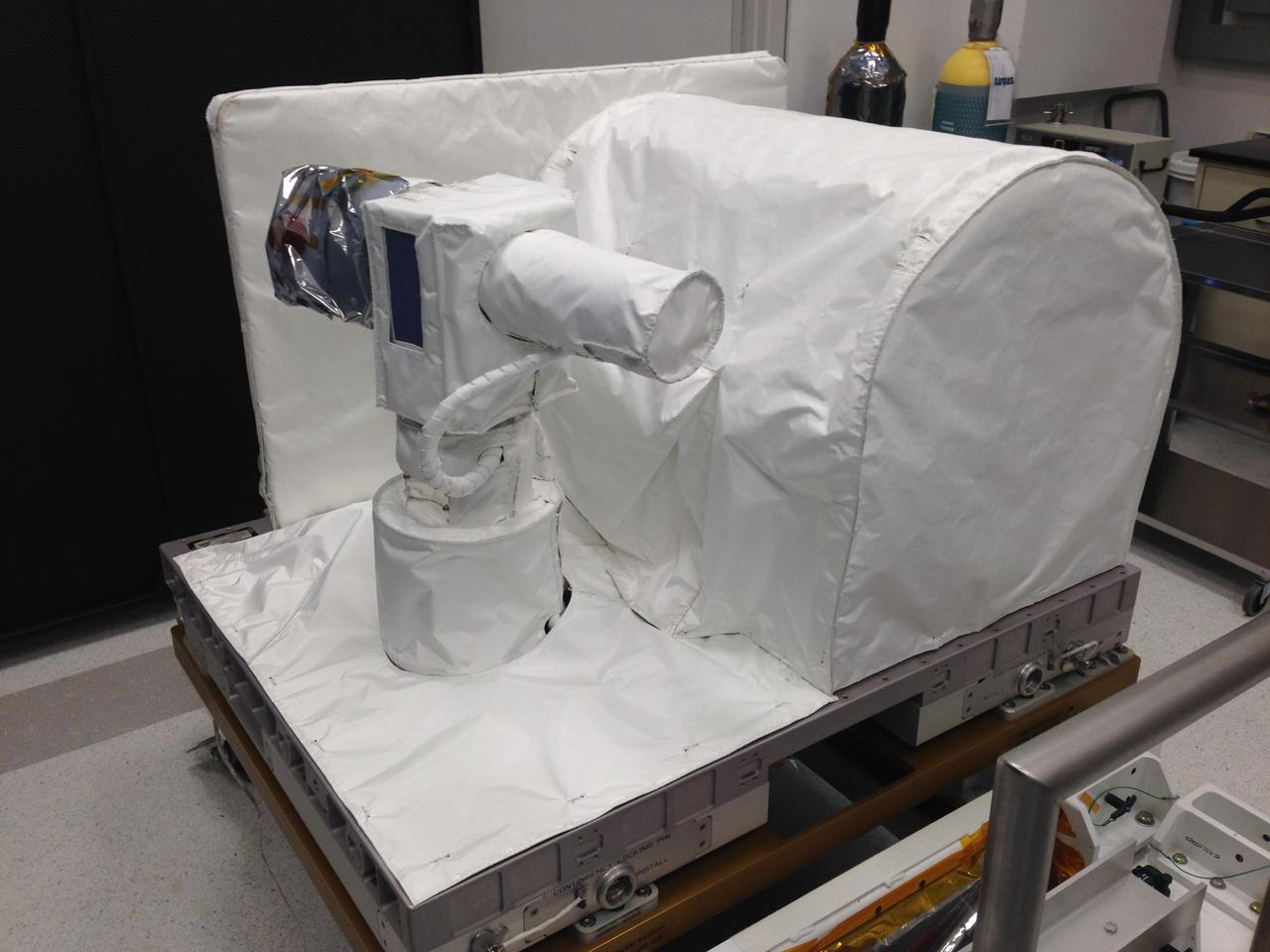
Optical PAyload for Lasercomm Science OPALS is covered in white thermal blankets awaiting integration with its launch vehicle at NASA Kennedy Space Center.
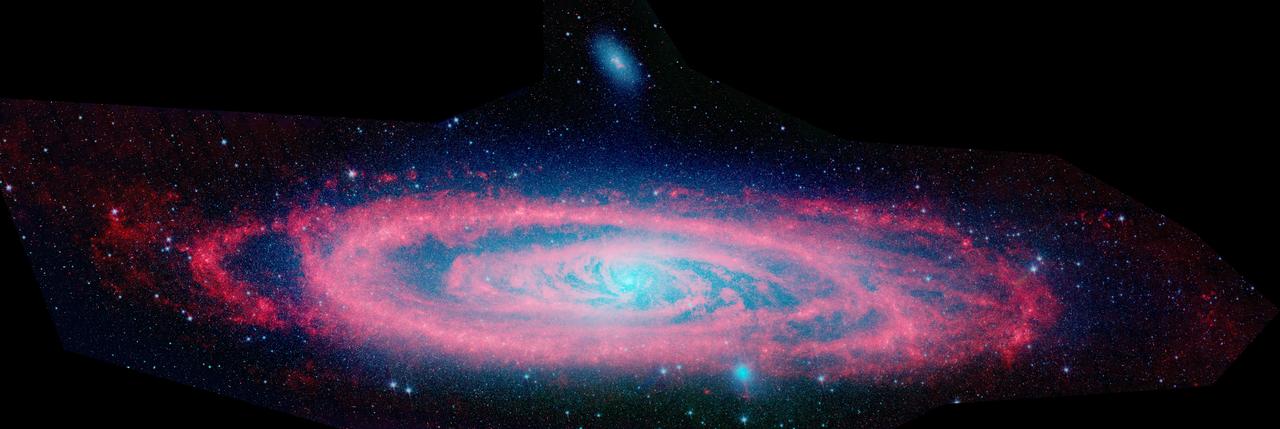
This image shows the Andromeda galaxy, first as seen in visible light by the National Optical Astronomy Observatory, then as seen in infrared by NASA Spitzer Space Telescope.
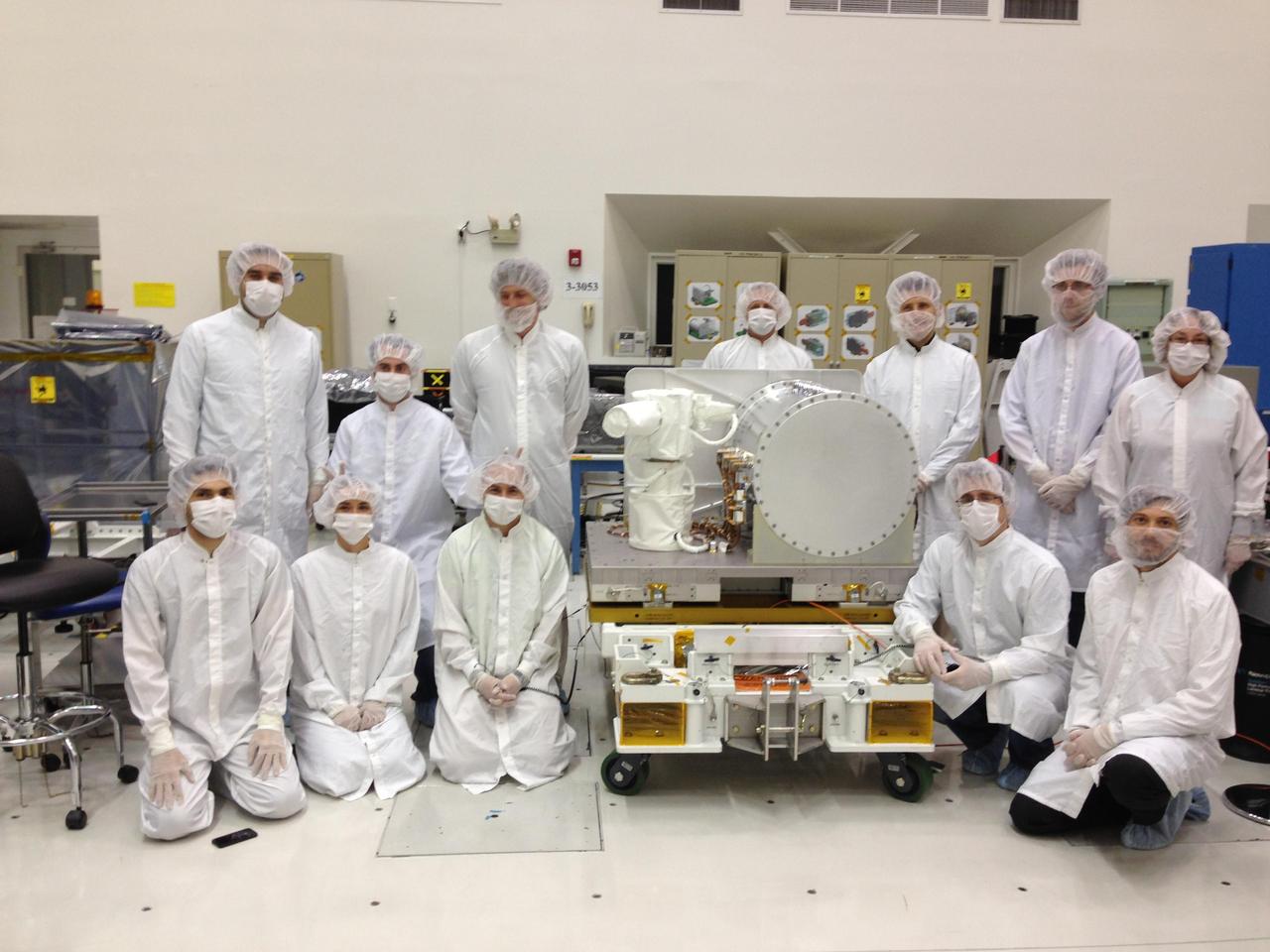
NASA Optical PAyload for Lasercomm Science OPALS integration and test team is seen at NASA Jet Propulsion Laboratory prior to OPALS shipment to Kennedy Space Center.
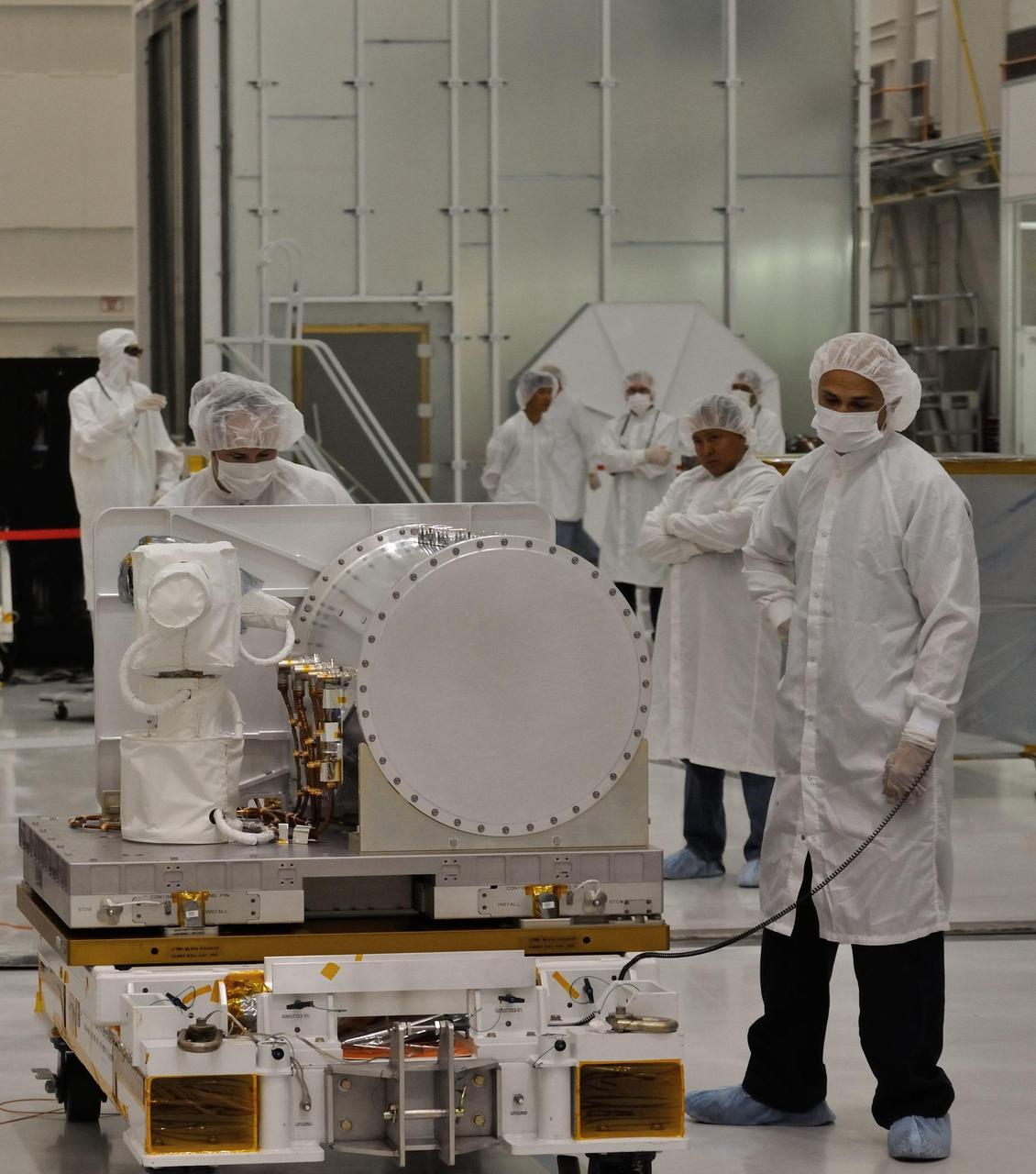
This photo shows the Optical PAyload for Lasercomm Science OPALS flight terminal at JPL being prepared for shipment to NASA Kennedy Space Center.
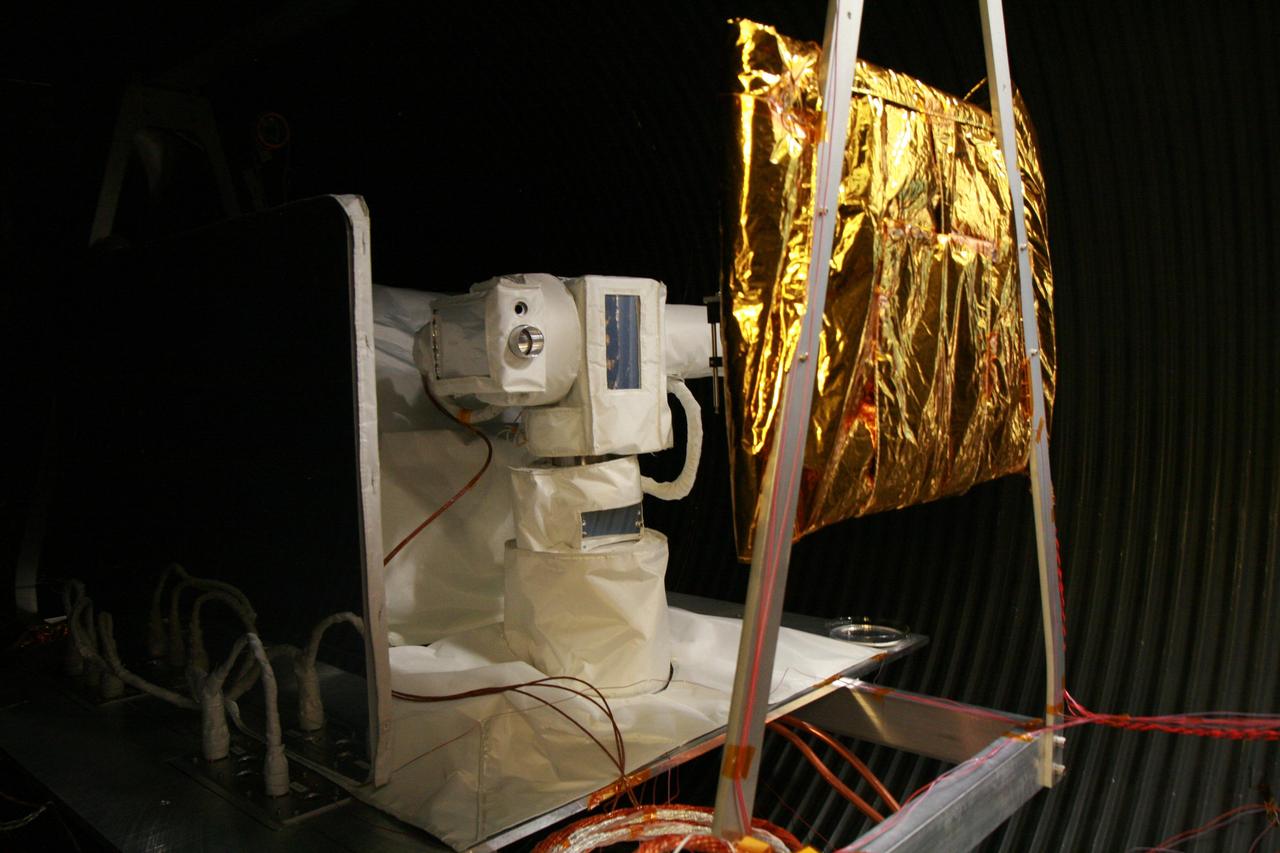
The Optical PAyload for Lasercomm Science OPALS flight terminal undergoes testing in a thermal vacuum chamber at NASA Jet Propulsion Laboratory to simulate the space environment.
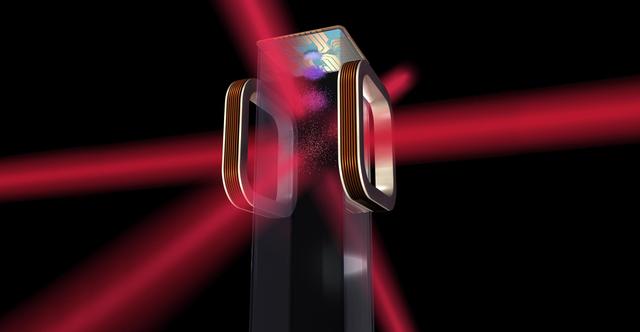
Artist concept of a magneto-optical trap and atom chip to be used by NASA Cold Atom Laboratory CAL aboard the International Space Station.
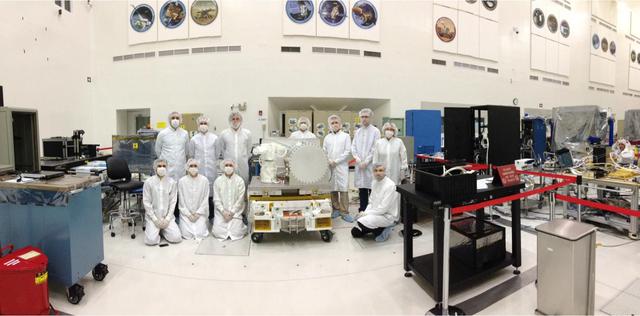
NASA Optical PAyload for Lasercomm Science OPALS integration and test team is seen at NASA Jet Propulsion Laboratory prior to OPALS shipment to Kennedy Space Center.
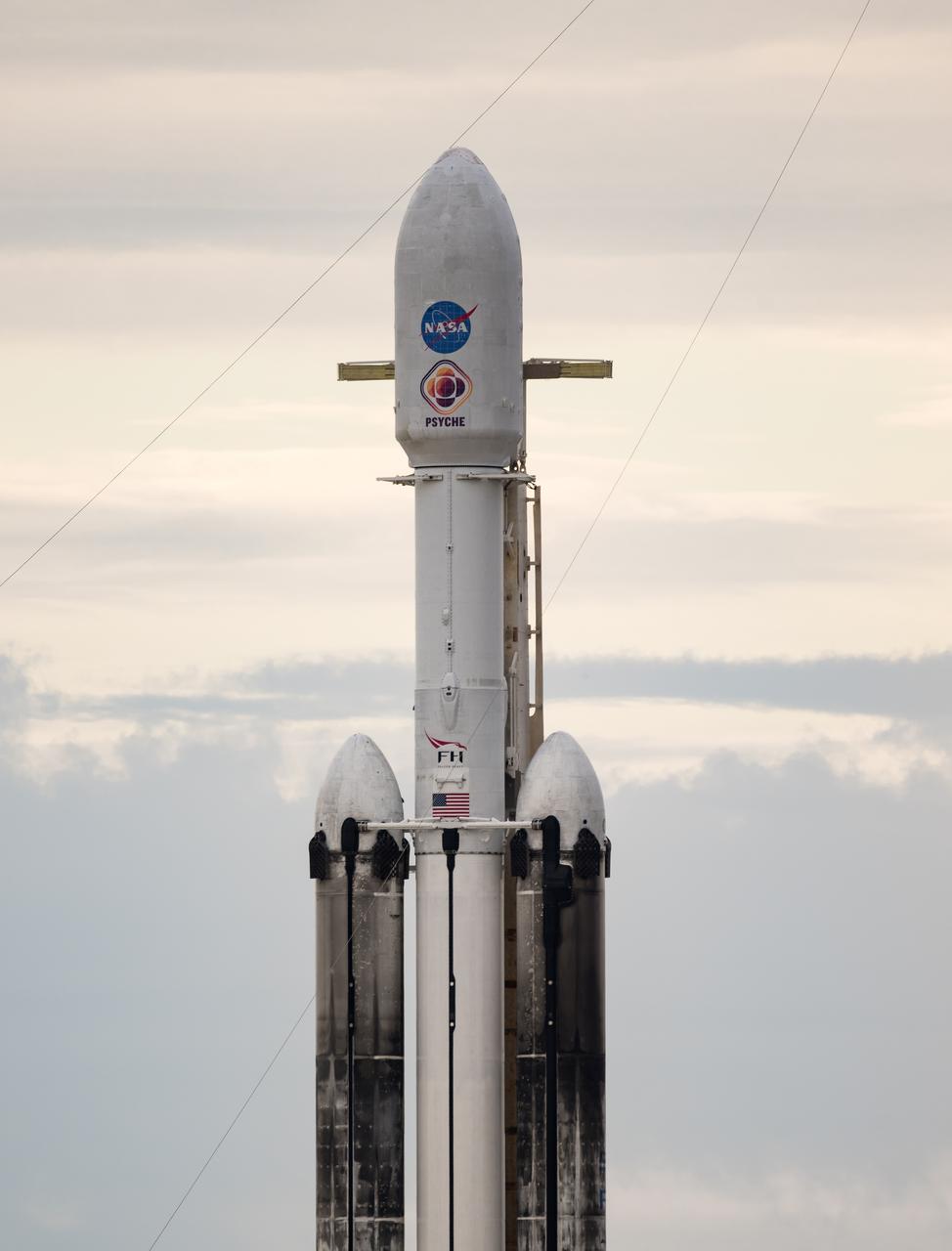
A SpaceX Falcon Heavy rocket with the Psyche spacecraft onboard is seen at Launch Complex 39A as preparations continue for the Psyche mission, Wednesday, Oct. 11, 2023, at NASA’s Kennedy Space Center in Florida. NASA’s Psyche spacecraft will travel to a metal-rich asteroid by the same name orbiting the Sun between Mars and Jupiter to study it’s composition. The spacecraft also carries the agency's Deep Space Optical Communications technology demonstration, which will test laser communications beyond the Moon. Photo Credit: (NASA/Aubrey Gemignani)
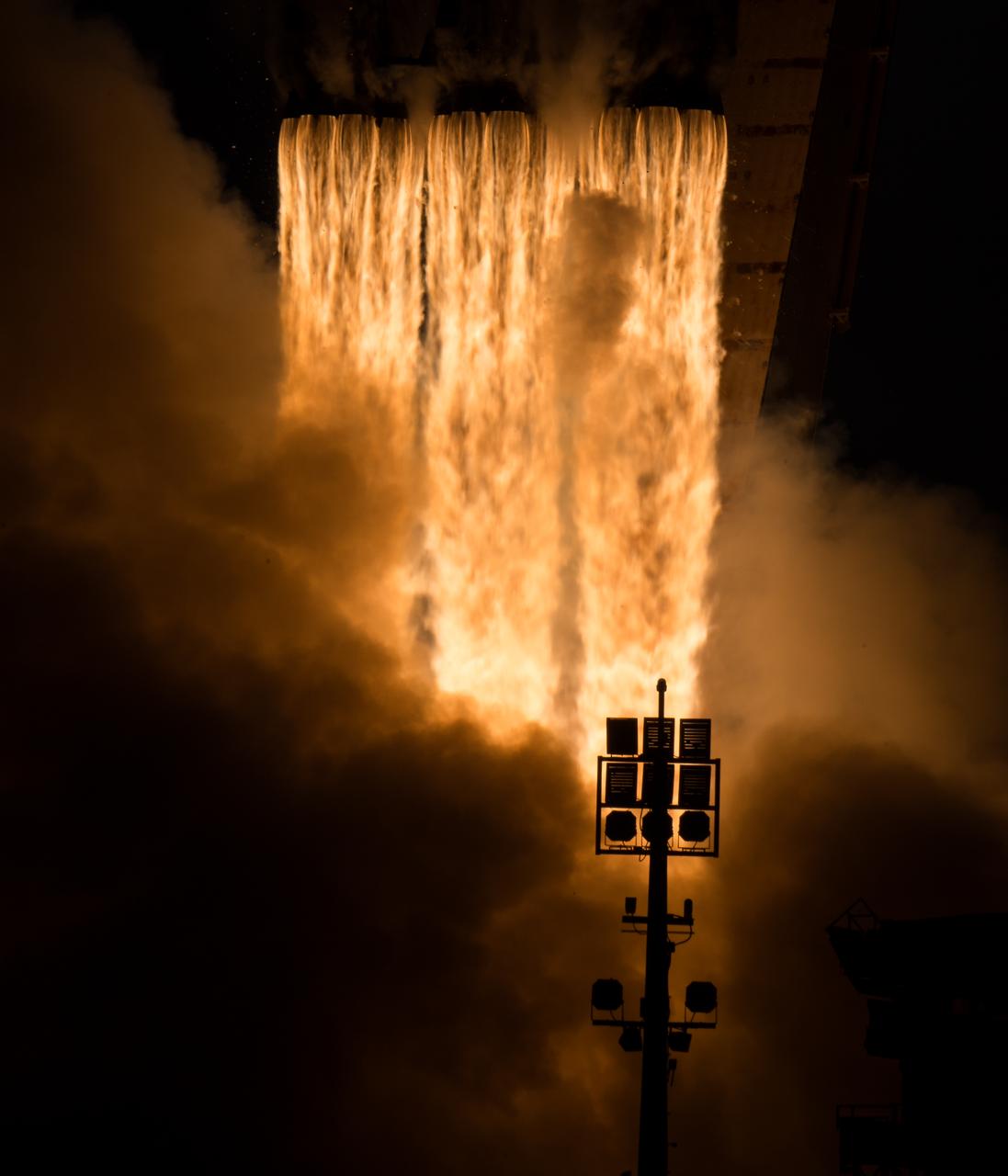
A SpaceX Falcon Heavy rocket with the Psyche spacecraft onboard is launched from Launch Complex 39A, Friday, Oct. 13, 2023, at NASA’s Kennedy Space Center in Florida. NASA’s Psyche spacecraft will travel to a metal-rich asteroid by the same name orbiting the Sun between Mars and Jupiter to study it’s composition. The spacecraft also carries the agency's Deep Space Optical Communications technology demonstration, which will test laser communications beyond the Moon. Photo Credit: (NASA/Aubrey Gemignani)
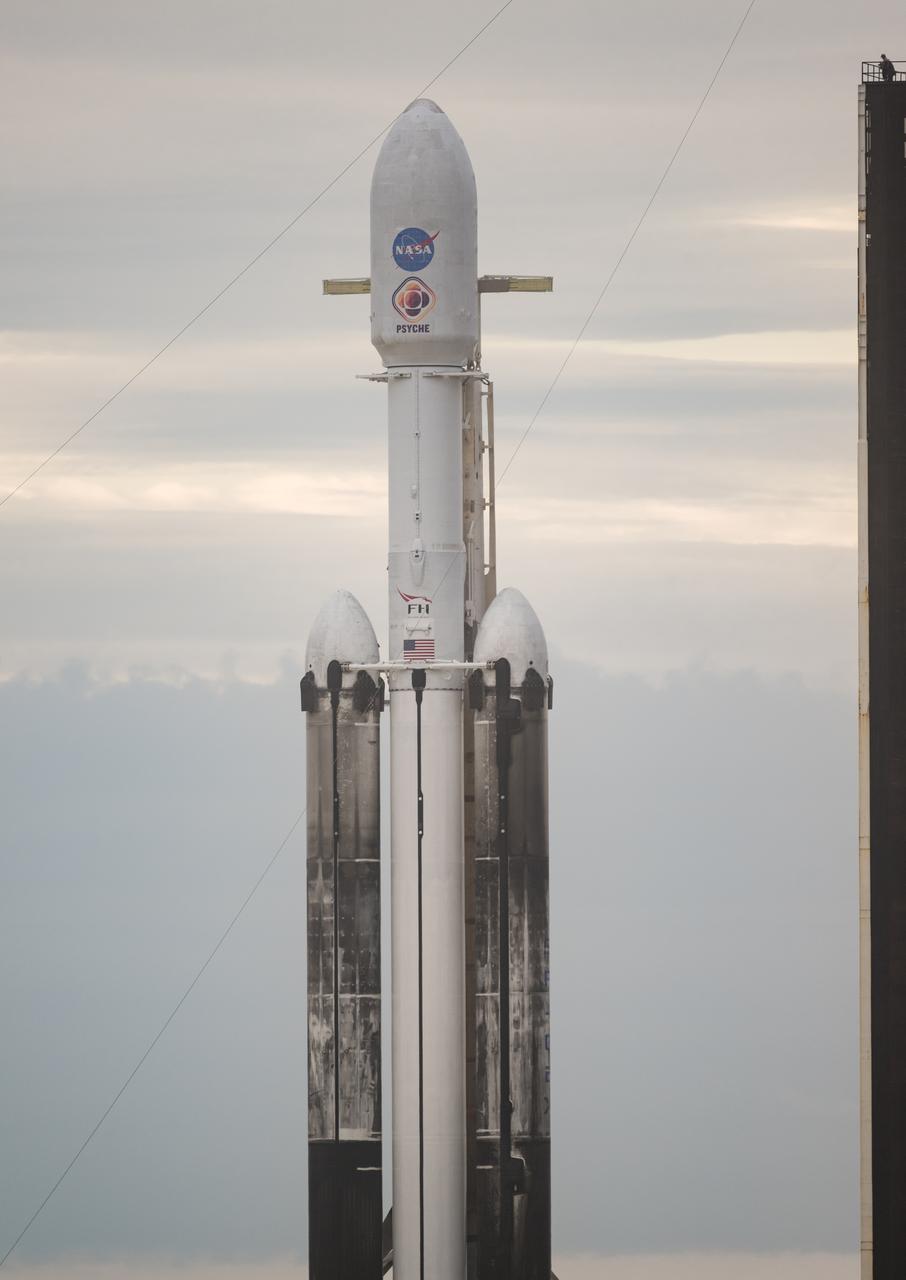
A SpaceX Falcon Heavy rocket with the Psyche spacecraft onboard is seen at Launch Complex 39A as preparations continue for the Psyche mission, Wednesday, Oct. 11, 2023, at NASA’s Kennedy Space Center in Florida. NASA’s Psyche spacecraft will travel to a metal-rich asteroid by the same name orbiting the Sun between Mars and Jupiter to study it’s composition. The spacecraft also carries the agency's Deep Space Optical Communications technology demonstration, which will test laser communications beyond the Moon. Photo Credit: (NASA/Aubrey Gemignani)
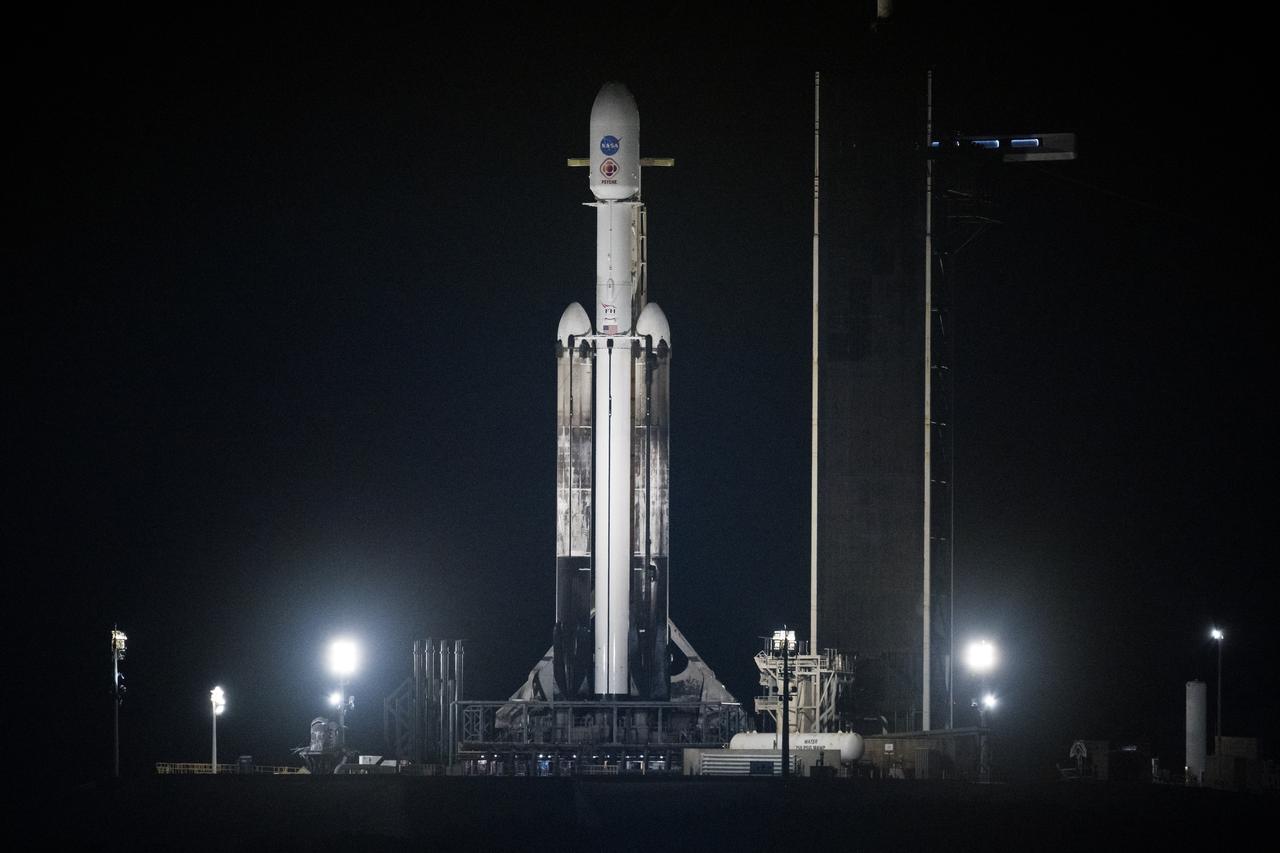
A SpaceX Falcon Heavy rocket with the Psyche spacecraft onboard is seen at Launch Complex 39A as preparations continue for the Psyche mission, Thursday, Oct. 12, 2023, at NASA’s Kennedy Space Center in Florida. NASA’s Psyche spacecraft will travel to a metal-rich asteroid by the same name orbiting the Sun between Mars and Jupiter to study it’s composition. The spacecraft also carries the agency's Deep Space Optical Communications technology demonstration, which will test laser communications beyond the Moon. Photo Credit: (NASA/Aubrey Gemignani)
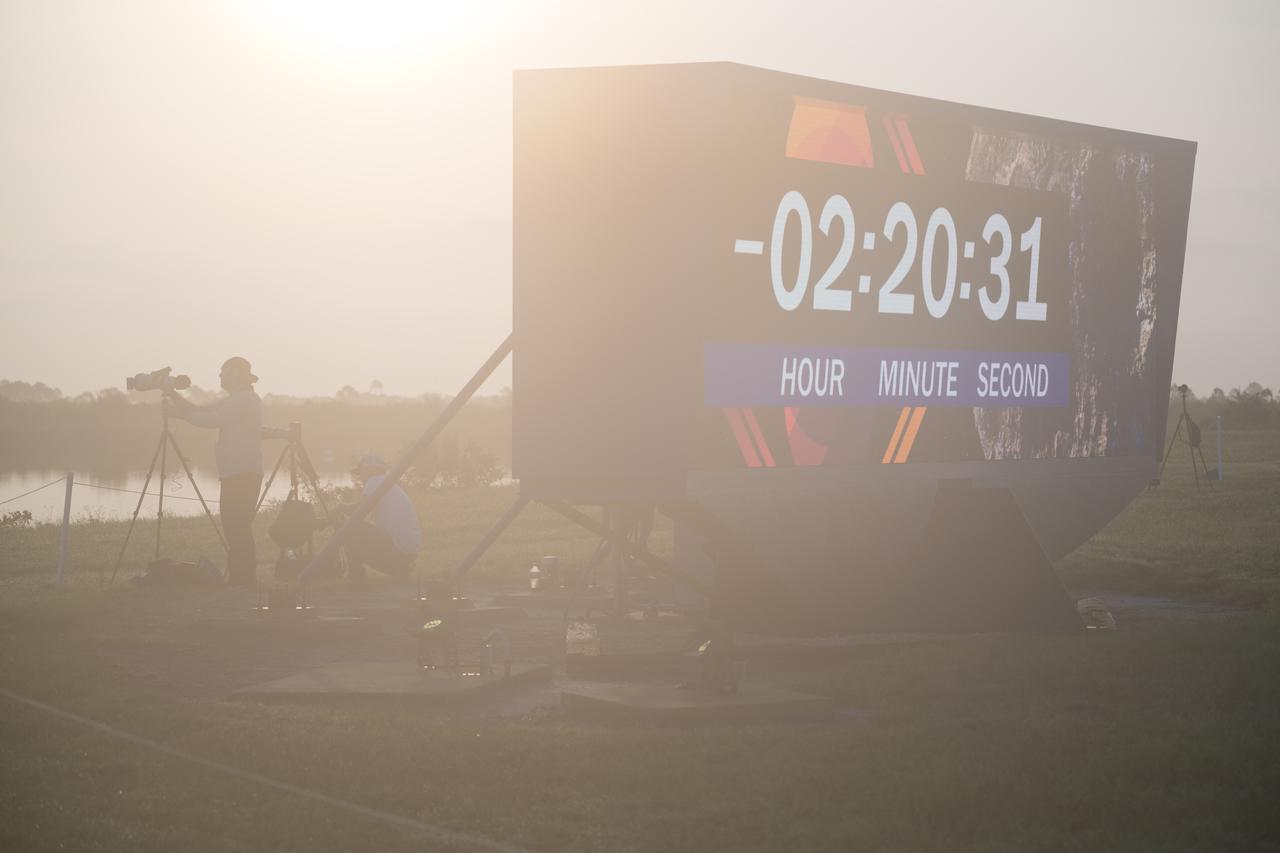
The countdown clock is seen as preparations continue for the launch of a SpaceX Falcon Heavy rocket with the Psyche spacecraft onboard from Launch Complex 39A, Friday, Oct. 13, 2023, at NASA’s Kennedy Space Center in Florida. NASA’s Psyche spacecraft will travel to a metal-rich asteroid by the same name orbiting the Sun between Mars and Jupiter to study it’s composition. The spacecraft also carries the agency's Deep Space Optical Communications technology demonstration, which will test laser communications beyond the Moon. Photo Credit: (NASA/Aubrey Gemignani)
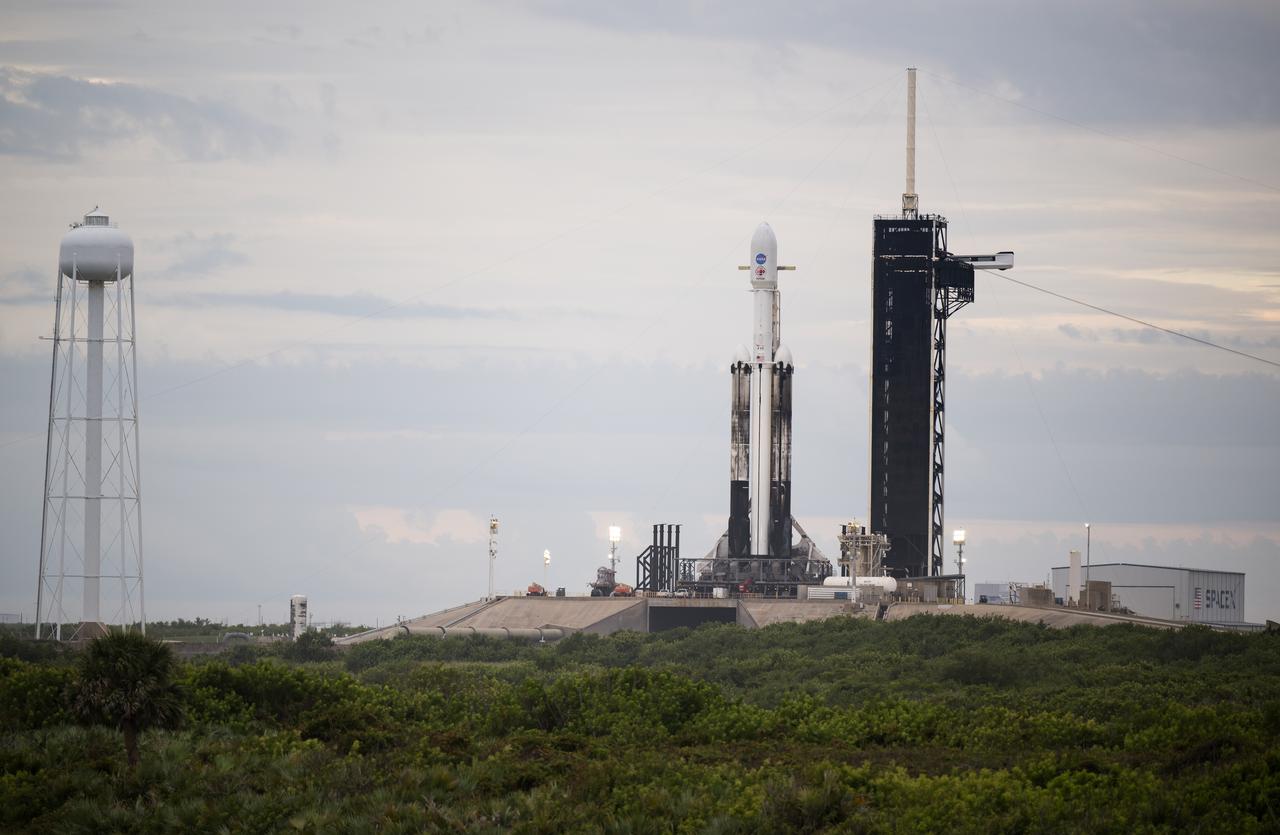
A SpaceX Falcon Heavy rocket with the Psyche spacecraft onboard is seen at Launch Complex 39A as preparations continue for the Psyche mission, Wednesday, Oct. 11, 2023, at NASA’s Kennedy Space Center in Florida. NASA’s Psyche spacecraft will travel to a metal-rich asteroid by the same name orbiting the Sun between Mars and Jupiter to study it’s composition. The spacecraft also carries the agency's Deep Space Optical Communications technology demonstration, which will test laser communications beyond the Moon. Photo Credit: (NASA/Aubrey Gemignani)
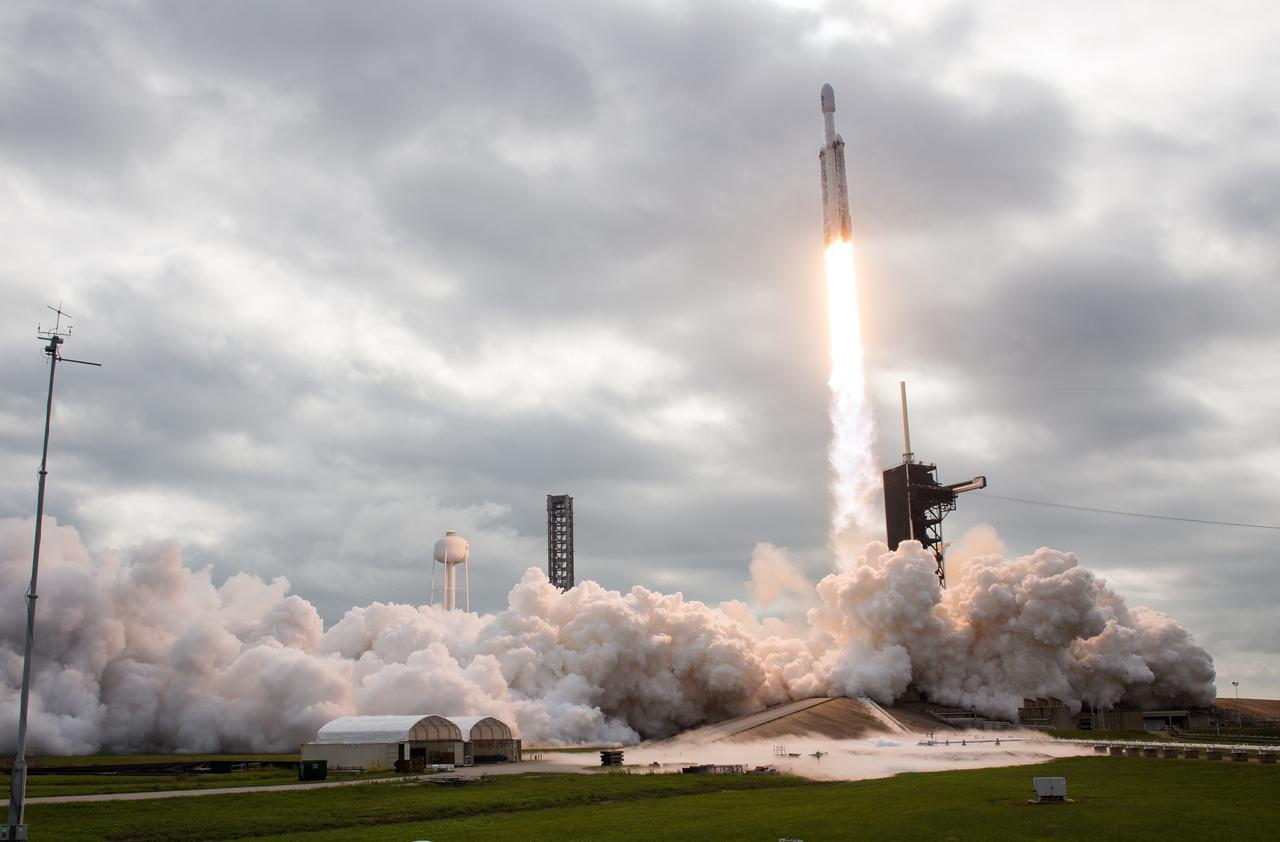
A SpaceX Falcon Heavy rocket with the Psyche spacecraft onboard is launched from Launch Complex 39A, Friday, Oct. 13, 2023, at NASA’s Kennedy Space Center in Florida. NASA’s Psyche spacecraft will travel to a metal-rich asteroid by the same name orbiting the Sun between Mars and Jupiter to study it’s composition. The spacecraft also carries the agency's Deep Space Optical Communications technology demonstration, which will test laser communications beyond the Moon. Photo Credit: (NASA/Aubrey Gemignani)

A SpaceX Falcon Heavy rocket with the Psyche spacecraft onboard is seen at Launch Complex 39A as preparations continue for the Psyche mission, Wednesday, Oct. 11, 2023, at NASA’s Kennedy Space Center in Florida. NASA’s Psyche spacecraft will travel to a metal-rich asteroid by the same name orbiting the Sun between Mars and Jupiter to study it’s composition. The spacecraft also carries the agency's Deep Space Optical Communications technology demonstration, which will test laser communications beyond the Moon. Photo Credit: (NASA/Aubrey Gemignani)

A SpaceX Falcon Heavy rocket with the Psyche spacecraft onboard is launched from Launch Complex 39A, Friday, Oct. 13, 2023, at NASA’s Kennedy Space Center in Florida. NASA’s Psyche spacecraft will travel to a metal-rich asteroid by the same name orbiting the Sun between Mars and Jupiter to study it’s composition. The spacecraft also carries the agency's Deep Space Optical Communications technology demonstration, which will test laser communications beyond the Moon. Photo Credit: (NASA/Aubrey Gemignani)
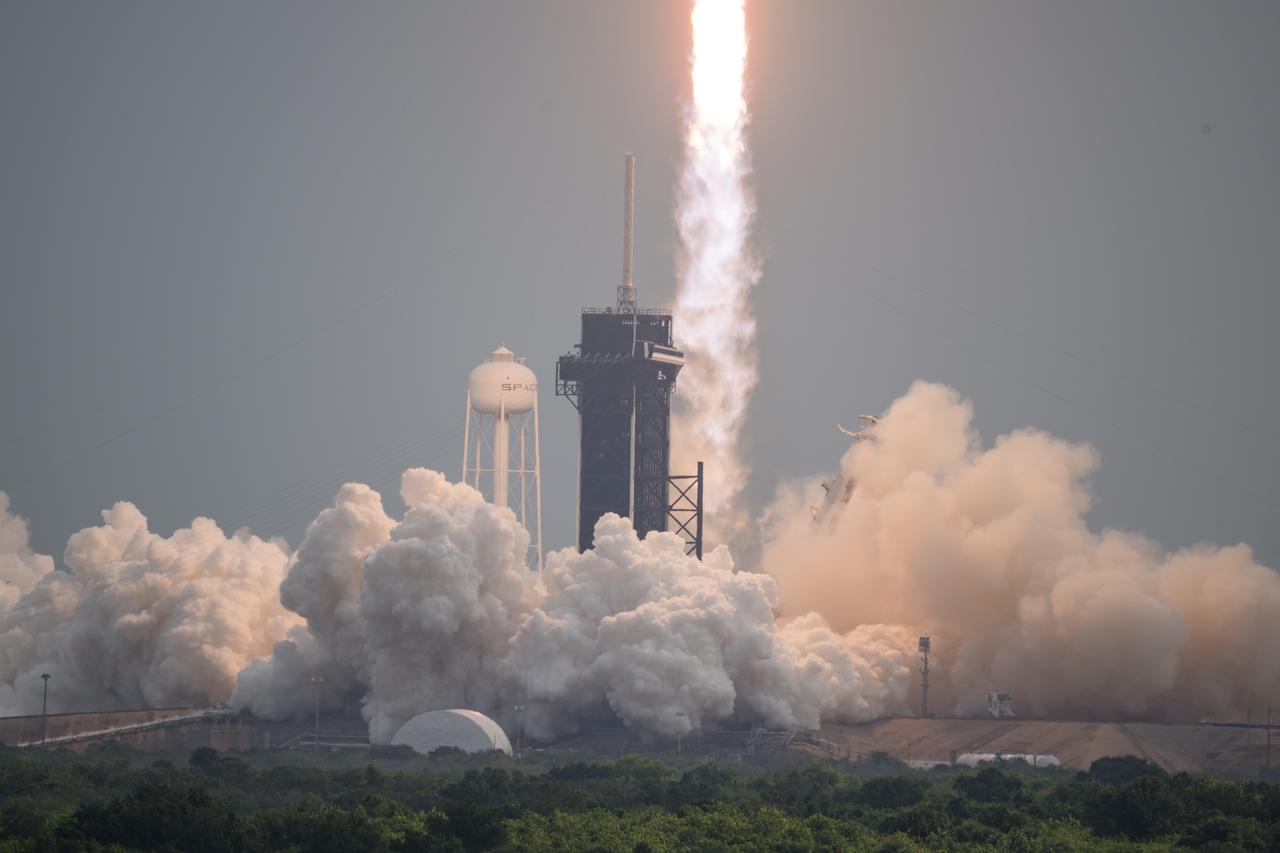
A SpaceX Falcon Heavy rocket with the Psyche spacecraft onboard is launched from Launch Complex 39A, Friday, Oct. 13, 2023, at NASA’s Kennedy Space Center in Florida. NASA’s Psyche spacecraft will travel to a metal-rich asteroid by the same name orbiting the Sun between Mars and Jupiter to study it’s composition. The spacecraft also carries the agency's Deep Space Optical Communications technology demonstration, which will test laser communications beyond the Moon. Photo Credit: (NASA/Aubrey Gemignani)
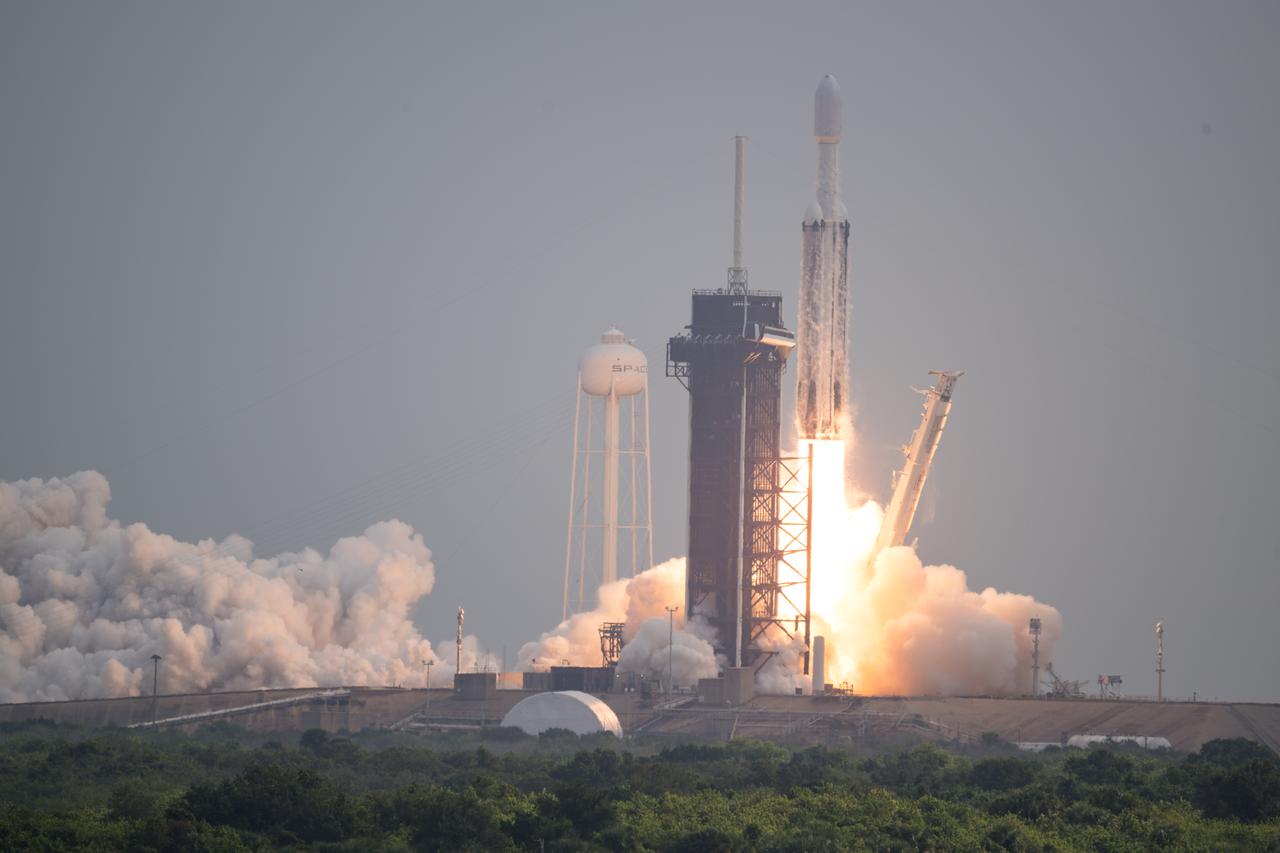
A SpaceX Falcon Heavy rocket with the Psyche spacecraft onboard is launched from Launch Complex 39A, Friday, Oct. 13, 2023, at NASA’s Kennedy Space Center in Florida. NASA’s Psyche spacecraft will travel to a metal-rich asteroid by the same name orbiting the Sun between Mars and Jupiter to study it’s composition. The spacecraft also carries the agency's Deep Space Optical Communications technology demonstration, which will test laser communications beyond the Moon. Photo Credit: (NASA/Aubrey Gemignani)
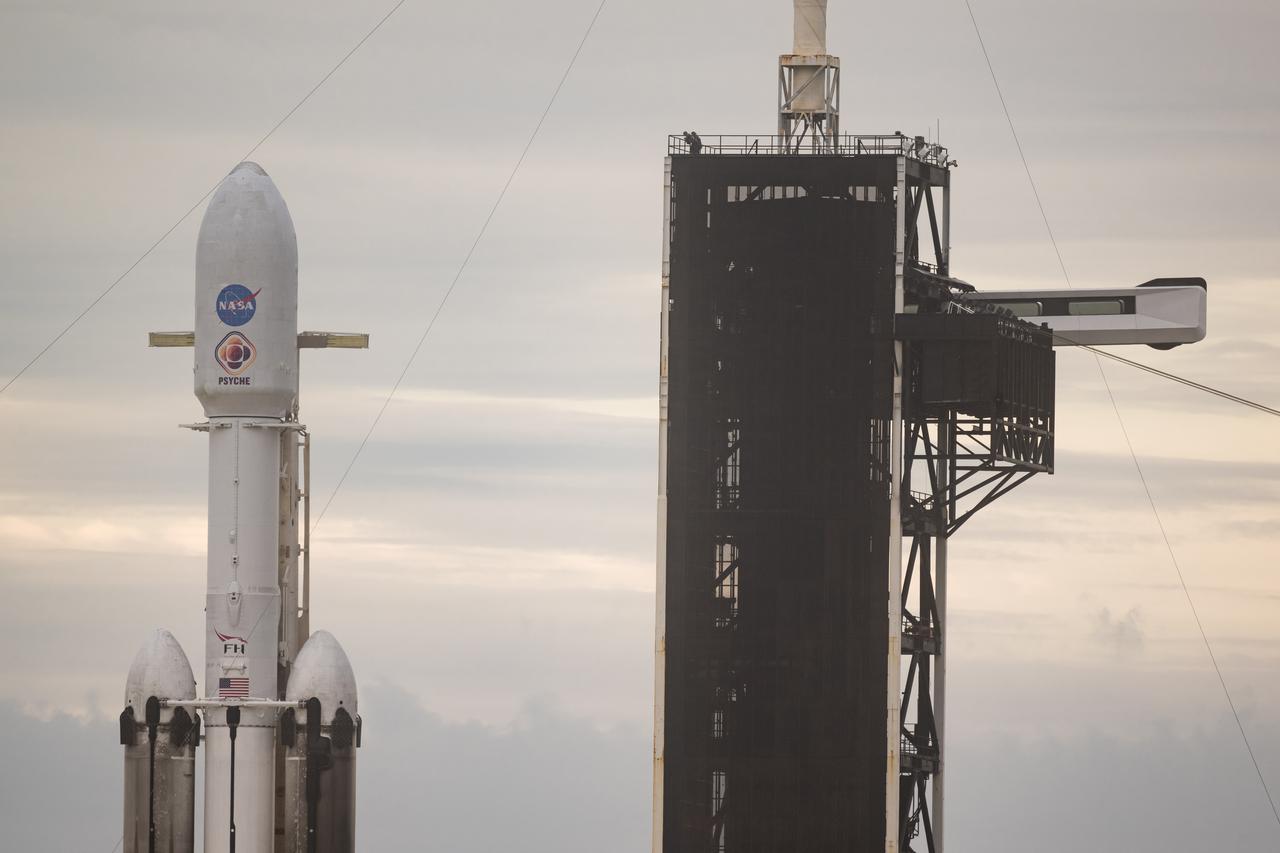
A SpaceX Falcon Heavy rocket with the Psyche spacecraft onboard is seen at Launch Complex 39A as preparations continue for the Psyche mission, Wednesday, Oct. 11, 2023, at NASA’s Kennedy Space Center in Florida. NASA’s Psyche spacecraft will travel to a metal-rich asteroid by the same name orbiting the Sun between Mars and Jupiter to study it’s composition. The spacecraft also carries the agency's Deep Space Optical Communications technology demonstration, which will test laser communications beyond the Moon. Photo Credit: (NASA/Aubrey Gemignani)
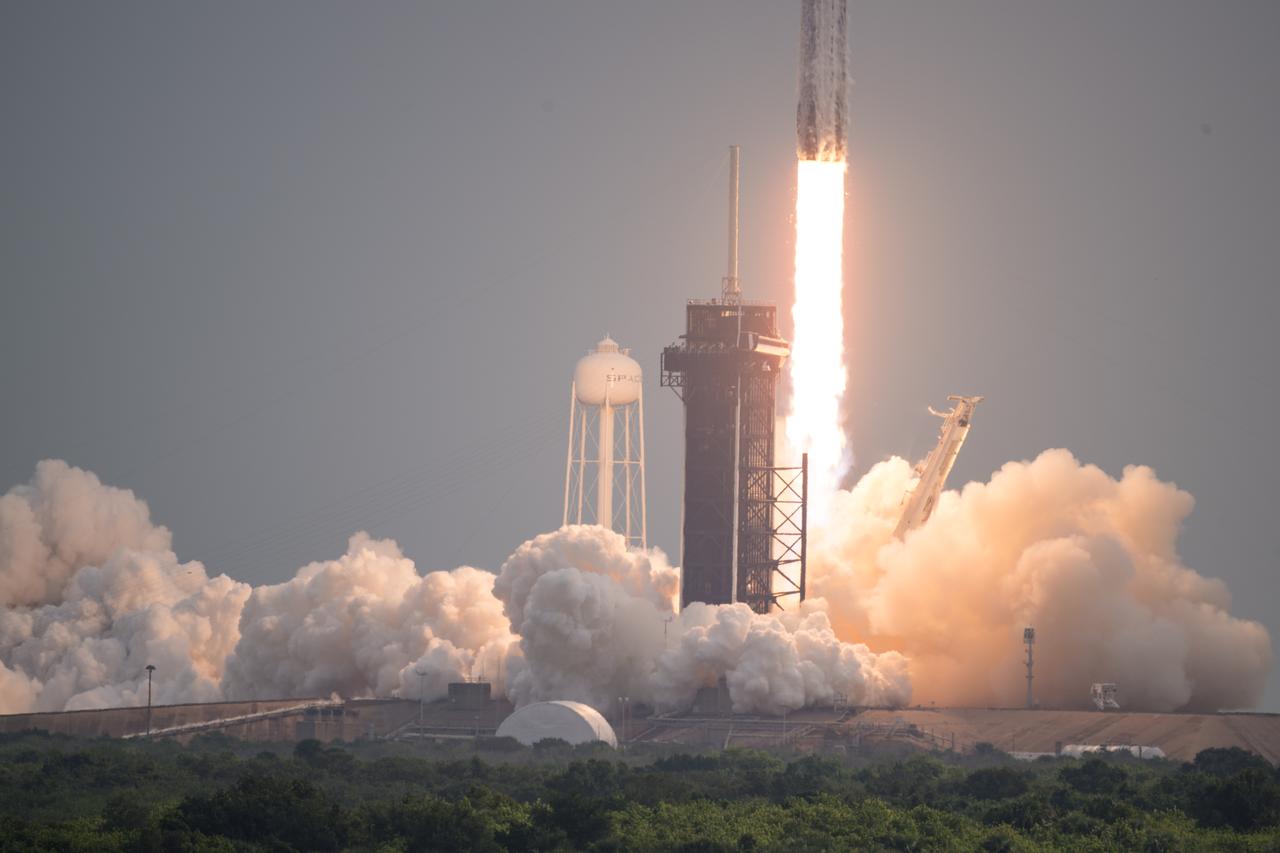
A SpaceX Falcon Heavy rocket with the Psyche spacecraft onboard is launched from Launch Complex 39A, Friday, Oct. 13, 2023, at NASA’s Kennedy Space Center in Florida. NASA’s Psyche spacecraft will travel to a metal-rich asteroid by the same name orbiting the Sun between Mars and Jupiter to study it’s composition. The spacecraft also carries the agency's Deep Space Optical Communications technology demonstration, which will test laser communications beyond the Moon. Photo Credit: (NASA/Aubrey Gemignani)
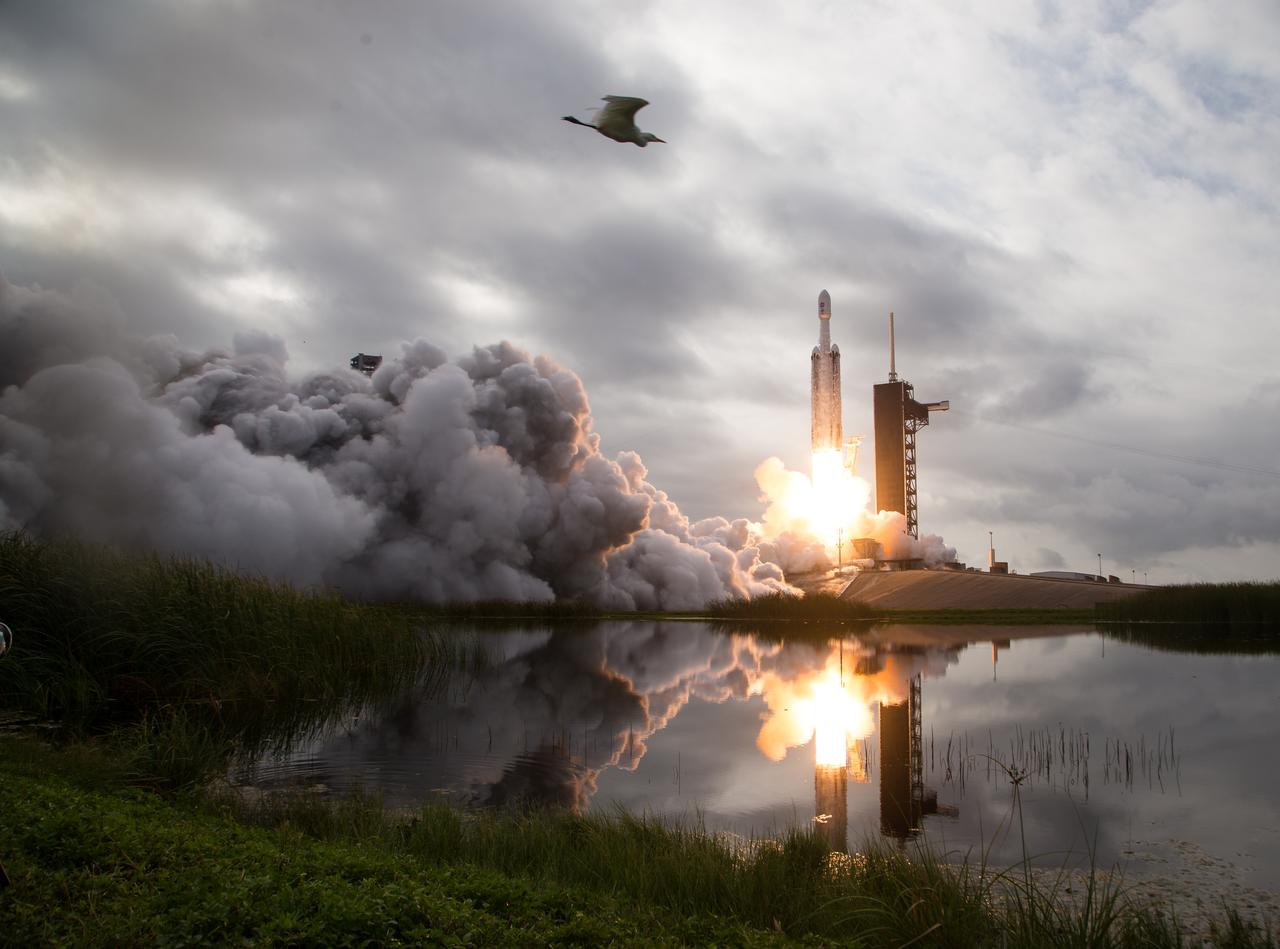
A SpaceX Falcon Heavy rocket with the Psyche spacecraft onboard is launched from Launch Complex 39A, Friday, Oct. 13, 2023, at NASA’s Kennedy Space Center in Florida. NASA’s Psyche spacecraft will travel to a metal-rich asteroid by the same name orbiting the Sun between Mars and Jupiter to study it’s composition. The spacecraft also carries the agency's Deep Space Optical Communications technology demonstration, which will test laser communications beyond the Moon. Photo Credit: (NASA/Aubrey Gemignani)
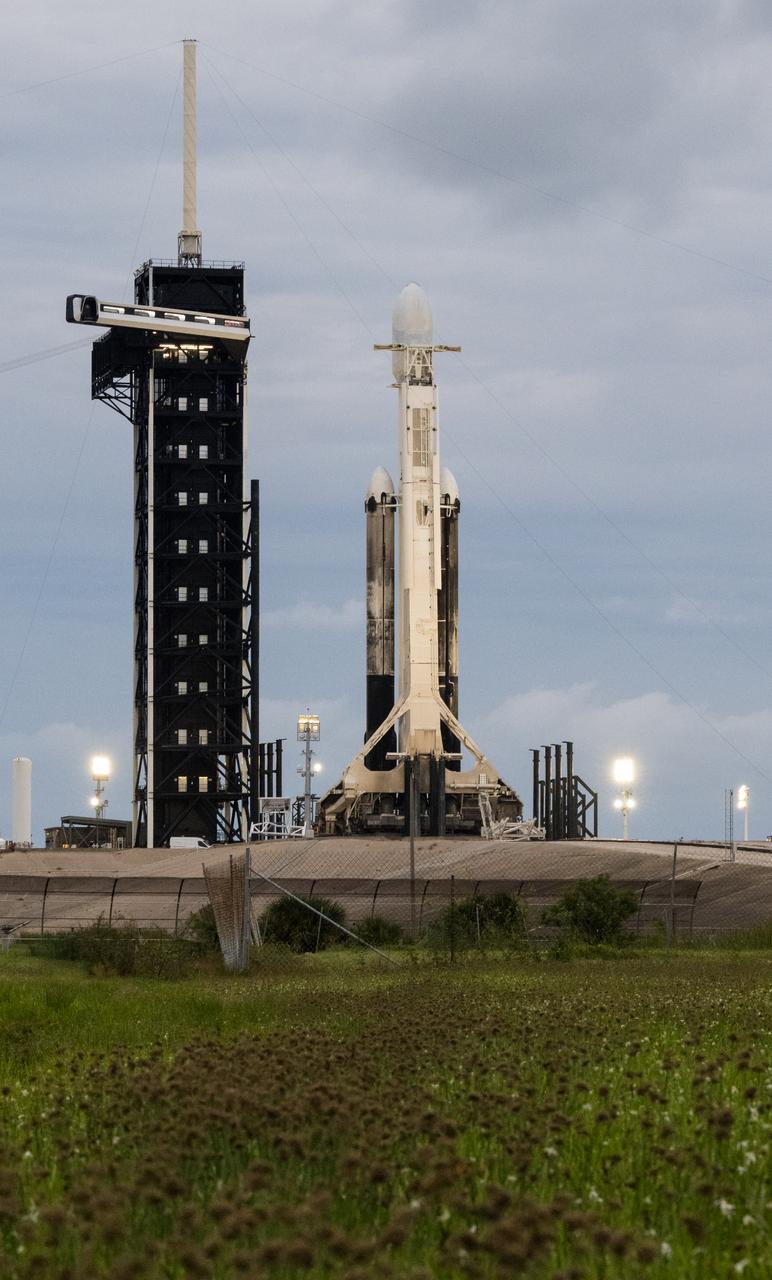
A SpaceX Falcon Heavy rocket with the Psyche spacecraft onboard is seen at Launch Complex 39A as preparations continue for the Psyche mission, Wednesday, Oct. 11, 2023, at NASA’s Kennedy Space Center in Florida. NASA’s Psyche spacecraft will travel to a metal-rich asteroid by the same name orbiting the Sun between Mars and Jupiter to study it’s composition. The spacecraft also carries the agency's Deep Space Optical Communications technology demonstration, which will test laser communications beyond the Moon. Photo Credit: (NASA/Aubrey Gemignani)
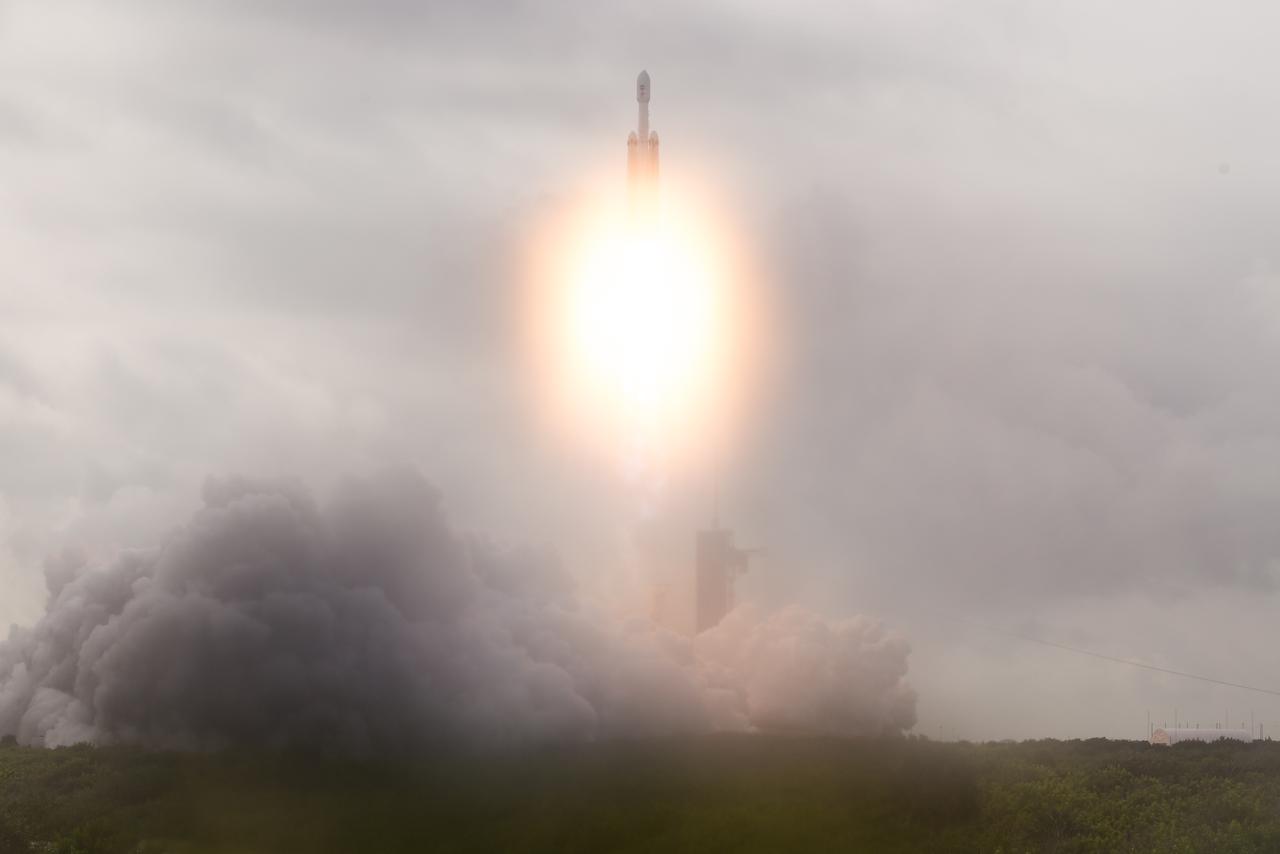
A SpaceX Falcon Heavy rocket with the Psyche spacecraft onboard is launched from Launch Complex 39A, Friday, Oct. 13, 2023, at NASA’s Kennedy Space Center in Florida. NASA’s Psyche spacecraft will travel to a metal-rich asteroid by the same name orbiting the Sun between Mars and Jupiter to study it’s composition. The spacecraft also carries the agency's Deep Space Optical Communications technology demonstration, which will test laser communications beyond the Moon. Photo Credit: (NASA/Aubrey Gemignani)

A SpaceX Falcon Heavy rocket with the Psyche spacecraft onboard is launched from Launch Complex 39A, Friday, Oct. 13, 2023, at NASA’s Kennedy Space Center in Florida. NASA’s Psyche spacecraft will travel to a metal-rich asteroid by the same name orbiting the Sun between Mars and Jupiter to study it’s composition. The spacecraft also carries the agency's Deep Space Optical Communications technology demonstration, which will test laser communications beyond the Moon. Photo Credit: (NASA/Aubrey Gemignani)
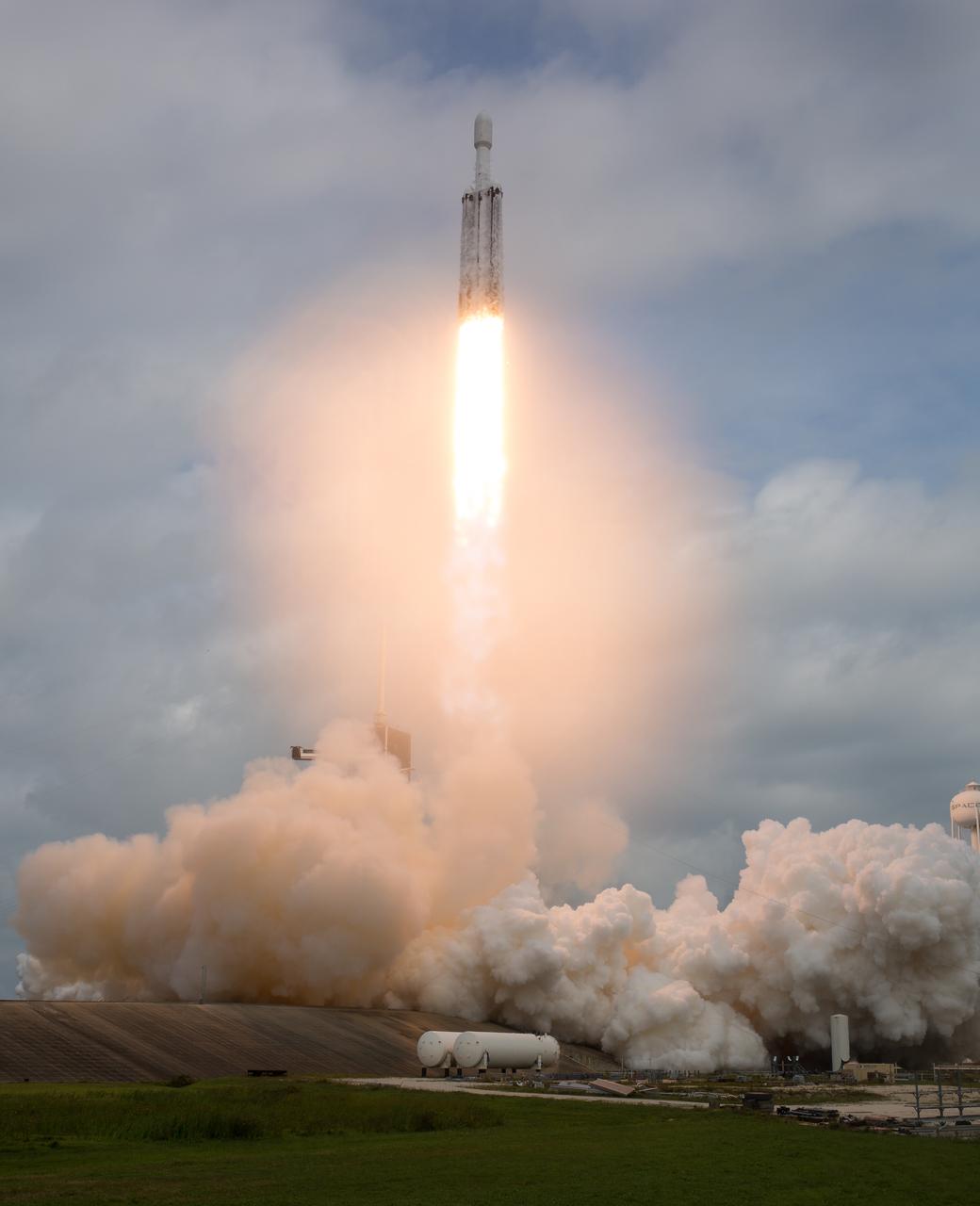
A SpaceX Falcon Heavy rocket with the Psyche spacecraft onboard is launched from Launch Complex 39A, Friday, Oct. 13, 2023, at NASA’s Kennedy Space Center in Florida. NASA’s Psyche spacecraft will travel to a metal-rich asteroid by the same name orbiting the Sun between Mars and Jupiter to study it’s composition. The spacecraft also carries the agency's Deep Space Optical Communications technology demonstration, which will test laser communications beyond the Moon. Photo Credit: (NASA/Aubrey Gemignani)
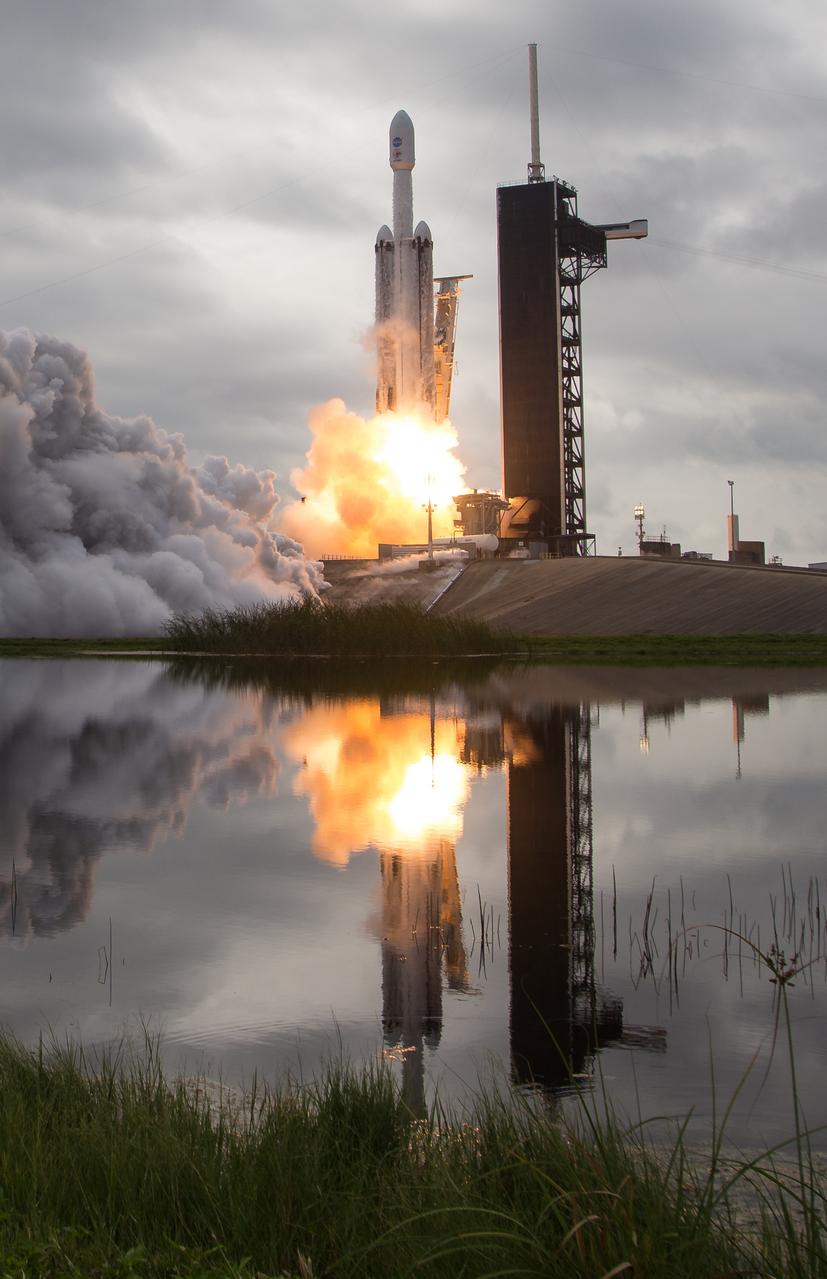
A SpaceX Falcon Heavy rocket with the Psyche spacecraft onboard is launched from Launch Complex 39A, Friday, Oct. 13, 2023, at NASA’s Kennedy Space Center in Florida. NASA’s Psyche spacecraft will travel to a metal-rich asteroid by the same name orbiting the Sun between Mars and Jupiter to study it’s composition. The spacecraft also carries the agency's Deep Space Optical Communications technology demonstration, which will test laser communications beyond the Moon. Photo Credit: (NASA/Aubrey Gemignani)
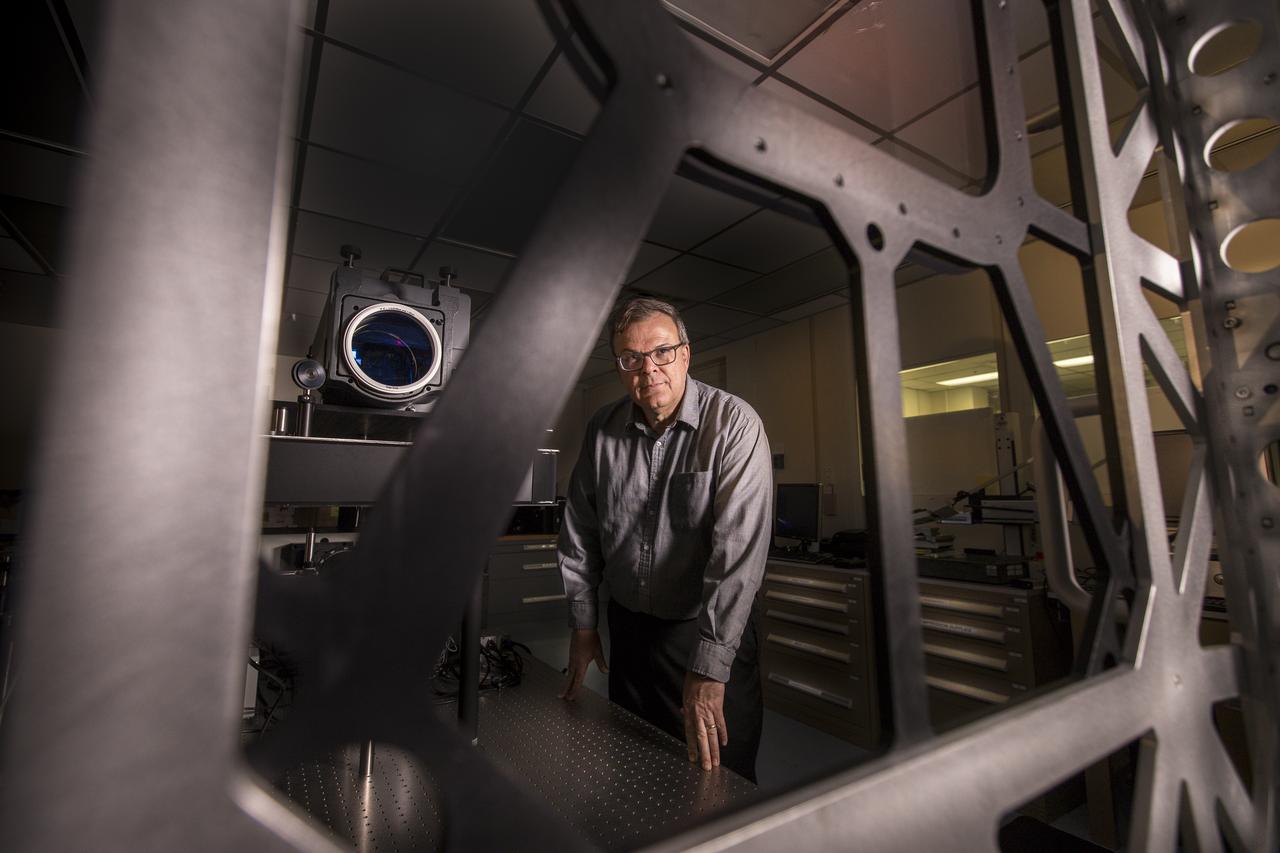
Mark Nurge, a physicist in Kennedy Space Center’s Applied Physics Lab, stands near a laser interferometer, which is used to determine if there are acceptable levels of distortion and imperfections in windows. Nurge recently completed optical metrology testing and evaluation of all flight windows on the Orion capsule for Artemis 1. The interferometer uses a laser source to do wavefront and transmission measurements, as well as evaluation of the color balance. Artemis 1 is an uncrewed flight that will pave the way for future crewed missions and enable future missions to the Moon, Mars, and beyond.
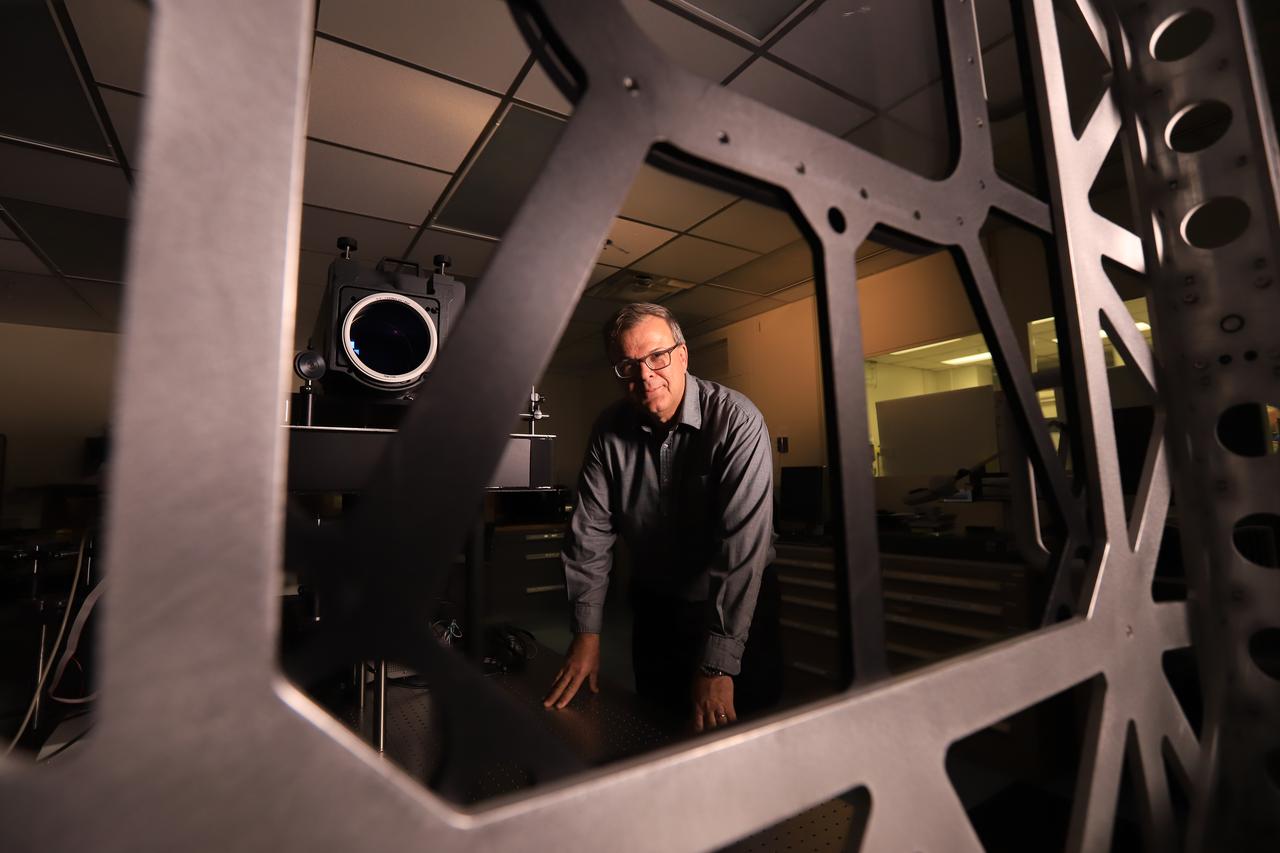
Mark Nurge, a physicist in Kennedy Space Center’s Applied Physics Lab, stands near a laser interferometer, which is used to determine if there are acceptable levels of distortion and imperfections in windows. Nurge recently completed optical metrology testing and evaluation of all flight windows on the Orion capsule for Artemis 1. The interferometer uses a laser source to do wavefront and transmission measurements, as well as evaluation of the color balance. Artemis 1 is an uncrewed flight that will pave the way for future crewed missions and enable future missions to the Moon, Mars, and beyond.
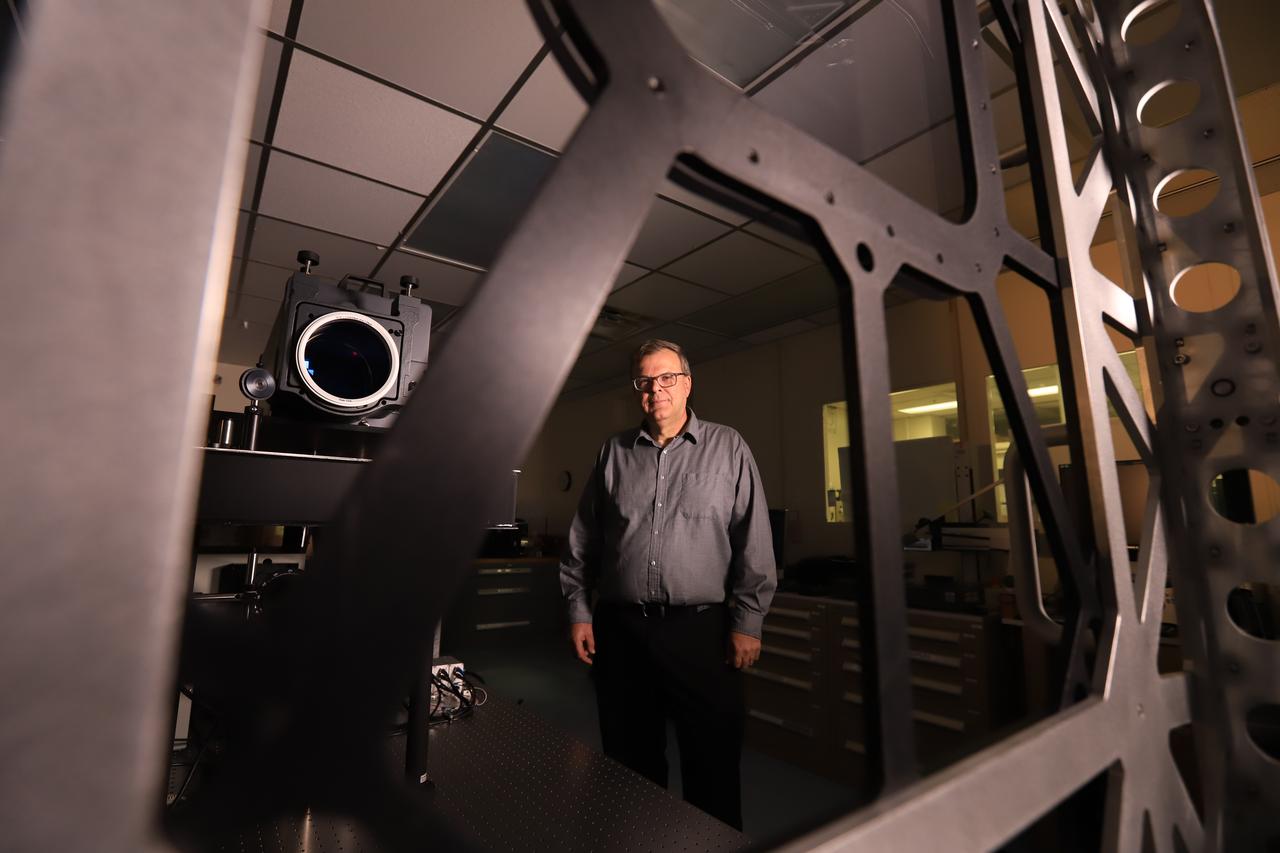
Mark Nurge, a physicist in Kennedy Space Center’s Applied Physics Lab, stands near a laser interferometer, which is used to determine if there are acceptable levels of distortion and imperfections in windows. Nurge recently completed optical metrology testing and evaluation of all flight windows on the Orion capsule for Artemis 1. The interferometer uses a laser source to do wavefront and transmission measurements, as well as evaluation of the color balance. Artemis 1 is an uncrewed flight that will pave the way for future crewed missions and enable future missions to the Moon, Mars, and beyond.
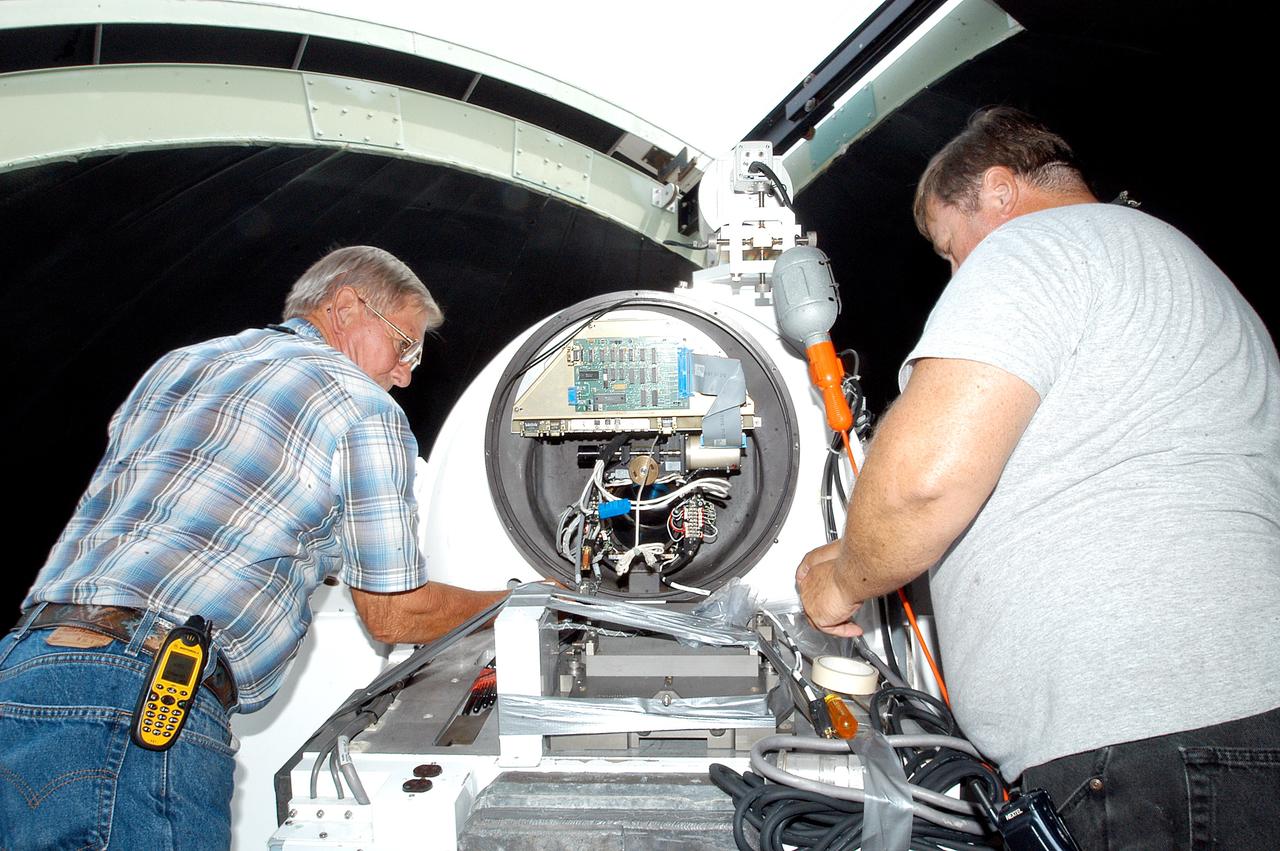
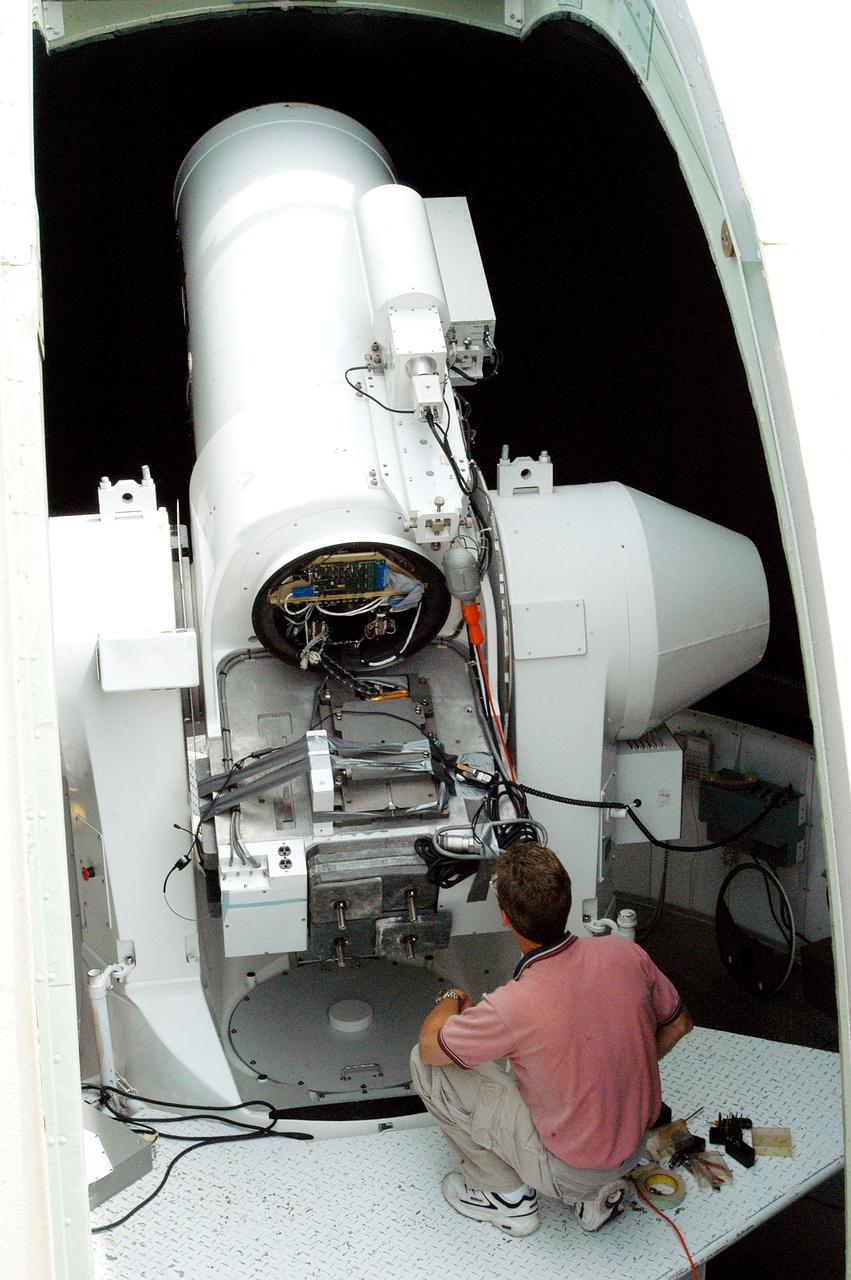
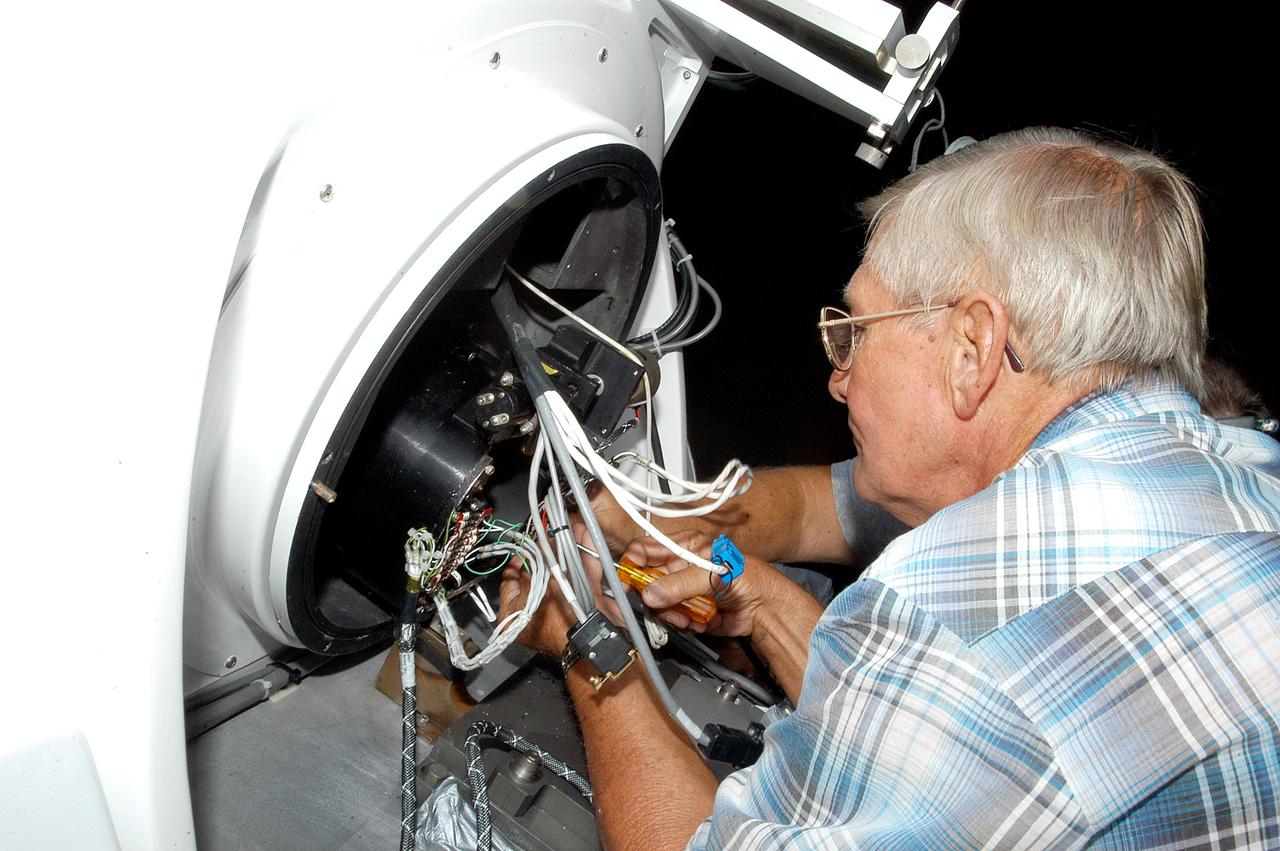
KENNEDY SPACE CENTER, FLA. - A worker calibrates a tracking telescope, part of the Distant Object Attitude Measurement System (DOAMS), located in Cocoa Beach, Fla. The telescope provides optical support for launches from KSC and Cape Canaveral.
KENNEDY SPACE CENTER, FLA. - Workers calibrate a tracking telescope, part of the Distant Object Attitude Measurement System (DOAMS), located in Cocoa Beach, Fla. The telescope provides optical support for launches from KSC and Cape Canaveral.
KENNEDY SPACE CENTER, FLA. - A worker calibrates a tracking telescope, part of the Distant Object Attitude Measurement System (DOAMS), located in Cocoa Beach, Fla. The telescope provides optical support for launches from KSC and Cape Canaveral.
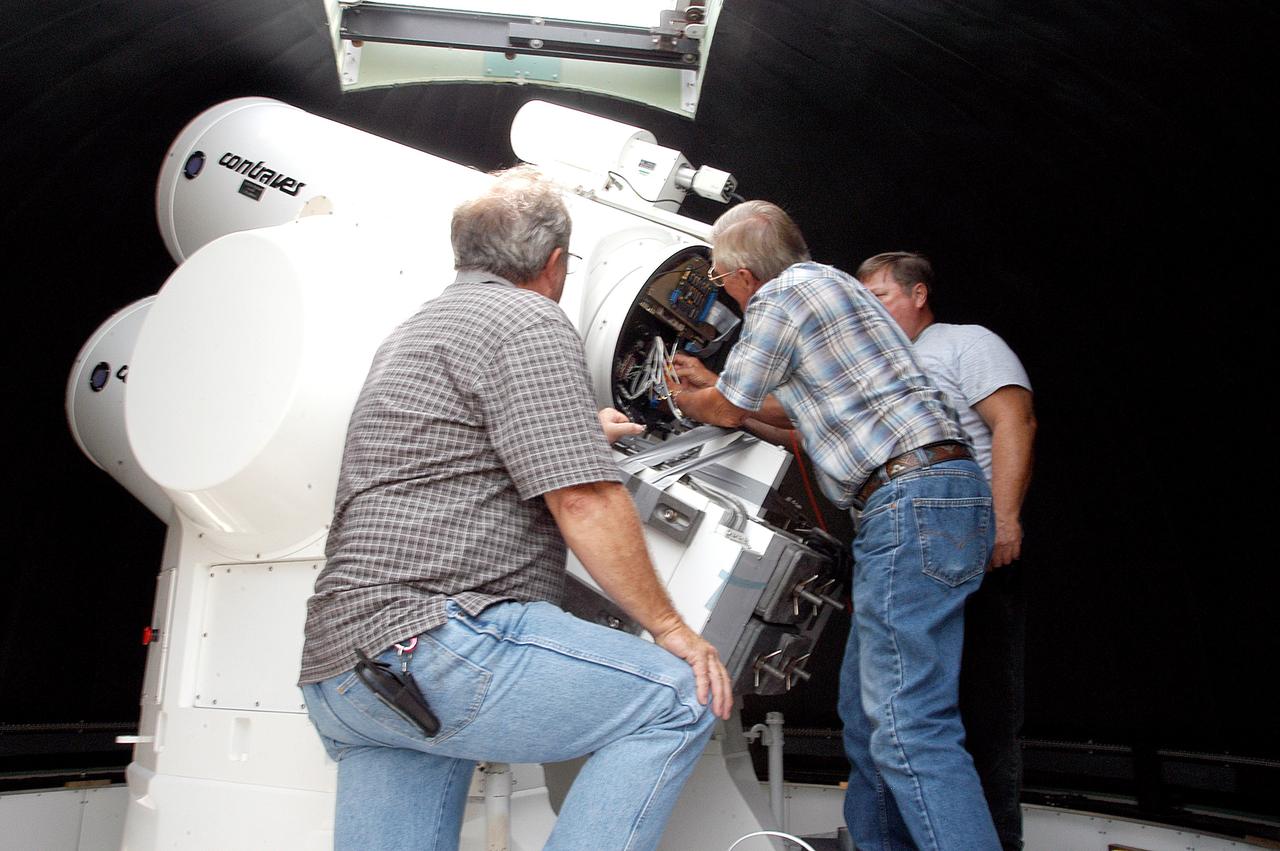
KENNEDY SPACE CENTER, FLA. - Workers calibrate a tracking telescope, part of the Distant Object Attitude Measurement System (DOAMS), located in Cocoa Beach, Fla. The telescope provides optical support for launches from KSC and Cape Canaveral.
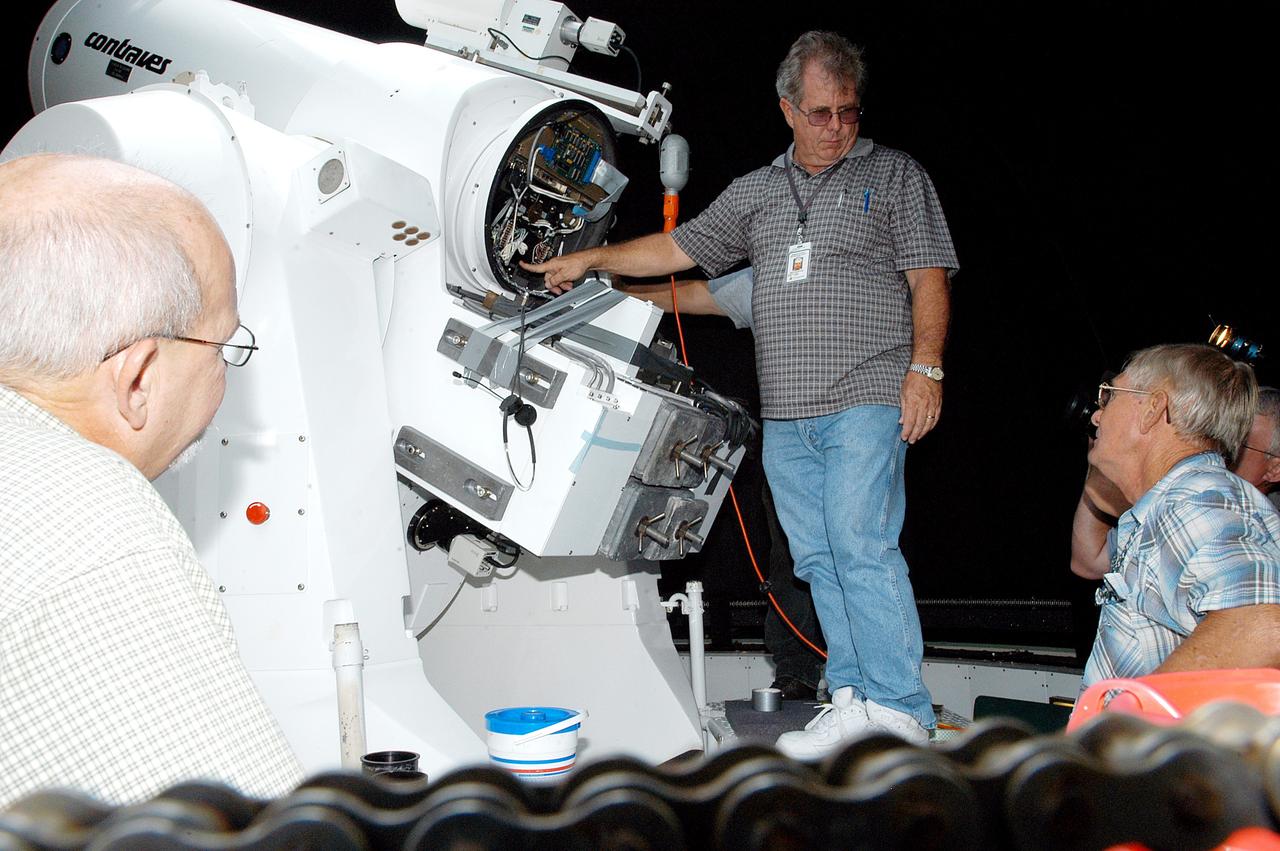
KENNEDY SPACE CENTER, FLA. - Workers calibrate a tracking telescope, part of the Distant Object Attitude Measurement System (DOAMS), located in Cocoa Beach, Fla. The telescope provides optical support for launches from KSC and Cape Canaveral.
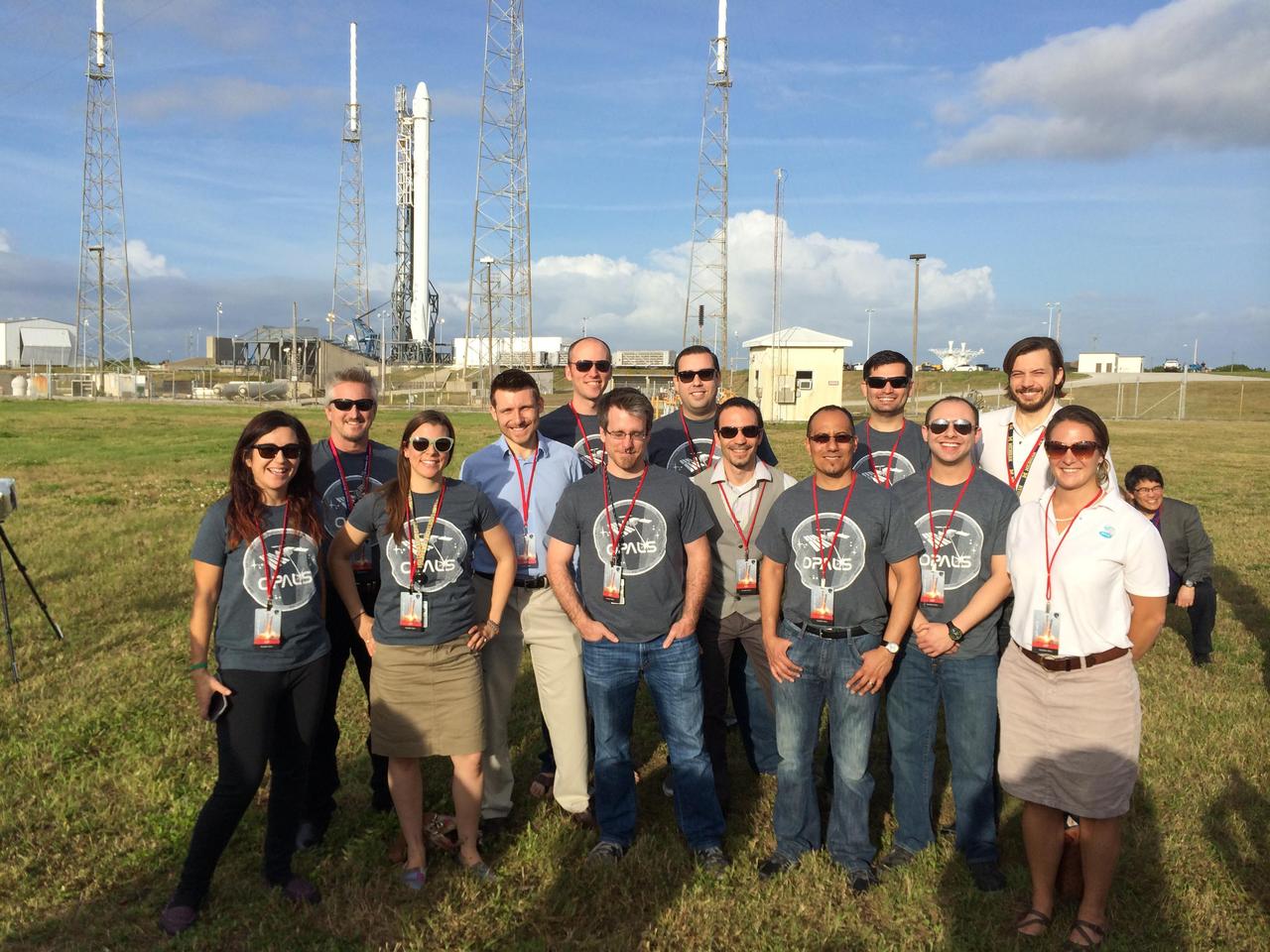
NASA Optical PAyload for Lasercomm Science OPALS operations team at Kennedy Space Center Space Launch Complex-40 on April 14, 2014, with the SpaceX Falcon 9 rocket carrying OPALS in the background.
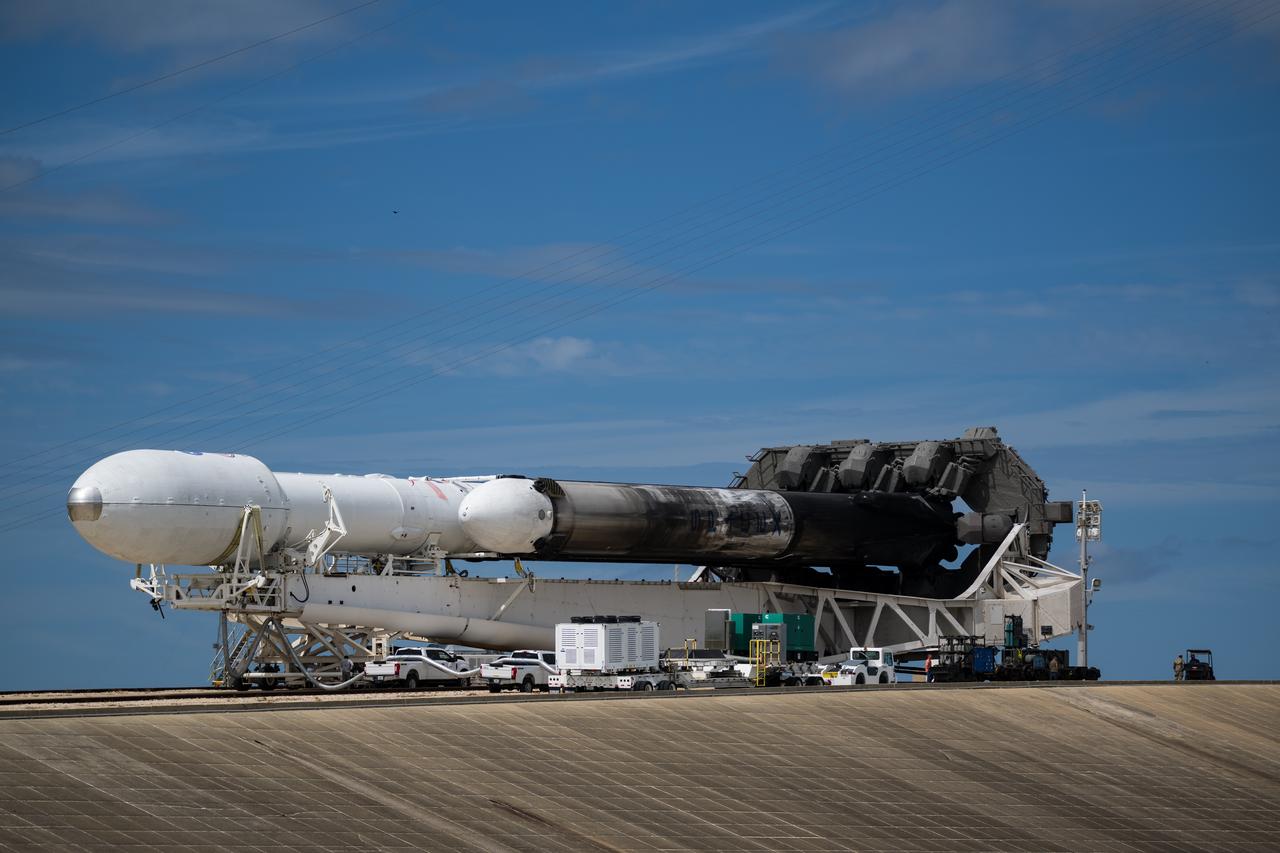
A SpaceX Falcon Heavy rocket with the Psyche spacecraft onboard is seen as it is rolled to the launch pad at Launch Complex 39A as preparations continue for the Psyche mission, Tuesday, Oct. 10, 2023, at NASA’s Kennedy Space Center in Florida. NASA’s Psyche spacecraft will travel to a metal-rich asteroid by the same name orbiting the Sun between Mars and Jupiter to study it’s composition. The spacecraft also carries the agency's Deep Space Optical Communications technology demonstration, which will test laser communications beyond the Moon. Photo Credit: (NASA/Aubrey Gemignani)
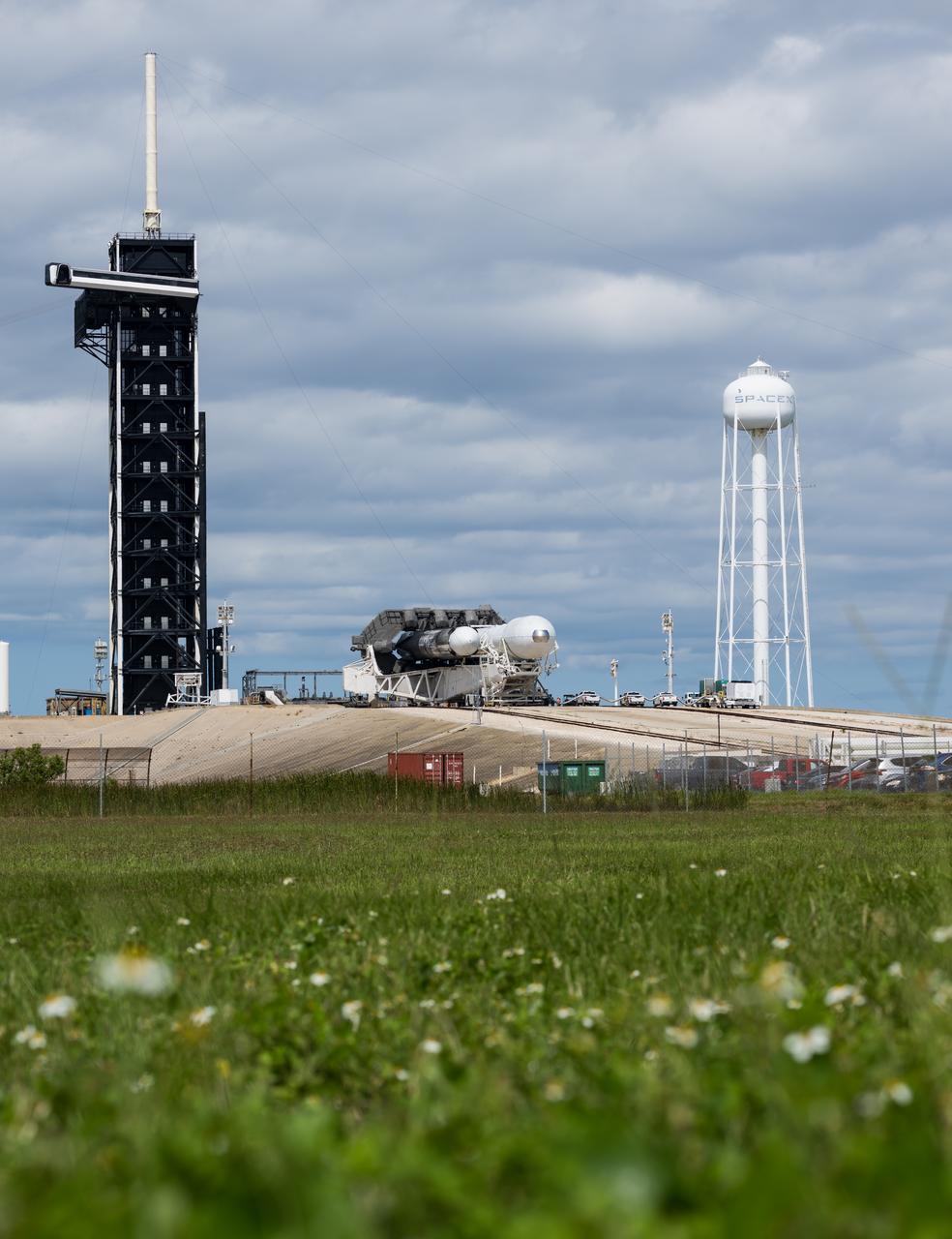
A SpaceX Falcon Heavy rocket with the Psyche spacecraft onboard is seen as it is rolled to the launch pad at Launch Complex 39A as preparations continue for the Psyche mission, Tuesday, Oct. 10, 2023, at NASA’s Kennedy Space Center in Florida. NASA’s Psyche spacecraft will travel to a metal-rich asteroid by the same name orbiting the Sun between Mars and Jupiter to study it’s composition. The spacecraft also carries the agency's Deep Space Optical Communications technology demonstration, which will test laser communications beyond the Moon. Photo Credit: (NASA/Aubrey Gemignani)
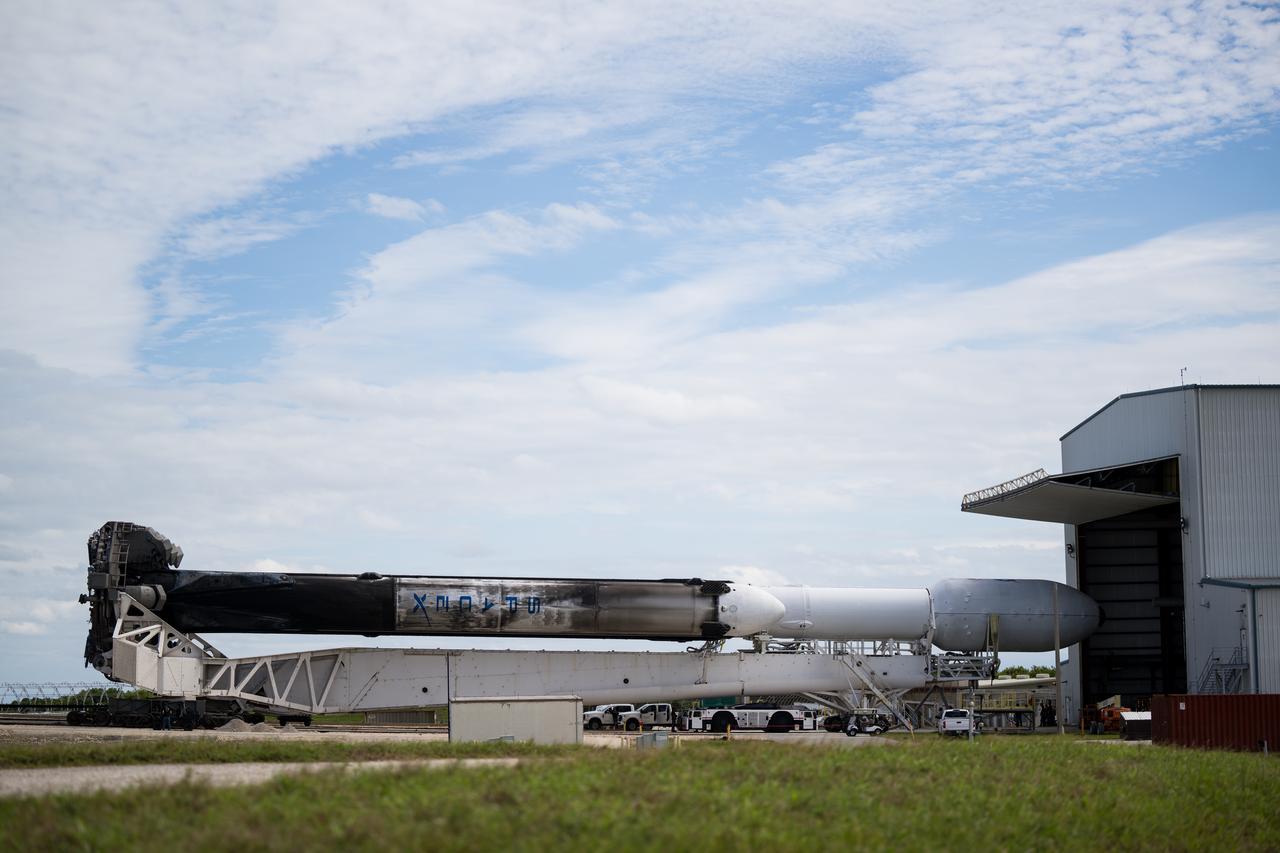
A SpaceX Falcon Heavy rocket with the Psyche spacecraft onboard is seen as it is rolled out of the horizontal integration facility at Launch Complex 39A as preparations continue for the Psyche mission, Tuesday, Oct. 10, 2023, at NASA’s Kennedy Space Center in Florida. NASA’s Psyche spacecraft will travel to a metal-rich asteroid by the same name orbiting the Sun between Mars and Jupiter to study it’s composition. The spacecraft also carries the agency's Deep Space Optical Communications technology demonstration, which will test laser communications beyond the Moon. Photo Credit: (NASA/Aubrey Gemignani)
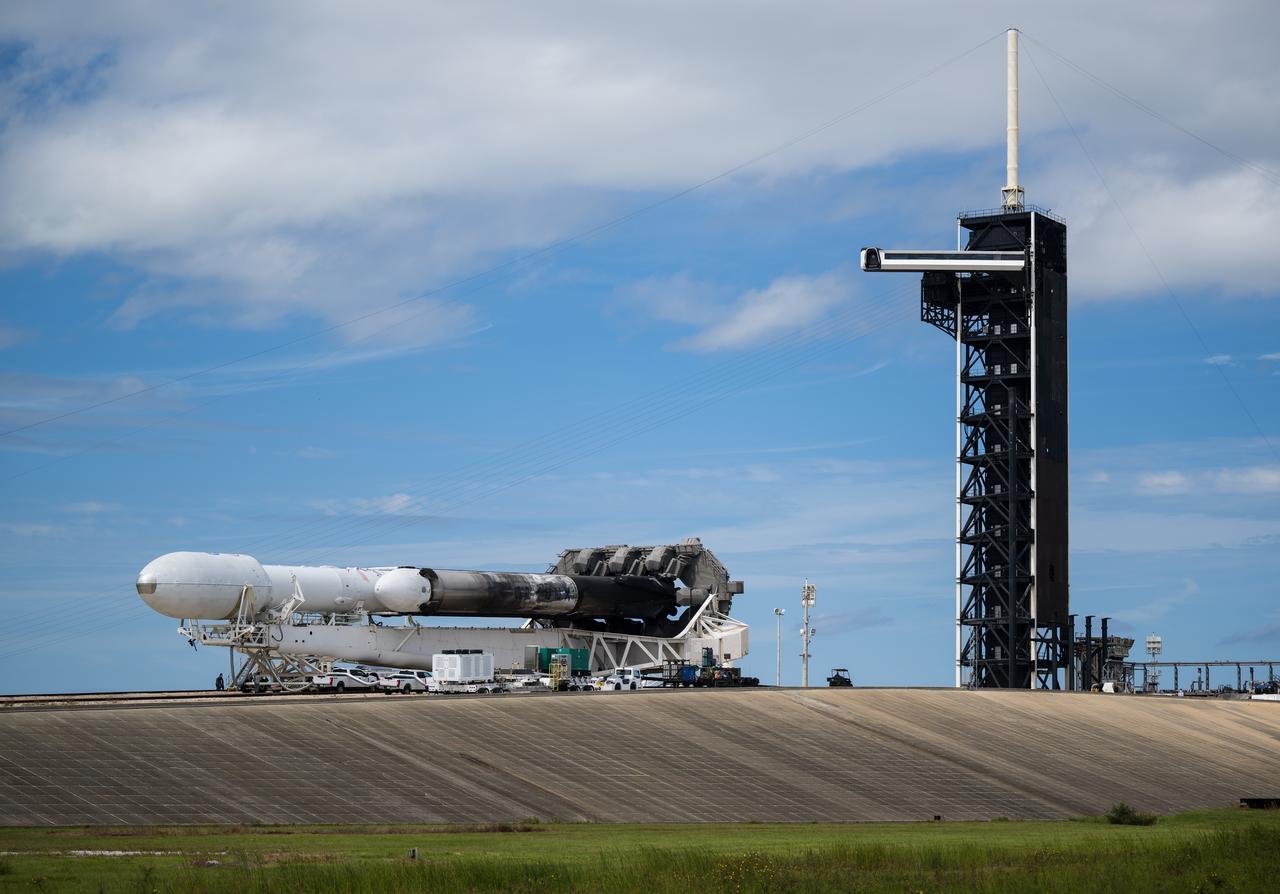
A SpaceX Falcon Heavy rocket with the Psyche spacecraft onboard is seen as it is rolled to the launch pad at Launch Complex 39A as preparations continue for the Psyche mission, Tuesday, Oct. 10, 2023, at NASA’s Kennedy Space Center in Florida. NASA’s Psyche spacecraft will travel to a metal-rich asteroid by the same name orbiting the Sun between Mars and Jupiter to study it’s composition. The spacecraft also carries the agency's Deep Space Optical Communications technology demonstration, which will test laser communications beyond the Moon. Photo Credit: (NASA/Aubrey Gemignani)
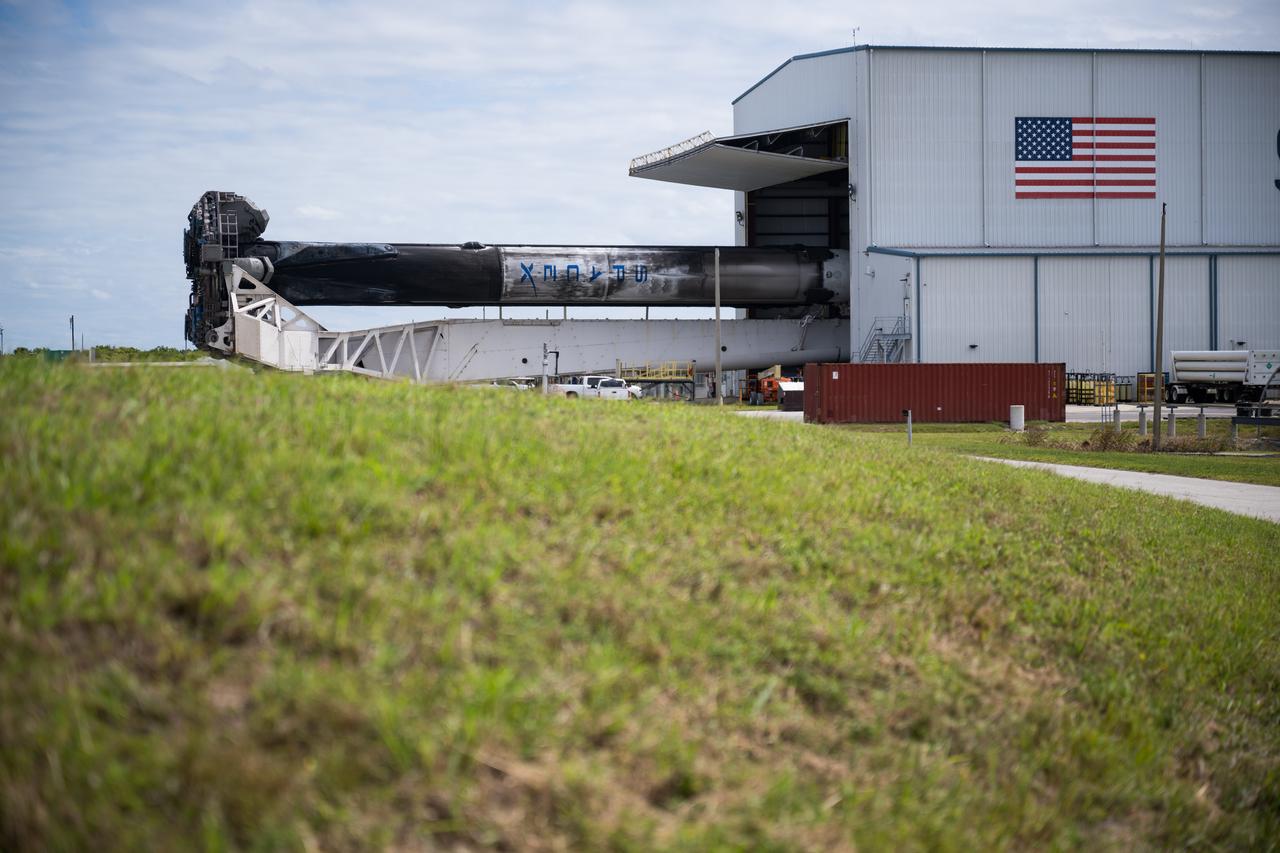
A SpaceX Falcon Heavy rocket with the Psyche spacecraft onboard is seen as it is rolled out of the horizontal integration facility at Launch Complex 39A as preparations continue for the Psyche mission, Tuesday, Oct. 10, 2023, at NASA’s Kennedy Space Center in Florida. NASA’s Psyche spacecraft will travel to a metal-rich asteroid by the same name orbiting the Sun between Mars and Jupiter to study it’s composition. The spacecraft also carries the agency's Deep Space Optical Communications technology demonstration, which will test laser communications beyond the Moon. Photo Credit: (NASA/Aubrey Gemignani)

A SpaceX Falcon Heavy rocket with the Psyche spacecraft onboard is seen as it is rolled out of the horizontal integration facility at Launch Complex 39A as preparations continue for the Psyche mission, Tuesday, Oct. 10, 2023, at NASA’s Kennedy Space Center in Florida. NASA’s Psyche spacecraft will travel to a metal-rich asteroid by the same name orbiting the Sun between Mars and Jupiter to study it’s composition. The spacecraft also carries the agency's Deep Space Optical Communications technology demonstration, which will test laser communications beyond the Moon. Photo Credit: (NASA/Aubrey Gemignani)
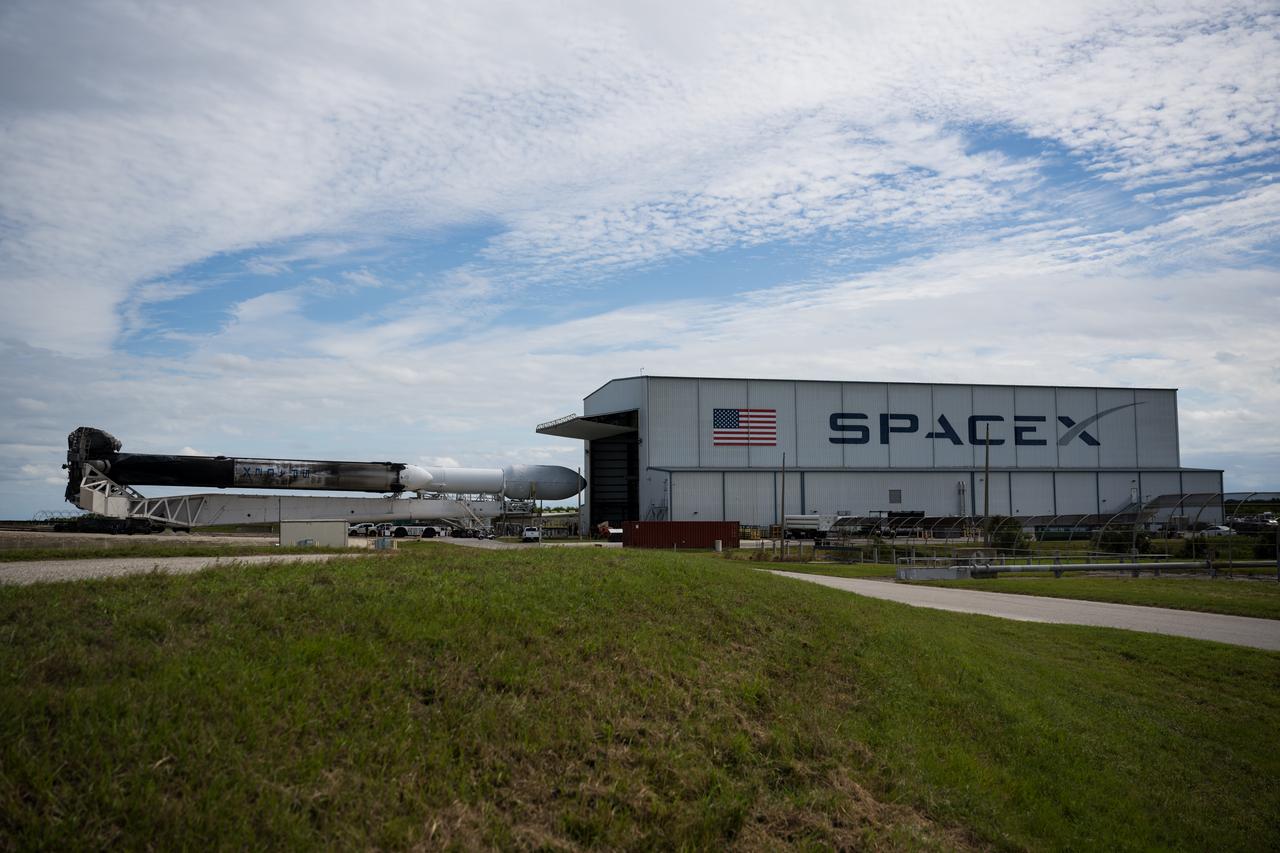
A SpaceX Falcon Heavy rocket with the Psyche spacecraft onboard is seen as it is rolled out of the horizontal integration facility at Launch Complex 39A as preparations continue for the Psyche mission, Tuesday, Oct. 10, 2023, at NASA’s Kennedy Space Center in Florida. NASA’s Psyche spacecraft will travel to a metal-rich asteroid by the same name orbiting the Sun between Mars and Jupiter to study it’s composition. The spacecraft also carries the agency's Deep Space Optical Communications technology demonstration, which will test laser communications beyond the Moon. Photo Credit: (NASA/Aubrey Gemignani)

A SpaceX Falcon Heavy rocket with the Psyche spacecraft onboard is seen as it is rolled out of the horizontal integration facility at Launch Complex 39A as preparations continue for the Psyche mission, Tuesday, Oct. 10, 2023, at NASA’s Kennedy Space Center in Florida. NASA’s Psyche spacecraft will travel to a metal-rich asteroid by the same name orbiting the Sun between Mars and Jupiter to study it’s composition. The spacecraft also carries the agency's Deep Space Optical Communications technology demonstration, which will test laser communications beyond the Moon. Photo Credit: (NASA/Aubrey Gemignani)

A SpaceX Falcon Heavy rocket with the Psyche spacecraft onboard is seen at Launch Complex 39A next to the countdown clock, as preparations continue for the Psyche mission, Friday, Oct. 13, 2023, at NASA’s Kennedy Space Center in Florida. NASA’s Psyche spacecraft will travel to a metal-rich asteroid by the same name orbiting the Sun between Mars and Jupiter to study it’s composition. The spacecraft also carries the agency's Deep Space Optical Communications technology demonstration, which will test laser communications beyond the Moon. Photo Credit: (NASA/Aubrey Gemignani)
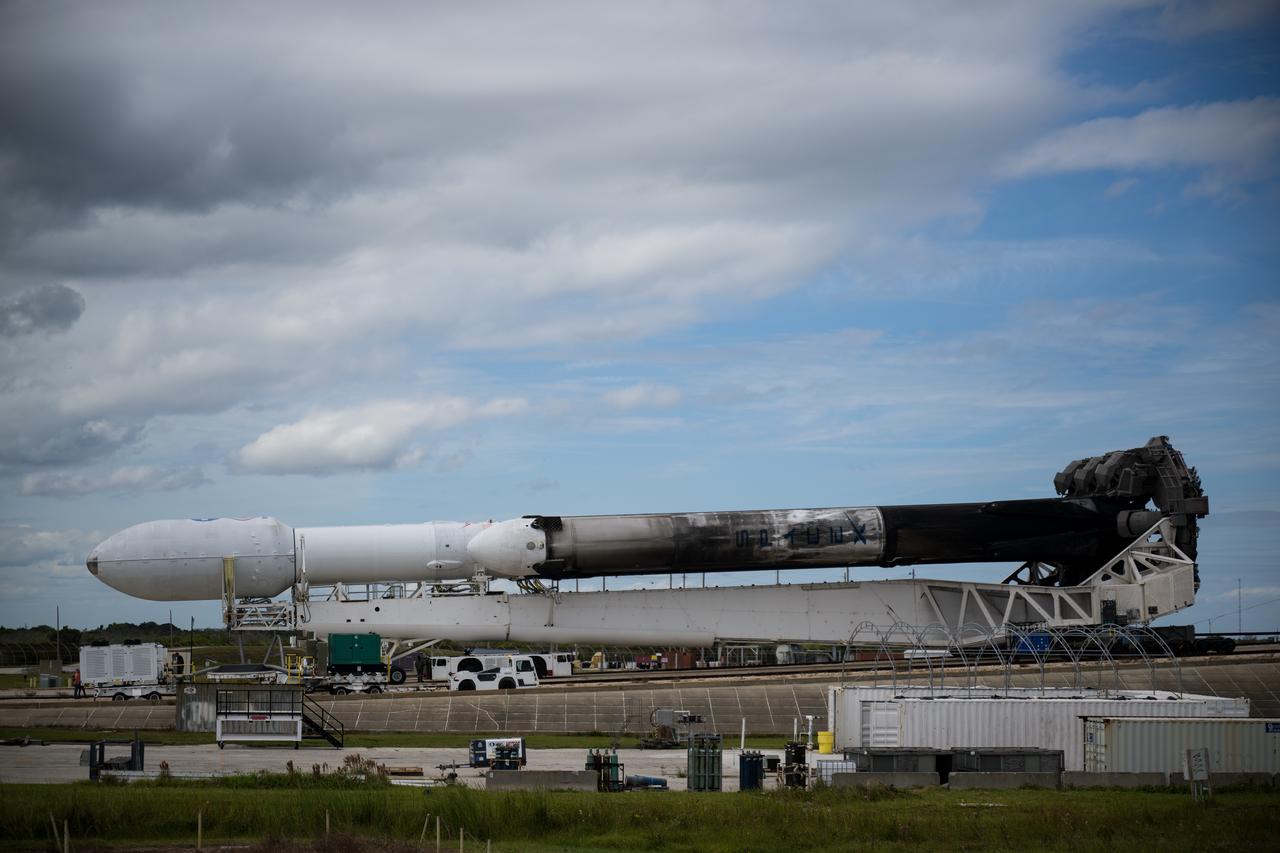
A SpaceX Falcon Heavy rocket with the Psyche spacecraft onboard is seen as it is rolled out of the horizontal integration facility at Launch Complex 39A as preparations continue for the Psyche mission, Tuesday, Oct. 10, 2023, at NASA’s Kennedy Space Center in Florida. NASA’s Psyche spacecraft will travel to a metal-rich asteroid by the same name orbiting the Sun between Mars and Jupiter to study it’s composition. The spacecraft also carries the agency's Deep Space Optical Communications technology demonstration, which will test laser communications beyond the Moon. Photo Credit: (NASA/Aubrey Gemignani)
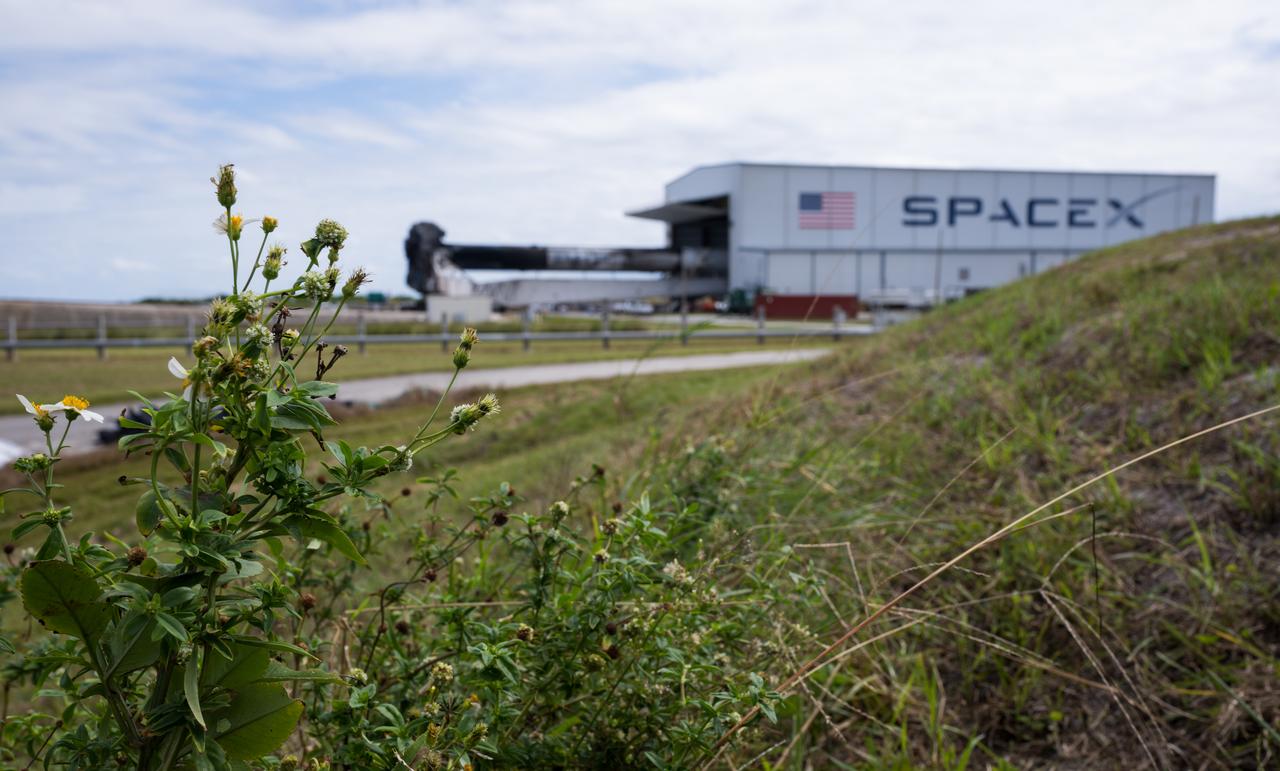
A SpaceX Falcon Heavy rocket with the Psyche spacecraft onboard is seen as it is rolled out of the horizontal integration facility at Launch Complex 39A as preparations continue for the Psyche mission, Tuesday, Oct. 10, 2023, at NASA’s Kennedy Space Center in Florida. NASA’s Psyche spacecraft will travel to a metal-rich asteroid by the same name orbiting the Sun between Mars and Jupiter to study it’s composition. The spacecraft also carries the agency's Deep Space Optical Communications technology demonstration, which will test laser communications beyond the Moon. Photo Credit: (NASA/Aubrey Gemignani)
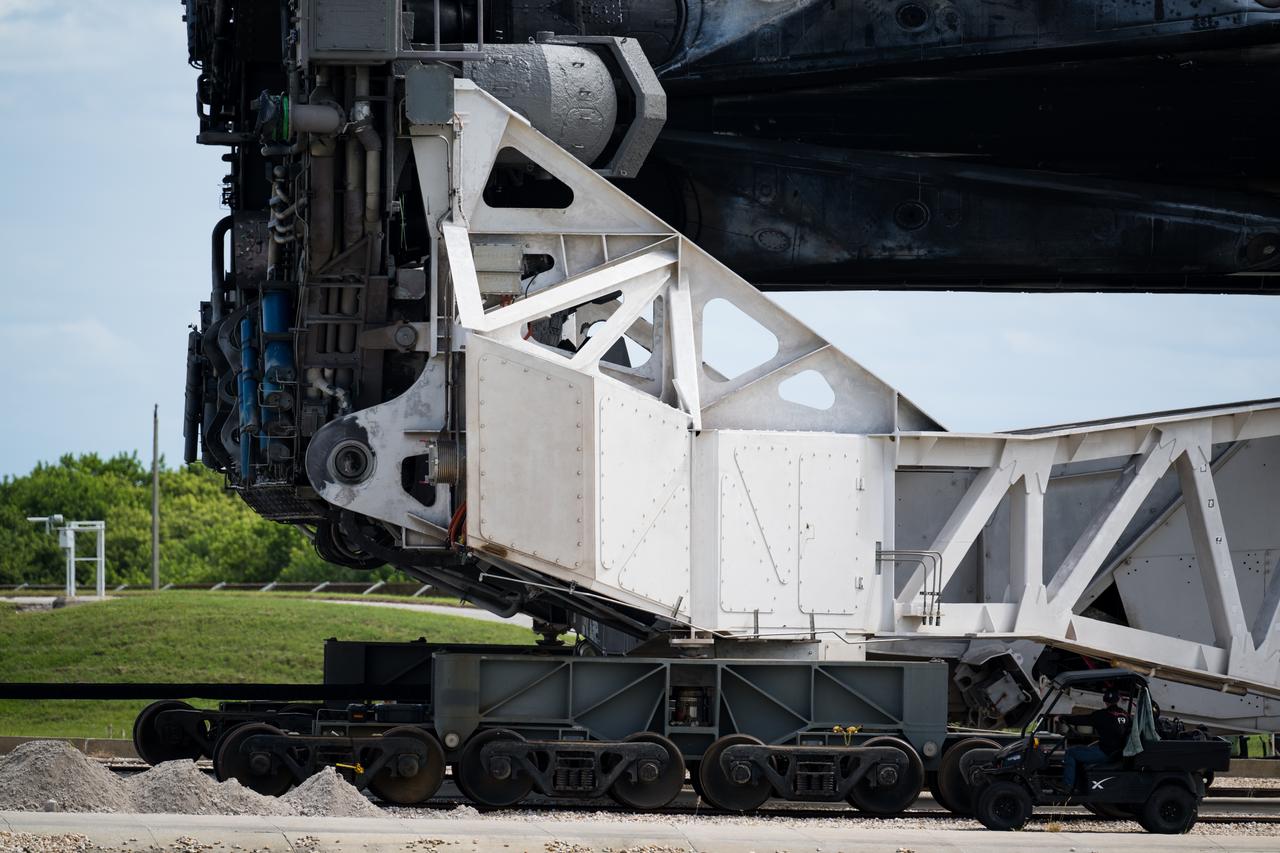
A SpaceX Falcon Heavy rocket with the Psyche spacecraft onboard is seen as it is rolled out of the horizontal integration facility at Launch Complex 39A as preparations continue for the Psyche mission, Tuesday, Oct. 10, 2023, at NASA’s Kennedy Space Center in Florida. NASA’s Psyche spacecraft will travel to a metal-rich asteroid by the same name orbiting the Sun between Mars and Jupiter to study it’s composition. The spacecraft also carries the agency's Deep Space Optical Communications technology demonstration, which will test laser communications beyond the Moon. Photo Credit: (NASA/Aubrey Gemignani)
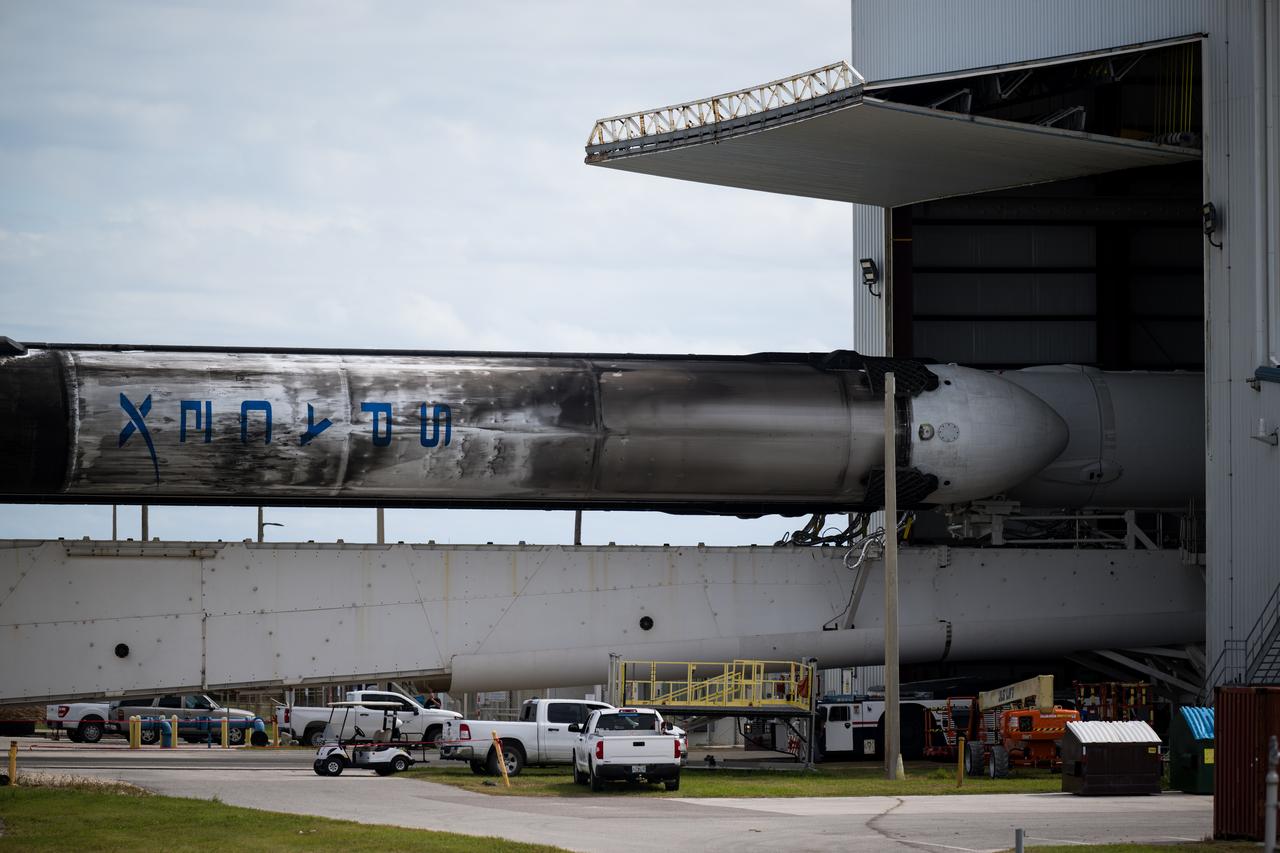
A SpaceX Falcon Heavy rocket with the Psyche spacecraft onboard is seen as it is rolled out of the horizontal integration facility at Launch Complex 39A as preparations continue for the Psyche mission, Tuesday, Oct. 10, 2023, at NASA’s Kennedy Space Center in Florida. NASA’s Psyche spacecraft will travel to a metal-rich asteroid by the same name orbiting the Sun between Mars and Jupiter to study it’s composition. The spacecraft also carries the agency's Deep Space Optical Communications technology demonstration, which will test laser communications beyond the Moon. Photo Credit: (NASA/Aubrey Gemignani)
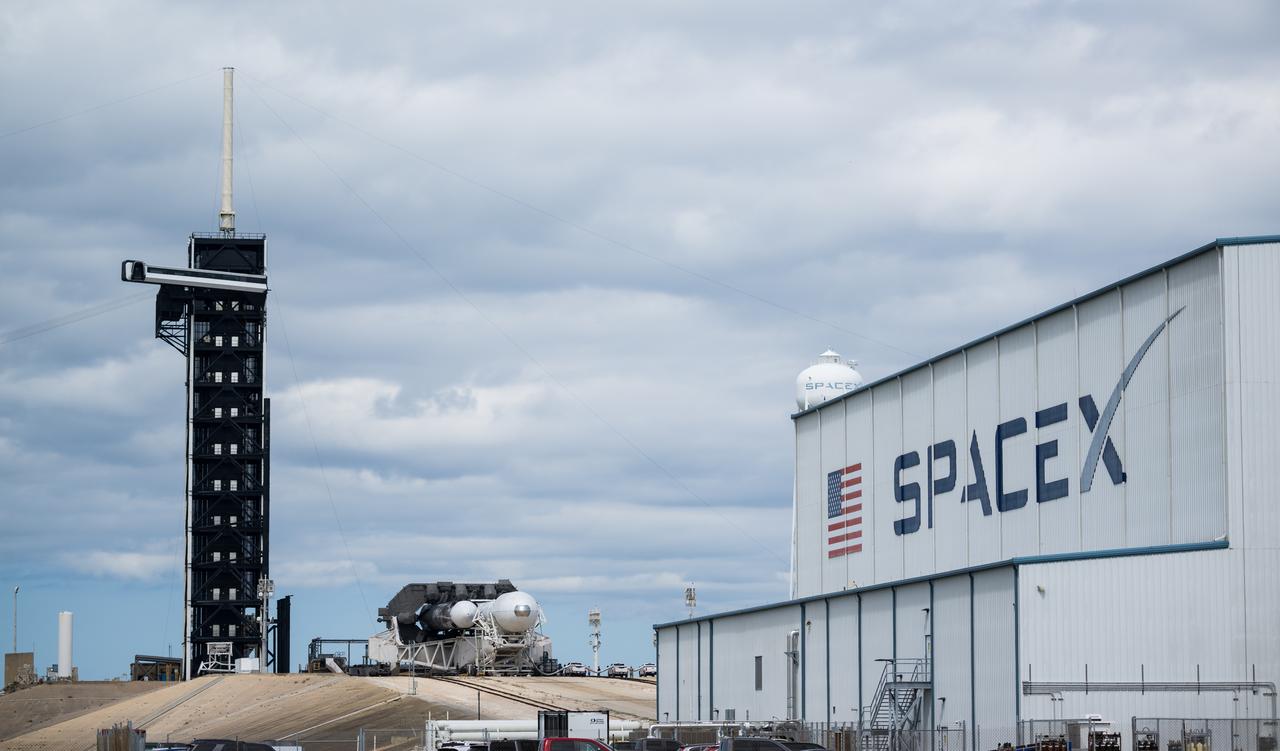
A SpaceX Falcon Heavy rocket with the Psyche spacecraft onboard is seen as it is rolled to the launch pad at Launch Complex 39A as preparations continue for the Psyche mission, Tuesday, Oct. 10, 2023, at NASA’s Kennedy Space Center in Florida. NASA’s Psyche spacecraft will travel to a metal-rich asteroid by the same name orbiting the Sun between Mars and Jupiter to study it’s composition. The spacecraft also carries the agency's Deep Space Optical Communications technology demonstration, which will test laser communications beyond the Moon. Photo Credit: (NASA/Aubrey Gemignani)
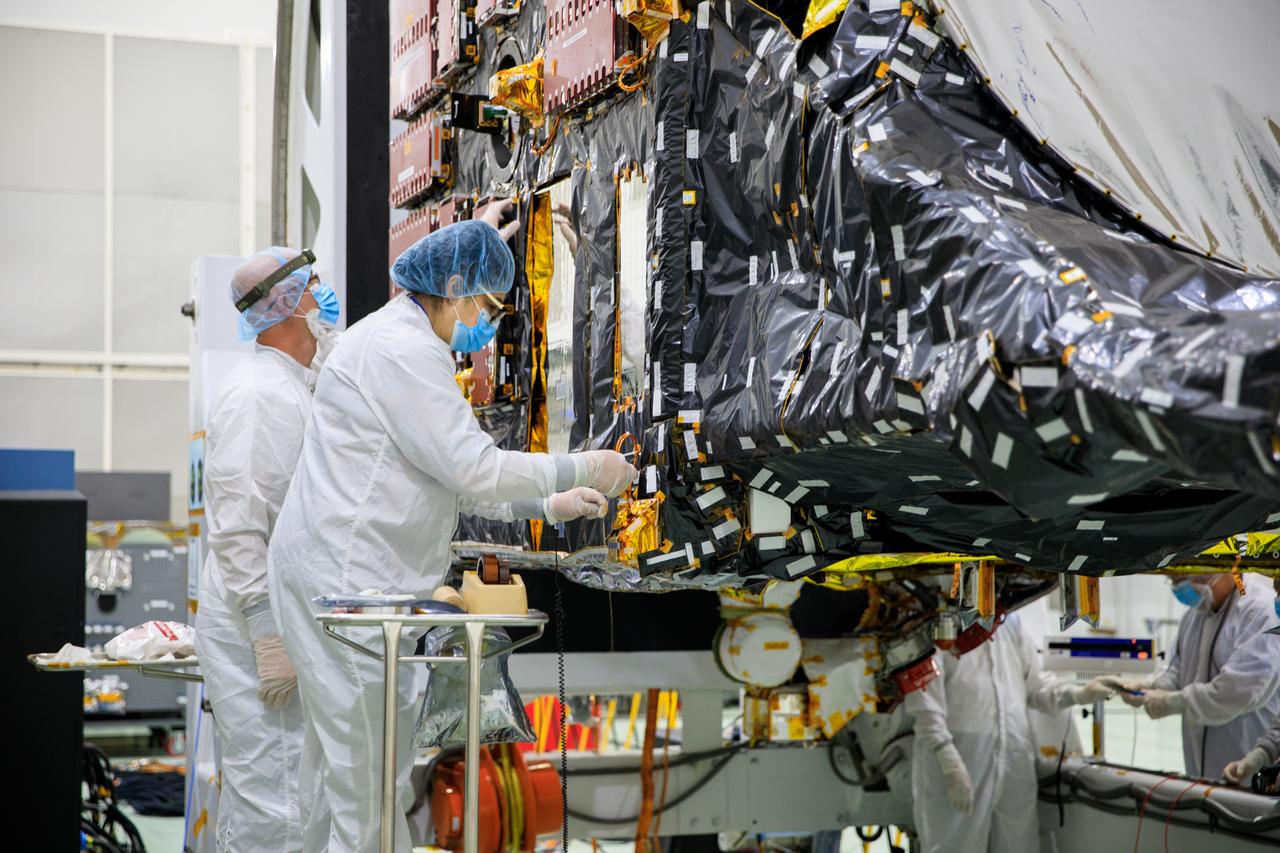
A NASA team prepares the agency’s Psyche spacecraft for launch inside the Astrotech Space Operations Facility near Kennedy Space Center in Florida on July 15, 2023. Psyche will launch atop a SpaceX Falcon Heavy rocket from Launch Complex 39A at Kennedy to explore a metal-rich asteroid. Launch is targeted for Oct. 5, 2023. Riding with Psyche is a pioneering technology demonstration, NASA’s Deep Space Optical Communications (DSOC) experiment.
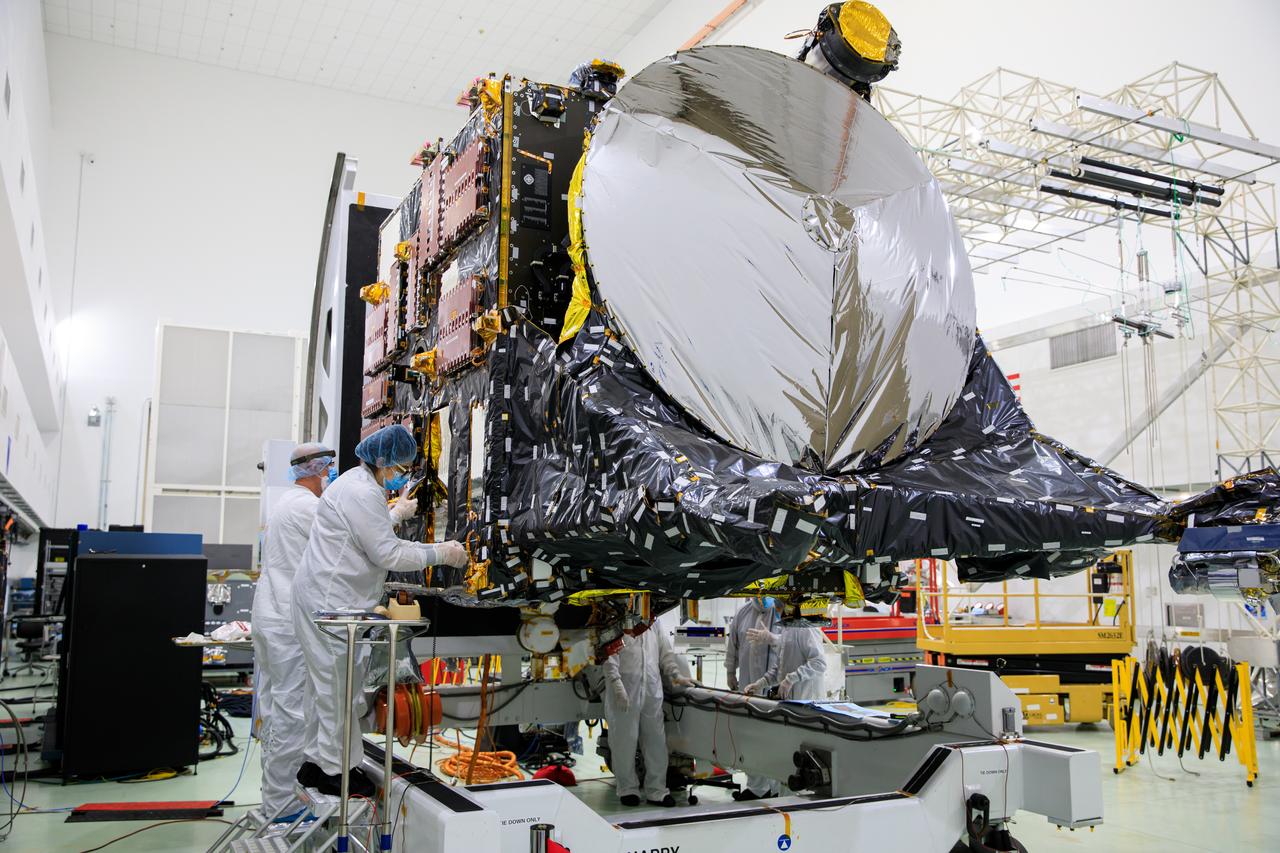
A NASA team prepares the agency’s Psyche spacecraft for launch inside the Astrotech Space Operations Facility near Kennedy Space Center in Florida on July 15, 2023. Psyche will launch atop a SpaceX Falcon Heavy rocket from Launch Complex 39A at Kennedy to explore a metal-rich asteroid. Launch is targeted for Oct. 5, 2023. Riding with Psyche is a pioneering technology demonstration, NASA’s Deep Space Optical Communications (DSOC) experiment.
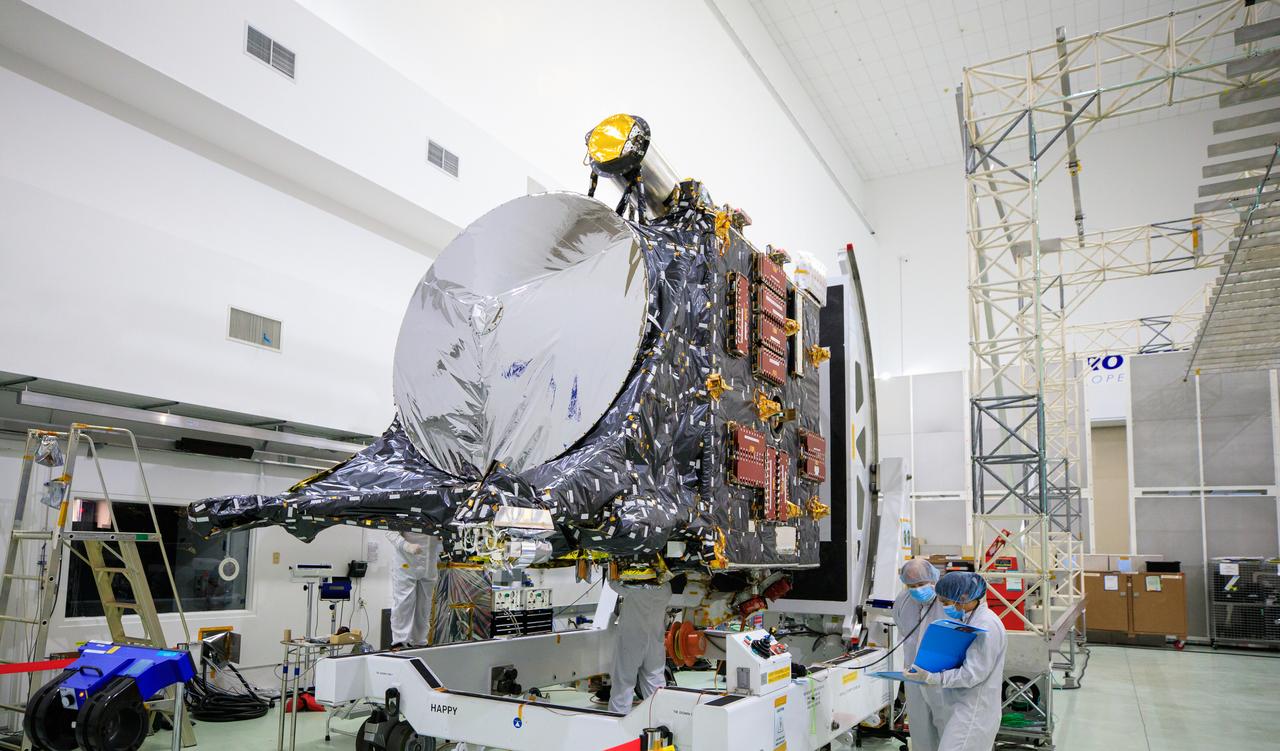
A NASA team prepares the agency’s Psyche spacecraft for launch inside the Astrotech Space Operations Facility near Kennedy Space Center in Florida on July 15, 2023. Psyche will launch atop a SpaceX Falcon Heavy rocket from Launch Complex 39A at Kennedy to explore a metal-rich asteroid. Launch is targeted for Oct. 5, 2023. Riding with Psyche is a pioneering technology demonstration, NASA’s Deep Space Optical Communications (DSOC) experiment.

Deep Space Station 13 (DSS-13) at NASA's Goldstone Deep Space Communications Complex near Barstow, California – part of the agency's Deep Space Network – is a 34-meter (112-foot) experimental antenna that has been retrofitted with an optical terminal (the boxy instrument below the center of the antenna's dish). Since November 2023, DSS-13 has been tracking the downlink laser of the Deep Space Optical Communications (DSOC) experiment that is aboard NASA's Psyche mission, which launched on Oct. 13, 2023. In a first, the antenna also synchronously received radio-frequency signals from the spacecraft as it travels through deep space on its way to investigate the metal-rich asteroid Psyche. The laser signal collected by the camera is then transmitted through optical fiber that feeds into a cryogenically cooled semiconducting nanowire single photon detector. Designed and built by JPL's Microdevices Laboratory, the detector is identical to the one used at Caltech's Palomar Observatory, in San Diego County, California, that acts as DSOC's downlink ground station. Goldstone is one of three complexes that comprise NASA's Deep Space Network, which provides radio communications for all of the agency's interplanetary spacecraft and is also utilized for radio astronomy and radar observations of the solar system and the universe. NASA's Jet Propulsion Laboratory, a division of Caltech in Pasadena, California, manages the DSN for the agency. https://photojournal.jpl.nasa.gov/catalog/PIA26148
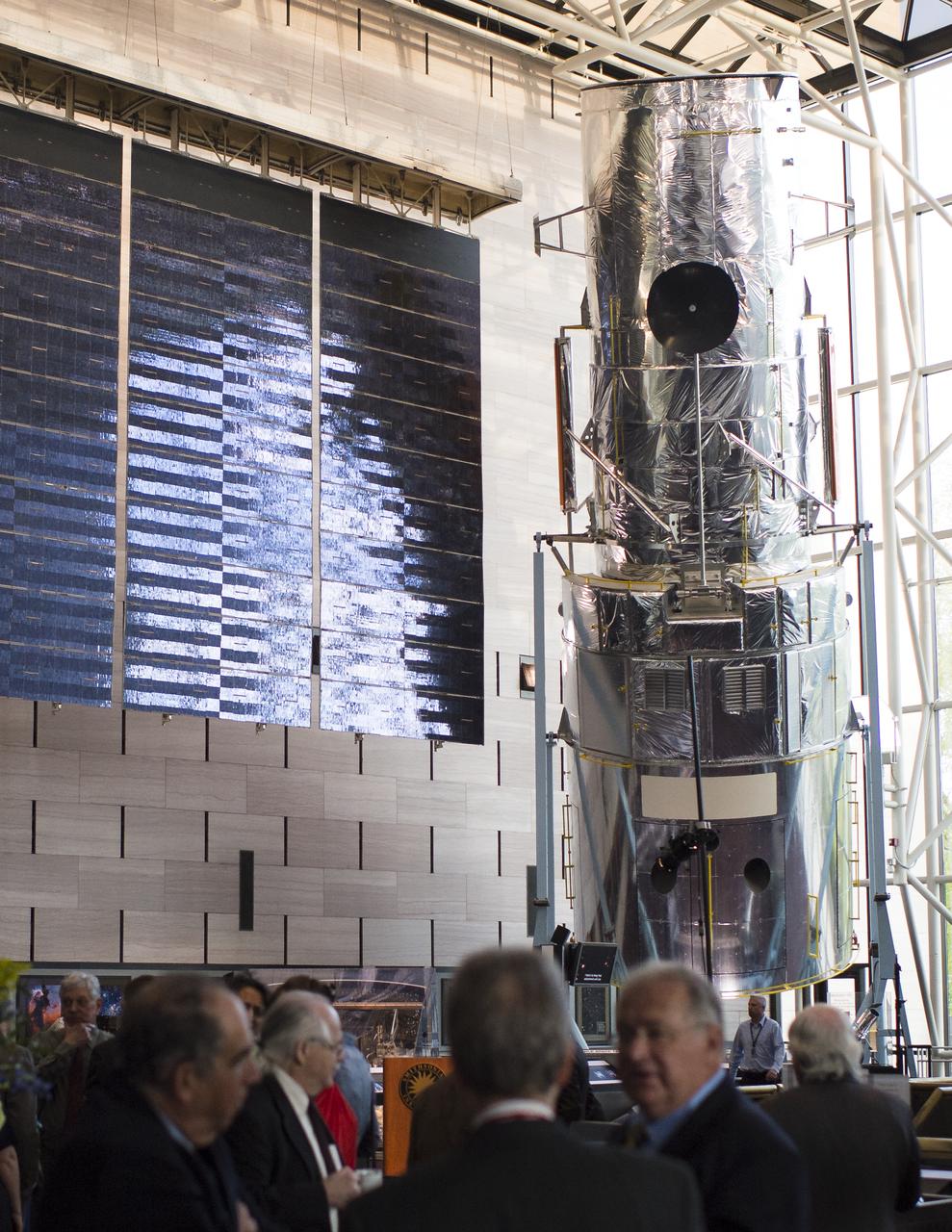
The Hubble Space Telescope Structural Dynamic Test Vehicle is seen inside the Space Hall at the Smithsonian National Air and Space Museum during an event unveiling a new exhibit featuring Hubble's Corrective Optics Space Telescope Axial Replacement (COSTAR) and the Wide Field and Planetary Camera 2 (WFPC2) on Wednesday, April 23, 2014 in Washington, DC. COSTAR and WFPC2 were were installed in Hubble during the first space shuttle servicing mission in 1993 and returned to Earth on the fifth and final servicing mission in 2009. Photo Credit: (NASA/Joel Kowsky)
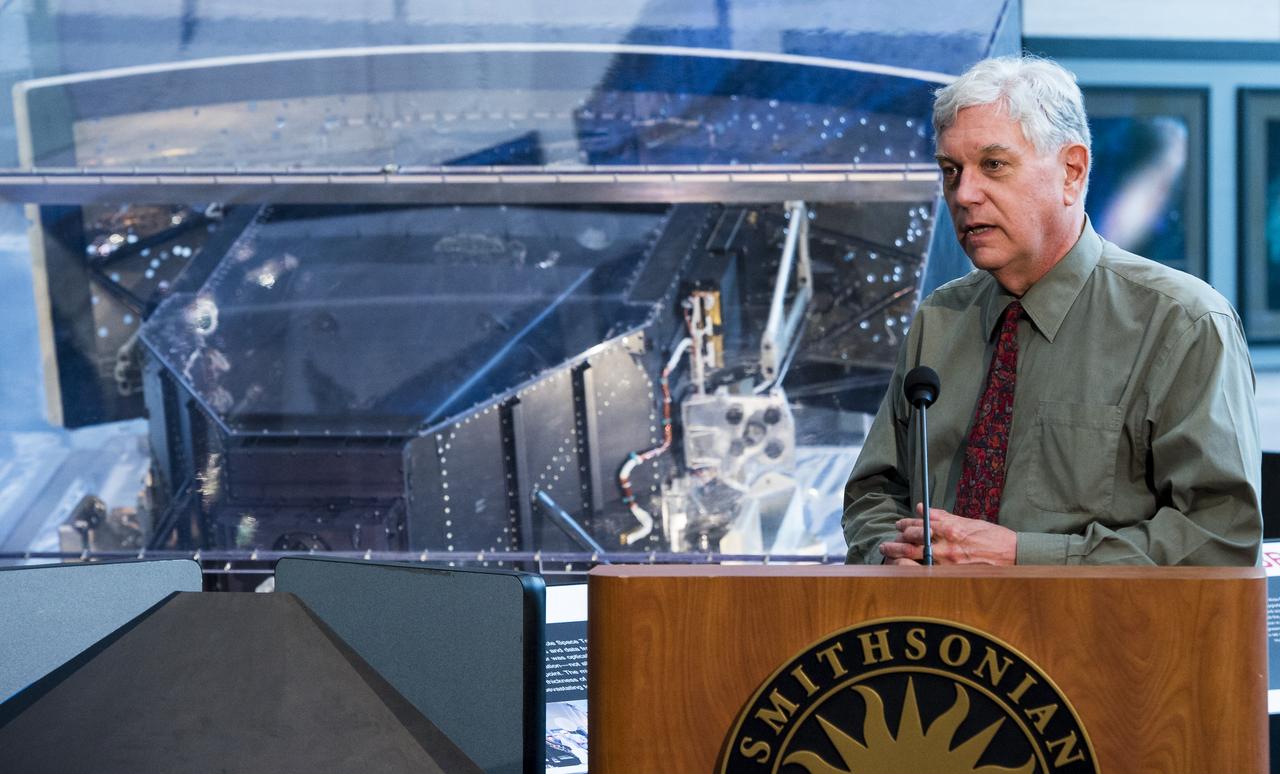
John Trauger, former principal investigator for the Wide Field Planetary Camera 2 (WFPC2) at NASA's Jet Propultion Laboratory (JPL), speaks at an event unveiling a new exhibit featuring Hubble's Corrective Optics Space Telescope Axial Replacement (COSTAR) and the WFPC2 on Wednesday, April 23, 2014 at the Smithsonian National Air and Space Museum in Washington, DC. COSTAR and WFPC2 were installed in Hubble during the first space shuttle servicing mission in 1993 and returned to Earth on the fifth and final servicing mission in 2009. Photo Credit: (NASA/Joel Kowsky)
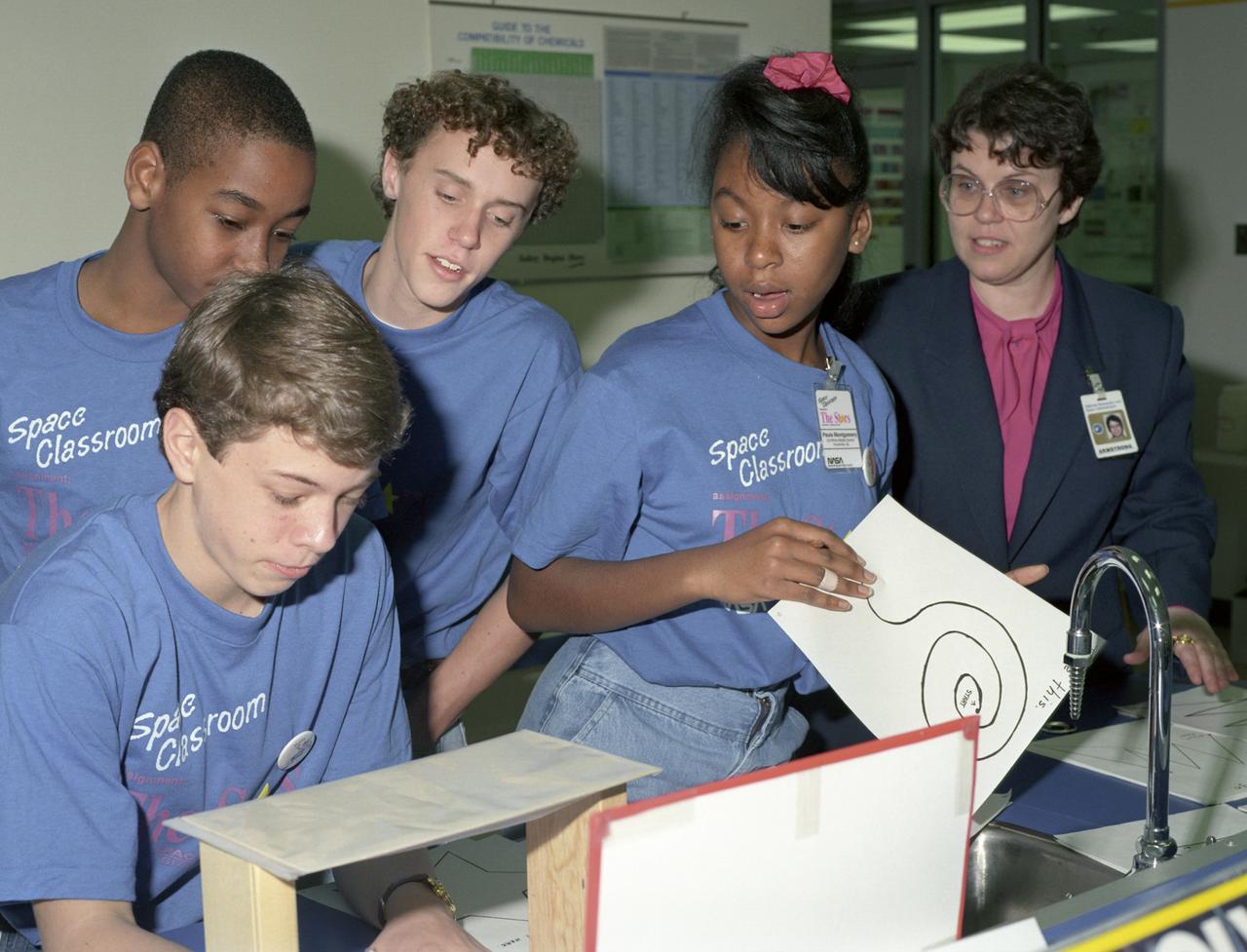
The primary objective of the STS-35 mission was round the clock observation of the celestial sphere in ultraviolet and X-Ray astronomy with the Astro-1 observatory which consisted of four telescopes: the Hopkins Ultraviolet Telescope (HUT); the Wisconsin Ultraviolet Photo-Polarimeter Experiment (WUPPE); the Ultraviolet Imaging Telescope (UIT); and the Broad Band X-Ray Telescope (BBXRT). The Huntsville Operations Support Center (HOSC) Spacelab Payload Operations Control Center (SL POCC) at the Marshall Space Flight Center (MSFC) was the air/ground communication channel used between the astronauts and ground control teams during the Spacelab missions. Teams of controllers and researchers directed on-orbit science operations, sent commands to the spacecraft, received data from experiments aboard the Space Shuttle, adjusted mission schedules to take advantage of unexpected science opportunities or unexpected results, and worked with crew members to resolve problems with their experiments. This photo is of Space classroom students in the Discovery Optics Lab at MSFC during STS-35, ASTRO-1 mission payload operations.
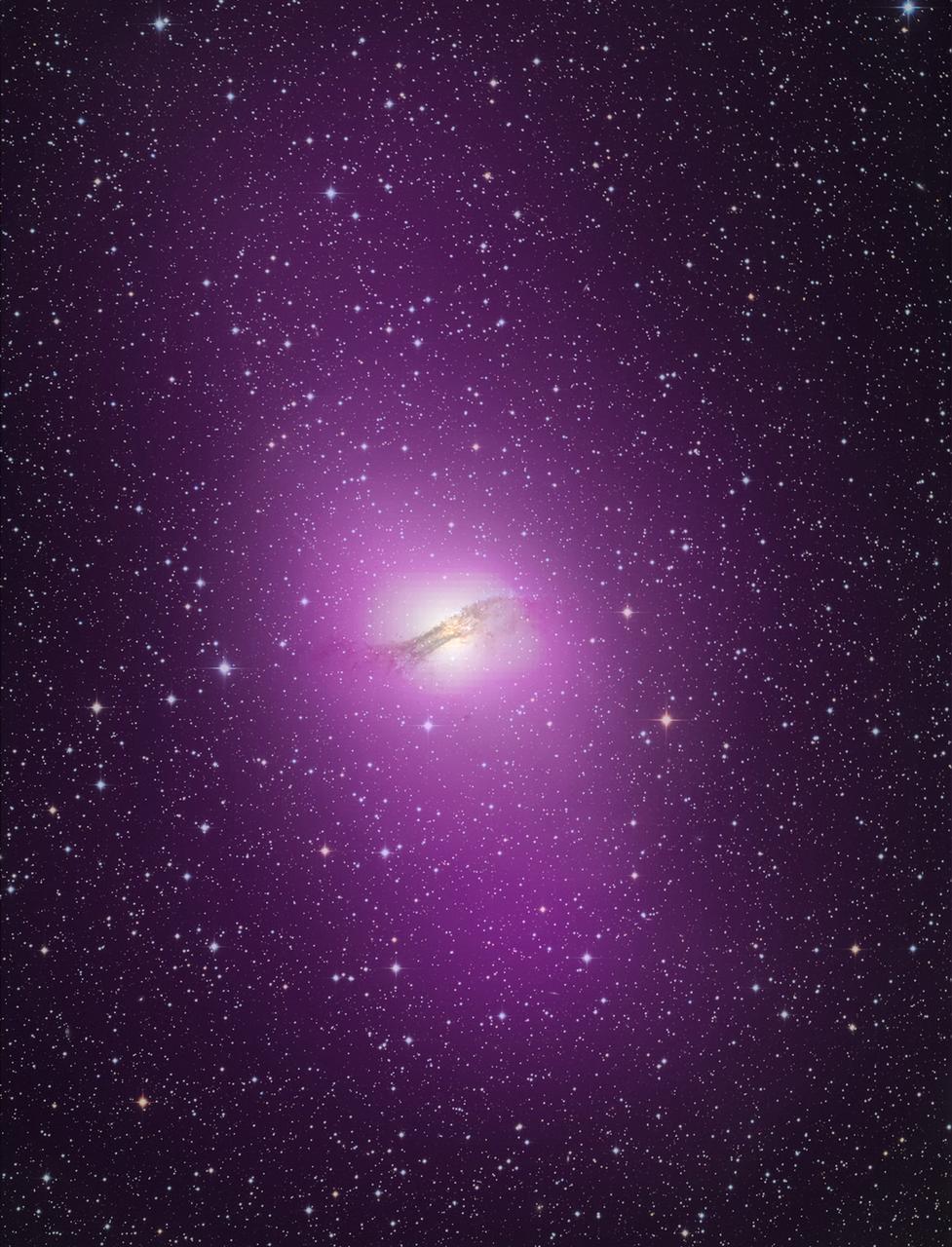
NASA release April 1, 2010 The gamma-ray output from Cen A's lobes exceeds their radio output by more than ten times. High-energy gamma rays detected by Fermi's Large Area Telescope are depicted as purple in this gamma ray/optical composite of the galaxy. Credit: NASA/DOE/Fermi LAT Collaboration, Capella Observatory To learn more about these images go to: <a href="http://www.nasa.gov/mission_pages/GLAST/news/smokestack-plumes.html" rel="nofollow">www.nasa.gov/mission_pages/GLAST/news/smokestack-plumes.html</a> <b><a href="http://www.nasa.gov/centers/goddard/home/index.html" rel="nofollow">NASA Goddard Space Flight Center</a></b> is home to the nation's largest organization of combined scientists, engineers and technologists that build spacecraft, instruments and new technology to study the Earth, the sun, our solar system, and the universe.
NASA release April 1, 2010 The gamma-ray output from Cen A's lobes exceeds their radio output by more than ten times. High-energy gamma rays detected by Fermi's Large Area Telescope are depicted as purple in this gamma ray/optical composite of the galaxy. Credit: NASA/DOE/Fermi LAT Collaboration, Capella Observatory To learn more about these images go to: <a href="http://www.nasa.gov/mission_pages/GLAST/news/smokestack-plumes.html" rel="nofollow">www.nasa.gov/mission_pages/GLAST/news/smokestack-plumes.html</a> <b><a href="http://www.nasa.gov/centers/goddard/home/index.html" rel="nofollow">NASA Goddard Space Flight Center</a></b> is home to the nation's largest organization of combined scientists, engineers and technologists that build spacecraft, instruments and new technology to study the Earth, the sun, our solar system, and the universe.
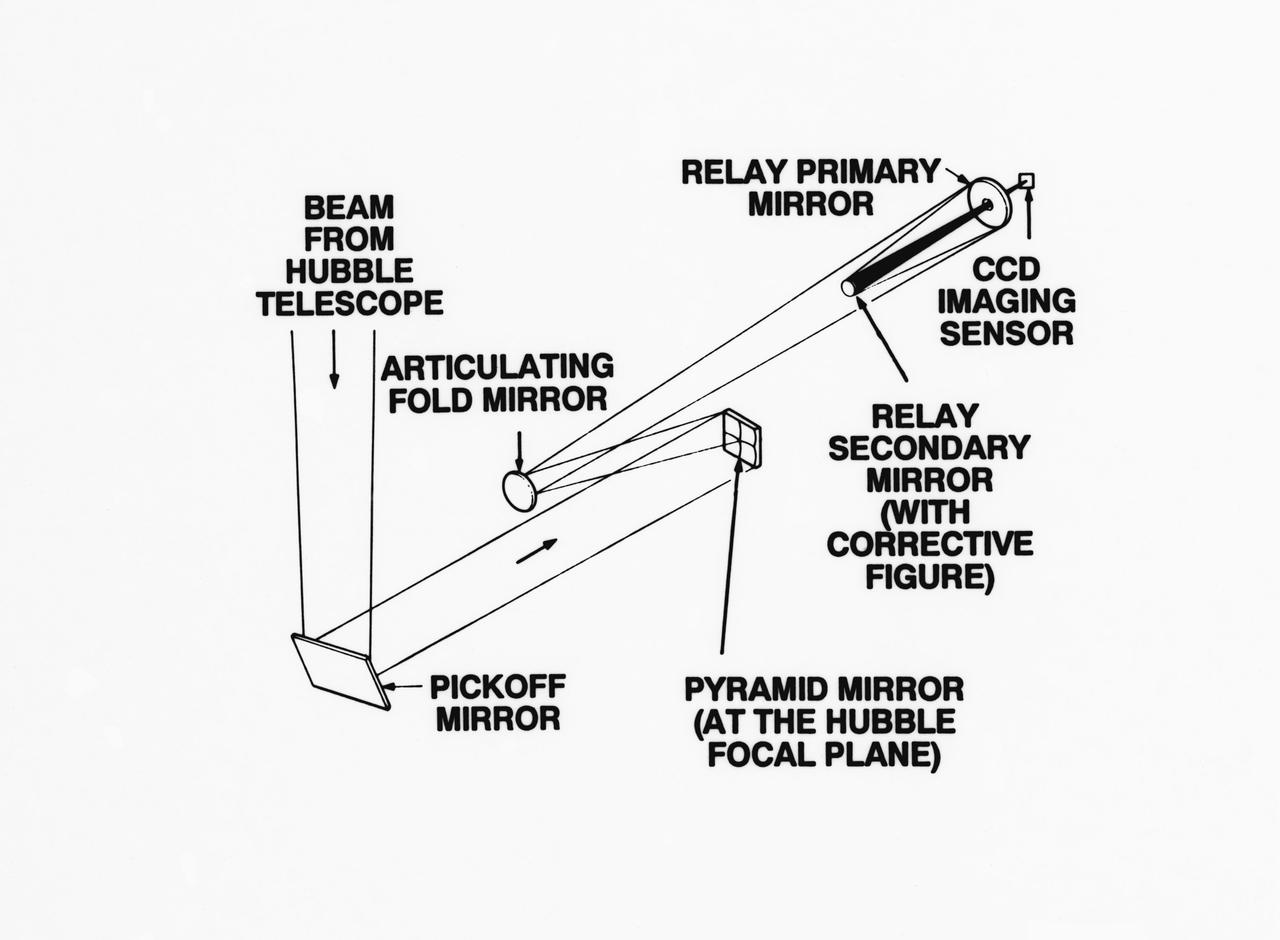
S93-33258 (15 Mar 1993) --- An optical schematic diagram of one of the four channels of the Wide Field\Planetary Camera-2 (WF\PC-2) shows the path taken by beams from the Hubble Space Telescope (HST) before an image is formed at the camera's charge-coupled devices. A team of NASA astronauts will pay a visit to the HST later this year, carrying with them the new WF/PC-2 to replace the one currently on the HST. The Jet Propulsion Laboratory in Pasadena, California has been working on the replacement system for several months. See NASA photo S93-33257 for a close-up view of tiny articulating mirrors designed to realign incoming light in order to make certain the beams fall precisely in the middle of the secondary mirrors.
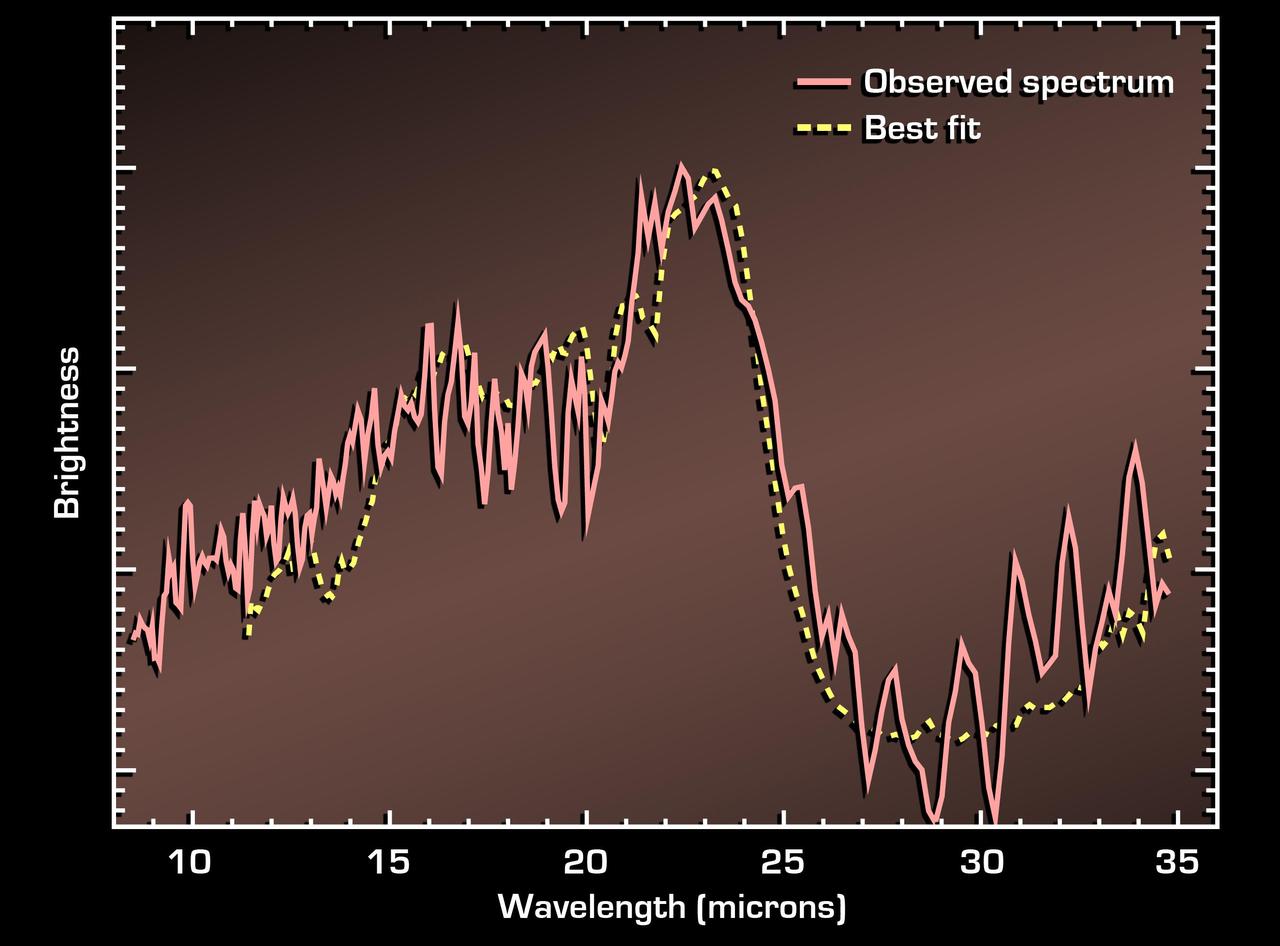
This spectrum shows the light from a dusty, distant galaxy located 11 billion light-years away. The galaxy is invisible to optical telescopes, but NASA Spitzer Space Telescope captured the light from it and dozens of other similar galaxies.

This is a composite image of N49, the brightest supernova remnant in optical light in the Large Magellanic Cloud; the image combines data from the Chandra X-ray Telescope blue and NASA Spitzer Space Telescope red.
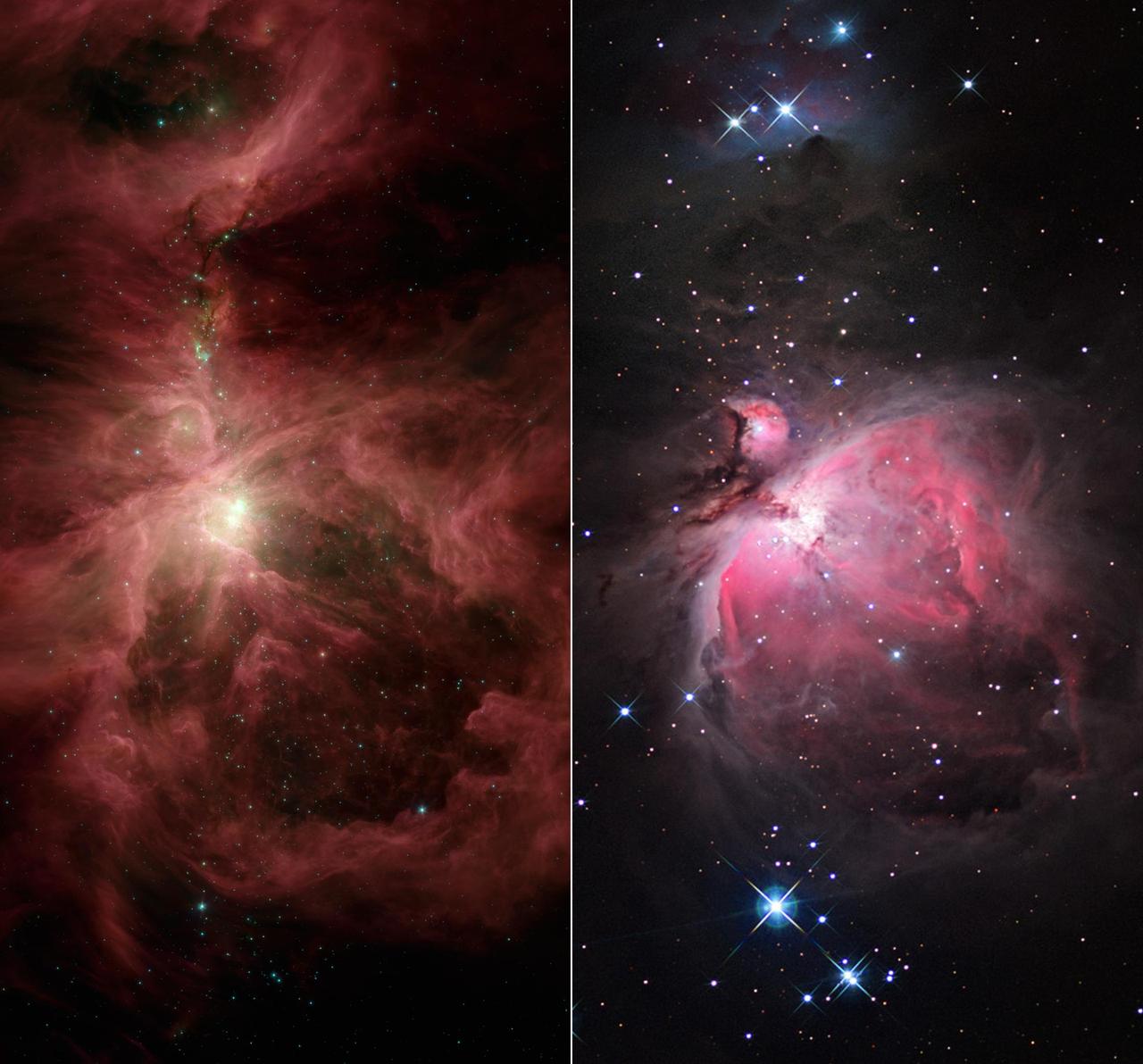
NASA Spitzer Space Telescope and the National Optical Astronomy Observatory compare infrared and visible views of the famous Orion nebula and its surrounding cloud, an industrious star-making region located near the hunter constellation sword.
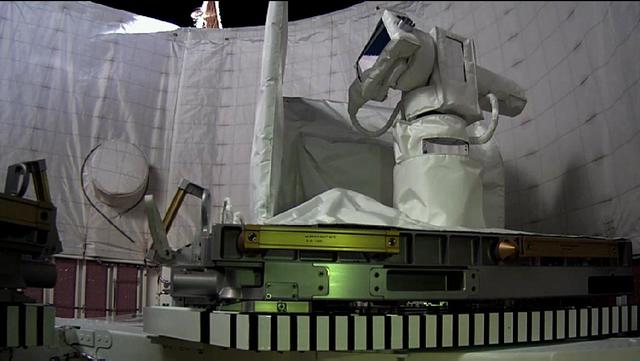
This photo shows the Optical PAyload for Lasercomm Science OPALS stowed in the SpaceX Dragon trunk on April 22, 2014, two days after docking with the International Space Station.
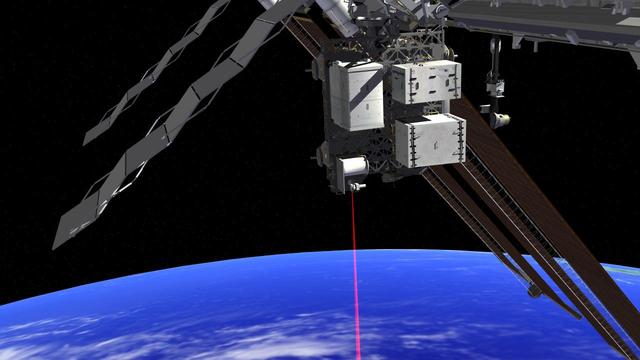
This artist rendition shows the Optical PAyload for Lasercomm Science OPALS operating from the International Space Station. OPALS was launched to the station from Cape Canaveral Air Force Station in Florida on April 18, 2014.
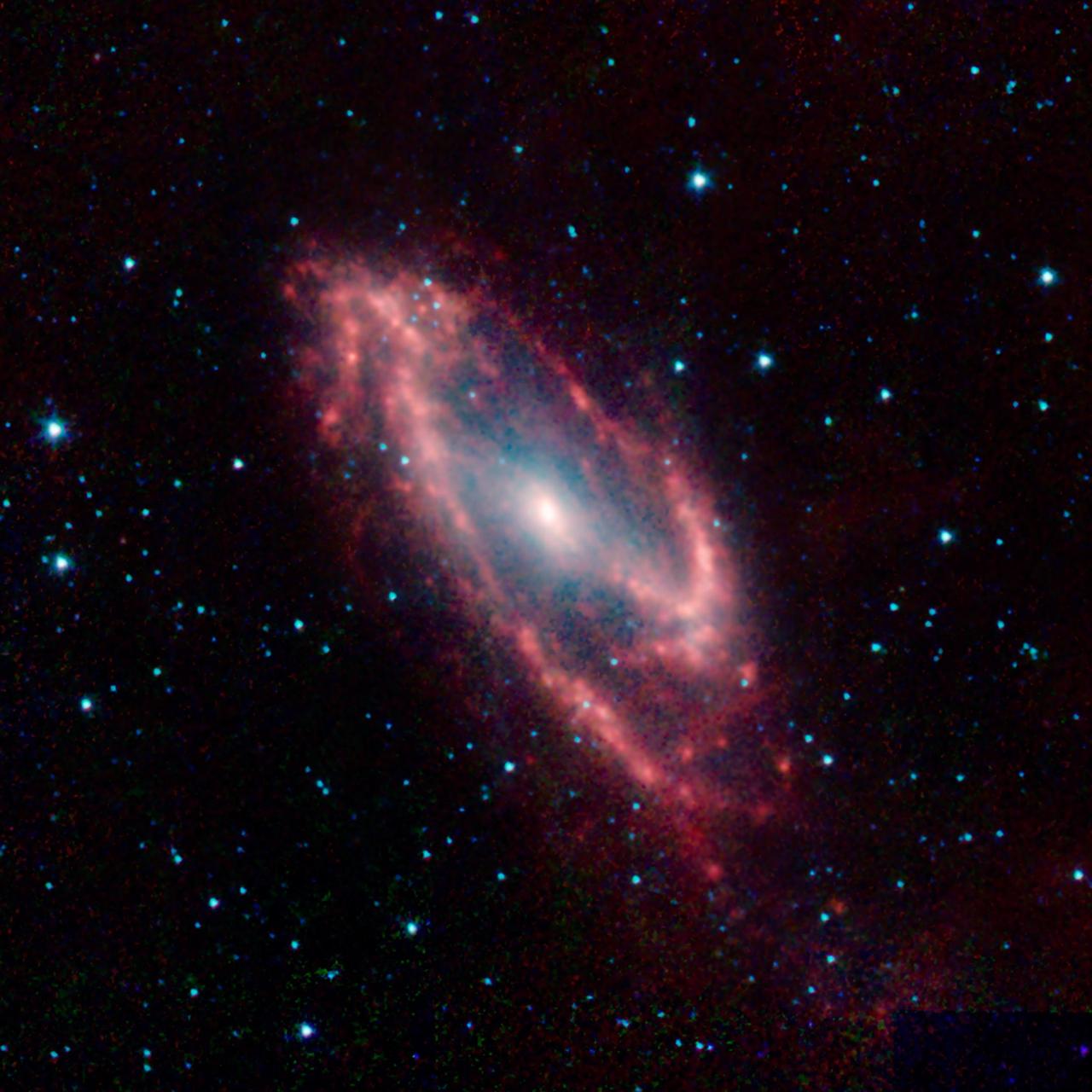
Maffei 2 is the poster child for an infrared galaxy that is almost invisible to optical telescopes. But this infrared image from NASA Spitzer Space Telescope penetrates the dust to reveal the galaxy in all its glory.
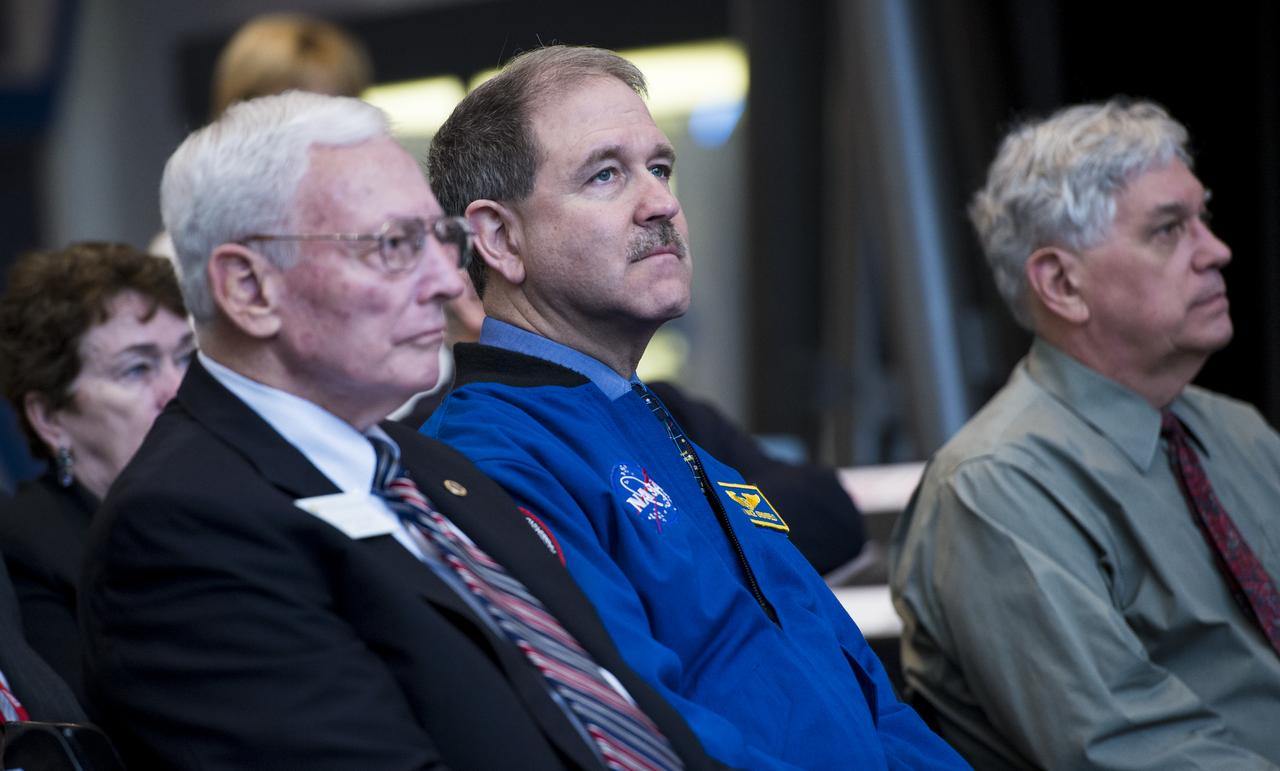
John Grunsfeld, NASA Associate Administrator for the Science Mission Directorate, is seen during during an event unveiling a new exhibit featuring Hubble's Corrective Optics Space Telescope Axial Replacement (COSTAR) and the Wide Field and Planetary Camera 2 (WFPC2) on Wednesday, April 23, 2014 at the Smithsonian National Air and Space Museum in Washington, DC. Grunsfeld flew on three of space shuttle servicing missions to Hubble, including the fifth and final mission in 2009 which returned COSTAR and WFPC2 to Earth. Photo Credit: (NASA/Joel Kowsky)
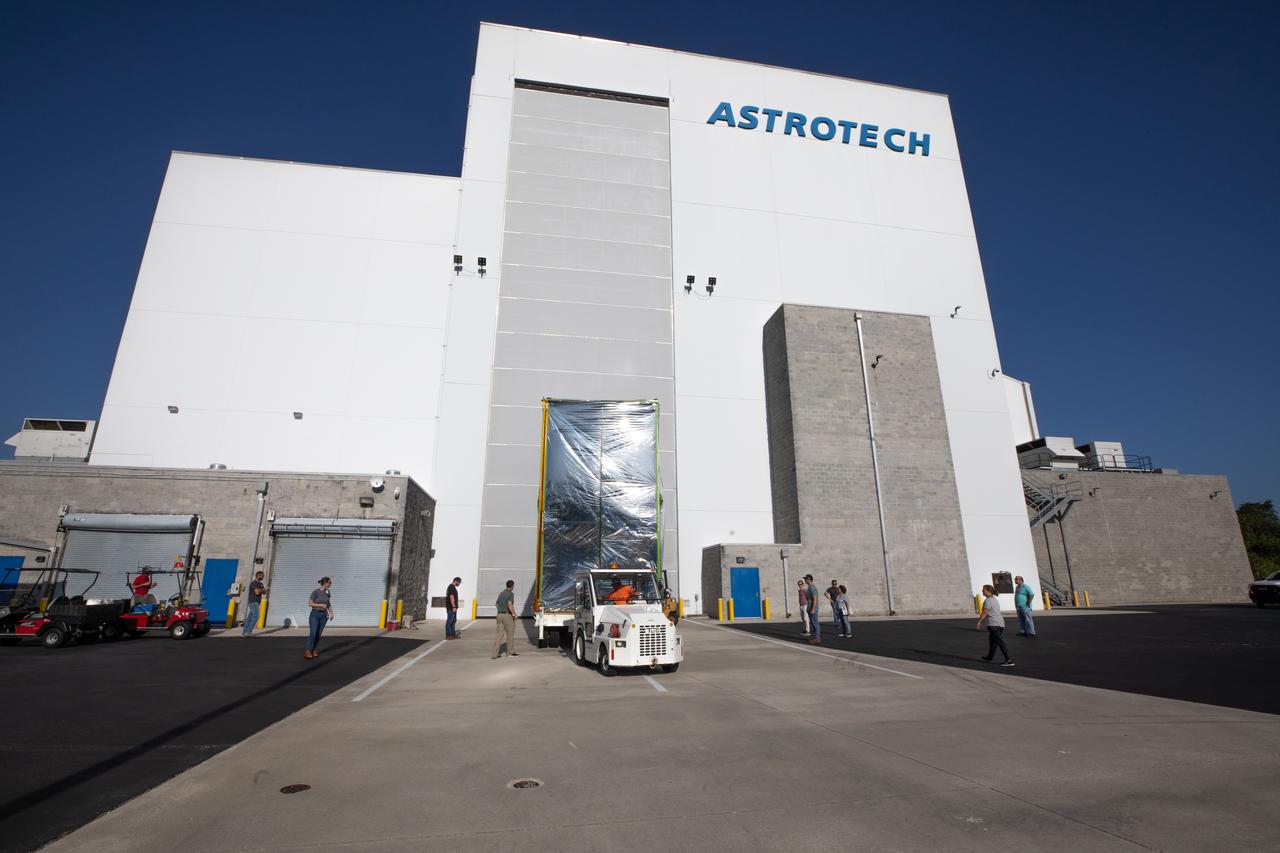
NASA’s Psyche spacecraft, secured for transport, arrived at the entrance to Building 9 at the Astrotech Space Operations Facility near the agency’s Kennedy Space Center in Florida on Aug. 14, 2023. Psyche will explore its namesake, a metal-rich asteroid orbiting the Sun between Mars and Jupiter. Psyche has NASA’s Deep Space Optical Communications (DSOC) technology demonstration onboard the spacecraft. DSOC will be the agency's first demonstration of optical communication beyond the Moon. Psyche will launch atop a SpaceX Falcon Heavy rocket from Launch Complex 39A at Kennedy. Launch is targeted for Oct. 5, 2023.
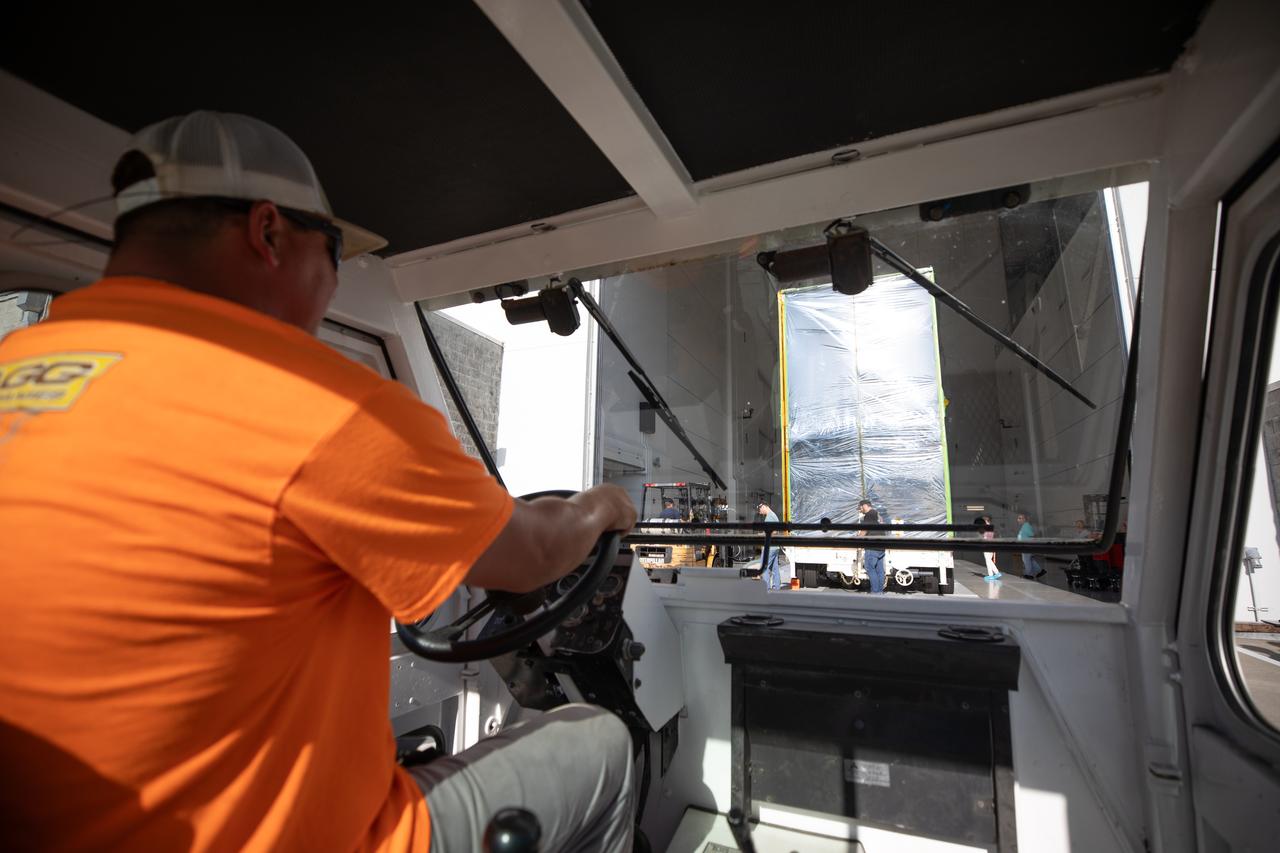
A driver uses a transport vehicle to move NASA’s Psyche spacecraft, secured for transport, into the entrance of Building 9 at the Astrotech Space Operations Facility near the agency’s Kennedy Space Center in Florida on Aug. 14, 2023. Psyche will explore its namesake, a metal-rich asteroid orbiting the Sun between Mars and Jupiter. Psyche has NASA’s Deep Space Optical Communications (DSOC) technology demonstration onboard the spacecraft. DSOC will be the agency's first demonstration of optical communication beyond the Moon. Psyche will launch atop a SpaceX Falcon Heavy rocket from Launch Complex 39A at Kennedy. Launch is targeted for Oct. 5, 2023.
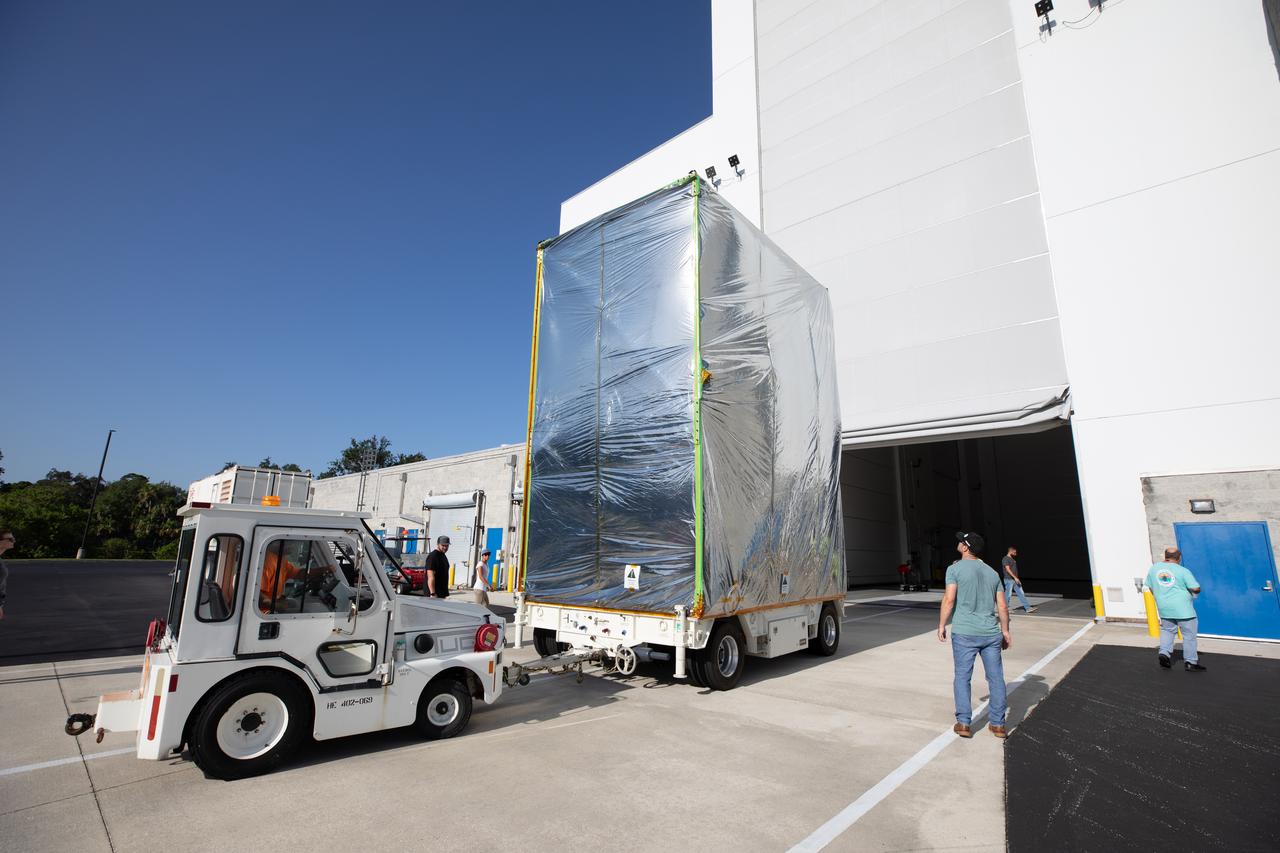
Technicians open the high bay door to Building 9 at the Astrotech Space Operations Facility near NASA’s Kennedy Space Center in Florida to allow entrance for the agency’s Psyche spacecraft, secured for transport, on Aug. 14, 2023. Psyche will explore its namesake, a metal-rich asteroid orbiting the Sun between Mars and Jupiter. Psyche has NASA’s Deep Space Optical Communications (DSOC) technology demonstration onboard the spacecraft. DSOC will be the agency's first demonstration of optical communication beyond the Moon. Psyche will launch atop a SpaceX Falcon Heavy rocket from Launch Complex 39A at Kennedy. Launch is targeted for Oct. 5, 2023.
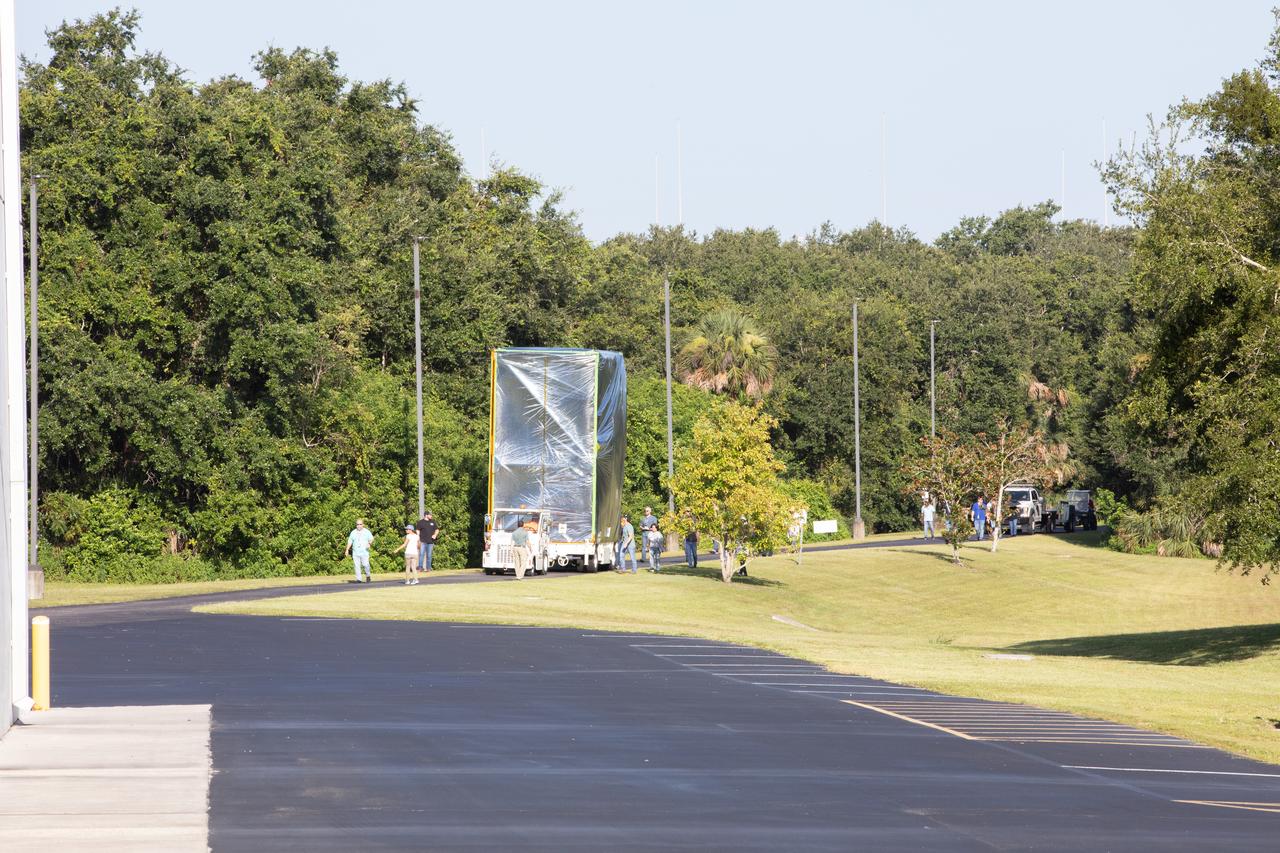
Technicians and engineers moved NASA’s Psyche spacecraft along the road to Building 9 at the Astrotech Space Operations Facility near the agency’s Kennedy Space Center in Florida on Aug. 14, 2023. Psyche will explore its namesake, a metal-rich asteroid orbiting the Sun between Mars and Jupiter. Psyche has NASA’s Deep Space Optical Communications (DSOC) technology demonstration onboard the spacecraft. DSOC will be the agency's first demonstration of optical communication beyond the Moon. Psyche will launch atop a SpaceX Falcon Heavy rocket from Launch Complex 39A at Kennedy. Launch is targeted for Oct. 5, 2023.
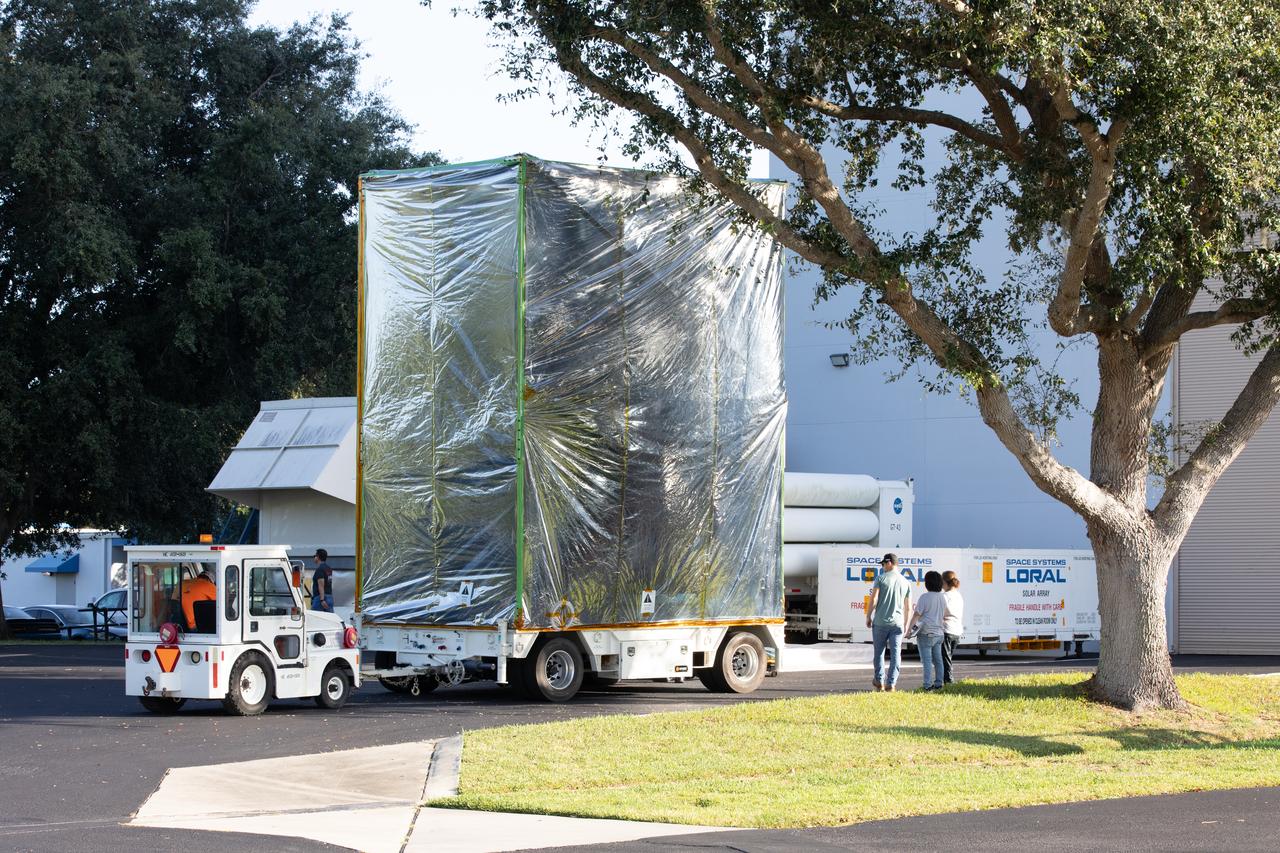
Technicians moved NASA’s Psyche spacecraft, secured for transport, to Building 9 at the Astrotech Space Operations Facility near the agency’s Kennedy Space Center in Florida on Aug. 14, 2023. Psyche will explore its namesake, a metal-rich asteroid orbiting the Sun between Mars and Jupiter. Psyche has NASA’s Deep Space Optical Communications (DSOC) technology demonstration onboard the spacecraft. DSOC will be the agency's first demonstration of optical communication beyond the Moon. Psyche will launch atop a SpaceX Falcon Heavy rocket from Launch Complex 39A at Kennedy. Launch is targeted for Oct. 5, 2023.
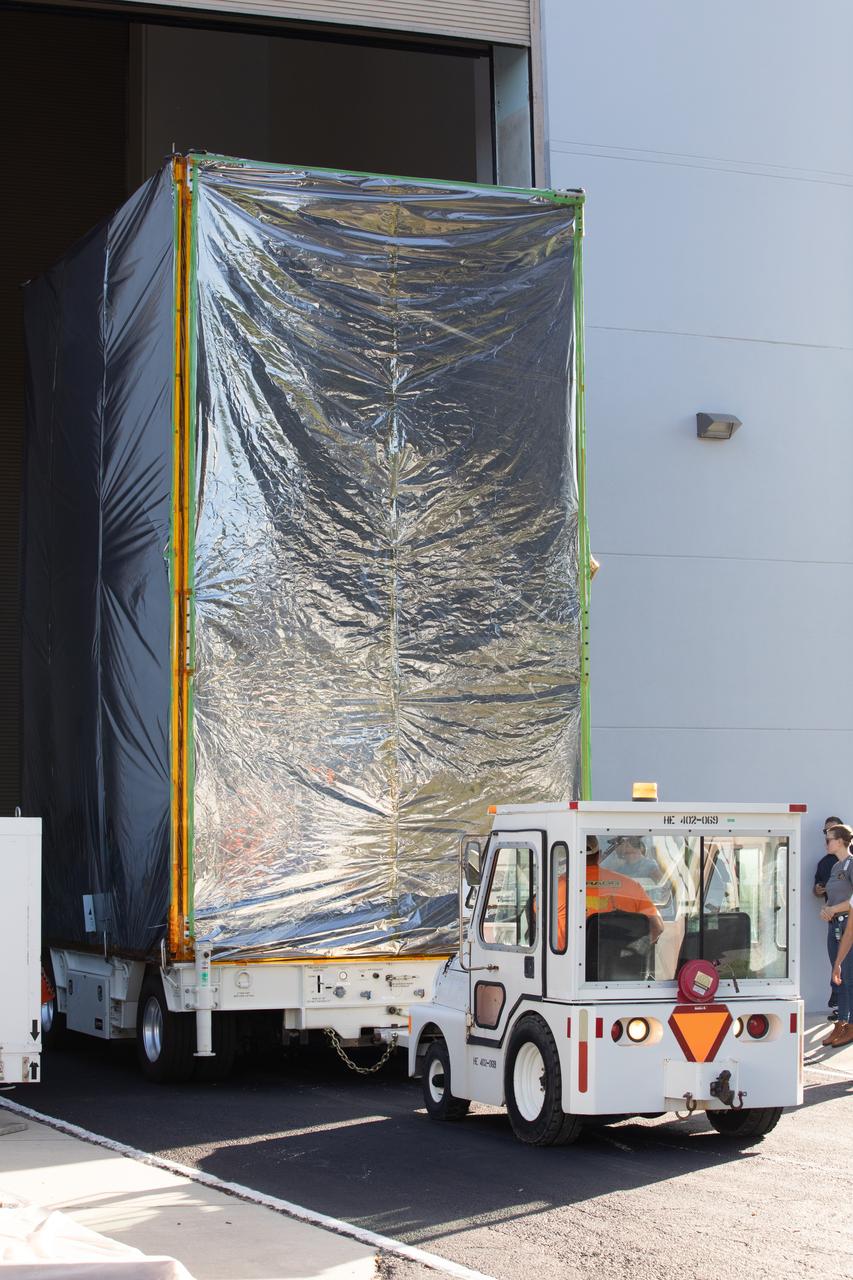
Technicians moved NASA’s Psyche spacecraft, secured for transport, to Building 9 at the Astrotech Space Operations Facility near the agency’s Kennedy Space Center in Florida on Aug. 14, 2023. Psyche will explore its namesake, a metal-rich asteroid orbiting the Sun between Mars and Jupiter. Psyche has NASA’s Deep Space Optical Communications (DSOC) technology demonstration onboard the spacecraft. DSOC will be the agency's first demonstration of optical communication beyond the Moon. Psyche will launch atop a SpaceX Falcon Heavy rocket from Launch Complex 39A at Kennedy. Launch is targeted for Oct. 5, 2023.
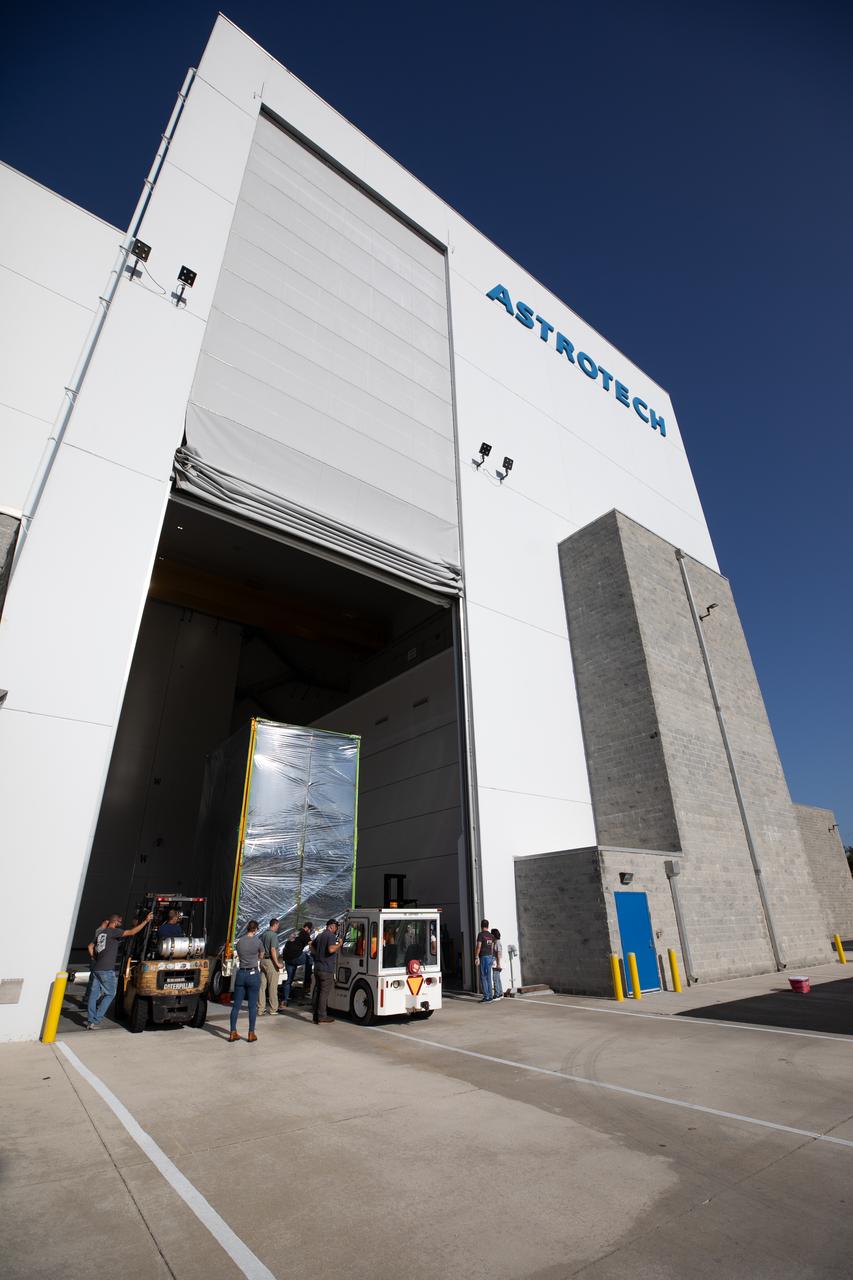
Technicians moved NASA’s Psyche spacecraft, secured for transport, into the entrance of Building 9 at the Astrotech Space Operations Facility near the agency’s Kennedy Space Center in Florida on Aug. 14, 2023. Psyche will explore its namesake, a metal-rich asteroid orbiting the Sun between Mars and Jupiter. Psyche has NASA’s Deep Space Optical Communications (DSOC) technology demonstration onboard the spacecraft. DSOC will be the agency's first demonstration of optical communication beyond the Moon. Psyche will launch atop a SpaceX Falcon Heavy rocket from Launch Complex 39A at Kennedy. Launch is targeted for Oct. 5, 2023.
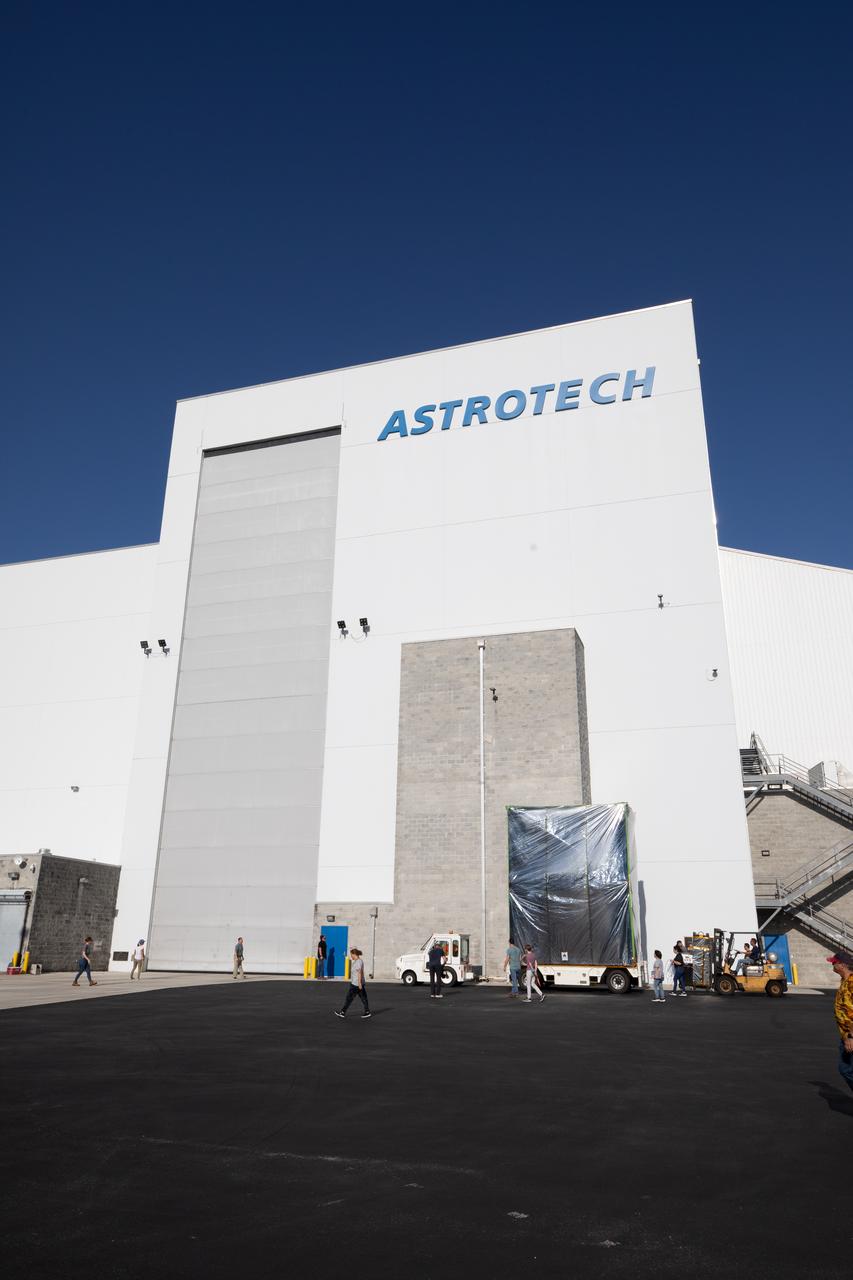
NASA’s Psyche spacecraft, secured for transport, arrived at the entrance to Building 9 at the Astrotech Space Operations Facility near the agency’s Kennedy Space Center in Florida on Aug. 14, 2023. Psyche will explore its namesake, a metal-rich asteroid orbiting the Sun between Mars and Jupiter. Psyche has NASA’s Deep Space Optical Communications (DSOC) technology demonstration onboard the spacecraft. DSOC will be the agency's first demonstration of optical communication beyond the Moon. Psyche will launch atop a SpaceX Falcon Heavy rocket from Launch Complex 39A at Kennedy. Launch is targeted for Oct. 5, 2023.
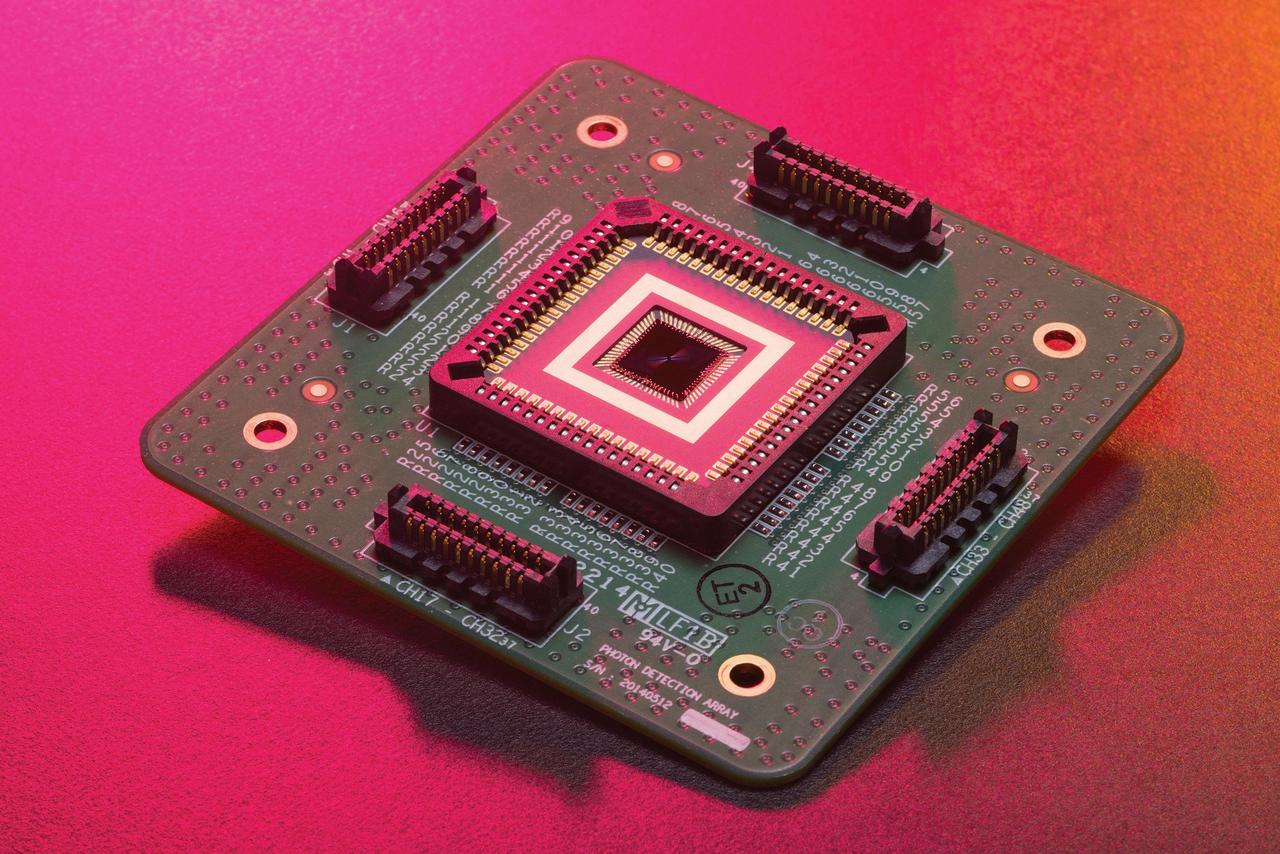
Shown here is a prototype of the Deep Space Optical Communications, or DSOC, ground receiver detector built by the Microdevices Laboratory at NASA's Jet Propulsion Laboratory in Southern California. The prototype superconducting nanowire single-photon detector was used by JPL technologists to help develop the detector that – from a station on Earth – will receive near-infrared laser signals from the DSOC flight transceiver traveling with NASA's Psyche mission in deep space. DSOC will test key technologies that could enable high-bandwidth optical, or laser, communications from Mars distances. Bolted to the side of the spacecraft and operating for the first two years of Psyche's journey to the asteroid of the same name, the DSOC flight laser transceiver will transmit high-rate data to Caltech's Palomar Observatory in San Diego County, California, which houses the 200-inch (5.1-meter) Hale Telescope. The downlink detector converts optical signals to electrical signals, which can be processed and decoded. The detector is designed to be both sensitive enough to detect single photons (quantum particles of light) and able to detect many photons arriving all at once. At its farthest point during the technology demonstration's operations period, the transceiver will be up to 240 million miles (390 million kilometers) away, meaning that by the time its weak laser pulses arrive at Earth, the detector will need to efficiently detect a trickle of single photons. But when the spacecraft is closer to Earth and the flight transceiver is delivering its highest bit rate to Palomar, the detector is capable of detecting very high numbers of photons without becoming overwhelmed. Because data is encoded in the timing of the laser pulses, the detector must also be able to determine the time of a photon's arrival with a precision of 100 picoseconds (one picosecond is one trillionth of a second). DSOC is the latest in a series of optical communication technology demonstrations funded by NASA's Technology Demonstrations Missions (TDM) program and the agency's Space Communications and Navigation (SCaN) program. JPL, a division of Caltech in Pasadena, California, manages DSOC for TDM within NASA's Space Technology Mission Directorate and SCaN within the agency's Space Operations Mission Directorate. https://photojournal.jpl.nasa.gov/catalog/PIA25840
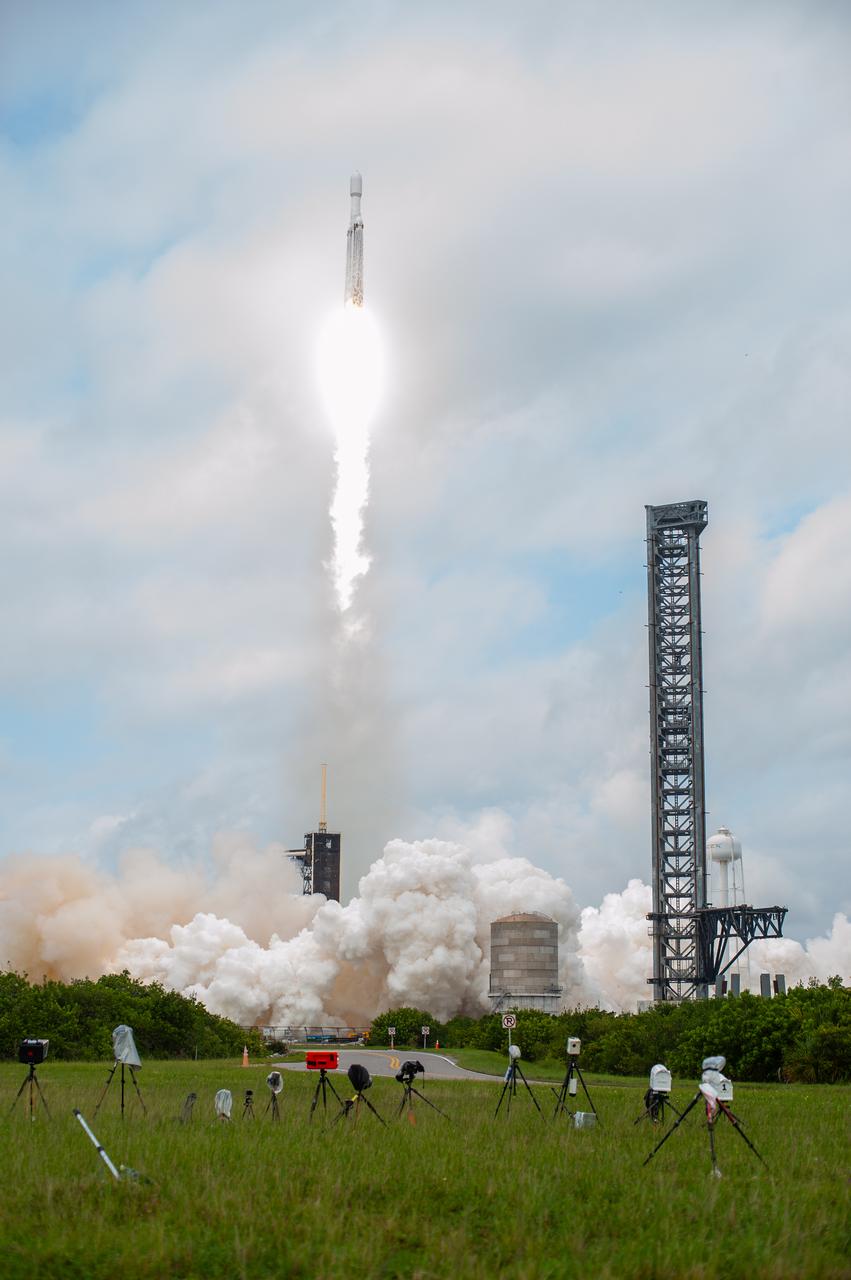
NASA’s Psyche spacecraft, atop a SpaceX Falcon Heavy rocket, soars into the sky after lifting off from Kennedy Space Center’s historic Launch Complex 39A in Florida at 10:19 a.m. EDT on Friday, Oct. 13, 2023. Psyche will travel to a metal-rich asteroid by the same name orbiting the Sun between Mars and Jupiter to study it’s composition. The spacecraft also carries the agency’s Deep Space Optical Communications technology demonstration, which will test laser communications beyond the Moon.
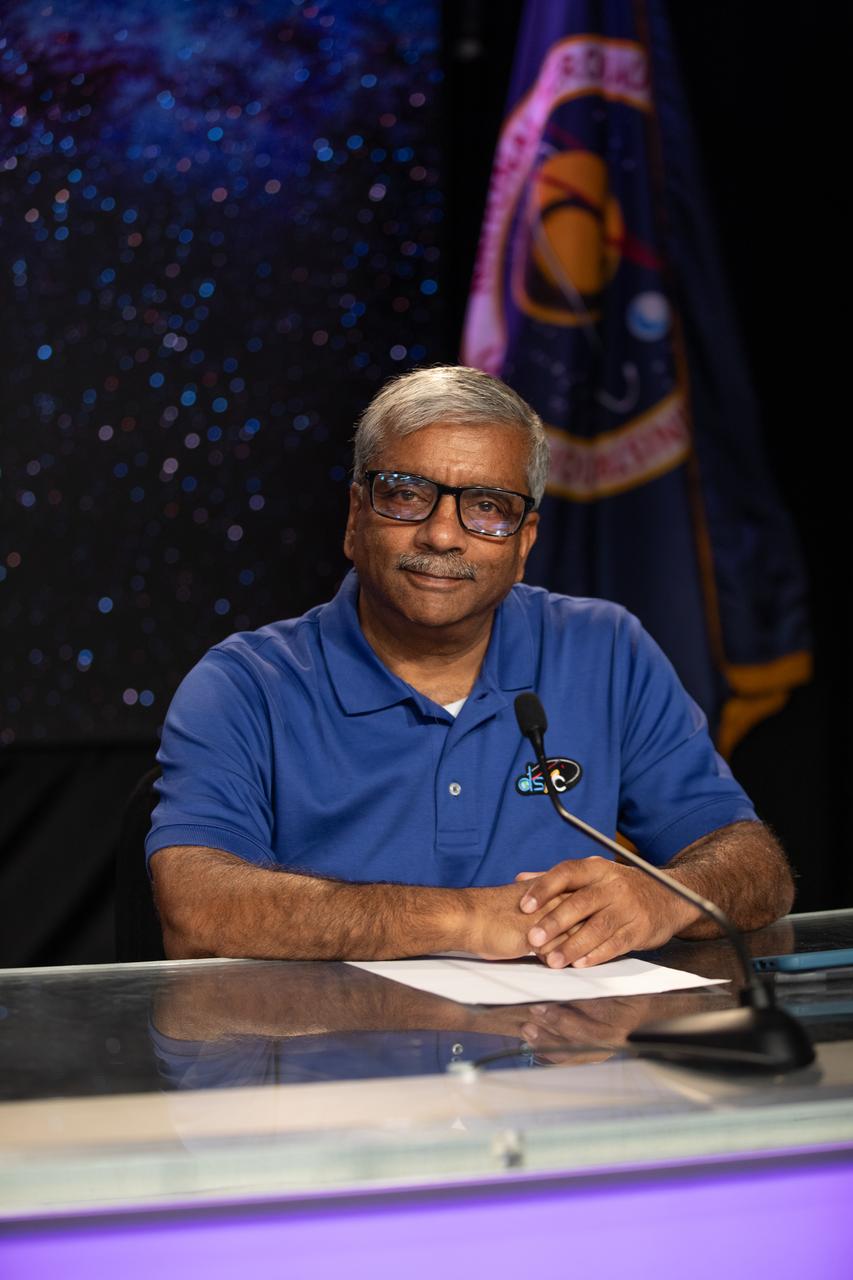
Abi Biswas, Deep Space Optical Communications project technologist, NASA’s Jet Propulsion Laboratory, participates in a Psyche mission and science briefing at NASA’s Kennedy Space Center in Florida on Tuesday, Oct. 10, 2023. Psyche is the first mission to explore an asteroid with a surface that likely contains substantial amounts of metal rather than rock or ice. Liftoff of NASA’s Psyche spacecraft, atop a SpaceX Falcon Heavy rocket, is targeted for 10:16 a.m. EDT Thursday, Oct. 12, from Kennedy’s Launch Complex 39A.
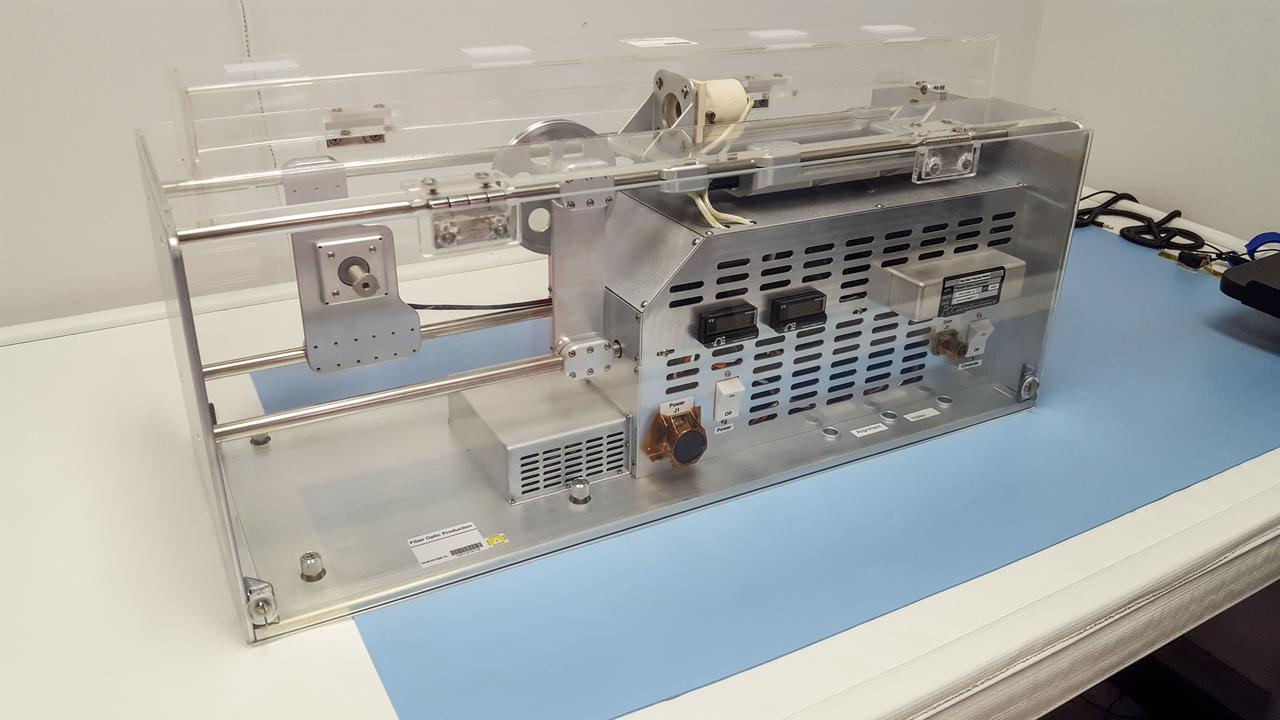
jsc2019e048245 (3/6/2019) — Preflight imagery of the Fiber Optic Production hardware. Physical Optics Corporation’s (POC’s) Fiber Optic Production investigation will create optical fibers with high commercial value aboard the International Space Station (ISS)and will operate within the Microgravity Science Glovebox (MSG).
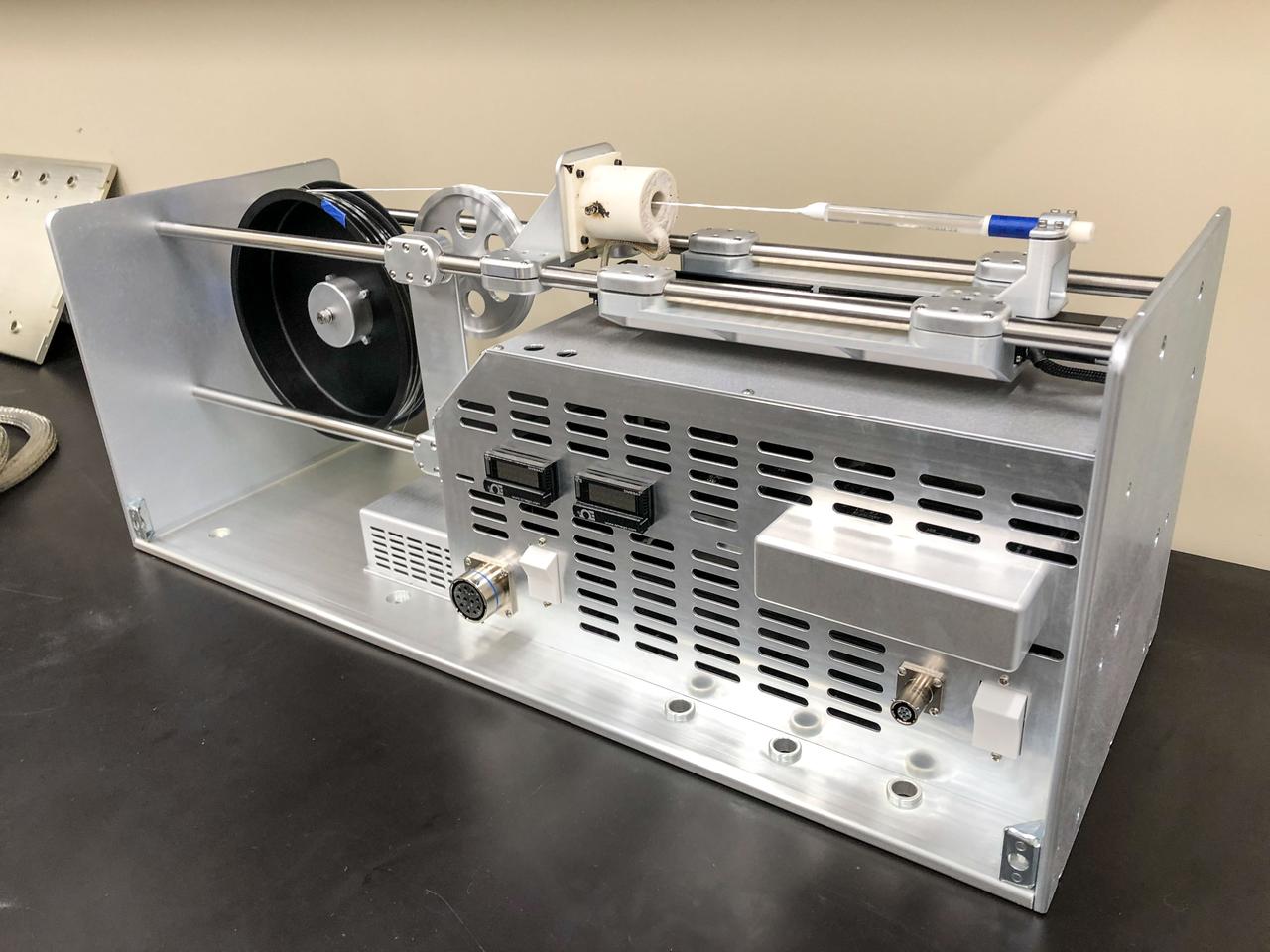
jsc2019e048247 (9/28/2018) — Preflight imagery of the Fiber Optic Production hardware. Physical Optics Corporation’s (POC’s) Fiber Optic Production investigation will create optical fibers with high commercial value aboard the International Space Station (ISS)and will operate within the Microgravity Science Glovebox (MSG).
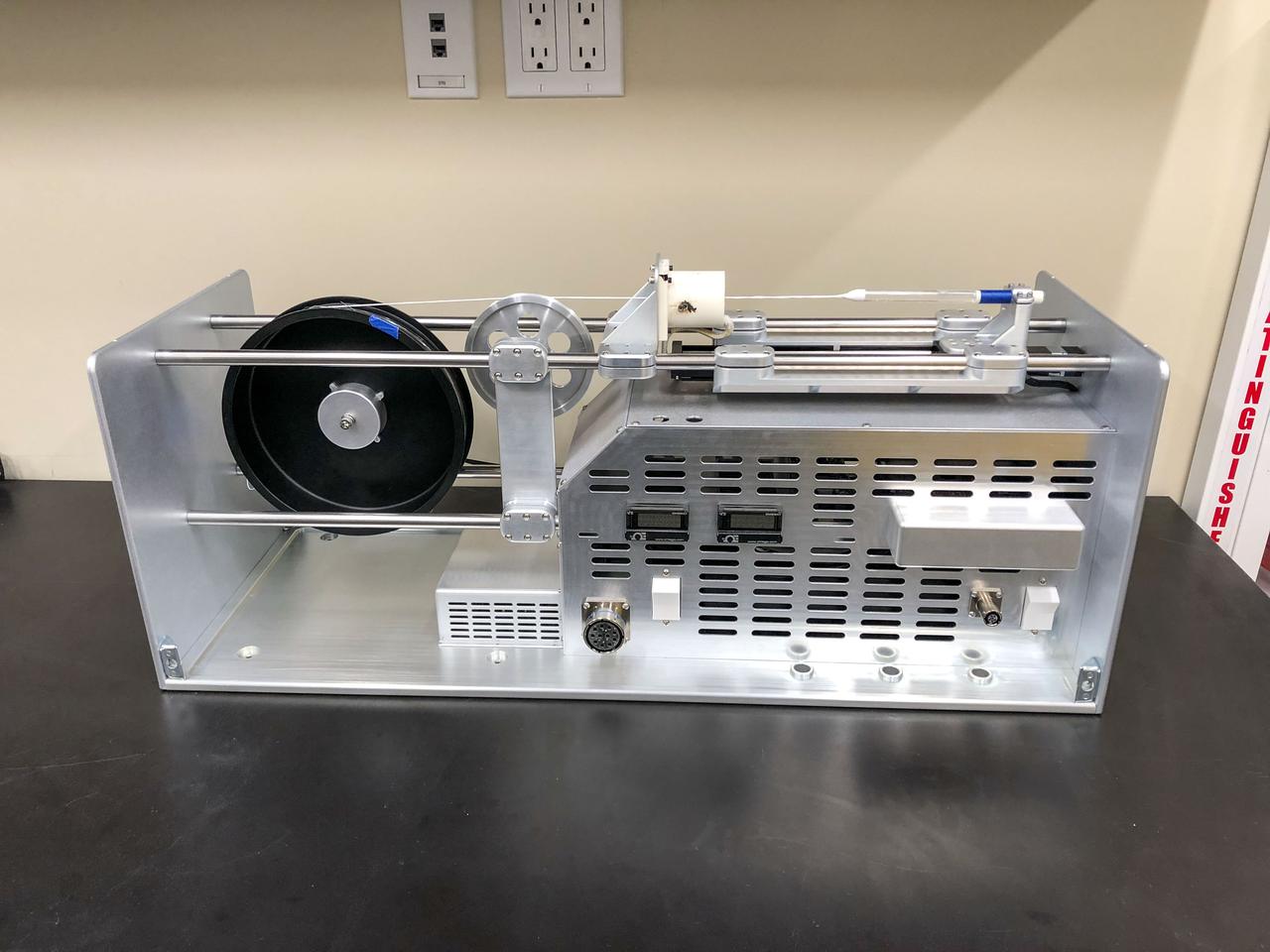
jsc2019e048246 (9/28/2018) — Preflight imagery of the Fiber Optic Production hardware. Physical Optics Corporation’s (POC’s) Fiber Optic Production investigation will create optical fibers with high commercial value aboard the International Space Station (ISS)and will operate within the Microgravity Science Glovebox (MSG).
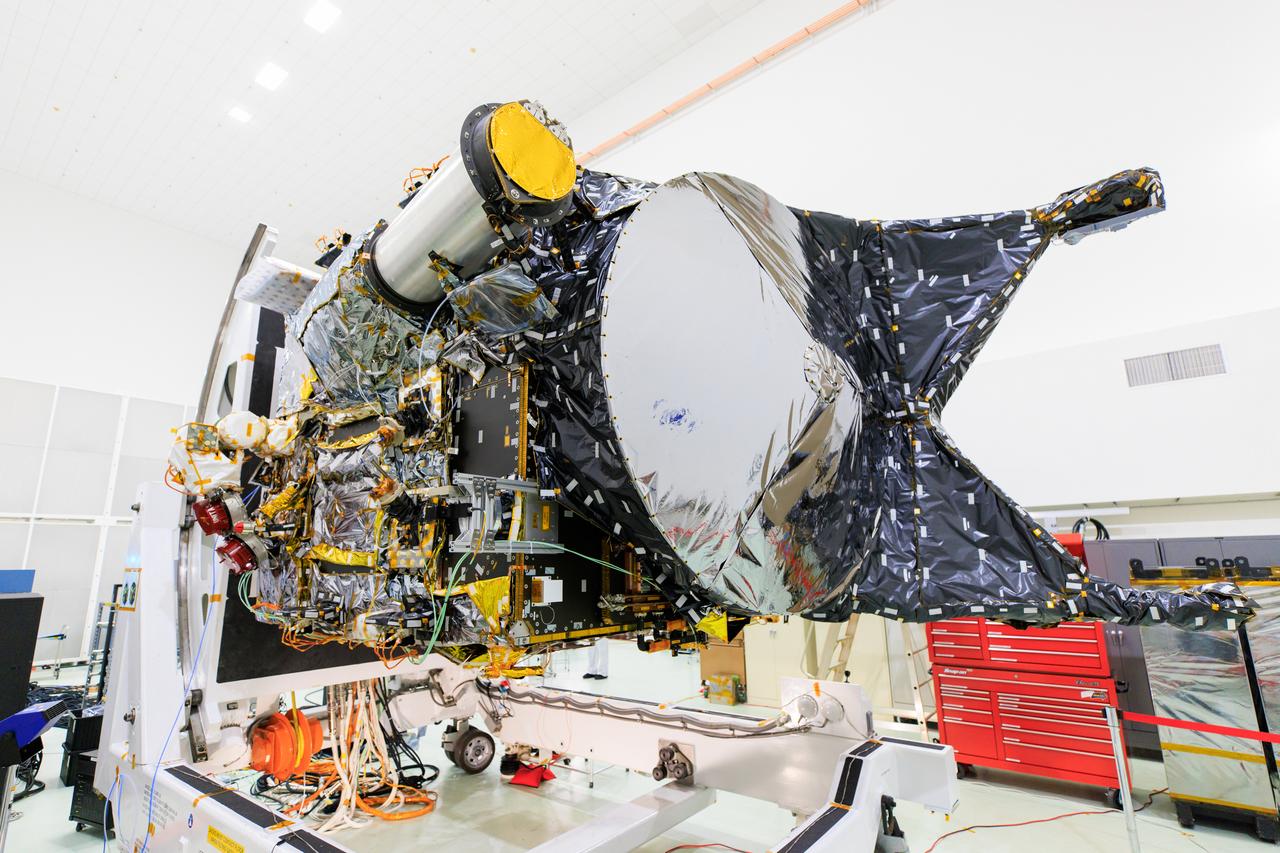
NASA's Psyche spacecraft is shown in a clean room on June 26, 2023, at Astrotech Space Operations Facility near the agency’s Kennedy Space Center in Florida. Engineers and technicians from NASA’s Jet Propulsion Laboratory in Southern California have begun final assembly, test, and launch operations on Psyche, with assembly of the spacecraft all but complete except for the installation of the solar arrays and the imagers. NASA’s Deep Space Optical Communications (DSOC) technology demonstration, testing high-data-rate laser communications, remains integrated into the spacecraft. A final suite of tests will be run on the vehicle, after which it will be fueled and then mated onto a SpaceX Falcon Heavy rocket just prior to launch, targeted for October 2023.
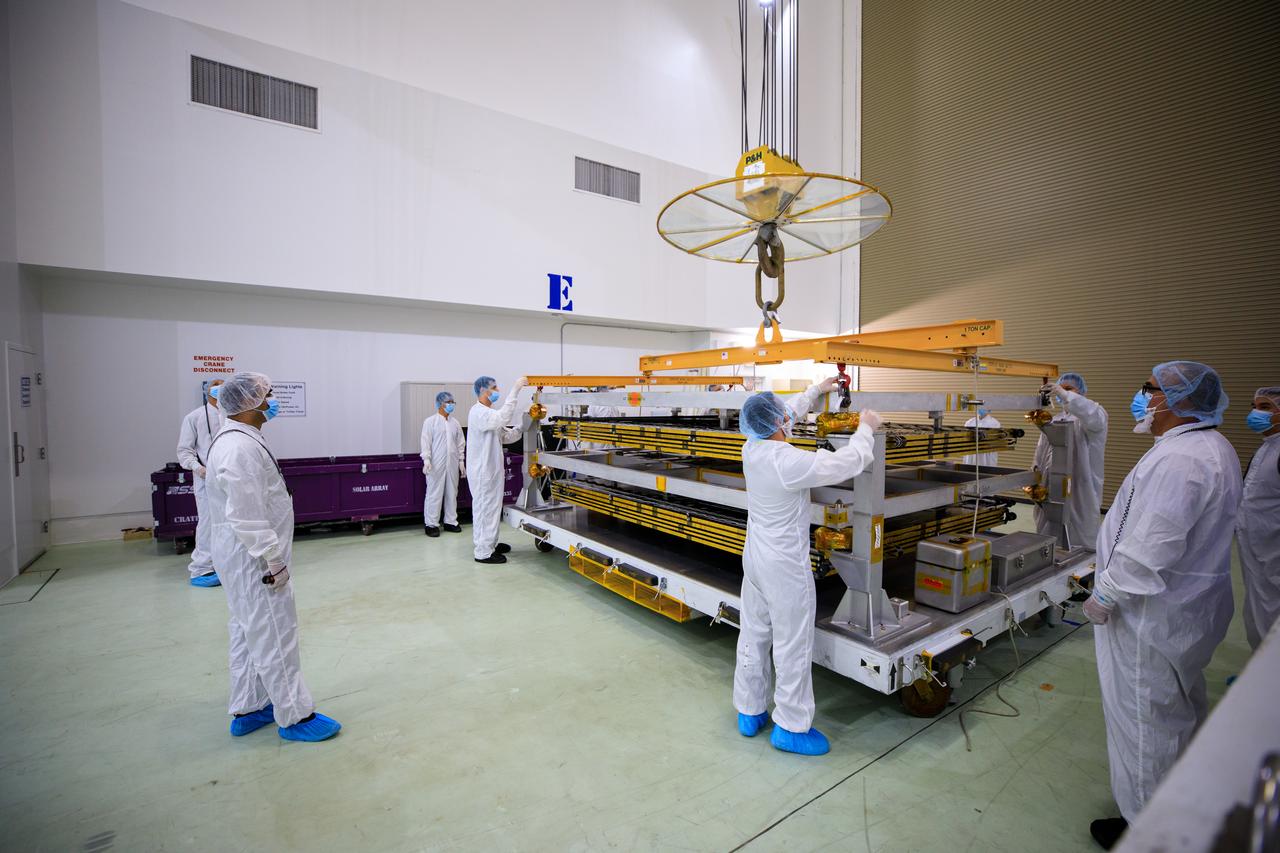
A NASA team uses a crane to lift the twin solar arrays for NASA’s Psyche spacecraft up from their shipping base at the Astrotech Space Operations Facility near the agency’s Kennedy Space Center in Florida on July 18, 2023. The solar arrays were shipped from Maxar Technologies, in San Jose, California. They are part of the solar electric propulsion system, provided by Maxar, that will power the spacecraft on its journey to explore a metal-rich asteroid. Psyche will launch atop a SpaceX Falcon Heavy rocket from Launch Complex 39A at Kennedy. Launch is targeted for Oct. 5, 2023. Riding with Psyche is a pioneering technology demonstration, NASA’s Deep Space Optical Communications (DSOC) experiment.
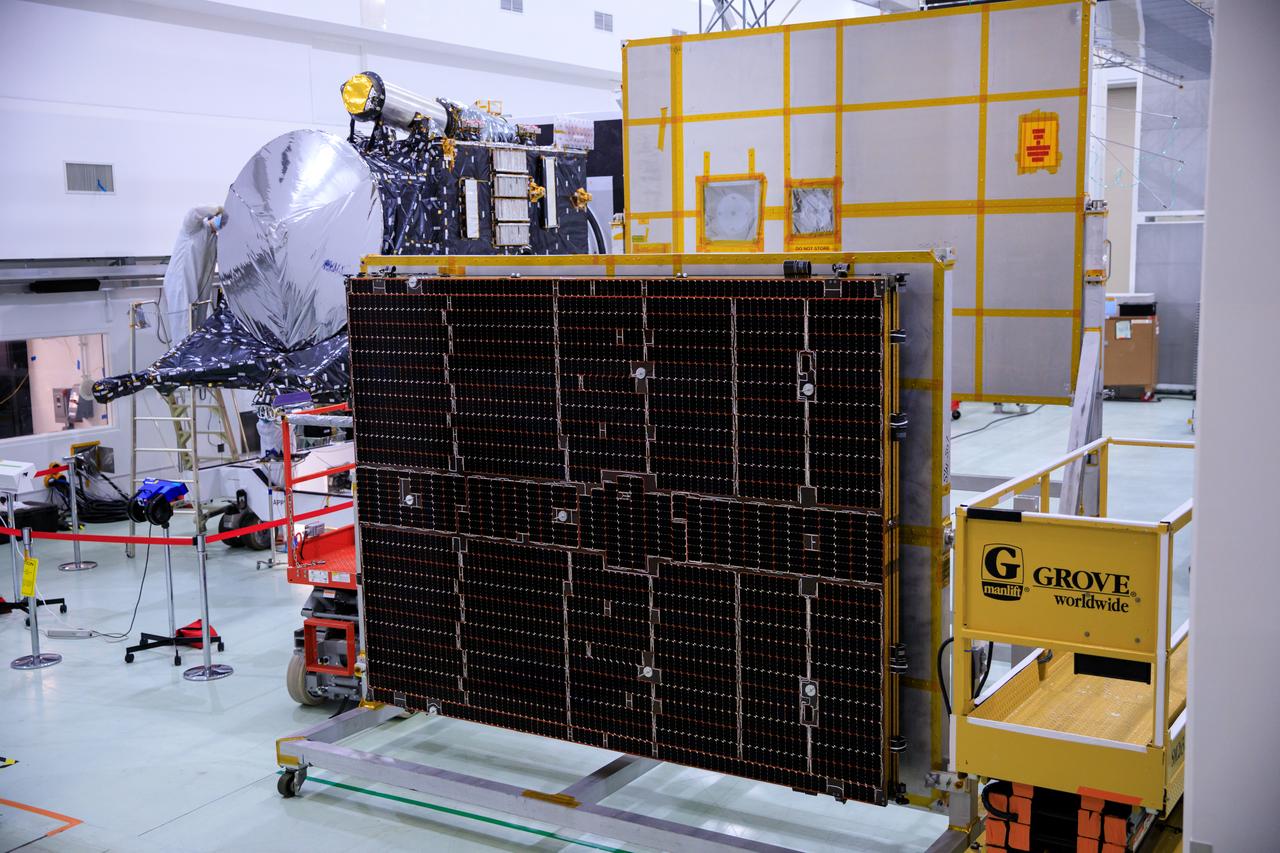
Solar arrays for the agency’s Psyche spacecraft is attached to a stand inside the Astrotech Space Operations Facility near the agency’s Kennedy Space Center in Florida on July 18, 2023. The solar arrays were shipped from Maxar Technologies, in San, Jose, California. They are part of the solar electric propulsion system, provided by Maxar, that will power the spacecraft on its journey to explore a metal-rich asteroid. Psyche will launch atop a SpaceX Falcon Heavy rocket from Launch Complex 39A at Kennedy. Launch is targeted for Oct. 5, 2023. Riding with Psyche is a pioneering technology demonstration, NASA’s Deep Space Optical Communications (DSOC) experiment.

The transport carrier containing the twin solar arrays for NASA’s Psyche spacecraft is offloaded at the Astrotech Space Operations Facility near the agency’s Kennedy Space Center in Florida on July 15, 2023. The solar arrays were shipped from Maxar Technologies, in California. They are part of the solar electric propulsion system, provided by Maxar, that will power the spacecraft on its journey to explore a metal-rich asteroid. Psyche will launch atop a SpaceX Falcon Heavy rocket from Launch Complex 39A at Kennedy. Launch is targeted for Oct. 5, 2023. Riding with Psyche is a pioneering technology demonstration, NASA’s Deep Space Optical Communications (DSOC) experiment.