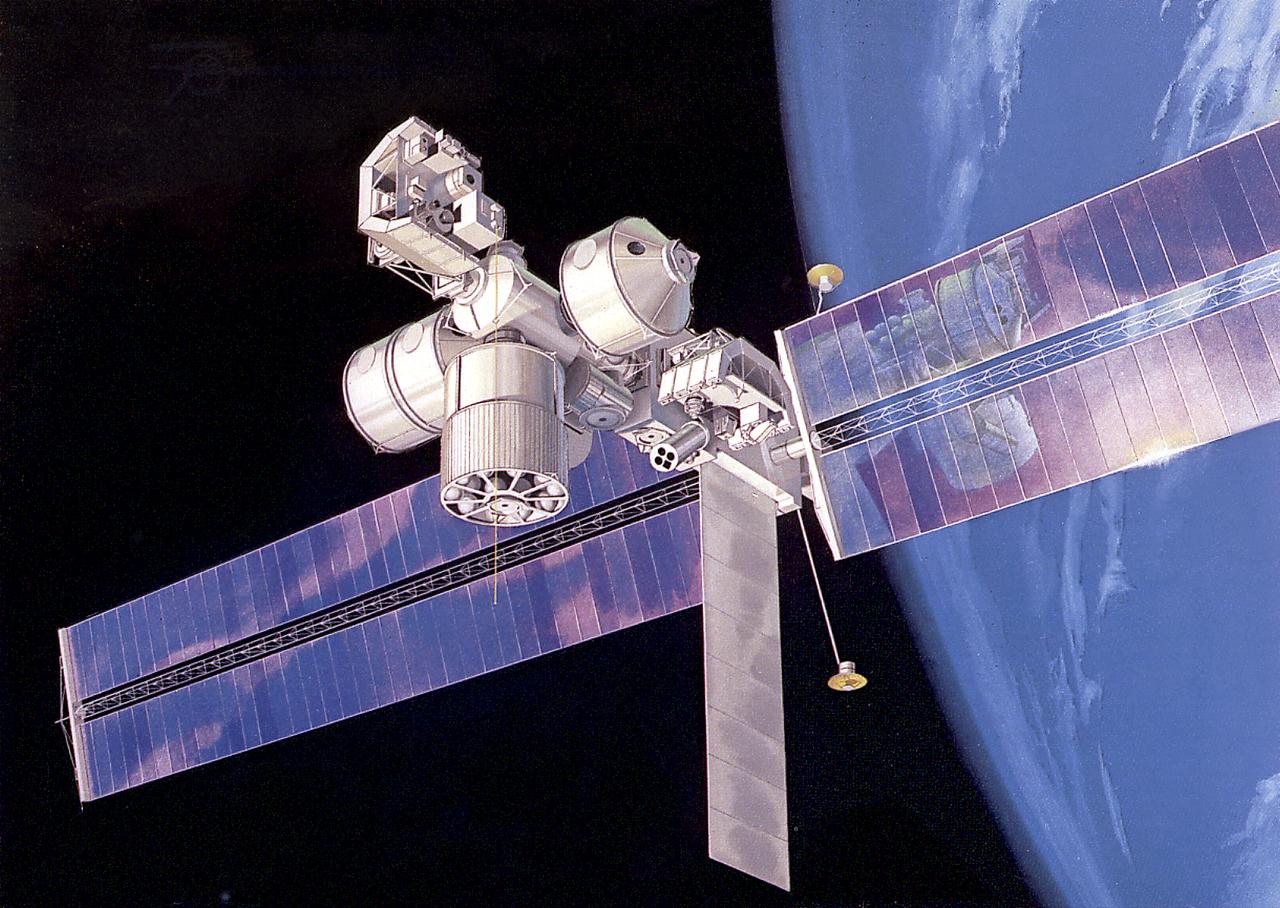
McDornel Douglas performed an Evolutionary Space Platform Concept Study for the Marshall Space Flight Center in the early 1980's. The 10-month study was designed to define, evaluate, and compare approaches and concepts for evolving unmanned and manned capability platforms beyond the then current space platform concepts to an evolutionary goal of establishing a permanent-manned presence in space.
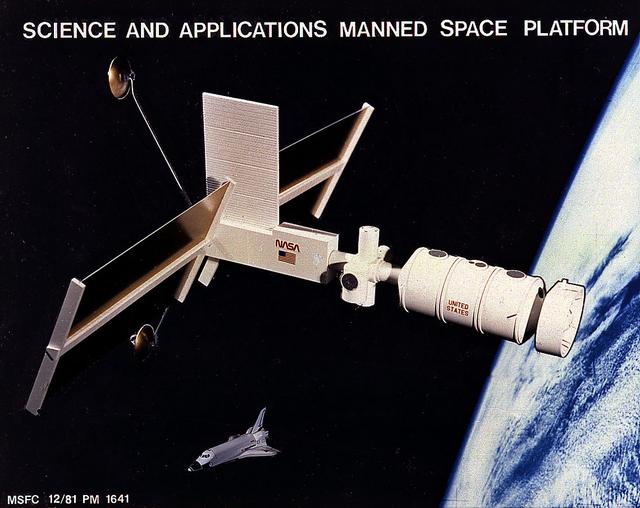
During 1980 and the first half of 1981, the Marshall Space Flight Center conducted studies concerned with a relatively low-cost, near-term, manned space platform to satisfy current user needs, yet capable of evolutionary growth to meet future needs. The Science and Application Manned Space Platform (SAMSP) studies were to serve as a test bed for developing scientific and operational capabilities required by later, more advanced manned platforms while accomplishing early science and operations. This concept illustrates a manned space platform.
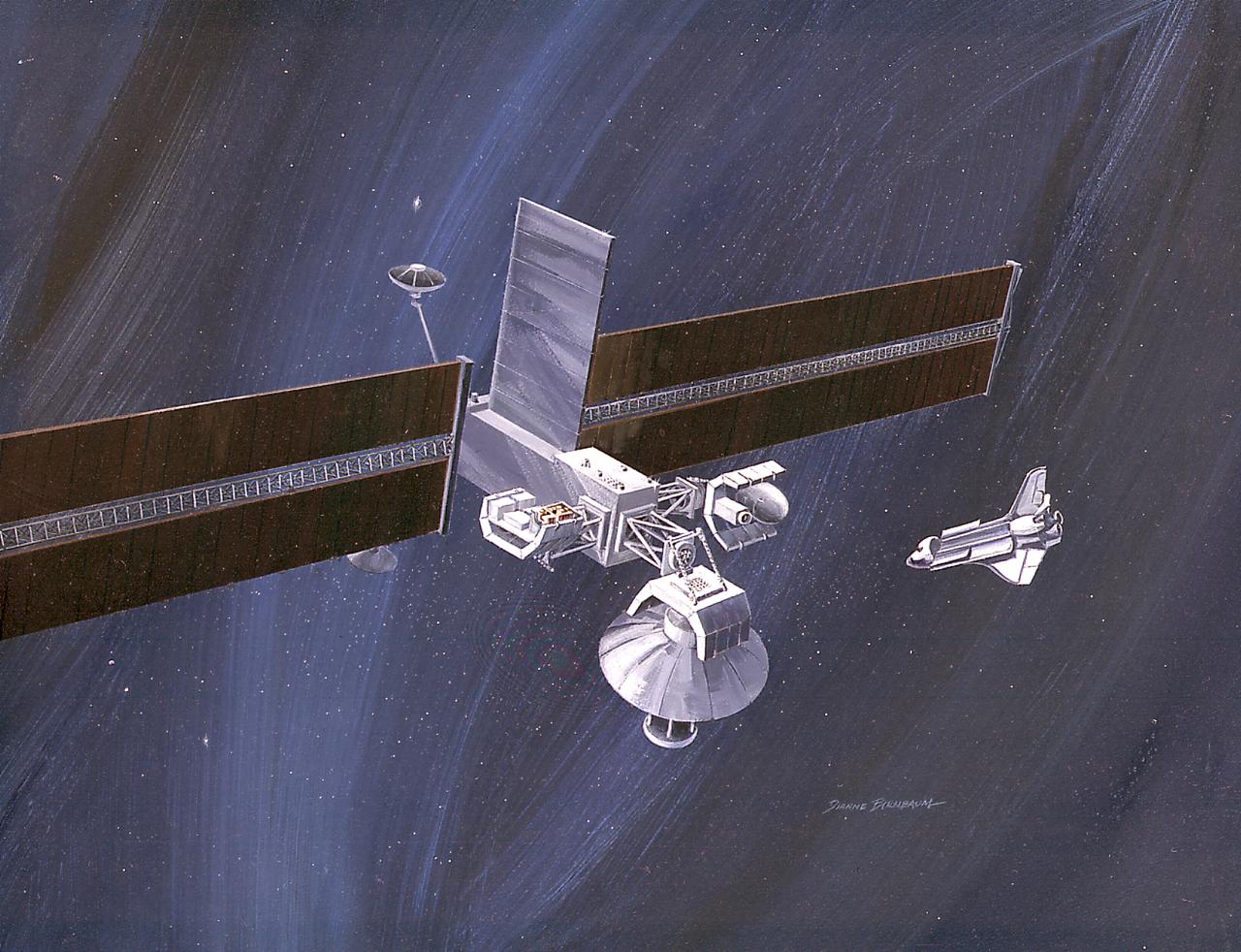
In the late 1970s, NASA, the Marshall Space Flight Center, and its contractors began focusing on designs for Shuttle-tended space platforms capable of extended periods in space and utilizing a variety of temporarily emplaced payloads. As a result, McDornell Douglas studied the Science and Applications Space Platform (SASP). The emphasis was placed on payloads that did not require a crewman's presence during normal operations. Most of the payloads would occupy one or more Spacelab-like pallets. This artist concept depicts the SASP.
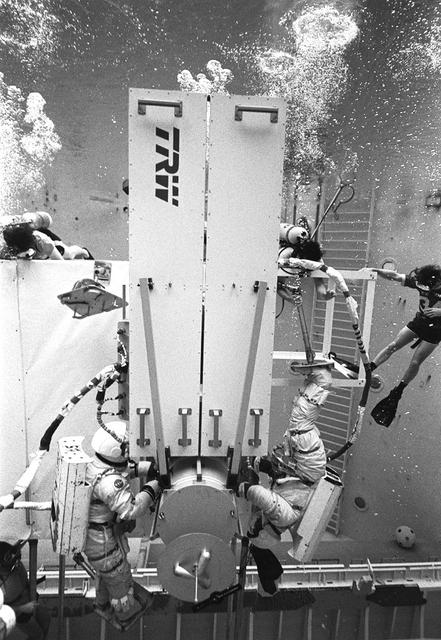
The Space Platform was first conceived as a launching site for deep space exploration. The original idea was to build this space platform either on the moon's surface or near lunar orbit. It would be used as a staging base, where the reusable launch vehicles (later known as Space Shuttles) would ferry machinery and equipment to assemble deep space exploration vehicles. Replaced by the Space Station concept, the space platform idea was never completed. However, early in the space platform development, astronauts trained at the Marshall Space Flight Center's (MSFC) Neutral Buoyancy Simulator (NBS), as pictured here, working on solar array equipment. This experiment was deployed from the shuttle to study the motions of large structures in space. Similar arrays will be used on the Space Station and large observatory spacecraft in the future.
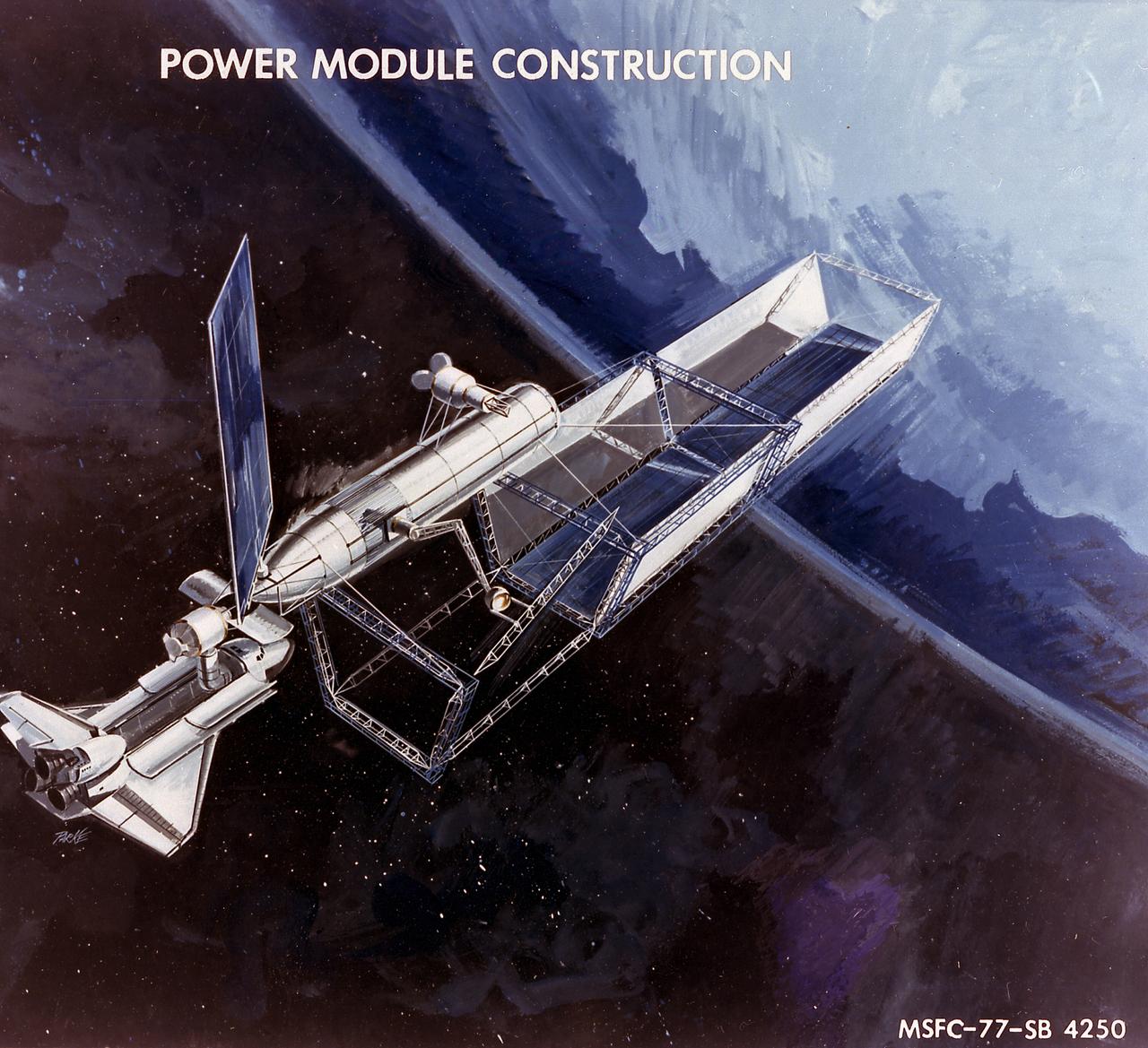
The Marshall Space Flight Center (MSFC) and the Johnson Space Center (JSC) were each awarded 16-month contracts in April 1976 for the Space Station Systems Analysis Study (SSSAS). Grumman Aerospace Corporation was MSFC's contractor and McDornell Douglas Aerospace Company was JSC's contractor. The goal of this study was to formulate plans for a permanent operational base and laboratory facility in Earth orbit in addition to developing a space construction base design for implementing the program. An expended Space Shuttle external tank was to be the central core platform of the base, and additional pressurized modules could be added to provide laboratory facilities. This artist's concept depicts a space construction base design for implementing the SSSAS.