
Space Shuttle Simulator cockpit

Want to sit in the cockpit of the Space Shuttle and watch astronauts work in outer space? At StenniSphere, you can do that and much more. StenniSphere, the visitor center at John C. Stennis space Center in Hancock County, Miss., presents 14,000-square-feet of interactive exhibits that depict America's race for space as well as a glimpse of the future. Stennisphere is open free of charge from 9 a.m. to 5 p.m. daily.
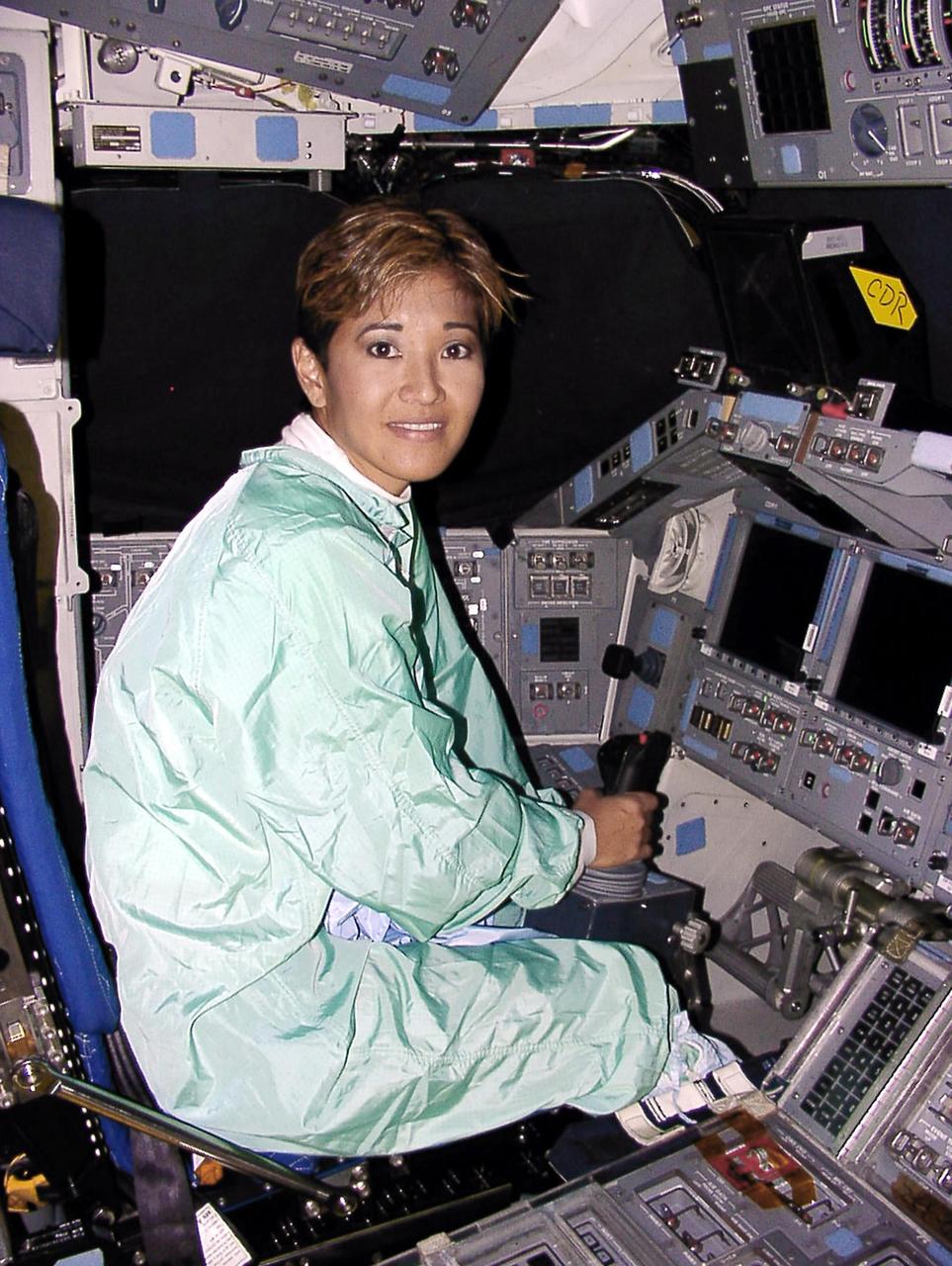
WESH-TV 2 News Anchor Wendy Chioji sits in the cockpit of a space shuttle while touring Kennedy Space Center.
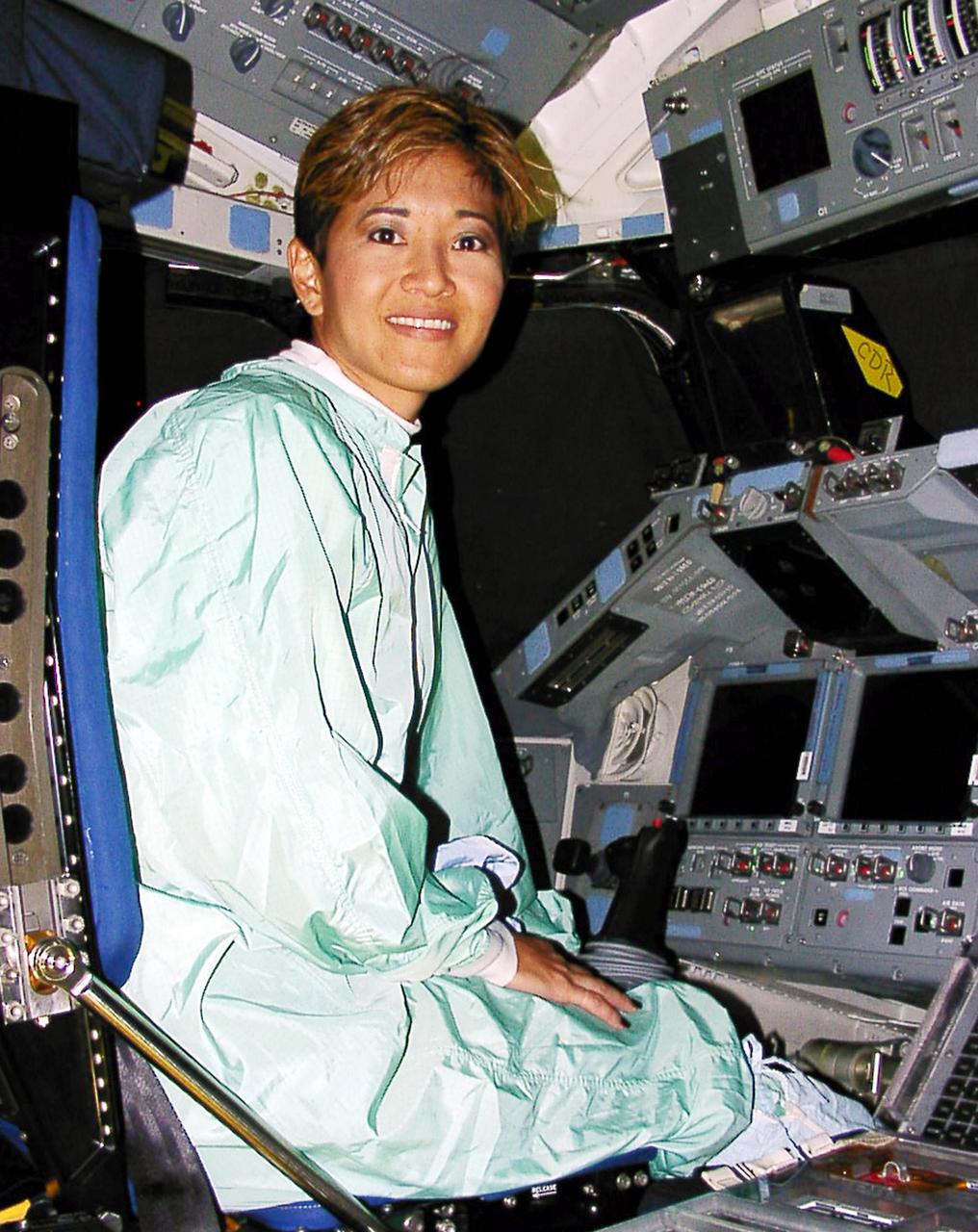
WESH-TV 2 News Anchor Wendy Chioji sits in the cockpit of a space shuttle while touring Kennedy Space Center.
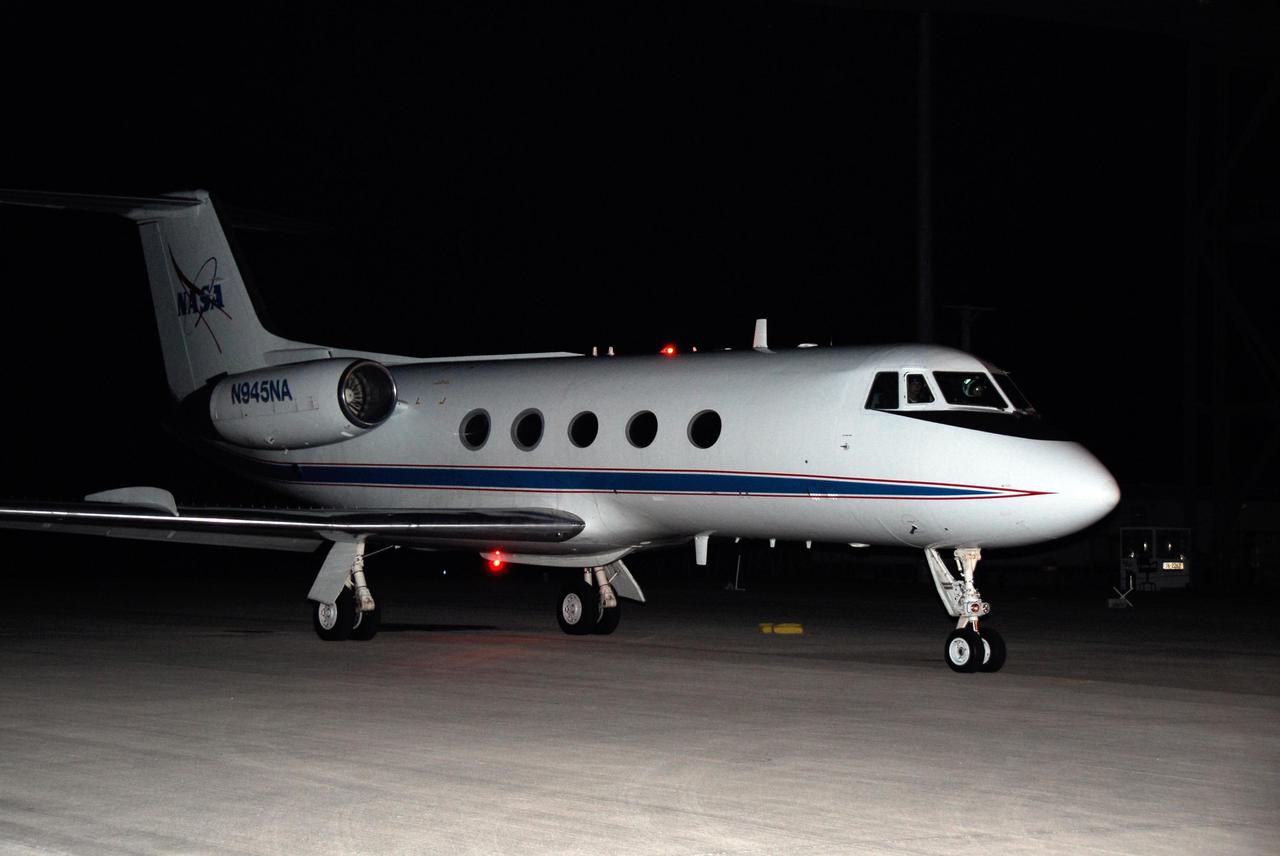
KENNEDY SPACE CENTER, FLA. -- On the Shuttle Landing Facility at NASA's Kennedy Space Center, the shuttle training aircraft, or STA, is ready to roll out for practice landings. In the cockpit are Commander Steve Frick and Pilot Alan Poindexter, who are preparing for the Dec. 6 launch on space shuttle Atlantis. The STA is a Grumman American Aviation-built Gulf Stream II jet that was modified to simulate an orbiter's cockpit, motion and visual cues, and handling qualities. Photo credit: NASA/Kim Shiflett
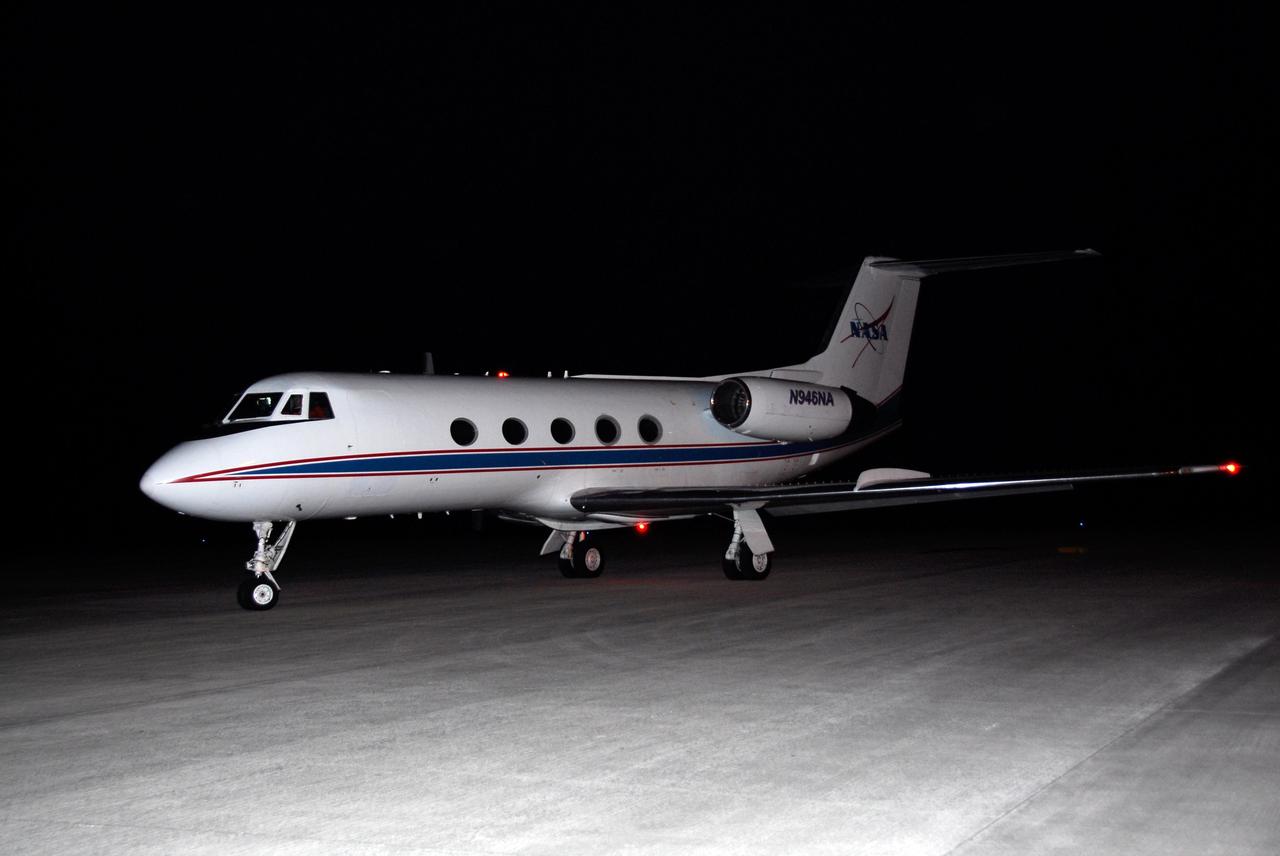
KENNEDY SPACE CENTER, FLA. -- On the Shuttle Landing Facility at NASA's Kennedy Space Center, the shuttle training aircraft, or STA, taxis toward the runway for practice landings. In the cockpit are Commander Steve Frick and Pilot Alan Poindexter, who are preparing for the Dec. 6 launch on space shuttle Atlantis. The STA is a Grumman American Aviation-built Gulf Stream II jet that was modified to simulate an orbiter's cockpit, motion and visual cues, and handling qualities. Photo credit: NASA/Kim Shiflett
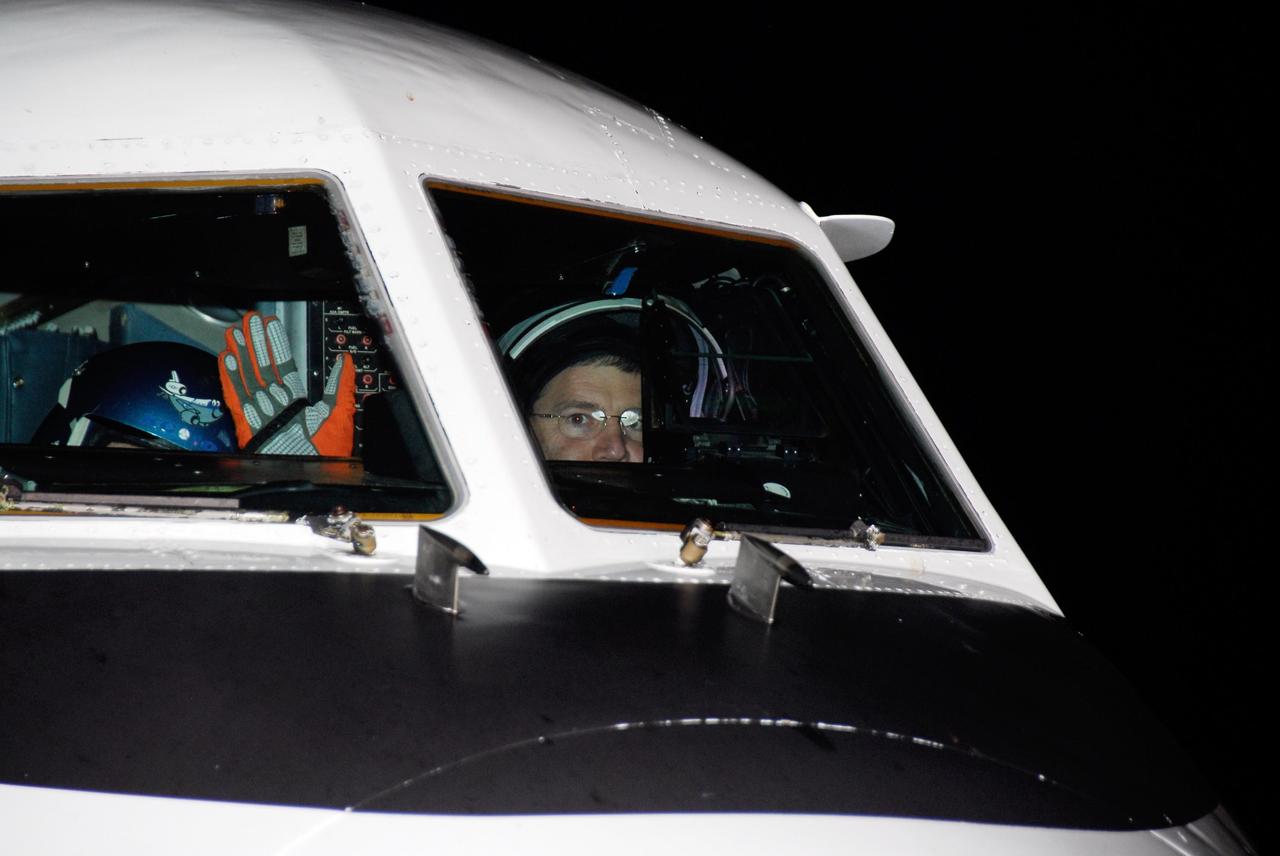
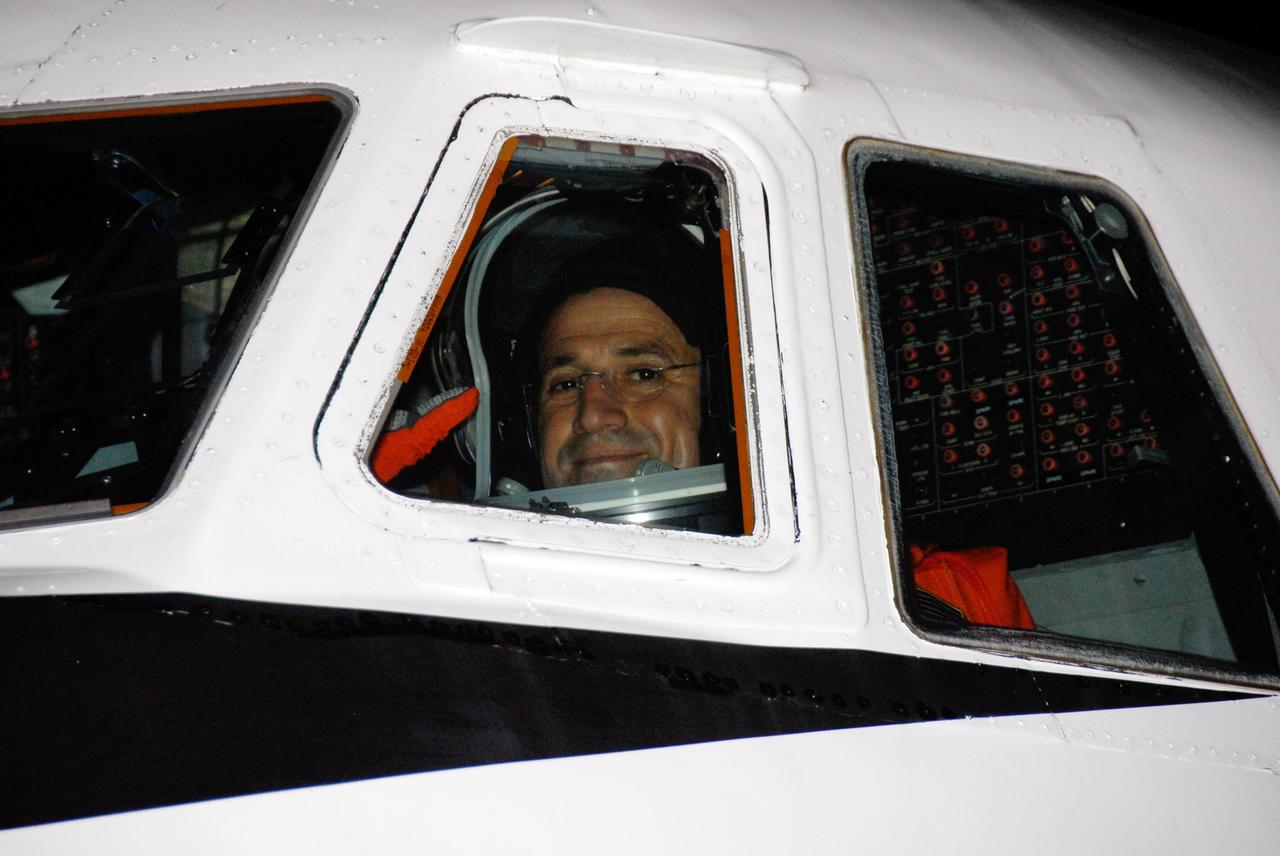
KENNEDY SPACE CENTER, FLA. -- STS-122 Commander Steve Frick waves from inside the cockpit of the shuttle training aircraft, or STA, at NASA's Kennedy Space Center. Frick and Pilot Alan Poindexter will practice shuttle landings in the STA before the Dec. 6 launch on space shuttle Atlantis. The STA is a Grumman American Aviation-built Gulf Stream II jet that was modified to simulate an orbiter's cockpit, motion and visual cues, and handling qualities. Photo credit: NASA/Kim Shiflett
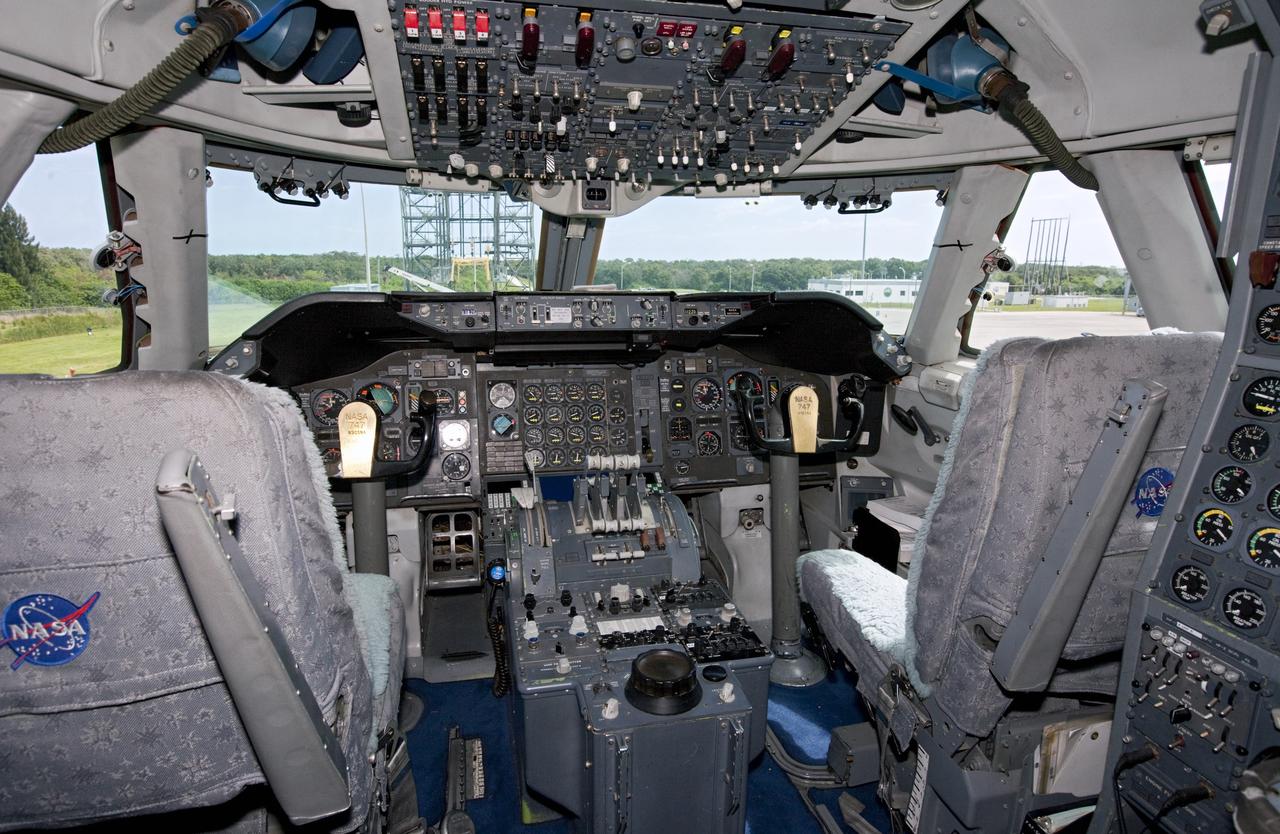
CAPE CANAVERAL, Fla. -The cockpit of the Shuttle Carrier Aircraft, or SCA, that will take space shuttle Endeavour from NASA's Kennedy Space Center in Florida to Los Angeles for public display. Photo credit: NASA/Kim Shiflett
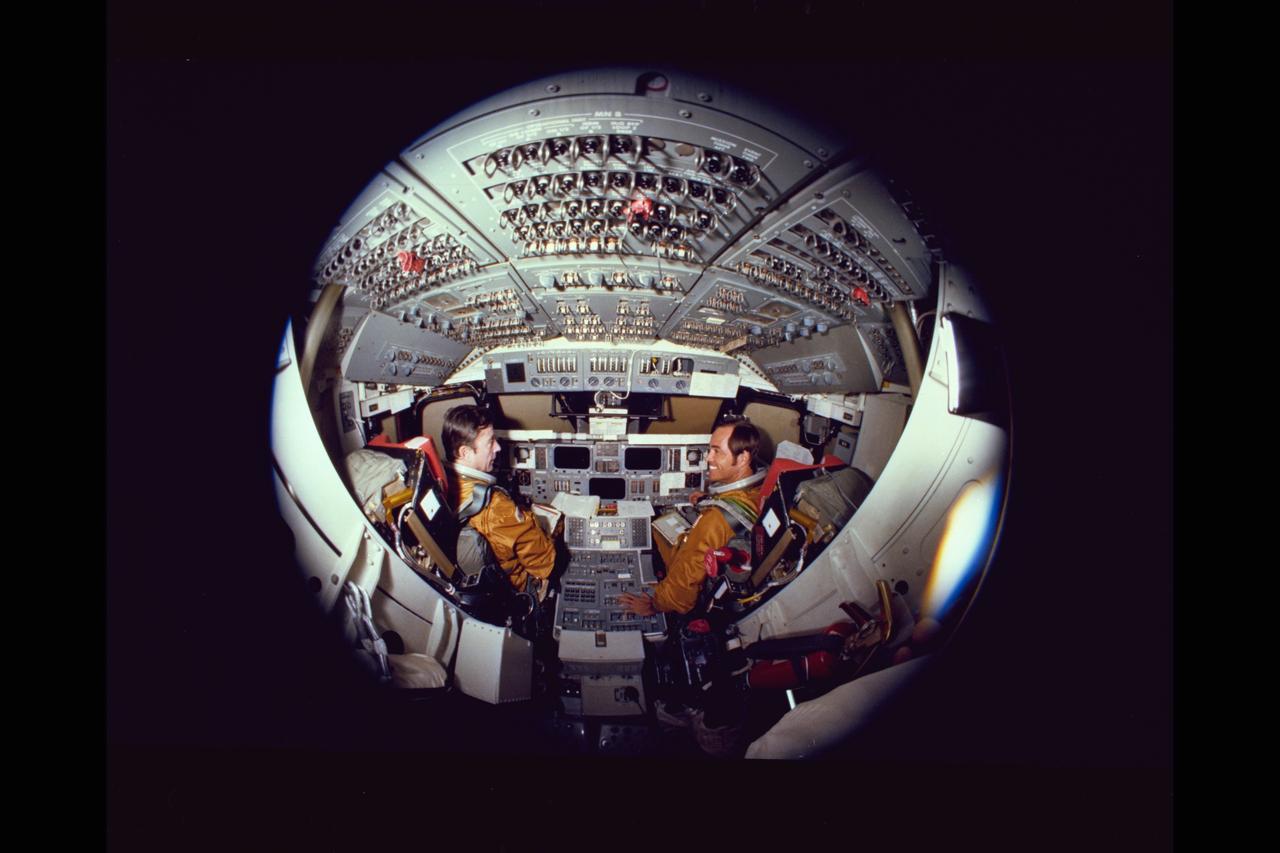
Space Shuttle Columbia at Launch Site (Cockpit crew John Young, Commander and Robert Crippen, Pilot) (ref: 80-HC-602)
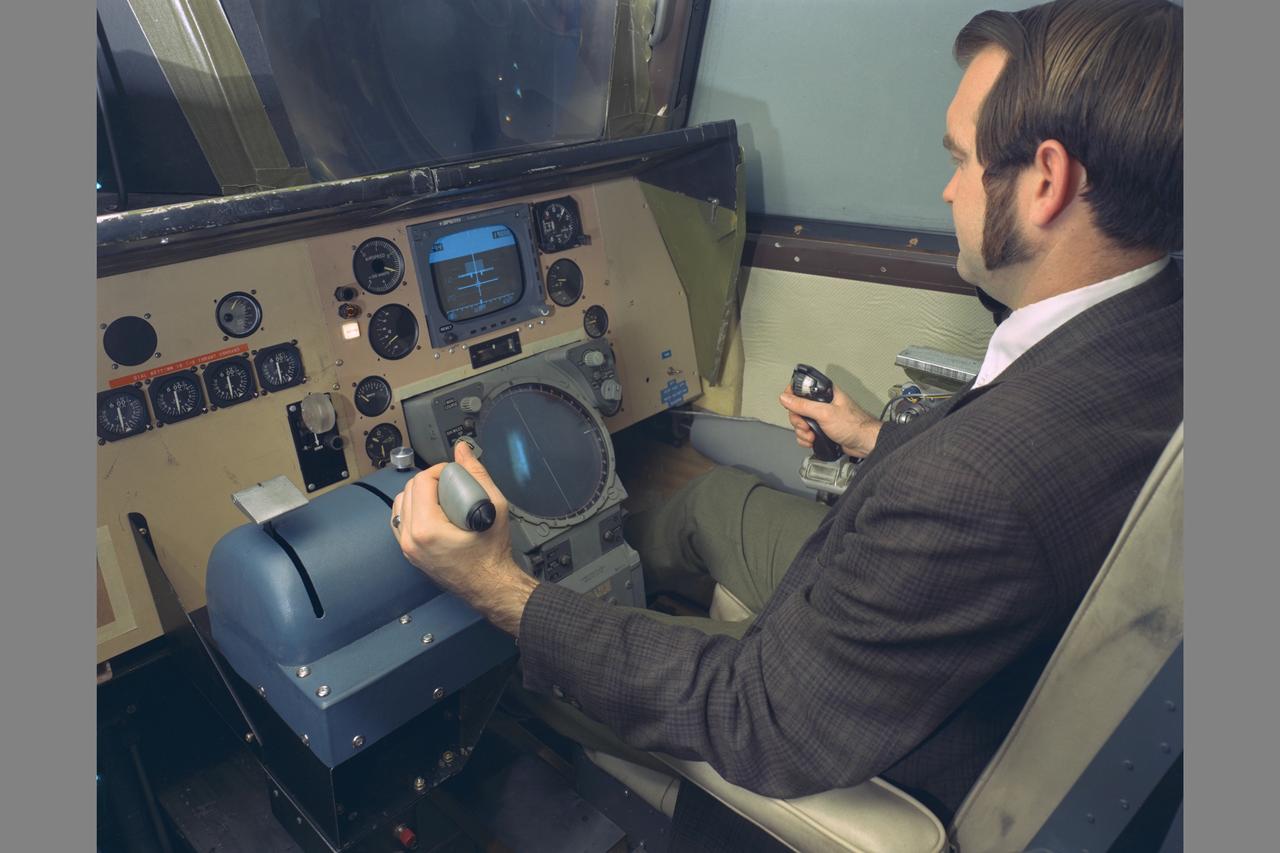
PILOT KENNETH C. WHITE IN CHAIR. Space Shuttle Vehicle Simulation. SSV COCKPIT IN THE MOVING-CAB TRANSPORT SIMULATOR (S.16)
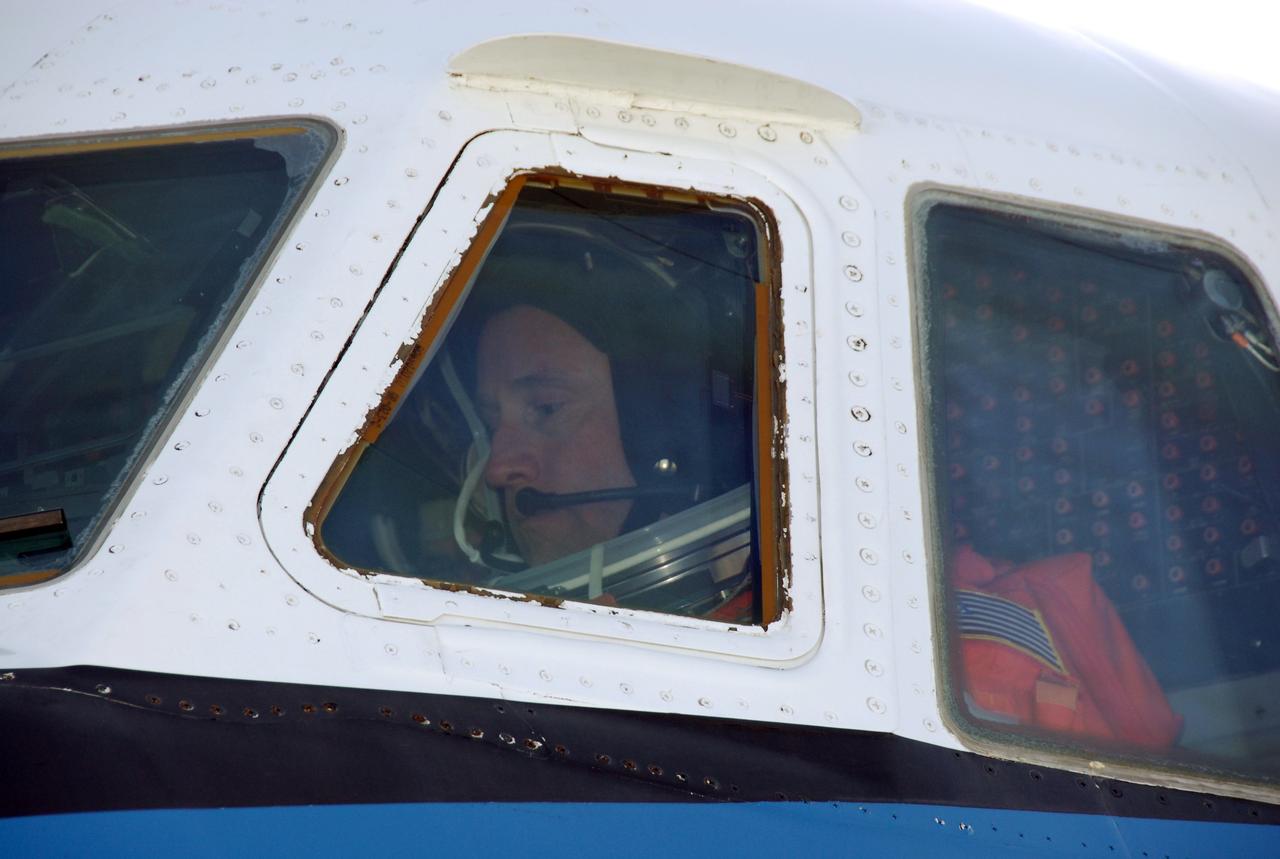
CAPE CANAVERAL, Fla. -- On the Shuttle Landing Facility at NASA's Kennedy Space Center, the commander of the STS-124 mission, Mark Kelly, sits in the cockpit of the shuttle training aircraft, or STA. He is getting ready to practice landing the shuttle on the SLF runway. The STA is a Grumman American Aviation-built Gulf Stream II jet that was modified to simulate an orbiter's cockpit, motion and visual cues, and handling qualities. In flight, the aircraft duplicates the orbiter's atmospheric descent trajectory from approximately 35,000 feet altitude to landing on a runway. Space shuttle Discovery is scheduled to lift off on the STS-124 mission at 5:02 p.m. May 31. Photo credit: NASA/Kim Shiflett
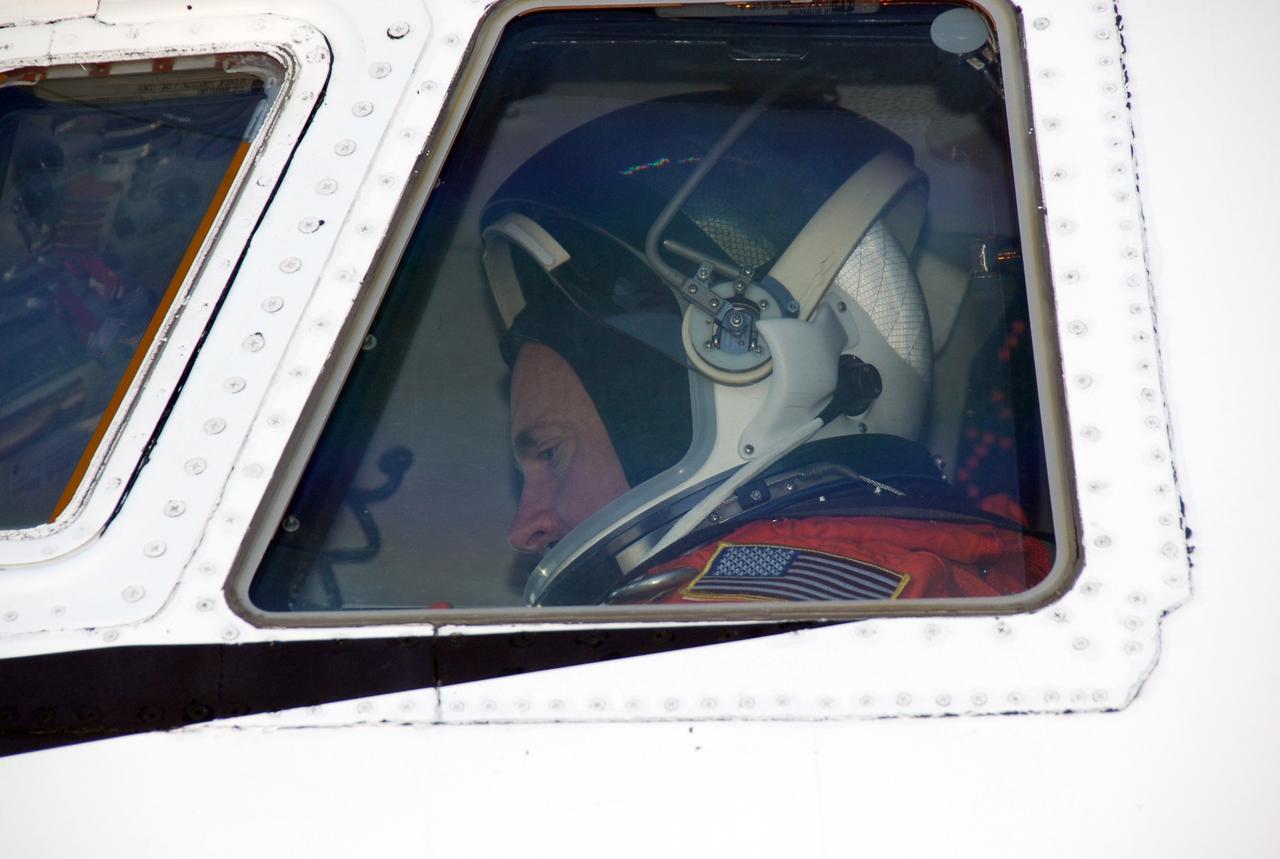
CAPE CANAVERAL, Fla. -- On the Shuttle Landing Facility at NASA's Kennedy Space Center, the commander of the STS-124 mission, Mark Kelly, sits in the cockpit of the shuttle training aircraft, or STA. He is getting ready to practice landing the shuttle on the SLF runway. The STA is a Grumman American Aviation-built Gulf Stream II jet that was modified to simulate an orbiter's cockpit, motion and visual cues, and handling qualities. In flight, the aircraft duplicates the orbiter's atmospheric descent trajectory from approximately 35,000 feet altitude to landing on a runway. Space shuttle Discovery is scheduled to lift off on the STS-124 mission at 5:02 p.m. May 31. Photo credit: NASA/Kim Shiflett
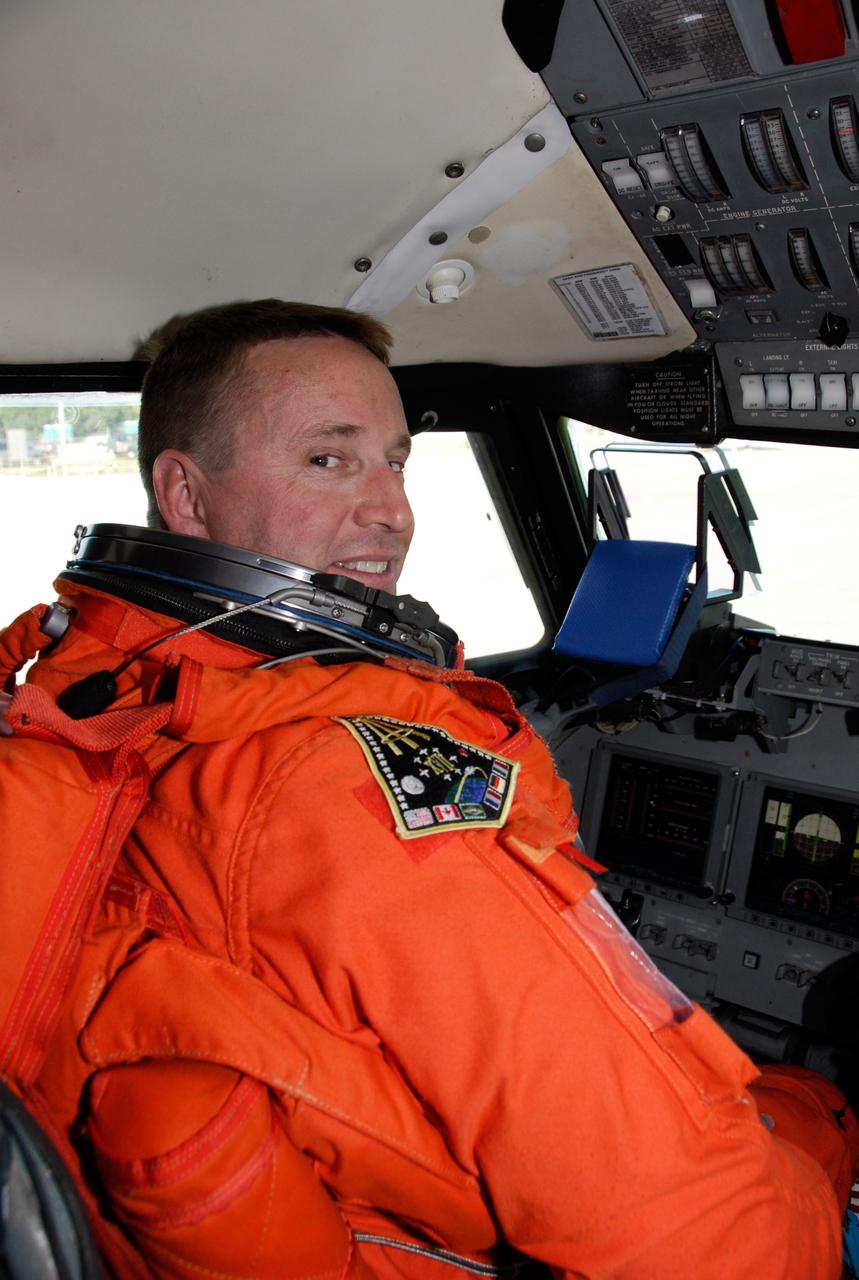
CAPE CANAVERAL, Fla. -- On the Shuttle Landing Facility at NASA's Kennedy Space Center, the pilot of the STS-124 mission, Ken Ham, sits in the cockpit of the shuttle training aircraft, or STA. He is getting ready to practice landing the shuttle on the SLF runway. The STA is a Grumman American Aviation-built Gulf Stream II jet that was modified to simulate an orbiter's cockpit, motion and visual cues, and handling qualities. In flight, the aircraft duplicates the orbiter's atmospheric descent trajectory from approximately 35,000 feet altitude to landing on a runway. Space shuttle Discovery is scheduled to lift off on the STS-124 mission at 5:02 p.m. May 31. Photo credit: NASA/Kim Shiflett
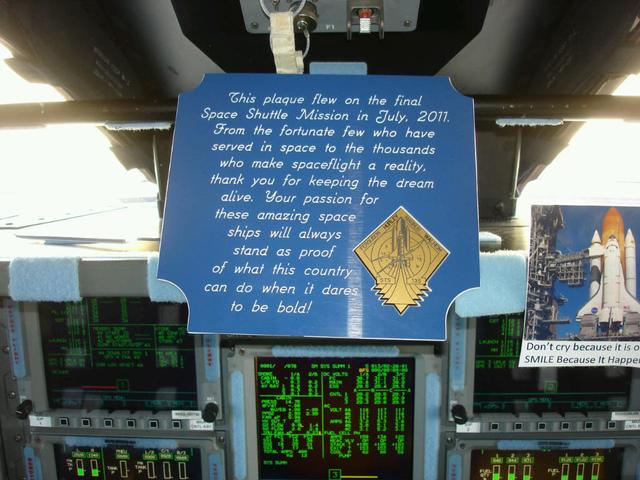
JSC2011-E-068995 (21 July 2011) --- The crew of STS-135 left this plaque in the cockpit of Atlantis as a tribute to all of the people who have worked on the Space Shuttle Program. Photo credit: NASA
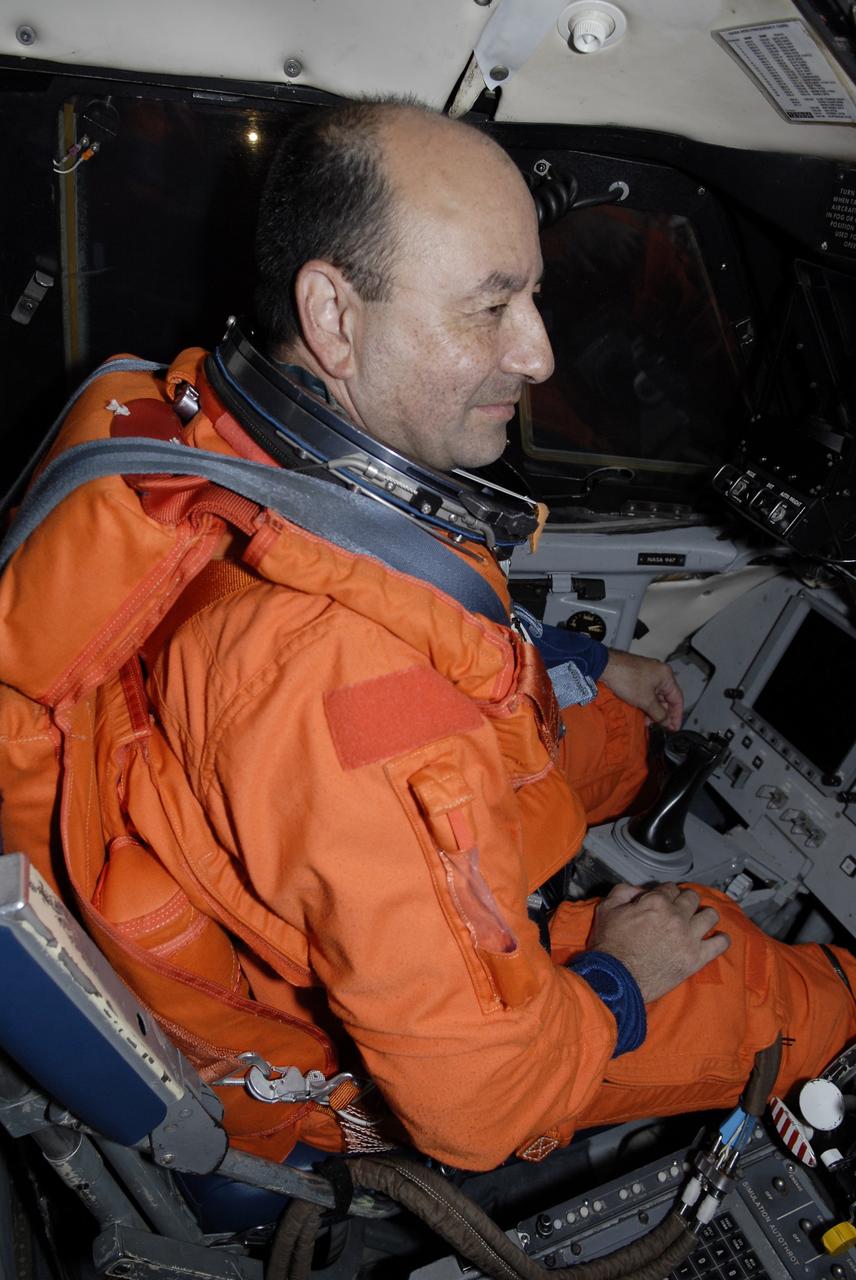
CAPE CANAVERAL, Fla. – On the Shuttle Landing Facility at NASA's Kennedy Space Center in Florida, STS-127 Commander Mark Polansky is wearing his complete launch-and-entry suit in the cockpit of the Shuttle Training Aircraft. He is preparing to practice shuttle landings in preparation for launch of space shuttle Endeavour on the STS-127 mission, targeted for June 13. The STA is a Grumman American Aviation-built Gulf Stream II jet that was modified to simulate a shuttle’s cockpit, motion and visual cues, and handling qualities. The crew is at Kennedy for a launch dress rehearsal called the terminal countdown demonstration test, or TCDT, which includes emergency egress training and equipment familiarization. The STS-127 mission is the final of three flights dedicated to the assembly of the Japanese Kibo laboratory complex on the International Space Station. It is the 127th shuttle flight and the 29th in the assembly of the space station. Photo credit: NASA/Kim Shiflett
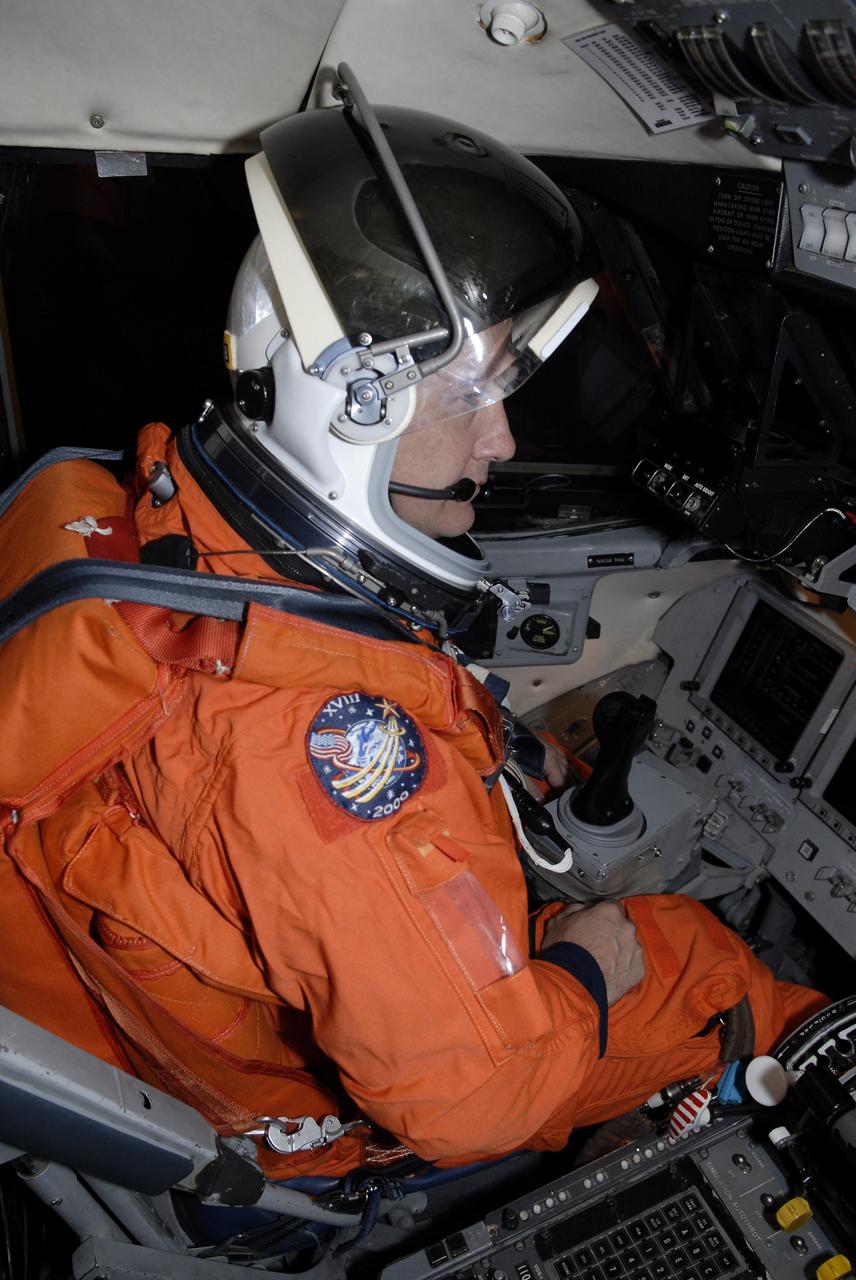
CAPE CANAVERAL, Fla. – On the Shuttle Landing Facility at NASA's Kennedy Space Center in Florida, STS-127 Pilot Doug Hurley is wearing his complete launch-and-entry suit in the cockpit of the Shuttle Training Aircraft. He is preparing to practice shuttle landings in preparation for launch of space shuttle Endeavour on the STS-127 mission, targeted for June 13. The STA is a Grumman American Aviation-built Gulf Stream II jet that was modified to simulate a shuttle’s cockpit, motion and visual cues, and handling qualities. The crew is at Kennedy for a launch dress rehearsal called the terminal countdown demonstration test, or TCDT, which includes emergency egress training and equipment familiarization. The STS-127 mission is the final of three flights dedicated to the assembly of the Japanese Kibo laboratory complex on the International Space Station. It is the 127th shuttle flight and the 29th in the assembly of the space station. Photo credit: NASA/Kim Shiflett
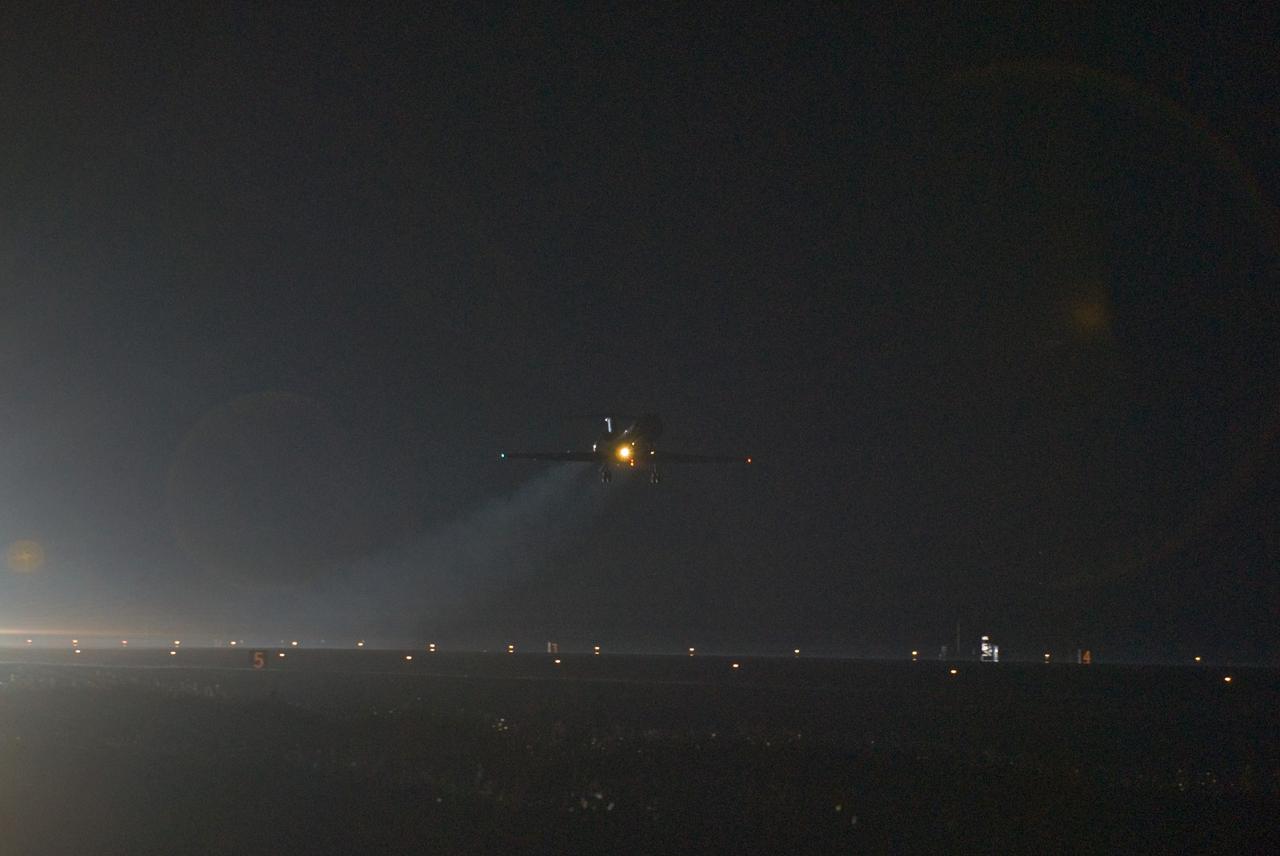
CAPE CANAVERAL, Fla. – From the Shuttle Landing Facility at NASA's Kennedy Space Center in Florida, the Shuttle Training Aircraft takes off with STS-127 Commander Mark Polansky or Pilot Doug Hurley in the cockpit. They are practicing shuttle landings in preparation for launch of space shuttle Endeavour on the STS-127 mission, targeted for June 13. The STA is a Grumman American Aviation-built Gulf Stream II jet that was modified to simulate a shuttle’s cockpit, motion and visual cues, and handling qualities. The crew is at Kennedy for a launch dress rehearsal called the terminal countdown demonstration test, or TCDT, which includes emergency egress training and equipment familiarization. The STS-127 mission is the final of three flights dedicated to the assembly of the Japanese Kibo laboratory complex on the International Space Station. It is the 127th shuttle flight and the 29th in the assembly of the space station. Photo credit: NASA/Kim Shiflett
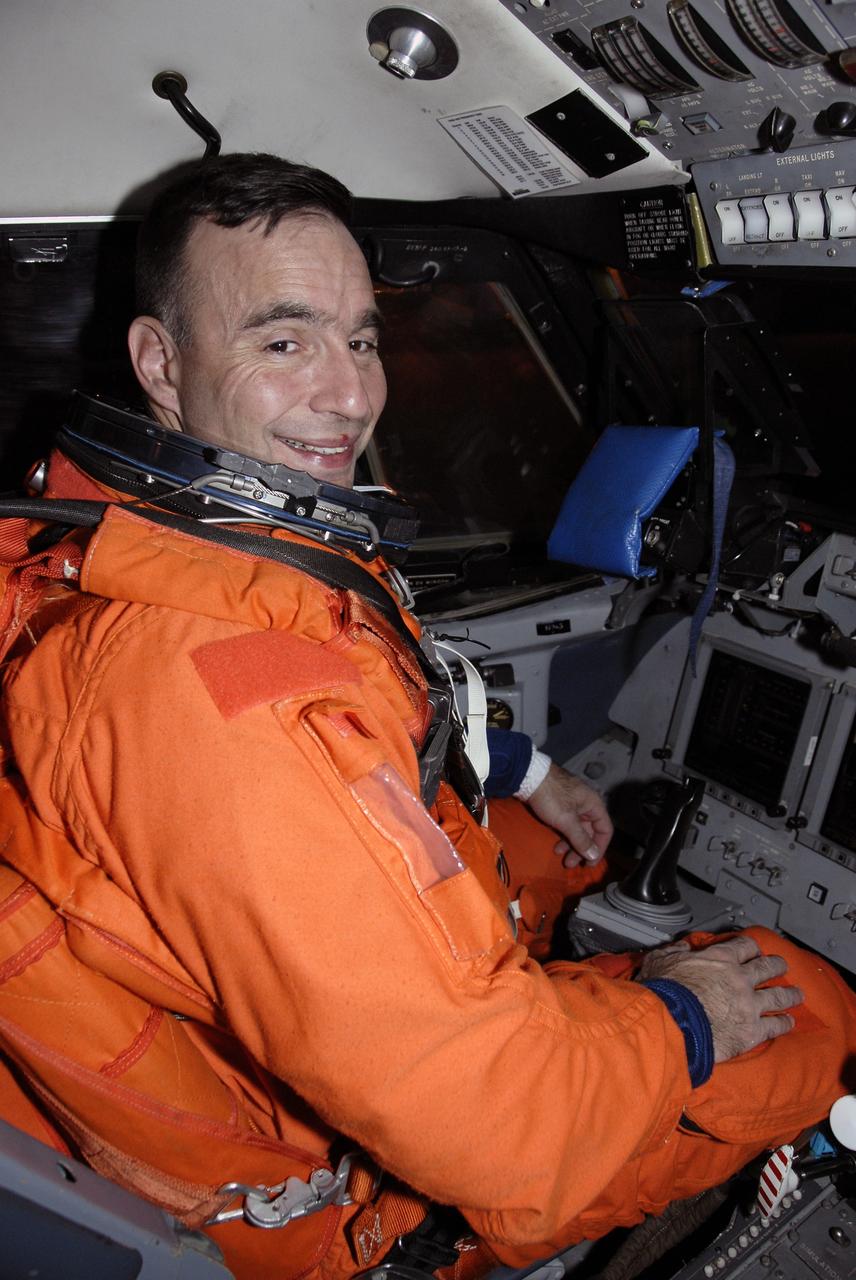
CAPE CANAVERAL, Fla. – STS-119 Commander Lee Archambault takes his seat in the cockpit of the shuttle training aircraft, or STA, at the Shuttle Landing Facility at NASA's Kennedy Space Center in Florida. He will practice shuttle landings as preparation for launch as part of the Terminal Countdown Demonstration Test activities. The TCDT includes equipment familiarization and a simulated launch countdown. The STA is a Grumman American Aviation-built Gulf Stream II jet that was modified to simulate a shuttle’s cockpit, motion and visual cues, and handling qualities. In flight, the aircraft duplicates the shuttle’s atmospheric descent trajectory from approximately 35,000 feet to landing. The crew of space shuttle Discovery is targeted to launch on the STS-119 mission Feb. 12. During Discovery's 14-day mission, the crew will install the S6 truss segment and solar arrays to the starboard side of the International Space Station, completing the station's truss, or backbone. Photo credit: NASA/Kim Shiflett
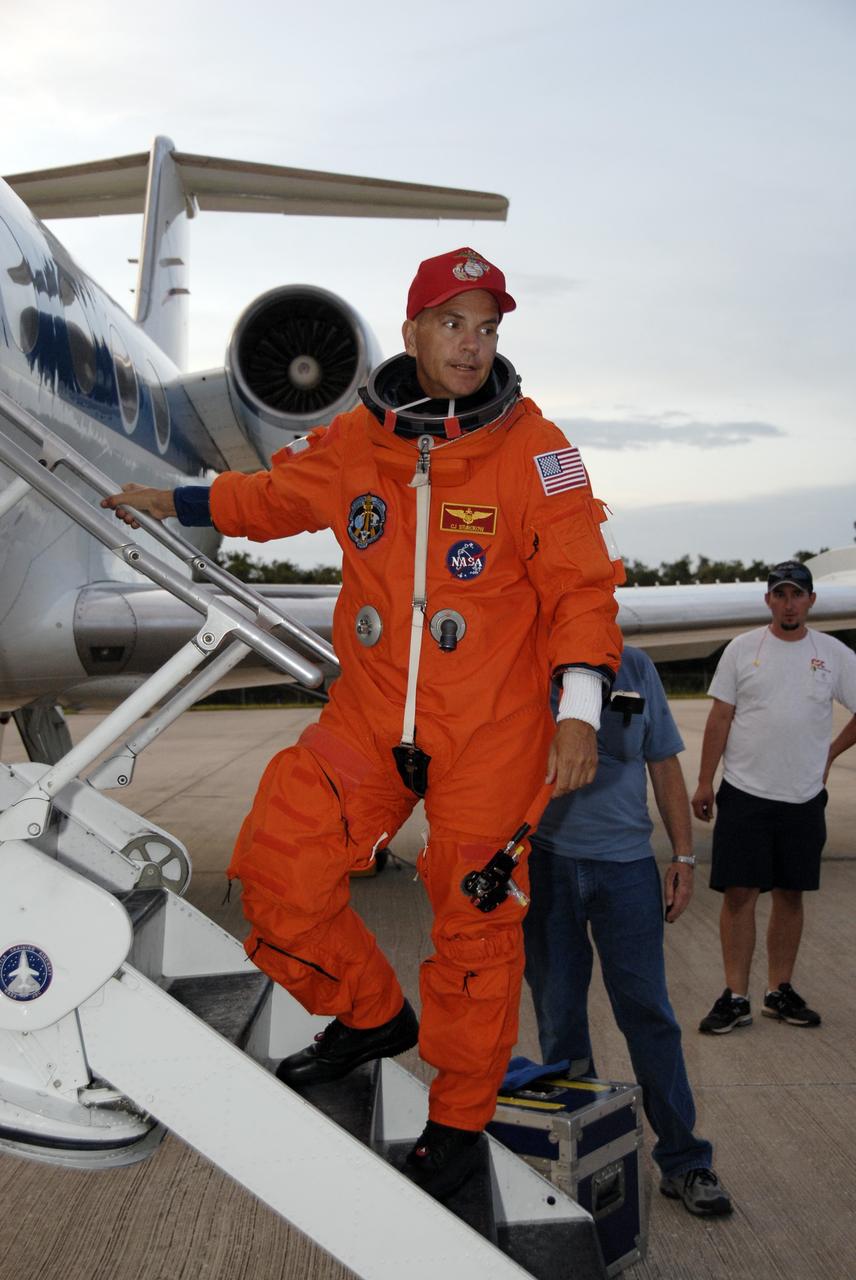
CAPE CANAVERAL, Fla. – At the Shuttle Landing Facility at NASA's Kennedy Space Center in Florida, STS-128 Commander Rick Sturckow heads up the stairs to the cockpit of the Shuttle Training Aircraft, or STA, to practice shuttle landings. The practice is in preparation for launch of space shuttle Discovery's STS-128 mission in late August to the International Space Station. The STA is a Grumman American Aviation-built Gulfstream II jet that was modified to simulate a shuttle’s cockpit, motion and visual cues, and handling qualities. The STS-128 crew is at Kennedy for a launch dress rehearsal called the terminal countdown demonstration test, or TCDT, which includes emergency exit training and equipment familiarization, as well as a simulated launch countdown. Discovery will deliver 33,000 pounds of equipment to the station, including science and storage racks, a freezer to store research samples, a new sleeping compartment and the COLBERT treadmill. Photo credit: NASA/Kim Shiflett
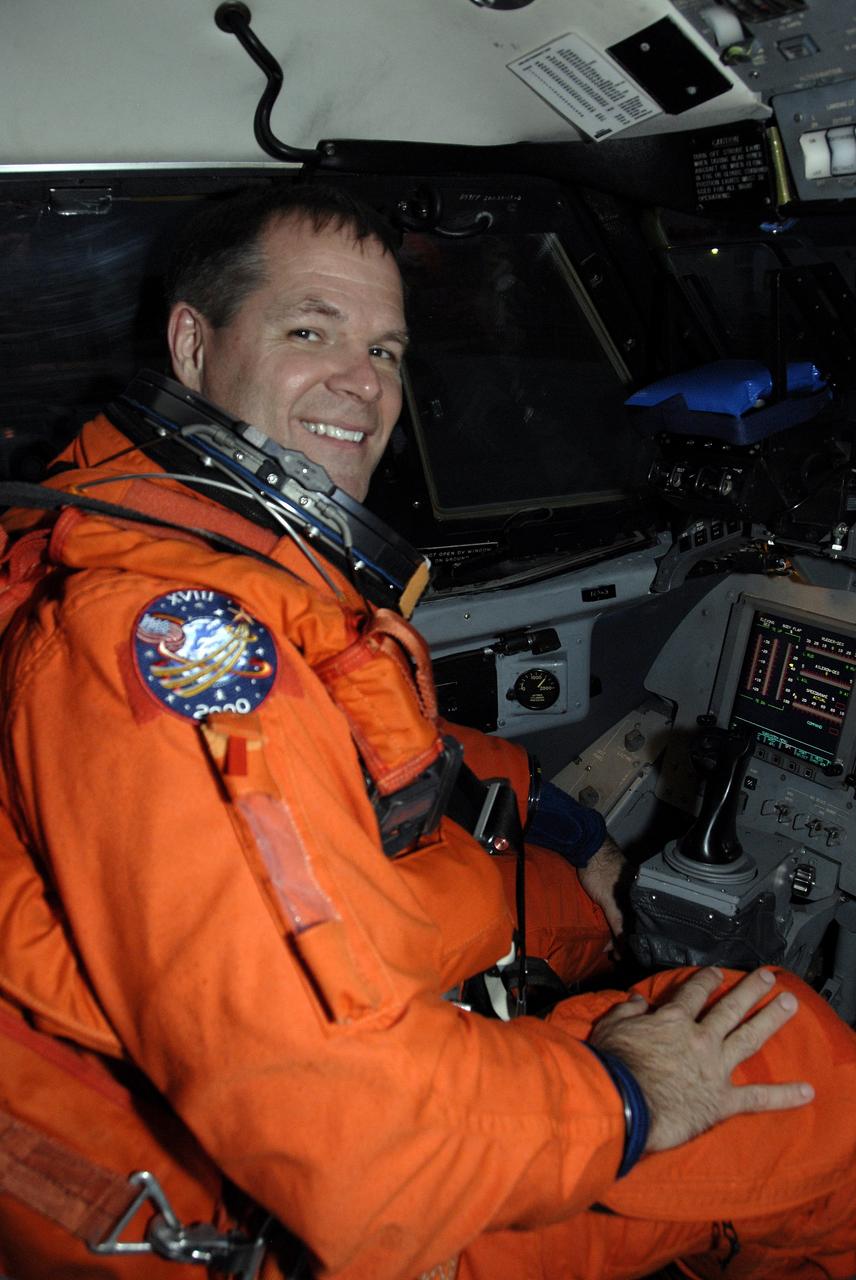
CAPE CANAVERAL, Fla. –At the Shuttle Landing Facility at NASA's Kennedy Space Center in Florida, STS-128 Pilot Kevin Ford settles in the cockpit of the Shuttle Training Aircraft, or STA, to practice shuttle landings. The practice is in preparation for launch of space shuttle Discovery's STS-128 mission in late August to the International Space Station. The STA is a Grumman American Aviation-built Gulfstream II jet that was modified to simulate a shuttle’s cockpit, motion and visual cues, and handling qualities. The STS-128 crew is at Kennedy for a launch dress rehearsal called the terminal countdown demonstration test, or TCDT, which includes emergency exit training and equipment familiarization, as well as a simulated launch countdown. Discovery will deliver 33,000 pounds of equipment to the station, including science and storage racks, a freezer to store research samples, a new sleeping compartment and the COLBERT treadmill. Photo credit: NASA/Kim Shiflett
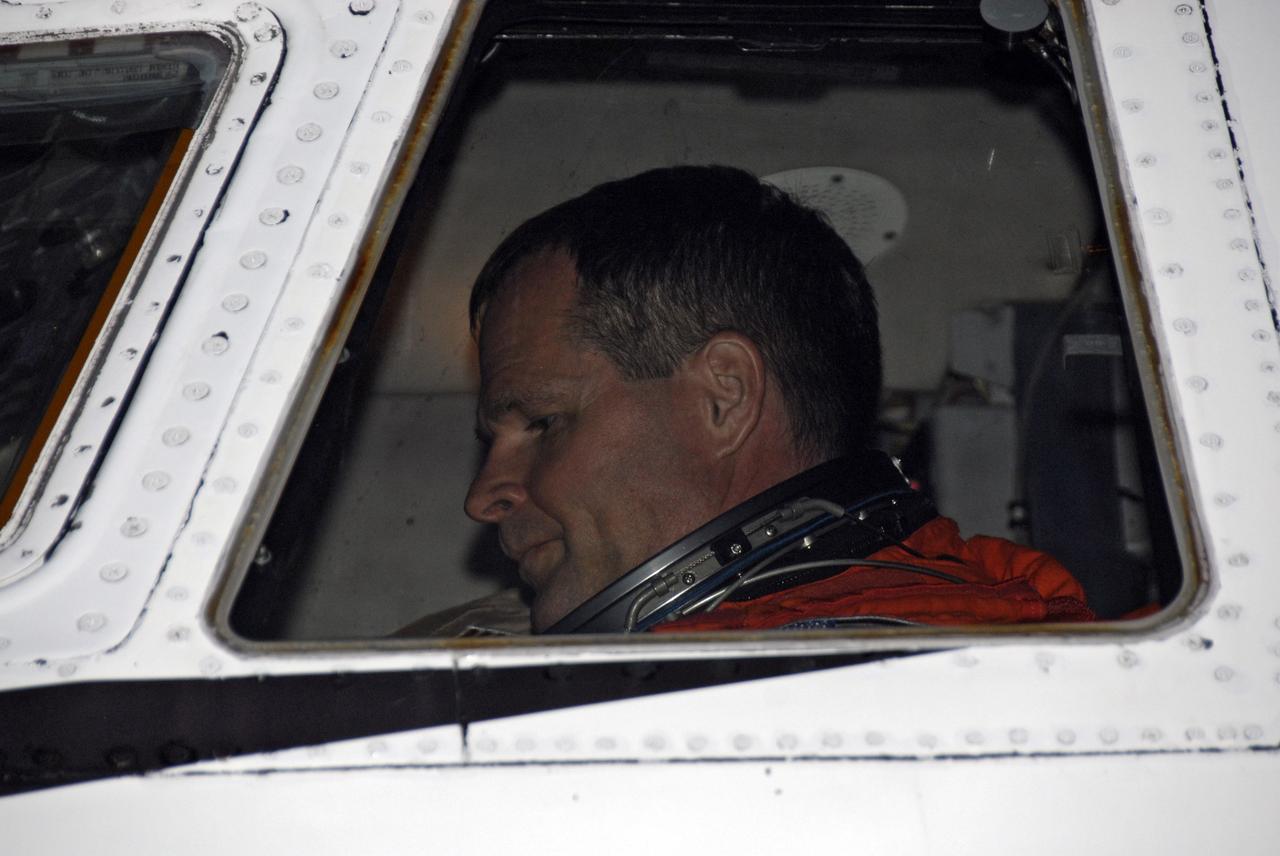
CAPE CANAVERAL, Fla. –At the Shuttle Landing Facility at NASA's Kennedy Space Center in Florida, STS-128 Pilot Kevin Ford settles in the cockpit of the Shuttle Training Aircraft, or STA, to practice shuttle landings. The practice is in preparation for launch of space shuttle Discovery's STS-128 mission in late August to the International Space Station. The STA is a Grumman American Aviation-built Gulfstream II jet that was modified to simulate a shuttle’s cockpit, motion and visual cues, and handling qualities. The STS-128 crew is at Kennedy for a launch dress rehearsal called the terminal countdown demonstration test, or TCDT, which includes emergency exit training and equipment familiarization, as well as a simulated launch countdown. Discovery will deliver 33,000 pounds of equipment to the station, including science and storage racks, a freezer to store research samples, a new sleeping compartment and the COLBERT treadmill. Photo credit: NASA/Kim Shiflett
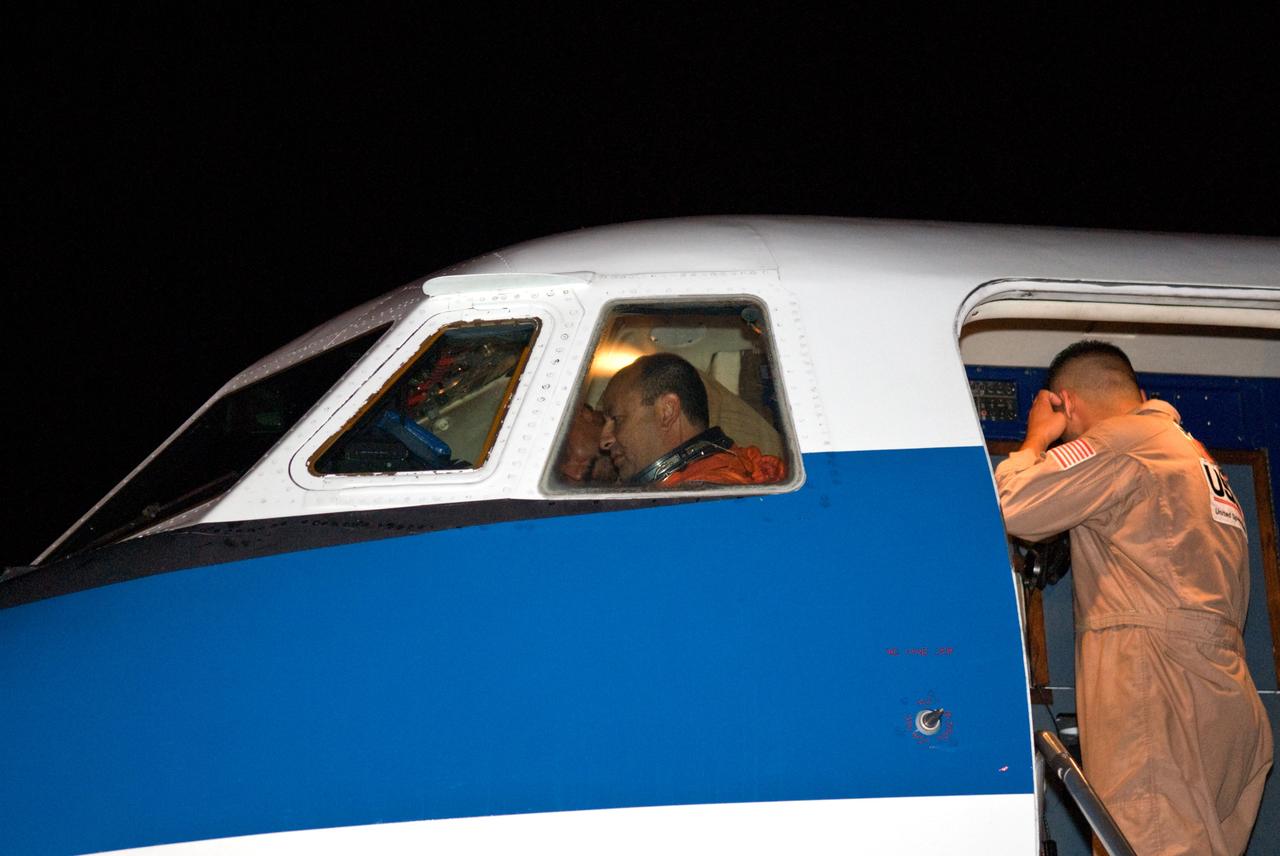
CAPE CANAVERAL, Fla. – At the Shuttle Landing Facility at NASA's Kennedy Space Center in Florida, STS-127 Commander Mark Polansky checks cockpit controls seated in the Shuttle Training Aircraft. Polansky will fly the STA to practice landings in preparation for launch of space shuttle Endeavour on the STS-127 mission on June 13 to the International Space Station. The STA is a Grumman American Aviation-built Gulfstream II jet that was modified to simulate a shuttle’s cockpit, motion and visual cues, and handling qualities. Endeavour will deliver the Japanese Experiment Module's Exposed Facility, or JEM-EF, and the Experiment Logistics Module-Exposed Section, or ELM-ES. on STS-127. The mission is the final of three flights dedicated to the assembly of the Japan Aerospace Exploration Agency's Kibo laboratory complex on the space station. Photo credit: NASA/Kim Shiflett
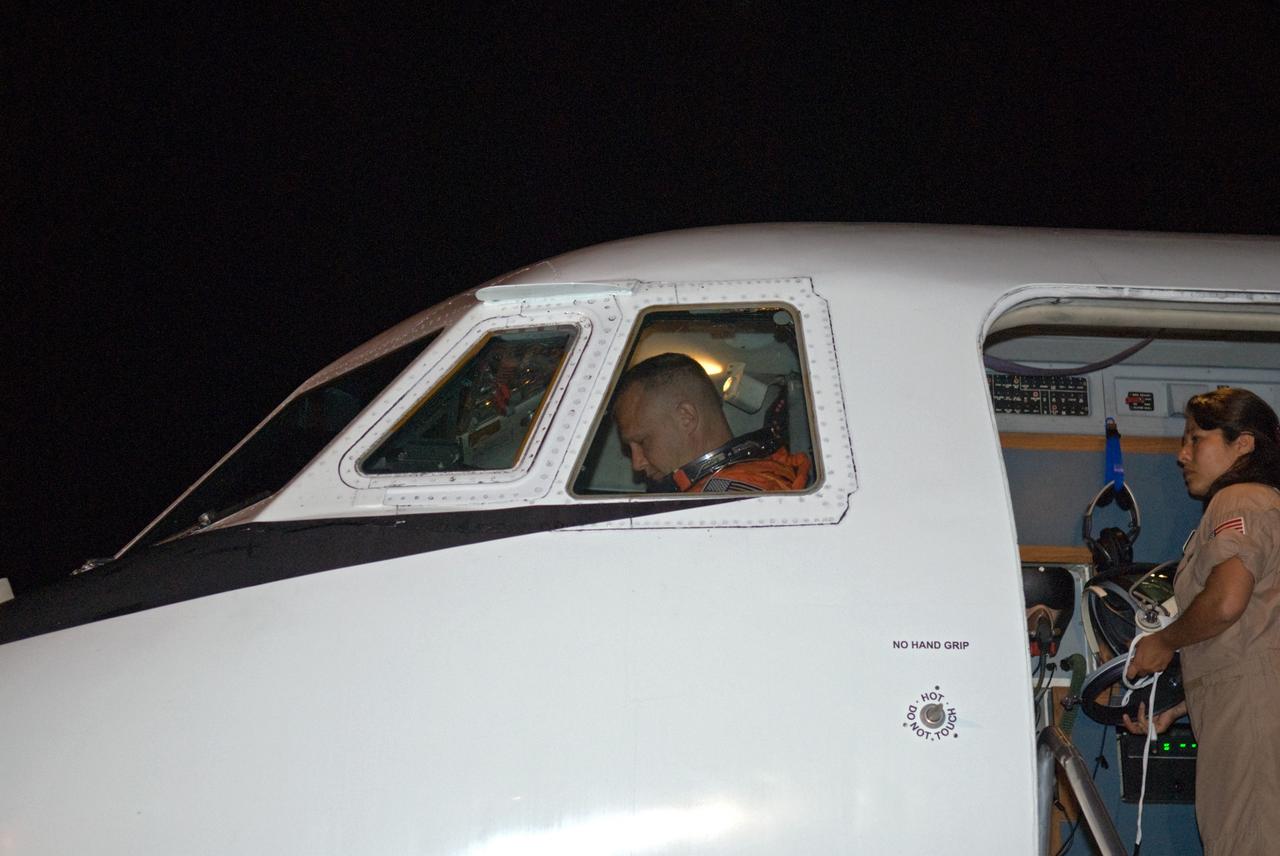
CAPE CANAVERAL, Fla. – At the Shuttle Landing Facility at NASA's Kennedy Space Center in Florida, STS-127 Pilot Doug Hurley checks cockpit controls seated in the Shuttle Training Aircraft. Hurley will fly the STA to practice landings in preparation for launch of space shuttle Endeavour on the STS-127 mission on June 13 to the International Space Station. The STA is a Grumman American Aviation-built Gulfstream II jet that was modified to simulate a shuttle’s cockpit, motion and visual cues, and handling qualities. Endeavour will deliver the Japanese Experiment Module's Exposed Facility, or JEM-EF, and the Experiment Logistics Module-Exposed Section, or ELM-ES. on STS-127. The mission is the final of three flights dedicated to the assembly of the Japan Aerospace Exploration Agency's Kibo laboratory complex on the space station. Photo credit: NASA/Kim Shiflett
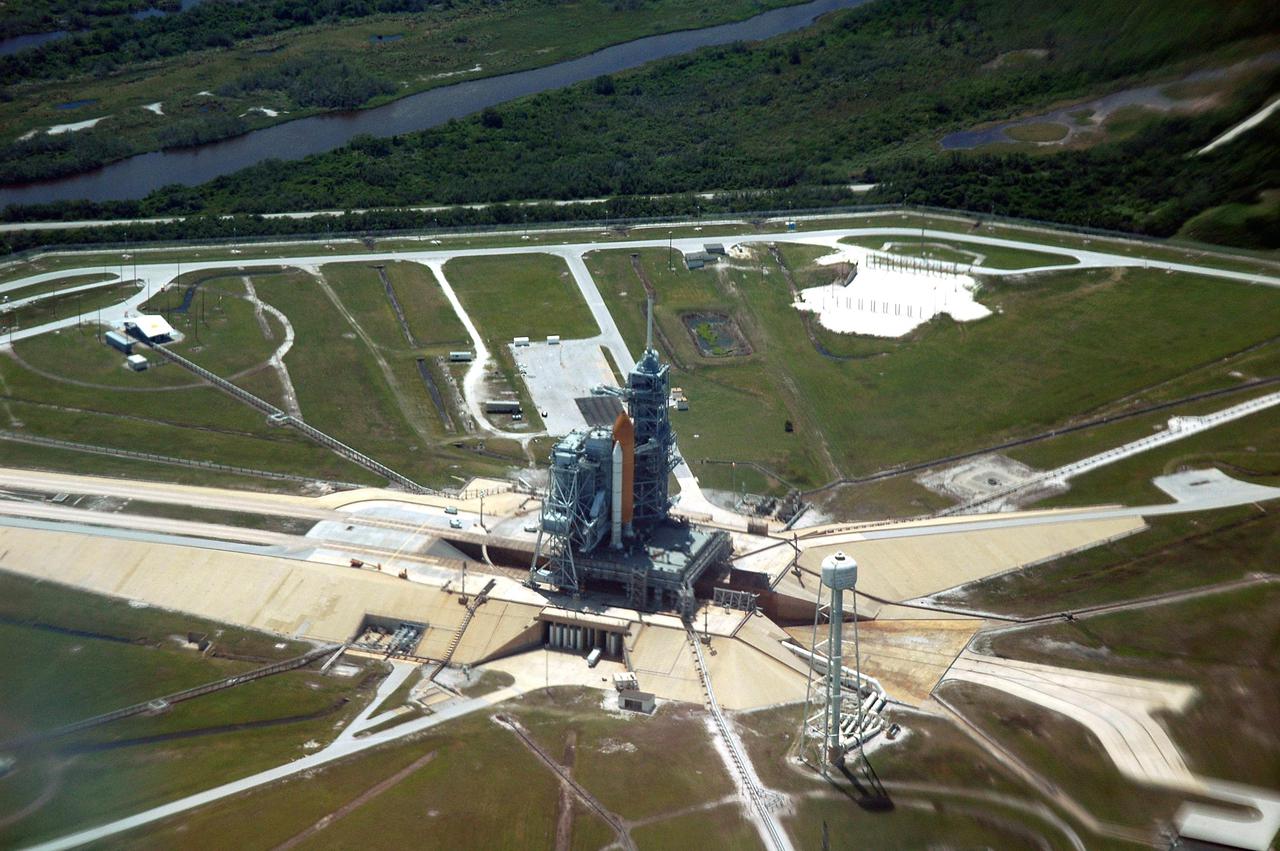
KENNEDY SPACE CENTER, FLA. - An aerial view of Launch Pad 39B and surrounding area at NASA's Kennedy Space Center, showing the Space Shuttle Discovery at center. This is one of a series of photos shot cross-cockpit from a NASA Gulfstream 2. Photo Credit: NASA_Richard Clark. (JSC2005-E-16173)
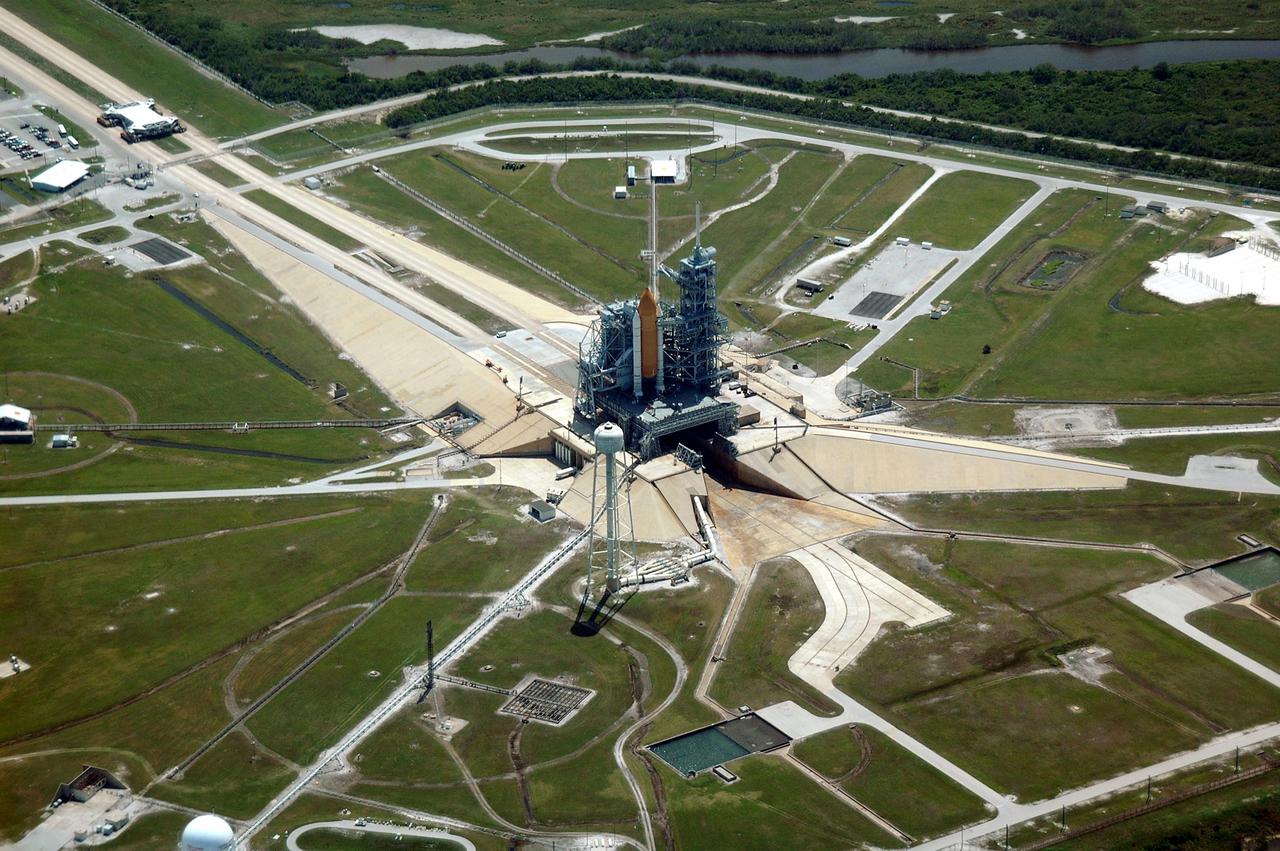
KENNEDY SPACE CENTER, FLA. - An aerial view of Launch Pad 39B and surrounding area at NASA's Kennedy Space Center, showing the Space Shuttle Discovery at center. This is one of a series of photos shot cross-cockpit from a NASA Gulfstream 2. Photo Credit: NASA_Richard Clark. (JSC2005-E-16174)
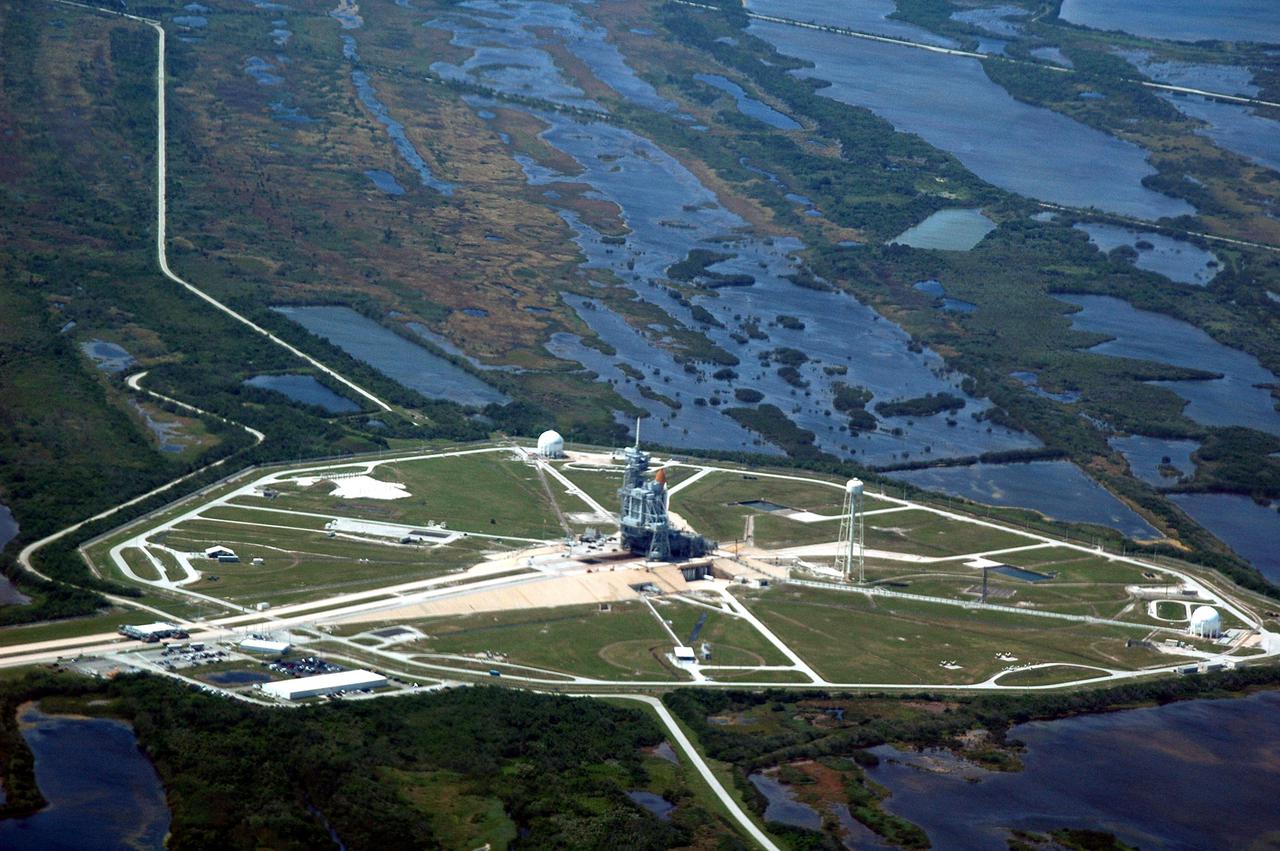
KENNEDY SPACE CENTER, FLA. - An aerial view of Launch Pad 39B and surrounding area at NASA's Kennedy Space Center, showing the Space Shuttle Discovery at center. This is one of a series of photos shot cross-cockpit from a NASA Gulfstream 2. Photo Credit: NASA_Richard Clark. (JSC2005-E-16172)
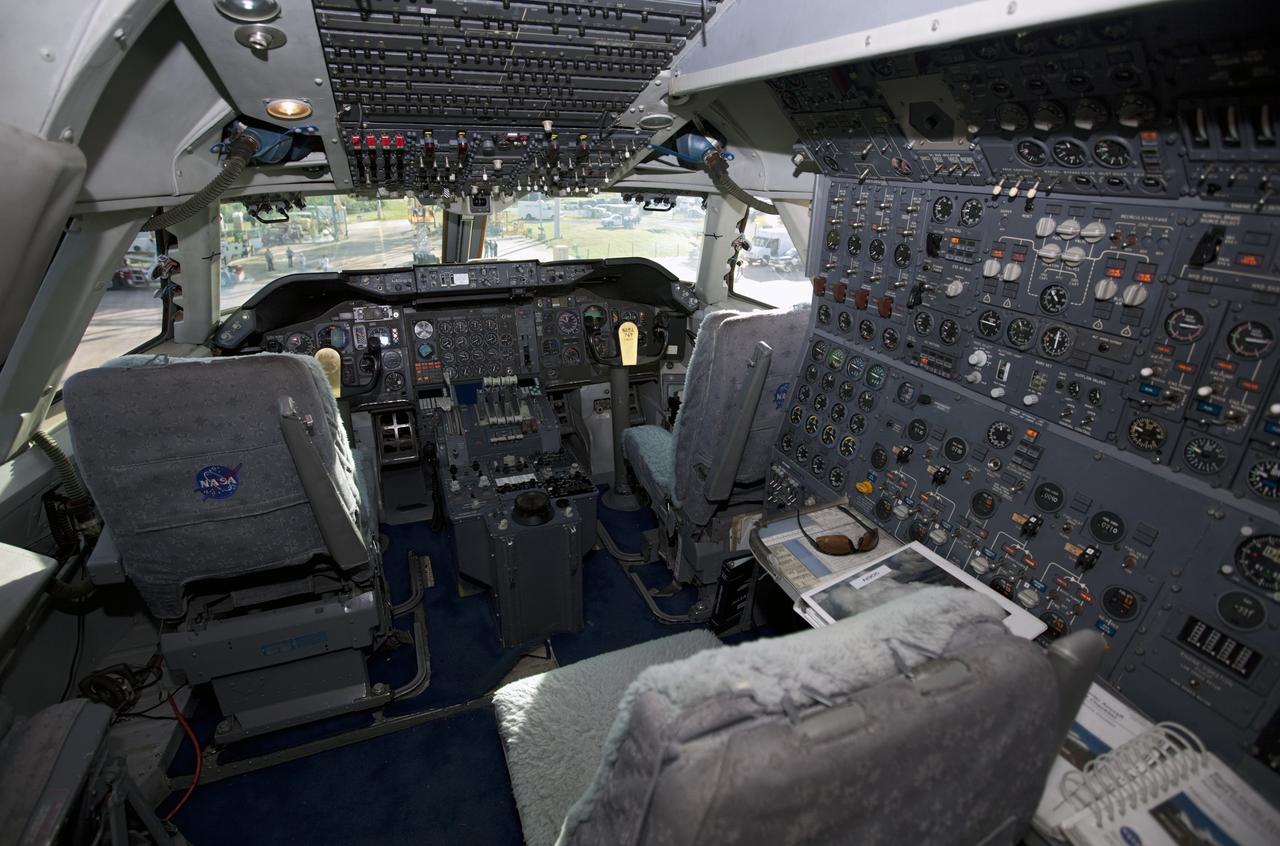
CAPE CANAVERAL, Fla. – An overview of the cockpit of NASA's Shuttle Carrier Aircraft, or SCA, is captured for posterity at the Shuttle Landing Facility at NASA's Kennedy Space Center in Florida before the aircraft is decommissioned. The SCA, a modified 747 jetliner, will fly space shuttle Endeavour to Los Angeles where it will be placed on public display at the California Science Center. This is the final ferry flight scheduled in the Space Shuttle Program era. For more information on the shuttles' transition and retirement, visit http://www.nasa.gov/transition. Photo credit: NASA/Dimitri Gerondidakis
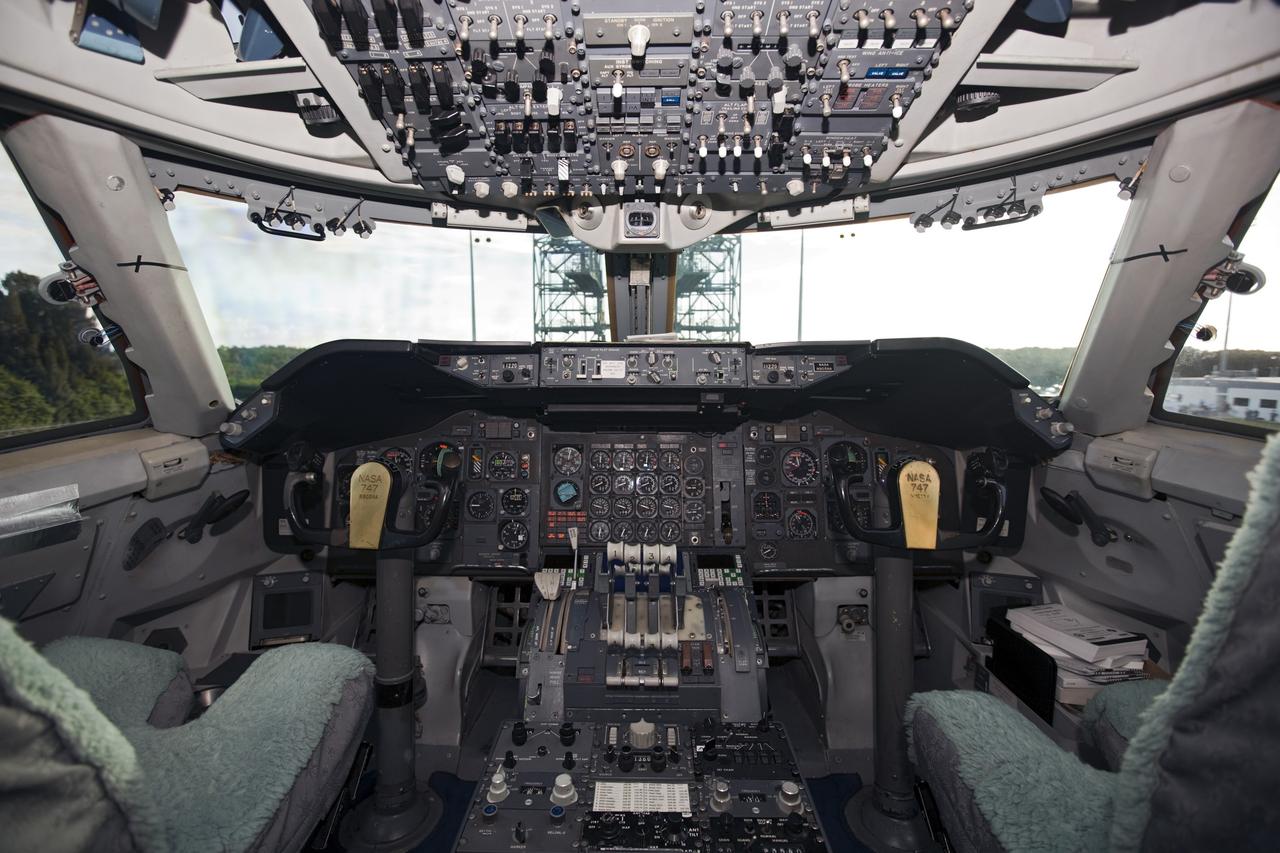
CAPE CANAVERAL, Fla. – An overview of the cockpit of NASA's Shuttle Carrier Aircraft, or SCA, is captured for posterity at the Shuttle Landing Facility at NASA's Kennedy Space Center in Florida before the aircraft is decommissioned. The SCA, a modified 747 jetliner, will fly space shuttle Endeavour to Los Angeles where it will be placed on public display at the California Science Center. This is the final ferry flight scheduled in the Space Shuttle Program era. For more information on the shuttles' transition and retirement, visit http://www.nasa.gov/transition. Photo credit: NASA/Dimitri Gerondidakis
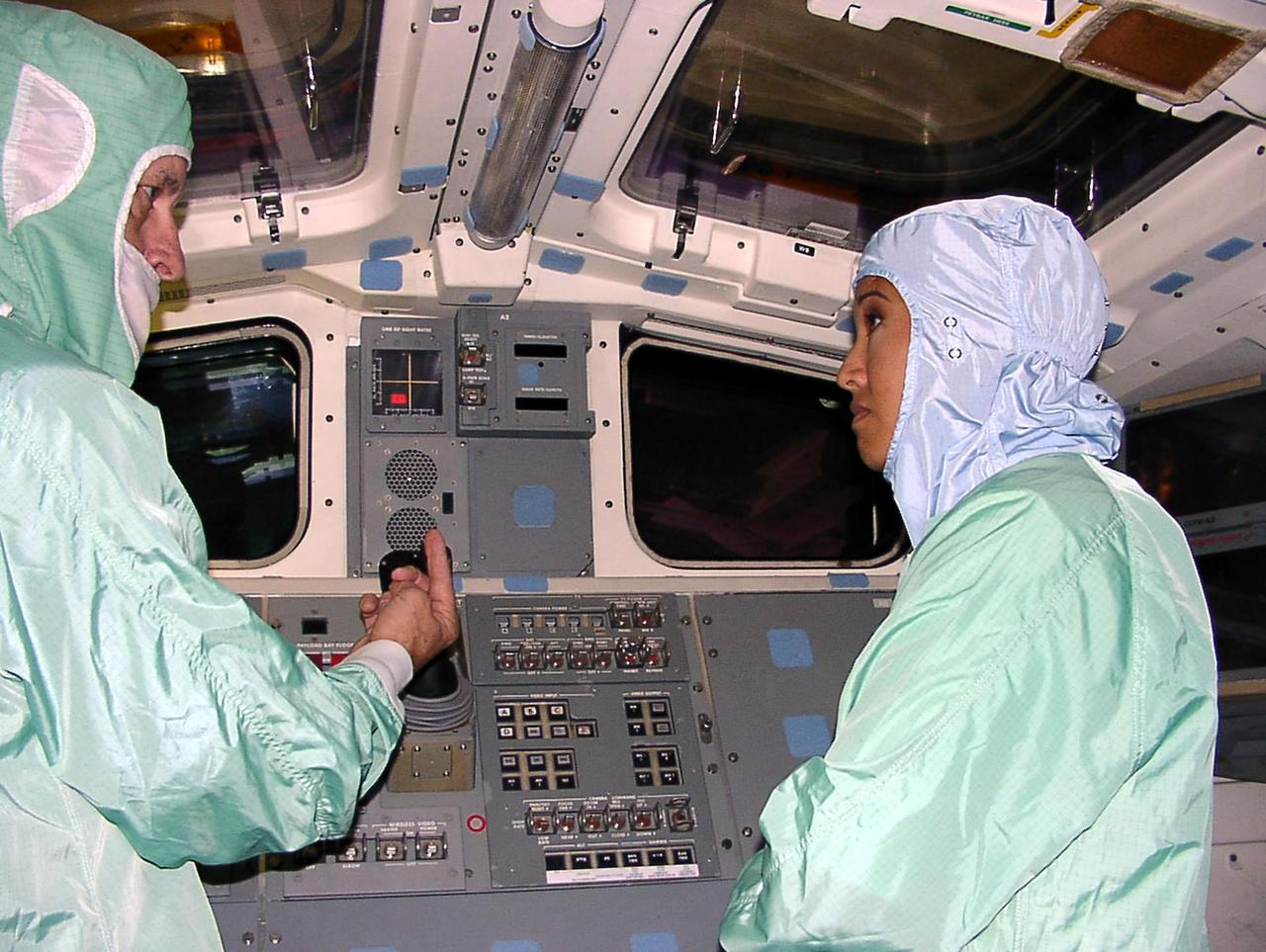
KENNEDY SPACE CENTER, FLA. -- WESH-TV 2 News Anchor Wendy Chioji (right) is given a briefing on how to pilot a Space Shuttle orbiter during a tour inside the cockpit of an orbiter. Chioji was at KSC to speak at the 2002 Combined Federal Campaign (CFC) kickoff rally.
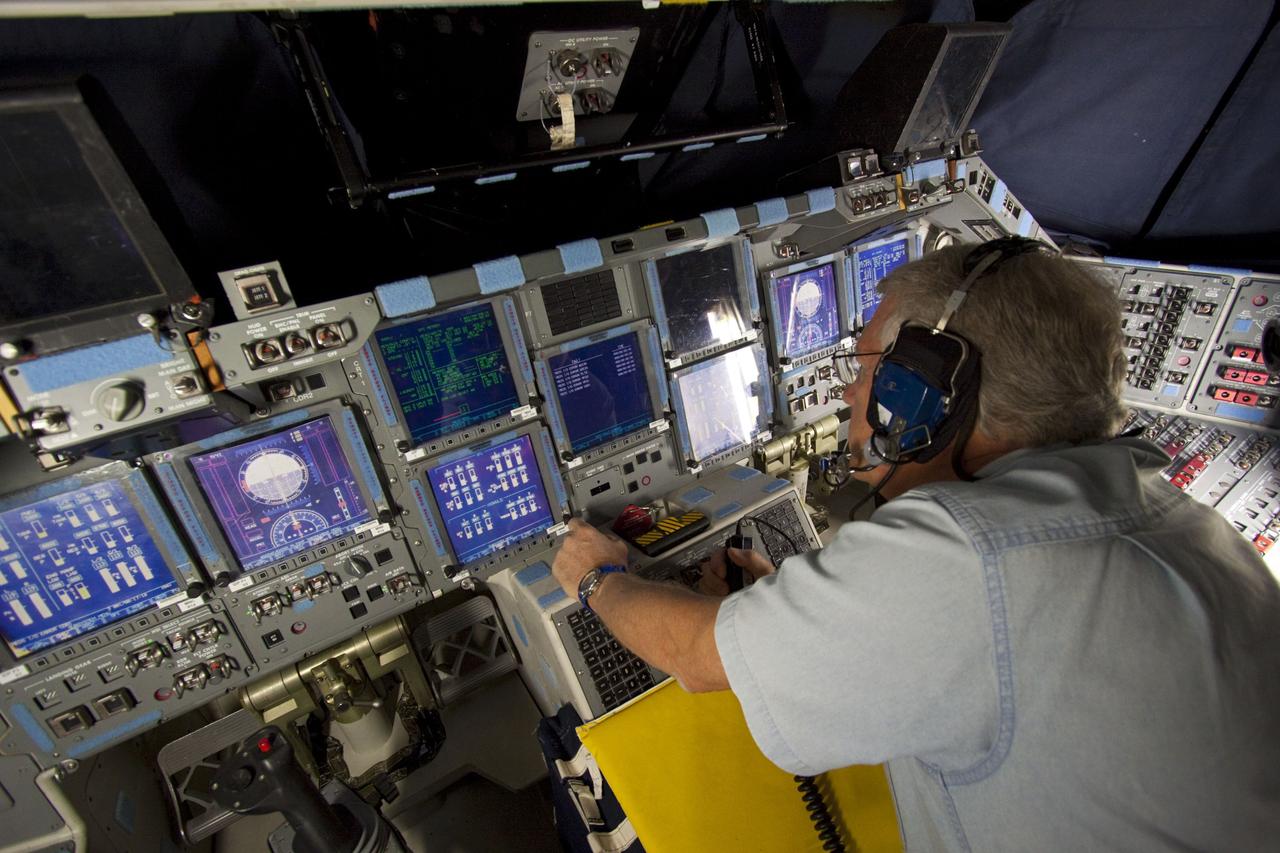
CAPE CANAVERAL, Fla. – In Orbiter Processing Facility-2 at NASA's Kennedy Space Center in Florida, a space shuttle technician monitors data displayed on space shuttle Atlantis' glass cockpit during preparations to power down Atlantis for the final time during Space Shuttle Program transition and retirement activities. Atlantis is being prepared for public display in 2013 at the Kennedy Space Center Visitor Complex. For more information, visit http://www.nasa.gov/shuttle. Photo credit: NASA/Jim Grossmann
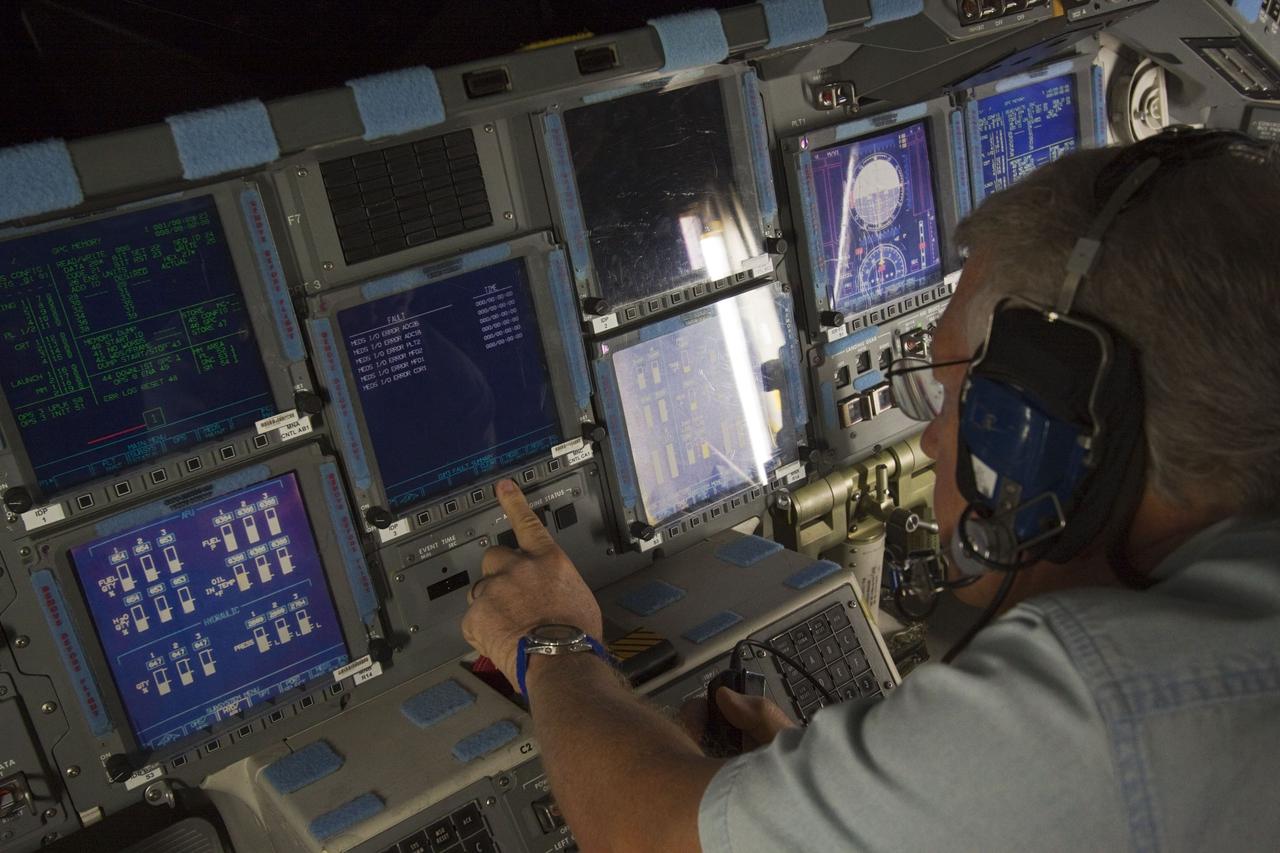
CAPE CANAVERAL, Fla. – In Orbiter Processing Facility-2 at NASA's Kennedy Space Center in Florida, a space shuttle technician monitors data displayed on space shuttle Atlantis' glass cockpit during preparations to power down Atlantis for the final time during Space Shuttle Program transition and retirement activities. Atlantis is being prepared for public display in 2013 at the Kennedy Space Center Visitor Complex. For more information, visit http://www.nasa.gov/shuttle. Photo credit: NASA/Jim Grossmann
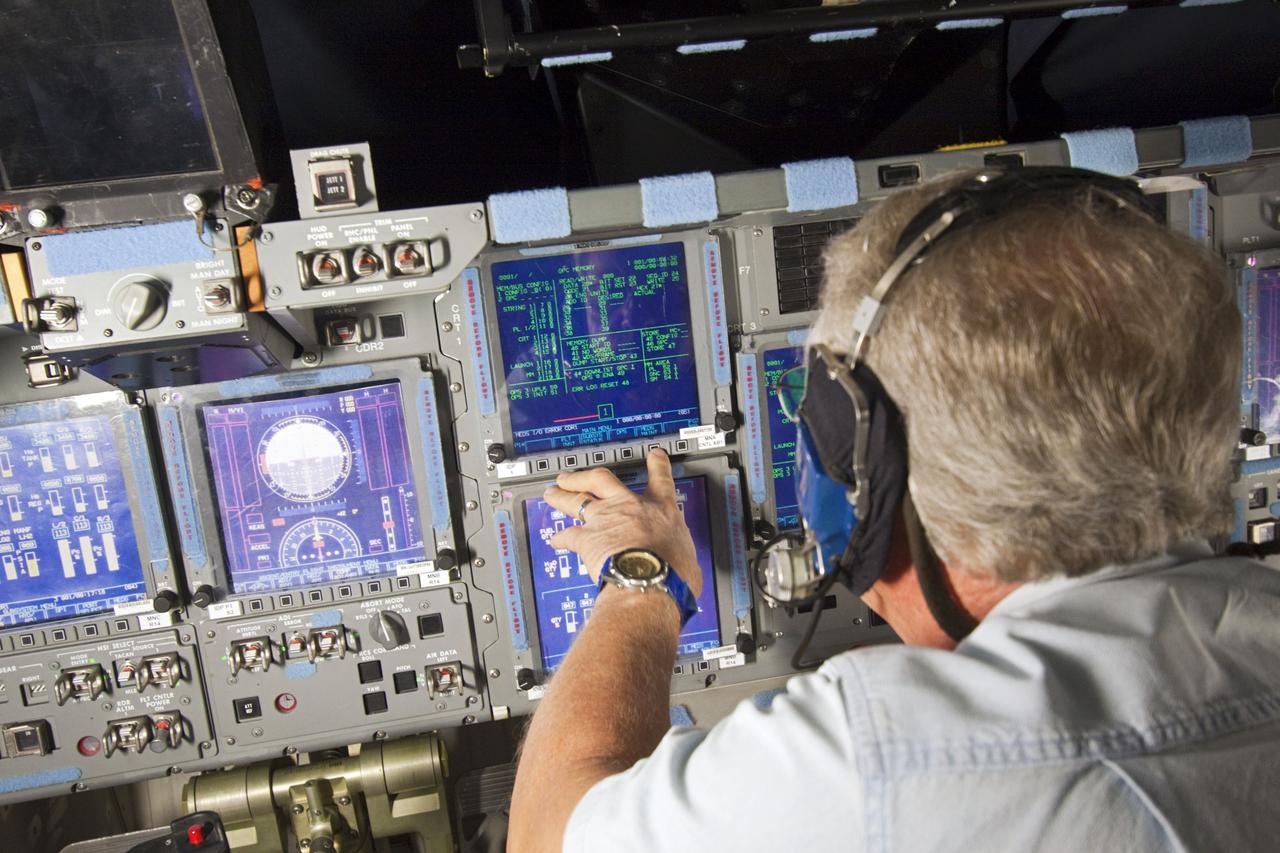
CAPE CANAVERAL, Fla. – In Orbiter Processing Facility-2 at NASA's Kennedy Space Center in Florida, a space shuttle technician reads data displayed on space shuttle Atlantis' glass cockpit during preparations to power down Atlantis for the final time during Space Shuttle Program transition and retirement activities. Atlantis is being prepared for public display in 2013 at the Kennedy Space Center Visitor Complex. For more information, visit http://www.nasa.gov/shuttle. Photo credit: NASA/Jim Grossmann
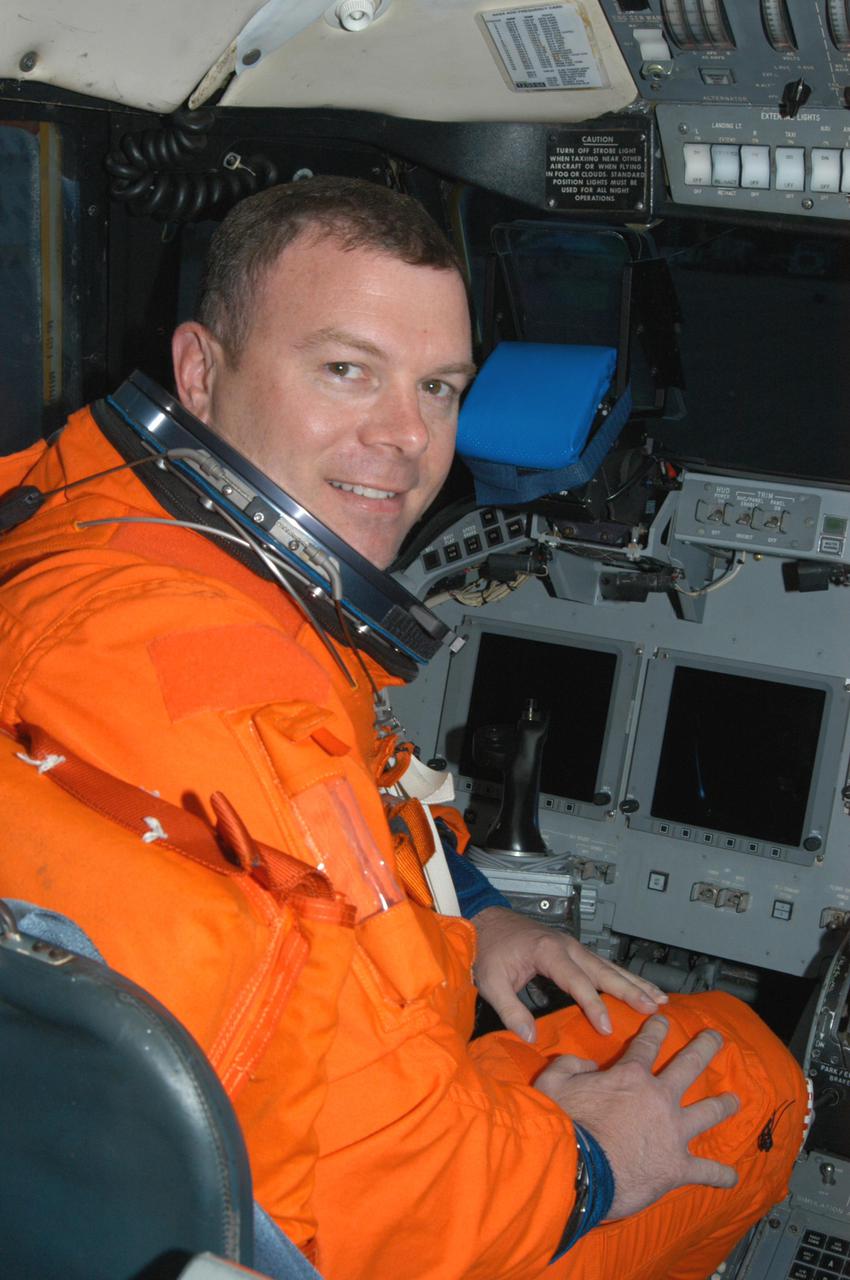
KENNEDY SPACE CENTER, FLA. - At the Shuttle Landing Facility on NASA Kennedy Space Center, STS-114 Pilot James Kelly sits in the cockpit of the Shuttle Training Aircraft (STA) after landing. He and Mission Commander Eileen Collins have been practicing night landings in preparation for the mission. The STA is a modified Grumman American Aviation-built Gulf Stream II executive jet that was modified to simulate an orbiter’s cockpit, motion and visual cues, and handling qualities. In flight, the STA duplicates the orbiter’s atmospheric descent trajectory from approximately 35,000 feet altitude to landing on a runway. Because the orbiter is unpowered during re-entry and landing, its high-speed glide must be perfectly executed the first time. Return to Flight Mission STS-114 is scheduled to launch aboard Space Shuttle Discovery with a crew of seven at 10:39 a.m. EDT on July 26. Landing is expected on Aug. 7.
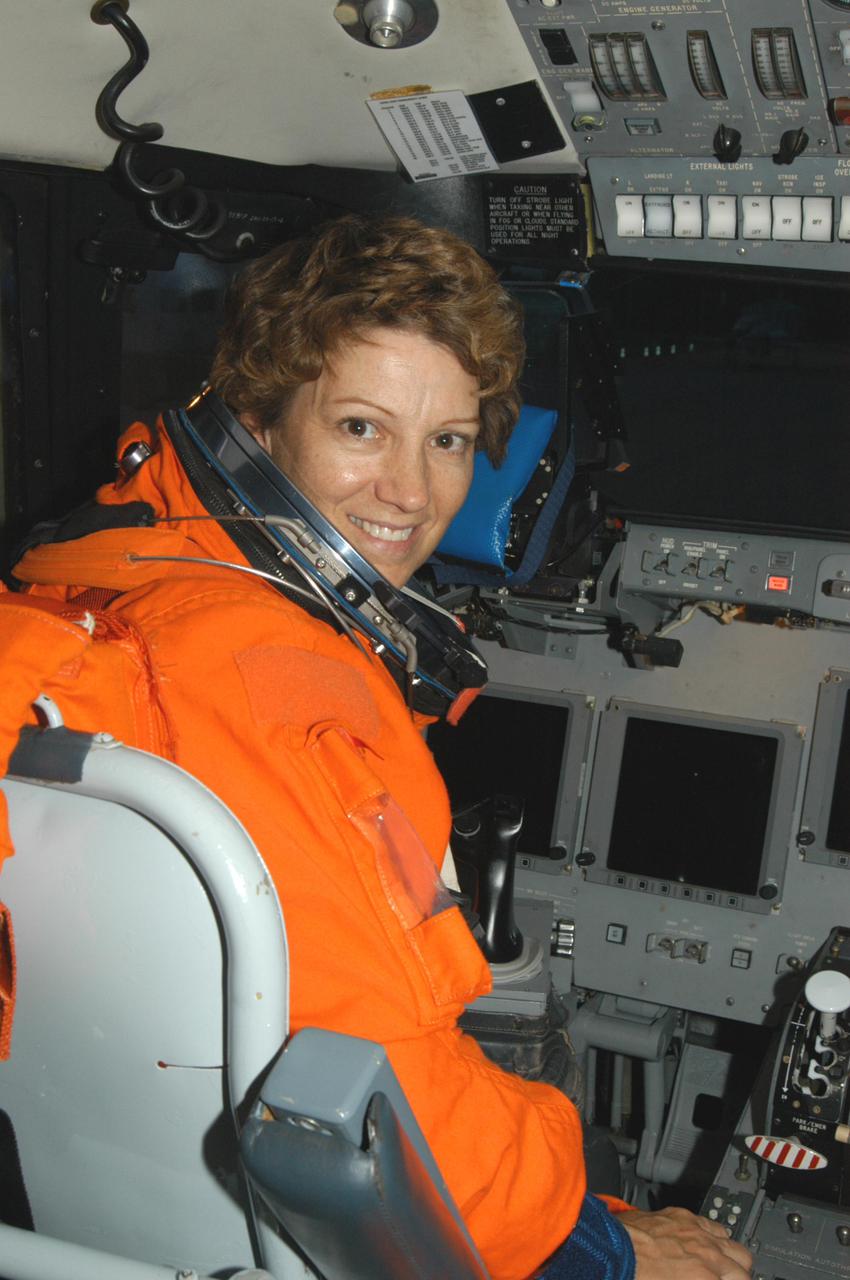
KENNEDY SPACE CENTER, FLA. - At the Shuttle Landing Facility on NASA Kennedy Space Center, STS-114 Mission Commander Eileen Collins sits in the cockpit of the Shuttle Training Aircraft (STA) after landing. She and Pilot James Kelly have been practicing night landings in preparation for the mission. The STA is a modified Grumman American Aviation-built Gulf Stream II executive jet that was modified to simulate an orbiter’s cockpit, motion and visual cues, and handling qualities. In flight, the STA duplicates the orbiter’s atmospheric descent trajectory from approximately 35,000 feet altitude to landing on a runway. Because the orbiter is unpowered during re-entry and landing, its high-speed glide must be perfectly executed the first time. Return to Flight Mission STS-114 is scheduled to launch aboard Space Shuttle Discovery with a crew of seven at 10:39 a.m. EDT on July 26. Landing is expected on Aug. 7.
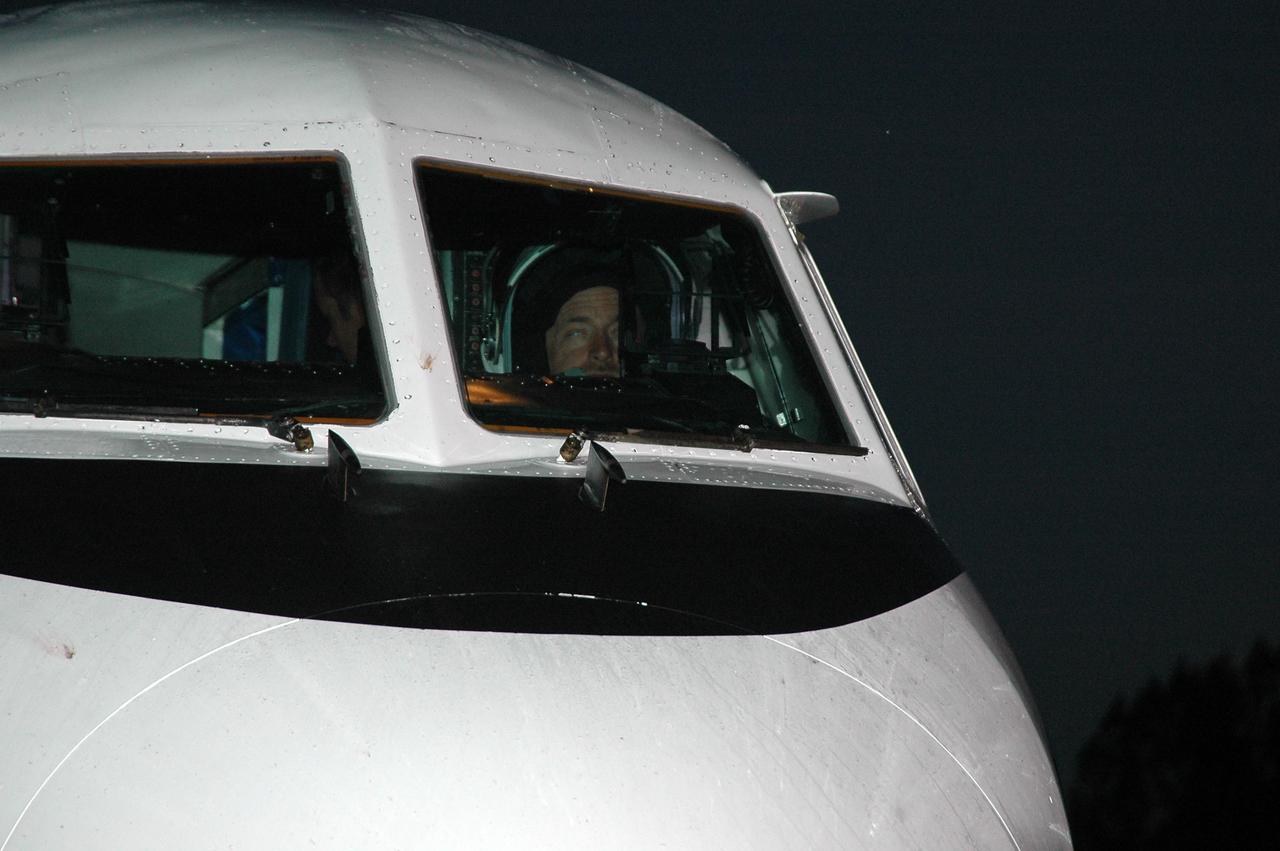
KENNEDY SPACE CENTER, FLA. - In the cockpit of the Shuttle Training Aircraft (STA), STS-121 Pilot Mark Kelly is ready for takeoff from the Shuttle Landing Facility. Kelly and Commander Steven Lindsey will be making practice landings in preparation for the July 1 launch of Space Shuttle Discovery. The STA is a Grumman American Aviation-built Gulf Stream II jet that was modified to simulate an orbiter’s cockpit, motion and visual cues, and handling qualities. In flight, the STA duplicates the orbiter’s atmospheric descent trajectory from approximately 35,000 feet altitude to landing on a runway. Because the orbiter is unpowered during re-entry and landing, its high-speed glide must be perfectly executed the first time. Photo credit: NASA/Kim Shiflett
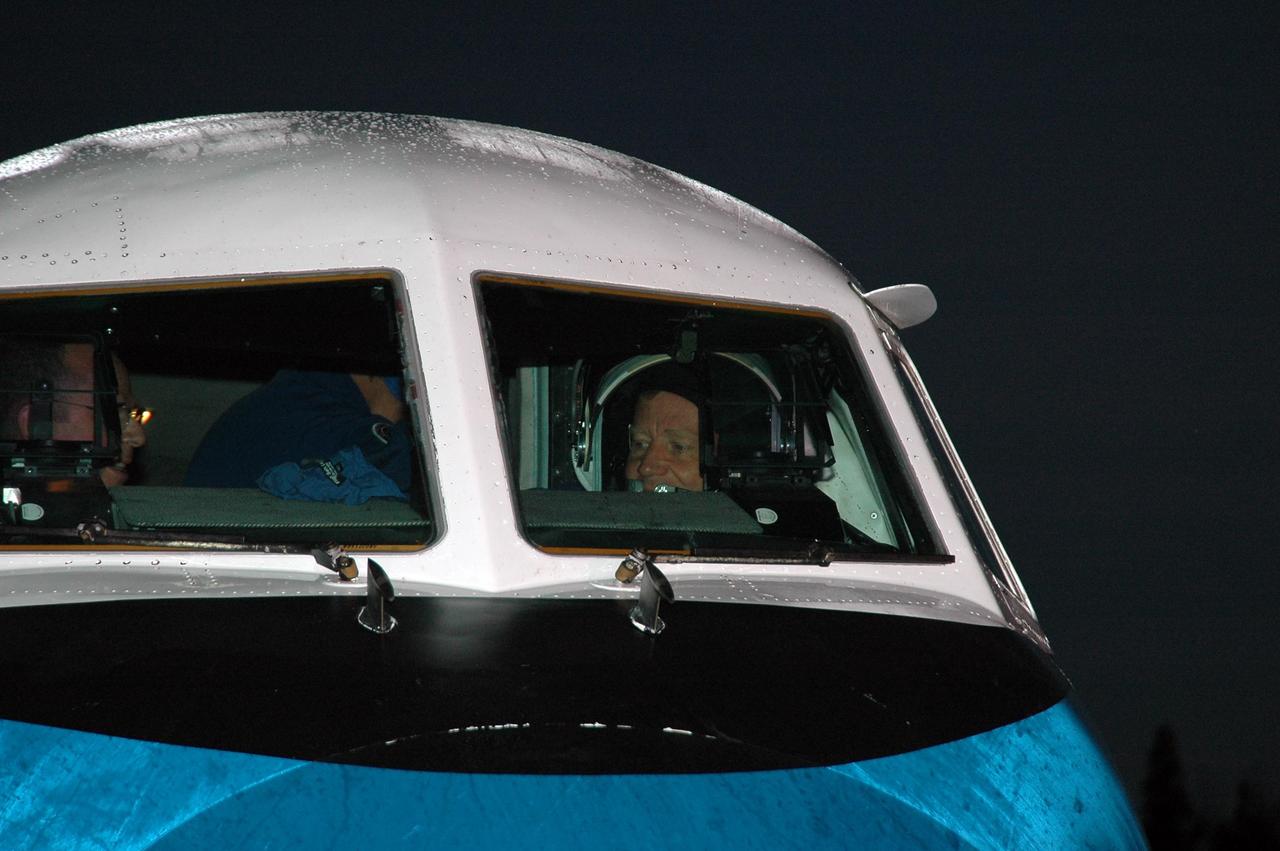
KENNEDY SPACE CENTER, FLA. - In the cockpit of the Shuttle Training Aircraft (STA), STS-121 Commander Steven Lindsey is ready for takeoff from the Shuttle Landing Facility. Lindsey and Pilot Mark Kelly will be making practice landings in preparation for the July 1 launch of Space Shuttle Discovery. The STA is a Grumman American Aviation-built Gulf Stream II jet that was modified to simulate an orbiter’s cockpit, motion and visual cues, and handling qualities. In flight, the STA duplicates the orbiter’s atmospheric descent trajectory from approximately 35,000 feet altitude to landing on a runway. Because the orbiter is unpowered during re-entry and landing, its high-speed glide must be perfectly executed the first time. Photo credit: NASA/Kim Shiflett
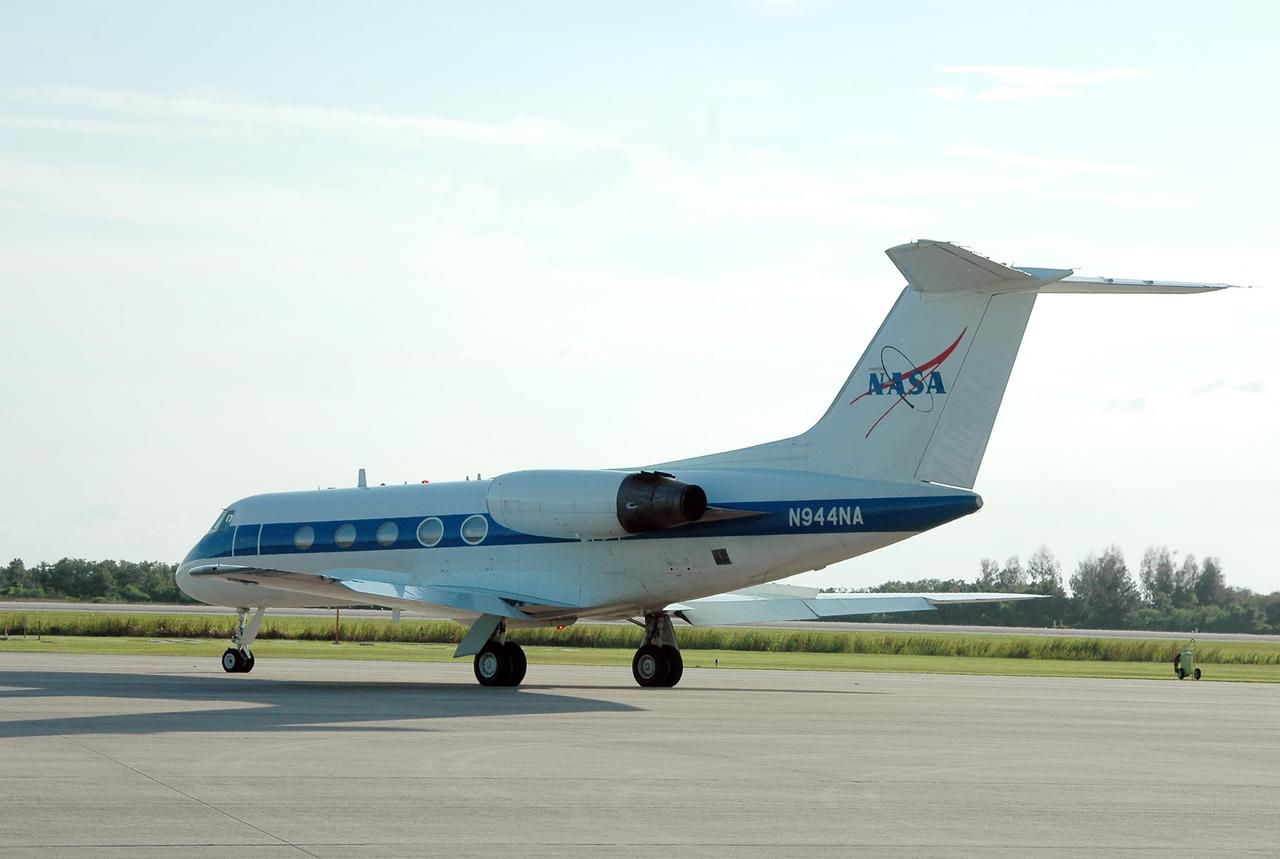
KENNEDY SPACE CENTER, FLA. - At the Shuttle Landing Facility, the Shuttle Training Aircraft (STA) taxis to the runway with the STS-121 pilot and commander in the cockpit for practice flights. The STA is a modified Grumman American Aviation-built Gulf Stream II jet that was modified to simulate an orbiter’s cockpit, motion and visual cues, and handling qualities. In flight, the STA duplicates the orbiter’s atmospheric descent trajectory from approximately 35,000 feet altitude to landing on a runway. Because the orbiter is unpowered during re-entry and landing, its high-speed glide must be perfectly executed the first time. Space Shuttle Discovery is scheduled to launch July 1 on mission STS-121. Photo credit: NASA/Kim Shiflett
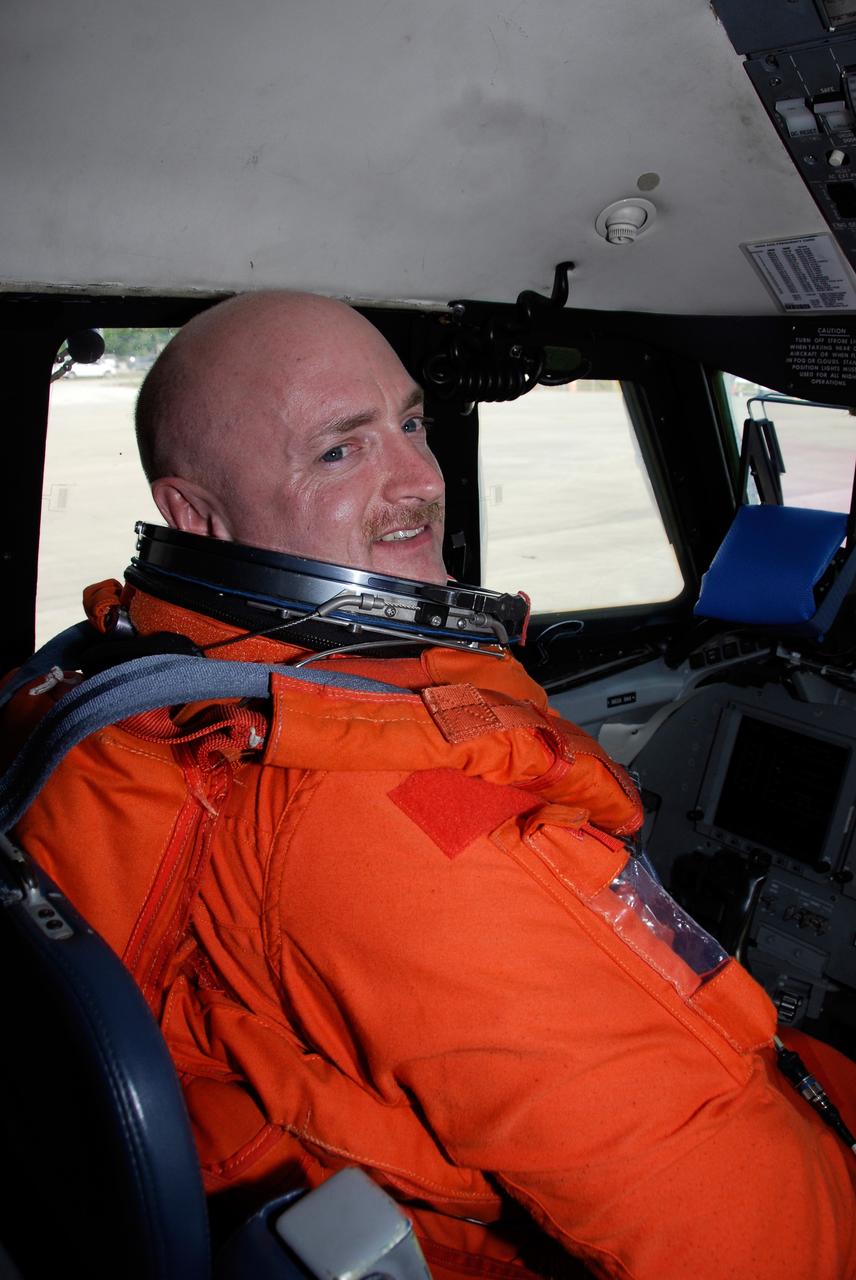
CAPE CANAVERAL, Fla. -- STS-124 Commander Mark Kelly sits in the cockpit of NASA's Shuttle Training Aircraft, or STA, preparing to practice space shuttle landings. The STA is a Grumman American Aviation-built Gulf Stream II jet that was modified to simulate an orbiter's cockpit, motion and visual cues, and handling qualities. In flight, the STA duplicates the orbiter's atmospheric descent trajectory from approximately 35,000 feet altitude to landing on a runway. Because the orbiter is unpowered during re-entry and landing, its high-speed glide must be perfectly executed the first time. The crew for space shuttle Discovery's STS-124 mission is at Kennedy for a full launch dress rehearsal, known as the terminal countdown demonstration test, or TCDT. Providing astronauts and ground crews with an opportunity to participate in various simulated countdown activities, TCDT includes equipment familiarization and emergency training. Discovery's launch is targeted for May 31. Photo credit: NASA/Kim Shiflett
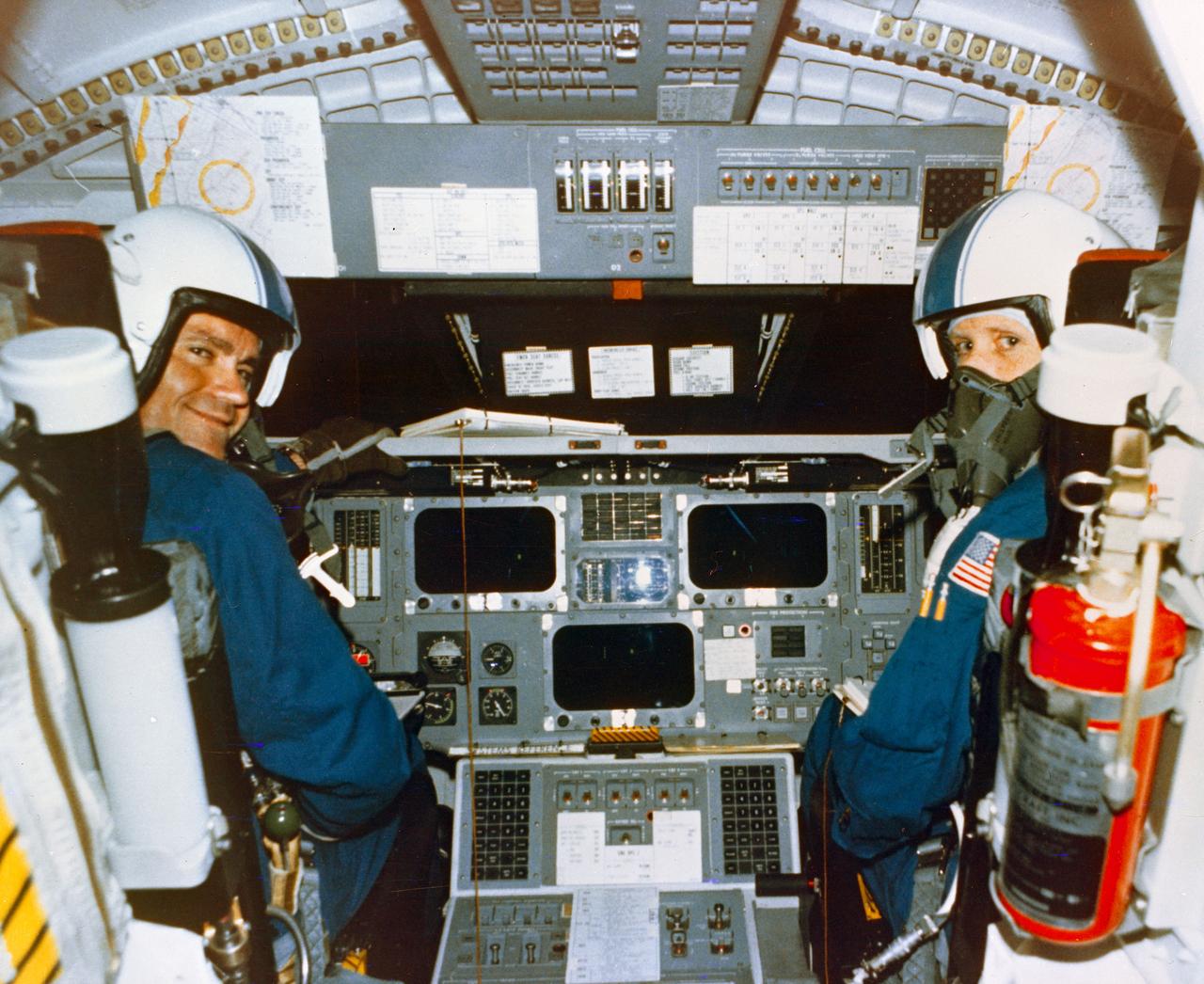
Astronauts Fred W. Haise, Jr., Commander, left, and C. Gordon Fullerton in the cockpit of the Space Shuttle Orbiter 101 "Enterprise" prior to the fifth and final FF in the Approach and Landing Test (ALT) series, from DFRC. Original photo number was 77-HC-446. DFRC, CA
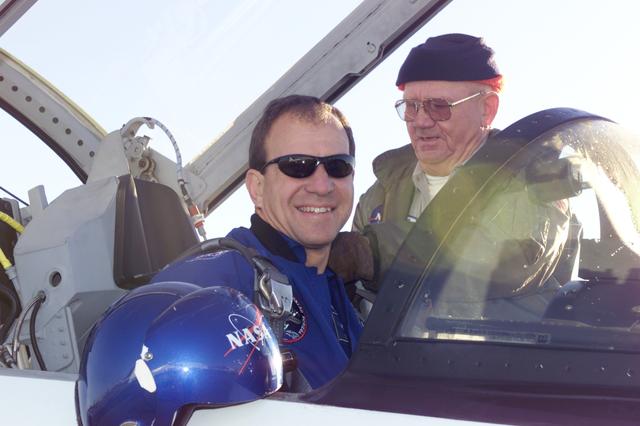
JSC2000-E-29123 (27 November 2000) --- Astronaut Michael J. Bloomfield, STS-97 pilot, is pictured in the cockpit of a NASA T-38 jet trainer at Ellington Field. The five-member crew was minutes away from departure to Florida, where it will continue preparations for launch later this week aboard the Space Shuttle Endeavour.
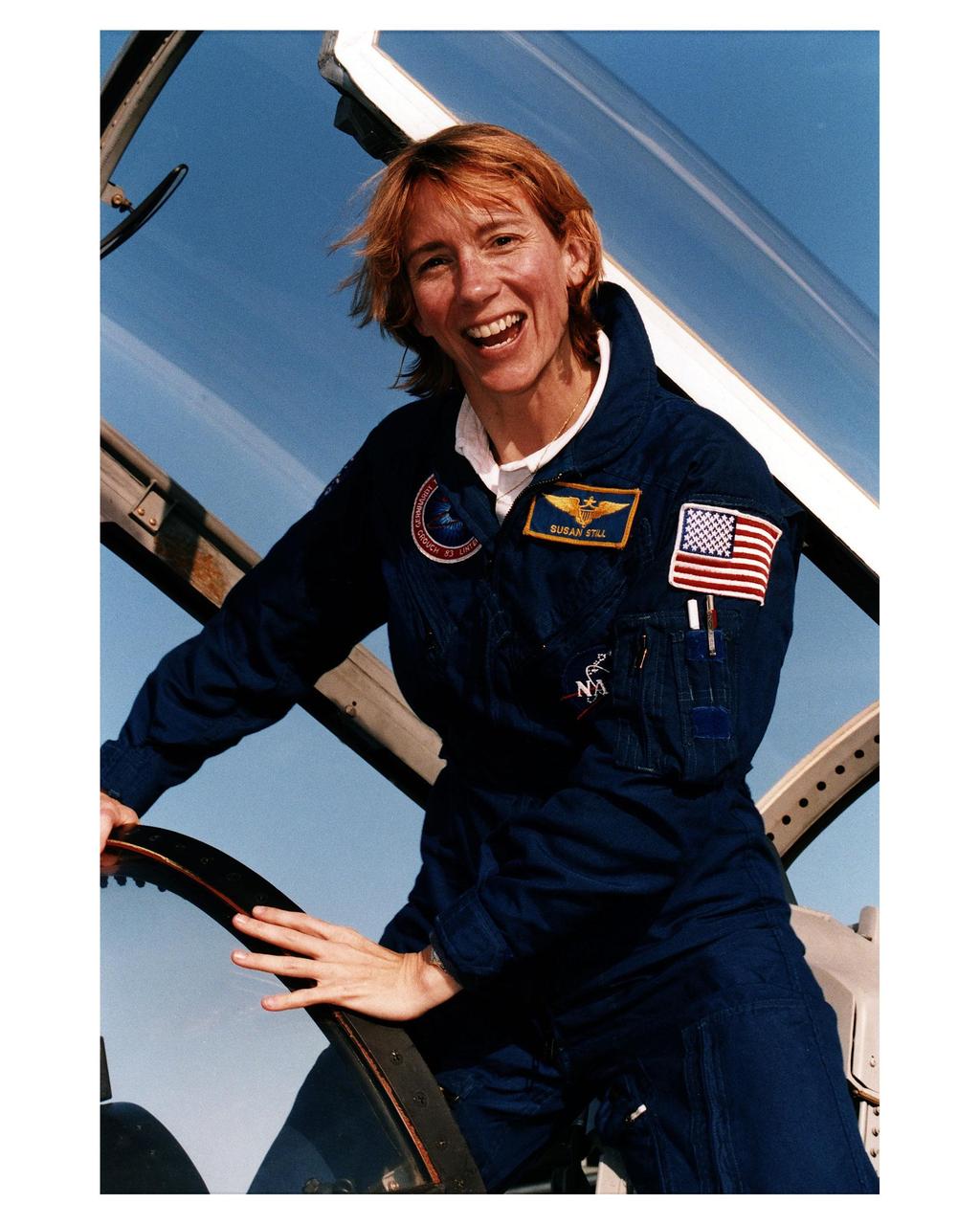
STS-83 Pilot Susan Still (emerging from T-38 cockpit) and other members of the STS-83 crew arrive at Kennedy Space Center's Shuttle Landing Facility in preparation for their <a href="http://www-pao.ksc.nasa.gov/kscpao/release/1997/40-97.htm">Terminal Countdown Demonstration Test.</a
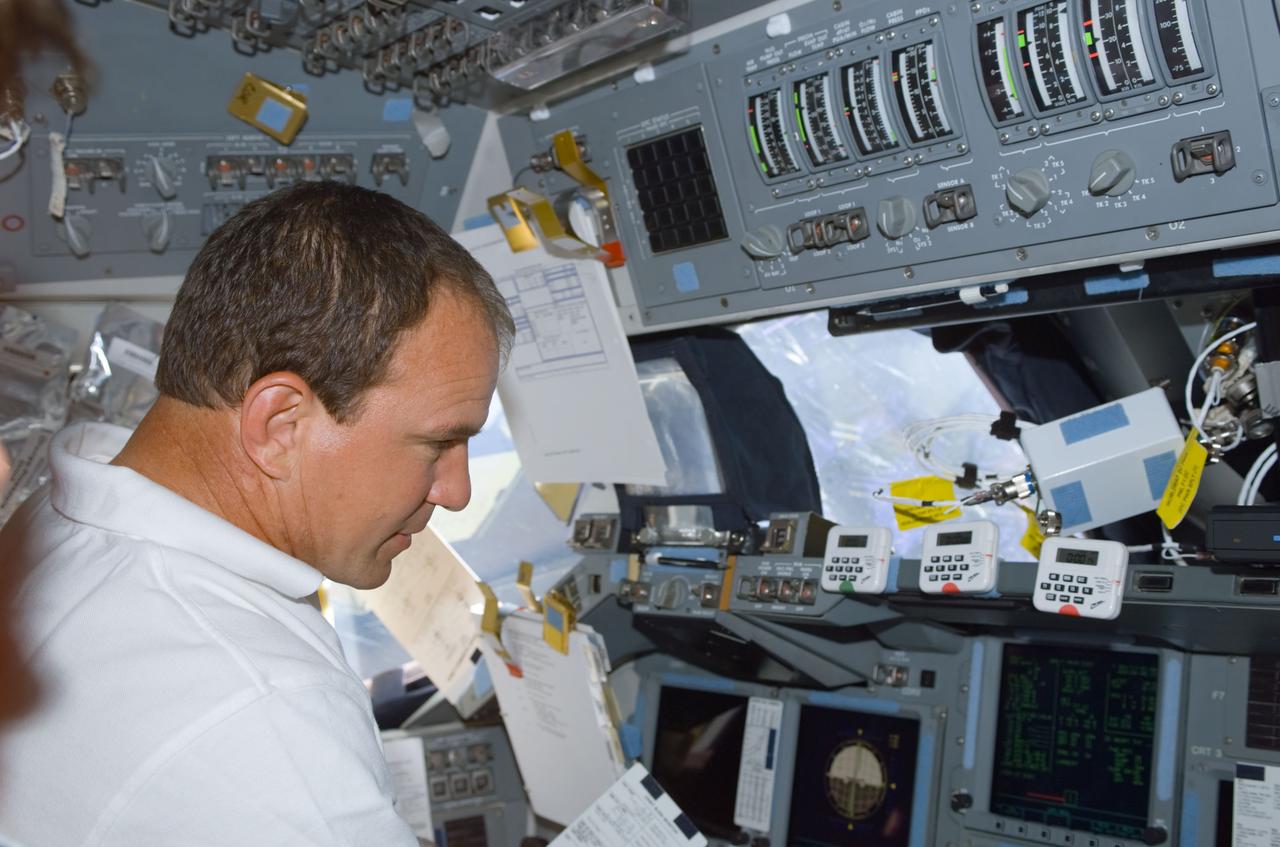
STS110-E-5067 (9 April 2002) --- Astronaut Michael J. Bloomfield, STS-110 mission commander, occupying the commander’s station, checks data on the cockpit displays on the forward flight deck of the Space Shuttle Atlantis. The image was taken with a digital still camera.
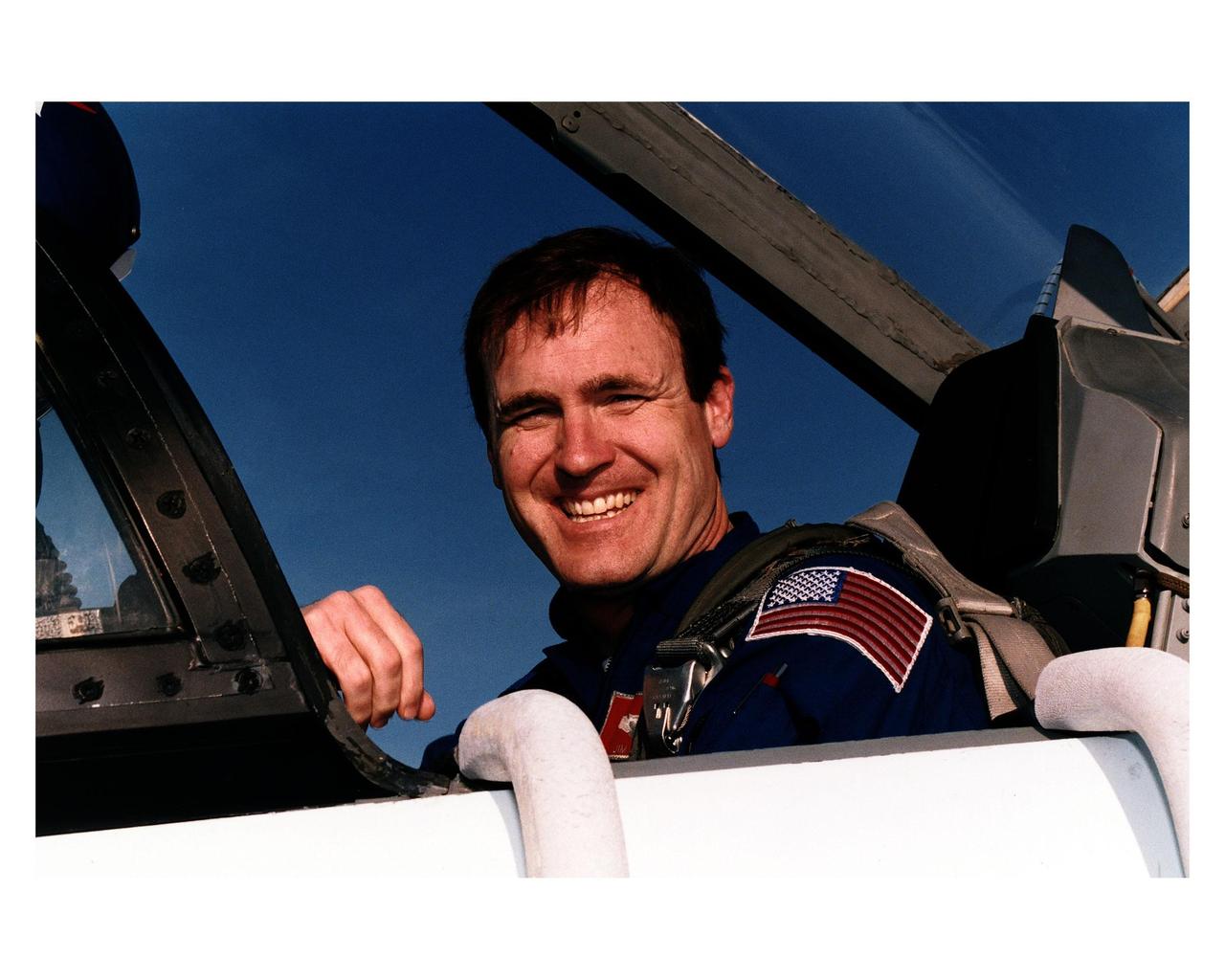
STS-83 Crew Commander James Halsell (in T-38 cockpit) and other members of the STS-83 crew arrive at Kennedy Space Center's Shuttle Landing Facility in preparation for their <a href="http://www-pao.ksc.nasa.gov/kscpao/release/1997/40-97.htm">Terminal Countdown Demonstration Test.</a
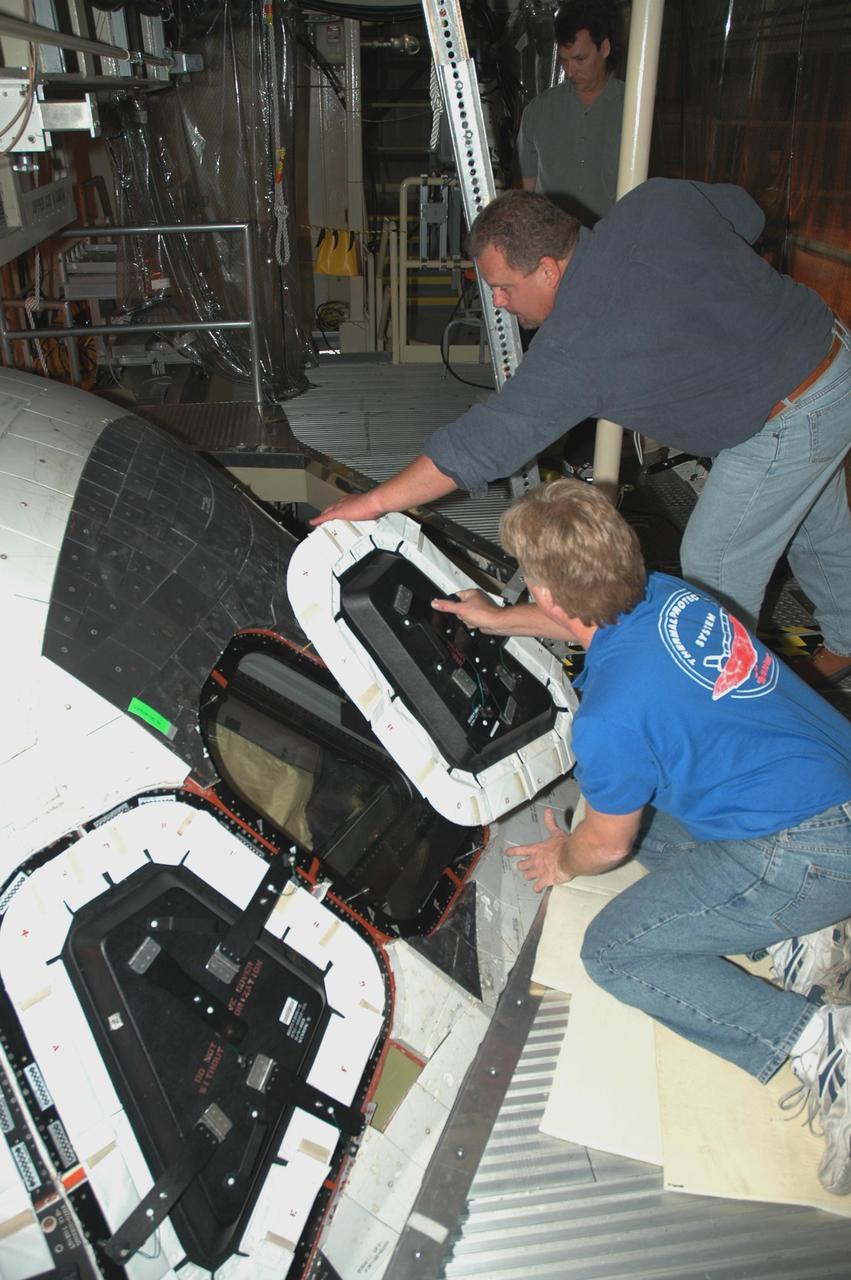
KENNEDY SPACE CENTER, FLA. - In NASA Kennedy Space Center's Orbiter Processing Facility bay 3, United Space Alliance shuttle technicians remove the hard cover from a window on Space Shuttle Discovery to enable STS-121 crew members to inspect the window from the cockpit. Launch of Space Shuttle Discovery on mission STS-121, the second return-to-flight mission, is scheduled no earlier than May.
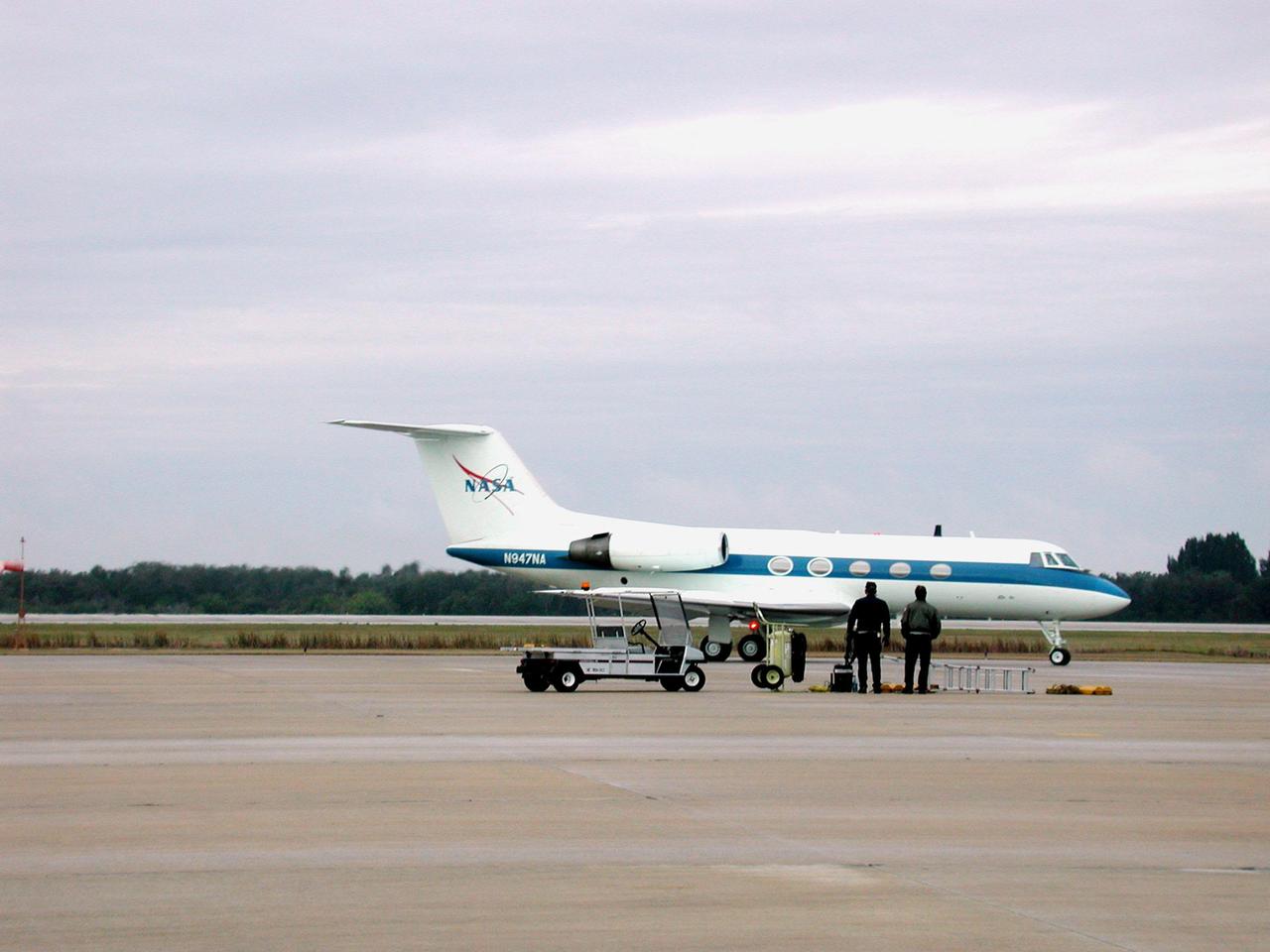
KENNEDY SPACE CENTER, FLA. -- A Shuttle Training Aircraft, piloted by STS-98 Commander Ken Cockrell, taxis into line at the KSC Shuttle Landing Facility. The cockpit of the plane is outfitted like the Shuttle, which provides practice at the controls, especially for landing. The STS-98 crew recently arrived at KSC to prepare for their launch Feb. 7 to the International Space Station. The seventh construction flight to the Space Station, it will carry the U.S. Laboratory Destiny, a key module for space experiments
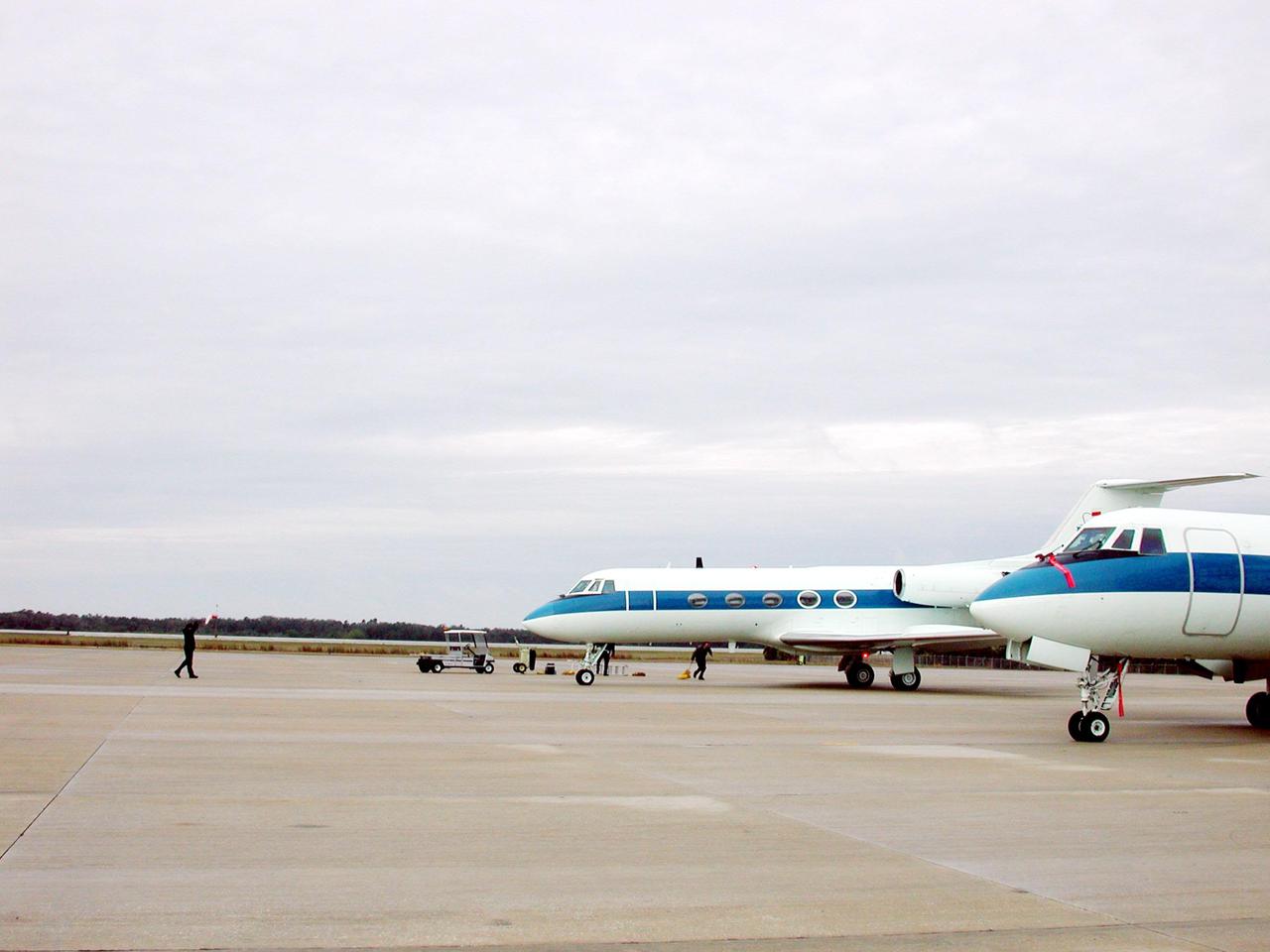
KENNEDY SPACE CENTER, FLA. -- A Shuttle Training Aircraft, piloted by STS-98 Commander Ken Cockrell, rolls to a stop in line next to another STA at the KSC Shuttle Landing Facility. The cockpit of the STA is outfitted like the Shuttle, which provides practice at the controls, especially for landing. The STS-98 crew recently arrived at KSC to prepare for their launch Feb. 7 to the International Space Station. The seventh construction flight to the Space Station, it will carry the U.S. Laboratory Destiny, a key module for space experiments
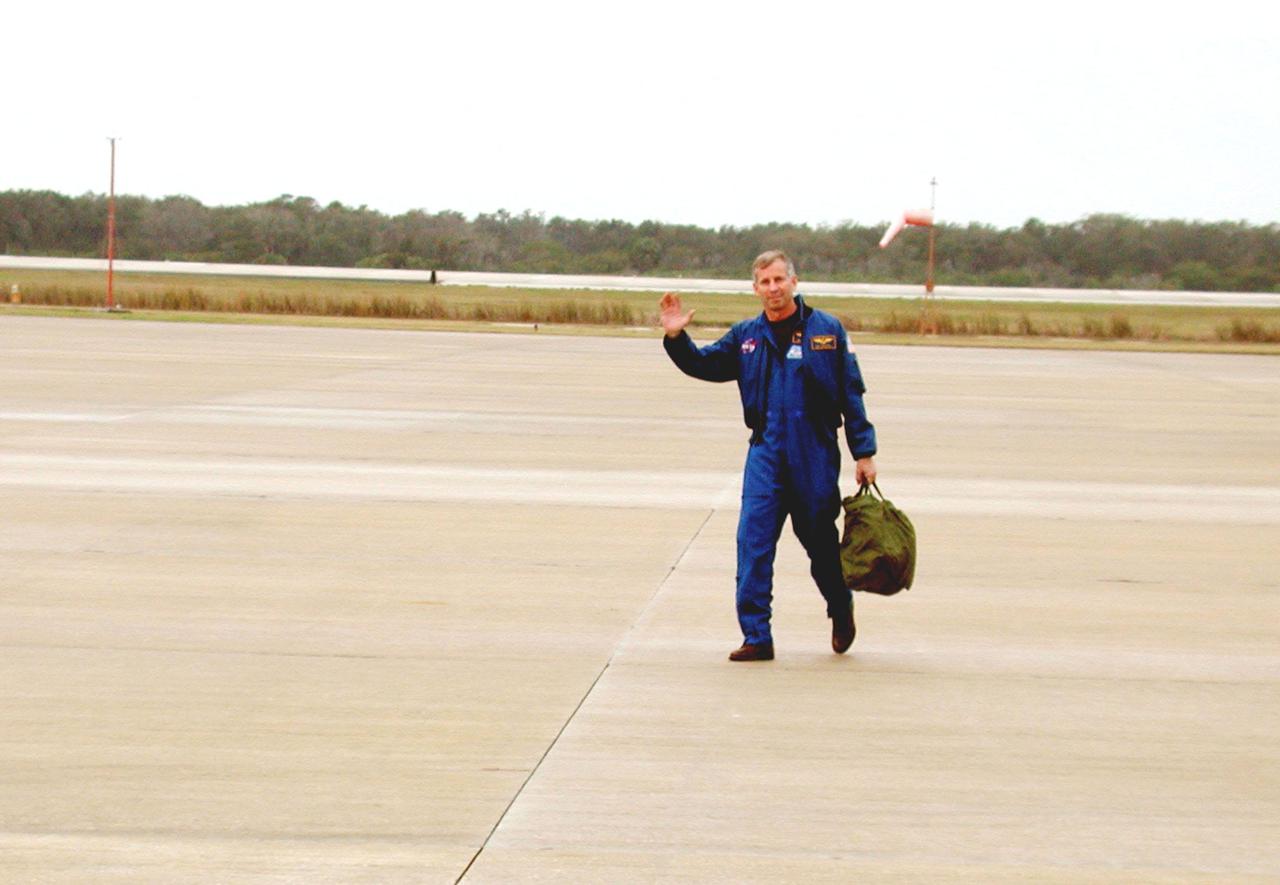
KENNEDY SPACE CENTER, FLA. -- STS-98 Commander Ken Cockrell waves as he crosses the parking apron of the Shuttle Landing Facility after a flight on the Shuttle Training Aircraft. The cockpit of the STA is outfitted like the Shuttle, which provides practice at the controls, especially for landing. The STS-98 crew recently arrived at KSC to prepare for their launch Feb. 7 to the International Space Station. The seventh construction flight to the Space Station, it will carry the U.S. Laboratory Destiny, a key module for space experiments
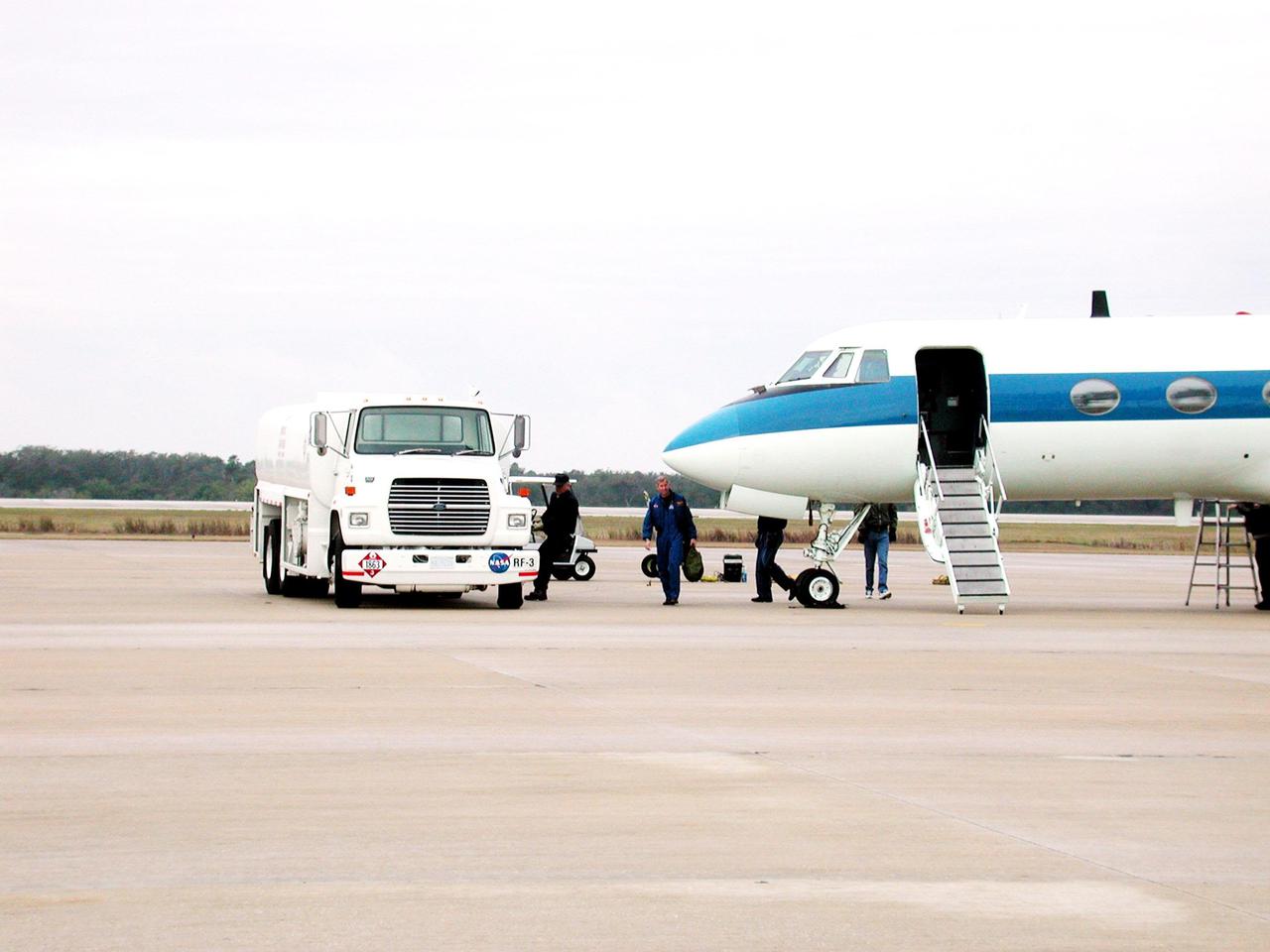
KENNEDY SPACE CENTER, FLA. -- STS-98 Commander Ken Cockrell, near the nose of the Shuttle Training Aircraft he just landed, makes his way across the parking apron of the Shuttle Landing Facility. The cockpit of the STA is outfitted like the Shuttle, which provides practice at the controls, especially for landing. The STS-98 crew recently arrived at KSC to prepare for their launch Feb. 7 to the International Space Station. The seventh construction flight to the Space Station, it will carry the U.S. Laboratory Destiny, a key module for space experiments
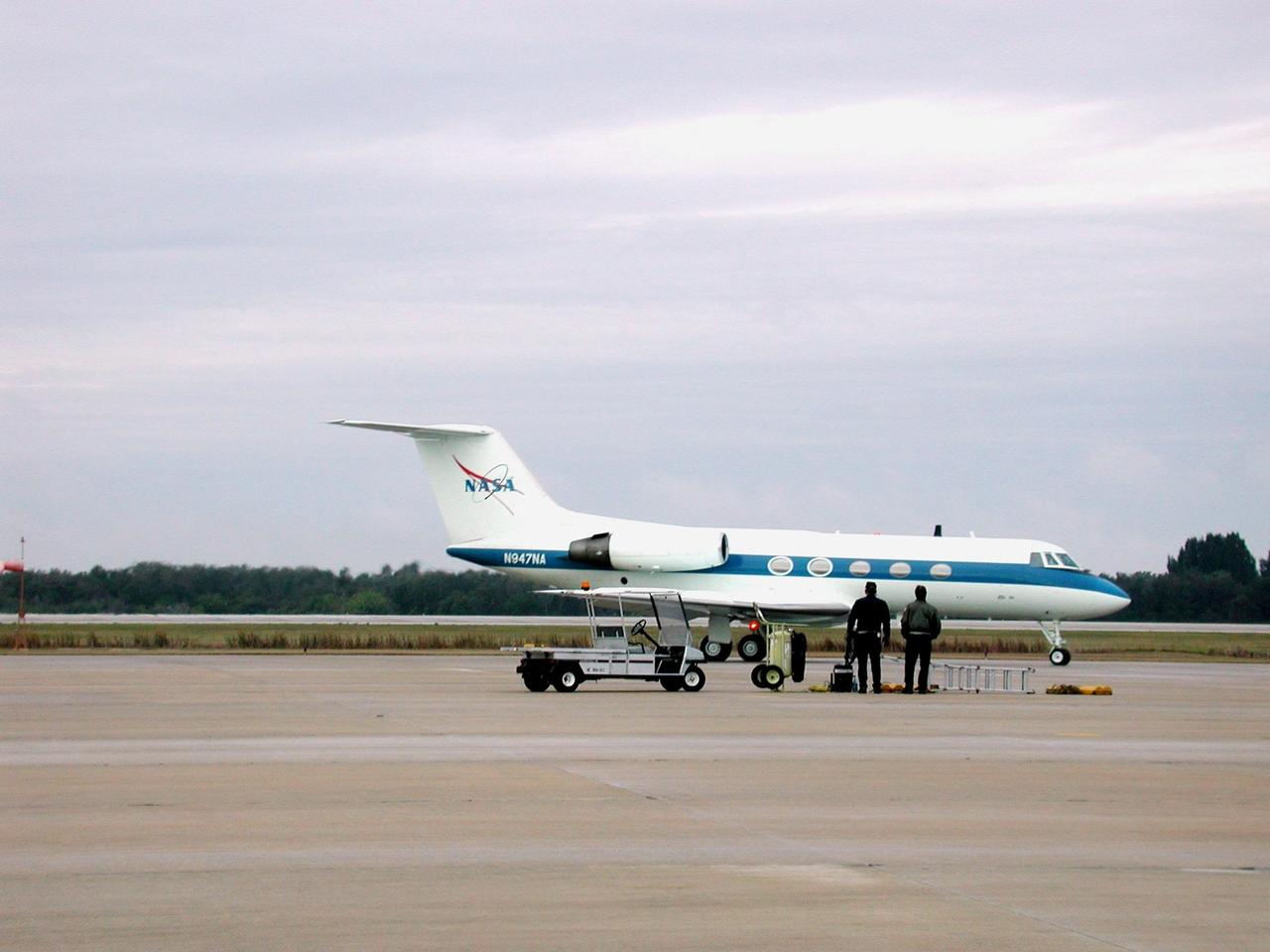
KENNEDY SPACE CENTER, FLA. -- A Shuttle Training Aircraft, piloted by STS-98 Commander Ken Cockrell, lands at the KSC Shuttle Landing Facility. The cockpit of the plane is outfitted like the Shuttle, which provides practice at the controls, especially for landing. The STS-98 crew recently arrived at KSC to prepare for their launch Feb. 7 to the International Space Station. The seventh construction flight to the Space Station, it will carry the U.S. Laboratory Destiny, a key module for space experiments
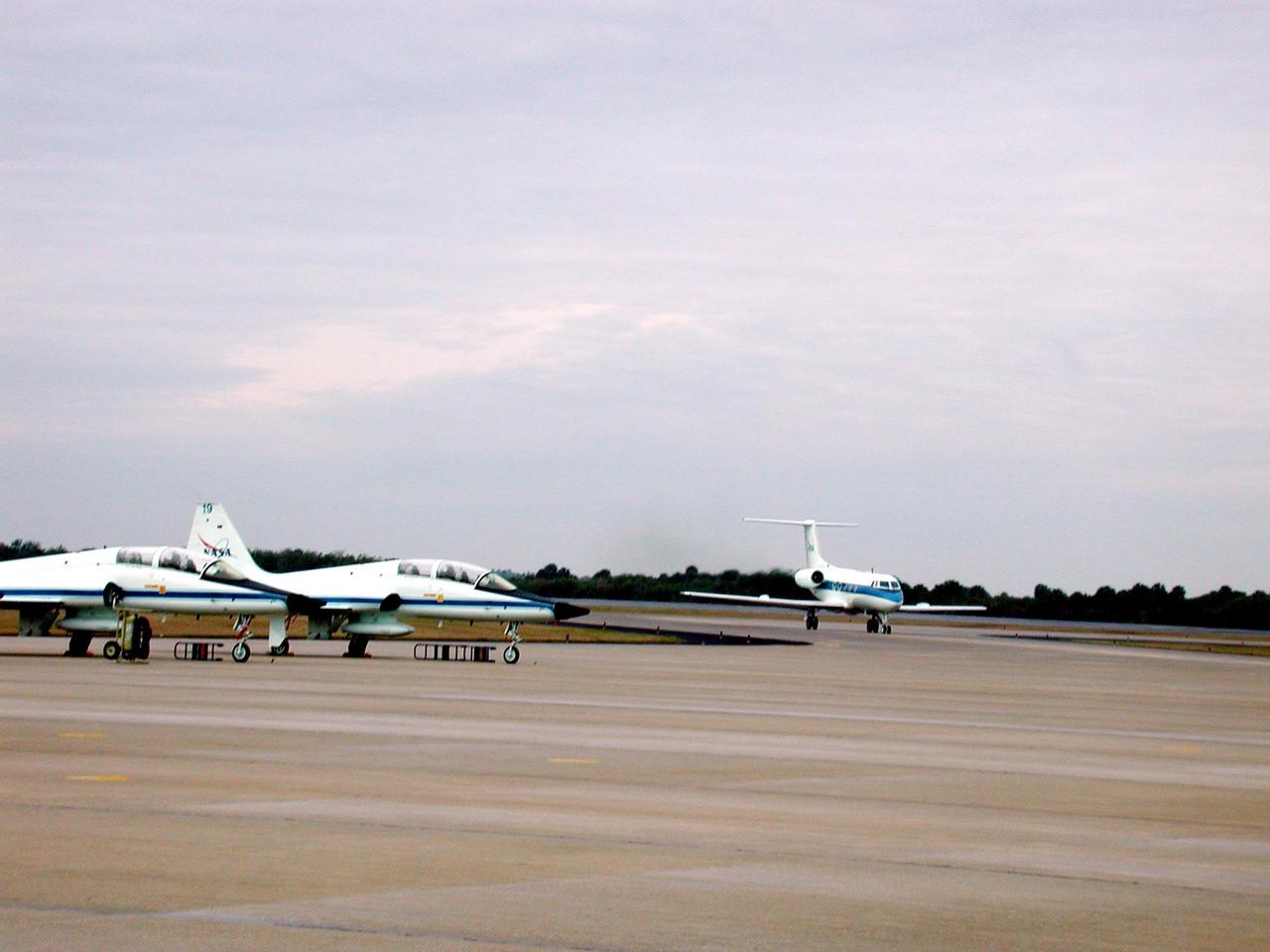
KENNEDY SPACE CENTER, FLA. -- A Shuttle Training Aircraft, piloted by STS-98 Commander Ken Cockrell, taxis into line at the KSC Shuttle Landing Facility. The cockpit of the plane is outfitted like the Shuttle, which provides practice at the controls, especially for landing. The STS-98 crew recently arrived at KSC to prepare for their launch Feb. 7 to the International Space Station. The seventh construction flight to the Space Station, it will carry the U.S. Laboratory Destiny, a key module for space experiments
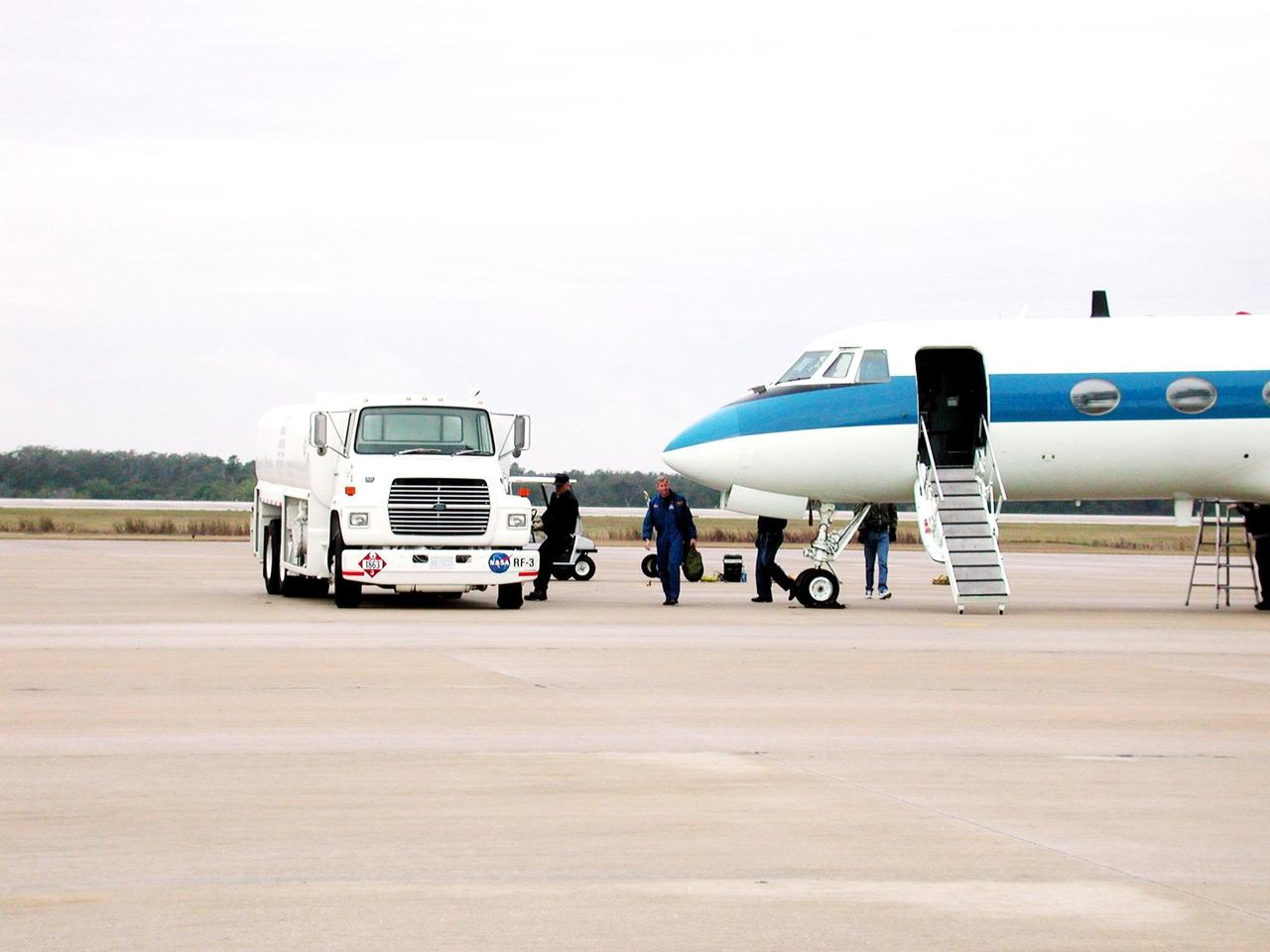
KENNEDY SPACE CENTER, FLA. -- STS-98 Commander Ken Cockrell, near the nose of the Shuttle Training Aircraft he just landed, makes his way across the parking apron of the Shuttle Landing Facility. The cockpit of the STA is outfitted like the Shuttle, which provides practice at the controls, especially for landing. The STS-98 crew recently arrived at KSC to prepare for their launch Feb. 7 to the International Space Station. The seventh construction flight to the Space Station, it will carry the U.S. Laboratory Destiny, a key module for space experiments
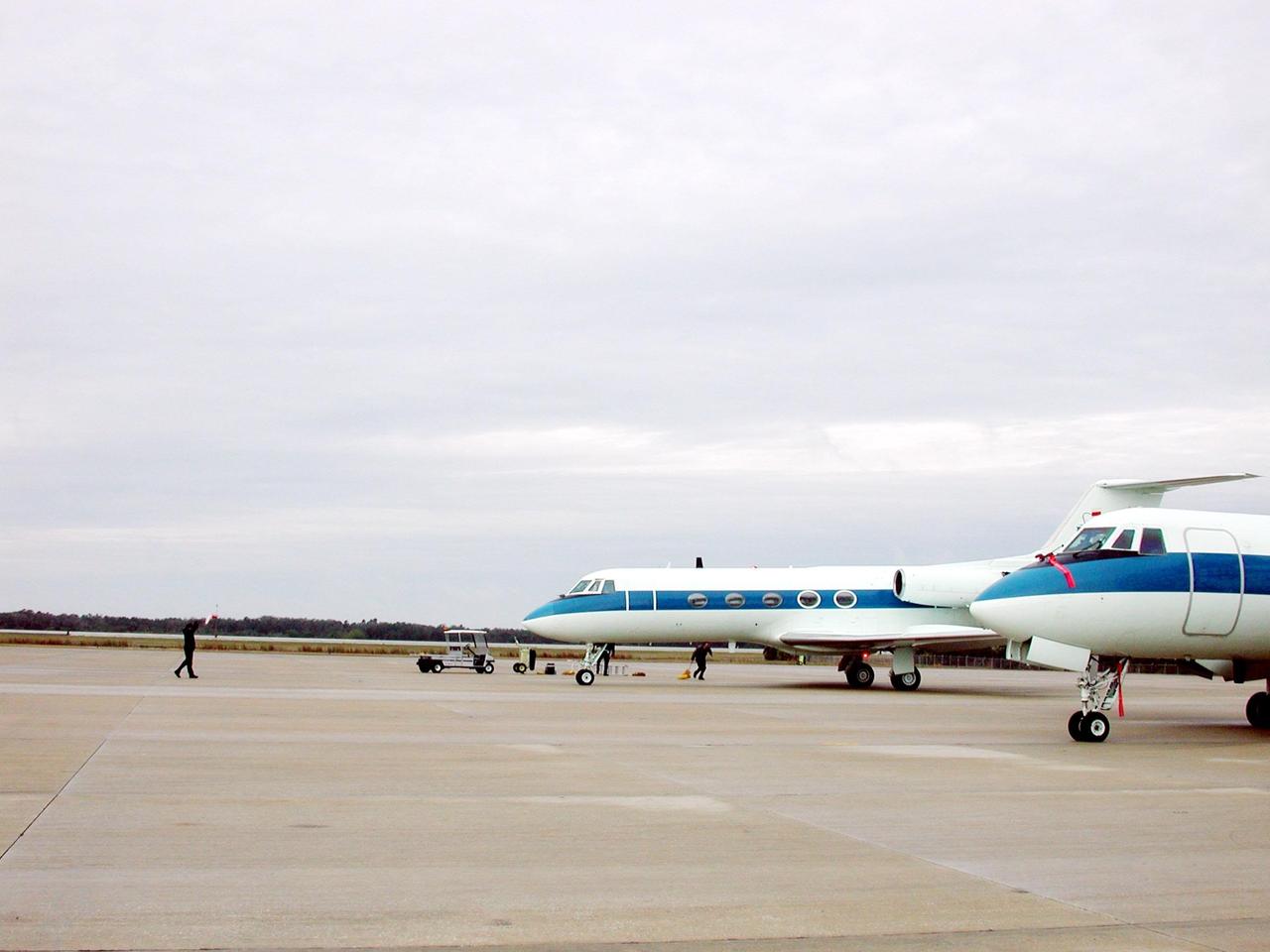
KENNEDY SPACE CENTER, FLA. -- A Shuttle Training Aircraft, piloted by STS-98 Commander Ken Cockrell, rolls to a stop in line next to another STA at the KSC Shuttle Landing Facility. The cockpit of the STA is outfitted like the Shuttle, which provides practice at the controls, especially for landing. The STS-98 crew recently arrived at KSC to prepare for their launch Feb. 7 to the International Space Station. The seventh construction flight to the Space Station, it will carry the U.S. Laboratory Destiny, a key module for space experiments
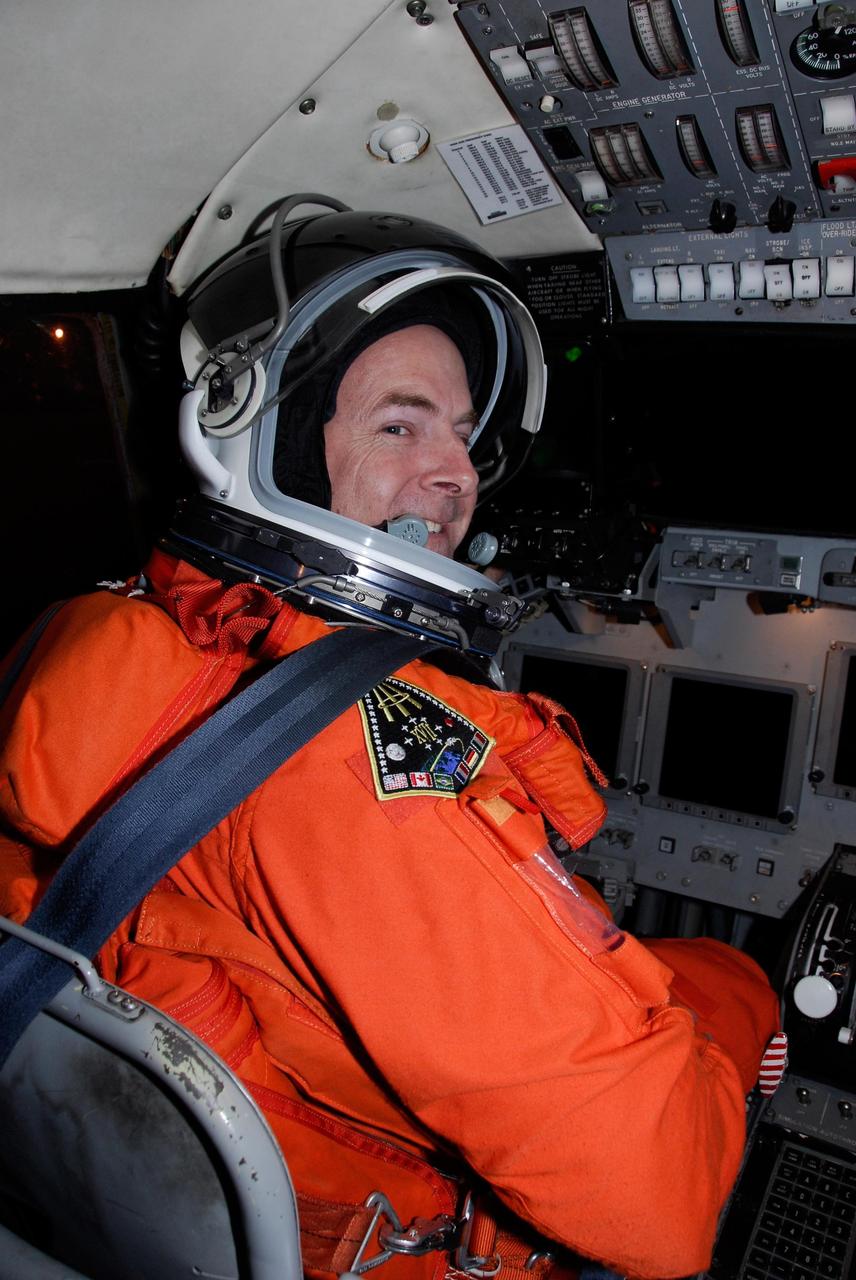
KENNEDY SPACE CENTER, FLA. -- Dressed in his launch and entry suit, STS-122 Pilot Alan Poindexter is seated in the shuttle training aircraft, or STA, at NASA's Kennedy Space Center. Poindexter and Commander Steve Frick will practice shuttle landings in the STA before the Dec. 6 launch on space shuttle Atlantis. The STA is a Grumman American Aviation-built Gulf Stream II jet that was modified to simulate an orbiter's cockpit, motion and visual cues, and handling qualities. Photo credit: NASA/Kim Shiflett
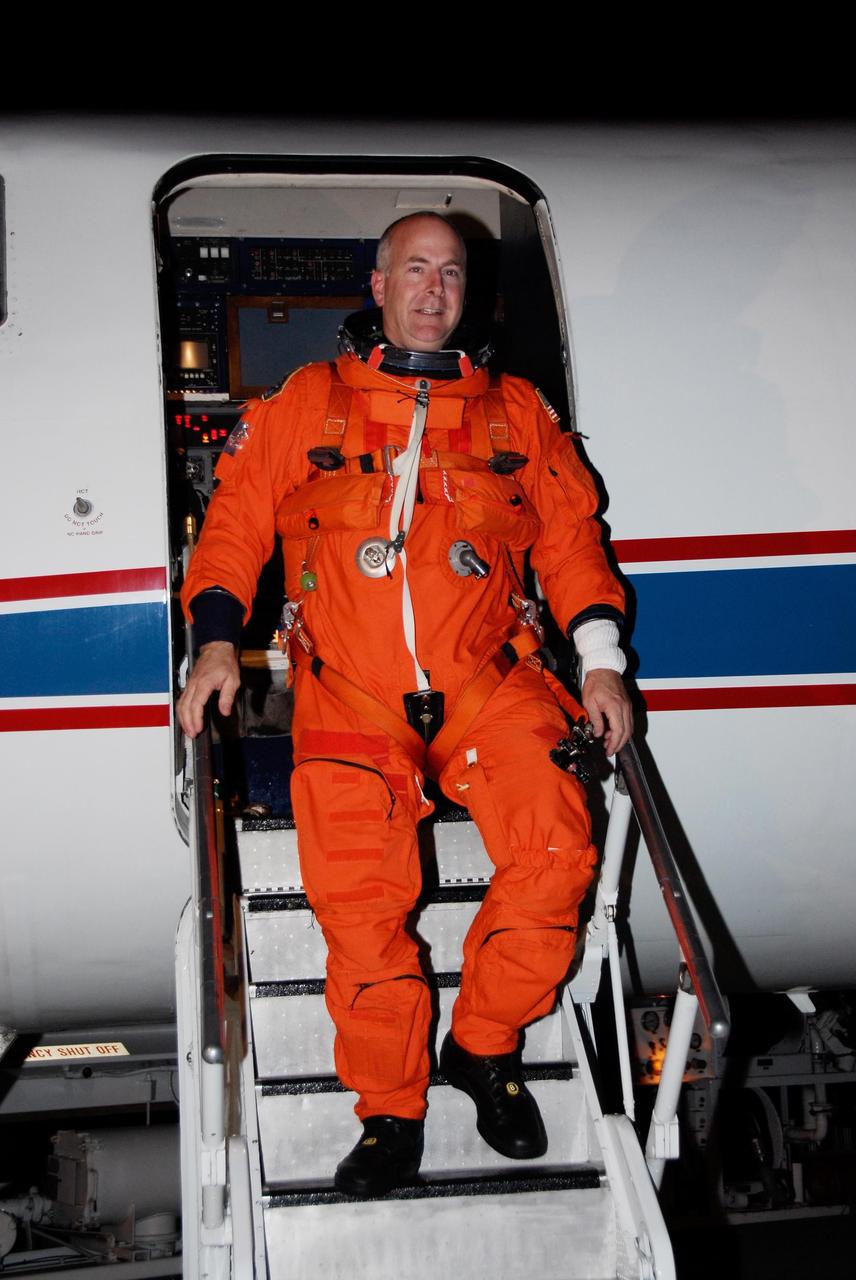
KENNEDY SPACE CENTER, FLA. -- STS-122 Pilot Alan Poindexter seems satisfied with the landing practice session he has just completed aboard a shuttle training aircraft, or STA, at Kennedy Space Center's Shuttle Landing Facility. Poindexter and Commander Steve Frick are preparing for the Dec. 6 launch on space shuttle Atlantis. The STA is a Grumman American Aviation-built Gulf Stream II jet that was modified to simulate an orbiter's cockpit, motion and visual cues, and handling qualities. Photo credit: NASA/Kim Shiflett
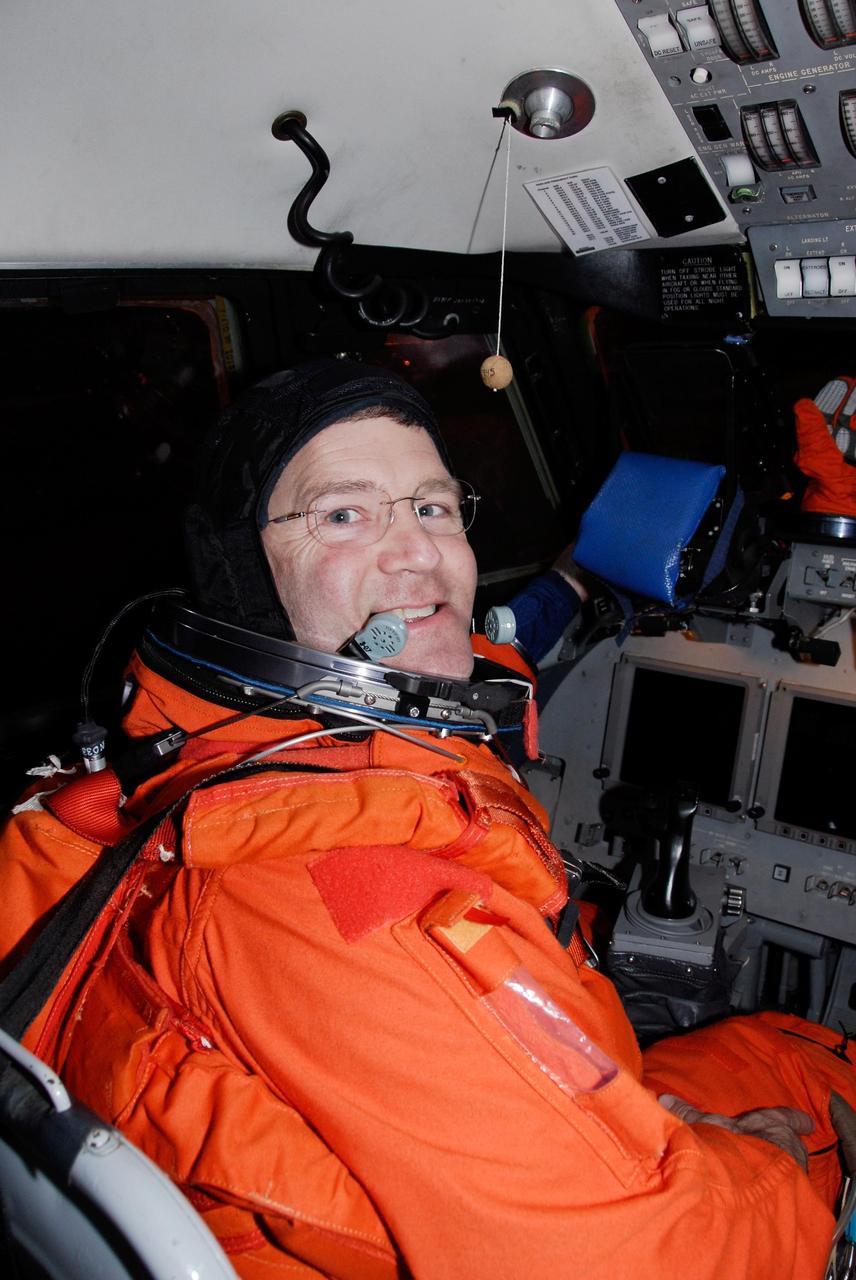
KENNEDY SPACE CENTER, FLA. -- Dressed in his launch and entry suit, STS-122 Commander Steve Frick is seated in the shuttle training aircraft, or STA, at NASA's Kennedy Space Center. Frick and Pilot Alan Poindexter will practice shuttle landings in the STA before the Dec. 6 launch on space shuttle Atlantis. The STA is a Grumman American Aviation-built Gulf Stream II jet that was modified to simulate an orbiter's cockpit, motion and visual cues, and handling qualities. Photo credit: NASA/Kim Shiflett
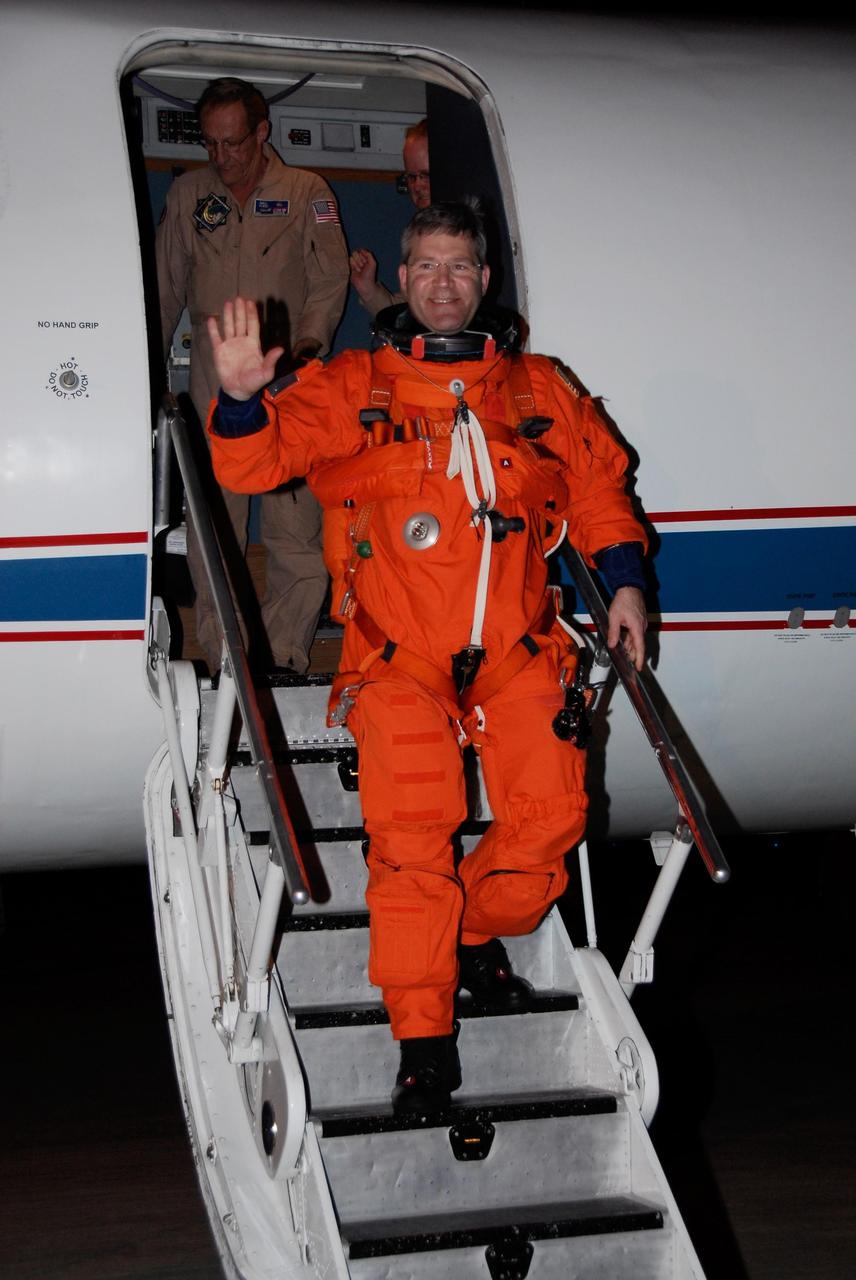
KENNEDY SPACE CENTER, FLA. -- STS-122 Commander Steve Frick seems satisfied with the landing practice session he has just completed aboard a shuttle training aircraft, or STA, at Kennedy Space Center's Shuttle Landing Facility. Frick and Pilot Alan Poindexter are preparing for the Dec. 6 launch on space shuttle Atlantis. The STA is a Grumman American Aviation-built Gulf Stream II jet that was modified to simulate an orbiter's cockpit, motion and visual cues, and handling qualities. Photo credit: NASA/Kim Shiflett
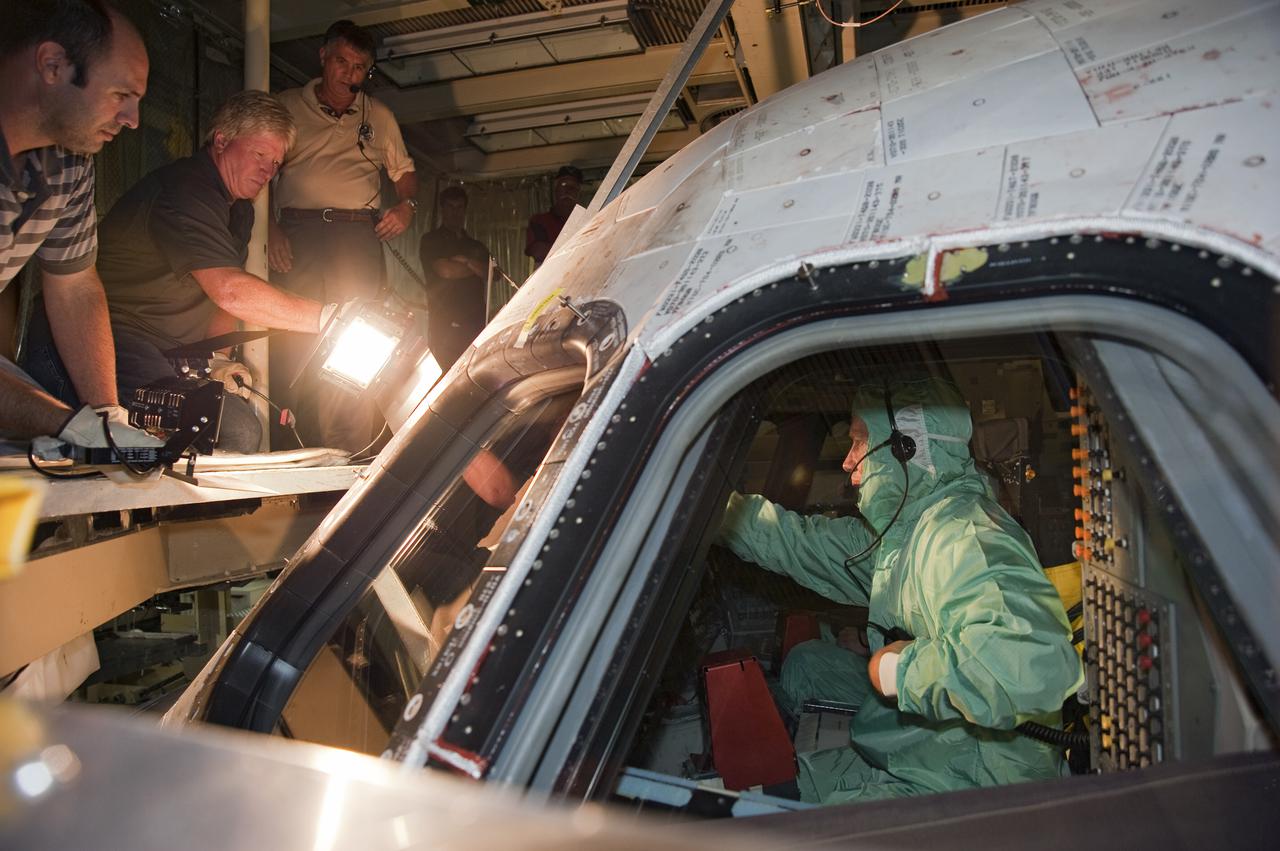
CAPE CANAVERAL, Fla. -- In Orbiter Processing Facility-3 at NASA's Kennedy Space Center in Florida, STS-133 Commander Steve Lindsey familiarizes himself with the layout of the shuttle's cockpit. The astronauts are at Kennedy for the Crew Equipment Interface Test, or CEIT, which provides the crew with hands-on training and observation of shuttle and flight hardware for their mission to the International Space Station. Launch of the STS-133 mission on space shuttle Discovery is targeted for Nov. 1 at 4:33 p.m. EDT. Photo credit: NASA_Kim Shiflett
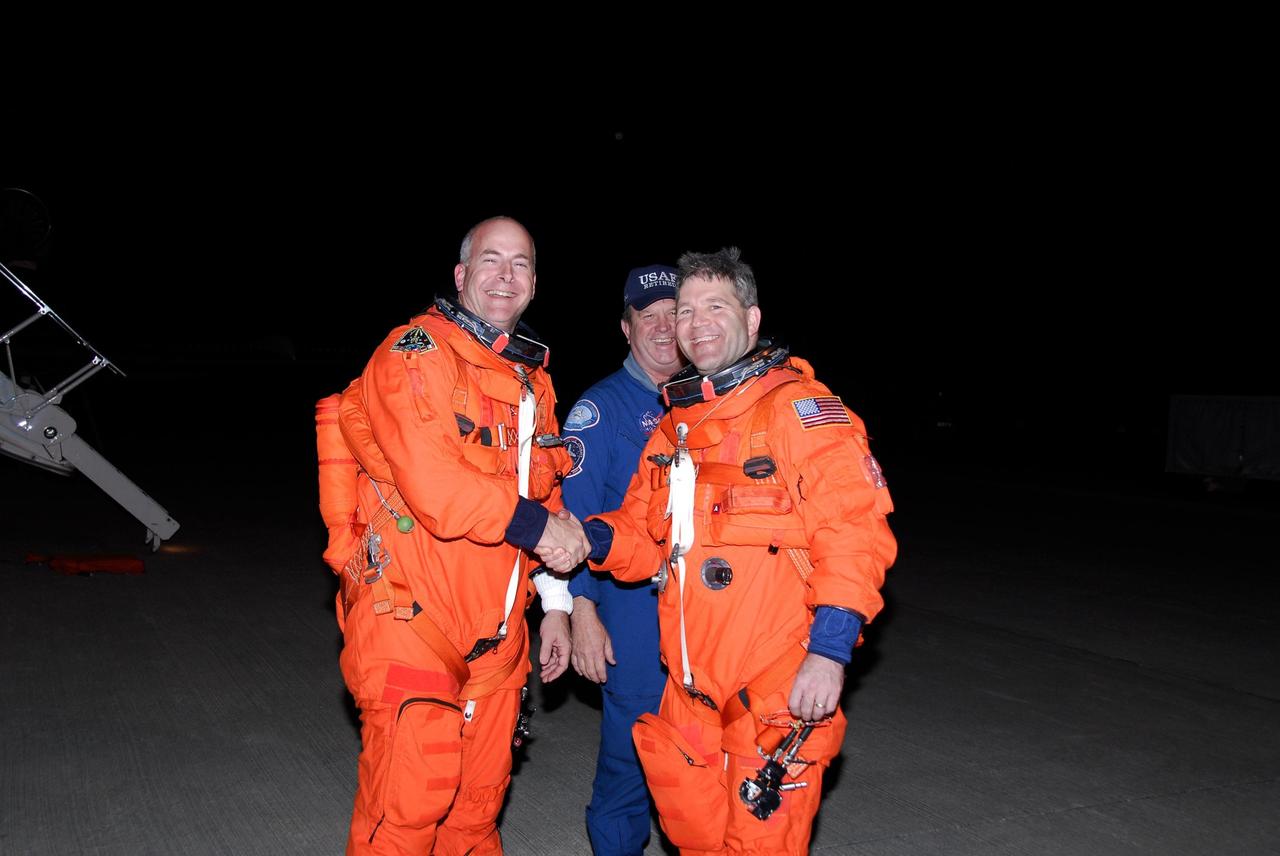
KENNEDY SPACE CENTER, FLA. -- STS-122 Commander Steve Frick (right) and Pilot Alan Poindexter (left) congratulate each other on the successful landing practice completed aboard a shuttle training aircraft, or STA, at Kennedy Space Center's Shuttle Landing Facility. They are preparing for the Dec. 6 launch on space shuttle Atlantis. The STA is a Grumman American Aviation-built Gulf Stream II jet that was modified to simulate an orbiter's cockpit, motion and visual cues, and handling qualities. Photo credit: NASA/Kim Shiflett
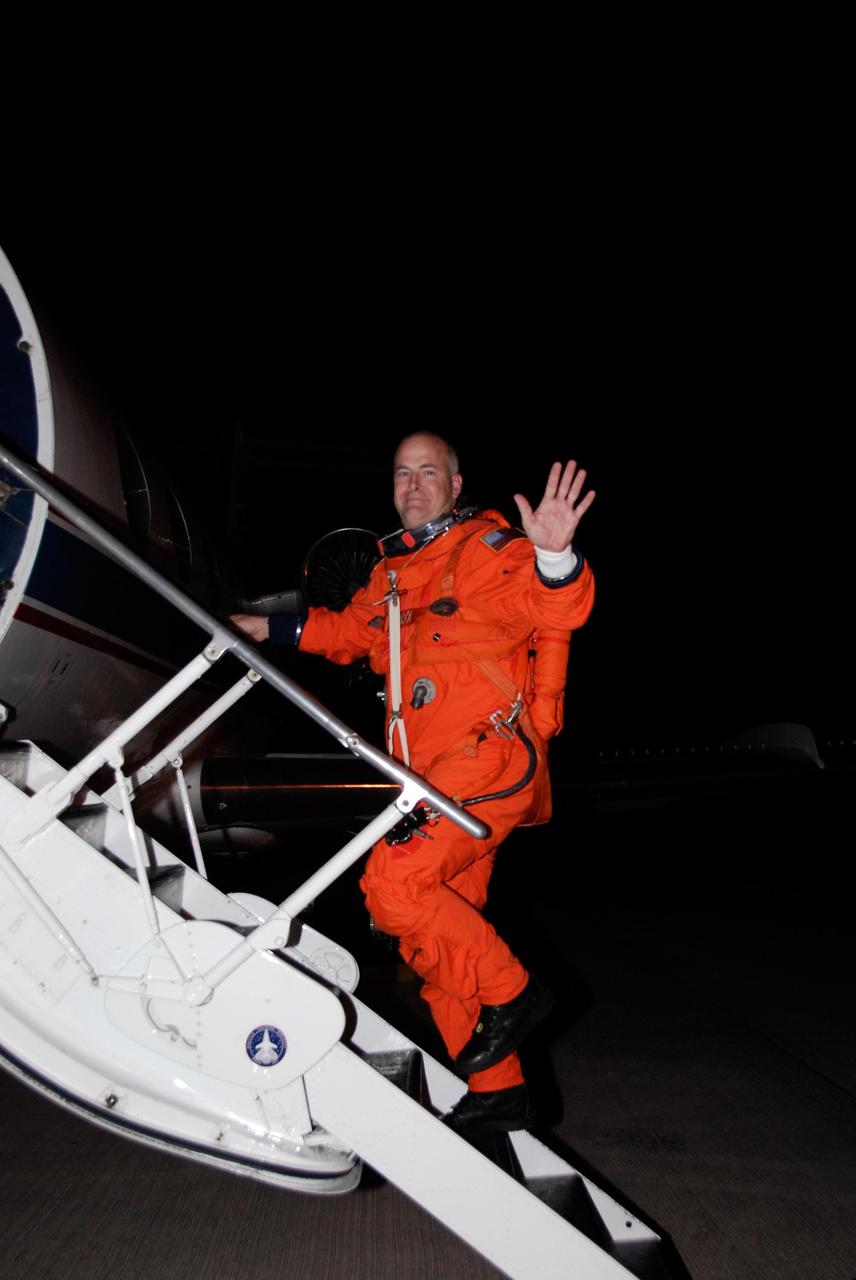
KENNEDY SPACE CENTER, FLA. -- Dressed in his launch and entry suit, STS-122 Pilot Alan Poindexter climbs the steps to the shuttle training aircraft, or STA, at NASA's Kennedy Space Center. Poindexter and Commander Steve Frick will practice shuttle landings in the STA before the Dec. 6 launch on space shuttle Atlantis. The STA is a Grumman American Aviation-built Gulf Stream II jet that was modified to simulate an orbiter's cockpit, motion and visual cues, and handling qualities. Photo credit: NASA/Kim Shiflett
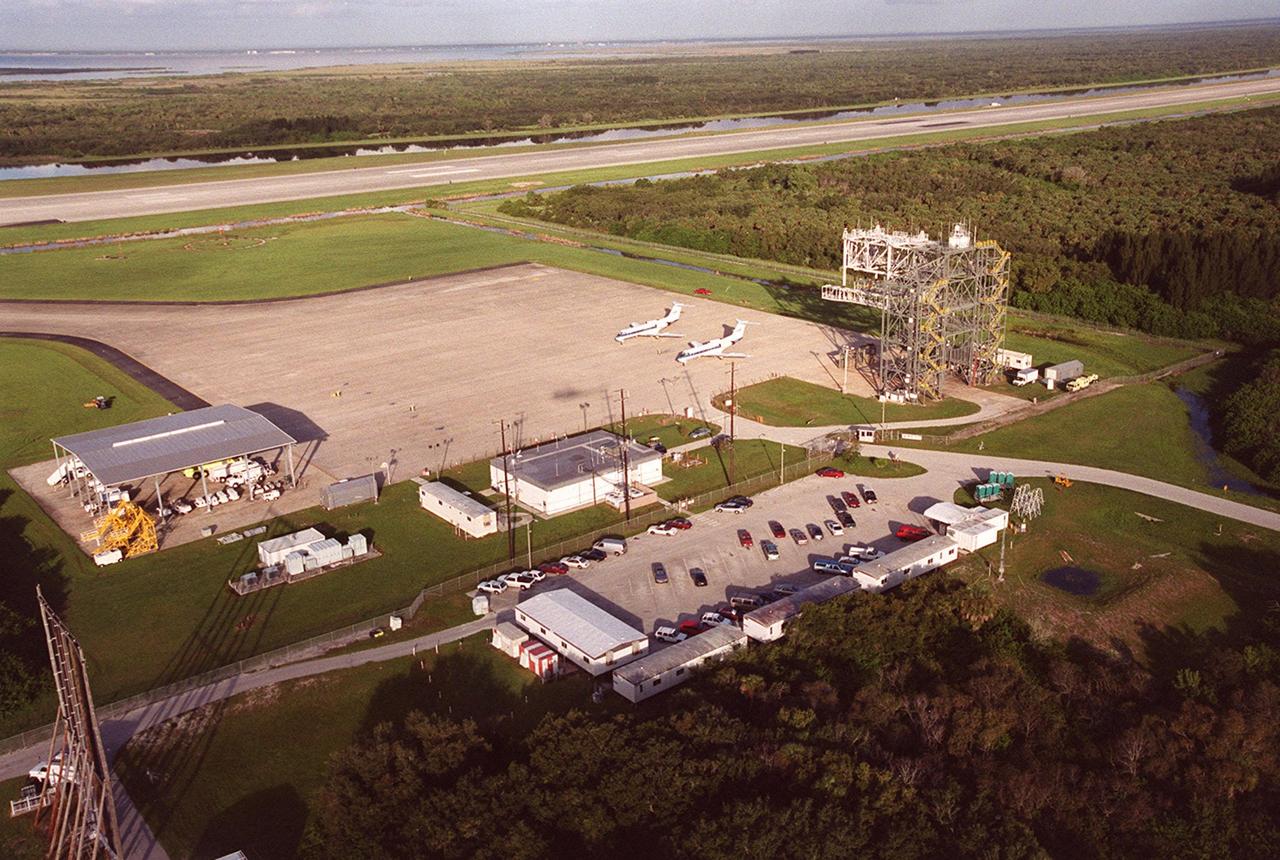
KENNEDY SPACE CENTER, FLA. -- An aerial view of the Shuttle Landing Facility shows the fuel truck shelter (left), administrative building (center) with parking lot behind it (foreground), two Shuttle Training Aircraft (STA) parked on the apron and the mate/demate device (right). In the background is the runway. The STAs are Grumman Gulfstream 2 aircraft with converted cockpits that emulate those in the Shuttles for practice landings at the SLF. The mate/demate device is used to lift the orbiter onto or off a Shuttle Carrier Aircraft when it has to be ferried to or from KSC
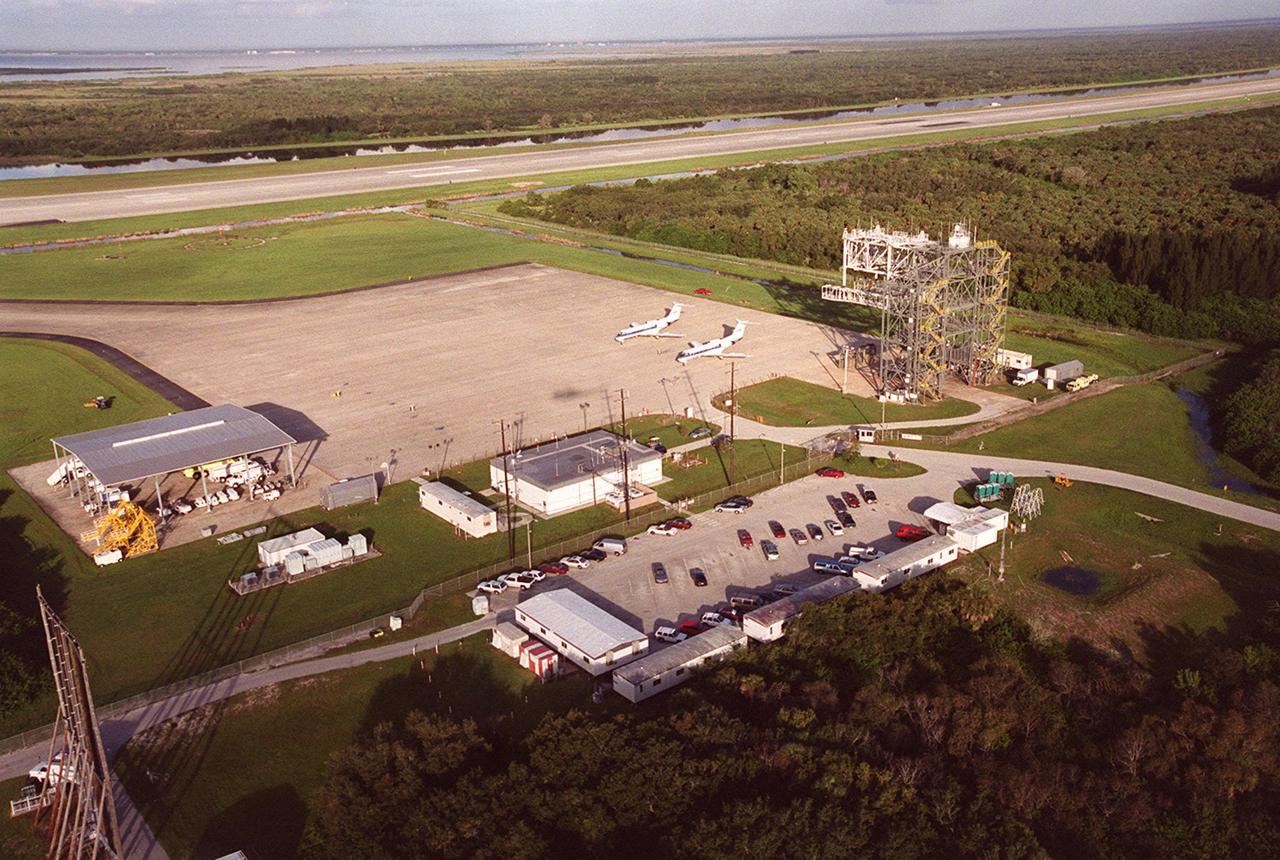
KENNEDY SPACE CENTER, FLA. -- An aerial view of the Shuttle Landing Facility shows the fuel truck shelter (left), administrative building (center) with parking lot behind it (foreground), two Shuttle Training Aircraft (STA) parked on the apron and the mate/demate device (right). In the background is the runway. The STAs are Grumman Gulfstream 2 aircraft with converted cockpits that emulate those in the Shuttles for practice landings at the SLF. The mate/demate device is used to lift the orbiter onto or off a Shuttle Carrier Aircraft when it has to be ferried to or from KSC
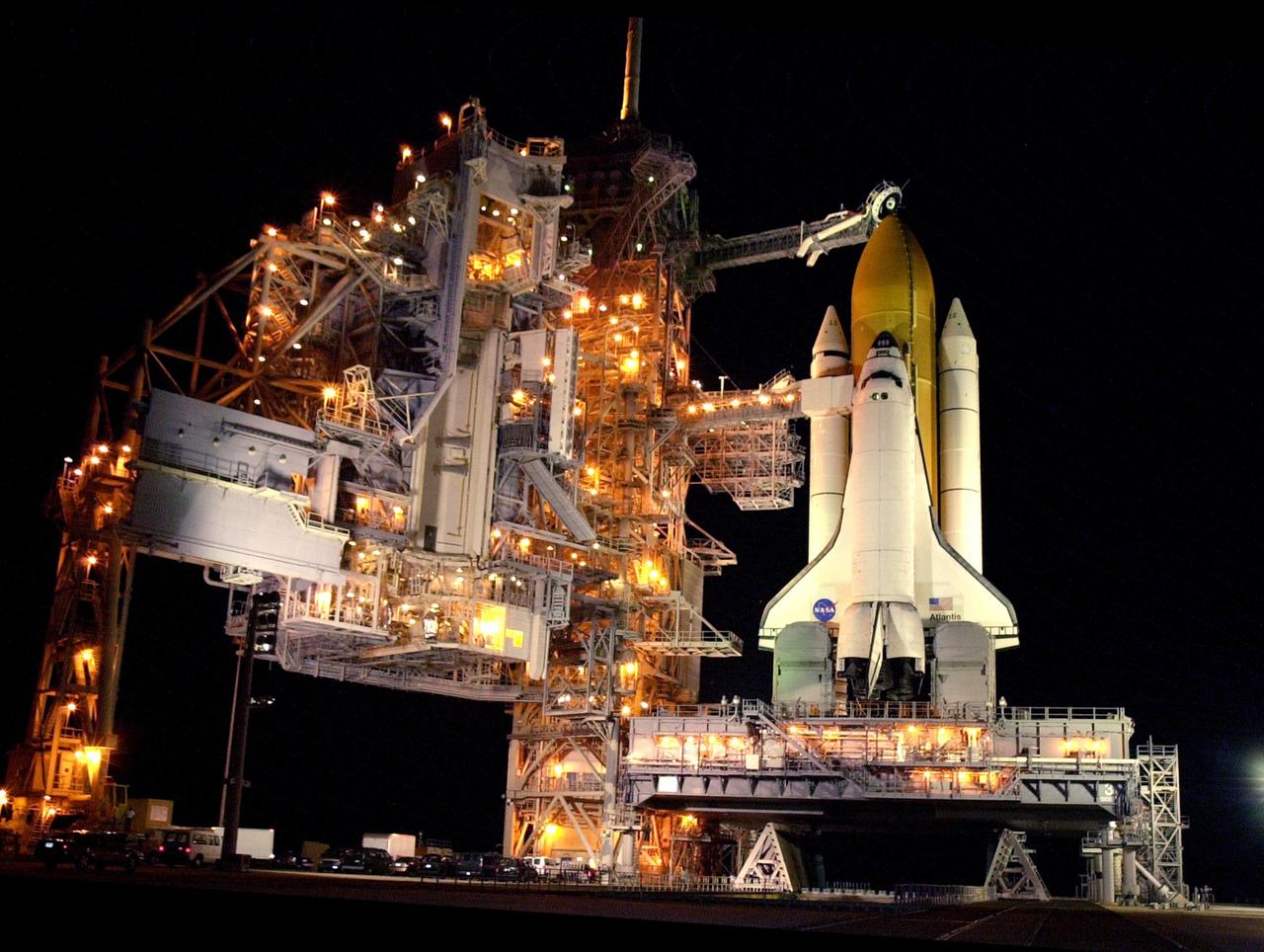
KENNEDY SPACE CENTER, FLA. -- After rollback of the Rotating Service Structure, Space Shuttle Atlantis is revealed on pad 39B prior to launch. The orbiter access arm with the White Room at the end can be seen extending toward the cockpit. The White Room provides entry into the Shuttle for the crew. Above the orange external tank is the vent hood, called the "beanie cap." The Shuttle is scheduled for launch Oct. 7 at 3:46 p.m. EDT on mission STS-112.
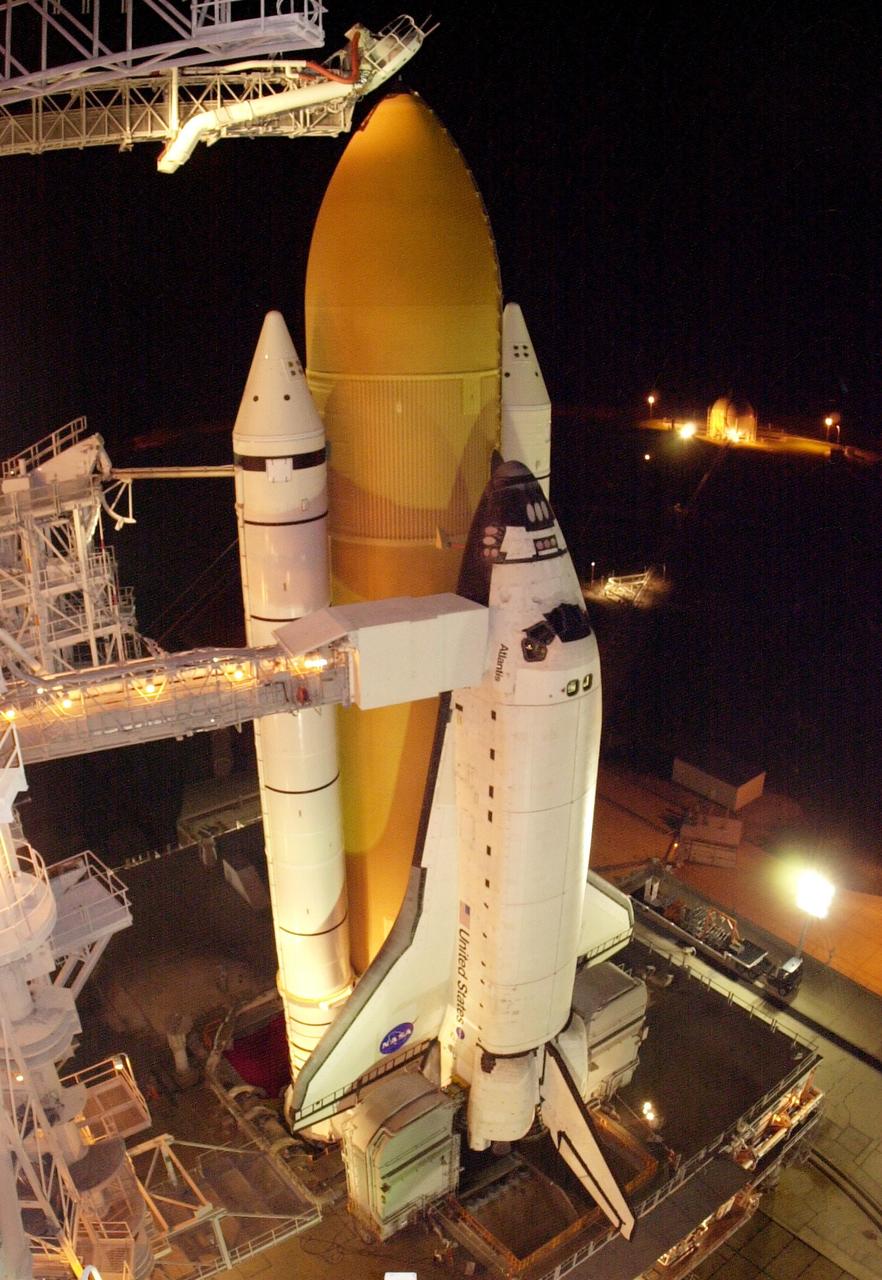
KENNEDY SPACE CENTER, FLA. -- After rollback of the Rotating Service Structure, Space Shuttle Atlantis is revealed on pad 39B prior to launch. The orbiter access arm with the White Room at the end can be seen extending toward the cockpit. The White Room provides entry into the Shuttle for the crew. Above the orange external tank is the vent hood, called the "beanie cap." The Shuttle is scheduled for launch Oct. 7 at 3:46 p.m. EDT on mission STS-112.
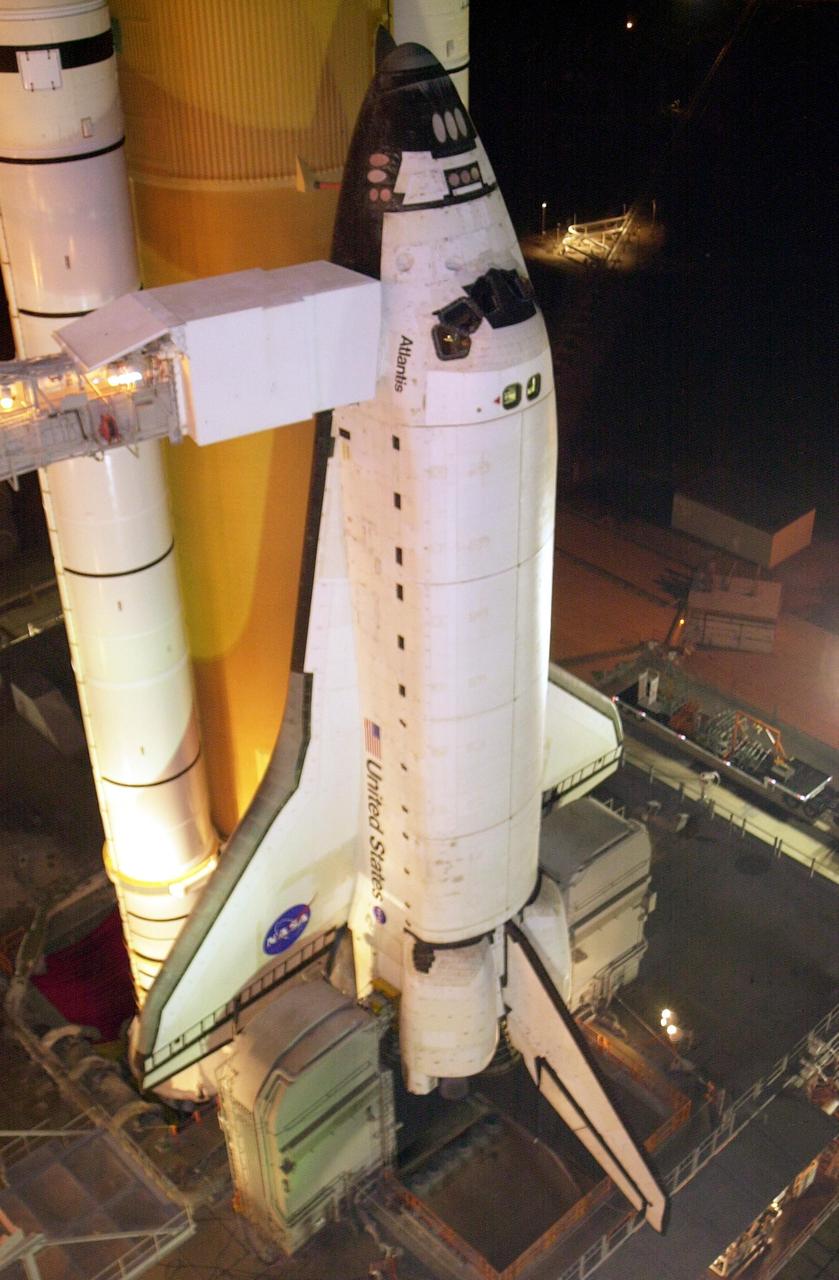
KENNEDY SPACE CENTER, FLA. -- After rollback of the Rotating Service Structure, Space Shuttle Atlantis is revealed on pad 39B prior to launch. The orbiter access arm with the White Room at the end can be seen extending toward the cockpit. The White Room provides entry into the Shuttle for the crew. The Shuttle is scheduled for launch Oct. 7 at 3:46 p.m. EDT on mission STS-112.

KENNEDY SPACE CENTER, Fla. -- STS-118 Commander Scott Kelly settles in his cockpit seat aboard the shuttle training aircraft, known as an STA, for landing practice. The practice is part of Terminal Countdown Demonstration Test, or TCDT, activities that include a simulated launch countdown. The STA is a Grumman American Aviation-built Gulf Stream II jet that was modified to simulate an orbiter's cockpit, motion and visual cues, and handling qualities. In flight, the STA duplicates the orbiter's atmospheric descent trajectory from approximately 35,000 feet altitude to landing on a runway. The STS-118 mission is the 22nd flight to the International Space Station and is targeted for launch on Aug. 7. The mission payload aboard Space Shuttle Endeavour includes the S5 truss, a SPACEHAB module and external stowage platform 3. NASA/George Shelton
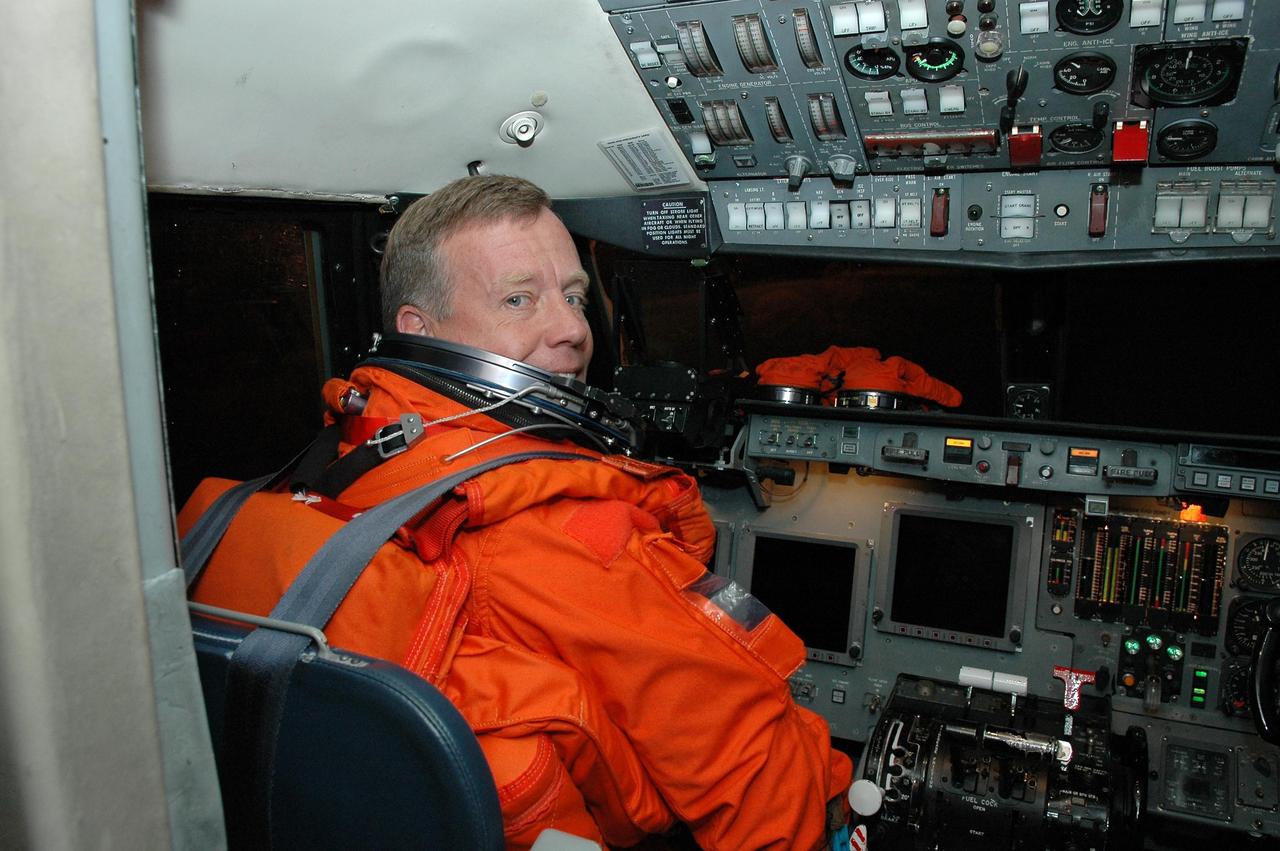
KENNEDY SPACE CENTER, FLA. - Inside the Shuttle Training Aircraft (STA), STS-121 Commander Steven Lindsey settles into his seat in the cockpit. Lindsey and Pilot Mark Kelly will be making practice landings in preparation for the July 1 launch of Space Shuttle Discovery. The STA is a Grumman American Aviation-built Gulf Stream II jet that was modified to simulate an orbiter’s cockpit, motion and visual cues, and handling qualities. In flight, the STA duplicates the orbiter’s atmospheric descent trajectory from approximately 35,000 feet altitude to landing on a runway. Because the orbiter is unpowered during re-entry and landing, its high-speed glide must be perfectly executed the first time. Photo credit: NASA/Kim Shiflett

KENNEDY SPACE CENTER, FLA. -- Seated in the cockpit of the shuttle training aircraft, or STA, STS-120 Commander Pamela Melroy is eager to begin landing practice on NASA's Shuttle Landing Facility runway. A modified Grumman American Aviation-built Gulf Stream II jet, the STA simulates an orbiter's cockpit, motion and visual cues and handling qualities. In flight, the STA duplicates the orbiter's atmospheric descent trajectory from approximately 35,000 feet altitude to landing on a runway. Melroy and other crew members are at Kennedy Space Center to take part in the terminal countdown demonstration test, which also includes a simulated launch countdown. Mission STS-120 is targeted for Oct. 23. Photo credit: NASA/Kim Shiflett
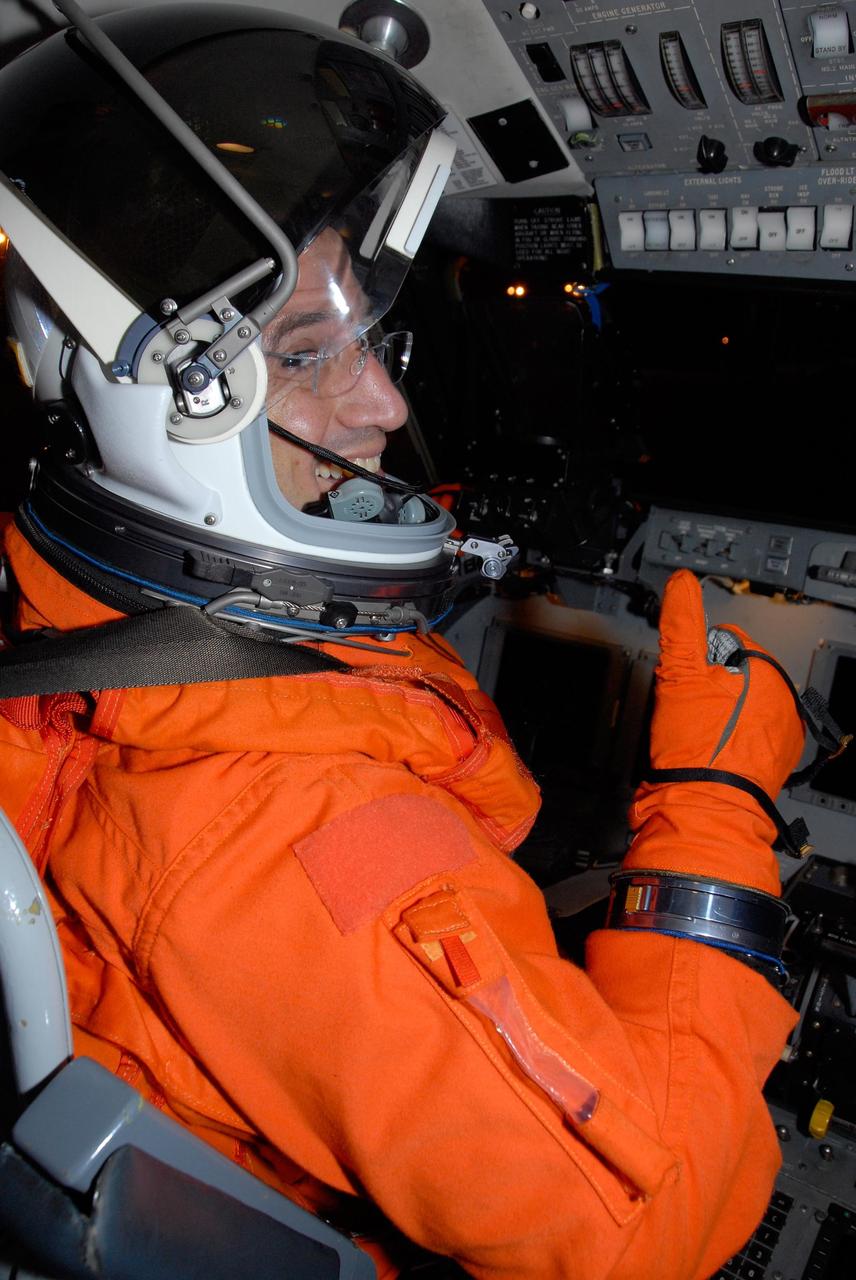
KENNEDY SPACE CENTER, FLA. -- Seated in the cockpit of the shuttle training aircraft, STS-120 Pilot George Zamka is eager to begin landing practice on NASA's Shuttle Landing Facility runway. A modified Grumman American Aviation-built Gulf Stream II jet, the STA simulates an orbiter's cockpit, motion and visual cues and handling qualities. In flight, the STA duplicates the orbiter's atmospheric descent trajectory from approximately 35,000 feet altitude to landing on a runway. Melroy and other crew members are at Kennedy Space Center to take part in the terminal countdown demonstration test, which also includes a simulated launch countdown. Mission STS-120 is targeted for Oct. 23. Photo credit: NASA/Kim Shiflett
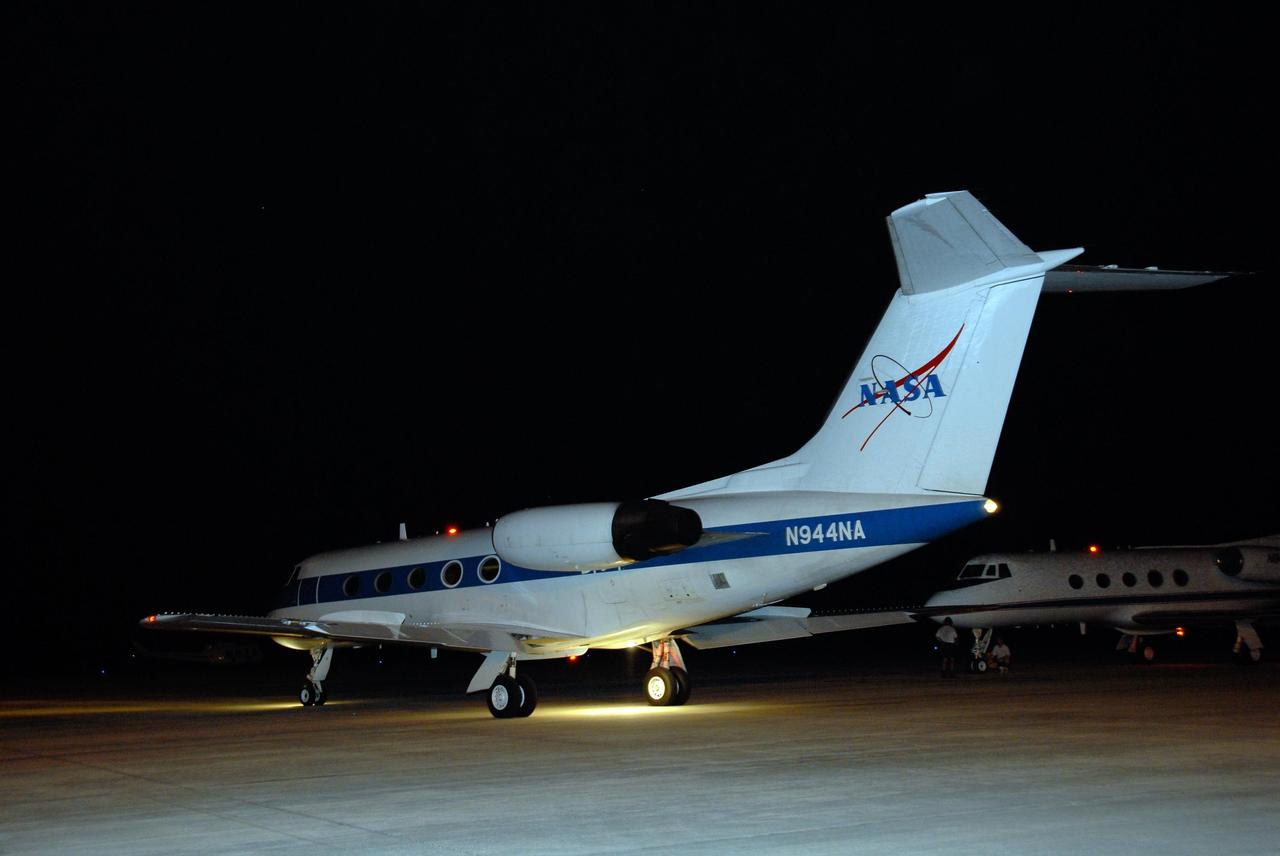
KENNEDY SPACE CENTER, FLA. -- The shuttle training aircraft, or STA, moves toward the runway on NASA's Shuttle Landing Facility. In the cockpit are STS-120 Commander Pamela Melroy and Pilot George Zamka, who will begin landing practice on the runway. A modified Grumman American Aviation-built Gulf Stream II jet, the STA simulates an orbiter's cockpit, motion and visual cues and handling qualities. In flight, the STA duplicates the orbiter's atmospheric descent trajectory from approximately 35,000 feet altitude to landing on a runway. Melroy and other crew members are at Kennedy Space Center to take part in the terminal countdown demonstration test, which also includes a simulated launch countdown. Mission STS-120 is targeted for Oct. 23. Photo credit: NASA/Kim Shiflett
KENNEDY SPACE CENTER, FLA. -- Seated in the cockpit of the shuttle training aircraft, or STA, STS-120 Pilot George Zamka is ready to begin landing practice on NASA's Shuttle Landing Facility runway. A modified Grumman American Aviation-built Gulf Stream II jet, the STA simulates an orbiter's cockpit, motion and visual cues and handling qualities. In flight, the STA duplicates the orbiter's atmospheric descent trajectory from approximately 35,000 feet altitude to landing on a runway. Melroy and other crew members are at Kennedy Space Center to take part in the terminal countdown demonstration test, which also includes a simulated launch countdown. Mission STS-120 is targeted for Oct. 23. Photo credit: NASA/Kim Shiflett
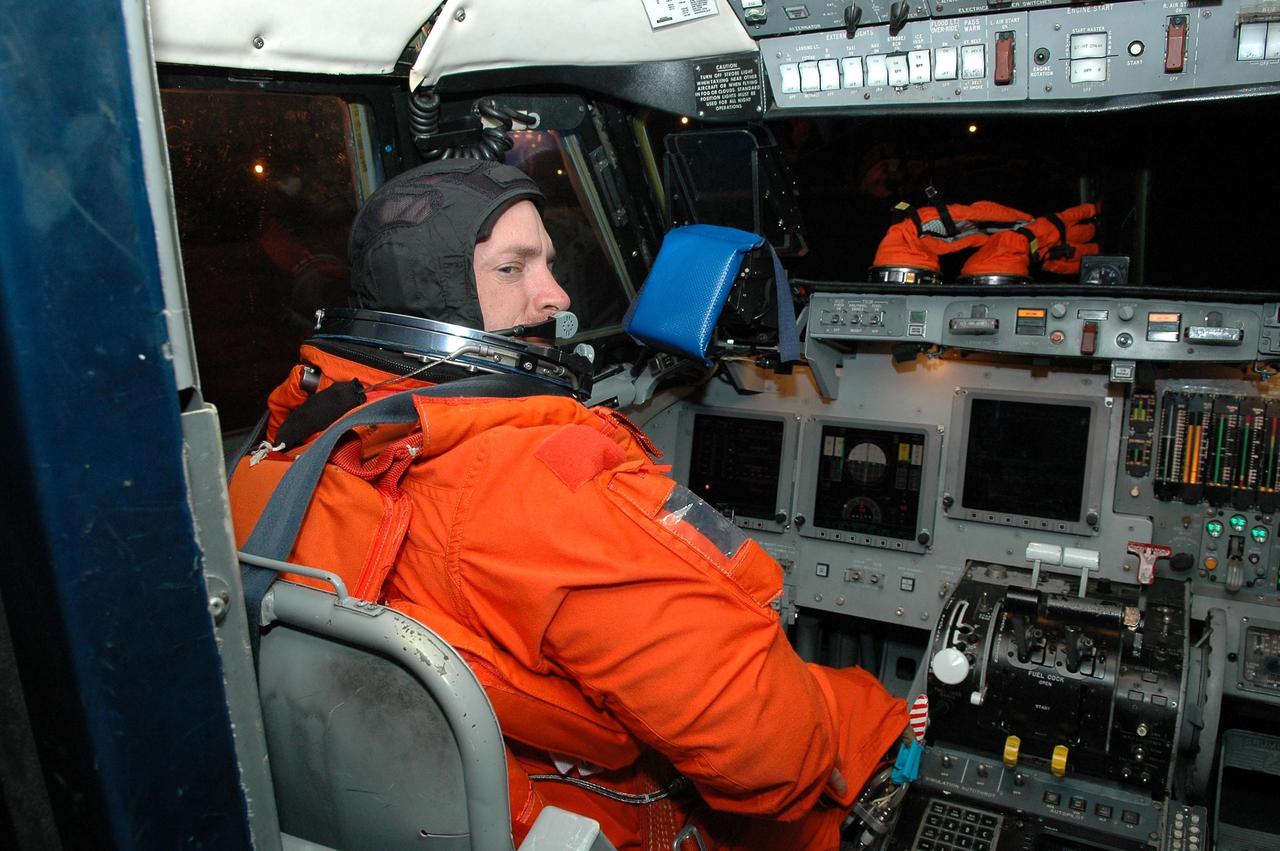
KENNEDY SPACE CENTER, FLA. - Inside the Shuttle Training Aircraft (STA), STS-121 Pilot Mark Kelly takes control in the cockpit. Kelly and Commander Steven Lindsey will be making practice landings in preparation for the July 1 launch of Space Shuttle Discovery. The STA is a Grumman American Aviation-built Gulf Stream II jet that was modified to simulate an orbiter’s cockpit, motion and visual cues, and handling qualities. In flight, the STA duplicates the orbiter’s atmospheric descent trajectory from approximately 35,000 feet altitude to landing on a runway. Because the orbiter is unpowered during re-entry and landing, its high-speed glide must be perfectly executed the first time. Photo credit: NASA/Kim Shiflett
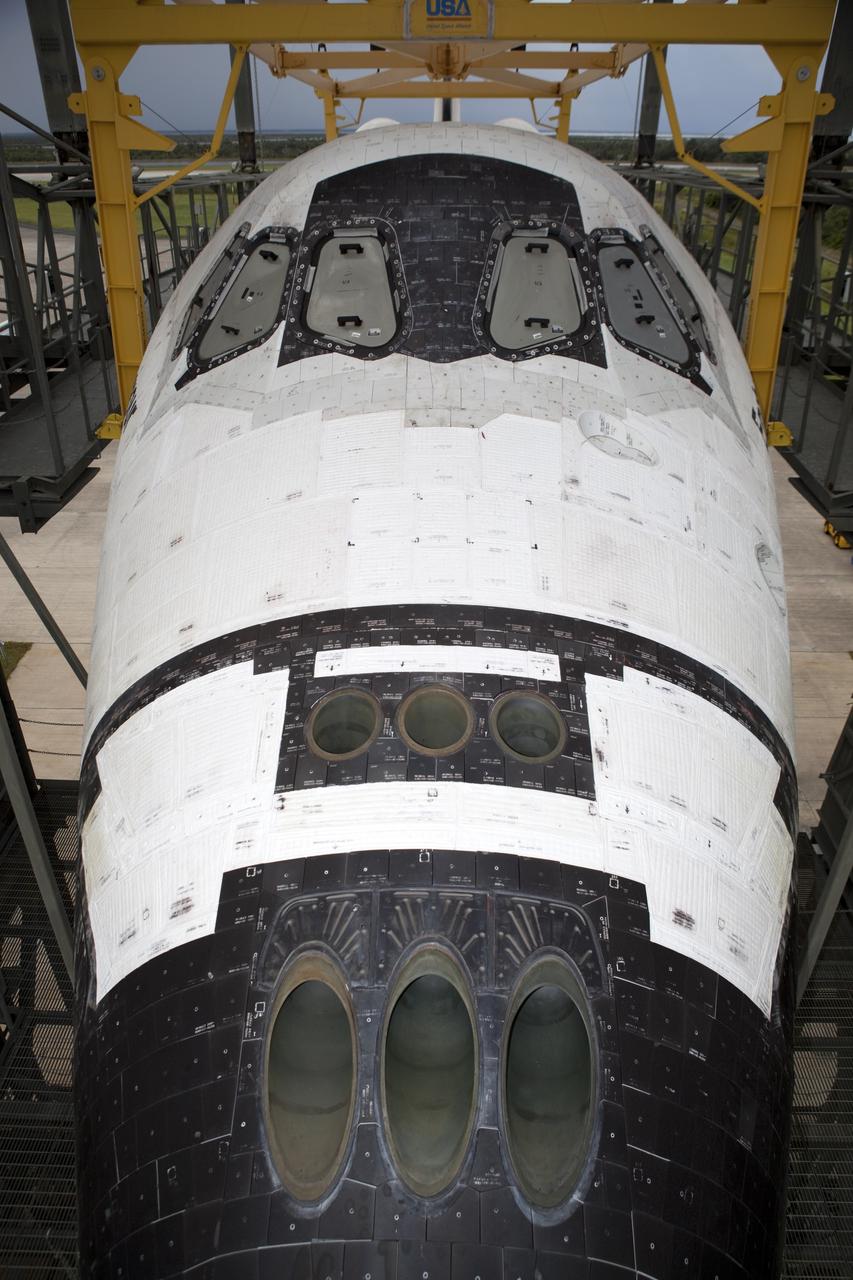
CAPE CANAVERAL, Fla. – Space shuttle Endeavour is hoisted above the ground by the mate-demate device at the Shuttle Landing Facility at NASA's Kennedy Space Center in Florida. Its cockpit windows have been covered to protect them during the shuttle's upcoming ferry flight. The shuttle will be positioned and connected atop NASA's Shuttle Carrier Aircraft, or SCA, with the aid of the device. The SCA, a modified 747 jetliner, will fly Endeavour to Los Angeles where it will be placed on public display at the California Science Center. This is the final ferry flight scheduled in the Space Shuttle Program era. For more information on the shuttles' transition and retirement, visit http://www.nasa.gov/transition. Photo credit: NASA/Dimitri Gerondidakis
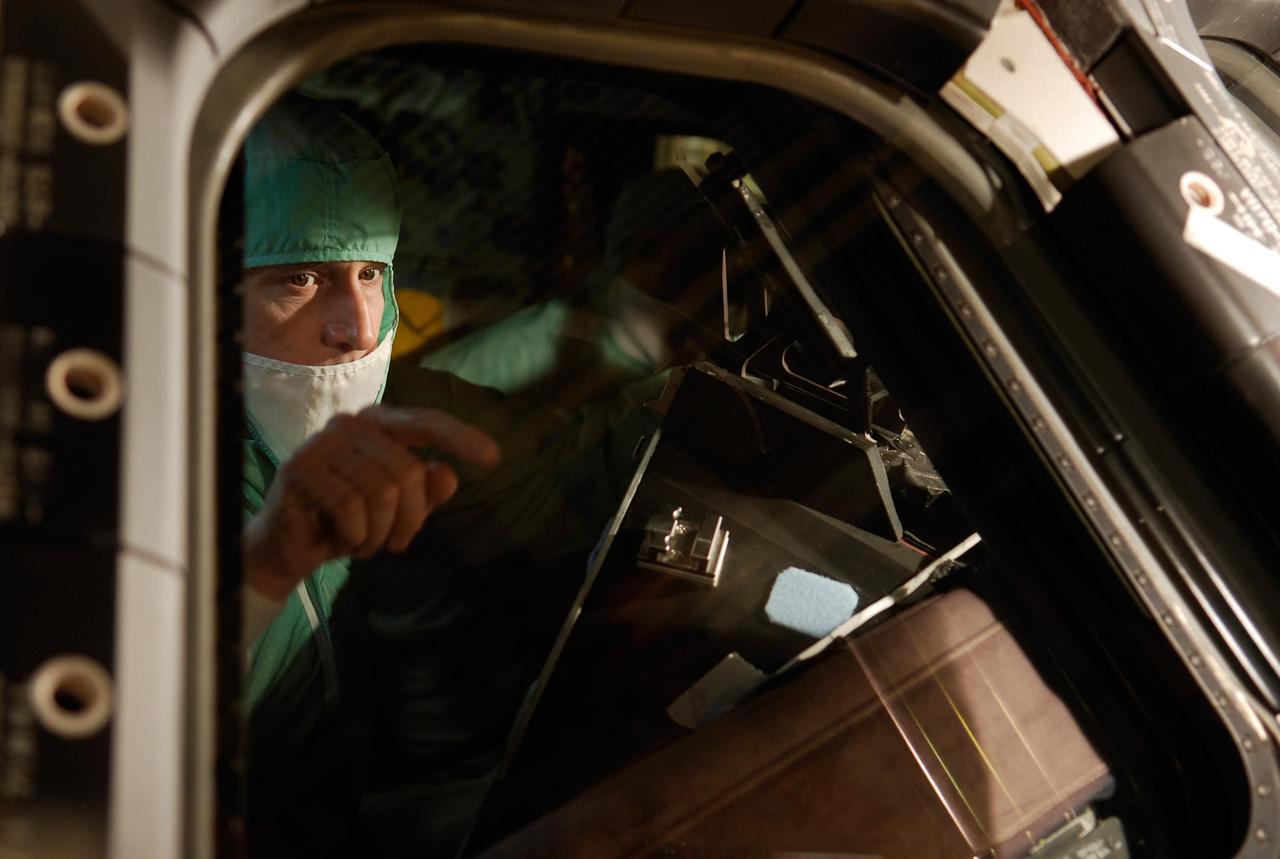
KENNEDY SPACE CENTER, FLA. -- During a crew equipment interface test in the Orbiter Processing Facility bay 3 at NASA's Kennedy Space Center, STS-124 Pilot Kenneth Ham checks a manual in the cockpit of space shuttle Discovery. The shuttle will transport the Kibo Japanese Experiment Module - Pressurized Module (JEM-PM) and the Japanese Remote Manipulator System (JEM-RMS) to the International Space Station to complete the Kibo laboratory. The launch of Discovery is targeted for April 24. Photo credit: NASA/Kim Shiflett
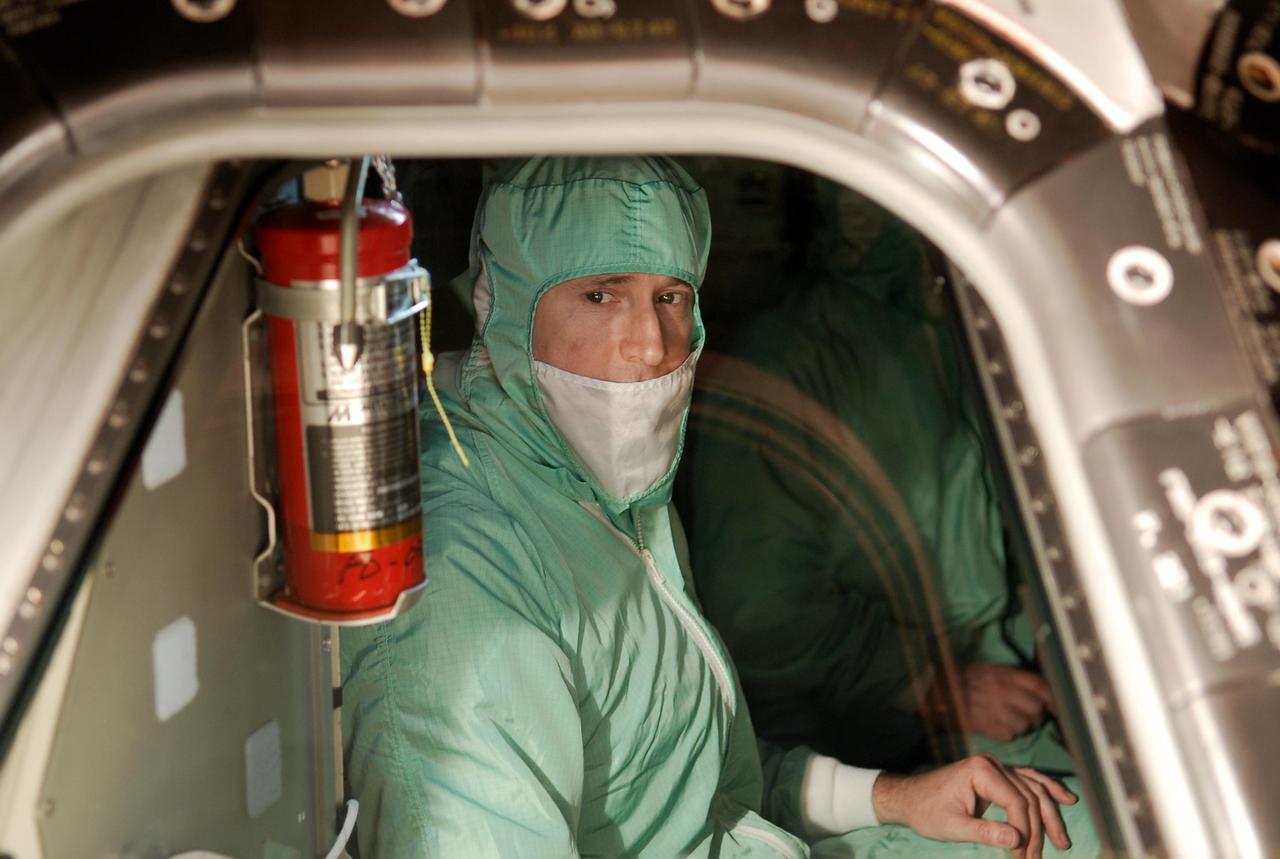
KENNEDY SPACE CENTER, FLA. -- During a crew equipment interface test in the Orbiter Processing Facility bay 3 at NASA's Kennedy Space Center, STS-124 Pilot Kenneth Ham examines the area around his seat in the cockpit of space shuttle Discovery. The shuttle will transport the Kibo Japanese Experiment Module - Pressurized Module (JEM-PM) and the Japanese Remote Manipulator System (JEM-RMS) to the International Space Station to complete the Kibo laboratory. The launch of Discovery is targeted for April 24. Photo credit: NASA/Kim Shiflett
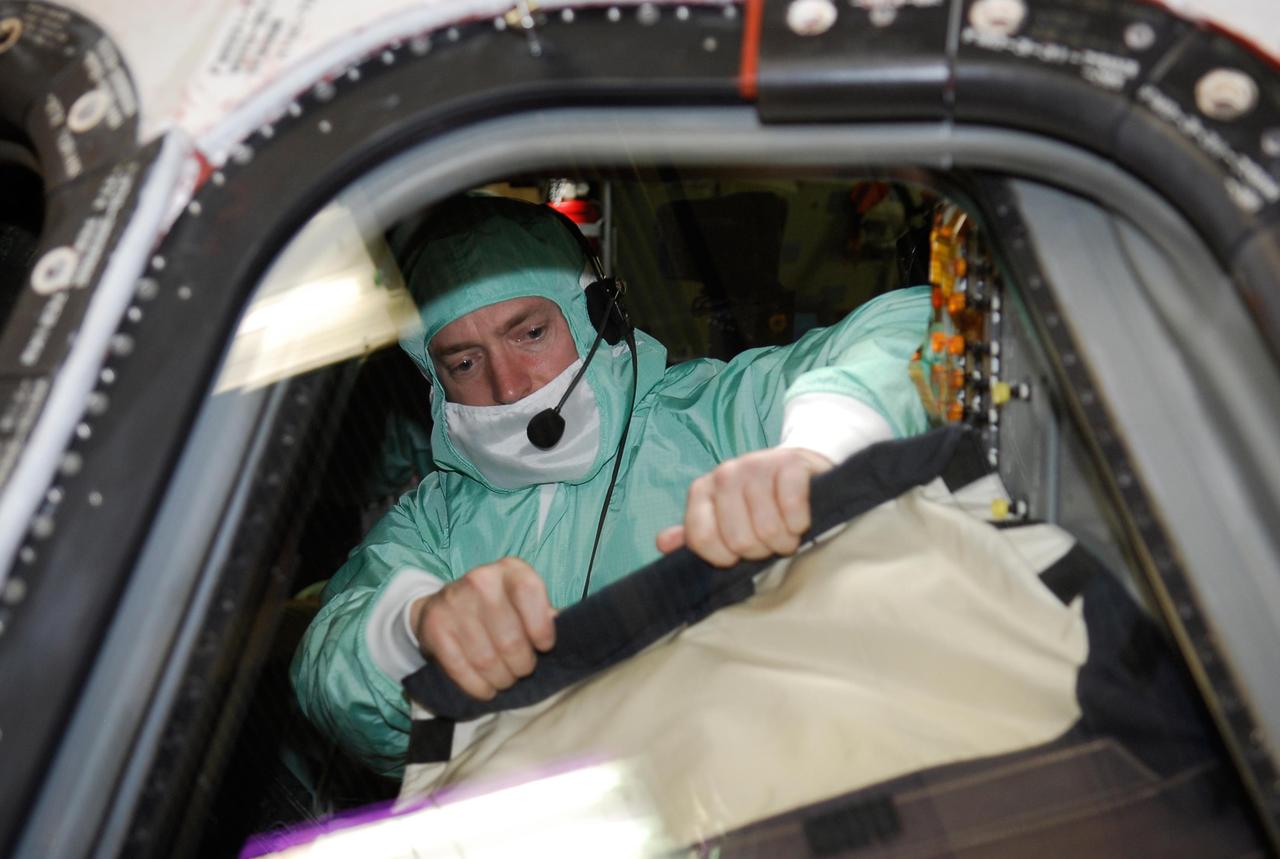
KENNEDY SPACE CENTER, FLA. -- During a crew equipment interface test in the Orbiter Processing Facility bay 3 at NASA's Kennedy Space Center, STS-124 Commander Mark Kelly closely examines a window in the cockpit of space shuttle Discovery. The shuttle will transport the Kibo Japanese Experiment Module - Pressurized Module (JEM-PM) and the Japanese Remote Manipulator System (JEM-RMS) to the International Space Station to complete the Kibo laboratory. The launch of Discovery is targeted for April 24. Photo credit: NASA/Kim Shiflett
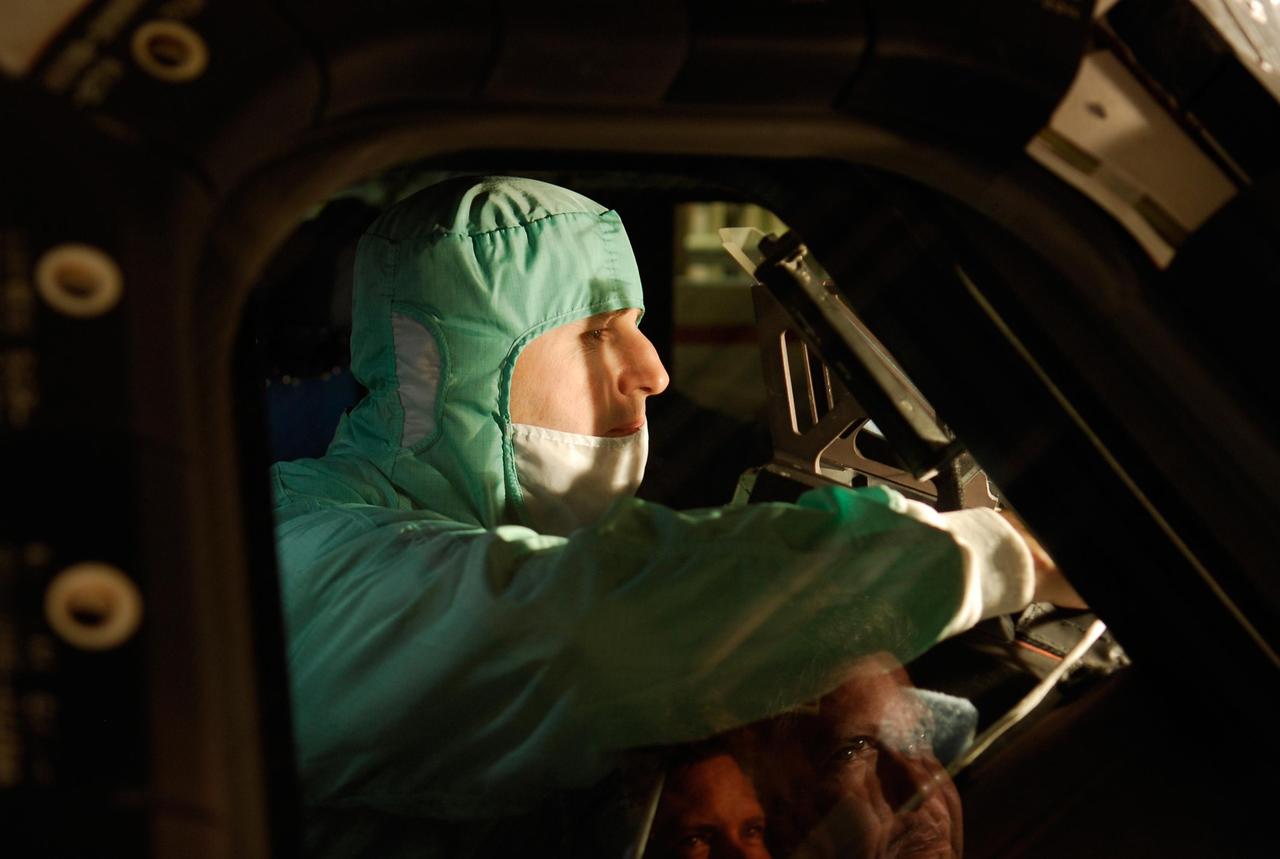
KENNEDY SPACE CENTER, FLA. -- During a crew equipment interface test in the Orbiter Processing Facility bay 3 at NASA's Kennedy Space Center, STS-124 Pilot Kenneth Ham checks the cockpit window in space shuttle Discovery. The shuttle will transport the Kibo Japanese Experiment Module - Pressurized Module (JEM-PM) and the Japanese Remote Manipulator System (JEM-RMS) to the International Space Station to complete the Kibo laboratory. The launch of Discovery is targeted for April 24. Photo credit: NASA/Kim Shiflett
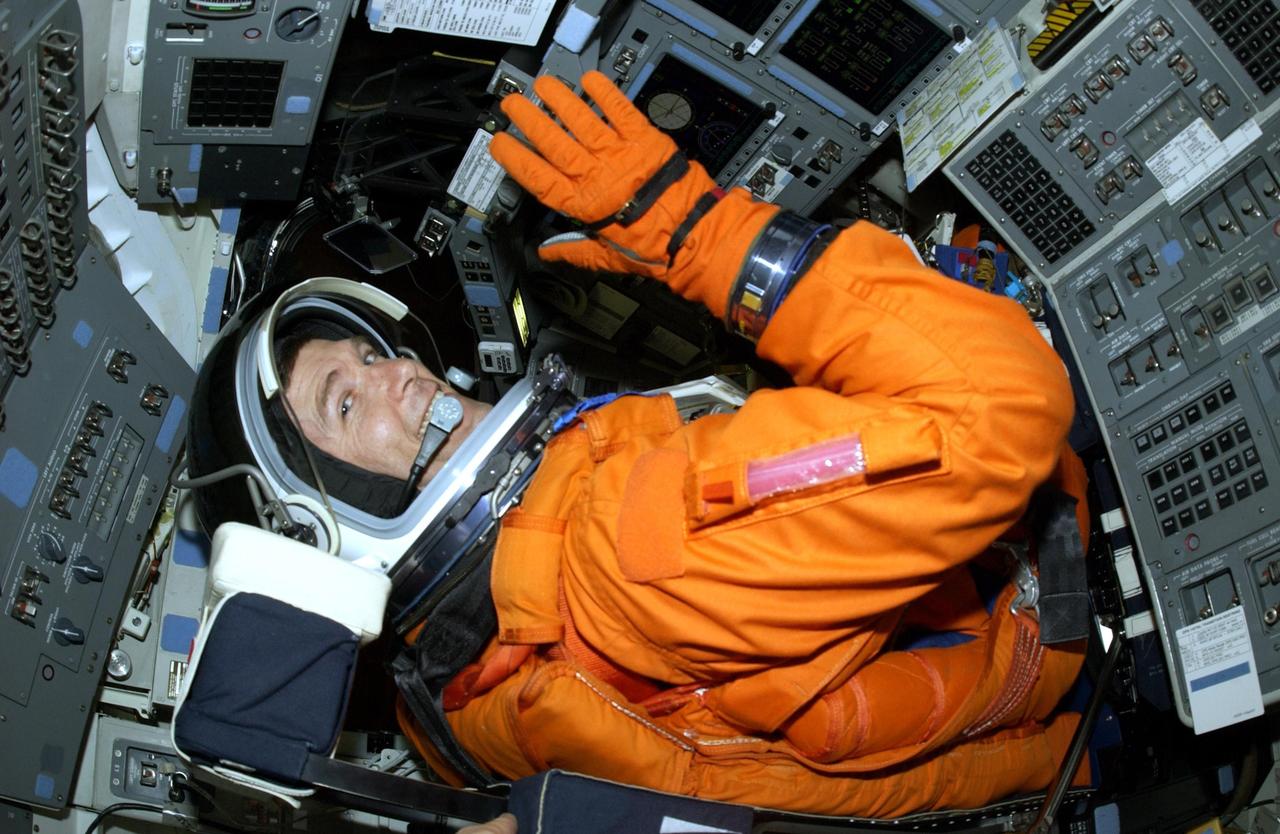
KENNEDY SPACE CENTER, FLA. - STS-107 Commander Rick Husband sits in the cockpit of Space Shuttle Columbia during a simulated launch countdown, part of Terminal Countdown Demonstration Test activities. STS-107 is a mission devoted to research and will include more than 80 experiments that will study Earth and space science, advanced technology development, and astronaut health and safety. Launch is planned for Jan. 16, 2003, between 10 a.m. and 2 p.m. EST aboard Space Shuttle Columbia. .
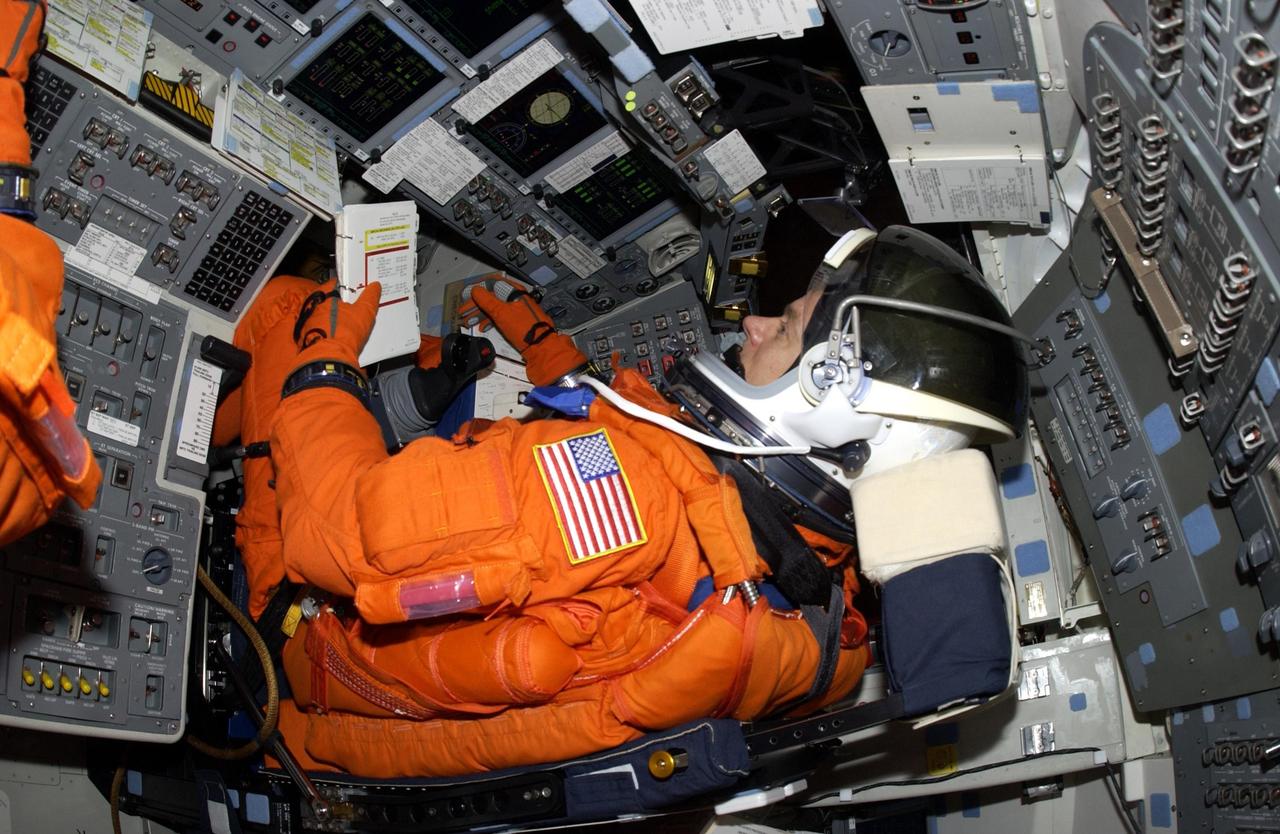
KENNEDY SPACE CENTER, FLA. - STS-107 Pilot William "Willie" McCool checks instructions in the cockpit of Space Shuttle Columbia during a simulated launch countdown, part of Terminal Countdown Demonstration Test activities. STS-107 is a mission devoted to research and will include more than 80 experiments that will study Earth and space science, advanced technology development, and astronaut health and safety. Launch is planned for Jan. 16, 2003, between 10 a.m. and 2 p.m. EST aboard Space Shuttle Columbia. .
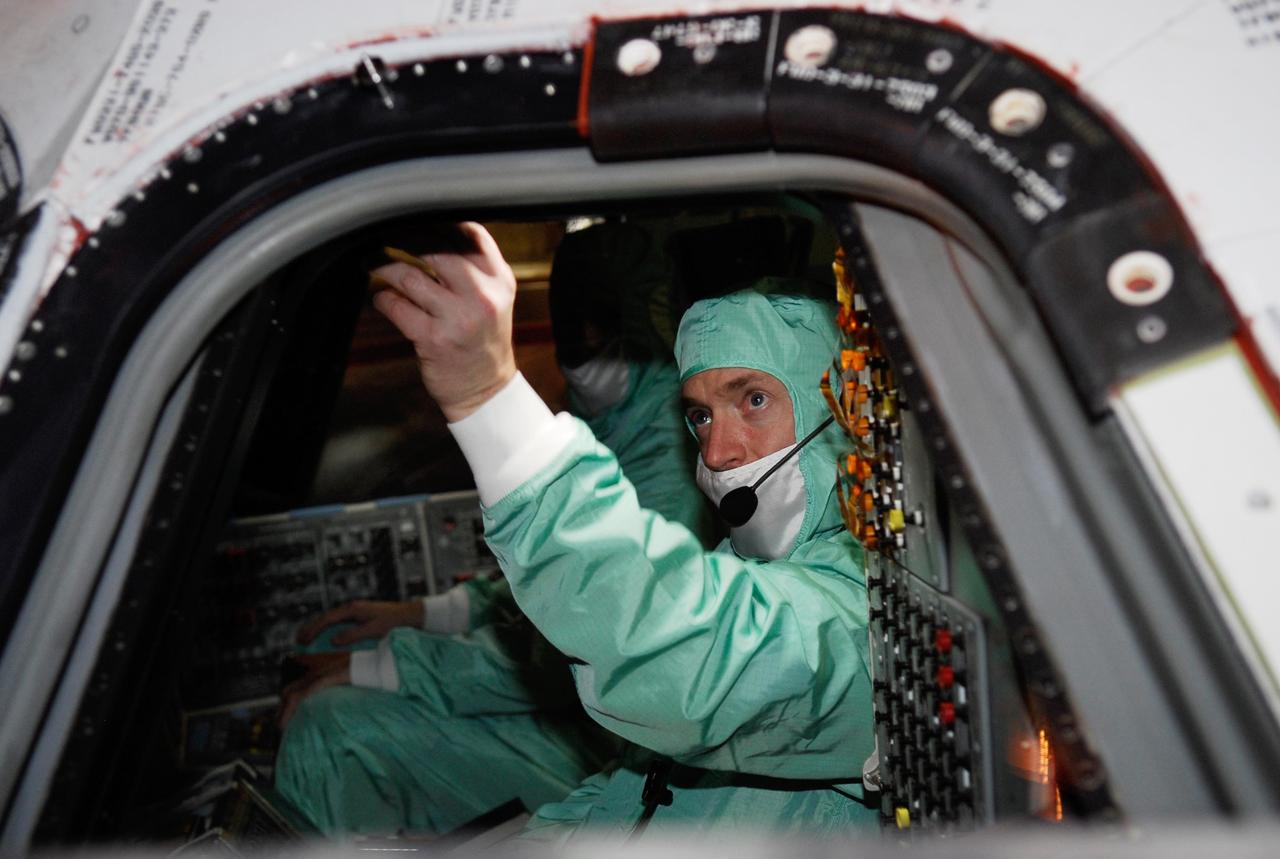
KENNEDY SPACE CENTER, FLA. -- During a crew equipment interface test in the Orbiter Processing Facility bay 3 at NASA's Kennedy Space Center, STS-124 Commander Mark Kelly checks the area around the window in the cockpit of space shuttle Discovery. The shuttle will transport the Kibo Japanese Experiment Module - Pressurized Module (JEM-PM) and the Japanese Remote Manipulator System (JEM-RMS) to the International Space Station to complete the Kibo laboratory. The launch of Discovery is targeted for April 24. Photo credit: NASA/Kim Shiflett
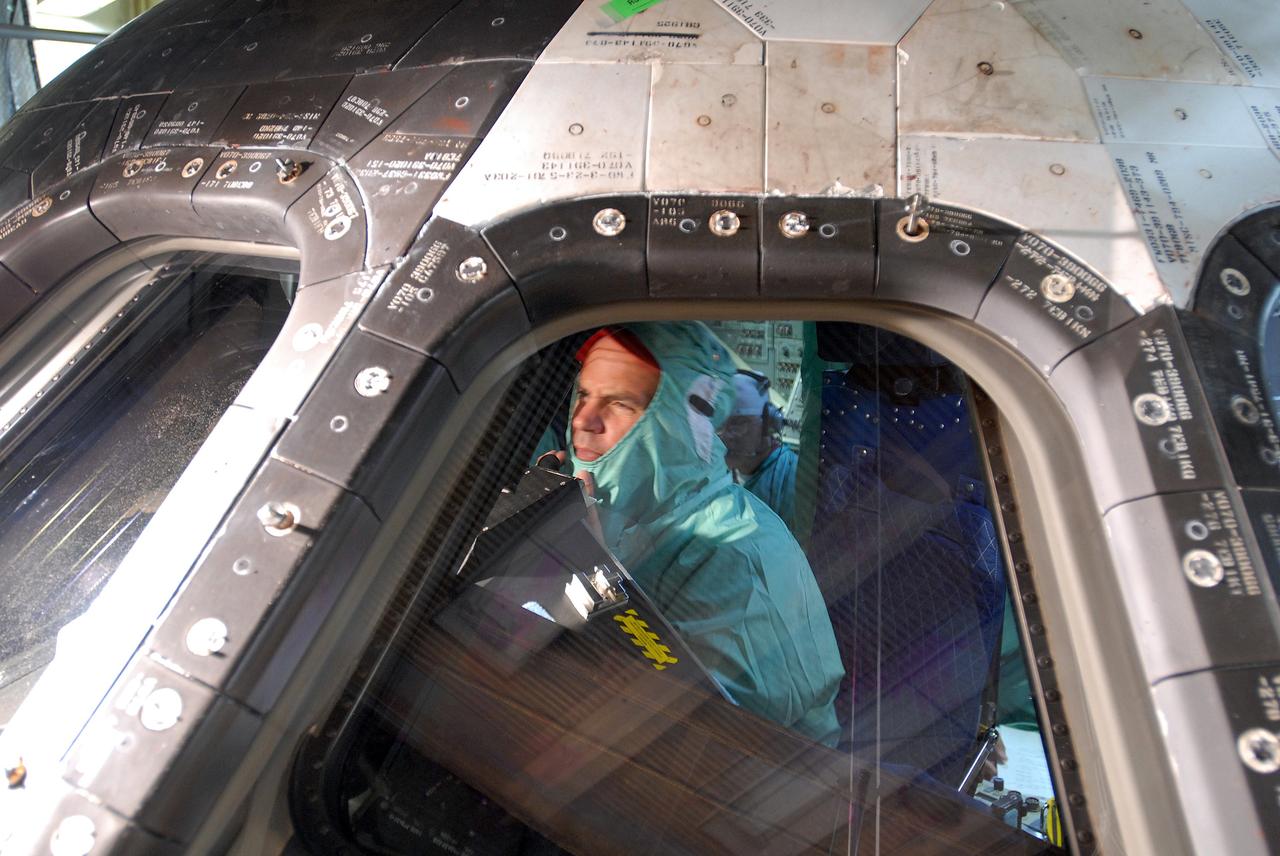
CAPE CANAVERAL, Fla. – In Orbiter Processing Facility 3 at NASA's Kennedy Space Center in Florida, STS-128 mission Commander Rick Sturckow checks out the cockpit window of space shuttle Discovery. The crew is at Kennedy for a crew equipment interface test, or CEIT, which provides hands-on training and observation of shuttle and flight hardware. The STS-128 flight will carry science and storage racks to the International Space Station on Discovery. Launch is targeted for Aug. 7. Photo credit: NASA/Jim Grossmann
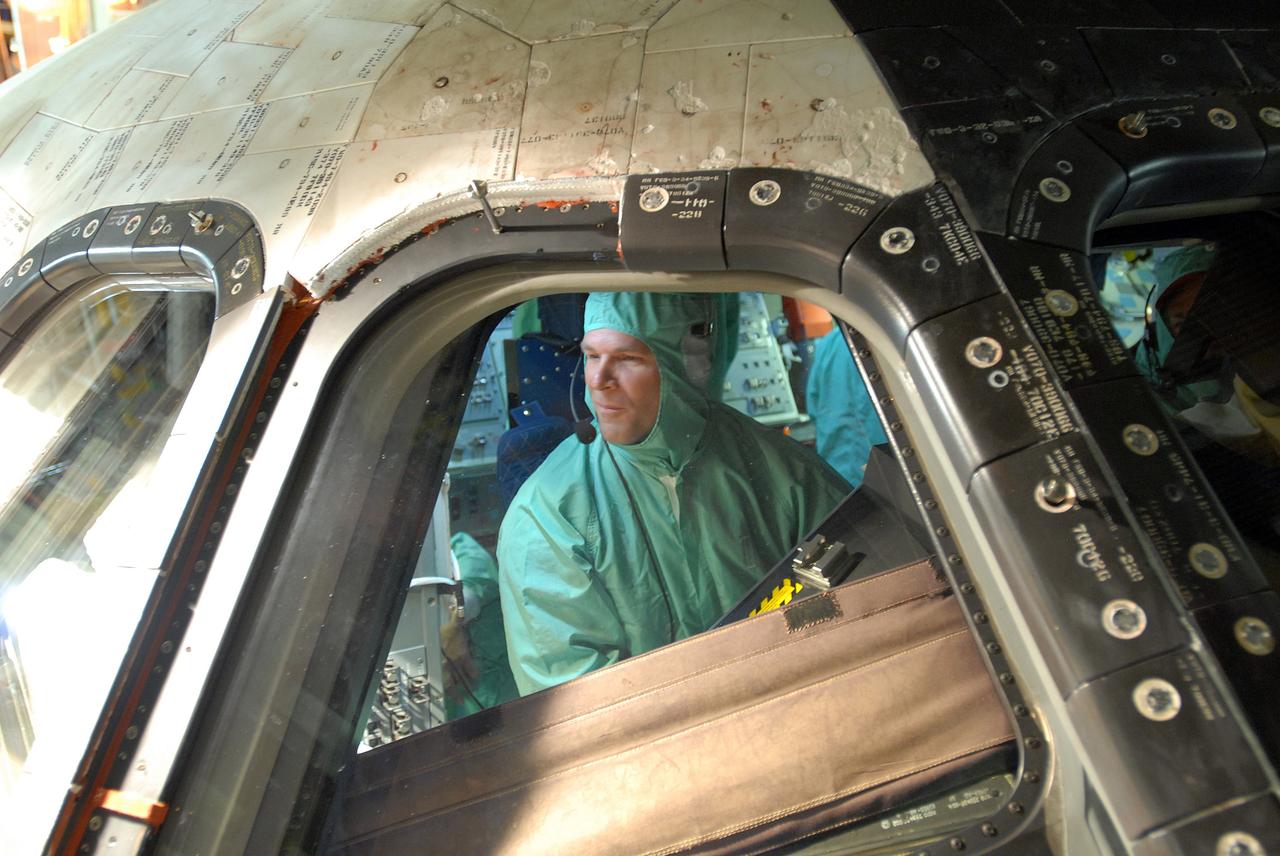
CAPE CANAVERAL, Fla. – In Orbiter Processing Facility 3 at NASA's Kennedy Space Center in Florida, STS-128 Pilot Kevin Ford checks out the cockpit windows of space shuttle Discovery. The crew is at Kennedy for a crew equipment interface test, or CEIT, which provides hands-on training and observation of shuttle and flight hardware. The STS-128 flight will carry science and storage racks to the International Space Station on Discovery. Launch is targeted for Aug. 7. Photo credit: NASA/Jim Grossmann
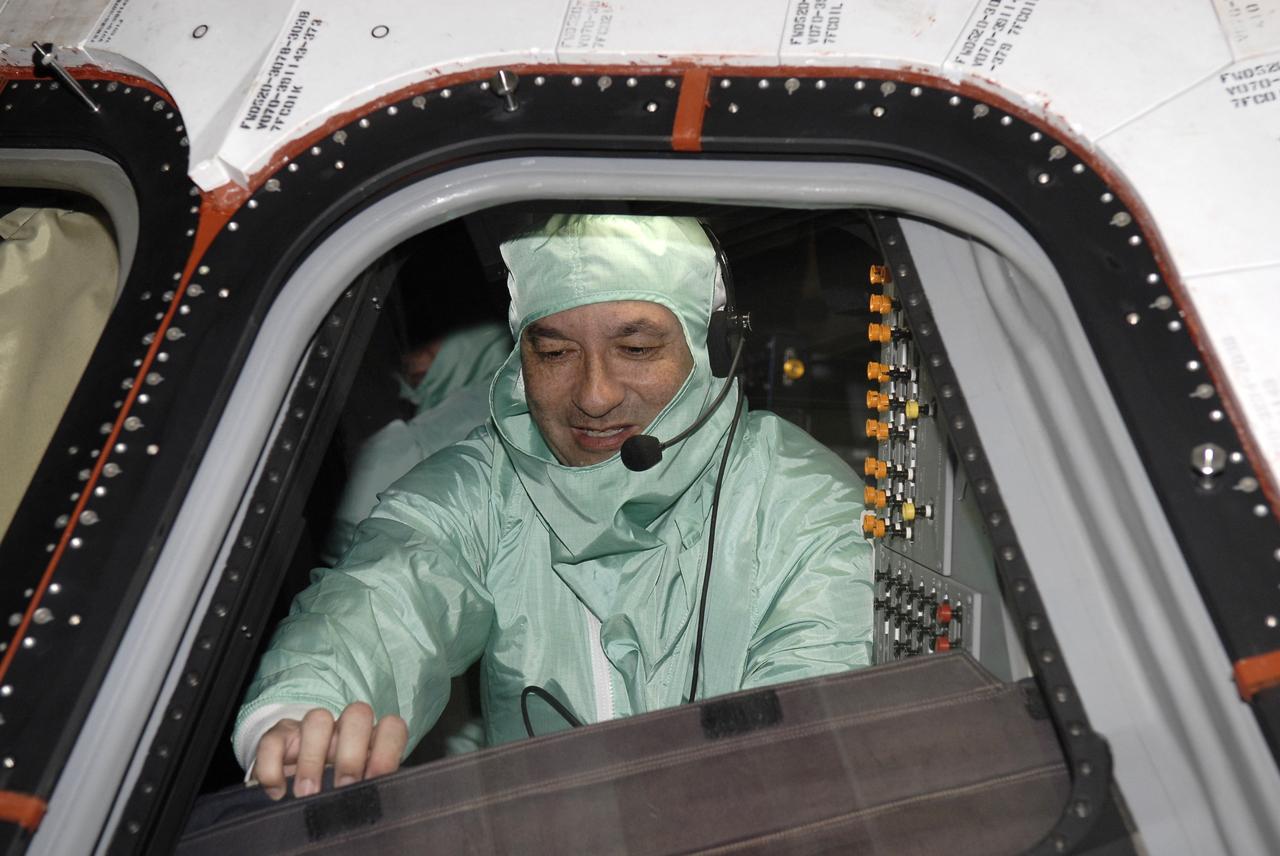
CAPE CANAVERAL, Fla. – In the Orbiter Processing Facility at NASA's Kennedy Space Center in Florida, STS-127 Commander Mark Polansky checks the cockpit of space shuttle Endeavour. The crew members are at Kennedy for a crew equipment interface test, which provides hands-on training and observation of shuttle and flight hardware. Endeavour will deliver the Japanese Experiment Module's Experiment Logistics Module-Exposed Section, or ELM-ES, to the International Space Station on STS-127. Launch is targeted for mid-June, 2009. Photo credit: NASA/Kim Shiflett
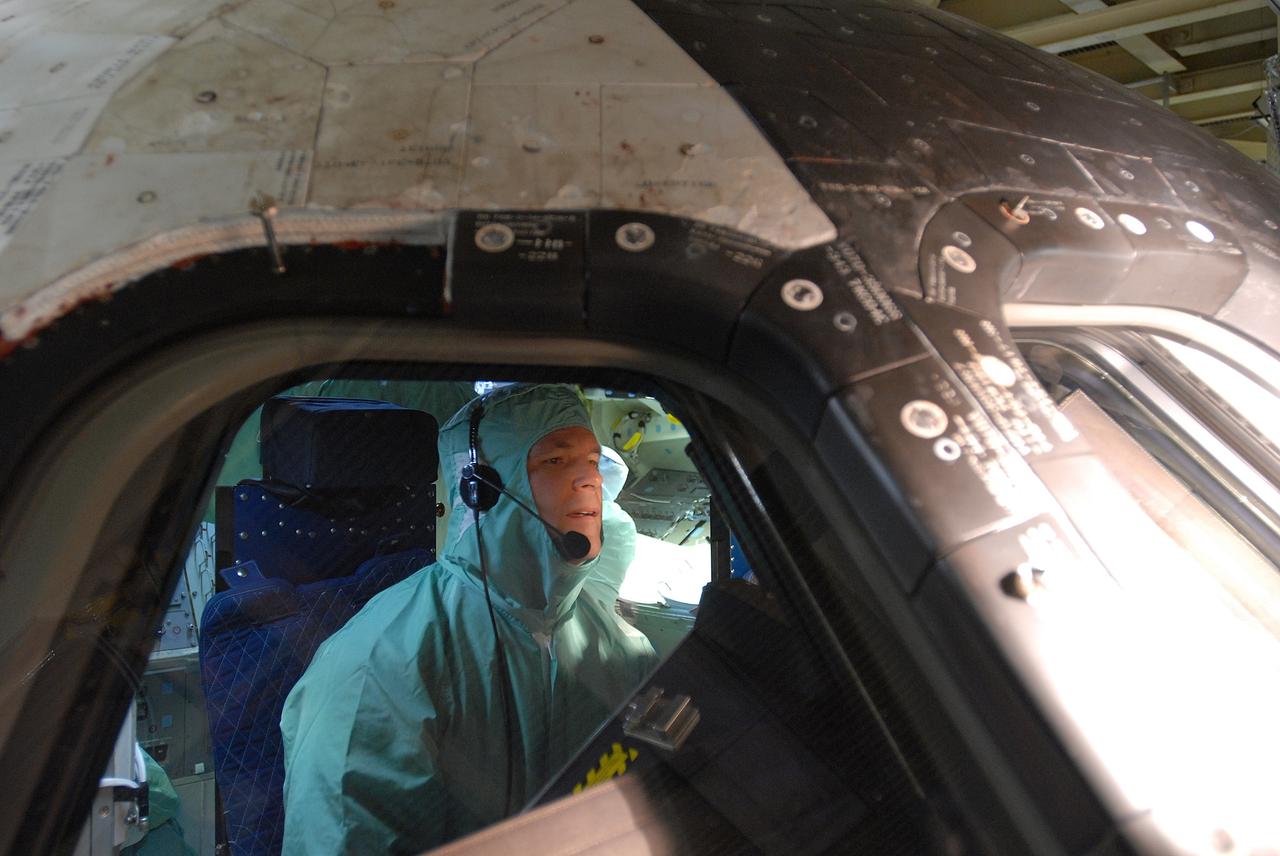
CAPE CANAVERAL, Fla. – In Orbiter Processing Facility 3 at NASA's Kennedy Space Center in Florida, STS-128 mission Pilot Kevin Ford checks out the cockpit window of space shuttle Discovery. The crew is at Kennedy for a crew equipment interface test, or CEIT, which provides hands-on training and observation of shuttle and flight hardware. The STS-128 flight will carry science and storage racks to the International Space Station on Discovery. Launch is targeted for Aug. 7. Photo credit: NASA/Jim Grossmann
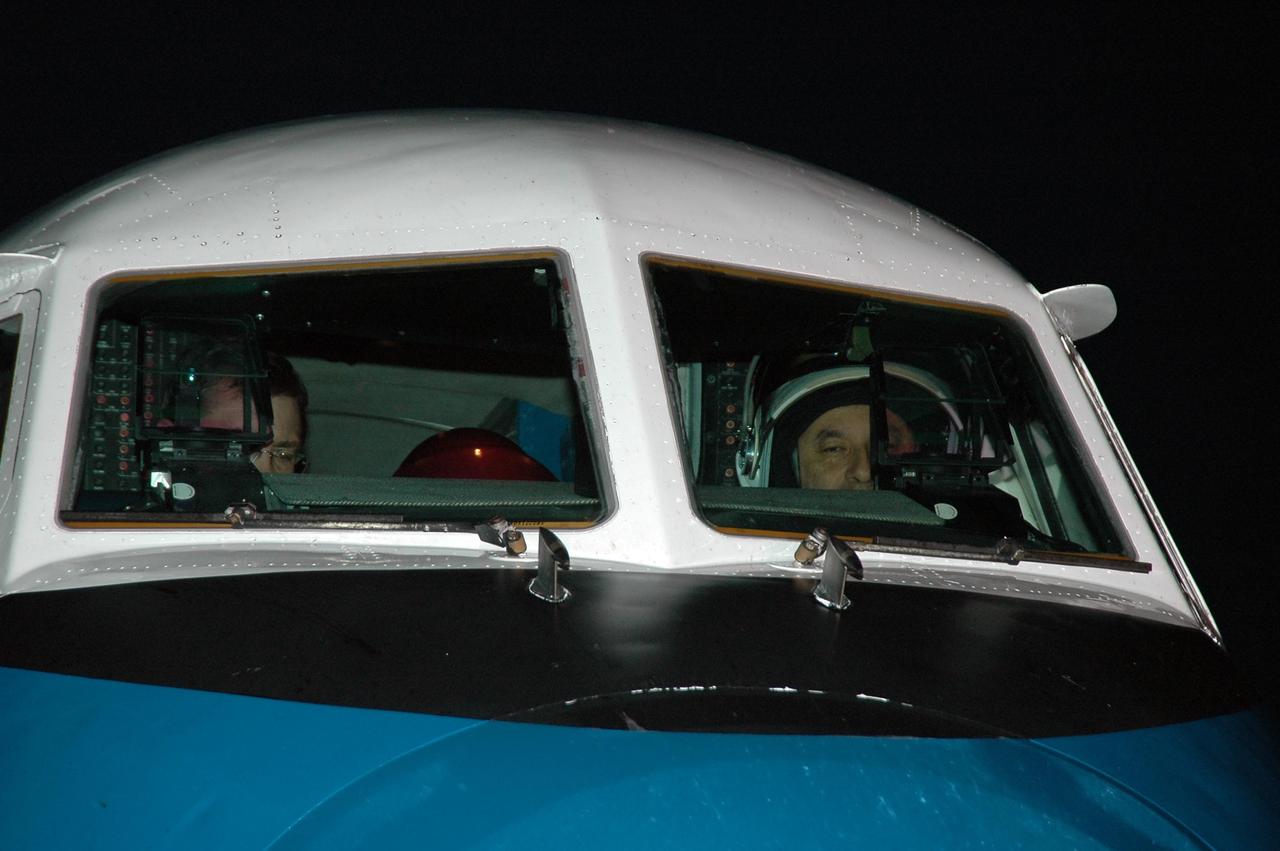
KENNEDY SPACE CENTER, FLA. -- Inside the shuttle training aircraft at the Shuttle Landing Facility, STS-116 Pilot William Oefelein (left) and Commander Mark Polansky are seated in the cockpit, getting ready to practice landing the orbiter. The mission crew is at KSC for the terminal countdown demonstration test, which are prelaunch preparations that include a simulated launch countdown. STA practice is part of the TCDT. The STA is a Grumman American Aviation-built Gulf Stream II jet that was modified to simulate an orbiter's cockpit, motion and visual cues, and handling qualities. In flight, the STA duplicates the orbiter's atmospheric descent trajectory from approximately 35,000 feet altitude to landing on a runway. Because the orbiter is unpowered during re-entry and landing, its high-speed glide must be perfectly executed the first time. Photo credit: NASA/Kim Shiflett
KENNEDY SPACE CENTER, FLA. -- Seated in the cockpit of the shuttle training aircraft at the Shuttle Landing Facility, STS-116 Pilot William Oefelein (left) and Commander Mark Polansky are getting ready to practice landing the orbiter. The mission crew is at KSC for the terminal countdown demonstration test, which are prelaunch preparations that include a simulated launch countdown. STA practice is part of the TCDT. The STA is a Grumman American Aviation-built Gulf Stream II jet that was modified to simulate an orbiter's cockpit, motion and visual cues, and handling qualities. In flight, the STA duplicates the orbiter's atmospheric descent trajectory from approximately 35,000 feet altitude to landing on a runway. Because the orbiter is unpowered during re-entry and landing, its high-speed glide must be perfectly executed the first time. Photo credit: NASA/Kim Shiflett
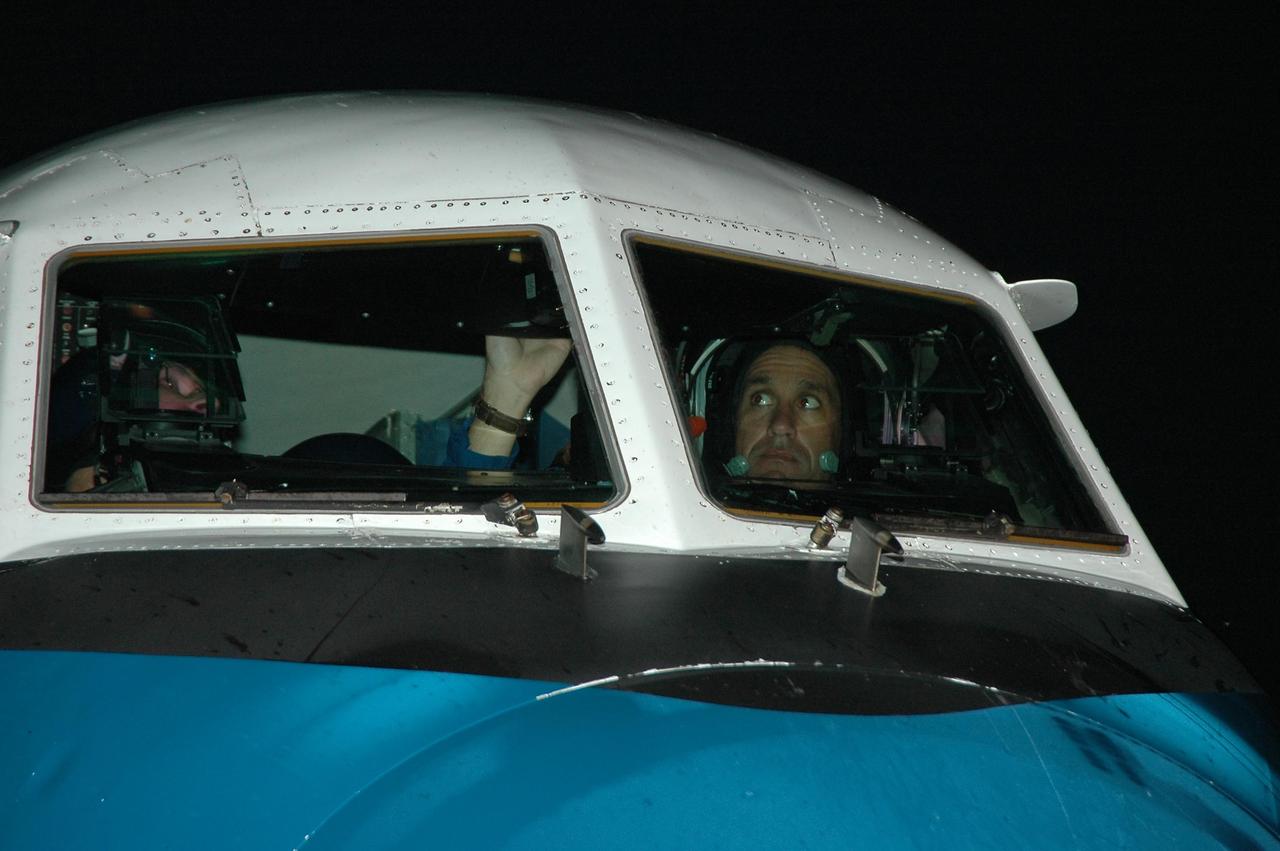
CAPE CANAVERAL, Fla. – United Space Alliance technicians prepare to uncover the cockpit windows on space shuttle Endeavour for an employee photo opportunity at the Shuttle Landing Facility at NASA's Kennedy Space Center in Florida. Endeavour is balanced and secured atop NASA's Shuttle Carrier Aircraft, or SCA. The SCA, a modified 747 jetliner, will fly Endeavour to Los Angeles where it will be placed on public display at the California Science Center. This is the final ferry flight scheduled in the Space Shuttle Program era. For more information on the shuttles' transition and retirement, visit http://www.nasa.gov/transition. Photo credit: NASA/Kim Shiflett
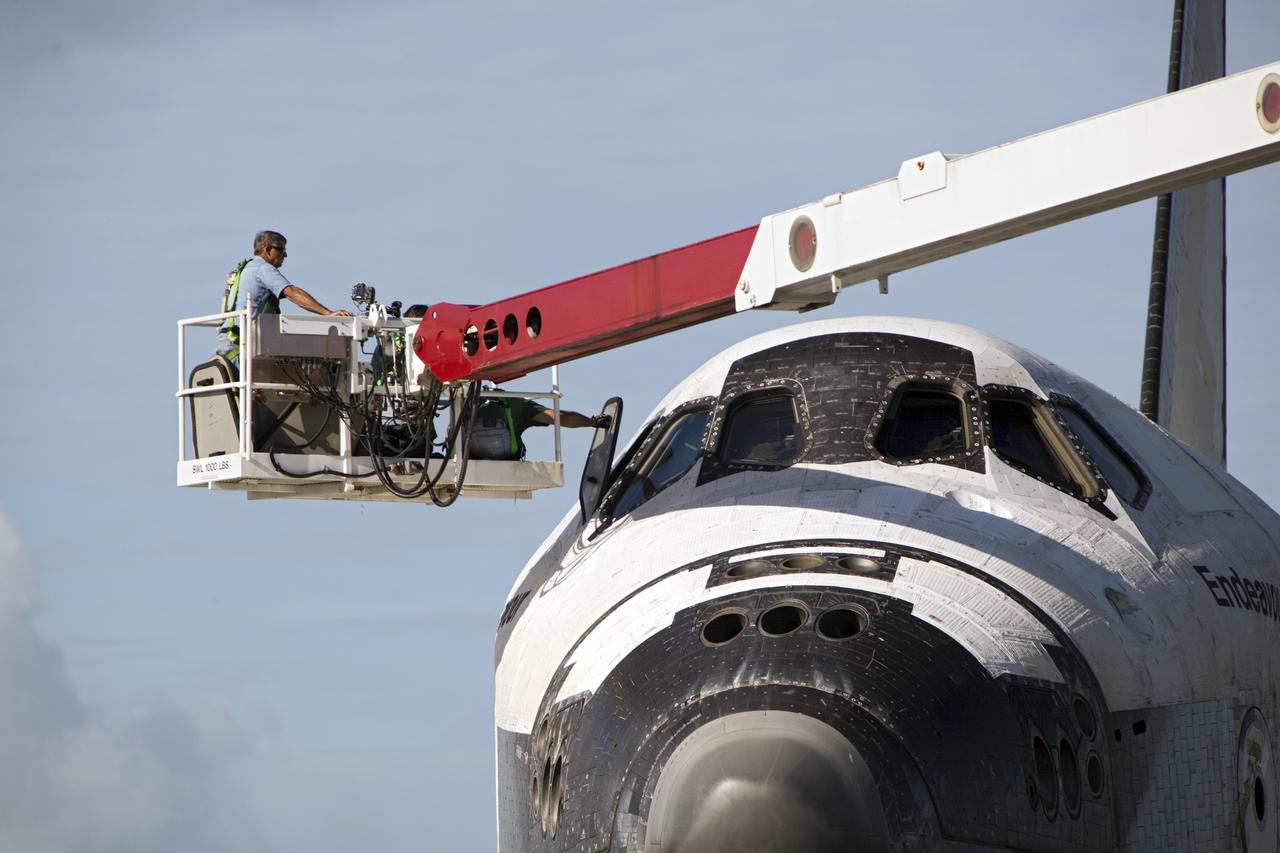
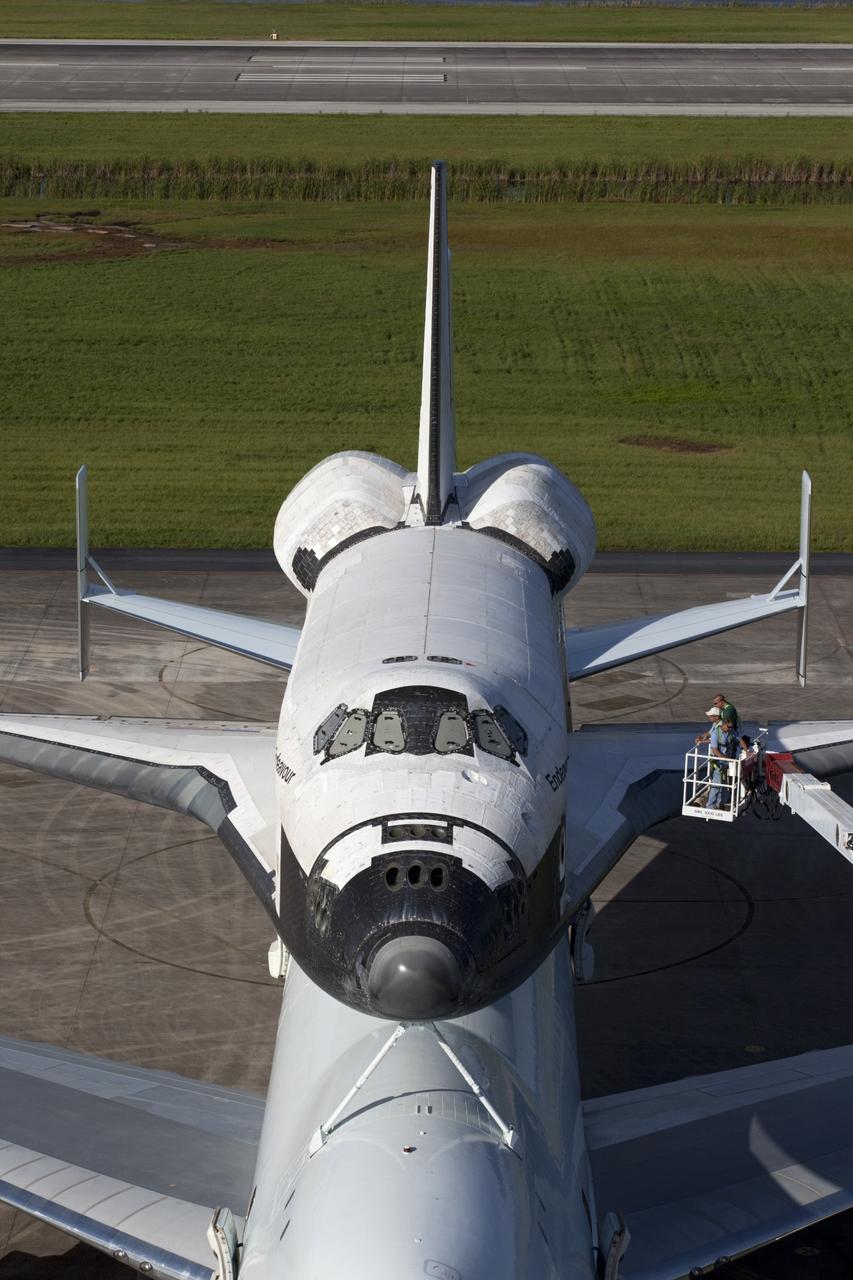
CAPE CANAVERAL, Fla. – United Space Alliance technicians uncover the cockpit windows on space shuttle Endeavour for an employee photo opportunity at the Shuttle Landing Facility at NASA's Kennedy Space Center in Florida. Endeavour is balanced and secured atop NASA's Shuttle Carrier Aircraft, or SCA. The SCA, a modified 747 jetliner, will fly Endeavour to Los Angeles where it will be placed on public display at the California Science Center. This is the final ferry flight scheduled in the Space Shuttle Program era. For more information on the shuttles' transition and retirement, visit http://www.nasa.gov/transition. Photo credit: NASA/Dimitri Gerondidakis
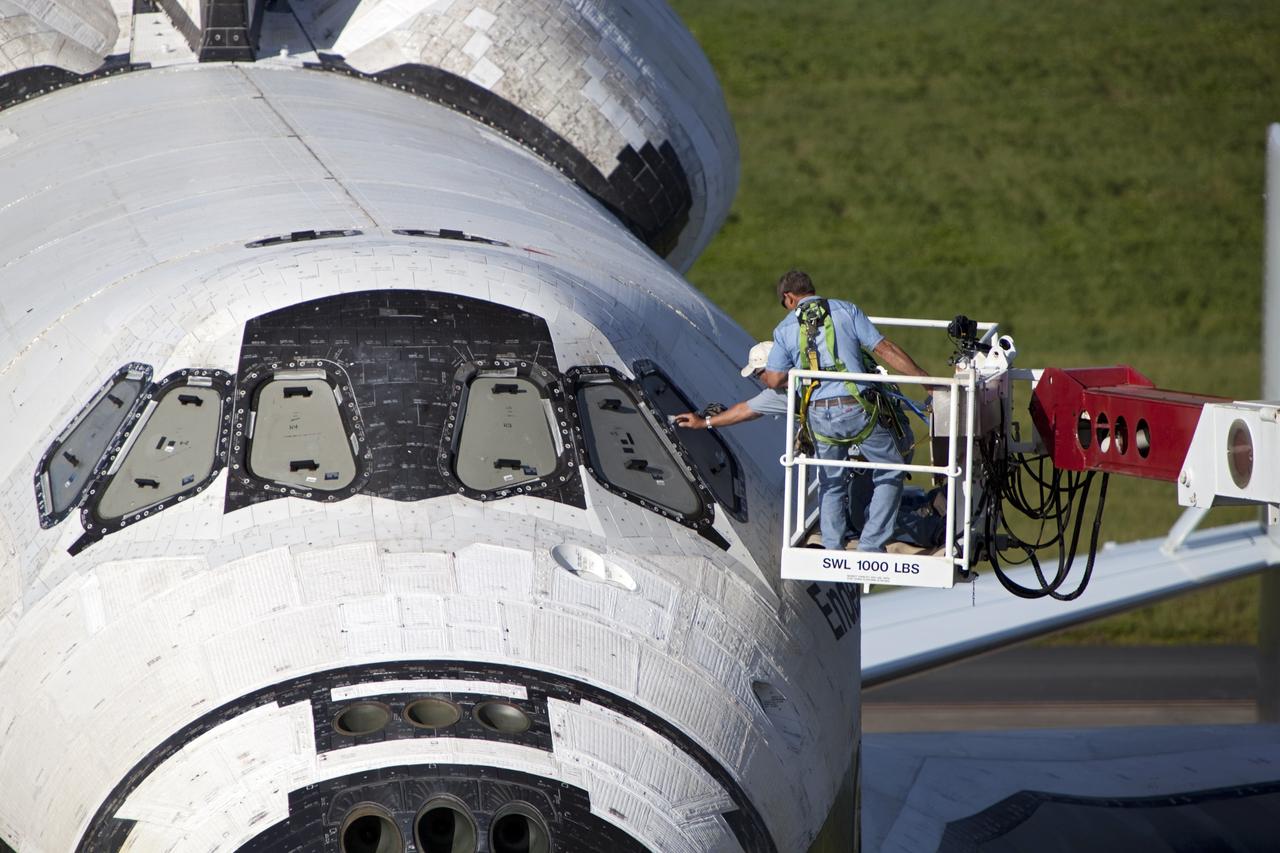
CAPE CANAVERAL, Fla. – United Space Alliance technicians uncover the cockpit windows on space shuttle Endeavour for an employee photo opportunity at the Shuttle Landing Facility at NASA's Kennedy Space Center in Florida. Endeavour is balanced and secured atop NASA's Shuttle Carrier Aircraft, or SCA. The SCA, a modified 747 jetliner, will fly Endeavour to Los Angeles where it will be placed on public display at the California Science Center. This is the final ferry flight scheduled in the Space Shuttle Program era. For more information on the shuttles' transition and retirement, visit http://www.nasa.gov/transition. Photo credit: NASA/Dimitri Gerondidakis
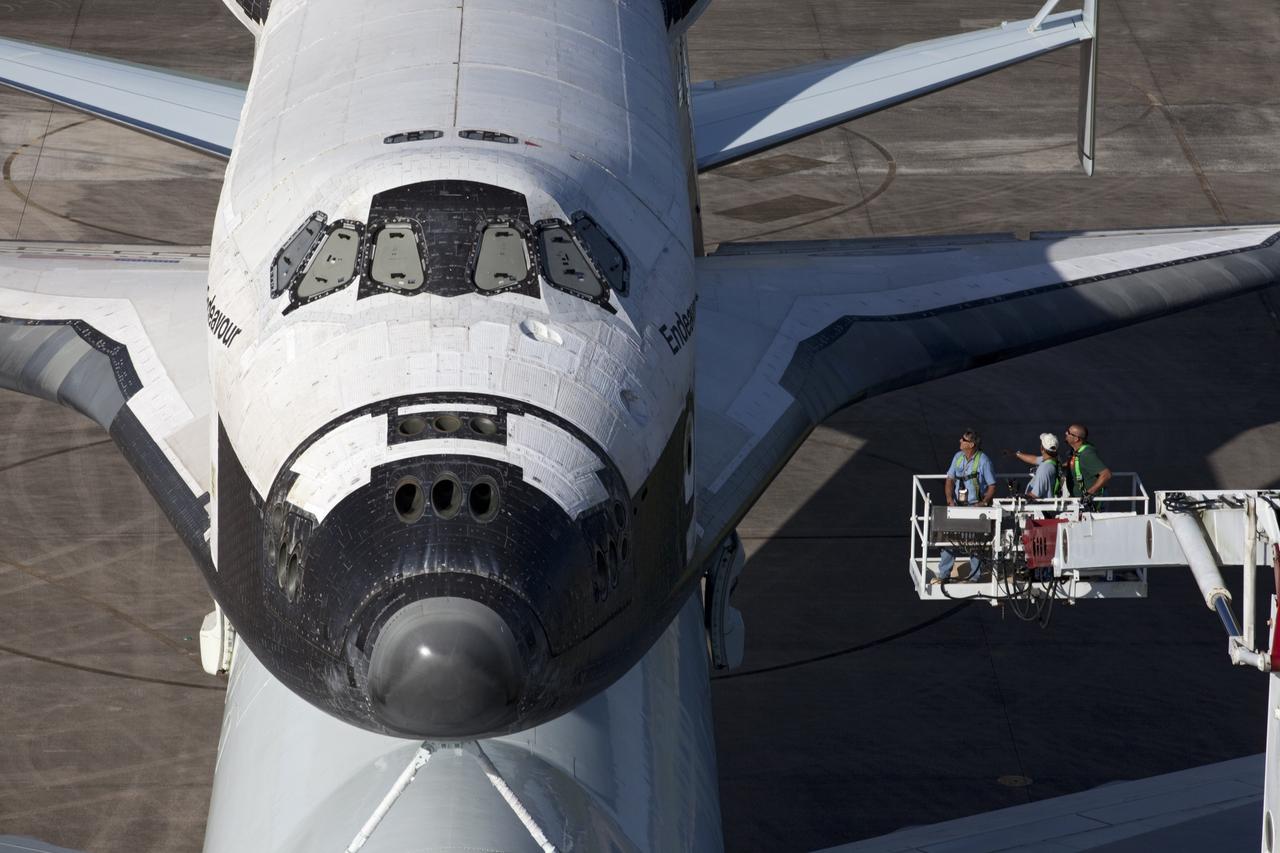
CAPE CANAVERAL, Fla. – United Space Alliance technicians prepare to uncover the cockpit windows on space shuttle Endeavour for an employee photo opportunity at the Shuttle Landing Facility at NASA's Kennedy Space Center in Florida. Endeavour is balanced and secured atop NASA's Shuttle Carrier Aircraft, or SCA. The SCA, a modified 747 jetliner, will fly Endeavour to Los Angeles where it will be placed on public display at the California Science Center. This is the final ferry flight scheduled in the Space Shuttle Program era. For more information on the shuttles' transition and retirement, visit http://www.nasa.gov/transition. Photo credit: NASA/Kim Shiflett
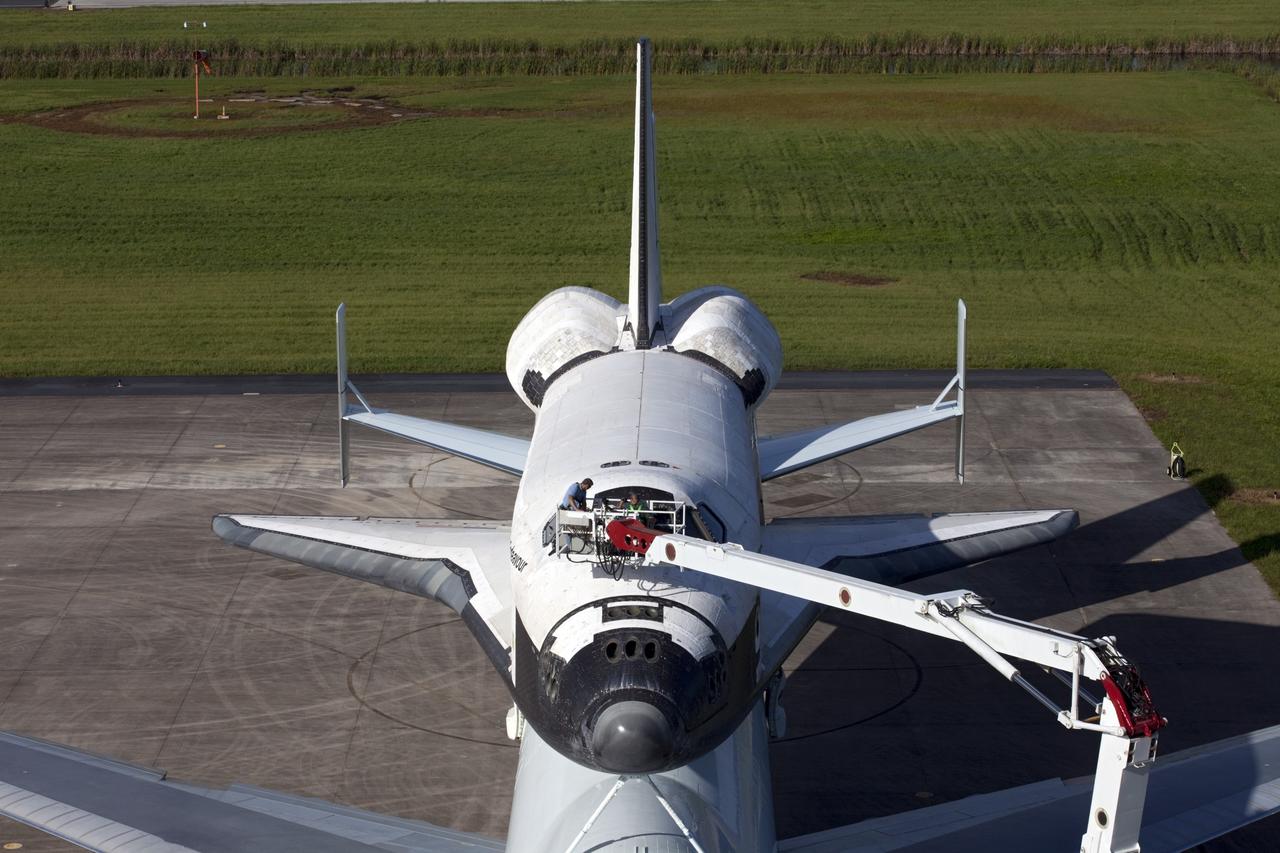
CAPE CANAVERAL, Fla. – United Space Alliance technicians uncover the cockpit windows on space shuttle Endeavour for an employee photo opportunity at the Shuttle Landing Facility at NASA's Kennedy Space Center in Florida. Endeavour is balanced and secured atop NASA's Shuttle Carrier Aircraft, or SCA. The SCA, a modified 747 jetliner, will fly Endeavour to Los Angeles where it will be placed on public display at the California Science Center. This is the final ferry flight scheduled in the Space Shuttle Program era. For more information on the shuttles' transition and retirement, visit http://www.nasa.gov/transition. Photo credit: NASA/Kim Shiflett
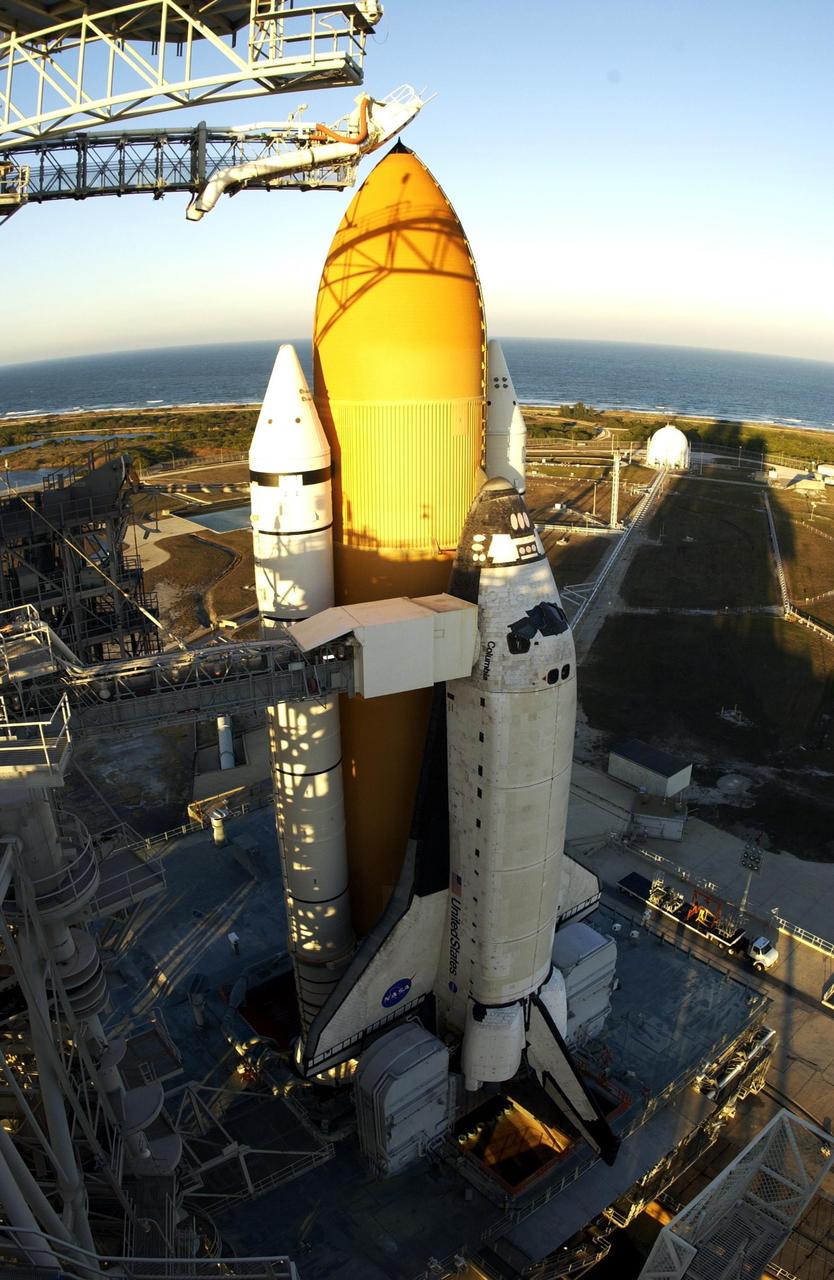
KENNEDY SPACE CENTER, FLA. -- After rollback of the Rotating Service Structure on Launch Pad 39A, the top of Space Shuttle Columbia's external tank and solid rocket booster are bathed in sunlight. Shadows from the Fixed Service Structure stretch across the Shuttle and landscape. Visible are the orbiter access arm with the White Room extended to Columbia's cockpit, and at the top, the gaseous oxygen vent arm and cap, called the "beanie cap." Columbia is scheduled for launch Jan. 16 at 10:39 a.m. EST on mission STS-107, a research mission.

JSC2011-E-068747 (24 June 2011) --- This picture was taken during a fit test on June 24, 2011 in the shuttle's Fixed Base Trainer in the Jake Garn Mission Simulation and Training Facility at the Johnson Space Center. When the mission was complete, the STS-135 crew left the plaque in the cockpit of Atlantis as a tribute to all of the people who have worked on the Space Shuttle Program. Photo credit: NASA
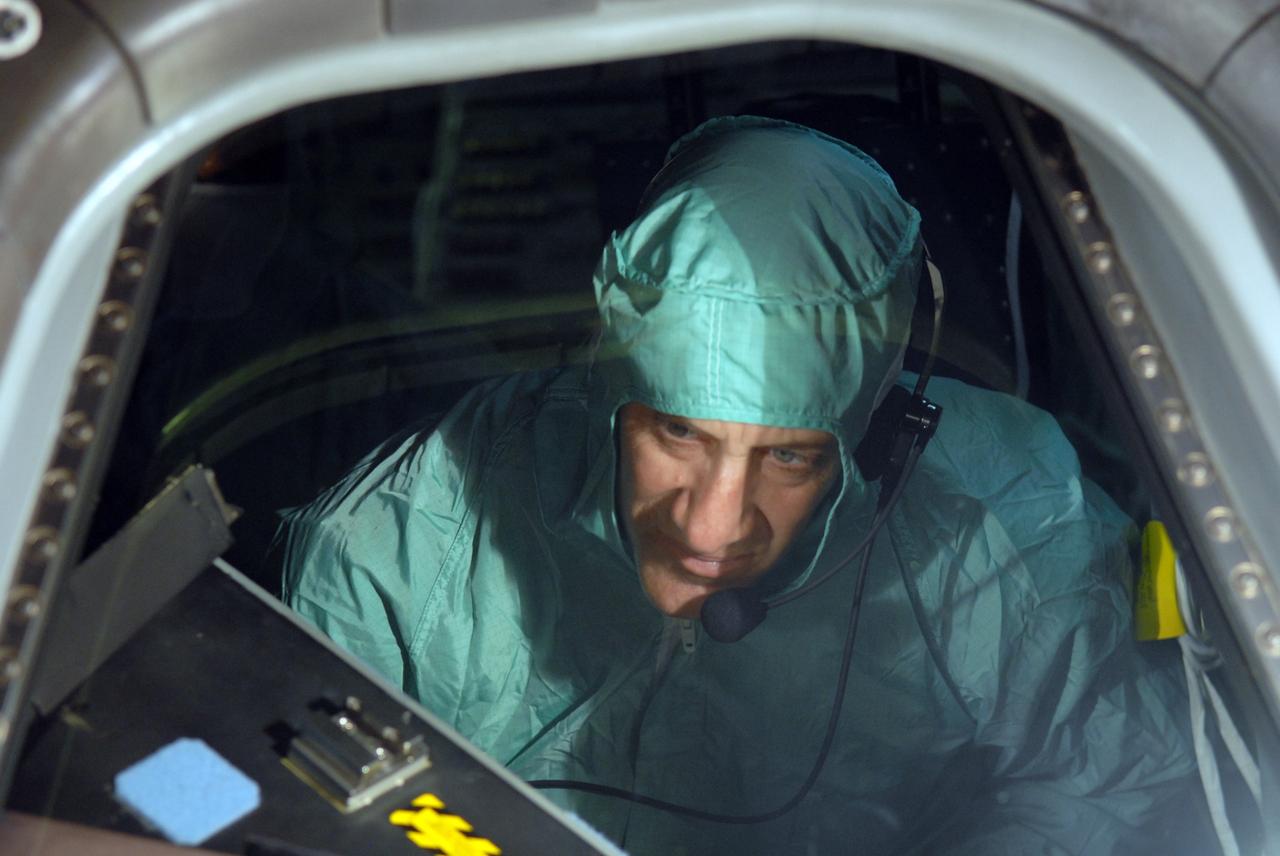
CAPE CANAVERAL, Fla. – In NASA Kennedy Space Center's Orbiter Processing Facility 1, STS-129 Commander Charles Hobaugh checks the cockpit window in space shuttle Atlantis. The crew is at Kennedy for a Crew Equipment Interface Test, which provides hands-on training and observation of shuttle and flight hardware. Atlantis' STS-129 mission is targeted to launch Nov. 12. Photo credit: NASA/Jim Grossmann
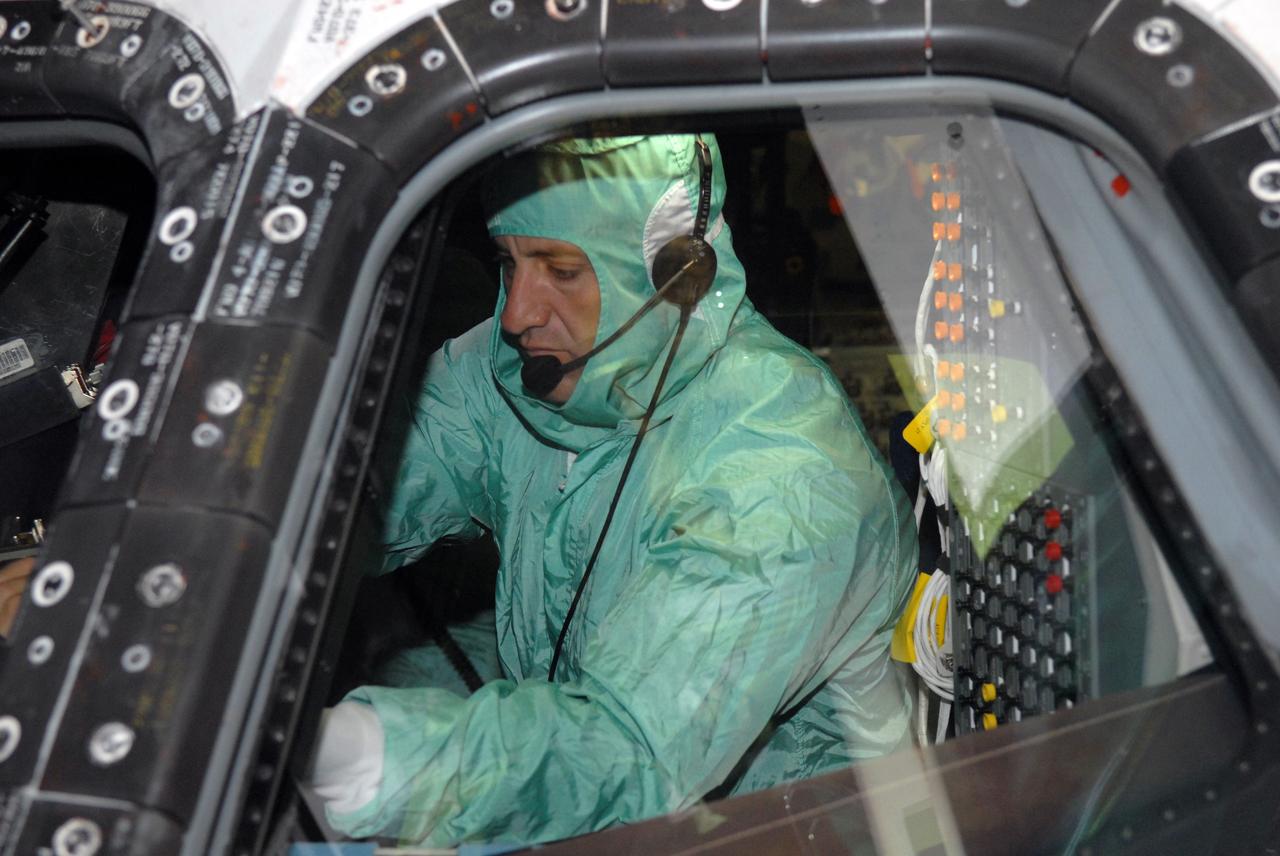
CAPE CANAVERAL, Fla. – In NASA Kennedy Space Center's Orbiter Processing Facility 1, STS-129 Commander Charles Hobaugh checks the cockpit window in space shuttle Atlantis. The crew is at Kennedy for a Crew Equipment Interface Test, which provides hands-on training and observation of shuttle and flight hardware. Atlantis' STS-129 mission is targeted to launch Nov. 12. Photo credit: NASA/Jim Grossmann
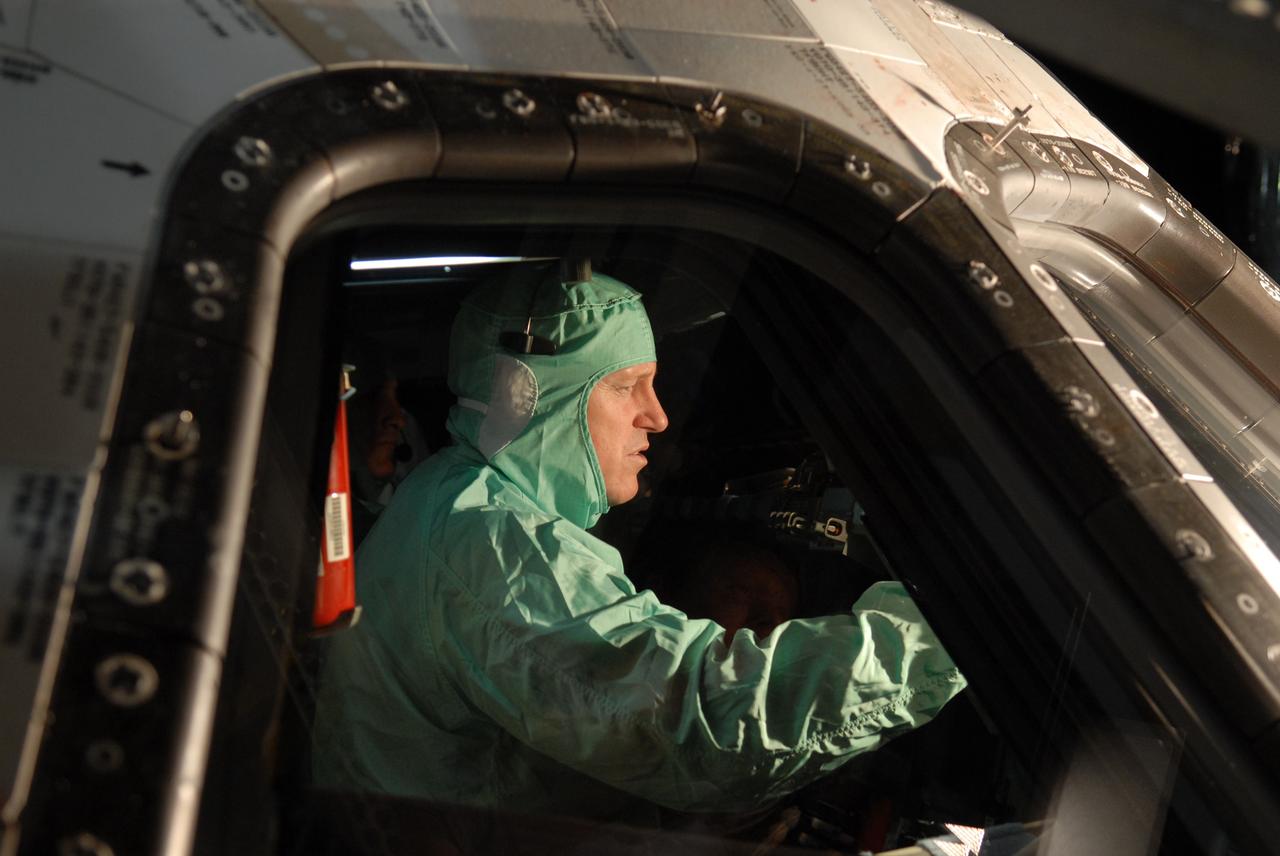
CAPE CANAVERAL, Fla. – In NASA Kennedy Space Center's Orbiter Processing Facility 1, STS-129 Pilot Barry Wilmore checks the cockpit window in space shuttle Atlantis. The crew is at Kennedy for a Crew Equipment Interface Test, which provides hands-on training and observation of shuttle and flight hardware. Atlantis' STS-129 mission is targeted to launch Nov. 12. Photo credit: NASA/Jim Grossmann
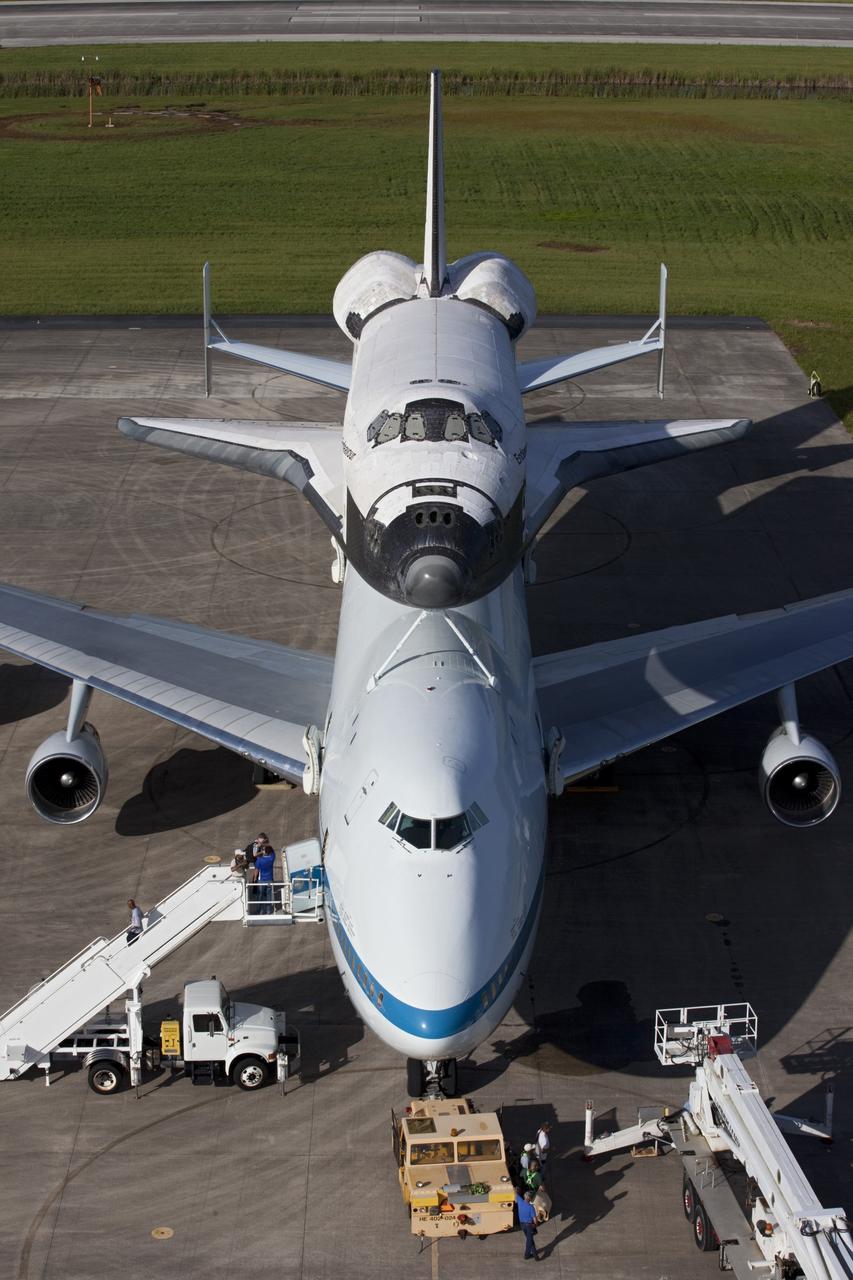
CAPE CANAVERAL, Fla. – Preparations are under way to uncover the cockpit windows on space shuttle Endeavour for an employee photo opportunity at the Shuttle Landing Facility at NASA's Kennedy Space Center in Florida. Endeavour is balanced and secured atop NASA's Shuttle Carrier Aircraft, or SCA. The SCA, a modified 747 jetliner, will fly Endeavour to Los Angeles where it will be placed on public display at the California Science Center. This is the final ferry flight scheduled in the Space Shuttle Program era. For more information on the shuttles' transition and retirement, visit http://www.nasa.gov/transition. Photo credit: NASA/Kim Shiflett
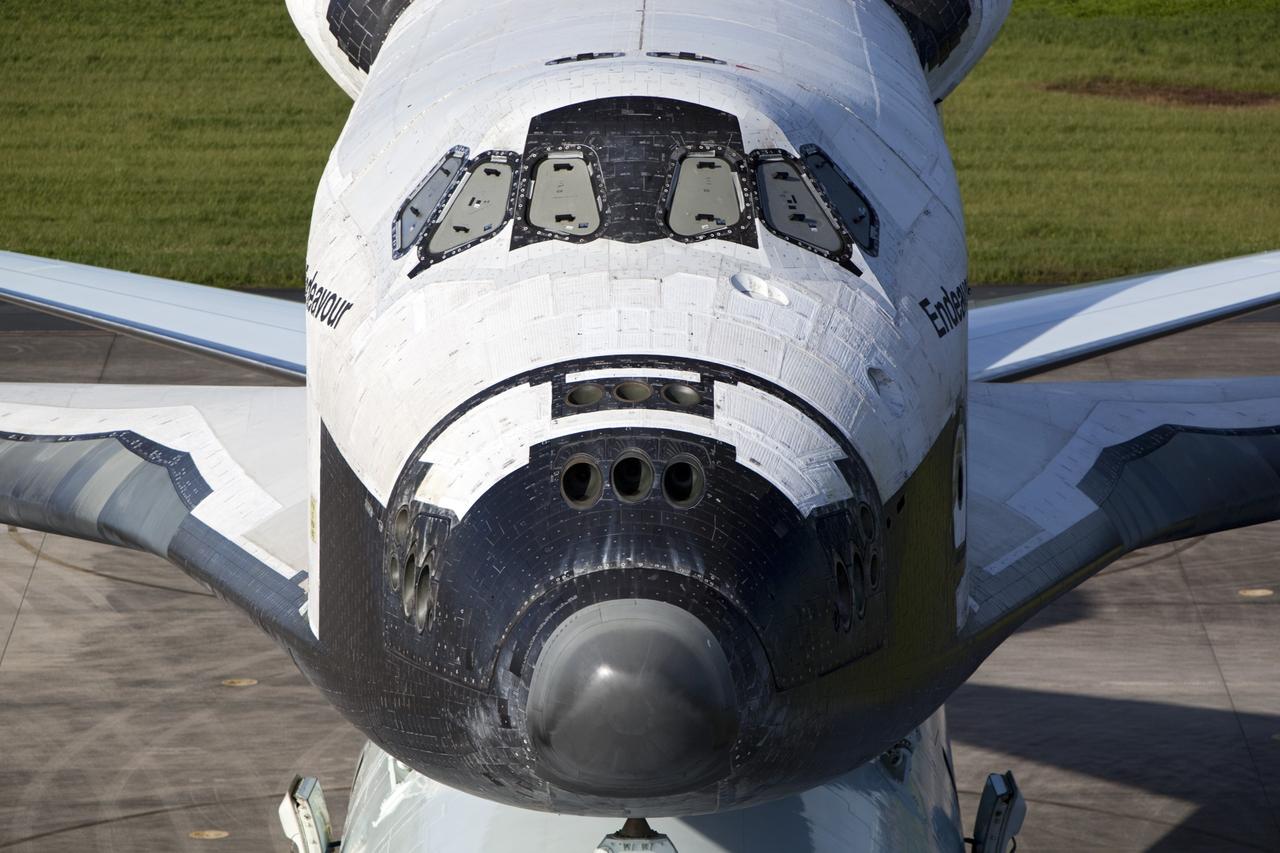
CAPE CANAVERAL, Fla. – Preparations are under way to uncover the cockpit windows on space shuttle Endeavour for an employee photo opportunity at the Shuttle Landing Facility at NASA's Kennedy Space Center in Florida. Endeavour is balanced and secured atop NASA's Shuttle Carrier Aircraft, or SCA. The SCA, a modified 747 jetliner, will fly Endeavour to Los Angeles where it will be placed on public display at the California Science Center. This is the final ferry flight scheduled in the Space Shuttle Program era. For more information on the shuttles' transition and retirement, visit http://www.nasa.gov/transition. Photo credit: NASA/Dimitri Gerondidakis
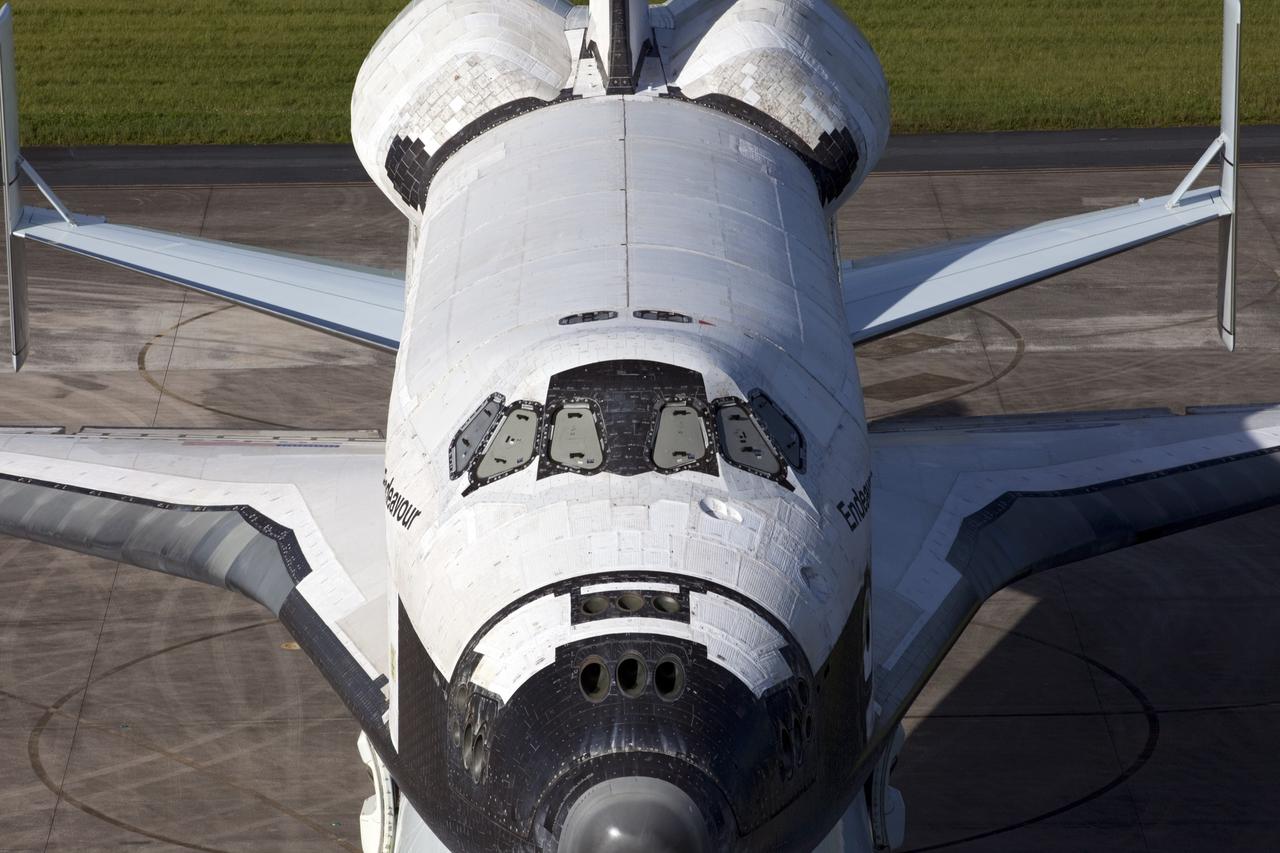
CAPE CANAVERAL, Fla. – Preparations are under way to uncover the cockpit windows on space shuttle Endeavour for an employee photo opportunity at the Shuttle Landing Facility at NASA's Kennedy Space Center in Florida. Endeavour is balanced and secured atop NASA's Shuttle Carrier Aircraft, or SCA. The SCA, a modified 747 jetliner, will fly Endeavour to Los Angeles where it will be placed on public display at the California Science Center. This is the final ferry flight scheduled in the Space Shuttle Program era. For more information on the shuttles' transition and retirement, visit http://www.nasa.gov/transition. Photo credit: NASA/Kim Shiflett
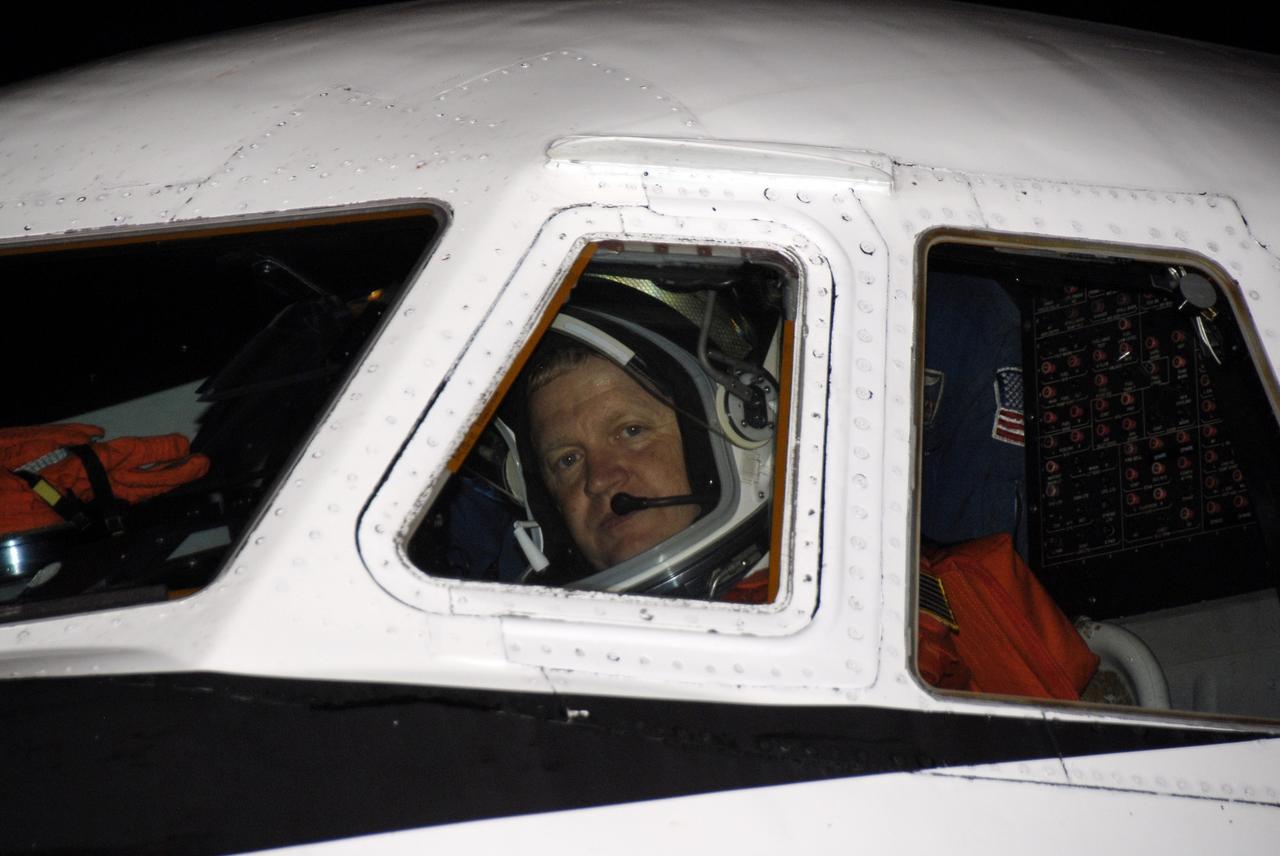
CAPE CANAVERAL, Fla. - At the Shuttle Landing Facility at NASA's Kennedy Space Center in Florida, STS-126 Pilot Eric Boe peers out the cockpit window of the Shuttle Training Aircraft, or STA, before taking off to practice shuttle landings. The STA is a Grumman American Aviation-built Gulf Stream II jet that was modified to simulate a shuttle’s cockpit, motion and visual cues, and handling qualities. In flight, the aircraft duplicates the shuttle’s atmospheric descent trajectory from approximately 35,000 feet to landing. The practice is part of the Terminal Countdown Demonstration Test, which includes equipment familiarization, emergency exit procedures and a simulated launch countdown. On the STS-126 mission, space shuttle Endeavour's crew will deliver equipment and supplies to the International Space Station in preparation for expansion from a three- to six-person resident crew aboard the complex. The mission also will include four spacewalks to service the station’s Solar Alpha Rotary Joints. Endeavour is targeted to launch Nov. 14. Photo credit: NASA/Kim Shiflett
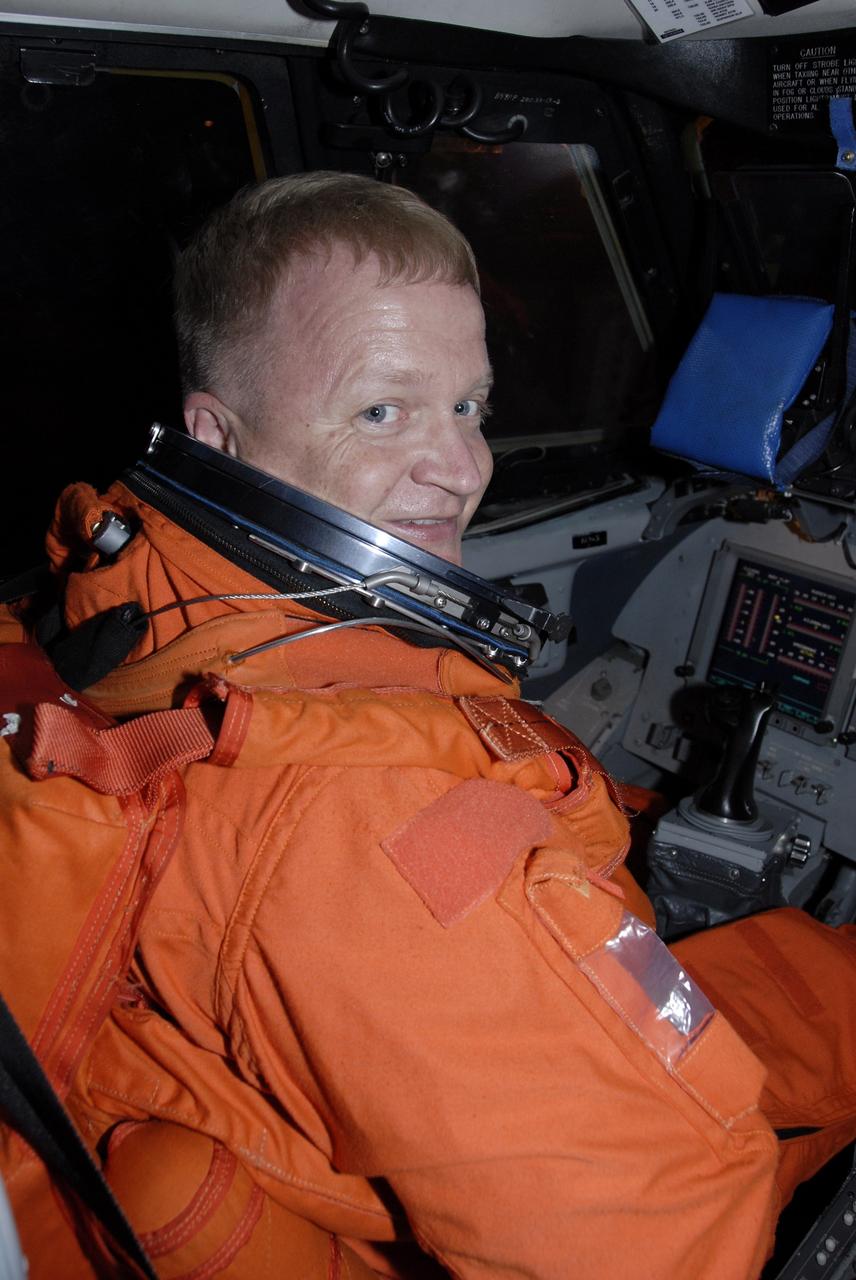
CAPE CANAVERAL, Fla. - At the Shuttle Landing Facility at NASA's Kennedy Space Center in Florida, STS-126 Pilot Eric Boe takes his seat in the cockpit of the Shuttle Training Aircraft, or STA. He will practice shuttle landings in the STA, a Grumman American Aviation-built Gulf Stream II jet that was modified to simulate a shuttle’s cockpit, motion and visual cues, and handling qualities. In flight, the aircraft duplicates the shuttle’s atmospheric descent trajectory from approximately 35,000 feet to landing. The practice is part of the Terminal Countdown Demonstration Test, which includes equipment familiarization, emergency exit procedures and a simulated launch countdown. On the STS-126 mission, space shuttle Endeavour's crew will deliver equipment and supplies to the International Space Station in preparation for expansion from a three- to six-person resident crew aboard the complex. The mission also will include four spacewalks to service the station’s Solar Alpha Rotary Joints. Endeavour is targeted to launch Nov. 14. Photo credit: NASA/Kim Shiflett