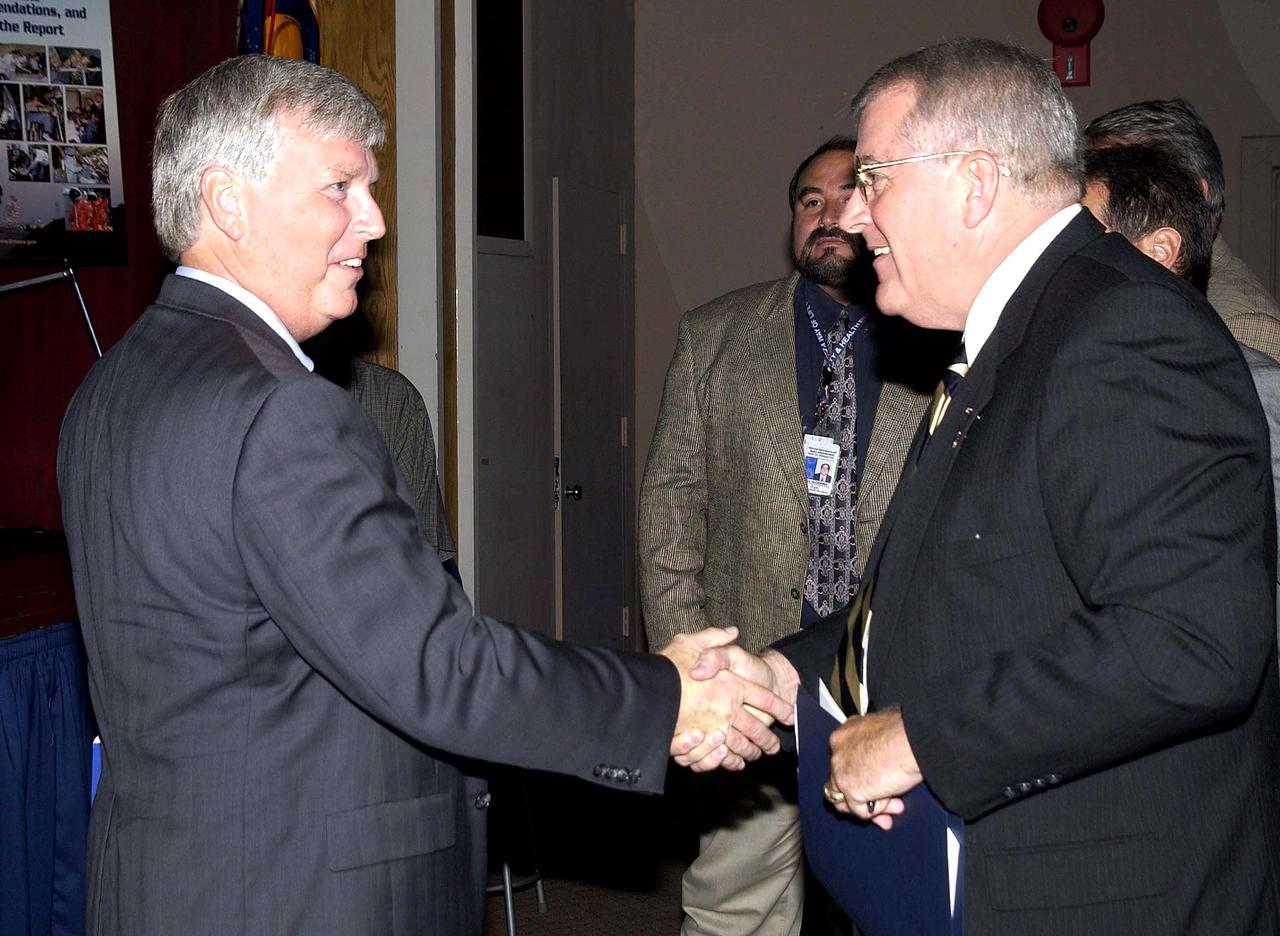
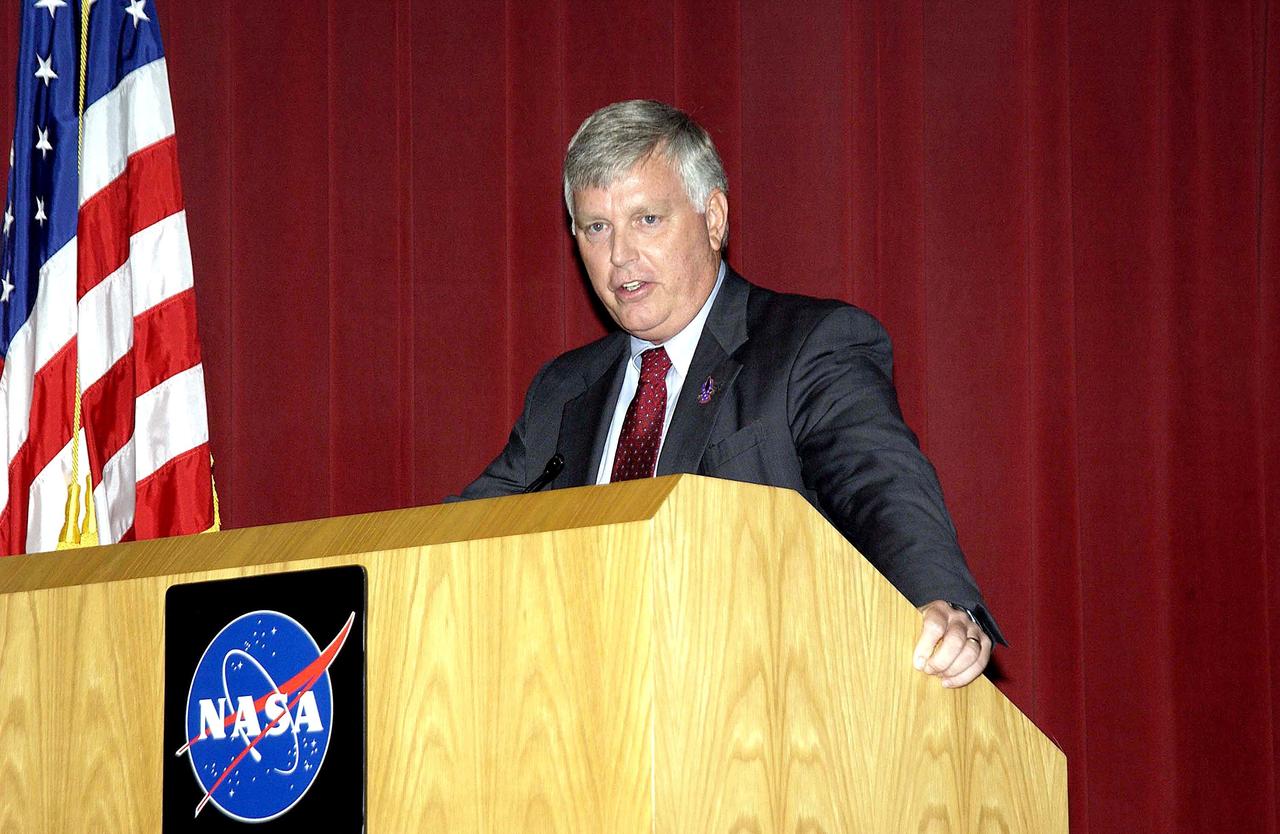
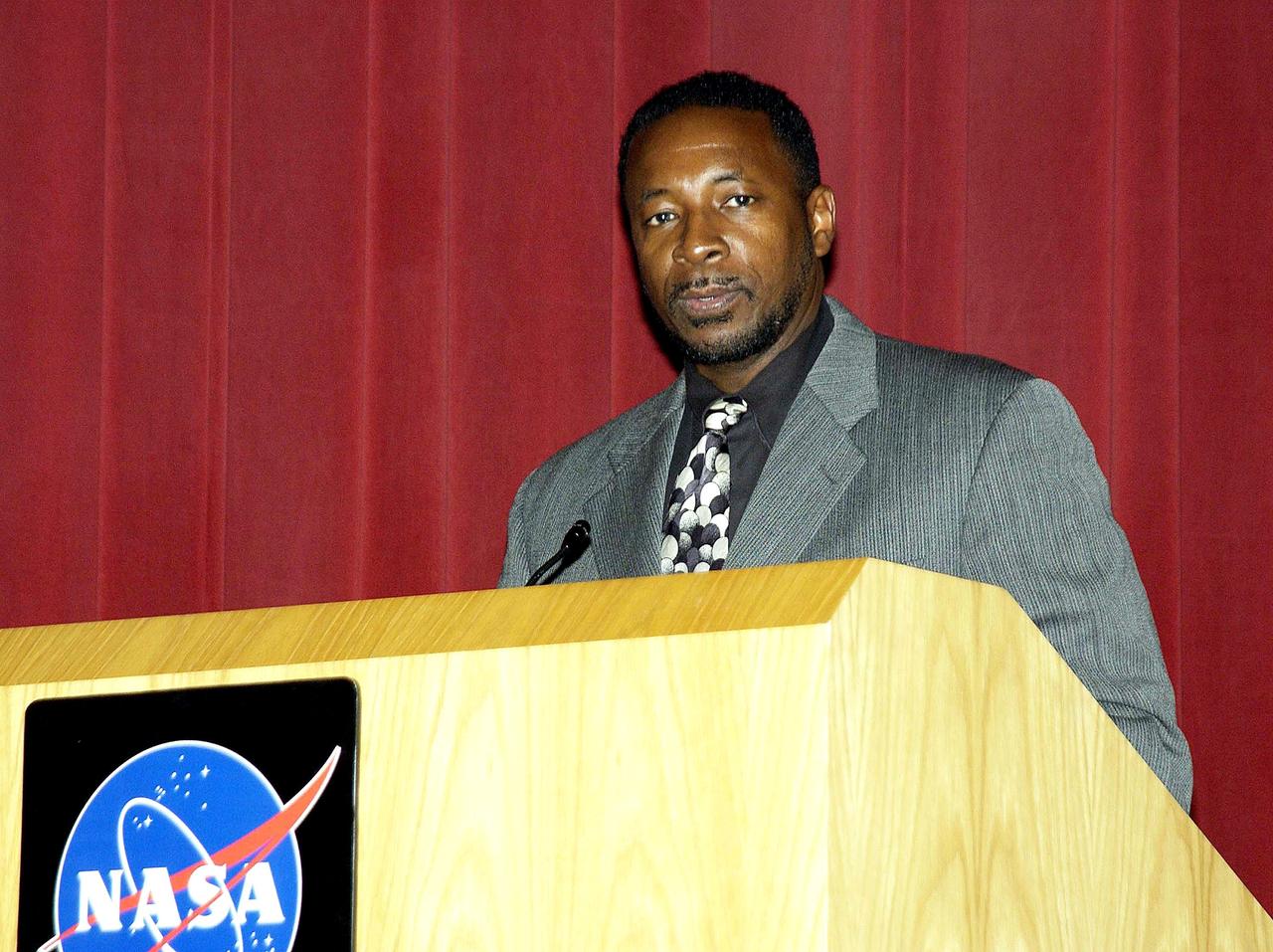
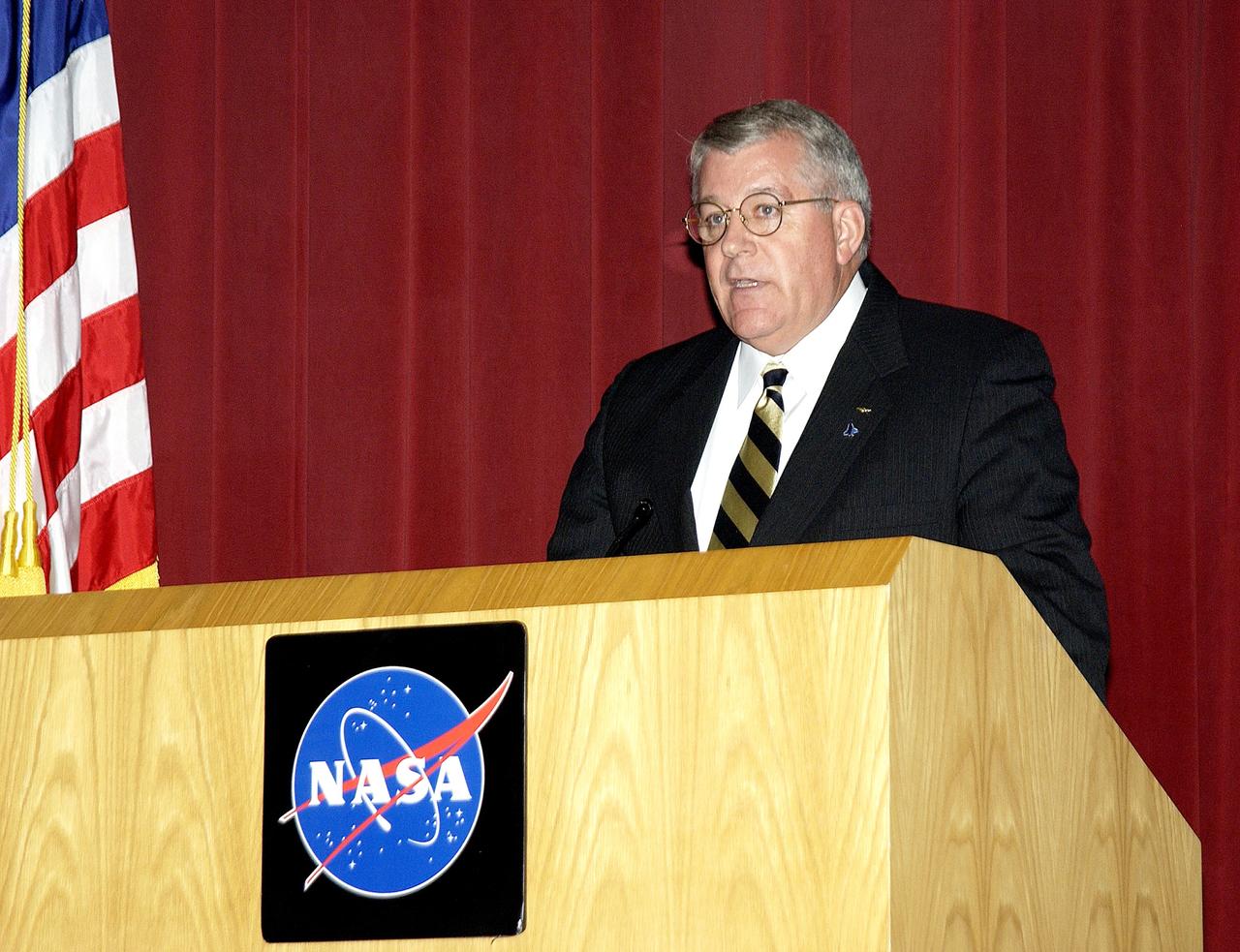
Ronnie Rigney (r), chief of the Propulsion Test Office in the Project Directorate at Stennis Space Center, stands with agency colleagues to receive the prestigious American Institute of Aeronautics and Astronautics George M. Low Space Transportation Award on Sept. 12. Rigney accepted the award on behalf of the NASA and contractor team at Stennis for their support of the Space Shuttle Program that ended last summer. From 1975 to 2009, Stennis Space Center tested every main engine used to power 135 space shuttle missions. Stennis continued to provide flight support services through the end of the Space Shuttle Program in July 2011. The center also supported transition and retirement of shuttle hardware and assets through September 2012. The 2012 award was presented to the space shuttle team 'for excellence in the conception, development, test, operation and retirement of the world's first and only reusable space transportation system.' Joining Rigney for the award ceremony at the 2012 AIAA Conference in Pasadena, Calif., were: (l to r) Allison Zuniga, NASA Headquarters; Michael Griffin, former NASA administrator; Don Noah, Johnson Space Center in Houston; Steve Cash, Marshall Space Flight Center in Huntsville, Ala.; and Pete Nickolenko, Kennedy Space Center in Florida.
Space Shuttle Program
Ronnie Rigney (r), chief of the Propulsion Test Office in the Project Directorate at Stennis Space Center, stands with agency colleagues to receive the prestigious American Institute of Aeronautics and Astronautics George M. Low Space Transportation Award on Sept. 12. Rigney accepted the award on behalf of the NASA and contractor team at Stennis for their support of the Space Shuttle Program that ended last summer. From 1975 to 2009, Stennis Space Center tested every main engine used to power 135 space shuttle missions. Stennis continued to provide flight support services through the end of the Space Shuttle Program in July 2011. The center also supported transition and retirement of shuttle hardware and assets through September 2012. The 2012 award was presented to the space shuttle team 'for excellence in the conception, development, test, operation and retirement of the world's first and only reusable space transportation system.' Joining Rigney for the award ceremony at the 2012 AIAA Conference in Pasadena, Calif., were: (l to r) Allison Zuniga, NASA Headquarters; Michael Griffin, former NASA administrator; Don Noah, Johnson Space Center in Houston; Steve Cash, Marshall Space Flight Center in Huntsville, Ala.; and Pete Nickolenko, Kennedy Space Center in Florida.
Space Shuttle Program
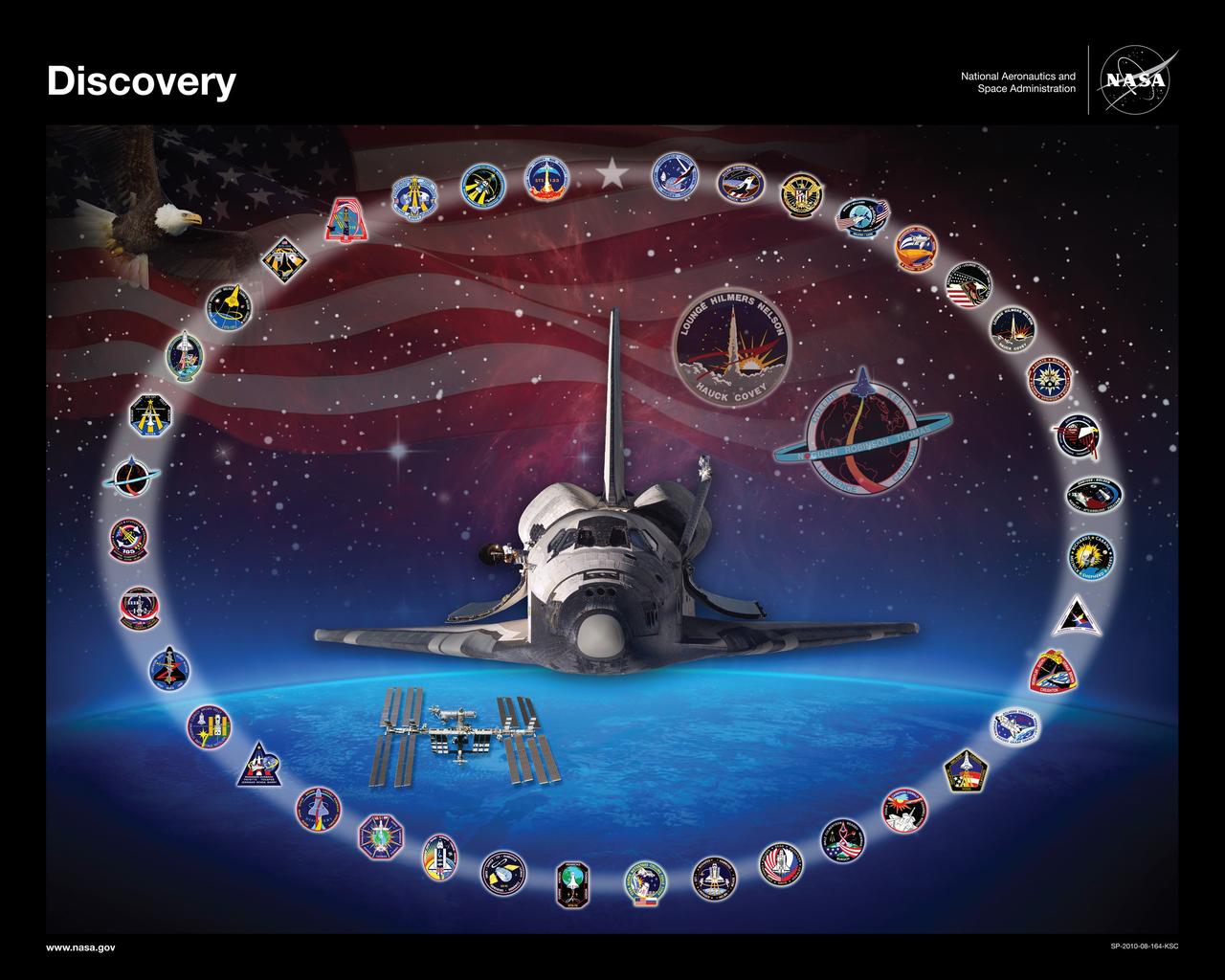
CAPE CANAVERAL, Fla. -- This is a printable version of space shuttle Discovery's orbiter tribute, or OV-103, which hangs in Firing Room 4 of the Launch Control Center at NASA's Kennedy Space Center in Florida. Discovery’s accomplishments include the first female shuttle pilot, Eileen Collins, on STS-63, John Glenn’s legendary return to space on STS-95, and the celebration of the 100th shuttle mission with STS-92. In addition, Discovery supported a number of Department of Defense programs, satellite deploy and repair missions and 13 International Space Station construction and operation flights. The tribute features Discovery demonstrating the rendezvous pitch maneuver on approach to the International Space Station during STS-114. Having accumulated the most space shuttle flights, Discovery’s 39 mission patches are shown circling the spacecraft. The background image was taken from the Hubble Space Telescope, which launched aboard Discovery on STS-31 and serviced by Discovery on STS-82 and STS-103. The American Flag and Bald Eagle represent Discovery’s two Return-to-Flight missions -- STS-26 and STS-114 -- and symbolize Discovery’s role in returning American astronauts to space. Five orbiter tributes are on display in the firing room, representing Atlantis, Challenger, Columbia, Endeavour and Discovery. Graphic design credit: NASA/Amy Lombardo. NASA publication number: SP-2010-08-164-KSC
KSC-2010-4453B
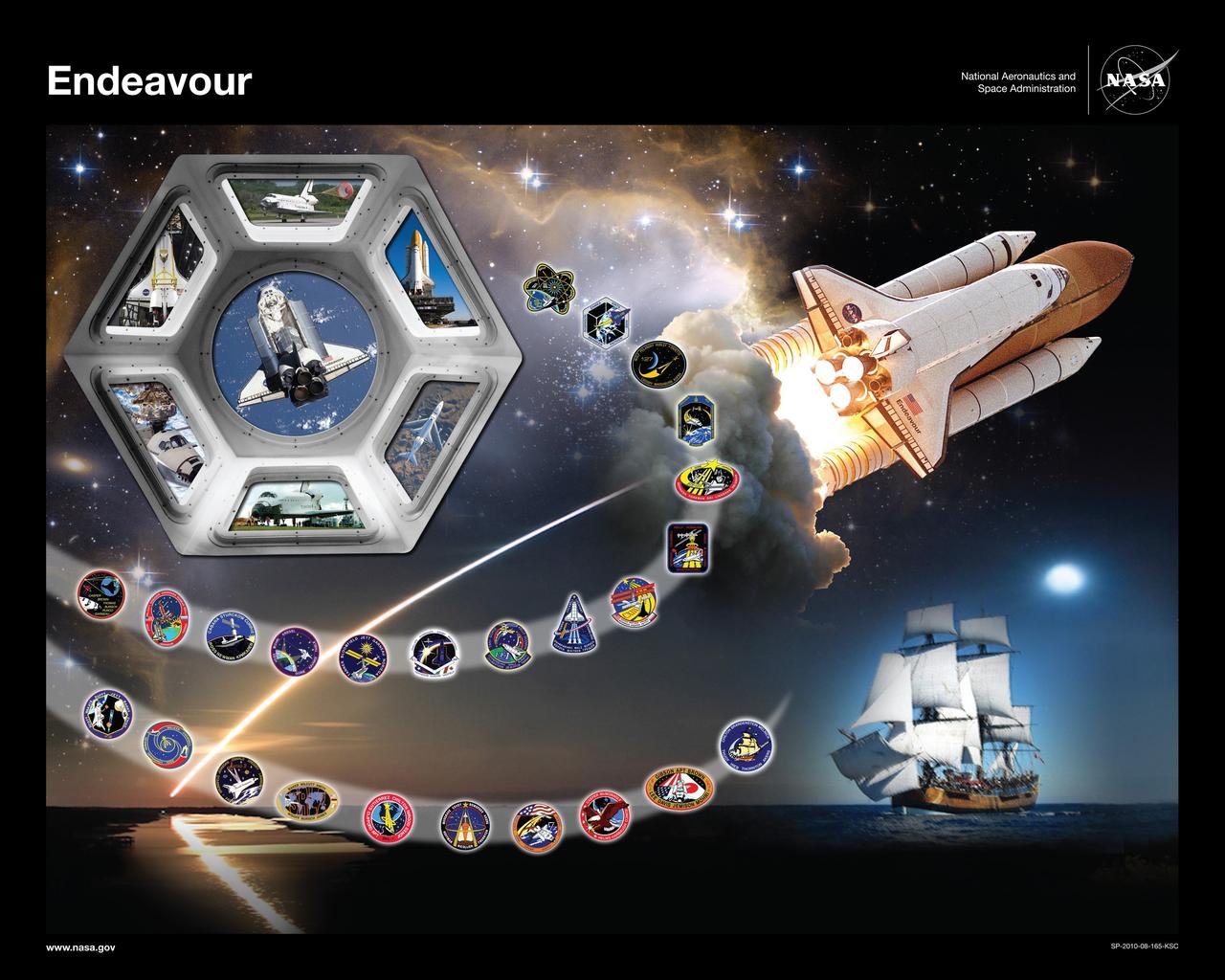
CAPE CANAVERAL, Fla. -- This is a printable version of space shuttle Endeavour's orbiter tribute, or OV-105, which hangs in Firing Room 4 of the Launch Control Center at NASA's Kennedy Space Center in Florida. It features Endeavour soaring into orbit above the sailing vessel HMS Endeavour for which it was named. The Cupola, delivered to the International Space Station by Endeavour on STS-130, frames various images that represent the processing and execution of the Space Shuttle Program. Clockwise from top, are the first-ever use of a drag chute during the STS-49 landing, rollout to a launch pad, a ferry flight return to Kennedy, rolling into an orbiter processing facility, docking to the International Space Station, and lifting operations before being mated to an external fuel tank and solid rocket boosters in the Vehicle Assembly Building. The background image was captured by the Hubble Space Telescope and signifies the first shuttle servicing mission, which was performed by Endeavour's STS-61 crew. Crew-designed patches from Endeavour’s maiden voyage through its final mission are shown ascending toward the stars. Five orbiter tributes are on display in the firing room, representing Atlantis, Challenger, Columbia, Endeavour and Discovery. Graphic design credit: NASA/Amy Lombardo. NASA publication number: SP-2010-08-165-KSC
KSC-2010-4454B
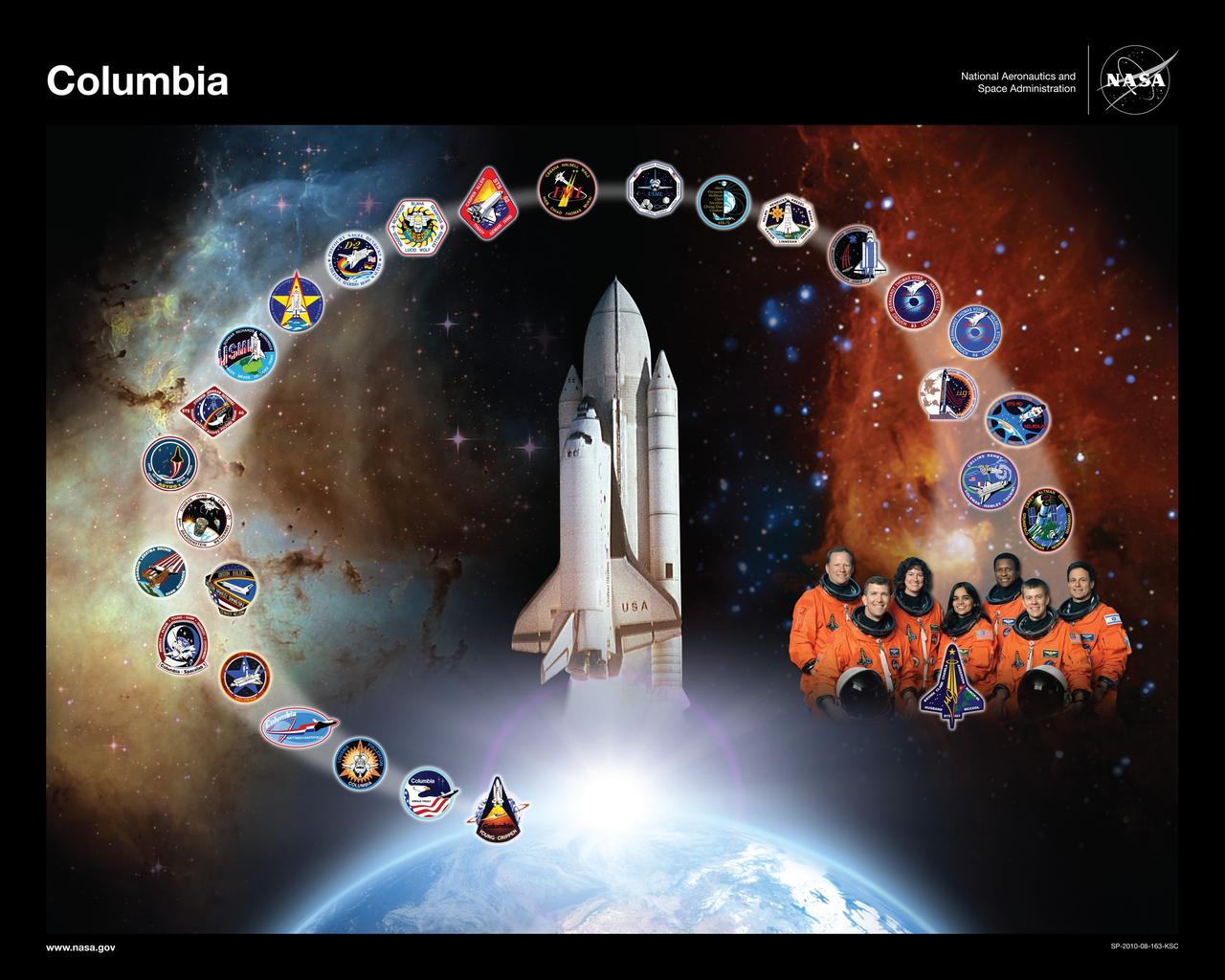
CAPE CANAVERAL, Fla. -- This is a printable version of space shuttle Columbia's orbiter tribute, or OV-102, which hangs in Firing Room 4 of the Launch Control Center at NASA's Kennedy Space Center in Florida. The tribute features Columbia, the “first of the fleet," rising above Earth at the dawn of the Space Shuttle Program. Columbia's accomplishments include the launch and deployment of NASA's Chandra X-ray Observatory on STS-93, the first shuttle landing at White Sands Space Harbor in New Mexico on STS-3, the first deployment of commercial satellites and the first four-member crew during STS-5, the first Spacelab mission and first six-member crew on STS-9, the first female commander, Eileen Collins, on STS-93, as well as several laboratory missions with international partners. Crew-designed patches for each of Columbia’s missions lead from Earth toward a remembrance of the STS-107 crew, which was lost during re-entry on Feb. 1, 2003. Five orbiter tributes are on display in the firing room, representing Atlantis, Challenger, Columbia, Endeavour and Discovery. Graphic design credit: NASA/Amy Lombardo. NASA publication number: SP-2010-08-163-KSC
KSC-2010-4452B
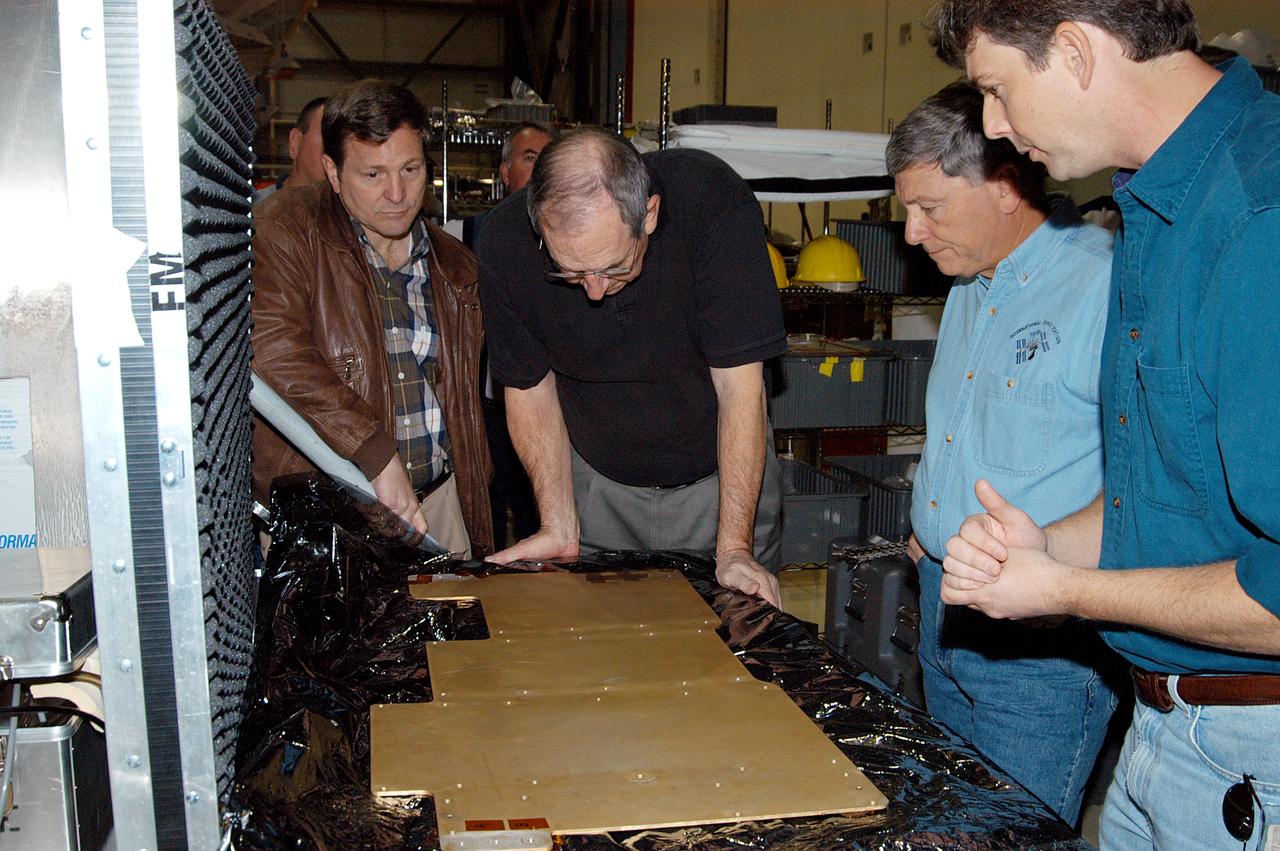
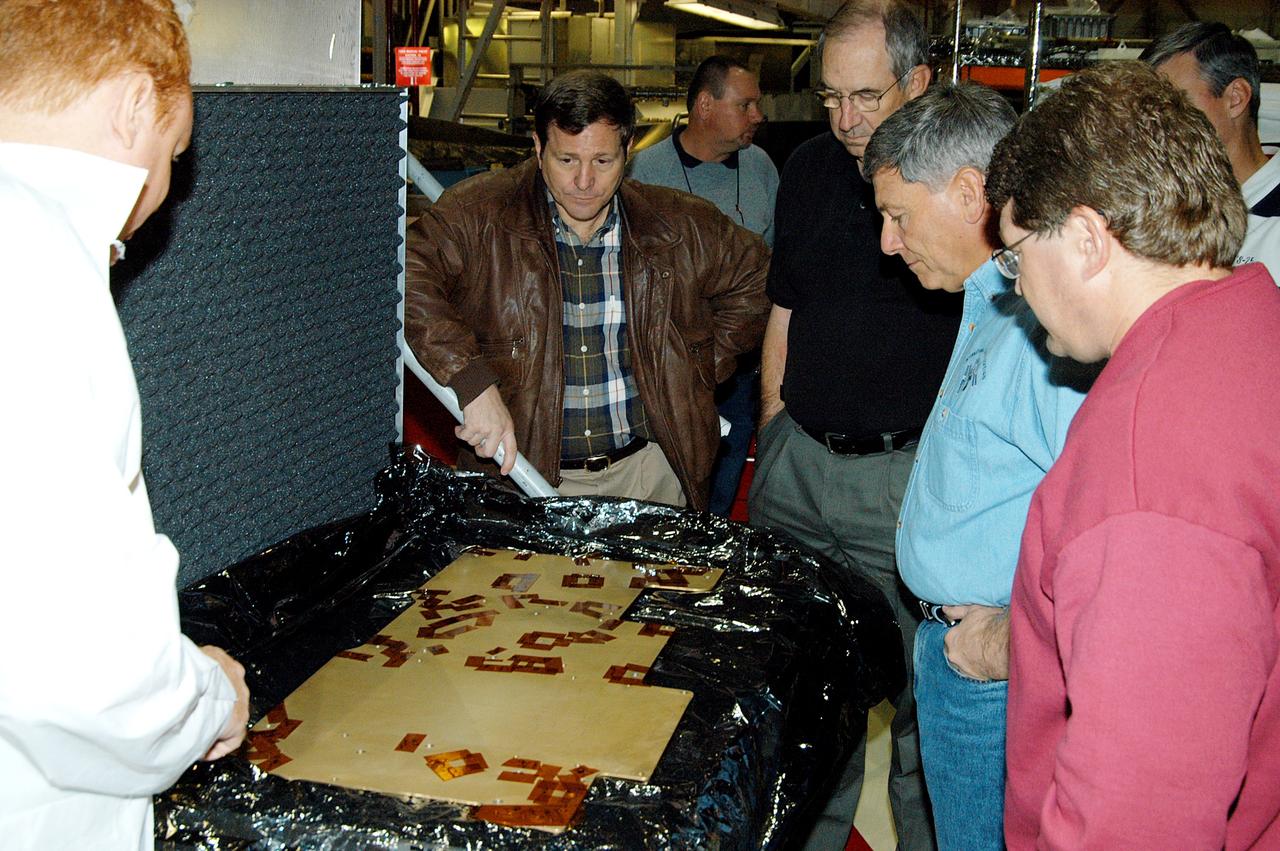
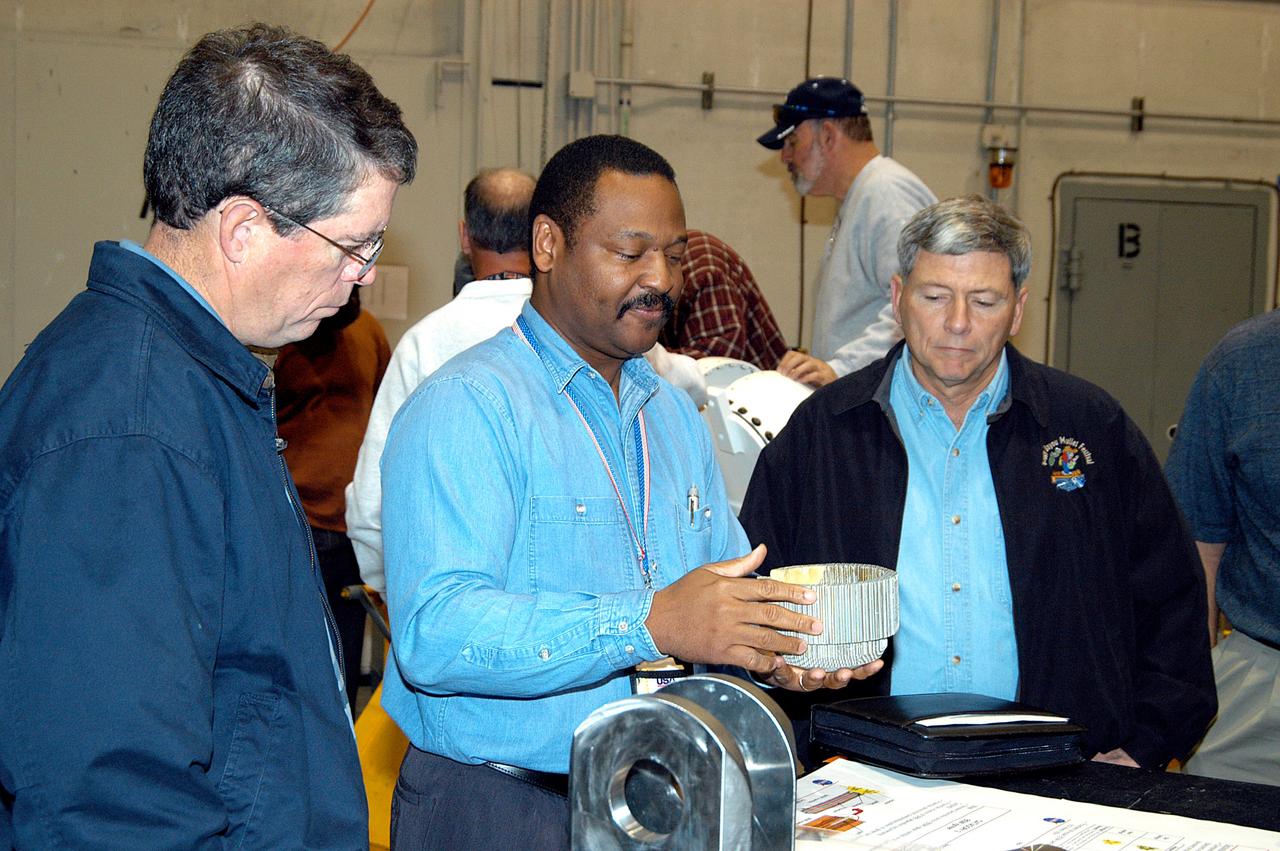
KENNEDY SPACE CENTER, FLA. -- From left, United Space Alliance (USA) Deputy Space Shuttle Program Manager of Operations Loren Shriver, USA Associate Program Manager of Ground Operations Andy Allen, NASA Deputy Associate Administrator for Space Station and Shuttle Programs Michael Kostelnik, and USA Vice President and Space Shuttle Program Manager Howard DeCastro examine a tile used in the Shuttle's Thermal Protection System (TPS) in KSC's TPS Facility.  NASA and USA Space Shuttle program management are participating in a leadership workday.  The day is intended to provide management with an in-depth, hands-on look at Shuttle processing activities at KSC.
KENNEDY SPACE CENTER, FLA. -- From left, United Space Alliance (USA) Deputy Space Shuttle Program Manager of Operations Loren Shriver, USA Associate Program Manager of Ground Operations Andy Allen, NASA Deputy Associate Administrator for Space Station and Shuttle Programs Michael Kostelnik, and USA Vice President and Space Shuttle Program Manager Howard DeCastro examine a tile used in the Shuttle's Thermal Protection System (TPS) in KSC's TPS Facility. NASA and USA Space Shuttle program management are participating in a leadership workday. The day is intended to provide management with an in-depth, hands-on look at Shuttle processing activities at KSC.
KENNEDY SPACE CENTER, FLA. -- From left, NASA Deputy Program Manager of the Space Shuttle Program Michael Wetmore, United Space Alliance (USA) Vice President and Space Shuttle Program Manager Howard DeCastro, NASA Deputy Associate Administrator for Space Station and Shuttle Programs Michael Kostelnik, and a USA technician examine cold plates in Orbiter Processing Facility Bay 2.  NASA and USA Space Shuttle program management are participating in a leadership workday.  The day is intended to provide management with an in-depth, hands-on look at Shuttle processing activities at KSC.
KENNEDY SPACE CENTER, FLA. -- From left, NASA Deputy Program Manager of the Space Shuttle Program Michael Wetmore, United Space Alliance (USA) Vice President and Space Shuttle Program Manager Howard DeCastro, NASA Deputy Associate Administrator for Space Station and Shuttle Programs Michael Kostelnik, and a USA technician examine cold plates in Orbiter Processing Facility Bay 2. NASA and USA Space Shuttle program management are participating in a leadership workday. The day is intended to provide management with an in-depth, hands-on look at Shuttle processing activities at KSC.
KENNEDY SPACE CENTER, FLA. -- From left, a United Space Alliance (USA) technician briefs NASA Deputy Program Manager of the Space Shuttle Program Michael Wetmore, USA Vice President and Space Shuttle Program Manager Howard DeCastro, and NASA Deputy Associate Administrator for Space Station and Shuttle Programs Michael Kostelnik on the use of cold plates in Orbiter Processing Facility Bay 2.  NASA and USA Space Shuttle program management are participating in a leadership workday.  The day is intended to provide management with an in-depth, hands-on look at Shuttle processing activities at KSC.
KENNEDY SPACE CENTER, FLA. -- From left, a United Space Alliance (USA) technician briefs NASA Deputy Program Manager of the Space Shuttle Program Michael Wetmore, USA Vice President and Space Shuttle Program Manager Howard DeCastro, and NASA Deputy Associate Administrator for Space Station and Shuttle Programs Michael Kostelnik on the use of cold plates in Orbiter Processing Facility Bay 2. NASA and USA Space Shuttle program management are participating in a leadership workday. The day is intended to provide management with an in-depth, hands-on look at Shuttle processing activities at KSC.
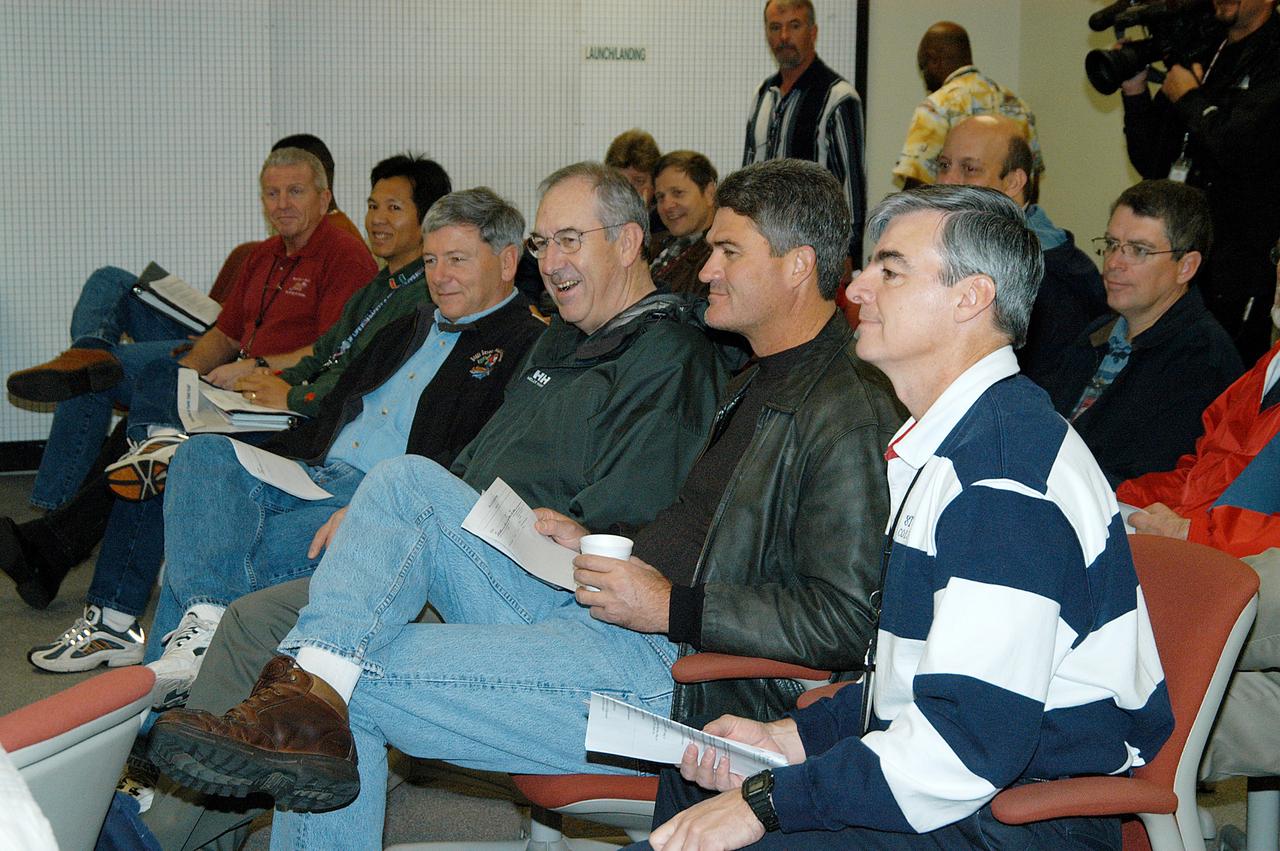
KENNEDY SPACE CENTER, FLA. -- NASA and United Space Alliance (USA) Space Shuttle program managers attend a briefing, part of activities during a leadership workday.  The day is intended to provide management with an in-depth, hands-on look at Shuttle processing activities at KSC.  Starting third from left are NASA Deputy Associate Administrator for Space Station and Shuttle Programs Michael Kostelnik, USA Vice President and Space Shuttle Program Manager Howard DeCastro, NASA Space Shuttle Program Manager William Parsons, and USA Associate Program Manager of Ground Operations Andy Allen.
KENNEDY SPACE CENTER, FLA. -- NASA and United Space Alliance (USA) Space Shuttle program managers attend a briefing, part of activities during a leadership workday. The day is intended to provide management with an in-depth, hands-on look at Shuttle processing activities at KSC. Starting third from left are NASA Deputy Associate Administrator for Space Station and Shuttle Programs Michael Kostelnik, USA Vice President and Space Shuttle Program Manager Howard DeCastro, NASA Space Shuttle Program Manager William Parsons, and USA Associate Program Manager of Ground Operations Andy Allen.
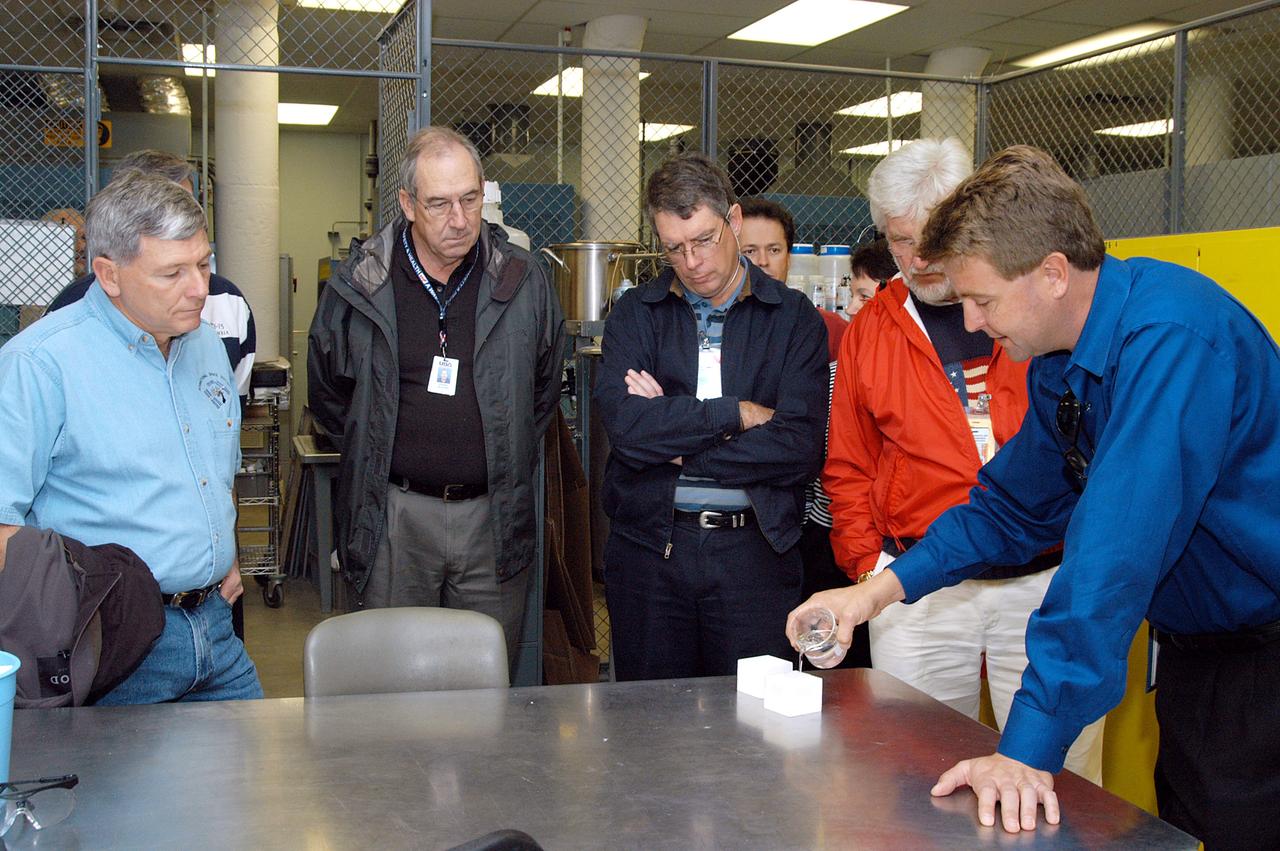
KENNEDY SPACE CENTER, FLA. -- United Space Alliance (USA) Vice President and Space Shuttle Program Manager Howard DeCastro (left) and NASA Deputy Associate Administrator for Space Station and Shuttle Programs Michael Kostelnik (third from left) watch as a USA technician (right) creates a tile for use in the Shuttle's Thermal Protection System (TPS).  NASA and USA Space Shuttle program management are participating in a leadership workday.  The day is intended to provide management with an in-depth, hands-on look at Shuttle processing activities at KSC.
KENNEDY SPACE CENTER, FLA. -- United Space Alliance (USA) Vice President and Space Shuttle Program Manager Howard DeCastro (left) and NASA Deputy Associate Administrator for Space Station and Shuttle Programs Michael Kostelnik (third from left) watch as a USA technician (right) creates a tile for use in the Shuttle's Thermal Protection System (TPS). NASA and USA Space Shuttle program management are participating in a leadership workday. The day is intended to provide management with an in-depth, hands-on look at Shuttle processing activities at KSC.
KENNEDY SPACE CENTER, FLA. -- From left, NASA Deputy Associate Administrator for Space Station and Shuttle Programs Michael Kostelnik and United Space Alliance (USA) Vice President and Space Shuttle Program Manager Howard DeCastro are briefed on the properties of the tile used in the Shuttle's Thermal Protection System (TPS) by USA Manager of the TPS Facility Martin Wilson (right).  NASA and USA Space Shuttle program management are participating in a leadership workday.  The day is intended to provide management with an in-depth, hands-on look at Shuttle processing activities at KSC.
KENNEDY SPACE CENTER, FLA. -- From left, NASA Deputy Associate Administrator for Space Station and Shuttle Programs Michael Kostelnik and United Space Alliance (USA) Vice President and Space Shuttle Program Manager Howard DeCastro are briefed on the properties of the tile used in the Shuttle's Thermal Protection System (TPS) by USA Manager of the TPS Facility Martin Wilson (right). NASA and USA Space Shuttle program management are participating in a leadership workday. The day is intended to provide management with an in-depth, hands-on look at Shuttle processing activities at KSC.
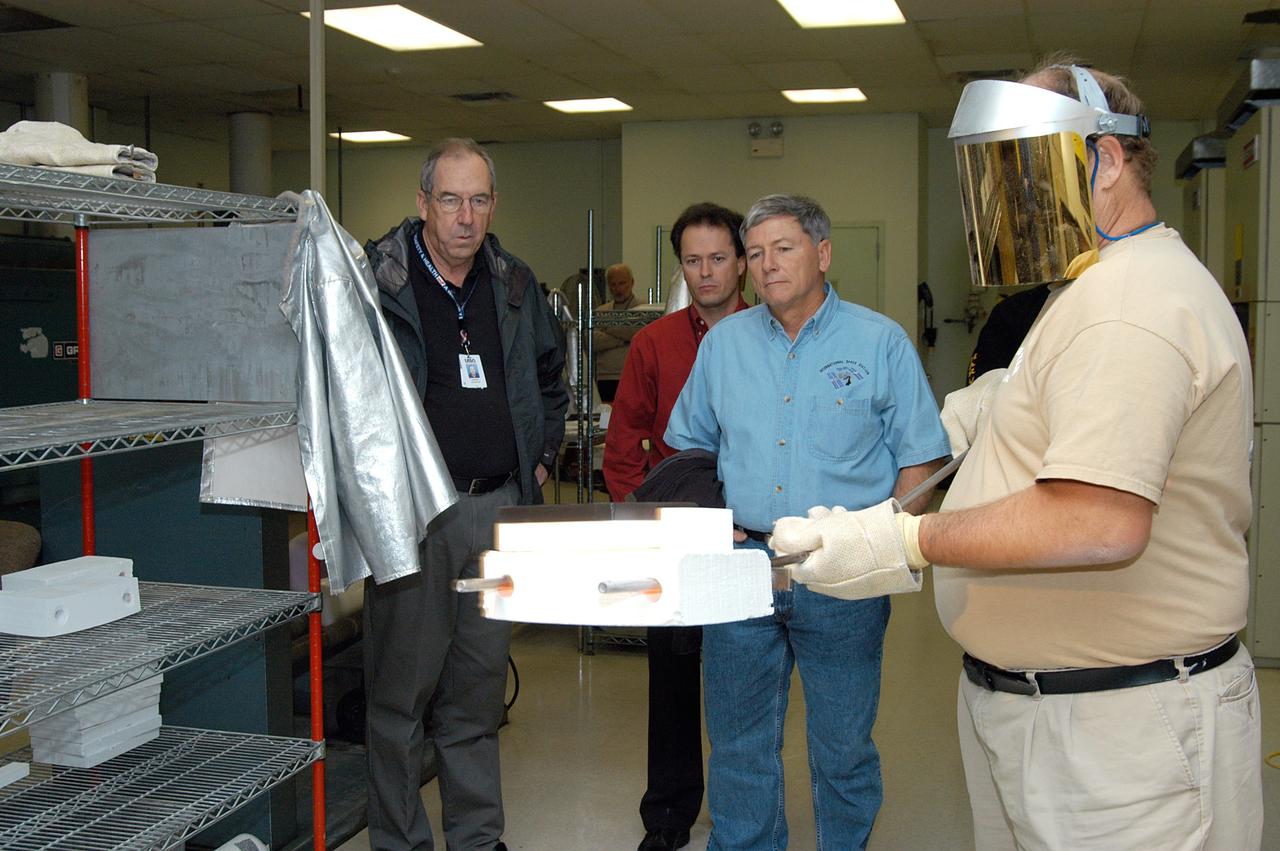
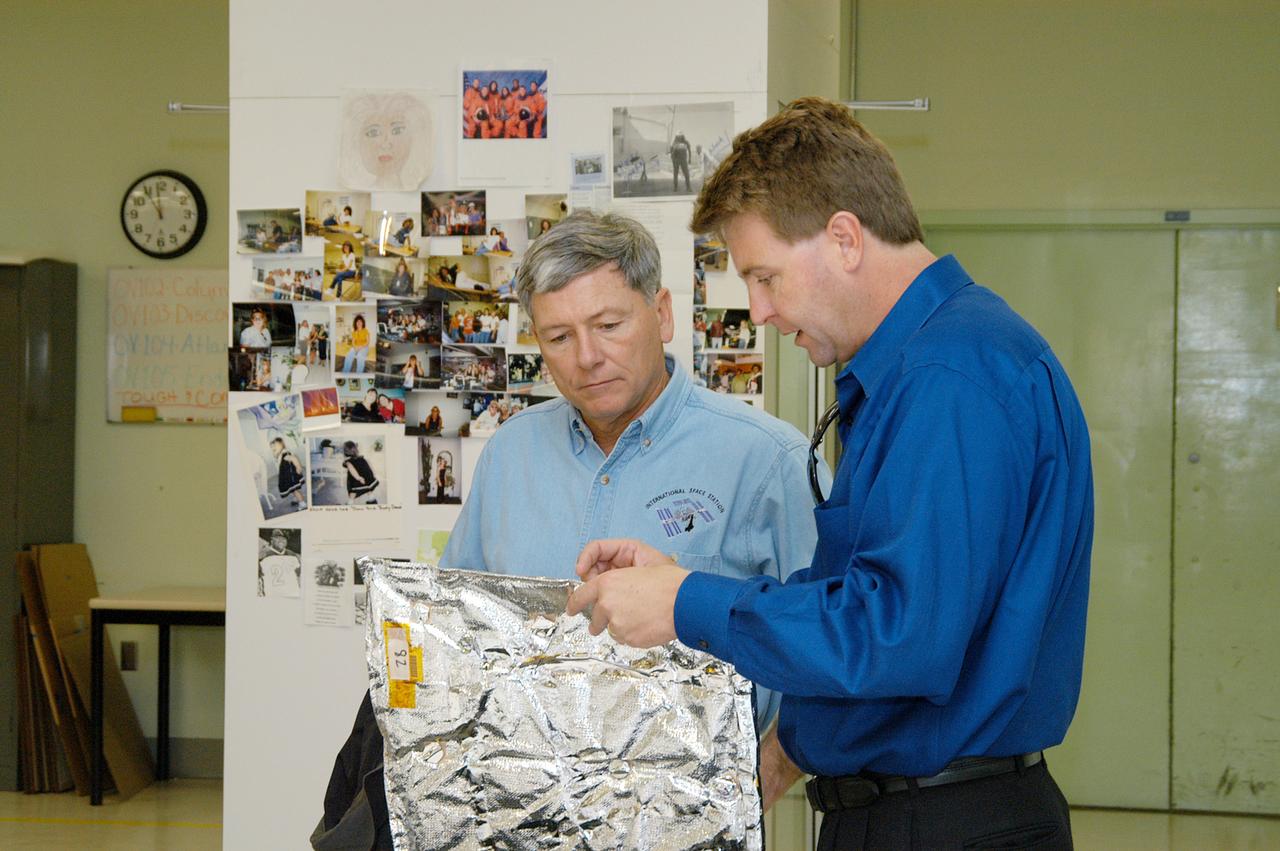
KENNEDY SPACE CENTER, FLA. -- United Space Alliance (USA) technicians demonstrate the construction of a thermal blanket used in the Shuttle's thermal protection system for USA Vice President and Space Shuttle Program Manager Howard DeCastro (second from left) and NASA Deputy Associate Administrator for Space Station and Shuttle Programs Michael Kostelnik (right).  NASA and USA Space Shuttle program management are participating in a leadership workday.  The day is intended to provide management with an in-depth, hands-on look at Shuttle processing activities at KSC.
KENNEDY SPACE CENTER, FLA. -- United Space Alliance (USA) technicians demonstrate the construction of a thermal blanket used in the Shuttle's thermal protection system for USA Vice President and Space Shuttle Program Manager Howard DeCastro (second from left) and NASA Deputy Associate Administrator for Space Station and Shuttle Programs Michael Kostelnik (right). NASA and USA Space Shuttle program management are participating in a leadership workday. The day is intended to provide management with an in-depth, hands-on look at Shuttle processing activities at KSC.
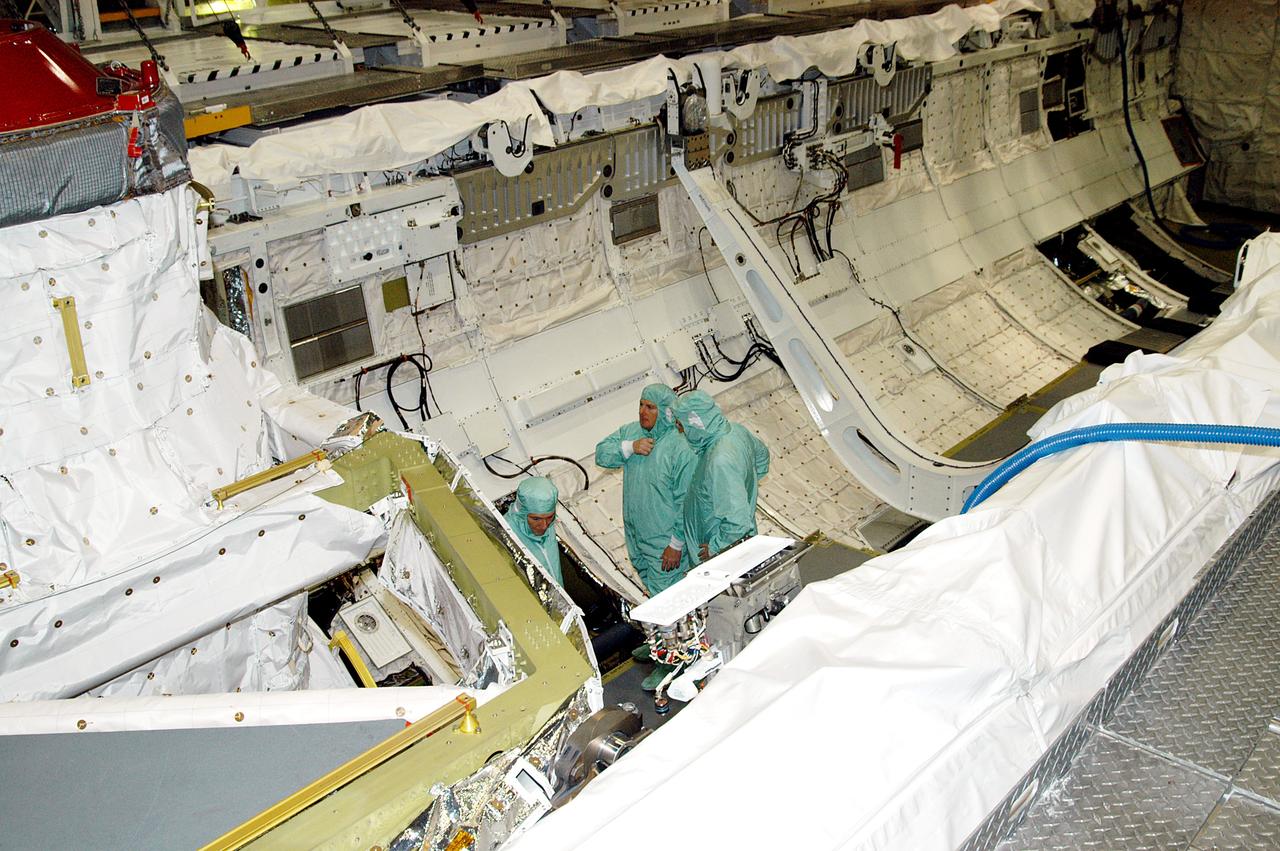
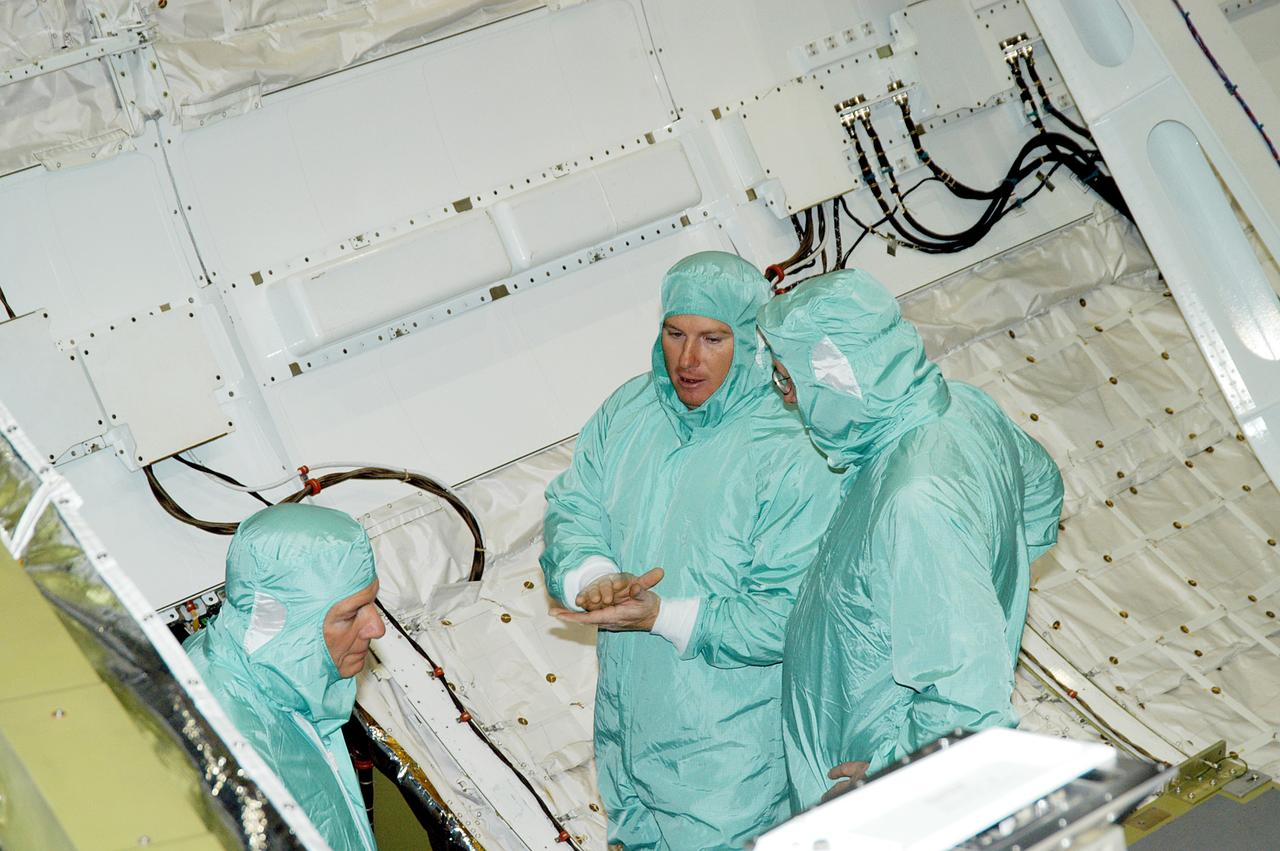
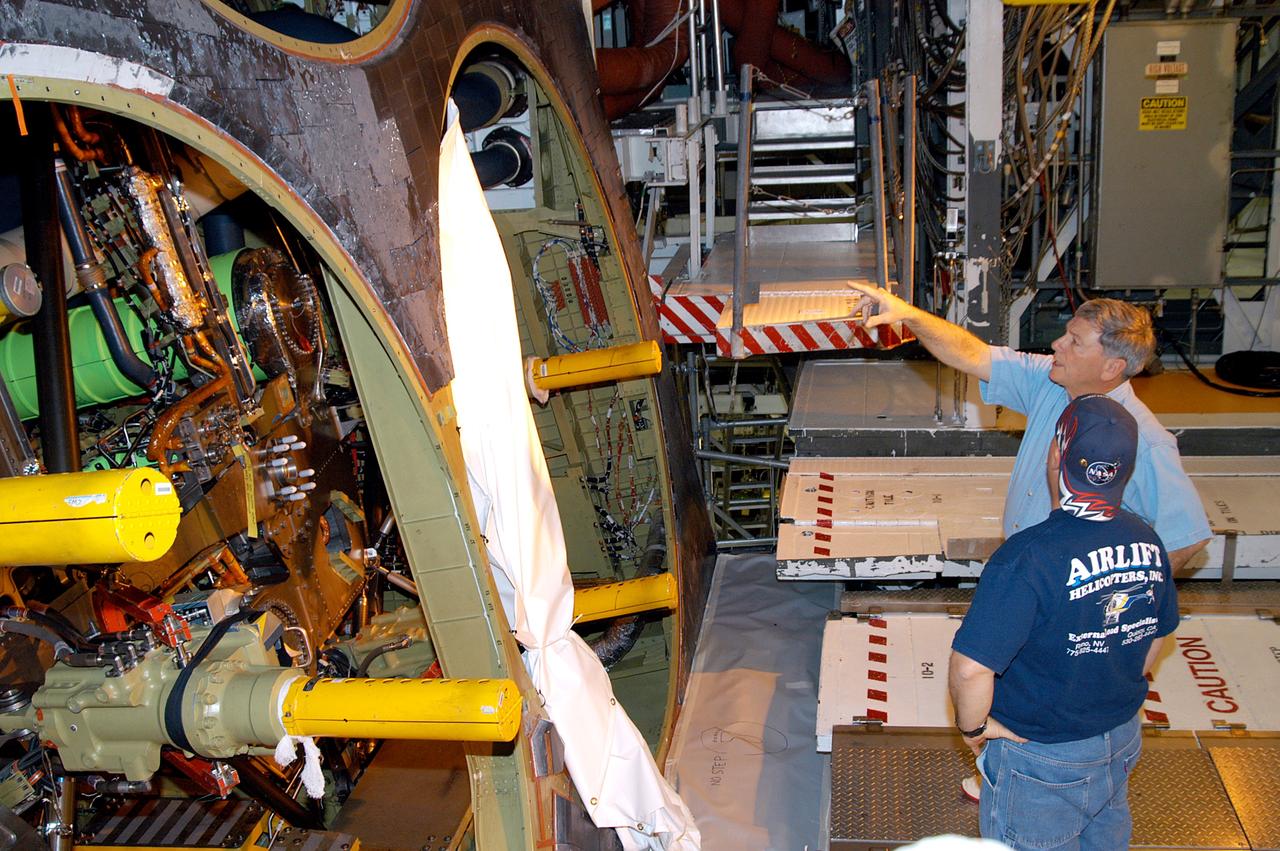
KENNEDY SPACE CENTER, FLA. -- In Orbiter Processing Facility Bay 1, NASA Deputy Associate Administrator for Space Station and Shuttle Programs Michael Kostelnik (left) and United Space Alliance (USA) Vice President and Space Shuttle Program Manager Howard DeCastro (right) are briefed by a USA technician (center) on Shuttle processing in the payload bay of orbiter Atlantis.  NASA and USA Space Shuttle program management are participating in a leadership workday.  The day is intended to provide management with an in-depth, hands-on look at Shuttle processing activities at KSC.
KENNEDY SPACE CENTER, FLA. -- In Orbiter Processing Facility Bay 1, NASA Deputy Associate Administrator for Space Station and Shuttle Programs Michael Kostelnik (left) and United Space Alliance (USA) Vice President and Space Shuttle Program Manager Howard DeCastro (right) are briefed by a USA technician (center) on Shuttle processing in the payload bay of orbiter Atlantis. NASA and USA Space Shuttle program management are participating in a leadership workday. The day is intended to provide management with an in-depth, hands-on look at Shuttle processing activities at KSC.
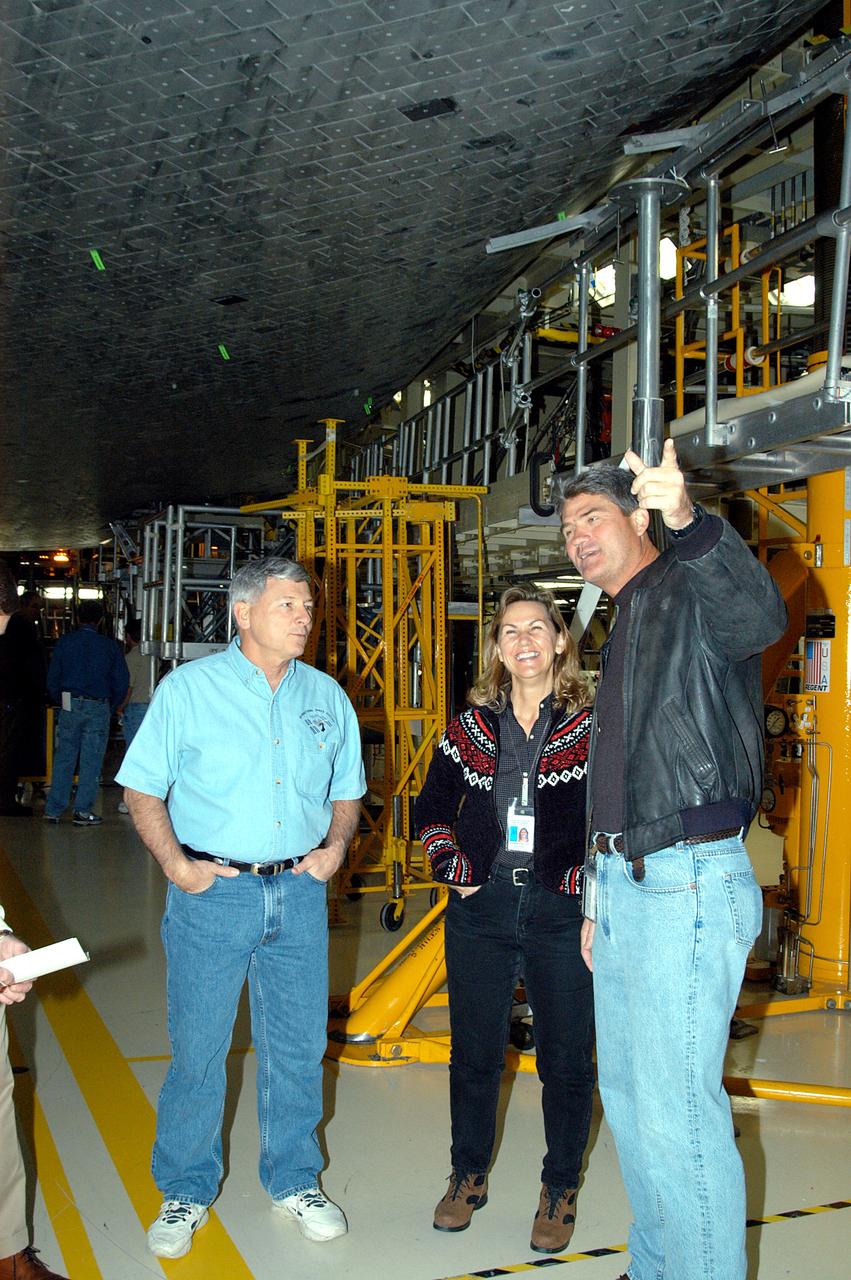
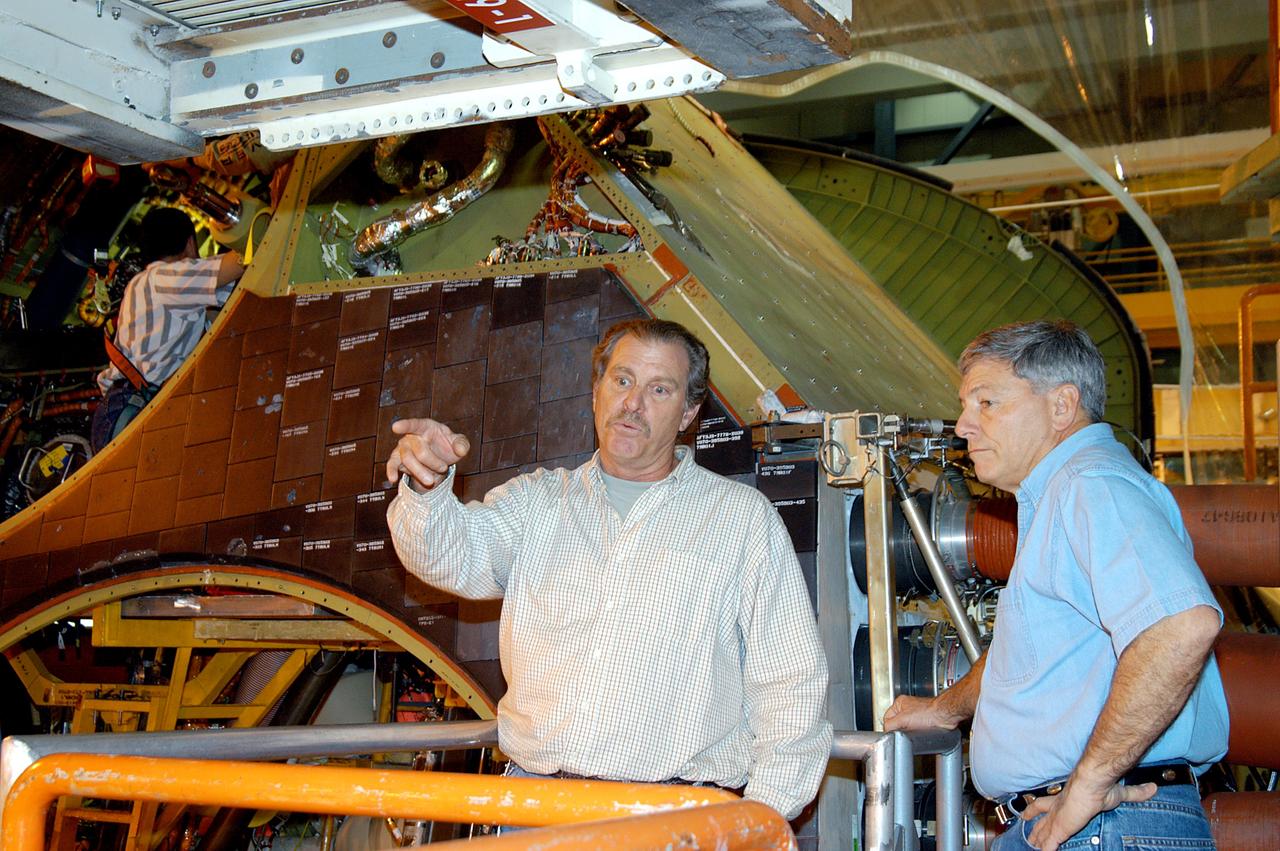
KENNEDY SPACE CENTER, FLA. -- From left, NASA Deputy Associate Administrator for Space Station and Shuttle Programs Michael Kostelnik, United Space Alliance (USA) Director of Orbiter Operations Patty Stratton, and NASA Space Shuttle Program Manager William Parsons view the underside of Shuttle Discovery in Orbiter Processing Facility Bay 3.  NASA and USA Space Shuttle program management are participating in a leadership workday.  The day is intended to provide management with an in-depth, hands-on look at Shuttle processing activities at KSC.
KENNEDY SPACE CENTER, FLA. -- From left, NASA Deputy Associate Administrator for Space Station and Shuttle Programs Michael Kostelnik, United Space Alliance (USA) Director of Orbiter Operations Patty Stratton, and NASA Space Shuttle Program Manager William Parsons view the underside of Shuttle Discovery in Orbiter Processing Facility Bay 3. NASA and USA Space Shuttle program management are participating in a leadership workday. The day is intended to provide management with an in-depth, hands-on look at Shuttle processing activities at KSC.
KENNEDY SPACE CENTER, FLA. -- In Orbiter Processing Facility Bay 1, NASA Deputy Associate Administrator for Space Station and Shuttle Programs Michael Kostelnik (left) and United Space Alliance (USA) Vice President and Space Shuttle Program Manager Howard DeCastro (right) are briefed by a USA technician (center) on Shuttle processing in the payload bay of orbiter Atlantis.  NASA and USA Space Shuttle program management are participating in a leadership workday.  The day is intended to provide management with an in-depth, hands-on look at Shuttle processing activities at KSC.
KENNEDY SPACE CENTER, FLA. -- In Orbiter Processing Facility Bay 1, NASA Deputy Associate Administrator for Space Station and Shuttle Programs Michael Kostelnik (left) and United Space Alliance (USA) Vice President and Space Shuttle Program Manager Howard DeCastro (right) are briefed by a USA technician (center) on Shuttle processing in the payload bay of orbiter Atlantis. NASA and USA Space Shuttle program management are participating in a leadership workday. The day is intended to provide management with an in-depth, hands-on look at Shuttle processing activities at KSC.
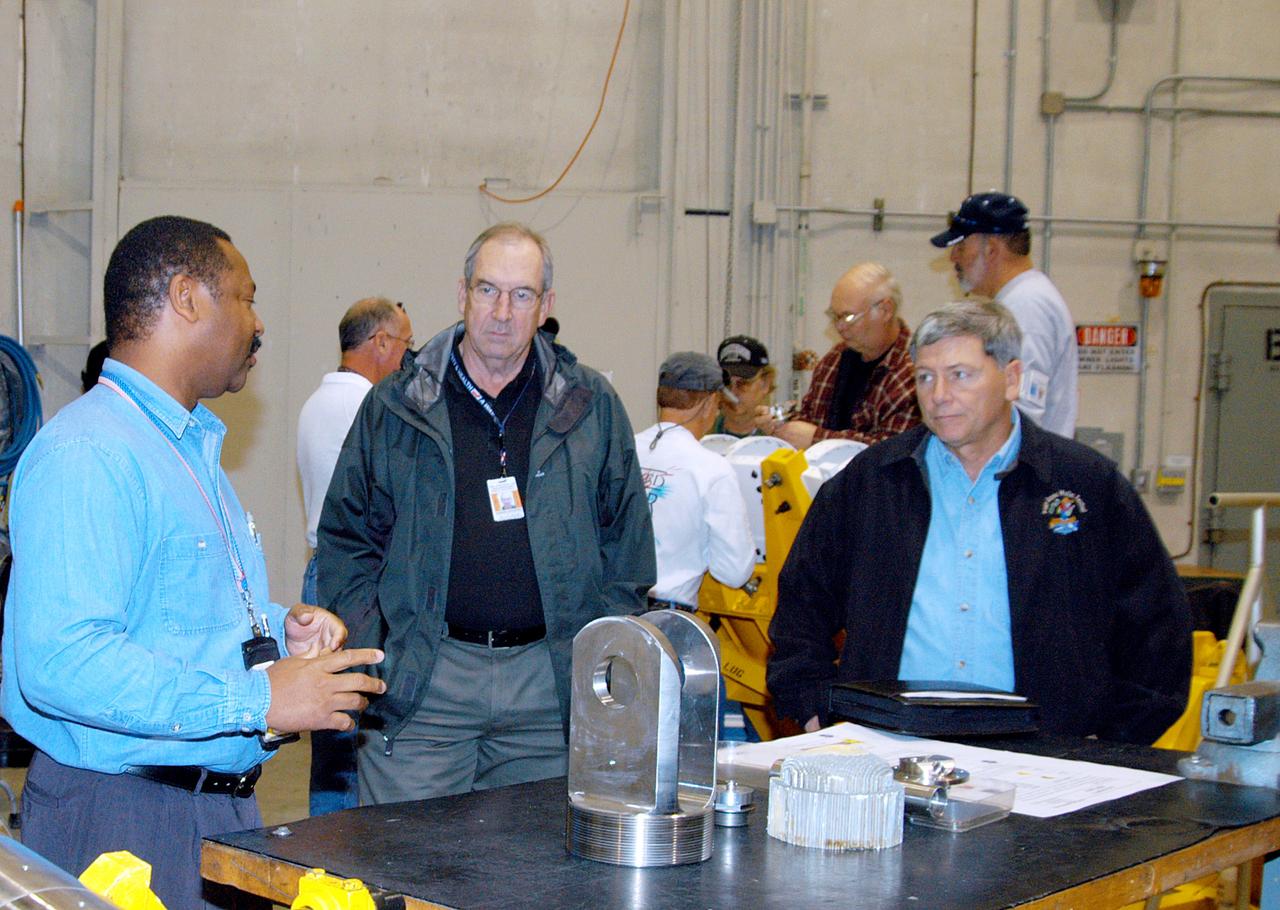
KENNEDY SPACE CENTER, FLA. -- From left, a United Space Alliance (USA) technician discusses aspects of Shuttle processing performed in the Solid Rocket Booster (SRB) Assembly and Refurbishment Facility (ARF) with USA Vice President and Space Shuttle Program Manager Howard DeCastro and NASA Deputy Associate Administrator for Space Station and Shuttle Programs Michael Kostelnik.  NASA and USA Space Shuttle program management are participating in a leadership workday.  The day is intended to provide management with an in-depth, hands-on look at Shuttle processing activities at KSC.
KENNEDY SPACE CENTER, FLA. -- From left, a United Space Alliance (USA) technician discusses aspects of Shuttle processing performed in the Solid Rocket Booster (SRB) Assembly and Refurbishment Facility (ARF) with USA Vice President and Space Shuttle Program Manager Howard DeCastro and NASA Deputy Associate Administrator for Space Station and Shuttle Programs Michael Kostelnik. NASA and USA Space Shuttle program management are participating in a leadership workday. The day is intended to provide management with an in-depth, hands-on look at Shuttle processing activities at KSC.
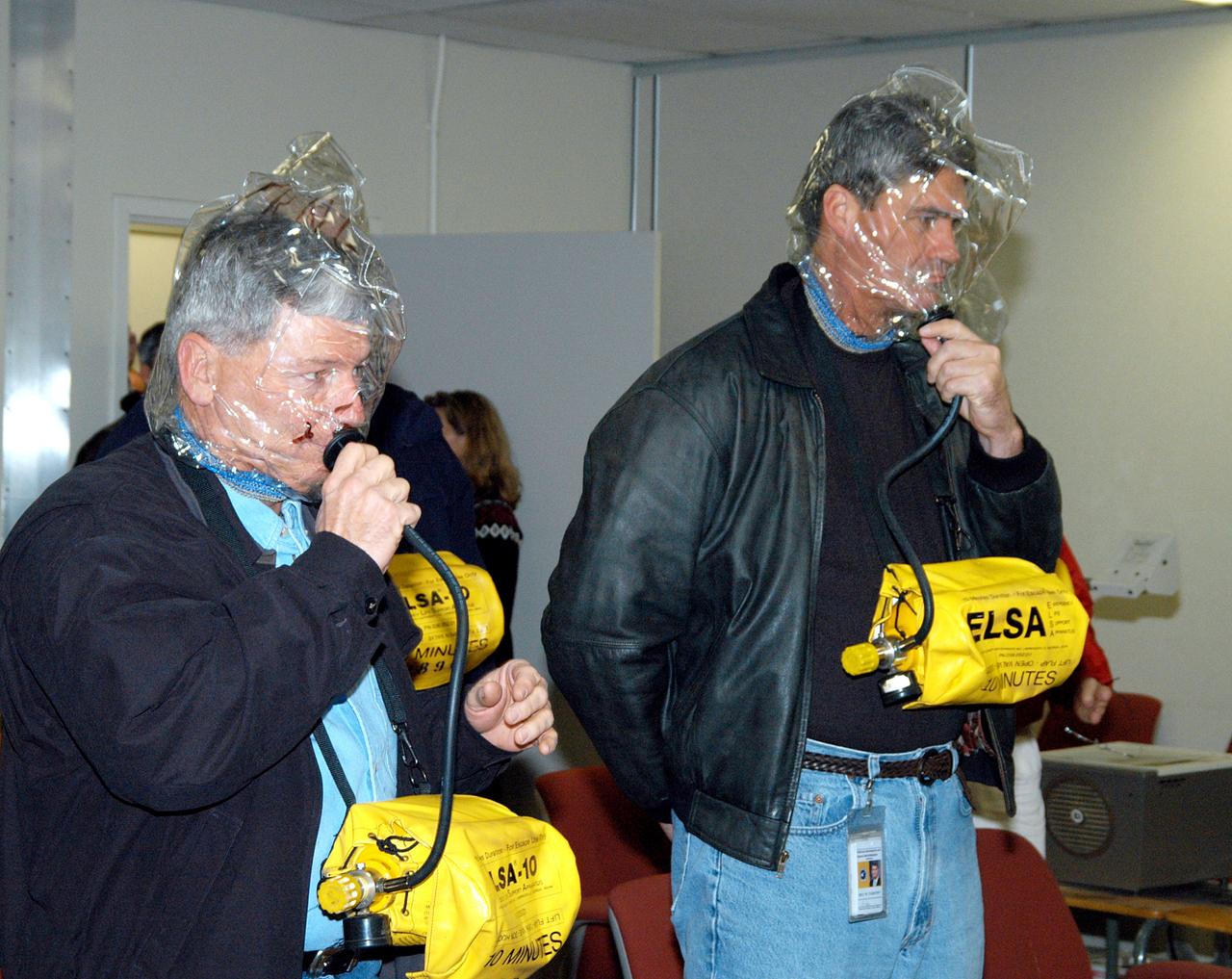
KENNEDY SPACE CENTER, FLA. -- From left, NASA Deputy Associate Administrator for Space Station and Shuttle Programs Michael Kostelnik and NASA Space Shuttle Program Manager William Parsons each don an Emergency Life Support Apparatus (ELSA) during training on the proper use of the escape devices.  NASA and United Space Alliance (USA) Space Shuttle program management are participating in a leadership workday.  The day is intended to provide management with an in-depth, hands-on look at Shuttle processing activities at KSC.
KENNEDY SPACE CENTER, FLA. -- From left, NASA Deputy Associate Administrator for Space Station and Shuttle Programs Michael Kostelnik and NASA Space Shuttle Program Manager William Parsons each don an Emergency Life Support Apparatus (ELSA) during training on the proper use of the escape devices. NASA and United Space Alliance (USA) Space Shuttle program management are participating in a leadership workday. The day is intended to provide management with an in-depth, hands-on look at Shuttle processing activities at KSC.
KENNEDY SPACE CENTER, FLA. -- From front row left, NASA Deputy Associate Administrator for Space Station and Shuttle Programs Michael Kostelnik and NASA Space Shuttle Program Manager William Parsons are trained on the proper use of the Emergency Life Support Apparatus (ELSA).  NASA and United Space Alliance (USA) Space Shuttle program management are participating in a leadership workday.  The day is intended to provide management with an in-depth, hands-on look at Shuttle processing activities at KSC.
KENNEDY SPACE CENTER, FLA. -- From front row left, NASA Deputy Associate Administrator for Space Station and Shuttle Programs Michael Kostelnik and NASA Space Shuttle Program Manager William Parsons are trained on the proper use of the Emergency Life Support Apparatus (ELSA). NASA and United Space Alliance (USA) Space Shuttle program management are participating in a leadership workday. The day is intended to provide management with an in-depth, hands-on look at Shuttle processing activities at KSC.
KENNEDY SPACE CENTER, FLA. -- United Space Alliance (USA) Vice President and Space Shuttle Program Manager Howard DeCastro (left) and NASA Deputy Associate Administrator for Space Station and Shuttle Programs Michael Kostelnik (center) are briefed on the use of a cold plate in Orbiter Processing Facility Bay 2 by a USA technician (right).  NASA and USA Space Shuttle program management are participating in a leadership workday.  The day is intended to provide management with an in-depth, hands-on look at Shuttle processing activities at KSC.
KENNEDY SPACE CENTER, FLA. -- United Space Alliance (USA) Vice President and Space Shuttle Program Manager Howard DeCastro (left) and NASA Deputy Associate Administrator for Space Station and Shuttle Programs Michael Kostelnik (center) are briefed on the use of a cold plate in Orbiter Processing Facility Bay 2 by a USA technician (right). NASA and USA Space Shuttle program management are participating in a leadership workday. The day is intended to provide management with an in-depth, hands-on look at Shuttle processing activities at KSC.
KENNEDY SPACE CENTER, FLA. -  William (Bill) W. Parsons,  named Space Shuttle Program Manager, Johnson Space Center, Houston, in May 2003.
KENNEDY SPACE CENTER, FLA. - William (Bill) W. Parsons, named Space Shuttle Program Manager, Johnson Space Center, Houston, in May 2003.
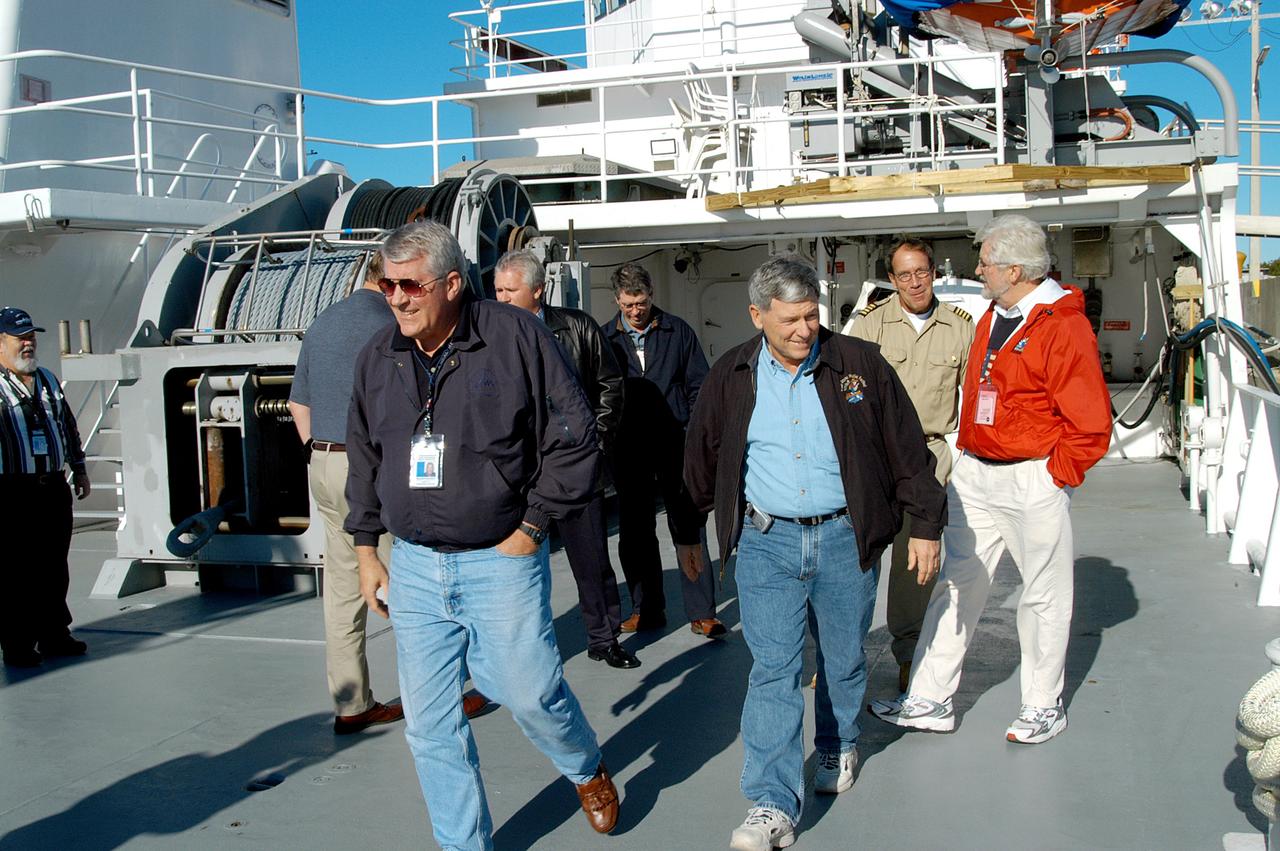
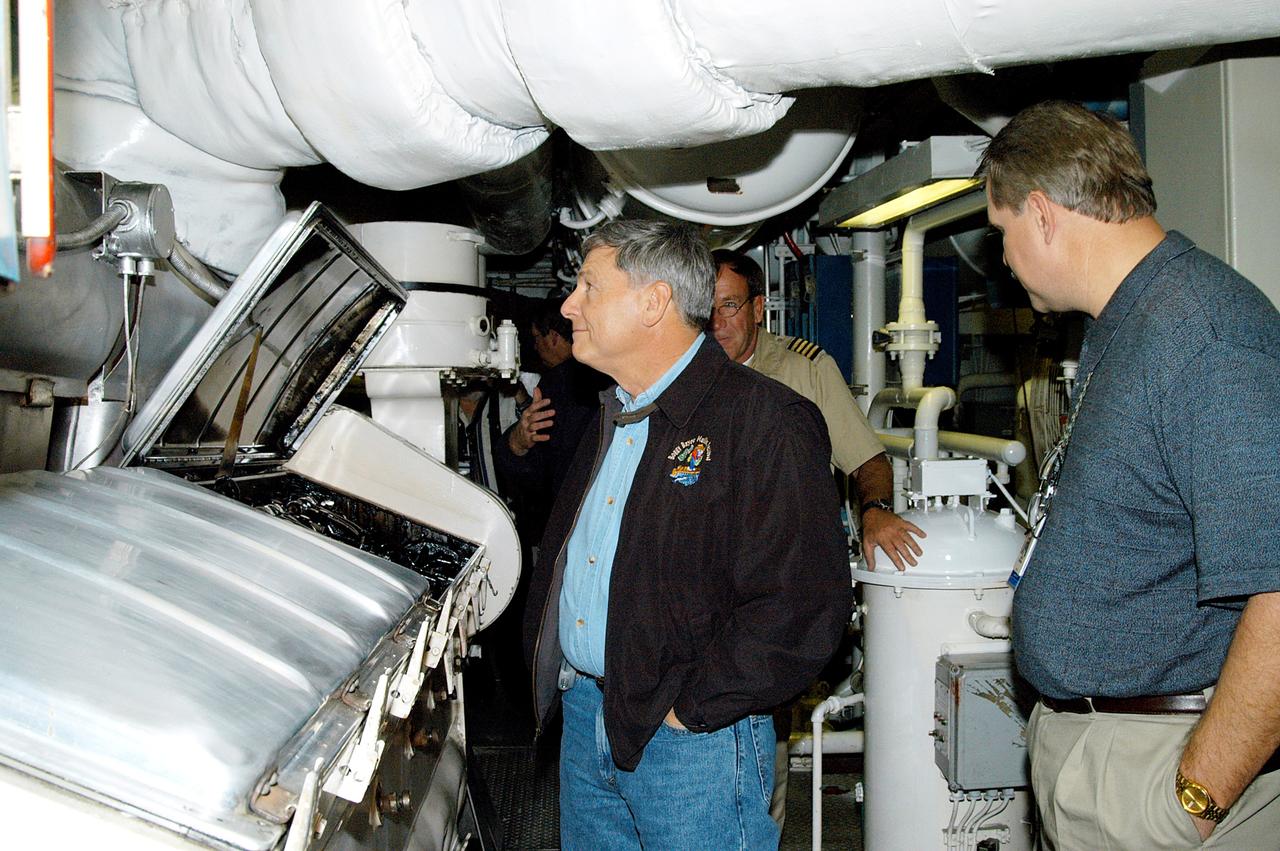
KENNEDY SPACE CENTER, FLA. -- United Space Alliance (USA) Vice President and Associate Program Manager of Florida Operations Bill Pickavance (left front) and NASA Deputy Associate Administrator for Space Station and Shuttle Programs Michael Kostelnik (right front) tour a solid rocket booster (SRB) retrieval ship at Cape Canaveral.  NASA and USA Space Shuttle program management are participating in a leadership workday.  The day is intended to provide management with an in-depth, hands-on look at Shuttle processing activities at KSC.
KENNEDY SPACE CENTER, FLA. -- United Space Alliance (USA) Vice President and Associate Program Manager of Florida Operations Bill Pickavance (left front) and NASA Deputy Associate Administrator for Space Station and Shuttle Programs Michael Kostelnik (right front) tour a solid rocket booster (SRB) retrieval ship at Cape Canaveral. NASA and USA Space Shuttle program management are participating in a leadership workday. The day is intended to provide management with an in-depth, hands-on look at Shuttle processing activities at KSC.
KENNEDY SPACE CENTER, FLA. -- United Space Alliance (USA) Manager of the Thermal Protection System (TPS) Facility Martin Wilson (right) briefs NASA Deputy Associate Administrator for Space Station and Shuttle Programs Michael Kostelnik (left) on the properties of a thermal blanket used in the Shuttle's TPS.  NASA and USA Space Shuttle program management are participating in a leadership workday.  The day is intended to provide management with an in-depth, hands-on look at Shuttle processing activities at KSC.
KENNEDY SPACE CENTER, FLA. -- United Space Alliance (USA) Manager of the Thermal Protection System (TPS) Facility Martin Wilson (right) briefs NASA Deputy Associate Administrator for Space Station and Shuttle Programs Michael Kostelnik (left) on the properties of a thermal blanket used in the Shuttle's TPS. NASA and USA Space Shuttle program management are participating in a leadership workday. The day is intended to provide management with an in-depth, hands-on look at Shuttle processing activities at KSC.
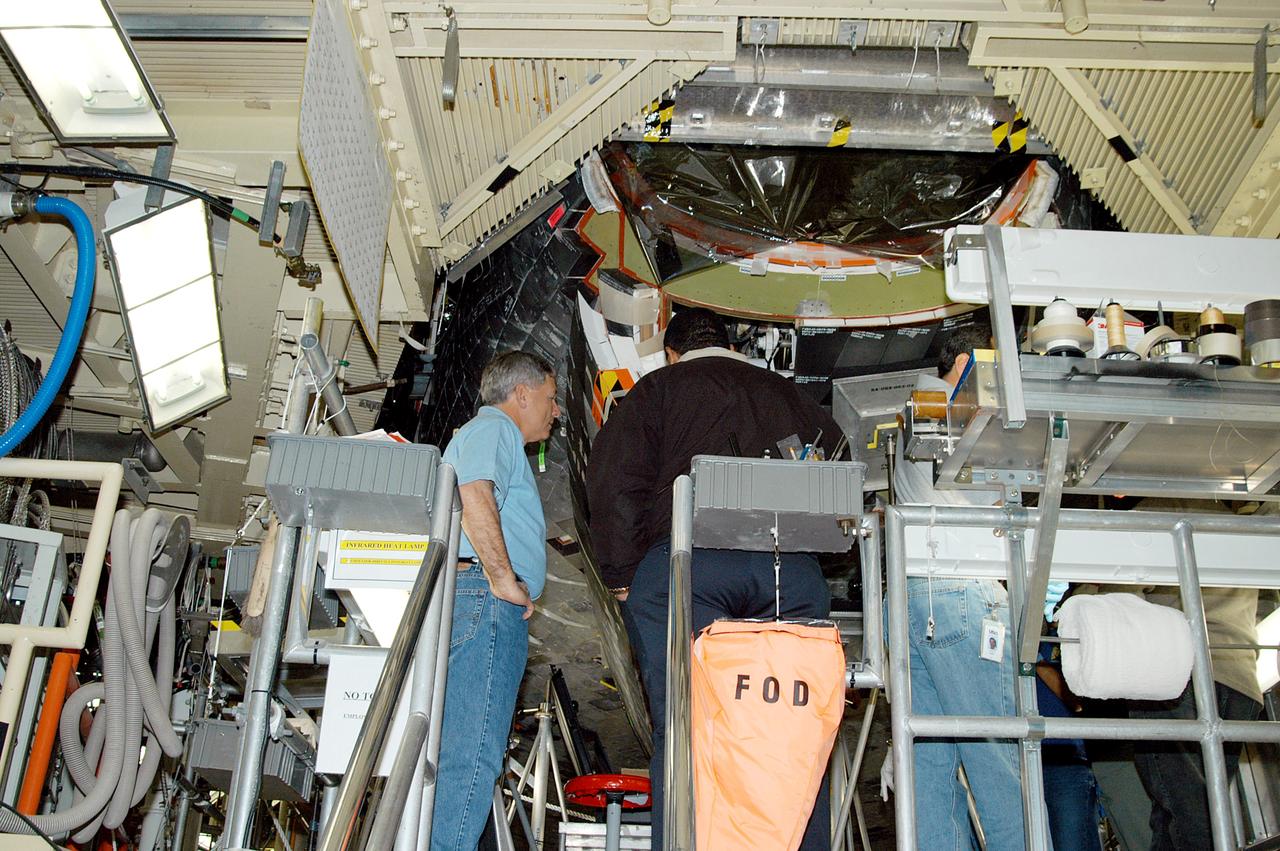
KENNEDY SPACE CENTER, FLA. -- NASA Deputy Associate Administrator for Space Station and Shuttle Programs Michael Kostelnik (left) discusses some of the working parts inside the nose of Shuttle Discovery in Orbiter Processing Facility Bay 3 with a United Space Alliance (USA) technician (back to camera).  NASA and USA Space Shuttle program management are participating in a leadership workday.  The day is intended to provide management with an in-depth, hands-on look at Shuttle processing activities at KSC.
KENNEDY SPACE CENTER, FLA. -- NASA Deputy Associate Administrator for Space Station and Shuttle Programs Michael Kostelnik (left) discusses some of the working parts inside the nose of Shuttle Discovery in Orbiter Processing Facility Bay 3 with a United Space Alliance (USA) technician (back to camera). NASA and USA Space Shuttle program management are participating in a leadership workday. The day is intended to provide management with an in-depth, hands-on look at Shuttle processing activities at KSC.
KENNEDY SPACE CENTER, FLA. -- A United Space Alliance (USA) technician (center) discusses aspects of Shuttle processing performed in the Solid Rocket Booster (SRB) Assembly and Refurbishment Facility (ARF) with NASA Deputy Associate Administrator for Space Station and Shuttle Programs Michael Kostelnik (right).  NASA and USA Space Shuttle program management are participating in a leadership workday.  The day is intended to provide management with an in-depth, hands-on look at Shuttle processing activities at KSC.
KENNEDY SPACE CENTER, FLA. -- A United Space Alliance (USA) technician (center) discusses aspects of Shuttle processing performed in the Solid Rocket Booster (SRB) Assembly and Refurbishment Facility (ARF) with NASA Deputy Associate Administrator for Space Station and Shuttle Programs Michael Kostelnik (right). NASA and USA Space Shuttle program management are participating in a leadership workday. The day is intended to provide management with an in-depth, hands-on look at Shuttle processing activities at KSC.
KENNEDY SPACE CENTER, FLA. -- NASA Deputy Associate Administrator for Space Station and Shuttle Programs Michael Kostelnik (top) discusses the inner workings of Shuttle Atlantis in Orbiter Processing Facility Bay 1 with a United Space Alliance (USA) technician (bottom).  NASA and USA Space Shuttle program management are participating in a leadership workday.  The day is intended to provide management with an in-depth, hands-on look at Shuttle processing activities at KSC.
KENNEDY SPACE CENTER, FLA. -- NASA Deputy Associate Administrator for Space Station and Shuttle Programs Michael Kostelnik (top) discusses the inner workings of Shuttle Atlantis in Orbiter Processing Facility Bay 1 with a United Space Alliance (USA) technician (bottom). NASA and USA Space Shuttle program management are participating in a leadership workday. The day is intended to provide management with an in-depth, hands-on look at Shuttle processing activities at KSC.
KENNEDY SPACE CENTER, FLA. -- NASA Deputy Associate Administrator for Space Station and Shuttle Programs Michael Kostelnik (right) discusses a speed brake on Shuttle Discovery in Orbiter Processing Facility Bay 3 with a United Space Alliance (USA) technician (left).  NASA and USA Space Shuttle program management are participating in a leadership workday.  The day is intended to provide management with an in-depth, hands-on look at Shuttle processing activities at KSC.
KENNEDY SPACE CENTER, FLA. -- NASA Deputy Associate Administrator for Space Station and Shuttle Programs Michael Kostelnik (right) discusses a speed brake on Shuttle Discovery in Orbiter Processing Facility Bay 3 with a United Space Alliance (USA) technician (left). NASA and USA Space Shuttle program management are participating in a leadership workday. The day is intended to provide management with an in-depth, hands-on look at Shuttle processing activities at KSC.
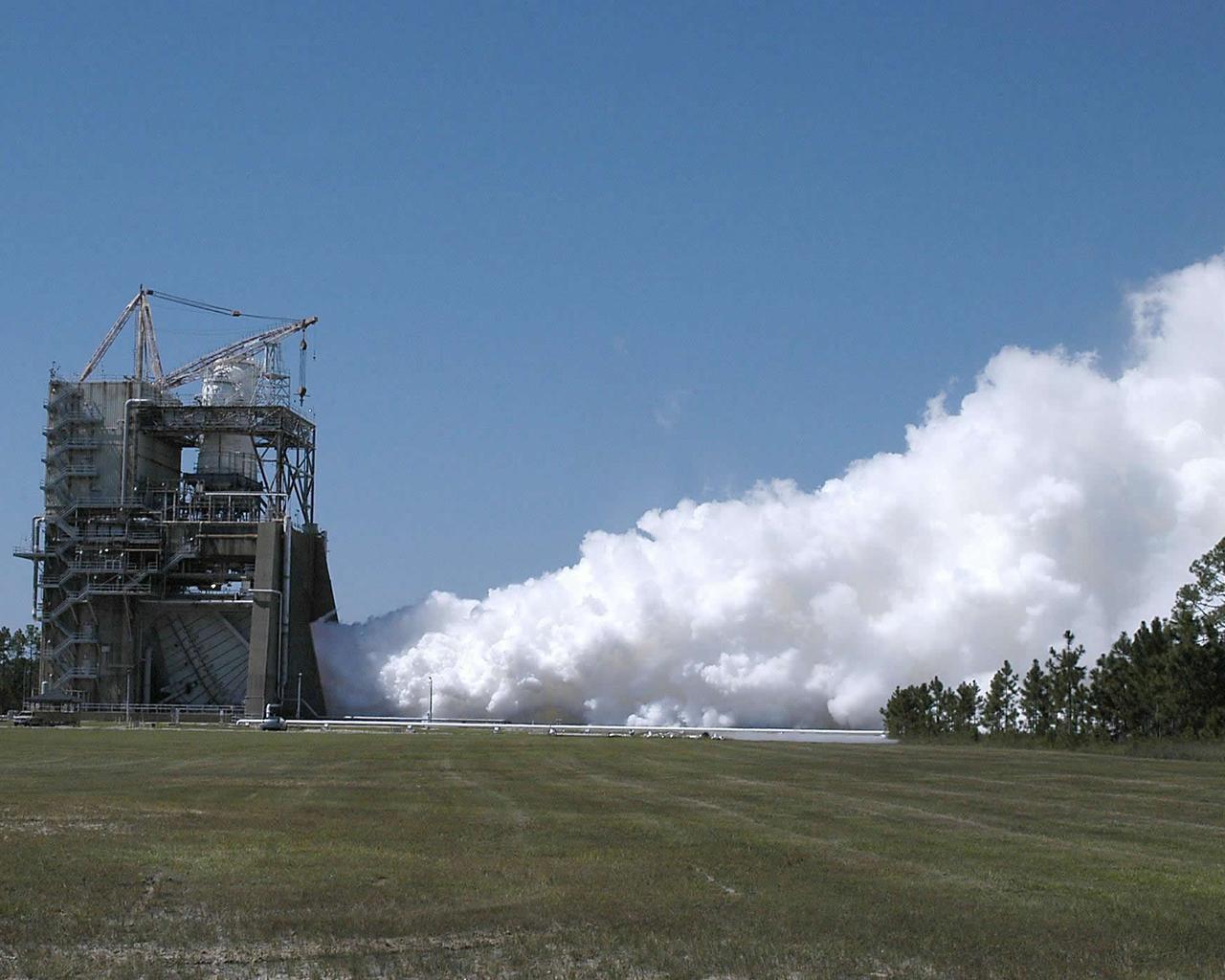
The Stennis Space Center conducted the final space shuttle main engine test on its A-1 Test Stand Friday. The A-1 Test Stand was the site of the first test on a shuttle main engine in 1975. Stennis will continue testing shuttle main engines on its A-2 Test Stand through the end of the Space Shuttle Program in 2010. The A-1 stand begins a new chapter in its operational history in October. It will be temporarily decommissioned to convert it for testing the J-2X engine, which will power the upper stage of NASA's new crew launch vehicle, the Ares I. Although this ends the stand's work on the Space Shuttle Program, it will soon be used for the rocket that will carry America's next generation human spacecraft, Orion.
Last SSME test on A-1
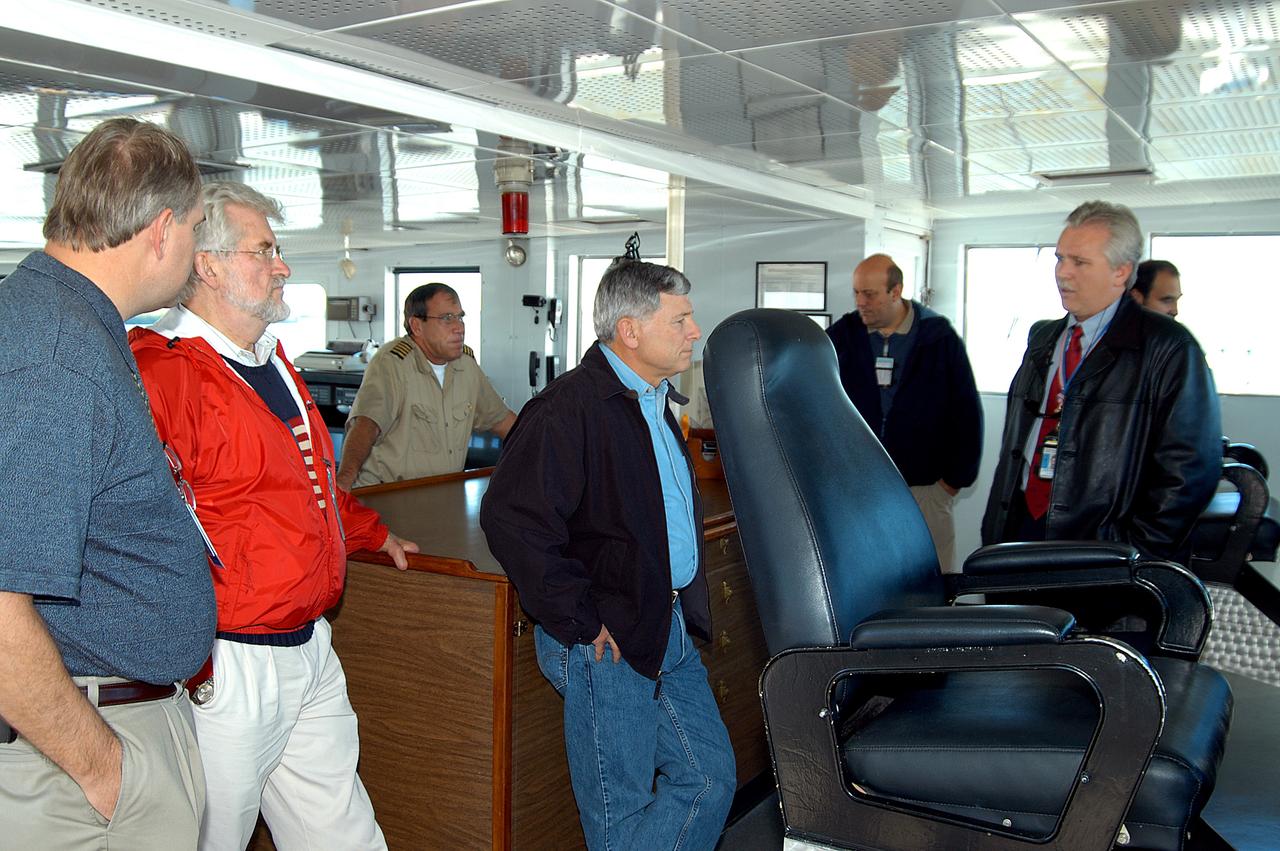
KENNEDY SPACE CENTER, FLA. -- NASA Deputy Associate Administrator for Space Station and Shuttle Programs Michael Kostelnik (center) is given a tour of a solid rocket booster (SRB) retrieval ship by United Space Alliance (USA) employee Joe Chaput (right).  NASA and USA Space Shuttle program management are participating in a leadership workday.  The day is intended to provide management with an in-depth, hands-on look at Shuttle processing activities at KSC.
KENNEDY SPACE CENTER, FLA. -- NASA Deputy Associate Administrator for Space Station and Shuttle Programs Michael Kostelnik (center) is given a tour of a solid rocket booster (SRB) retrieval ship by United Space Alliance (USA) employee Joe Chaput (right). NASA and USA Space Shuttle program management are participating in a leadership workday. The day is intended to provide management with an in-depth, hands-on look at Shuttle processing activities at KSC.
KENNEDY SPACE CENTER, FLA. -- NASA Deputy Associate Administrator for Space Station and Shuttle Programs Michael Kostelnik (left) tours a solid rocket booster (SRB) retrieval ship at Cape Canaveral.  NASA and United Space Alliance (USA) Space Shuttle program management are participating in a leadership workday.  The day is intended to provide management with an in-depth, hands-on look at Shuttle processing activities at KSC.
KENNEDY SPACE CENTER, FLA. -- NASA Deputy Associate Administrator for Space Station and Shuttle Programs Michael Kostelnik (left) tours a solid rocket booster (SRB) retrieval ship at Cape Canaveral. NASA and United Space Alliance (USA) Space Shuttle program management are participating in a leadership workday. The day is intended to provide management with an in-depth, hands-on look at Shuttle processing activities at KSC.
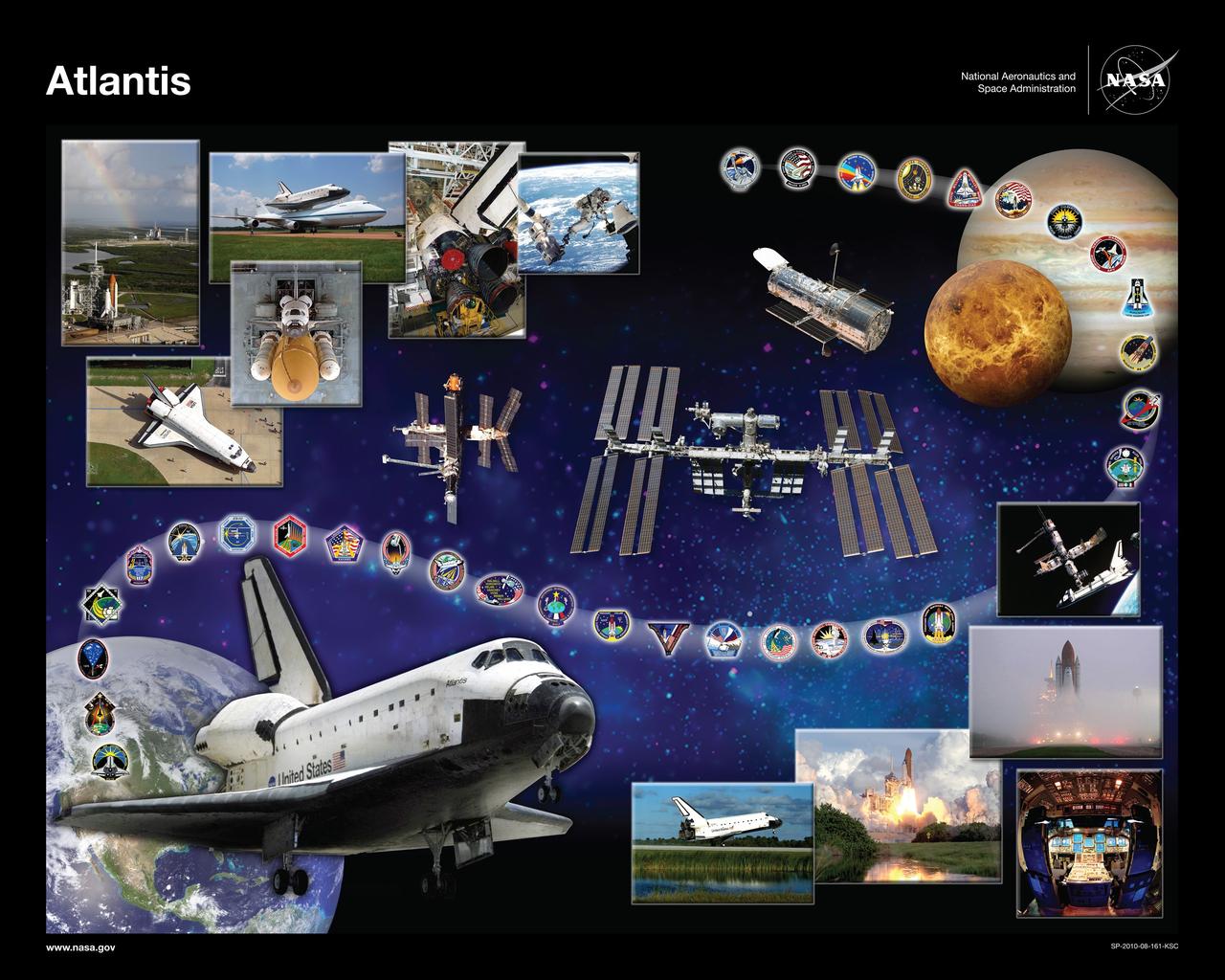
CAPE CANAVERAL, Fla. -- This is a printable version of space shuttle Atlantis' orbiter tribute, or OV-104, which hangs in Firing Room 4 of the Launch Control Center at NASA's Kennedy Space Center in Florida. In the lower-left corner, it features Atlantis soaring above Earth and threaded through the design are the mission patches for each of Atlantis’ flights. Atlantis' accomplishments include seven missions to the Russian space station Mir and several assembly, construction and resupply missions to the International Space Station. Atlantis also flew the last Hubble Space Telescope servicing mission on STS-125. In the tribute, the planet Venus represents the Magellan probe being deployed during STS-30, and Jupiter represents the Galileo probe being deployed during STS-34. The inset photos illustrate various aspects of shuttle processing as well as significant achievements, such as the glass cockpit and the first shuttle docking with Mir during STS-71. The inset photo in the upper-left corner shows a rainbow over Atlantis on Launch Pad 39A and shuttle Endeavour on Launch Pad 39B at Kennedy. Endeavour was the assigned vehicle had Atlantis’ STS-125 mission needed rescue, and this was the last time both launch pads were occupied at the same time. The stars in the background represent the many people who have worked with Atlantis and their contributions to the vehicle’s success. Graphic design credit: NASA/Amy Lombardo. NASA publication number: SP-2010-08-161-KSC
KSC-2010-4450B
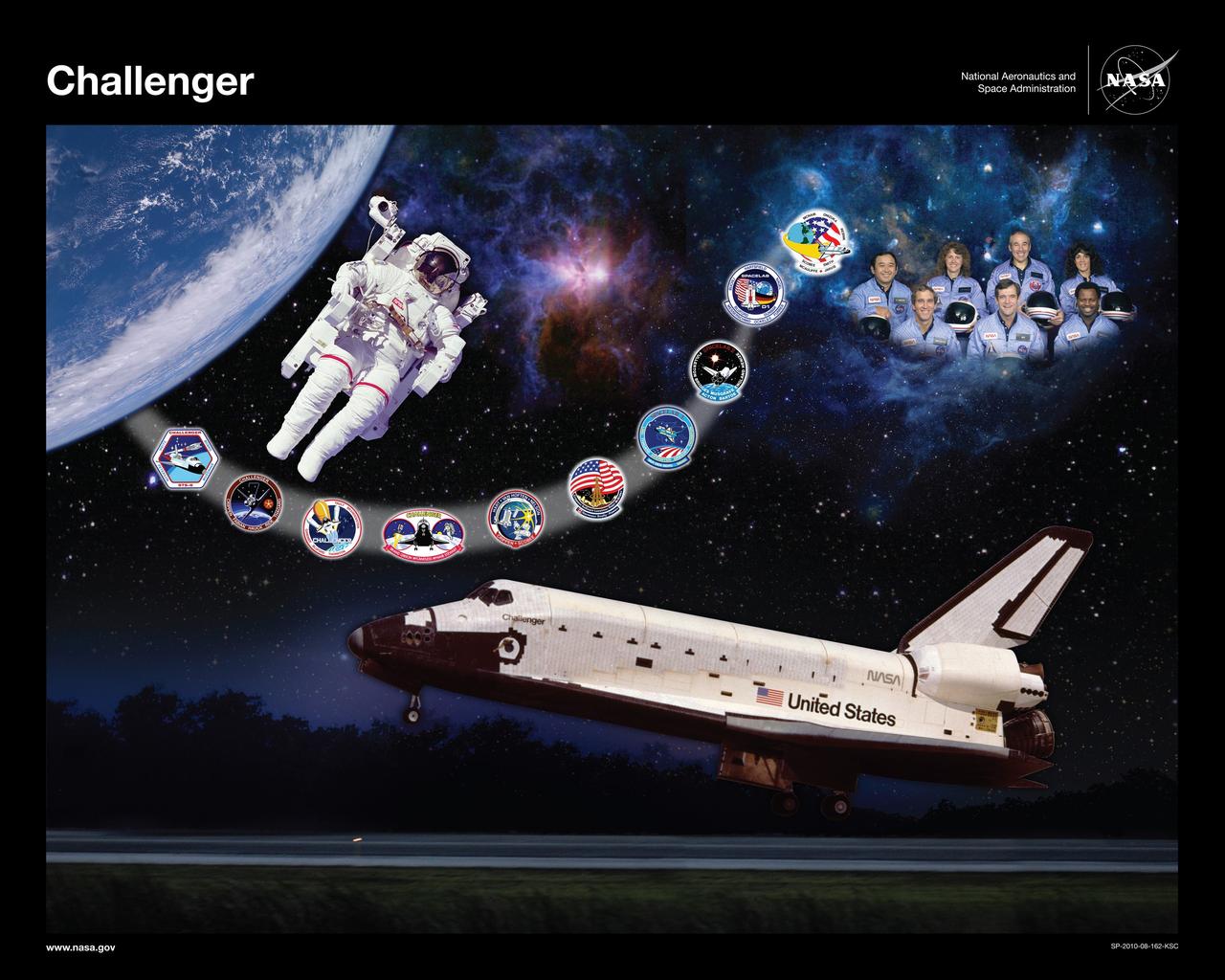
CAPE CANAVERAL, Fla. -- This is a printable version of space shuttle Challenger's orbiter tribute, or OV-099, which hangs in Firing Room 4 of the Launch Control Center at NASA's Kennedy Space Center in Florida. Challenger's accomplishments include the first night launch and first African-American in space, Guion Bluford, on STS-8, the first in-flight capture, repair and redeployment of an orbiting satellite during STS-41C, the first American woman in space, Sally Ride, on STS-7, and the first American woman to walk in space, Kathryn Sullivan, during STS-41G. Challenger is credited with blazing a trail for NASA's other orbiters with the first night landing at Edwards Air Force Base in California on STS-8 and the first landing at Kennedy on STS-41B. The spacewalker in the tribute represents Challenger’s role in the first spacewalk during STS-6 and the first untethered spacewalk on STS-41B. Crew-designed patches for each of Challenger’s missions lead from Earth toward a remembrance of the STS-51L crew, which was lost 73 seconds after liftoff on Jan. 28, 1986. Five orbiter tributes are on display in the firing room, representing Atlantis, Challenger, Columbia, Endeavour and Discovery. Graphic design credit: NASA/Lynda Brammer. NASA publication number: SP-2010-08-162-KSC
KSC-2010-4451B
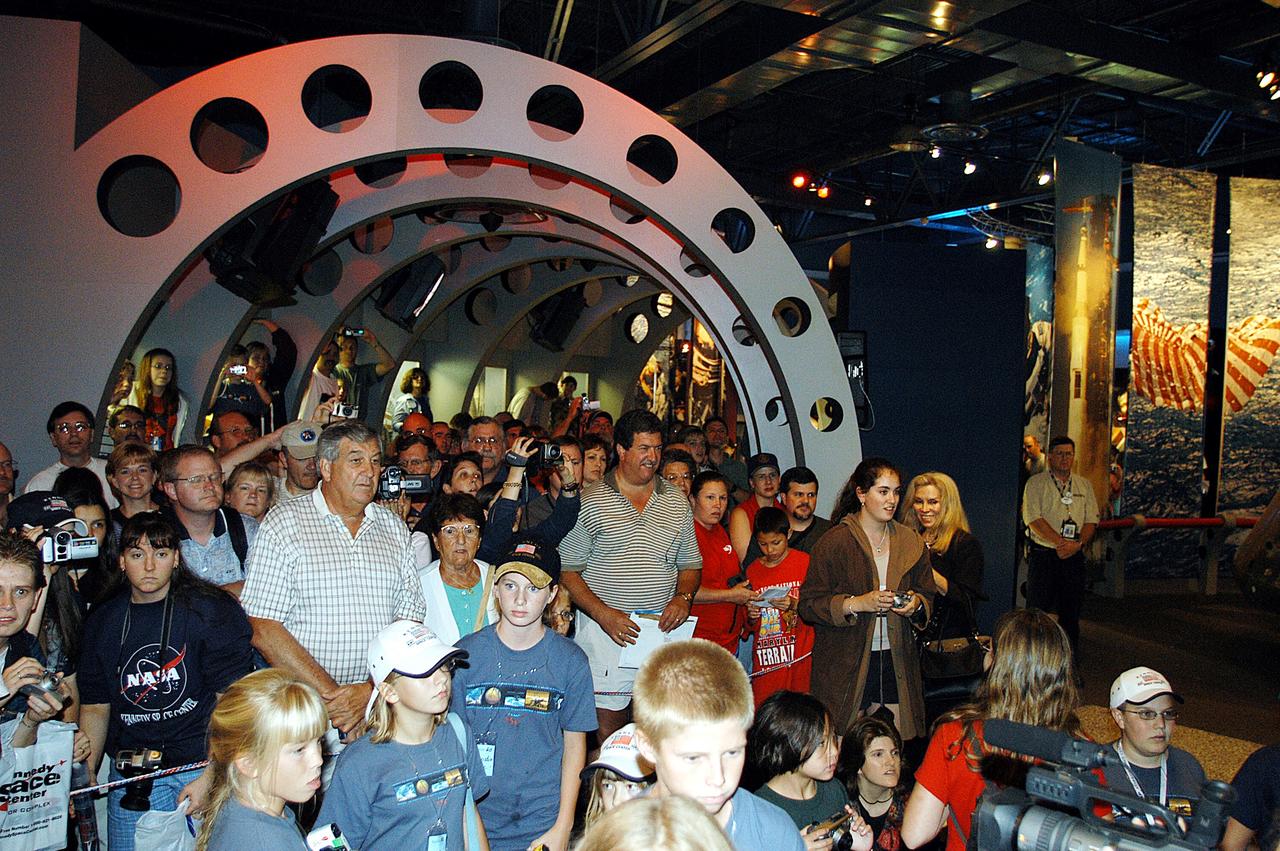
KENNEDY SPACE CENTER, FLA. -  Hundreds of guests attend a ribbon cutting ceremony officially opening the U.S. Astronaut Hall of Fame as part of the Kennedy Space Center Visitor Complex. The ceremony was held in conjunction with the induction of four Space Shuttle astronauts into the Hall of Fame including Daniel Brandenstein, Robert "Hoot" Gibson, Story Musgrave, and Sally Ride. Conceived by six of the Mercury Program astronauts, the U.S. Astronaut Hall of Fame opened in 1990 to provide a place where space travelers could be remembered for their participation and accomplishments in the U.S. space program. The four new inductees join 48 previously honored astronauts from the ranks of the Gemini, Apollo, Skylab, Apollo-Soyuz, and Space Shuttle programs.
KENNEDY SPACE CENTER, FLA. - Hundreds of guests attend a ribbon cutting ceremony officially opening the U.S. Astronaut Hall of Fame as part of the Kennedy Space Center Visitor Complex. The ceremony was held in conjunction with the induction of four Space Shuttle astronauts into the Hall of Fame including Daniel Brandenstein, Robert "Hoot" Gibson, Story Musgrave, and Sally Ride. Conceived by six of the Mercury Program astronauts, the U.S. Astronaut Hall of Fame opened in 1990 to provide a place where space travelers could be remembered for their participation and accomplishments in the U.S. space program. The four new inductees join 48 previously honored astronauts from the ranks of the Gemini, Apollo, Skylab, Apollo-Soyuz, and Space Shuttle programs.
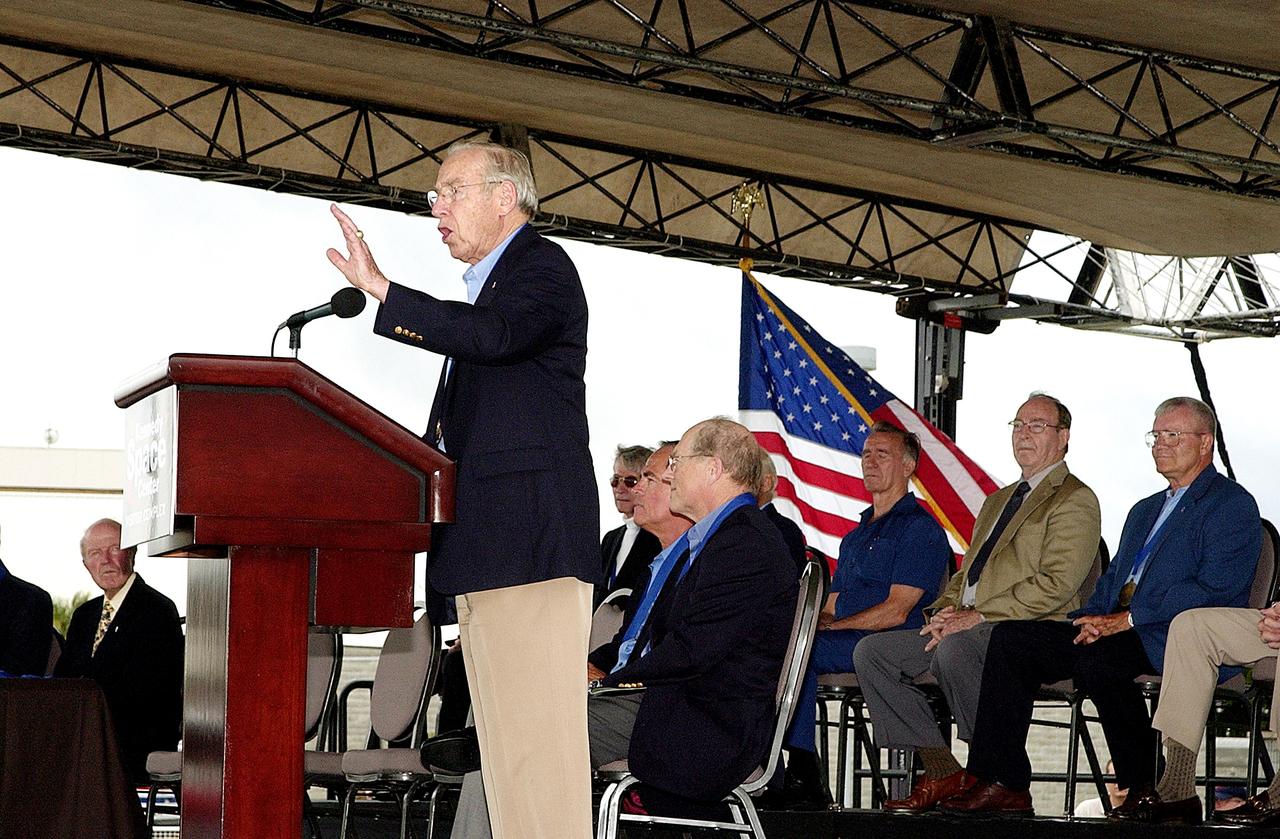
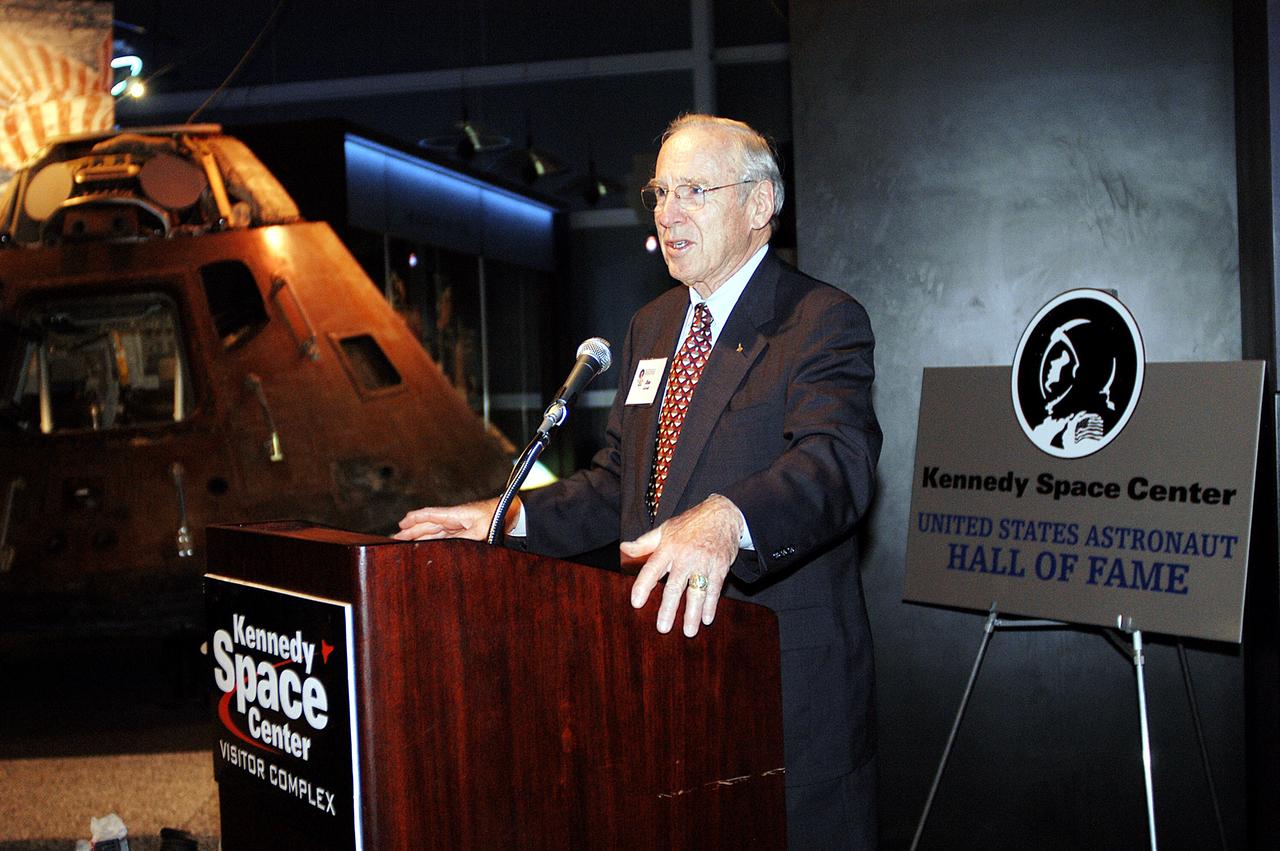
KENNEDY SPACE CENTER, FLA. -  At the KSC Visitor Complex, former astronaut James Lovell makes the opening remarks at the induction ceremony of four Space Shuttle astronauts into the U.S. Astronaut Hall of Fame. Being inducted are Daniel Brandenstein, Robert "Hoot" Gibson, Story Musgrave, and Sally Ride. Conceived by six of the Mercury Program astronauts, the U.S. Astronaut Hall of Fame opened in 1990 to provide a place where space travelers could be remembered for their participation and accomplishments in the U.S. space program. The four new inductees join 48 previously honored astronauts from the ranks of the Gemini, Apollo, Skylab, Apollo-Soyuz, and Space Shuttle programs.
KENNEDY SPACE CENTER, FLA. - At the KSC Visitor Complex, former astronaut James Lovell makes the opening remarks at the induction ceremony of four Space Shuttle astronauts into the U.S. Astronaut Hall of Fame. Being inducted are Daniel Brandenstein, Robert "Hoot" Gibson, Story Musgrave, and Sally Ride. Conceived by six of the Mercury Program astronauts, the U.S. Astronaut Hall of Fame opened in 1990 to provide a place where space travelers could be remembered for their participation and accomplishments in the U.S. space program. The four new inductees join 48 previously honored astronauts from the ranks of the Gemini, Apollo, Skylab, Apollo-Soyuz, and Space Shuttle programs.
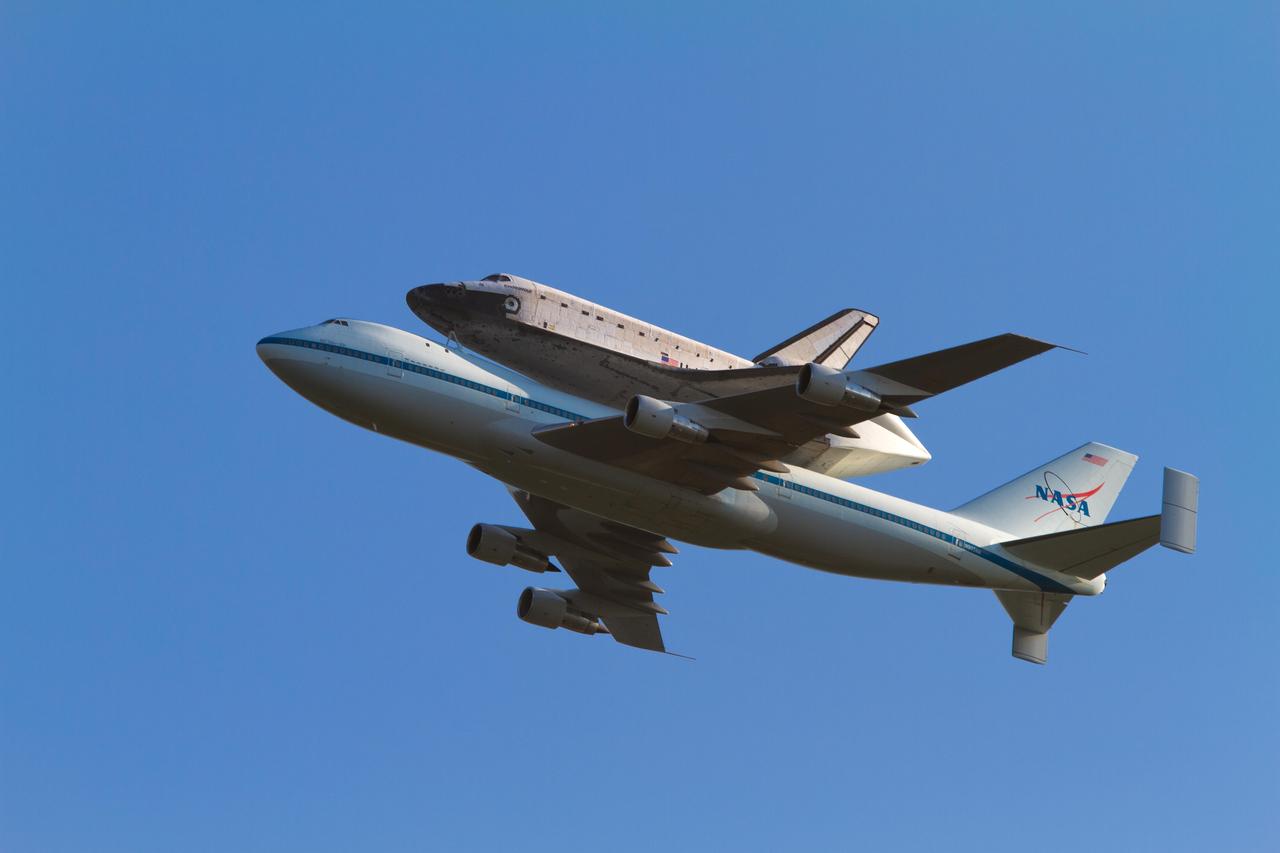
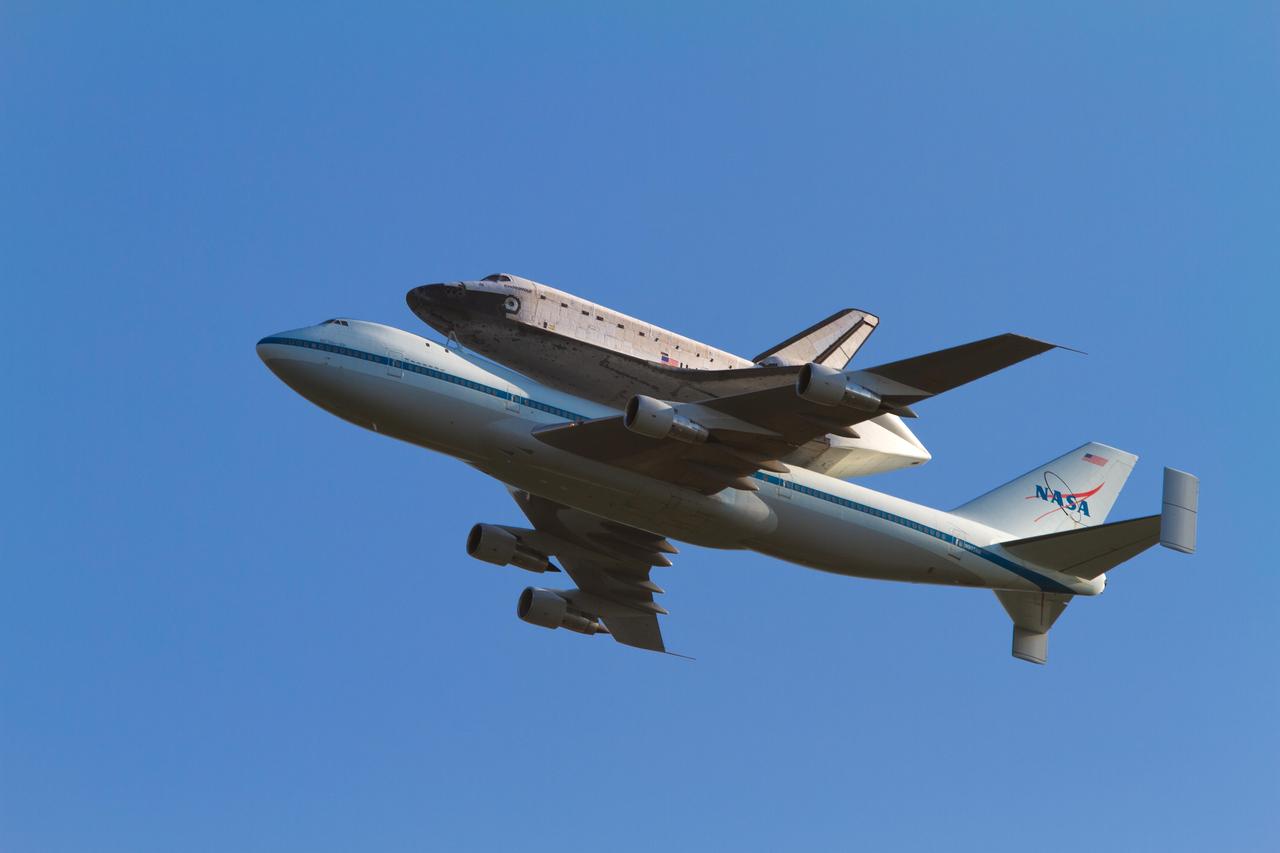
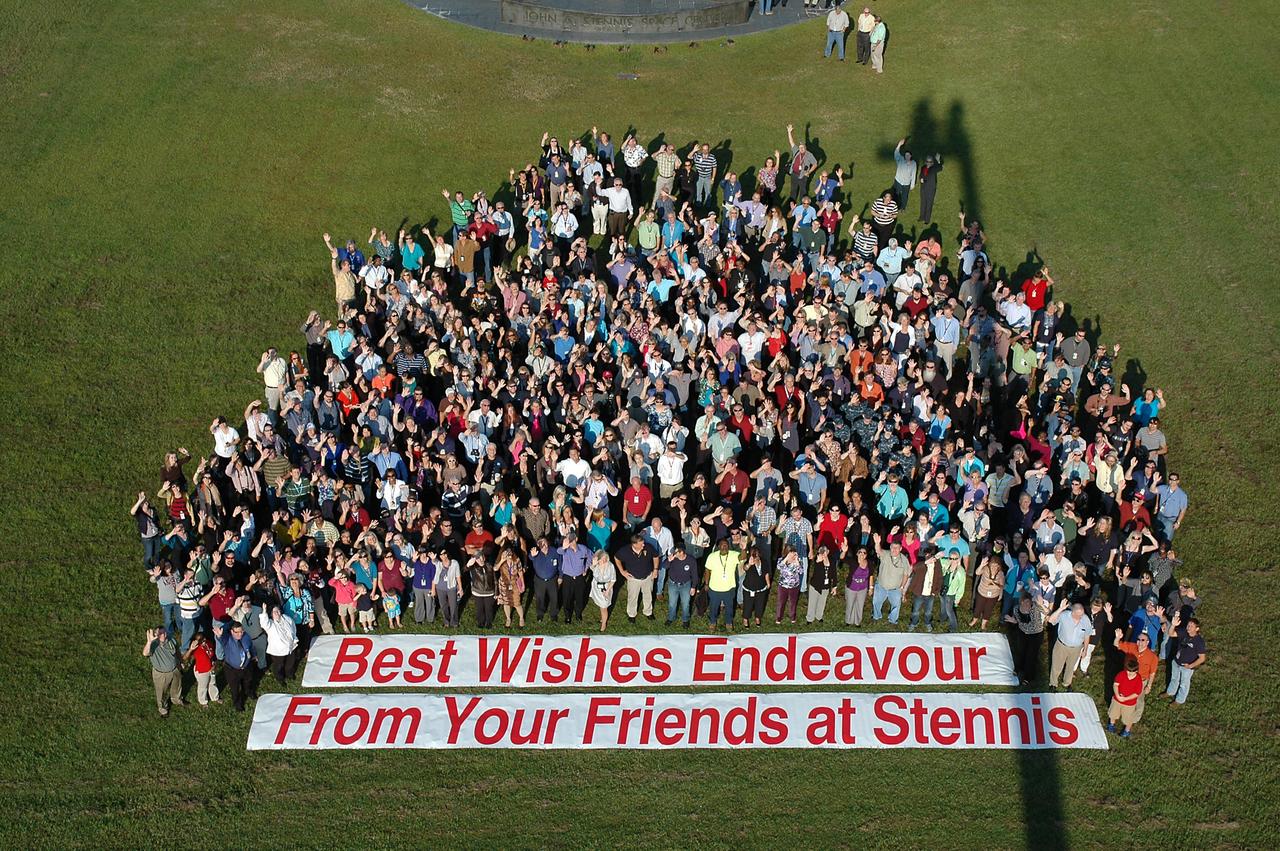
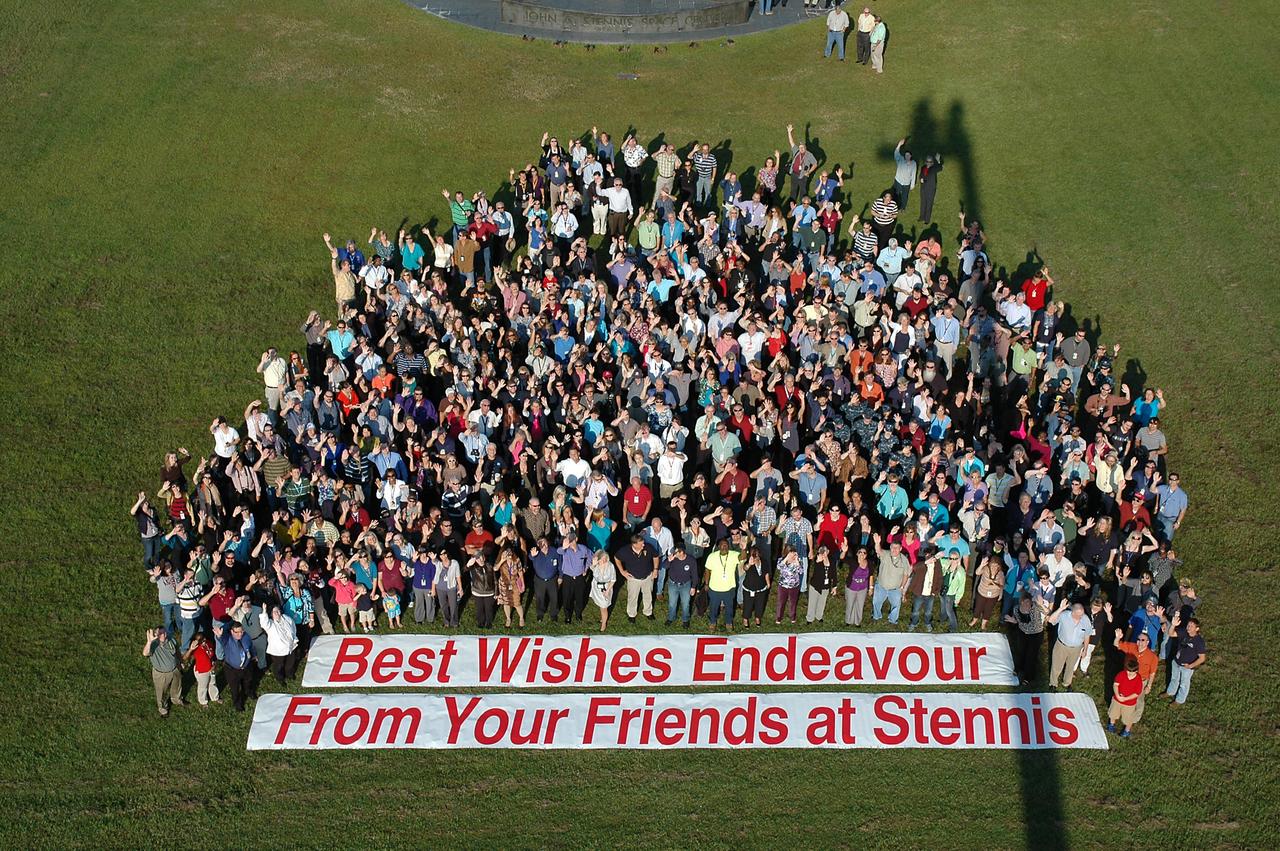
Space shuttle Endeavour embarked on the first leg of its final flight Sept. 19, departing Kennedy Space Center in Florida and making early-morning flyover visits to Stennis Space Center in Mississippi and nearby Michoud Assembly Facility in Louisiana. The shuttle flew atop the 747 Shuttle Carrier Aircraft, headed west, where it will go on display at the California Science Center in Los Angeles. The flight crew coordinated with the Federal Aviation Administration to conduct low-level flyovers at about 1,500 feet above Stennis and Michoud.
Shuttle flyover
Stennis Space Center employees turned out in force to cheer space shuttle Endeavour as it flew low over the rocket engine test facility early on the morning of Sept. 19. The shuttle is headed to Los Angeles, where it will be on display at the California Science Center. Stennis employees applauded and cheered as the retired shuttle passed low overhead. In addition to those gathered on the lawn in front of the Roy S. Estess Building, many congregated on building rooftops and on facility test stands to view the flyover.
Shuttle flyover
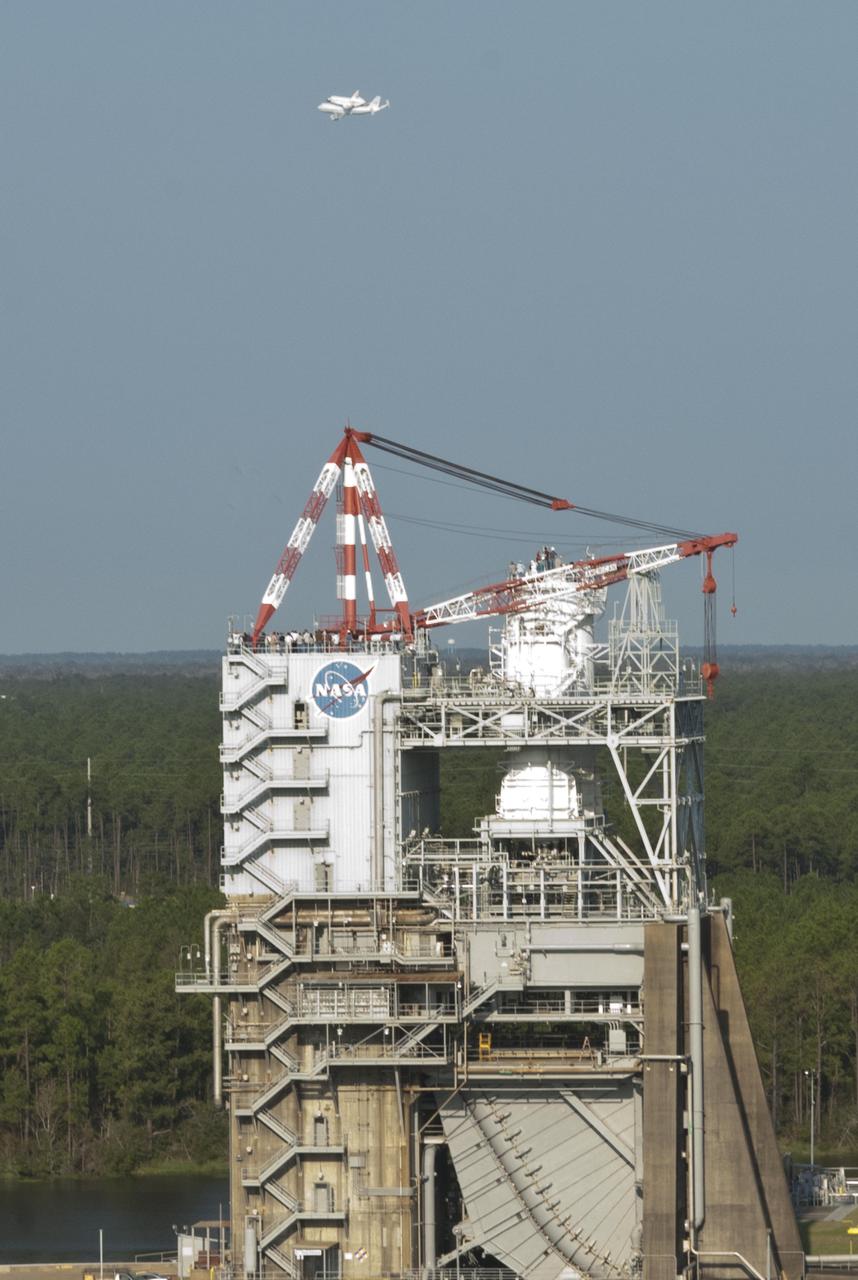
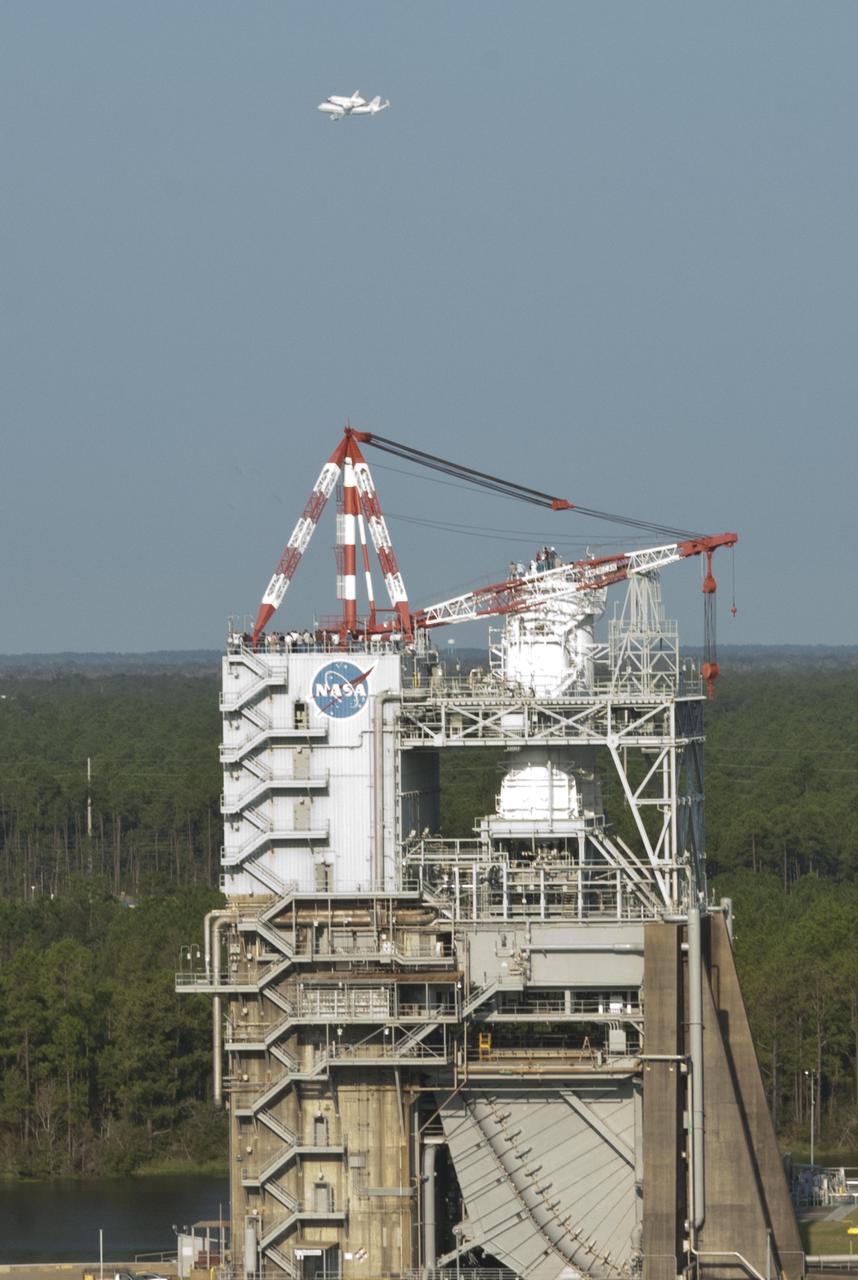
Space shuttle Endeavour made an early-morning flyover Stennis space Center on Sept. 19, en route to Los Angeles, where it will be displayed at the California Science Center. Employees viewed the low-level flyover from various locations, including atop the facility test stands. In this photo, employees watch as the shuttle is ferried above the A-1 Test Stand.
Shuttle flyover
Stennis Space Center employees turned out in force to cheer space shuttle Endeavour as it flew low over the rocket engine test facility early on the morning of Sept. 19. The shuttle is headed to Los Angeles, where it will be on display at the California Science Center. Stennis employees applauded and cheered as the retired shuttle passed low overhead. In addition to those gathered on the lawn in front of the Roy S. Estess Building, many congregated on building rooftops and on facility test stands to view the flyover.
Shuttle flyover
Space shuttle Endeavour embarked on the first leg of its final flight Sept. 19, departing Kennedy Space Center in Florida and making early-morning flyover visits to Stennis Space Center in Mississippi and nearby Michoud Assembly Facility in Louisiana. The shuttle flew atop the 747 Shuttle Carrier Aircraft, headed west, where it will go on display at the California Science Center in Los Angeles. The flight crew coordinated with the Federal Aviation Administration to conduct low-level flyovers at about 1,500 feet above Stennis and Michoud.
Shuttle flyover
Space shuttle Endeavour made an early-morning flyover Stennis space Center on Sept. 19, en route to Los Angeles, where it will be displayed at the California Science Center. Employees viewed the low-level flyover from various locations, including atop the facility test stands. In this photo, employees watch as the shuttle is ferried above the A-1 Test Stand.
Shuttle flyover
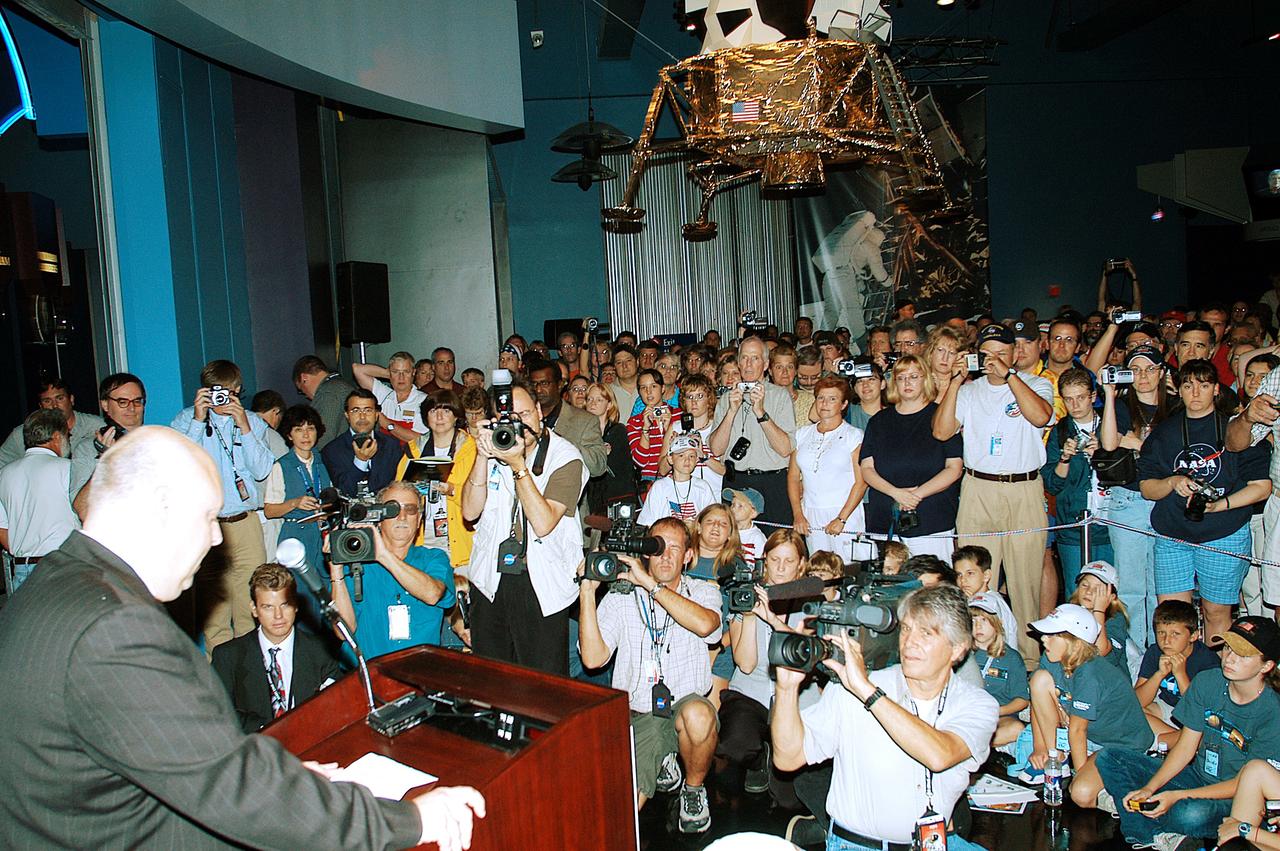
KENNEDY SPACE CENTER, FLA. -  Daniel LeBlanc, chief operating officer of Delaware North Companies Parks and Resorts at KSC, makes the opening remarks to hundreds of guests and media representatives attending a ribbon cutting ceremony officially opening the U.S. Astronaut Hall of Fame as part of the Kennedy Space Center Visitor Complex.  The ceremony was held in conjunction with the induction of four Space Shuttle astronauts into the Hall of Fame including Daniel Brandenstein, Robert "Hoot" Gibson, Story Musgrave, and Sally Ride.  Conceived by six of the Mercury Program astronauts, the U.S. Astronaut Hall of Fame opened in 1990 to provide a place where space travelers could be remembered for their participation and accomplishments in the U.S. space program.  The four new inductees join 48 previously honored astronauts from the ranks of the Gemini, Apollo, Skylab, Apollo-Soyuz, and Space Shuttle programs.
KENNEDY SPACE CENTER, FLA. - Daniel LeBlanc, chief operating officer of Delaware North Companies Parks and Resorts at KSC, makes the opening remarks to hundreds of guests and media representatives attending a ribbon cutting ceremony officially opening the U.S. Astronaut Hall of Fame as part of the Kennedy Space Center Visitor Complex. The ceremony was held in conjunction with the induction of four Space Shuttle astronauts into the Hall of Fame including Daniel Brandenstein, Robert "Hoot" Gibson, Story Musgrave, and Sally Ride. Conceived by six of the Mercury Program astronauts, the U.S. Astronaut Hall of Fame opened in 1990 to provide a place where space travelers could be remembered for their participation and accomplishments in the U.S. space program. The four new inductees join 48 previously honored astronauts from the ranks of the Gemini, Apollo, Skylab, Apollo-Soyuz, and Space Shuttle programs.
KENNEDY SPACE CENTER, FLA. -  Former astronaut James Lovell addresses the audience at a ribbon cutting ceremony officially opening the U.S. Astronaut Hall of Fame as part of the Kennedy Space Center Visitor Complex.  The ceremony was held in conjunction with the induction of four Space Shuttle astronauts into the Hall of Fame including Daniel Brandenstein, Robert "Hoot" Gibson, Story Musgrave, and Sally Ride.  Conceived by six of the Mercury Program astronauts, the U.S. Astronaut Hall of Fame opened in 1990 to provide a place where space travelers could be remembered for their participation and accomplishments in the U.S. space program.  The four new inductees join 48 previously honored astronauts from the ranks of the Gemini, Apollo, Skylab, Apollo-Soyuz, and Space Shuttle programs.
KENNEDY SPACE CENTER, FLA. - Former astronaut James Lovell addresses the audience at a ribbon cutting ceremony officially opening the U.S. Astronaut Hall of Fame as part of the Kennedy Space Center Visitor Complex. The ceremony was held in conjunction with the induction of four Space Shuttle astronauts into the Hall of Fame including Daniel Brandenstein, Robert "Hoot" Gibson, Story Musgrave, and Sally Ride. Conceived by six of the Mercury Program astronauts, the U.S. Astronaut Hall of Fame opened in 1990 to provide a place where space travelers could be remembered for their participation and accomplishments in the U.S. space program. The four new inductees join 48 previously honored astronauts from the ranks of the Gemini, Apollo, Skylab, Apollo-Soyuz, and Space Shuttle programs.
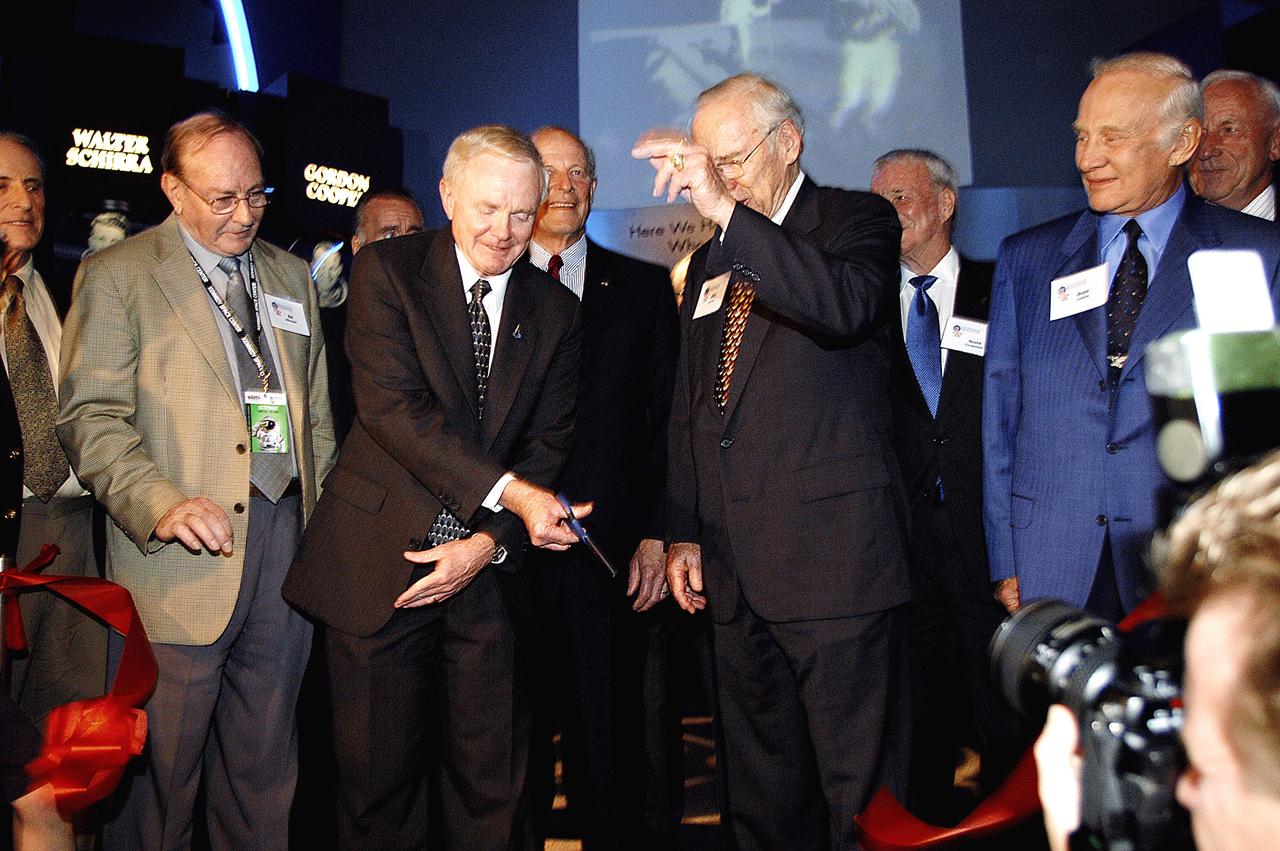
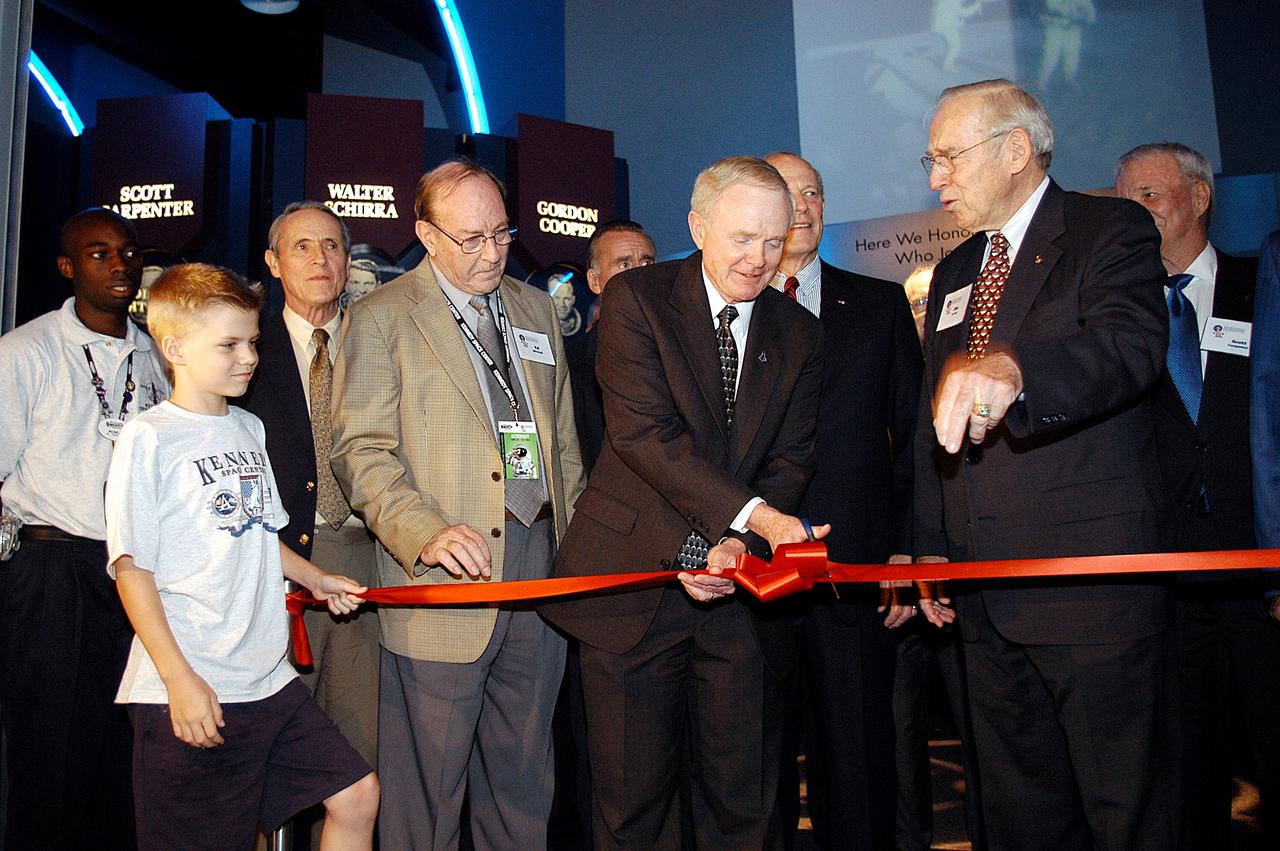
KENNEDY SPACE CENTER, FLA. -  Center Director and former astronaut Roy D. Bridges, Jr., (holding scissors) cuts the ribbon at a ceremony officially opening the U.S. Astronaut Hall of Fame as part of the Kennedy Space Center Visitor Complex.  Invited guests and dignitaries look on, such as former astronauts Edgar D. Mitchell on Bridges' left and James Lovell (hand up) and Buzz Aldrin on his right.  The ceremony was held in conjunction with the induction of four Space Shuttle astronauts into the Hall of Fame including Daniel Brandenstein, Robert "Hoot" Gibson, Story Musgrave, and Sally Ride.  Conceived by six of the Mercury Program astronauts, the U.S. Astronaut Hall of Fame opened in 1990 to provide a place where space travelers could be remembered for their participation and accomplishments in the U.S. space program.  The four new inductees join 48 previously honored astronauts from the ranks of the Gemini, Apollo, Skylab, Apollo-Soyuz, and Space Shuttle programs.
KENNEDY SPACE CENTER, FLA. - Center Director and former astronaut Roy D. Bridges, Jr., (holding scissors) cuts the ribbon at a ceremony officially opening the U.S. Astronaut Hall of Fame as part of the Kennedy Space Center Visitor Complex. Invited guests and dignitaries look on, such as former astronauts Edgar D. Mitchell on Bridges' left and James Lovell (hand up) and Buzz Aldrin on his right. The ceremony was held in conjunction with the induction of four Space Shuttle astronauts into the Hall of Fame including Daniel Brandenstein, Robert "Hoot" Gibson, Story Musgrave, and Sally Ride. Conceived by six of the Mercury Program astronauts, the U.S. Astronaut Hall of Fame opened in 1990 to provide a place where space travelers could be remembered for their participation and accomplishments in the U.S. space program. The four new inductees join 48 previously honored astronauts from the ranks of the Gemini, Apollo, Skylab, Apollo-Soyuz, and Space Shuttle programs.
KENNEDY SPACE CENTER, FLA. -  Center Director and former astronaut Roy D. Bridges, Jr., (holding scissors) cuts the ribbon at a ceremony officially opening the U.S. Astronaut Hall of Fame as part of the Kennedy Space Center Visitor Complex.  Invited guests and dignitaries look on, such as former astronauts Edgar D. Mitchell on Bridges' left and James Lovell on his right.  The ceremony was held in conjunction with the induction of four Space Shuttle astronauts into the Hall of Fame including Daniel Brandenstein, Robert "Hoot" Gibson, Story Musgrave, and Sally Ride.  Conceived by six of the Mercury Program astronauts, the U.S. Astronaut Hall of Fame opened in 1990 to provide a place where space travelers could be remembered for their participation and accomplishments in the U.S. space program.  The four new inductees join 48 previously honored astronauts from the ranks of the Gemini, Apollo, Skylab, Apollo-Soyuz, and Space Shuttle programs.
KENNEDY SPACE CENTER, FLA. - Center Director and former astronaut Roy D. Bridges, Jr., (holding scissors) cuts the ribbon at a ceremony officially opening the U.S. Astronaut Hall of Fame as part of the Kennedy Space Center Visitor Complex. Invited guests and dignitaries look on, such as former astronauts Edgar D. Mitchell on Bridges' left and James Lovell on his right. The ceremony was held in conjunction with the induction of four Space Shuttle astronauts into the Hall of Fame including Daniel Brandenstein, Robert "Hoot" Gibson, Story Musgrave, and Sally Ride. Conceived by six of the Mercury Program astronauts, the U.S. Astronaut Hall of Fame opened in 1990 to provide a place where space travelers could be remembered for their participation and accomplishments in the U.S. space program. The four new inductees join 48 previously honored astronauts from the ranks of the Gemini, Apollo, Skylab, Apollo-Soyuz, and Space Shuttle programs.
KENNEDY SPACE CENTER, FLA. -  At the KSC Visitor Complex, former astronaut James A. Lovell (standing left) greets former astronaut Story Musgrave (standing right) at his induction ceremony into the U.S. Astronaut Hall of Fame. Also seated on the dais are, from left, former astronaut and Senator John H. Glenn, astronaut and Associate Director (Technical) of the Johnson Space Center John W. Young, and former astronaut Buzz Aldrin, all previously inducted into the Hall of Fame. Being inducted with Musgrave are Space Shuttle astronauts Daniel Brandenstein, Robert "Hoot" Gibson, and Sally Ride. Conceived by six of the Mercury Program astronauts, the U.S. Astronaut Hall of Fame opened in 1990 to provide a place where space travelers could be remembered for their participation and accomplishments in the U.S. space program. The four new inductees join 48 previously honored astronauts from the ranks of the Gemini, Apollo, Skylab, Apollo-Soyuz, and Space Shuttle programs.
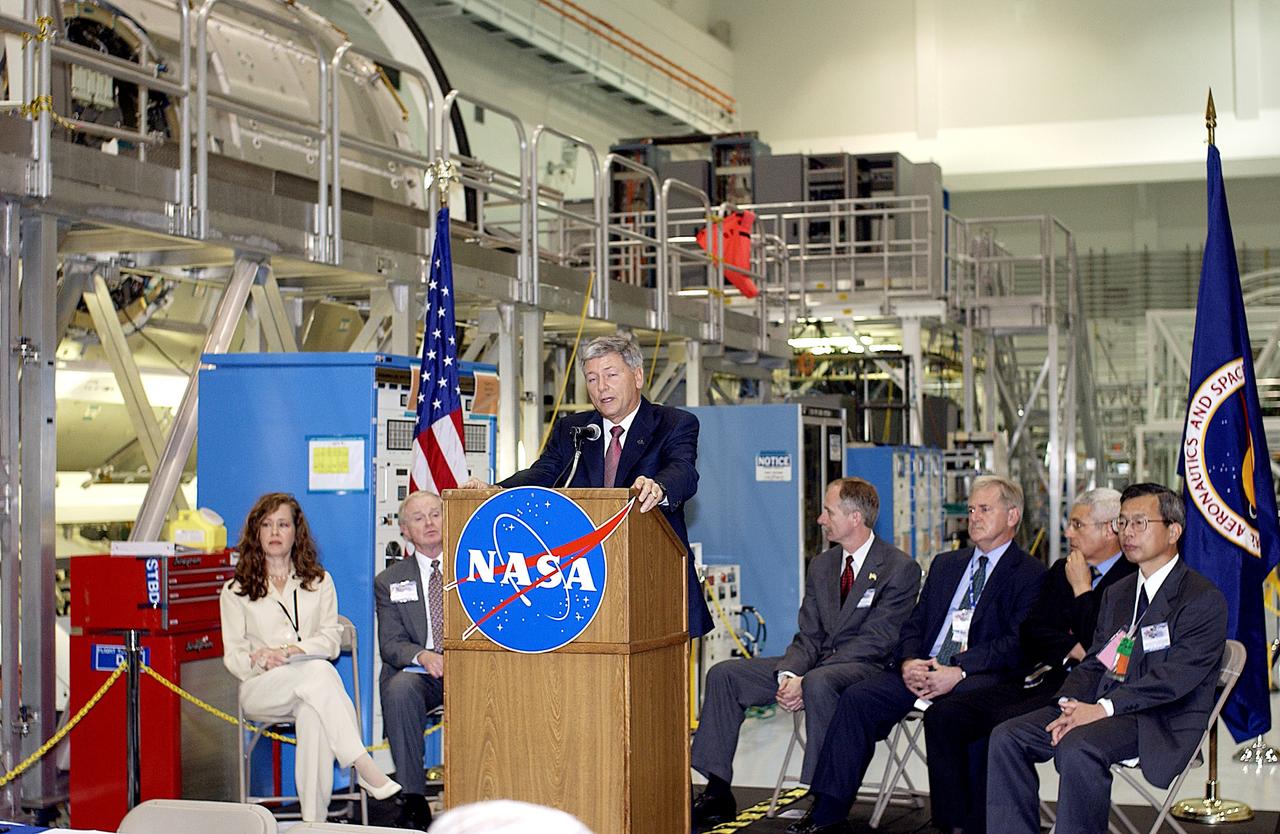
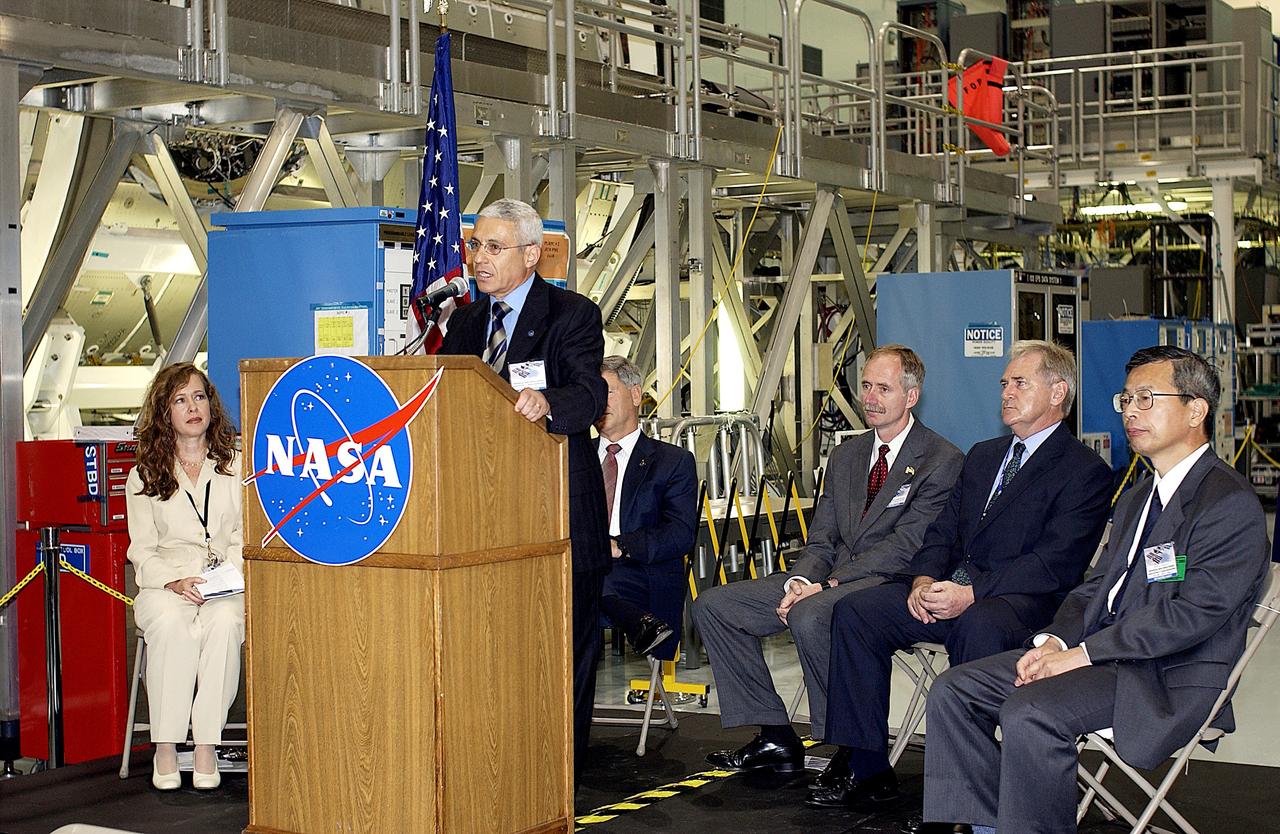
KENNEDY SPACE CENTER, FLA. - At the KSC Visitor Complex, former astronaut James A. Lovell (standing left) greets former astronaut Story Musgrave (standing right) at his induction ceremony into the U.S. Astronaut Hall of Fame. Also seated on the dais are, from left, former astronaut and Senator John H. Glenn, astronaut and Associate Director (Technical) of the Johnson Space Center John W. Young, and former astronaut Buzz Aldrin, all previously inducted into the Hall of Fame. Being inducted with Musgrave are Space Shuttle astronauts Daniel Brandenstein, Robert "Hoot" Gibson, and Sally Ride. Conceived by six of the Mercury Program astronauts, the U.S. Astronaut Hall of Fame opened in 1990 to provide a place where space travelers could be remembered for their participation and accomplishments in the U.S. space program. The four new inductees join 48 previously honored astronauts from the ranks of the Gemini, Apollo, Skylab, Apollo-Soyuz, and Space Shuttle programs.
jsc2011e002655 (01/11/2011)--- Training was performed at the Johnson Space Center to familiarize crew with emergency evacuation procedures from the shuttle system. Engineers at JSC (including Susana Tapia Harper & Alma Stephane Tapia) donned Advanced Crew Escape Space Suit System (ACES) suits while the astronaut crew practiced mock evacuations. NASA photo by James Blair
Documentation of Last KSC Astronaut Closeout Crew Training for Space Shuttle Program.
jsc2011e002625 (01/11/2011)---  Training was performed at the Johnson Space Center to familiarize crew with emergency evacuation procedures from the shuttle system.   Engineers at  JSC (including Susana Tapia Harper & Alma Stephane Tapia) donned Advanced Crew Escape Space Suit System (ACES) suits while the astronaut crew practiced mock evacuations.  NASA photo by James Blair
Documentation of Last KSC Astronaut Closeout Crew Training for Space Shuttle Program.
jsc2011e002624 (01/11/2011)--- Training was performed at the Johnson Space Center to familiarize crew with emergency evacuation procedures from the shuttle system. Engineers at JSC (including Susana Tapia Harper & Alma Stephane Tapia) donned Advanced Crew Escape Space Suit System (ACES) suits while the astronaut crew practiced mock evacuations. NASA photo by James Blair
Documentation of Last KSC Astronaut Closeout Crew Training for Space Shuttle Program.
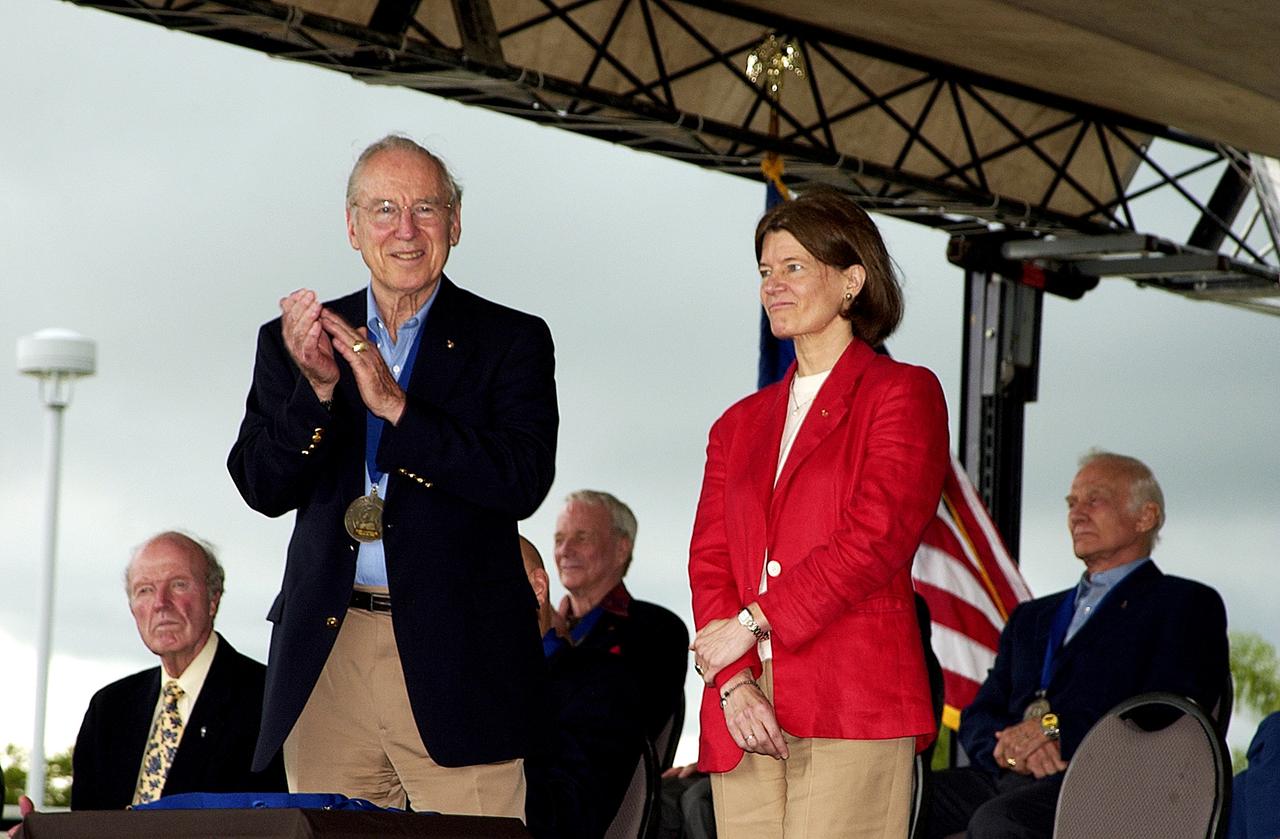
KENNEDY SPACE CENTER, FLA. -  At the KSC Visitor Complex, former astronaut James A. Lovell (standing left) applauds former astronaut Sally K. Ride at her induction ceremony into the U.S. Astronaut Hall of Fame. Seated on the dais, from left, are former astronauts Gordon Cooper, Scott Carpenter, and  Buzz Aldrin, all previously inducted into the Hall of Fame. Being inducted with Ride are Space Shuttle astronauts Daniel Brandenstein, Robert "Hoot" Gibson, and Story Musgrave. Conceived by six of the Mercury Program astronauts, the U.S. Astronaut Hall of Fame opened in 1990 to provide a place where space travelers could be remembered for their participation and accomplishments in the U.S. space program. The four new inductees join 48 previously honored astronauts from the ranks of the Gemini, Apollo, Skylab, Apollo-Soyuz, and Space Shuttle programs.
KENNEDY SPACE CENTER, FLA. - At the KSC Visitor Complex, former astronaut James A. Lovell (standing left) applauds former astronaut Sally K. Ride at her induction ceremony into the U.S. Astronaut Hall of Fame. Seated on the dais, from left, are former astronauts Gordon Cooper, Scott Carpenter, and Buzz Aldrin, all previously inducted into the Hall of Fame. Being inducted with Ride are Space Shuttle astronauts Daniel Brandenstein, Robert "Hoot" Gibson, and Story Musgrave. Conceived by six of the Mercury Program astronauts, the U.S. Astronaut Hall of Fame opened in 1990 to provide a place where space travelers could be remembered for their participation and accomplishments in the U.S. space program. The four new inductees join 48 previously honored astronauts from the ranks of the Gemini, Apollo, Skylab, Apollo-Soyuz, and Space Shuttle programs.
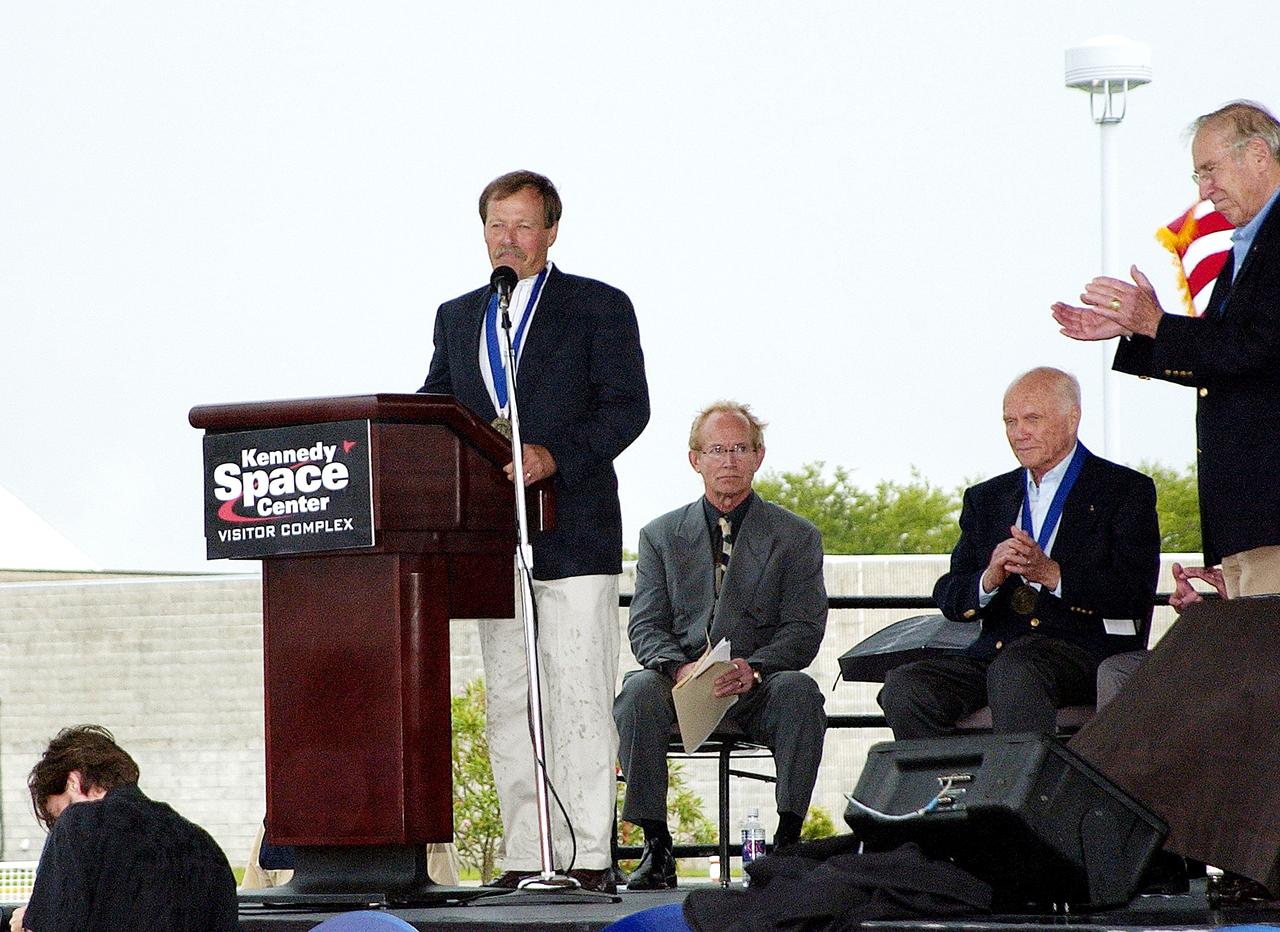
KENNEDY SPACE CENTER, FLA. -  At the KSC Visitor Complex, former astronaut Robert "Hoot" Gibson (at podium) addresses the audience at his induction ceremony into the U.S. Astronaut Hall of Fame. Also standing is former astronaut James A. Lovell.  Seated on the dais, from left, are actor and Master of Ceremonies Lance Henriksen and former astronaut John H. Glenn.  Also being inducted with Gibson are Space Shuttle astronauts Daniel Brandenstein, Story Musgrave, and Sally K. Ride. Conceived by six of the Mercury Program astronauts, the U.S. Astronaut Hall of Fame opened in 1990 to provide a place where space travelers could be remembered for their participation and accomplishments in the U.S. space program. The four new inductees join 48 previously honored astronauts from the ranks of the Gemini, Apollo, Skylab, Apollo-Soyuz, and Space Shuttle programs.
KENNEDY SPACE CENTER, FLA. - At the KSC Visitor Complex, former astronaut Robert "Hoot" Gibson (at podium) addresses the audience at his induction ceremony into the U.S. Astronaut Hall of Fame. Also standing is former astronaut James A. Lovell. Seated on the dais, from left, are actor and Master of Ceremonies Lance Henriksen and former astronaut John H. Glenn. Also being inducted with Gibson are Space Shuttle astronauts Daniel Brandenstein, Story Musgrave, and Sally K. Ride. Conceived by six of the Mercury Program astronauts, the U.S. Astronaut Hall of Fame opened in 1990 to provide a place where space travelers could be remembered for their participation and accomplishments in the U.S. space program. The four new inductees join 48 previously honored astronauts from the ranks of the Gemini, Apollo, Skylab, Apollo-Soyuz, and Space Shuttle programs.
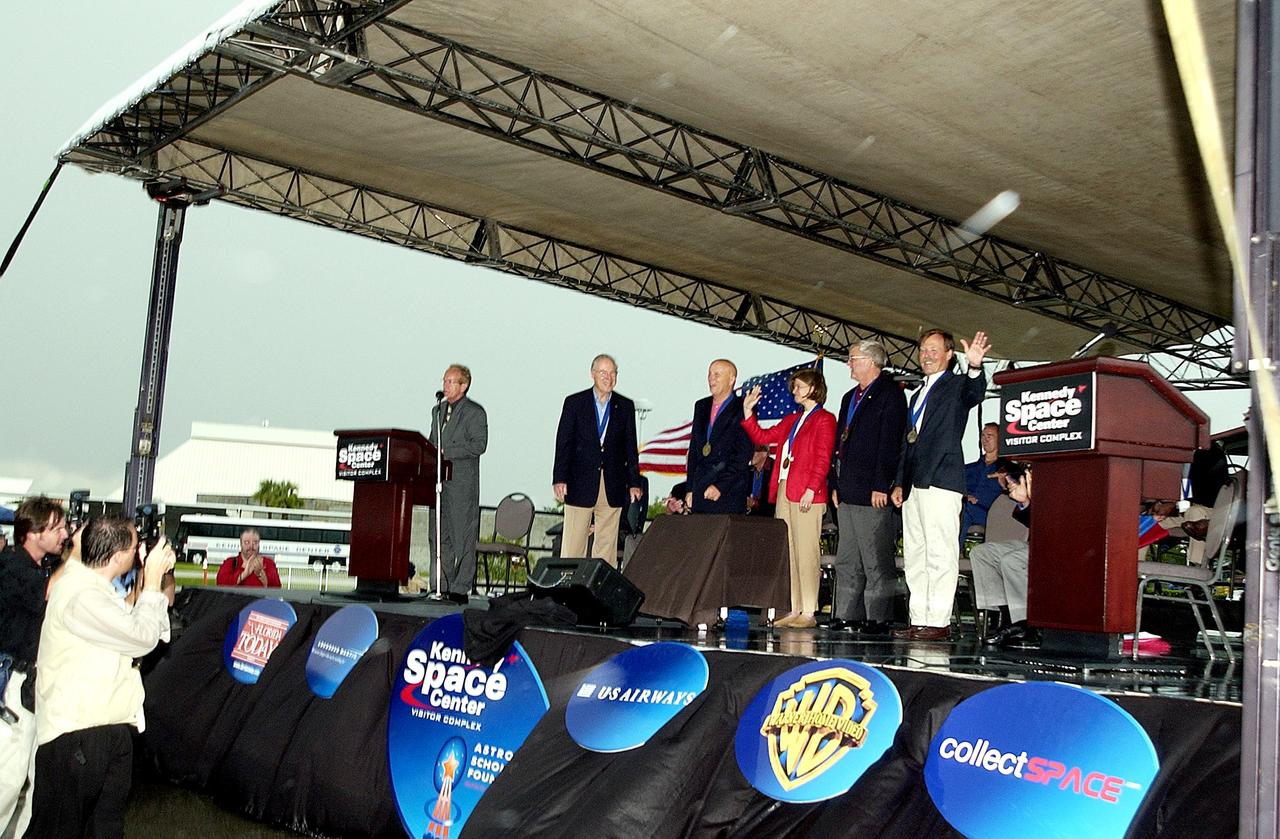
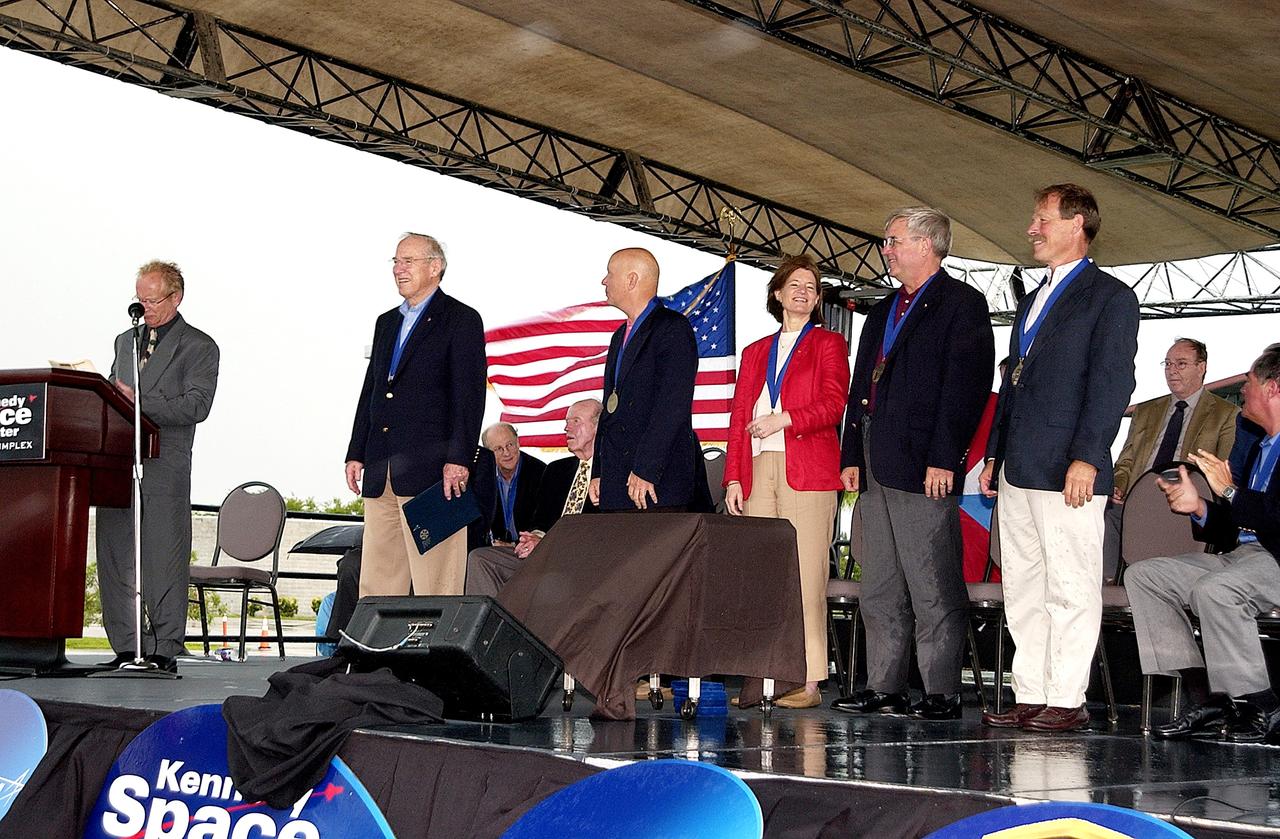
KENNEDY SPACE CENTER, FLA. -  At the KSC Visitor Complex, actor and Master of Ceremonies Lance Henriksen (at podium) introduces four newly inducted Space Shuttle astronauts to the audience at their induction ceremony into the U.S. Astronaut Hall of Fame. From left center, they are Story Musgrave, Sally K. Ride, Daniel Brandenstein, and Robert "Hoot" Gibson. Also standing, left, is former astronaut James A. Lovell.  Conceived by six of the Mercury Program astronauts, the U.S. Astronaut Hall of Fame opened in 1990 to provide a place where space travelers could be remembered for their participation and accomplishments in the U.S. space program. The four new inductees join 48 previously honored astronauts from the ranks of the Gemini, Apollo, Skylab, Apollo-Soyuz, and Space Shuttle programs.
KENNEDY SPACE CENTER, FLA. - At the KSC Visitor Complex, actor and Master of Ceremonies Lance Henriksen (at podium) introduces four newly inducted Space Shuttle astronauts to the audience at their induction ceremony into the U.S. Astronaut Hall of Fame. From left center, they are Story Musgrave, Sally K. Ride, Daniel Brandenstein, and Robert "Hoot" Gibson. Also standing, left, is former astronaut James A. Lovell. Conceived by six of the Mercury Program astronauts, the U.S. Astronaut Hall of Fame opened in 1990 to provide a place where space travelers could be remembered for their participation and accomplishments in the U.S. space program. The four new inductees join 48 previously honored astronauts from the ranks of the Gemini, Apollo, Skylab, Apollo-Soyuz, and Space Shuttle programs.
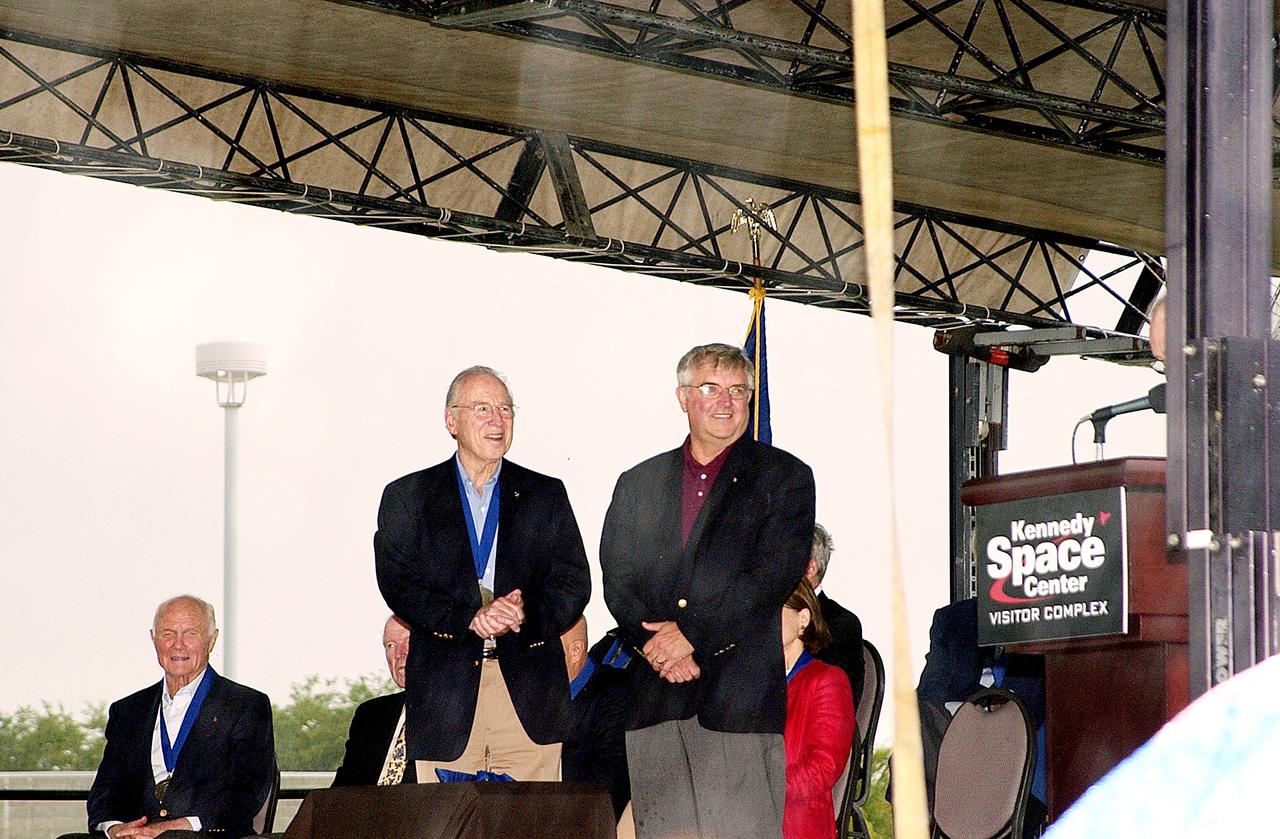
KENNEDY SPACE CENTER, FLA. -  At the KSC Visitor Complex, former astronaut Frederick H. (Rick) Hauck (standing right) congratulates former astronaut Daniel Brandenstein (standing center) at his induction ceremony into the U.S. Astronaut Hall of Fame. Also standing is former astronaut James A. Lovell.  Seated on the dais, from left, are former astronauts John H. Glenn and Gordon Cooper, both previously inducted into the Hall of Fame. Being inducted with Brandenstein are Space Shuttle astronauts Robert "Hoot" Gibson, Story Musgrave, and Sally K. Ride. Conceived by six of the Mercury Program astronauts, the U.S. Astronaut Hall of Fame opened in 1990 to provide a place where space travelers could be remembered for their participation and accomplishments in the U.S. space program. The four new inductees join 48 previously honored astronauts from the ranks of the Gemini, Apollo, Skylab, Apollo-Soyuz, and Space Shuttle programs.
KENNEDY SPACE CENTER, FLA. - At the KSC Visitor Complex, former astronaut Frederick H. (Rick) Hauck (standing right) congratulates former astronaut Daniel Brandenstein (standing center) at his induction ceremony into the U.S. Astronaut Hall of Fame. Also standing is former astronaut James A. Lovell. Seated on the dais, from left, are former astronauts John H. Glenn and Gordon Cooper, both previously inducted into the Hall of Fame. Being inducted with Brandenstein are Space Shuttle astronauts Robert "Hoot" Gibson, Story Musgrave, and Sally K. Ride. Conceived by six of the Mercury Program astronauts, the U.S. Astronaut Hall of Fame opened in 1990 to provide a place where space travelers could be remembered for their participation and accomplishments in the U.S. space program. The four new inductees join 48 previously honored astronauts from the ranks of the Gemini, Apollo, Skylab, Apollo-Soyuz, and Space Shuttle programs.
KENNEDY SPACE CENTER, FLA. -  At the KSC Visitor Complex, former astronaut Robert L. Crippen (right) presents former astronaut Sally K. Ride (standing center) at her induction ceremony into the U.S. Astronaut Hall of Fame. Also standing is former astronaut James A. Lovell.  Seated on the dais are, from left, former astronauts John H. Glenn, Gordon Cooper, Buzz Aldrin, and Walter Cunningham, all previously inducted into the Hall of Fame. Being inducted with Ride are Space Shuttle astronauts Daniel Brandenstein, Robert "Hoot" Gibson, and Story Musgrave. Conceived by six of the Mercury Program astronauts, the U.S. Astronaut Hall of Fame opened in 1990 to provide a place where space travelers could be remembered for their participation and accomplishments in the U.S. space program. The four new inductees join 48 previously honored astronauts from the ranks of the Gemini, Apollo, Skylab, Apollo-Soyuz, and Space Shuttle programs.
KENNEDY SPACE CENTER, FLA. - At the KSC Visitor Complex, former astronaut Robert L. Crippen (right) presents former astronaut Sally K. Ride (standing center) at her induction ceremony into the U.S. Astronaut Hall of Fame. Also standing is former astronaut James A. Lovell. Seated on the dais are, from left, former astronauts John H. Glenn, Gordon Cooper, Buzz Aldrin, and Walter Cunningham, all previously inducted into the Hall of Fame. Being inducted with Ride are Space Shuttle astronauts Daniel Brandenstein, Robert "Hoot" Gibson, and Story Musgrave. Conceived by six of the Mercury Program astronauts, the U.S. Astronaut Hall of Fame opened in 1990 to provide a place where space travelers could be remembered for their participation and accomplishments in the U.S. space program. The four new inductees join 48 previously honored astronauts from the ranks of the Gemini, Apollo, Skylab, Apollo-Soyuz, and Space Shuttle programs.
KENNEDY SPACE CENTER, FLA. -  At the KSC Visitor Complex, former astronaut Daniel Brandenstein (standing right) is presented to the audience at his induction ceremony into the U.S. Astronaut Hall of Fame. Also standing is former astronaut James A. Lovell.  Seated on the dais, from left, are former astronauts John H. Glenn and Gordon Cooper, both previously inducted into the Hall of Fame. Being inducted with Brandenstein are Space Shuttle astronauts Robert "Hoot" Gibson, Story Musgrave, and Sally K. Ride. Conceived by six of the Mercury Program astronauts, the U.S. Astronaut Hall of Fame opened in 1990 to provide a place where space travelers could be remembered for their participation and accomplishments in the U.S. space program. The four new inductees join 48 previously honored astronauts from the ranks of the Gemini, Apollo, Skylab, Apollo-Soyuz, and Space Shuttle programs.
KENNEDY SPACE CENTER, FLA. - At the KSC Visitor Complex, former astronaut Daniel Brandenstein (standing right) is presented to the audience at his induction ceremony into the U.S. Astronaut Hall of Fame. Also standing is former astronaut James A. Lovell. Seated on the dais, from left, are former astronauts John H. Glenn and Gordon Cooper, both previously inducted into the Hall of Fame. Being inducted with Brandenstein are Space Shuttle astronauts Robert "Hoot" Gibson, Story Musgrave, and Sally K. Ride. Conceived by six of the Mercury Program astronauts, the U.S. Astronaut Hall of Fame opened in 1990 to provide a place where space travelers could be remembered for their participation and accomplishments in the U.S. space program. The four new inductees join 48 previously honored astronauts from the ranks of the Gemini, Apollo, Skylab, Apollo-Soyuz, and Space Shuttle programs.
KENNEDY SPACE CENTER, FLA. -  At the KSC Visitor Complex, former astronaut John H. Glenn (at podium) presents former astronaut Robert "Hoot" Gibson (standing right) at his induction ceremony into the U.S. Astronaut Hall of Fame. Also standing is former astronaut James A. Lovell.  Seated on the dais, from left, are actor and Master of Ceremonies Lance Henriksen (left), and former astronauts Sally K. Ride and Daniel Brandenstein (right), both inducted into the Hall of Fame today. Also being inducted is Space Shuttle astronaut Story Musgrave. Conceived by six of the Mercury Program astronauts, the U.S. Astronaut Hall of Fame opened in 1990 to provide a place where space travelers could be remembered for their participation and accomplishments in the U.S. space program. The four new inductees join 48 previously honored astronauts from the ranks of the Gemini, Apollo, Skylab, Apollo-Soyuz, and Space Shuttle programs.
KENNEDY SPACE CENTER, FLA. - At the KSC Visitor Complex, former astronaut John H. Glenn (at podium) presents former astronaut Robert "Hoot" Gibson (standing right) at his induction ceremony into the U.S. Astronaut Hall of Fame. Also standing is former astronaut James A. Lovell. Seated on the dais, from left, are actor and Master of Ceremonies Lance Henriksen (left), and former astronauts Sally K. Ride and Daniel Brandenstein (right), both inducted into the Hall of Fame today. Also being inducted is Space Shuttle astronaut Story Musgrave. Conceived by six of the Mercury Program astronauts, the U.S. Astronaut Hall of Fame opened in 1990 to provide a place where space travelers could be remembered for their participation and accomplishments in the U.S. space program. The four new inductees join 48 previously honored astronauts from the ranks of the Gemini, Apollo, Skylab, Apollo-Soyuz, and Space Shuttle programs.
KENNEDY SPACE CENTER, FLA. -  At the KSC Visitor Complex, former astronaut Robert L. Crippen (standing right) congratulates former astronaut Sally K. Ride at her induction ceremony into the U.S. Astronaut Hall of Fame. Also standing is former astronaut James A. Lovell.  Seated on the dais, from left, are former astronauts Gordon Cooper, Scott Carpenter, Buzz Aldrin, Walter Cunningham, Edgar B. Mitchell, and Fred W. Haise, all previously inducted into the Hall of Fame. Being inducted with Ride are Space Shuttle astronauts Daniel Brandenstein, Robert "Hoot" Gibson, and Story Musgrave. Conceived by six of the Mercury Program astronauts, the U.S. Astronaut Hall of Fame opened in 1990 to provide a place where space travelers could be remembered for their participation and accomplishments in the U.S. space program. The four new inductees join 48 previously honored astronauts from the ranks of the Gemini, Apollo, Skylab, Apollo-Soyuz, and Space Shuttle programs.
KENNEDY SPACE CENTER, FLA. - At the KSC Visitor Complex, former astronaut Robert L. Crippen (standing right) congratulates former astronaut Sally K. Ride at her induction ceremony into the U.S. Astronaut Hall of Fame. Also standing is former astronaut James A. Lovell. Seated on the dais, from left, are former astronauts Gordon Cooper, Scott Carpenter, Buzz Aldrin, Walter Cunningham, Edgar B. Mitchell, and Fred W. Haise, all previously inducted into the Hall of Fame. Being inducted with Ride are Space Shuttle astronauts Daniel Brandenstein, Robert "Hoot" Gibson, and Story Musgrave. Conceived by six of the Mercury Program astronauts, the U.S. Astronaut Hall of Fame opened in 1990 to provide a place where space travelers could be remembered for their participation and accomplishments in the U.S. space program. The four new inductees join 48 previously honored astronauts from the ranks of the Gemini, Apollo, Skylab, Apollo-Soyuz, and Space Shuttle programs.
KENNEDY SPACE CENTER, FLA. -  At the KSC Visitor Complex, actor and Master of Ceremonies Lance Henriksen (at podium) introduces four newly inducted Space Shuttle astronauts to the audience at their induction ceremony into the U.S. Astronaut Hall of Fame. From left center, they are Story Musgrave, Sally K. Ride, Daniel Brandenstein, and Robert "Hoot" Gibson. Also standing, left, is former astronaut James A. Lovell.  Conceived by six of the Mercury Program astronauts, the U.S. Astronaut Hall of Fame opened in 1990 to provide a place where space travelers could be remembered for their participation and accomplishments in the U.S. space program. The four new inductees join 48 previously honored astronauts from the ranks of the Gemini, Apollo, Skylab, Apollo-Soyuz, and Space Shuttle programs.
KENNEDY SPACE CENTER, FLA. - At the KSC Visitor Complex, actor and Master of Ceremonies Lance Henriksen (at podium) introduces four newly inducted Space Shuttle astronauts to the audience at their induction ceremony into the U.S. Astronaut Hall of Fame. From left center, they are Story Musgrave, Sally K. Ride, Daniel Brandenstein, and Robert "Hoot" Gibson. Also standing, left, is former astronaut James A. Lovell. Conceived by six of the Mercury Program astronauts, the U.S. Astronaut Hall of Fame opened in 1990 to provide a place where space travelers could be remembered for their participation and accomplishments in the U.S. space program. The four new inductees join 48 previously honored astronauts from the ranks of the Gemini, Apollo, Skylab, Apollo-Soyuz, and Space Shuttle programs.
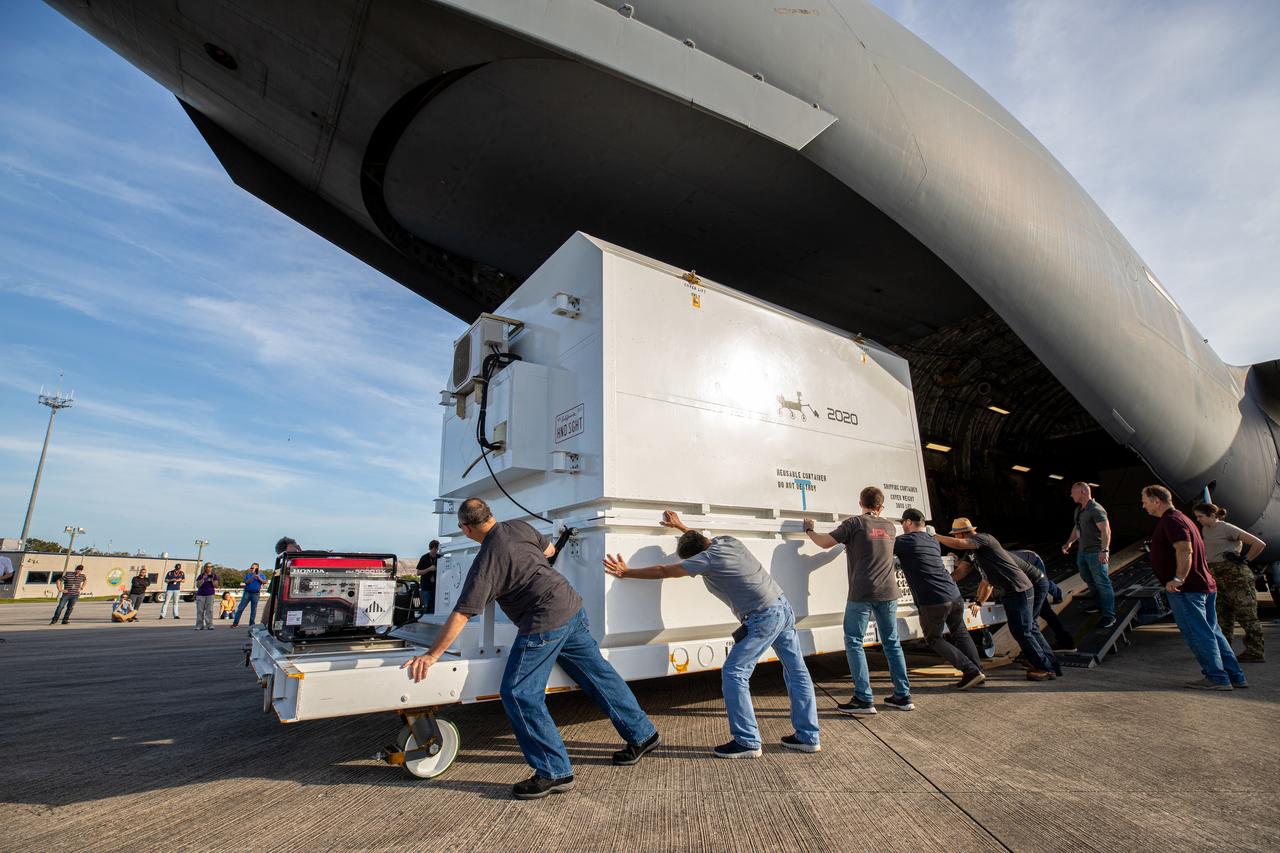
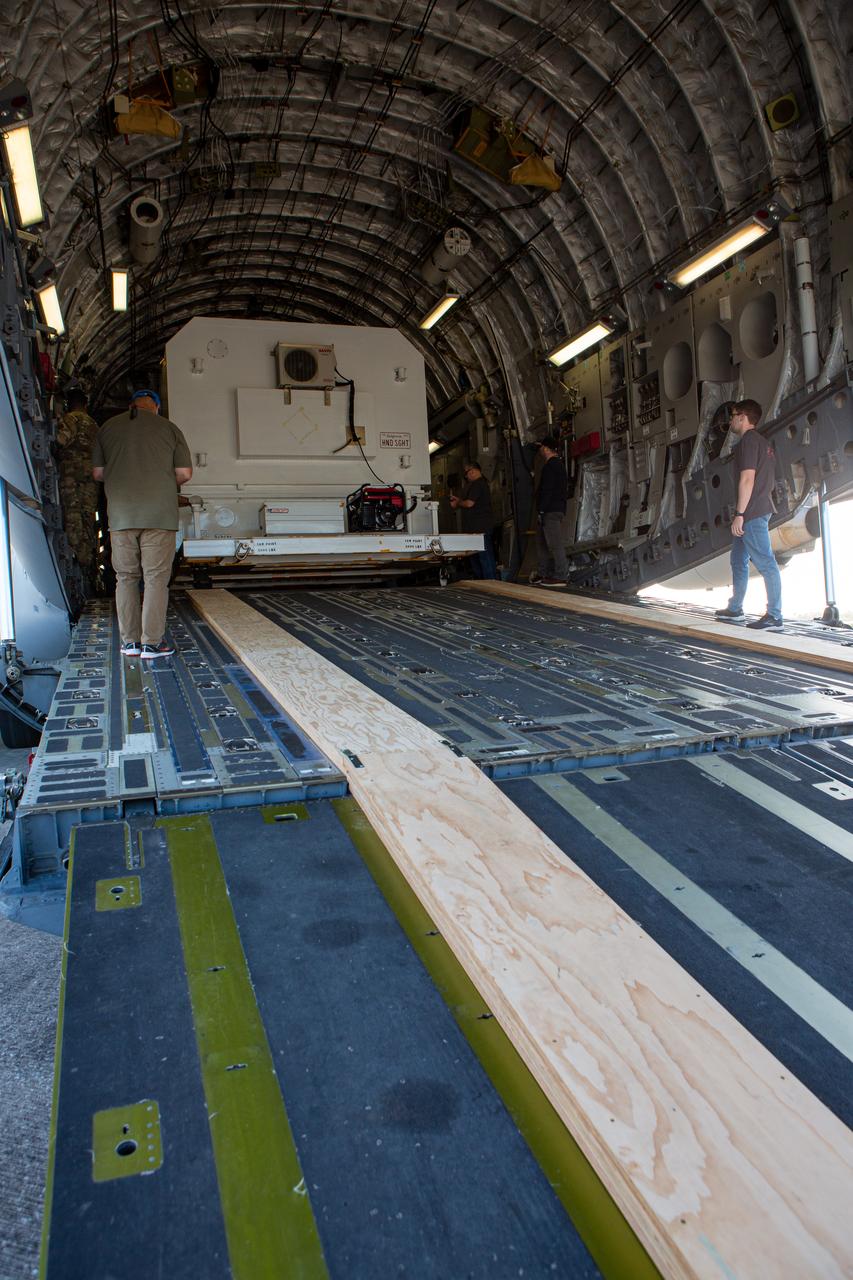
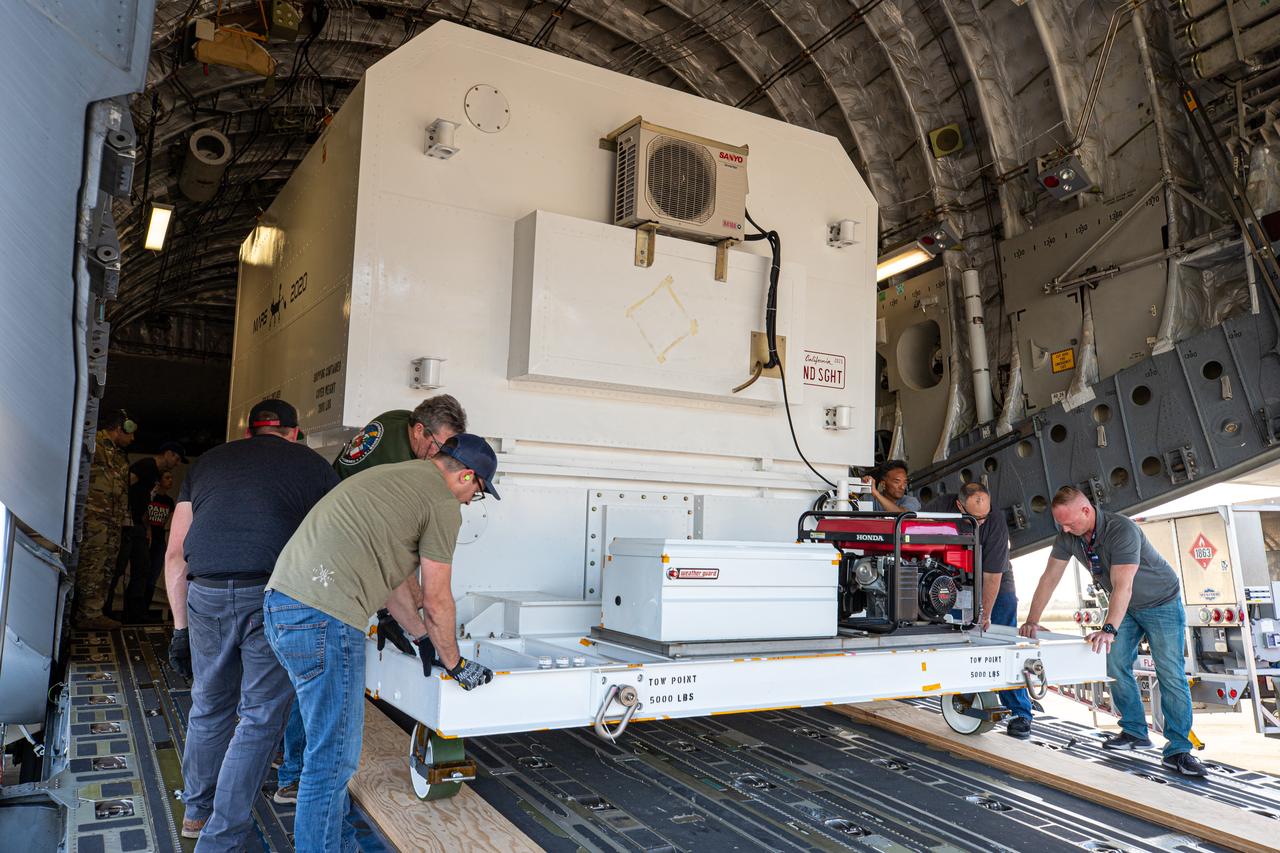
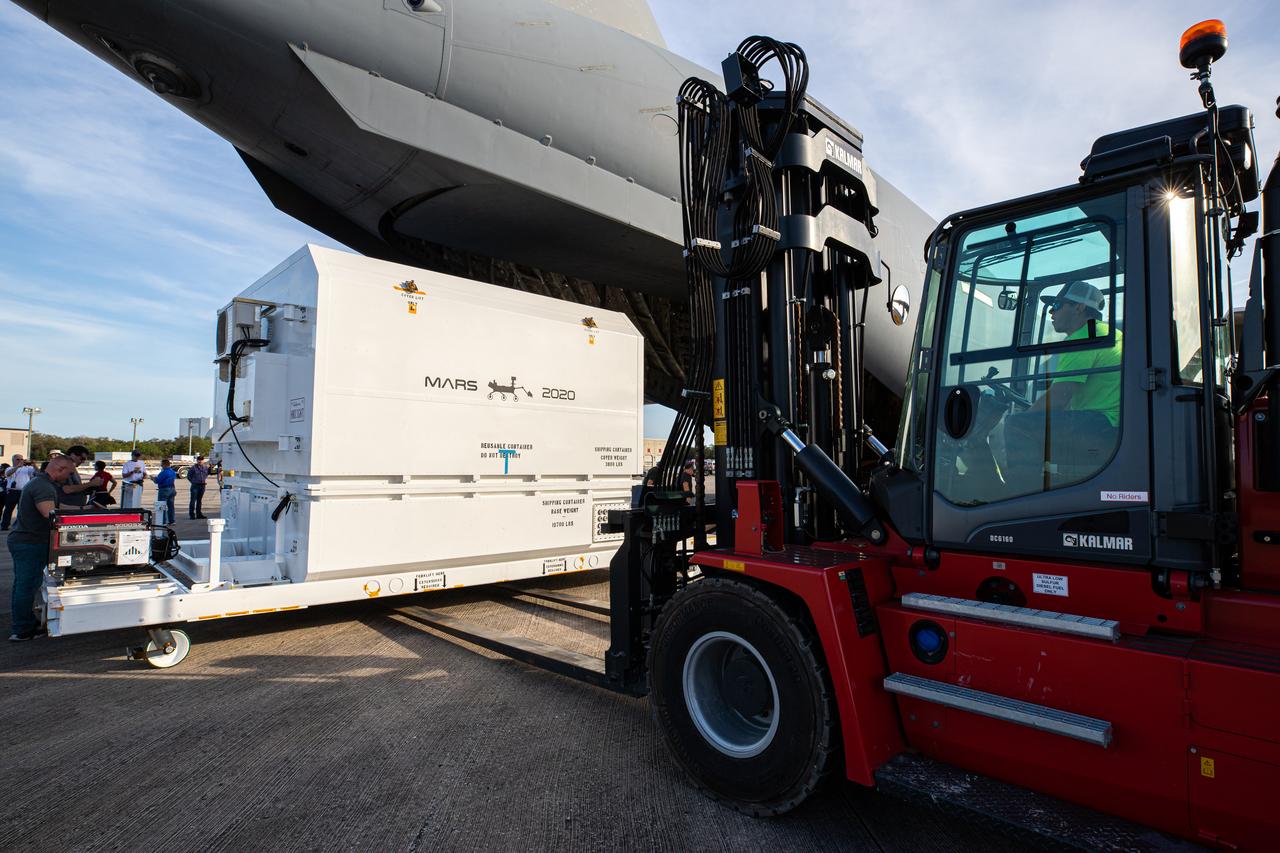
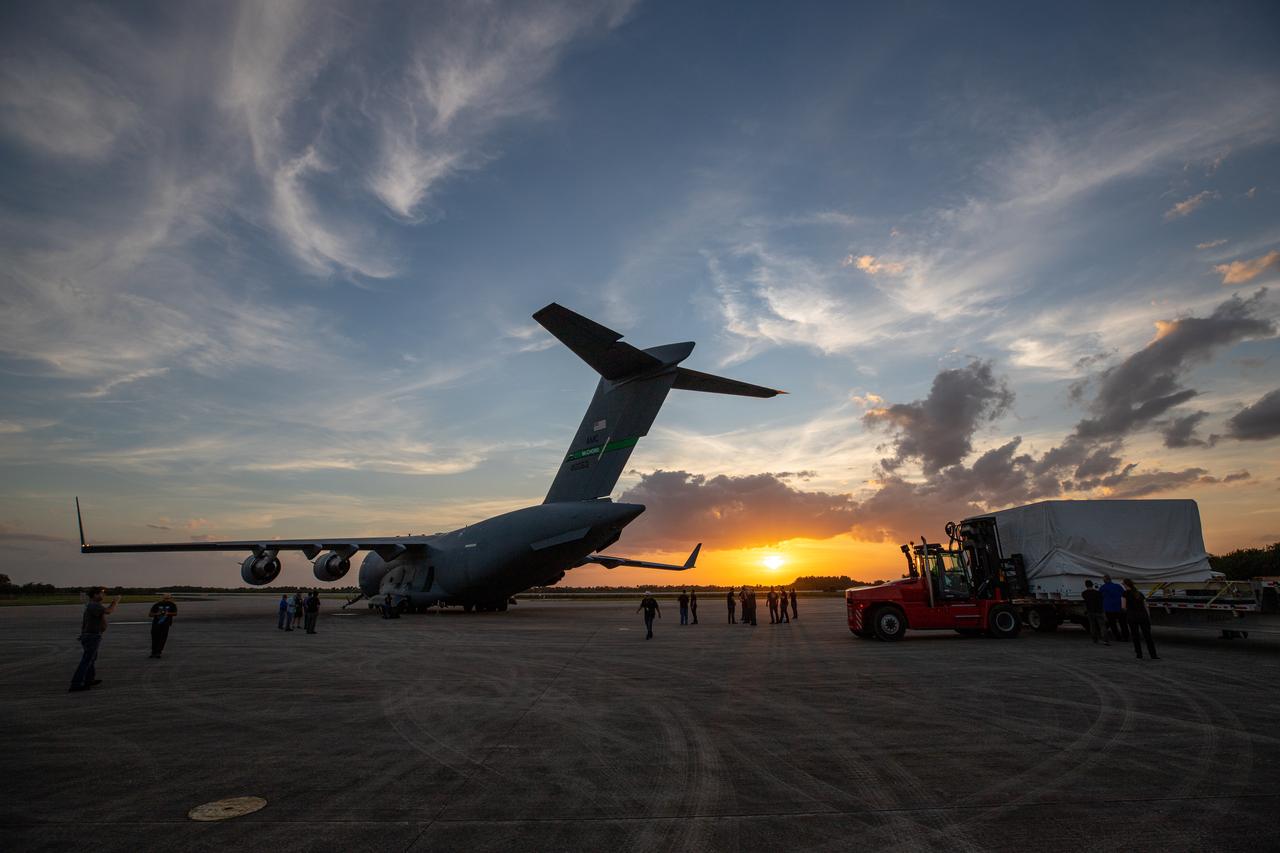
The Mars 2020 rover is offloaded from a C-17 aircraft at the Launch and Landing Facility, formerly known as the Shuttle Landing Facility, at NASA’s Kennedy Space Center on Feb. 12, 2020. The rover made a cross-country trip to the Florida spaceport that started at NASA’s Jet Propulsion Laboratory in Pasadena, California. The mission, targeted for mid-July 2020, will launch aboard an Atlas V 541 rocket from Cape Canaveral Air Force Station. NASA’s Launch Services Program based at Kennedy is managing the launch.
Mars 2020 Rover Arrival
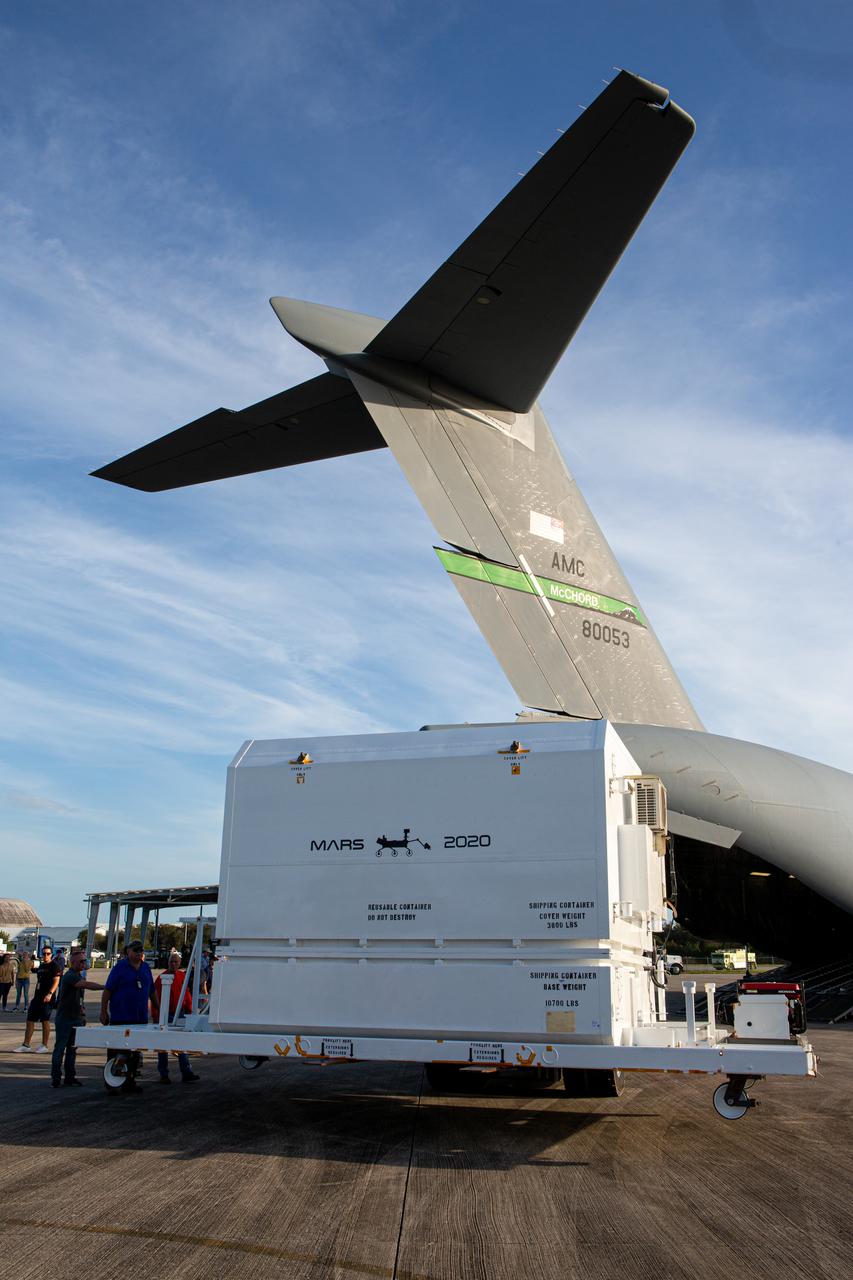
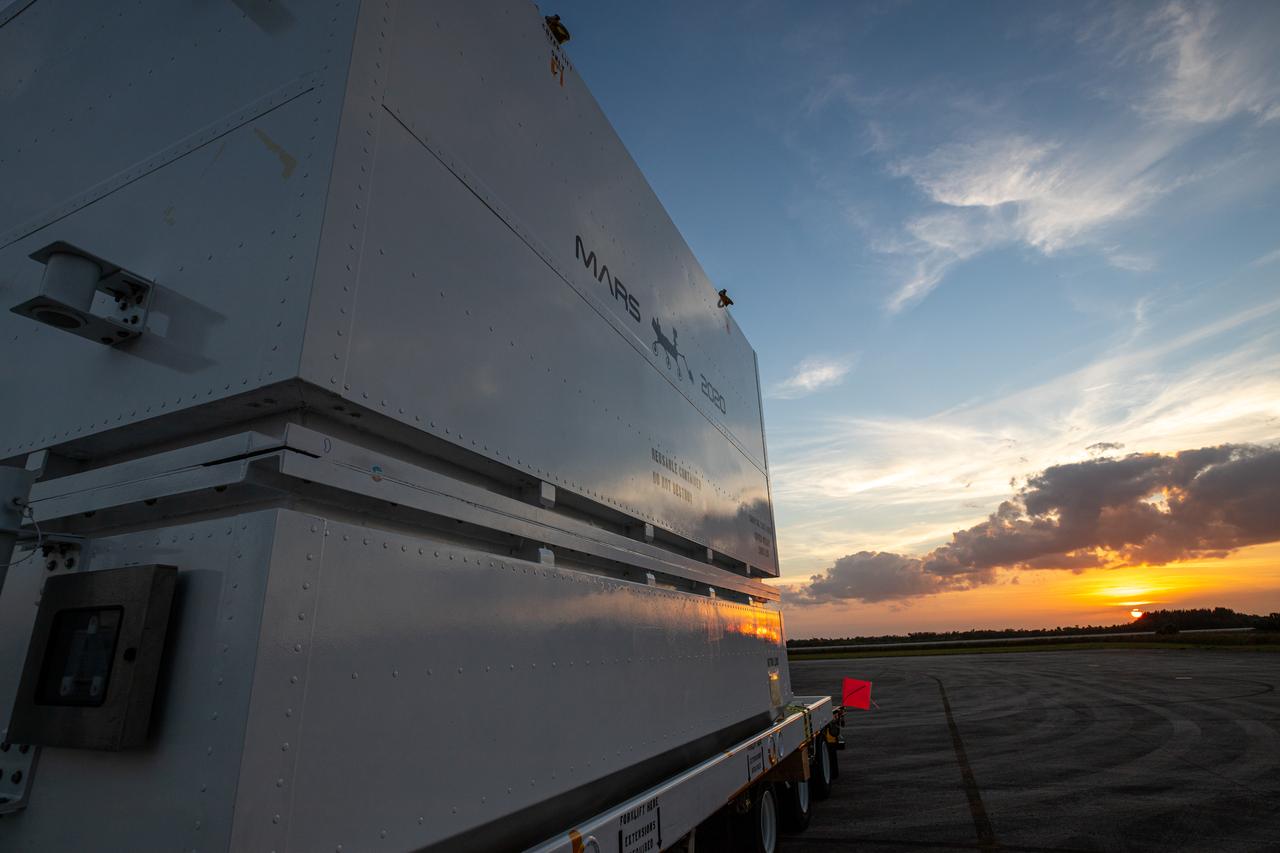
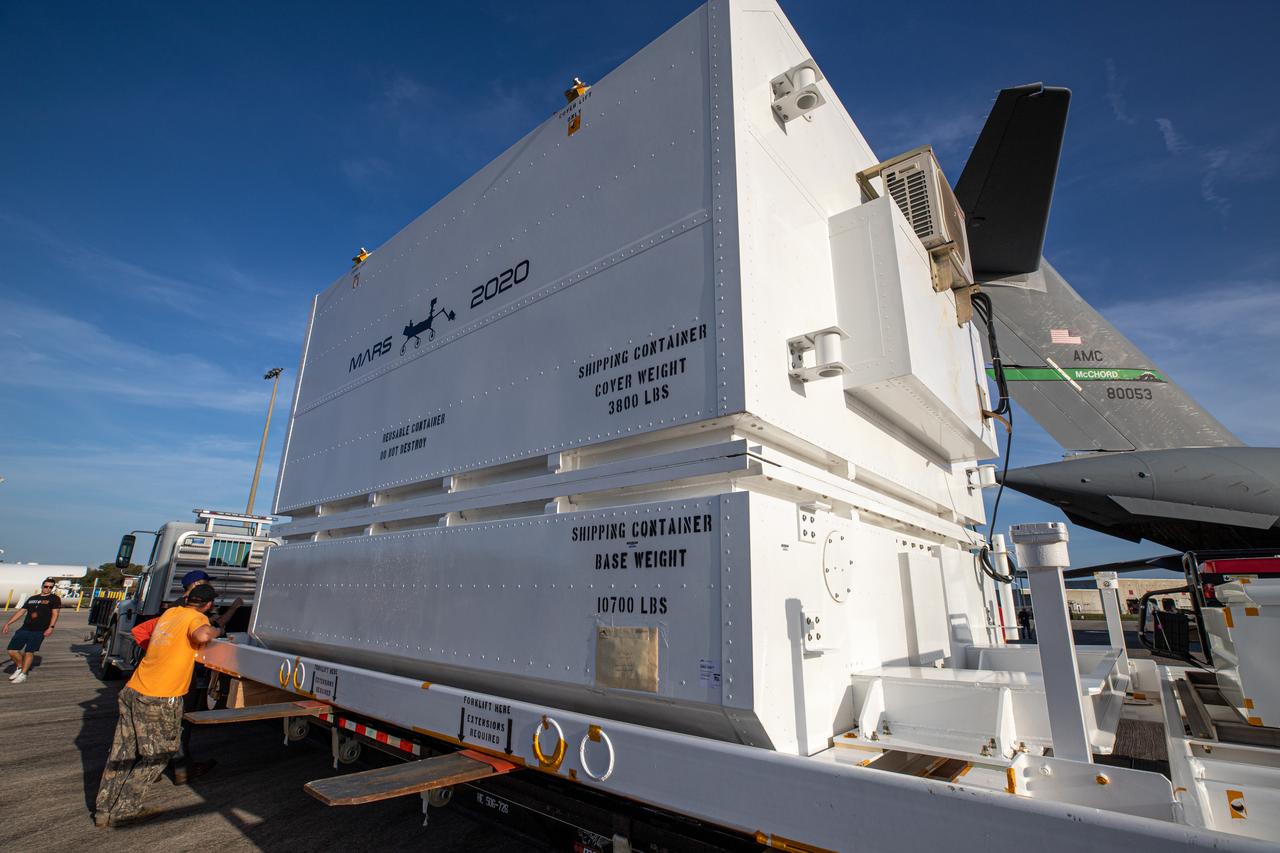
The Mars 2020 rover arrives at the Launch and Landing Facility, formerly known as the Shuttle Landing Facility, at NASA’s Kennedy Space Center on Feb. 12, 2020. The rover was delivered to the Florida spaceport on a C-17 aircraft, making a cross-country trip that started at NASA’s Jet Propulsion Laboratory in Pasadena, California. The mission, targeted for mid-July 2020, will launch aboard an Atlas V 541 rocket from Cape Canaveral Air Force Station. NASA’s Launch Services Program based at Kennedy is managing the launch.
Mars 2020 Rover Arrival
The Mars 2020 rover arrives at the Launch and Landing Facility, formerly known as the Shuttle Landing Facility, at NASA’s Kennedy Space Center on Feb. 12, 2020. The rover was delivered to the Florida spaceport on a C-17 aircraft, making a cross-country trip that started at NASA’s Jet Propulsion Laboratory in Pasadena, California. The mission, targeted for mid-July 2020, will launch aboard an Atlas V 541 rocket from Cape Canaveral Air Force Station. NASA’s Launch Services Program based at Kennedy is managing the launch.
Mars 2020 Rover Arrival
The Mars 2020 rover is offloaded from a C-17 aircraft at the Launch and Landing Facility, formerly known as the Shuttle Landing Facility, at NASA’s Kennedy Space Center on Feb. 12, 2020. The rover made a cross-country trip to the Florida spaceport that started at NASA’s Jet Propulsion Laboratory in Pasadena, California. The mission, targeted for mid-July 2020, will launch aboard an Atlas V 541 rocket from Cape Canaveral Air Force Station. NASA’s Launch Services Program based at Kennedy is managing the launch.
Mars 2020 Rover Arrival
The Mars 2020 rover is offloaded from a C-17 aircraft at the Launch and Landing Facility, formerly known as the Shuttle Landing Facility, at NASA’s Kennedy Space Center on Feb. 12, 2020. The rover made a cross-country trip to the Florida spaceport that started at NASA’s Jet Propulsion Laboratory in Pasadena, California. The mission, targeted for mid-July 2020, will launch aboard an Atlas V 541 rocket from Cape Canaveral Air Force Station. NASA’s Launch Services Program based at Kennedy is managing the launch.
Mars 2020 Rover Arrival
The Mars 2020 rover is offloaded from a C-17 aircraft at the Launch and Landing Facility, formerly known as the Shuttle Landing Facility, at NASA’s Kennedy Space Center on Feb. 12, 2020. The rover made a cross-country trip to the Florida spaceport that started at NASA’s Jet Propulsion Laboratory in Pasadena, California. The mission, targeted for mid-July 2020, will launch aboard an Atlas V 541 rocket from Cape Canaveral Air Force Station. NASA’s Launch Services Program based at Kennedy is managing the launch.
Mars 2020 Rover Arrival
The Mars 2020 rover arrives at the Launch and Landing Facility, formerly known as the Shuttle Landing Facility, at NASA’s Kennedy Space Center on Feb. 12, 2020. The rover was delivered to the Florida spaceport on a C-17 aircraft, making a cross-country trip that started at NASA’s Jet Propulsion Laboratory in Pasadena, California. The mission, targeted for mid-July 2020, will launch aboard an Atlas V 541 rocket from Cape Canaveral Air Force Station. NASA’s Launch Services Program based at Kennedy is managing the launch.
Mars 2020 Rover Arrival
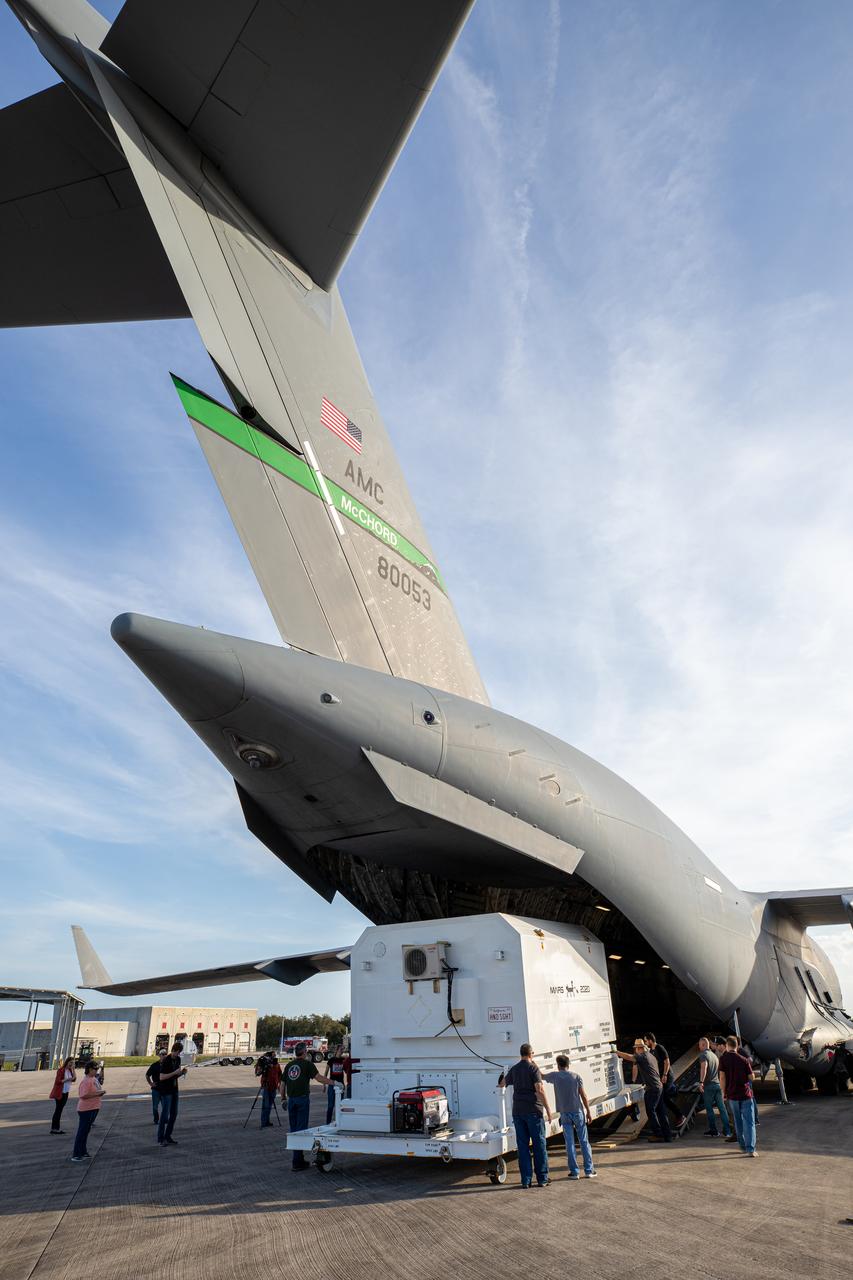
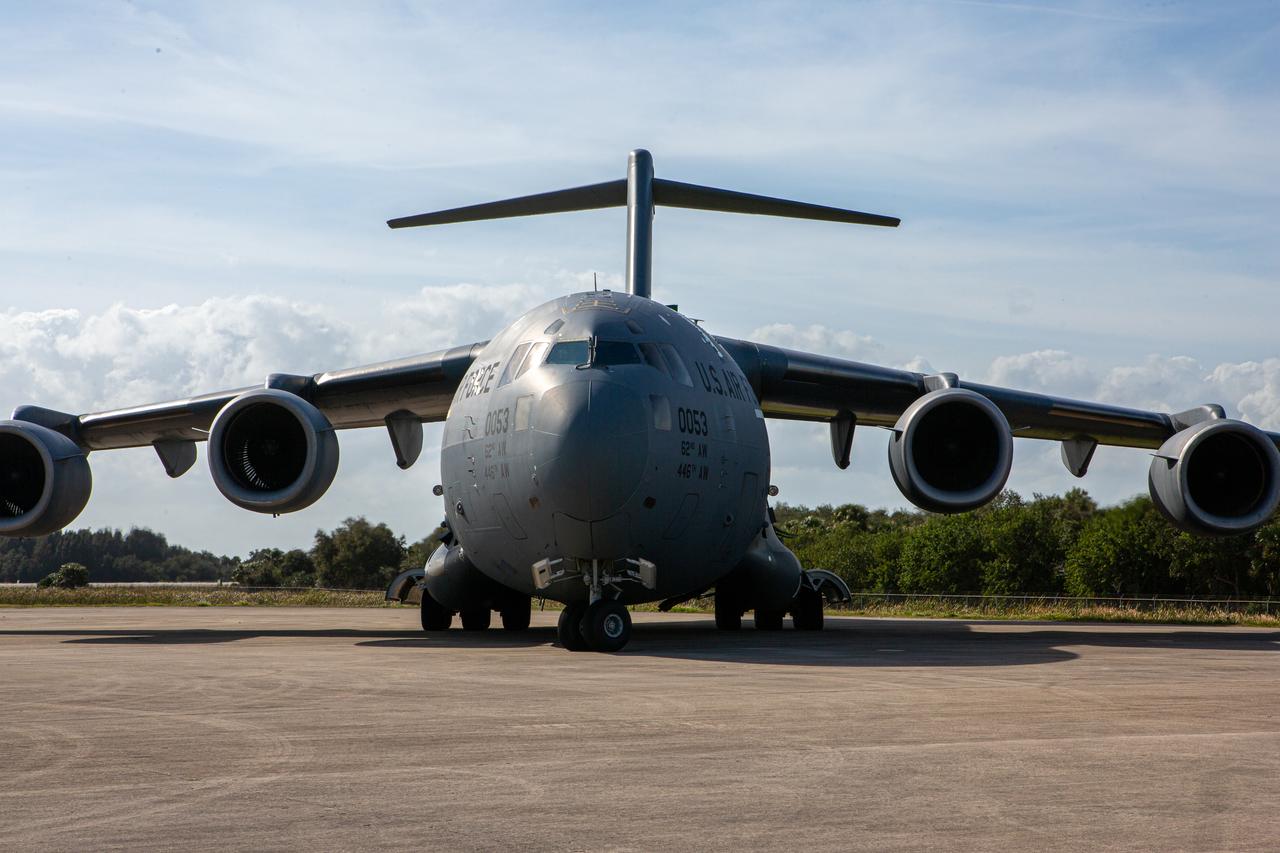
The C-17 aircraft that delivered the Mars 2020 rover sits at the Launch and Landing Facility, formerly known as the Shuttle Landing Facility, at NASA’s Kennedy Space Center on Feb. 12, 2020. The rover made a cross-country trip to the Florida spaceport that started at NASA’s Jet Propulsion Laboratory in Pasadena, California. The mission, targeted for mid-July 2020, will launch aboard an Atlas V 541 rocket from Cape Canaveral Air Force Station. NASA’s Launch Services Program based at Kennedy is managing the launch.
Mars 2020 Rover Arrival
The Mars 2020 rover is pictured outside of the C-17 aircraft that delivered it to the Launch and Landing Facility, formerly known as the Shuttle Landing Facility, at NASA’s Kennedy Space Center in Florida on Feb. 12, 2020. The rover made a cross-country trip that started at NASA’s Jet Propulsion Laboratory in Pasadena, California. The mission, targeted for mid-July 2020, will launch aboard an Atlas V 541 rocket from Cape Canaveral Air Force Station. NASA’s Launch Services Program based at Kennedy is managing the launch.
Mars 2020 Rover Arrival
The Mars 2020 rover is offloaded from a C-17 aircraft at the Launch and Landing Facility, formerly known as the Shuttle Landing Facility, at NASA’s Kennedy Space Center on Feb. 12, 2020. The rover made a cross-country trip to the Florida spaceport that started at NASA’s Jet Propulsion Laboratory in Pasadena, California. The mission, targeted for mid-July 2020, will launch aboard an Atlas V 541 rocket from Cape Canaveral Air Force Station. NASA’s Launch Services Program based at Kennedy is managing the launch.
Mars 2020 Rover Arrival
The Mars 2020 is pictured at the Launch and Landing Facility, formerly known as the Shuttle Landing Facility, at NASA’s Kennedy Space Center on Feb. 12, 2020. The rover was delivered to the Florida spaceport on a C-17 aircraft, making a cross-country trip that started at NASA’s Jet Propulsion Laboratory in Pasadena, California. The mission, targeted for mid-July 2020, will launch aboard an Atlas V 541 rocket from Cape Canaveral Air Force Station. NASA’s Launch Services Program based at Kennedy is managing the launch.
Mars 2020 Rover Arrival
The Mars 2020 rover is offloaded from a C-17 aircraft at the Launch and Landing Facility, formerly known as the Shuttle Landing Facility, at NASA’s Kennedy Space Center on Feb. 12, 2020. The rover made a cross-country trip to the Florida spaceport that started at NASA’s Jet Propulsion Laboratory in Pasadena, California. The mission, targeted for mid-July 2020, will launch aboard an Atlas V 541 rocket from Cape Canaveral Air Force Station. NASA’s Launch Services Program based at Kennedy is managing the launch.
Mars 2020 Rover Arrival
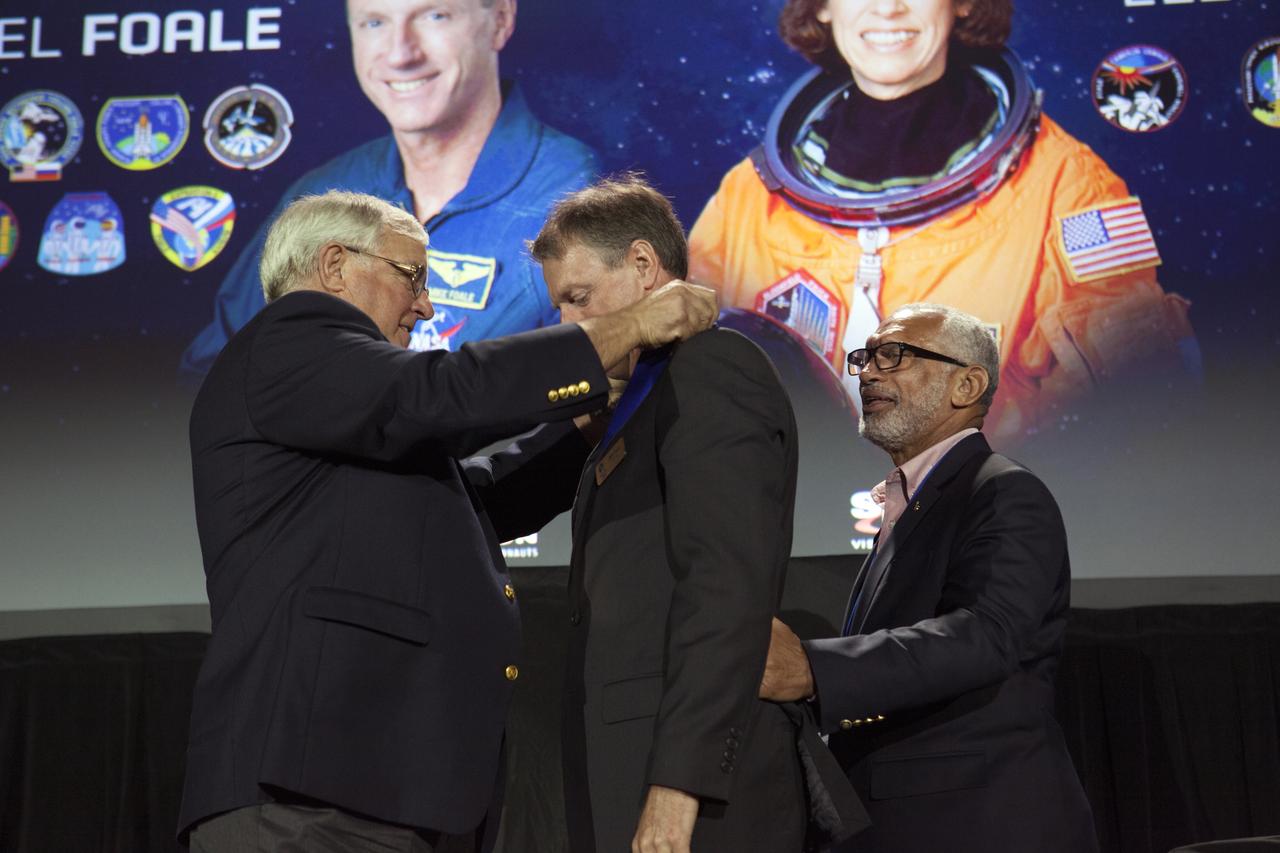
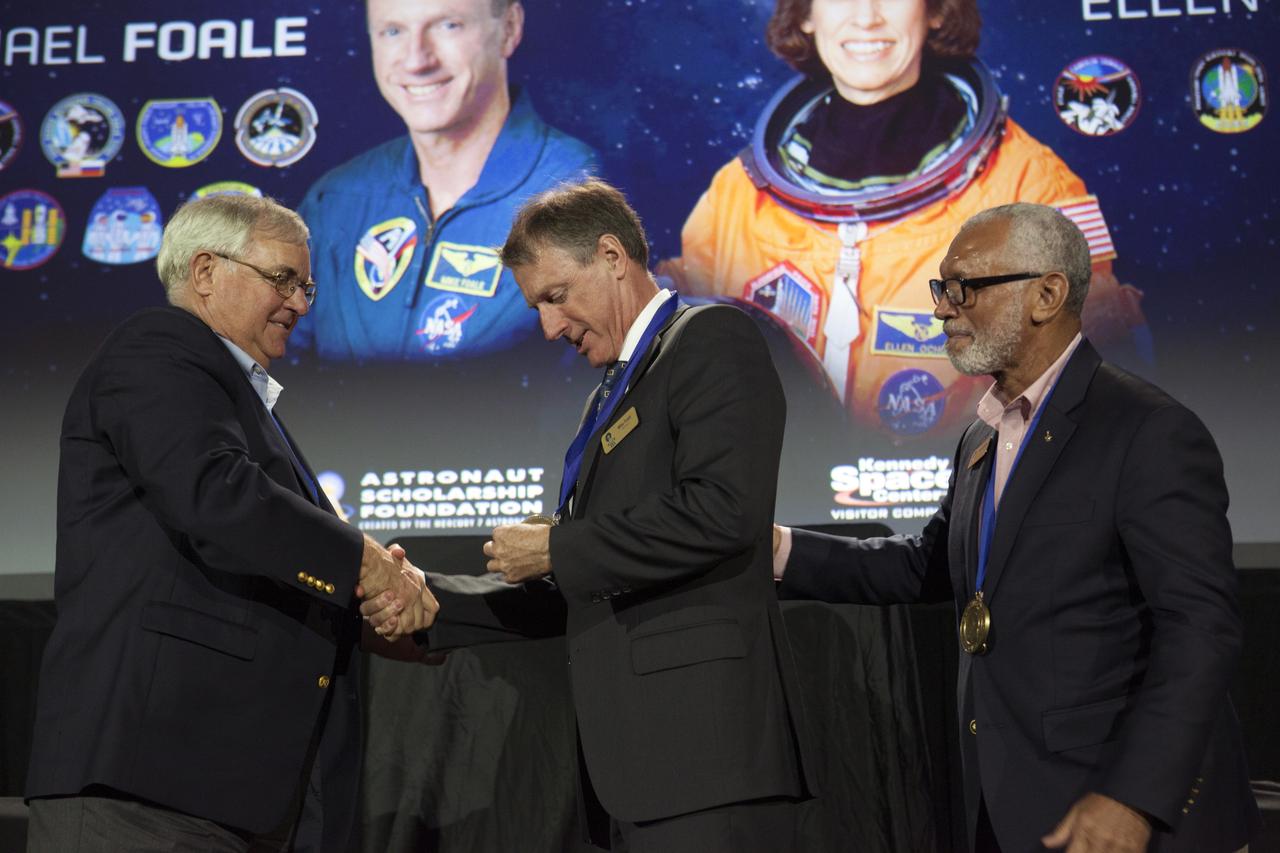
In the Space Shuttle Atlantis facility at the Kennedy Space Center Visitor Complex in Florida, Astronaut Scholarship Foundation Chairman Dan Brandenstein, left, also a Hall of Fame astronaut, presents inductee Michael Foale with his hall of fame medal. Former NASA Administrator Charlie Bolden, right, a Hall of Fame member, presented Foale for induction. During this year's ceremonies, space shuttle astronaut Ellen Ochoa also was enshrined.
2017 Astronaut Hall of Fame Induction Ceremony
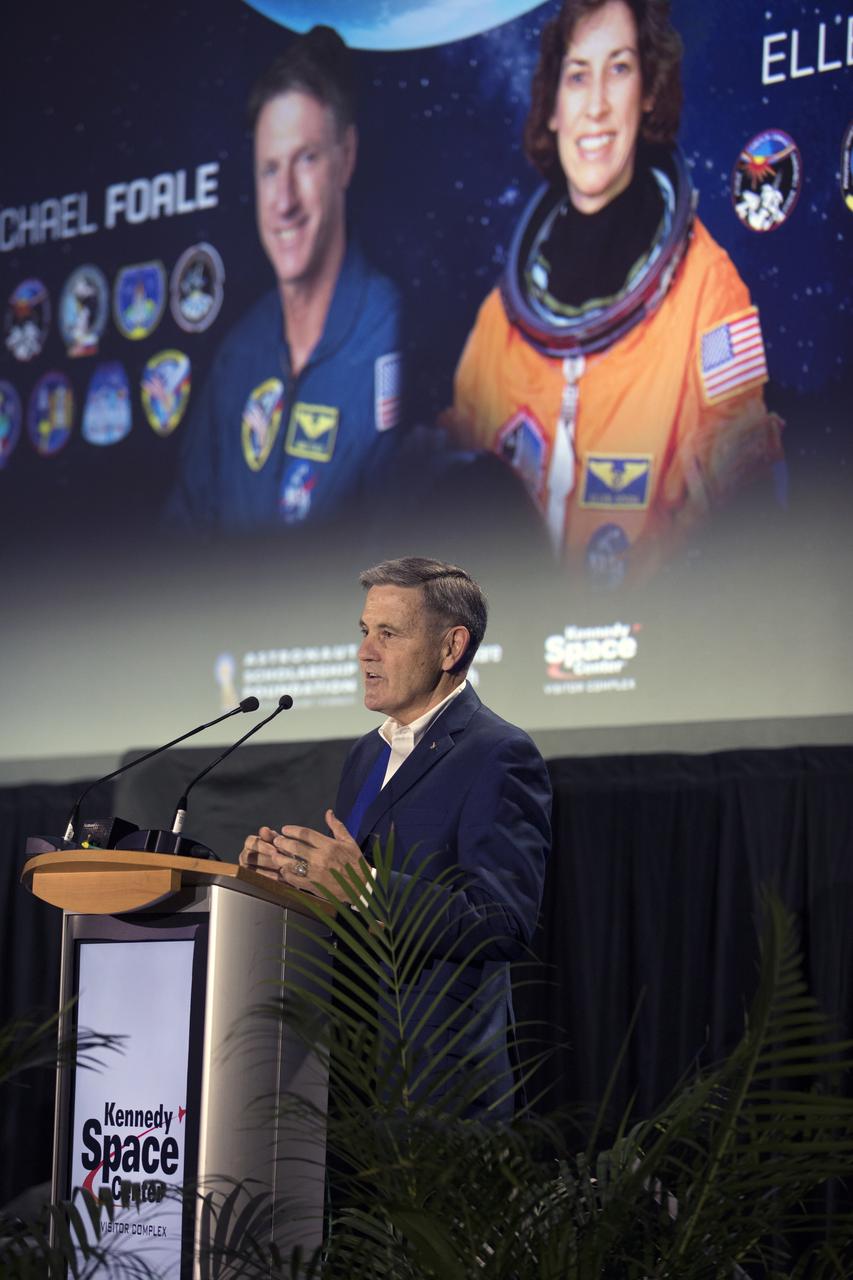
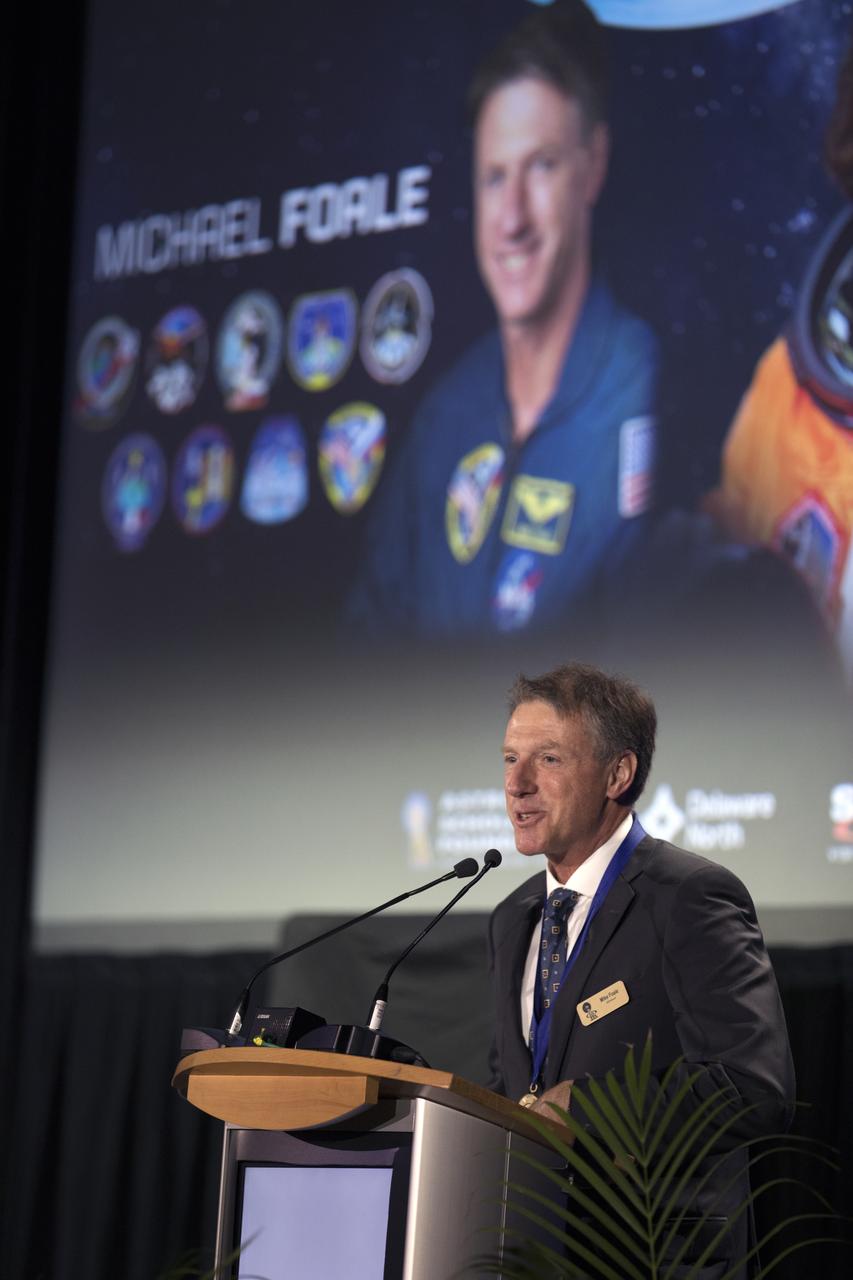
Michael Foale, who flew six missions into space, speaks during the U.S. Astronaut Hall of Fame ceremony. The ceremony took place in the Space Shuttle Atlantis facility at the Kennedy Space Center Visitor Complex in Florida.
2017 Astronaut Hall of Fame Induction Ceremony
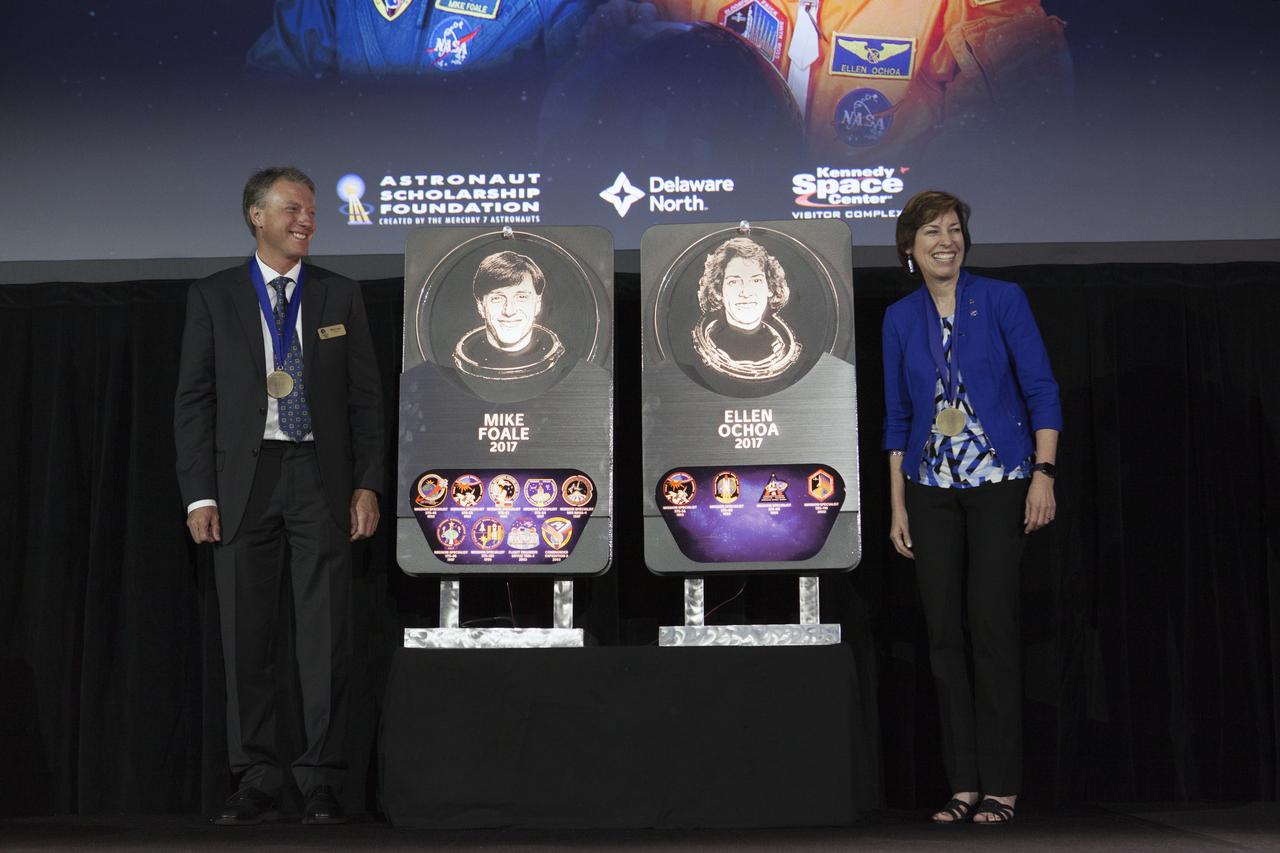
In the Space Shuttle Atlantis facility at NASA's Kennedy Space Center Visitor Complex in Florida, space shuttle astronauts Michael Foale left, and, Ellen Ochoa, pose with their plaques after being inducted into the U.S. Astronaut Hall of Fame.
2017 Astronaut Hall of Fame Induction Ceremony
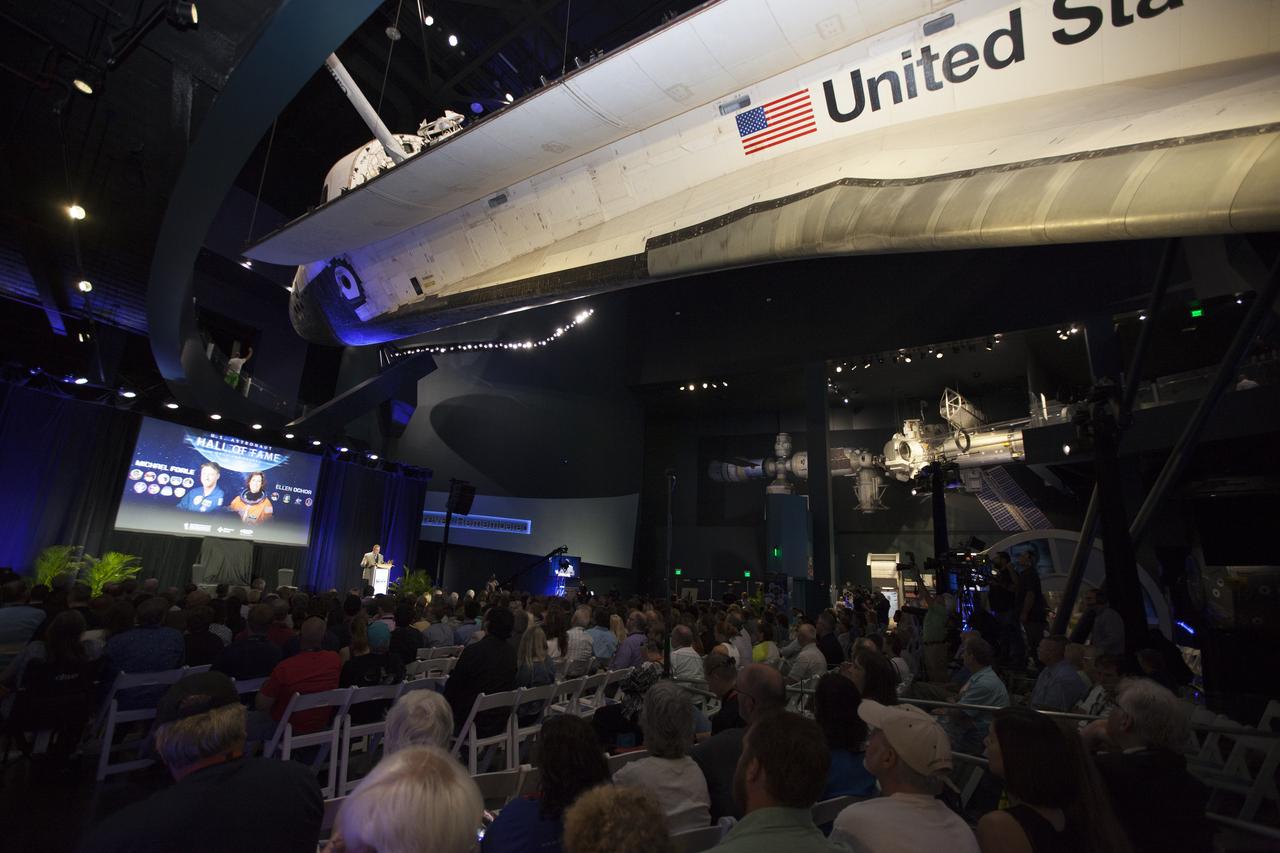
In the Space Shuttle Atlantis facility at the Kennedy Space Center Visitor Complex in Florida, guests sit under the famed spacecraft during the U.S. Hall of Fame activity. During this year's ceremonies, space shuttle astronauts Ellen Ochoa and Michael Foale were enshrined.
2017 Astronaut Hall of Fame Induction Ceremony
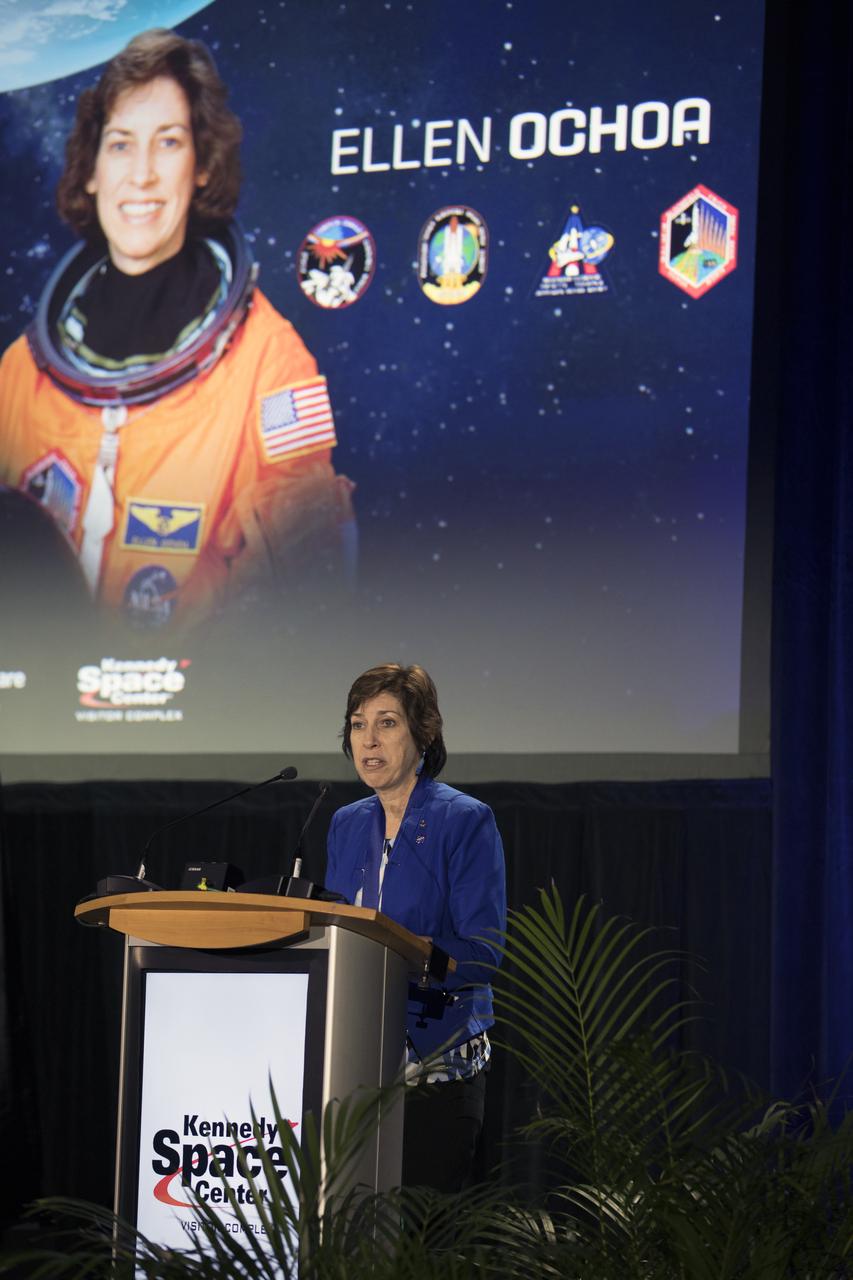
Ellen Ochoa, who was a mission specialist on four space shuttle missions, speaks during the U.S. Astronaut Hall of Fame ceremony. She is now director of NASA's Johnson Space Center. The activity took place in the Space Shuttle Atlantis facility at the Kennedy Space Center Visitor Complex in Florida.
2017 Astronaut Hall of Fame Induction Ceremony
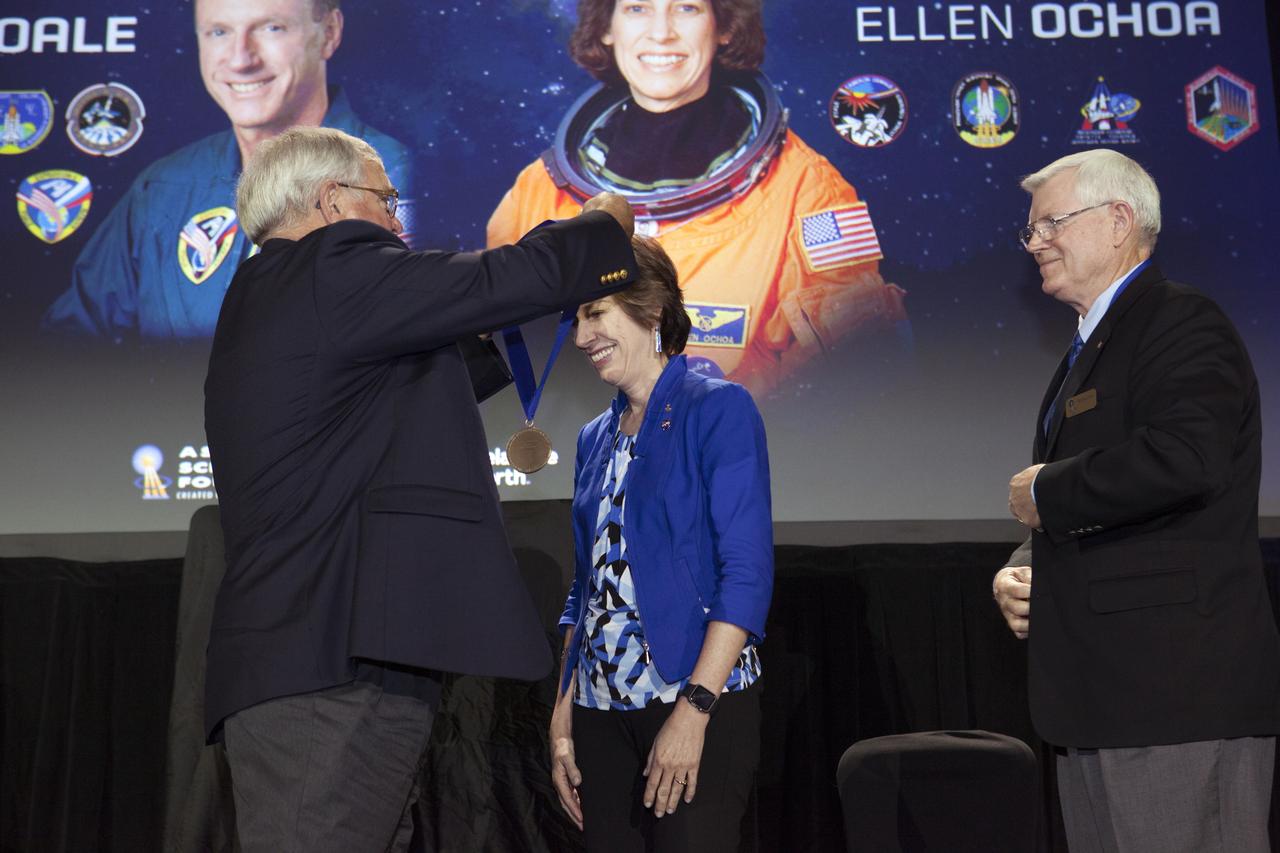
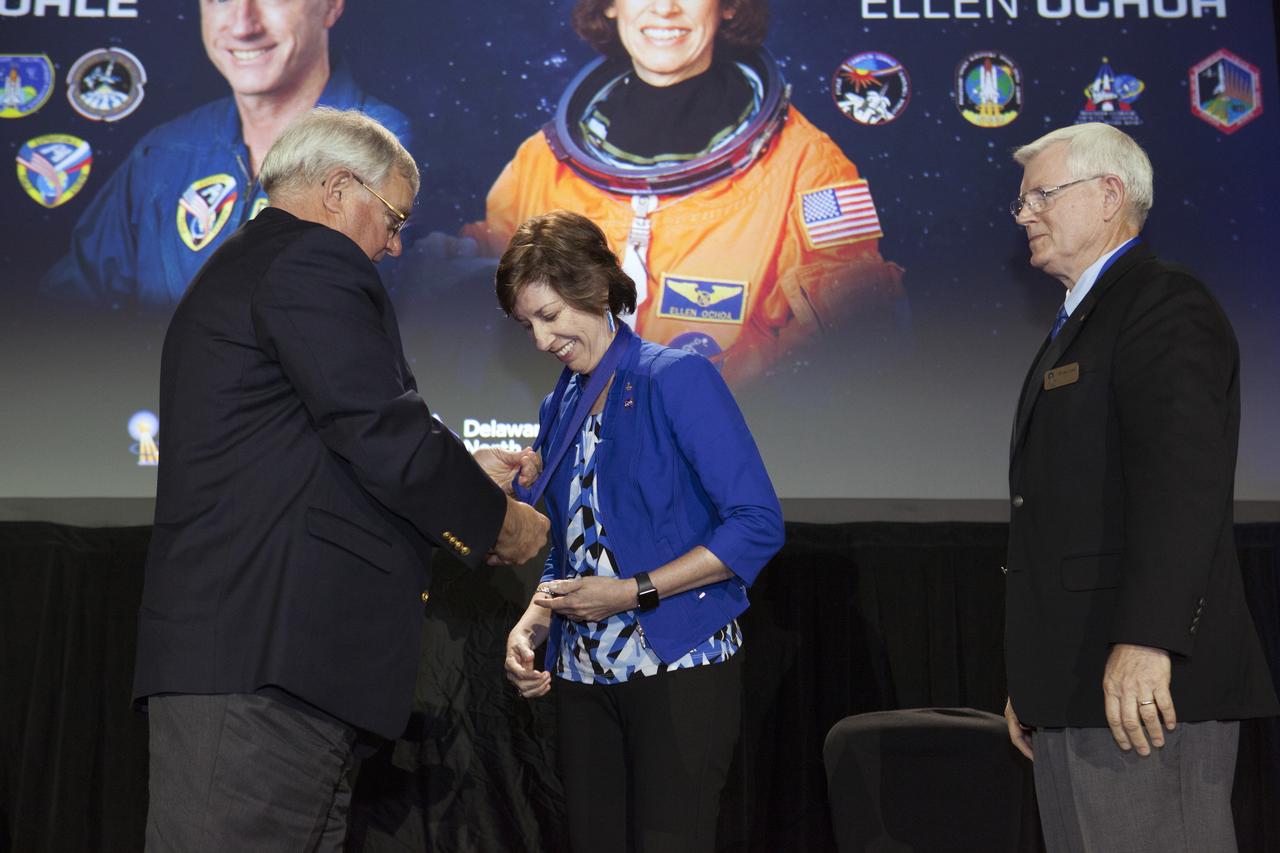
In the Space Shuttle Atlantis facility at the Kennedy Space Center Visitor Complex in Florida, Astronaut Scholarship Foundation Chairman Dan Brandenstein, left, also a Hall of Fame astronaut, presents inductee Ellen Ochoa with her hall of fame medal. Former Johnson Space Center Director Mike Coats, right, a Hall of Fame member, presented Ochoa for induction. During this year's ceremonies, space shuttle astronaut Michael Foale also was enshrined.
2017 Astronaut Hall of Fame Induction Ceremony
In the Space Shuttle Atlantis facility at the Kennedy Space Center Visitor Complex in Florida, Astronaut Scholarship Foundation Chairman Dan Brandenstein, left, also a Hall of Fame astronaut, presents inductee Michael Foale with his hall of fame medal. Former NASA Administrator Charlie Bolden, right, a Hall of Fame member, presented Foale for induction. During this year's ceremonies, space shuttle astronaut Ellen Ochoa also was enshrined.
2017 Astronaut Hall of Fame Induction Ceremony
NASA's Kennedy Space Center Director Bob Cabana, also a member of the U.S. Astronaut Hall of Fame, honored Ellen Ochoa and Michael Foale during ceremonies on May 19, 2017. The activity took place in the Space Shuttle Atlantis facility at the Kennedy Space Center Visitor Complex in Florida.
2017 Astronaut Hall of Fame Induction Ceremony
In the Space Shuttle Atlantis facility at the Kennedy Space Center Visitor Complex in Florida, Astronaut Scholarship Foundation Chairman Dan Brandenstein, left, also a Hall of Fame astronaut, presents inductee Ellen Ochoa with her hall of fame medal. Former Johnson Space Center Director Mike Coats, right, a Hall of Fame member, presented Ochoa for induction. During this year's ceremonies, space shuttle astronaut Michael Foale also was enshrined.
2017 Astronaut Hall of Fame Induction Ceremony
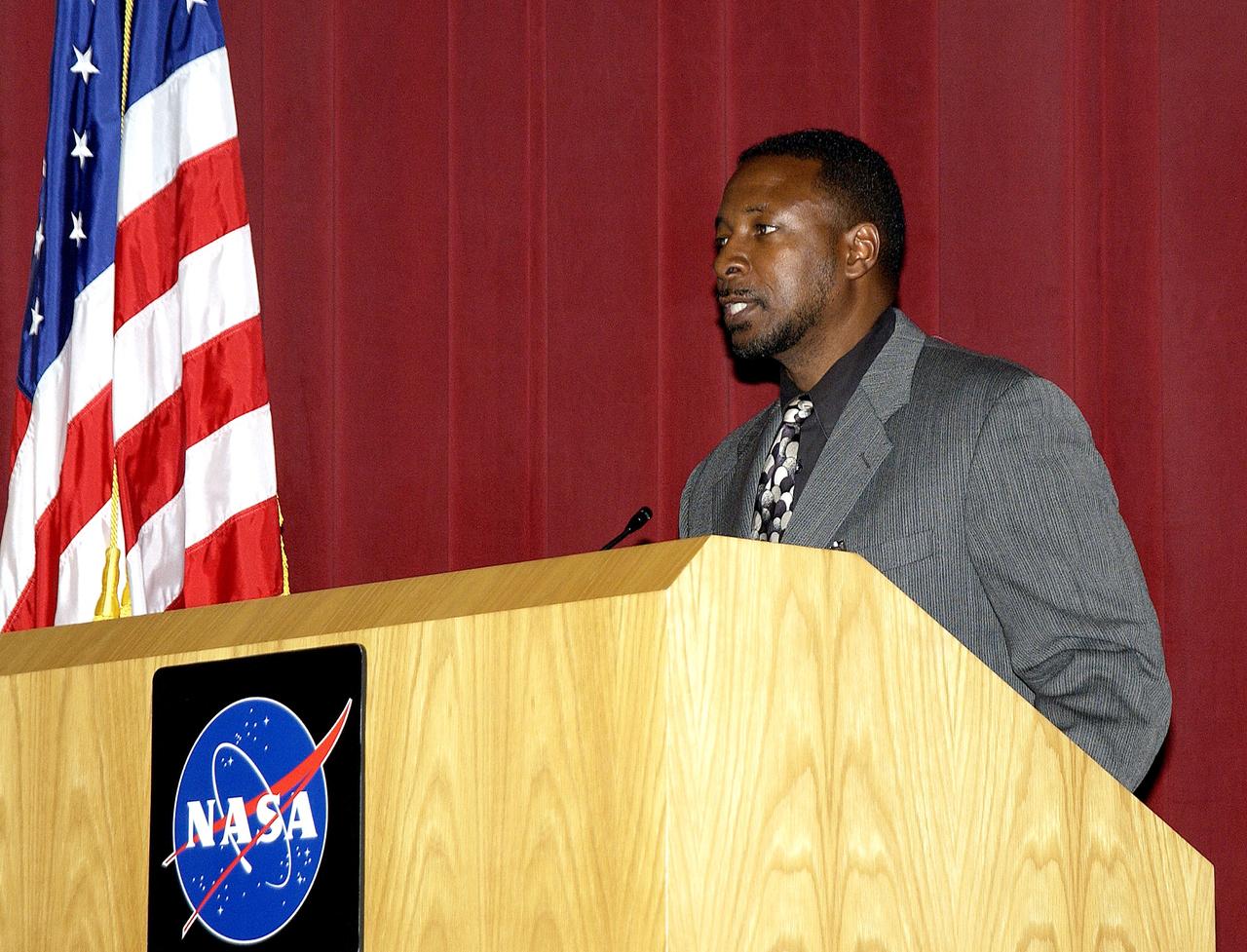
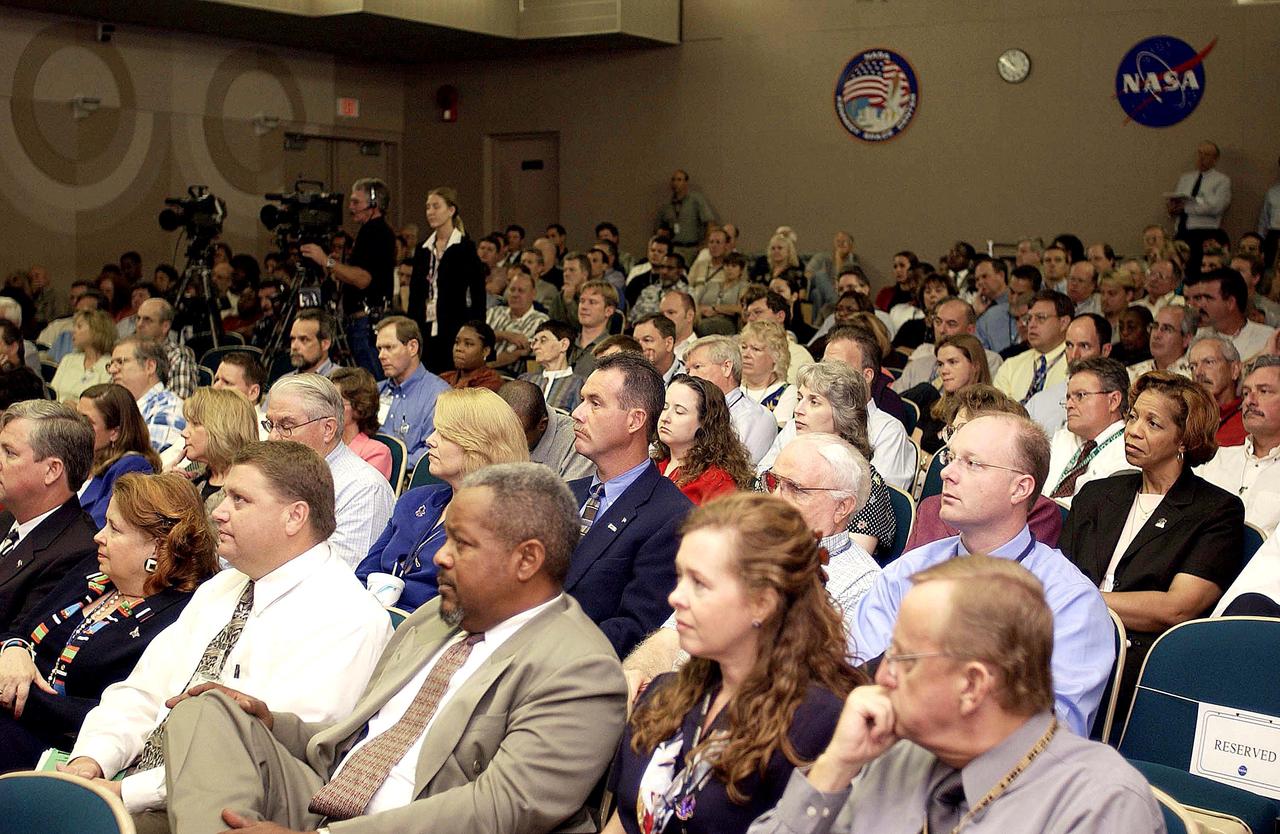
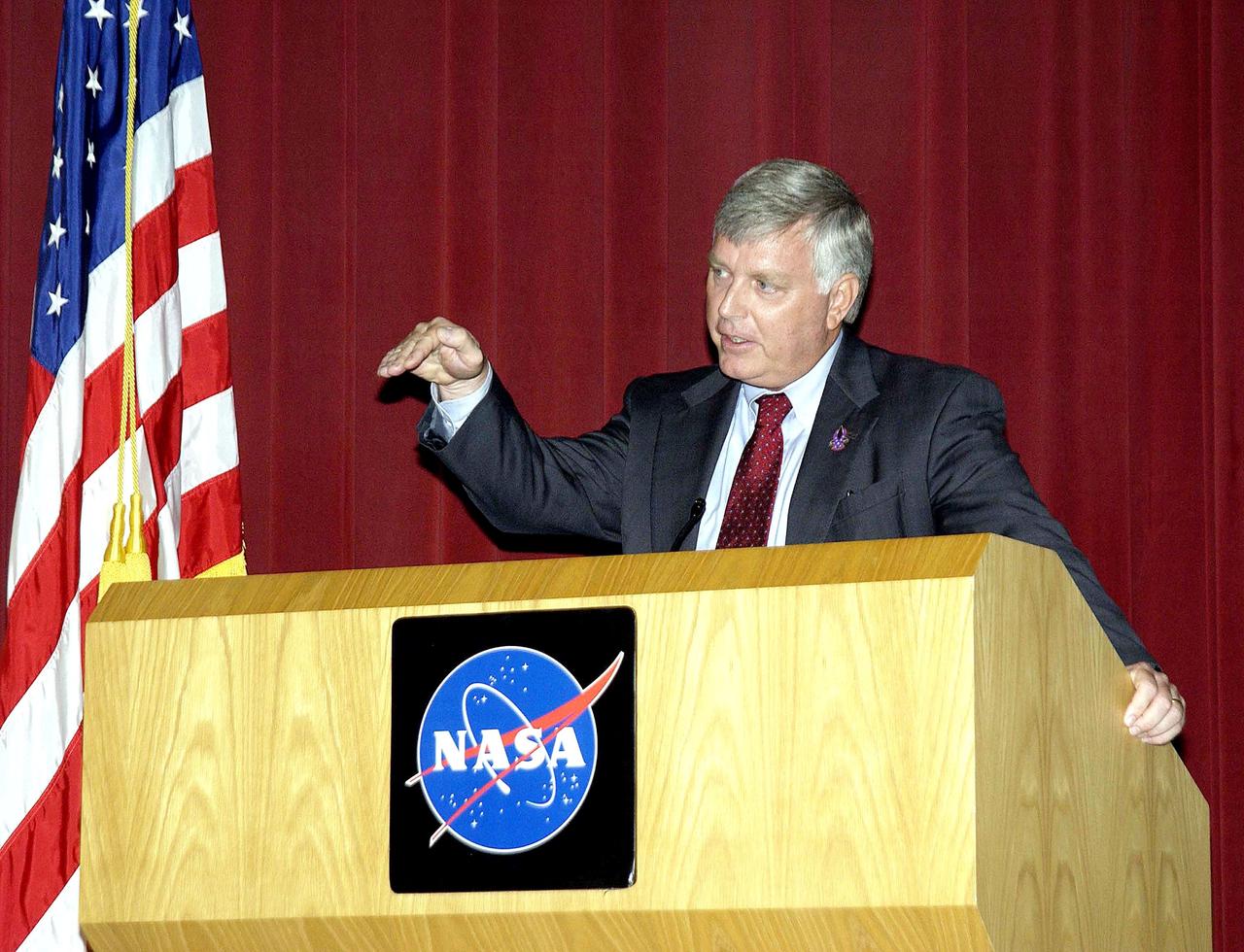
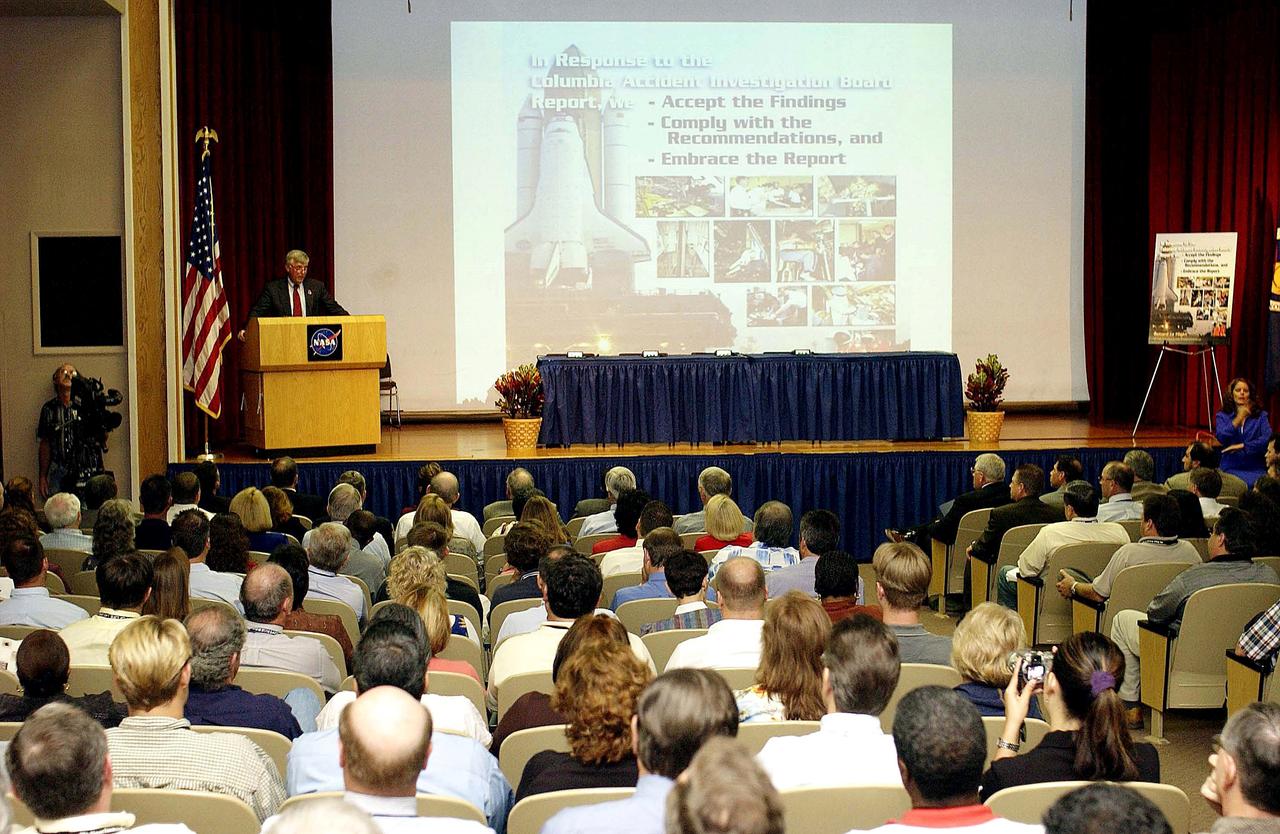
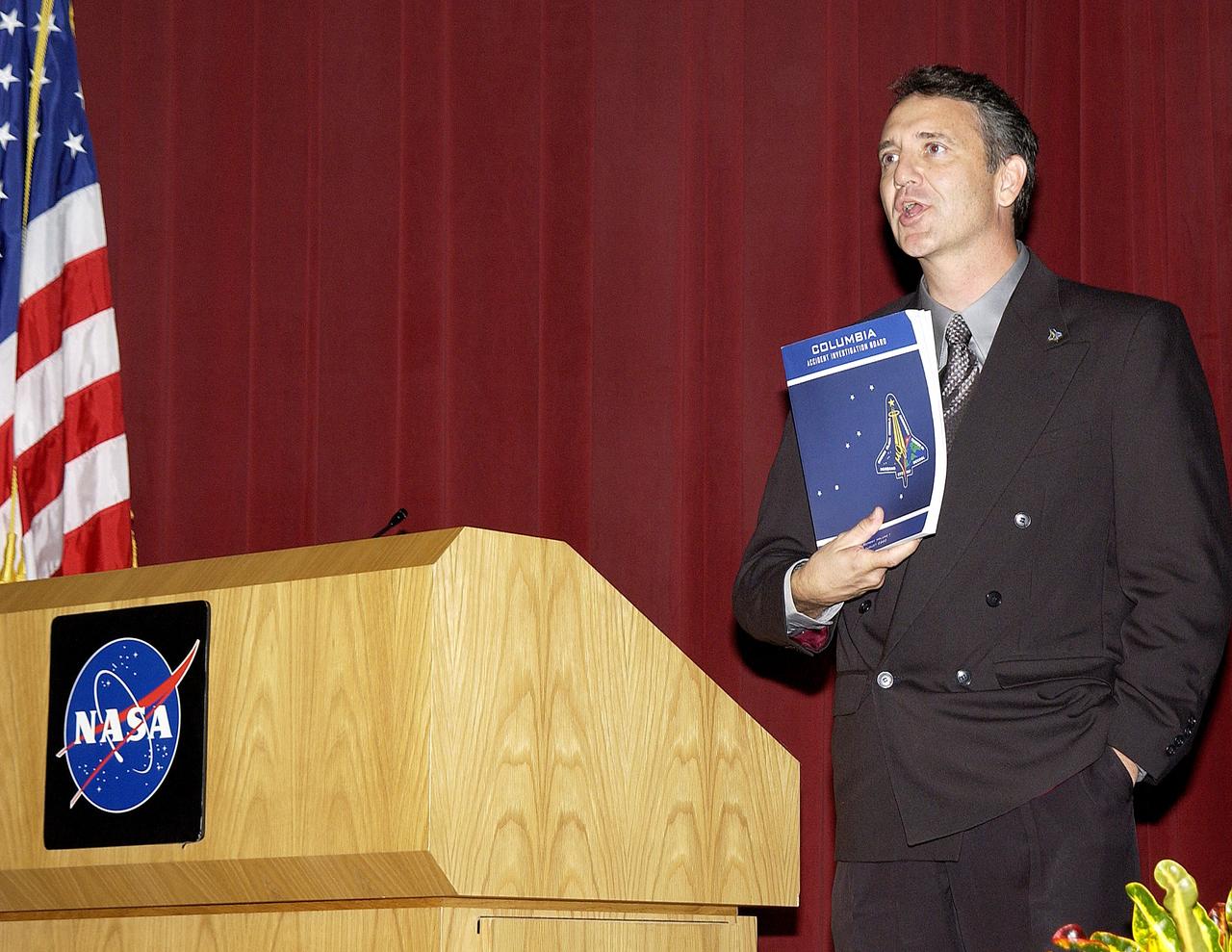
KENNEDY SPACE CENTER, FLA. -  Bill Pickavance, vice president and deputy program manager, Florida operations, United Space Alliance, speaks to employees during Center Director Jim Kennedy’s first all-hands meeting for employees.  Also on the agenda was Dr. Woodrow Whitlow Jr., KSC deputy director, and Tim Wilson, assistant chief engineer for Shuttle.  Representatives from the Shuttle program and contractor team were on hand to discuss the Columbia Accident Investigation Board report and where KSC stands in its progress toward return to flight.
KENNEDY SPACE CENTER, FLA. - Bill Pickavance, vice president and deputy program manager, Florida operations, United Space Alliance, speaks to employees during Center Director Jim Kennedy’s first all-hands meeting for employees. Also on the agenda was Dr. Woodrow Whitlow Jr., KSC deputy director, and Tim Wilson, assistant chief engineer for Shuttle. Representatives from the Shuttle program and contractor team were on hand to discuss the Columbia Accident Investigation Board report and where KSC stands in its progress toward return to flight.
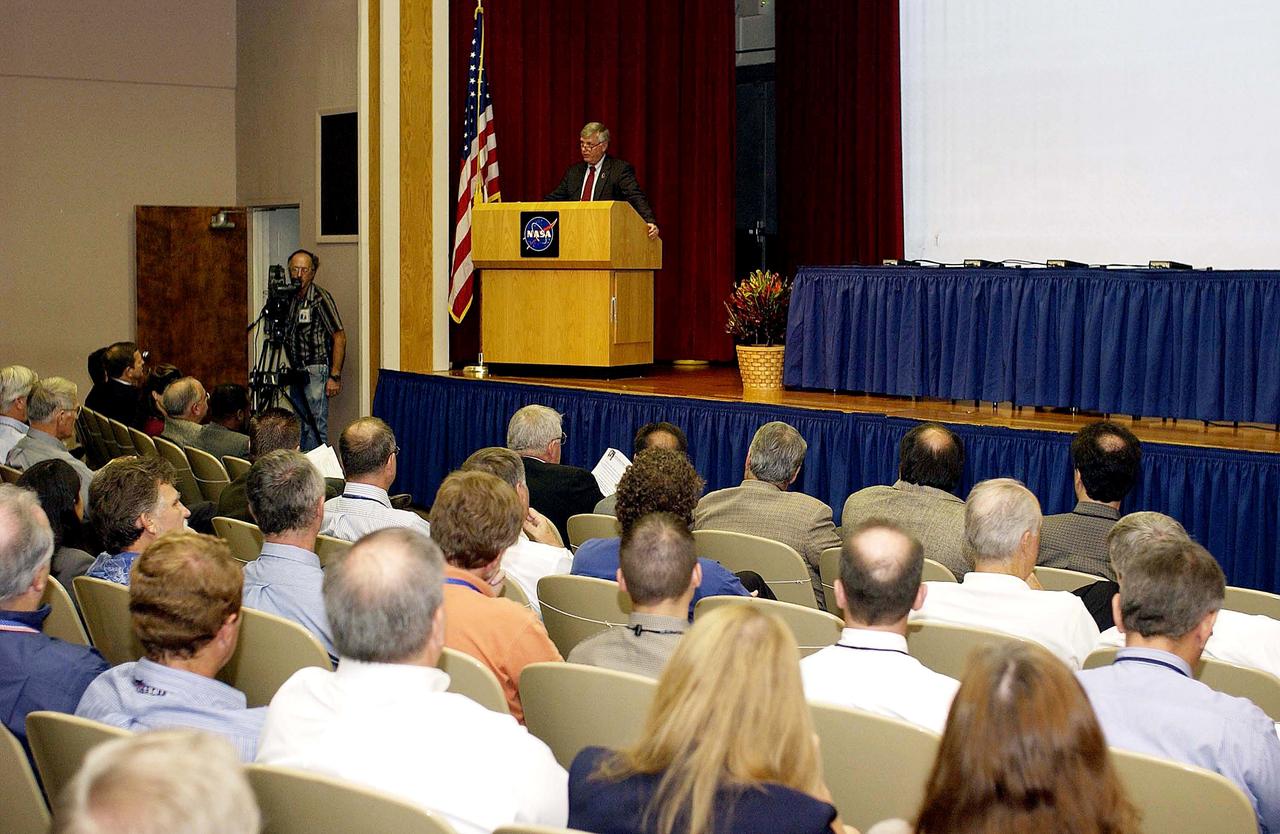
KENNEDY SPACE CENTER, FLA. -  Center Director Jim Kennedy talks to employees during his first all-hands meeting. Making presentations were Dr. Woodrow Whitlow Jr., KSC deputy director; Tim Wilson, assistant chief engineer for Shuttle; and Bill Pickavance, vice president and deputy program manager, Florida operations, United Space Alliance.  Representatives from the Shuttle program and contractor team were on hand to discuss the Columbia Accident Investigation Board report and where KSC stands in its progress toward return to flight.
KENNEDY SPACE CENTER, FLA. - Center Director Jim Kennedy talks to employees during his first all-hands meeting. Making presentations were Dr. Woodrow Whitlow Jr., KSC deputy director; Tim Wilson, assistant chief engineer for Shuttle; and Bill Pickavance, vice president and deputy program manager, Florida operations, United Space Alliance. Representatives from the Shuttle program and contractor team were on hand to discuss the Columbia Accident Investigation Board report and where KSC stands in its progress toward return to flight.
KENNEDY SPACE CENTER, FLA. -  Employees in the Training Auditorium listen to  Center Director Jim Kennedy’s first all-hands meeting for employees.  Making presentations were Dr. Woodrow Whitlow Jr., KSC deputy director; Tim Wilson, assistant chief engineer for Shuttle; and Bill Pickavance, vice president and deputy program manager, Florida operations, United Space Alliance.  Representatives from the Shuttle program and contractor team were on hand to discuss the Columbia Accident Investigation Board report and where KSC stands in its progress toward return to flight.
KENNEDY SPACE CENTER, FLA. - Employees in the Training Auditorium listen to Center Director Jim Kennedy’s first all-hands meeting for employees. Making presentations were Dr. Woodrow Whitlow Jr., KSC deputy director; Tim Wilson, assistant chief engineer for Shuttle; and Bill Pickavance, vice president and deputy program manager, Florida operations, United Space Alliance. Representatives from the Shuttle program and contractor team were on hand to discuss the Columbia Accident Investigation Board report and where KSC stands in its progress toward return to flight.
KENNEDY SPACE CENTER, FLA. -  Center Director Jim Kennedy talks to employees during his first all-hands meeting. Making presentations were Dr. Woodrow Whitlow Jr., KSC deputy director;Tim Wilson, assistant chief engineer for Shuttle; and Bill Pickavance, vice president and deputy program manager, Florida operations, United Space Alliance..  Representatives from the Shuttle program and contractor team were on hand to discuss the Columbia Accident Investigation Board report and where KSC stands in its progress toward return to flight.
KENNEDY SPACE CENTER, FLA. - Center Director Jim Kennedy talks to employees during his first all-hands meeting. Making presentations were Dr. Woodrow Whitlow Jr., KSC deputy director;Tim Wilson, assistant chief engineer for Shuttle; and Bill Pickavance, vice president and deputy program manager, Florida operations, United Space Alliance.. Representatives from the Shuttle program and contractor team were on hand to discuss the Columbia Accident Investigation Board report and where KSC stands in its progress toward return to flight.
KENNEDY SPACE CENTER, FLA. -  Dr. Woodrow Whitlow Jr., KSC deputy director, speaks to employees during Center Director Jim Kennedy’s first all-hands meeting for employees.  Also on the agenda was Tim Wilson, assistant chief engineer for Shuttle, and Bill Pickavance, vice president and deputy program manager, Florida operations, United Space Alliance..  Representatives from the Shuttle program and contractor team were on hand to discuss the Columbia Accident Investigation Board report and where KSC stands in its progress toward return to flight.
KENNEDY SPACE CENTER, FLA. - Dr. Woodrow Whitlow Jr., KSC deputy director, speaks to employees during Center Director Jim Kennedy’s first all-hands meeting for employees. Also on the agenda was Tim Wilson, assistant chief engineer for Shuttle, and Bill Pickavance, vice president and deputy program manager, Florida operations, United Space Alliance.. Representatives from the Shuttle program and contractor team were on hand to discuss the Columbia Accident Investigation Board report and where KSC stands in its progress toward return to flight.
KENNEDY SPACE CENTER, FLA. -  Center Director Jim Kennedy (left) welcomes Bill Pickavance to the podium during the CD’s first all-hands meeting with employees. Pickavance is vice president and deputy program manager, Florida operations, United Space Alliance. Also, making presentations were Dr. Woodrow Whitlow Jr., KSC deputy director, and Tim Wilson, assistant chief engineer for Shuttle. Representatives from the Shuttle program and contractor team were on hand to discuss the Columbia Accident Investigation Board report and where KSC stands in its progress toward return to flight.
KENNEDY SPACE CENTER, FLA. - Center Director Jim Kennedy (left) welcomes Bill Pickavance to the podium during the CD’s first all-hands meeting with employees. Pickavance is vice president and deputy program manager, Florida operations, United Space Alliance. Also, making presentations were Dr. Woodrow Whitlow Jr., KSC deputy director, and Tim Wilson, assistant chief engineer for Shuttle. Representatives from the Shuttle program and contractor team were on hand to discuss the Columbia Accident Investigation Board report and where KSC stands in its progress toward return to flight.
KENNEDY SPACE CENTER, FLA. -  Tim Wilson, assistant chief engineer for Shuttle,  speaks to employees during Center Director Jim Kennedy’s first all-hands meeting for employees.  Also on the agenda was Dr. Woodrow Whitlow Jr., KSC deputy director, and Bill Pickavance, vice president and deputy program manager, Florida operations, United Space Alliance.  Representatives from the Shuttle program and contractor team were on hand to discuss the Columbia Accident Investigation Board report and where KSC stands in its progress toward return to flight.
KENNEDY SPACE CENTER, FLA. - Tim Wilson, assistant chief engineer for Shuttle, speaks to employees during Center Director Jim Kennedy’s first all-hands meeting for employees. Also on the agenda was Dr. Woodrow Whitlow Jr., KSC deputy director, and Bill Pickavance, vice president and deputy program manager, Florida operations, United Space Alliance. Representatives from the Shuttle program and contractor team were on hand to discuss the Columbia Accident Investigation Board report and where KSC stands in its progress toward return to flight.
KENNEDY SPACE CENTER, FLA. -  Dr. Woodrow Whitlow Jr., KSC deputy director, speaks to employees during  Center Director Jim Kennedy’s first all-hands meeting for employees.  Also on the agenda was Tim Wilson, assistant chief engineer for Shuttle, and Bill Pickavance, vice president and deputy program manager, Florida operations, United Space Alliance..  Representatives from the Shuttle program and contractor team were on hand to discuss the Columbia Accident Investigation Board report and where KSC stands in its progress toward return to flight.
KENNEDY SPACE CENTER, FLA. - Dr. Woodrow Whitlow Jr., KSC deputy director, speaks to employees during Center Director Jim Kennedy’s first all-hands meeting for employees. Also on the agenda was Tim Wilson, assistant chief engineer for Shuttle, and Bill Pickavance, vice president and deputy program manager, Florida operations, United Space Alliance.. Representatives from the Shuttle program and contractor team were on hand to discuss the Columbia Accident Investigation Board report and where KSC stands in its progress toward return to flight.
KENNEDY SPACE CENTER, FLA. -  Center Director Jim Kennedy talks to employees during his first all-hands meeting.  Making presentations were Dr. Woodrow Whitlow Jr., KSC deputy director,; Tim Wilson, assistant chief engineer for Shuttle; and Bill Pickavance, vice president and deputy program manager, Florida operations, United Space Alliance.  Representatives from the Shuttle program and contractor team were on hand to discuss the Columbia Accident Investigation Board report and where KSC stands in its progress toward return to flight.
KENNEDY SPACE CENTER, FLA. - Center Director Jim Kennedy talks to employees during his first all-hands meeting. Making presentations were Dr. Woodrow Whitlow Jr., KSC deputy director,; Tim Wilson, assistant chief engineer for Shuttle; and Bill Pickavance, vice president and deputy program manager, Florida operations, United Space Alliance. Representatives from the Shuttle program and contractor team were on hand to discuss the Columbia Accident Investigation Board report and where KSC stands in its progress toward return to flight.
KENNEDY SPACE CENTER, FLA. -  Center Director Jim Kennedy talks to employees during his first all-hands meeting. Making presentations were Dr. Woodrow Whitlow Jr., KSC deputy director; Tim Wilson, assistant chief engineer for Shuttle; and Bill Pickavance, vice president and deputy program manager, Florida operations, United Space Alliance..  Representatives from the Shuttle program and contractor team were on hand to discuss the Columbia Accident Investigation Board report and where KSC stands in its progress toward return to flight.
KENNEDY SPACE CENTER, FLA. - Center Director Jim Kennedy talks to employees during his first all-hands meeting. Making presentations were Dr. Woodrow Whitlow Jr., KSC deputy director; Tim Wilson, assistant chief engineer for Shuttle; and Bill Pickavance, vice president and deputy program manager, Florida operations, United Space Alliance.. Representatives from the Shuttle program and contractor team were on hand to discuss the Columbia Accident Investigation Board report and where KSC stands in its progress toward return to flight.
KENNEDY SPACE CENTER, FLA. -  Suzy Cunningham sings the national anthem to kick off  Center Director Jim Kennedy’s first all-hands meeting conducted for employees. She is senior spaceport manager, NASA/Air Force Spaceport Planning and Customer Service Office.   Making presentations were Dr. Woodrow Whitlow Jr., KSC deputy director; Tim Wilson, assistant chief engineer for Shuttle; and Bill Pickavance, vice president and deputy program manager, Florida operations, United Space Alliance.  Representatives from the Shuttle program and contractor team were on hand to discuss the Columbia Accident Investigation Board report and where KSC stands in its progress toward return to flight.
KENNEDY SPACE CENTER, FLA. - Suzy Cunningham sings the national anthem to kick off Center Director Jim Kennedy’s first all-hands meeting conducted for employees. She is senior spaceport manager, NASA/Air Force Spaceport Planning and Customer Service Office. Making presentations were Dr. Woodrow Whitlow Jr., KSC deputy director; Tim Wilson, assistant chief engineer for Shuttle; and Bill Pickavance, vice president and deputy program manager, Florida operations, United Space Alliance. Representatives from the Shuttle program and contractor team were on hand to discuss the Columbia Accident Investigation Board report and where KSC stands in its progress toward return to flight.
NASA's Pegasus barge arrived at Stennis Space Center on Nov. 16, delivering space shuttle main engine ground support equipment to the south Mississippi facility. Stennis tested every main engine used on all 135 space shuttle flights.
Space shuttle main engine
KENNEDY SPACE CENTER, FLA. - Dr. Richard Arkin records data as the hazardous gas detection system AVEMS is used to analyze the toxic gases produced by active vents, called fumaroles, in the Turrialba volcano in Costa Rica.  He is using the Aircraft-based Volcanic Emission Mass Spectrometer (AVEMS) that determines the presence and concentration of various chemicals.  The AVEMS system has been developed for use in the Space Shuttle program, to detect toxic gas leaks and emissions in the Shuttle’s aft compartment and the crew compartment.
KENNEDY SPACE CENTER, FLA. - Dr. Richard Arkin records data as the hazardous gas detection system AVEMS is used to analyze the toxic gases produced by active vents, called fumaroles, in the Turrialba volcano in Costa Rica. He is using the Aircraft-based Volcanic Emission Mass Spectrometer (AVEMS) that determines the presence and concentration of various chemicals. The AVEMS system has been developed for use in the Space Shuttle program, to detect toxic gas leaks and emissions in the Shuttle’s aft compartment and the crew compartment.
KENNEDY SPACE CENTER, FLA. -   Alan Thirkettle, International Space Station Program manager for Node 2, European Space Agency (ESA), speaks to guests and the media gathered in the Space Station Processing Facility at a ceremony highlighting the arrival of two major components of the International Space Station.  NASA's Node 2, built by the European Space Agency (ESA) in Italy, arrived at KSC on June 1. It will be the next pressurized module installed on the Station. The pressurized module of the Japanese Experiment Module (JEM), named "Kibo" (Hope), arrived at KSC on June 4. It is Japan's primary contribution to the Station. The ceremony held today included the official transfer of ownership signing of Node 2 between the ESA and NASA.. Emceed by Lisa Malone, deputy director of External Relations and Business Development at KSC, the ceremony also included these speakers: Center Director Roy Bridges Jr.; NASA’s Michael C. Kostelnik, deputy associate administrator for International Space Station and Shuttle Programs and William Gerstenmaier, International Space Station Program manager; Andrea Lorenzoni, International Space Station Program manager for Node 2, Italian Space Agency; and Kuniaki Shiraki, JEM Project manager, National Aerospace and Development Agency of Japan.
KENNEDY SPACE CENTER, FLA. - Alan Thirkettle, International Space Station Program manager for Node 2, European Space Agency (ESA), speaks to guests and the media gathered in the Space Station Processing Facility at a ceremony highlighting the arrival of two major components of the International Space Station. NASA's Node 2, built by the European Space Agency (ESA) in Italy, arrived at KSC on June 1. It will be the next pressurized module installed on the Station. The pressurized module of the Japanese Experiment Module (JEM), named "Kibo" (Hope), arrived at KSC on June 4. It is Japan's primary contribution to the Station. The ceremony held today included the official transfer of ownership signing of Node 2 between the ESA and NASA.. Emceed by Lisa Malone, deputy director of External Relations and Business Development at KSC, the ceremony also included these speakers: Center Director Roy Bridges Jr.; NASA’s Michael C. Kostelnik, deputy associate administrator for International Space Station and Shuttle Programs and William Gerstenmaier, International Space Station Program manager; Andrea Lorenzoni, International Space Station Program manager for Node 2, Italian Space Agency; and Kuniaki Shiraki, JEM Project manager, National Aerospace and Development Agency of Japan.
KENNEDY SPACE CENTER, FLA. -   At a ceremony highlighting the arrival of two major components of the International Space Station, William Gerstenmaier, International Space Station Program manager, points to one of the components as he speaks to guests and the media gathered in the Space Station Processing Facility.  NASA's Node 2, built by the European Space Agency (ESA) in Italy, arrived at KSC on June 1. It will be the next pressurized module installed on the Station. The pressurized module of the Japanese Experiment Module (JEM), named "Kibo" (Hope), arrived at KSC on June 4. It is Japan's primary contribution to the Station. The ceremony held today included the official transfer of ownership signing of Node 2 between the ESA and NASA.. Emceed by Lisa Malone, deputy director of External Relations and Business Development at KSC, the ceremony also included these speakers: Center Director Roy Bridges Jr.; NASA’s Michael C. Kostelnik, deputy associate administrator for International Space Station and Shuttle Programs; Alan Thirkettle, International Space Station Program manager for Node 2, ESA; Andrea Lorenzoni, International Space Station Program manager for Node 2, Italian Space Agency; and Kuniaki Shiraki, JEM Project manager, National Aerospace and Development Agency of Japan.
KENNEDY SPACE CENTER, FLA. - At a ceremony highlighting the arrival of two major components of the International Space Station, William Gerstenmaier, International Space Station Program manager, points to one of the components as he speaks to guests and the media gathered in the Space Station Processing Facility. NASA's Node 2, built by the European Space Agency (ESA) in Italy, arrived at KSC on June 1. It will be the next pressurized module installed on the Station. The pressurized module of the Japanese Experiment Module (JEM), named "Kibo" (Hope), arrived at KSC on June 4. It is Japan's primary contribution to the Station. The ceremony held today included the official transfer of ownership signing of Node 2 between the ESA and NASA.. Emceed by Lisa Malone, deputy director of External Relations and Business Development at KSC, the ceremony also included these speakers: Center Director Roy Bridges Jr.; NASA’s Michael C. Kostelnik, deputy associate administrator for International Space Station and Shuttle Programs; Alan Thirkettle, International Space Station Program manager for Node 2, ESA; Andrea Lorenzoni, International Space Station Program manager for Node 2, Italian Space Agency; and Kuniaki Shiraki, JEM Project manager, National Aerospace and Development Agency of Japan.
KENNEDY SPACE CENTER, FLA. -  NASA's Michael C. Kostelnik, deputy associate administrator for International Space Station and Shuttle Programs, speaks to guests and the media gathered in the Space Station Processing Facility for a ceremony to highlight the arrival of two major components of the International Space Station.  NASA's Node 2, built by the European Space Agency (ESA) in Italy arrived at KSC on June 1. It will be the next pressurized module installed on the Station. The pressurized module of the Japanese Experiment Module (JEM), named "Kibo" (Hope) arrived at KSC on June 4. It is Japan's primary contribution to the Station. The ceremony held today included the official transfer of ownership signing of Node 2 between the ESA and NASA.. Emceed by Lisa Malone (far left),  deputy director of External Relations and Business Development at KSC, the ceremony also included these speakers: Center Director Roy Bridges Jr. (second from left); William Gerstenmaier, International Space Station Program manager; Alan Thirkettle, International Space Station Program manager for Node 2, ESA; Andrea Lorenzoni, International Space Station Program manager for Node 2, Italian Space Agency; and Kuniaki Shiraki, JEM Project manager, National Aerospace and Development Agency of Japan.
KENNEDY SPACE CENTER, FLA. - NASA's Michael C. Kostelnik, deputy associate administrator for International Space Station and Shuttle Programs, speaks to guests and the media gathered in the Space Station Processing Facility for a ceremony to highlight the arrival of two major components of the International Space Station. NASA's Node 2, built by the European Space Agency (ESA) in Italy arrived at KSC on June 1. It will be the next pressurized module installed on the Station. The pressurized module of the Japanese Experiment Module (JEM), named "Kibo" (Hope) arrived at KSC on June 4. It is Japan's primary contribution to the Station. The ceremony held today included the official transfer of ownership signing of Node 2 between the ESA and NASA.. Emceed by Lisa Malone (far left), deputy director of External Relations and Business Development at KSC, the ceremony also included these speakers: Center Director Roy Bridges Jr. (second from left); William Gerstenmaier, International Space Station Program manager; Alan Thirkettle, International Space Station Program manager for Node 2, ESA; Andrea Lorenzoni, International Space Station Program manager for Node 2, Italian Space Agency; and Kuniaki Shiraki, JEM Project manager, National Aerospace and Development Agency of Japan.
KENNEDY SPACE CENTER, FLA. -  Kuniaki Shiraki, JEM Project manager, National Aerospace and Development Agency of Japan,  speaks to guests and the media gathered in the Space Station Processing Facility at a ceremony highlighting the arrival of two major components of the International Space Station.  NASA's Node 2, built by the European Space Agency (ESA) in Italy, arrived at KSC on June 1. It will be the next pressurized module installed on the Station. The pressurized module of the Japanese Experiment Module (JEM), named "Kibo" (Hope), arrived at KSC on June 4. It is Japan's primary contribution to the Station. The ceremony held today included the official transfer of ownership signing of Node 2 between the ESA and NASA.. Emceed by Lisa Malone (far left), deputy director of External Relations and Business Development at KSC, the ceremony also included these speakers: Center Director Roy Bridges Jr. (second from left); NASA’s Michael C. Kostelnik, deputy associate administrator for International Space Station and Shuttle Programs and William Gerstenmaier, International Space Station Program manager; Alan Thirkettle, International Space Station Program manager for Node 2, ESA; and Andrea Lorenzoni, International Space Station Program manager for Node 2, Italian Space Agency.
KENNEDY SPACE CENTER, FLA. - Kuniaki Shiraki, JEM Project manager, National Aerospace and Development Agency of Japan, speaks to guests and the media gathered in the Space Station Processing Facility at a ceremony highlighting the arrival of two major components of the International Space Station. NASA's Node 2, built by the European Space Agency (ESA) in Italy, arrived at KSC on June 1. It will be the next pressurized module installed on the Station. The pressurized module of the Japanese Experiment Module (JEM), named "Kibo" (Hope), arrived at KSC on June 4. It is Japan's primary contribution to the Station. The ceremony held today included the official transfer of ownership signing of Node 2 between the ESA and NASA.. Emceed by Lisa Malone (far left), deputy director of External Relations and Business Development at KSC, the ceremony also included these speakers: Center Director Roy Bridges Jr. (second from left); NASA’s Michael C. Kostelnik, deputy associate administrator for International Space Station and Shuttle Programs and William Gerstenmaier, International Space Station Program manager; Alan Thirkettle, International Space Station Program manager for Node 2, ESA; and Andrea Lorenzoni, International Space Station Program manager for Node 2, Italian Space Agency.
KENNEDY SPACE CENTER, FLA. -   Lisa Malone, deputy director of External Relations and Business Development at KSC, emcees a ceremony in the Space Station Processing Facility to highlight the arrival of two major components of the International Space Station.  NASA's Node 2, built by the European Space Agency (ESA) in Italy arrived at KSC on June 1. It will be the next pressurized module installed on the Station. The pressurized module of the Japanese Experiment Module (JEM), named "Kibo" (Hope) arrived at KSC on June 4. It is Japan's primary contribution to the Station. The ceremony held today included the official transfer of ownership signing of Node 2 between the ESA and NASA..  Speakers at the ceremony included KSC Director Roy Bridges Jr.; NASA's Michael C. Kostelnik, deputy associate administrator for International Space Station and Shuttle Programs, and William Gerstenmaier, International Space Station Program manager; Alan Thirkettle, International Space Station Program manager for Node 2, ESA; Andrea Lorenzoni, International Space Station Program manager for Node 2, Italian Space Agency; Kuniaki Shiraki, JEM Project manager, National Aerospace and Development Agency of Japan.
KENNEDY SPACE CENTER, FLA. - Lisa Malone, deputy director of External Relations and Business Development at KSC, emcees a ceremony in the Space Station Processing Facility to highlight the arrival of two major components of the International Space Station. NASA's Node 2, built by the European Space Agency (ESA) in Italy arrived at KSC on June 1. It will be the next pressurized module installed on the Station. The pressurized module of the Japanese Experiment Module (JEM), named "Kibo" (Hope) arrived at KSC on June 4. It is Japan's primary contribution to the Station. The ceremony held today included the official transfer of ownership signing of Node 2 between the ESA and NASA.. Speakers at the ceremony included KSC Director Roy Bridges Jr.; NASA's Michael C. Kostelnik, deputy associate administrator for International Space Station and Shuttle Programs, and William Gerstenmaier, International Space Station Program manager; Alan Thirkettle, International Space Station Program manager for Node 2, ESA; Andrea Lorenzoni, International Space Station Program manager for Node 2, Italian Space Agency; Kuniaki Shiraki, JEM Project manager, National Aerospace and Development Agency of Japan.
KENNEDY SPACE CENTER, FLA. -  Center Director Roy Bridges Jr. speaks to the media and guests gathered in the Space Station Processing Facility for a ceremony to highlight the arrival of two major components of the International Space Station.  NASA's Node 2, built by the European Space Agency (ESA) in Italy arrived at KSC on June 1. It will be the next pressurized module installed on the Station. The pressurized module of the Japanese Experiment Module (JEM), named "Kibo" (Hope) arrived at KSC on June 4. It is Japan's primary contribution to the Station. The ceremony held today included the official transfer of ownership signing of Node 2 between the ESA and NASA.. Emceed by Lisa Malone (left),  deputy director of External Relations and Business Development at KSC, the ceremony also included these speakers: NASA's Michael C. Kostelnik, deputy associate administrator for International Space Station and Shuttle Programs, and William Gerstenmaier, International Space Station Program manager; Alan Thirkettle, International Space Station Program manager for Node 2, ESA; Andrea Lorenzoni, International Space Station Program manager for Node 2, Italian Space Agency; Kuniaki Shiraki, JEM Project manager, National Aerospace and Development Agency of Japan.
KENNEDY SPACE CENTER, FLA. - Center Director Roy Bridges Jr. speaks to the media and guests gathered in the Space Station Processing Facility for a ceremony to highlight the arrival of two major components of the International Space Station. NASA's Node 2, built by the European Space Agency (ESA) in Italy arrived at KSC on June 1. It will be the next pressurized module installed on the Station. The pressurized module of the Japanese Experiment Module (JEM), named "Kibo" (Hope) arrived at KSC on June 4. It is Japan's primary contribution to the Station. The ceremony held today included the official transfer of ownership signing of Node 2 between the ESA and NASA.. Emceed by Lisa Malone (left), deputy director of External Relations and Business Development at KSC, the ceremony also included these speakers: NASA's Michael C. Kostelnik, deputy associate administrator for International Space Station and Shuttle Programs, and William Gerstenmaier, International Space Station Program manager; Alan Thirkettle, International Space Station Program manager for Node 2, ESA; Andrea Lorenzoni, International Space Station Program manager for Node 2, Italian Space Agency; Kuniaki Shiraki, JEM Project manager, National Aerospace and Development Agency of Japan.
KENNEDY SPACE CENTER, FLA. -  Center Director Roy Bridges Jr. speaks to the media and guests gathered in the Space Station Processing Facility for a ceremony to highlight the arrival of two major components of the International Space Station.  NASA's Node 2, built by the European Space Agency (ESA) in Italy arrived at KSC on June 1. It will be the next pressurized module installed on the Station. The pressurized module of the Japanese Experiment Module (JEM), named "Kibo" (Hope) arrived at KSC on June 4. It is Japan's primary contribution to the Station. The ceremony held today included the official transfer of ownership signing of Node 2 between the ESA and NASA.. Emceed by Lisa Malone (left) ,  deputy director of External Relations and Business Development at KSC, the ceremony also included these speakers: NASA's Michael C. Kostelnik, deputy associate administrator for International Space Station and Shuttle Programs, and William Gerstenmaier, International Space Station Program manager; Alan Thirkettle, International Space Station Program manager for Node 2, ESA; Andrea Lorenzoni, International Space Station Program manager for Node 2, Italian Space Agency; Kuniaki Shiraki, JEM Project manager, National Aerospace and Development Agency of Japan.
KENNEDY SPACE CENTER, FLA. - Center Director Roy Bridges Jr. speaks to the media and guests gathered in the Space Station Processing Facility for a ceremony to highlight the arrival of two major components of the International Space Station. NASA's Node 2, built by the European Space Agency (ESA) in Italy arrived at KSC on June 1. It will be the next pressurized module installed on the Station. The pressurized module of the Japanese Experiment Module (JEM), named "Kibo" (Hope) arrived at KSC on June 4. It is Japan's primary contribution to the Station. The ceremony held today included the official transfer of ownership signing of Node 2 between the ESA and NASA.. Emceed by Lisa Malone (left) , deputy director of External Relations and Business Development at KSC, the ceremony also included these speakers: NASA's Michael C. Kostelnik, deputy associate administrator for International Space Station and Shuttle Programs, and William Gerstenmaier, International Space Station Program manager; Alan Thirkettle, International Space Station Program manager for Node 2, ESA; Andrea Lorenzoni, International Space Station Program manager for Node 2, Italian Space Agency; Kuniaki Shiraki, JEM Project manager, National Aerospace and Development Agency of Japan.
KENNEDY SPACE CENTER, FLA. - Andrea Lorenzoni, International Space Station Program manager for Node 2, Italian Space Agency; Alan Thirkettle, International Space Station Program manager for Node 2, European Space Agency (ESA); and NASA’s Michael C. Kostelnik, deputy associate administrator for International Space Station and Shuttle Programs, sign documents officially transferring ownership of Node 2 between the ESA and NASA. The signing was part of a  ceremony highlighting the arrival of two major components of the International Space Station.  NASA's Node 2, built by the European Space Agency (ESA) in Italy, arrived at KSC on June 1. It will be the next pressurized module installed on the Station. The pressurized module (above right) of the Japanese Experiment Module (JEM),  named "Kibo" (Hope), arrived at KSC on June 4. It is Japan's primary contribution to the Station. Emceed by Lisa Malone (far left), deputy director of External Relations and Business Development at KSC, the ceremony also included these speakers: Center Director Roy Bridges Jr.; NASA’s William Gerstenmaier, International Space Station Program manager; and Kuniaki Shiraki, JEM Project manager, National Aerospace and Development Agency of Japan.
KENNEDY SPACE CENTER, FLA. - Andrea Lorenzoni, International Space Station Program manager for Node 2, Italian Space Agency; Alan Thirkettle, International Space Station Program manager for Node 2, European Space Agency (ESA); and NASA’s Michael C. Kostelnik, deputy associate administrator for International Space Station and Shuttle Programs, sign documents officially transferring ownership of Node 2 between the ESA and NASA. The signing was part of a ceremony highlighting the arrival of two major components of the International Space Station. NASA's Node 2, built by the European Space Agency (ESA) in Italy, arrived at KSC on June 1. It will be the next pressurized module installed on the Station. The pressurized module (above right) of the Japanese Experiment Module (JEM), named "Kibo" (Hope), arrived at KSC on June 4. It is Japan's primary contribution to the Station. Emceed by Lisa Malone (far left), deputy director of External Relations and Business Development at KSC, the ceremony also included these speakers: Center Director Roy Bridges Jr.; NASA’s William Gerstenmaier, International Space Station Program manager; and Kuniaki Shiraki, JEM Project manager, National Aerospace and Development Agency of Japan.
KENNEDY SPACE CENTER, FLA. -   NASA's Michael C. Kostelnik, deputy associate administrator for International Space Station and Shuttle Programs, speaks to guests and the media gathered in the Space Station Processing Facility for a ceremony to highlight the arrival of two major components of the International Space Station.  NASA's Node 2, built by the European Space Agency (ESA) in Italy arrived at KSC on June 1. It will be the next pressurized module installed on the Station. The pressurized module of the Japanese Experiment Module (JEM), named "Kibo" (Hope) arrived at KSC on June 4. It is Japan's primary contribution to the Station. The ceremony held today included the official transfer of ownership signing of Node 2 between the ESA and NASA.. Emceed by Lisa Malone (far left),  deputy director of External Relations and Business Development at KSC, the ceremony also included these speakers: Center Director Roy Bridges Jr. (second from left); William Gerstenmaier, International Space Station Program manager; Alan Thirkettle, International Space Station Program manager for Node 2, ESA; Andrea Lorenzoni, International Space Station Program manager for Node 2, Italian Space Agency; and Kuniaki Shiraki, JEM Project manager, National Aerospace and Development Agency of Japan.
KENNEDY SPACE CENTER, FLA. - NASA's Michael C. Kostelnik, deputy associate administrator for International Space Station and Shuttle Programs, speaks to guests and the media gathered in the Space Station Processing Facility for a ceremony to highlight the arrival of two major components of the International Space Station. NASA's Node 2, built by the European Space Agency (ESA) in Italy arrived at KSC on June 1. It will be the next pressurized module installed on the Station. The pressurized module of the Japanese Experiment Module (JEM), named "Kibo" (Hope) arrived at KSC on June 4. It is Japan's primary contribution to the Station. The ceremony held today included the official transfer of ownership signing of Node 2 between the ESA and NASA.. Emceed by Lisa Malone (far left), deputy director of External Relations and Business Development at KSC, the ceremony also included these speakers: Center Director Roy Bridges Jr. (second from left); William Gerstenmaier, International Space Station Program manager; Alan Thirkettle, International Space Station Program manager for Node 2, ESA; Andrea Lorenzoni, International Space Station Program manager for Node 2, Italian Space Agency; and Kuniaki Shiraki, JEM Project manager, National Aerospace and Development Agency of Japan.
KENNEDY SPACE CENTER, FLA. - Kuniaki Shiraki, JEM Project manager, National Aerospace and Development Agency of Japan,  speaks to guests and the media gathered in the Space Station Processing Facility at a ceremony highlighting the arrival of two major components of the International Space Station.  NASA's Node 2, built by the European Space Agency (ESA) in Italy, arrived at KSC on June 1. It will be the next pressurized module installed on the Station. The pressurized module (above right)  of the Japanese Experiment Module (JEM),  named "Kibo" (Hope), arrived at KSC on June 4. It is Japan's primary contribution to the Station. The ceremony held today included the official transfer of ownership signing of Node 2 between the ESA and NASA.. Emceed by Lisa Malone (far left), deputy director of External Relations and Business Development at KSC, the ceremony also included these speakers: Center Director Roy Bridges Jr. (second from left); NASA’s Michael C. Kostelnik, deputy associate administrator for International Space Station and Shuttle Programs and William Gerstenmaier, International Space Station Program manager ; Alan Thirkettle, International Space Station Program manager for Node 2, ESA; and Andrea Lorenzoni, International Space Station Program manager for Node 2, Italian Space Agency.
KENNEDY SPACE CENTER, FLA. - Kuniaki Shiraki, JEM Project manager, National Aerospace and Development Agency of Japan, speaks to guests and the media gathered in the Space Station Processing Facility at a ceremony highlighting the arrival of two major components of the International Space Station. NASA's Node 2, built by the European Space Agency (ESA) in Italy, arrived at KSC on June 1. It will be the next pressurized module installed on the Station. The pressurized module (above right) of the Japanese Experiment Module (JEM), named "Kibo" (Hope), arrived at KSC on June 4. It is Japan's primary contribution to the Station. The ceremony held today included the official transfer of ownership signing of Node 2 between the ESA and NASA.. Emceed by Lisa Malone (far left), deputy director of External Relations and Business Development at KSC, the ceremony also included these speakers: Center Director Roy Bridges Jr. (second from left); NASA’s Michael C. Kostelnik, deputy associate administrator for International Space Station and Shuttle Programs and William Gerstenmaier, International Space Station Program manager ; Alan Thirkettle, International Space Station Program manager for Node 2, ESA; and Andrea Lorenzoni, International Space Station Program manager for Node 2, Italian Space Agency.