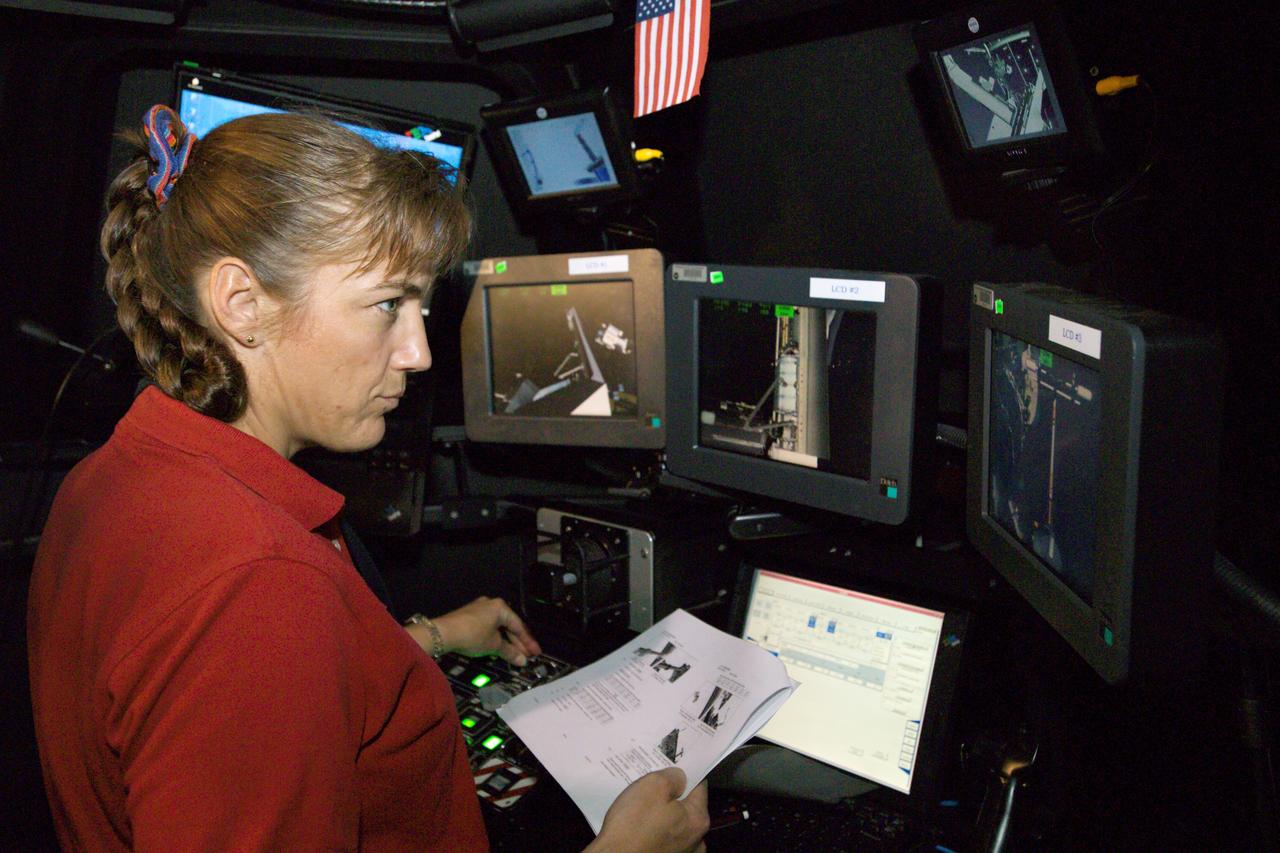
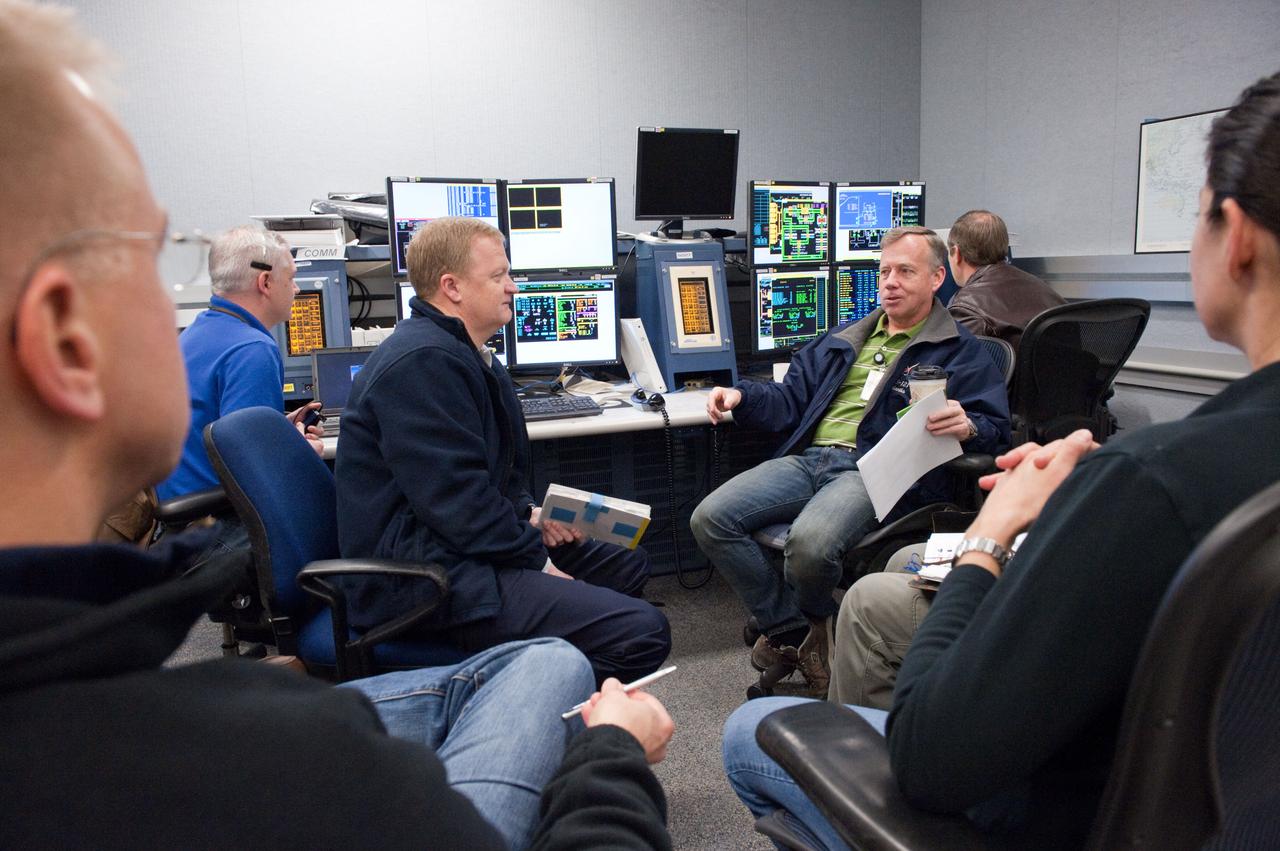
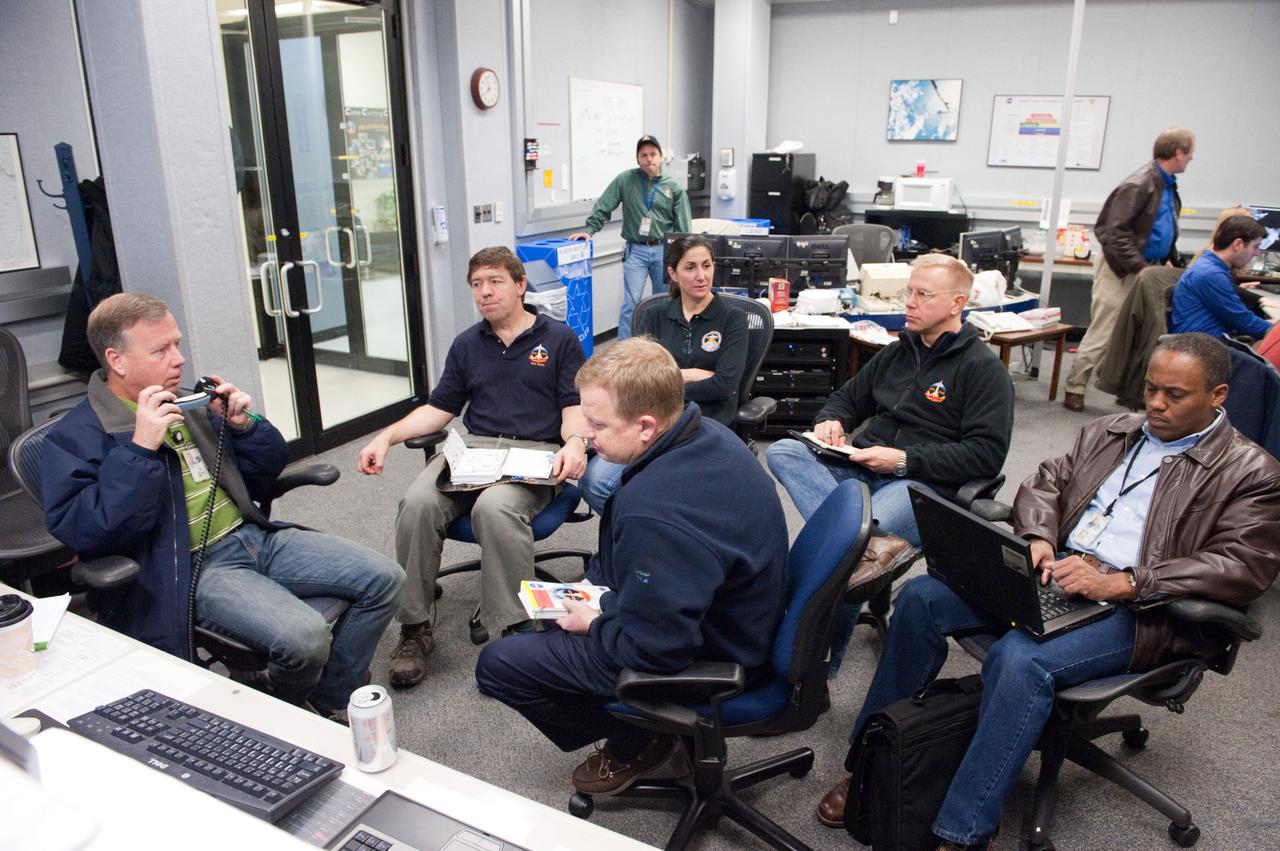
Srujana Neelam, a researcher working at NASA’s Kennedy Space Center in Florida, programs the SciSpinner Microgravity Simulator in the Microgravity Simulation Support Facility (MSSF) inside the Neil Armstrong Operations and Checkout building on Feb. 11, 2020. The facility was developed to provide ground simulation capability to the U.S. research community in order to supplement the limited opportunities to access the International Space Station and other platforms for microgravity research. The MSSF is designed to support biological research on microorganisms, cells, tissues, small plants and small animals. The simulator provides NASA with an alternative platform for microgravity research and creates the opportunity to conduct experiments on the space station in parallel with conditions of simulated microgravity on the ground.
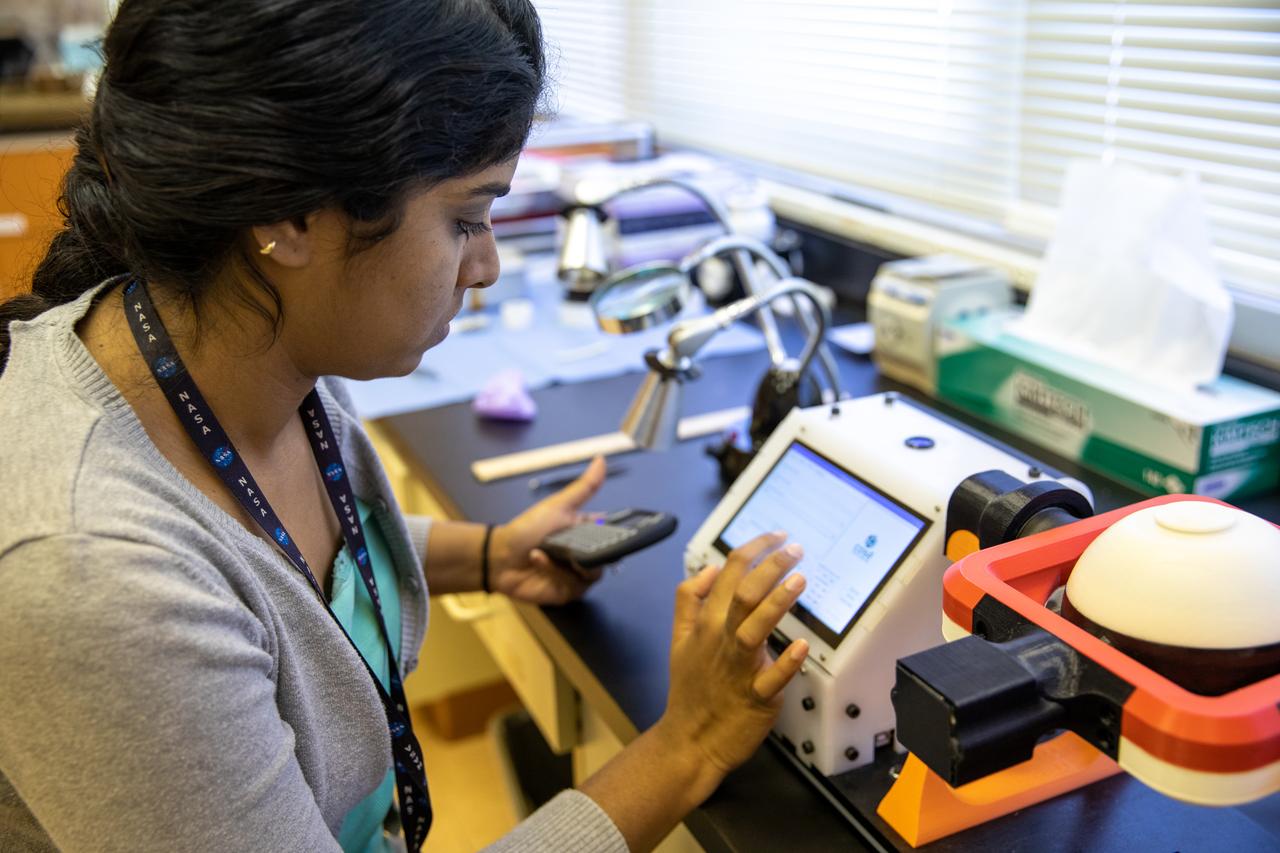
Microgravity Simulation Support Facility
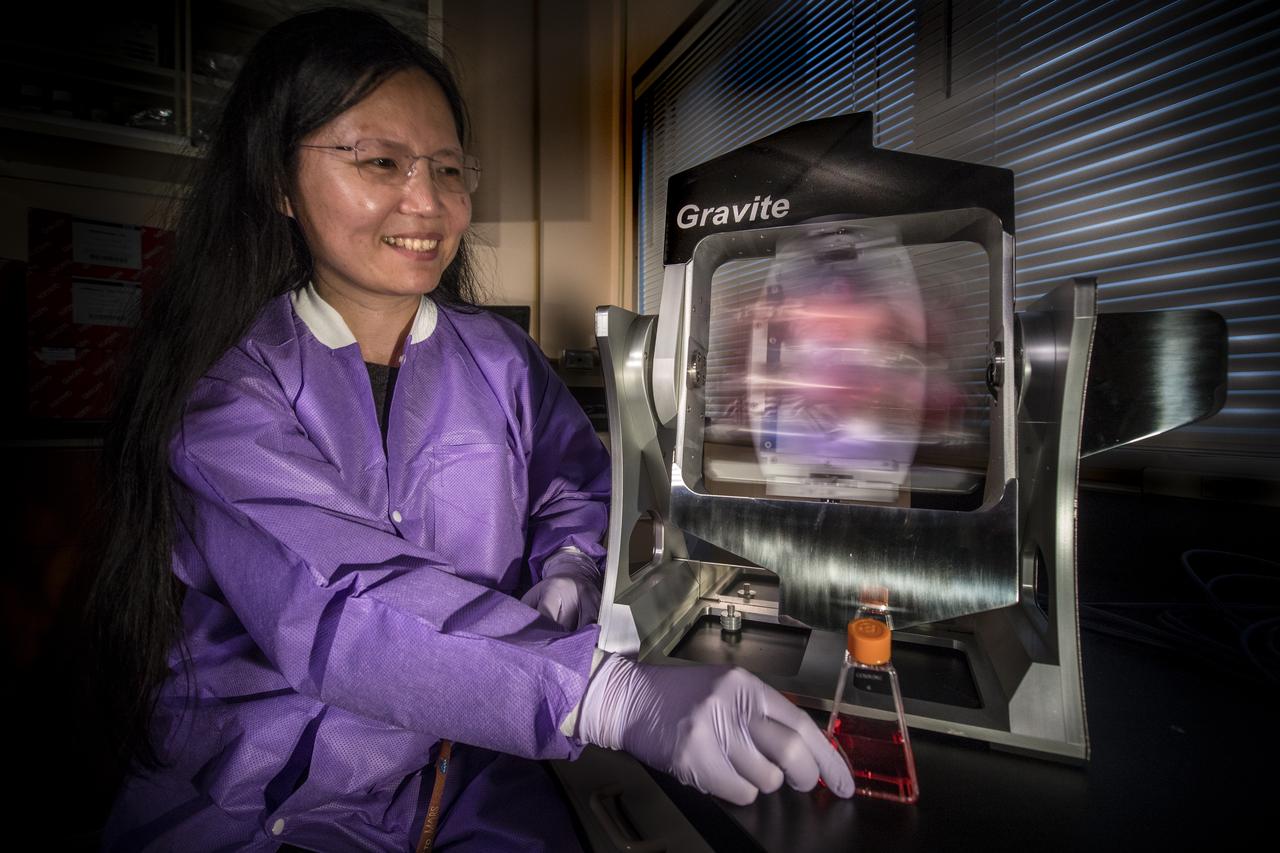
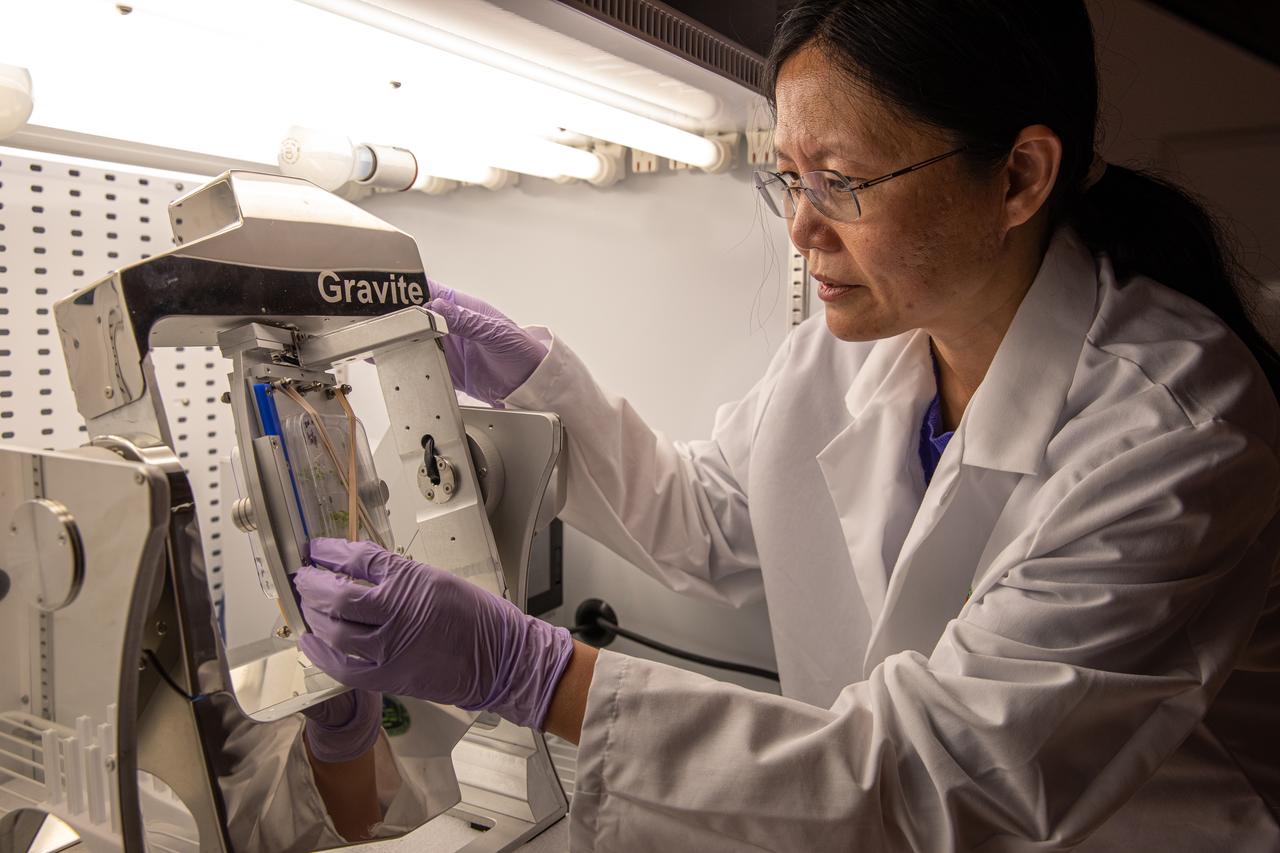
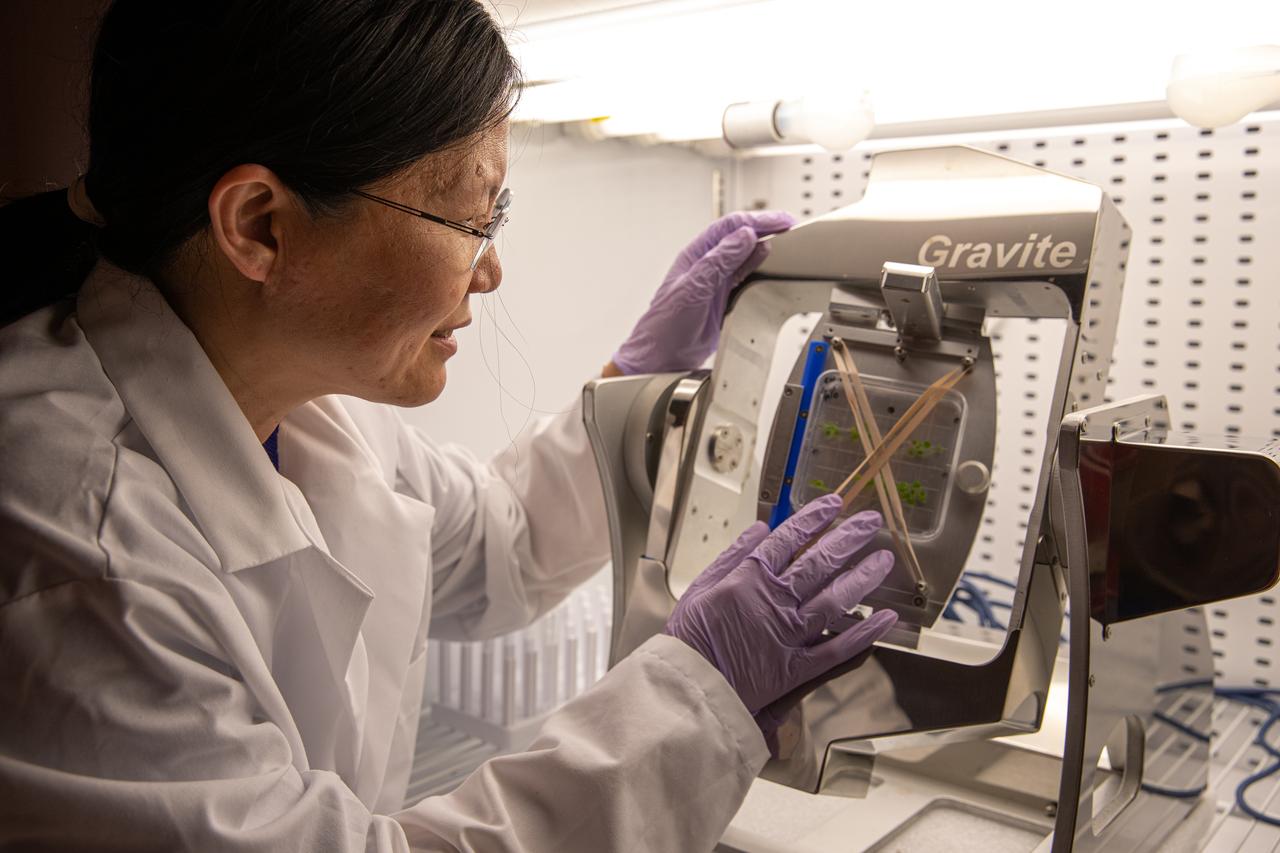
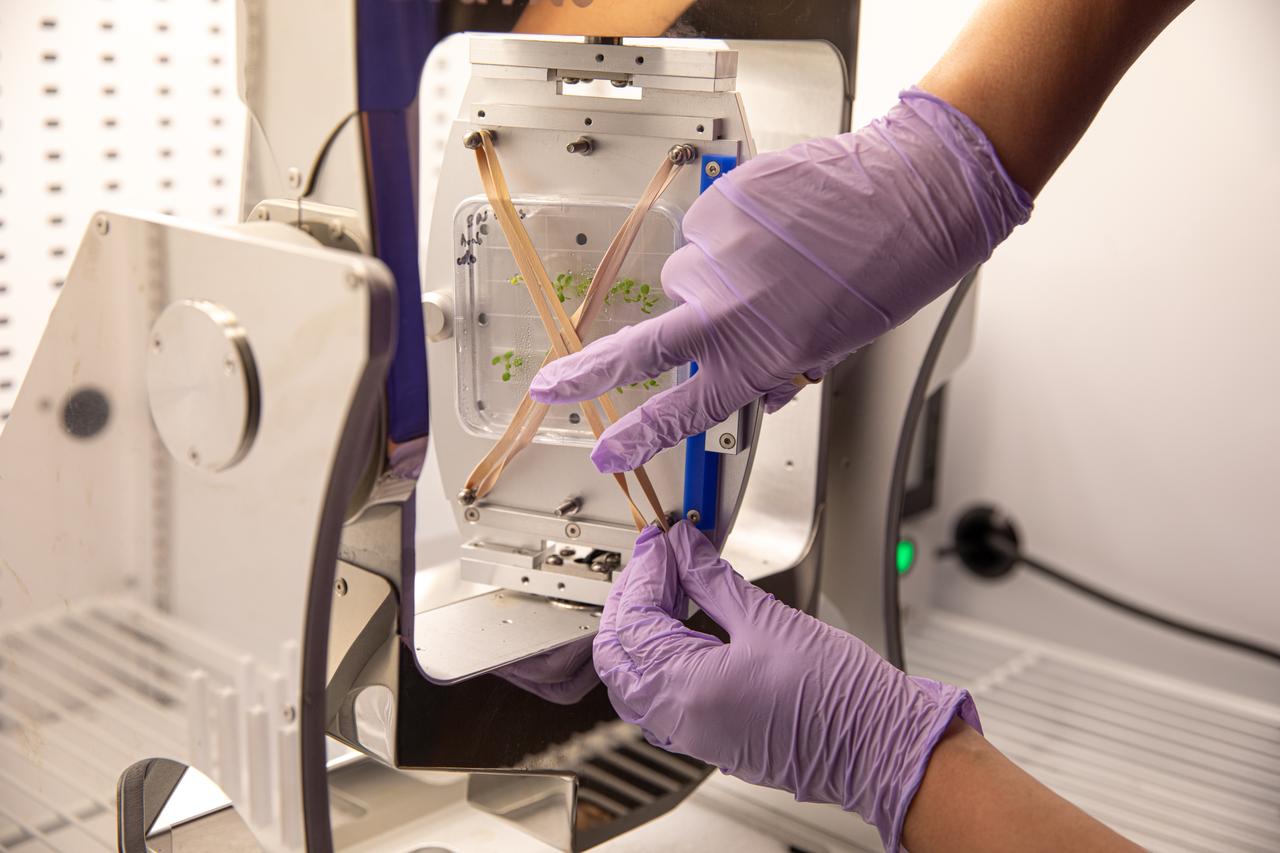
Ye Zhang, a project scientist at NASA’s Kennedy Space Center in Florida, makes adjustments to a Gravite 3d clinostat in the Microgravity Simulation Support Facility (MSSF) inside the Neil Armstrong Operations and Checkout on Feb. 11, 2020. The facility was developed to provide ground simulation capability to the U.S. research community in order to supplement the limited opportunities to access the International Space Station and other platforms for microgravity research. The MSSF is designed to support biological research on microorganisms, cells, tissues, small plants and small animals. The simulator provides NASA with an alternative platform for microgravity research and creates the opportunity to conduct experiments on the space station in parallel with conditions of simulated microgravity on the ground.
Microgravity Simulation Support Facility
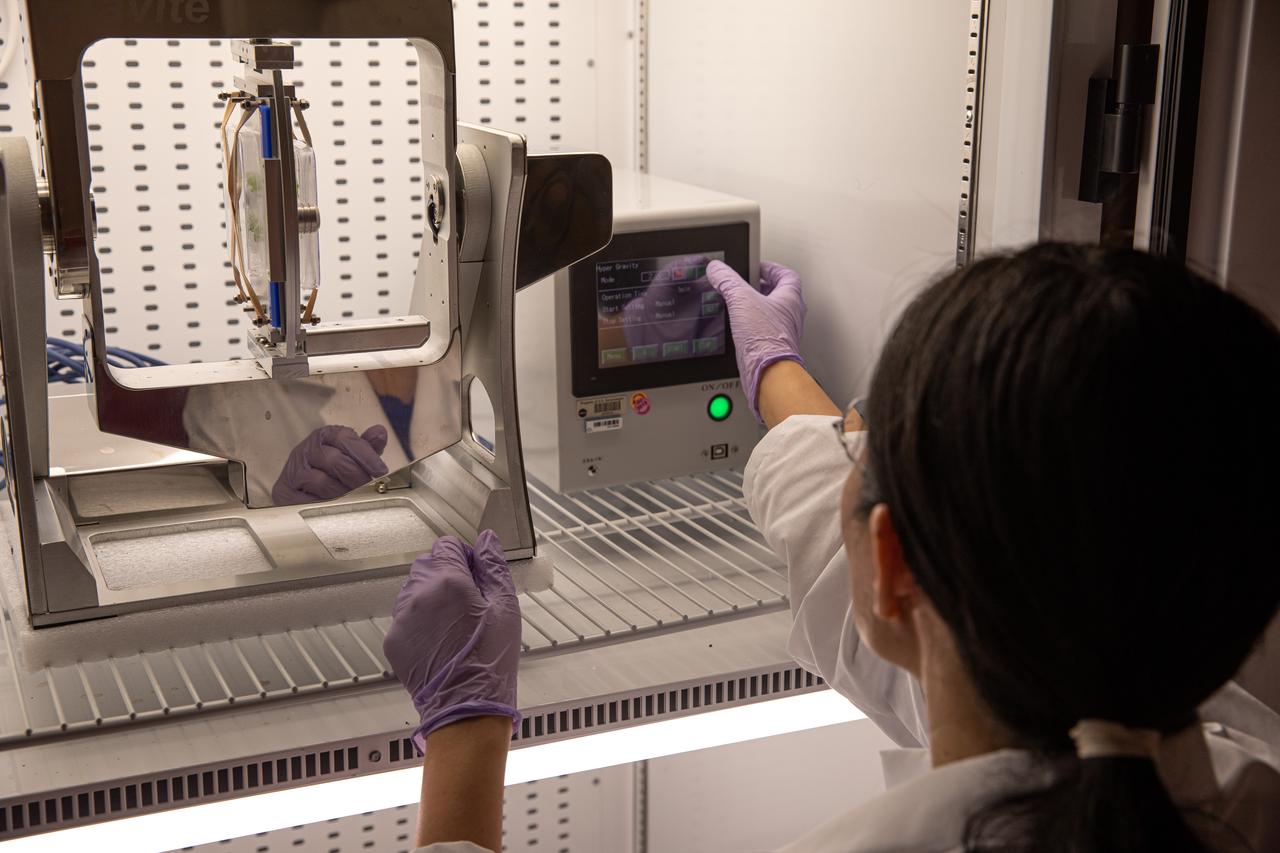
Ye Zhang, a project scientist at NASA’s Kennedy Space Center in Florida runs a test on a Gravite 3d clinostat device in the Microgravity Simulation Support Facility (MSSF) inside the Neil Armstrong Operations and Checkout building on Feb. 11, 2020. The facility was developed to provide ground simulation capability to the U.S. research community in order to supplement the limited opportunities to access the International Space Station and other platforms for microgravity research. The MSSF is designed to support biological research on microorganisms, cells, tissues, small plants and small animals. The simulator provides NASA with an alternative platform for microgravity research and creates the opportunity to conduct experiments on the space station in parallel with conditions of simulated microgravity on the ground.
Microgravity Simulation Support Facility
 Ye Zhang, a project scientist at NASA’s Kennedy Space Center in Florida, makes adjustments to a Gravite 3d clinostat in the Microgravity Simulation Support Facility (MSSF) inside the Neil Armstrong Operations and Checkout building on Feb. 11, 2020. The facility was developed to provide ground simulation capability to the U.S. research community in order to supplement the limited opportunities to access the International Space Station and other platforms for microgravity research. The MSSF is designed to support biological research on microorganisms, cells, tissues, small plants and small animals. The simulator provides NASA with an alternative platform for microgravity research and creates the opportunity to conduct experiments on the space station in parallel with conditions of simulated microgravity on the ground.
Microgravity Simulation Support Facility
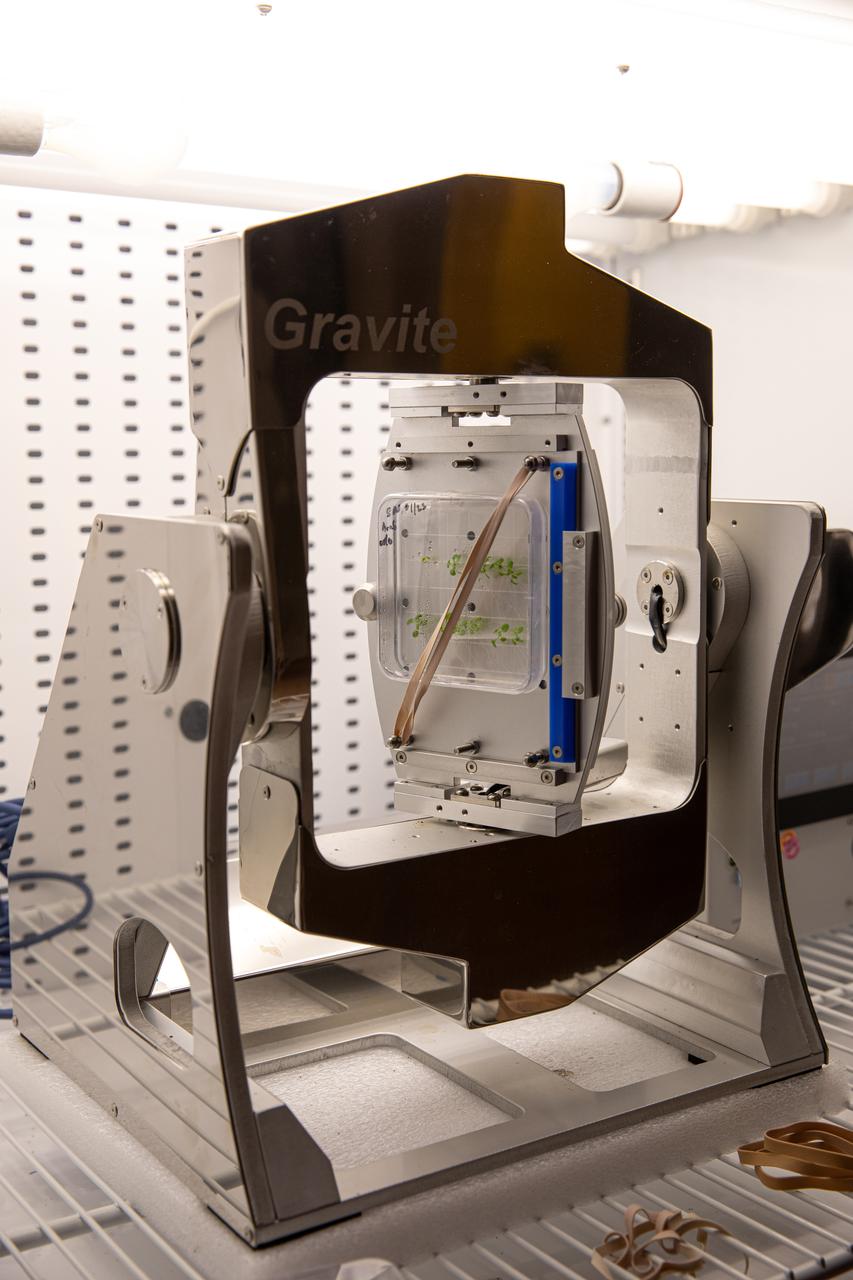
A Gravite 3d clinostat is in the Microgravity Simulation Support Facility (MSSF) inside the Neil Armstrong Operations and Checkout building at NASA’s Kennedy Space Center in Florida on Feb. 11, 2020. The facility was developed to provide ground simulation capability to the U.S. research community in order to supplement the limited opportunities to access the International Space Station and other platforms for microgravity research. The MSSF is designed to support biological research on microorganisms, cells, tissues, small plants and small animals. The simulator provides NASA with an alternative platform for microgravity research and creates the opportunity to conduct experiments on the space station in parallel with conditions of simulated microgravity on the ground.
Microgravity Simulation Support Facility
Ye Zhang, a project scientist at NASA’s Kennedy Space Center in Florida, makes adjustments to a Gravite 3d clinostat in the Microgravity Simulation Support Facility (MSSF) inside the Neil Armstrong Operations and Checkout building at on Feb. 11, 2020. The facility was developed to provide ground simulation capability to the U.S. research community in order to supplement the limited opportunities to access the International Space Station and other platforms for microgravity research. The MSSF is designed to support biological research on microorganisms, cells, tissues, small plants and small animals. The simulator provides NASA with an alternative platform for microgravity research and creates the opportunity to conduct experiments on the space station in parallel with conditions of simulated microgravity on the ground.
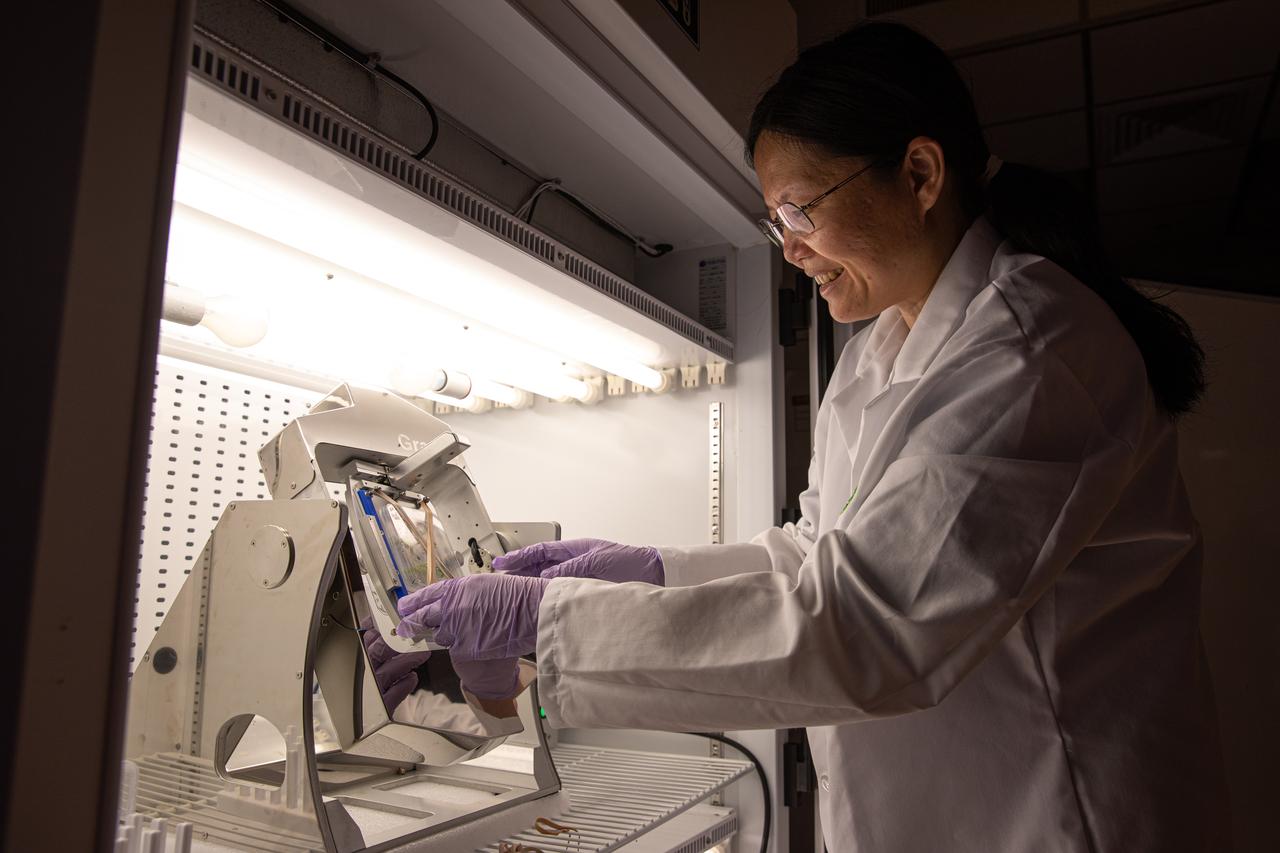
Microgravity Simulation Support Facility
A Gravite 3d clinostat is in the Microgravity Simulation Support Facility (MSSF) inside the Neil Armstrong Operations and Checkout building at NASA’s Kennedy Space Center in Florida on Feb. 11, 2020. The facility was developed to provide ground simulation capability to the U.S. research community in order to supplement the limited opportunities to access the International Space Station and other platforms for microgravity research. The MSSF is designed to support biological research on microorganisms, cells, tissues, small plants and small animals. The simulator provides NASA with an alternative platform for microgravity research and creates the opportunity to conduct experiments on the space station in parallel with conditions of simulated microgravity on the ground.
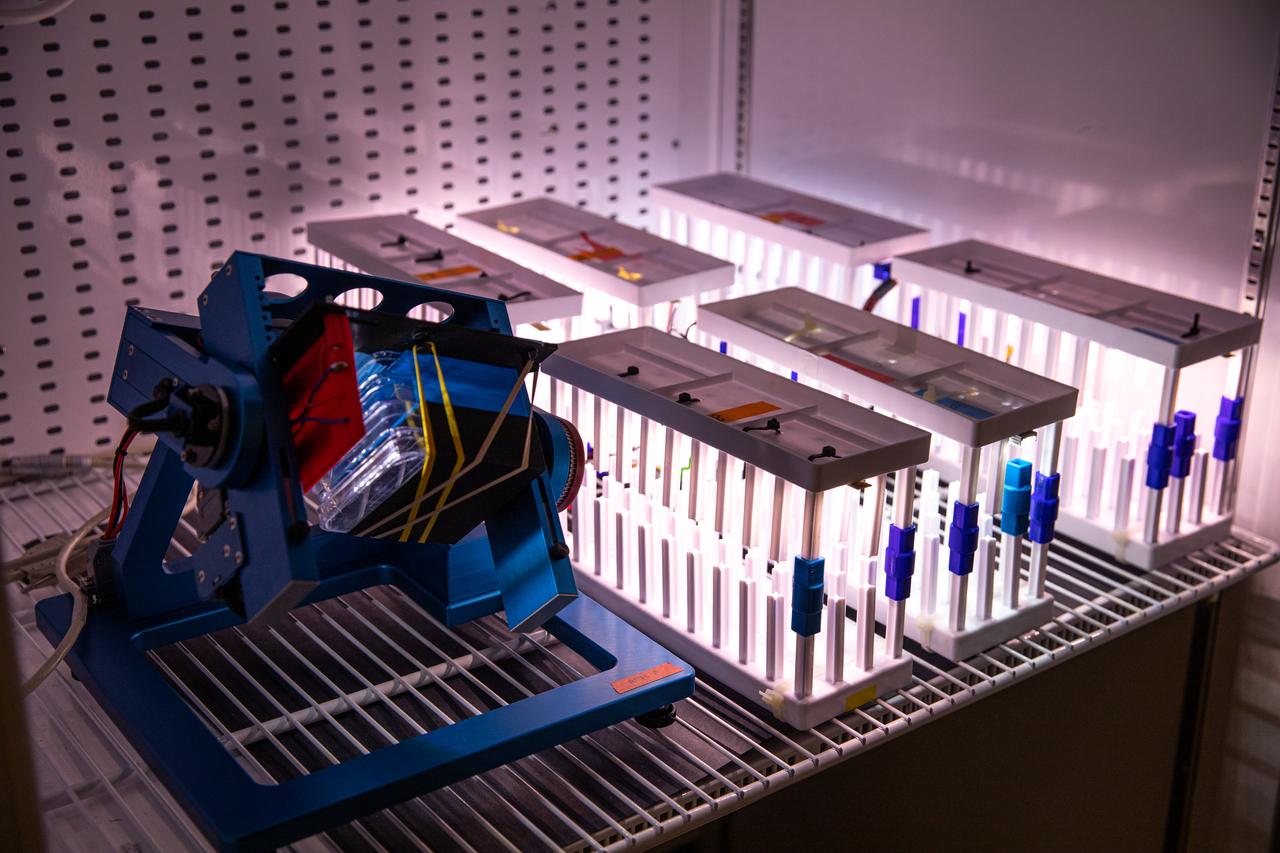
Microgravity Simulation Support Facility
A Gravite 3d clinostat undergoes a test in the Microgravity Simulation Support Facility (MSSF) inside the Neil Armstrong Operations and Checkout building at NASA’s Kennedy Space Center in Florida on Feb. 11, 2020. The facility was developed to provide ground simulation capability to the U.S. research community in order to supplement the limited opportunities to access the International Space Station and other platforms for microgravity research. The MSSF is designed to support biological research on microorganisms, cells, tissues, small plants and small animals. The simulator provides NASA with an alternative platform for microgravity research and creates the opportunity to conduct experiments on the space station in parallel with conditions of simulated microgravity on the ground.
Microgravity Simulation Support Facility
Some experiments are being prepared for a test in the Airbus Random Positioning Machine in the Microgravity Simulation Support Facility (MSSF) inside the Neil Armstrong Operations and Checkout building at NASA’s Kennedy Space Center in Florida on Feb. 11, 2020. The facility device was developed to provide ground simulation capability to the U.S. research community in order to supplement the limited opportunities to access the International Space Station and other platforms for microgravity research. The MSSF is designed to support biological research on microorganisms, cells, tissues, small plants and small animals. The simulator provides NASA with an alternative platform for microgravity research and creates the opportunity to conduct experiments on the space station in parallel with conditions of simulated microgravity on the ground.
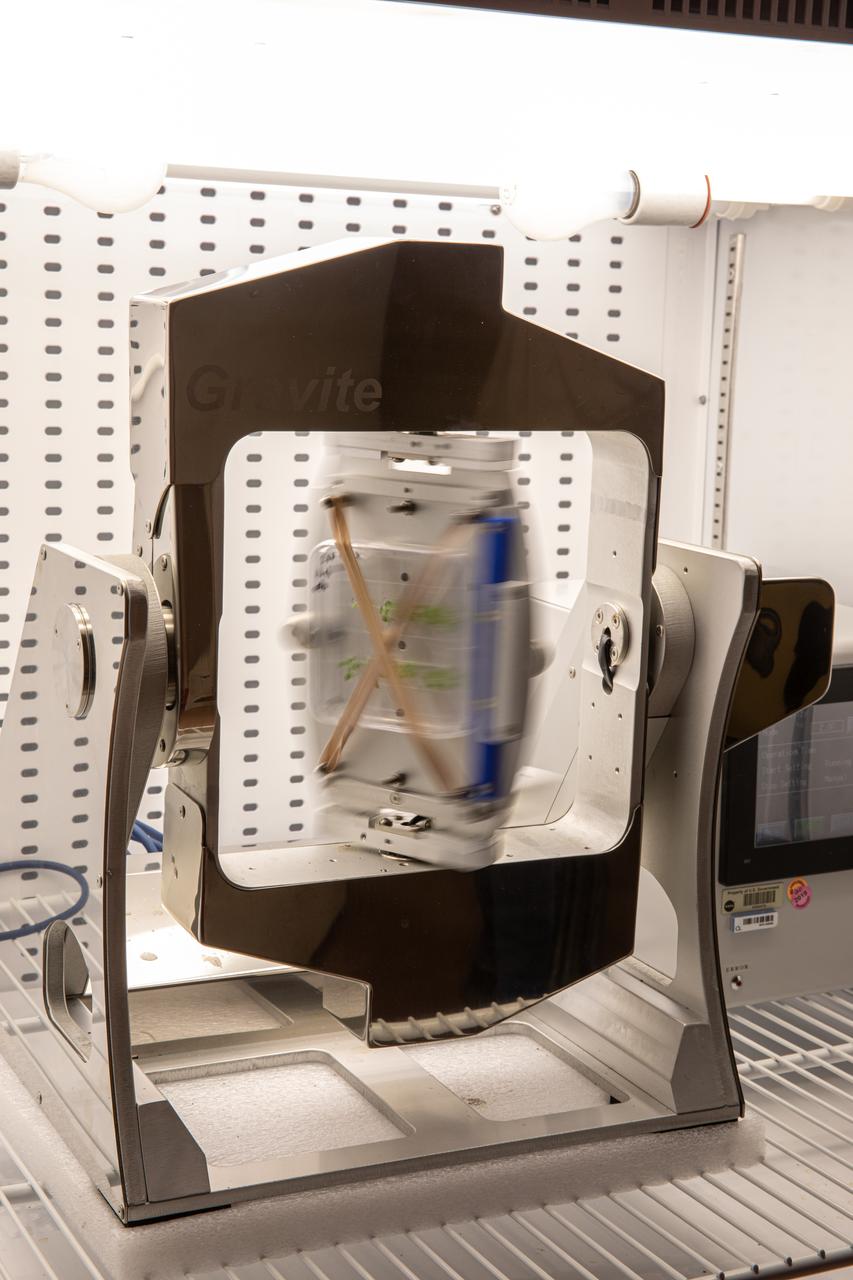
Microgravity Simulation Support Facility
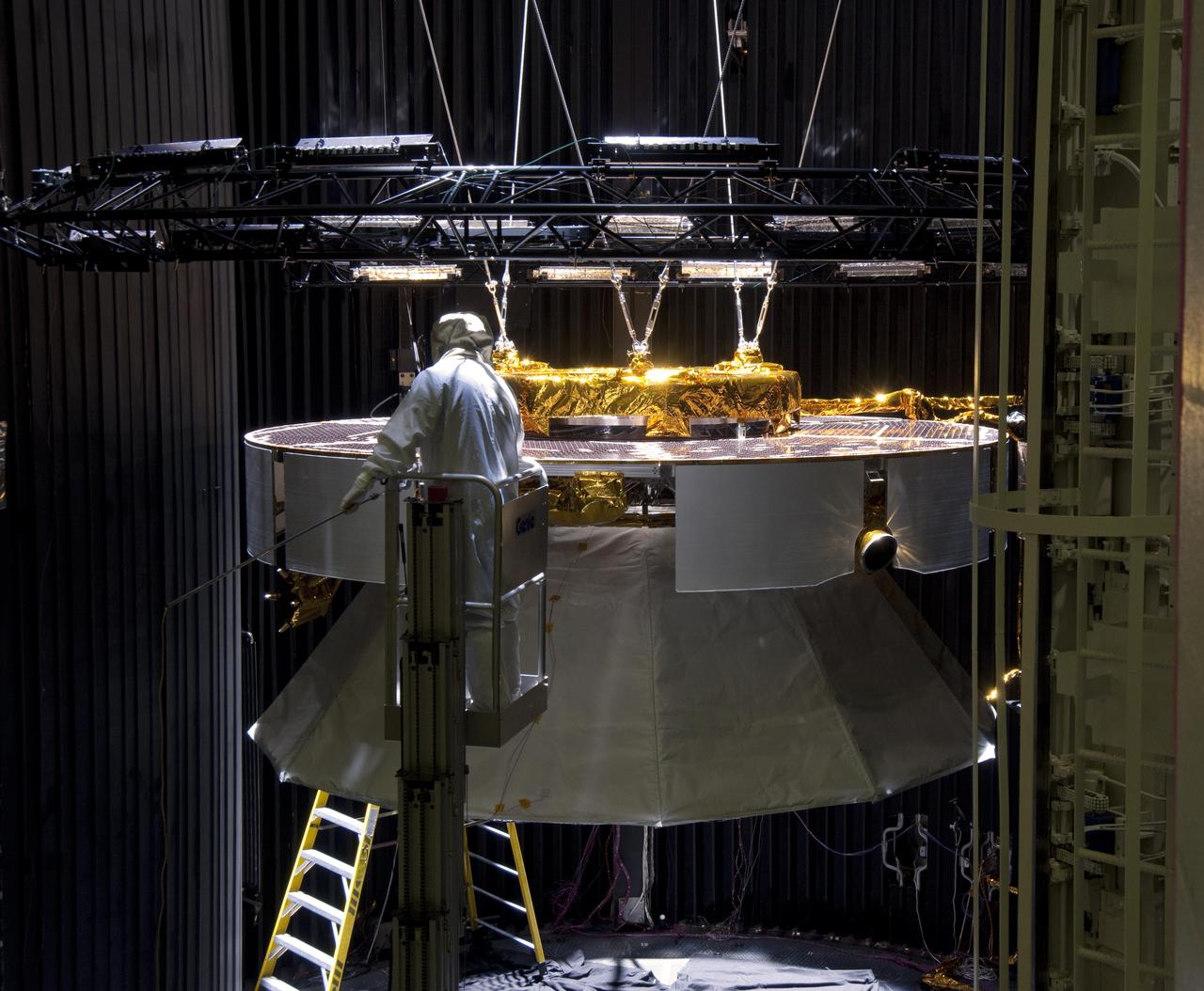
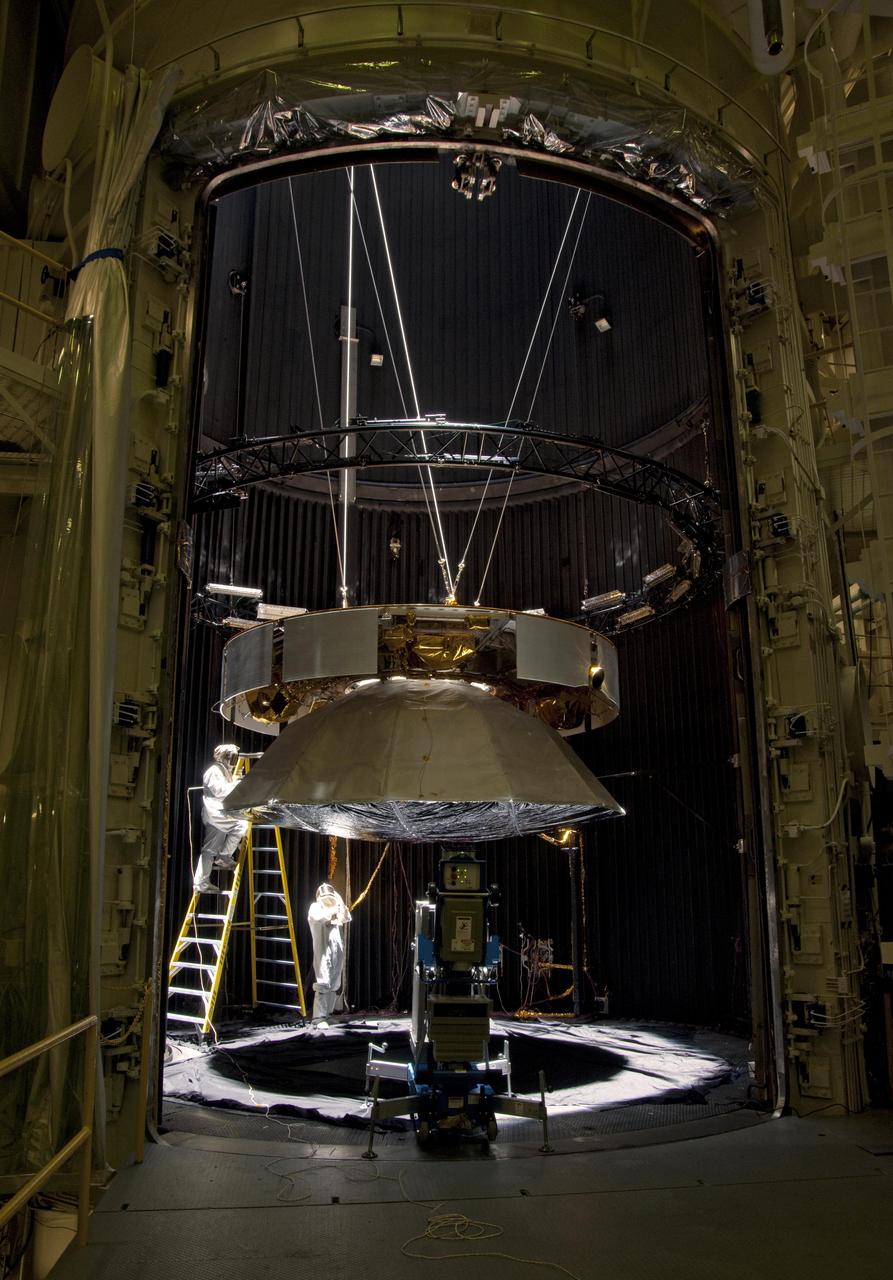
Testing of the cruise stage for NASA Mars Science Laboratory in August 2010 included a session in a facility that simulates the environment found in interplanetary space. Spacecraft technicians at JPL prepare a space-simulation test.
Cruise Stage Testing for Mars Science Laboratory
Srujana Neelam, a researcher working at NASA’s Kennedy Space Center in Florida, dissects Arabidopsis thaliana plants from petri plates used in microgravity simulation devices in the Microgravity Simulation Support Facility (MSSF) inside the Neil Armstrong Operations and Checkout building on Feb. 11, 2020. The facility was developed to provide ground simulation capability to the U.S. research community in order to supplement the limited opportunities to access the International Space Station and other platforms for microgravity research. The MSSF is designed to support biological research on microorganisms, cells, tissues, small plants and small animals. The simulator provides NASA with an alternative platform for microgravity research and creates the opportunity to conduct experiments on the space station in parallel with conditions of simulated microgravity on the ground.
Microgravity Simulation Support Facility
Srujana Neelam, a researcher working at NASA’s Kennedy Space Center in Florida dissects Arabidopsis thaliana plants from petri plates used in microgravity simulation devices in the Microgravity Simulation Support Facility (MSSF) inside the Neil Armstrong Operations and Checkout building on Feb. 11, 2020. The facility was developed to provide ground simulation capability to the U.S. research community in order to supplement the limited opportunities to access the International Space Station and other platforms for microgravity research. The MSSF is designed to support biological research on microorganisms, cells, tissues, small plants and small animals. The simulator provides NASA with an alternative platform for microgravity research and creates the opportunity to conduct experiments on the space station in parallel with conditions of simulated microgravity on the ground.
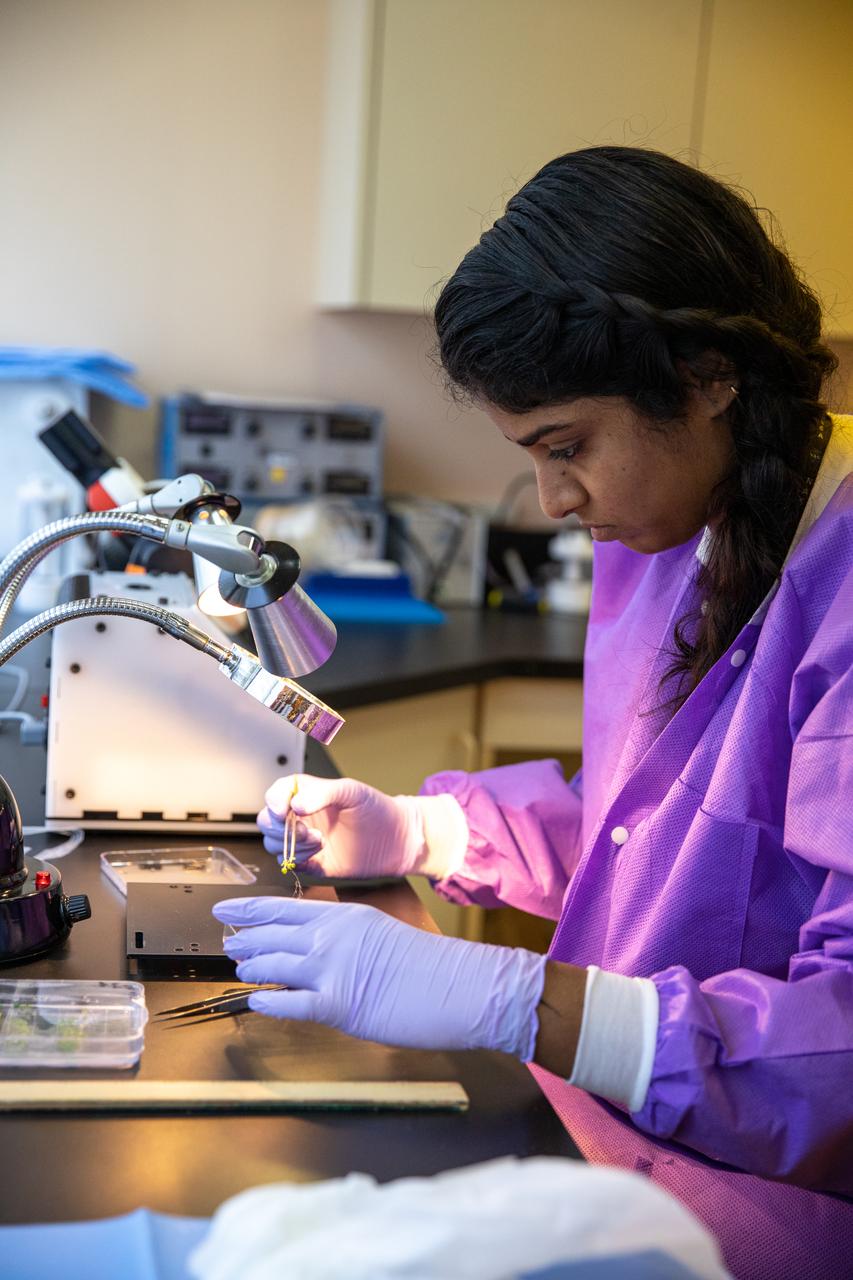
Microgravity Simulation Support Facility
Srujana Neelam, a researcher working at NASA’s Kennedy Space Center in Florida, dissects Arabidopsis thaliana plants from petri plates used in microgravity simulation devices in the Microgravity Simulation Support Facility (MSSF) inside the Neil Armstrong Operations and Checkout building on Feb. 11, 2020. The facility was developed to provide ground simulation capability to the U.S. research community in order to supplement the limited opportunities to access the International Space Station and other platforms for microgravity research. The MSSF is designed to support biological research on microorganisms, cells, tissues, small plants and small animals. The simulator provides NASA with an alternative platform for microgravity research and creates the opportunity to conduct experiments on the space station in parallel with conditions of simulated microgravity on the ground.
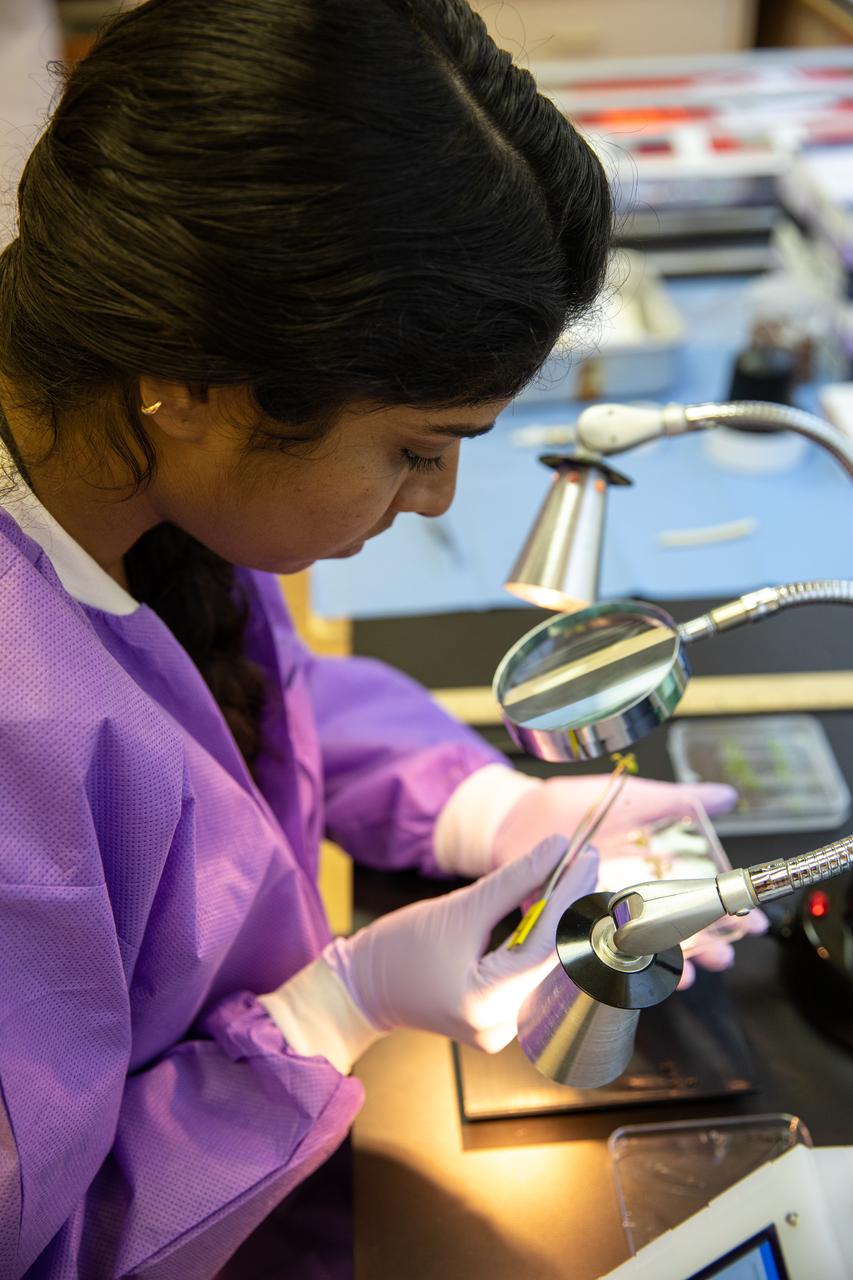
Microgravity Simulation Support Facility
Srujana Neelam, a researcher working at NASA’s Kennedy Space Center in Florida, dissects Arabidopsis thaliana plants from petri plates used in microgravity simulation devices in the Microgravity Simulation Support Facility (MSSF) inside the Neil Armstrong Operations and Checkout building on Feb. 11, 2020. The facility was developed to provide ground simulation capability to the U.S. research community in order to supplement the limited opportunities to access the International Space Station and other platforms for microgravity research. The MSSF is designed to support biological research on microorganisms, cells, tissues, small plants and small animals. The simulator provides NASA with an alternative platform for microgravity research and creates the opportunity to conduct experiments on the space station in parallel with conditions of simulated microgravity on the ground.
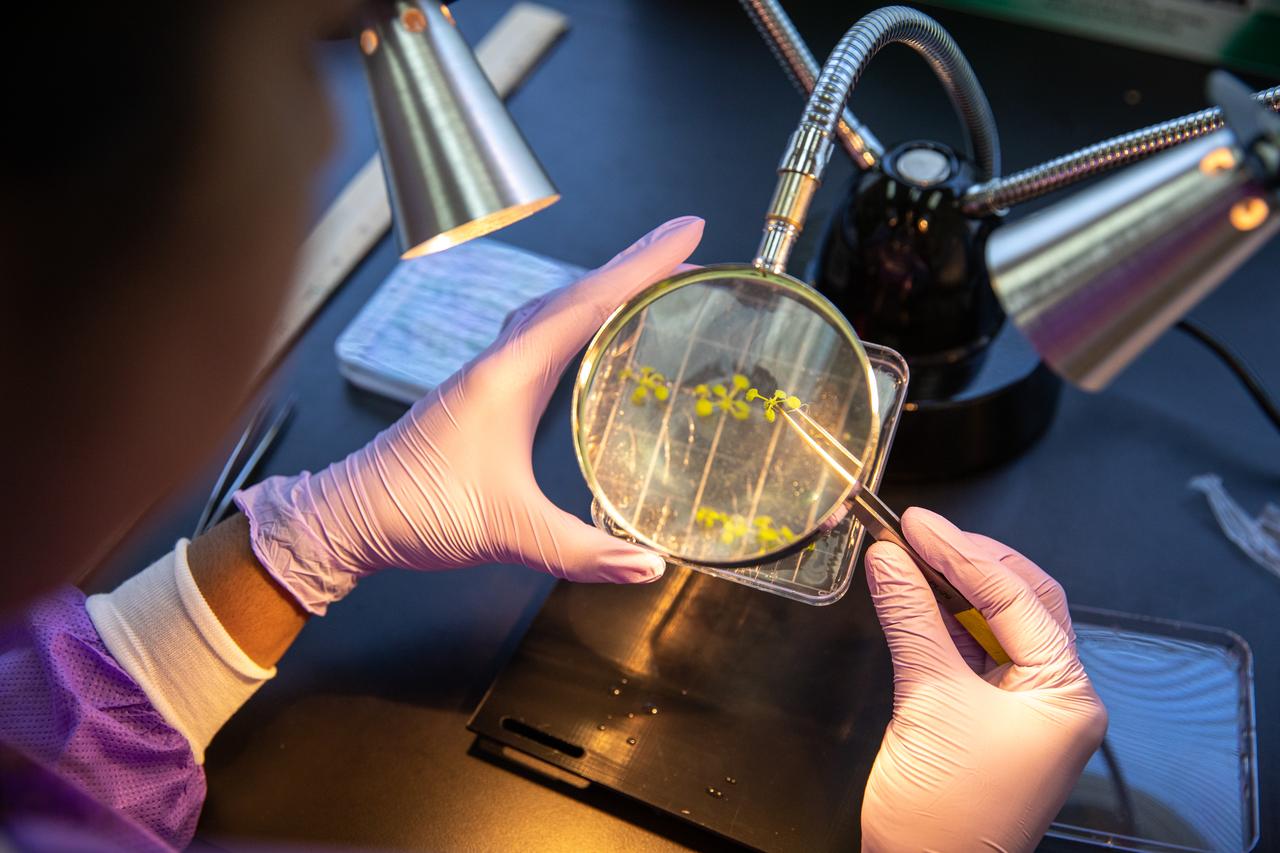
Microgravity Simulation Support Facility
Ye Zhang, a project scientist at NASA’s Kennedy Space Center in Florida, makes adjustments to a Gravite 3d clinostat in the Microgravity Simulation Support Facility (MSSF) inside the Neil Armstrong Operations and Checkout building at NASA’s Kennedy Space Center in Florida on Feb. 11, 2020. The facility was developed to provide ground simulation capability to the U.S. research community in order to supplement the limited opportunities to access the International Space Station and other platforms for microgravity research. The MSSF is designed to support biological research on microorganisms, cells, tissues, small plants and small animals. The simulator provides NASA with an alternative platform for microgravity research and creates the opportunity to conduct experiments on the space station in parallel with conditions of simulated microgravity on the ground.
Microgravity Simulation Support Facility
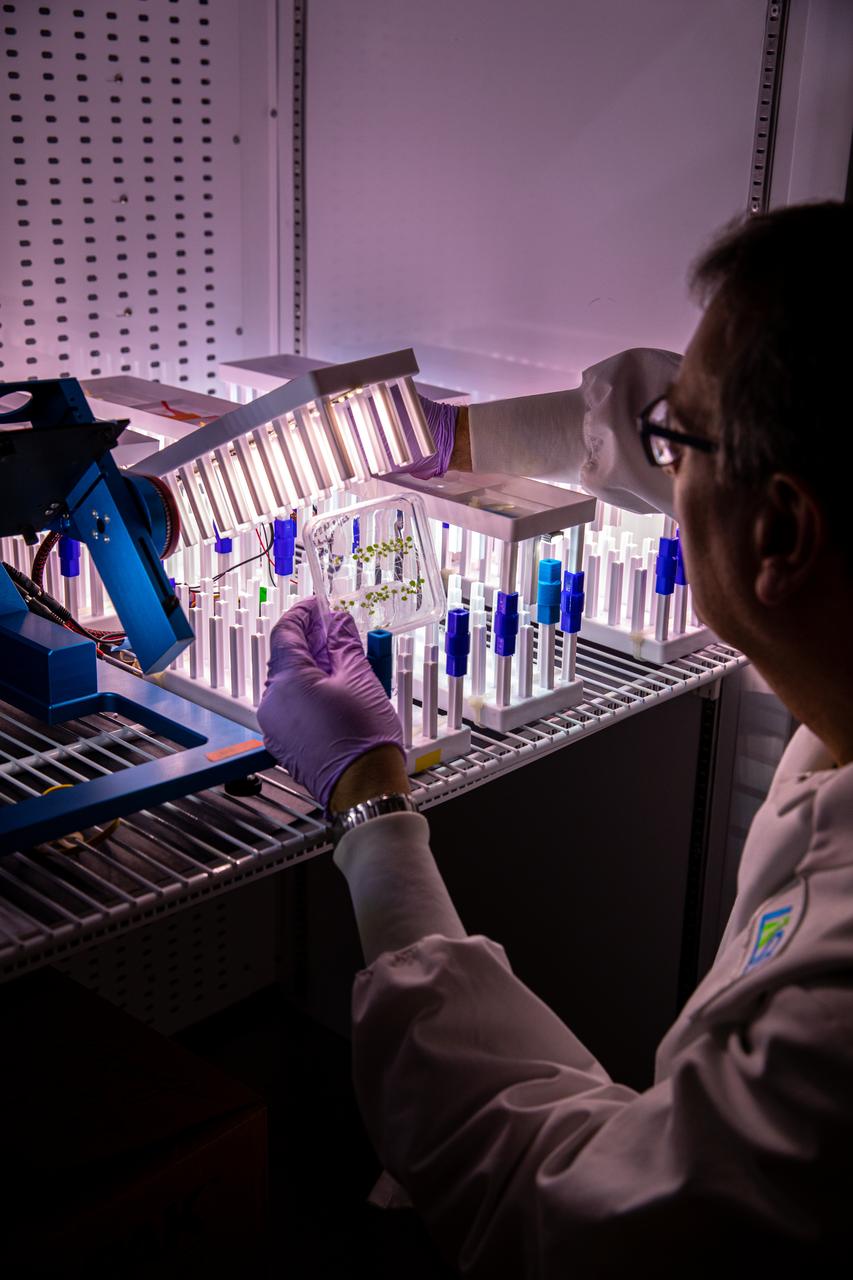
Jeffrey Richards, a payload research and science coordinator on the LASSO contract at NASA’s Kennedy Space Center in Florida, prepares an experiment for a test in an Airbus Random Positioning Machine in the Microgravity Simulation Support Facility (MSSF) inside the Neil Armstrong Operations and Checkout building at NASA’s Kennedy Space Center in Florida on Feb. 11, 2020. The facility was developed to provide ground simulation capability to the U.S. research community in order to supplement the limited opportunities to access the International Space Station and other platforms for microgravity research. The MSSF is designed to support biological research on microorganisms, cells, tissues, small plants and small animals. The simulator provides NASA with an alternative platform for microgravity research and creates the opportunity to conduct experiments on the space station in parallel with conditions of simulated microgravity on the ground.
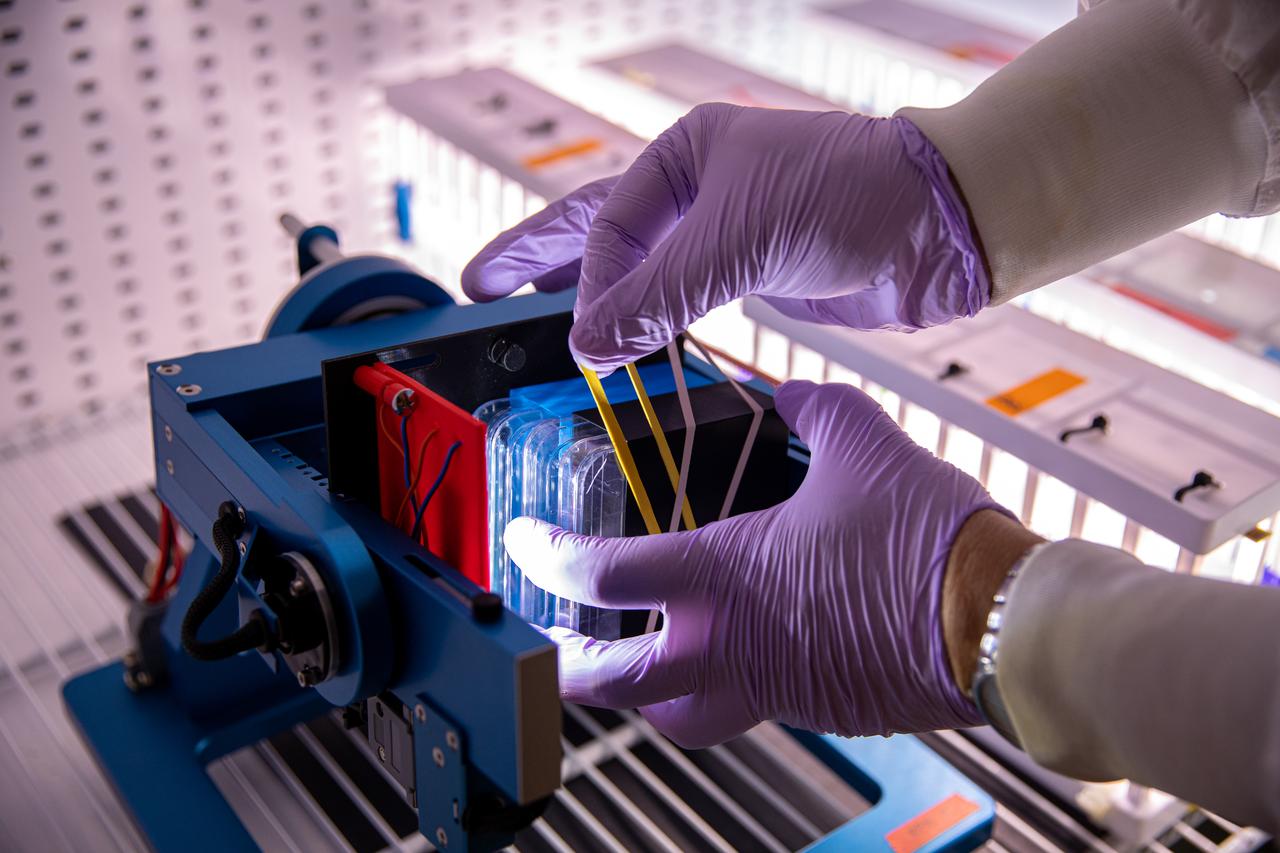
Microgravity Simulation Support Facility
Jeffrey Richards, a payload research and science coordinator on the LASSO contract at NASA’s Kennedy Space Center in Florida, prepares an experiment for a test in an Airbus Random Positioning Machine in the Microgravity Simulation Support Facility (MSSF) inside the Neil Armstrong Operations and Checkout building at NASA’s Kennedy Space Center in Florida on Feb. 11, 2020. The facility was developed to provide ground simulation capability to the U.S. research community in order to supplement the limited opportunities to access the International Space Station and other platforms for microgravity research. The MSSF is designed to support biological research on microorganisms, cells, tissues, small plants and small animals. The simulator provides NASA with an alternative platform for microgravity research and creates the opportunity to conduct experiments on the space station in parallel with conditions of simulated microgravity on the ground.
Microgravity Simulation Support Facility
Jeffrey Richards, a payload research and science coordinator on the LASSO contract at NASA’s Kennedy Space Center in Florida, prepares an experiment for a test in an Airbus Random Positioning Machine in the Microgravity Simulation Support Facility (MSSF) inside the Neil Armstrong Operations and Checkout building at NASA’s Kennedy Space Center in Florida on Feb. 11, 2020. The facility was developed to provide ground simulation capability to the U.S. research community in order to supplement the limited opportunities to access the International Space Station and other platforms for microgravity research. The MSSF is designed to support biological research on microorganisms, cells, tissues, small plants and small animals. The simulator provides NASA with an alternative platform for microgravity research and creates the opportunity to conduct experiments on the space station in parallel with conditions of simulated microgravity on the ground.
Microgravity Simulation Support Facility
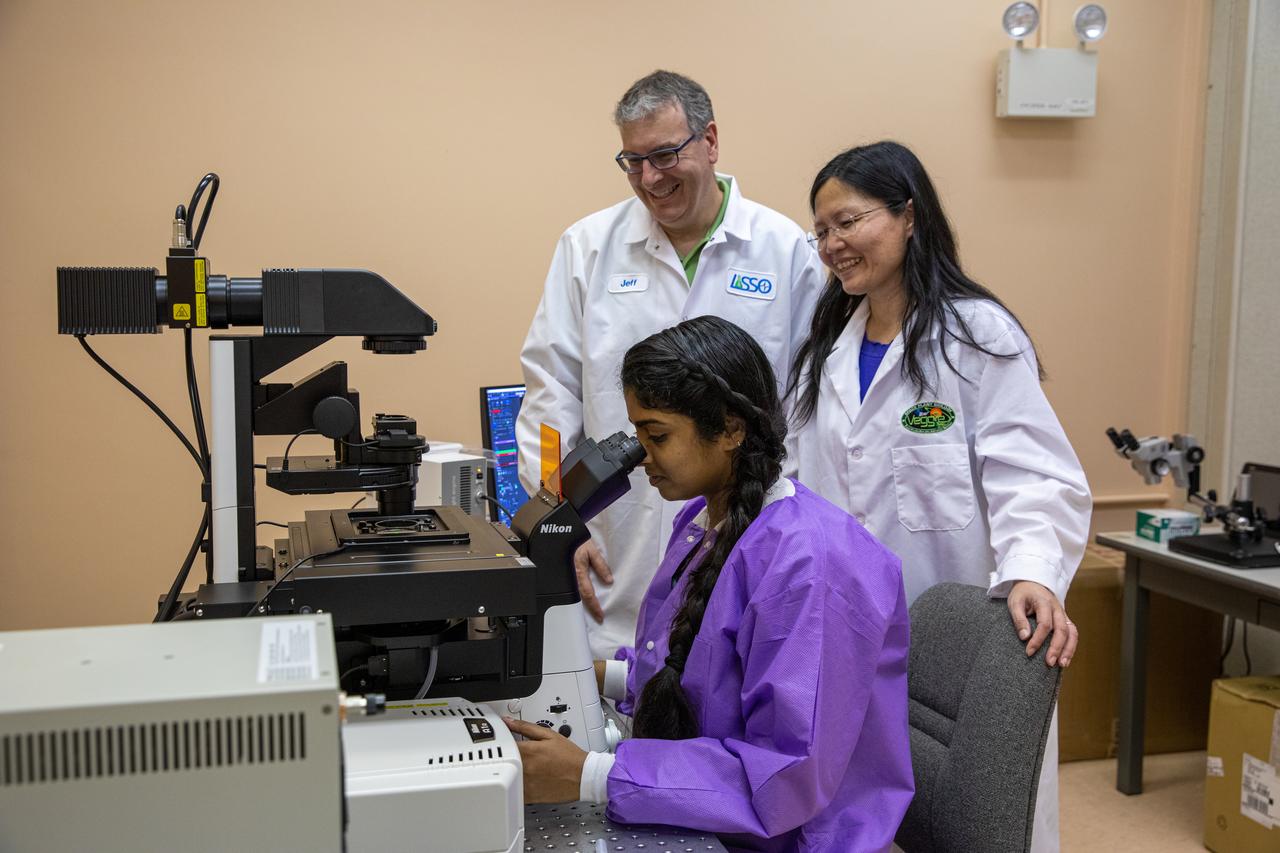
Dr. Srujana Neelam, a NASA post-doctoral fellow observes samples on a confocal microscope in the Microgravity Simulation Support Facility (MSSF) inside the Neil Armstrong Operations and Checkout building at NASA’s Kennedy Space Center in Florida on Feb. 11, 2020 with Jeffrey Richards, a payload research and science coordinator on the LASSO contract, Dr. Ye Zhang, a project scientist. The facility was developed to provide ground simulation capability to the U.S. research community in order to supplement the limited opportunities to access the International Space Station and other platforms for microgravity research. The MSSF is designed to support biological research on microorganisms, cells, tissues, small plants and small animals. The simulator provides NASA with an alternative platform for microgravity research and creates the opportunity to conduct experiments on the space station in parallel with conditions of simulated microgravity on the ground.
Microgravity Simulation Support Facility
Dr. Srujana Neelam, a NASA post-doctoral fellow observes samples on a confocal microscope in the Microgravity Simulation Support Facility (MSSF) inside the Neil Armstrong Operations and Checkout building at NASA’s Kennedy Space Center in Florida on Feb. 11, 2020, with Jeffrey Richards, a payload research and science coordinator on the LASSO contract; and Dr. Ye Zhang, a project scientist. The facility was developed to provide ground simulation capability to the U.S. research community in order to supplement the limited opportunities to access the International Space Station and other platforms for microgravity research. The MSSF is designed to support biological research on microorganisms, cells, tissues, small plants and small animals. The simulator provides NASA with an alternative platform for microgravity research and creates the opportunity to conduct experiments on the space station in parallel with conditions of simulated microgravity on the ground.
Microgravity Simulation Support Facility
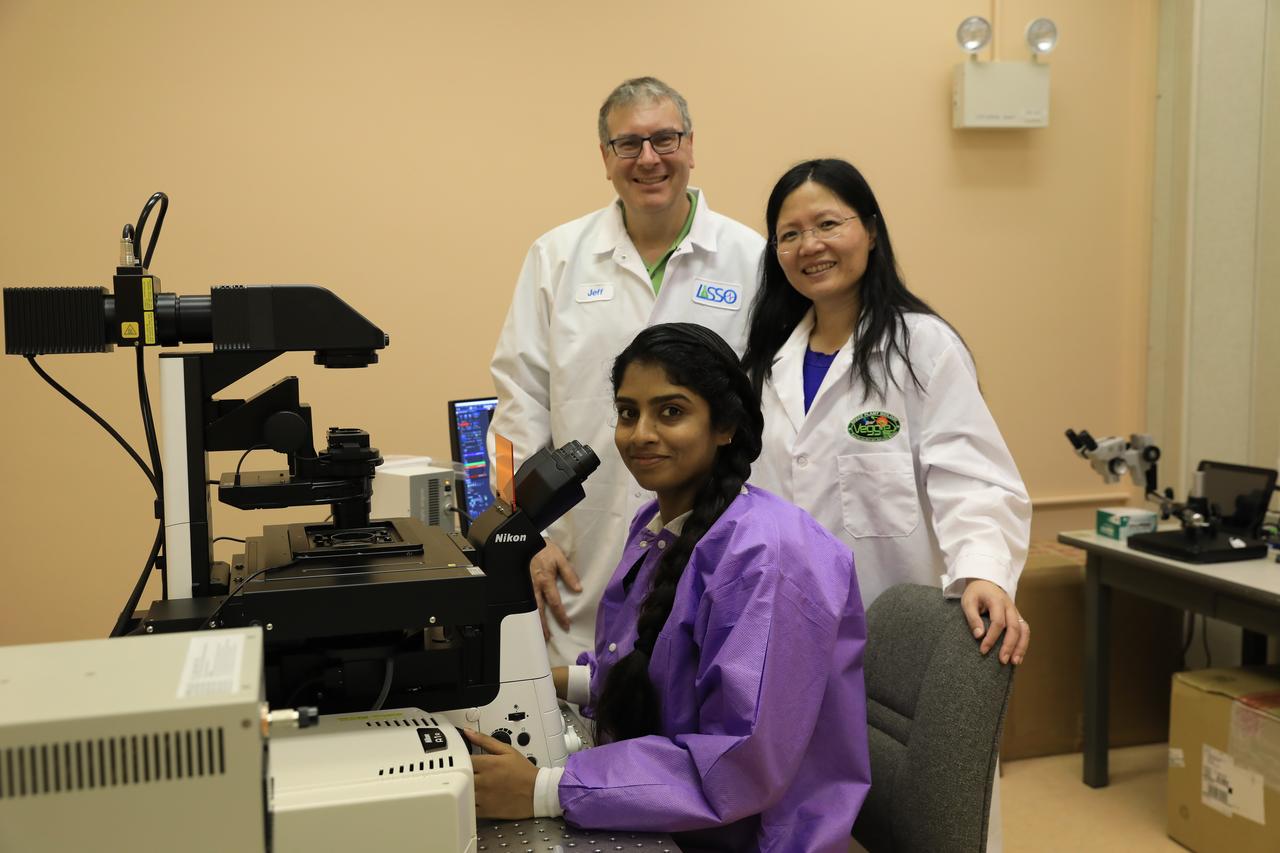
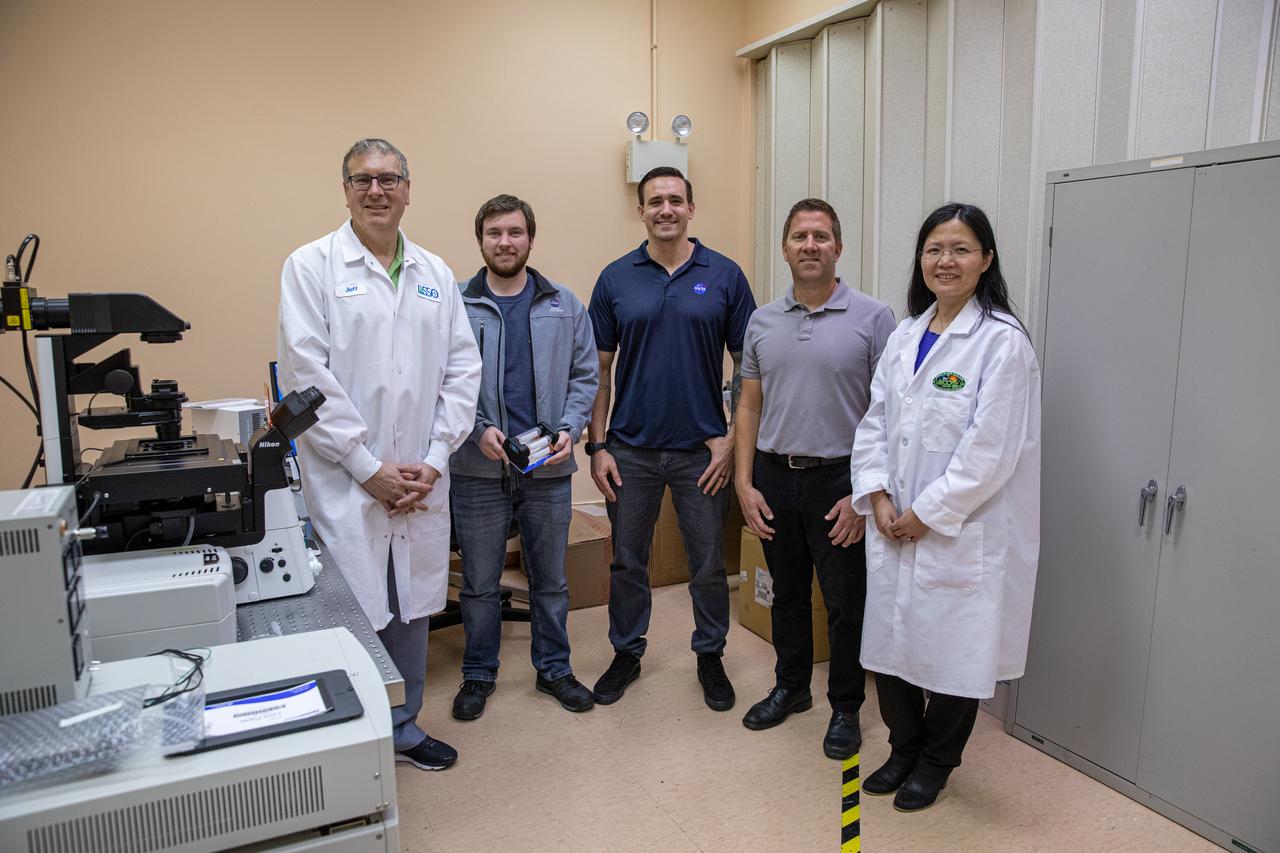
Researchers are in the Microgravity Simulation Support Facility (MSSF) inside the Neil Armstrong Operations and Checkout building at NASA’s Kennedy Space Center in Florida on Feb. 11, 2020. From left are Jonathan Gleeson, aerospace engineer on the LASSO contract; Jason Fischer, a research and development scientist on the LASSO contract; Ralph Nacca, aerospace flight systems; Jeffrey Richards, a payload research and science coordinator on the LASSO contract; and Dr. Ye Zhang, a project scientist. The microgravity simulation device was developed to provide ground simulation capability to the U.S. research community in order to supplement the limited opportunities to access the International Space Station and other platforms for microgravity research. The MSSF is designed to support biological research on microorganisms, cells, tissues, small plants and small animals. The simulator provides NASA with an alternative platform for microgravity research and creates the opportunity to conduct experiments on the space station in parallel with conditions of simulated microgravity on the ground.
Microgravity Simulation Support Facility
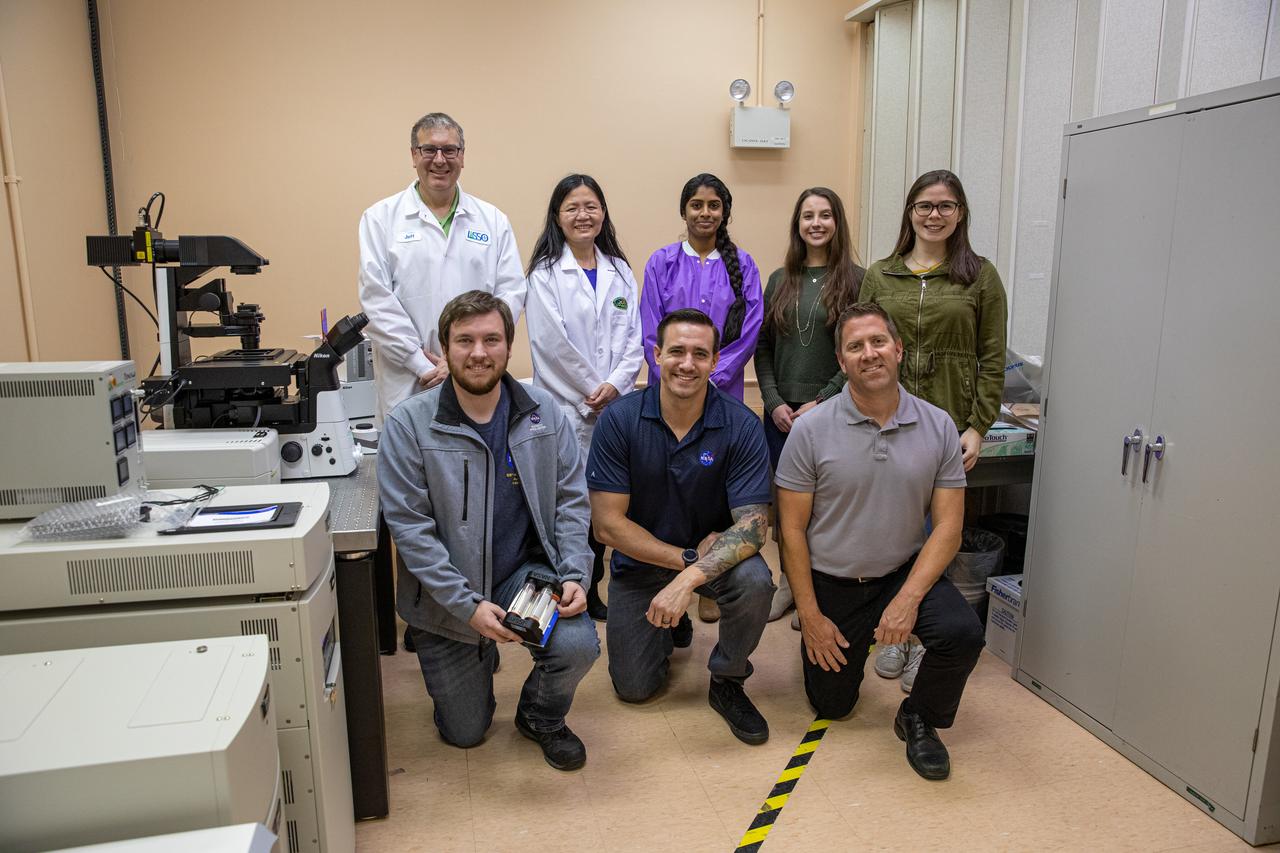
Researchers are in the Microgravity Simulation Support Facility (MSSF) inside the Neil Armstrong Operations and Checkout building at NASA’s Kennedy Space Center in Florida on Feb. 11, 2020. In front, from left, are Jonathan Gleeson, aerospace engineer on the LASSO contract; Jason Fischer, a research and development scientist on the LASSO contract; and Ralph Nacca, aerospace flight systems. In back, from left, are Jeffrey Richards, a payload research and science coordinator on the LASSO contract; Dr. Ye Zhang, a project scientist; Dr. Srujana Neelam, a NASA post-doctoral fellow; Jessica Hellein, NASA intern; and Emily Keith, NASA intern. The facility was developed to provide ground simulation capability to the U.S. research community in order to supplement the limited opportunities to access the International Space Station and other platforms for microgravity research. The MSSF is designed to support biological research on microorganisms, cells, tissues, small plants and small animals. The simulator provides NASA with an alternative platform for microgravity research and creates the opportunity to conduct experiments on the space station in parallel with conditions of simulated microgravity on the ground.
Microgravity Simulation Support Facility
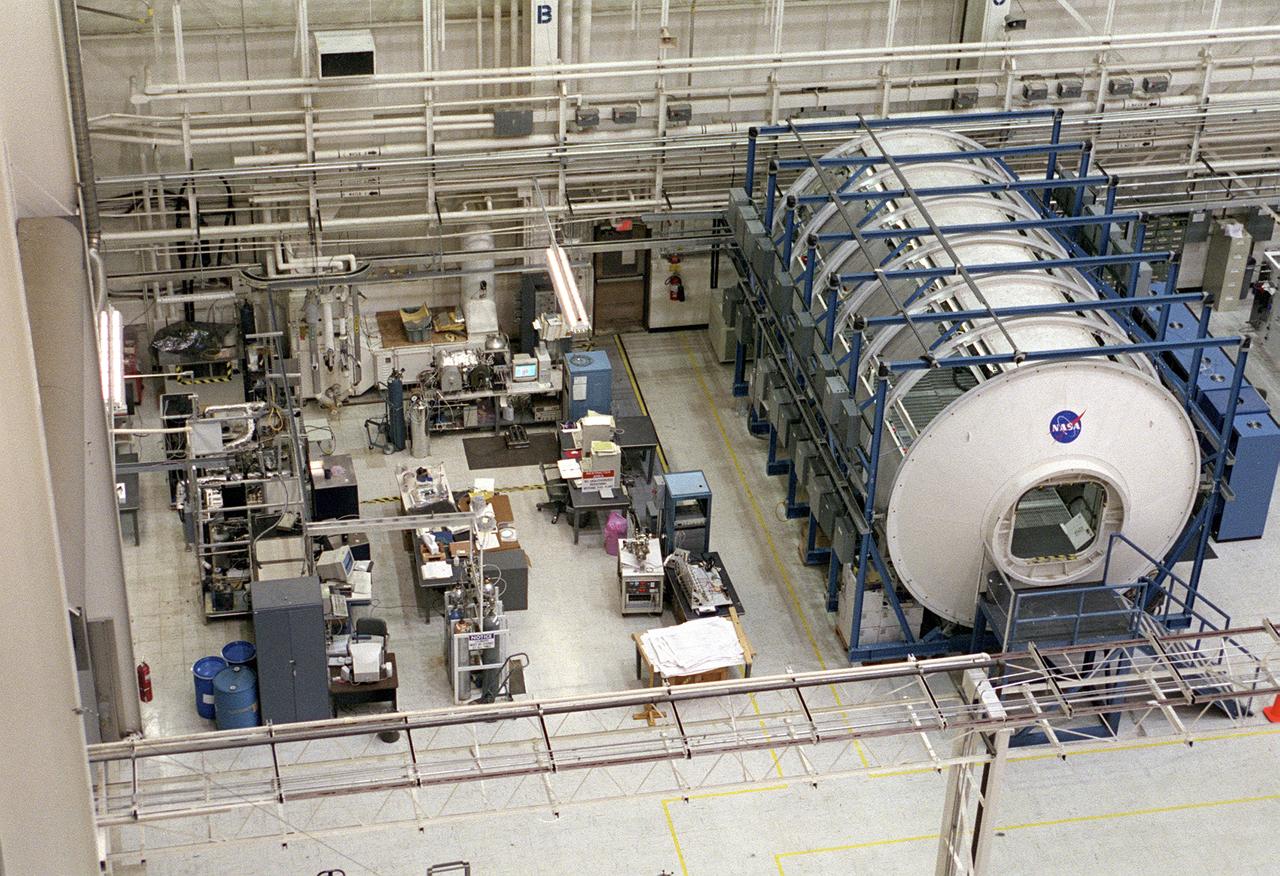
The Marshall Space Flight Center (MSFC) is responsible for designing and building the life support systems that will provide the crew of the International Space Station (ISS) a comfortable environment in which to live and work. Scientists and engineers at the MSFC are working together to provide the ISS with systems that are safe, efficient, and cost-effective. These compact and powerful systems are collectively called the Environmental Control and Life Support Systems, or simply, ECLSS. In this photograph, the life test area on the left of the MSFC ECLSS test facility is where various subsystems and components are tested to determine how long they can operate without failing and to identify components needing improvement. Equipment tested here includes the Carbon Dioxide Removal Assembly (CDRA), the Urine Processing Assembly (UPA), the mass spectrometer filament assemblies and sample pumps for the Major Constituent Analyzer (MCA). The Internal Thermal Control System (ITCS) simulator facility (in the module in the right) duplicates the function and operation of the ITCS in the ISS U.S. Laboratory Module, Destiny. This facility provides support for Destiny, including troubleshooting problems related to the ITCS.
International Space Station (ISS)
Testing of the cruise stage for NASA Mars Science Laboratory in August 2010 included a session in a facility that simulates the environment found in interplanetary space.
Mars Science Laboratory Cruise Stage in Test Chamber
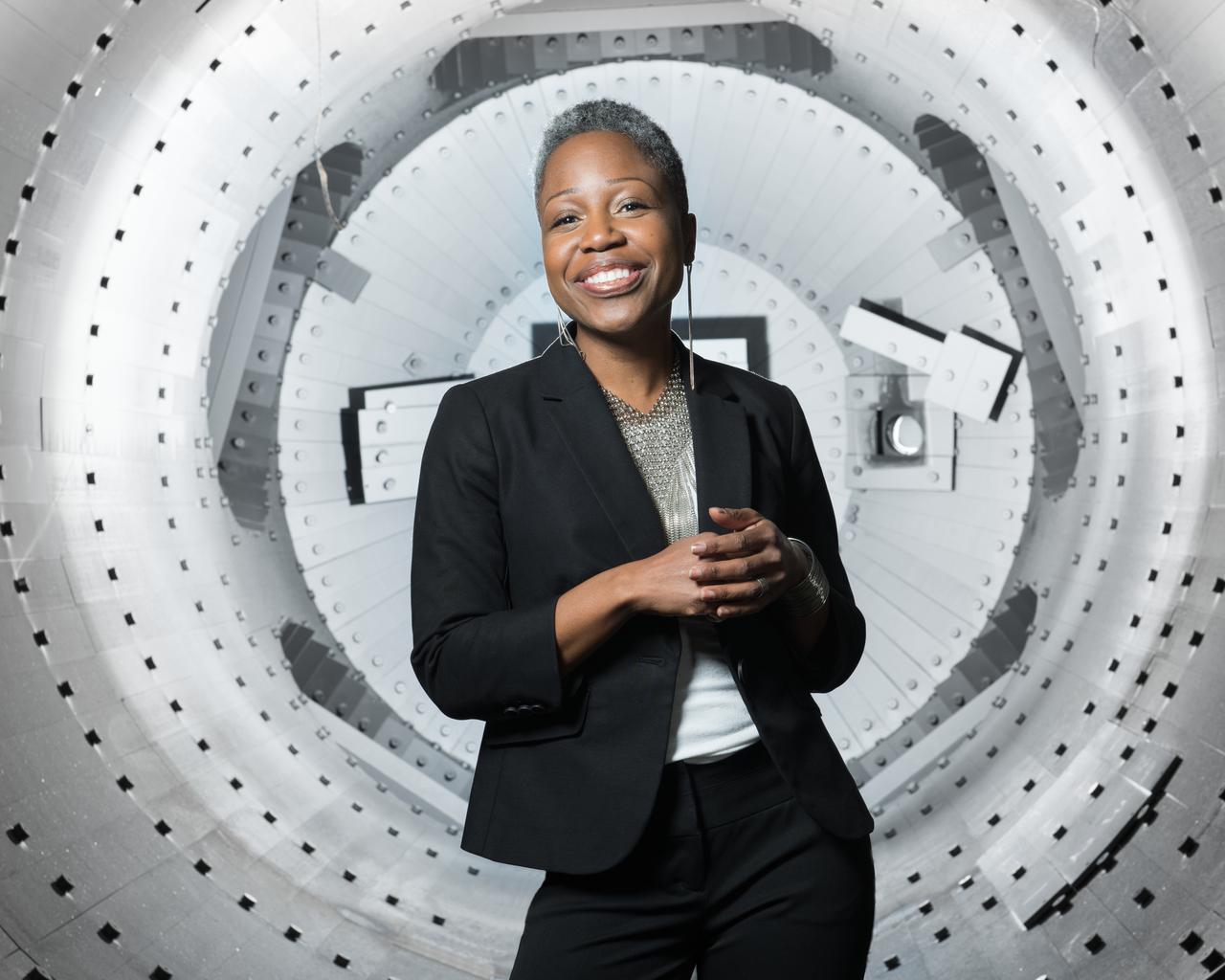
“I am a Black woman in STEM. And when I was growing up, I cannot say that I saw a lot of faces that looked like mine in STEM careers. I had some limited exposure to some notables, like Dr. Mae Jemison. But the names were few and far between of the great scientists or engineers that were Black — let alone Black females. So for me, if anybody sees my picture and says ‘yes, I see someone who looks like me working in STEM’ — that right there is very fulfilling. Just to be seen and to be visible makes a difference.   "I also must provide words of encouragement because being in STEM can be difficult as is, let alone having to face the challenges of being a female in a male-dominated field. Or even being a double minority in the workplace.   "It’s a matter of being really self-assured that you can do it, despite the fact that you’re going to have failures, that you’re going to have setbacks, and that you’re going have people who may not believe in you, for whatever reason. You have to be self-assured that this is what you want to do and that it can be done. This 4’11” Black woman achieved this, not knowing that STEM was going to be my path or that I was going to end up at NASA — I did it, and I believe that you can do it too — but you have to believe it for yourself.”  — Mary Lobo, Director of Office of Technology Incubation and Innovation, Glenn Research Center  The Facility Manager for the Space Simulation Facilities at Glenn Research Center, poses inside Vacuum Facility 16 (VF-16) for an Environmental  Portrait. The lighting used in this portrait depicts the chamber as having an almost white interior when the chamber is actually almost black in color.
Environmental Portrait of the Facility Manager for the Space Sim
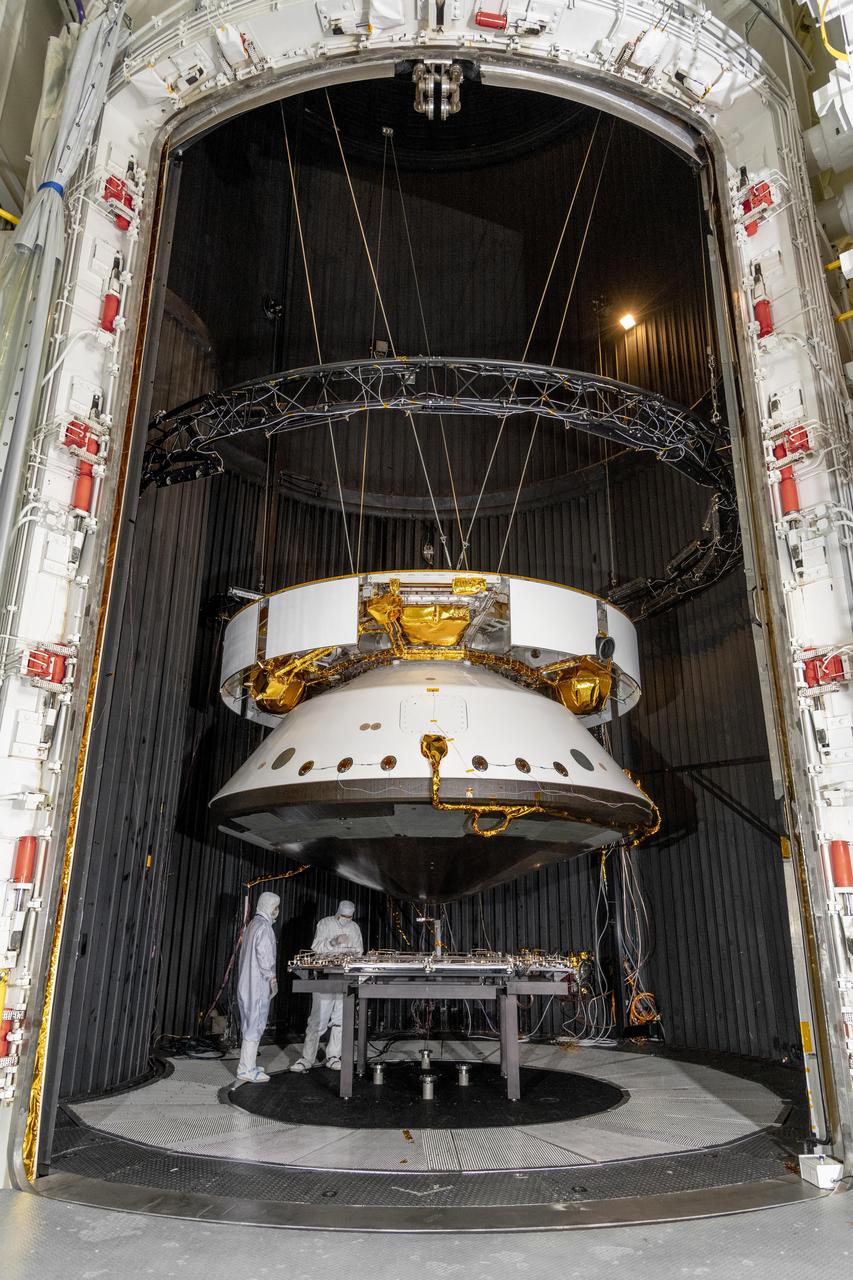
Engineers prepare the Mars 2020 spacecraft for a thermal vacuum (TVAC) test in the Space Simulator Facility at NASA's Jet Propulsion Laboratory in Pasadena, California.  The image was taken on May 9, 2019.  https://photojournal.jpl.nasa.gov/catalog/PIA23263
Mars 2020 Spacecraft Gets Cold
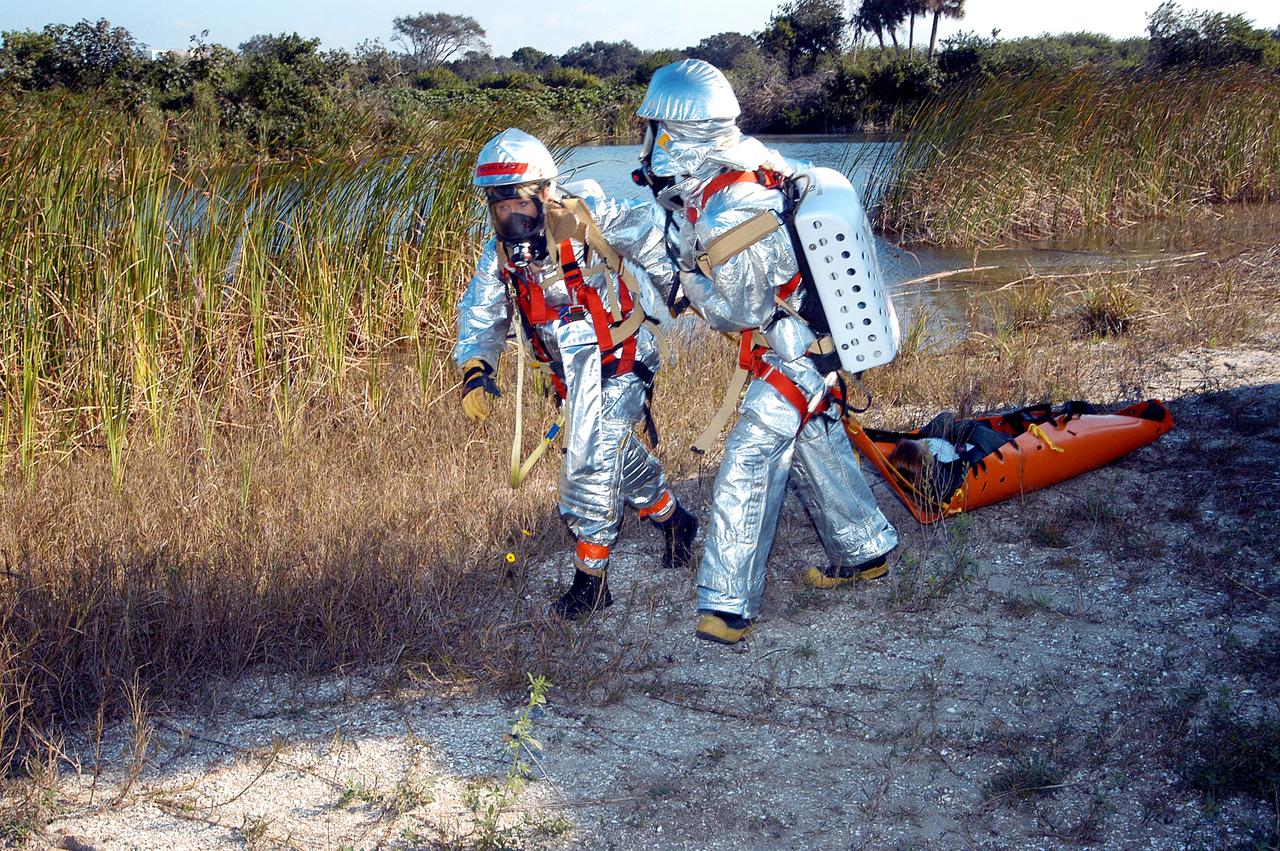
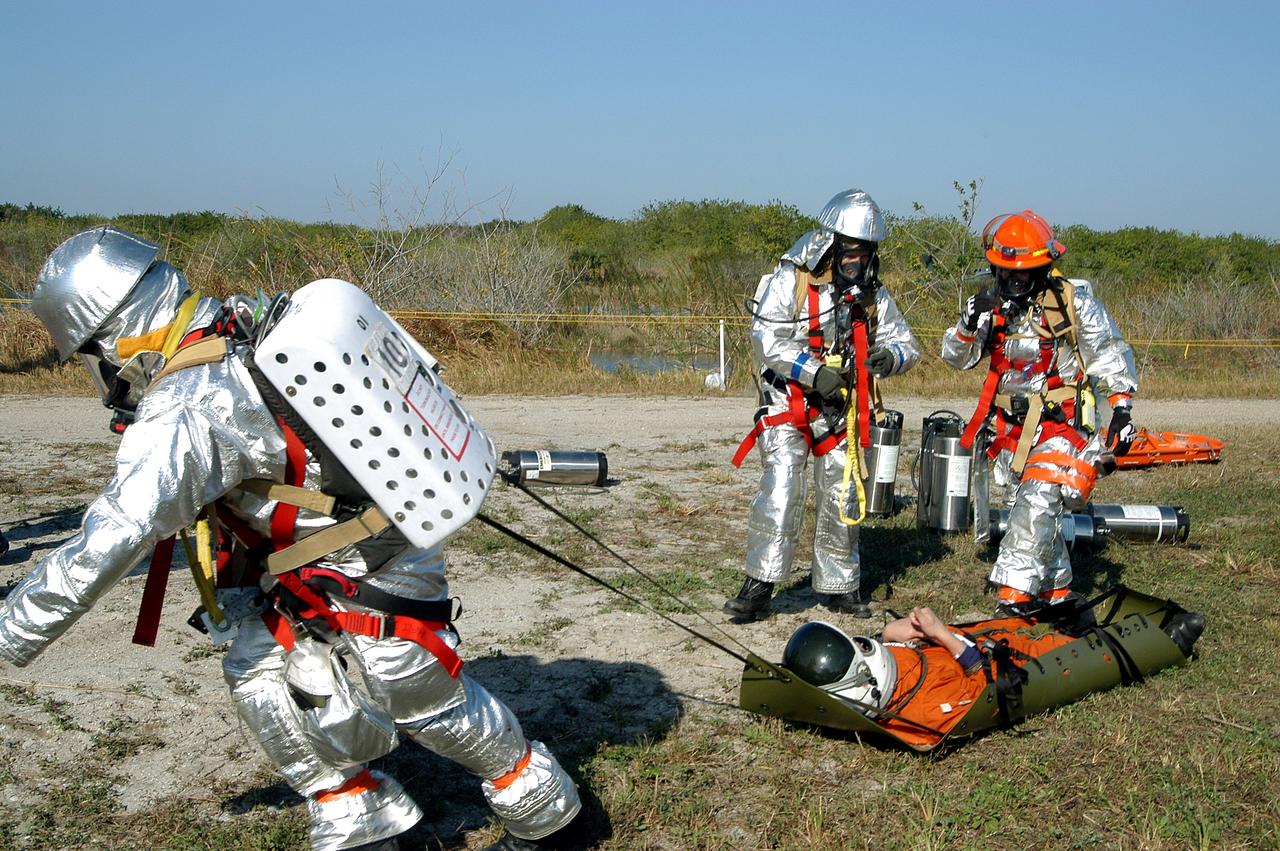
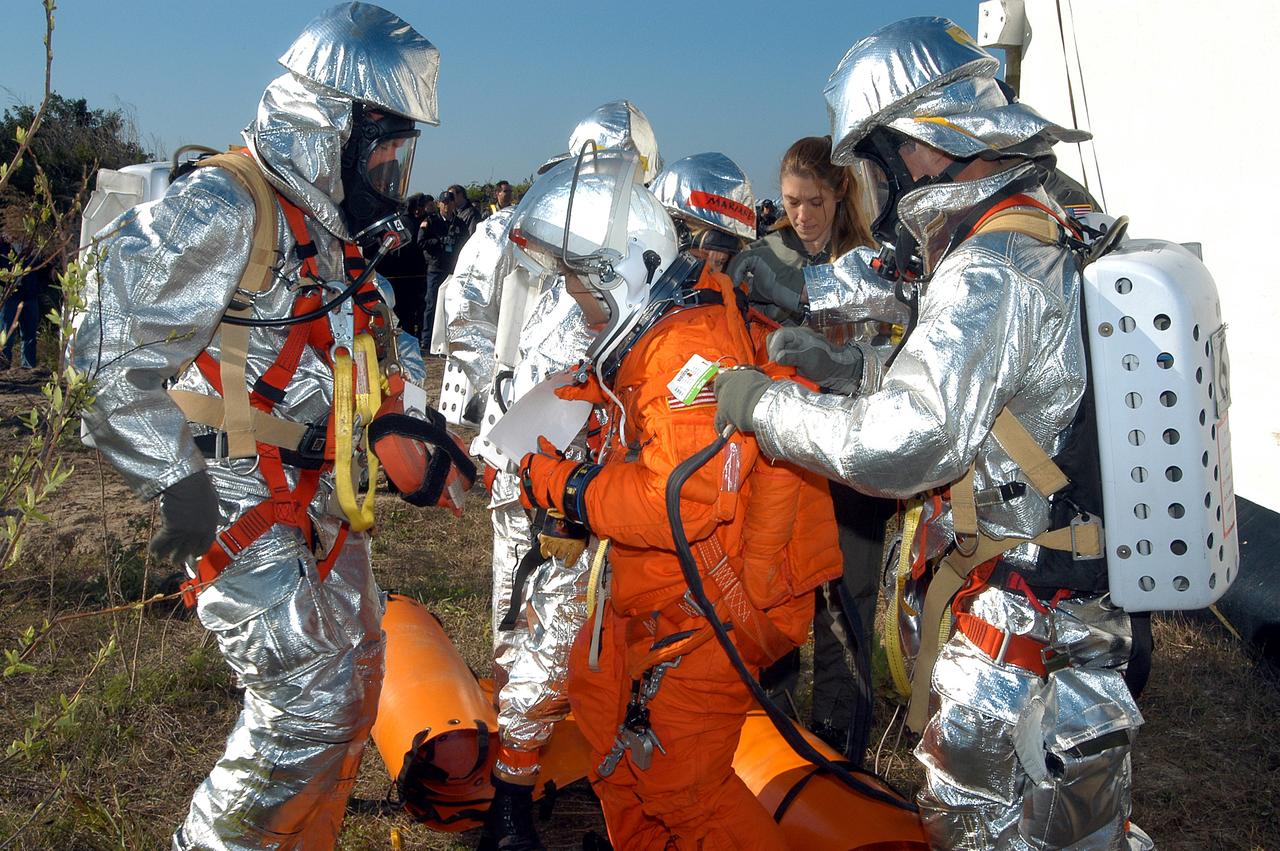
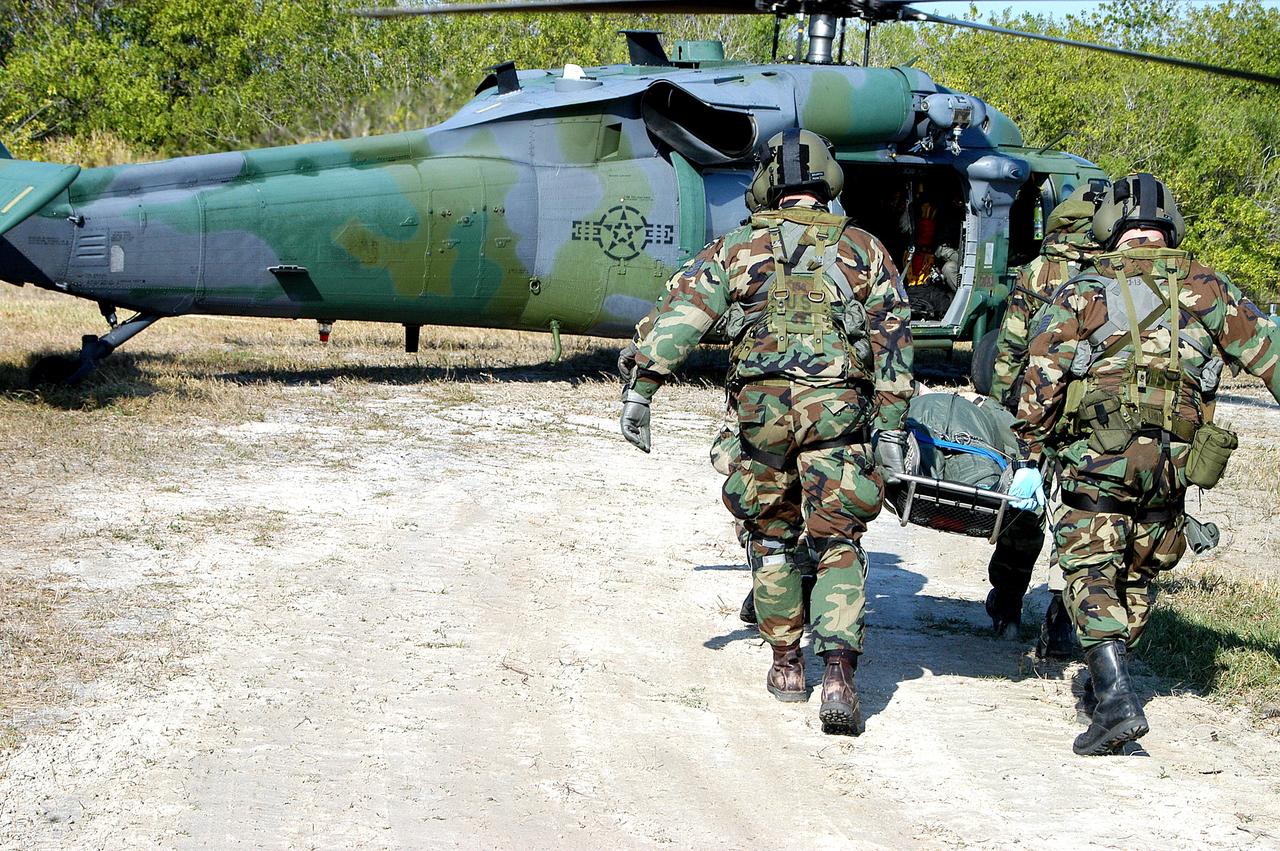
KENNEDY SPACE CENTER, FLA. - Emergency crew members transport an “injured” astronaut during a “Mode VII” emergency landing simulation at Kennedy Space Center.  The purpose of the Mode VII is to exercise emergency preparedness personnel, equipment and facilities in rescuing astronauts from a downed orbiter and providing immediate medical attention.  This simulation presents an orbiter that has crashed short of the Shuttle Landing Facility in a wooded area 2-1/2 miles south of Runway 33.  Emergency crews are responding to the volunteer astronauts who are simulating various injuries.  Rescuers must remove the crew, provide triage and transport to hospitals those who need further treatment.  Local hospitals are participating in the exercise.
KENNEDY SPACE CENTER, FLA. - Emergency crew members transport an “injured” astronaut during a “Mode VII” emergency landing simulation at Kennedy Space Center. The purpose of the Mode VII is to exercise emergency preparedness personnel, equipment and facilities in rescuing astronauts from a downed orbiter and providing immediate medical attention. This simulation presents an orbiter that has crashed short of the Shuttle Landing Facility in a wooded area 2-1/2 miles south of Runway 33. Emergency crews are responding to the volunteer astronauts who are simulating various injuries. Rescuers must remove the crew, provide triage and transport to hospitals those who need further treatment. Local hospitals are participating in the exercise.
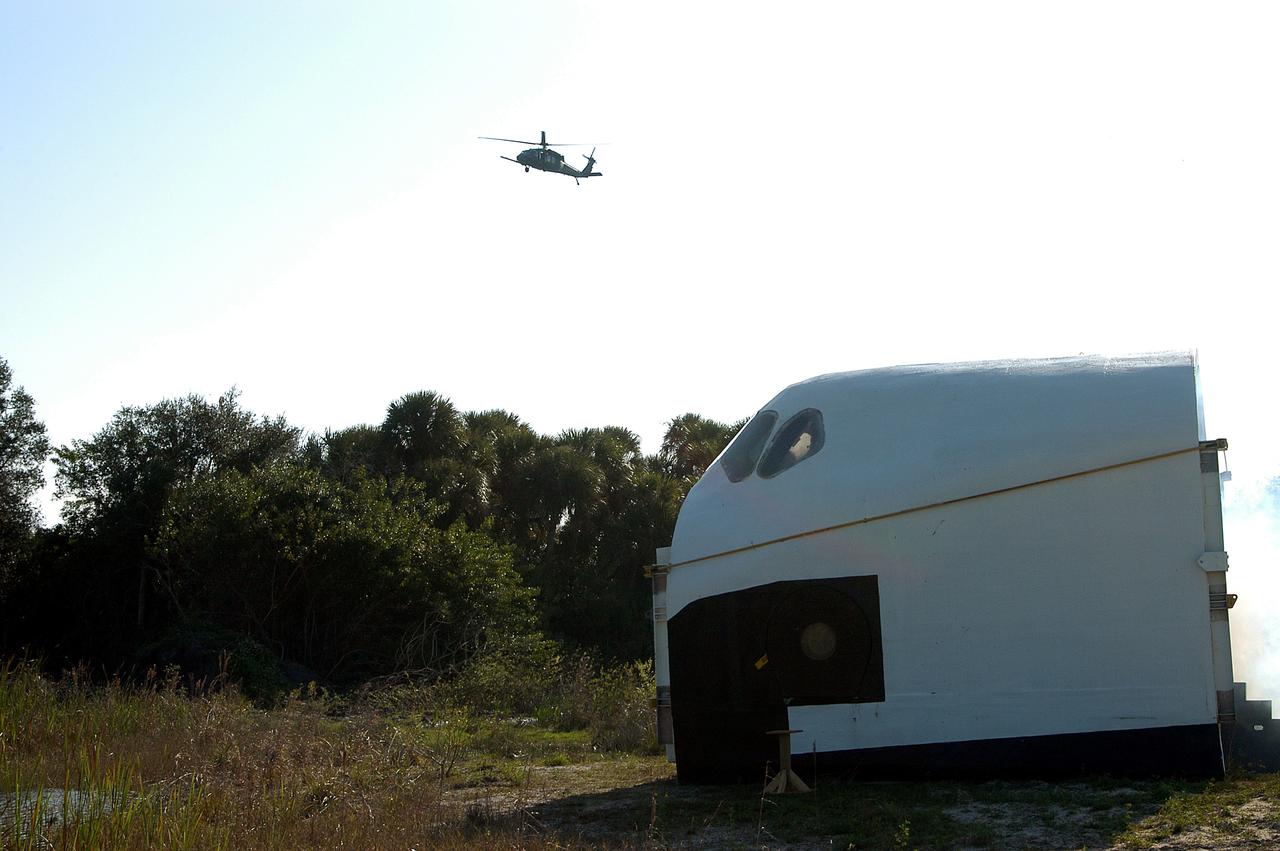
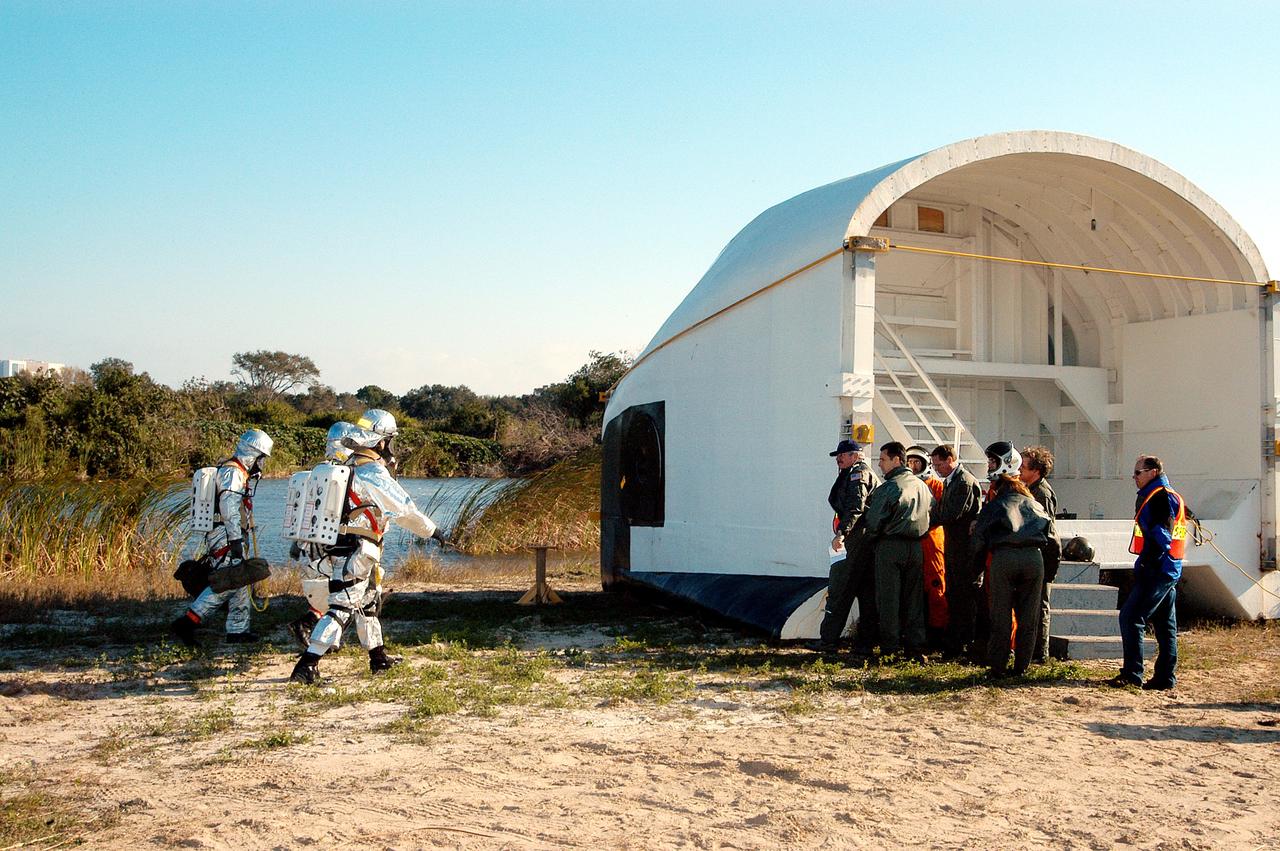
KENNEDY SPACE CENTER, FLA. - A helicopter approaches an orbiter crew compartment mock-up as part of a “Mode VII” emergency landing simulation at Kennedy Space Center.  The purpose is to exercise emergency preparedness personnel, equipment and facilities in rescuing astronauts from a downed orbiter and providing immediate medical attention.  This simulation presents an orbiter that has crashed short of the Shuttle Landing Facility in a wooded area 2-1/2 miles south of Runway 33.  Emergency crews will respond to the volunteer “astronauts” simulating various injuries.  Rescuers must remove the crew, provide triage and transport to hospitals those who need further treatment.  Local hospitals are participating in the exercise.
KENNEDY SPACE CENTER, FLA. - A helicopter approaches an orbiter crew compartment mock-up as part of a “Mode VII” emergency landing simulation at Kennedy Space Center. The purpose is to exercise emergency preparedness personnel, equipment and facilities in rescuing astronauts from a downed orbiter and providing immediate medical attention. This simulation presents an orbiter that has crashed short of the Shuttle Landing Facility in a wooded area 2-1/2 miles south of Runway 33. Emergency crews will respond to the volunteer “astronauts” simulating various injuries. Rescuers must remove the crew, provide triage and transport to hospitals those who need further treatment. Local hospitals are participating in the exercise.
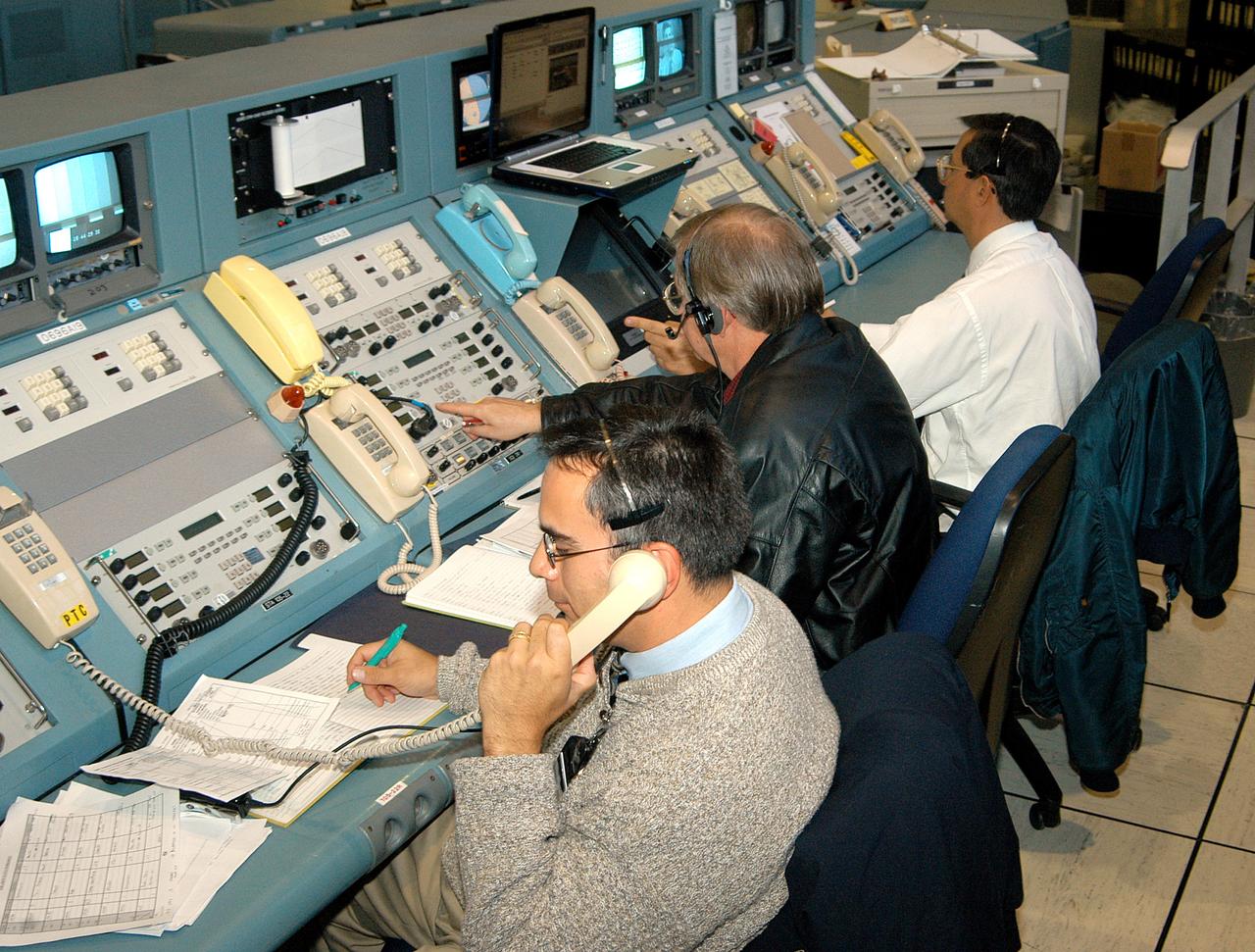
KENNEDY SPACE CENTER, FLA. - In the Launch Control Center, Robert Holl (left),  Landing Recovery directo, and Donald Hammel, from the Shuttle Project Office, are in contact with the leaders of the “Mode VII” emergency landing simulation at Kennedy Space Center.  The simulation is being managed and directed from the LCC.  The purpose of the Mode VII is to exercise emergency preparedness personnel, equipment and facilities in rescuing astronauts from a downed orbiter and providing immediate medical attention.  This simulation presents an orbiter that has crashed short of the Shuttle Landing Facility in a wooded area 2-1/2 miles south of Runway 33.  Emergency crews are responding to the volunteer “astronauts” who are simulating various injuries inside the crew compartment mock-up.  Rescuers must remove the crew, provide triage and transport to hospitals those who need further treatment.  Local hospitals are participating in the exercise.
KENNEDY SPACE CENTER, FLA. - In the Launch Control Center, Robert Holl (left), Landing Recovery directo, and Donald Hammel, from the Shuttle Project Office, are in contact with the leaders of the “Mode VII” emergency landing simulation at Kennedy Space Center. The simulation is being managed and directed from the LCC. The purpose of the Mode VII is to exercise emergency preparedness personnel, equipment and facilities in rescuing astronauts from a downed orbiter and providing immediate medical attention. This simulation presents an orbiter that has crashed short of the Shuttle Landing Facility in a wooded area 2-1/2 miles south of Runway 33. Emergency crews are responding to the volunteer “astronauts” who are simulating various injuries inside the crew compartment mock-up. Rescuers must remove the crew, provide triage and transport to hospitals those who need further treatment. Local hospitals are participating in the exercise.
jsc2026e037785 (May 5, 2026) --- NASA astronaut Jessica Watkins (center), surrounded by training specialists, assists CSA (Canadian Space Agency) astronaut Josh Kutryk as he practices suiting up in a spacesuit in an International Space Station airlock simulator at Johnson Space Center’s (JSC) Space Vehicle Mockup Facility in Houston, Texas. Astronauts familiarize themselves with spacesuit systems and procedures and practice Quest airlock operations before conducting spacewalk training at JSC’s Neutral Buoyancy Laboratory in simulated microgravity. Credit: NASA/Josh Valcarcel
Astronaut Jessica Watkins assists astronaut Josh Kutryk as he practices suiting up in a spacesuit
jsc2026e037769 (May 5, 2026) --- CSA (Canadian Space Agency) astronaut Josh Kutryk practices suiting up in a spacesuit in an International Space Station airlock simulator at Johnson Space Center’s (JSC) Space Vehicle Mockup Facility in Houston, Texas. Astronauts familiarize themselves with spacesuit systems and procedures and practice Quest airlock operations before conducting spacewalk training at JSC’s Neutral Buoyancy Laboratory in simulated microgravity. Credit: NASA/Josh Valcarcel
CSA (Canadian Space Agency) astronaut Josh Kutryk practices suiting up in a spacesuit
jsc2026e037783 (May 5, 2026) --- CSA (Canadian Space Agency) astronaut Josh Kutryk (left) and NASA astronaut Luke Delaney (right), with assistance from training specialists, practice suiting up in spacesuits in an International Space Station airlock simulator at Johnson Space Center’s (JSC) Space Vehicle Mockup Facility in Houston, Texas. Astronauts familiarize themselves with spacesuit systems and procedures and practice Quest airlock operations before conducting spacewalk training at JSC’s Neutral Buoyancy Laboratory in simulated microgravity. Credit: NASA/Josh Valcarcel
Trainers assist astronauts Josh Kutryk and astronaut Luke Delaney as they practice suiting up in spacesuits
jsc2026e037778 (May 5, 2026) --- NASA astronaut Jessica Watkins assists NASA astronaut Luke Delaney as he practices suiting up in a spacesuit in an International Space Station airlock simulator at Johnson Space Center’s (JSC) Space Vehicle Mockup Facility in Houston, Texas. Astronauts familiarize themselves with spacesuit systems and procedures and practice Quest airlock operations before conducting spacewalk training at JSC’s Neutral Buoyancy Laboratory in simulated microgravity. Credit: NASA/Josh Valcarcel
Astronaut Jessica Watkins assists astronaut Luke Delaney as he practices suiting up in a spacesuit
jsc2026e037770 (May 5, 2026) --- NASA astronaut Luke Delaney practices suiting up in a spacesuit in an International Space Station airlock simulator at Johnson Space Center’s (JSC) Space Vehicle Mockup Facility in Houston, Texas. Astronauts familiarize themselves with spacesuit systems and procedures and practice Quest airlock operations before conducting spacewalk training at JSC’s Neutral Buoyancy Laboratory in simulated microgravity. Credit: NASA/Josh Valcarcel
NASA astronaut Luke Delaney practices suiting up in a spacesuit
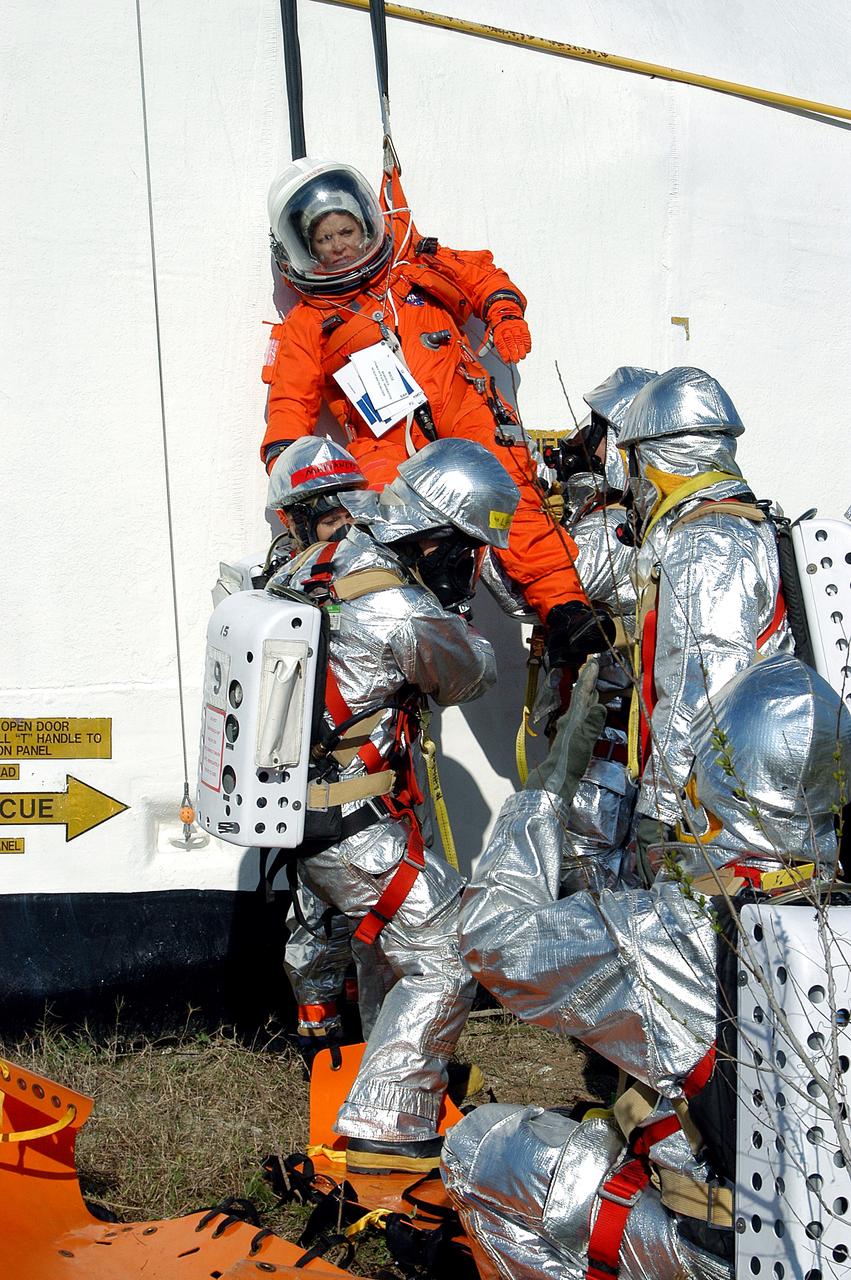
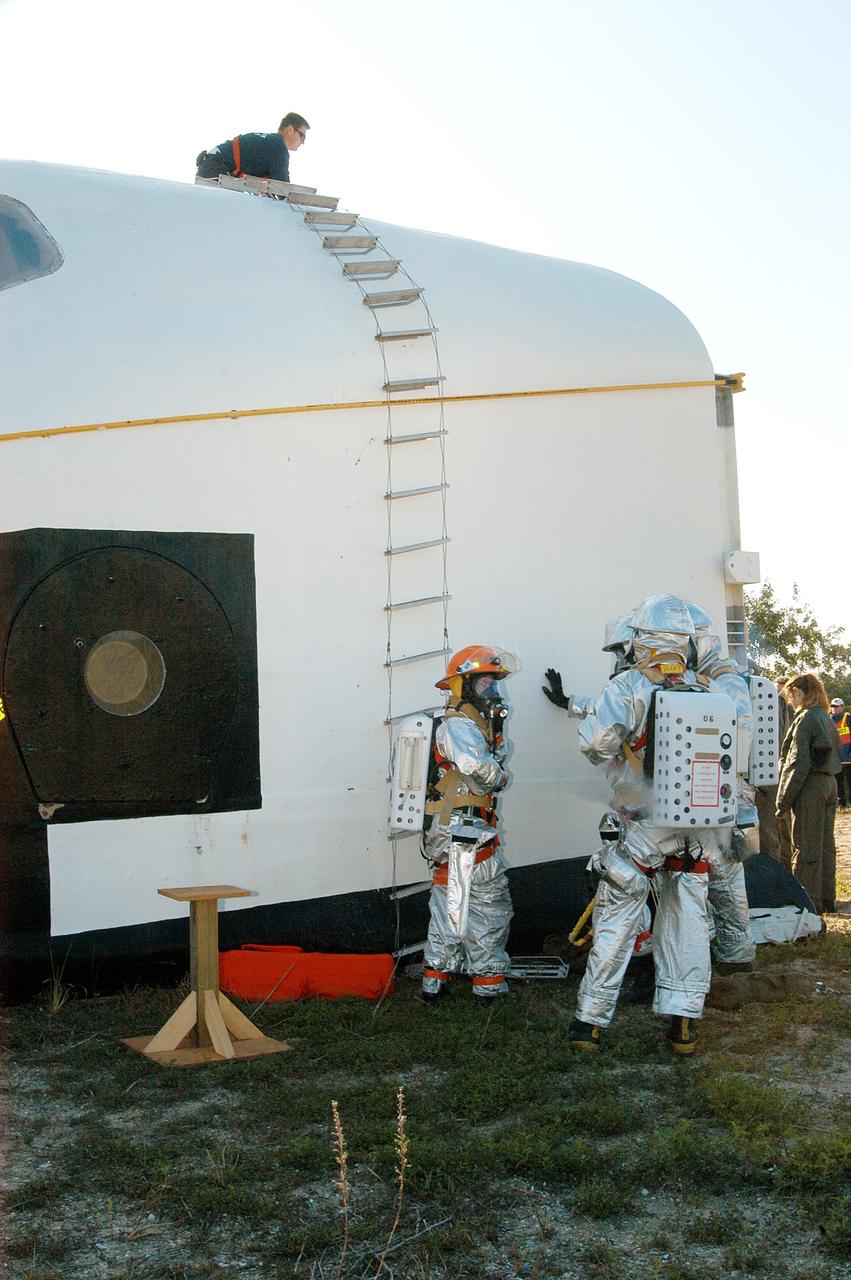
KENNEDY SPACE CENTER, FLA. - Emergency crew members lower a volunteer “astronaut” from the top of the orbiter crew compartment mock-up that is the scene of a “Mode VII” emergency landing simulation at Kennedy Space Center.  The purpose of the Mode VII is to exercise emergency preparedness personnel, equipment and facilities in rescuing astronauts from a downed orbiter and providing immediate medical attention.  This simulation presents an orbiter that has crashed short of the Shuttle Landing Facility in a wooded area 2-1/2 miles south of Runway 33.  Emergency crews are responding to the volunteer “astronauts” who are simulating various injuries.  Rescuers must remove the crew, provide triage and transport to hospitals those who need further treatment.  Local hospitals are participating in the exercise.
KENNEDY SPACE CENTER, FLA. - Emergency crew members lower a volunteer “astronaut” from the top of the orbiter crew compartment mock-up that is the scene of a “Mode VII” emergency landing simulation at Kennedy Space Center. The purpose of the Mode VII is to exercise emergency preparedness personnel, equipment and facilities in rescuing astronauts from a downed orbiter and providing immediate medical attention. This simulation presents an orbiter that has crashed short of the Shuttle Landing Facility in a wooded area 2-1/2 miles south of Runway 33. Emergency crews are responding to the volunteer “astronauts” who are simulating various injuries. Rescuers must remove the crew, provide triage and transport to hospitals those who need further treatment. Local hospitals are participating in the exercise.
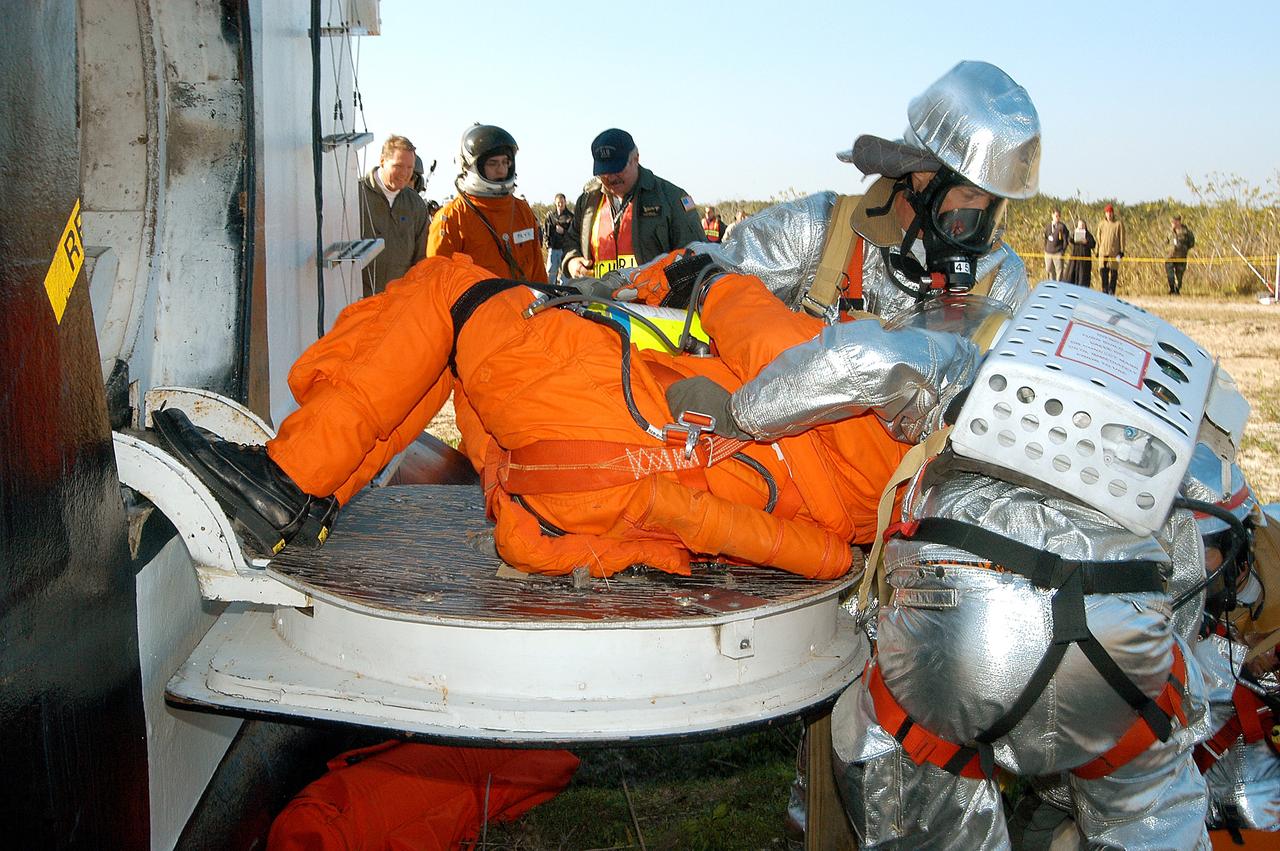
KENNEDY SPACE CENTER, FLA. - Emergency crew members help an “injured” astronaut from the orbiter crew compartment mock-up during a “Mode VII” emergency landing simulation at Kennedy Space Center.  Another is on the ground.  The purpose of the Mode VII is to exercise emergency preparedness personnel, equipment and facilities in rescuing astronauts from a downed orbiter and providing immediate medical attention.  This simulation presents an orbiter that has crashed short of the Shuttle Landing Facility in a wooded area 2-1/2 miles south of Runway 33.  Emergency crews are responding to the volunteer astronauts who are simulating various injuries.  Rescuers must remove the crew, provide triage and transport to hospitals those who need further treatment.  Local hospitals are participating in the exercise.
KENNEDY SPACE CENTER, FLA. - Emergency crew members help an “injured” astronaut from the orbiter crew compartment mock-up during a “Mode VII” emergency landing simulation at Kennedy Space Center. Another is on the ground. The purpose of the Mode VII is to exercise emergency preparedness personnel, equipment and facilities in rescuing astronauts from a downed orbiter and providing immediate medical attention. This simulation presents an orbiter that has crashed short of the Shuttle Landing Facility in a wooded area 2-1/2 miles south of Runway 33. Emergency crews are responding to the volunteer astronauts who are simulating various injuries. Rescuers must remove the crew, provide triage and transport to hospitals those who need further treatment. Local hospitals are participating in the exercise.
KENNEDY SPACE CENTER, FLA. - Emergency crew members on the ground take hold of a volunteer “astronaut” lowered from the top of the orbiter crew compartment mock-up that is the scene of a “Mode VII” emergency landing simulation at Kennedy Space Center.  The purpose of the Mode VII is to exercise emergency preparedness personnel, equipment and facilities in rescuing astronauts from a downed orbiter and providing immediate medical attention.  This simulation presents an orbiter that has crashed short of the Shuttle Landing Facility in a wooded area 2-1/2 miles south of Runway 33.  Emergency crews are responding to the volunteer astronauts who are simulating various injuries.  Rescuers must remove the crew, provide triage and transport to hospitals those who need further treatment.  Local hospitals are participating in the exercise.
KENNEDY SPACE CENTER, FLA. - Emergency crew members on the ground take hold of a volunteer “astronaut” lowered from the top of the orbiter crew compartment mock-up that is the scene of a “Mode VII” emergency landing simulation at Kennedy Space Center. The purpose of the Mode VII is to exercise emergency preparedness personnel, equipment and facilities in rescuing astronauts from a downed orbiter and providing immediate medical attention. This simulation presents an orbiter that has crashed short of the Shuttle Landing Facility in a wooded area 2-1/2 miles south of Runway 33. Emergency crews are responding to the volunteer astronauts who are simulating various injuries. Rescuers must remove the crew, provide triage and transport to hospitals those who need further treatment. Local hospitals are participating in the exercise.
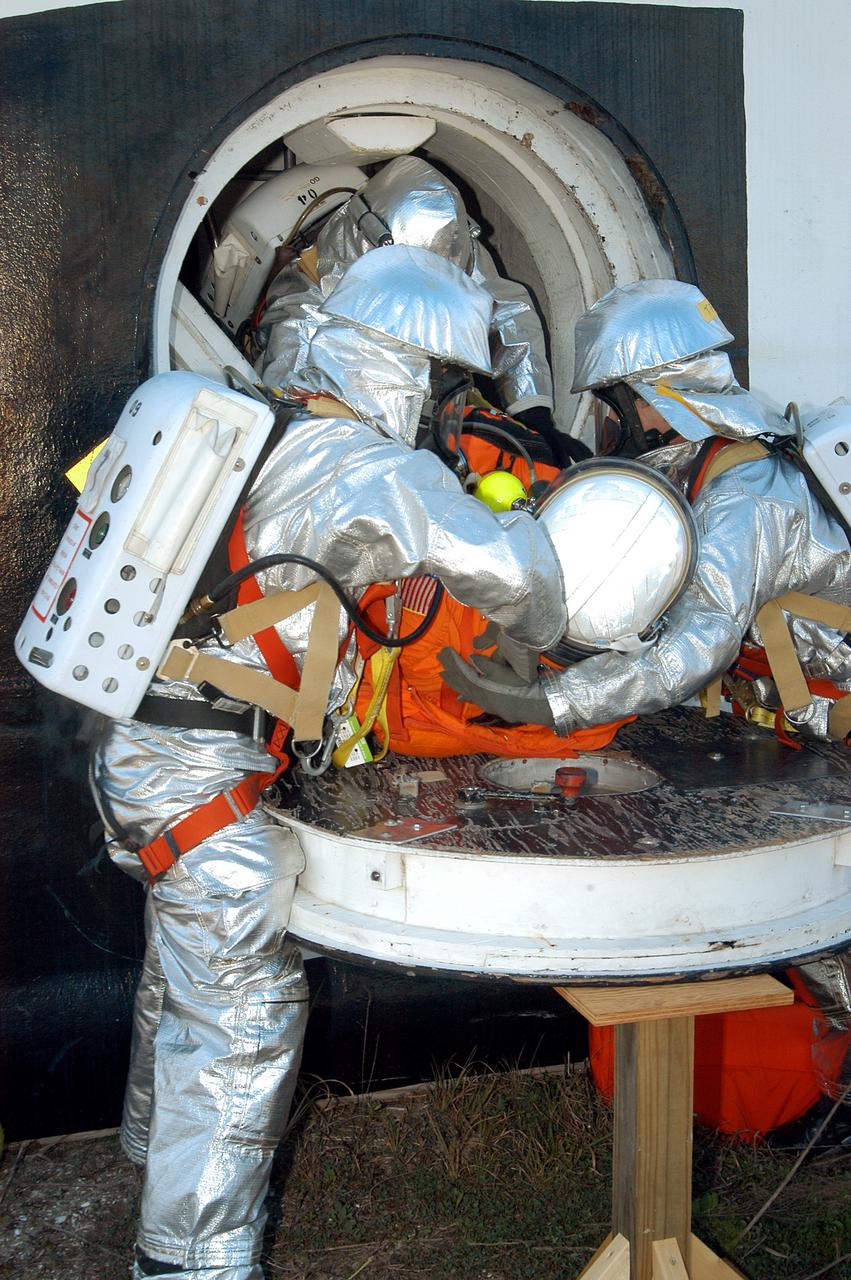
KENNEDY SPACE CENTER, FLA. - Emergency crew members “rescue” an injured astronaut from the orbiter crew compartment mock-up during a “Mode VII” emergency landing simulation at Kennedy Space Center.  The purpose of the Mode VII is to exercise emergency preparedness personnel, equipment and facilities in rescuing astronauts from a downed orbiter and providing immediate medical attention.  This simulation presents an orbiter that has crashed short of the Shuttle Landing Facility in a wooded area 2-1/2 miles south of Runway 33.  Emergency crews are responding to the volunteer astronauts who are simulating various injuries.  Rescuers must remove the crew, provide triage and transport to hospitals those who need further treatment.  Local hospitals are participating in the exercise.
KENNEDY SPACE CENTER, FLA. - Emergency crew members “rescue” an injured astronaut from the orbiter crew compartment mock-up during a “Mode VII” emergency landing simulation at Kennedy Space Center. The purpose of the Mode VII is to exercise emergency preparedness personnel, equipment and facilities in rescuing astronauts from a downed orbiter and providing immediate medical attention. This simulation presents an orbiter that has crashed short of the Shuttle Landing Facility in a wooded area 2-1/2 miles south of Runway 33. Emergency crews are responding to the volunteer astronauts who are simulating various injuries. Rescuers must remove the crew, provide triage and transport to hospitals those who need further treatment. Local hospitals are participating in the exercise.
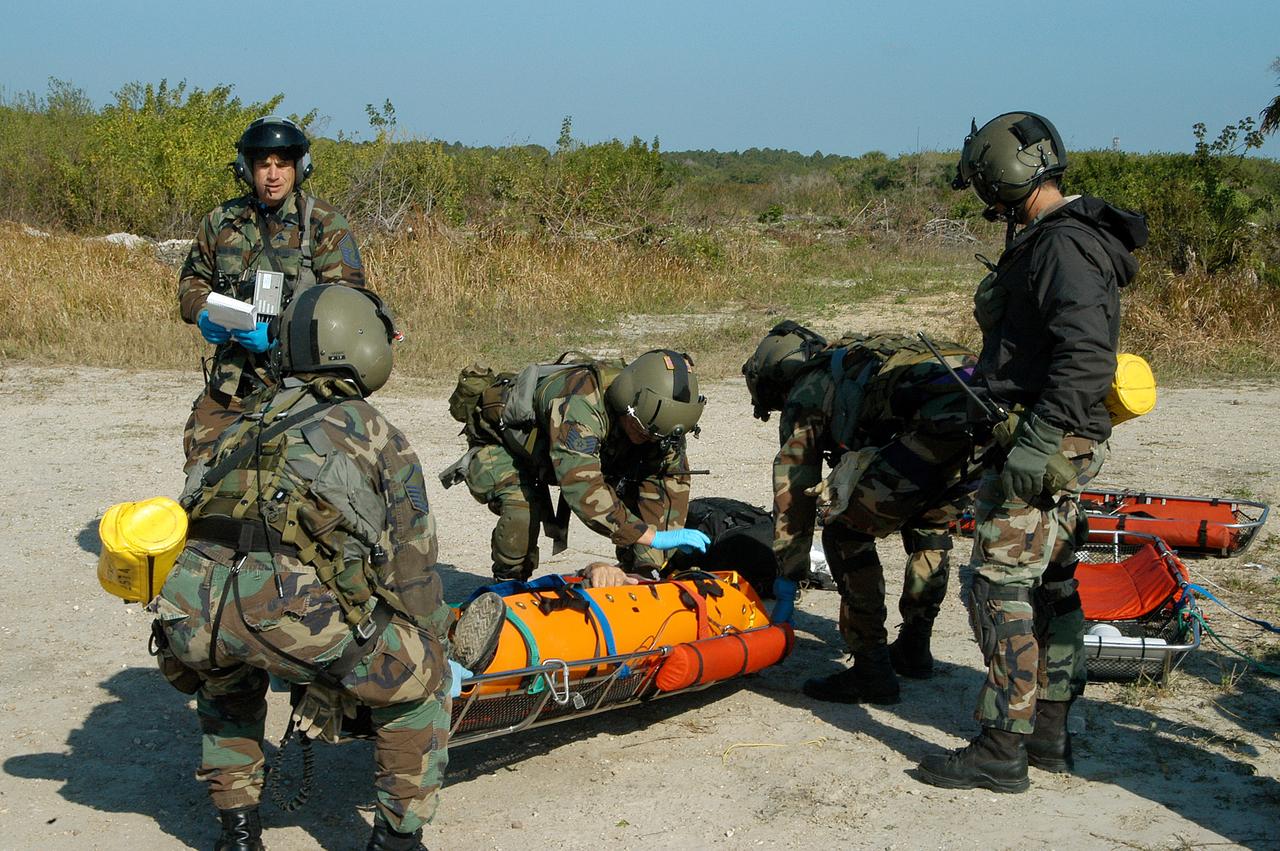
KENNEDY SPACE CENTER, FLA. - A helicopter rescue team prepares another “injured” astronaut for transportation to a local hospital.  They are all taking part in a “Mode VII” emergency landing simulation at Kennedy Space Center.  The purpose of the Mode VII is to exercise emergency preparedness personnel, equipment and facilities in rescuing astronauts from a downed orbiter and providing immediate medical attention.  This simulation presents an orbiter that has crashed short of the Shuttle Landing Facility in a wooded area 2-1/2 miles south of Runway 33.  Emergency crews are responding to the volunteer “astronauts” who are simulating various injuries inside the crew compartment mock-up.  Rescuers must remove the crew, provide triage and transport to hospitals those who need further treatment.  Local hospitals are participating in the exercise.
KENNEDY SPACE CENTER, FLA. - A helicopter rescue team prepares another “injured” astronaut for transportation to a local hospital. They are all taking part in a “Mode VII” emergency landing simulation at Kennedy Space Center. The purpose of the Mode VII is to exercise emergency preparedness personnel, equipment and facilities in rescuing astronauts from a downed orbiter and providing immediate medical attention. This simulation presents an orbiter that has crashed short of the Shuttle Landing Facility in a wooded area 2-1/2 miles south of Runway 33. Emergency crews are responding to the volunteer “astronauts” who are simulating various injuries inside the crew compartment mock-up. Rescuers must remove the crew, provide triage and transport to hospitals those who need further treatment. Local hospitals are participating in the exercise.
KENNEDY SPACE CENTER, FLA. - Emergency crew members “rescue” an injured astronaut from the orbiter crew compartment mock-up during a “Mode VII” emergency landing simulation at Kennedy Space Center.  The purpose of the Mode VII is to exercise emergency preparedness personnel, equipment and facilities in rescuing astronauts from a downed orbiter and providing immediate medical attention.  This simulation presents an orbiter that has crashed short of the Shuttle Landing Facility in a wooded area 2-1/2 miles south of Runway 33.  Emergency crews are responding to the volunteer astronauts who are simulating various injuries.  Rescuers must remove the crew, provide triage and transport to hospitals those who need further treatment.  Local hospitals are participating in the exercise.
KENNEDY SPACE CENTER, FLA. - Emergency crew members “rescue” an injured astronaut from the orbiter crew compartment mock-up during a “Mode VII” emergency landing simulation at Kennedy Space Center. The purpose of the Mode VII is to exercise emergency preparedness personnel, equipment and facilities in rescuing astronauts from a downed orbiter and providing immediate medical attention. This simulation presents an orbiter that has crashed short of the Shuttle Landing Facility in a wooded area 2-1/2 miles south of Runway 33. Emergency crews are responding to the volunteer astronauts who are simulating various injuries. Rescuers must remove the crew, provide triage and transport to hospitals those who need further treatment. Local hospitals are participating in the exercise.
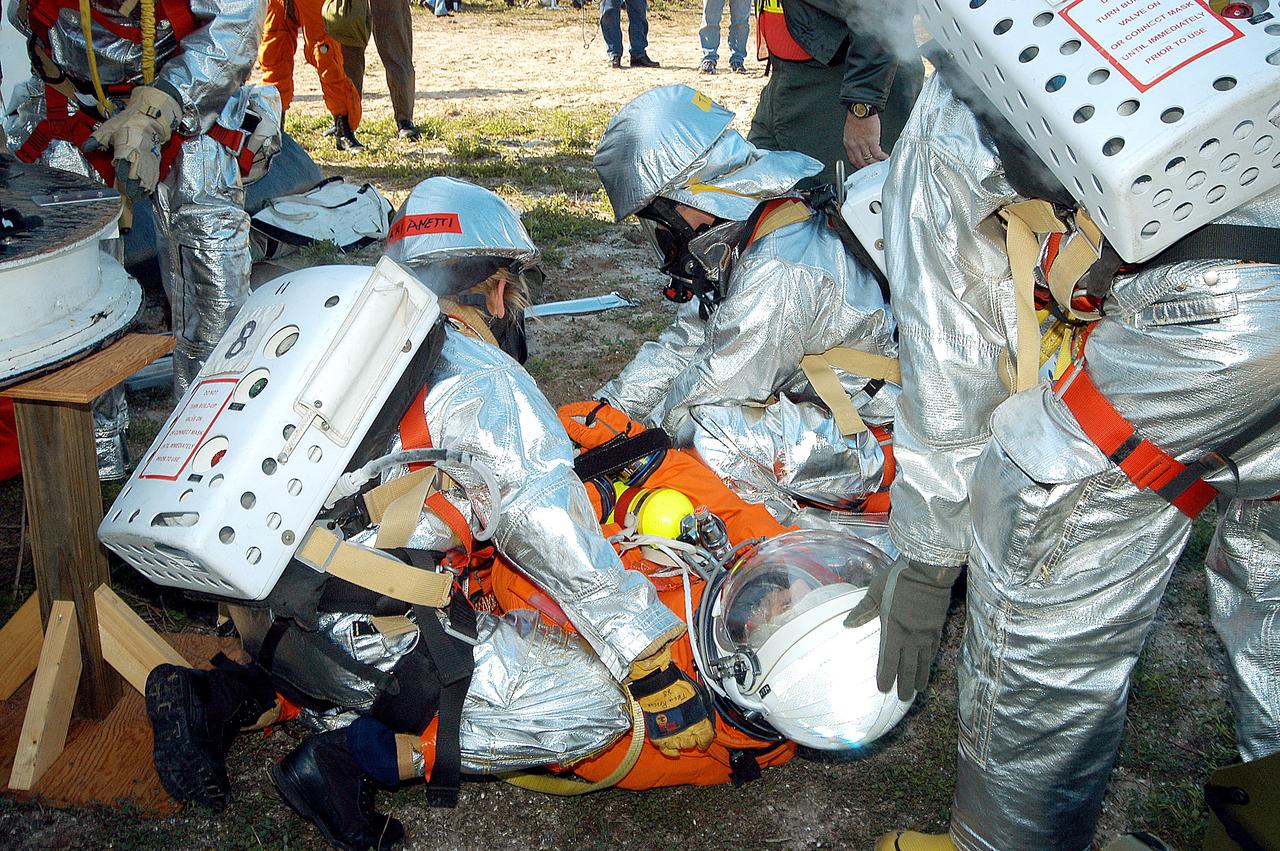
KENNEDY SPACE CENTER, FLA. - Emergency crew members assess medical needs on “injured” astronauts removed from the orbiter crew compartment mock-up during a “Mode VII” emergency landing simulation at Kennedy Space Center.  The purpose of the Mode VII is to exercise emergency preparedness personnel, equipment and facilities in rescuing astronauts from a downed orbiter and providing immediate medical attention.  This simulation presents an orbiter that has crashed short of the Shuttle Landing Facility in a wooded area 2-1/2 miles south of Runway 33.  Emergency crews are responding to the volunteer astronauts who are simulating various injuries.  Rescuers must remove the crew, provide triage and transport to hospitals those who need further treatment.  Local hospitals are participating in the exercise.
KENNEDY SPACE CENTER, FLA. - Emergency crew members assess medical needs on “injured” astronauts removed from the orbiter crew compartment mock-up during a “Mode VII” emergency landing simulation at Kennedy Space Center. The purpose of the Mode VII is to exercise emergency preparedness personnel, equipment and facilities in rescuing astronauts from a downed orbiter and providing immediate medical attention. This simulation presents an orbiter that has crashed short of the Shuttle Landing Facility in a wooded area 2-1/2 miles south of Runway 33. Emergency crews are responding to the volunteer astronauts who are simulating various injuries. Rescuers must remove the crew, provide triage and transport to hospitals those who need further treatment. Local hospitals are participating in the exercise.
KENNEDY SPACE CENTER, FLA. - Emergency crew members help a volunteer “astronaut” onto the ground after being lowered from the top of the orbiter crew compartment mock-up that is the scene of a “Mode VII” emergency landing simulation at Kennedy Space Center.  The purpose of the Mode VII is to exercise emergency preparedness personnel, equipment and facilities in rescuing astronauts from a downed orbiter and providing immediate medical attention.  This simulation presents an orbiter that has crashed short of the Shuttle Landing Facility in a wooded area 2-1/2 miles south of Runway 33.  Emergency crews are responding to the volunteer astronauts who are simulating various injuries.  Rescuers must remove the crew, provide triage and transport to hospitals those who need further treatment.  Local hospitals are participating in the exercise.
KENNEDY SPACE CENTER, FLA. - Emergency crew members help a volunteer “astronaut” onto the ground after being lowered from the top of the orbiter crew compartment mock-up that is the scene of a “Mode VII” emergency landing simulation at Kennedy Space Center. The purpose of the Mode VII is to exercise emergency preparedness personnel, equipment and facilities in rescuing astronauts from a downed orbiter and providing immediate medical attention. This simulation presents an orbiter that has crashed short of the Shuttle Landing Facility in a wooded area 2-1/2 miles south of Runway 33. Emergency crews are responding to the volunteer astronauts who are simulating various injuries. Rescuers must remove the crew, provide triage and transport to hospitals those who need further treatment. Local hospitals are participating in the exercise.
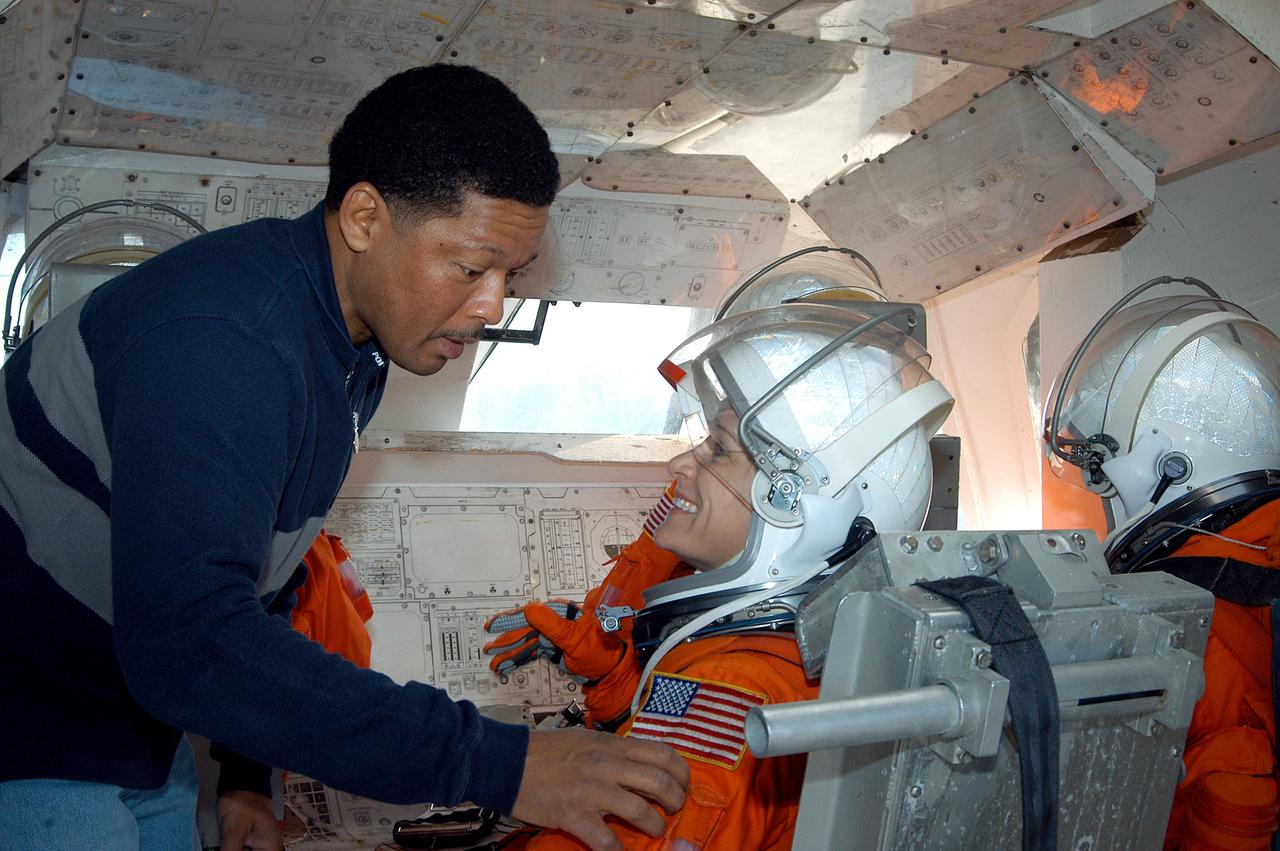
KENNEDY SPACE CENTER, FLA. - Volunteers from the KSC Fire-Rescue team dressed in launch and entry suits settle into seats in an orbiter crew compartment mock-up under the guidance of George Brittingham, USA suit technician on the Closeout Crew. Brittingham is helping Catherine Di Biase, a nurse with Bionetics Life Sciences. They are all taking part in a “Mode VII” emergency landing simulation at Kennedy Space Center.  The purpose is to exercise emergency preparedness personnel, equipment and facilities in rescuing astronauts from a downed orbiter and providing immediate medical attention.  This simulation presents an orbiter that has crashed short of the Shuttle Landing Facility in a wooded area 2-1/2 miles south of Runway 33.  Emergency crews will respond to the volunteer “astronauts” simulating various injuries.  Rescuers must remove the crew, provide triage and transport to hospitals those who need further treatment.  Local hospitals are participating in the exercise.
KENNEDY SPACE CENTER, FLA. - Volunteers from the KSC Fire-Rescue team dressed in launch and entry suits settle into seats in an orbiter crew compartment mock-up under the guidance of George Brittingham, USA suit technician on the Closeout Crew. Brittingham is helping Catherine Di Biase, a nurse with Bionetics Life Sciences. They are all taking part in a “Mode VII” emergency landing simulation at Kennedy Space Center. The purpose is to exercise emergency preparedness personnel, equipment and facilities in rescuing astronauts from a downed orbiter and providing immediate medical attention. This simulation presents an orbiter that has crashed short of the Shuttle Landing Facility in a wooded area 2-1/2 miles south of Runway 33. Emergency crews will respond to the volunteer “astronauts” simulating various injuries. Rescuers must remove the crew, provide triage and transport to hospitals those who need further treatment. Local hospitals are participating in the exercise.
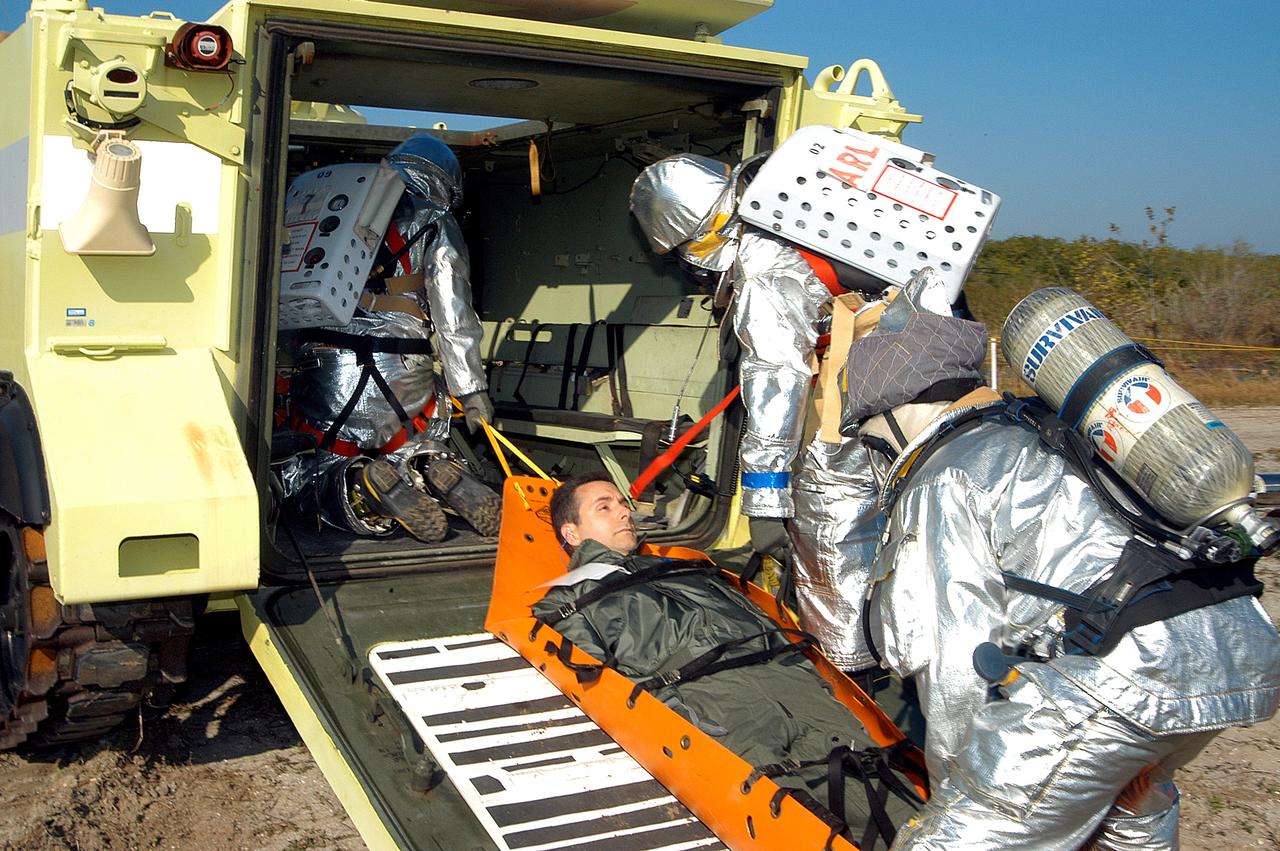
KENNEDY SPACE CENTER, FLA. - An “injured” rescue worker is lifted into an M-113 armored personnel carrier provided for transportation during a “Mode VII” emergency landing simulation at Kennedy Space Center.  The purpose of the Mode VII is to exercise emergency preparedness personnel, equipment and facilities in rescuing astronauts from a downed orbiter and providing immediate medical attention.  This simulation presents an orbiter that has crashed short of the Shuttle Landing Facility in a wooded area 2-1/2 miles south of Runway 33.  Emergency crews are responding to the volunteer astronauts who are simulating various injuries inside the crew compartment mock-up.  Rescuers must remove the crew, provide triage and transport to hospitals those who need further treatment.  Local hospitals are participating in the exercise.
KENNEDY SPACE CENTER, FLA. - An “injured” rescue worker is lifted into an M-113 armored personnel carrier provided for transportation during a “Mode VII” emergency landing simulation at Kennedy Space Center. The purpose of the Mode VII is to exercise emergency preparedness personnel, equipment and facilities in rescuing astronauts from a downed orbiter and providing immediate medical attention. This simulation presents an orbiter that has crashed short of the Shuttle Landing Facility in a wooded area 2-1/2 miles south of Runway 33. Emergency crews are responding to the volunteer astronauts who are simulating various injuries inside the crew compartment mock-up. Rescuers must remove the crew, provide triage and transport to hospitals those who need further treatment. Local hospitals are participating in the exercise.
KENNEDY SPACE CENTER, FLA. - Emergency crew members “rescue” an astronaut from inside the orbiter crew compartment mock-up that is the scene of a “Mode VII” emergency landing simulation at Kennedy Space Center.  The purpose of the Mode VII is to exercise emergency preparedness personnel, equipment and facilities in rescuing astronauts from a downed orbiter and providing immediate medical attention.  This simulation presents an orbiter that has crashed short of the Shuttle Landing Facility in a wooded area 2-1/2 miles south of Runway 33.  Emergency crews are responding to the volunteer “astronauts” who are simulating various injuries.  Rescuers must remove the crew, provide triage and transport to hospitals those who need further treatment.  Local hospitals are participating in the exercise.
KENNEDY SPACE CENTER, FLA. - Emergency crew members “rescue” an astronaut from inside the orbiter crew compartment mock-up that is the scene of a “Mode VII” emergency landing simulation at Kennedy Space Center. The purpose of the Mode VII is to exercise emergency preparedness personnel, equipment and facilities in rescuing astronauts from a downed orbiter and providing immediate medical attention. This simulation presents an orbiter that has crashed short of the Shuttle Landing Facility in a wooded area 2-1/2 miles south of Runway 33. Emergency crews are responding to the volunteer “astronauts” who are simulating various injuries. Rescuers must remove the crew, provide triage and transport to hospitals those who need further treatment. Local hospitals are participating in the exercise.
KENNEDY SPACE CENTER, FLA. - Emergency crew members help an injured astronaut after removing him from the orbiter crew compartment mock-up during a “Mode VII” emergency landing simulation at Kennedy Space Center.  The purpose of the Mode VII is to exercise emergency preparedness personnel, equipment and facilities in rescuing astronauts from a downed orbiter and providing immediate medical attention.  This simulation presents an orbiter that has crashed short of the Shuttle Landing Facility in a wooded area 2-1/2 miles south of Runway 33.  Emergency crews are responding to the volunteer astronauts who are simulating various injuries.  Rescuers must remove the crew, provide triage and transport to hospitals those who need further treatment.  Local hospitals are participating in the exercise.
KENNEDY SPACE CENTER, FLA. - Emergency crew members help an injured astronaut after removing him from the orbiter crew compartment mock-up during a “Mode VII” emergency landing simulation at Kennedy Space Center. The purpose of the Mode VII is to exercise emergency preparedness personnel, equipment and facilities in rescuing astronauts from a downed orbiter and providing immediate medical attention. This simulation presents an orbiter that has crashed short of the Shuttle Landing Facility in a wooded area 2-1/2 miles south of Runway 33. Emergency crews are responding to the volunteer astronauts who are simulating various injuries. Rescuers must remove the crew, provide triage and transport to hospitals those who need further treatment. Local hospitals are participating in the exercise.
KENNEDY SPACE CENTER, FLA. - A helicopter rescue team prepares another “injured” astronaut for transportation to a local hospital.  They are all taking part in a “Mode VII” emergency landing simulation at Kennedy Space Center.  The purpose of the Mode VII is to exercise emergency preparedness personnel, equipment and facilities in rescuing astronauts from a downed orbiter and providing immediate medical attention.  This simulation presents an orbiter that has crashed short of the Shuttle Landing Facility in a wooded area 2-1/2 miles south of Runway 33.  Emergency crews are responding to the volunteer “astronauts” who are simulating various injuries inside the crew compartment mock-up.  Rescuers must remove the crew, provide triage and transport to hospitals those who need further treatment.  Local hospitals are participating in the exercise.
KENNEDY SPACE CENTER, FLA. - A helicopter rescue team prepares another “injured” astronaut for transportation to a local hospital. They are all taking part in a “Mode VII” emergency landing simulation at Kennedy Space Center. The purpose of the Mode VII is to exercise emergency preparedness personnel, equipment and facilities in rescuing astronauts from a downed orbiter and providing immediate medical attention. This simulation presents an orbiter that has crashed short of the Shuttle Landing Facility in a wooded area 2-1/2 miles south of Runway 33. Emergency crews are responding to the volunteer “astronauts” who are simulating various injuries inside the crew compartment mock-up. Rescuers must remove the crew, provide triage and transport to hospitals those who need further treatment. Local hospitals are participating in the exercise.
KENNEDY SPACE CENTER, FLA. - Emergency crew members help an “injured” astronaut who was removed from the orbiter crew compartment mock-up during a “Mode VII” emergency landing simulation at Kennedy Space Center.  The purpose of the Mode VII is to exercise emergency preparedness personnel, equipment and facilities in rescuing astronauts from a downed orbiter and providing immediate medical attention.  This simulation presents an orbiter that has crashed short of the Shuttle Landing Facility in a wooded area 2-1/2 miles south of Runway 33.  Emergency crews are responding to the volunteer astronauts who are simulating various injuries.  Rescuers must remove the crew, provide triage and transport to hospitals those who need further treatment.  Local hospitals are participating in the exercise.
KENNEDY SPACE CENTER, FLA. - Emergency crew members help an “injured” astronaut who was removed from the orbiter crew compartment mock-up during a “Mode VII” emergency landing simulation at Kennedy Space Center. The purpose of the Mode VII is to exercise emergency preparedness personnel, equipment and facilities in rescuing astronauts from a downed orbiter and providing immediate medical attention. This simulation presents an orbiter that has crashed short of the Shuttle Landing Facility in a wooded area 2-1/2 miles south of Runway 33. Emergency crews are responding to the volunteer astronauts who are simulating various injuries. Rescuers must remove the crew, provide triage and transport to hospitals those who need further treatment. Local hospitals are participating in the exercise.
KENNEDY SPACE CENTER, FLA. - In the Launch Control Center, officials monitor the “Mode VII” emergency landing simulation being conducted at Kennedy Space Center and managed and directed from the LCC.  From left are Dr. Luis Moreno and Dr. David Reed, with Bionetics Life Sciences, and Dr. Philip Scarpa, with the KSC Safety, Occupational Health and Environment Division.  The purpose of the Mode VII is to exercise emergency preparedness personnel, equipment and facilities in rescuing astronauts from a downed orbiter and providing immediate medical attention.  This simulation presents an orbiter that has crashed short of the Shuttle Landing Facility in a wooded area 2-1/2 miles south of Runway 33.  Emergency crews are responding to the volunteer “astronauts” who are simulating various injuries inside the crew compartment mock-up.  Rescuers must remove the crew, provide triage and transport to hospitals those who need further treatment.  Local hospitals are participating in the exercise.
KENNEDY SPACE CENTER, FLA. - In the Launch Control Center, officials monitor the “Mode VII” emergency landing simulation being conducted at Kennedy Space Center and managed and directed from the LCC. From left are Dr. Luis Moreno and Dr. David Reed, with Bionetics Life Sciences, and Dr. Philip Scarpa, with the KSC Safety, Occupational Health and Environment Division. The purpose of the Mode VII is to exercise emergency preparedness personnel, equipment and facilities in rescuing astronauts from a downed orbiter and providing immediate medical attention. This simulation presents an orbiter that has crashed short of the Shuttle Landing Facility in a wooded area 2-1/2 miles south of Runway 33. Emergency crews are responding to the volunteer “astronauts” who are simulating various injuries inside the crew compartment mock-up. Rescuers must remove the crew, provide triage and transport to hospitals those who need further treatment. Local hospitals are participating in the exercise.
KENNEDY SPACE CENTER, FLA. - Emergency crew members prepare to rescue another “astronaut” from inside the orbiter crew compartment mock-up that is the scene of a “Mode VII” emergency landing simulation at Kennedy Space Center.  The purpose of the Mode VII is to exercise emergency preparedness personnel, equipment and facilities in rescuing astronauts from a downed orbiter and providing immediate medical attention.  This simulation presents an orbiter that has crashed short of the Shuttle Landing Facility in a wooded area 2-1/2 miles south of Runway 33.  Emergency crews are responding to the volunteer astronauts who are simulating various injuries.  Rescuers must remove the crew, provide triage and transport to hospitals those who need further treatment.  Local hospitals are participating in the exercise.
KENNEDY SPACE CENTER, FLA. - Emergency crew members prepare to rescue another “astronaut” from inside the orbiter crew compartment mock-up that is the scene of a “Mode VII” emergency landing simulation at Kennedy Space Center. The purpose of the Mode VII is to exercise emergency preparedness personnel, equipment and facilities in rescuing astronauts from a downed orbiter and providing immediate medical attention. This simulation presents an orbiter that has crashed short of the Shuttle Landing Facility in a wooded area 2-1/2 miles south of Runway 33. Emergency crews are responding to the volunteer astronauts who are simulating various injuries. Rescuers must remove the crew, provide triage and transport to hospitals those who need further treatment. Local hospitals are participating in the exercise.
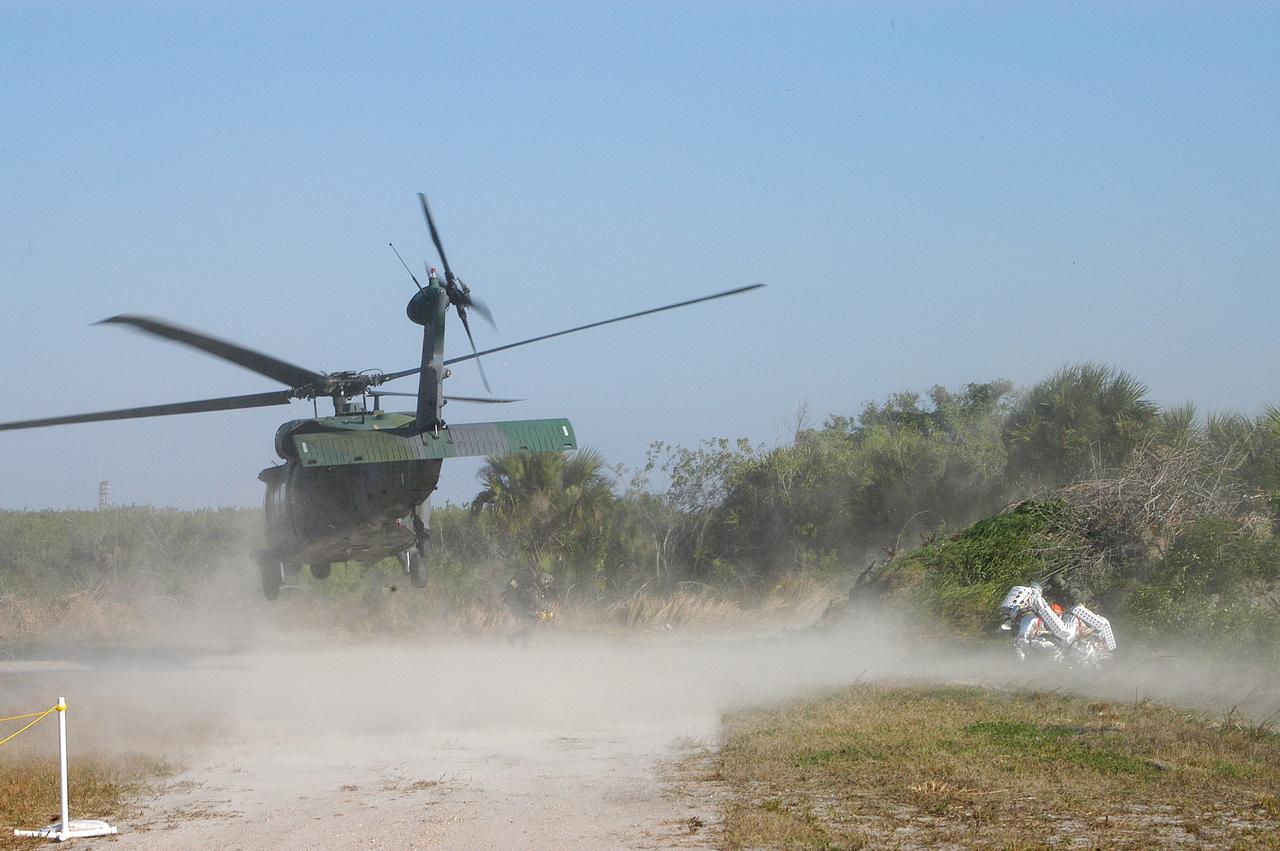
KENNEDY SPACE CENTER, FLA. - A helicopter is landing near rescue team members taking part in a “Mode VII” emergency landing simulation at Kennedy Space Center.  The purpose of Mode VII is to exercise emergency preparedness personnel, equipment and facilities in rescuing astronauts from a downed orbiter and providing immediate medical attention.  This simulation presents an orbiter that has crashed short of the Shuttle Landing Facility in a wooded area 2-1/2 miles south of Runway 33.  Emergency crews are responding to the volunteer “astronauts” simulating various injuries inside an orbiter crew compartment mock-up.  Rescuers must remove the crew, provide triage and transport to hospitals those who need further treatment.  Local hospitals are participating in the exercise.
KENNEDY SPACE CENTER, FLA. - A helicopter is landing near rescue team members taking part in a “Mode VII” emergency landing simulation at Kennedy Space Center. The purpose of Mode VII is to exercise emergency preparedness personnel, equipment and facilities in rescuing astronauts from a downed orbiter and providing immediate medical attention. This simulation presents an orbiter that has crashed short of the Shuttle Landing Facility in a wooded area 2-1/2 miles south of Runway 33. Emergency crews are responding to the volunteer “astronauts” simulating various injuries inside an orbiter crew compartment mock-up. Rescuers must remove the crew, provide triage and transport to hospitals those who need further treatment. Local hospitals are participating in the exercise.
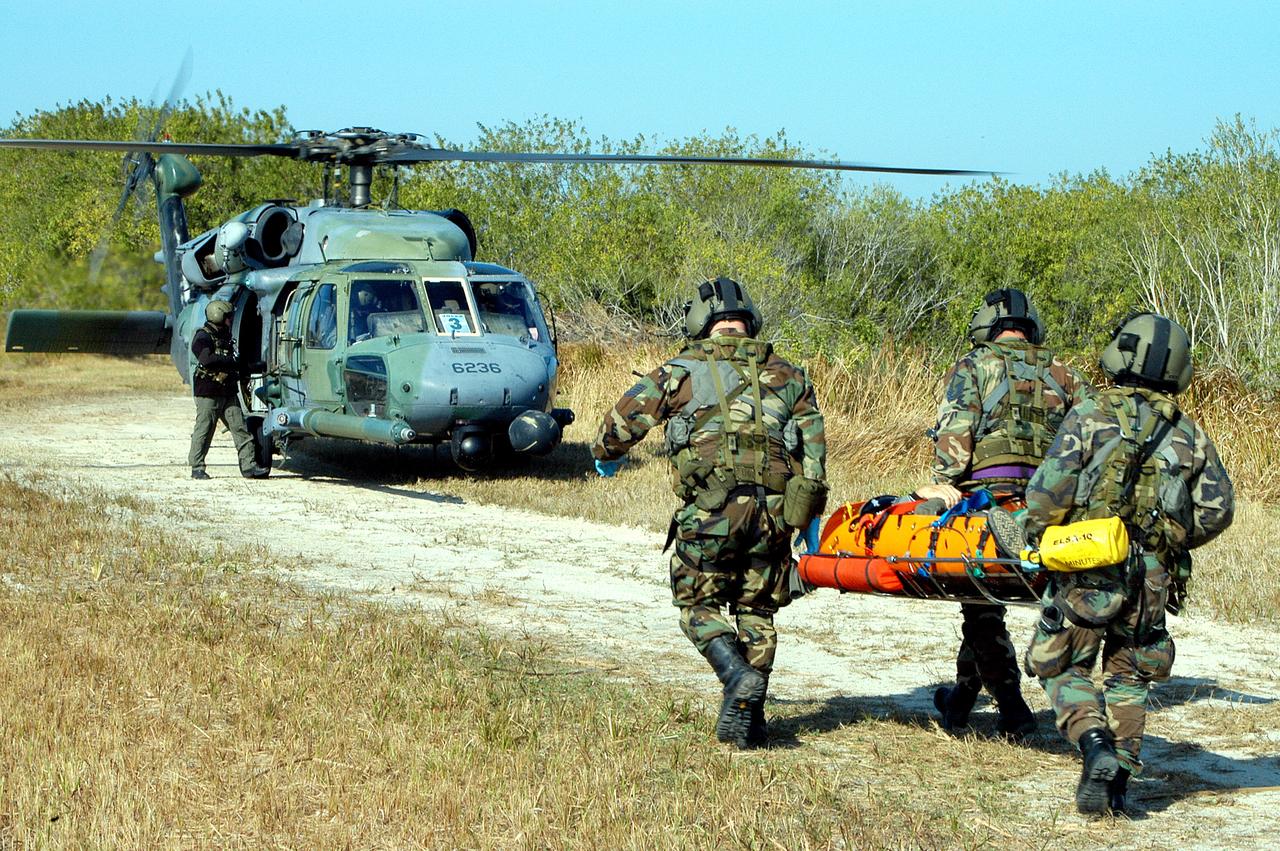
KENNEDY SPACE CENTER, FLA. - A helicopter rescue team carries another “injured” astronaut to a helicopter for transportation to a local hospital.  They are all taking part in a “Mode VII” emergency landing simulation at Kennedy Space Center.  The purpose of the Mode VII is to exercise emergency preparedness personnel, equipment and facilities in rescuing astronauts from a downed orbiter and providing immediate medical attention.  This simulation presents an orbiter that has crashed short of the Shuttle Landing Facility in a wooded area 2-1/2 miles south of Runway 33.  Emergency crews are responding to the volunteer “astronauts” who are simulating various injuries inside the crew compartment mock-up.  Rescuers must remove the crew, provide triage and transport to hospitals those who need further treatment.  Local hospitals are participating in the exercise.
KENNEDY SPACE CENTER, FLA. - A helicopter rescue team carries another “injured” astronaut to a helicopter for transportation to a local hospital. They are all taking part in a “Mode VII” emergency landing simulation at Kennedy Space Center. The purpose of the Mode VII is to exercise emergency preparedness personnel, equipment and facilities in rescuing astronauts from a downed orbiter and providing immediate medical attention. This simulation presents an orbiter that has crashed short of the Shuttle Landing Facility in a wooded area 2-1/2 miles south of Runway 33. Emergency crews are responding to the volunteer “astronauts” who are simulating various injuries inside the crew compartment mock-up. Rescuers must remove the crew, provide triage and transport to hospitals those who need further treatment. Local hospitals are participating in the exercise.
KENNEDY SPACE CENTER, FLA. - In a “Mode VII” emergency landing simulation at Kennedy Space Center, a helicopter crew helps “rescued” astronauts.  The purpose of Mode VII is to exercise emergency preparedness personnel, equipment and facilities in rescuing astronauts from a downed orbiter and providing immediate medical attention.  This simulation presents an orbiter that has crashed short of the Shuttle Landing Facility in a wooded area 2-1/2 miles south of Runway 33.  Emergency crews are responding to the volunteer “astronauts” simulating various injuries inside an orbiter crew compartment mock-up.  Rescuers must remove the crew, provide triage and transport to hospitals those who need further treatment.  Local hospitals are participating in the exercise.
KENNEDY SPACE CENTER, FLA. - In a “Mode VII” emergency landing simulation at Kennedy Space Center, a helicopter crew helps “rescued” astronauts. The purpose of Mode VII is to exercise emergency preparedness personnel, equipment and facilities in rescuing astronauts from a downed orbiter and providing immediate medical attention. This simulation presents an orbiter that has crashed short of the Shuttle Landing Facility in a wooded area 2-1/2 miles south of Runway 33. Emergency crews are responding to the volunteer “astronauts” simulating various injuries inside an orbiter crew compartment mock-up. Rescuers must remove the crew, provide triage and transport to hospitals those who need further treatment. Local hospitals are participating in the exercise.
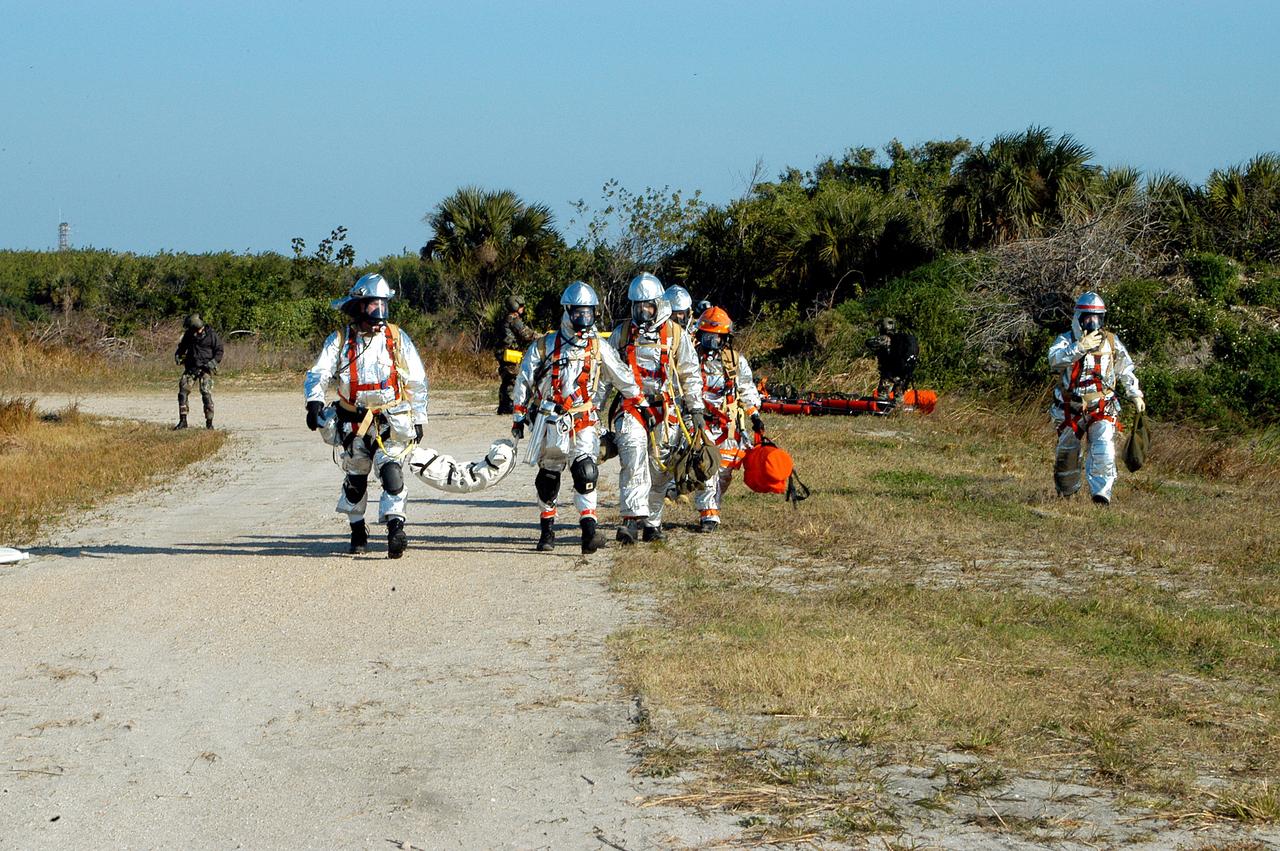
KENNEDY SPACE CENTER, FLA. - Emergency crews leave the scene after a helicopter removed “rescued” astronauts from the scene.  They are taking part in a “Mode VII” emergency landing simulation at Kennedy Space Center, in order to exercise emergency preparedness personnel, equipment and facilities in rescuing astronauts from a downed orbiter and providing immediate medical attention.  This simulation presents an orbiter that has crashed short of the Shuttle Landing Facility in a wooded area 2-1/2 miles south of Runway 33.  Emergency crews are responding to the volunteer “astronauts” simulating various injuries inside an orbiter crew compartment mock-up.  Rescuers must remove the crew, provide triage and transport to hospitals those who need further treatment.  Local hospitals are participating in the exercise.
KENNEDY SPACE CENTER, FLA. - Emergency crews leave the scene after a helicopter removed “rescued” astronauts from the scene. They are taking part in a “Mode VII” emergency landing simulation at Kennedy Space Center, in order to exercise emergency preparedness personnel, equipment and facilities in rescuing astronauts from a downed orbiter and providing immediate medical attention. This simulation presents an orbiter that has crashed short of the Shuttle Landing Facility in a wooded area 2-1/2 miles south of Runway 33. Emergency crews are responding to the volunteer “astronauts” simulating various injuries inside an orbiter crew compartment mock-up. Rescuers must remove the crew, provide triage and transport to hospitals those who need further treatment. Local hospitals are participating in the exercise.
KENNEDY SPACE CENTER, FLA. - Emergency crew members transport an “injured”  astronaut during a “Mode VII” emergency landing simulation at Kennedy Space Center.  The purpose of the Mode VII is to exercise emergency preparedness personnel, equipment and facilities in rescuing astronauts from a downed orbiter and providing immediate medical attention.  This simulation presents an orbiter that has crashed short of the Shuttle Landing Facility in a wooded area 2-1/2 miles south of Runway 33.  Emergency crews are responding to the volunteer astronauts who are simulating various injuries inside the crew compartment mock-up.  Rescuers must remove the crew, provide triage and transport to hospitals those who need further treatment.  Local hospitals are participating in the exercise.
KENNEDY SPACE CENTER, FLA. - Emergency crew members transport an “injured” astronaut during a “Mode VII” emergency landing simulation at Kennedy Space Center. The purpose of the Mode VII is to exercise emergency preparedness personnel, equipment and facilities in rescuing astronauts from a downed orbiter and providing immediate medical attention. This simulation presents an orbiter that has crashed short of the Shuttle Landing Facility in a wooded area 2-1/2 miles south of Runway 33. Emergency crews are responding to the volunteer astronauts who are simulating various injuries inside the crew compartment mock-up. Rescuers must remove the crew, provide triage and transport to hospitals those who need further treatment. Local hospitals are participating in the exercise.
KENNEDY SPACE CENTER, FLA. - Emergency crew members return to the orbiter crew compartment mock-up that is the scene of a “Mode VII” emergency landing simulation at Kennedy Space Center.  The purpose of the Mode VII is to exercise emergency preparedness personnel, equipment and facilities in rescuing astronauts from a downed orbiter and providing immediate medical attention.  This simulation presents an orbiter that has crashed short of the Shuttle Landing Facility in a wooded area 2-1/2 miles south of Runway 33.  Emergency crews are responding to the volunteer “astronauts” simulating various injuries inside the mock-up compartment.  Rescuers have had to remove the crew, provide triage and transport to hospitals those who need further treatment.  Local hospitals are participating in the exercise.
KENNEDY SPACE CENTER, FLA. - Emergency crew members return to the orbiter crew compartment mock-up that is the scene of a “Mode VII” emergency landing simulation at Kennedy Space Center. The purpose of the Mode VII is to exercise emergency preparedness personnel, equipment and facilities in rescuing astronauts from a downed orbiter and providing immediate medical attention. This simulation presents an orbiter that has crashed short of the Shuttle Landing Facility in a wooded area 2-1/2 miles south of Runway 33. Emergency crews are responding to the volunteer “astronauts” simulating various injuries inside the mock-up compartment. Rescuers have had to remove the crew, provide triage and transport to hospitals those who need further treatment. Local hospitals are participating in the exercise.
jsc2026e037773 (May 5, 2026) --- NASA astronaut Jessica Watkins (left) assists CSA (Canadian Space Agency) astronaut Josh Kutryk (background) and NASA astronaut Luke Delaney (right) as they practice suiting up in spacesuits in an International Space Station airlock simulator at Johnson Space Center’s (JSC) Space Vehicle Mockup Facility in Houston, Texas. Astronauts familiarize themselves with spacesuit systems and procedures and practice Quest airlock operations before conducting spacewalk training at JSC’s Neutral Buoyancy Laboratory in simulated microgravity. Credit: NASA/Josh Valcarcel
Astronaut Jessica Watkins assists astronauts Josh Kutryk and Luke Delaney as they practice suiting up in spacesuits
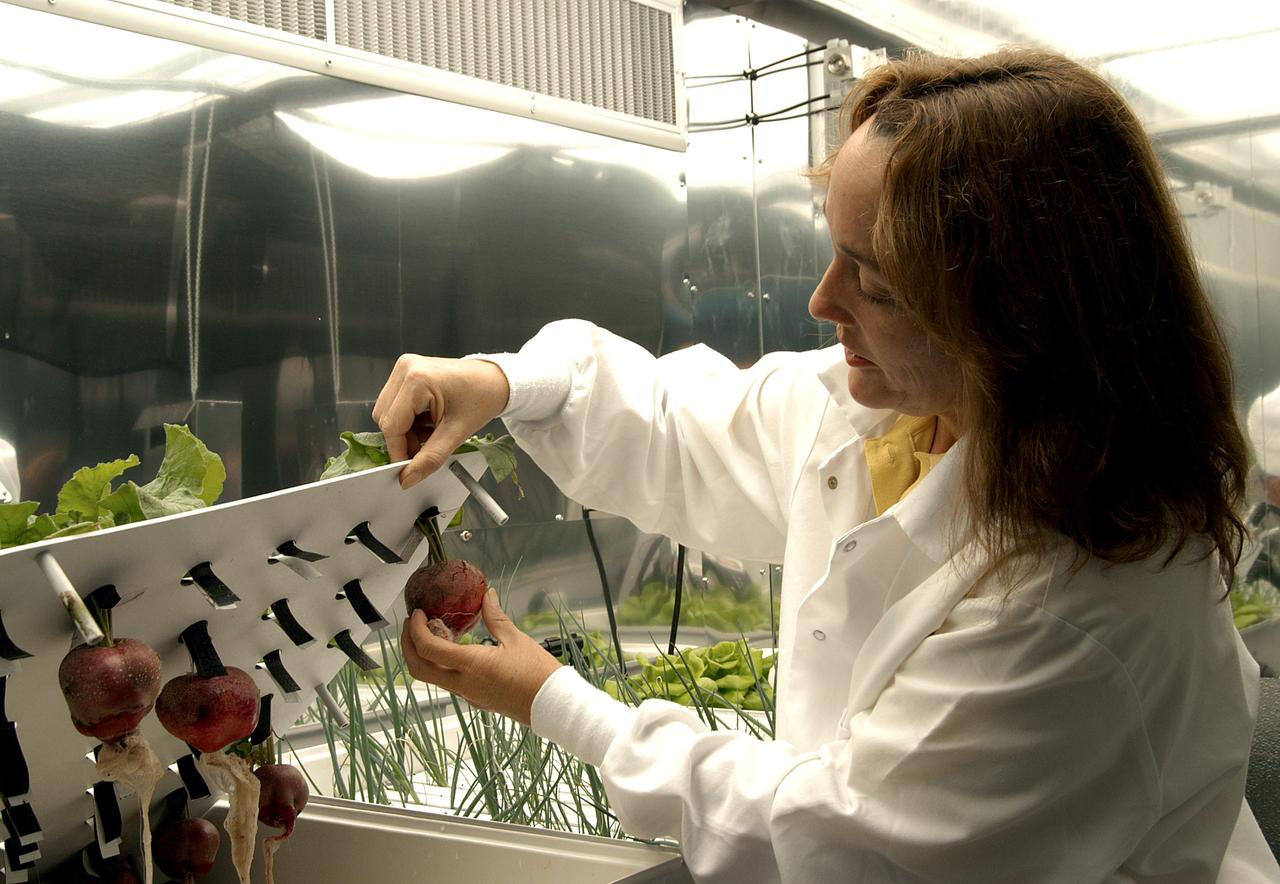
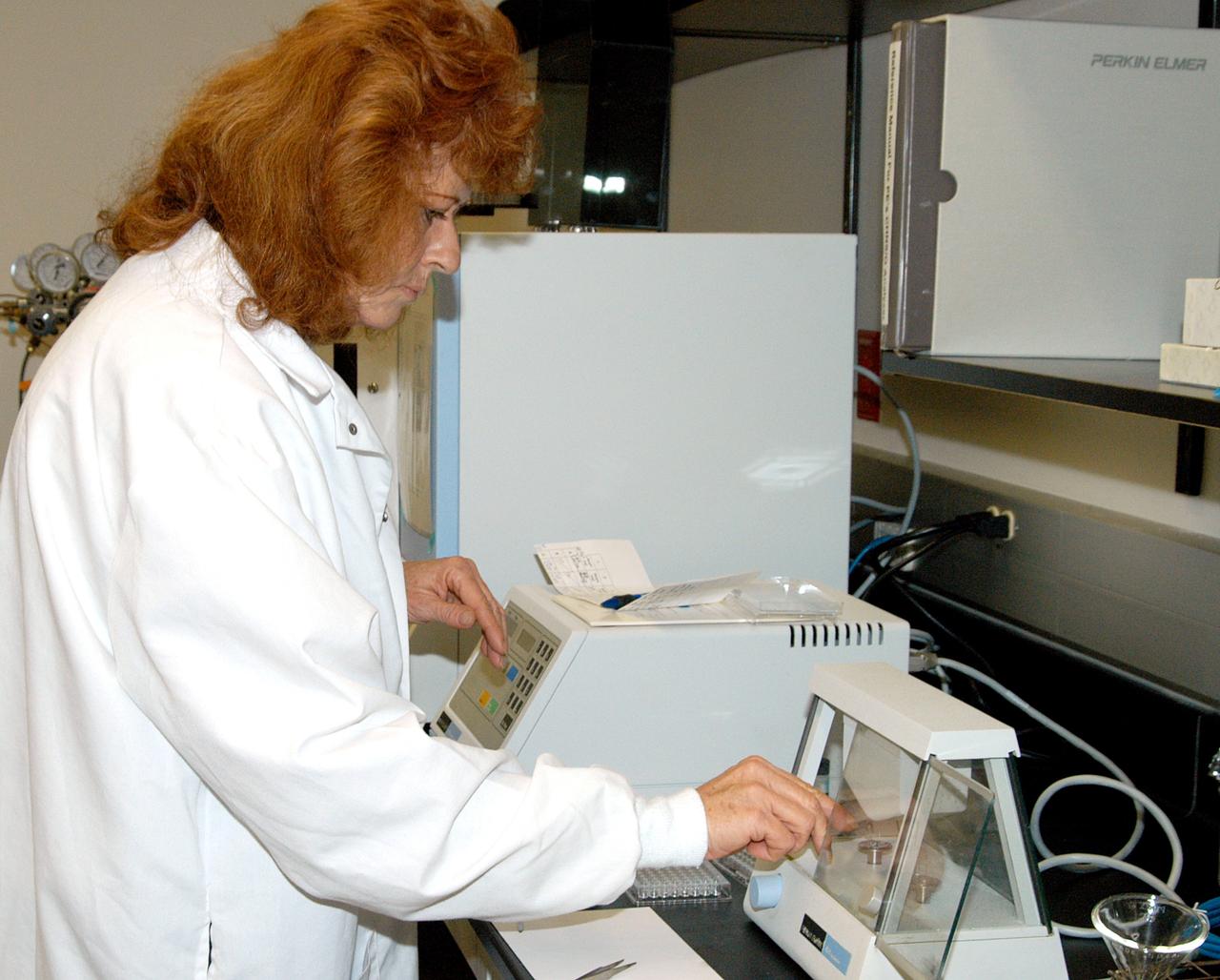
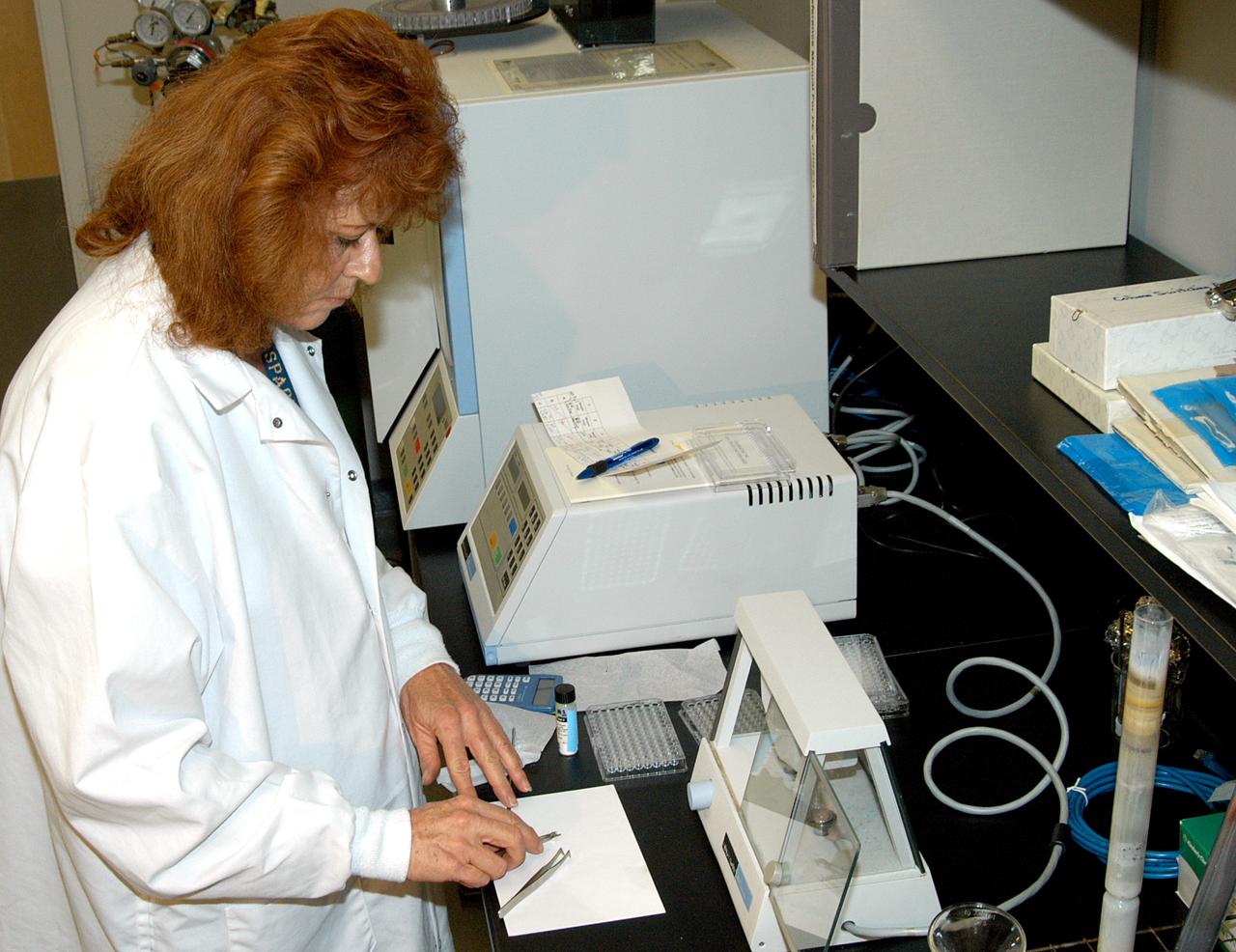
KENNEDY SPACE CENTER, FLA. -- Sharon Edney, with Dynamac Corp., checks the growth of radishes being grown hydroponically for study in the Space Life Sciences Lab.  The 100,000 square-foot facility houses labs for NASA’s ongoing research efforts, microbiology/microbial ecology studies and analytical chemistry labs. Also calling the new lab home are facilities for space flight-experiment and flight-hardware development, new plant growth chambers, and an Orbiter Environment Simulator that will be used to conduct ground control experiments in simulated flight conditions for space flight experiments.  The SLS Lab, formerly known as the Space Experiment Research and Processing Laboratory or SERPL, provides space for NASA’s Life Sciences Services contractor Dynamac Corporation, Bionetics Corporation, and researchers from the University of Florida. NASA’s Office of Biological and Physical Research will use the facility for processing life sciences experiments that will be conducted on the International Space Station. The SLS Lab is the magnet facility for the International Space Research Park at KSC being developed in partnership with Florida Space Authority.
KENNEDY SPACE CENTER, FLA. -- Sharon Edney, with Dynamac Corp., checks the growth of radishes being grown hydroponically for study in the Space Life Sciences Lab. The 100,000 square-foot facility houses labs for NASA’s ongoing research efforts, microbiology/microbial ecology studies and analytical chemistry labs. Also calling the new lab home are facilities for space flight-experiment and flight-hardware development, new plant growth chambers, and an Orbiter Environment Simulator that will be used to conduct ground control experiments in simulated flight conditions for space flight experiments. The SLS Lab, formerly known as the Space Experiment Research and Processing Laboratory or SERPL, provides space for NASA’s Life Sciences Services contractor Dynamac Corporation, Bionetics Corporation, and researchers from the University of Florida. NASA’s Office of Biological and Physical Research will use the facility for processing life sciences experiments that will be conducted on the International Space Station. The SLS Lab is the magnet facility for the International Space Research Park at KSC being developed in partnership with Florida Space Authority.
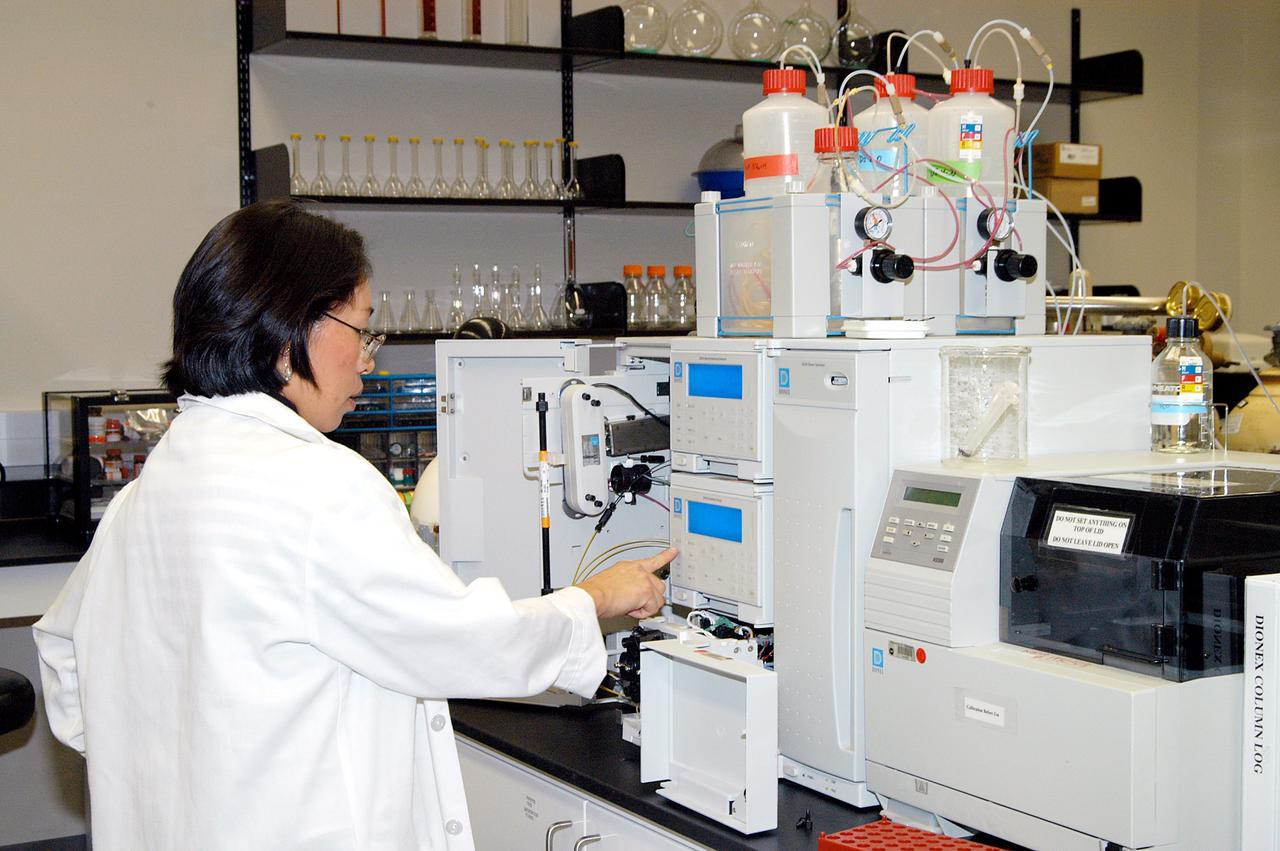
KENNEDY SPACE CENTER, FLA. -- Lanfang Levine, with Dynamac Corp., helps install a Dionex DX-500 IC/HPLC system  in the Space Life Sciences Lab.  The equipment will enable analysis of volatile compounds, such as from plants. The 100,000 square-foot facility houses labs for NASA’s ongoing research efforts, microbiology/microbial ecology studies and analytical chemistry labs. Also calling the new lab home are facilities for space flight-experiment and flight-hardware development, new plant growth chambers, and an Orbiter Environment Simulator that will be used to conduct ground control experiments in simulated flight conditions for space flight experiments.  The SLS Lab, formerly known as the Space Experiment Research and Processing Laboratory or SERPL, provides space for NASA’s Life Sciences Services contractor Dynamac Corporation, Bionetics Corporation, and researchers from the University of Florida. NASA’s Office of Biological and Physical Research will use the facility for processing life sciences experiments that will be conducted on the International Space Station. The SLS Lab is the magnet facility for the International Space Research Park at KSC being developed in partnership with Florida Space Authority.
KENNEDY SPACE CENTER, FLA. -- Lanfang Levine, with Dynamac Corp., helps install a Dionex DX-500 IC/HPLC system in the Space Life Sciences Lab. The equipment will enable analysis of volatile compounds, such as from plants. The 100,000 square-foot facility houses labs for NASA’s ongoing research efforts, microbiology/microbial ecology studies and analytical chemistry labs. Also calling the new lab home are facilities for space flight-experiment and flight-hardware development, new plant growth chambers, and an Orbiter Environment Simulator that will be used to conduct ground control experiments in simulated flight conditions for space flight experiments. The SLS Lab, formerly known as the Space Experiment Research and Processing Laboratory or SERPL, provides space for NASA’s Life Sciences Services contractor Dynamac Corporation, Bionetics Corporation, and researchers from the University of Florida. NASA’s Office of Biological and Physical Research will use the facility for processing life sciences experiments that will be conducted on the International Space Station. The SLS Lab is the magnet facility for the International Space Research Park at KSC being developed in partnership with Florida Space Authority.
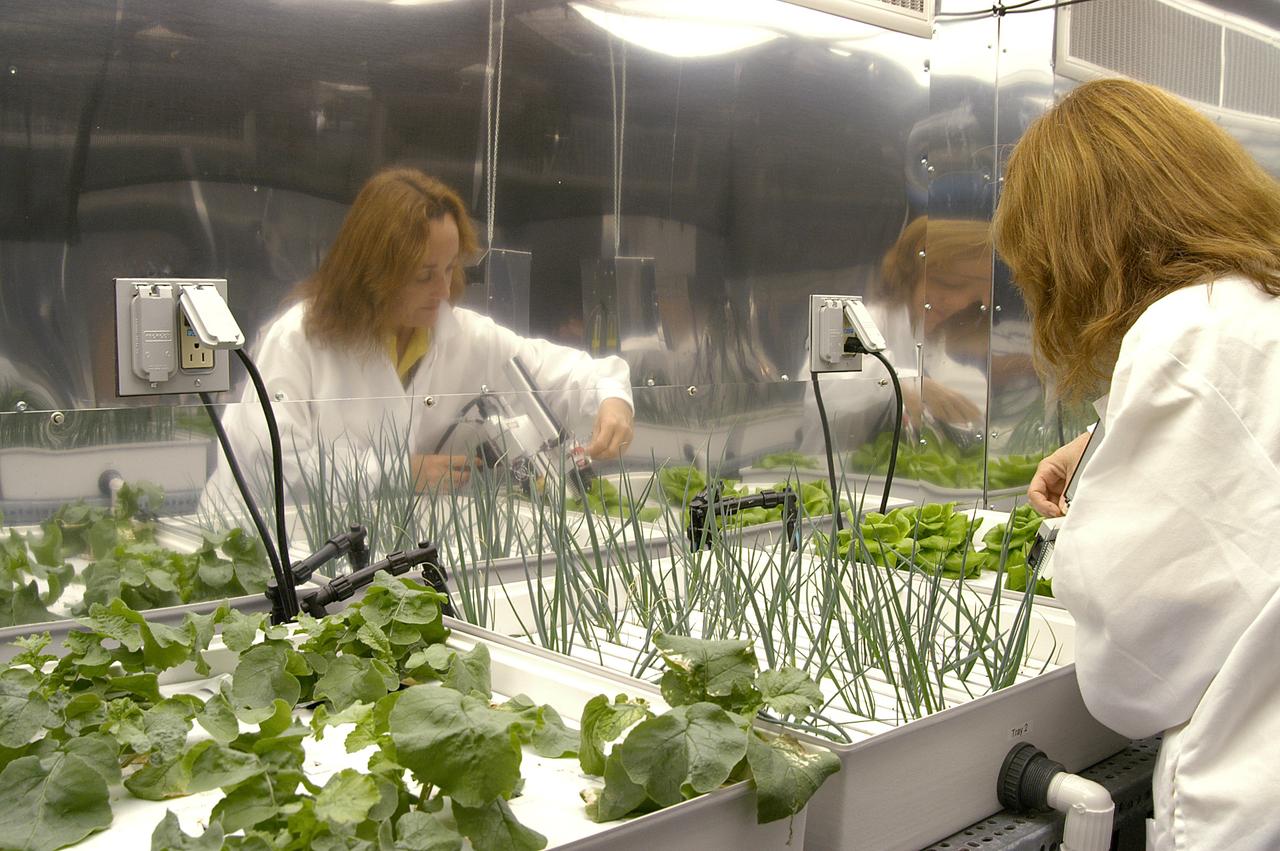
KENNEDY SPACE CENTER, FLA. -- Sharon Edney, with Dynamac Corp., measures photosynthesis on Bibb lettuce being grown hydroponically for study in the Space Life Sciences Lab.  The 100,000 square-foot facility houses labs for NASA’s ongoing research efforts, microbiology/microbial ecology studies and analytical chemistry labs. Also calling the new lab home are facilities for space flight-experiment and flight-hardware development, new plant growth chambers, and an Orbiter Environment Simulator that will be used to conduct ground control experiments in simulated flight conditions for space flight experiments.  The SLS Lab, formerly known as the Space Experiment Research and Processing Laboratory or SERPL, provides space for NASA’s Life Sciences Services contractor Dynamac Corporation, Bionetics Corporation, and researchers from the University of Florida. NASA’s Office of Biological and Physical Research will use the facility for processing life sciences experiments that will be conducted on the International Space Station. The SLS Lab is the magnet facility for the International Space Research Park at KSC being developed in partnership with Florida Space Authority.
KENNEDY SPACE CENTER, FLA. -- Sharon Edney, with Dynamac Corp., measures photosynthesis on Bibb lettuce being grown hydroponically for study in the Space Life Sciences Lab. The 100,000 square-foot facility houses labs for NASA’s ongoing research efforts, microbiology/microbial ecology studies and analytical chemistry labs. Also calling the new lab home are facilities for space flight-experiment and flight-hardware development, new plant growth chambers, and an Orbiter Environment Simulator that will be used to conduct ground control experiments in simulated flight conditions for space flight experiments. The SLS Lab, formerly known as the Space Experiment Research and Processing Laboratory or SERPL, provides space for NASA’s Life Sciences Services contractor Dynamac Corporation, Bionetics Corporation, and researchers from the University of Florida. NASA’s Office of Biological and Physical Research will use the facility for processing life sciences experiments that will be conducted on the International Space Station. The SLS Lab is the magnet facility for the International Space Research Park at KSC being developed in partnership with Florida Space Authority.
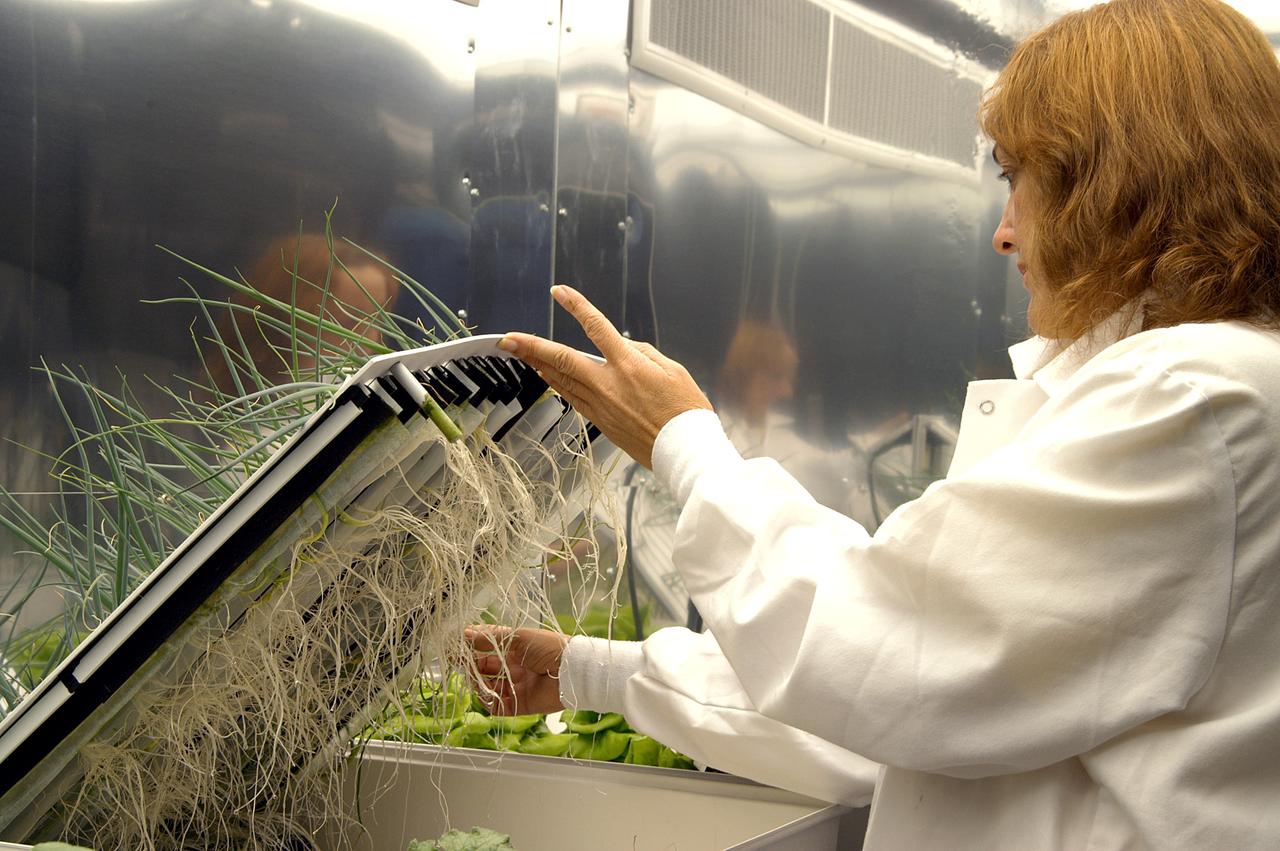
KENNEDY SPACE CENTER, FLA. -- Sharon Edney, with Dynamac Corp., checks the roots of green onions being grown hydroponically for study in the Space Life Sciences Lab.  The 100,000 square-foot facility houses labs for NASA’s ongoing research efforts, microbiology/microbial ecology studies and analytical chemistry labs. Also calling the new lab home are facilities for space flight-experiment and flight-hardware development, new plant growth chambers, and an Orbiter Environment Simulator that will be used to conduct ground control experiments in simulated flight conditions for space flight experiments.  The SLS Lab, formerly known as the Space Experiment Research and Processing Laboratory or SERPL, provides space for NASA’s Life Sciences Services contractor Dynamac Corporation, Bionetics Corporation, and researchers from the University of Florida. NASA’s Office of Biological and Physical Research will use the facility for processing life sciences experiments that will be conducted on the International Space Station. The SLS Lab is the magnet facility for the International Space Research Park at KSC being developed in partnership with Florida Space Authority.
KENNEDY SPACE CENTER, FLA. -- Sharon Edney, with Dynamac Corp., checks the roots of green onions being grown hydroponically for study in the Space Life Sciences Lab. The 100,000 square-foot facility houses labs for NASA’s ongoing research efforts, microbiology/microbial ecology studies and analytical chemistry labs. Also calling the new lab home are facilities for space flight-experiment and flight-hardware development, new plant growth chambers, and an Orbiter Environment Simulator that will be used to conduct ground control experiments in simulated flight conditions for space flight experiments. The SLS Lab, formerly known as the Space Experiment Research and Processing Laboratory or SERPL, provides space for NASA’s Life Sciences Services contractor Dynamac Corporation, Bionetics Corporation, and researchers from the University of Florida. NASA’s Office of Biological and Physical Research will use the facility for processing life sciences experiments that will be conducted on the International Space Station. The SLS Lab is the magnet facility for the International Space Research Park at KSC being developed in partnership with Florida Space Authority.
KENNEDY SPACE CENTER, FLA. -- In the Space Life Sciences Lab, Lanfang Levine, with Dynamac Corp., transfers material into a sample bottle for analysis.  She is standing in front of new equipment in the lab that will provide gas chromatography and mass spectrometry.  The equipment will enable analysis of volatile compounds, such as from plants.  The 100,000 square-foot facility houses labs for NASA’s ongoing research efforts, microbiology/microbial ecology studies and analytical chemistry labs. Also calling the new lab home are facilities for space flight-experiment and flight-hardware development, new plant growth chambers, and an Orbiter Environment Simulator that will be used to conduct ground control experiments in simulated flight conditions for space flight experiments.  The SLS Lab, formerly known as the Space Experiment Research and Processing Laboratory or SERPL, provides space for NASA’s Life Sciences Services contractor Dynamac Corporation, Bionetics Corporation, and researchers from the University of Florida. NASA’s Office of Biological and Physical Research will use the facility for processing life sciences experiments that will be conducted on the International Space Station. The SLS Lab is the magnet facility for the International Space Research Park at KSC being developed in partnership with Florida Space Authority.
KENNEDY SPACE CENTER, FLA. -- In the Space Life Sciences Lab, Lanfang Levine, with Dynamac Corp., transfers material into a sample bottle for analysis. She is standing in front of new equipment in the lab that will provide gas chromatography and mass spectrometry. The equipment will enable analysis of volatile compounds, such as from plants. The 100,000 square-foot facility houses labs for NASA’s ongoing research efforts, microbiology/microbial ecology studies and analytical chemistry labs. Also calling the new lab home are facilities for space flight-experiment and flight-hardware development, new plant growth chambers, and an Orbiter Environment Simulator that will be used to conduct ground control experiments in simulated flight conditions for space flight experiments. The SLS Lab, formerly known as the Space Experiment Research and Processing Laboratory or SERPL, provides space for NASA’s Life Sciences Services contractor Dynamac Corporation, Bionetics Corporation, and researchers from the University of Florida. NASA’s Office of Biological and Physical Research will use the facility for processing life sciences experiments that will be conducted on the International Space Station. The SLS Lab is the magnet facility for the International Space Research Park at KSC being developed in partnership with Florida Space Authority.
KENNEDY SPACE CENTER, FLA. -- In the Space Life Sciences (SLS) Lab, Jan Bauer, with Dynamac Corp., weighs samples of onion tissue for processing in the elemental analyzer behind it.  The equipment analyzes for carbon, hydrogen, nitrogen and sulfur. The 100,000 square-foot SLS houses labs for NASA’s ongoing research efforts, microbiology/microbial ecology studies and analytical chemistry labs. Also calling the new lab home are facilities for space flight-experiment and flight-hardware development, new plant growth chambers, and an Orbiter Environment Simulator that will be used to conduct ground control experiments in simulated flight conditions for space flight experiments.  The SLS Lab, formerly known as the Space Experiment Research and Processing Laboratory or SERPL, provides space for NASA’s Life Sciences Services contractor Dynamac Corporation, Bionetics Corporation, and researchers from the University of Florida. NASA’s Office of Biological and Physical Research will use the facility for processing life sciences experiments that will be conducted on the International Space Station. The SLS Lab is the magnet facility for the International Space Research Park at KSC being developed in partnership with Florida Space Authority.
KENNEDY SPACE CENTER, FLA. -- In the Space Life Sciences (SLS) Lab, Jan Bauer, with Dynamac Corp., weighs samples of onion tissue for processing in the elemental analyzer behind it. The equipment analyzes for carbon, hydrogen, nitrogen and sulfur. The 100,000 square-foot SLS houses labs for NASA’s ongoing research efforts, microbiology/microbial ecology studies and analytical chemistry labs. Also calling the new lab home are facilities for space flight-experiment and flight-hardware development, new plant growth chambers, and an Orbiter Environment Simulator that will be used to conduct ground control experiments in simulated flight conditions for space flight experiments. The SLS Lab, formerly known as the Space Experiment Research and Processing Laboratory or SERPL, provides space for NASA’s Life Sciences Services contractor Dynamac Corporation, Bionetics Corporation, and researchers from the University of Florida. NASA’s Office of Biological and Physical Research will use the facility for processing life sciences experiments that will be conducted on the International Space Station. The SLS Lab is the magnet facility for the International Space Research Park at KSC being developed in partnership with Florida Space Authority.
KENNEDY SPACE CENTER, FLA. -- In the Space Life Sciences (SLS) Lab, Jan Bauer, with Dynamac Corp., places samples of onion tissue in the elemental analyzer, which analyzes for carbon, hydrogen, nitrogen and sulfur. The 100,000 square-foot SLS houses labs for NASA’s ongoing research efforts, microbiology/microbial ecology studies and analytical chemistry labs. Also calling the new lab home are facilities for space flight-experiment and flight-hardware development, new plant growth chambers, and an Orbiter Environment Simulator that will be used to conduct ground control experiments in simulated flight conditions for space flight experiments.  The SLS Lab, formerly known as the Space Experiment Research and Processing Laboratory or SERPL, provides space for NASA’s Life Sciences Services contractor Dynamac Corporation, Bionetics Corporation, and researchers from the University of Florida. NASA’s Office of Biological and Physical Research will use the facility for processing life sciences experiments that will be conducted on the International Space Station. The SLS Lab is the magnet facility for the International Space Research Park at KSC being developed in partnership with Florida Space Authority.
KENNEDY SPACE CENTER, FLA. -- In the Space Life Sciences (SLS) Lab, Jan Bauer, with Dynamac Corp., places samples of onion tissue in the elemental analyzer, which analyzes for carbon, hydrogen, nitrogen and sulfur. The 100,000 square-foot SLS houses labs for NASA’s ongoing research efforts, microbiology/microbial ecology studies and analytical chemistry labs. Also calling the new lab home are facilities for space flight-experiment and flight-hardware development, new plant growth chambers, and an Orbiter Environment Simulator that will be used to conduct ground control experiments in simulated flight conditions for space flight experiments. The SLS Lab, formerly known as the Space Experiment Research and Processing Laboratory or SERPL, provides space for NASA’s Life Sciences Services contractor Dynamac Corporation, Bionetics Corporation, and researchers from the University of Florida. NASA’s Office of Biological and Physical Research will use the facility for processing life sciences experiments that will be conducted on the International Space Station. The SLS Lab is the magnet facility for the International Space Research Park at KSC being developed in partnership with Florida Space Authority.
KENNEDY SPACE CENTER, FLA. - A rescue team carries an “injured” astronaut toward the helicopter for transportation to a local hospital.  They are all taking part in a “Mode VII” emergency landing simulation at Kennedy Space Center.  The purpose of the Mode VII is to exercise emergency preparedness personnel, equipment and facilities in rescuing astronauts from a downed orbiter and providing immediate medical attention.  This simulation presents an orbiter that has crashed short of the Shuttle Landing Facility in a wooded area 2-1/2 miles south of Runway 33.  Emergency crews are responding to the volunteer astronauts who are simulating various injuries inside the crew compartment mock-up.  Rescuers must remove the crew, provide triage and transport to hospitals those who need further treatment.  Local hospitals are participating in the exercise. Emergency crews are responding to the volunteer astronauts who are simulating various injuries inside the crew compartment mock-up.  Rescuers must remove the crew, provide triage and transport to hospitals those who need further treatment.  Local hospitals are participating in the exercise.
KENNEDY SPACE CENTER, FLA. - A rescue team carries an “injured” astronaut toward the helicopter for transportation to a local hospital. They are all taking part in a “Mode VII” emergency landing simulation at Kennedy Space Center. The purpose of the Mode VII is to exercise emergency preparedness personnel, equipment and facilities in rescuing astronauts from a downed orbiter and providing immediate medical attention. This simulation presents an orbiter that has crashed short of the Shuttle Landing Facility in a wooded area 2-1/2 miles south of Runway 33. Emergency crews are responding to the volunteer astronauts who are simulating various injuries inside the crew compartment mock-up. Rescuers must remove the crew, provide triage and transport to hospitals those who need further treatment. Local hospitals are participating in the exercise. Emergency crews are responding to the volunteer astronauts who are simulating various injuries inside the crew compartment mock-up. Rescuers must remove the crew, provide triage and transport to hospitals those who need further treatment. Local hospitals are participating in the exercise.
KENNEDY SPACE CENTER, FLA. -  STS-79 Commander William F. Readdy arrives at KSC's Shuttle Landing Facility with five fellow astronauts, ready to participate in the Terminal Countdown Demonstration Test (TCDT).  The TCDT is a dress rehearsal for launch for the flight crew and launch team.  Over the next several days, the astronauts will take part in training exercises at the launch pad that will culminate in a simulated launch countdown.  The Space Shuttle Atlantis is being prepared for liftoff on STS-79 around Sept. 12.
KENNEDY SPACE CENTER, FLA. - STS-79 Commander William F. Readdy arrives at KSC's Shuttle Landing Facility with five fellow astronauts, ready to participate in the Terminal Countdown Demonstration Test (TCDT). The TCDT is a dress rehearsal for launch for the flight crew and launch team. Over the next several days, the astronauts will take part in training exercises at the launch pad that will culminate in a simulated launch countdown. The Space Shuttle Atlantis is being prepared for liftoff on STS-79 around Sept. 12.
JSC2011-E-016860 (11 Feb. 2011) --- NASA astronaut Michael Fincke, STS-134 mission specialist, participates in a simulation exercise in the motion-base shuttle mission simulator in the Jake Garn Simulation and Training Facility at NASA's Johnson Space Center.  Photo credit: NASA or National Aeronautics and Space Administration
STS-134 crew commander Mark Kelly and some of his crew (Fincke, Vittori, Johnson)
S87-26822 (11 Feb. 1987) --- The Return to Flight crew, STS-26 pose for a photo prior to a training session in a simulator in the Jake Garn Mission Simulation and Training Facility at the Johnson Space Center.  Photo credit: NASA
CREW TRAINING (MOTION BASE SIMULATOR [MBS]) - STS-26R - JSC
Dr. Ye Zhang, project scientist for the ISS Research Office at NASA’s Kennedy Space Center in Florida, demonstrates how biological samples are tested in a microgravity simulation device in the Microgravity Simulation Support Facility on Dec. 20, 2018.
Microgravity Simulation Lab
KENNEDY SPACE CENTER, FLA.  -  During a simulated emergency landing of a shuttle crew at NASA Kennedy Space Center's Shuttle Landing Facility, medevac personnel tend to an "injured astronaut" in the helicopter.  The astronaut will be taken to an area hospital participating in the simulation.  Known as a Mode VI exercise, the operation uses volunteer workers from the Center to pose as astronauts. The purpose of the simulation is to exercise emergency preparedness personnel, equipment and facilities in rescuing astronauts from a downed orbiter and providing immediate medical attention. Photo credit: NASA/Kim Shiflett
KSC-06pd0502
NASA astronauts Suni WIlliams and Eric Boe check the Boeing Mission Simulator at the Boeing facility in St. Louis, Missouri, prior to its completion and shipment to NASA's Johnson Space Center in Houston. The simulator is a full-scale mockup of Boeing's Starliner spacecraft. The simulator will be used to train crews to fly the spacecraft.
Boeing Mission Simulator with CCP Astronauts
NASA astronauts Suni WIlliams and Eric Boe check the Boeing Mission Simulator at the Boeing facility in St. Louis, Missouri, prior to its completion and shipment to NASA's Johnson Space Center in Houston. The simulator is a full-scale mockup of Boeing's Starliner spacecraft. The simulator will be used to train crews to fly the spacecraft.
Boeing Mission Simulator with CCP Astronauts
JSC2010-E-014041 (25 Jan. 2010) --- Attired in a training version of his shuttle launch and entry suit, NASA astronaut Alvin Drew, STS-133 mission specialist, participates in a simulation exercise in the motion-base shuttle mission simulator in the Jake Garn Simulation and Training Facility at NASA?s Johnson Space Center.
STS-133 crew members Lindsey, Boe, Drew and Kopra for Motion Base Ascent Skill 32011 training
JSC2010-E-014042 (25 Jan. 2010) --- Attired in a training version of his shuttle launch and entry suit, NASA astronaut Alvin Drew, STS-133 mission specialist, participates in a simulation exercise in the motion-base shuttle mission simulator in the Jake Garn Simulation and Training Facility at NASA?s Johnson Space Center.
STS-133 crew members Lindsey, Boe, Drew and Kopra for Motion Base Ascent Skill 32011 training
JSC2010-E-014043 (25 Jan. 2010) --- Attired in a training version of his shuttle launch and entry suit, NASA astronaut Tim Kopra, STS-133 mission specialist, participates in a simulation exercise in the motion-base shuttle mission simulator in the Jake Garn Simulation and Training Facility at NASA?s Johnson Space Center.
STS-133 crew members Lindsey, Boe, Drew and Kopra for Motion Base Ascent Skill 32011 training
Space Station Gravitational Biology Facility Project Mock-up with Kristine Guerra (2.5) with Biolab (simulating weightlessness in space)
ARC-1992-AC92-0401-3
S68-53194 (1 Nov. 1968) --- The Apollo 8 prime crew inside the centrifuge gondola in Building 29 during centrifuge training in MSC's Flight Acceleration Facility. (View with crew lying on back) Left to right are astronauts William A. Anders, lunar module pilot; James A. Lovell Jr., command module pilot; and Frank Borman, commander.  Photo credit: NASA
Apollo 8 prime crew inside centrifuge gondola in bldg 29 during training
Overall view of the Lunar Module Mission Simulator, an astronaut training facility located in bldg 5.
View of Lunar Module Mission Simulator in bldg 5
S83-32568 (23 May 1983) --- Astronaut Sally K. Ride, STS-7 mission specialist, straps herself into a seat in the Shuttle Mission Simulator (SMS) in Johnson Space Center?s Mission Simulation and Training Facility. Dr. Ride and the other STS-7 crew members continue their simulations in the motion base simulator in preparation for their flight in the space shuttle Challenger. Launch is scheduled for June 18. Troy Stewart, suit technician, assisted Dr. Ride. Photo credit: NASA
Simulator - Ride, Sally K.
NASA’s In-Space Propulsion Facility located at Neil Armstrong Test Facility in Sandusky Ohio is the world’s only high altitude test facility capable of full-scale rocket engine and launch vehicle system level tests. The facility supports mission profile thermal vacuum simulation and engine firing. The engine or vehicle can be exposed for indefinite periods to low ambient pressures, low-background temperatures, and dynamic solar heating, simulating the environment the hardware will encounter during orbital or interplanetary travel. Photo Credit: (NASA/Jordan Salkin)
The In-Space Propulsion Facility (ISP) at NASA’s Neil Armstrong Test Facility
NASA’s In-Space Propulsion Facility located at Neil Armstrong Test Facility in Sandusky Ohio is the world’s only high altitude test facility capable of full-scale rocket engine and launch vehicle system level tests. The facility supports mission profile thermal vacuum simulation and engine firing. The engine or vehicle can be exposed for indefinite periods to low ambient pressures, low-background temperatures, and dynamic solar heating, simulating the environment the hardware will encounter during orbital or interplanetary travel. Photo Credit: (NASA/Jordan Salkin)
The In-Space Propulsion Facility (ISP) at NASA’s Neil Armstrong Test Facility
NASA’s In-Space Propulsion Facility located at Neil Armstrong Test Facility in Sandusky Ohio is the world’s only high altitude test facility capable of full-scale rocket engine and launch vehicle system level tests. The facility supports mission profile thermal vacuum simulation and engine firing. The engine or vehicle can be exposed for indefinite periods to low ambient pressures, low-background temperatures, and dynamic solar heating, simulating the environment the hardware will encounter during orbital or interplanetary travel. Photo Credit: (NASA/Jordan Salkin)
The In-Space Propulsion Facility (ISP) at NASA’s Neil Armstrong Test Facility
NASA’s In-Space Propulsion Facility located at Neil Armstrong Test Facility in Sandusky Ohio is the world’s only high altitude test facility capable of full-scale rocket engine and launch vehicle system level tests. The facility supports mission profile thermal vacuum simulation and engine firing. The engine or vehicle can be exposed for indefinite periods to low ambient pressures, low-background temperatures, and dynamic solar heating, simulating the environment the hardware will encounter during orbital or interplanetary travel. Photo Credit: (NASA/Jordan Salkin)
The In-Space Propulsion Facility (ISP) at NASA’s Neil Armstrong Test Facility
NASA’s In-Space Propulsion Facility located at Neil Armstrong Test Facility in Sandusky Ohio is the world’s only high altitude test facility capable of full-scale rocket engine and launch vehicle system level tests. The facility supports mission profile thermal vacuum simulation and engine firing. The engine or vehicle can be exposed for indefinite periods to low ambient pressures, low-background temperatures, and dynamic solar heating, simulating the environment the hardware will encounter during orbital or interplanetary travel. Photo Credit: (NASA/Jordan Salkin)
The In-Space Propulsion Facility (ISP) at NASA’s Neil Armstrong Test Facility
NASA’s In-Space Propulsion Facility located at Neil Armstrong Test Facility in Sandusky Ohio is the world’s only high altitude test facility capable of full-scale rocket engine and launch vehicle system level tests. The facility supports mission profile thermal vacuum simulation and engine firing. The engine or vehicle can be exposed for indefinite periods to low ambient pressures, low-background temperatures, and dynamic solar heating, simulating the environment the hardware will encounter during orbital or interplanetary travel. Photo Credit: (NASA/Jordan Salkin)
The In-Space Propulsion Facility (ISP) at NASA’s Neil Armstrong Test Facility
NASA’s In-Space Propulsion Facility located at Neil Armstrong Test Facility in Sandusky Ohio is the world’s only high altitude test facility capable of full-scale rocket engine and launch vehicle system level tests. The facility supports mission profile thermal vacuum simulation and engine firing. The engine or vehicle can be exposed for indefinite periods to low ambient pressures, low-background temperatures, and dynamic solar heating, simulating the environment the hardware will encounter during orbital or interplanetary travel. Photo Credit: (NASA/Jordan Salkin)
The In-Space Propulsion Facility (ISP) at NASA’s Neil Armstrong Test Facility
NASA’s In-Space Propulsion Facility located at Neil Armstrong Test Facility in Sandusky Ohio is the world’s only high altitude test facility capable of full-scale rocket engine and launch vehicle system level tests. The facility supports mission profile thermal vacuum simulation and engine firing. The engine or vehicle can be exposed for indefinite periods to low ambient pressures, low-background temperatures, and dynamic solar heating, simulating the environment  the hardware will encounter during orbital or interplanetary travel. Photo Credit: (NASA/Jordan Salkin)
The In-Space Propulsion Facility (ISP) at NASA’s Neil Armstrong Test Facility
NASA’s In-Space Propulsion Facility located at Neil Armstrong Test Facility in Sandusky Ohio is the world’s only high altitude test facility capable of full-scale rocket engine and launch vehicle system level tests. The facility supports mission profile thermal vacuum simulation and engine firing. The engine or vehicle can be exposed for indefinite periods to low ambient pressures, low-background temperatures, and dynamic solar heating, simulating the environment the hardware will encounter during orbital or interplanetary travel. Photo Credit: (NASA/Jordan Salkin)
The In-Space Propulsion Facility (ISP) at NASA’s Neil Armstrong Test Facility
NASA’s In-Space Propulsion Facility located at Neil Armstrong Test Facility in Sandusky Ohio is the world’s only high altitude test facility capable of full-scale rocket engine and launch vehicle system level tests. The facility supports mission profile thermal vacuum simulation and engine firing. The engine or vehicle can be exposed for indefinite periods to low ambient pressures, low-background temperatures, and dynamic solar heating, simulating the environment the hardware will encounter during orbital or interplanetary travel. Photo Credit: (NASA/Jordan Salkin)
The In-Space Propulsion Facility (ISP) at NASA’s Neil Armstrong Test Facility
Exterior view of the Space Power Facility at the National Aeronautics and Space Administration’s (NASA) Plum Brook Station in Sandusky, Ohio. The $28.4-million facility, which began operations in 1969, is the largest high vacuum chamber ever built. The chamber is 100 feet in diameter and 120 feet high. It produces a vacuum deep enough to simulate the conditions at 300 miles altitude. The facility can sustain a high vacuum; simulate solar radiation via a 4-megawatt quartz heat lamp array, solar spectrum by a 400-kilowatt arc lamp, and cold environments. The Space Power Facility was originally designed to test nuclear power sources for spacecraft during long durations in a space atmosphere, but it was never used for that purpose.     The facility’s first test in 1970 involved a 15 to 20-kilowatt Brayton Cycle Power System for space applications. Three different methods of simulating solar heat were employed during the Brayton tests. The facility was also used for jettison tests of the Centaur Standard Shroud. The shroud was designed for the new Titan-Centaur rocket that was scheduled to launch the Viking spacecraft to Mars. The new shroud was tested under conditions that simulated the time from launch to the separation of the stages.  Test programs at the facility include high-energy experiments, shroud separation tests, Mars Lander system tests, deployable Solar Sail tests and International Space Station hardware tests.
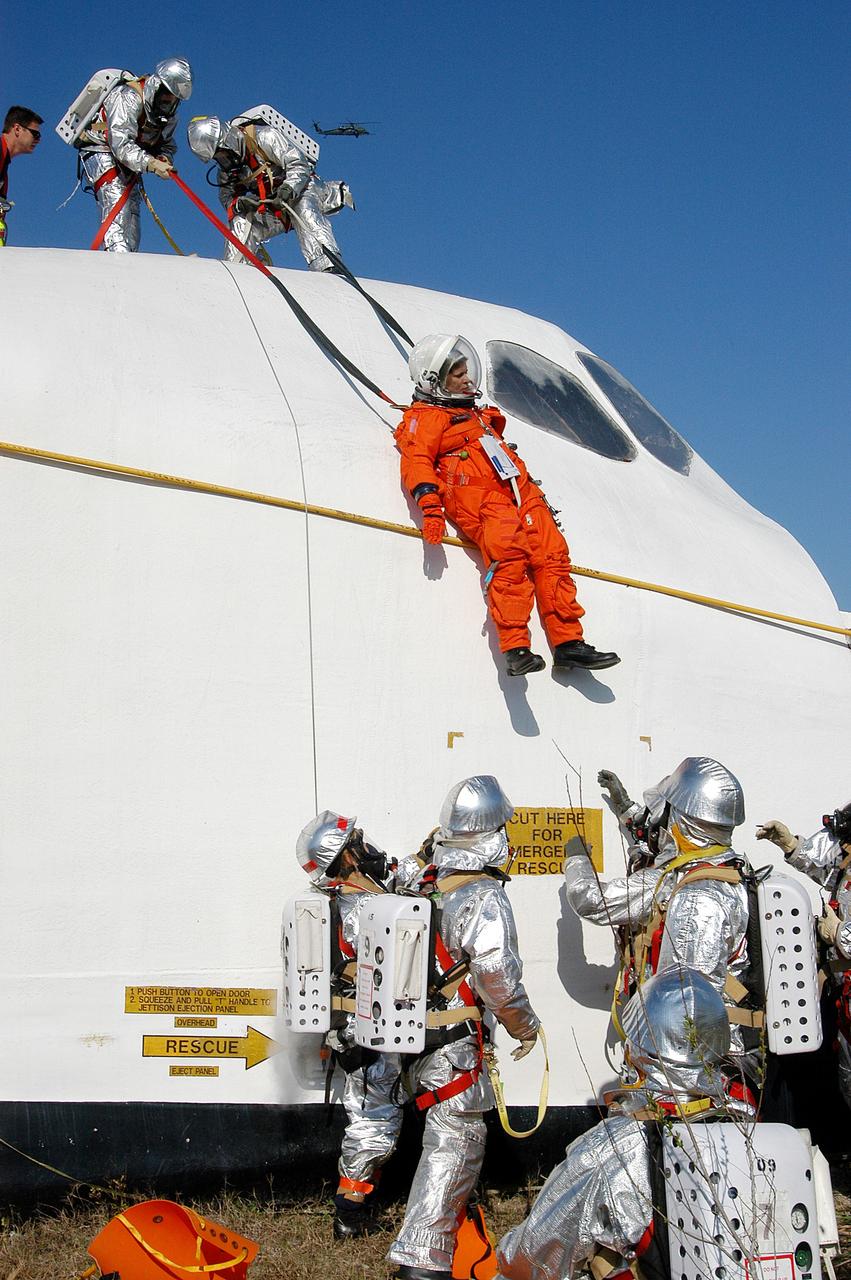
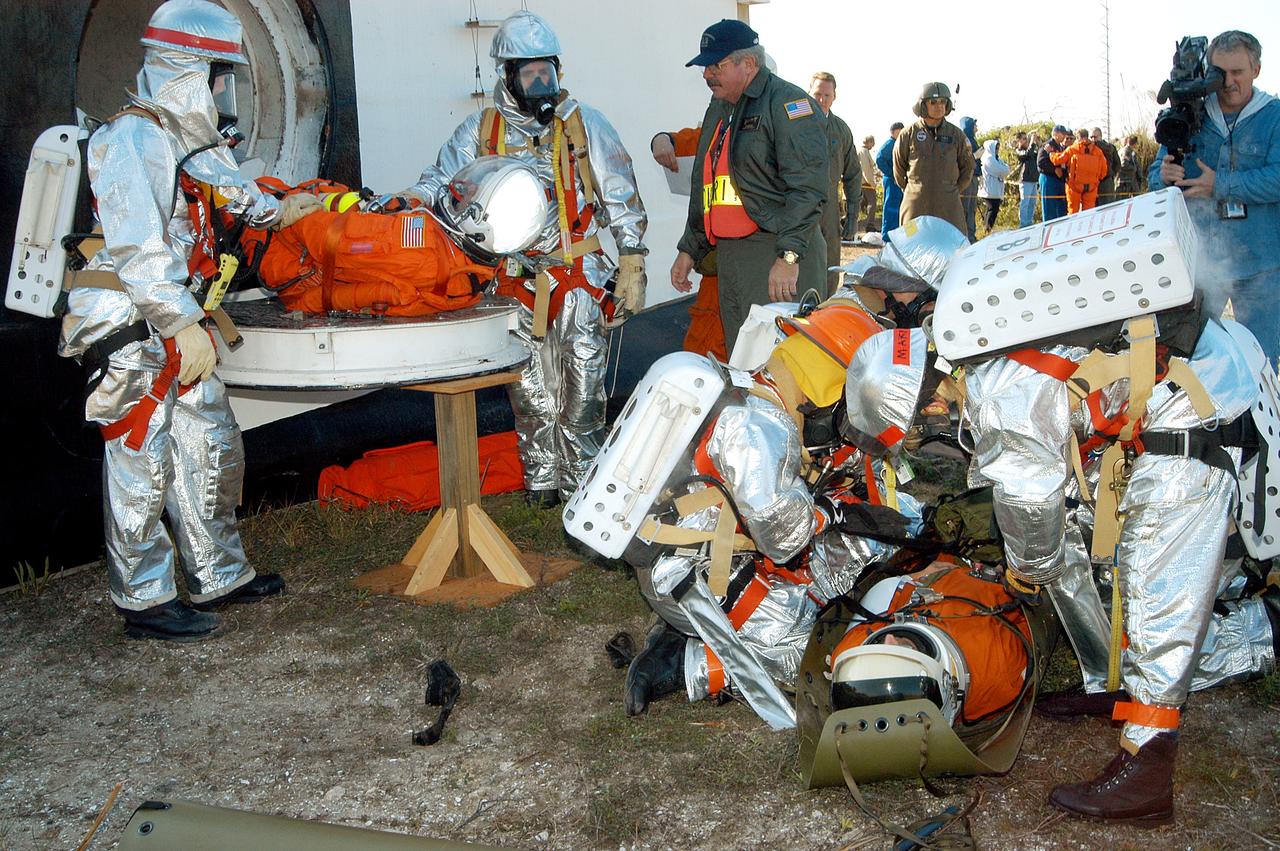
Space Power Facility at NASA’s Plum Brook Station
JSC2005-E-17974 (4 May 2005) --- Astronaut Heidemarie M. Stefanyshyn-Piper, STS-115 mission specialist, participates in an exercise in the systems engineering simulator at Johnson Space Center. The facility includes moving scenes of full-sized international space station components over a simulated Earth.
STS-115 Preflight Training - Robotic Arm Class in SES Dome
JSC2011-E-003045 (14 Jan. 2011) --- NASA astronaut Eric Boe, STS-133 pilot, participates in a training session in the fixed-base shuttle mission simulator (SMS) in the Jake Garn Simulation and Training Facility at NASA's Johnson Space Center. Photo credit: NASA or National Aeronautics and Space Administration
jsc2011e003045
JSC2005-E-17977 (4 May 2005) --- Astronauts Christopher J. Ferguson (left), STS-115 pilot, and Daniel C. Burbank, mission specialist, participate in an exercise in the systems engineering simulator at Johnson Space Center. The facility includes moving scenes of full-sized international space station components over a simulated Earth.
STS-115 Preflight Training - Robotic Arm Class in SES Dome
JSC2010-E-090701 (8 June 2010) --- Several computer monitors are featured in this image photographed during an STS-133 exercise in the systems engineering simulator in the Avionics Systems Laboratory at NASA's Johnson Space Center. The facility includes moving scenes of full-sized International Space Station components over a simulated Earth.
STS-133 crew members Mike Barratt and Nicole Stott in cupola
SSME Hardware Simulation Laboratory at Marshall Space Flight Center is the facility that verifies the software which controls SSME prior to each Space Shuttle flight
Space Shuttle Project
JSC2011-E-003039 (14 Jan. 2011) --- STS-133 crew members participate in a training session in the fixed-base shuttle mission simulator (SMS) and the Space Station Training Facility (SSTF) in the Jake Garn Simulation and Training Facility at NASA's Johnson Space Center. Pictured are NASA astronauts Steve Lindsey (right background), commander; Eric Boe (left background), pilot; Tim Kopra and Nicole Stott (partially out of frame in the foreground), both mission specialists. Photo credit: NASA or National Aeronautics and Space Administration
jsc2011e003039
JSC2011-E-003035 (14 Jan. 2011) --- NASA astronauts Michael Barratt and Nicole Stott, both STS-133 mission specialists, participate in a training session in the fixed-base shuttle mission simulator (SMS) and the Space Station Training Facility (SSTF) in the Jake Garn Simulation and Training Facility at NASA's Johnson Space Center. Photo credit: NASA or National Aeronautics and Space Administration
jsc2011e003035
JSC2011-E-003033 (14 Jan. 2011) --- STS-133 crew members participate in a training session in the fixed-base shuttle mission simulator (SMS) and the Space Station Training Facility (SSTF) in the Jake Garn Simulation and Training Facility at NASA's Johnson Space Center. Pictured from the foreground are NASA astronauts Alvin Drew, Tim Kopra, Nicole Stott and Michael Barratt, all mission specialists. Photo credit: NASA or National Aeronautics and Space Administration
jsc2011e003033
JSC2011-E-003050 (14 Jan. 2011) --- STS-133 crew members participate in a training session in the fixed-base shuttle mission simulator (SMS) and the Space Station Training Facility (SSTF) in the Jake Garn Simulation and Training Facility at NASA's Johnson Space Center. Pictured from the left are NASA astronauts Tim Kopra, Michael Barratt and Alvin Drew, all mission specialists. Photo credit: NASA or National Aeronautics and Space Administration
jsc2011e003050
JSC2011-E-003052 (14 Jan. 2011) --- NASA astronauts Michael Barratt (left) and Alvin Drew (center), both STS-133 mission specialists, members participate in a training session in the fixed-base shuttle mission simulator (SMS) and the Space Station Training Facility (SSTF) in the Jake Garn Simulation and Training Facility at NASA's Johnson Space Center.  Photo credit: NASA or National Aeronautics and Space Administration
jsc2011e003052