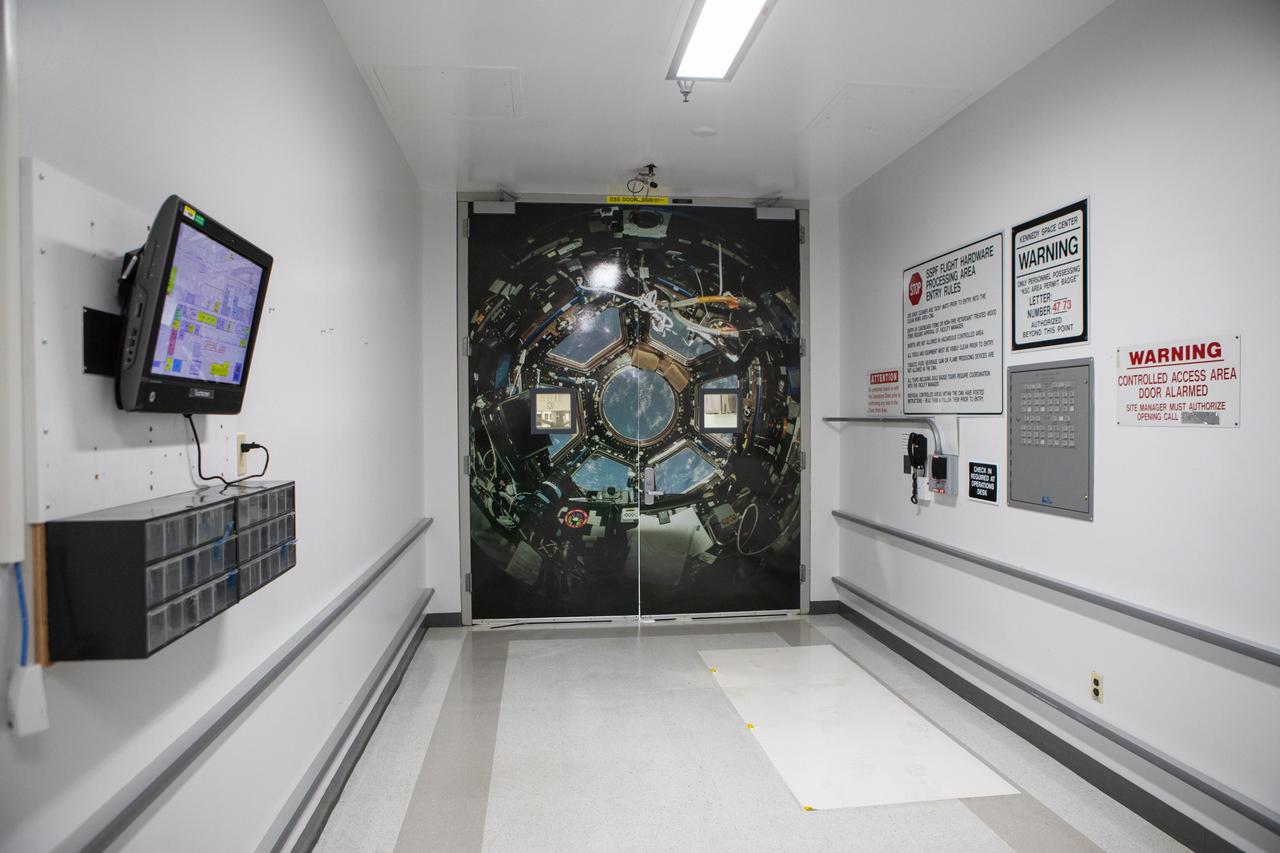
Artwork simulating a view inside the International Space Station marks the entranceway to the high bay in the Space Station Processing Facility (SSPF) at NASA's Kennedy Space Center in Florida, on May 16, 2019. The center is celebrating the SSPF’s 25th anniversary. The facility was built to process elements for the International Space Station. Now it is providing support for current and future NASA and commercial provider programs, including Commercial Resupply Services, Artemis 1, sending the first woman and next man to the Moon, and deep space destinations including Mars.
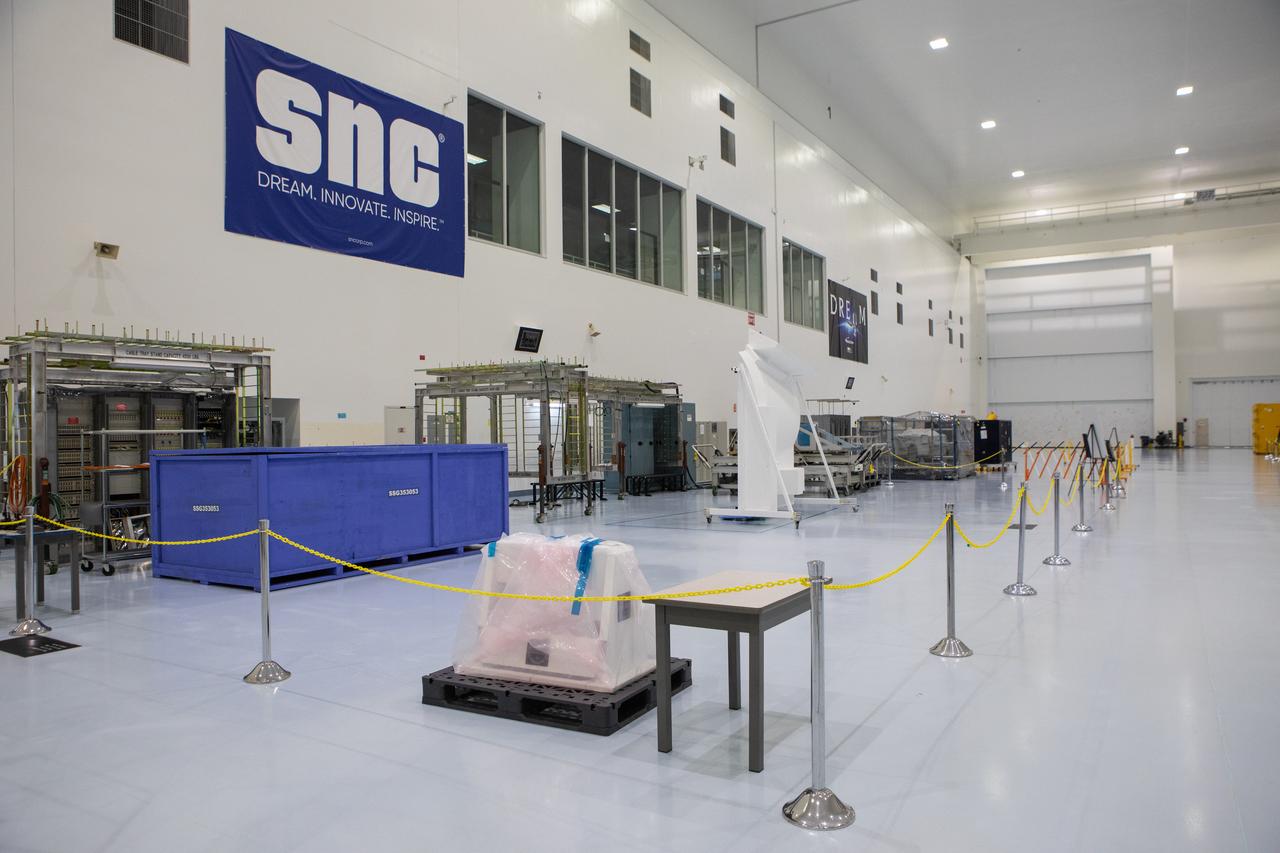
In view in this photograph, taken on May 16, 2019, is the area where the Sierra Nevada Corporation will process its Dream Chaser spacecraft in the high bay of the Space Station Processing Facility (SSPF) at NASA's Kennedy Space Center in Florida. The center is celebrating the SSPF’s 25th anniversary. The facility was built to process elements for the International Space Station. Now it is providing support for current and future NASA and commercial provider programs, including Commercial Resupply Services, Artemis 1, sending the first woman and next man to the Moon, and deep space destinations including Mars.
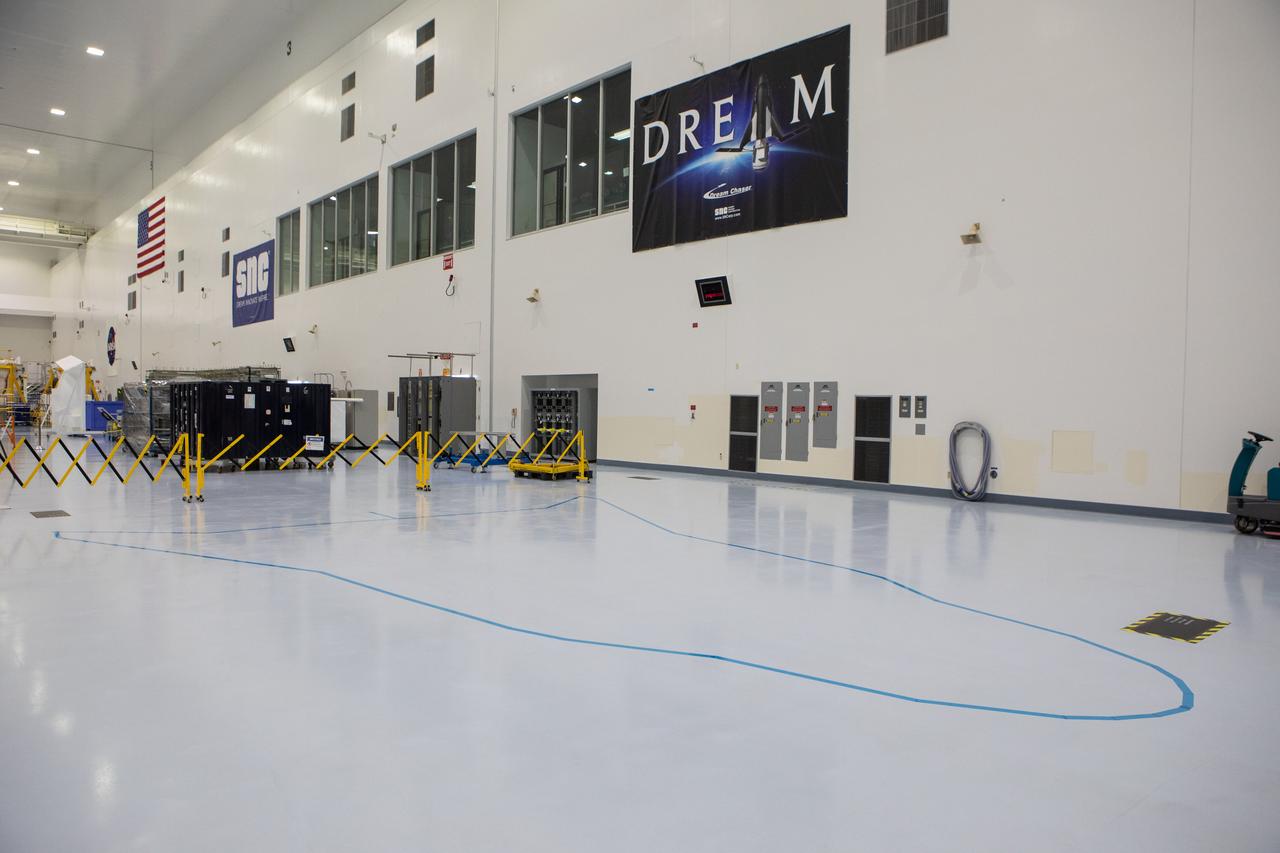
In view in this photograph, taken on May 16, 2019, is the area where the Sierra Nevada Corporation will process its Dream Chaser spacecraft in the high bay of the Space Station Processing Facility (SSPF) at NASA's Kennedy Space Center in Florida. The center is celebrating the SSPF’s 25th anniversary. The facility was built to process elements for the International Space Station. Now it is providing support for current and future NASA and commercial provider programs, including Commercial Resupply Services, Artemis 1, sending the first woman and next man to the Moon, and deep space destinations including Mars.
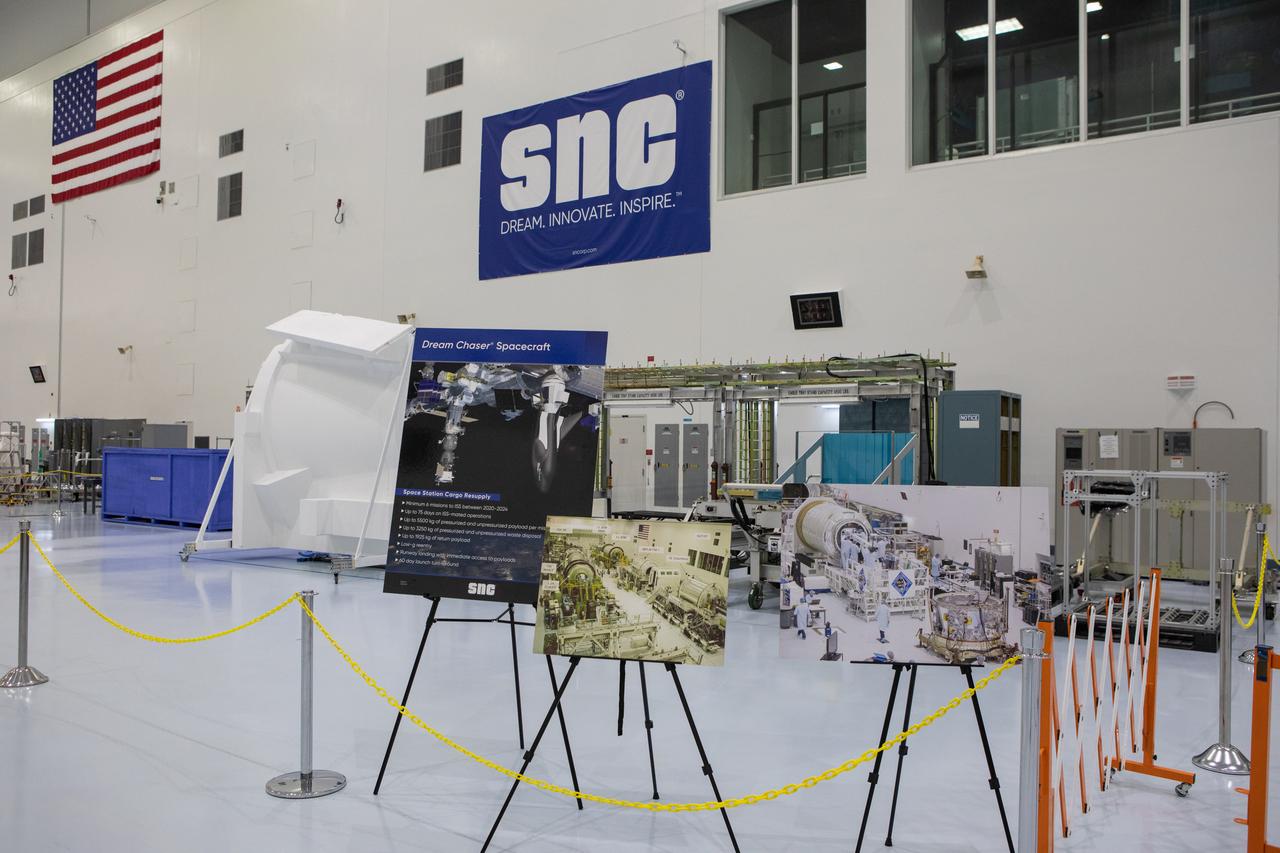
In view in this photograph, taken on May 16, 2019, is the area where the Sierra Nevada Corporation will process its Dream Chaser spacecraft in the high bay of the Space Station Processing Facility (SSPF) at NASA's Kennedy Space Center in Florida. The center is celebrating the SSPF’s 25th anniversary. The facility was built to process elements for the International Space Station. Now it is providing support for current and future NASA and commercial provider programs, including Commercial Resupply Services, Artemis 1, sending the first woman and next man to the Moon, and deep space destinations including Mars.
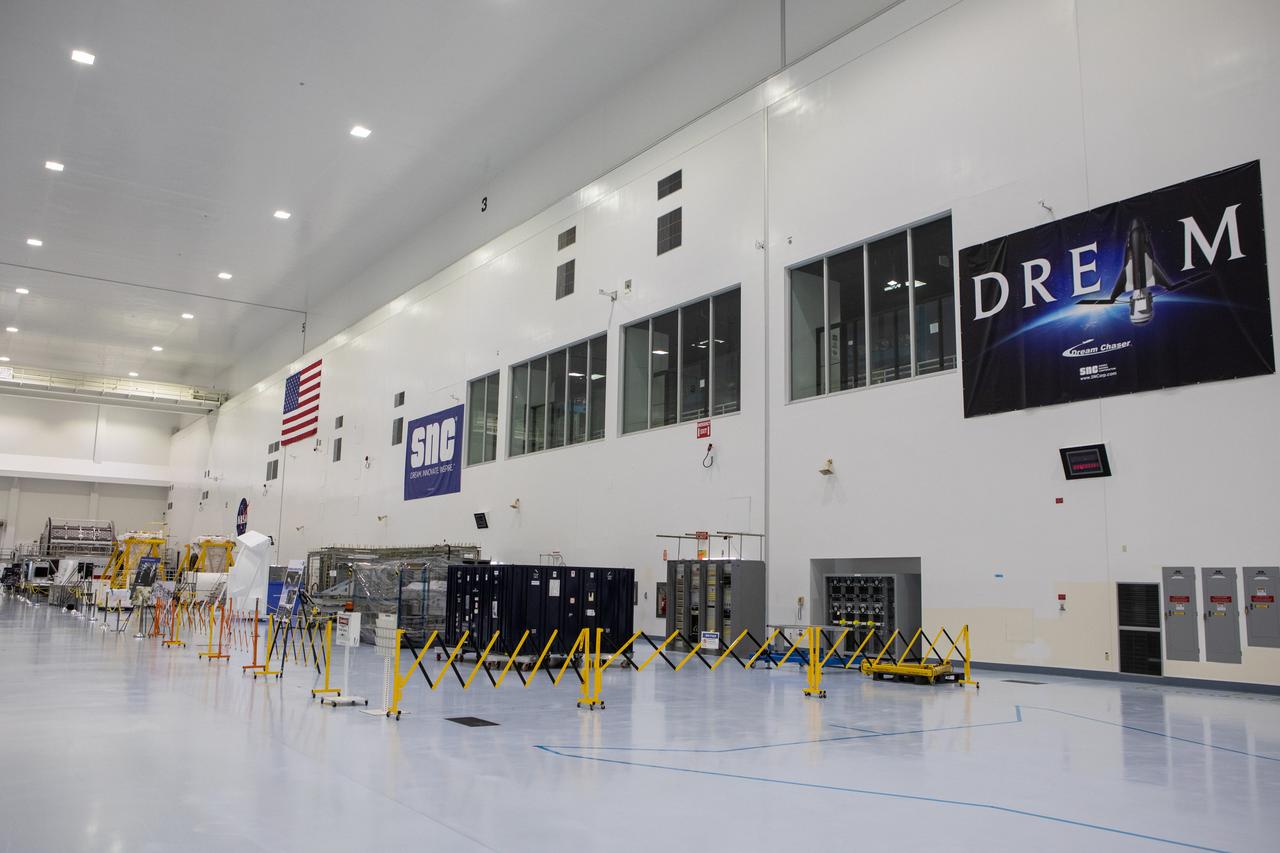
In view in this photograph, taken on May 16, 2019, is the area where the Sierra Nevada Corporation will process its Dream Chaser spacecraft in the high bay of the Space Station Processing Facility (SSPF) at NASA's Kennedy Space Center in Florida. The center is celebrating the SSPF’s 25th anniversary. The facility was built to process elements for the International Space Station. Now it is providing support for current and future NASA and commercial provider programs, including Commercial Resupply Services, Artemis 1, sending the first woman and next man to the Moon, and deep space destinations including Mars.
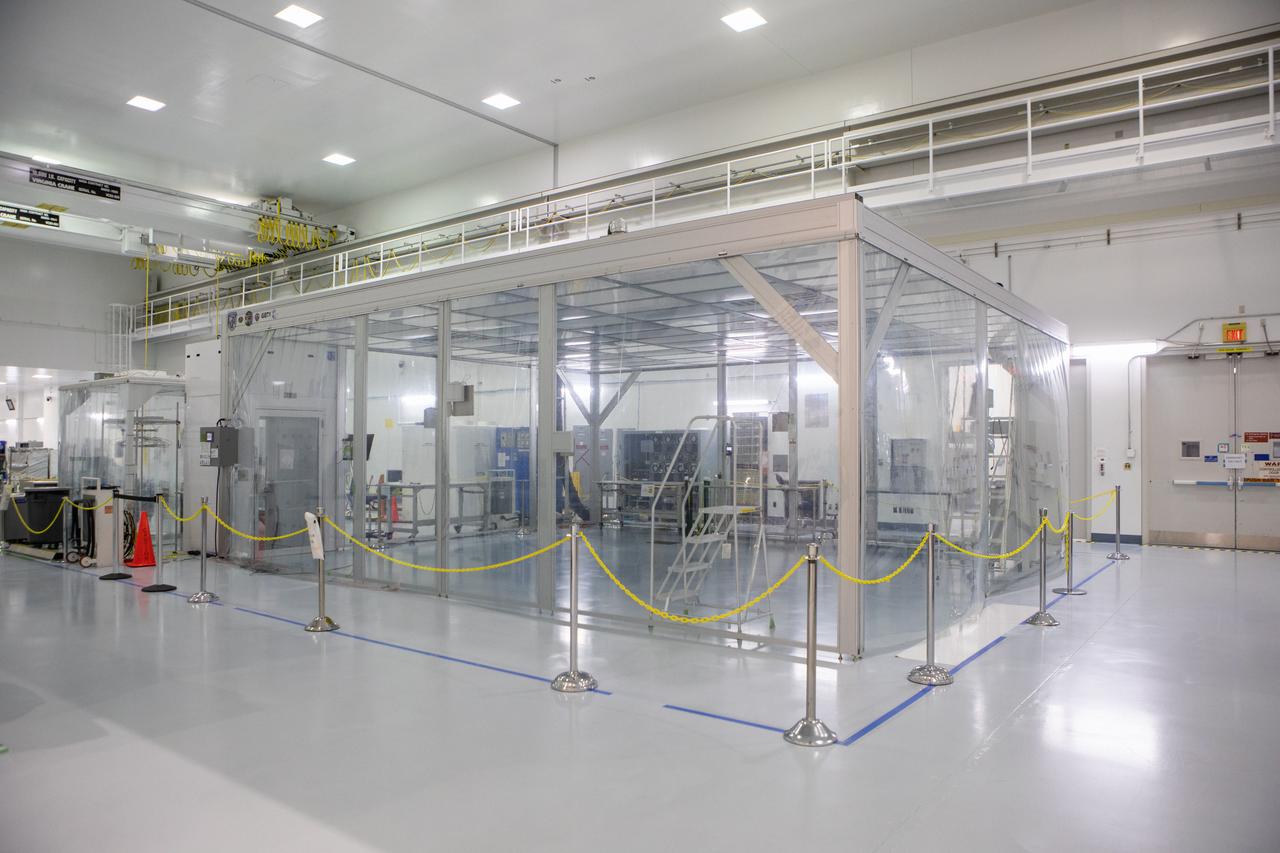
A clean room tent within the high bay of the Space Station Processing Facility (SSPF) at NASA's Kennedy Space Center in Florida, is in view on May 16, 2019. The extra clean environment is available for use by payload customers. The center is celebrating the SSPF’s 25th anniversary. The SSPF was built to process elements for the International Space Station. Now it is providing support for current and future NASA and commercial provider programs, including Commercial Resupply Services, Artemis 1, sending the first woman and next man to the Moon, and deep space destinations including Mars.
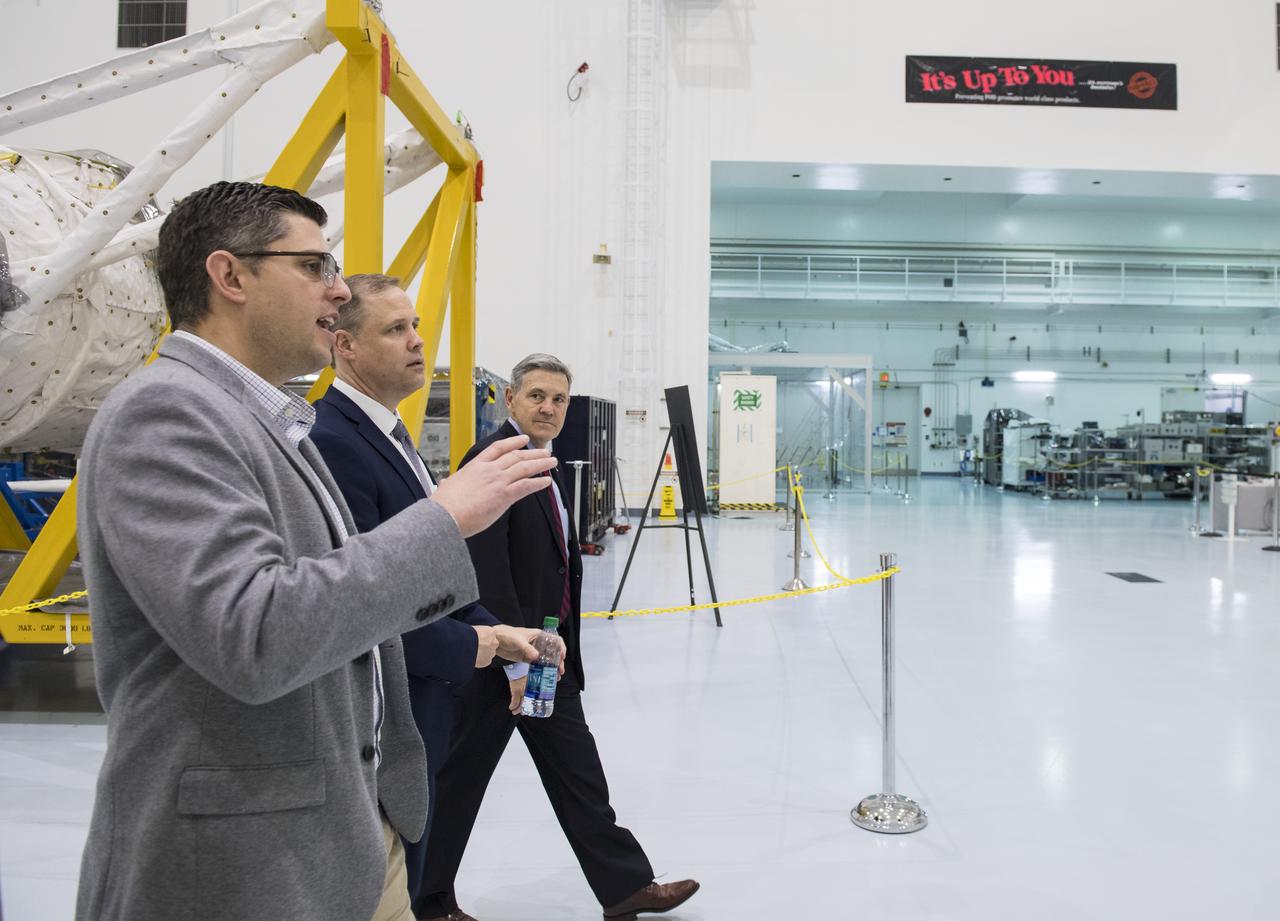
Bill Pratt, Lockheed Martin NextSTEP program manager, left, NASA Administrator Jim Bridenstine, center, and Kennedy Space Center Director, Bob Cabana, right, walk through the Space Station Processing Facility High Bay to the Lockheed Martin Gateway habitat prototype, after an event about NASA’s progress toward sending astronauts to the Moon and on to Mars, Monday March 11, 2019 at Kennedy Space Center in Florida. For information on NASA's Moon to Mars plans, visit: www.nasa.gov/moontomars Photo credit: (NASA/Aubrey Gemignani)
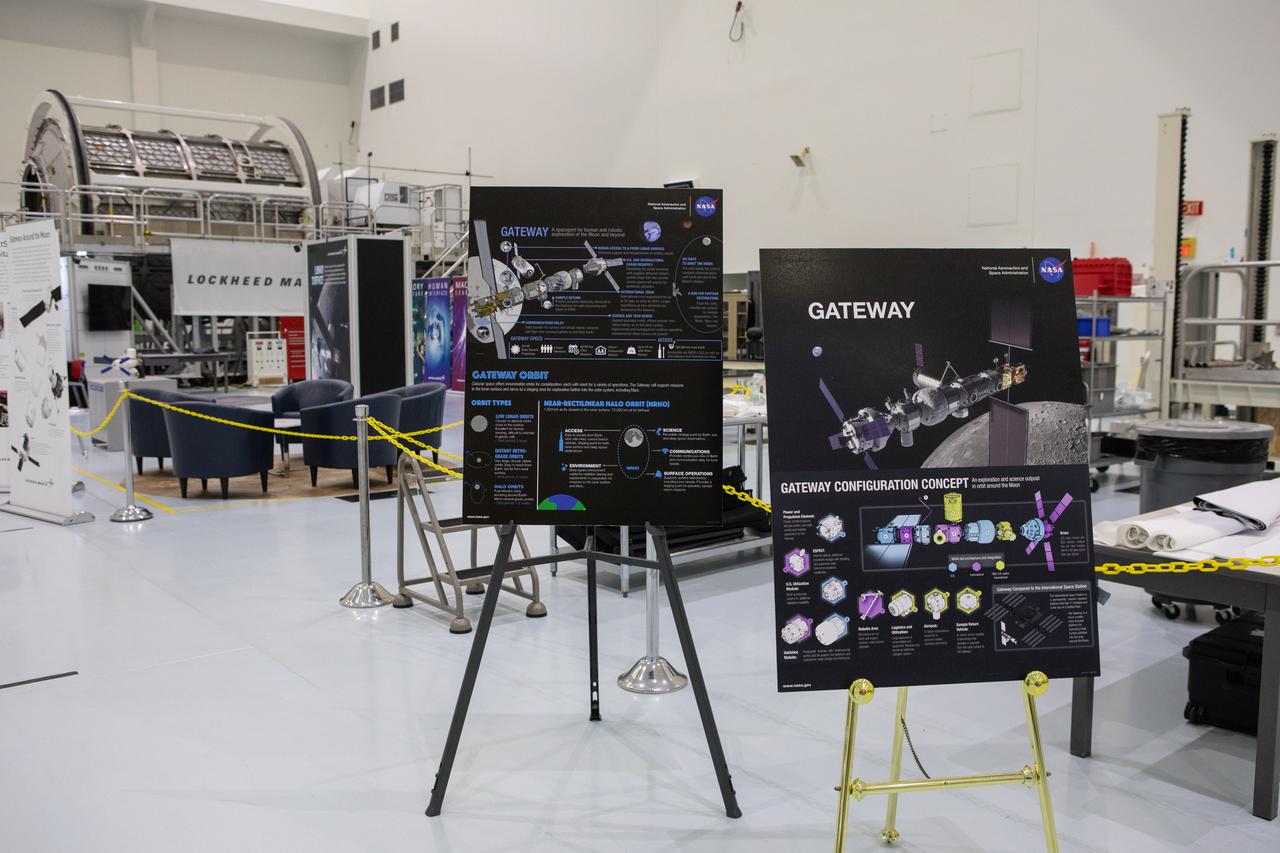
The Lockheed Martin prototype habitat for NASA’s lunar orbital platform, called the Gateway, is in view at far left in the high bay of the Space Station Processing Facility (SSPF) at NASA's Kennedy Space Center in Florida, on May 16, 2019. The center is celebrating the SSPF’s 25th anniversary. The facility was built to process elements for the International Space Station. Now it is providing support for current and future NASA and commercial provider programs, including Commercial Resupply Services, Artemis 1, sending the first woman and next man to the Moon, and deep space destinations including Mars.
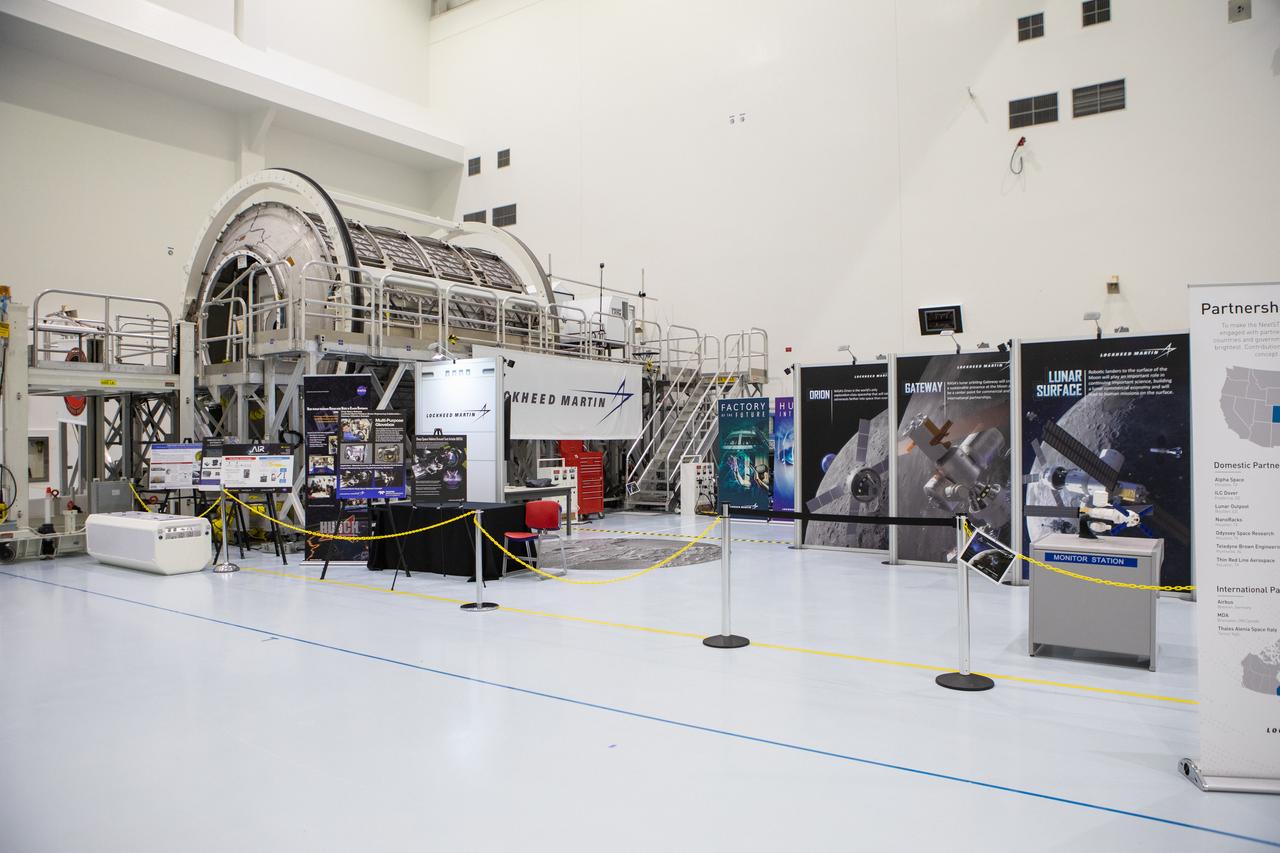
The Lockheed Martin prototype habitat for NASA’s lunar orbital platform, called the Gateway, is in view at left in the high bay of the Space Station Processing Facility (SSPF) at NASA's Kennedy Space Center in Florida, on May 16, 2019. The center is celebrating the SSPF’s 25th anniversary. The facility was built to process elements for the International Space Station. Now it is providing support for current and future NASA and commercial provider programs, including Commercial Resupply Services, Artemis 1, sending the first woman and next man to the Moon, and deep space destinations including Mars.
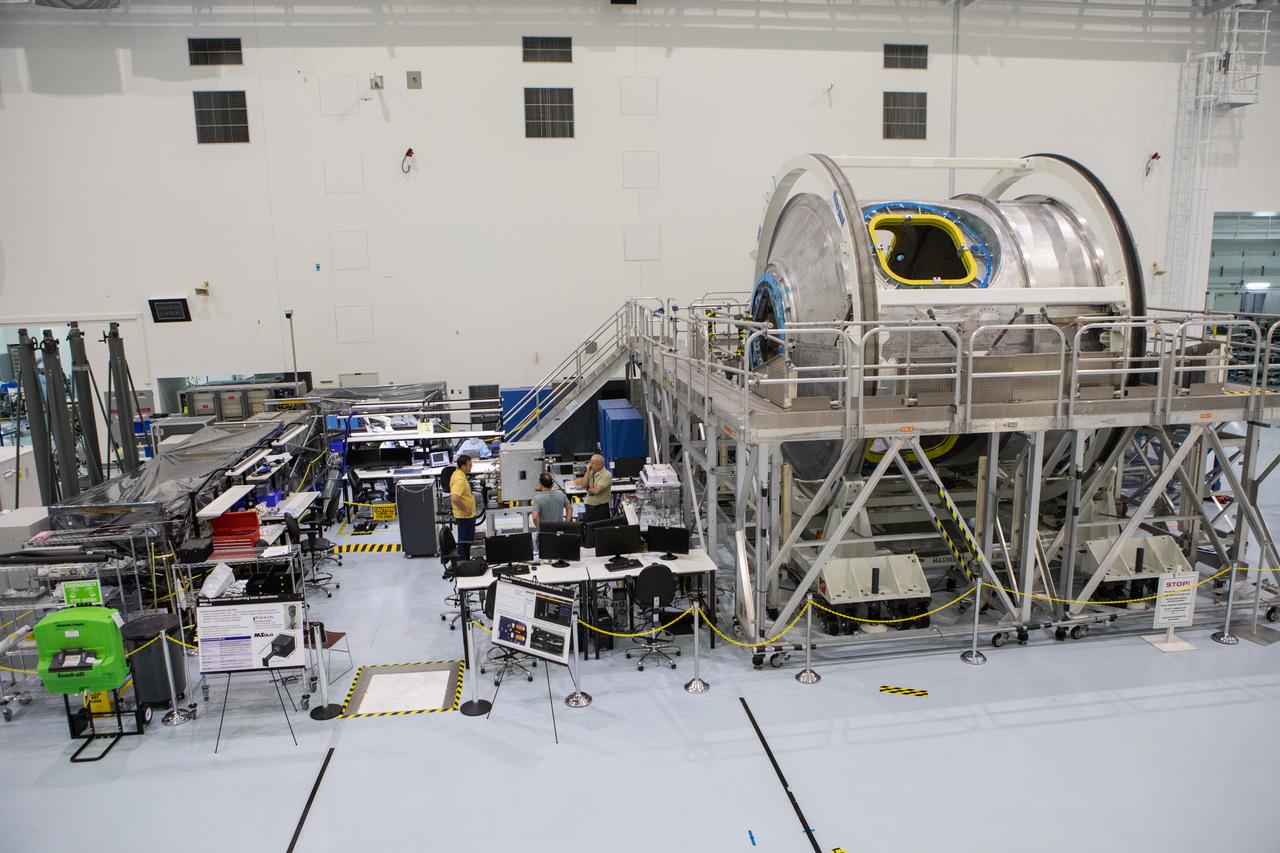
Instruments for NASA’s Mars Spectrometer observing lunar operations (MSolo) are in view at left in the high bay of the Space Station Processing Facility (SSPF) at NASA's Kennedy Space Center in Florida, on May 16, 2019. The center is celebrating the SSPF’s 25th anniversary. The facility was built to process elements for the International Space Station. Now it is providing support for current and future NASA and commercial provider programs, including Commercial Resupply Services, Artemis 1, sending the first woman and next man to the Moon, and deep space destinations including Mars.
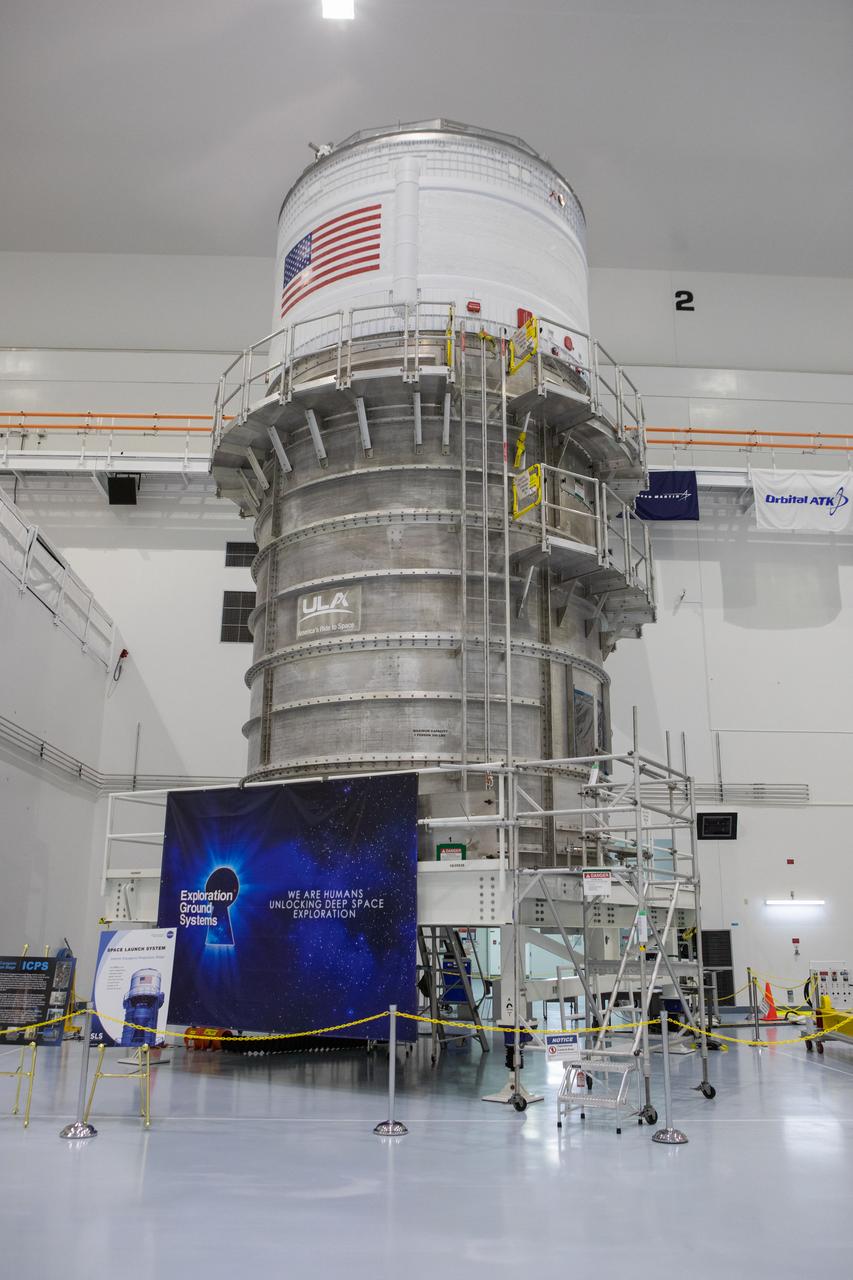
The Interim Cryogenic Propulsion Stage for Orion’s Artemis 1 mission is in view inside the high bay in the Space Station Processing Facility (SSPF) at NASA's Kennedy Space Center in Florida, on May 16, 2019. The center is celebrating the SSPF’s 25th anniversary. The facility was built to process elements for the International Space Station. Now it is providing support for current and future NASA and commercial provider programs, including Commercial Resupply Services, Artemis 1, sending the first woman and next man to the Moon, and deep space destinations including Mars.
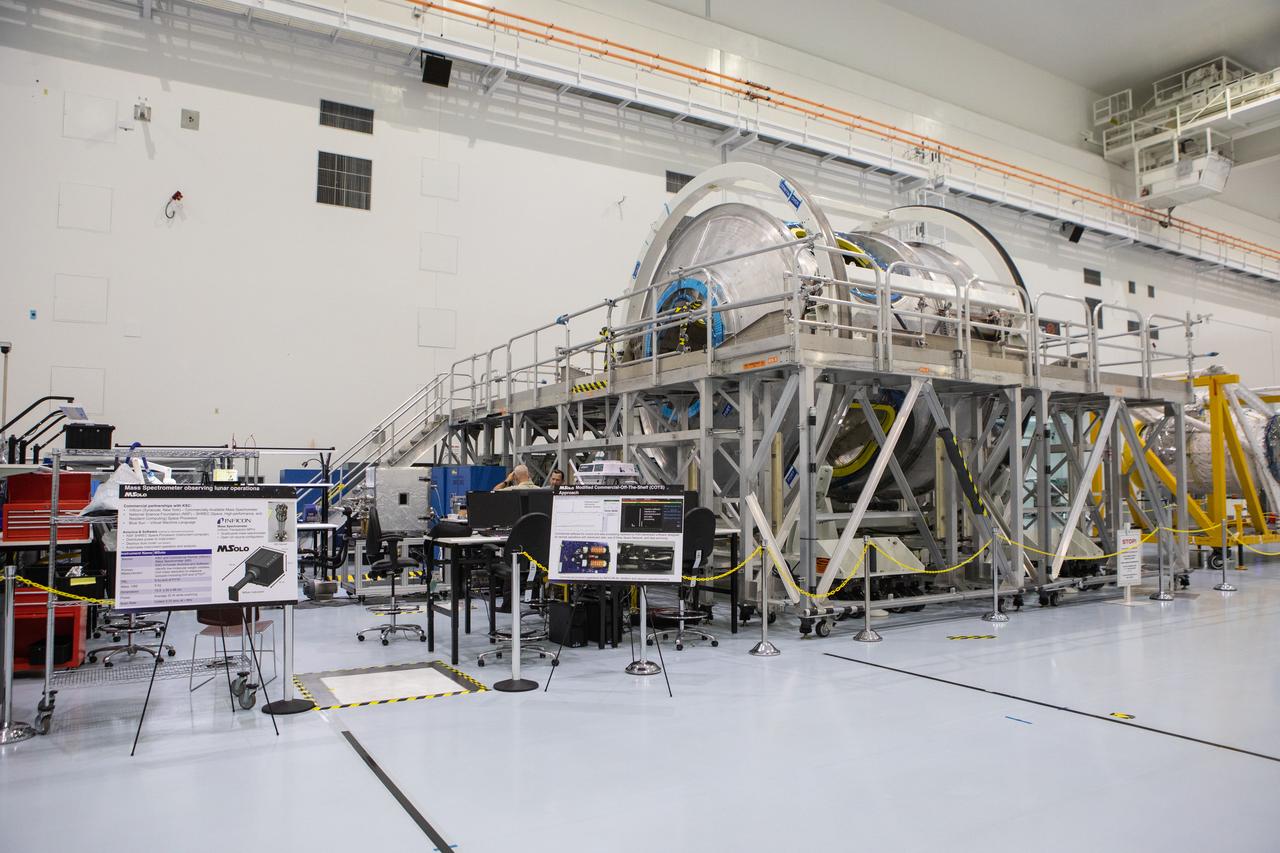
Instruments for NASA’s Mars Spectrometer observing lunar operations (MSolo) are in view at left in the high bay of the Space Station Processing Facility (SSPF) at NASA's Kennedy Space Center in Florida, on May 16, 2019. The center is celebrating the SSPF’s 25th anniversary. The facility was built to process elements for the International Space Station. Now it is providing support for current and future NASA and commercial provider programs, including Commercial Resupply Services, Artemis 1, sending the first woman and next man to the Moon, and deep space destinations including Mars.
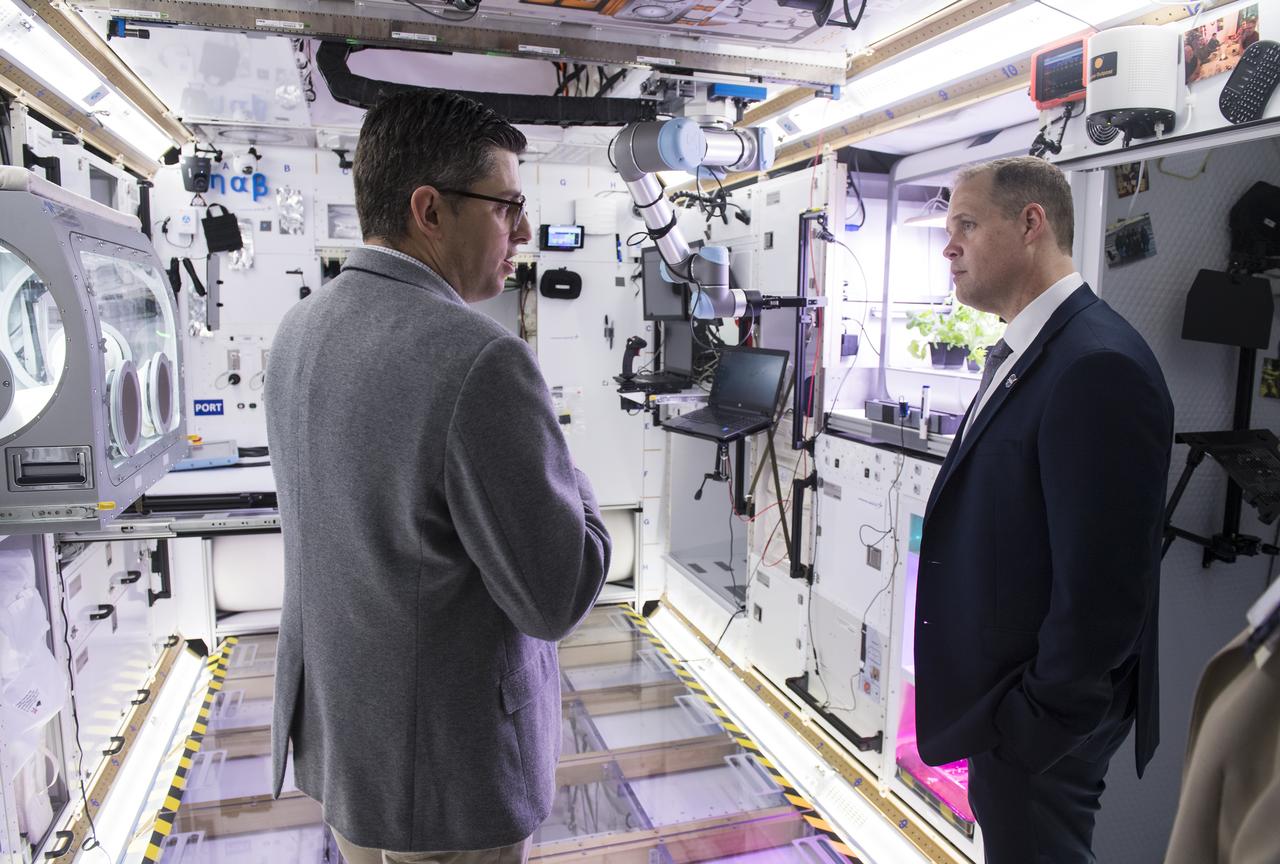
Bill Pratt, Lockheed Martin NextSTEP program manager gives NASA Administrator Jim Bridenstine a tour of the Lockheed Martin Gateway habitat prototype in the Space Station Processing Facility High Bay, after an event to discuss NASA’s progress toward sending astronauts to the Moon and on to Mars, Monday March 11, 2019 at Kennedy Space Center in Florida. For information on NASA's Moon to Mars plans, visit: www.nasa.gov/moontomars Photo credit: (NASA/Aubrey Gemignani)
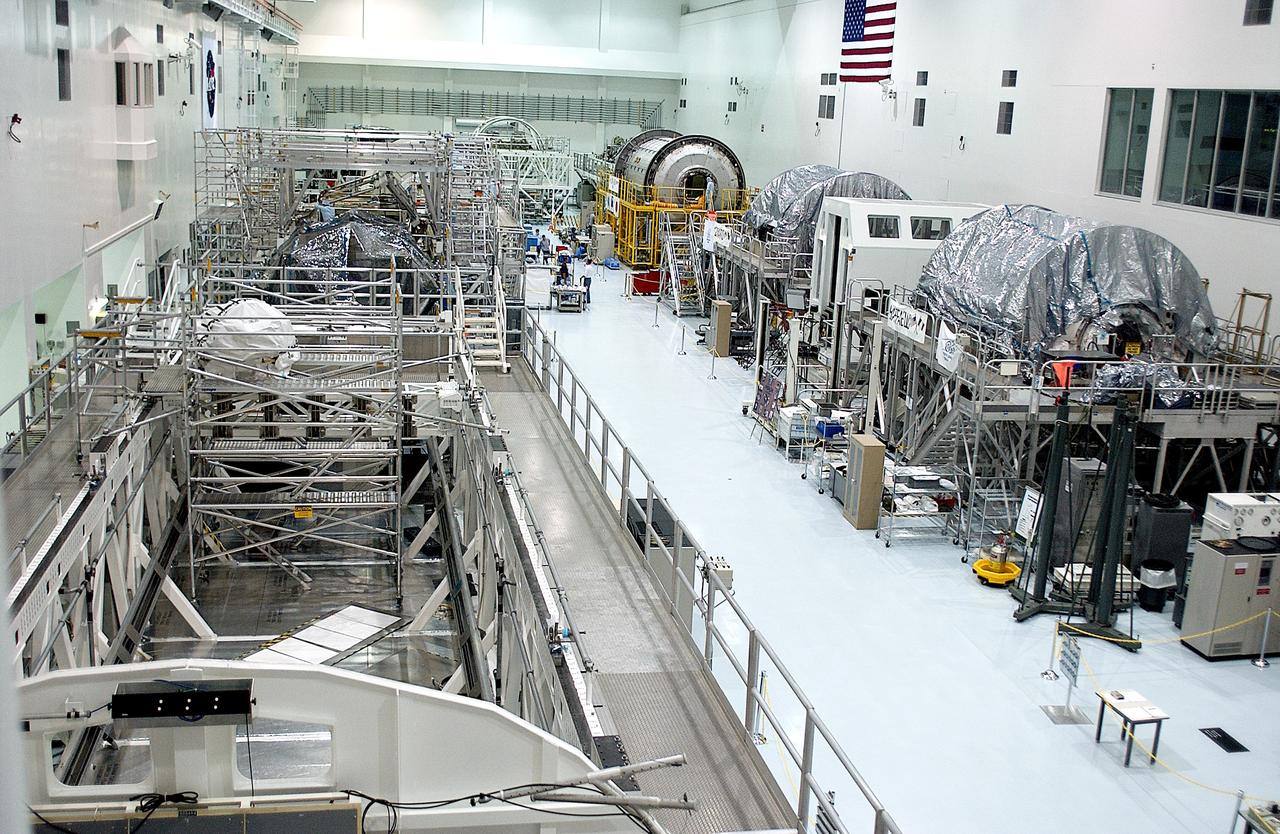
KENNEDY SPACE CENTER, FLA. - International Space Station elements being processed for launch on upcoming Space Shuttle flights line the walls of the high bay in the Space Station Processing Facility. NASA's Node 2, built by the European Space Agency (ESA) in Italy, arrived at KSC on June 1. It will be the next pressurized module installed on the Station. The pressurized module of the Japanese Experiment Module (JEM), named "Kibo" (Hope), arrived at KSC on June 4. It is Japan's primary contribution to the Station.
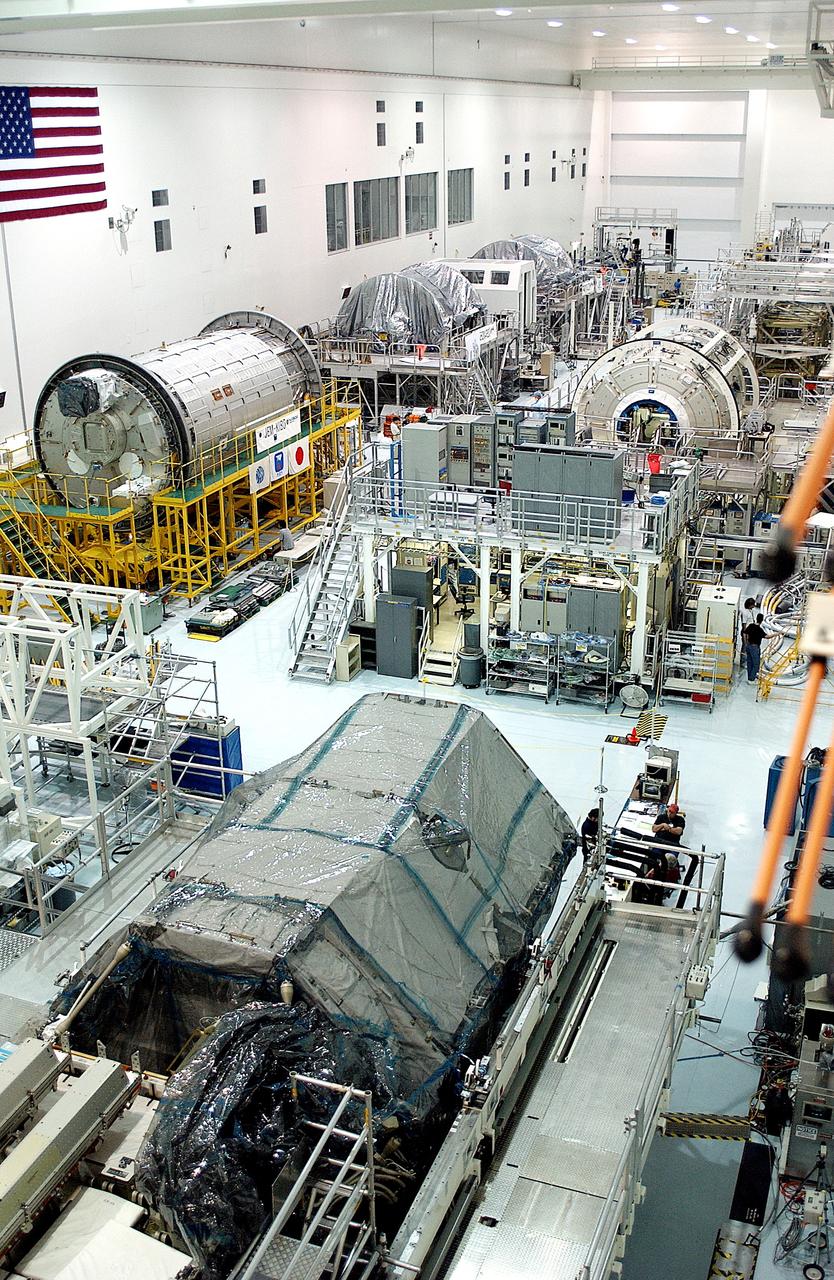
KENNEDY SPACE CENTER, FLA. - International Space Station elements being processed for launch on upcoming Space Shuttle flights, including the Japanese Experiment Module (JEM) pressurized module (Kibo or Hope) and the U.S. Node 2, line the walls of the high bay in the Space Station Processing Facility. NASA's Node 2, built by the European Space Agency (ESA) in Italy, arrived at KSC on June 1. It will be the next pressurized module installed on the Station. The JEM pressurized module arrived at KSC on June 4. It is Japan's primary contribution to the Station.
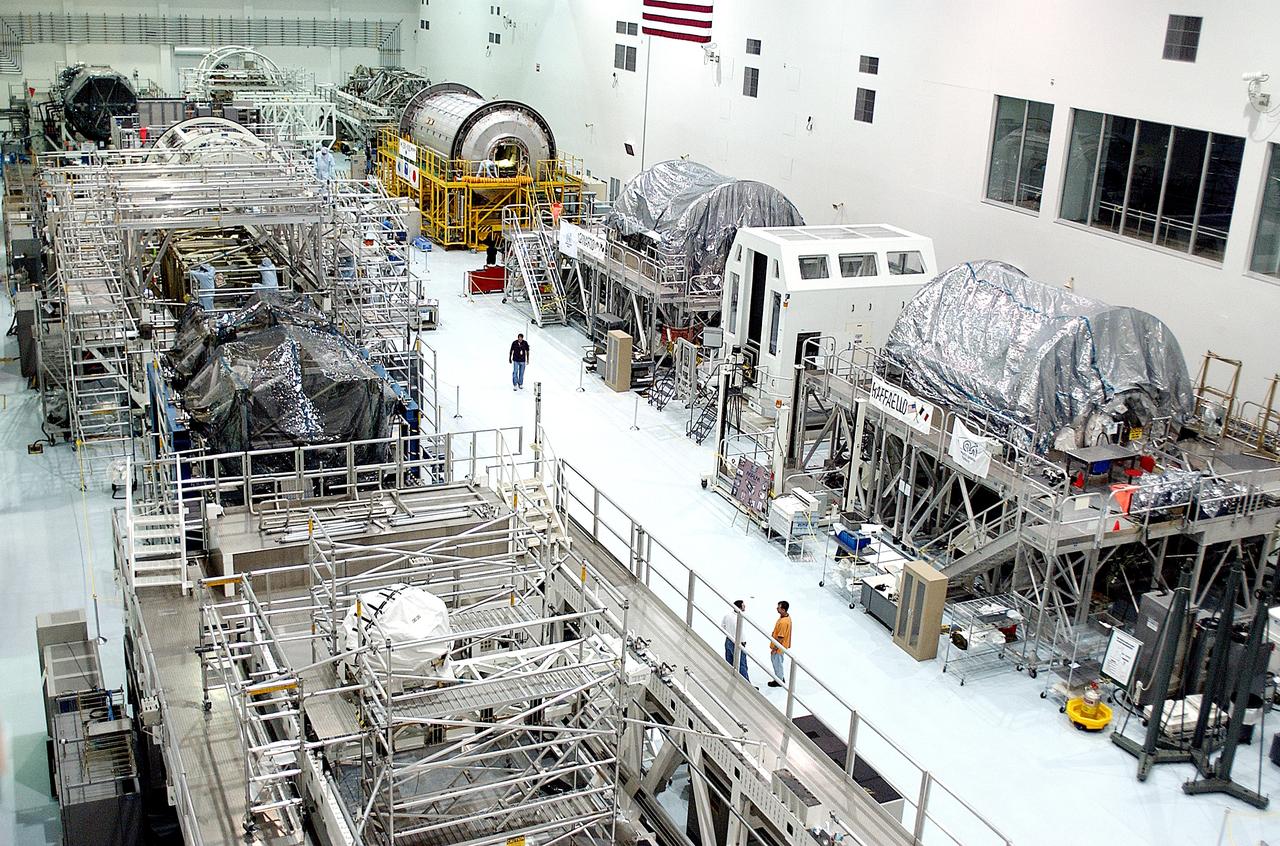
KENNEDY SPACE CENTER, FLA. - International Space Station elements being processed for launch on upcoming Space Shuttle flights line the walls of the high bay in the Space Station Processing Facility. NASA's Node 2, built by the European Space Agency (ESA) in Italy, arrived at KSC on June 1. It will be the next pressurized module installed on the Station. The pressurized module of the Japanese Experiment Module (JEM), named "Kibo" (Hope), arrived at KSC on June 4. It is Japan's primary contribution to the Station.
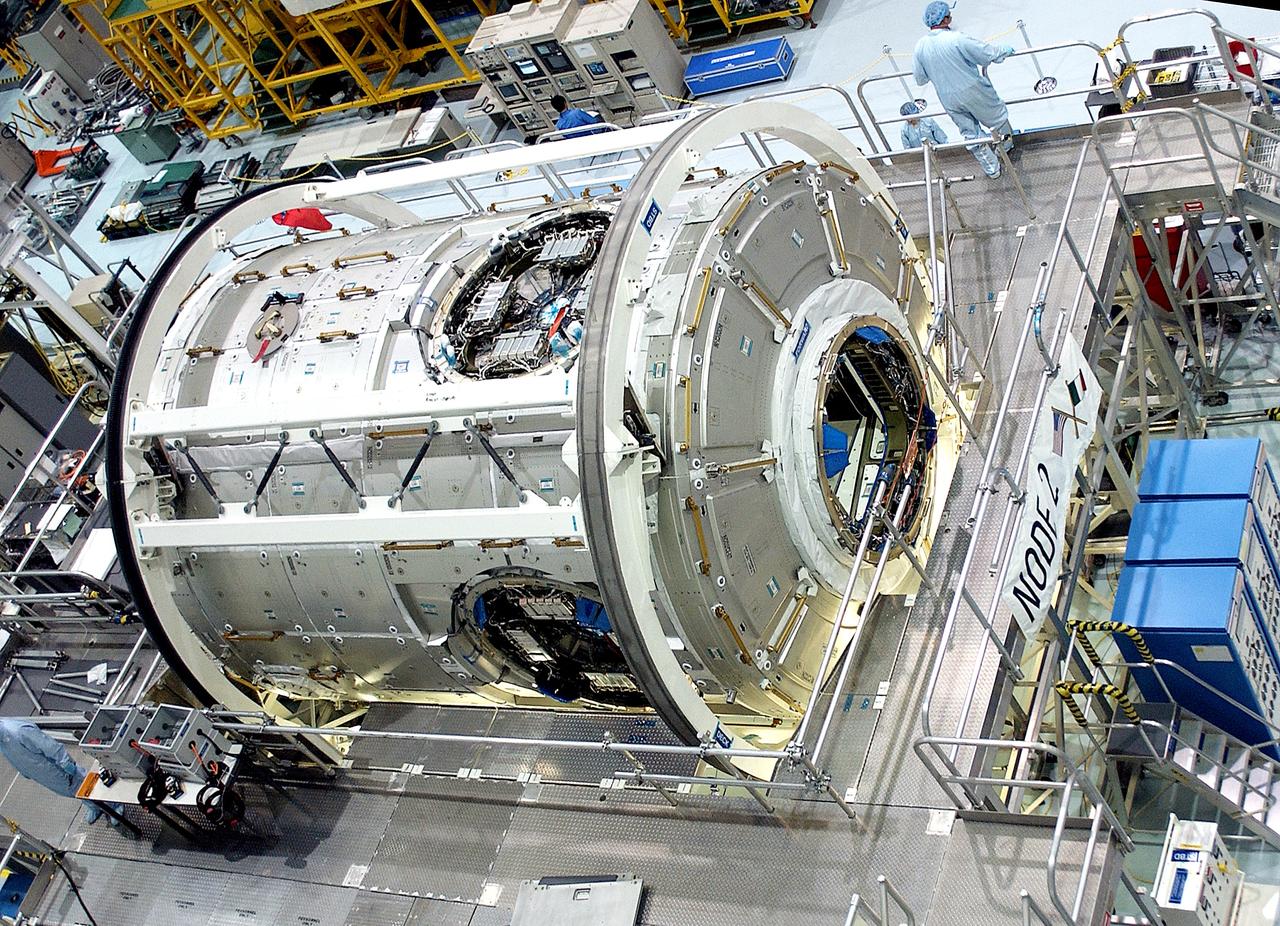
KENNEDY SPACE CENTER, FLA. - International Space Station elements being processed for launch on upcoming Space Shuttle flights, including the U.S. Node 2, line the walls of the high bay in the Space Station Processing Facility. NASA's Node 2, built by the European Space Agency (ESA) in Italy, arrived at KSC on June 1. It will be the next pressurized module installed on the Station.
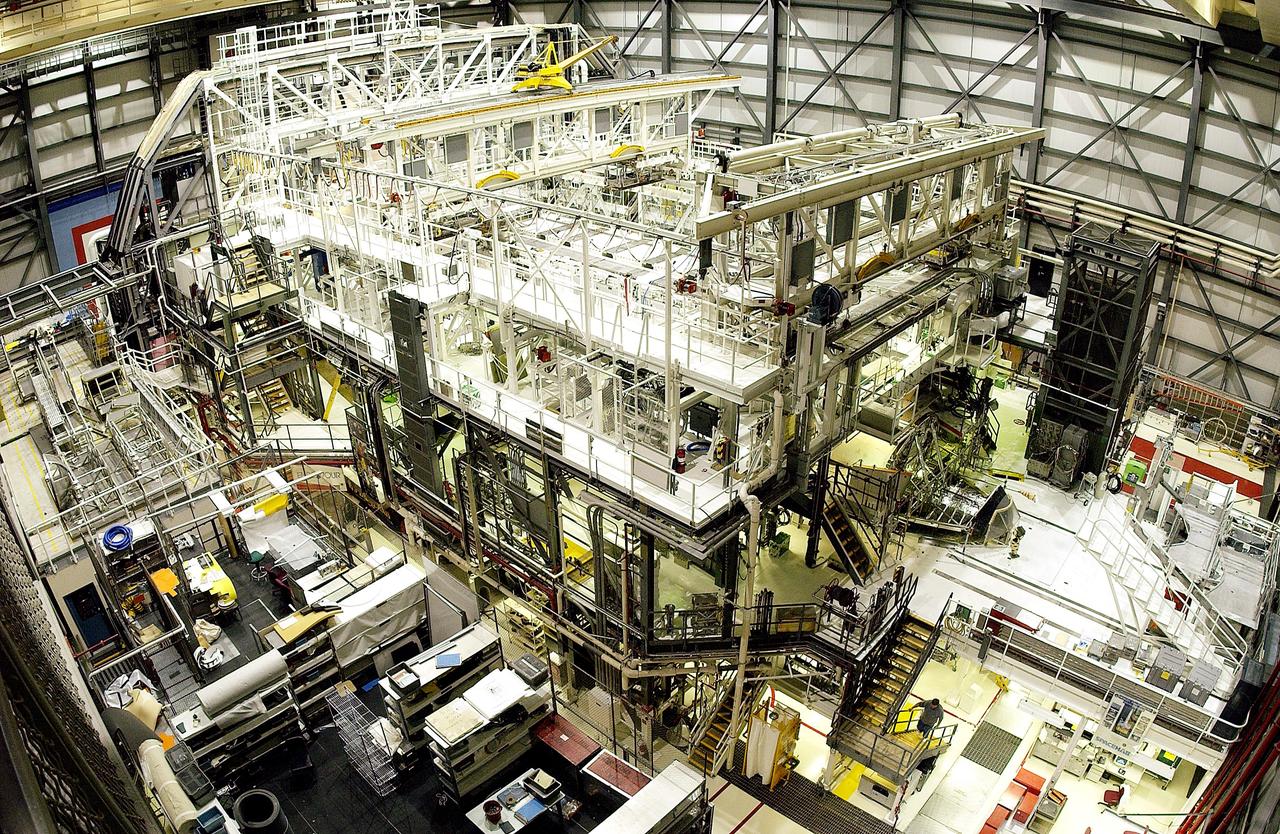
KENNEDY SPACE CENTER, FLA. - This bird's-eye view of a high bay in the Orbiter Processing Facility (OPF) shows Space Shuttle Atlantis surrounded by the standard platforms and equipment required to process a Space Shuttle orbiter for flight. The high bay is 197 feet (60 meters) long, 150 feet (46 meters) wide, 95 feet (29 meters) high, and encompasses a 29,000-square-foot (2,694-meter) area. Platforms, a main access bridge, and two rolling bridges with trucks provide access to various parts of the orbiter. The next mission scheduled for Atlantis is STS-114, a utilization and logistics flight to the International Space Station.
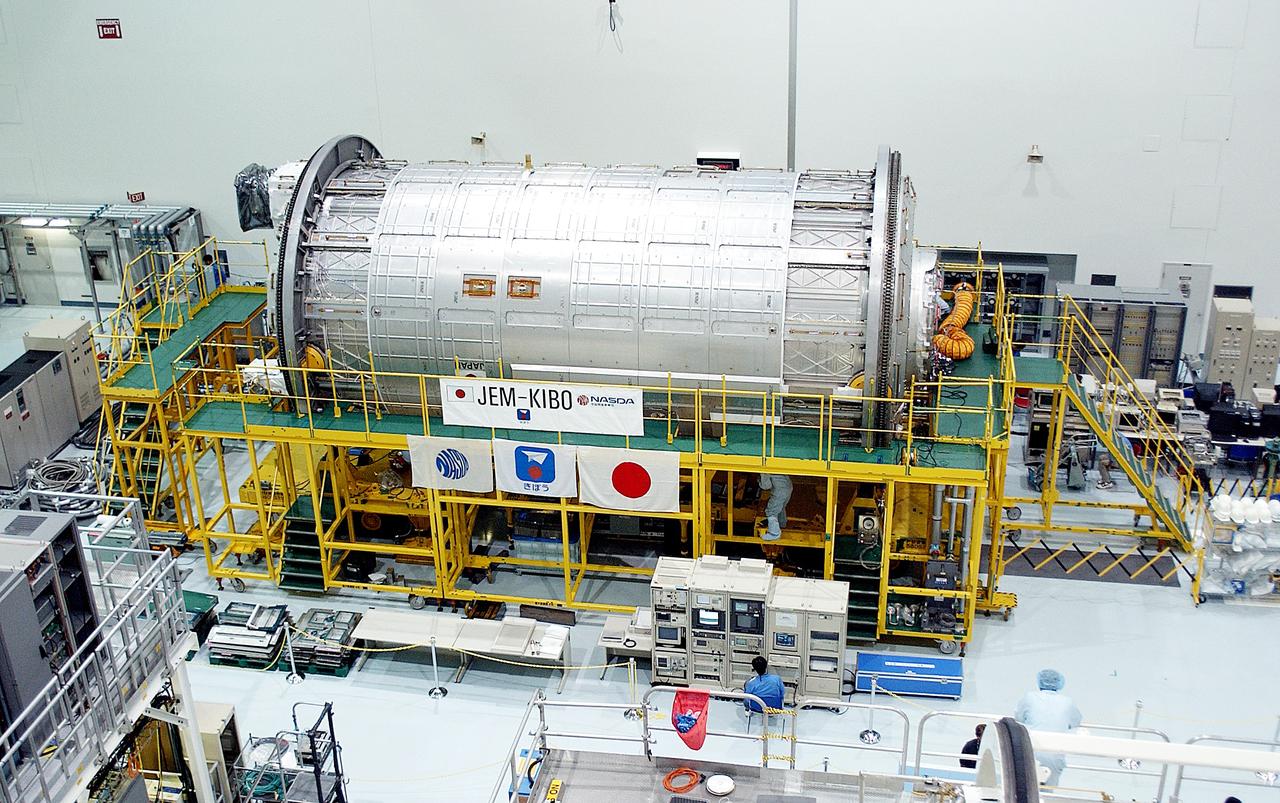
KENNEDY SPACE CENTER, FLA. - International Space Station elements being processed for launch on upcoming Space Shuttle flights, including the Japanese Experiment Module (JEM) pressurized module, line the walls of the high bay in the Space Station Processing Facility. The JEM pressurized module, named "Kibo" (Hope), arrived at KSC on June 4. It is Japan's primary contribution to the Station.
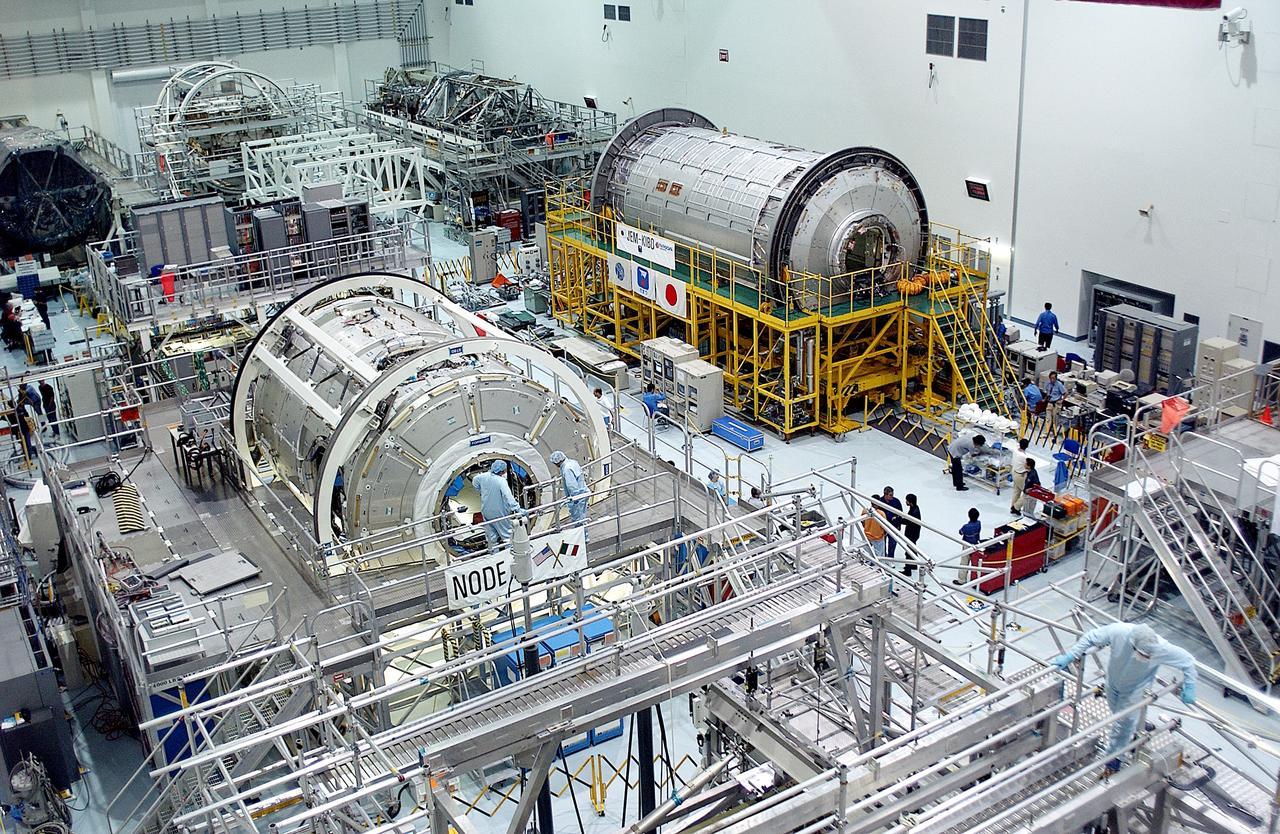
KENNEDY SPACE CENTER, FLA. - International Space Station elements being processed for launch on upcoming Space Shuttle flights, including the U.S. Node 2 and the Japanese Experiment Module (JEM) pressurized module, line the walls of the high bay in the Space Station Processing Facility. NASA's Node 2, built by the European Space Agency (ESA) in Italy, arrived at KSC on June 1. It will be the next pressurized module installed on the Station. The JEM pressurized module, named "Kibo" (Hope), arrived at KSC on June 4. It is Japan's primary contribution to the Station.
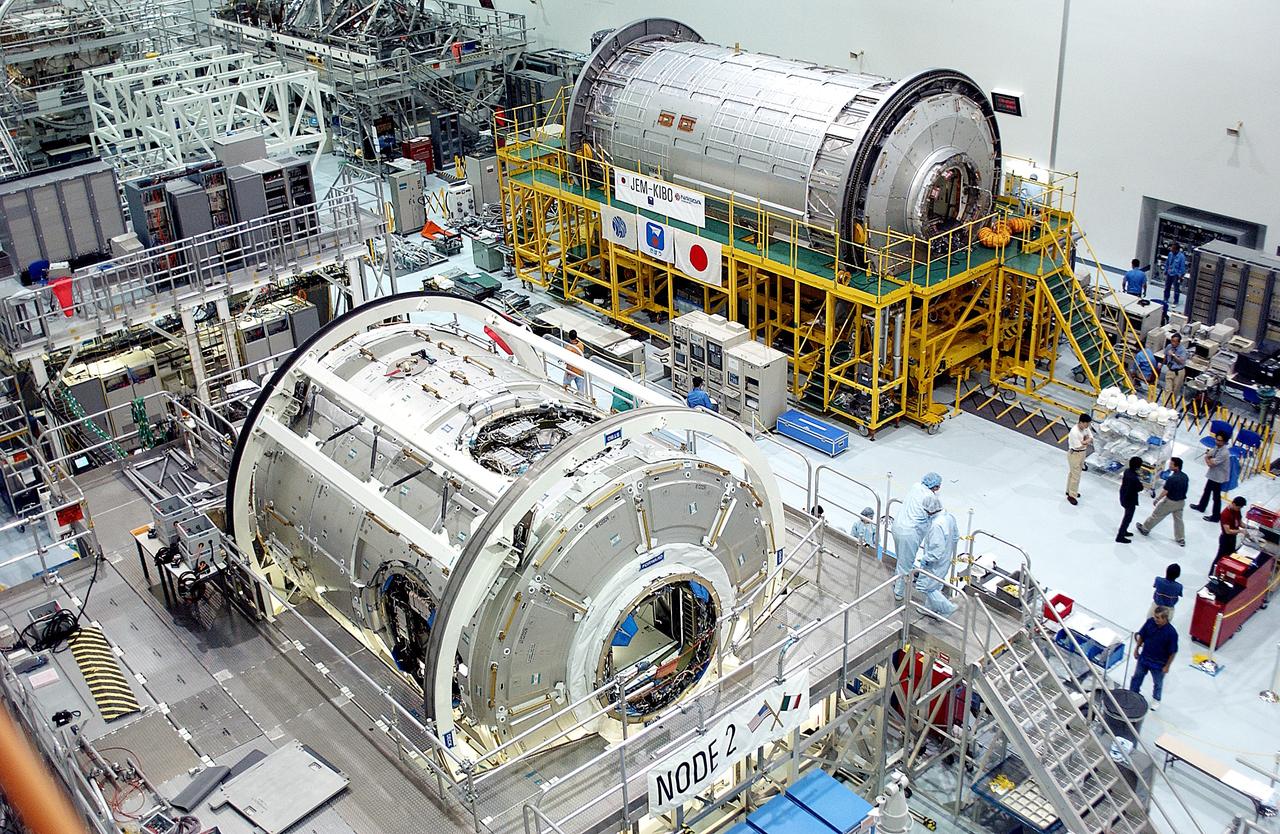
KENNEDY SPACE CENTER, FLA. - International Space Station elements being processed for launch on upcoming Space Shuttle flights, including the U.S. Node 2 and the Japanese Experiment Module (JEM) pressurized module, line the walls of the high bay in the Space Station Processing Facility. NASA's Node 2, built by the European Space Agency (ESA) in Italy, arrived at KSC on June 1. It will be the next pressurized module installed on the Station. The JEM pressurized module, named "Kibo" (Hope), arrived at KSC on June 4. It is Japan's primary contribution to the Station.
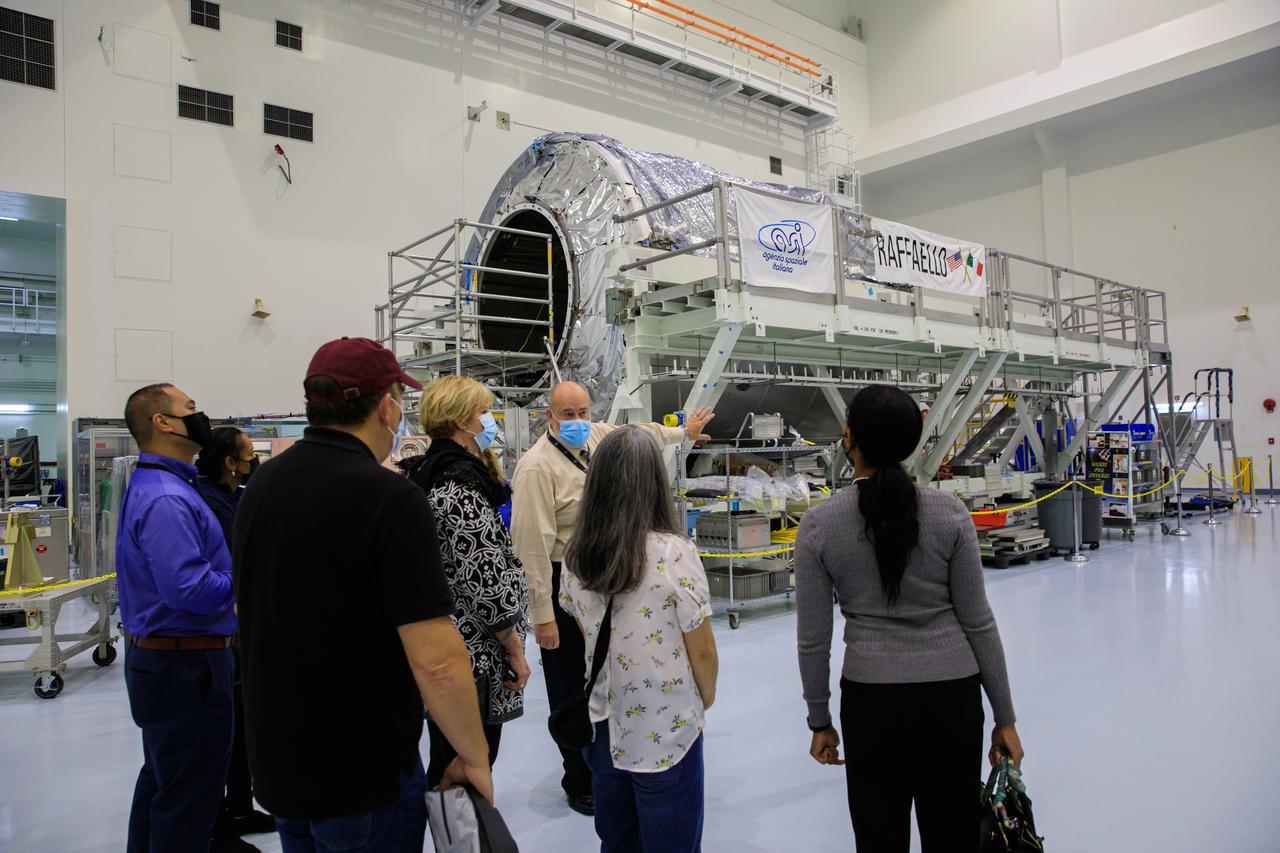
Senior leaders with Kennedy Space Center in Florida, familiarize newly appointed officials from NASA Headquarters with the center’s facilities during a tour on April 19, 2021. The group views the Raffaello Multi-Purpose Logistics Module inside the Space Station Processing Facility high bay.
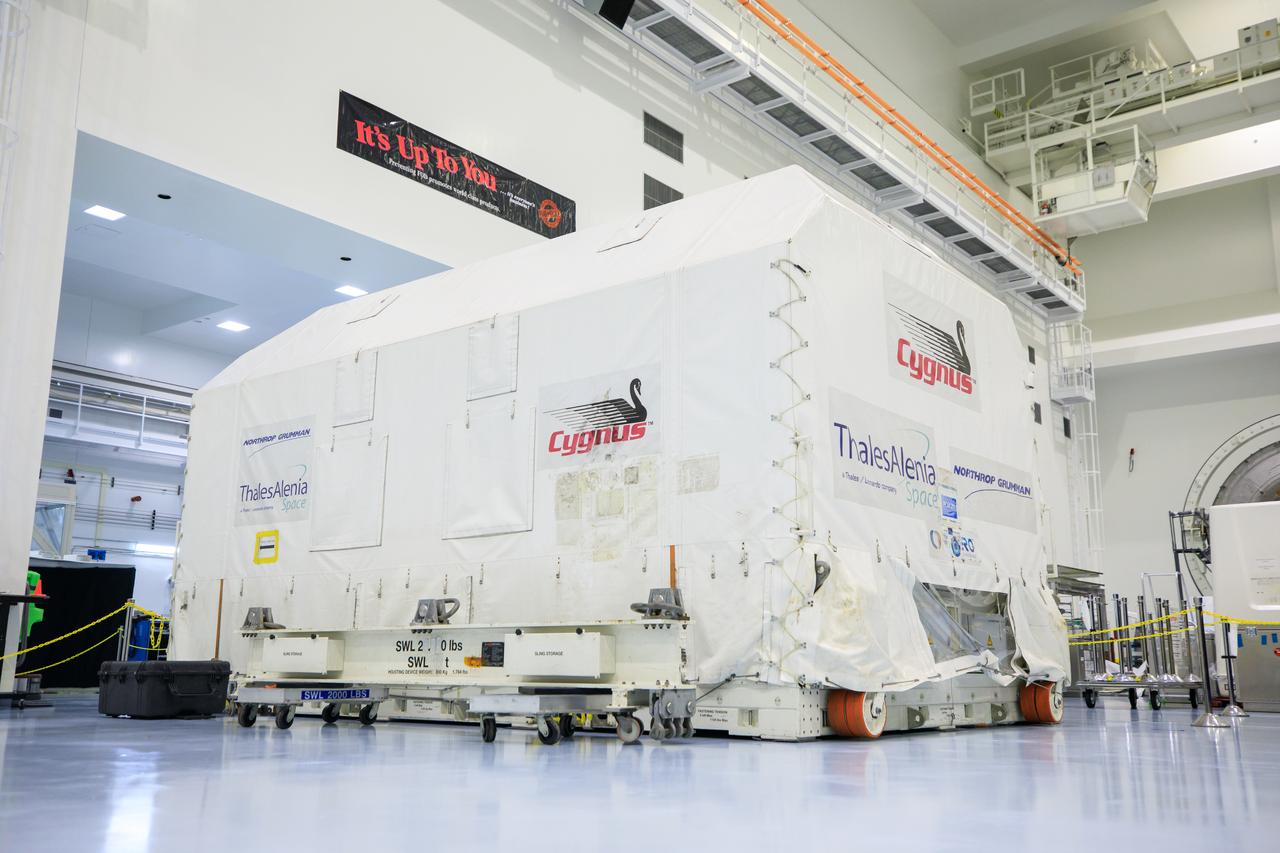
Northrop Grumman’s Cygnus pressurized cargo module for the company’s 20th commercial resupply mission arrives in its environmentally controlled shipping container inside the high bay in the Space Station Processing Facility at NASA's Kennedy Space Center in Florida on Aug. 2, 2023. Cygnus will launch later this year atop a SpaceX Falcon 9 rocket from Cape Canaveral Space Force Station’s Space Launch Complex 40 to the International Space Station. Cygnus will undergo prelaunch processing at Kennedy before it is transported to SpaceX’s integration facility.
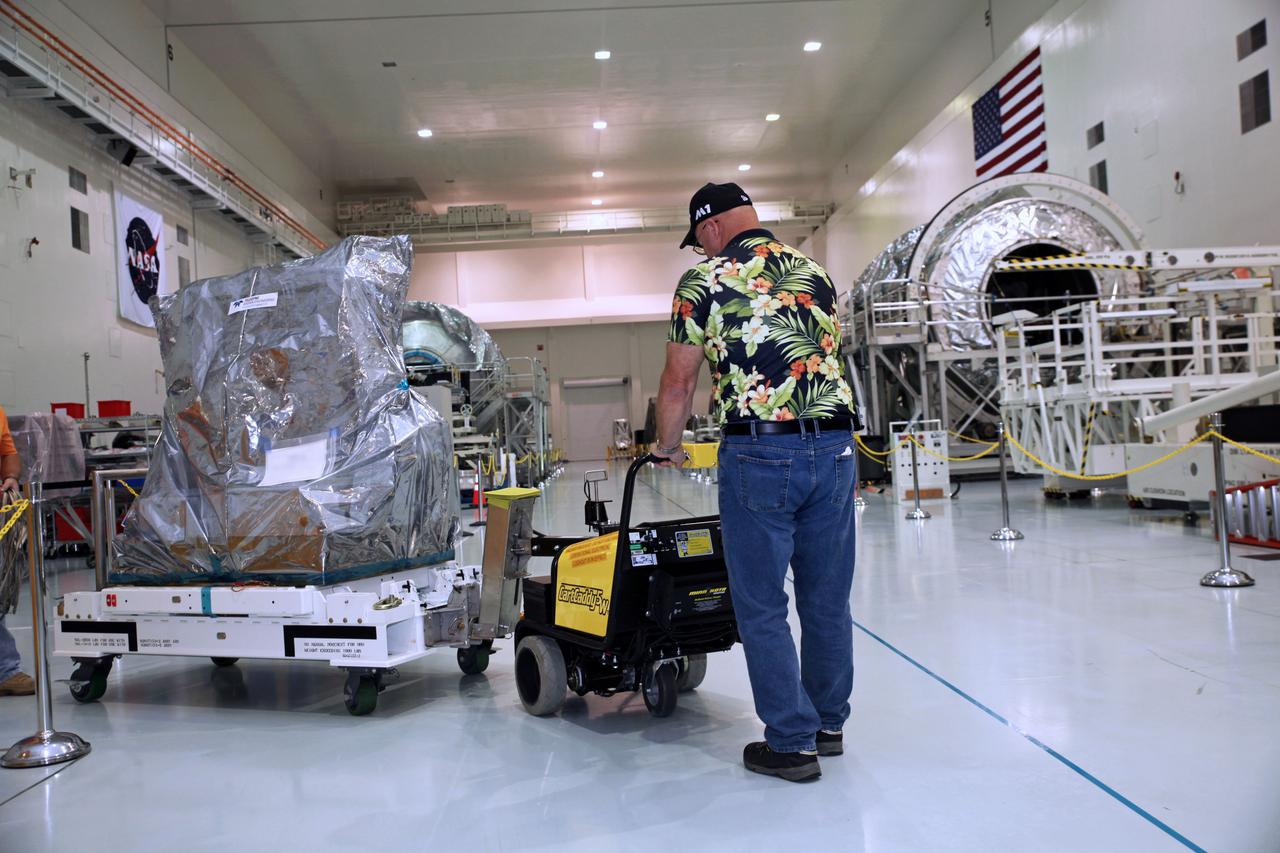
Inside the Space Station Processing Facility high bay at NASA's Kennedy Space Center in Florida, the Multiple User System for Earth Sensing, or MUSES, payload is being prepared for transfer out of the high bay. MUSES will be delivered to the International Space Station aboard the SpaceX Dragon cargo carrier on the company’s 11th commercial resupply services mission to the space station. MUSES, developed by Teledyne Brown, is part of the company's new commercial space-based digital imaging business. MUSES hosts earth-viewing instruments, such as high-resolution digital cameras, hyperspectral imagers, and provides precision pointing and other accommodations.
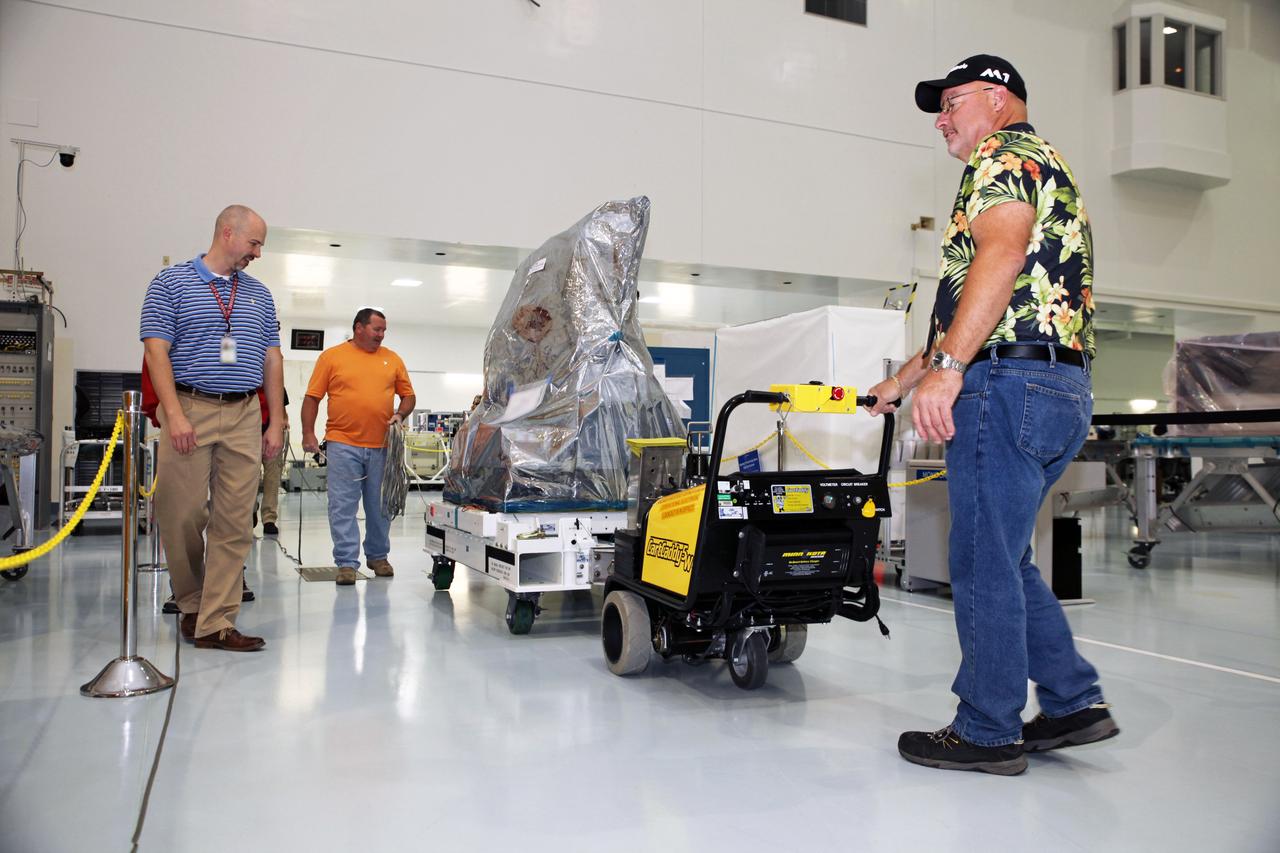
Inside the Space Station Processing Facility high bay at NASA's Kennedy Space Center in Florida, the Multiple User System for Earth Sensing, or MUSES, payload is being prepared for transfer out of the high bay. MUSES will be delivered to the International Space Station aboard the SpaceX Dragon cargo carrier on the company’s 11th commercial resupply services mission to the space station. MUSES, developed by Teledyne Brown, is part of the company's new commercial space-based digital imaging business. MUSES hosts earth-viewing instruments, such as high-resolution digital cameras, hyperspectral imagers, and provides precision pointing and other accommodations.
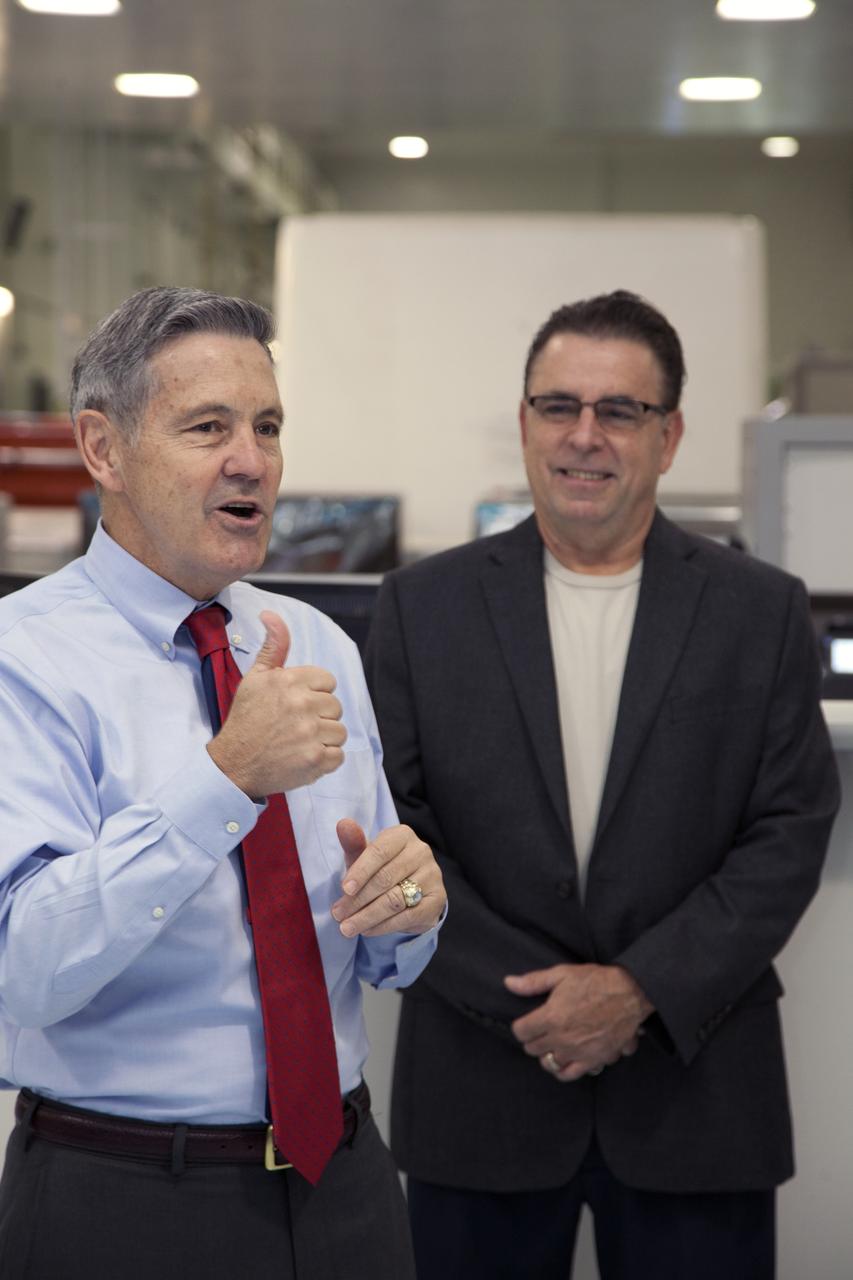
Kennedy Space Center Director Bob Cabana, left, speaks to guests during a ribbon cutting ceremony in the high bay of the Space Station Processing Facility at the Florida Space port. With him is Bill Dowdell, International Space Station technical director. The event celebrated completion of facility modifications to improve processing and free up zones tailored to a variety of needs supporting a robust assortment of space-bound hardware including NASA programs and commercial space companies.
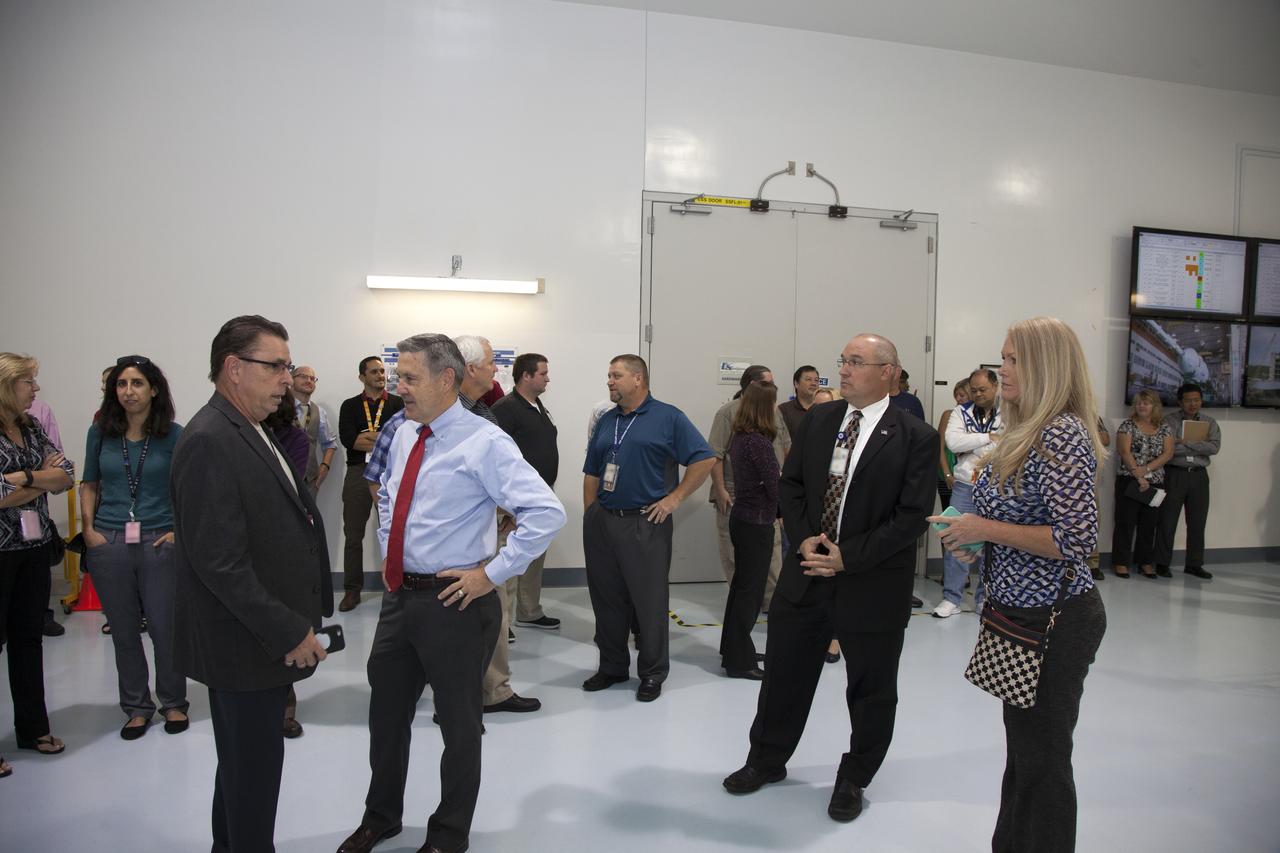
Kennedy Space Center Director Bob Cabana, center, talks with Bill Dowdell, Kennedy's International Space Station technical director, during a ribbon cutting ceremony in the high bay of the Space Station Processing Facility at the Florida spaceport. The event celebrated completion of facility modifications to improve processing and free up zones tailored to a variety of needs supporting a robust assortment of space-bound hardware including NASA programs and commercial space companies.
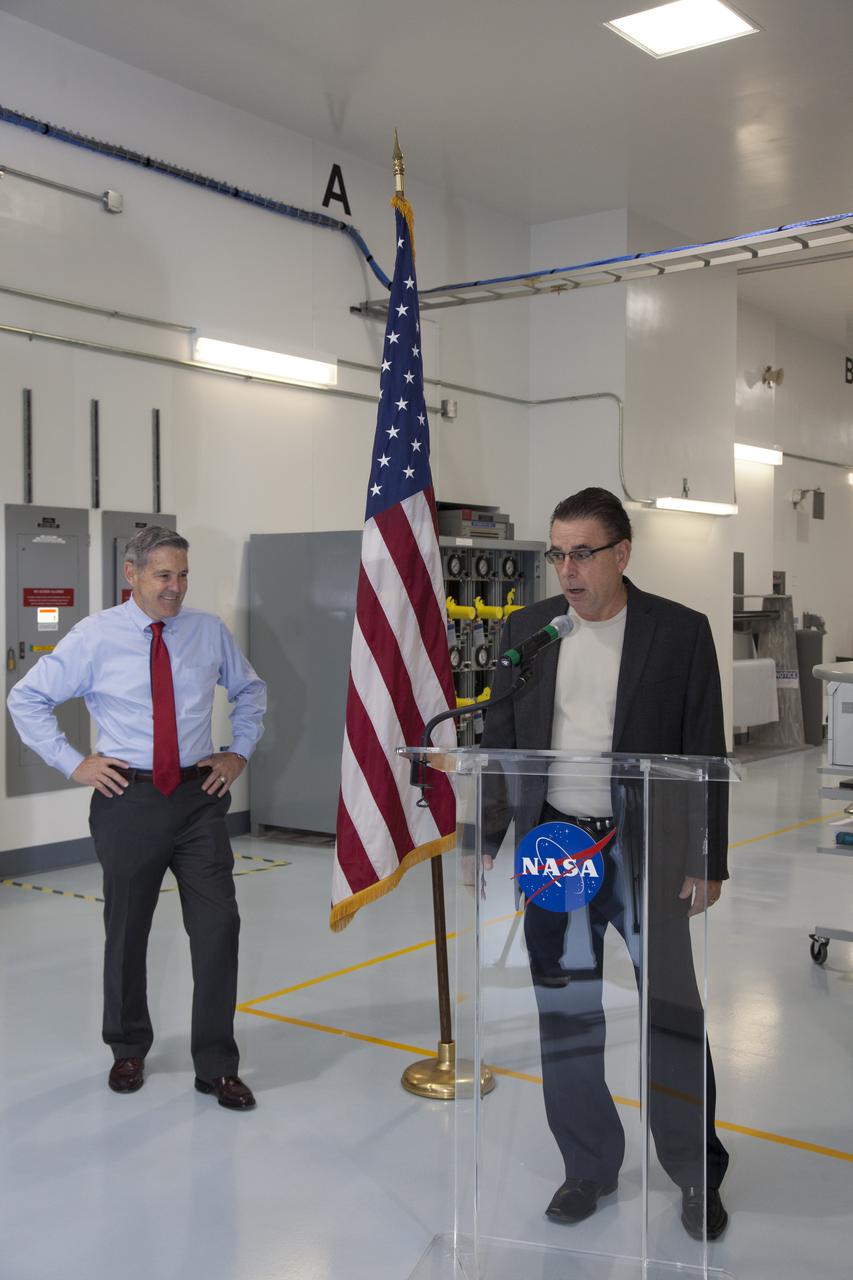
Bill Dowdell, International Space Station technical director, speaks to guests during a ribbon cutting ceremony in the high bay of the Space Station Processing Facility at NASA's Kennedy Space Center in Florida spaceport. Joining him is Kennedy's director, Bob Cabana. The event celebrated completion of facility modifications to improve processing and free up zones tailored to a variety of needs supporting a robust assortment of space-bound hardware including NASA programs and commercial space companies.
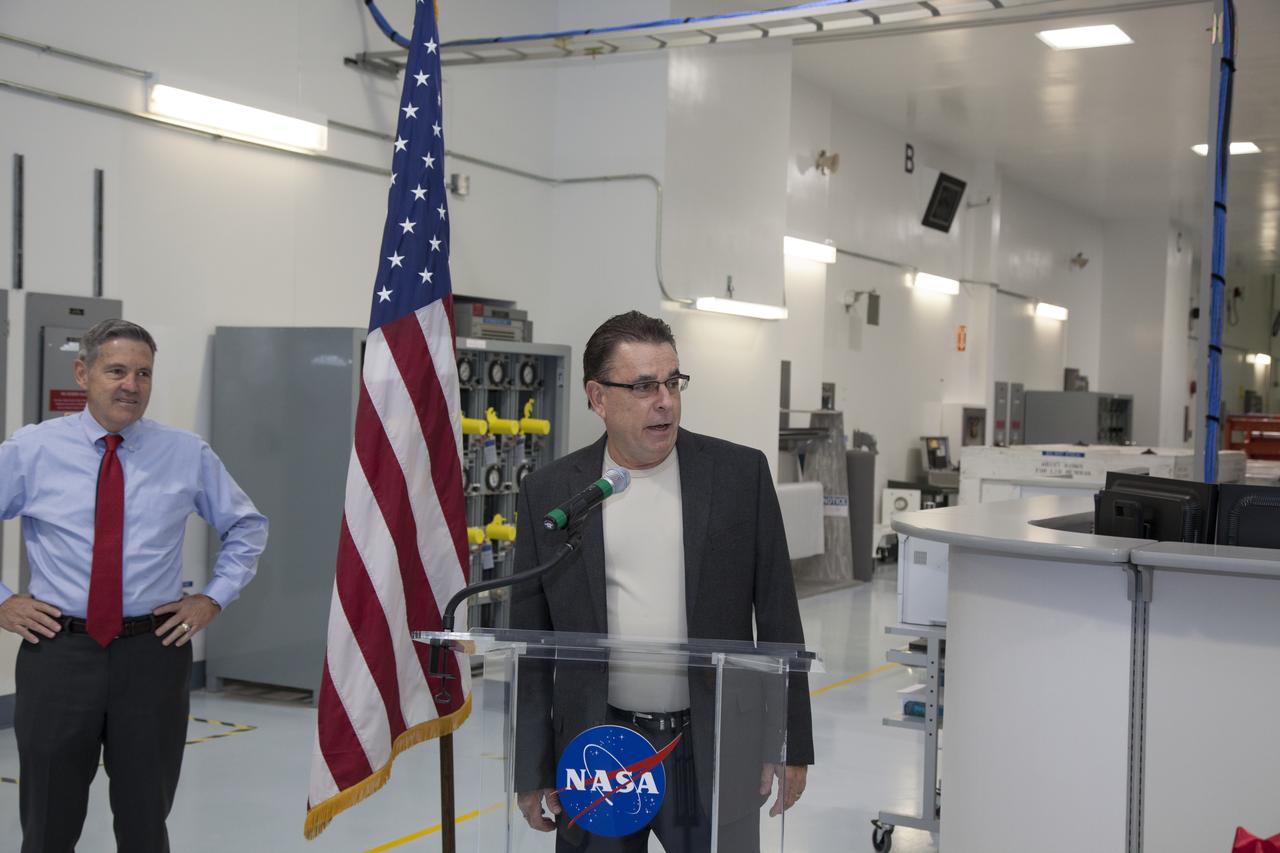
Bill Dowdell, International Space Station technical director, speaks to guests during a ribbon cutting ceremony in the high bay of the Space Station Processing Facility at NASA's Kennedy Space Center in Florida spaceport. Joining him is Kennedy's director, Bob Cabana. The event celebrated completion of facility modifications to improve processing and free up zones tailored to a variety of needs supporting a robust assortment of space-bound hardware including NASA programs and commercial space companies.
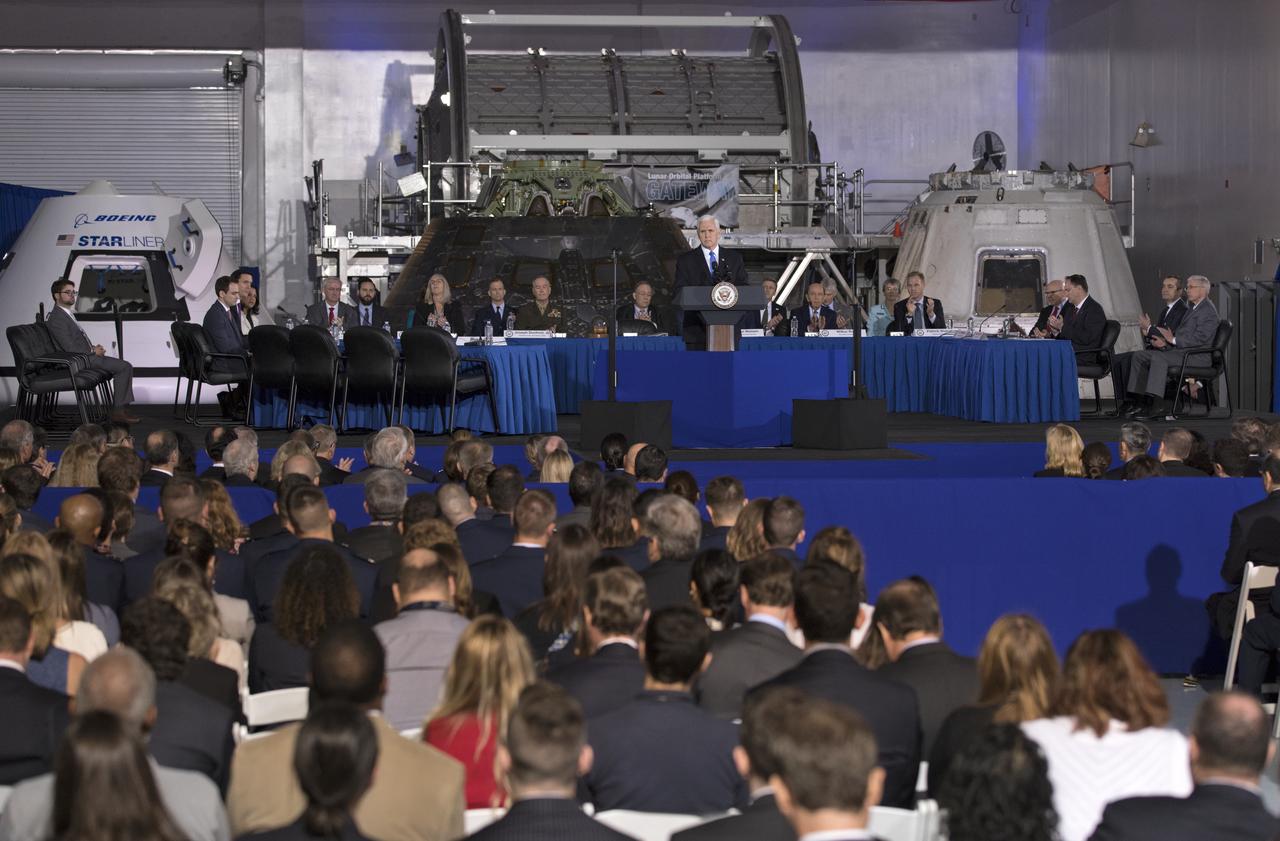
Vice President Mike Pence chairs a meeting of the National Space Council in the high bay of the Space Station Processing Facility at NASA's Kennedy Space Center in Florida, on Feb. 21, 2018. The council's role is to advise the president regarding national space policy and strategy, and review the nation's long-range goals for space activities.
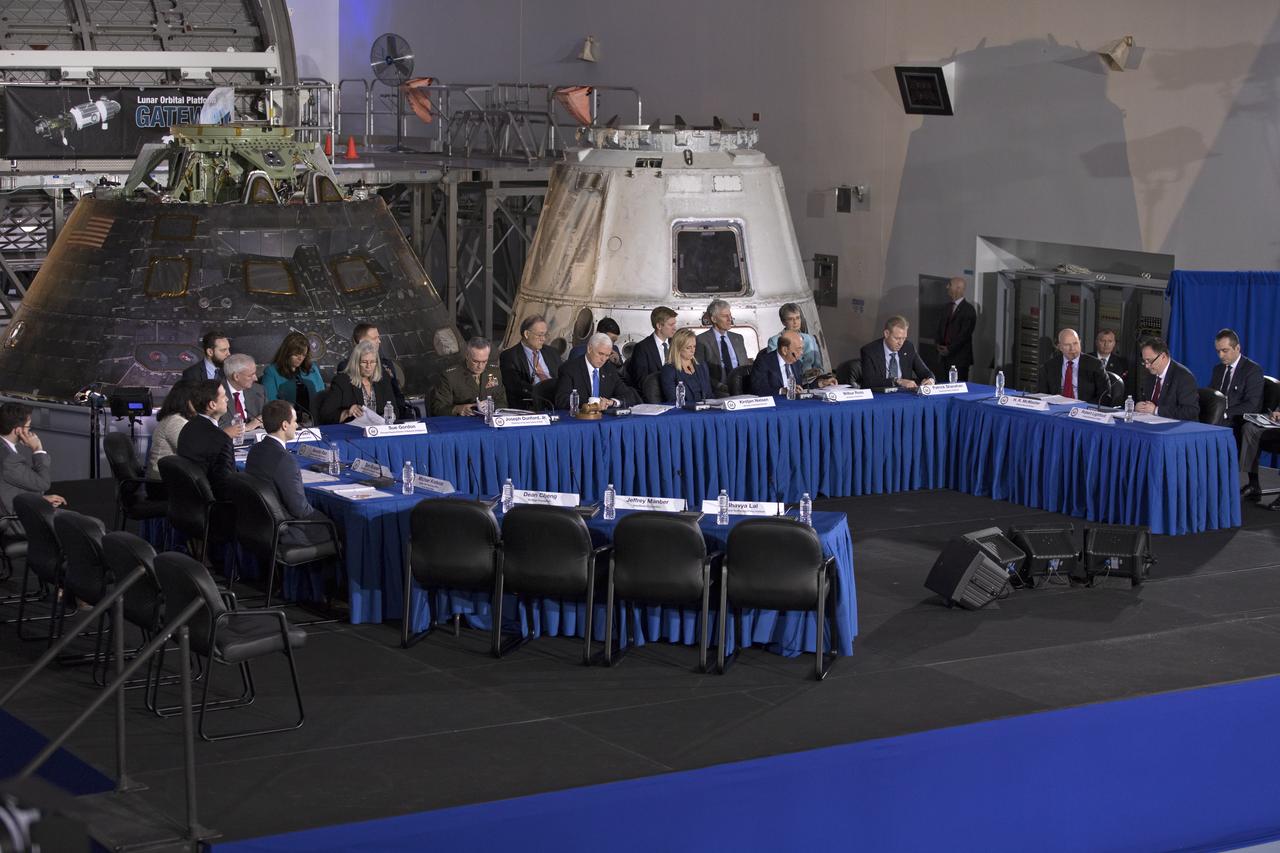
Members of the National Space Council meet in the high bay of the Space Station Processing Facility at NASA's Kennedy Space Center in Florida, on Feb. 21, 2018. Chaired by Vice President Mike Pence, the council's role is to advise the president regarding national space policy and strategy, and review the nation's long-range goals for space activities.
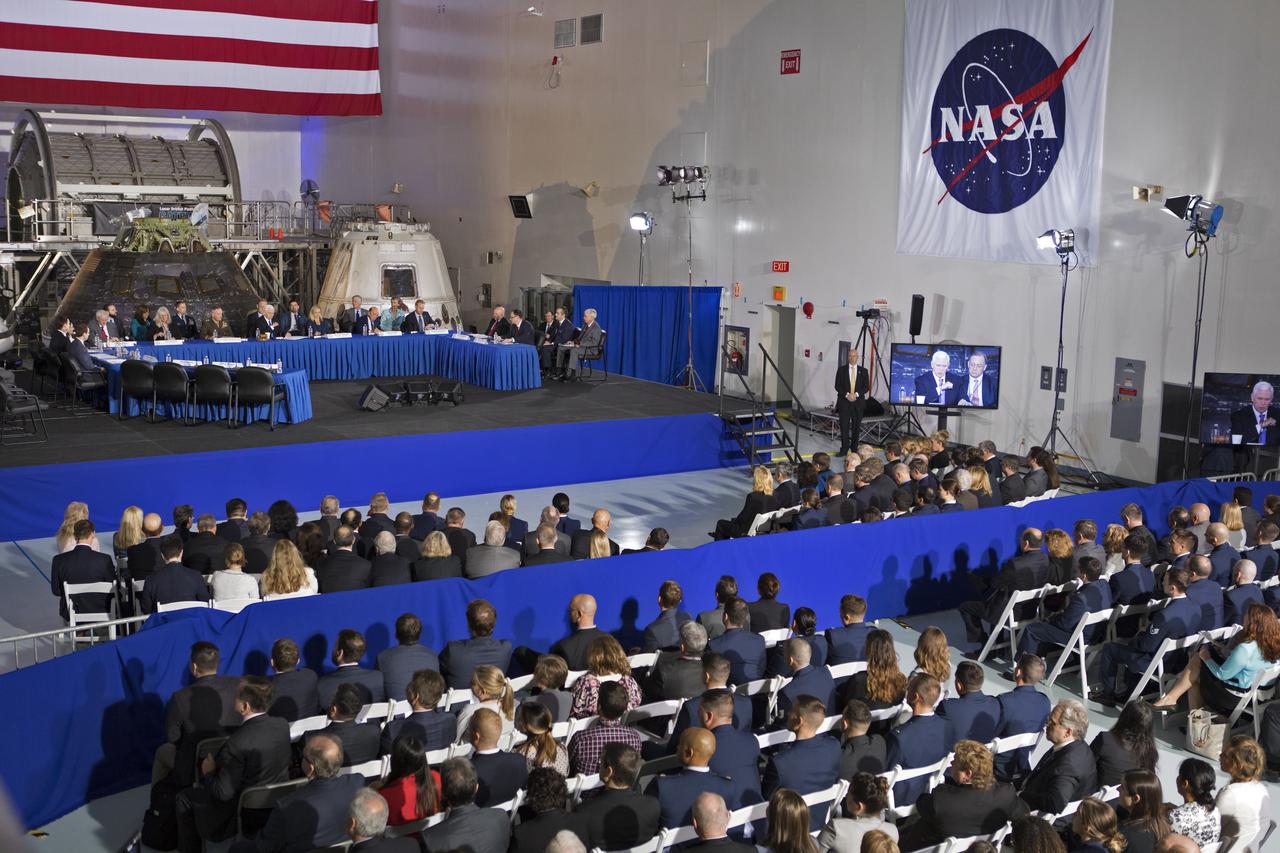
Members of the National Space Council meet in the high bay of the Space Station Processing Facility at NASA's Kennedy Space Center in Florida, on Feb. 21, 2018. Chaired by Vice President Mike Pence, the council's role is to advise the president regarding national space policy and strategy, and review the nation's long-range goals for space activities.
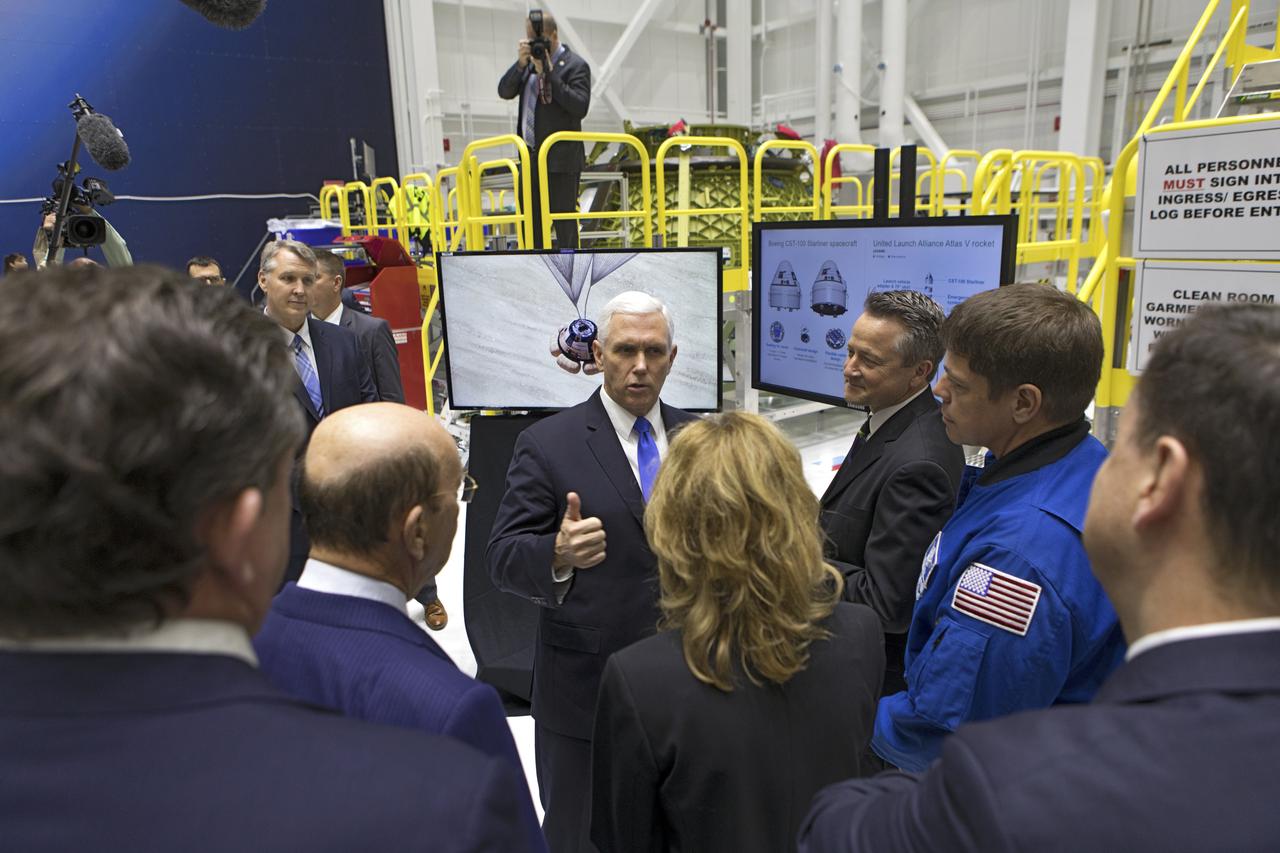
Vice President Mike Pence, center, speaks to Boeing executives and members of the National Space Council during a tour of the Boeing Commercial Crew and Cargo Processing Facility at NASA's Kennedy Space Center in Florida, on Feb. 21, 2018. During his visit, Pence chaired a meeting of the council in the high bay of the center's Space Station Processing Facility. The council's role is to advise the president regarding national space policy and strategy, and review the nation's long-range goals for space activities.
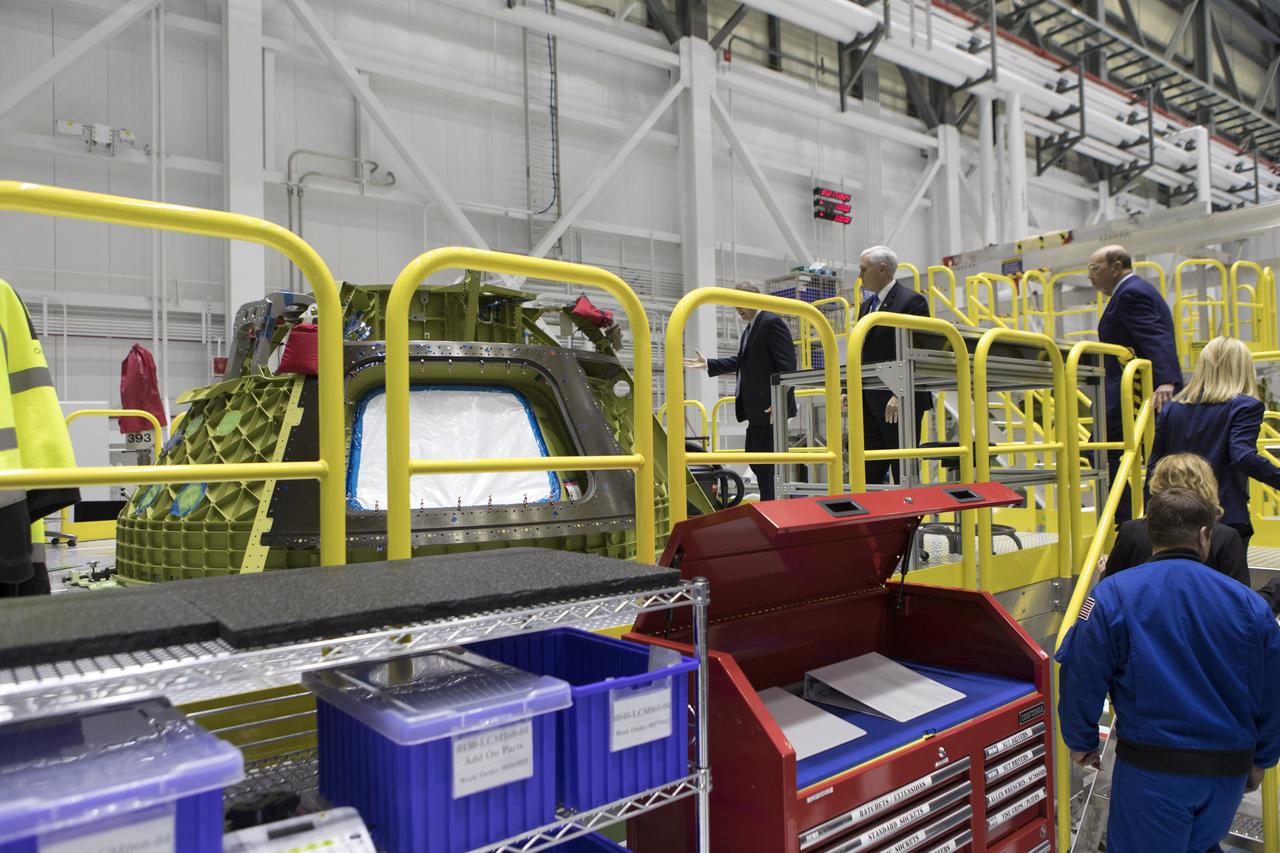
Vice President Mike Pence views Boeing’s Starliner spacecraft for the Crew Flight Test during a tour of the company’s Commercial Crew and Cargo Processing Facility at NASA's Kennedy Space Center in Florida, on Feb. 21, 2018. During his visit, Pence chaired a meeting of the National Space Council in the high bay of the center's Space Station Processing Facility. The council's role is to advise the president regarding national space policy and strategy, and review the nation's long-range goals for space activities.
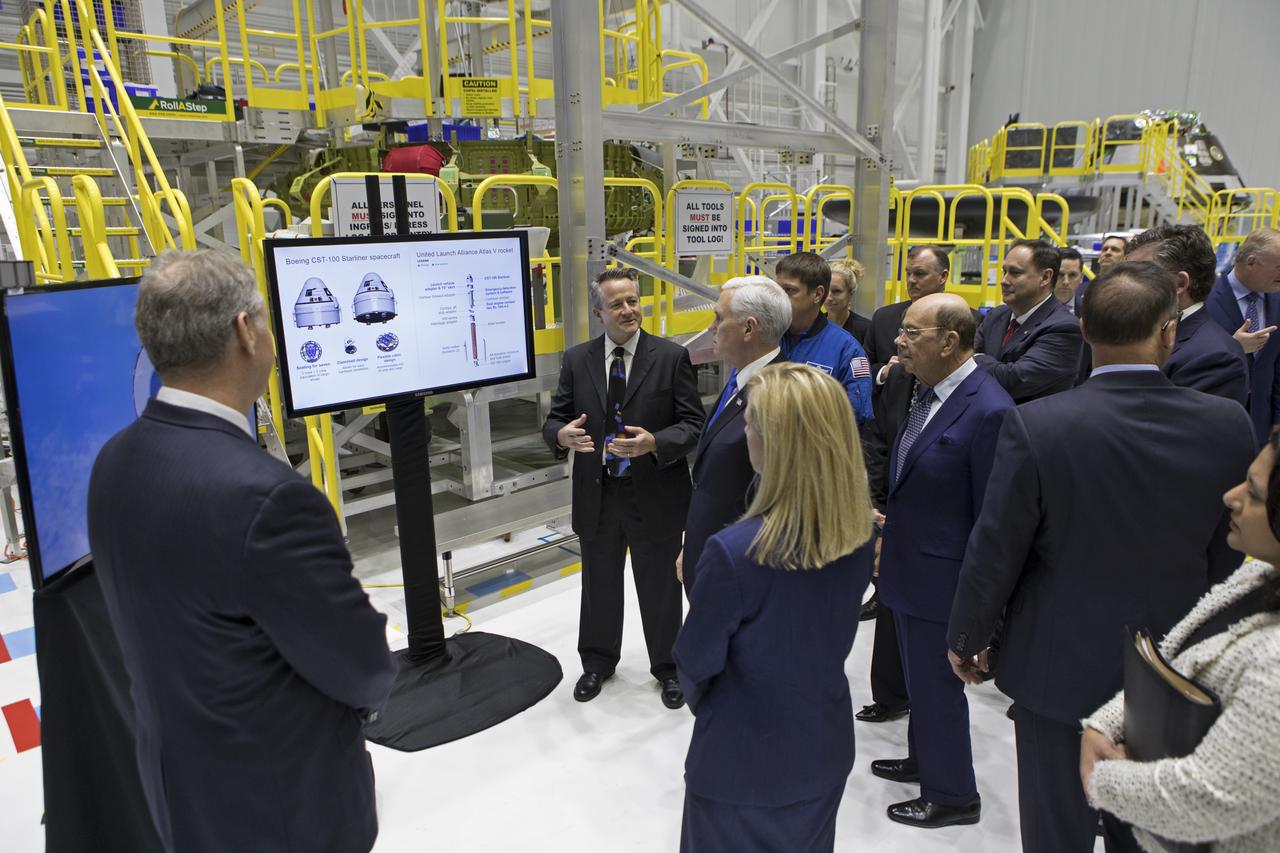
Vice President Mike Pence, center, and members of the National Space Council hear from a Boeing employee during a tour of the Boeing Commercial Crew and Cargo Processing Facility at NASA's Kennedy Space Center in Florida, on Feb. 21, 2018. During his visit, Pence chaired a meeting of the council in the high bay of the center's Space Station Processing Facility. The council's role is to advise the president regarding national space policy and strategy, and review the nation's long-range goals for space activities.
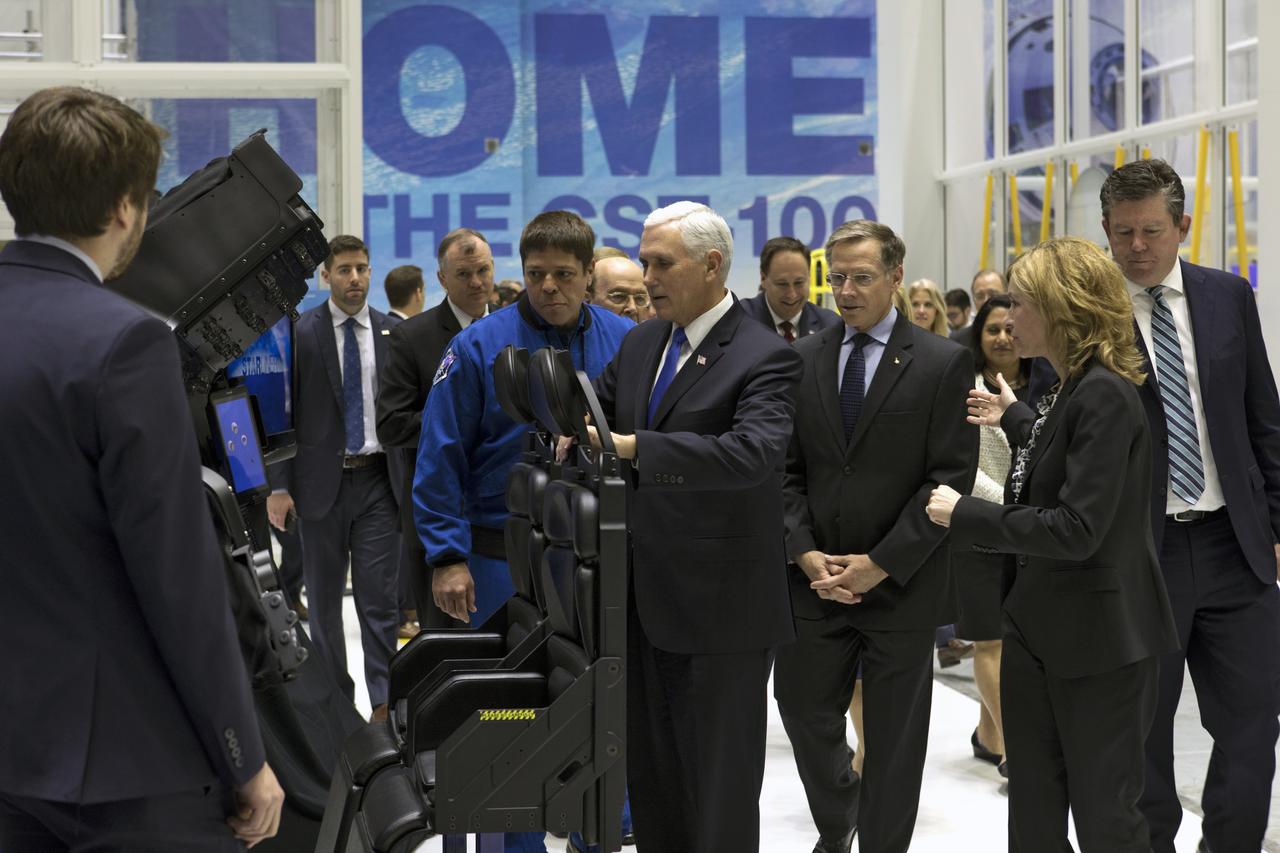
Vice President Mike Pence, center, NASA astronaut Bob Behnken, left, and Chris Ferguson, Boeing’s director of Crew and Mission Systems, tour the company’s Commercial Crew and Cargo Processing Facility at NASA's Kennedy Space Center in Florida, on Feb. 21, 2018. During his visit, Pence chaired a meeting of the National Space Council in the high bay of the center's Space Station Processing Facility. The council's role is to advise the president regarding national space policy and strategy, and review the nation's long-range goals for space activities.
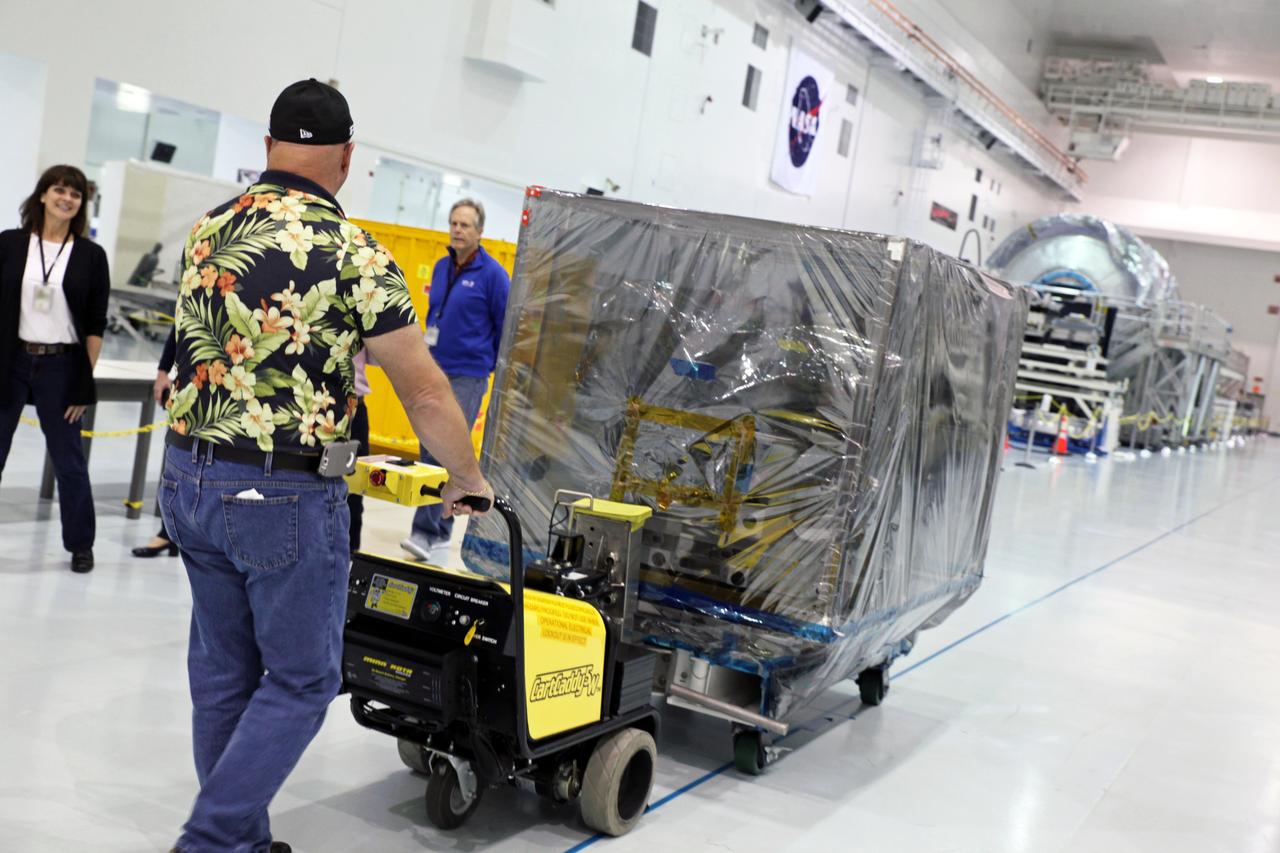
Inside the Space Station Processing Facility high bay at NASA's Kennedy Space Center in Florida, the Roll-Out Solar Array, or ROSA, is being prepared for transfer out of the high bay. ROSA will be delivered to the International Space Station aboard the SpaceX Dragon cargo carrier on the company’s 11th commercial resupply services mission to the space station. ROSA is a new type of solar panel that rolls open in space and is more compact than current rigid panel designs. The ROSA investigation will test deployment and retraction, shape changes when the Earth blocks the sun, and other physical challenges to determine the array's strength and durability.
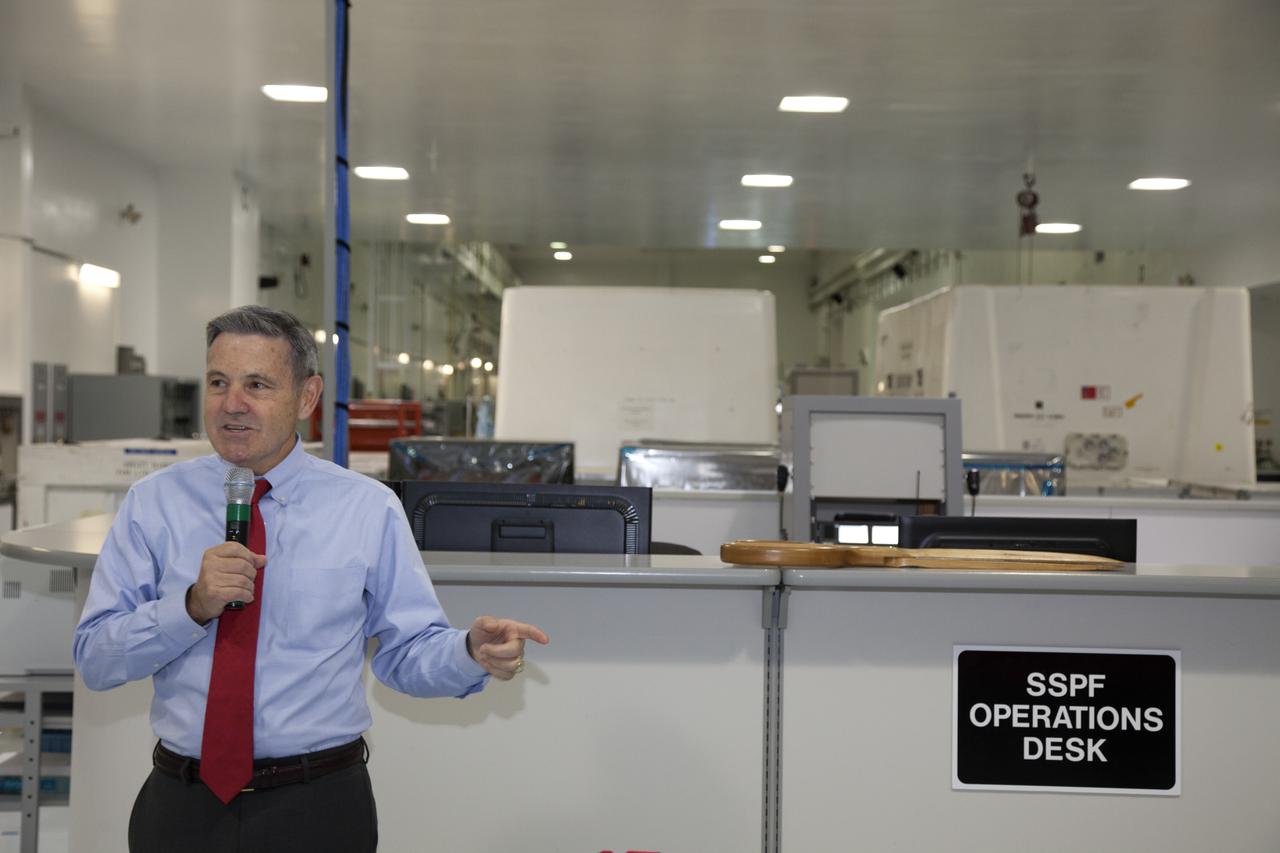
Kennedy Space Center Director Bob Cabana speaks to guests during a ribbon cutting ceremony in the high bay of the Space Station Processing Facility at the Florida spaceport. The event celebrated completion of facility modifications to improve processing and free up zones tailored to a variety of needs supporting a robust assortment of space-bound hardware including NASA programs and commercial space companies.
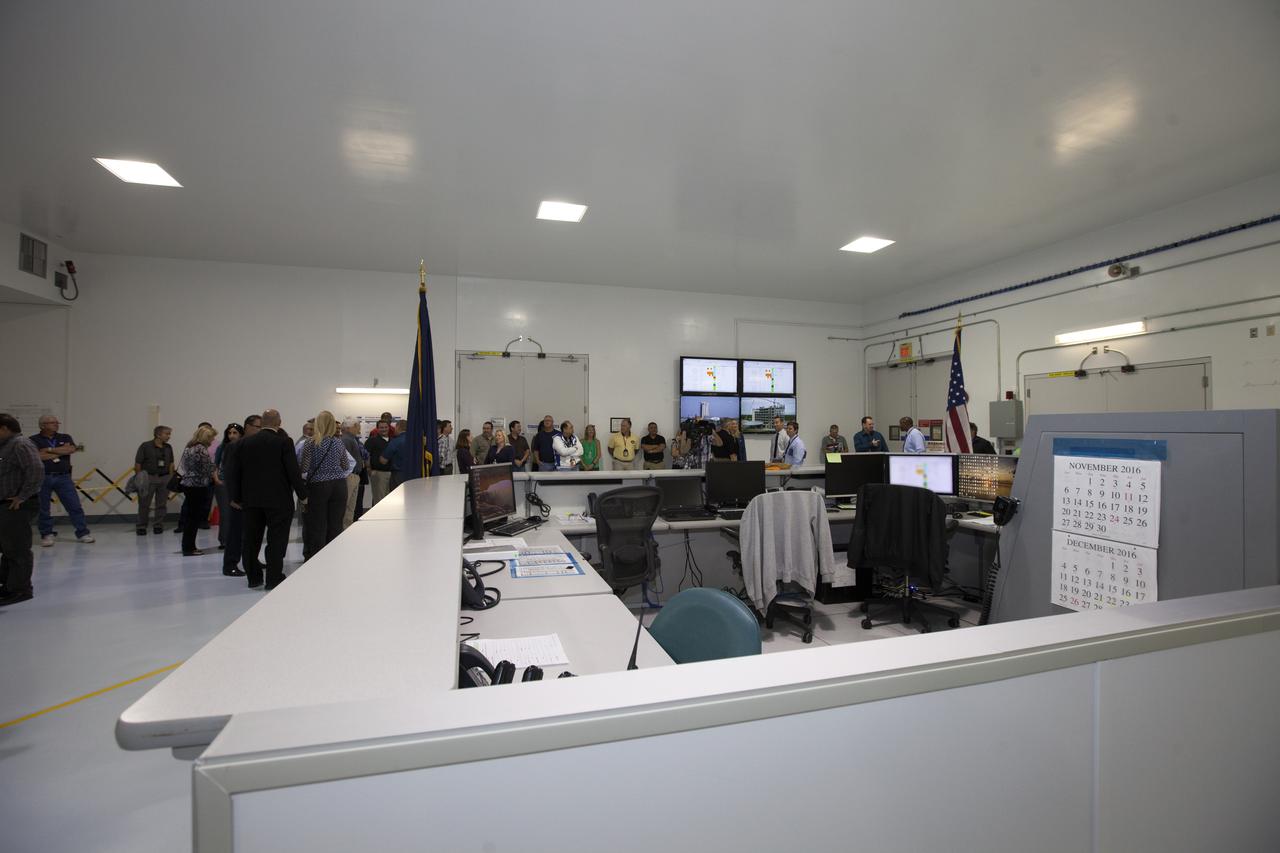
A crowd gathers for a ribbon cutting ceremony in the high bay of the Space Station Processing Facility at NASA's Kennedy Space Center in Florida. The event celebrated completion of facility modifications to improve processing and free up zones tailored to a variety of needs supporting a robust assortment of space-bound hardware including NASA programs and commercial space companies.
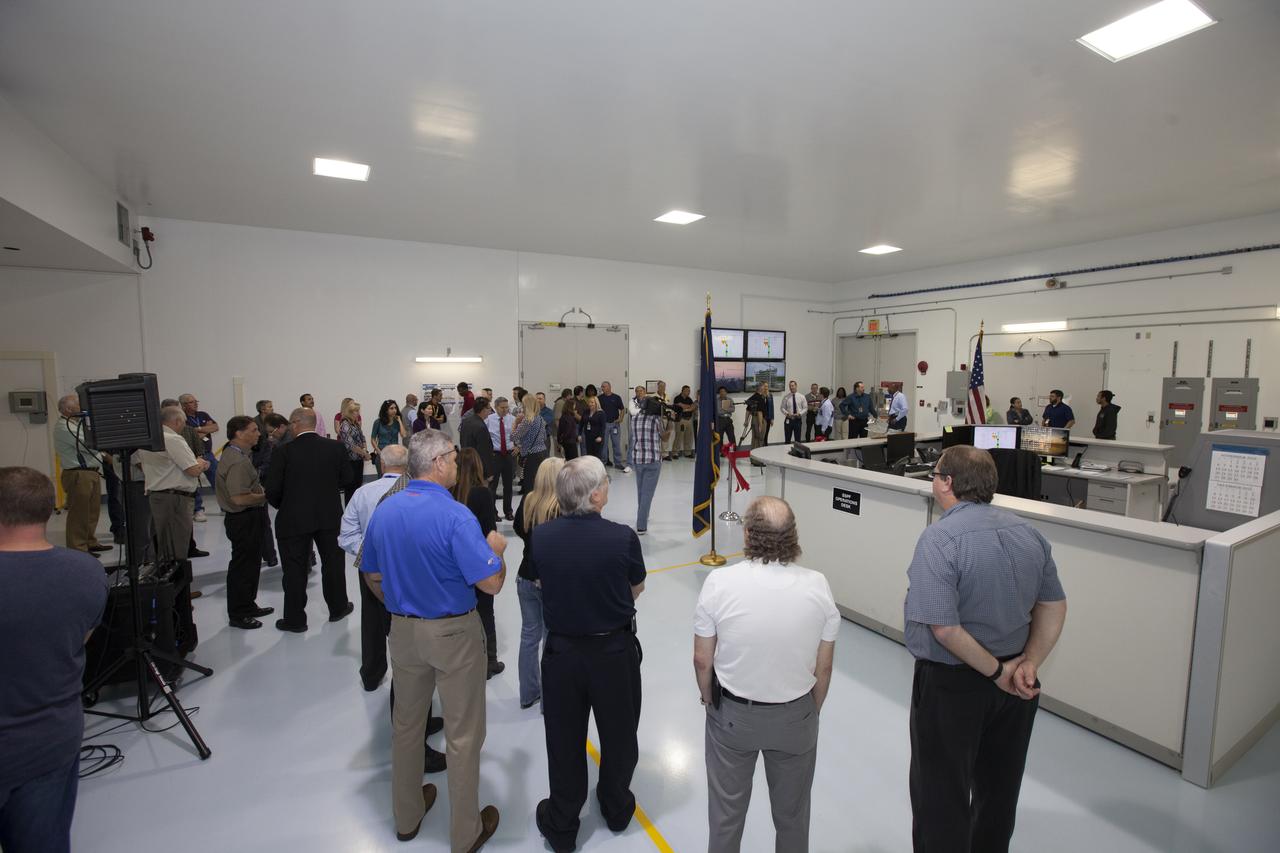
A crowd gathers for a ribbon cutting ceremony in the high bay of the Space Station Processing Facility at NASA's Kennedy Space Center in Florida. The event celebrated completion of facility modifications to improve processing and free up zones tailored to a variety of needs supporting a robust assortment of space-bound hardware including NASA programs and commercial space companies.
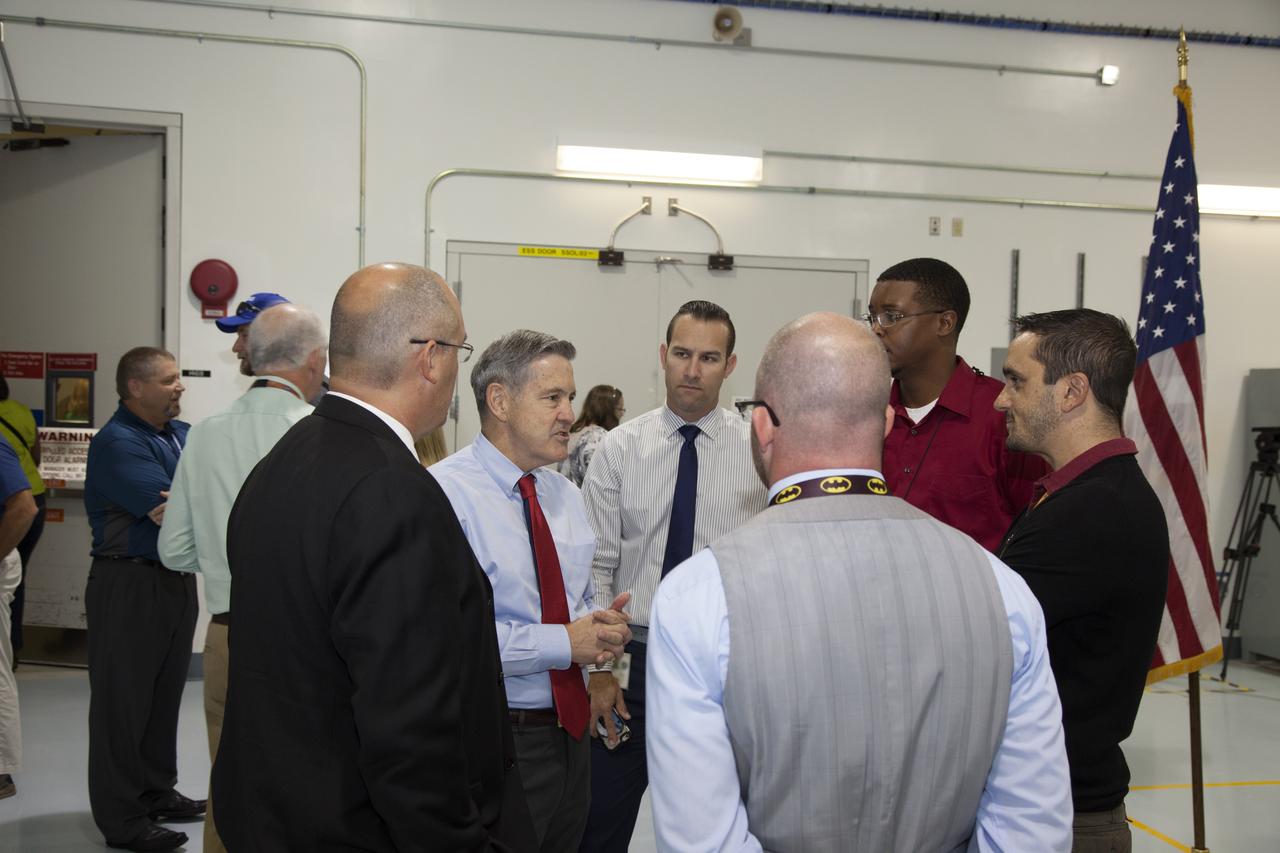
Kennedy Space Center Director Bob Cabana, center, speaks to guests during a ribbon cutting ceremony in the high bay of the Space Station Processing Facility at the Florida Spaceport. The event celebrated completion of facility modifications to improve processing and free up zones tailored to a variety of needs supporting a robust assortment of space-bound hardware including NASA programs and commercial space companies.
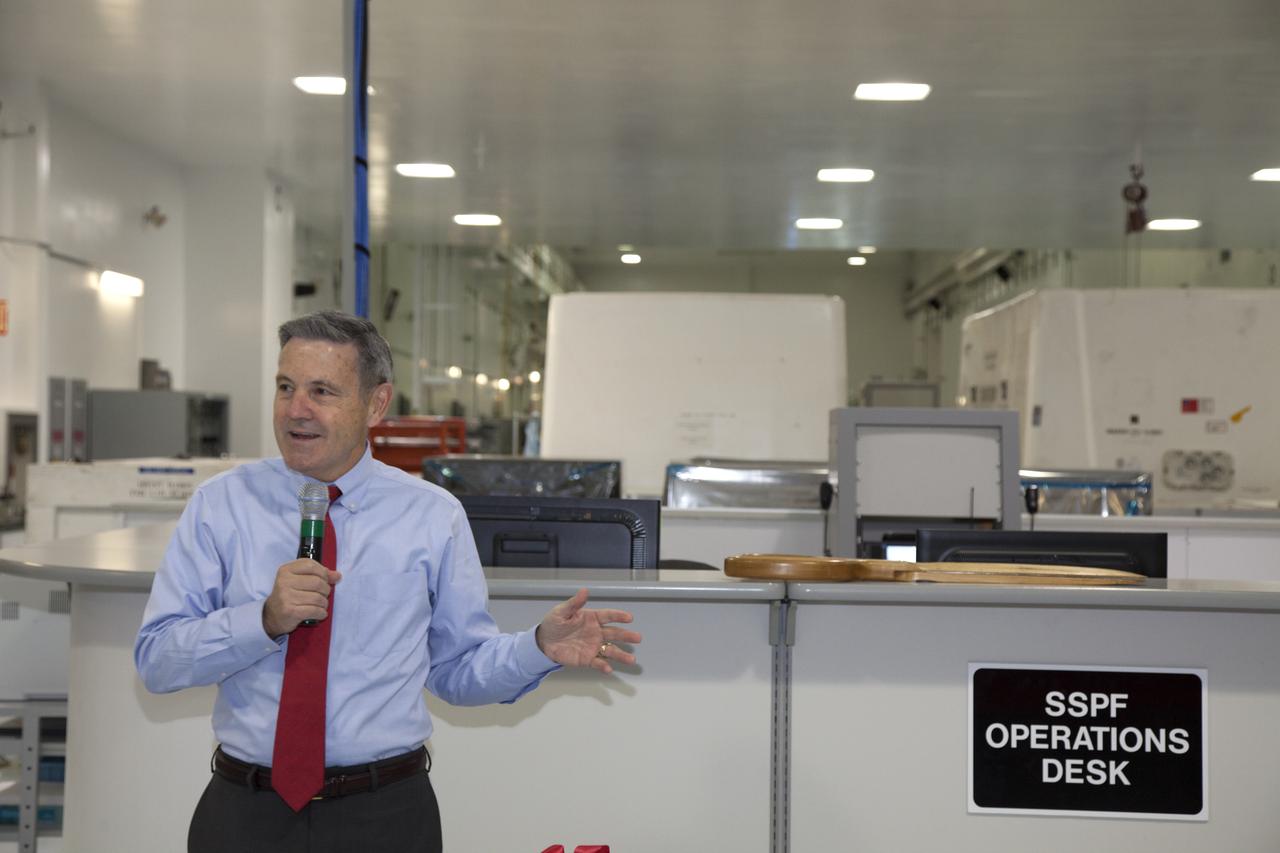
Kennedy Space Center Director Bob Cabana speaks to guests during a ribbon cutting ceremony in the high bay of the Space Station Processing Facility at the Florida spaceport. The event celebrated completion of facility modifications to improve processing and free up zones tailored to a variety of needs supporting a robust assortment of space-bound hardware including NASA programs and commercial space companies.
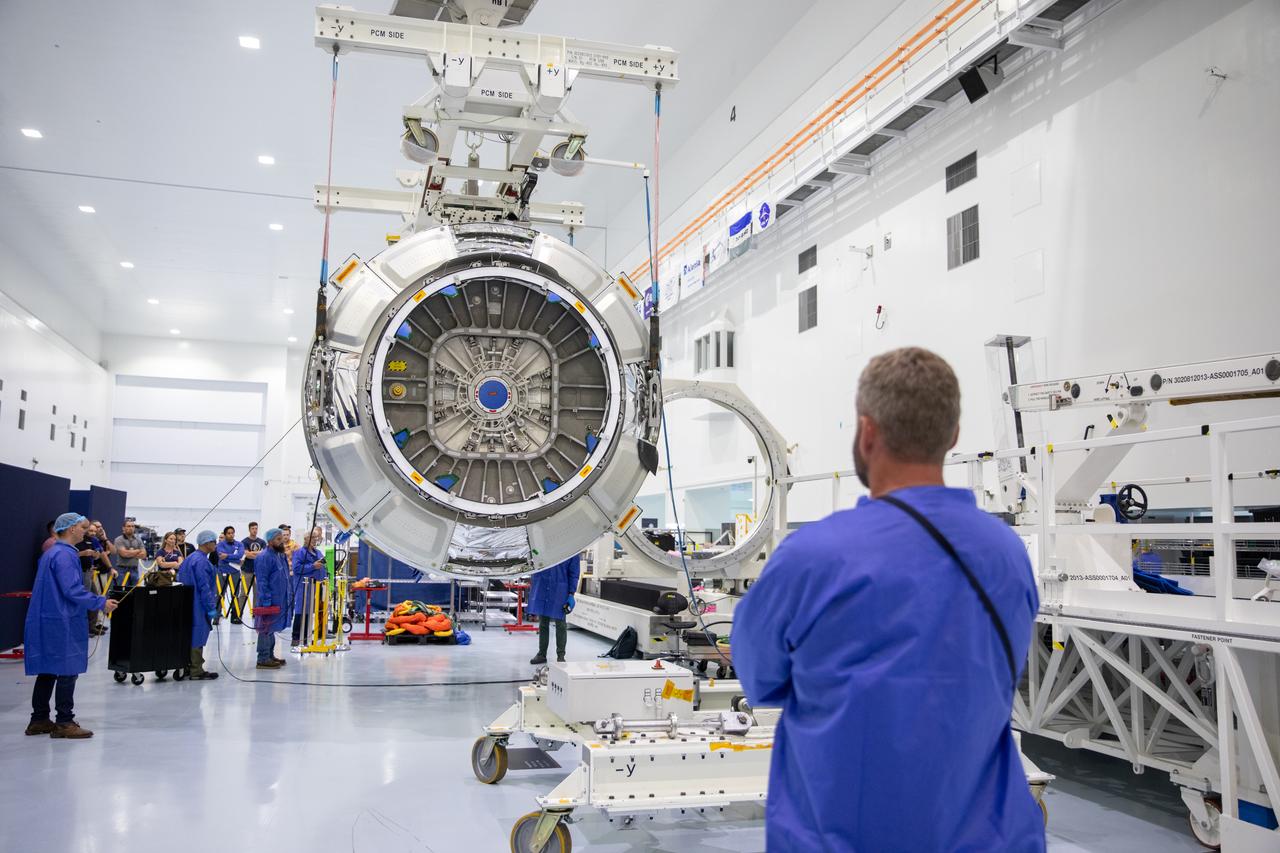
The Northrop Grumman Cygnus spacecraft’s pressurized cargo module (PCM) for the company’s 20th commercial resupply mission is lifted and moved by crane inside the high bay in the Space Station Processing Facility at NASA’s Kennedy Space Center in Florida on Monday, Sept. 18, 2023. The next step is vehicle processing for the mission to the International Space Station. Liftoff, aboard a SpaceX Falcon 9 rocket, will be from Cape Canaveral Space Force Station’s Space Launch Complex 40.
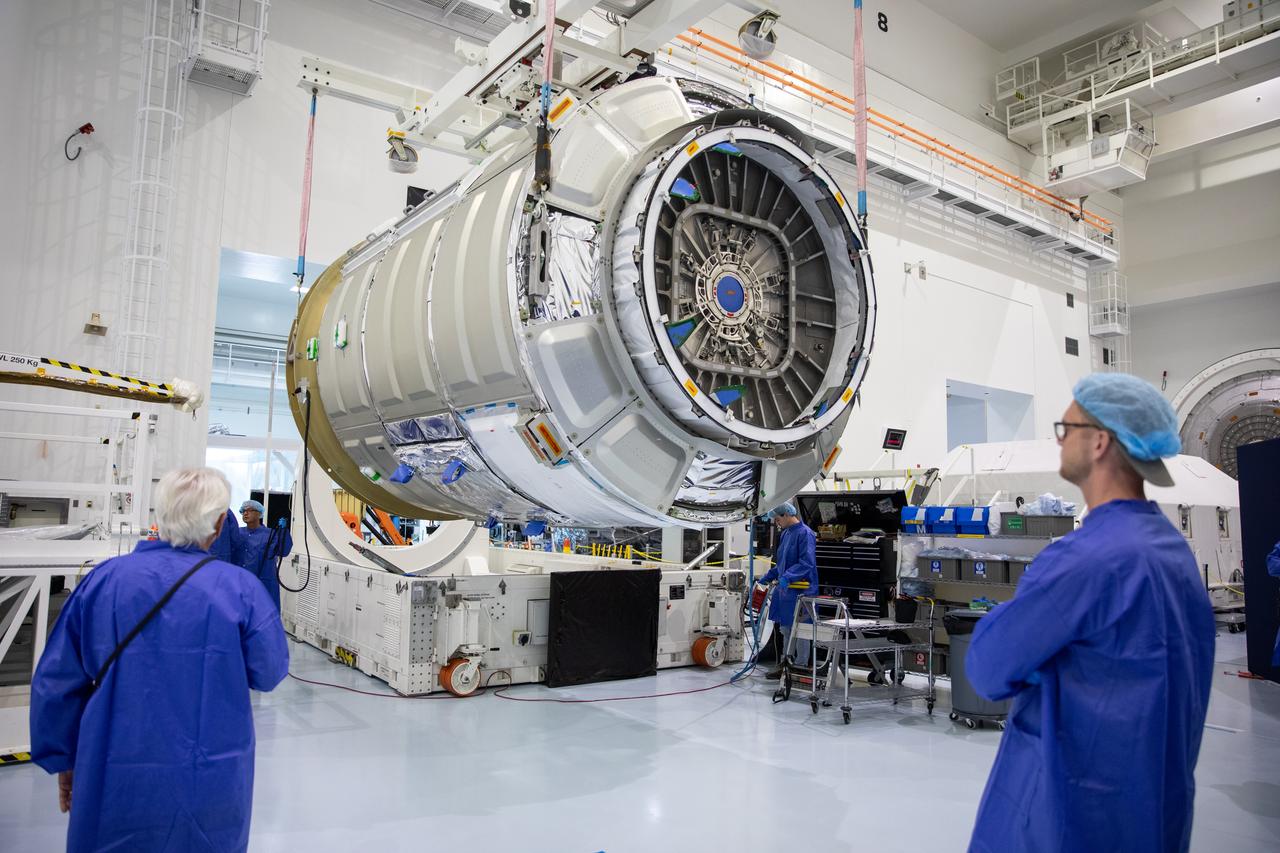
The Northrop Grumman Cygnus spacecraft’s pressurized cargo module (PCM) for the company’s 20th commercial resupply mission is lifted and moved by crane inside the high bay in the Space Station Processing Facility at NASA’s Kennedy Space Center in Florida on Monday, Sept. 18, 2023. The next step is vehicle processing for the mission to the International Space Station. Liftoff, aboard a SpaceX Falcon 9 rocket, will be from Cape Canaveral Space Force Station’s Space Launch Complex 40.
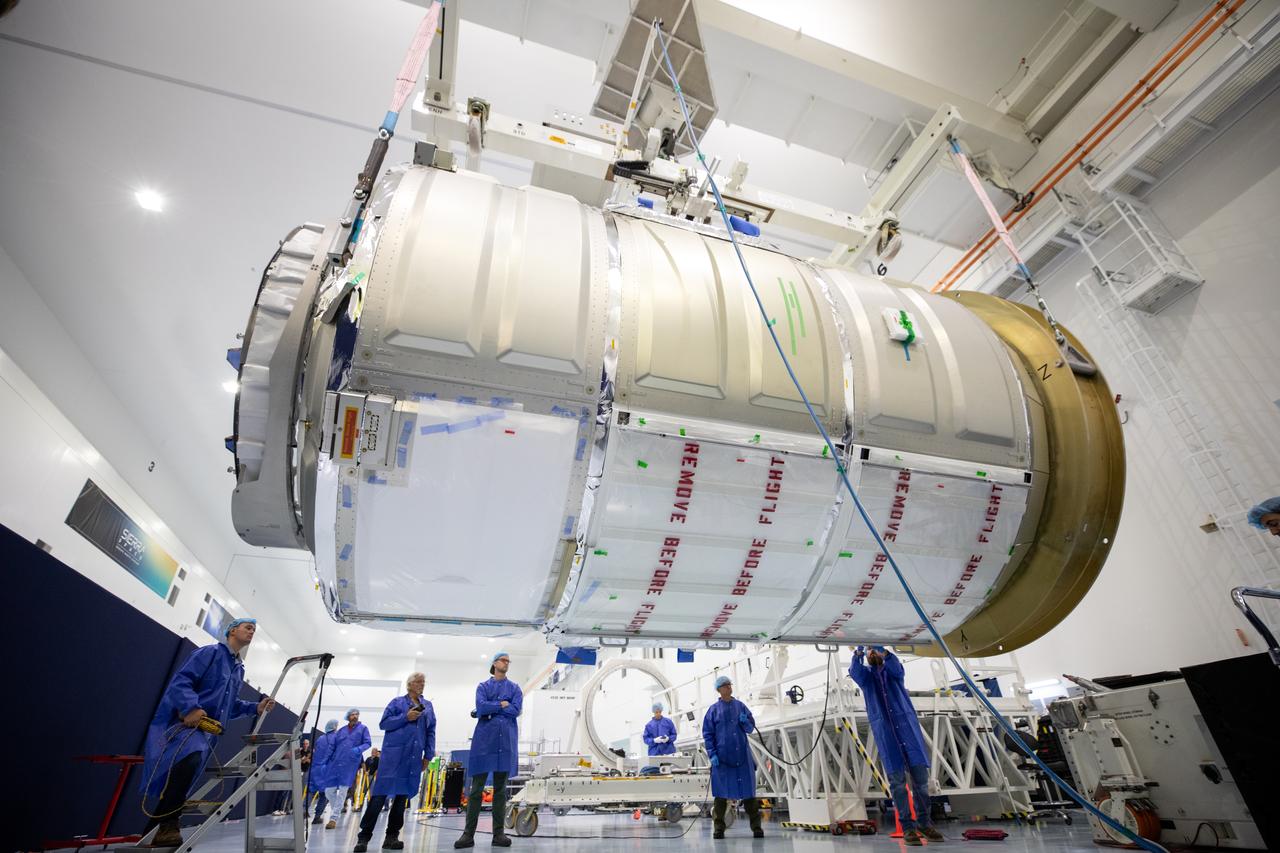
The Northrop Grumman Cygnus spacecraft’s pressurized cargo module (PCM) for the company’s 20th commercial resupply mission is lifted and moved by crane inside the high bay in the Space Station Processing Facility at NASA’s Kennedy Space Center in Florida on Monday, Sept. 18, 2023. The next step is vehicle processing for the mission to the International Space Station. Liftoff, aboard a SpaceX Falcon 9 rocket, will be from Cape Canaveral Space Force Station’s Space Launch Complex 40.
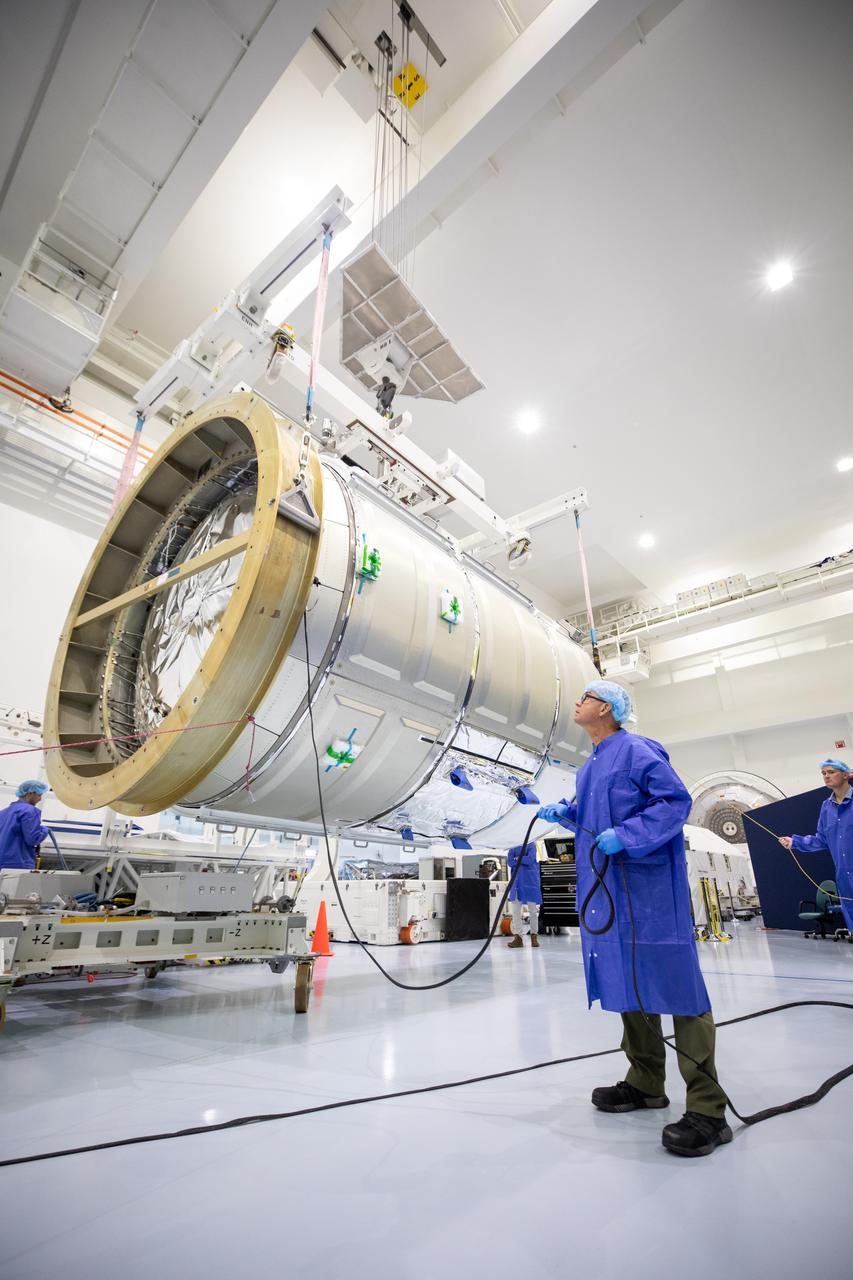
The Northrop Grumman Cygnus spacecraft’s pressurized cargo module (PCM) for the company’s 20th commercial resupply mission is lifted and moved by crane inside the high bay in the Space Station Processing Facility at NASA’s Kennedy Space Center in Florida on Monday, Sept. 18, 2023. The next step is vehicle processing for the mission to the International Space Station. Liftoff, aboard a SpaceX Falcon 9 rocket, will be from Cape Canaveral Space Force Station’s Space Launch Complex 40.
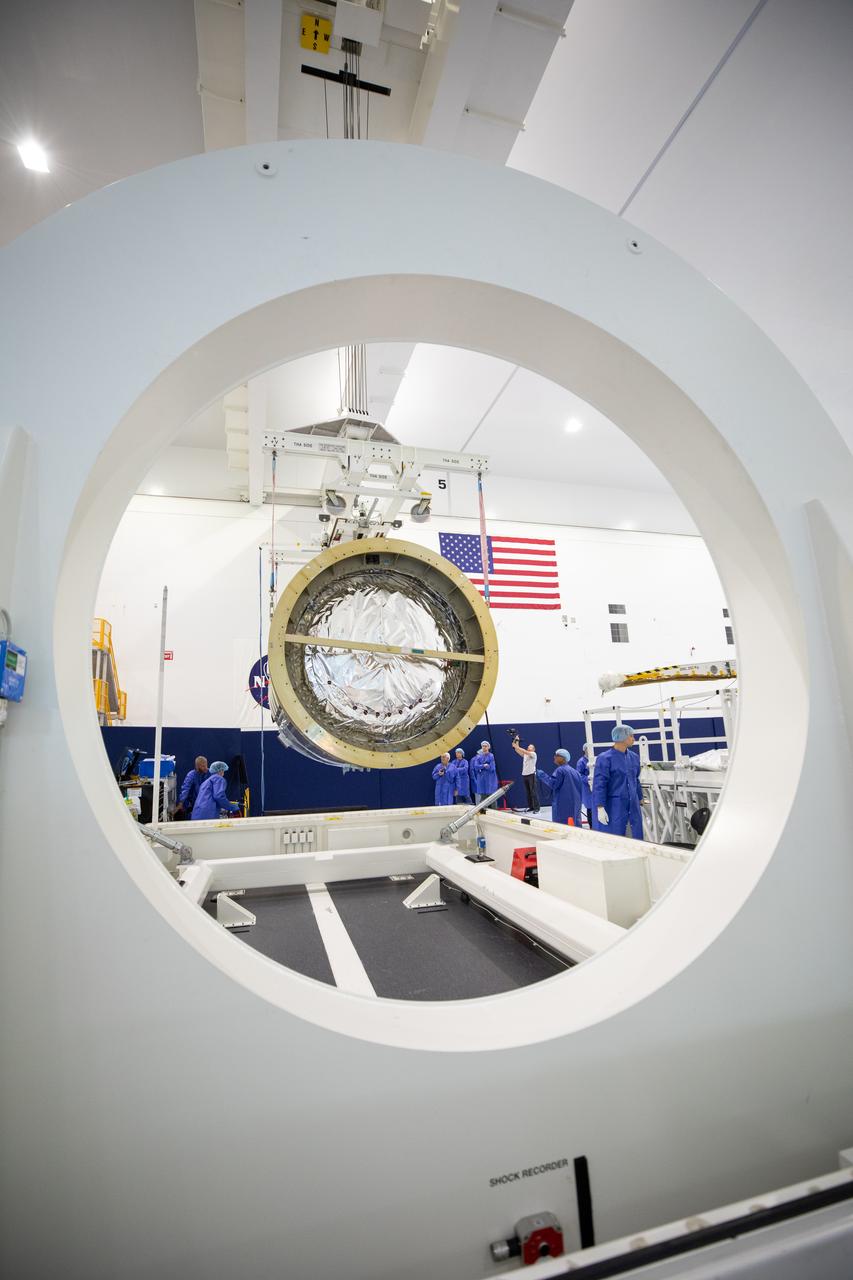
The Northrop Grumman Cygnus spacecraft’s pressurized cargo module (PCM) for the company’s 20th commercial resupply mission is lifted and moved by crane inside the high bay in the Space Station Processing Facility at NASA’s Kennedy Space Center in Florida on Monday, Sept. 18, 2023. The next step is vehicle processing for the mission to the International Space Station. Liftoff, aboard a SpaceX Falcon 9 rocket, will be from Cape Canaveral Space Force Station’s Space Launch Complex 40.
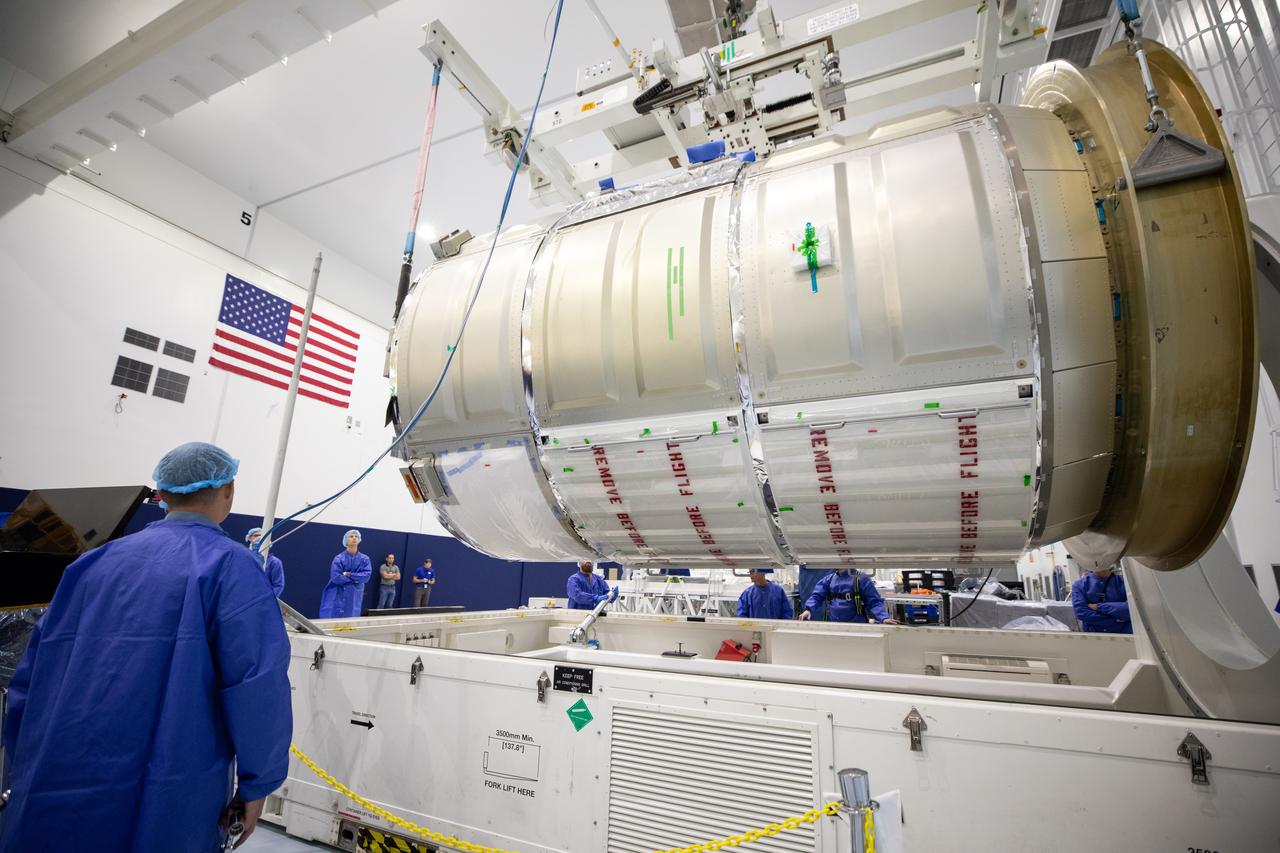
The Northrop Grumman Cygnus spacecraft’s pressurized cargo module (PCM) for the company’s 20th commercial resupply mission is lifted and moved by crane inside the high bay in the Space Station Processing Facility at NASA’s Kennedy Space Center in Florida on Monday, Sept. 18, 2023. The next step is vehicle processing for the mission to the International Space Station. Liftoff, aboard a SpaceX Falcon 9 rocket, will be from Cape Canaveral Space Force Station’s Space Launch Complex 40.
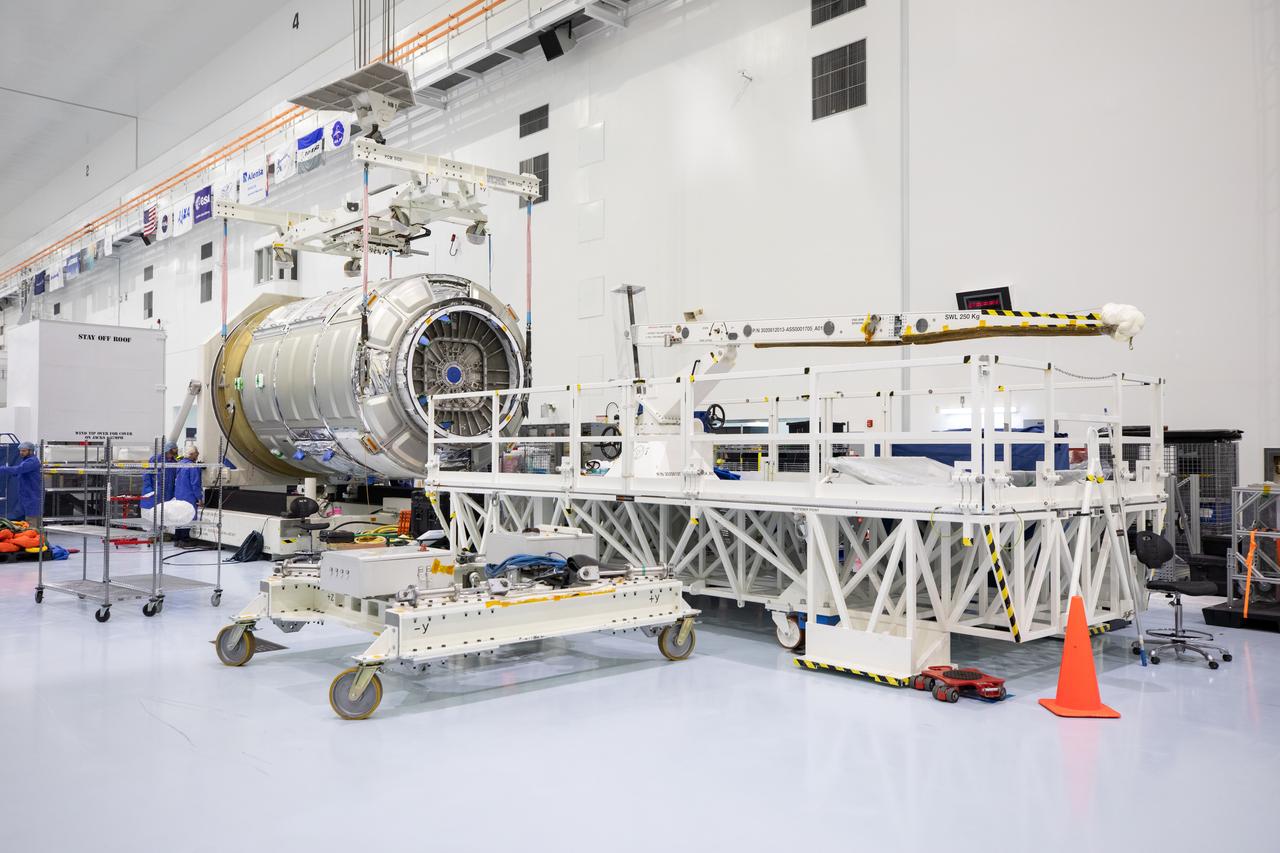
The Northrop Grumman Cygnus spacecraft’s pressurized cargo module (PCM) for the company’s 20th commercial resupply mission is lifted and moved by crane inside the high bay in the Space Station Processing Facility at NASA’s Kennedy Space Center in Florida on Monday, Sept. 18, 2023. The next step is vehicle processing for the mission to the International Space Station. Liftoff, aboard a SpaceX Falcon 9 rocket, will be from Cape Canaveral Space Force Station’s Space Launch Complex 40.
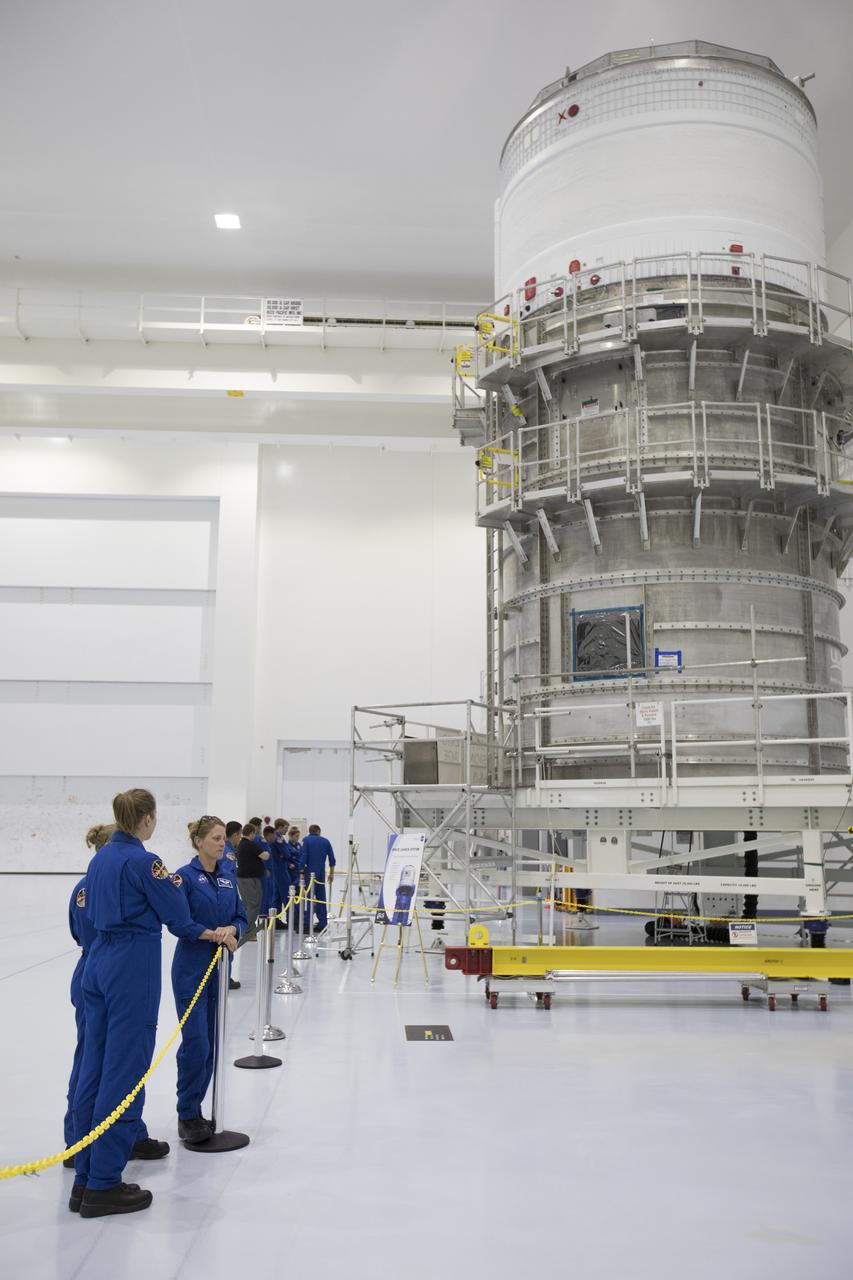
The 2017 class of astronaut candidates are inside the Space Station Processing Facility high bay during a familiarization tour of facilities at NASA's Kennedy Space Center in Florida. They are viewing the Interim Cryogenic Propulsion System for NASA's Space Launch System rocket. The candidates toured center facilities, including the Neil Armstrong Operations and Checkout Building high bay; the Launch Control Center, Launch Pad 39B, and the Vehicle Assembly Building. They also toured Boeing's Commercial Crew and Cargo Facility, United Launch Alliance's Space Launch Complex 41 at Cape Canaveral Air Force Station, and SpaceX's Launch Pad 39A at Kennedy. The candidates will spend about two years getting to know the space station systems and learning how to spacewalk, speak Russian, control the International Space Station's robotic arm and fly T-38s, before they're eligible to be assigned to a mission.
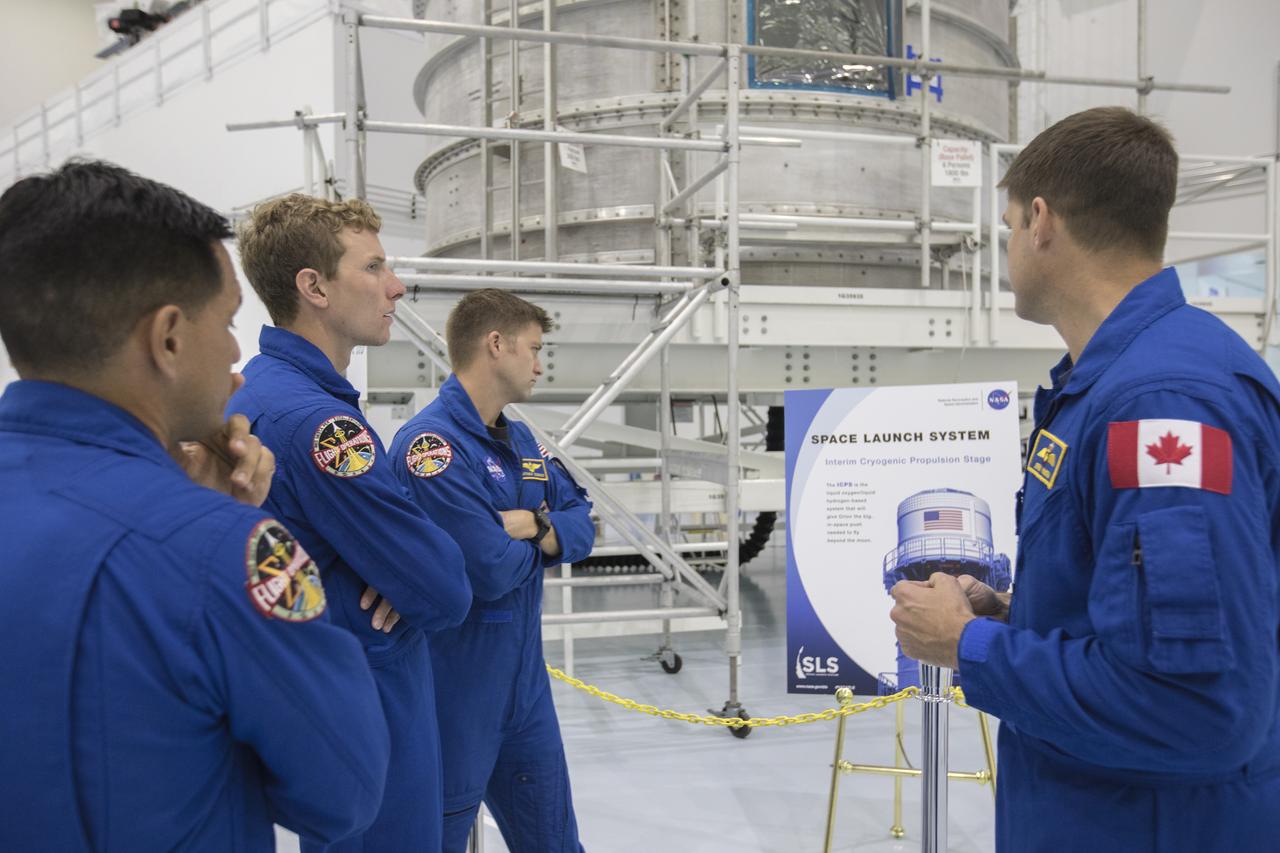
The 2017 class of astronaut candidates are inside the Space Station Processing Facility high bay during a familiarization tour of facilities at NASA's Kennedy Space Center in Florida. They are viewing the Interim Cryogenic Propulsion System for NASA's Space Launch System rocket. The candidates toured center facilities, including the Neil Armstrong Operations and Checkout Building high bay; the Launch Control Center, Launch Pad 39B, and the Vehicle Assembly Building. They also toured Boeing's Commercial Crew and Cargo Facility, United Launch Alliance's Space Launch Complex 41 at Cape Canaveral Air Force Station, and SpaceX's Launch Pad 39A at Kennedy. The candidates will spend about two years getting to know the space station systems and learning how to spacewalk, speak Russian, control the International Space Station's robotic arm and fly T-38s, before they're eligible to be assigned to a mission.
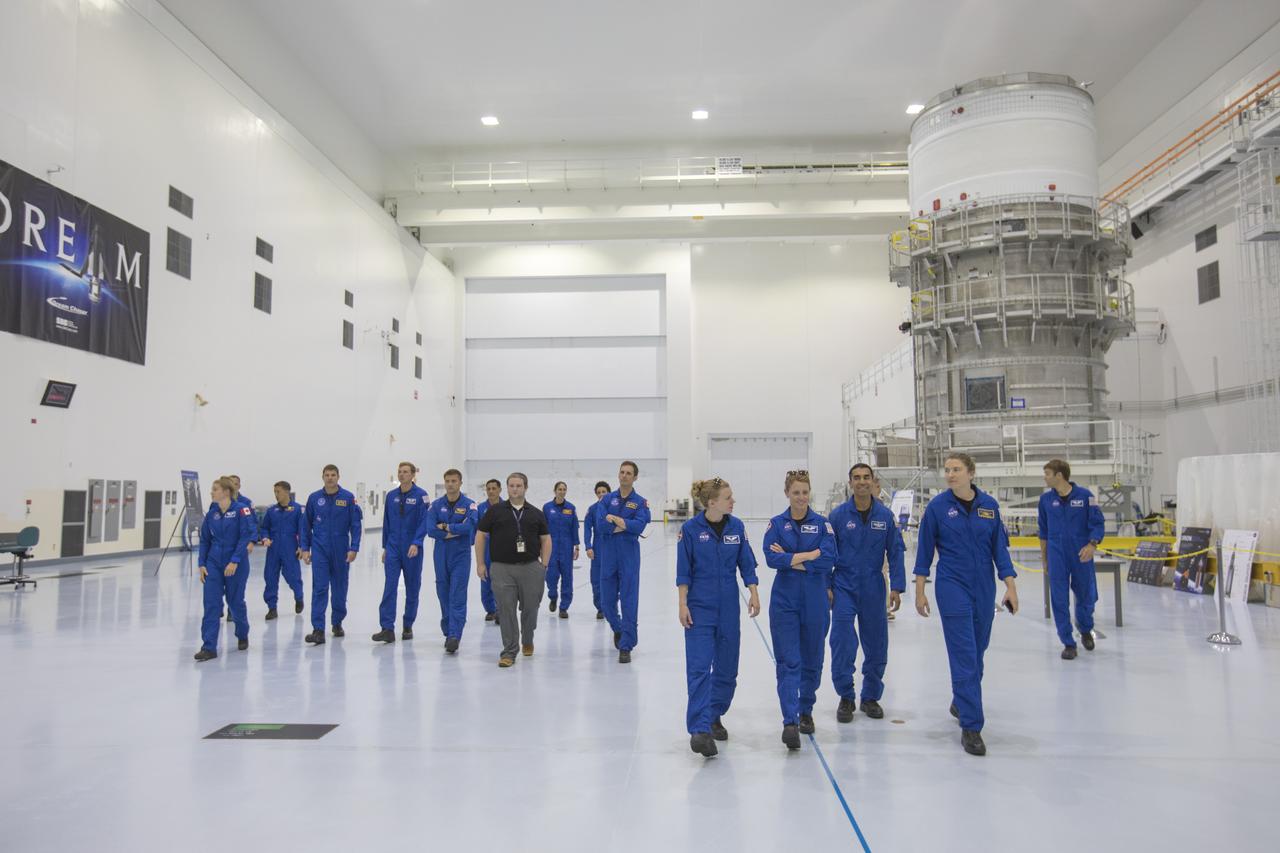
The 2017 class of astronaut candidates are inside the Space Station Processing Facility high bay during a familiarization tour of facilities at NASA's Kennedy Space Center in Florida. Behind them is the Interim Cryogenic Propulsion System for NASA's Space Launch System rocket. The candidates toured center facilities, including the Neil Armstrong Operations and Checkout Building high bay; the Launch Control Center, Launch Pad 39B, and the Vehicle Assembly Building. They also toured Boeing's Commercial Crew and Cargo Facility, United Launch Alliance's Space Launch Complex 41 at Cape Canaveral Air Force Station, and SpaceX's Launch Pad 39A at Kennedy. The candidates will spend about two years getting to know the space station systems and learning how to spacewalk, speak Russian, control the International Space Station's robotic arm and fly T-38s, before they're eligible to be assigned to a mission.
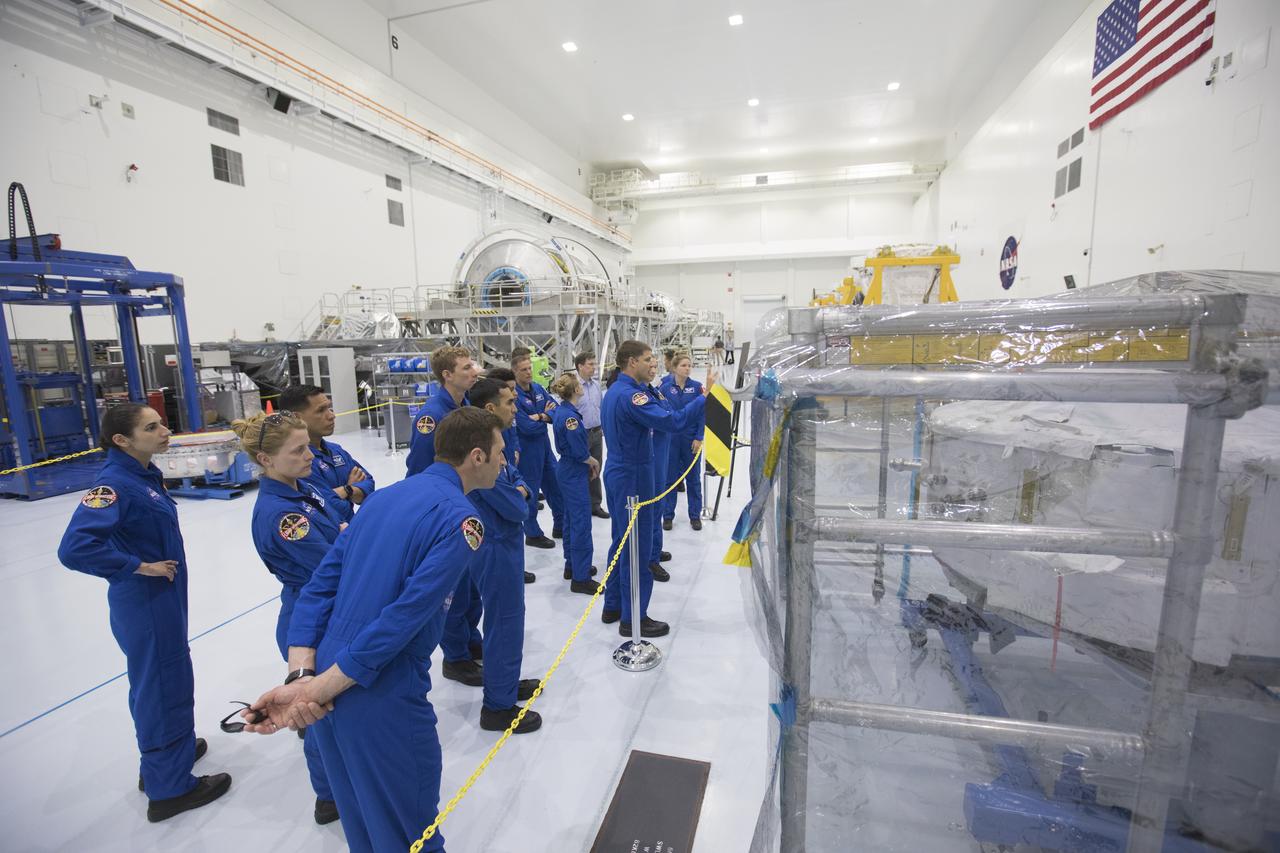
The 2017 class of astronaut candidates are inside the Space Station Processing Facility high bay during a familiarization tour of facilities at NASA's Kennedy Space Center in Florida. The candidates toured center facilities, including the Neil Armstrong Operations and Checkout Building high bay; the Launch Control Center, Launch Pad 39B, and the Vehicle Assembly Building. They also toured Boeing's Commercial Crew and Cargo Facility, United Launch Alliance's Space Launch Complex 41 at Cape Canaveral Air Force Station, and SpaceX's Launch Pad 39A at Kennedy. The candidates will spend about two years getting to know the space station systems and learning how to spacewalk, speak Russian, control the International Space Station's robotic arm and fly T-38s, before they're eligible to be assigned to a mission.
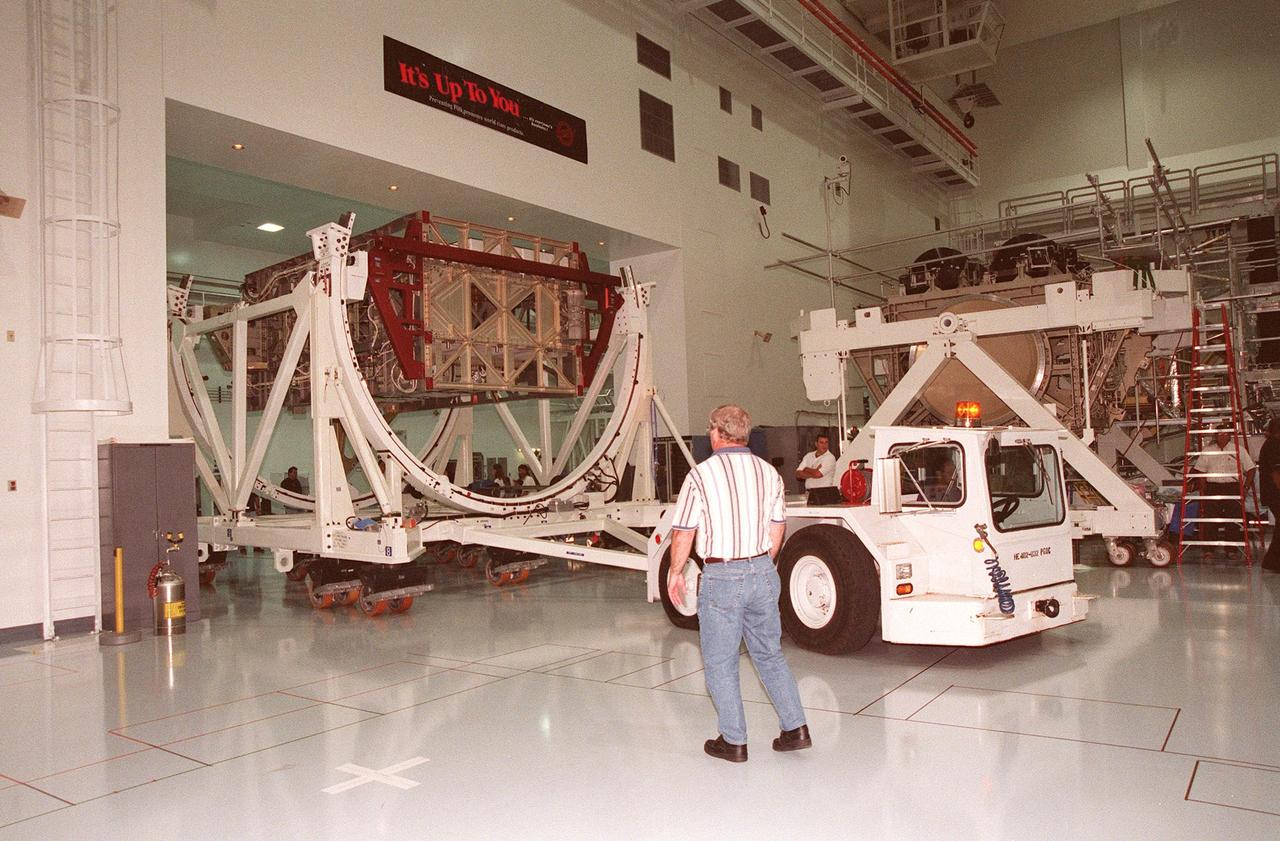
An Integrated Equipment Assembly (IEA) is moved from the low bay into the high bay at the Space Station Processing Facility at KSC. The IEA, a large truss segment of the International Space Station (ISS), is one of four power modules to be used on the ISS. The modules contain batteries for the ISS solar panels and power for the life support systems and experiments that will be conducted. This first IEA will fly on the Space Shuttle Endeavour as part of STS-97, scheduled to launch August 5, 1999
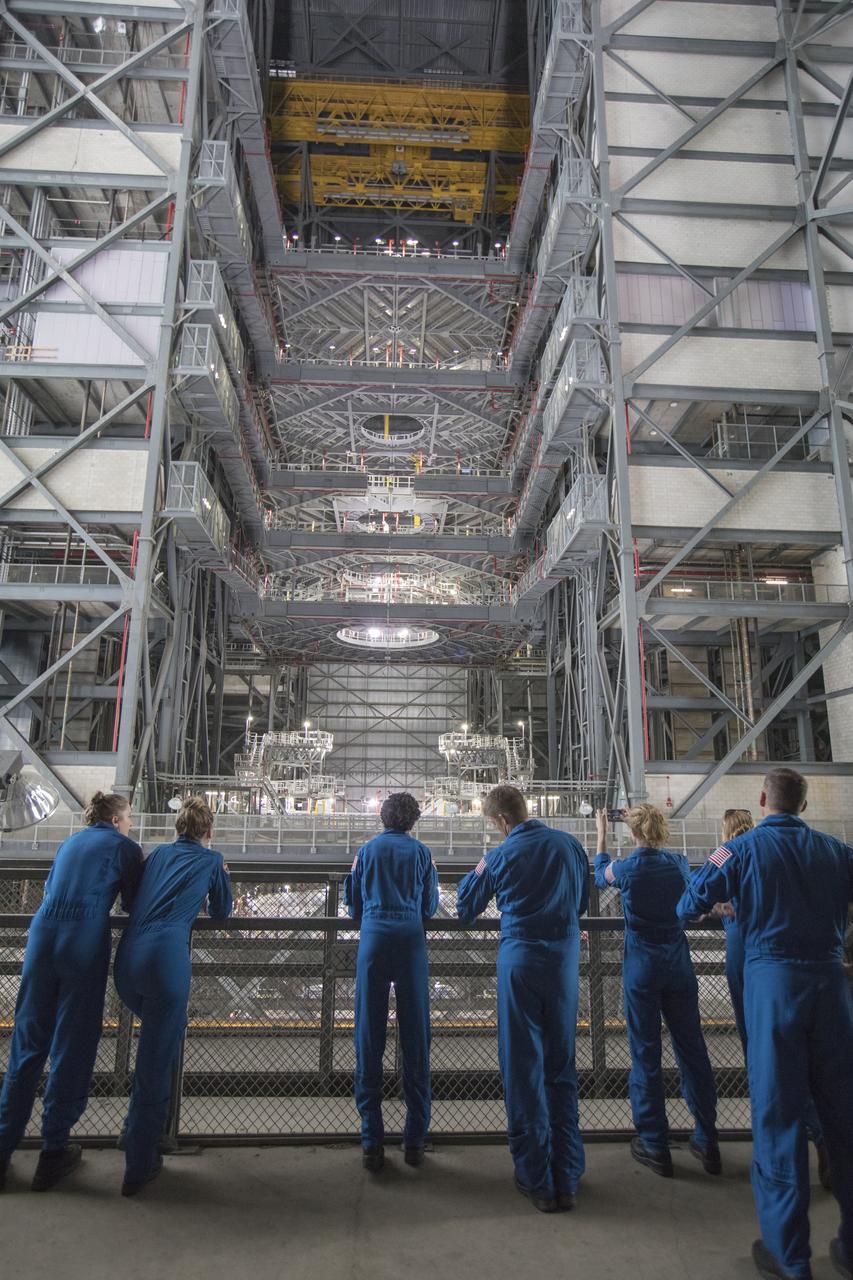
The 2017 class of astronaut candidates view the new work platforms in High Bay 3 of the Vehicle Assembly Building during a familiarization tour at NASA's Kennedy Space Center in Florida. The candidates toured center facilities, including the Neil Armstrong Operations and Checkout Building high bay; Launch Control Center, Launch Pad 39B, and the Space Station Processing Facility. They also toured Boeing's Commercial Crew and Cargo Facility, United Launch Alliance's Space Launch Complex 41 at Cape Canaveral Air Force Station, and Space Launch Complex 39A at Kennedy. The candidates will spend about two years getting to know the space station systems and learning how to spacewalk, speak Russian, control the International Space Station's robotic arm and fly T-38s, before they're eligible to be assigned to a mission.
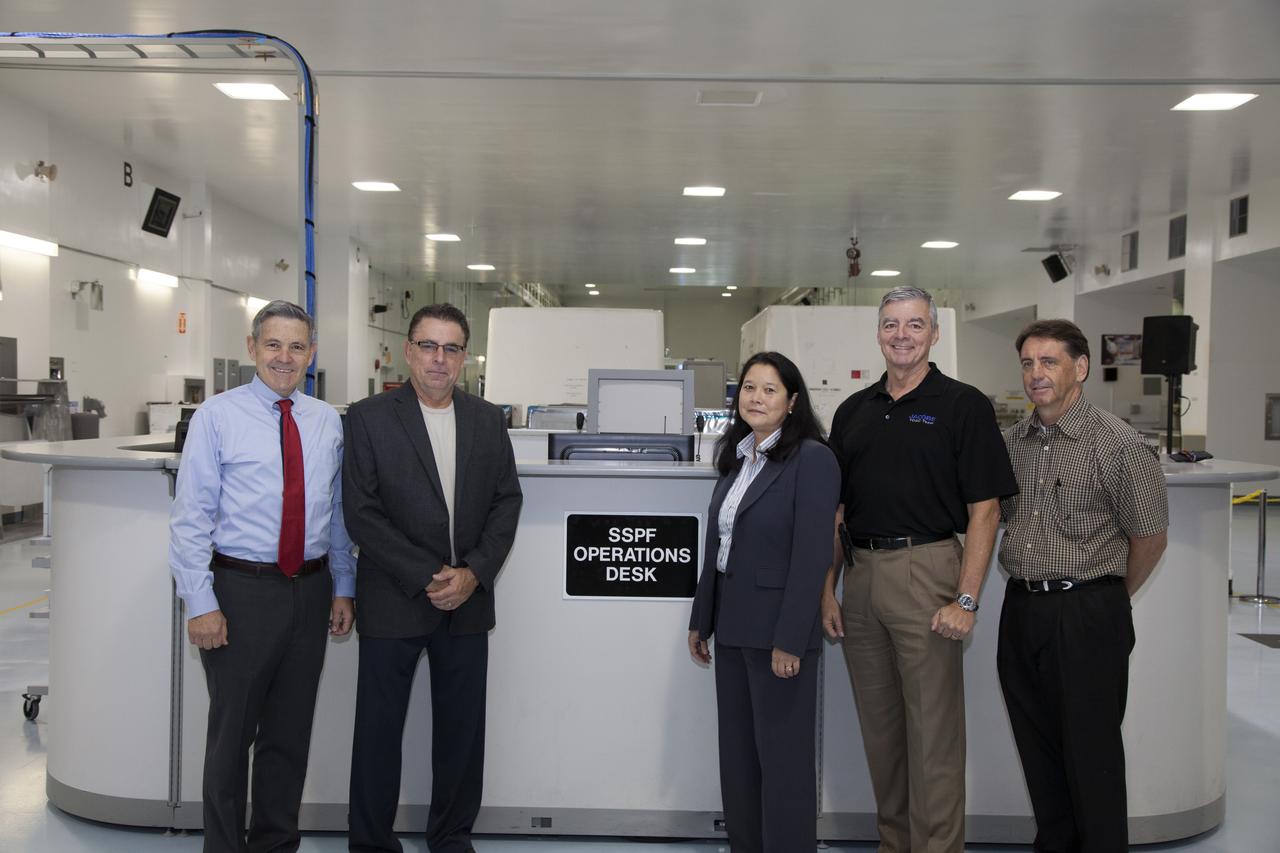
During a ribbon cutting ceremony in the high bay of the Space Station Processing Facility at NASA's Kennedy Space Center in Florida, center director Bob Cabana, far left, is joined by Bill Dowdell, Kennedy's International Space Station technical director, Josephine Burnett, director of Exploration Research and Technology, Andy Allen, Jacobs vice president and general manager and Test and Operations Support Contract program manager, and Jeff McAlear, Jacobs director of Processing Services. The event celebrated completion of facility modifications to improve processing and free up zones tailored to a variety of needs supporting a robust assortment of space-bound hardware including NASA programs and commercial space companies.
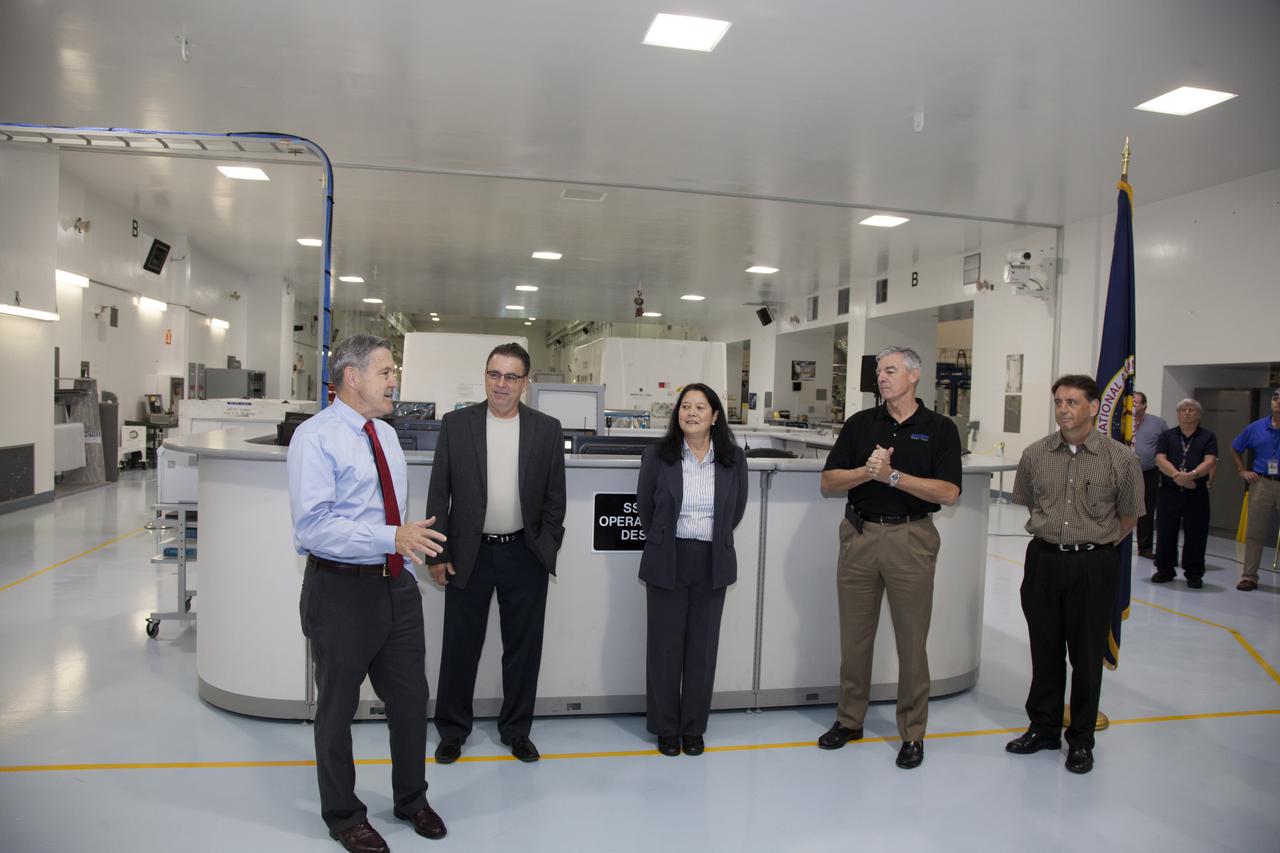
During a ribbon cutting ceremony in the high bay of the Space Station Processing Facility at NASA's Kennedy Space Center in Florida, center director Bob Cabana, far left, is joined by Bill Dowdell, Kennedy's International Space Station technical director, Josephine Burnett, director of Exploration Research and Technology, Andy Allen, Jacobs vice president and general manager and Test and Operations Support Contract program manager, and Jeff McAlear, Jacobs director of Processing Services. The event celebrated completion of facility modifications to improve processing and free up zones tailored to a variety of needs supporting a robust assortment of space-bound hardware including NASA programs and commercial space companies.
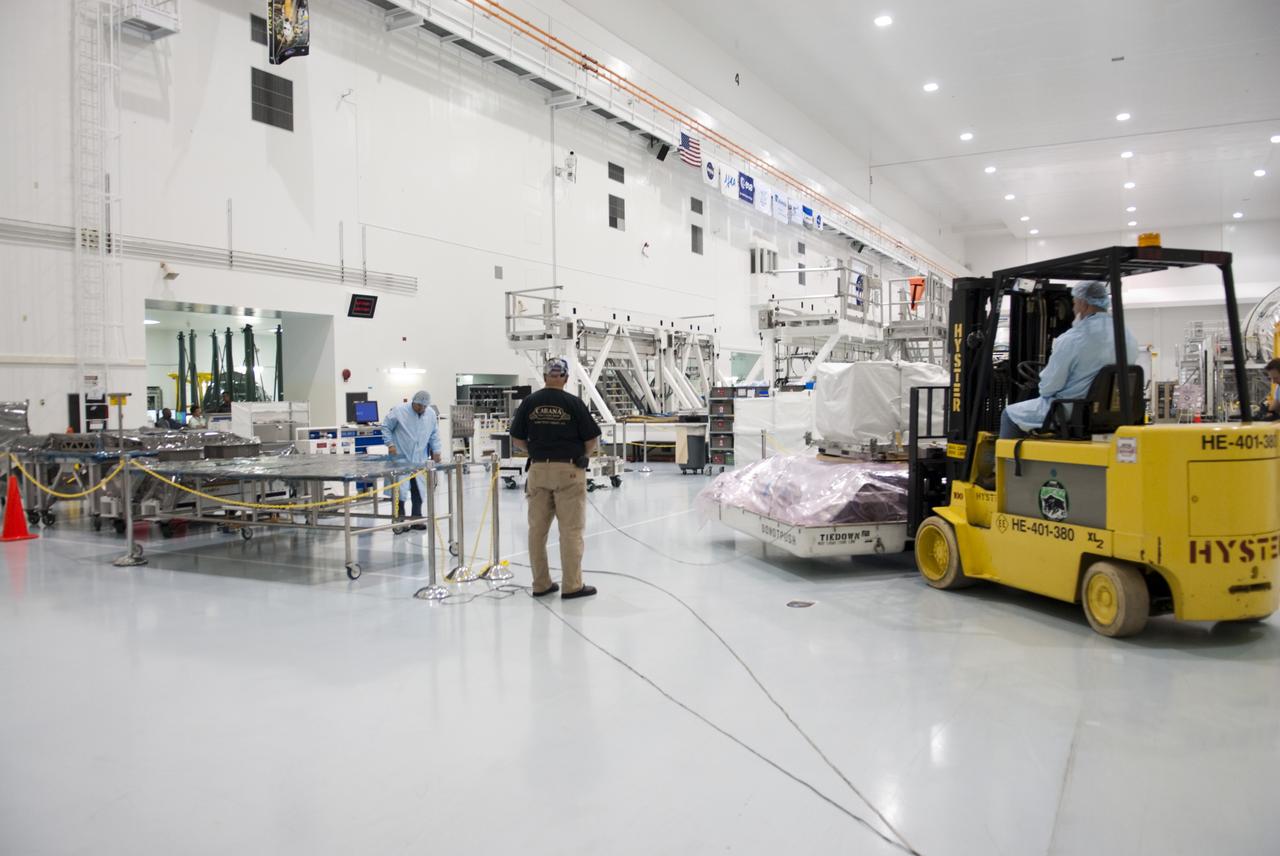
CAPE CANAVERAL, Fla. -- Workers inside the high bay of the Space Station Processing Facility at NASA's Kennedy Space Center in Florida move the orbital replacement unit for the space station's utility transfer assembly that has been placed in the bottom portion of a shipping container. The assembly, which was processed at Kennedy, will be shipped to Japan at the beginning of the year for the HTV-4 launch, which is currently scheduled for 2013. Photo credit: NASA/Charisse Nahser
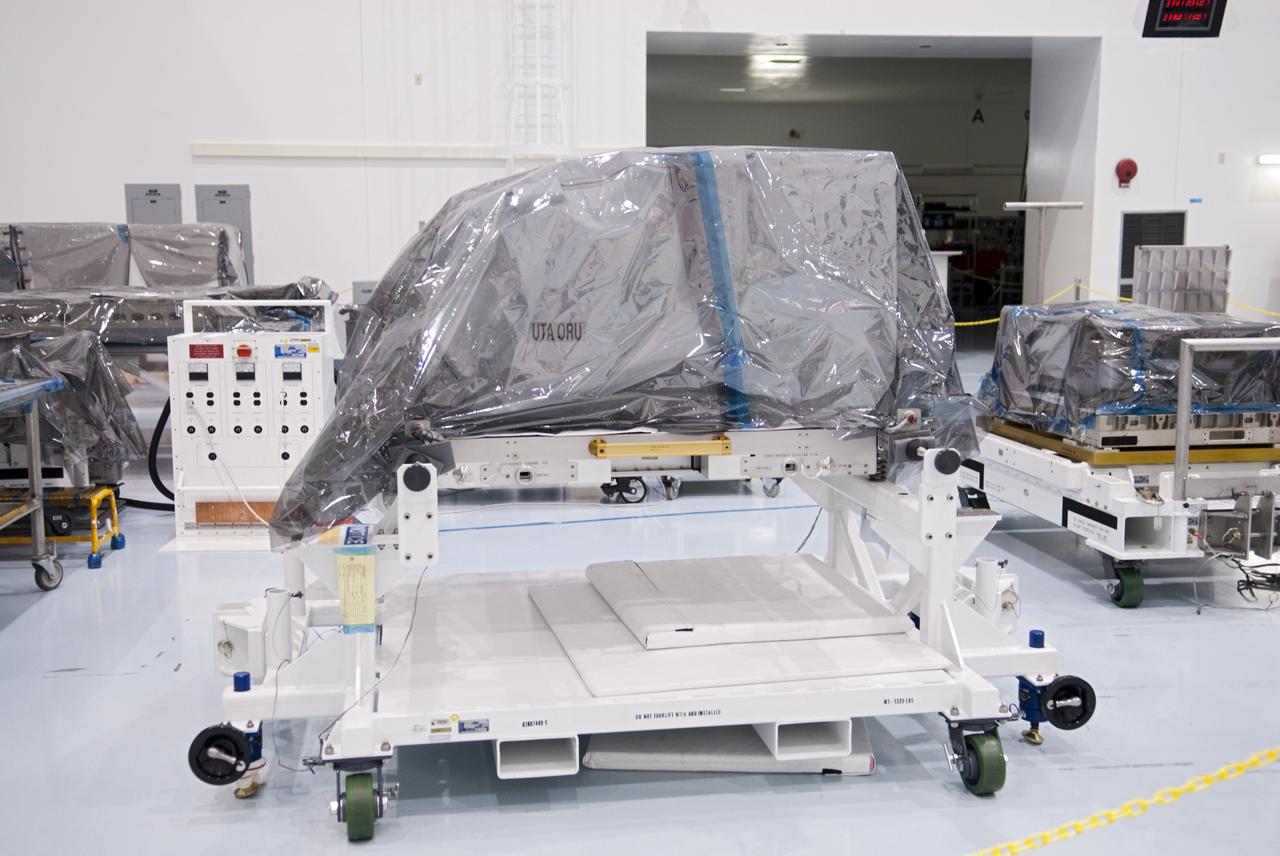
CAPE CANAVERAL, Fla. -- Inside the high bay of the Space Station Processing Facility at NASA's Kennedy Space Center in Florida, the orbital replacement unit for the space station's utility transfer assembly is prepared for placement in a shipping container. The assembly, which was processed at Kennedy, will be shipped to Japan at the beginning of the year for the HTV-4 launch, which is currently scheduled for 2013. Photo credit: NASA/Charisse Nahser
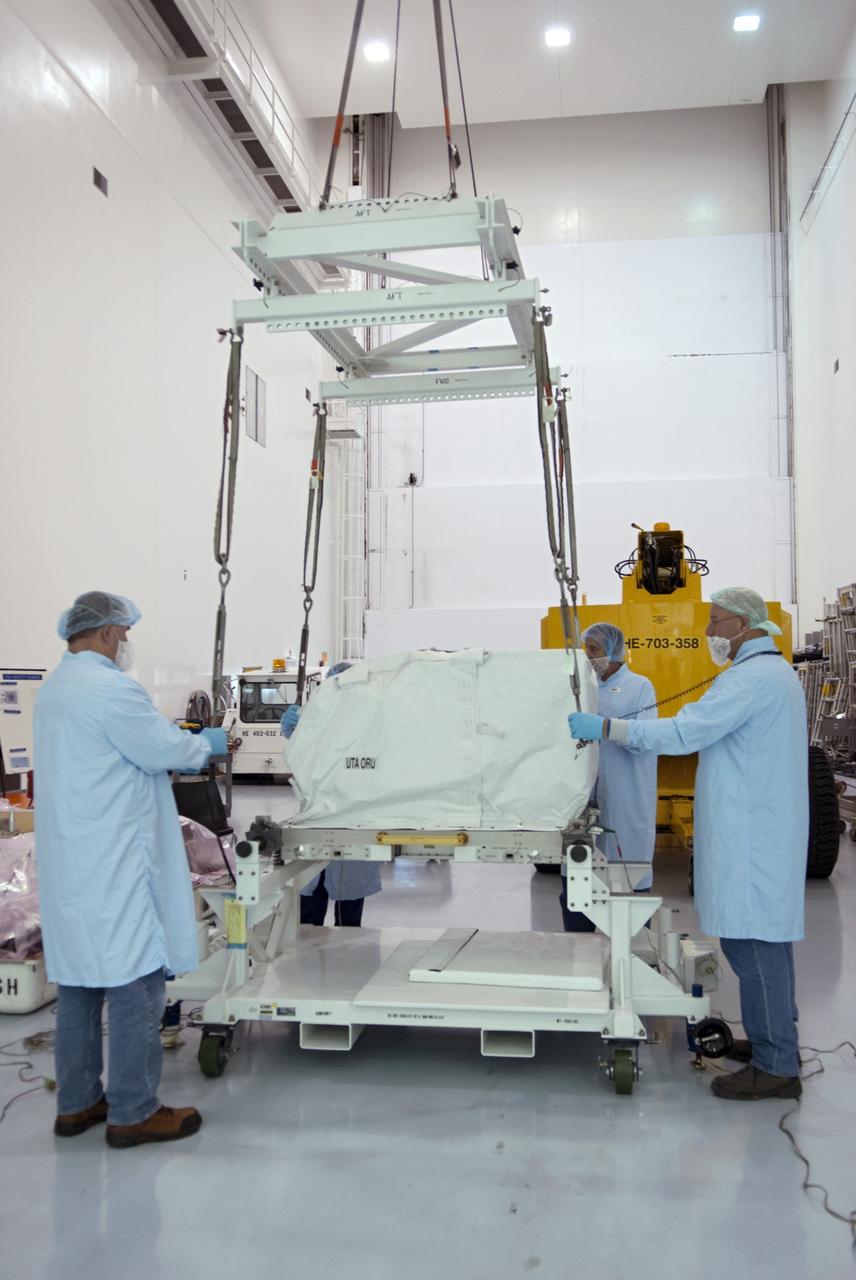
CAPE CANAVERAL, Fla. -- Workers inside the high bay of the Space Station Processing Facility at NASA's Kennedy Space Center in Florida lift the orbital replacement unit for the space station's utility transfer assembly before placing it in a shipping container. The assembly, which was processed at Kennedy, will be shipped to Japan at the beginning of the year for the HTV-4 launch, which is currently scheduled for 2013. Photo credit: NASA/Charisse Nahser
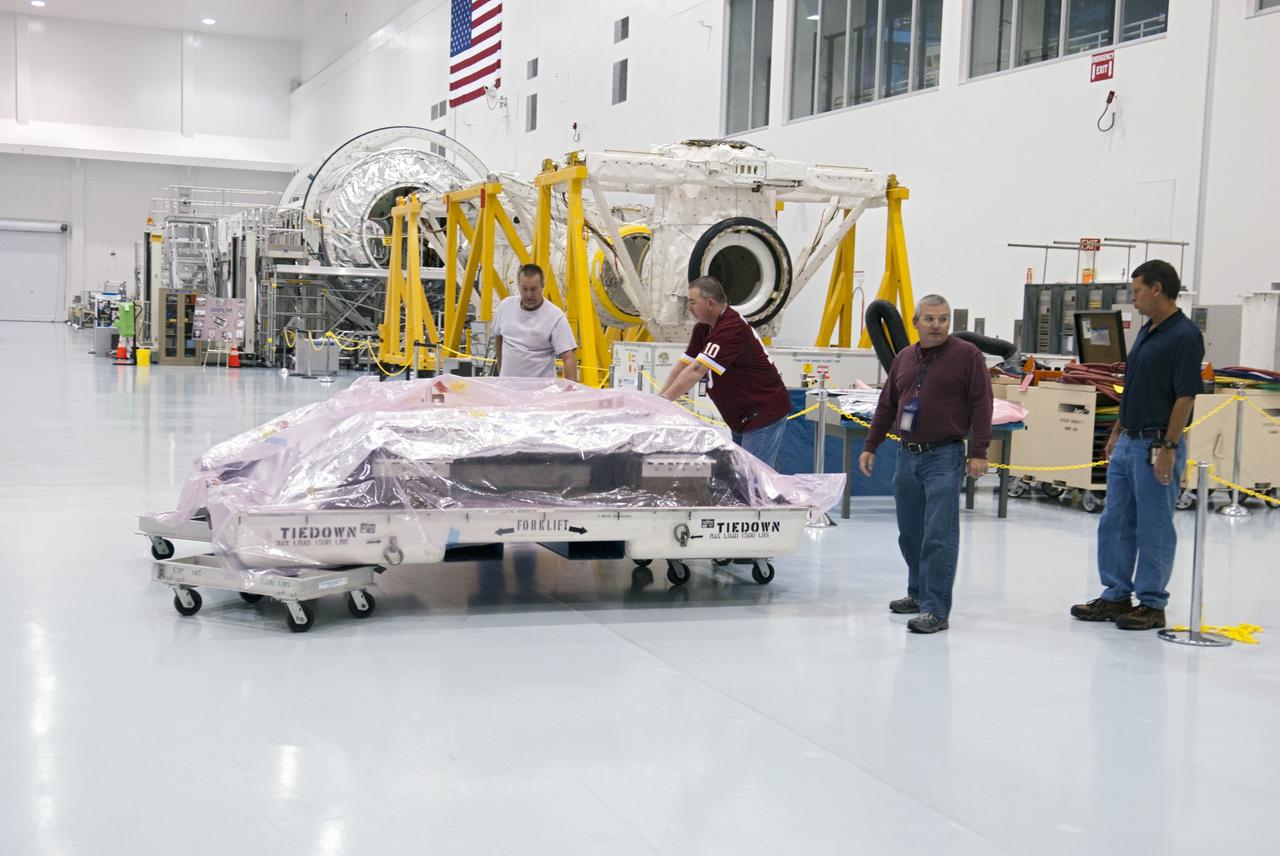
CAPE CANAVERAL, Fla. -- Workers inside the high bay of the Space Station Processing Facility at NASA's Kennedy Space Center in Florida prepare to pack the orbital replacement unit for the space station's utility transfer assembly in a shipping container. The assembly, which was processed at Kennedy, will be shipped to Japan at the beginning of the year for the HTV-4 launch, which is currently scheduled for 2013. Photo credit: NASA/Charisse Nahser
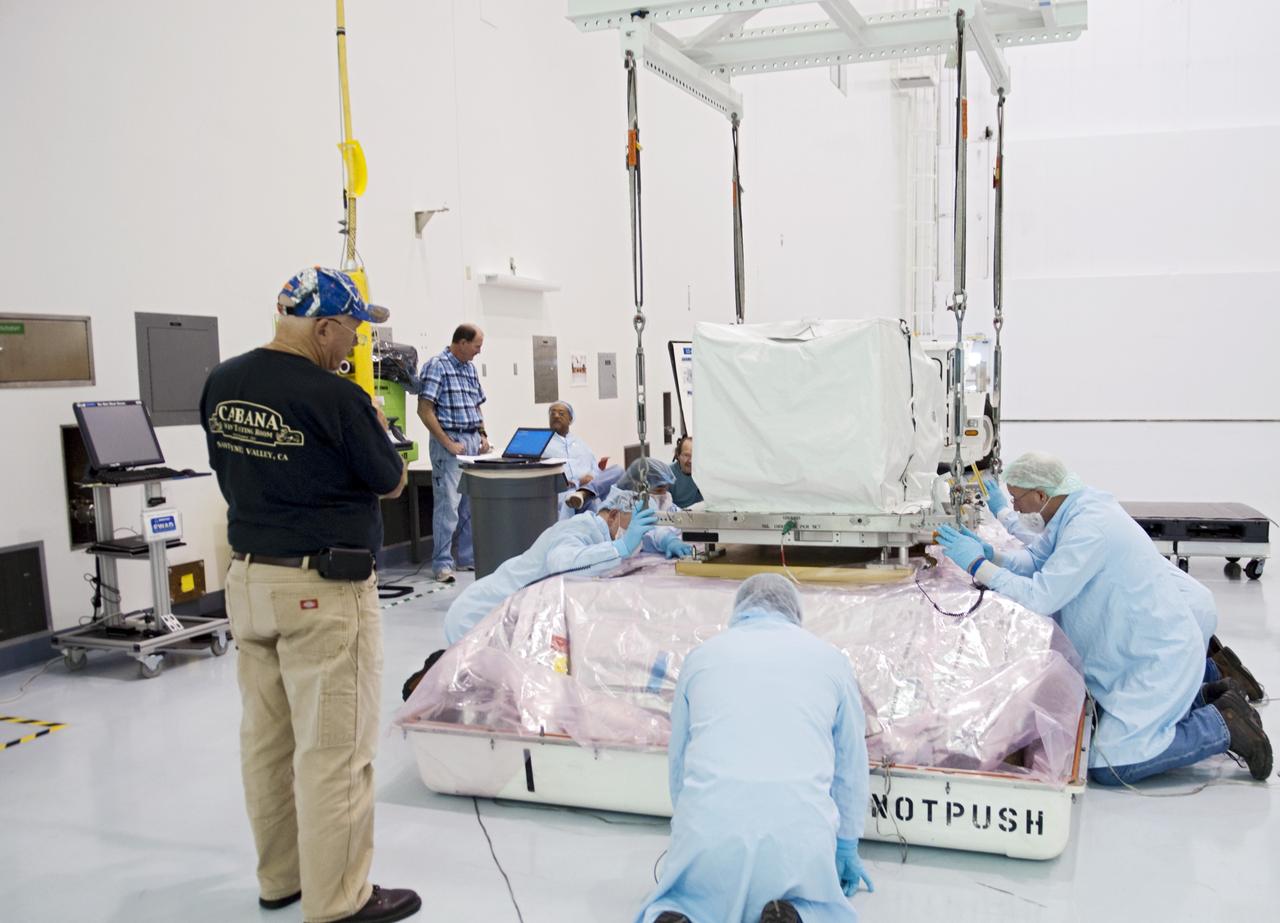
CAPE CANAVERAL, Fla. -- Workers inside the high bay of the Space Station Processing Facility at NASA's Kennedy Space Center in Florida position the orbital replacement unit for the space station's utility transfer assembly on the bottom portion of a shipping container. The assembly, which was processed at Kennedy, will be shipped to Japan at the beginning of the year for the HTV-4 launch, which is currently scheduled for 2013. Photo credit: NASA/Charisse Nahser
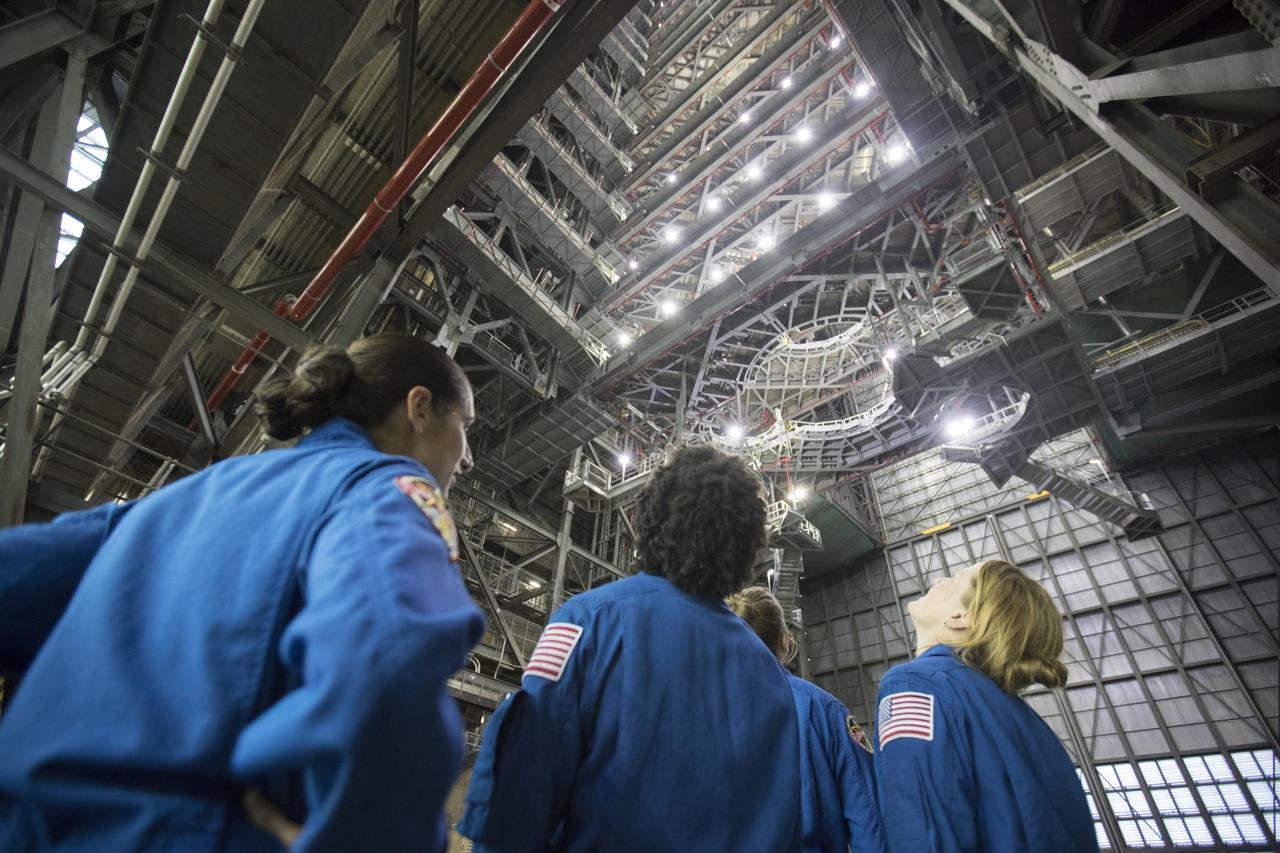
Members of the 2017 class of astronaut candidates view the new work platforms in High Bay 3 of the Vehicle Assembly Building during a familiarization tour at NASA's Kennedy Space Center in Florida. The candidates toured center facilities, including the Neil Armstrong Operations and Checkout Building high bay, Launch Control Center, Launch Pad 39B, and the Space Station Processing Facility. They also toured Boeing's Commercial Crew and Cargo Facility, United Launch Alliance's Space Launch Complex 41 at Cape Canaveral Air Force Station, and SpaceX's Launch Pad 39A at Kennedy. The candidates will spend about two years getting to know the space station systems and learning how to spacewalk, speak Russian, control the International Space Station's robotic arm and fly T-38s, before they're eligible to be assigned to a mission.
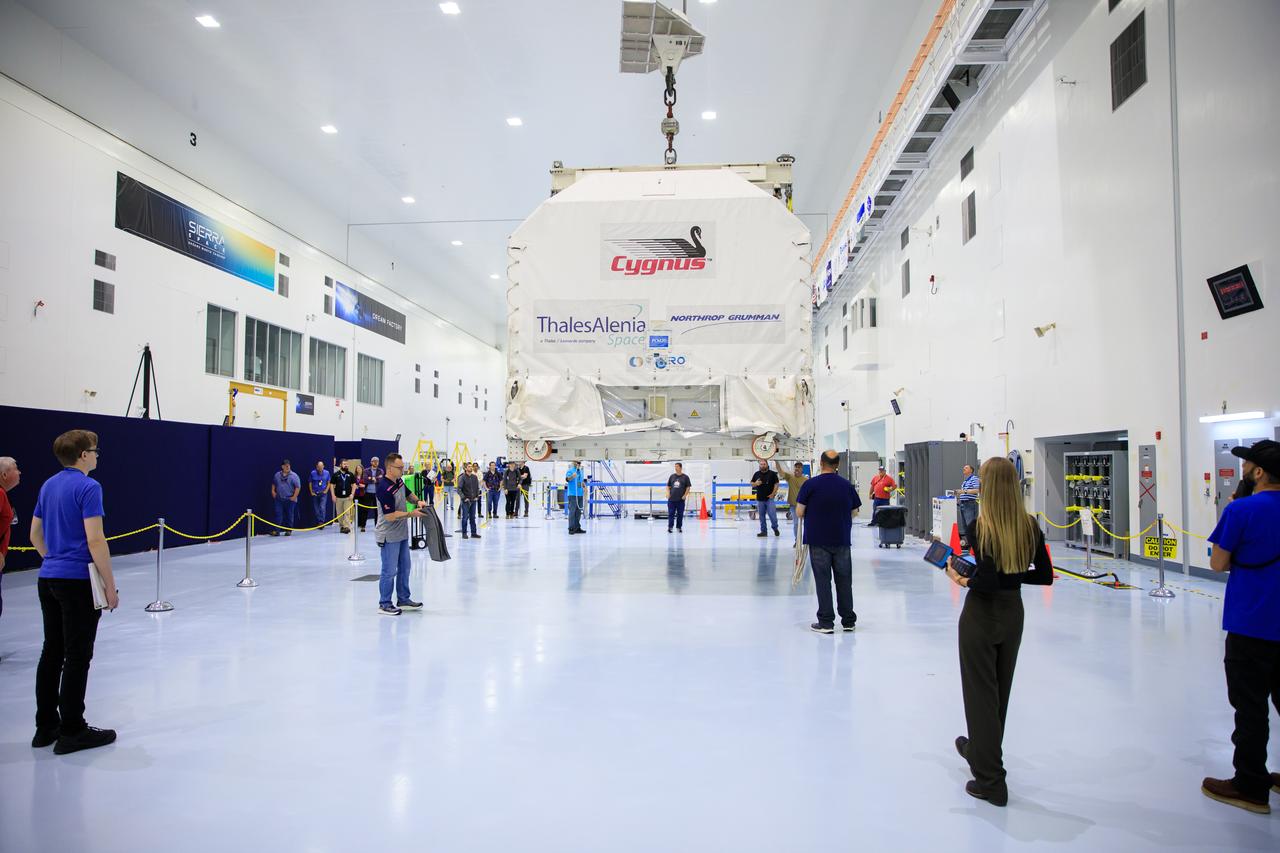
The Northrop Grumman Cygnus spacecraft’s pressurized cargo module (PCM) for the company’s 20th commercial resupply mission is lifted and moved by crane in its environmentally controlled shipping container inside the high bay in the Space Station Processing Facility at NASA's Kennedy Space Center in Florida on Aug. 2, 2023. Cygnus will launch later this year atop a SpaceX Falcon 9 rocket from Cape Canaveral Space Force Station’s Space Launch Complex 40 to the International Space Station. Cygnus will undergo prelaunch processing at Kennedy before it is transported to SpaceX’s integration facility.
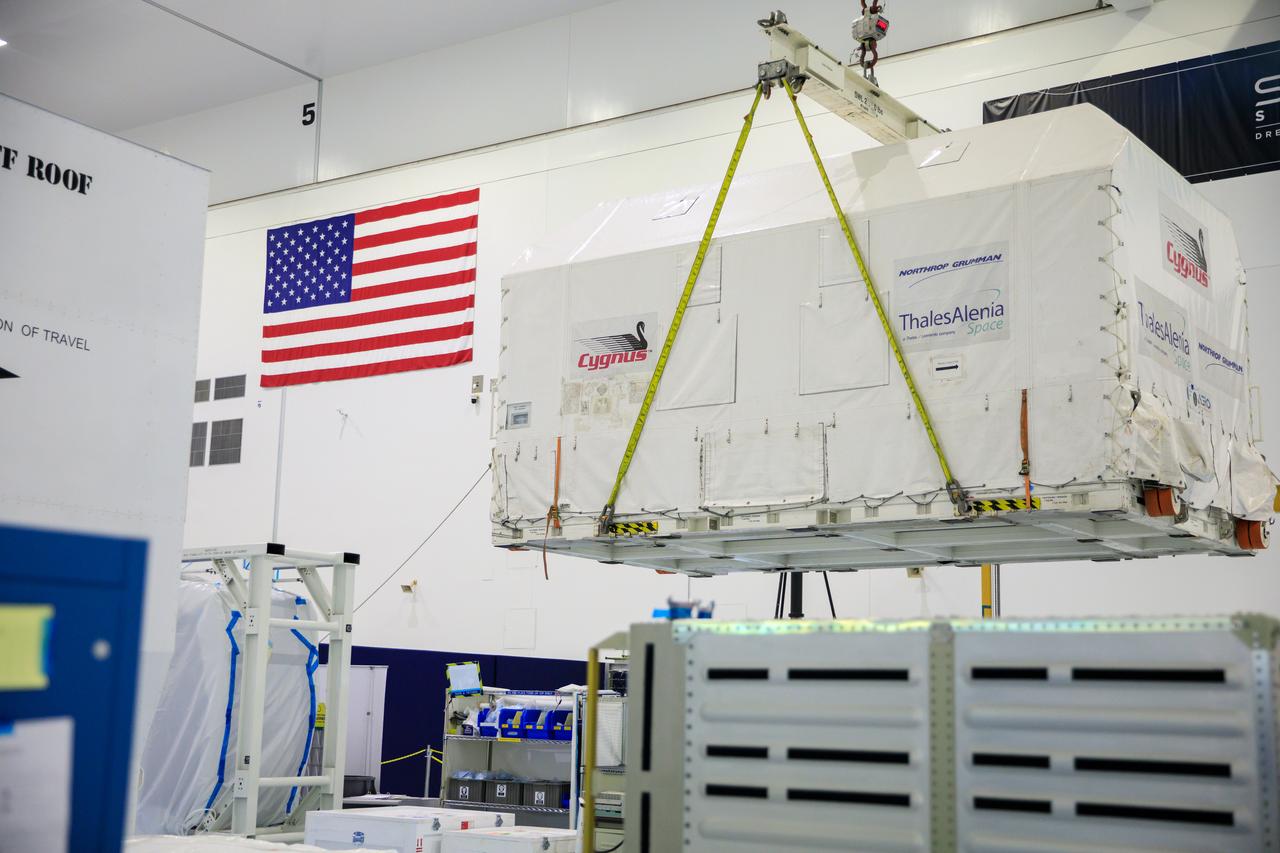
The Northrop Grumman Cygnus spacecraft’s pressurized cargo module (PCM) for the company’s 20th commercial resupply mission is moved by crane in its environmentally controlled shipping container in to the Space Station Processing Facility’s high bay at NASA's Kennedy Space Center in Florida on Aug. 2, 2023. Cygnus will launch later this year atop a SpaceX Falcon 9 rocket from Cape Canaveral Space Force Station’s Space Launch Complex 40 to the International Space Station. Cygnus will undergo prelaunch processing at Kennedy before it is transported to SpaceX’s integration facility.
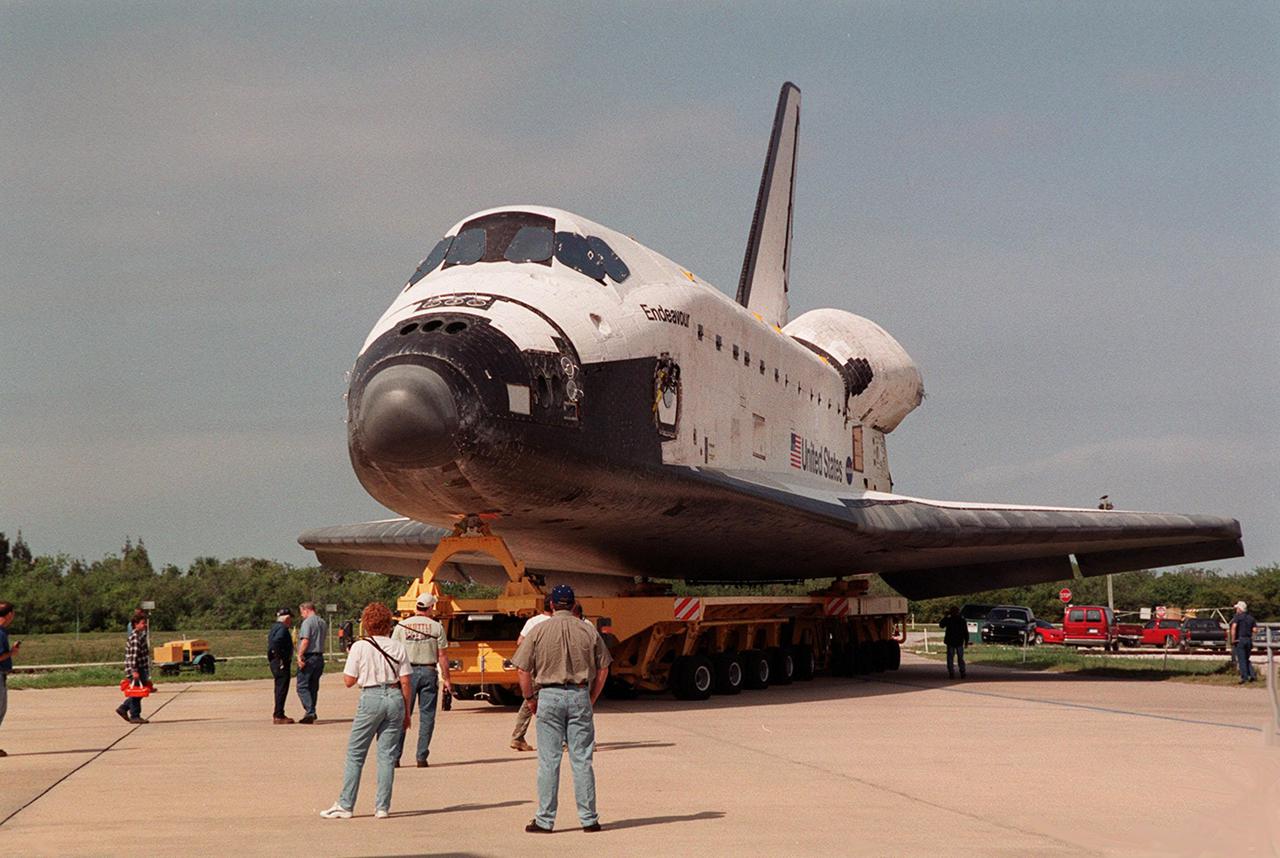
KENNEDY SPACE CENTER, FLA. -- After backing out of Orbiter Processing Facility bay 2, Endeavour is ready to roll over to the Vehicle Assembly Building. In the VAB, Endeavour will be stacked with its solid rocket boosters and external tank atop the Mobile Launcher Platform in high bay 3. Endeavour is scheduled to launch April 19 on mission STS-100, the ninth flight to the International Space Station
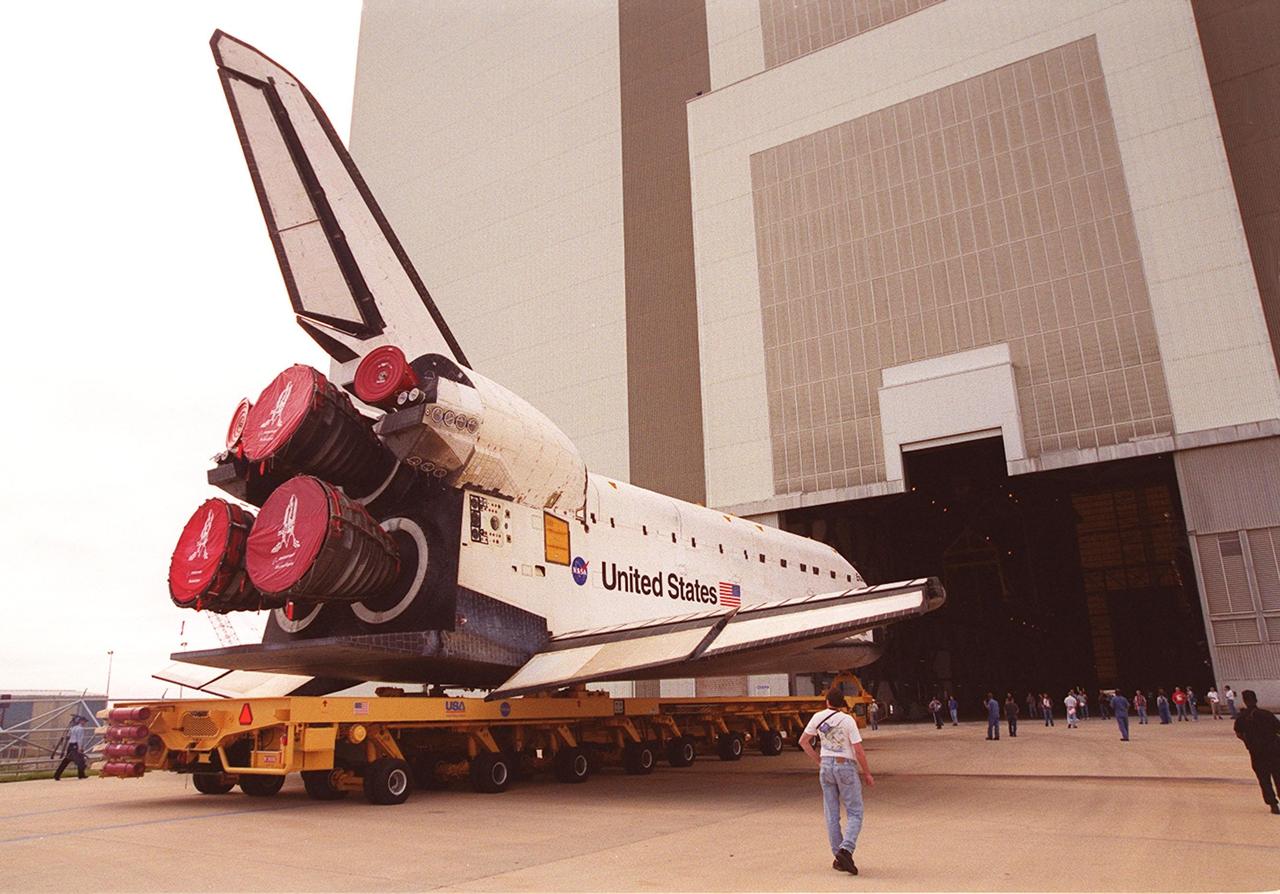
KENNEDY SPACE CENTER, FLA. -- Endeavour rolls toward the open doors of the Vehicle Assembly Building after leaving Orbiter Processing Facility bay 2. In the VAB, Endeavour will be stacked with its solid rocket boosters and external tank atop the Mobile Launcher Platform in high bay 3. Endeavour is scheduled to launch April 19 on mission STS-100, the ninth flight to the International Space Station
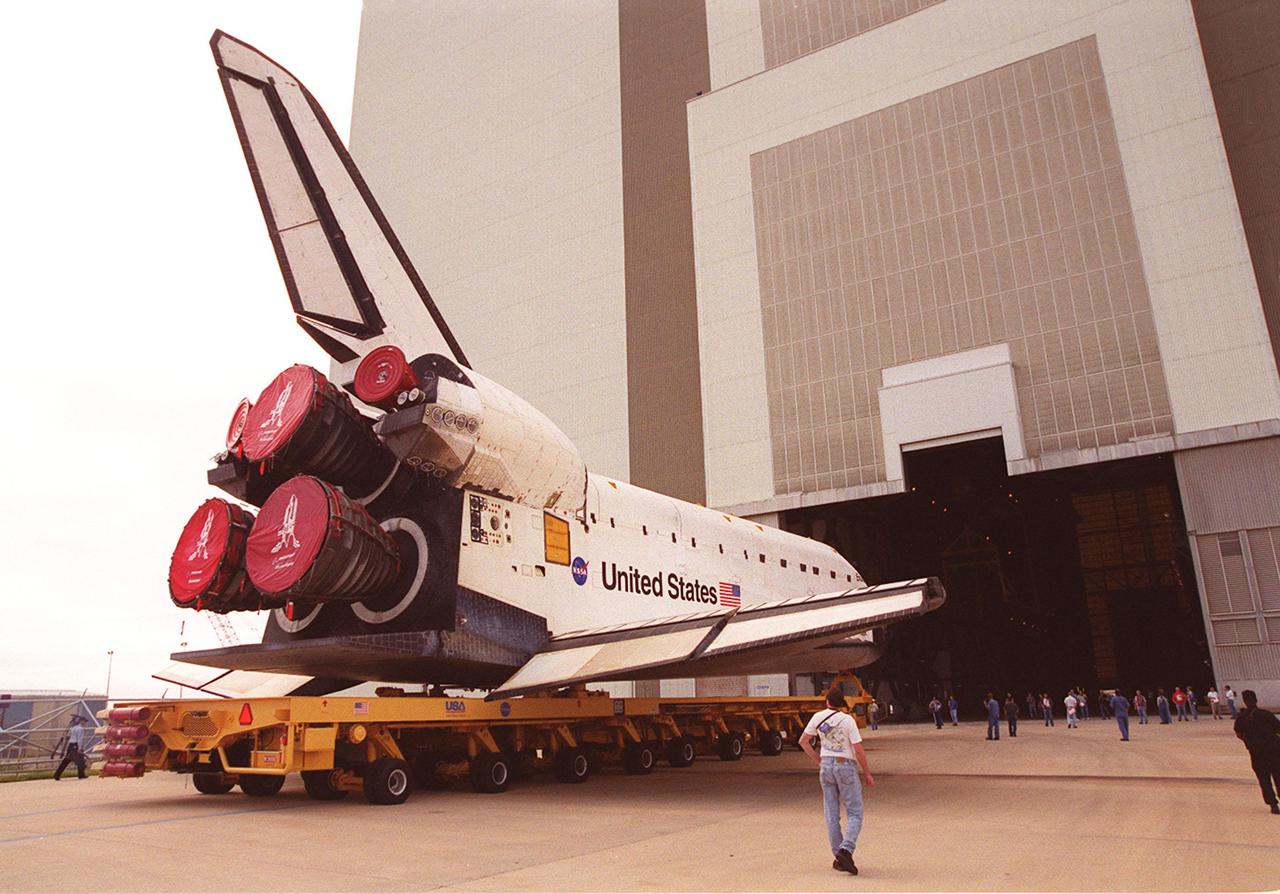
KENNEDY SPACE CENTER, FLA. -- Endeavour rolls toward the open doors of the Vehicle Assembly Building after leaving Orbiter Processing Facility bay 2. In the VAB, Endeavour will be stacked with its solid rocket boosters and external tank atop the Mobile Launcher Platform in high bay 3. Endeavour is scheduled to launch April 19 on mission STS-100, the ninth flight to the International Space Station
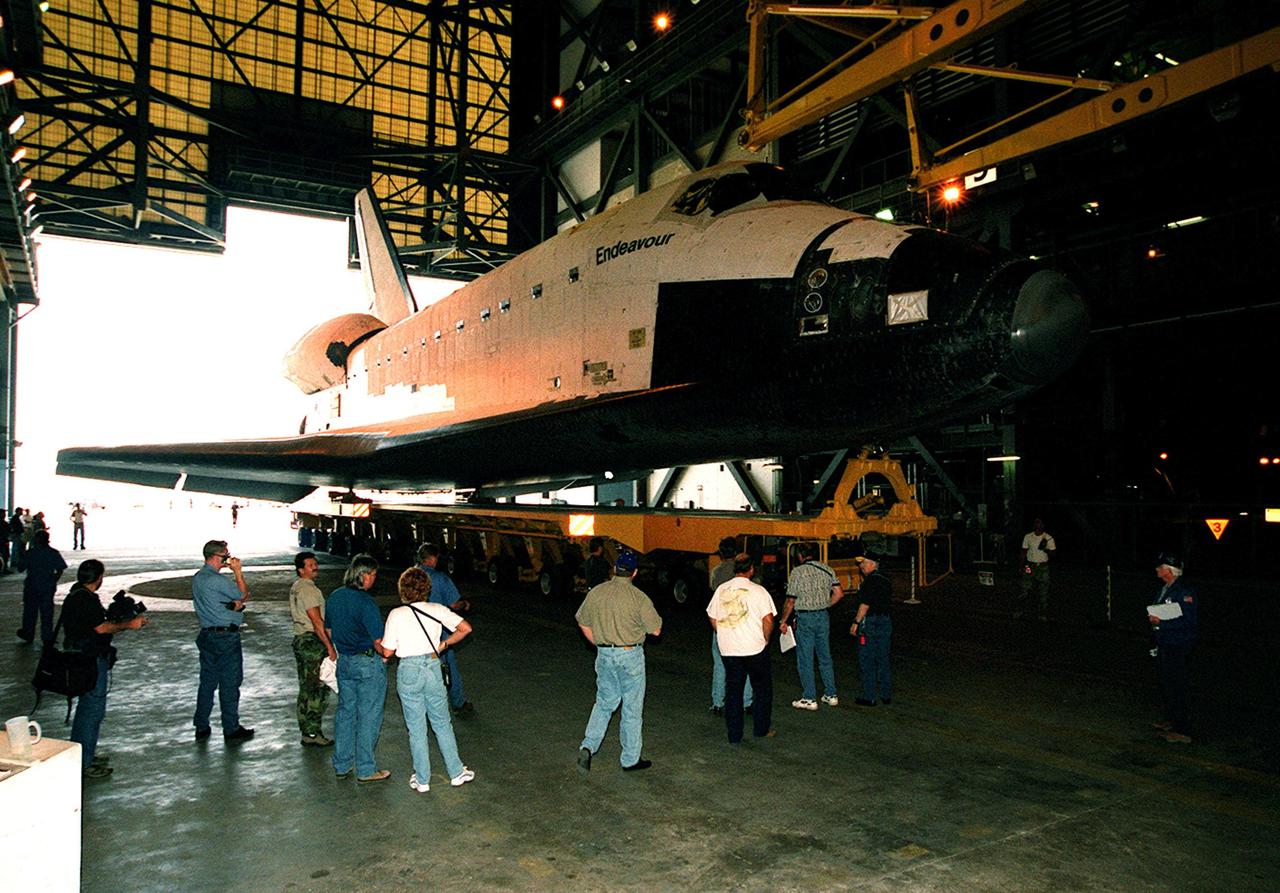
KENNEDY SPACE CENTER, FLA. -- Endeavour arrives in the transfer aisle of the Vehicle Assembly Building after rollover from Orbiter Processing Facility bay 2. In the VAB, Endeavour will be lifted to vertical and transferred to high bay 3 for stacking with its solid rocket boosters and external tank atop the Mobile Launcher Platform. Endeavour is scheduled to launch April 19 on mission STS-100, the ninth flight to the International Space Station
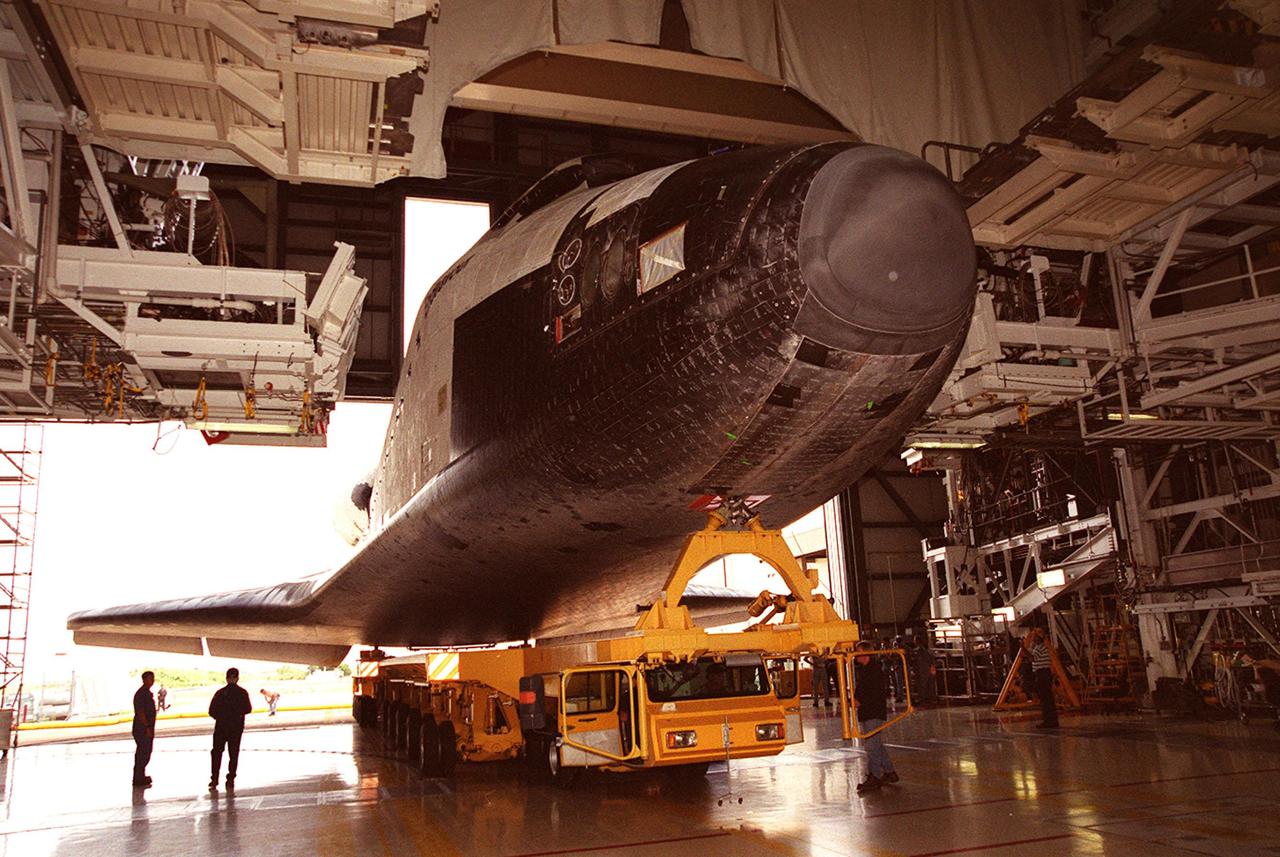
KENNEDY SPACE CENTER, FLA. -- Endeavour begins backing out of Orbiter Processing Facility bay 2 atop an orbiter transporter for rollover to the Vehicle Assembly Building. In the VAB, Endeavour will be stacked with its solid rocket boosters and external tank atop the Mobile Launcher Platform in high bay 3. Endeavour is scheduled to launch April 19 on mission STS-100, the ninth flight to the International Space Station
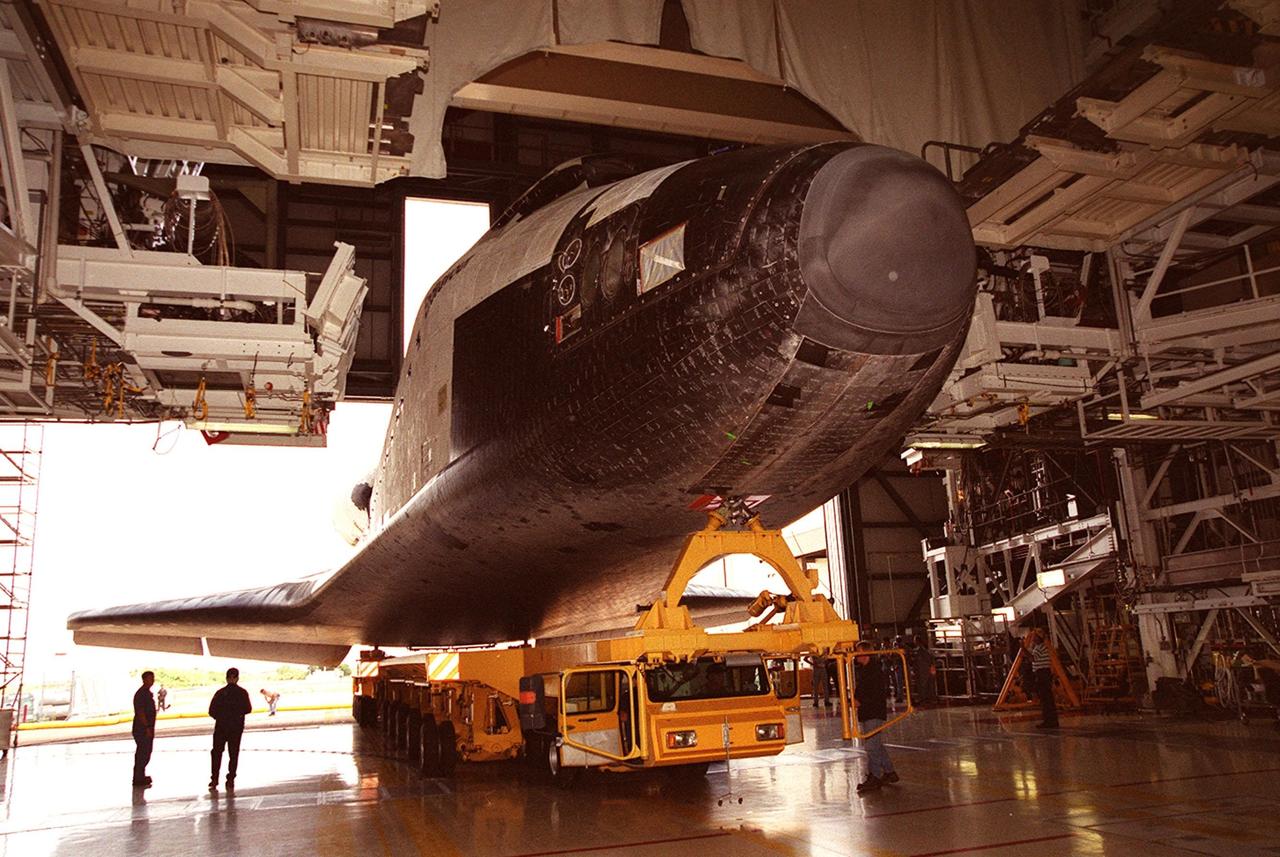
KENNEDY SPACE CENTER, FLA. -- Endeavour begins backing out of Orbiter Processing Facility bay 2 atop an orbiter transporter for rollover to the Vehicle Assembly Building. In the VAB, Endeavour will be stacked with its solid rocket boosters and external tank atop the Mobile Launcher Platform in high bay 3. Endeavour is scheduled to launch April 19 on mission STS-100, the ninth flight to the International Space Station
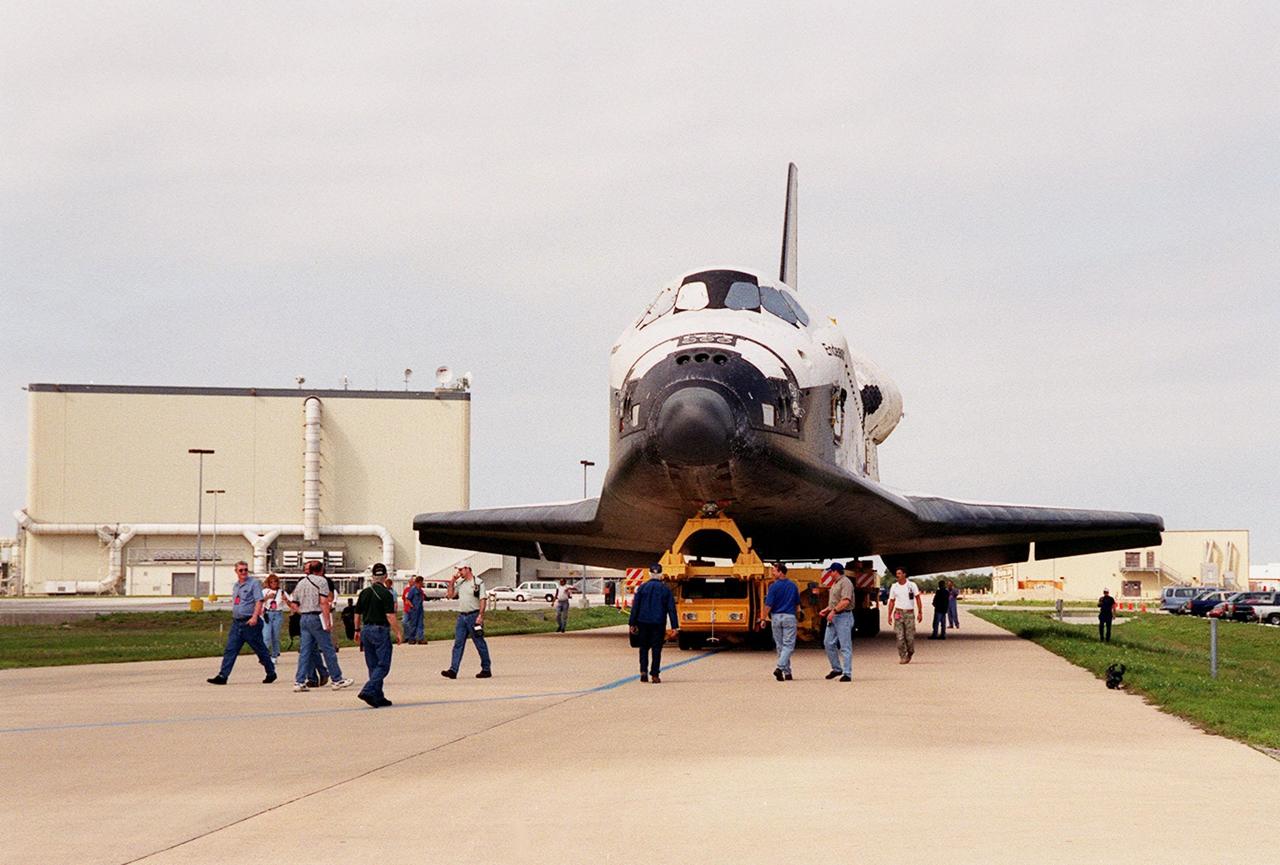
KENNEDY SPACE CENTER, FLA. -- Accompanied by workers, Endeavour rolls to the Vehicle Assembly Building after leaving Orbiter Processing Facility bay 2 (background). In the VAB, Endeavour will be stacked with its solid rocket boosters and external tank atop the Mobile Launcher Platform in high bay 3. Endeavour is scheduled to launch April 19 on mission STS-100, the ninth flight to the International Space Station
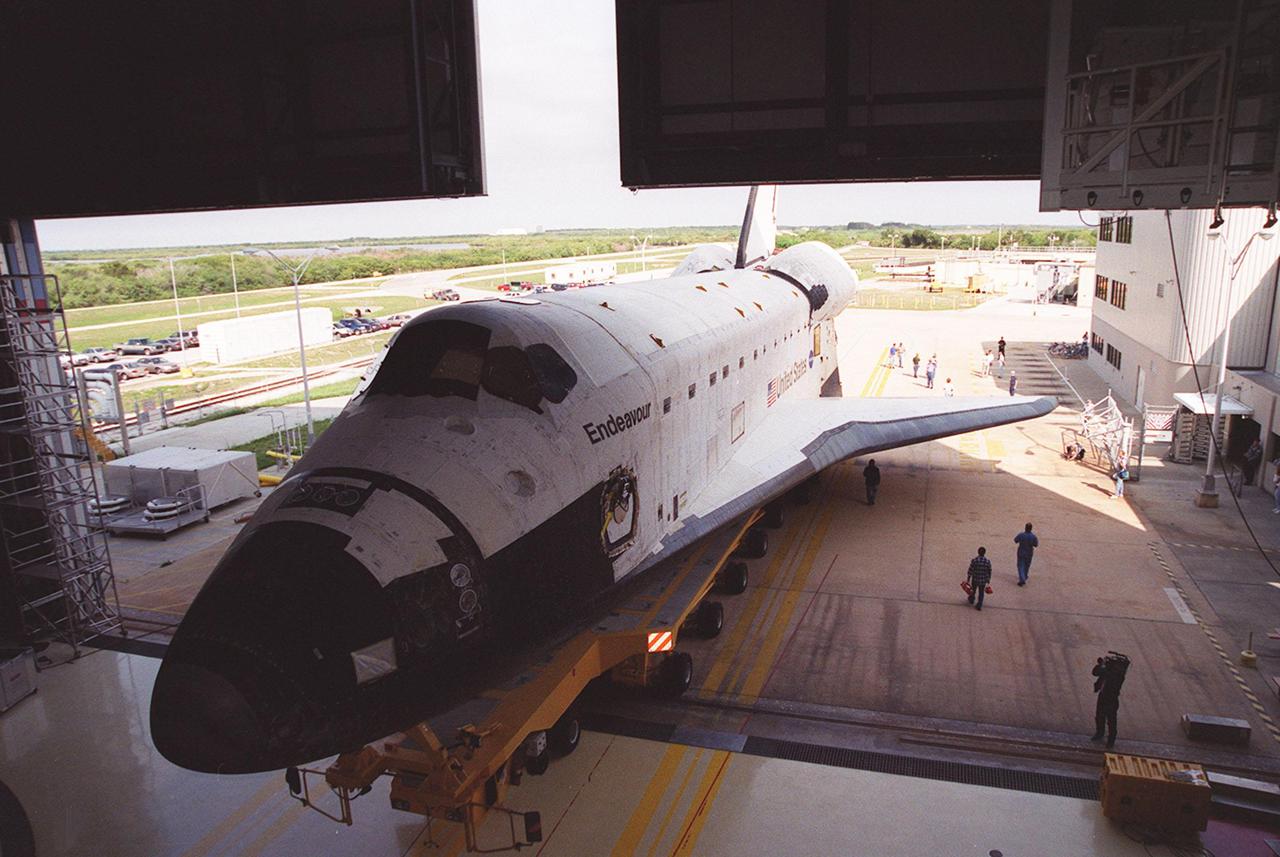
KENNEDY SPACE CENTER, FLA. -- Endeavour backs out of Orbiter Processing Facility bay 2 atop an orbiter transporter for rollover to the Vehicle Assembly Building. In the VAB, Endeavour will be stacked with its solid rocket boosters and external tank atop the Mobile Launcher Platform in high bay 3. Endeavour is scheduled to launch April 19 on mission STS-100, the ninth flight to the International Space Station
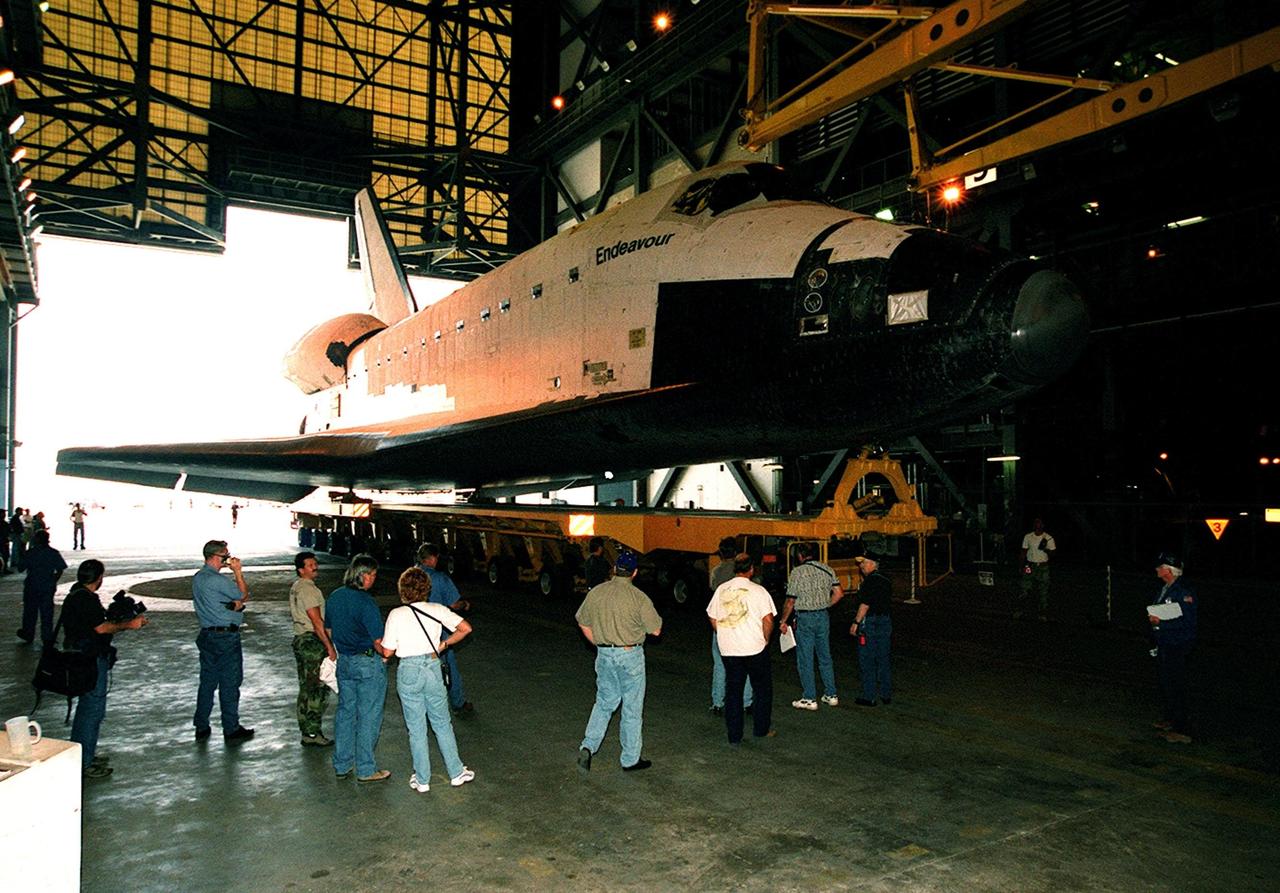
KENNEDY SPACE CENTER, FLA. -- Endeavour arrives in the transfer aisle of the Vehicle Assembly Building after rollover from Orbiter Processing Facility bay 2. In the VAB, Endeavour will be lifted to vertical and transferred to high bay 3 for stacking with its solid rocket boosters and external tank atop the Mobile Launcher Platform. Endeavour is scheduled to launch April 19 on mission STS-100, the ninth flight to the International Space Station
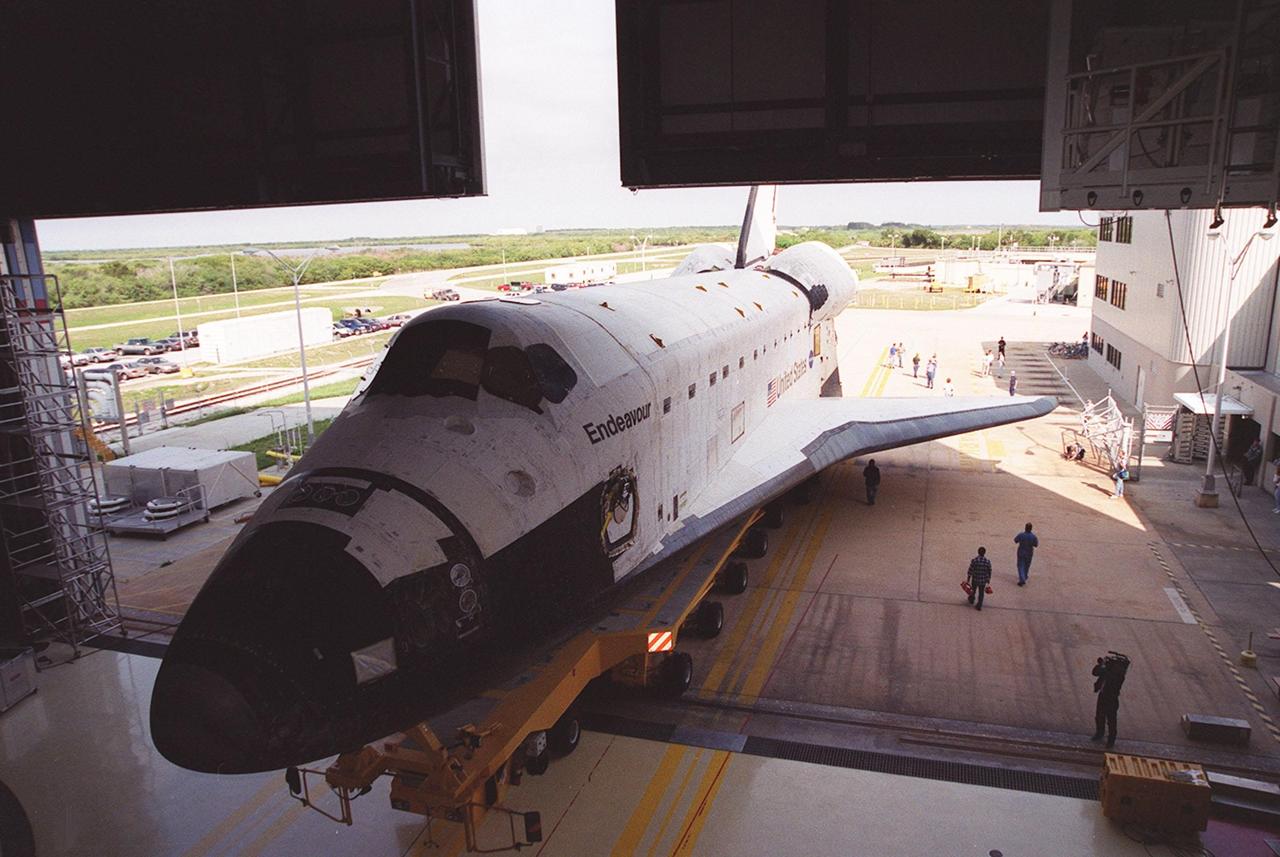
KENNEDY SPACE CENTER, FLA. -- Endeavour backs out of Orbiter Processing Facility bay 2 atop an orbiter transporter for rollover to the Vehicle Assembly Building. In the VAB, Endeavour will be stacked with its solid rocket boosters and external tank atop the Mobile Launcher Platform in high bay 3. Endeavour is scheduled to launch April 19 on mission STS-100, the ninth flight to the International Space Station
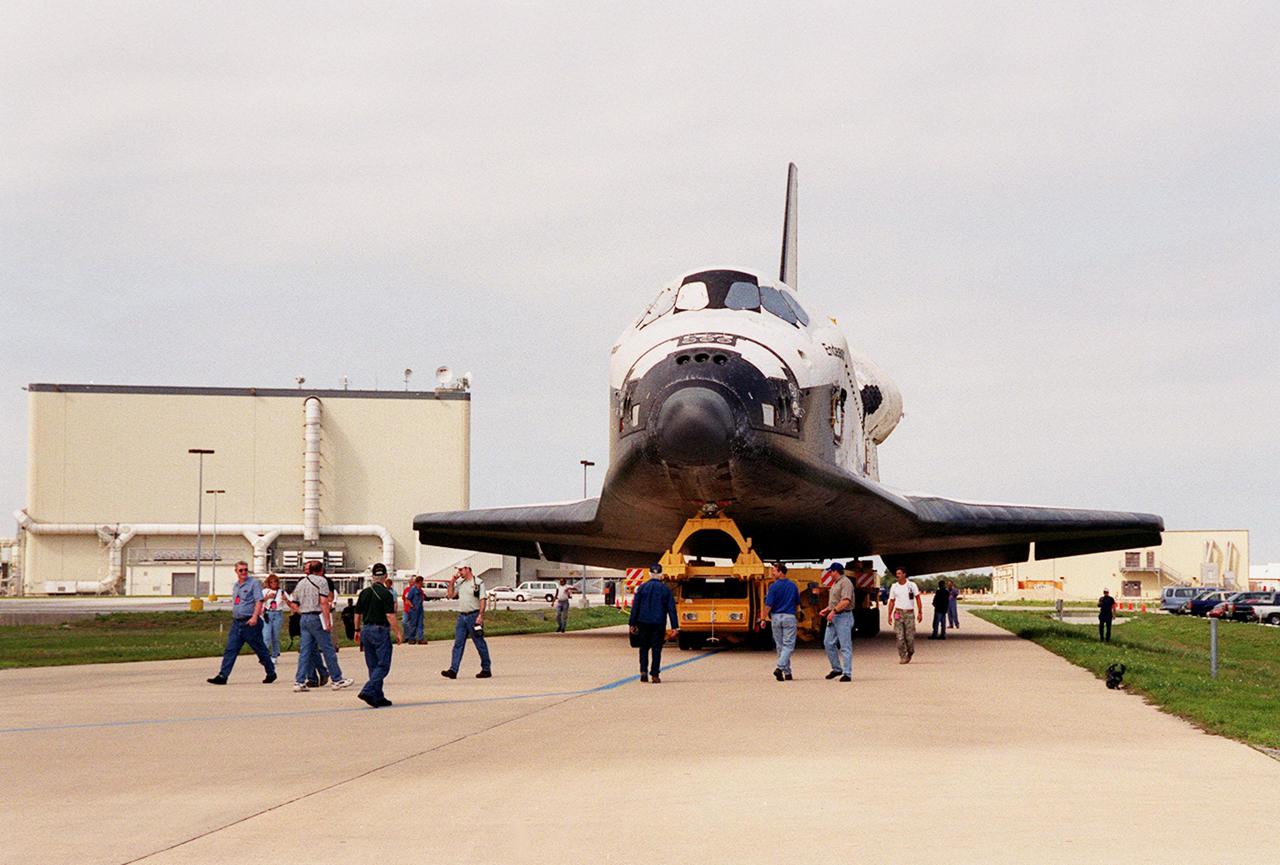
KENNEDY SPACE CENTER, FLA. -- Accompanied by workers, Endeavour rolls to the Vehicle Assembly Building after leaving Orbiter Processing Facility bay 2 (background). In the VAB, Endeavour will be stacked with its solid rocket boosters and external tank atop the Mobile Launcher Platform in high bay 3. Endeavour is scheduled to launch April 19 on mission STS-100, the ninth flight to the International Space Station
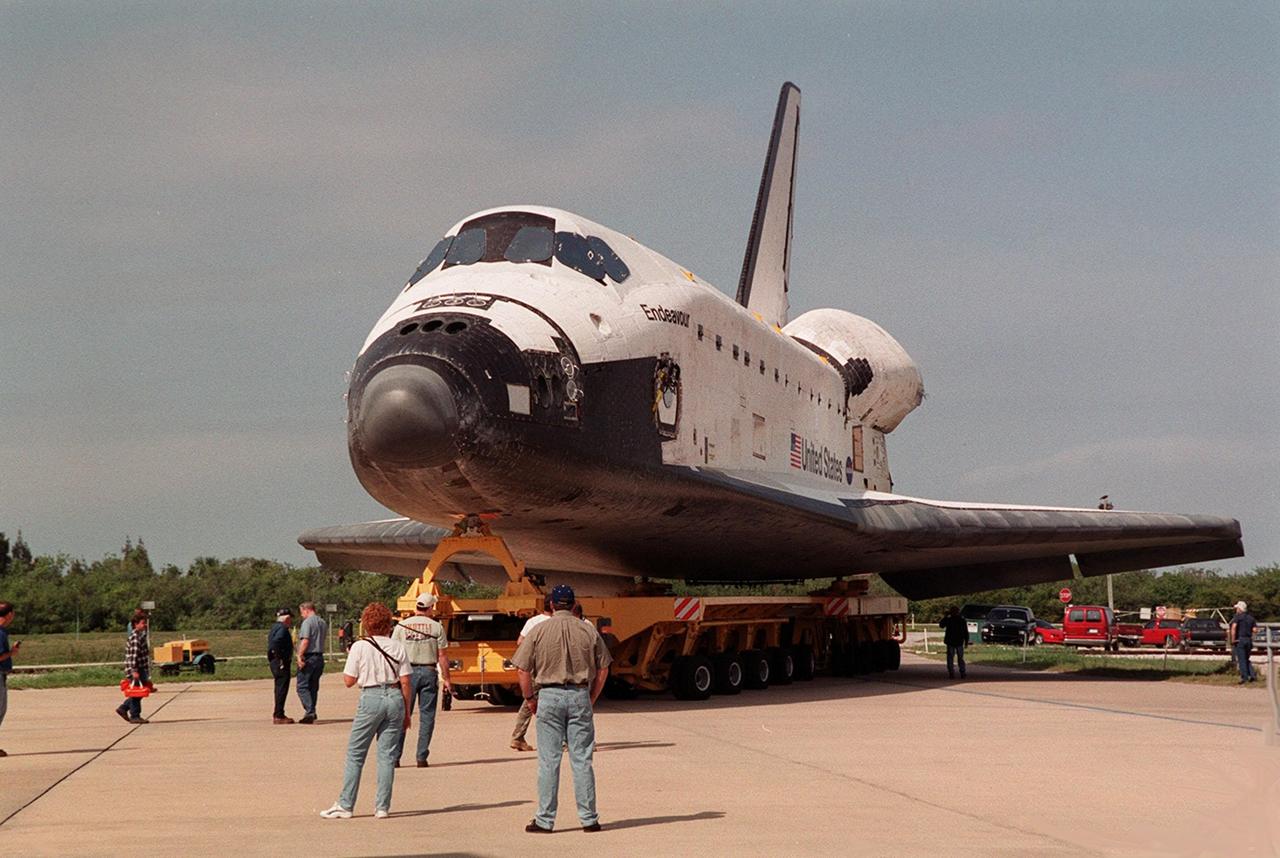
KENNEDY SPACE CENTER, FLA. -- After backing out of Orbiter Processing Facility bay 2, Endeavour is ready to roll over to the Vehicle Assembly Building. In the VAB, Endeavour will be stacked with its solid rocket boosters and external tank atop the Mobile Launcher Platform in high bay 3. Endeavour is scheduled to launch April 19 on mission STS-100, the ninth flight to the International Space Station
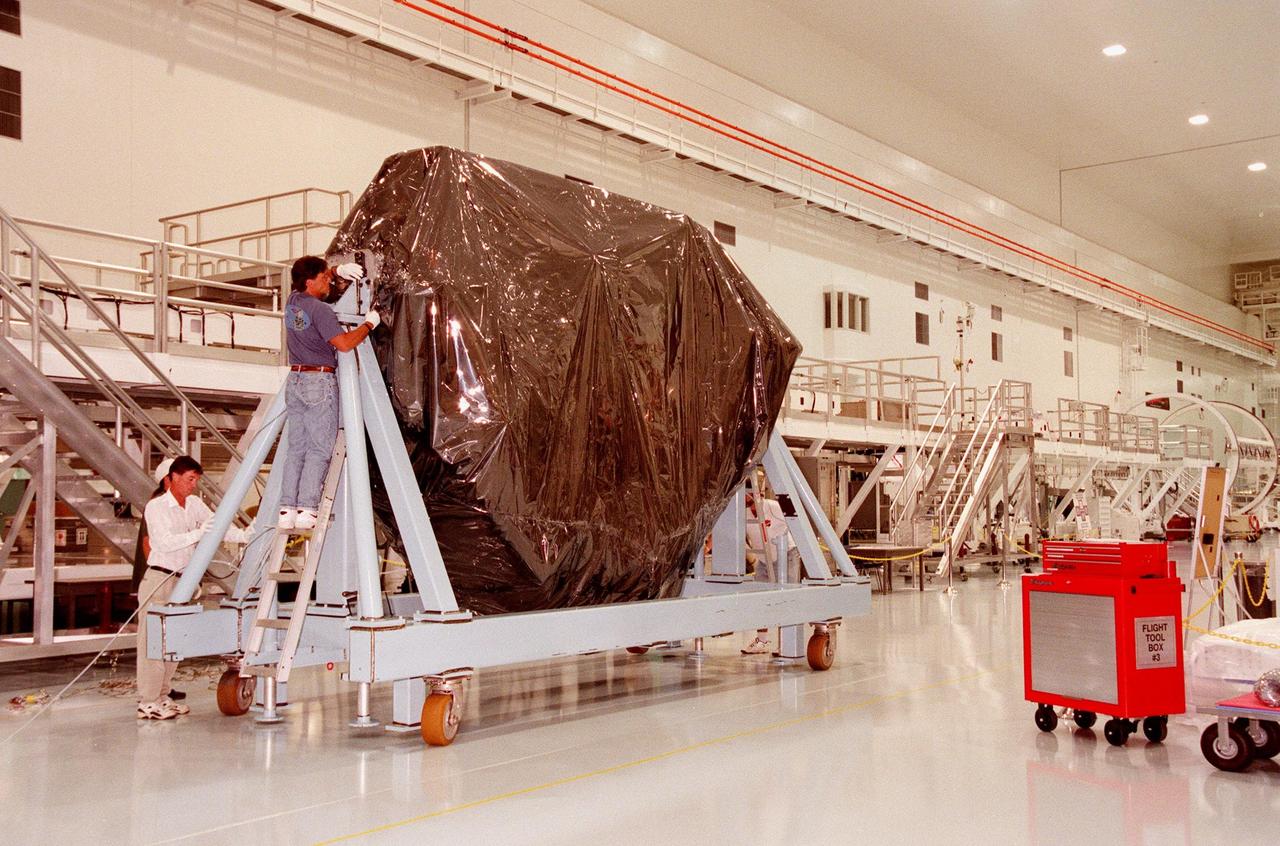
The HOST (the Hubble Space Telescope Orbital Systems Test) payload is moved into the high bay of the Space Station Processing Facility (SSPF). HOST is scheduled to fly on the STS-95 mission, planned for launch on Oct. 29, 1998. The mission includes other research payloads such as the Spartan solar-observing deployable spacecraft, the International Extreme Ultraviolet Hitchhiker, as well as the SPACEHAB single module with experiments on space flight and the aging process
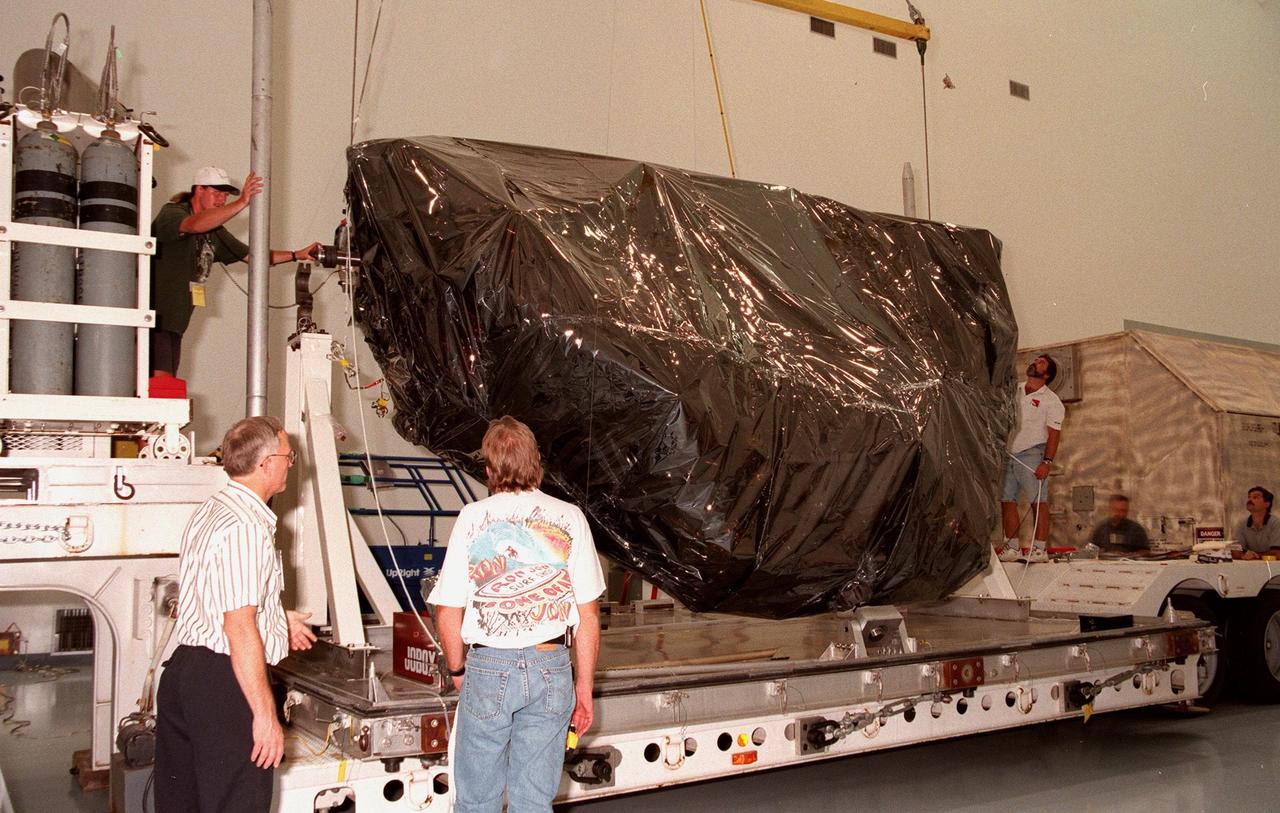
The HOST (the Hubble Space Telescope Orbital Systems Test) payload is prepared for moving to the high bay of the Space Station Processing Facility (SSPF). HOST is scheduled to fly on the STS-95 mission, planned for launch on Oct. 29, 1998. The mission includes other research payloads such as the Spartan solar-observing deployable spacecraft, the International Extreme Ultraviolet Hitchhiker, as well as the SPACEHAB single module with experiments on space flight and the aging process
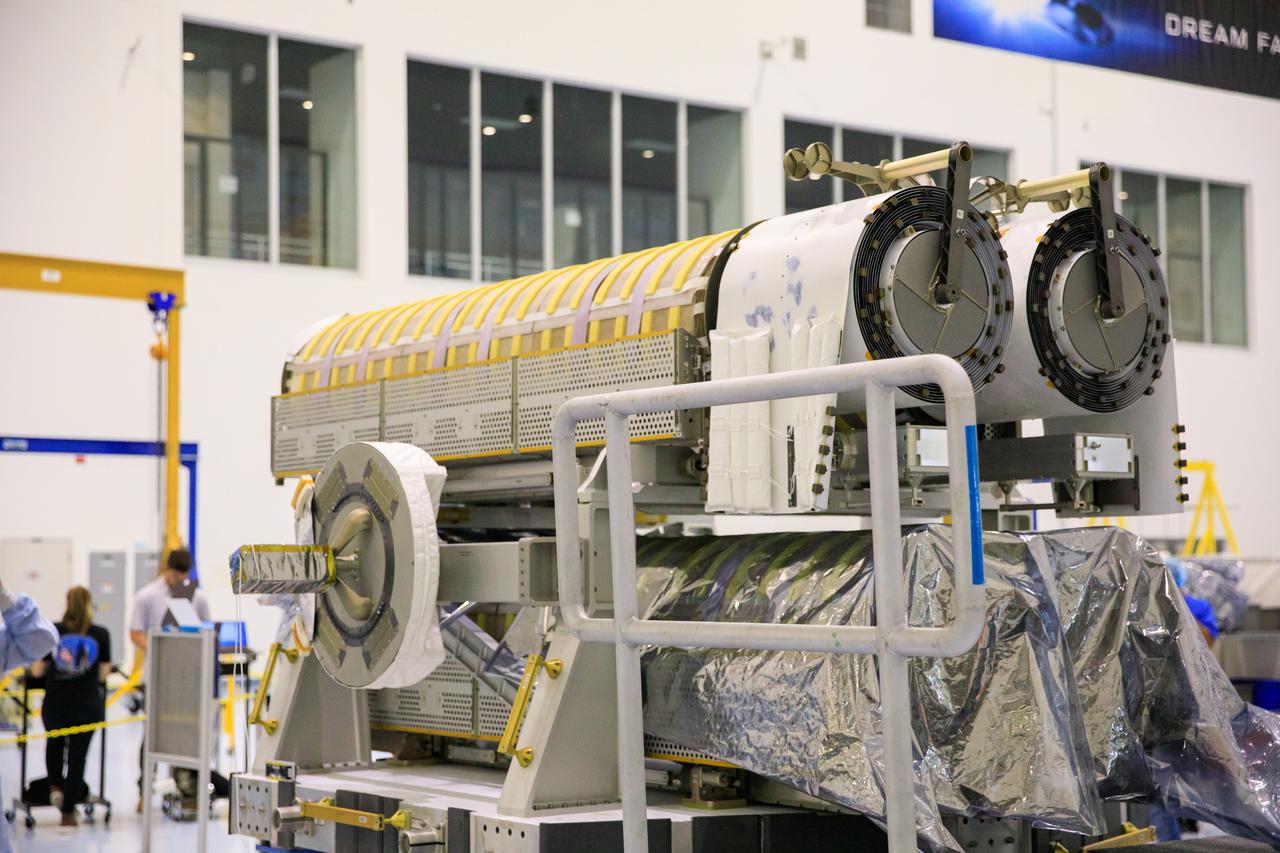
Inside the Space Station Processing Facility high bay at NASA's Kennedy Space Center in Florida, a set of International Space Station Roll Out Solar Arrays (iROSA) have been secured onto a platform on March 23, 2023. They are being prepared for delivery to the space station aboard SpaceX’s Dragon cargo carrier on the company’s 28th commercial resupply services (CRS-28) mission to the space station. iROSA is a new type of solar panel that rolls open in space and is more compact than current rigid panel designs.
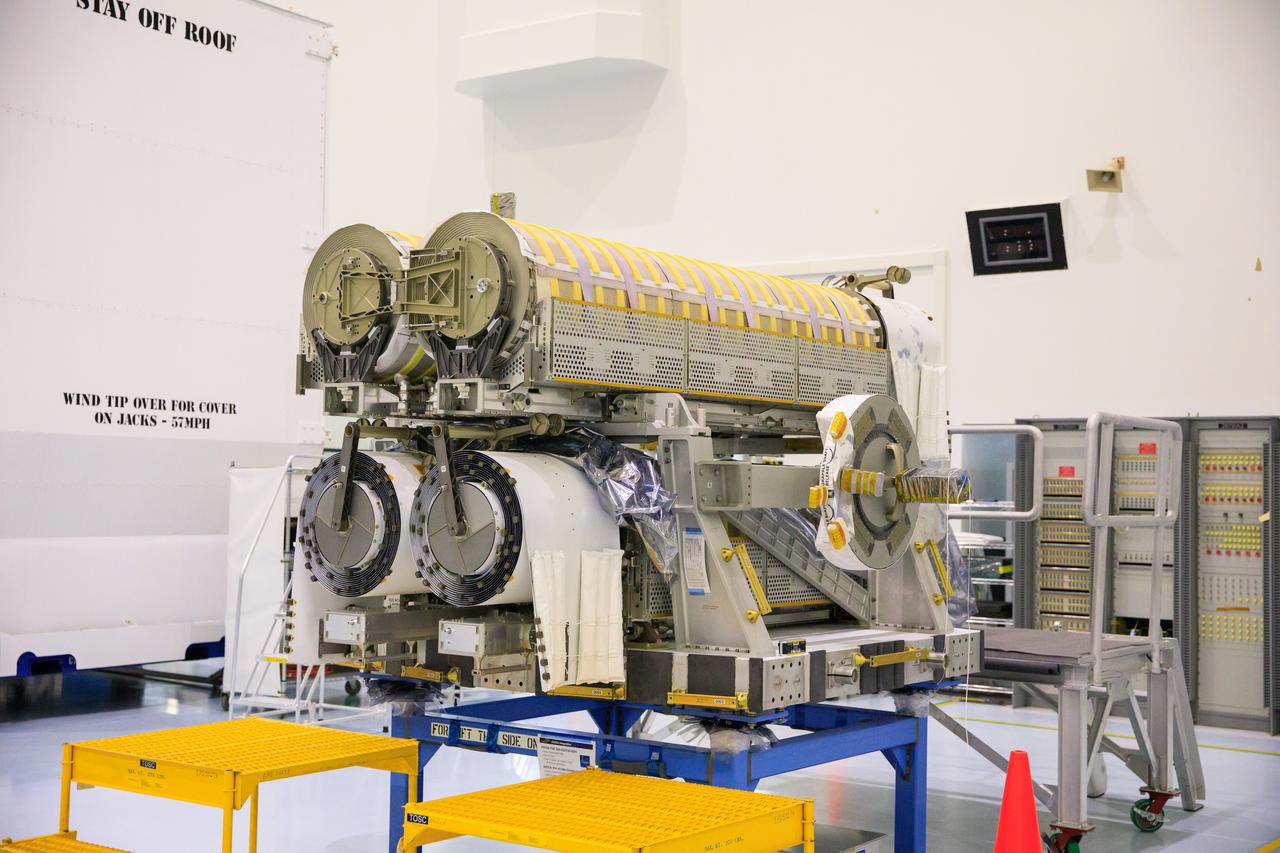
Inside the Space Station Processing Facility high bay at NASA's Kennedy Space Center in Florida, a set of International Space Station Roll Out Solar Arrays (iROSA) have been secured onto a platform on March 23, 2023. They are being prepared for delivery to the space station aboard SpaceX’s Dragon cargo carrier on the company’s 28th commercial resupply services (CRS-28) mission to the space station. iROSA is a new type of solar panel that rolls open in space and is more compact than current rigid panel designs.
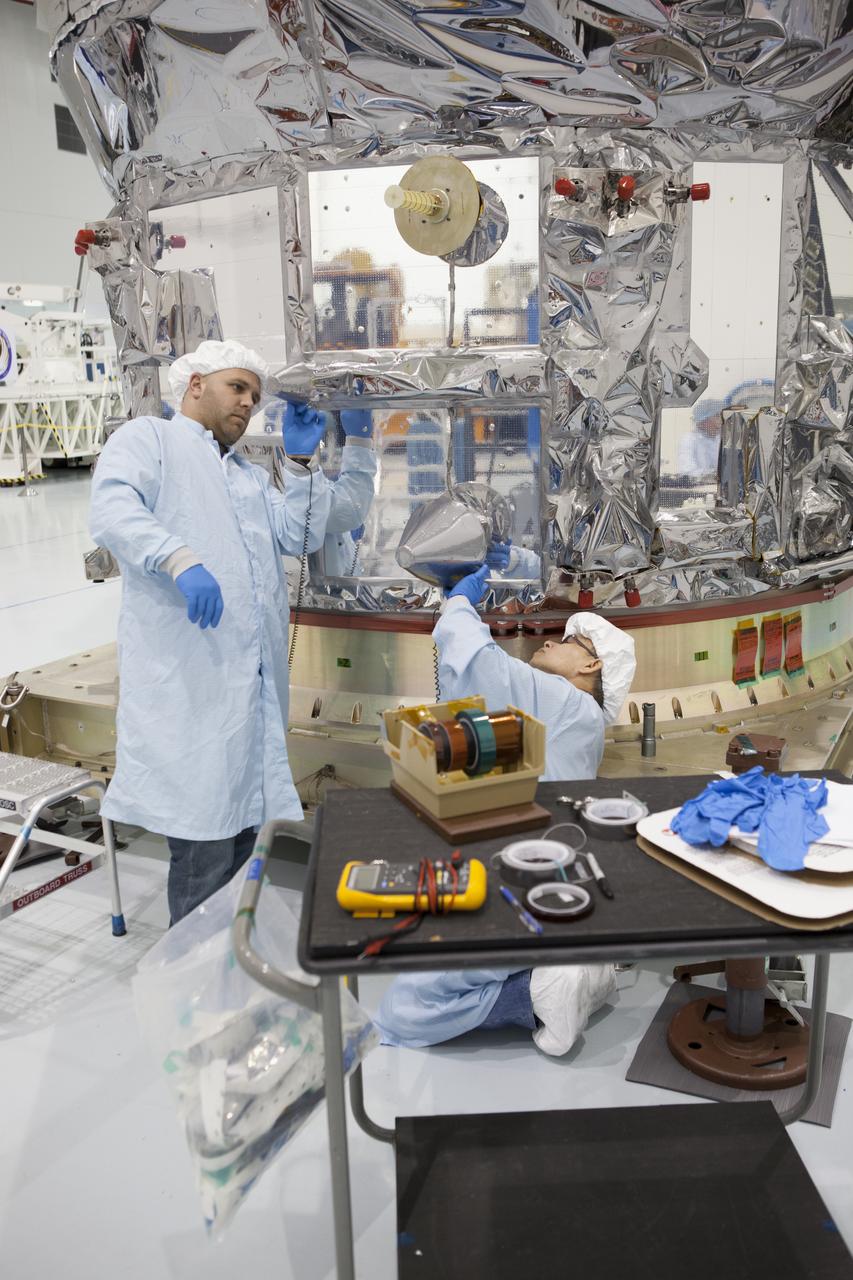
In the Space Station Processing Facility high bay at NASA's Kennedy Space Center in Florida, technicians are preparing Orbital ATK's CYGNUS pressurized cargo module for bagging. The Orbital ATK CRS-7 commercial resupply services mission to the International Space Station is scheduled to launch atop a United Launch Alliance Atlas V rocket from Space Launch Complex 41 at Cape Canaveral Air Force Station on March 19, 2017. CYGNUS will deliver thousands of pounds of supplies, equipment and scientific research materials to the space station.
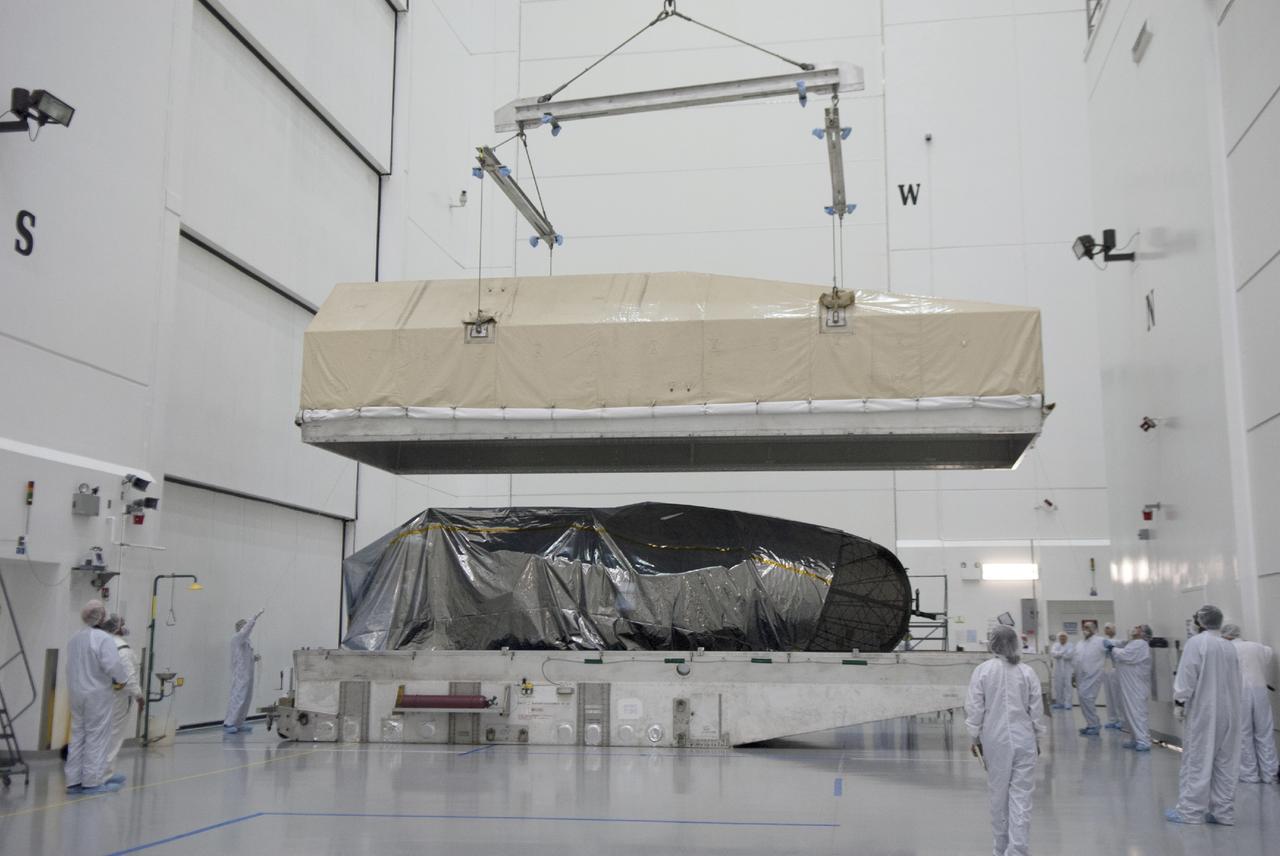
CAPE CANAVERAL, Fla. – Engineers lift the top off a shipping container to reveal NASA's TDRS-L satellite inside the high bay at the Astrotech payload processing facility in Titusville for launch processing. The TDRS is the latest spacecraft destined for the agency's constellation of communications satellites that allows nearly continuous contact with orbiting spacecraft ranging from the International Space Station and Hubble Space Telescope to the array of scientific observatories. Photo credit: NASA/Tim Jacobs
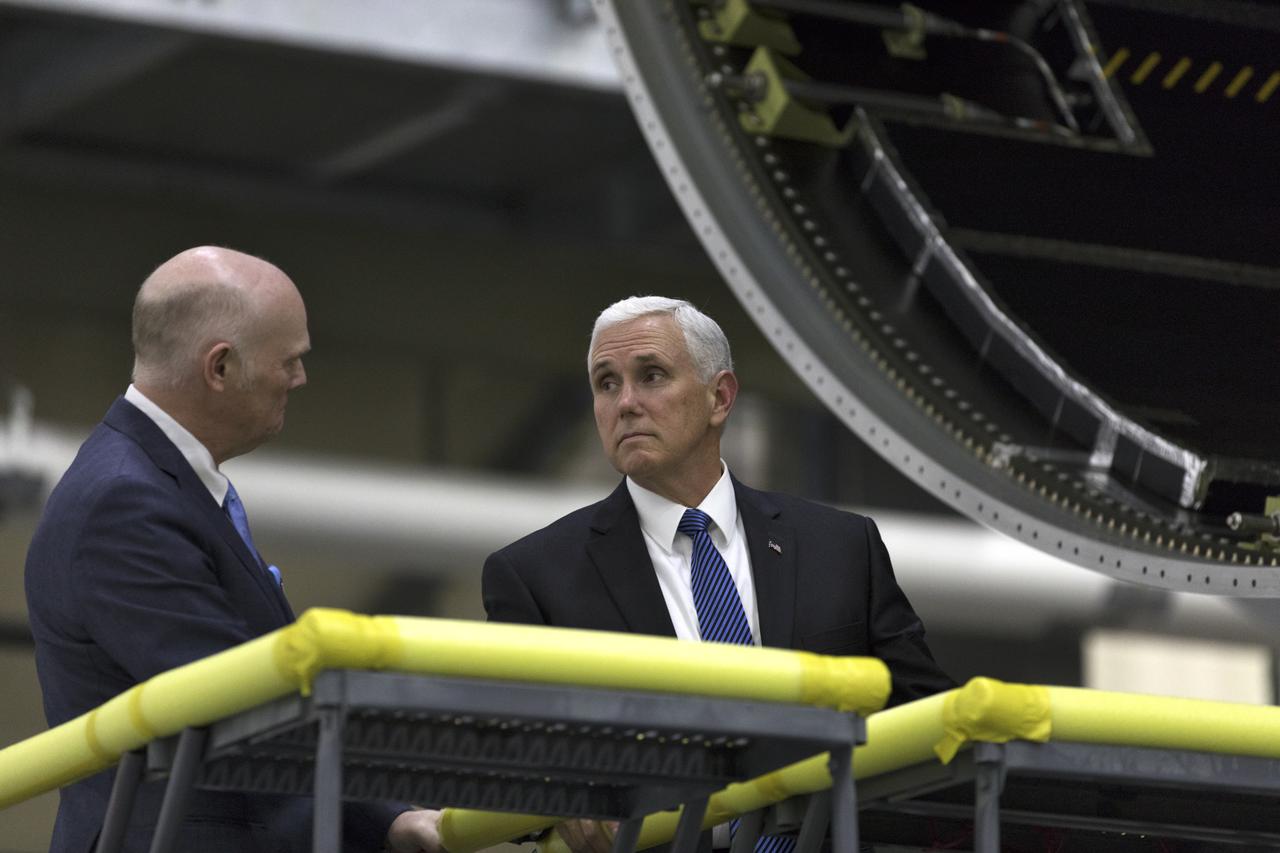
United Launch Alliance (ULA) president and CEO Tory Bruno, left, leads a tour for Vice President Mike Pence on Feb. 20, 2018. They are in the ULA Horizontal Integration Facility (HIF), at Cape Canaveral Air Force Station in Florida. The HIF is where the Delta IV Heavy boosters are being processed for NASA’s upcoming Parker Solar Probe mission. During his visit, Pence will chair a meeting of the National Space Council on Feb. 21, 2018 in the high bay of NASA Kennedy Space Center’s Space Station Processing Facility. The council's role is to advise the president regarding national space policy and strategy, and review the nation's long-range goals for space activities.
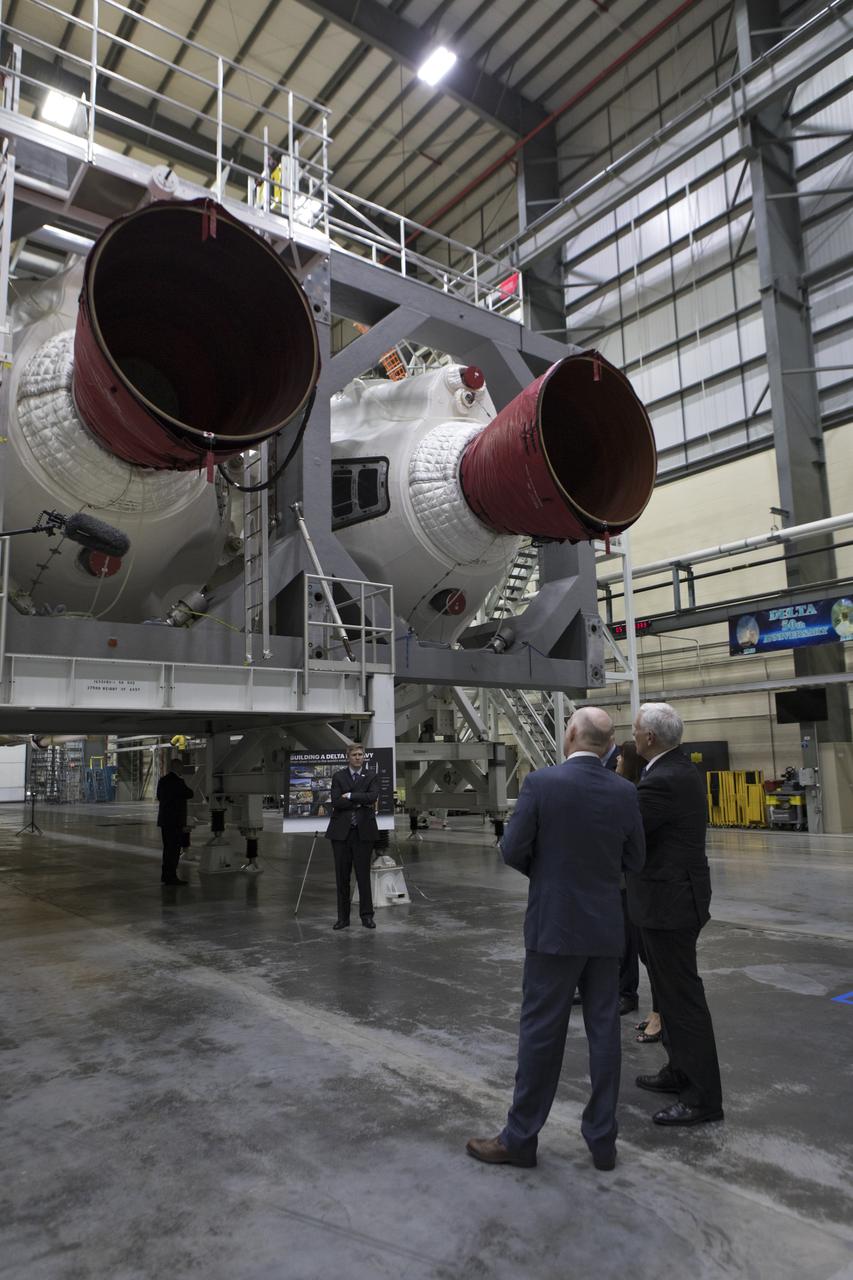
United Launch Alliance (ULA) president and CEO Tory Bruno, left, leads a tour in the ULA Horizontal Integration Facility (HIF), at Cape Canaveral Air Force Station in Florida for Vice President Mike Pence on Feb. 20, 2018. The HIF is where the Delta IV Heavy boosters are being processed for NASA’s upcoming Parker Solar Probe mission. During his visit, Pence will chair a meeting of the National Space Council on Feb. 21, 2018 in the high bay of NASA Kennedy Space Center’s Space Station Processing Facility. The council's role is to advise the president regarding national space policy and strategy, and review the nation's long-range goals for space activities.
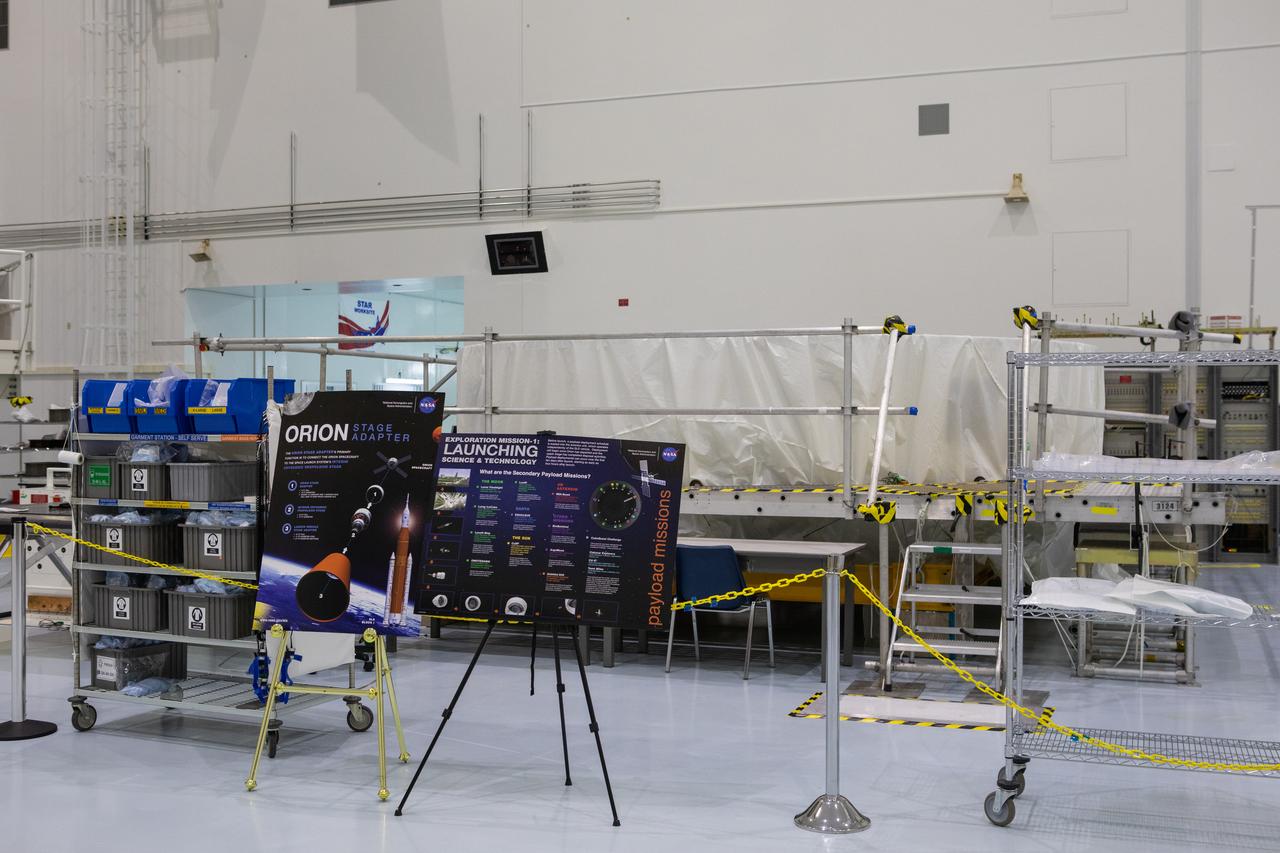
The Orion stage adapter for Artemis 1 is in view, wrapped in a protective covering, in this photograph taken on May 16, 2019, inside the high bay in the Space Station Processing Facility (SSPF) at NASA's Kennedy Space Center in Florida. The center is celebrating the SSPF’s 25th anniversary. The facility was built to process elements for the International Space Station. Now it is providing support for current and future NASA and commercial provider programs, including Commercial Resupply Services, Artemis 1, sending the first woman and next man to the Moon, and deep space destinations including Mars.
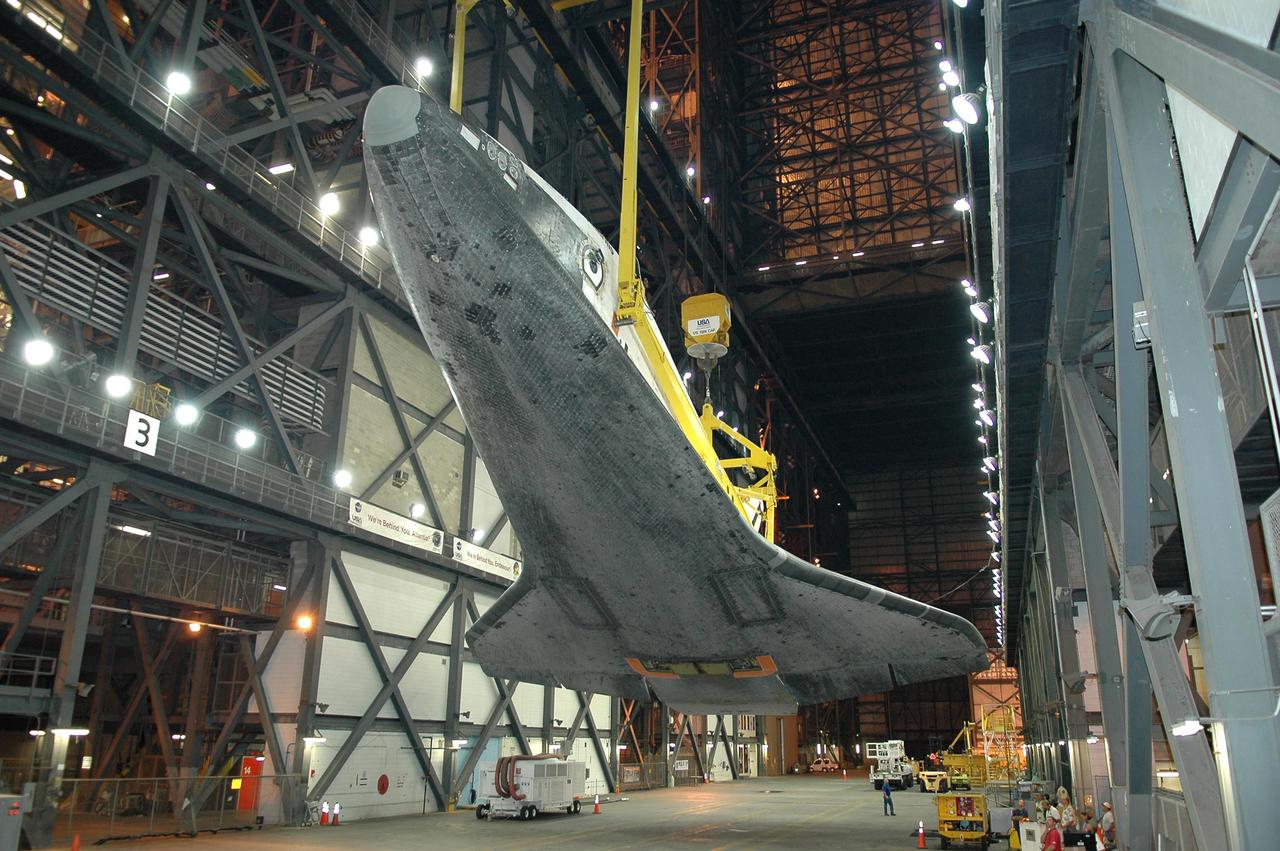
KENNEDY SPACE CENTER, FLA. - In the Vehicle Assembly Building (VAB), Space Shuttle Atlantis is positioned horizontally as it is lowered into the transfer aisle. The vehicle was just demated from its External Tank_Solid Rocket Booster stack in one of the VAB's high bays. The orbiter will be rolled back to Orbiter Processing Facility bay 1 where processing will begin for mission STS-115, the 19th flight to the International Space Station. The tank, ET-120, is the first redesigned ET to arrive at KSC and will undergo further testing before Return to Flight mission STS-121 next year.
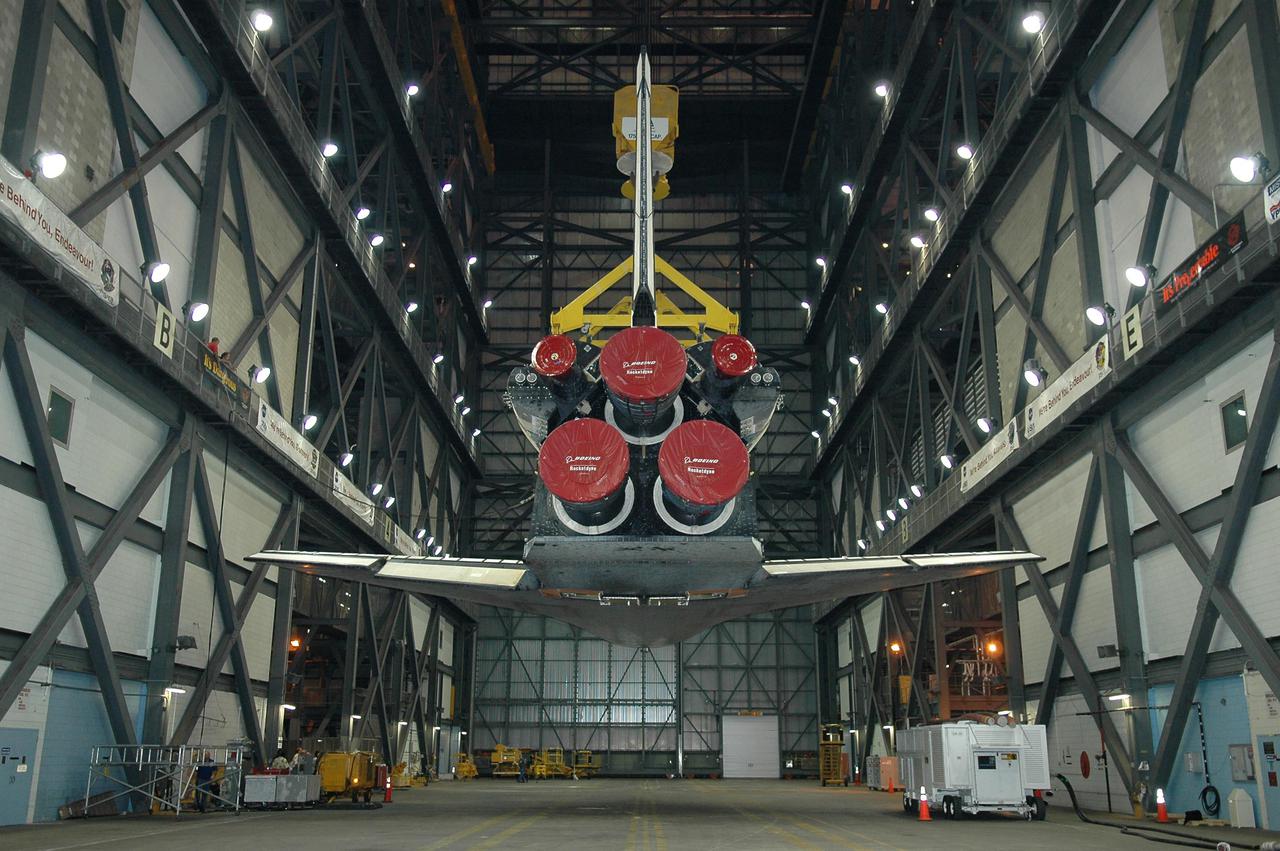
KENNEDY SPACE CENTER, FLA. - In the Vehicle Assembly Building (VAB), Space Shuttle Atlantis is positioned horizontally as it is lowered into the transfer aisle. The vehicle was just demated from its External Tank_Solid Rocket Booster stack in one of the VAB's high bays. The orbiter will be rolled back to Orbiter Processing Facility bay 1 where processing will begin for mission STS-115, the 19th flight to the International Space Station. The tank, ET-120, is the first redesigned ET to arrive at KSC and will undergo further testing before Return to Flight mission STS-121 next year.
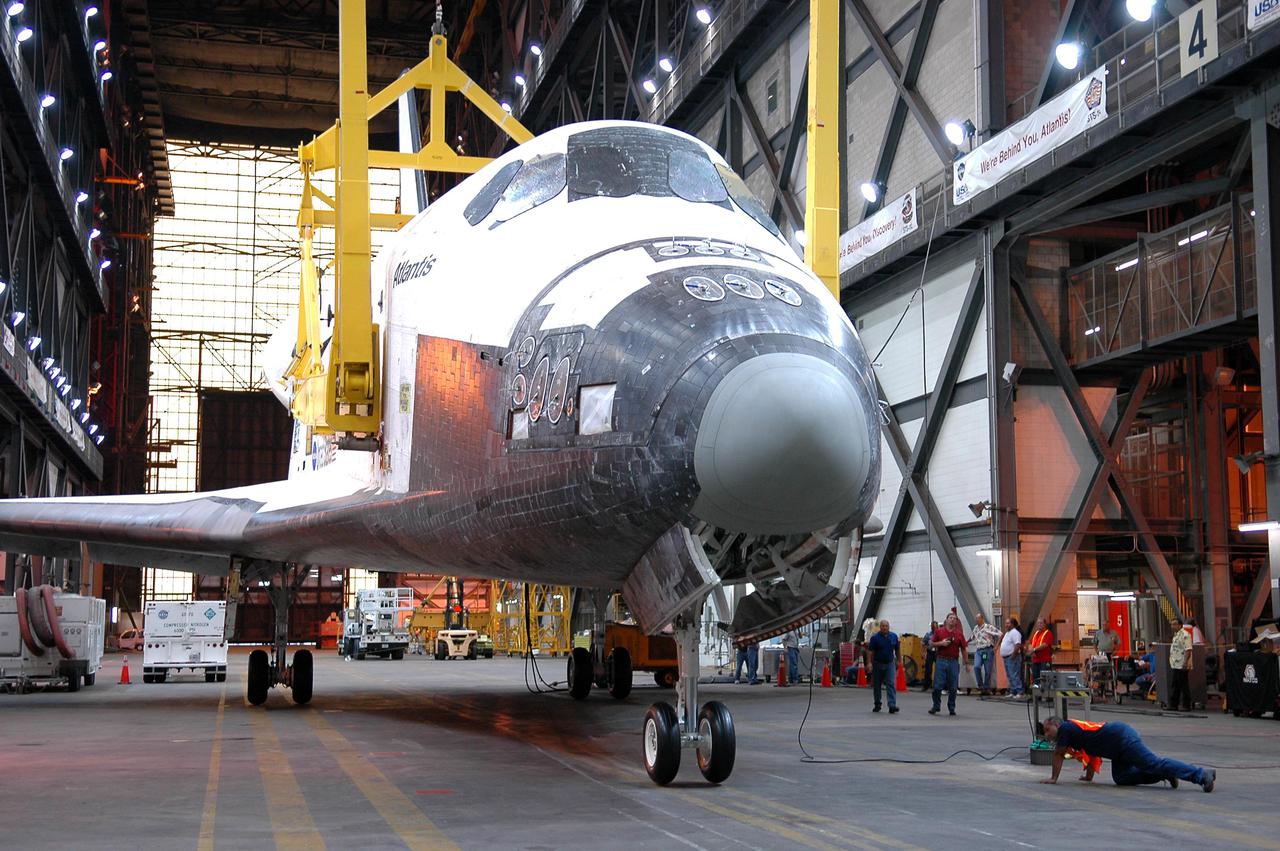
KENNEDY SPACE CENTER, FLA. - In the Vehicle Assembly Building (VAB), Space Shuttle Atlantis rests on its landing gear on the floor of the transfer aisle. The vehicle was just demated from its External Tank_Solid Rocket Booster stack in one of the VAB's high bays. The orbiter will be rolled back to Orbiter Processing Facility bay 1 where processing will begin for mission STS-115, the 19th flight to the International Space Station. The tank, ET-120, is the first redesigned ET to arrive at KSC and will undergo further testing before Return to Flight mission STS-121 next year.
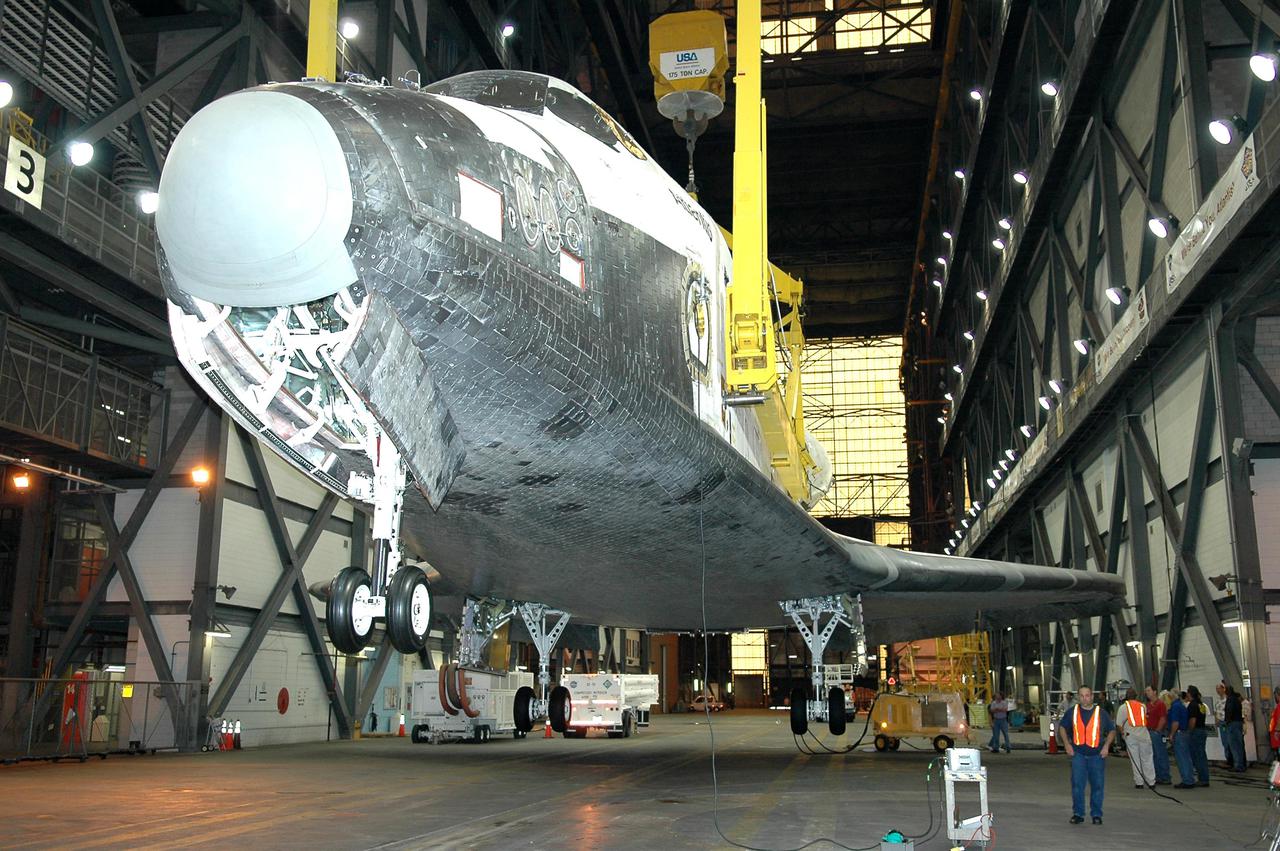
KENNEDY SPACE CENTER, FLA. - In the Vehicle Assembly Building (VAB), the landing gear of Space Shuttle Atlantis is lowered before the orbiter comes to rest on the floor of the transfer aisle. The vehicle was just demated from its External Tank_Solid Rocket Booster stack in one of the VAB's high bays. The orbiter will be rolled back to Orbiter Processing Facility bay 1 where processing will begin for mission STS-115, the 19th flight to the International Space Station. The tank, ET-120, is the first redesigned ET to arrive at KSC and will undergo further testing before Return to Flight mission STS-121 next year.
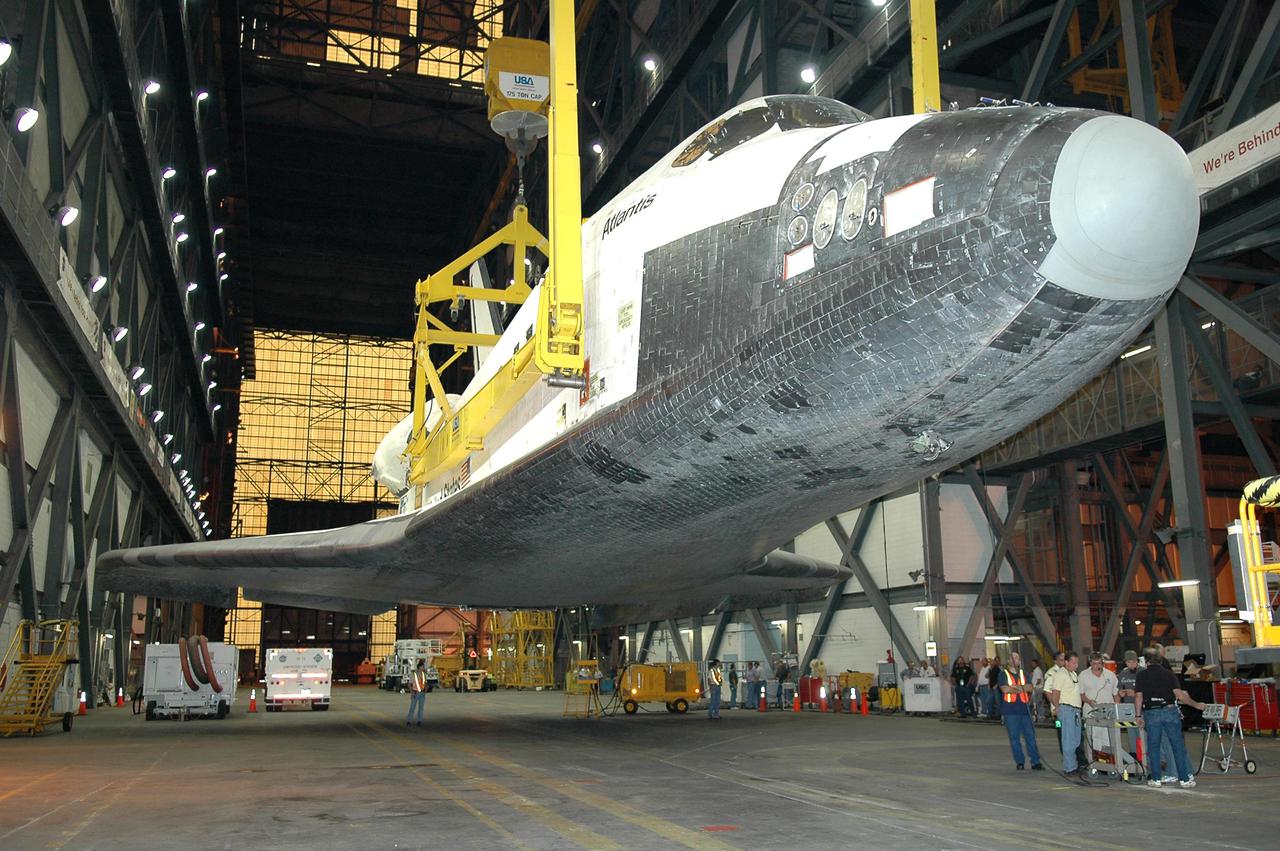
KENNEDY SPACE CENTER, FLA. - In the Vehicle Assembly Building (VAB), Space Shuttle Atlantis is positioned horizontally as it is lowered into the transfer aisle. The vehicle was just demated from its External Tank_Solid Rocket Booster stack in one of the VAB's high bays. The orbiter will be rolled back to Orbiter Processing Facility bay 1 where processing will begin for mission STS-115, the 19th flight to the International Space Station. The tank, ET-120, is the first redesigned ET to arrive at KSC and will undergo further testing before Return to Flight mission STS-121 next year.
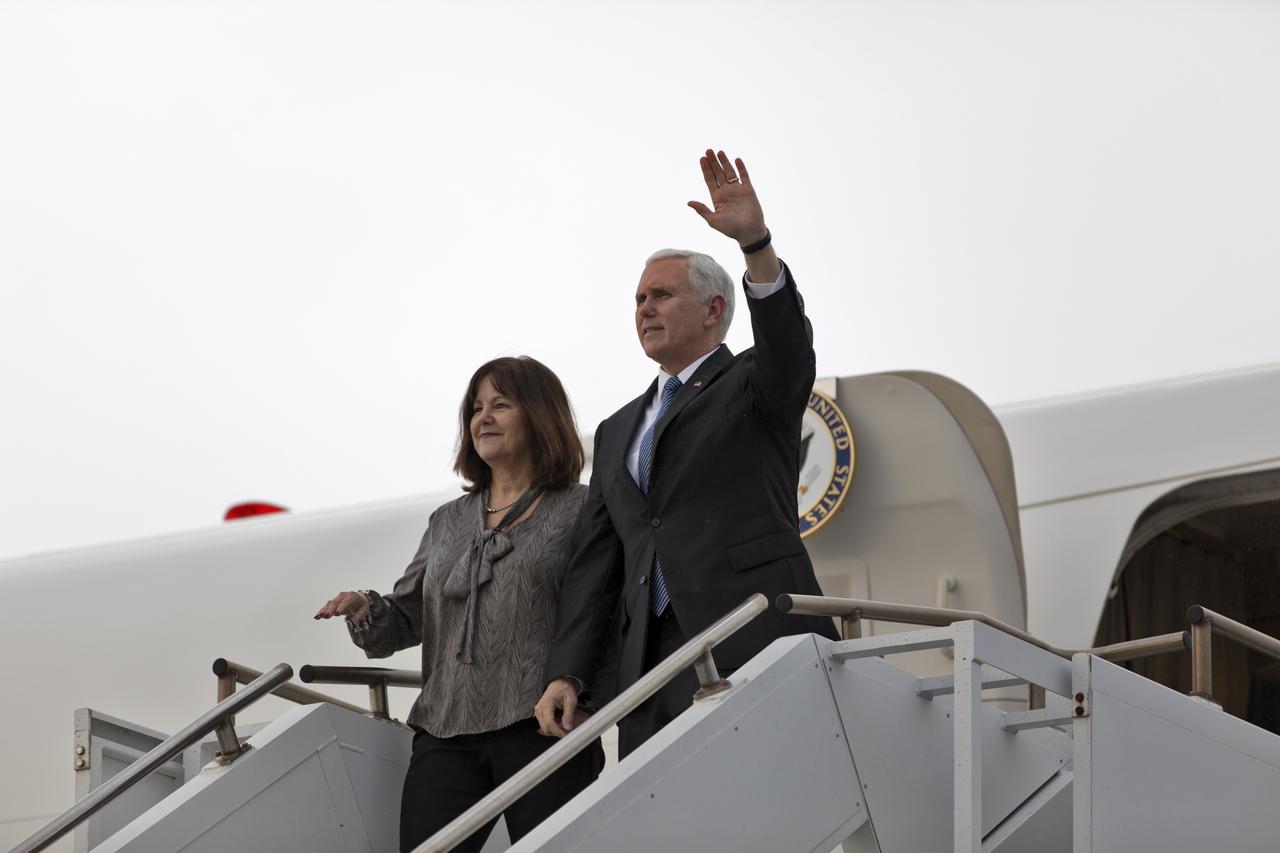
Vice President Mike Pence and his wife, Karen, step off Air Force Two on the Shuttle Landing Facility at NASA's Kennedy Space Center in Florida, on Feb. 20, 2018. During his visit, Pence will chair a meeting of the National Space Council in the high bay of the center's Space Station Processing Facility. The council's role is to advise the president regarding national space policy and strategy, and review the nation's long-range goals for space activities.
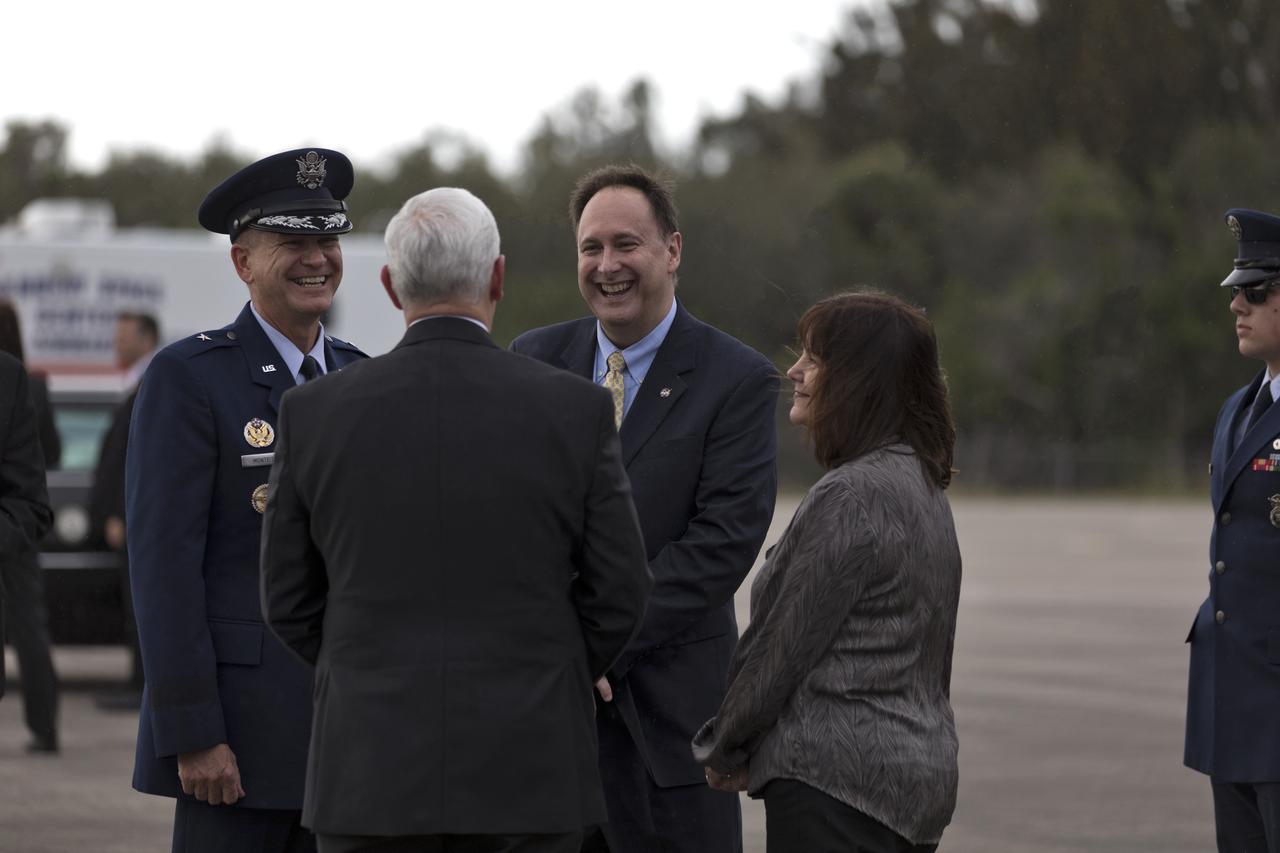
Acting NASA Administrator Robert Lightfoot, center, greets Vice President Mike Pence and his wife, Karen, at the Shuttle Landing Facility at the agency's Kennedy Space Center in Florida, on Feb. 20, 2018. During his visit, Pence will chair a meeting of the National Space Council in the high bay of the center's Space Station Processing Facility. The council's role is to advise the president regarding national space policy and strategy, and review the nation's long-range goals for space activities.
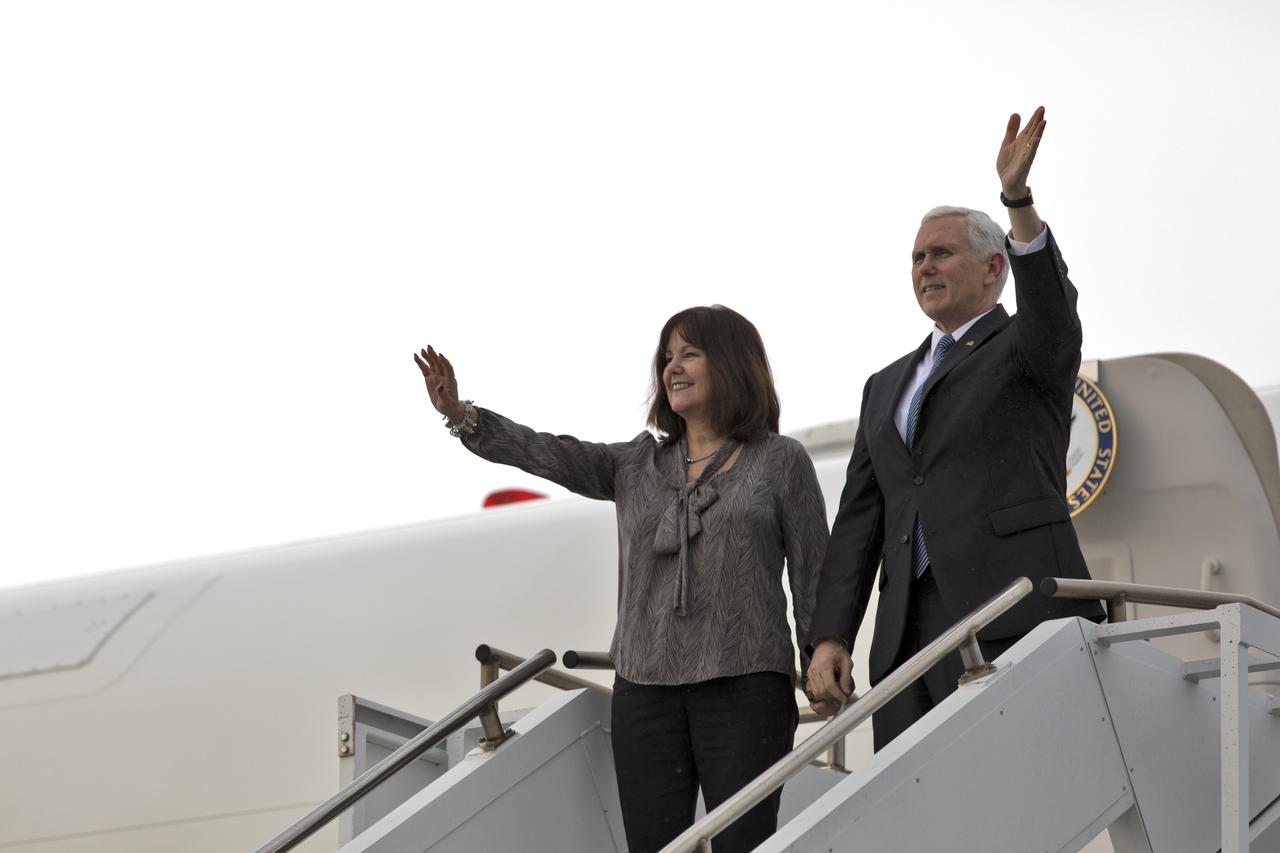
Vice President Mike Pence and his wife, Karen, step off Air Force Two on the Shuttle Landing Facility at NASA's Kennedy Space Center in Florida, on Feb. 20, 2018. During his visit, Pence will chair a meeting of the National Space Council in the high bay of the center's Space Station Processing Facility. The council's role is to advise the president regarding national space policy and strategy, and review the nation's long-range goals for space activities.
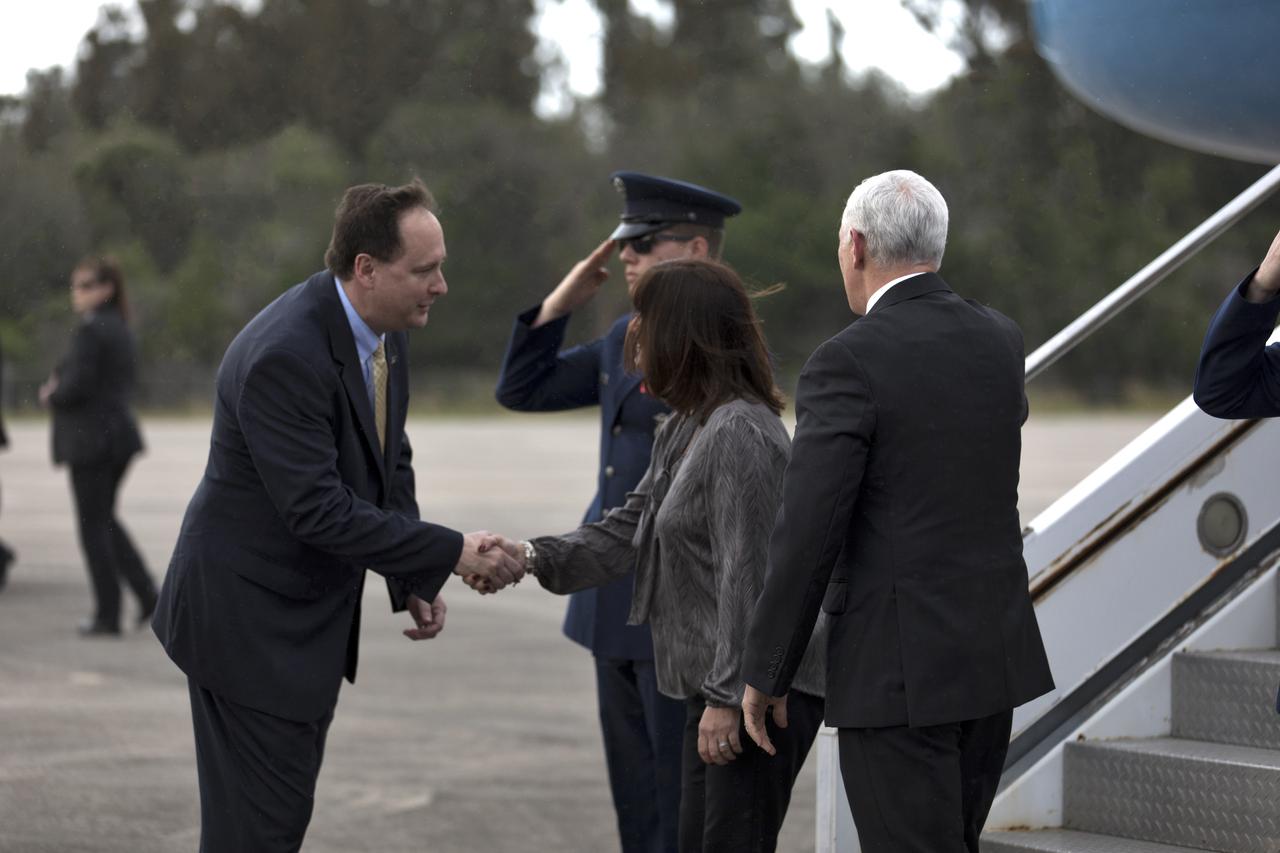
Acting NASA Administrator Robert Lightfoot, left, greets Vice President Mike Pence and his wife, Karen, after their arrival aboard Air Force Two at the Shuttle Landing Facility at NASA's Kennedy Space Center in Florida, on Feb. 20, 2018. During his visit, Pence will chair a meeting of the National Space Council in the high bay of the center's Space Station Processing Facility. The council's role is to advise the president regarding national space policy and strategy, and review the nation's long-range goals for space activities.
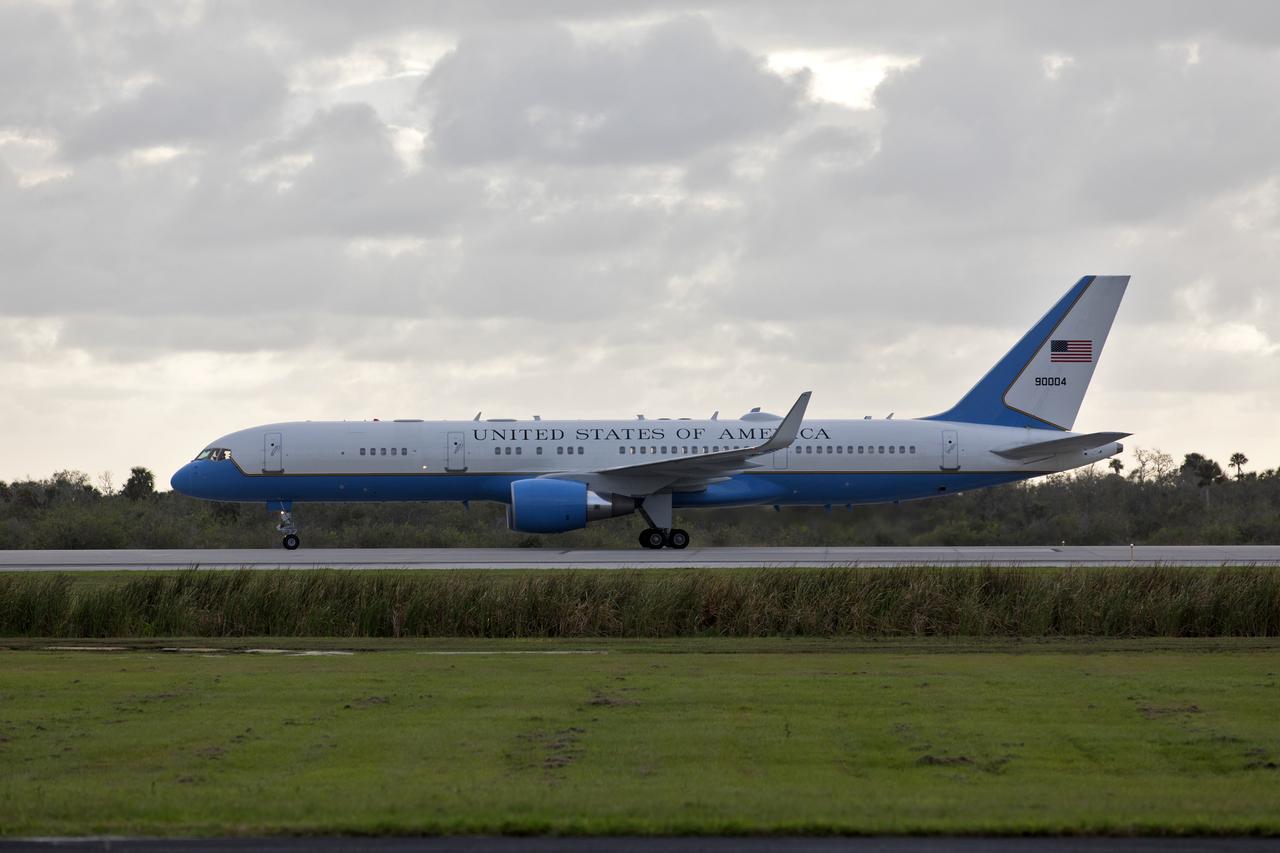
Air Force Two, carrying Vice President Mike Pence, taxis on the Shuttle Landing Facility at NASA's Kennedy Space Center in Florida, on Feb. 20, 2018. During his visit, Pence will chair a meeting of the National Space Council in the high bay of the center's Space Station Processing Facility. The council's role is to advise the president regarding national space policy and strategy, and review the nation's long-range goals for space activities.
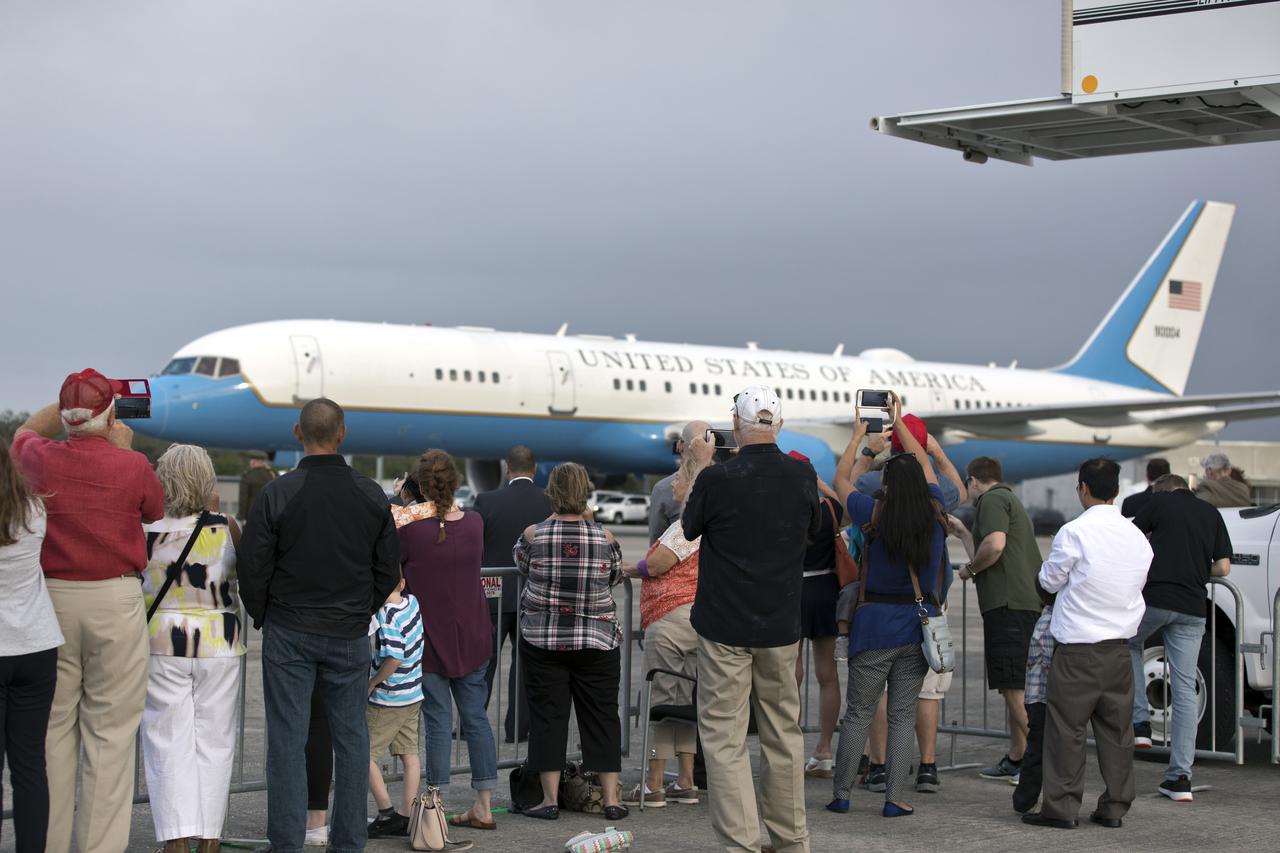
Spectators watch as Air Force Two, carrying Vice President Mike Pence, taxis on the Shuttle Landing Facility at NASA's Kennedy Space Center in Florida, on Feb. 20, 2018. During his visit, Pence will chair a meeting of the National Space Council in the high bay of the center's Space Station Processing Facility. The council's role is to advise the president regarding national space policy and strategy, and review the nation's long-range goals for space activities.
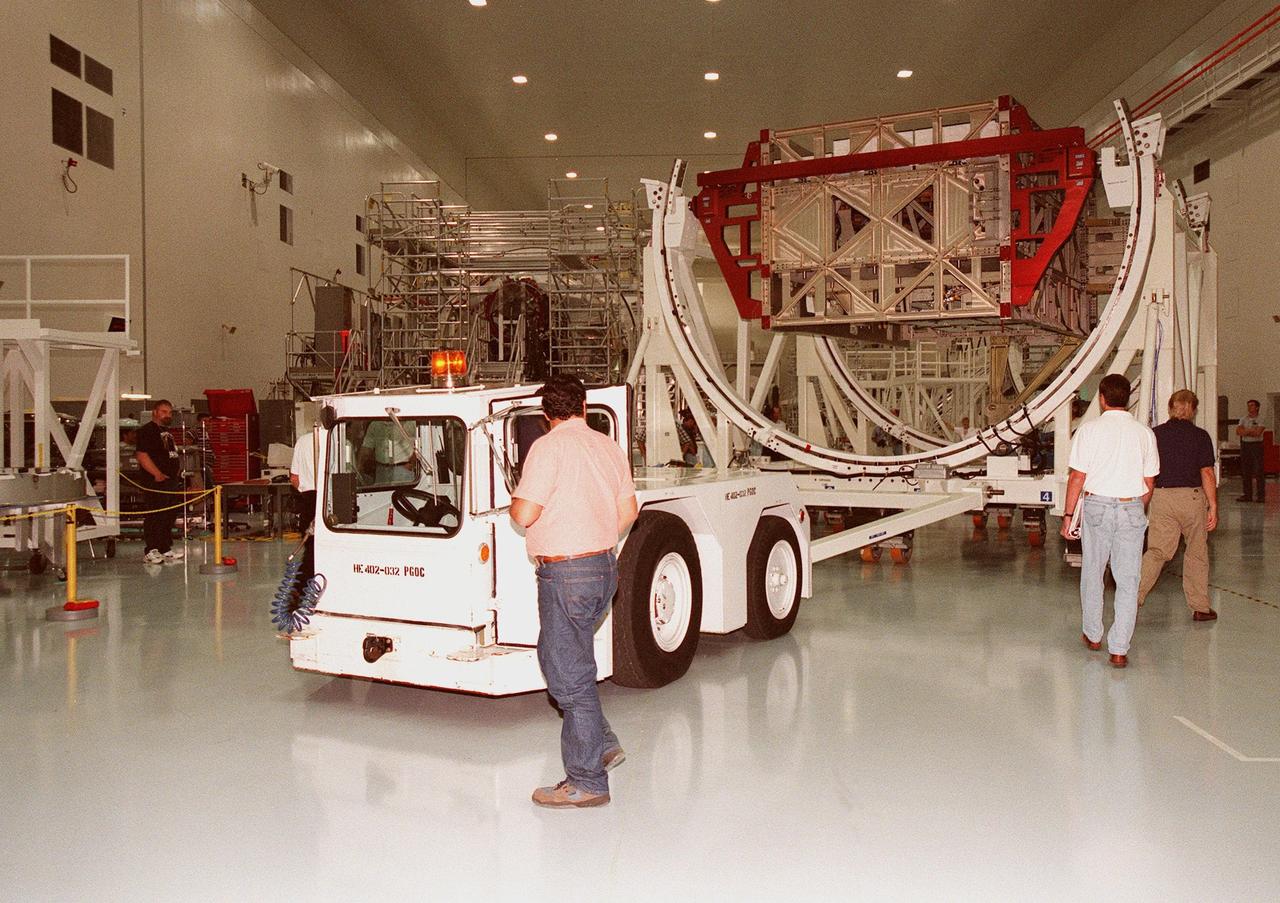
An Integrated Equipment Assembly (IEA) is moved into the center of the Space Station Processing Facility clean room at KSC for transition to the high bay. The IEA, a large truss segment of the International Space Station (ISS), is one of four power modules to be used on the International Space Station. The modules contain batteries for the ISS solar panels and power for the life support systems and experiments that will be conducted. This first IEA will fly on the Space Shuttle Endeavour as part of STS-97, scheduled to launch August 5, 1999
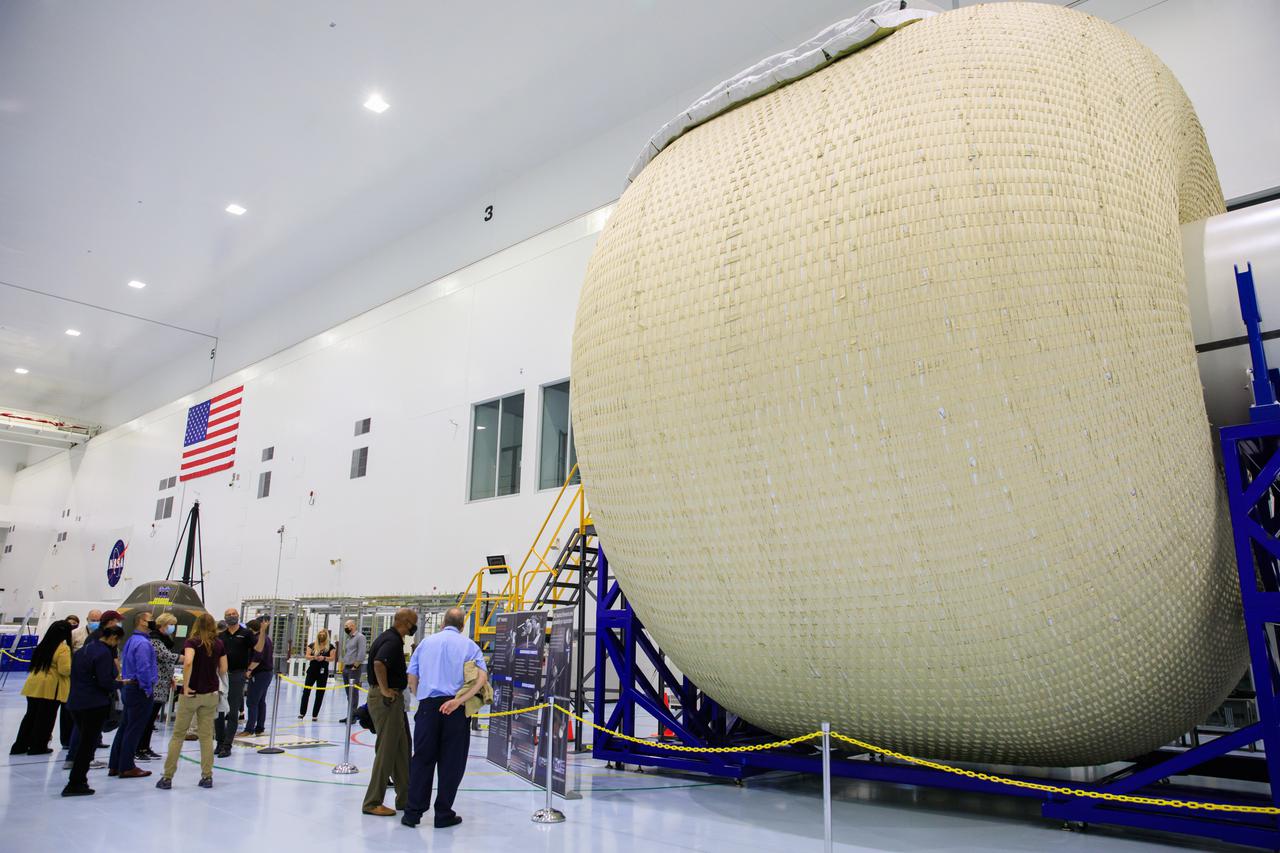
Senior leaders with Kennedy Space Center in Florida, familiarize newly appointed officials from NASA Headquarters with the center’s facilities during a tour on April 19, 2021. The group views Sierra Nevada’s Large Inflatable Fabric Environment (LIFE) habitat inside the Space Station Processing Facility high bay. The habitat is an expandable habitat. Expandable habitats have the benefit of greatly decreasing the amount of volume it takes to launch the habitat, which can then inflate once it is in space.
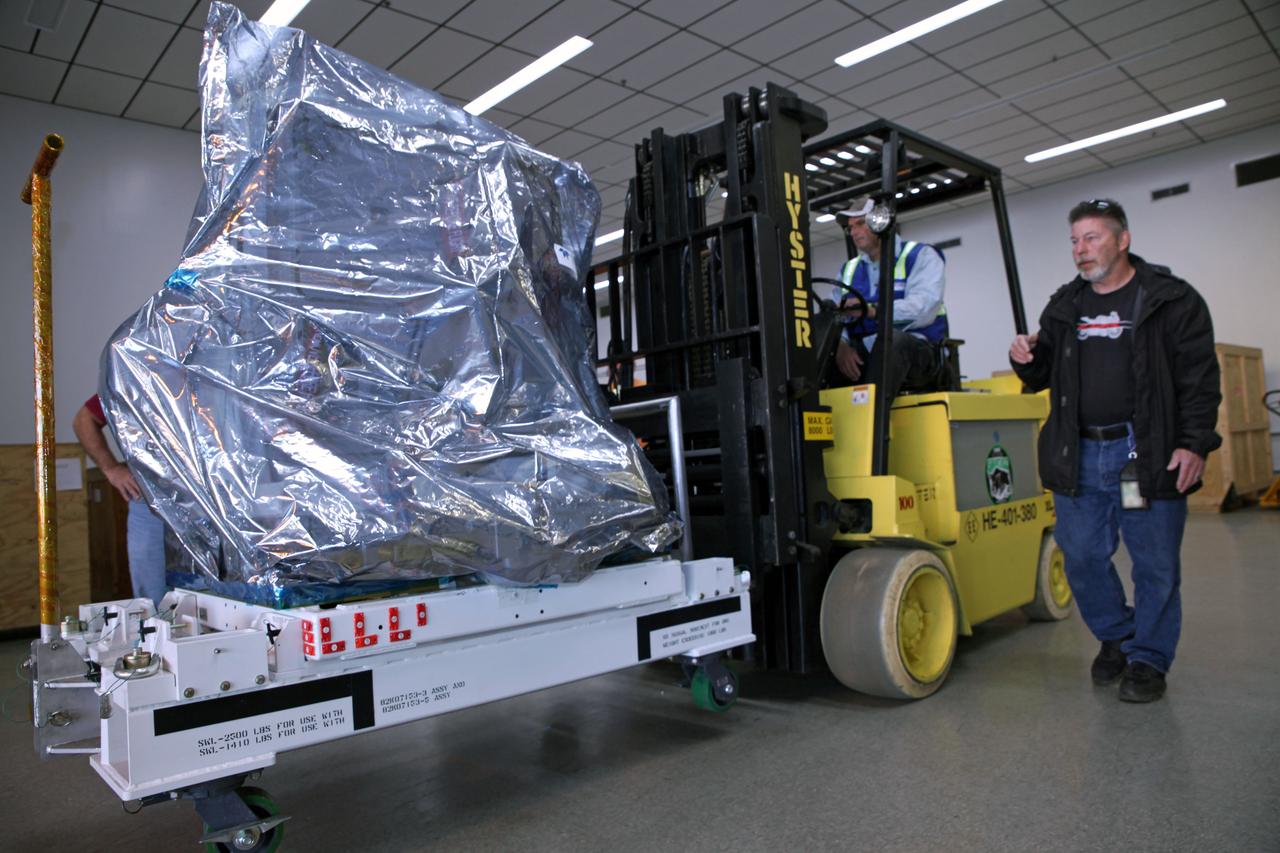
Technicians use a Hyster forklift to move the Multiple User System for Earth Sensing, or MUSES, payload out of the Space Station Processing Facility high bay at NASA's Kennedy Space Center in Florida. MUSES will be delivered to the International Space Station aboard the SpaceX Dragon cargo carrier on the company’s 11th commercial resupply services mission to the space station. MUSES, developed by Teledyne Brown, is part of the company's new commercial space-based digital imaging business. MUSES hosts earth-viewing instruments, such as high-resolution digital cameras, hyperspectral imagers, and provides precision pointing and other accommodations.