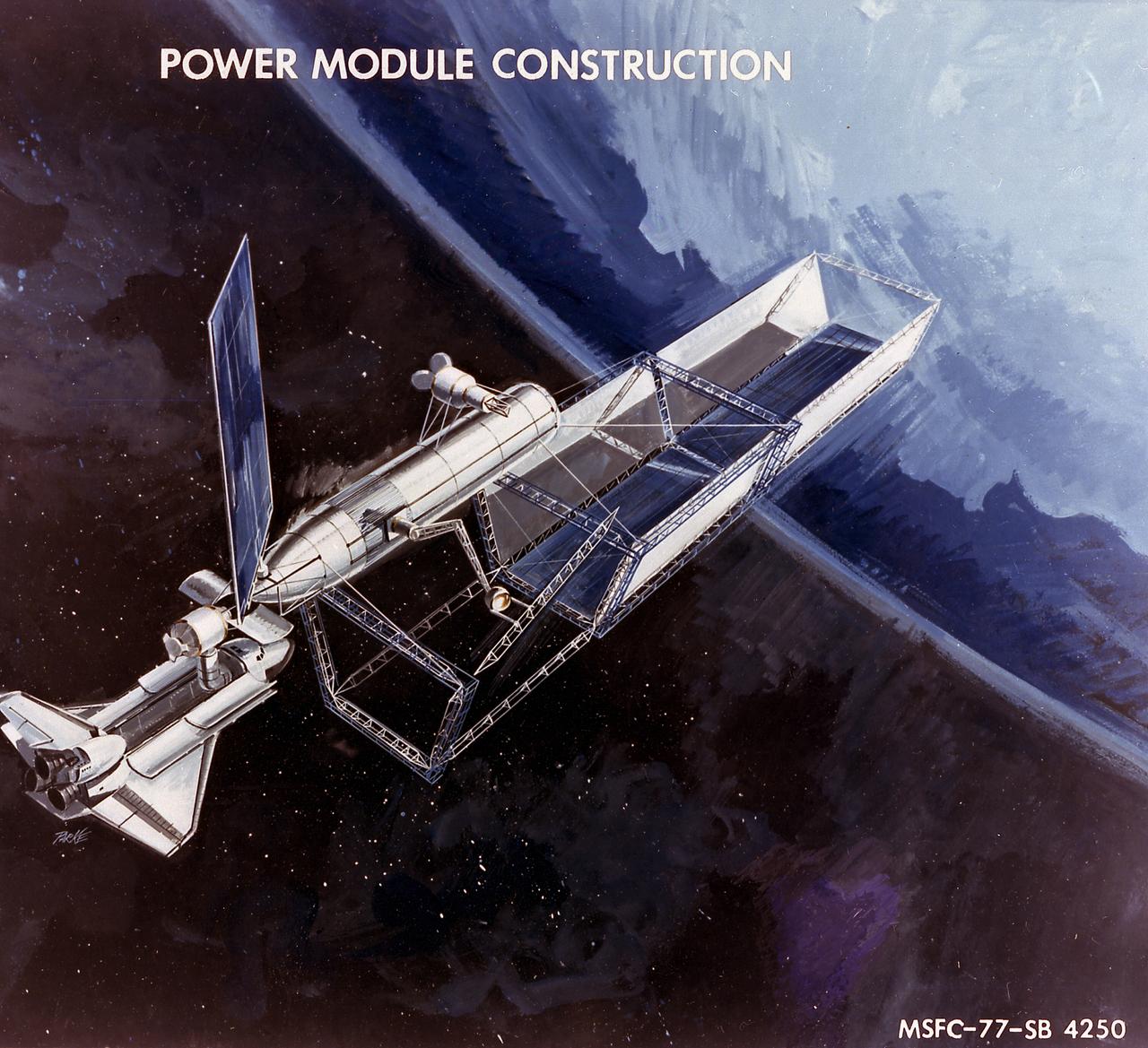
The Marshall Space Flight Center (MSFC) and the Johnson Space Center (JSC) were each awarded 16-month contracts in April 1976 for the Space Station Systems Analysis Study (SSSAS). Grumman Aerospace Corporation was MSFC's contractor and McDornell Douglas Aerospace Company was JSC's contractor. The goal of this study was to formulate plans for a permanent operational base and laboratory facility in Earth orbit in addition to developing a space construction base design for implementing the program. An expended Space Shuttle external tank was to be the central core platform of the base, and additional pressurized modules could be added to provide laboratory facilities. This artist's concept depicts a space construction base design for implementing the SSSAS.
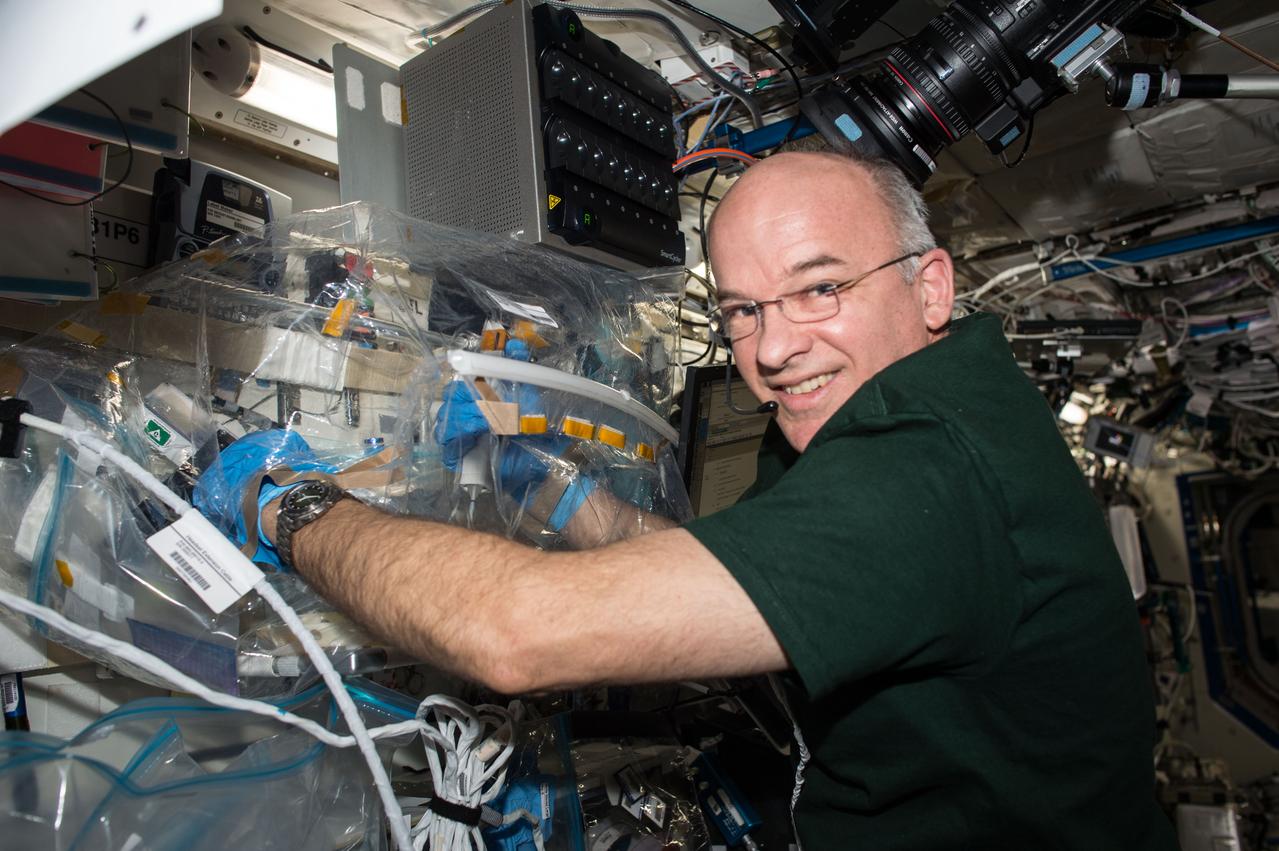
ISS047e066248 (04/19/2016) --- NASA astronaut and Expedition 47 Flight Engineer Jeff Williams works with the Wet Lab RNA SmartCycler on-board the International Space Station. Wetlab RNA SmartCycler is a research platform for conducting real-time quantitative gene expression analysis aboard the ISS. The system enables spaceflight genomic studies involving a wide variety of biospecimen types in the unique microgravity environment of space.
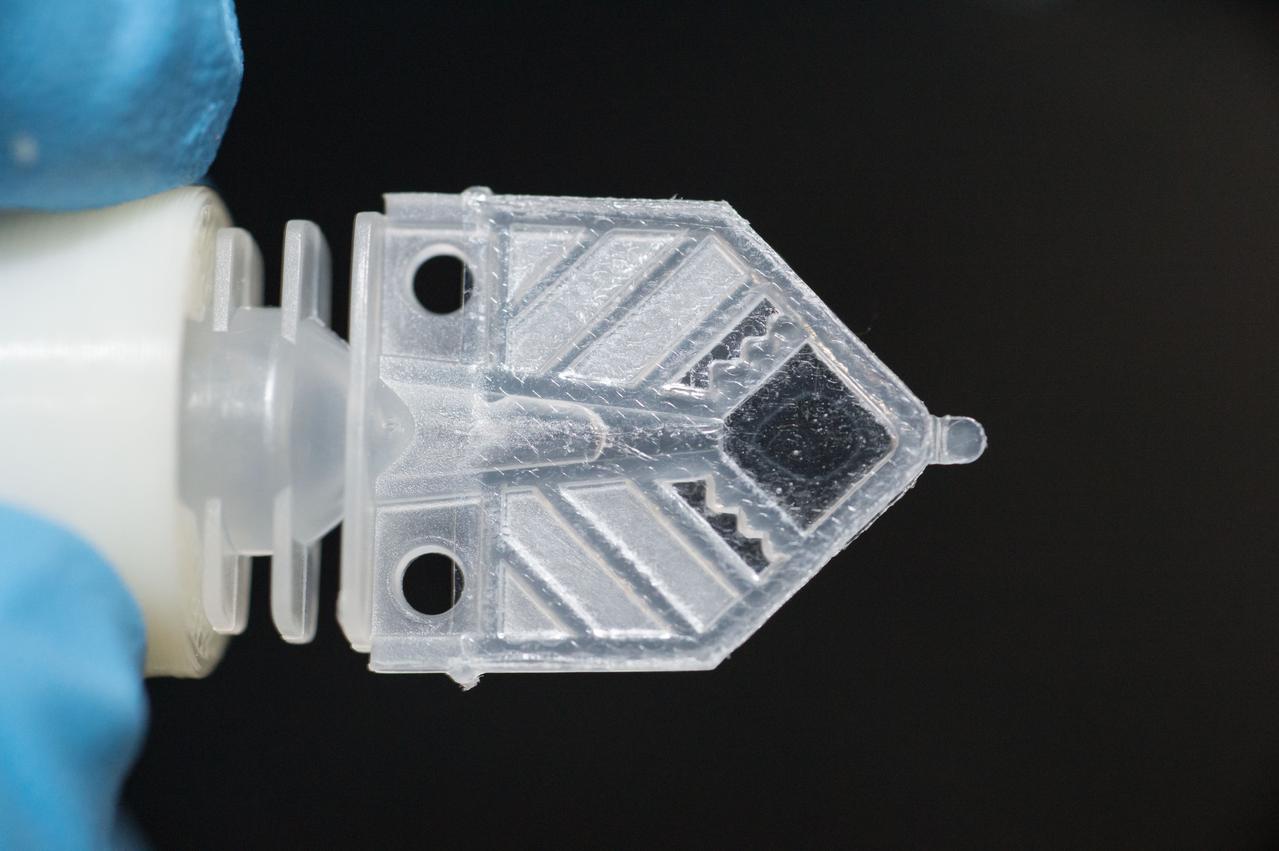
iss047e085693 (4/29/2016) --- Photographic documentation of Wet Lab RNA Sample to be placed into SmartCycler for data collection. Wetlab RNA SmartCycler is a research platform for conducting real-time quantitative gene expression analysis aboard the international Space Station (ISS). The system enables spaceflight genomic studies involving a wide variety of biospecimen types in the unique microgravity environment of space.
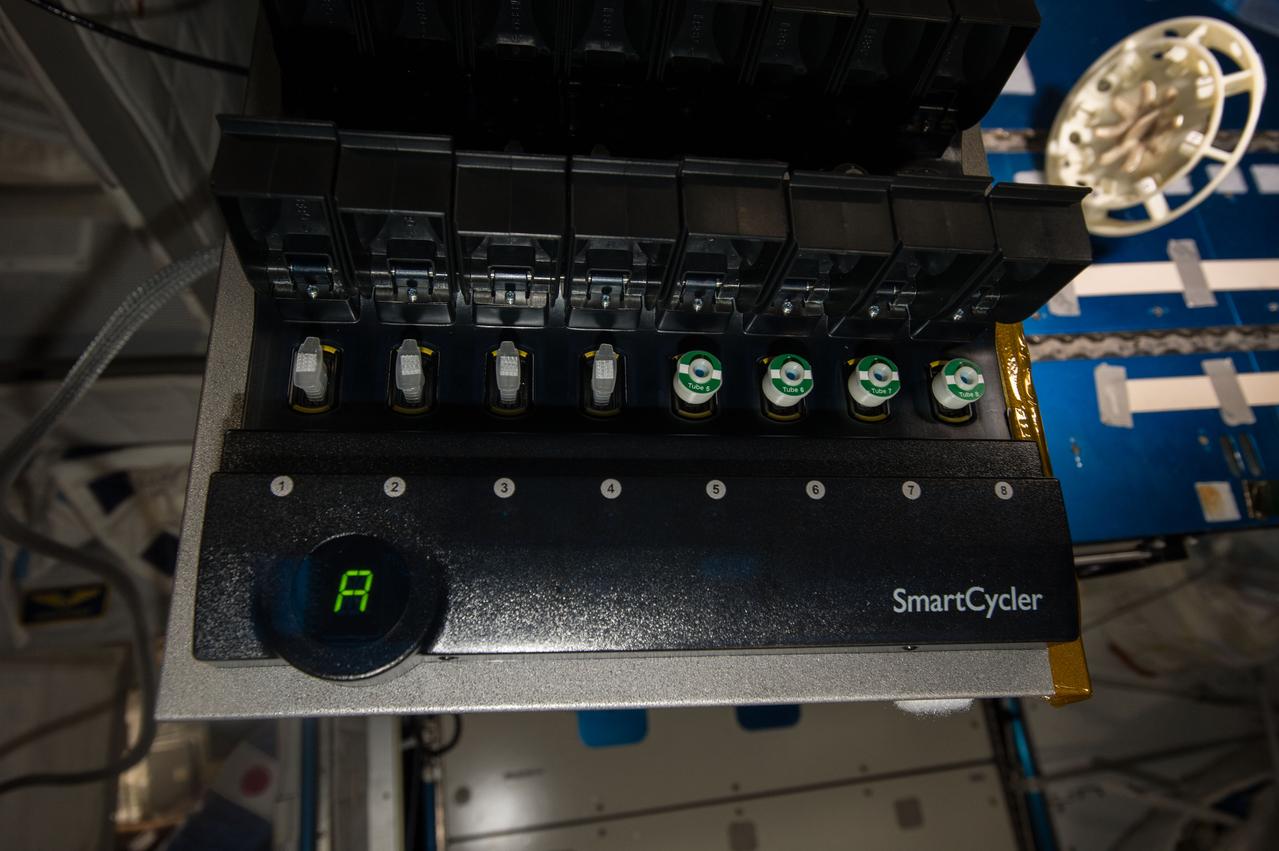
iss049e040752 (10/19/2016) --- A view of WetLab-2 Ribonucleic Acid (RNA) SmartCycler tubes loaded for Session 3. Wetlab RNA SmartCycler is a research platform for conducting real-time quantitative gene expression analysis aboard the International Space Station (ISS). The system enables spaceflight genomic studies involving a wide variety of biospecimen types in the unique microgravity environment of space.
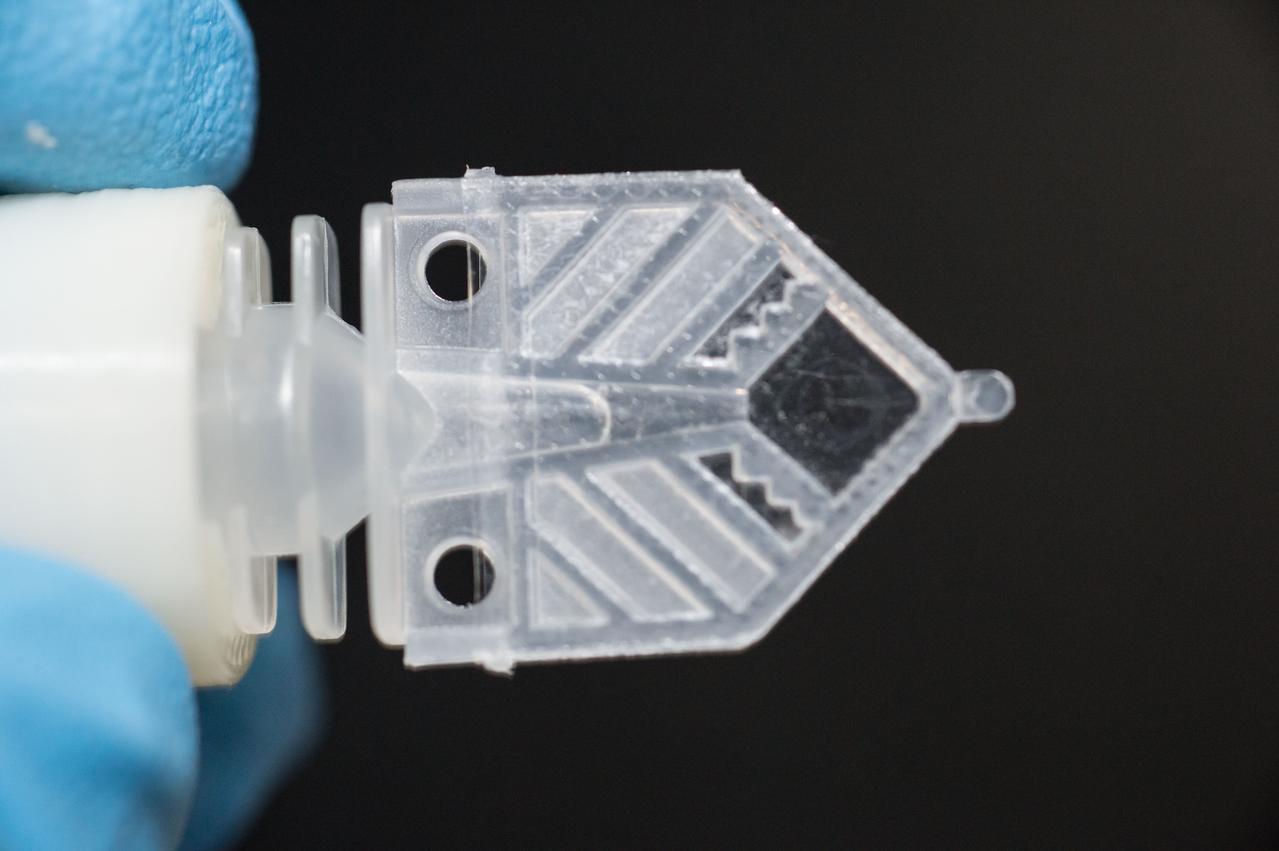
iss047e085695 (4/29/2016) --- A view of a Wet Lab RNA Sample to be placed into SmartCycler for data collection. Wetlab RNA SmartCycler is a research platform for conducting real-time quantitative gene expression analysis aboard the International Space Station (ISS). The system enables spaceflight genomic studies involving a wide variety of biospecimen types in the unique microgravity environment of space.
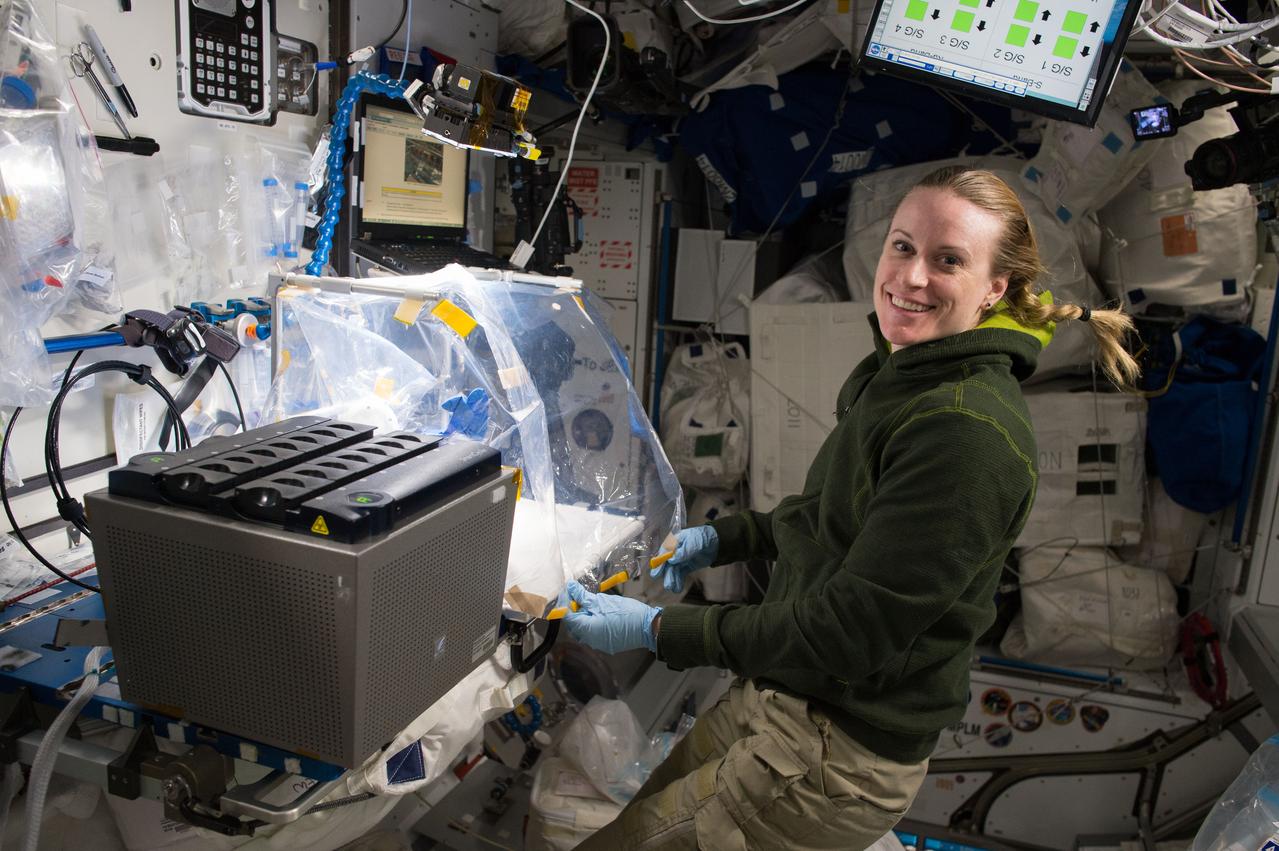
iss049e040145 (10/19/2016) --- NASA astronaut Kate Rubins working with WetLab-2 Ribonucleic Acid (RNA) SmartCycler tubes for Session 3. Wetlab RNA SmartCycler is a research platform for conducting real-time quantitative gene expression analysis aboard the International Space Station (ISS). The system enables spaceflight genomic studies involving a wide variety of biospecimen types in the unique microgravity environment of space.
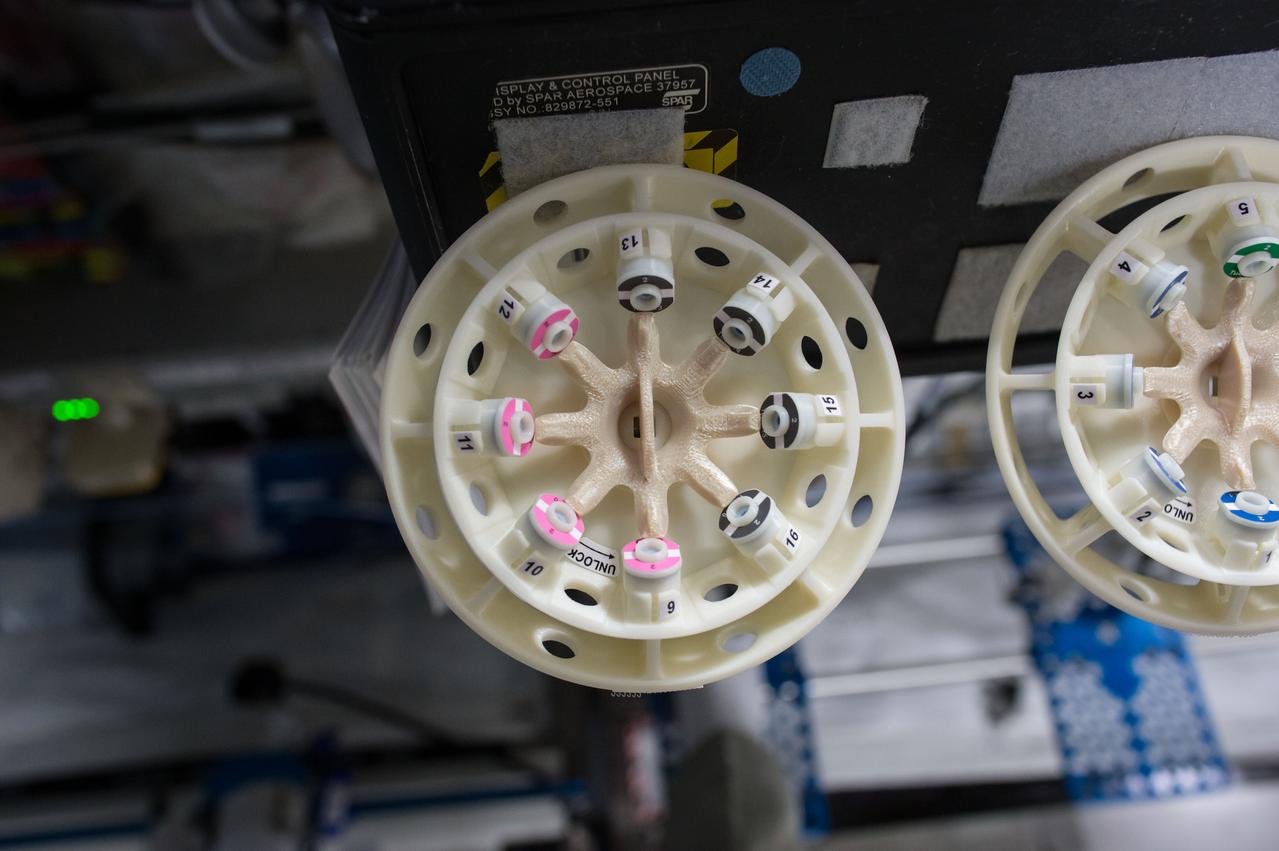
iss047e079333 (4/26/2016) --- A view during set up for the SmartCycler Session 2C Experiment, in the U.S. Laboratory. Wetlab RNA SmartCycler is a research platform for conducting real-time quantitative gene expression analysis aboard the International Space Station (ISS). The system enables spaceflight genomic studies involving a wide variety of biospecimen types in the unique microgravity environment of space.

iss047e079342 (4/26/2016) --- A view during set up for the SmartCycler Session 2C Experiment, in the U.S. Laboratory. Wetlab RNA SmartCycler is a research platform for conducting real-time quantitative gene expression analysis aboard the International Space Station (ISS). The system enables spaceflight genomic studies involving a wide variety of biospecimen types in the unique microgravity environment of space.
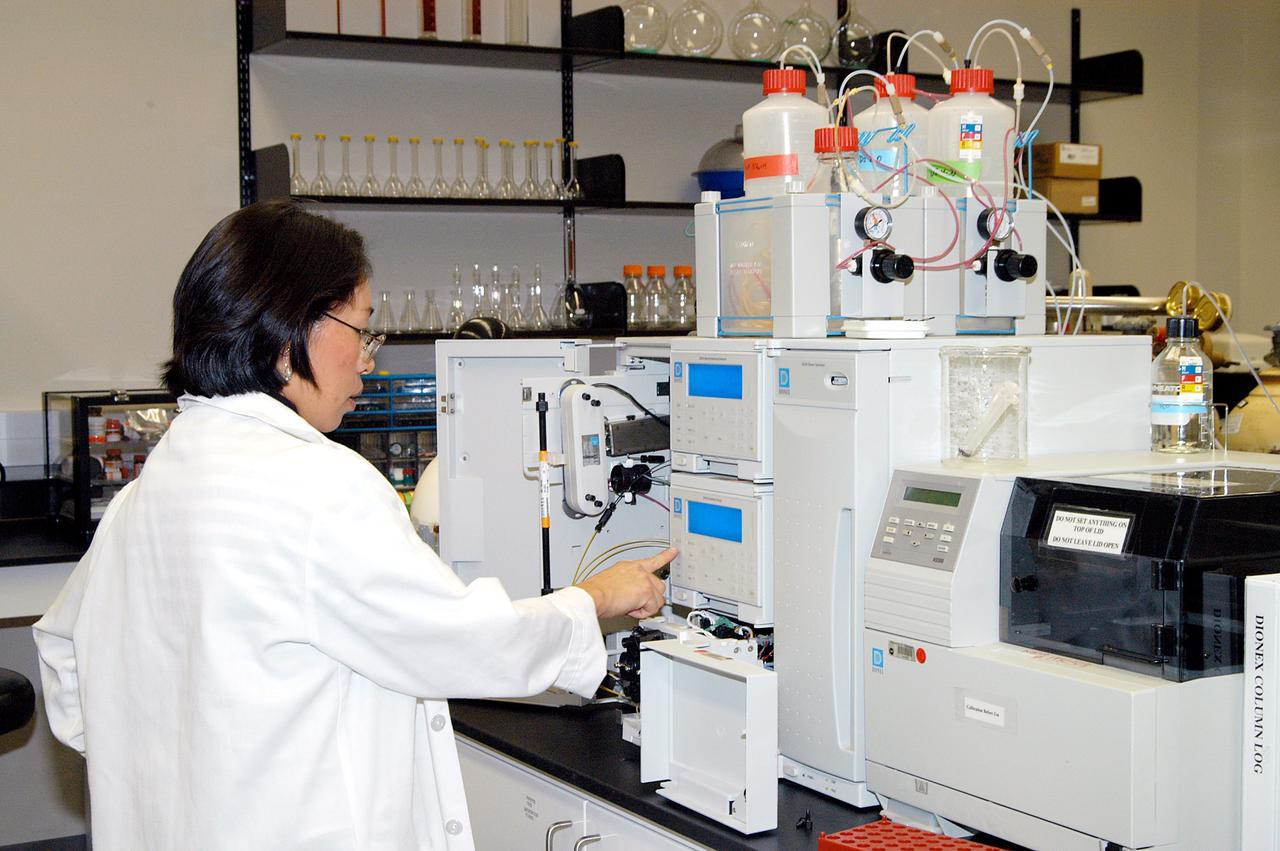
KENNEDY SPACE CENTER, FLA. -- Lanfang Levine, with Dynamac Corp., helps install a Dionex DX-500 IC/HPLC system in the Space Life Sciences Lab. The equipment will enable analysis of volatile compounds, such as from plants. The 100,000 square-foot facility houses labs for NASA’s ongoing research efforts, microbiology/microbial ecology studies and analytical chemistry labs. Also calling the new lab home are facilities for space flight-experiment and flight-hardware development, new plant growth chambers, and an Orbiter Environment Simulator that will be used to conduct ground control experiments in simulated flight conditions for space flight experiments. The SLS Lab, formerly known as the Space Experiment Research and Processing Laboratory or SERPL, provides space for NASA’s Life Sciences Services contractor Dynamac Corporation, Bionetics Corporation, and researchers from the University of Florida. NASA’s Office of Biological and Physical Research will use the facility for processing life sciences experiments that will be conducted on the International Space Station. The SLS Lab is the magnet facility for the International Space Research Park at KSC being developed in partnership with Florida Space Authority.
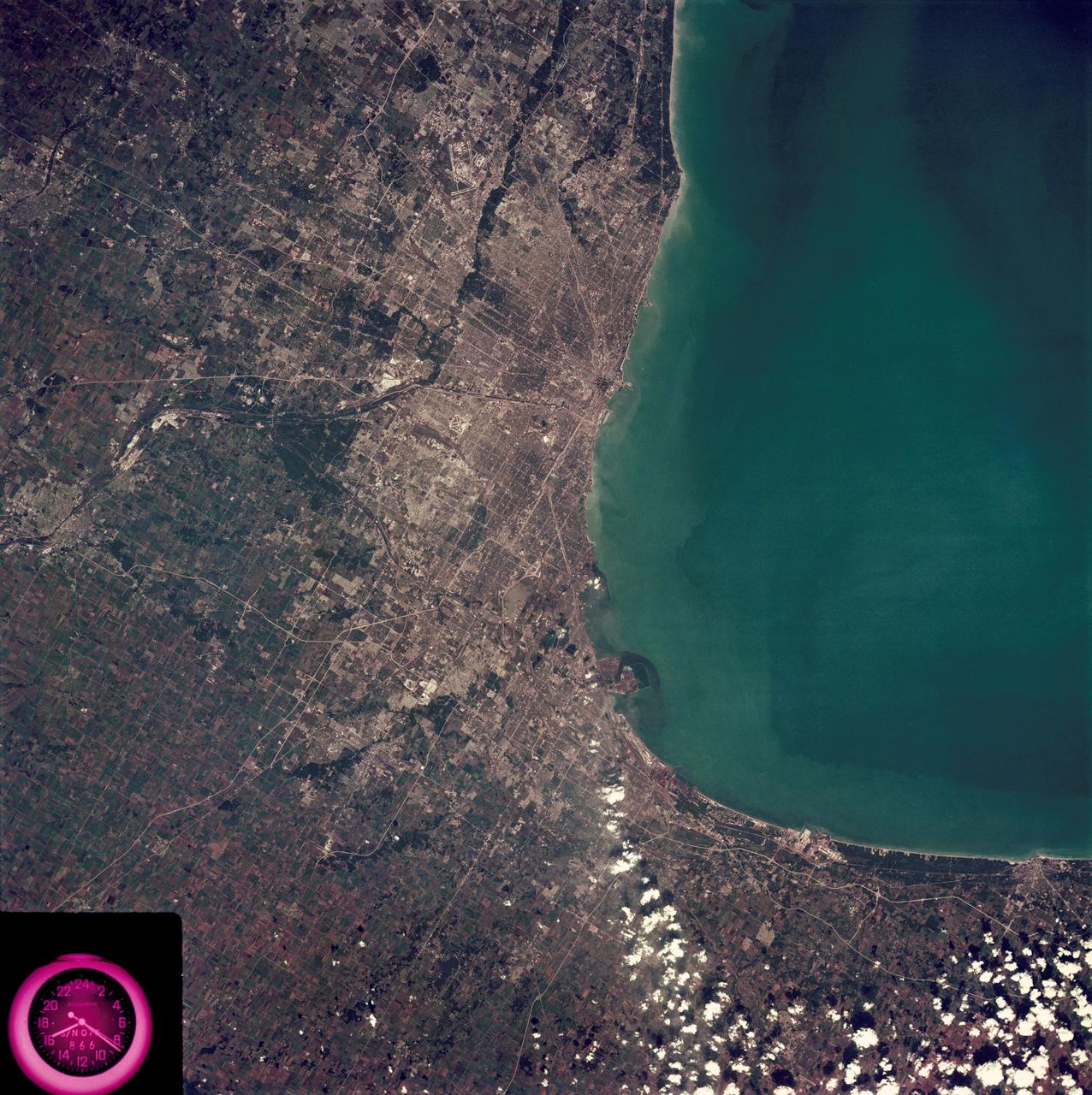
SL3-88-222 (18 Sept. 1973) --- The metropolitan area of Chicago is encompassed in this Skylab 3 Earth Resources Experiments Package (EREP) S190-B photograph taken on Sept. 18, 1973 from the Skylab space station cluster in Earth orbit. The surrounding major cities of Aurora and Joliet, Illinois; Hammond, Gary and East Chicago, Indiana, are easily delineated. The photograph reveals the following: (1) Cultural differentiation of commercial, industrial and residential areas for use in population and social studies in micro-macro community planning and in cultural pattern studies in the improvement of urban areas. (Aurora is one of 27 census cities of interest to Robert Alexander, a principal investigator. Alexander is with the U.S. Geological Survey). (2) The transportation network with major corridors and their interchanges, primary and feeder streets for use in network analysis and in the development of models for population movement and land use projection. (3) The agricultural lands for land use identification on crop inventory analysis; airports for use in delineation of service and infringement of major man-made features that affect ecosystem balance (support to environmental impact studies). (4) Air and water plumes for use in case studies, natural and man-made differentiation of pollution sources, in support of model development and in ecosystem research studies on the effects of pollution. (5) Recreational centers for use in relating recreational centers to population centers, establishing possible demands and in development of possible future recreational centers to support the demand. All EREP photography is available to the public through the Department of Interior?s Earth Resources Observations Systems Data Center, Sioux Falls, South Dakota, 57198. Photo credit: NASA
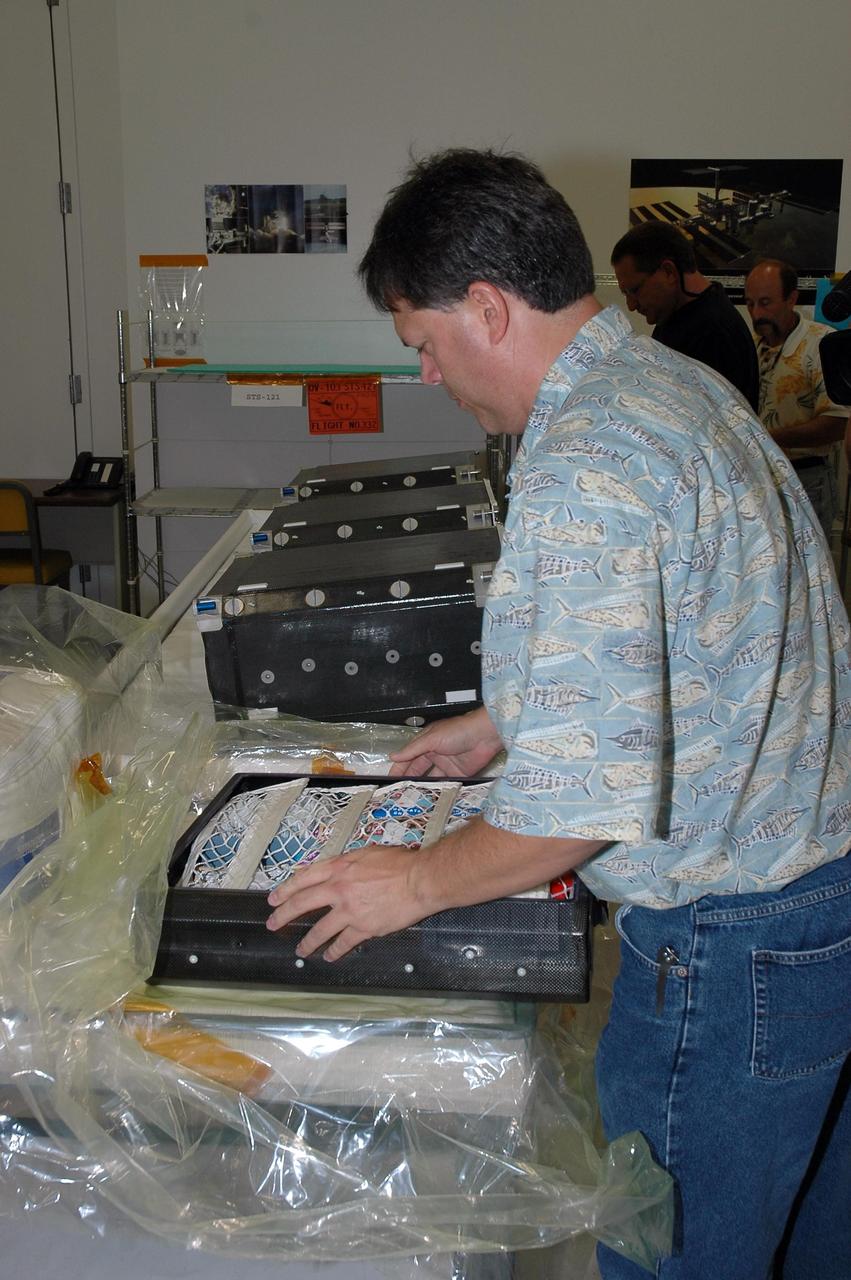
KENNEDY SPACE CENTER, FLA. - In the Space Station Processing Facility at NASA's Kennedy Space Center, John Hoog packs up food containers with the meals prepared for the crew of mission STS-121. Hoog is a USA-FCE/EVA representative from Johnson Space Center. Astronauts select their own menus from a large array of food items. Astronauts are supplied with three balanced meals, plus snacks. Foods flown on space missions are researched and developed at the Space Food Systems Laboratory at the Johnson Space Center (JSC) in Houston, which is staffed by food scientists, dietitians and engineers. Foods are analyzed through nutritional analysis, sensory evaluation, storage studies, packaging evaluations and many other methods. Each astronaut’s food is stored aboard the space shuttle and is identified by a colored dot affixed to each package. Launch of Space Shuttle Discovery on mission STS-121 is scheduled for July 1. Photo credit: NASA/Jack Pfaller
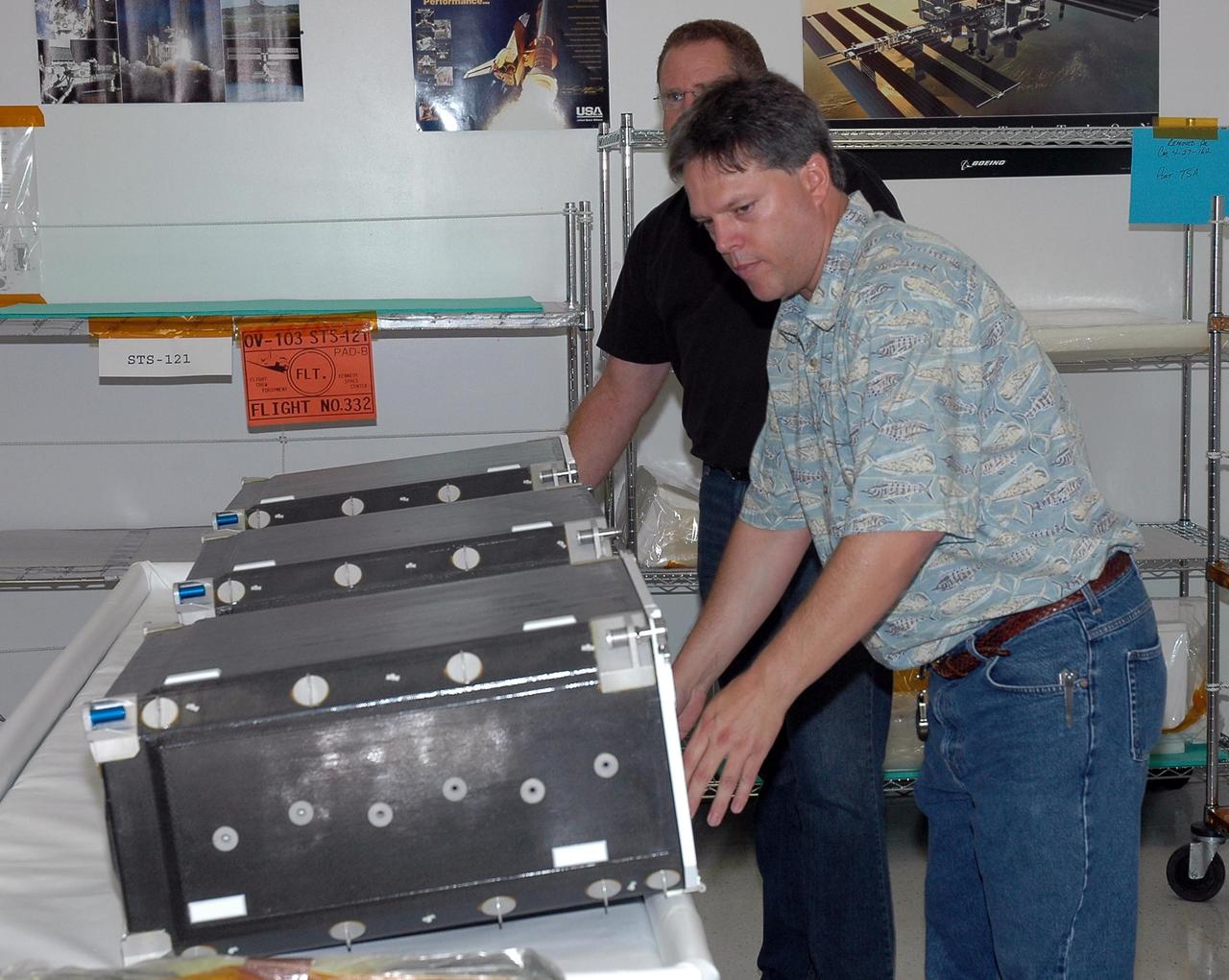
KENNEDY SPACE CENTER, FLA. - In the Space Station Processing Facility at NASA's Kennedy Space Center, John Hoog gets ready to pack the food containers with the meals prepared for the crew of mission STS-121. Hoog is a USA-FCE/EVA representative from Johnson Space Center.Astronauts select their own menus from a large array of food items. Astronauts are supplied with three balanced meals, plus snacks. Foods flown on space missions are researched and developed at the Space Food Systems Laboratory at the Johnson Space Center (JSC) in Houston, which is staffed by food scientists, dietitians and engineers. Foods are analyzed through nutritional analysis, sensory evaluation, storage studies, packaging evaluations and many other methods. Each astronaut’s food is stored aboard the space shuttle and is identified by a colored dot affixed to each package. Launch of Space Shuttle Discovery on mission STS-121 is scheduled for July 1. Photo credit: NASA/Jack Pfaller
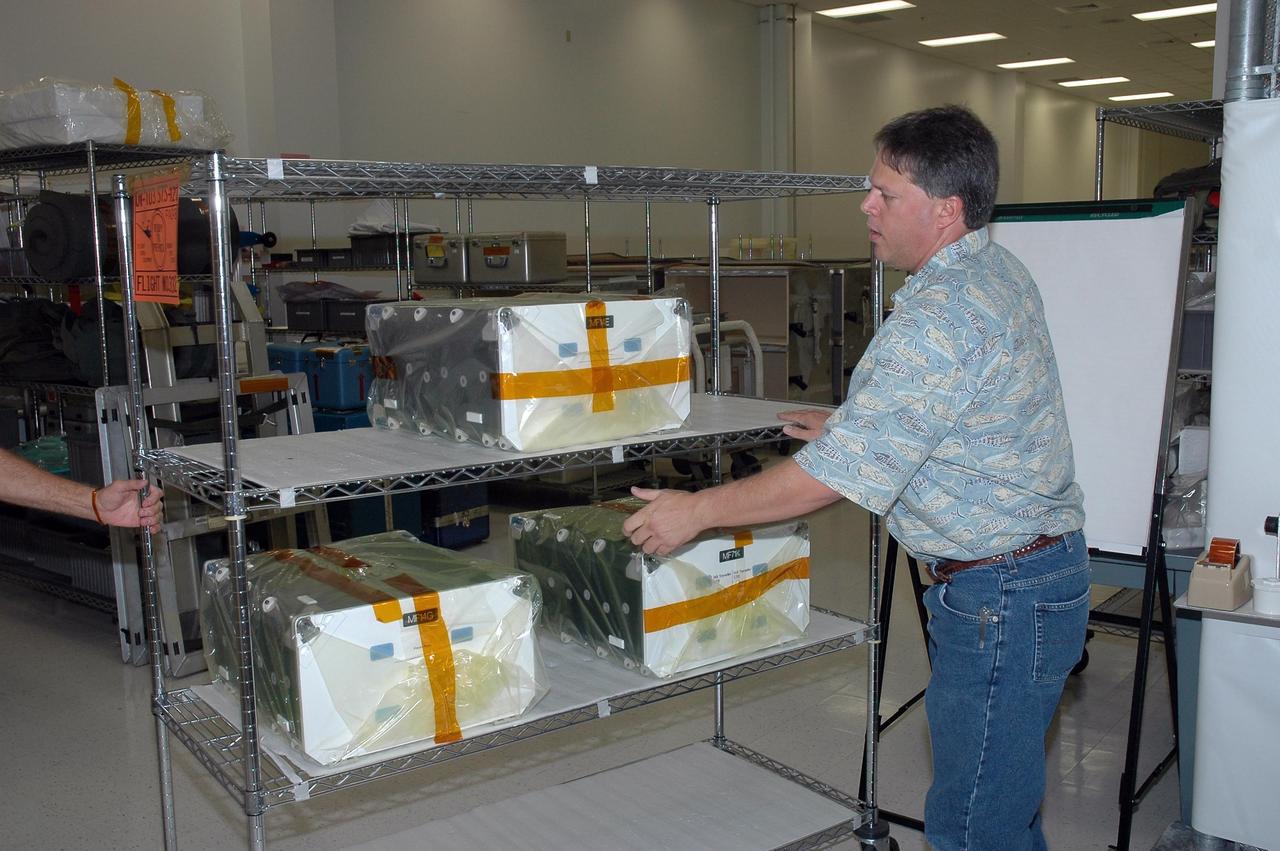
KENNEDY SPACE CENTER, FLA. - In the Space Station Processing Facility at NASA's Kennedy Space Center, John Hoog reaches for a container filled with prepared meals for the crew of mission STS-121 to secure it for flight. Hoog is a USA-FCE/EVA representative from Johnson Space Center. Astronauts select their own menus from a large array of food items. Astronauts are supplied with three balanced meals, plus snacks. Foods flown on space missions are researched and developed at the Space Food Systems Laboratory at the Johnson Space Center (JSC) in Houston, which is staffed by food scientists, dietitians and engineers. Foods are analyzed through nutritional analysis, sensory evaluation, storage studies, packaging evaluations and many other methods. Each astronaut’s food is stored aboard the space shuttle and is identified by a colored dot affixed to each package. Launch of Space Shuttle Discovery on mission STS-121 is scheduled for July 1. Photo credit: NASA/Jack Pfaller

KENNEDY SPACE CENTER, FLA. - In the Space Station Processing Facility at NASA's Kennedy Space Center, flight crew systems technician Troy Mann and flight crew systems manager Jim Blake store the food containers that will be stowed on Space Shuttle Discovery for the flight of mission STS-121. The containers hold meals prepared for the mission crew. Mann and Blake are with United Space Alliance ground operations. Astronauts select their own menus from a large array of food items. Astronauts are supplied with three balanced meals, plus snacks. Foods flown on space missions are researched and developed at the Space Food Systems Laboratory at the Johnson Space Center (JSC) in Houston, which is staffed by food scientists, dietitians and engineers. Foods are analyzed through nutritional analysis, sensory evaluation, storage studies, packaging evaluations and many other methods. Each astronaut’s food is stored aboard the space shuttle and is identified by a colored dot affixed to each package. Launch of Space Shuttle Discovery on mission STS-121 is scheduled for July 1. Photo credit: NASA/Jack Pfaller
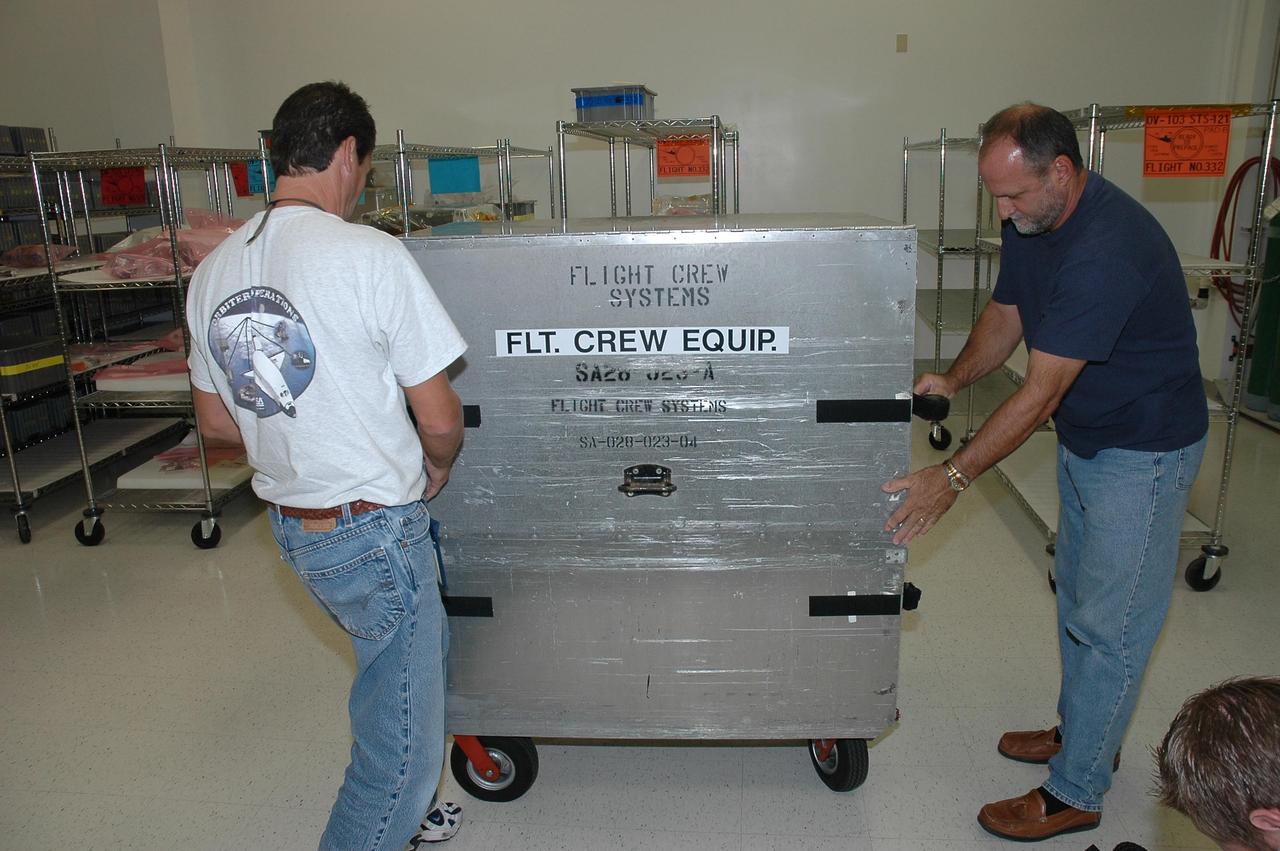
KENNEDY SPACE CENTER, FLA. - In the Space Station Processing Facility at NASA's Kennedy Space Center, flight crew systems technician Troy Mann and flight crew systems manager Jim Blake secure the storage boxes holding the food containers that will be stowed on Space Shuttle Discovery for the flight of mission STS-121. The containers hold meals prepared for the mission crew. Astronauts select their own menus from a large array of food items. Astronauts are supplied with three balanced meals, plus snacks. Foods flown on space missions are researched and developed at the Space Food Systems Laboratory at the Johnson Space Center (JSC) in Houston, which is staffed by food scientists, dietitians and engineers. Foods are analyzed through nutritional analysis, sensory evaluation, storage studies, packaging evaluations and many other methods. Each astronaut’s food is stored aboard the space shuttle and is identified by a colored dot affixed to each package. Launch of Space Shuttle Discovery on mission STS-121 is scheduled for July 1. Photo credit: NASA/Jack Pfaller
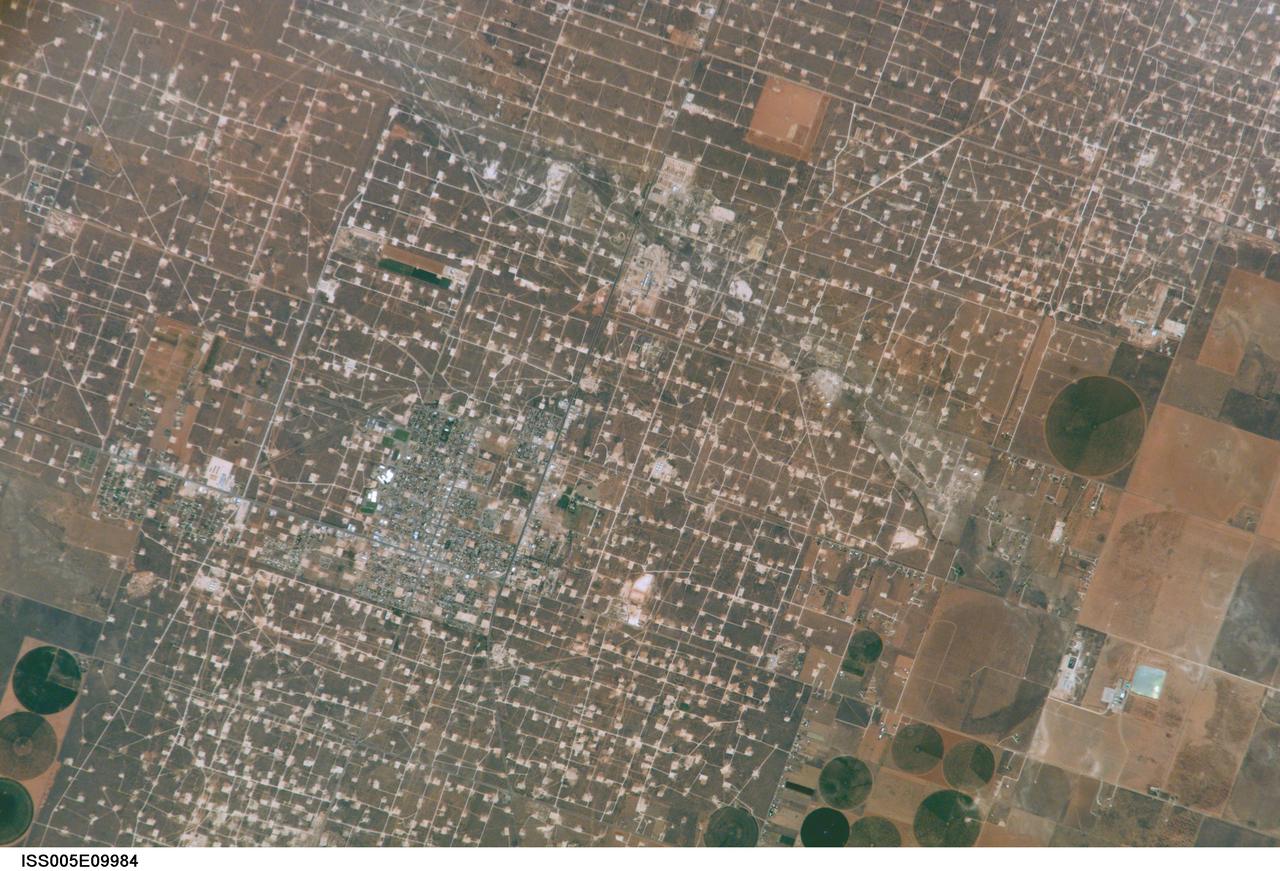
ISS005-E-9984 (17 August 2002) --- This digital still photograph, taken from the International Space Station (ISS) during its fifth staffing, depicts both agriculture and the petroleum industry, which compete for land use near Denver City, Texas. The photo was recently released by the Earth Sciences and Image Analysis Laboratory at Johnson Space Center. The area is southwest of Lubbock near the New Mexico border. According to analysts studying the station imagery, the economy of this region is almost completely dependent on its underground resources of petroleum and water. Both resources result in distinctive land use patterns visible from space. Historically this area has produced vast quantities of oil and gas since development began in the 1930s. A fine, light-colored grid of roads and pipelines connect well sites over this portion of the Wasson Oil Field, one of the state’s most productive. Since the 1940s, agricultural land use has shifted from grazing to irrigated cultivation of cotton, sorghum, wheat, hay, and corn. The water supply is drawn from wells tapping the vast Ogallala Aquifer. Note the large, circular center-pivot irrigation systems in the lower corners of the image. The largest is nearly a mile in diameter.
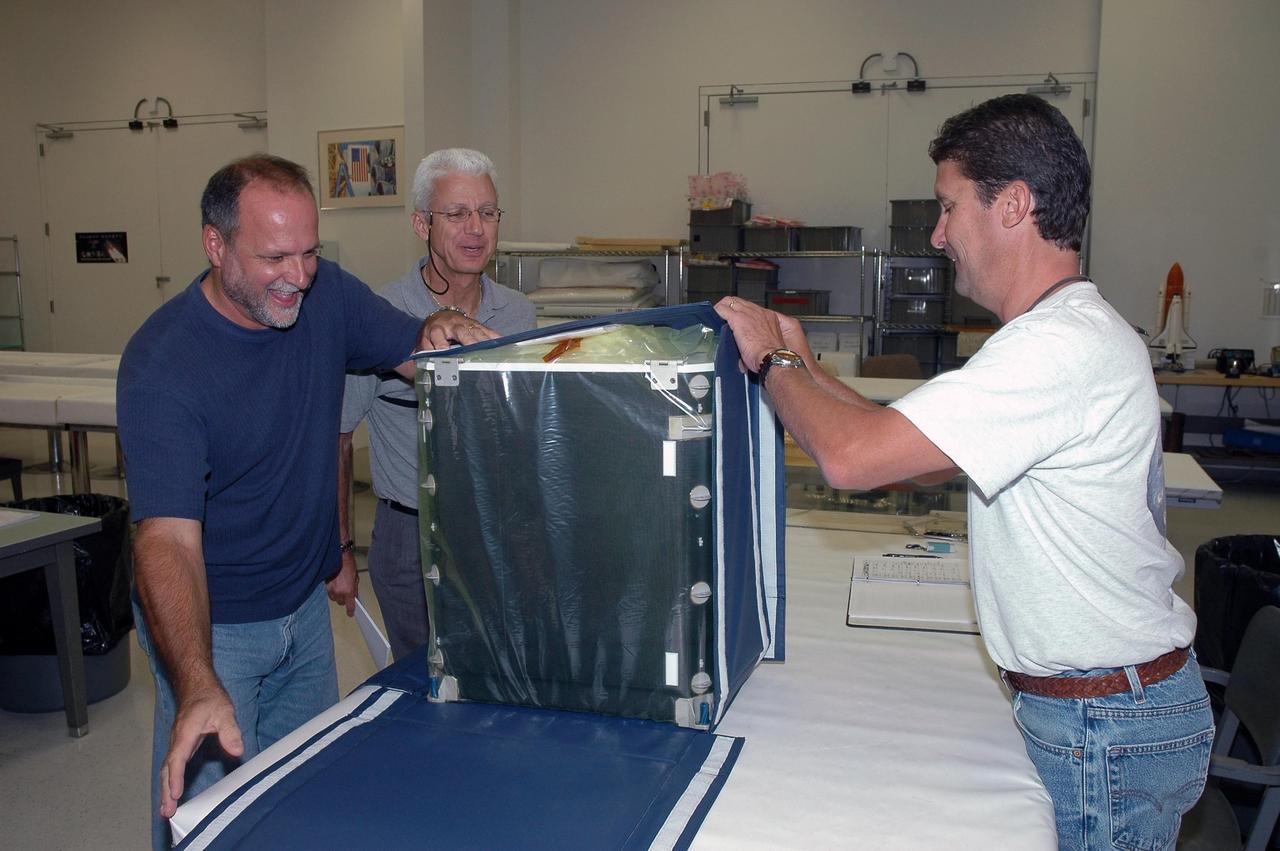
KENNEDY SPACE CENTER, FLA. - In the Space Station Processing Facility at NASA's Kennedy Space Center, Jim Blake, Dennis Huefner and Troy Mann wrap food containers that will be stowed on Space Shuttle Discovery for the flight of mission STS-121. The containers hold meals prepared for the mission crew. The men are with United Space Alliance ground operations. Astronauts select their own menus from a large array of food items. Astronauts are supplied with three balanced meals, plus snacks. Foods flown on space missions are researched and developed at the Space Food Systems Laboratory at the Johnson Space Center (JSC) in Houston, which is staffed by food scientists, dietitians and engineers. Foods are analyzed through nutritional analysis, sensory evaluation, storage studies, packaging evaluations and many other methods. Each astronaut’s food is stored aboard the space shuttle and is identified by a colored dot affixed to each package. Launch of Space Shuttle Discovery on mission STS-121 is scheduled for July 1. Photo credit: NASA/Jack Pfaller

KENNEDY SPACE CENTER, FLA. - In the Space Station Processing Facility at NASA's Kennedy Space Center, John Hoog secures a bag filled with prepared meals for the crew of mission STS-121 before packing into containers for the flight. At left is Dennis Huefner, with United Space Alliance (USA) ground operations. Hoog is a USA-FCE/EVA representative from Johnson Space Center. Astronauts select their own menus from a large array of food items. Astronauts are supplied with three balanced meals, plus snacks. Foods flown on space missions are researched and developed at the Space Food Systems Laboratory at the Johnson Space Center (JSC) in Houston, which is staffed by food scientists, dietitians and engineers. Foods are analyzed through nutritional analysis, sensory evaluation, storage studies, packaging evaluations and many other methods. Each astronaut’s food is stored aboard the space shuttle and is identified by a colored dot affixed to each package. Launch of Space Shuttle Discovery on mission STS-121 is scheduled for July 1. Photo credit: NASA/Jack Pfaller
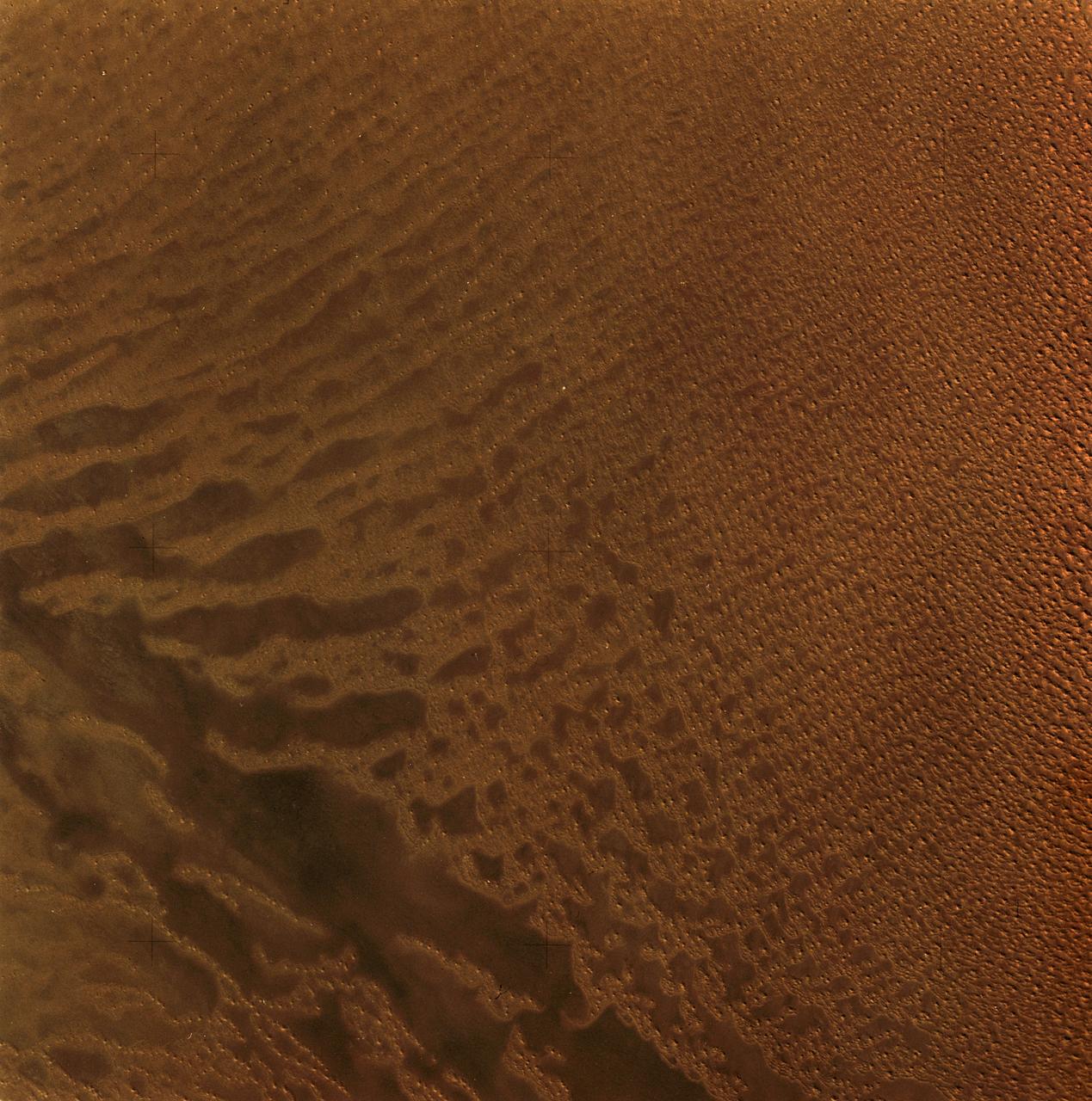
SL3-34-056 (July-September 1973) --- A near vertical view of an 8,000 square-mile area of the Grand Erg Oriental in east central Algeria as photographed from Earth orbit by one of the six lenses of the Itek-furnished S190-A Multispectral Photographic Facility Experiment in the Multiple Docking Adapter of the Skylab space station. The Grand Erg contains vast areas of sand dunes and sand plains. This photograph illustrates the variety of surface features that are characteristic of the Sahara Desert. The dark areas are relatively sand free, and may contain rock outcrops along which travel is considerably easier. Sand dunes are abundant in this picture, and their size, shape, location and pattern are due to the underlying topography and direction of the prevailing winds. Scientists interested in study of dune fields will be able to use this photograph for detailed analysis of the dune features, especially their characteristics adjacent to the sand-free areas. Federal agencies participating with NASA on the EREP project are the Departments of Agriculture, Commerce, Interior, the Environmental Protection Agency and the Corps of Engineers. All EREP photography is available to the public through the Department of Interior?s Earth Resources Observations Systems Data Center, Sioux Falls, South Dakota, 57198. Photo credit: NASA
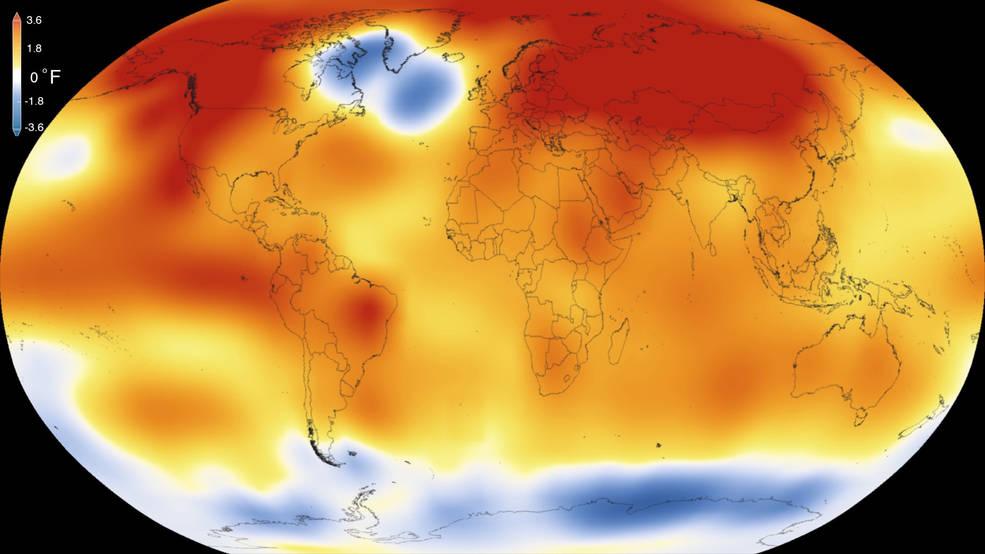
2015 was the warmest year since modern record-keeping began in 1880, according to a new analysis by NASA’s Goddard Institute for Space Studies. The record-breaking year continues a long-term warming trend — 15 of the 16 warmest years on record have now occurred since 2001. Credits: Scientific Visualization Studio/Goddard Space Flight Center Details: Earth’s 2015 surface temperatures were the warmest since modern record keeping began in 1880, according to independent analyses by NASA and the National Oceanic and Atmospheric Administration (NOAA). Globally-averaged temperatures in 2015 shattered the previous mark set in 2014 by 0.23 degrees Fahrenheit (0.13 Celsius). Only once before, in 1998, has the new record been greater than the old record by this much. The 2015 temperatures continue a long-term warming trend, according to analyses by scientists at NASA’s Goddard Institute for Space Studies (GISS) in New York (GISTEMP). NOAA scientists agreed with the finding that 2015 was the warmest year on record based on separate, independent analyses of the data. Because weather station locations and measurements change over time, there is some uncertainty in the individual values in the GISTEMP index. Taking this into account, NASA analysis estimates 2015 was the warmest year with 94 percent certainty. Read more: <a href="http://www.nasa.gov/press-release/nasa-noaa-analyses-reveal-record-shattering-global-warm-temperatures-in-2015" rel="nofollow">www.nasa.gov/press-release/nasa-noaa-analyses-reveal-reco...</a> <b><a href="http://www.nasa.gov/audience/formedia/features/MP_Photo_Guidelines.html" rel="nofollow">NASA image use policy.</a></b> <b><a href="http://www.nasa.gov/centers/goddard/home/index.html" rel="nofollow">NASA Goddard Space Flight Center</a></b> enables NASA’s mission through four scientific endeavors: Earth Science, Heliophysics, Solar System Exploration, and Astrophysics. Goddard plays a leading role in NASA’s accomplishments by contributing compelling scientific knowledge to advance the Agency’s mission. <b>Follow us on <a href="http://twitter.com/NASAGoddardPix" rel="nofollow">Twitter</a></b> <b>Like us on <a href="http://www.facebook.com/pages/Greenbelt-MD/NASA-Goddard/395013845897?ref=tsd" rel="nofollow">Facebook</a></b> <b>Find us on <a href="http://instagrid.me/nasagoddard/?vm=grid" rel="nofollow">Instagram</a></b>

Mark Pestana is a research pilot and project manager at the NASA Dryden Flight Research Center, Edwards, Calif. He is a pilot for the Beech B200 King Air, the T-34C and the Predator B. He flies the F-18 Hornet as a co-pilot and flight test engineer. Pestana has accumulated more than 4,000 hours of military and civilian flight experience. He was also a flight engineer on the NASA DC-8 flying laboratory. Pestana was the project manager and pilot for the Hi–rate Wireless Airborne Network Demonstration flown on the NASA B200 research aircraft. He flew B200 research missions for the X-38 Space Integrated Inertial Navigation Global Positioning System experiment. Pestana also participated in several deployments of the DC-8, including Earth science expeditions ranging from hurricane research over the Caribbean Sea to ozone studies over the North Pole, atmospheric chemistry over the South Pacific, rain forest health in Central America, Rocky Mountain ice pack assessment, and volcanic and tectonic activity around the Pacific Rim. He came to Dryden as a DC-8 mission manager in June 1998 from NASA Johnson Space Center, Houston, where he served as the Earth and Space Science discipline manager for the International Space Station Program at Johnson. Pestana also served as a flight crew operations engineer in the Astronaut Office, developing the controls, displays, tools, crew accommodations and procedures for on-orbit assembly, test, and checkout of the International Space Station. He led the analysis and technical negotiations for modification of the Russian Soyuz spacecraft as an emergency crew return vehicle for space station crews. He joined the U.S. Air Force Reserve in 1991 and held various positions as a research and development engineer, intelligence analyst, and Delta II launch vehicle systems engineer. He retired from the U.S. Air Force Reserve with the rank of colonel in 2005. Prior to 1990, Pestana was on active duty with the U.S. Air Force as the director of mi
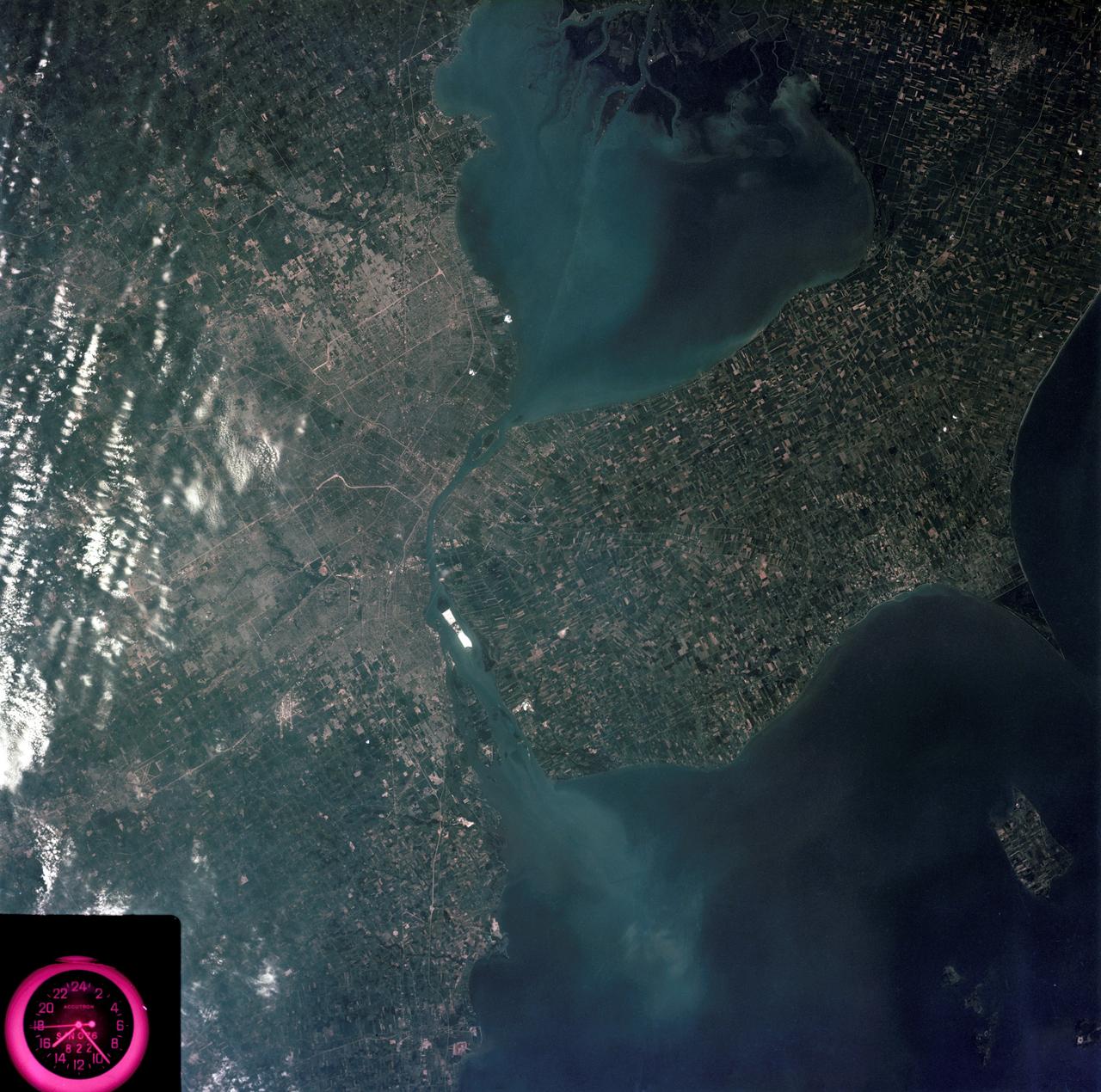
SL3-83-0152 (July-September 1973) --- A near vertical view of the metropolitan Detroit, Michigan area is seen in this Skylab 3 Earth Resources Experiments Package S190-B (five-inch Earth terrain camera) photograph taken from the Skylab space station in Earth orbit. The 25-mile long Detroit River drains the smaller body of water (Lake St. Clair) and flows southwestward separating Detroit from Windsor, Ontario, and empties into Lake Erie. The Detroit River handles a great deal of Great Lakes barge and ship traffic. Major streets and thoroughfares radiating from the city are clearly visible. Fighting Island is the highly reflective, white area located almost in the center of the picture. This high reflectivity is caused by the functional use of the island-disposal ponds for chemical salts. Sedimentation and/or pollution patterns in the area provide interesting visual phenomena for speculation and analysis. Distinct and rather unique cultivated field patterns can be observed south and east of Windsor, Ontario. This is a direct result of an English survey and land tenure system which was utilized when the area was settled. New areas of residential development are fairly easy to differentiate from older, established residential areas. Vegetation and extent of area coverage can be determined. The Oakland County Planning Commission and the Federal Bureau of Outdoor Recreation working closely with Irv Sattinger of the Environmental Research Institute of Michigan (University of Michigan) are presently processing and analyzing photographic and Multispectral scanner data to determine its usefulness for recreation and open space site studies for this area. Photo credit: NASA

S73-35082 (July-Sept. 1973) --- A near vertical view of a portion of west Africa ravaged by drought for the past five years is seen in this Skylab 3 Earth Resources Experiments Package S190-B (five-inch Earth terrain camera) photograph taken from the Skylab space station in Earth orbit. The semi-desert scene is in southeastern Niger about 200 nautical miles east-northeast of the capital city of Niamey. A polygonal-shaped area (dark) in the lower right corner of the picture represents a range-management ranch. The dry stream beds trending diagonally across the photograph locally contain some water or vegetation (green). The beds are sources of water through shallow drilling and contain soils suitable for production of crops. The variety of tans, browns and grays are typical desert colors that represent barren rocks and soil or sand-filled ancient stream valleys. Absence of vegetation is the singular feature of the area. Dr. G. Stuckmann of the Geographic Institute, University of Technology, Mannover, Federal Republic of Germany, will use this photograph in the study of the hydrologic regime of the region through analysis of fossil drainage patterns, geological structures and accumulations of surface water. Federal agencies participating with NASA on the EREP project are the Departments of Agriculture, Commerce, Interior, the Environmental Protection Agency and the Corps of Engineers. All EREP photography is available to the public through the Department of Interior?s Earth Resources Observations Systems Data Center, Sioux Falls, South Dakota, 57198. (Alternate number SL3-86-166) Photo credit: NASA