
A group of DC area students and staff pose for a group photo at the conclusion of the Space Education Day, Tuesday, June 20, 2023, at the Microsoft Technology Center in Arlington, Va. Microsoft hosted the event to showcase the collaboration, early successes, and future plans for high quality student engagement through activities that combined space content and technologies like artificial intelligence and cloud computing. Photo Credit: (NASA/Aubrey Gemignani)
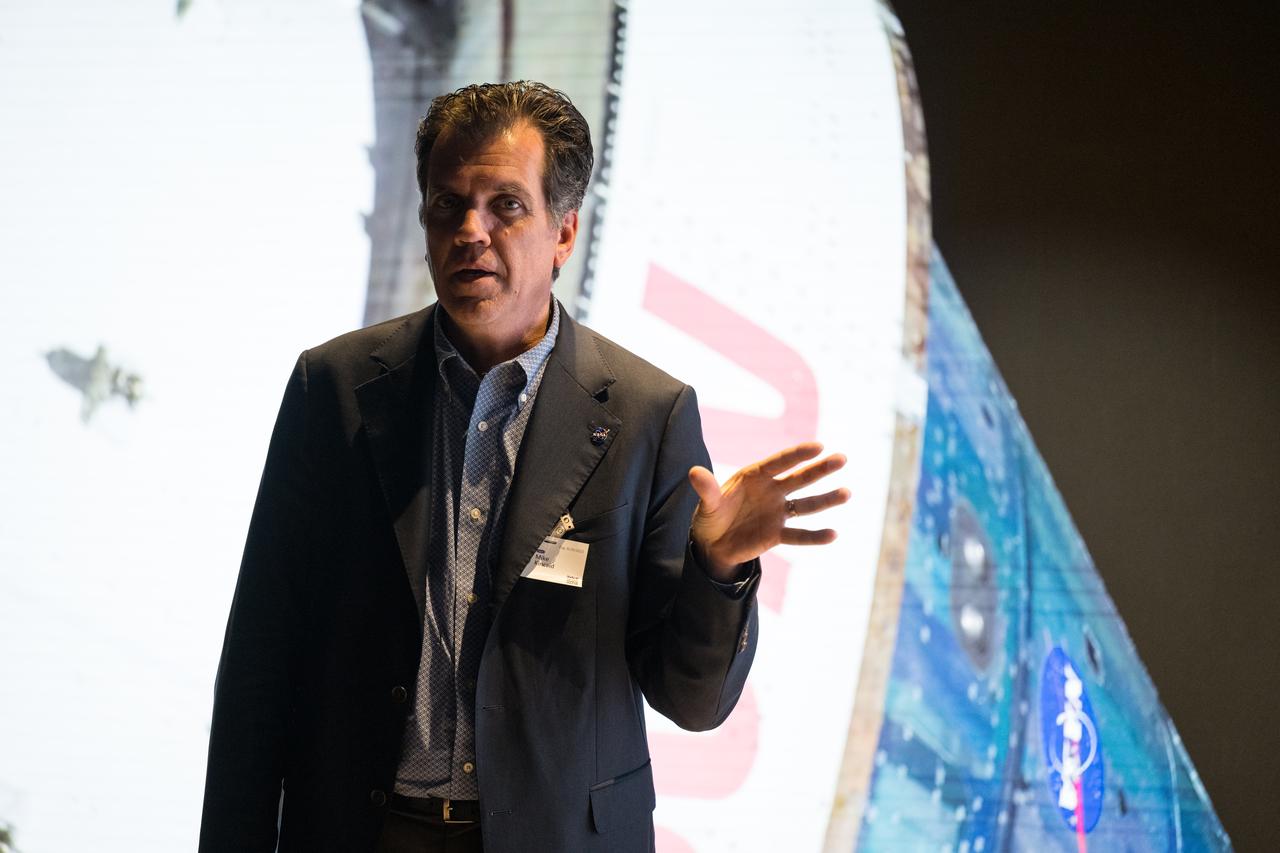
NASA Associate Administrator for the STEM Engagement Office, Mike Kincaid, provides remarks during Space Education Day, Tuesday, June 20, 2023, at the Microsoft Technology Center in Arlington, Va. Microsoft hosted the event to showcase the collaboration, early successes, and future plans for high quality student engagement through activities that combined space content and technologies like artificial intelligence and cloud computing. Photo Credit: (NASA/Aubrey Gemignani)
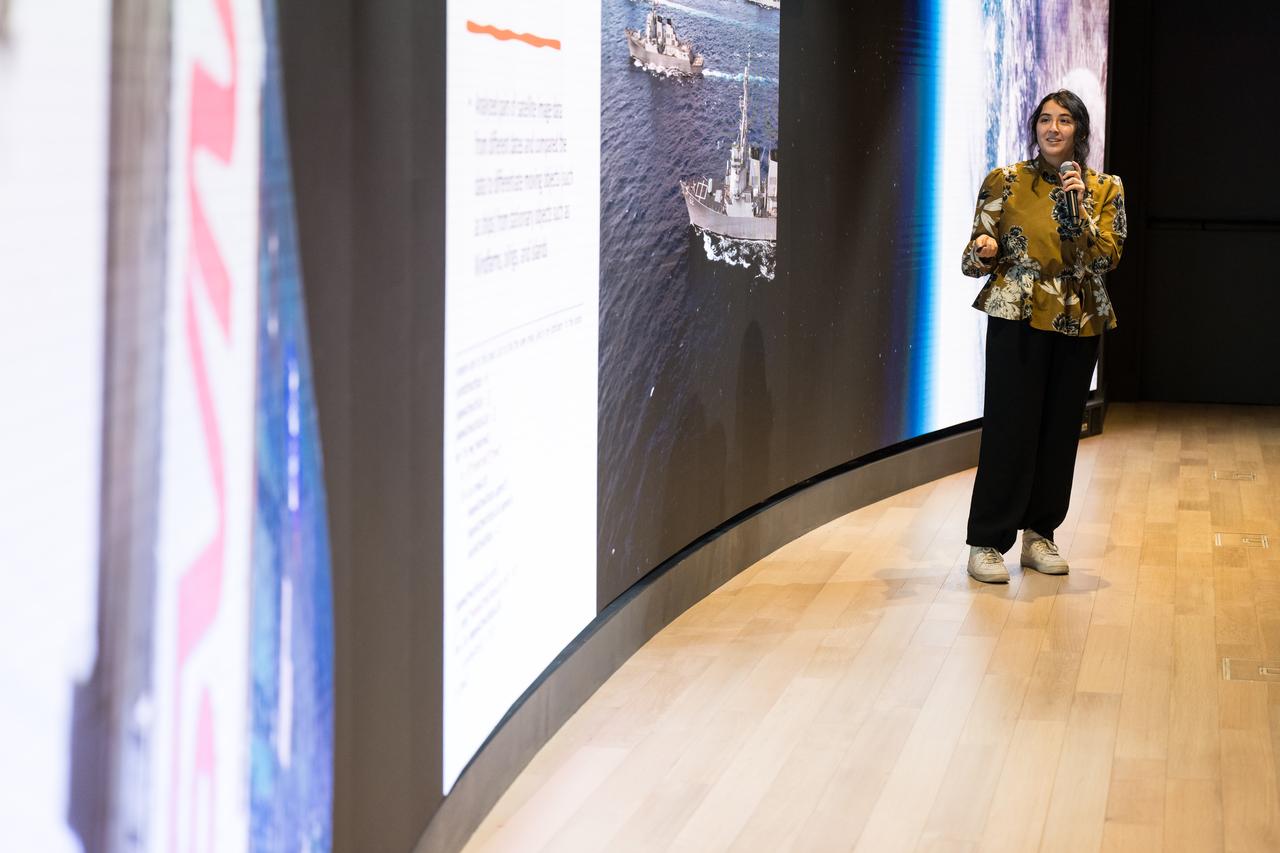
College students present their findings after a hackathon during Space Education Day, Tuesday, June 20, 2023, at the Microsoft Technology Center in Arlington, Va. Microsoft hosted the event to showcase the collaboration, early successes, and future plans for high quality student engagement through activities that combined space content and technologies like artificial intelligence and cloud computing. Photo Credit: (NASA/Aubrey Gemignani)
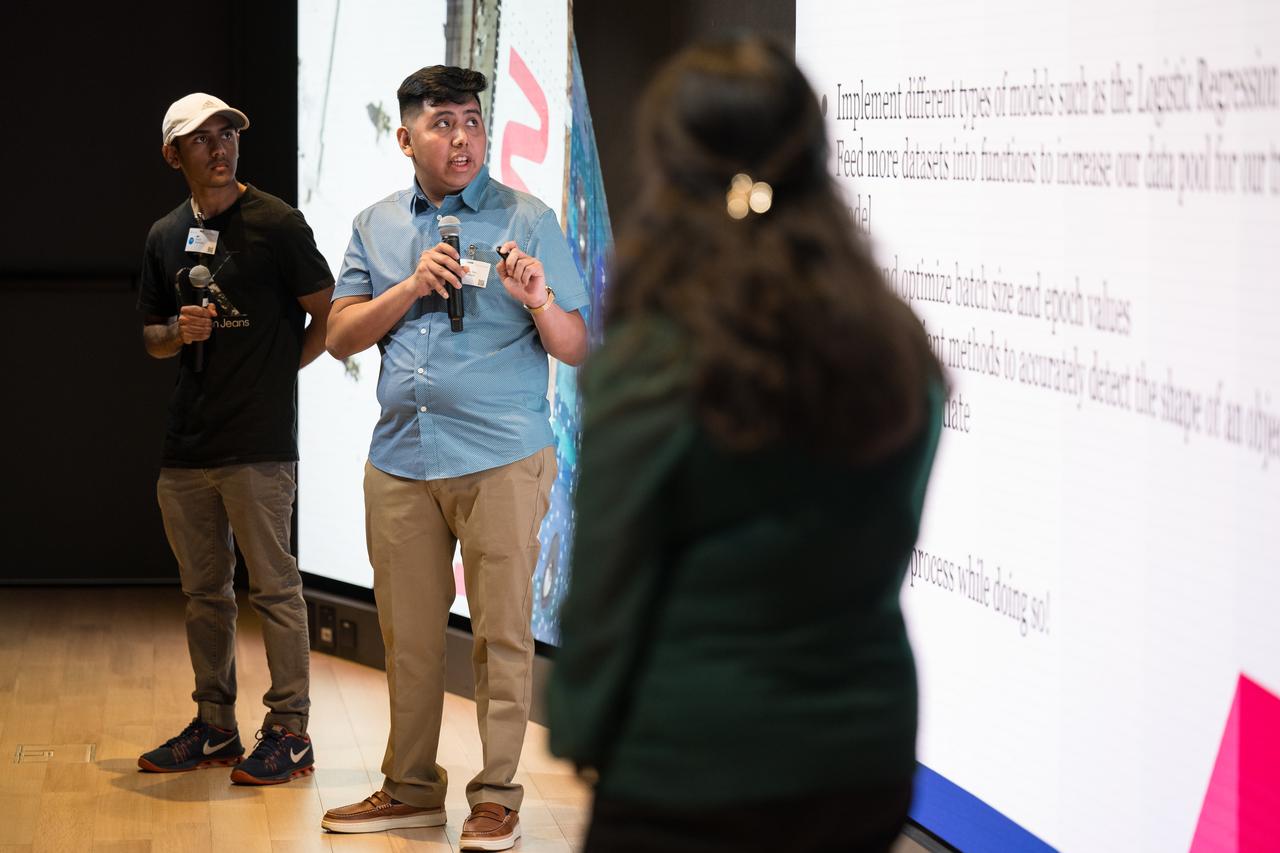
College students present their findings after a hackathon during Space Education Day, Tuesday, June 20, 2023, at the Microsoft Technology Center in Arlington, Va. Microsoft hosted the event to showcase the collaboration, early successes, and future plans for high quality student engagement through activities that combined space content and technologies like artificial intelligence and cloud computing. Photo Credit: (NASA/Aubrey Gemignani)
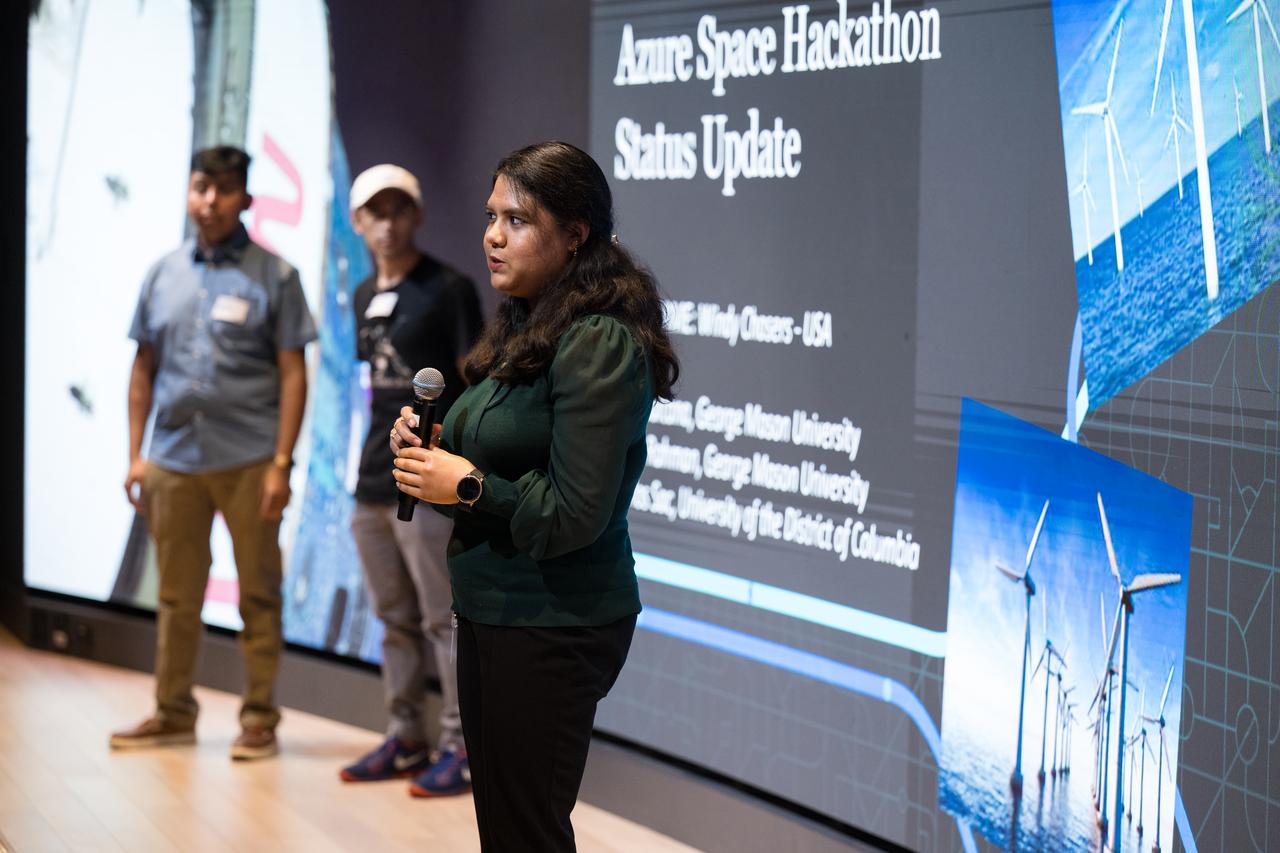
College students present their findings after a hackathon during Space Education Day, Tuesday, June 20, 2023, at the Microsoft Technology Center in Arlington, Va. Microsoft hosted the event to showcase the collaboration, early successes, and future plans for high quality student engagement through activities that combined space content and technologies like artificial intelligence and cloud computing. Photo Credit: (NASA/Aubrey Gemignani)
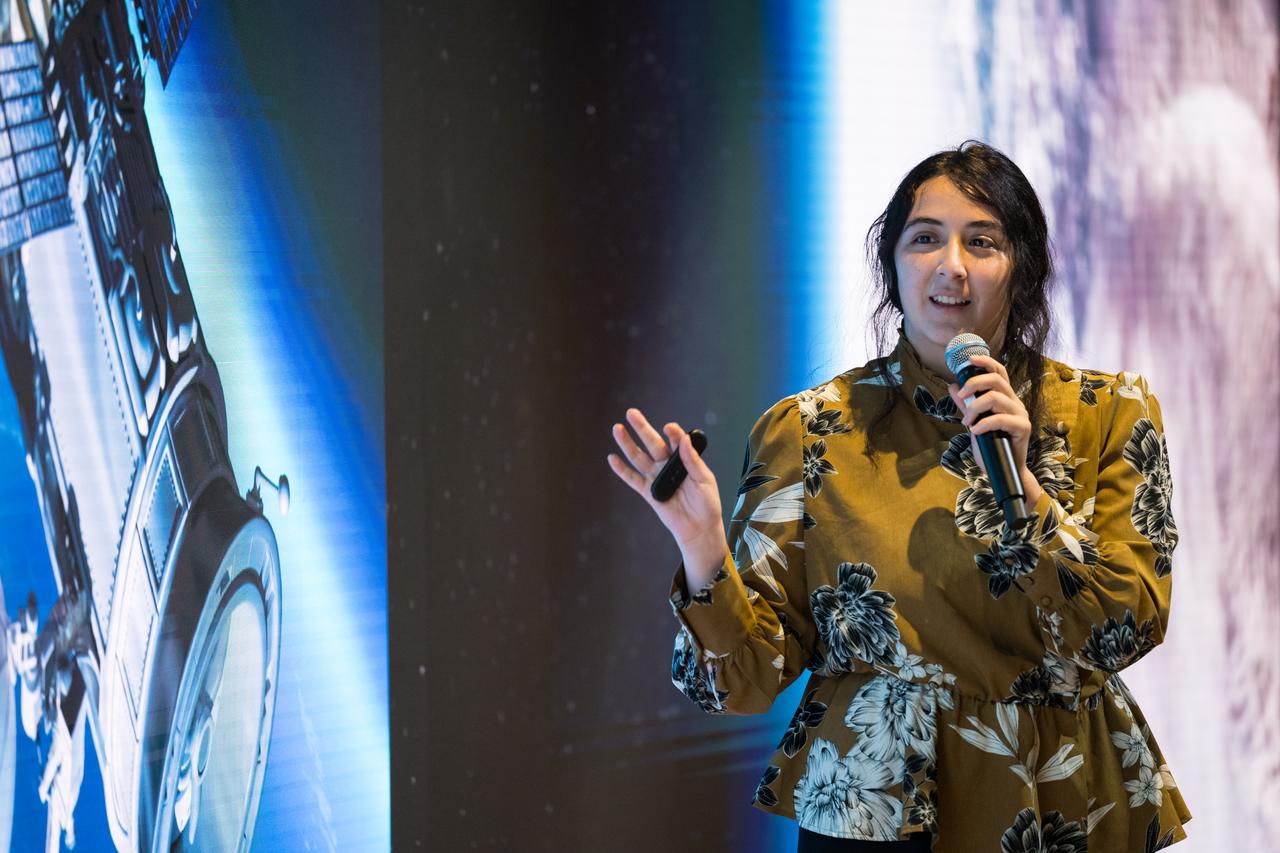
College students present their findings after a hackathon during Space Education Day, Tuesday, June 20, 2023, at the Microsoft Technology Center in Arlington, Va. Microsoft hosted the event to showcase the collaboration, early successes, and future plans for high quality student engagement through activities that combined space content and technologies like artificial intelligence and cloud computing. Photo Credit: (NASA/Aubrey Gemignani)
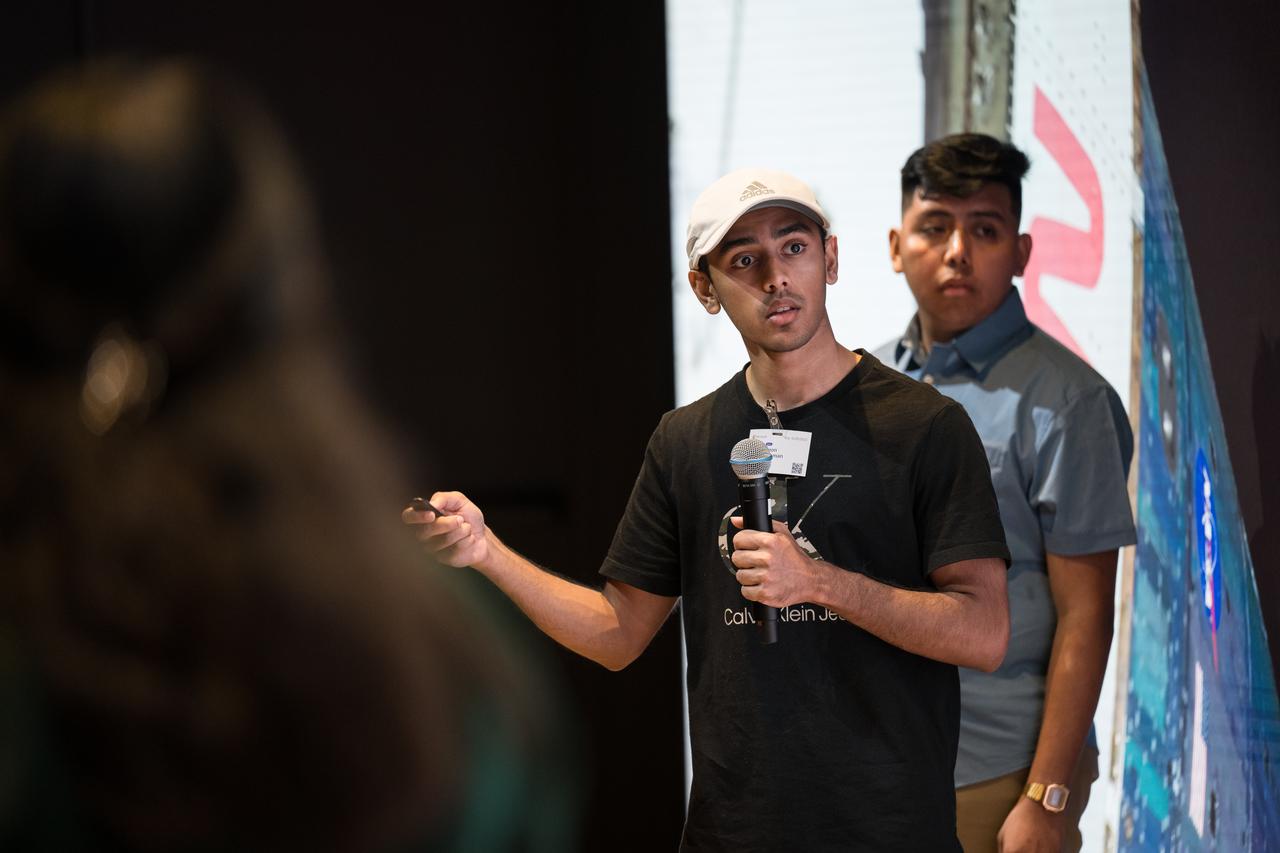
College students present their findings after a hackathon during Space Education Day, Tuesday, June 20, 2023, at the Microsoft Technology Center in Arlington, Va. Microsoft hosted the event to showcase the collaboration, early successes, and future plans for high quality student engagement through activities that combined space content and technologies like artificial intelligence and cloud computing. Photo Credit: (NASA/Aubrey Gemignani)
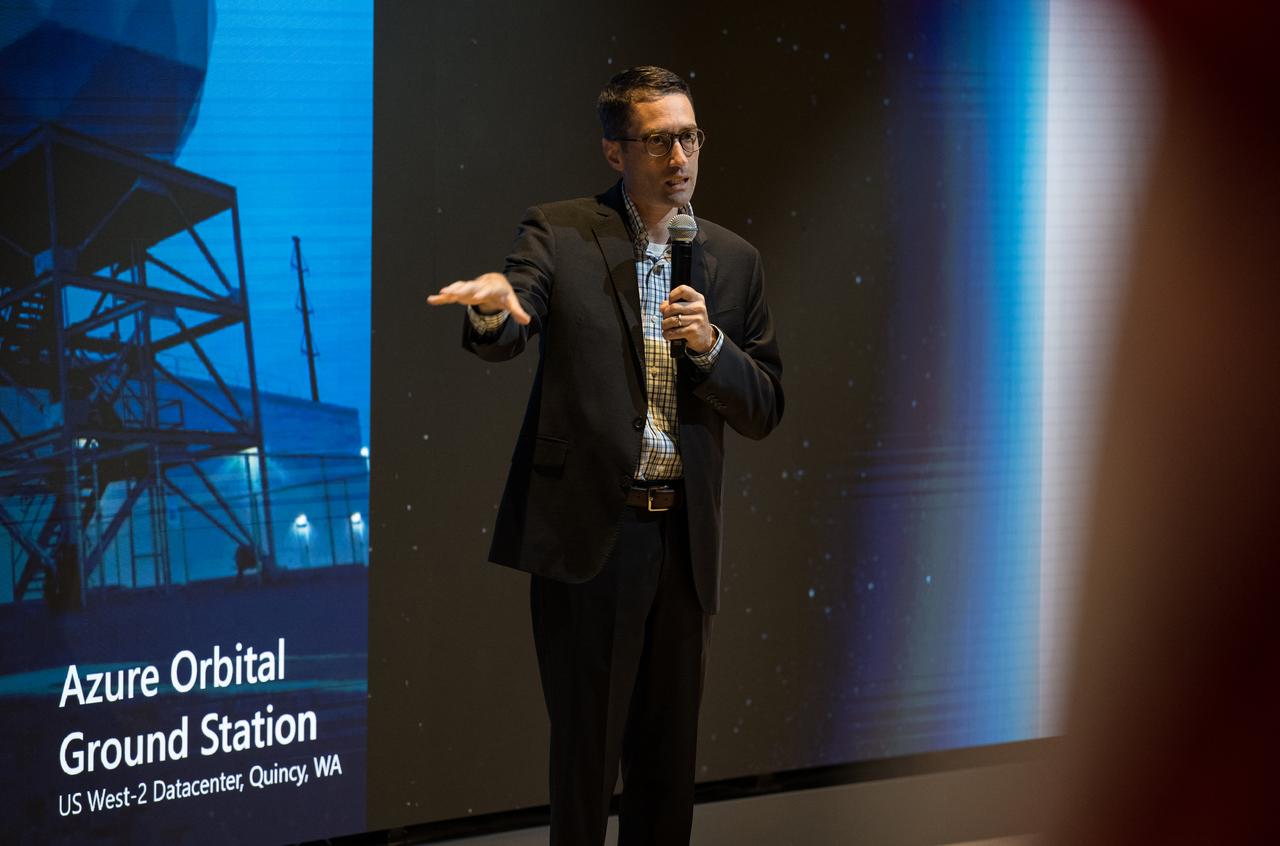
Microsoft’s Azure Space Senior Director, Stephen Kitay, provides remarks during Space Education Day, Tuesday, June 20, 2023, at the Microsoft Technology Center in Arlington, Va. Microsoft hosted the event to showcase the collaboration, early successes, and future plans for high quality student engagement through activities that combined space content and technologies like artificial intelligence and cloud computing. Photo Credit: (NASA/Aubrey Gemignani)
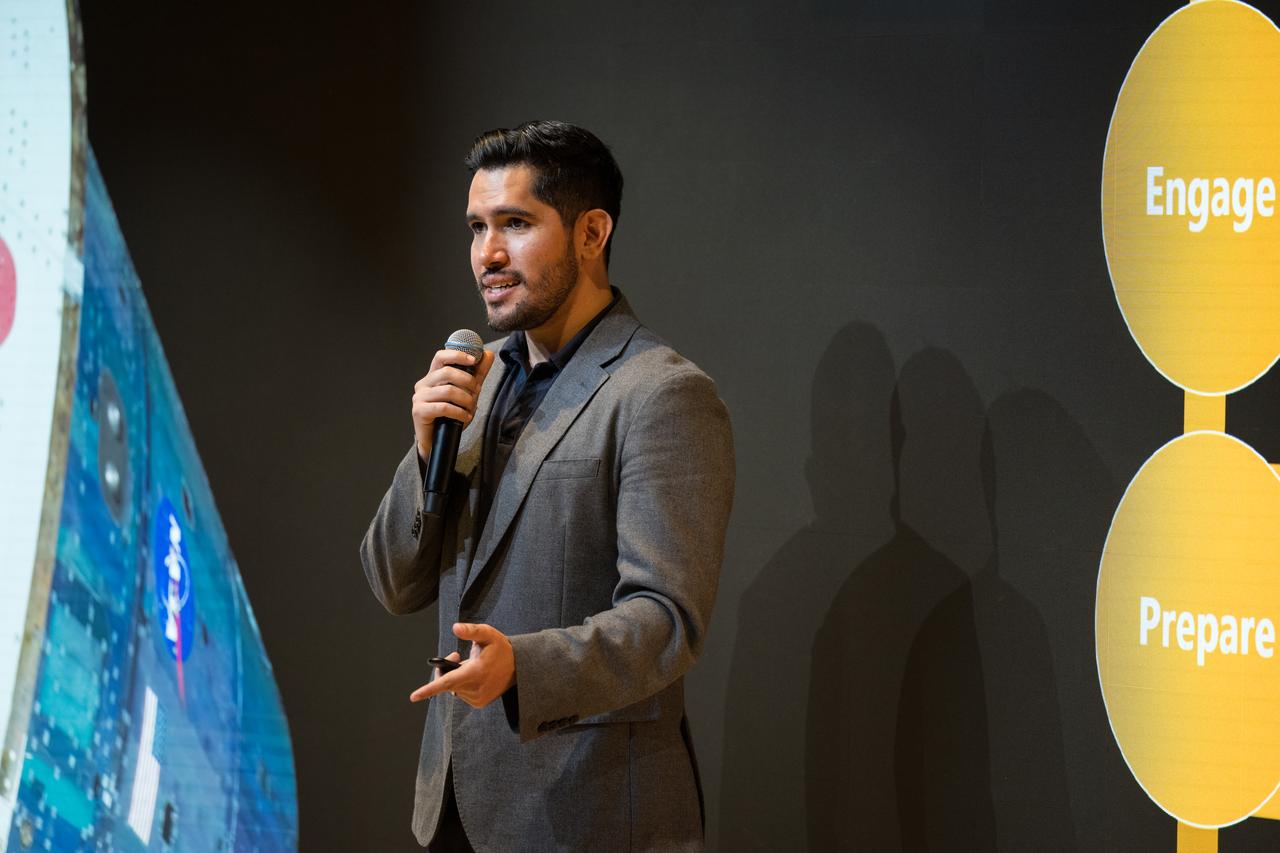
Microsoft’s Azure Space Senior Program Manager, Juan Carlos López, provides remarks during Space Education Day, Tuesday, June 20, 2023, at the Microsoft Technology Center in Arlington, Va. Microsoft hosted the event to showcase the collaboration, early successes, and future plans for high quality student engagement through activities that combined space content and technologies like artificial intelligence and cloud computing. Photo Credit: (NASA/Aubrey Gemignani)
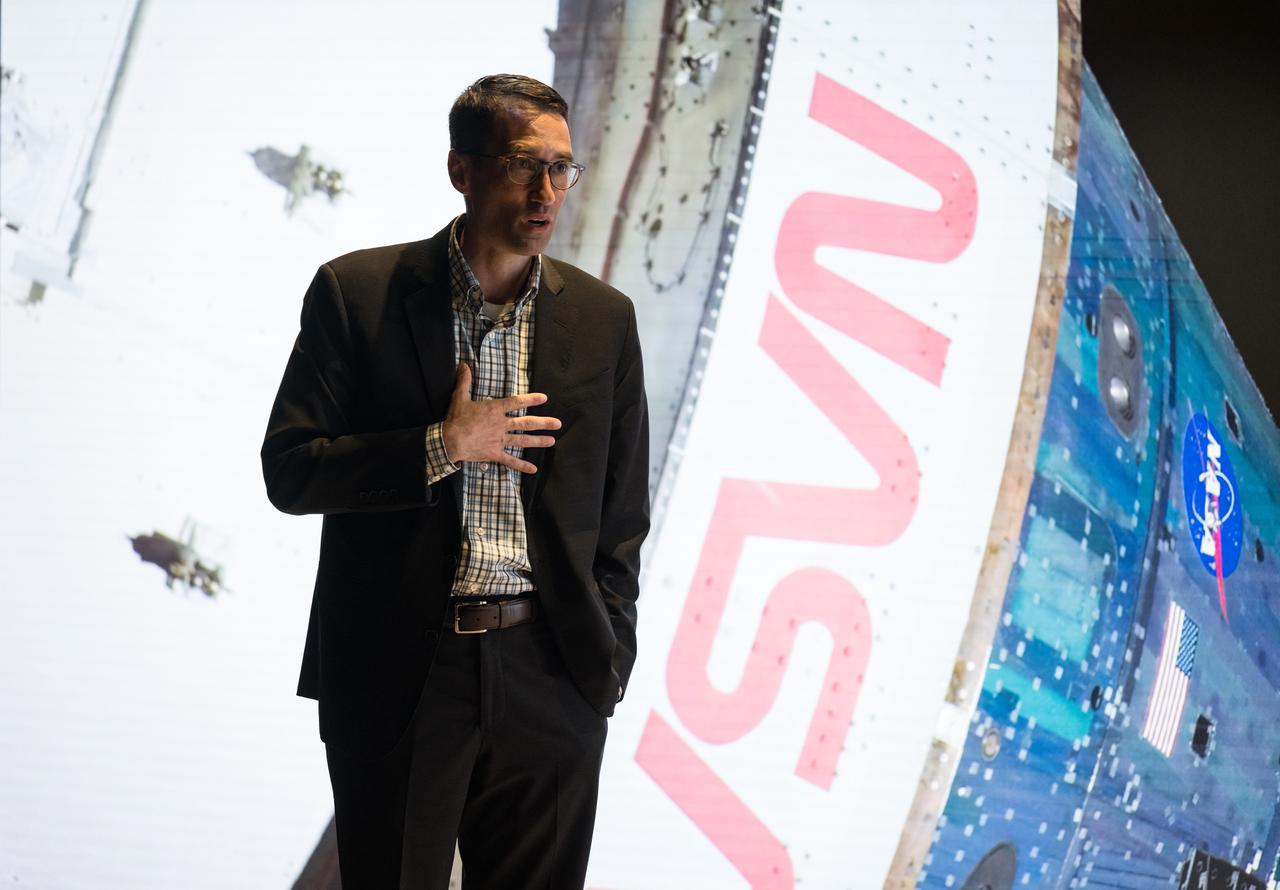
Microsoft’s Azure Space Senior Director, Stephen Kitay, provides remarks during Space Education Day, Tuesday, June 20, 2023, at the Microsoft Technology Center in Arlington, Va. Microsoft hosted the event to showcase the collaboration, early successes, and future plans for high quality student engagement through activities that combined space content and technologies like artificial intelligence and cloud computing. Photo Credit: (NASA/Aubrey Gemignani)
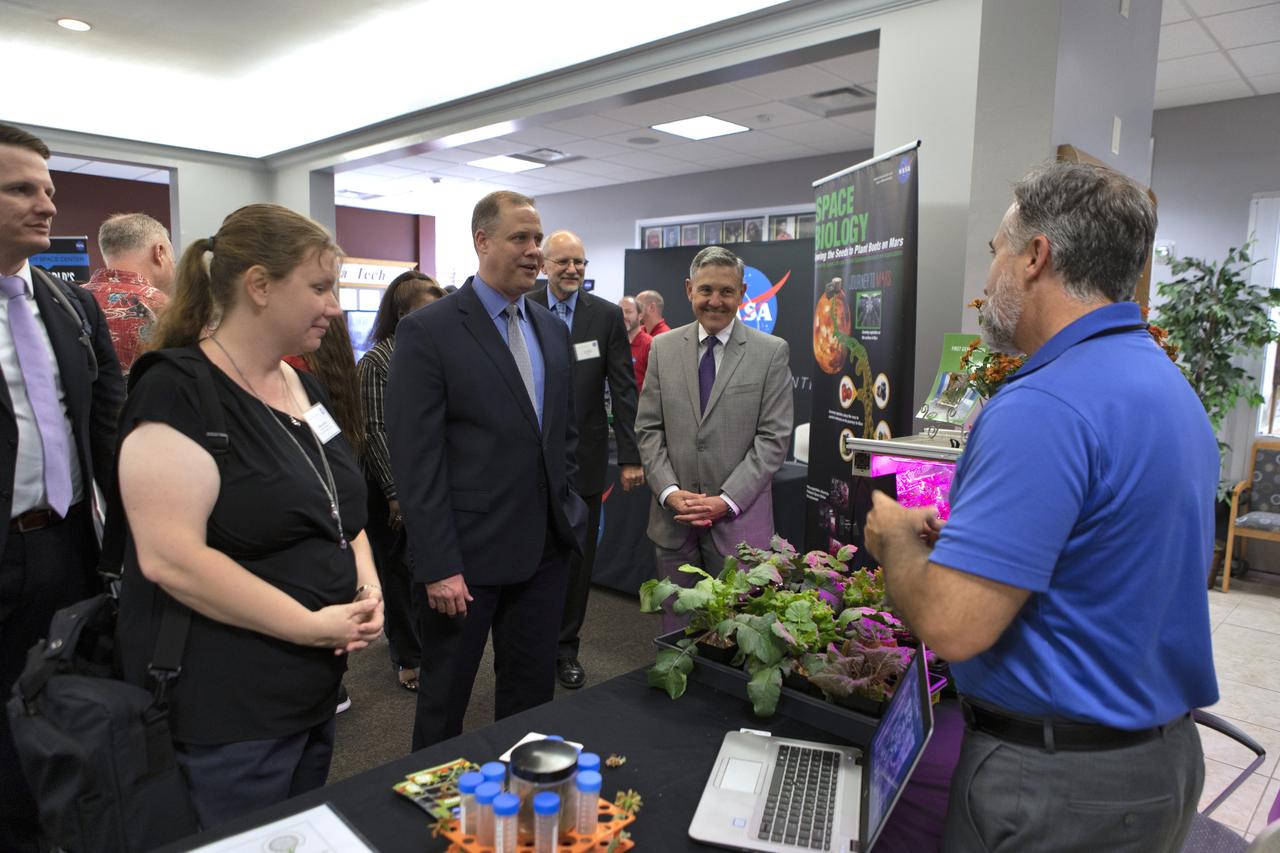
NASA Administrator Jim Bridenstine, center, and Kennedy Space Center Director Bob Cabana, right, visit Florida Institute of Technology on Thursday, May 23, 2019. Bridenstine delivered the keynote address at the Melbourne, FL campus during the university’s Space Technology Day. Among the key topics Bridenstine discussed was NASA’s Artemis missions to the Moon, including the lunar Gateway, which will serve as an orbiting outpost for astronauts.
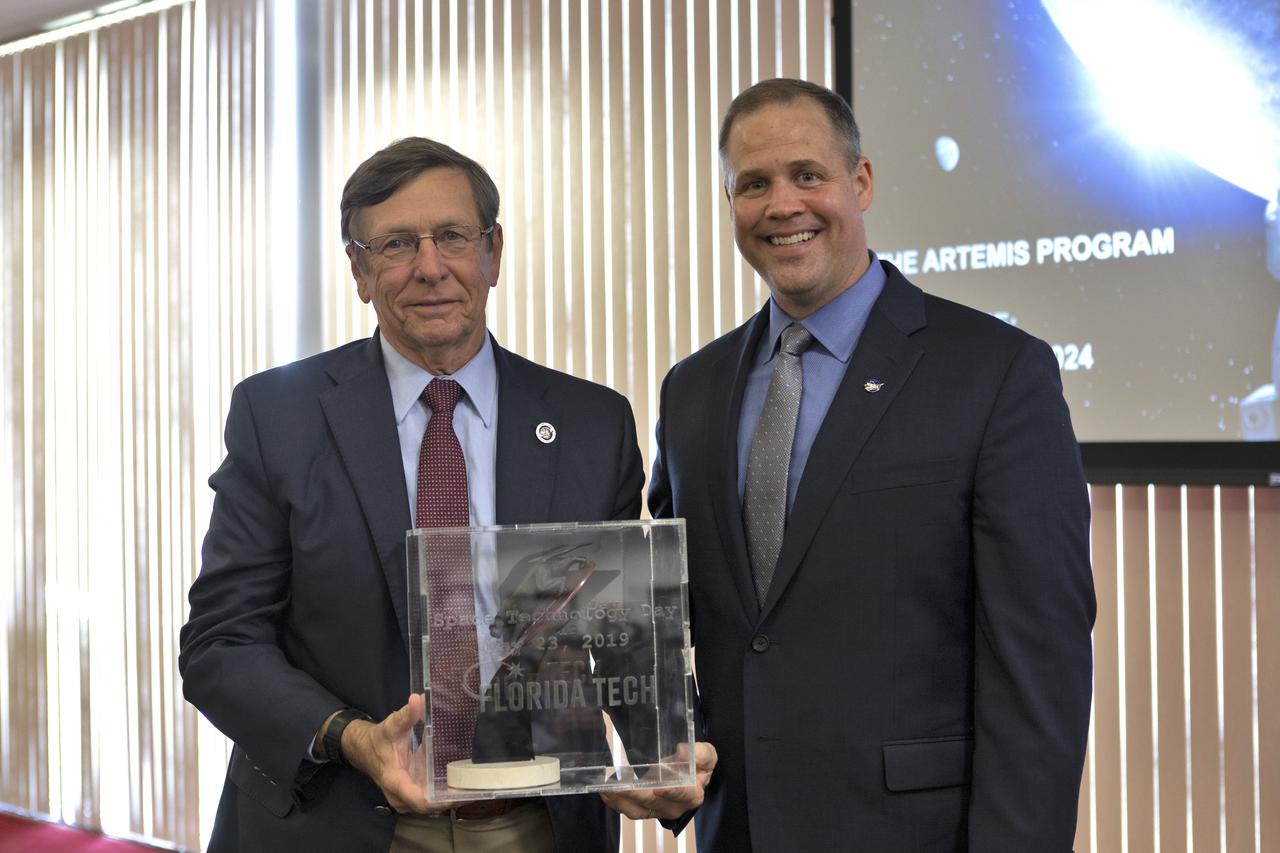
NASA Administrator Jim Bridenstine, right, poses with Florida Institute of Technology President T. Dwayne McCay on Thursday, May 23, 2019 at the Melbourne, FL campus. Bridenstine delivered the keynote address during the university’s Space Technology Day. Among the key topics Bridenstine discussed was NASA’s Artemis missions to the Moon, including the lunar Gateway, which will serve as an orbiting outpost for astronauts.
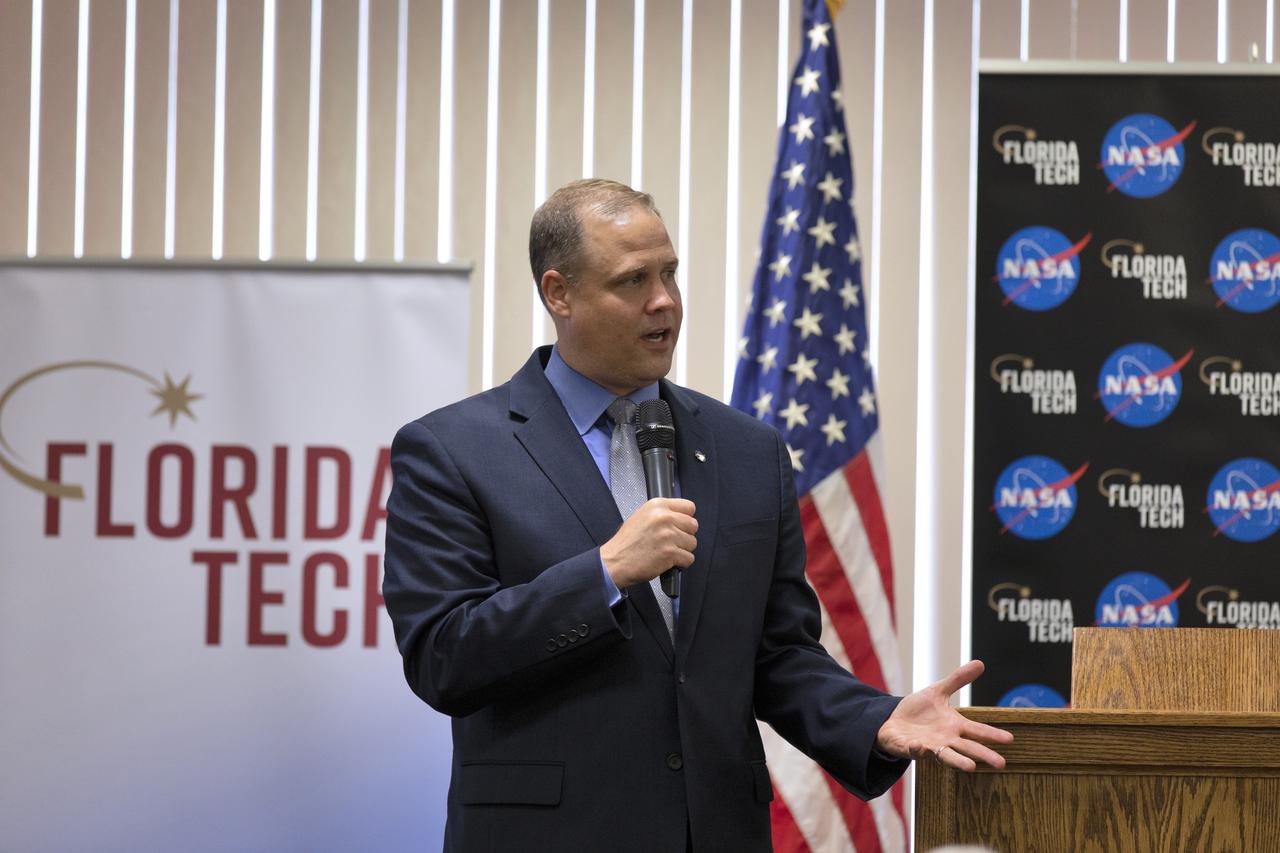
NASA Administrator Jim Bridenstine speaks to students, faculty, engineers and area business leaders at Florida Institute of Technology on Thursday, May 23, 2019. Bridenstine delivered the keynote address at the Melbourne, FL campus during the university’s Space Technology Day. Among the key topics Bridenstine discussed was NASA’s Artemis missions to the Moon, including the lunar Gateway, which will serve as an orbiting outpost for astronauts.
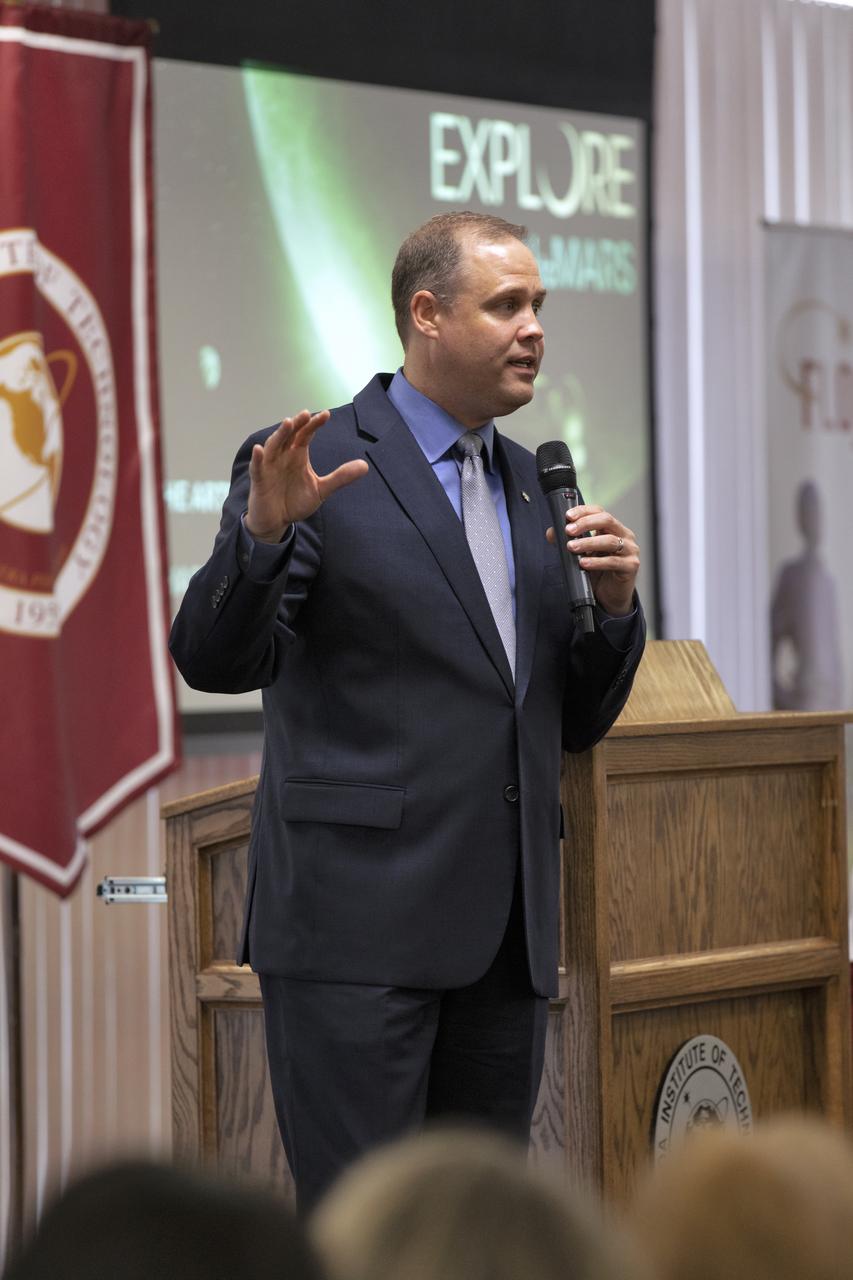
NASA Administrator Jim Bridenstine speaks to students, faculty, engineers and area business leaders at Florida Institute of Technology on Thursday, May 23, 2019. Bridenstine delivered the keynote address at the Melbourne, FL campus during the university’s Space Technology Day. Among the key topics Bridenstine discussed was NASA’s Artemis missions to the Moon, including the lunar Gateway, which will serve as an orbiting outpost for astronauts.
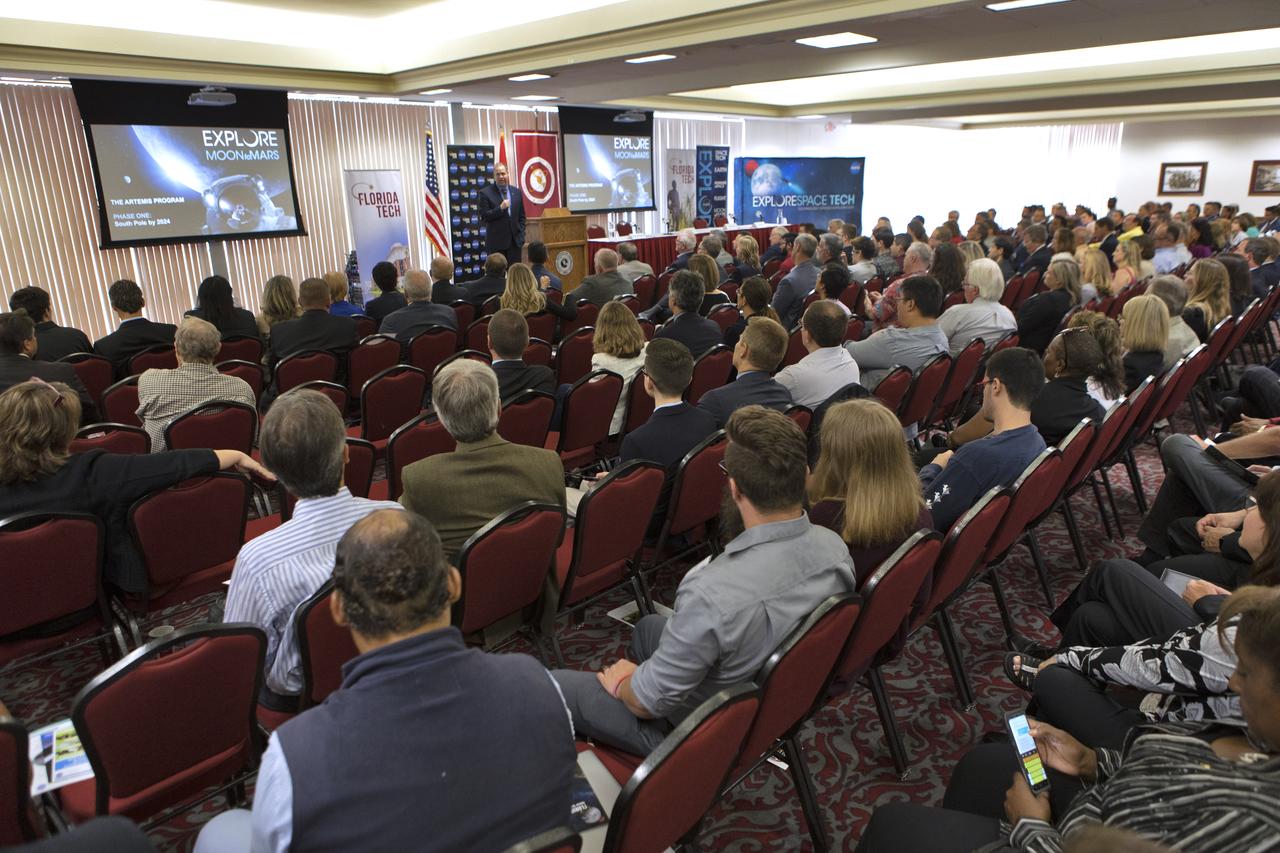
NASA Administrator Jim Bridenstine speaks to students, faculty, engineers and area business leaders at Florida Institute of Technology on Thursday, May 23, 2019. Bridenstine delivered the keynote address at the Melbourne, FL campus during the university’s Space Technology Day. Among the key topics Bridenstine discussed was NASA’s Artemis missions to the Moon, including the lunar Gateway, which will serve as an orbiting outpost for astronauts.
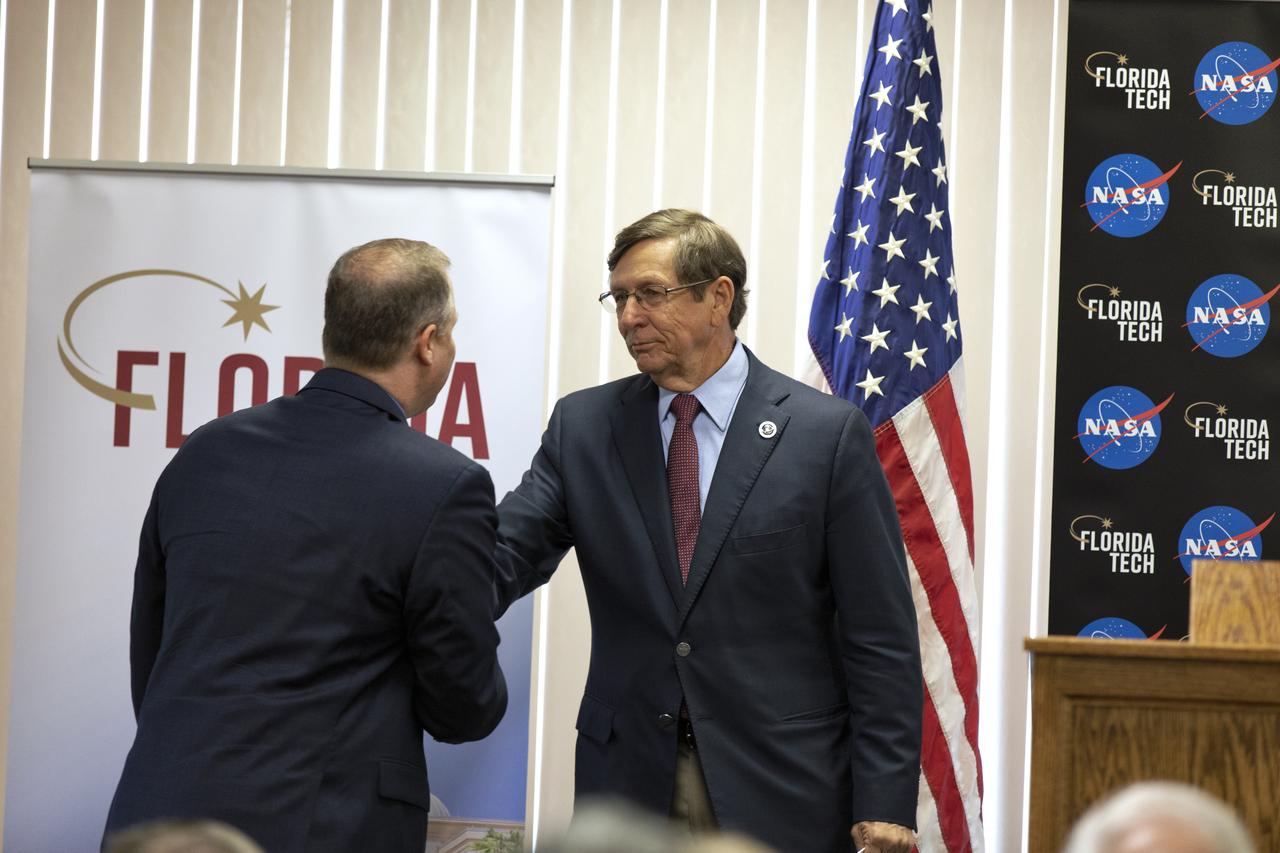
NASA Administrator Jim Bridenstine, left, shakes hands with Florida Institute of Technology President T. Dwayne McCay on Thursday, May 23, 2019 at the Melbourne, FL campus. Bridenstine delivered the keynote address during the university’s Space Technology Day. Among the key topics Bridenstine discussed was NASA’s Artemis missions to the Moon, including the lunar Gateway, which will serve as an orbiting outpost for astronauts.
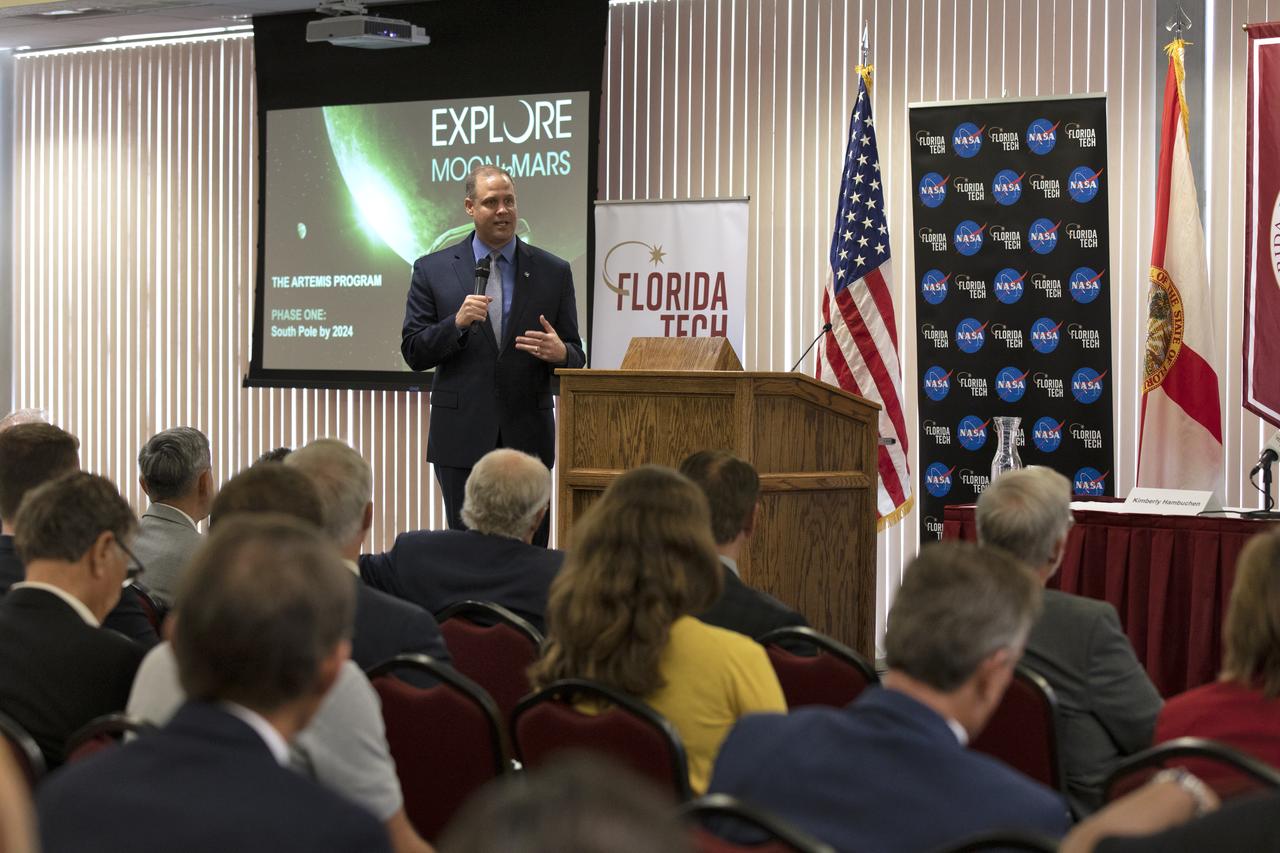
NASA Administrator Jim Bridenstine speaks to students, faculty, engineers and area business leaders at Florida Institute of Technology on Thursday, May 23, 2019. Bridenstine delivered the keynote address at the Melbourne, FL campus during the university’s Space Technology Day. Among the key topics Bridenstine discussed was NASA’s Artemis missions to the Moon, including the lunar Gateway, which will serve as an orbiting outpost for astronauts.
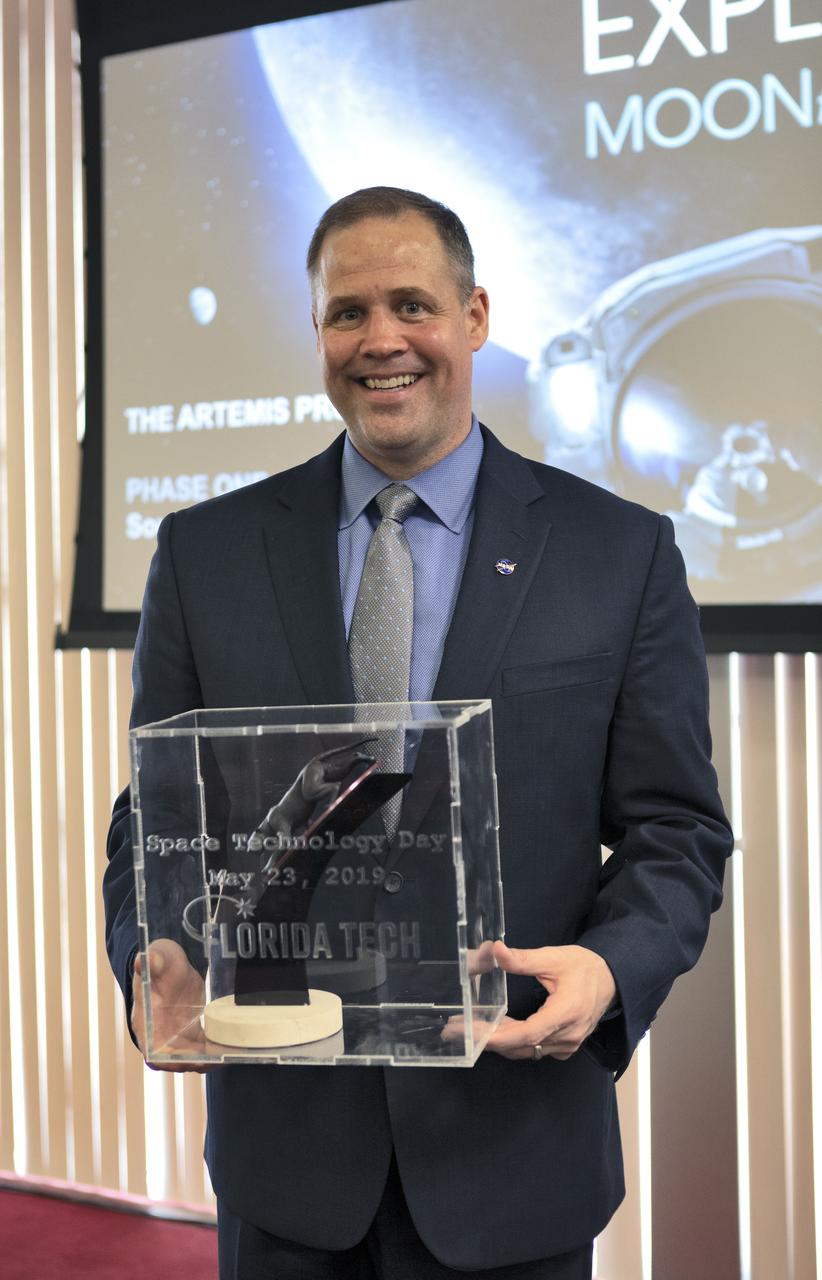
NASA Administrator Jim Bridenstine poses at Florida Institute of Technology on Thursday, May 23, 2019. Bridenstine delivered the keynote address at the Melbourne, FL campus during the university’s Space Technology Day. Among the key topics Bridenstine discussed was NASA’s Artemis missions to the Moon, including the lunar Gateway, which will serve as an orbiting outpost for astronauts.
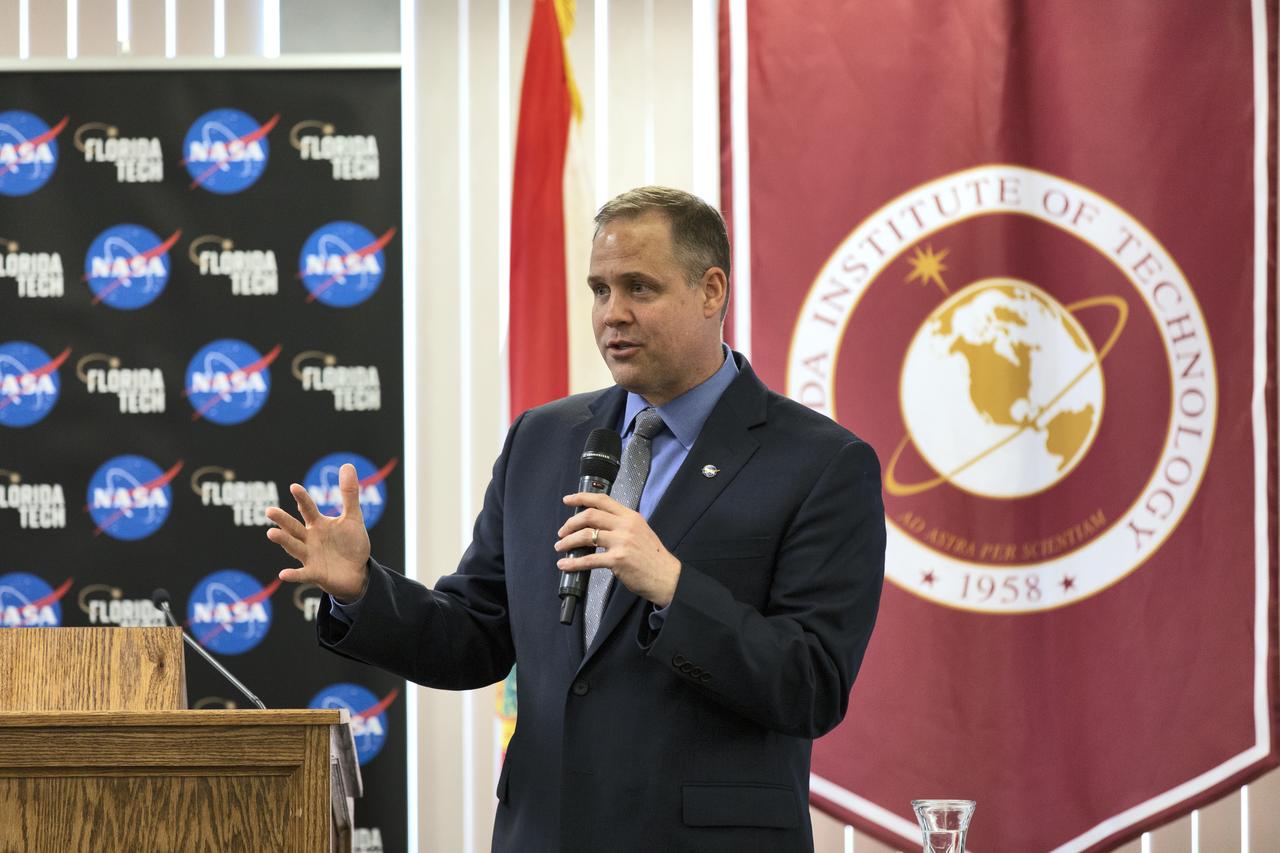
NASA Administrator Jim Bridenstine speaks to students, faculty, engineers and area business leaders at Florida Institute of Technology on Thursday, May 23, 2019. Bridenstine delivered the keynote address at the Melbourne, FL campus during the university’s Space Technology Day. Among the key topics Bridenstine discussed was NASA’s Artemis missions to the Moon, including the lunar Gateway, which will serve as an orbiting outpost for astronauts.
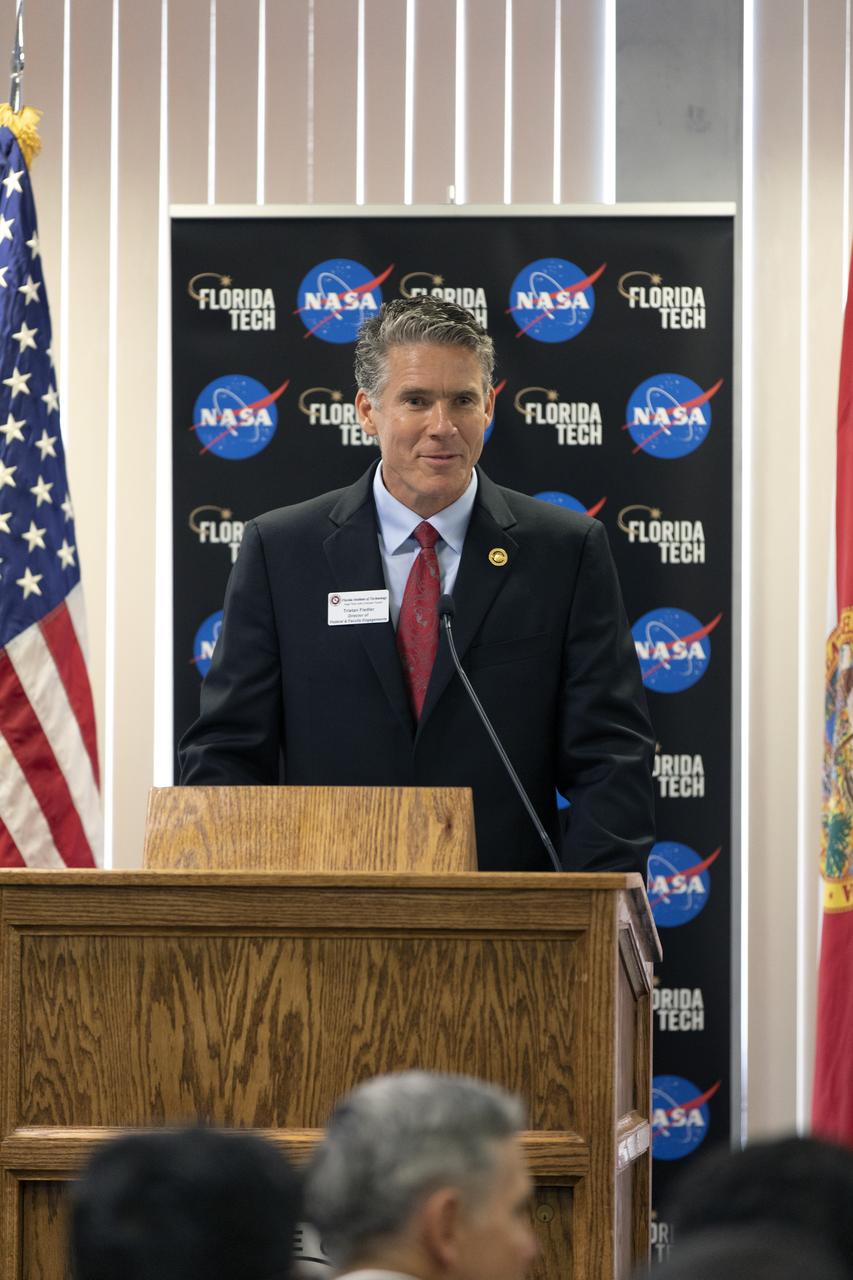
Tristan Fiedler, director of federal and faculty engagements at Florida Institute of Technology, speaks during the university’s Space Technology Day on Thursday, May 23, 2019. NASA Administrator Jim Bridenstine delivered the keynote address at the Melbourne, FL campus, which included students, faculty, engineers and area business leaders in attendance. Among the key topics Bridenstine discussed was NASA’s Artemis missions to the Moon, including the lunar Gateway, which will serve as an orbiting outpost for astronauts.
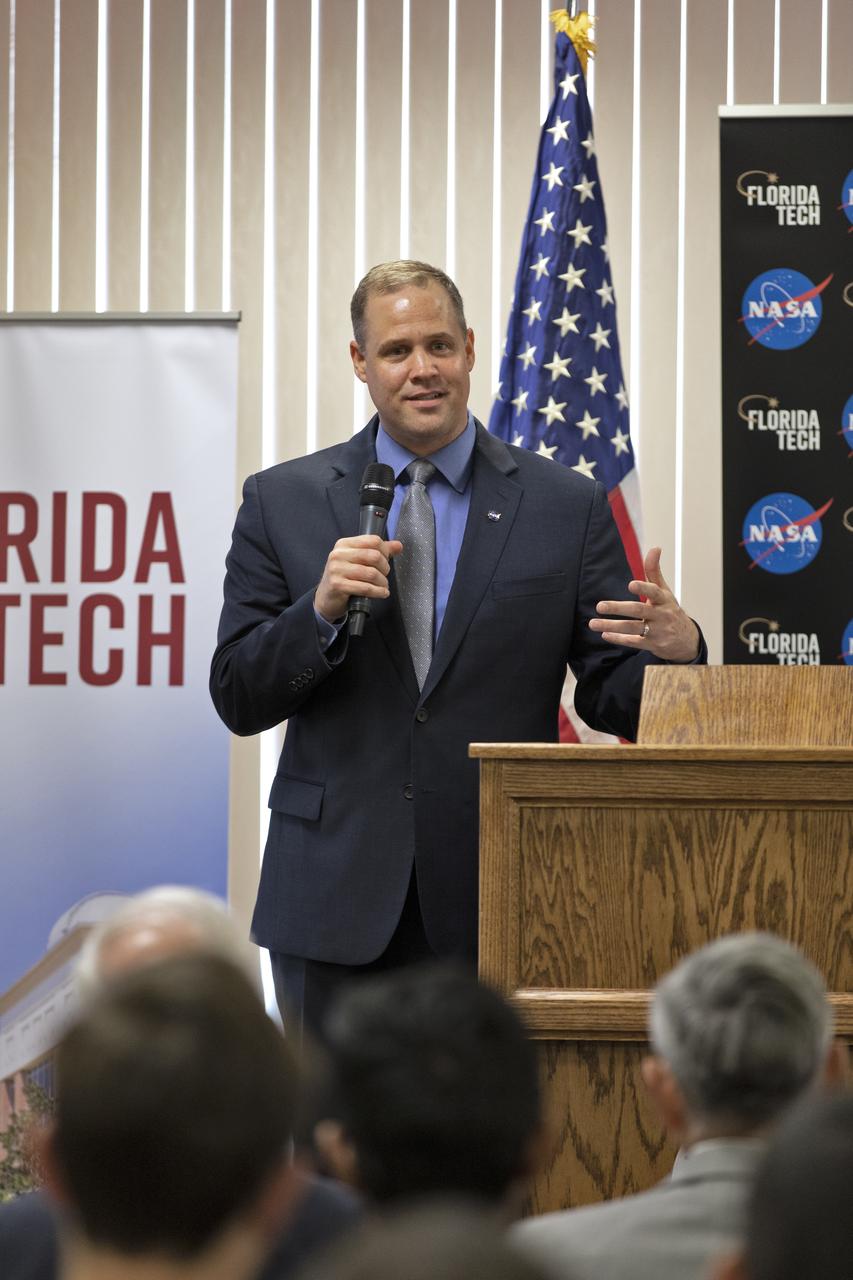
NASA Administrator Jim Bridenstine speaks to students, faculty, engineers and area business leaders at Florida Institute of Technology on Thursday, May 23, 2019. Bridenstine delivered the keynote address at the Melbourne, FL campus during the university’s Space Technology Day. Among the key topics Bridenstine discussed was NASA’s Artemis missions to the Moon, including the lunar Gateway, which will serve as an orbiting outpost for astronauts.
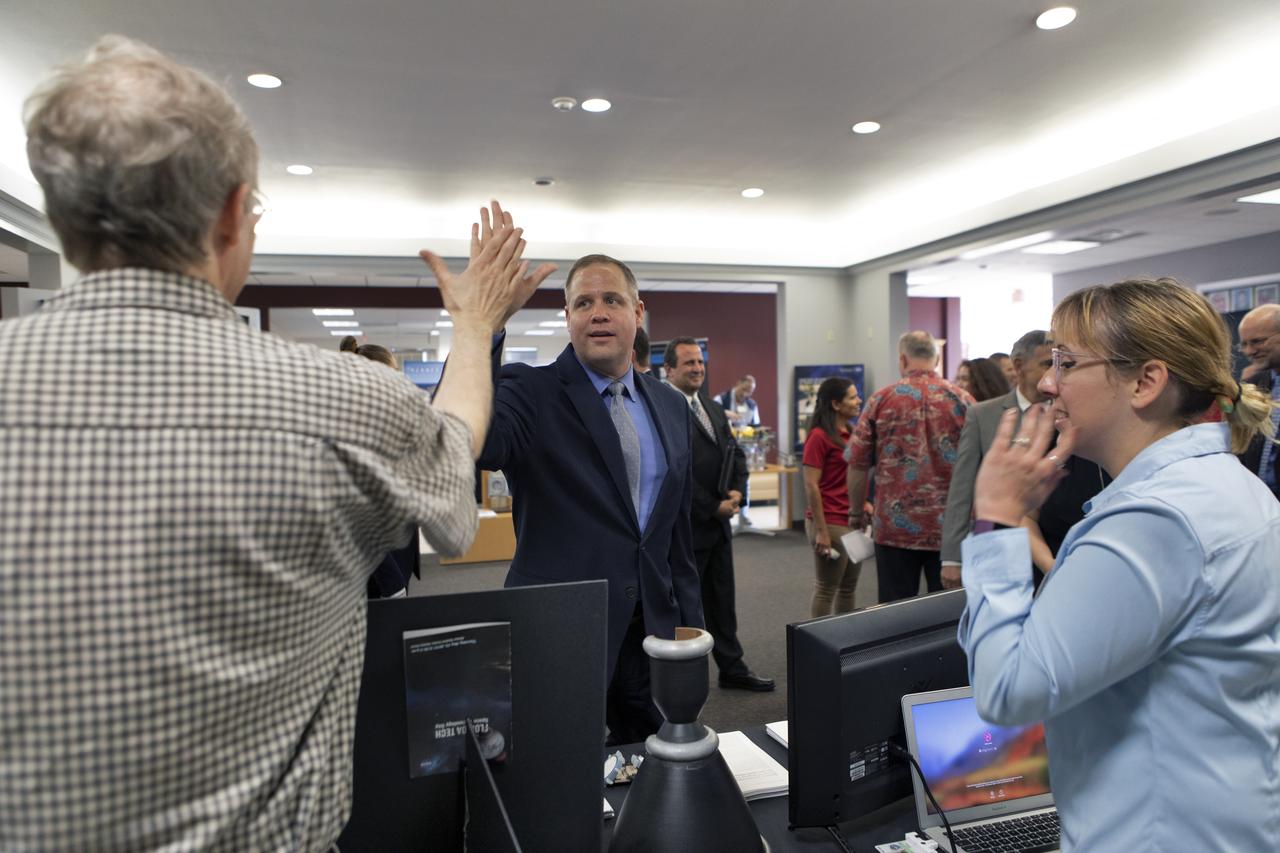
NASA Administrator Jim Bridenstine, center, speaks to students, faculty, engineers and area business leaders at Florida Institute of Technology on Thursday, May 23, 2019. Bridenstine delivered the keynote address at the Melbourne, FL campus during the university’s Space Technology Day. Among the key topics Bridenstine discussed was NASA’s Artemis missions to the Moon, including the lunar Gateway, which will serve as an orbiting outpost for astronauts.
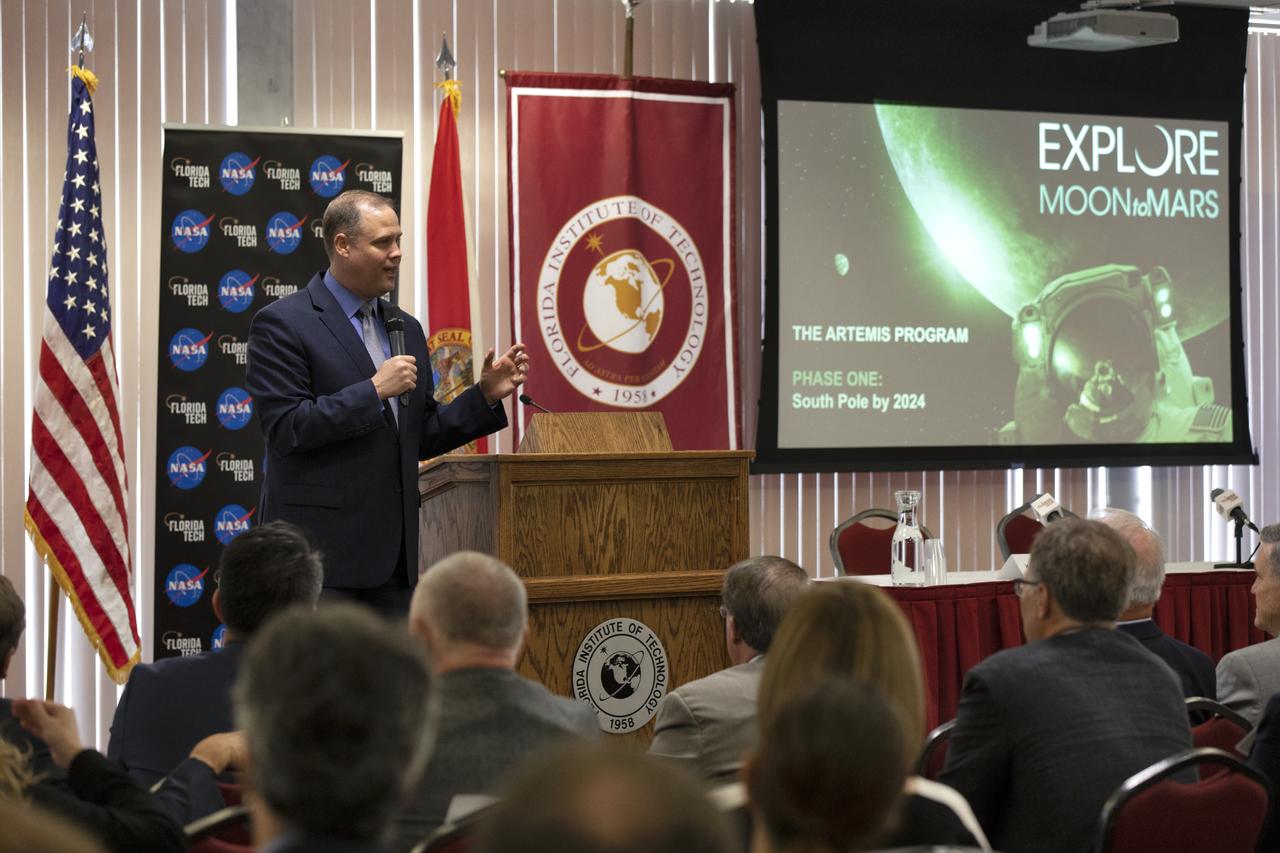
NASA Administrator Jim Bridenstine speaks to students, faculty, engineers and area business leaders at Florida Institute of Technology on Thursday, May 23, 2019. Bridenstine delivered the keynote address at the Melbourne, FL campus during the university’s Space Technology Day. Among the key topics Bridenstine discussed was NASA’s Artemis missions to the Moon, including the lunar Gateway, which will serve as an orbiting outpost for astronauts.
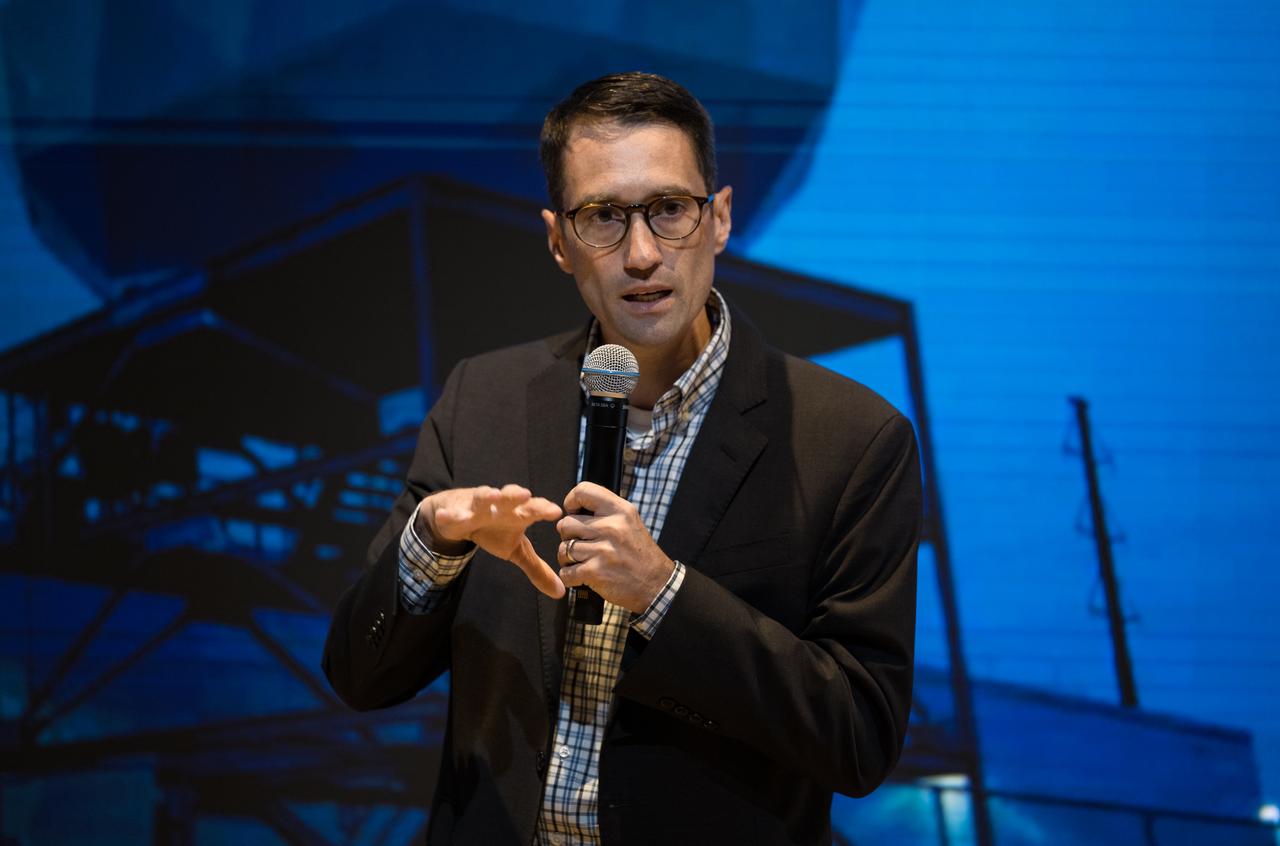
Microsoft’s Azure Space Senior Director, Stephen Kitay, provides remarks during Space Education Day, Tuesday, June 20, 2023, at the Microsoft Technology Center in Arlington, Va. Microsoft hosted the event to showcase the collaboration, early successes, and future plans for high quality student engagement through activities that combined space content and technologies like artificial intelligence and cloud computing. Photo Credit: (NASA/Aubrey Gemignani)
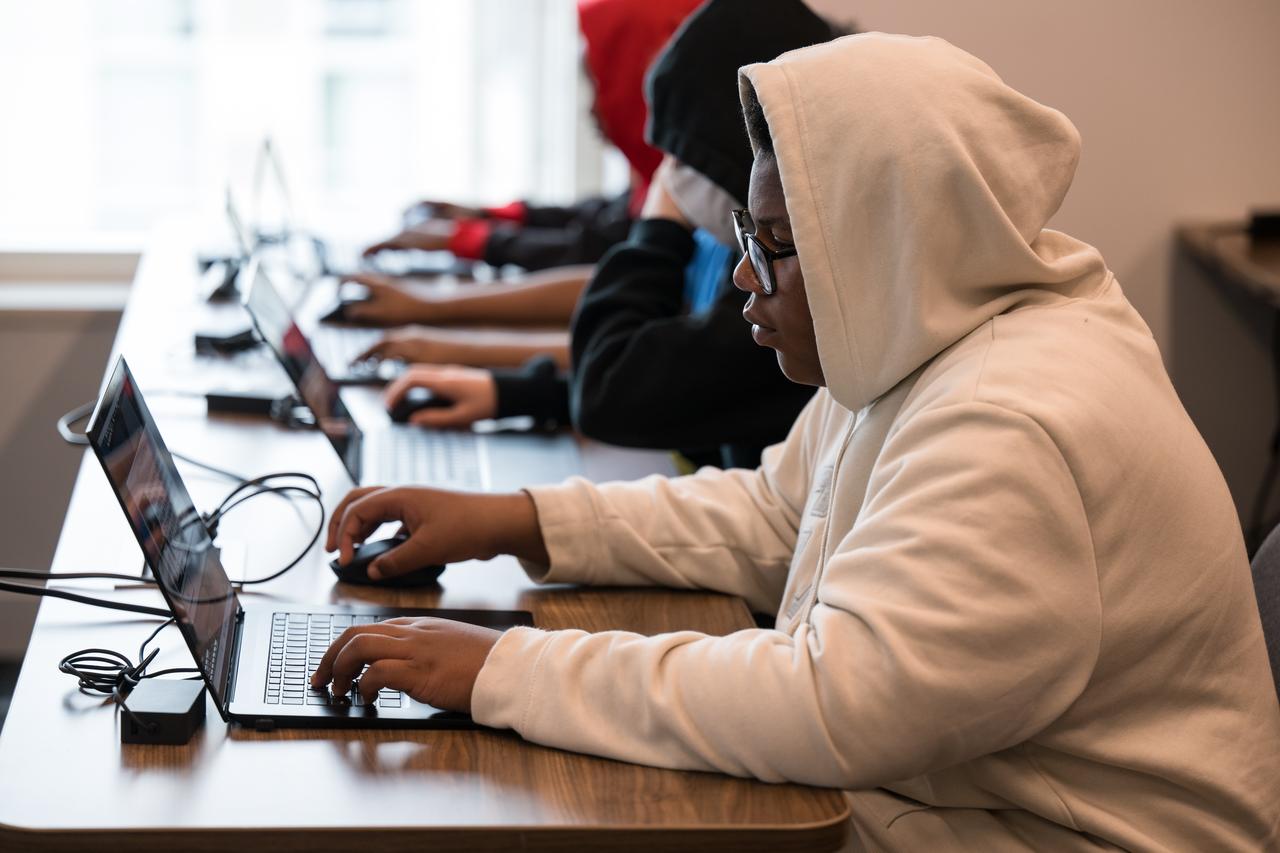
DC area students participate in a Minecraft Artemis demonstration during Space Education Day, Tuesday, June 20, 2023, at the Microsoft Technology Center in Arlington, Va. Microsoft hosted the event to showcase the collaboration, early successes, and future plans for high quality student engagement through activities that combined space content and technologies like artificial intelligence and cloud computing. Photo Credit: (NASA/Aubrey Gemignani)
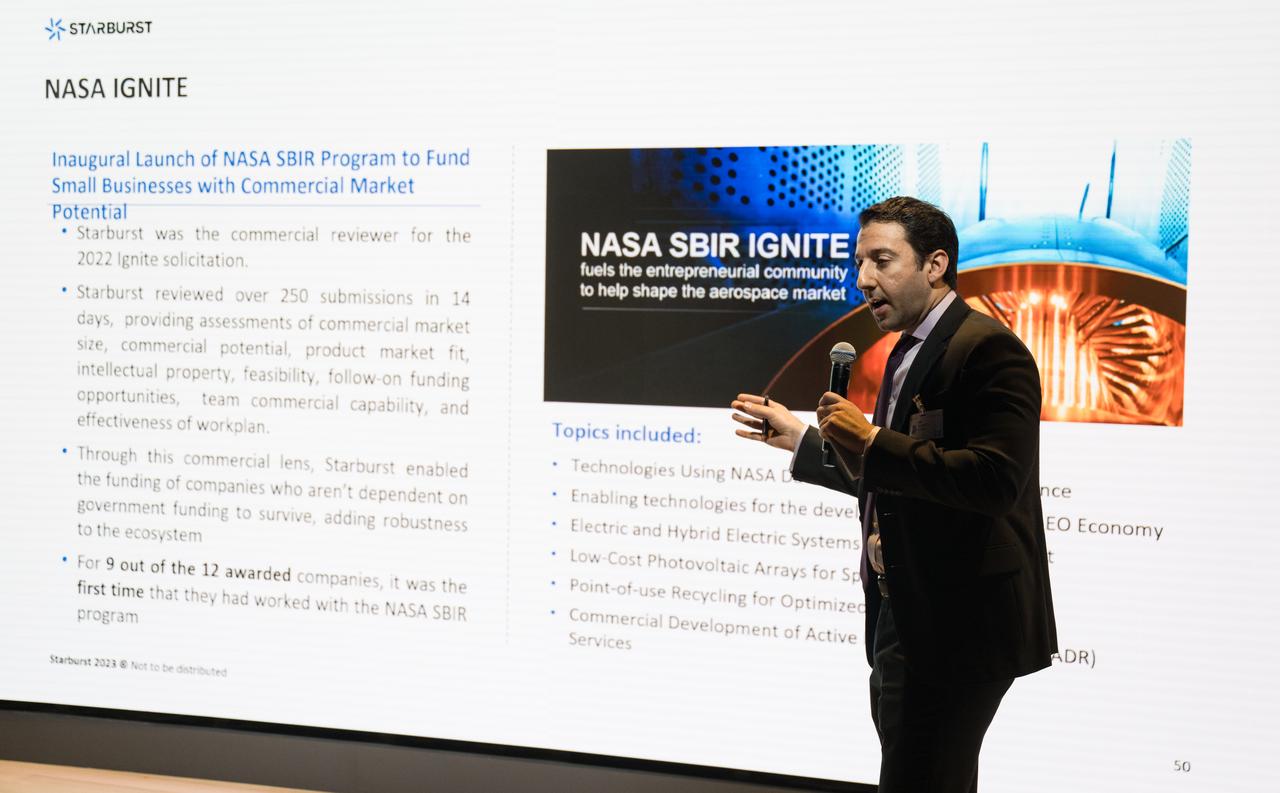
Director of Government Affairs and Business Development for Starburst Aerospace, Robert Ganim, provides remarks during Space Education Day, Tuesday, June 20, 2023, at the Microsoft Technology Center in Arlington, Va. Microsoft hosted the event to showcase the collaboration, early successes, and future plans for high quality student engagement through activities that combined space content and technologies like artificial intelligence and cloud computing. Photo Credit: (NASA/Aubrey Gemignani)
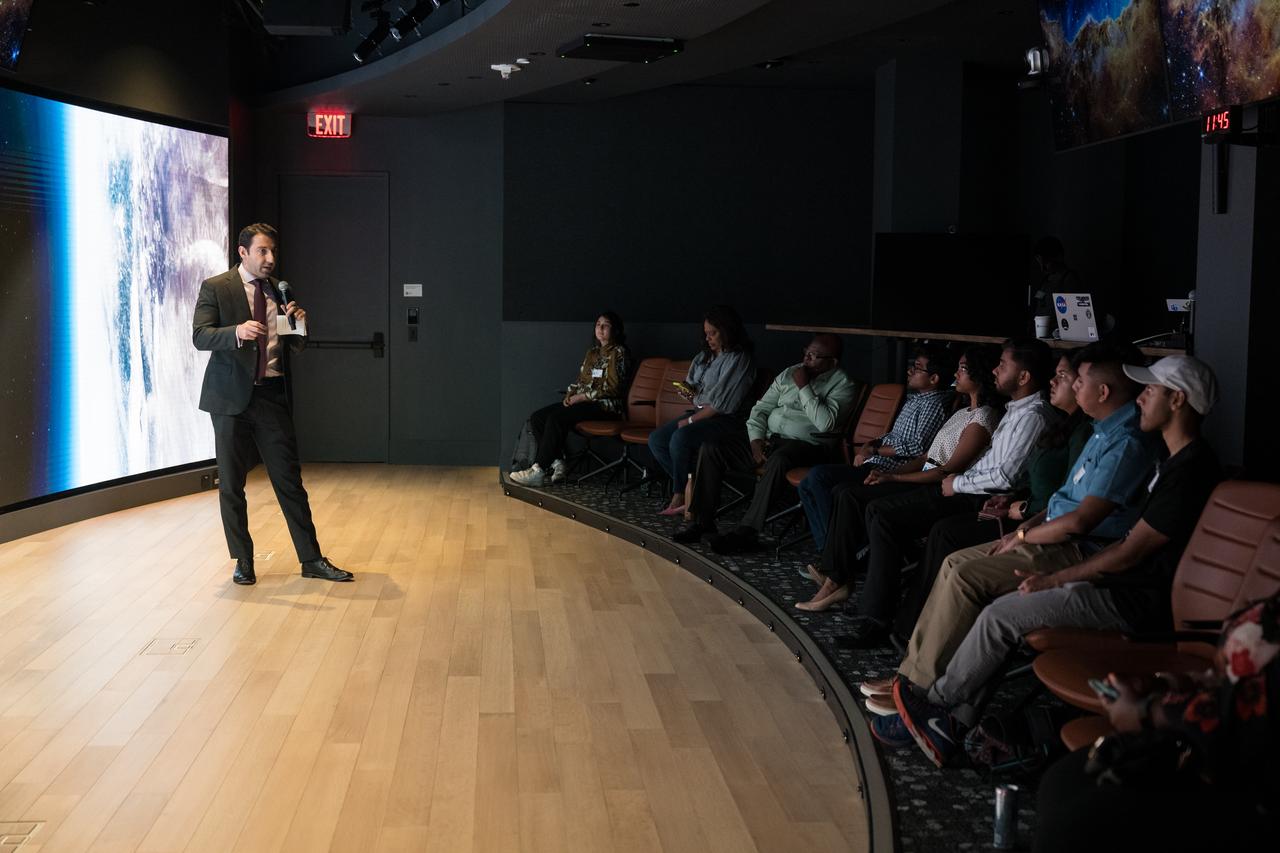
Director of Government Affairs and Business Development for Starburst Aerospace, Robert Ganim, provides remarks during Space Education Day, Tuesday, June 20, 2023, at the Microsoft Technology Center in Arlington, Va. Microsoft hosted the event to showcase the collaboration, early successes, and future plans for high quality student engagement through activities that combined space content and technologies like artificial intelligence and cloud computing. Photo Credit: (NASA/Aubrey Gemignani)
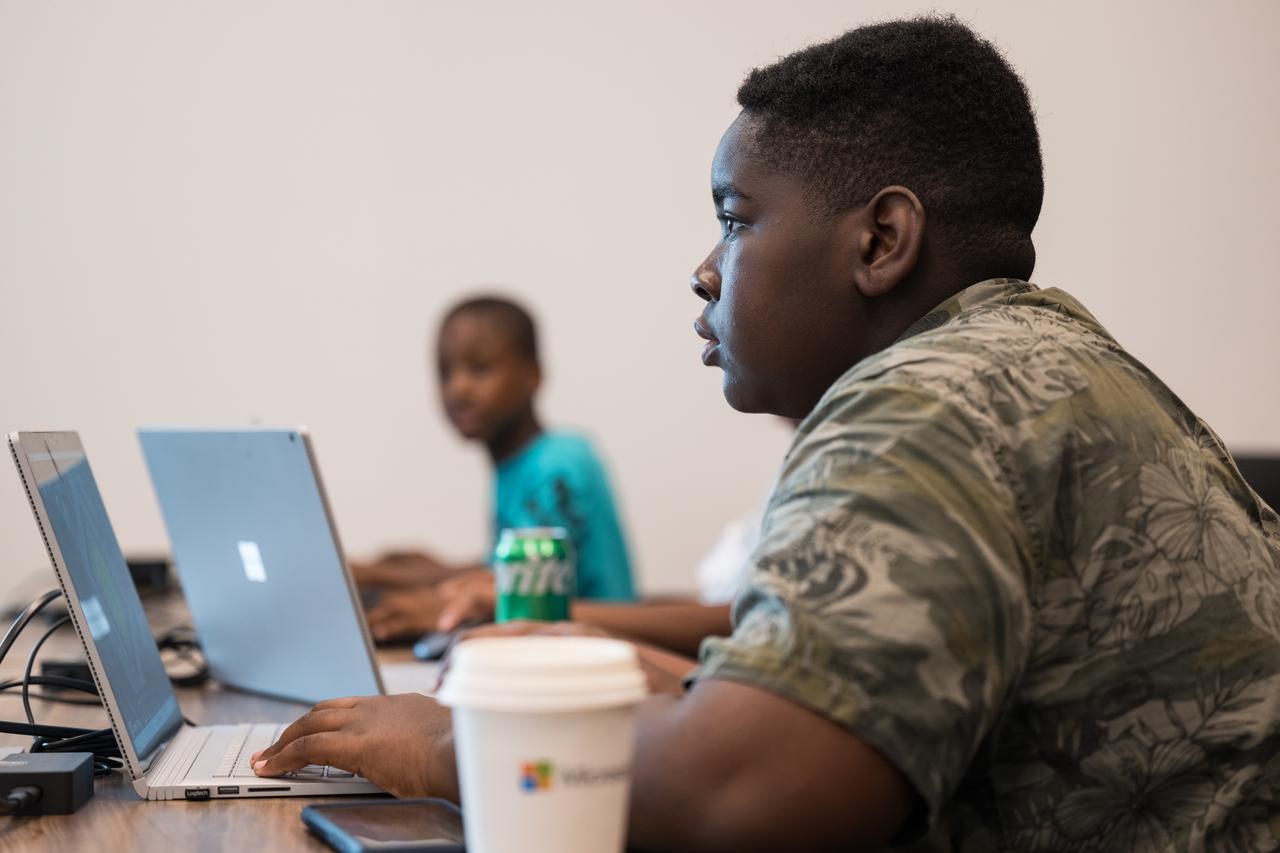
DC area students participate in a Minecraft Artemis demonstration during Space Education Day, Tuesday, June 20, 2023, at the Microsoft Technology Center in Arlington, Va. Microsoft hosted the event to showcase the collaboration, early successes, and future plans for high quality student engagement through activities that combined space content and technologies like artificial intelligence and cloud computing. Photo Credit: (NASA/Aubrey Gemignani)
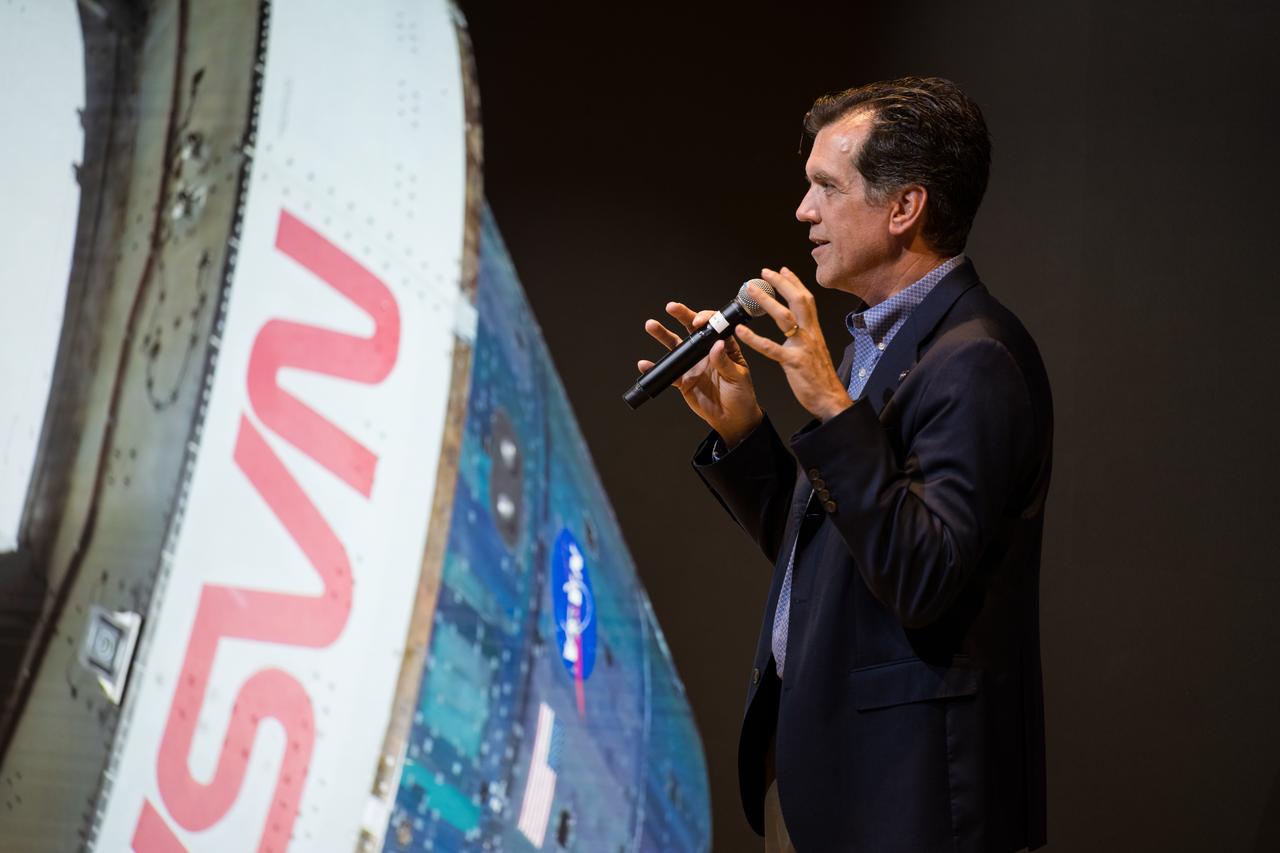
NASA Associate Administrator for the STEM Engagement Office, Mike Kincaid, provides remarks during Space Education Day, Tuesday, June 20, 2023, at the Microsoft Technology Center in Arlington, Va. Microsoft hosted the event to showcase the collaboration, early successes, and future plans for high quality student engagement through activities that combined space content and technologies like artificial intelligence and cloud computing. Photo Credit: (NASA/Aubrey Gemignani)
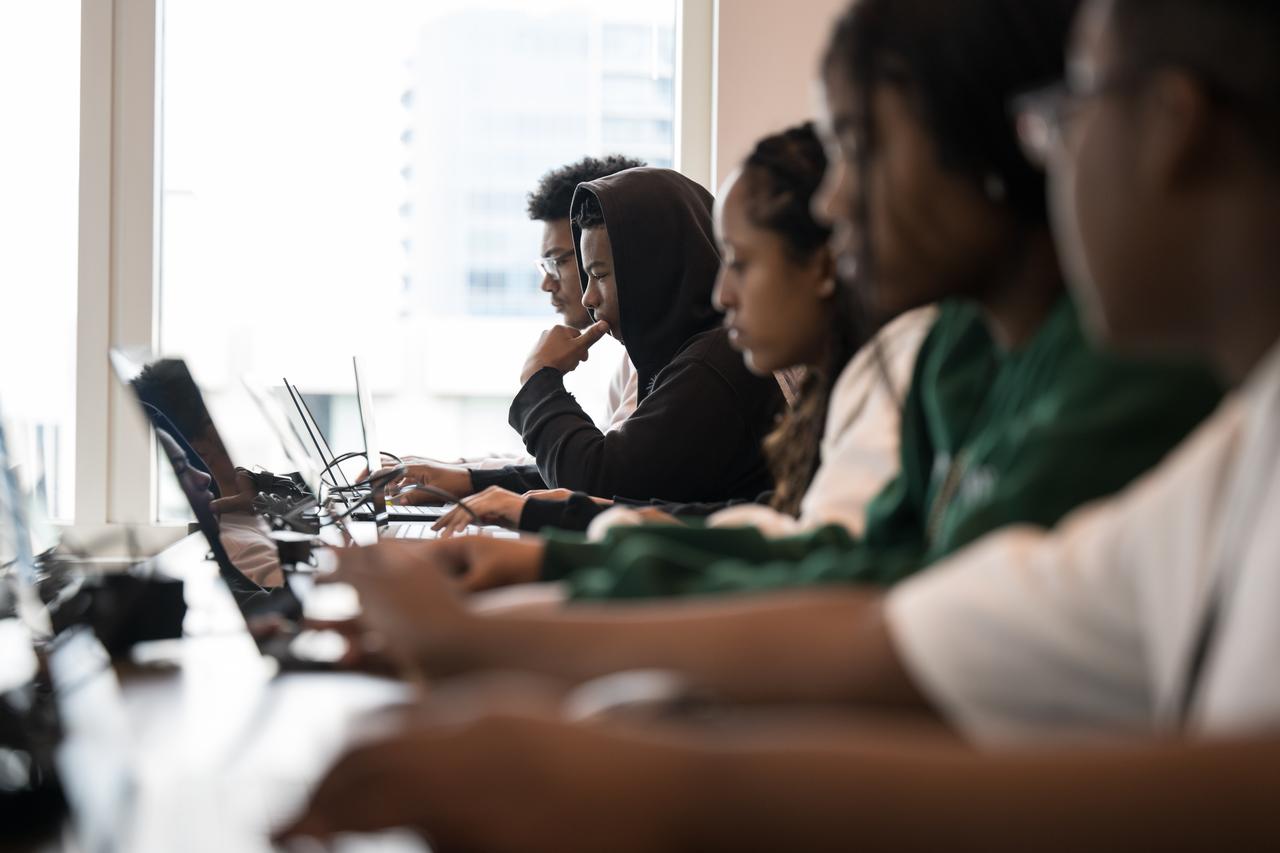
DC area students participate in a Minecraft Artemis demonstration during Space Education Day, Tuesday, June 20, 2023, at the Microsoft Technology Center in Arlington, Va. Microsoft hosted the event to showcase the collaboration, early successes, and future plans for high quality student engagement through activities that combined space content and technologies like artificial intelligence and cloud computing. Photo Credit: (NASA/Aubrey Gemignani)
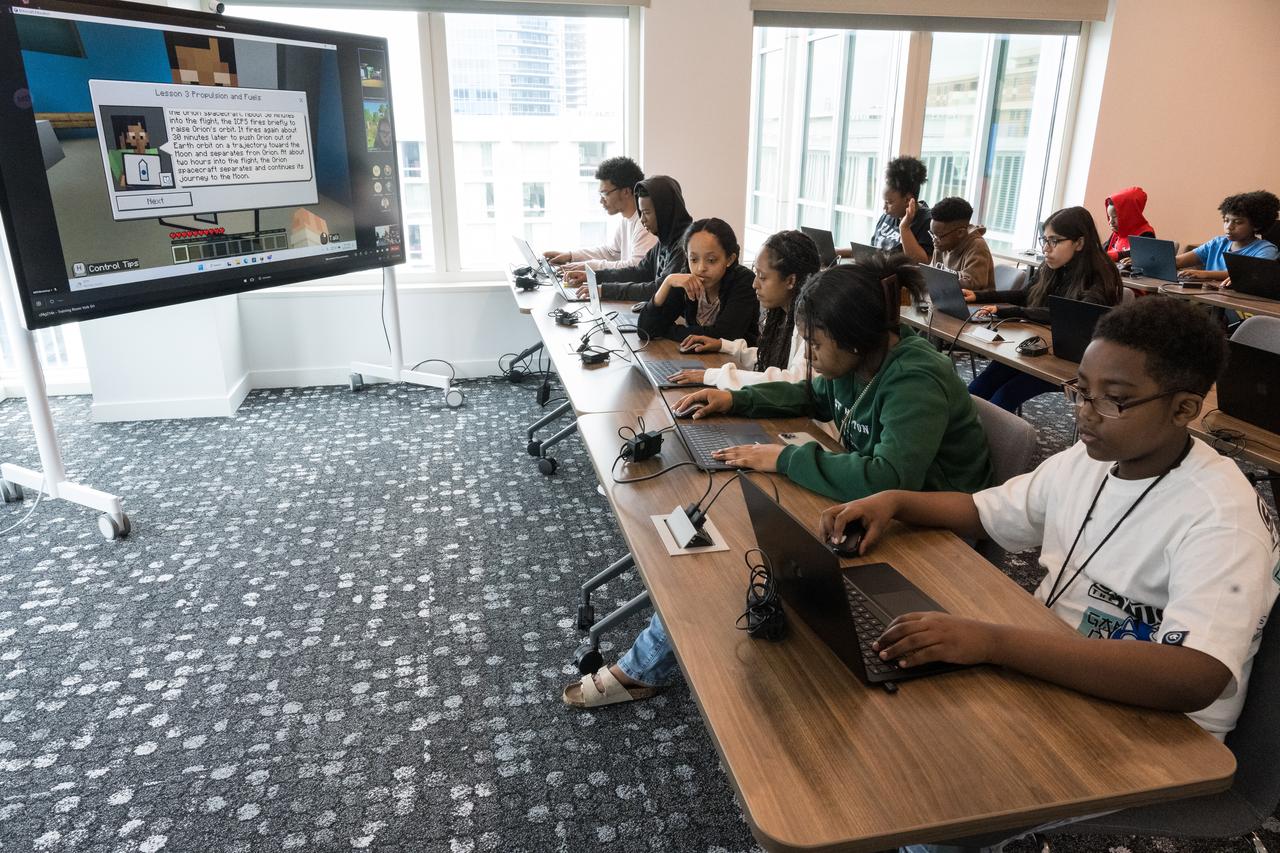
DC area students participate in a Minecraft Artemis demonstration during Space Education Day, Tuesday, June 20, 2023, at the Microsoft Technology Center in Arlington, Va. Microsoft hosted the event to showcase the collaboration, early successes, and future plans for high quality student engagement through activities that combined space content and technologies like artificial intelligence and cloud computing. Photo Credit: (NASA/Aubrey Gemignani)
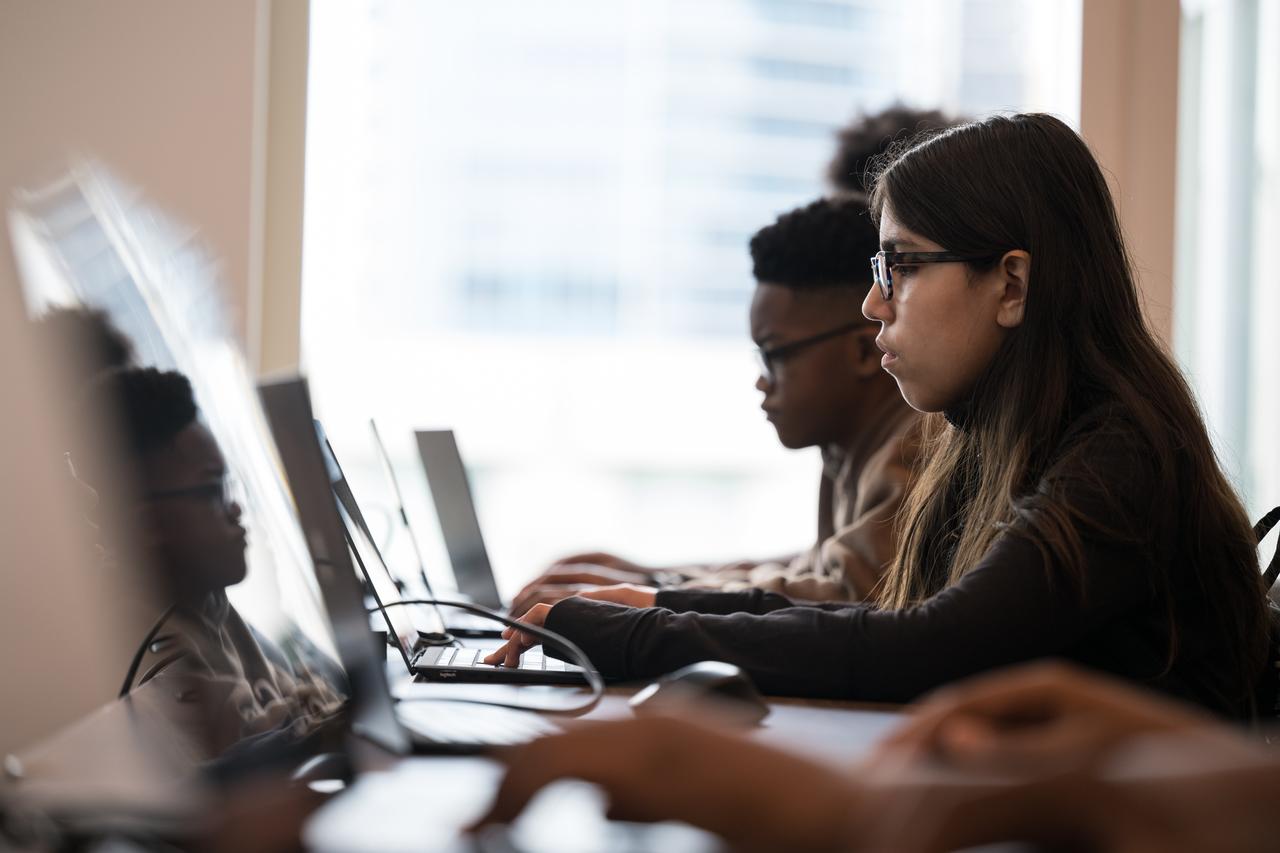
DC area students participate in a Minecraft Artemis demonstration during Space Education Day, Tuesday, June 20, 2023, at the Microsoft Technology Center in Arlington, Va. Microsoft hosted the event to showcase the collaboration, early successes, and future plans for high quality student engagement through activities that combined space content and technologies like artificial intelligence and cloud computing. Photo Credit: (NASA/Aubrey Gemignani)
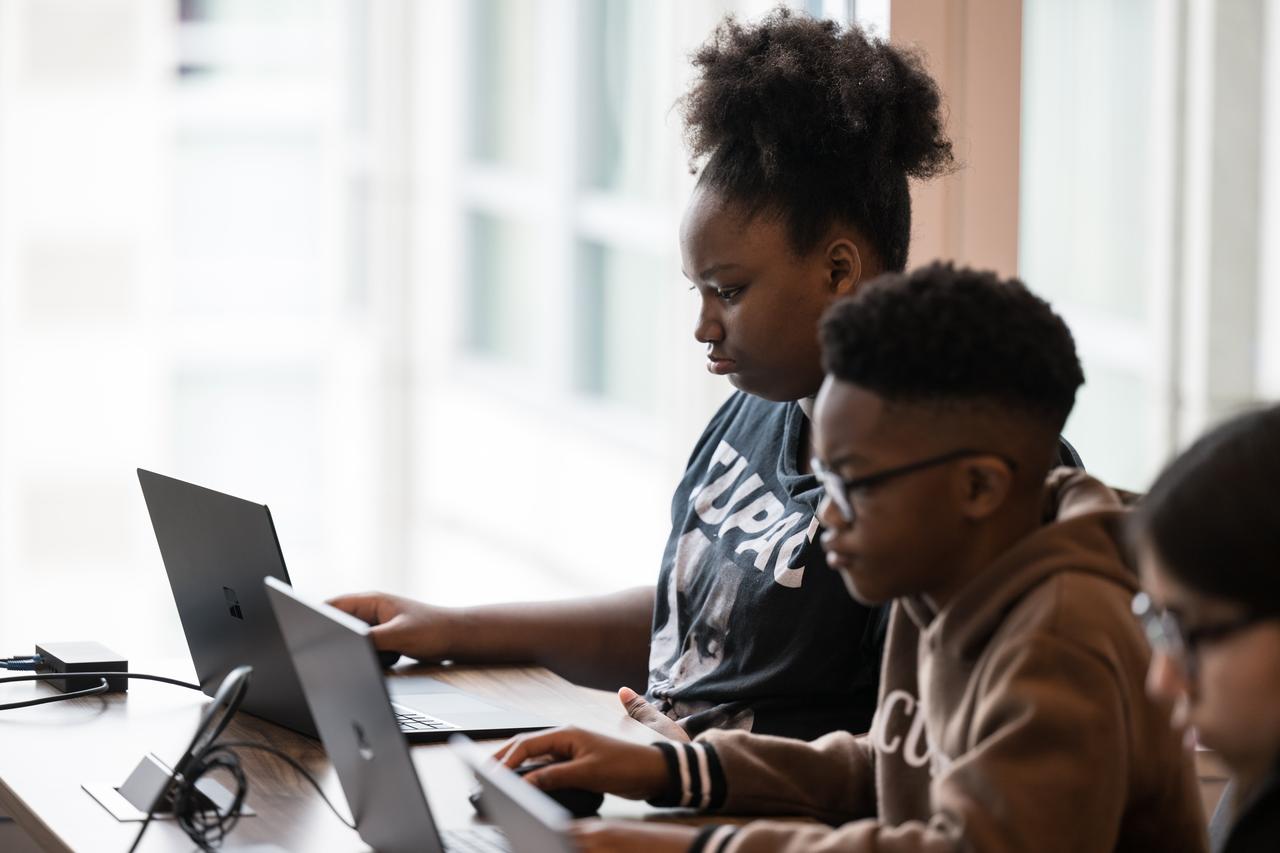
DC area students participate in a Minecraft Artemis demonstration during Space Education Day, Tuesday, June 20, 2023, at the Microsoft Technology Center in Arlington, Va. Microsoft hosted the event to showcase the collaboration, early successes, and future plans for high quality student engagement through activities that combined space content and technologies like artificial intelligence and cloud computing. Photo Credit: (NASA/Aubrey Gemignani)
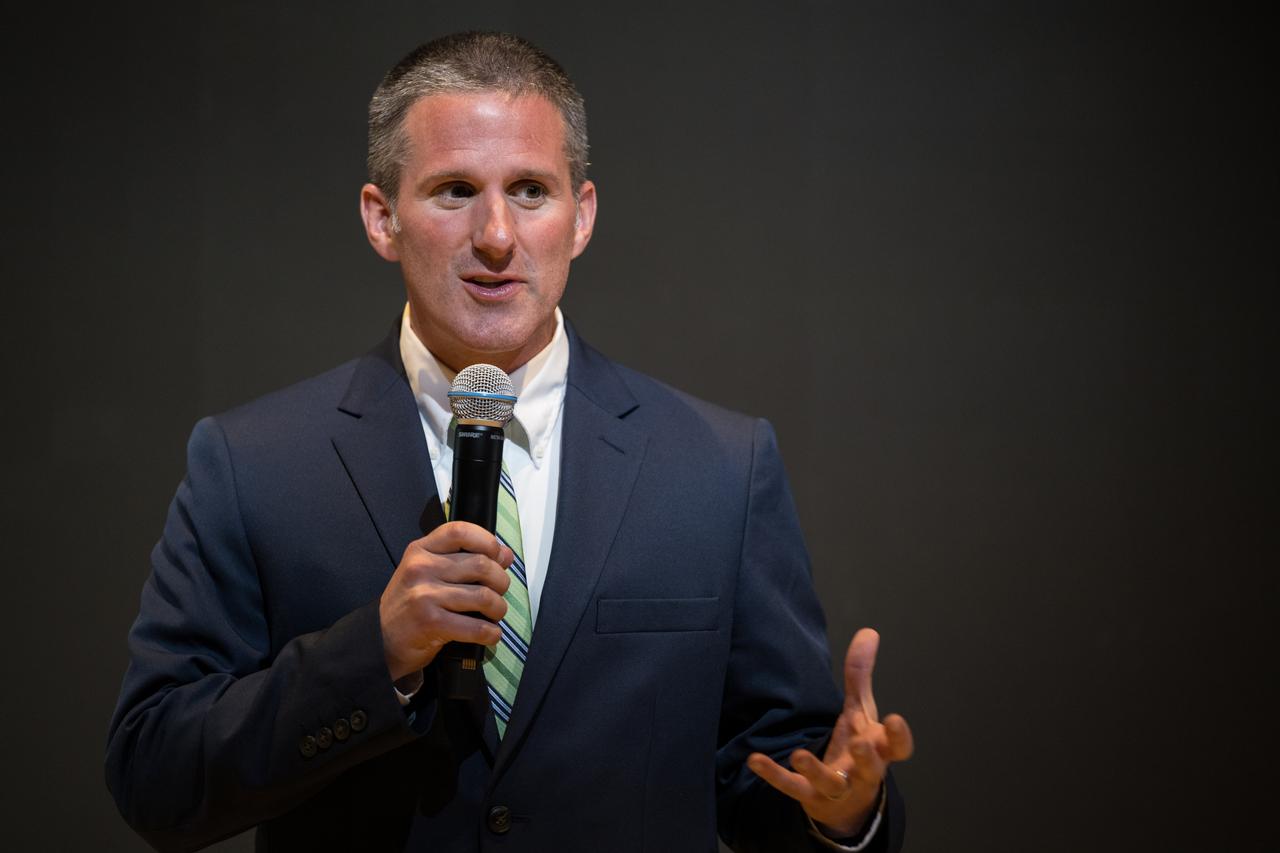
NASA Strategic Partnerships Manager for STEM Engagement, Rob LaSalvia, provides remarks during Space Education Day, Tuesday, June 20, 2023, at the Microsoft Technology Center in Arlington, Va. Microsoft hosted the event to showcase the collaboration, early successes, and future plans for high quality student engagement through activities that combined space content and technologies like artificial intelligence and cloud computing. Photo Credit: (NASA/Aubrey Gemignani)
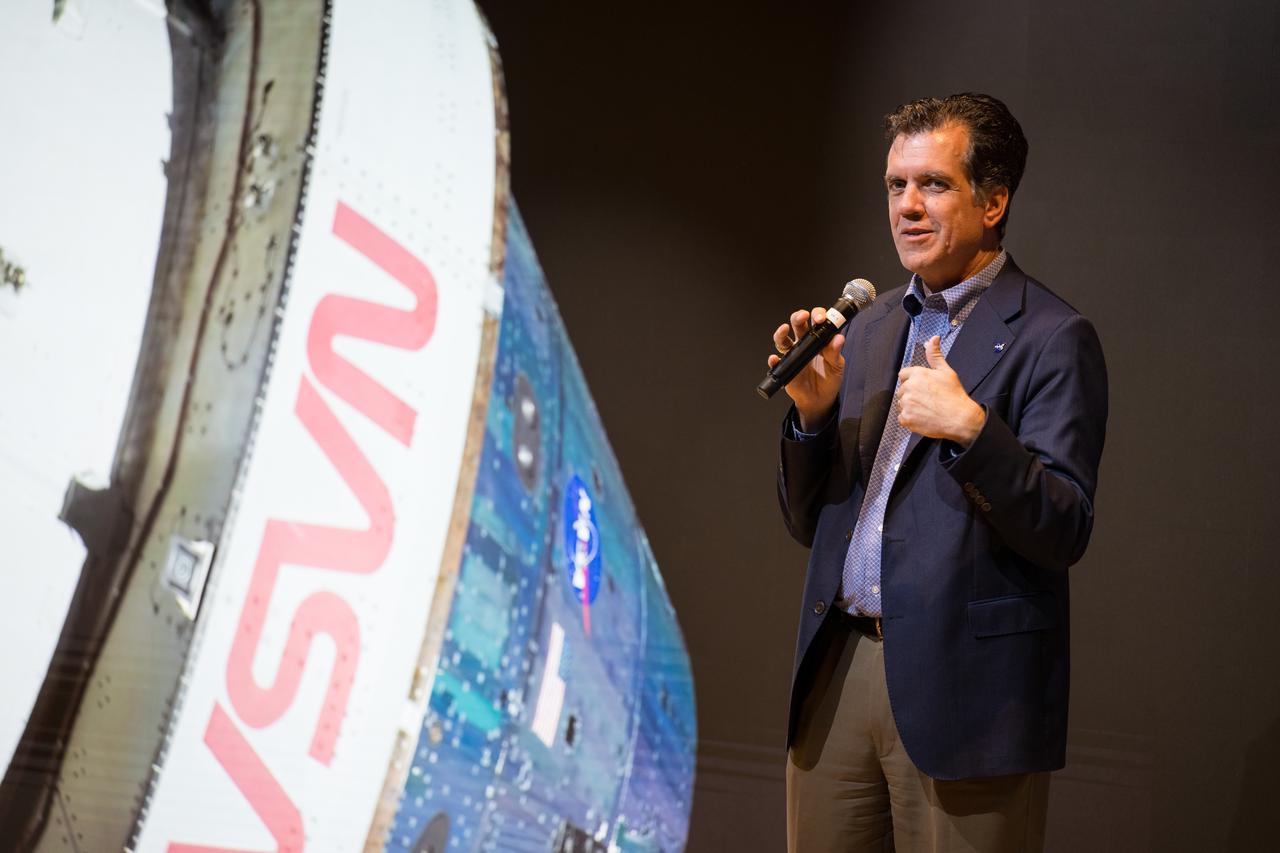
NASA Associate Administrator for the STEM Engagement Office, Mike Kincaid, provides remarks during Space Education Day, Tuesday, June 20, 2023, at the Microsoft Technology Center in Arlington, Va. Microsoft hosted the event to showcase the collaboration, early successes, and future plans for high quality student engagement through activities that combined space content and technologies like artificial intelligence and cloud computing. Photo Credit: (NASA/Aubrey Gemignani)
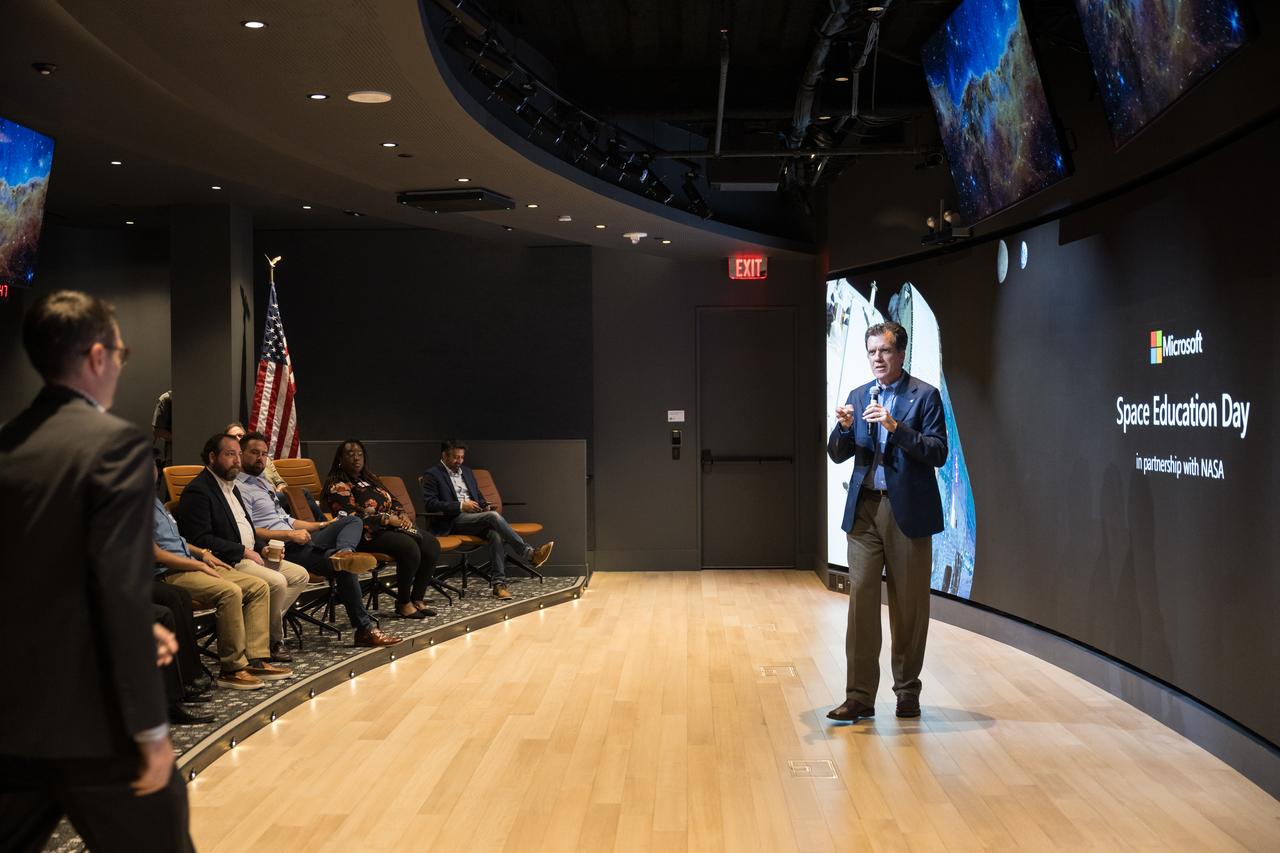
NASA Associate Administrator for the STEM Engagement Office, Mike Kincaid, provides remarks during Space Education Day, Tuesday, June 20, 2023, at the Microsoft Technology Center in Arlington, Va. Microsoft hosted the event to showcase the collaboration, early successes, and future plans for high quality student engagement through activities that combined space content and technologies like artificial intelligence and cloud computing. Photo Credit: (NASA/Aubrey Gemignani)
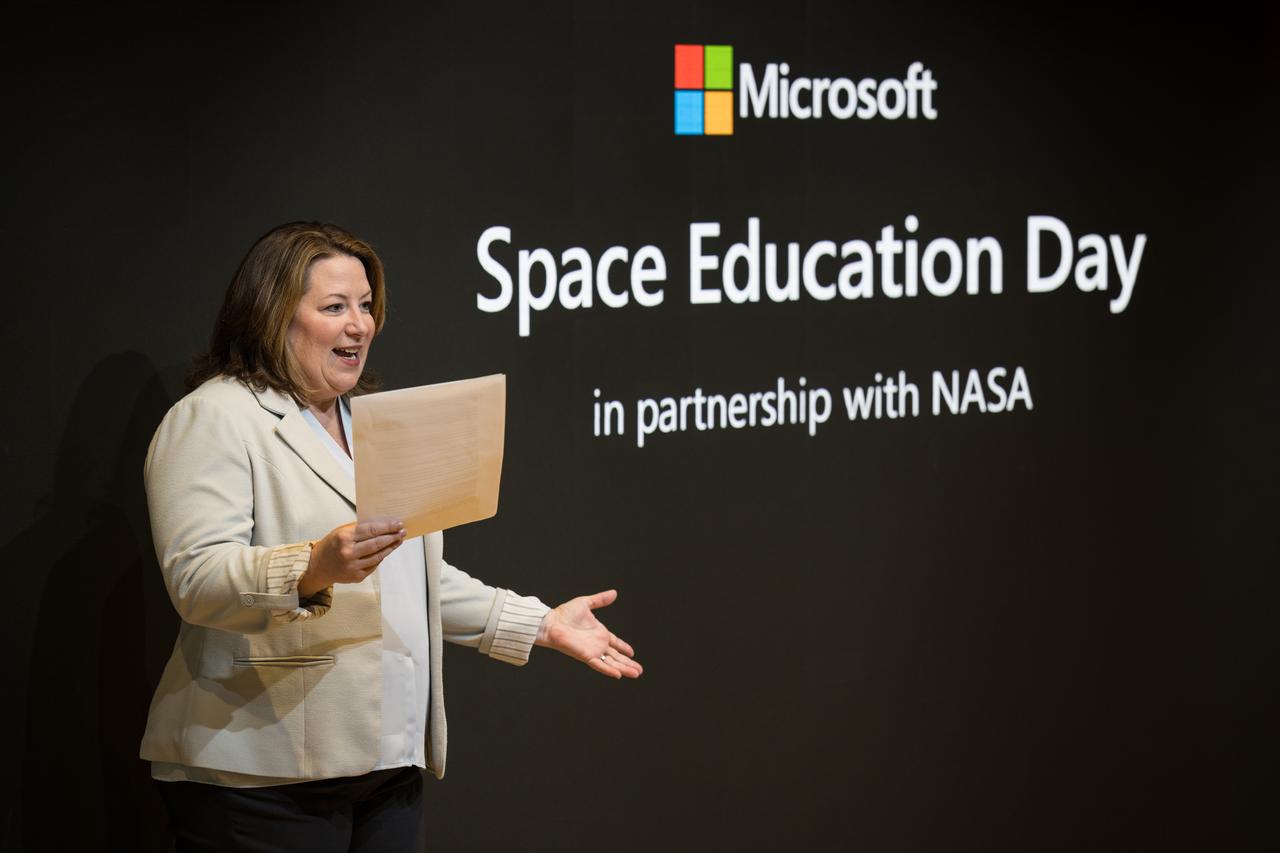
Microsoft's Federal Civilian Team General Manager, Heidi Koblyski, provides remarks during Space Education Day, Tuesday, June 20, 2023, at the Microsoft Technology Center in Arlington, Va. Microsoft hosted the event to showcase the collaboration, early successes, and future plans for high quality student engagement through activities that combined space content and technologies like artificial intelligence and cloud computing. Photo Credit: (NASA/Aubrey Gemignani)
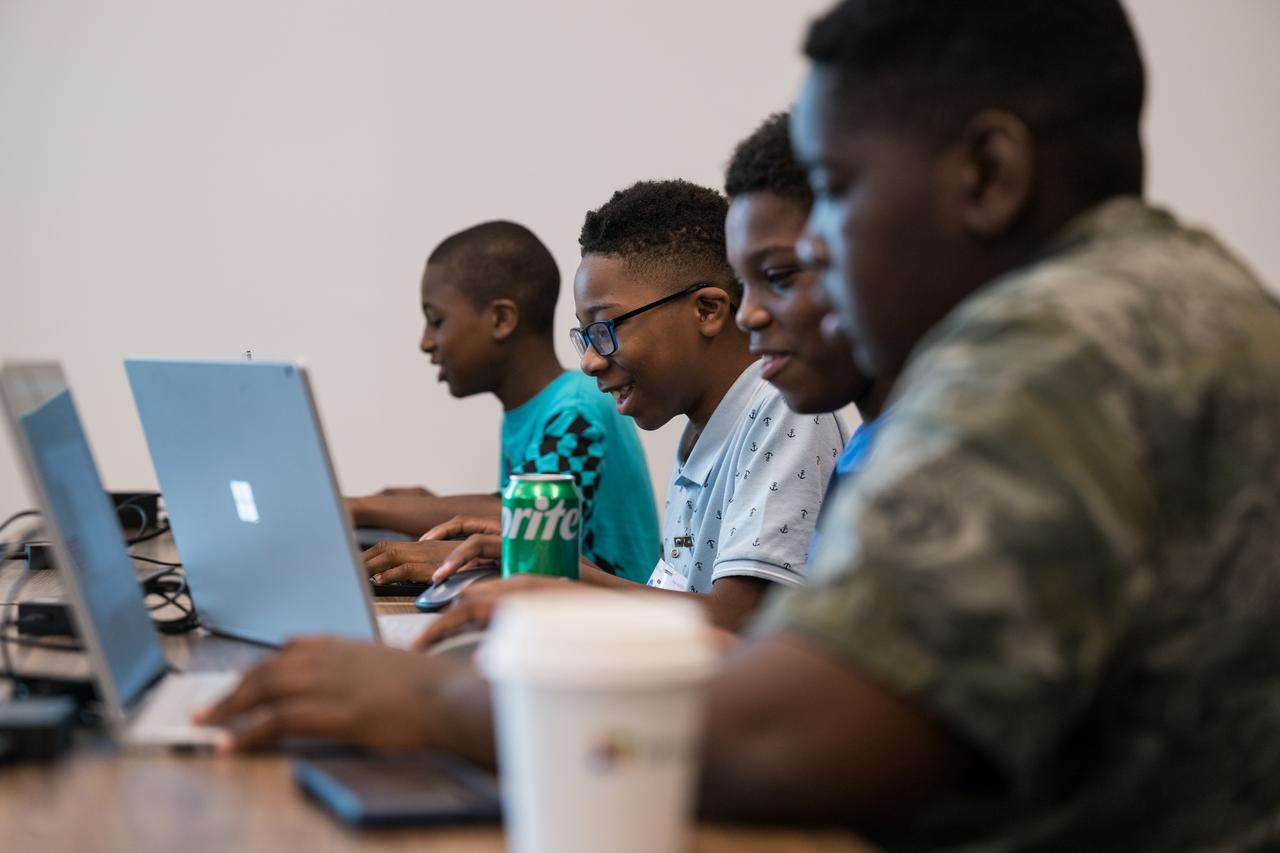
DC area students participate in a Minecraft Artemis demonstration during Space Education Day, Tuesday, June 20, 2023, at the Microsoft Technology Center in Arlington, Va. Microsoft hosted the event to showcase the collaboration, early successes, and future plans for high quality student engagement through activities that combined space content and technologies like artificial intelligence and cloud computing. Photo Credit: (NASA/Aubrey Gemignani)
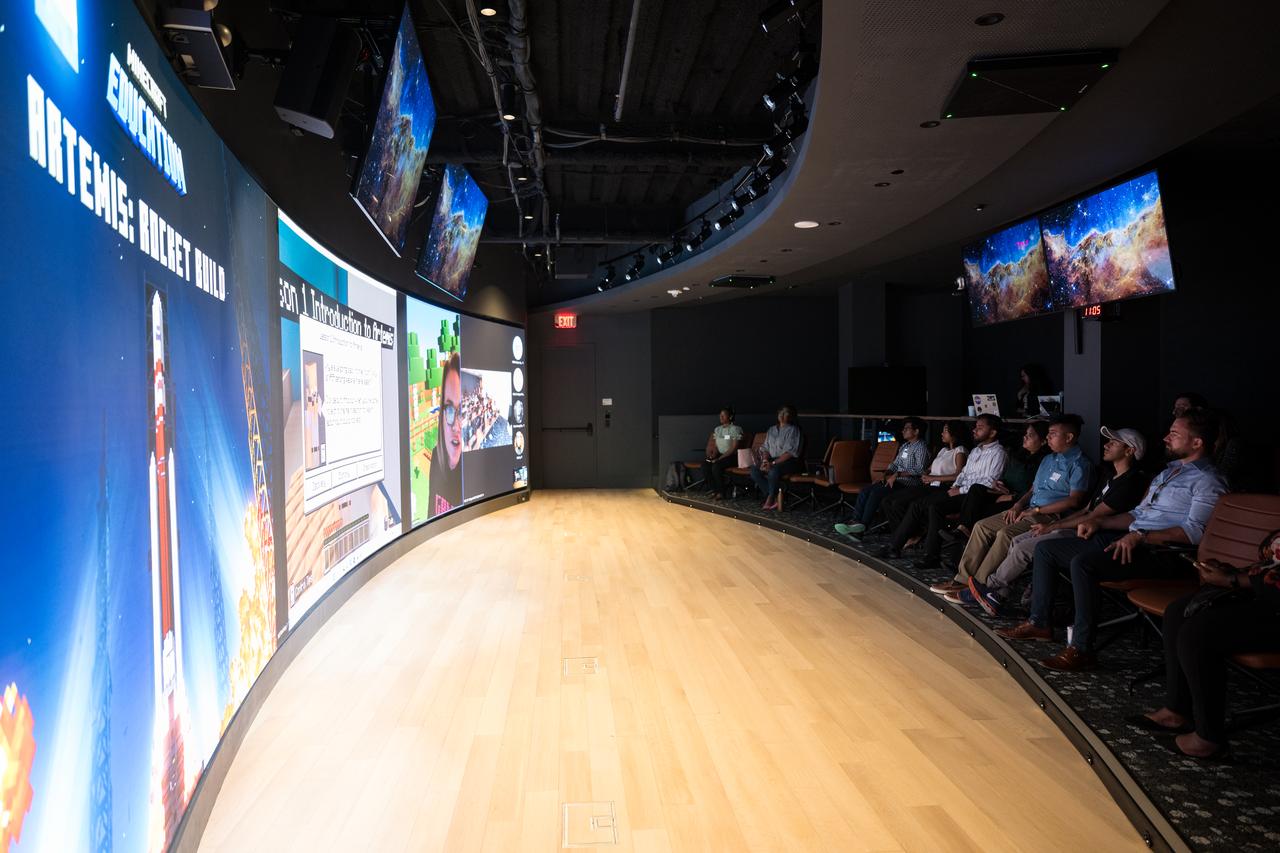
Microsoft Senior Program Manager and Executive Game Producer for Minecraft Education, Laylah Busman, provides instruction to DC area students during Space Education Day, Tuesday, June 20, 2023, at the Microsoft Technology Center in Arlington, Va. Microsoft hosted the event to showcase the collaboration, early successes, and future plans for high quality student engagement through activities that combined space content and technologies like artificial intelligence and cloud computing. Photo Credit: (NASA/Aubrey Gemignani)
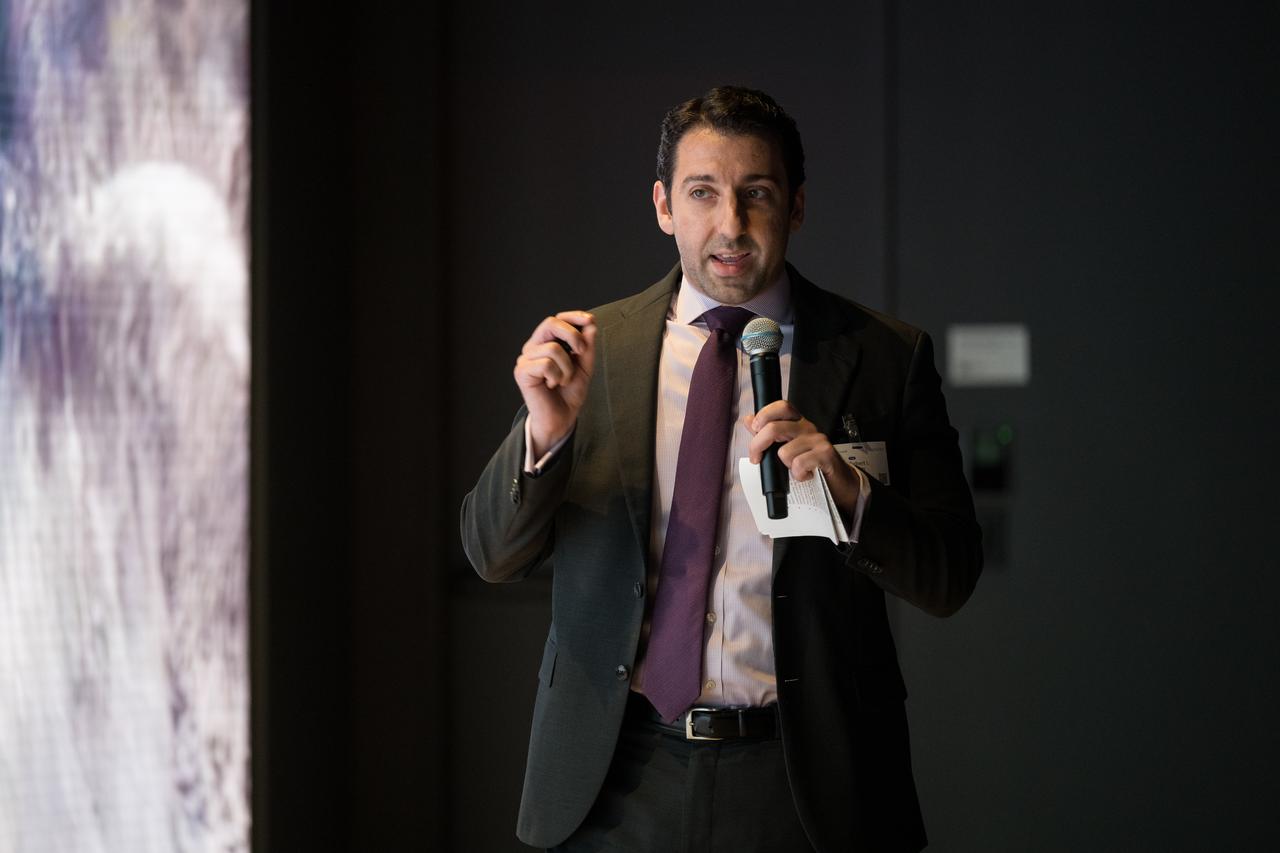
Director of Government Affairs and Business Development for Starburst Aerospace, Robert Ganim, provides remarks during Space Education Day, Tuesday, June 20, 2023, at the Microsoft Technology Center in Arlington, Va. Microsoft hosted the event to showcase the collaboration, early successes, and future plans for high quality student engagement through activities that combined space content and technologies like artificial intelligence and cloud computing. Photo Credit: (NASA/Aubrey Gemignani)
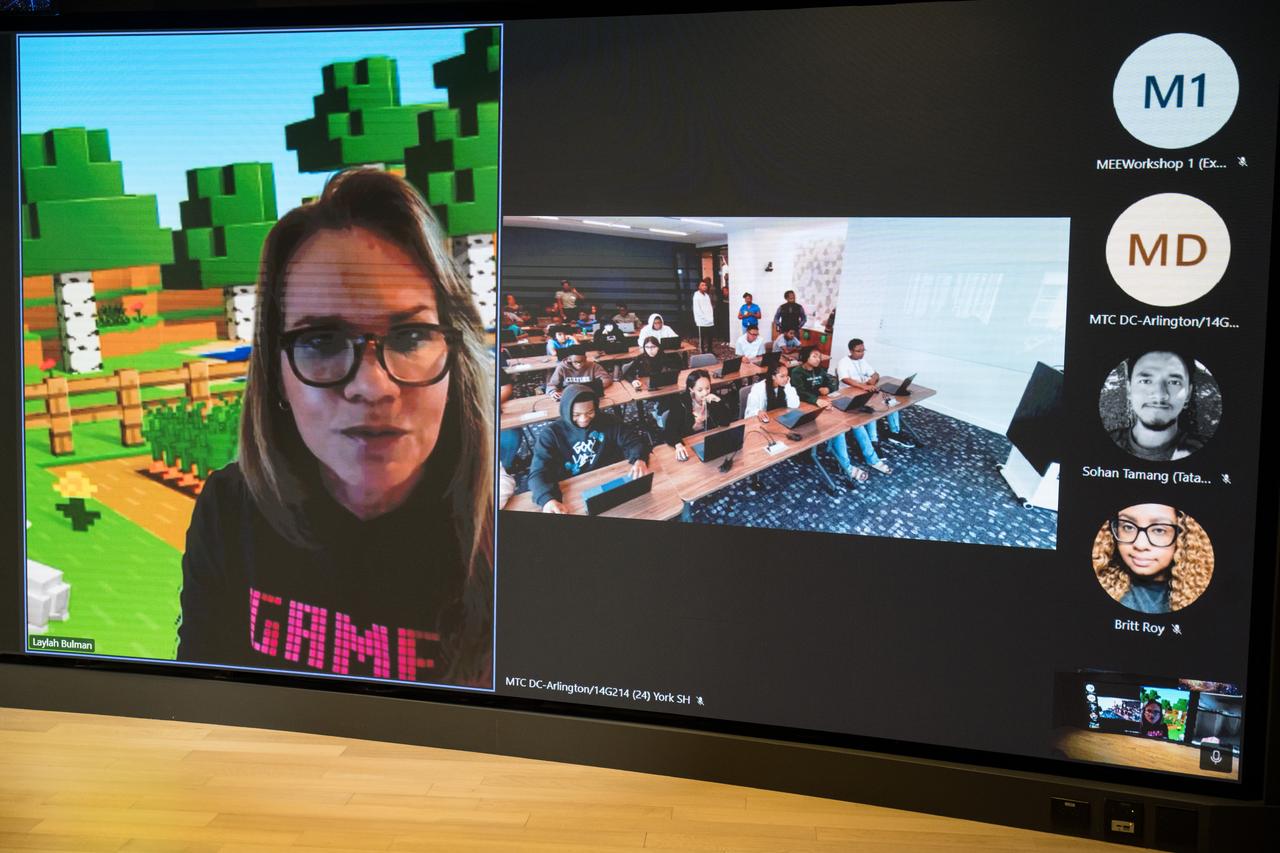
Microsoft Senior Program Manager and Executive Game Producer for Minecraft Education, Laylah Bulman, provides instruction to DC area students during Space Education Day, Tuesday, June 20, 2023, at the Microsoft Technology Center in Arlington, Va. Microsoft hosted the event to showcase the collaboration, early successes, and future plans for high quality student engagement through activities that combined space content and technologies like artificial intelligence and cloud computing. Photo Credit: (NASA/Aubrey Gemignani)
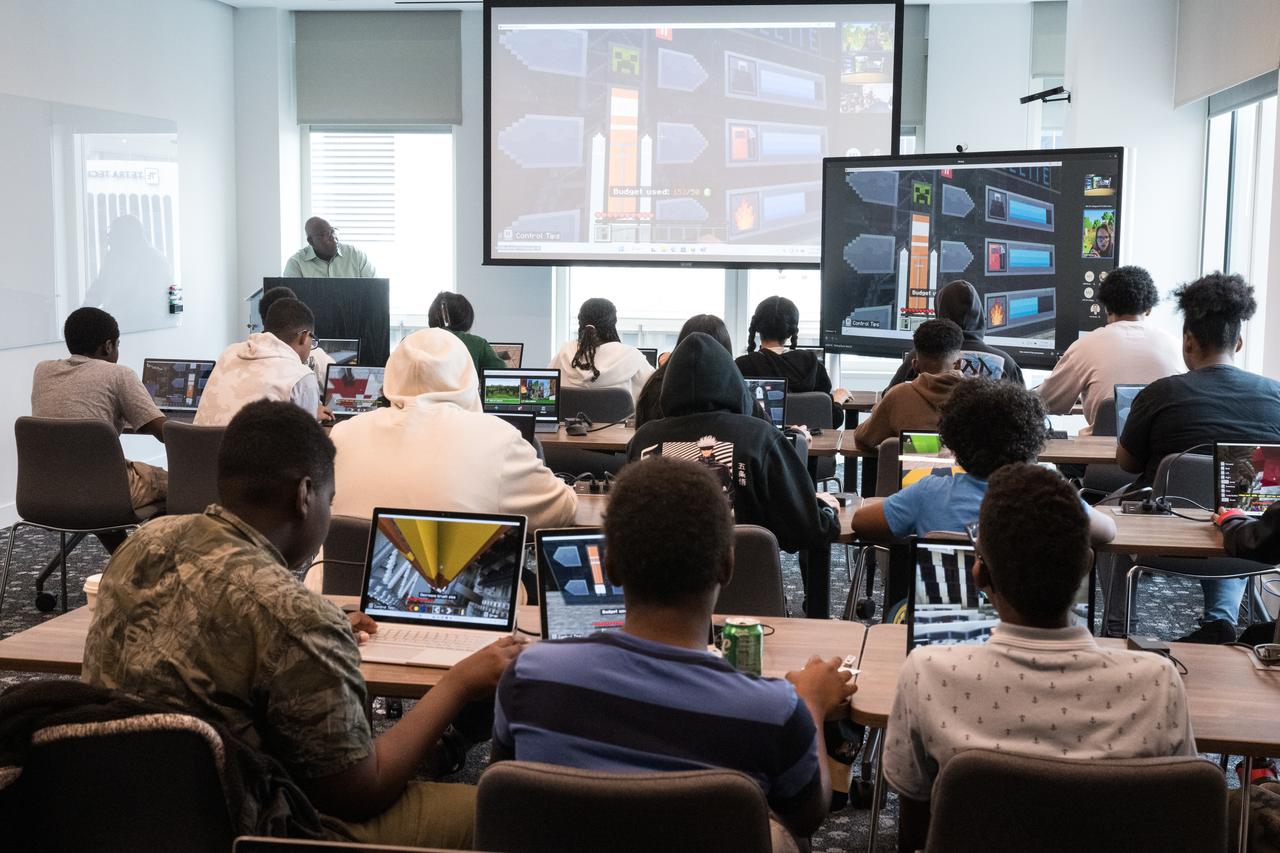
DC area students participate in a Minecraft Artemis demonstration during Space Education Day, Tuesday, June 20, 2023, at the Microsoft Technology Center in Arlington, Va. Microsoft hosted the event to showcase the collaboration, early successes, and future plans for high quality student engagement through activities that combined space content and technologies like artificial intelligence and cloud computing. Photo Credit: (NASA/Aubrey Gemignani)
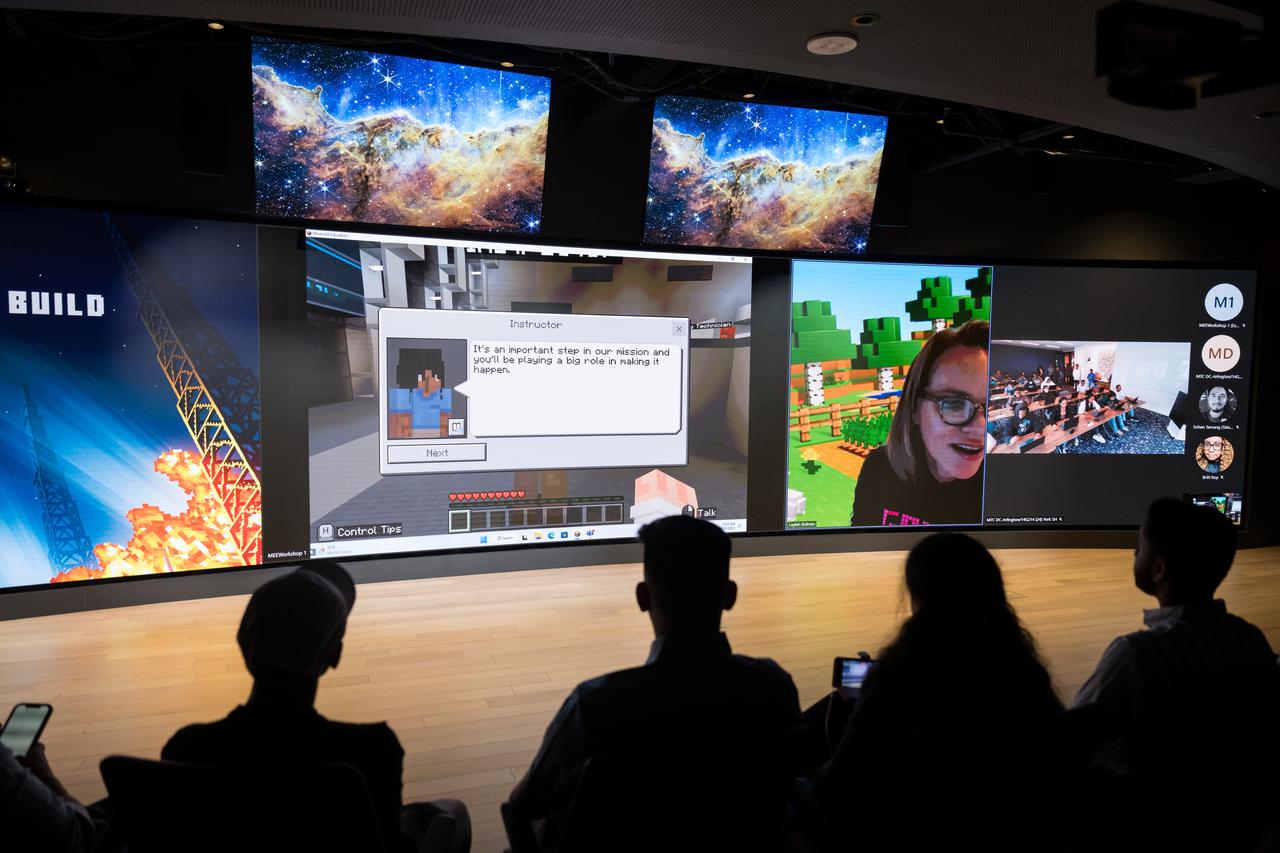
Microsoft Senior Program Manager and Executive Game Producer for Minecraft Education, Laylah Busman, provides instruction to DC area students during Space Education Day, Tuesday, June 20, 2023, at the Microsoft Technology Center in Arlington, Va. Microsoft hosted the event to showcase the collaboration, early successes, and future plans for high quality student engagement through activities that combined space content and technologies like artificial intelligence and cloud computing. Photo Credit: (NASA/Aubrey Gemignani)
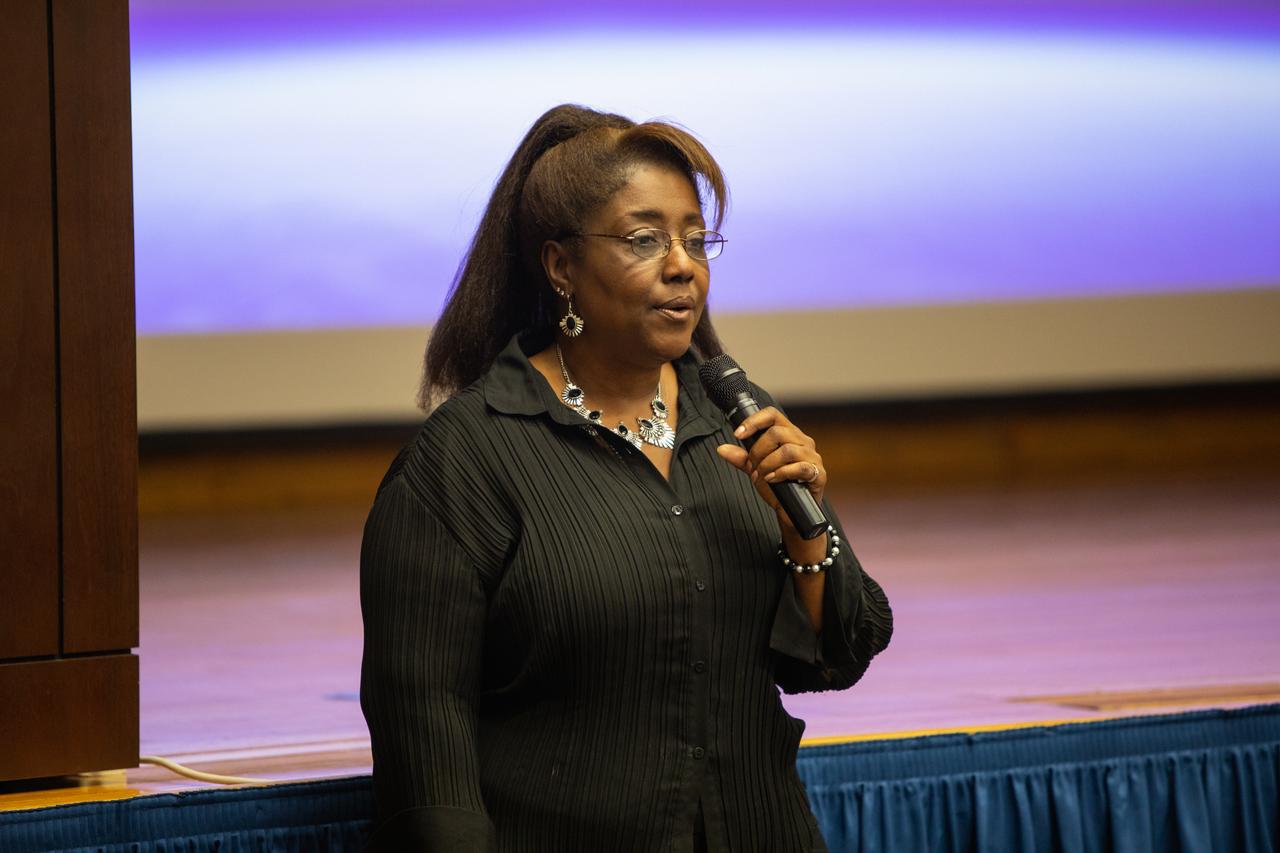
Barbara Brown, chief technologist at NASA’s Kennedy Space Center in Florida, speaks to Kennedy employees inside the Florida spaceport’s Training Auditorium on Nov. 19, 2019, during Innovation Days. One of several events throughout the year aimed at fostering and encouraging an innovative culture at Kennedy, Innovation Days highlights how employees at the multi-user spaceport are constantly looking for new solutions to challenges they face at work. Also part of Innovation Days was an innovation showcase, where nearly 50 exhibitors demonstrated new technologies and innovations. Showcase participants included individuals from multiple directorates, programs and organizations throughout Kennedy.
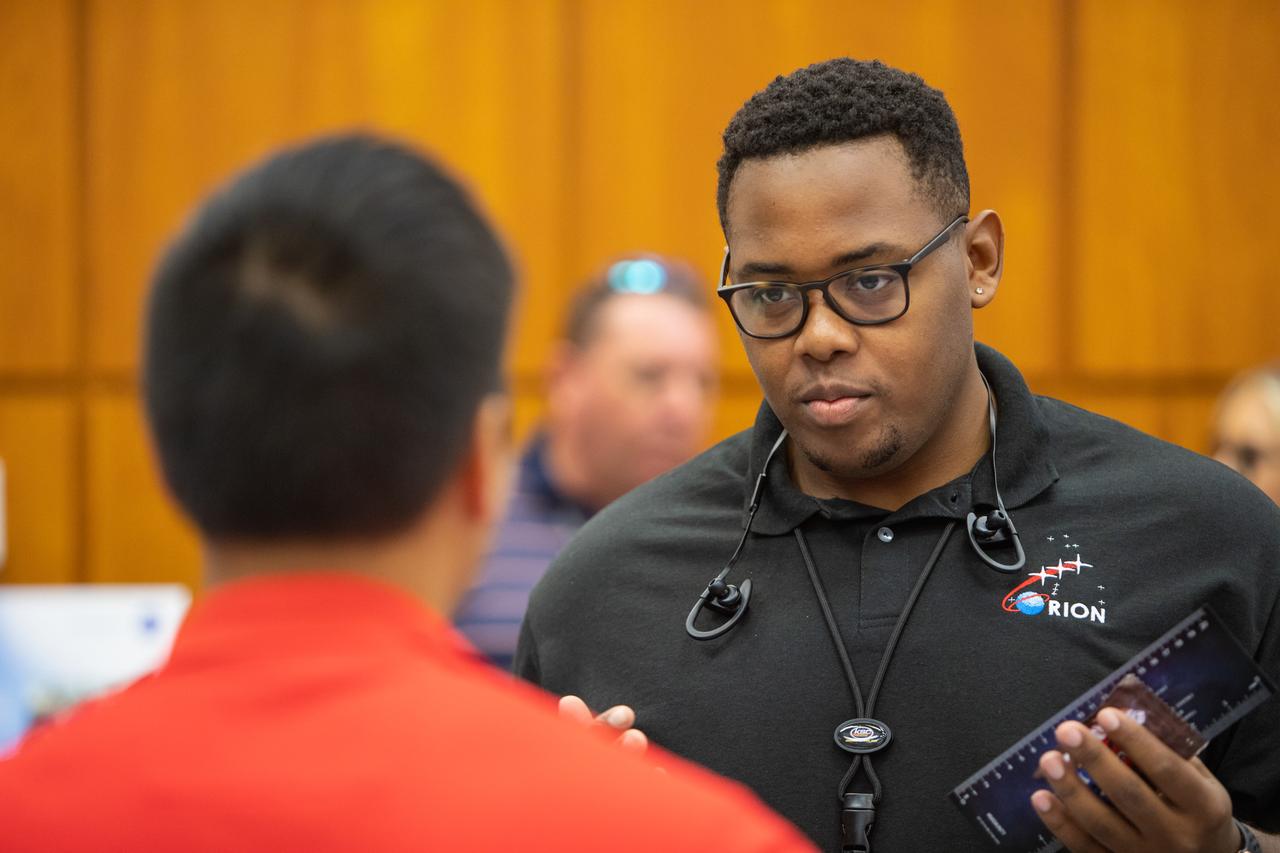
A Kennedy Space Center employee demonstrates a new technology during an innovation showcase on Nov. 19, 2019, in the Florida spaceport’s Neil Armstrong Operations and Checkout Building’s Mission Briefing Room. Nearly 50 exhibitors gathered to participate in the center’s Innovation Days – one of several events throughout the year aimed at fostering and encouraging an innovative culture at Kennedy. Showcase participants included individuals from multiple directorates, programs and organizations throughout Kennedy. In addition to the showcase, employees had the opportunity to attend an overview presentation on NASA’s Human Landing System (HLS), hosted by HLS Program Manager Lisa Watson-Morgan.
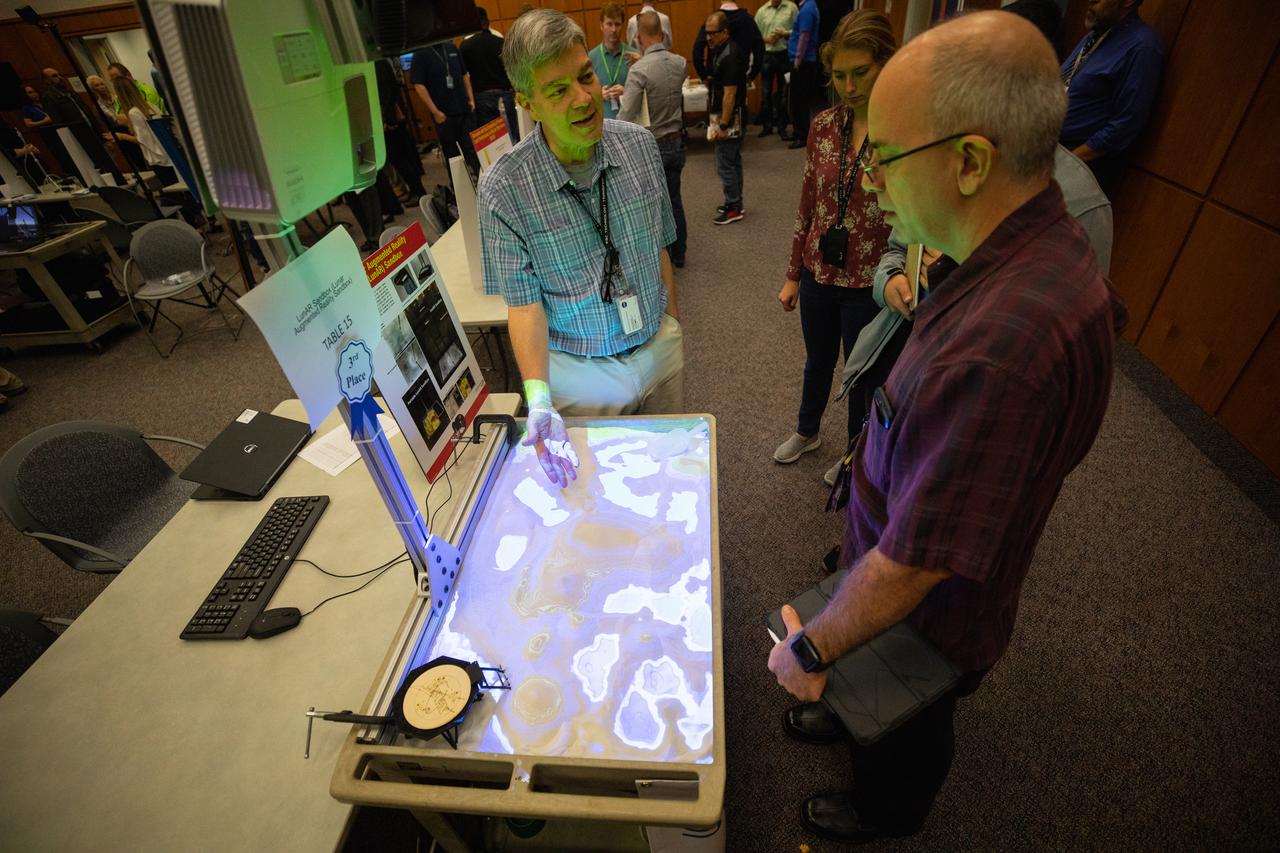
Kennedy Space Center employees participate in an innovation showcase on Nov. 19, 2019, in the Florida spaceport’s Neil Armstrong Operations and Checkout Building’s Mission Briefing Room. Nearly 50 exhibitors gathered to demonstrate new technologies and innovations during the center’s Innovation Days – one of several events throughout the year aimed at fostering and encouraging an innovative culture at Kennedy. Showcase participants included individuals from multiple directorates, programs and organizations throughout Kennedy. In addition to the showcase, employees had the opportunity to attend an overview presentation on NASA’s Human Landing System (HLS), hosted by HLS Program Manager Lisa Watson-Morgan.
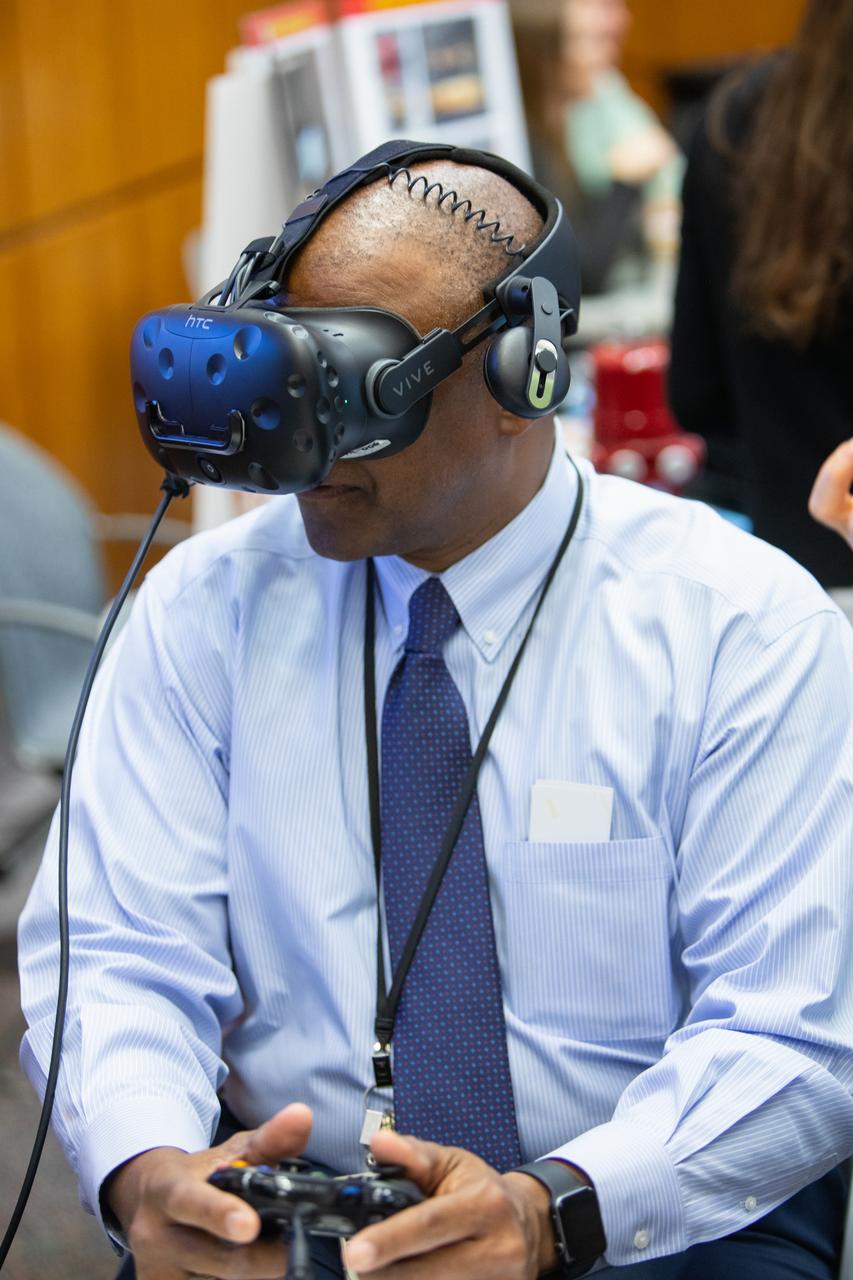
Kennedy Space Center Associate Director, Technical, Kelvin Manning tries out a virtual reality headset during an innovation showcase on Nov. 19, 2019, in the Florida spaceport’s Neil Armstrong Operations and Checkout Building’s Mission Briefing Room. Nearly 50 exhibitors gathered to demonstrate new technologies and innovations during the center’s Innovation Days – one of several events throughout the year aimed at fostering and encouraging an innovative culture at Kennedy. Showcase participants included individuals from multiple directorates, programs and organizations throughout Kennedy. In addition to the showcase, employees had the opportunity to attend an overview presentation on NASA’s Human Landing System (HLS), hosted by HLS Program Manager Lisa Watson-Morgan.
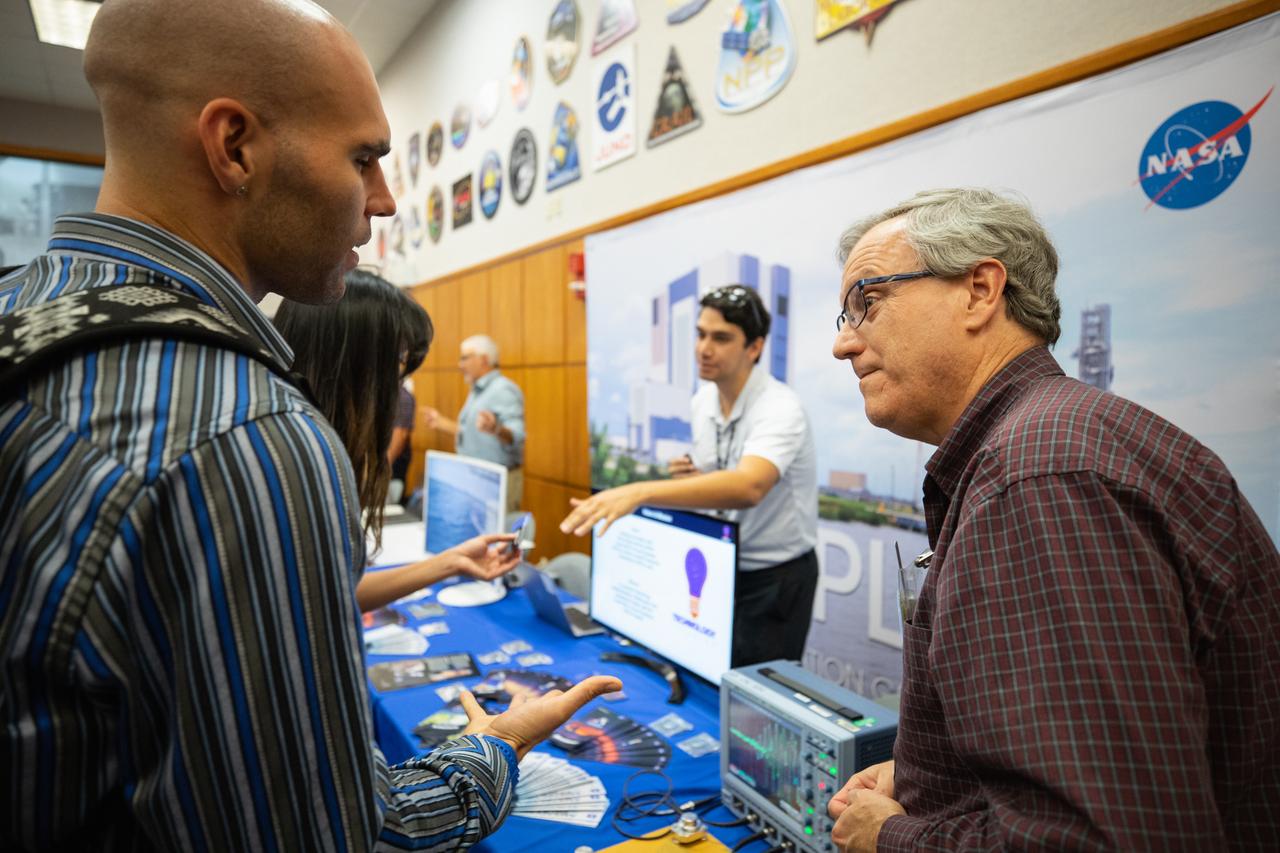
Two Kennedy Space Center employees engage in conversation during an innovation showcase on Nov. 19, 2019, in the Florida spaceport’s Neil Armstrong Operations and Checkout Building’s Mission Briefing Room. Nearly 50 exhibitors gathered to demonstrate new technologies and innovations during the center’s Innovation Days – one of several events throughout the year aimed at fostering and encouraging an innovative culture at Kennedy. Showcase participants included individuals from multiple directorates, programs and organizations throughout Kennedy. In addition to the showcase, employees had the opportunity to attend an overview presentation on NASA’s Human Landing System (HLS), hosted by HLS Program Manager Lisa Watson-Morgan.
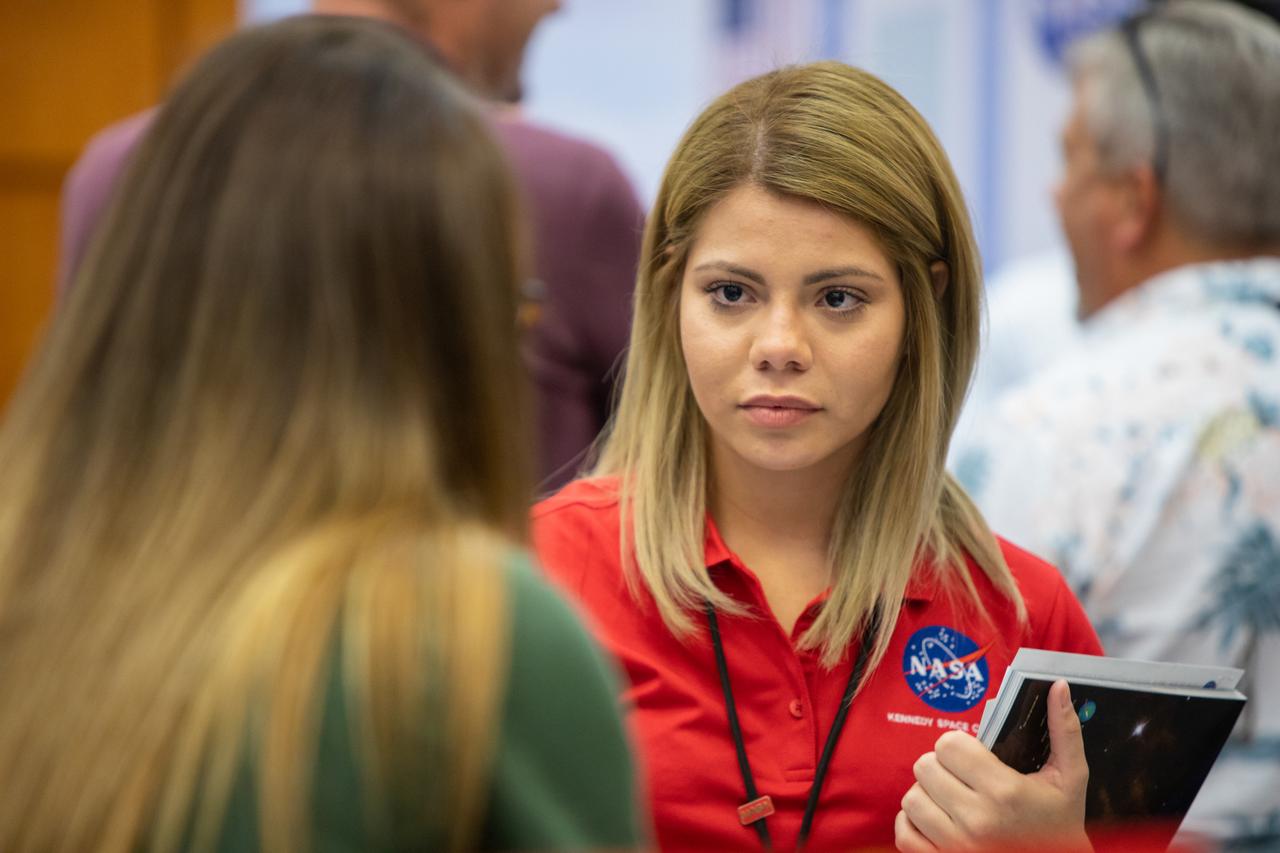
A Kennedy Space Center employee participates in an innovation showcase on Nov. 19, 2019, in the Florida spaceport’s Neil Armstrong Operations and Checkout Building’s Mission Briefing Room. Nearly 50 exhibitors gathered to demonstrate new technologies and innovations during the center’s Innovation Days – one of several events throughout the year aimed at fostering and encouraging an innovative culture at Kennedy. Showcase participants included individuals from multiple directorates, programs and organizations throughout Kennedy. In addition to the showcase, employees had the opportunity to attend an overview presentation on NASA’s Human Landing System (HLS), hosted by HLS Program Manager Lisa Watson-Morgan.
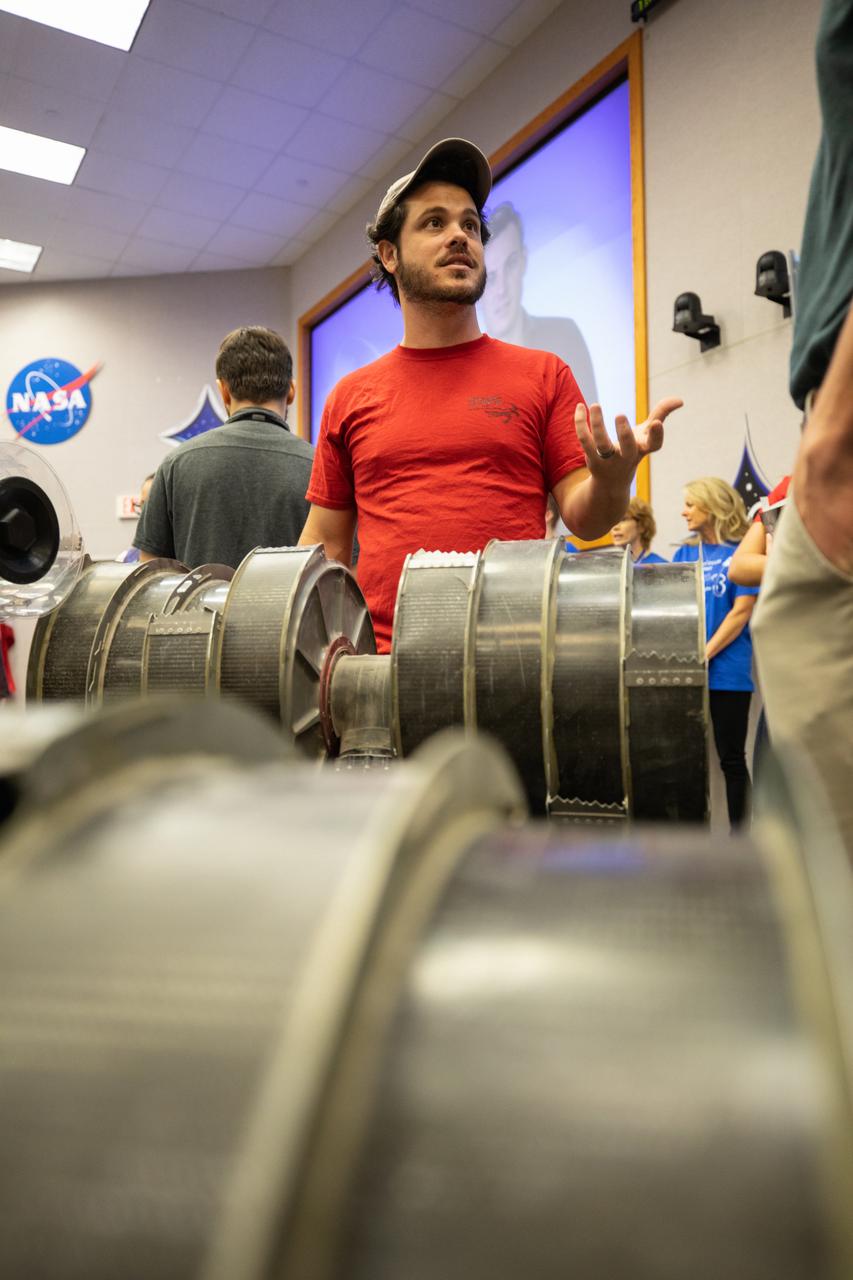
A Kennedy Space Center employee attends an innovation showcase on Nov. 19, 2019, in the Florida spaceport’s Neil Armstrong Operations and Checkout Building’s Mission Briefing Room. Nearly 50 exhibitors gathered to demonstrate new technologies and innovations during the center’s Innovation Days – one of several events throughout the year aimed at fostering and encouraging an innovative culture at Kennedy. Showcase participants included individuals from multiple directorates, programs and organizations throughout Kennedy. In addition to the showcase, employees had the opportunity to attend an overview presentation on NASA’s Human Landing System (HLS), hosted by HLS Program Manager Lisa Watson-Morgan.
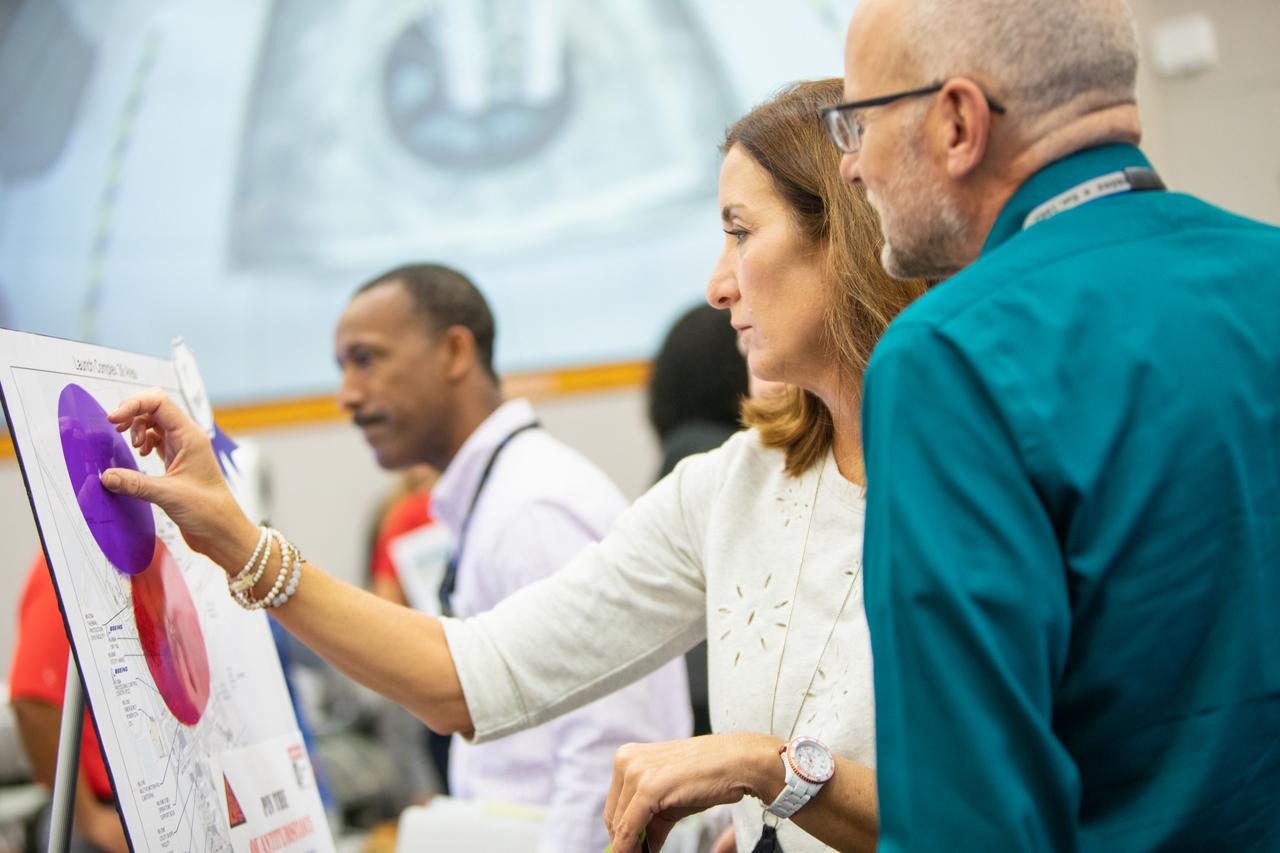
Kennedy Space Center employees participate in an innovation showcase on Nov. 19, 2019, in the Florida spaceport’s Neil Armstrong Operations and Checkout Building’s Mission Briefing Room. Nearly 50 exhibitors gathered to demonstrate new technologies and innovations during the center’s Innovation Days – one of several events throughout the year aimed at fostering and encouraging an innovative culture at Kennedy. Showcase participants included individuals from multiple directorates, programs and organizations throughout Kennedy. In addition to the showcase, employees had the opportunity to attend an overview presentation on NASA’s Human Landing System (HLS), hosted by HLS Program Manager Lisa Watson-Morgan.
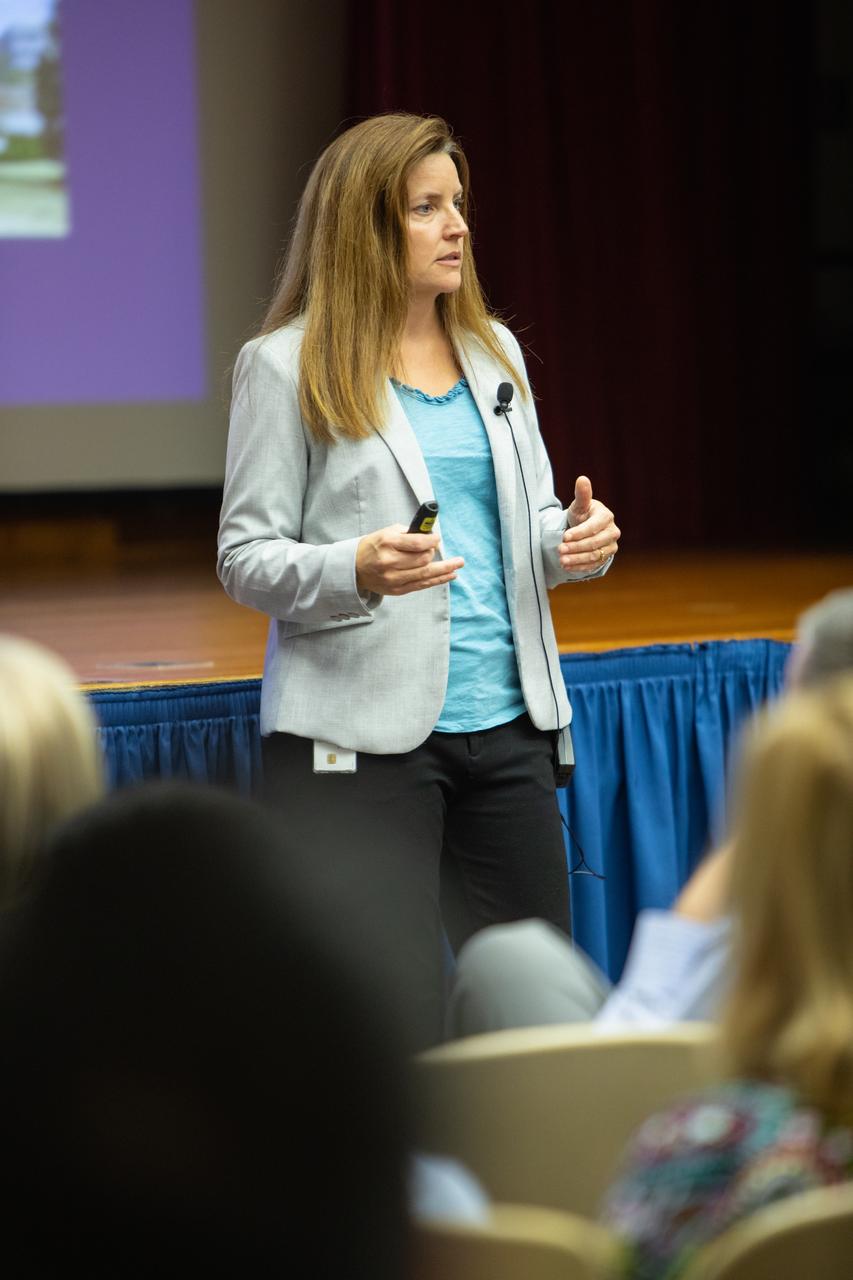
Lisa-Watson Morgan, NASA’s Human Landing System program manager, provides an overview of the program to Kennedy Space Center employees in the Florida spaceport’s Training Auditorium on Nov. 19, 2019. Watson-Morgan’s presentation was part of the center’s Innovation Days, one of several events throughout the year aimed at fostering and encouraging an innovative culture at Kennedy. In addition to the presentation, Kennedy employees had the opportunity to attend an innovation showcase, where nearly 50 exhibitors demonstrated new technologies and innovations. Showcase participants included individuals from multiple directorates, programs and organizations throughout Kennedy.
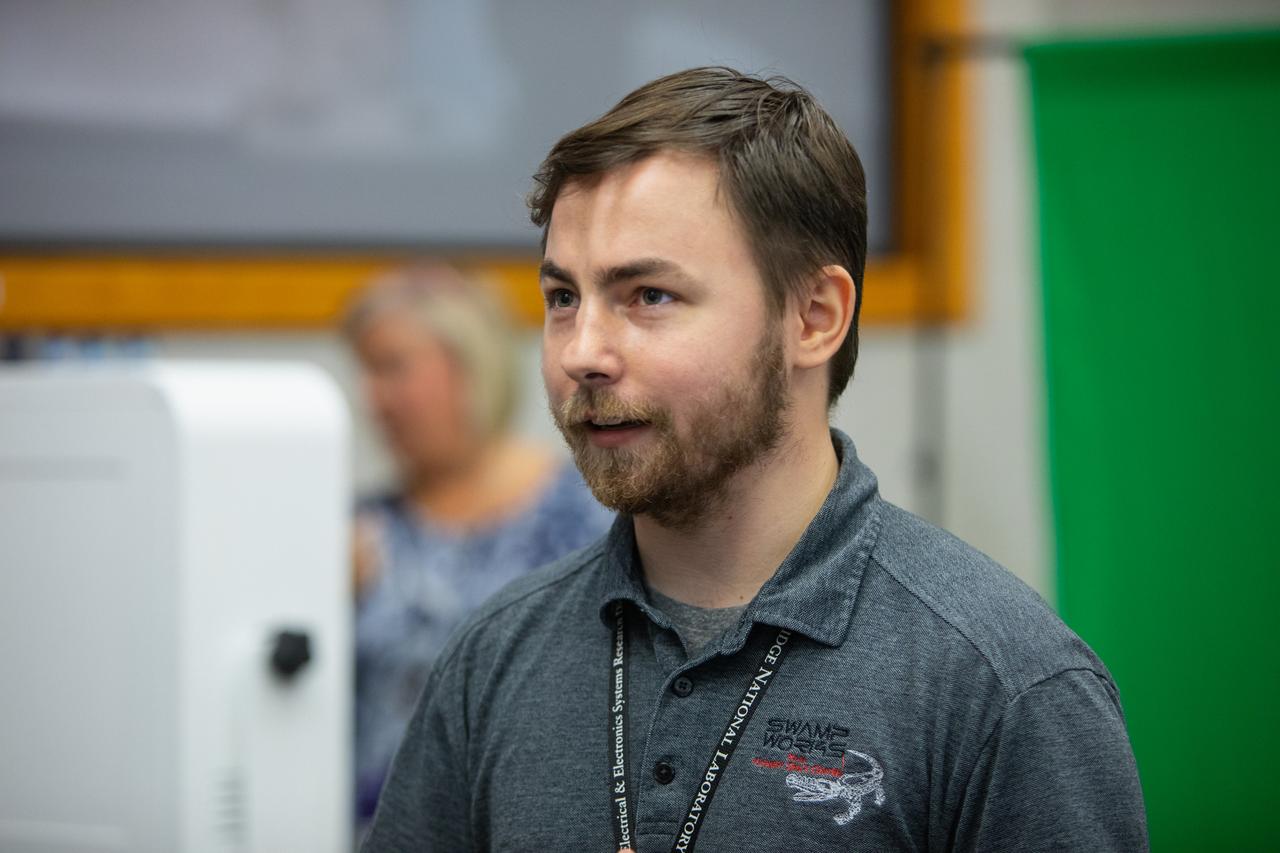
A Kennedy Space Center employee participates in an innovation showcase on Nov. 19, 2019, in the Florida spaceport’s Neil Armstrong Operations and Checkout Building’s Mission Briefing Room. Nearly 50 exhibitors gathered to demonstrate new technologies and innovations during the center’s Innovation Days – one of several events throughout the year aimed at fostering and encouraging an innovative culture at Kennedy. Showcase participants included individuals from multiple directorates, programs and organizations throughout Kennedy. In addition to the showcase, employees had the opportunity to attend an overview presentation on NASA’s Human Landing System (HLS), hosted by HLS Program Manager Lisa Watson-Morgan.
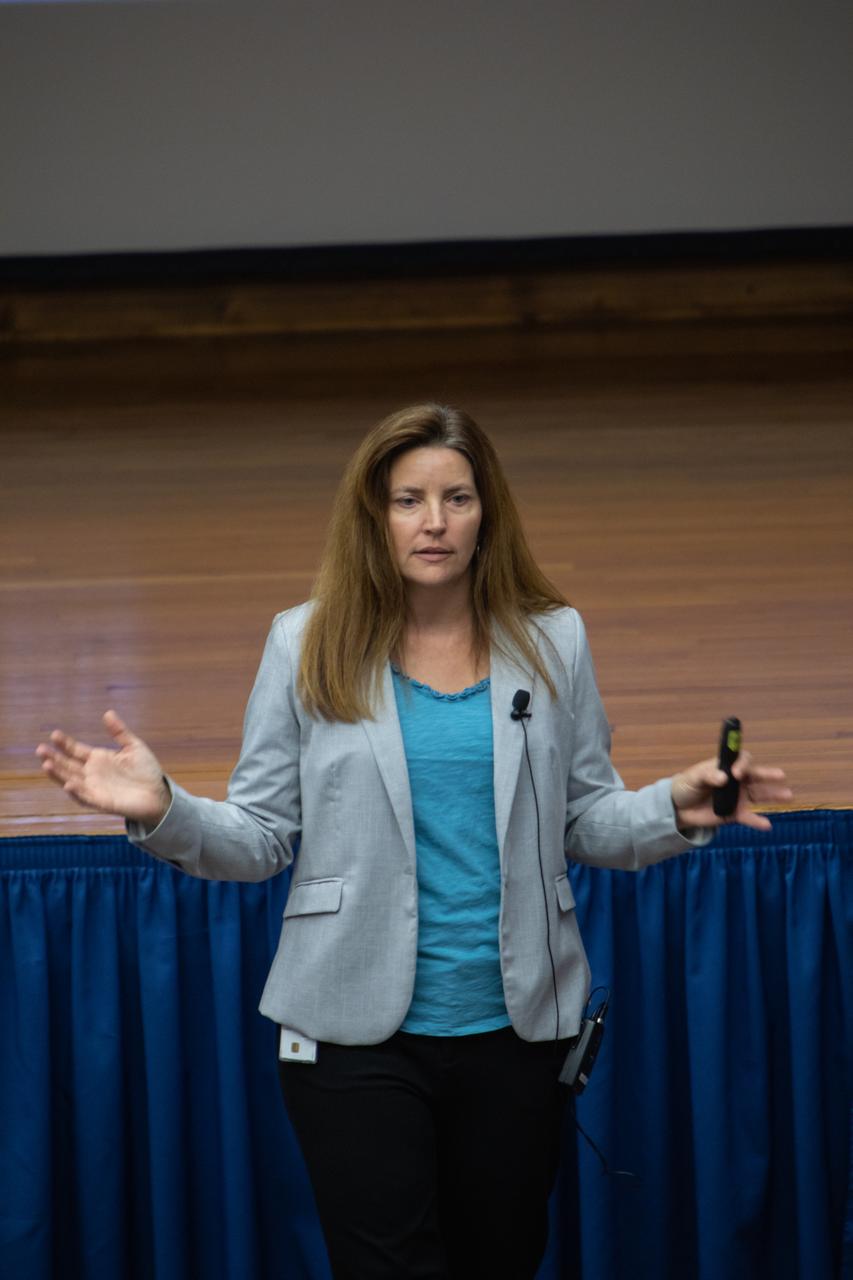
Lisa-Watson Morgan, NASA’s Human Landing System program manager, provides an overview of the program to Kennedy Space Center employees in the Florida spaceport’s Training Auditorium on Nov. 19, 2019. Watson-Morgan’s presentation was part of the center’s Innovation Days, one of several events throughout the year aimed at fostering and encouraging an innovative culture at Kennedy. In addition to the presentation, Kennedy employees had the opportunity to attend an innovation showcase, where nearly 50 exhibitors demonstrated new technologies and innovations. Showcase participants included individuals from multiple directorates, programs and organizations throughout Kennedy.
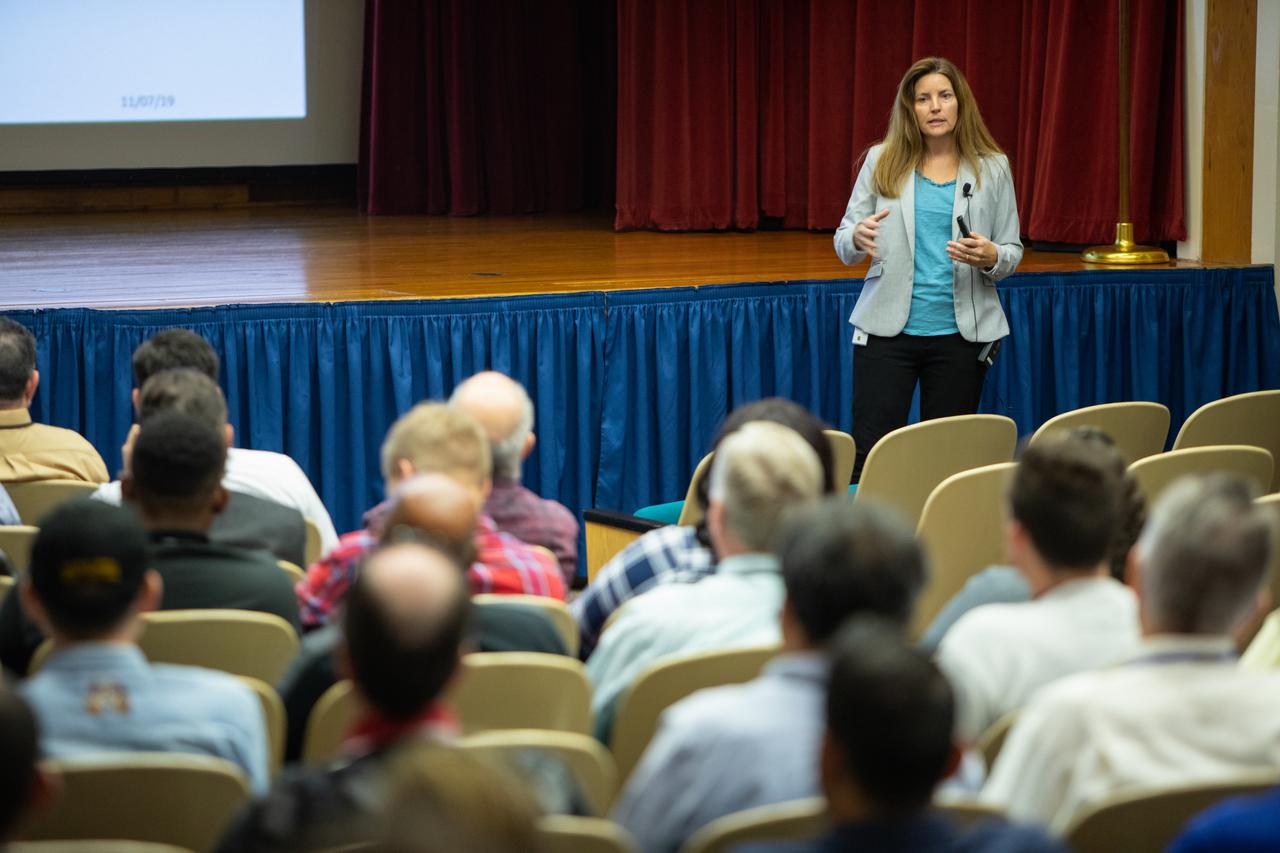
Lisa-Watson Morgan, NASA’s Human Landing System program manager, provides an overview of the program to Kennedy Space Center employees in the Florida spaceport’s Training Auditorium on Nov. 19, 2019. Watson-Morgan’s presentation was part of the center’s Innovation Days, one of several events throughout the year aimed at fostering and encouraging an innovative culture at Kennedy. In addition to the presentation, Kennedy employees had the opportunity to attend an innovation showcase, where nearly 50 exhibitors demonstrated new technologies and innovations. Showcase participants included individuals from multiple directorates, programs and organizations throughout Kennedy.
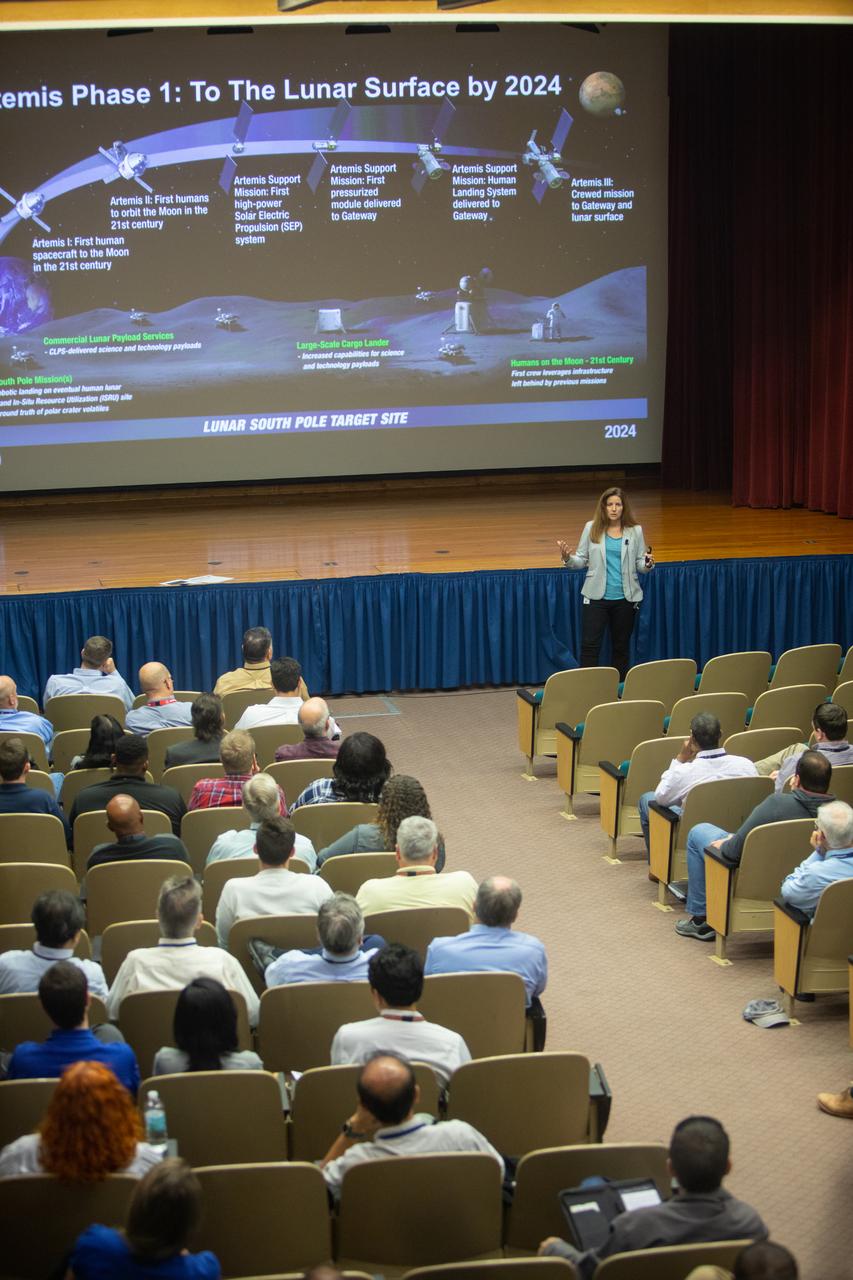
Lisa-Watson Morgan, NASA’s Human Landing System program manager, provides an overview of the program to Kennedy Space Center employees in the Florida spaceport’s Training Auditorium on Nov. 19, 2019. Watson-Morgan’s presentation was part of the center’s Innovation Days, one of several events throughout the year aimed at fostering and encouraging an innovative culture at Kennedy. In addition to the presentation, Kennedy employees had the opportunity to attend an innovation showcase, where nearly 50 exhibitors demonstrated new technologies and innovations. Showcase participants included individuals from multiple directorates, programs and organizations throughout Kennedy.
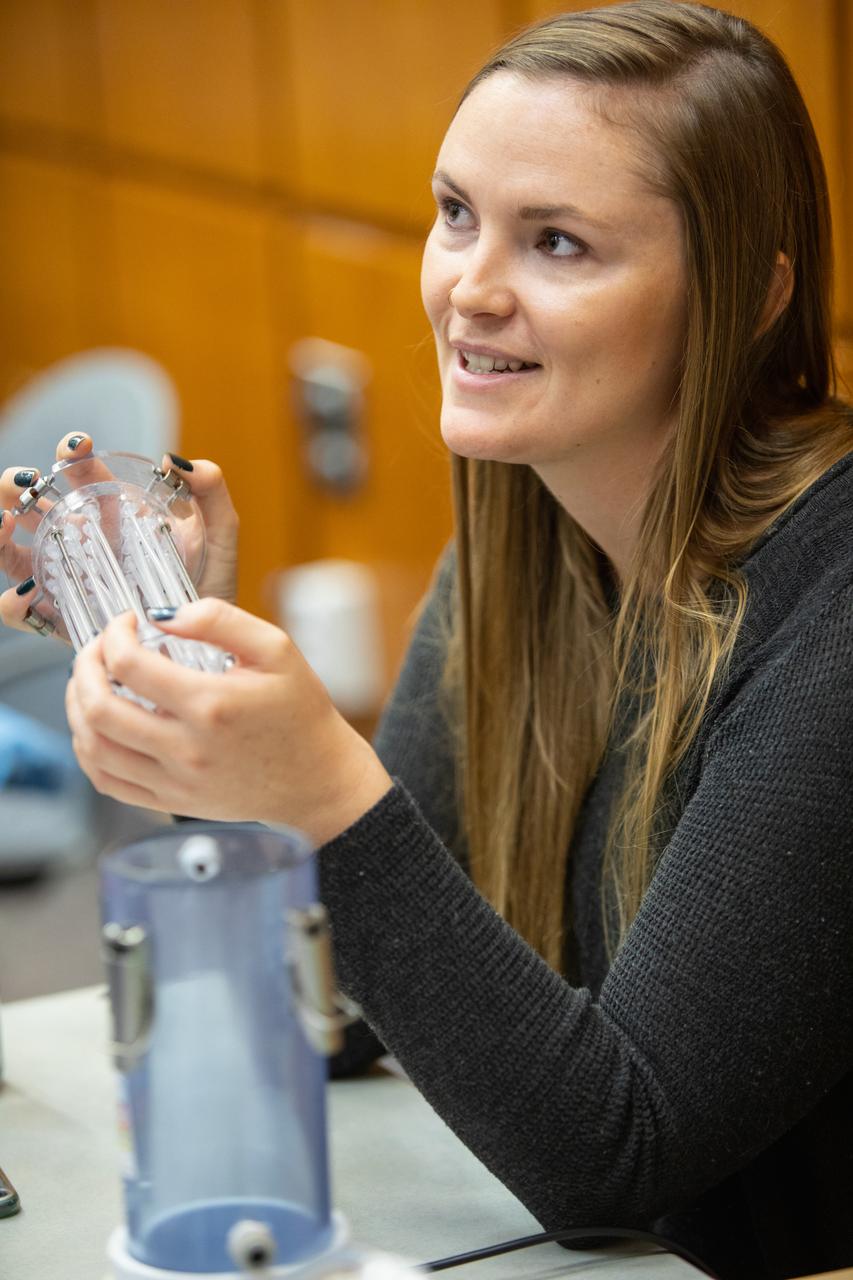
Melanie Pickett, a post-doctorate researcher at NASA’s Kennedy Space Center in Florida, participates in an innovation showcase on Nov. 19, 2019, in the Neil Armstrong Operations and Checkout Building’s Mission Briefing Room. A first-time participant, Pickett presented information on an Algae Membrane Photobioreactor she and others are developing that would eliminate the need for sending water treated with toxic chemicals – currently used to break down urine – to the International Space Station. Nearly 50 exhibitors gathered to demonstrate new technologies and innovations during the center’s Innovation Days – one of several events throughout the year aimed at fostering and encouraging an innovative culture at Kennedy. Showcase participants included individuals from multiple directorates, programs and organizations throughout Kennedy. In addition to the showcase, employees had the opportunity to attend an overview presentation on NASA’s Human Landing System (HLS), hosted by HLS Program Manager Lisa Watson-Morgan.
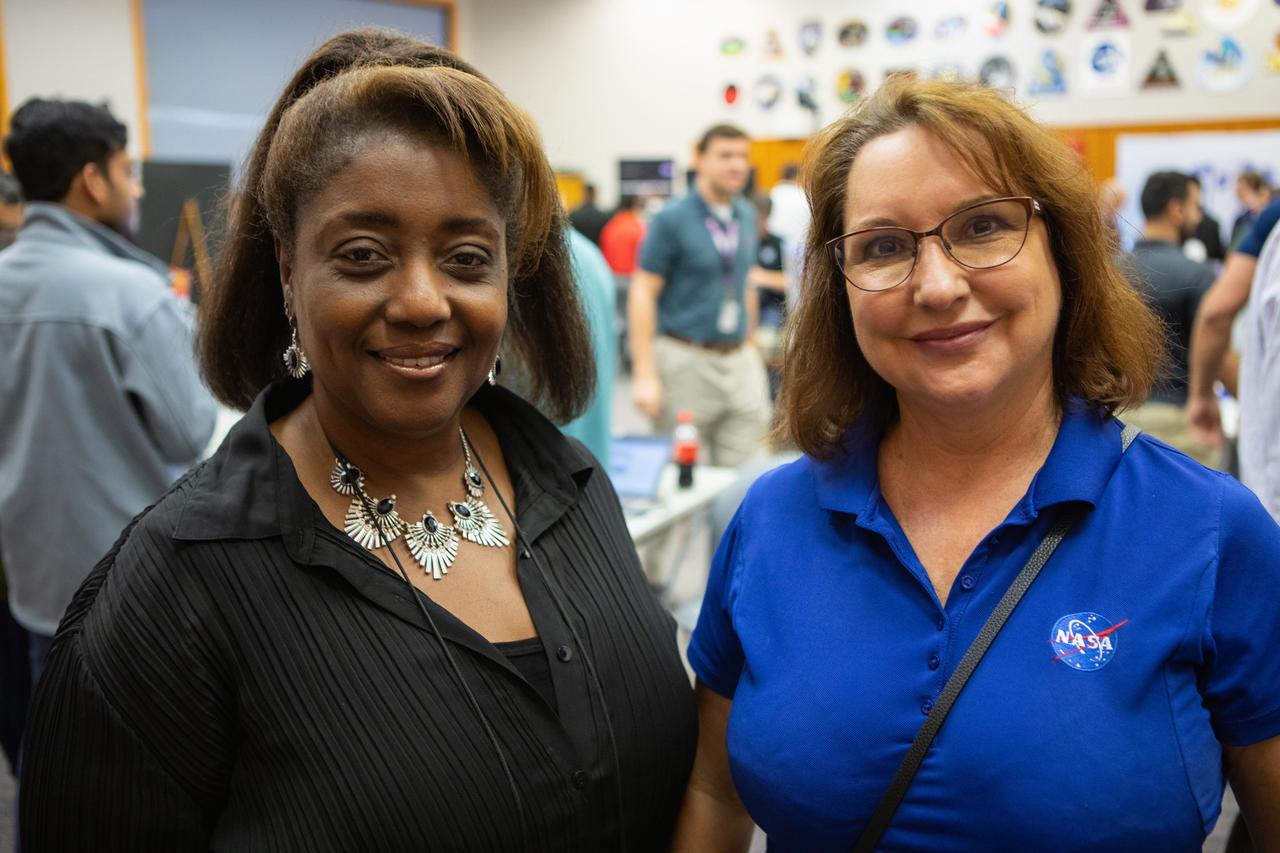
Kennedy Space Center Chief Technologist Barbara Brown, left, and Deputy Chief Technologist Kathy Loftin are photographed during an innovation showcase on Nov. 19, 2019, in the Florida spaceport’s Neil Armstrong Operations and Checkout Building’s Mission Briefing Room. Nearly 50 exhibitors gathered to demonstrate new technologies and innovations during the center’s Innovation Days – one of several events throughout the year aimed at fostering and encouraging an innovative culture at Kennedy. Showcase participants included individuals from multiple directorates, programs and organizations throughout Kennedy. In addition to the showcase, employees had the opportunity to attend an overview presentation on NASA’s Human Landing System (HLS), hosted by HLS Program Manager Lisa Watson-Morgan.
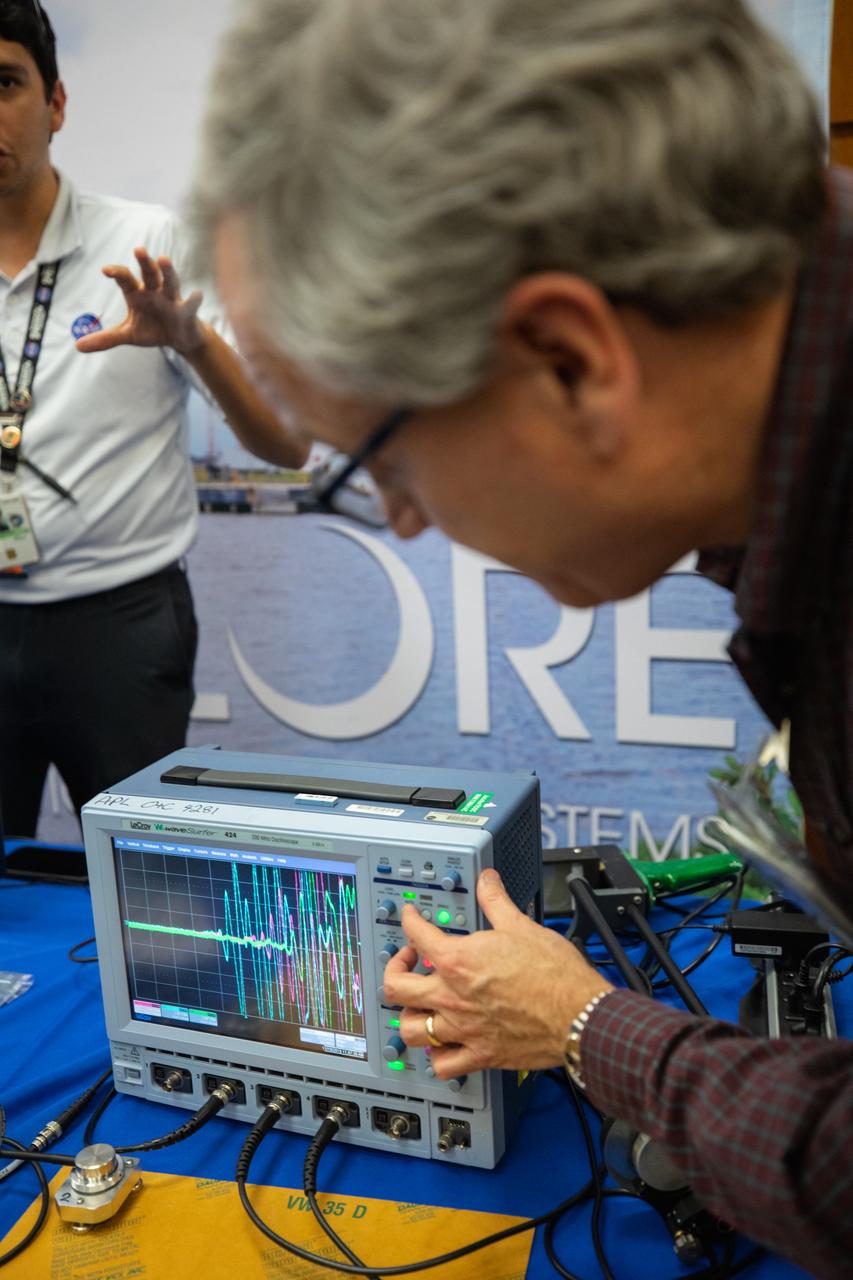
Applied Physics Laboratory Lead Physicist Dr. Bob Youngquist demonstrates technology recently used to resolve a technical challenge at Kennedy Space Center during an innovation showcase on Nov. 19, 2019, in the Florida spaceport’s Neil Armstrong Operations and Checkout Building’s Mission Briefing Room. Nearly 50 exhibitors gathered to participate in the center’s Innovation Days – one of several events throughout the year aimed at fostering and encouraging an innovative culture at Kennedy. Showcase participants included individuals from multiple directorates, programs and organizations throughout Kennedy. In addition to the showcase, employees had the opportunity to attend an overview presentation on NASA’s Human Landing System (HLS), hosted by HLS Program Manager Lisa Watson-Morgan.
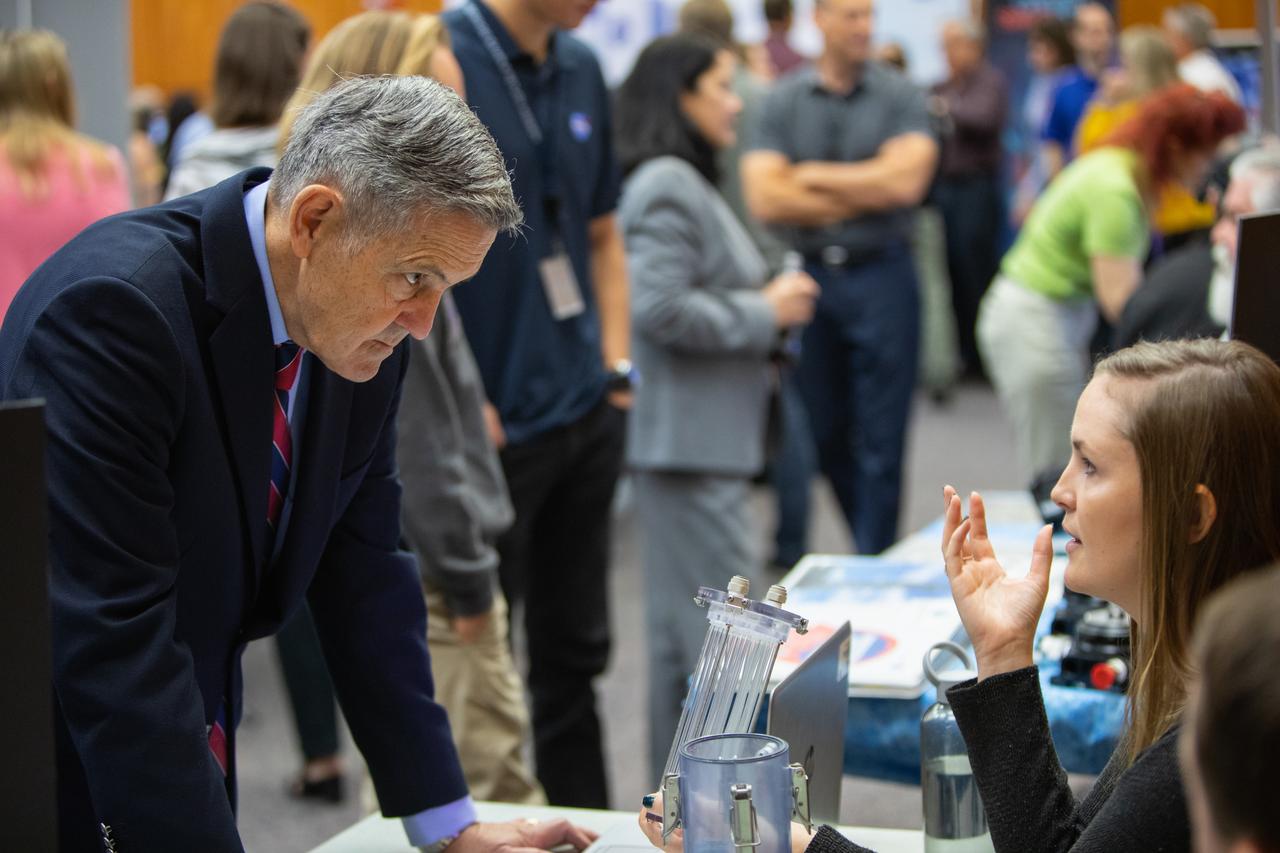
Melanie Pickett, right, a post-doctorate researcher at NASA’s Kennedy Space Center in Florida, speaks to Center Director Bob Cabana about an Algae Membrane Photobioreactor she and others are working on developing during an innovation showcase on Nov. 19, 2019, in the Neil Armstrong Operations and Checkout Building’s Mission Briefing Room. The bioreactor device would eliminate the need for sending pre-treated water – currently used to break down urine – to the International Space Station, reducing the amount of human exposure to toxic chemicals. Nearly 50 exhibitors gathered to demonstrate new technologies and innovations during the center’s Innovation Days – one of several events throughout the year aimed at fostering and encouraging an innovative culture at Kennedy. Showcase participants included individuals from multiple directorates, programs and organizations throughout Kennedy. In addition to the showcase, employees had the opportunity to attend an overview presentation on NASA’s Human Landing System (HLS), hosted by HLS Program Manager Lisa Watson-Morgan.
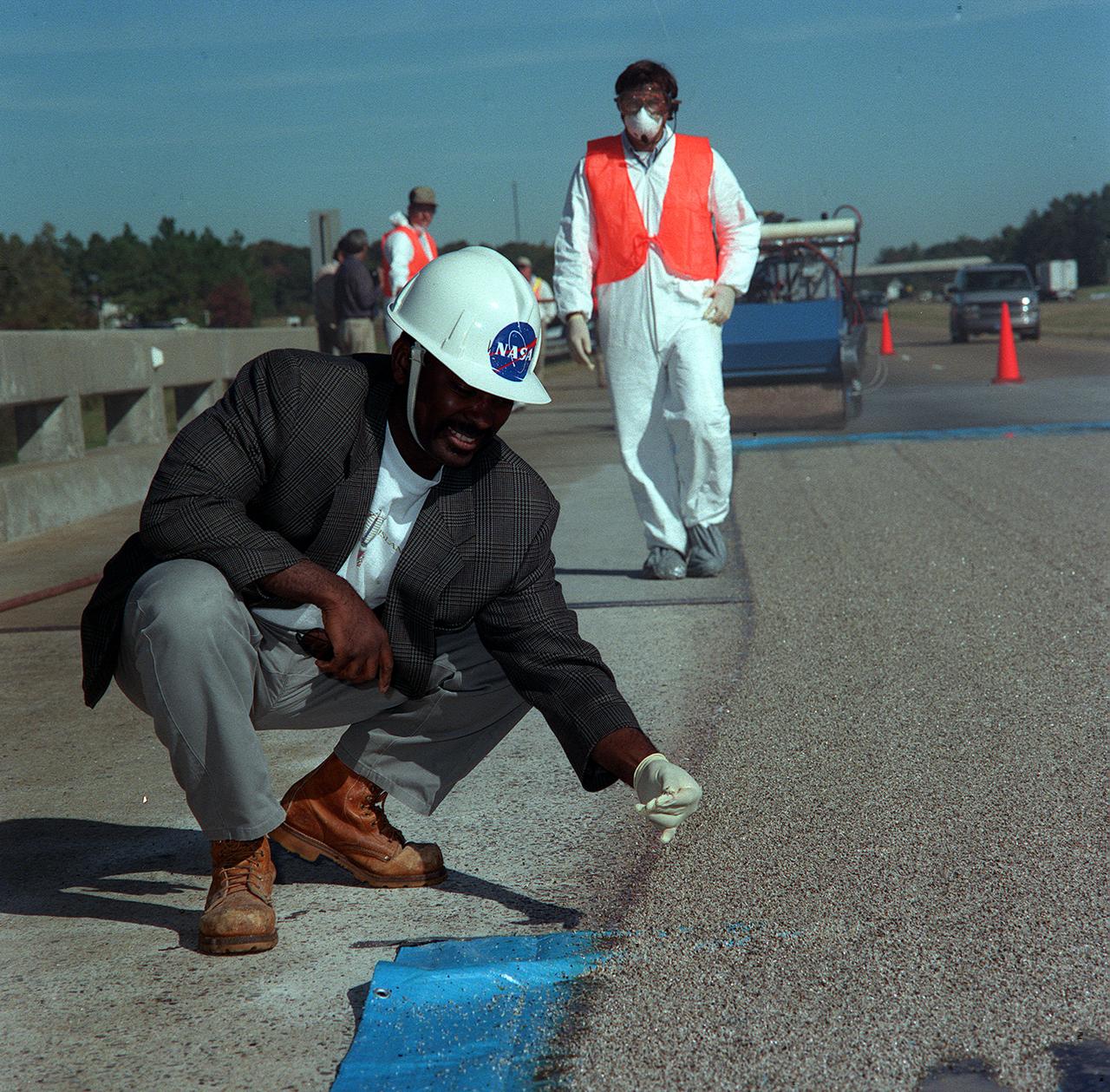
A NASA official inspects the results of Convergent Spray Technology used to resurface a bridge on Interstate 65 near Lacon, Alabama. Originally developed by USBI to apply a heat resistant coating to the Space Shuttle's Solid Rocket Boosters, the environment-friendly technology reduces the required worktime from days to hours.
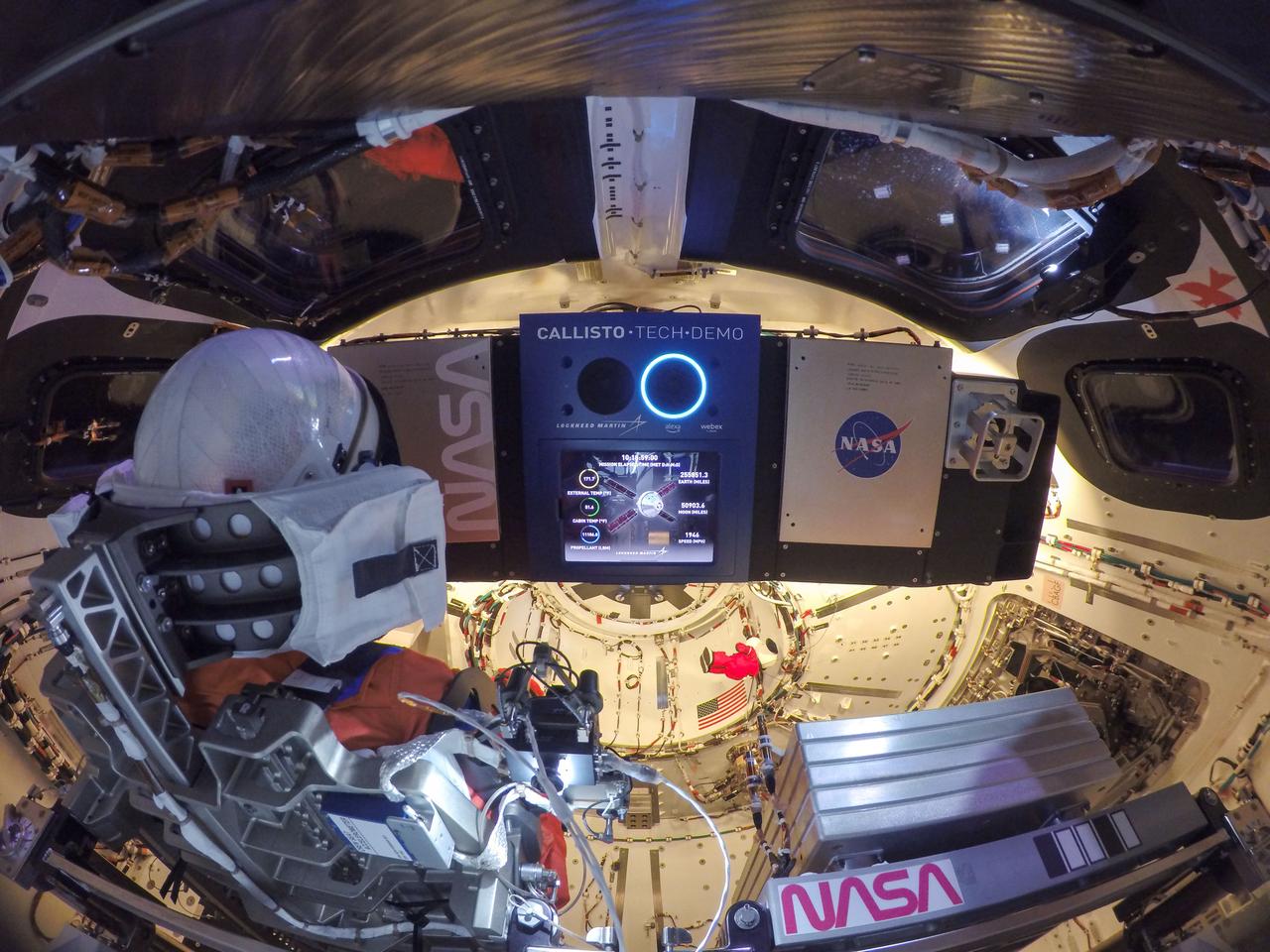
art001e001451 (Nov. 27, 2022) On flight day 12, the inside of Orion shows the display of the Callisto payload. Callisto is Lockheed Martin’s technology demonstration in collaboration with Amazon and Cisco, testing voice-activated and video technology that may assist future astronauts on deep space missions.
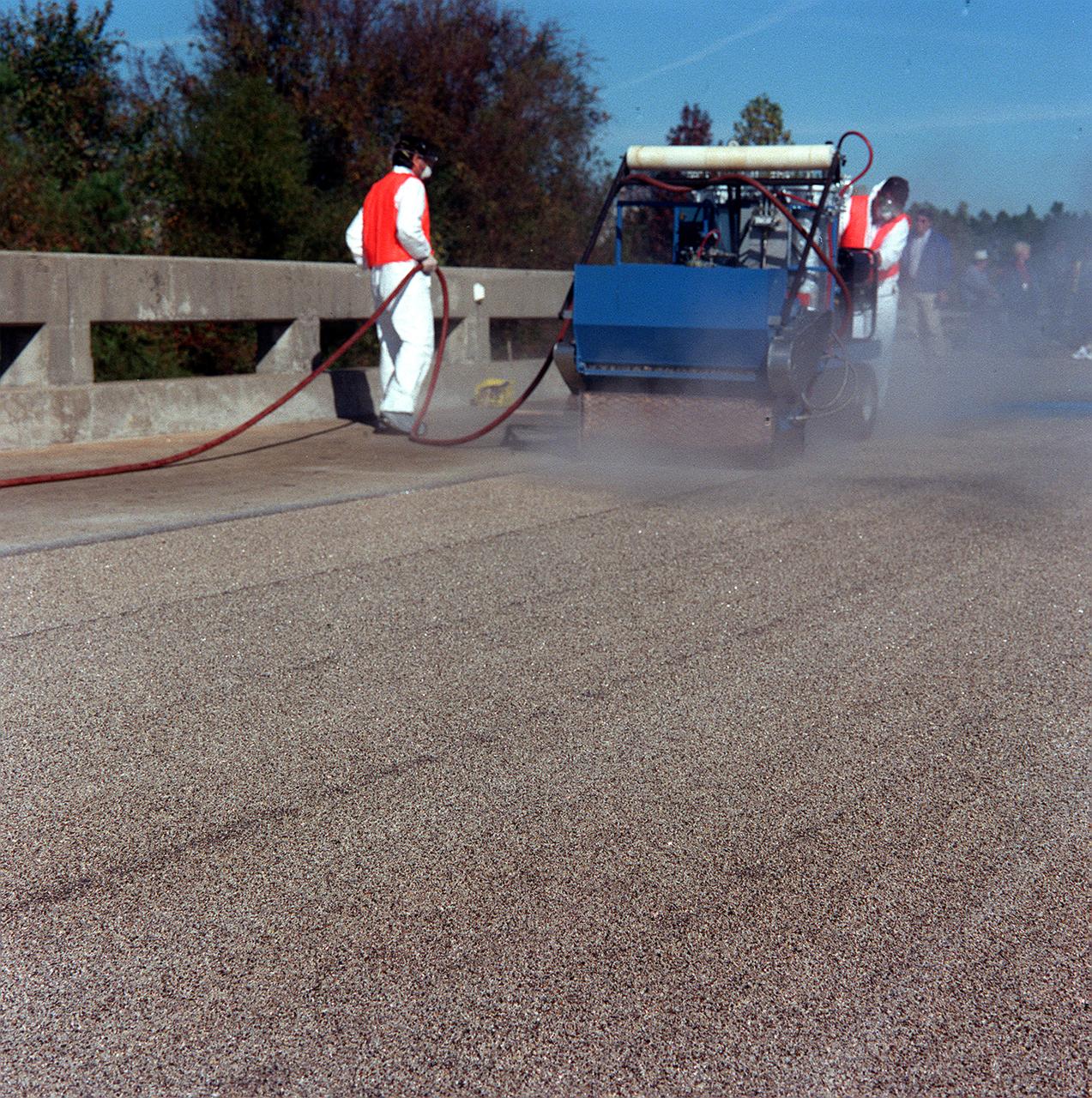
Alabama Department of Transportation workers utilize Convergent Spray Technology used to resurface a bridge on Interstate 65 near Lacon, Alabama. Originally developed by USBI to apply a heat resistant coating to the Space Shuttle's Solid Rocket Boosters, the environment-friendly technology reduces the required worktime from days to hours.
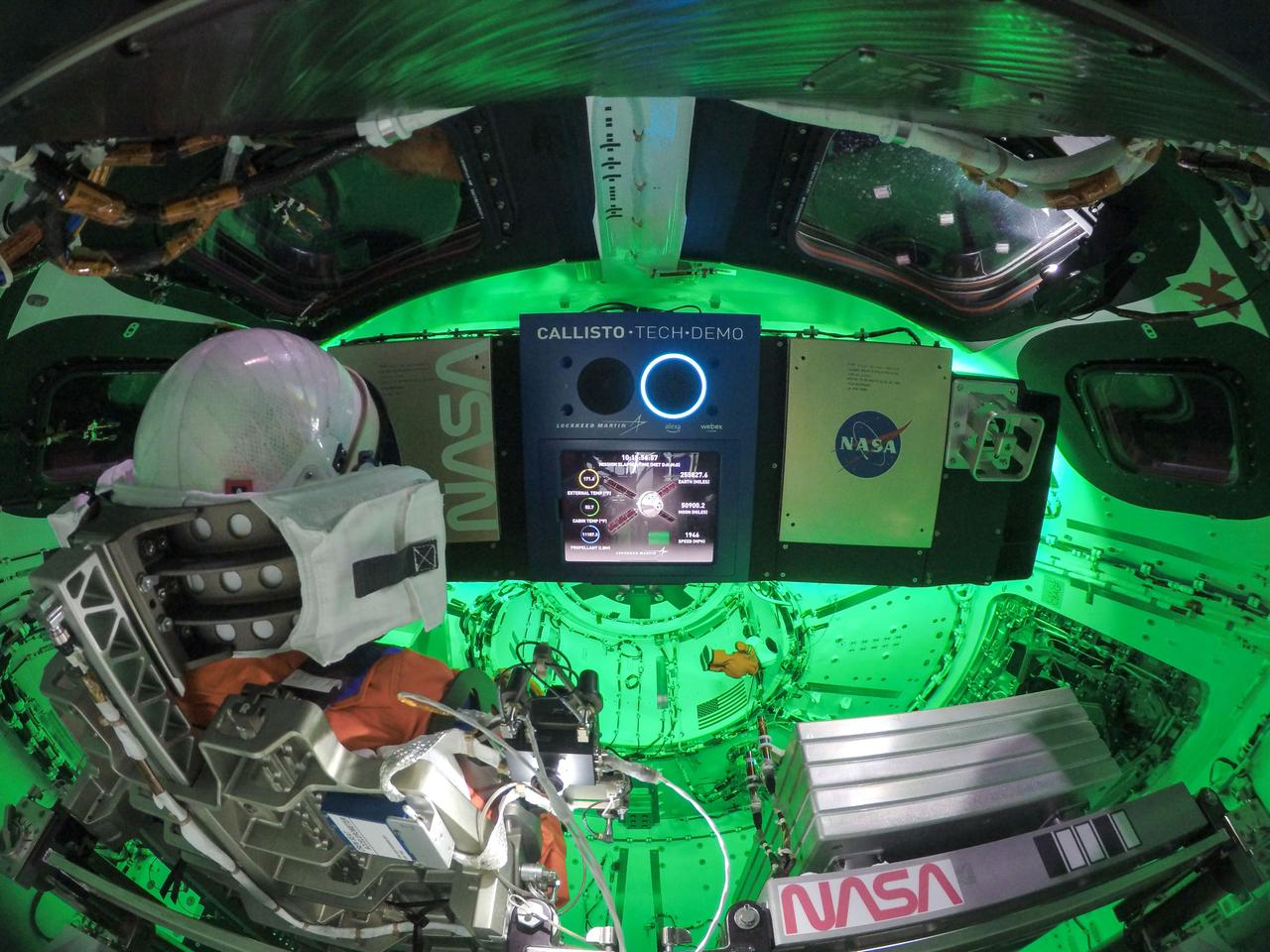
art001e001450 (Nov. 27, 2022) On flight day 12, the inside of Orion shows the display of the Callisto payload. Callisto is Lockheed Martin’s technology demonstration in collaboration with Amazon and Cisco, testing voice-activated and video technology that may assist future astronauts on deep space missions.
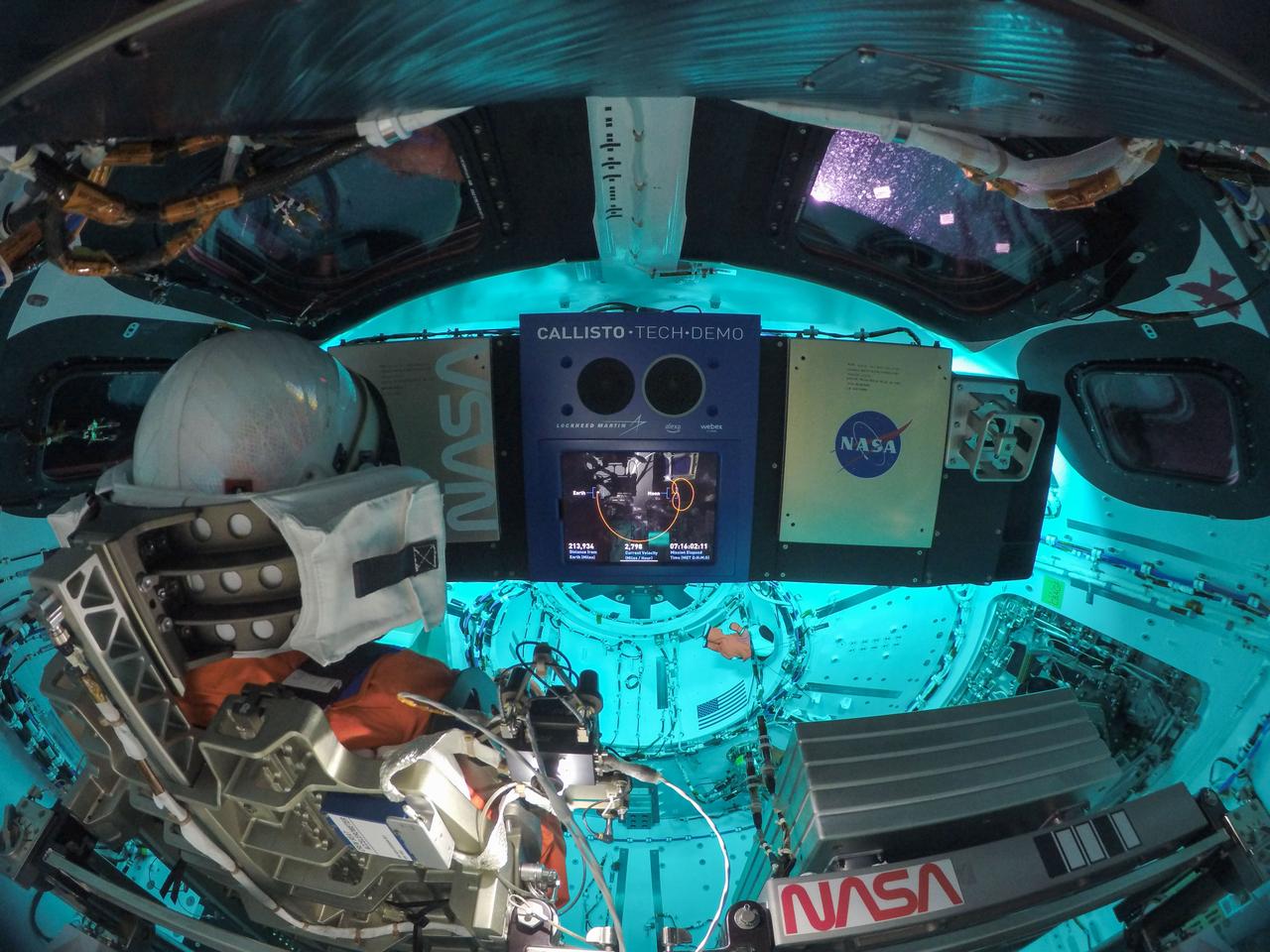
art001e000607 (Nov. 24, 2022) On flight day 9, the inside of Orion shows the display of the Callisto payload. Callisto is Lockheed Martin’s technology demonstration in collaboration with Amazon and Cisco, testing voice-activated and video technology that may assist future astronauts on deep space missions.
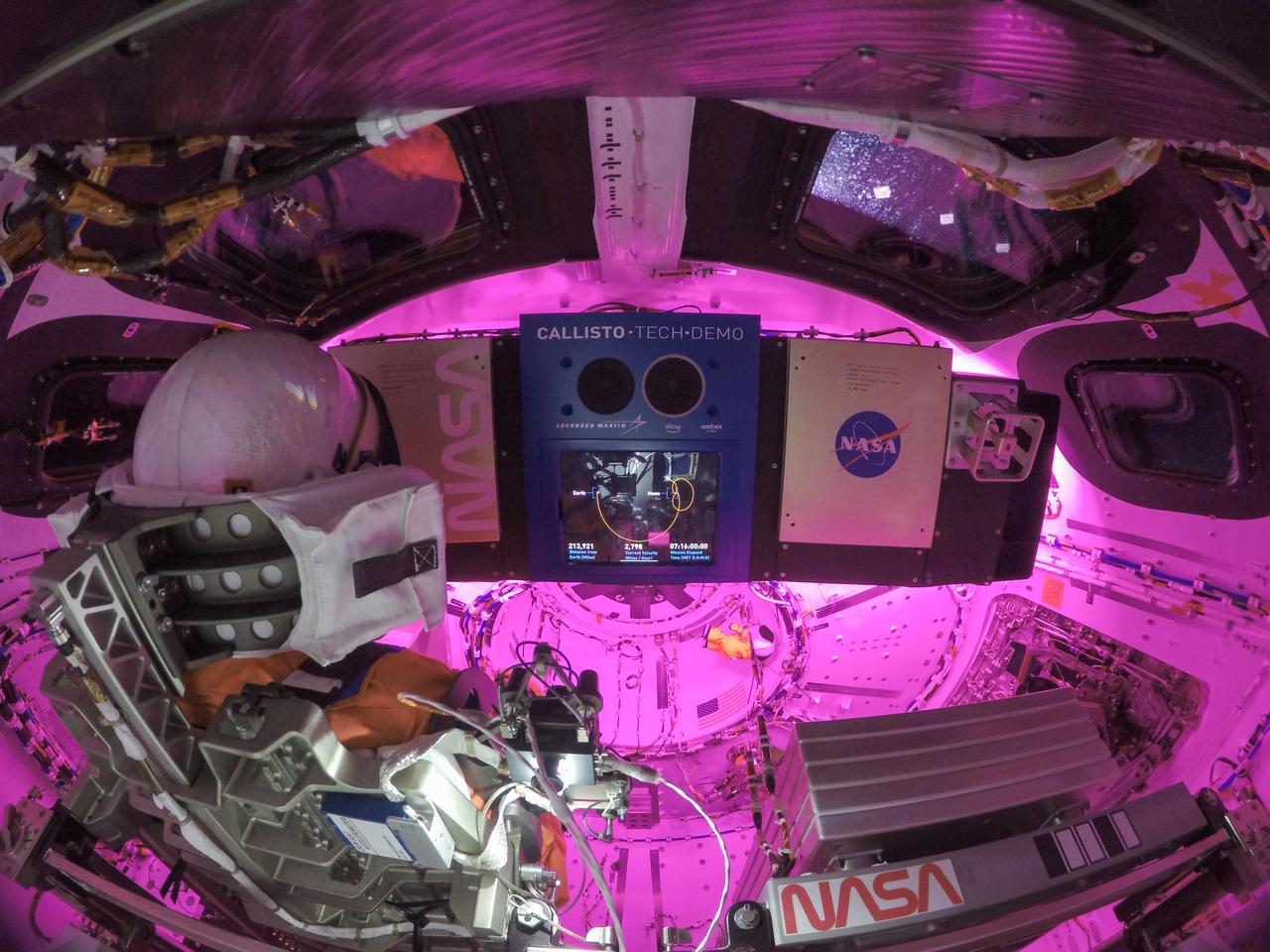
art001e000606 (Nov. 24, 2022) On flight day 9, the inside of Orion shows the display of the Callisto payload. Callisto is Lockheed Martin’s technology demonstration in collaboration with Amazon and Cisco, testing voice-activated and video technology that may assist future astronauts on deep space missions.
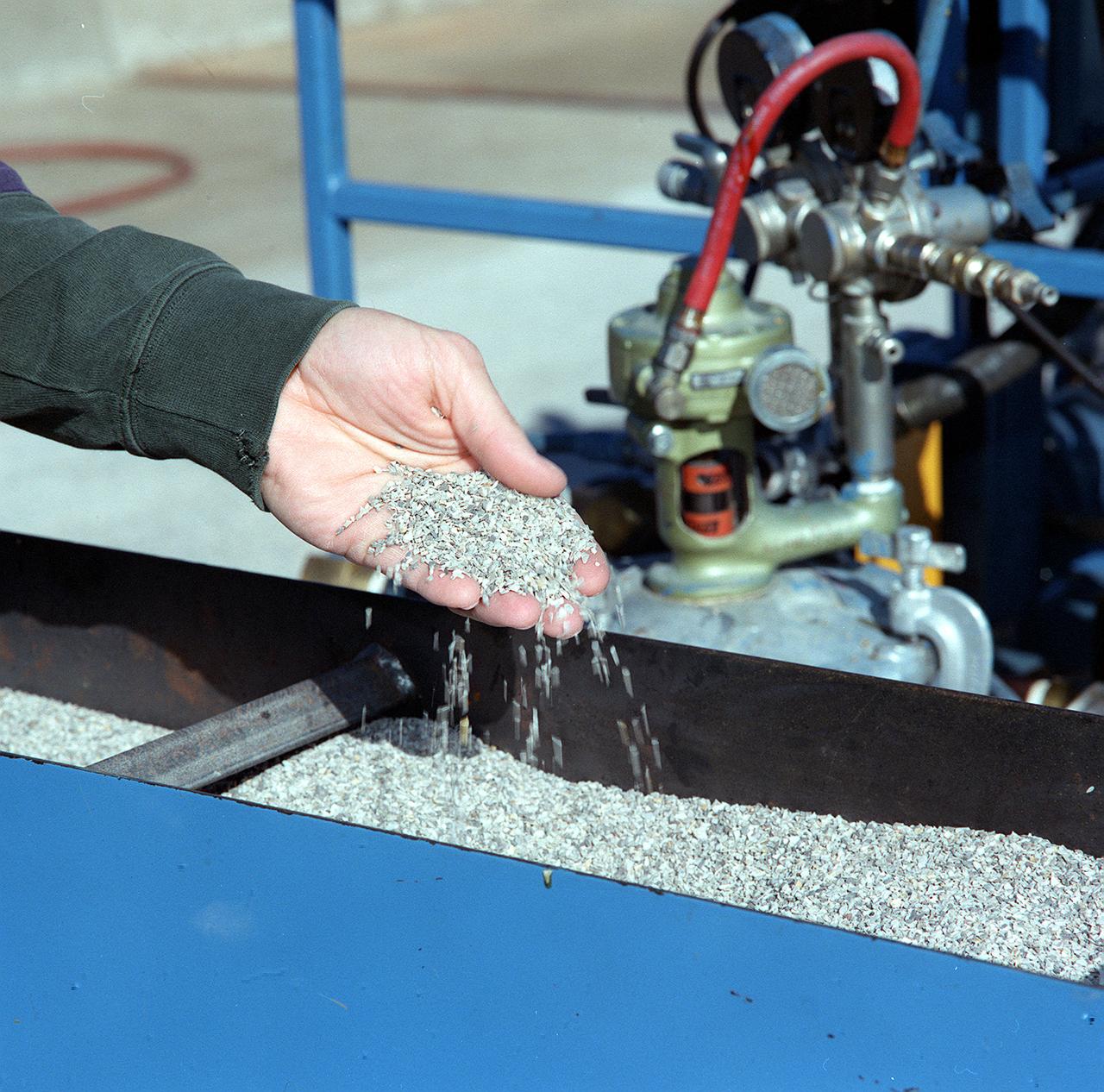
A workman inspects the results of Convergent Spray Technology used to resurface a bridge on Interstate 65 near Lacon, Alabama. Originally developed by USBI to apply a heat resistant coating to the Space Shuttle's Solid Rocket Boosters, the environment-friendly technology reduces the required worktime from days to hours.
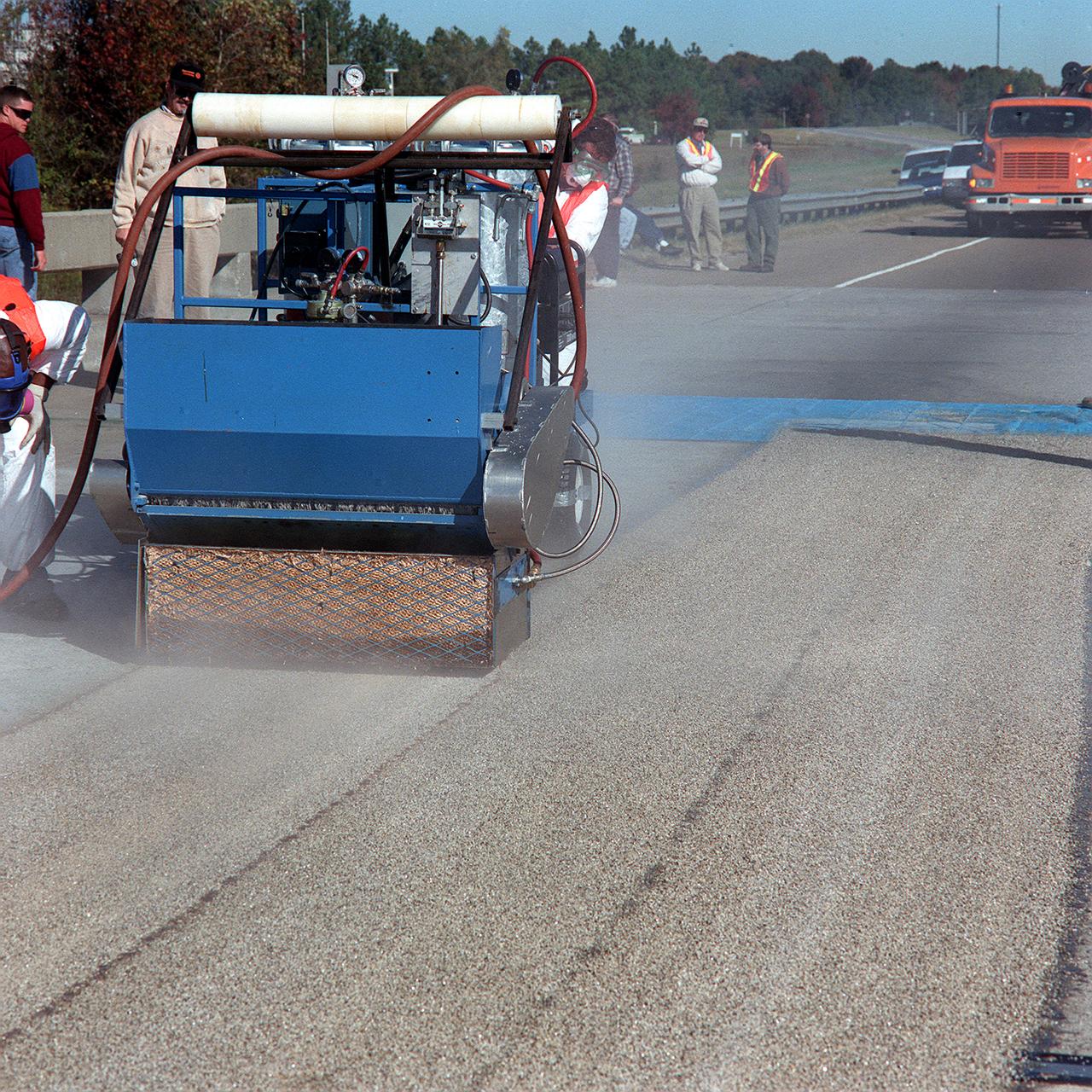
Alabama Department of Transportation workers utilize Convergent Spray Technology to resurface a bridge on Interstate 65 near Lacon, Alabama. Originally developed by USBI to apply a heat resistant coating to the Space Shuttle's Solid Rocket Boosters, the environment-friendly technology reduces the required worktime from days to hours.
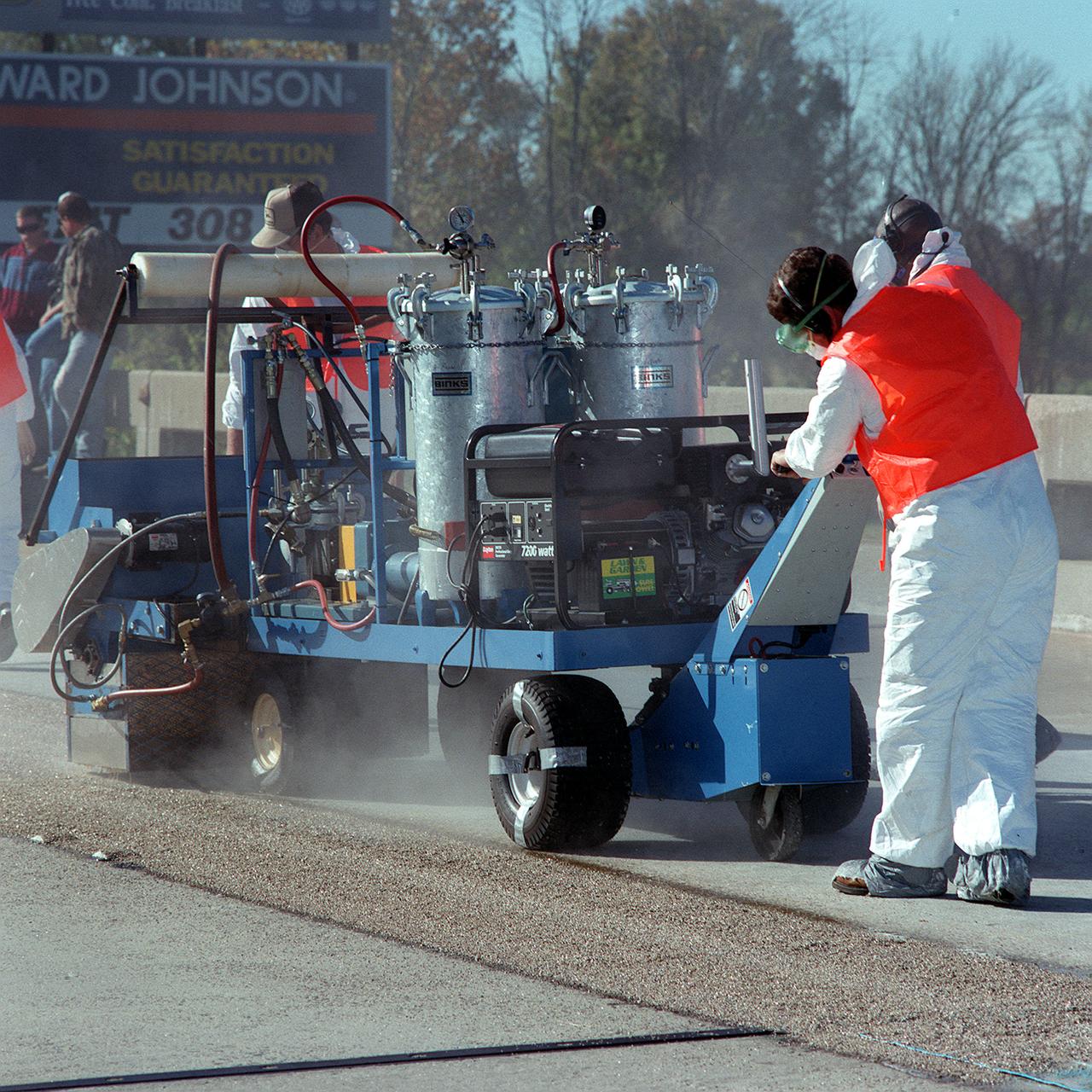
Alabama Department of Transportation workers utilize Convergent Spray Technology to resurface a bridge on Interstate 65 near Lacon, Alabama. Originally developed by USBI to apply a heat resistant coating to the Space Shuttle's Solid Rocket Boosters, the environment-friendly technology reduces the required worktime from days to hours.
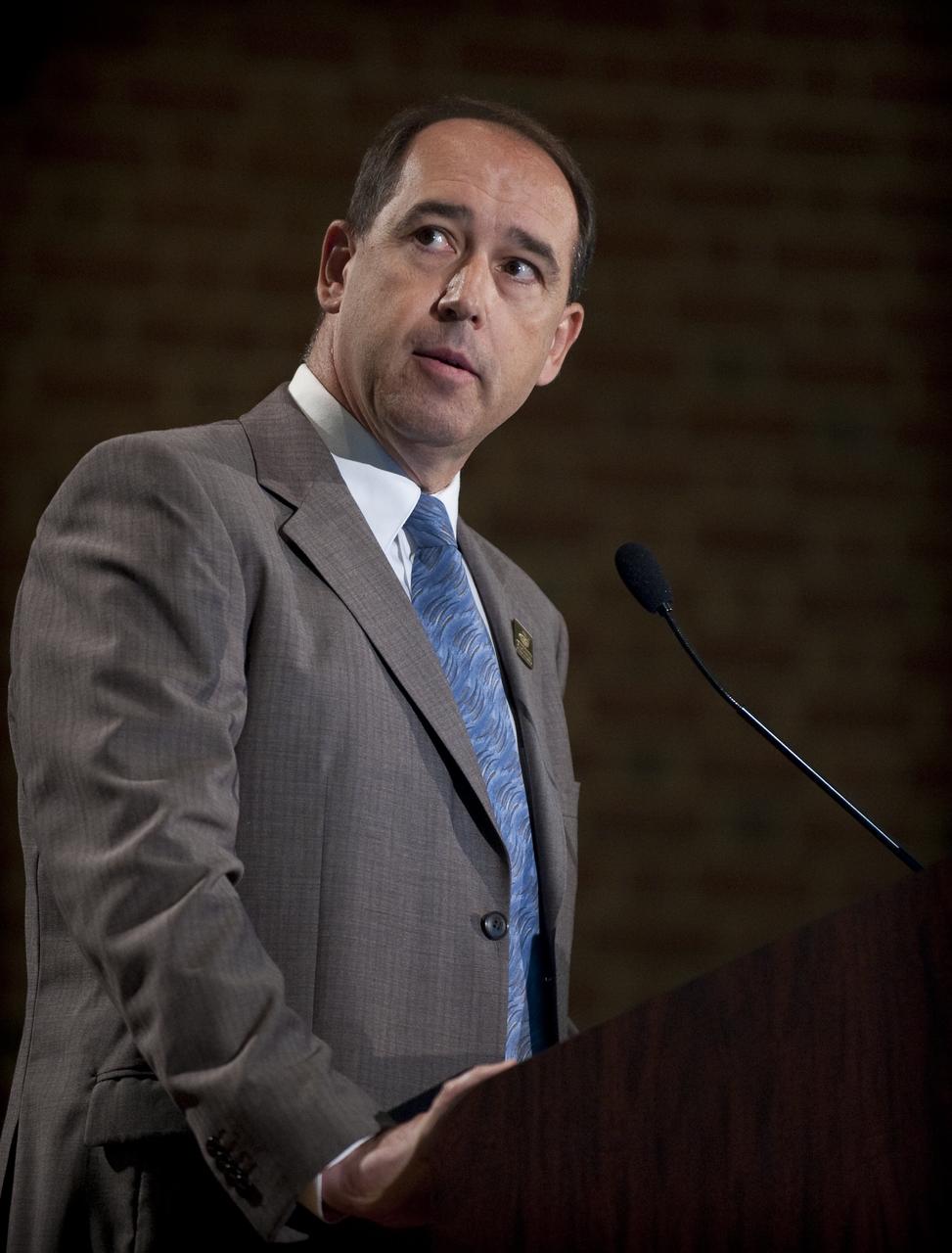
NASA's Manager of Centennial Challenges Andy Petro speaks during the NASA New Space Technology Industry Forum being held at the University of Maryland in College Park on Tuesday, July 13, 2010. During the two-day event, speakers are focusing on the president's fiscal year 2011 budget request for NASA's new Space Technology Program. Representatives from industry, academia and the federal government are in attendance to discuss strategy, development and implementation of NASA's proposed new technology-enabled exploration. Photo Credit: (NASA/Bill Ingalls)
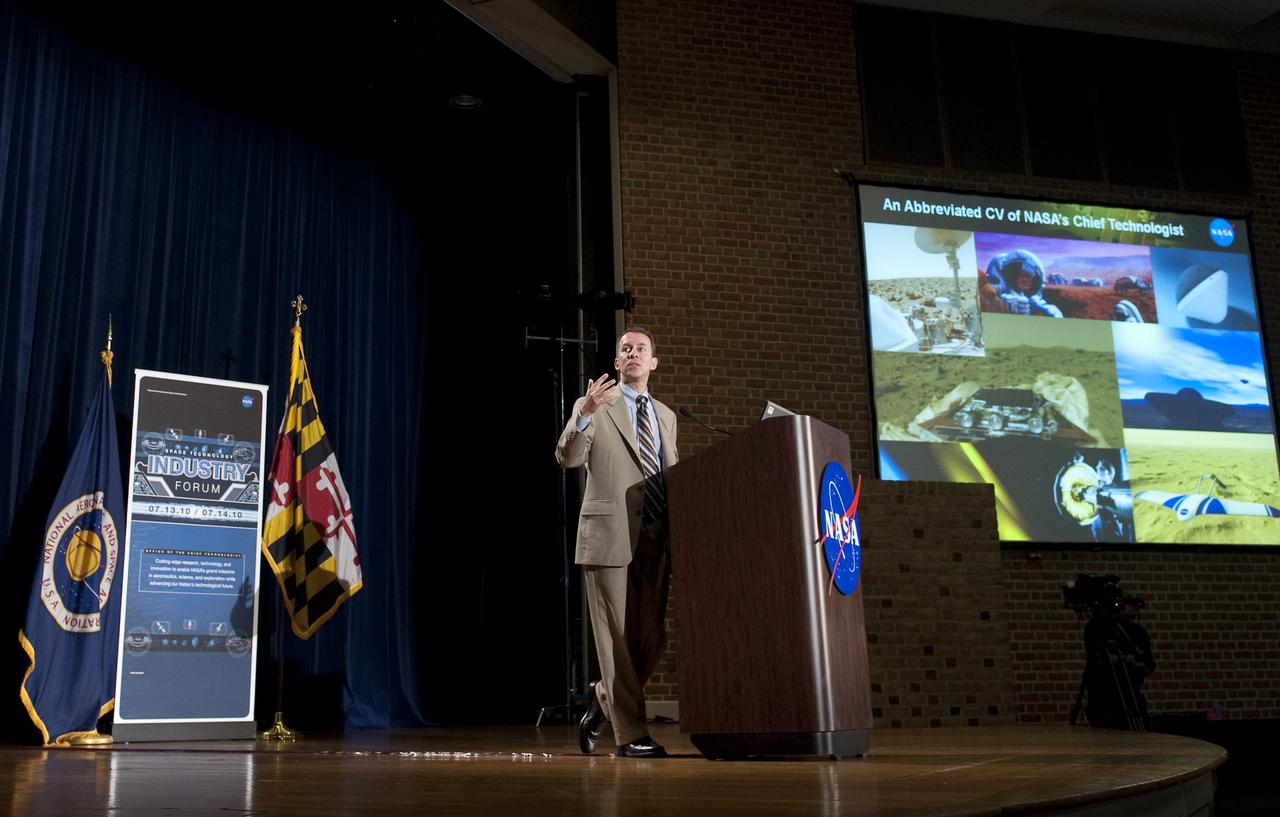
NASA Chief Technologist Bobby Braun speaks during the NASA New Space Technology Industry Forum being held at the University of Maryland in College Park on Tuesday, July 13, 2010. During the two-day event, speakers are focusing on the president's fiscal year 2011 budget request for NASA's new Space Technology Program. Representatives from industry, academia and the federal government are in attendance to discuss strategy, development and implementation of NASA's proposed new technology-enabled exploration. Photo Credit: (NASA/Bill Ingalls)
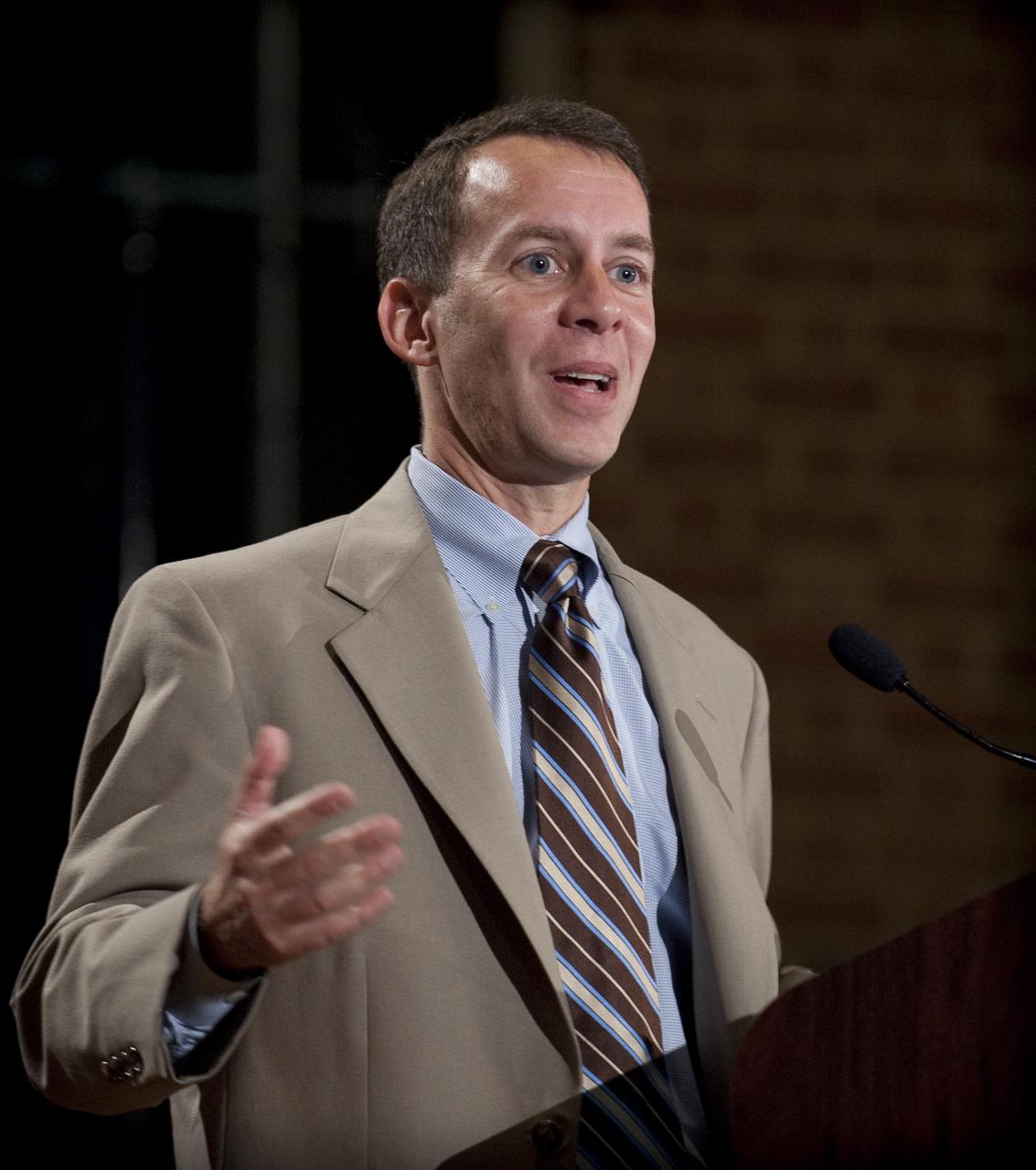
NASA Chief Technologist Bobby Braun speaks during the NASA New Space Technology Industry Forum being held at the University of Maryland in College Park on Tuesday, July 13, 2010. During the two-day event, speakers are focusing on the president's fiscal year 2011 budget request for NASA's new Space Technology Program. Representatives from industry, academia and the federal government are in attendance to discuss strategy, development and implementation of NASA's proposed new technology-enabled exploration. Photo Credit: (NASA/Bill Ingalls)
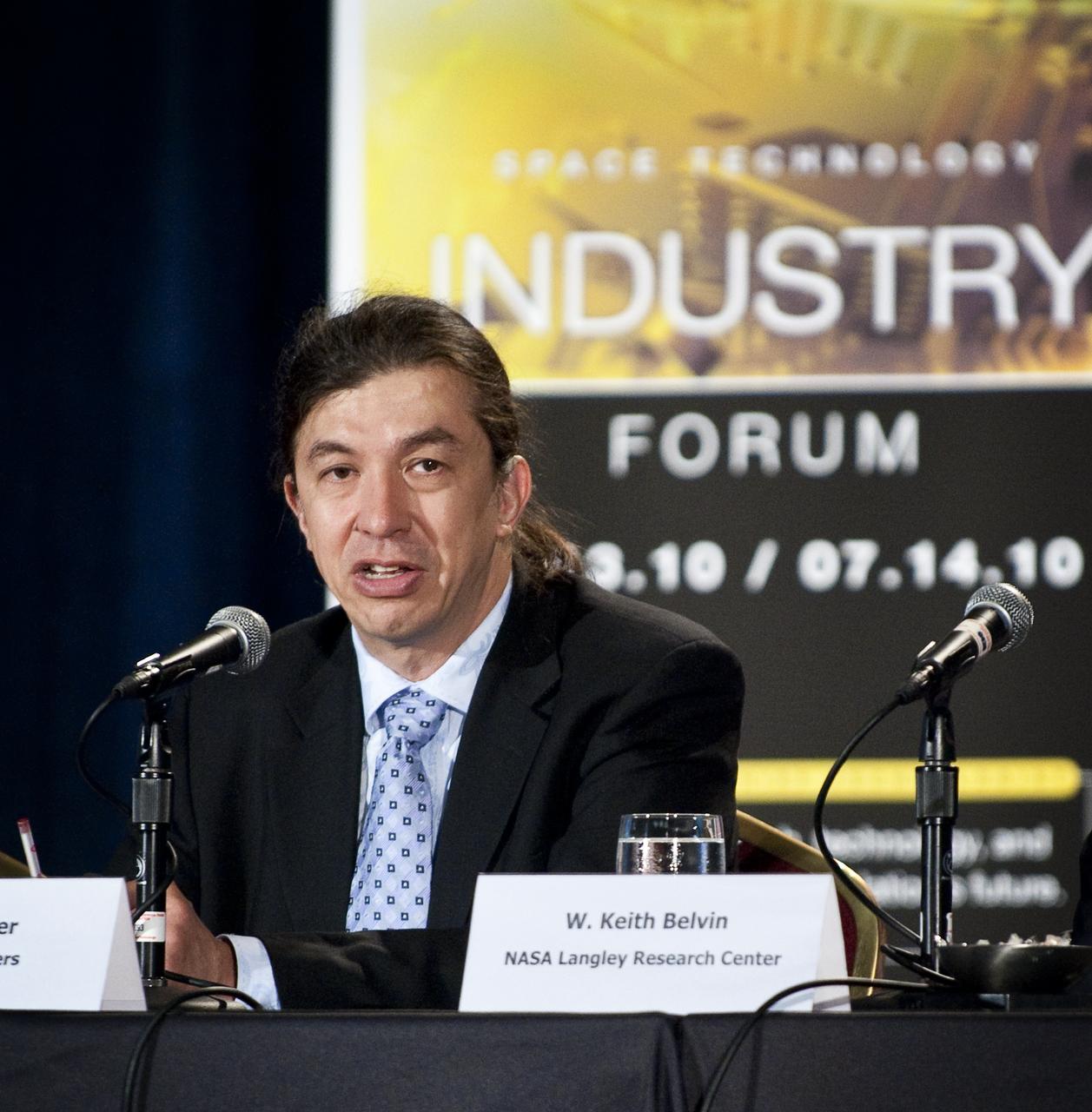
James Reuther, Director of Strategic Integration at NASA Headquarters, speaks during the NASA New Space Technology Industry Forum being held at the University of Maryland in College Park on Wednesday, July 14, 2010. During the two-day event, speakers are focusing on the president's fiscal year 2011 budget request for NASA's new Space Technology Program. Representatives from industry, academia and the federal government are in attendance to discuss strategy, development and implementation of NASA's proposed new technology-enabled exploration. Photo Credit: (NASA/Carla Cioffi)
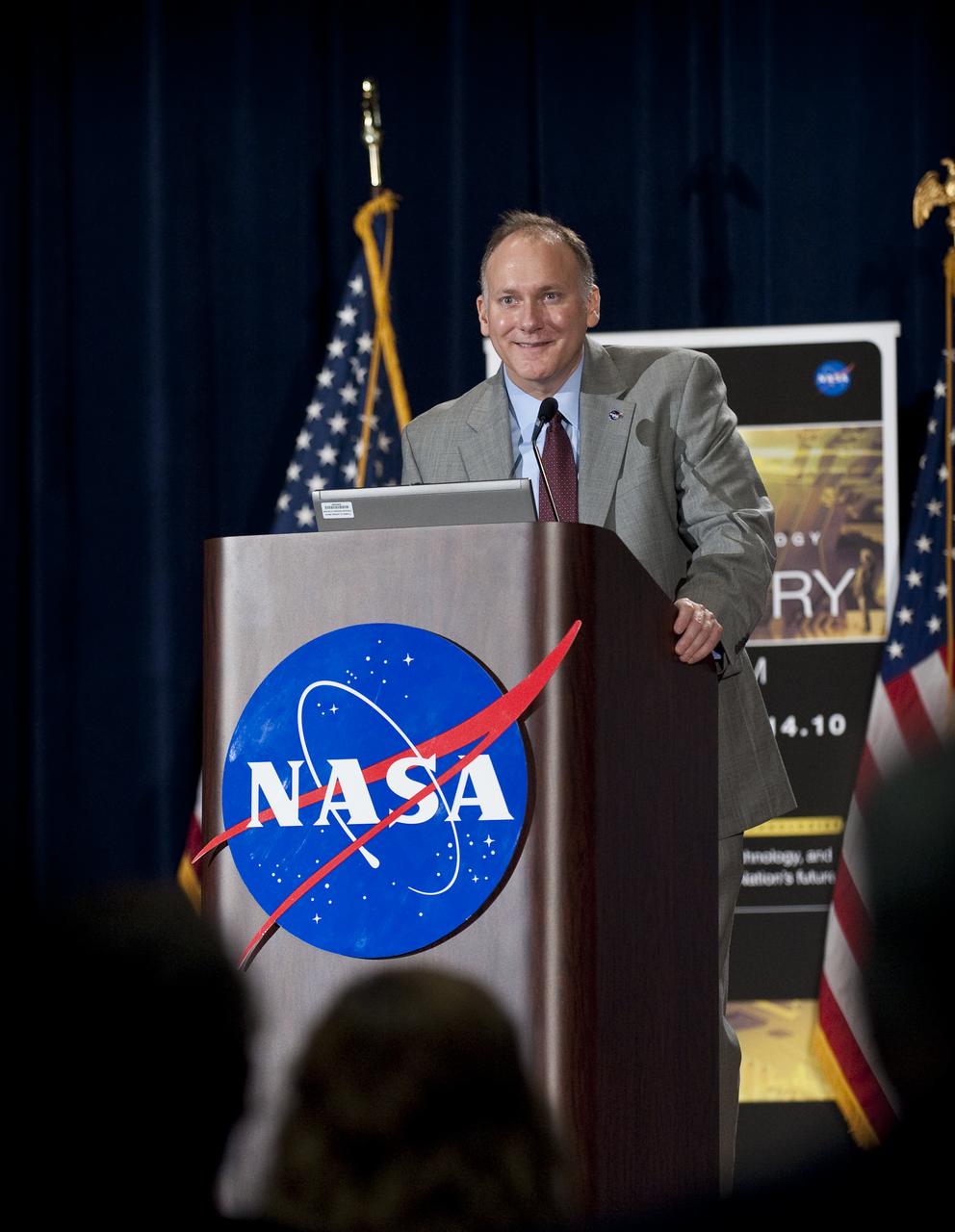
David Steitz, from NASA's Office of Communications, kicks off the NASA New Space Technology Industry Forum being held at the University of Maryland in College Park on Tuesday, July 13, 2010. During the two-day event, speakers are focusing on the president's fiscal year 2011 budget request for NASA's new Space Technology Program. Representatives from industry, academia and the federal government are in attendance to discuss strategy, development and implementation of NASA's proposed new technology-enabled exploration. Photo Credit: (NASA/Bill Ingalls)
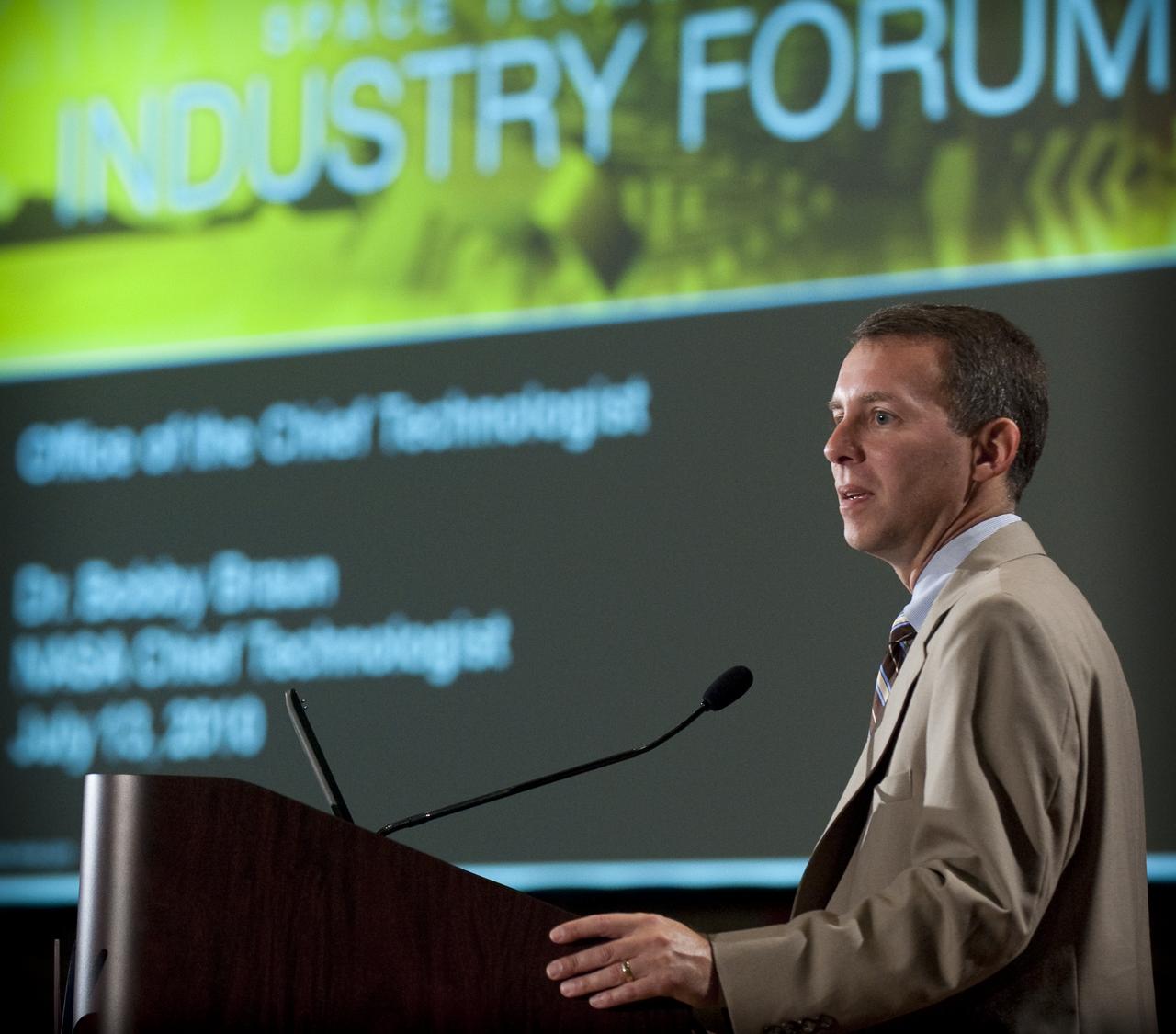
NASA Chief Technologist Bobby Braun speaks during the NASA New Space Technology Industry Forum being held at the University of Maryland in College Park on Tuesday, July 13, 2010. During the two-day event, speakers are focusing on the president's fiscal year 2011 budget request for NASA's new Space Technology Program. Representatives from industry, academia and the federal government are in attendance to discuss strategy, development and implementation of NASA's proposed new technology-enabled exploration. Photo Credit: (NASA/Bill Ingalls)
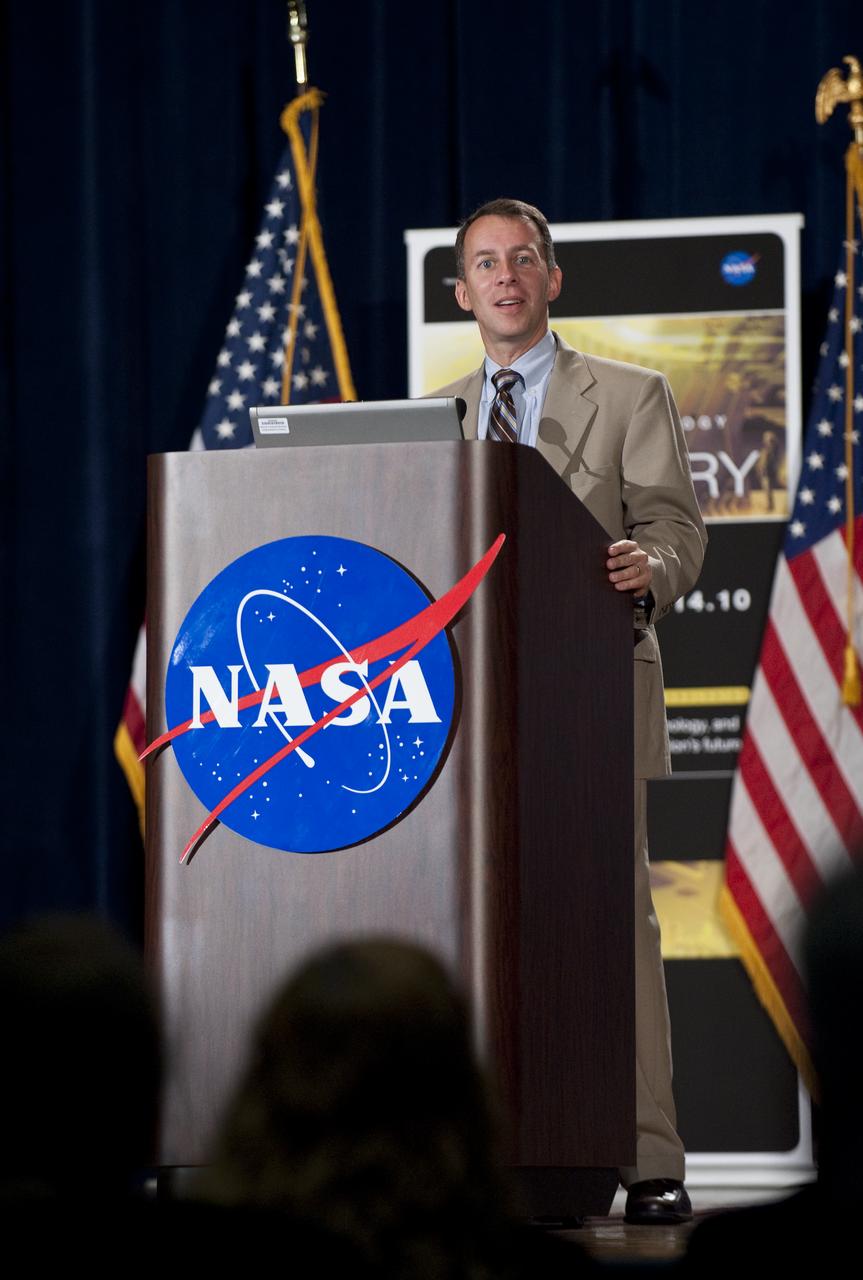
NASA Chief Technologist Bobby Braun speaks during the NASA New Space Technology Industry Forum being held at the University of Maryland in College Park on Tuesday, July 13, 2010. During the two-day event, speakers are focusing on the president's fiscal year 2011 budget request for NASA's new Space Technology Program. Representatives from industry, academia and the federal government are in attendance to discuss strategy, development and implementation of NASA's proposed new technology-enabled exploration. Photo Credit: (NASA/Bill Ingalls)
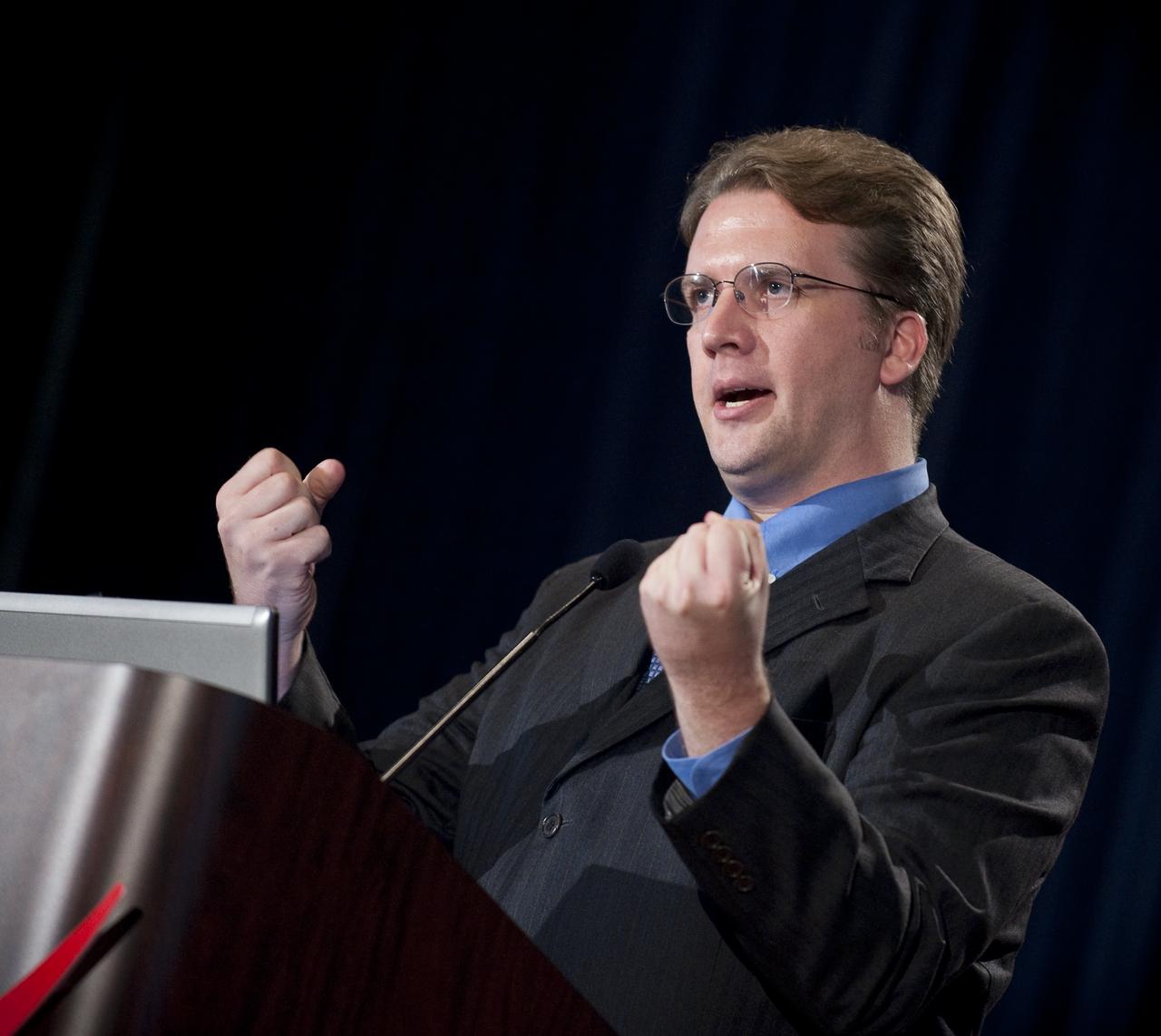
NASA Small Satellite Subsystem Technology and Edison Small Satellite Demonstrations Program Executive Brant Sponberg speaks during the NASA New Space Technology Industry Forum being held at the University of Maryland in College Park on Tuesday, July 13, 2010. During the two-day event, speakers are focusing on the president's fiscal year 2011 budget request for NASA's new Space Technology Program. Representatives from industry, academia and the federal government are in attendance to discuss strategy, development and implementation of NASA's proposed new technology-enabled exploration. Photo Credit: (NASA/Bill Ingalls)
NASA Program Manager for Game Changing Technology Program Jean Francois Barthelemy speaks during the NASA New Space Technology Industry Forum being held at the University of Maryland in College Park on Tuesday, July 13, 2010. During the two-day event, speakers are focusing on the president's fiscal year 2011 budget request for NASA's new Space Technology Program. Representatives from industry, academia and the federal government are in attendance to discuss strategy, development and implementation of NASA's proposed new technology-enabled exploration. Photo Credit: (NASA/Bill Ingalls)
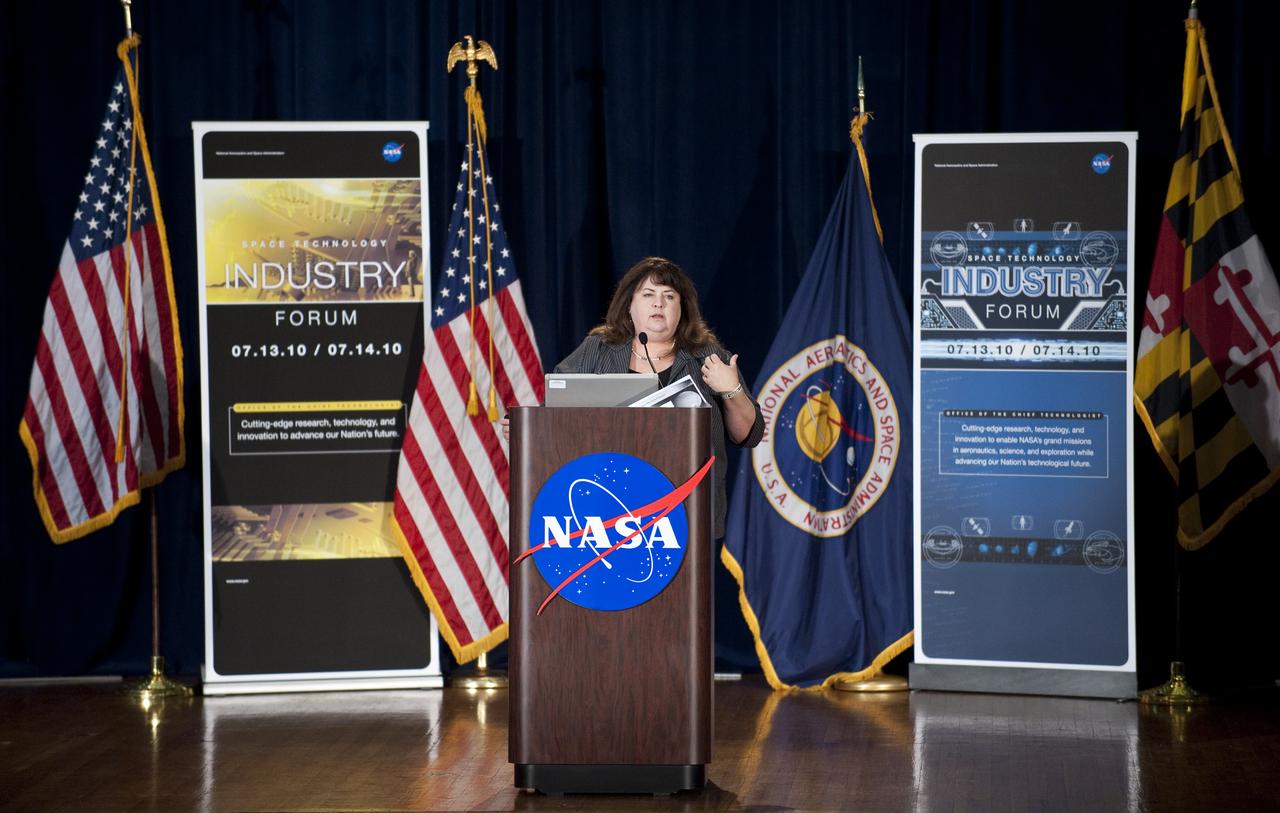
NASA's Program Executive for Technology Demonstration Missions Bonnie James speaks during the NASA New Space Technology Industry Forum being held at the University of Maryland in College Park on Tuesday, July 13, 2010. During the two-day event, speakers are focusing on the president's fiscal year 2011 budget request for NASA's new Space Technology Program. Representatives from industry, academia and the federal government are in attendance to discuss strategy, development and implementation of NASA's proposed new technology-enabled exploration. Photo Credit: (NASA/Bill Ingalls)
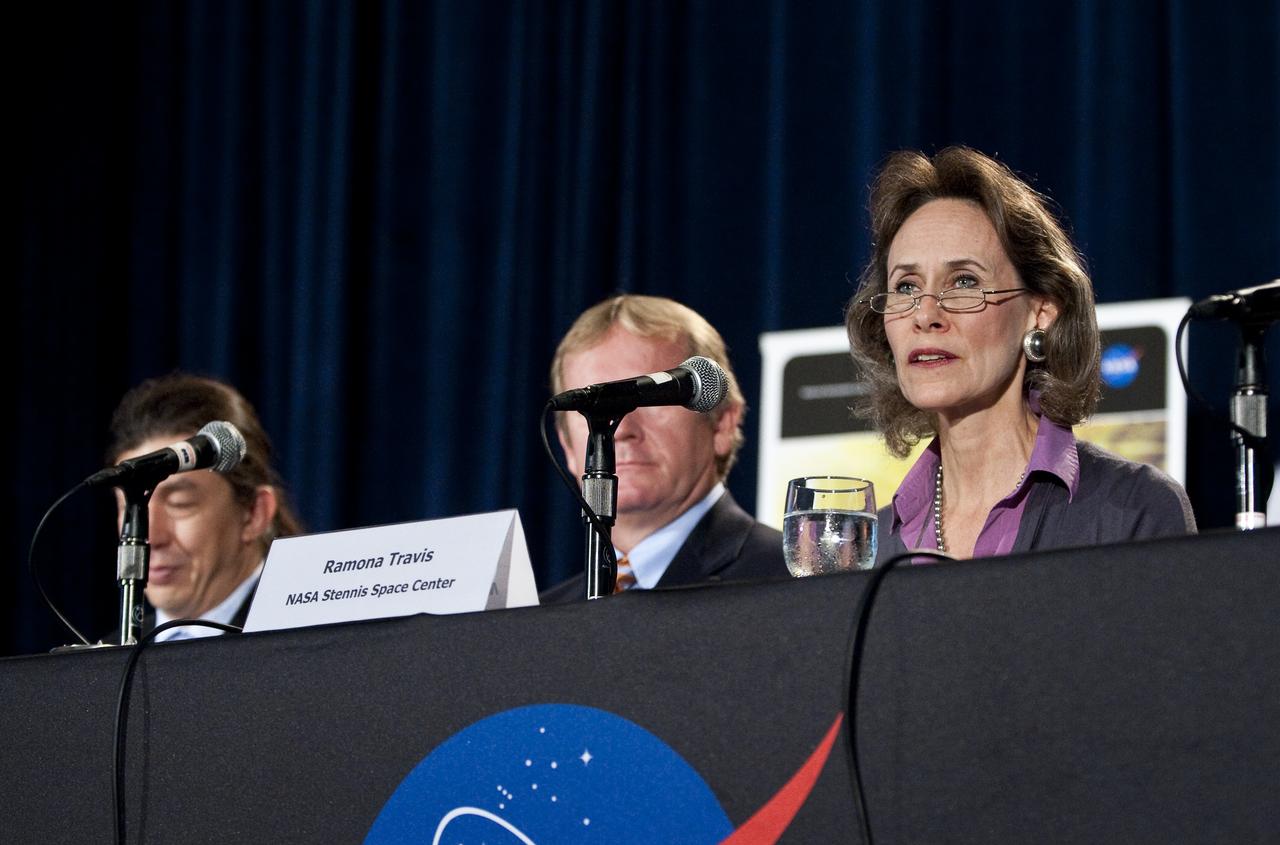
Ramona Travis, NASA Stennis Space Center Chief Technologist, speaks during the NASA New Space Technology Industry Forum being held at the University of Maryland in College Park on Wednesday, July 14, 2010. During the two-day event, speakers are focusing on the president's fiscal year 2011 budget request for NASA's new Space Technology Program. Representatives from industry, academia and the federal government are in attendance to discuss strategy, development and implementation of NASA's proposed new technology-enabled exploration. Photo Credit: (NASA/Carla Cioffi)
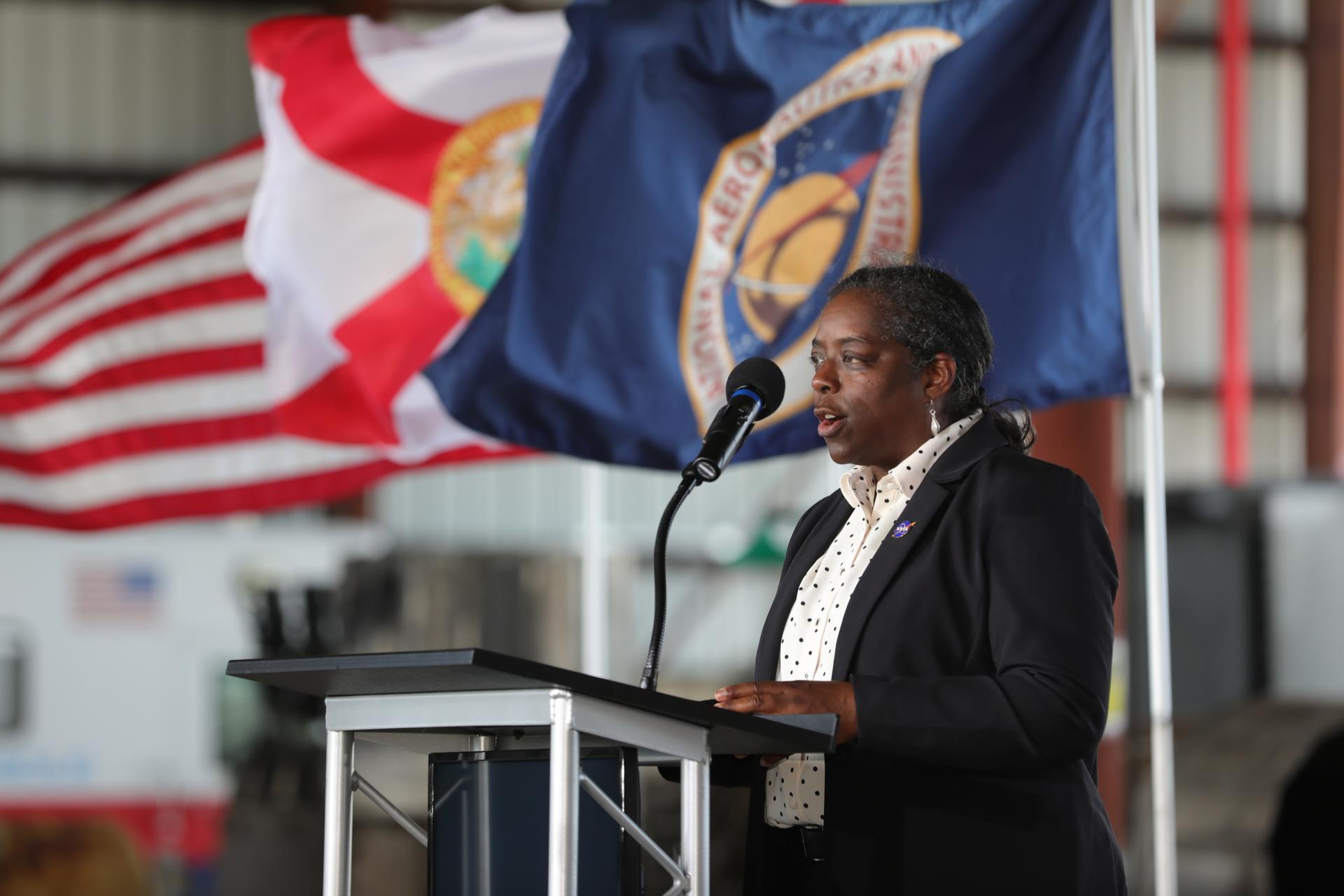
Laurie Grindle, director of the Aeronautics Division within the Research and Technology Mission Directorate at NASA Headquarters in Washington speaks to members of the media during the announcement of MAX POWER at the Shuttle Landing Facility at NASA’s Kennedy Space Center in Florida on Friday, Aug. 14, 2026. Grindle, along with NASA Administrator Jared Isaacman, agency leadership, and members of Congress announced the multi-day exposition of air and space technologies scheduled for November and tied to America’s 250th anniversary. The expo will showcase the next-generation aircraft, spacecraft, autonomous vehicles, and technologies that will help define the future of transportation in air and space and lay a foundation for our nation’s future endeavors: from Earth to the Moon, Mars, and beyond.
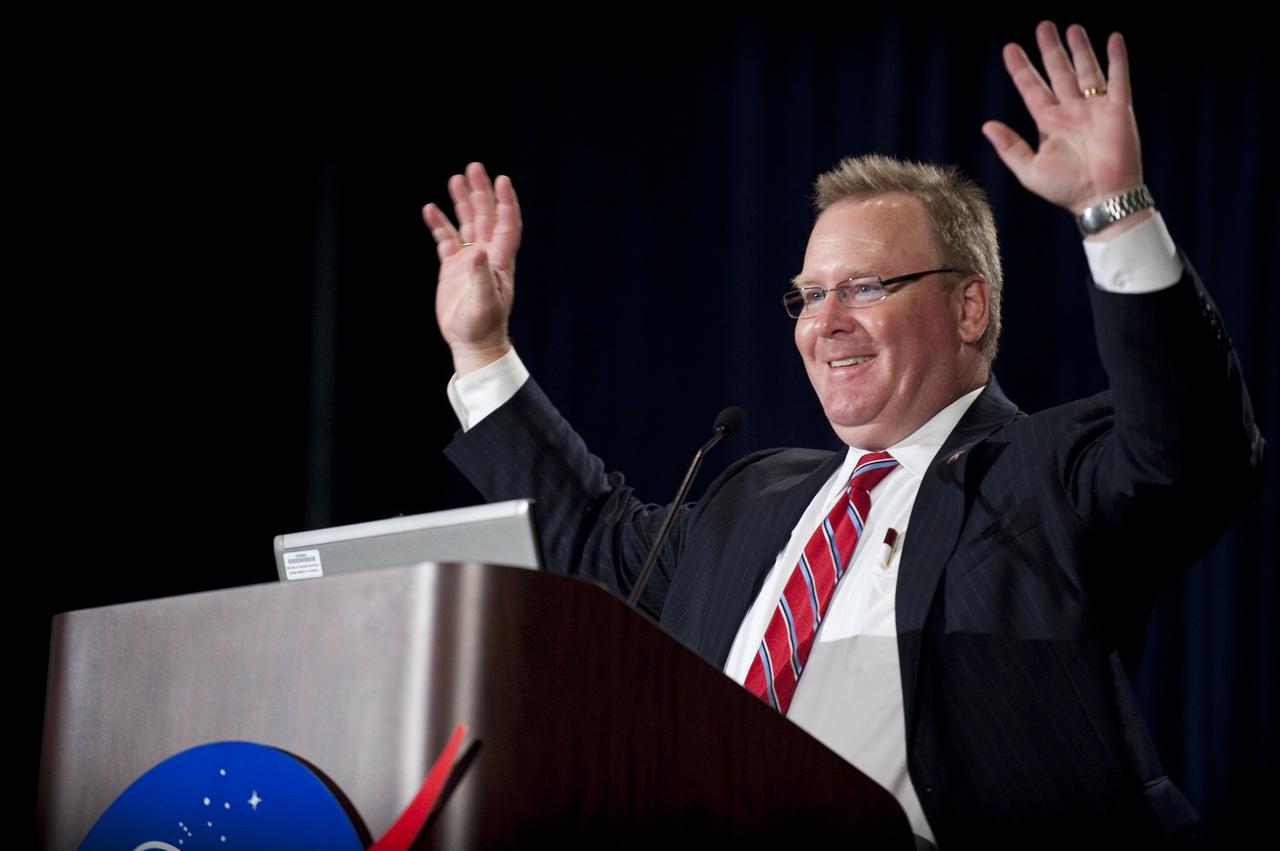
NASA's Partnership, Innovation & Commercial Space Director Doug Comstock speaks during the NASA New Space Technology Industry Forum being held at the University of Maryland in College Park on Tuesday, July 13, 2010. During the two-day event, speakers are focusing on the president's fiscal year 2011 budget request for NASA's new Space Technology Program. Representatives from industry, academia and the federal government are in attendance to discuss strategy, development and implementation of NASA's proposed new technology-enabled exploration. Photo Credit: (NASA/Bill Ingalls)
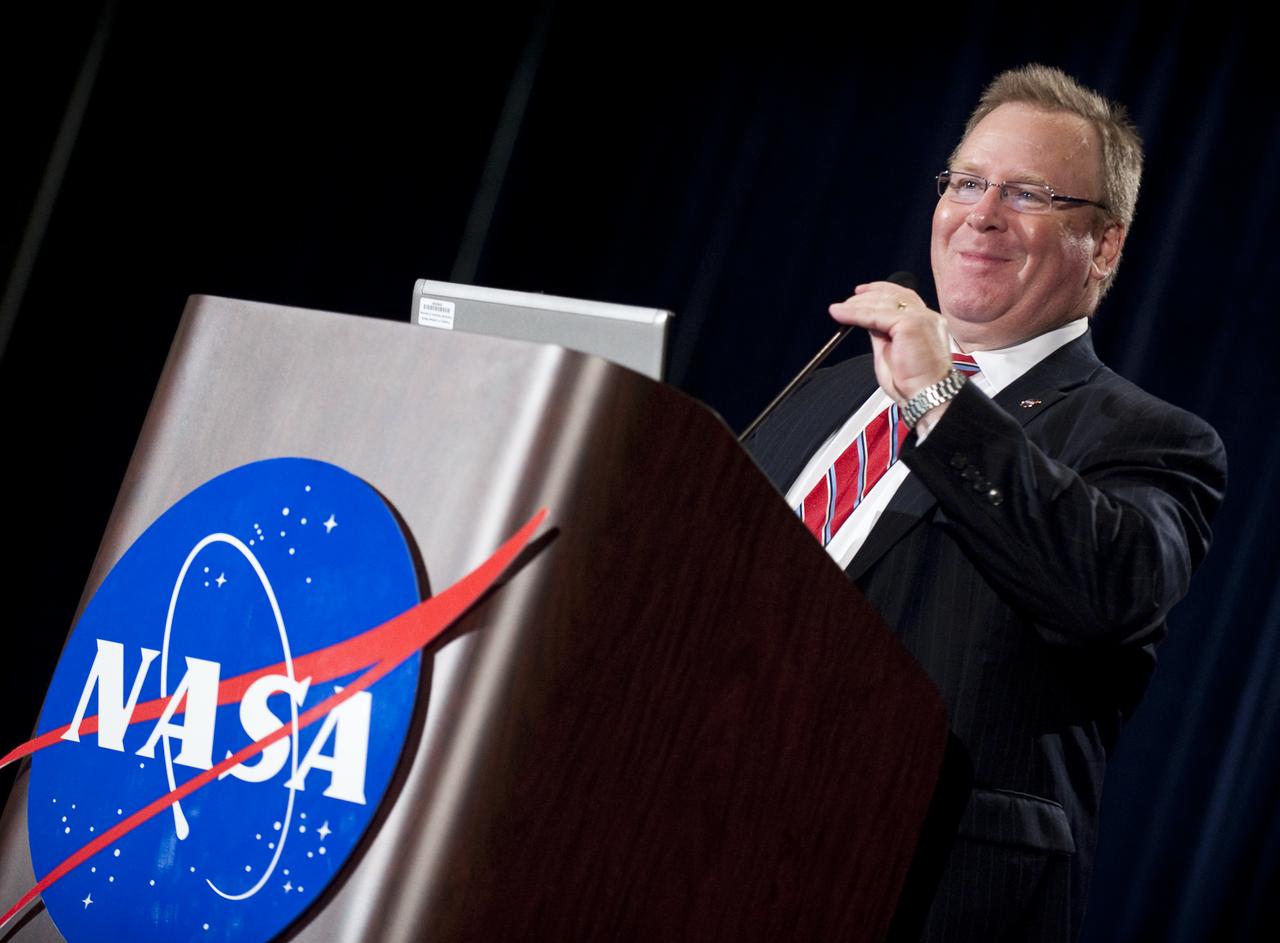
NASA's Partnership, Innovation & Commercial Space Director Doug Comstock speaks during the NASA New Space Technology Industry Forum being held at the University of Maryland in College Park on Tuesday, July 13, 2010. During the two-day event, speakers are focusing on the president's fiscal year 2011 budget request for NASA's new Space Technology Program. Representatives from industry, academia and the federal government are in attendance to discuss strategy, development and implementation of NASA's proposed new technology-enabled exploration. Photo Credit: (NASA/Bill Ingalls)
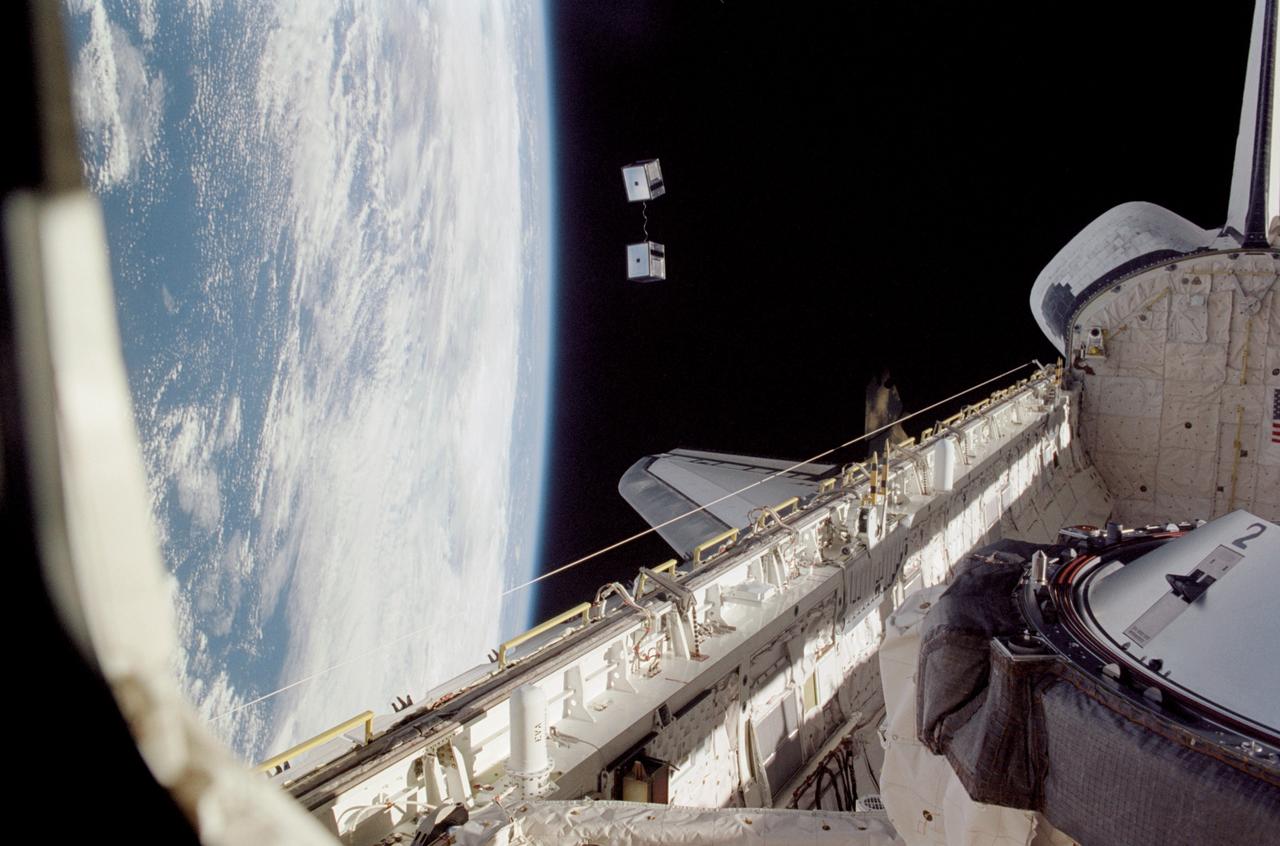
STS113-370-012 (2 December 2002) --- The horizon of a blue and white Earth and the blackness of space form the backdrop for this view, as two miniature satellites are released from the Space Shuttle Endeavour as part of an experiment referred to as MEPSI. Funded by the Defense Advance Research Projects Agency (DARPA), the two small satellites, which are tethered together, were released from Endeavour’s payload bay (visible in foreground) to fly free for three days as a technology demonstration of the launcher and use of micro- and nano-technologies in space systems.
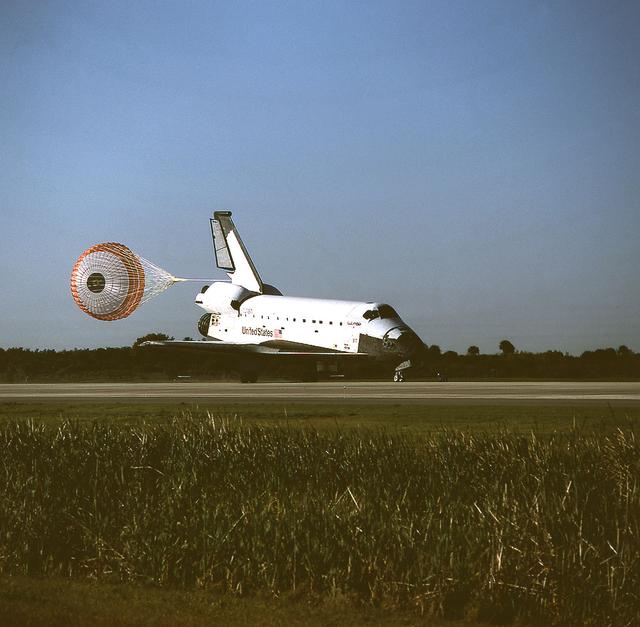
Space Shuttle Columbia (STS-62) comes to a graceful halt with the help of a parachute after a 14-day mission. The five member crew performed materials processing experiments on the United States Microgravity Payload 2 (USMP-2), and also conducted experiments designed to enable or extend space flight technology aboard the Office of Aeornautics and Space Technology 2 payload (OAST-2).
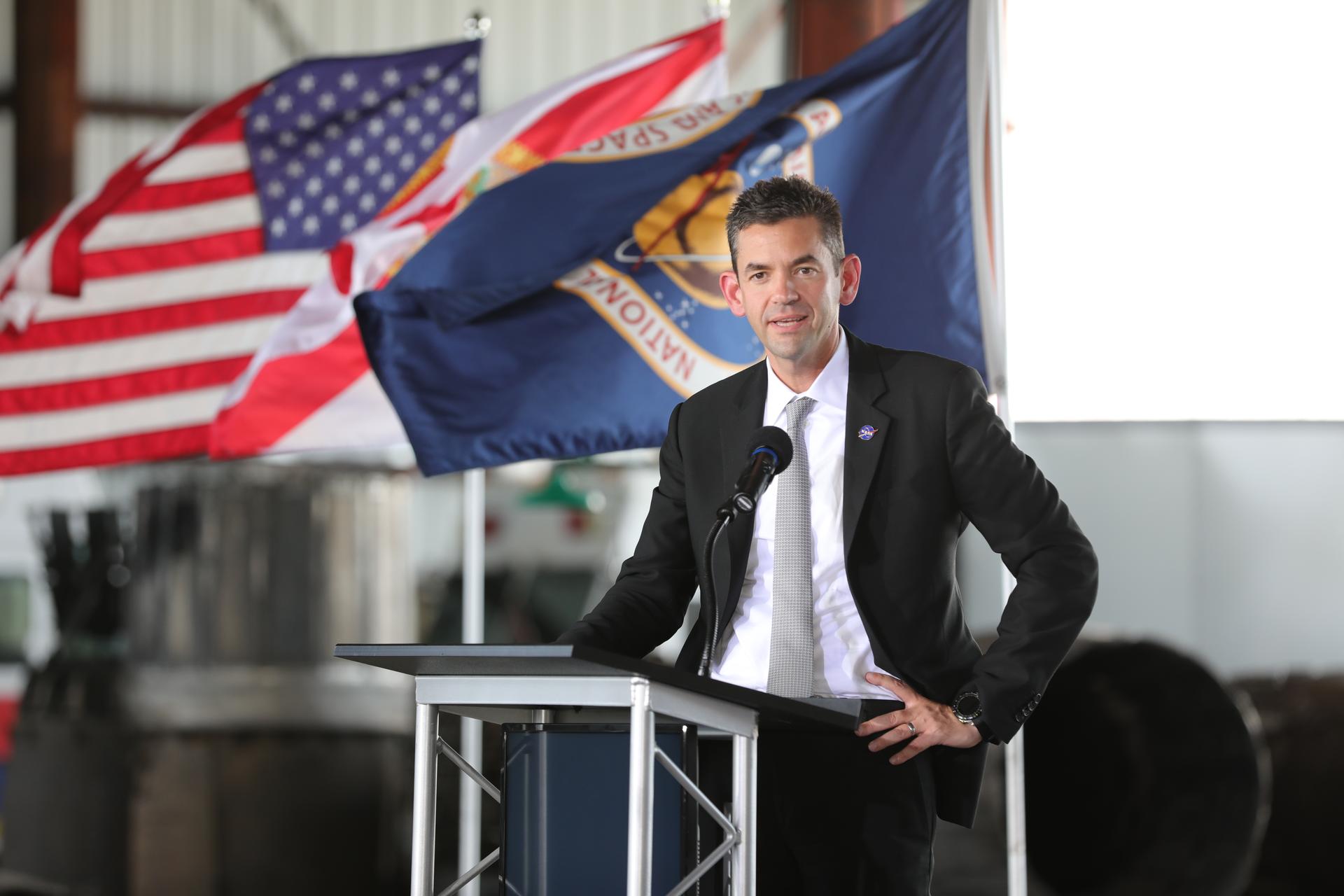
NASA Administrator Jared Isaacman announces MAX POWER at the Shuttle Landing Facility at NASA’s Kennedy Space Center in Florida on Friday, Aug. 14, 2026. The multi-day exposition of air and space technologies scheduled for November is tied to America’s 250th anniversary, showcasing the next-generation aircraft, spacecraft, autonomous vehicles, and technologies that will help define the future of transportation in air and space and lay a foundation for our nation’s future endeavors: from Earth to the Moon, Mars, and beyond.
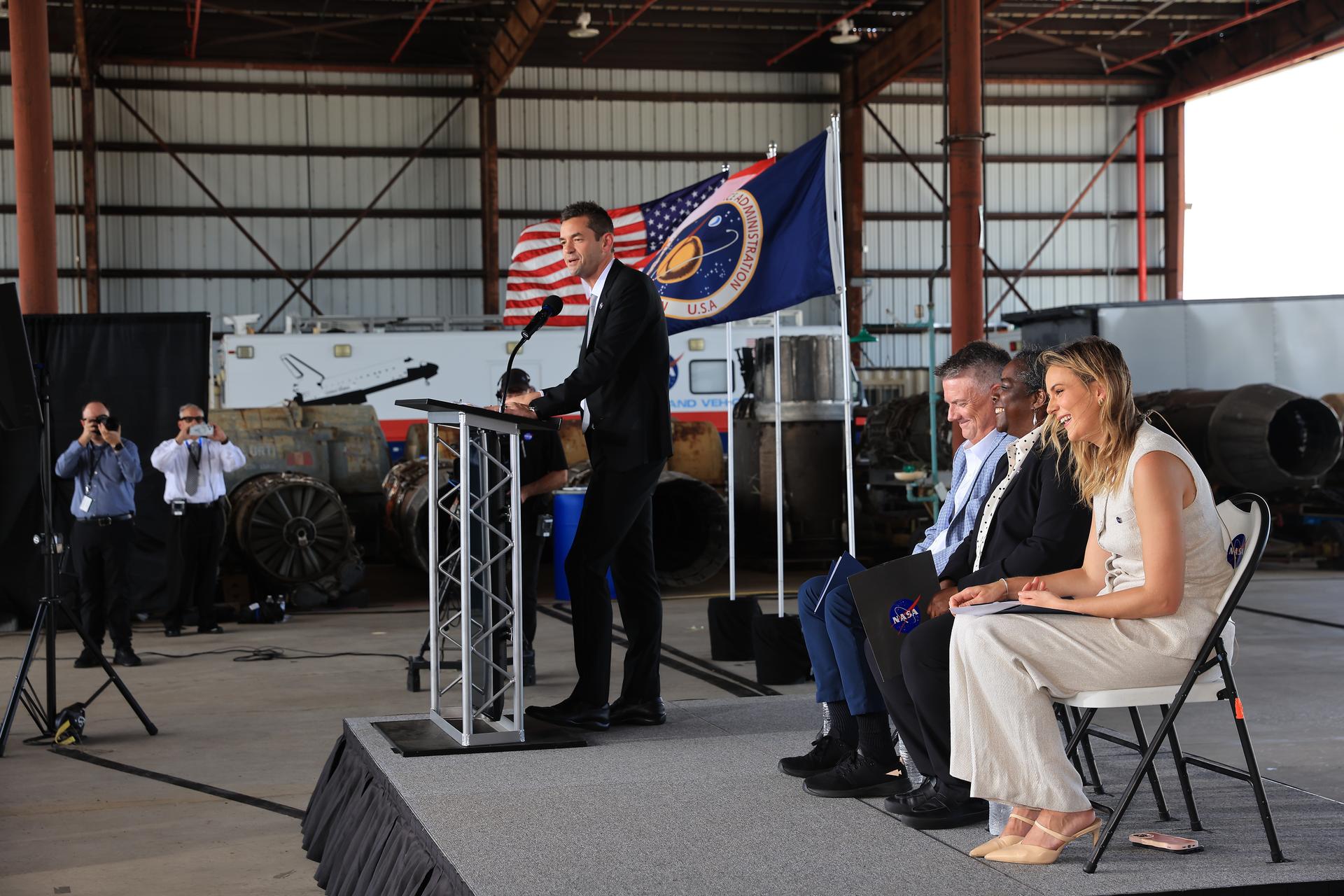
NASA Administrator Jared Isaacman announces MAX POWER at the Shuttle Landing Facility at NASA’s Kennedy Space Center in Florida on Friday, Aug. 14, 2026. The multi-day exposition of air and space technologies scheduled for November is tied to America’s 250th anniversary, showcasing the next-generation aircraft, spacecraft, autonomous vehicles, and technologies that will help define the future of transportation in air and space and lay a foundation for our nation’s future endeavors: from Earth to the Moon, Mars, and beyond.
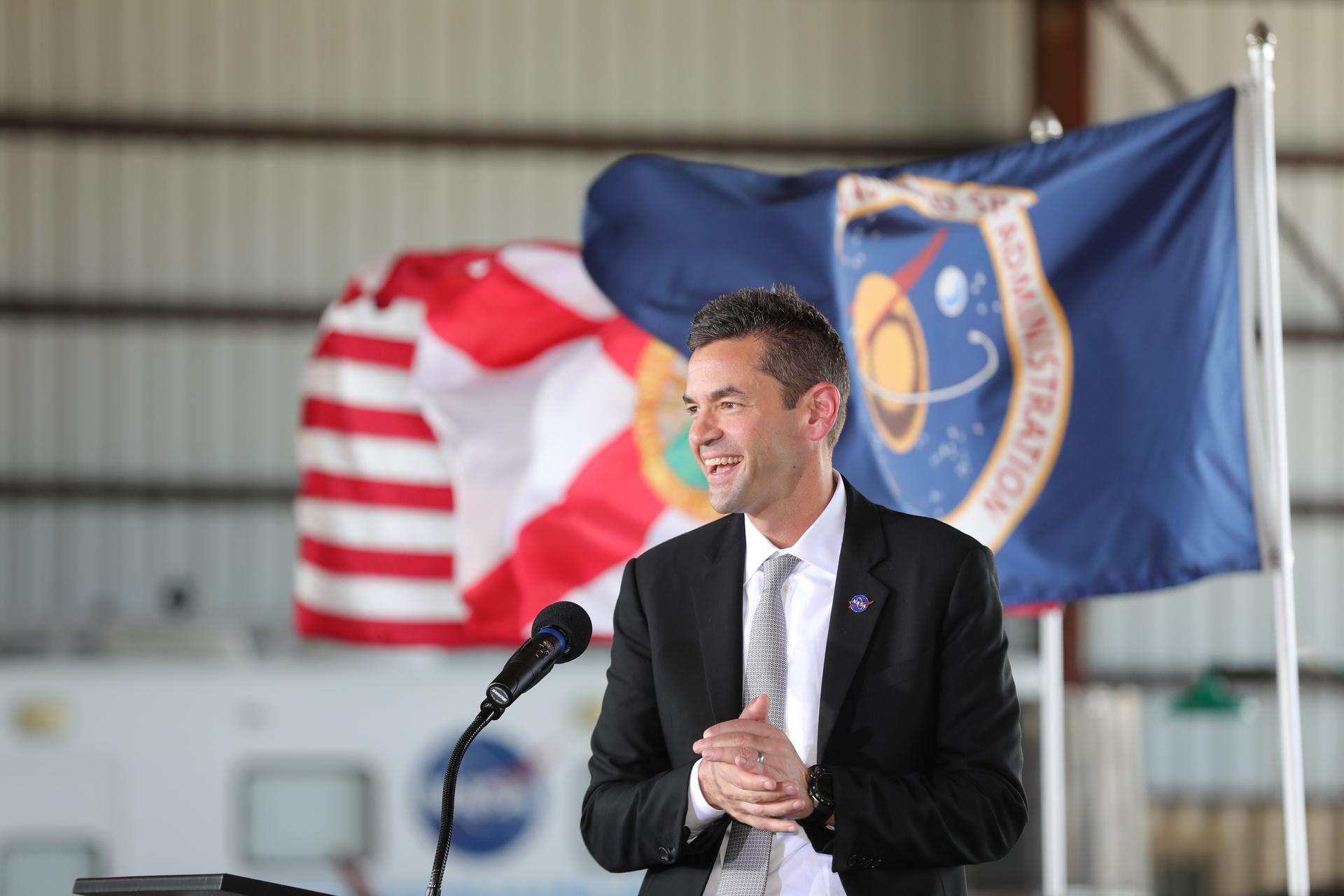
NASA Administrator Jared Isaacman announces MAX POWER at the Shuttle Landing Facility at NASA’s Kennedy Space Center in Florida on Friday, Aug. 14, 2026. The multi-day exposition of air and space technologies scheduled for November is tied to America’s 250th anniversary, showcasing the next-generation aircraft, spacecraft, autonomous vehicles, and technologies that will help define the future of transportation in air and space and lay a foundation for our nation’s future endeavors: from Earth to the Moon, Mars, and beyond.
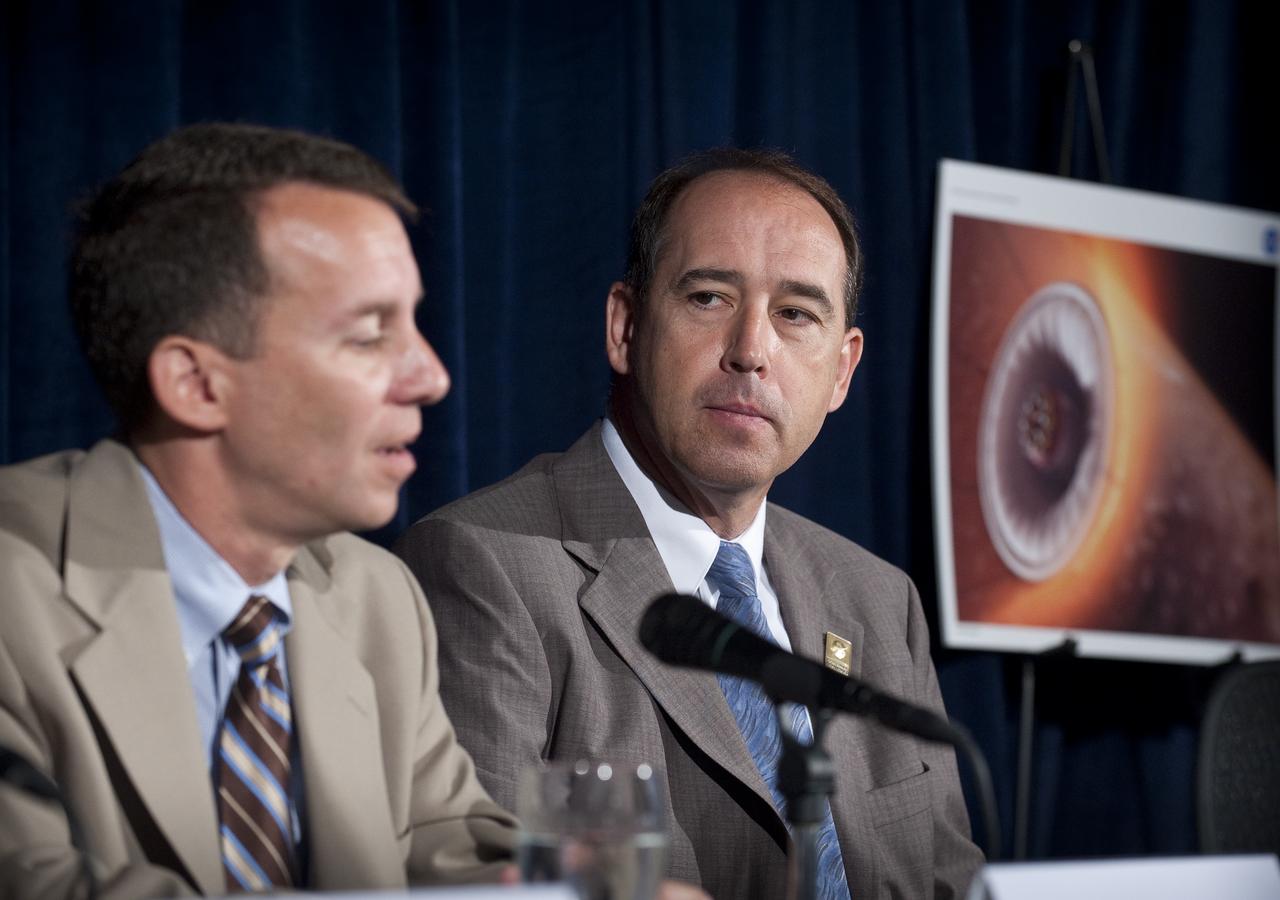
NASA's Manager of Centennial Challenges Andy Petro, right, listens as NASA Chief Technologist Bobby Braun answers a reporter's question during a press conference held at the NASA New Space Technology Industry Forum being held at the University of Maryland in College Park on Tuesday, July 13, 2010. During the two-day event, speakers are focusing on the president's fiscal year 2011 budget request for NASA's new Space Technology Program. Representatives from industry, academia and the federal government are in attendance to discuss strategy, development and implementation of NASA's proposed new technology-enabled exploration. Photo Credit: (NASA/Bill Ingalls)
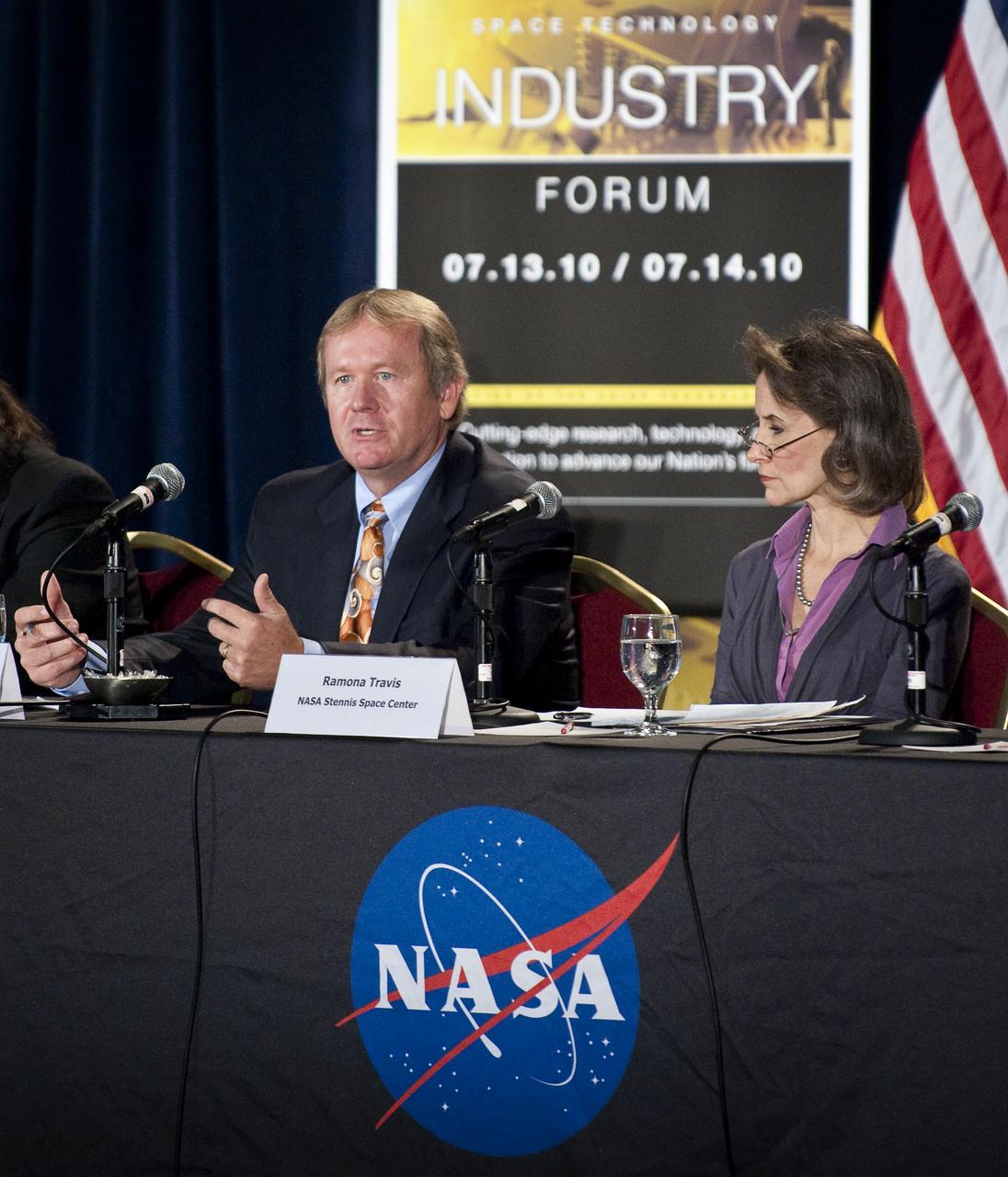
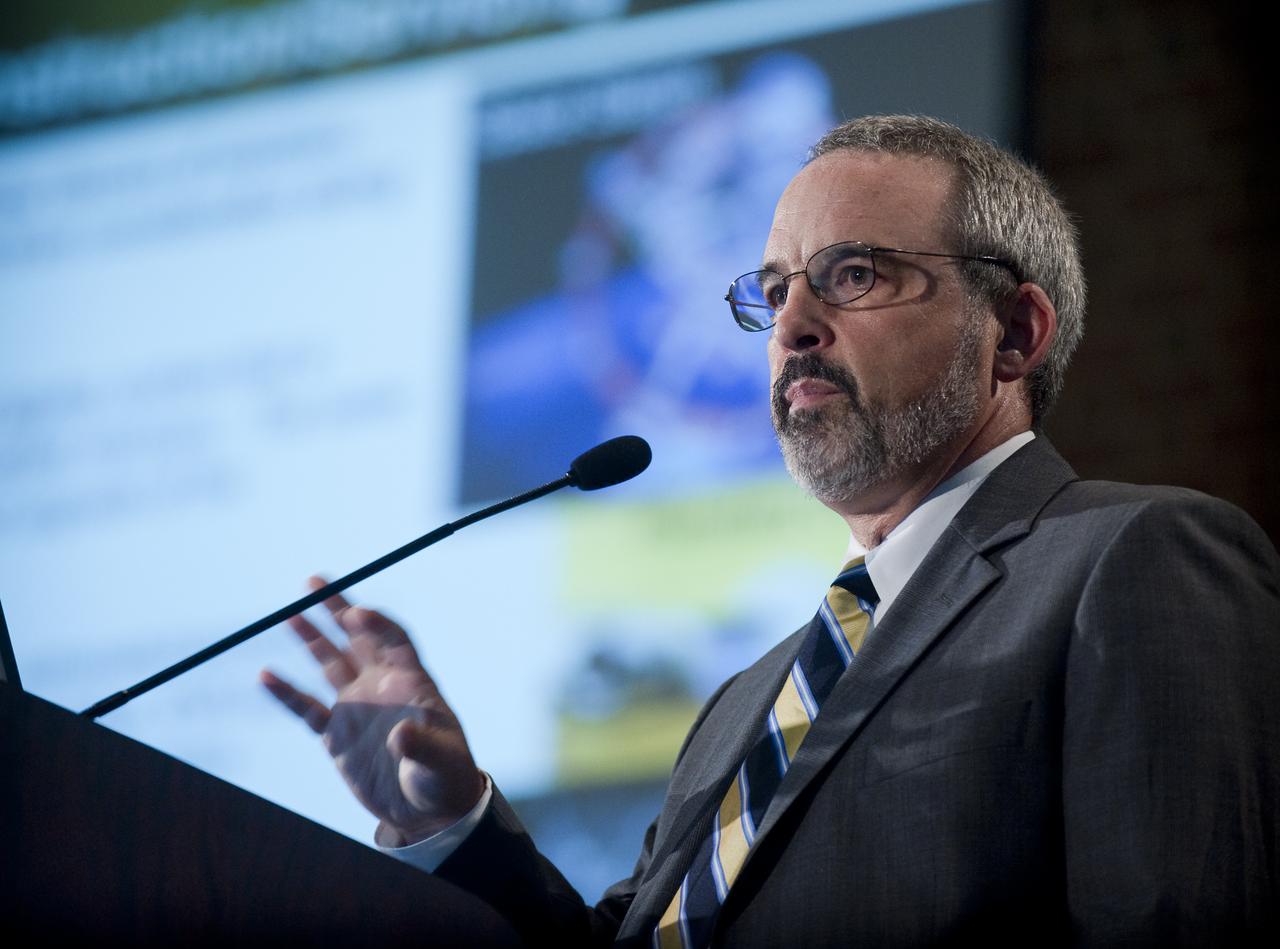
Keith Belvin, NASA Systems Engineer at NASA Langley Research Center, speaks during the NASA New Space Technology Industry Forum being held at the University of Maryland in College Park on Wednesday, July 14, 2010. During the two-day event, speakers are focusing on the president's fiscal year 2011 budget request for NASA's new Space Technology Program. Representatives from industry, academia and the federal government are in attendance to discuss strategy, development and implementation of NASA's proposed new technology-enabled exploration. Photo Credit: (NASA/Carla Cioffi)
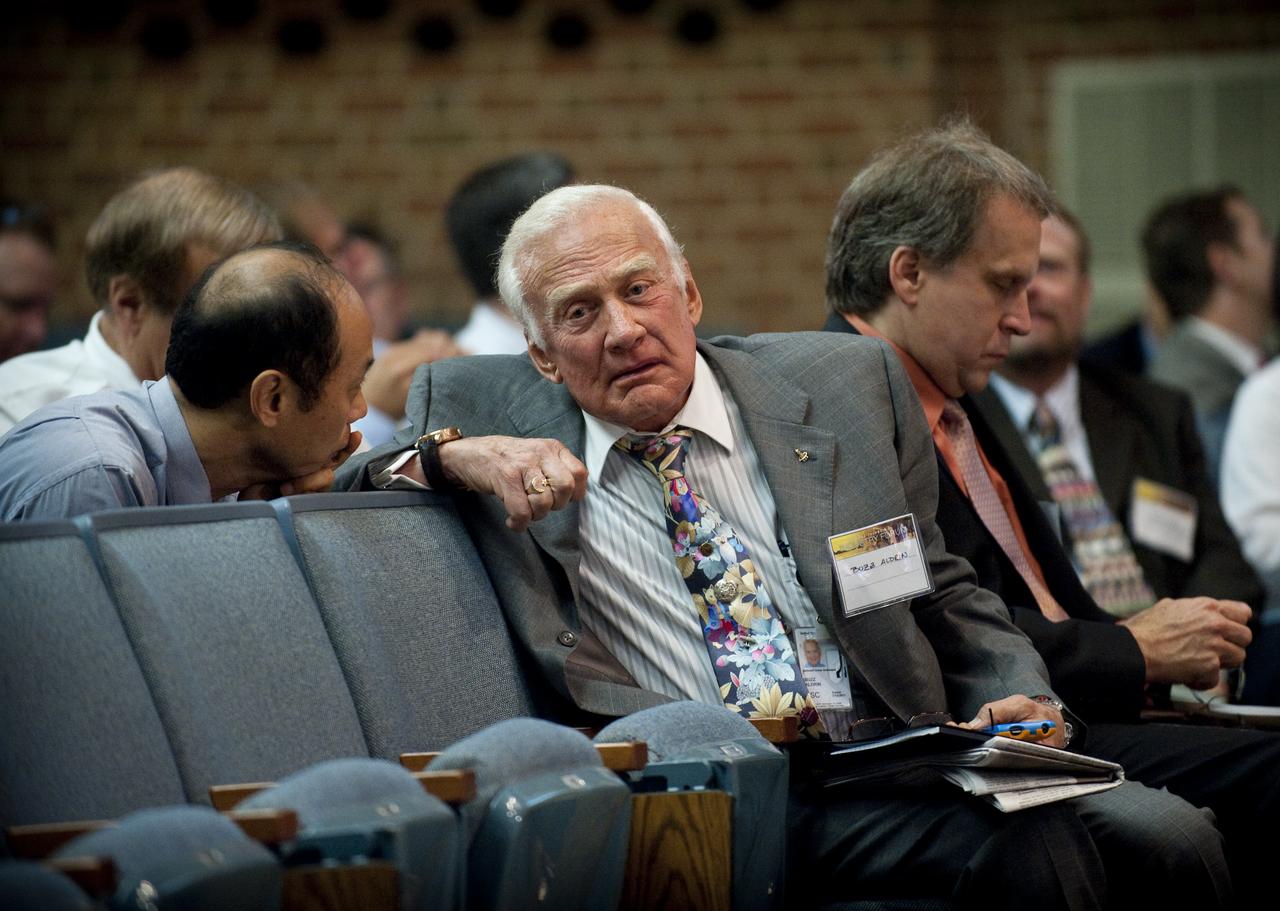
Retired NASA Astronaut and Air Force Col. Buzz Aldrin talks with other attendees of NASA's New Space Technology Industry Forum being held at the University of Maryland in College Park on Tuesday, July 13, 2010. During the two-day event, speakers are focusing on the president's fiscal year 2011 budget request for NASA's new Space Technology Program. Representatives from industry, academia and the federal government are in attendance to discuss strategy, development and implementation of NASA's proposed new technology-enabled exploration. Photo Credit: (NASA/Bill Ingalls)
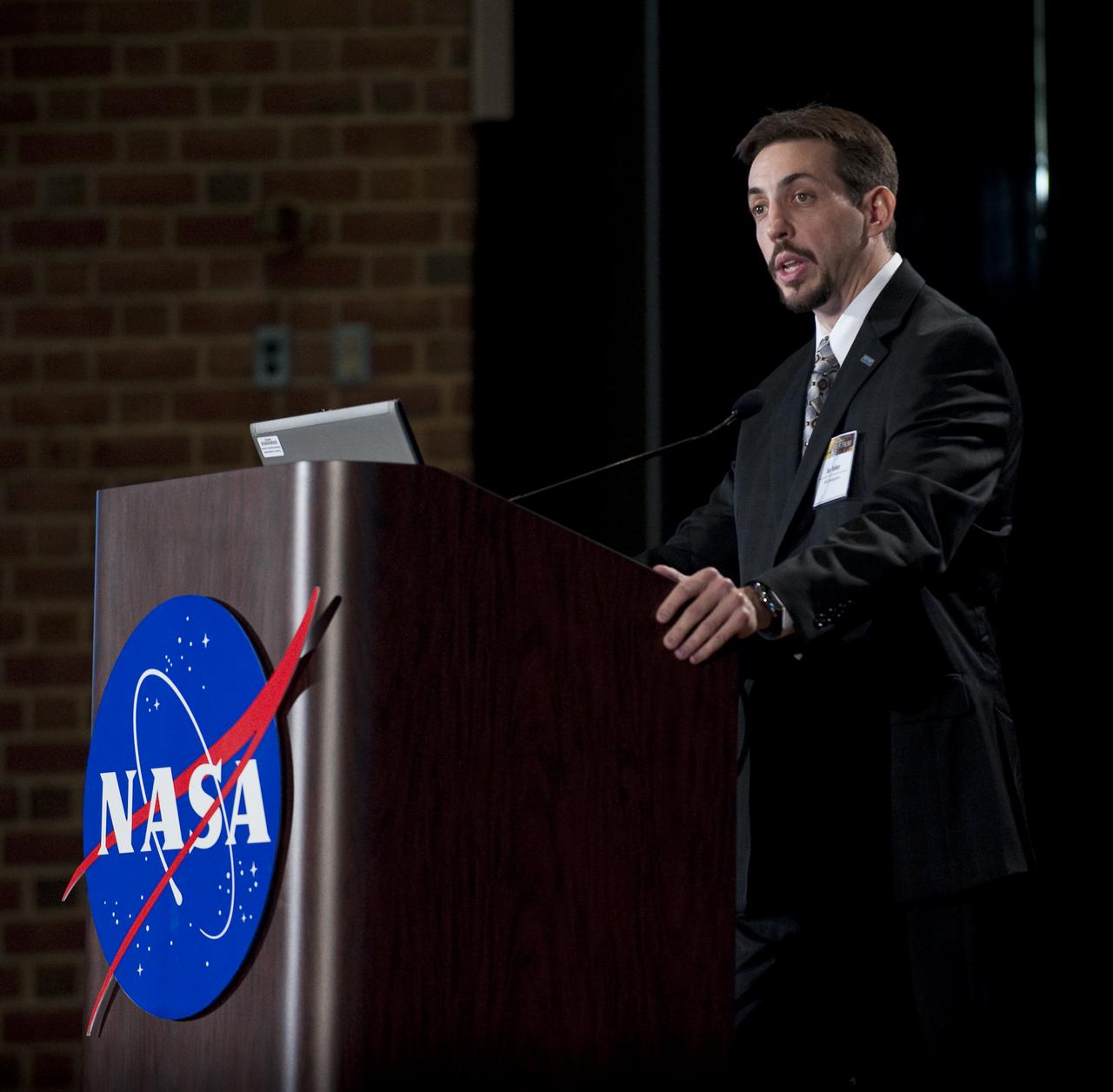
Program Executive for the NASA Innovative Advanced Concepts (NIAC) Program Jay Falker speaks during the NASA New Space Technology Industry Forum being held at the University of Maryland in College Park on Tuesday, July 13, 2010. During the two-day event, speakers are focusing on the president's fiscal year 2011 budget request for NASA's new Space Technology Program. Representatives from industry, academia and the federal government are in attendance to discuss strategy, development and implementation of NASA's proposed new technology-enabled exploration. Photo Credit: (NASA/Bill Ingalls)
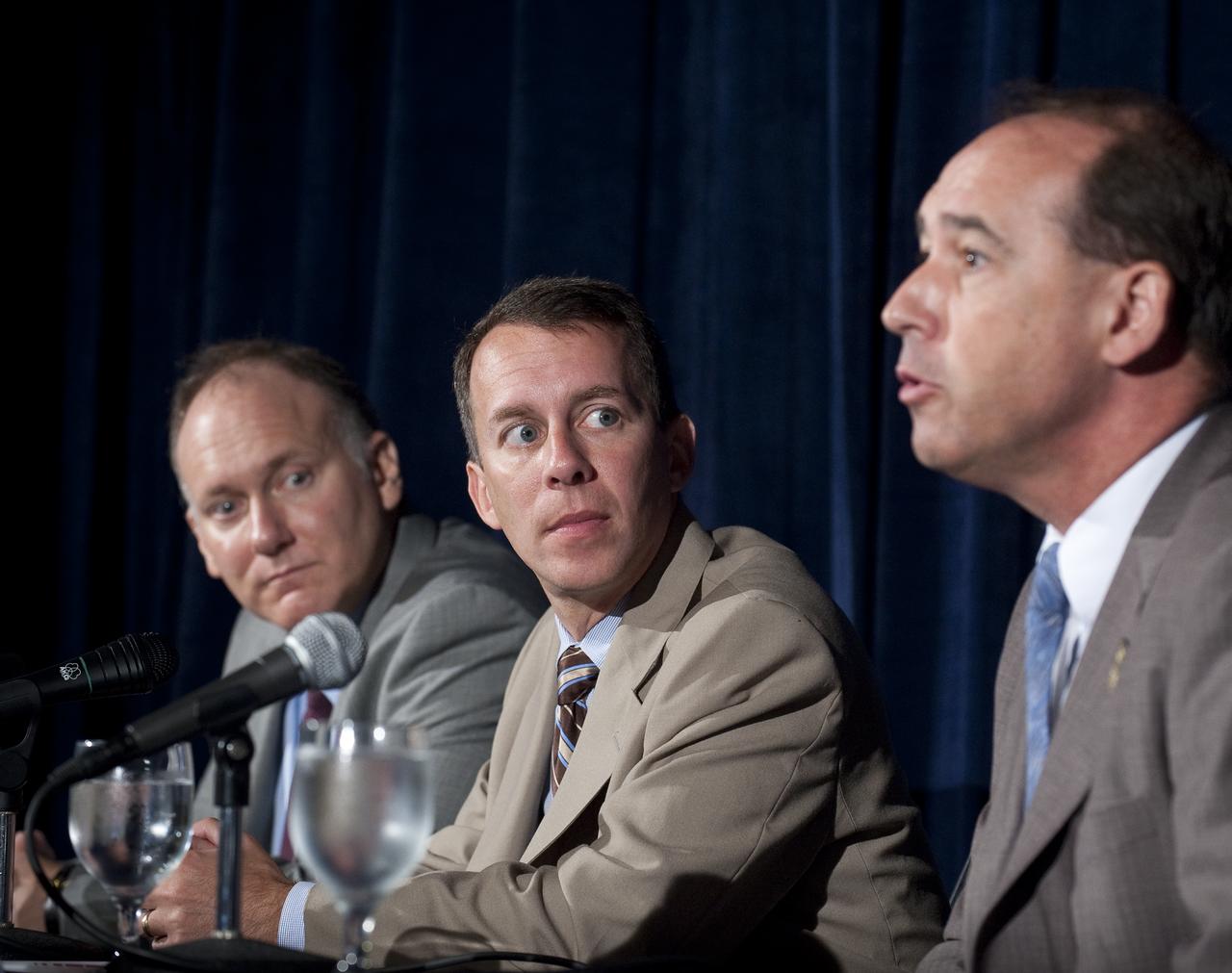
NASA Chief Technologist Bobby Braun, center, listens as NASA's Manager of Centennial Challenges Andy Petro, right, answers a reporter's question during a press conference held at the NASA New Space Technology Industry Forum being held at the University of Maryland in College Park on Tuesday, July 13, 2010. During the two-day event, speakers are focusing on the president's fiscal year 2011 budget request for NASA's new Space Technology Program. Representatives from industry, academia and the federal government are in attendance to discuss strategy, development and implementation of NASA's proposed new technology-enabled exploration. Photo Credit: (NASA/Bill Ingalls)
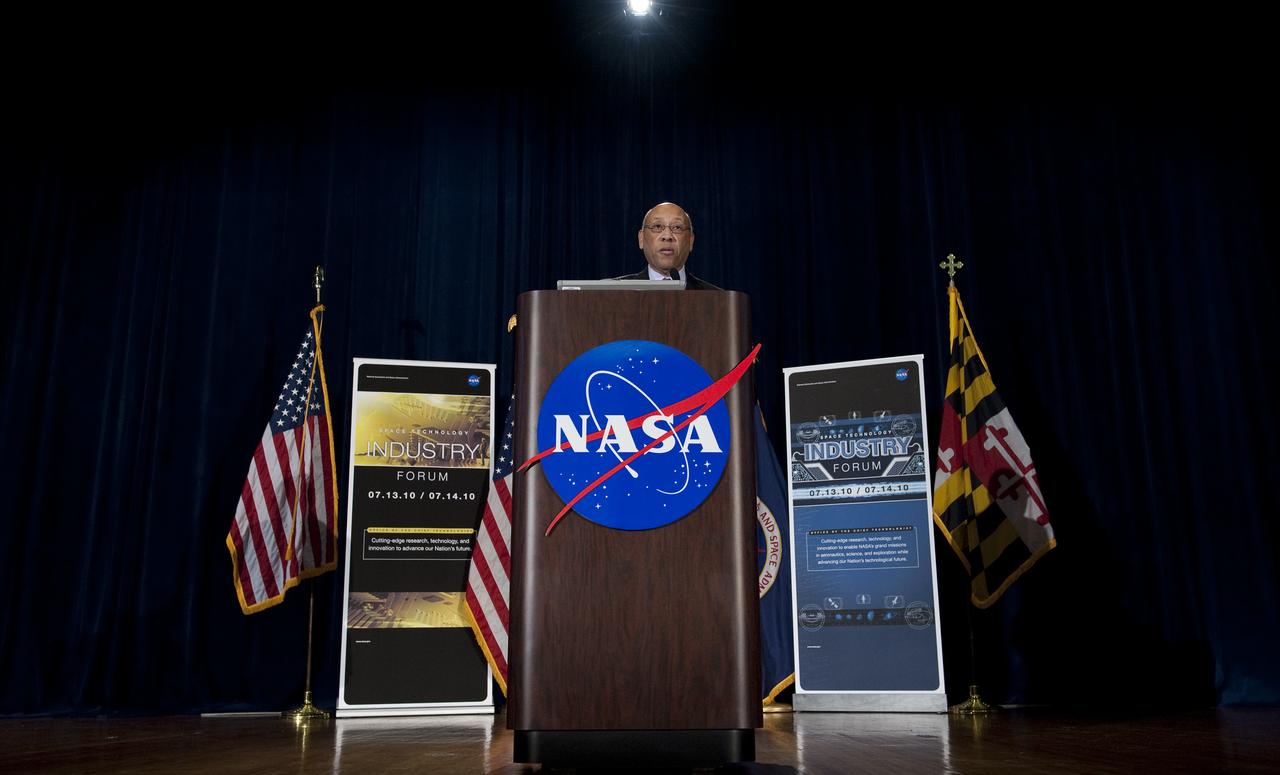
NASA Program Executive for SBIR/STTR Programs Carl Ray speaks during the NASA New Space Technology Industry Forum being held at the University of Maryland in College Park on Tuesday, July 13, 2010. During the two-day event, speakers are focusing on the president's fiscal year 2011 budget request for NASA's new Space Technology Program. Representatives from industry, academia and the federal government are in attendance to discuss strategy, development and implementation of NASA's proposed new technology-enabled exploration. Photo Credit: (NASA/Bill Ingalls)
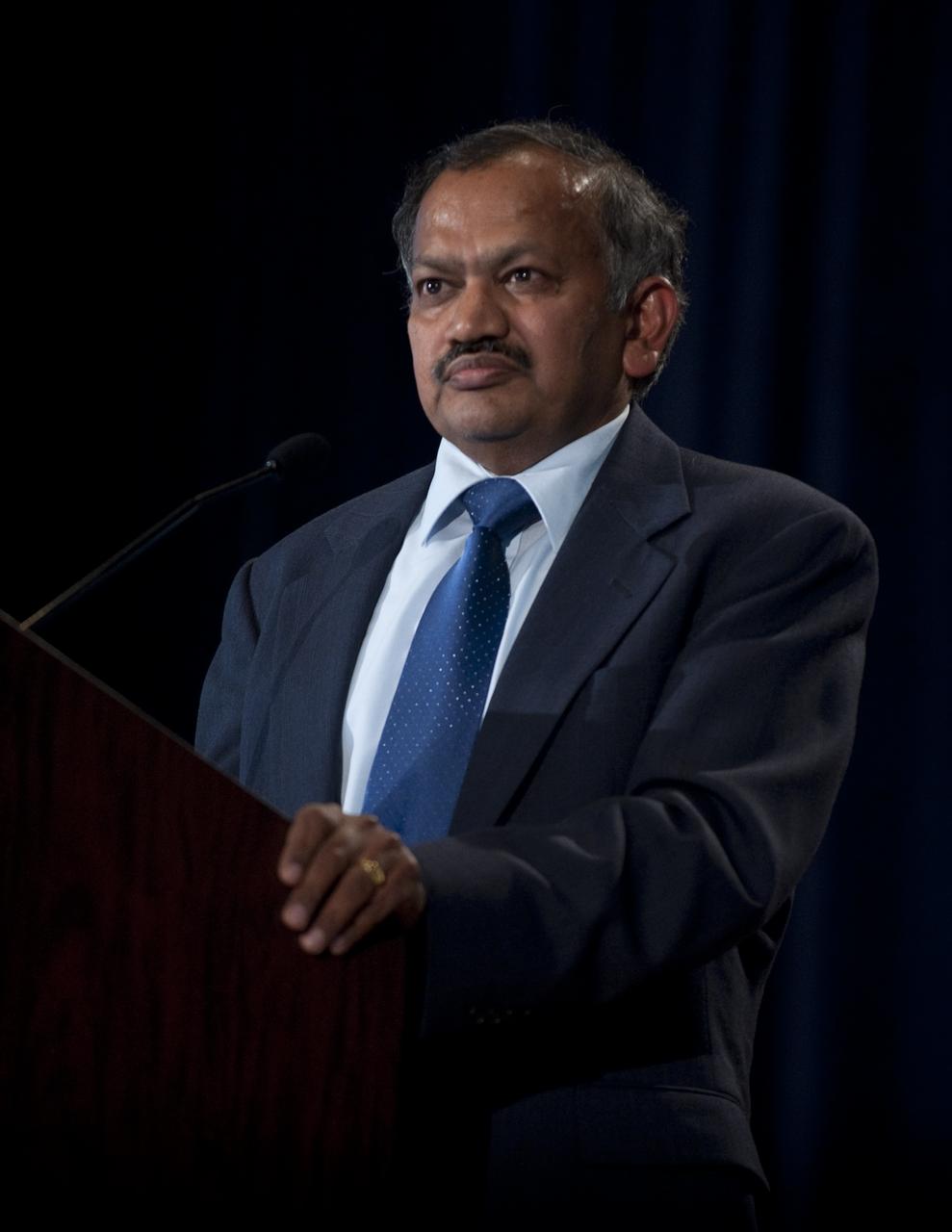
NASA's Program Executive for Flight Opportunities Program L.K. Kubendran speaks during the NASA New Space Technology Industry Forum being held at the University of Maryland in College Park on Tuesday, July 13, 2010. During the two-day event, speakers are focusing on the president's fiscal year 2011 budget request for NASA's new Space Technology Program. Representatives from industry, academia and the federal government are in attendance to discuss strategy, development and implementation of NASA's proposed new technology-enabled exploration. Photo Credit: (NASA/Bill Ingalls)
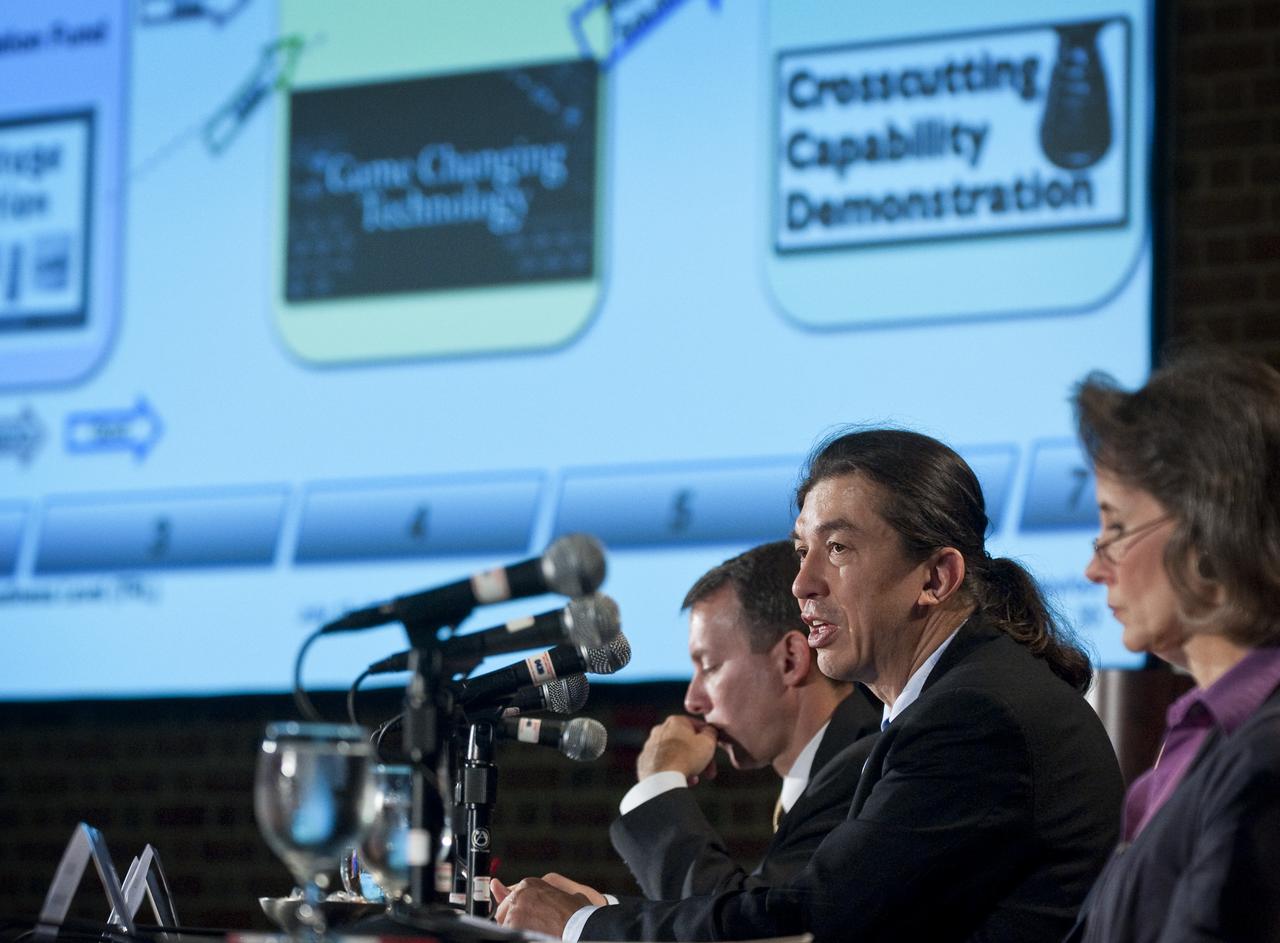
James Reuther, second from right, Director of Strategic Integration at NASA Headquarters, speaks during the NASA New Space Technology Industry Forum being held at the University of Maryland in College Park on Wednesday, July 14, 2010. During the two-day event, speakers are focusing on the president's fiscal year 2011 budget request for NASA's new Space Technology Program. Representatives from industry, academia and the federal government are in attendance to discuss strategy, development and implementation of NASA's proposed new technology-enabled exploration. Photo Credit: (NASA/Carla Cioffi)
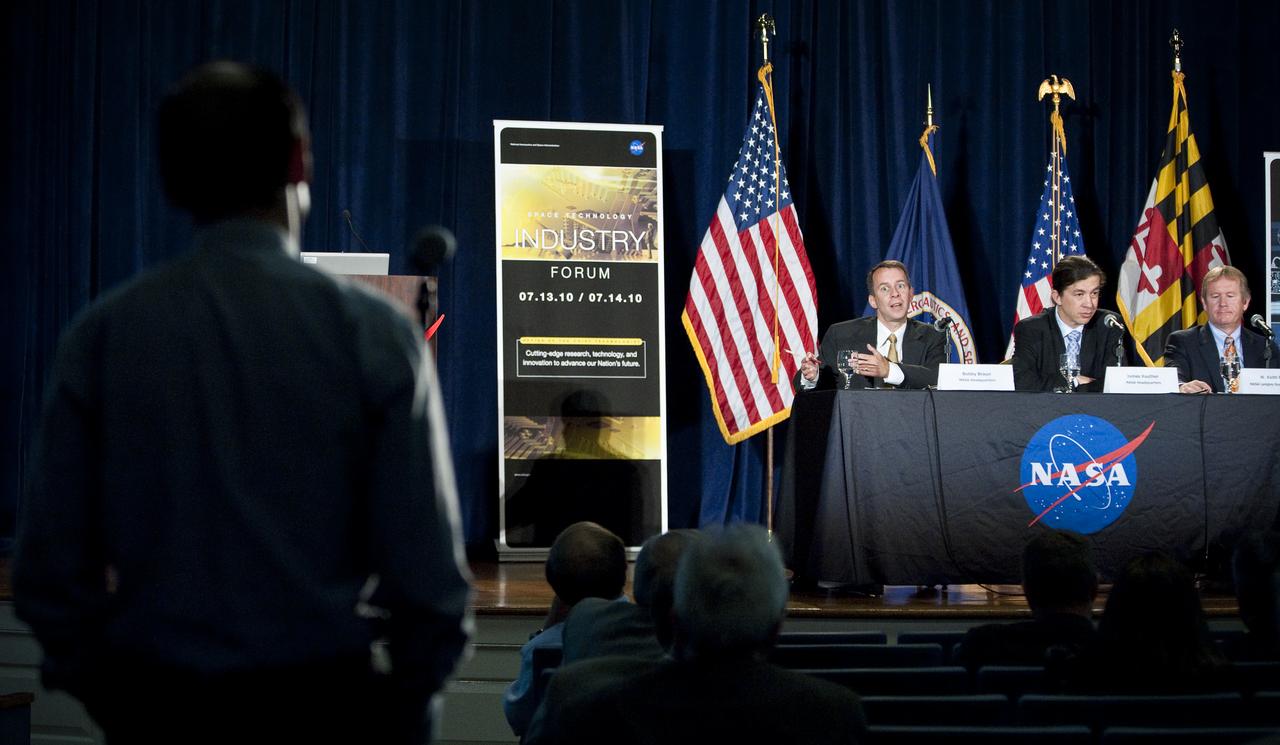
Bobby Braun, third from right, NASA Chief Technologist, answers a question during the NASA New Space Technology Industry Forum being held at the University of Maryland in College Park on Wednesday, July 14, 2010. During the two-day event, speakers are focusing on the president's fiscal year 2011 budget request for NASA's new Space Technology Program. Representatives from industry, academia and the federal government are in attendance to discuss strategy, development and implementation of NASA's proposed new technology-enabled exploration. Photo Credit: (NASA/Carla Cioffi)
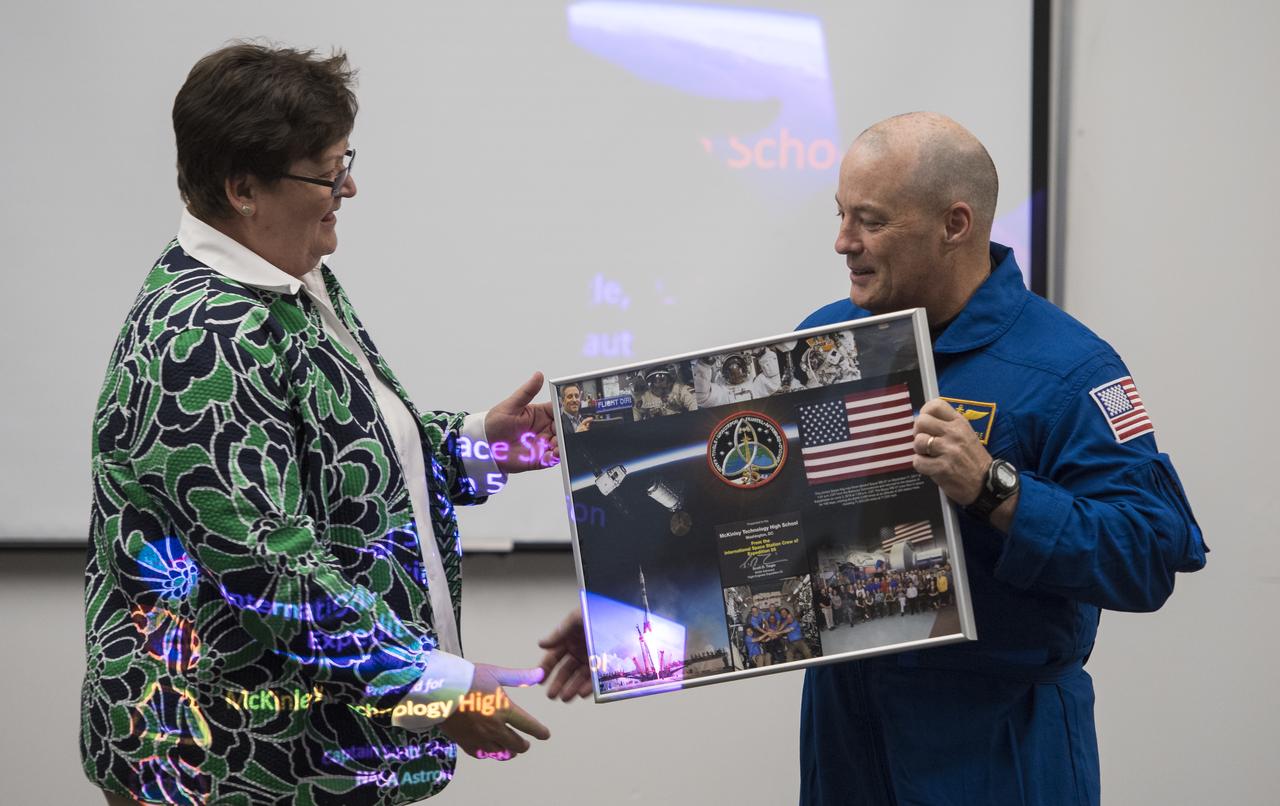
NASA astronaut Scott Tingle presents a montage for McKinley Technology High School to Principal Louise Jones before speaking to students about his time onboard the International Space Station, Friday, Sept. 14, 2018 at McKinley Technology High School in Washington, DC. Tingle spent 168 days onboard the International Space Station as part of Expeditions 54 and 55. Photo Credit: (NASA/Joel Kowsky)

An interactive augmented reality sandbox, used by Swamp Works personnel to visually demonstrate the work being done in the Granular Mechanics and Regolith Operations laboratory at the Kennedy Space Center to produce high-fidelity models of rocket plume impingement on the lunar surface, is photographed during an innovation showcase on Nov. 19, 2019. Nearly 50 exhibitors gathered in the Florida spaceport’s Neil Armstrong Operations and Checkout Building’s Mission Briefing Room to participate in the center’s Innovation Days – one of several events throughout the year aimed at fostering an encouraging an innovative culture at Kennedy. Showcase participants included individuals from multiple directorates, programs and organizations throughout Kennedy. In addition to the showcase, employees had the opportunity to attend an overview presentation on NASA’s Human Landing System (HLS), hosted by HLS Program Manager Lisa Watson-Morgan.
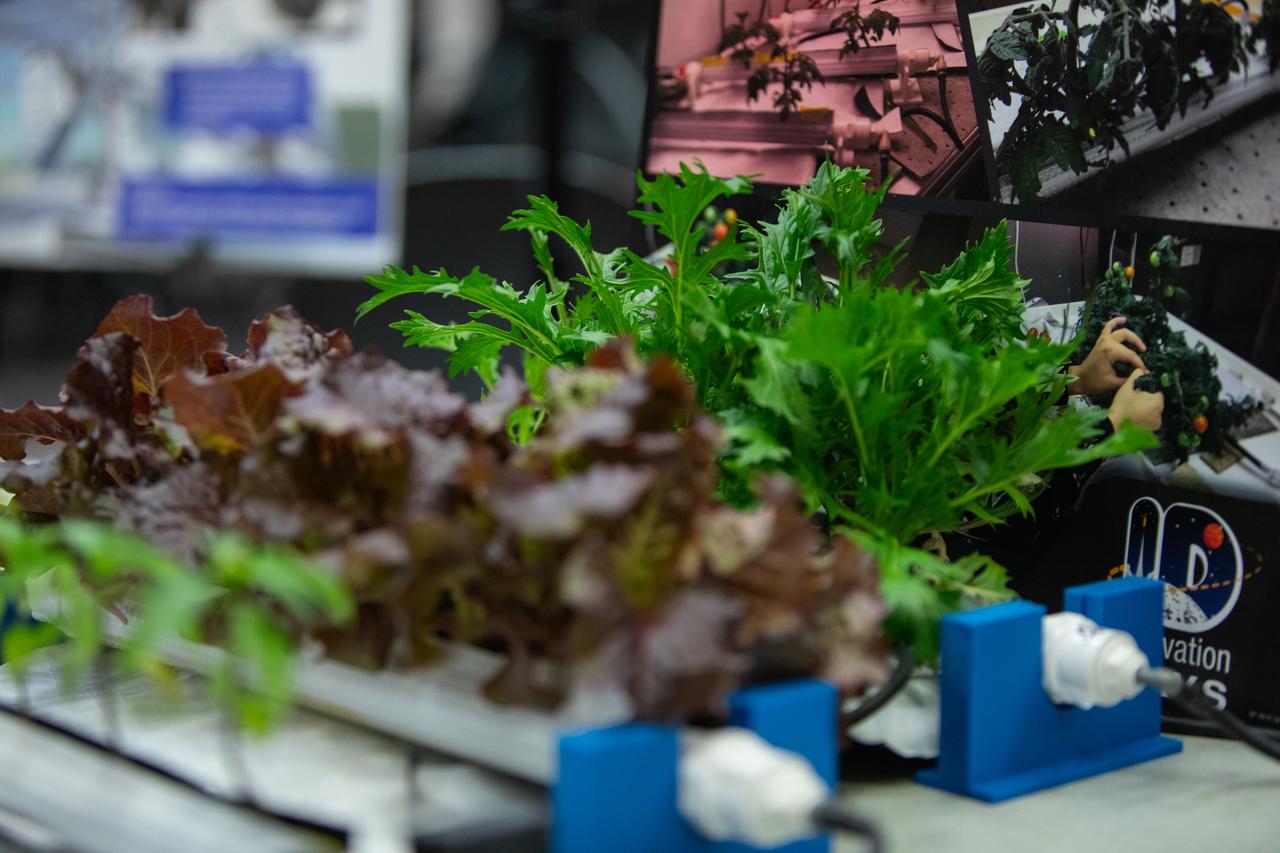
Plants utilized for ground experiments at NASA’s Kennedy Space Center in Florida that complement plant research on the International Space Station are photographed at an innovation showcase on Nov. 19, 2019. Nearly 50 exhibitors gathered in the Neil Armstrong Operations and Checkout Building’s Mission Briefing Room to participate in the center’s Innovation Days – one of several events throughout the year aimed at fostering an encouraging an innovative culture at Kennedy. Showcase participants included individuals from multiple directorates, programs and organizations throughout Kennedy. In addition to the showcase, employees had the opportunity to attend an overview presentation on NASA’s Human Landing System (HLS), hosted by HLS Program Manager Lisa Watson-Morgan.