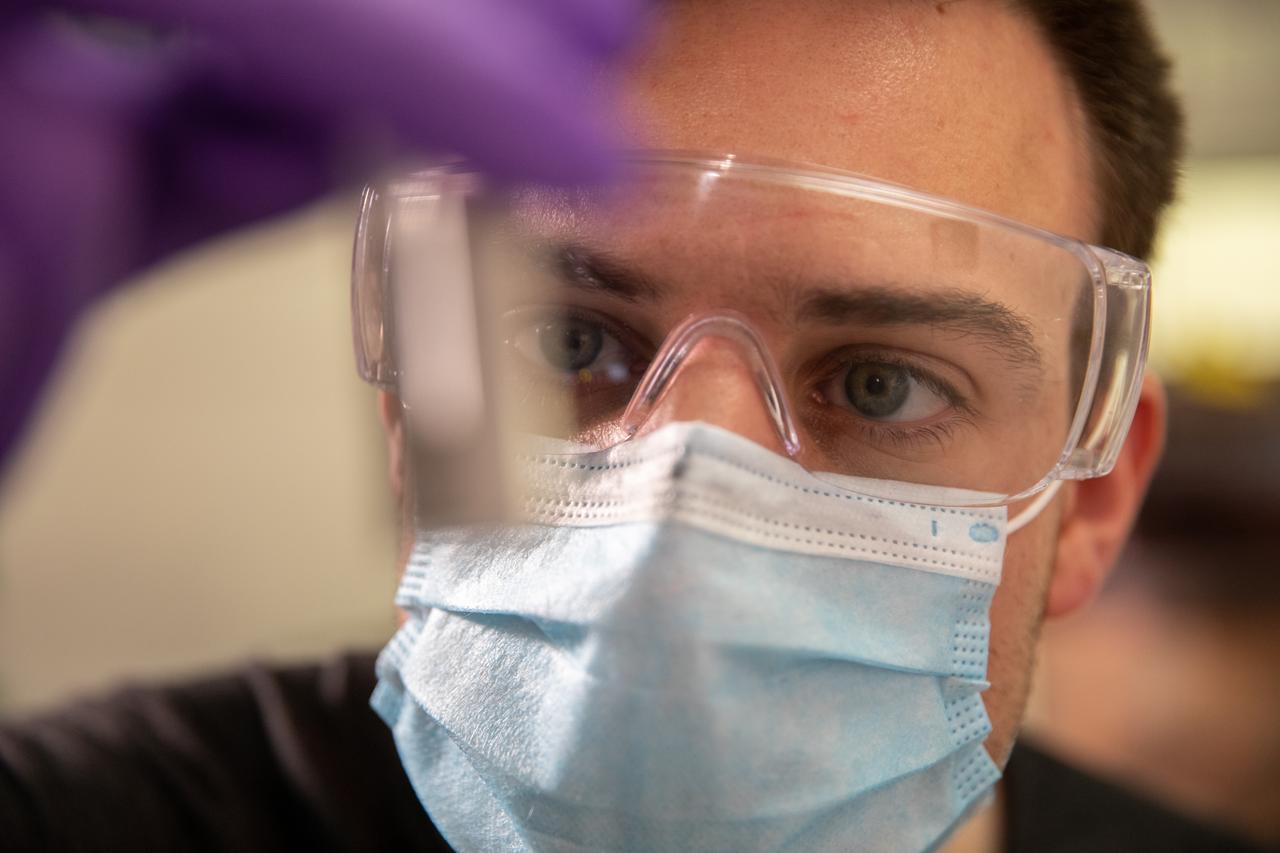
Kevin Grossman, project lead for the Gaseous Lunar Oxygen from Regolith Electrolysis (GaLORE) project at NASA Kennedy Space Center’s Swamp Works, inspects a piece of hardware for GaLORE on July 21, 2020, inside a laboratory at the center’s Neil Armstrong Operations and Checkout Building. Grossman is leading an Early Career Initiative project that is investing in turning lunar regolith into oxygen that could be used for life support for sustainable human lunar exploration on long-duration missions to Mars. GaLORE was selected as an Early Career Initiative project by NASA’s Space Technology Mission directorate.
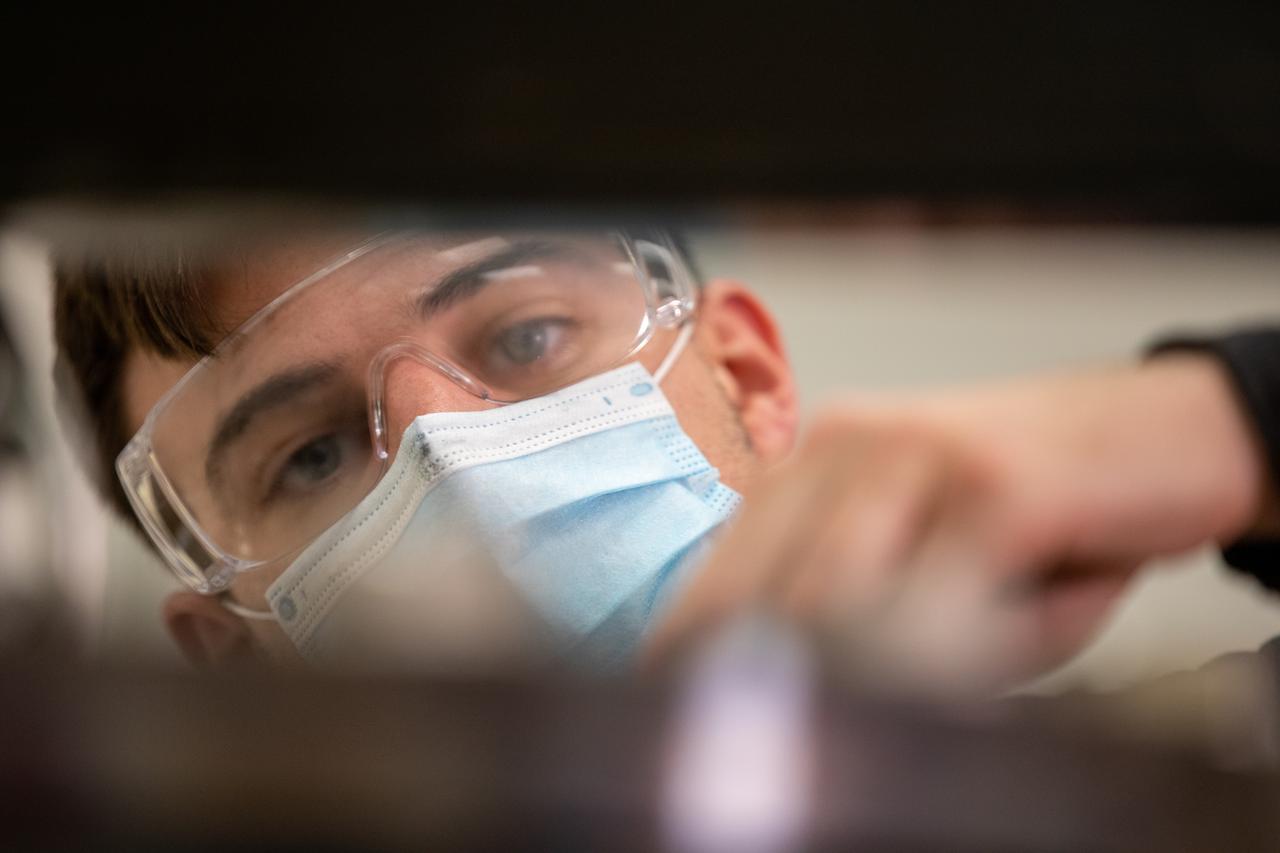
Kevin Grossman, project lead for the Gaseous Lunar Oxygen from Regolith Electrolysis (GaLORE) project at NASA Kennedy Space Center’s Swamp Works, works on the hardware for GaLORE on July 21, 2020, inside a laboratory at the center’s Neil Armstrong Operations and Checkout Building. Grossman is leading an Early Career Initiative project that is investing in turning lunar regolith into oxygen that could be used for life support for sustainable human lunar exploration on long-duration missions to Mars. GaLORE was selected as an Early Career Initiative project by NASA’s Space Technology Mission directorate.
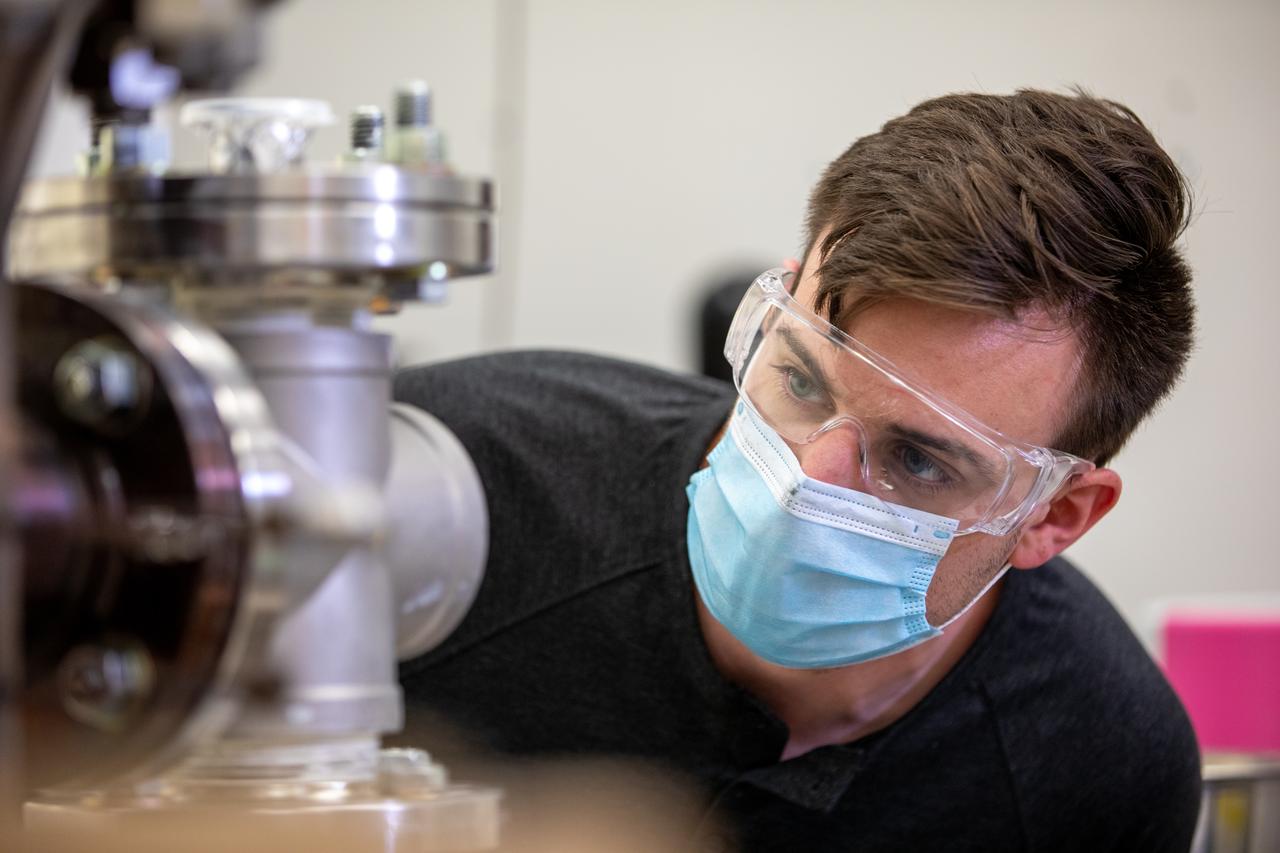
Kevin Grossman, project lead for the Gaseous Lunar Oxygen from Regolith Electrolysis (GaLORE) project at NASA Kennedy Space Center’s Swamp Works, works on the hardware for GaLORE on July 21, 2020, inside a laboratory at the center’s Neil Armstrong Operations and Checkout Building. Grossman is leading an Early Career Initiative project that is investing in turning lunar regolith into oxygen that could be used for life support for sustainable human lunar exploration on long-duration missions to Mars. GaLORE was selected as an Early Career Initiative project by NASA’s Space Technology Mission directorate.
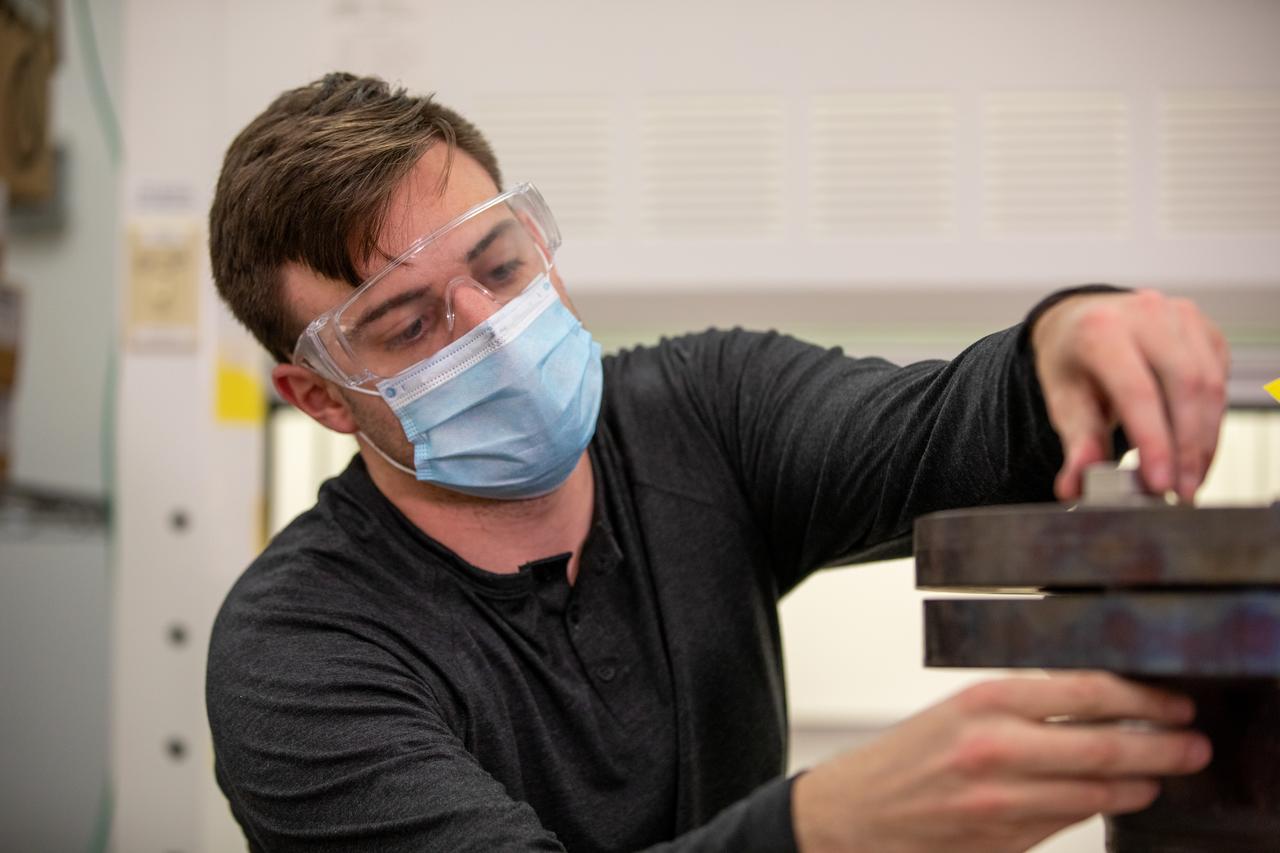
Kevin Grossman, project lead for the Gaseous Lunar Oxygen from Regolith Electrolysis (GaLORE) project at NASA Kennedy Space Center’s Swamp Works, checks the hardware for GaLORE on July 21, 2020, inside a laboratory at the center’s Neil Armstrong Operations and Checkout Building. Grossman is leading an Early Career Initiative project that is investing in turning lunar regolith into oxygen that could be used for life support for sustainable human lunar exploration on long-duration missions to Mars. GaLORE was selected as an Early Career Initiative project by NASA’s Space Technology Mission directorate.
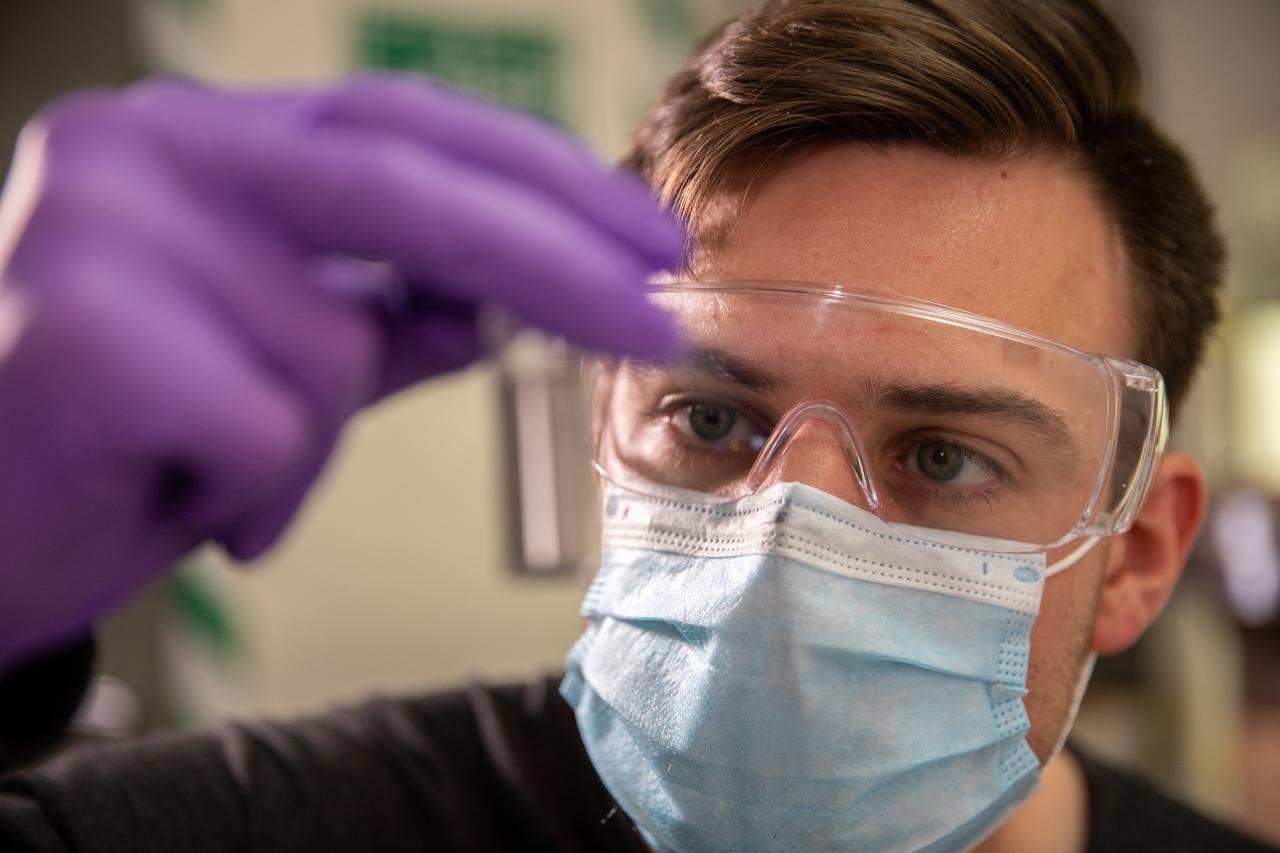
Kevin Grossman, project lead for the Gaseous Lunar Oxygen from Regolith Electrolysis (GaLORE) project at NASA Kennedy Space Center’s Swamp Works, inspects a piece of hardware for GaLORE on July 21, 2020, inside a laboratory at the center’s Neil Armstrong Operations and Checkout Building. Grossman is leading an Early Career Initiative project that is investing in turning lunar regolith into oxygen that could be used for life support for sustainable human lunar exploration on long-duration missions to Mars. GaLORE was selected as an Early Career Initiative project by NASA’s Space Technology Mission directorate.
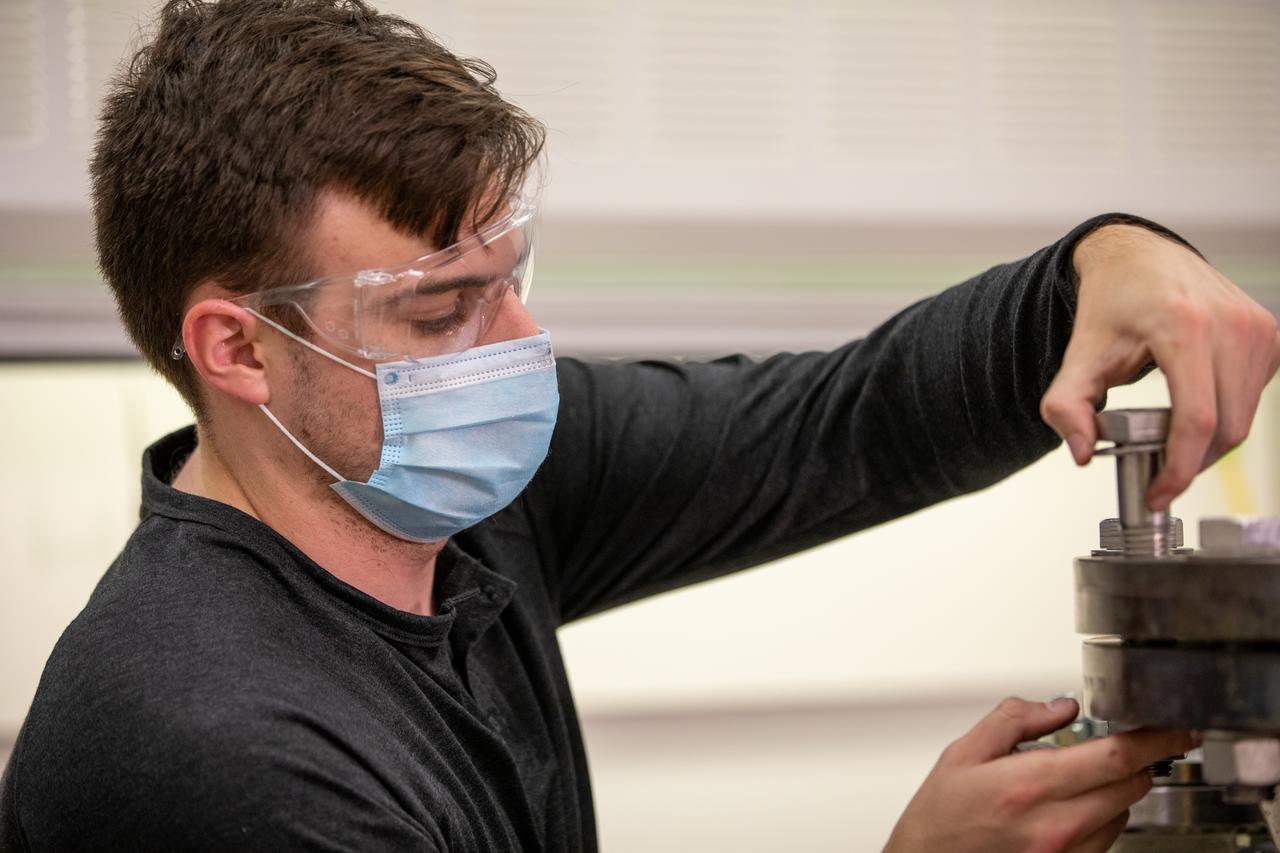
Kevin Grossman, project lead for the Gaseous Lunar Oxygen from Regolith Electrolysis (GaLORE) project at NASA Kennedy Space Center’s Swamp Works, checks the hardware for GaLORE on July 21, 2020, inside a laboratory at the center’s Neil Armstrong Operations and Checkout Building. Grossman is leading an Early Career Initiative project that is investing in turning lunar regolith into oxygen that could be used for life support for sustainable human lunar exploration on long-duration missions to Mars. GaLORE was selected as an Early Career Initiative project by NASA’s Space Technology Mission directorate.
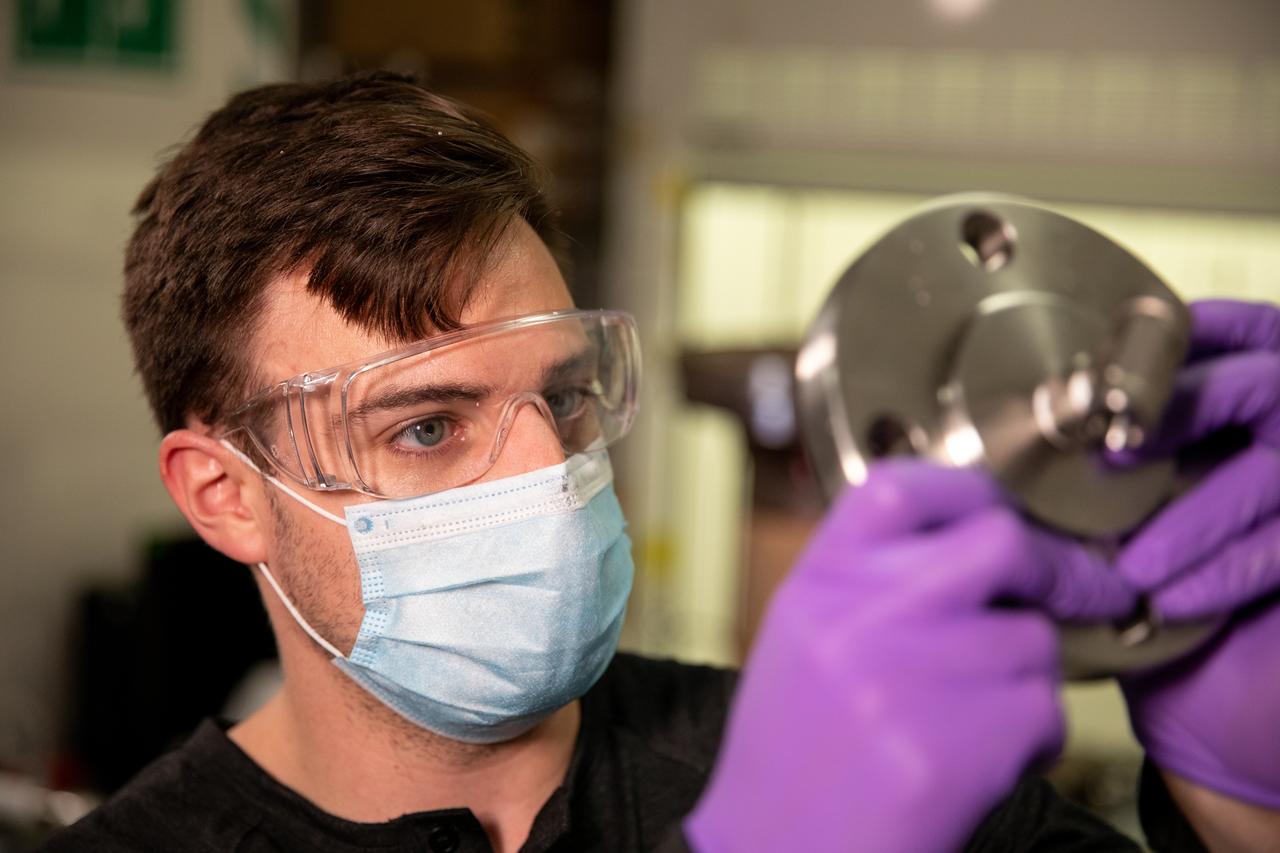
Kevin Grossman, project lead for the Gaseous Lunar Oxygen from Regolith Electrolysis (GaLORE) project at NASA Kennedy Space Center’s Swamp Works, inspects a piece of hardware for GaLORE on July 21, 2020, inside a laboratory at the center’s Neil Armstrong Operations and Checkout Building. Grossman is leading an Early Career Initiative project that is investing in turning lunar regolith into oxygen that could be used for life support for sustainable human lunar exploration on long-duration missions to Mars. GaLORE was selected as an Early Career Initiative project by NASA’s Space Technology Mission directorate.
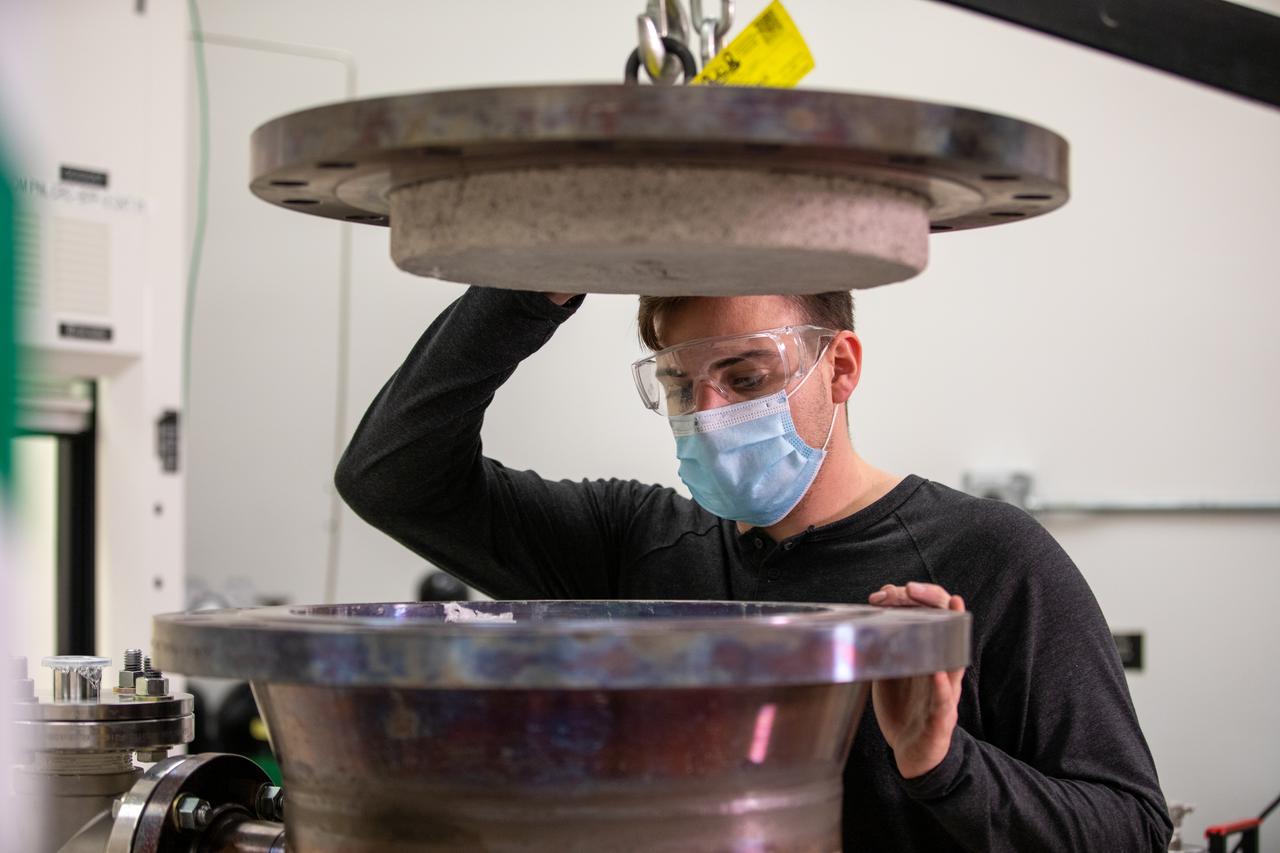
Kevin Grossman, project lead for the Gaseous Lunar Oxygen from Regolith Electrolysis (GaLORE) project at NASA Kennedy Space Center’s Swamp Works, checks the hardware for GaLORE on July 21, 2020, inside a laboratory at the center’s Neil Armstrong Operations and Checkout Building. Grossman is leading an Early Career Initiative project that is investing in turning lunar regolith into oxygen that could be used for life support for sustainable human lunar exploration on long-duration missions to Mars. GaLORE was selected as an Early Career Initiative project by NASA’s Space Technology Mission directorate.
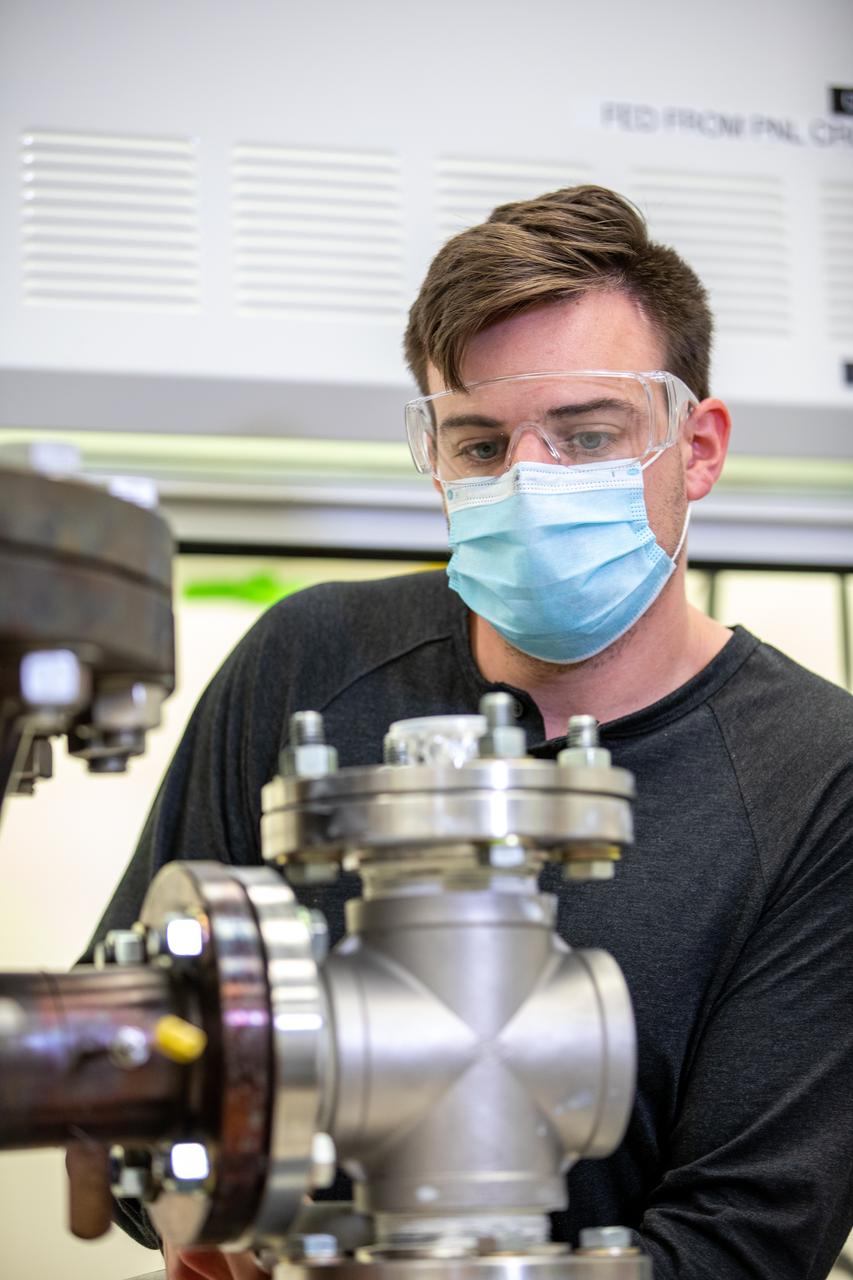
Kevin Grossman, project lead for the Gaseous Lunar Oxygen from Regolith Electrolysis (GaLORE) project at NASA Kennedy Space Center’s Swamp Works, works on the hardware for GaLORE on July 21, 2020, inside a laboratory at the center’s Neil Armstrong Operations and Checkout Building. Grossman is leading an Early Career Initiative project that is investing in turning lunar regolith into oxygen that could be used for life support for sustainable human lunar exploration on long-duration missions to Mars. GaLORE was selected as an Early Career Initiative project by NASA’s Space Technology Mission directorate.
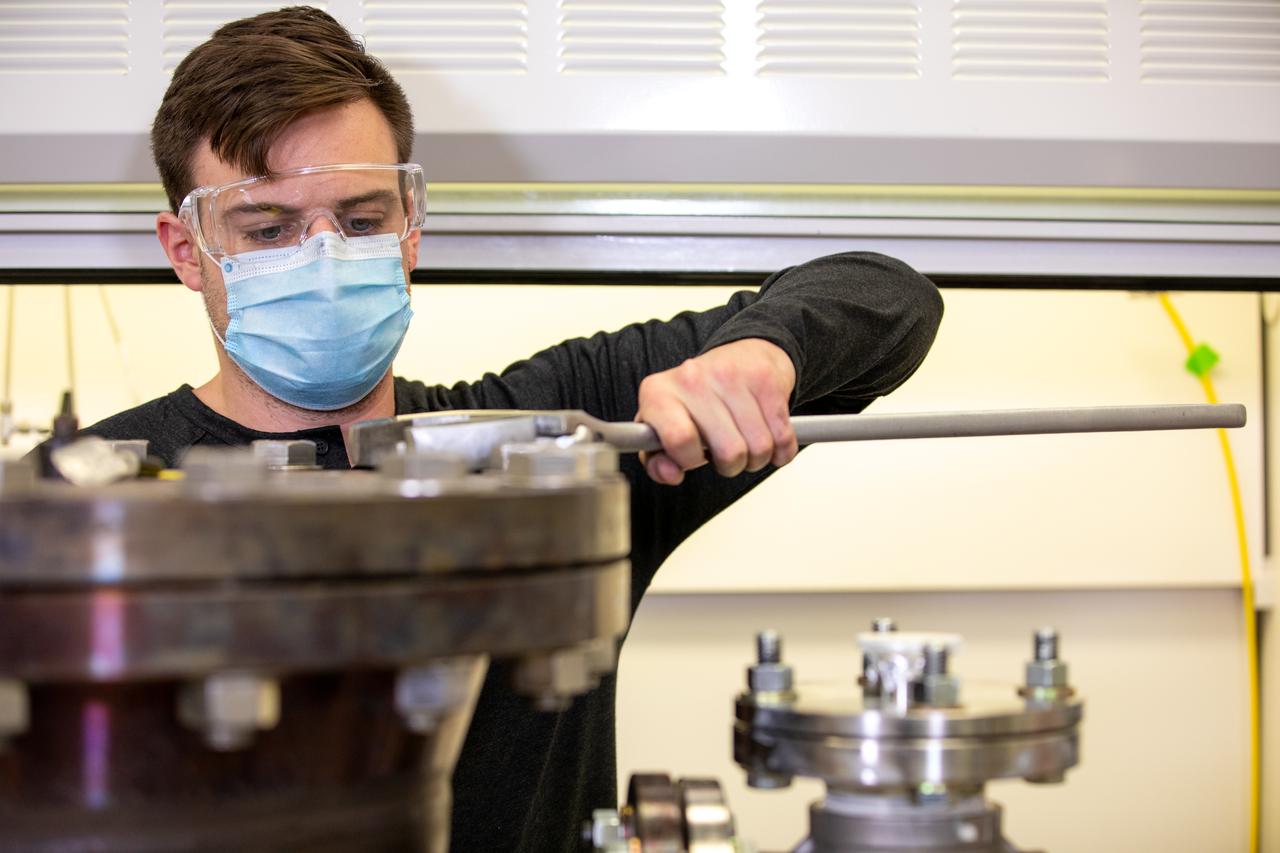
Kevin Grossman, project lead for the Gaseous Lunar Oxygen from Regolith Electrolysis (GaLORE) project at NASA Kennedy Space Center’s Swamp Works, works on the hardware for GaLORE on July 21, 2020, inside a laboratory at the center’s Neil Armstrong Operations and Checkout Building. Grossman is leading an Early Career Initiative project that is investing in turning lunar regolith into oxygen that could be used for life support for sustainable human lunar exploration on long-duration missions to Mars. GaLORE was selected as an Early Career Initiative project by NASA’s Space Technology Mission directorate.
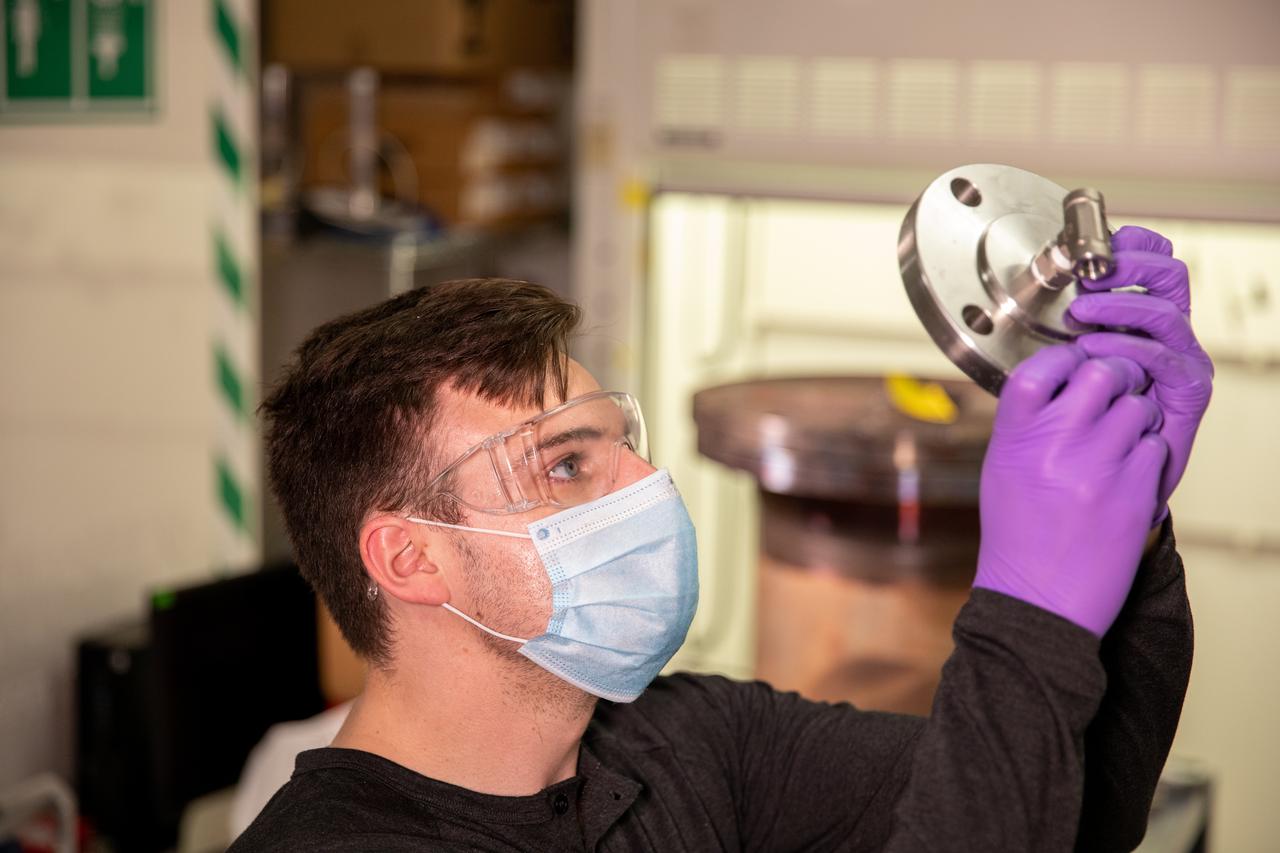
Kevin Grossman, project lead for the Gaseous Lunar Oxygen from Regolith Electrolysis (GaLORE) project at NASA Kennedy Space Center’s Swamp Works, inspects a piece of hardware for GaLORE on July 21, 2020, inside a laboratory at the center’s Neil Armstrong Operations and Checkout Building. Grossman is leading an Early Career Initiative project that is investing in turning lunar regolith into oxygen that could be used for life support for sustainable human lunar exploration on long-duration missions to Mars. GaLORE was selected as an Early Career Initiative project by NASA’s Space Technology Mission directorate.
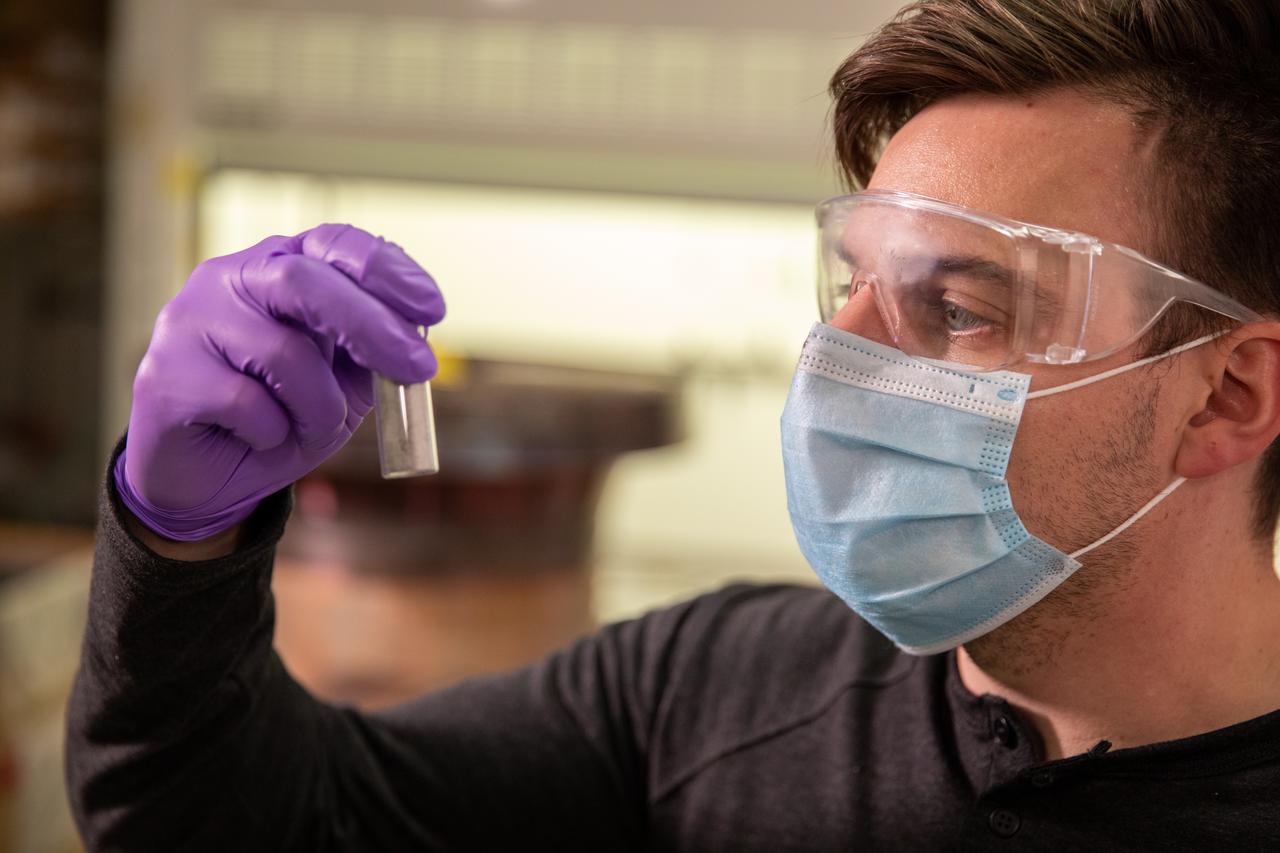
Kevin Grossman, project lead for the Gaseous Lunar Oxygen from Regolith Electrolysis (GaLORE) project at NASA Kennedy Space Center’s Swamp Works, inspects a piece of hardware for GaLORE on July 21, 2020, inside a laboratory at the center’s Neil Armstrong Operations and Checkout Building. Grossman is leading an Early Career Initiative project that is investing in turning lunar regolith into oxygen that could be used for life support for sustainable human lunar exploration on long-duration missions to Mars. GaLORE was selected as an Early Career Initiative project by NASA’s Space Technology Mission directorate.
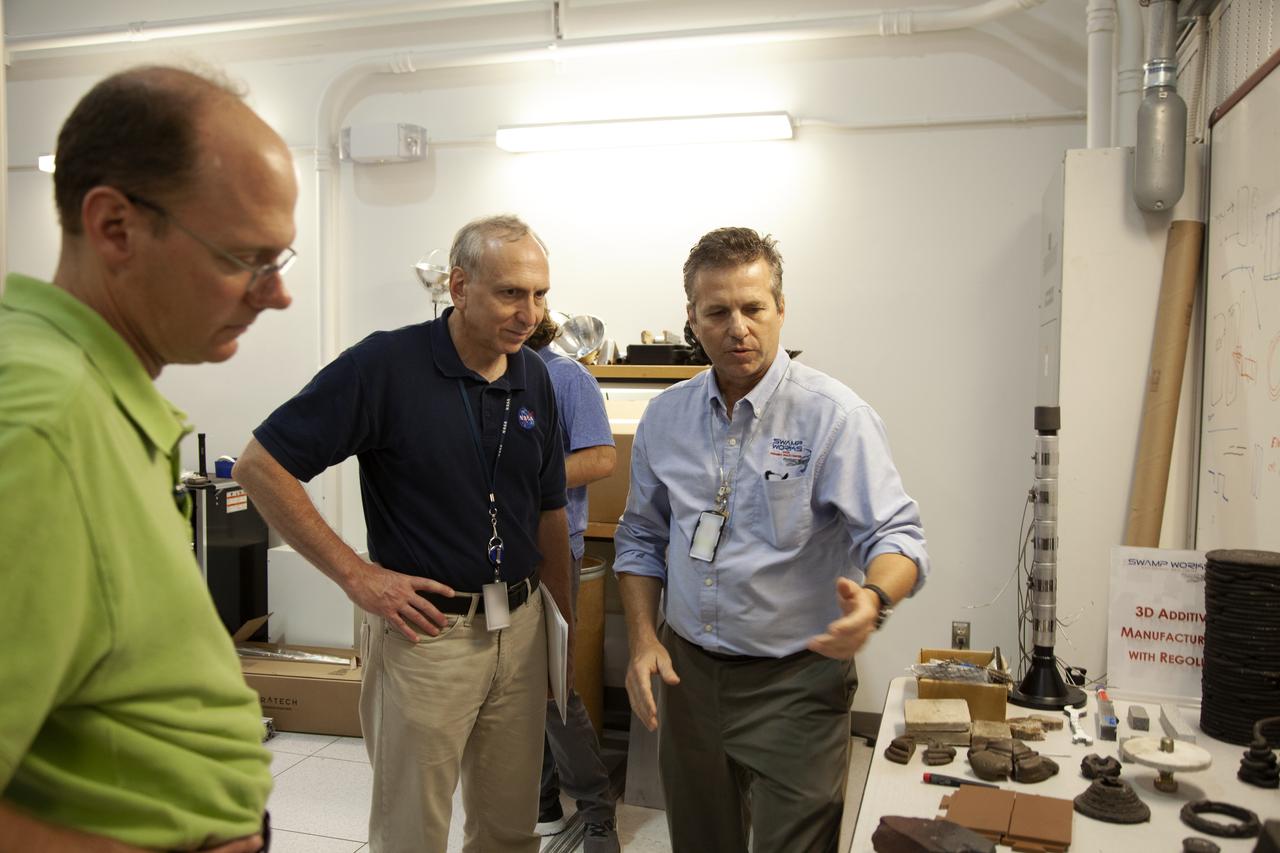
Steve Jurczyk, Acting Administrator of STMD, Visits Swamp Works at NASA's Kennedy Space Center
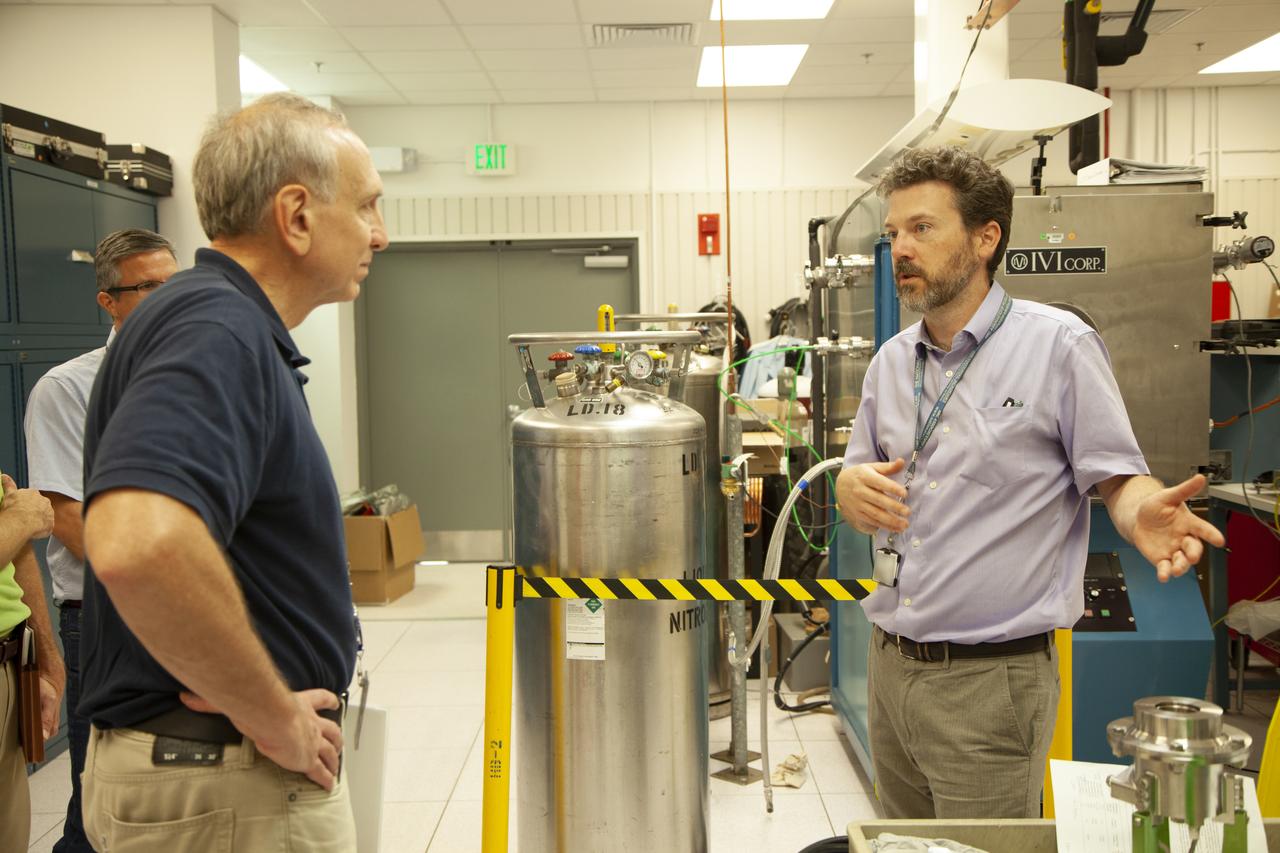
Steve Jurczyk, Acting Administrator of STMD, Visits Swamp Works at NASA's Kennedy Space Center
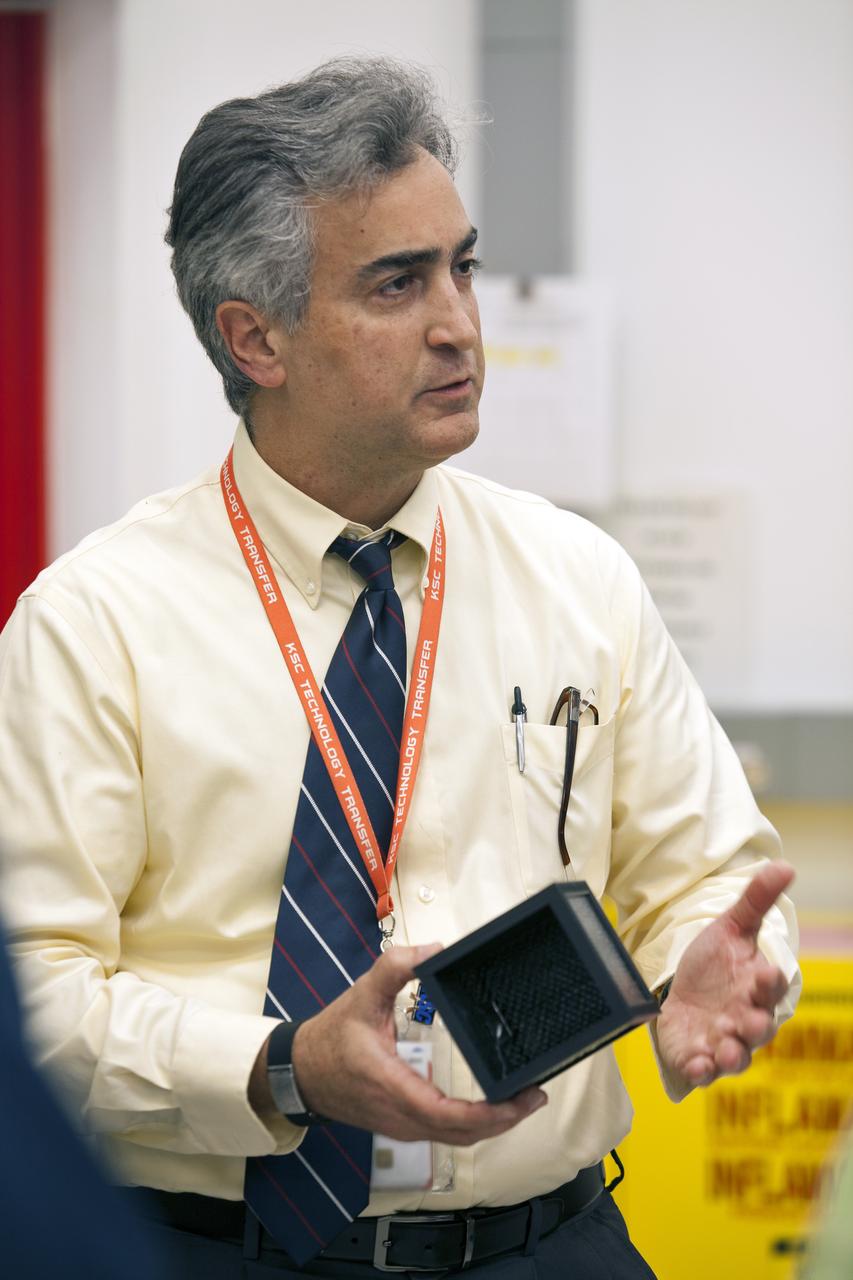
Steve Jurczyk, Acting Administrator of STMD, Visits Swamp Works at NASA's Kennedy Space Center
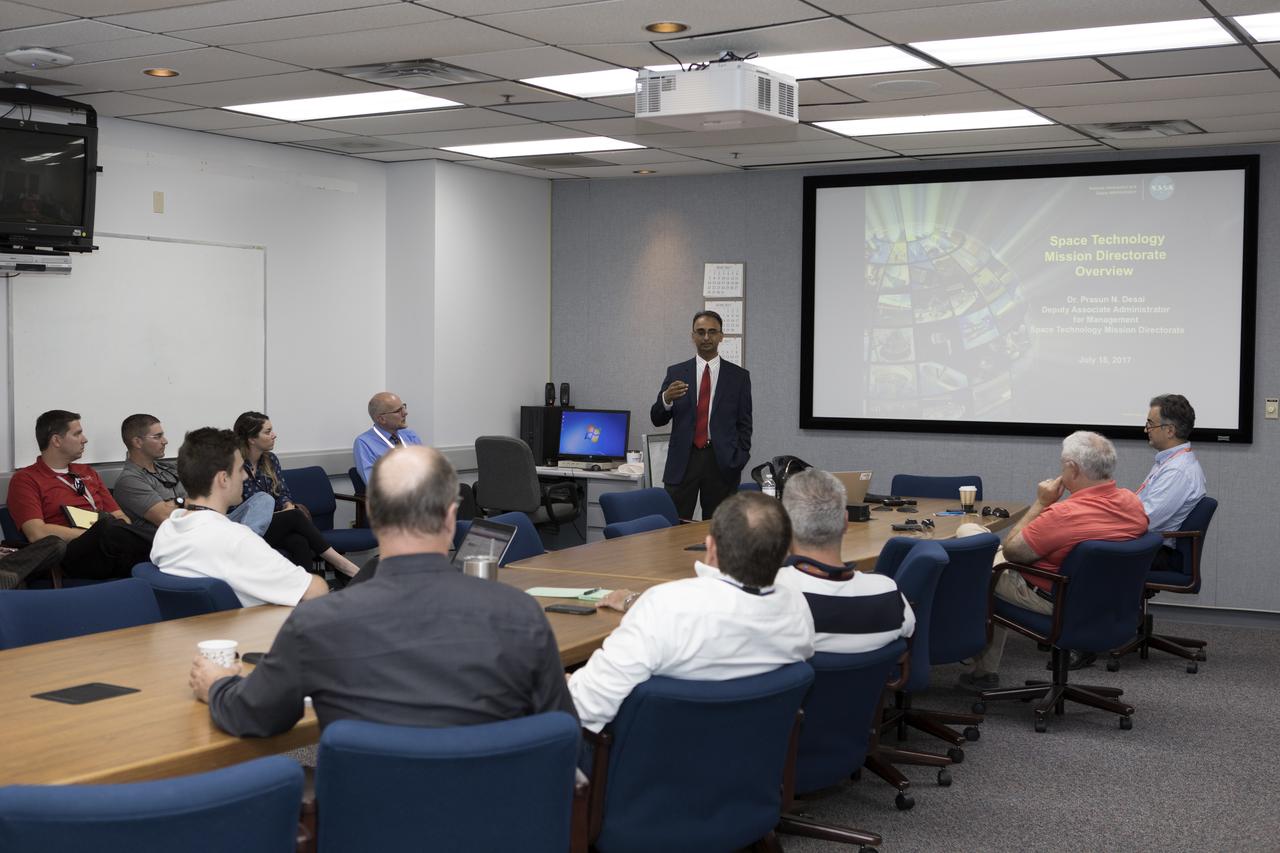
Prasun Desai, deputy associate administrator for Management in NASA's Space Technology Mission Directorate, speaks to Exploration Research and Technology managers in the Space Station Processing Facility at the Kennedy Space Center in Florida.
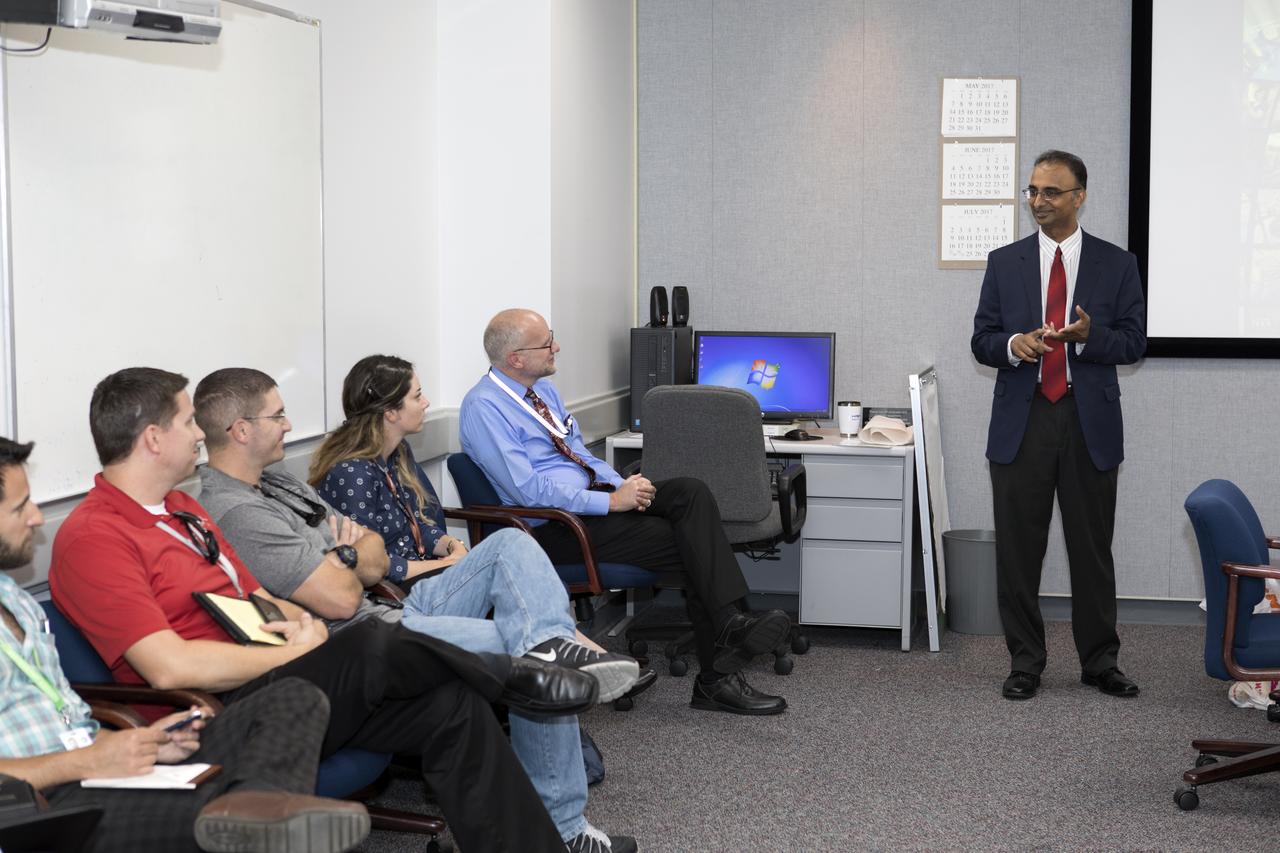
Prasun Desai, deputy associate administrator for Management in NASA's Space Technology Mission Directorate, speaks to Exploration Research and Technology managers in the Space Station Processing Facility at the Kennedy Space Center in Florida.
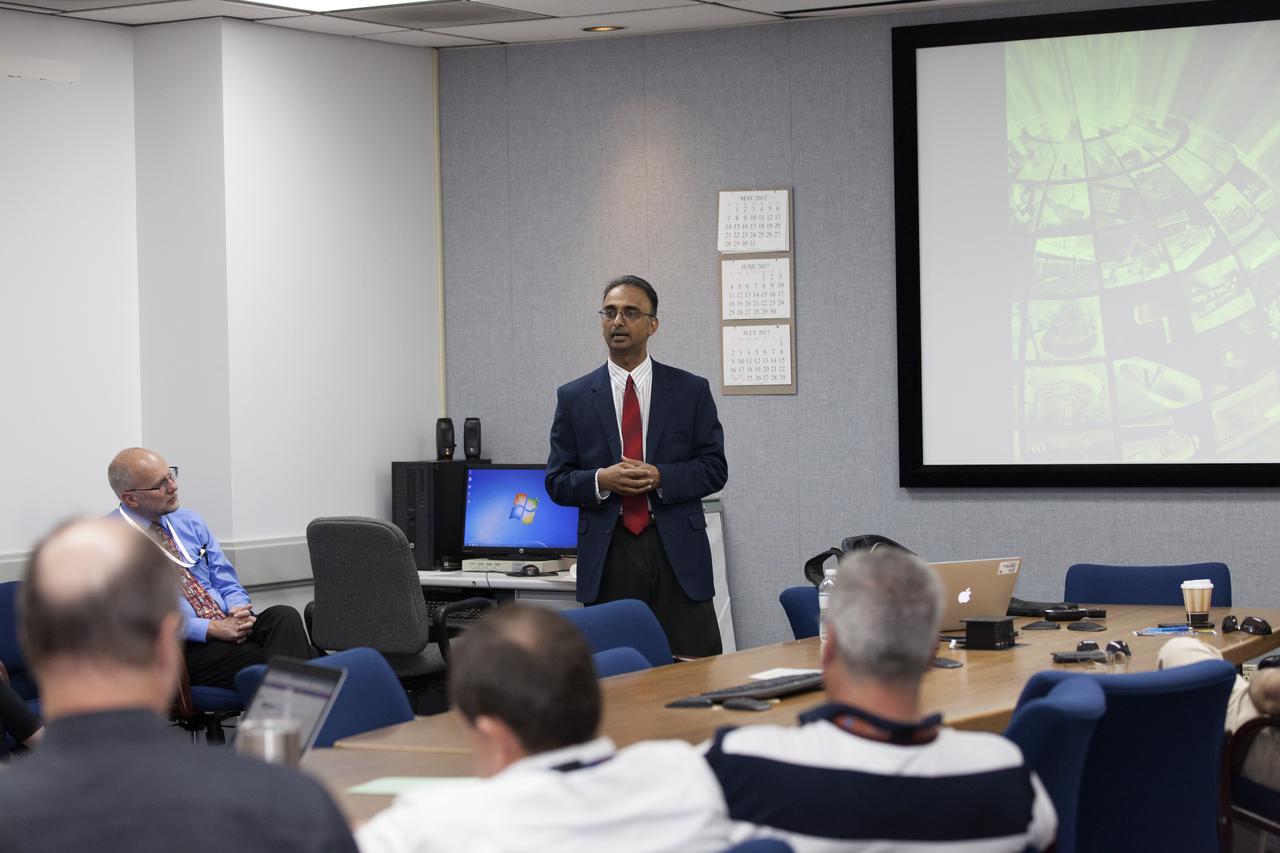
Prasun Desai, deputy associate administrator for Management in NASA's Space Technology Mission Directorate, speaks to Exploration Research and Technology managers in the Space Station Processing Facility at the Kennedy Space Center in Florida.
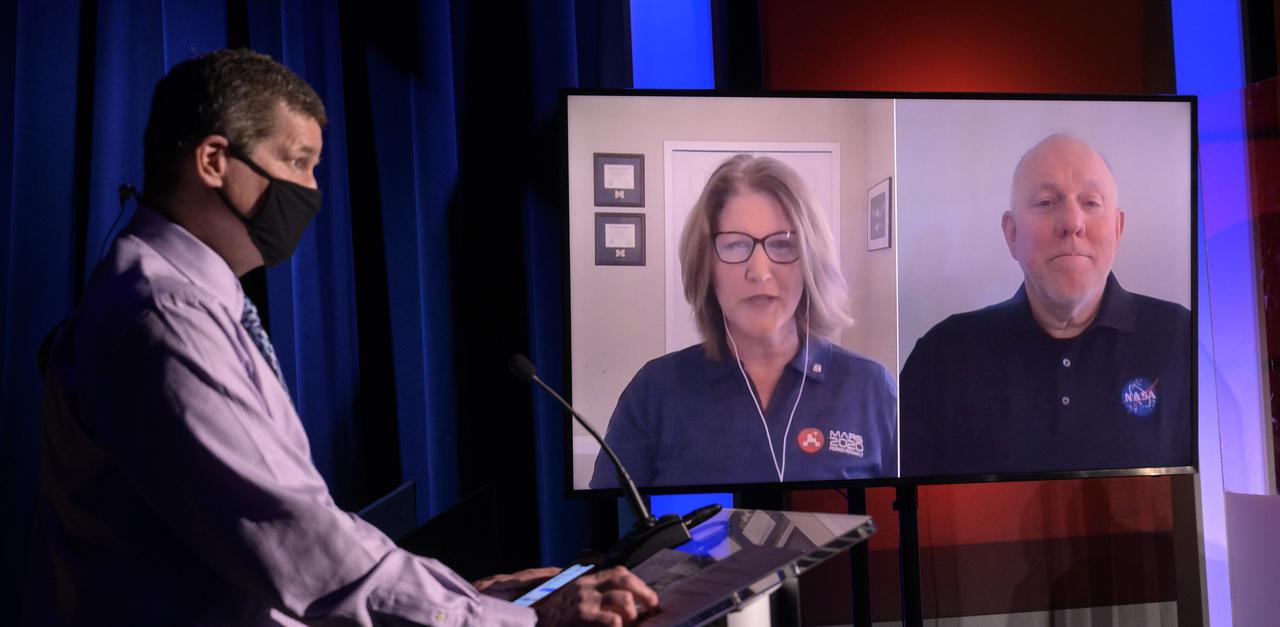
Director of technology demonstrations, NASA’s Space Technology Mission Directorate, Trudy Kortes, screen left, and Chief engineer, NASA’s Space Technology Mission Directorate, Jeff Sheehy, give remarks via remote during a NASA Perseverance rover mission engineering and technology overview, Tuesday, Feb. 16, 2021, at NASA's Jet Propulsion Laboratory in Pasadena, California. The Perseverance Mars rover is due to land on Mars Thursday, Feb. 18, 2021. A key objective for Perseverance’s mission on Mars is astrobiology, including the search for signs of ancient microbial life. The rover will characterize the planet’s geology and past climate, pave the way for human exploration of the Red Planet, and be the first mission to collect and cache Martian rock and regolith. Photo Credit: (NASA/Bill Ingalls)
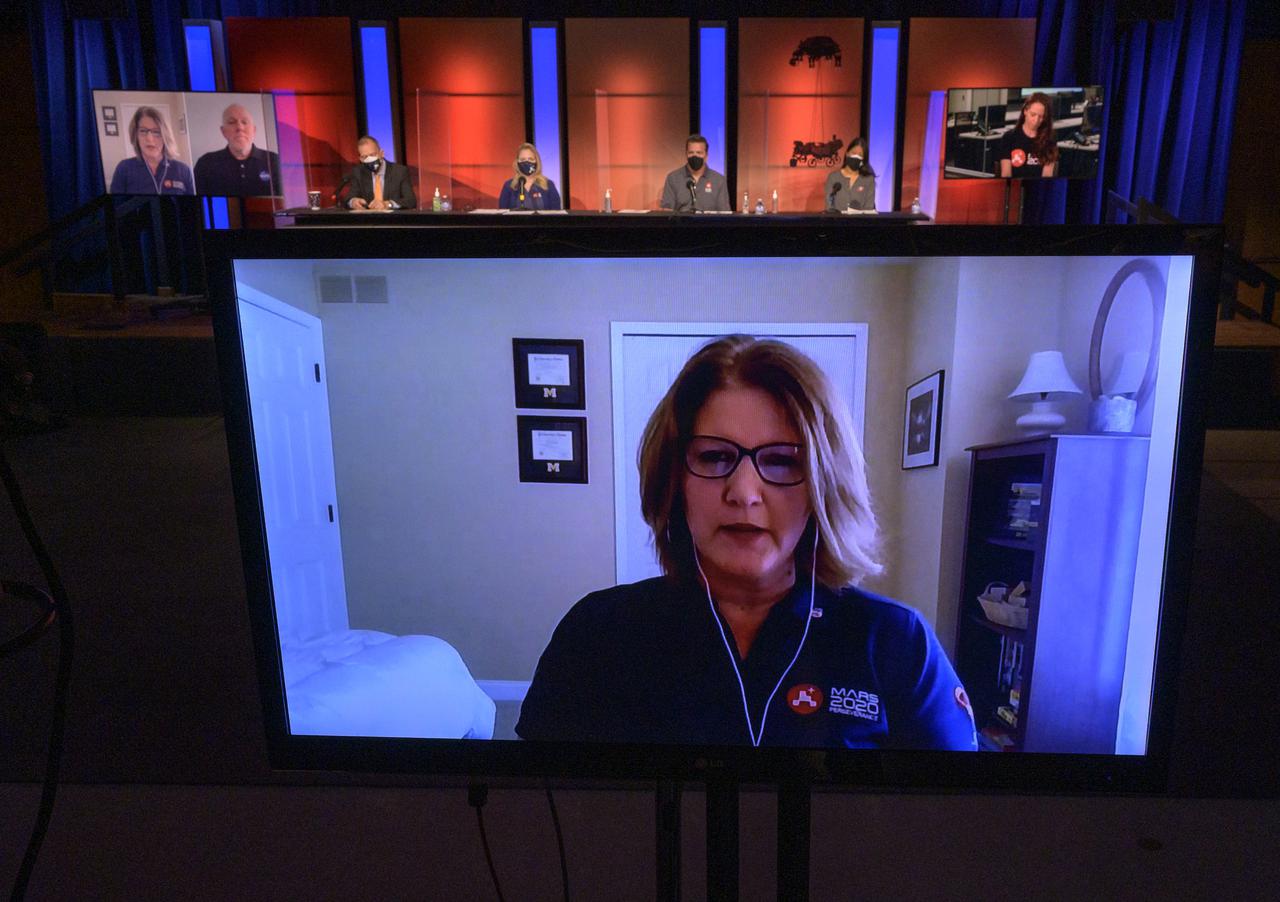
Director of technology demonstrations, NASA’s Space Technology Mission Directorate, Trudy Kortes, gives remarks via remote during a NASA Perseverance rover mission engineering and technology overview, Tuesday, Feb. 16, 2021, at NASA's Jet Propulsion Laboratory in Pasadena, California. The Perseverance Mars rover is due to land on Mars Thursday, Feb. 18, 2021. A key objective for Perseverance’s mission on Mars is astrobiology, including the search for signs of ancient microbial life. The rover will characterize the planet’s geology and past climate, pave the way for human exploration of the Red Planet, and be the first mission to collect and cache Martian rock and regolith. Photo Credit: (NASA/Bill Ingalls)

Randy Lillard, Program Executive for Technology Demonstration Missions of NASA's Space Technology Mission DIrectorate, speaks during an Exploration Forum showcasing NASA's human exploration path to Mars in the James E. Webb Auditorium at NASA Headquarters on Tuesday, April 29, 2014. Photo Credit: (NASA/Joel Kowsky)
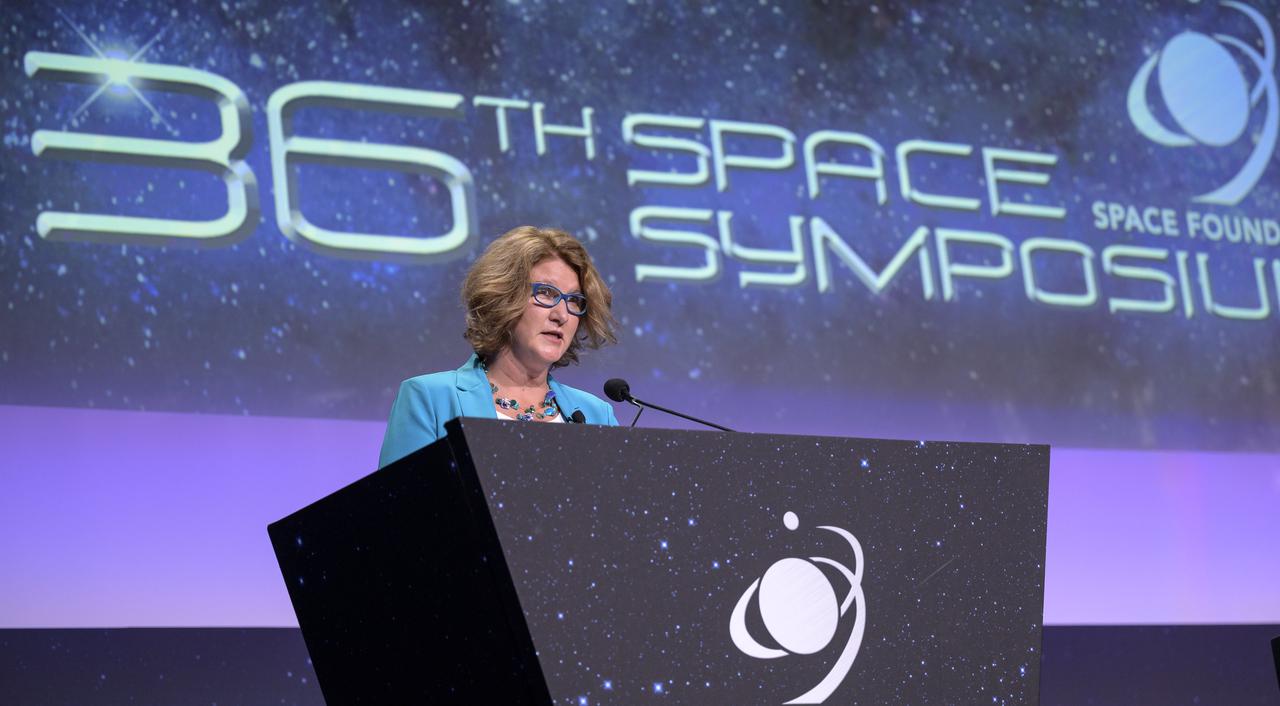
NASA Director of the Technology Demonstration Missions Program, Trudy Kortes moderates a panel discussion titled “Technology Drives Exploration: Paving the Next Era of Space Exploration” during the 36th Space Symposium, Thursday, Aug. 26, 2021, in Colorado Springs, Colorado. Photo Credit: (NASA/Bill Ingalls)

NASA Director of the Technology Demonstration Missions Program, Trudy Kortes moderates a panel discussion titled “Technology Drives Exploration: Paving the Next Era of Space Exploration” during the 36th Space Symposium, Thursday, Aug. 26, 2021, in Colorado Springs, Colorado. Photo Credit: (NASA/Bill Ingalls)

Barbara L. Brown, director of Exploration Research and Technology Programs at NASA's Kennedy Space Center in Florida, poses for a portrait inside the spaceport’s Space Station Processing Facility High Bay on Aug. 5, 2022. Brown leads processing, assembly, integration, and test of payloads and flight science experiments bound for the International Space Station. Additionally, Brown serves as Kennedy’s lead for the formulation of concepts to support uncrewed operations on the Moon and Mars, directing research, development, testing, and demonstration of flight systems and technologies to advance exploration and space systems. The programs and projects under her purview span NASA’s Exploration Systems, Science, Space Operations, and Space Technology mission directorates.
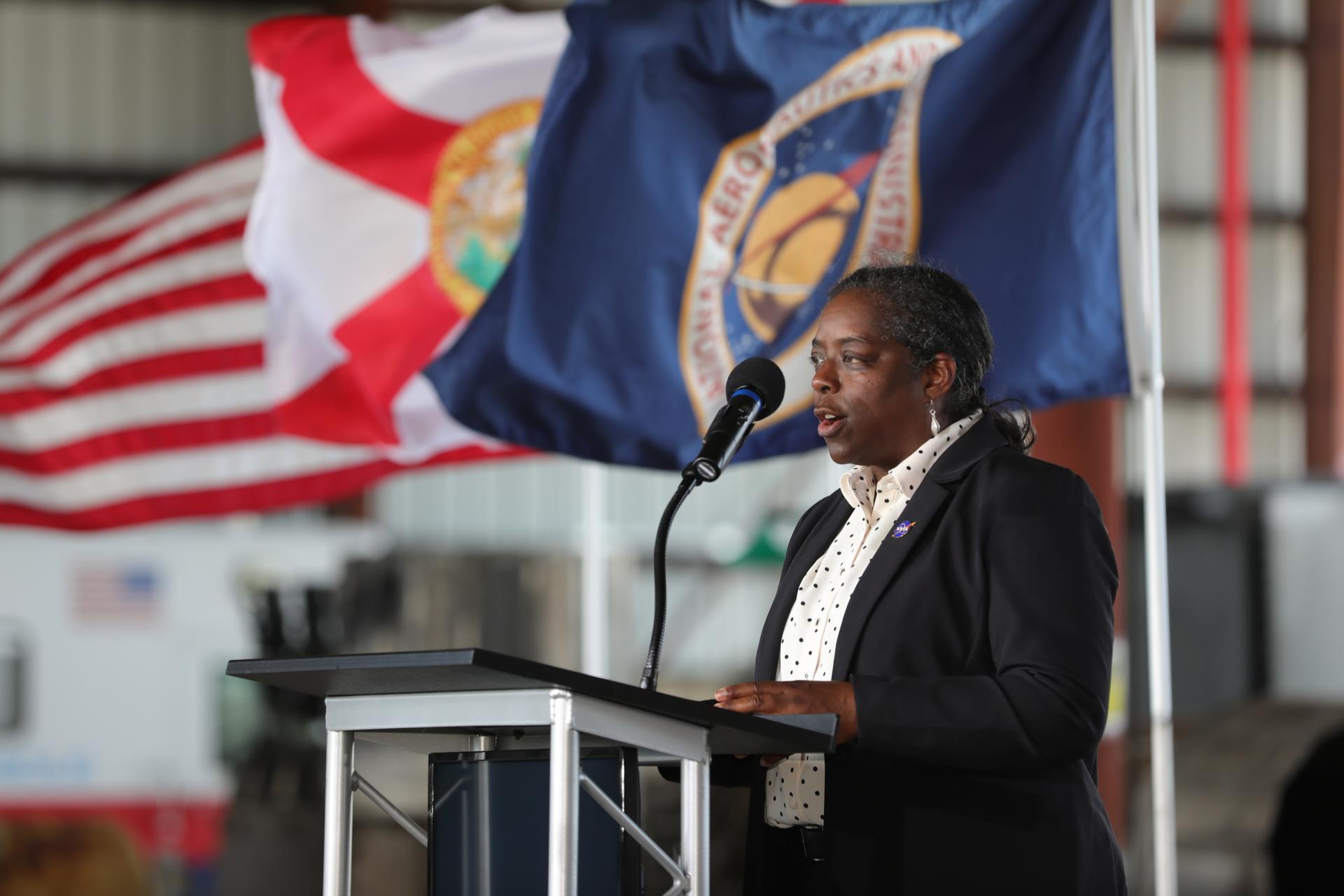
Laurie Grindle, director of the Aeronautics Division within the Research and Technology Mission Directorate at NASA Headquarters in Washington speaks to members of the media during the announcement of MAX POWER at the Shuttle Landing Facility at NASA’s Kennedy Space Center in Florida on Friday, Aug. 14, 2026. Grindle, along with NASA Administrator Jared Isaacman, agency leadership, and members of Congress announced the multi-day exposition of air and space technologies scheduled for November and tied to America’s 250th anniversary. The expo will showcase the next-generation aircraft, spacecraft, autonomous vehicles, and technologies that will help define the future of transportation in air and space and lay a foundation for our nation’s future endeavors: from Earth to the Moon, Mars, and beyond.
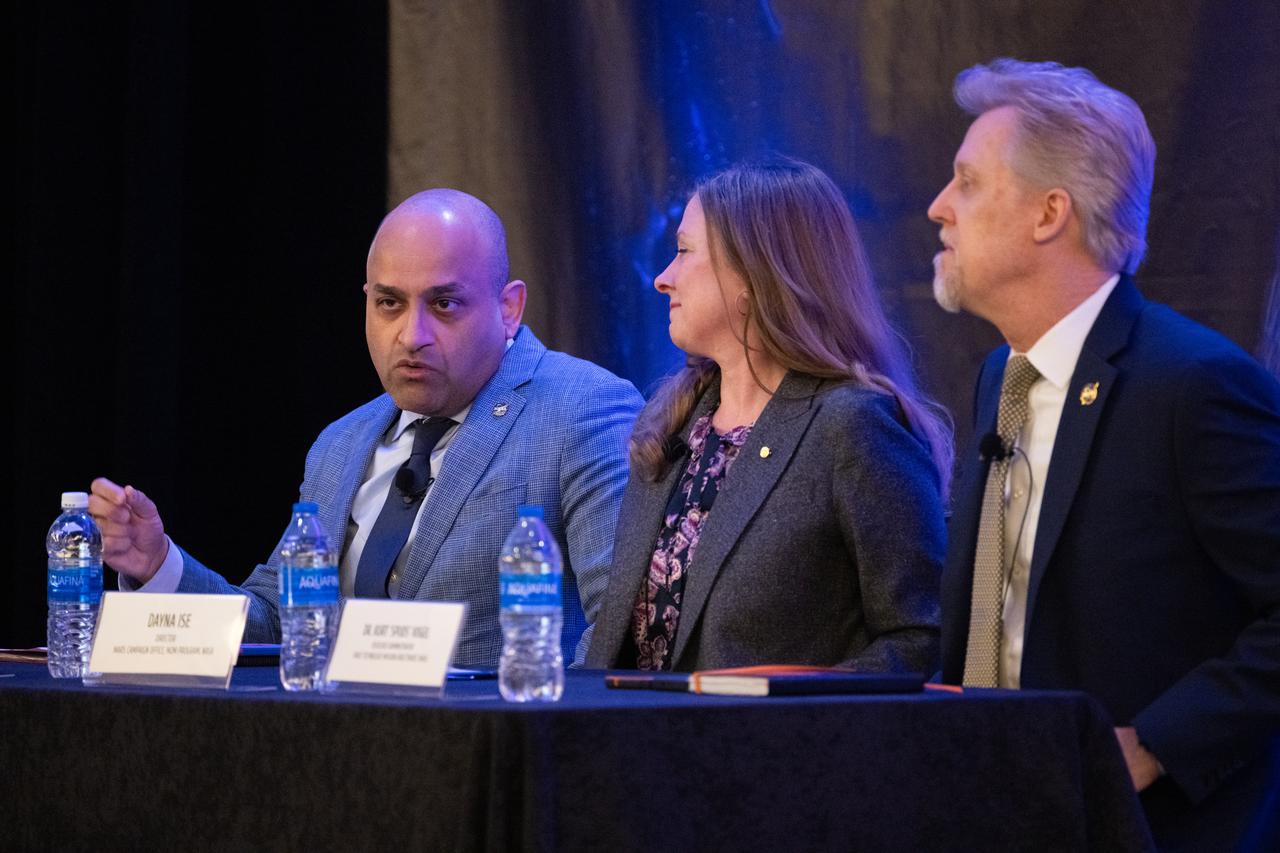
A.C. Charania, NASA’s Chief Technologist, left, moderates a panel on technology infusion with Dayna Ise, director of the Mars Campaign Office in NASA’s Moon to Mars Program, center, and Kurt “Spuds” Vogel, associate administrator of NASA’s Space Technology Mission Directorate, right, during the 2024 Artemis Suppliers Conference, Tuesday, Feb. 27, 2024, at the Grand Hyatt Hotel in Washington. Photo Credit: (NASA/Joel Kowsky)

Laurie Grindle, director of the Aeronautics Division within NASA’s Research and Technology Mission Directorate, speaks during a press conference, Friday, Aug. 14, 2026, at NASA's Kennedy Space Center in Florida. NASA announced the two-day MAX POWER event, taking place in November 2026, which will feature air shows, skydiving stunts, technology demonstrations, spaceflight hardware, military aircraft, behind-the-scenes access to Kennedy, talks from NASA experts, and appearances by astronauts. Photo Credit: (NASA/John Kraus)
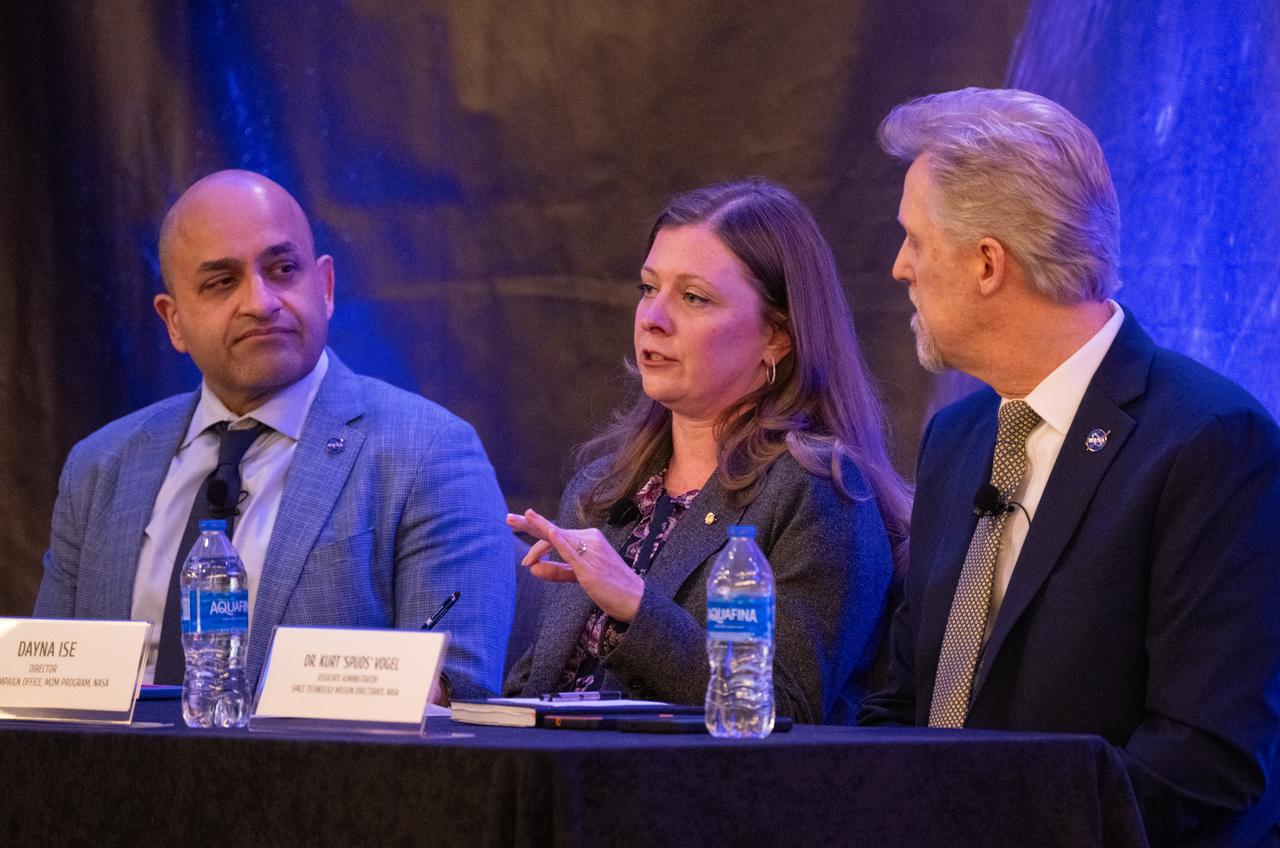
Dayna Ise, director of the Mars Campaign Office in NASA’s Moon to Mars Program, center, and Kurt “Spuds” Vogel, associate administrator of NASA’s Space Technology Mission Directorate, right, are seen during a panel discussion on technology infusion moderated by A.C. Charania, NASA’s Chief Technologist, left, at the 2024 Artemis Suppliers Conference, Tuesday, Feb. 27, 2024, at the Grand Hyatt Hotel in Washington. Photo Credit: (NASA/Joel Kowsky)
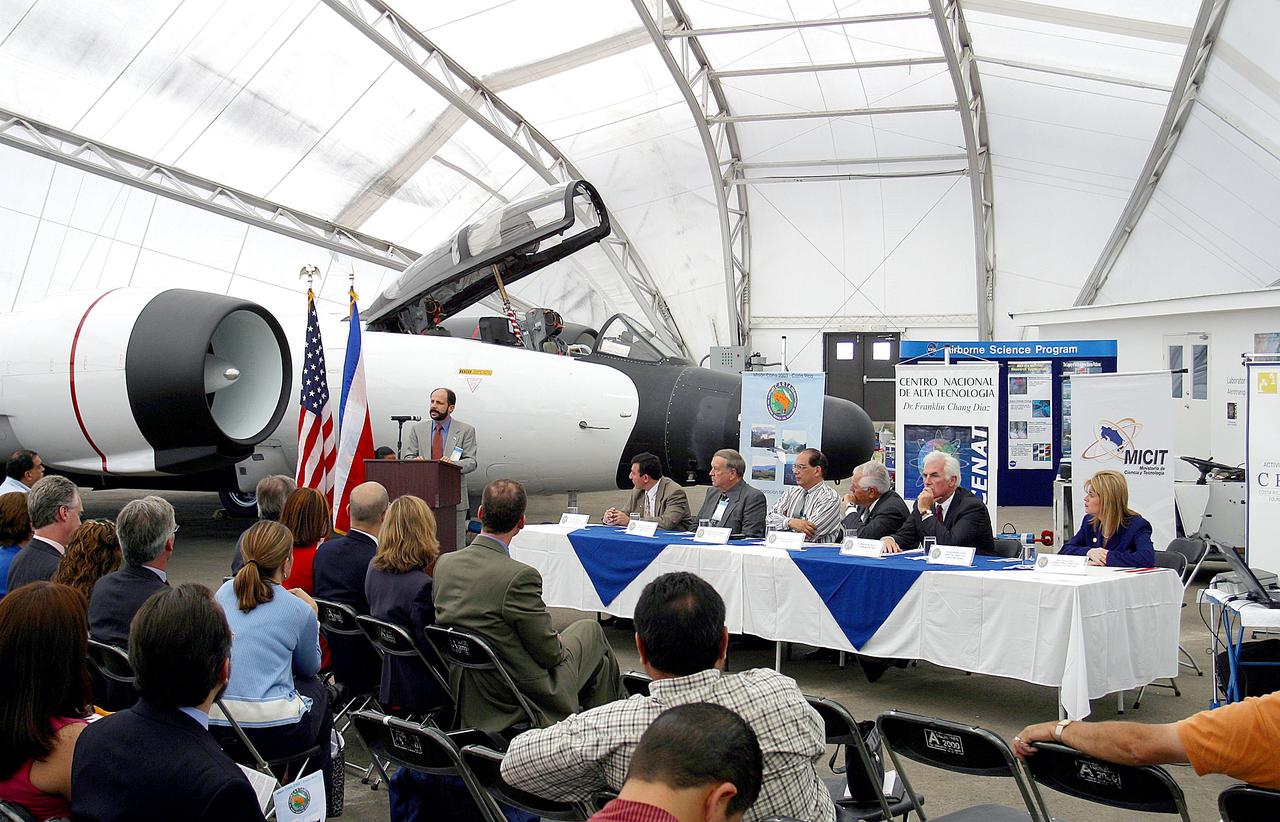
KENNEDY SPACE CENTER, FLA. - At the airport in San Jose, Costa Rica, the NASA hangar is dedicated. The speaker is Hermann Faith, executive director, Costa Rica-USA (CRUSA) Foundation. At the table are (from left) Dr. Jorge Andres Diaz, head scientiest CARTA mission; Gary Shelton, NASA deployment manager; Dr. Pedro Leon, general director, National Center for Advanced Technology (CENAT); Dr. Rogelio Pardo, minister of science and tchnology; John Danilovioch, U.S. ambassador to Costa Rica; and Lic. Vilma Lopez, subdirector, Civil Aviation (DGAC). NASA KSC has been testing its Aircraft-based Volcanic Emission Mass Spectrometer (AVEMS) in flights over the Turrialba volcano and in the crater, sampling and analyzing fresh volcanic gases in their natural chemical state. The AVEMS system has been developed for use in the Space Shuttle program, to detect toxic gas leaks and emissions in the Shuttle’s aft compartment and the crew compartment.
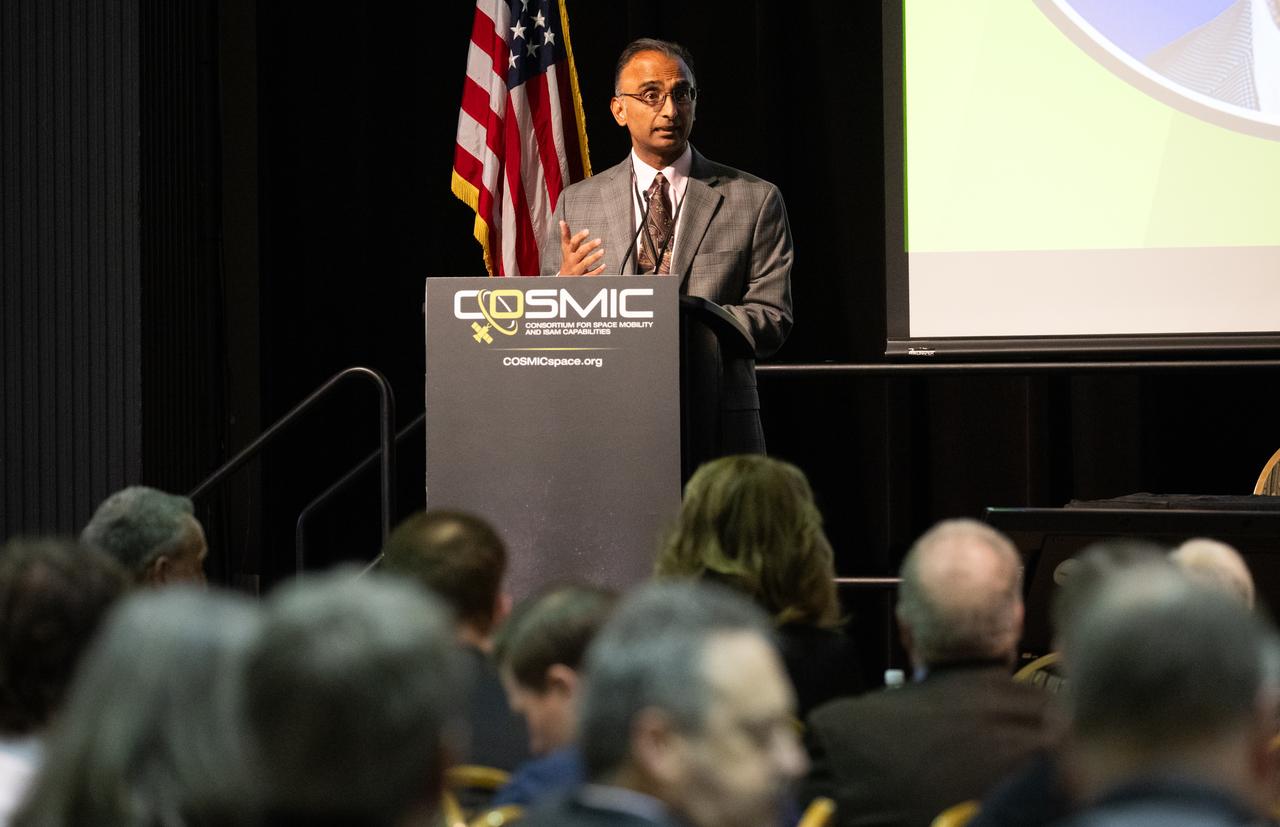
Prasun Desai, acting associate administrator for NASA's Space Technology Mission Directorate, delivers opening remarks at the Consortium for Space Mobility and ISAM Capabilities (COSMIC) workshop, Tuesday, Nov. 7, 2023, at the University of Maryland in College Park, Md. NASA’s Space Technology Mission Directorate formulated and funds COSMIC, aiming to create a nationwide aerospace community alliance that provides global leadership in space mobility and in-space servicing, assembly, and manufacturing (ISAM) for use in Earth orbit, lunar orbit, deep space, and on planetary surfaces. Photo Credit: (NASA/Joel Kowsky)
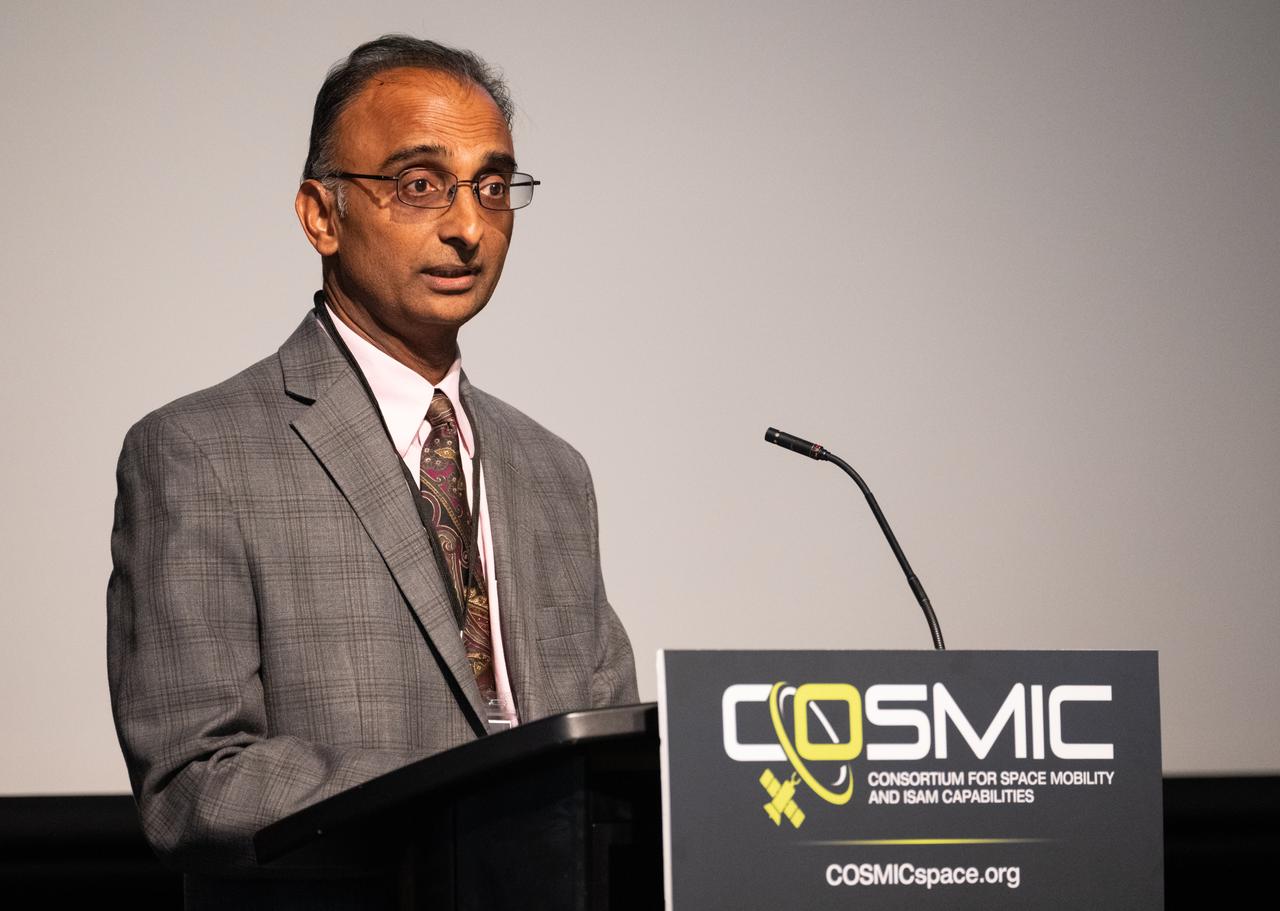
Prasun Desai, acting associate administrator for NASA's Space Technology Mission Directorate, delivers opening remarks at the Consortium for Space Mobility and ISAM Capabilities (COSMIC) workshop, Tuesday, Nov. 7, 2023, at the University of Maryland in College Park, Md. NASA’s Space Technology Mission Directorate formulated and funds COSMIC, aiming to create a nationwide aerospace community alliance that provides global leadership in space mobility and in-space servicing, assembly, and manufacturing (ISAM) for use in Earth orbit, lunar orbit, deep space, and on planetary surfaces. Photo Credit: (NASA/Joel Kowsky)
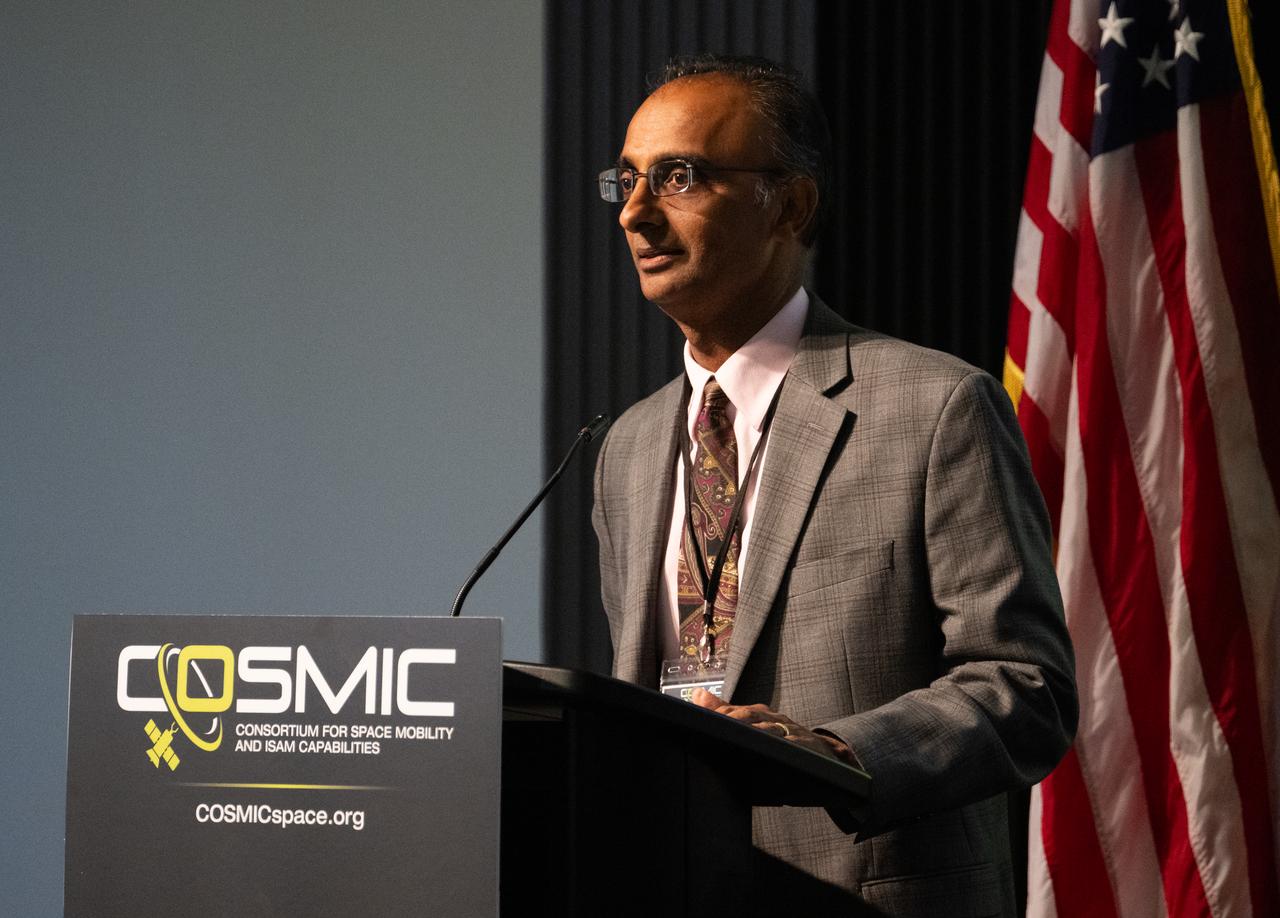
Prasun Desai, acting associate administrator for NASA's Space Technology Mission Directorate, delivers opening remarks at the Consortium for Space Mobility and ISAM Capabilities (COSMIC) workshop, Tuesday, Nov. 7, 2023, at the University of Maryland in College Park, Md. NASA’s Space Technology Mission Directorate formulated and funds COSMIC, aiming to create a nationwide aerospace community alliance that provides global leadership in space mobility and in-space servicing, assembly, and manufacturing (ISAM) for use in Earth orbit, lunar orbit, deep space, and on planetary surfaces. Photo Credit: (NASA/Joel Kowsky)
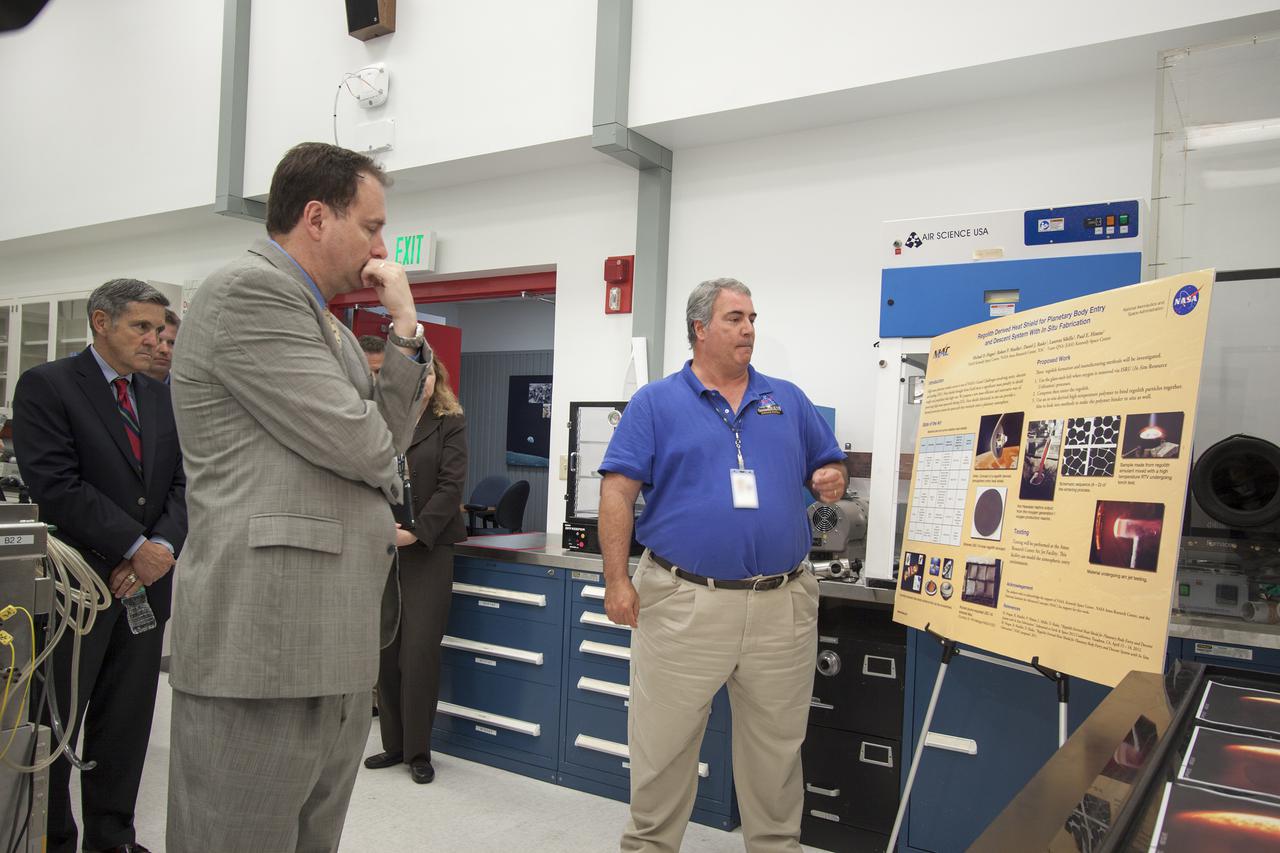
CAPE CANAVERAL, Fla. – At NASA’s Kennedy Space Center in Florida, Robert Lightfoot, NASA associate director, second from left, learns about surface systems technologies for destinations beyond Earth during a tour of the Swamp Works laboratories. At far left is Kennedy Director Bob Cabana. Kennedy’s Swamp Works provides rapid, innovative and cost-effective exploration mission solutions, leveraging partnerships across NASA, industry and academia. Kennedy’s research and technology mission is to improve spaceports on Earth, as well as lay the groundwork for establishing spaceports at destinations in space. For more information, visit http:__www.nasa.gov_centers_kennedy_exploration_researchtech_index.html. Photo credit: NASA_Jim Grossmann
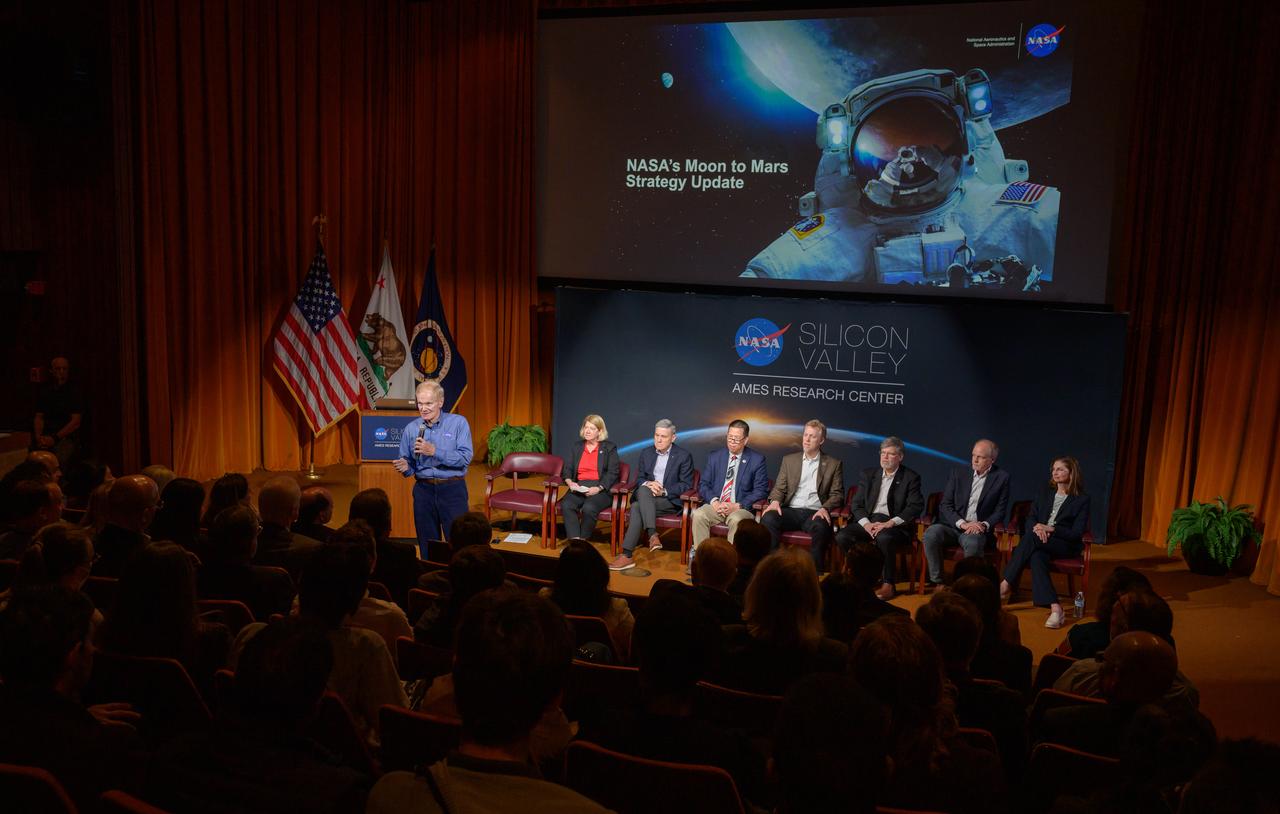
NASA Administrator Bill Nelson, front, talks to the workforce at NASA’s Ames Research Center in California’s Silicon Valley during the “Moon to Mars” town hall in the N201 Syvertson Auditorium. Behind him, left to right, are Deputy Administrator Pam Melroy, Associate Administrator Bob Cabana, AmesCenter Director Eugene Tu, Director of Space Architectures Kurt “Spuds” Vogel, Deputy Associate Administrator for Exploration in the Science Mission Directorate Joel Kearns, Deputy Associate Administrator for Programs in the Space Technology Mission Directorate Walt Engelund, and Deputy Associate Administrator for Exploration Systems Development Cathy Koerner.
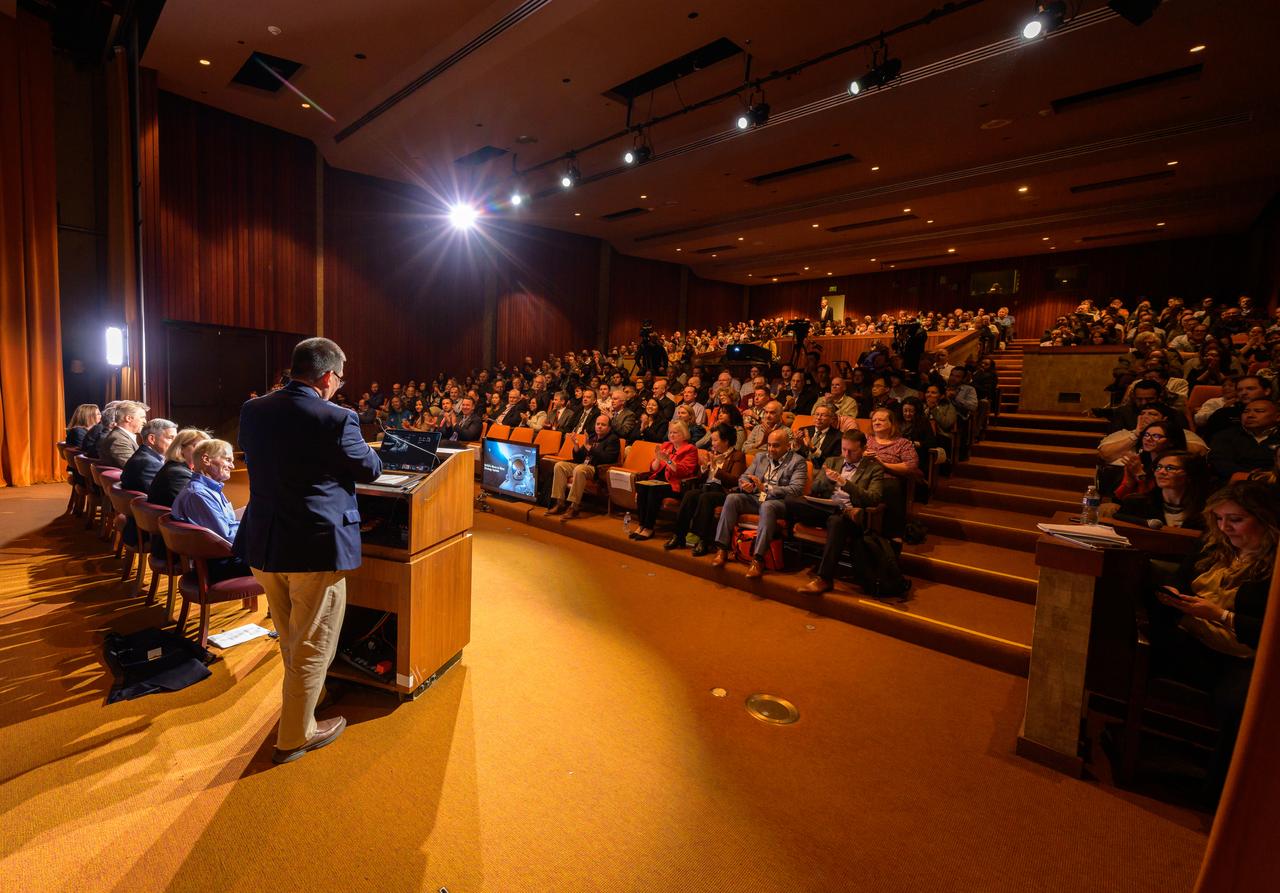
Eugene Tu, center director at NASA’s Ames Research Center in California’s Silicon Valley, offers his opening remarks to the Ames workforce during the “Moon to Mars” town hall in the N201 Syvertson Auditorium. Town hall panel, seated right to left, are NASA Administrator Bill Nelson, Deputy Administrator Pam Melroy, Associate Administrator Bob Cabana, Director of Space Architectures Kurt “Spuds” Vogel, Deputy Associate Administrator for Exploration in the Science Mission Directorate Joel Kearns, Deputy Associate Administrator for Programs in the Space Technology Mission Directorate Walt Engelund, and Deputy Associate Administrator for Exploration Systems Development Cathy Koerner.
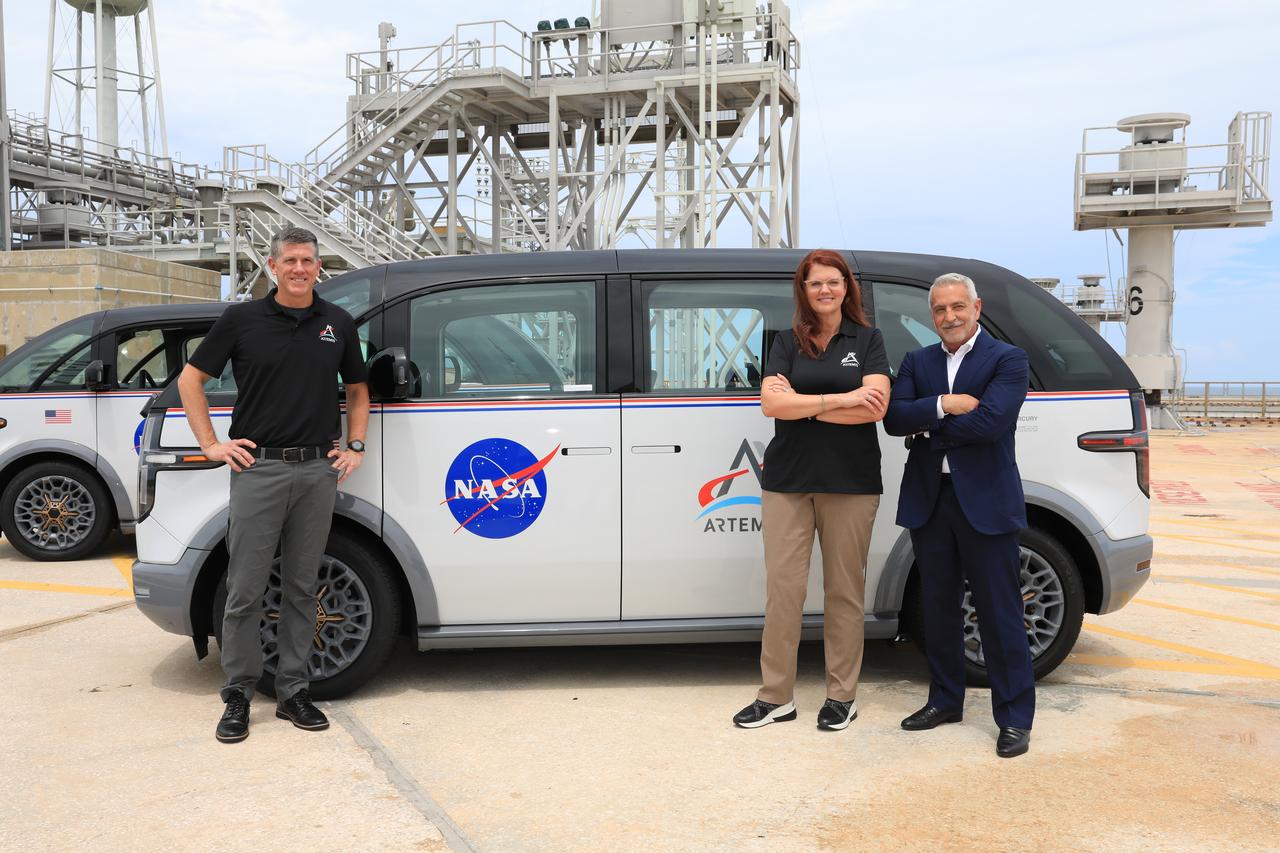
Three specially designed, fully electric, environmentally friendly crew transportation vehicles for Artemis missions arrived at NASA’s Kennedy Space Center in Florida on July 11, 2023. One of the zero-emission vehicles is shown here at Launch Pad 39B. From left are Jeremy Graeber, Artemis assistant launch director; Charlie Blackwell-Thompson, Artemis launch director; and Tony Aquila, chairman and CEO, Canoo Technologies Inc.. The fleet, which will carry astronauts to Launch Complex 39B for Artemis missions, was delivered by the manufacturer, Canoo Technologies Inc. of Torrance, California.
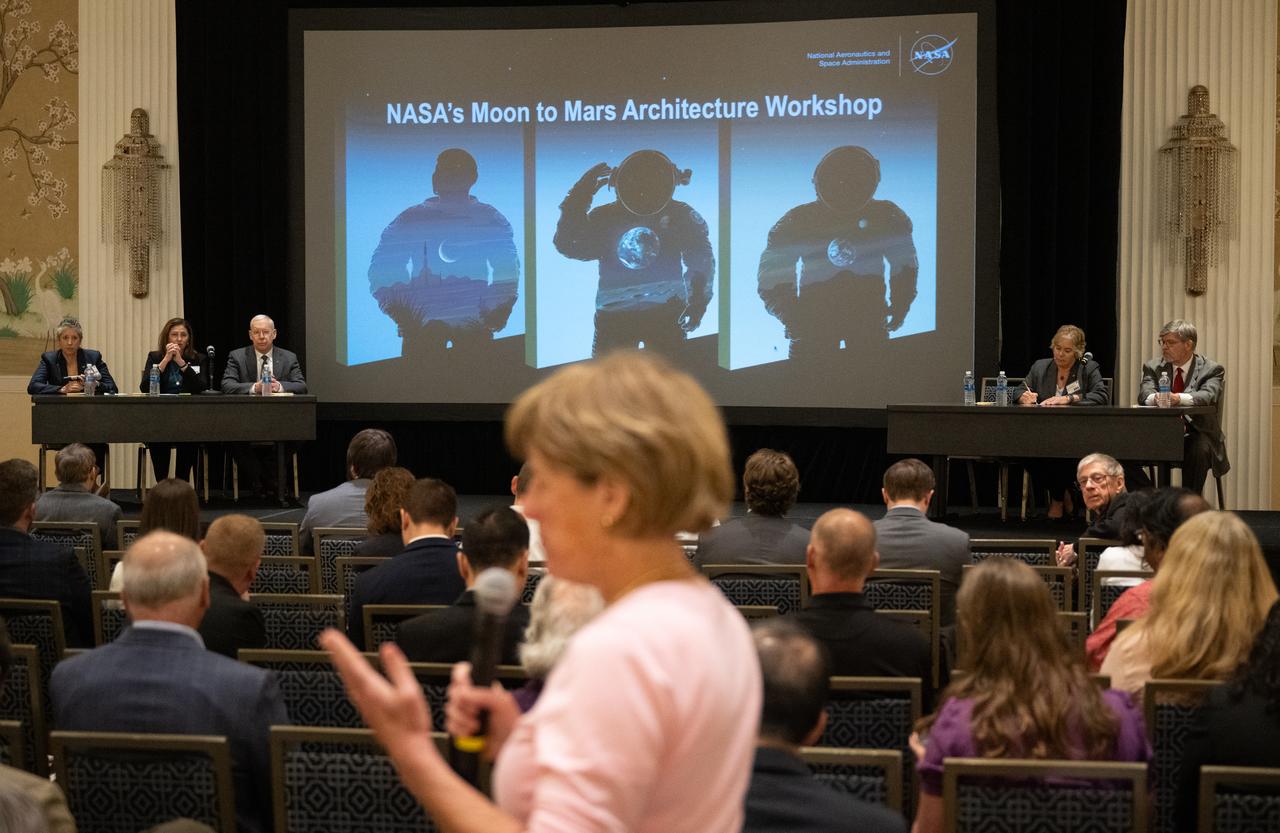
Nujoud Merancy, architecture lead for NASA's Exploration Systems Development Mission Directorate, Catherine Koerner, deputy associate administrator for NASA's Exploration Systems Development Mission Directorate, Patrick Forrester, special advisor in NASA's Space Operations Mission Directorate, Michelle Munk, chief architect for NASA’s Space Technology Mission Directorate, and Joel Kearns, deputy associate administrator for Exploration in NASA's Science Mission Directorate, listen to a question during NASA’s Moon to Mars Architecture Workshop, Tuesday, June 27, 2023, at the Gaylord National Resort and Convention Center in National Harbor, Md. Following the release of the 2022 Architecture Concept Review, NASA is conducting the workshop to engage the broader space community and collect feedback from U.S. industry and academia to inform the Moon to Mars mission architecture and operational delivery. Photo Credit: (NASA/Joel Kowsky)
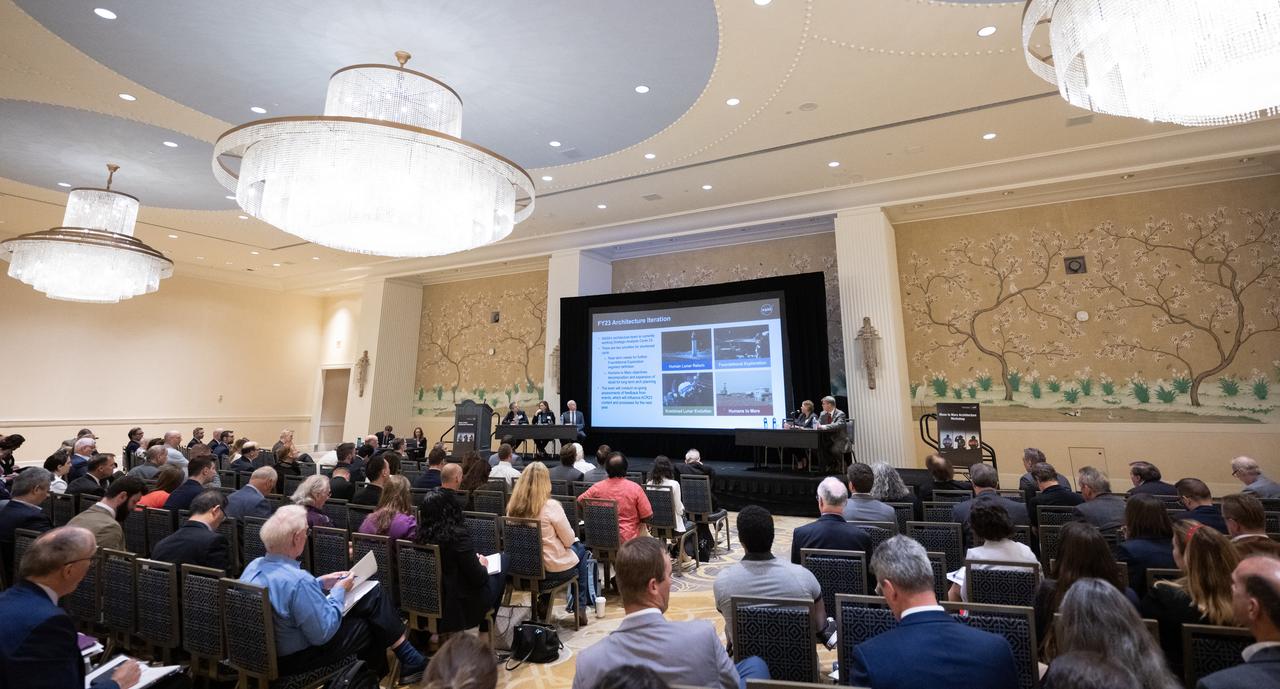
Nujoud Merancy, architecture lead for NASA's Exploration Systems Development Mission Directorate, Catherine Koerner, deputy associate administrator for NASA's Exploration Systems Development Mission Directorate, Patrick Forrester, special advisor in NASA's Space Operations Mission Directorate, Michelle Munk, chief architect for NASA’s Space Technology Mission Directorate, and Joel Kearns, deputy associate administrator for Exploration in NASA's Science Mission Directorate, are seen on stage during NASA’s Moon to Mars Architecture Workshop, Tuesday, June 27, 2023, at the Gaylord National Resort and Convention Center in National Harbor, Md. Following the release of the 2022 Architecture Concept Review, NASA is conducting the workshop to engage the broader space community and collect feedback from U.S. industry and academia to inform the Moon to Mars mission architecture and operational delivery. Photo Credit: (NASA/Joel Kowsky)
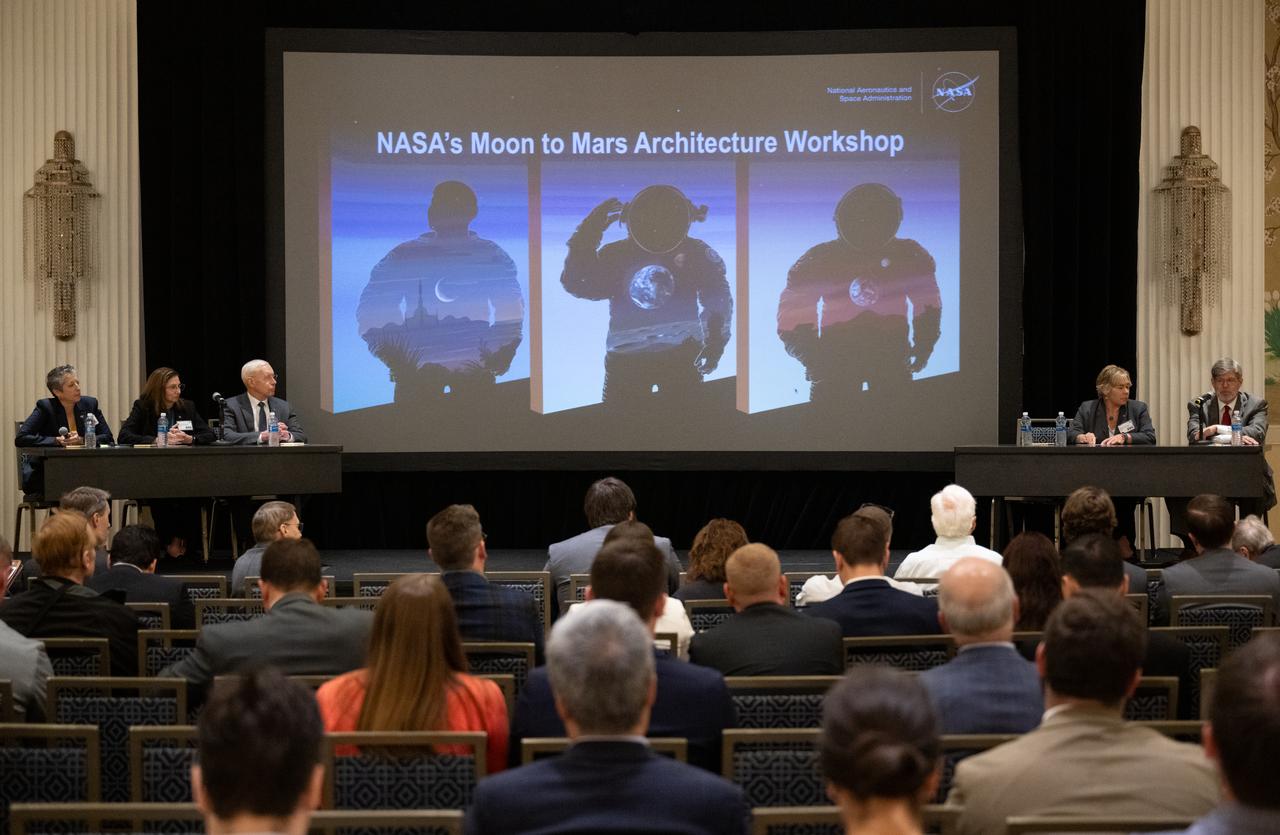
Nujoud Merancy, architecture lead for NASA's Exploration Systems Development Mission Directorate, Catherine Koerner, deputy associate administrator for NASA's Exploration Systems Development Mission Directorate, Patrick Forrester, special advisor in NASA's Space Operations Mission Directorate, Michelle Munk, chief architect for NASA’s Space Technology Mission Directorate, and Joel Kearns, deputy associate administrator for Exploration in NASA's Science Mission Directorate, are seen on stage during NASA’s Moon to Mars Architecture Workshop, Tuesday, June 27, 2023, at the Gaylord National Resort and Convention Center in National Harbor, Md. Following the release of the 2022 Architecture Concept Review, NASA is conducting the workshop to engage the broader space community and collect feedback from U.S. industry and academia to inform the Moon to Mars mission architecture and operational delivery. Photo Credit: (NASA/Joel Kowsky)
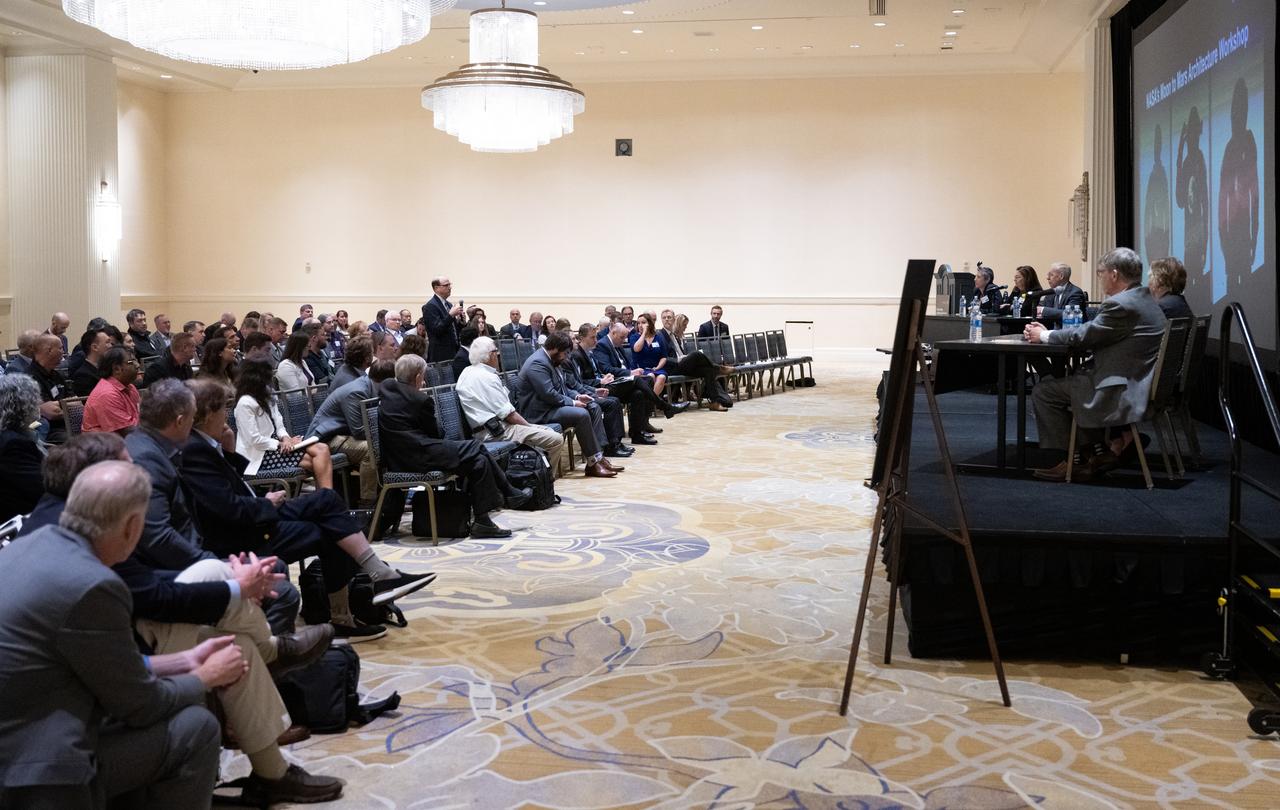
Nujoud Merancy, architecture lead for NASA's Exploration Systems Development Mission Directorate, Catherine Koerner, deputy associate administrator for NASA's Exploration Systems Development Mission Directorate, Patrick Forrester, special advisor in NASA's Space Operations Mission Directorate, Michelle Munk, chief architect for NASA’s Space Technology Mission Directorate, and Joel Kearns, deputy associate administrator for Exploration in NASA's Science Mission Directorate, listen to a question during NASA’s Moon to Mars Architecture Workshop, Tuesday, June 27, 2023, at the Gaylord National Resort and Convention Center in National Harbor, Md. Following the release of the 2022 Architecture Concept Review, NASA is conducting the workshop to engage the broader space community and collect feedback from U.S. industry and academia to inform the Moon to Mars mission architecture and operational delivery. Photo Credit: (NASA/Joel Kowsky)
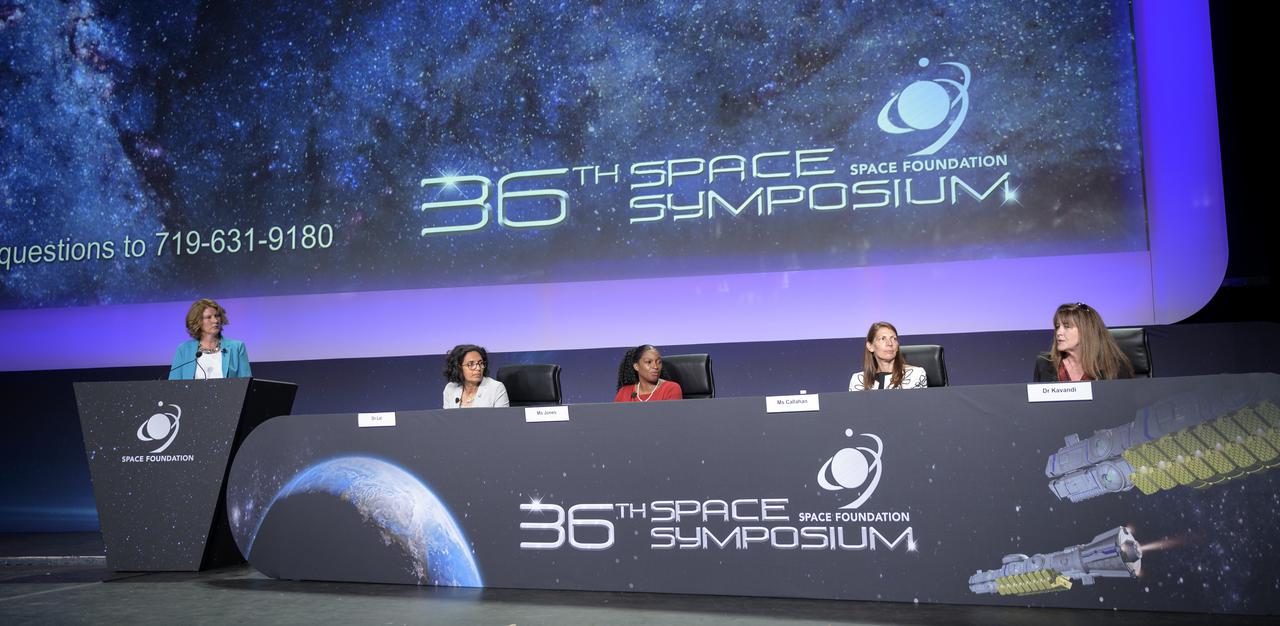
NASA Director of the Technology Demonstration Missions Program, Trudy Kortes moderates a panel discussion titled “Technology Drives Exploration: Paving the Next Era of Space Exploration” with NASA Senior Advisor for Budget and Finance Bhavya Lal; Director of the Program Management Office at MSI STEM Research and Development Consortium (MSRDC), Latonia Jones; Vice President and General Manager, Commercial Civil Space, Lockheed Martin Space, Lisa Callahan; and Executive Vice President, Sierra Space, Sierra Nevada Corporation, Janet Kavandi, right, during the 36th Space Symposium, Thursday, Aug. 26, 2021, in Colorado Springs, Colorado. Photo Credit: (NASA/Bill Ingalls)
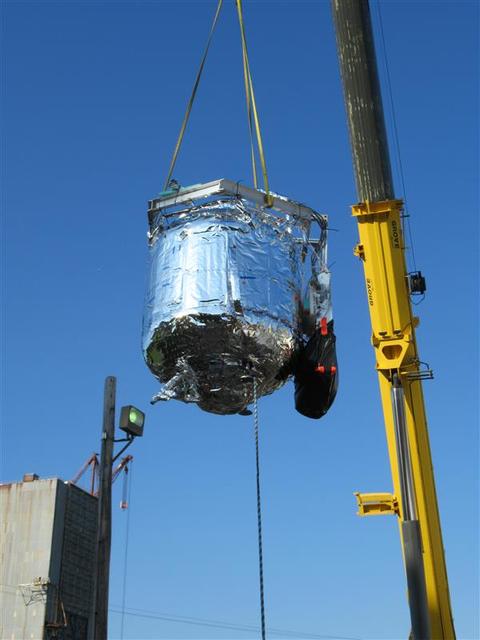
These photos show how teams at NASA’s Marshall Space Flight Center in Huntsville, Alabama, are testing an innovative approach to achieve zero boiloff storage of liquid hydrogen using two stages of active cooling, which could prevent the loss of valuable propellant during future long-duration spaceflight missions. Test teams installed the propellant tank in Test Stand 300 at NASA Marshall in early June, and the 90-day test campaign is scheduled to conclude in September. The tank is wrapped in a multi-layer insulation blanket that includes a thin aluminum heat shield fitted between layers. A second set of tubes, carrying helium at about minus 298 Fahrenheit, is integrated into the shield. This intermediate cooling layer intercepts and rejects incoming heat before it reaching the tank, easing the heat load on the tube-on-tank system. The Cryogenic Fluid Management Portfolio Project is a cross-agency team based at NASA Marshall and the agency’s Glenn Research Center in Cleveland. The cryogenic portfolio’s work is under NASA’s Technology Demonstration Missions Program, part of NASA’s Space Technology Mission Directorate, and is comprised of more than 20 individual technology development activities. For more information, contact NASA Marshall’s Office of Communications at 256-544-0034.

These photos show how teams at NASA’s Marshall Space Flight Center in Huntsville, Alabama, are testing an innovative approach to achieve zero boiloff storage of liquid hydrogen using two stages of active cooling, which could prevent the loss of valuable propellant during future long-duration spaceflight missions. Test teams installed the propellant tank in Test Stand 300 at NASA Marshall in early June, and the 90-day test campaign is scheduled to conclude in September. The tank is wrapped in a multi-layer insulation blanket that includes a thin aluminum heat shield fitted between layers. A second set of tubes, carrying helium at about minus 298 Fahrenheit, is integrated into the shield. This intermediate cooling layer intercepts and rejects incoming heat before it reaching the tank, easing the heat load on the tube-on-tank system. The Cryogenic Fluid Management Portfolio Project is a cross-agency team based at NASA Marshall and the agency’s Glenn Research Center in Cleveland. The cryogenic portfolio’s work is under NASA’s Technology Demonstration Missions Program, part of NASA’s Space Technology Mission Directorate, and is comprised of more than 20 individual technology development activities. For more information, contact NASA Marshall’s Office of Communications at 256-544-0034.
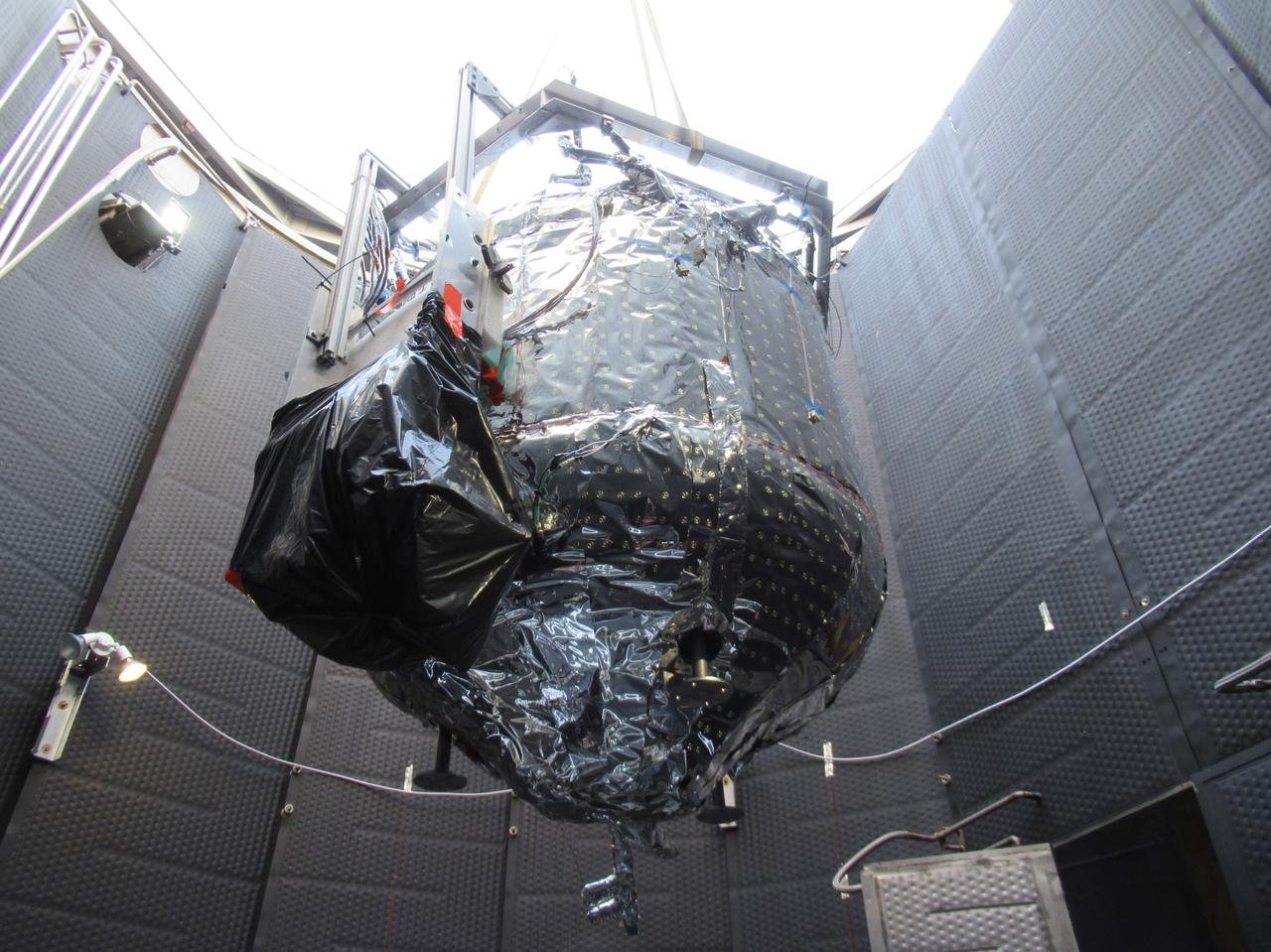
These photos show how teams at NASA’s Marshall Space Flight Center in Huntsville, Alabama, are testing an innovative approach to achieve zero boiloff storage of liquid hydrogen using two stages of active cooling, which could prevent the loss of valuable propellant during future long-duration spaceflight missions. Test teams installed the propellant tank in Test Stand 300 at NASA Marshall in early June, and the 90-day test campaign is scheduled to conclude in September. The tank is wrapped in a multi-layer insulation blanket that includes a thin aluminum heat shield fitted between layers. A second set of tubes, carrying helium at about minus 298 Fahrenheit, is integrated into the shield. This intermediate cooling layer intercepts and rejects incoming heat before it reaching the tank, easing the heat load on the tube-on-tank system. The Cryogenic Fluid Management Portfolio Project is a cross-agency team based at NASA Marshall and the agency’s Glenn Research Center in Cleveland. The cryogenic portfolio’s work is under NASA’s Technology Demonstration Missions Program, part of NASA’s Space Technology Mission Directorate, and is comprised of more than 20 individual technology development activities. For more information, contact NASA Marshall’s Office of Communications at 256-544-0034.
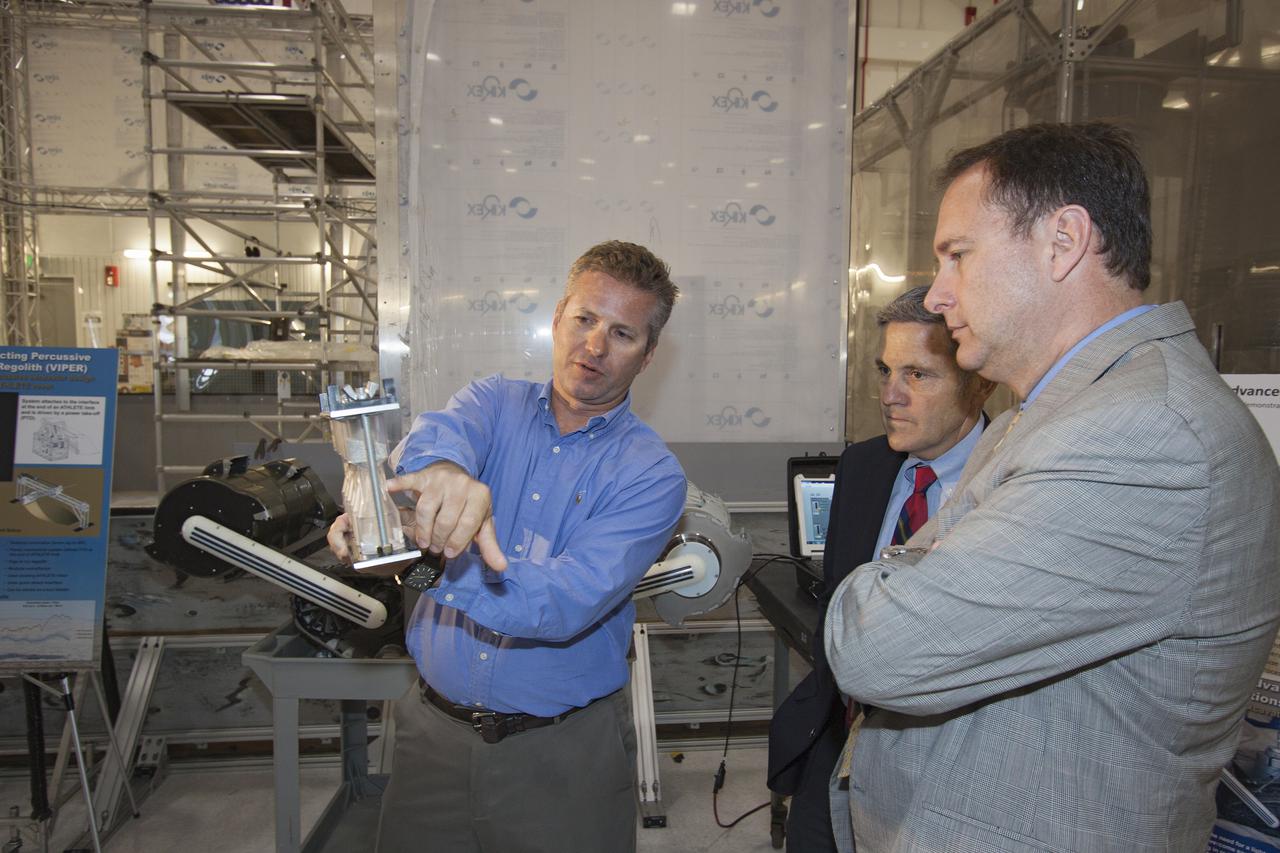
CAPE CANAVERAL, Fla. – At NASA’s Kennedy Space Center in Florida, Robert Lightfoot, NASA associate director, views some of the technologies in development at the center during a tour of the Swamp Works laboratories. Kennedy’s Swamp Works provides rapid, innovative and cost-effective exploration mission solutions, leveraging partnerships across NASA, industry and academia. Kennedy’s research and technology mission is to improve spaceports on Earth, as well as lay the groundwork for establishing spaceports at destinations in space. For more information, visit http:__www.nasa.gov_centers_kennedy_exploration_researchtech_index.html. Photo credit: NASA_Jim Grossmann
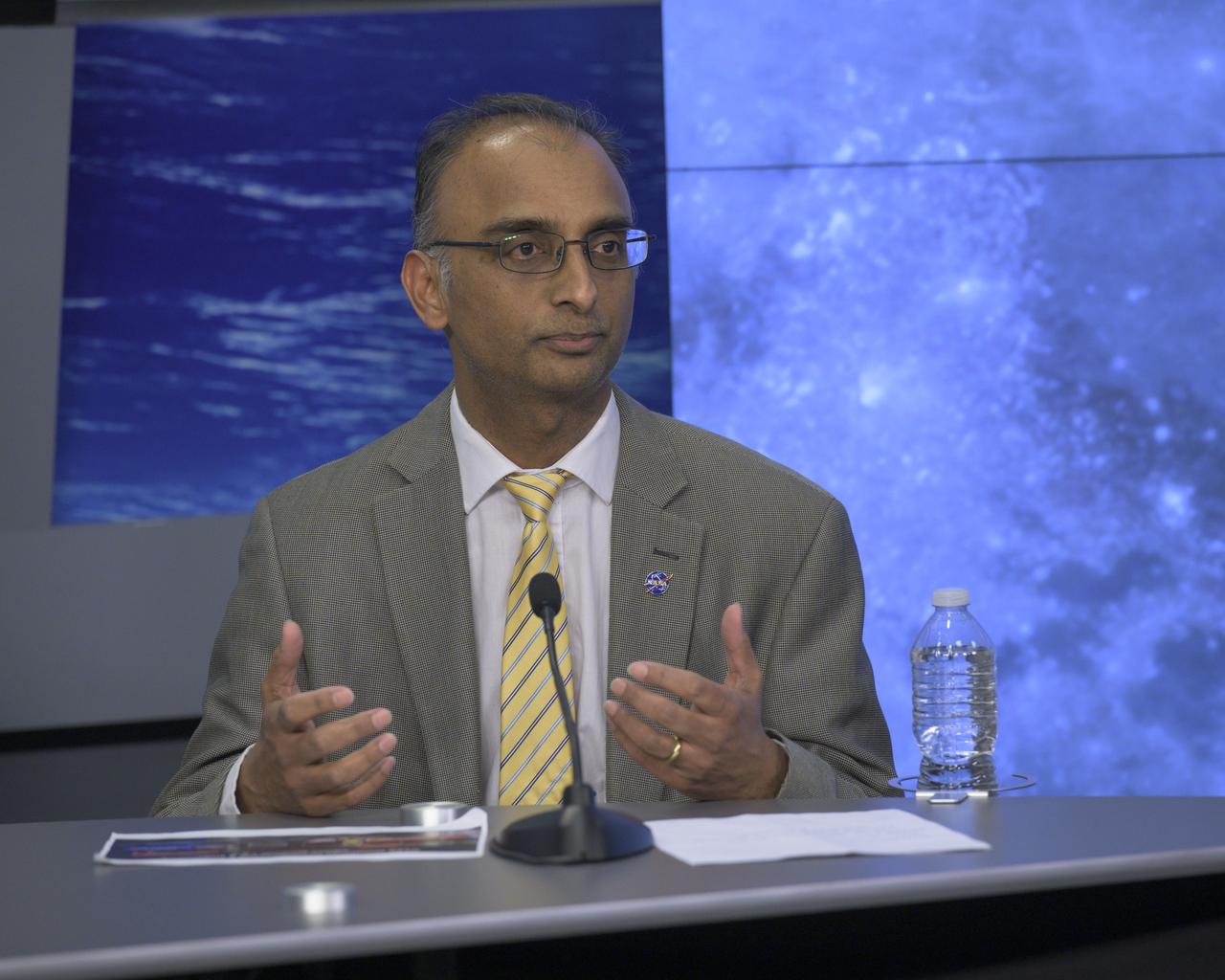
Prasun Desai, deputy associate administrator, Space Technology Mission Directorate at NASA Headquarters, participates in a news conference Feb. 23, 2024, at the agency’s Johnson Space Center in Houston. Desai was on hand to discuss the NASA science and technology aboard the Intuitive Machine’s Nova-C lander, called Odysseus, and its successful soft landing on the Moon Feb. 22, 2024. The mission is the first landing under NASA’s CLPS (Commercial Lunar Payload Services) initiative, and the first American lunar landing in more than 50 years.
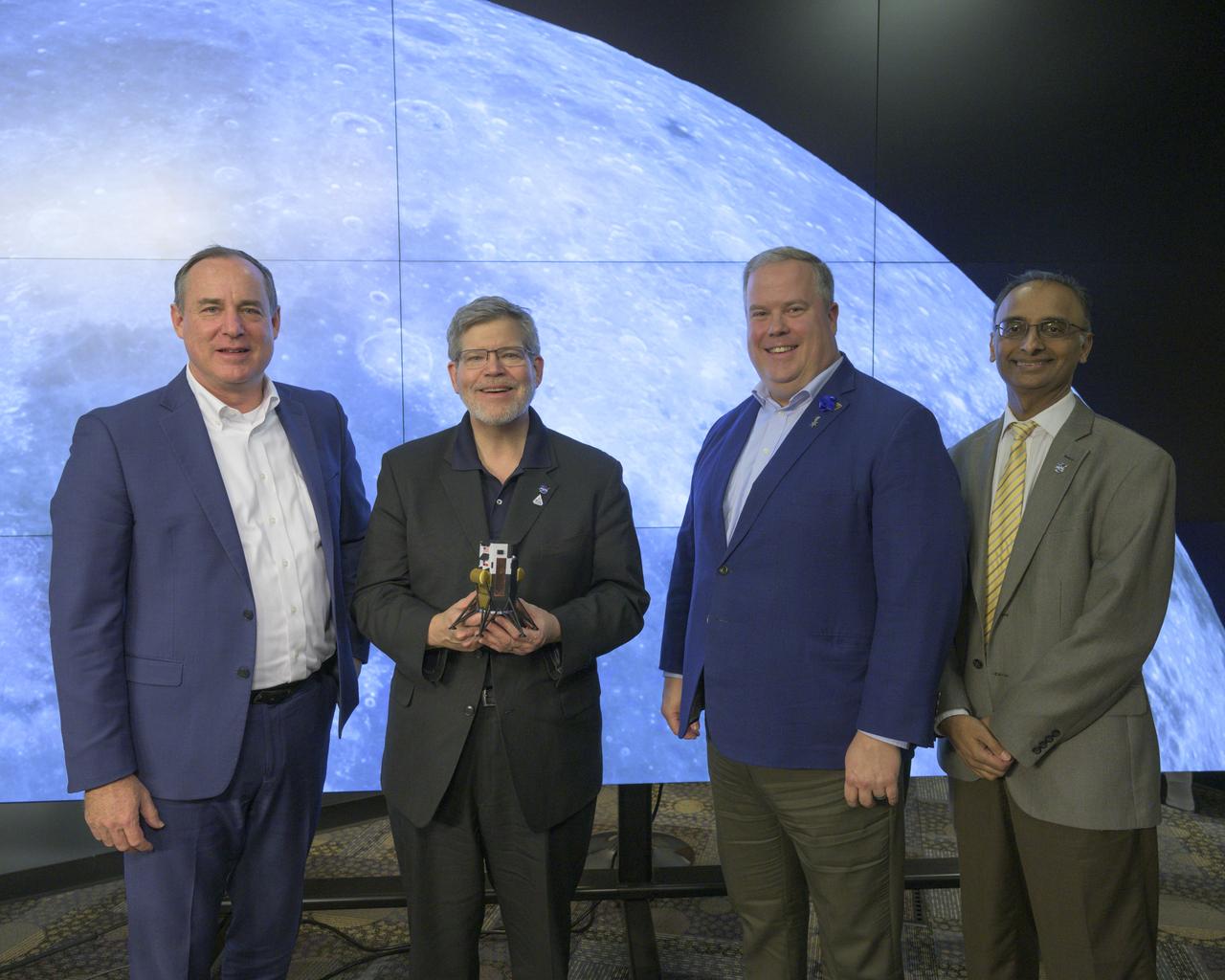
For the first time in more than 50 years, new NASA science instruments and technology demonstrations are operating on the Moon following the first successful delivery of the agency’s CLPS (Commercial Lunar Payload Services) initiative. Experts from NASA and Intuitive Machines hosted a news conference Feb. 23, 2024, at NASA’s Johnson Space Center in Houston to discuss the soft landing of the company’s Nova-C lander, called Odysseus. Participants in the briefing included (L-R): Steve Altemus, chief executive officer and co-founder, Intuitive Machines; Joel Kearns, deputy associate administrator for Exploration, Science Mission Directorate, NASA Headquarters in Washington; Tim Crain, chief technology officer and co-founder, Intuitive Machines; and Prasun Desai, deputy associate administrator, Space Technology Mission Directorate at NASA Headquarters. Photo Credit: NASA/Robert Markowitz
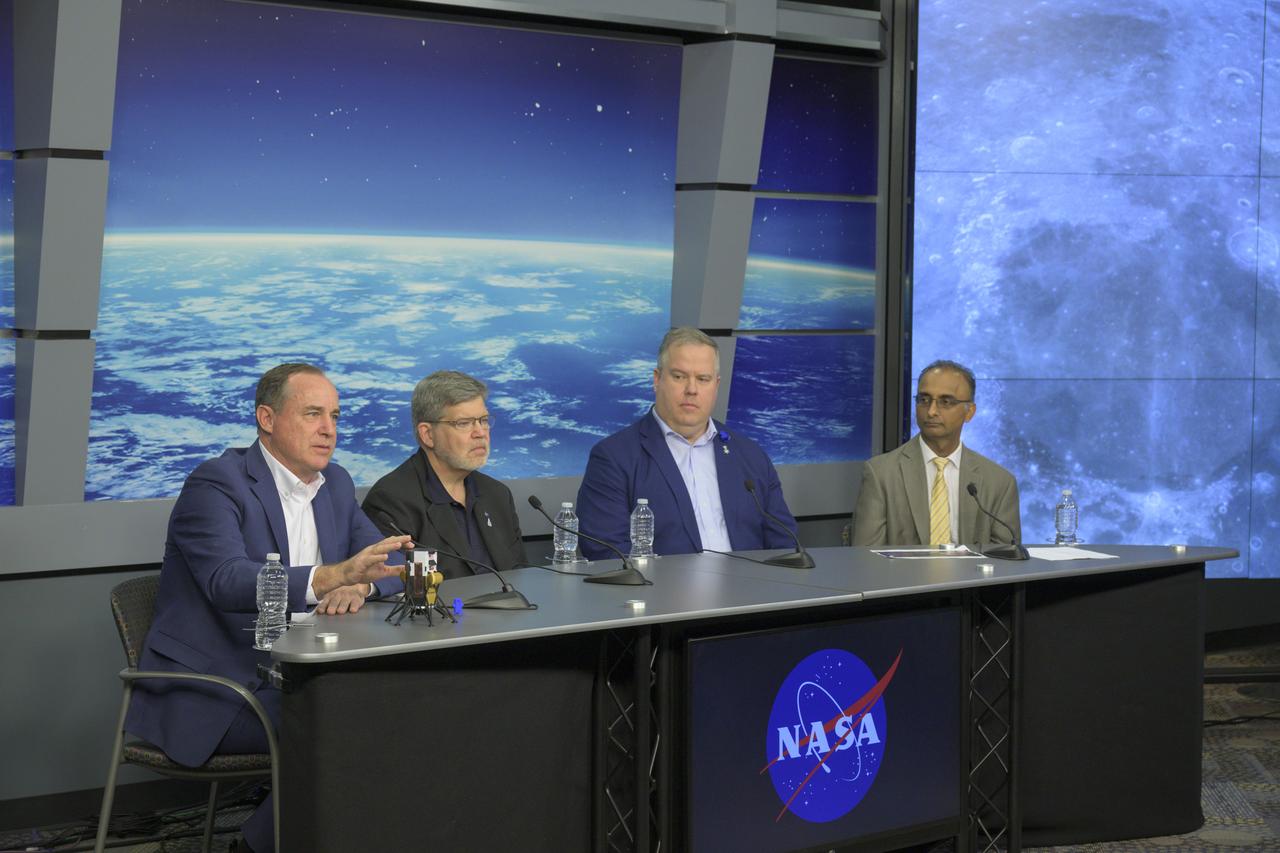
For the first time in more than 50 years, new NASA science instruments and technology demonstrations are operating on the Moon following the first successful delivery of the agency’s CLPS (Commercial Lunar Payload Services) initiative. Experts from NASA and Intuitive Machines hosted a news conference Feb. 23, 2024, at NASA’s Johnson Space Center in Houston to discuss the soft landing of the company’s Nova-C lander, called Odysseus. Participants in the briefing included (L-R): Steve Altemus, chief executive officer and co-founder, Intuitive Machines; Joel Kearns, deputy associate administrator for Exploration, Science Mission Directorate, NASA Headquarters in Washington; Tim Crain, chief technology officer and co-founder, Intuitive Machines; and Prasun Desai, deputy associate administrator, Space Technology Mission Directorate at NASA Headquarters. Photo Credit: NASA/Robert Markowitz
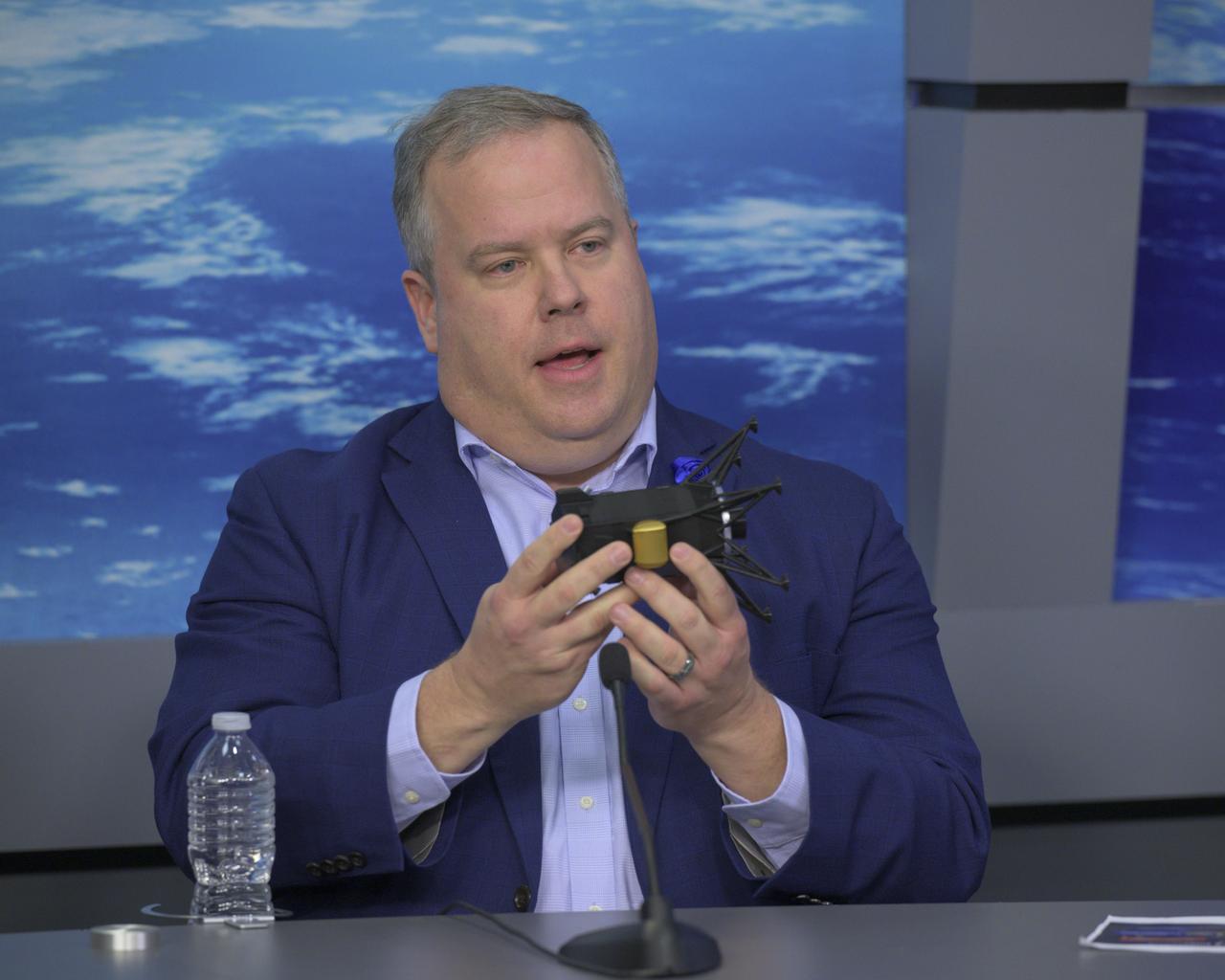
For the first time in more than 50 years, new NASA science instruments and technology demonstrations are operating on the Moon following the first successful delivery of the agency’s CLPS (Commercial Lunar Payload Services) initiative. Experts from NASA and Intuitive Machines hosted a news conference Feb. 23, 2024, at NASA’s Johnson Space Center in Houston to discuss the soft landing of the company’s Nova-C lander, called Odysseus. Participants in the briefing included (L-R): Steve Altemus, chief executive officer and co-founder, Intuitive Machines; Joel Kearns, deputy associate administrator for Exploration, Science Mission Directorate, NASA Headquarters in Washington; Tim Crain, chief technology officer and co-founder, Intuitive Machines; and Prasun Desai, deputy associate administrator, Space Technology Mission Directorate at NASA Headquarters. Photo Credit: NASA/Robert Markowitz
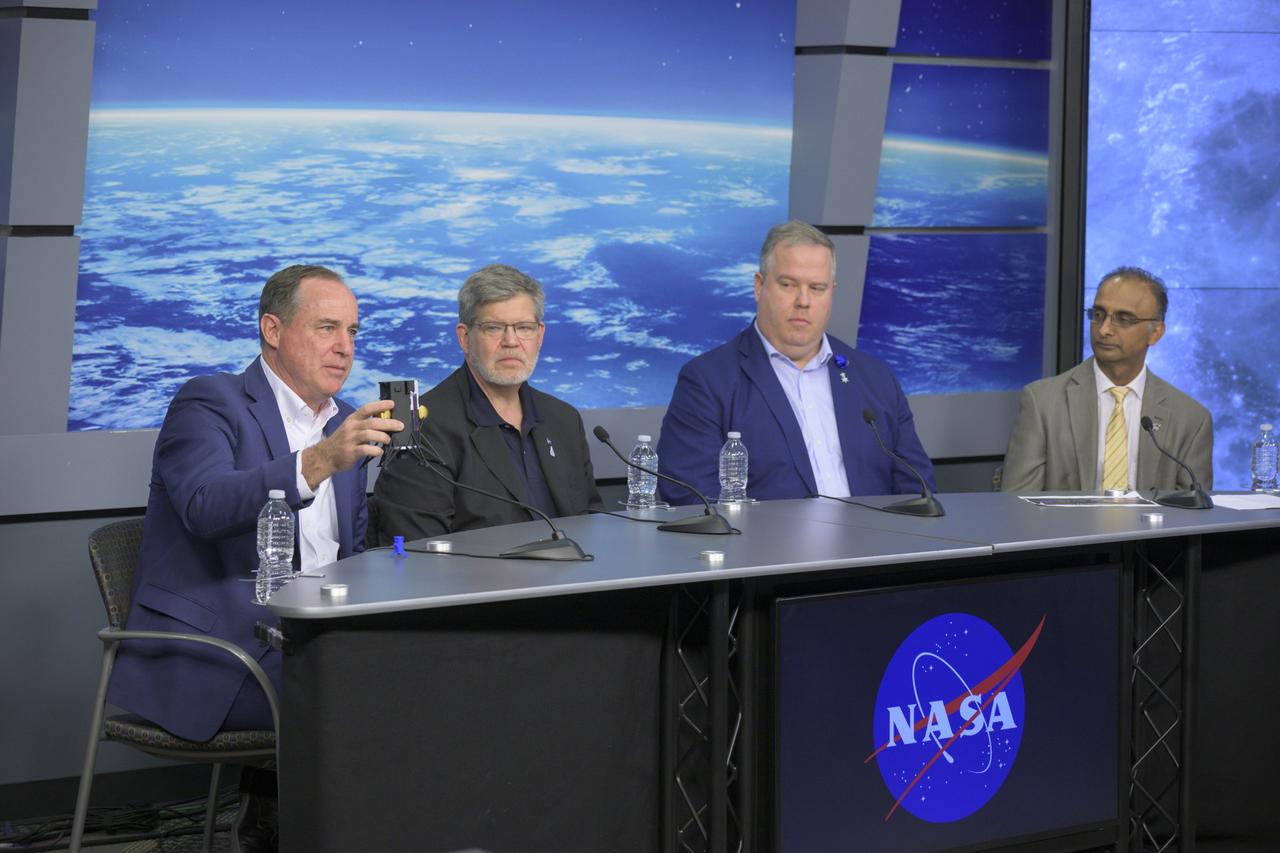
For the first time in more than 50 years, new NASA science instruments and technology demonstrations are operating on the Moon following the first successful delivery of the agency’s CLPS (Commercial Lunar Payload Services) initiative. Experts from NASA and Intuitive Machines hosted a news conference Feb. 23, 2024, at NASA’s Johnson Space Center in Houston to discuss the soft landing of the company’s Nova-C lander, called Odysseus. Participants in the briefing included (L-R): Steve Altemus, chief executive officer and co-founder, Intuitive Machines; Joel Kearns, deputy associate administrator for Exploration, Science Mission Directorate, NASA Headquarters in Washington; Tim Crain, chief technology officer and co-founder, Intuitive Machines; and Prasun Desai, deputy associate administrator, Space Technology Mission Directorate at NASA Headquarters. Photo Credit: NASA/Robert Markowitz
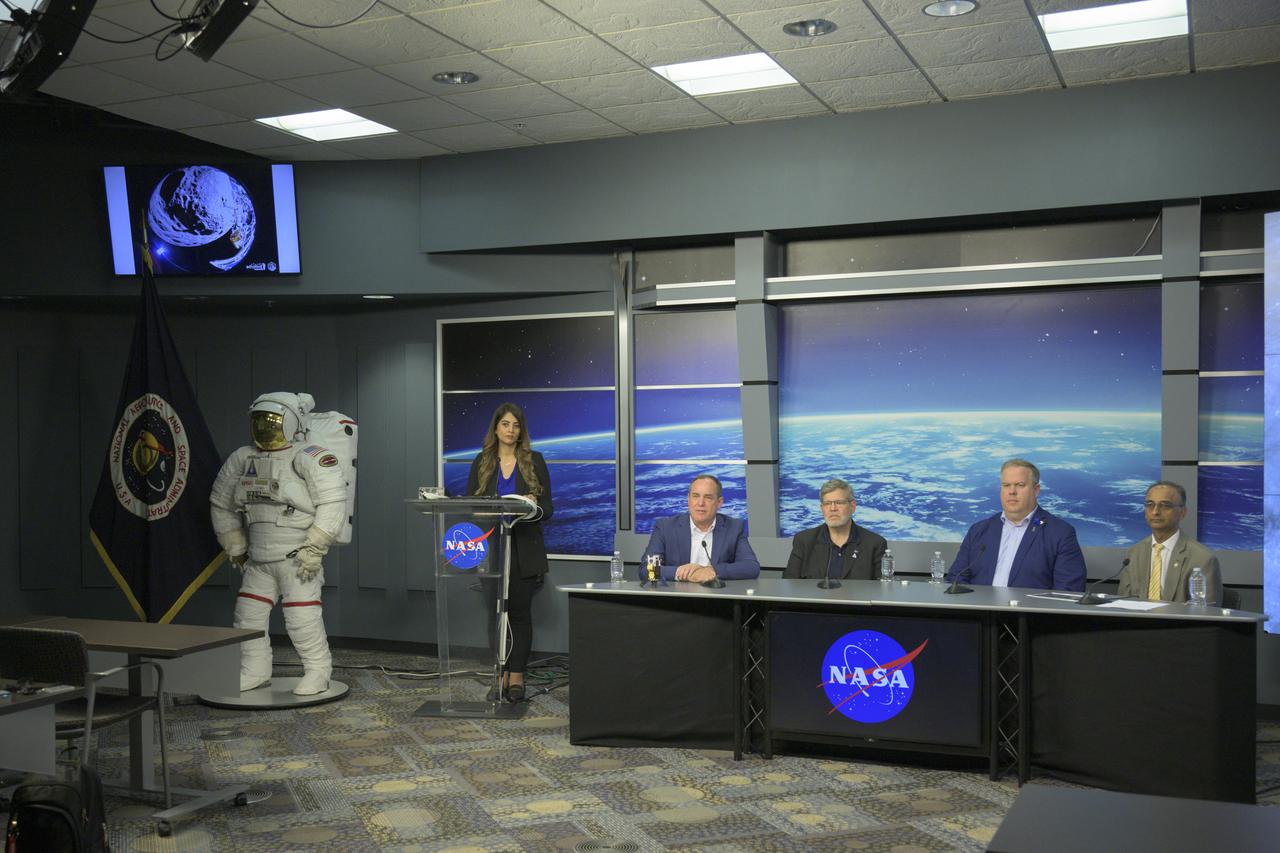
For the first time in more than 50 years, new NASA science instruments and technology demonstrations are operating on the Moon following the first successful delivery of the agency’s CLPS (Commercial Lunar Payload Services) initiative. Experts from NASA and Intuitive Machines hosted a news conference Feb. 23, 2024, at NASA’s Johnson Space Center in Houston to discuss the soft landing of the company’s Nova-C lander, called Odysseus. Participants in the briefing included (L-R): Steve Altemus, chief executive officer and co-founder, Intuitive Machines; Joel Kearns, deputy associate administrator for Exploration, Science Mission Directorate, NASA Headquarters in Washington; Tim Crain, chief technology officer and co-founder, Intuitive Machines; and Prasun Desai, deputy associate administrator, Space Technology Mission Directorate at NASA Headquarters. Photo Credit: NASA/Robert Markowitz
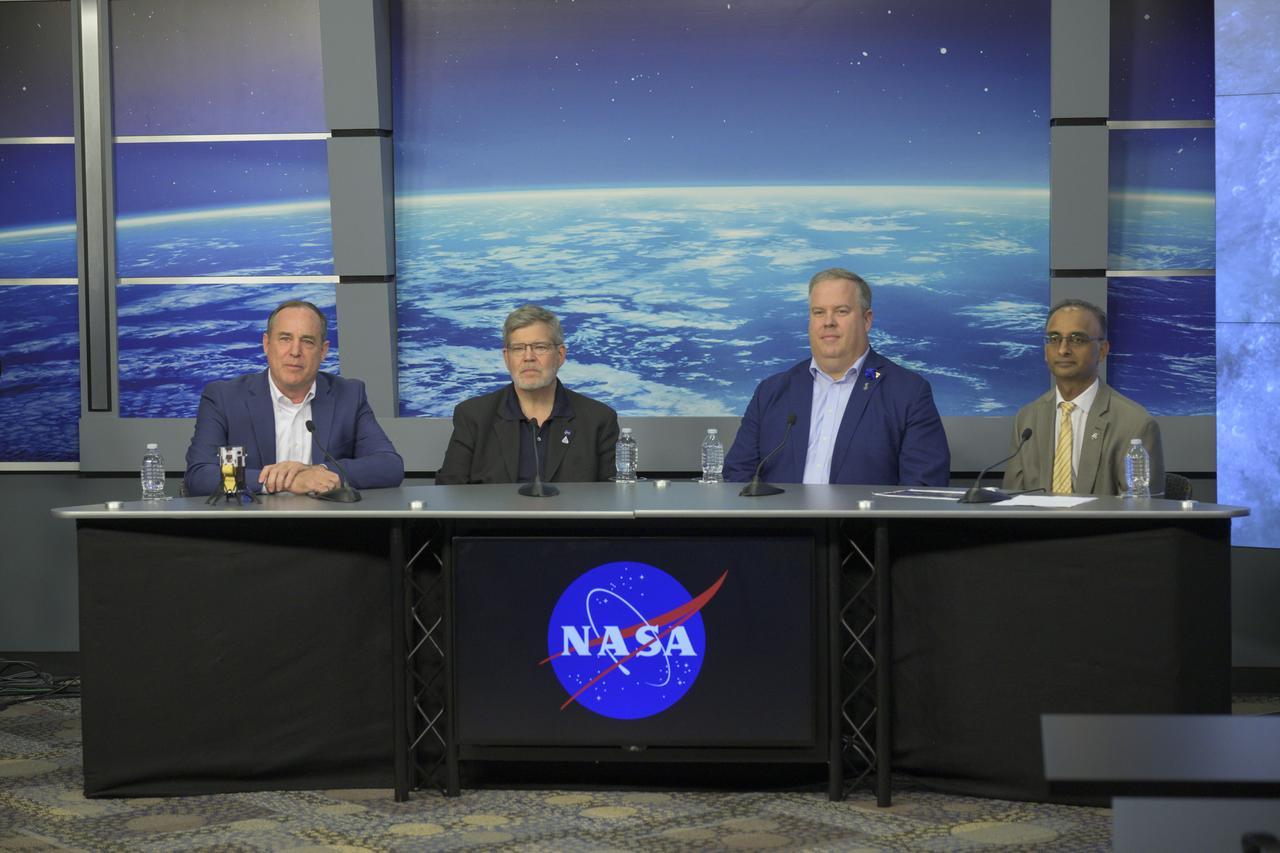
For the first time in more than 50 years, new NASA science instruments and technology demonstrations are operating on the Moon following the first successful delivery of the agency’s CLPS (Commercial Lunar Payload Services) initiative. Experts from NASA and Intuitive Machines hosted a news conference Feb. 23, 2024, at NASA’s Johnson Space Center in Houston to discuss the soft landing of the company’s Nova-C lander, called Odysseus. Participants in the briefing included (left to right): Steve Altemus, chief executive officer and co-founder, Intuitive Machines; Joel Kearns, deputy associate administrator for Exploration, Science Mission Directorate, NASA Headquarters in Washington; Tim Crain, chief technology officer and co-founder, Intuitive Machines; and Prasun Desai, deputy associate administrator, Space Technology Mission Directorate at NASA Headquarters.
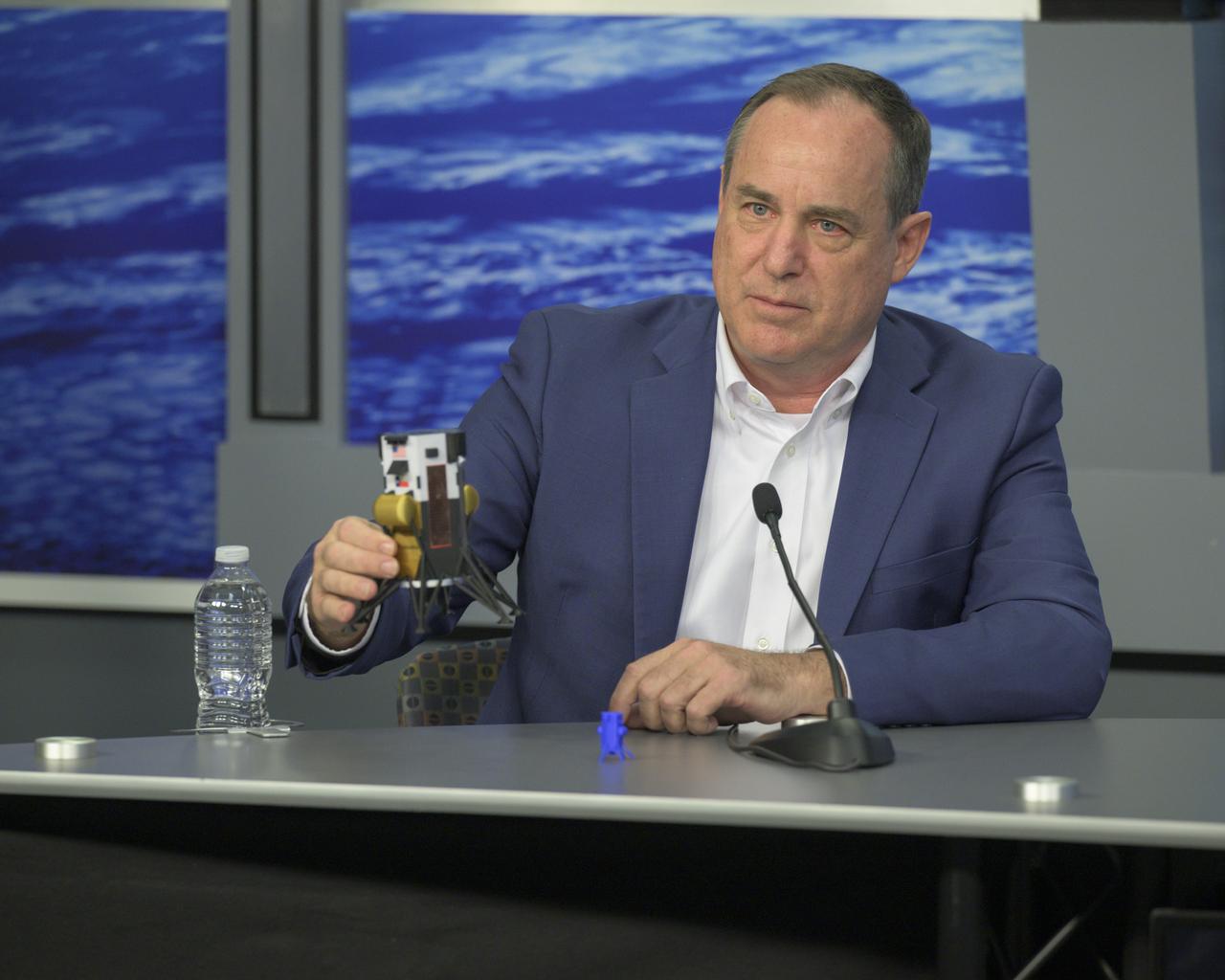
For the first time in more than 50 years, new NASA science instruments and technology demonstrations are operating on the Moon following the first successful delivery of the agency’s CLPS (Commercial Lunar Payload Services) initiative. Experts from NASA and Intuitive Machines hosted a news conference Feb. 23, 2024, at NASA’s Johnson Space Center in Houston to discuss the soft landing of the company’s Nova-C lander, called Odysseus. Participants in the briefing included (L-R): Steve Altemus, chief executive officer and co-founder, Intuitive Machines; Joel Kearns, deputy associate administrator for Exploration, Science Mission Directorate, NASA Headquarters in Washington; Tim Crain, chief technology officer and co-founder, Intuitive Machines; and Prasun Desai, deputy associate administrator, Space Technology Mission Directorate at NASA Headquarters. Photo Credit: NASA/Robert Markowitz
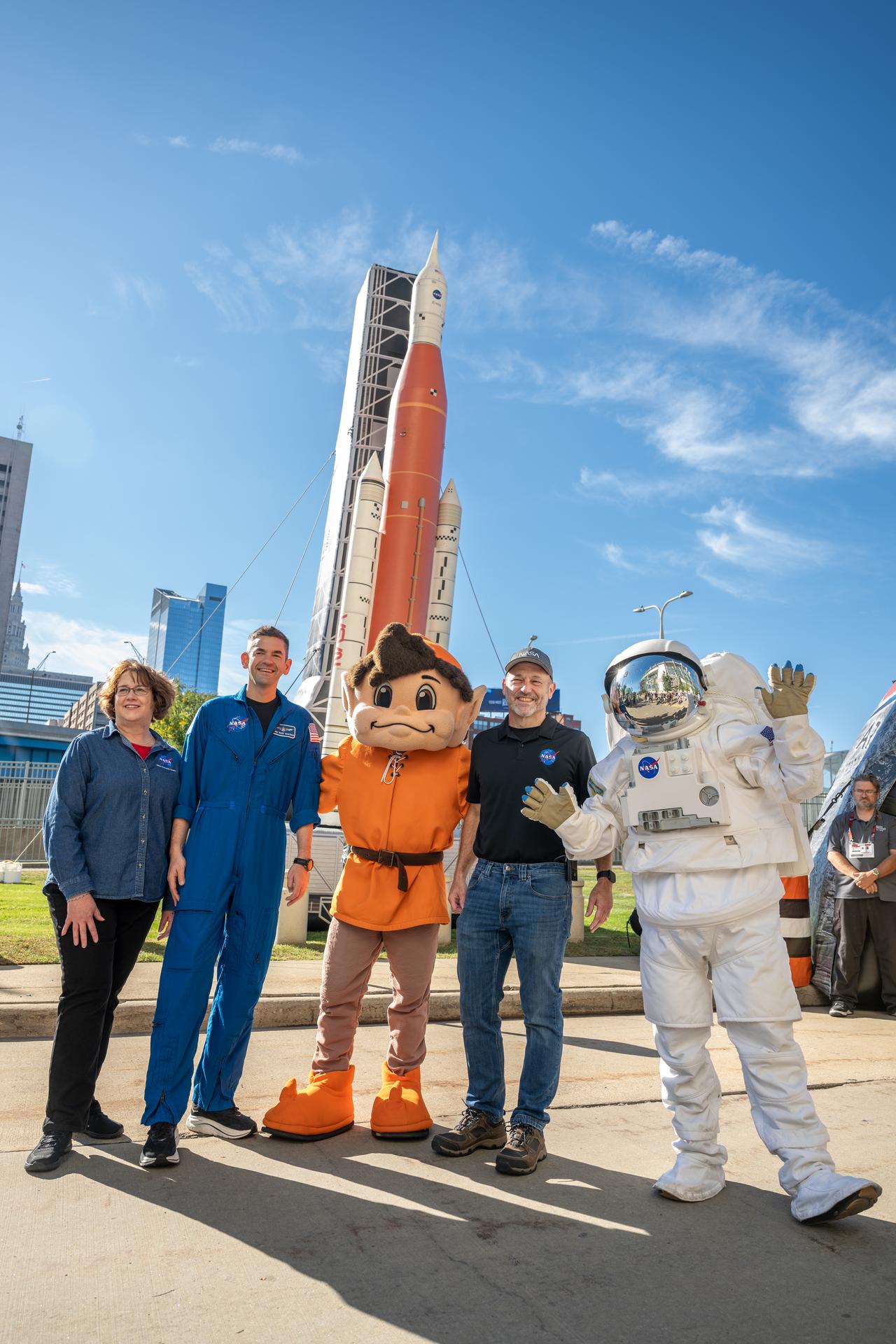
GRC Center Director Dawn Schaible, NASA Administrator Jared Isaacman and Associate Administrator, Research and Technology Mission Directorate Dr. James Kenyon, pose with Cleveland Browns’ mascot, Brownie the Elf, and Eva the Astronaut at an NFL game between the Cleveland Browns and the Carolina Panthers at Huntington Bank Field, Sunday, September 27th, 2026, in Cleveland, Ohio. NASA’s engagement at NFL games is part of the agency’s Inspiration Tour, aimed at strengthening connections between NASA and its partners and showcasing innovation in air and space in the lead up to the MAX POWER aerospace technology expo and airshow at the agency’s Kennedy Space Center in early November. Photo Credit: (NASA/Jordan Cochran)
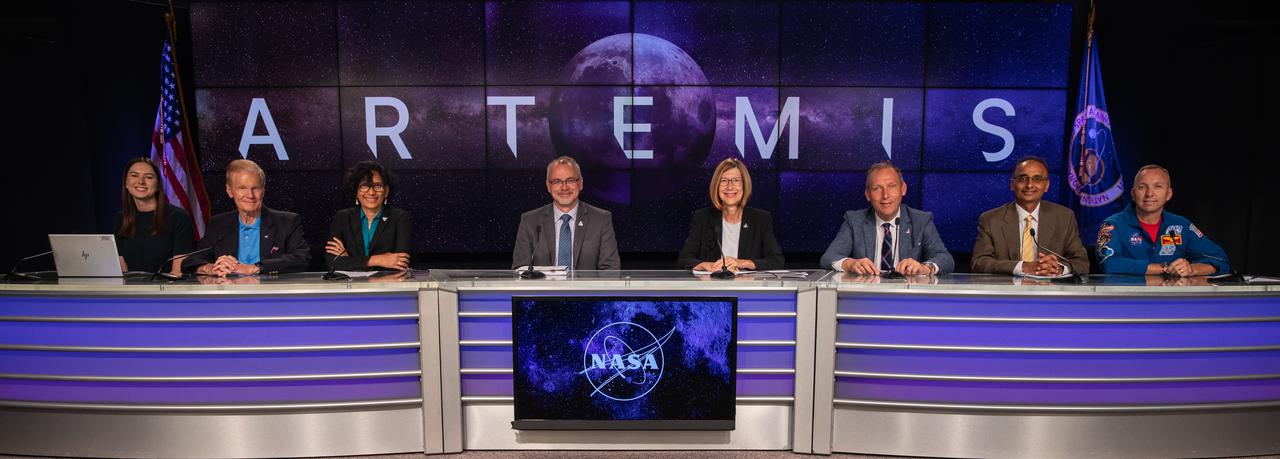
NASA holds a prelaunch media briefing on the agency’s Moon to Mars exploration plans on Aug. 27, 2022, at the agency’s Kennedy Space Center in Florida, as the clock counts down to the launch of Artemis I scheduled for Aug. 29, at 8:33 a.m. EDT from Kennedy’s Launch Complex 39B. From left, are Jackie McGuinness, NASA press secretary; Bill Nelson, NASA administrator; Bhavya Lal, NASA associate administrator for technology, policy and strategy; Jim Free, NASA associate administrator, Exploration Systems Development Mission Directorate; Kathy Lueders, NASA associate administrator, Space Operations Mission Directorate; Thomas Zurbuchen, NASA associate administrator, Science Mission Directorate; Prasun Desai, NASA deputy associate administrator, Space Technology Mission Directorate; and Randy Bresnik, NASA astronaut. The first in a series of increasingly complex missions, Artemis I will provide a foundation for human deep space exploration and demonstrate our commitment and capability to extend human presence to the Moon and beyond. The primary goal of Artemis I is to thoroughly test the integrated systems before crewed missions by operating the spacecraft in a deep space environment, testing Orion’s heat shield, and recovering the crew module after reentry, descent, and splashdown.
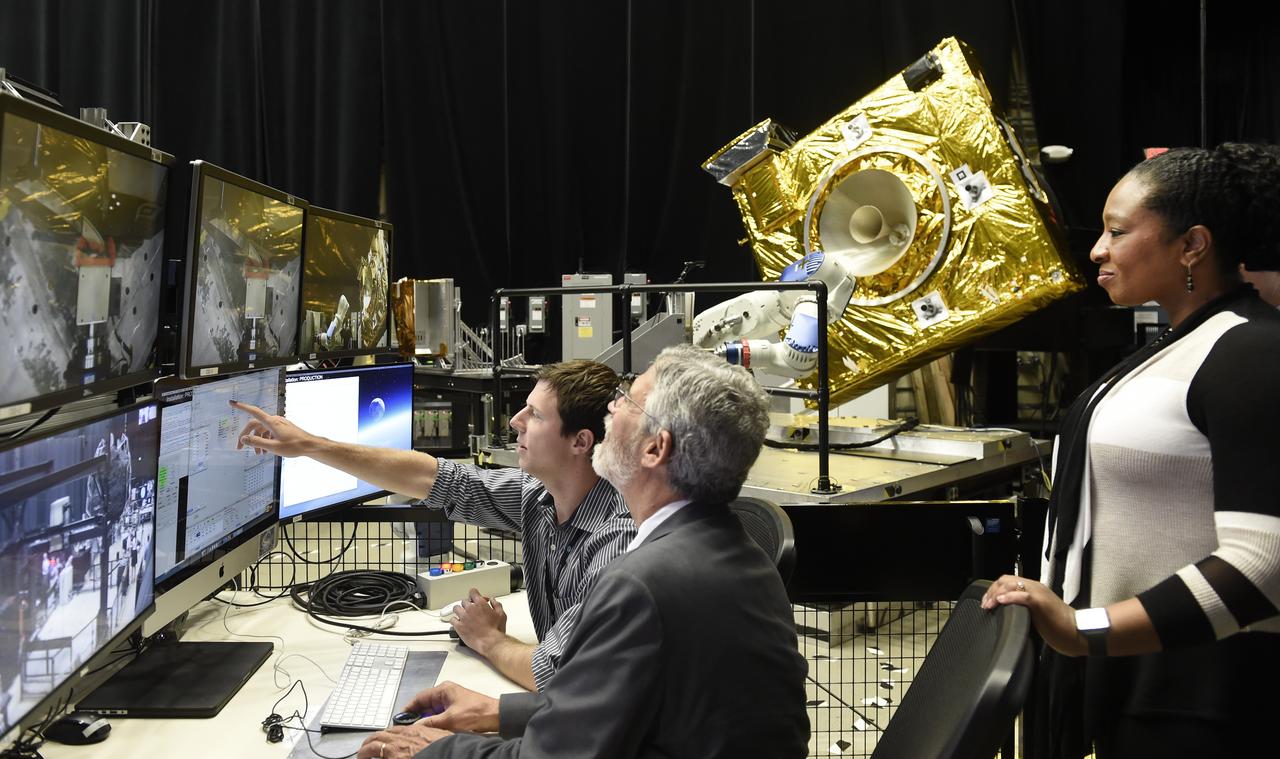
On Sept 14, 2016 NASA provided an update on the Asteroid Redirect Mission (ARM) and how it contributes to the agency'sjourney to Mars and protection of Earth. The presentation took place at the Robotics Operations Center at NASA's Goddard Space Flight Center in Greenbelt,Md Assistant to the President for Science and Technology, Dr. John P. Holden, NASA Administrator Charles Bolden and NASA's ARM Program Director, Dr. Michele Gates discussed the latest update regarding the mission. They explained the mission's scientific and technological benefits and how ARM will demonstrate technology for defending Earth from potentially hazardous asteroids. The briefing aired live on NASA TV and the agency's website.
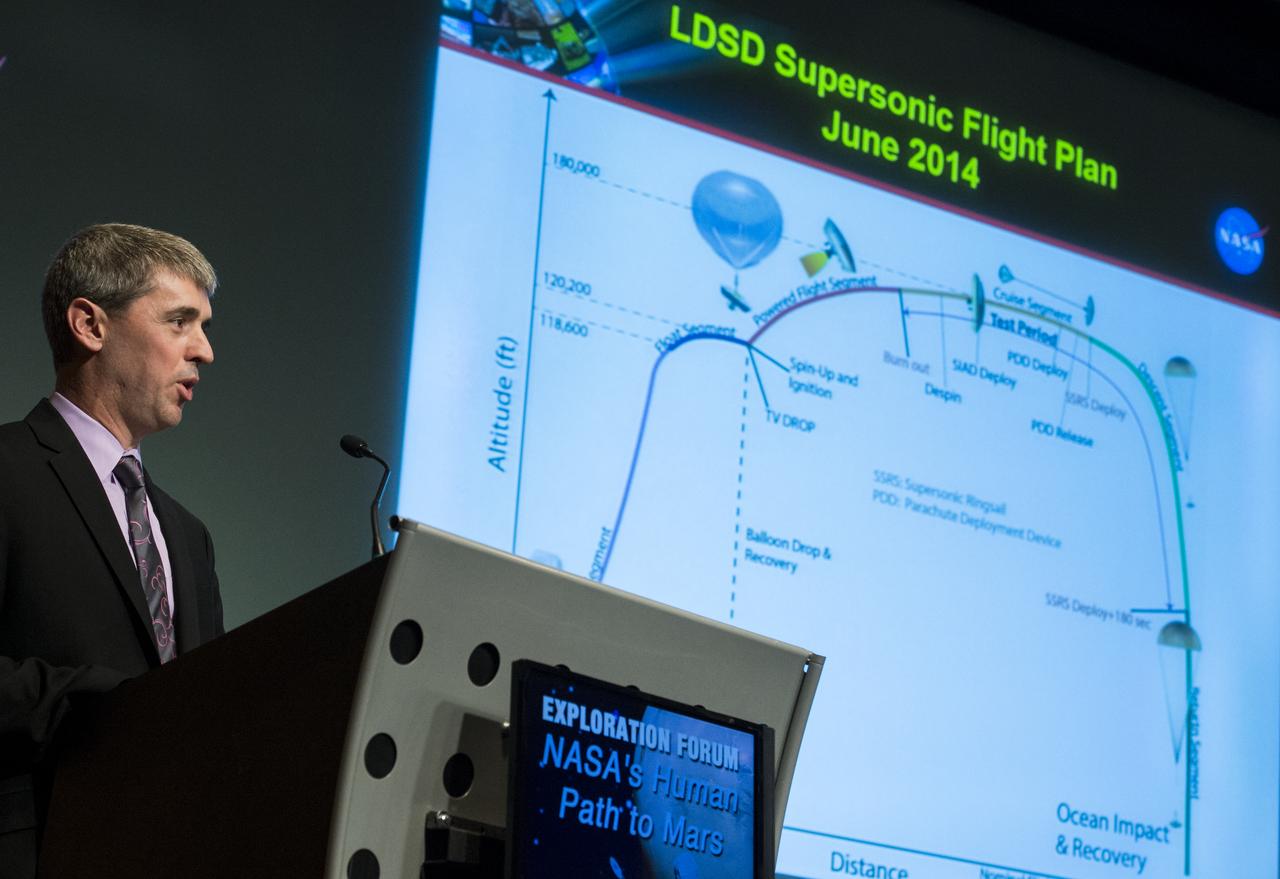
Randy Lillard, Program Executive for Technology Demonstration Missions of NASA's Space Technology Mission DIrectorate, speaks about the upcoming Low-Density Supersonic Decelerator demonstration during an Exploration Forum showcasing NASA's human exploration path to Mars in the James E. Webb Auditorium at NASA Headquarters on Tuesday, April 29, 2014. Photo Credit: (NASA/Joel Kowsky)
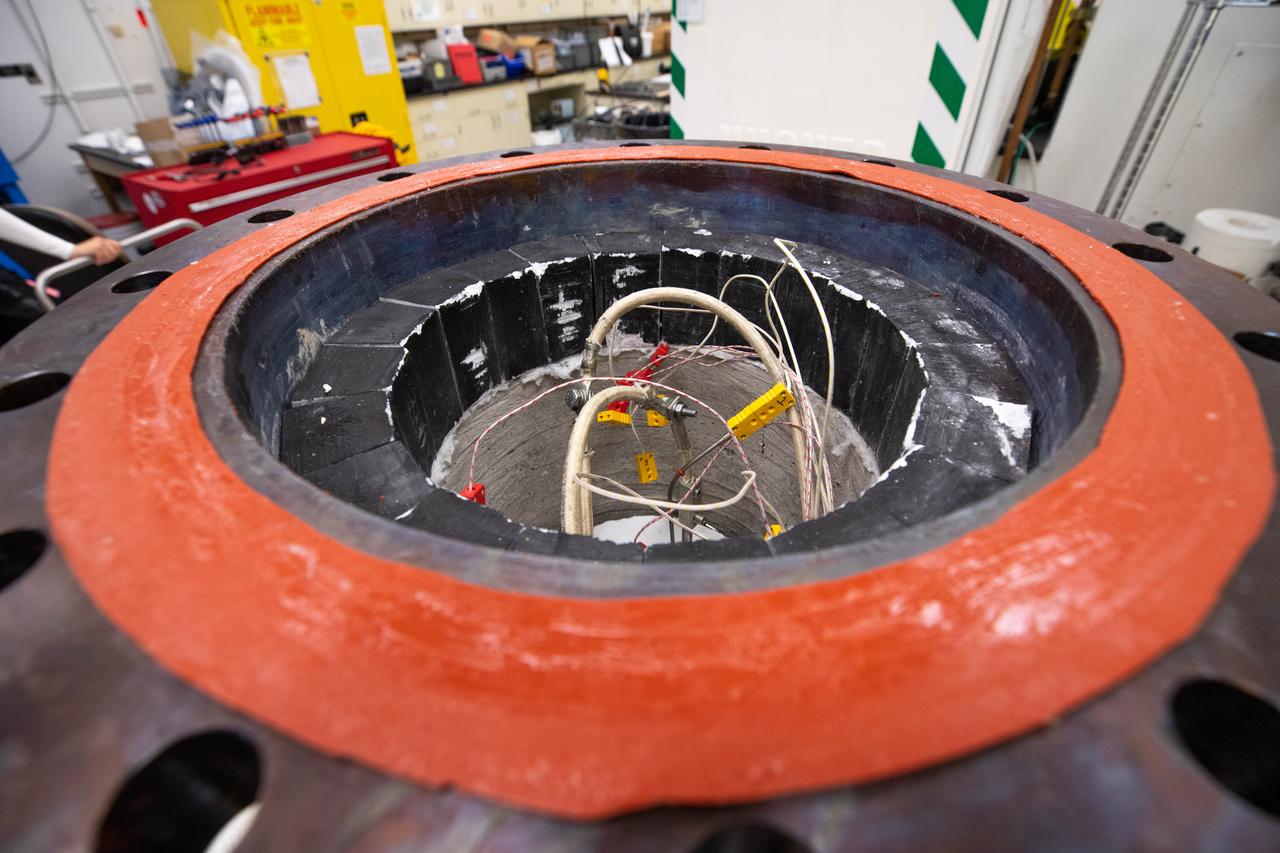
A team investigating molten regolith electrolysis prepares to test a reactor inside a laboratory in the Neil Armstrong Operations and Checkout Building at NASA’s Kennedy Space Center in Florida on Oct. 29, 2020. The Gaseous Lunar Oxygen from Regolith Electrolysis (GaLORE) project seeks to develop technology to extract oxygen and metals from the crushed rock, or regolith, that covers the Moon’s surface. As NASA prepares to land the first woman and the next man on the Moon in 2024 as part of the Artemis program, technology such as this can assist with sustainable human lunar exploration and long-duration missions to Mars. GaLORE was selected as an Early Career Initiative project by the agency’s Space Technology Mission directorate.
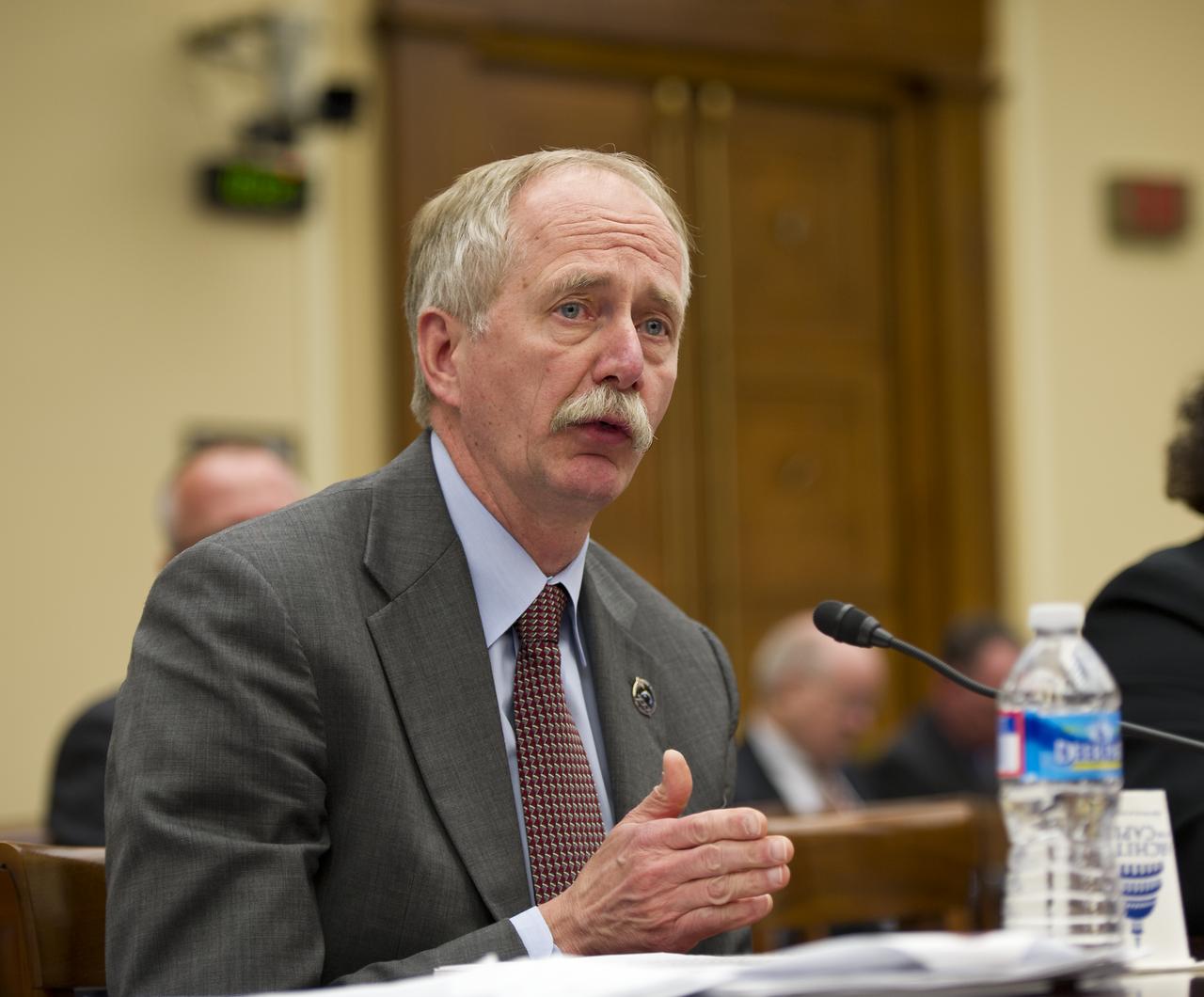
William Gerstenmaier, Associate Administrator, Human Exploration and Operations Mission Directorate, NASA Headquarters, testifies during a hearing before the House Committee on Science, Space, and Technology regarding access to and sustainability of the International Space Station, Wednesday, March 28, 2012 at the Rayburn House Office Building in Washington. Photo Credit: (NASA/Carla Cioffi)
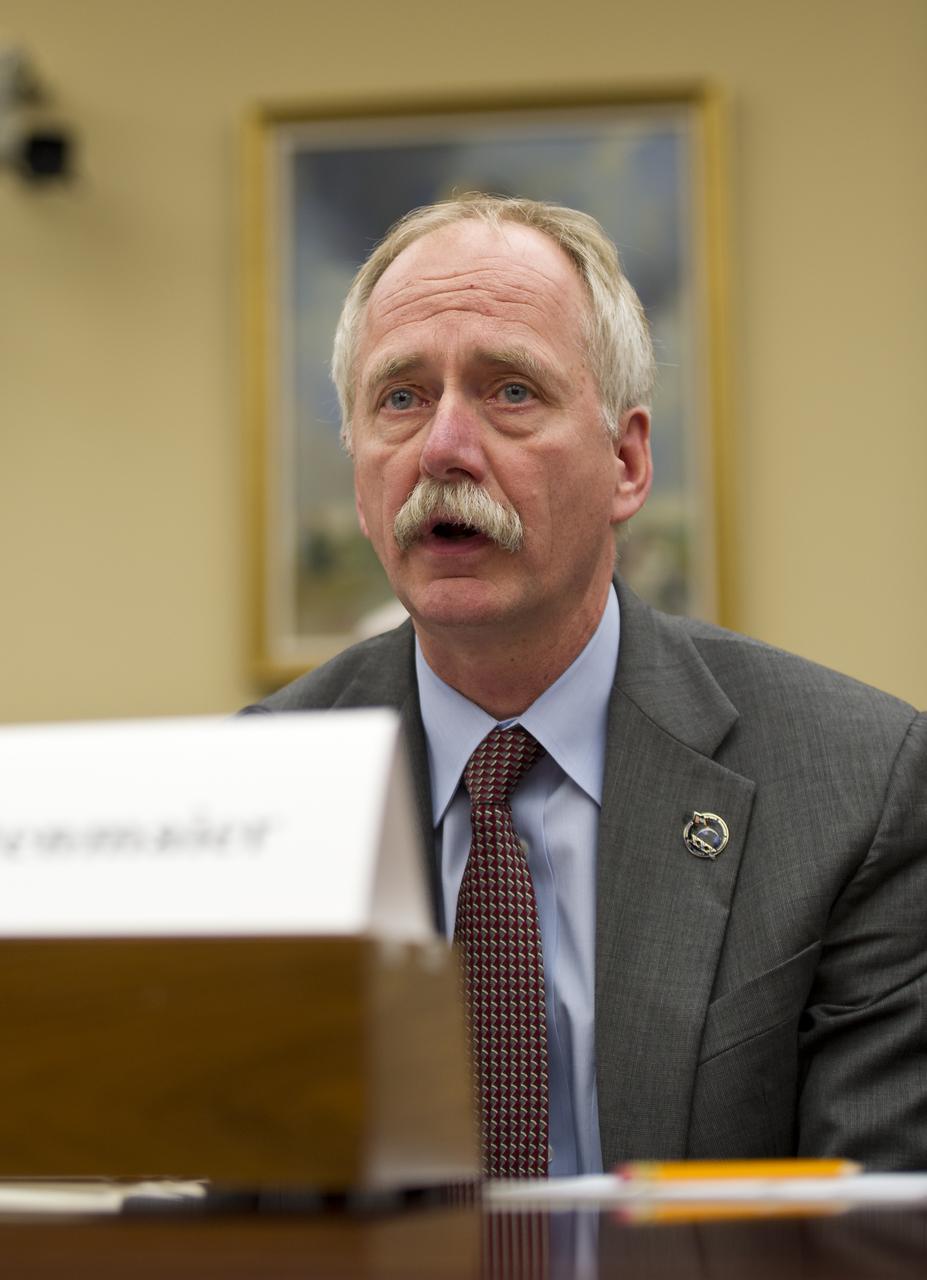
William Gerstenmaier, Associate Administrator, Human Exploration and Operations Mission Directorate, NASA Headquarters, testifies during a hearing before the House Committee on Science, Space, and Technology regarding access to and sustainability of the International Space Station, Wednesday, March 28, 2012 at the Rayburn House Office Building in Washington. Photo Credit: (NASA/Carla Cioffi)
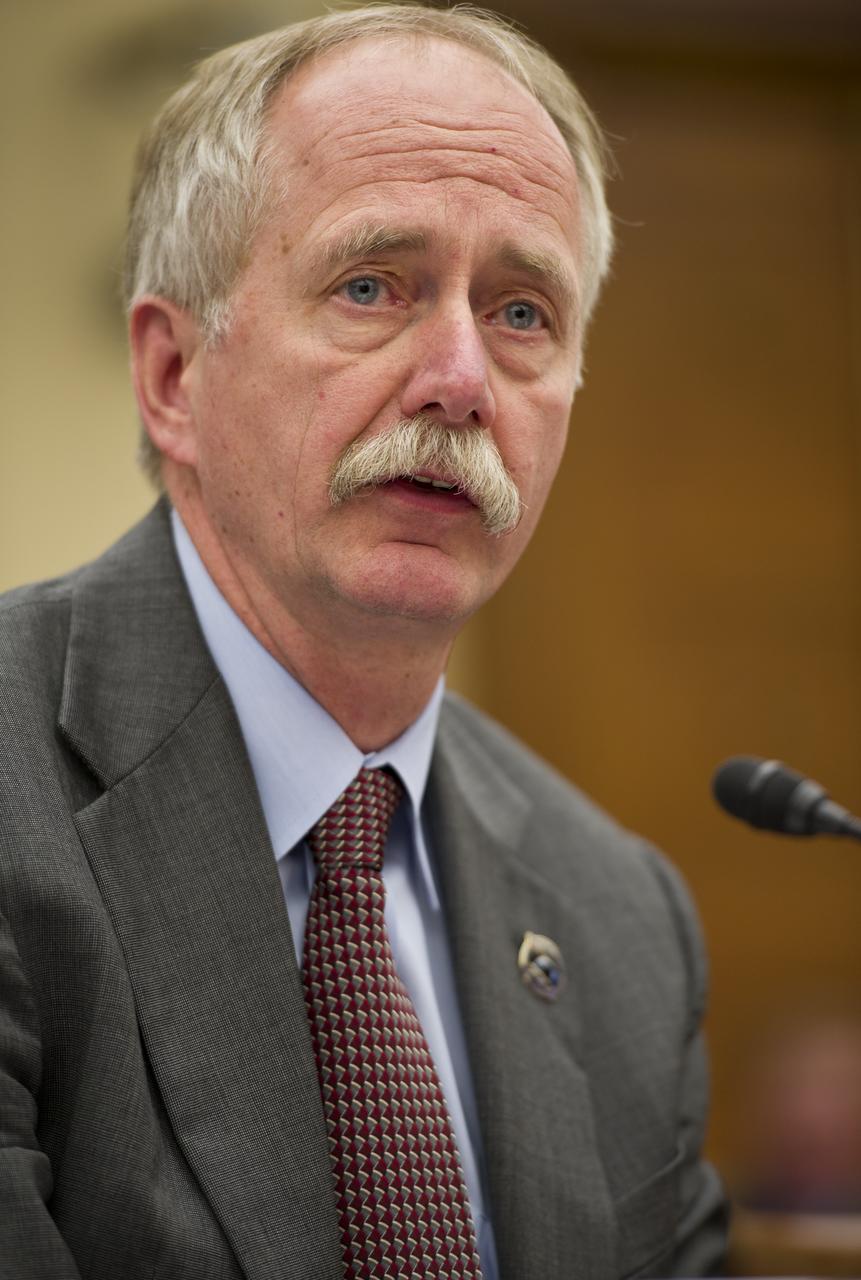
William Gerstenmaier, Associate Administrator, Human Exploration and Operations Mission Directorate, NASA Headquarters, testifies during a hearing before the House Committee on Science, Space, and Technology regarding access to and sustainability of the International Space Station, Wednesday, March 28, 2012 at the Rayburn House Office Building in Washington. Photo Credit: (NASA/Carla Cioffi)
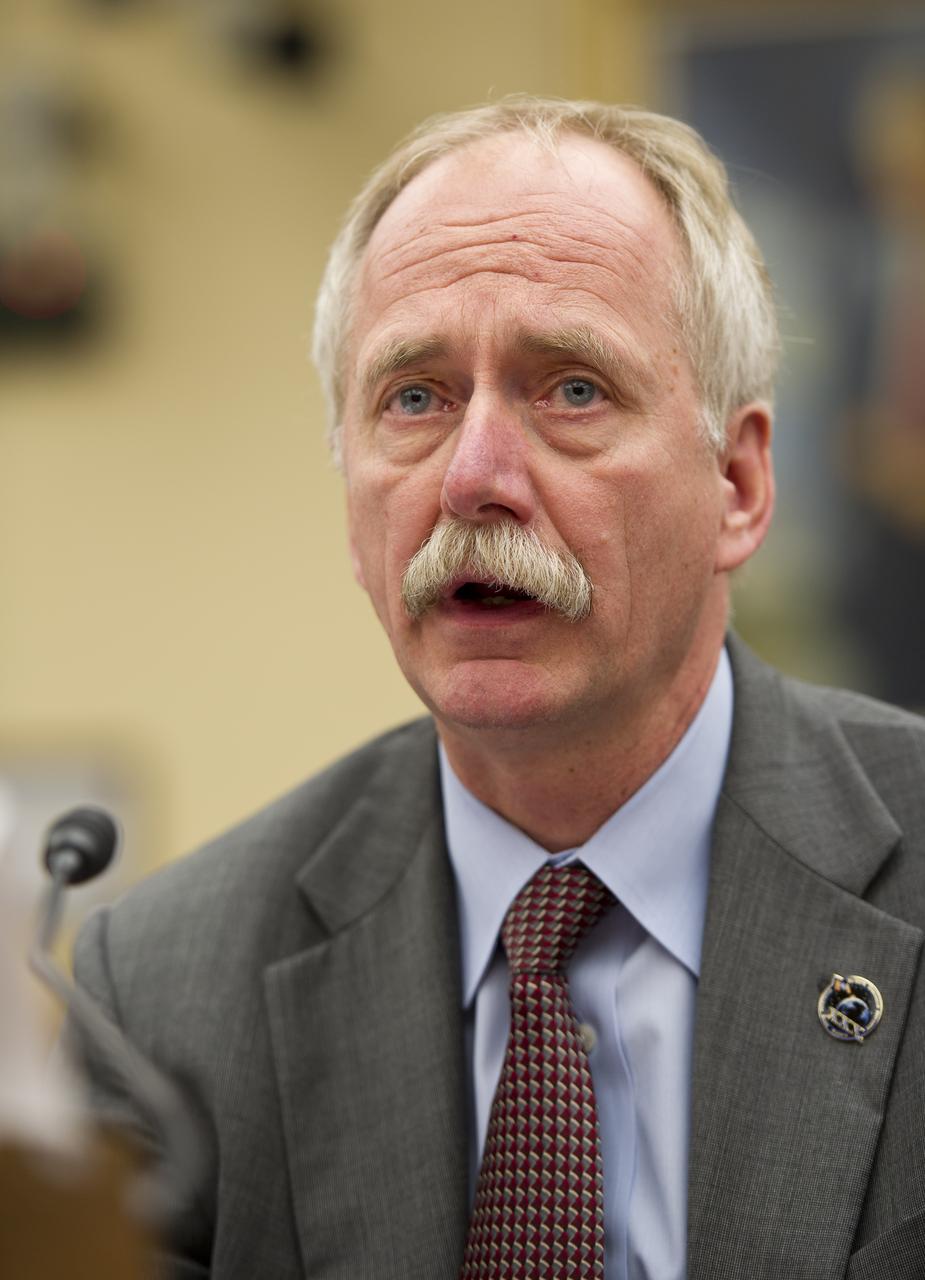
William Gerstenmaier, Associate Administrator, Human Exploration and Operations Mission Directorate, NASA Headquarters, testifies during a hearing before the House Committee on Science, Space, and Technology regarding access to and sustainability of the International Space Station, Wednesday, March 28, 2012 at the Rayburn House Office Building in Washington. Photo Credit: (NASA/Carla Cioffi)
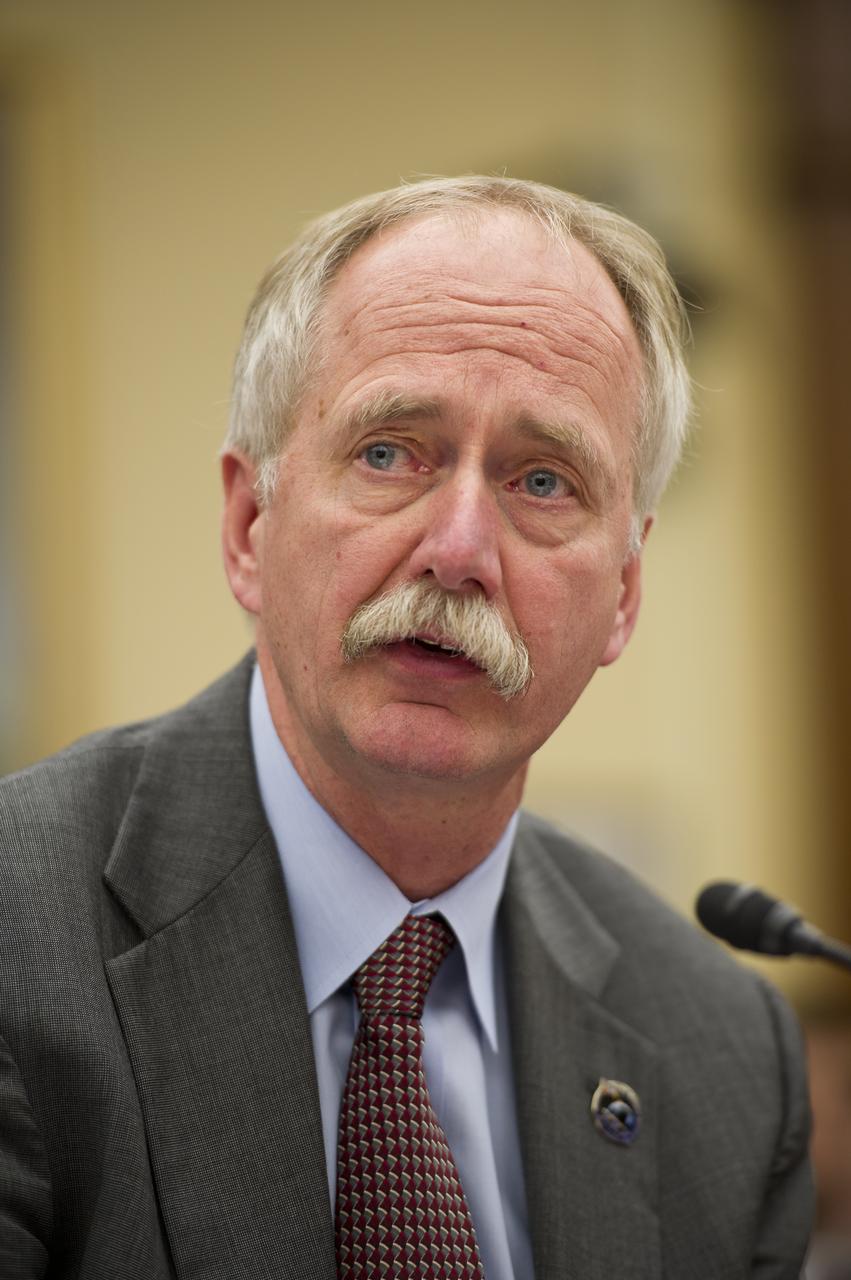
William Gerstenmaier, Associate Administrator, Human Exploration and Operations Mission Directorate, NASA Headquarters, testifies during a hearing before the House Committee on Science, Space, and Technology regarding access to and sustainability of the International Space Station, Wednesday, March 28, 2012 at the Rayburn House Office Building in Washington. Photo Credit: (NASA/Carla Cioffi)
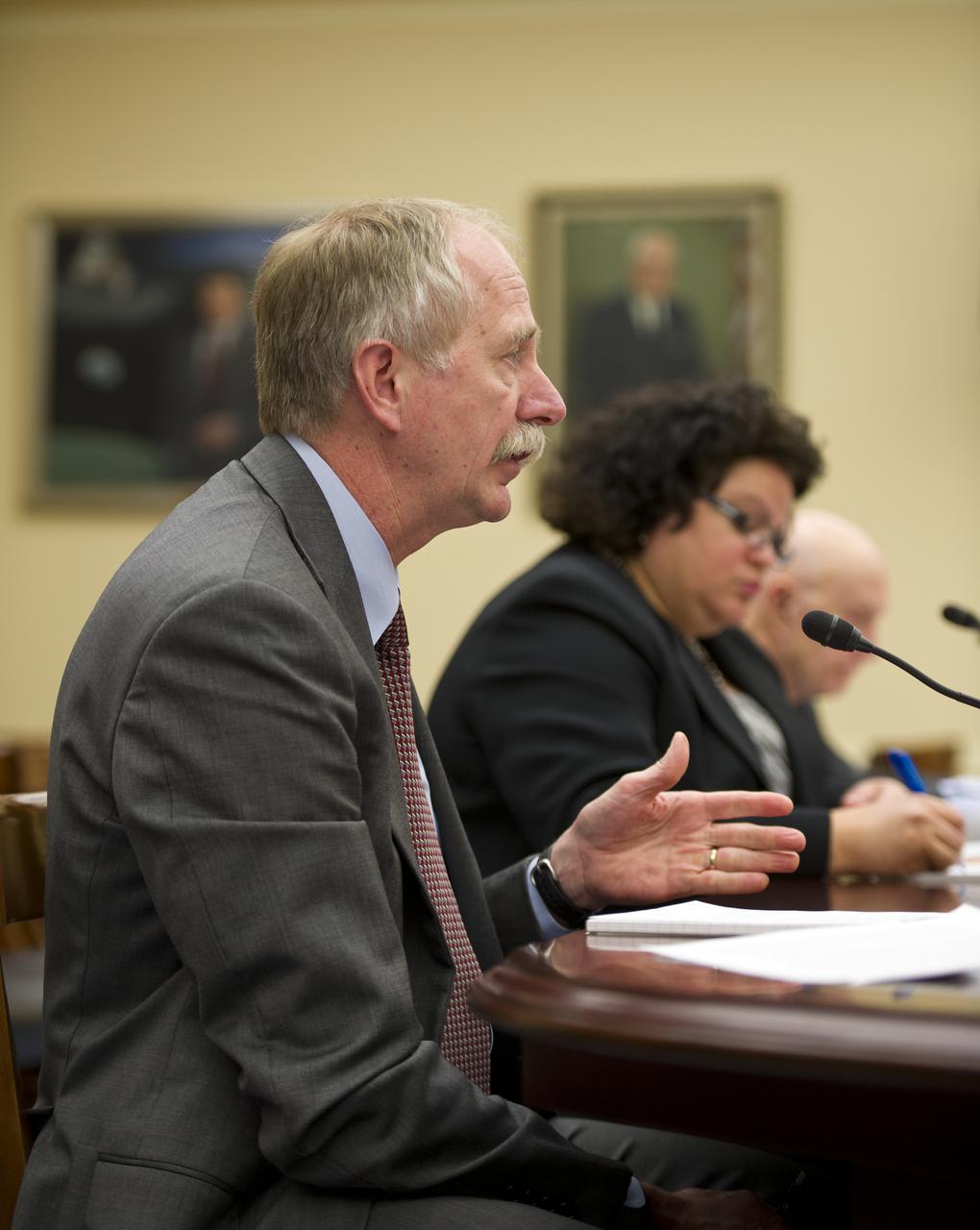
William Gerstenmaier, Associate Administrator, Human Exploration and Operations Mission Directorate, NASA Headquarters, testifies during a hearing before the House Committee on Science, Space, and Technology regarding access to and sustainability of the International Space Station, Wednesday, March 28, 2012 at the Rayburn House Office Building in Washington. Photo Credit: (NASA/Carla Cioffi)

Senior Director of the Space Engineering Department, MBRSC, Amer Al Sayegh, left, UAE Assistant Minister of Foreign Affairs and International Cooperation for Advanced Science and Technology, Omran Sharaf, NASA Associate Administrator Jim Free, and Director of Space Missions Department, UAESA, Mohsen Al Awadhi, right, participate in a panel discussion during an event celebrating UAE-US collaboration in space, Friday, March 8, 2024, at the Four Seasons Hotel in Washington. Photo Credit: (NASA/Bill Ingalls)
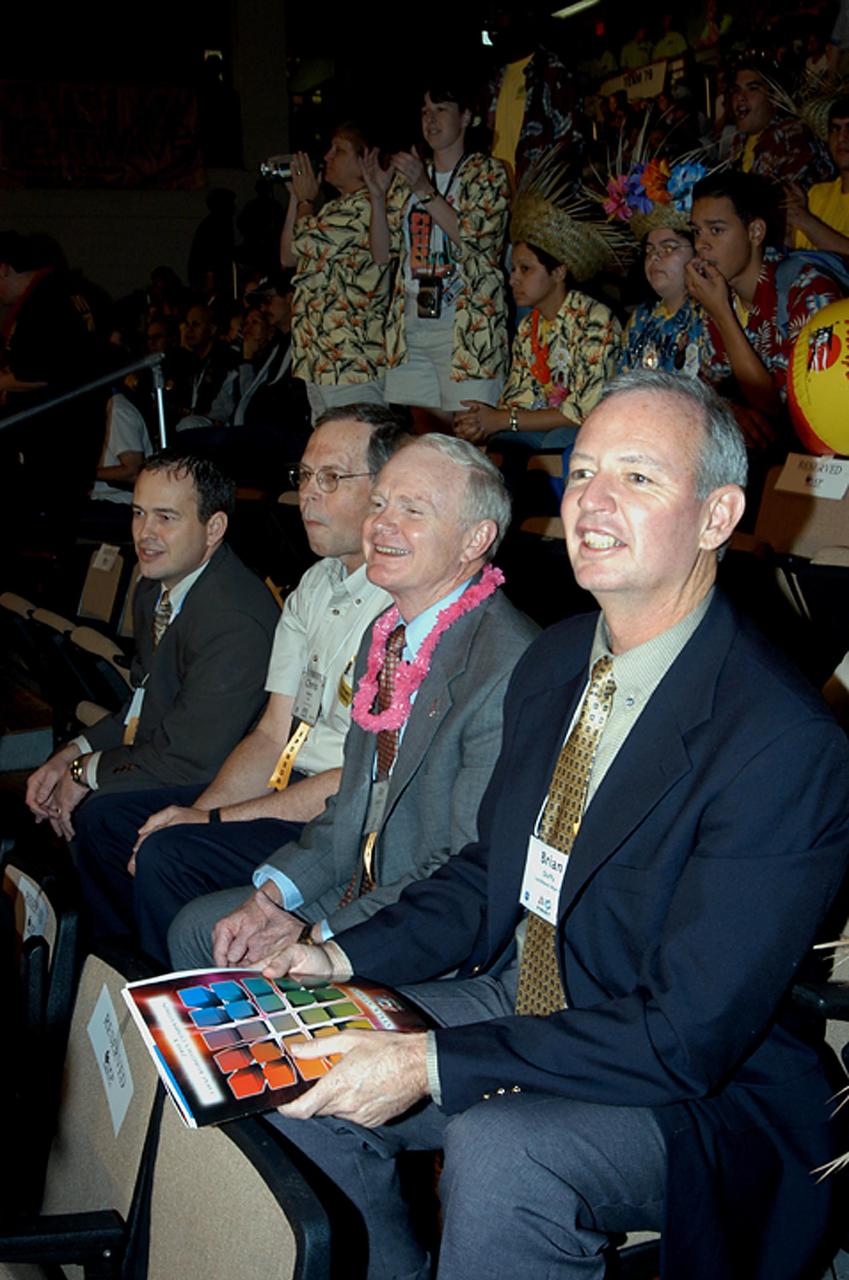
KENNEDY SPACE CENTER, FLA. - Observing the festivities at the 2003 Southeastern Regional FIRST Robotic Competition are, from left, David Culp, executive intern to the director of KSC; Chris Fairey, former director of Spaceport Services at KSC; Roy Bridges, KSC director; and Brian Duffy, Lockheed Martin vice president/associate program manager. The competition is being held at the University of Central Florida (UCF) in Orlando, March 20-23. Forty student teams from around the country are participating in the event that pits team-built gladiator robots against each other in an athletic-style competition. The teams are sponsored by NASA/Kennedy Space Center, The Boeing Company/Brevard Community College, and Lockheed Martin Space Operations/Mission Systems for the nonprofit organization For Inspiration and Recognition of Science and Technology, known as FIRST. The vision of FIRST is to inspire in the youth of our nation an appreciation of science and technology and an understanding that mastering these disciplines can enrich the lives of all mankind.
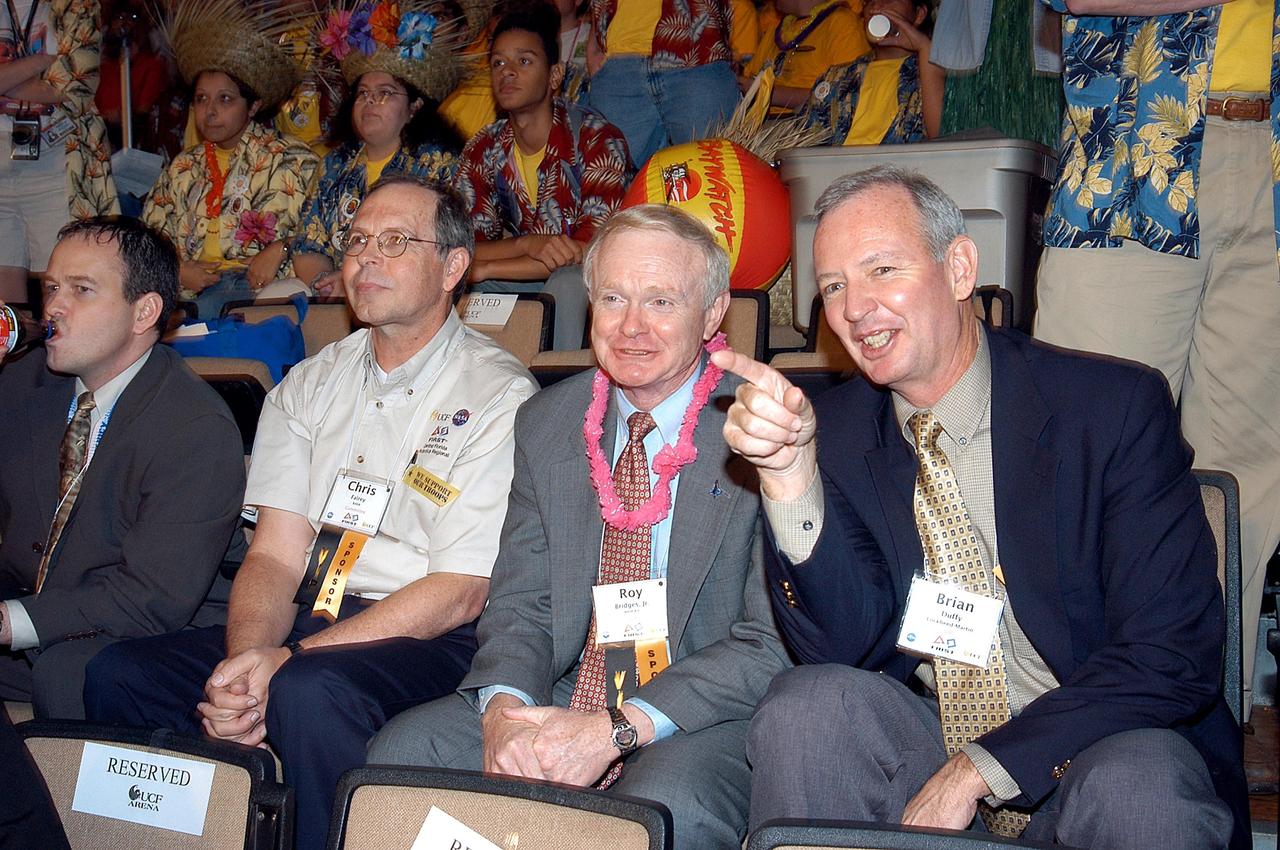
KENNEDY SPACE CENTER, FLA. - Observing the festivities at the 2003 Southeastern Regional FIRST Robotic Competition are, from left, David Culp, executive intern to the director of KSC; Chris Fairey, former director of Spaceport Services at KSC; Roy Bridges, KSC director; and Brian Duffy, Lockheed Martin vice president/associate program manager. The competition is being held at the University of Central Florida (UCF) in Orlando, March 20-23. Forty student teams from around the country are participating in the event that pits team-built gladiator robots against each other in an athletic-style competition. The teams are sponsored by NASA/Kennedy Space Center, The Boeing Company/Brevard Community College, and Lockheed Martin Space Operations/Mission Systems for the nonprofit organization For Inspiration and Recognition of Science and Technology, known as FIRST. The vision of FIRST is to inspire in the youth of our nation an appreciation of science and technology and an understanding that mastering these disciplines can enrich the lives of all mankind.
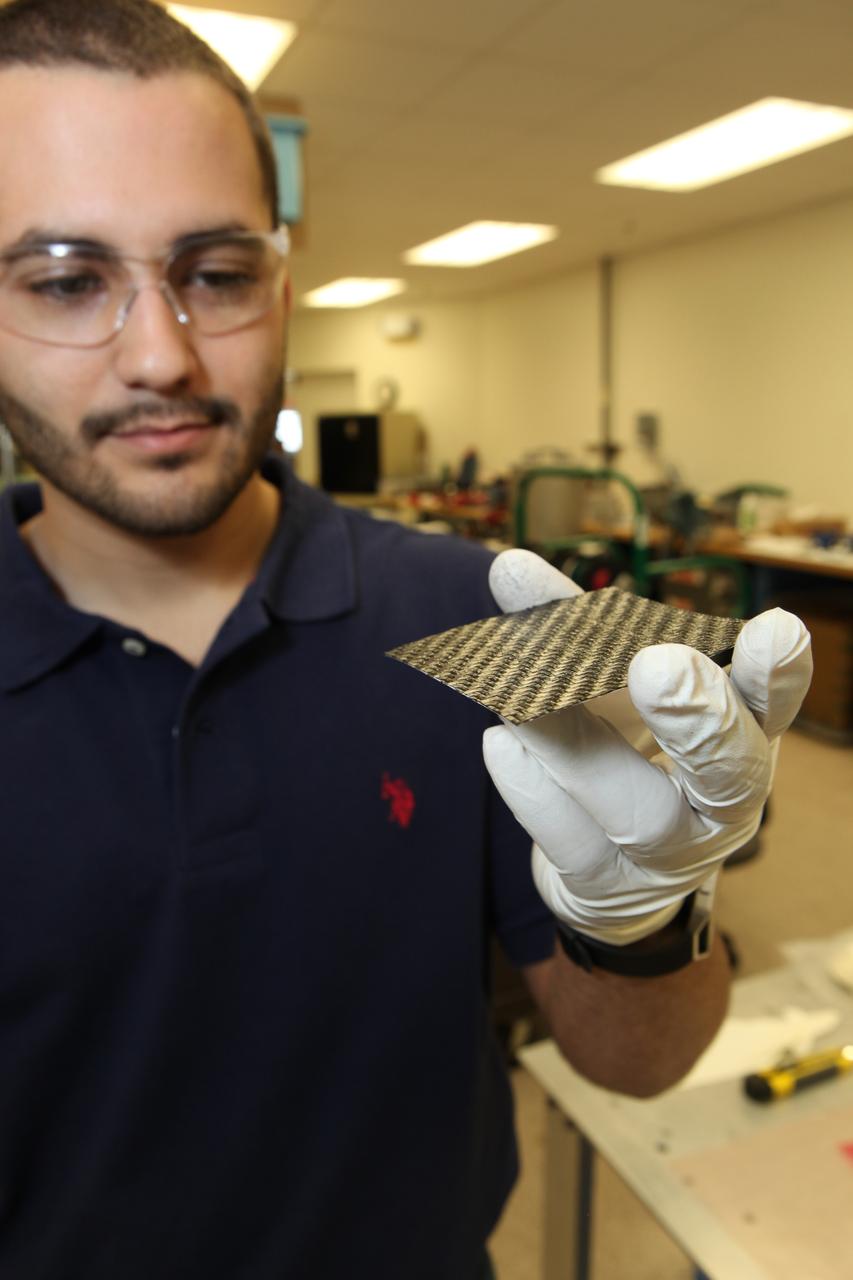
Daniel Perez, Ph.D., a graduate student from the University of Miami, displays a piece of the prototype structure for a new solid-state battery in the Prototype Laboratory at NASA's Kennedy Space Center in Florida. The size of the battery is so small that it could be a prime candidate for use in microsatellites, including CubeSats. Researchers at Kennedy are collaborating with experts at the University of Miami. The university partnership is funded through the Small Spacecraft Technology Program, in NASA's Space Technology Mission Directorate.
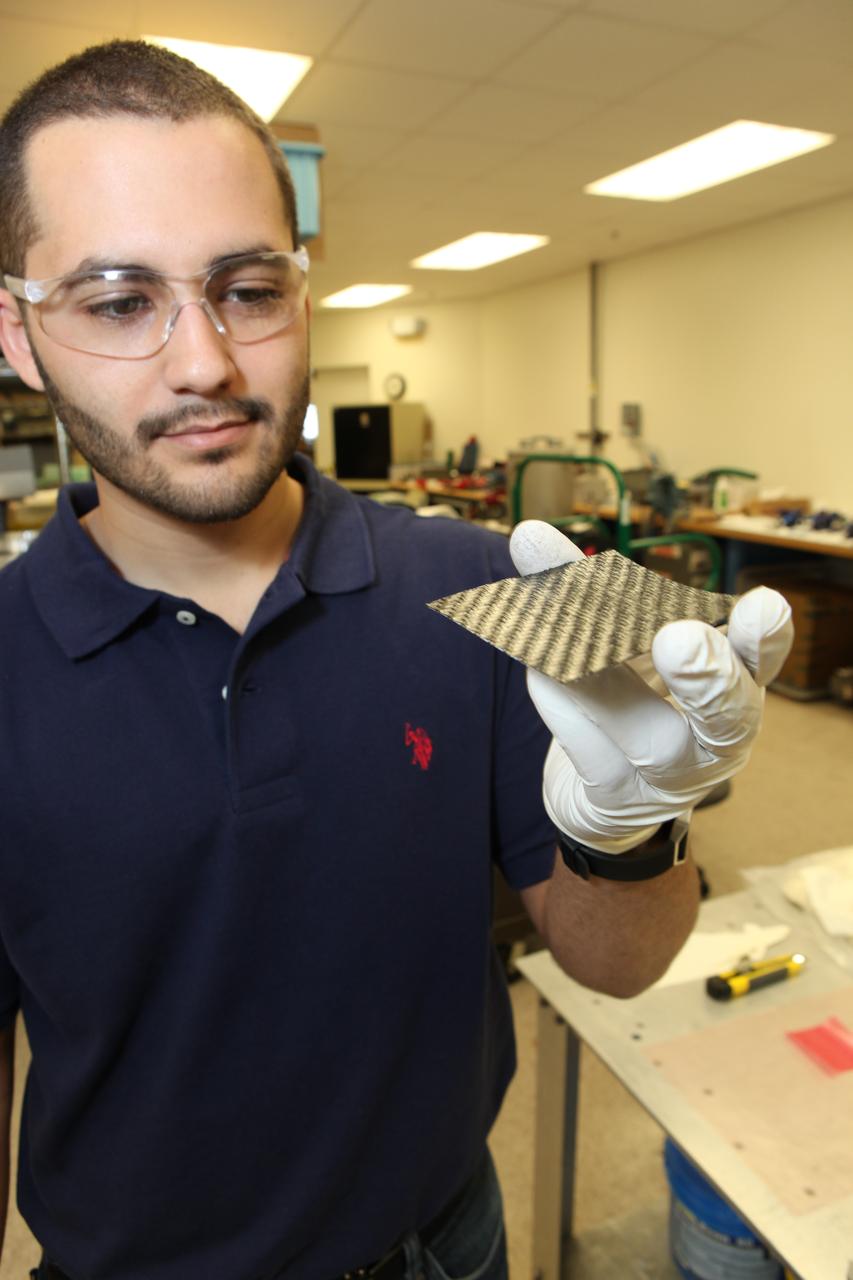
Daniel Perez, Ph.D., a graduate student from the University of Miami, displays a piece of the prototype structure for a new solid-state battery in the Prototype Laboratory at NASA's Kennedy Space Center in Florida. The size of the battery is so small that it could be a prime candidate for use in microsatellites, including CubeSats. Researchers at Kennedy are collaborating with experts at the University of Miami. The university partnership is funded through the Small Spacecraft Technology Program, in NASA's Space Technology Mission Directorate.
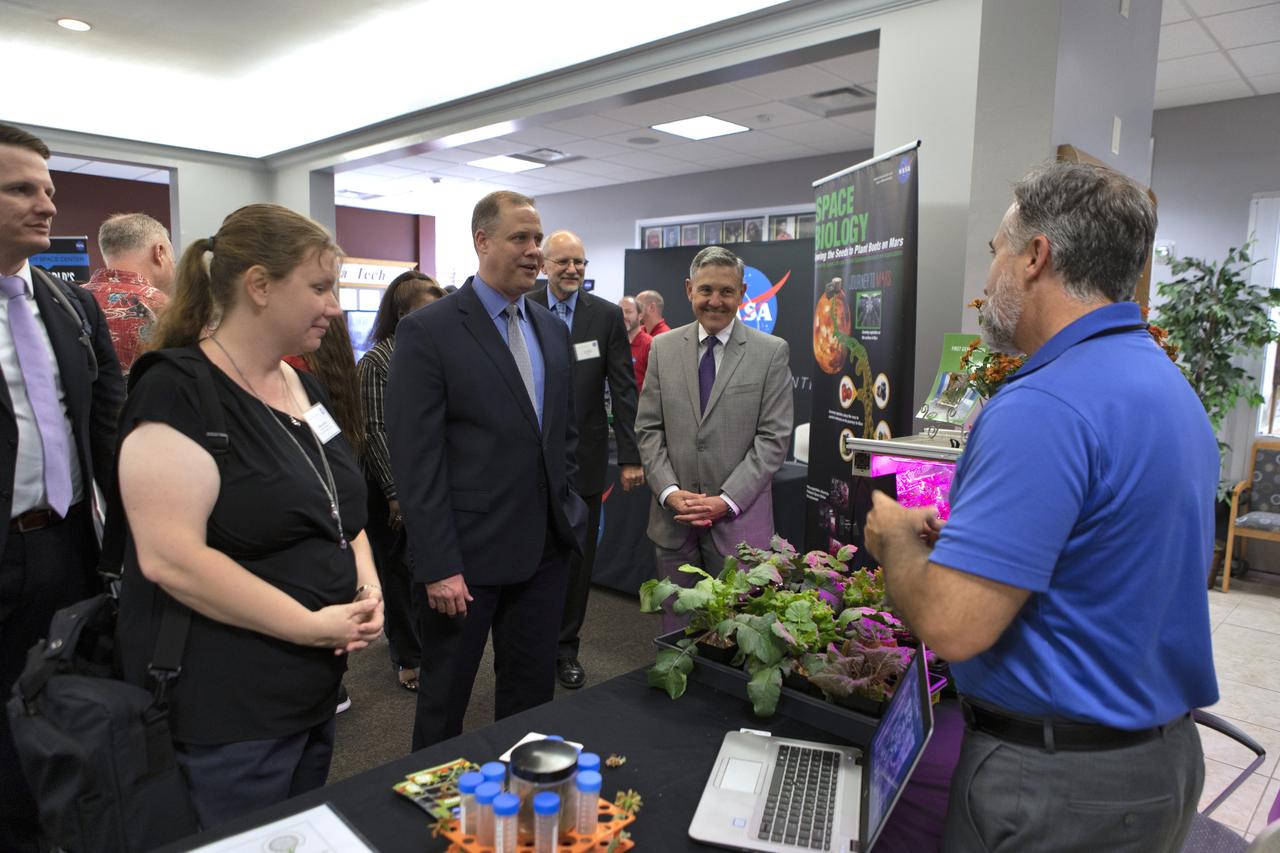
NASA Administrator Jim Bridenstine, center, and Kennedy Space Center Director Bob Cabana, right, visit Florida Institute of Technology on Thursday, May 23, 2019. Bridenstine delivered the keynote address at the Melbourne, FL campus during the university’s Space Technology Day. Among the key topics Bridenstine discussed was NASA’s Artemis missions to the Moon, including the lunar Gateway, which will serve as an orbiting outpost for astronauts.
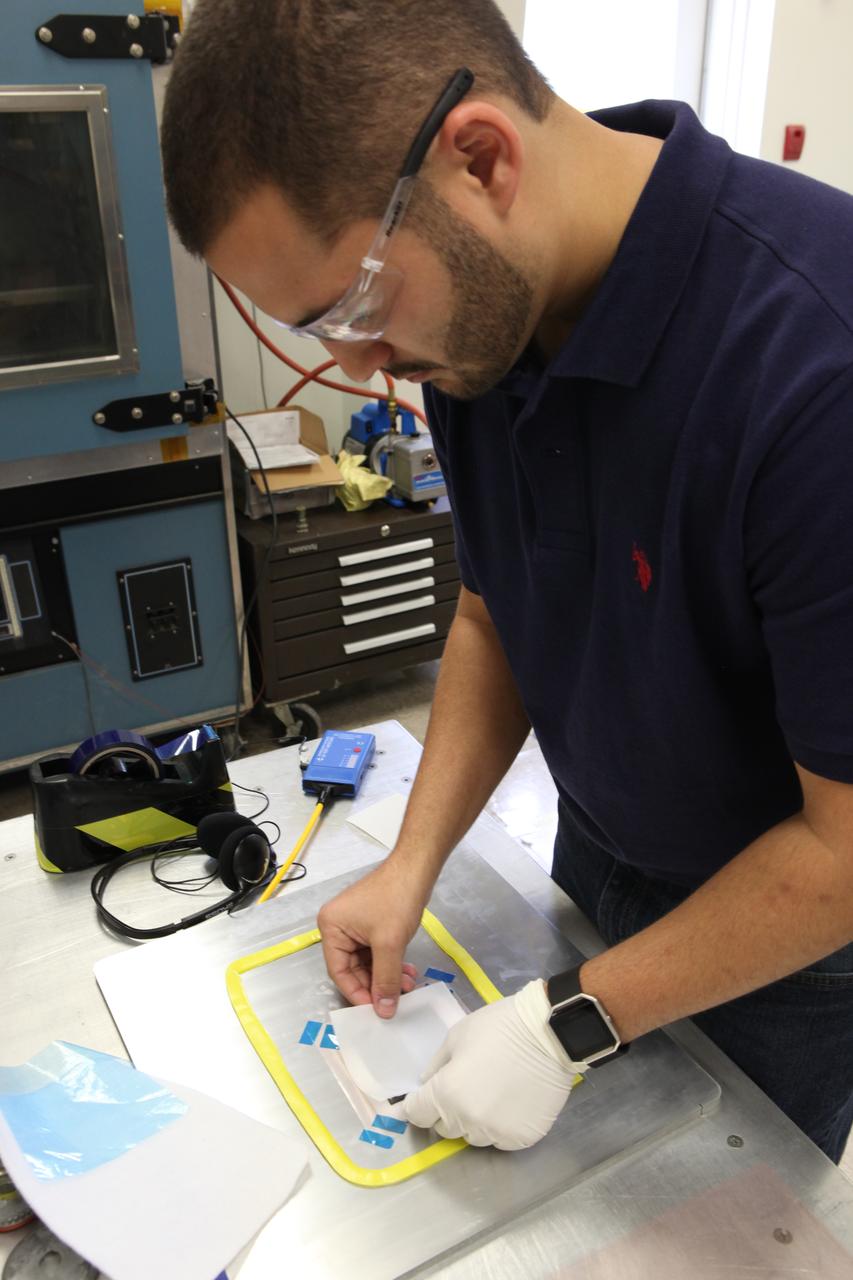
Daniel Perez, Ph.D., a graduate student from the University of Miami, prepares layers of the prototype structure for a new solid-state battery in the Prototype Laboratory at NASA's Kennedy Space Center in Florida. The size of the battery is so small that it could be a prime candidate for use in microsatellites, including CubeSats. Researchers at Kennedy are collaborating with experts at the University of Miami. The university partnership is funded through the Small Spacecraft Technology Program, in NASA's Space Technology Mission Directorate.
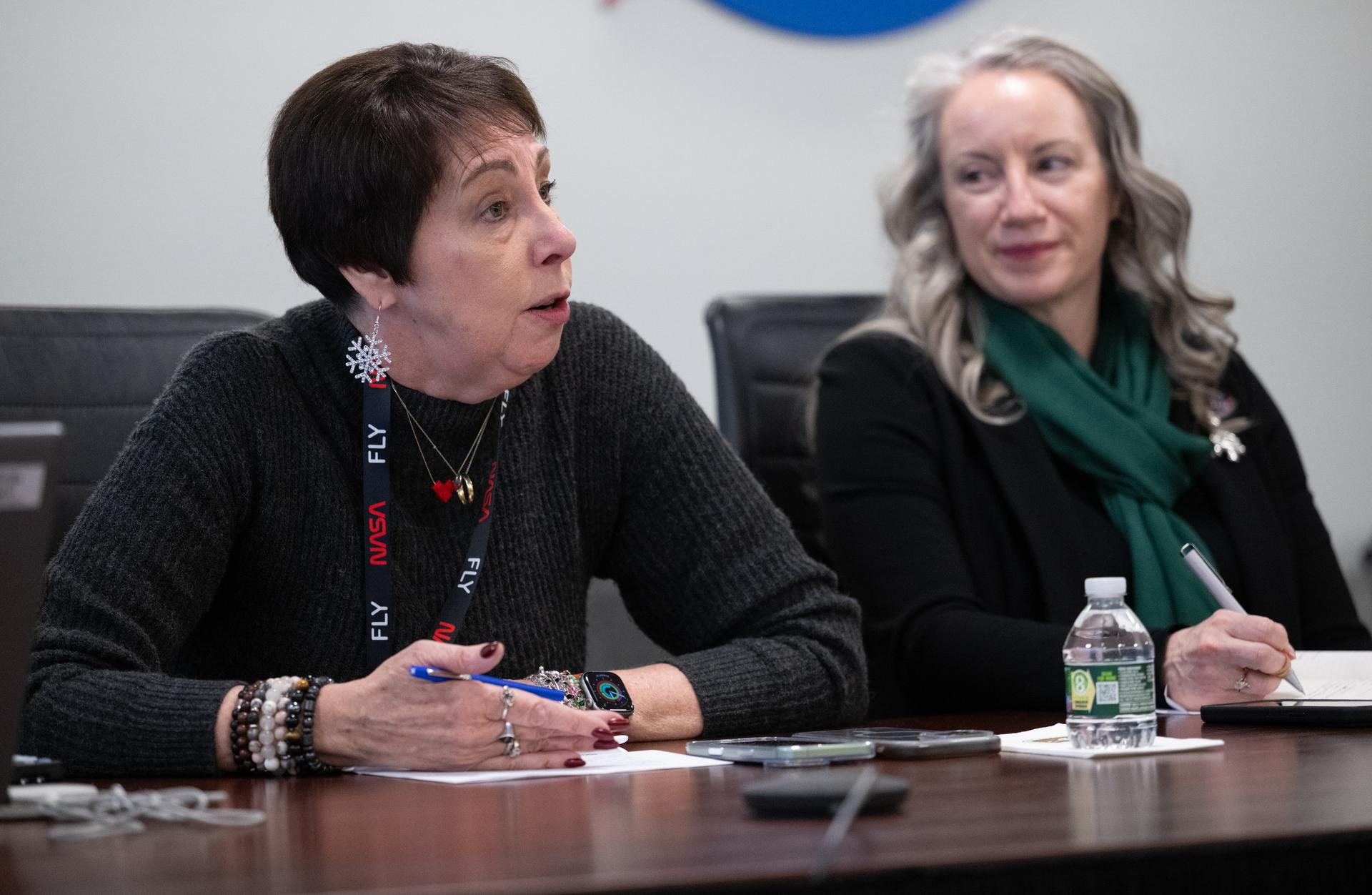
Nicola Fox, associate administrator for NASA’s Science Mission Directorate, is seen during a meeting with German Minister for Research, Technology, and Space Dorothee Bär, Tuesday, Dec. 9, 2025, at the Mary W. Jackson NASA Headquarters building in Washington. Photo Credit: (NASA/Joel Kowsky)

NASA Associate Administrator for the Human Exploration and Operations Mission Directorate William Gerstenmaier testifies during a House Committee on Science, Space, and Technology hearing titled "America's Human Presence in Low-Earth Orbit" on Thursday, May 17, 2018 in the Rayburn House Office Building in Washington. Photo Credit: (NASA/Joel Kowsky)
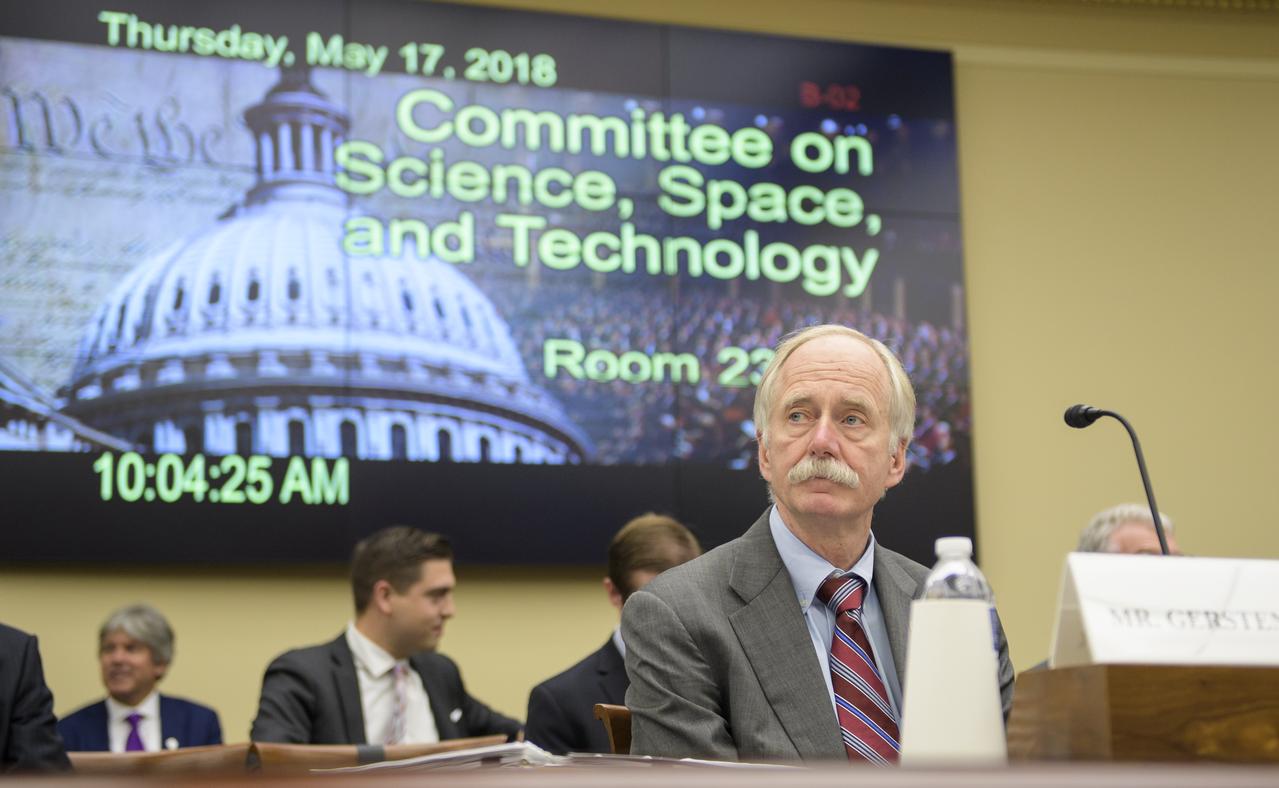
NASA Associate Administrator for the Human Exploration and Operations Mission Directorate William Gerstenmaier is seen prior to the start of a House Committee on Science, Space, and Technology Hearing titles "America's Human Presence in Low-Earth Orbit" on Thursday, May 17, 2018 in the Rayburn House Office Building in Washington. Photo Credit: (NASA/Joel Kowsky)
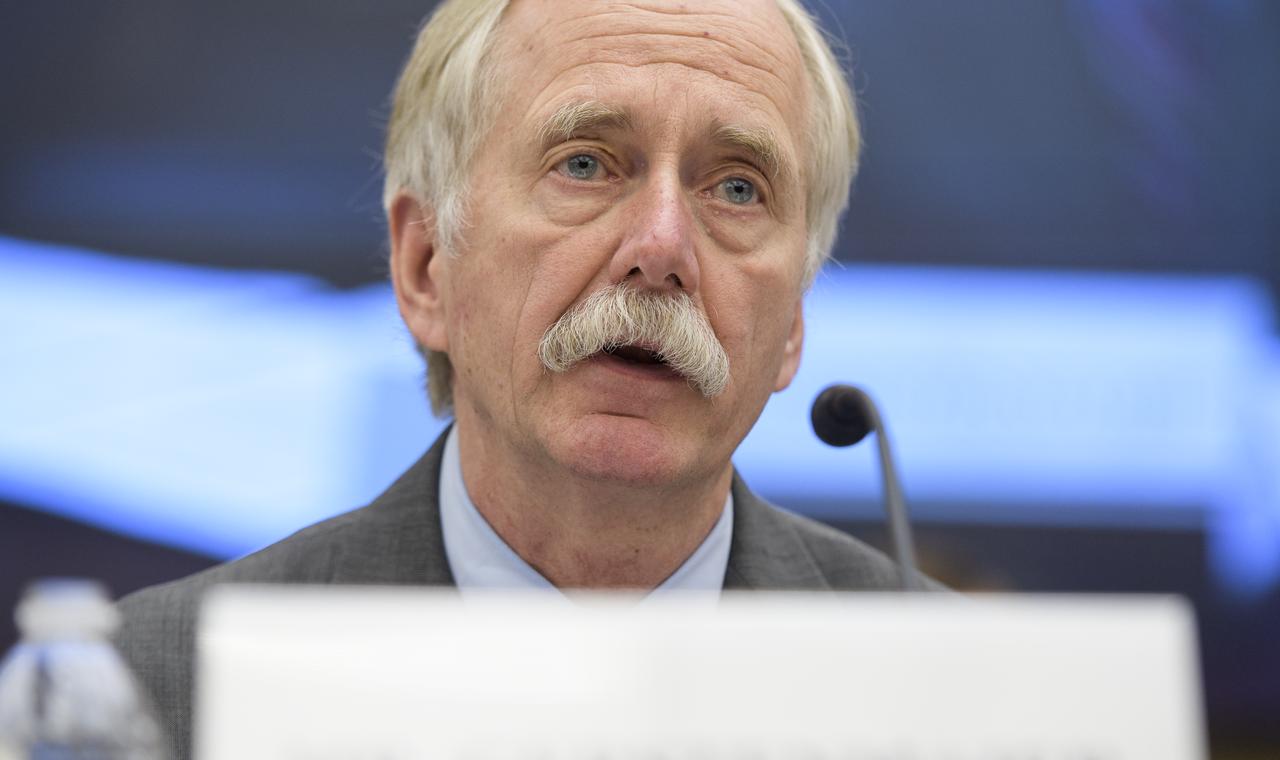
NASA Associate Administrator for the Human Exploration and Operations Mission Directorate William Gerstenmaier testifies during a House Committee on Science, Space, and Technology hearing titled "America's Human Presence in Low-Earth Orbit" on Thursday, May 17, 2018 in the Rayburn House Office Building in Washington. Photo Credit: (NASA/Joel Kowsky)
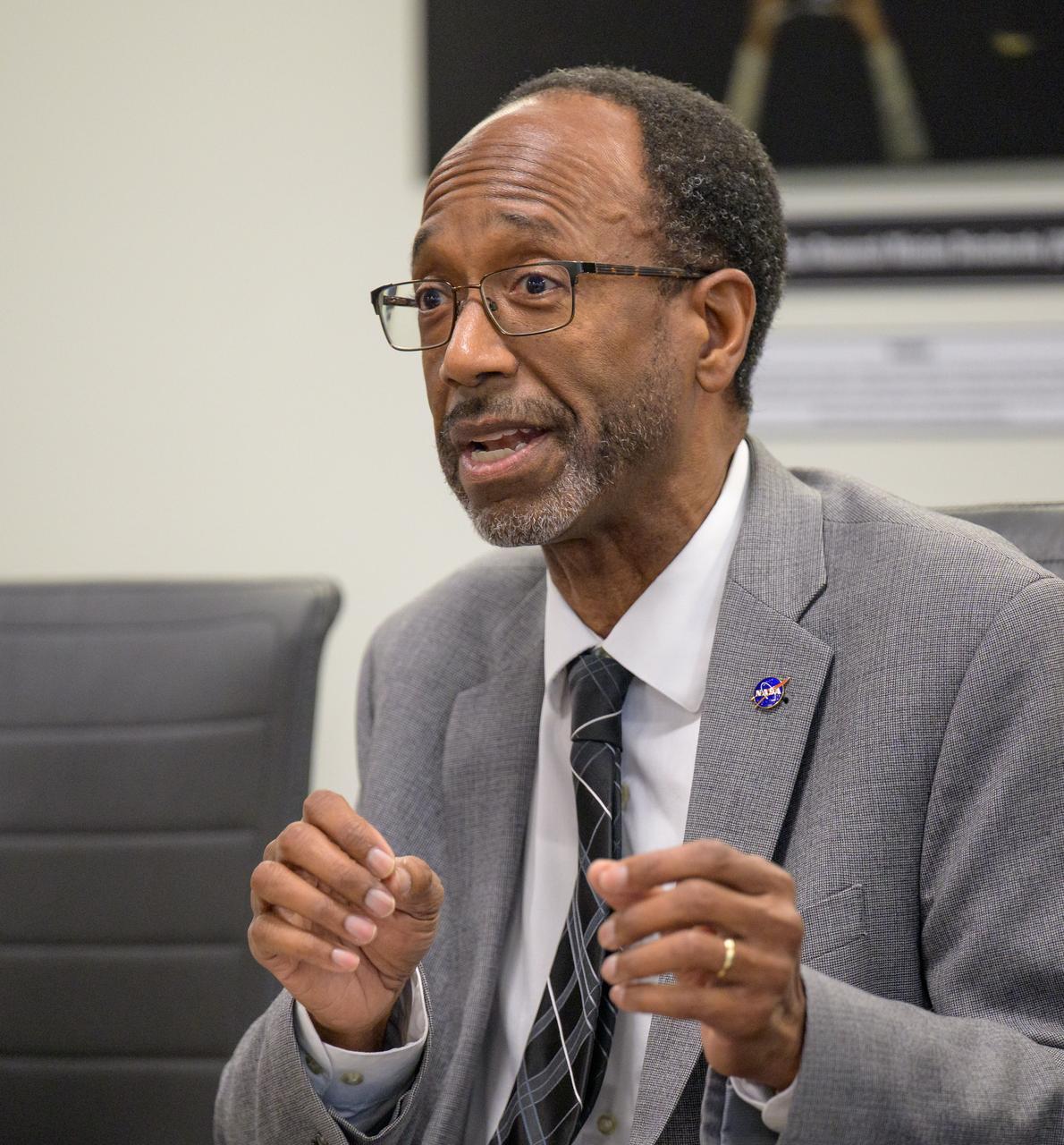
Associate Administrator for NASA's Space Technology Mission Directorate Clayton Turner speaks with acting NASA Administrator Sean Duffy, Friday, July 18, 2025, at the Mary W. Jackson NASA Headquarters Building in Washington. Photo Credit: (NASA/Bill Ingalls)
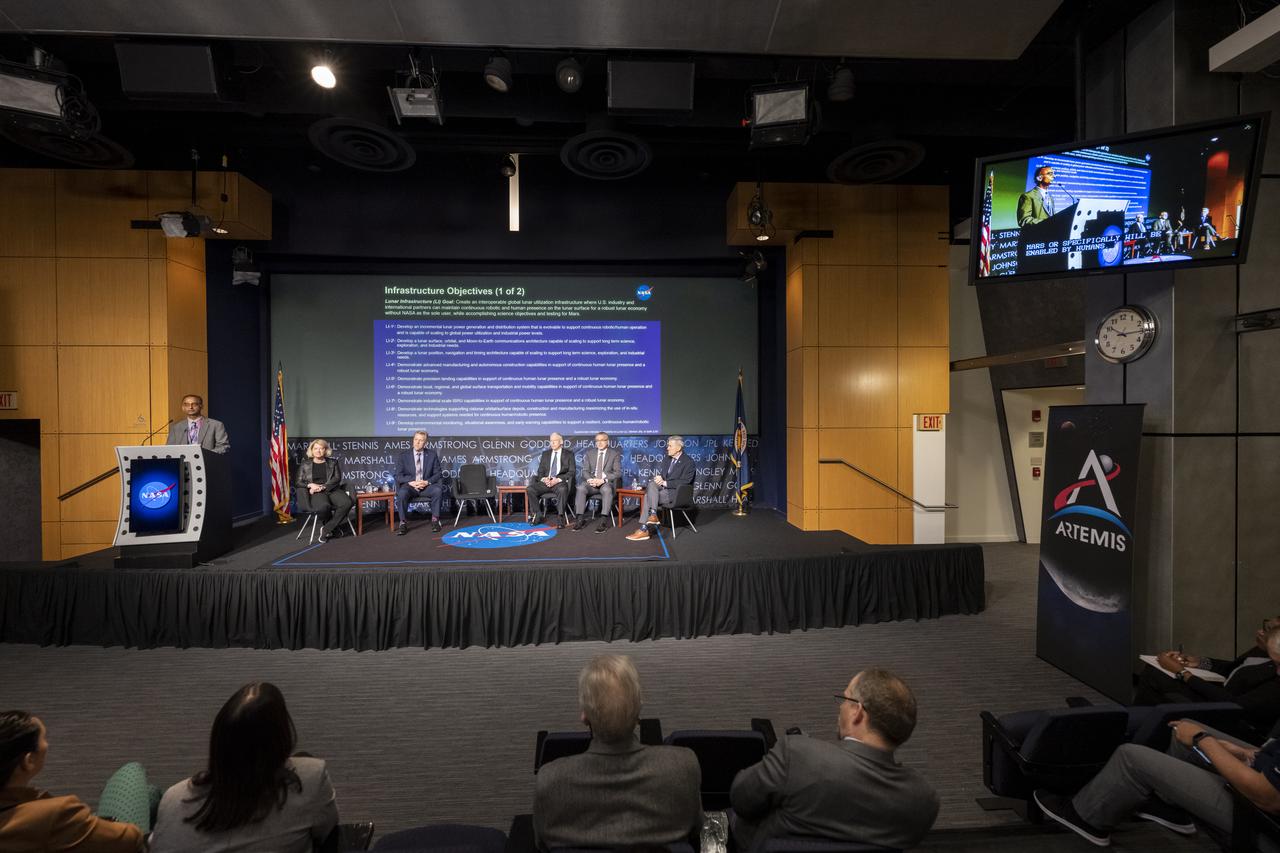
Deputy Associate Administrator for Space Technology Mission Directorate Prasun Desai delivers remarks during a Moon to Mars Town Hall, Thursday, May 18, 2023, at the Mary W. Jackson NASA Headquarters building in Washington. Photo Credit: (NASA/Keegan Barber)

Douglas R. Cooke, NASA's Associate Administrator for Exploration Systems Mission Directorate (ESMD), appears before the U.S. House of Representatives' Committee on Science and Technology, Subcommittee on Space and Aeronautics to discuss proposed changes to NASA's exploration program on Wednesday, March 24, 2010, on Capitol Hill in Washington. Photo Credit: (NASA/Carla Cioffi)
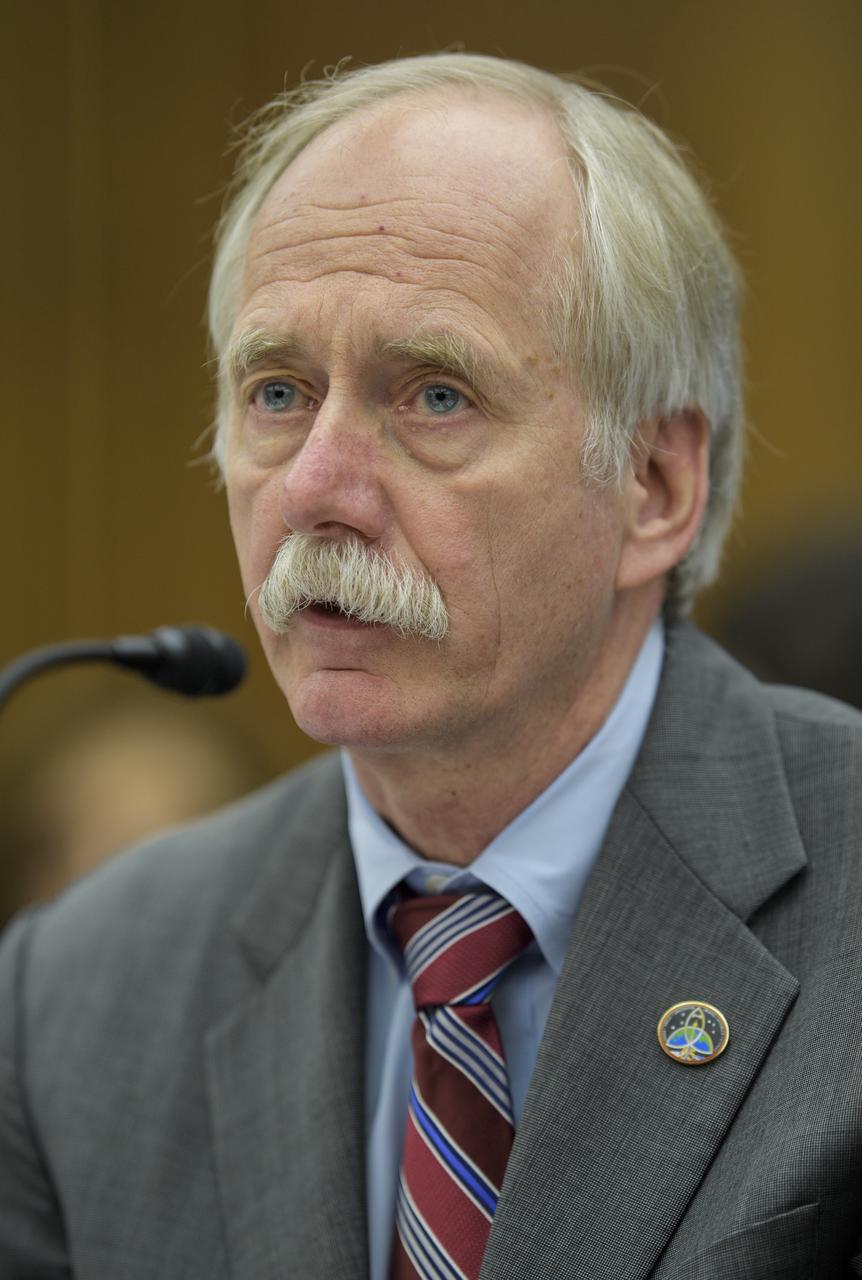
NASA Associate Administrator for the Human Exploration and Operations Mission Directorate William Gerstenmaier testifies during a House Committee on Science, Space, and Technology hearing titled "America's Human Presence in Low-Earth Orbit" on Thursday, May 17, 2018 in the Rayburn House Office Building in Washington. Photo Credit: (NASA/Joel Kowsky)

Douglas R. Cooke, NASA's Associate Administrator for Exploration Systems Mission Directorate (ESMD), appears before the U.S. House of Representatives' Committee on Science and Technology, Subcommittee on Space and Aeronautics to discuss proposed changes to NASA's exploration program on Wednesday, March 24, 2010, on Capitol Hill in Washington. Photo Credit: (NASA/Carla Cioffi)
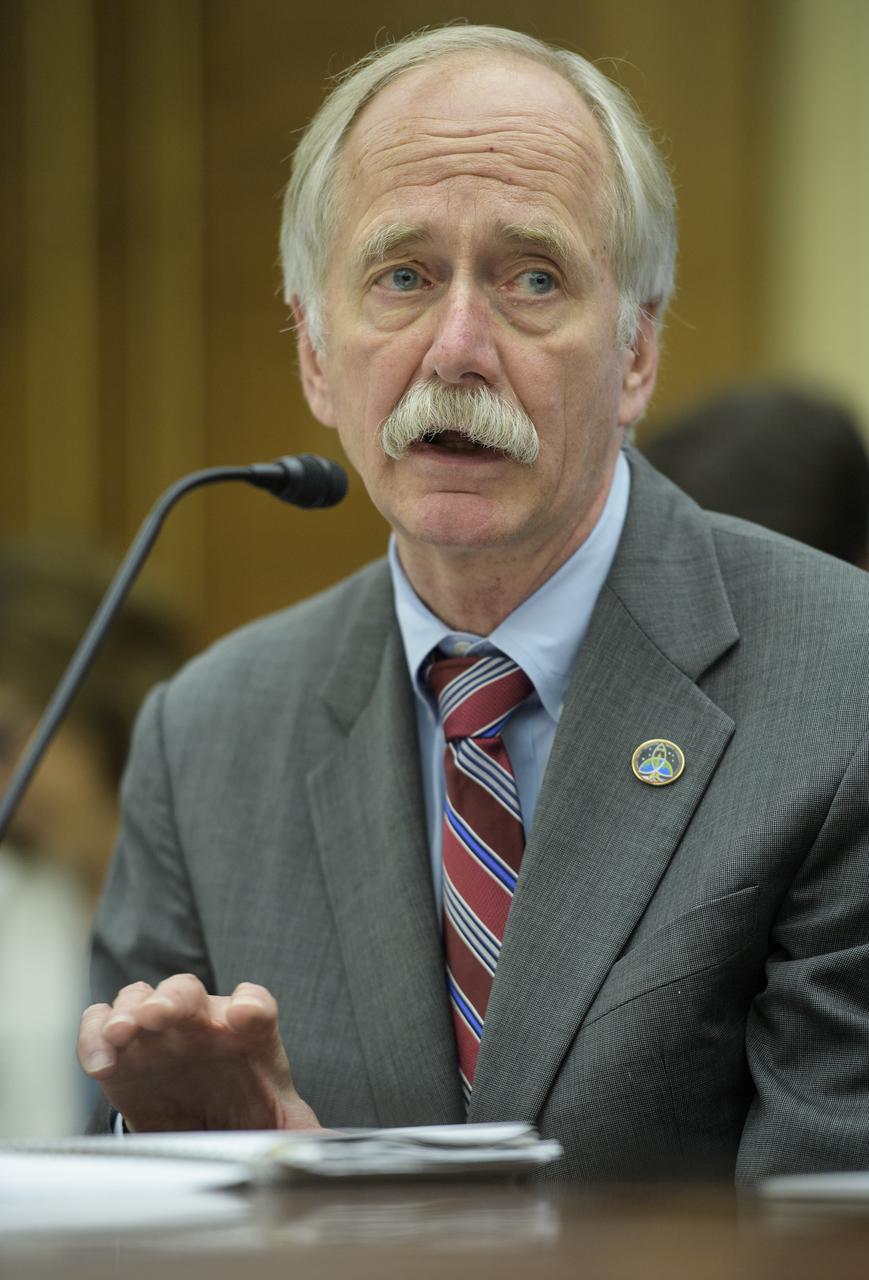
NASA Associate Administrator for the Human Exploration and Operations Mission Directorate William Gerstenmaier testifies during a House Committee on Science, Space, and Technology hearing titled "America's Human Presence in Low-Earth Orbit" on Thursday, May 17, 2018 in the Rayburn House Office Building in Washington. Photo Credit: (NASA/Joel Kowsky)

Thomas Zurbuchen, Associate Administrator of NASA's Science Mission Directorate, left, speaks with Hansjörg Dittus, Executive Board Member for Space Research and Technology at the German Aerospace Center (DLR) during a meeting at the 70th International Astronautical Congress, Wednesday, Oct. 23, 2019 in Washington. Photo Credit: (NASA/Joel Kowsky)
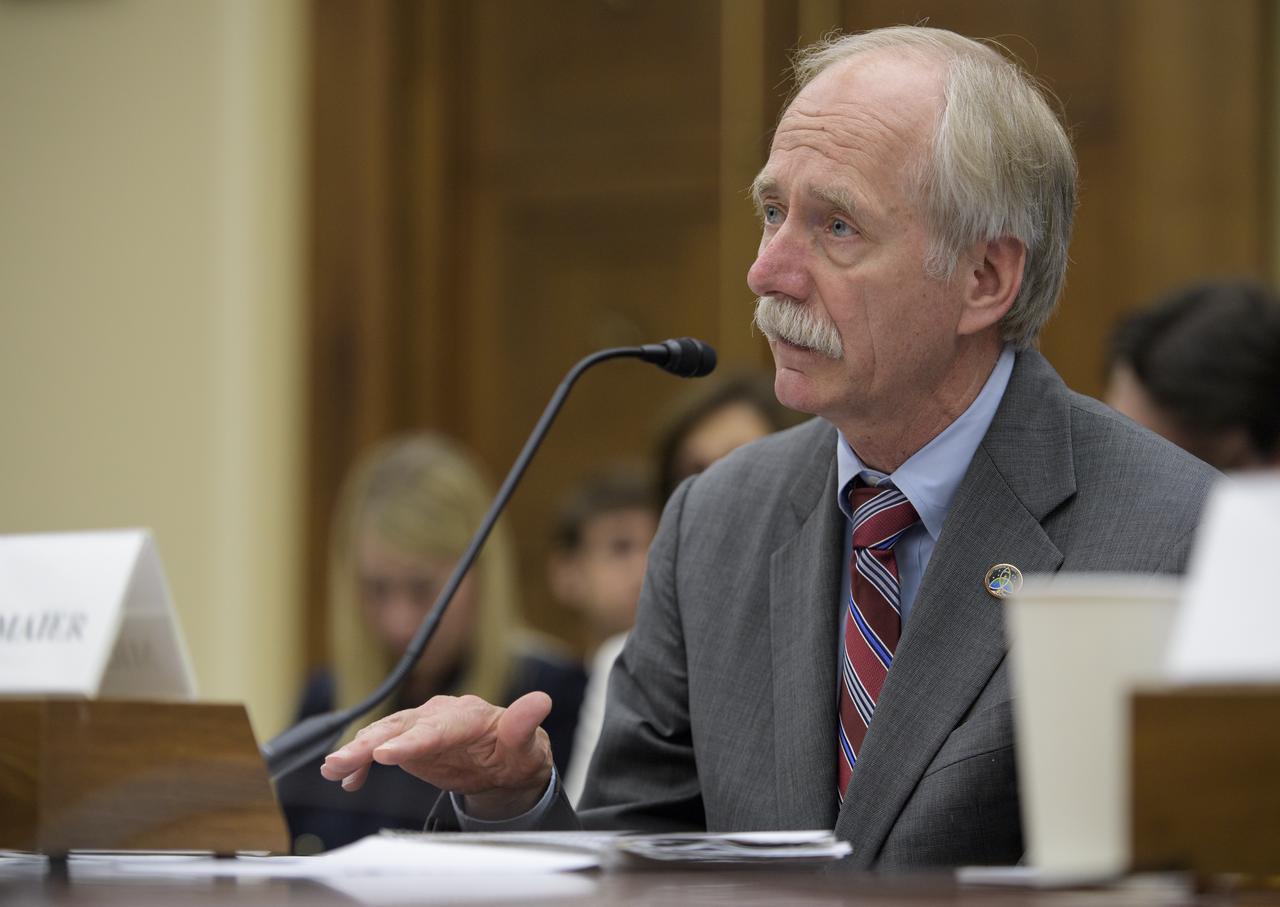
NASA Associate Administrator for the Human Exploration and Operations Mission Directorate William Gerstenmaier testifies during a House Committee on Science, Space, and Technology hearing titled "America's Human Presence in Low-Earth Orbit" on Thursday, May 17, 2018 in the Rayburn House Office Building in Washington. Photo Credit: (NASA/Joel Kowsky)
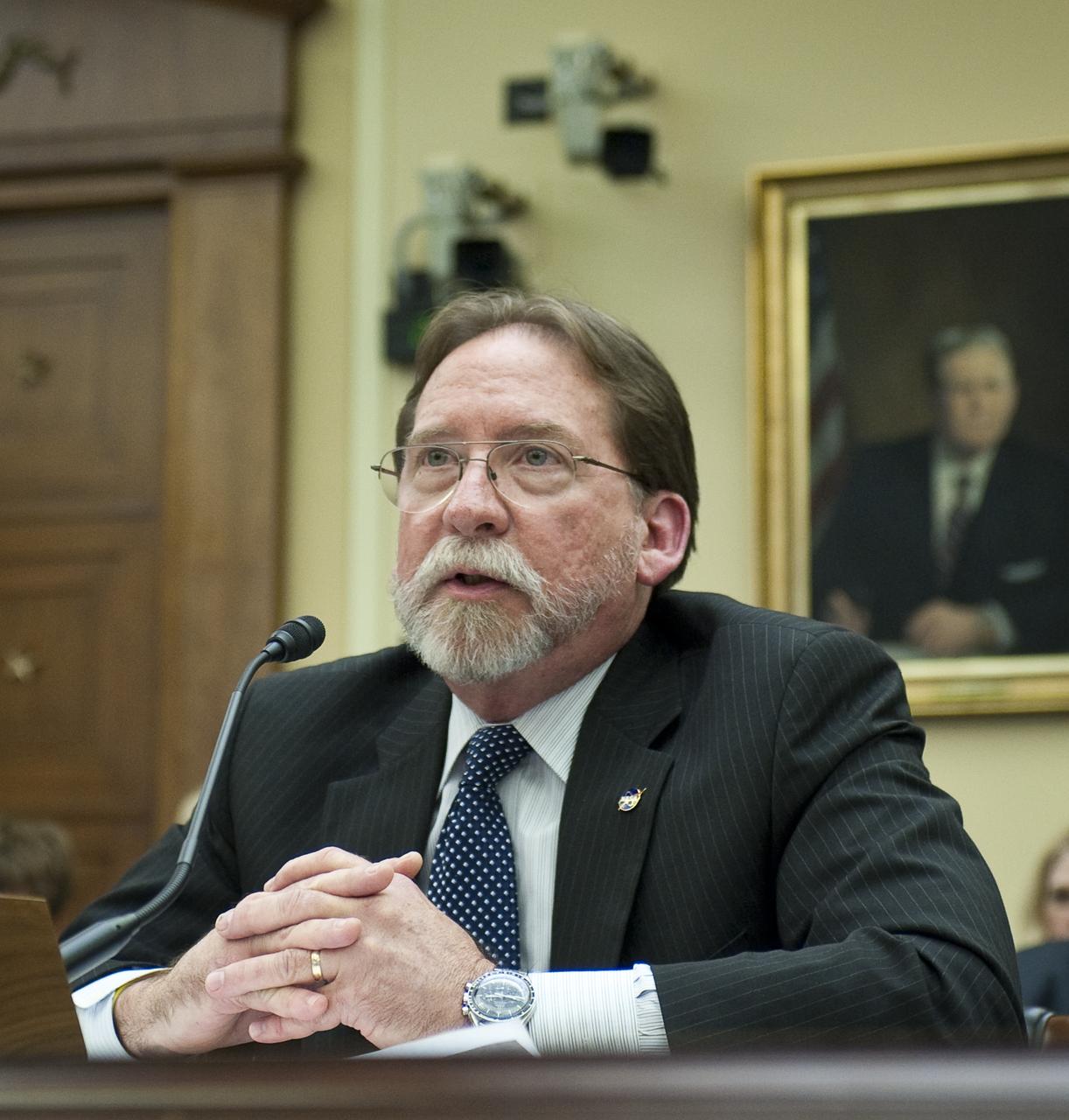
Douglas R. Cooke, NASA's Associate Administrator for Exploration Systems Mission Directorate (ESMD), appears before the U.S. House of Representatives' Committee on Science and Technology, Subcommittee on Space and Aeronautics to discuss proposed changes to NASA's exploration program on Wednesday, March 24, 2010, on Capitol Hill in Washington. Photo Credit: (NASA/Carla Cioffi)
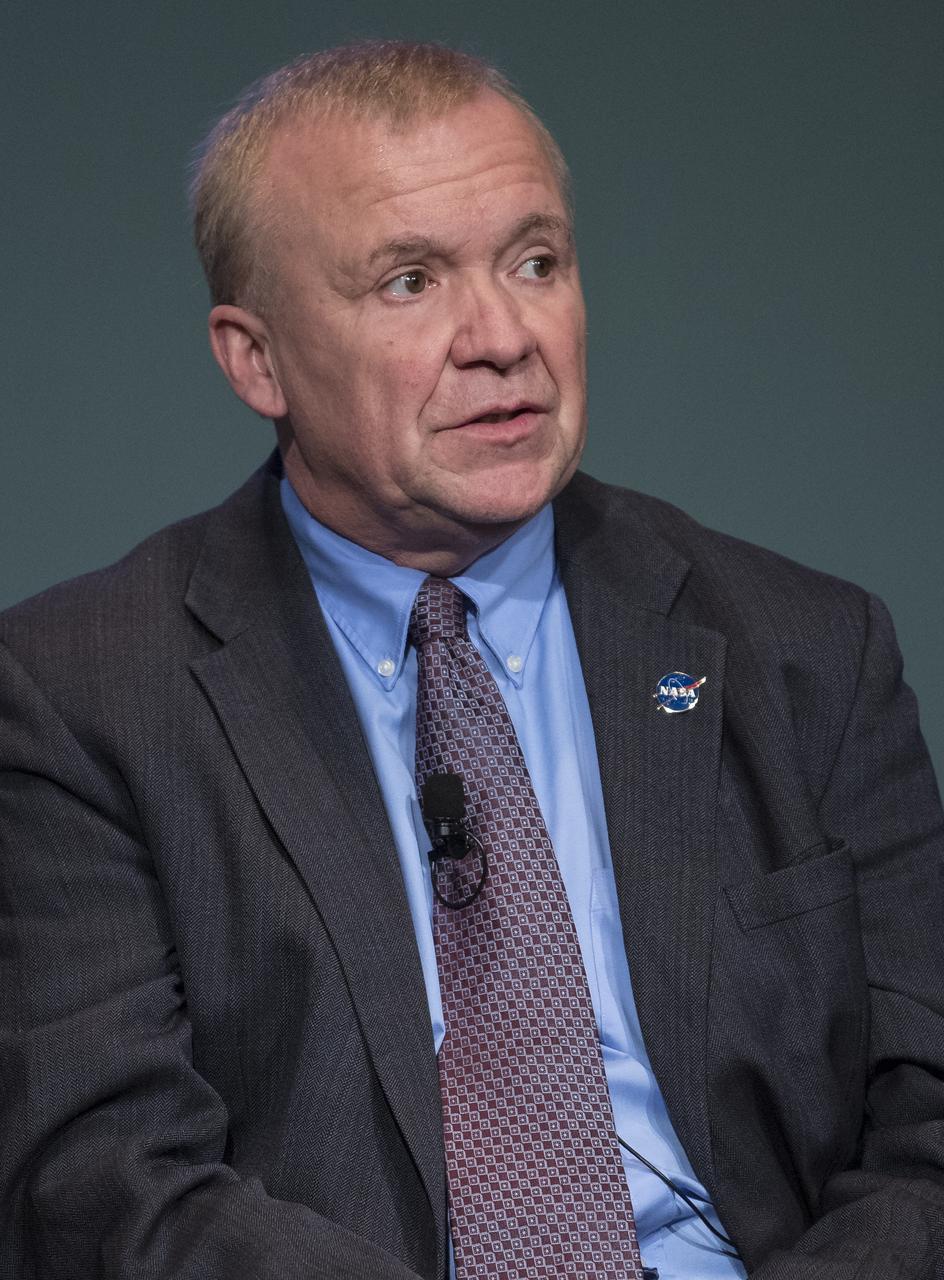
Acting Associate Administrator for NASA's Space Technology Mission Directorate is seen during a NASA town hall on the amendment to the fiscal year 2020 budget request that supports the agency’s plan to land astronauts on the Moon by 2024, Tuesday, May 14, 2019 at NASA Headquarters in Washington, DC. Photo Credit: (NASA/Joel Kowsky)
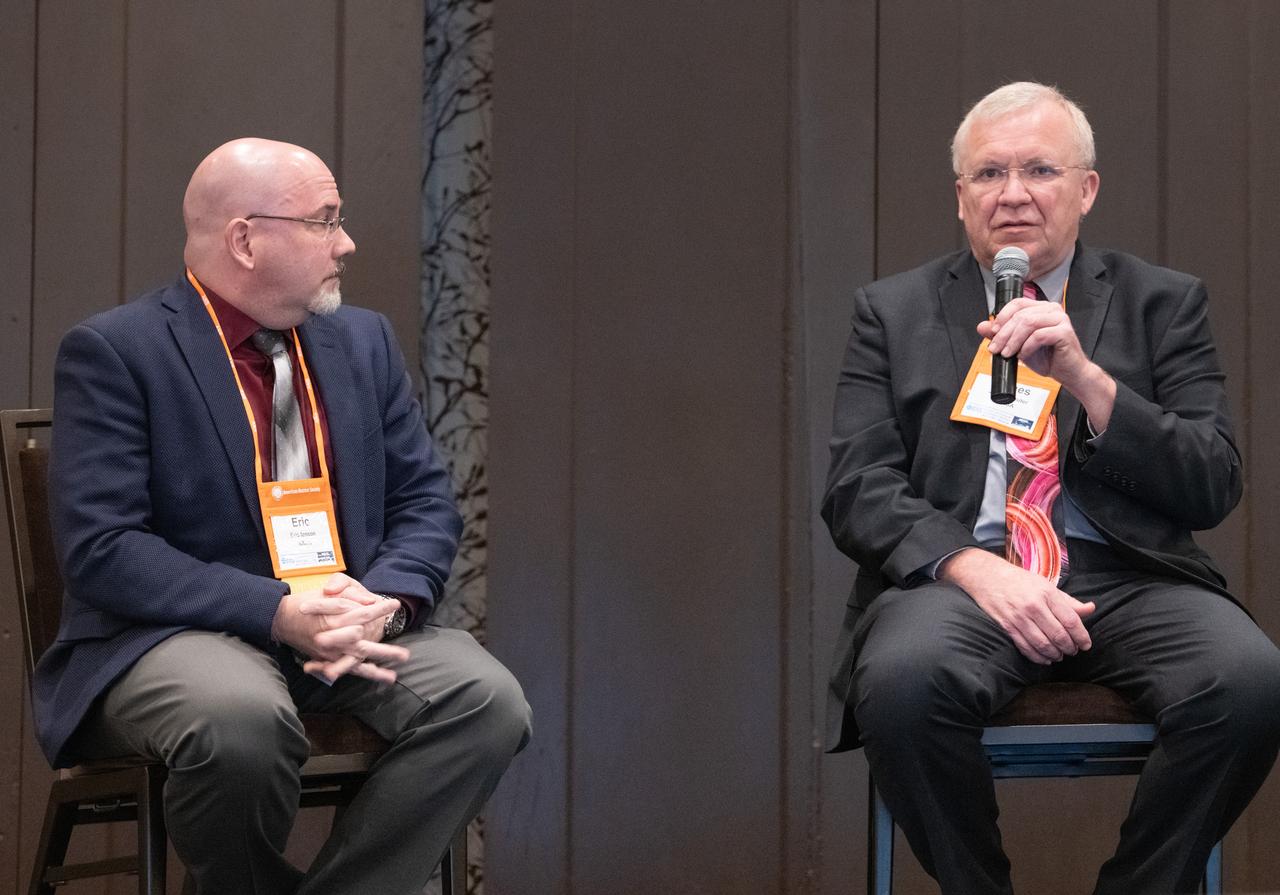
Nuclear Emerging Technologies for Space, NETS 2022 Conference
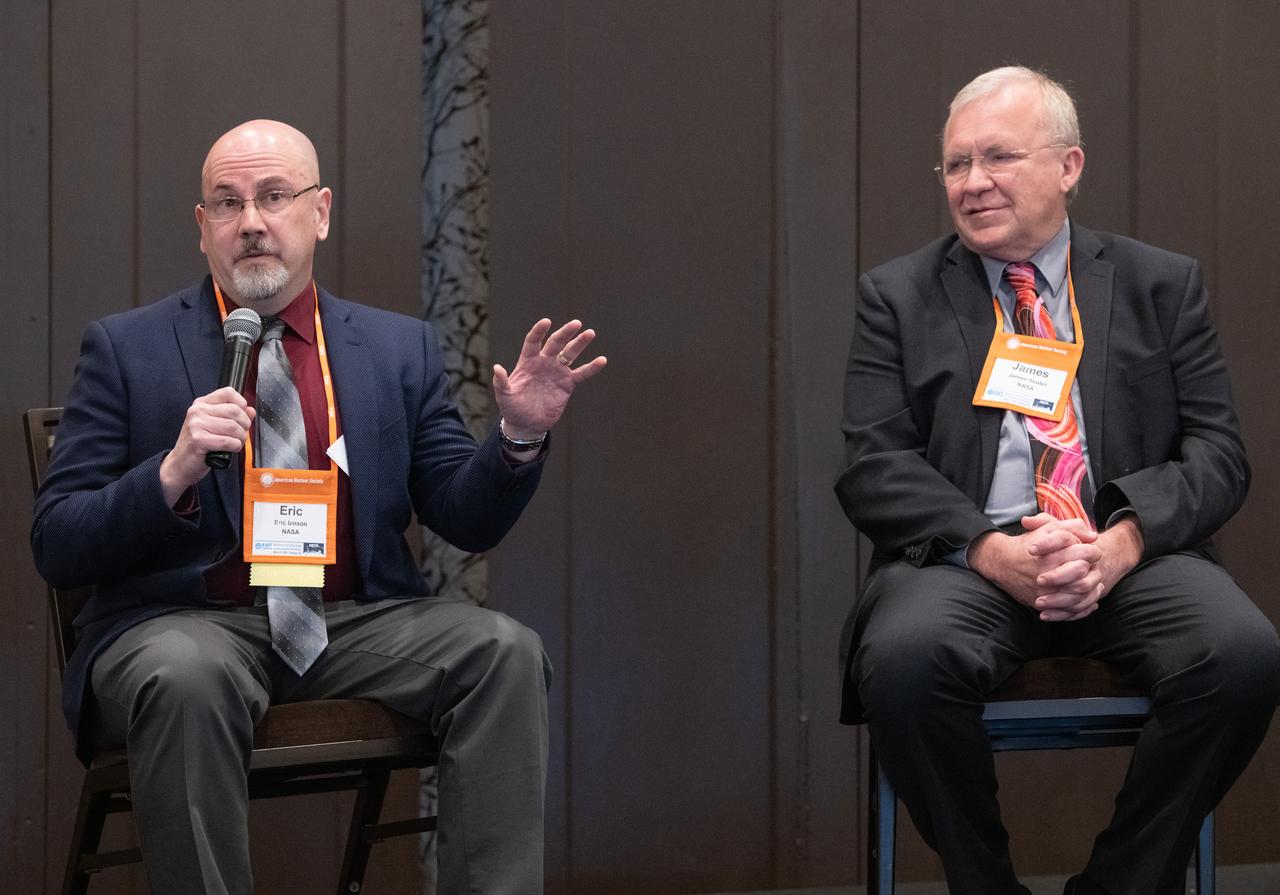
Nuclear Emerging Technologies for Space, NETS 2022 Conference
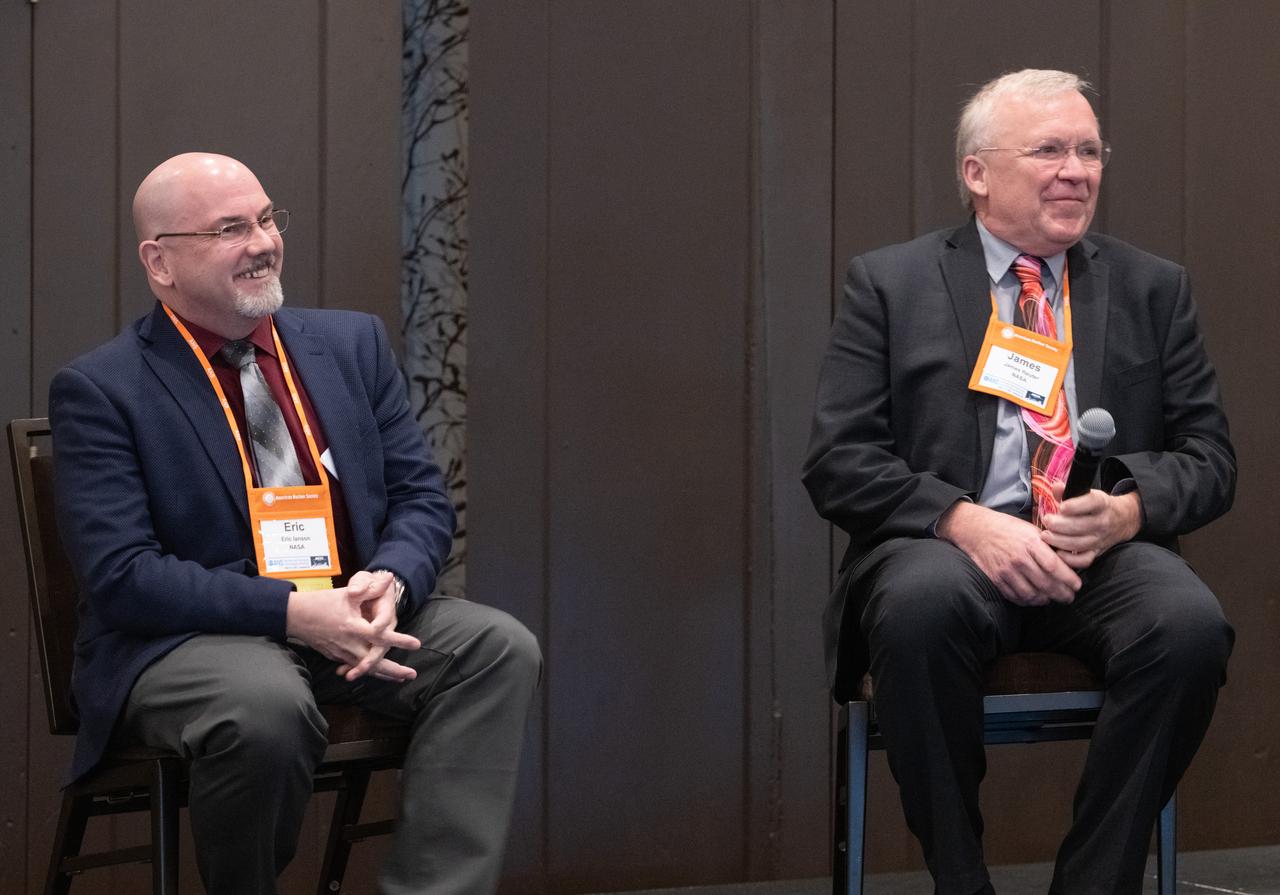
Nuclear Emerging Technologies for Space, NETS 2022 Conference
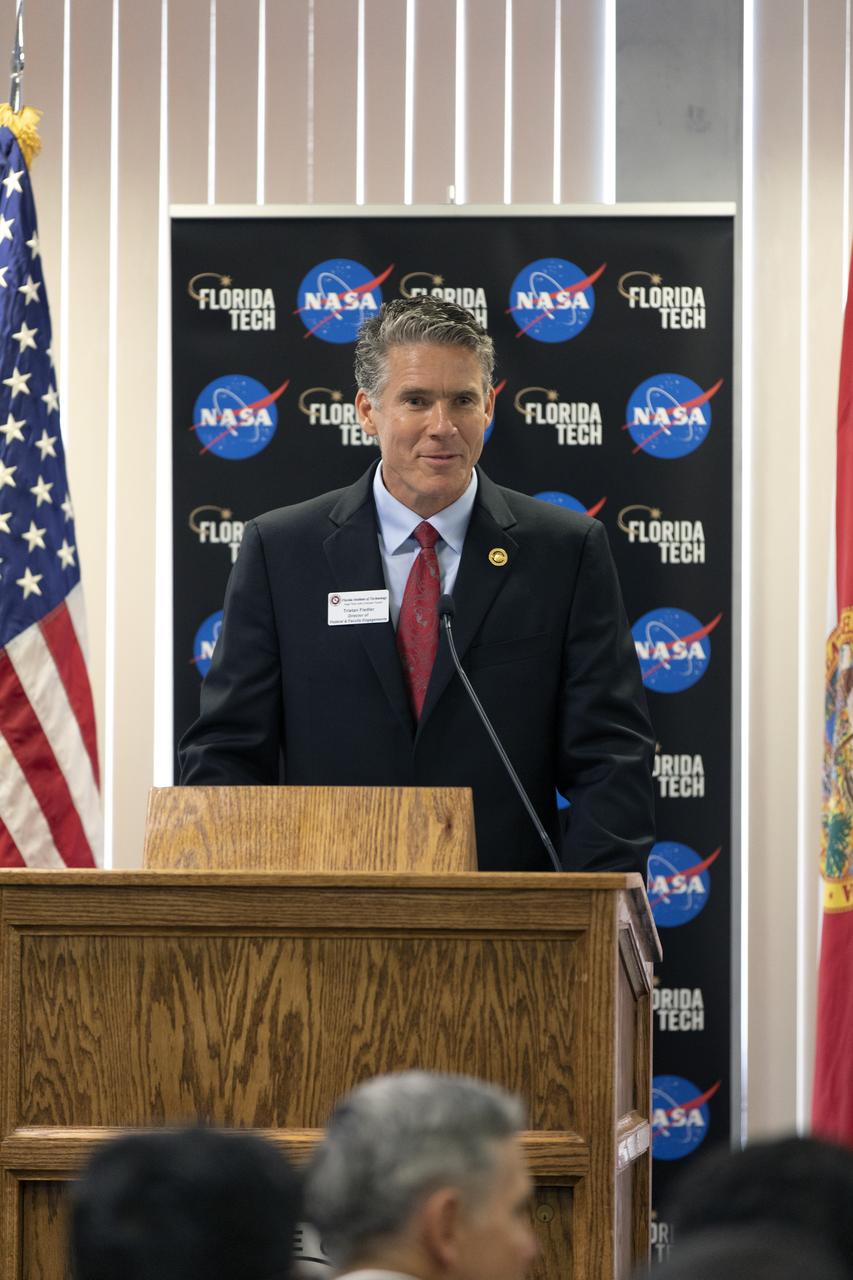
Tristan Fiedler, director of federal and faculty engagements at Florida Institute of Technology, speaks during the university’s Space Technology Day on Thursday, May 23, 2019. NASA Administrator Jim Bridenstine delivered the keynote address at the Melbourne, FL campus, which included students, faculty, engineers and area business leaders in attendance. Among the key topics Bridenstine discussed was NASA’s Artemis missions to the Moon, including the lunar Gateway, which will serve as an orbiting outpost for astronauts.
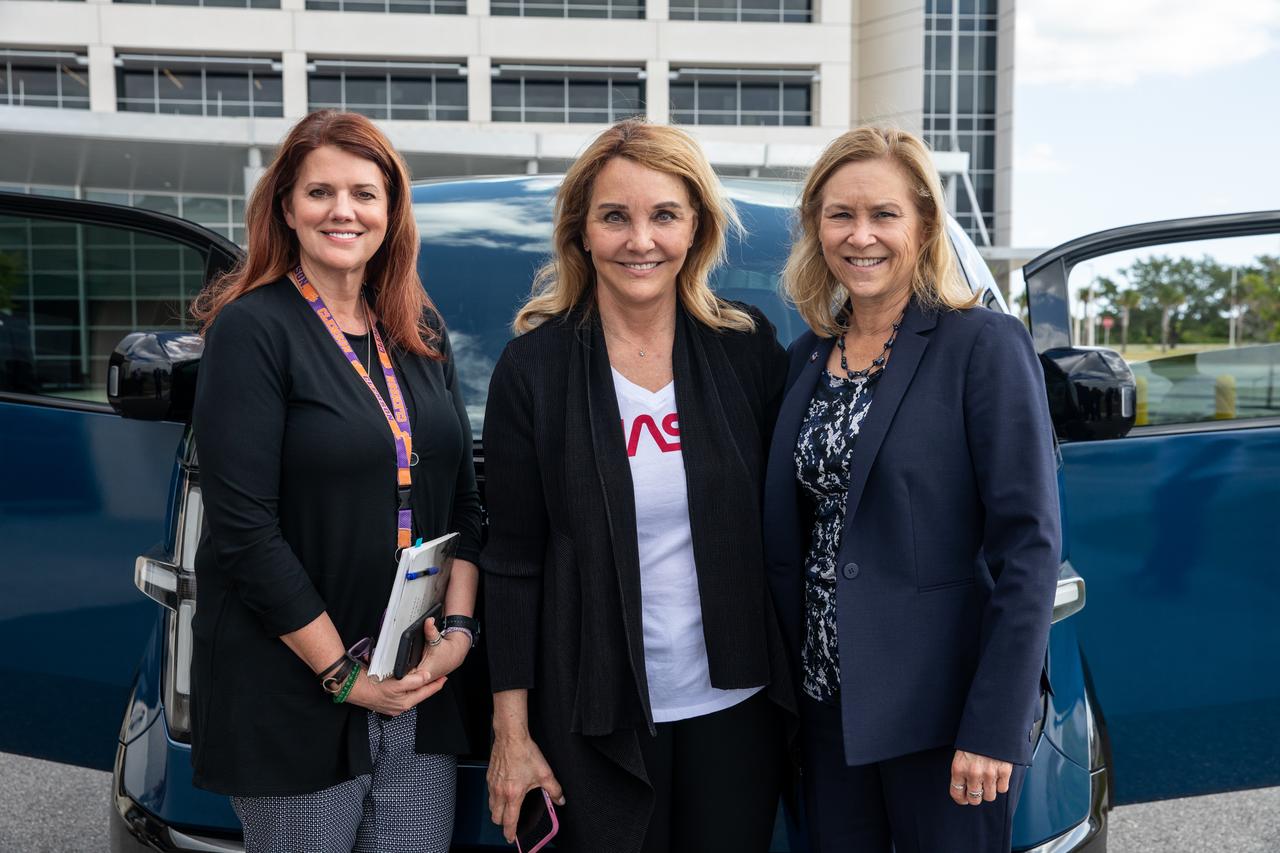
Kennedy Space Center Director Janet Petro, at right test drives a concept design crew transportation vehicle (CTV) for Artemis crewed missions on May 11, 2022. With her, from left, are Charlie Blackwell-Thompson, Artemis I launch director, and Josette Sheeran, president of Canoo Technologies, Inc.. Canoo Technologies Inc., was awarded a contract to design and provide the next generation of CTVs for the Artemis crewed missions. Representatives with Canoo were at the spaceport demonstrating the environmentally friendly fleet of vehicles. Artemis II will be the first Artemis mission flying crew aboard Orion. In later missions, NASA will land the first woman and the first person of color on the surface of the Moon, paving the way for a long-term lunar presence and serving as a steppingstone on the way to Mars.
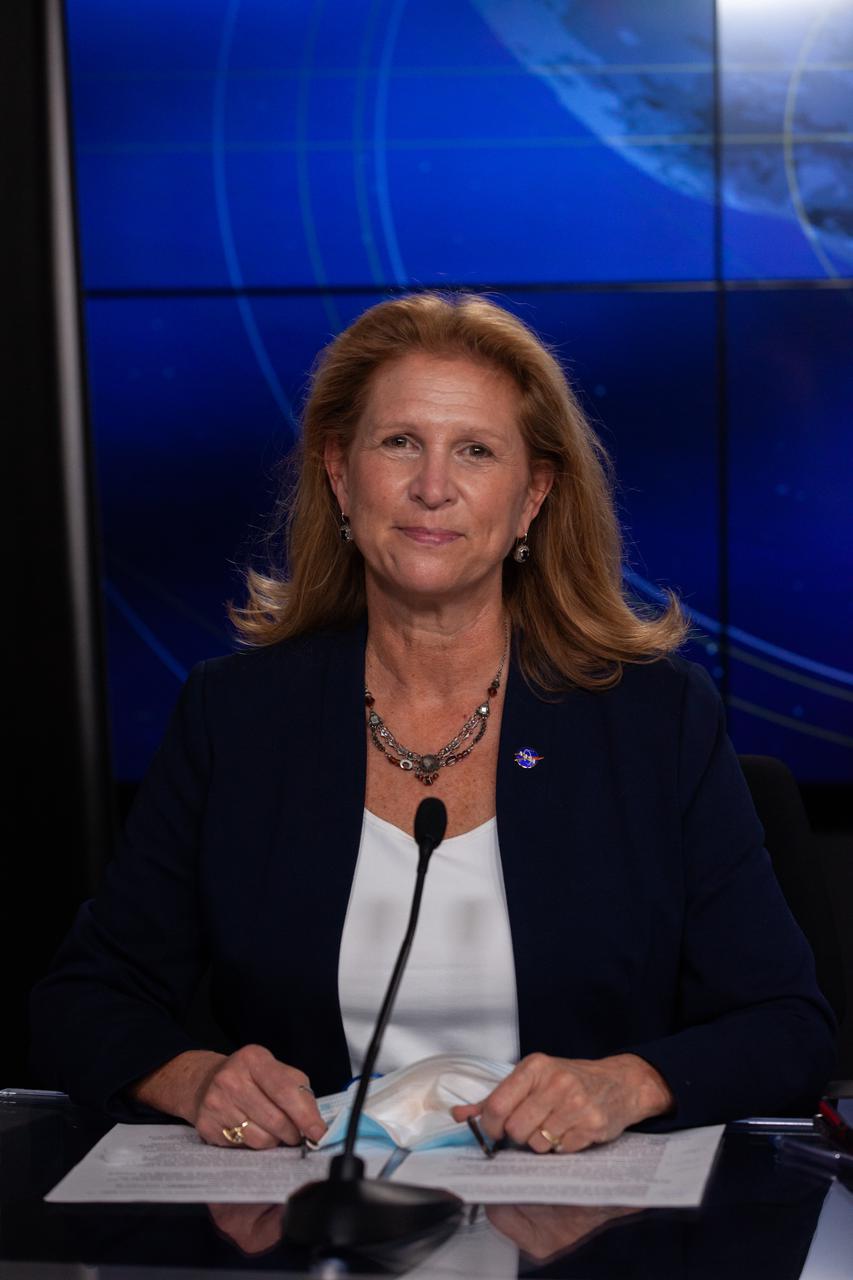
Lori Glaze, director of NASA’s Science Mission Directorate’s Planetary Science Division, participates in an engineering briefing for the agency’s Double Asteroid Redirection Test (DART) mission at Vandenberg Space Force Base in California on Nov. 21, 2021. DART is the first mission to test technologies for preventing an impact of Earth by a hazardous asteroid. The mission is scheduled to launch no earlier than 1:21 a.m. EST Wednesday, Nov. 24 (10:21 p.m. PST Tuesday, Nov. 23), aboard a SpaceX Falcon 9 rocket from Vandenberg. NASA's Launch Services Program based at Kennedy Space Center in Florida, America's multi-user spaceport, is managing the launch.
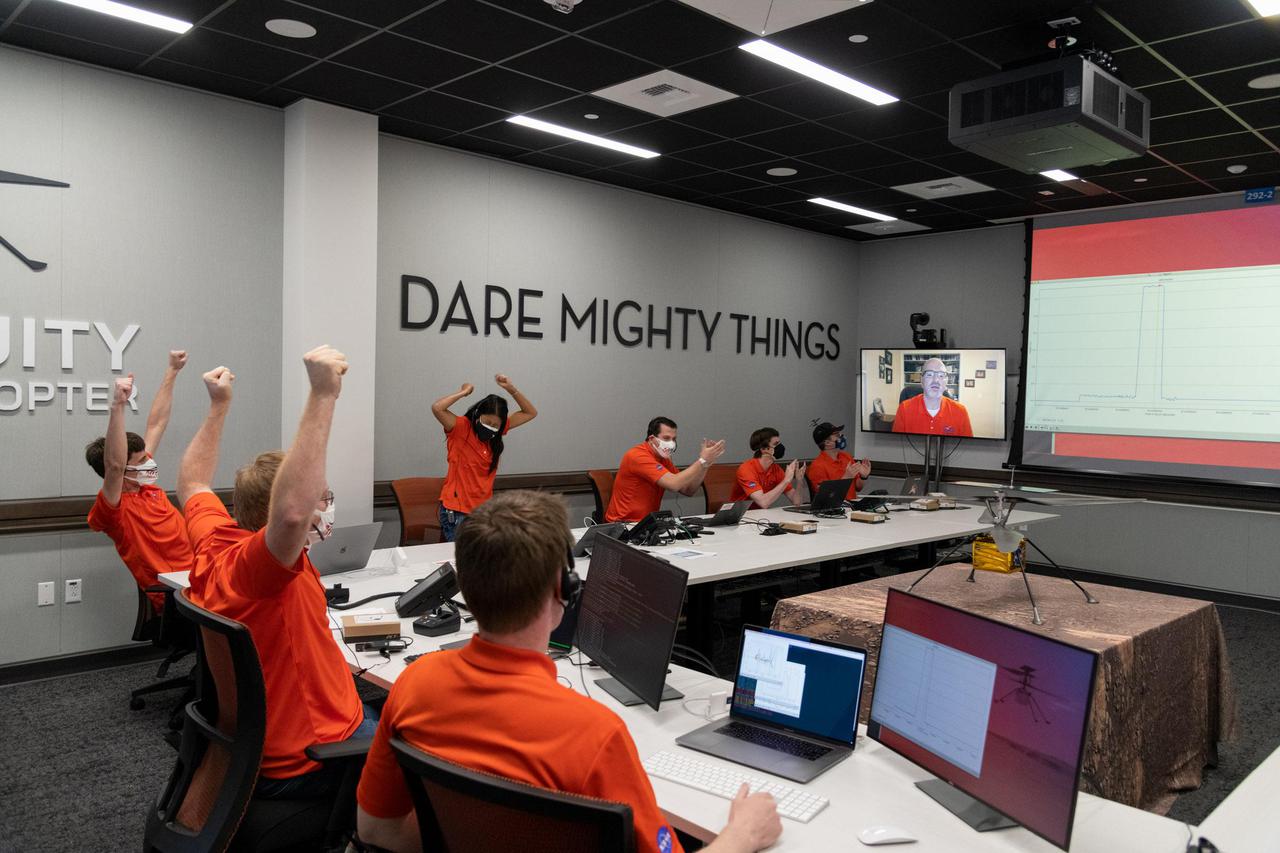
Members of NASA's Ingenuity helicopter team in the Space Flight Operations Facility at NASA's Jet Propulsion Laboratory react to data showing that the helicopter completed its first flight on April 19, 2021. The Ingenuity Mars Helicopter was built by JPL, which also manages this technology demonstration project for NASA Headquarters. It is supported by NASA's Science Mission Directorate, Aeronautics Research Mission Directorate, and Space Technology Mission Directorate. NASA's Ames Research Center and Langley Research Center provided significant flight performance analysis and technical assistance during Ingenuity's development. A key objective for Perseverance's mission on Mars is astrobiology, including the search for signs of ancient microbial life. The rover will characterize the planet's geology and past climate, pave the way for human exploration of the Red Planet, and be the first mission to collect and cache Martian rock and regolith (broken rock and dust). Subsequent NASA missions, in cooperation with ESA (European Space Agency), would send spacecraft to Mars to collect these sealed samples from the surface and return them to Earth for in-depth analysis. The Mars 2020 Perseverance mission is part of NASA's Moon to Mars exploration approach, which includes Artemis missions to the Moon that will help prepare for human exploration of the Red Planet. https://photojournal.jpl.nasa.gov/catalog/PIA24499
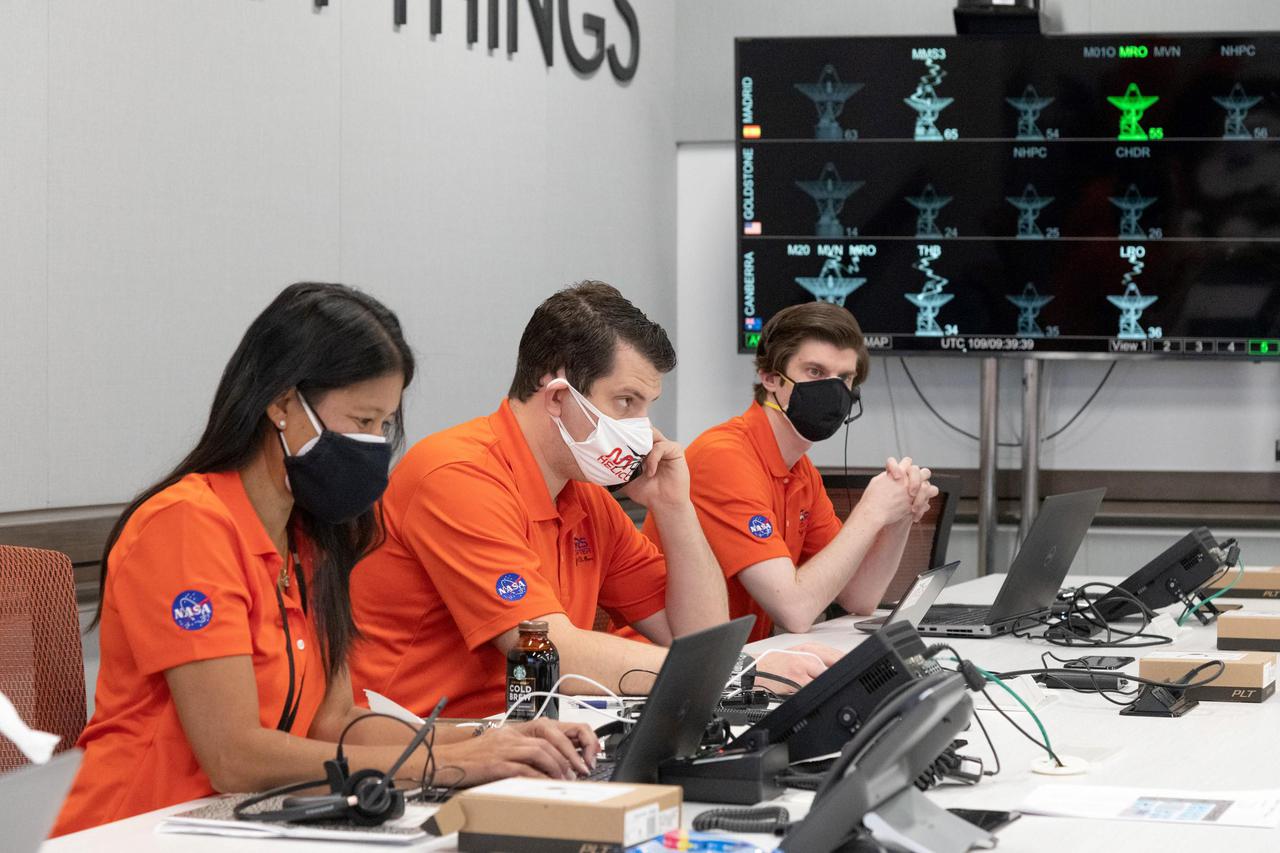
Members of NASA's Ingenuity helicopter team in the Space Flight Operations Facility at NASA's Jet Propulsion Laboratory prepare to receive the data downlink showing whether the helicopter completed its first flight on April 19, 2021. The Ingenuity Mars Helicopter was built by JPL, which also manages this technology demonstration project for NASA Headquarters. It is supported by NASA's Science Mission Directorate, Aeronautics Research Mission Directorate, and Space Technology Mission Directorate. NASA's Ames Research Center and Langley Research Center provided significant flight performance analysis and technical assistance during Ingenuity's development. A key objective for Perseverance's mission on Mars is astrobiology, including the search for signs of ancient microbial life. The rover will characterize the planet's geology and past climate, pave the way for human exploration of the Red Planet, and be the first mission to collect and cache Martian rock and regolith (broken rock and dust). Subsequent NASA missions, in cooperation with ESA (European Space Agency), would send spacecraft to Mars to collect these sealed samples from the surface and return them to Earth for in-depth analysis. The Mars 2020 Perseverance mission is part of NASA's Moon to Mars exploration approach, which includes Artemis missions to the Moon that will help prepare for human exploration of the Red Planet. https://photojournal.jpl.nasa.gov/catalog/PIA24585
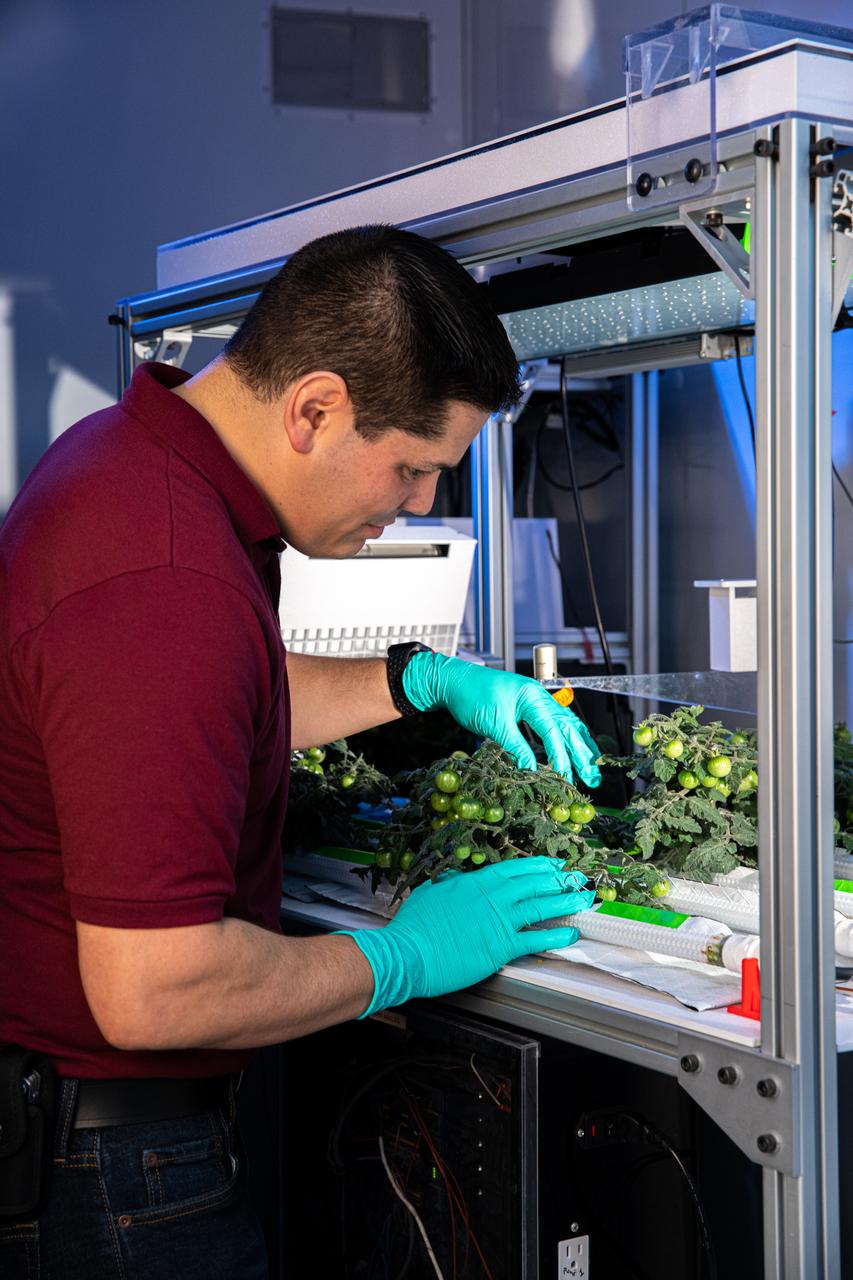
A multidisciplinary team of engineers, biologists, and horticulturalists working out of NASA's Kennedy Space Center in Florida supports the use of technology and automation in plant growth research that looks to supplement the diet of astronauts so they can undertake longer and more distant space exploration missions than ever before.
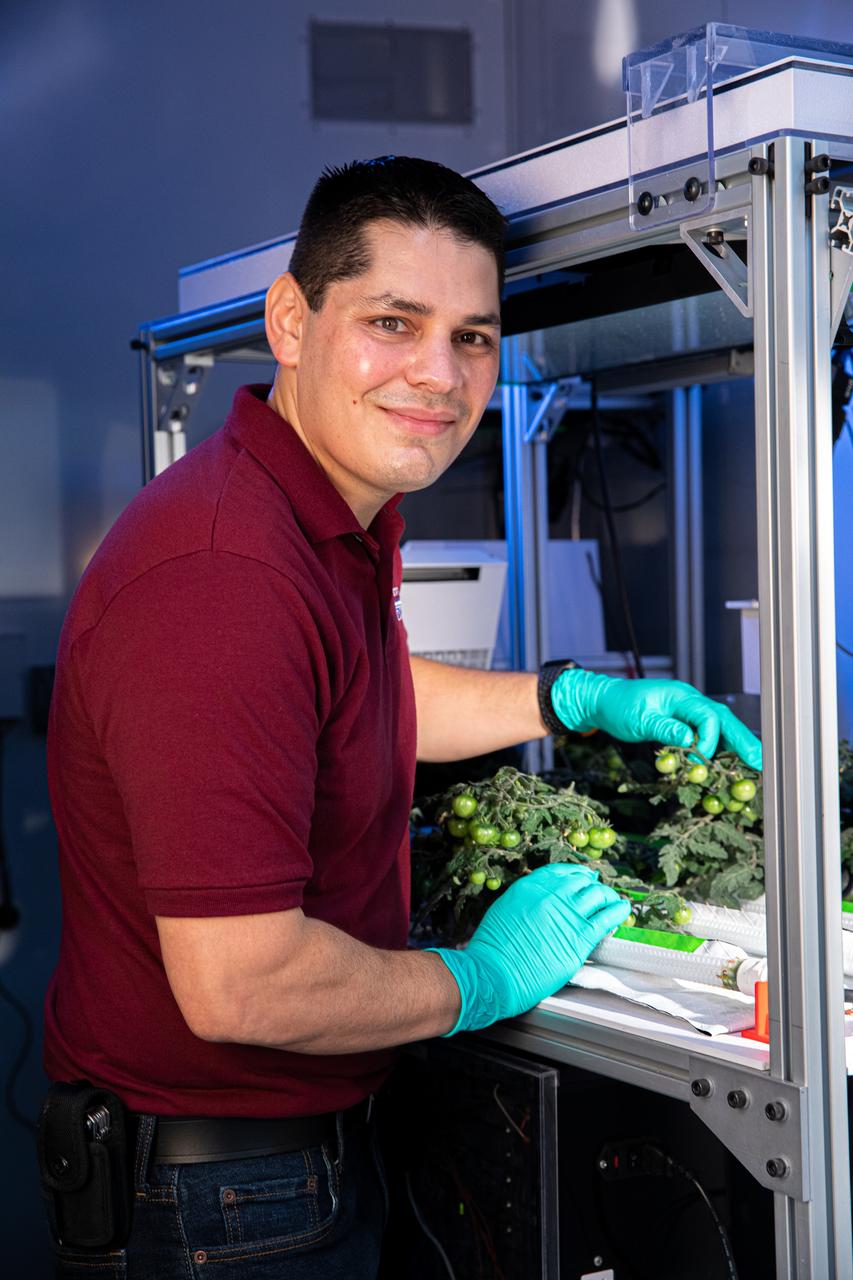
A multidisciplinary team of engineers, biologists, and horticulturalists working out of NASA's Kennedy Space Center in Florida supports the use of technology and automation in plant growth research that looks to supplement the diet of astronauts so they can undertake longer and more distant space exploration missions than ever before.
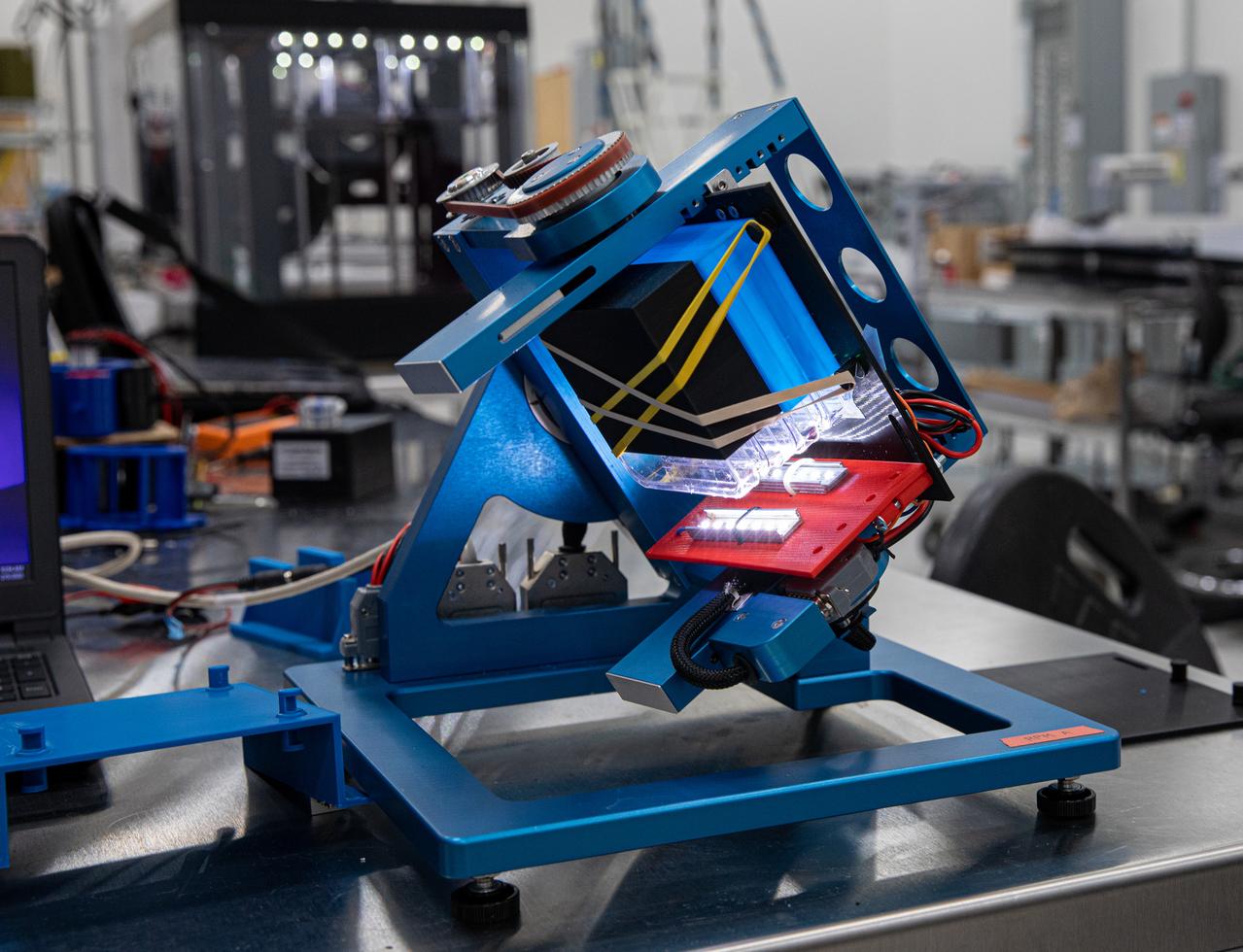
A multidisciplinary team of engineers, biologists, and horticulturalists working out of NASA's Kennedy Space Center in Florida supports the use of technology and automation in plant growth research that looks to supplement the diet of astronauts so they can undertake longer and more distant space exploration missions than ever before.
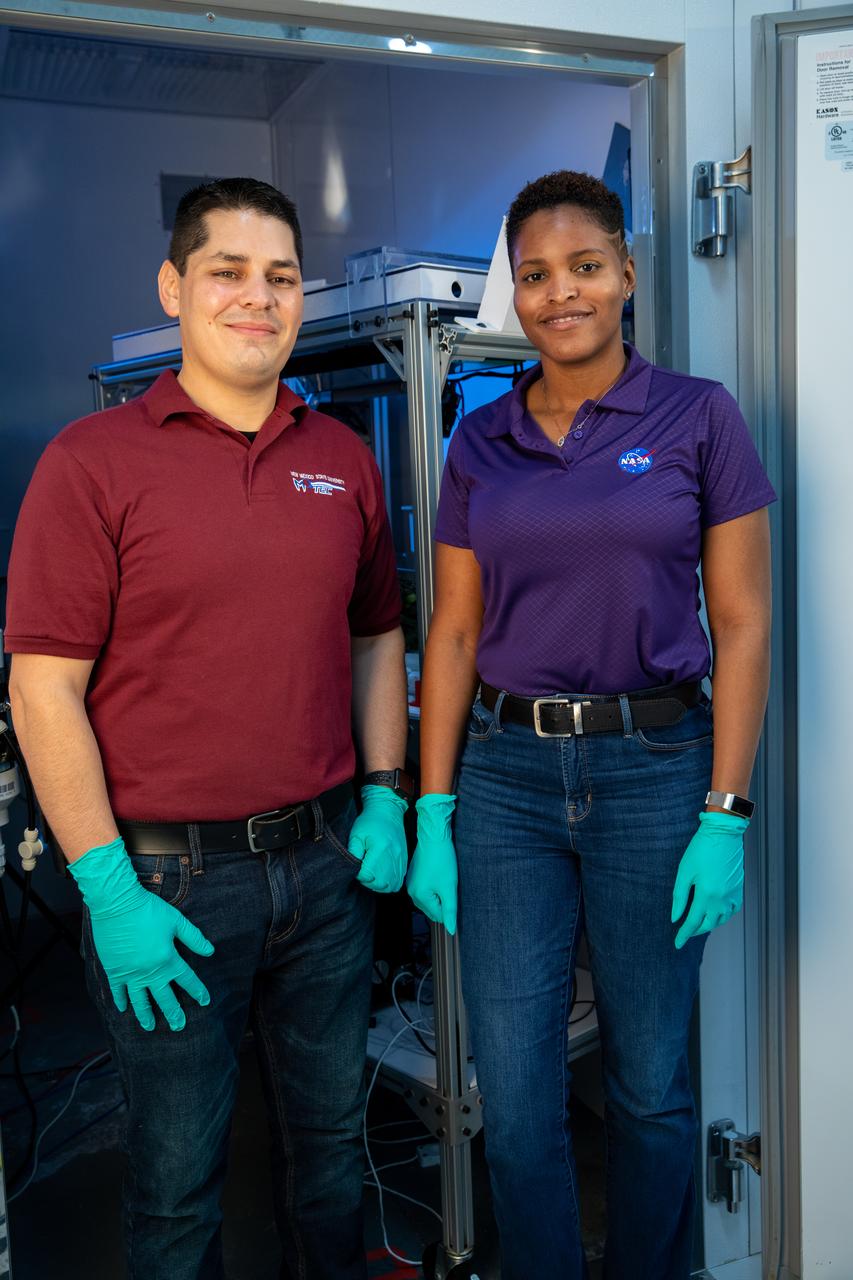
A multidisciplinary team of engineers, biologists, and horticulturalists working out of NASA's Kennedy Space Center in Florida supports the use of technology and automation in plant growth research that looks to supplement the diet of astronauts so they can undertake longer and more distant space exploration missions than ever before.
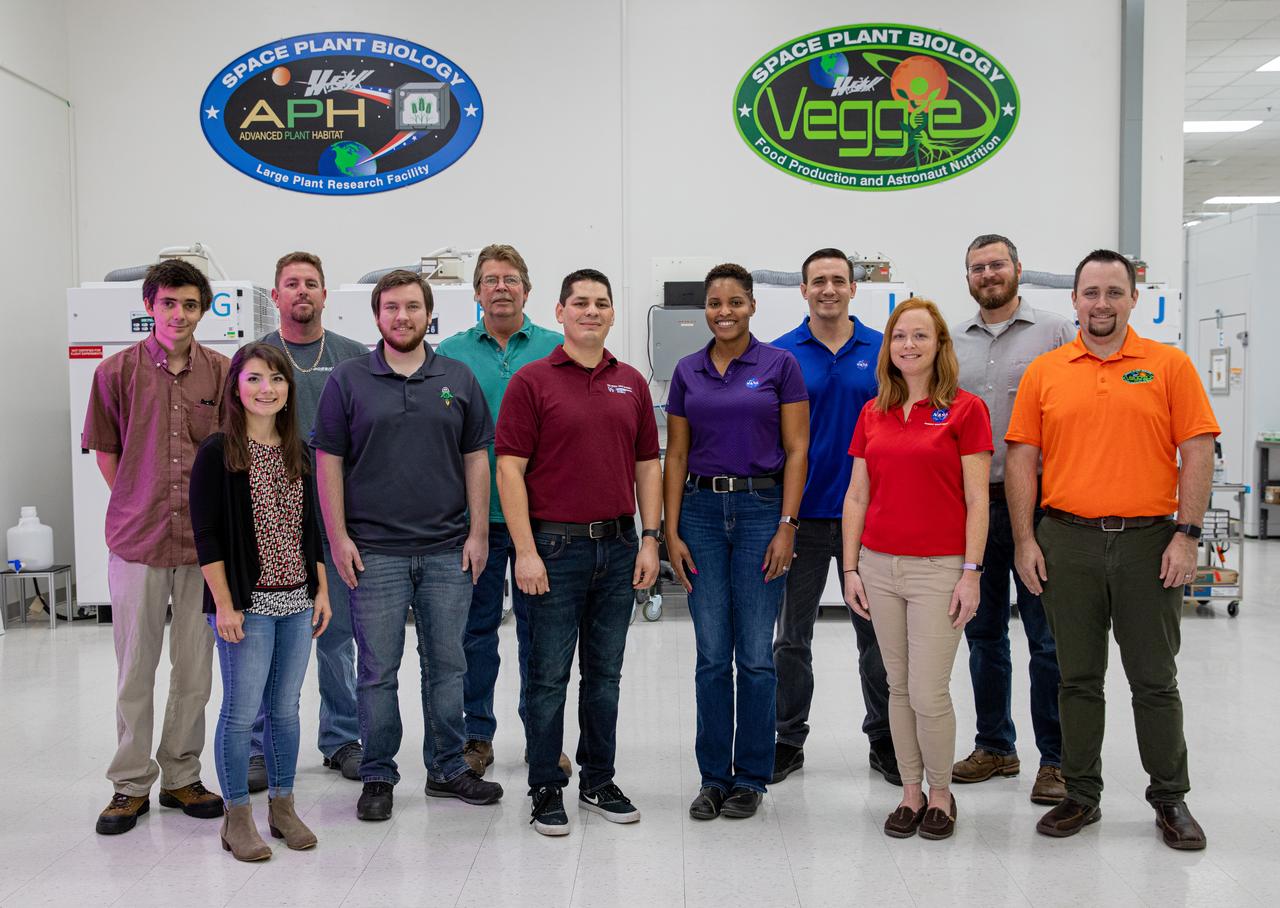
A multidisciplinary team of engineers, biologists, and horticulturalists working out of NASA's Kennedy Space Center in Florida supports the use of technology and automation in plant growth research that looks to supplement the diet of astronauts so they can undertake longer and more distant space exploration missions than ever before.
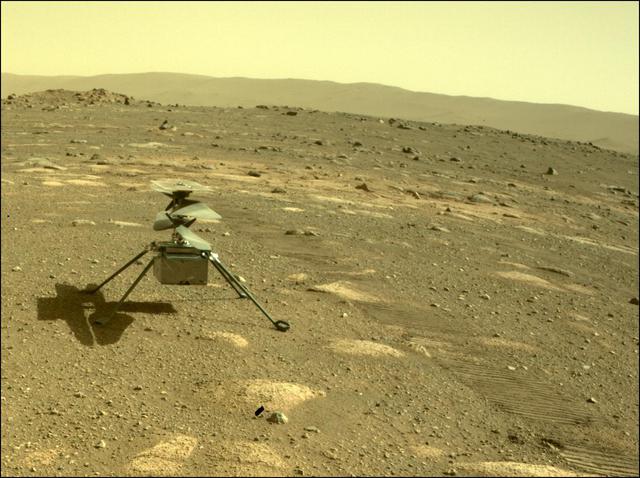
NASA's Ingenuity helicopter can be seen on Mars as viewed by the Perseverance rover's rear Hazard Camera on April 4, 2021, the 44th Martian day, or sol of the mission. NASA's Jet Propulsion Laboratory built and manages operations of Perseverance and Ingenuity for the agency. Caltech in Pasadena, California, manages JPL for NASA. The Mars helicopter technology demonstration activity is supported by NASA's Science Mission Directorate, the NASA Aeronautics Research Mission Directorate, and the NASA Space Technology Mission Directorate. A key objective for Perseverance's mission on Mars is astrobiology, including the search for signs of ancient microbial life. The rover will characterize the planet's geology and past climate, pave the way for human exploration of the Red Planet, and be the first mission to collect and cache Martian rock and regolith (broken rock and dust). Subsequent NASA missions, in cooperation with ESA (European Space Agency), would send spacecraft to Mars to collect these sealed samples from the surface and return them to Earth for in-depth analysis. The Mars 2020 Perseverance mission is part of NASA's Moon to Mars exploration approach, which includes Artemis missions to the Moon that will help prepare for human exploration of the Red Planet. https://photojournal.jpl.nasa.gov/catalog/PIA24541
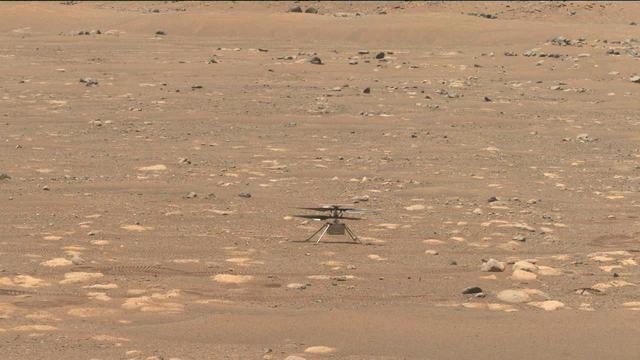
NASA's Ingenuity helicopter does a slow spin test of its blades on April 8, 2021, the 48th Martian day, or sol, of the mission. This image was captured by the Mastcam-Z on NASA's Perseverance Mars rover. The Ingenuity Mars Helicopter was built by JPL, which also manages this technology demonstration project for NASA Headquarters. It is supported by NASA's Science Mission Directorate, Aeronautics Research Mission Directorate, and Space Technology Mission Directorate. NASA's Ames Research Center and Langley Research Center provided significant flight performance analysis and technical assistance during Ingenuity's development. A key objective for Perseverance's mission on Mars is astrobiology, including the search for signs of ancient microbial life. The rover will characterize the planet's geology and past climate, pave the way for human exploration of the Red Planet, and be the first mission to collect and cache Martian rock and regolith (broken rock and dust). Subsequent NASA missions, in cooperation with ESA (European Space Agency), would send spacecraft to Mars to collect these sealed samples from the surface and return them to Earth for in-depth analysis. The Mars 2020 Perseverance mission is part of NASA's Moon to Mars exploration approach, which includes Artemis missions to the Moon that will help prepare for human exploration of the Red Planet. Movie avaiable at https://photojournal.jpl.nasa.gov/catalog/PIA24582