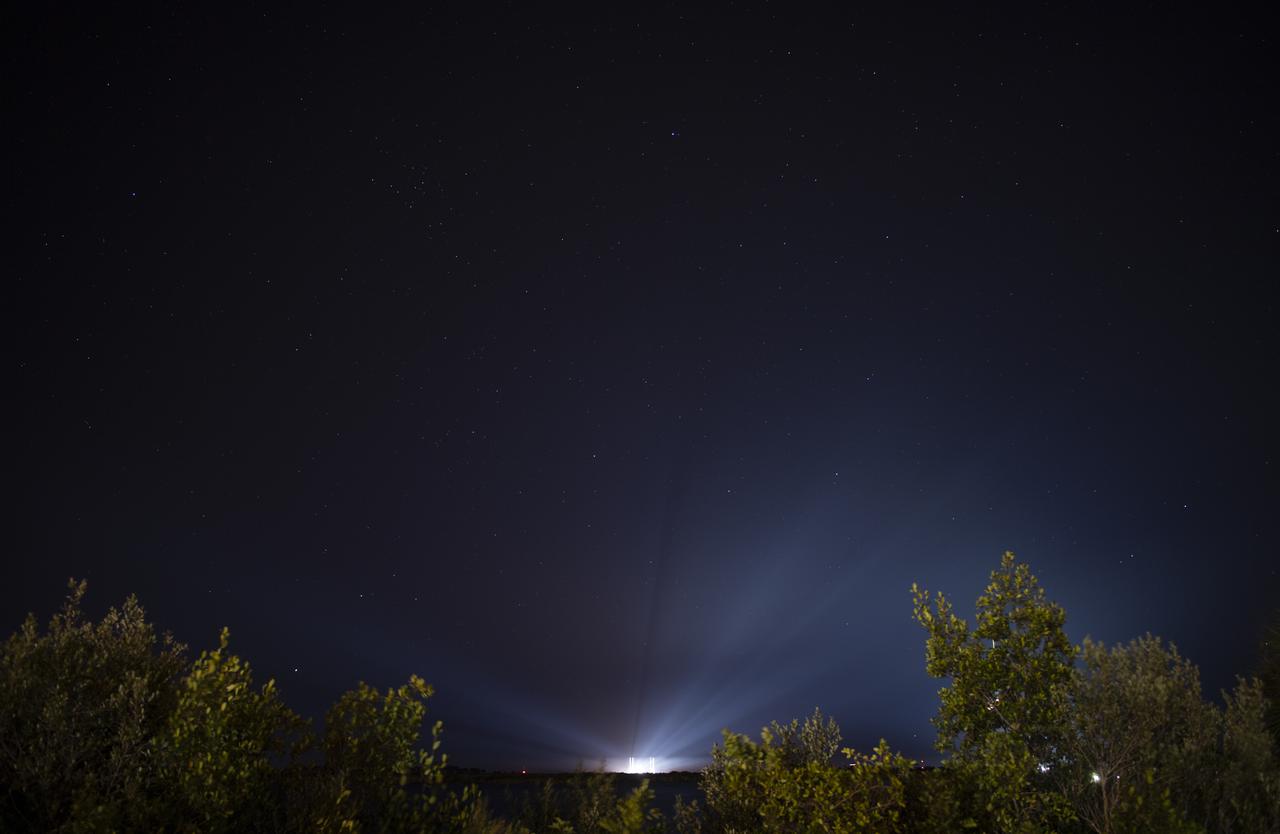
A United Launch Alliance Atlas V rocket carrying the Department of Defense’s Space Test Program 3 (STP-3) mission is seen illuminated by spotlights at Space Launch Complex 41 at Cape Canaveral Space Force Station, Tuesday, Dec. 7, 2021, from NASA’s Kennedy Space Center in Florida. The mission’s Space Test Program Satellite-6 (STPSat-6) spacecraft hosts NASA’s Laser Communications Relay Demonstration (LCRD) and the NASA-U.S. Naval Research Laboratory Ultraviolet Spectro-Coronagraph (UVSC) Pathfinder. Photo Credit: (NASA/Joel Kowsky)
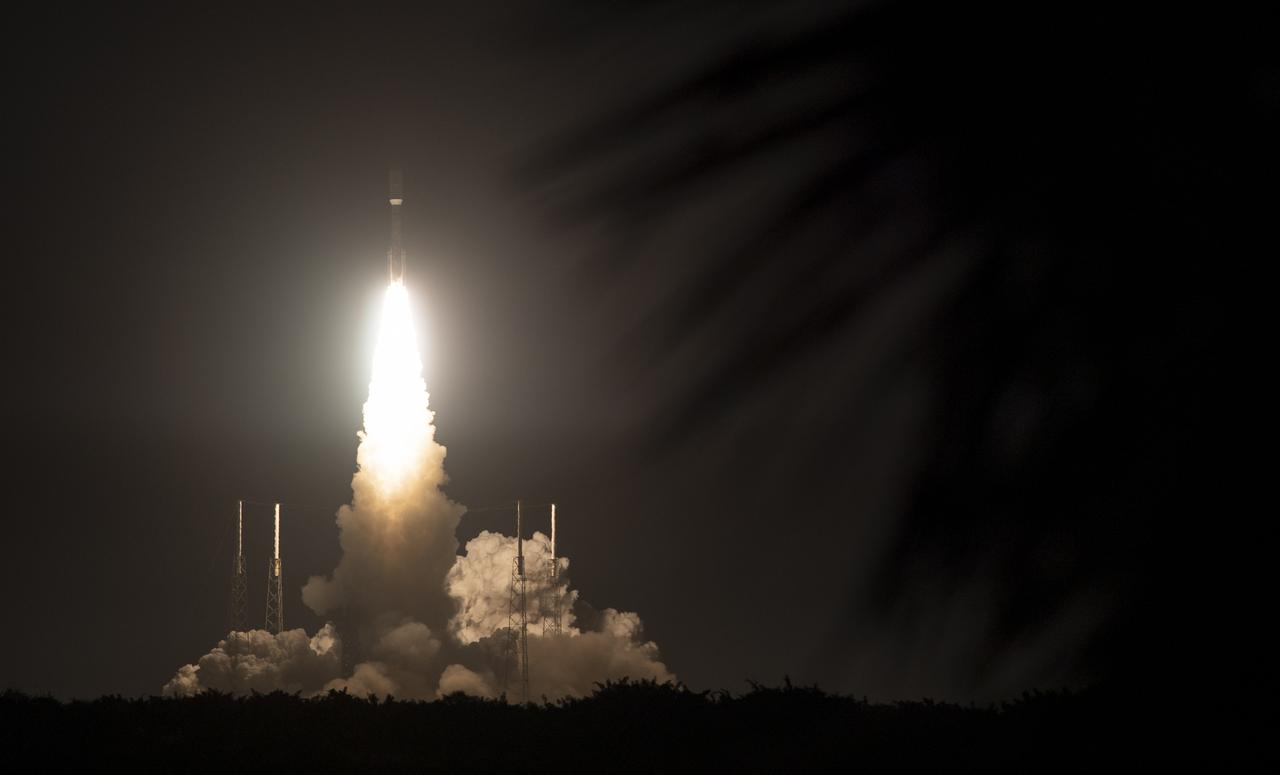
A United Launch Alliance Atlas V rocket launches on the Department of Defense’s Space Test Program 3 (STP-3) mission from Space Launch Complex 41 at Cape Canaveral Space Force Station, Tuesday, Dec. 7, 2021, from NASA’s Kennedy Space Center in Florida. The mission’s Space Test Program Satellite-6 (STPSat-6) spacecraft hosts NASA’s Laser Communications Relay Demonstration (LCRD) and the NASA-U.S. Naval Research Laboratory Ultraviolet Spectro-Coronagraph (UVSC) Pathfinder. Photo Credit: (NASA/Joel Kowsky)
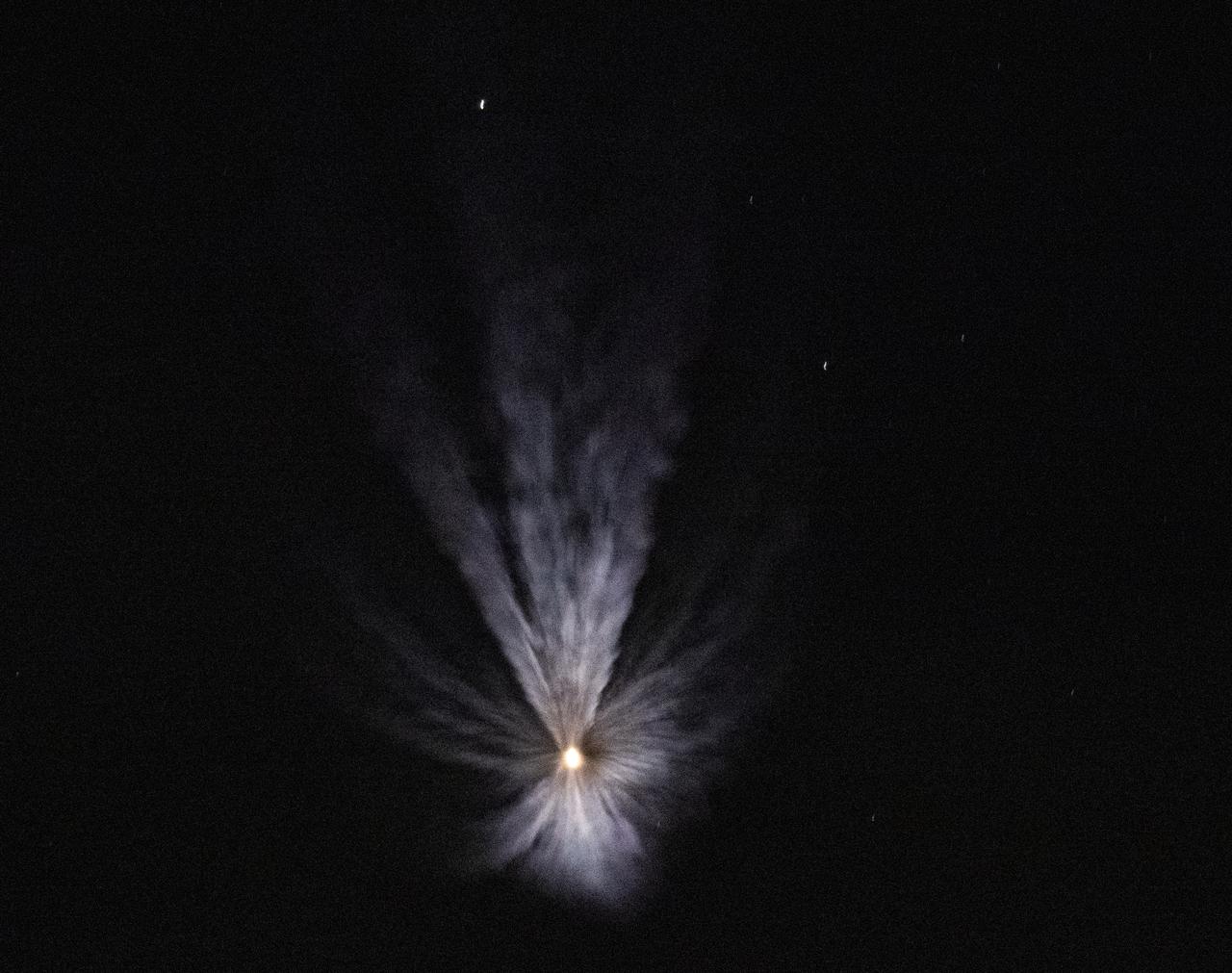
A United Launch Alliance Atlas V rocket launches on the Department of Defense’s Space Test Program 3 (STP-3) mission from Space Launch Complex 41 at Cape Canaveral Space Force Station, Tuesday, Dec. 7, 2021, from NASA’s Kennedy Space Center in Florida. The mission’s Space Test Program Satellite-6 (STPSat-6) spacecraft hosts NASA’s Laser Communications Relay Demonstration (LCRD) and the NASA-U.S. Naval Research Laboratory Ultraviolet Spectro-Coronagraph (UVSC) Pathfinder. Photo Credit: (NASA/Joel Kowsky)
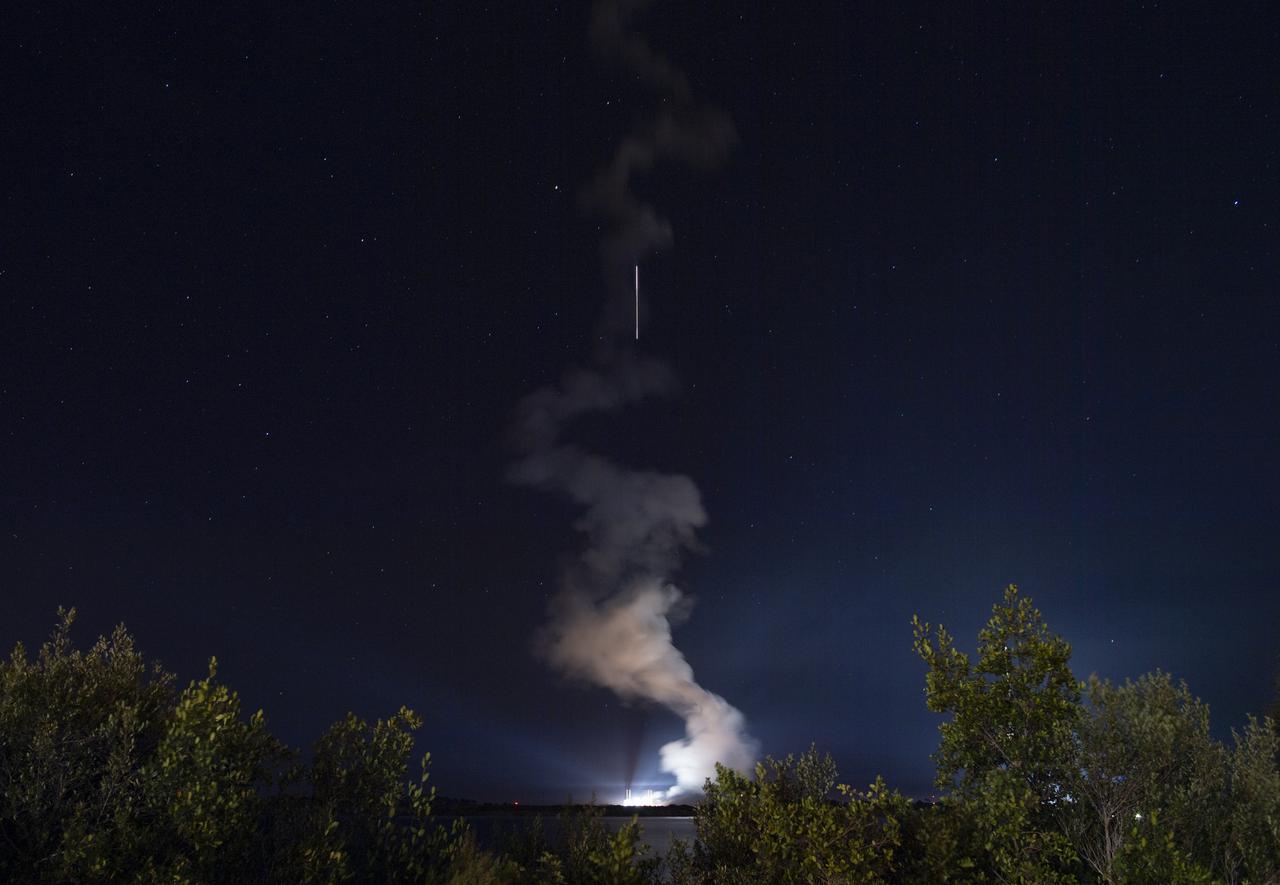
In this twenty-second exposure, a United Launch Alliance Atlas V rocket launches on the Department of Defense’s Space Test Program 3 (STP-3) mission from Space Launch Complex 41 at Cape Canaveral Space Force Station, Tuesday, Dec. 7, 2021, from NASA’s Kennedy Space Center in Florida. The mission’s Space Test Program Satellite-6 (STPSat-6) spacecraft hosts NASA’s Laser Communications Relay Demonstration (LCRD) and the NASA-U.S. Naval Research Laboratory Ultraviolet Spectro-Coronagraph (UVSC) Pathfinder. Photo Credit: (NASA/Joel Kowsky)
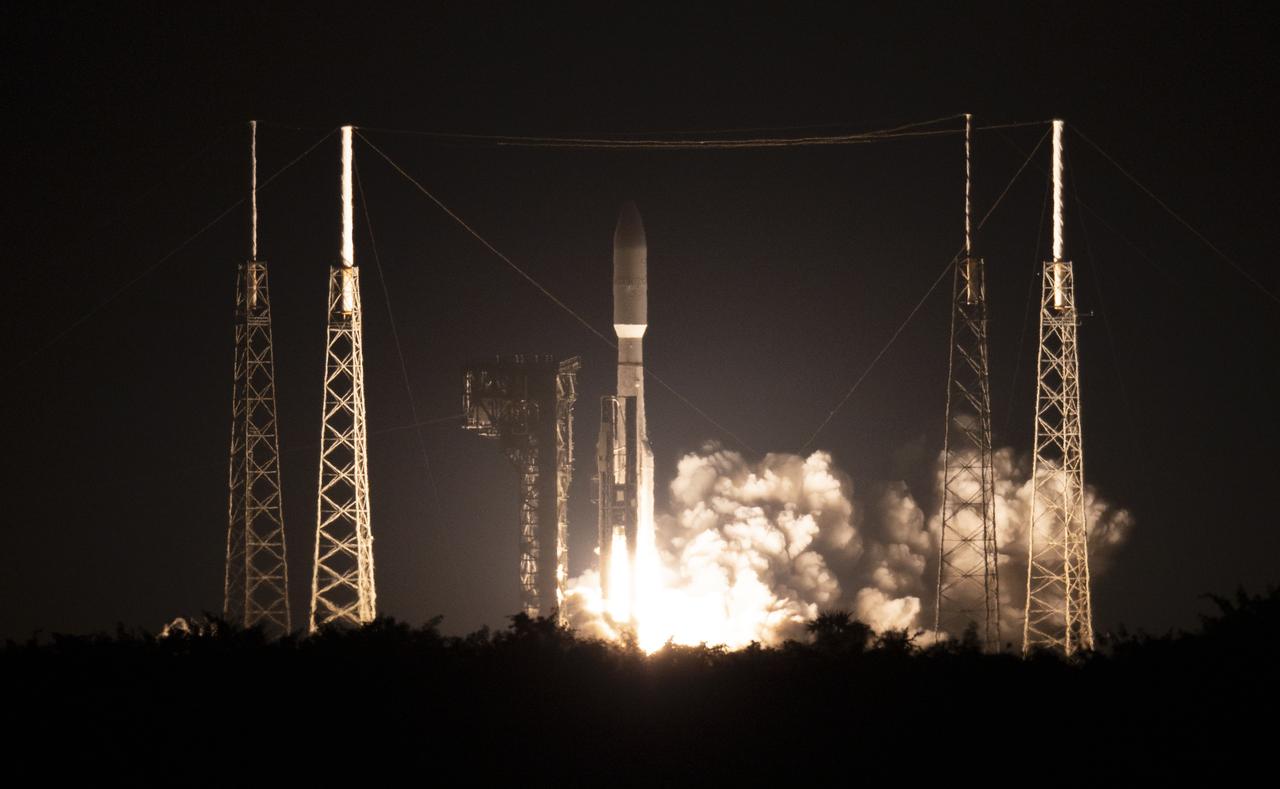
A United Launch Alliance Atlas V rocket launches on the Department of Defense’s Space Test Program 3 (STP-3) mission from Space Launch Complex 41 at Cape Canaveral Space Force Station, Tuesday, Dec. 7, 2021, from NASA’s Kennedy Space Center in Florida. The mission’s Space Test Program Satellite-6 (STPSat-6) spacecraft hosts NASA’s Laser Communications Relay Demonstration (LCRD) and the NASA-U.S. Naval Research Laboratory Ultraviolet Spectro-Coronagraph (UVSC) Pathfinder. Photo Credit: (NASA/Joel Kowsky)
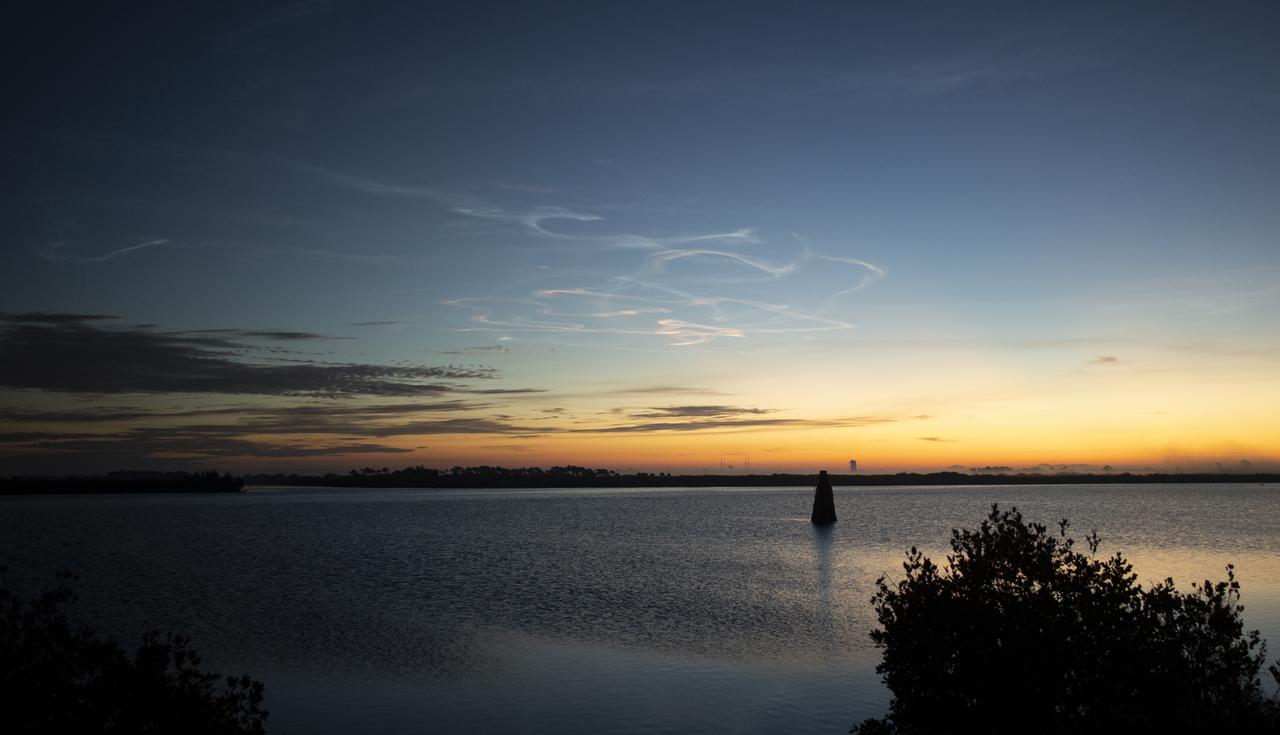
Contrails are seen illuminated in the sky as the Sun begins to rise following the launch of a United Launch Alliance Atlas V rocket on the Department of Defense’s Space Test Program 3 (STP-3) mission from Space Launch Complex 41 at Cape Canaveral Space Force Station, Tuesday, Dec. 7, 2021, from NASA’s Kennedy Space Center in Florida. The mission’s Space Test Program Satellite-6 (STPSat-6) spacecraft hosts NASA’s Laser Communications Relay Demonstration (LCRD) and the NASA-U.S. Naval Research Laboratory Ultraviolet Spectro-Coronagraph (UVSC) Pathfinder. Photo Credit: (NASA/Joel Kowsky)
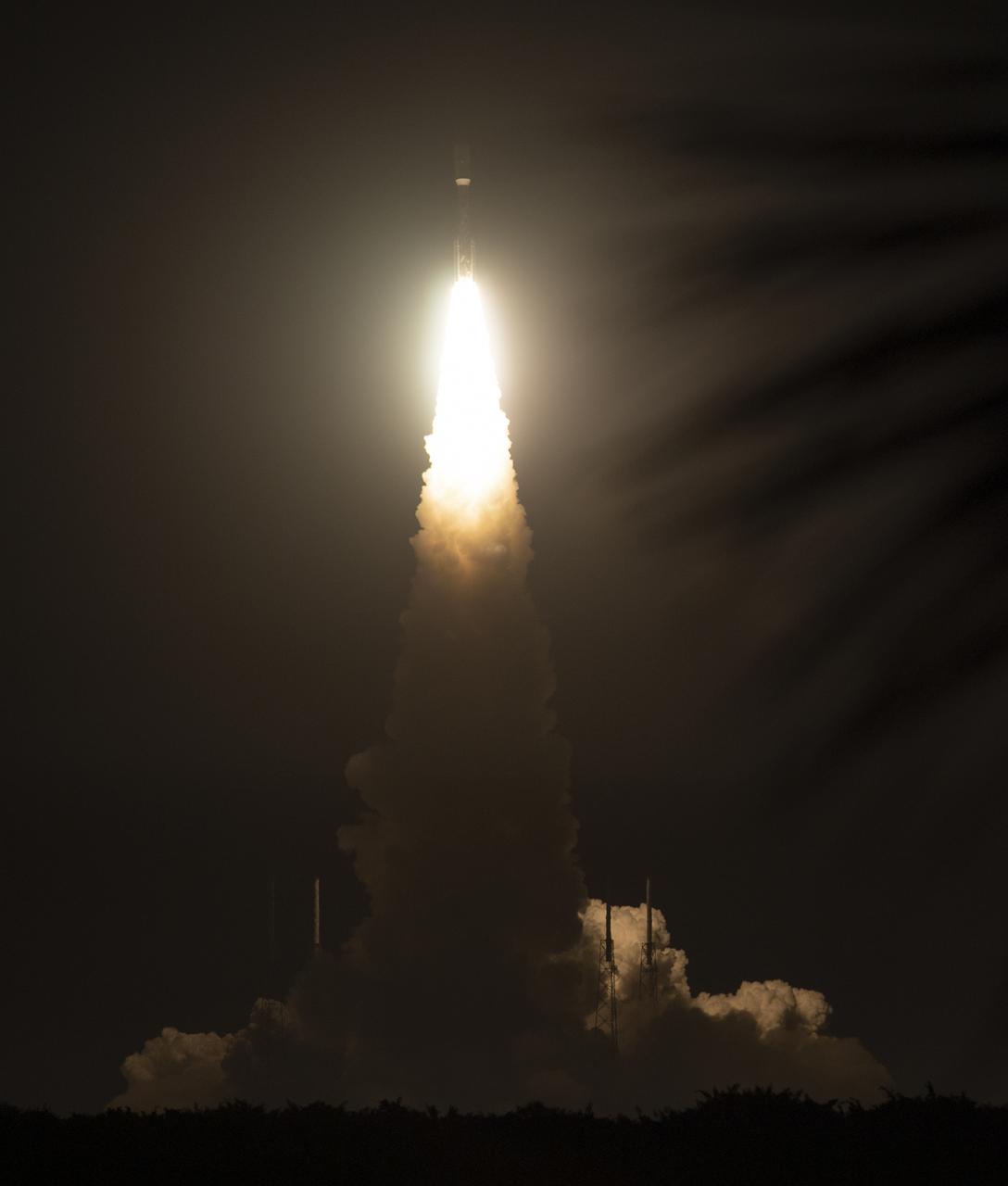
A United Launch Alliance Atlas V rocket launches on the Department of Defense’s Space Test Program 3 (STP-3) mission from Space Launch Complex 41 at Cape Canaveral Space Force Station, Tuesday, Dec. 7, 2021, from NASA’s Kennedy Space Center in Florida. The mission’s Space Test Program Satellite-6 (STPSat-6) spacecraft hosts NASA’s Laser Communications Relay Demonstration (LCRD) and the NASA-U.S. Naval Research Laboratory Ultraviolet Spectro-Coronagraph (UVSC) Pathfinder. Photo Credit: (NASA/Joel Kowsky)
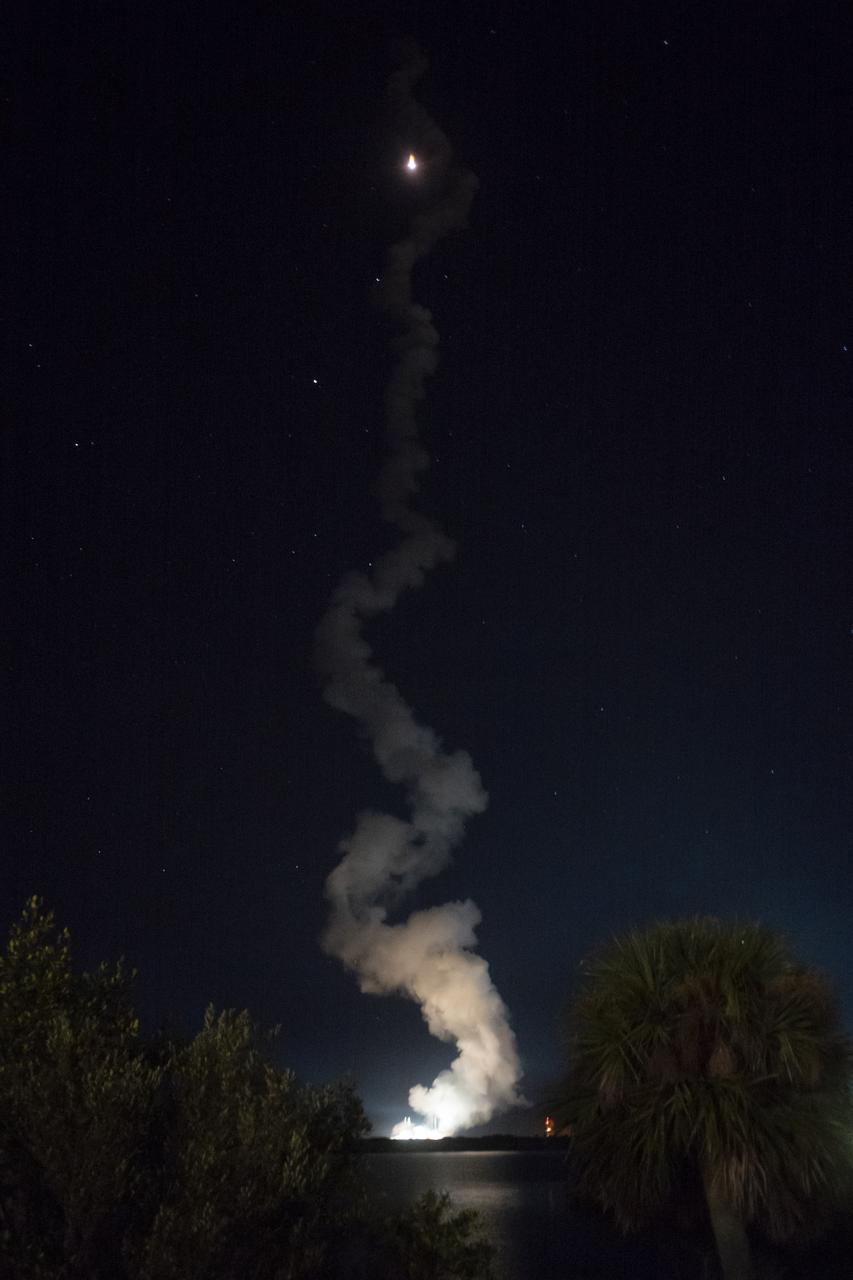
A United Launch Alliance Atlas V rocket launches on the Department of Defense’s Space Test Program 3 (STP-3) mission from Space Launch Complex 41 at Cape Canaveral Space Force Station, Tuesday, Dec. 7, 2021, from NASA’s Kennedy Space Center in Florida. The mission’s Space Test Program Satellite-6 (STPSat-6) spacecraft hosts NASA’s Laser Communications Relay Demonstration (LCRD) and the NASA-U.S. Naval Research Laboratory Ultraviolet Spectro-Coronagraph (UVSC) Pathfinder. Photo Credit: (NASA/Joel Kowsky)
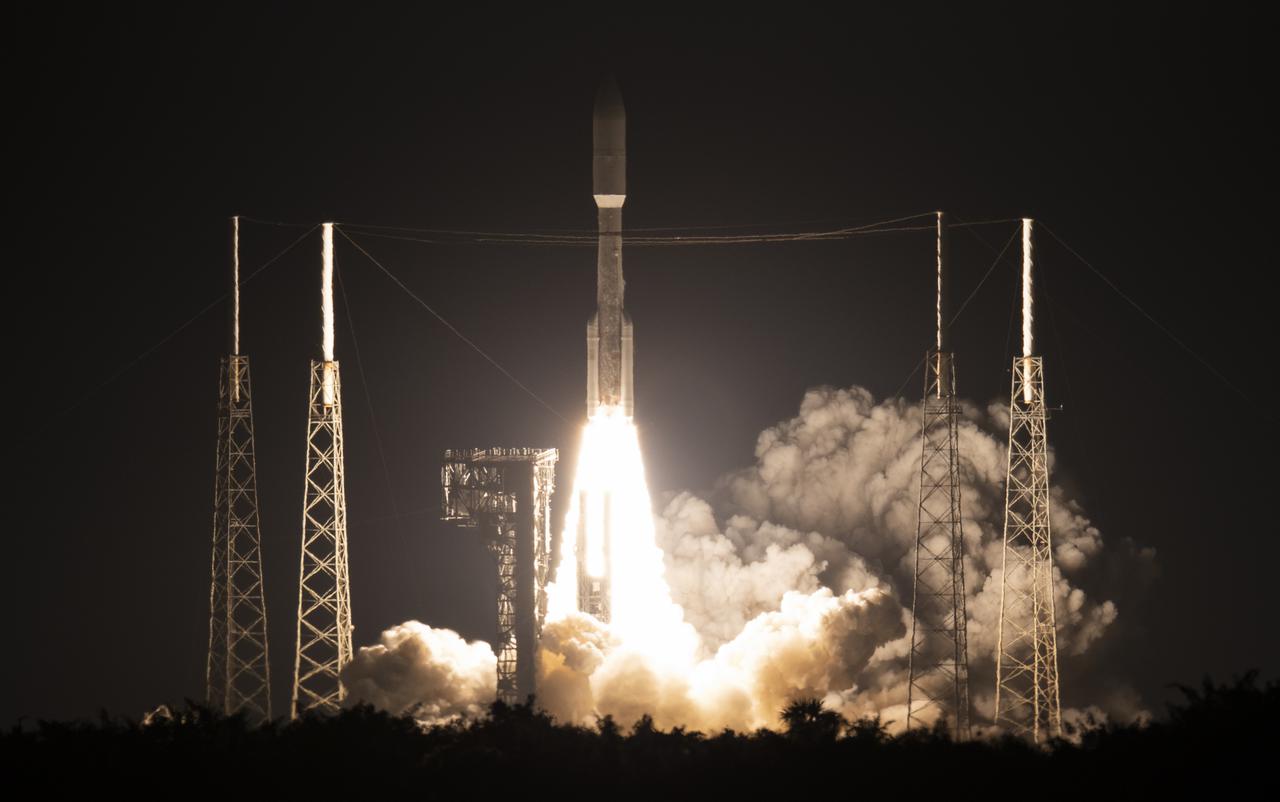
A United Launch Alliance Atlas V rocket launches on the Department of Defense’s Space Test Program 3 (STP-3) mission from Space Launch Complex 41 at Cape Canaveral Space Force Station, Tuesday, Dec. 7, 2021, from NASA’s Kennedy Space Center in Florida. The mission’s Space Test Program Satellite-6 (STPSat-6) spacecraft hosts NASA’s Laser Communications Relay Demonstration (LCRD) and the NASA-U.S. Naval Research Laboratory Ultraviolet Spectro-Coronagraph (UVSC) Pathfinder. Photo Credit: (NASA/Joel Kowsky)
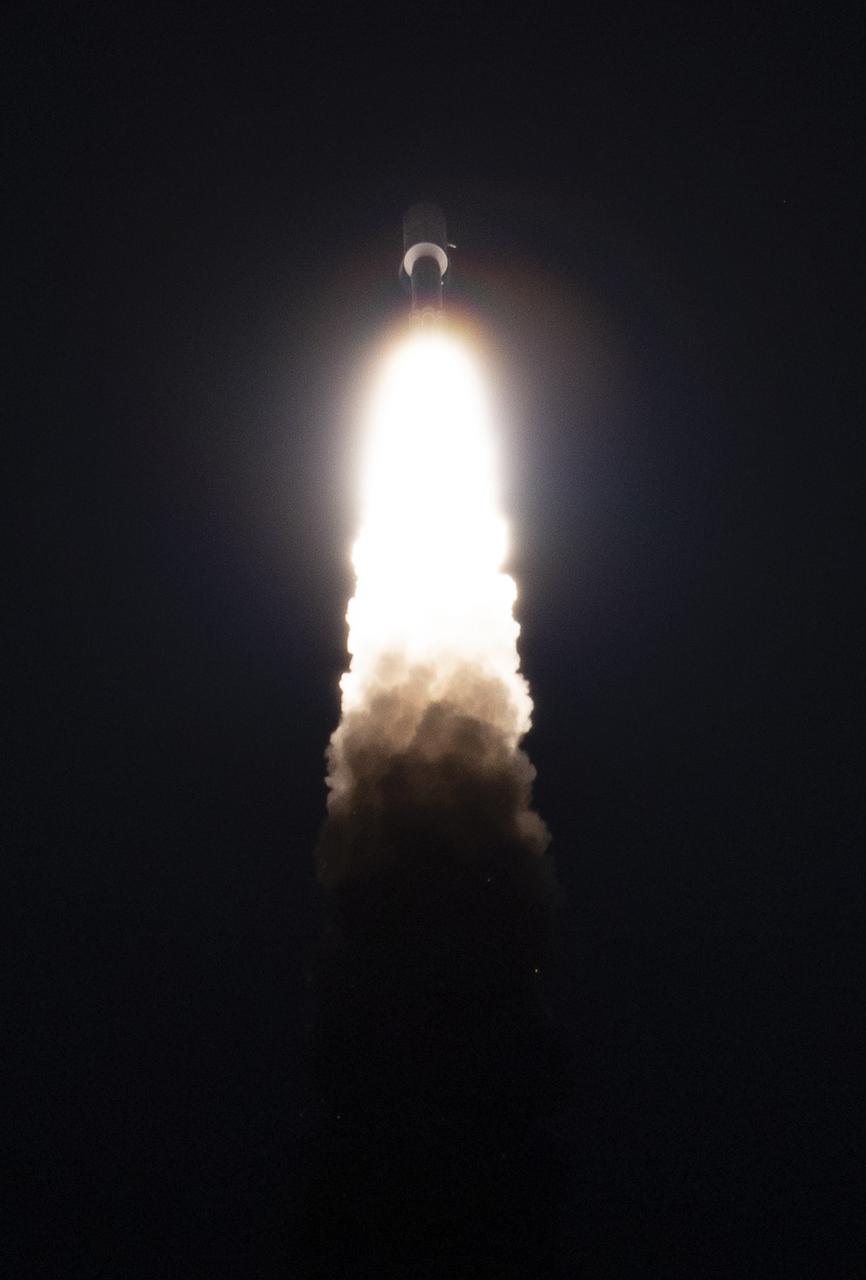
A United Launch Alliance Atlas V rocket launches on the Department of Defense’s Space Test Program 3 (STP-3) mission from Space Launch Complex 41 at Cape Canaveral Space Force Station, Tuesday, Dec. 7, 2021, from NASA’s Kennedy Space Center in Florida. The mission’s Space Test Program Satellite-6 (STPSat-6) spacecraft hosts NASA’s Laser Communications Relay Demonstration (LCRD) and the NASA-U.S. Naval Research Laboratory Ultraviolet Spectro-Coronagraph (UVSC) Pathfinder. Photo Credit: (NASA/Joel Kowsky)
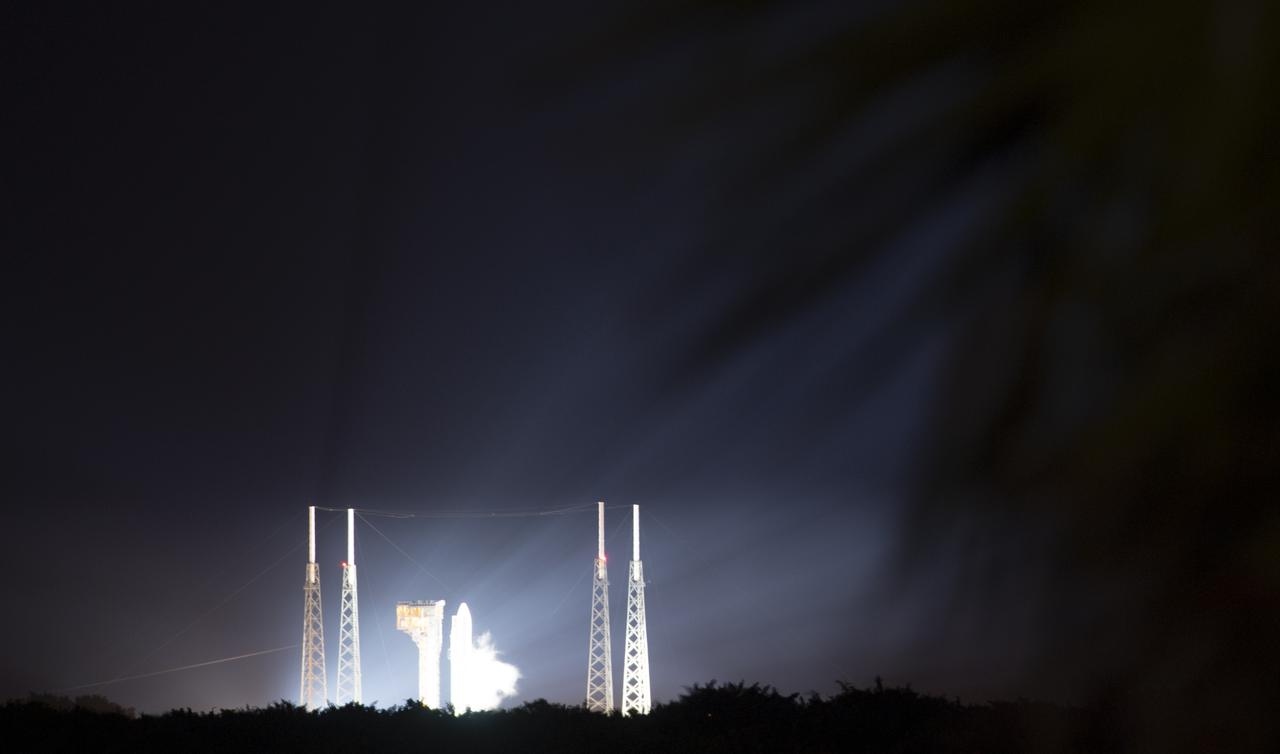
A United Launch Alliance Atlas V rocket carrying the Department of Defense’s Space Test Program 3 (STP-3) mission is seen illuminated by spotlights at Space Launch Complex 41 at Cape Canaveral Space Force Station, Tuesday, Dec. 7, 2021, from NASA’s Kennedy Space Center in Florida. The mission’s Space Test Program Satellite-6 (STPSat-6) spacecraft hosts NASA’s Laser Communications Relay Demonstration (LCRD) and the NASA-U.S. Naval Research Laboratory Ultraviolet Spectro-Coronagraph (UVSC) Pathfinder. Photo Credit: (NASA/Joel Kowsky)
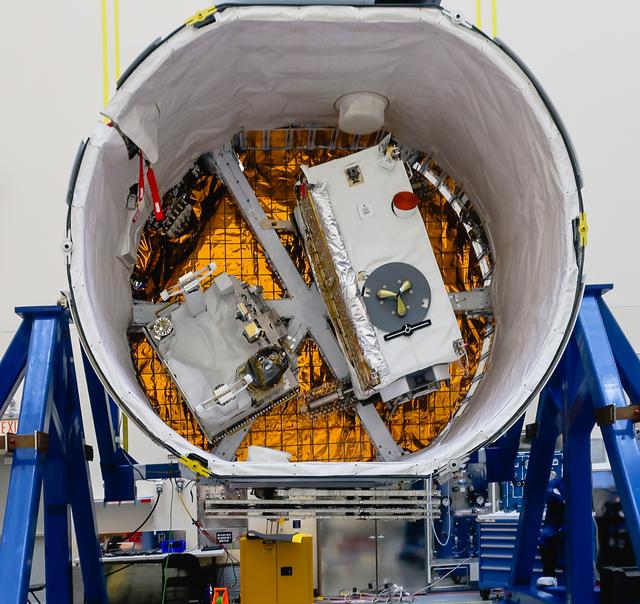
NASA’s Orbiting Carbon Observatory-3 (OCO-3) and Space Test Program-Houston 6 (STP-H6) are in view installed in the truck of SpaceX’s Dragon spacecraft inside the SpaceX facility at NASA’s Kennedy Space Center in Florida on March 23, 2019. OCO-3 and STP-H6 will be delivered to the International Space Station on SpaceX’s 17th Commercial Resupply Services mission (CRS-17) for NASA. STP-H6 is an x-ray communication investigation that will be used to perform a space-based demonstration of a new technology for generating beams of modulated x-rays. This technology may be useful for providing efficient communication to deep space probes, or communicating with hypersonic vehicles where plasma sheaths prevent traditional radio communications. OCO-3 will be robotically installed on the exterior of the space station’s Japanese Experiment Module Exposed Facility Unit, where it will measure and map carbon dioxide from space to provide further understanding of the relationship between carbon and climate. CRS-17 is scheduled to launch from Space Launch Complex 40 on Cape Canaveral Air Force Station in late April.
CAPE CANAVERAL, Fla. -- In the Space Station Processing Facility at NASA Kennedy Space Center in Florida, the Space Test Program-Houston-3, or STP-H3, payload is being prepared for installation onto the Express Logistics Carrier-3, or ELC-3. STP-H3 is a compliment of four individual Department of Defense experiments that will test concepts in low earth orbit for long duration flights. As the final planned mission of the Space Shuttle Program, shuttle Endeavour and its STS-134 crew will deliver the Alpha Magnetic Spectrometer, the ELC-3 as well as critical spare components to the International Space Station. Endeavour is targeted for launch Feb. 26, 2011. For more information visit, http://www.nasa.gov/mission_pages/shuttle/shuttlemissions/sts134/index.html. Photo credit: NASA/Kim Shiflett
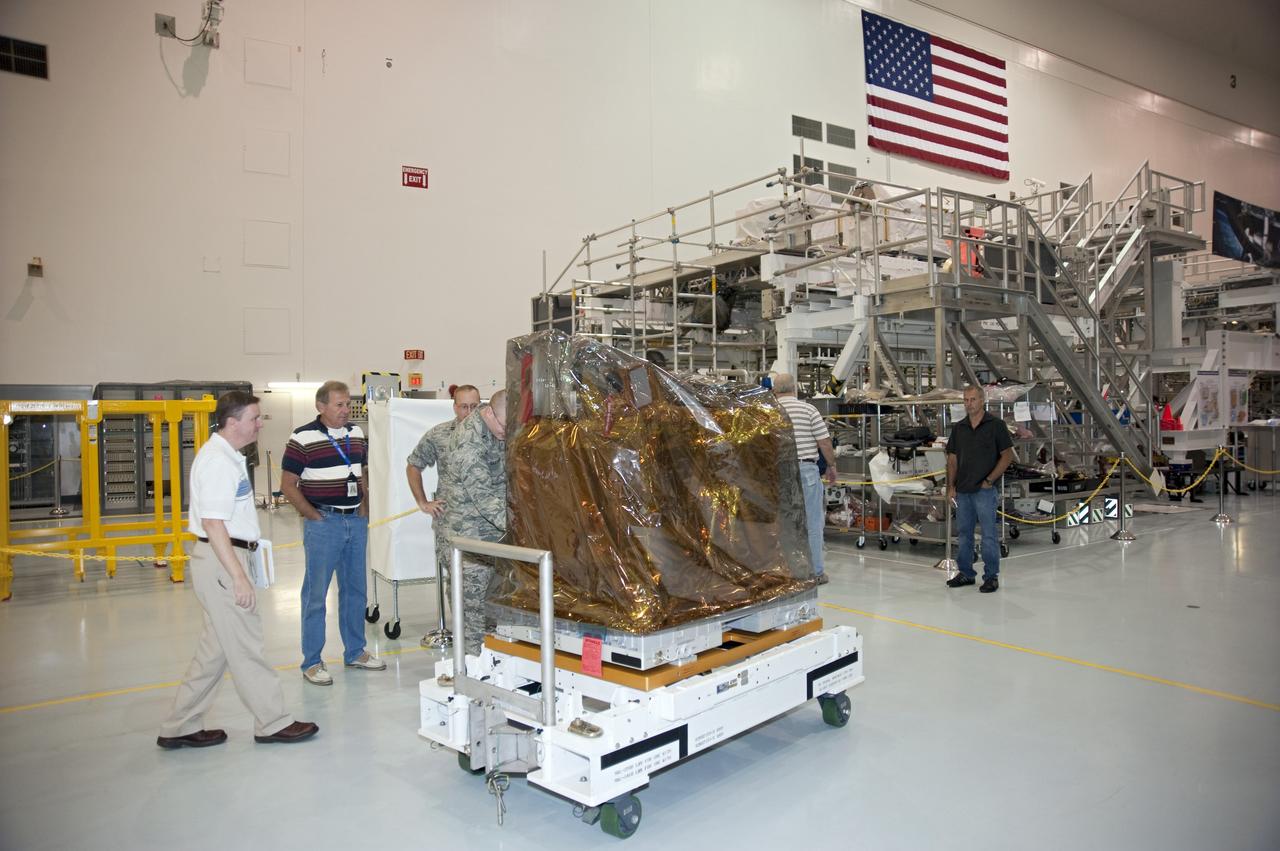
CAPE CANAVERAL, Fla. -- In the Space Station Processing Facility at NASA Kennedy Space Center in Florida, the lift ground support equipment transports the Space Test Program-Houston-3, or STP-H3, payload toward the Express Logistics Carrier-3, or ELC-3. STP-H3 is a compliment of four individual Department of Defense experiments that will test concepts in low earth orbit for long duration flights. As the final planned mission of the Space Shuttle Program, shuttle Endeavour and its STS-134 crew will deliver the Alpha Magnetic Spectrometer, the ELC-3 as well as critical spare components to the International Space Station. Endeavour is targeted for launch Feb. 26, 2011. For more information visit, http://www.nasa.gov/mission_pages/shuttle/shuttlemissions/sts134/index.html. Photo credit: NASA/Kim Shiflett
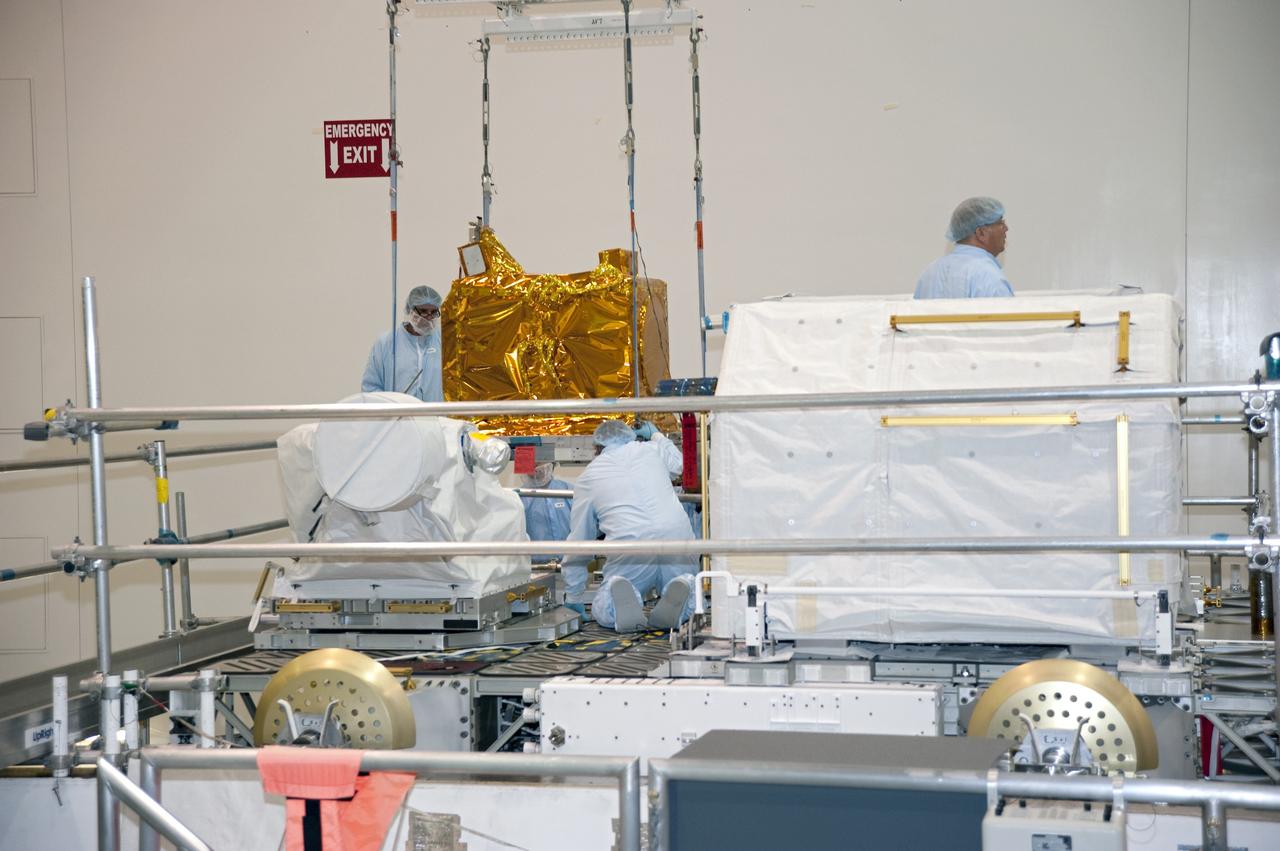
CAPE CANAVERAL, Fla. -- In the Space Station Processing Facility at NASA Kennedy Space Center in Florida, the Space Test Program-Houston-3, or STP-H3, payload is lowered onto the Express Logistics Carrier-3, or ELC-3. STP-H3 is a compliment of four individual Department of Defense experiments that will test concepts in low earth orbit for long duration flights. As the final planned mission of the Space Shuttle Program, shuttle Endeavour and its STS-134 crew will deliver the Alpha Magnetic Spectrometer, the ELC-3 as well as critical spare components to the International Space Station. Endeavour is targeted for launch Feb. 26, 2011. For more information visit, http://www.nasa.gov/mission_pages/shuttle/shuttlemissions/sts134/index.html. Photo credit: NASA/Kim Shiflett
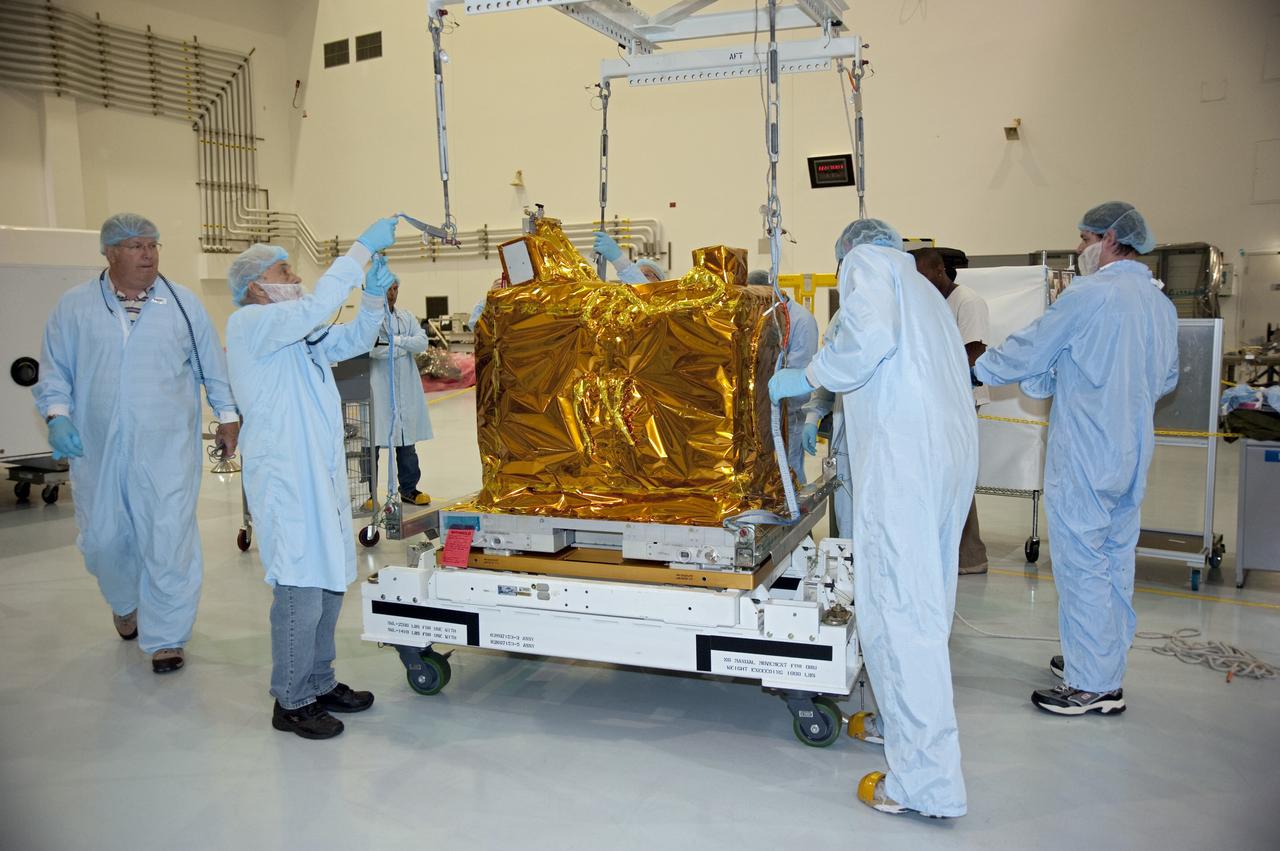
CAPE CANAVERAL, Fla. -- In the Space Station Processing Facility at NASA Kennedy Space Center in Florida, the lift ground support equipment is lowered into place around the Space Test Program-Houston-3, or STP-H3, payload for installation onto the Express Logistics Carrier-3, or ELC-3. STP-H3 is a compliment of four individual Department of Defense experiments that will test concepts in low earth orbit for long duration flights. As the final planned mission of the Space Shuttle Program, shuttle Endeavour and its STS-134 crew will deliver the Alpha Magnetic Spectrometer, the ELC-3 as well as critical spare components to the International Space Station. Endeavour is targeted for launch Feb. 26, 2011. For more information visit, http://www.nasa.gov/mission_pages/shuttle/shuttlemissions/sts134/index.html. Photo credit: NASA/Kim Shiflett
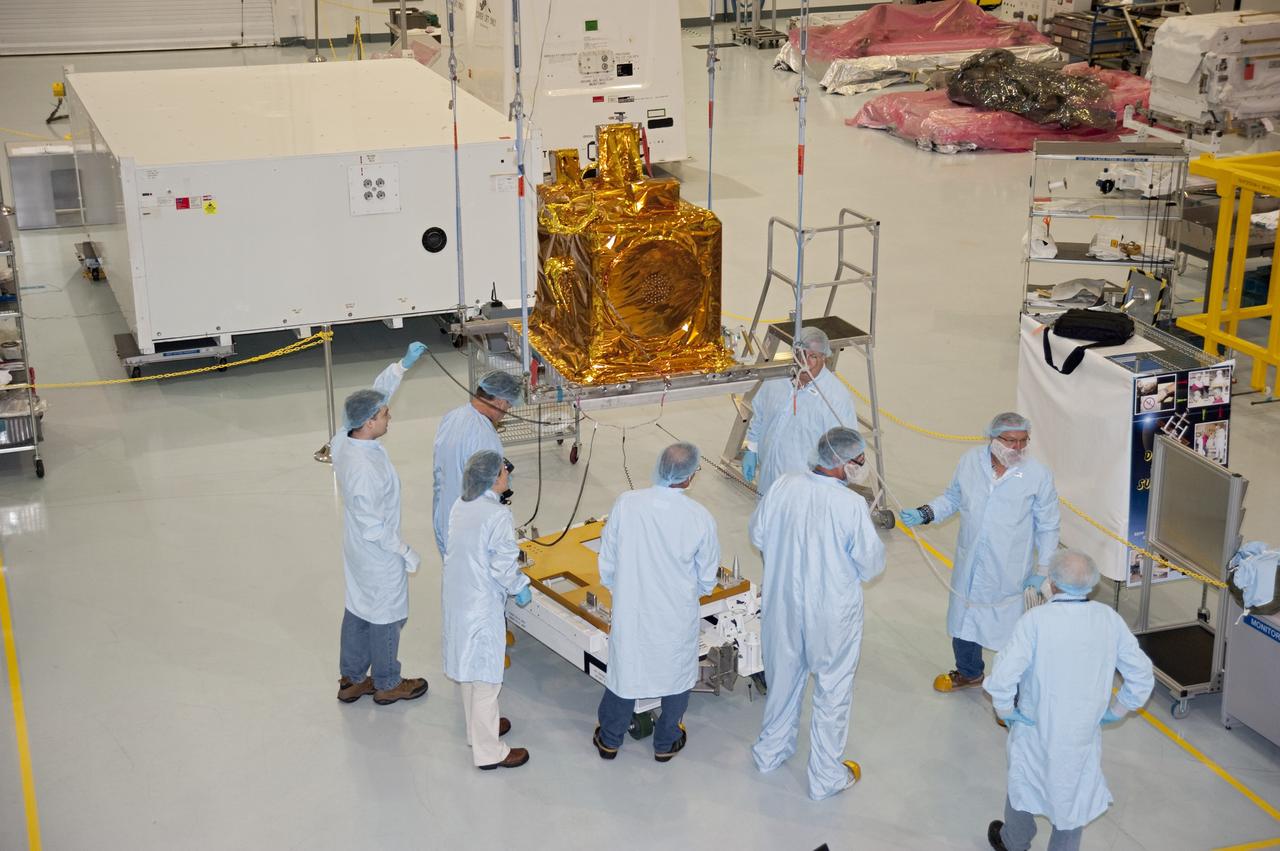
CAPE CANAVERAL, Fla. -- In the Space Station Processing Facility at NASA Kennedy Space Center in Florida, the Space Test Program-Houston-3, or STP-H3, is installed onto the Express Logistics Carrier-3, or ELC-3, after the lifting ground support equipment is removed. STP-H3 is a compliment of four individual Department of Defense experiments that will test concepts in low earth orbit for long duration flights. As the final planned mission of the Space Shuttle Program, shuttle Endeavour and its STS-134 crew will deliver the Alpha Magnetic Spectrometer, the ELC-3 as well as critical spare components to the International Space Station. Endeavour is targeted for launch Feb. 26, 2011. For more information visit, http://www.nasa.gov/mission_pages/shuttle/shuttlemissions/sts134/index.html. Photo credit: NASA/Kim Shiflett
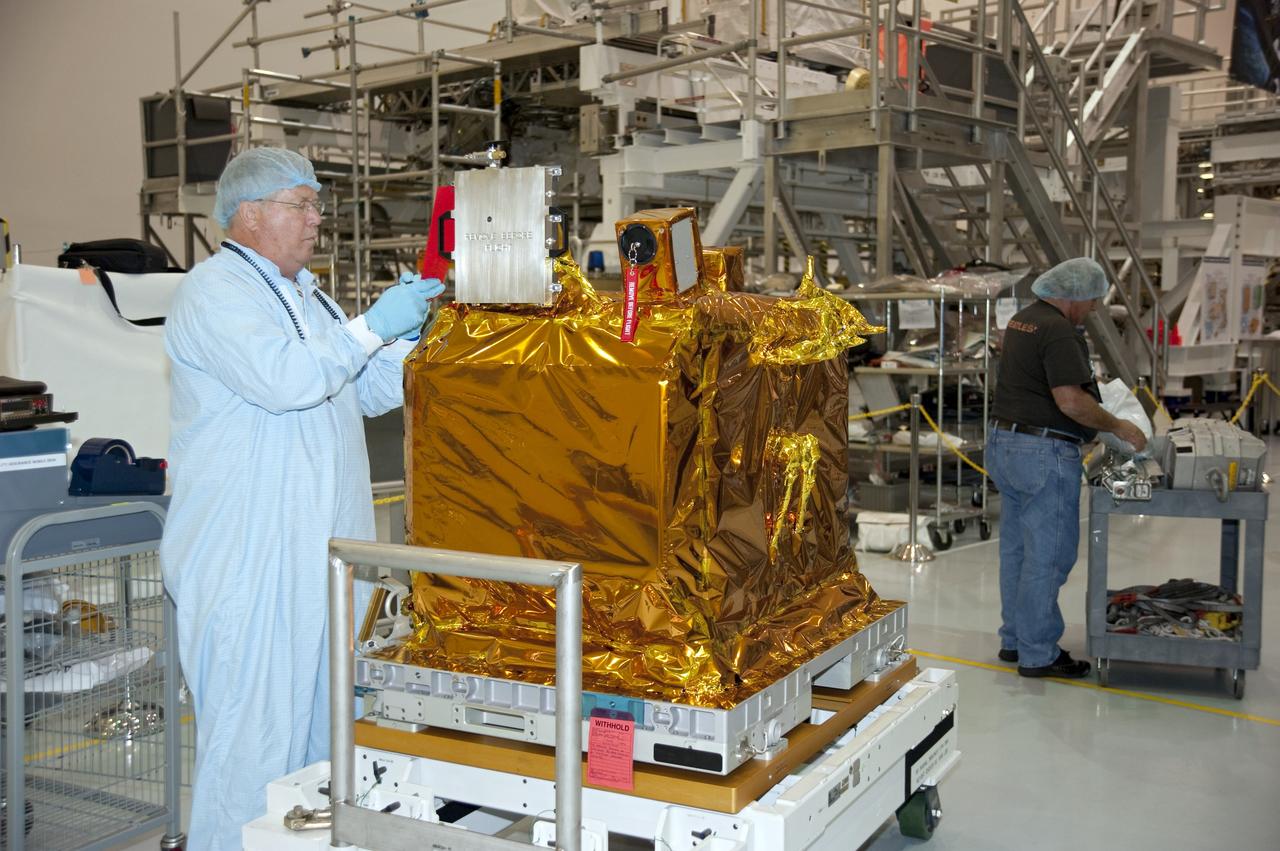
CAPE CANAVERAL, Fla. -- In the Space Station Processing Facility at NASA Kennedy Space Center in Florida, a technician finalizes quality assurance paperwork before the Space Test Program-Houston-3, or STP-H3, payload is installed onto the Express Logistics Carrier-3, or ELC-3. STP-H3 is a compliment of four individual Department of Defense experiments that will test concepts in low earth orbit for long duration flights. As the final planned mission of the Space Shuttle Program, shuttle Endeavour and its STS-134 crew will deliver the Alpha Magnetic Spectrometer, the ELC-3 as well as critical spare components to the International Space Station. Endeavour is targeted for launch Feb. 26, 2011. For more information visit, http://www.nasa.gov/mission_pages/shuttle/shuttlemissions/sts134/index.html. Photo credit: NASA/Kim Shiflett
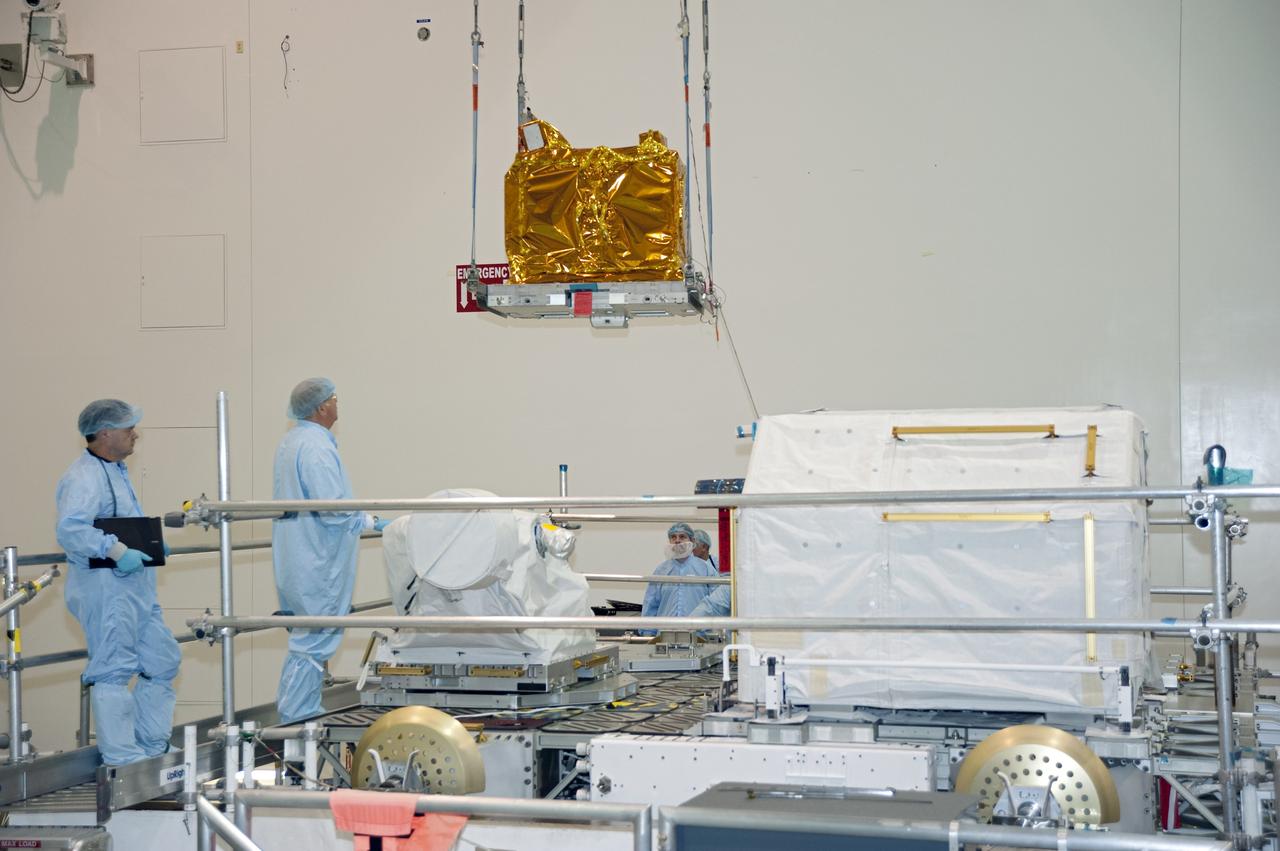
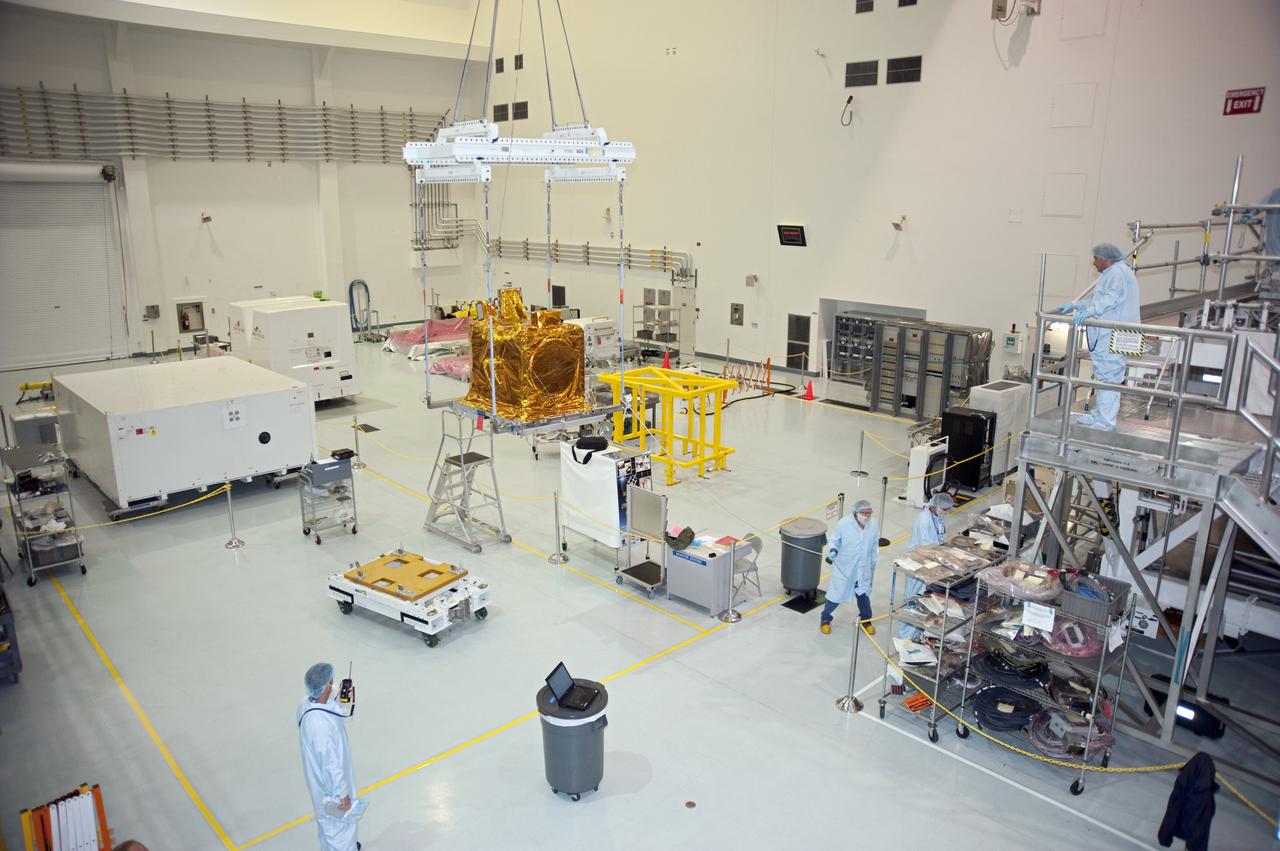
CAPE CANAVERAL, Fla. -- In the Space Station Processing Facility at NASA Kennedy Space Center in Florida, the lift ground support equipment positions the Space Test Program-Houston-3, or STP-H3, payload over the Express Logistics Carrier-3 or ELC-3 for installation. STP-H3 is a compliment of four individual Department of Defense experiments that will test concepts in low earth orbit for long duration flights. As the final planned mission of the Space Shuttle Program, shuttle Endeavour and its STS-134 crew will deliver the Alpha Magnetic Spectrometer, the ELC-3 as well as critical spare components to the International Space Station. Endeavour is targeted for launch Feb. 26, 2011. For more information visit, http://www.nasa.gov/mission_pages/shuttle/shuttlemissions/sts134/index.html. Photo credit: NASA/Kim Shiflett
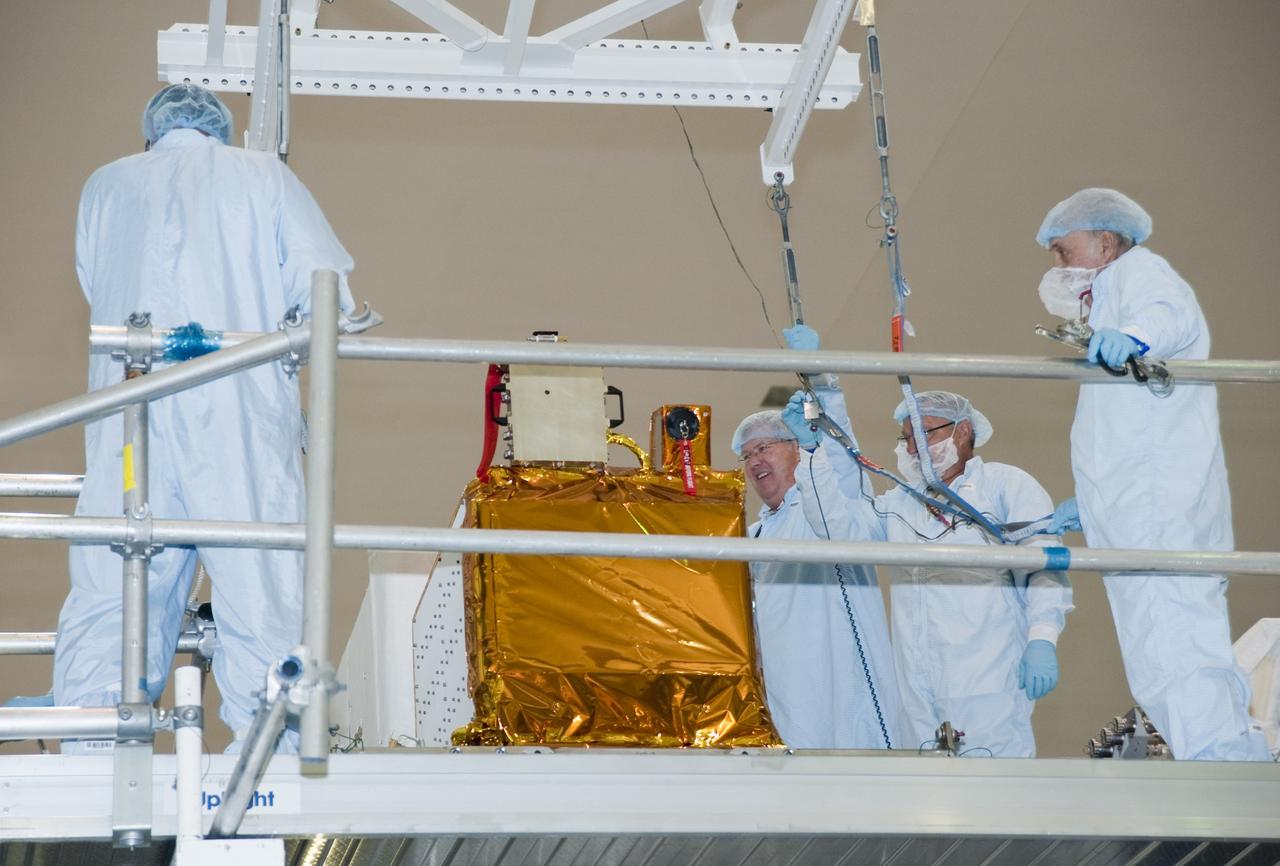
CAPE CANAVERAL, Fla. -- As the lift of the Space Test Program-Houston-3, or STP-H3, payload begins in the Space Station Processing Facility at NASA Kennedy Space Center in Florida, workers inspect the bottom surface of the platform for sharp edges and cleanliness, prior to installation onto the Express Logistics Carrier-3, or ELC-3. STP-H3 is a compliment of four individual Department of Defense experiments that will test concepts in low earth orbit for long duration flights. As the final planned mission of the Space Shuttle Program, shuttle Endeavour and its STS-134 crew will deliver the Alpha Magnetic Spectrometer, the ELC-3 as well as critical spare components to the International Space Station. Endeavour is targeted for launch Feb. 26, 2011. For more information visit, http://www.nasa.gov/mission_pages/shuttle/shuttlemissions/sts134/index.html. Photo credit: NASA/Kim Shiflett
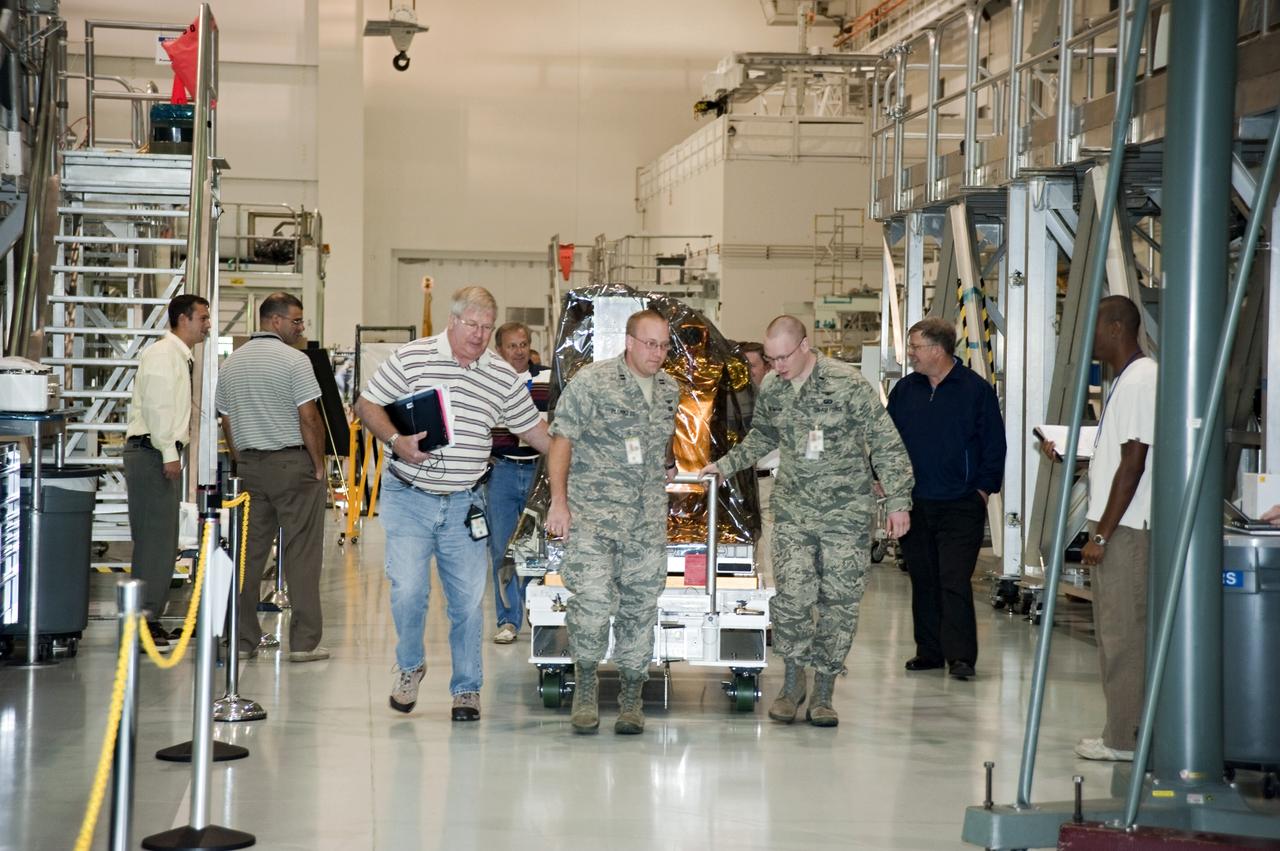
CAPE CANAVERAL, Fla. -- In the Space Station Processing Facility at NASA Kennedy Space Center in Florida, the Space Test Program-Houston-3, or STP-H3, payload is being transported for installation onto the Express Logistics Carrier-3, or ELC-3. STP-H3 is a compliment of four individual Department of Defense experiments that will test concepts in low earth orbit for long duration flights. As the final planned mission of the Space Shuttle Program, shuttle Endeavour and its STS-134 crew will deliver the Alpha Magnetic Spectrometer, the ELC-3 as well as critical spare components to the International Space Station. Endeavour is targeted for launch Feb. 26, 2011. For more information visit, http://www.nasa.gov/mission_pages/shuttle/shuttlemissions/sts134/index.html. Photo credit: NASA/Kim Shiflett
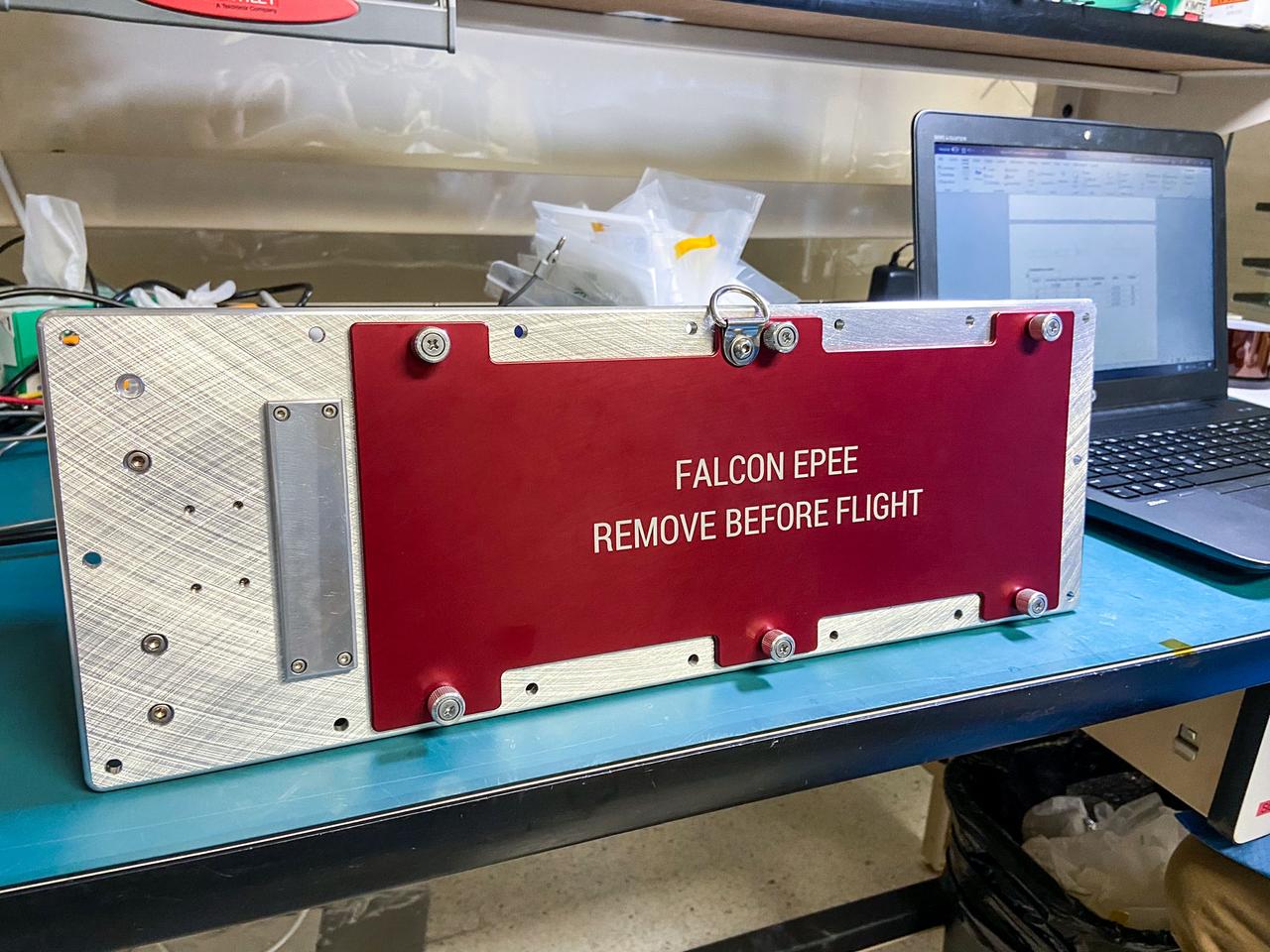
jsc2023e010197 (3/1/2023) --- Space Test Program - Houston 9 - Falcon Electric Propulsion Electrostatic Analyzer Experiment (STP-H9-Falcon-EPEE) with Remove Before Flight Cover upon completion of assembly. Image courtesy of the United States Air Force Academy.
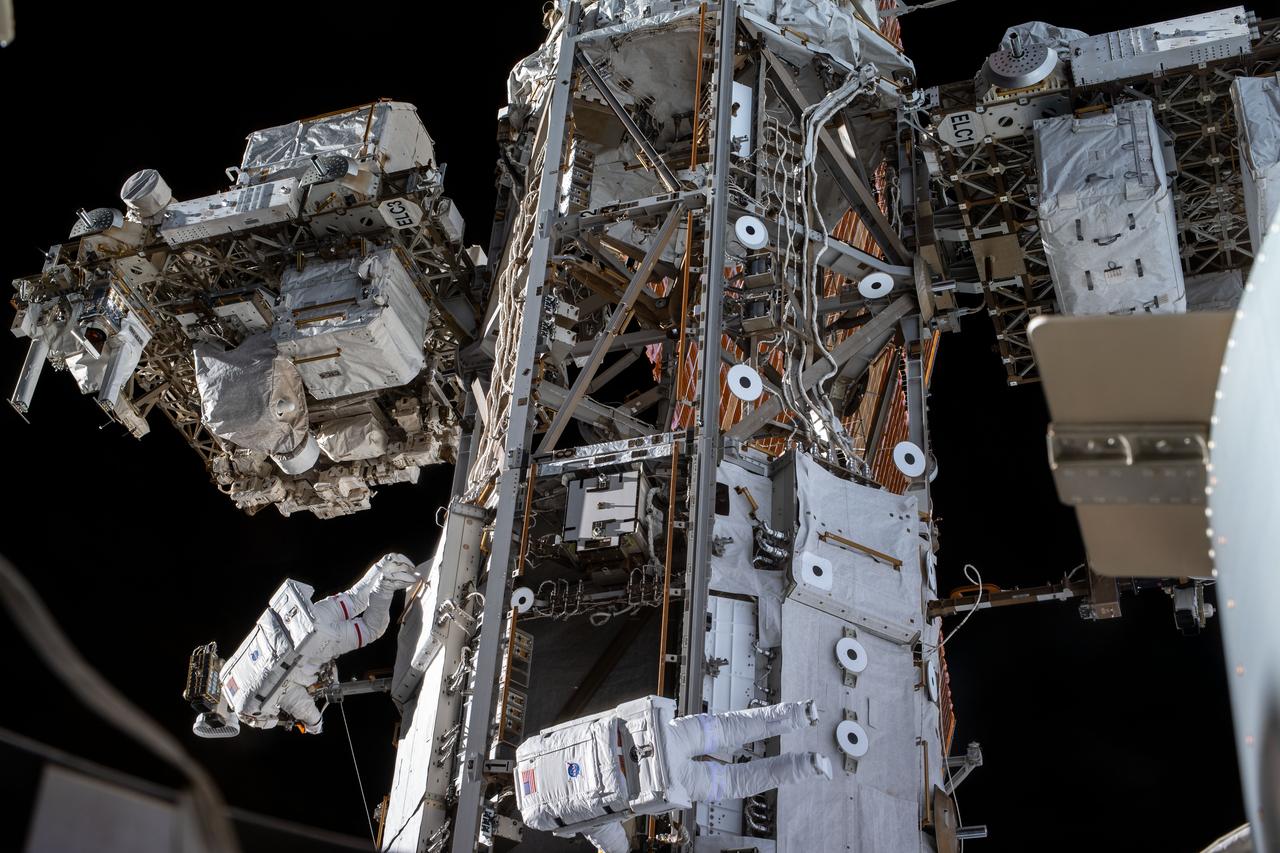
iss061e142328 (1/25/2020) --- A view of NASA astronaut Andrew Morgan and European Space Agency (ESA) astronaut Luca Parmitano during EVA-64 abroad the International Space Station (ISS). The Space Test Program-Houston 6 (STP-H6) payload, can be seen atop of the EXPRESS Logistics Carrier-3 (ELC-3) at the far left of the image.
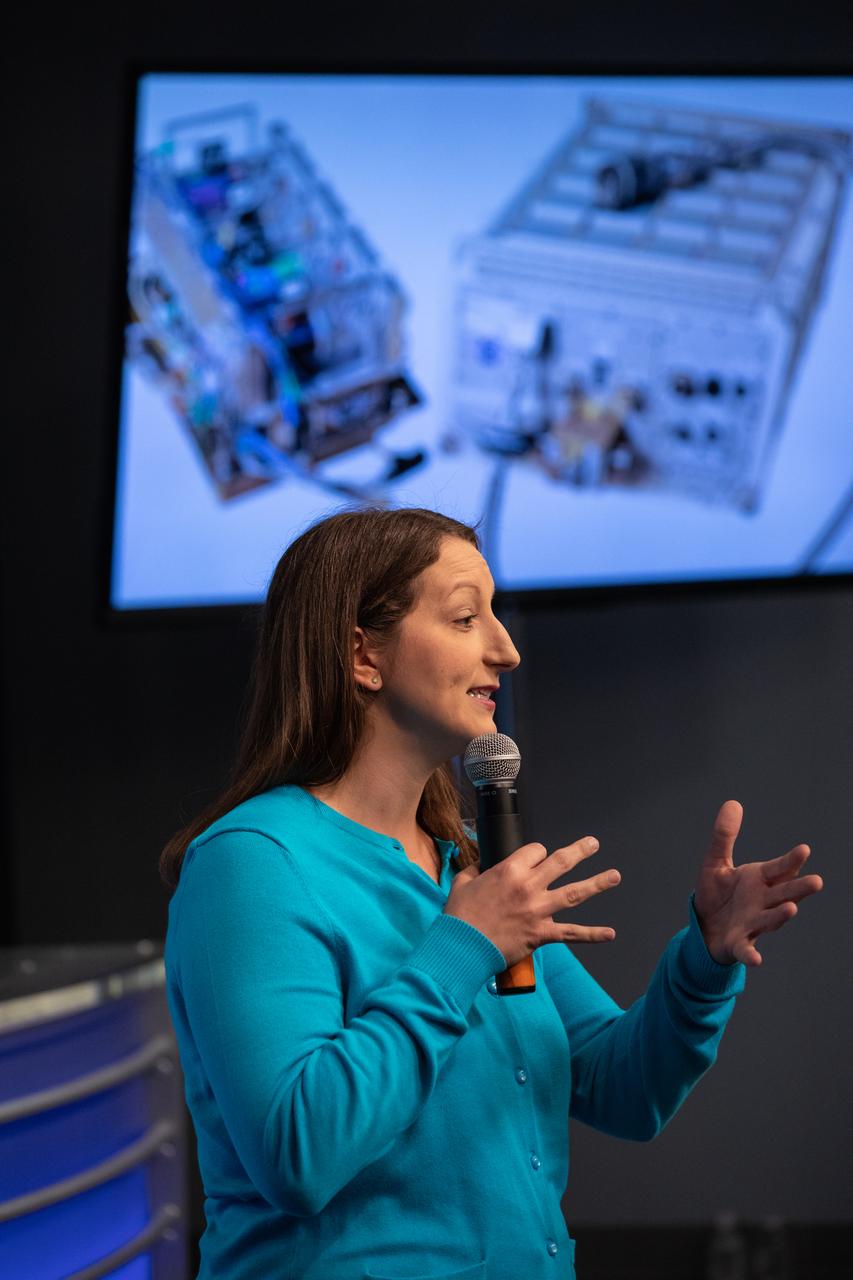
Dr. Kristen John, principal investigator for Hermes at NASA’s Johnson Space Center in Houston, talks to NASA Social participants during a What’s On Board science briefing at the agency’s Kennedy Space Center in Florida on April 29, 2019. The briefing was held for SpaceX’s 17th Commercial Resupply Services (CRS-17) mission to the International Space Station. John presented on the Hermes Facility, an experimental microgravity facility that enables science experiments, microgravity exposure testing, testing of engineering components and CubeSats and any payloads that can fit in the Hermes design and operations constraints. NASA’s Orbiting Carbon Observatory-3 (OCO-3) and Space Test Program-Houston 6 (STP-H6) are two of the experiments that also will be delivered to the space station on CRS-17. The SpaceX Falcon 9 rocket and Dragon cargo module are scheduled to launch no earlier than May 3, 2019, from Space Launch Complex 40 on Cape Canaveral Air Force Station in Florida.
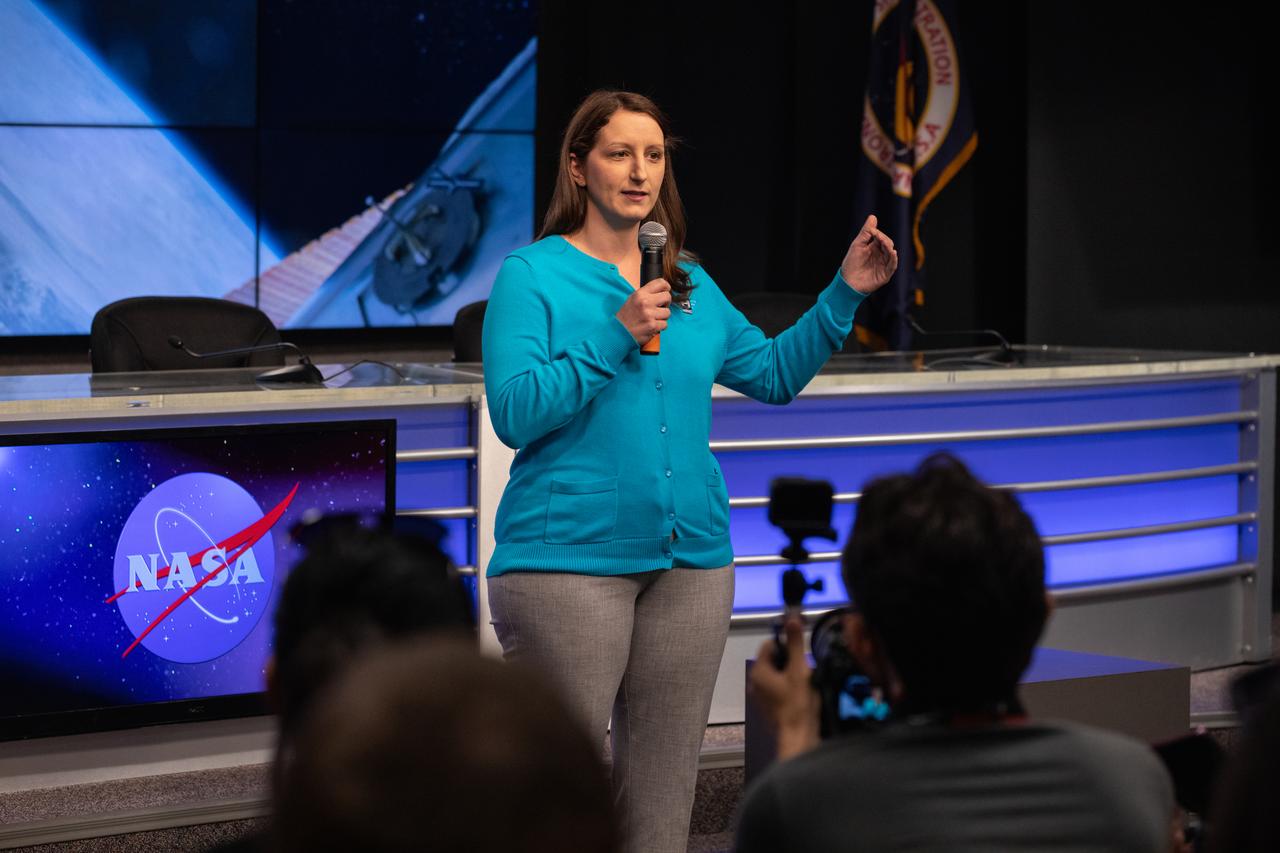
Dr. Kristen John, principal investigator for Hermes at NASA’s Johnson Space Center in Houston, talks to NASA Social participants during a What’s On Board science briefing at the agency’s Kennedy Space Center in Florida on April 29, 2019. The briefing was held for SpaceX’s 17th Commercial Resupply Services (CRS-17) mission to the International Space Station. John presented on the Hermes Facility, an experimental microgravity facility that enables science experiments, microgravity exposure testing, testing of engineering components and CubeSats and any payloads that can fit in the Hermes design and operations constraints. NASA’s Orbiting Carbon Observatory-3 (OCO-3) and Space Test Program-Houston 6 (STP-H6) are two of the experiments that also will be delivered to the space station on CRS-17. The SpaceX Falcon 9 rocket and Dragon cargo module are scheduled to launch no earlier than May 3, 2019, from Space Launch Complex 40 on Cape Canaveral Air Force Station in Florida.
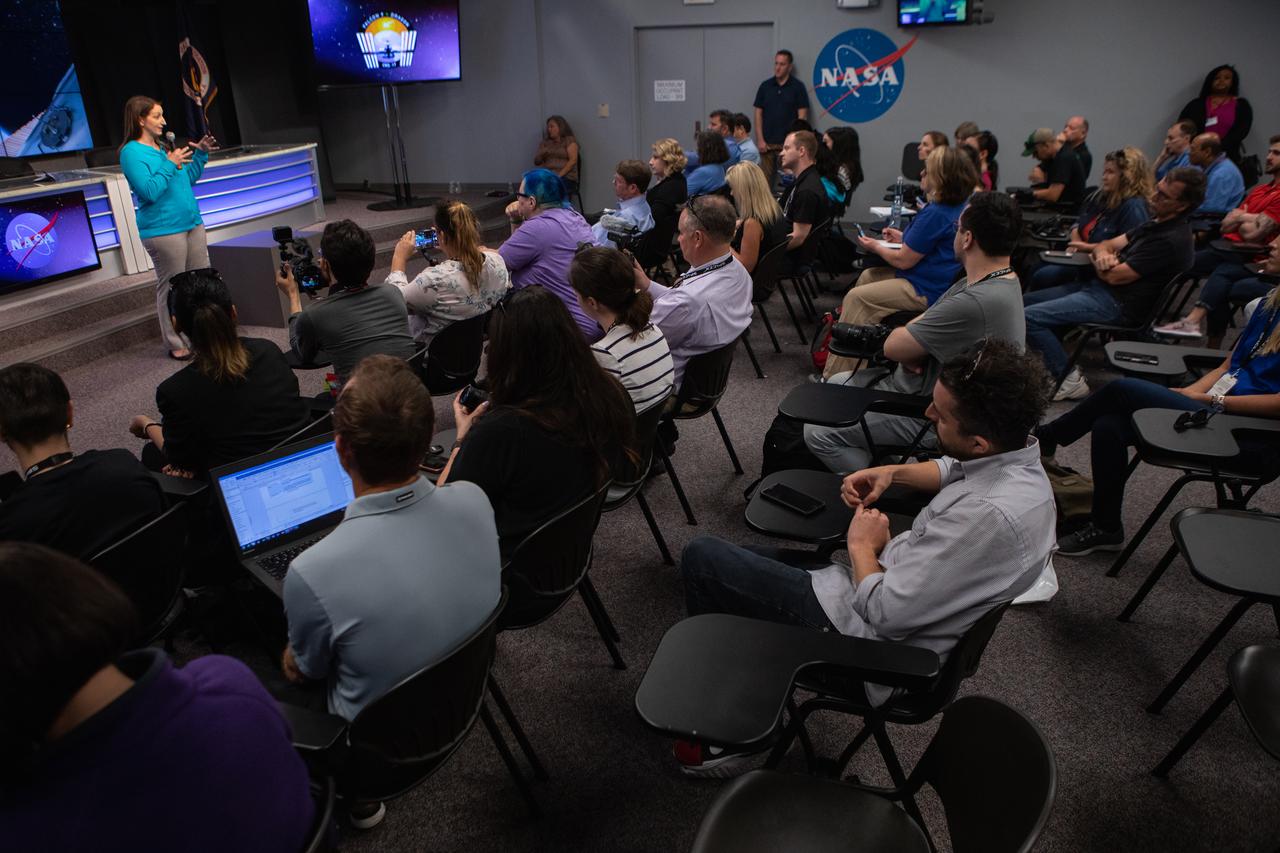
Dr. Kristen John, principal investigator for Hermes at NASA’s Johnson Space Center in Houston, talks to NASA Social participants during a What’s On Board science briefing at the agency’s Kennedy Space Center in Florida on April 29, 2019. The briefing was held for SpaceX’s 17th Commercial Resupply Services (CRS-17) mission to the International Space Station. John presented on the Hermes Facility, an experimental microgravity facility that enables science experiments, microgravity exposure testing, testing of engineering components and CubeSats and any payloads that can fit in the Hermes design and operations constraints. NASA’s Orbiting Carbon Observatory-3 (OCO-3) and Space Test Program-Houston 6 (STP-H6) are two of the experiments that also will be delivered to the space station on CRS-17. The SpaceX Falcon 9 rocket and Dragon cargo module are scheduled to launch no earlier than May 3, 2019, from Space Launch Complex 40 on Cape Canaveral Air Force Station in Florida.
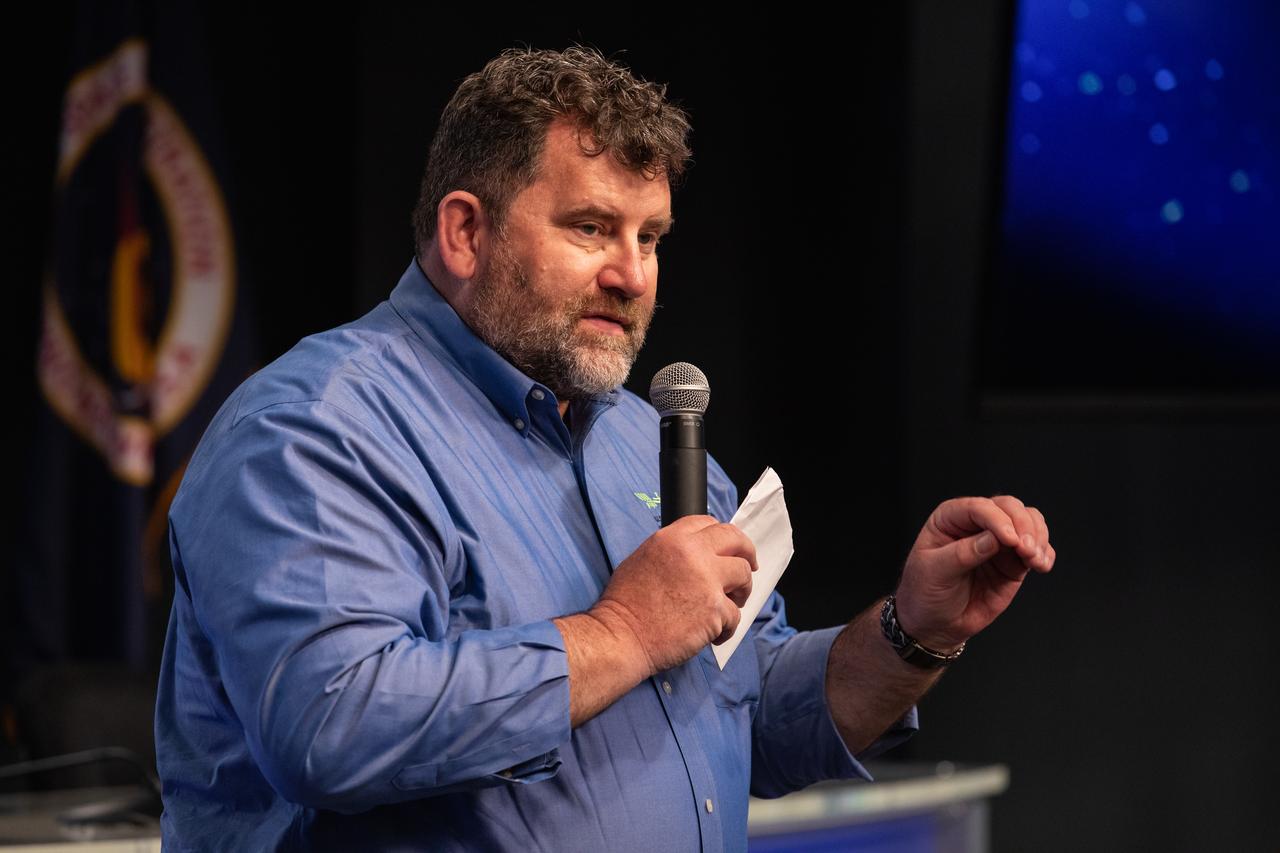
Mike Roberts, deputy chief scientist for the ISS Program at NASA’s Johnson Space Center in Houston, talks to NASA Social participants during a What’s On Board science briefing at the agency’s Kennedy Space Center in Florida on April 29, 2019. The briefing was held for SpaceX’s 17th Commercial Resupply Services (CRS-17) mission to the International Space Station. NASA’s Orbiting Carbon Observatory-3 (OCO-3) and Space Test Program-Houston 6 (STP-H6) are two of the experiments that will be delivered to the space station on CRS-17. The SpaceX Falcon 9 rocket and Dragon cargo module are scheduled to launch no earlier than May 3, 2019, from Space Launch Complex 40 on Cape Canaveral Air Force Station in Florida.
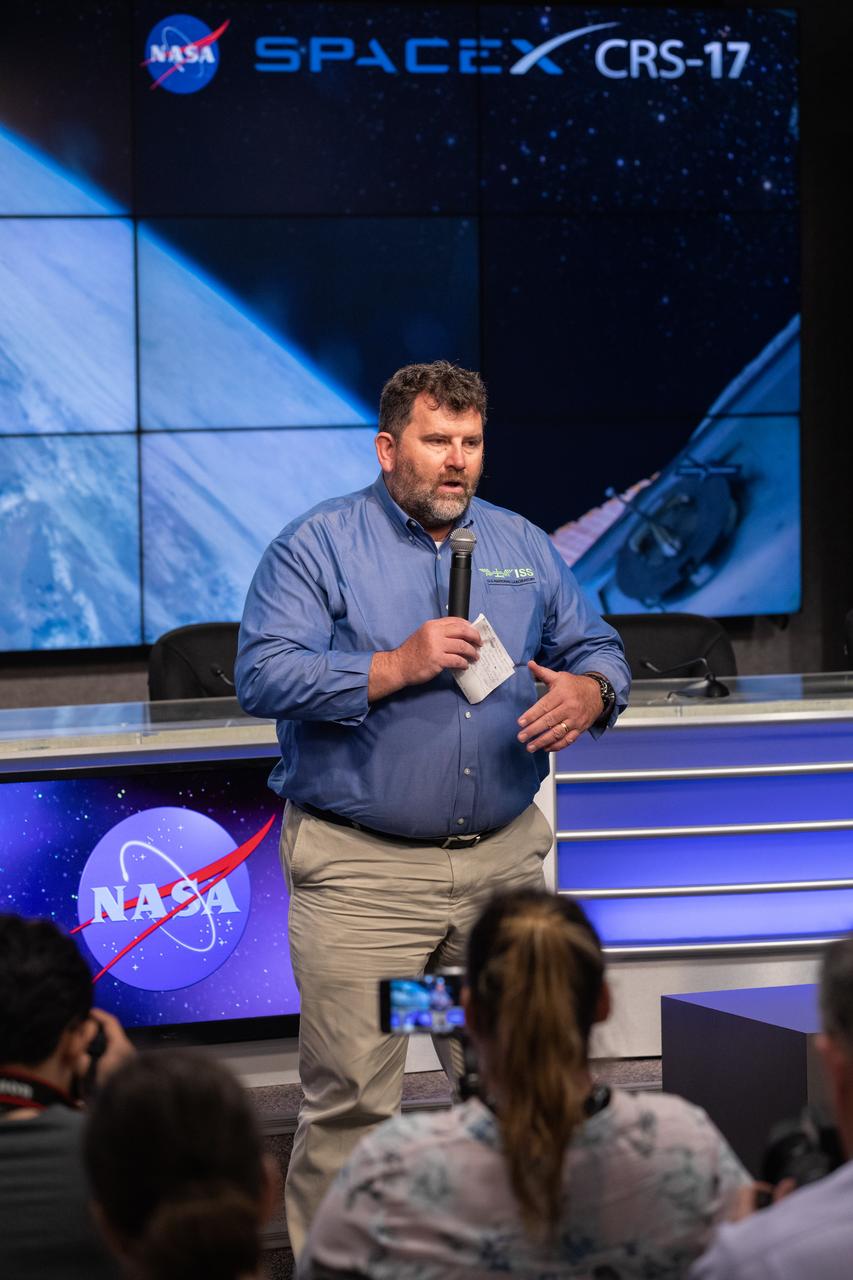
Mike Roberts, deputy chief scientist for the ISS Program at NASA’s Johnson Space Center in Houston, talks to NASA Social participants during a What’s On Board science briefing at the agency’s Kennedy Space Center in Florida on April 29, 2019. The briefing was held for SpaceX’s 17th Commercial Resupply Services (CRS-17) mission to the International Space Station. NASA’s Orbiting Carbon Observatory-3 (OCO-3) and Space Test Program-Houston 6 (STP-H6) are two of the experiments that will be delivered to the space station on CRS-17. The SpaceX Falcon 9 rocket and Dragon cargo module are scheduled to launch no earlier than May 3, 2019, from Space Launch Complex 40 on Cape Canaveral Air Force Station in Florida.
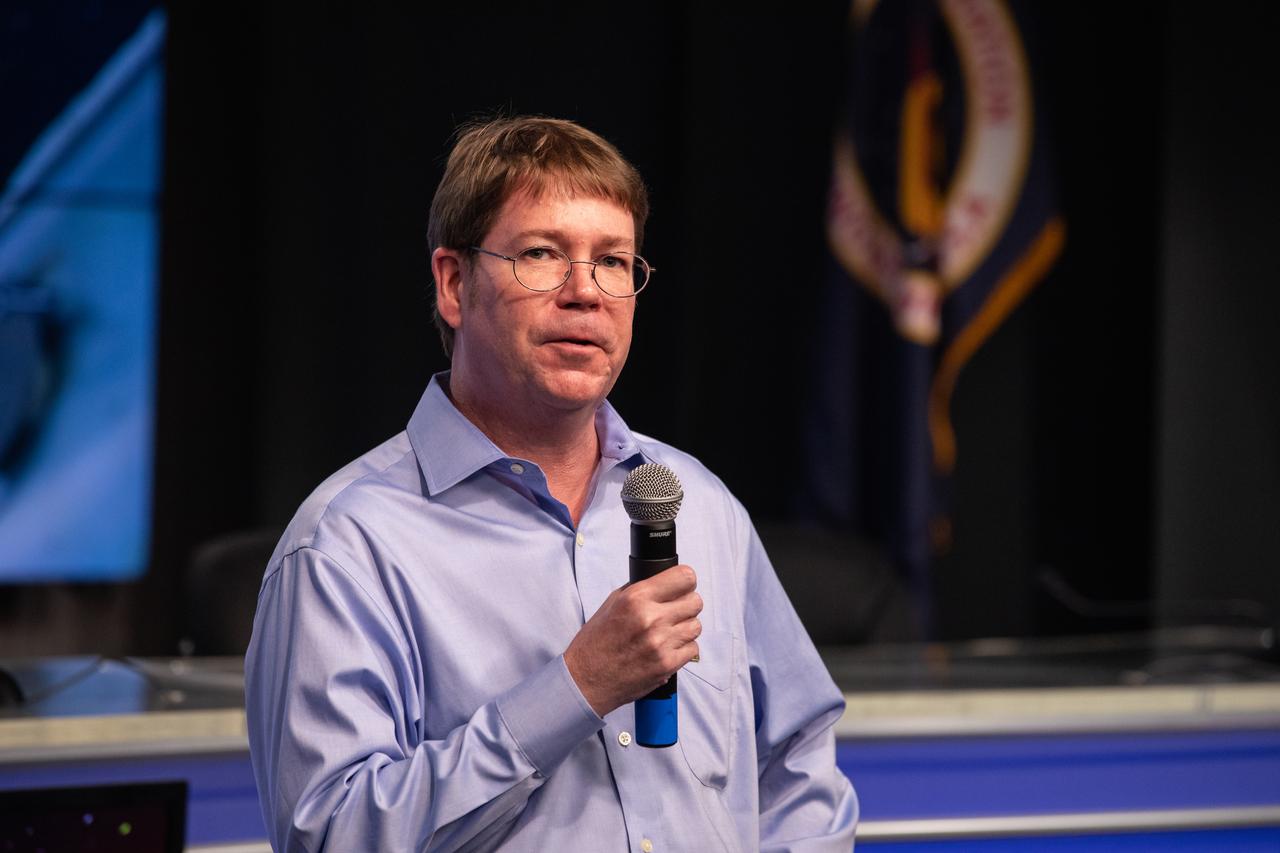
Dr. Edward Kelly, with the University of Washington School of Pharmacy, discusses The Tissue Chips in Space project during a What’s On Board science briefing to NASA Social participants at the agency’s Kennedy Space Center in Florida on April 29, 2019. The briefing was held for SpaceX’s 17th Commercial Resupply Services (CRS-17) mission to the International Space Station. Kelly and other researchers will send kidney tissue chip models to the space station to understand how microgravity affects kidney function, such as changes in vitamin D metabolism and formation of kidney stones. NASA’s Orbiting Carbon Observatory-3 (OCO-3) and Space Test Program-Houston 6 (STP-H6) are two of the experiments that also will be delivered to the space station on CRS-17. The SpaceX Falcon 9 rocket and Dragon cargo module are scheduled to launch no earlier than May 3, 2019, from Space Launch Complex 40 on Cape Canaveral Air Force Station in Florida.
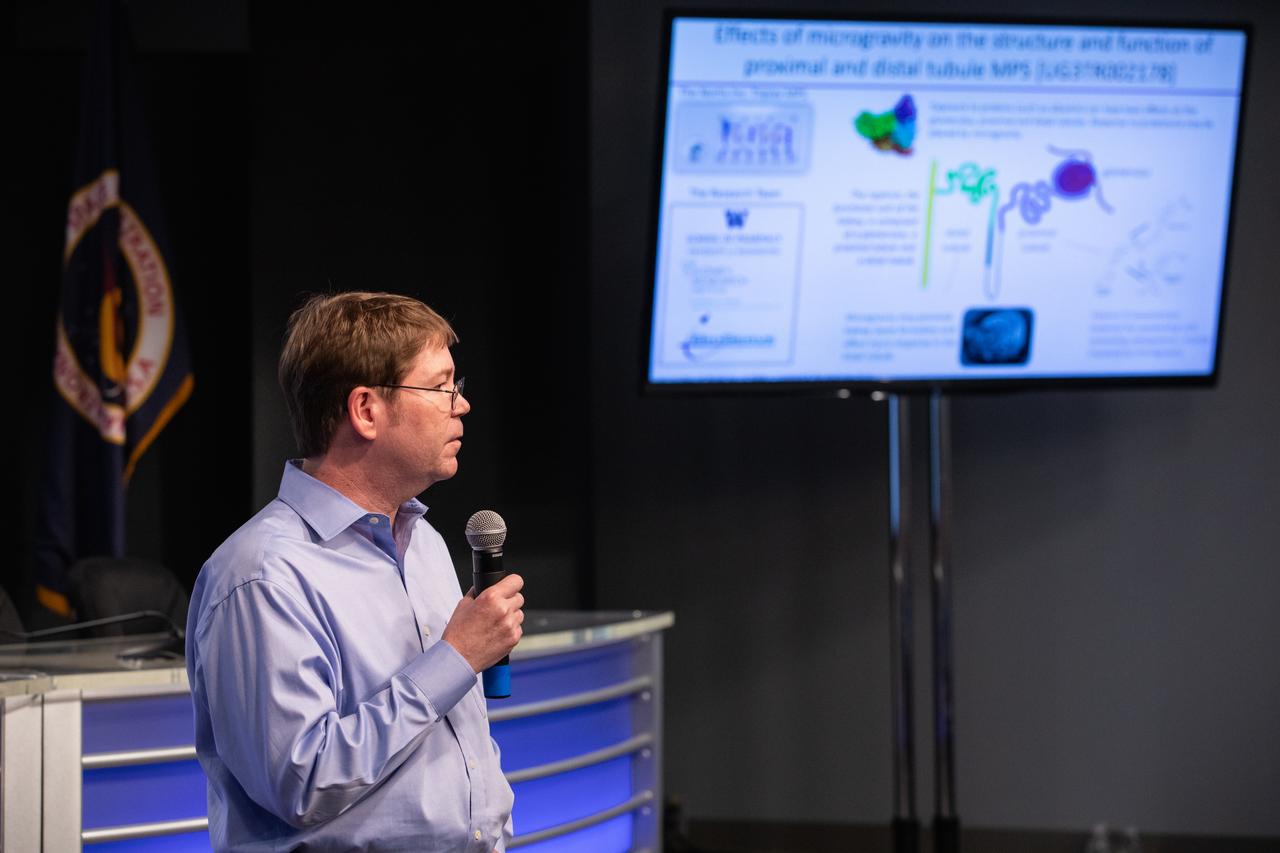
Dr. Edward Kelly, with the University of Washington School of Pharmacy, discusses The Tissue Chips in Space project during a What’s On Board science briefing to NASA Social participants at the agency’s Kennedy Space Center in Florida on April 29, 2019. The briefing was held for SpaceX’s 17th Commercial Resupply Services (CRS-17) mission to the International Space Station. Kelly and other researchers will send kidney tissue chip models to the space station to understand how microgravity affects kidney function, such as changes in vitamin D metabolism and formation of kidney stones. NASA’s Orbiting Carbon Observatory-3 (OCO-3) and Space Test Program-Houston 6 (STP-H6) are two of the experiments that also will be delivered to the space station on CRS-17. The SpaceX Falcon 9 rocket and Dragon cargo module are scheduled to launch no earlier than May 3, 2019, from Space Launch Complex 40 on Cape Canaveral Air Force Station in Florida.
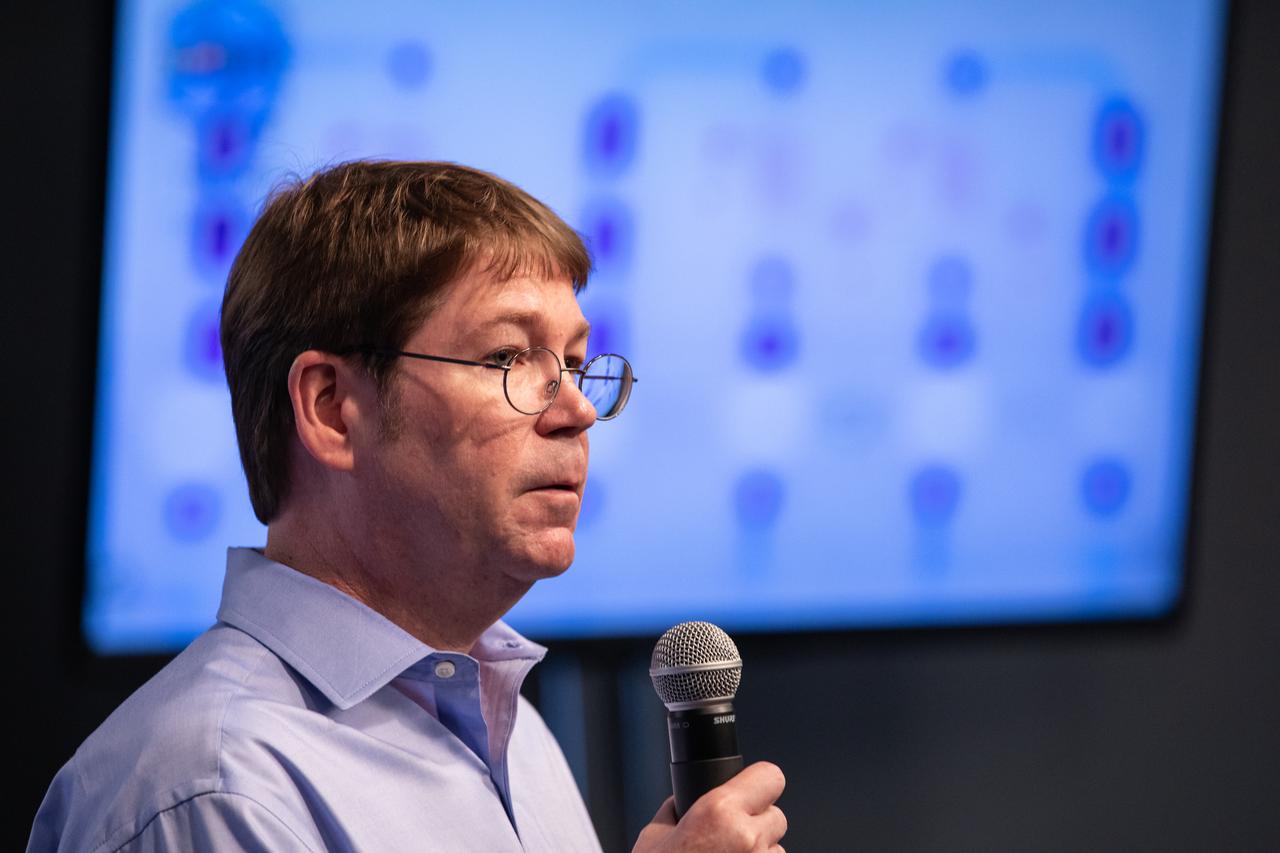
Dr. Edward Kelly, with the University of Washington School of Pharmacy, discusses The Tissue Chips in Space project during a What’s On Board science briefing to NASA Social participants at the agency’s Kennedy Space Center in Florida on April 29, 2019. The briefing was held for SpaceX’s 17th Commercial Resupply Services (CRS-17) mission to the International Space Station. Kelly and other researchers will send kidney tissue chip models to the space station to understand how microgravity affects kidney function, such as changes in vitamin D metabolism and formation of kidney stones. NASA’s Orbiting Carbon Observatory-3 (OCO-3) and Space Test Program-Houston 6 (STP-H6) are two of the experiments that also will be delivered to the space station on CRS-17. The SpaceX Falcon 9 rocket and Dragon cargo module are scheduled to launch no earlier than May 3, 2019, from Space Launch Complex 40 on Cape Canaveral Air Force Station in Florida.
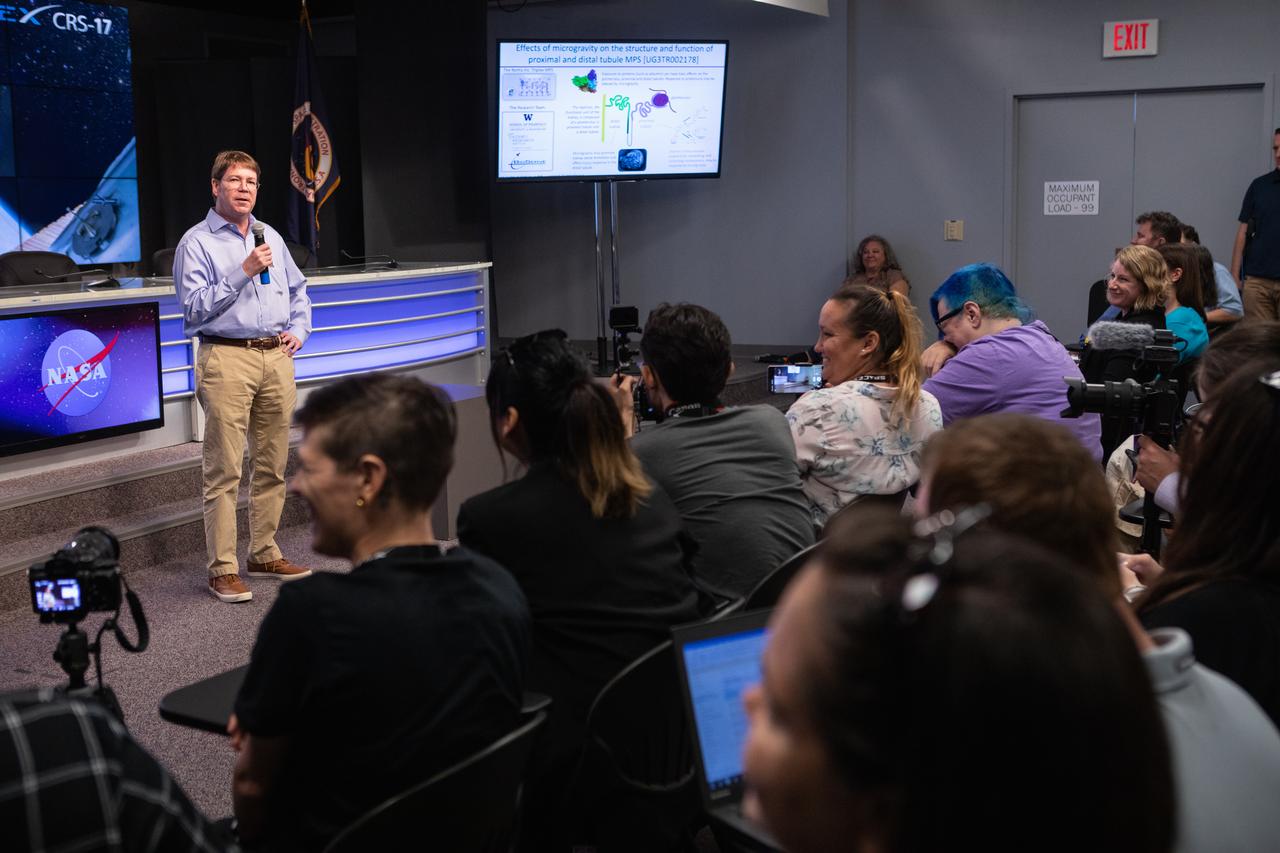
Dr. Edward Kelly, with the University of Washington School of Pharmacy, discusses The Tissue Chips in Space project during a What’s On Board science briefing to NASA Social participants at the agency’s Kennedy Space Center in Florida on April 29, 2019. The briefing was held for SpaceX’s 17th Commercial Resupply Services (CRS-17) mission to the International Space Station. Kelly and other researchers will send kidney tissue chip models to the space station to understand how microgravity affects kidney function, such as changes in vitamin D metabolism and formation of kidney stones. NASA’s Orbiting Carbon Observatory-3 (OCO-3) and Space Test Program-Houston 6 (STP-H6) are two of the experiments that also will be delivered to the space station on CRS-17. The SpaceX Falcon 9 rocket and Dragon cargo module are scheduled to launch no earlier than May 3, 2019, from Space Launch Complex 40 on Cape Canaveral Air Force Station in Florida.
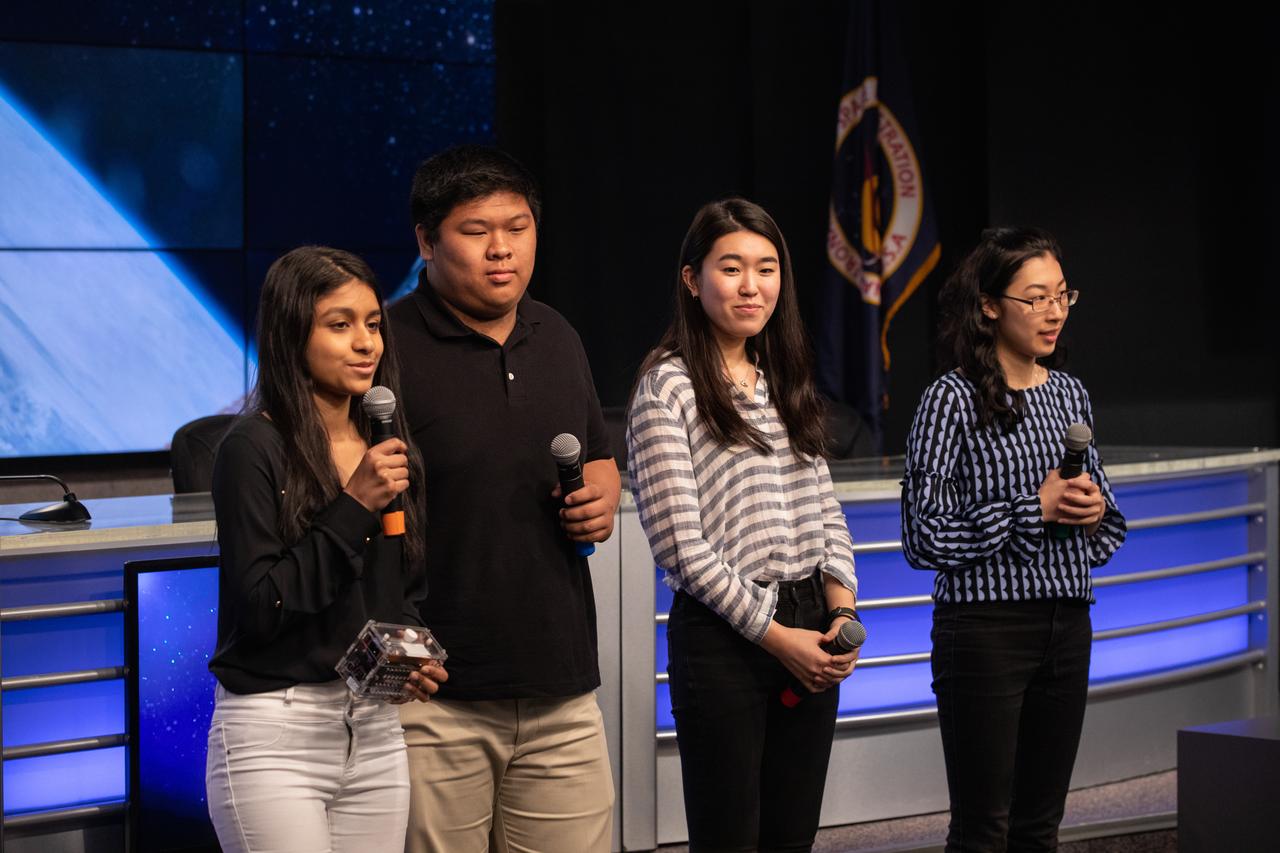
From left, high school student Aarthi Vijayakumar, MIT student David Li, and high school students Michelle Sung and Rebecca Li talk about their winning Genes in Space experiment for NASA during a What’s On Board science briefing to NASA Social participants at the agency’s Kennedy Space Center in Florida on April 29, 2019. The briefing was held for SpaceX’s 17th Commercial Resupply Services (CRS-17) mission to the International Space Station. NASA’s Orbiting Carbon Observatory-3 (OCO-3) and Space Test Program-Houston 6 (STP-H6) are two of the experiments that also will be delivered to the space station on CRS-17. The SpaceX Falcon 9 rocket and Dragon cargo module are scheduled to launch no earlier than May 3, 2019, from Space Launch Complex 40 on Cape Canaveral Air Force Station in Florida.
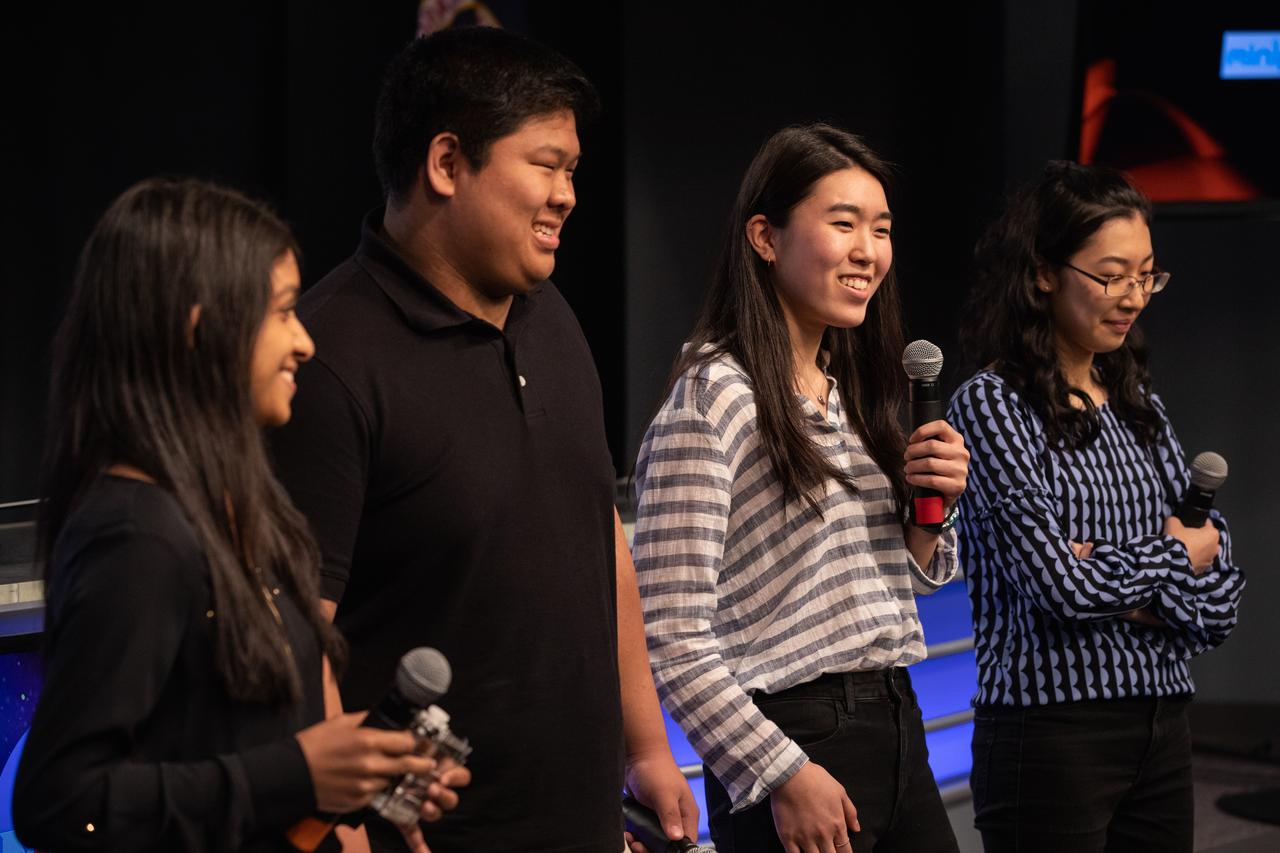
From left, high school student Aarthi Vijayakumar, MIT student David Li, and high school students Michelle Sung and Rebecca Li talk about their winning Genes in Space experiment for NASA during a What’s On Board science briefing to NASA Social participants at the agency’s Kennedy Space Center in Florida on April 29, 2019. The briefing was held for SpaceX’s 17th Commercial Resupply Services (CRS-17) mission to the International Space Station. NASA’s Orbiting Carbon Observatory-3 (OCO-3) and Space Test Program-Houston 6 (STP-H6) are two of the experiments that also will be delivered to the space station on CRS-17. The SpaceX Falcon 9 rocket and Dragon cargo module are scheduled to launch no earlier than May 3, 2019, from Space Launch Complex 40 on Cape Canaveral Air Force Station in Florida.
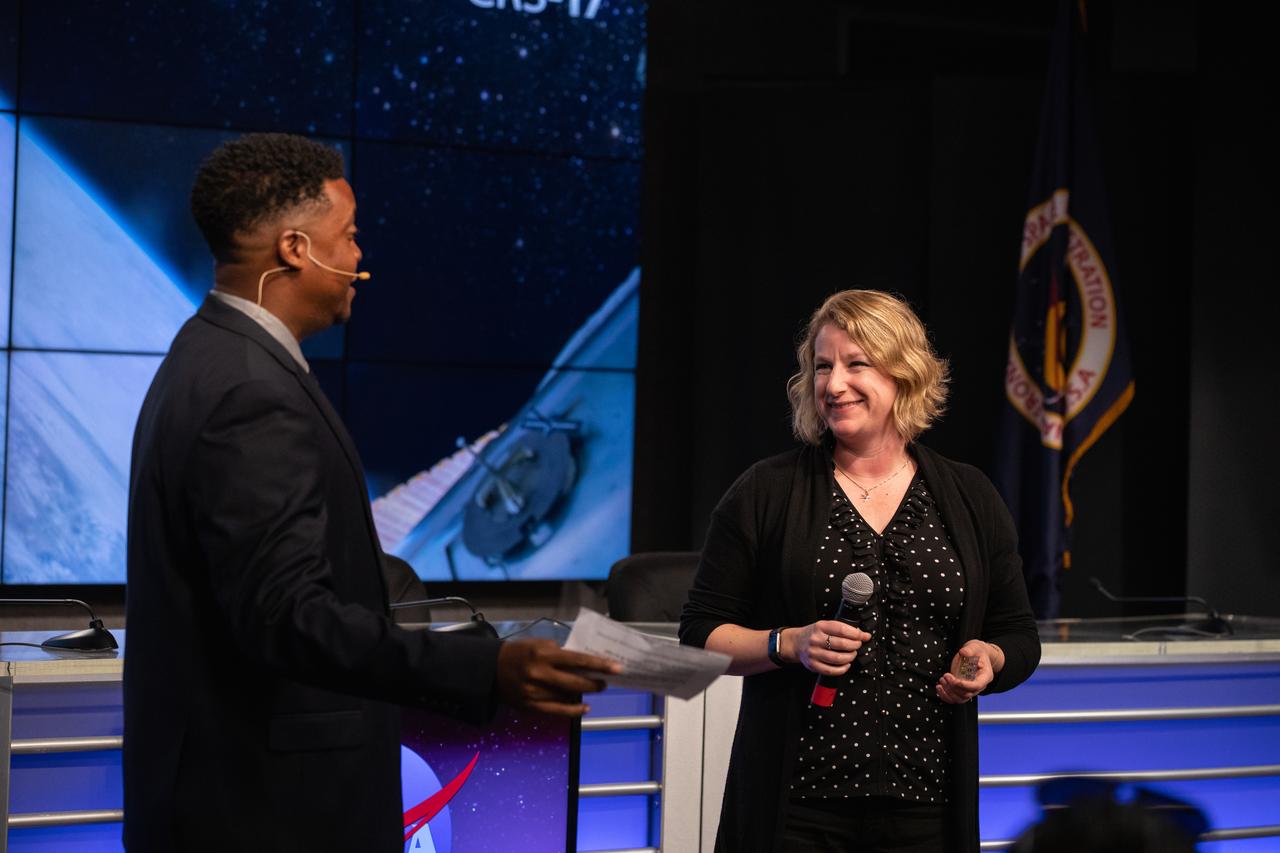
Derrick Matthews, at left, moderator with NASA Communications, introduces Dr. Lucy Low, with the National Institutes of Health, during a What’s On Board science briefing to NASA Social participants at the agency’s Kennedy Space Center in Florida on April 29, 2019. The briefing was held for SpaceX’s 17th Commercial Resupply Services (CRS-17) mission to the International Space Station. Low presented on the Tissue Chips in Space project that will test the ability of tissue chip technology to mimic how human organs work and reveal what effects microgravity has on tissue function. Headed to the space station will be lung and bone marrow chips, kidney chips, chips modeling the blood-brain barrier, and bone and cartilage chips. NASA’s Orbiting Carbon Observatory-3 (OCO-3) and Space Test Program-Houston 6 (STP-H6) are two of the experiments that also will be delivered to the space station on CRS-17. The SpaceX Falcon 9 rocket and Dragon cargo module are scheduled to launch no earlier than May 3, 2019, from Space Launch Complex 40 on Cape Canaveral Air Force Station in Florida.
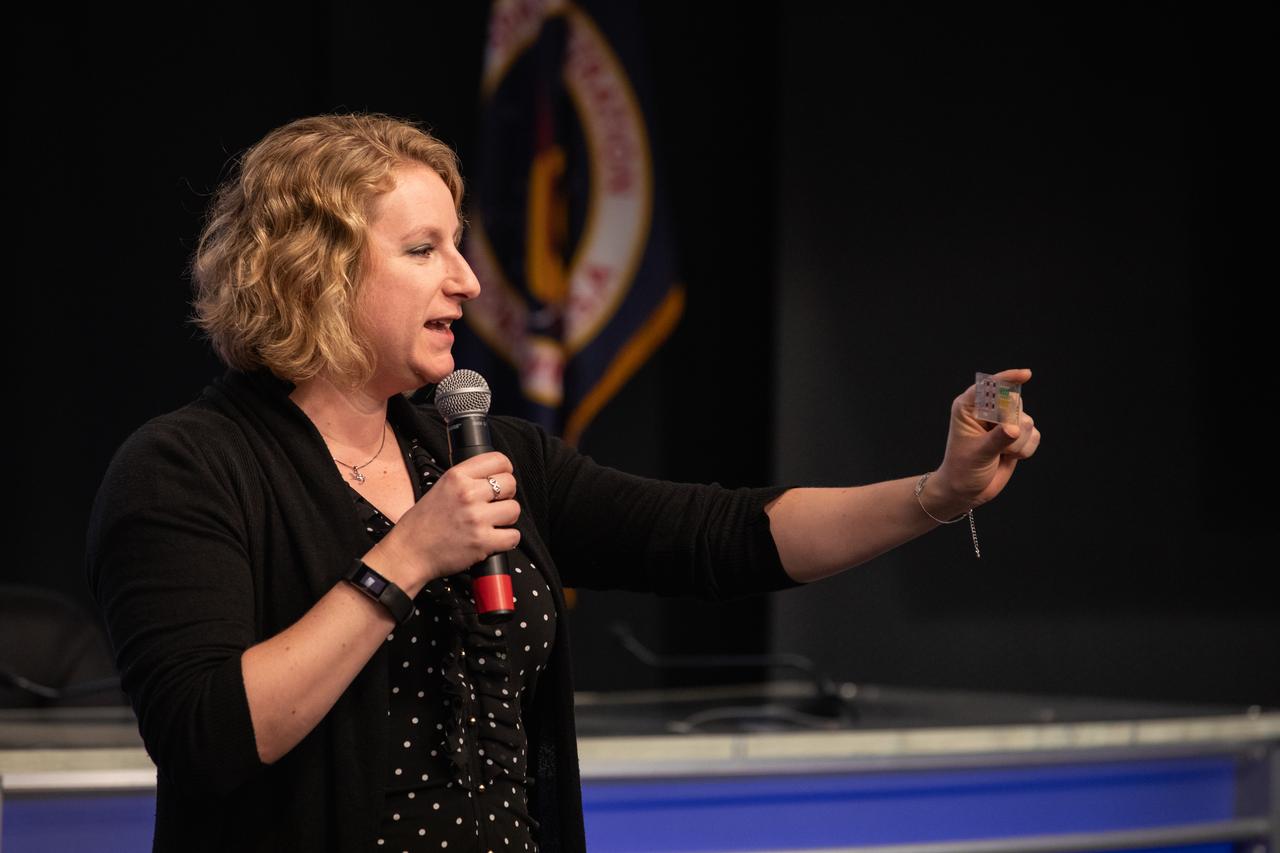
Dr. Lucy Low, with the National Institutes of Health, talks to NASA Social participants during a What’s On Board science briefing at NASA’s Kennedy Space Center in Florida on April 29, 2019. The briefing was held for SpaceX’s 17th Commercial Resupply Services (CRS-17) mission to the International Space Station. Low presented on the Tissue Chips in Space project that will test the ability of tissue chip technology to mimic how human organs work and reveal what effects microgravity has on tissue function. Headed to the space station will be lung and bone marrow chips, kidney chips, chips modeling the blood-brain barrier, and bone and cartilage chips. NASA’s Orbiting Carbon Observatory-3 (OCO-3) and Space Test Program-Houston 6 (STP-H6) are two of the experiments that also will be delivered to the space station on CRS-17. The SpaceX Falcon 9 rocket and Dragon cargo module are scheduled to launch no earlier than May 3, 2019, from Space Launch Complex 40 on Cape Canaveral Air Force Station in Florida.
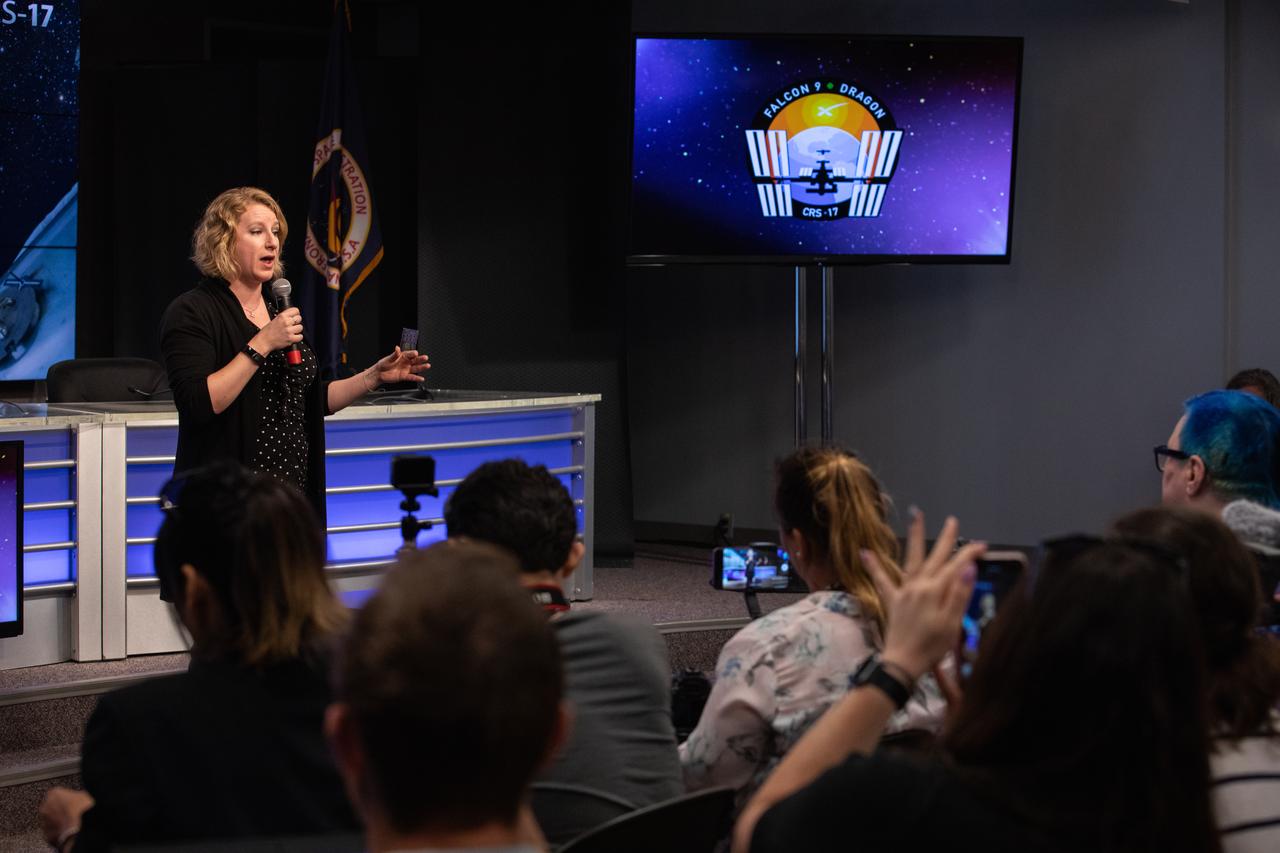
Dr. Lucy Low, with the National Institutes of Health, talks to NASA Social participants during a What’s On Board science briefing at NASA’s Kennedy Space Center in Florida on April 29, 2019. The briefing was held for SpaceX’s 17th Commercial Resupply Services (CRS-17) mission to the International Space Station. Low presented on the Tissue Chips in Space project that will test the ability of tissue chip technology to mimic how human organs work and reveal what effects microgravity has on tissue function. Headed to the space station will be lung and bone marrow chips, kidney chips, chips modeling the blood-brain barrier, and bone and cartilage chips. NASA’s Orbiting Carbon Observatory-3 (OCO-3) and Space Test Program-Houston 6 (STP-H6) are two of the experiments that also will be delivered to the space station on CRS-17. The SpaceX Falcon 9 rocket and Dragon cargo module are scheduled to launch no earlier than May 3, 2019, from Space Launch Complex 40 on Cape Canaveral Air Force Station in Florida.
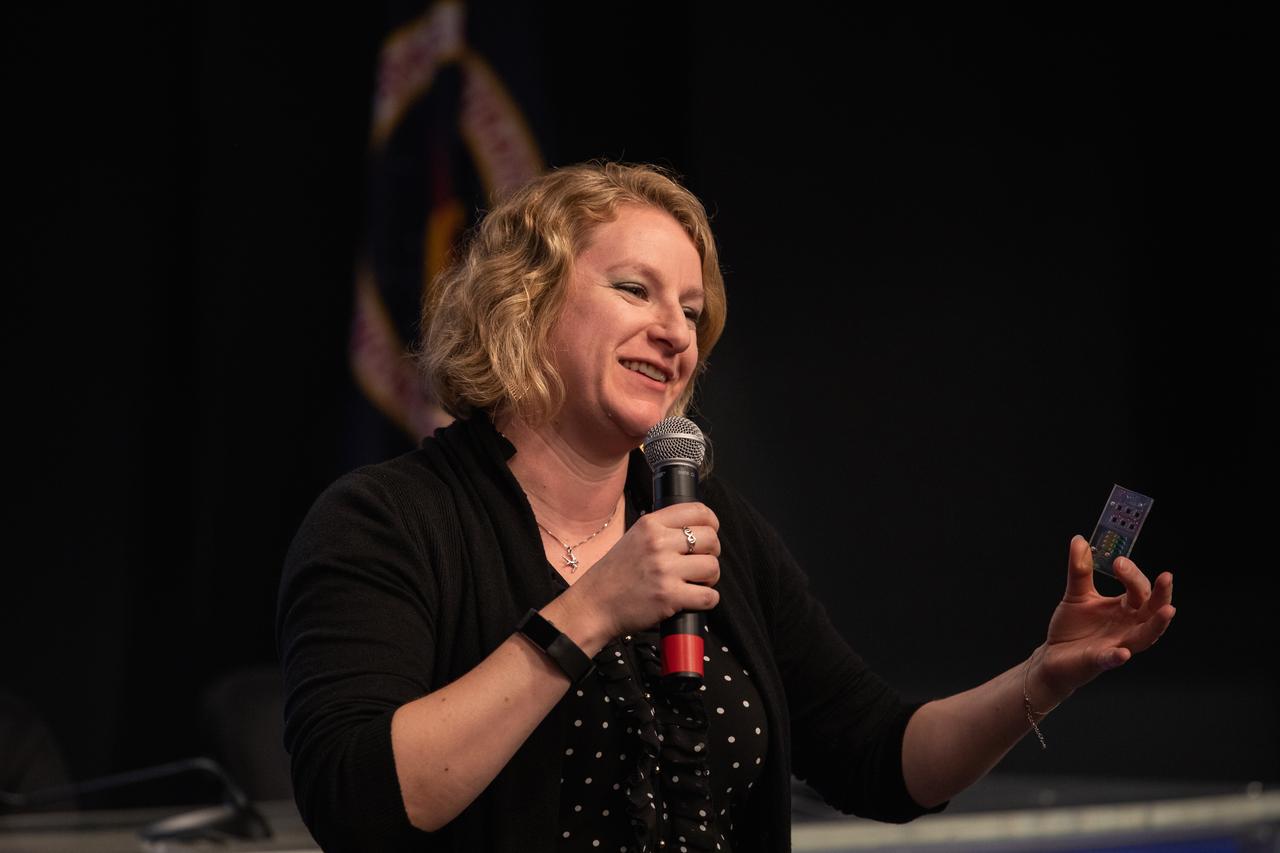
Dr. Lucy Low, with the National Institutes of Health, talks to NASA Social participants during a What’s On Board science briefing at NASA’s Kennedy Space Center in Florida on April 29, 2019. The briefing was held for SpaceX’s 17th Commercial Resupply Services (CRS-17) mission to the International Space Station. Low presented on the Tissue Chips in Space project that will test the ability of tissue chip technology to mimic how human organs work and reveal what effects microgravity has on tissue function. Headed to the space station will be lung and bone marrow chips, kidney chips, chips modeling the blood-brain barrier, and bone and cartilage chips. NASA’s Orbiting Carbon Observatory-3 (OCO-3) and Space Test Program-Houston 6 (STP-H6) are two of the experiments that also will be delivered to the space station on CRS-17. The SpaceX Falcon 9 rocket and Dragon cargo module are scheduled to launch no earlier than May 3, 2019, from Space Launch Complex 40 on Cape Canaveral Air Force Station in Florida.
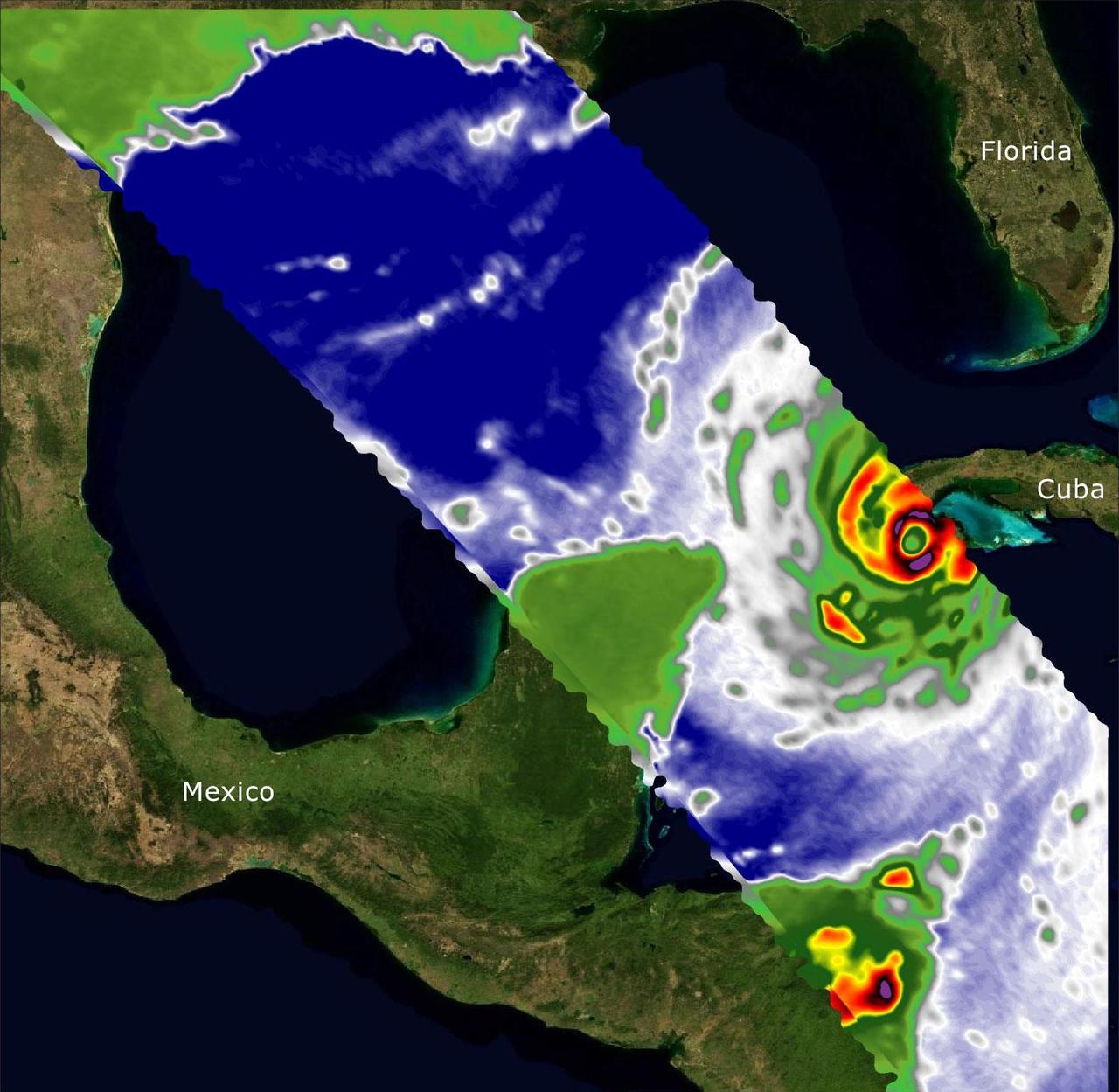
Two recently launched instruments that were designed and built at NASA's Jet Propulsion Laboratory in Southern California to provide forecasters data on weather over the open ocean captured images of Hurricane Ian on Sept. 27, 2022, as the storm approached Cuba on its way north toward the U.S. mainland. The instruments, Compact Ocean Wind Vector Radiometer (COWVR) and Temporal Experiment for Storms and Tropical Systems (TEMPEST), observe the planet's atmosphere and surface from aboard the International Space Station, which passed in low-Earth orbit over the Caribbean Sea at about 12:30 a.m. EDT. Ian made landfall in Cuba's Pinar del Rio province at 4:30 a.m. EDT, according to the National Hurricane Center. At that time, it was a Category 3 hurricane, with estimated wind speeds of 125 mph (205 kph). The image above combines microwave emissions measurements from both COWVR and TEMPEST. White sections indicate the presence of clouds. Green portions indicate rain. Yellow, red, and black indicate where air and water vapor were moving most swiftly. Ian's center is seen just off of Cuba's southern coast, and the storm is shown covering the island with rain and wind. COWVR and TEMPEST sent the data for this image back to Earth in a direct stream via NASA's tracking and data relay satellite (TDRS) constellation. The data were processed at JPL and made available to forecasters less than two hours after collection. About the size of a minifridge, COWVR measures natural microwave emissions over the ocean. The magnitude of the emissions increases with the amount of rain in the atmosphere, and the strongest rain produces the strongest microwave emissions. TEMPEST – comparable in size to a cereal box – tracks microwaves at a much shorter wavelength, allowing it to see ice particles within the hurricane's cloudy regions that are thrust into the upper atmosphere by the storm. Both microwave radiometers were conceived to demonstrate that smaller, more energy-efficient, more simply designed sensors can perform most of the same measurements as current space-based weather instruments that are heavier, consume more power, and cost much more to construct. COWVR's development was funded by the U.S. Space Force, and TEMPEST was developed with NASA funding. The U.S. Space Test Program-Houston 8 (STP-H8) is responsible for hosting the instruments on the space station under Space Force funding in partnership with NASA. Data from the instruments are being used by government and university weather forecasters and scientists. The mission will inform development of future space-based weather sensors, and scientists are working on mission concepts that would take advantage of the low-cost microwave sensor technologies to study long-standing questions, such as how heat from the ocean fuels global weather patterns. https://photojournal.jpl.nasa.gov/catalog/PIA25425