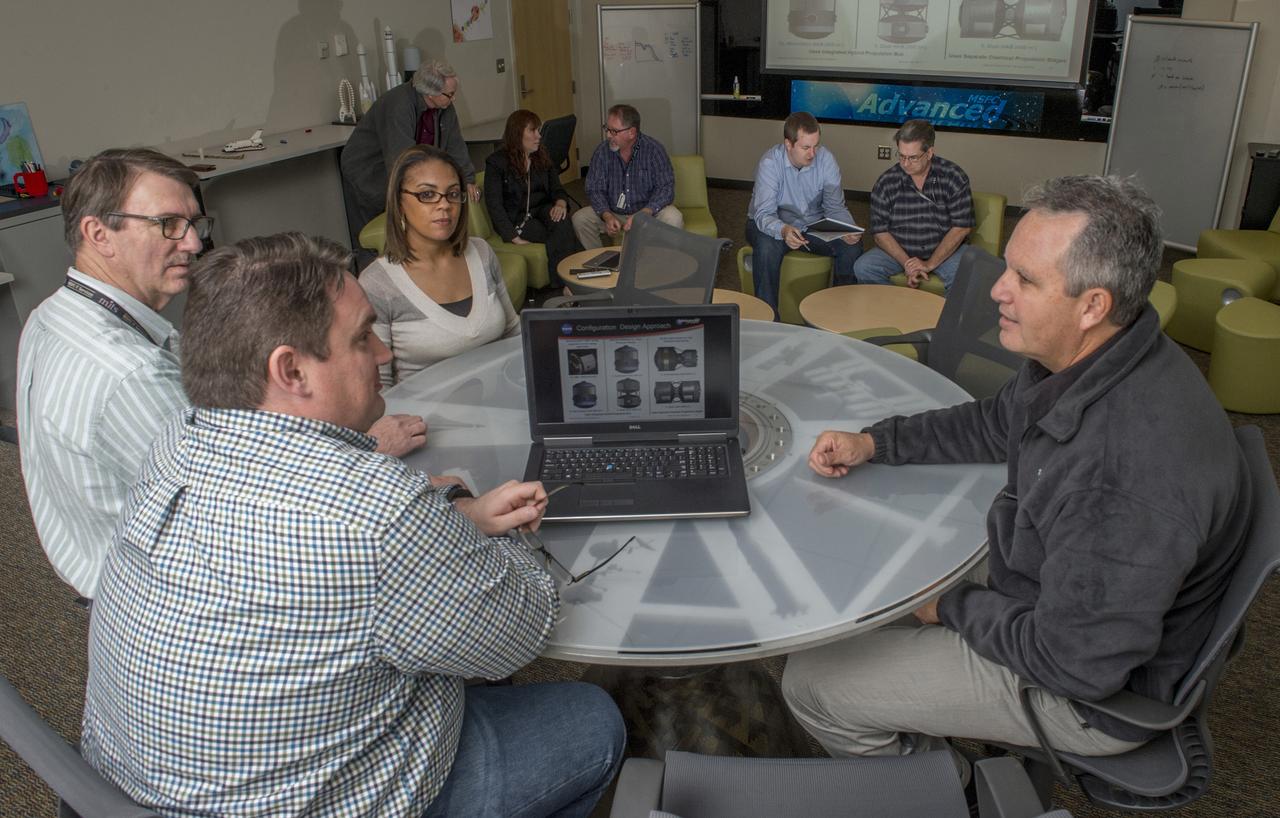
Advance Concept Office Space Transportation Team Assess the Latest Vehicle Studies
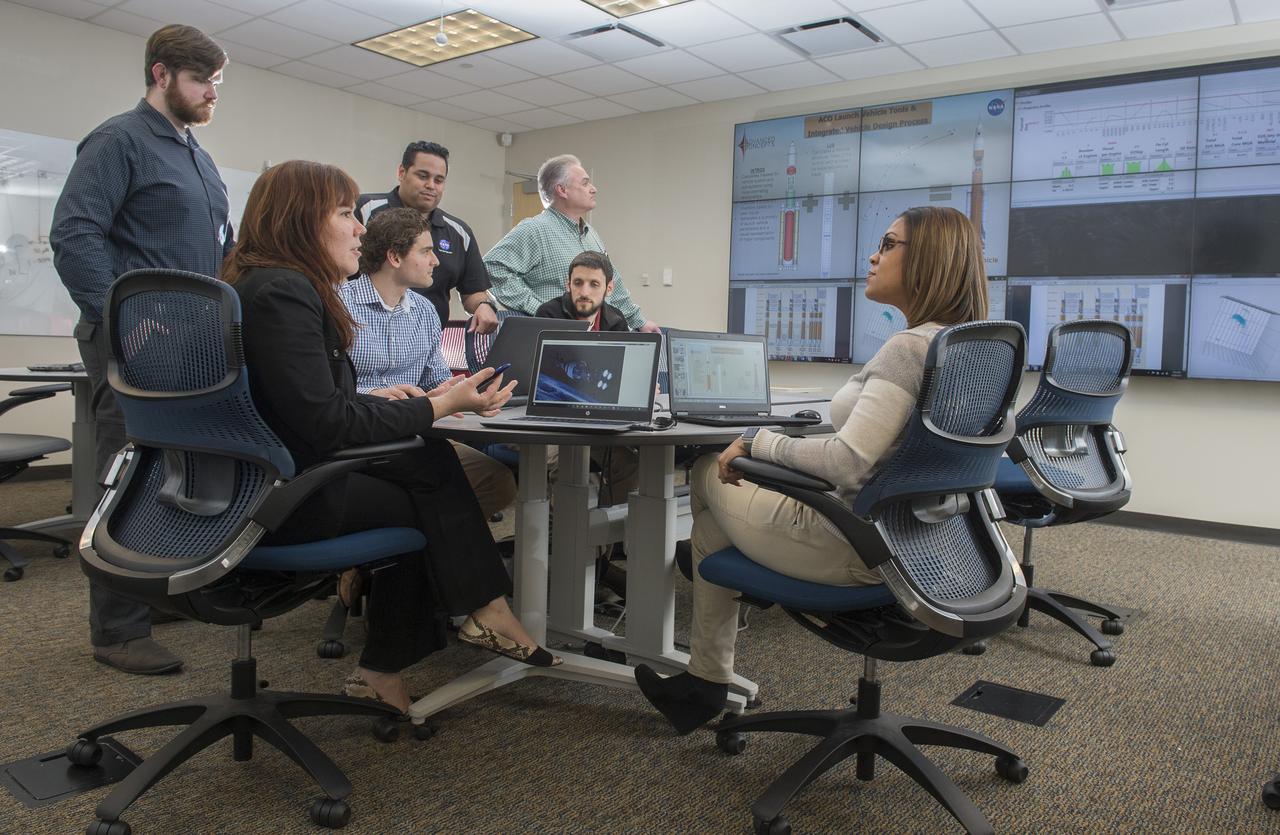
Advance Concept Office Space Transportation Team Assess the Latest Vehicle Studies

This photograph depicts an air-breathing rocket engine prototype in the test bay at the General Applied Science Lab facility in Ronkonkoma, New York. Air-breathing engines, known as rocket based, combined-cycle engines, get their initial take-off power from specially designed rockets, called air-augmented rockets, that boost performance about 15 percent over conventional rockets. When the vehicle's velocity reaches twice the speed of sound, the rockets are turned off and the engine relies totally on oxygen in the atmosphere to burn hydrogen fuel, as opposed to a rocket that must carry its own oxygen, thus reducing weight and flight costs. Once the vehicle has accelerated to about 10 times the speed of sound, the engine converts to a conventional rocket-powered system to propel the craft into orbit or sustain it to suborbital flight speed. NASA's Advanced Space Transportation Program at Marshall Space Flight Center, along with several industry partners and collegiate forces, is developing this technology to make space transportation affordable for everyone from business travelers to tourists. The goal is to reduce launch costs from today's price tag of $10,000 per pound to only hundreds of dollars per pound. NASA's series of hypersonic flight demonstrators currently include three air-breathing vehicles: the X-43A, X-43B and X-43C.

The Advanced Space Transportation Group takes the future of space travel far into the 21st Century. Pictured is an artist's concept of a third generation Reusable Launch Vehicle (RLV). Projected for the year 2025, this third generation RLV will introduce an era of space travel not unlike air travel today.
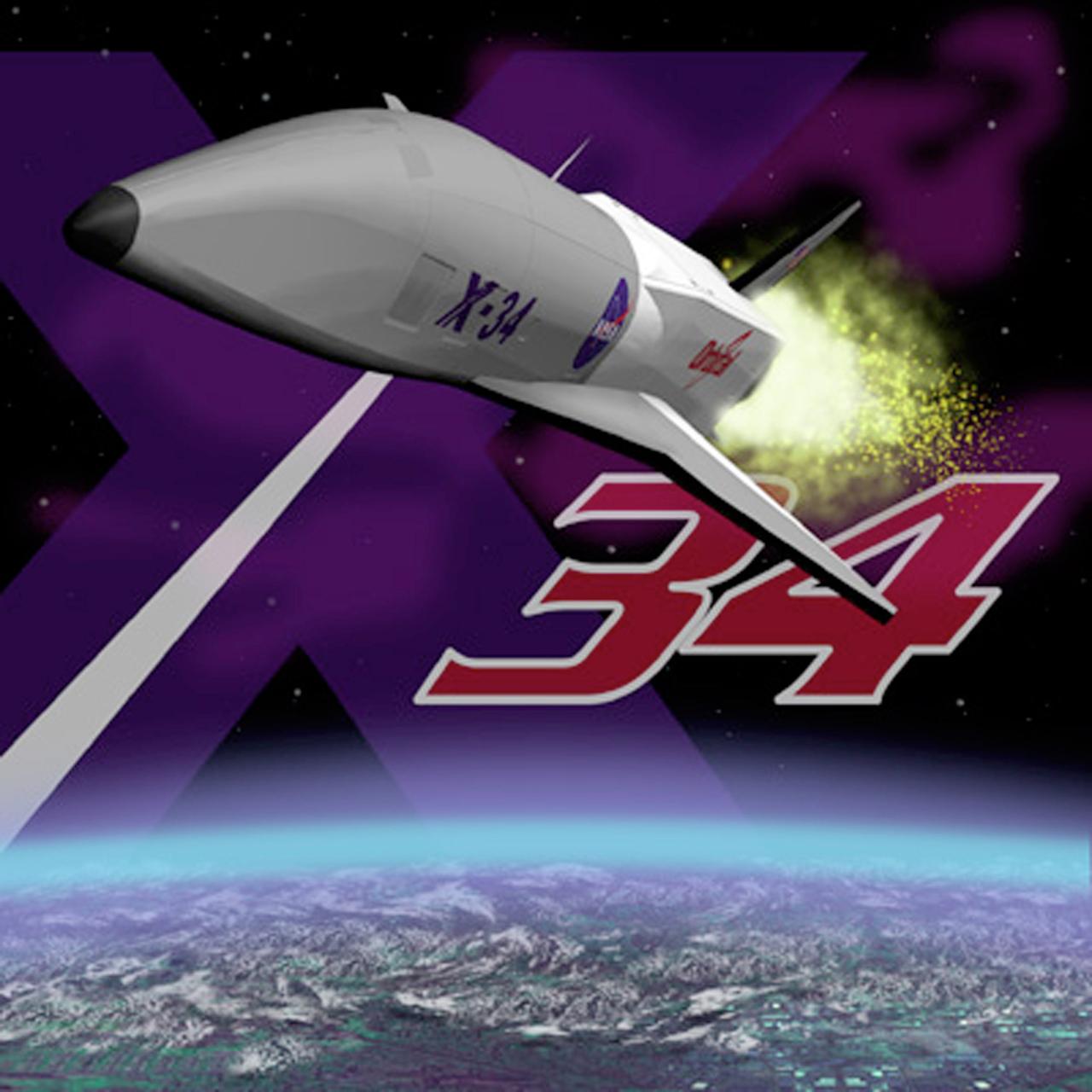
Pictured is NASA's poster art for the X-34 technology Demonstrator. The X-34 was part of NASA's Pathfinder Program which demonstrated advanced space transportation technologies through the use of flight experiments and experimental vehicles. These technology demonstrators and flight experiments would support the Agency's goal of dramatically reducing the cost of access to space and would define the future of space transportation pushing technology into a new era of space development and exploration at the dawn of the new century. The X-34 program was cancelled in 2001.
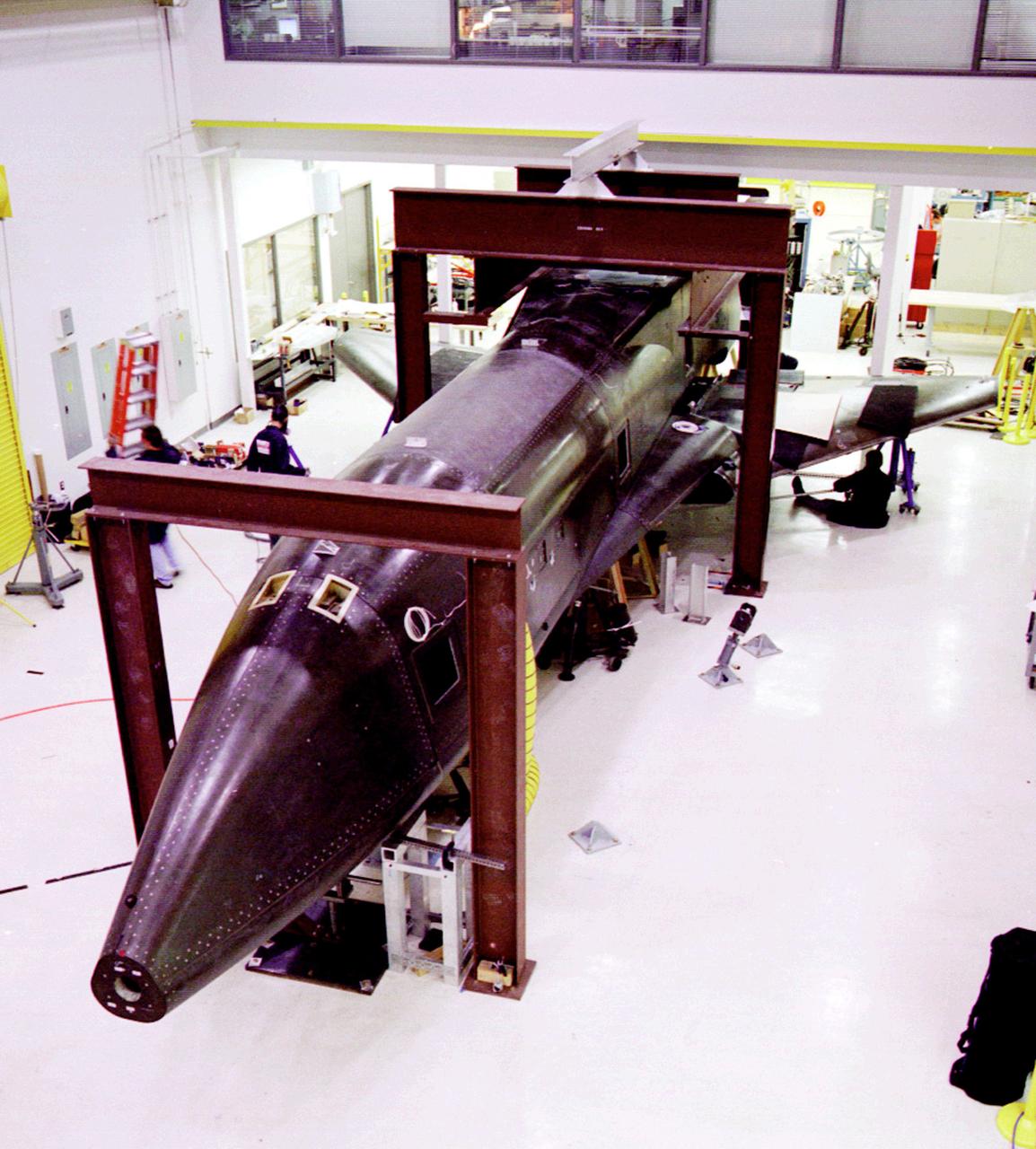
Pictured in the high bay, is the X-34 Technology Demonstrator in the process of completion. The X-34 wass part of NASA's Pathfinder Program which demonstrated advanced space transportation technologies through the use of flight experiments and experimental vehicles. These technology demonstrators and flight experiments supported the Agency's goal of dramatically reducing the cost of access to space and defined the future of space transportation pushing technology into a new era of space development and exploration at the dawn of the new century. The X-34 program was cancelled in 2001.
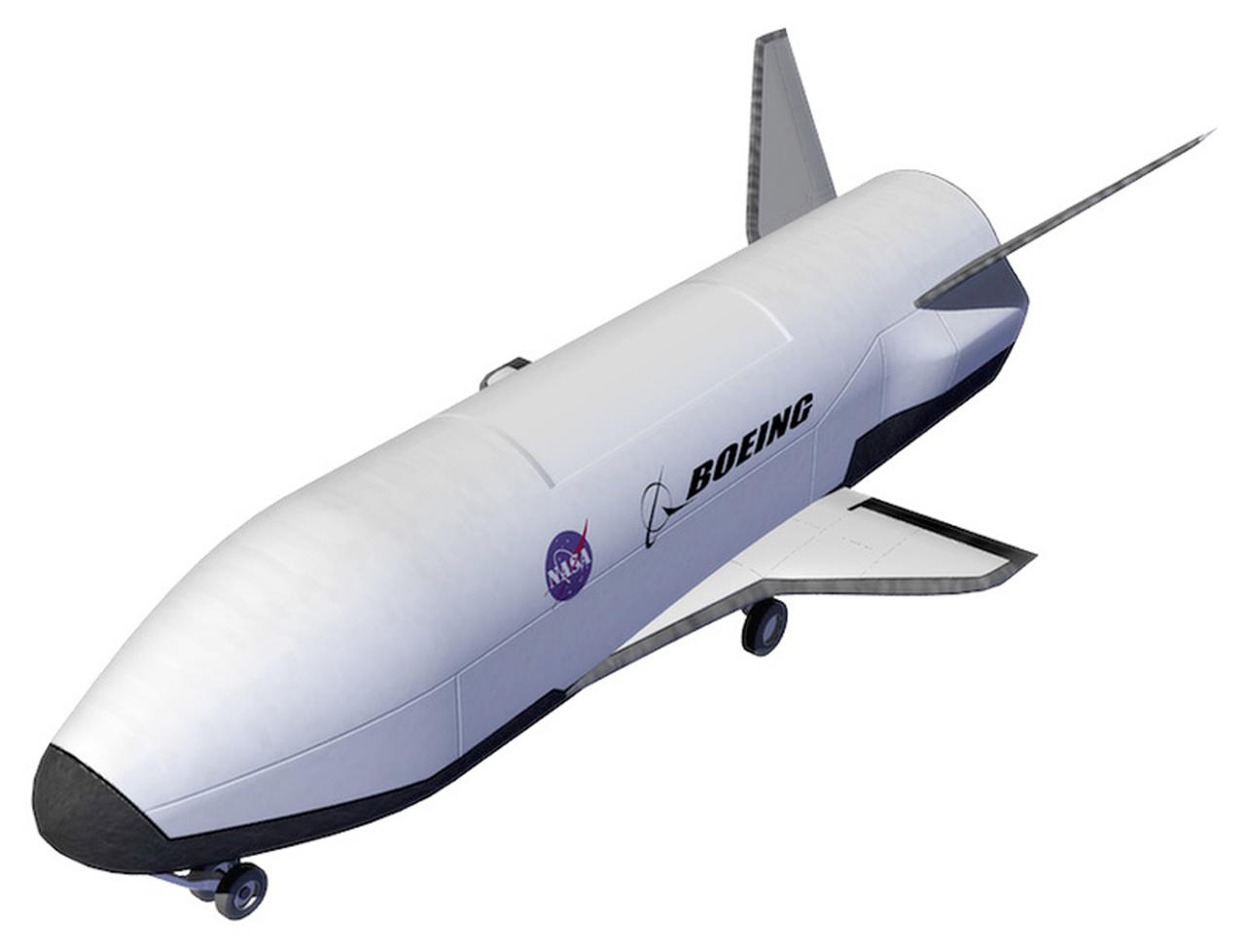
Pictured is an artist's conception of the X-37 Demonstrator descending down left. As part of the Pathfinder Program, the X-37 flight experiment demonstrates advanced space transportation technologies through the use of flight experiments. These vehicles supported the Agency's goal of dramatically reducing the cost of access to space in attempt to define the future of space transportation. The X-37 program was discontinued in 2003.

The `once upon a time' science fiction concept of a space elevator has been envisioned and studied as a real mass transportation system in the latter part of the 21st century. David Smitherman of NASA's Marshall Space Flight Center's Advanced Projects Office has compiled plans for such an elevator. The space elevator concept is a structure extending from the surface of the Earth to geostationary Earth orbit (GEO) at 35,786 km in altitude. The tower would be approximately 50 km tall with a cable tethered to the top. Its center mass would be at GEO such that the entire structure orbits the Earth in sync with the Earth's rotation maintaining a stationary position over its base attachment at the equator. Electromagnetic vehicles traveling along the cable could serve as a mass transportation system for transporting people, payloads, and power between space and Earth. This illustration by artist Pat Rawling shows the concept of a space elevator as viewed from the geostationary transfer station looking down the length of the elevator towards the Earth.
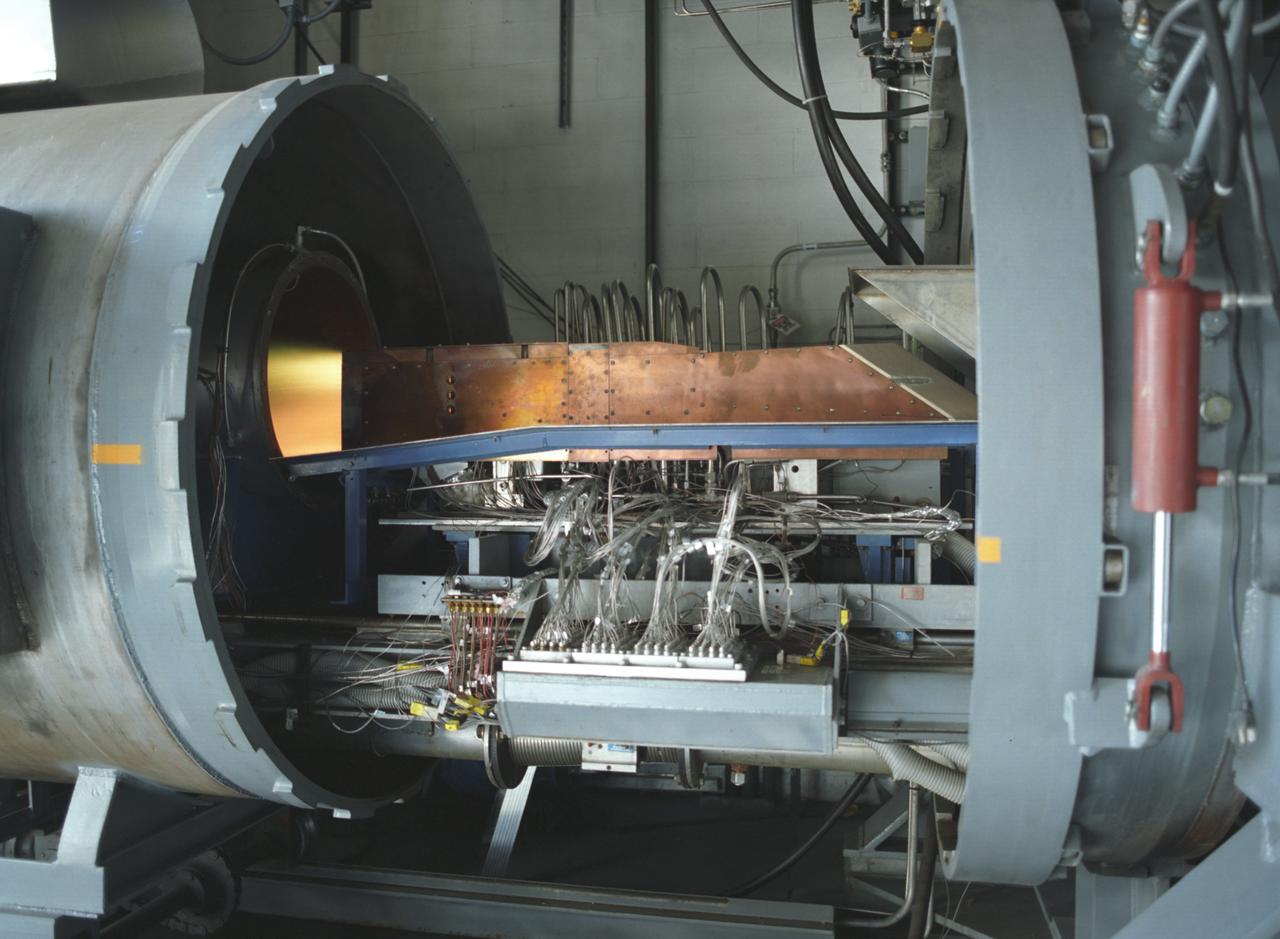
This photograph depicts an air-breathing rocket engine that completed an hour or 3,600 seconds of testing at the General Applied Sciences Laboratory in Ronkonkoma, New York. Referred to as ARGO by its design team, the engine is named after the mythological Greek ship that bore Jason and the Argonauts on their epic voyage of discovery. Air-breathing engines, known as rocket based, combined-cycle engines, get their initial take-off power from specially designed rockets, called air-augmented rockets, that boost performance about 15 percent over conventional rockets. When the vehicle's velocity reaches twice the speed of sound, the rockets are turned off and the engine relies totally on oxygen in the atmosphere to burn hydrogen fuel, as opposed to a rocket that must carry its own oxygen, thus reducing weight and flight costs. Once the vehicle has accelerated to about 10 times the speed of sound, the engine converts to a conventional rocket-powered system to propel the craft into orbit or sustain it to suborbital flight speed. NASA's Advanced SpaceTransportation Program at Marshall Space Flight Center, along with several industry partners and collegiate forces, is developing this technology to make space transportation affordable for everyone from business travelers to tourists. The goal is to reduce launch costs from today's price tag of $10,000 per pound to only hundreds of dollars per pound. NASA's series of hypersonic flight demonstrators currently include three air-breathing vehicles: the X-43A, X-43B and X-43C.
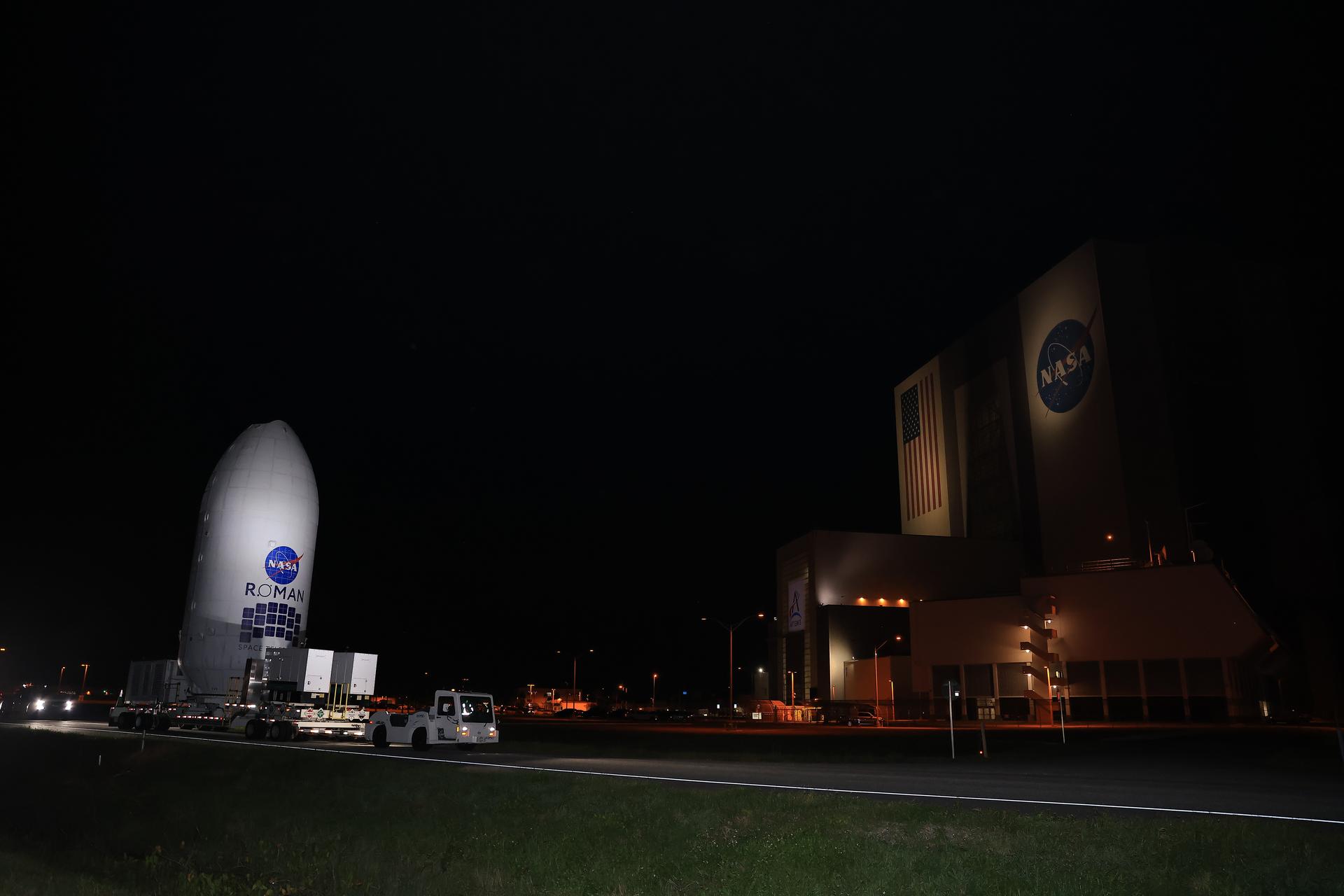
NASA’s Nancy Grace Roman Space Telescope, encapsulated in its payload fairing, travels from the Payload Hazardous Servicing Facility to the SpaceX hangar at Launch Complex 39A at NASA’s Kennedy Space Center on Tuesday, Aug. 25, 2026, ahead of mating to a SpaceX Falcon Heavy rocket. Roman’s science instruments are designed to help researchers understand dark energy, the mysterious force accelerating the universe’s expansion. The observatory also will map how galaxies form, cluster, and evolve by tracing the influence of dark matter. Liftoff from NASA Kennedy is targeted no earlier than Sunday, Aug. 30, 2026.
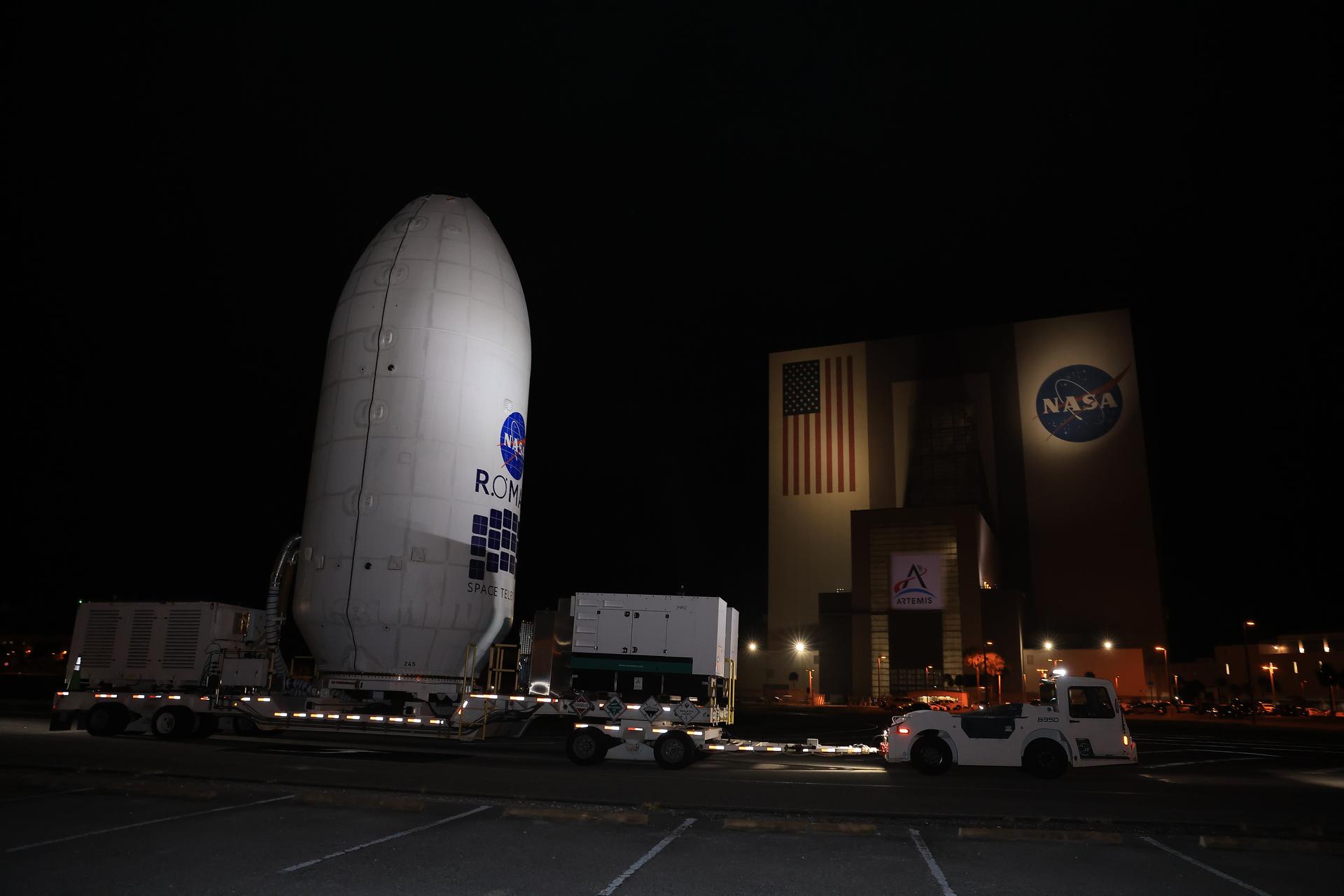
NASA’s Nancy Grace Roman Space Telescope, encapsulated in its payload fairing, travels from the Payload Hazardous Servicing Facility to the SpaceX hangar at Launch Complex 39A at NASA’s Kennedy Space Center on Tuesday, Aug. 25, 2026, ahead of mating to a SpaceX Falcon Heavy rocket. Roman’s science instruments are designed to help researchers understand dark energy, the mysterious force accelerating the universe’s expansion. The observatory also will map how galaxies form, cluster, and evolve by tracing the influence of dark matter. Liftoff from NASA Kennedy is targeted no earlier than Sunday, Aug. 30, 2026.
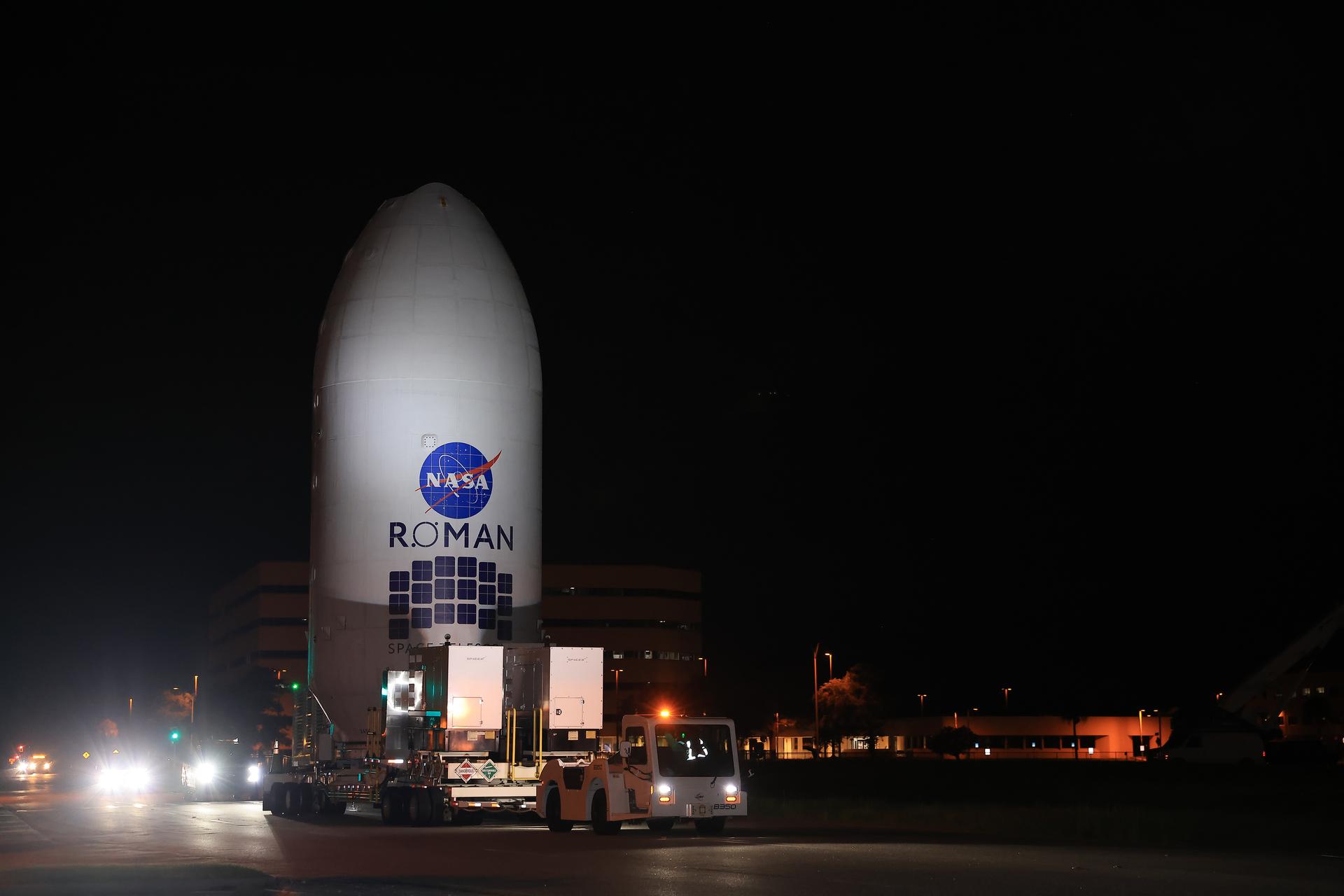
NASA’s Nancy Grace Roman Space Telescope, encapsulated in its payload fairing, travels from the Payload Hazardous Servicing Facility to the SpaceX hangar at Launch Complex 39A at NASA’s Kennedy Space Center on Tuesday, Aug. 25, 2026, ahead of mating to a SpaceX Falcon Heavy rocket. Roman’s science instruments are designed to help researchers understand dark energy, the mysterious force accelerating the universe’s expansion. The observatory also will map how galaxies form, cluster, and evolve by tracing the influence of dark matter. Liftoff from NASA Kennedy is targeted no earlier than Sunday, Aug. 30, 2026.
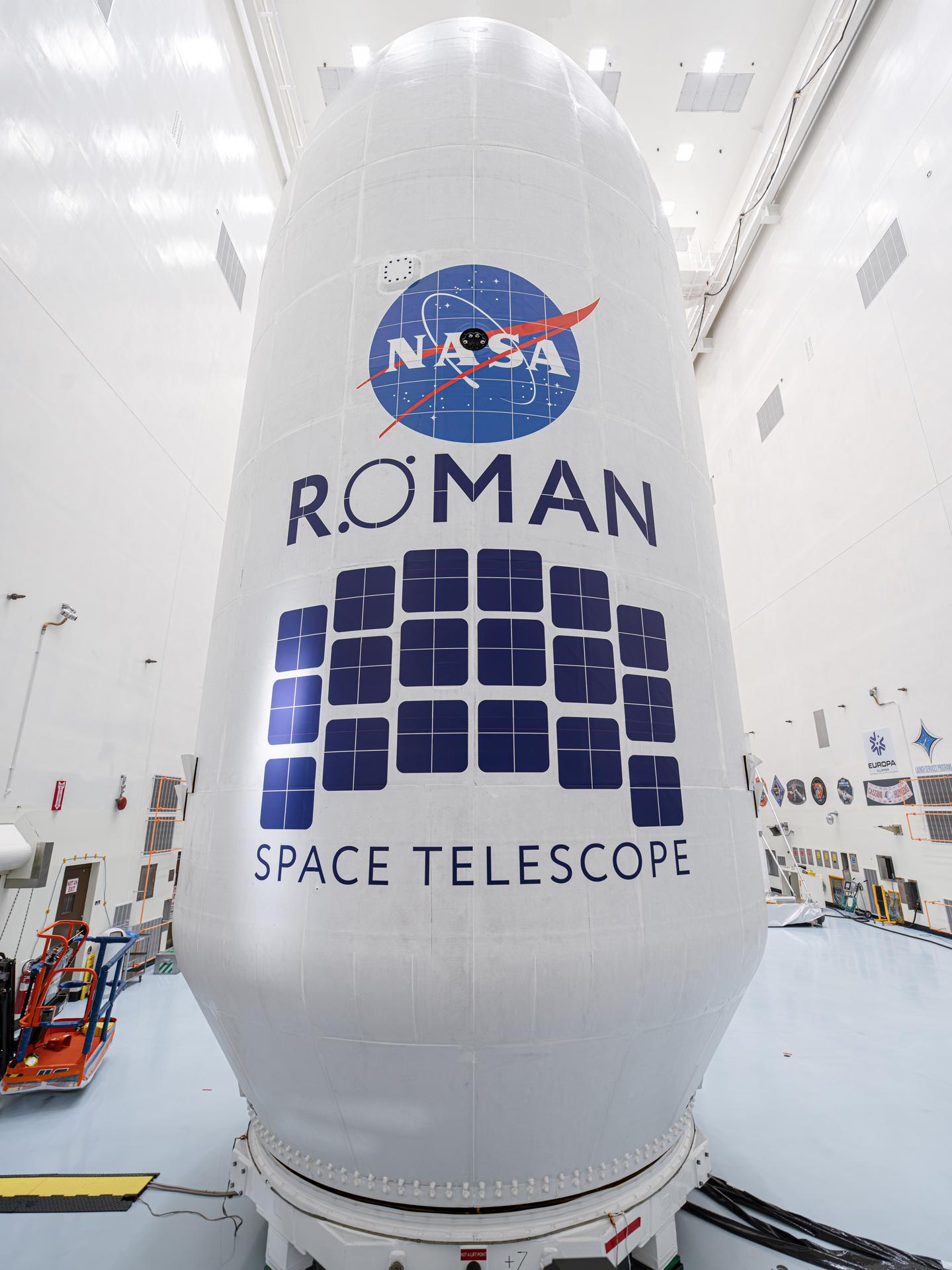
Teams inside the Payload Hazardous Servicing Facility at NASA’s Kennedy Space Center in Florida encapsulate the agency’s Nancy Grace Roman Space Telescope within the payload fairing on Friday, Aug. 21, 2026, ahead of mating to a SpaceX Falcon Heavy rocket. Encapsulation shields the spacecraft during rollout, ascent, and the early phases of flight. Roman will investigate dark energy and dark matter, conduct a statistical census of planetary systems, and enable a broad range of additional astrophysics research. Liftoff from Launch Complex 39A at Kennedy is targeted for no earlier than Sunday, Aug. 30, 2026.
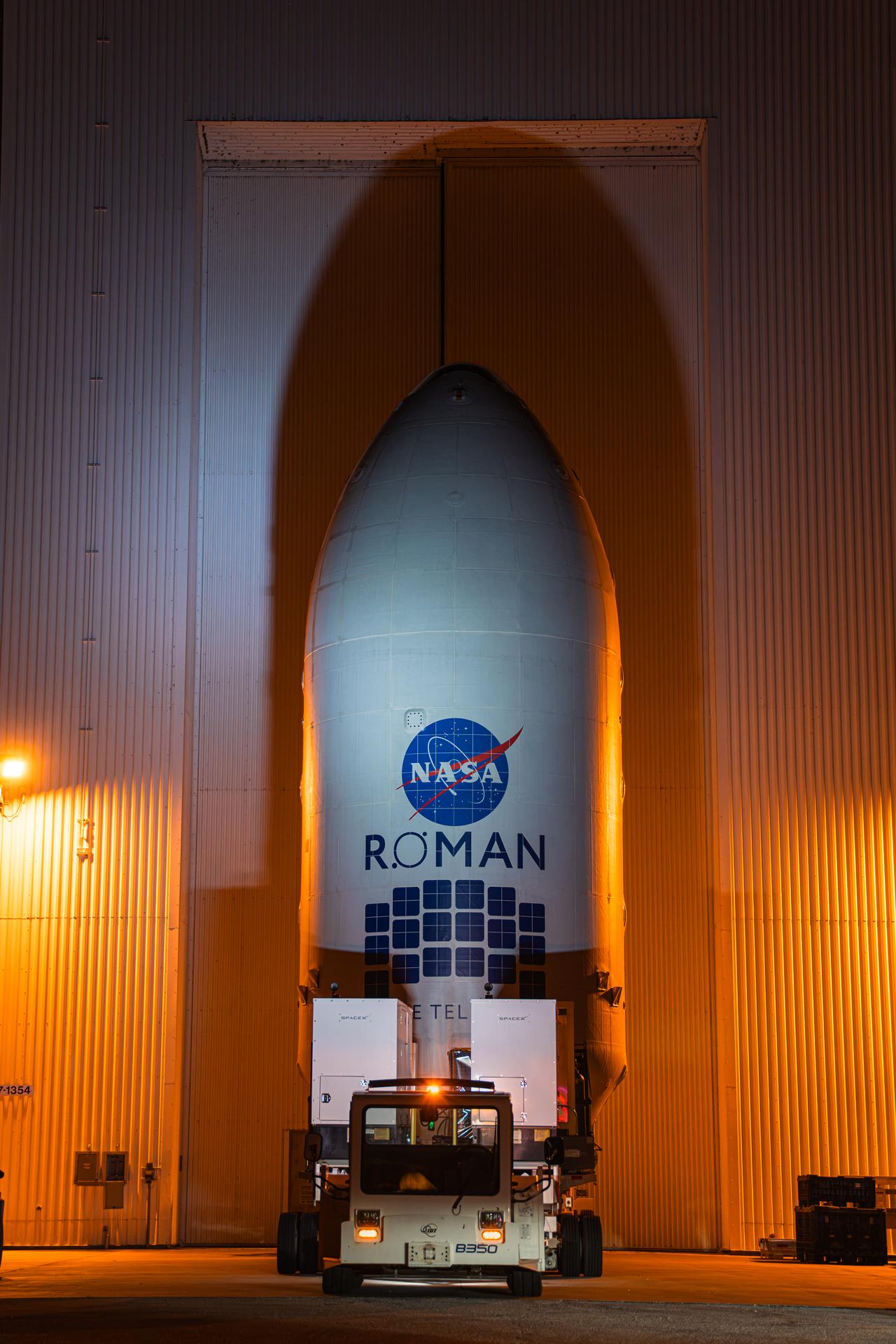
Teams inside the Payload Hazardous Servicing Facility at NASA’s Kennedy Space Center in Florida encapsulate the agency’s Nancy Grace Roman Space Telescope within the payload fairing on Friday, Aug. 21, 2026, ahead of mating to a SpaceX Falcon Heavy rocket. Encapsulation shields the spacecraft during rollout, ascent, and the early phases of flight. Roman will investigate dark energy and dark matter, conduct a statistical census of planetary systems, and enable a broad range of additional astrophysics research. Liftoff from Launch Complex 39A at Kennedy is targeted for no earlier than Sunday, Aug. 30, 2026.
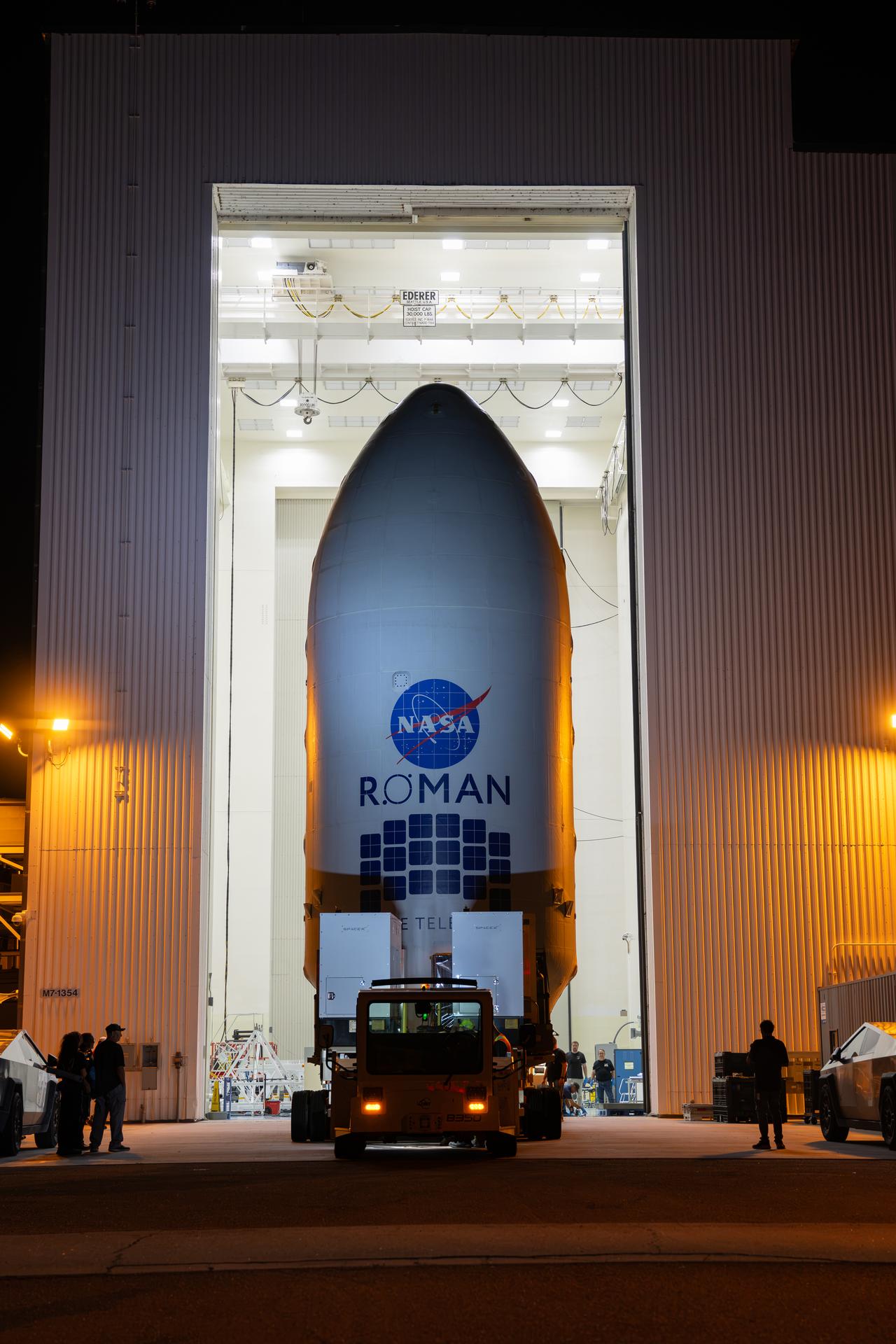
Teams inside the Payload Hazardous Servicing Facility at NASA’s Kennedy Space Center in Florida encapsulate the agency’s Nancy Grace Roman Space Telescope within the payload fairing on Friday, Aug. 21, 2026, ahead of mating to a SpaceX Falcon Heavy rocket. Encapsulation shields the spacecraft during rollout, ascent, and the early phases of flight. Roman will investigate dark energy and dark matter, conduct a statistical census of planetary systems, and enable a broad range of additional astrophysics research. Liftoff from Launch Complex 39A at Kennedy is targeted for no earlier than Sunday, Aug. 30, 2026.
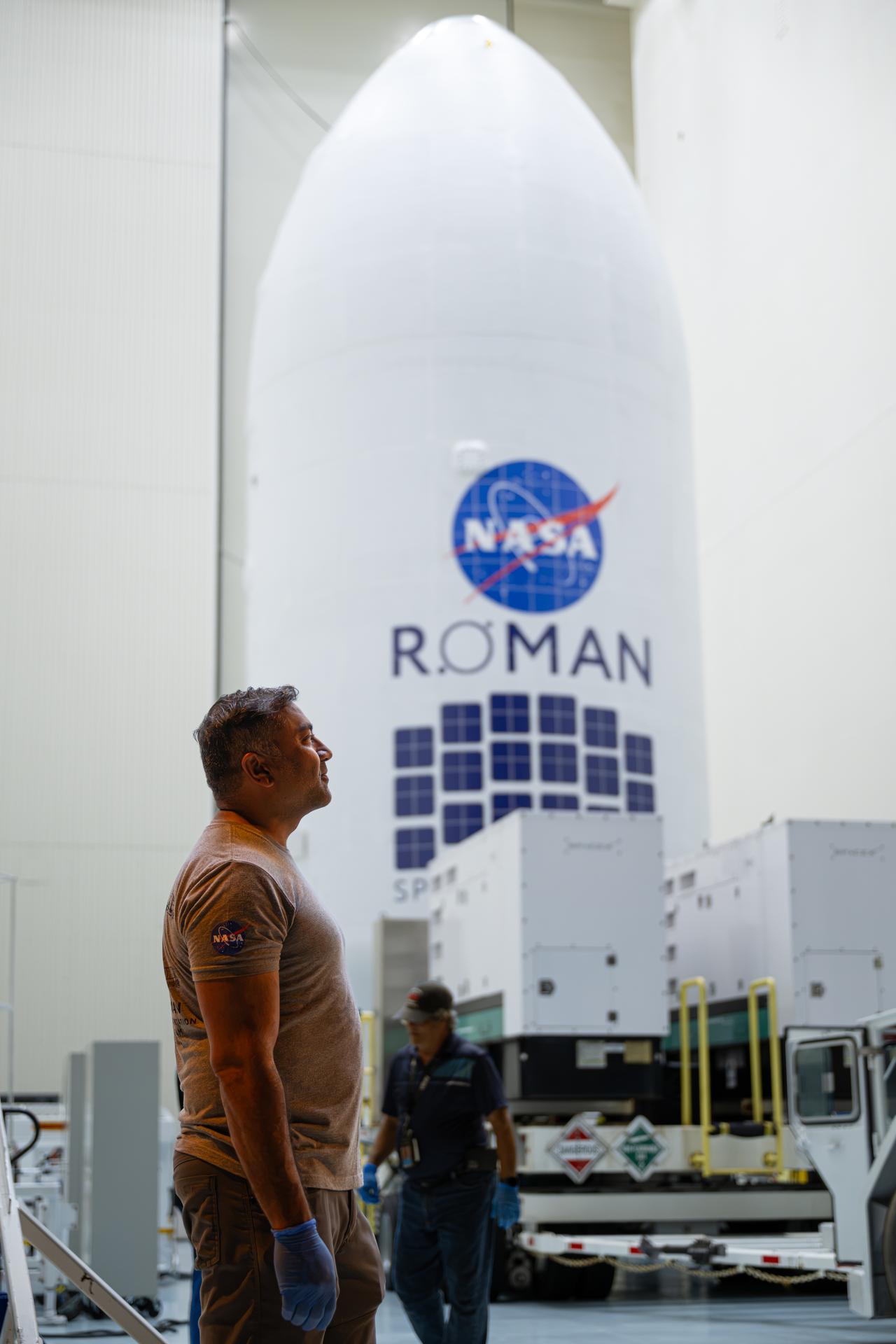
Teams inside the Payload Hazardous Servicing Facility at NASA’s Kennedy Space Center in Florida encapsulate the agency’s Nancy Grace Roman Space Telescope within the payload fairing on Friday, Aug. 21, 2026, ahead of mating to a SpaceX Falcon Heavy rocket. Encapsulation shields the spacecraft during rollout, ascent, and the early phases of flight. Roman will investigate dark energy and dark matter, conduct a statistical census of planetary systems, and enable a broad range of additional astrophysics research. Liftoff from Launch Complex 39A at Kennedy is targeted for no earlier than Sunday, Aug. 30, 2026.
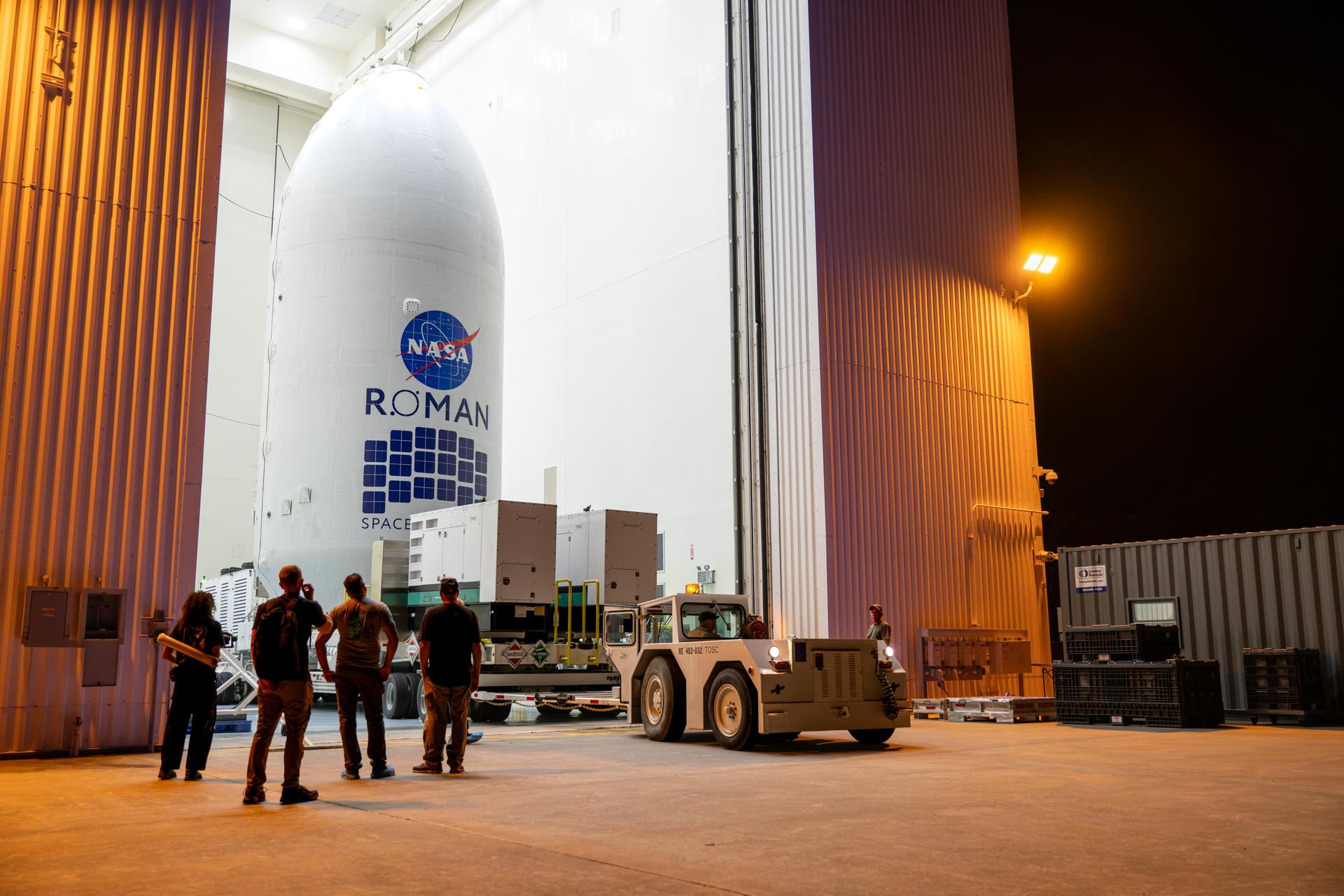
Teams inside the Payload Hazardous Servicing Facility at NASA’s Kennedy Space Center in Florida encapsulate the agency’s Nancy Grace Roman Space Telescope within the payload fairing on Friday, Aug. 21, 2026, ahead of mating to a SpaceX Falcon Heavy rocket. Encapsulation shields the spacecraft during rollout, ascent, and the early phases of flight. Roman will investigate dark energy and dark matter, conduct a statistical census of planetary systems, and enable a broad range of additional astrophysics research. Liftoff from Launch Complex 39A at Kennedy is targeted for no earlier than Sunday, Aug. 30, 2026.
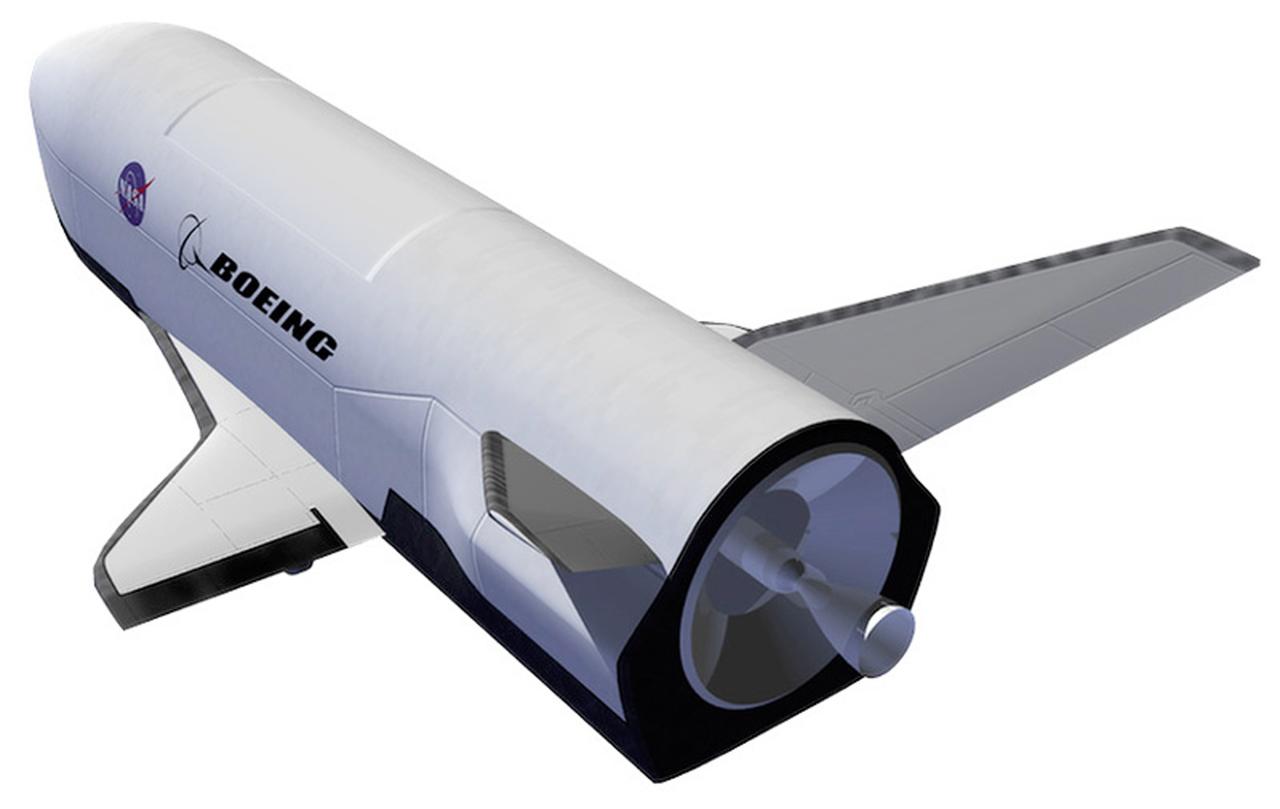
Pictured is an artist's conception of the X-37 Demonstrator ascending left upright. As part of the Pathfinder Program, the X-37 flight experiment demonstrates advanced space transportation technologies through the use of flight experiments. These vehicles supported the Agency's goal of dramatically reducing the cost of access to space in attempt to define the future of space transportation. The X-37 program was discontinued in 2003.
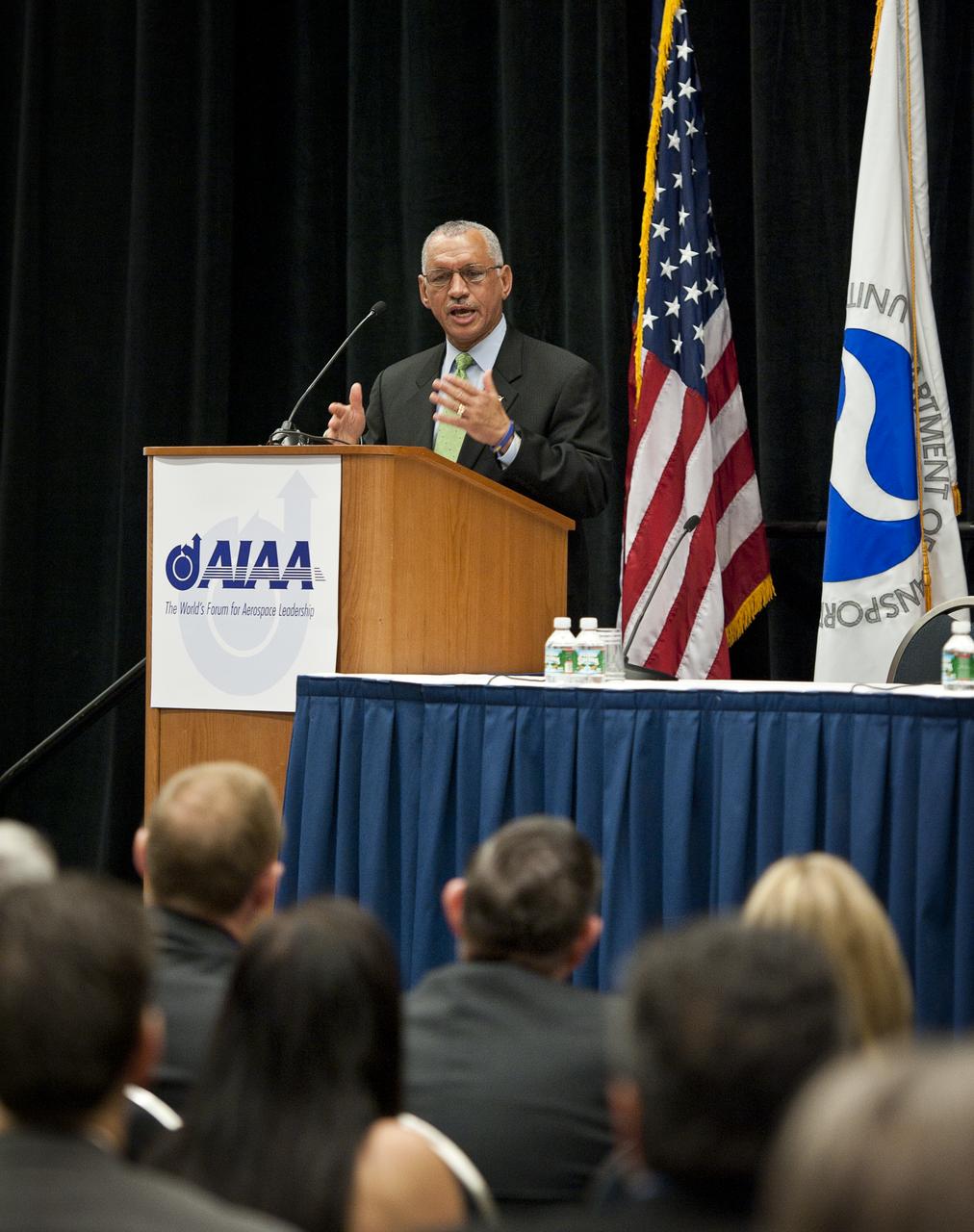
NASA Administrator Charles Bolden speaks at the 14th Annual Federal Aviation Administration (FAA) Commercial Space Transport Conference at the Washington Convention Center on Wednesday, Feb. 9, 2001. Photo Credit: (NASA/Carla Cioffi)
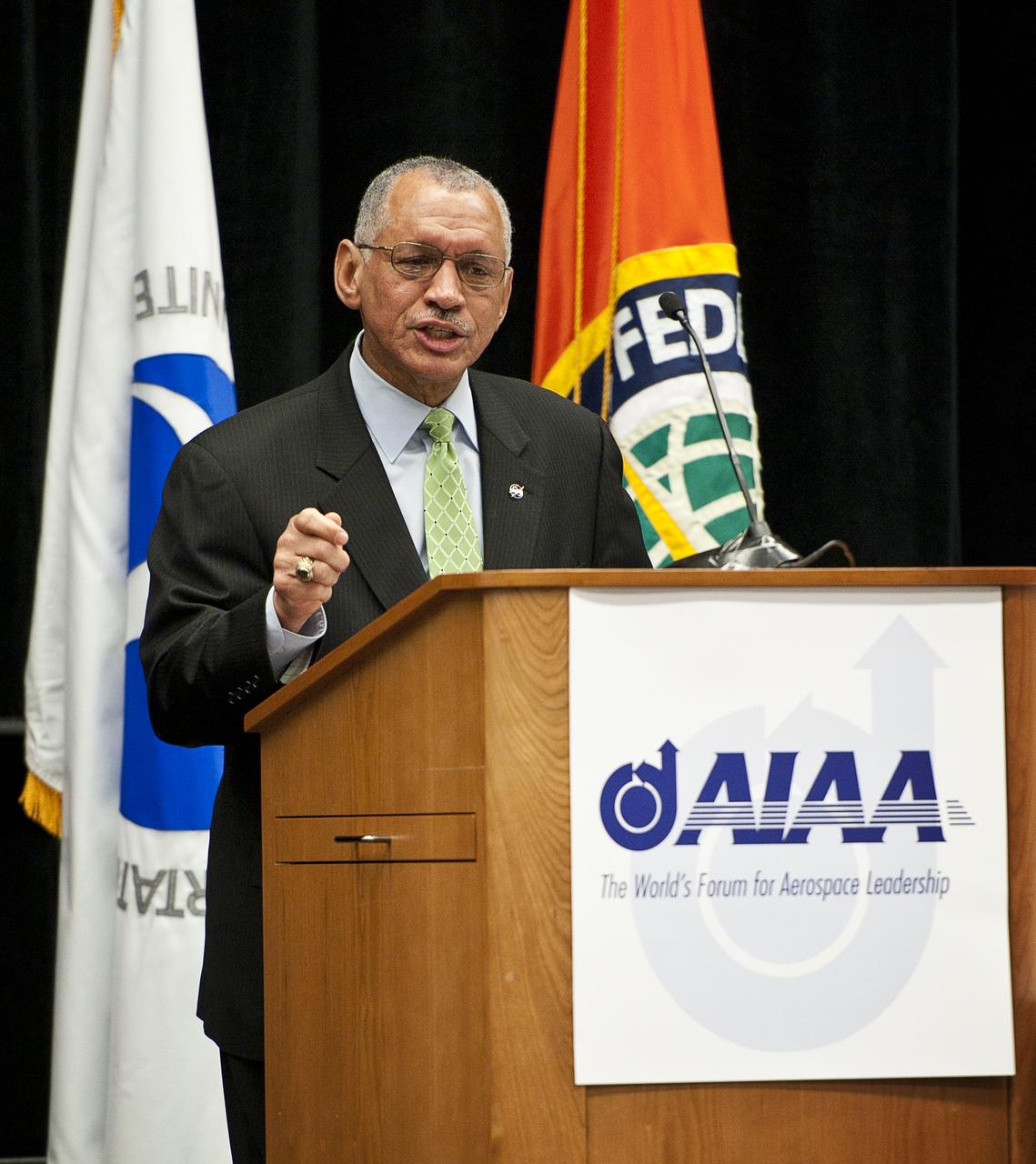
NASA Administrator Charles Bolden speaks at the 14th Annual Federal Aviation Administration (FAA) Commercial Space Transport Conference at the Washington Convention Center on Wednesday, Feb. 9, 2001. Photo Credit: (NASA/Carla Cioffi)
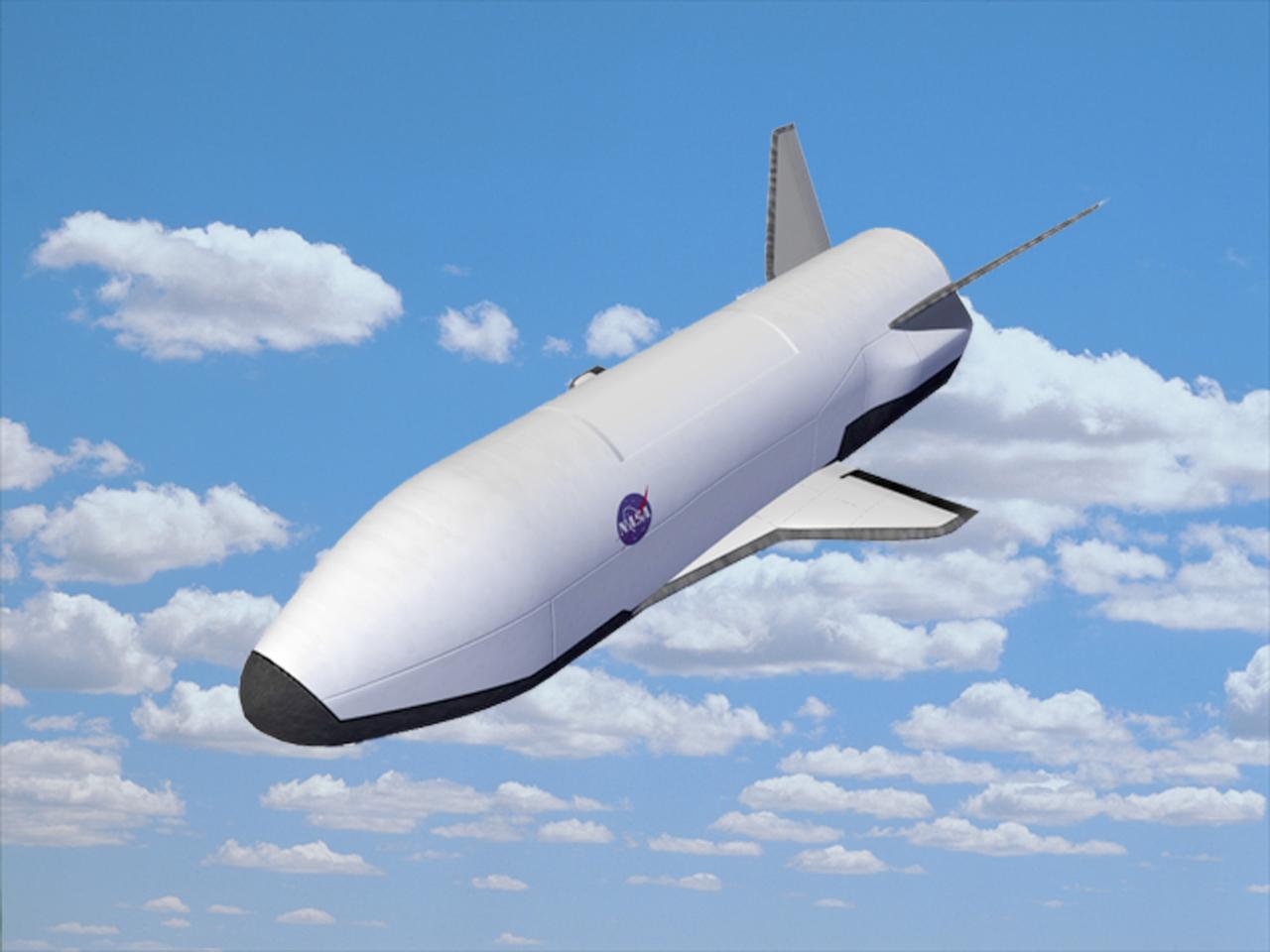
Pictured is an artist's concept of the X-37 Demonstrator re-entry. After being launched from the cargo bay of a Shuttle as a secondary payload, the X-37 remains on-orbit up to 21 days performing a variety of experiments before re-entering the Earth's atmosphere and landing. These vehicles supported the Agency's goal of dramatically reducing the cost of access to space in attempt to define the future of space transportation. The X-37 program was discontinued in 2003.
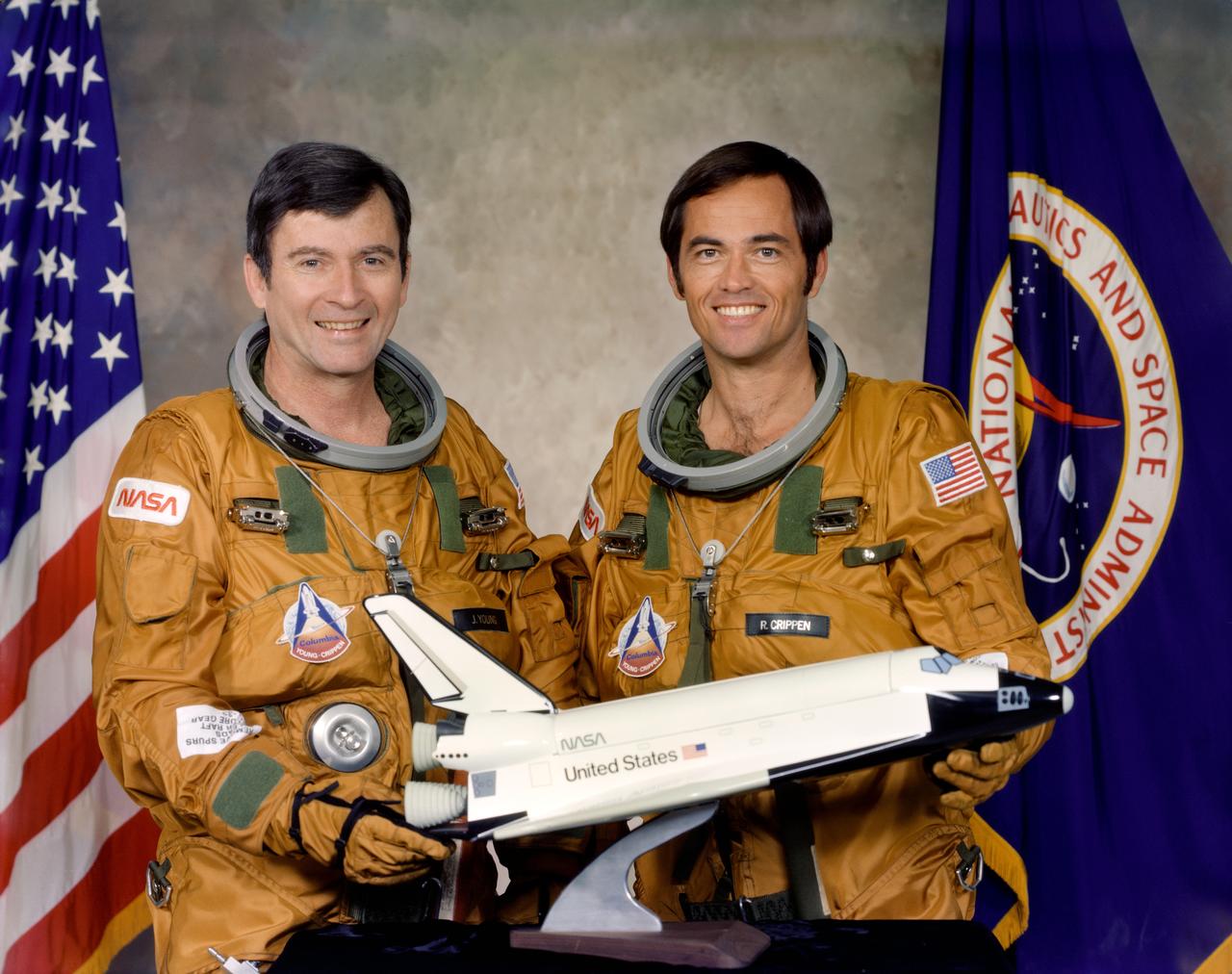
S79-31775 (29 April 1979) --- These two astronauts are the prime crewmen for the first flight in the Space Transportation System (STS-1) program. Astronauts John W. Young, left, commander, and Robert L. Crippen, pilot, will man the space shuttle orbiter 102 Columbia for the first orbital flight test. Photo credit: NASA
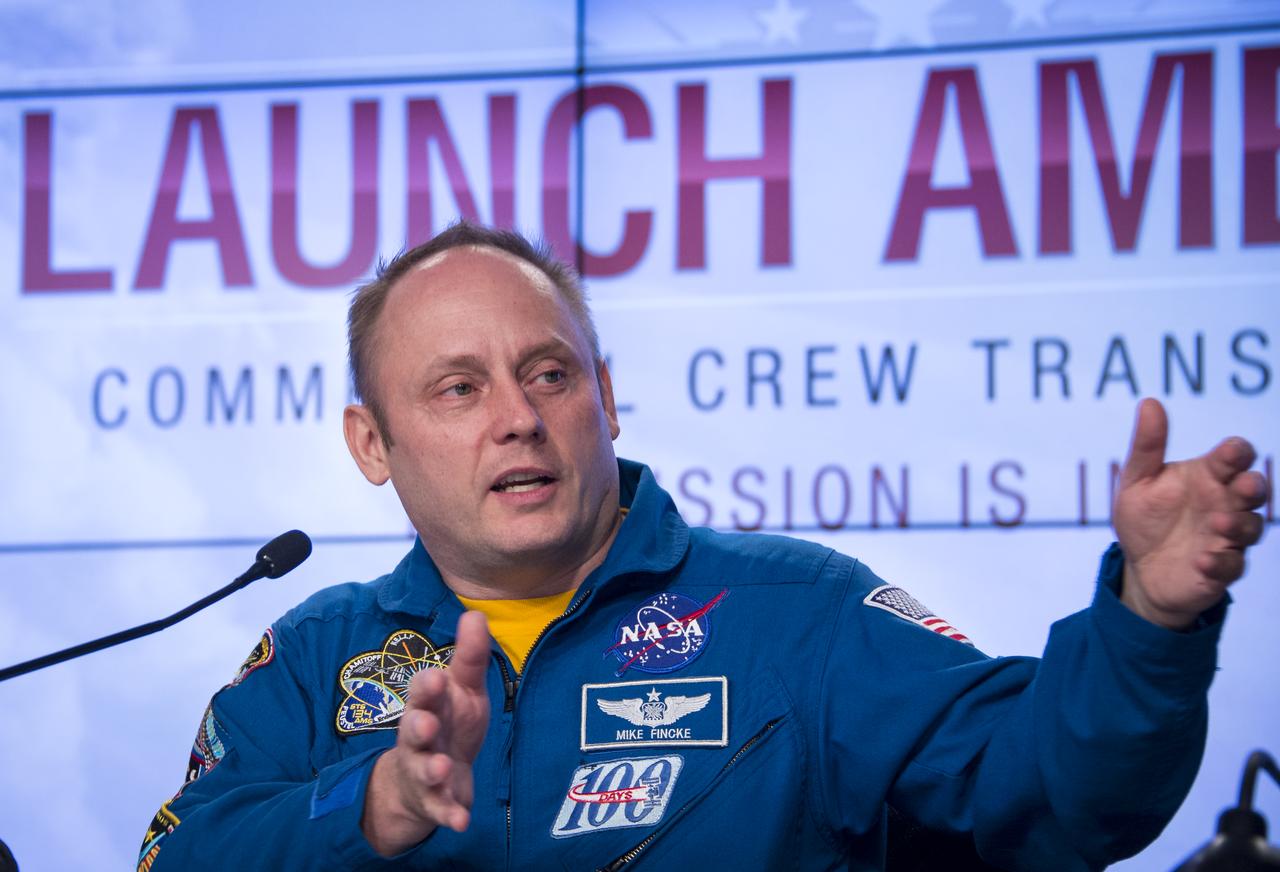
Astronaut Mike Fincke, a former commander of the International Space Station, speaks during a news conference where it was announced that Boeing and SpaceX have been selected to transport U.S. crews to and from the International Space Station using the Boeing CST-100 and the SpaceX Crew Dragon spacecraft, at NASA’s Kennedy Space Center in Cape Canaveral, Fla. on Tuesday, Sept. 16, 2014. These Commercial Crew Transportation Capability (CCtCap) contracts are designed to complete the NASA certification for a human space transportation system capable of carrying people into orbit. Once certification is complete, NASA plans to use these systems to transport astronauts to the space station and return them safely to Earth. Photo Credit: (NASA/Bill Ingalls)
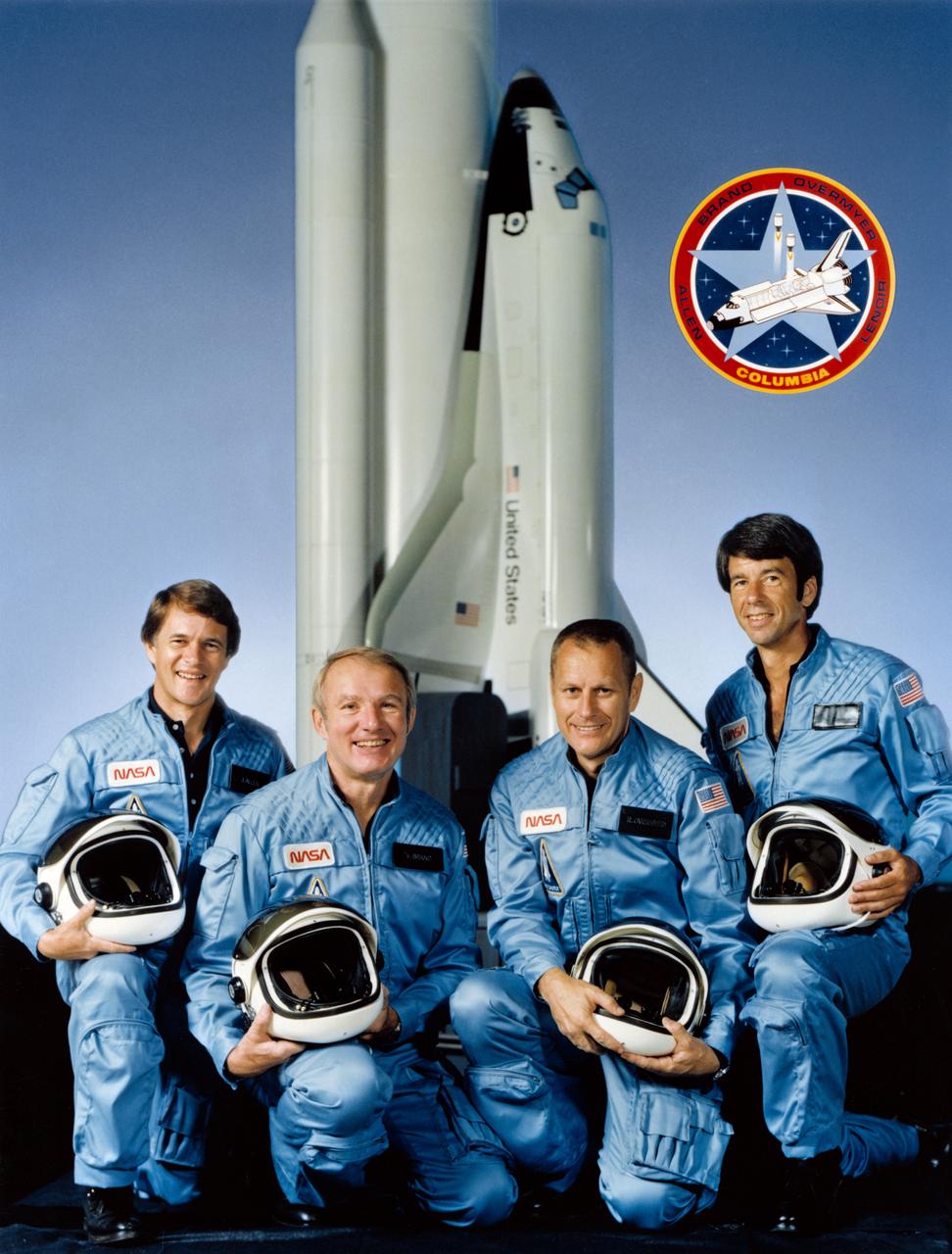
S82-36286 (15 Aug. 1982) --- These four men will be aboard the space shuttle Columbia for NASA's first operational Space Transportation System (STS) mission. They are astronauts Vance D. Brand (second left), STS-5 commander; Robert F. Overmyer (second right), pilot; and Joseph P. Allen (left) and William B. Lenoir, both mission specialists. They pose with a space shuttle model and the official insignia for STS-5. Their flight is scheduled for November of this year. Photo credit: NASA

S83-29016 (4 March 1983) --- These five astronauts represent the Space Transportation System's (STS) first five-member crew. They will be aboard the Space Shuttle Challenger for the mission, scheduled for June of this year. Astronaut Robert L. Crippen (center, first row) is crew commander. Other crew members are astronauts Frederick H. Hauck, right, pilot; and Sally K. Ride, John M. Fabian and Norman E. Thagard, mission specialists. Seven stars and the Challenger provide the backdrop for the crew's portrait.
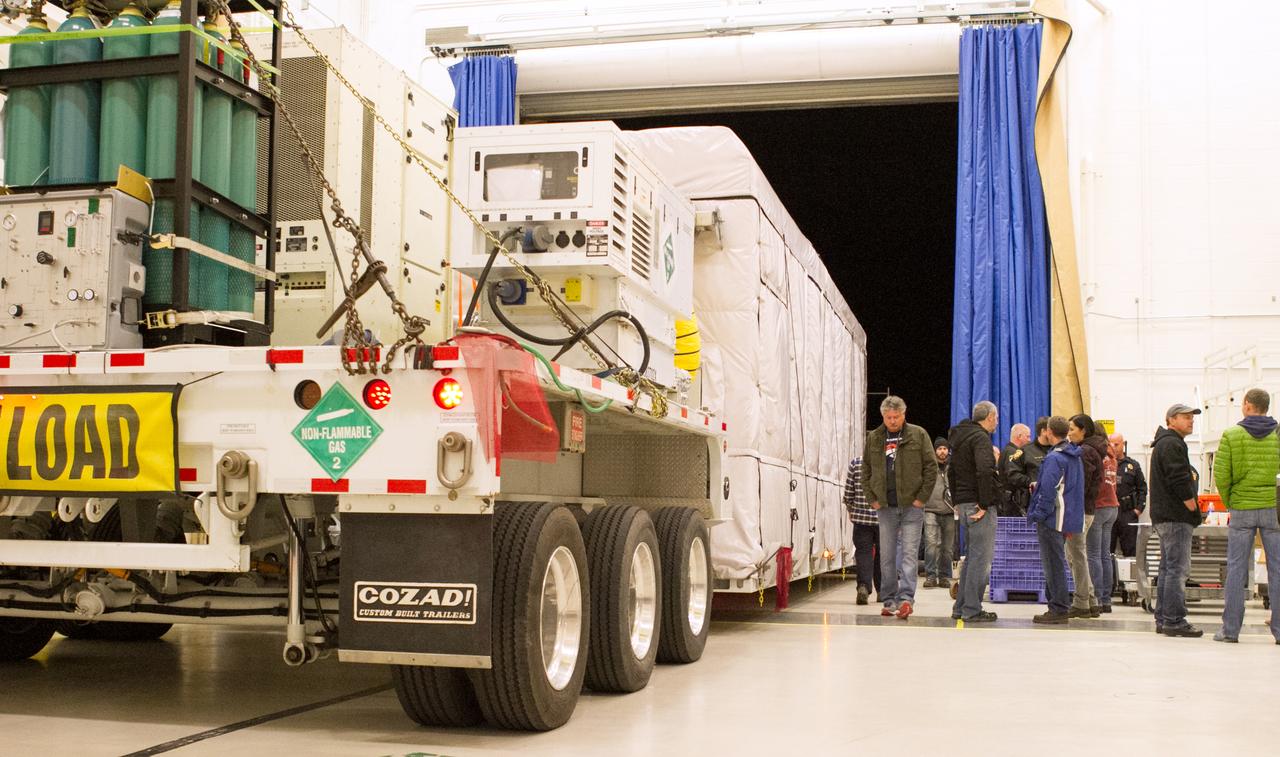
NOAA's Geostationary Operational Environmental Satellite-S (GOES-S) is prepared for transport at the Lockheed Martin facility in Littleton, Colorado, where it was built and assembled. GOES-S will be loaded into a U.S. Air Force C-5M Super Galaxy cargo aircraft at Buckley Air Force Base in Aurora, Colorado, and flown to NASA's Kennedy Space Center in Florida. After it arrives at Kennedy's Shuttle Landing Facility, it will be offloaded and transported to the Astrotech Space Operations facility in Titusville, Florida, to prepare it for launch. GOES-S is the second in a series of four advanced geostationary weather satellites. The GOES-R series - consisting of the GOES-R, GOES-S, GOES-T and GOES-U spacecraft - will significantly improve the detection and observation of environmental phenomena that directly affect public safety, protection of property and the nation's economic health and prosperity. GOES-S is slated to launch March 1, 2018 aboard a United Launch Alliance Atlas V rocket from Cape Canaveral Air Force Station in Florida.
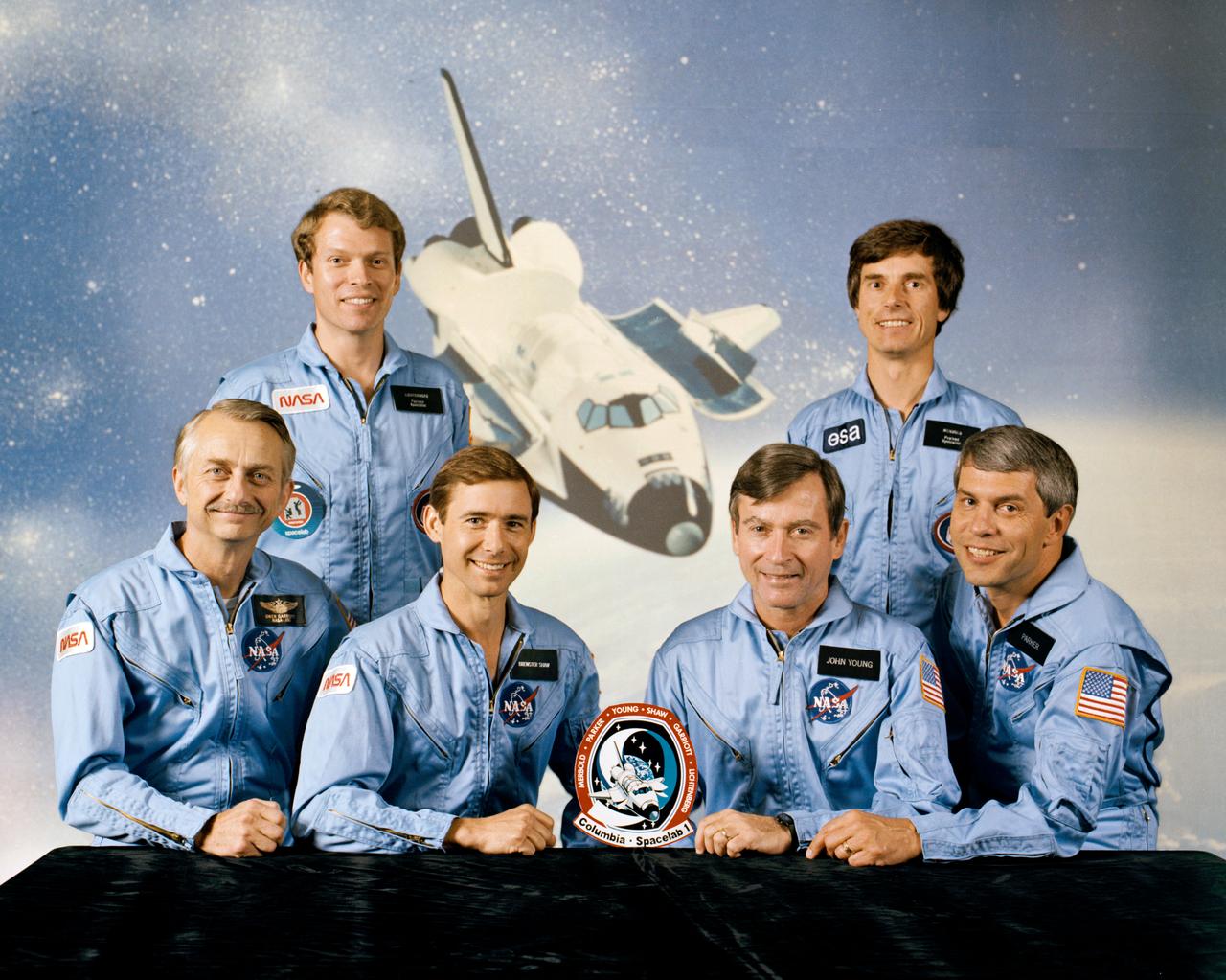
S83-35017 (June 1983) --- These six men represent the first crewmembers to man the Columbia when it gets reactivated later this year. The four NASA astronauts are joined by a European and MIT scientist payload specialist and the Spacelab module and experiment array for STS-9. On the front row are Astronauts Owen K. Garriott, mission specialist; Brewster H. Shaw, Jr., pilot; John W. Young, commander; and Robert A. R. Parker, mission specialist. Byron K. Lichtenberg of the Massachusetts of Technology, left and Ulf Merbold of the Republic of West Germany and the European Space Agency stand in front of an orbital scene featuring the Columbia. Columbia was used for the first five Space Transportation System missions in 1981 and 1982.
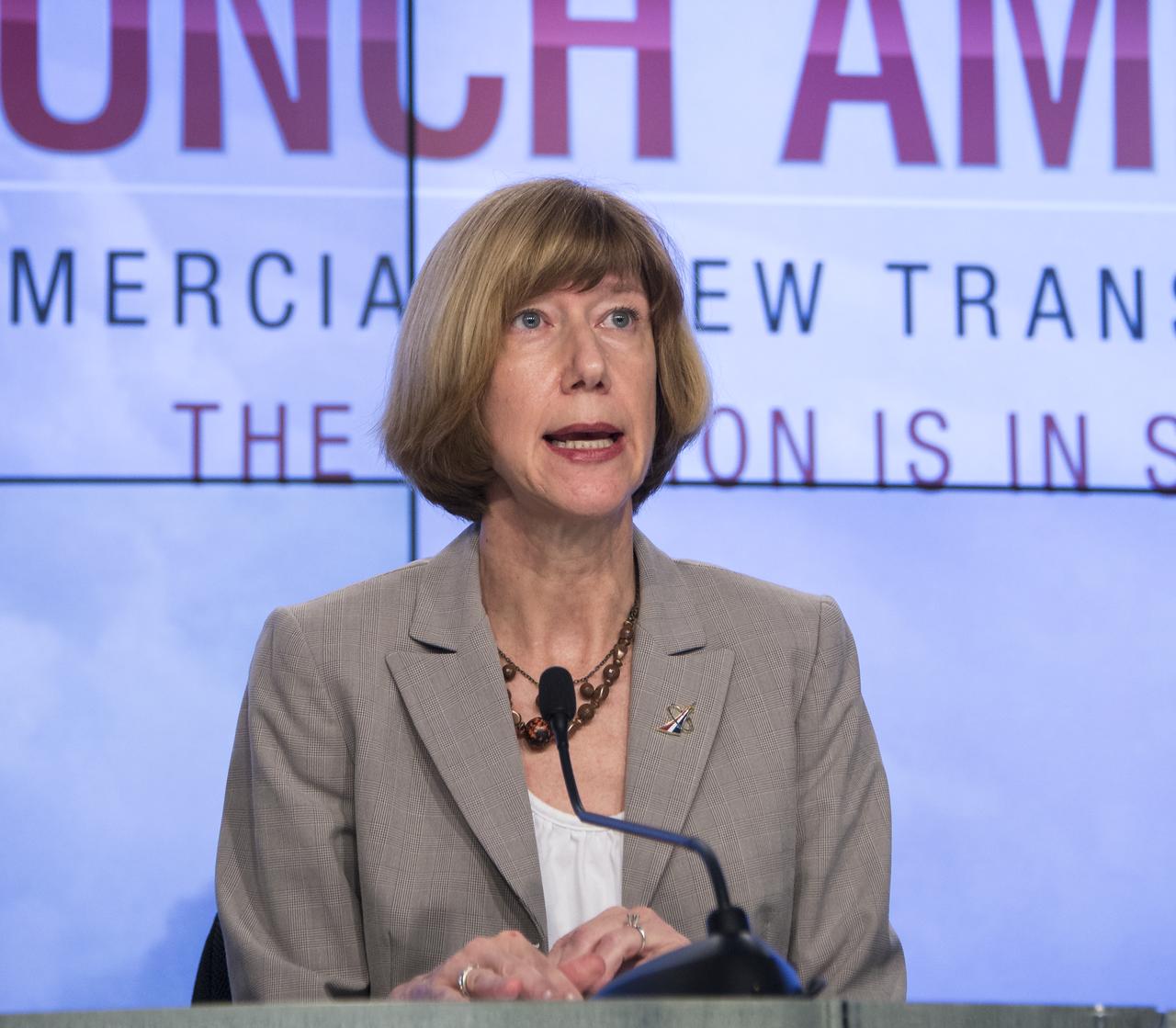
Kathy Lueders, program manager of NASA's Commercial Crew Program, speaks during a news conference where it was announced that Boeing and SpaceX have been selected to transport U.S. crews to and from the International Space Station using the Boeing CST-100 and the SpaceX Crew Dragon spacecraft, at NASA’s Kennedy Space Center in Cape Canaveral, Fla. on Tuesday, Sept. 16, 2014. These Commercial Crew Transportation Capability (CCtCap) contracts are designed to complete the NASA certification for a human space transportation system capable of carrying people into orbit. Once certification is complete, NASA plans to use these systems to transport astronauts to the space station and return them safely to Earth. Photo Credit: (NASA/Bill Ingalls)
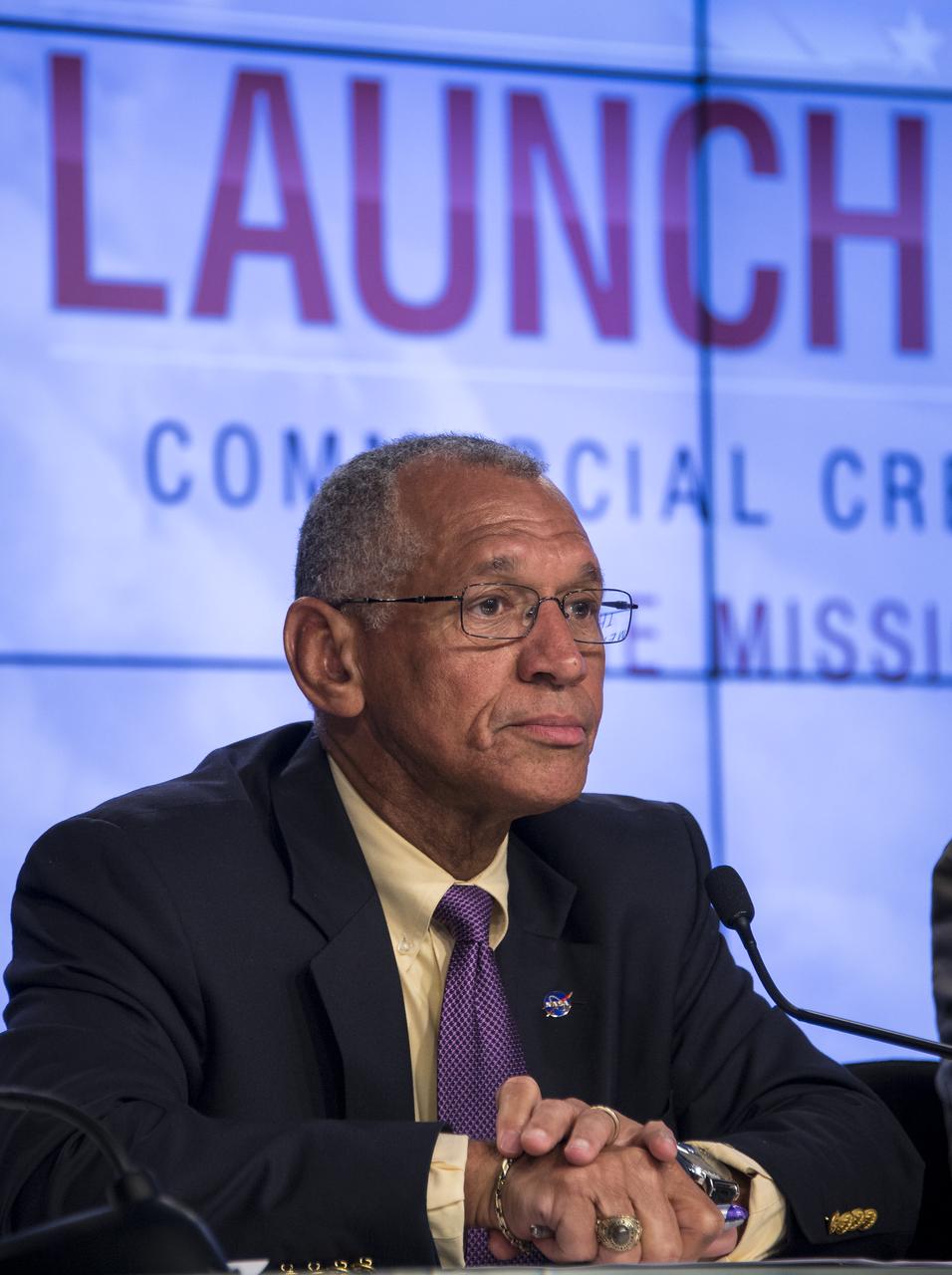
NASA Administrator Charles Bolden listens to a reporter’s question after he announced the agency’s selection of Boeing and SpaceX to transport U.S. crews to and from the International Space Station using the Boeing CST-100 and the SpaceX Crew Dragon spacecraft, at NASA’s Kennedy Space Center in Cape Canaveral, Fla. on Tuesday, Sept. 16, 2014. These Commercial Crew Transportation Capability (CCtCap) contracts are designed to complete the NASA certification for a human space transportation system capable of carrying people into orbit. Once certification is complete, NASA plans to use these systems to transport astronauts to the space station and return them safely to Earth. Photo Credit: (NASA/Bill Ingalls)
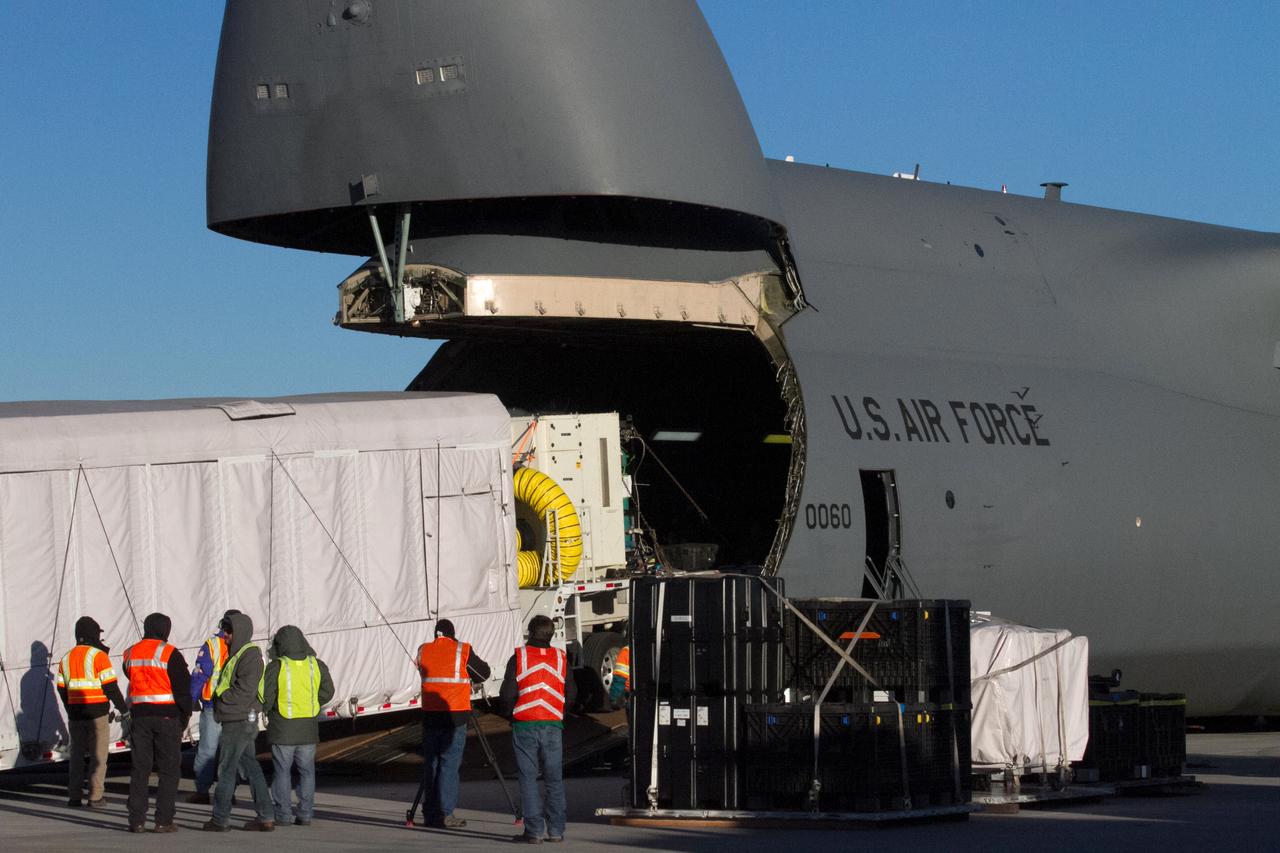
At Buckley Air Force Base in Aurora, Colorado, NOAA's Geostationary Operational Environmental Satellite-S (GOES-S) is being loaded into the cargo hold of a U.S. Air Force C-5M super Galaxy cargo aircraft. GOES-S will be flown to NASA's Kennedy Space Center in Florida. After it arrives at Kennedy's Shuttle Landing Facility, it will be offloaded and transported to the Astrotech Space Operations facility in Titusville, Florida, to prepare it for launch. GOES-S is the second in a series of four advanced geostationary weather satellites. The GOES-R series - consisting of the GOES-R, GOES-S, GOES-T and GOES-U spacecraft - will significantly improve the detection and observation of environmental phenomena that directly affect public safety, protection of property and the nation's economic health and prosperity. GOES-S is slated to launch March 1, 2018 aboard a United Launch Alliance Atlas V rocket from Cape Canaveral Air Force Station in Florida.

At Buckley Air Force Base in Aurora, Colorado, NOAA's Geostationary Operational Environmental Satellite-S (GOES-S) is being loaded into the cargo hold of a U.S. Air Force C-5M super Galaxy cargo aircraft. GOES-S will be flown to NASA's Kennedy Space Center in Florida. After it arrives at Kennedy's Shuttle Landing Facility, it will be offloaded and transported to the Astrotech Space Operations facility in Titusville, Florida, to prepare it for launch. GOES-S is the second in a series of four advanced geostationary weather satellites. The GOES-R series - consisting of the GOES-R, GOES-S, GOES-T and GOES-U spacecraft - will significantly improve the detection and observation of environmental phenomena that directly affect public safety, protection of property and the nation's economic health and prosperity. GOES-S is slated to launch March 1, 2018 aboard a United Launch Alliance Atlas V rocket from Cape Canaveral Air Force Station in Florida.
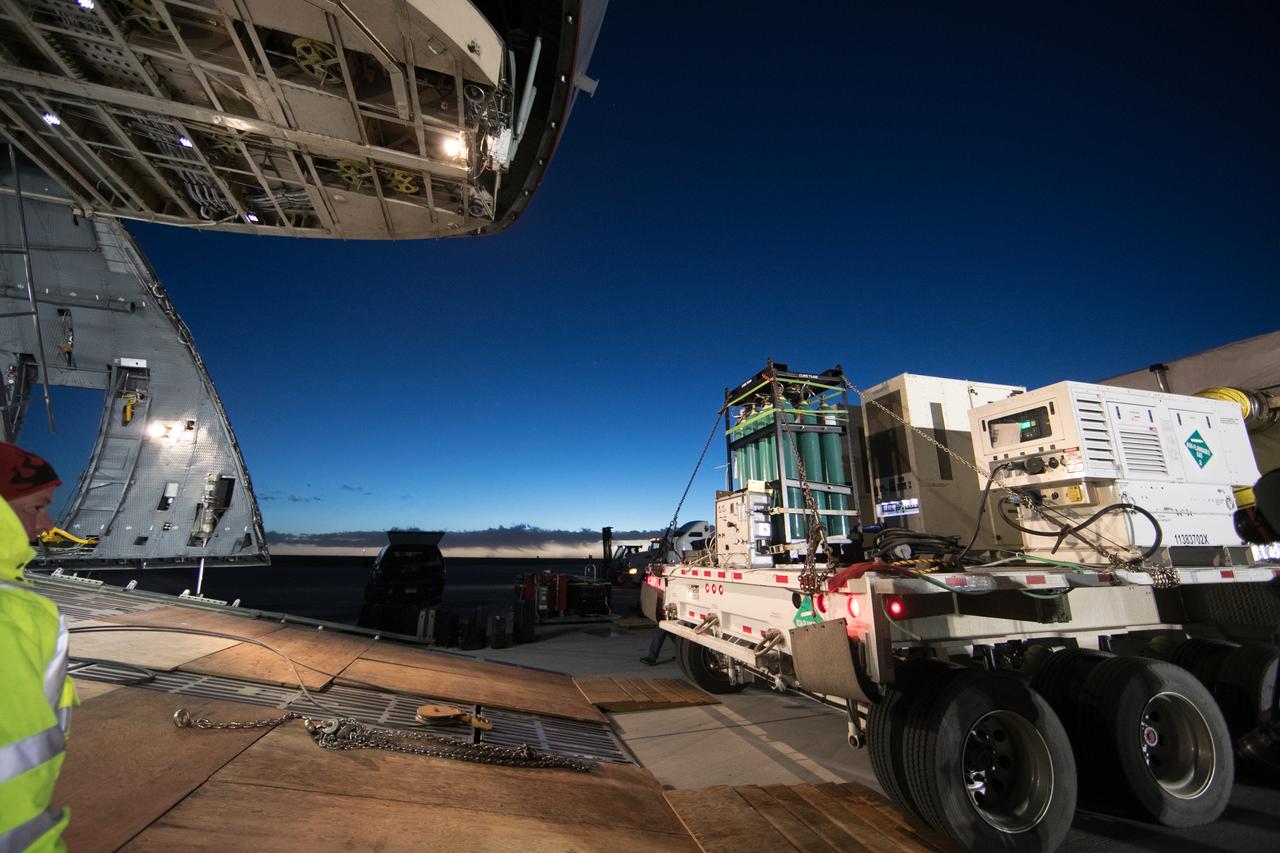
At Buckley Air Force Base in Aurora, Colorado, NOAA's Geostationary Operational Environmental Satellite-S (GOES-S) is being loaded into the cargo hold of a U.S. Air Force C-5M super Galaxy cargo aircraft. GOES-S will be flown to NASA's Kennedy Space Center in Florida. After it arrives at Kennedy's Shuttle Landing Facility, it will be offloaded and transported to the Astrotech Space Operations facility in Titusville, Florida, to prepare it for launch. GOES-S is the second in a series of four advanced geostationary weather satellites. The GOES-R series - consisting of the GOES-R, GOES-S, GOES-T and GOES-U spacecraft - will significantly improve the detection and observation of environmental phenomena that directly affect public safety, protection of property and the nation's economic health and prosperity. GOES-S is slated to launch March 1, 2018 aboard a United Launch Alliance Atlas V rocket from Cape Canaveral Air Force Station in Florida.
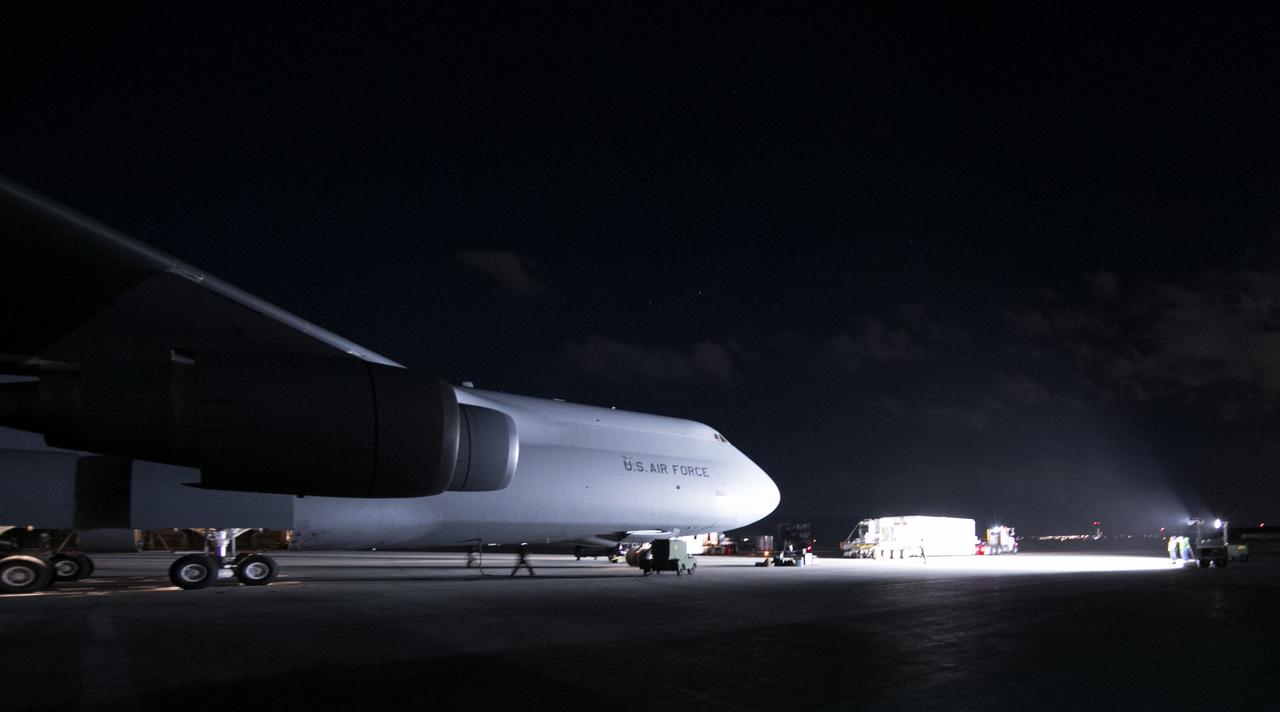
NOAA's Geostationary Operational Environmental Satellite-S (GOES-S) will be loaded into a U.S. Air Force C-5M Super Galaxy cargo aircraft and flown to NASA's Kennedy Space Center in Florida. After it arrives at Kennedy's Shuttle Landing Facility, it will be offloaded and transported to the Astrotech Space Operations facility in Titusville, Florida, to prepare it for launch. GOES-S is the second in a series of four advanced geostationary weather satellites. The GOES-R series - consisting of the GOES-R, GOES-S, GOES-T and GOES-U spacecraft - will significantly improve the detection and observation of environmental phenomena that directly affect public safety, protection of property and the nation's economic health and prosperity. GOES-S is slated to launch March 1, 2018 aboard a United Launch Alliance Atlas V rocket from Cape Canaveral Air Force Station in Florida.
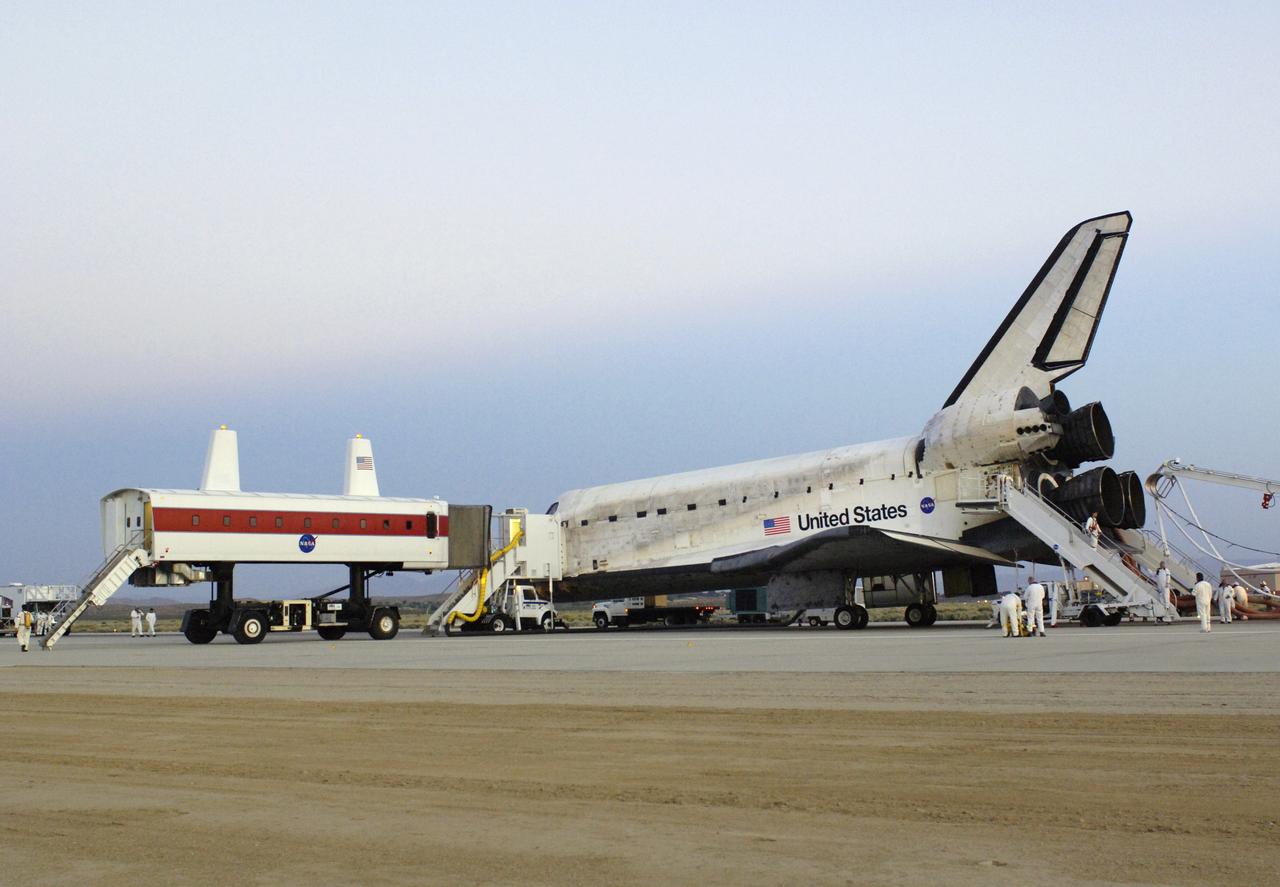
NASA's Crew Transport Vehicle, or CTV, pulls up to the Space Shuttle Discovery to offload the crew after a successful landing August 9, 2005 at Edwards Air Force Base, California. The landing marked the end of the STS-114 mission. Space Shuttle Discovery landed safely at NASA's Dryden Flight Research Center at Edwards Air Force Base in California at 5:11:22 a.m. PDT this morning, following the very successful 14-day STS-114 return to flight mission. During their two weeks in space, Commander Eileen Collins and her six crewmates tested out new safety procedures and delivered supplies and equipment the International Space Station. Discovery spent two weeks in space, where the crew demonstrated new methods to inspect and repair the Shuttle in orbit. The crew also delivered supplies, outfitted and performed maintenance on the International Space Station. A number of these tasks were conducted during three spacewalks. In an unprecedented event, spacewalkers were called upon to remove protruding gap fillers from the heat shield on Discovery's underbelly. In other spacewalk activities, astronauts installed an external platform onto the Station's Quest Airlock and replaced one of the orbital outpost's Control Moment Gyroscopes. Inside the Station, the STS-114 crew conducted joint operations with the Expedition 11 crew. They unloaded fresh supplies from the Shuttle and the Raffaello Multi-Purpose Logistics Module. Before Discovery undocked, the crews filled Raffeallo with unneeded items and returned to Shuttle payload bay. Discovery launched on July 26 and spent almost 14 days on orbit.
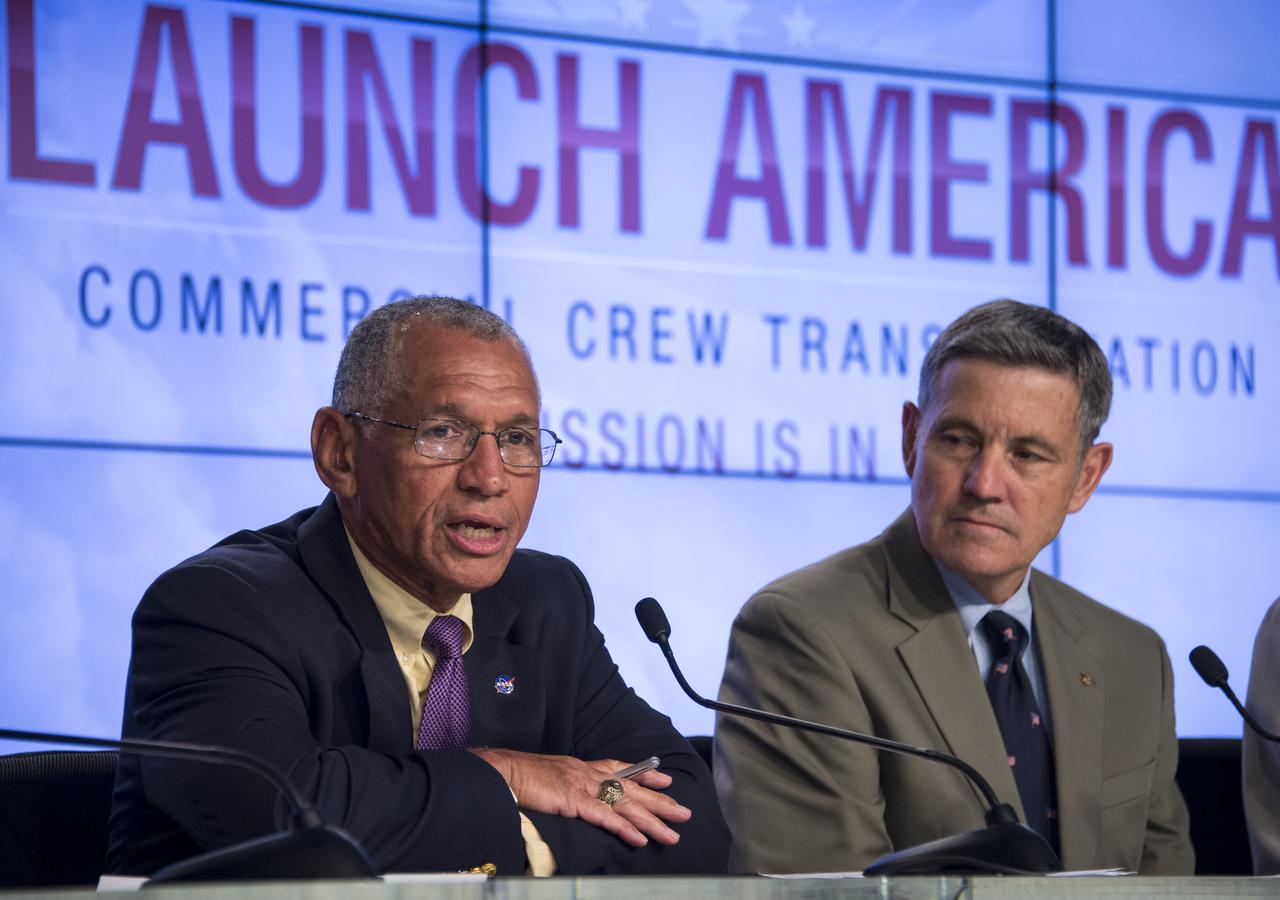
NASA Administrator Charles Bolden, left, announces the agency’s selection of Boeing and SpaceX to transport U.S. crews to and from the International Space Station using the Boeing CST-100 and the SpaceX Crew Dragon spacecraft as Former astronaut Bob Cabana, director of NASA's Kennedy Space Center in Florida looks on at NASA’s Kennedy Space Center in Cape Canaveral, Fla. on Tuesday, Sept. 16, 2014. These Commercial Crew Transportation Capability (CCtCap) contracts are designed to complete the NASA certification for a human space transportation system capable of carrying people into orbit. Once certification is complete, NASA plans to use these systems to transport astronauts to the space station and return them safely to Earth. Photo Credit: (NASA/Bill Ingalls)

Former astronaut Bob Cabana, director of NASA's Kennedy Space Center in Florida, speaks during a news conference where it was announced that Boeing and SpaceX have been selected to transport U.S. crews to and from the International Space Station using the Boeing CST-100 and the SpaceX Crew Dragon spacecraft, at NASA’s Kennedy Space Center in Cape Canaveral, Fla. on Tuesday, Sept. 16, 2014. These Commercial Crew Transportation Capability (CCtCap) contracts are designed to complete the NASA certification for a human space transportation system capable of carrying people into orbit. Once certification is complete, NASA plans to use these systems to transport astronauts to the space station and return them safely to Earth. Photo Credit: (NASA/Bill Ingalls)
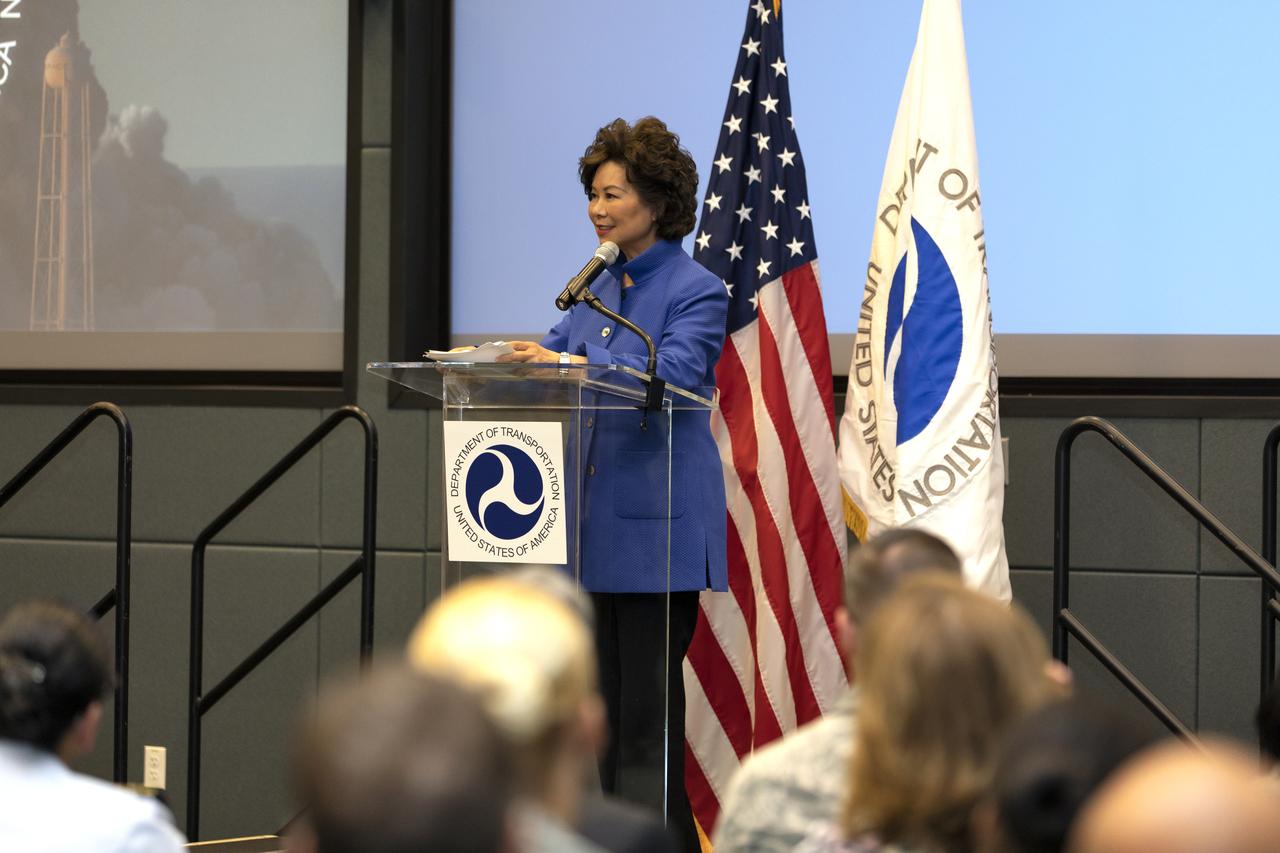
Secretary Elaine L. Chao, of the U.S. Department of Transportation (DOT), visits NASA’s Kennedy Space Center in Florida on April 24, 2019. She spoke to Kennedy’s leadership in the Operations and Support Building II and discussed the DOT’s role in enabling commercial space.
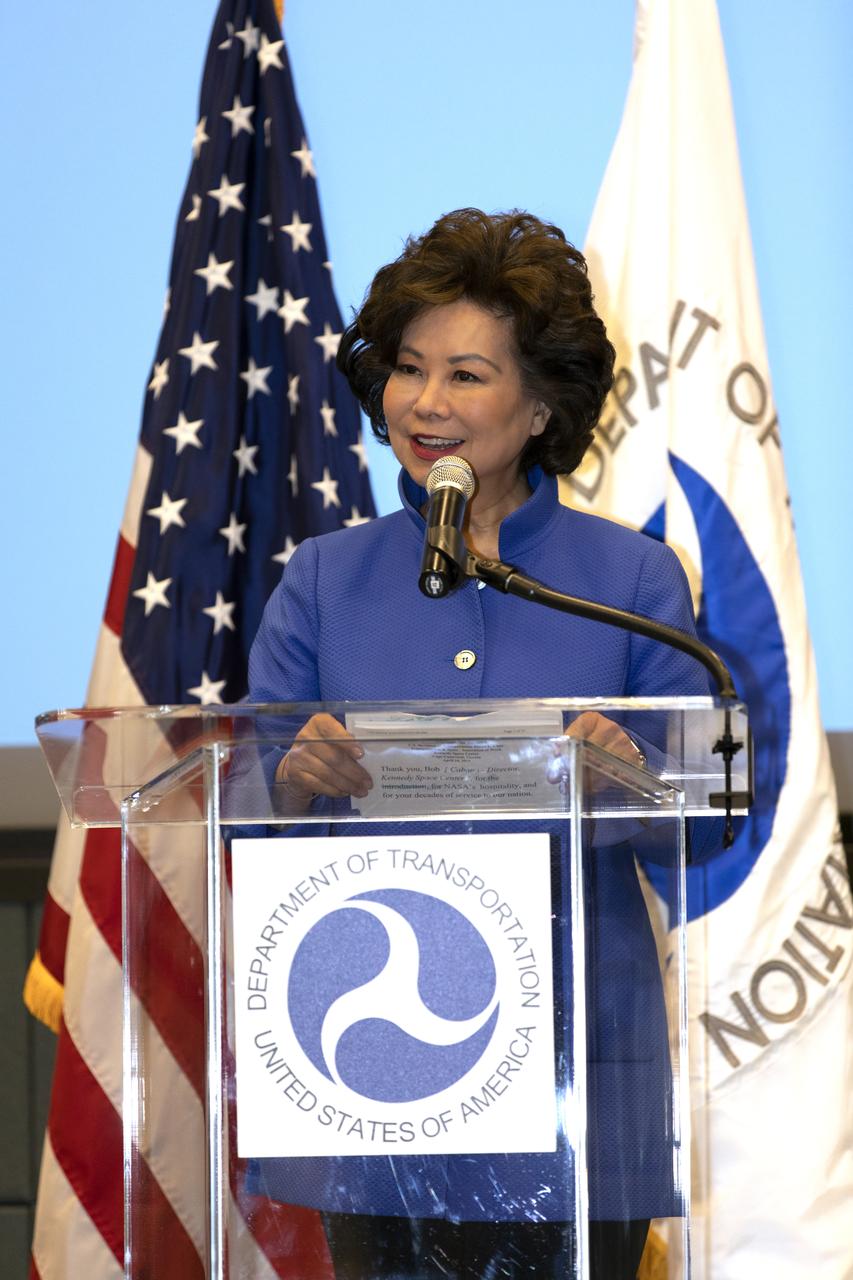
Secretary Elaine L. Chao, of the U.S. Department of Transportation (DOT), visits NASA’s Kennedy Space Center in Florida on April 24, 2019. She spoke to Kennedy’s leadership in the Operations and Support Building II and discussed the DOT’s role in enabling commercial space.
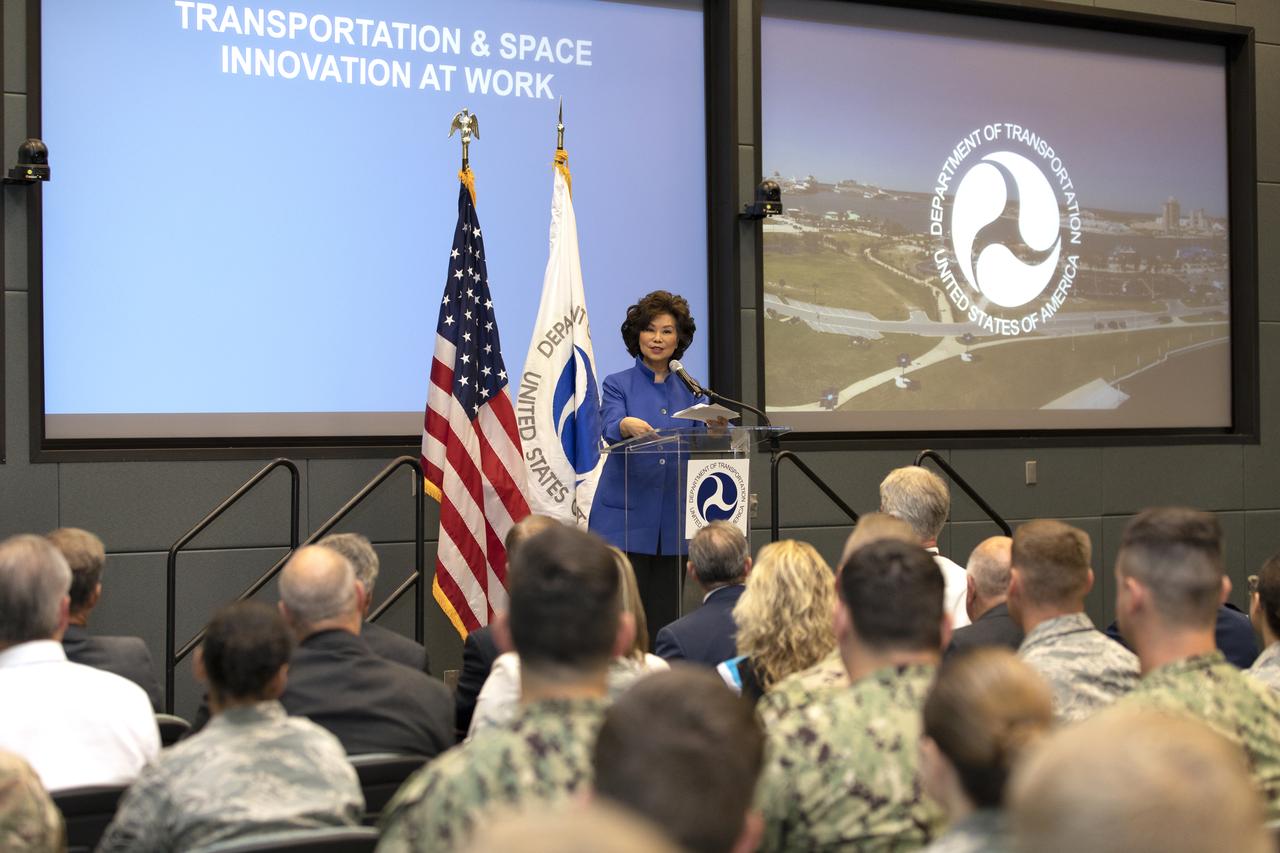
Secretary Elaine L. Chao, of the U.S. Department of Transportation (DOT), visits NASA’s Kennedy Space Center in Florida on April 24, 2019. She spoke to Kennedy’s leadership in the Operations and Support Building II and discussed the DOT’s role in enabling commercial space.
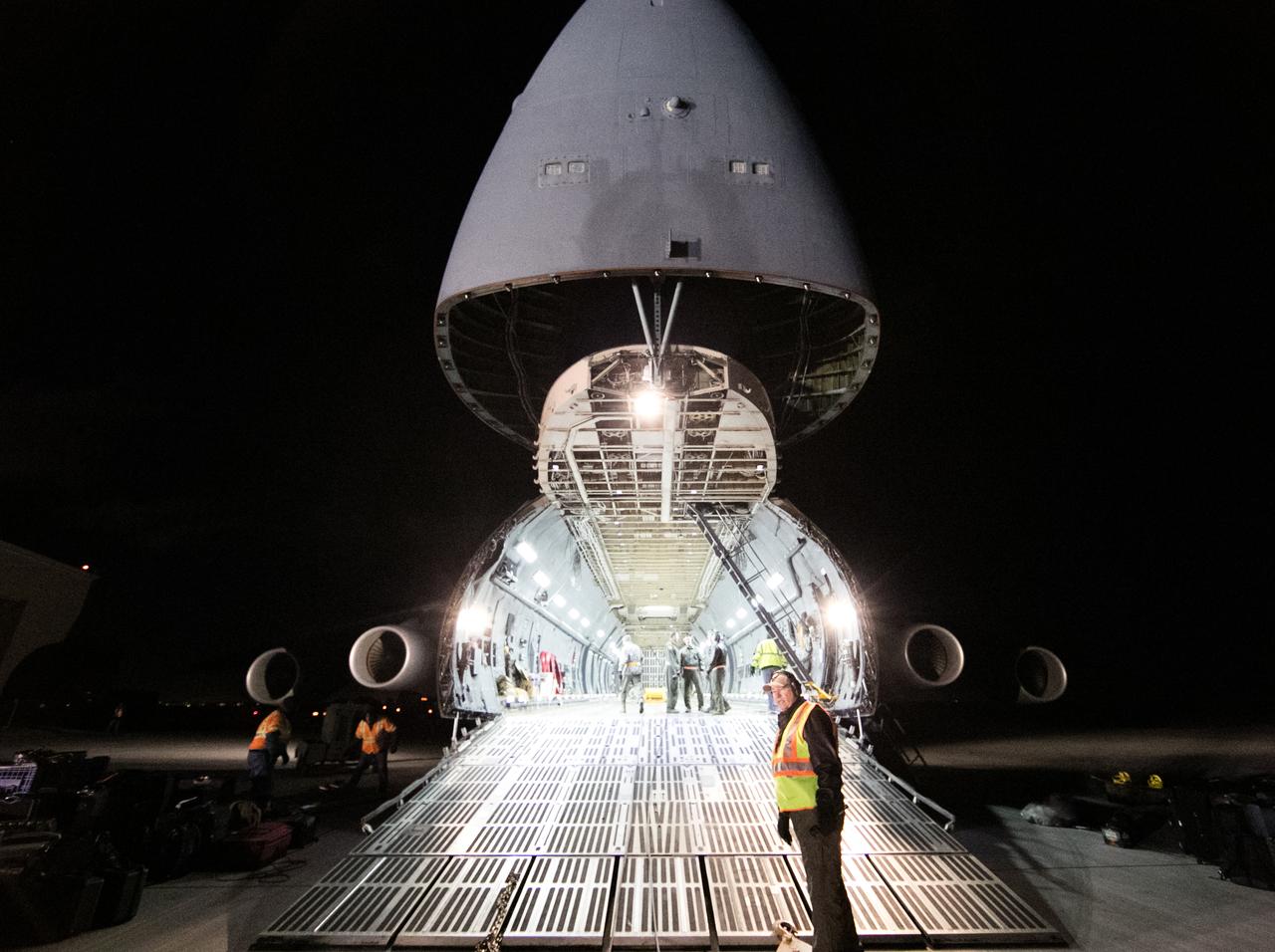
At Buckley Air Force Base in Aurora, Colorado, the front of a U.S. Air Force C-5M super Galaxy cargo aircraft has been raised to allow NOAA's Geostationary Operational Environmental Satellite-S (GOES-S) to be loaded into the cargo hold. GOES-S will be flown to NASA's Kennedy Space Center in Florida. After it arrives at Kennedy's Shuttle Landing Facility, it will be offloaded and transported to the Astrotech Space Operations facility in Titusville, Florida, to prepare it for launch. GOES-S is the second in a series of four advanced geostationary weather satellites. The GOES-R series - consisting of the GOES-R, GOES-S, GOES-T and GOES-U spacecraft - will significantly improve the detection and observation of environmental phenomena that directly affect public safety, protection of property and the nation's economic health and prosperity. GOES-S is slated to launch March 1, 2018 aboard a United Launch Alliance Atlas V rocket from Cape Canaveral Air Force Station in Florida.
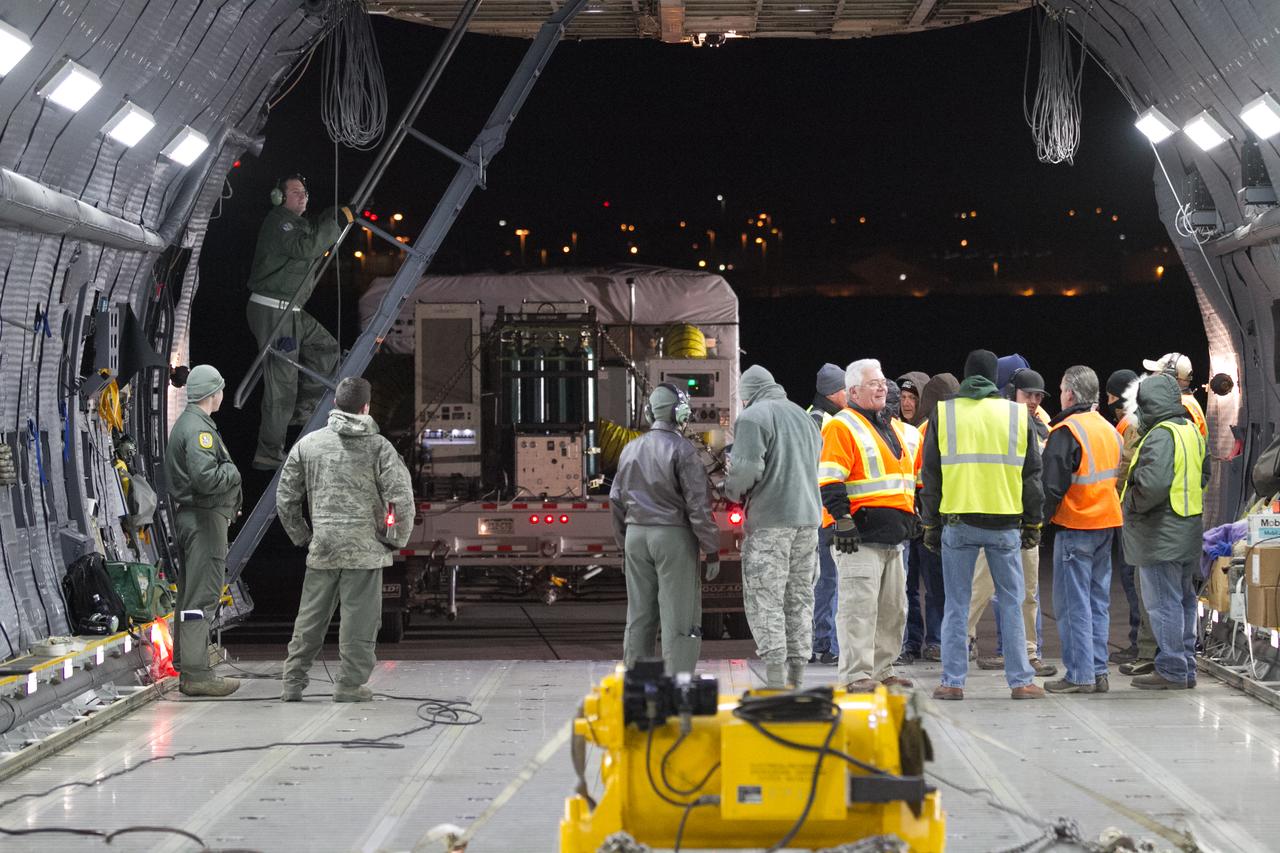
At Buckley Air Force Base in Aurora, Colorado, the front of a U.S. Air Force C-5M super Galaxy cargo aircraft has been raised to allow NOAA's Geostationary Operational Environmental Satellite-S (GOES-S) to be loaded into the cargo hold. GOES-S will be flown to NASA's Kennedy Space Center in Florida. After it arrives at Kennedy's Shuttle Landing Facility, it will be offloaded and transported to the Astrotech Space Operations facility in Titusville, Florida, to prepare it for launch. GOES-S is the second in a series of four advanced geostationary weather satellites. The GOES-R series - consisting of the GOES-R, GOES-S, GOES-T and GOES-U spacecraft - will significantly improve the detection and observation of environmental phenomena that directly affect public safety, protection of property and the nation's economic health and prosperity. GOES-S is slated to launch March 1, 2018 aboard a United Launch Alliance Atlas V rocket from Cape Canaveral Air Force Station in Florida.
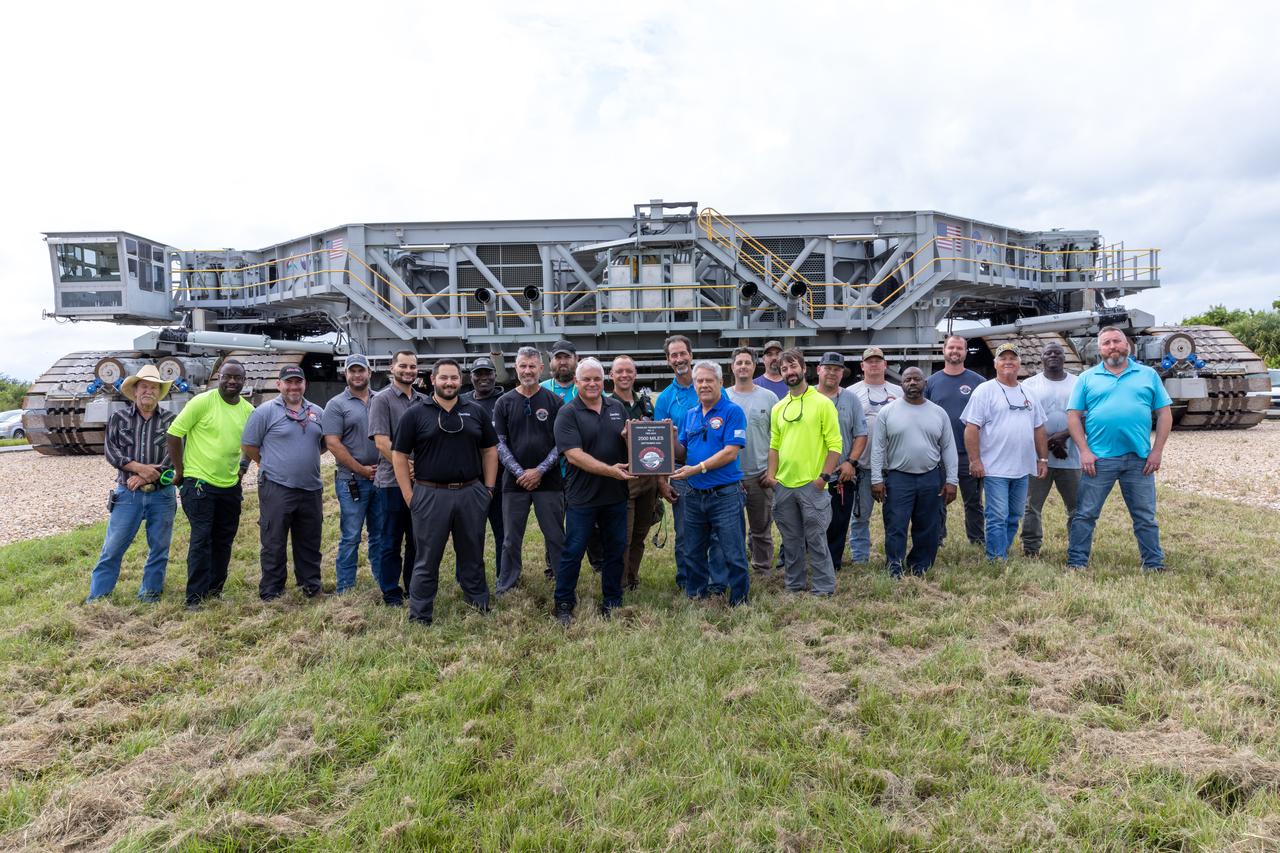
Teams with NASA’s Exploration Ground Systems at NASA’s Kennedy Space Center in Florida celebrate on Wednesday, Sept. 25, 2024, the agency’s crawler-transporter 2 reaching the milestone of 2,500 miles traveled since its construction in 1965. Crawler-transporter 2 reached the milestone while teams took it on a trip in preparation for supporting the roll of the mobile launcher from Launch Pad 39B back into the spaceport’s Vehicle Assembly Building ahead of the Artemis II launch. Built originally to transport massive Saturn V rockets during the Apollo Program, crawler-transporter 2 continued its service during the Space Shuttle Program, and currently transports the massive SLS (Space Launch System) rocket and Orion spacecraft atop the mobile launcher as part of the agency’s Artemis campaign.
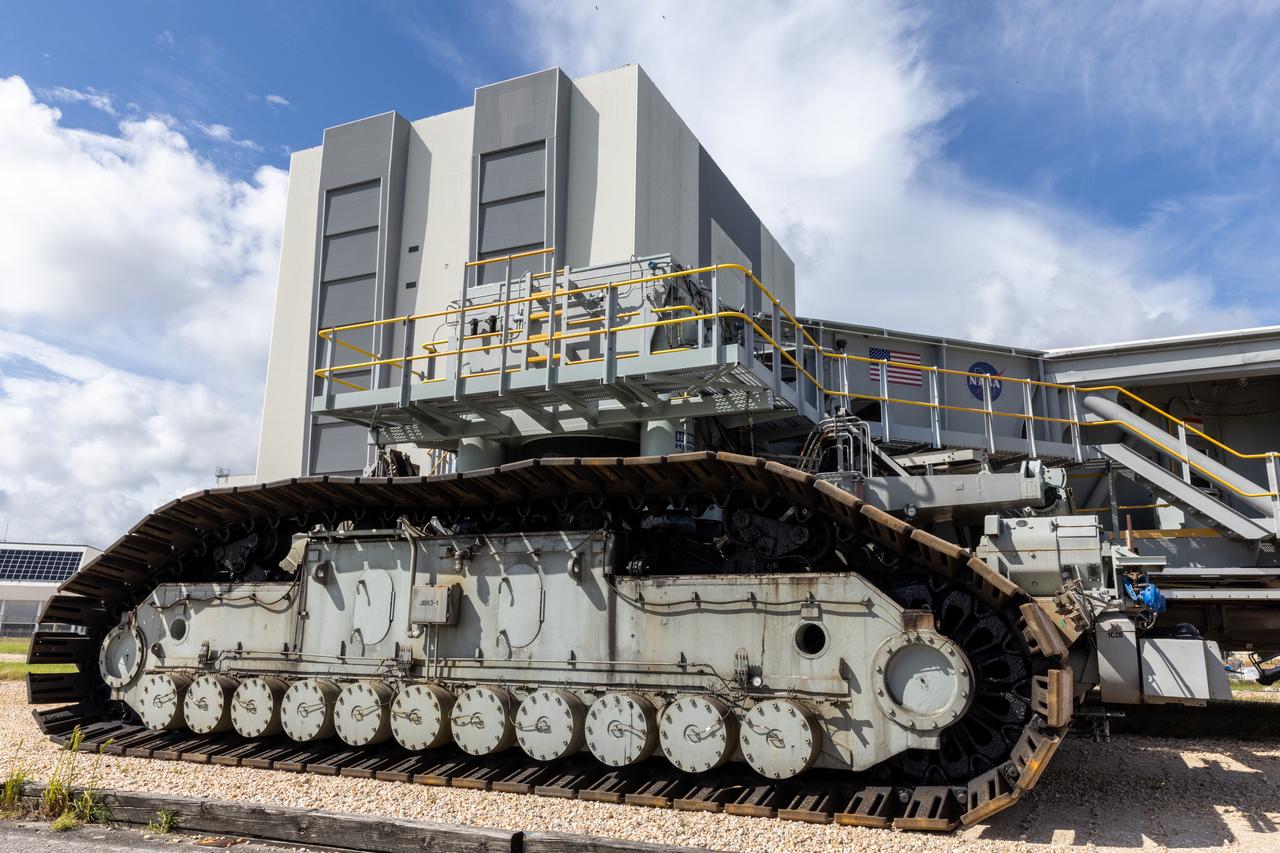
NASA’s crawler-transporter 2 moves slowly along the crawlerway towards Launch Pad 39B at the agency’s Kennedy Space Center in Florida on Wednesday, Sept. 25, 2024, after reaching the milestone of 2,500 miles traveled since its construction in 1965. Crawler-transporter 2 reached the milestone while teams with NASA’s Exploration Ground Systems took it on a trip in preparation for supporting the roll of the mobile launcher back into the spaceport’s Vehicle Assembly Building ahead of the Artemis II launch. Built originally to transport massive Saturn V rockets during the Apollo Program, crawler-transporter 2 continued its service during the Space Shuttle Program, and currently transports the massive SLS (Space Launch System) rocket and Orion spacecraft atop the mobile launcher as part of the agency’s Artemis campaign.
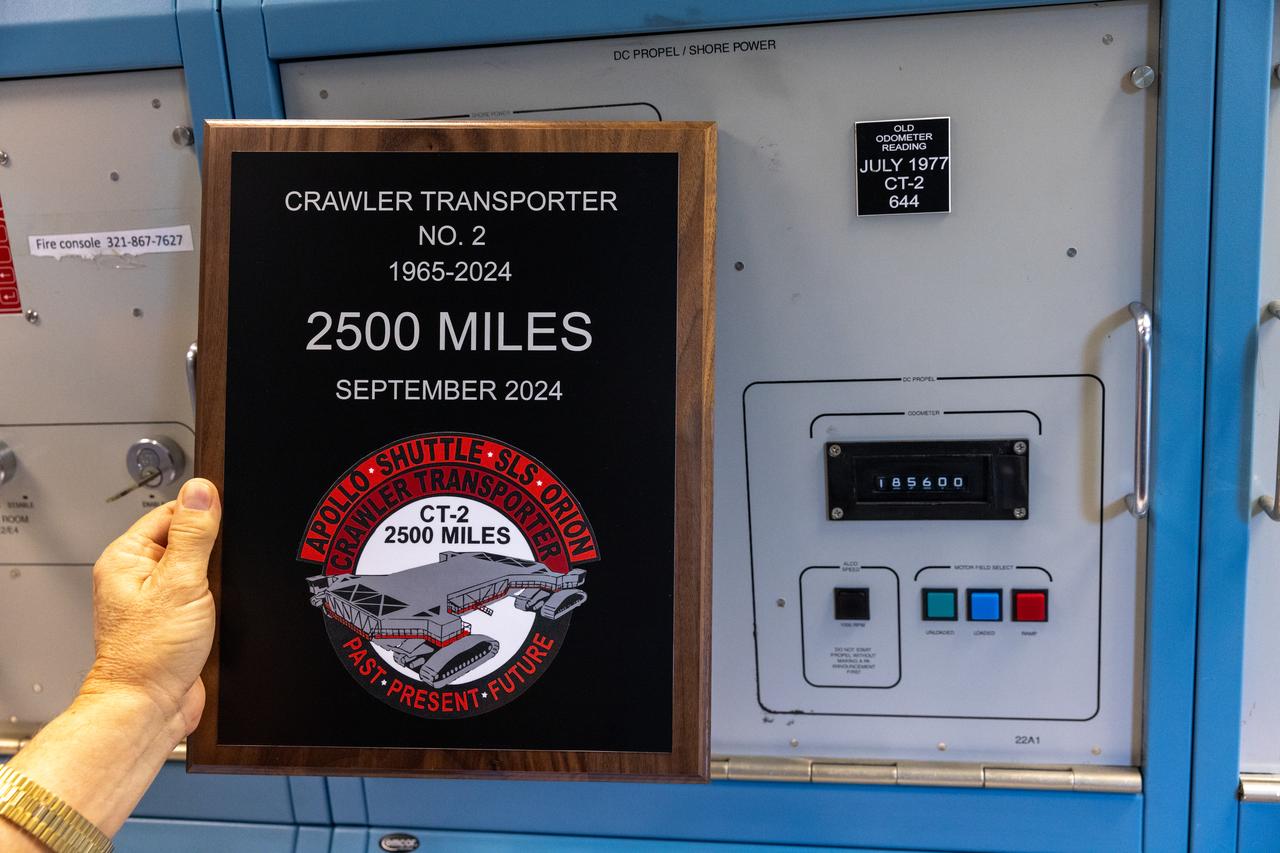
A plaque is held near the odometer of the agency’s crawler-transporter 2, on Wednesday, Sept. 25, 2024, at NASA’s Kennedy Space Center in Florida, commemorating the milestone of 2,500 miles traveled since its construction in 1965. Crawler-transporter 2 reached the milestone while teams with NASA’s Exploration Ground Systems took it on a trip in preparation for supporting the roll of the mobile launcher from Launch Pad 39B back into the spaceport’s Vehicle Assembly Building ahead of the Artemis II launch. Built originally to transport massive Saturn V rockets during the Apollo Program, crawler-transporter 2 continued its service during the Space Shuttle Program, and currently transports the massive SLS (Space Launch System) rocket and Orion spacecraft atop the mobile launcher as part of the agency’s Artemis campaign.
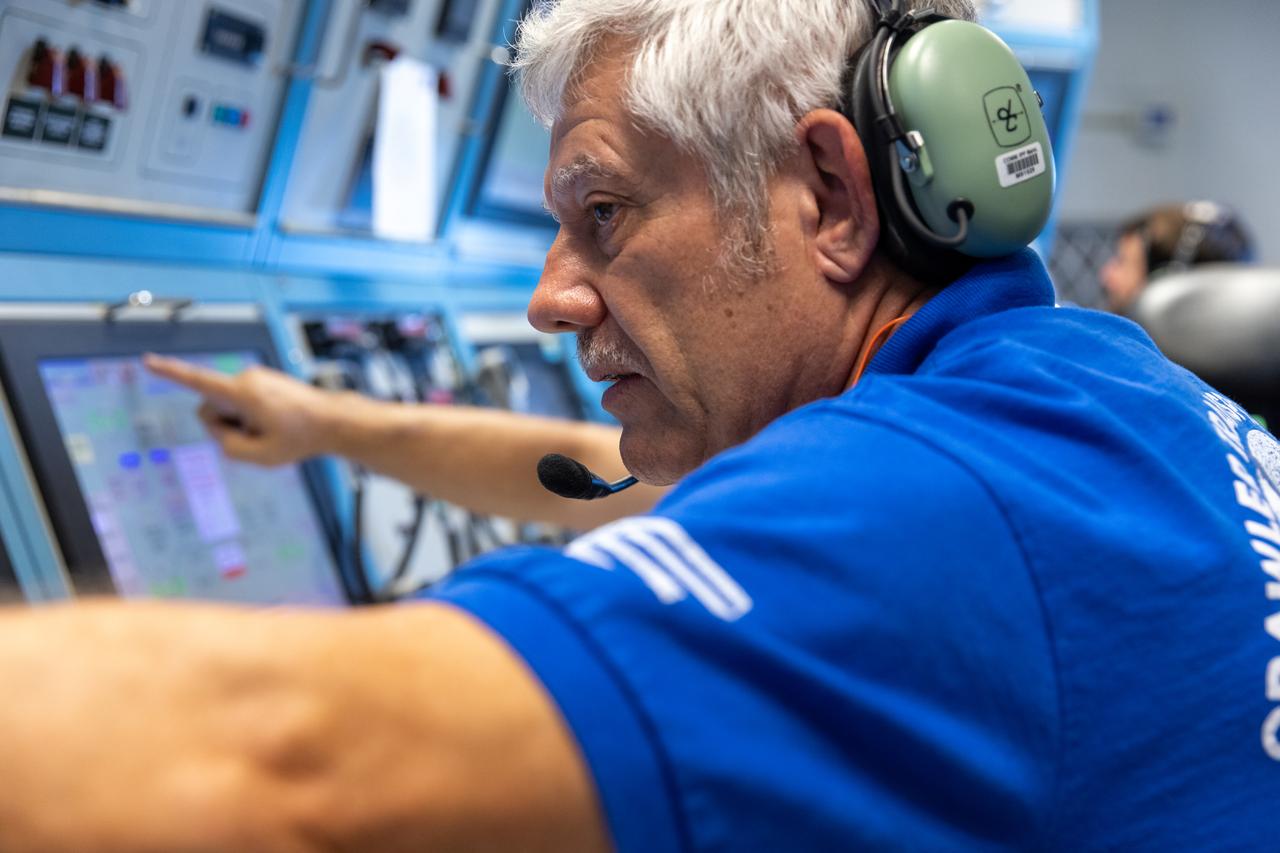
Teams with NASA’s Exploration Ground Systems at NASA’s Kennedy Space Center in Florida celebrate on Wednesday, Sept. 25, 2024, the agency’s crawler-transporter 2 reaching the milestone of 2,500 miles traveled since its construction in 1965. Crawler-transporter 2 reached the milestone while teams took it on a trip in preparation for supporting the roll of the mobile launcher from Launch Pad 39B back into the spaceport’s Vehicle Assembly Building ahead of the Artemis II launch. Built originally to transport massive Saturn V rockets during the Apollo Program, crawler-transporter 2 continued its service during the Space Shuttle Program, and currently transports the massive SLS (Space Launch System) rocket and Orion spacecraft atop the mobile launcher as part of the agency’s Artemis campaign.
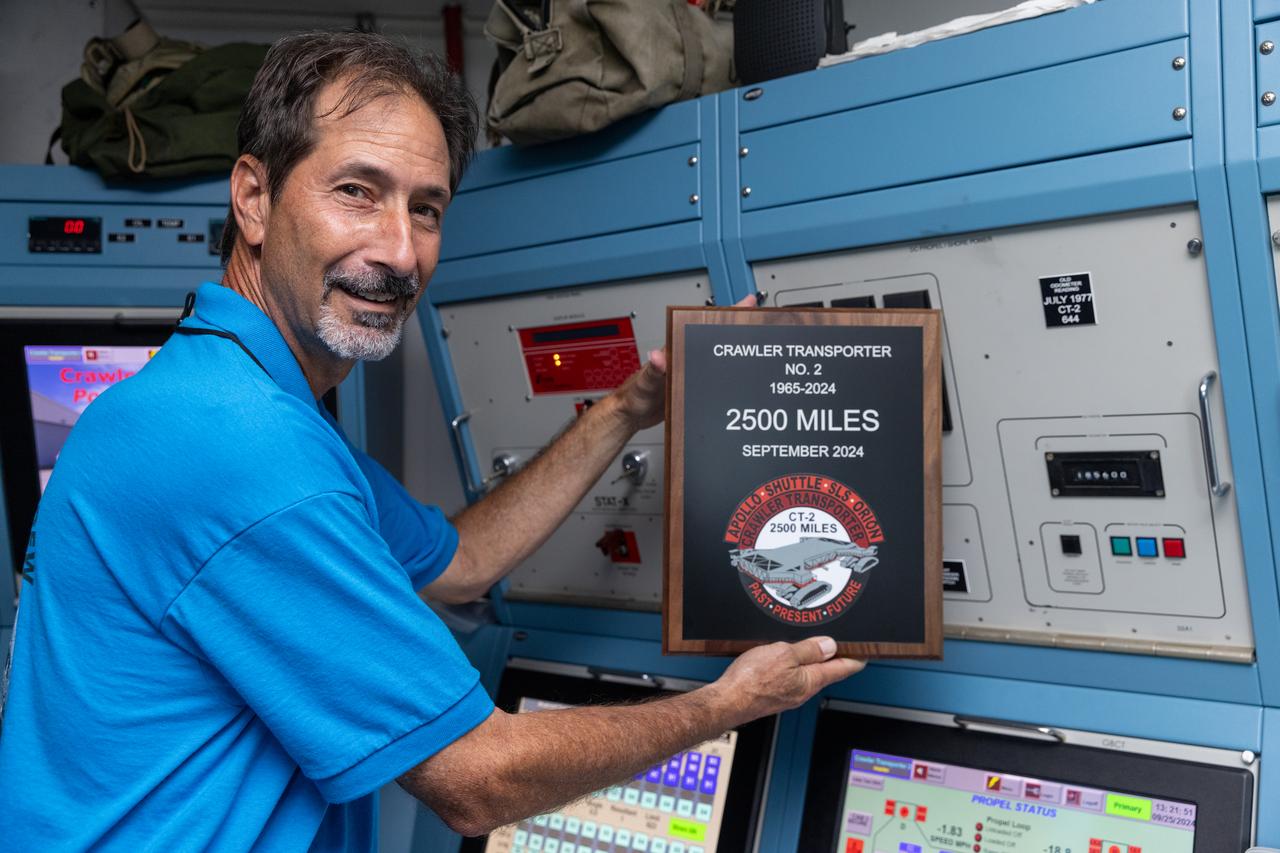
John Giles, crawler element operations manager for NASA’s Exploration Ground Systems, holds a plaque near the odometer of the agency’s crawler-transporter 2, on Wednesday, Sept. 25, 2024, at NASA’s Kennedy Space Center in Florida, commemorating the milestone of 2,500 miles traveled since its construction in 1965. Crawler-transporter 2 reached the milestone while teams took it on a trip in preparation for supporting the roll of the mobile launcher from Launch Pad 39B back into the spaceport’s Vehicle Assembly Building ahead of the Artemis II launch. Built originally to transport massive Saturn V rockets during the Apollo Program, crawler-transporter 2 continued its service during the Space Shuttle Program, and currently transports the massive SLS (Space Launch System) rocket and Orion spacecraft atop the mobile launcher as part of the agency’s Artemis campaign.
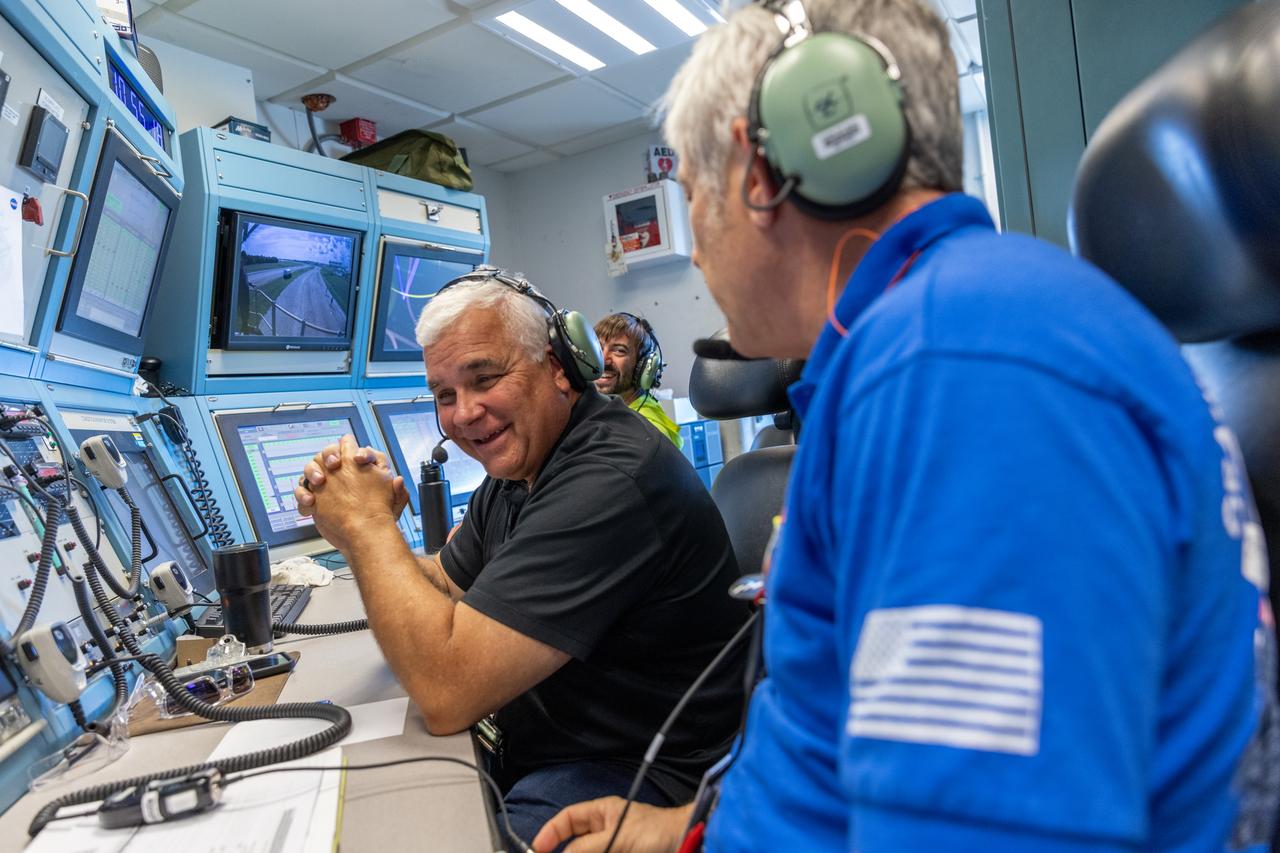
Teams with NASA’s Exploration Ground Systems at NASA’s Kennedy Space Center in Florida celebrate on Wednesday, Sept. 25, 2024, the agency’s crawler-transporter 2 reaching the milestone of 2,500 miles traveled since its construction in 1965. Crawler-transporter 2 reached the milestone while teams took it on a trip in preparation for supporting the roll of the mobile launcher from Launch Pad 39B back into the spaceport’s Vehicle Assembly Building ahead of the Artemis II launch. Built originally to transport massive Saturn V rockets during the Apollo Program, crawler-transporter 2 continued its service during the Space Shuttle Program, and currently transports the massive SLS (Space Launch System) rocket and Orion spacecraft atop the mobile launcher as part of the agency’s Artemis campaign.
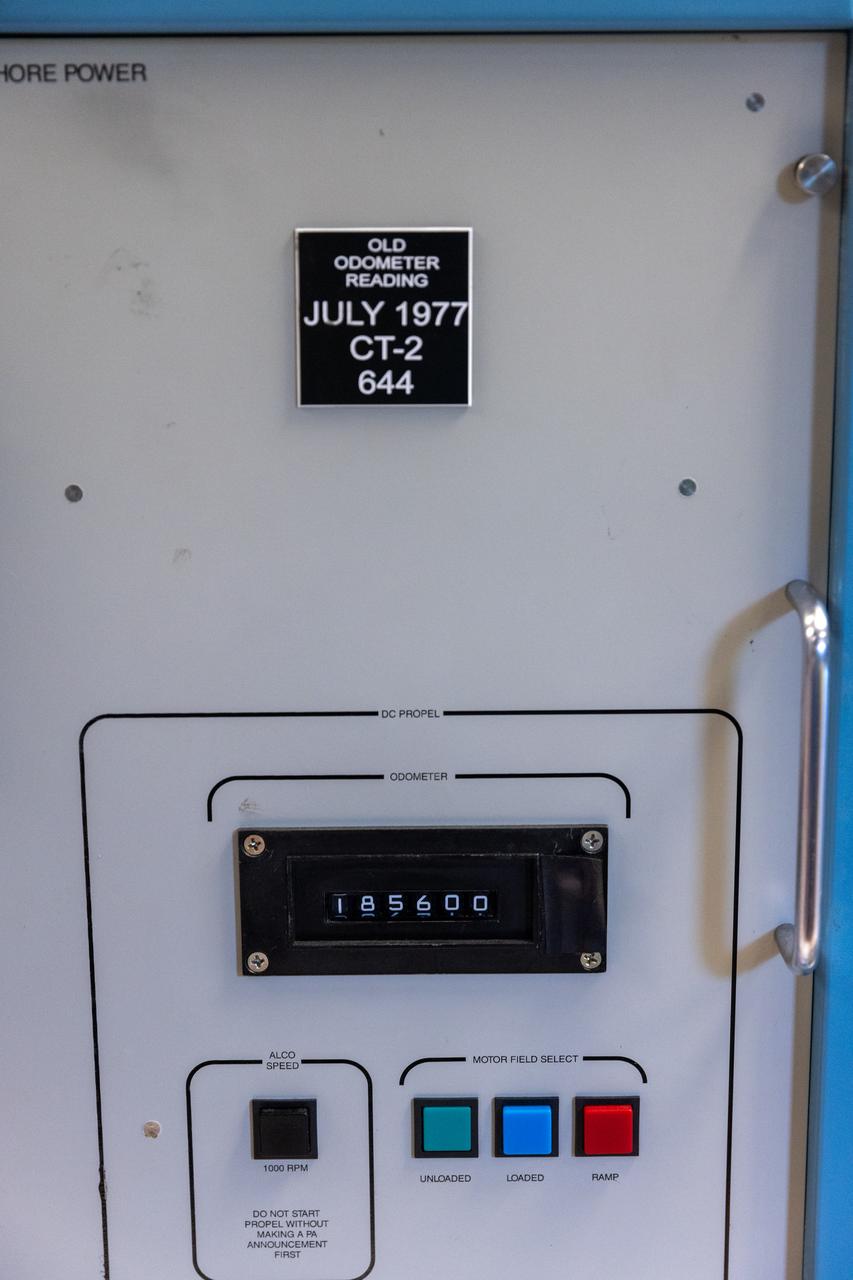
A photo of NASA’s crawler-transporter 2 odometer on Wednesday, Sept. 25, 2024, at NASA’s Kennedy Space Center in Florida, commemorates the milestone of reaching 2,500 miles traveled since its construction in 1965. Crawler-transporter 2’s original odometer ceased working in 1977 at 644 miles, so teams with NASA’s Exploration Ground Systems added the original figure to the new odometer to calculate the milestone. Built originally to transport massive Saturn V rockets during the Apollo Program, crawler-transporter 2 continued its service during the Space Shuttle Program, and currently transports the massive SLS (Space Launch System) rocket and Orion spacecraft atop the mobile launcher as part of the agency’s Artemis campaign.
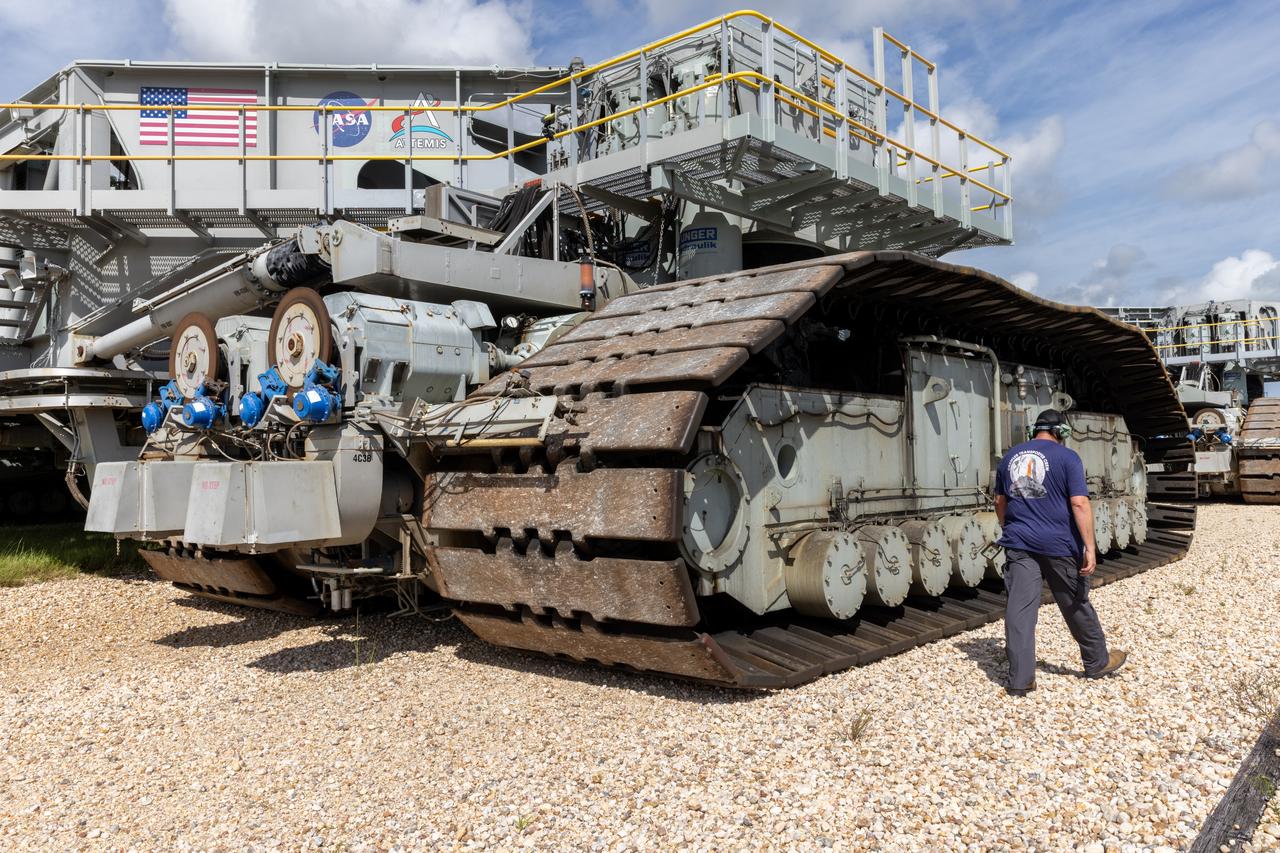
NASA’s crawler-transporter 2 moves slowly along the crawlerway towards Launch Pad 39B at the agency’s Kennedy Space Center in Florida on Wednesday, Sept. 25, 2024, after reaching the milestone of 2,500 miles traveled since its construction in 1965. Crawler-transporter 2 reached the milestone while teams with NASA’s Exploration Ground Systems took it on a trip in preparation for supporting the roll of the mobile launcher back into the spaceport’s Vehicle Assembly Building ahead of the Artemis II launch. Built originally to transport massive Saturn V rockets during the Apollo Program, crawler-transporter 2 continued its service during the Space Shuttle Program, and currently transports the massive SLS (Space Launch System) rocket and Orion spacecraft atop the mobile launcher as part of the agency’s Artemis campaign.
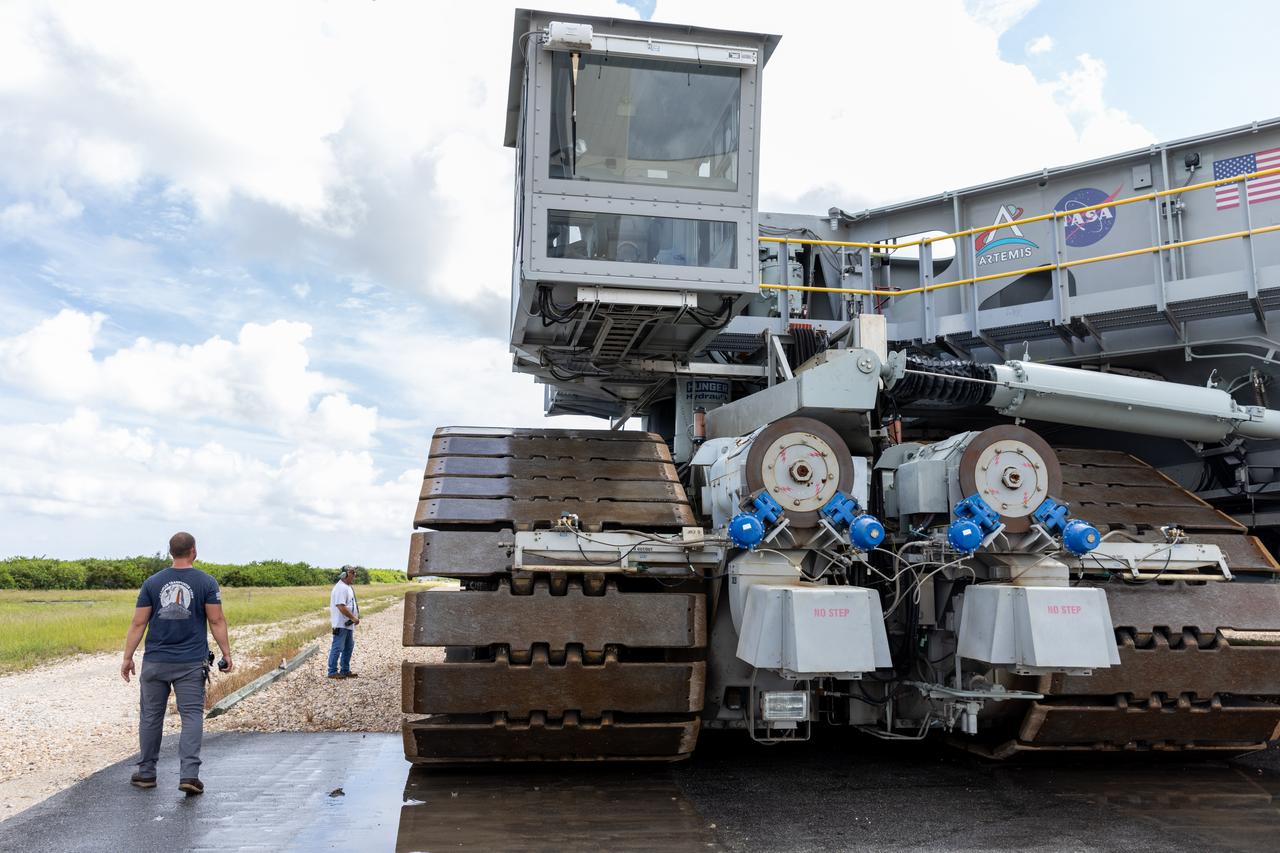
NASA’s crawler-transporter 2 moves slowly along the crawlerway towards Launch Pad 39B at the agency’s Kennedy Space Center in Florida on Wednesday, Sept. 25, 2024, after reaching the milestone of 2,500 miles traveled since its construction in 1965. Crawler-transporter 2 reached the milestone while teams with NASA’s Exploration Ground Systems took it on a trip in preparation for supporting the roll of the mobile launcher back into the spaceport’s Vehicle Assembly Building ahead of the Artemis II launch. Built originally to transport massive Saturn V rockets during the Apollo Program, crawler-transporter 2 continued its service during the Space Shuttle Program, and currently transports the massive SLS (Space Launch System) rocket and Orion spacecraft atop the mobile launcher as part of the agency’s Artemis campaign.
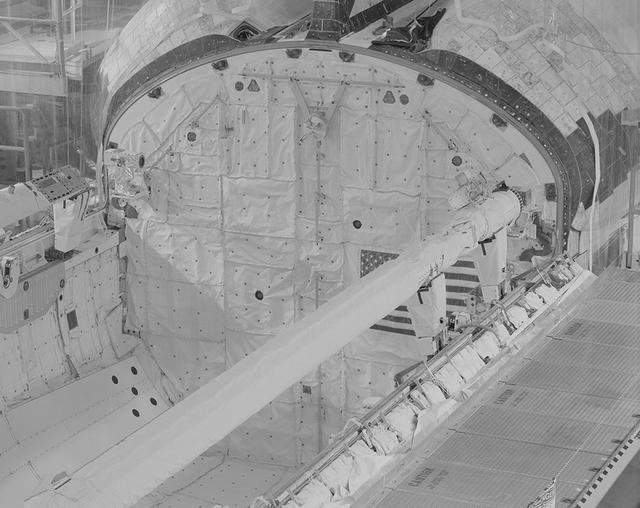
View of STS Discovery
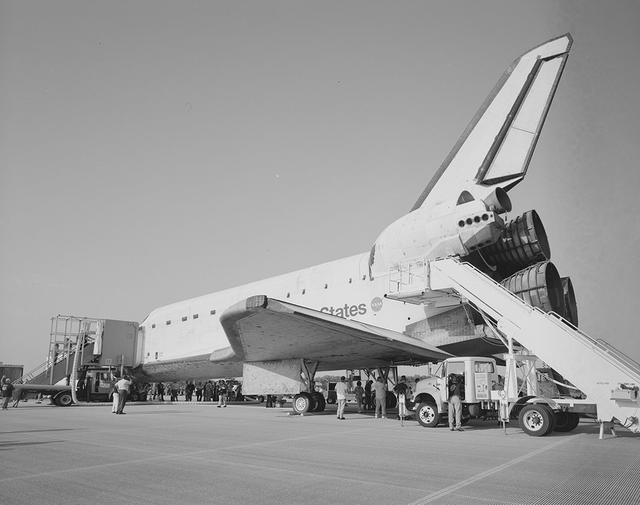
View of STS Atlantis
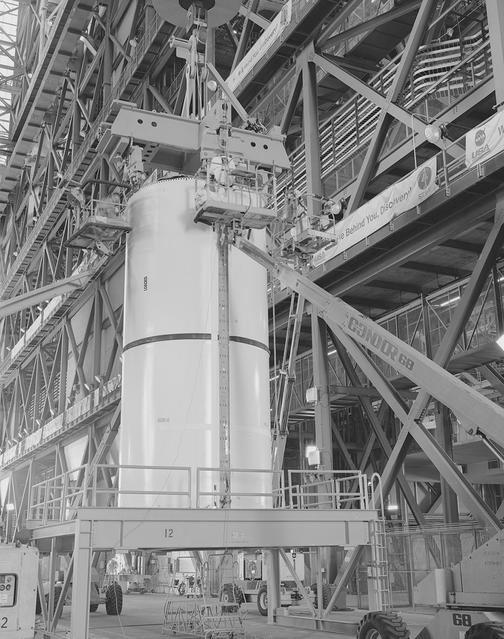
View of Solid Rocket Booster
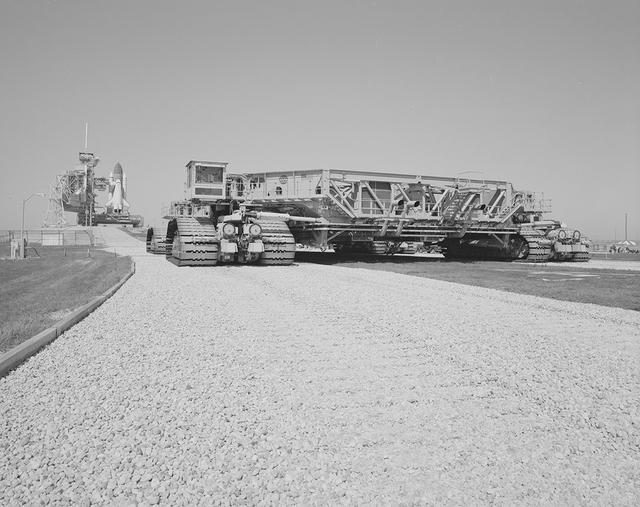
View of STS Endeavor
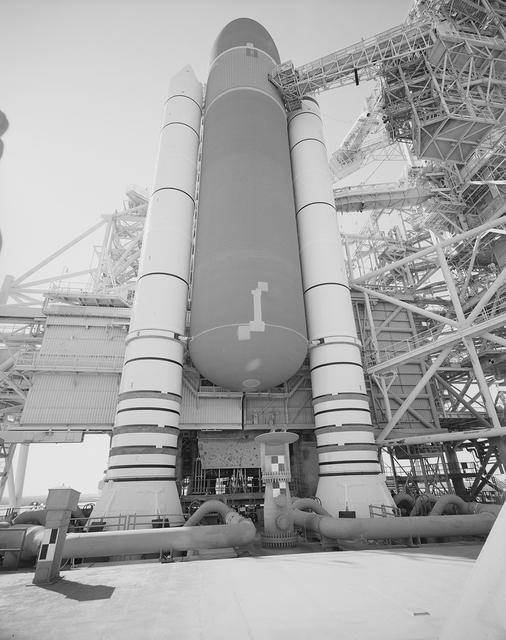
View of Solid Rocket Booster
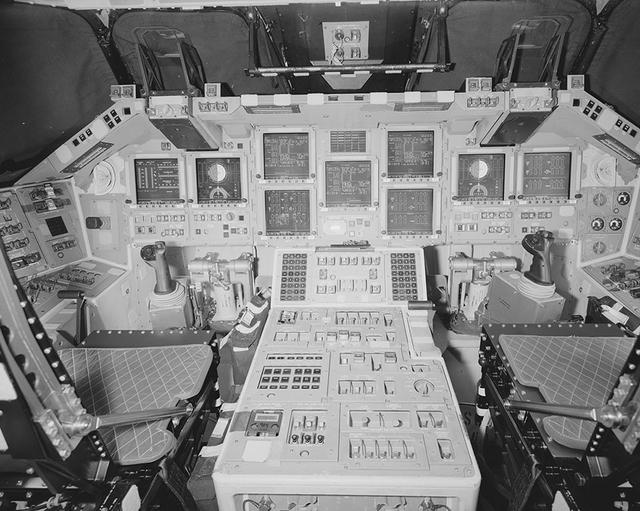
View of STS Discovery
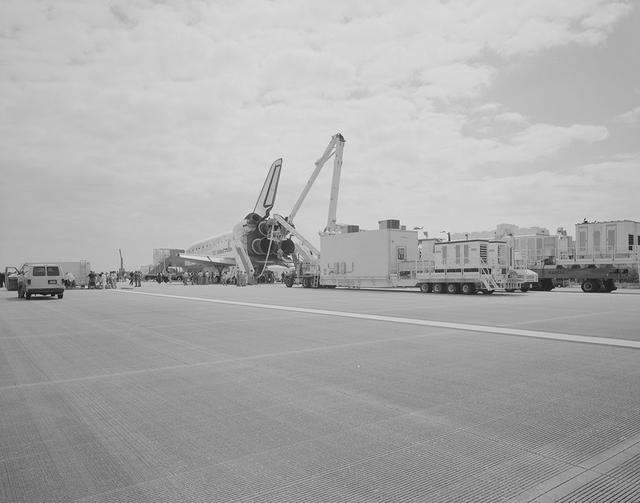
View of STS Discovery
View of STS Endeavor
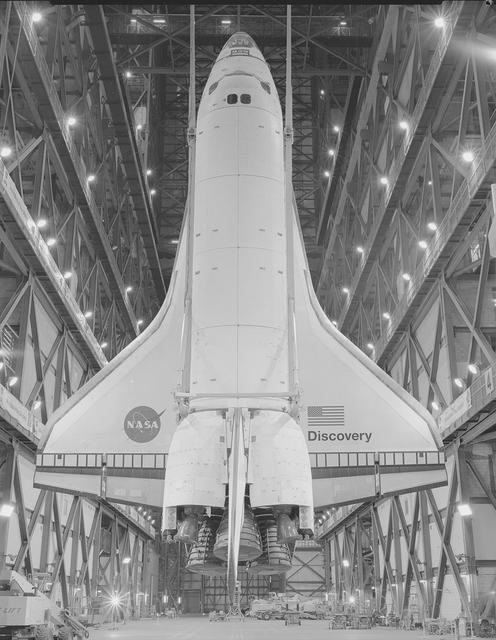
View of STS Discovery
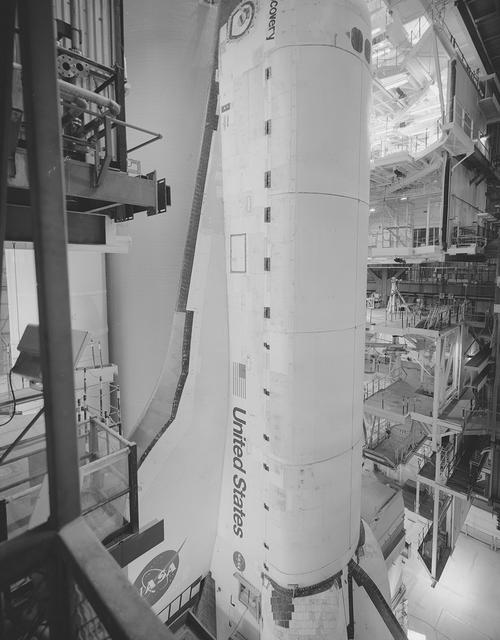
View of STS Discovery
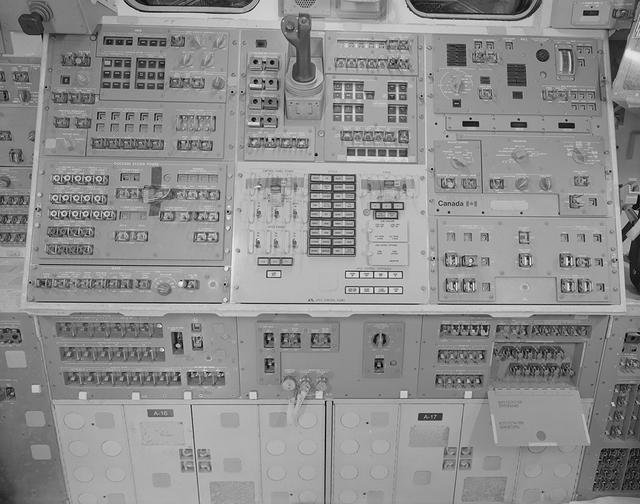
View of STS Discovery
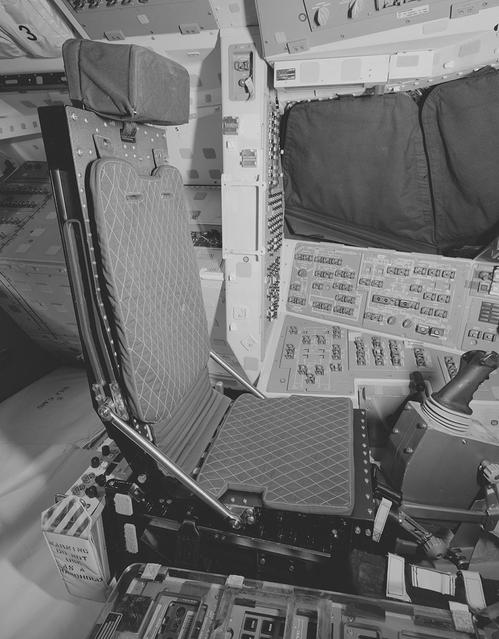
View of STS Discovery
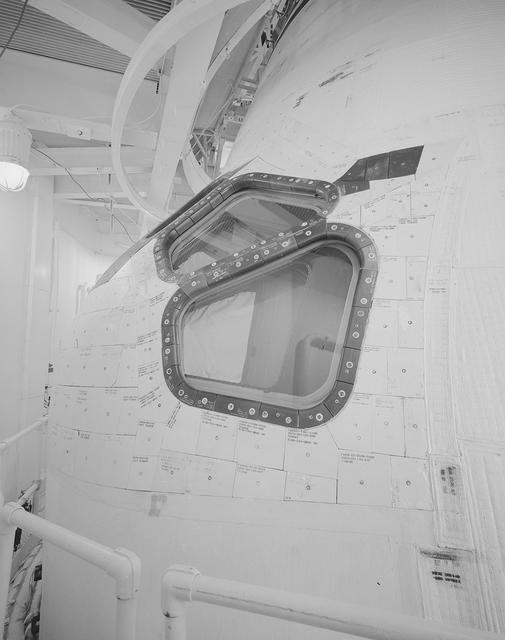
View of STS Discovery
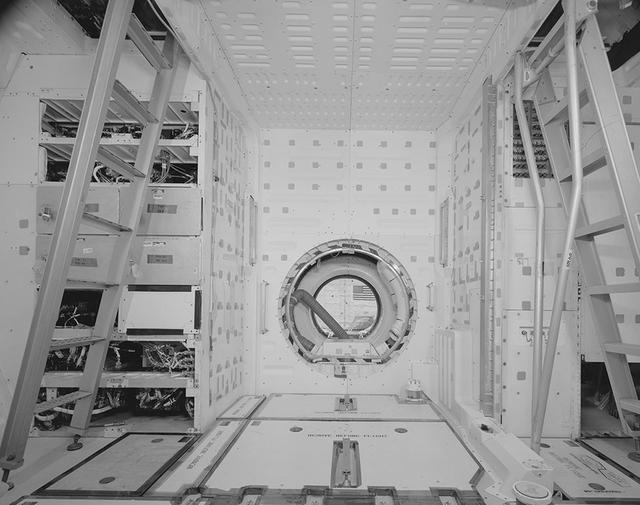
View of STS Discovery
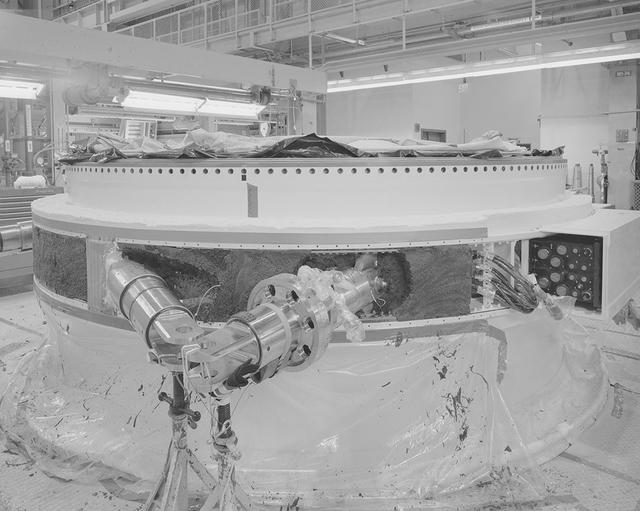
View of Solid Rocket Booster
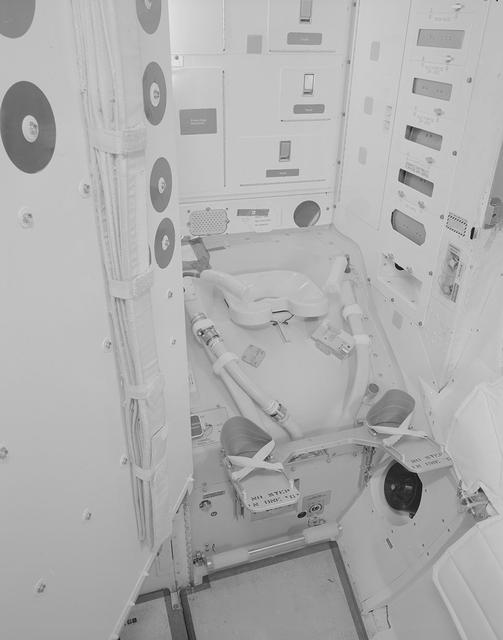
View of STS Discovery
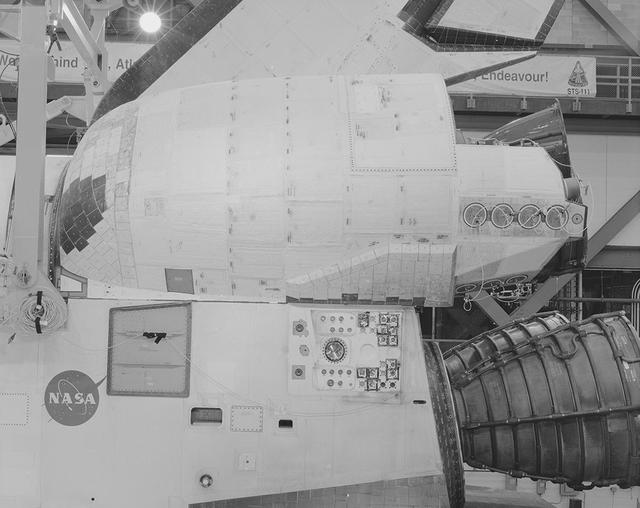
View of STS Discovery
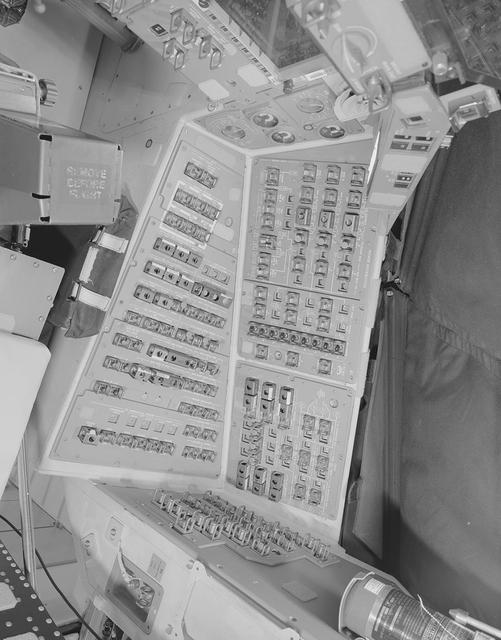
View of STS Discovery
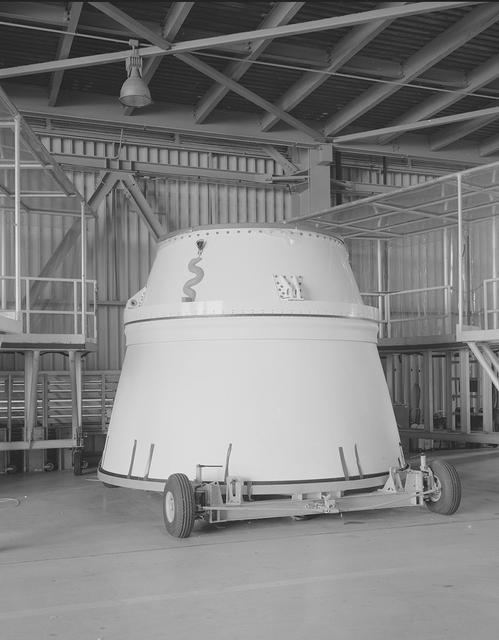
View of Solid Rocket Booster
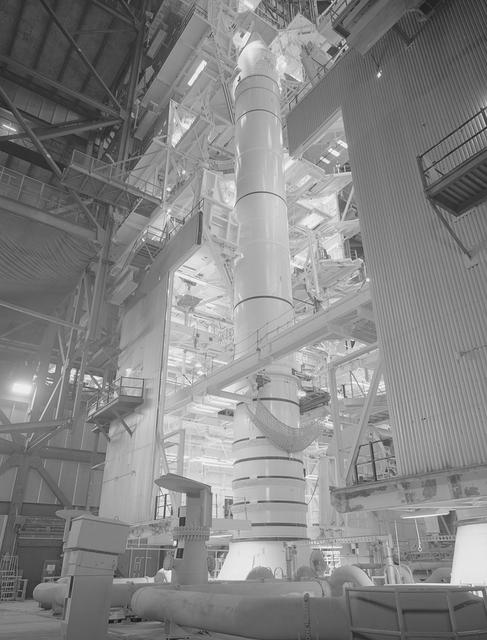
View of Solid Rocket Booster
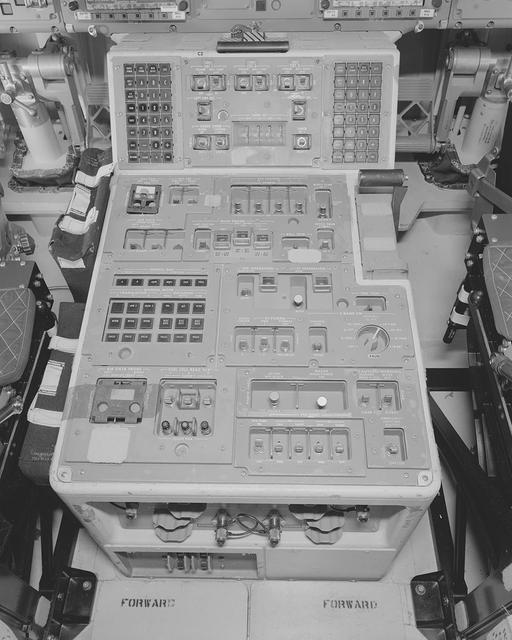
View of STS Atlantis
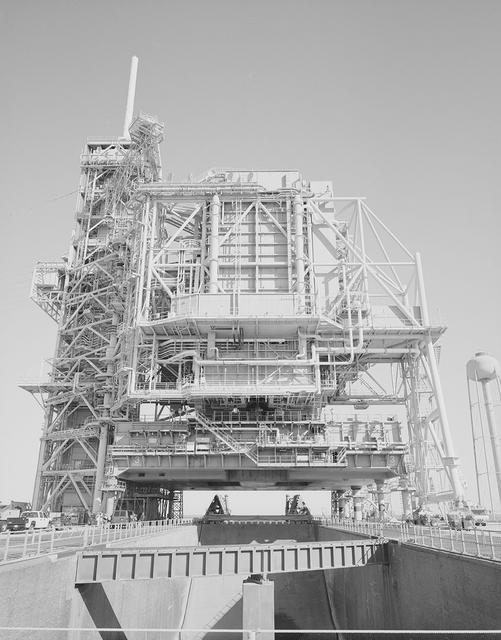
View of STS Endeavor
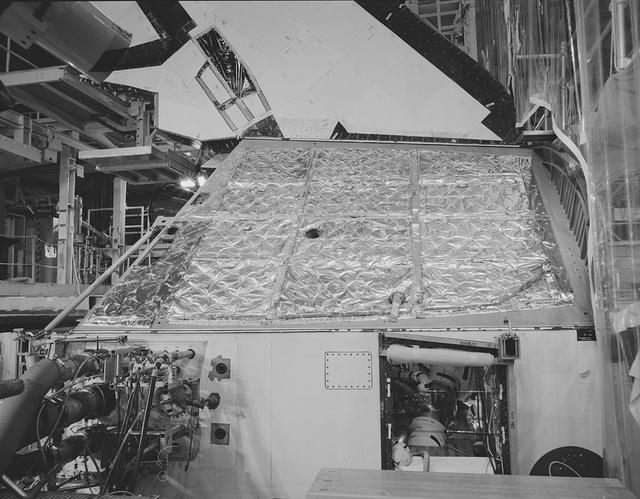
View of STS Discovery
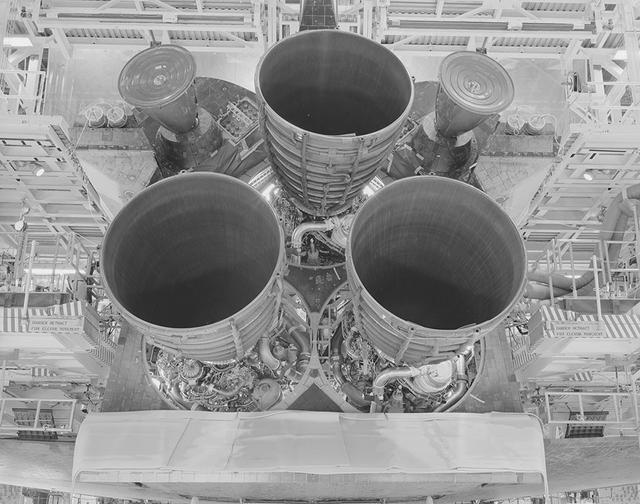
View of STS Discovery
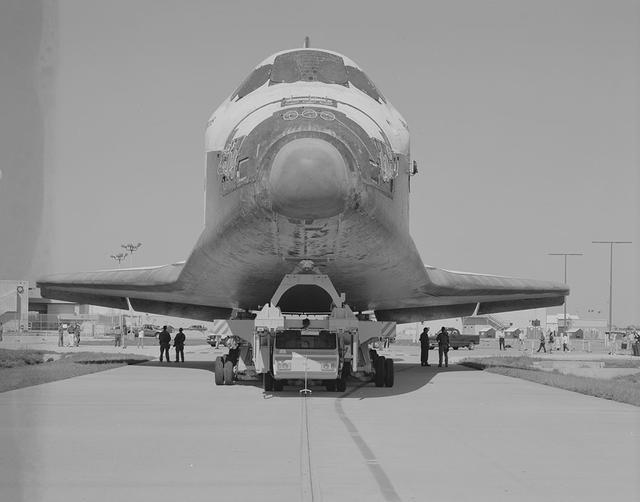
View of STS Atlantis
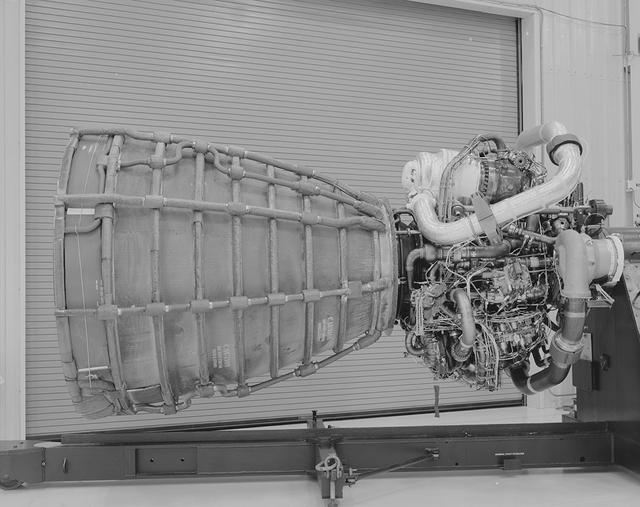
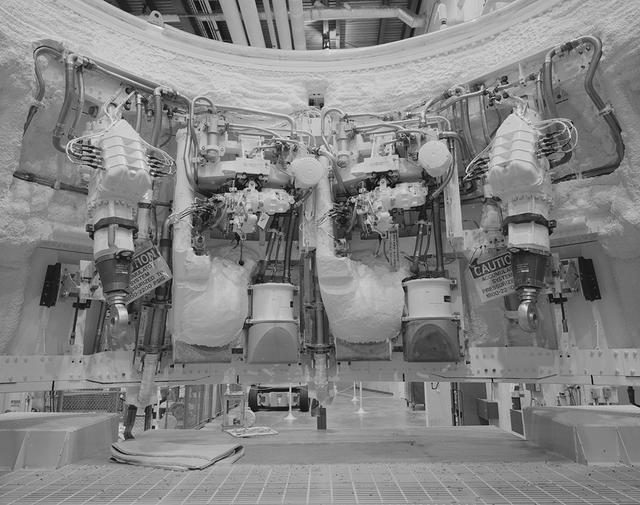
View of Space Shuttle Main Engine
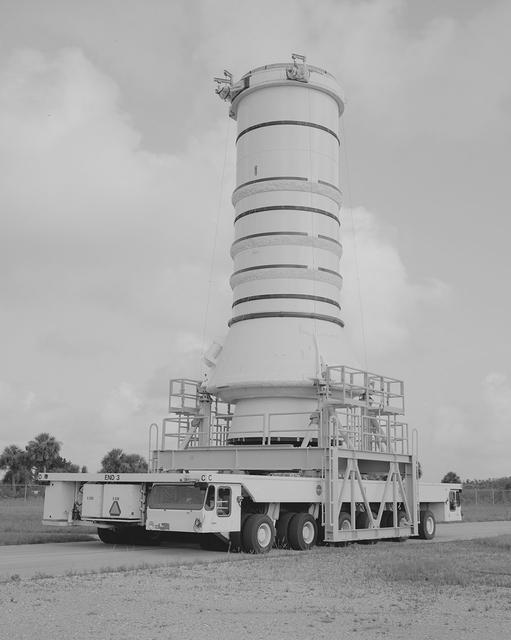
View of Solid Rocket Booster
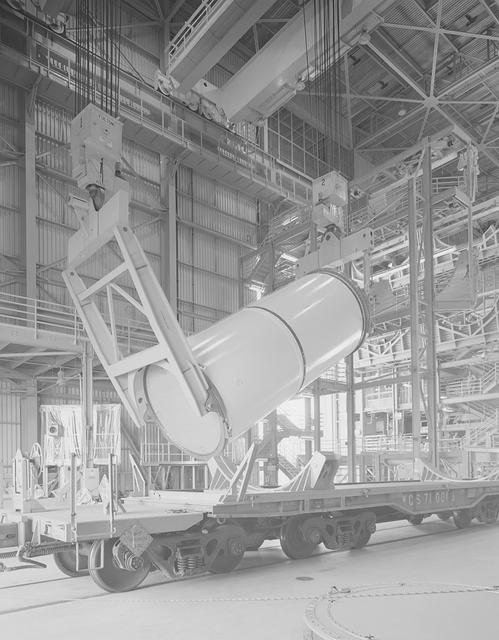
View of Solid Rocket Booster
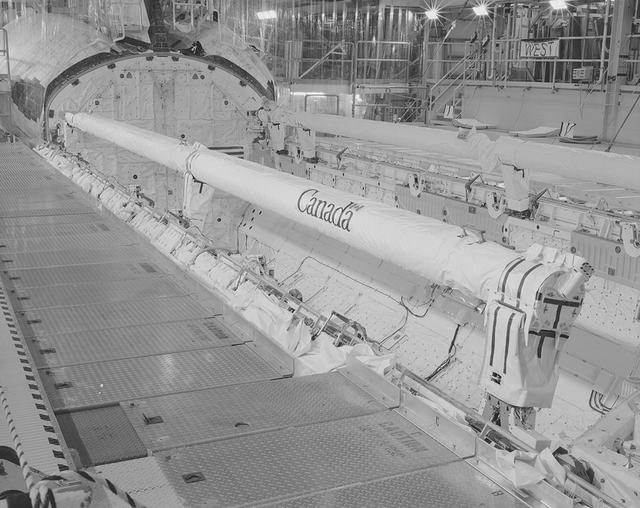
View of STS Discovery
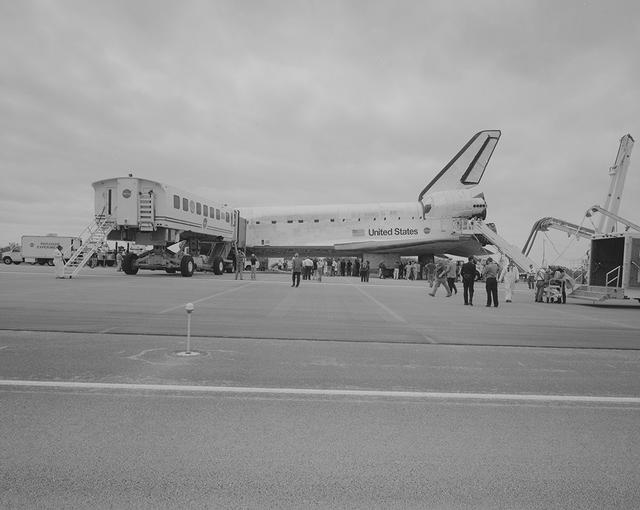
View of STS Discovery
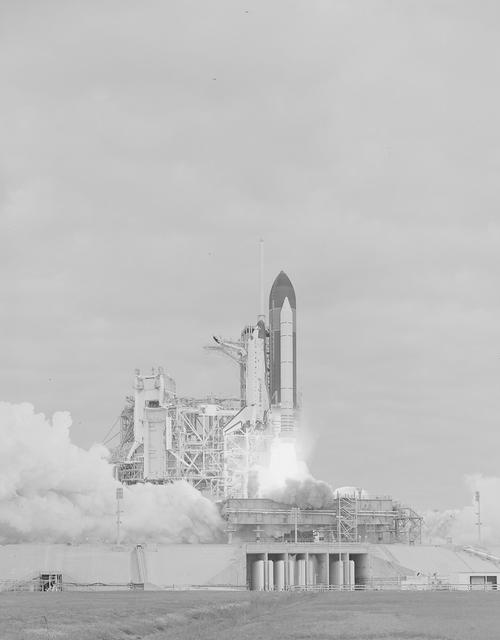
View of STS Atlantis
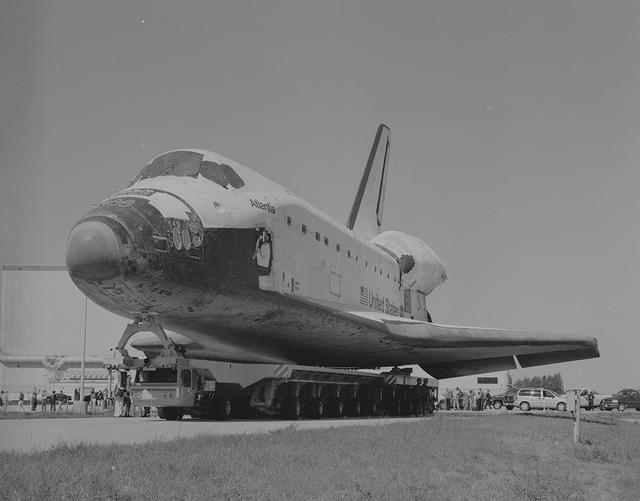
View of STS Atlantis
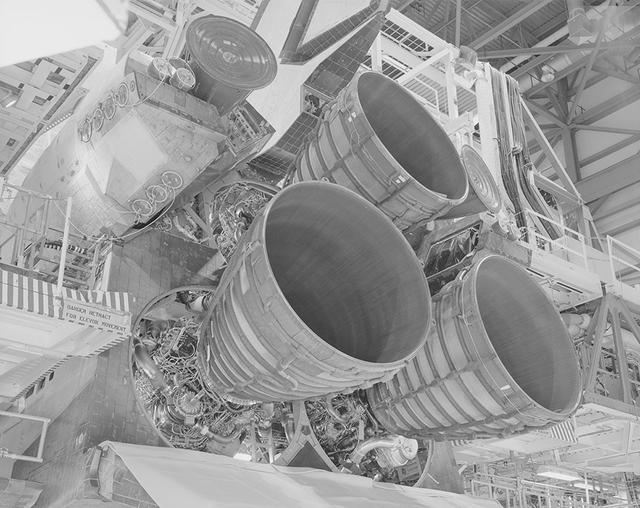
View of STS Discovery
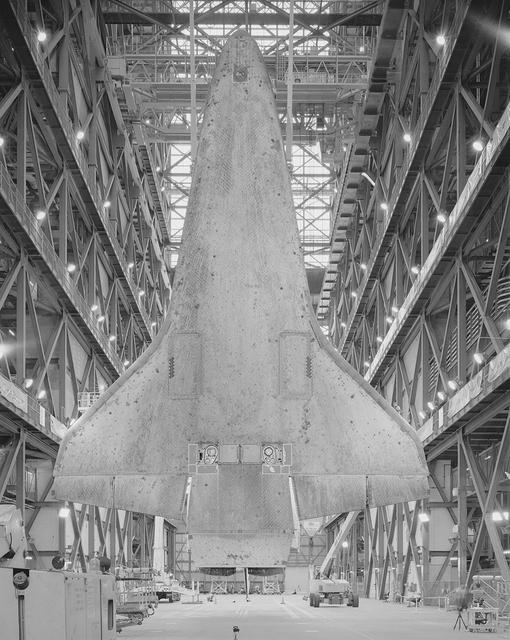
View of STS Atlantis
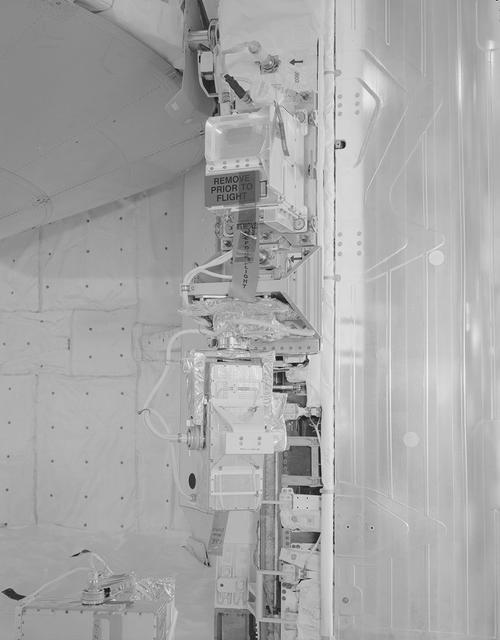
View of STS Discovery
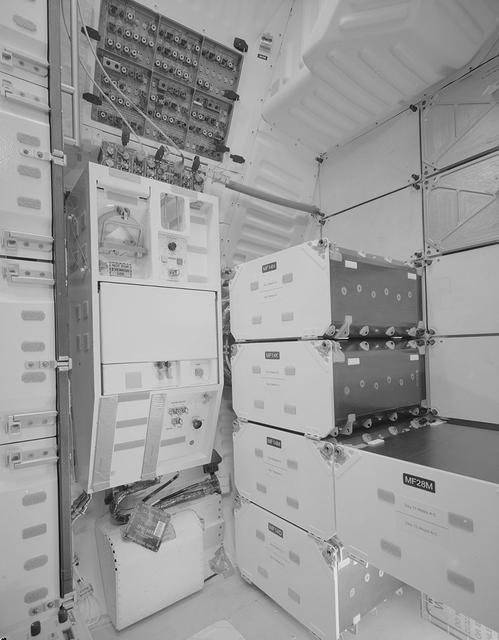
View of STS Discovery
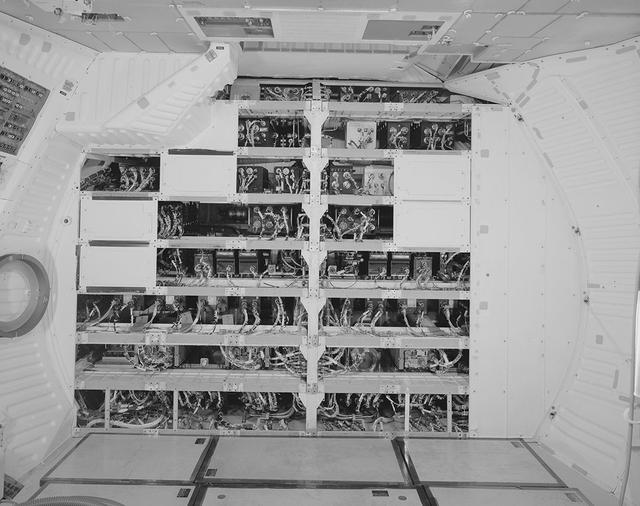
View of STS Discovery
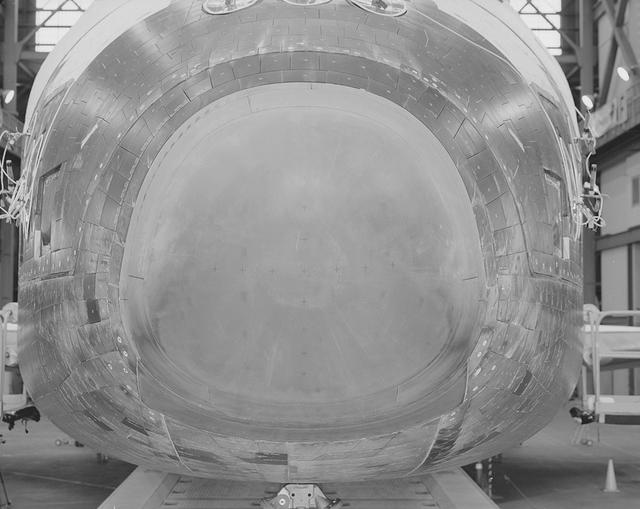
View of STS Endeavor
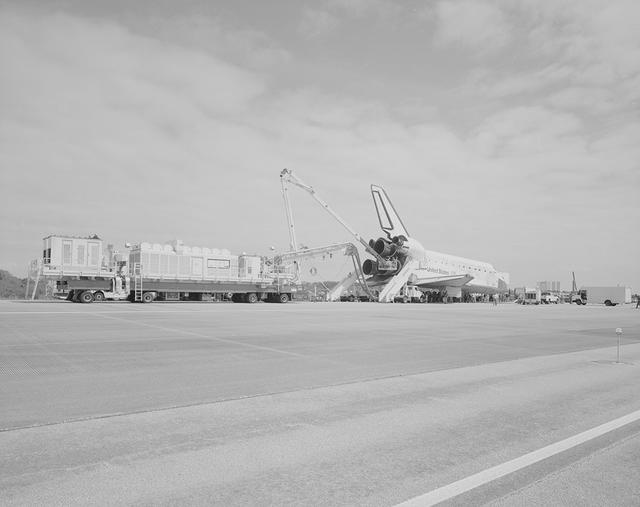
View of STS Discovery
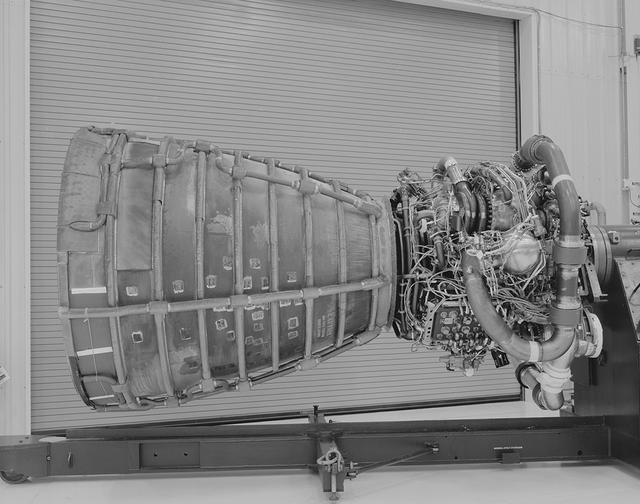
View of Space Shuttle Main Engine
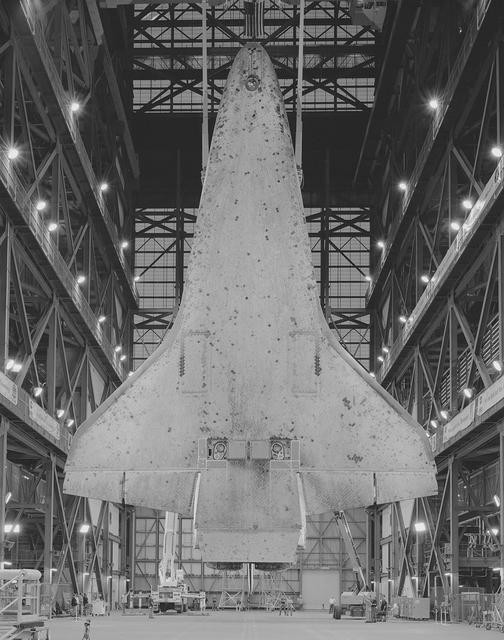
View of STS Discovery
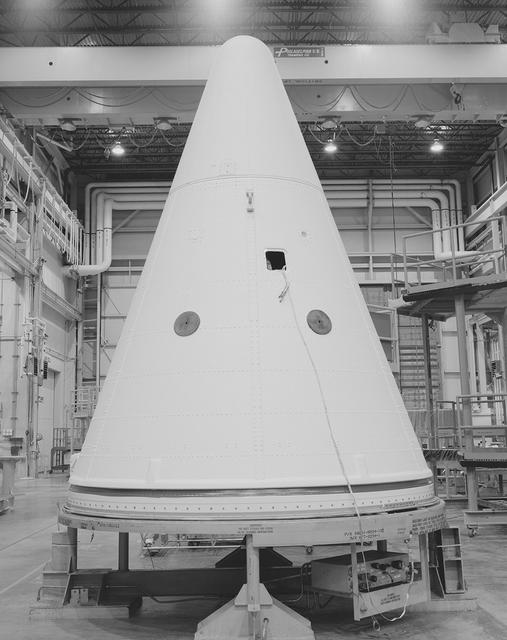
View of Solid Rocket Booster
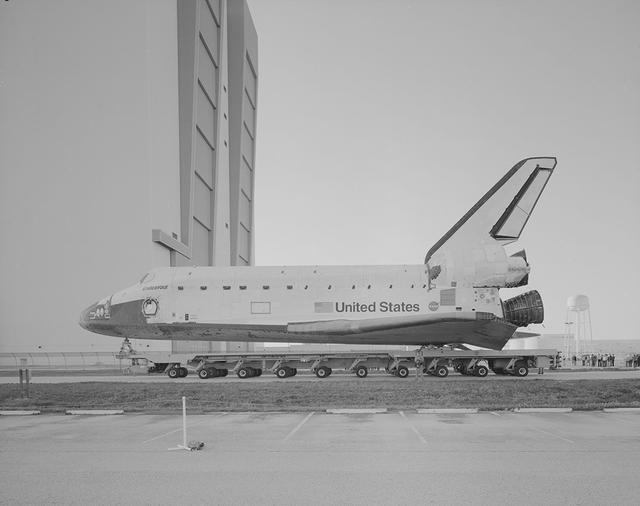
View of STS Endeavor
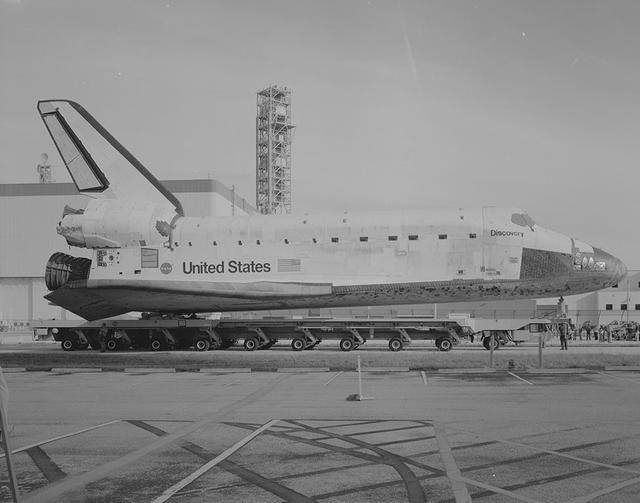
View of STS Discovery
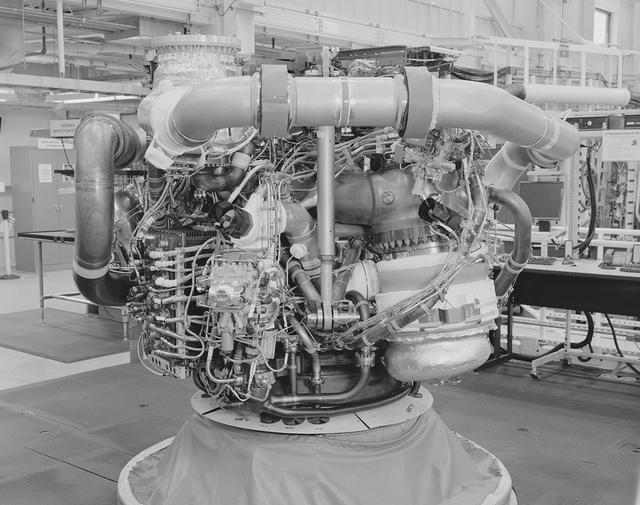
View of Space Shuttle Main Engine
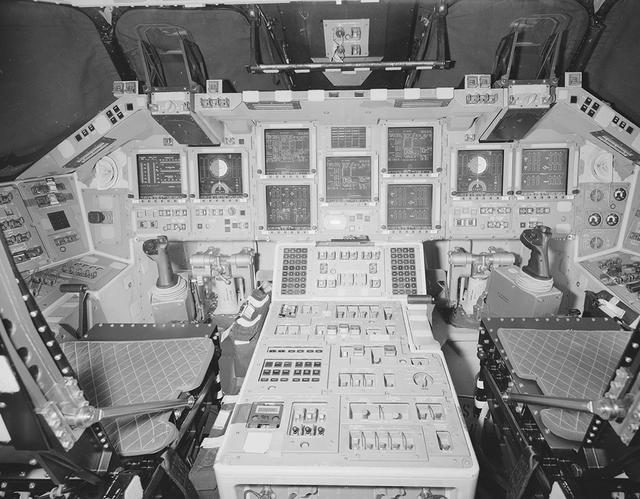
View of STS Atlantis
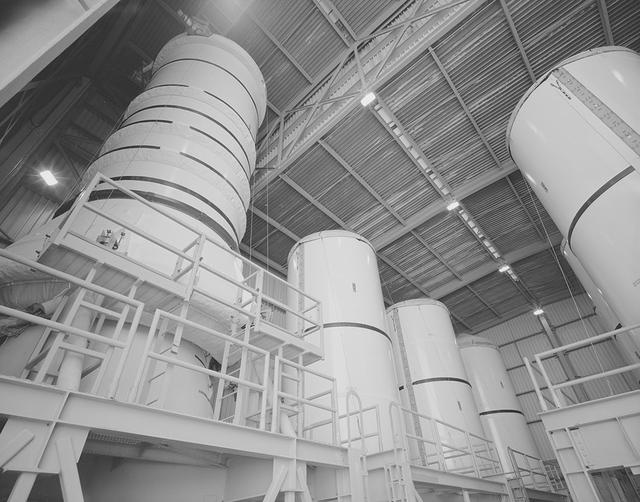
View of Solid Rocket Booster
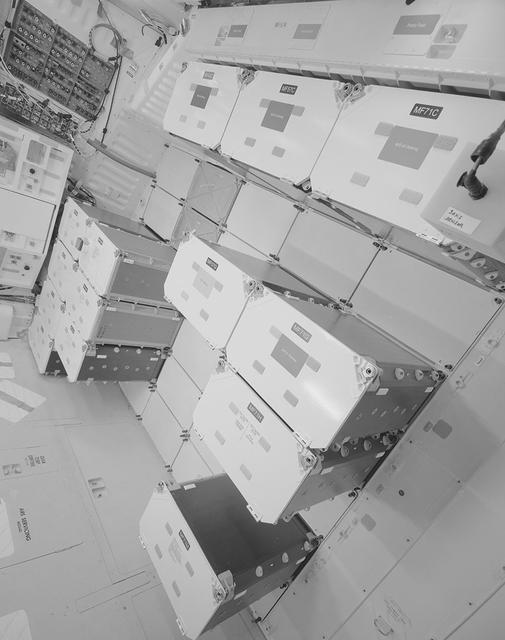
View of STS Discovery
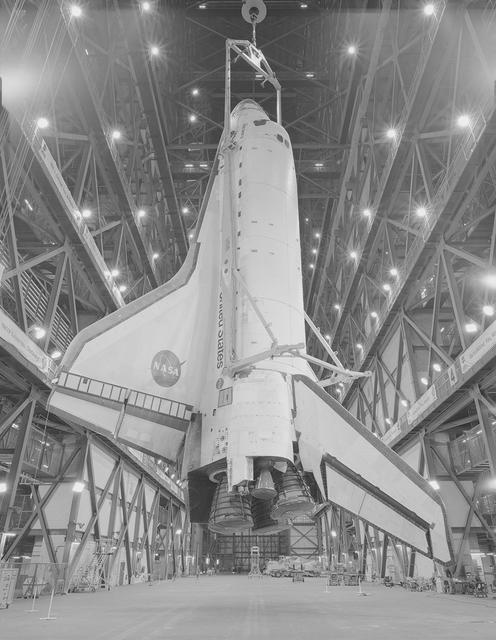
View of STS Discovery

View of STS Discovery