
JANUARY 8, 2013: Astronomers using NASA's Hubble and Spitzer space telescopes have probed the stormy atmosphere of a brown dwarf named 2MASSJ22282889-431026, creating the most detailed "weather map" yet for this class of cool, star-like orbs. The forecast shows wind-driven, planet-sized clouds enshrouding these strange worlds. Brown dwarfs form out of condensing gas, as stars do, but lack the mass to fuse atoms and produce energy. Instead, these objects, which some call failed stars, are more similar to gas planets with their complex, varied atmospheres. The new research is a stepping stone toward a better understanding not only brown dwarfs, but also of the atmospheres of planets beyond our solar system. Hubble and Spitzer simultaneously watched the brown dwarf as its light varied in time, brightening and dimming about every 90 minutes as the body rotated. Astronomers found the timing of this change in brightness depended on whether they looked using different wavelengths of infrared light. The variations are the result of different layers or patches of material swirling around in the brown dwarf in windy storms as large as Earth itself. Spitzer and Hubble see different atmospheric layers because certain infrared wavelengths are blocked by vapors of water and methane high up, while other infrared wavelengths emerge from much deeper layers. Daniel Apai, the principal investigator of the research from the University of Arizona, Tucson, presented the results at the American Astronomical Society meeting on January 8 in Long Beach, Calif. A study describing the results, led by Esther Buenzli, also of the University of Arizona, is published in the Astrophysical Journal Letters. For more information about this study, visit <a href="http://www.nasa.gov/spitzer" rel="nofollow">www.nasa.gov/spitzer</a> . <b><a href="http://www.nasa.gov/audience/formedia/features/MP_Photo_Guidelines.html" rel="nofollow">NASA image use policy.</a></b> <b><a href="http://www.nasa.gov/centers/goddard/home/index.html" rel="nofollow">NASA Goddard Space Flight Center</a></b> enables NASA’s mission through four scientific endeavors: Earth Science, Heliophysics, Solar System Exploration, and Astrophysics. Goddard plays a leading role in NASA’s accomplishments by contributing compelling scientific knowledge to advance the Agency’s mission. <b>Follow us on <a href="http://twitter.com/NASA_GoddardPix" rel="nofollow">Twitter</a></b> <b>Like us on <a href="http://www.facebook.com/pages/Greenbelt-MD/NASA-Goddard/395013845897?ref=tsd" rel="nofollow">Facebook</a></b> <b>Find us on <a href="http://instagram.com/nasagoddard?vm=grid" rel="nofollow">Instagram</a></b>
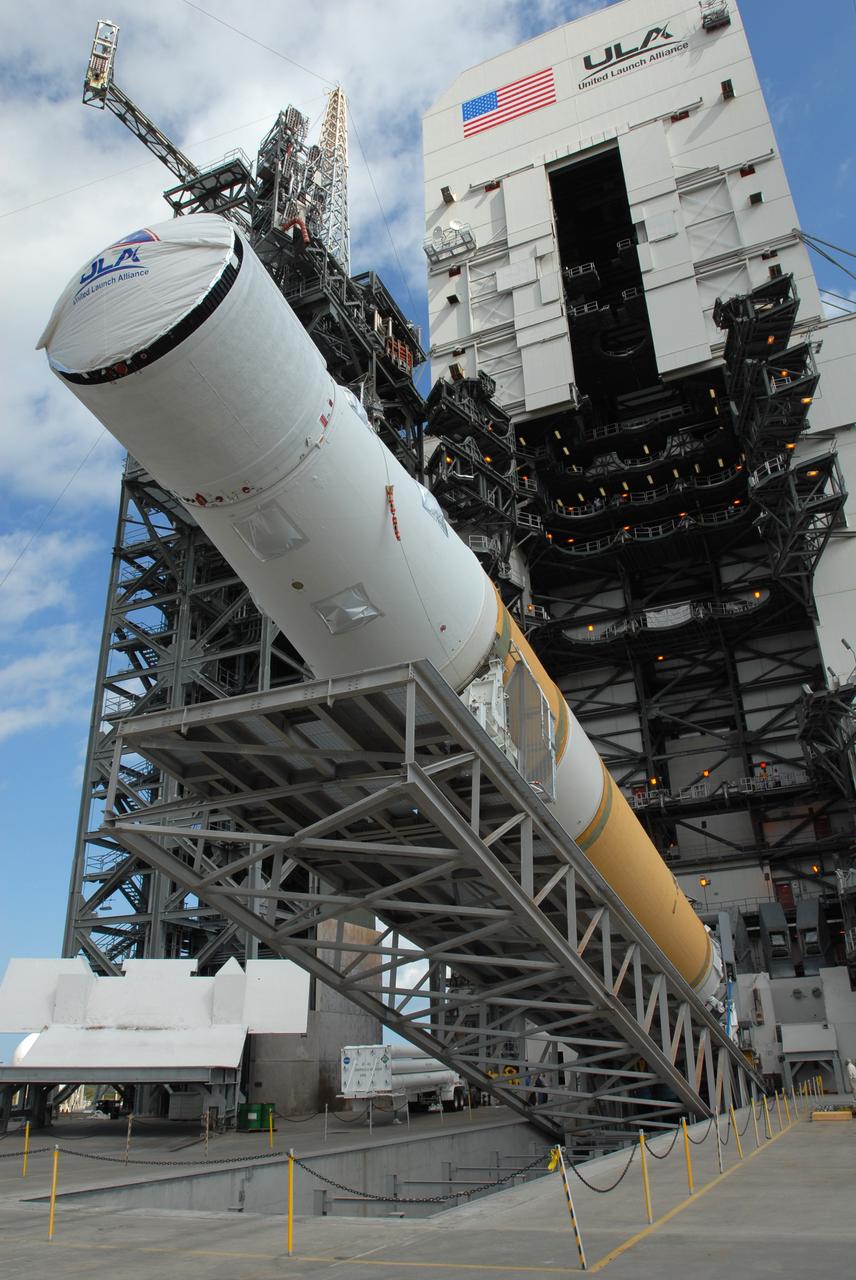
CAPE CANAVERAL, Fla. – On Launch Pad 37 at Cape Canaveral Air Force Station in Florida, the GOES-O and Delta IV upper stage are being raised to vertical. They will be moved into the mobile service tower for prelaunch preparations. GOES–O is one of a series of Geostationary Operational Environmental Satellites. The multi-mission GOES series N-P will be a vital contributor to weather, solar and space operations and science. NASA and the National Oceanic and Atmospheric Administration, or NOAA, are actively engaged in a cooperative program to expand the existing GOES system with the launch of the GOES N-P satellites. Launch of the GOES-O is targeted for no earlier than April 2009. Photo credit: NASA/Jim Grossmann
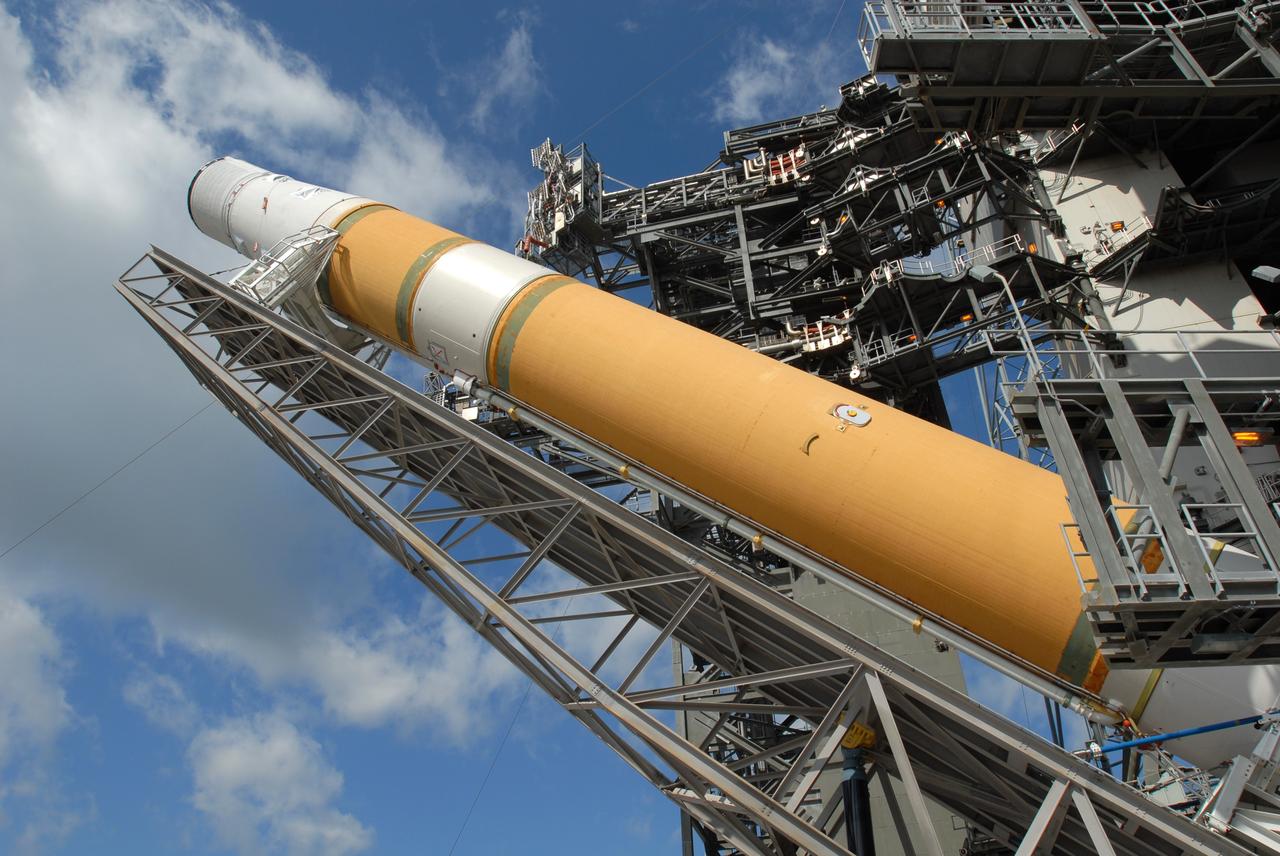
CAPE CANAVERAL, Fla. – On Launch Pad 37 at Cape Canaveral Air Force Station in Florida, the GOES-O and Delta IV upper stage are being raised to vertical. They will be moved into the mobile service tower for prelaunch preparations. GOES–O is one of a series of Geostationary Operational Environmental Satellites. The multi-mission GOES series N-P will be a vital contributor to weather, solar and space operations and science. NASA and the National Oceanic and Atmospheric Administration, or NOAA, are actively engaged in a cooperative program to expand the existing GOES system with the launch of the GOES N-P satellites. Launch of the GOES-O is targeted for no earlier than April 2009. Photo credit: NASA/Jim Grossmann
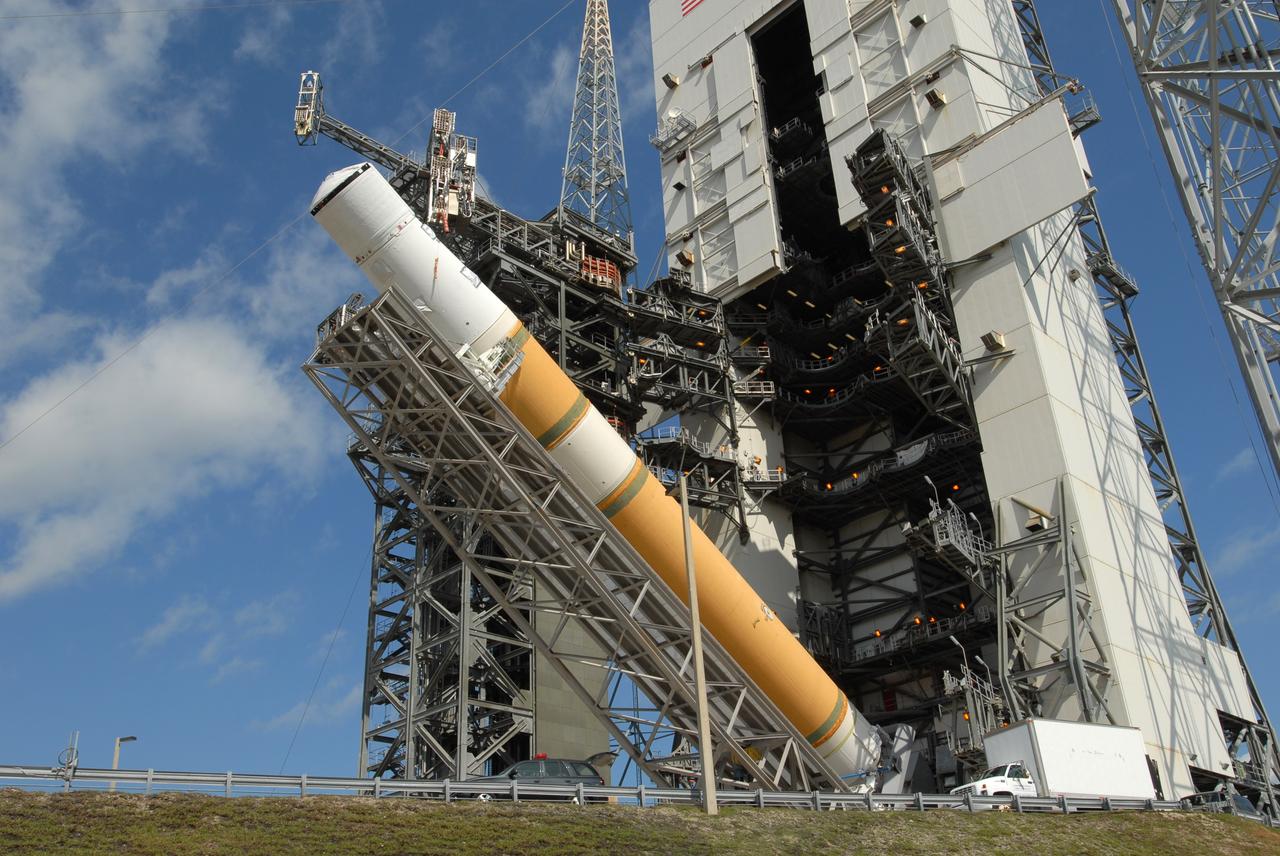
CAPE CANAVERAL, Fla. – On Launch Pad 37 at Cape Canaveral Air Force Station in Florida, the GOES-O and Delta IV upper stage are being raised to vertical. They will be moved into the mobile service tower for prelaunch preparations. GOES–O is one of a series of Geostationary Operational Environmental Satellites. The multi-mission GOES series N-P will be a vital contributor to weather, solar and space operations and science. NASA and the National Oceanic and Atmospheric Administration, or NOAA, are actively engaged in a cooperative program to expand the existing GOES system with the launch of the GOES N-P satellites. Launch of the GOES-O is targeted for no earlier than April 2009. Photo credit: NASA/Jim Grossmann
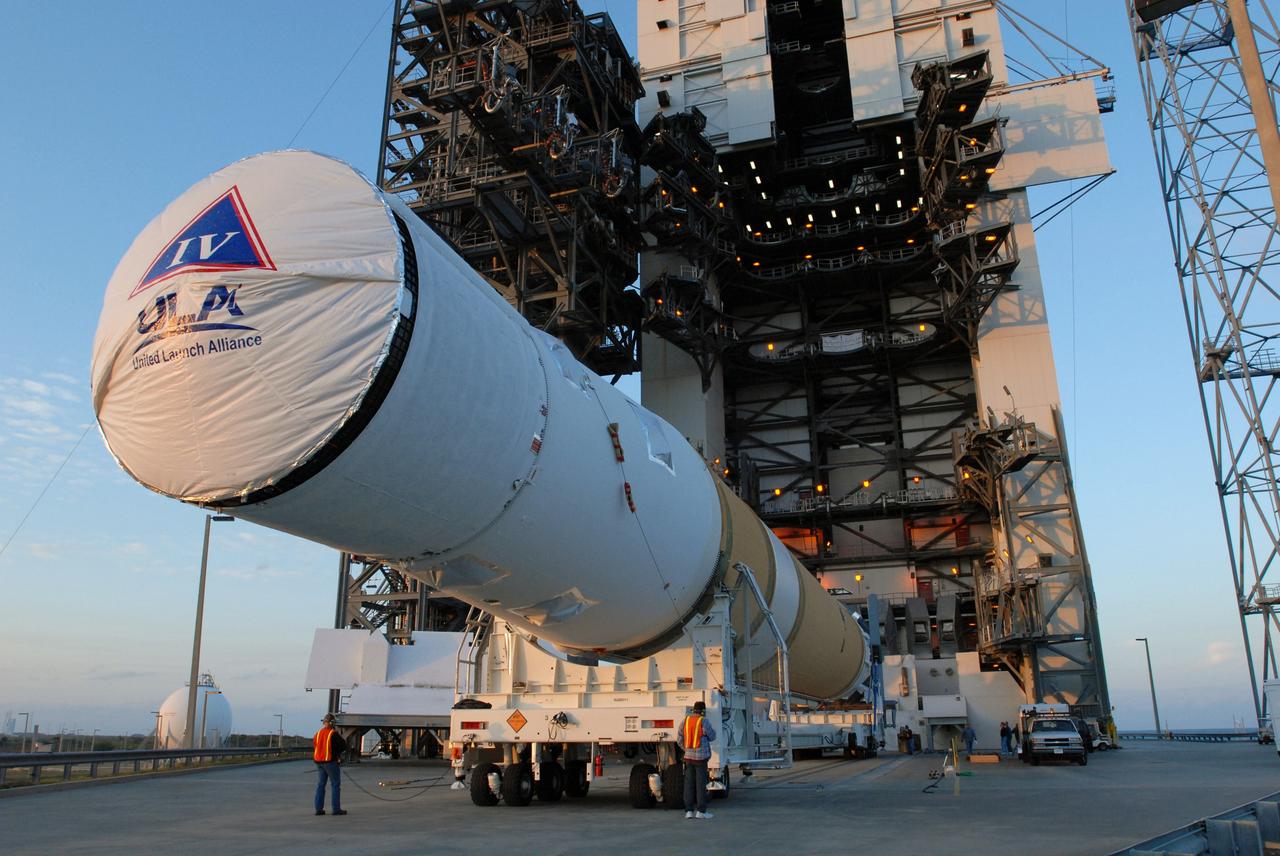
CAPE CANAVERAL, Fla. – At Cape Canaveral Air Force Station in Florida, the GOES-O and Delta IV second stage near the mobile service tower on Launch Pad 37. They will be raised to vertical and moved into the tower. GOES–O is one of a series of Geostationary Operational Environmental Satellites. The multi-mission GOES series N-P will be a vital contributor to weather, solar and space operations and science. NASA and the National Oceanic and Atmospheric Administration, or NOAA, are actively engaged in a cooperative program to expand the existing GOES system with the launch of the GOES N-P satellites. Launch of the GOES-O is targeted for no earlier than April 2009. Photo credit: NASA/Jim Grossmann

CAPE CANAVERAL, Fla. – On Launch Pad 37 at Cape Canaveral Air Force Station in Florida, the Delta IV launch vehicle is ready for the arrival and mating of the solid rocket boosters for launch. GOES–O is one of a series of Geostationary Operational Environmental Satellites. The multi-mission GOES series N-P will be a vital contributor to weather, solar and space operations and science. NASA and the National Oceanic and Atmospheric Administration, or NOAA, are actively engaged in a cooperative program to expand the existing GOES system with the launch of the GOES N-P satellites. Launch of the GOES-O is targeted for no earlier than April 2009. Photo credit: NASA/Jim Grossmann
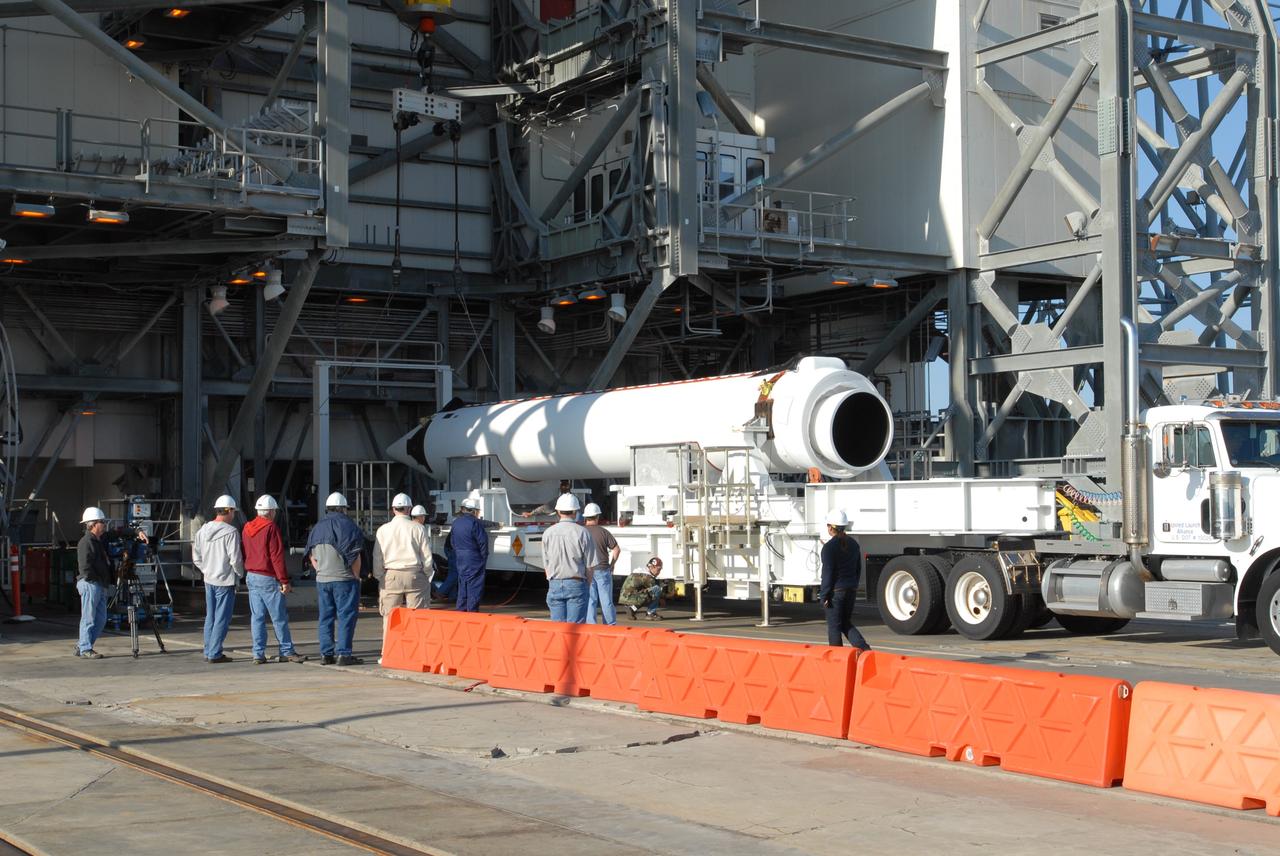
CAPE CANAVERAL, Fla. – On Launch Pad 37 at Cape Canaveral Air Force Station in Florida, lifting and mating of a solid rocket booster to the GOES-O Delta IV rocket is scrubbed due to high winds on the pad. GOES–O is one of a series of Geostationary Operational Environmental Satellites. The multi-mission GOES series N-P will be a vital contributor to weather, solar and space operations and science. NASA and the National Oceanic and Atmospheric Administration, or NOAA, are actively engaged in a cooperative program to expand the existing GOES system with the launch of the GOES N-P satellites. Launch of the GOES-O is targeted for no earlier than April 2009. Photo credit: NASA/Jim Grossmann
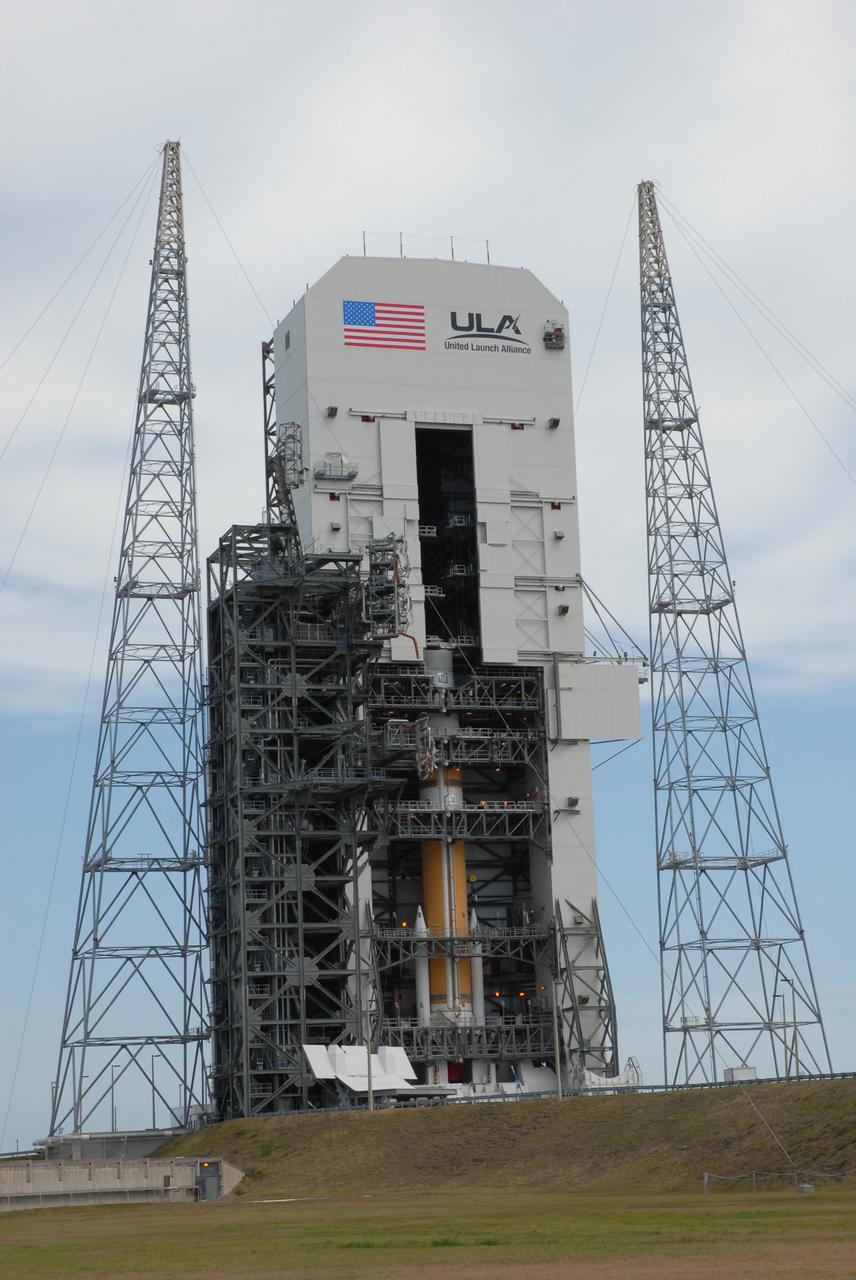
CAPE CANAVERAL, Fla. – On Launch Pad 37 at Cape Canaveral Air Force Station in Florida, the Delta IV launch vehicle for the GOES-O spacecraft stands in the mobile service tower flanked by its two solid rocket boosters. GOES–O is one of a series of Geostationary Operational Environmental Satellites. The multi-mission GOES series N-P will be a vital contributor to weather, solar and space operations and science. NASA and the National Oceanic and Atmospheric Administration, or NOAA, are actively engaged in a cooperative program to expand the existing GOES system with the launch of the GOES N-P satellites. Launch of the GOES-O is targeted for no earlier than April 2009. Photo credit: NASA/Jack Pfaller
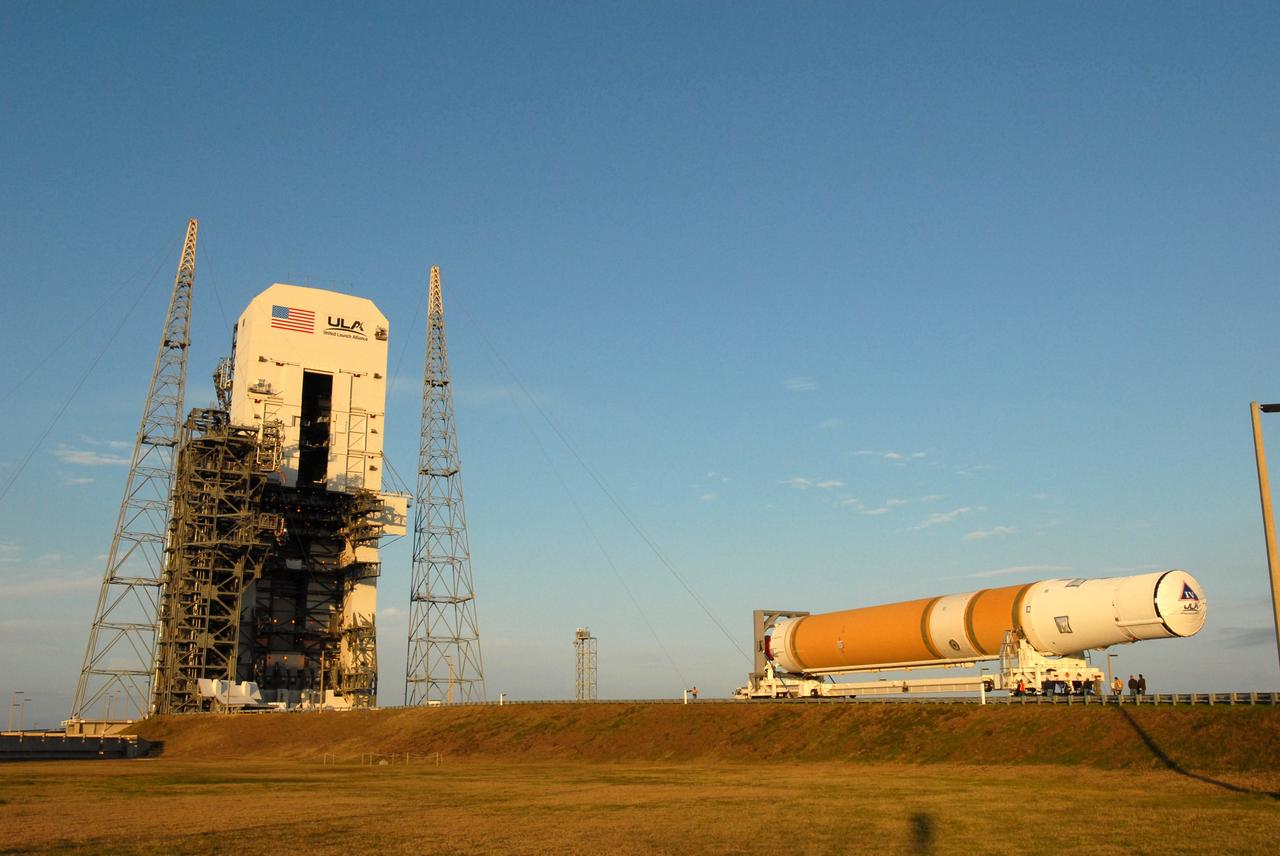
CAPE CANAVERAL, Fla. – At Cape Canaveral Air Force Station in Florida, the GOES-O and Delta IV second stage near the mobile service tower on Launch Pad 37. They will be raised to vertical and moved into the tower. GOES–O is one of a series of Geostationary Operational Environmental Satellites. The multi-mission GOES series N-P will be a vital contributor to weather, solar and space operations and science. NASA and the National Oceanic and Atmospheric Administration, or NOAA, are actively engaged in a cooperative program to expand the existing GOES system with the launch of the GOES N-P satellites. Launch of the GOES-O is targeted for no earlier than April 2009. Photo credit: NASA/Jim Grossmann
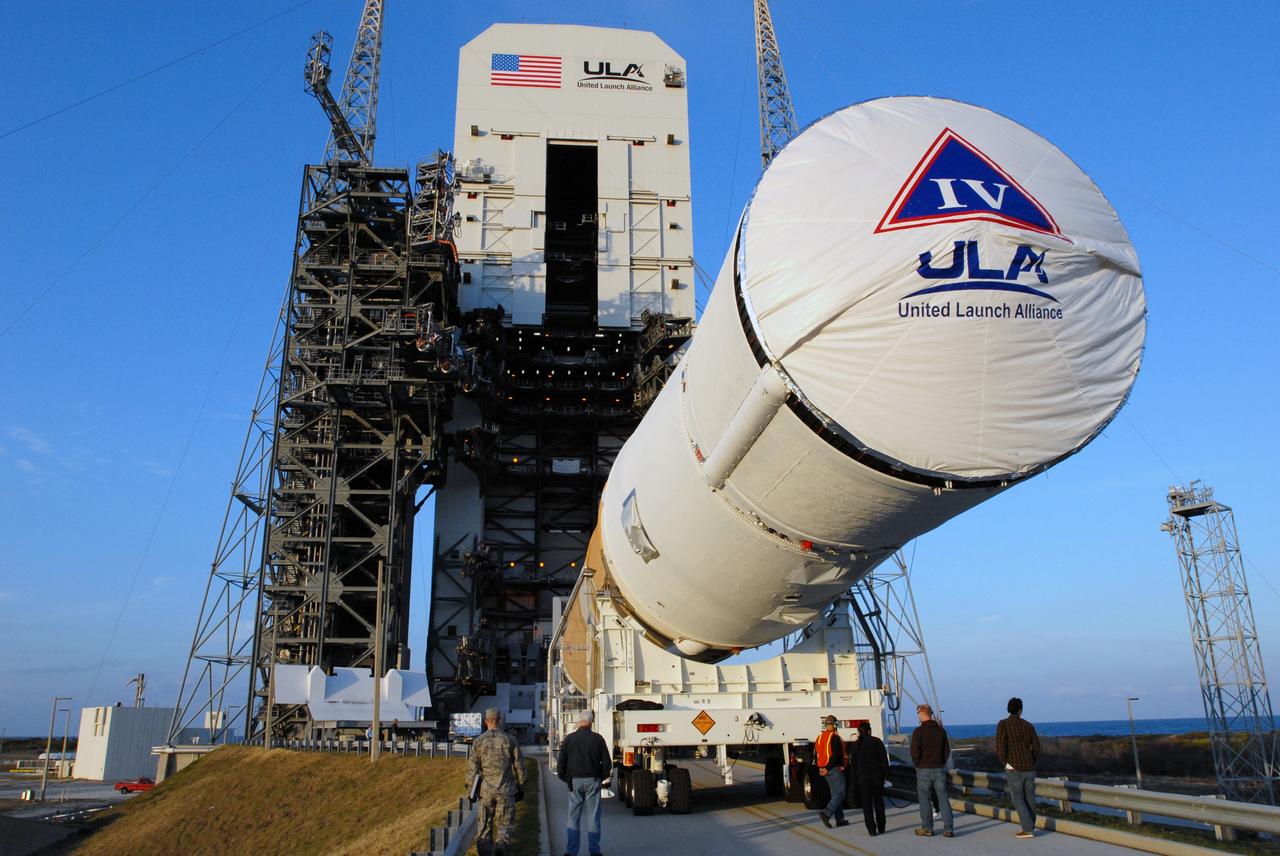
CAPE CANAVERAL, Fla. – At Cape Canaveral Air Force Station in Florida, the GOES-O and Delta IV second stage arrive on Launch Pad 37. They will be raised to vertical and moved into the mobile service tower. GOES–O is one of a series of Geostationary Operational Environmental Satellites. The multi-mission GOES series N-P will be a vital contributor to weather, solar and space operations and science. NASA and the National Oceanic and Atmospheric Administration, or NOAA, are actively engaged in a cooperative program to expand the existing GOES system with the launch of the GOES N-P satellites. Launch of the GOES-O is targeted for no earlier than April 2009. Photo credit: NASA/Jim Grossmann

CAPE CANAVERAL, Fla. – At Cape Canaveral Air Force Station in Florida, the GOES-O and Delta IV second stage roll toward Launch Pad 37. GOES–O is one of a series of Geostationary Operational Environmental Satellites. The multi-mission GOES series N-P will be a vital contributor to weather, solar and space operations and science. NASA and the National Oceanic and Atmospheric Administration, or NOAA, are actively engaged in a cooperative program to expand the existing GOES system with the launch of the GOES N-P satellites. Launch of the GOES-O is targeted for no earlier than April 2009. Photo credit: NASA/Jim Grossmann
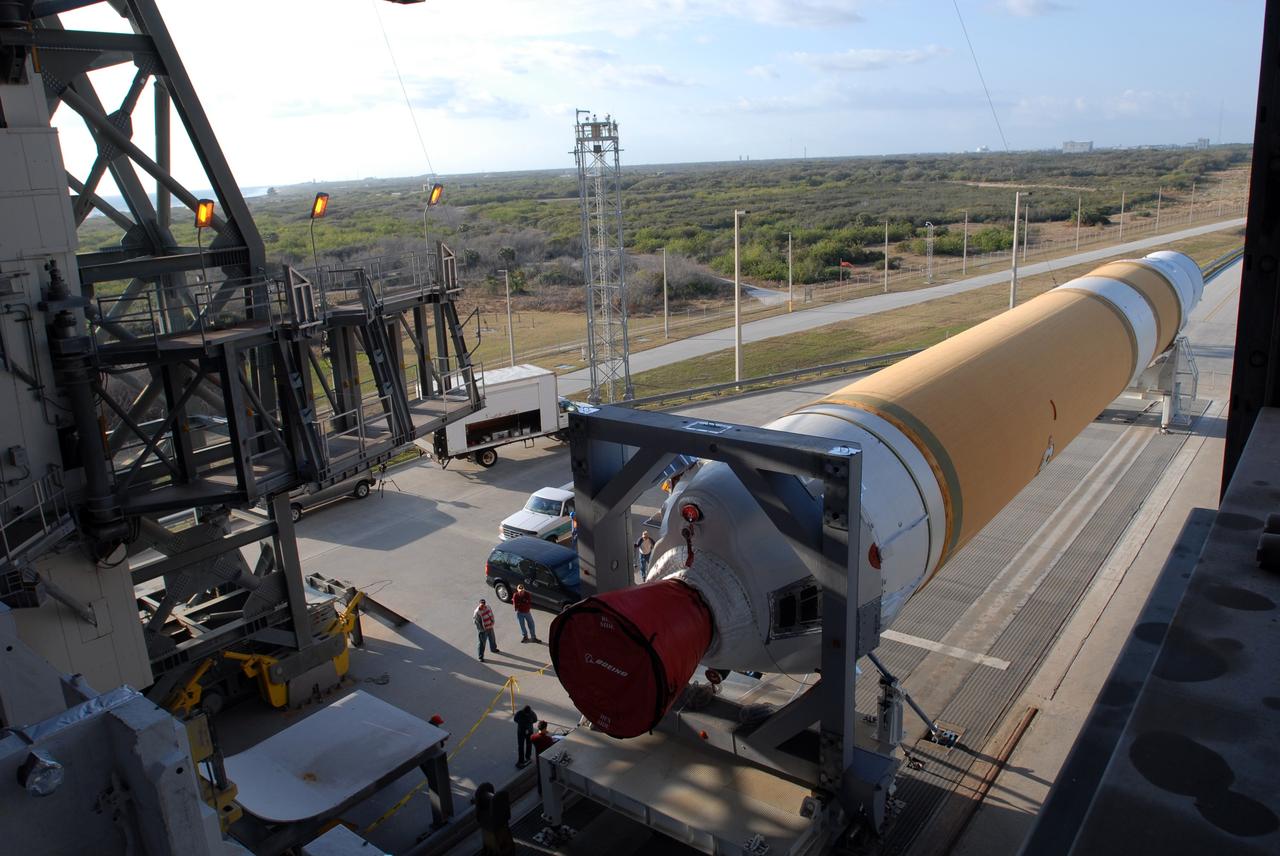
CAPE CANAVERAL, Fla. – On Launch Pad 37 at Cape Canaveral Air Force Station in Florida, the GOES-O and Delta IV upper stage are waiting to be raised to vertical. They will be moved into the mobile service tower for prelaunch preparations. GOES–O is one of a series of Geostationary Operational Environmental Satellites. The multi-mission GOES series N-P will be a vital contributor to weather, solar and space operations and science. NASA and the National Oceanic and Atmospheric Administration, or NOAA, are actively engaged in a cooperative program to expand the existing GOES system with the launch of the GOES N-P satellites. Launch of the GOES-O is targeted for no earlier than April 2009. Photo credit: NASA/Jim Grossmann
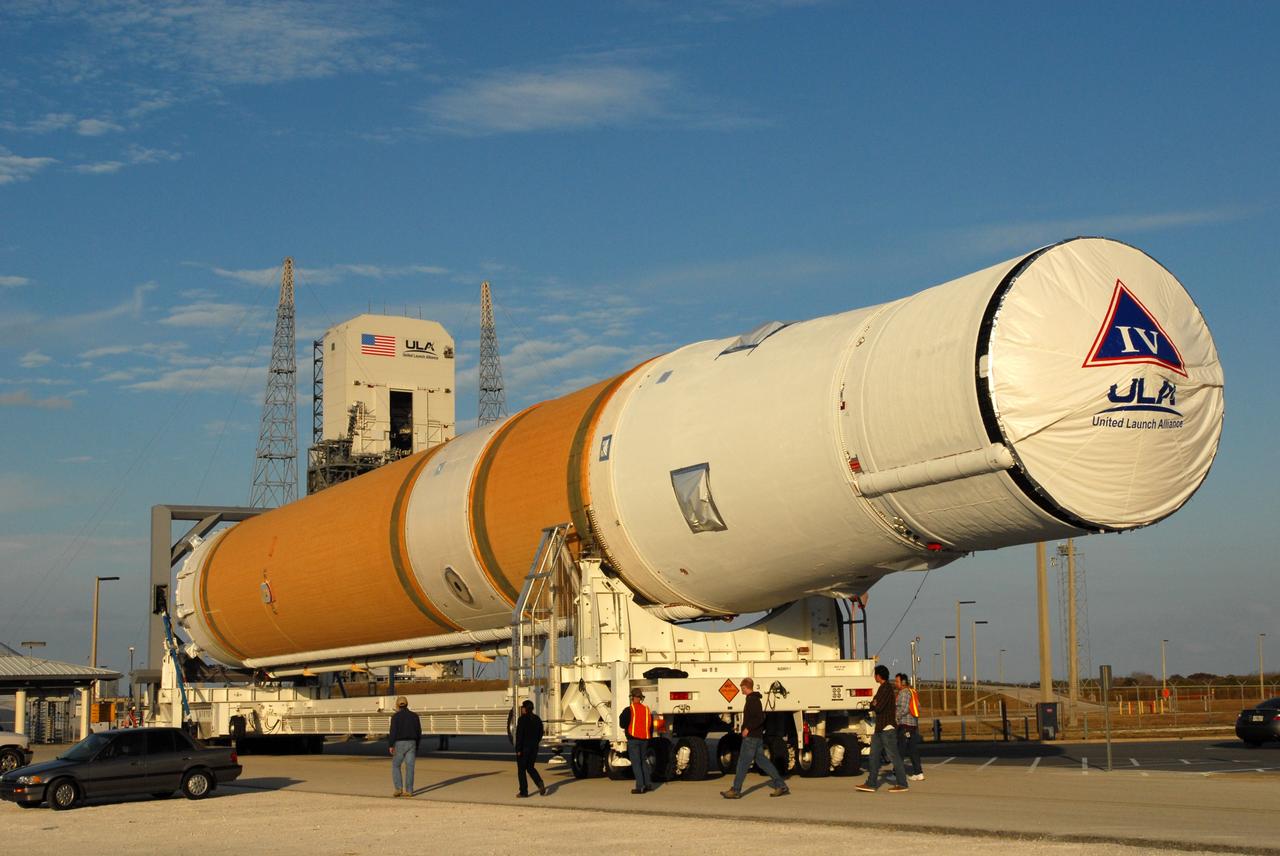
CAPE CANAVERAL, Fla. – At Cape Canaveral Air Force Station in Florida, the GOES-O and Delta IV second stage are transported to Launch Pad 37. GOES–O is one of a series of Geostationary Operational Environmental Satellites. The multi-mission GOES series N-P will be a vital contributor to weather, solar and space operations and science. NASA and the National Oceanic and Atmospheric Administration, or NOAA, are actively engaged in a cooperative program to expand the existing GOES system with the launch of the GOES N-P satellites. Launch of the GOES-O is targeted for no earlier than April 2009. Photo credit: NASA/Jim Grossmann
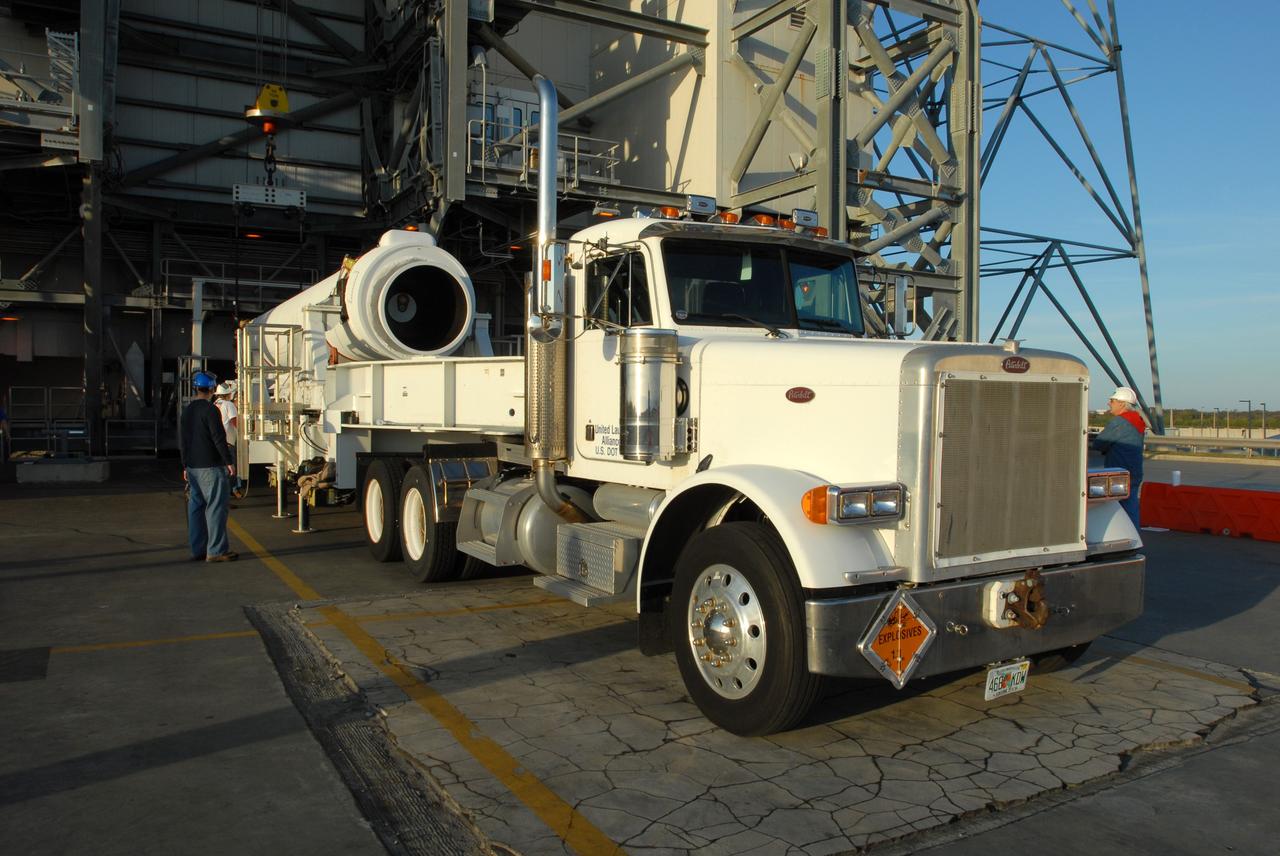
CAPE CANAVERAL, Fla. – One of two solid rocket boosters arrives on Launch Pad 37 at Cape Canaveral Air Force Station. it is the left rocket and it will be lifted into the mobile service tower and mated to the GOES-O Delta IV launch vehicle. GOES–O is one of a series of Geostationary Operational Environmental Satellites. The multi-mission GOES series N-P will be a vital contributor to weather, solar and space operations and science. NASA and the National Oceanic and Atmospheric Administration, or NOAA, are actively engaged in a cooperative program to expand the existing GOES system with the launch of the GOES N-P satellites. Launch of the GOES-O is targeted for no earlier than April 2009. Photo credit: NASA/Ben Smegelsky

CAPE CANAVERAL, Fla. – At Cape Canaveral Air Force Station in Florida, the GOES-O and Delta IV second stage are transported to Launch Pad 37. GOES–O is one of a series of Geostationary Operational Environmental Satellites. The multi-mission GOES series N-P will be a vital contributor to weather, solar and space operations and science. NASA and the National Oceanic and Atmospheric Administration, or NOAA, are actively engaged in a cooperative program to expand the existing GOES system with the launch of the GOES N-P satellites. Launch of the GOES-O is targeted for no earlier than April 2009. Photo credit: NASA/Jim Grossmann
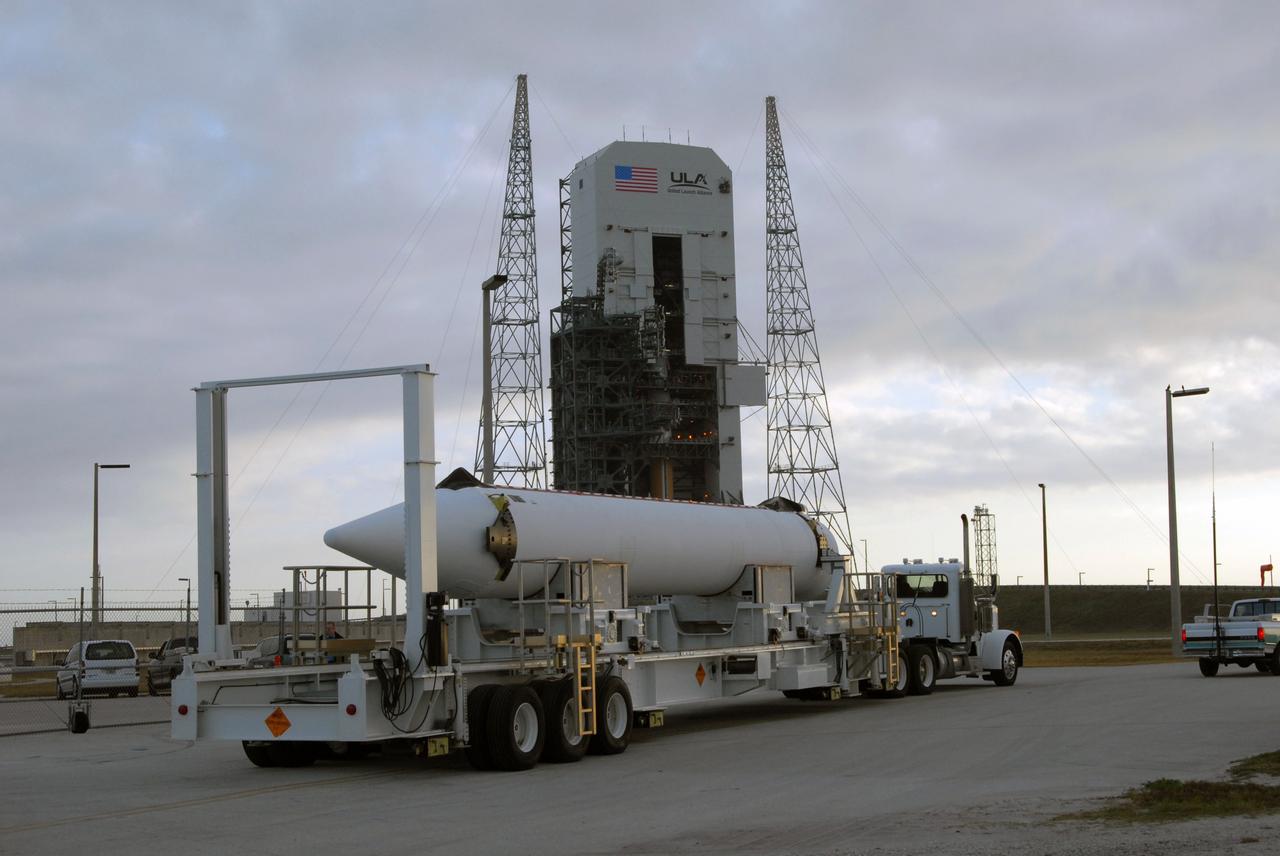
CAPE CANAVERAL, Fla. – The second of two solid rocket boosters arrives on Launch Pad 37 at Cape Canaveral Air Force Station in Florida. It is the rocket to be installed on the right side of the Delta IV launch vehicle for the GOES-O spacecraft. GOES–O is one of a series of Geostationary Operational Environmental Satellites. The multi-mission GOES series N-P will be a vital contributor to weather, solar and space operations and science. NASA and the National Oceanic and Atmospheric Administration, or NOAA, are actively engaged in a cooperative program to expand the existing GOES system with the launch of the GOES N-P satellites. Launch of the GOES-O is targeted for no earlier than April 2009. Photo credit: NASA/Jack Pfaller
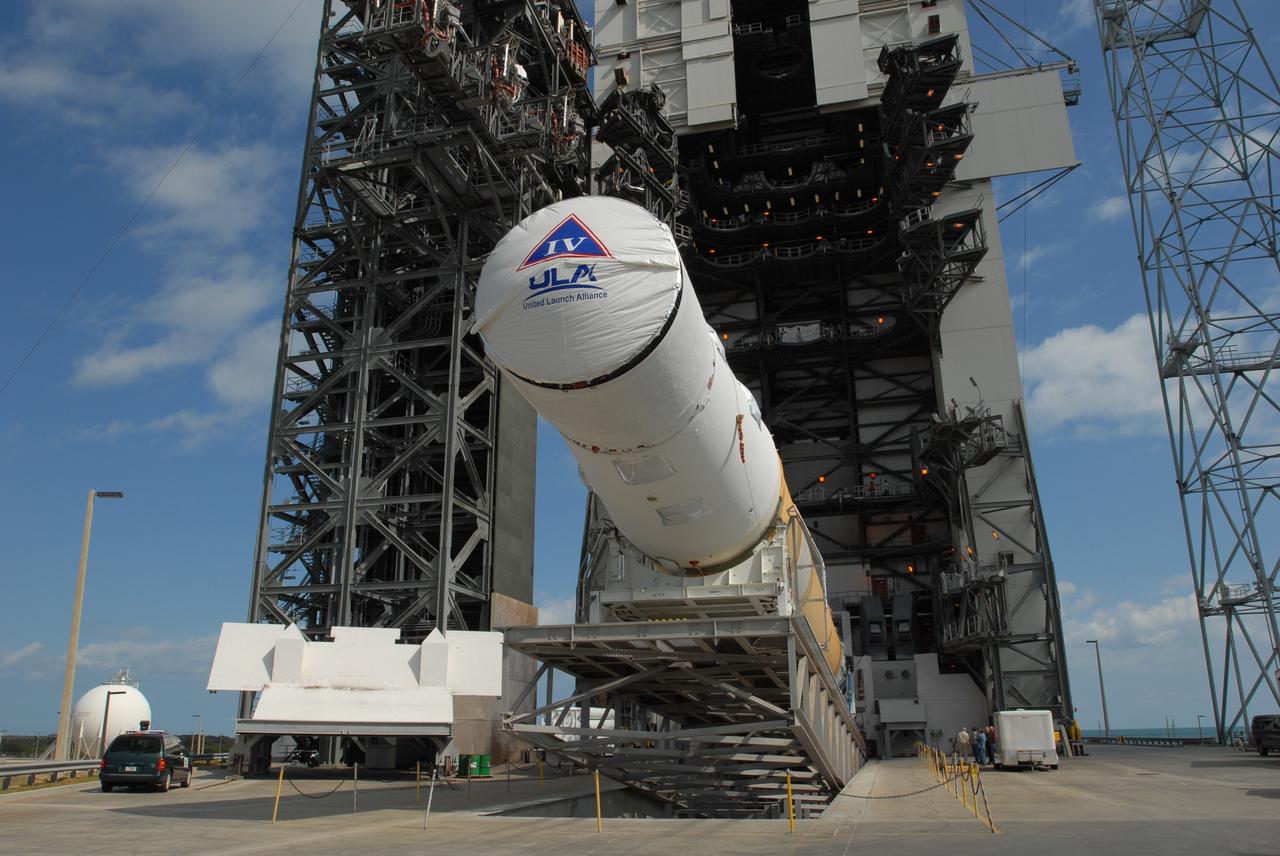
CAPE CANAVERAL, Fla. – On Launch Pad 37 at Cape Canaveral Air Force Station in Florida, the GOES-O and Delta IV upper stage are being raised to vertical. They will be moved into the mobile service tower for prelaunch preparations. GOES–O is one of a series of Geostationary Operational Environmental Satellites. The multi-mission GOES series N-P will be a vital contributor to weather, solar and space operations and science. NASA and the National Oceanic and Atmospheric Administration, or NOAA, are actively engaged in a cooperative program to expand the existing GOES system with the launch of the GOES N-P satellites. Launch of the GOES-O is targeted for no earlier than April 2009. Photo credit: NASA/Jim Grossmann
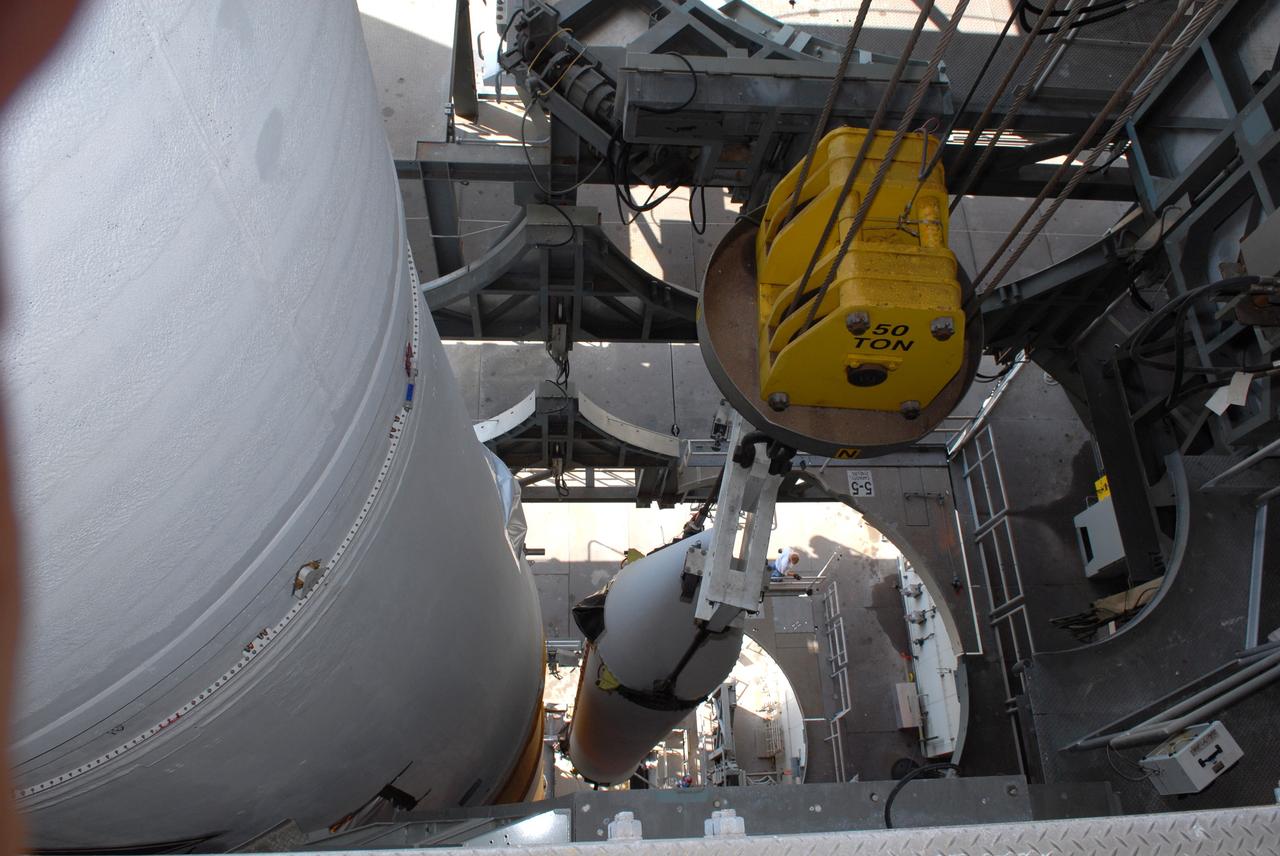
CAPE CANAVERAL, Fla. – One of two solid rocket boosters is mated to the GOES-O Delta IV launch vehicle on Launch Pad 37 at Cape Canaveral Air Force Station. It is the left rocket. GOES–O is one of a series of Geostationary Operational Environmental Satellites. The multi-mission GOES series N-P will be a vital contributor to weather, solar and space operations and science. NASA and the National Oceanic and Atmospheric Administration, or NOAA, are actively engaged in a cooperative program to expand the existing GOES system with the launch of the GOES N-P satellites. Launch of the GOES-O is targeted for no earlier than April 2009. Photo credit: NASA/Ben Smegelsky
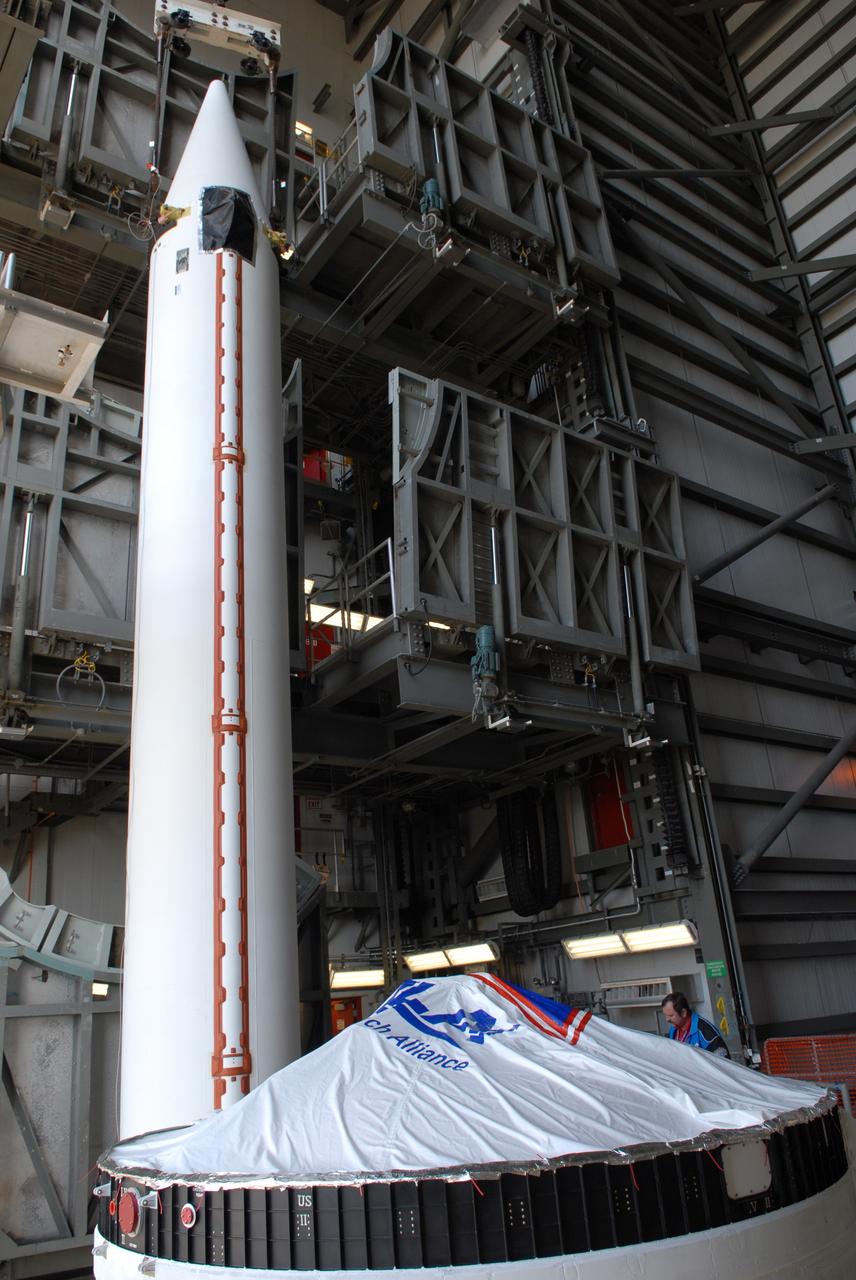
CAPE CANAVERAL, Fla. – One of two solid rocket boosters is lifted into the mobile service tower on Launch Pad 37 at Cape Canaveral Air Force Station. It is the left rocket and it will be mated to the GOES-O Delta IV launch vehicle. GOES–O is one of a series of Geostationary Operational Environmental Satellites. The multi-mission GOES series N-P will be a vital contributor to weather, solar and space operations and science. NASA and the National Oceanic and Atmospheric Administration, or NOAA, are actively engaged in a cooperative program to expand the existing GOES system with the launch of the GOES N-P satellites. Launch of the GOES-O is targeted for no earlier than April 2009. Photo credit: NASA/Ben Smegelsky
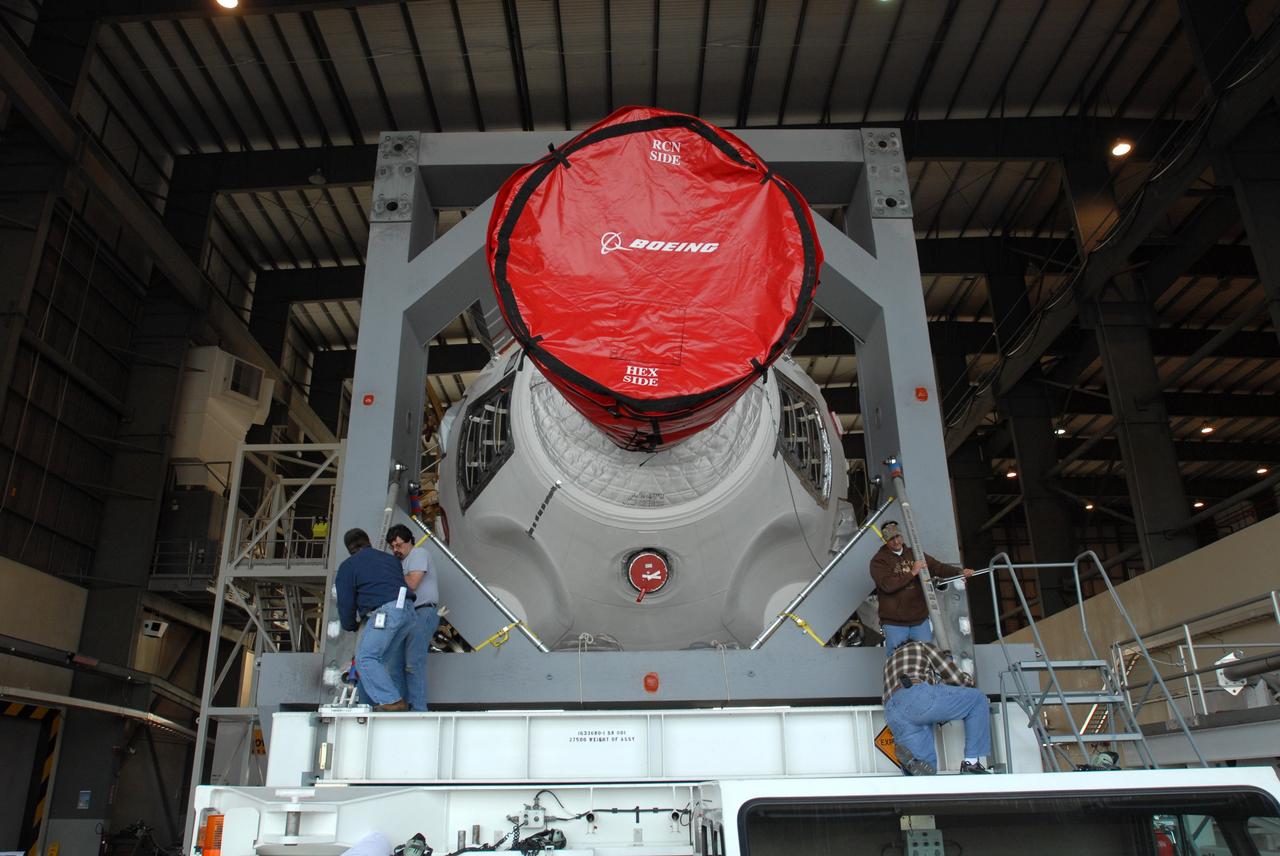
CAPE CANAVERAL, Fla. – On Complex 37 at Cape Canaveral Air Force Station in Florida, workers ensure the GOES-O and Delta IV second stage are ready to leave the Horizontal Integration Facility for the launch pad. GOES–O is one of a series of Geostationary Operational Environmental Satellites. The multi-mission GOES series N-P will be a vital contributor to weather, solar and space operations and science. NASA and the National Oceanic and Atmospheric Administration, or NOAA, are actively engaged in a cooperative program to expand the existing GOES system with the launch of the GOES N-P satellites. Launch of the GOES-O is targeted for no earlier than April 2009. Photo credit: NASA/Jim Grossmann
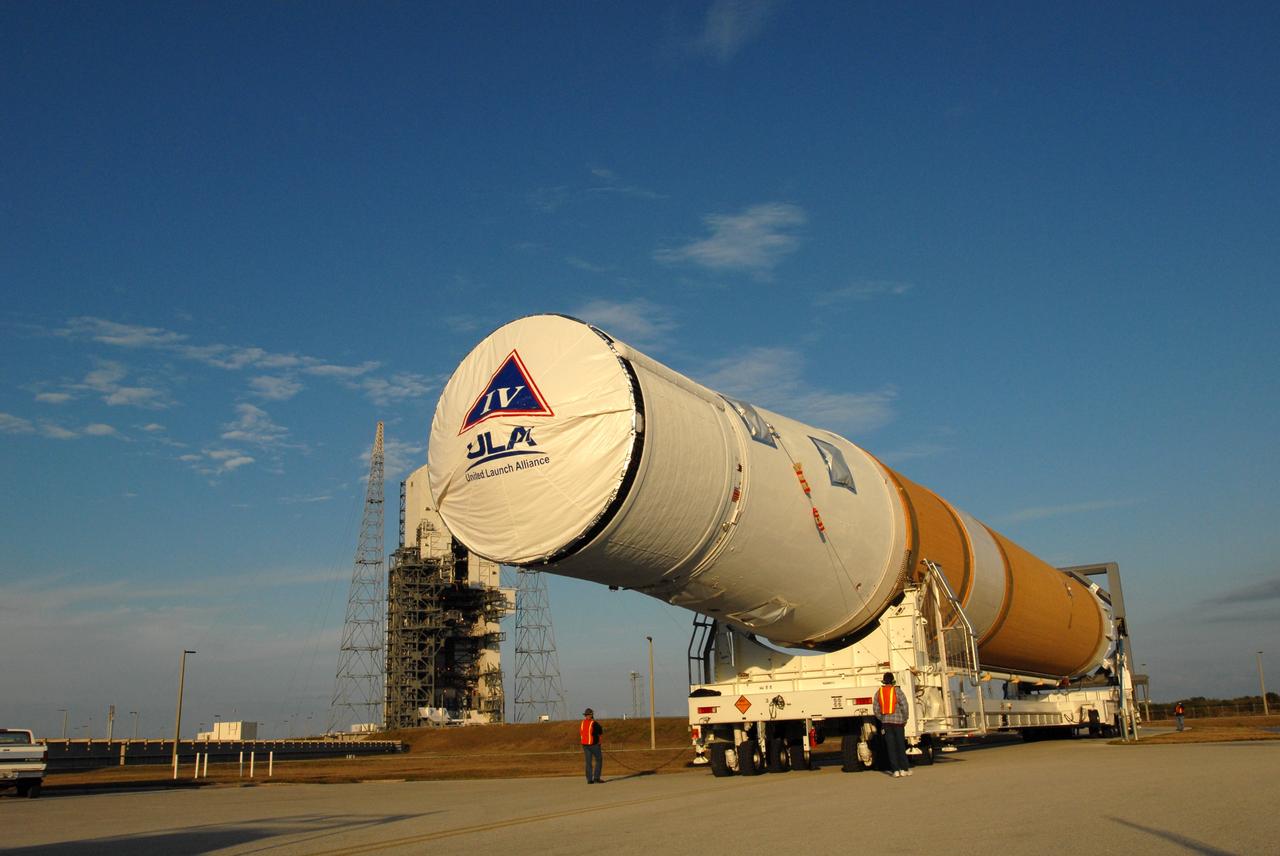
CAPE CANAVERAL, Fla. – At Cape Canaveral Air Force Station in Florida, the GOES-O and Delta IV second stage are transported to Launch Pad 37. GOES–O is one of a series of Geostationary Operational Environmental Satellites. The multi-mission GOES series N-P will be a vital contributor to weather, solar and space operations and science. NASA and the National Oceanic and Atmospheric Administration, or NOAA, are actively engaged in a cooperative program to expand the existing GOES system with the launch of the GOES N-P satellites. Launch of the GOES-O is targeted for no earlier than April 2009. Photo credit: NASA/Jim Grossmann
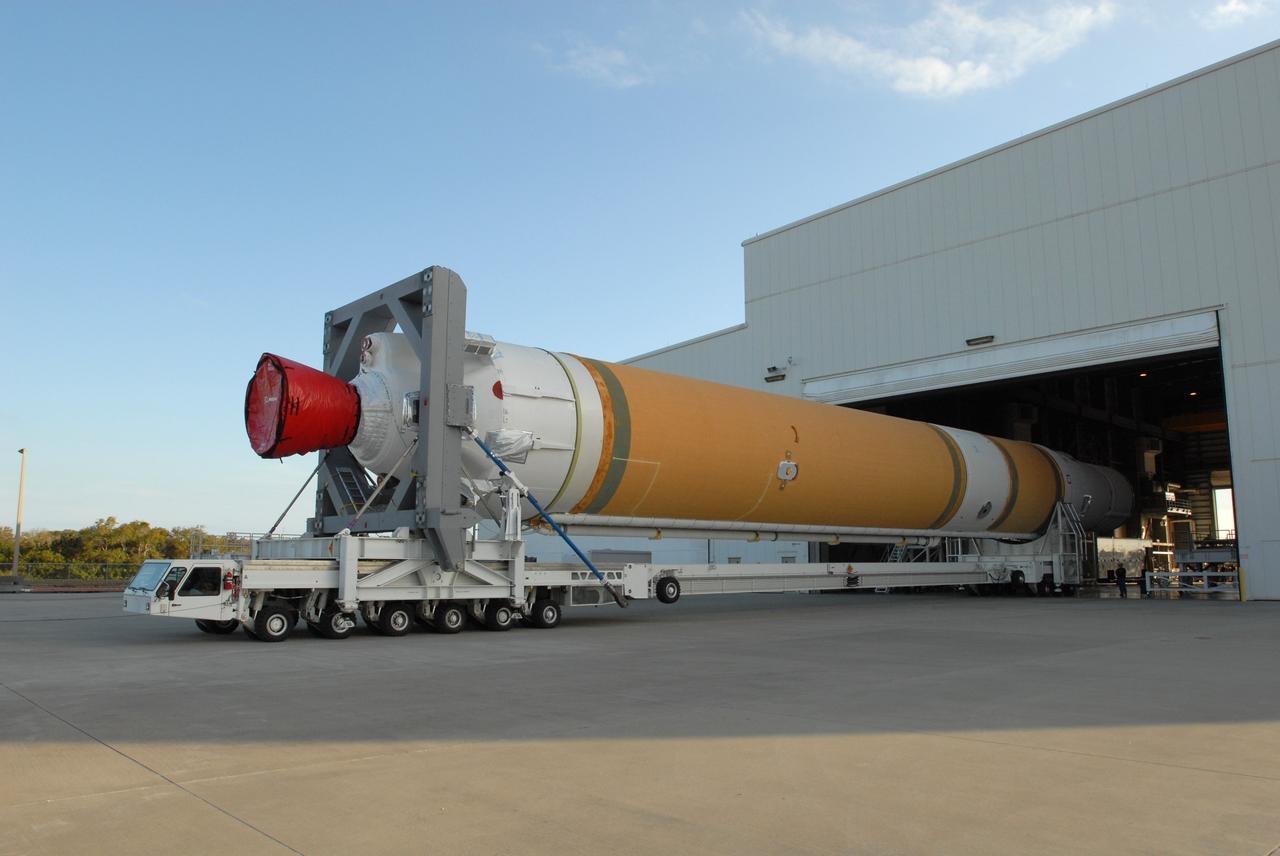
CAPE CANAVERAL, Fla. – On Complex 37 at Cape Canaveral Air Force Station in Florida, the GOES-O and Delta IV second stage begin rolling out of the Horizontal Integration Facility aboard a transporter. They will be moved to the launch pad. GOES–O is one of a series of Geostationary Operational Environmental Satellites. The multi-mission GOES series N-P will be a vital contributor to weather, solar and space operations and science. NASA and the National Oceanic and Atmospheric Administration, or NOAA, are actively engaged in a cooperative program to expand the existing GOES system with the launch of the GOES N-P satellites. Launch of the GOES-O is targeted for no earlier than April 2009. Photo credit: NASA/Jim Grossmann
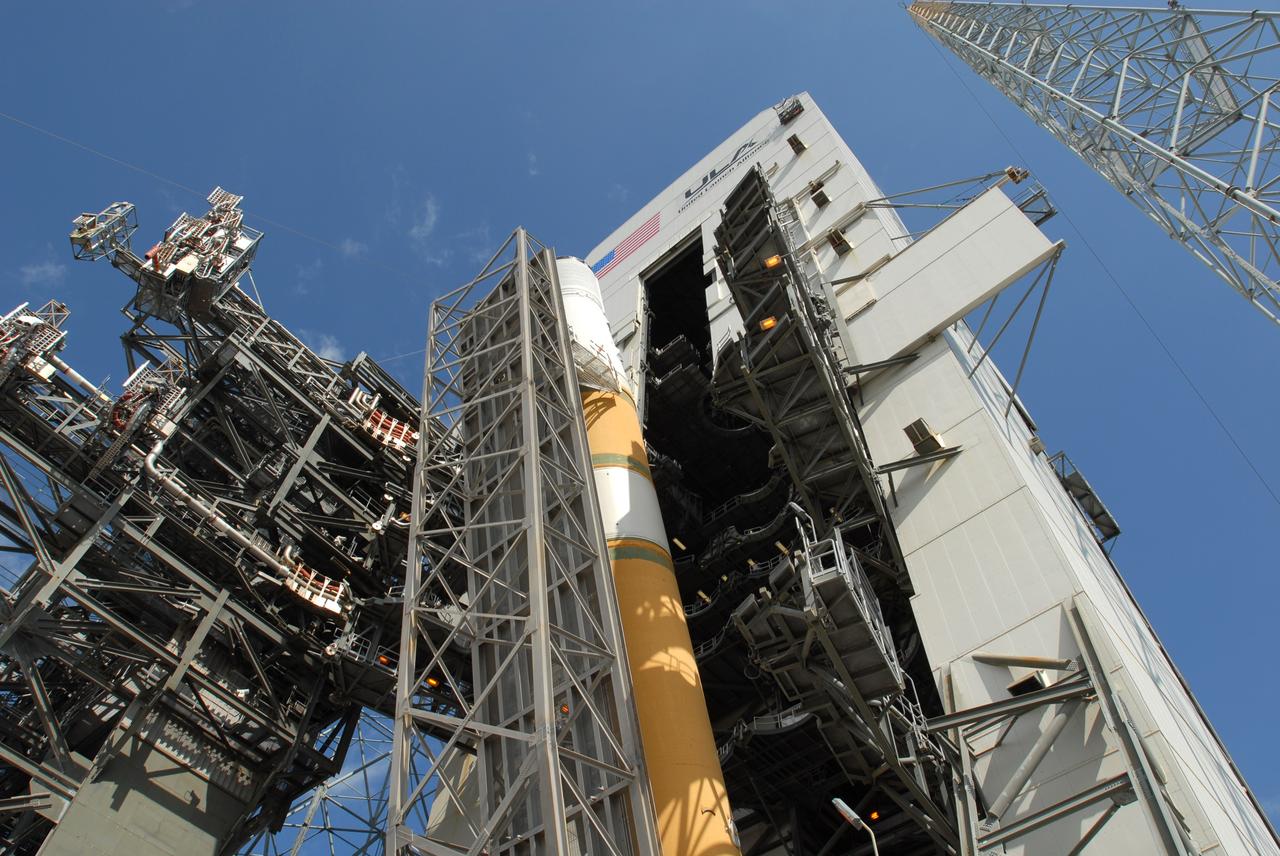
CAPE CANAVERAL, Fla. – On Launch Pad 37 at Cape Canaveral Air Force Station in Florida, the GOES-O and Delta IV upper stage are nearly vertical for movement into the mobile service tower for prelaunch preparations. GOES–O is one of a series of Geostationary Operational Environmental Satellites. The multi-mission GOES series N-P will be a vital contributor to weather, solar and space operations and science. NASA and the National Oceanic and Atmospheric Administration, or NOAA, are actively engaged in a cooperative program to expand the existing GOES system with the launch of the GOES N-P satellites. Launch of the GOES-O is targeted for no earlier than April 2009. Photo credit: NASA/Jim Grossmann
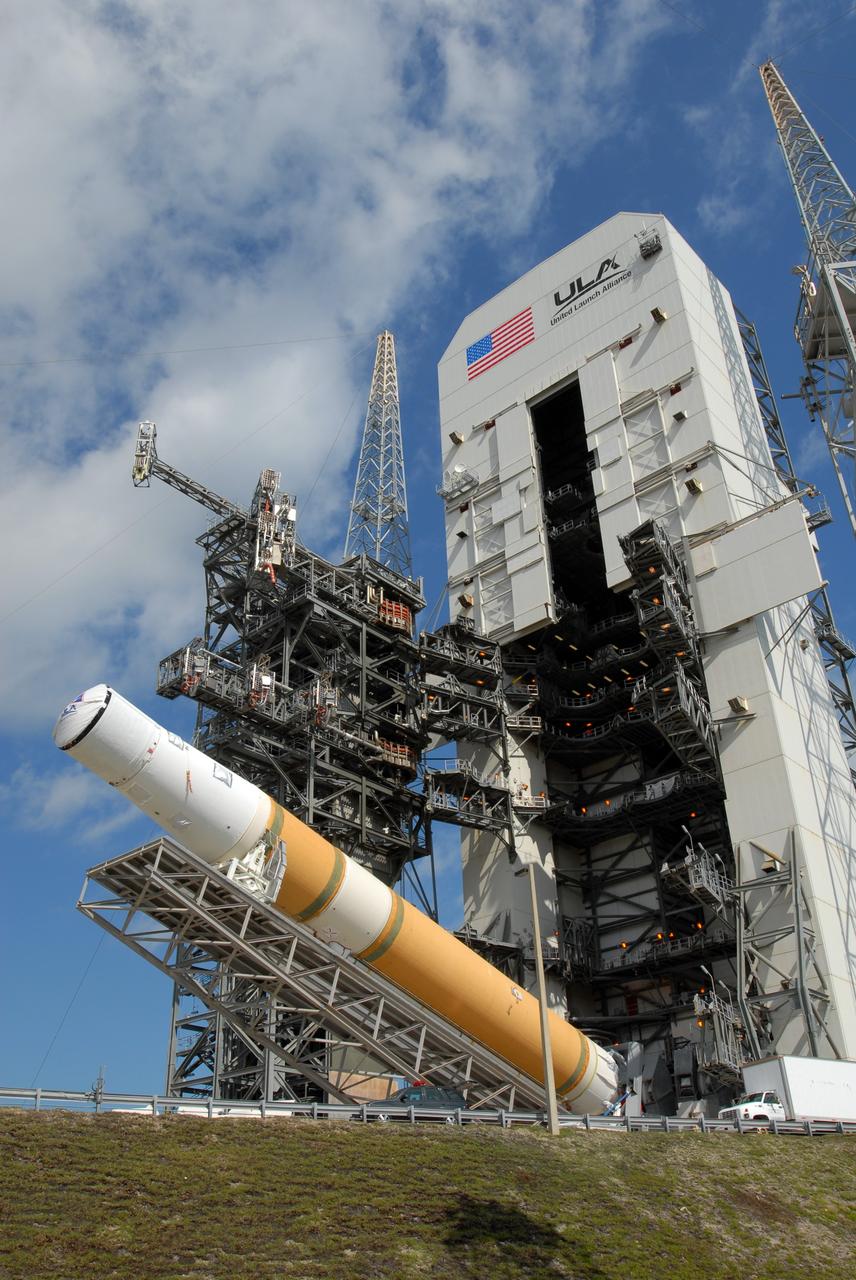
CAPE CANAVERAL, Fla. – On Launch Pad 37 at Cape Canaveral Air Force Station in Florida, the GOES-O and Delta IV upper stage are being raised to vertical. They will be moved into the mobile service tower for prelaunch preparations. GOES–O is one of a series of Geostationary Operational Environmental Satellites. The multi-mission GOES series N-P will be a vital contributor to weather, solar and space operations and science. NASA and the National Oceanic and Atmospheric Administration, or NOAA, are actively engaged in a cooperative program to expand the existing GOES system with the launch of the GOES N-P satellites. Launch of the GOES-O is targeted for no earlier than April 2009. Photo credit: NASA/Jim Grossmann
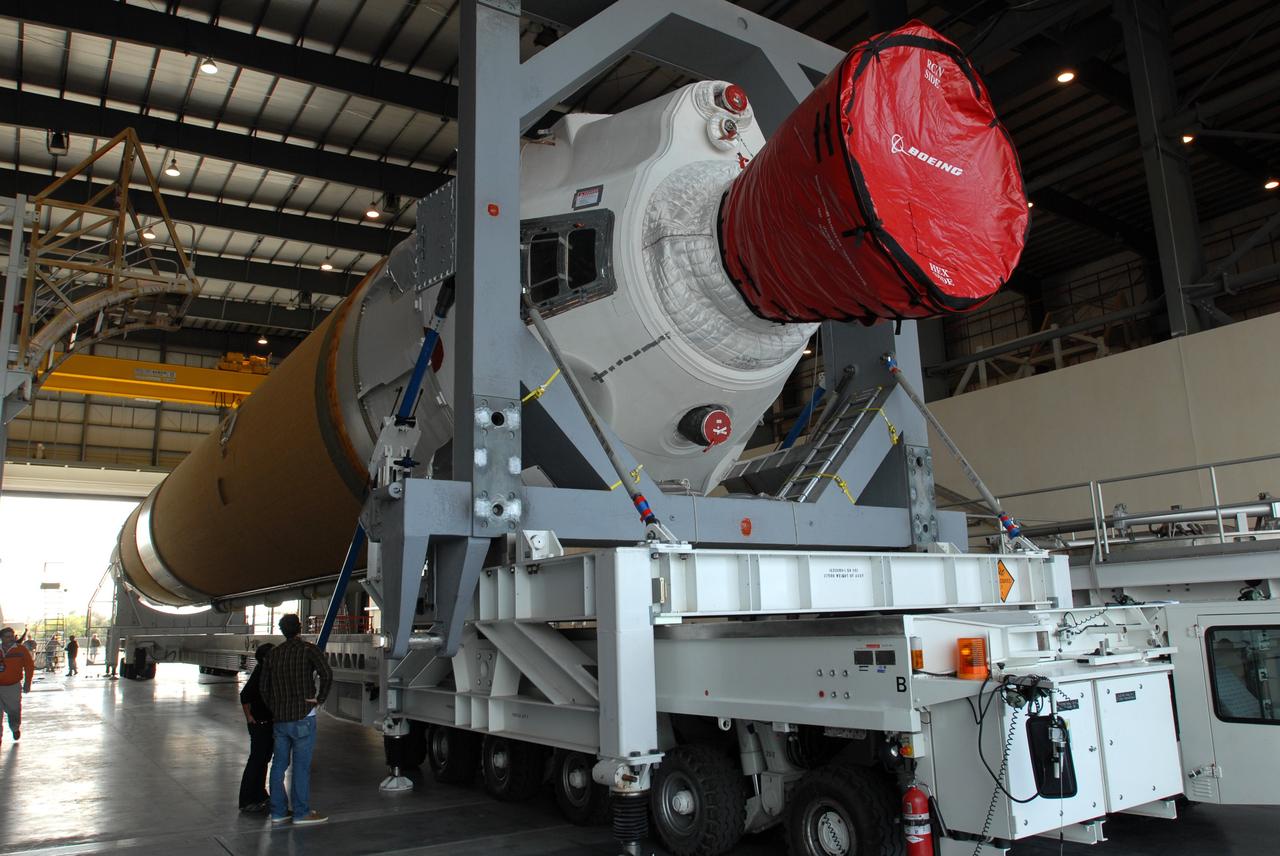
CAPE CANAVERAL, Fla. – On Complex 37 at Cape Canaveral Air Force Station in Florida, the GOES-O and Delta IV second stage are being prepared to leave the Horizontal Integration Facility. They will be moved to the launch pad. GOES–O is one of a series of Geostationary Operational Environmental Satellites. The multi-mission GOES series N-P will be a vital contributor to weather, solar and space operations and science. NASA and the National Oceanic and Atmospheric Administration, or NOAA, are actively engaged in a cooperative program to expand the existing GOES system with the launch of the GOES N-P satellites. Launch of the GOES-O is targeted for no earlier than April 2009. Photo credit: NASA/Jim Grossmann
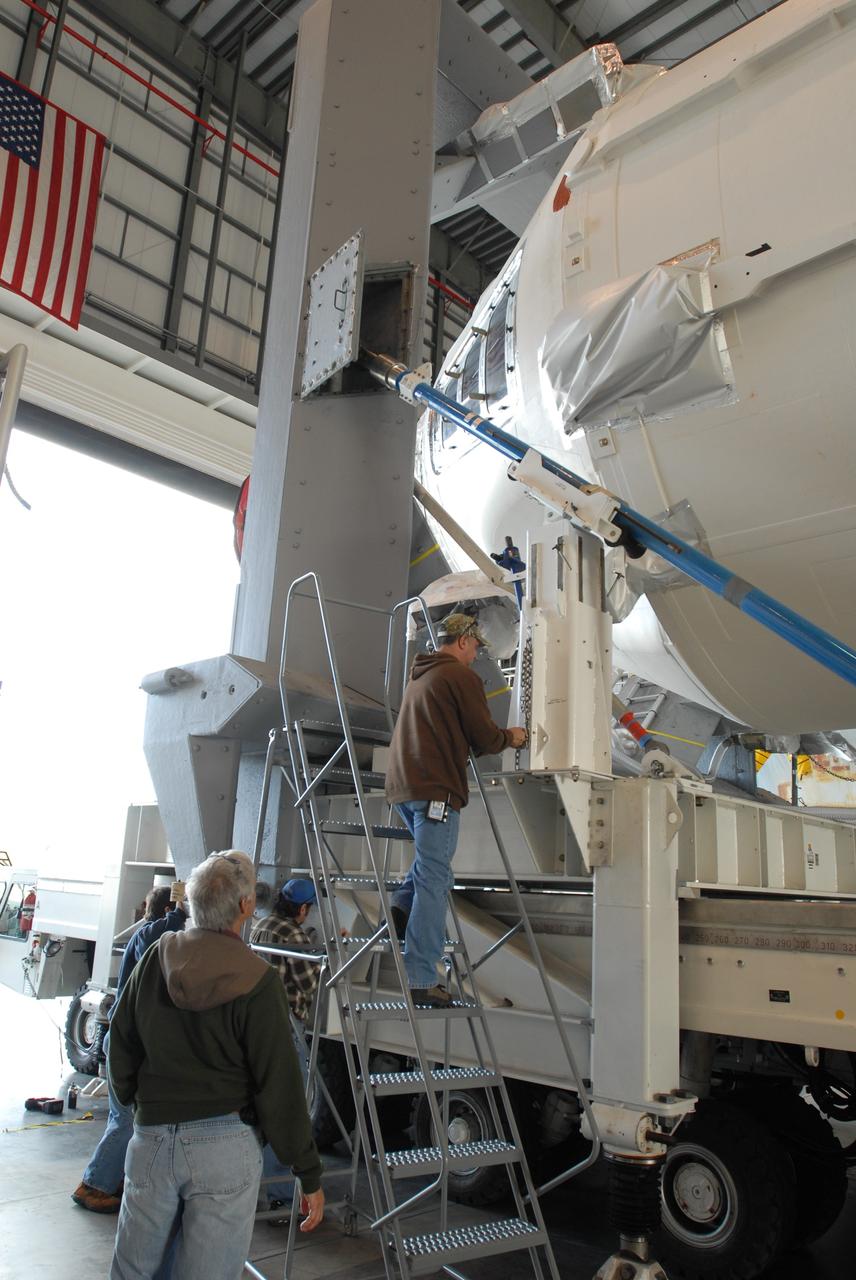
CAPE CANAVERAL, Fla. – On Complex 37 at Cape Canaveral Air Force Station in Florida, workers ensure the GOES-O and Delta IV second stage are ready to leave the Horizontal Integration Facility for the launch pad. GOES-O is one of a series of Geostationary Operational Environmental Satellites. The multi-mission GOES series N-P will be a vital contributor to weather, solar and space operations and science. NASA and the National Oceanic and Atmospheric Administration, or NOAA, are actively engaged in a cooperative program to expand the existing GOES system with the launch of the GOES N-P satellites. Launch of the GOES-O is targeted for no earlier than April 2009. Photo credit: NASA/Jim Grossmann
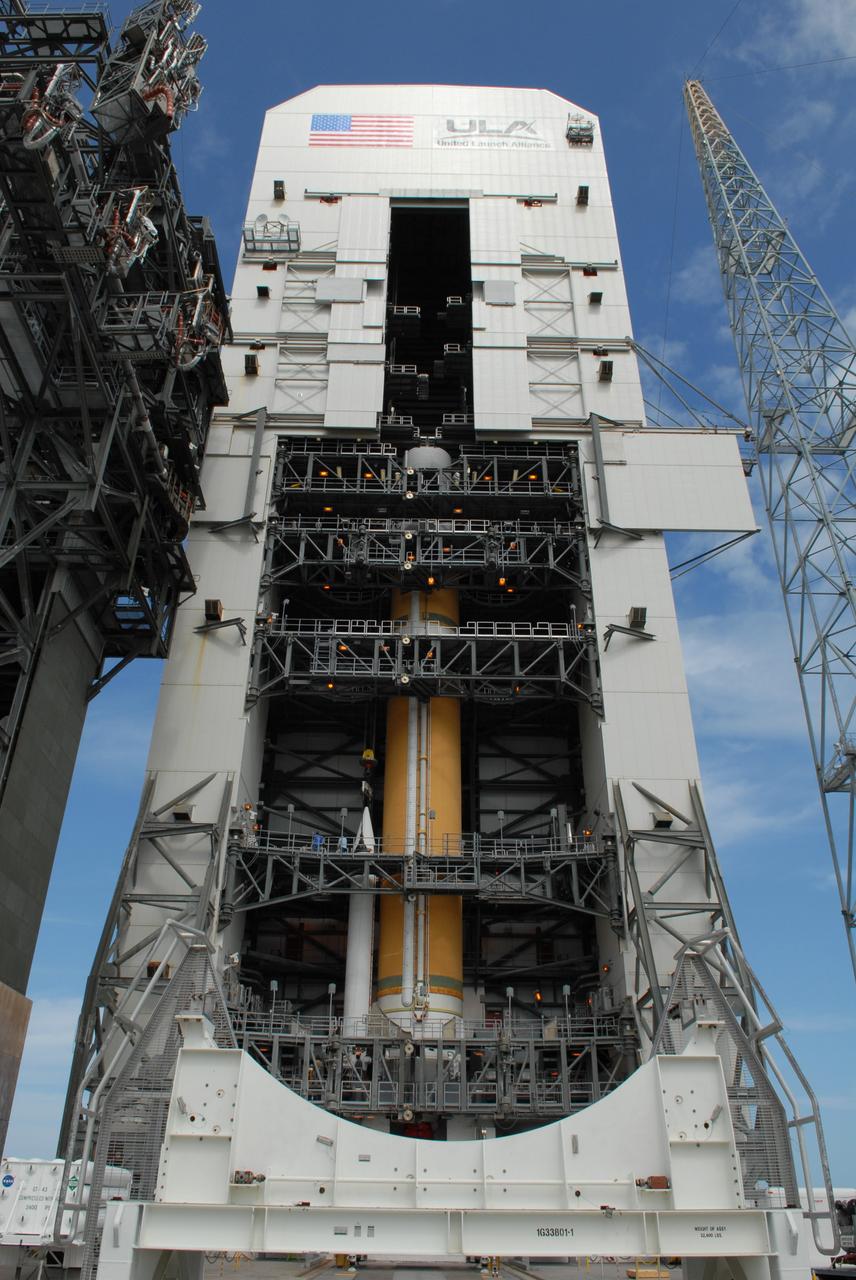
CAPE CANAVERAL, Fla. – One of two solid rocket boosters is mated to the GOES-O Delta IV launch vehicle on Launch Pad 37 at Cape Canaveral Air Force Station. It is the left rocket. GOES–O is one of a series of Geostationary Operational Environmental Satellites. The multi-mission GOES series N-P will be a vital contributor to weather, solar and space operations and science. NASA and the National Oceanic and Atmospheric Administration, or NOAA, are actively engaged in a cooperative program to expand the existing GOES system with the launch of the GOES N-P satellites. Launch of the GOES-O is targeted for no earlier than April 2009. Photo credit: NASA/Ben Smegelsky
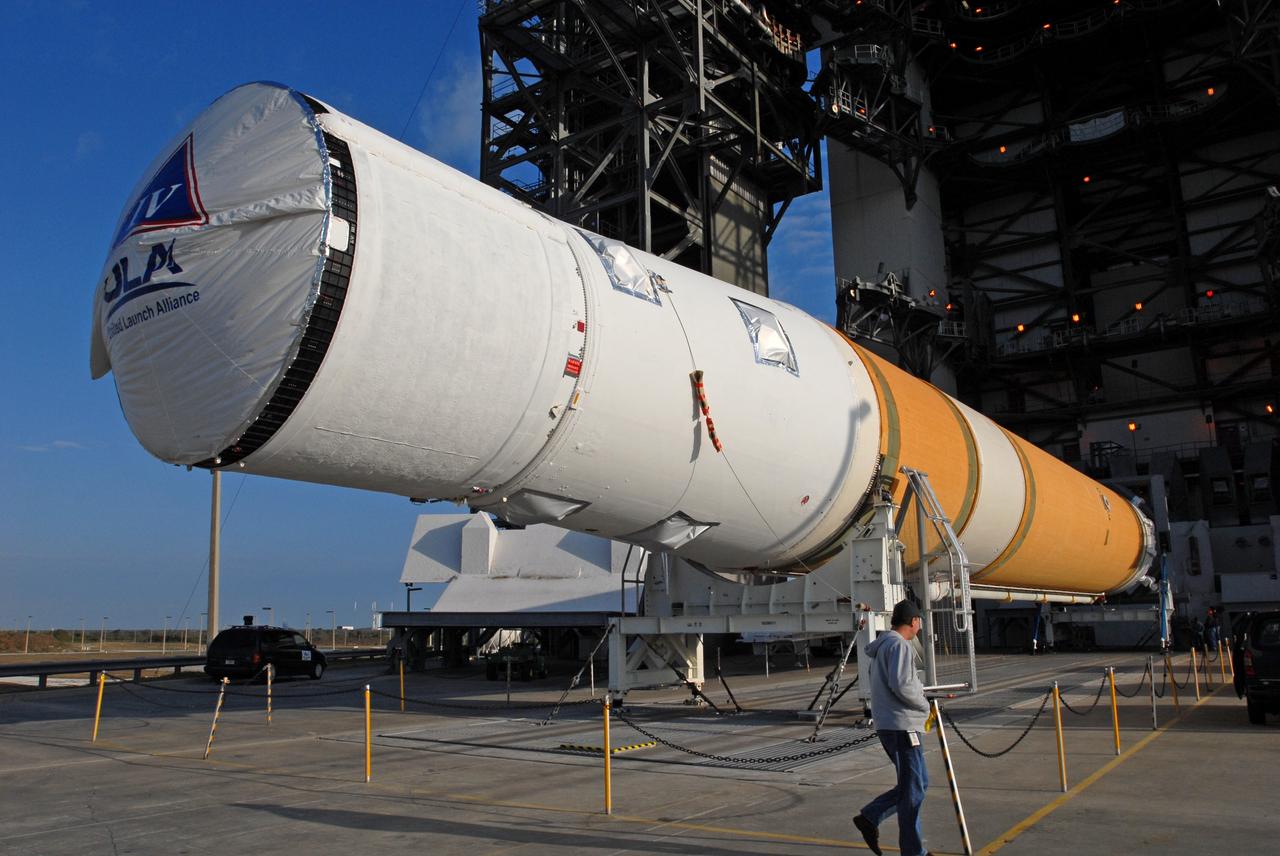
CAPE CANAVERAL, Fla. – On Launch Pad 37 at Cape Canaveral Air Force Station in Florida, the GOES-O and Delta IV upper stage are waiting to be raised to vertical. They will be moved into the mobile service tower for prelaunch preparations. GOES–O is one of a series of Geostationary Operational Environmental Satellites. The multi-mission GOES series N-P will be a vital contributor to weather, solar and space operations and science. NASA and the National Oceanic and Atmospheric Administration, or NOAA, are actively engaged in a cooperative program to expand the existing GOES system with the launch of the GOES N-P satellites. Launch of the GOES-O is targeted for no earlier than April 2009. Photo credit: NASA/Jim Grossmann
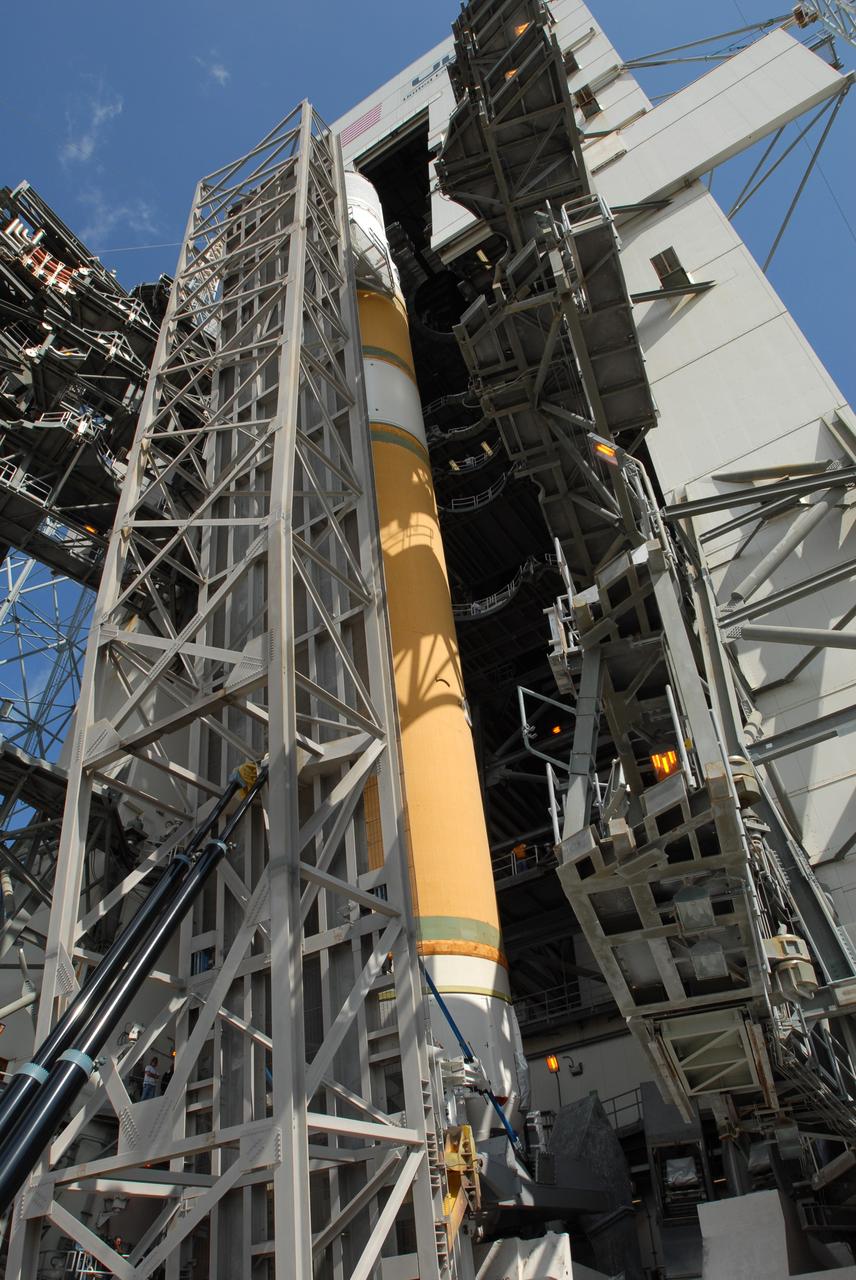
CAPE CANAVERAL, Fla. – On Launch Pad 37 at Cape Canaveral Air Force Station in Florida, the GOES-O and Delta IV upper stage have been raised to vertical. They will be moved into the mobile service tower for prelaunch preparations. GOES–O is one of a series of Geostationary Operational Environmental Satellites. The multi-mission GOES series N-P will be a vital contributor to weather, solar and space operations and science. NASA and the National Oceanic and Atmospheric Administration, or NOAA, are actively engaged in a cooperative program to expand the existing GOES system with the launch of the GOES N-P satellites. Launch of the GOES-O is targeted for no earlier than April 2009. Photo credit: NASA/Jim Grossmann
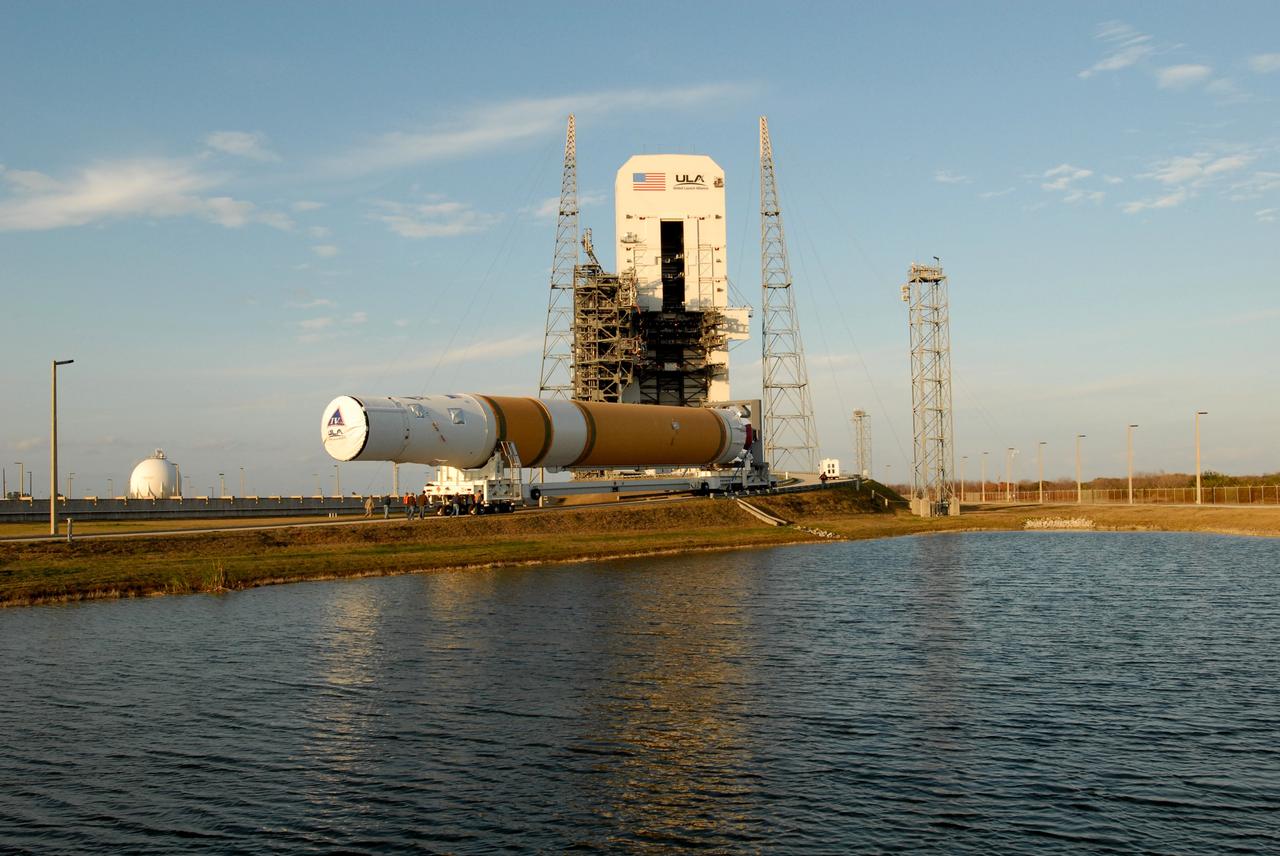
CAPE CANAVERAL, Fla. – At Cape Canaveral Air Force Station in Florida, the GOES-O and Delta IV second stage arrive on Launch Pad 37. They will be raised to vertical and moved into the mobile service tower. GOES–O is one of a series of Geostationary Operational Environmental Satellites. The multi-mission GOES series N-P will be a vital contributor to weather, solar and space operations and science. NASA and the National Oceanic and Atmospheric Administration, or NOAA, are actively engaged in a cooperative program to expand the existing GOES system with the launch of the GOES N-P satellites. Launch of the GOES-O is targeted for no earlier than April 2009. Photo credit: NASA/Jim Grossmann
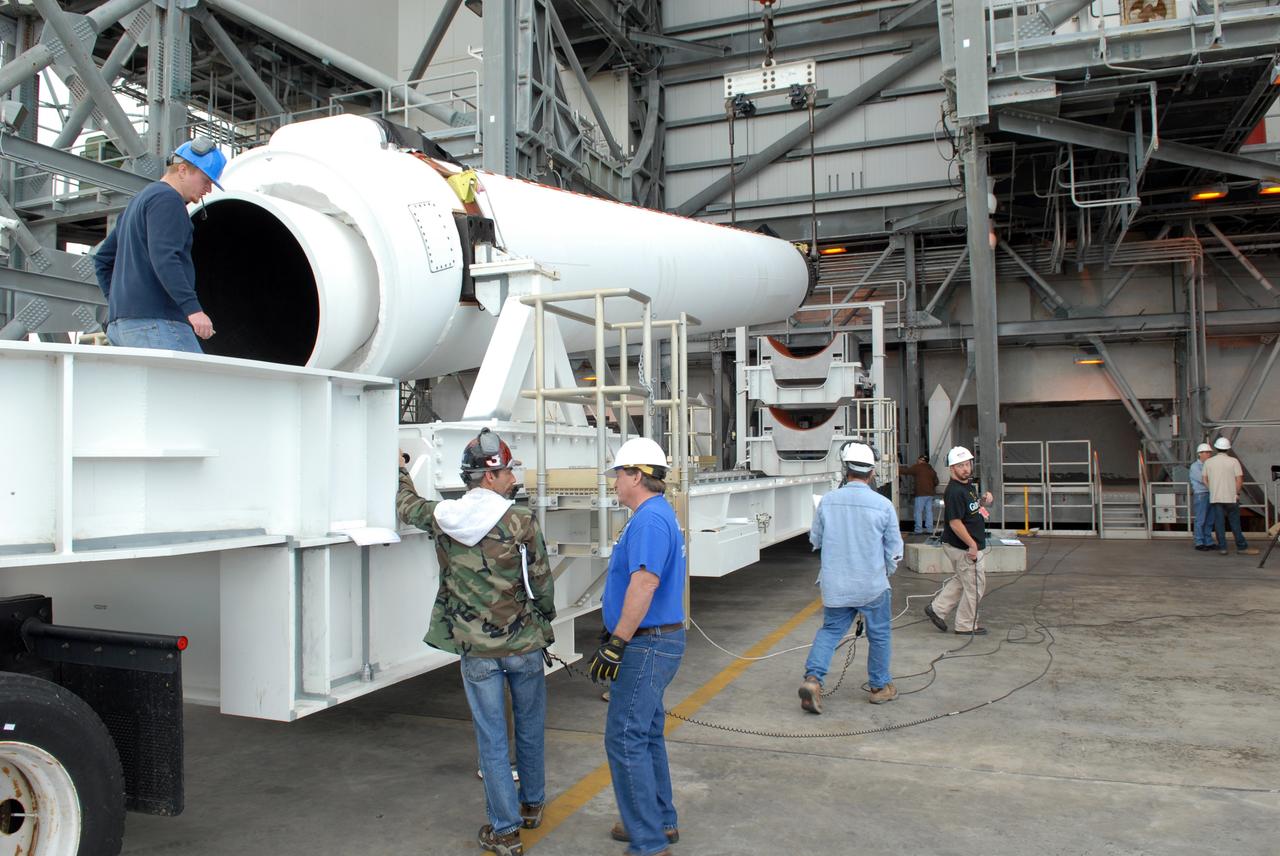
CAPE CANAVERAL, Fla. – One of two solid rocket boosters arrives on Launch Pad 37 at Cape Canaveral Air Force Station. it is the left rocket and it will be lifted into the mobile service tower and mated to the GOES-O Delta IV launch vehicle. GOES–O is one of a series of Geostationary Operational Environmental Satellites. The multi-mission GOES series N-P will be a vital contributor to weather, solar and space operations and science. NASA and the National Oceanic and Atmospheric Administration, or NOAA, are actively engaged in a cooperative program to expand the existing GOES system with the launch of the GOES N-P satellites. Launch of the GOES-O is targeted for no earlier than April 2009. Photo credit: NASA/Ben Smegelsky
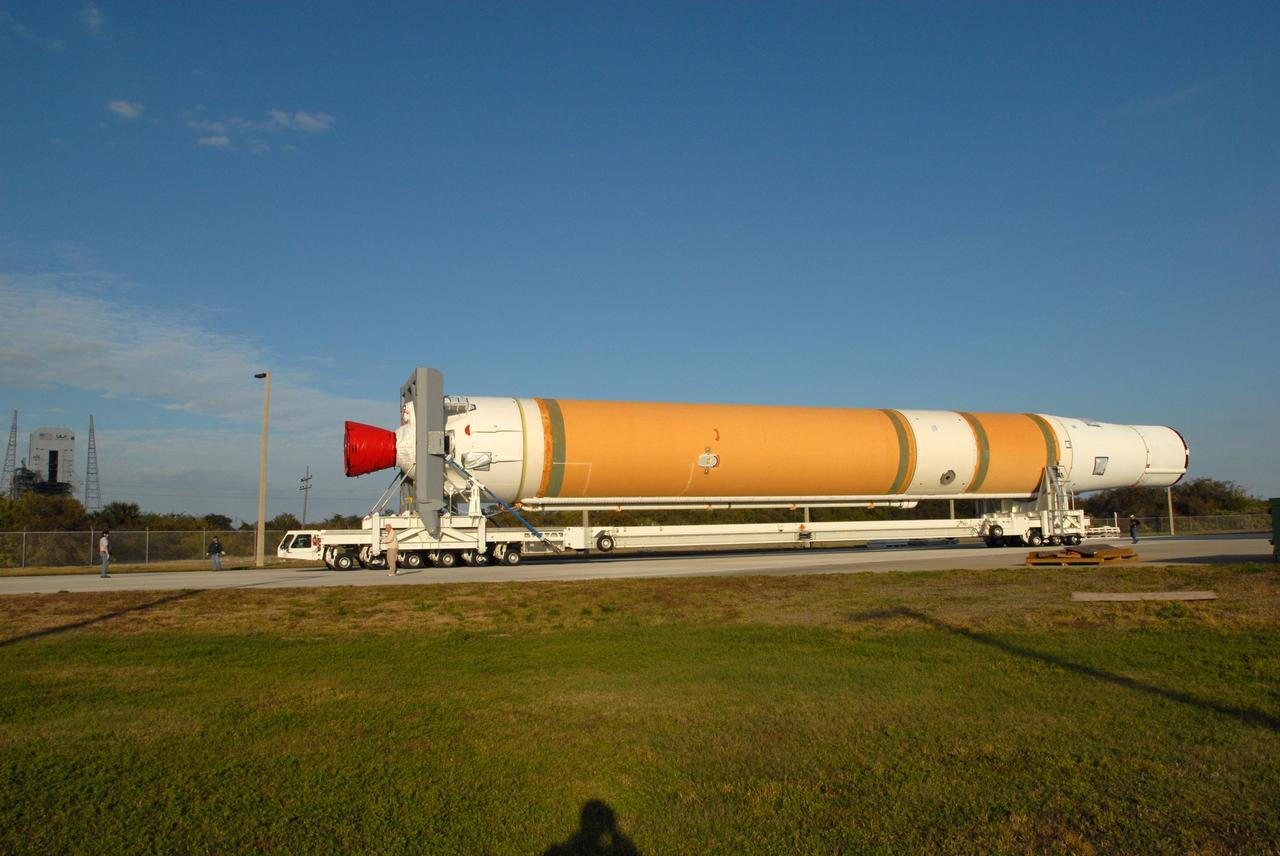
CAPE CANAVERAL, Fla. – On Complex 37 at Cape Canaveral Air Force Station in Florida, the GOES-O and Delta IV second stage roll out of the Horizontal Integration Facility aboard a transporter. They are being moved to the launch pad. GOES–O is one of a series of Geostationary Operational Environmental Satellites. The multi-mission GOES series N-P will be a vital contributor to weather, solar and space operations and science. NASA and the National Oceanic and Atmospheric Administration, or NOAA, are actively engaged in a cooperative program to expand the existing GOES system with the launch of the GOES N-P satellites. Launch of the GOES-O is targeted for no earlier than April 2009. Photo credit: NASA/Jim Grossmann
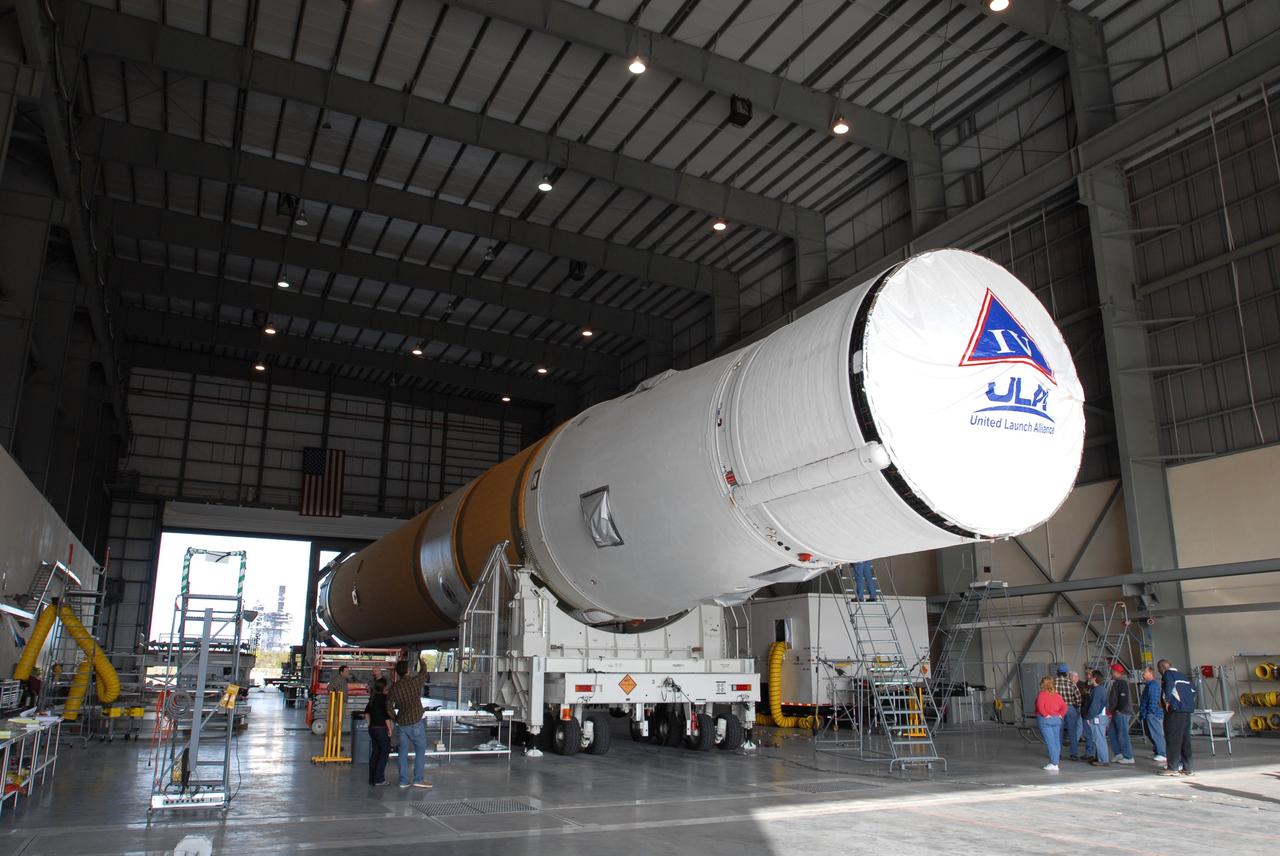
CAPE CANAVERAL, Fla. – On Complex 37 at Cape Canaveral Air Force Station in Florida, the GOES-O and Delta IV second stage are being prepared to leave the Horizontal Integration Facility. They will be moved to the launch pad. GOES–O is one of a series of Geostationary Operational Environmental Satellites. The multi-mission GOES series N-P will be a vital contributor to weather, solar and space operations and science. NASA and the National Oceanic and Atmospheric Administration, or NOAA, are actively engaged in a cooperative program to expand the existing GOES system with the launch of the GOES N-P satellites. Launch of the GOES-O is targeted for no earlier than April 2009. Photo credit: NASA/Jim Grossmann
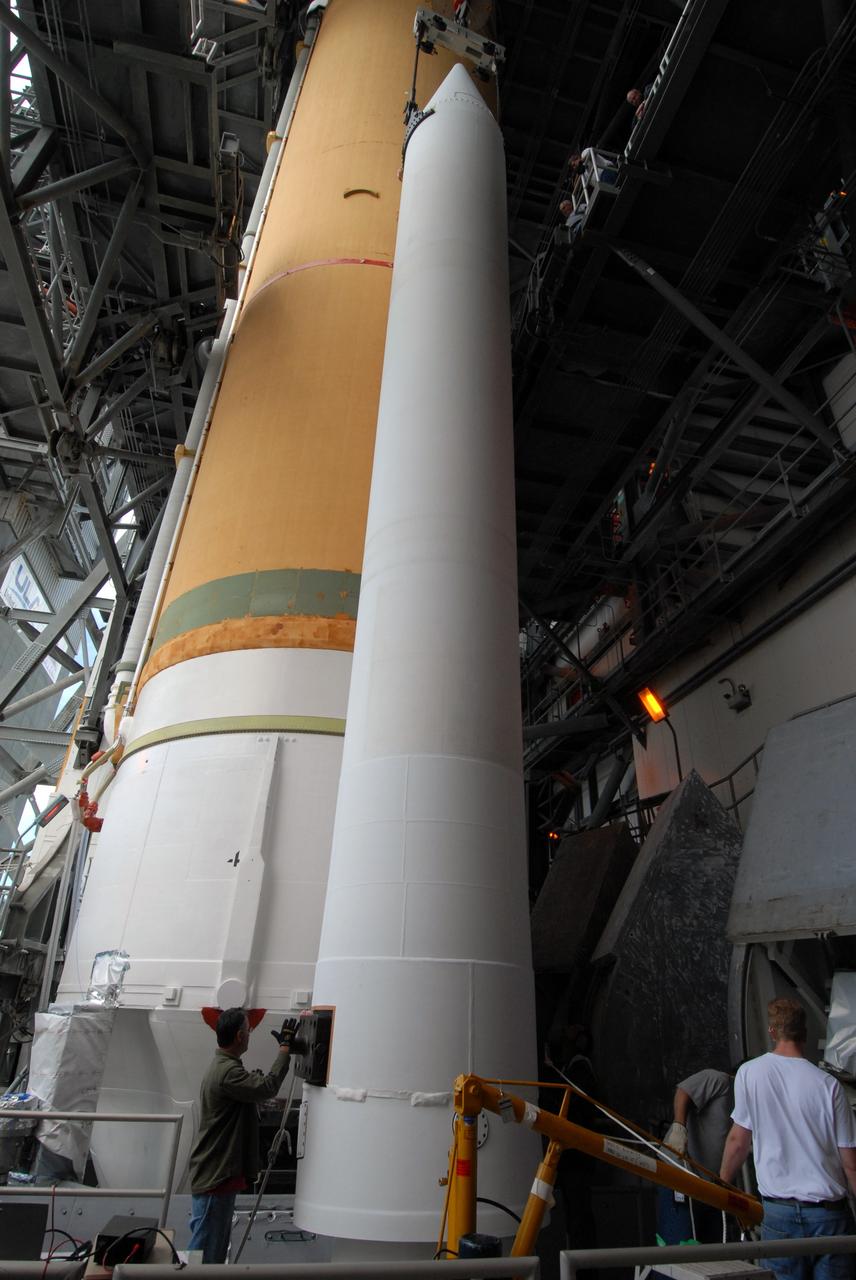
CAPE CANAVERAL, Fla. – On Launch Pad 37 at Cape Canaveral Air Force Station in Florida, the second of two solid rocket boosters is being installed on the right side of the Delta IV launch vehicle for the GOES-O spacecraft. GOES–O is one of a series of Geostationary Operational Environmental Satellites. The multi-mission GOES series N-P will be a vital contributor to weather, solar and space operations and science. NASA and the National Oceanic and Atmospheric Administration, or NOAA, are actively engaged in a cooperative program to expand the existing GOES system with the launch of the GOES N-P satellites. Launch of the GOES-O is targeted for no earlier than April 2009. Photo credit: NASA/Jack Pfaller
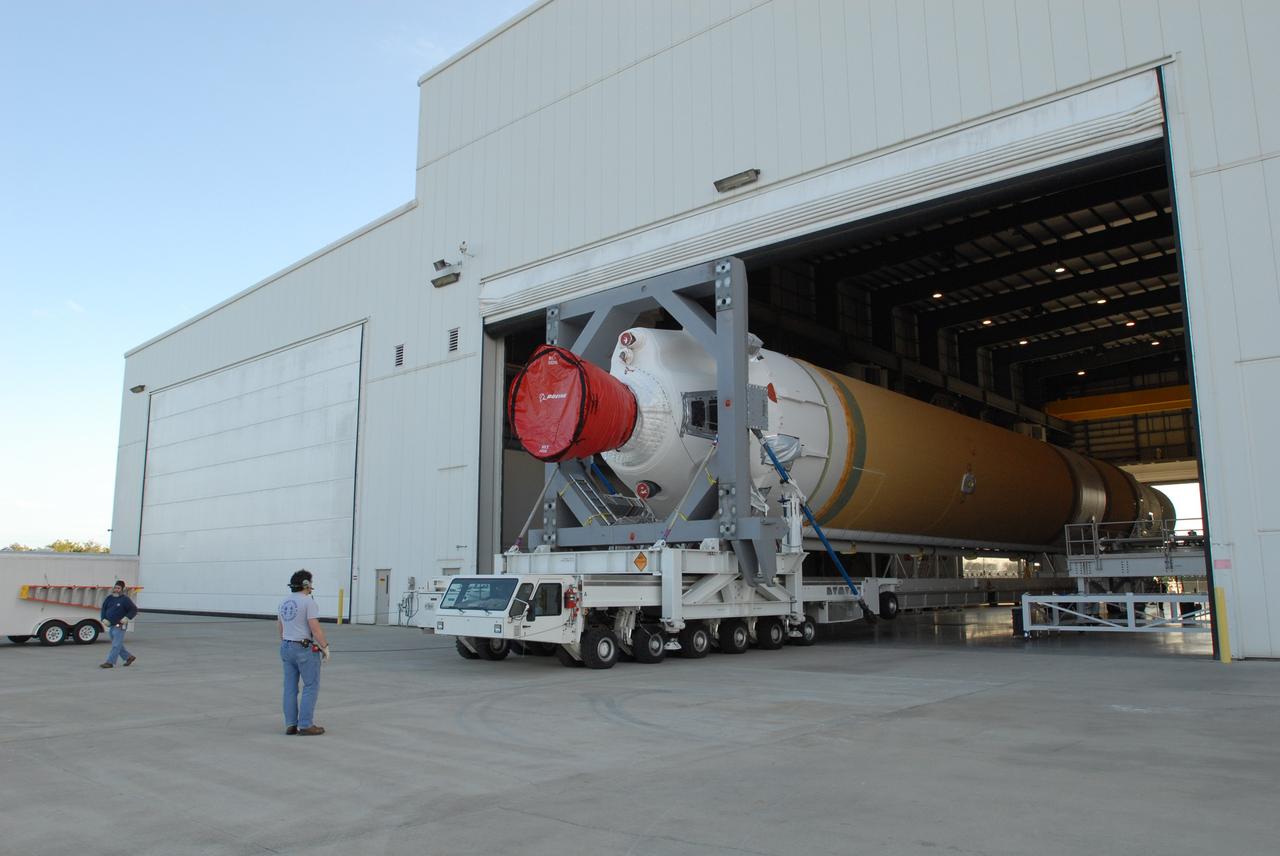
CAPE CANAVERAL, Fla. – On Complex 37 at Cape Canaveral Air Force Station in Florida, workers secure the framework around the GOES-O and Delta IV second stage before they leave the Horizontal Integration Facility for the launch pad. GOES–O is one of a series of Geostationary Operational Environmental Satellites. The multi-mission GOES series N-P will be a vital contributor to weather, solar and space operations and science. NASA and the National Oceanic and Atmospheric Administration, or NOAA, are actively engaged in a cooperative program to expand the existing GOES system with the launch of the GOES N-P satellites. Launch of the GOES-O is targeted for no earlier than April 2009. Photo credit: NASA/Jim Grossmann
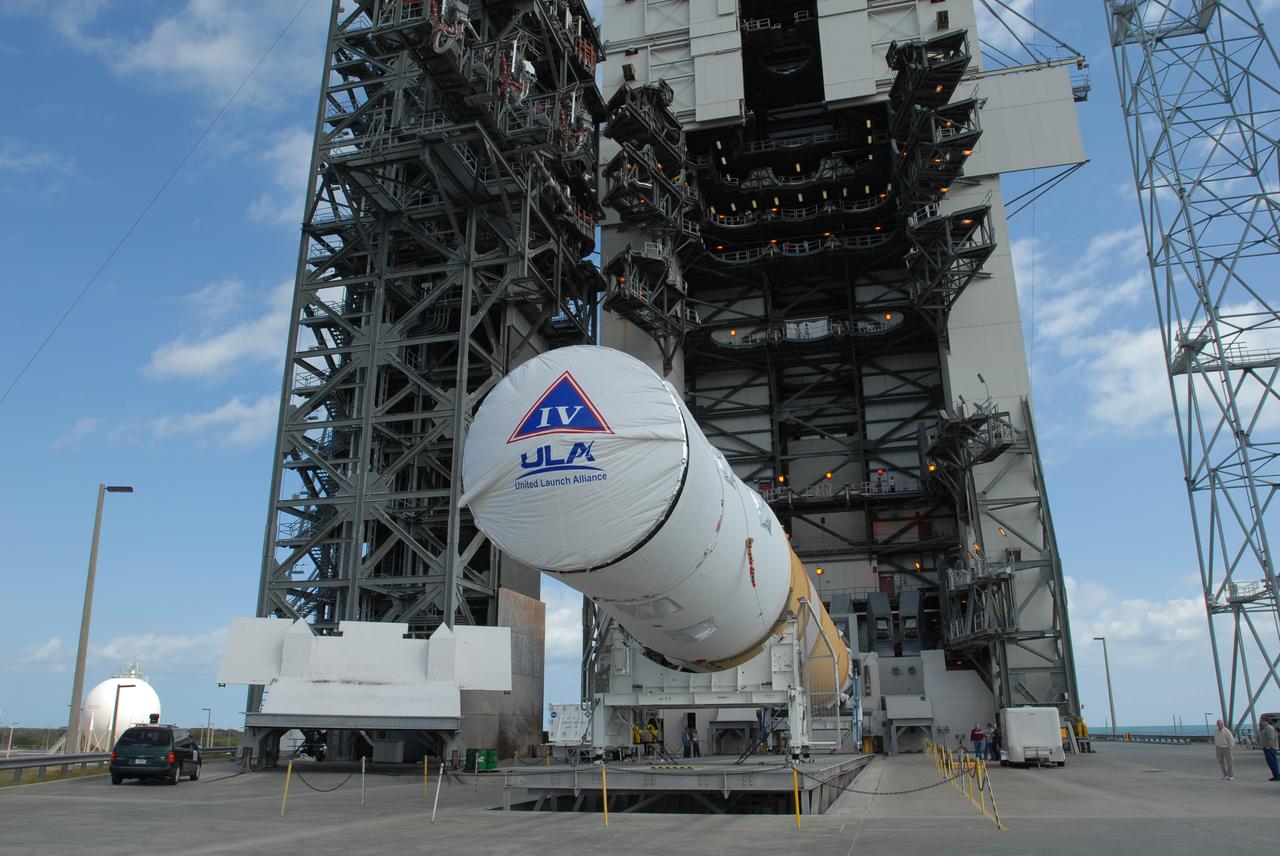
CAPE CANAVERAL, Fla. – On Launch Pad 37 at Cape Canaveral Air Force Station in Florida, the GOES-O and Delta IV upper stage are being raised to vertical. They will be moved into the mobile service tower for prelaunch preparations. GOES–O is one of a series of Geostationary Operational Environmental Satellites. The multi-mission GOES series N-P will be a vital contributor to weather, solar and space operations and science. NASA and the National Oceanic and Atmospheric Administration, or NOAA, are actively engaged in a cooperative program to expand the existing GOES system with the launch of the GOES N-P satellites. Launch of the GOES-O is targeted for no earlier than April 2009. Photo credit: NASA/Jim Grossmann
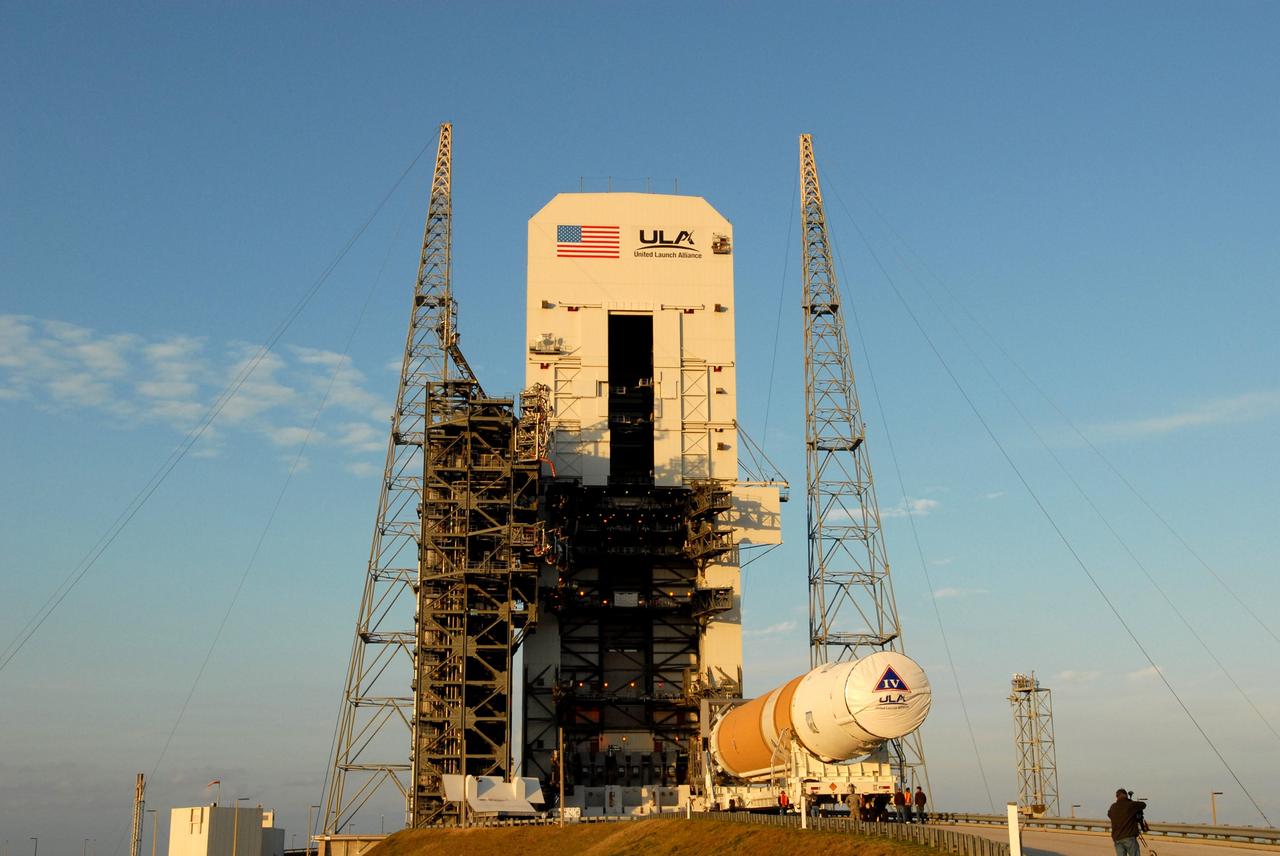
CAPE CANAVERAL, Fla. – At Cape Canaveral Air Force Station in Florida, the GOES-O and Delta IV second stage arrive on Launch Pad 37. They will be raised to vertical and moved into the mobile service tower. GOES–O is one of a series of Geostationary Operational Environmental Satellites. The multi-mission GOES series N-P will be a vital contributor to weather, solar and space operations and science. NASA and the National Oceanic and Atmospheric Administration, or NOAA, are actively engaged in a cooperative program to expand the existing GOES system with the launch of the GOES N-P satellites. Launch of the GOES-O is targeted for no earlier than April 2009. Photo credit: NASA/Jim Grossmann
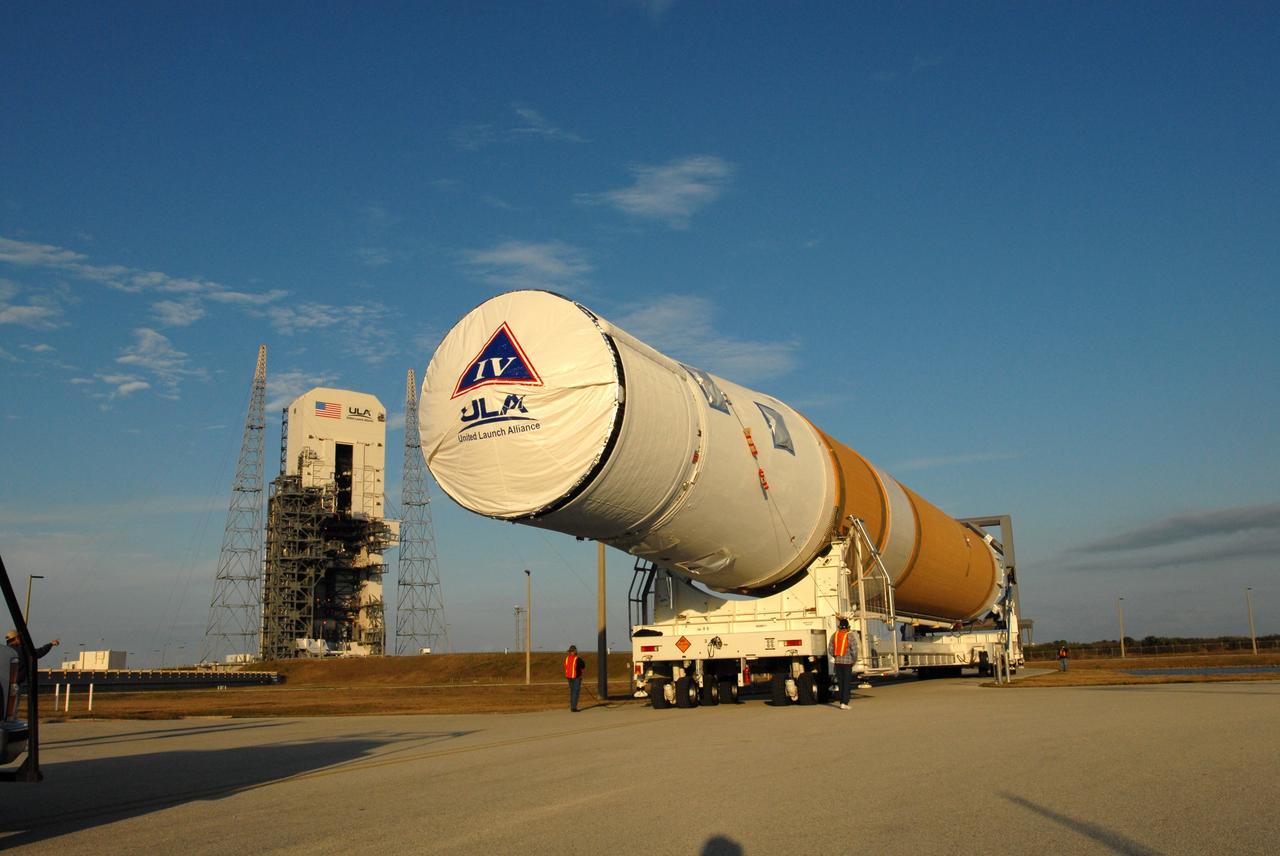
CAPE CANAVERAL, Fla. – At Cape Canaveral Air Force Station in Florida, the GOES-O and Delta IV second stage roll toward Launch Pad 37. GOES–O is one of a series of Geostationary Operational Environmental Satellites. The multi-mission GOES series N-P will be a vital contributor to weather, solar and space operations and science. NASA and the National Oceanic and Atmospheric Administration, or NOAA, are actively engaged in a cooperative program to expand the existing GOES system with the launch of the GOES N-P satellites. Launch of the GOES-O is targeted for no earlier than April 2009. Photo credit: NASA/Jim Grossmann
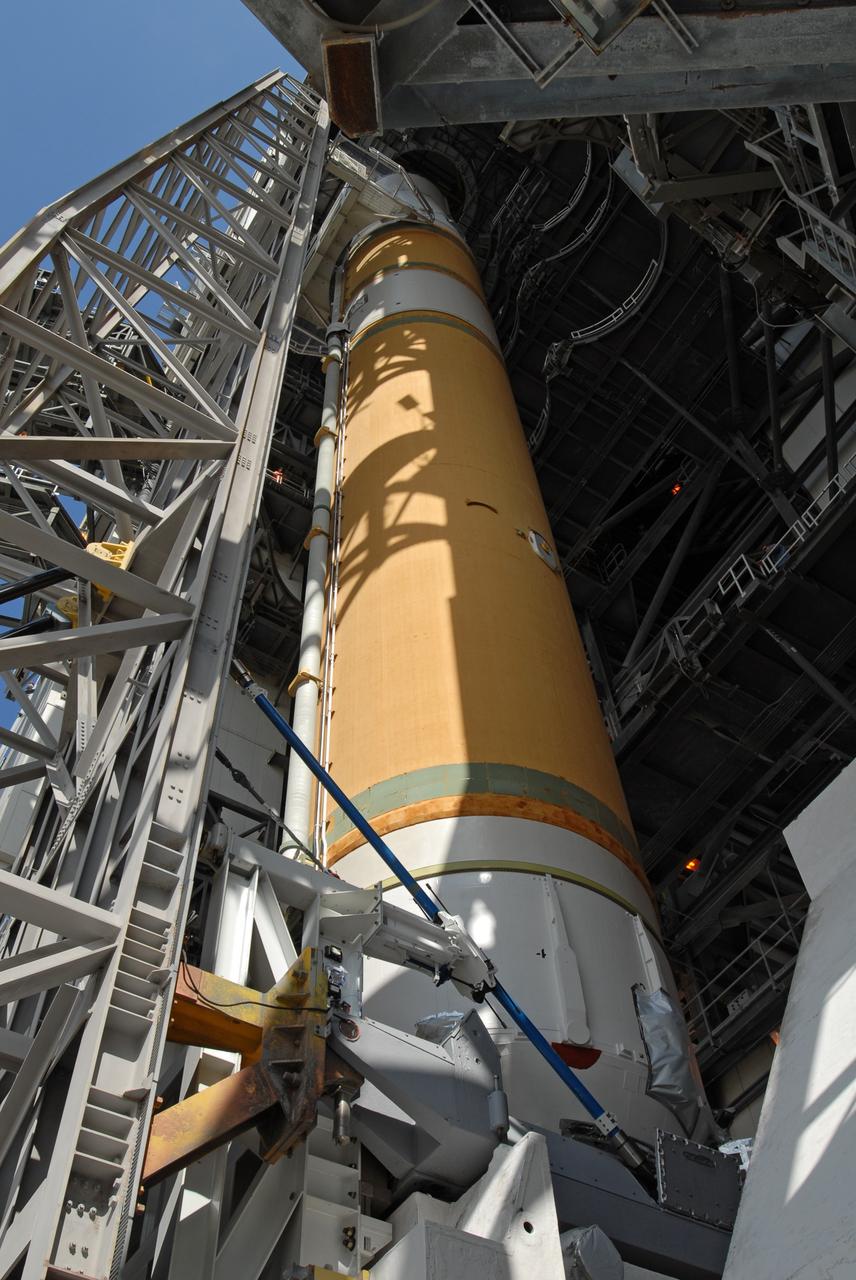
CAPE CANAVERAL, Fla. – On Launch Pad 37 at Cape Canaveral Air Force Station in Florida, the GOES-O and Delta IV upper stage are moved into the mobile service tower for prelaunch preparations. GOES–O is one of a series of Geostationary Operational Environmental Satellites. The multi-mission GOES series N-P will be a vital contributor to weather, solar and space operations and science. NASA and the National Oceanic and Atmospheric Administration, or NOAA, are actively engaged in a cooperative program to expand the existing GOES system with the launch of the GOES N-P satellites. Launch of the GOES-O is targeted for no earlier than April 2009. Photo credit: NASA/Jim Grossmann
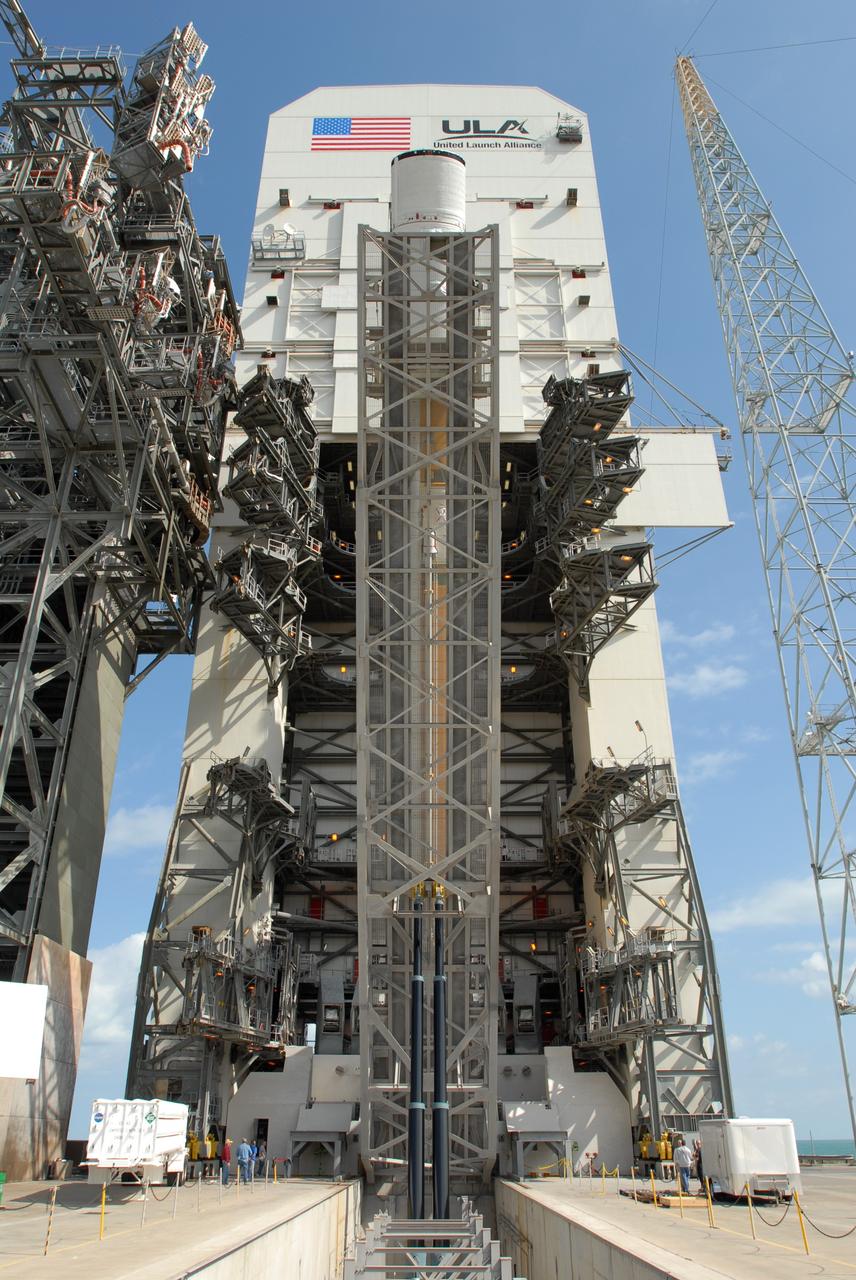
CAPE CANAVERAL, Fla. – – On Launch Pad 37 at Cape Canaveral Air Force Station in Florida, the GOES-O and Delta IV upper stage are being raised to vertical. They will be moved into the mobile service tower for prelaunch preparations. GOES–O is one of a series of Geostationary Operational Environmental Satellites. The multi-mission GOES series N-P will be a vital contributor to weather, solar and space operations and science. NASA and the National Oceanic and Atmospheric Administration, or NOAA, are actively engaged in a cooperative program to expand the existing GOES system with the launch of the GOES N-P satellites. Launch of the GOES-O is targeted for no earlier than April 2009. Photo credit: NASA/Jim Grossmann
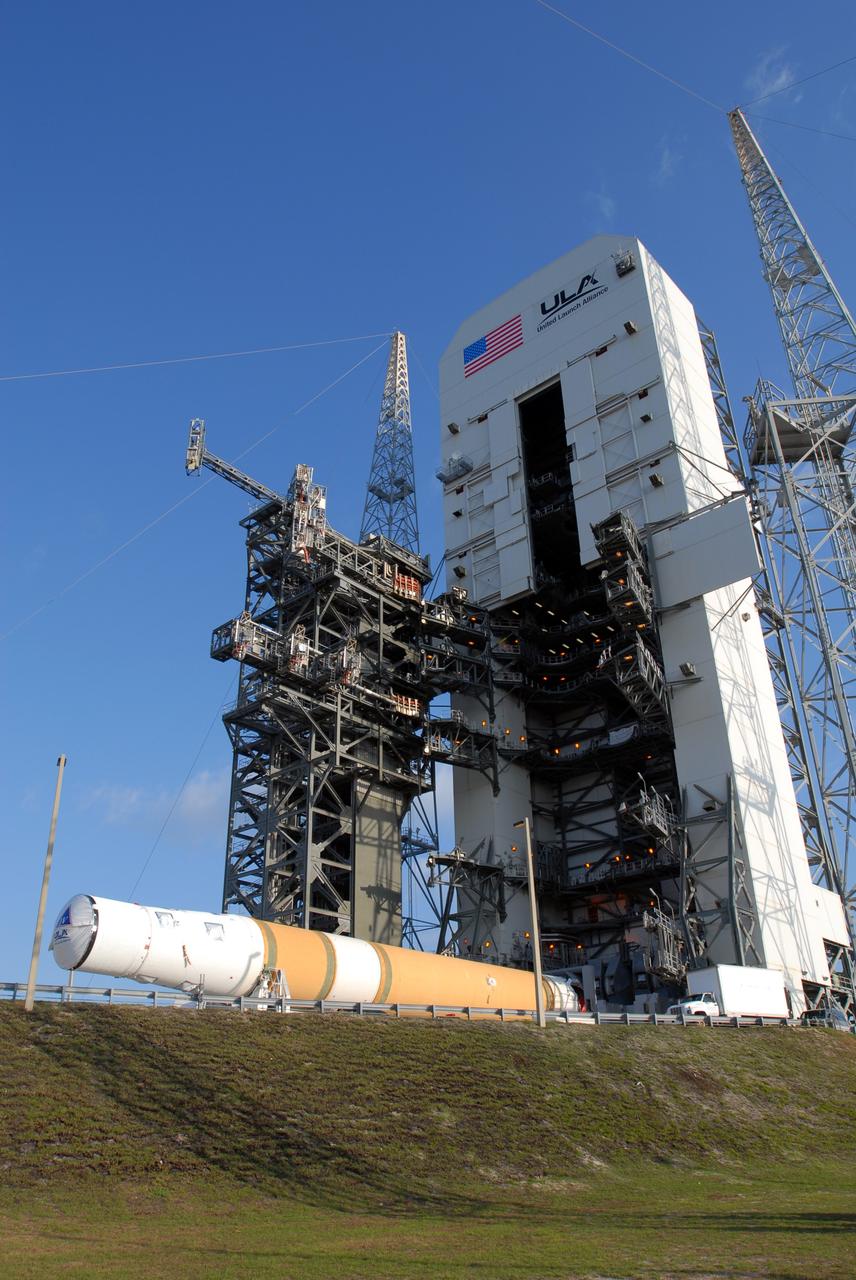
CAPE CANAVERAL, Fla. – On Launch Pad 37 at Cape Canaveral Air Force Station in Florida, the GOES-O and Delta IV upper stage are waiting to be raised to vertical. They will be moved into the mobile service tower for prelaunch preparations. GOES–O is one of a series of Geostationary Operational Environmental Satellites. The multi-mission GOES series N-P will be a vital contributor to weather, solar and space operations and science. NASA and the National Oceanic and Atmospheric Administration, or NOAA, are actively engaged in a cooperative program to expand the existing GOES system with the launch of the GOES N-P satellites. Launch of the GOES-O is targeted for no earlier than April 2009. Photo credit: NASA/Jim Grossmann
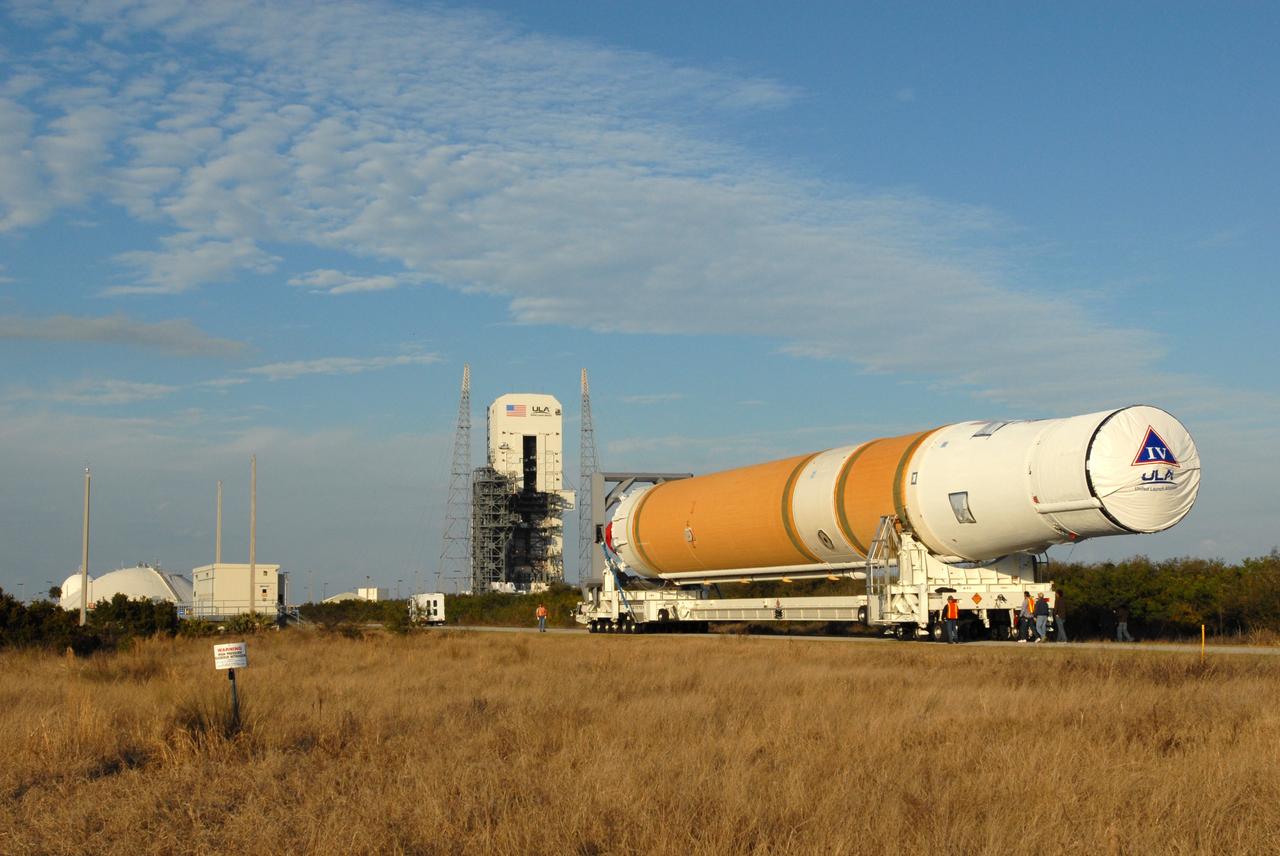
CAPE CANAVERAL, Fla. – At Cape Canaveral Air Force Station in Florida, the GOES-O and Delta IV second stage are transported to Launch Pad 37. GOES–O is one of a series of Geostationary Operational Environmental Satellites. The multi-mission GOES series N-P will be a vital contributor to weather, solar and space operations and science. NASA and the National Oceanic and Atmospheric Administration, or NOAA, are actively engaged in a cooperative program to expand the existing GOES system with the launch of the GOES N-P satellites. Launch of the GOES-O is targeted for no earlier than April 2009. Photo credit: NASA/Jim Grossmann
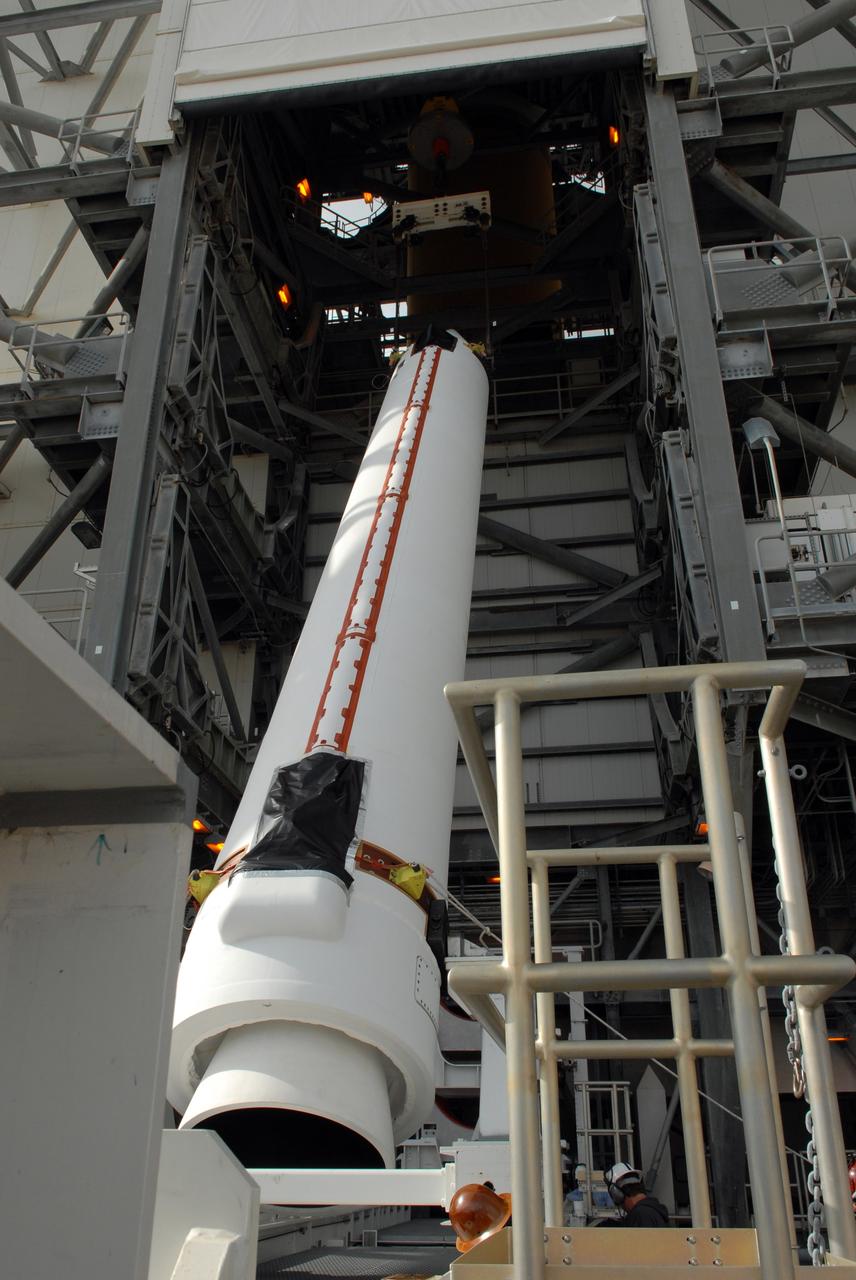
CAPE CANAVERAL, Fla. – One of two solid rocket boosters is lifted into the mobile service tower on Launch Pad 37 at Cape Canaveral Air Force Station. It is the left rocket and it will be mated to the GOES-O Delta IV launch vehicle. GOES–O is one of a series of Geostationary Operational Environmental Satellites. The multi-mission GOES series N-P will be a vital contributor to weather, solar and space operations and science. NASA and the National Oceanic and Atmospheric Administration, or NOAA, are actively engaged in a cooperative program to expand the existing GOES system with the launch of the GOES N-P satellites. Launch of the GOES-O is targeted for no earlier than April 2009. Photo credit: NASA/Ben Smegelsky
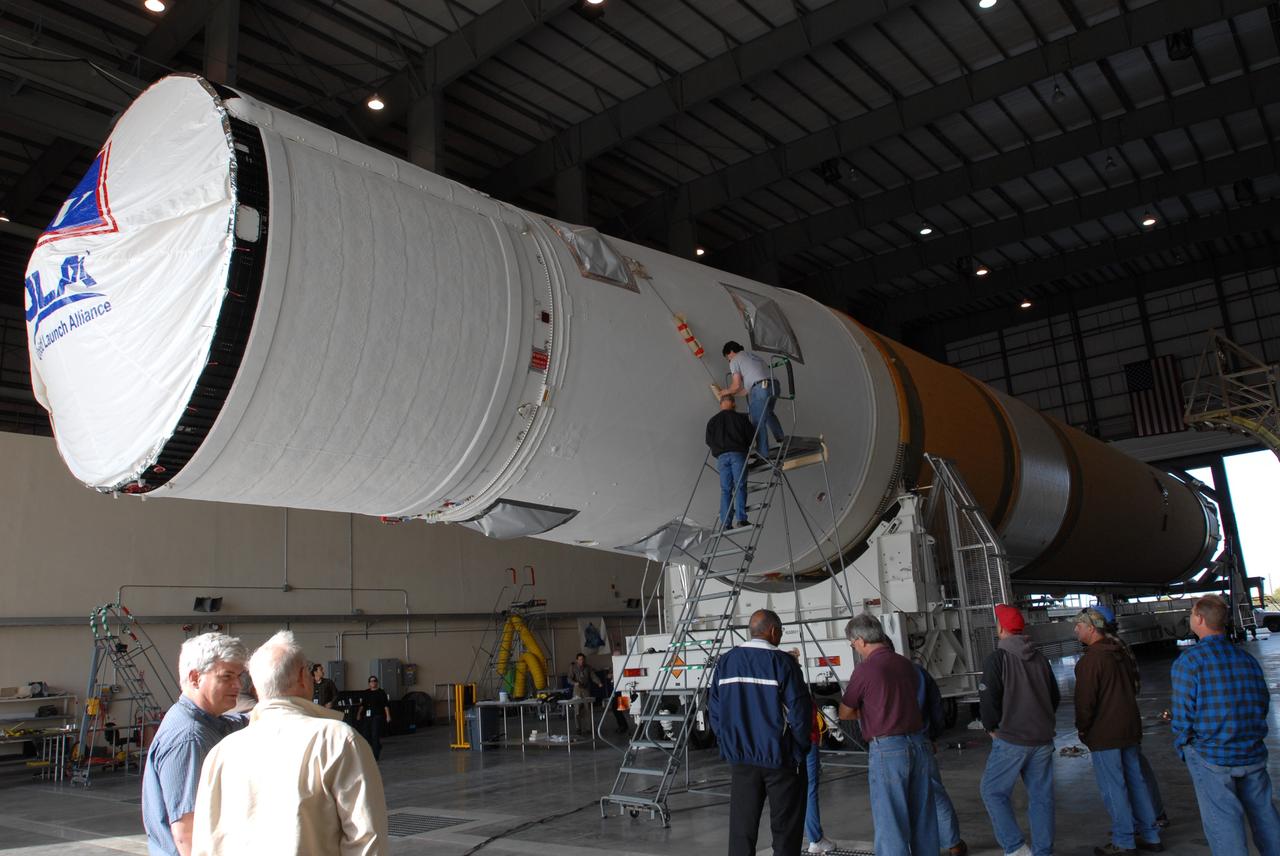
CAPE CANAVERAL, Fla. – On Complex 37 at Cape Canaveral Air Force Station in Florida, the GOES-O and Delta IV second stage are being prepared to leave the Horizontal Integration Facility. They will be moved to the launch pad. GOES–O is one of a series of Geostationary Operational Environmental Satellites. The multi-mission GOES series N-P will be a vital contributor to weather, solar and space operations and science. NASA and the National Oceanic and Atmospheric Administration, or NOAA, are actively engaged in a cooperative program to expand the existing GOES system with the launch of the GOES N-P satellites. Launch of the GOES-O is targeted for no earlier than April 2009. Photo credit: NASA/Jim Grossmann
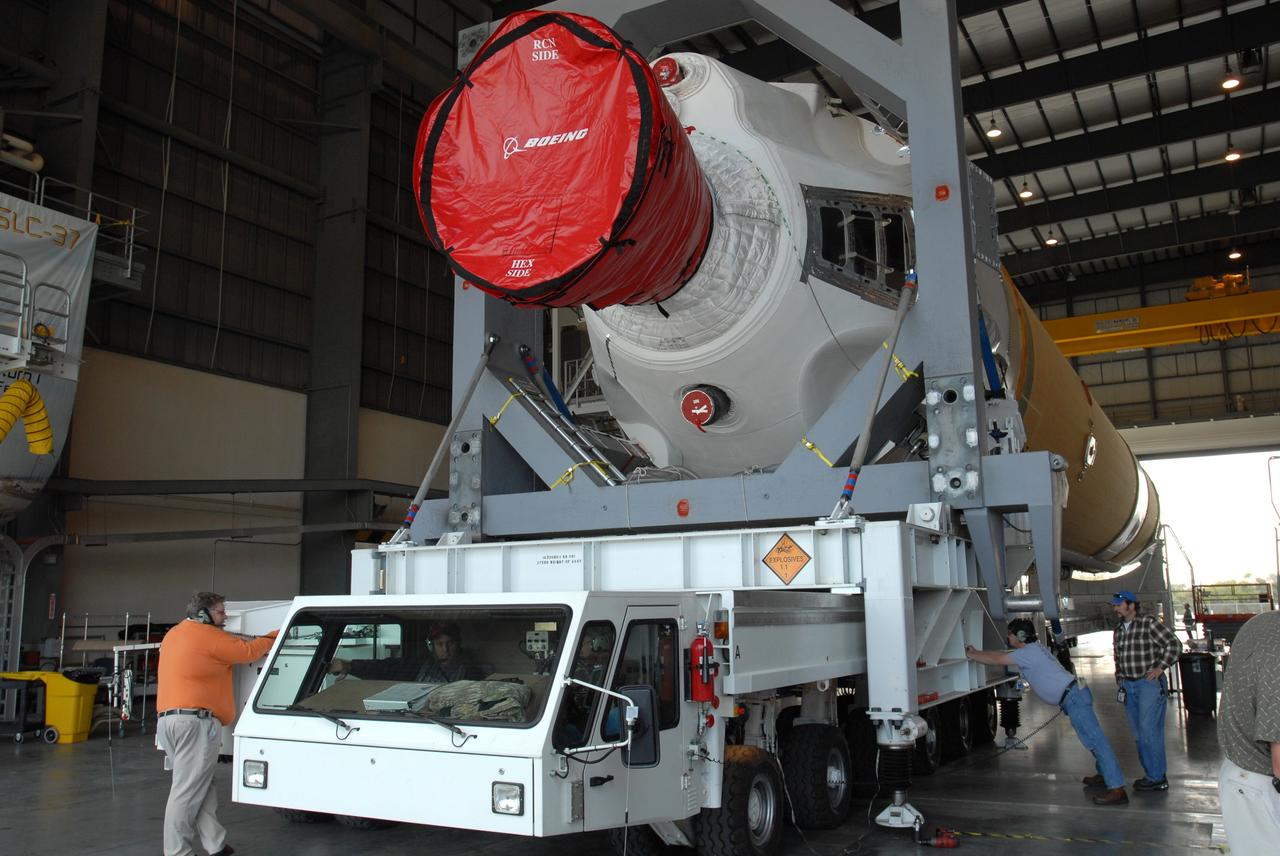
CAPE CANAVERAL, Fla. – On Complex 37 at Cape Canaveral Air Force Station in Florida, workers are ready to move the GOES-O and Delta IV second stage out of the Horizontal Integration Facility to go to the launch pad. GOES–O is one of a series of Geostationary Operational Environmental Satellites. The multi-mission GOES series N-P will be a vital contributor to weather, solar and space operations and science. NASA and the National Oceanic and Atmospheric Administration, or NOAA, are actively engaged in a cooperative program to expand the existing GOES system with the launch of the GOES N-P satellites. Launch of the GOES-O is targeted for no earlier than April 2009. Photo credit: NASA/Jim Grossmann
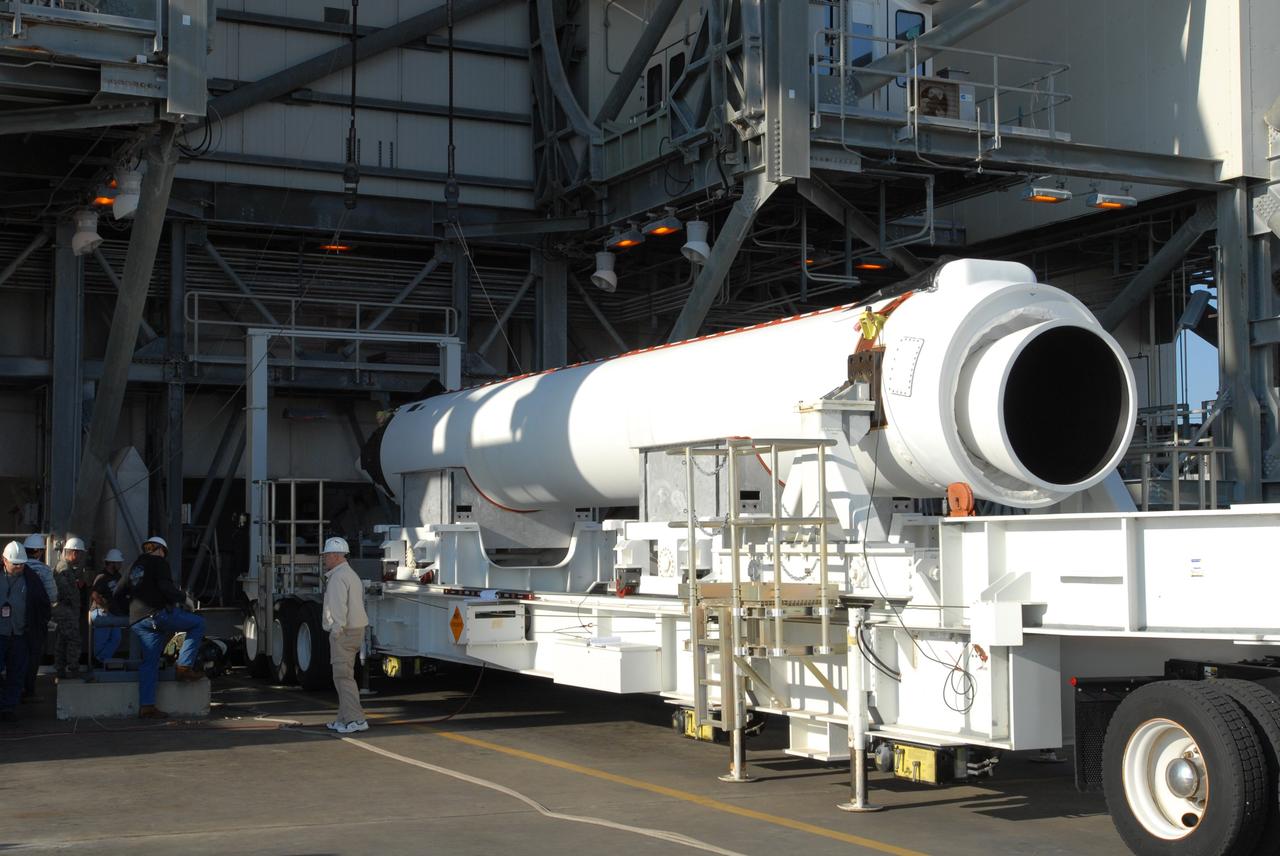
CAPE CANAVERAL, Fla. – On Launch Pad 37 at Cape Canaveral Air Force Station in Florida, one of the solid rocket boosters to be mated to the GOES-O Delta IV rocket arrives. GOES–O is one of a series of Geostationary Operational Environmental Satellites. The multi-mission GOES series N-P will be a vital contributor to weather, solar and space operations and science. NASA and the National Oceanic and Atmospheric Administration, or NOAA, are actively engaged in a cooperative program to expand the existing GOES system with the launch of the GOES N-P satellites. Launch of the GOES-O is targeted for no earlier than April 2009. Photo credit: NASA/Jim Grossmann
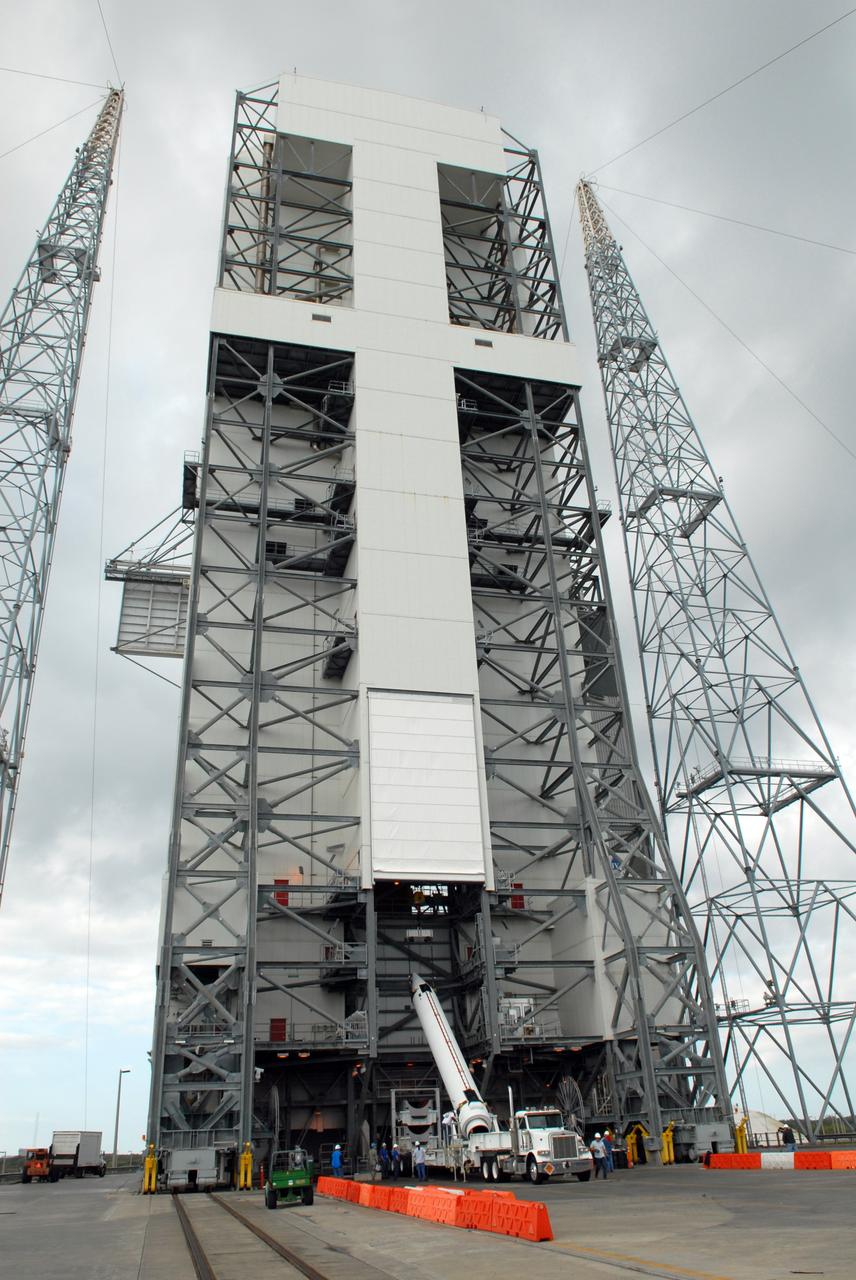
CAPE CANAVERAL, Fla. – One of two solid rocket boosters is lifted into the mobile service tower on Launch Pad 37 at Cape Canaveral Air Force Station. It is the left rocket and it will be mated to the GOES-O Delta IV launch vehicle. GOES–O is one of a series of Geostationary Operational Environmental Satellites. The multi-mission GOES series N-P will be a vital contributor to weather, solar and space operations and science. NASA and the National Oceanic and Atmospheric Administration, or NOAA, are actively engaged in a cooperative program to expand the existing GOES system with the launch of the GOES N-P satellites. Launch of the GOES-O is targeted for no earlier than April 2009. Photo credit: NASA/Ben Smegelsky

In late July 2013, a low pressure system off Australia’s southeast coast and moist onshore winds combined to create unsettled weather across central Australia – and a striking image of a broad cloud band across the stark winter landscape. The Moderate Resolution Imaging Spectroradiometer (MODIS) aboard NASA’s Terra satellite captured this true-color image on July 22 at 01:05 UTC (10:35 a.m. Australian Central Standard Time). To the west of the low pressure trough the skies are clear and dry. To the east, the broad band of bright white clouds obscures the landscape. The system brought wind, precipitation and cooler temperatures to the region. The same day as MODIS captured this image, the Naval Research Lab (NRL) published an edition of the Global Storm Tracker (GST), which gave a world-wide view of the low-pressure systems across the world. This tracker shows the entire cloud band across Australia, as well as the location of the low pressure system. A good view of the Storm Tracker is provided by Red Orbit at: <a href="http://www.redorbit.com/media/uploads/2013/07/072213-weather-003-storm-tracker.jpg" rel="nofollow">www.redorbit.com/media/uploads/2013/07/072213-weather-003...</a> Credit: NASA/GSFC/Jeff Schmaltz/MODIS Land Rapid Response Team <b><a href="http://www.nasa.gov/audience/formedia/features/MP_Photo_Guidelines.html" rel="nofollow">NASA image use policy.</a></b> <b><a href="http://www.nasa.gov/centers/goddard/home/index.html" rel="nofollow">NASA Goddard Space Flight Center</a></b> enables NASA’s mission through four scientific endeavors: Earth Science, Heliophysics, Solar System Exploration, and Astrophysics. Goddard plays a leading role in NASA’s accomplishments by contributing compelling scientific knowledge to advance the Agency’s mission. <b>Follow us on <a href="http://twitter.com/NASA_GoddardPix" rel="nofollow">Twitter</a></b> <b>Like us on <a href="http://www.facebook.com/pages/Greenbelt-MD/NASA-Goddard/395013845897?ref=tsd" rel="nofollow">Facebook</a></b> <b>Find us on <a href="http://instagram.com/nasagoddard?vm=grid" rel="nofollow">Instagram</a></b>
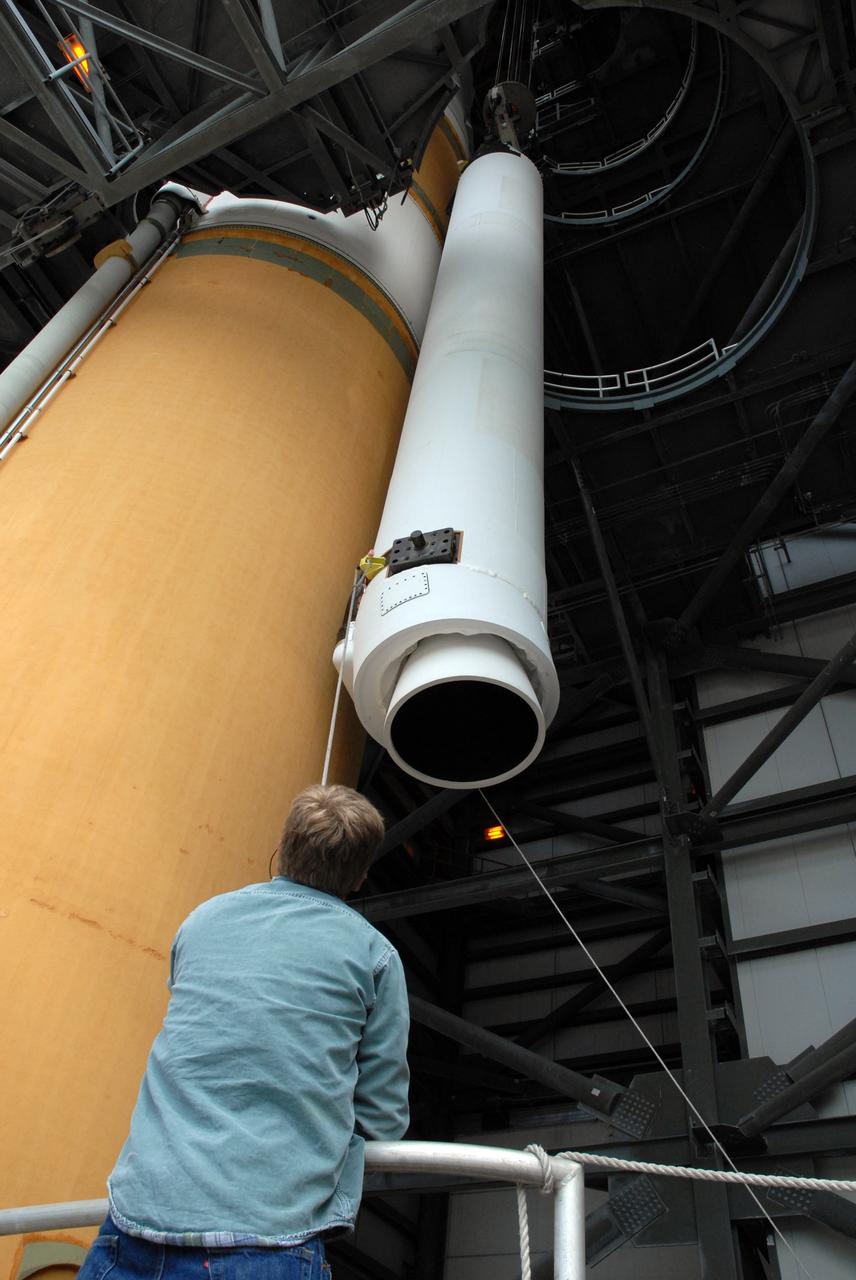
CAPE CANAVERAL, Fla. – On Launch Pad 37 at Cape Canaveral Air Force Station in Florida, the second of two solid rocket boosters is lowered alongside the Delta IV launch vehicle for the GOES-O spacecraft. It is being installed on the right side of the rocket. GOES–O is one of a series of Geostationary Operational Environmental Satellites. The multi-mission GOES series N-P will be a vital contributor to weather, solar and space operations and science. NASA and the National Oceanic and Atmospheric Administration, or NOAA, are actively engaged in a cooperative program to expand the existing GOES system with the launch of the GOES N-P satellites. Launch of the GOES-O is targeted for no earlier than April 2009. Photo credit: NASA/Jack Pfaller
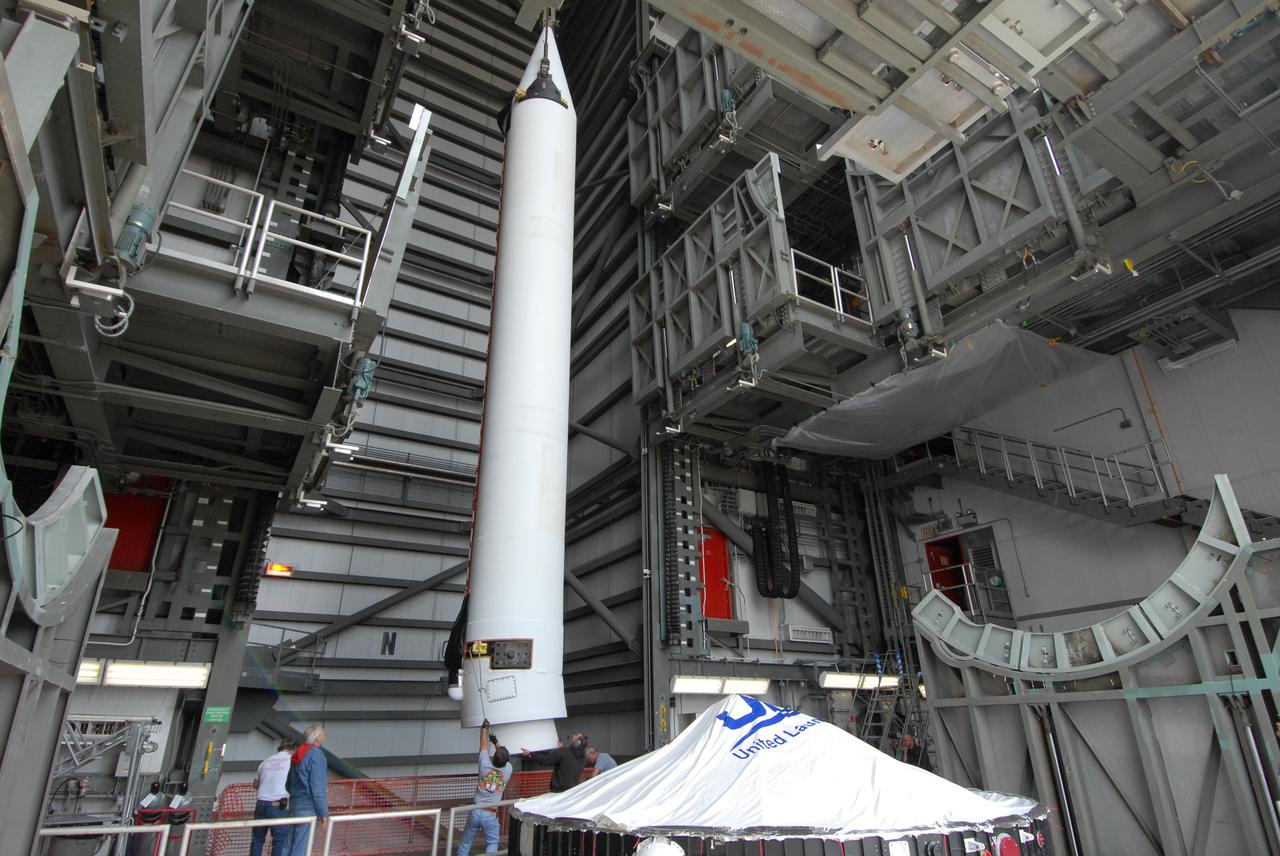
CAPE CANAVERAL, Fla. – On Launch Pad 37 at Cape Canaveral Air Force Station in Florida, the second of two solid rocket boosters is lifted into the mobile service tower. It will be installed on the right side of the Delta IV launch vehicle for the GOES-O spacecraft. GOES–O is one of a series of Geostationary Operational Environmental Satellites. The multi-mission GOES series N-P will be a vital contributor to weather, solar and space operations and science. NASA and the National Oceanic and Atmospheric Administration, or NOAA, are actively engaged in a cooperative program to expand the existing GOES system with the launch of the GOES N-P satellites. Launch of the GOES-O is targeted for no earlier than April 2009. Photo credit: NASA/Jack Pfaller
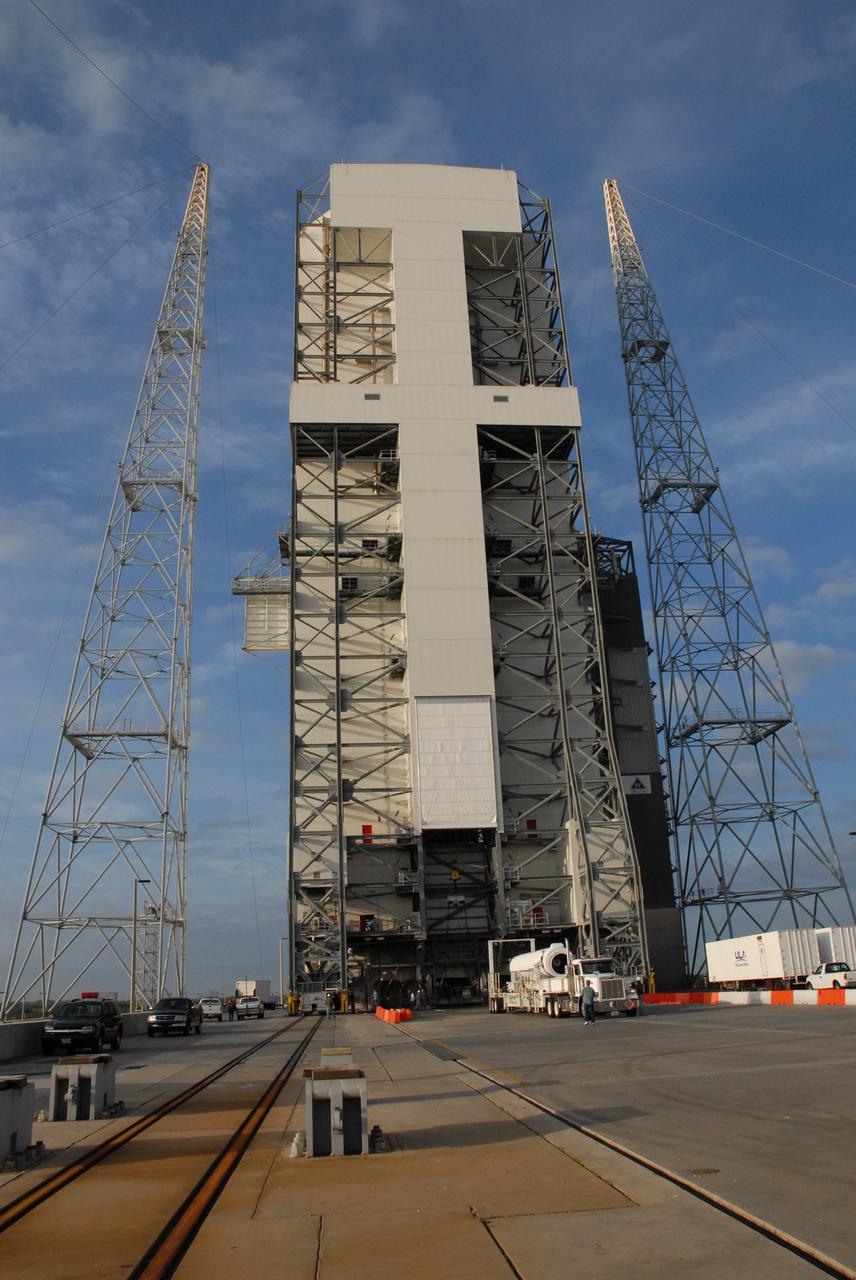
CAPE CANAVERAL, Fla. – The second of two solid rocket boosters rolls up to the mobile service tower on Launch Pad 37 at Cape Canaveral Air Force Station in Florida. The rocket will be installed on the right side of the Delta IV launch vehicle for the GOES-O spacecraft. GOES–O is one of a series of Geostationary Operational Environmental Satellites. The multi-mission GOES series N-P will be a vital contributor to weather, solar and space operations and science. NASA and the National Oceanic and Atmospheric Administration, or NOAA, are actively engaged in a cooperative program to expand the existing GOES system with the launch of the GOES N-P satellites. Launch of the GOES-O is targeted for no earlier than April 2009. Photo credit: NASA/Jack Pfaller
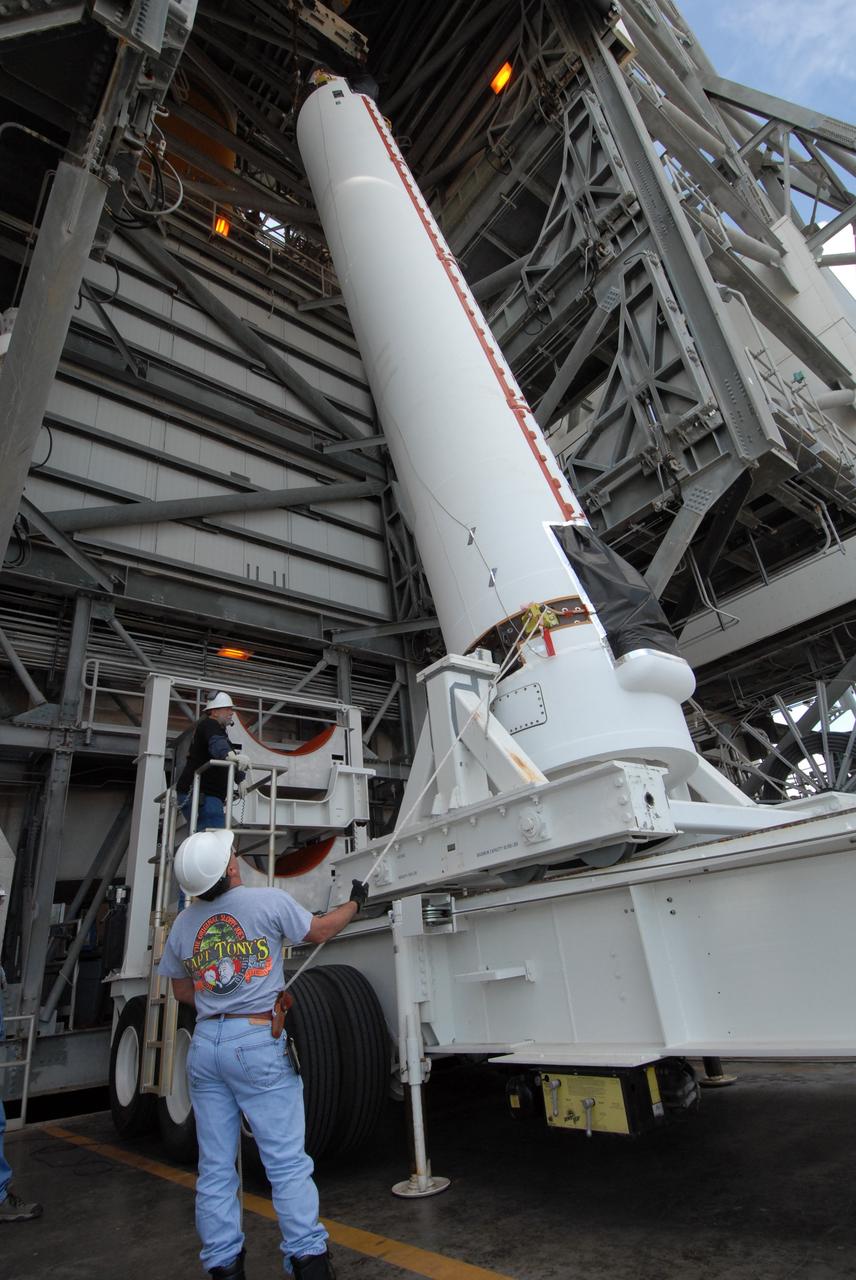
CAPE CANAVERAL, Fla. – On Launch Pad 37 at Cape Canaveral Air Force Station in Florida, the second of two solid rocket boosters is raised from its transporter. The rocket will be lifted into the mobile service tower and installed on the right side of the Delta IV launch vehicle for the GOES-O spacecraft. GOES–O is one of a series of Geostationary Operational Environmental Satellites. The multi-mission GOES series N-P will be a vital contributor to weather, solar and space operations and science. NASA and the National Oceanic and Atmospheric Administration, or NOAA, are actively engaged in a cooperative program to expand the existing GOES system with the launch of the GOES N-P satellites. Launch of the GOES-O is targeted for no earlier than April 2009. Photo credit: NASA/Jack Pfaller
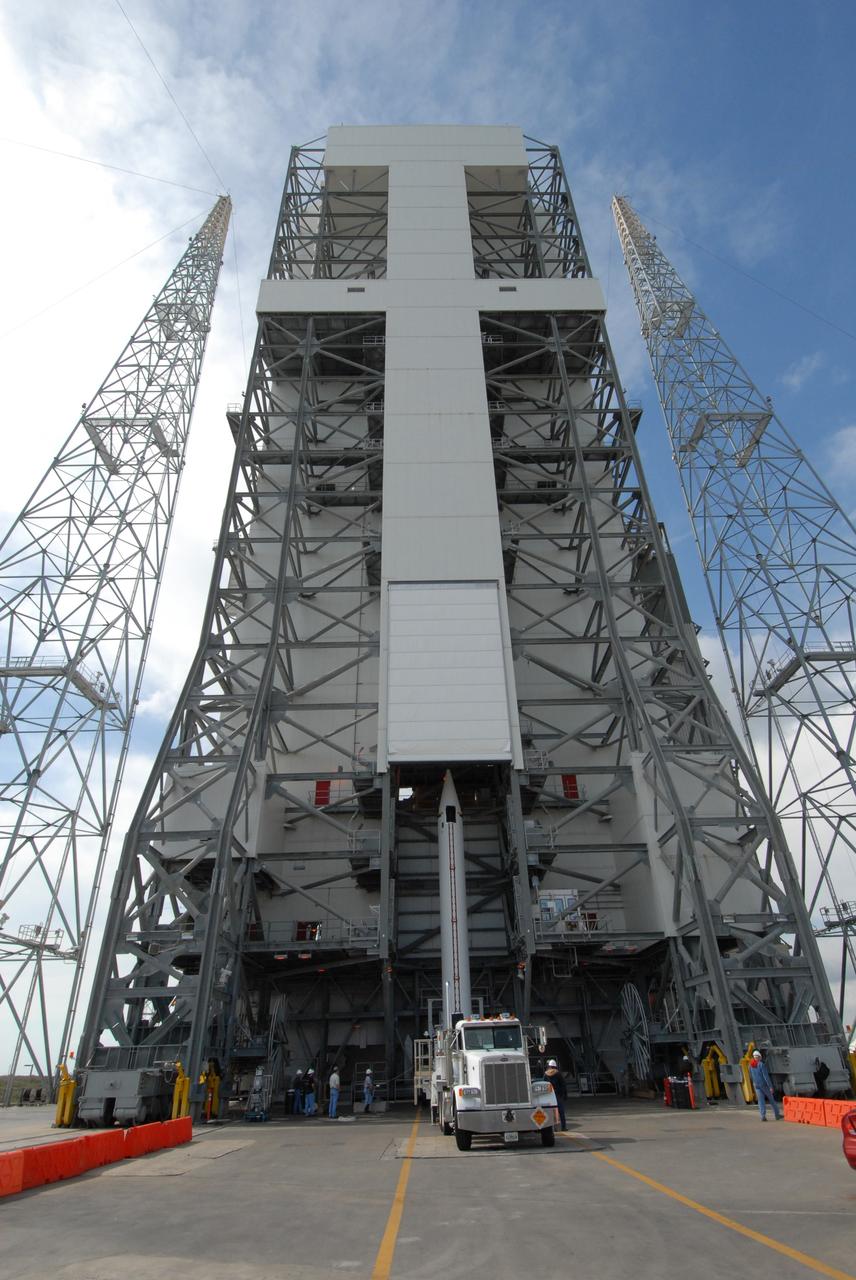
CAPE CANAVERAL, Fla. – On Launch Pad 37 at Cape Canaveral Air Force Station in Florida, the second of two solid rocket boosters is ready to be lifted into the mobile service tower and installed on the right side of the Delta IV launch vehicle for the GOES-O spacecraft. GOES–O is one of a series of Geostationary Operational Environmental Satellites. The multi-mission GOES series N-P will be a vital contributor to weather, solar and space operations and science. NASA and the National Oceanic and Atmospheric Administration, or NOAA, are actively engaged in a cooperative program to expand the existing GOES system with the launch of the GOES N-P satellites. Launch of the GOES-O is targeted for no earlier than April 2009. Photo credit: NASA/Jack Pfaller
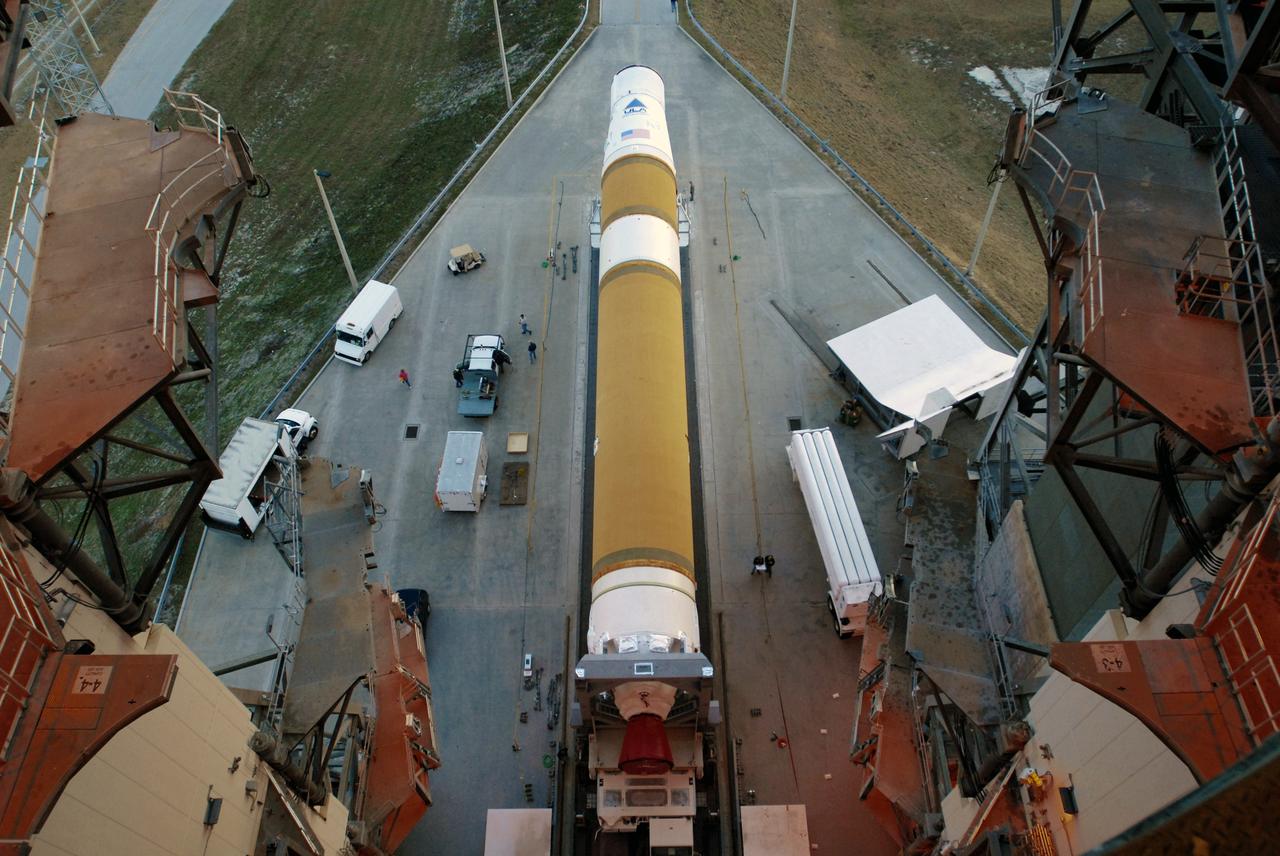
CAPE CANAVERAL, Fla. – Viewed from an upper level of the mobile service tower on Launch Pad 37 at Cape Canaveral Air Force Station in Florida, the GOES-O and Delta IV second stage is in position below. They will be raised to vertical and moved into the tower. GOES–O is one of a series of Geostationary Operational Environmental Satellites. The multi-mission GOES series N-P will be a vital contributor to weather, solar and space operations and science. NASA and the National Oceanic and Atmospheric Administration, or NOAA, are actively engaged in a cooperative program to expand the existing GOES system with the launch of the GOES N-P satellites. Launch of the GOES-O is targeted for no earlier than April 2009. Photo credit: NASA/Jim Grossmann
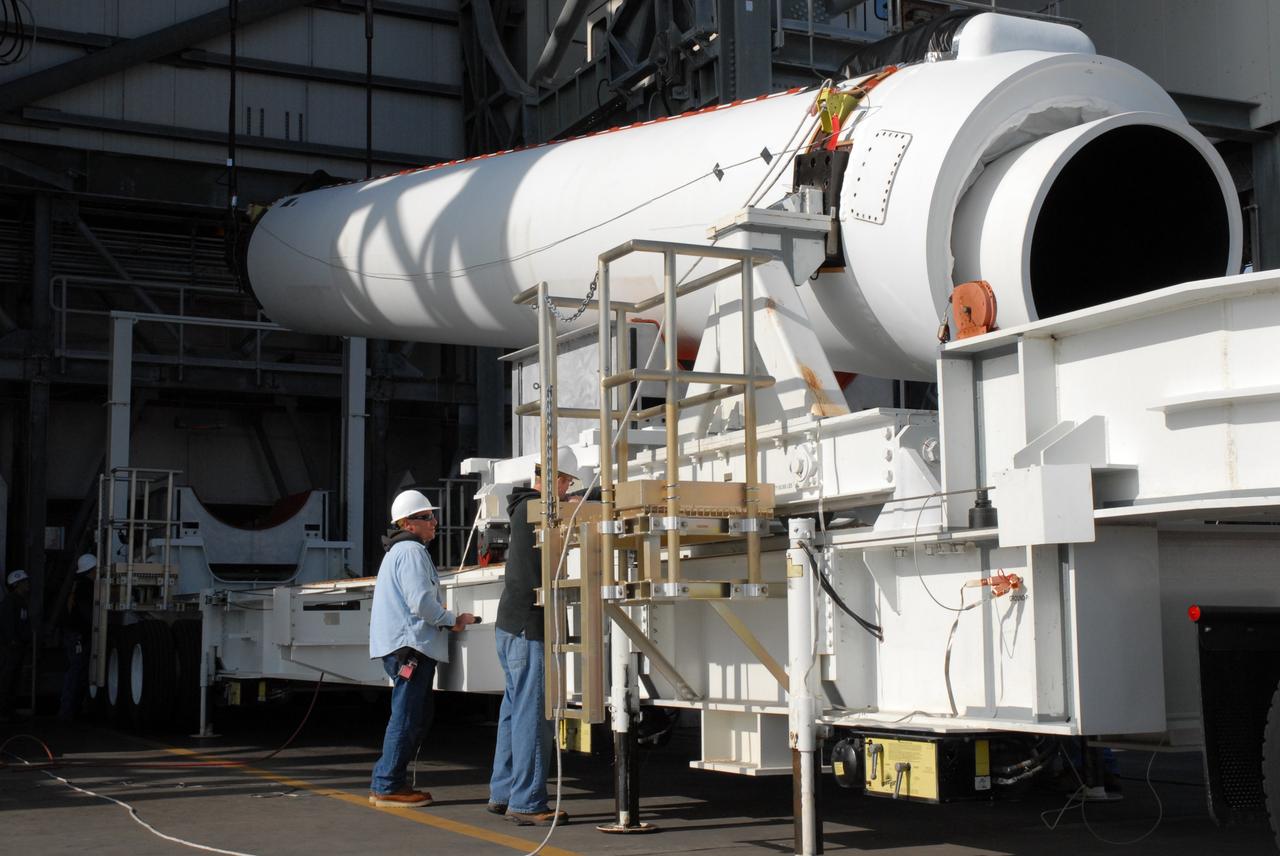
CAPE CANAVERAL, Fla. – On Launch Pad 37 at Cape Canaveral Air Force Station in Florida, the second of two solid rocket boosters is raised from its transporter. The rocket will be lifted into the mobile service tower and installed on the right side of the Delta IV launch vehicle for the GOES-O spacecraft. GOES–O is one of a series of Geostationary Operational Environmental Satellites. The multi-mission GOES series N-P will be a vital contributor to weather, solar and space operations and science. NASA and the National Oceanic and Atmospheric Administration, or NOAA, are actively engaged in a cooperative program to expand the existing GOES system with the launch of the GOES N-P satellites. Launch of the GOES-O is targeted for no earlier than April 2009. Photo credit: NASA/Jack Pfaller

Director of the Space Weather Program, Jamie Favors, speaks about the Space Weather Pilot Project, Tuesday, August 6, 2024, at the Mary W. Jackson NASA Headquarters building in Washington. Every summer early career researchers from NASA’s DEVELOP National Program come to NASA Headquarters and present their research projects. DEVELOP is a training and development program where early career researchers work on Earth science projects, mentored by science advisors from NASA and partner agencies, and provide research results to local communities. Photo Credit: (NASA/Aubrey Gemignani)
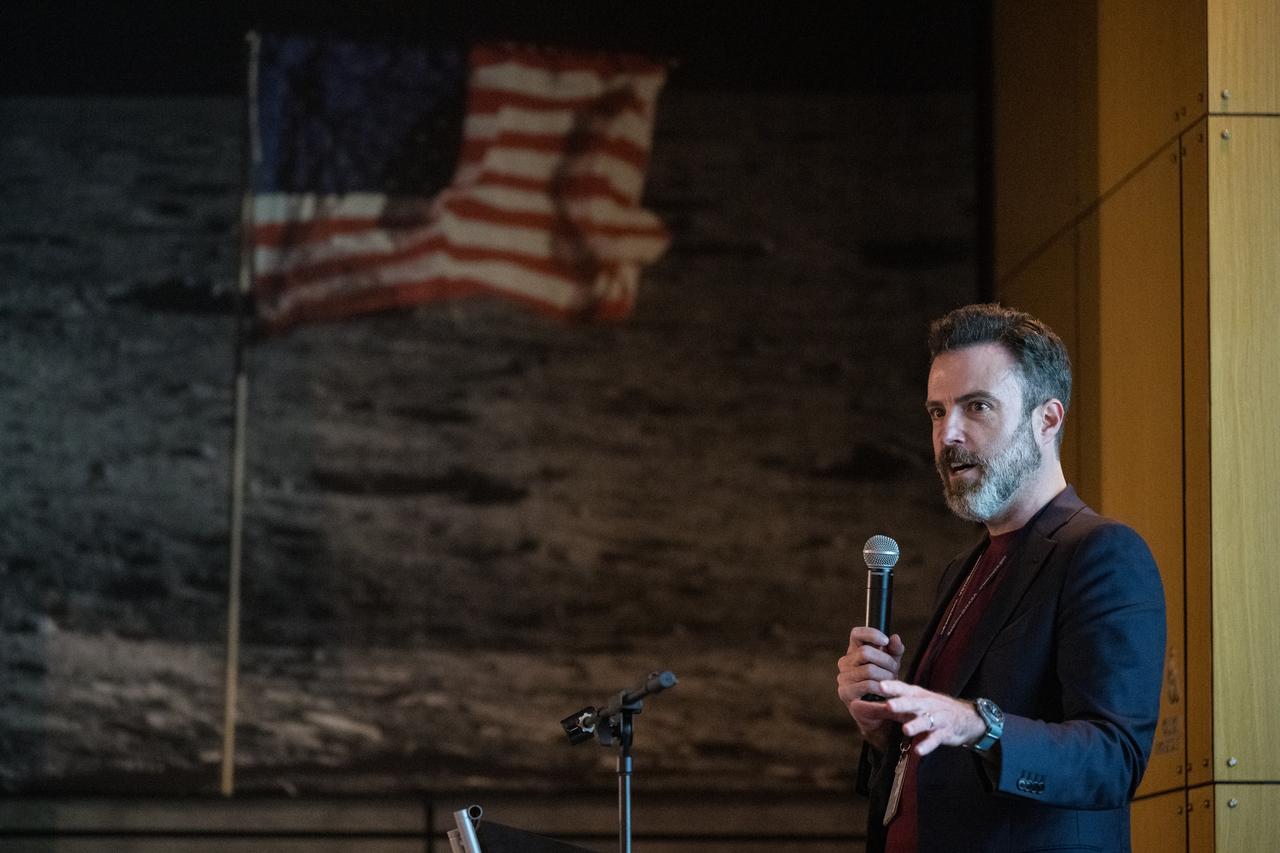
Director of the Space Weather Program, Jamie Favors, speaks about the Space Weather Pilot Project, Tuesday, August 6, 2024, at the Mary W. Jackson NASA Headquarters building in Washington. Every summer early career researchers from NASA’s DEVELOP National Program come to NASA Headquarters and present their research projects. DEVELOP is a training and development program where early career researchers work on Earth science projects, mentored by science advisors from NASA and partner agencies, and provide research results to local communities. Photo Credit: (NASA/Aubrey Gemignani)
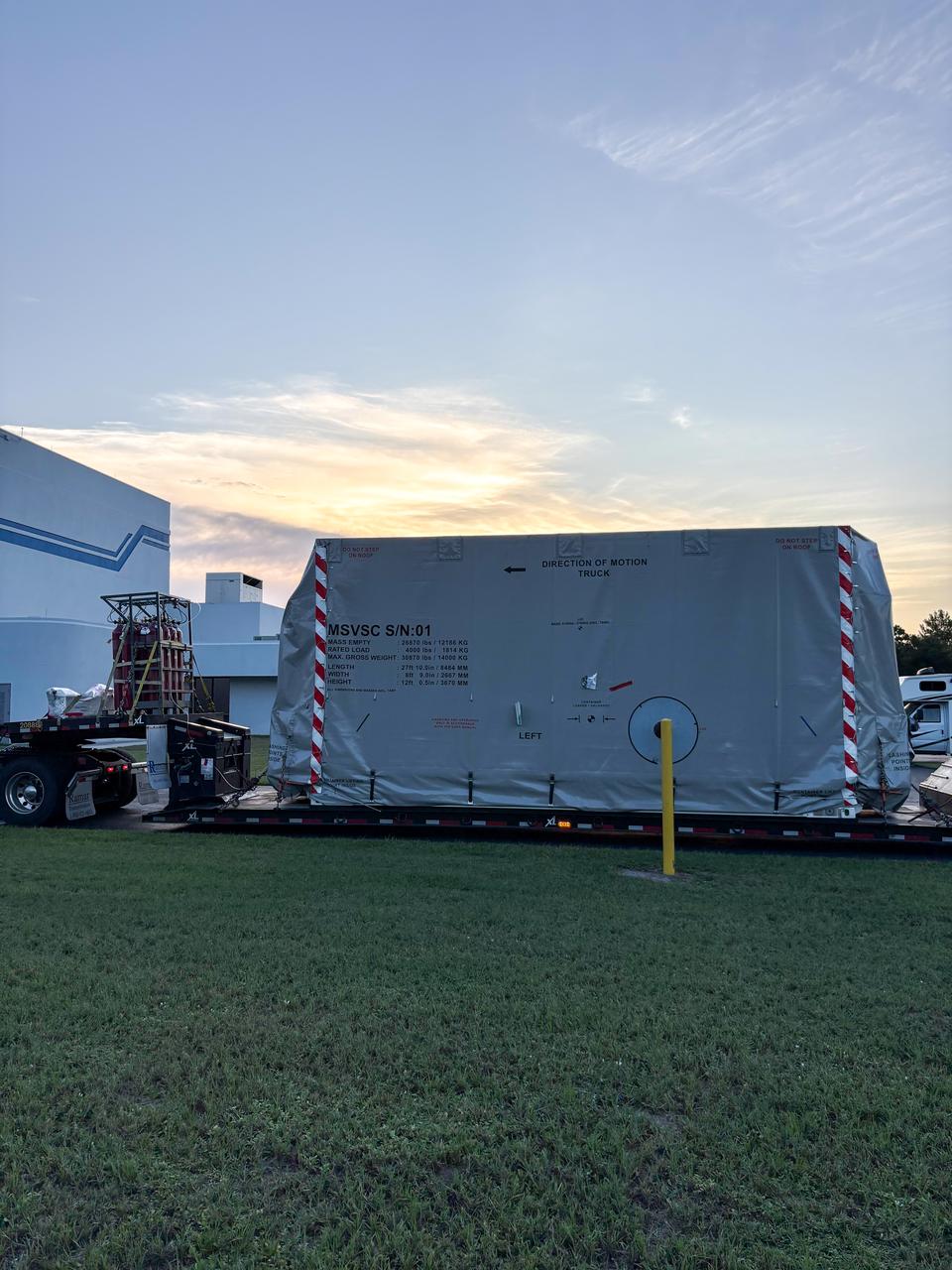
The National Oceanic and Atmospheric Administration’s (NOAA) Space Weather Follow On–Lagrange 1 (SWFO-L1) Observatory, set to provide quicker and more accurate space weather forecasts, arrived Sunday, July 20, 2025, at the Astrotech Space Operations Facility near NASA’s Kennedy Space Center in Florida. The SWFO-L1 mission will monitor the Sun and near-Earth environment using a suite of instruments that provide real-time measurements of solar activity.
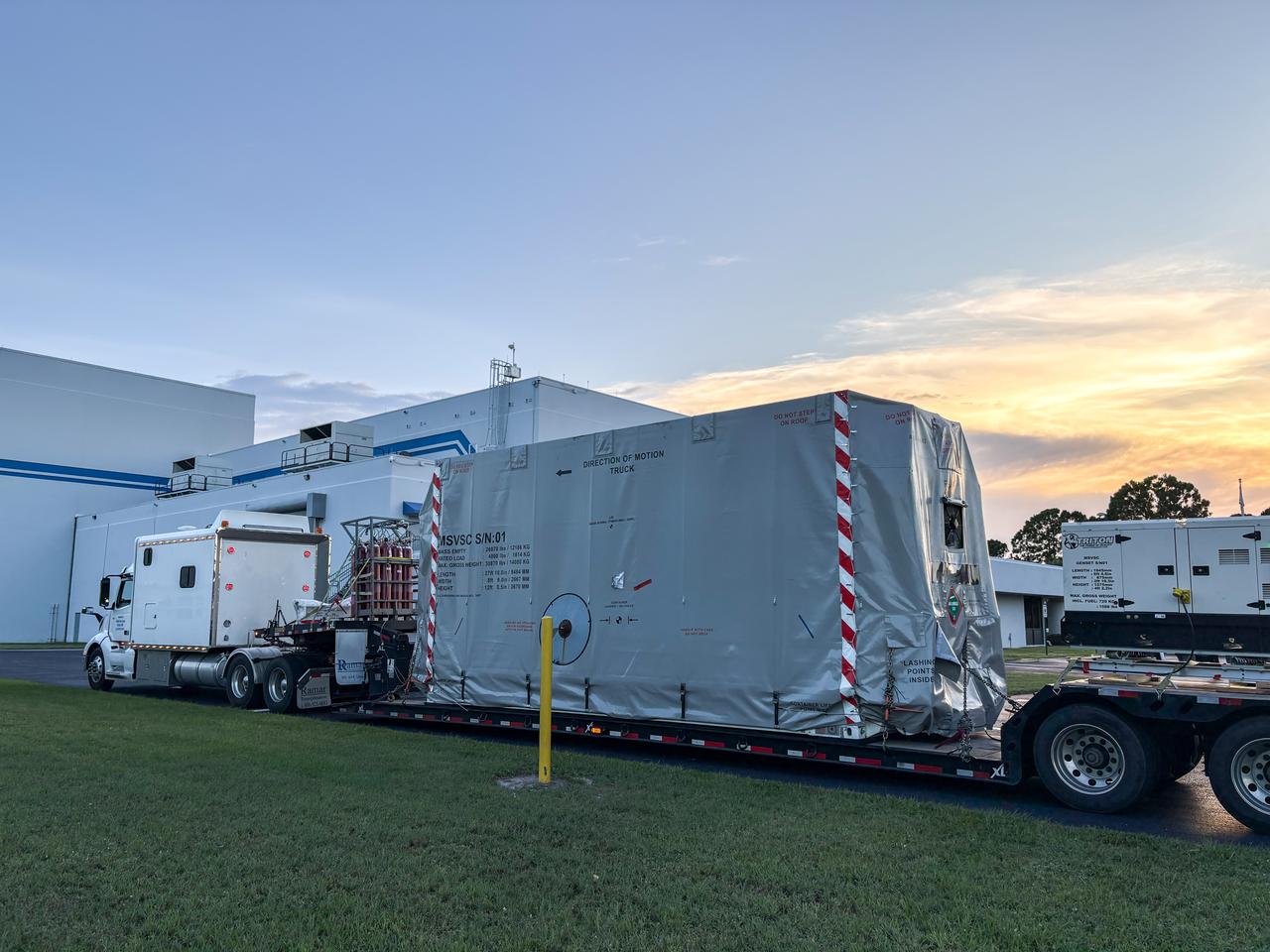
The National Oceanic and Atmospheric Administration’s (NOAA) Space Weather Follow On–Lagrange 1 (SWFO-L1) Observatory, set to provide quicker and more accurate space weather forecasts, arrived Sunday, July 20, 2025, at the Astrotech Space Operations Facility near NASA’s Kennedy Space Center in Florida. The SWFO-L1 mission will monitor the Sun and near-Earth environment using a suite of instruments that provide real-time measurements of solar activity.
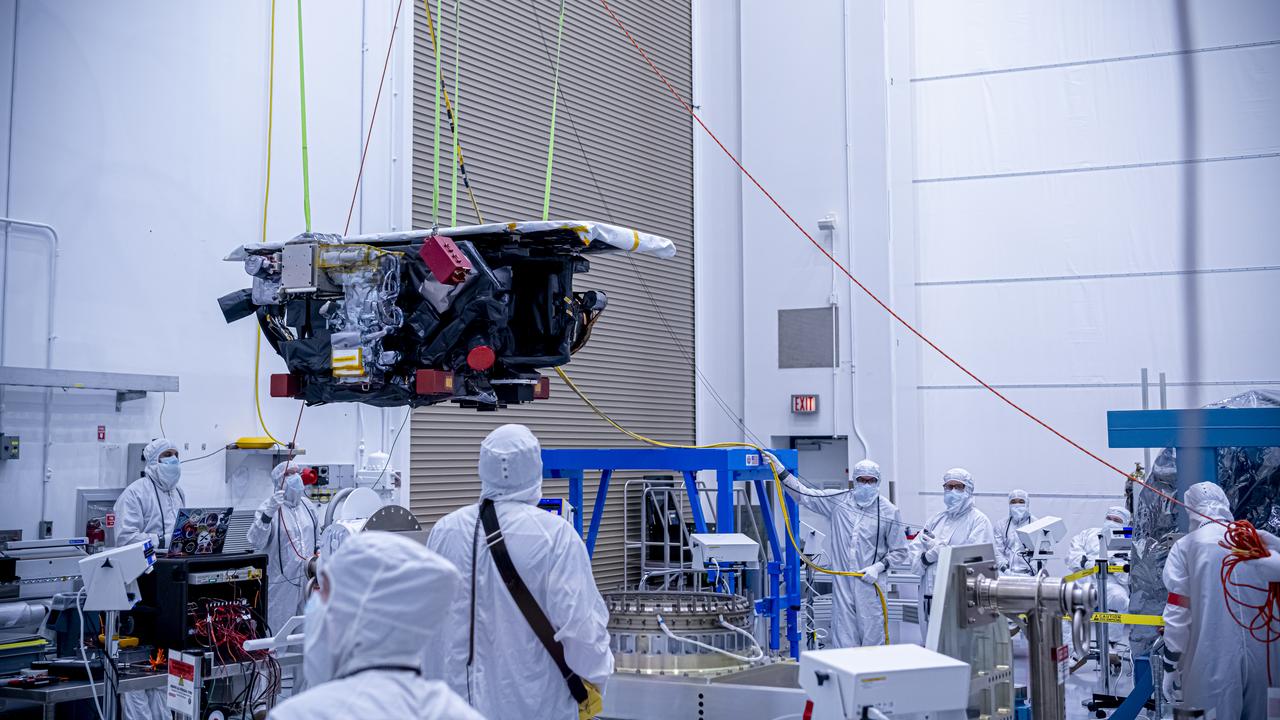
Technicians use a crane to lift the National Oceanic and Atmospheric Administration’s (NOAA) Space Weather Follow On–Lagrange 1 (SWFO-L1) Observatory onto a work stand on Friday, July 25, 2025, during prelaunch processing at the Astrotech Space Operations Facility near NASA’s Kennedy Space Center in Florida. The SWFO-L1 mission will observe solar eruptions, and monitor incoming space weather 24/7, providing early warnings and validating forecasts that protect vital communication and navigation infrastructure, economic interests, and national security, both on Earth and in space. The observatory will launch as a rideshare with NASA’s IMAP (Interstellar Mapping and Acceleration Probe) no earlier than September 2025.
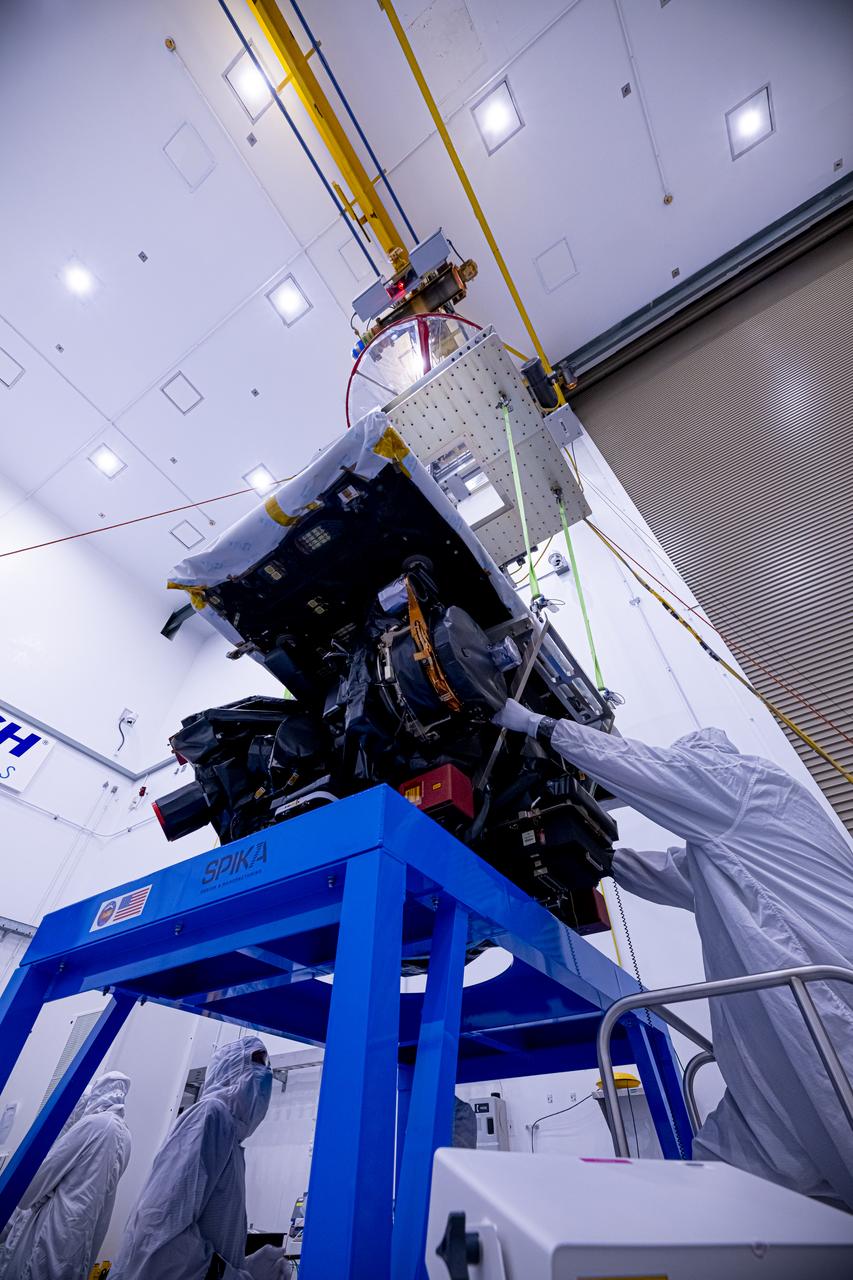
Technicians use a crane to lift the National Oceanic and Atmospheric Administration’s (NOAA) Space Weather Follow On–Lagrange 1 (SWFO-L1) Observatory onto a work stand on Friday, July 25, 2025, during prelaunch processing at the Astrotech Space Operations Facility near NASA’s Kennedy Space Center in Florida. The SWFO-L1 mission will observe solar eruptions, and monitor incoming space weather 24/7, providing early warnings and validating forecasts that protect vital communication and navigation infrastructure, economic interests, and national security, both on Earth and in space. The observatory will launch as a rideshare with NASA’s IMAP (Interstellar Mapping and Acceleration Probe) no earlier than September 2025.
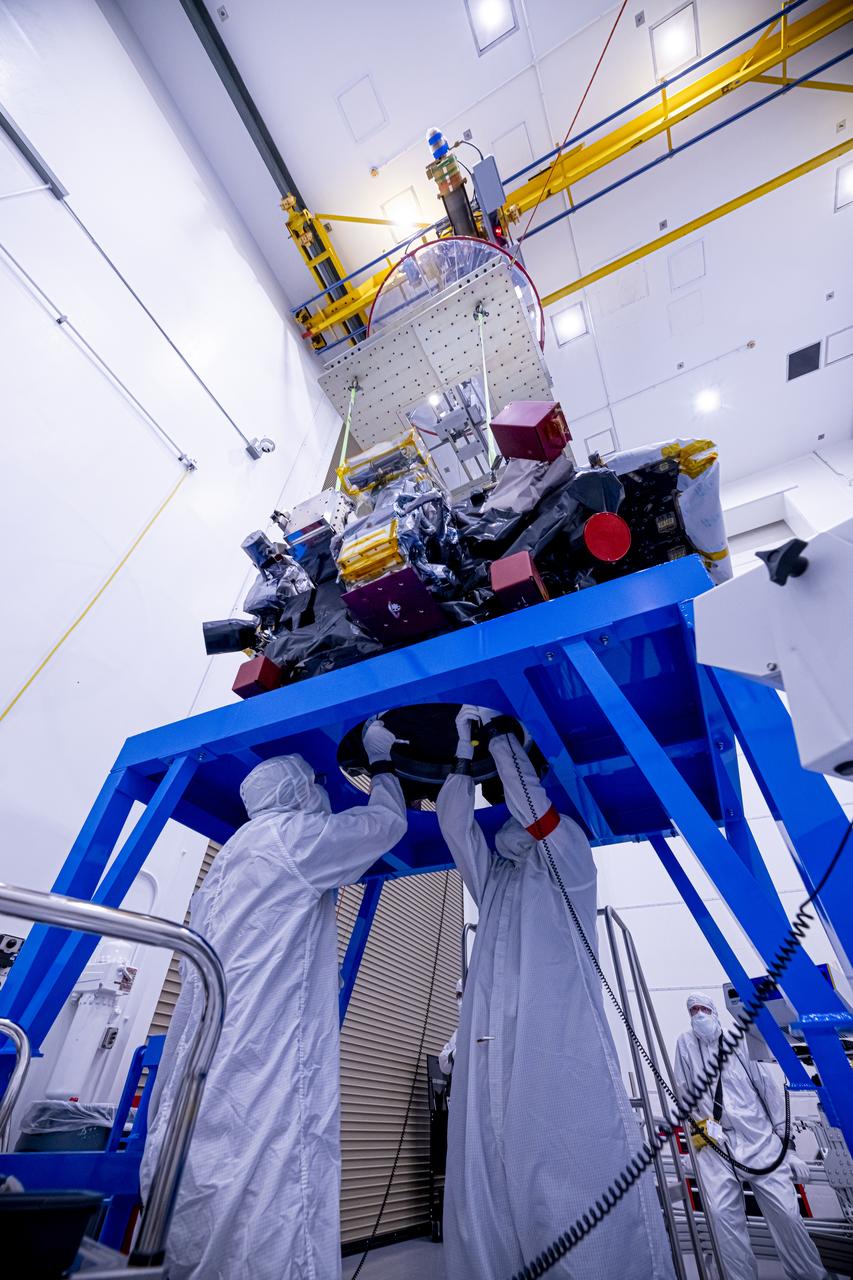
Technicians use a crane to lift the National Oceanic and Atmospheric Administration’s (NOAA) Space Weather Follow On–Lagrange 1 (SWFO-L1) Observatory onto a work stand on Friday, July 25, 2025, during prelaunch processing at the Astrotech Space Operations Facility near NASA’s Kennedy Space Center in Florida. The SWFO-L1 mission will observe solar eruptions, and monitor incoming space weather 24/7, providing early warnings and validating forecasts that protect vital communication and navigation infrastructure, economic interests, and national security, both on Earth and in space. The observatory will launch as a rideshare with NASA’s IMAP (Interstellar Mapping and Acceleration Probe) no earlier than September 2025.
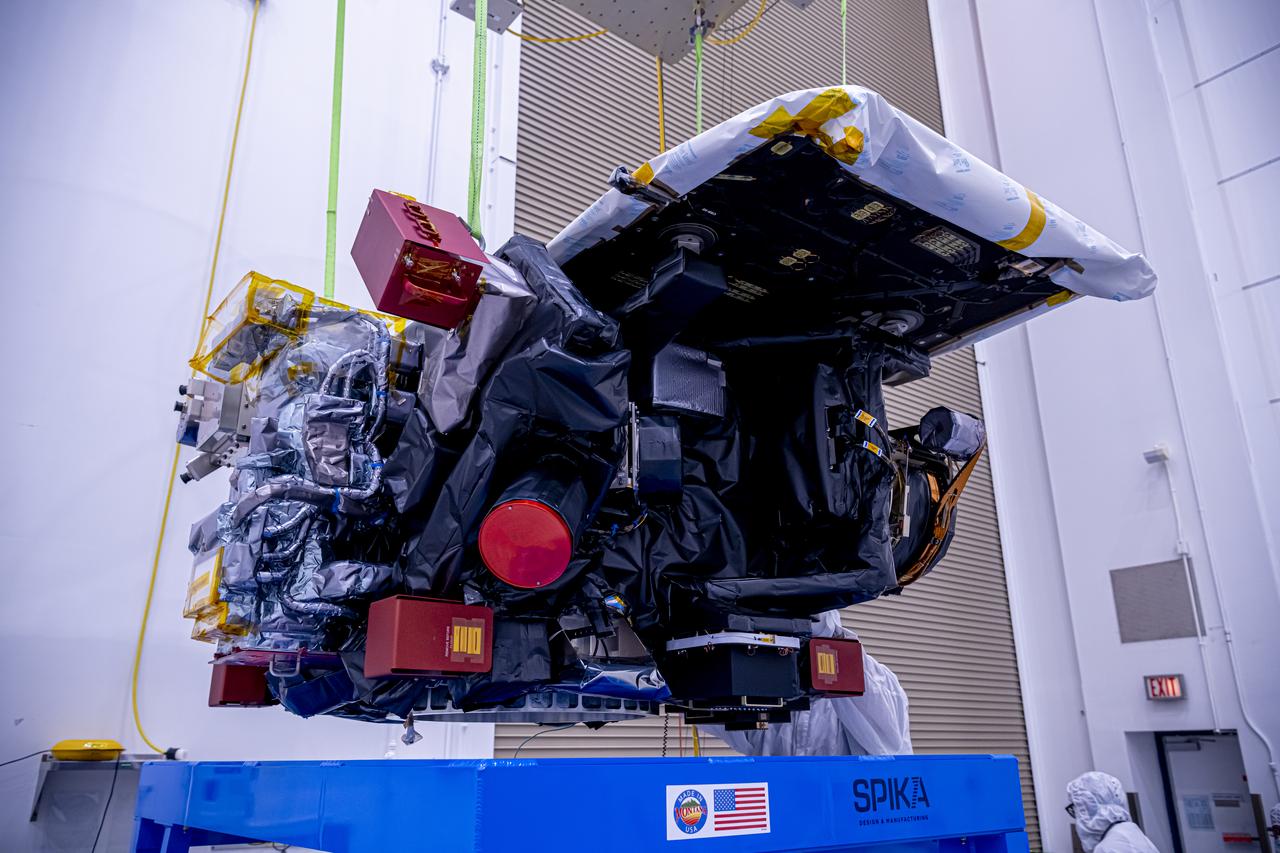
Technicians use a crane to lift the National Oceanic and Atmospheric Administration’s (NOAA) Space Weather Follow On–Lagrange 1 (SWFO-L1) Observatory onto a work stand on Friday, July 25, 2025, during prelaunch processing at the Astrotech Space Operations Facility near NASA’s Kennedy Space Center in Florida. The SWFO-L1 mission will observe solar eruptions, and monitor incoming space weather 24/7, providing early warnings and validating forecasts that protect vital communication and navigation infrastructure, economic interests, and national security, both on Earth and in space. The observatory will launch as a rideshare with NASA’s IMAP (Interstellar Mapping and Acceleration Probe) no earlier than September 2025.
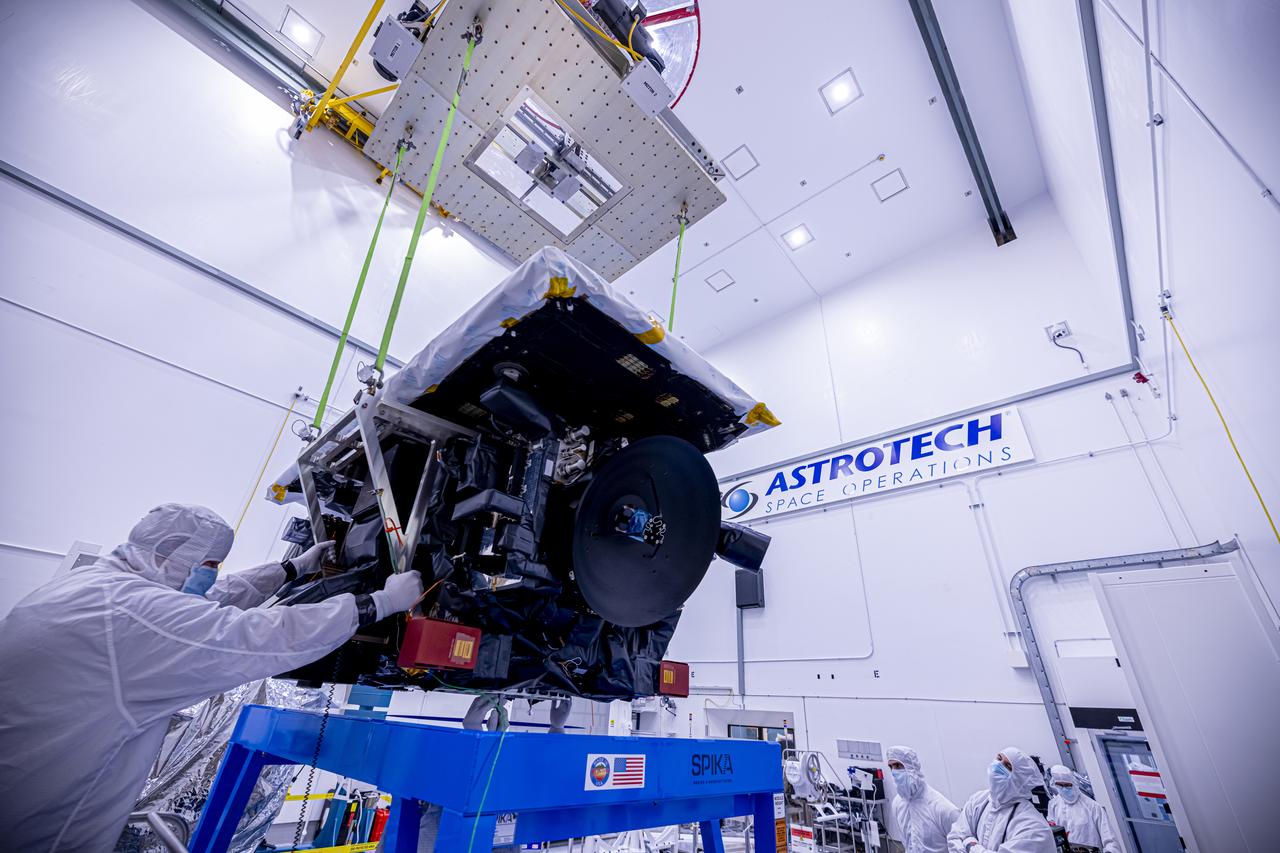
Technicians use a crane to lift the National Oceanic and Atmospheric Administration’s (NOAA) Space Weather Follow On–Lagrange 1 (SWFO-L1) Observatory onto a work stand on Friday, July 25, 2025, during prelaunch processing at the Astrotech Space Operations Facility near NASA’s Kennedy Space Center in Florida. The SWFO-L1 mission will observe solar eruptions, and monitor incoming space weather 24/7, providing early warnings and validating forecasts that protect vital communication and navigation infrastructure, economic interests, and national security, both on Earth and in space. The observatory will launch as a rideshare with NASA’s IMAP (Interstellar Mapping and Acceleration Probe) no earlier than September 2025.
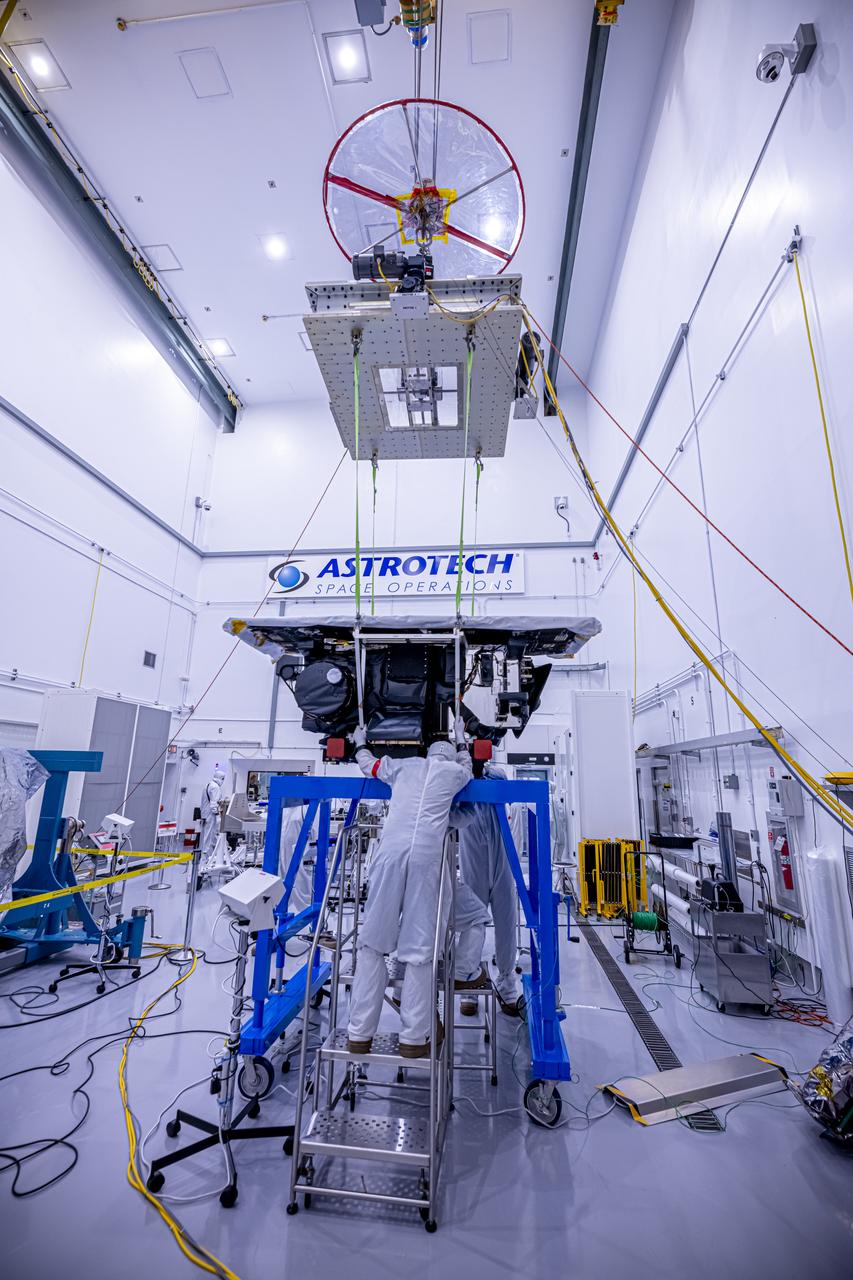
Technicians use a crane to lift the National Oceanic and Atmospheric Administration’s (NOAA) Space Weather Follow On–Lagrange 1 (SWFO-L1) Observatory onto a work stand on Friday, July 25, 2025, during prelaunch processing at the Astrotech Space Operations Facility near NASA’s Kennedy Space Center in Florida. The SWFO-L1 mission will observe solar eruptions, and monitor incoming space weather 24/7, providing early warnings and validating forecasts that protect vital communication and navigation infrastructure, economic interests, and national security, both on Earth and in space. The observatory will launch as a rideshare with NASA’s IMAP (Interstellar Mapping and Acceleration Probe) no earlier than September 2025.
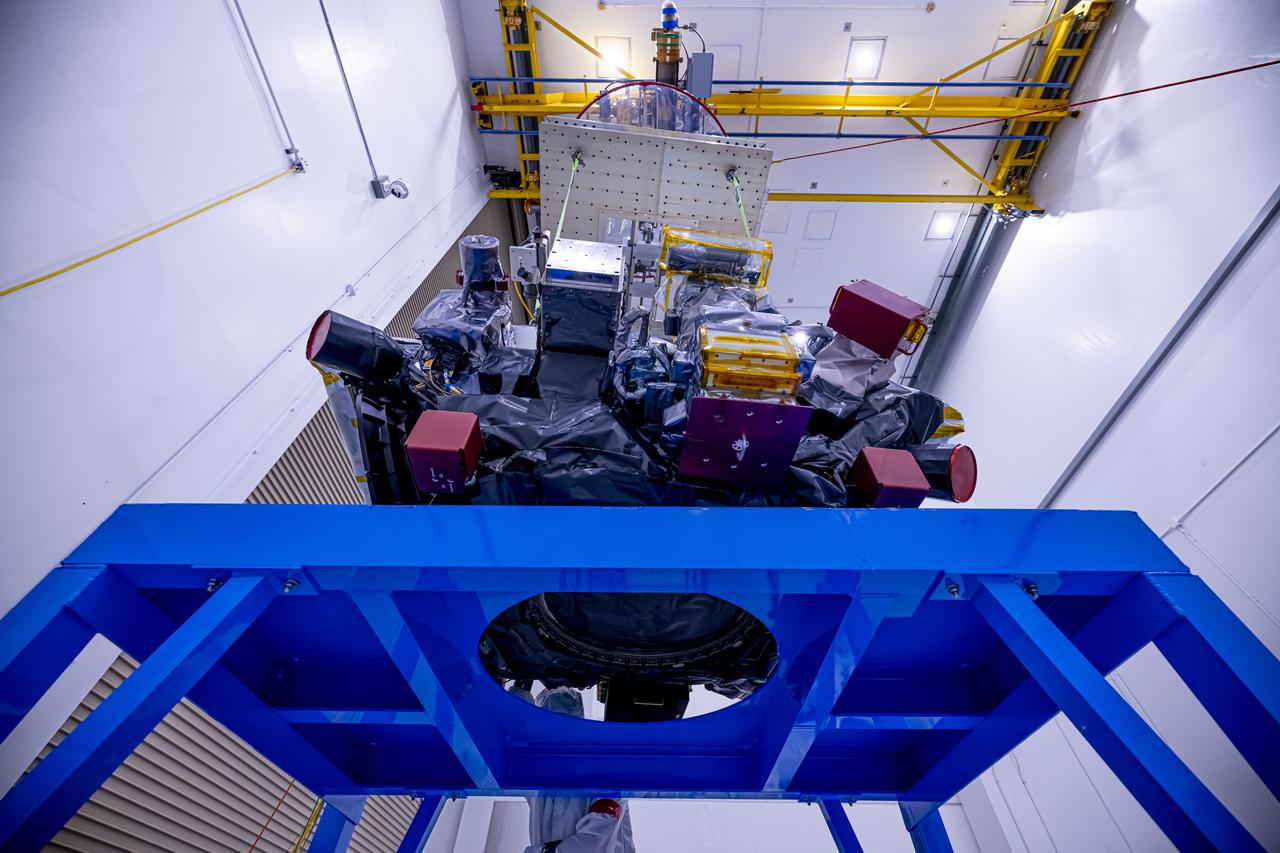
Technicians use a crane to lift the National Oceanic and Atmospheric Administration’s (NOAA) Space Weather Follow On–Lagrange 1 (SWFO-L1) Observatory onto a work stand on Friday, July 25, 2025, during prelaunch processing at the Astrotech Space Operations Facility near NASA’s Kennedy Space Center in Florida. The SWFO-L1 mission will observe solar eruptions, and monitor incoming space weather 24/7, providing early warnings and validating forecasts that protect vital communication and navigation infrastructure, economic interests, and national security, both on Earth and in space. The observatory will launch as a rideshare with NASA’s IMAP (Interstellar Mapping and Acceleration Probe) no earlier than September 2025.
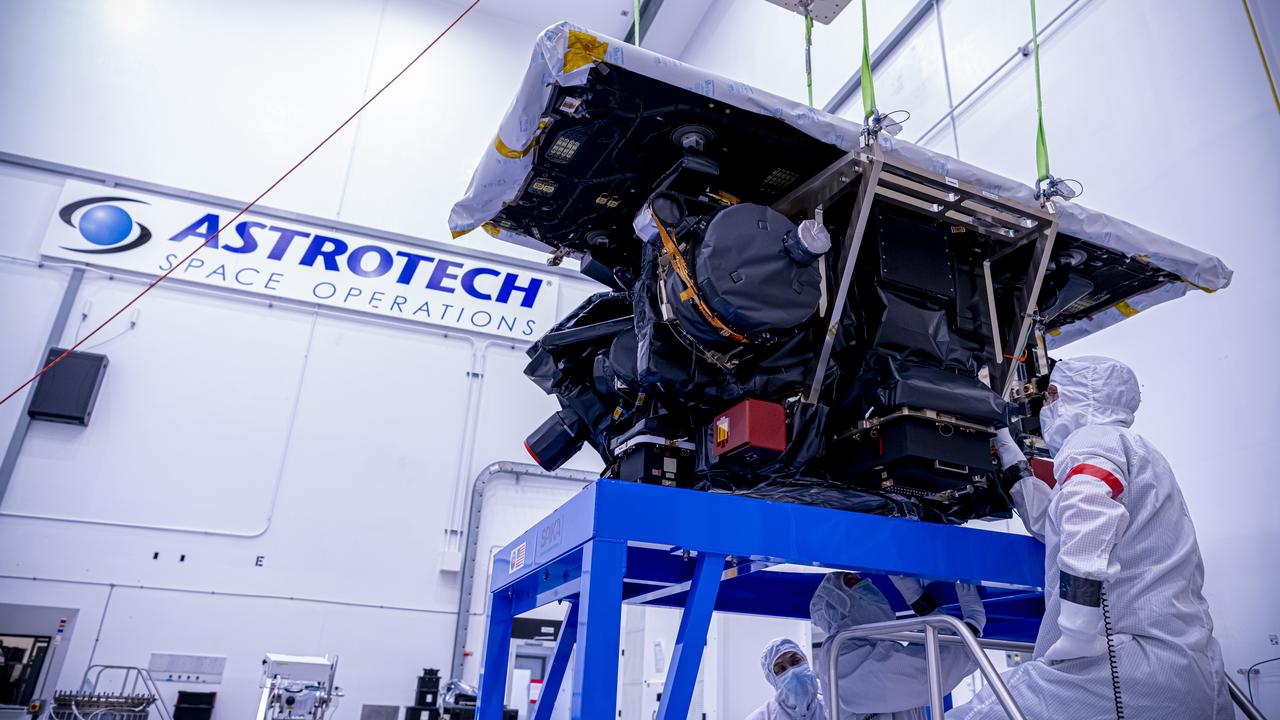
Technicians use a crane to lift the National Oceanic and Atmospheric Administration’s (NOAA) Space Weather Follow On–Lagrange 1 (SWFO-L1) Observatory onto a work stand on Friday, July 25, 2025, during prelaunch processing at the Astrotech Space Operations Facility near NASA’s Kennedy Space Center in Florida. The SWFO-L1 mission will observe solar eruptions, and monitor incoming space weather 24/7, providing early warnings and validating forecasts that protect vital communication and navigation infrastructure, economic interests, and national security, both on Earth and in space. The observatory will launch as a rideshare with NASA’s IMAP (Interstellar Mapping and Acceleration Probe) no earlier than September 2025.
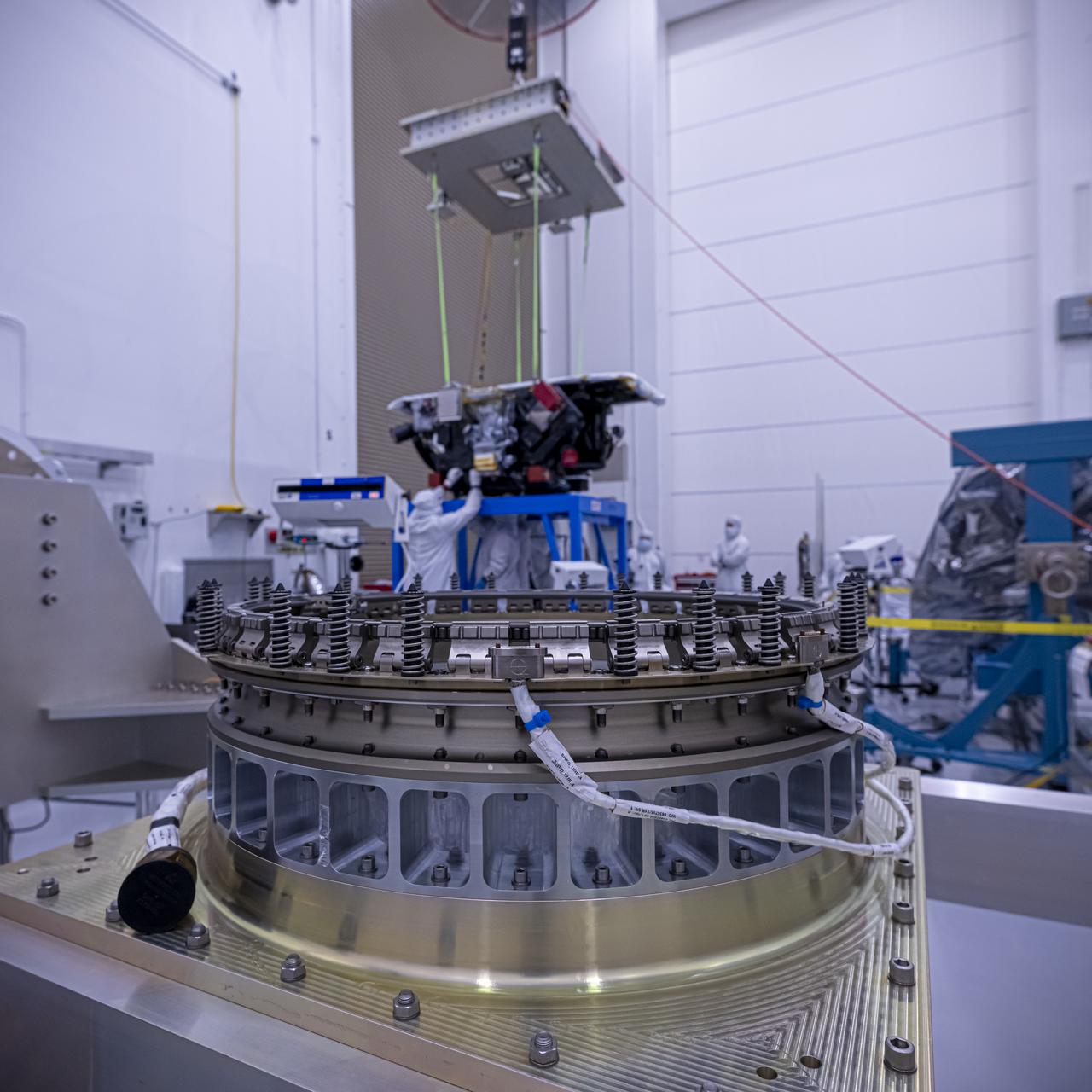
With hardware in the foreground, technicians use a crane to lift the National Oceanic and Atmospheric Administration’s (NOAA) Space Weather Follow On–Lagrange 1 (SWFO-L1) Observatory onto a work stand on Friday, July 25, 2025, during prelaunch processing at the Astrotech Space Operations Facility near NASA’s Kennedy Space Center in Florida. The SWFO-L1 mission will observe solar eruptions, and monitor incoming space weather 24/7, providing early warnings and validating forecasts that protect vital communication and navigation infrastructure, economic interests, and national security, both on Earth and in space. The observatory will launch as a rideshare with NASA’s IMAP (Interstellar Mapping and Acceleration Probe) no earlier than September 2025.
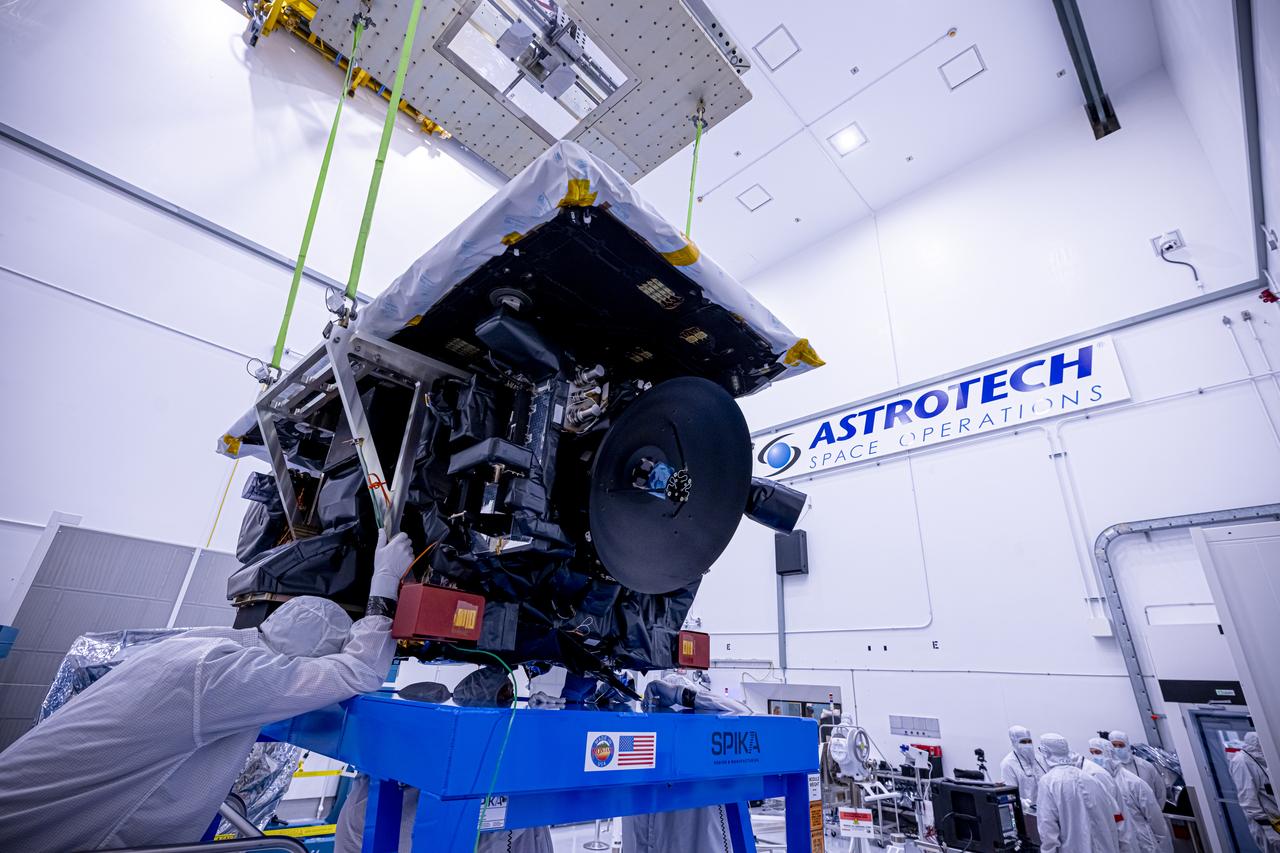
Technicians use a crane to lift the National Oceanic and Atmospheric Administration’s (NOAA) Space Weather Follow On–Lagrange 1 (SWFO-L1) Observatory onto a work stand on Friday, July 25, 2025, during prelaunch processing at the Astrotech Space Operations Facility near NASA’s Kennedy Space Center in Florida. The SWFO-L1 mission will observe solar eruptions, and monitor incoming space weather 24/7, providing early warnings and validating forecasts that protect vital communication and navigation infrastructure, economic interests, and national security, both on Earth and in space. The observatory will launch as a rideshare with NASA’s IMAP (Interstellar Mapping and Acceleration Probe) no earlier than September 2025.
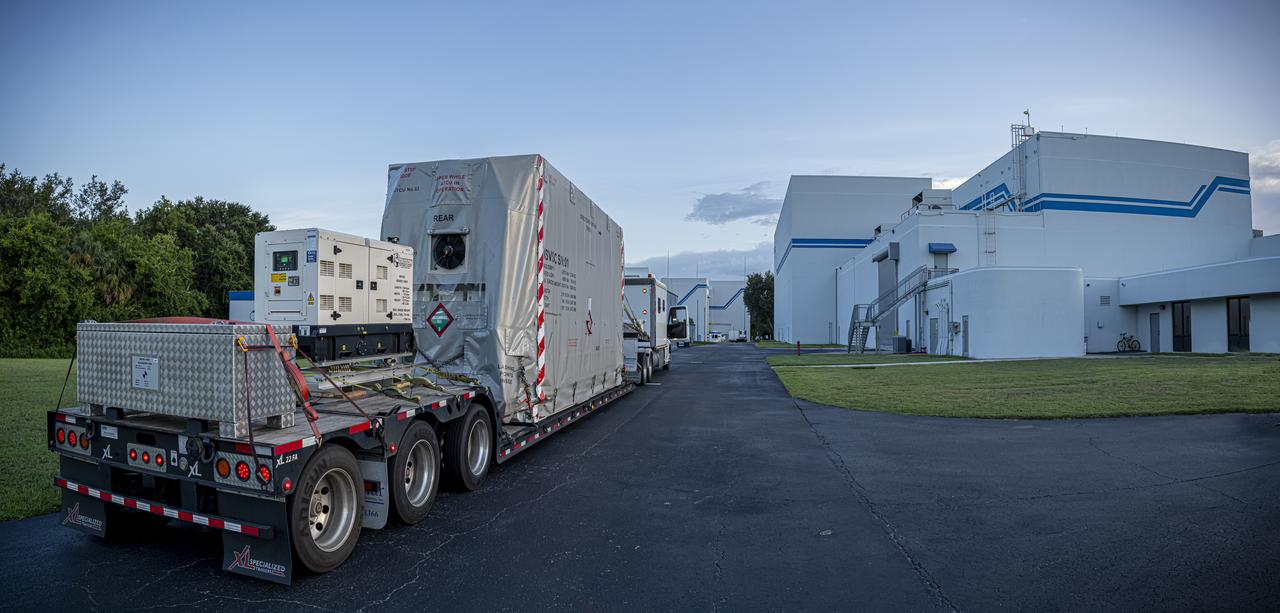
The National Oceanic and Atmospheric Administration’s (NOAA) Space Weather Follow On–Lagrange 1 (SWFO-L1) Observatory, set to provide quicker and more accurate space weather forecasts, arrived Sunday, July 20, 2025, at the Astrotech Space Operations Facility near NASA’s Kennedy Space Center in Florida. The SWFO-L1 mission will monitor the Sun and near-Earth environment using a suite of instruments that provide real-time measurements of solar activity. The observatory will launch as a rideshare with NASA’s IMAP (Interstellar Mapping and Acceleration Probe) no earlier than September 2025.
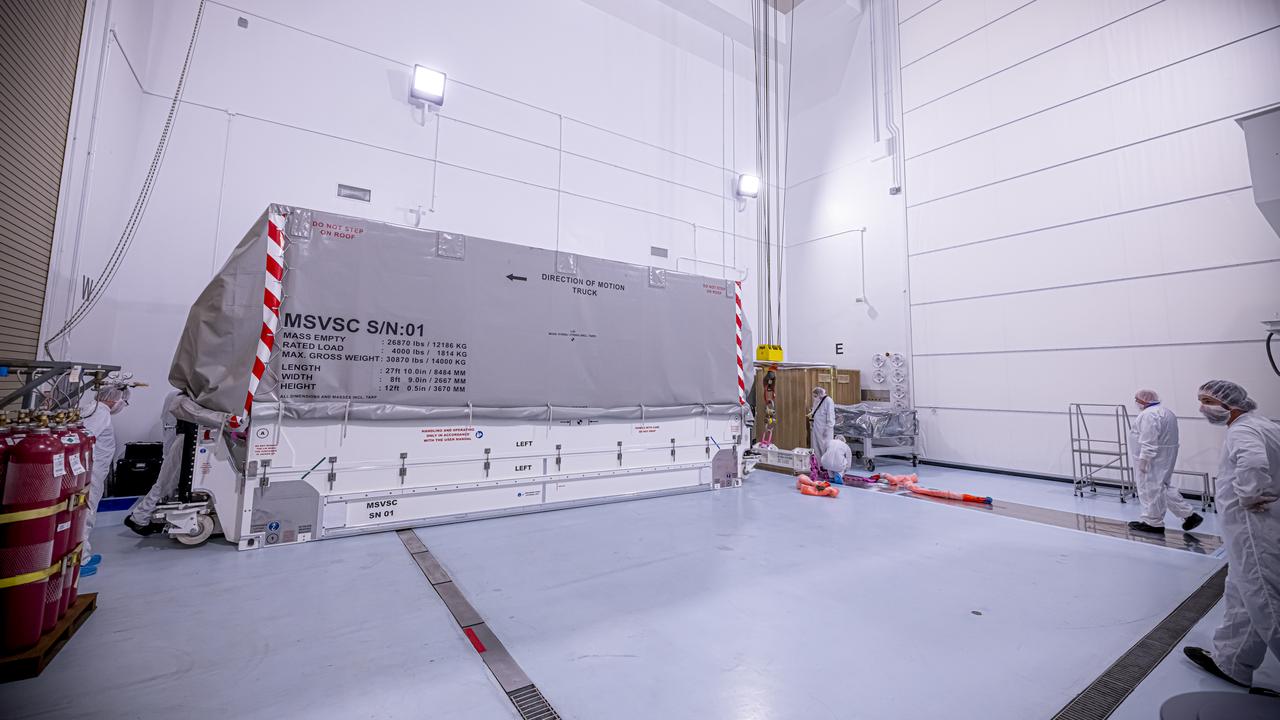
The National Oceanic and Atmospheric Administration’s (NOAA) Space Weather Follow On–Lagrange 1 (SWFO-L1) Observatory, set to provide quicker and more accurate space weather forecasts, arrived Sunday, July 20, 2025, at the Astrotech Space Operations Facility near NASA’s Kennedy Space Center in Florida. The SWFO-L1 mission will monitor the Sun and near-Earth environment using a suite of instruments that provide real-time measurements of solar activity. The observatory will launch as a rideshare with NASA’s IMAP (Interstellar Mapping and Acceleration Probe) no earlier than September 2025.

Using powerful ground-and space-based NASA telescopes, scientists have obtained a moving look at some of the wildest, weirdest weather in the solar system.

These two NASA Hubble Space Telescope images provide views of weather on opposite hemispheres of Neptune. Taken Aug. 13, 1996; these composite images blend information from different wavelengths to bring out features of Neptune blustery weather.

Will Ulrich, launch weather officer with the U.S. Air Force 45th Space Wing, discusses the liftoff weather forecast during the prelaunch news conference for SpaceX’s 18th Commercial Resupply Services (CRS-18) mission to the International Space Station, July 24, 2019, at NASA’s Kennedy Space Center in Florida. The SpaceX Falcon 9 rocket and uncrewed Dragon spacecraft are scheduled to launch July 24, 2019, from Space Launch Complex 40 at Florida’s Cape Canaveral Air Force Station.

The Tropospheric Doppler Radar Wind Profiler (TDRWP), located at Kennedy Space Center, is the only instrument of its kind in operation. Consisting of 640 antennae and occupying five acres near the Launch and Landing Facility, the TDRWP operates at nearly 50 MHz. It will be used as a primary instrument to measure upper level winds for NASA’s Artemis missions, which will launch from the Florida spaceport. The instrument has the ability to provide data from 6,000 to 62,000 feet, every five minutes, far outpacing weather balloons.
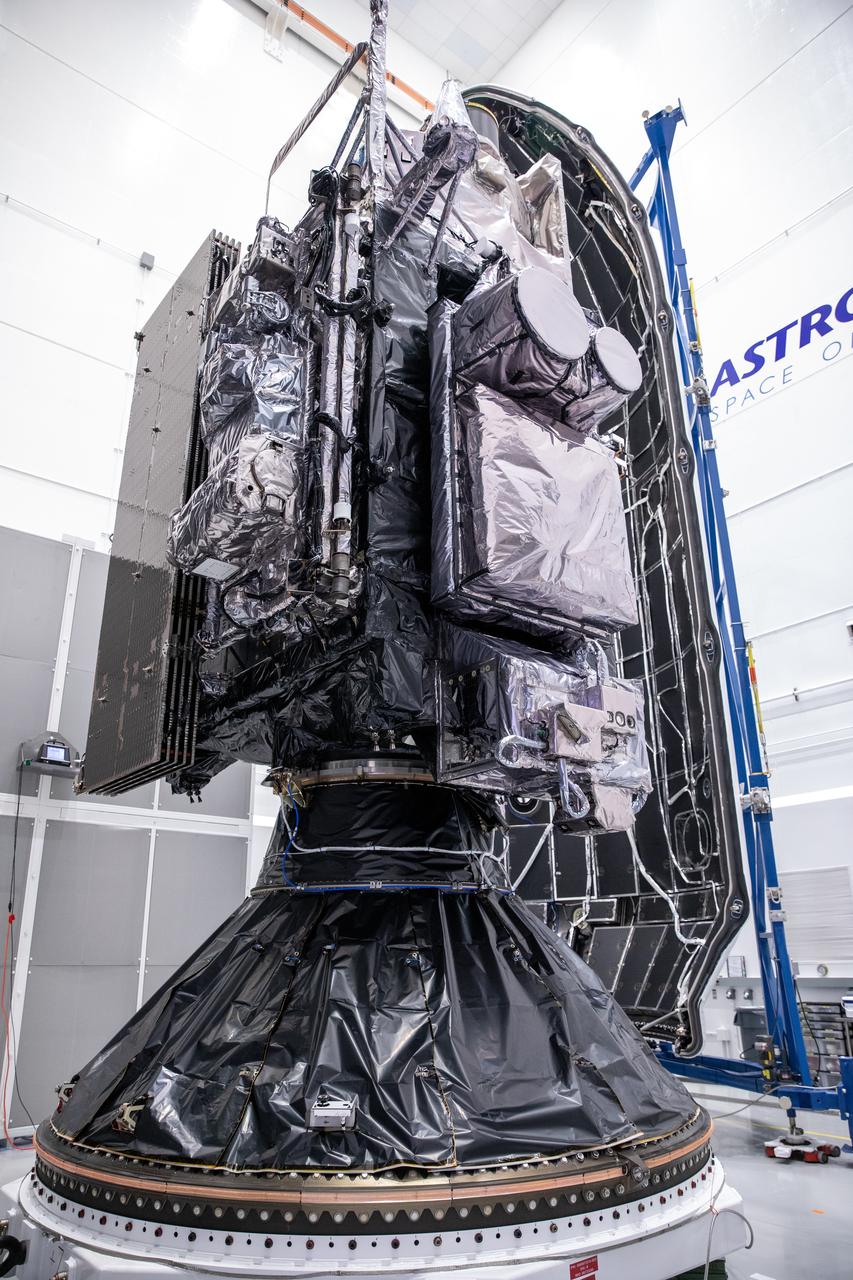
Technicians at the Astrotech Space Operations facility near NASA’s Kennedy Space Center in Florida connect NOAA’s (National Oceanic and Atmospheric Administration) Geostationary Operational Environmental Satellite (GOES-U) to the payload adapter on Thursday, June 13, 2024, in preparation for its upcoming launch. The fourth and final weather-observing and environmental monitoring satellite in NOAA’s GOES-R Series will assist meteorologists in providing advanced weather forecasting and warning capabilities. The two-hour window for liftoff opens 5:16 p.m. EDT Tuesday, June 25, aboard a SpaceX Falcon Heavy rocket from Launch Complex 39A at NASA’s Kennedy Space Center in Florida.
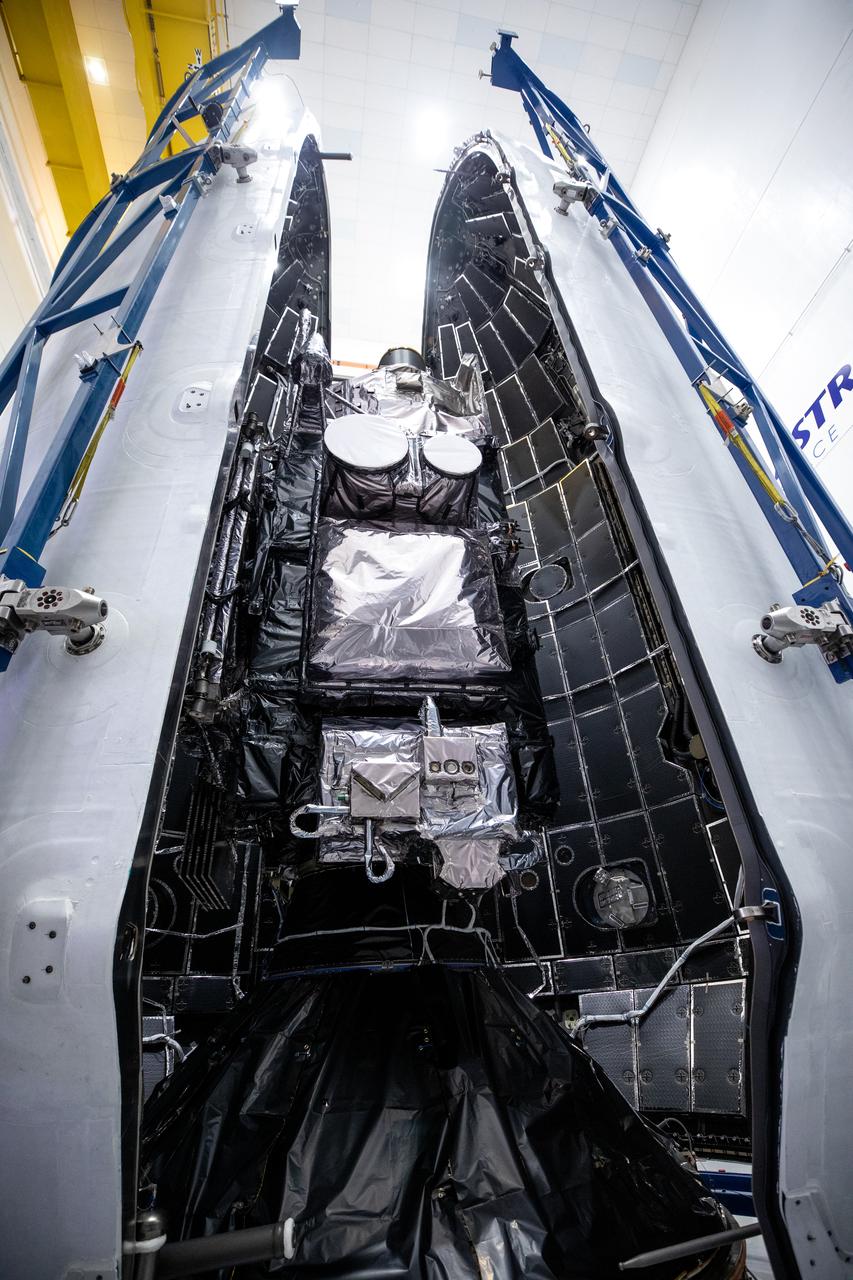
Technicians prepare NOAA’s (National Oceanic and Atmospheric Administration) Geostationary Operational Environmental Satellite (GOES-U) for encapsulation inside payload fairing halves on Thursday, June 13, 2024, at the Astrotech Space Operations facility in Titusville near NASA’s Kennedy Space Center in Florida. The fourth and final weather-observing and environmental monitoring satellite in NOAA’s GOES-R Series will assist meteorologists in providing advanced weather forecasting and warning capabilities. The two-hour window for liftoff opens 5:16 p.m. EDT Tuesday, June 25, aboard a SpaceX Falcon Heavy rocket from Launch Complex 39A at NASA’s Kennedy Space Center in Florida.
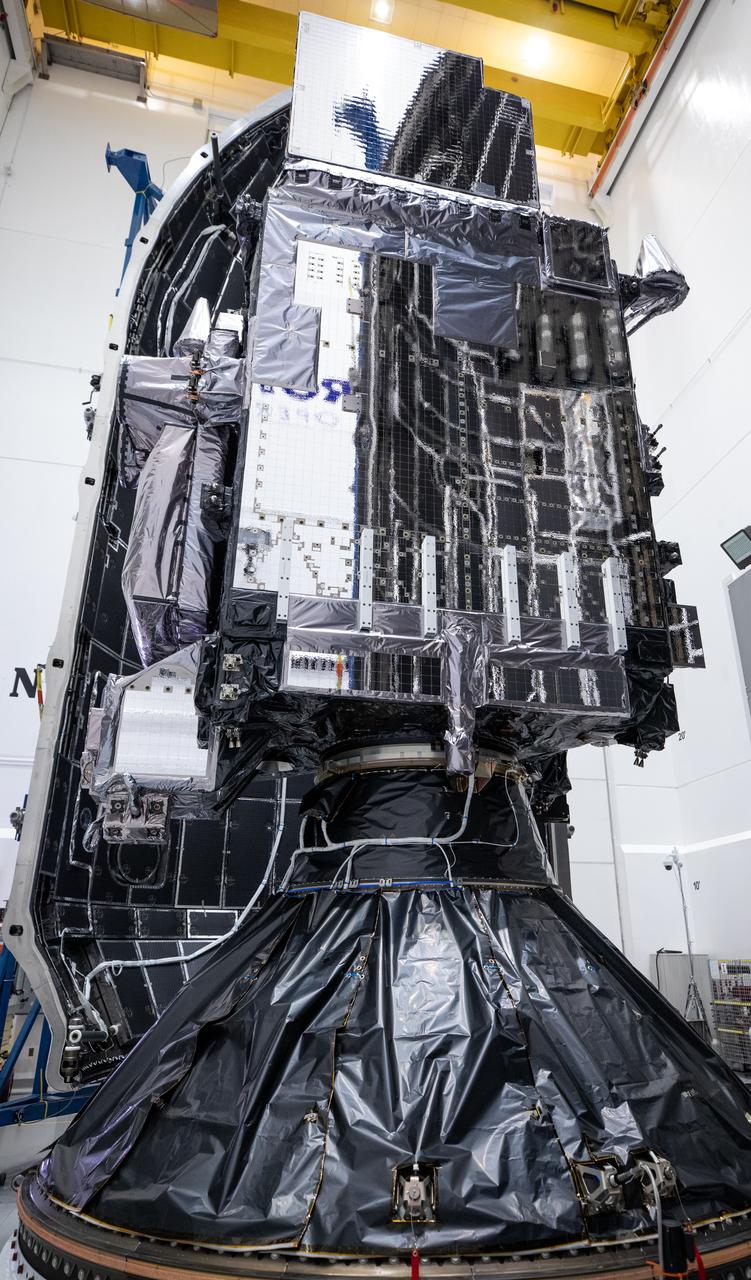
Technicians at the Astrotech Space Operations facility near NASA’s Kennedy Space Center in Florida connect NOAA’s (National Oceanic and Atmospheric Administration) Geostationary Operational Environmental Satellite (GOES-U) to the payload adapter on Thursday, June 13, 2024, in preparation for its upcoming launch. The fourth and final weather-observing and environmental monitoring satellite in NOAA’s GOES-R Series will assist meteorologists in providing advanced weather forecasting and warning capabilities. The two-hour window for liftoff opens 5:16 p.m. EDT Tuesday, June 25, aboard a SpaceX Falcon Heavy rocket from Launch Complex 39A at NASA’s Kennedy Space Center in Florida.
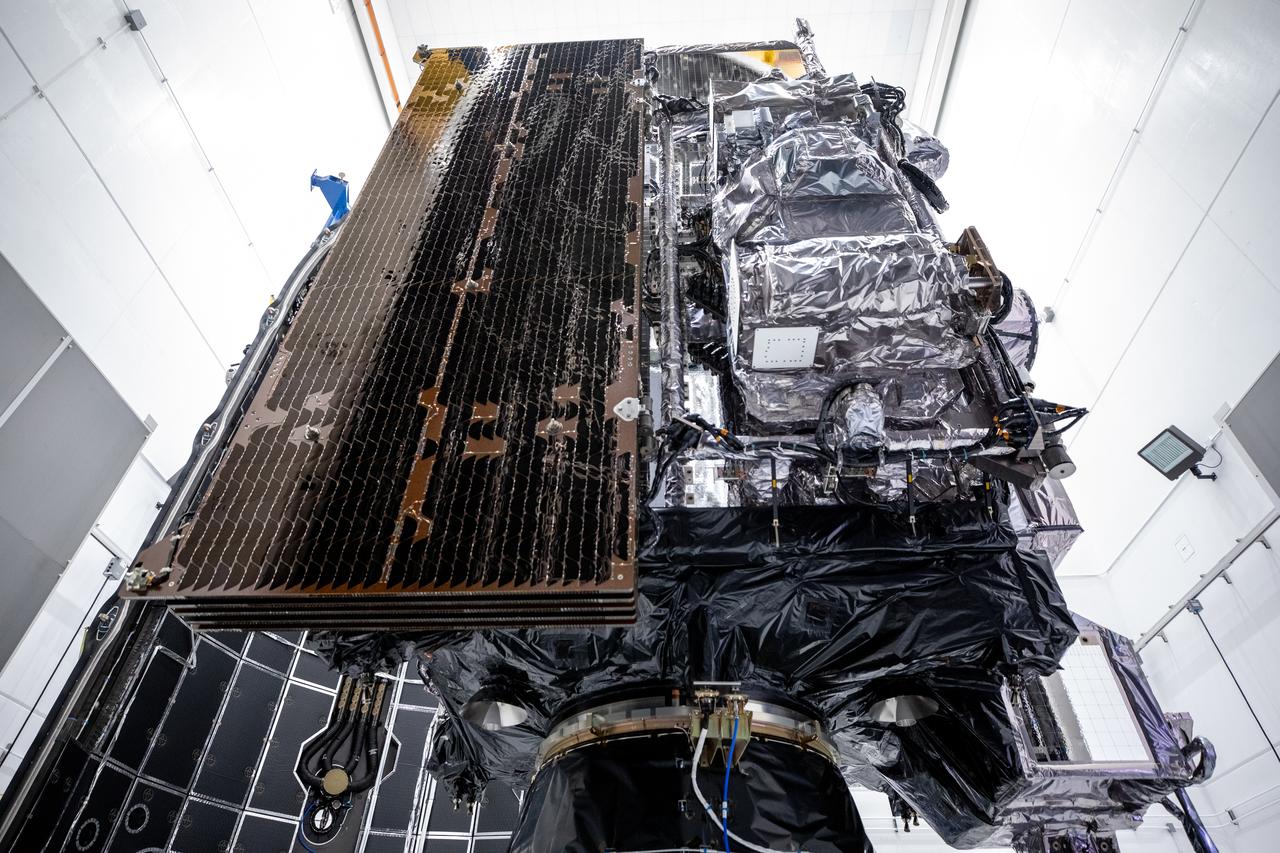
Technicians prepare NOAA’s (National Oceanic and Atmospheric Administration) Geostationary Operational Environmental Satellite (GOES-U) for encapsulation inside payload fairing halves on Thursday, June 13, 2024, at the Astrotech Space Operations facility in Titusville near NASA’s Kennedy Space Center in Florida. The fourth and final weather-observing and environmental monitoring satellite in NOAA’s GOES-R Series will assist meteorologists in providing advanced weather forecasting and warning capabilities. The two-hour window for liftoff opens 5:16 p.m. EDT Tuesday, June 25, aboard a SpaceX Falcon Heavy rocket from Launch Complex 39A at NASA’s Kennedy Space Center in Florida.
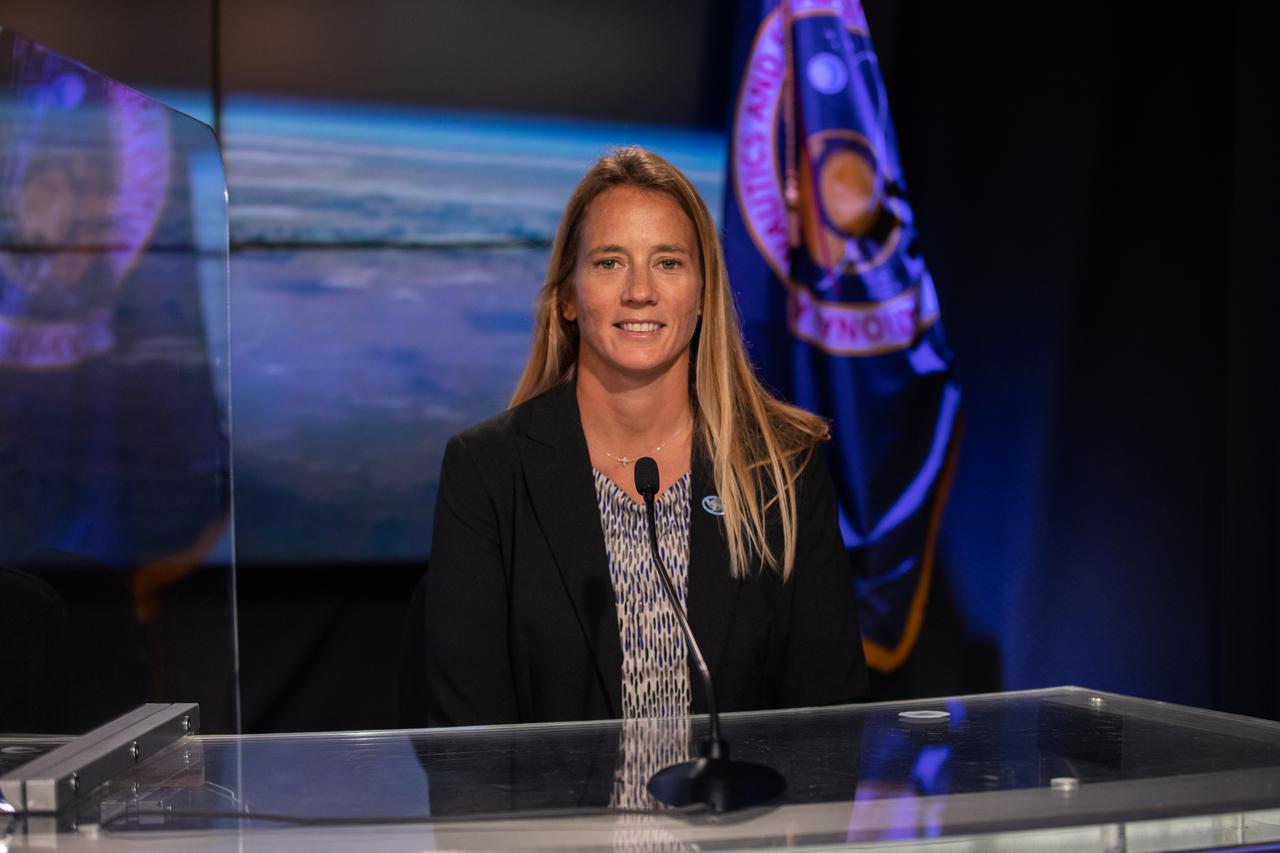
A prelaunch news conference for the National Oceanic and Atmospheric Administration’s (NOAA) Geostationary Operational Environmental Satellite-T (GOES-T) is held on Feb. 26, 2022, at NASA’s Kennedy Space Center in Florida. Jessica Williams, launch weather officer, 45th Weather Squadron, Space Launch Delta 45, answers questions during the news conference. GOES-T is scheduled to lift off on a United Launch Alliance Atlas V 541 rocket from Space Launch Complex 41 at Cape Canaveral Space Force Station in Florida on March 1, 2022, at 4:38 p.m. GOES-T is the third satellite in the GOES-R series that will continue to help meteorologists observe and predict local weather events that affect public safety. The launch is being managed by NASA’s Launch Services Program based at Kennedy Space Center in Florida, America’s multi-user spaceport.
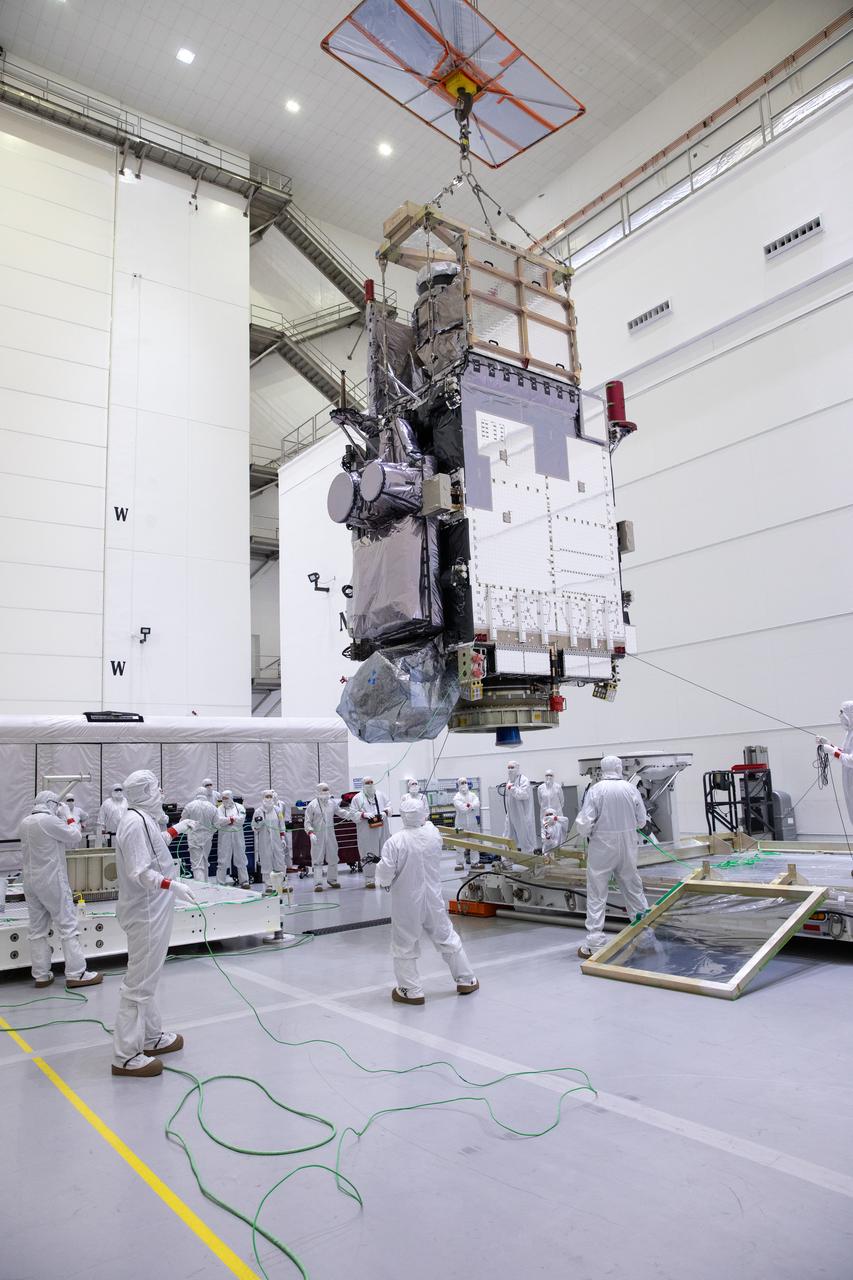
Technicians monitor movement as a crane hoists NOAA’s Geostationary Operational Environmental Satellite-U (GOES-U) after being uncrated and rotated into a vertical position on Wednesday, Jan. 24, 2024, at the Astrotech Space Operations Facility near the agency’s Kennedy Space Center in Florida. Part of a collaborative NOAA and NASA program, GOES-U is the fourth in a series of four advanced geostationary weather satellites. Data from the GOES satellite constellation – consisting of the GOES-R, GOES-S, GOES-T and GOES-U spacecraft – enables forecasters to predict, observe, and track local weather events that affect public safety like thunderstorms, hurricanes, and wildfires.
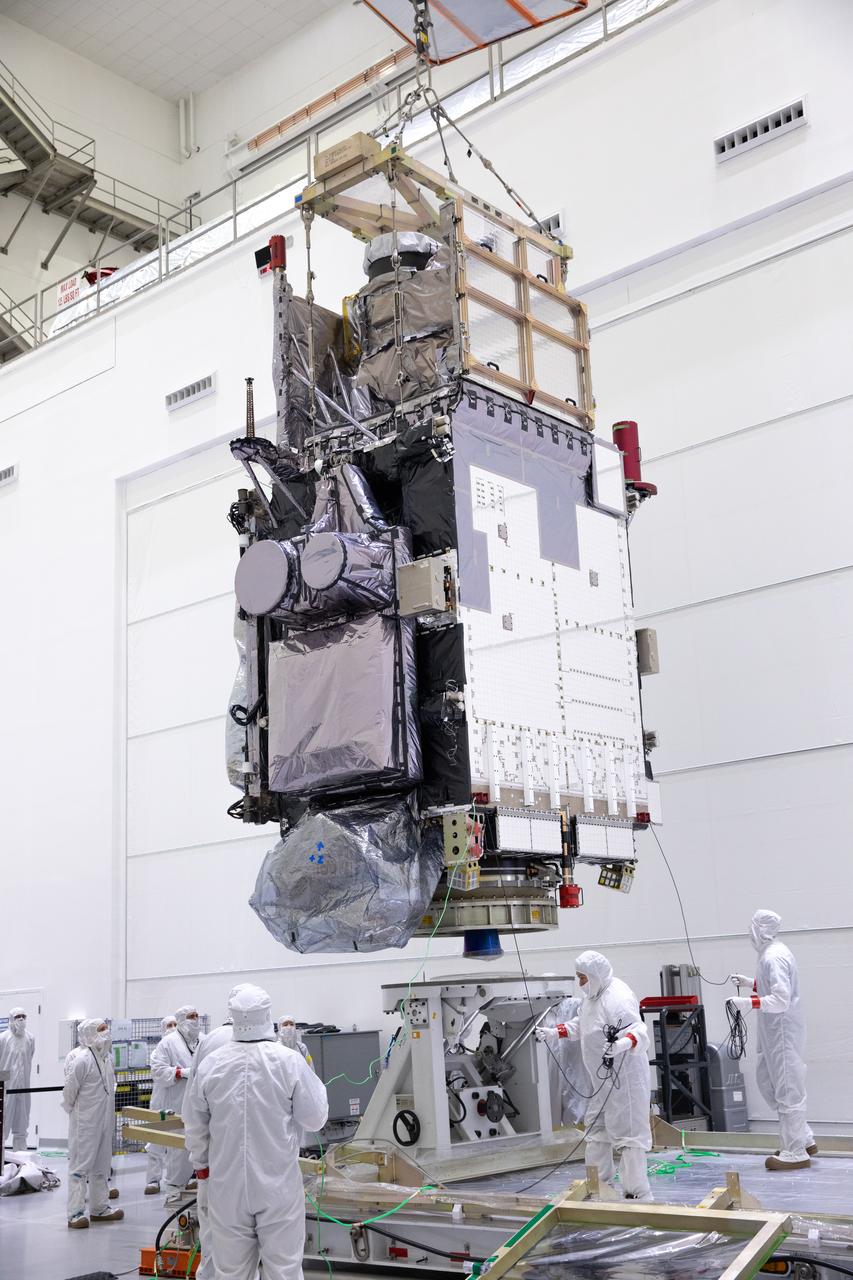
Technicians monitor movement as a crane hoists NOAA’s Geostationary Operational Environmental Satellite-U (GOES-U) after being uncrated and rotated into a vertical position on Wednesday, Jan. 24, 2024, at the Astrotech Space Operations Facility near the agency’s Kennedy Space Center in Florida. Part of a collaborative NOAA and NASA program, GOES-U is the fourth in a series of four advanced geostationary weather satellites. Data from the GOES satellite constellation – consisting of the GOES-R, GOES-S, GOES-T and GOES-U spacecraft – enables forecasters to predict, observe, and track local weather events that affect public safety like thunderstorms, hurricanes, and wildfires.
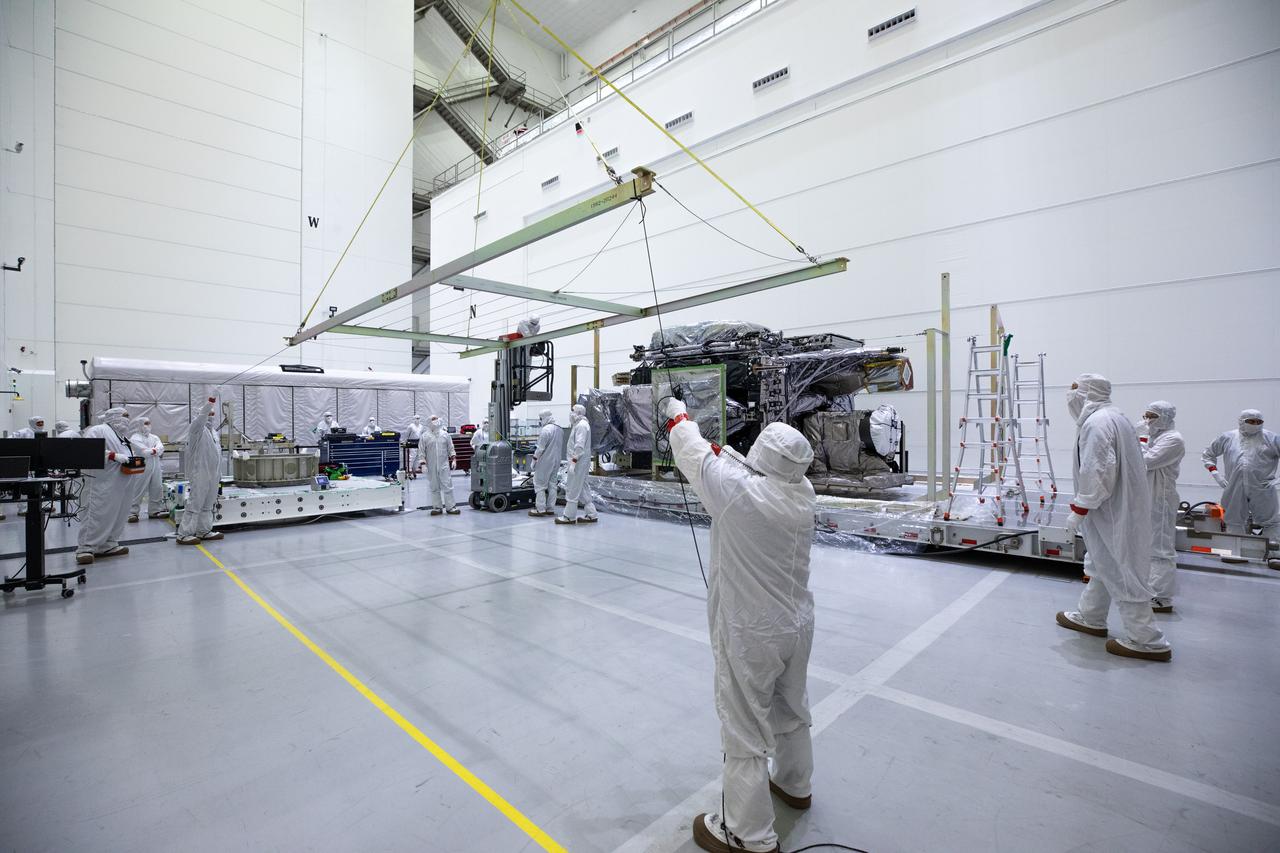
Technicians remove part of a protective enclosure as they prepare to rotate NOAA’s Geostationary Operational Environmental Satellite-U (GOES-U) vertical after being uncrated on Wednesday, Jan. 24, 2024, at the Astrotech Space Operations Facility near the agency’s Kennedy Space Center in Florida. Part of a collaborative NOAA and NASA program, GOES-U is the fourth in a series of four advanced geostationary weather satellites. Data from the GOES satellite constellation – consisting of the GOES-R, GOES-S, GOES-T and GOES-U spacecraft – enables forecasters to predict, observe, and track local weather events that affect public safety like thunderstorms, hurricanes, and wildfires.
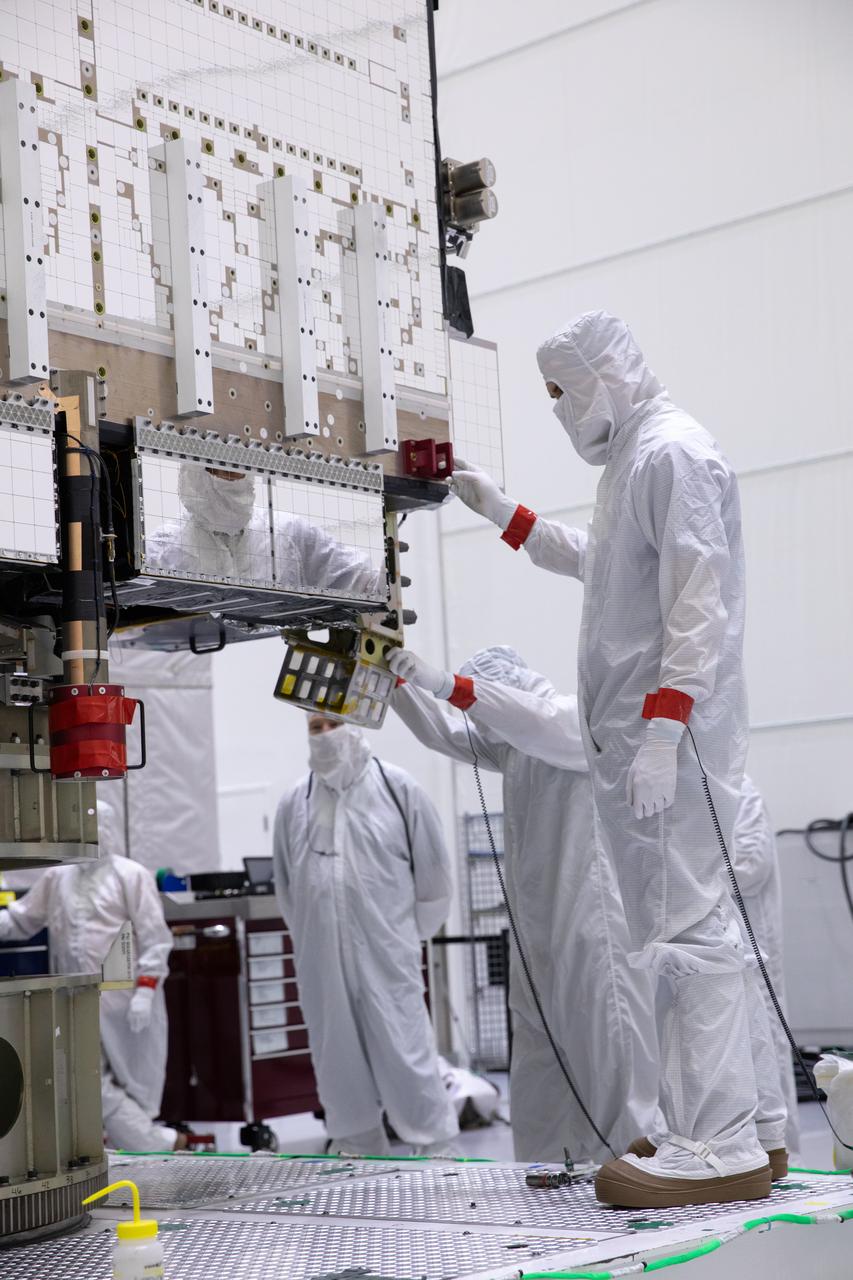
Technicians monitor movement and guide NOAA’s Geostationary Operational Environmental Satellite-U (GOES-U) as a crane hoists it on to a spacecraft dolly in a high bay at the Astrotech Space Operations Facility near the agency’s Kennedy Space Center in Florida. Part of a collaborative NOAA and NASA program, GOES-U is the fourth in a series of four advanced geostationary weather satellites. Data from the GOES satellite constellation – consisting of the GOES-R, GOES-S, GOES-T and GOES-U spacecraft – enables forecasters to predict, observe, and track local weather events that affect public safety like thunderstorms, hurricanes, and wildfires.
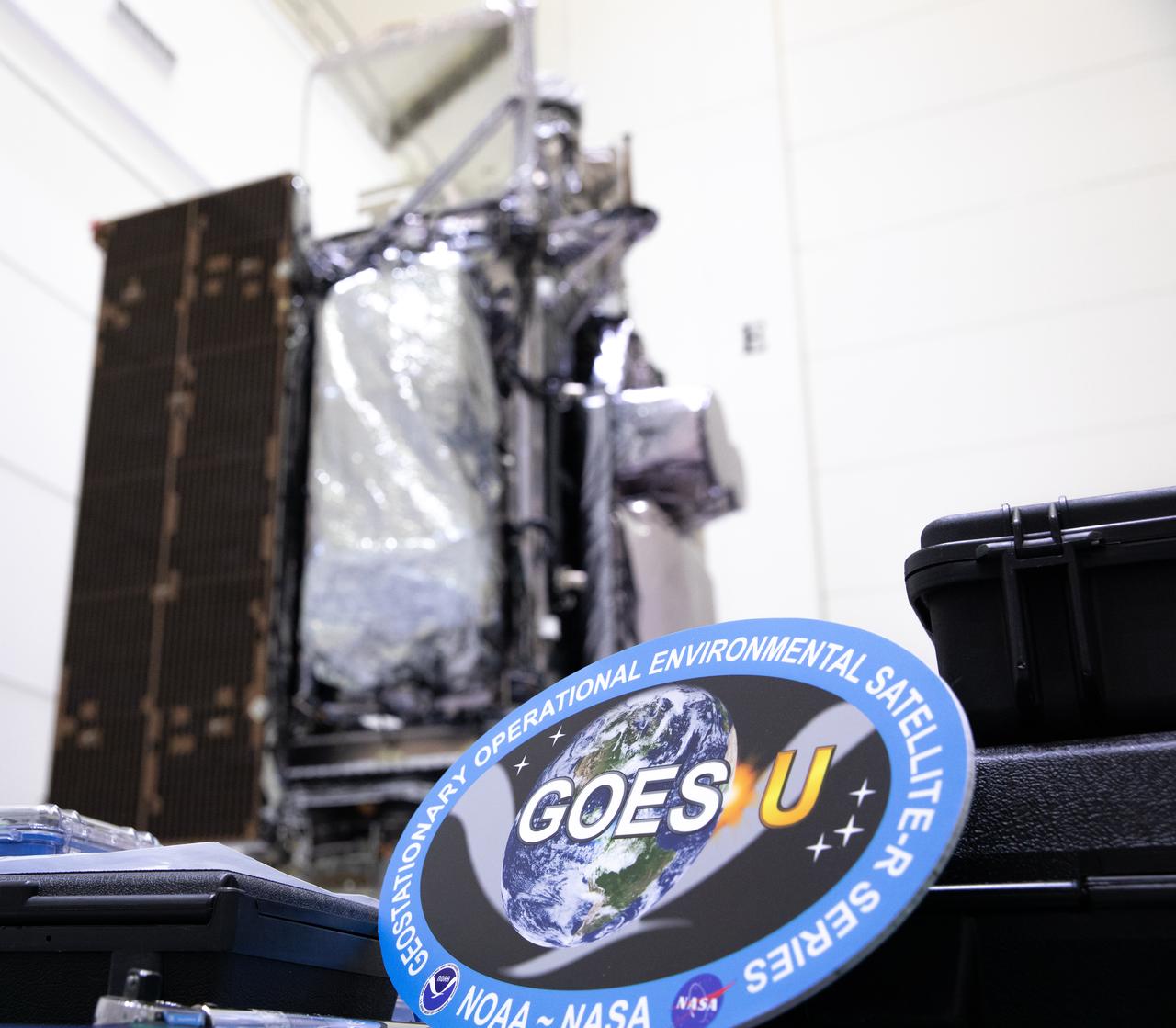
The mission insignia of NOAA’s Geostationary Operational Environmental Satellite-U (GOES-U) mission is pictured in front of the satellite in a vertical position on Wednesday, Jan. 24, 2024, at the Astrotech Space Operations Facility near the agency’s Kennedy Space Center in Florida. Part of a collaborative NOAA and NASA program, GOES-U is the fourth in a series of four advanced geostationary weather satellites. Data from the GOES satellite constellation – consisting of the GOES-R, GOES-S, GOES-T and GOES-U spacecraft – enables forecasters to predict, observe, and track local weather events that affect public safety like thunderstorms, hurricanes, and wildfires.
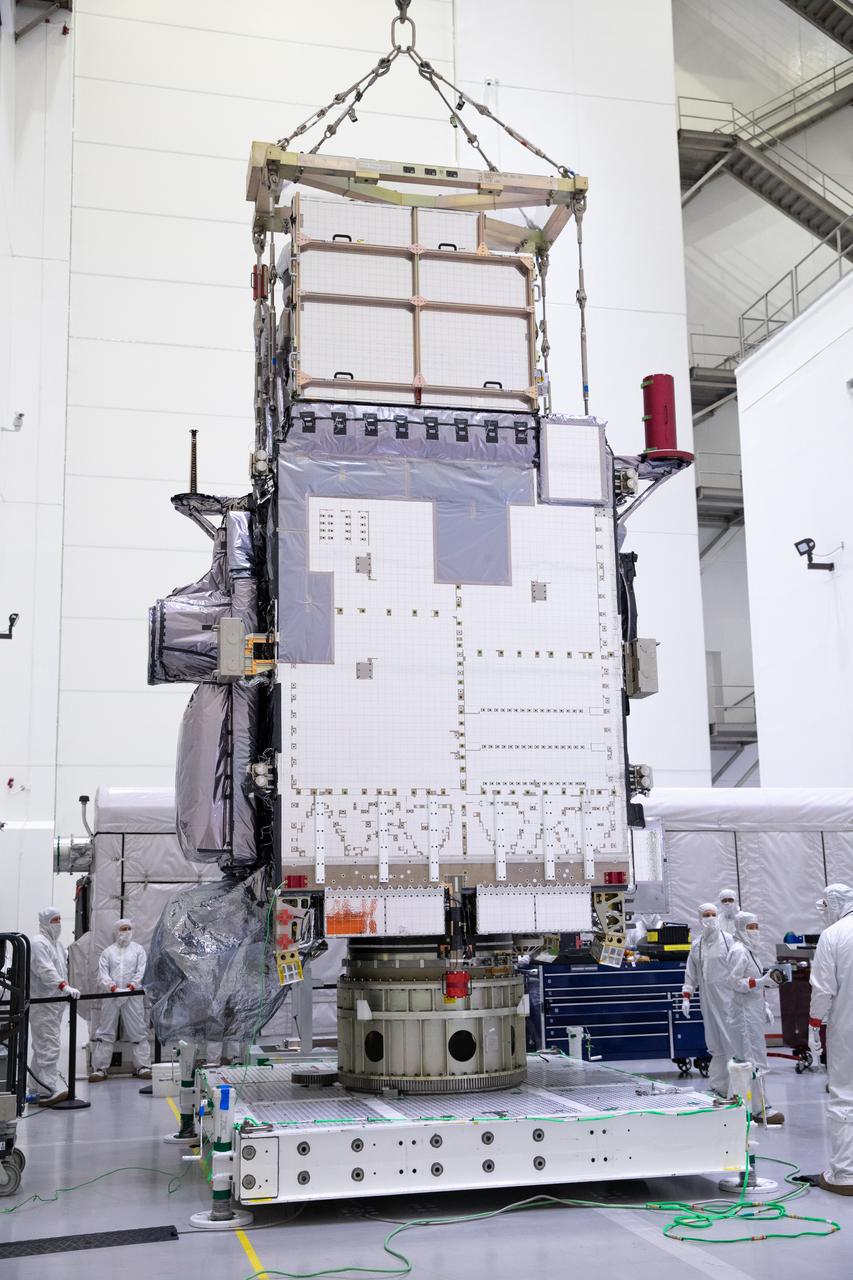
Technicians monitor movement and guide NOAA’s Geostationary Operational Environmental Satellite-U (GOES-U) as a crane hoists it on to a spacecraft dolly in a high bay at the Astrotech Space Operations Facility near the agency’s Kennedy Space Center in Florida. Part of a collaborative NOAA and NASA program, GOES-U is the fourth in a series of four advanced geostationary weather satellites. Data from the GOES satellite constellation – consisting of the GOES-R, GOES-S, GOES-T and GOES-U spacecraft – enables forecasters to predict, observe, and track local weather events that affect public safety like thunderstorms, hurricanes, and wildfires.
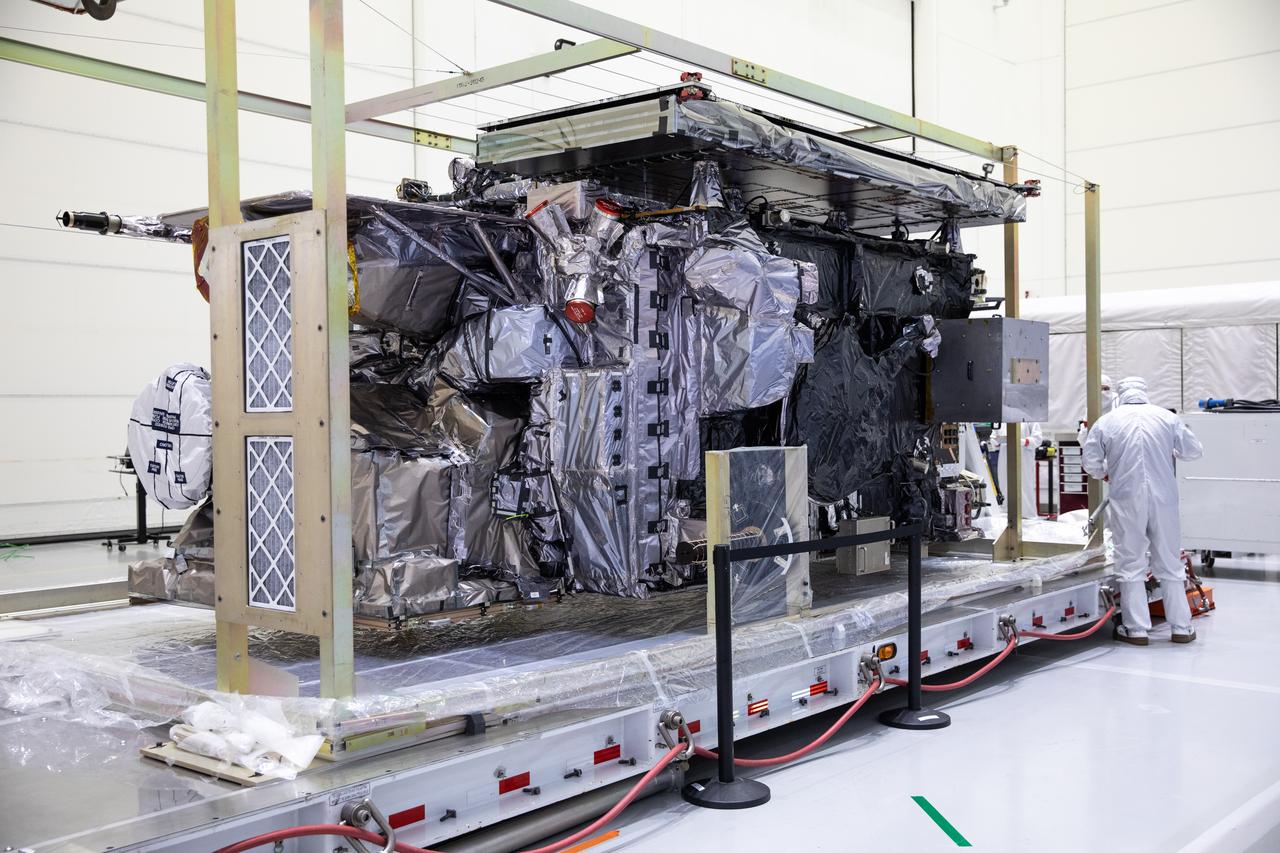
NOAA’s Geostationary Operational Environmental Satellite-U (GOES-U) is uncrated for prelaunch processing at the Astrotech Space Operations Facility near the agency’s Kennedy Space Center in Florida on Wednesday, Jan. 24, 2024. Part of a collaborative NOAA and NASA program, GOES-U is the final in a series of four advanced geostationary weather satellites. Data from the GOES satellite constellation – consisting of the GOES-R, GOES-S, GOES-T and GOES-U spacecraft – enables forecasters to predict, observe, and track local weather events that affect public safety like thunderstorms, hurricanes, and wildfires.

Technicians monitor movement and guide NOAA’s Geostationary Operational Environmental Satellite-U (GOES-U) as a crane hoists it on to a spacecraft dolly in a high bay at the Astrotech Space Operations Facility near the agency’s Kennedy Space Center in Florida. Part of a collaborative NOAA and NASA program, GOES-U is the fourth in a series of four advanced geostationary weather satellites. Data from the GOES satellite constellation – consisting of the GOES-R, GOES-S, GOES-T and GOES-U spacecraft – enables forecasters to predict, observe, and track local weather events that affect public safety like thunderstorms, hurricanes, and wildfires.
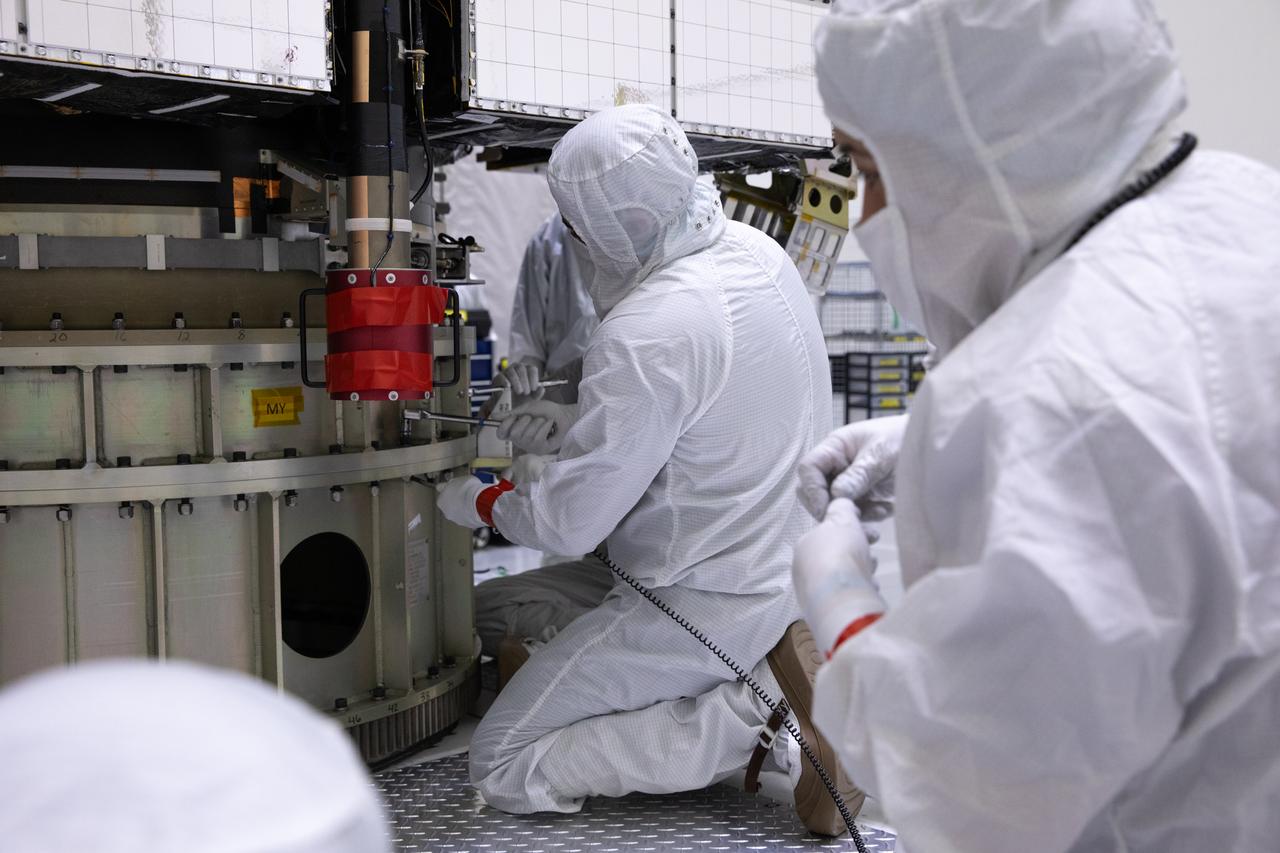
Technicians monitor movement and guide NOAA’s Geostationary Operational Environmental Satellite-U (GOES-U) as a crane hoists it on to a spacecraft dolly in a high bay at the Astrotech Space Operations Facility near the agency’s Kennedy Space Center in Florida. Part of a collaborative NOAA and NASA program, GOES-U is the fourth in a series of four advanced geostationary weather satellites. Data from the GOES satellite constellation – consisting of the GOES-R, GOES-S, GOES-T and GOES-U spacecraft – enables forecasters to predict, observe, and track local weather events that affect public safety like thunderstorms, hurricanes, and wildfires.
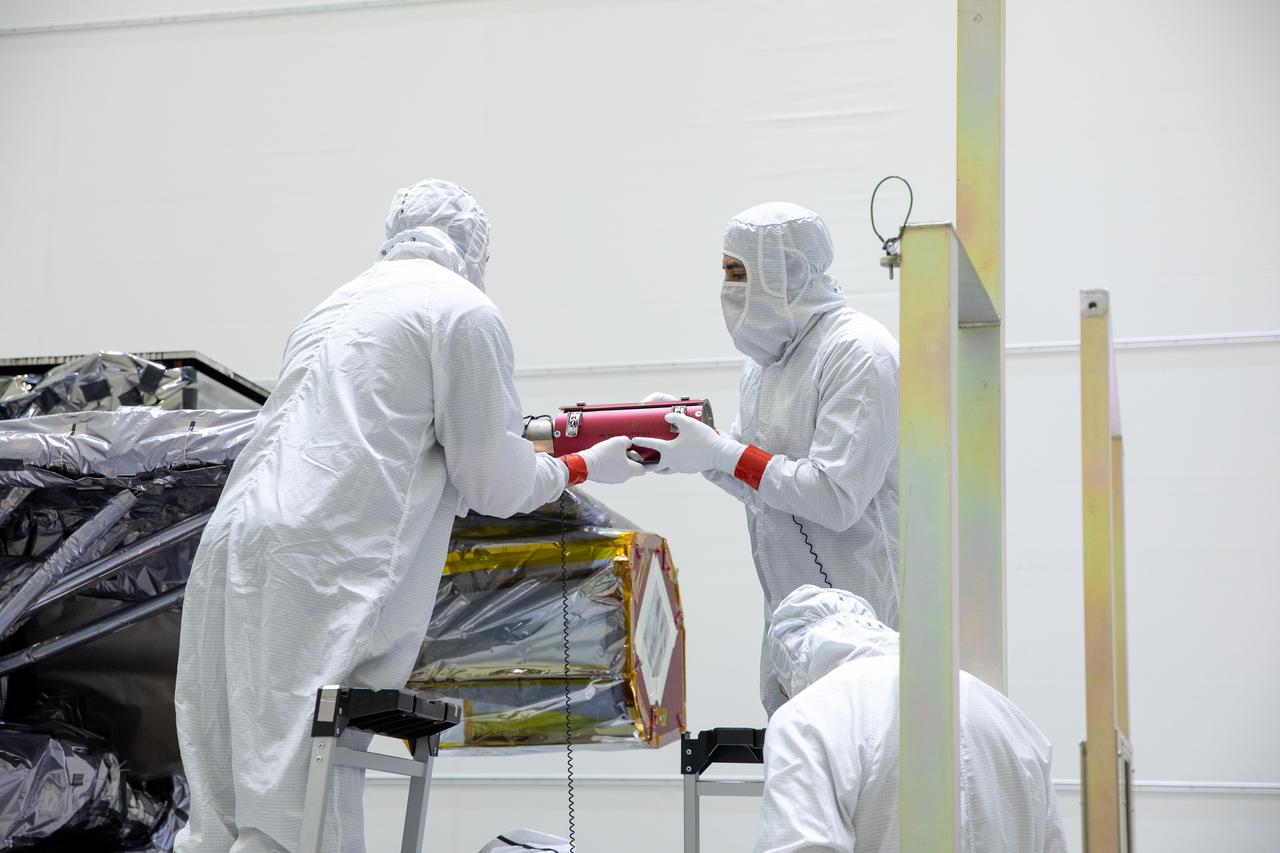
Technicians prepare to rotate NOAA’s Geostationary Operational Environmental Satellite-U (GOES-U) vertical after being uncrated on Wednesday, Jan. 24, 2024, at the Astrotech Space Operations Facility near the agency’s Kennedy Space Center in Florida. Part of a collaborative NOAA and NASA program, GOES-U is the fourth in a series of four advanced geostationary weather satellites. Data from the GOES satellite constellation – consisting of the GOES-R, GOES-S, GOES-T and GOES-U spacecraft – enables forecasters to predict, observe, and track local weather events that affect public safety like thunderstorms, hurricanes, and wildfires.
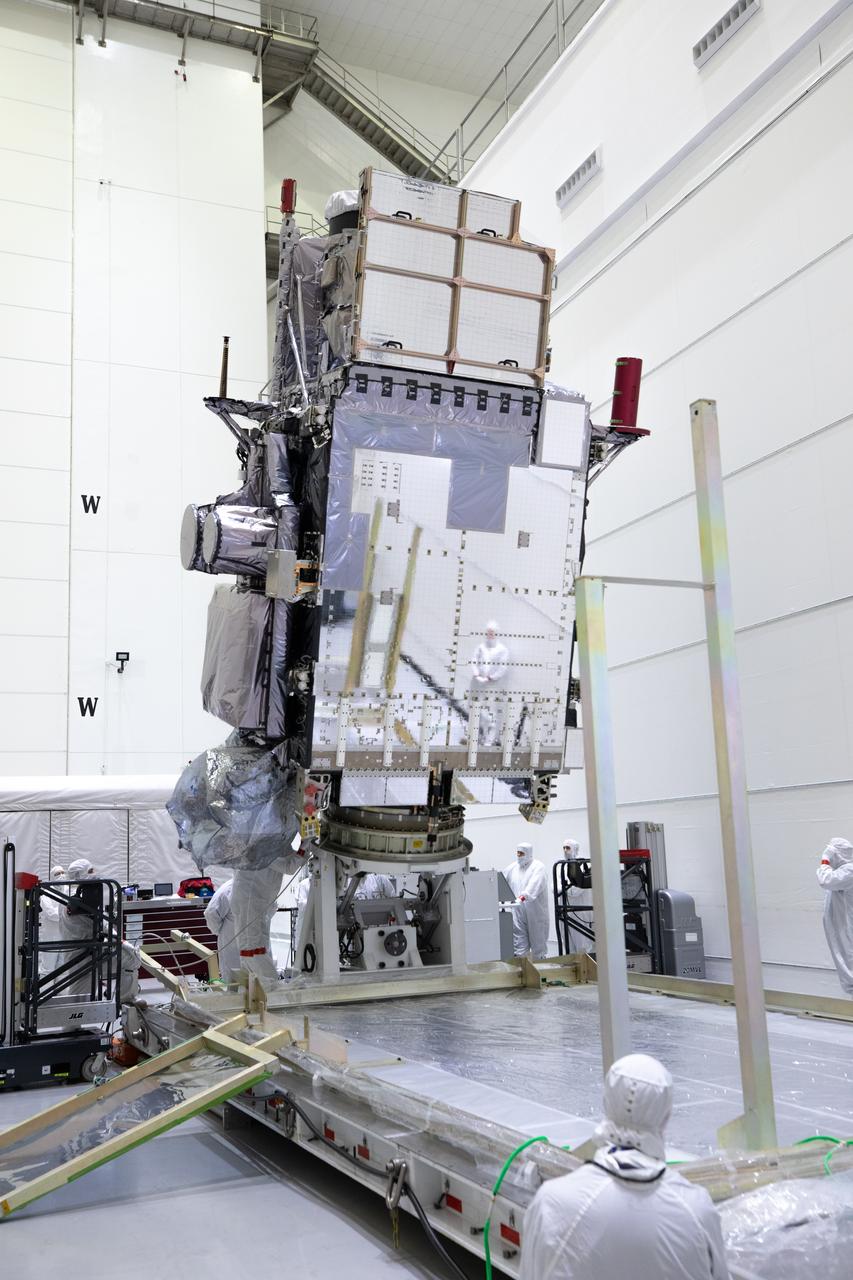
Technicians prepare to rotate NOAA’s Geostationary Operational Environmental Satellite-U (GOES-U) vertical after being uncrated on Wednesday, Jan. 24, 2024, at the Astrotech Space Operations Facility near the agency’s Kennedy Space Center in Florida. Part of a collaborative NOAA and NASA program, GOES-U is the fourth in a series of four advanced geostationary weather satellites. Data from the GOES satellite constellation – consisting of the GOES-R, GOES-S, GOES-T and GOES-U spacecraft – enables forecasters to predict, observe, and track local weather events that affect public safety like thunderstorms, hurricanes, and wildfires.
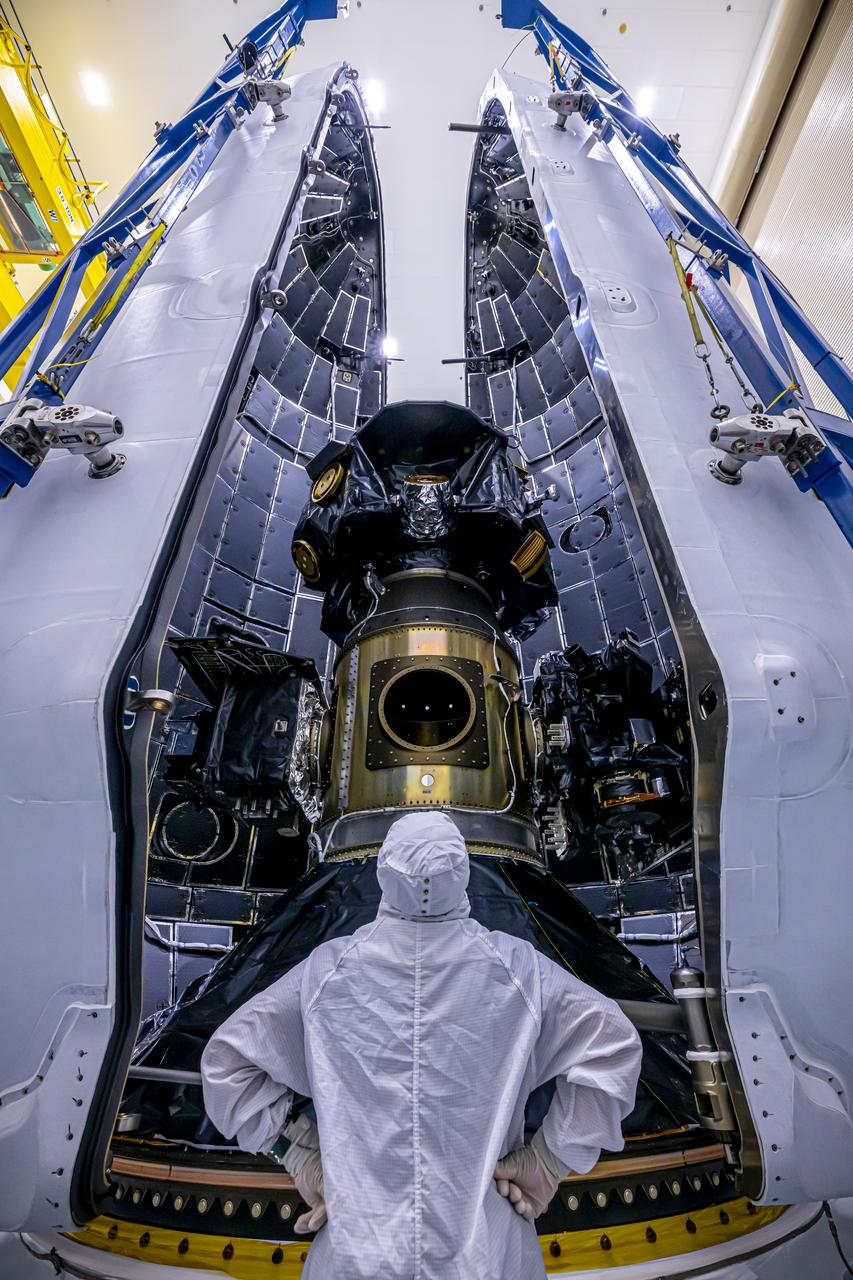
Technicians at Astrotech Space Operations Facility near NASA’s Kennedy Space Center in Florida encapsulate NASA’s IMAP (Interstellar Mapping and Acceleration Probe), along with the agency’s Carruthers Geocorona Observatory and National Oceanic and Atmospheric Administration’s (NOAA) Space Weather Follow On–Lagrange 1 (SWFO-L1) spacecraft on Tuesday, Sept. 16, 2025, inside a SpaceX Falcon 9 payload fairing. The missions will each focus on different effects of the solar wind — the continuous stream of particles emitted by the Sun — and space weather — the changing conditions in space driven by the Sun — from their origins at the Sun to their farthest reaches billions of miles away at the edge of our solar system.
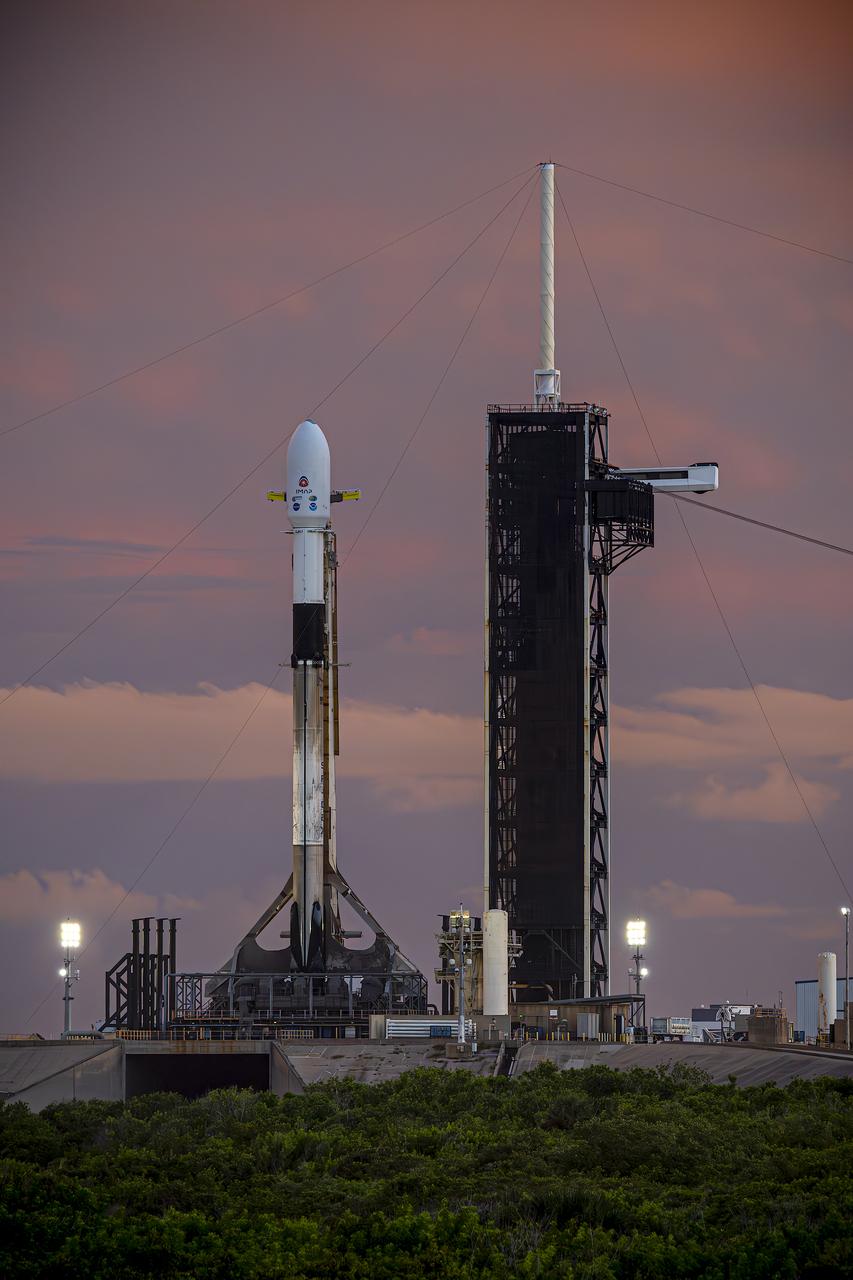
A SpaceX Falcon 9 rocket with NASA’s IMAP (Interstellar Mapping and Acceleration Probe), the agency’s Carruthers Geocorona Observatory, and National Oceanic and Atmospheric Administration’s (NOAA) Space Weather Follow On–Lagrange 1 (SWFO-L1) spacecraft atop stands vertical at Launch Complex 39A as the sun sets on Monday, Sept. 22, 2025, at the agency’s Kennedy Space Center in Florida. The missions will each focus on different effects of the solar wind — the continuous stream of particles emitted by the Sun — and space weather — the changing conditions in space driven by the Sun — from their origins at the Sun to their farthest reaches billions of miles away at the edge of our solar system.
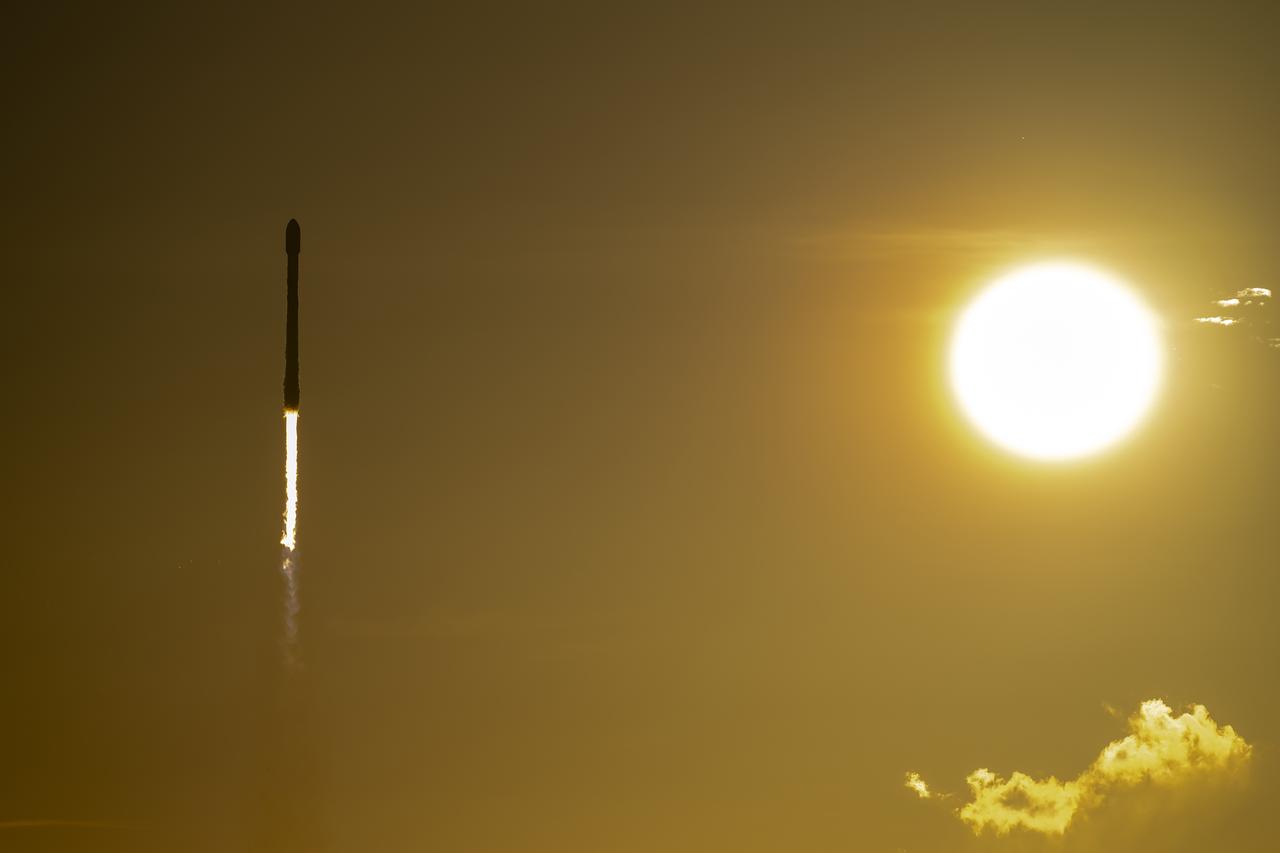
A SpaceX Falcon 9 rocket carrying NASA’s IMAP (Interstellar Mapping and Acceleration Probe), the agency’s Carruthers Geocorona Observatory, and National Oceanic and Atmospheric Administration’s (NOAA) Space Weather Follow On–Lagrange 1 (SWFO-L1) spacecraft lifts off from Launch Complex 39A at NASA’s Kennedy Space Center in Florida at 7:30 a.m. EDT Wednesday, Sept. 24, 2025. The missions will each focus on different effects of the solar wind — the continuous stream of particles emitted by the Sun — and space weather — the changing conditions in space driven by the Sun — from their origins at the Sun to their farthest reaches billions of miles away at the edge of our solar system.
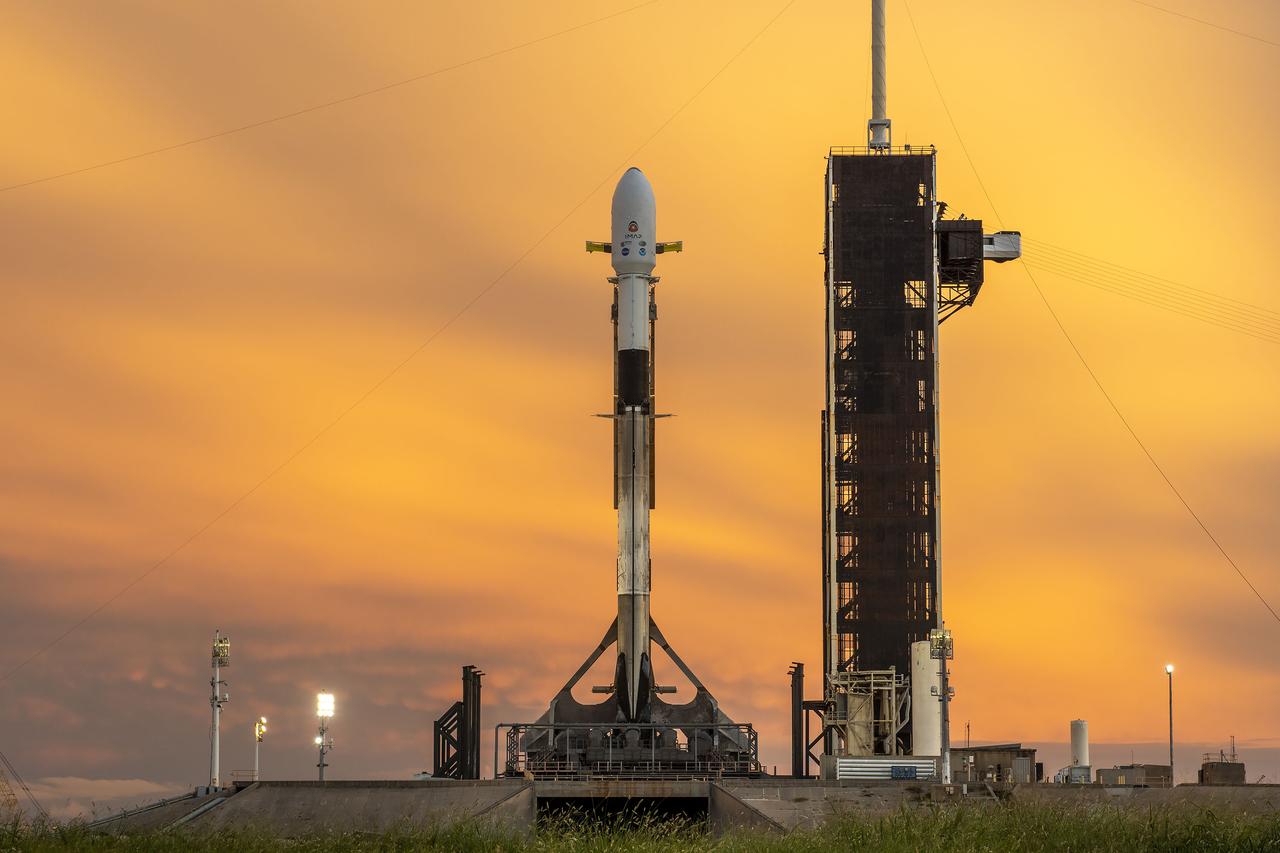
A SpaceX Falcon 9 rocket with NASA’s IMAP (Interstellar Mapping and Acceleration Probe), the agency’s Carruthers Geocorona Observatory, and National Oceanic and Atmospheric Administration’s (NOAA) Space Weather Follow On–Lagrange 1 (SWFO-L1) spacecraft atop stands vertical at Launch Complex 39A as the sun sets on Monday, Sept. 22, 2025, at the agency’s Kennedy Space Center in Florida. The missions will each focus on different effects of the solar wind — the continuous stream of particles emitted by the Sun — and space weather — the changing conditions in space driven by the Sun — from their origins at the Sun to their farthest reaches billions of miles away at the edge of our solar system.
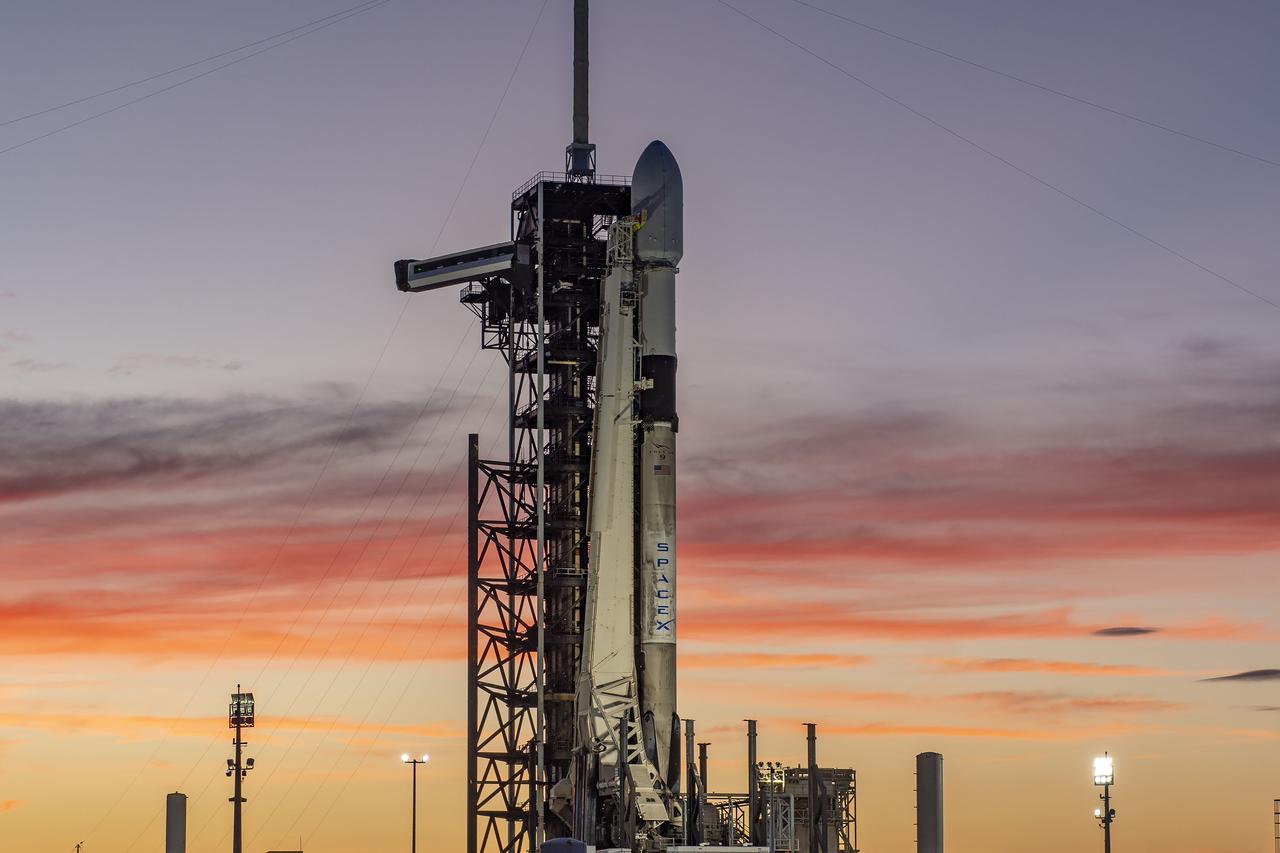
A SpaceX Falcon 9 rocket with NASA’s IMAP (Interstellar Mapping and Acceleration Probe), the agency’s Carruthers Geocorona Observatory, and National Oceanic and Atmospheric Administration’s (NOAA) Space Weather Follow On–Lagrange 1 (SWFO-L1) spacecraft atop stands vertical at Launch Complex 39A as the sun sets on Monday, Sept. 22, 2025, at the agency’s Kennedy Space Center in Florida. The missions will each focus on different effects of the solar wind — the continuous stream of particles emitted by the Sun — and space weather — the changing conditions in space driven by the Sun — from their origins at the Sun to their farthest reaches billions of miles away at the edge of our solar system.
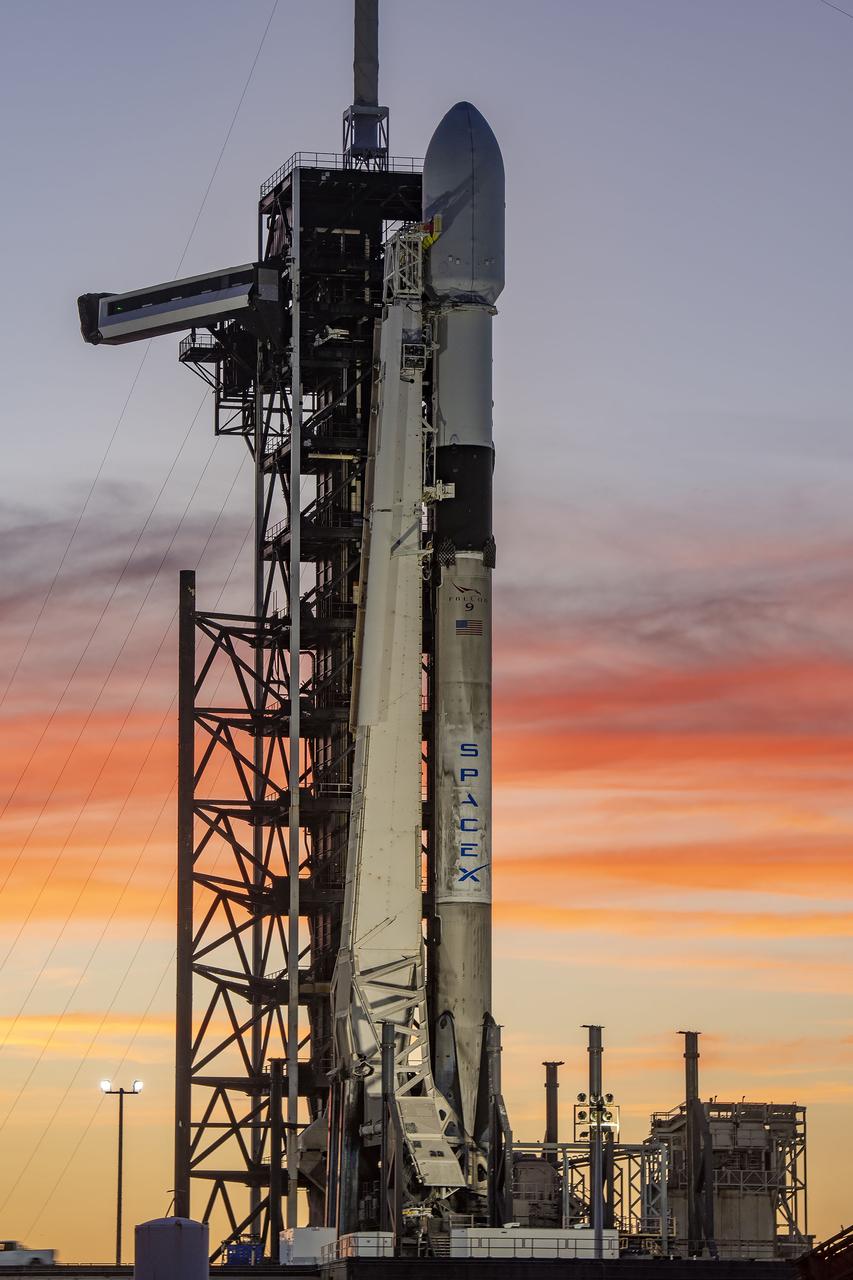
A SpaceX Falcon 9 rocket with NASA’s IMAP (Interstellar Mapping and Acceleration Probe), the agency’s Carruthers Geocorona Observatory, and National Oceanic and Atmospheric Administration’s (NOAA) Space Weather Follow On–Lagrange 1 (SWFO-L1) spacecraft atop stands vertical at Launch Complex 39A as the sun sets on Monday, Sept. 22, 2025, at the agency’s Kennedy Space Center in Florida. The missions will each focus on different effects of the solar wind — the continuous stream of particles emitted by the Sun — and space weather — the changing conditions in space driven by the Sun — from their origins at the Sun to their farthest reaches billions of miles away at the edge of our solar system.
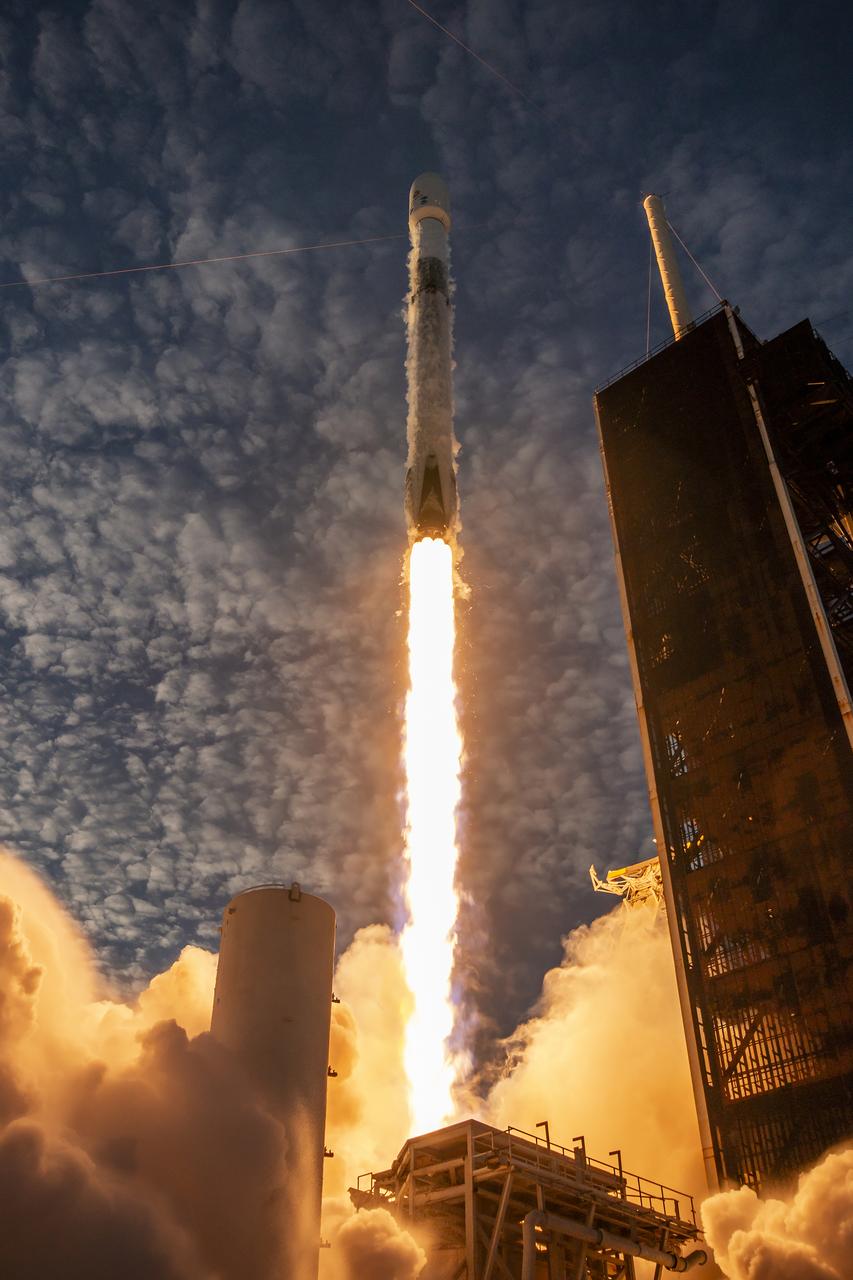
A SpaceX Falcon 9 rocket carrying NASA’s IMAP (Interstellar Mapping and Acceleration Probe), the agency’s Carruthers Geocorona Observatory, and National Oceanic and Atmospheric Administration’s (NOAA) Space Weather Follow On–Lagrange 1 (SWFO-L1) spacecraft lifts off from Launch Complex 39A at NASA’s Kennedy Space Center in Florida at 7:30 a.m. EDT Wednesday, Sept. 24, 2025. The missions will each focus on different effects of the solar wind — the continuous stream of particles emitted by the Sun — and space weather — the changing conditions in space driven by the Sun — from their origins at the Sun to their farthest reaches billions of miles away at the edge of our solar system.
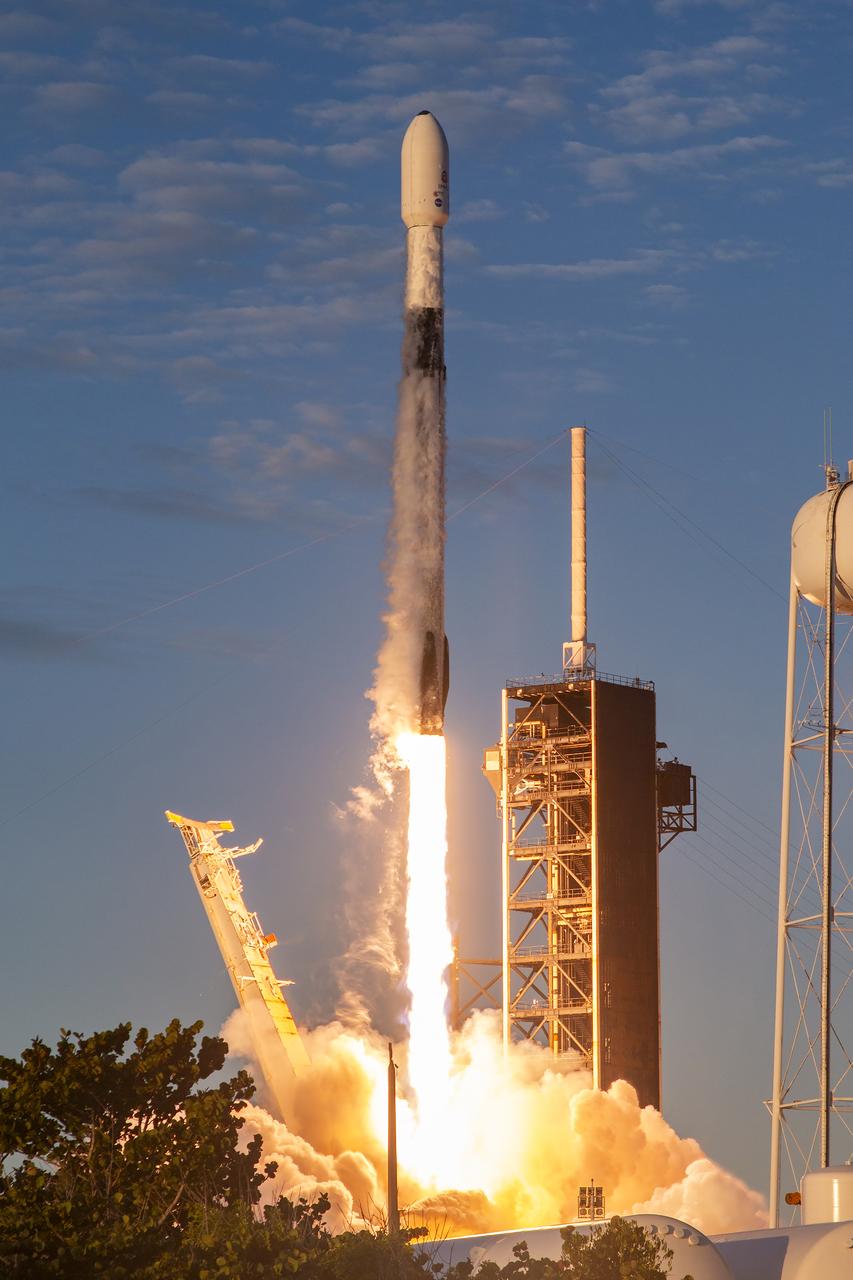
A SpaceX Falcon 9 rocket carrying NASA’s IMAP (Interstellar Mapping and Acceleration Probe), the agency’s Carruthers Geocorona Observatory, and National Oceanic and Atmospheric Administration’s (NOAA) Space Weather Follow On–Lagrange 1 (SWFO-L1) spacecraft lifts off from Launch Complex 39A at NASA’s Kennedy Space Center in Florida at 7:30 a.m. EDT Wednesday, Sept. 24, 2025. The missions will each focus on different effects of the solar wind — the continuous stream of particles emitted by the Sun — and space weather — the changing conditions in space driven by the Sun — from their origins at the Sun to their farthest reaches billions of miles away at the edge of our solar system.
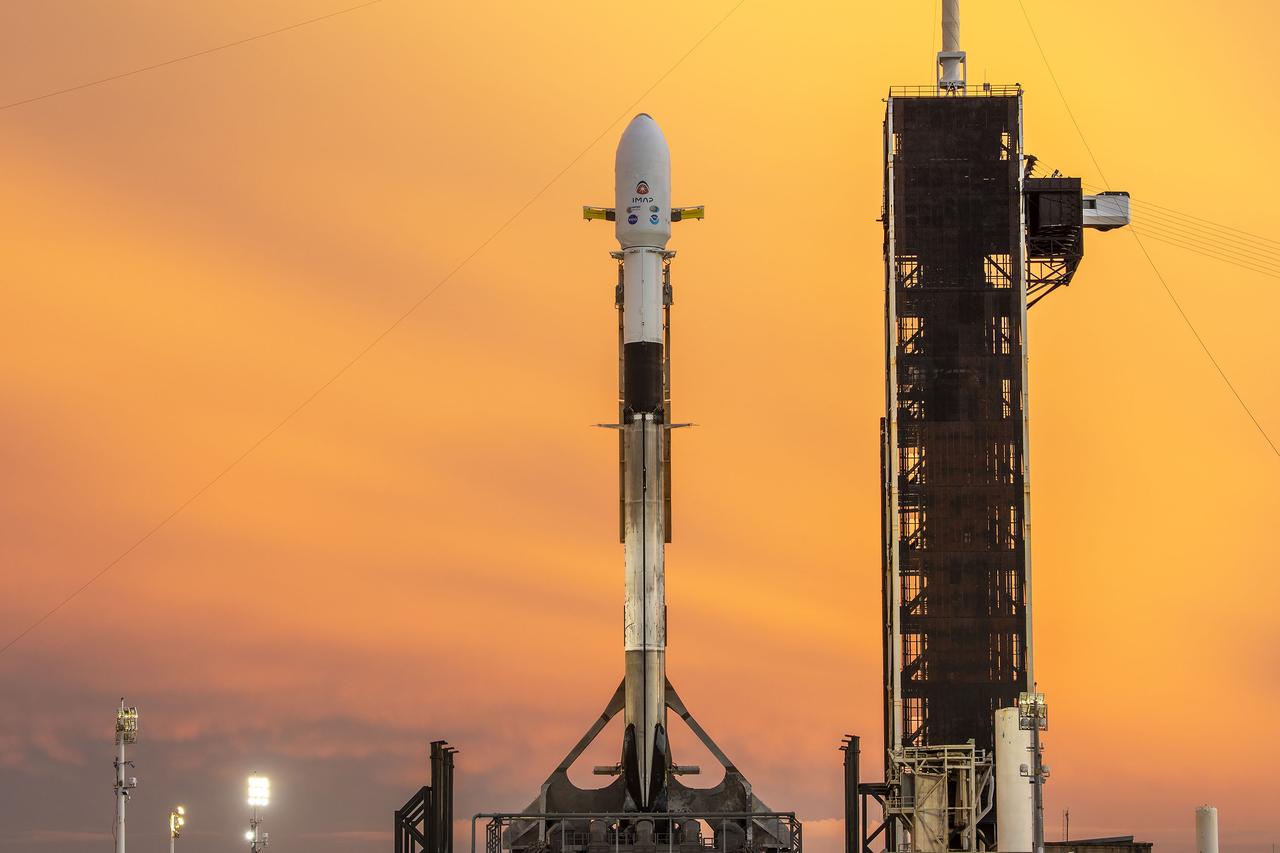
A SpaceX Falcon 9 rocket with NASA’s IMAP (Interstellar Mapping and Acceleration Probe), the agency’s Carruthers Geocorona Observatory, and National Oceanic and Atmospheric Administration’s (NOAA) Space Weather Follow On–Lagrange 1 (SWFO-L1) spacecraft atop stands vertical at Launch Complex 39A as the sun sets on Monday, Sept. 22, 2025, at the agency’s Kennedy Space Center in Florida. The missions will each focus on different effects of the solar wind — the continuous stream of particles emitted by the Sun — and space weather — the changing conditions in space driven by the Sun — from their origins at the Sun to their farthest reaches billions of miles away at the edge of our solar system.