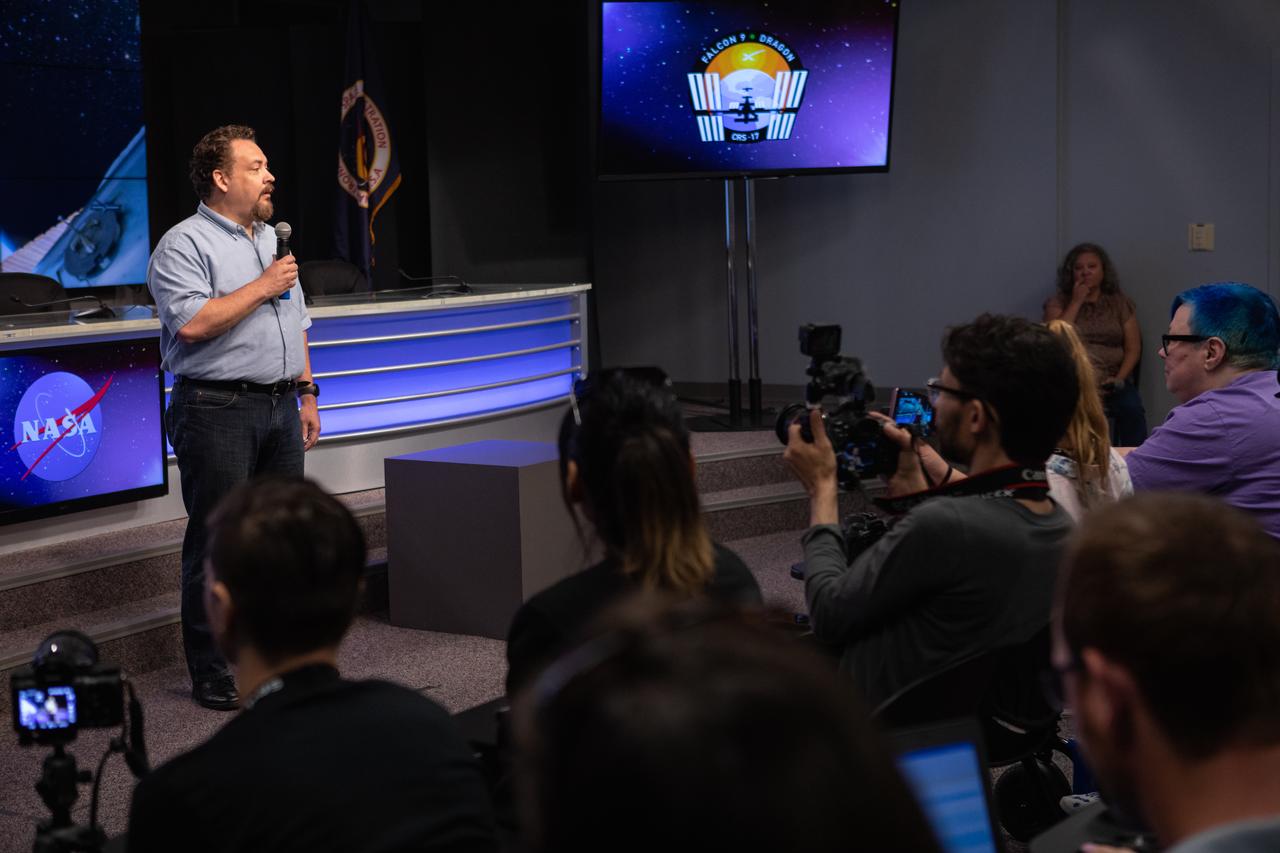
Dr. Kirt Costello, chief scientist for the ISS Program at NASA’s Johnson Space Center in Houston, talks to NASA Social participants during a What’s On Board science briefing at the agency’s Kennedy Space Center in Florida on April 29, 2019. The briefing was held for SpaceX’s 17th Commercial Resupply Services (CRS-17) mission to the International Space Station. The SpaceX Falcon 9 rocket and Dragon cargo module are scheduled to launch no earlier than May 3, 2019, from Space Launch Complex 40 on Cape Canaveral Air Force Station in Florida.
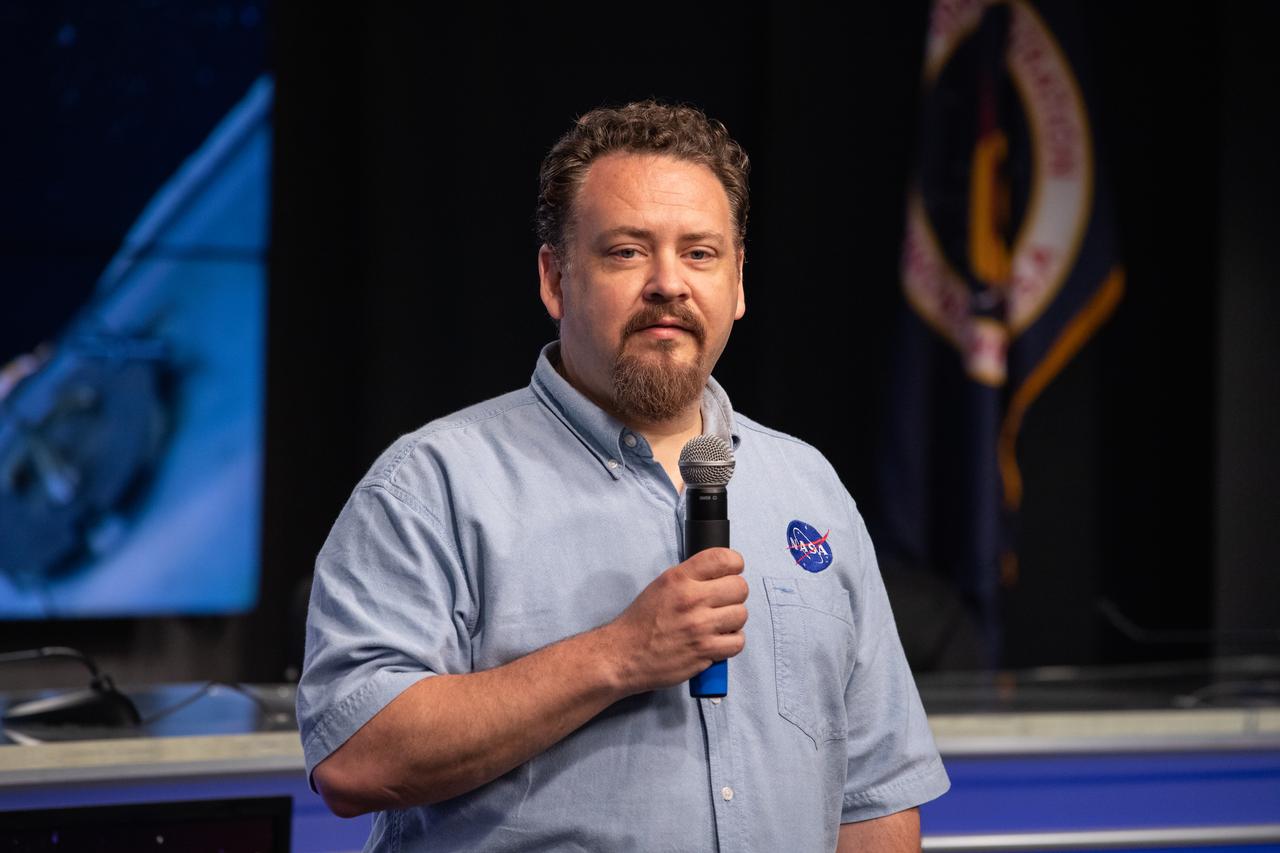
Dr. Kirt Costello, chief scientist for the ISS Program at NASA’s Johnson Space Center in Houston, talks to NASA Social participants during a What’s On Board science briefing at the agency’s Kennedy Space Center in Florida on April 29, 2019. The briefing was held for SpaceX’s 17th Commercial Resupply Services (CRS-17) mission to the International Space Station. The SpaceX Falcon 9 rocket and Dragon cargo module are scheduled to launch no earlier than May 3, 2019, from Space Launch Complex 40 on Cape Canaveral Air Force Station in Florida.
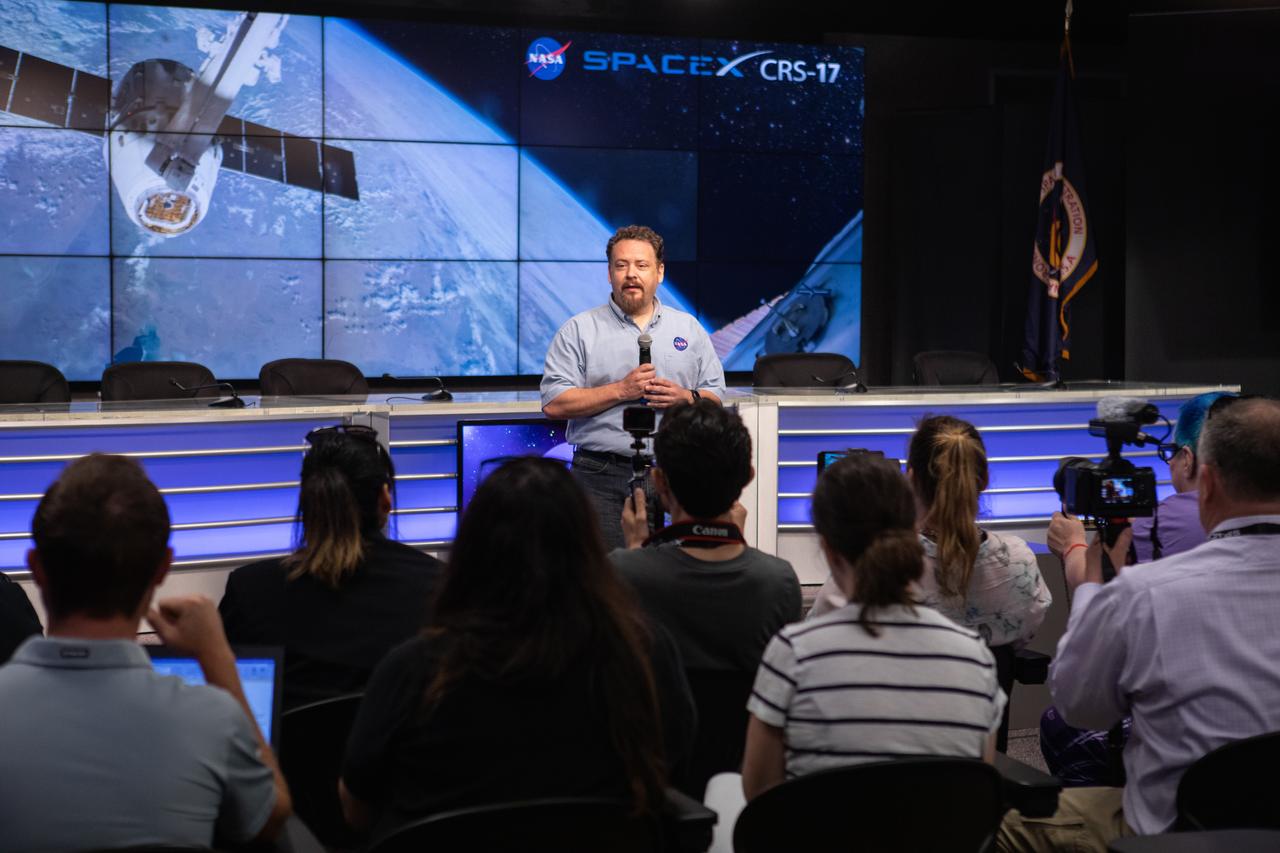
Dr. Kirt Costello, chief scientist for the ISS Program at NASA’s Johnson Space Center in Houston, talks to NASA Social participants during a What’s On Board science briefing at the agency’s Kennedy Space Center in Florida on April 29, 2019. The briefing was held for SpaceX’s 17th Commercial Resupply Services (CRS-17) mission to the International Space Station. The SpaceX Falcon 9 rocket and Dragon cargo module are scheduled to launch no earlier than May 3, 2019, from Space Launch Complex 40 on Cape Canaveral Air Force Station in Florida.
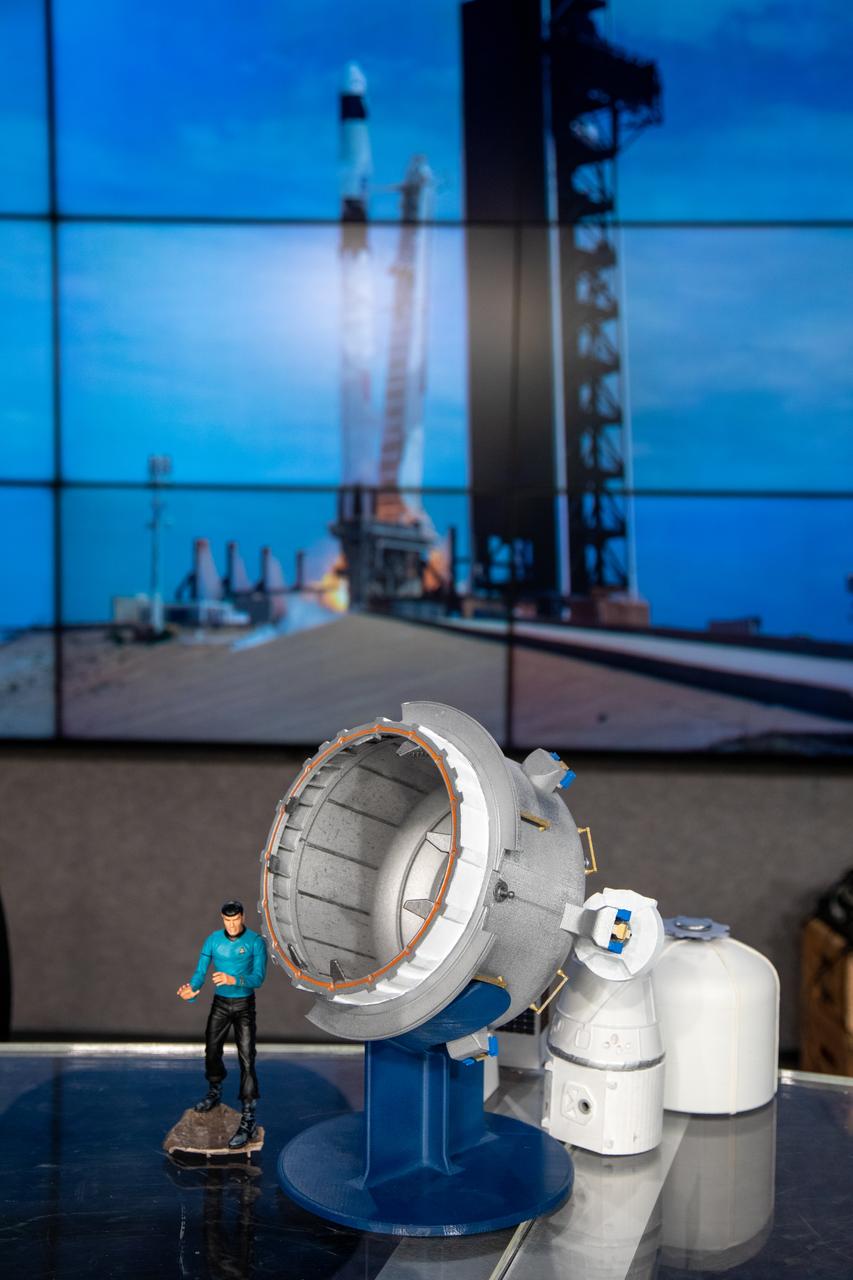
Props are used by Brock Howe, airlock program manager, Nanoracks, during a #NASASocial Science and Station Q&A show at the agency’s Kennedy Space Center in Florida on Dec. 4, 2020. NASA Communications’ Kenna Pell moderated the program, which also included Jennifer Scott-Williams, ISS Program Research Office; and Pinar Mesci, project scientist, Sanford Consortium for Regenerative Medicine, UC San Diego. SpaceX’s 21st Commercial Resupply Services (CRS-21) mission is scheduled to launch from Kennedy’s Launch Complex 39A on Dec. 5, 2020. Liftoff of the SpaceX Falcon 9 rocket and cargo Dragon spacecraft is targeted for 11:39 a.m. EST.
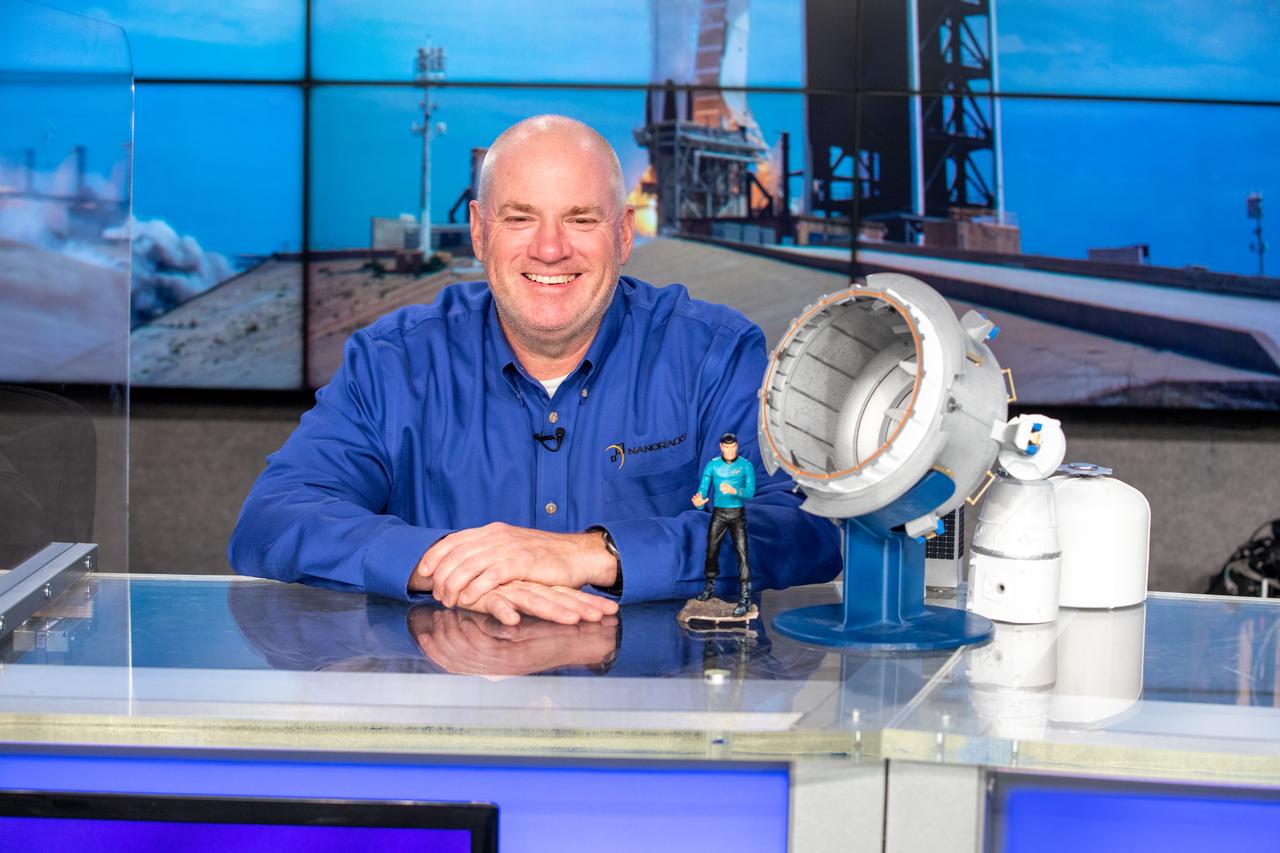
Brock Howe, airlock program manager, Nanoracks, participates in a #NASASocial Science and Station Q&A show at the agency’s Kennedy Space Center in Florida on Dec. 4, 2020. Jennifer Scott-Williams, ISS Program Research Office; and Pinar Mesci, project scientist, Sanford Consortium for Regenerative Medicine, UC San Diego, also participated in the event, which was moderated by NASA Communications’ Kenna Pell. SpaceX’s 21st Commercial Resupply Services (CRS-21) mission is scheduled to launch from Kennedy’s Launch Complex 39A on Dec. 5, 2020. Liftoff of the SpaceX Falcon 9 rocket and cargo Dragon spacecraft is targeted for 11:39 a.m. EST.
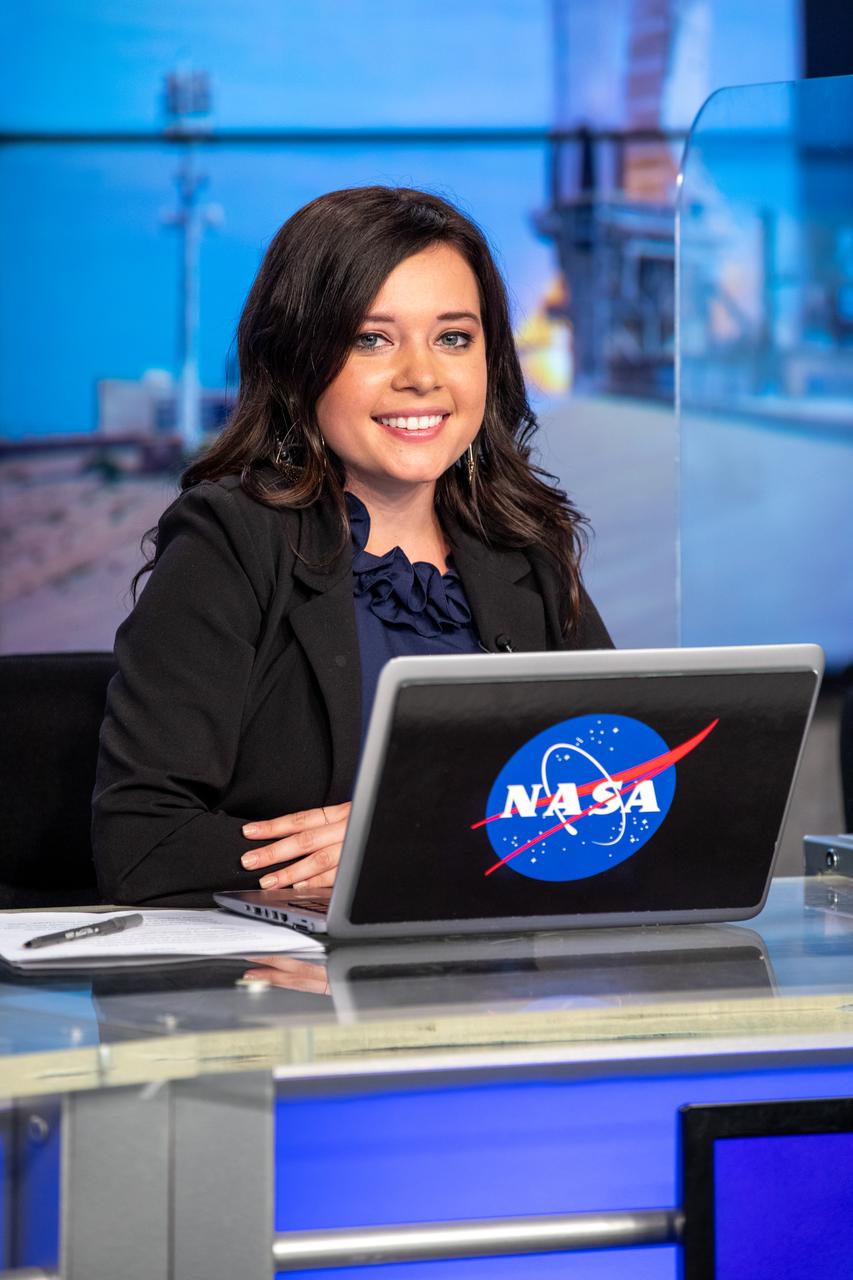
NASA Communications’ Kenna Pell moderates a #NASASocial Science and Station Q&A show at the agency’s Kennedy Space Center in Florida on Dec. 4, 2020. Participants included Brock Howe, airlock program manager, Nanoracks; Jennifer Scott-Williams, ISS Program Research Office; and Pinar Mesci, project scientist, Sanford Consortium for Regenerative Medicine, UC San Diego. SpaceX’s 21st Commercial Resupply Services (CRS-21) mission is scheduled to launch from Kennedy’s Launch Complex 39A on Dec. 5, 2020. Liftoff of the SpaceX Falcon 9 rocket and cargo Dragon spacecraft is targeted for 11:39 a.m. EST.
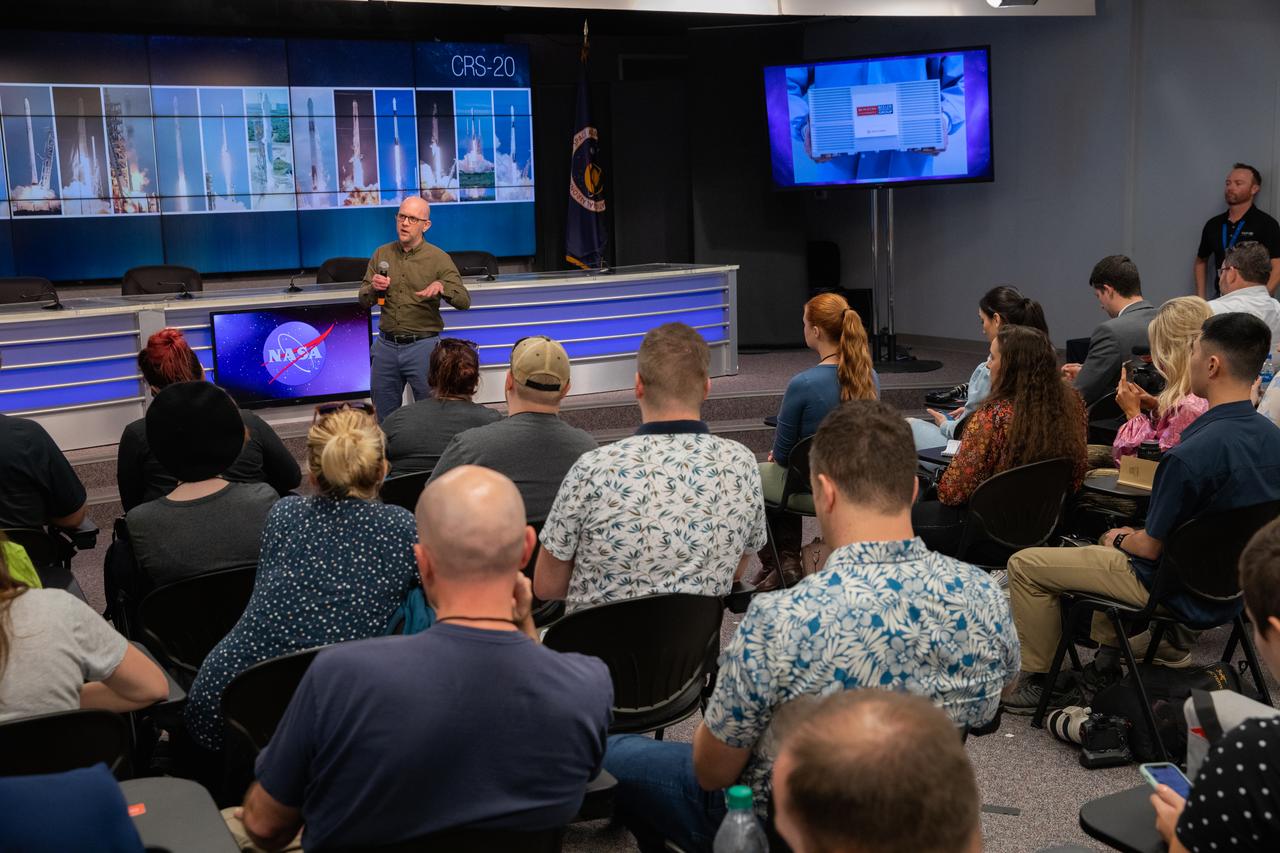
Aaron Beeler, professor of chemistry at Boston University and principal investigator of the Flow Chemistry Platform for Synthetic Reactions on ISS study, addresses NASA Social participants during a What’s on Board science briefing at the agency’s Kennedy Space Center in Florida on March 5, 2020. The briefing provided a closer look at some of the payloads launching on SpaceX’s 20th Commercial Resupply Services (CRS-20) mission to the International Space Station. The company’s Falcon 9 rocket is scheduled to lift off from Cape Canaveral Air Force Station’s Space Launch Complex 40 at 11:50 p.m. EST on March 6, 2020.

Aaron Beeler, professor of chemistry at Boston University and principal investigator of the Flow Chemistry Platform for Synthetic Reactions on ISS study, addresses NASA Social participants during a What’s on Board science briefing at the agency’s Kennedy Space Center in Florida on March 5, 2020. The briefing provided a closer look at some of the payloads launching on SpaceX’s 20th Commercial Resupply Services (CRS-20) mission to the International Space Station. The company’s Falcon 9 rocket is scheduled to lift off from Cape Canaveral Air Force Station’s Space Launch Complex 40 at 11:50 p.m. EST on March 6, 2020.
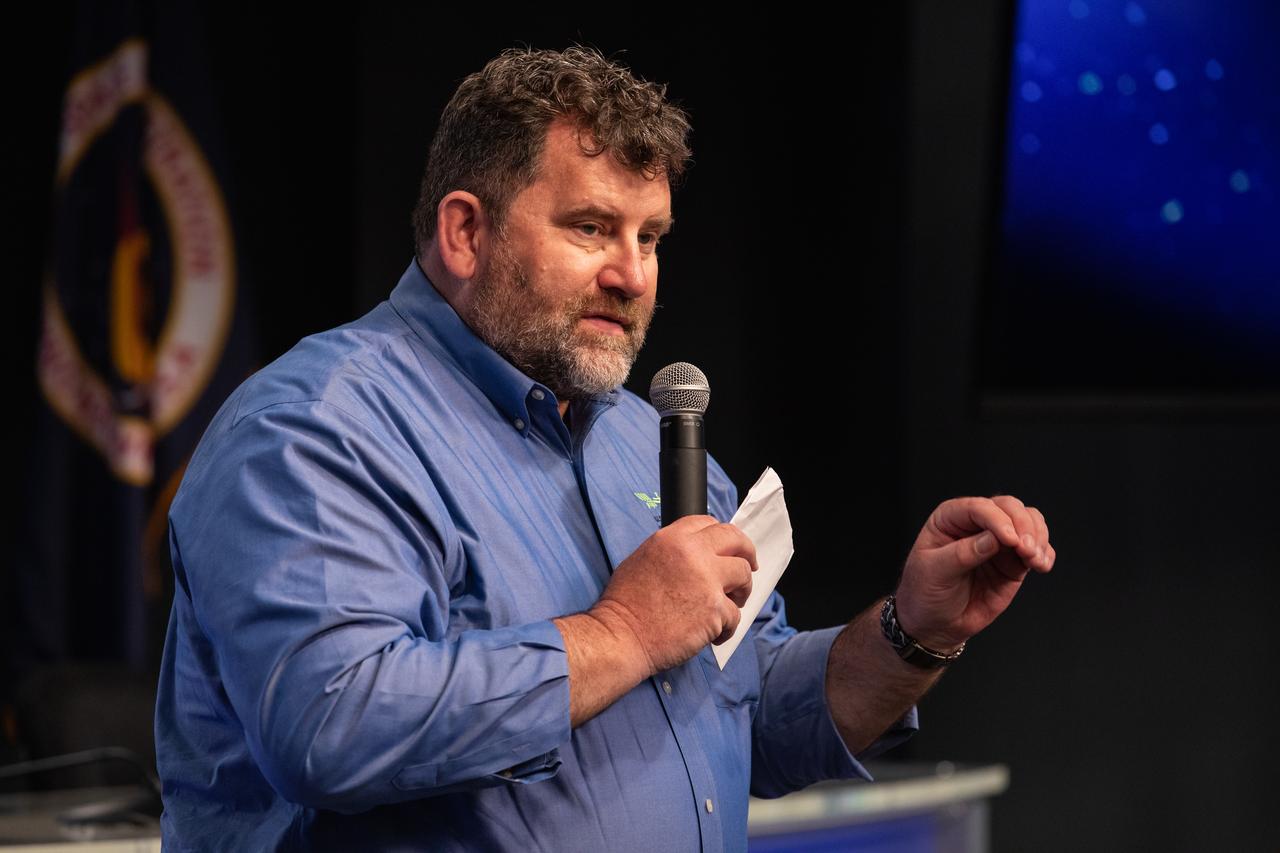
Mike Roberts, deputy chief scientist for the ISS Program at NASA’s Johnson Space Center in Houston, talks to NASA Social participants during a What’s On Board science briefing at the agency’s Kennedy Space Center in Florida on April 29, 2019. The briefing was held for SpaceX’s 17th Commercial Resupply Services (CRS-17) mission to the International Space Station. NASA’s Orbiting Carbon Observatory-3 (OCO-3) and Space Test Program-Houston 6 (STP-H6) are two of the experiments that will be delivered to the space station on CRS-17. The SpaceX Falcon 9 rocket and Dragon cargo module are scheduled to launch no earlier than May 3, 2019, from Space Launch Complex 40 on Cape Canaveral Air Force Station in Florida.
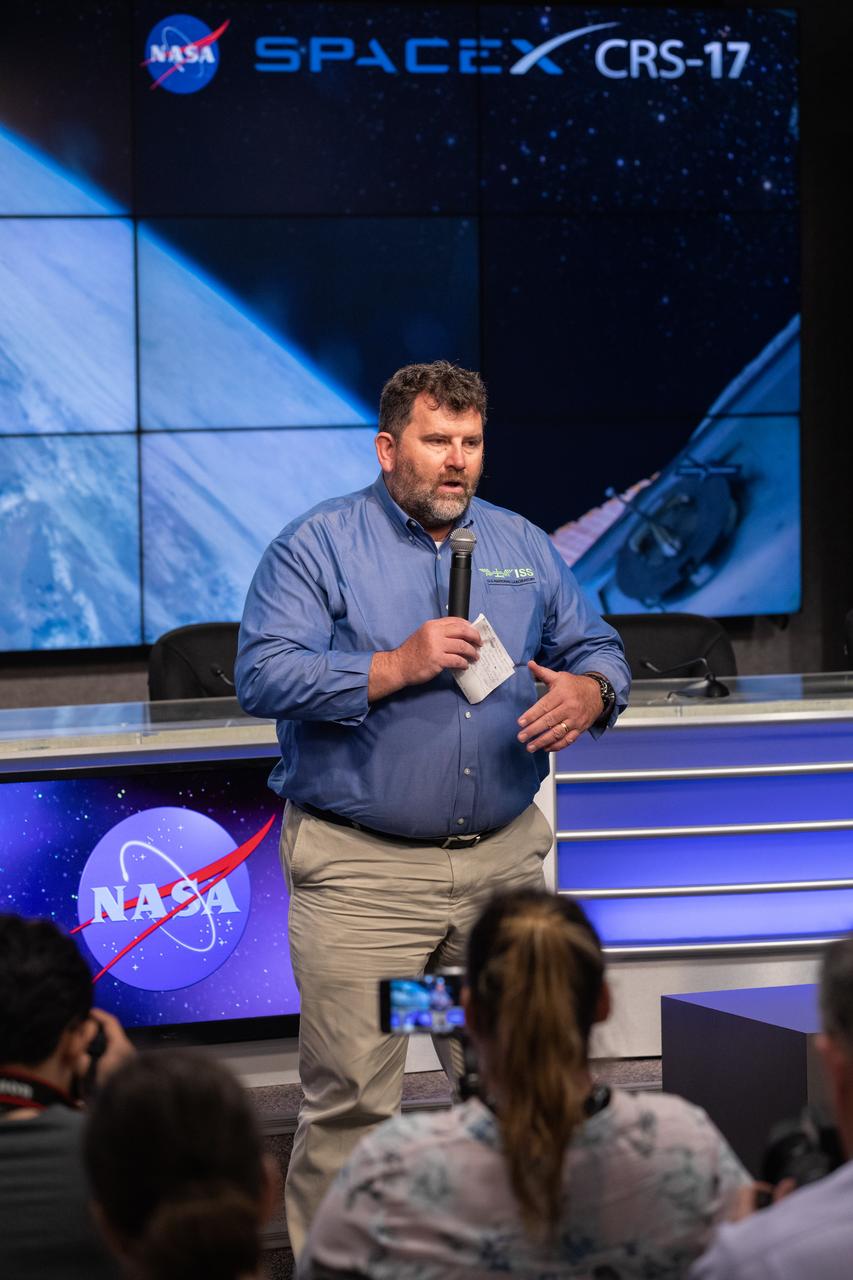
Mike Roberts, deputy chief scientist for the ISS Program at NASA’s Johnson Space Center in Houston, talks to NASA Social participants during a What’s On Board science briefing at the agency’s Kennedy Space Center in Florida on April 29, 2019. The briefing was held for SpaceX’s 17th Commercial Resupply Services (CRS-17) mission to the International Space Station. NASA’s Orbiting Carbon Observatory-3 (OCO-3) and Space Test Program-Houston 6 (STP-H6) are two of the experiments that will be delivered to the space station on CRS-17. The SpaceX Falcon 9 rocket and Dragon cargo module are scheduled to launch no earlier than May 3, 2019, from Space Launch Complex 40 on Cape Canaveral Air Force Station in Florida.
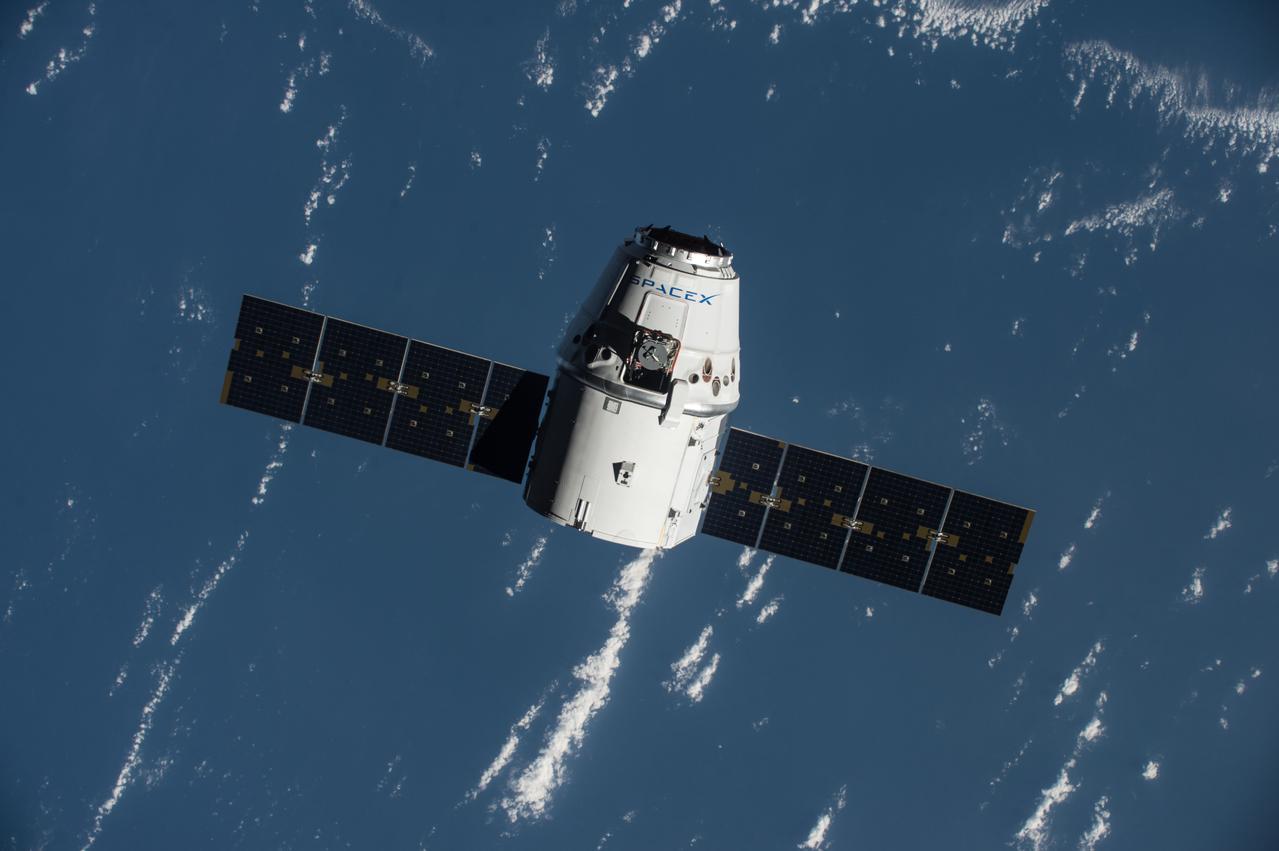
The SpaceX Dragon Commercial Resupply Services-9 (CRS-9) spacecraft approaches the ISS for rendezvous and grapple operations. Earth provides the backdrop for this image.
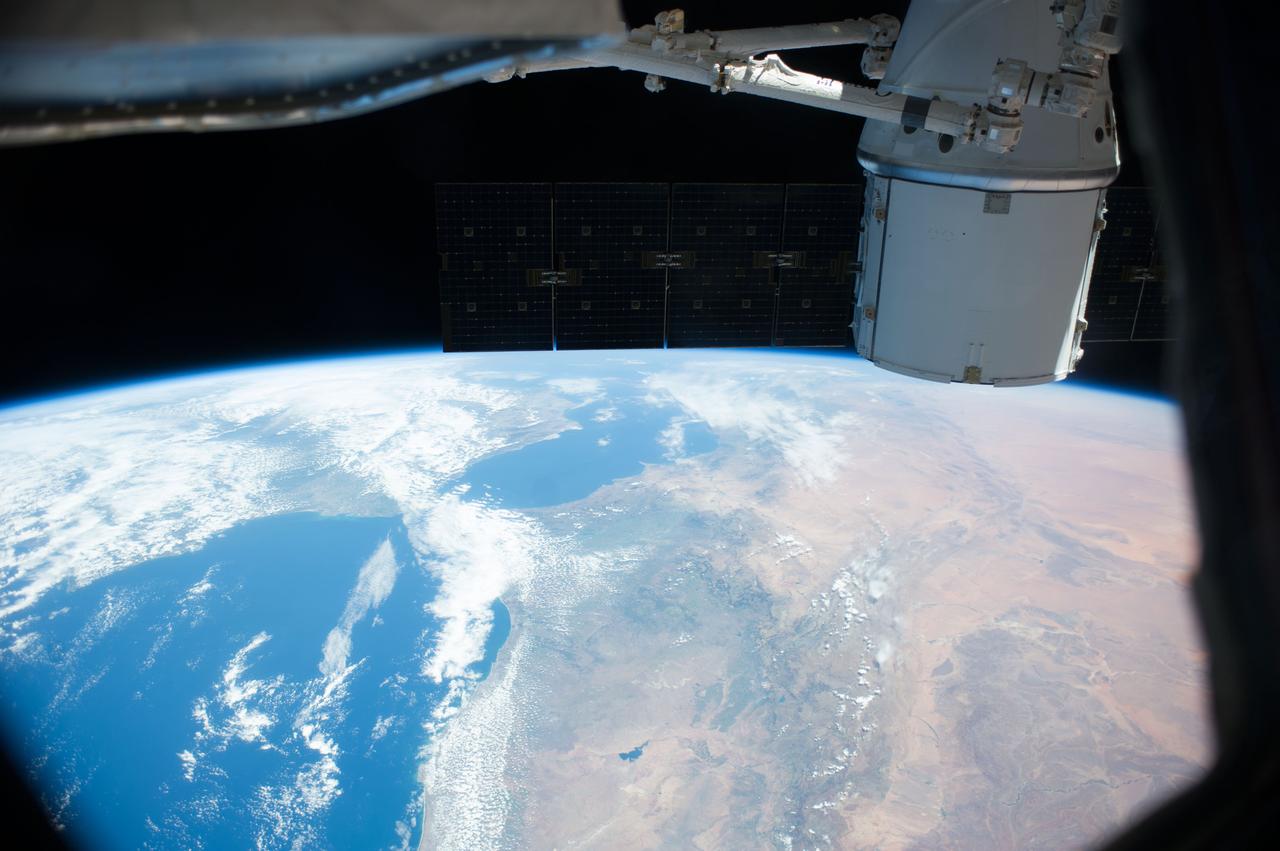
Earth observation taken by the Expedition 39 crew aboard the ISS. A portion of the SpaceX Dragon Commercial Resupply Services-3 (CRS-3) spacecraft is in view. Image was released by astronaut on Twitter and downlinked in folder: Europe.
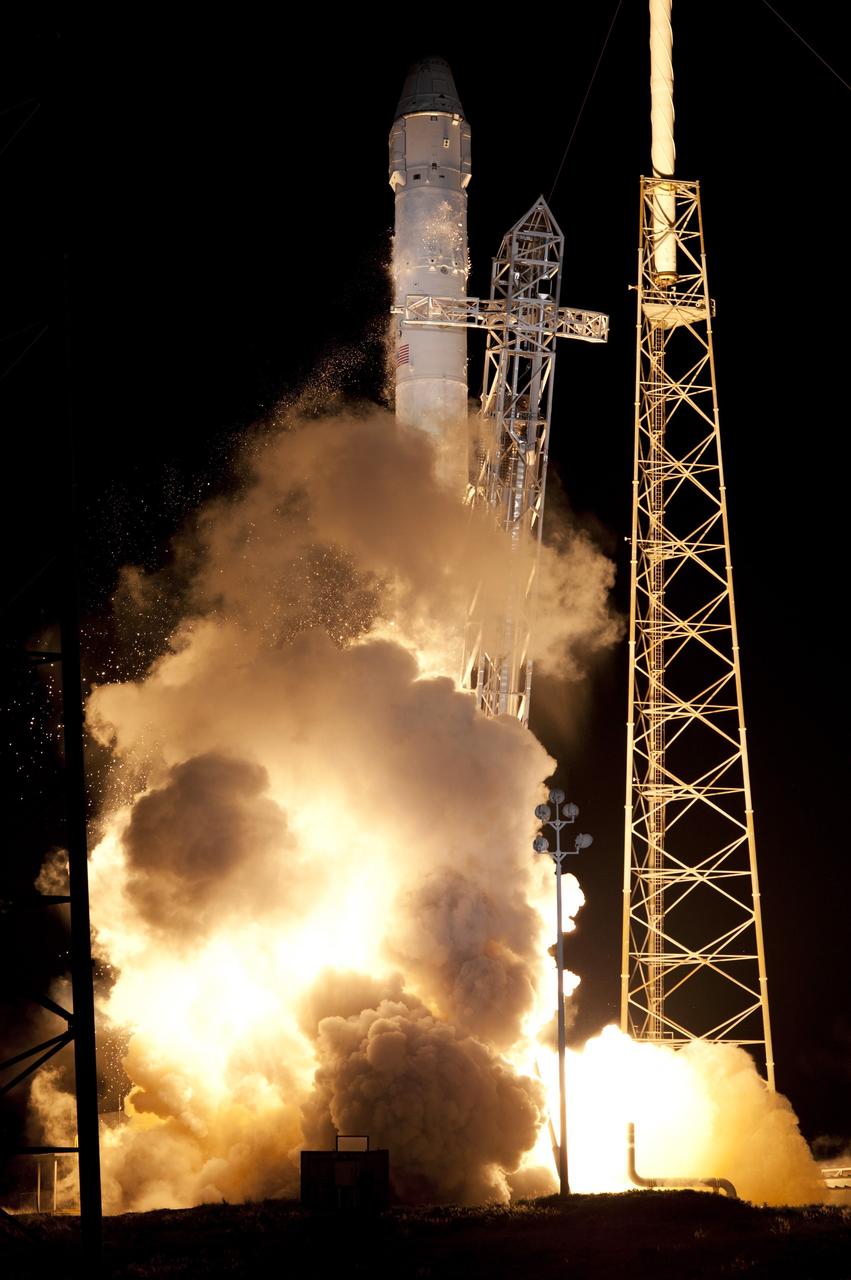
CAPE CANAVERAL, Fla. - Space Launch Complex 40 on Cape Canaveral Air Force Station in Florida comes alive as the Merlin engines ignite under the Falcon 9 rocket carrying a Dragon capsule to orbit. Liftoff was at 8:35 p.m. EDT. Space Exploration Technologies Corp., or SpaceX, built both the rocket and capsule for NASA's first Commercial Resupply Services, or CRS-1, mission to the International Space Station. SpaceX CRS-1 is an important step toward making America’s microgravity research program self-sufficient by providing a way to deliver and return significant amounts of cargo, including science experiments, to and from the orbiting laboratory. NASA has contracted for 12 commercial resupply flights from SpaceX and eight from the Orbital Sciences Corp. For more information, visit http://www.nasa.gov/mission_pages/station/living/launch/index.html Photo credit: NASA/ Rick Wetherington and Tim Powers
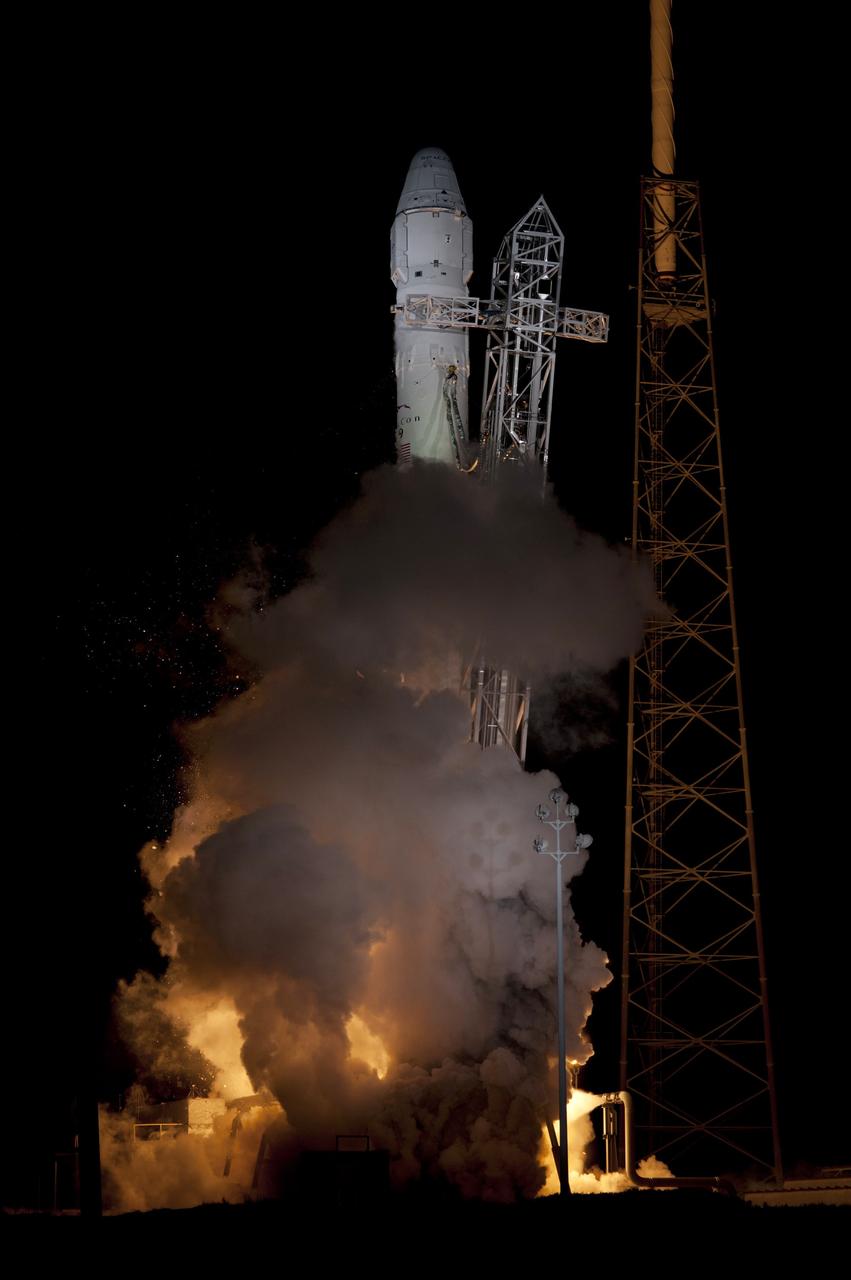
CAPE CANAVERAL, Fla. - Space Launch Complex 40 on Cape Canaveral Air Force Station in Florida comes alive as the Merlin engines ignite under the Falcon 9 rocket carrying a Dragon capsule to orbit. Liftoff was at 8:35 p.m. EDT. Space Exploration Technologies Corp., or SpaceX, built both the rocket and capsule for NASA's first Commercial Resupply Services, or CRS-1, mission to the International Space Station. SpaceX CRS-1 is an important step toward making America’s microgravity research program self-sufficient by providing a way to deliver and return significant amounts of cargo, including science experiments, to and from the orbiting laboratory. NASA has contracted for 12 commercial resupply flights from SpaceX and eight from the Orbital Sciences Corp. For more information, visit http://www.nasa.gov/mission_pages/station/living/launch/index.html Photo credit: NASA/ Rick Wetherington and Tim Powers
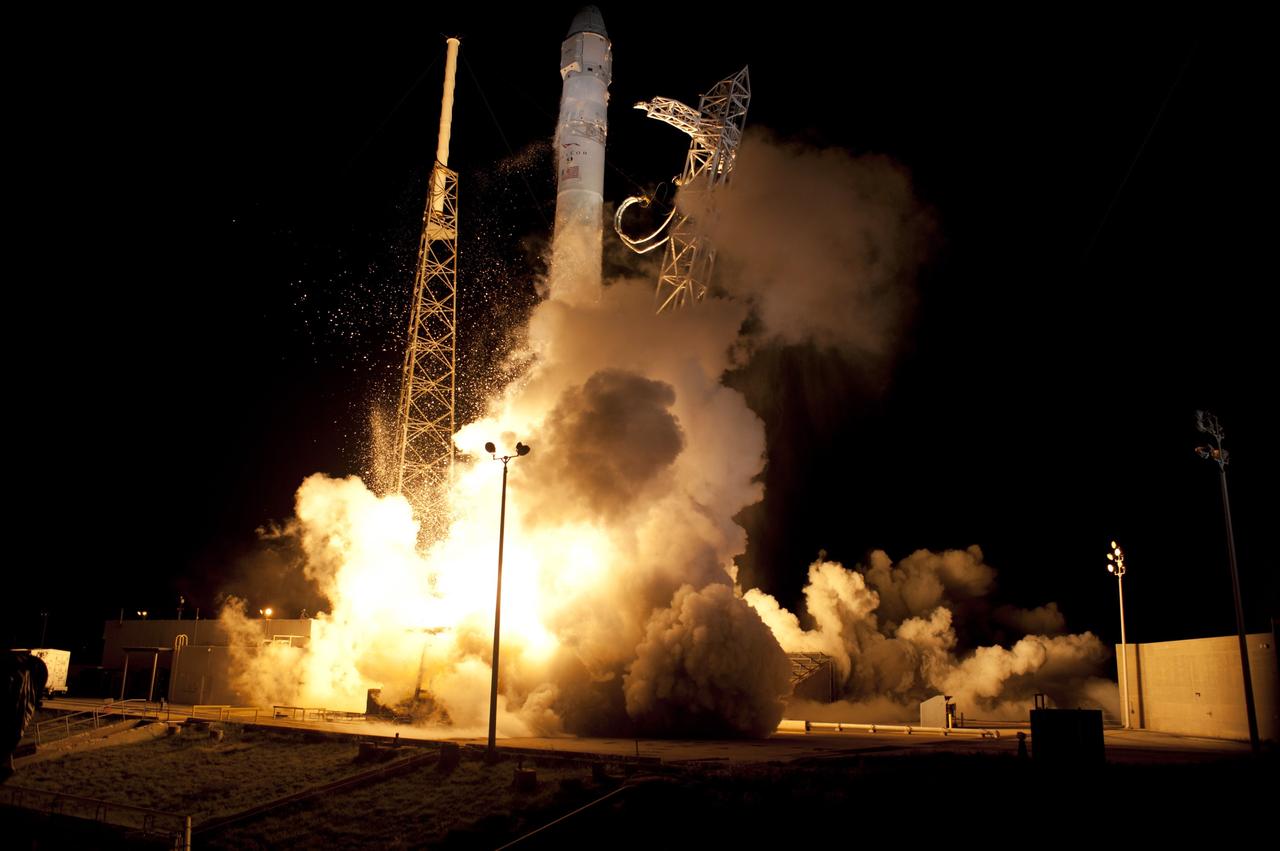
CAPE CANAVERAL, Fla. - Space Launch Complex 40 on Cape Canaveral Air Force Station in Florida comes alive as the Merlin engines ignite under the Falcon 9 rocket carrying a Dragon capsule to orbit. Liftoff was at 8:35 p.m. EDT. Space Exploration Technologies Corp., or SpaceX, built both the rocket and capsule for NASA's first Commercial Resupply Services, or CRS-1, mission to the International Space Station. SpaceX CRS-1 is an important step toward making America’s microgravity research program self-sufficient by providing a way to deliver and return significant amounts of cargo, including science experiments, to and from the orbiting laboratory. NASA has contracted for 12 commercial resupply flights from SpaceX and eight from the Orbital Sciences Corp. For more information, visit http://www.nasa.gov/mission_pages/station/living/launch/index.html Photo credit: NASA/ Rick Wetherington and Tim Powers
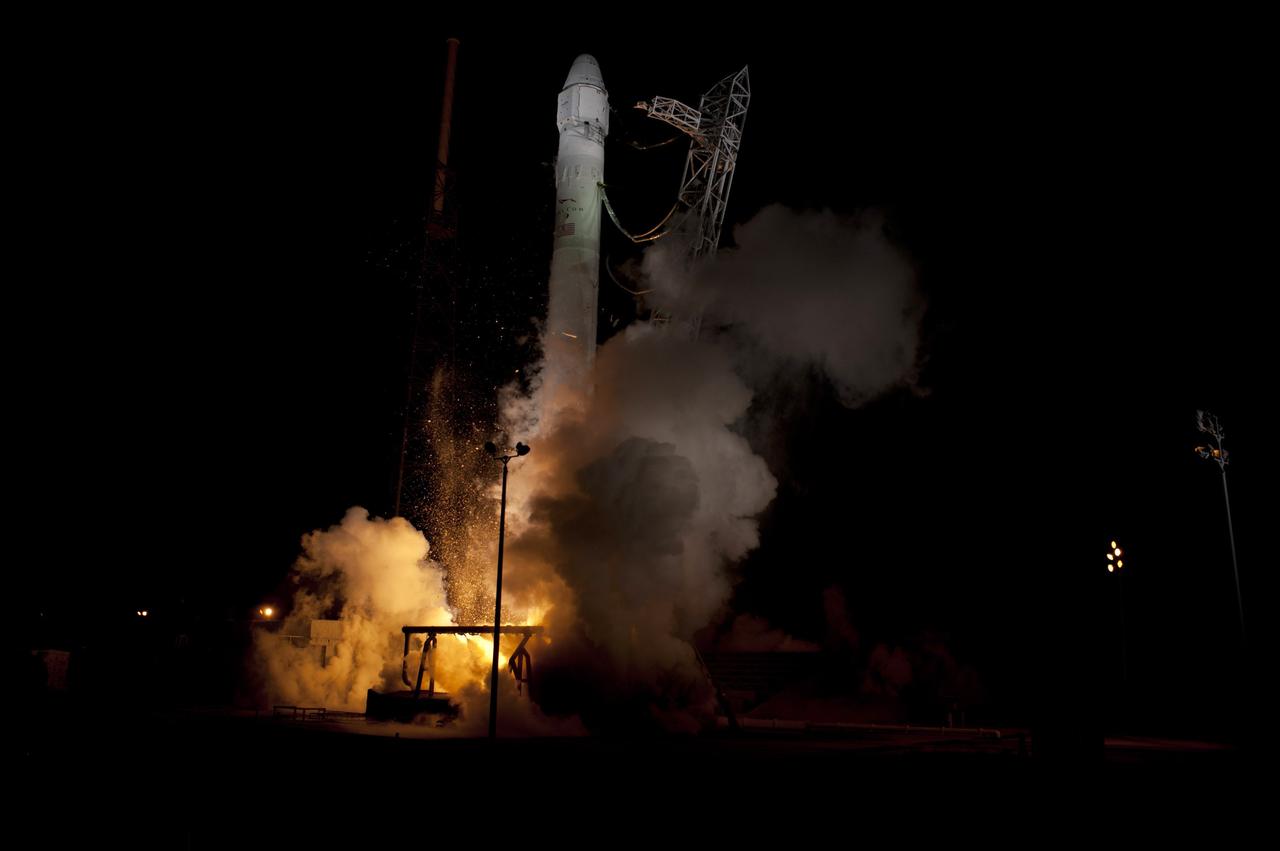
CAPE CANAVERAL, Fla. - Space Launch Complex 40 on Cape Canaveral Air Force Station in Florida comes alive as the Merlin engines ignite under the Falcon 9 rocket carrying a Dragon capsule to orbit. Liftoff was at 8:35 p.m. EDT. Space Exploration Technologies Corp., or SpaceX, built both the rocket and capsule for NASA's first Commercial Resupply Services, or CRS-1, mission to the International Space Station. SpaceX CRS-1 is an important step toward making America’s microgravity research program self-sufficient by providing a way to deliver and return significant amounts of cargo, including science experiments, to and from the orbiting laboratory. NASA has contracted for 12 commercial resupply flights from SpaceX and eight from the Orbital Sciences Corp. For more information, visit http://www.nasa.gov/mission_pages/station/living/launch/index.html Photo credit: NASA/ Rick Wetherington and Tim Powers
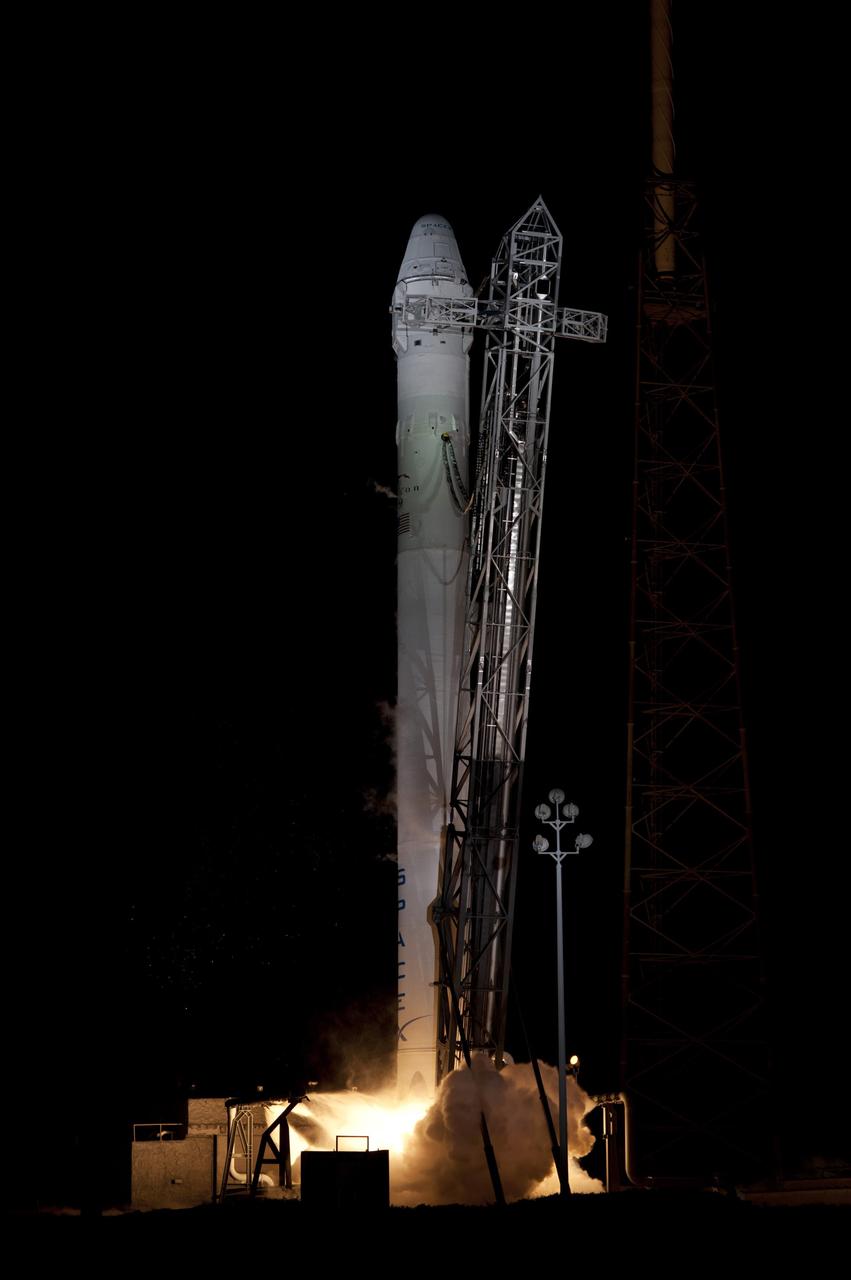
CAPE CANAVERAL, Fla. - Space Launch Complex 40 on Cape Canaveral Air Force Station in Florida comes alive as the Merlin engines ignite under the Falcon 9 rocket carrying a Dragon capsule to orbit. Liftoff was at 8:35 p.m. EDT. Space Exploration Technologies Corp., or SpaceX, built both the rocket and capsule for NASA's first Commercial Resupply Services, or CRS-1, mission to the International Space Station. SpaceX CRS-1 is an important step toward making America’s microgravity research program self-sufficient by providing a way to deliver and return significant amounts of cargo, including science experiments, to and from the orbiting laboratory. NASA has contracted for 12 commercial resupply flights from SpaceX and eight from the Orbital Sciences Corp. For more information, visit http://www.nasa.gov/mission_pages/station/living/launch/index.html Photo credit: NASA/ Rick Wetherington and Tim Powers
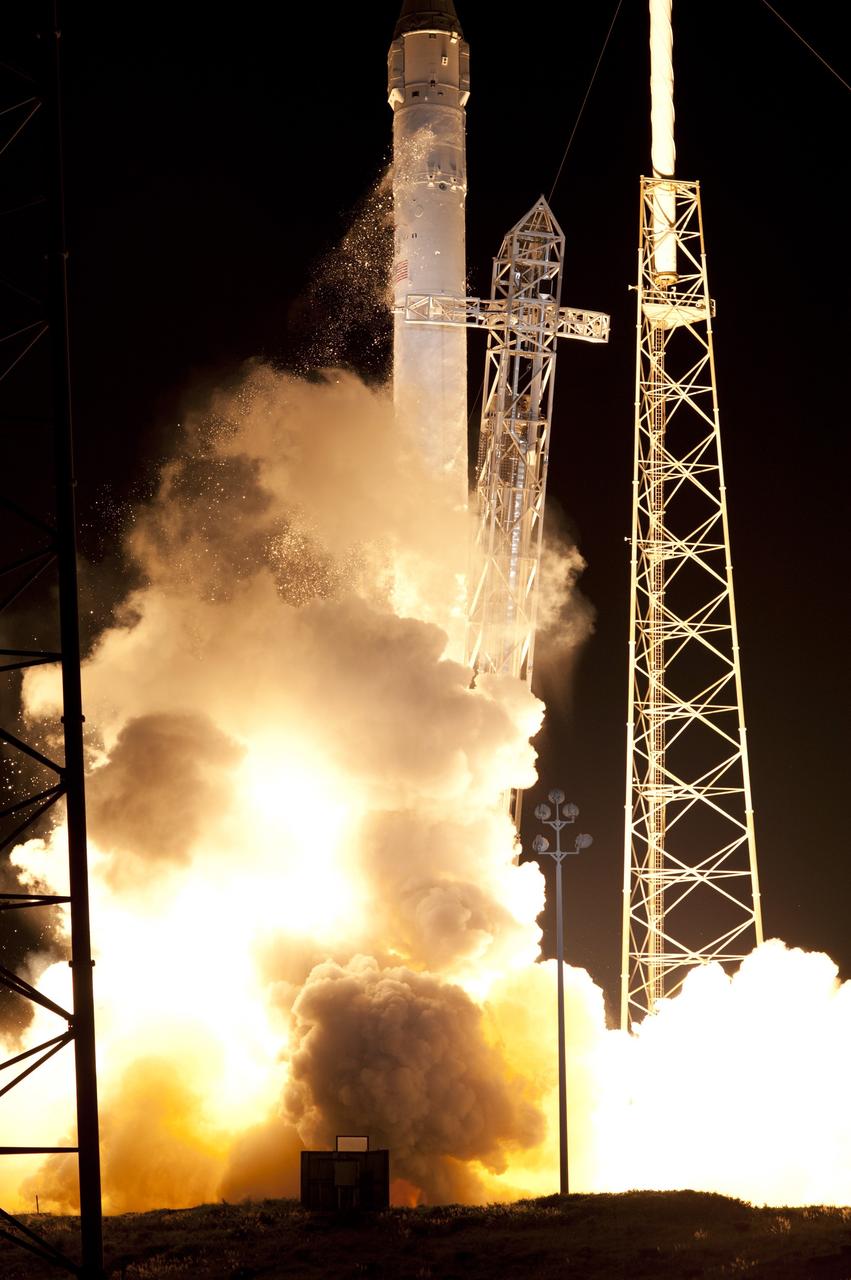
CAPE CANAVERAL, Fla. - Space Launch Complex 40 on Cape Canaveral Air Force Station in Florida comes alive as the Merlin engines ignite under the Falcon 9 rocket carrying a Dragon capsule to orbit. Liftoff was at 8:35 p.m. EDT. Space Exploration Technologies Corp., or SpaceX, built both the rocket and capsule for NASA's first Commercial Resupply Services, or CRS-1, mission to the International Space Station. SpaceX CRS-1 is an important step toward making America’s microgravity research program self-sufficient by providing a way to deliver and return significant amounts of cargo, including science experiments, to and from the orbiting laboratory. NASA has contracted for 12 commercial resupply flights from SpaceX and eight from the Orbital Sciences Corp. For more information, visit http://www.nasa.gov/mission_pages/station/living/launch/index.html Photo credit: NASA/ Rick Wetherington and Tim Powers
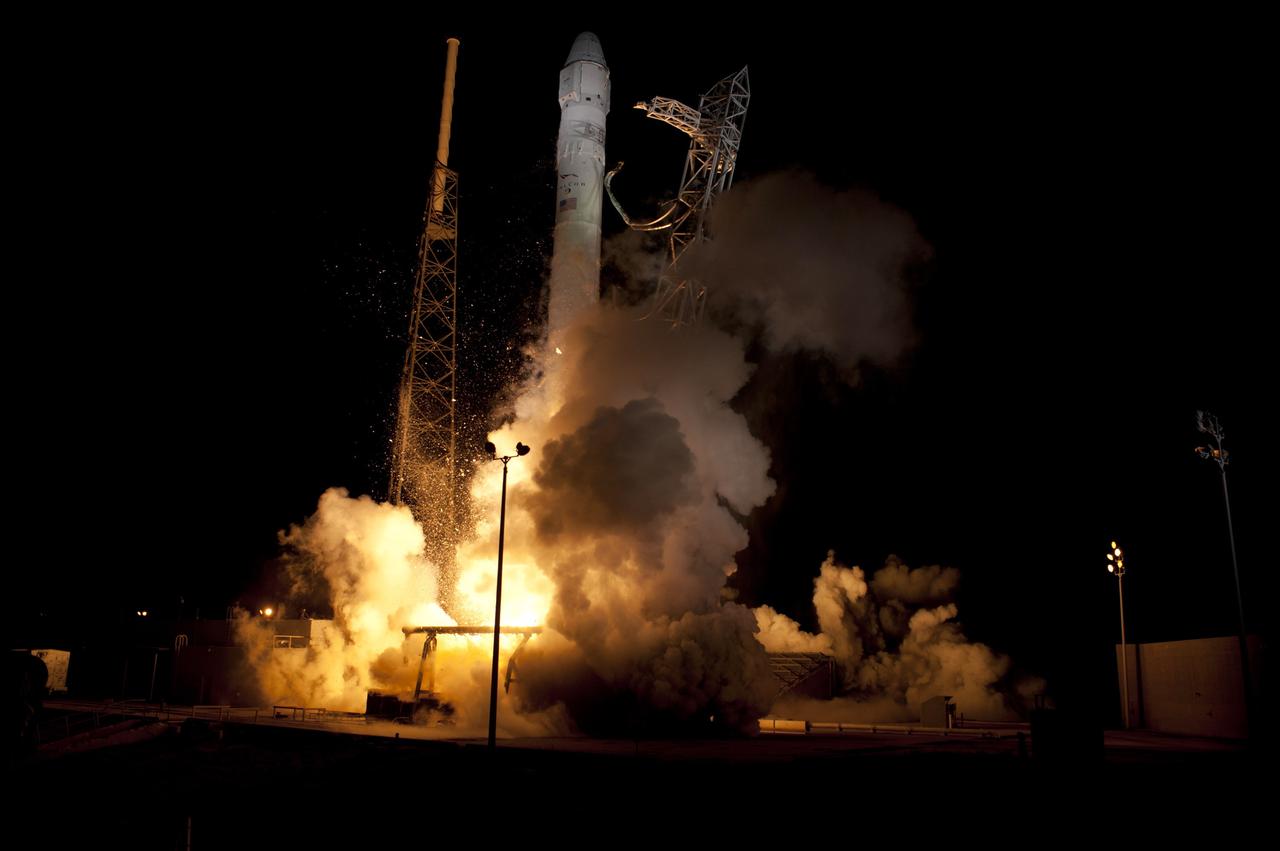
CAPE CANAVERAL, Fla. - Space Launch Complex 40 on Cape Canaveral Air Force Station in Florida comes alive as the Merlin engines ignite under the Falcon 9 rocket carrying a Dragon capsule to orbit. Liftoff was at 8:35 p.m. EDT. Space Exploration Technologies Corp., or SpaceX, built both the rocket and capsule for NASA's first Commercial Resupply Services, or CRS-1, mission to the International Space Station. SpaceX CRS-1 is an important step toward making America’s microgravity research program self-sufficient by providing a way to deliver and return significant amounts of cargo, including science experiments, to and from the orbiting laboratory. NASA has contracted for 12 commercial resupply flights from SpaceX and eight from the Orbital Sciences Corp. For more information, visit http://www.nasa.gov/mission_pages/station/living/launch/index.html Photo credit: NASA/ Rick Wetherington and Tim Powers
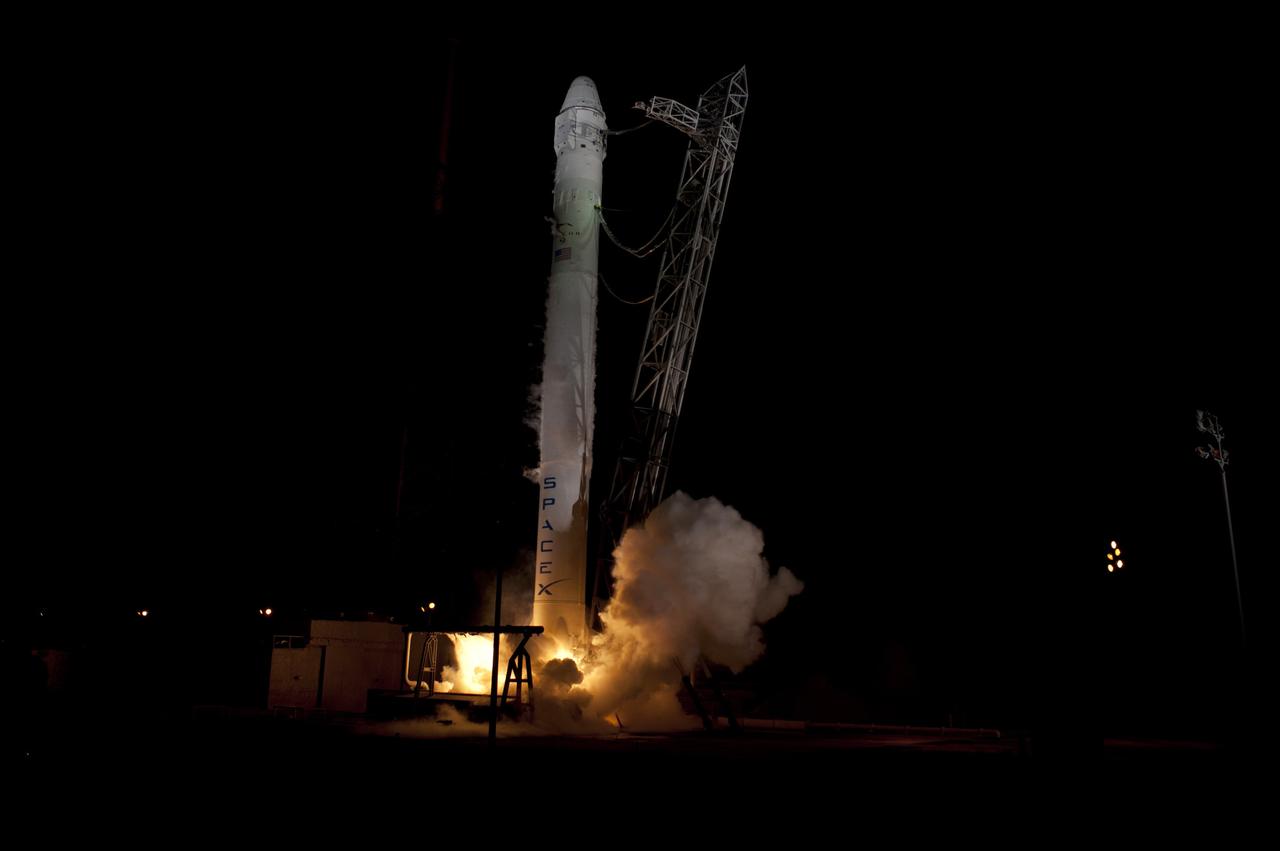
CAPE CANAVERAL, Fla. - Space Launch Complex 40 on Cape Canaveral Air Force Station in Florida comes alive as the Merlin engines ignite under the Falcon 9 rocket carrying a Dragon capsule to orbit. Liftoff was at 8:35 p.m. EDT. Space Exploration Technologies Corp., or SpaceX, built both the rocket and capsule for NASA's first Commercial Resupply Services, or CRS-1, mission to the International Space Station. SpaceX CRS-1 is an important step toward making America’s microgravity research program self-sufficient by providing a way to deliver and return significant amounts of cargo, including science experiments, to and from the orbiting laboratory. NASA has contracted for 12 commercial resupply flights from SpaceX and eight from the Orbital Sciences Corp. For more information, visit http://www.nasa.gov/mission_pages/station/living/launch/index.html Photo credit: NASA/ Rick Wetherington and Tim Powers
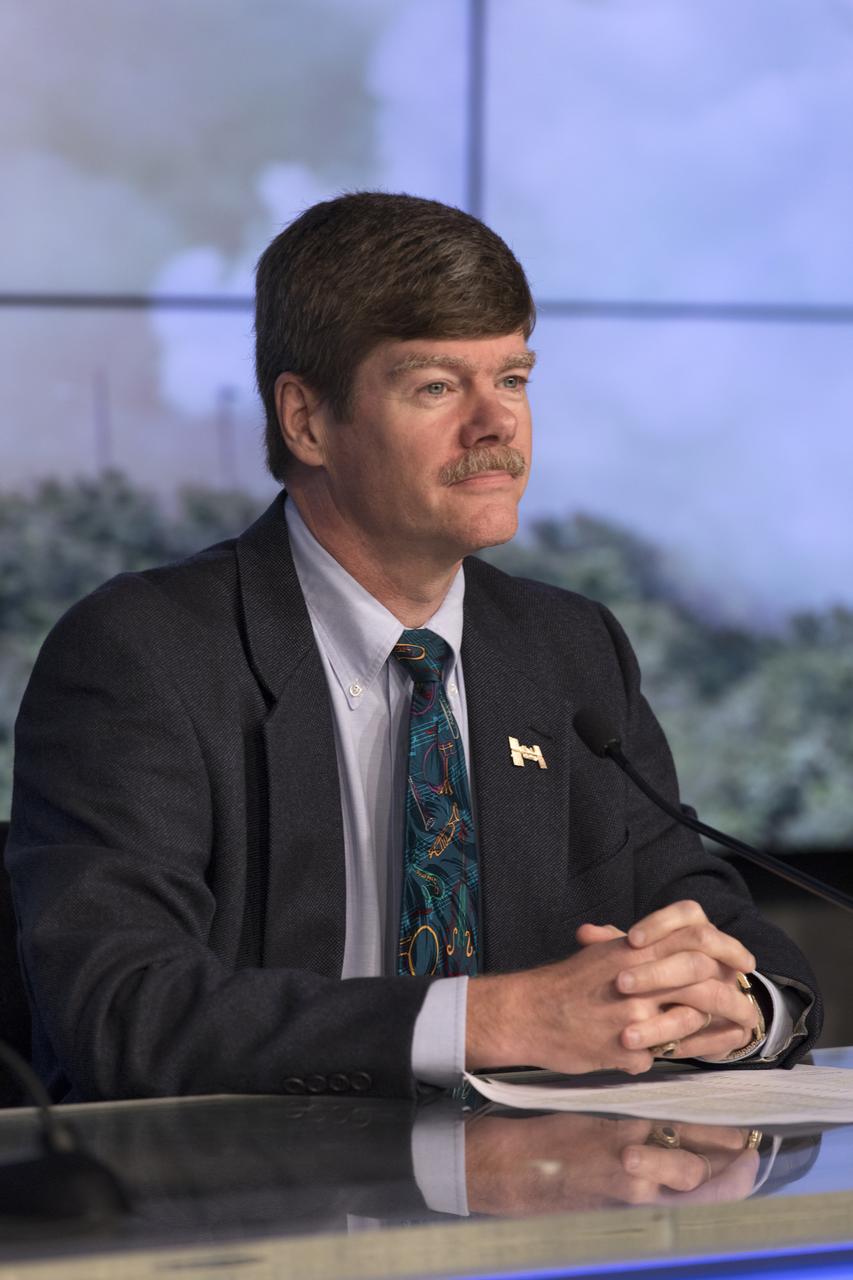
In the Kennedy Space Center’s Press Site auditorium, NASA and industry leaders speak to members of the media during a prelaunch news conference for the SpaceX CRS-14 commercial resupply services mission to the International Space Station. Pete Hasbrook, associate program scientist, ISS Program Science Office at NASA's Johnson Space Center in Houston; participates in the news conference. A Dragon spacecraft is scheduled to be launched from Space Launch Complex 40 at Cape Canaveral Air Force Station at 4:30 p.m. EST, on April 2, 2018. The SpaceX Falcon 9 rocket will lift off on the company's 14th Commercial Resupply Services mission to the space station.
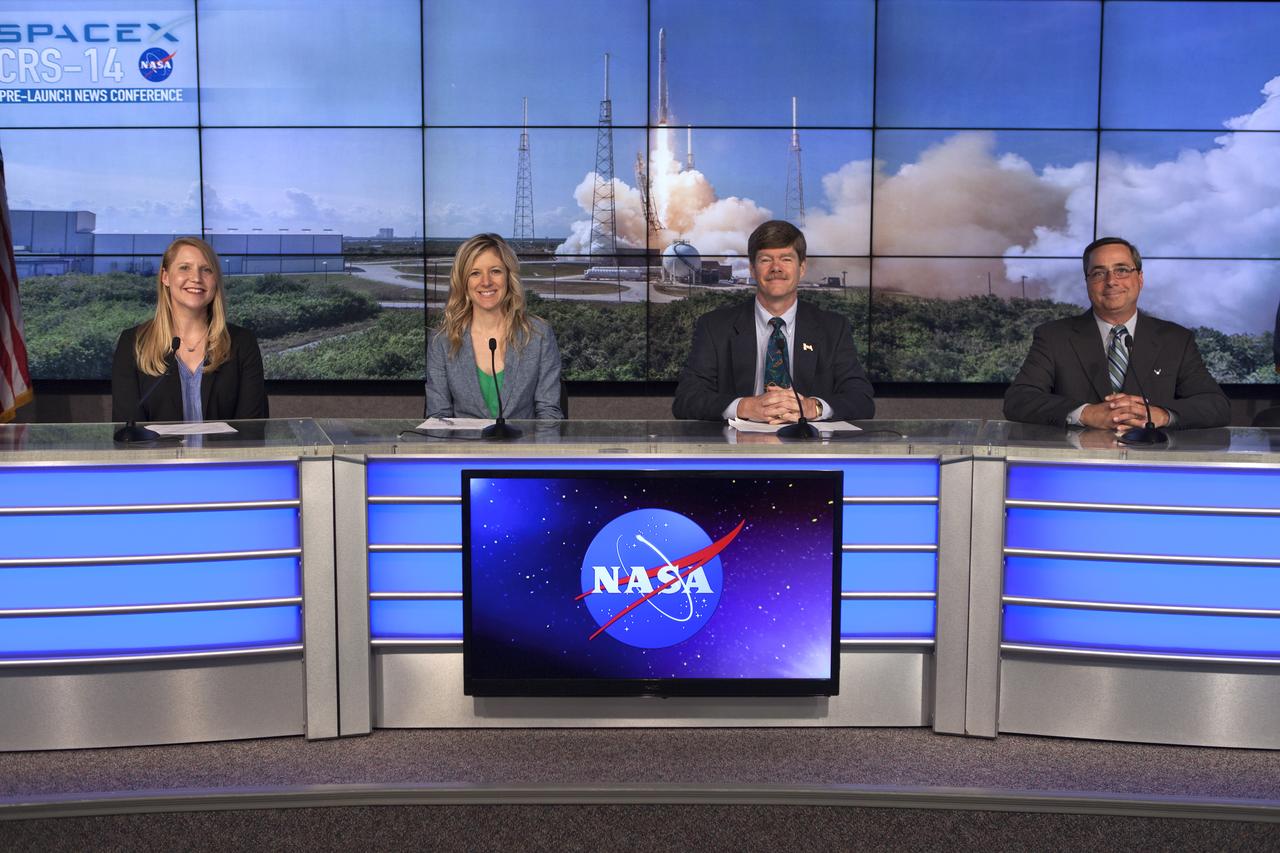
In the Kennedy Space Center’s Press Site auditorium, NASA and industry leaders speak to members of the media during a prelaunch news conference for the SpaceX CRS-14 commercial resupply services mission to the International Space Station. From left, are Stephanie Schierholz, of NASA Communications; Jessica Jensen, director, Dragon Mission Management, SpaceX; Pete Hasbrook, associate program scientist, ISS Program Science Office at NASA's Johnson Space Center in Houston; and Mike McAleenan, weather officer, 45th Weather Squadron. Joining on the phone is Joel Montalbano, deputy manager, ISS Program at Johnson. A Dragon spacecraft is scheduled to be launched from Space Launch Complex 40 at Cape Canaveral Air Force Station at 4:30 p.m. EST, on April 2, 2018. The SpaceX Falcon 9 rocket will lift off on the company's 14th Commercial Resupply Services mission to the space station.
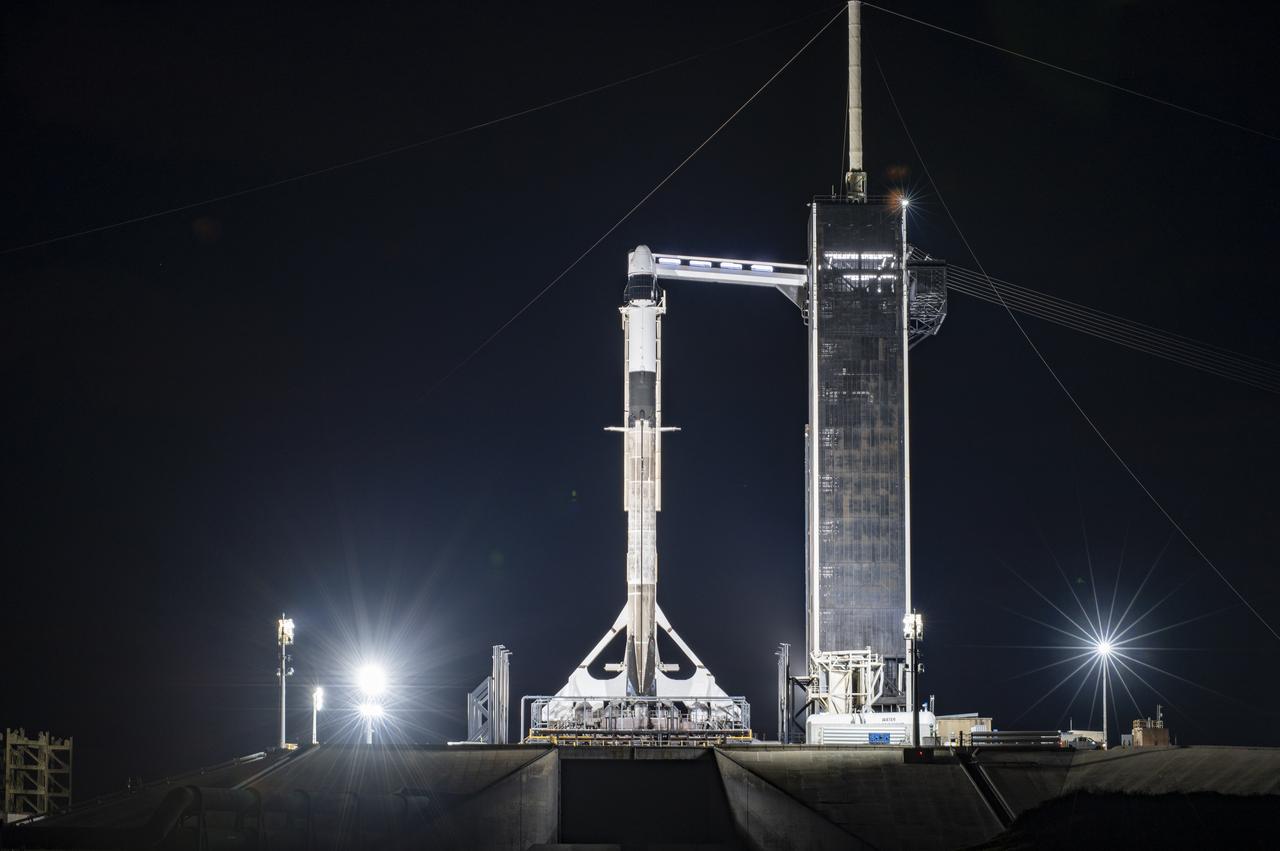
A SpaceX Falcon 9 rocket, topped with the company’s upgraded version of the Dragon spacecraft, stands vertical at NASA Kennedy Space Center’s Launch Complex 39A in Florida on Wednesday, Dec. 2, 2020. The first mission for SpaceX under NASA’s second Commercial Resupply Services contract, CRS-21 is scheduled to lift off from Launch Complex 39A on Saturday, Dec. 5, at 11:39 a.m. EST. The mission will deliver critical supplies and equipment to the International Space Station.

The upgraded version of SpaceX’s Cargo Dragon spacecraft, Dragon 2, is seen atop a Falcon 9 rocket on Dec. 2, 2020, as they prepare to be rolled out to Launch Complex 39A at NASA’s Kennedy Space Center in Florida for the company’s 21st Commercial Resupply Services (CRS-21) launch. The first launch for SpaceX under NASA’s second Commercial Resupply Services contract, CRS-21 will deliver critical supplies, equipment, and material to support a variety of science and research investigations that will take place aboard the International Space Station. Liftoff is scheduled for 11:39 a.m. EST on Saturday, Dec. 5.
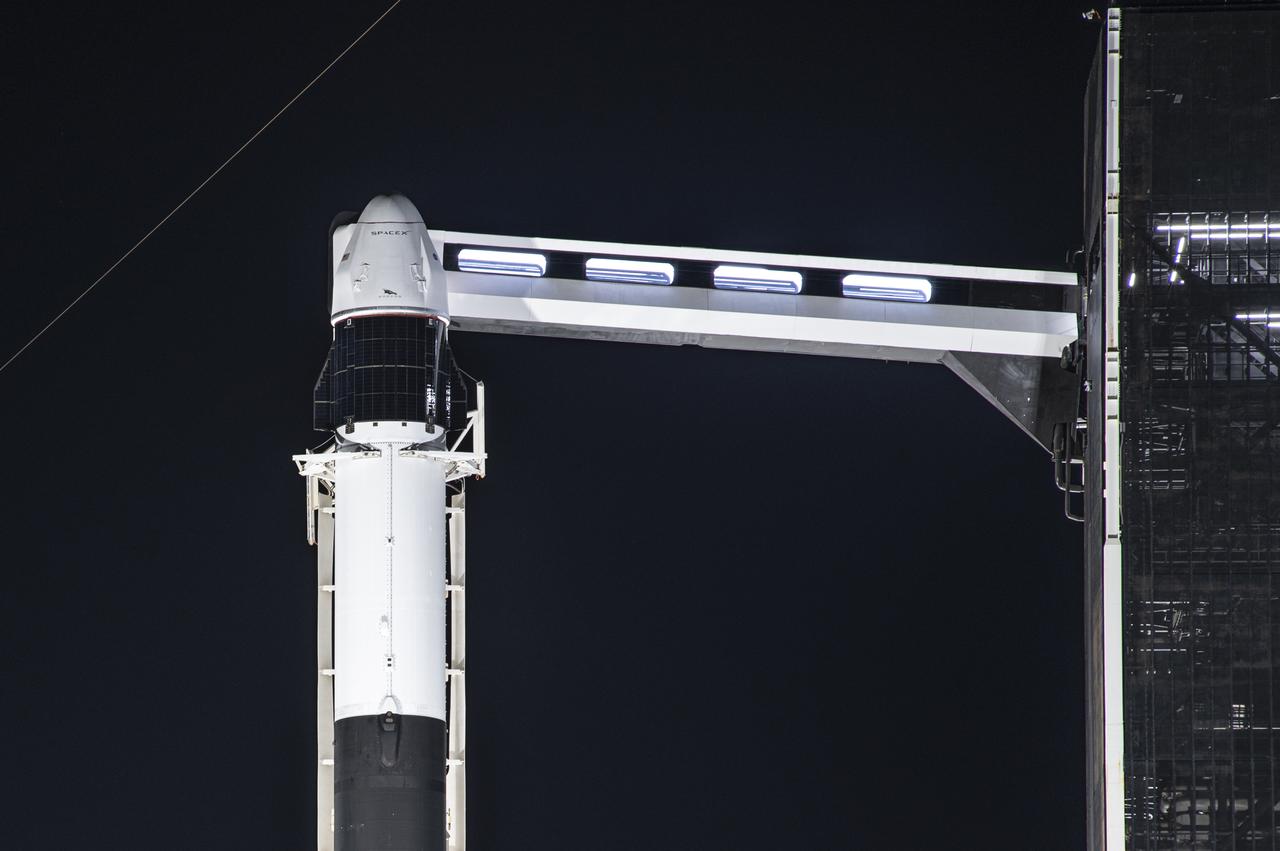
A SpaceX Falcon 9 rocket, topped with the company’s upgraded version of the Dragon spacecraft, stands vertical at NASA Kennedy Space Center’s Launch Complex 39A in Florida on Wednesday, Dec. 2, 2020. The first mission for SpaceX under NASA’s second Commercial Resupply Services contract, CRS-21 is scheduled to lift off from Launch Complex 39A on Saturday, Dec. 5, at 11:39 a.m. EST. The mission will deliver critical supplies and equipment to the International Space Station.

A SpaceX Falcon 9 rocket, topped with the upgraded version of the Cargo Dragon spacecraft, is seen inside the company’s hangar at NASA’s Kennedy Space Center in Florida on Dec. 2, 2020, prior to being rolled out to the launch pad in preparation for the 21st Commercial Resupply Services (CRS-21) launch. The first launch for SpaceX under NASA’s second Commercial Resupply Services contract, CRS-21 will deliver critical supplies, equipment, and material to support a variety of science and research investigations that will take place aboard the International Space Station. Liftoff is scheduled for 11:39 a.m. EST on Saturday, Dec. 5, from Kennedy’s Launch Complex 39A.

A SpaceX Falcon 9 rocket, topped with the upgraded version of the Cargo Dragon spacecraft, is seen inside the company’s hangar at NASA’s Kennedy Space Center in Florida on Dec. 2, 2020, prior to being rolled out to the launch pad in preparation for the 21st Commercial Resupply Services (CRS-21) launch. The first launch for SpaceX under NASA’s second Commercial Resupply Services contract, CRS-21 will deliver critical supplies, equipment, and material to support a variety of science and research investigations that will take place aboard the International Space Station. Liftoff is scheduled for 11:39 a.m. EST on Saturday, Dec. 5, from Kennedy’s Launch Complex 39A.
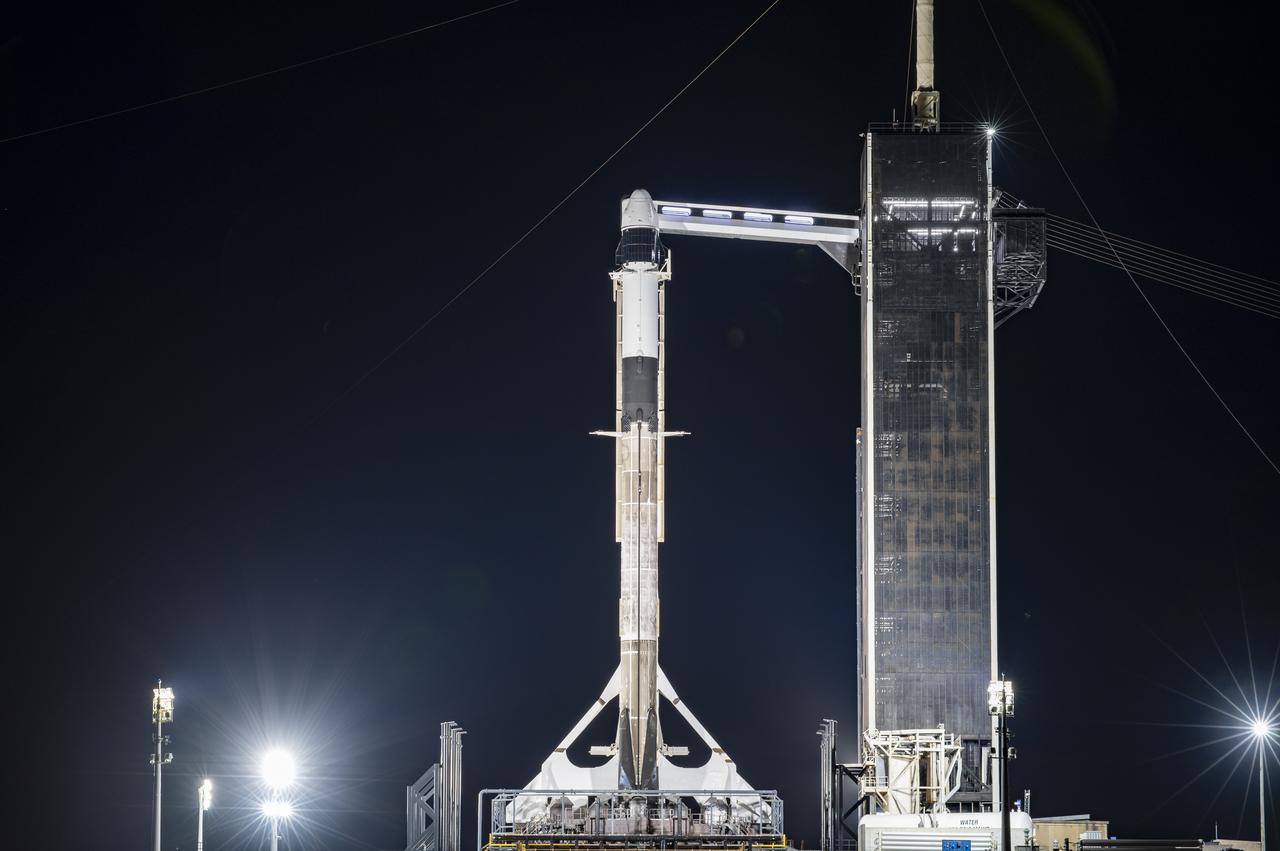
A SpaceX Falcon 9 rocket, topped with the company’s upgraded version of the Dragon spacecraft, stands vertical at NASA Kennedy Space Center’s Launch Complex 39A in Florida on Wednesday, Dec. 2, 2020. The first mission for SpaceX under NASA’s second Commercial Resupply Services contract, CRS-21 is scheduled to lift off from Launch Complex 39A on Saturday, Dec. 5, at 11:39 a.m. EST. The mission will deliver critical supplies and equipment to the International Space Station.
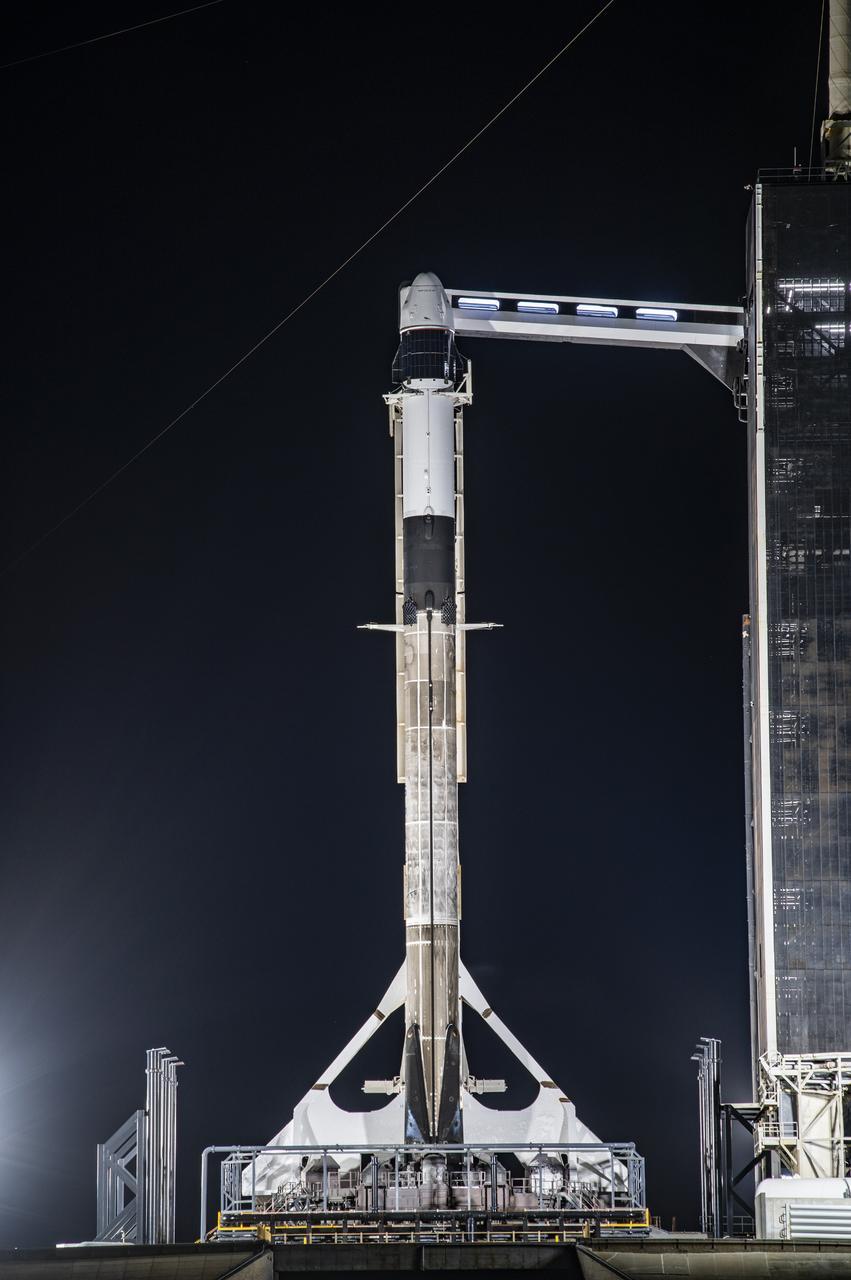
A SpaceX Falcon 9 rocket, topped with the company’s upgraded version of the Dragon spacecraft, stands vertical at NASA Kennedy Space Center’s Launch Complex 39A in Florida on Wednesday, Dec. 2, 2020. The first mission for SpaceX under NASA’s second Commercial Resupply Services contract, CRS-21 is scheduled to lift off from Launch Complex 39A on Saturday, Dec. 5, at 11:39 a.m. EST. The mission will deliver critical supplies and equipment to the International Space Station.
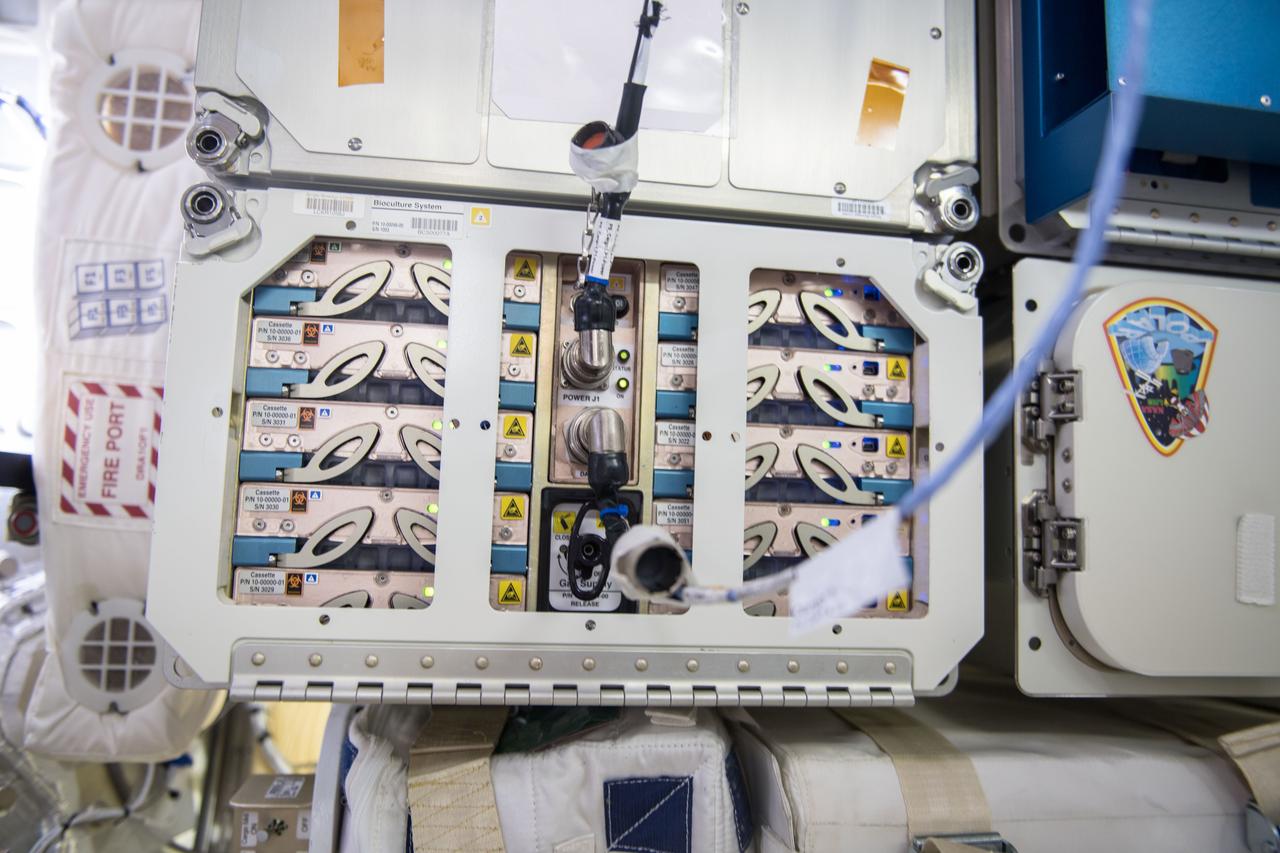
iss054e020928 (1/12/2018) --- Photo documentation of the Bioculture System Facility installed in the SpaceX Dragon Commercial Resupply Services-13 (CRS-13) spacecraft for return to Earth. The Bioculture System Hardware Validation (Cell Science-Validation) tests the performance and life-support capability of a new cell culture hardware system for use aboard the International Space Station (ISS).
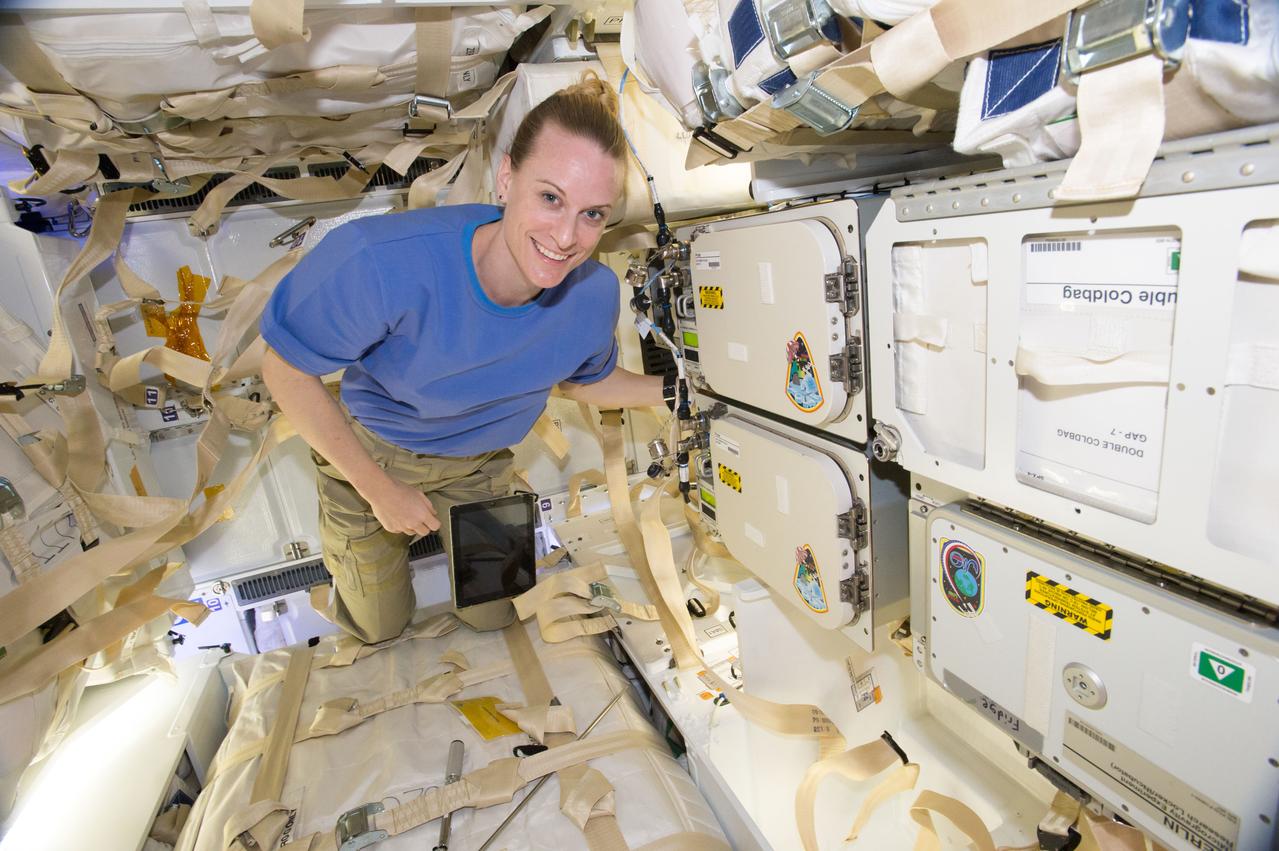
iss048e065818 (8/24/2016) --- NASA astonaut Kate Rubins poses for a photo next to Polar Facilities 2 and 4 installed in the SpaceX Dragon Commercial Resupply Services-9 (CRS-9) spacecraft for return to Earth. Polar is a Cold Stowage managed facility that provides transport and storage of science samples at cryogenic temperatures (-80ºC) to and from the International Space Station (ISS).

The first two of six new solar arrays for the International Space Station have been loaded into Dragon’s unpressurized spacecraft trunk. SpaceX will deliver them to the orbiting laboratory during its next cargo resupply mission, targeted for June 3 at 1:29pm. The arrays will provide additional electrical power for the numerous research and science investigations conducted every day, as well as the continued operations of the station. Spacewalking astronauts will install the two new arrays in two spacewalks that will take place in June.
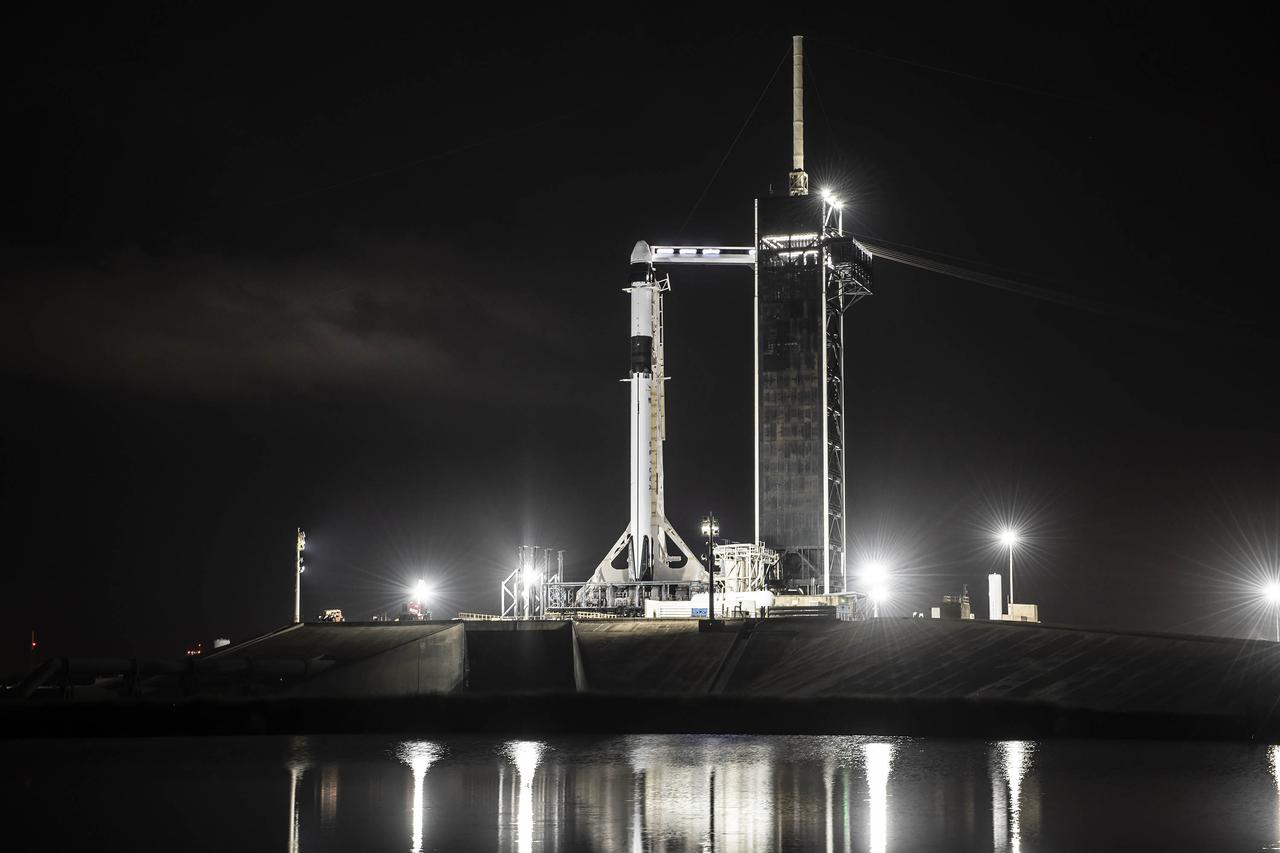
SpaceX's Falcon 9 rocket with Dragon spacecraft rolls out to Launch Complex 39A at NASA's Kennedy Space Center in Florida on Dec. 19, 2021, in preparation for launch. The agency's 24th Commercial Resupply Services mission, targeted for liftoff on Dec. 21, 2021 at 5:06 a.m. EST, will deliver new science investigations, supplies, and equipment to the crew on board the International Space Station.
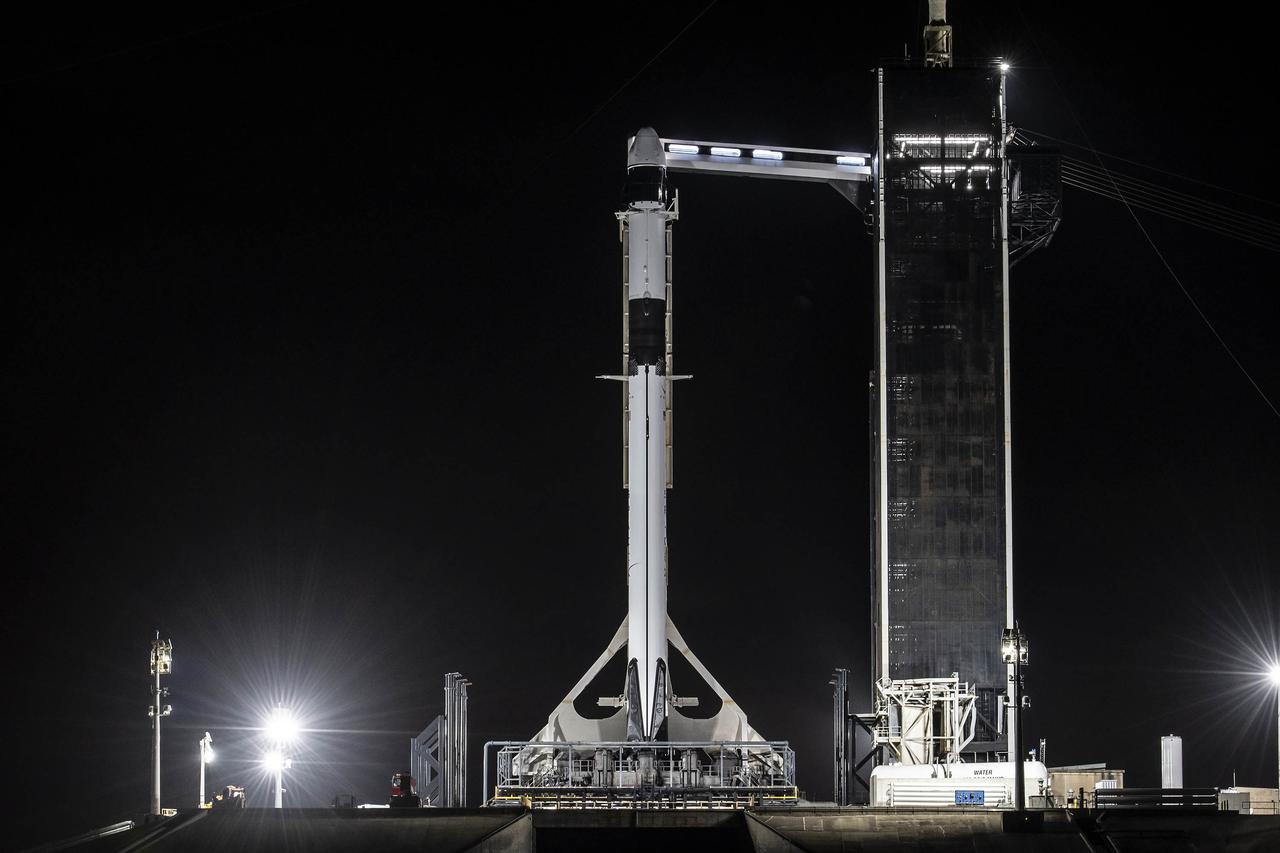
SpaceX's Falcon 9 rocket with Dragon spacecraft rolls out to Launch Complex 39A at NASA's Kennedy Space Center in Florida on Dec. 19, 2021, in preparation for launch. The agency's 24th Commercial Resupply Services mission, targeted for liftoff on Dec. 21, 2021 at 5:06 a.m. EST, will deliver new science investigations, supplies, and equipment to the crew on board the International Space Station.
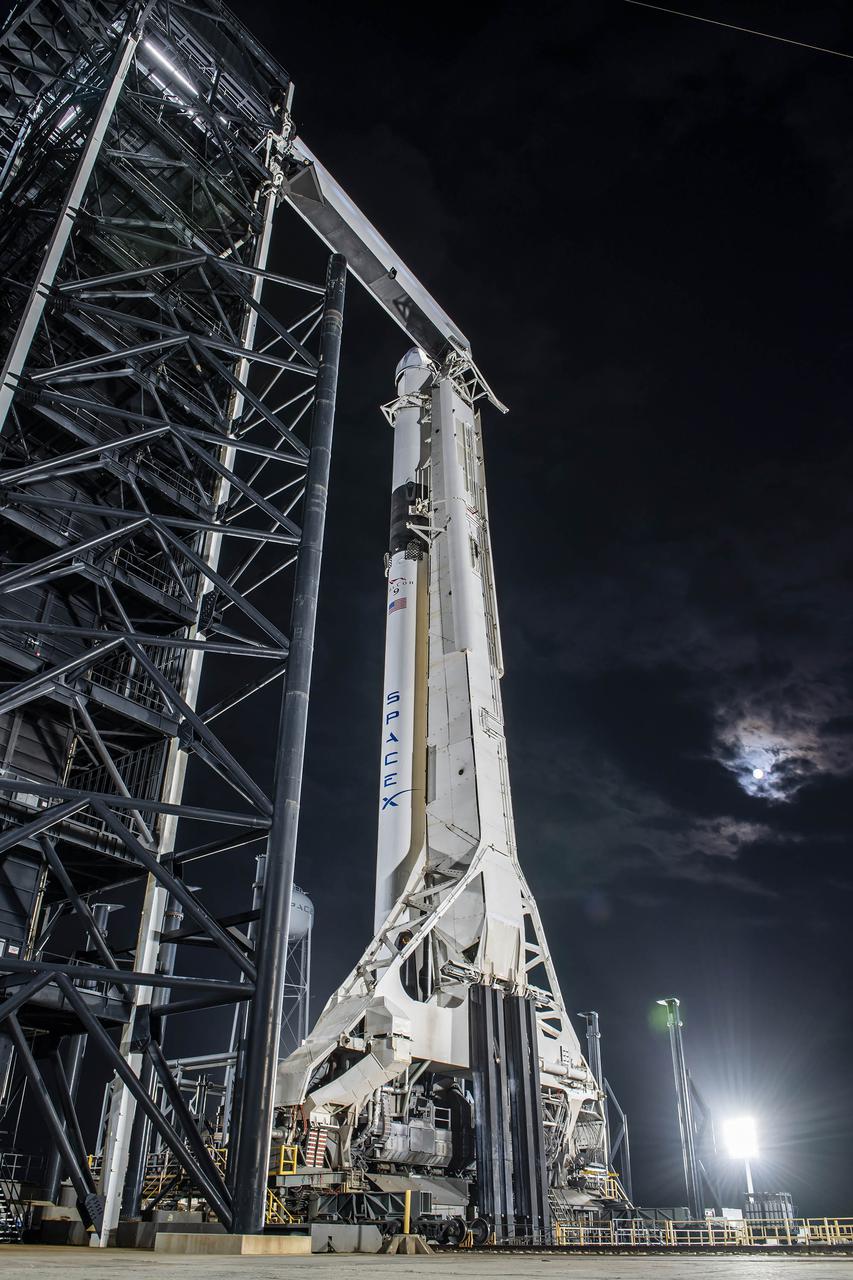
SpaceX's Falcon 9 rocket with Dragon spacecraft rolls out to Launch Complex 39A at NASA's Kennedy Space Center in Florida on Dec. 19, 2021, in preparation for launch. The agency's 24th Commercial Resupply Services mission, targeted for liftoff on Dec. 21, 2021 at 5:06 a.m. EST, will deliver new science investigations, supplies, and equipment to the crew on board the International Space Station.
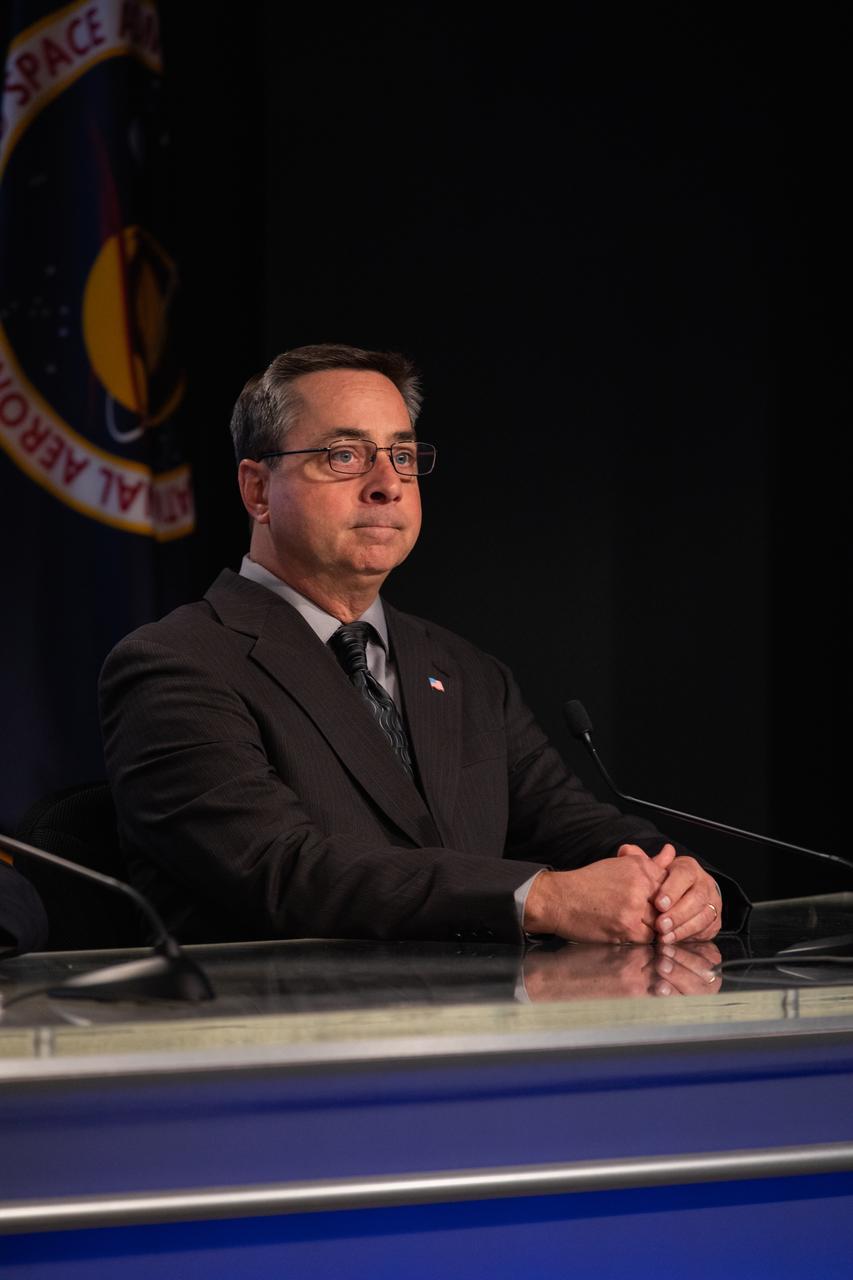
Mike McAleenan, launch weather officer with the U.S. Air Force 45th Space Wing, participates in a prelaunch news conference for SpaceX’s 20th Commercial Resupply Services (CRS-20) mission to the International Space Station at NASA’s Kennedy Space Center in Florida on March 6, 2020. The company’s Falcon 9 rocket and cargo Dragon spacecraft are scheduled to lift off from Cape Canaveral Air Force Station’s Space Launch Complex 40 at 11:50 p.m. EST on March 6, 2020.

Heather Scott of NASA Communications moderates a prelaunch news conference for SpaceX’s 20th Commercial Resupply Services (CRS-20) mission to the International Space Station at the agency’s Kennedy Space Center in Florida on March 6, 2020. The company’s Falcon 9 rocket and cargo Dragon spacecraft are scheduled to lift off from Cape Canaveral Air Force Station’s Space Launch Complex 40 at 11:50 p.m. EST on March 6, 2020.
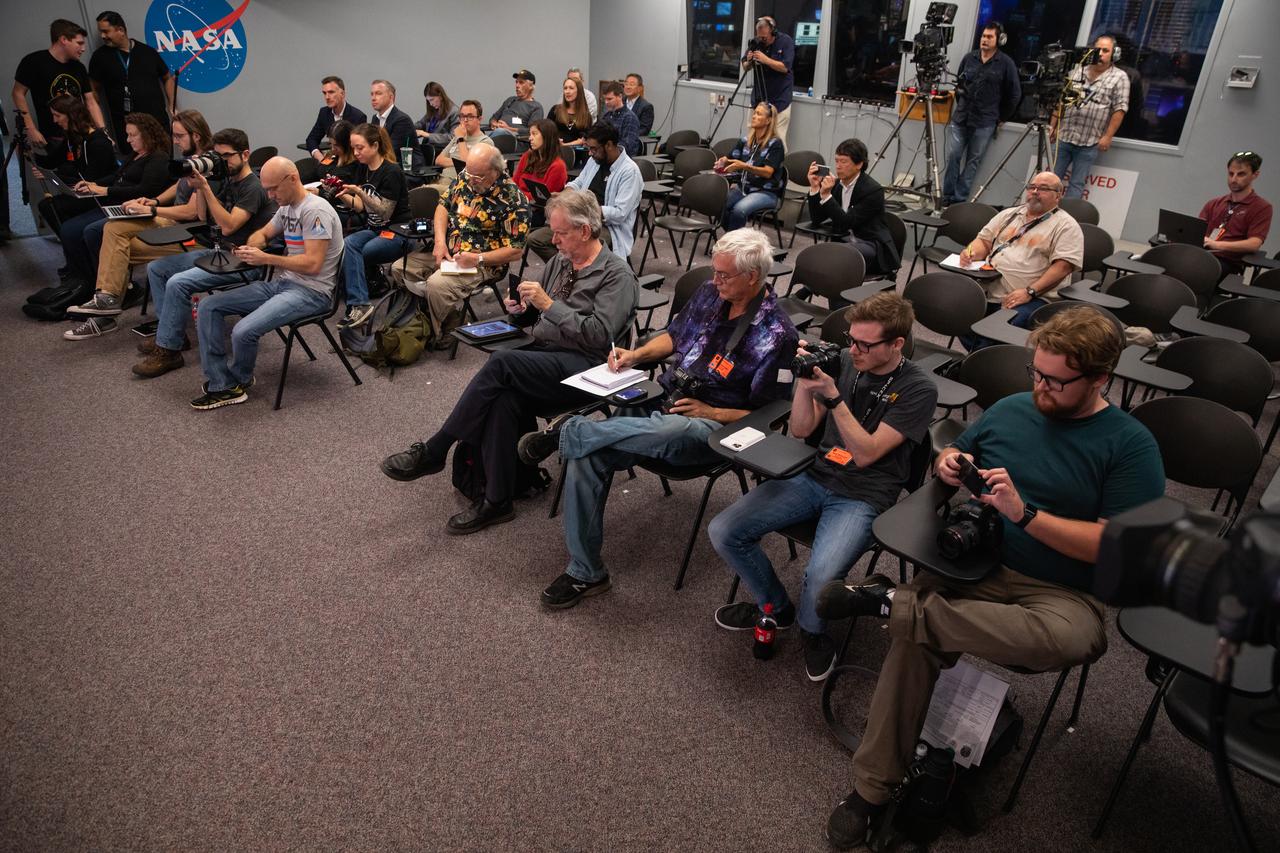
Members of the media attend a prelaunch news conference for SpaceX’s 20th Commercial Resupply Services (CRS-20) mission to the International Space Station at NASA’s Kennedy Space Center in Florida on March 6, 2020. Participants included conference moderator Heather Scott of NASA Communications; Joel Montalbano, manager of the agency’s International Space Station Program; Jennifer Buchli, deputy chief scientist for the International Space Station Program; Hans Koenigsmann, vice president of Build and Flight Reliability at SpaceX; and Mike McAleenan, launch weather officer with the U.S. Air Force 45th Space Wing. SpaceX’s Falcon 9 rocket and cargo Dragon spacecraft are scheduled to lift off from Cape Canaveral Air Force Station’s Space Launch Complex 40 at 11:50 p.m. EST on March 6, 2020.
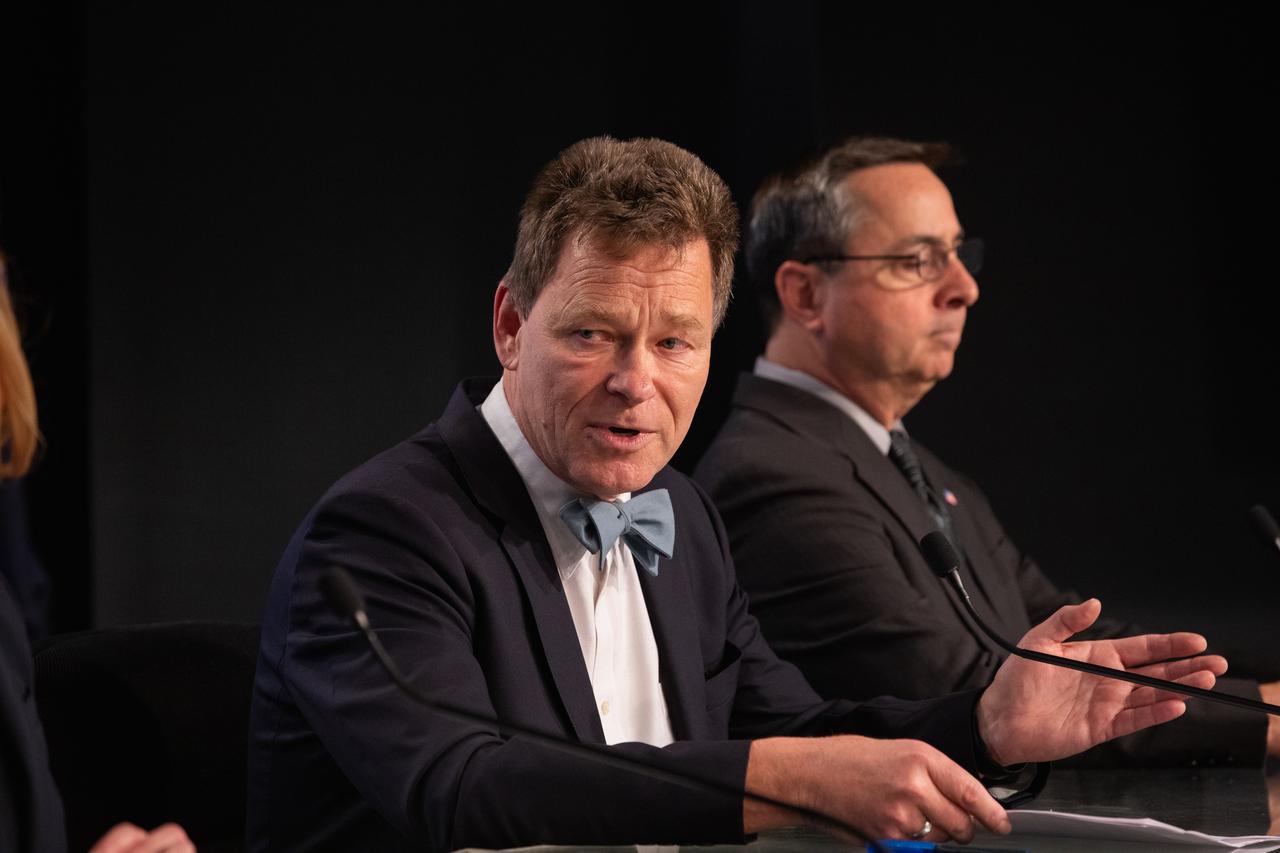
Hans Koenigsmann, vice president of Build and Flight Reliability at SpaceX, addresses members of the news media during a prelaunch news conference for SpaceX’s 20th Commercial Resupply Services (CRS-20) mission to the International Space Station at NASA’s Kennedy Space Center in Florida on March 6, 2020. Beside Koenigsmann is Mike McAleenan, launch weather officer with the U.S. Air Force 45th Space Wing. The company’s Falcon 9 rocket and cargo Dragon spacecraft are scheduled to lift off from Cape Canaveral Air Force Station’s Space Launch Complex 40 at 11:50 p.m. EST on March 6, 2020.
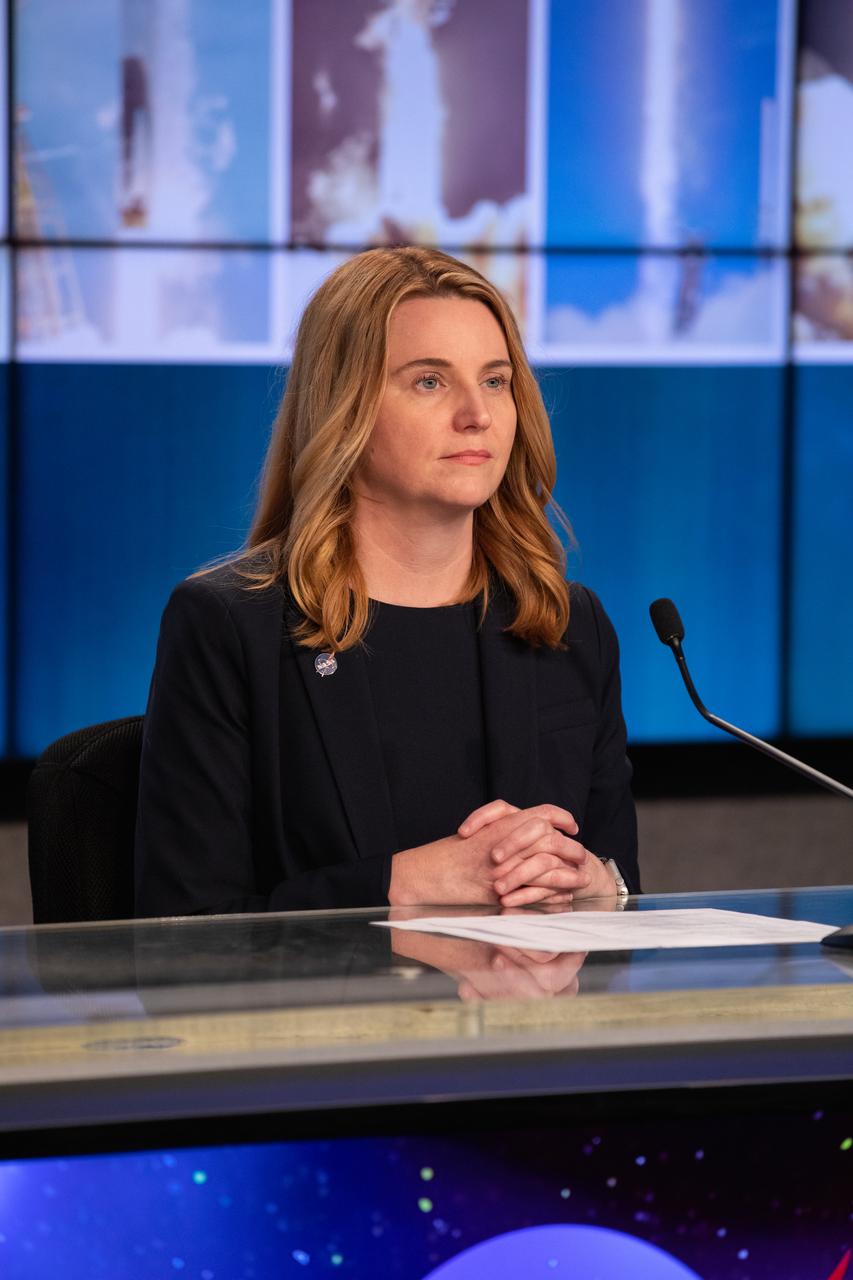
Jennifer Buchli, deputy chief scientist for NASA’s International Space Station Program, participates in a prelaunch news conference for SpaceX’s 20th Commercial Resupply Services (CRS-20) mission to the International Space Station at the agency’s Kennedy Space Center in Florida on March 6, 2020. The company’s Falcon 9 rocket and cargo Dragon spacecraft are scheduled to lift off from Cape Canaveral Air Force Station’s Space Launch Complex 40 at 11:50 p.m. EST on March 6, 2020.
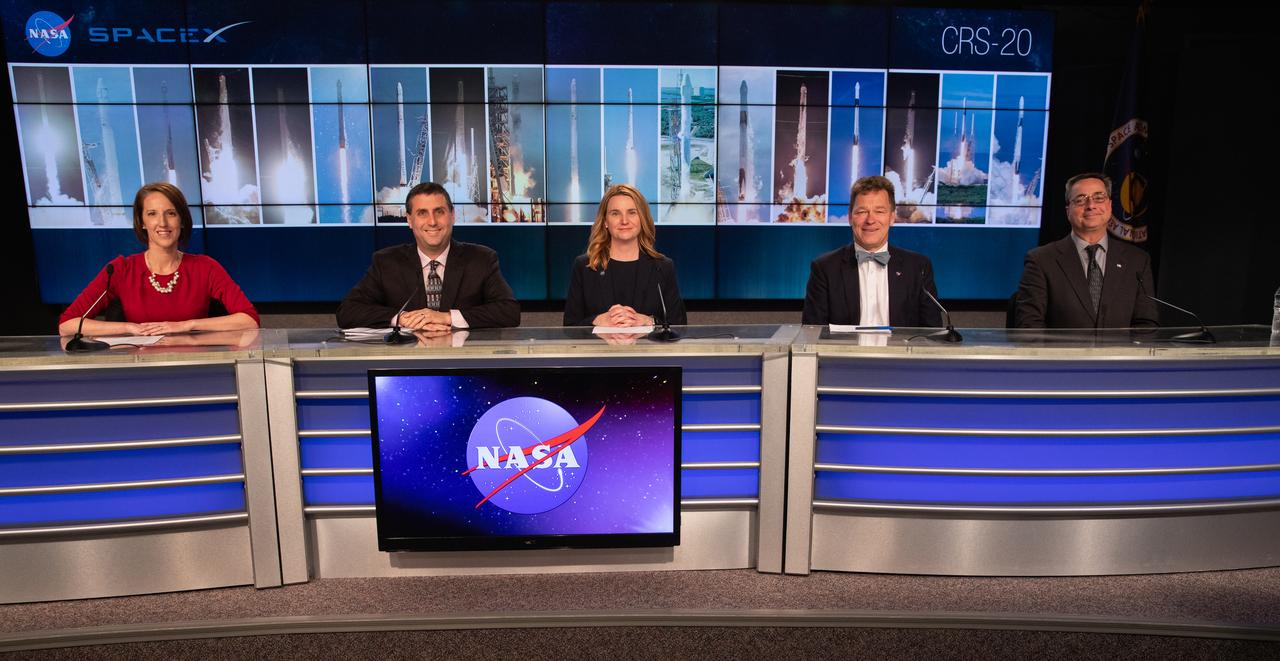
A prelaunch news conference for SpaceX’s 20th Commercial Resupply Services (CRS-20) mission to the International Space Station is held at NASA’s Kennedy Space Center in Florida on March 6, 2020. From left are conference moderator Heather Scott of NASA Communications; Joel Montalbano, manager of the agency’s International Space Station Program; Jennifer Buchli, deputy chief scientist for the International Space Station Program; Hans Koenigsmann, vice president of Build and Flight Reliability at SpaceX; and Mike McAleenan, launch weather officer with the U.S. Air Force 45th Space Wing. SpaceX’s Falcon 9 rocket and cargo Dragon spacecraft are scheduled to lift off from Cape Canaveral Air Force Station’s Space Launch Complex 40 at 11:50 p.m. EST on March 6, 2020.
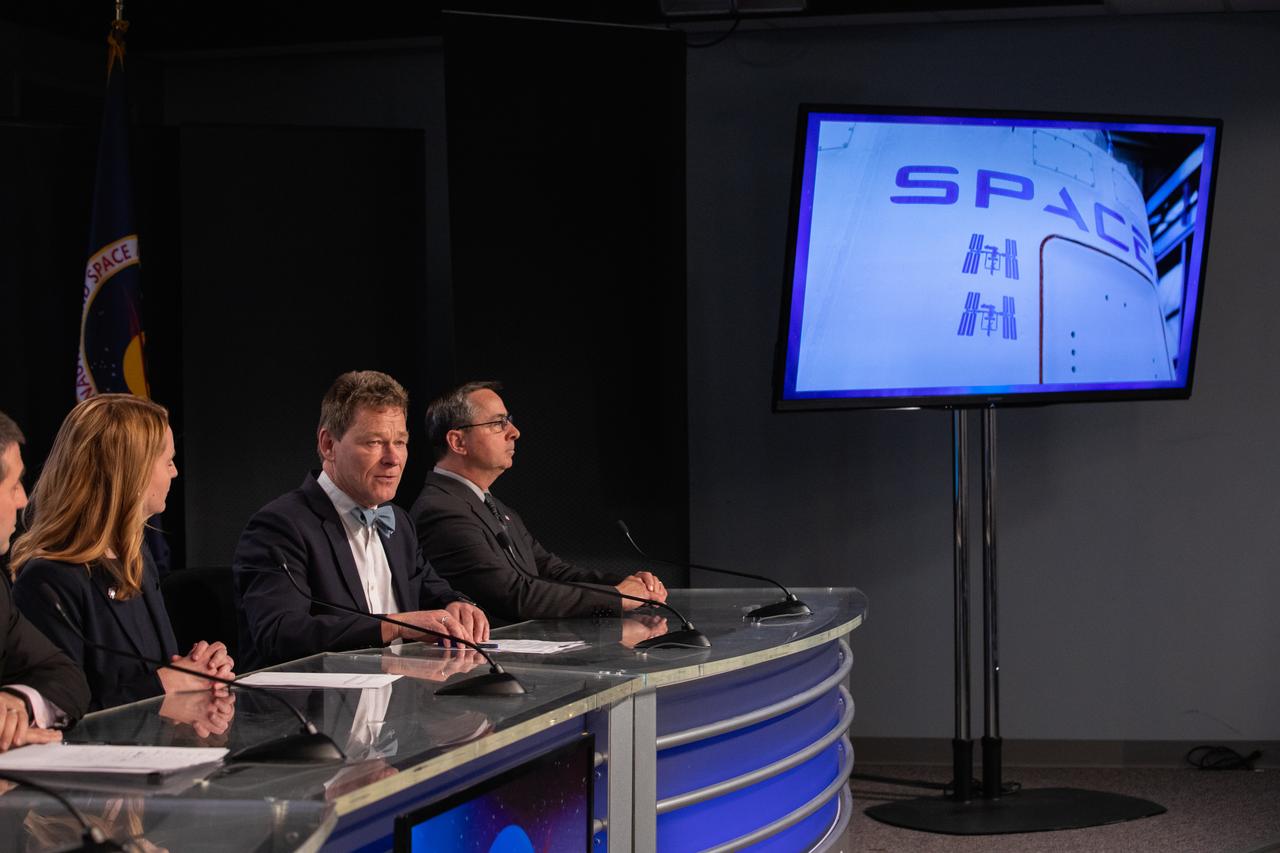
A prelaunch news conference for SpaceX’s 20th Commercial Resupply Services (CRS-20) mission to the International Space Station is held at NASA’s Kennedy Space Center in Florida on March 6, 2020. From left are Joel Montalbano, manager of the agency’s International Space Station Program; Jennifer Buchli, deputy chief scientist for the International Space Station Program; Hans Koenigsmann, vice president of Build and Flight Reliability at SpaceX; and Mike McAleenan, launch weather officer with the U.S. Air Force 45th Space Wing. SpaceX’s Falcon 9 rocket and cargo Dragon spacecraft are scheduled to lift off from Cape Canaveral Air Force Station’s Space Launch Complex 40 at 11:50 p.m. EST on March 6, 2020.
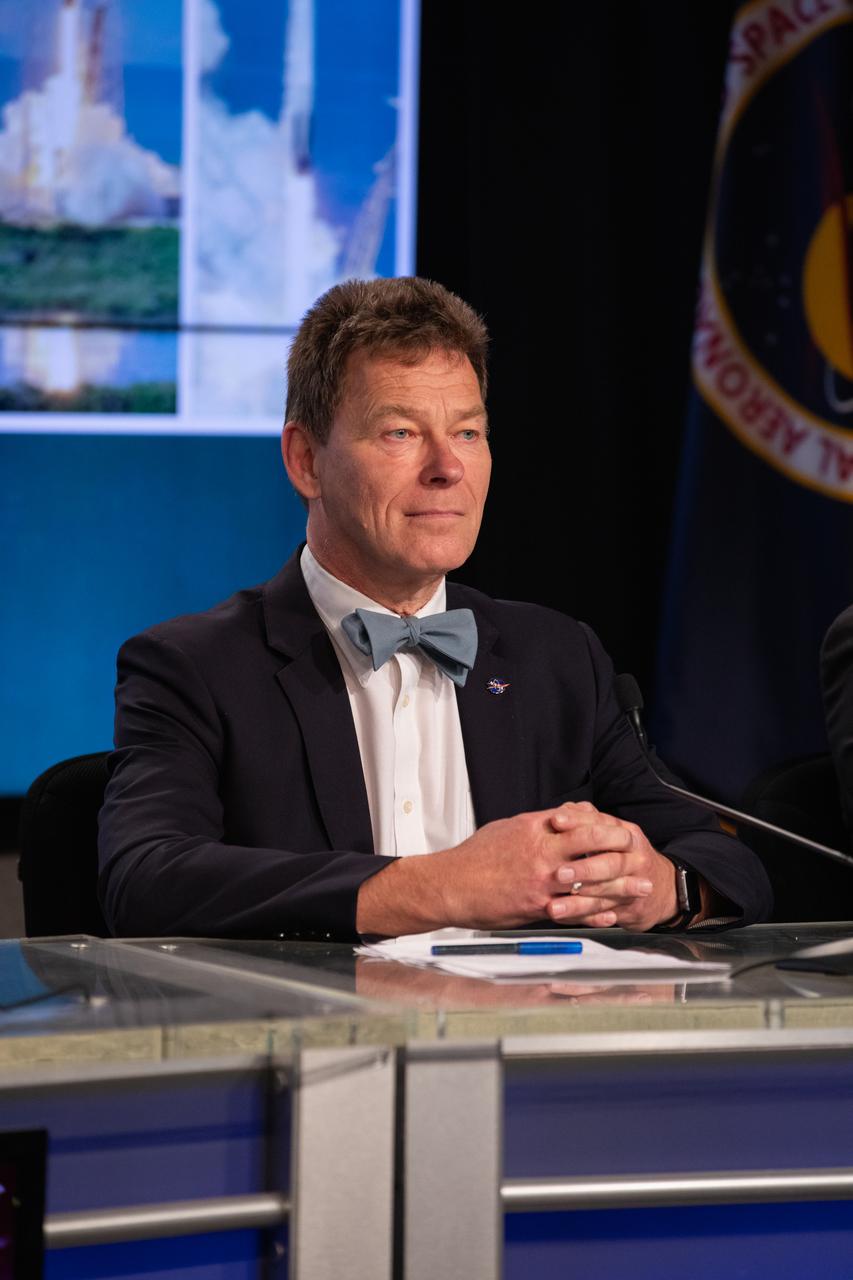
Hans Koenigsmann, vice president of Build and Flight Reliability at SpaceX, participates in a prelaunch news conference for SpaceX’s 20th Commercial Resupply Services (CRS-20) mission to the International Space Station at NASA’s Kennedy Space Center in Florida on March 6, 2020. The company’s Falcon 9 rocket and cargo Dragon spacecraft are scheduled to lift off from Cape Canaveral Air Force Station’s Space Launch Complex 40 at 11:50 p.m. EST on March 6, 2020.
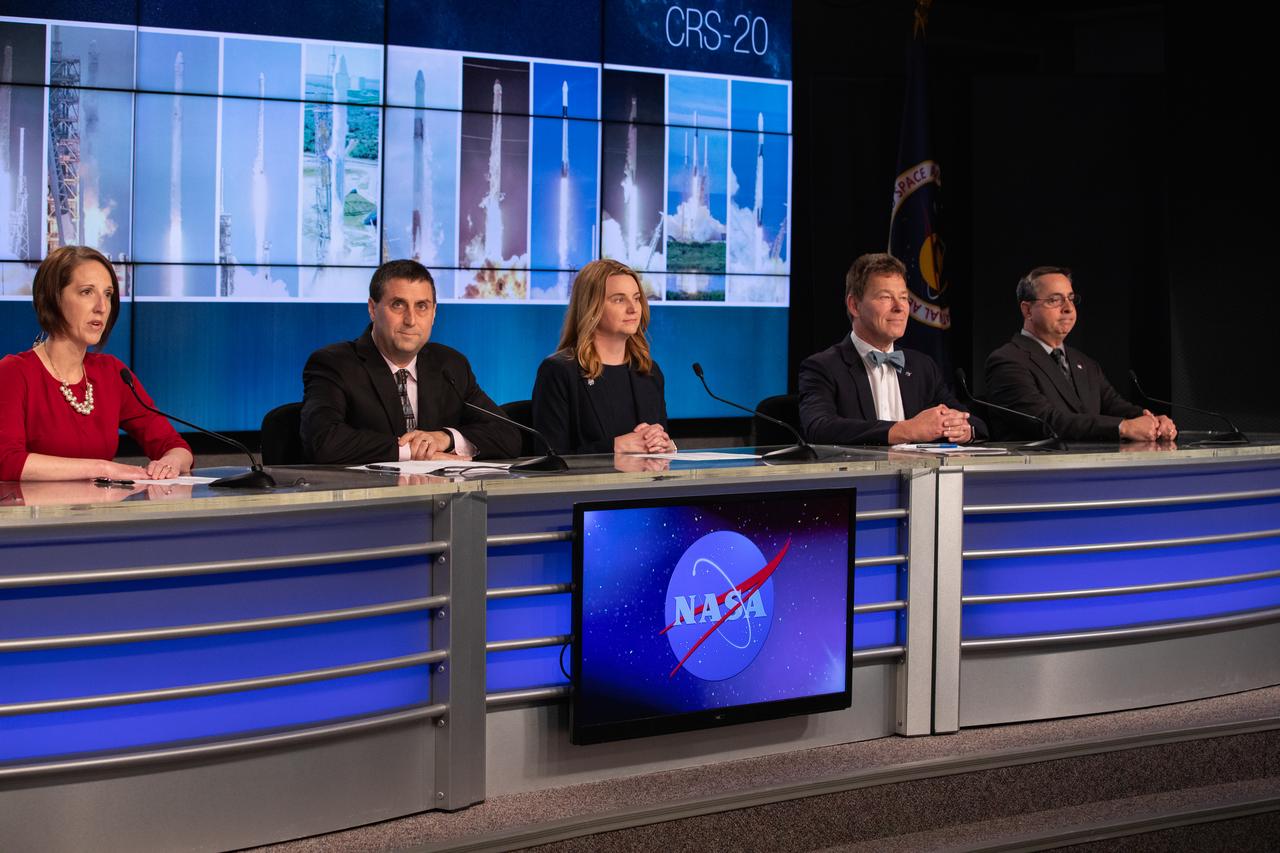
A prelaunch news conference for SpaceX’s 20th Commercial Resupply Services (CRS-20) mission to the International Space Station is held at NASA’s Kennedy Space Center in Florida on March 6, 2020. From left are conference moderator Heather Scott of NASA Communications; Joel Montalbano, manager of the agency’s International Space Station Program; Jennifer Buchli, deputy chief scientist for the International Space Station Program; Hans Koenigsmann, vice president of Build and Flight Reliability at SpaceX; and Mike McAleenan, launch weather officer with the U.S. Air Force 45th Space Wing. SpaceX’s Falcon 9 rocket and cargo Dragon spacecraft are scheduled to lift off from Cape Canaveral Air Force Station’s Space Launch Complex 40 at 11:50 p.m. EST on March 6, 2020.
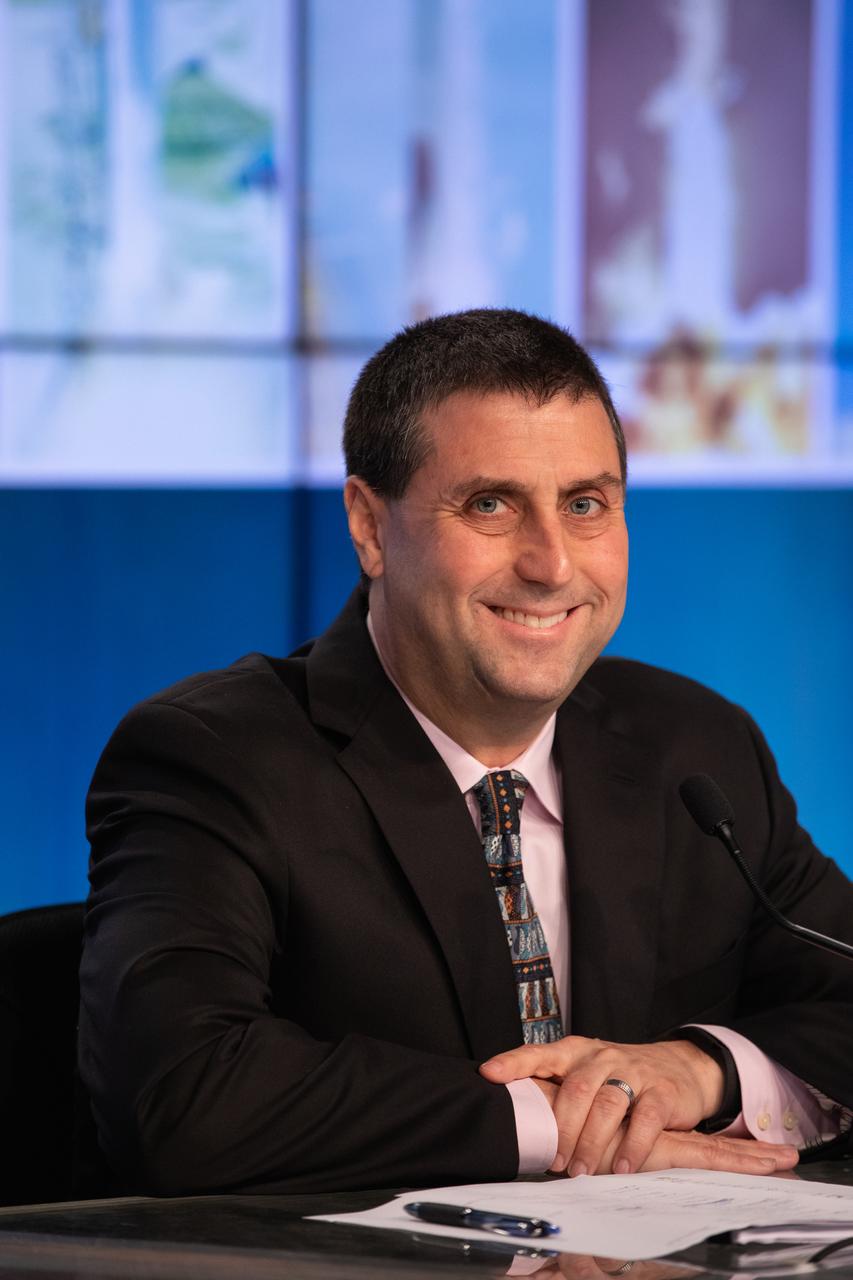
Joel Montalbano, manager of NASA’s International Space Station Program, participates in a prelaunch news conference for SpaceX’s 20th Commercial Resupply Services (CRS-20) mission to the International Space Station at the agency’s Kennedy Space Center in Florida on March 6, 2020. The company’s Falcon 9 rocket and cargo Dragon spacecraft are scheduled to lift off from Cape Canaveral Air Force Station’s Space Launch Complex 40 at 11:50 p.m. EST on March 6, 2020.
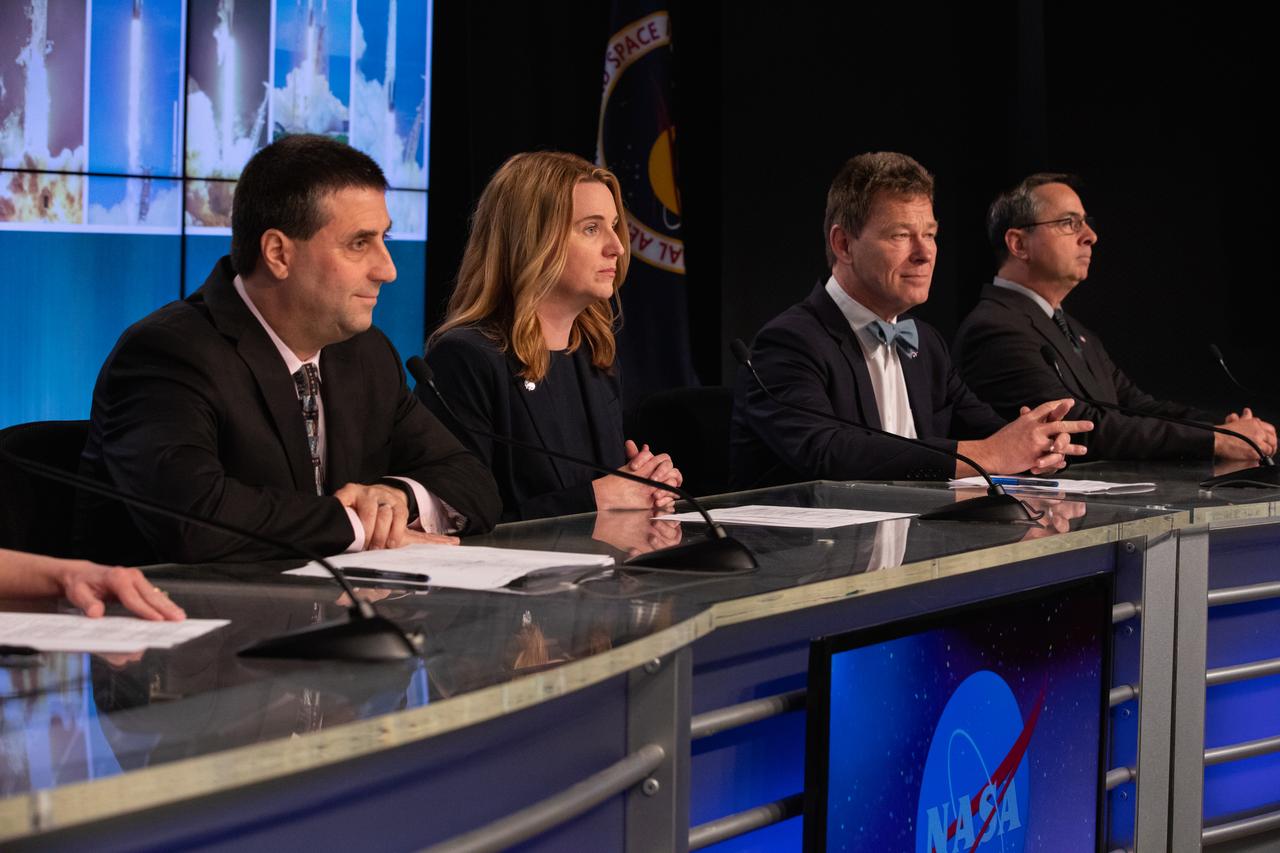
A prelaunch news conference for SpaceX’s 20th Commercial Resupply Services (CRS-20) mission to the International Space Station is held at NASA’s Kennedy Space Center in Florida on March 6, 2020. From left are Joel Montalbano, manager of the agency’s International Space Station Program; Jennifer Buchli, deputy chief scientist for the International Space Station Program; Hans Koenigsmann, vice president of Build and Flight Reliability at SpaceX; and Mike McAleenan, launch weather officer with the U.S. Air Force 45th Space Wing. SpaceX’s Falcon 9 rocket and cargo Dragon spacecraft are scheduled to lift off from Cape Canaveral Air Force Station’s Space Launch Complex 40 at 11:50 p.m. EST on March 6, 2020.
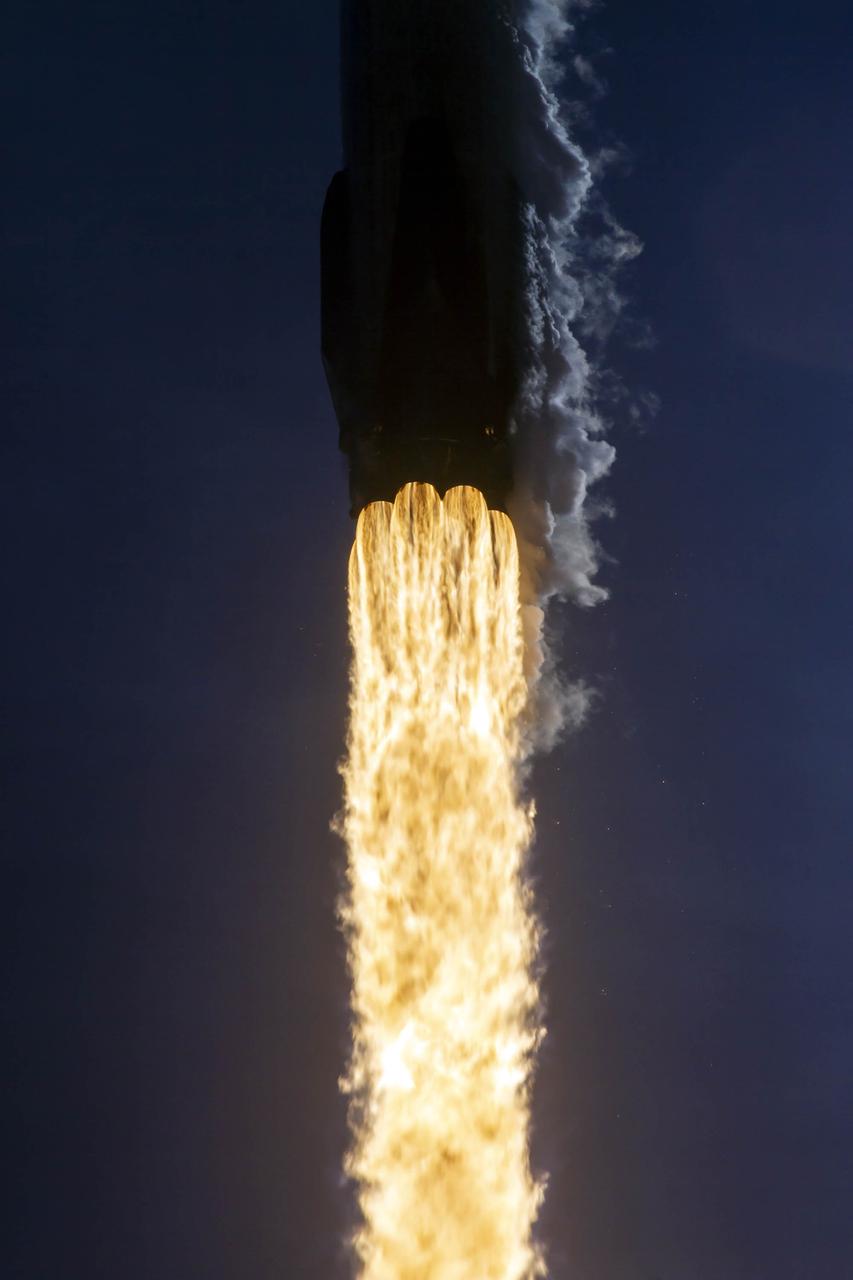
A SpaceX Falcon 9 rocket lifts off from Launch Complex 39A at Kennedy Space Center in Florida at 11:17 a.m. EST on Dec. 6, 2020, carrying the uncrewed cargo Dragon spacecraft on its journey to the International Space Station for NASA and SpaceX’s 21st Commercial Resupply Services (CRS-21) mission. Dragon will deliver more than 6,400 pounds of science investigations and cargo to the orbiting laboratory. The mission marks the first launch for SpaceX under NASA’s CRS-2 contract.
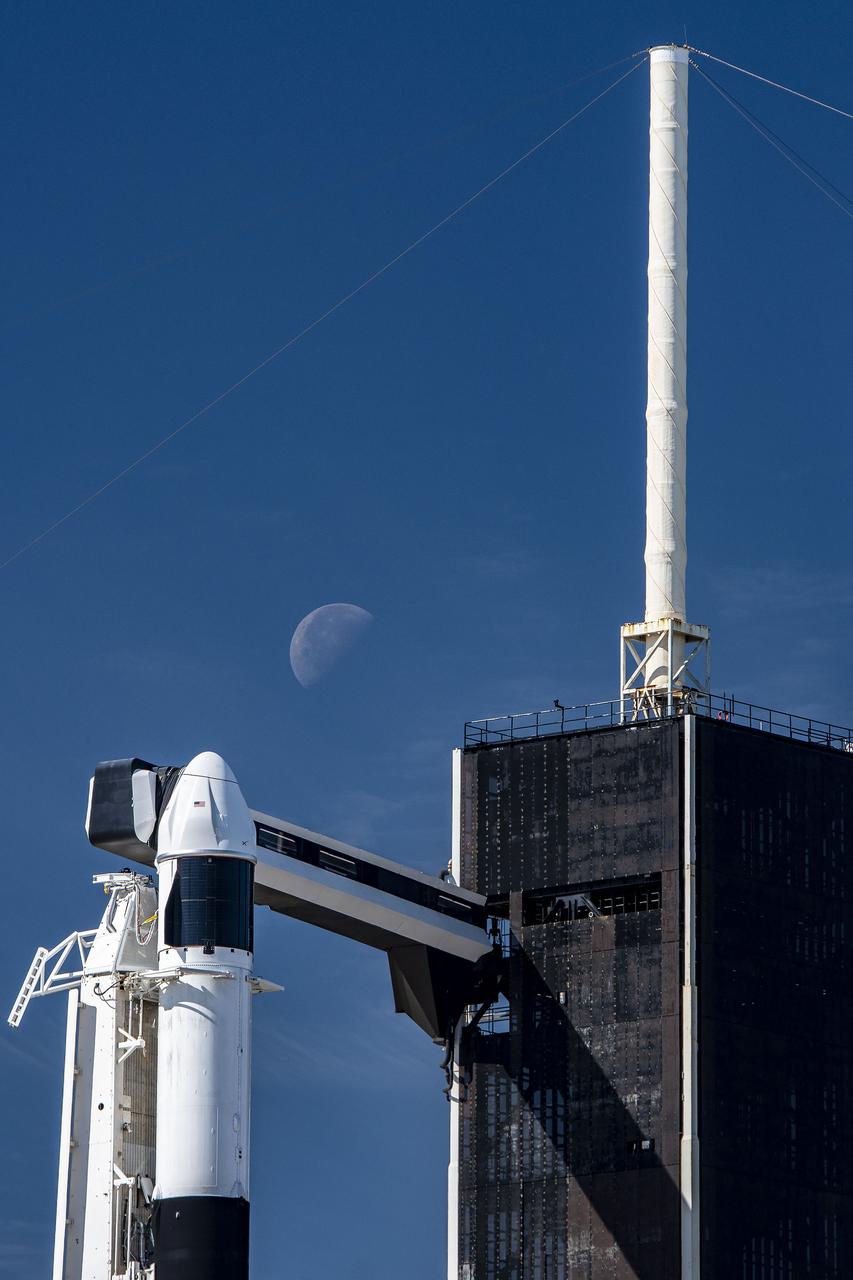
Seen here is a up-close view of the SpaceX Dragon spacecraft atop the company’s Falcon 9 rocket in the vertical position at NASA’s Kennedy Space Center in Florida on March 14, 2023, in preparation for the 27th commercial resupply services launch to the International Space Station. The mission will deliver new science investigations, supplies, and equipment to the crew aboard the space station, including the final two experiments comprising the National Institutes for Health and International Space Station National Laboratory’s Tissue Chips in Space initiative, Cardinal Heart 2.0 and Engineered Heart Tissues-2. Liftoff is scheduled for 8:30 p.m. EDT on Tuesday, March 14, from Kennedy’s Launch Complex 39A.
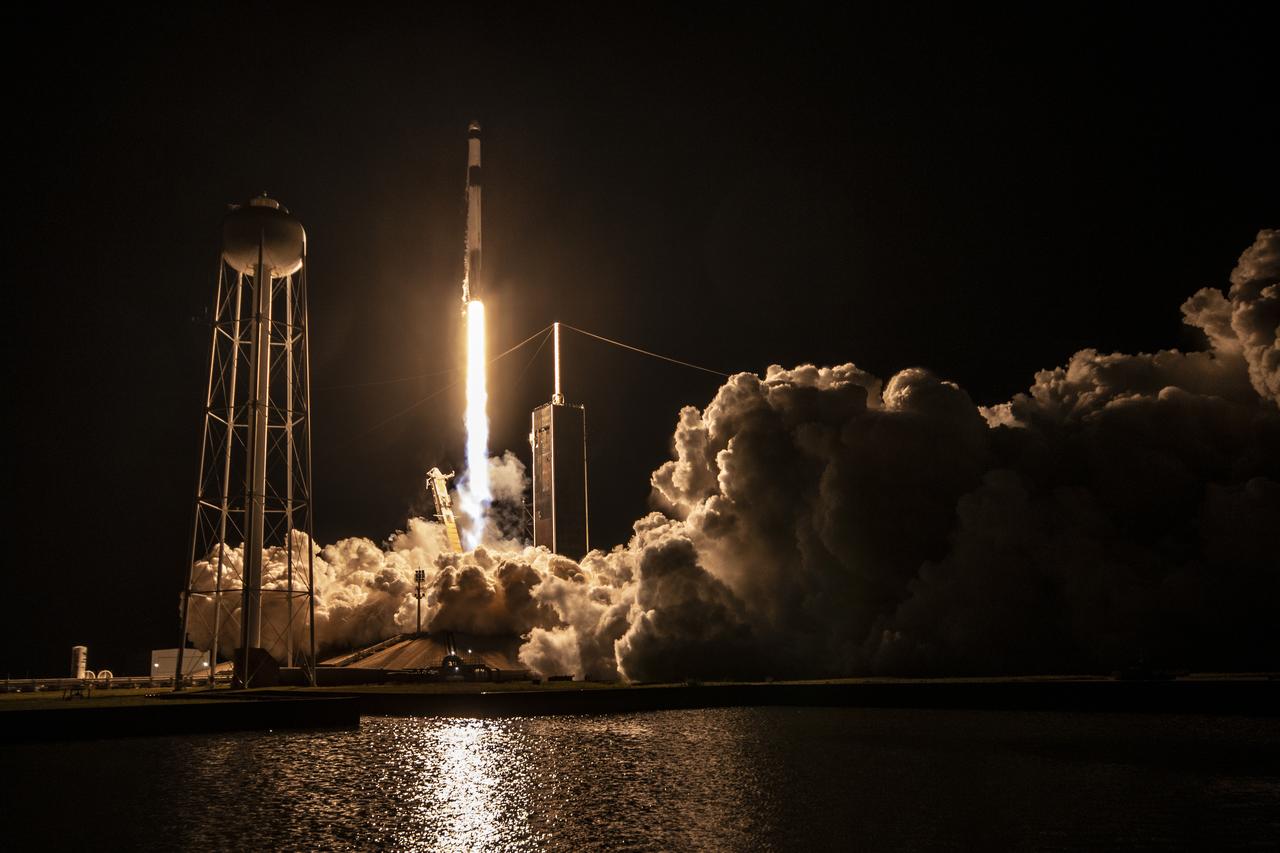
A SpaceX Falcon 9 rocket soars upward after its liftoff from Launch Complex 39A at NASA’s Kennedy Space Center in Florida on March 14, 2023, on the company’s 27th Commercial Resupply Services mission for the agency to the International Space Station. Liftoff was at 8:30 p.m. EDT. The Dragon spacecraft will deliver more than 6,000 pounds of science and research, supplies, and equipment to the crew aboard the space station, including the final two experiments comprising the National Institutes for Health and International Space Station National Laboratory’s Tissue Chips in Space initiative, Cardinal Heart 2.0 and Engineered Heart Tissues-2. The spacecraft is expected to spend about a month attached to the orbiting outpost before it returns to Earth with research and return cargo, splashing down off the coast of Florida.
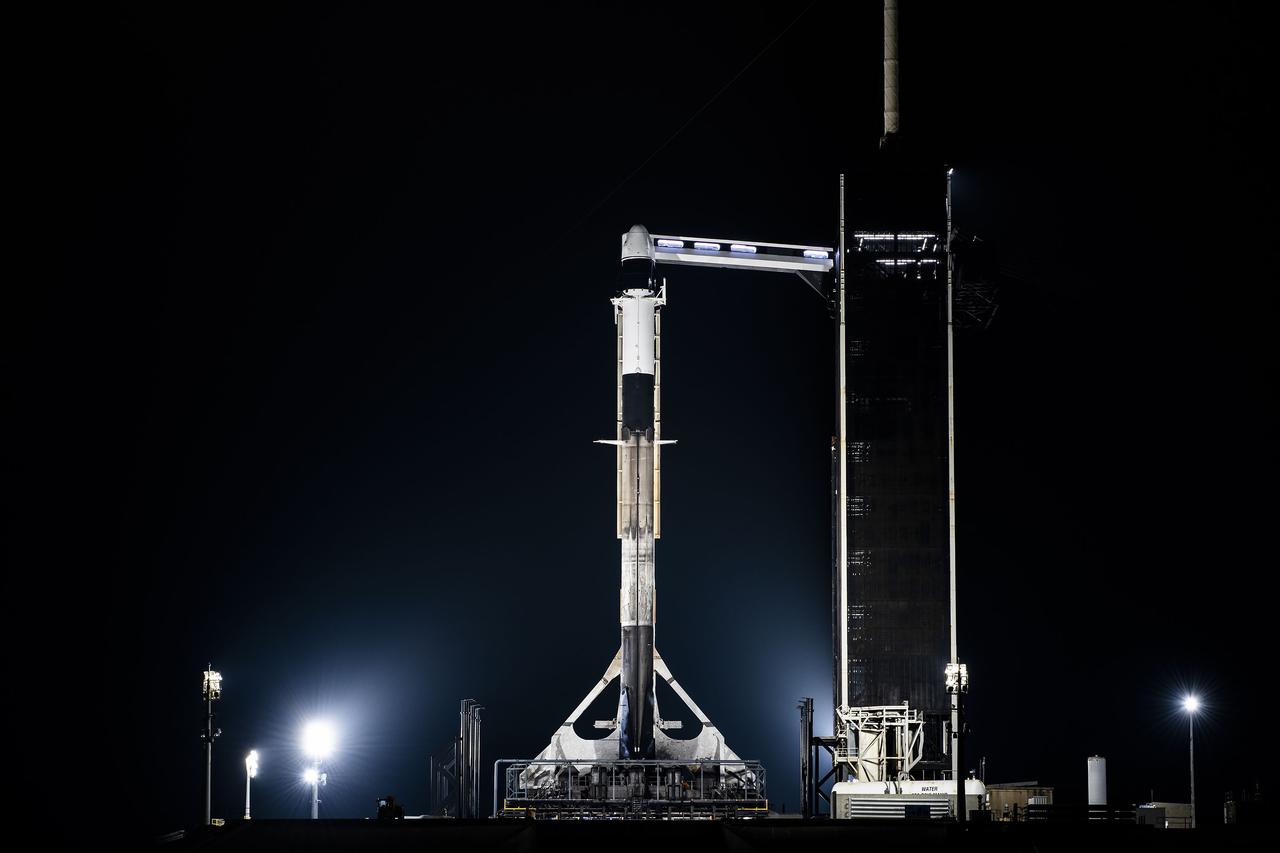
A SpaceX Falcon 9 rocket, with the company’s Dragon spacecraft atop, is raised to a vertical position at NASA Kennedy Space Center’s Launch Complex 39A on March 13, 2023, in preparation for the 27th commercial resupply services launch to the International Space Station. The mission will deliver new science investigations, supplies, and equipment to the crew aboard the space station, including the final two experiments comprising the National Institutes for Health and International Space Station National Laboratory’s Tissue Chips in Space initiative, Cardinal Heart 2.0 and Engineered Heart Tissues-2. Liftoff is scheduled for 8:30 p.m. EDT on Tuesday, March 14, from Kennedy’s Launch Complex 39A.
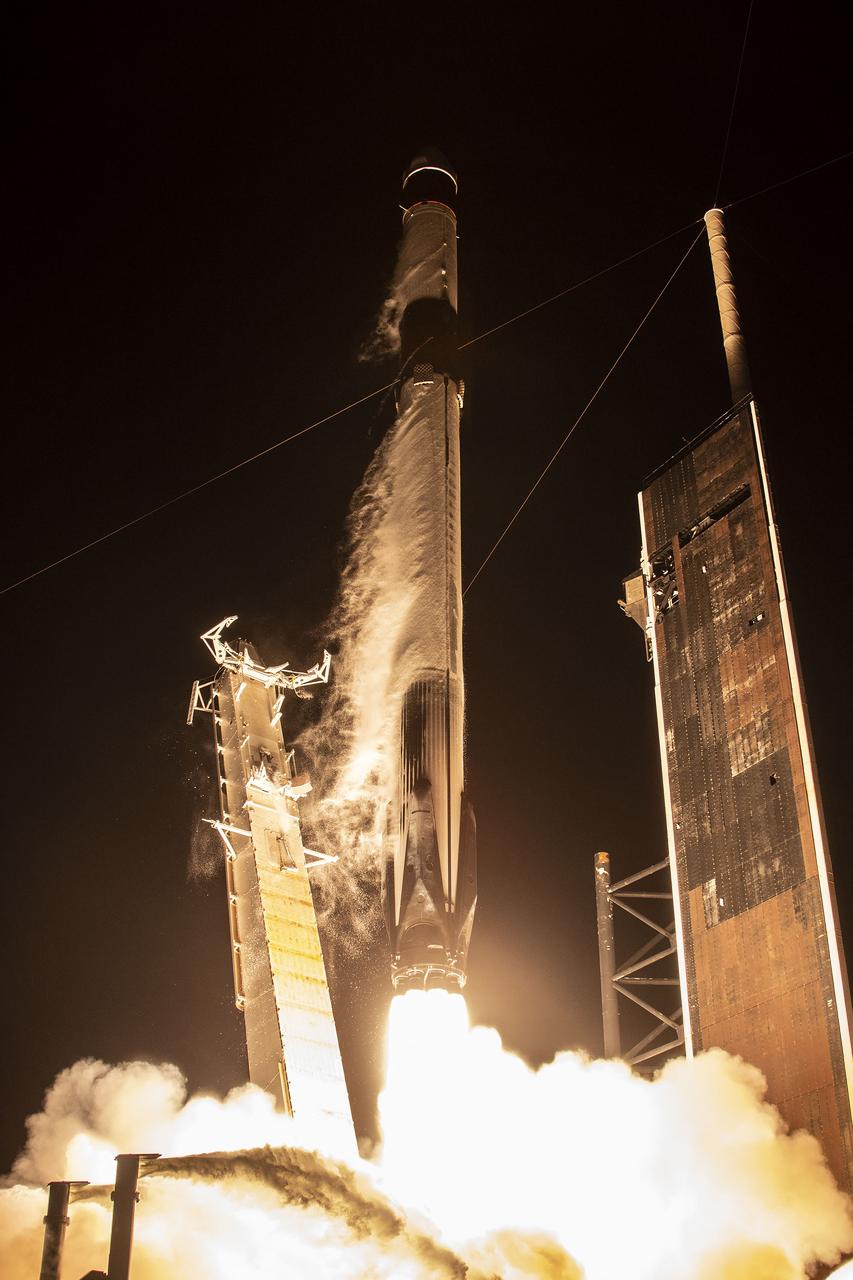
The SpaceX Falcon 9 rocket carrying the Dragon spacecraft lifts off from Launch Complex 39A at NASA’s Kennedy Space Center in Florida on March 14, 2023, on the company’s 27th commercial resupply services mission for the agency to the International Space Station. Liftoff was at 8:30 p.m. EDT. Dragon will deliver more than 6,000 pounds of cargo, including a variety of NASA investigations, supplies, and equipment to the crew aboard the space station, including the final two experiments comprising the National Institutes for Health and International Space Station National Laboratory’s Tissue Chips in Space initiative, Cardinal Heart 2.0 and Engineered Heart Tissues-2. The spacecraft is expected to spend about a month attached to the orbiting outpost before it returns to Earth with research and return cargo, splashing down off the coast of Florida.
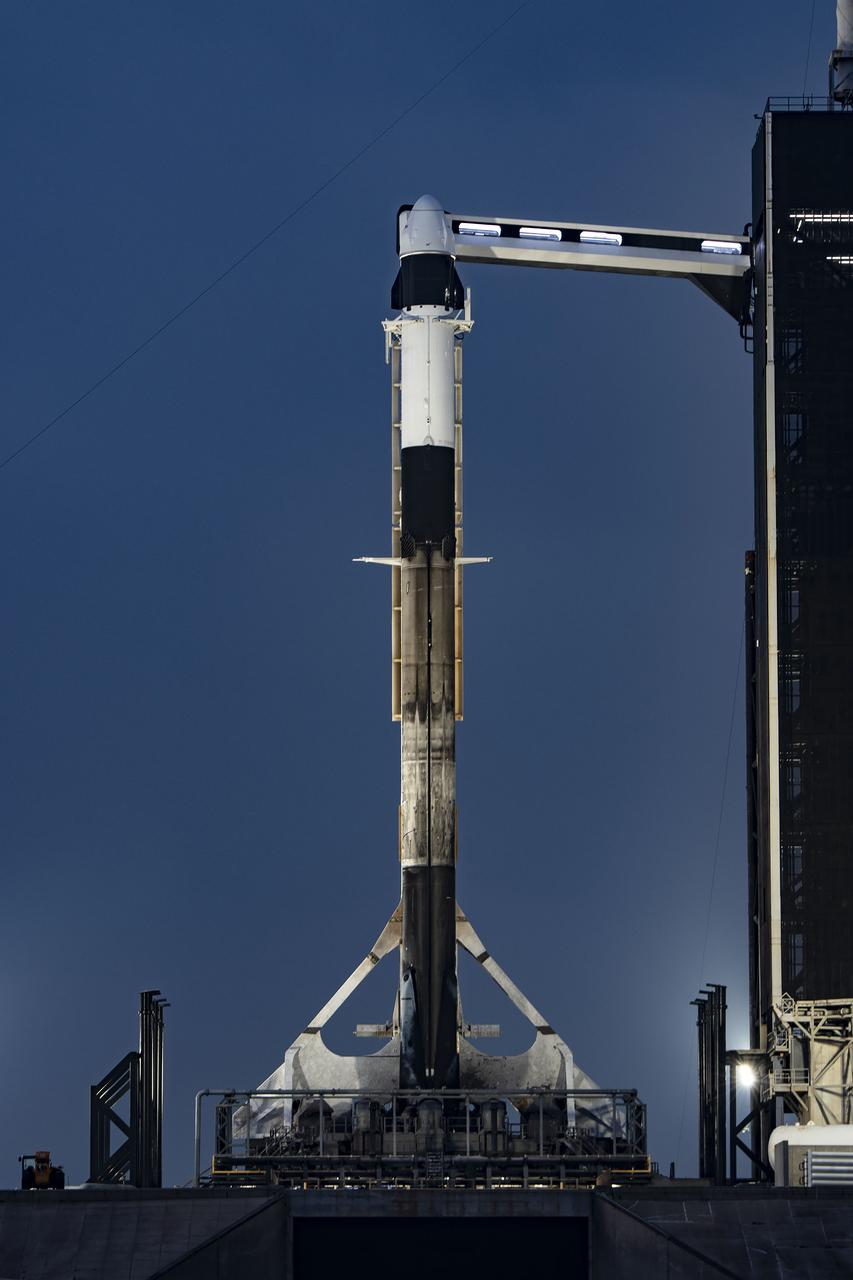
A SpaceX Falcon 9 rocket, with the company’s Dragon spacecraft atop, is secured in the vertical position at NASA Kennedy Space Center’s Launch Complex 39A on March 13, 2023, in preparation for the 27th commercial resupply services launch to the International Space Station. The mission will deliver new science investigations, supplies, and equipment to the crew aboard the space station, including the final two experiments comprising the National Institutes for Health and International Space Station National Laboratory’s Tissue Chips in Space initiative, Cardinal Heart 2.0 and Engineered Heart Tissues-2. Liftoff is scheduled for 8:30 p.m. EDT on Tuesday, March 14, from Kennedy’s Launch Complex 39A.
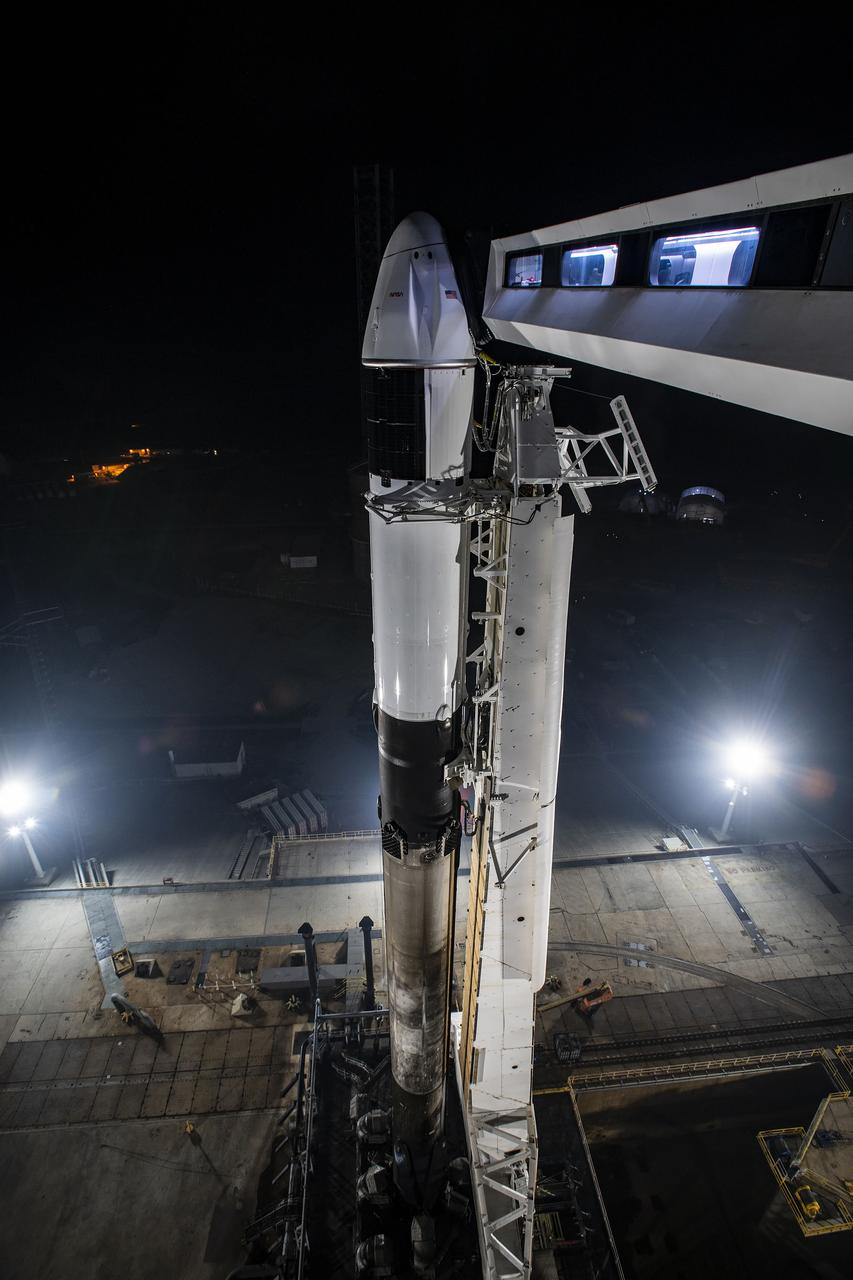
A SpaceX Falcon 9 rocket, with the company’s Dragon spacecraft atop, is secured in the vertical position at NASA Kennedy Space Center’s Launch Complex 39A on March 13, 2023, in preparation for the 27th commercial resupply services launch to the International Space Station. The mission will deliver new science investigations, supplies, and equipment to the crew aboard the space station, including the final two experiments comprising the National Institutes for Health and International Space Station National Laboratory’s Tissue Chips in Space initiative, Cardinal Heart 2.0 and Engineered Heart Tissues-2. Liftoff is scheduled for 8:30 p.m. EDT on Tuesday, March 14, from Kennedy’s Launch Complex 39A
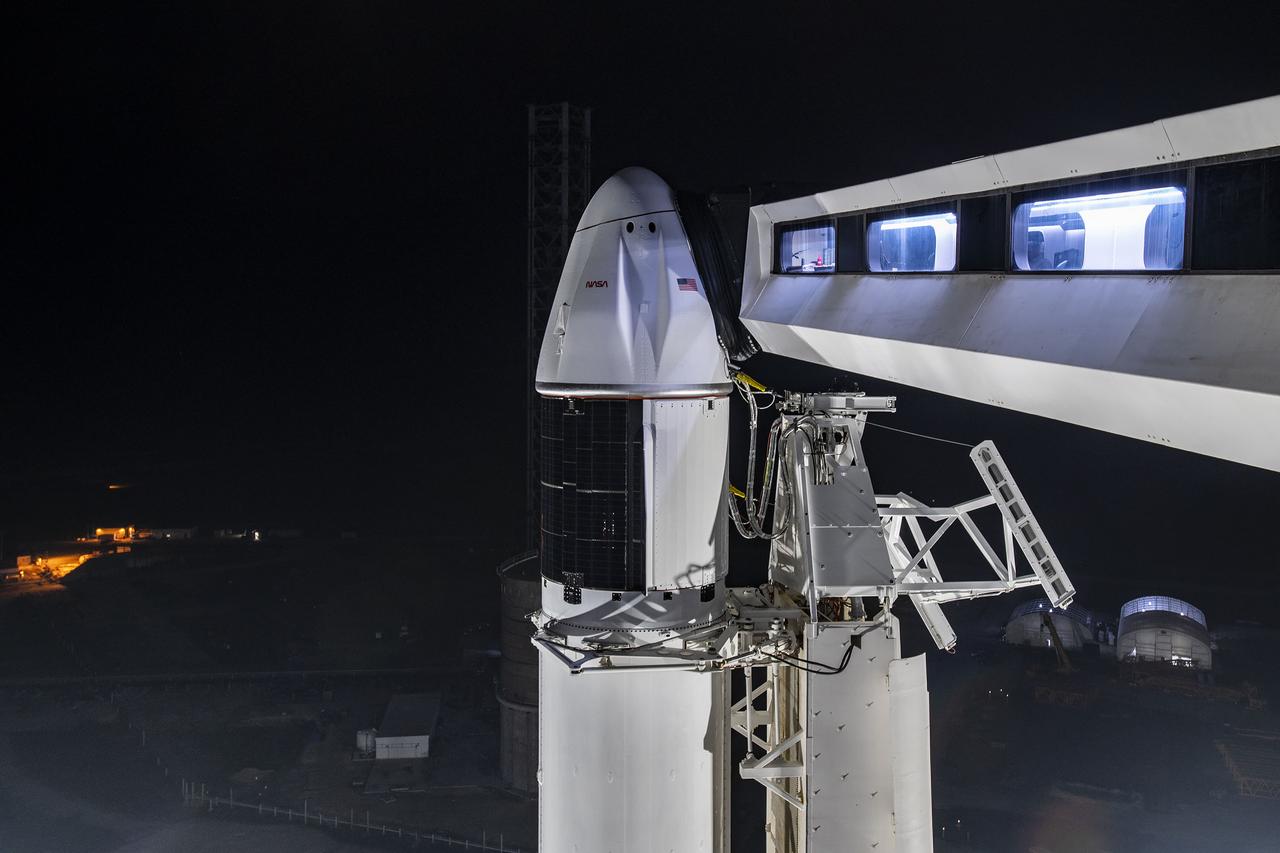
Seen here is an up-close view of the SpaceX Dragon spacecraft atop the company’s Falcon 9 rocket after being raised to a vertical position at NASA’s Kennedy Space Center in Florida on March 13, 2023, in preparation for the 27th commercial resupply services launch to the International Space Station. The mission will deliver new science investigations, supplies, and equipment to the crew aboard the space station, including the final two experiments comprising the National Institutes for Health and International Space Station National Laboratory’s Tissue Chips in Space initiative, Cardinal Heart 2.0 and Engineered Heart Tissues-2. Liftoff is scheduled for 8:30 p.m. EDT on Tuesday, March 14, from Kennedy’s Launch Complex 39A.
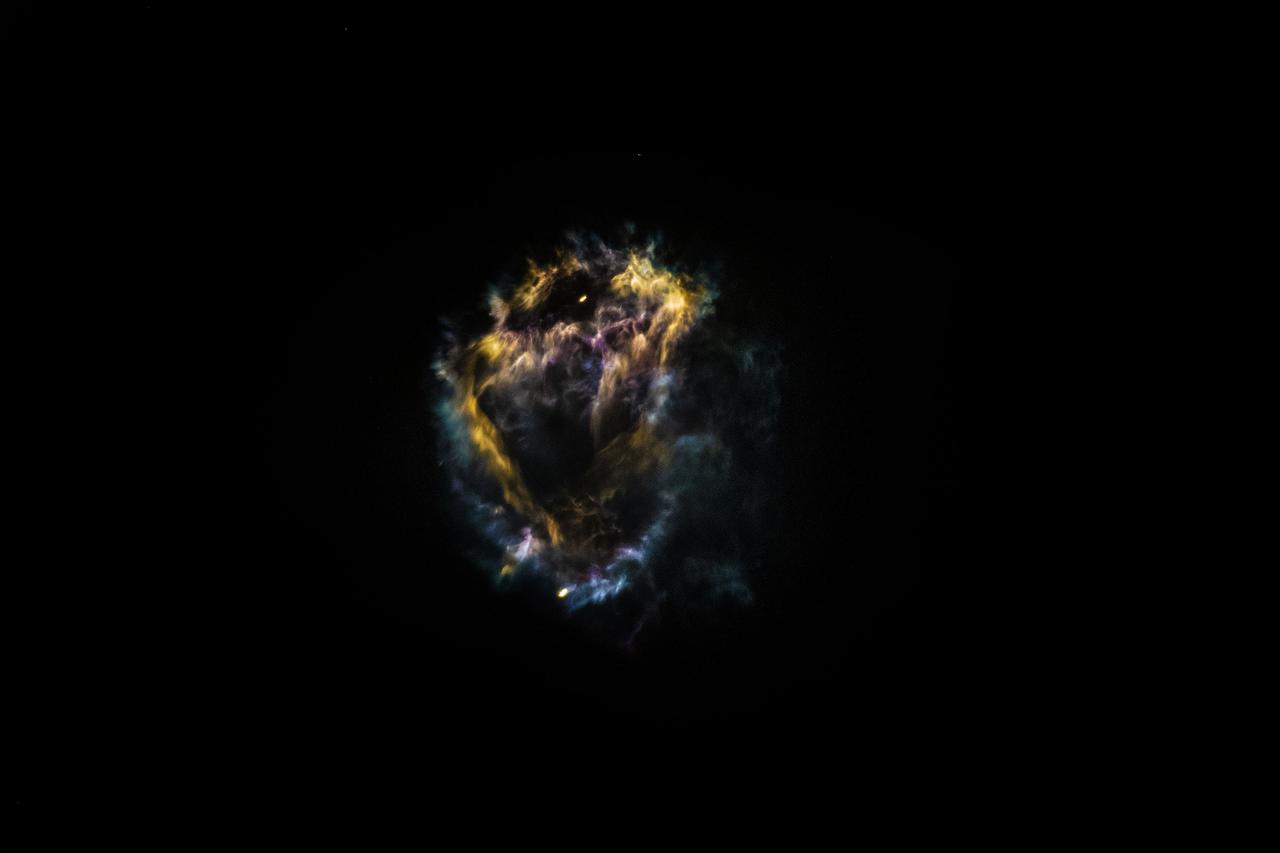
The SpaceX Falcon 9 rocket’s first stage separates from the Dragon spacecraft a few minutes after liftoff from Launch Complex 39A at NASA’s Kennedy Space Center in Florida on March 14, 2023, on the company’s 27th commercial resupply services mission for the agency to the International Space Station. Liftoff was at 8:30 p.m. EDT. Dragon will deliver more than 6,000 pounds of cargo, including a variety of NASA investigations, supplies, and equipment to the crew aboard the space station, including the final two experiments comprising the National Institutes for Health and International Space Station National Laboratory’s Tissue Chips in Space initiative, Cardinal Heart 2.0 and Engineered Heart Tissues-2. The spacecraft is expected to spend about a month attached to the orbiting outpost before it returns to Earth with research and return cargo, splashing down off the coast of Florida.
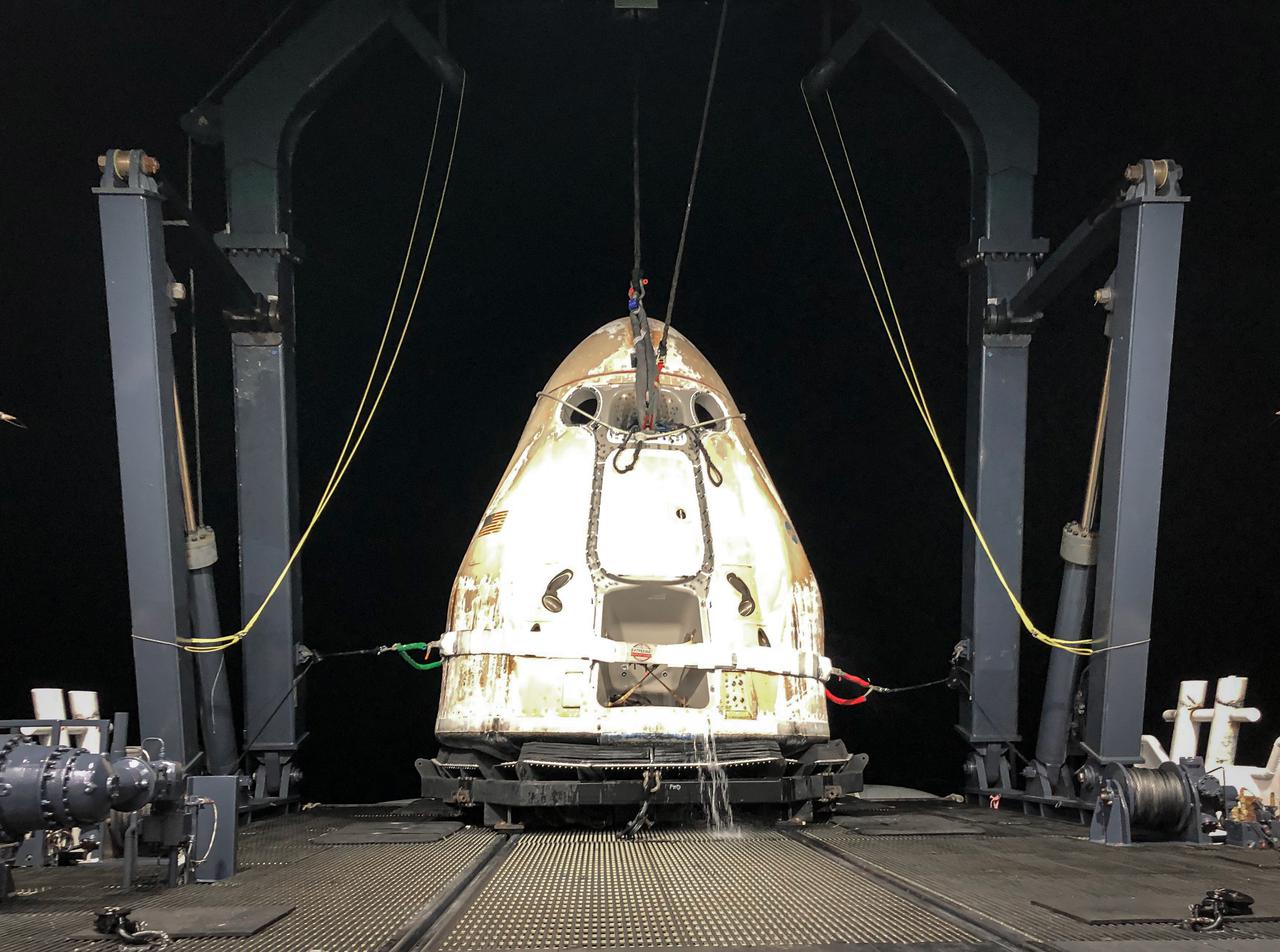
SpaceX’s Cargo Dragon spacecraft is lifted aboard a recovery vessel after splashing down in the Atlantic Ocean off the coast of Florida on Thursday, Sept. 30, 2021. The capsule, carrying cargo that flew aboard NASA’s SpaceX 23rd commercial resupply services mission, undocked from the International Space Station Thursday at approximately 9 a.m. The event marked the first time a Cargo Dragon splashed down in the Atlantic Ocean. Cargo from the capsule was delivered to the Launch and Landing Facility at Kennedy Space Center.
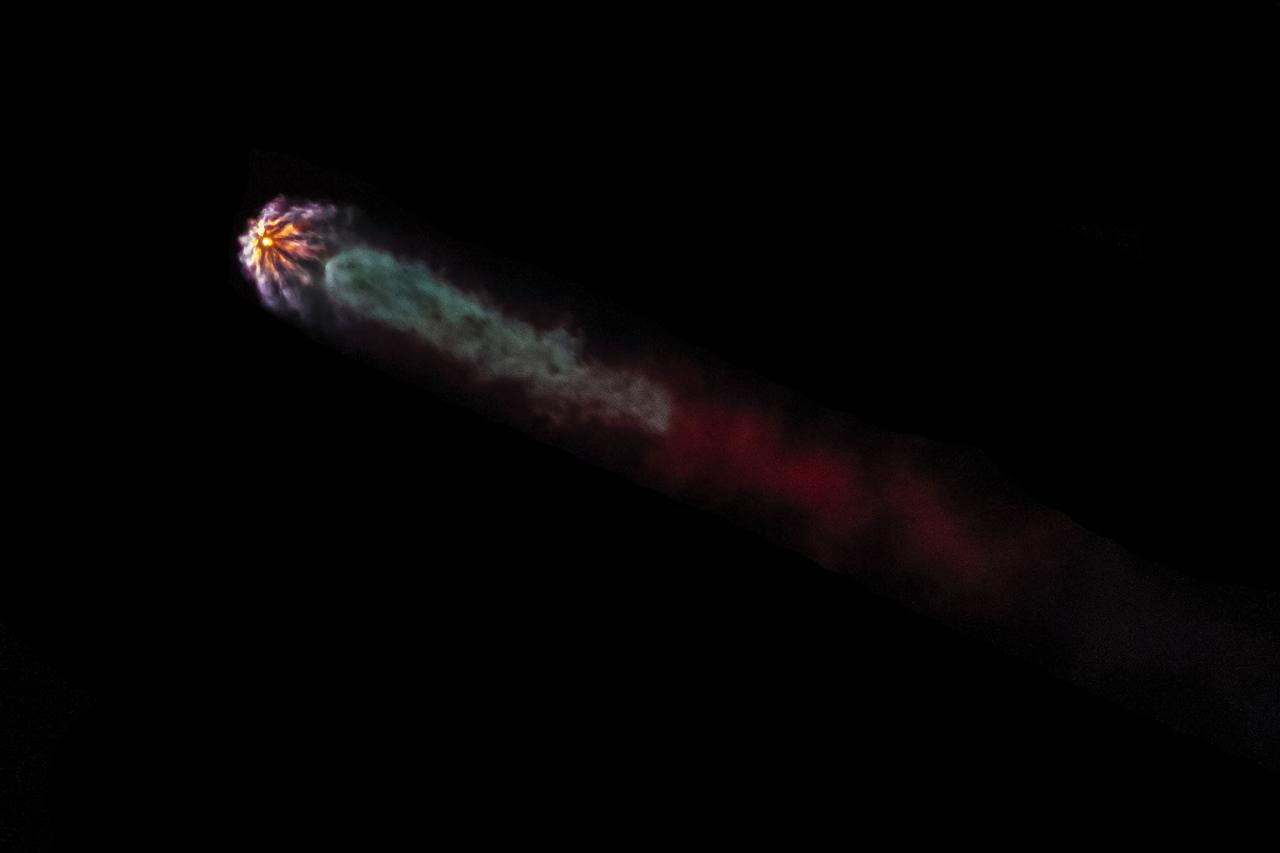
A SpaceX Falcon 9 rocket soars upward after its liftoff from Launch Complex 39A at NASA’s Kennedy Space Center in Florida on March 14, 2023, on the company’s 27th Commercial Resupply Services mission for the agency to the International Space Station. Liftoff was at 8:30 p.m. EDT. The Dragon spacecraft will deliver more than 6,000 pounds of science and research, supplies, and equipment to the crew aboard the space station, including the final two experiments comprising the National Institutes for Health and International Space Station National Laboratory’s Tissue Chips in Space initiative, Cardinal Heart 2.0 and Engineered Heart Tissues-2. The spacecraft is expected to spend about a month attached to the orbiting outpost before it returns to Earth with research and return cargo, splashing down off the coast of Florida.
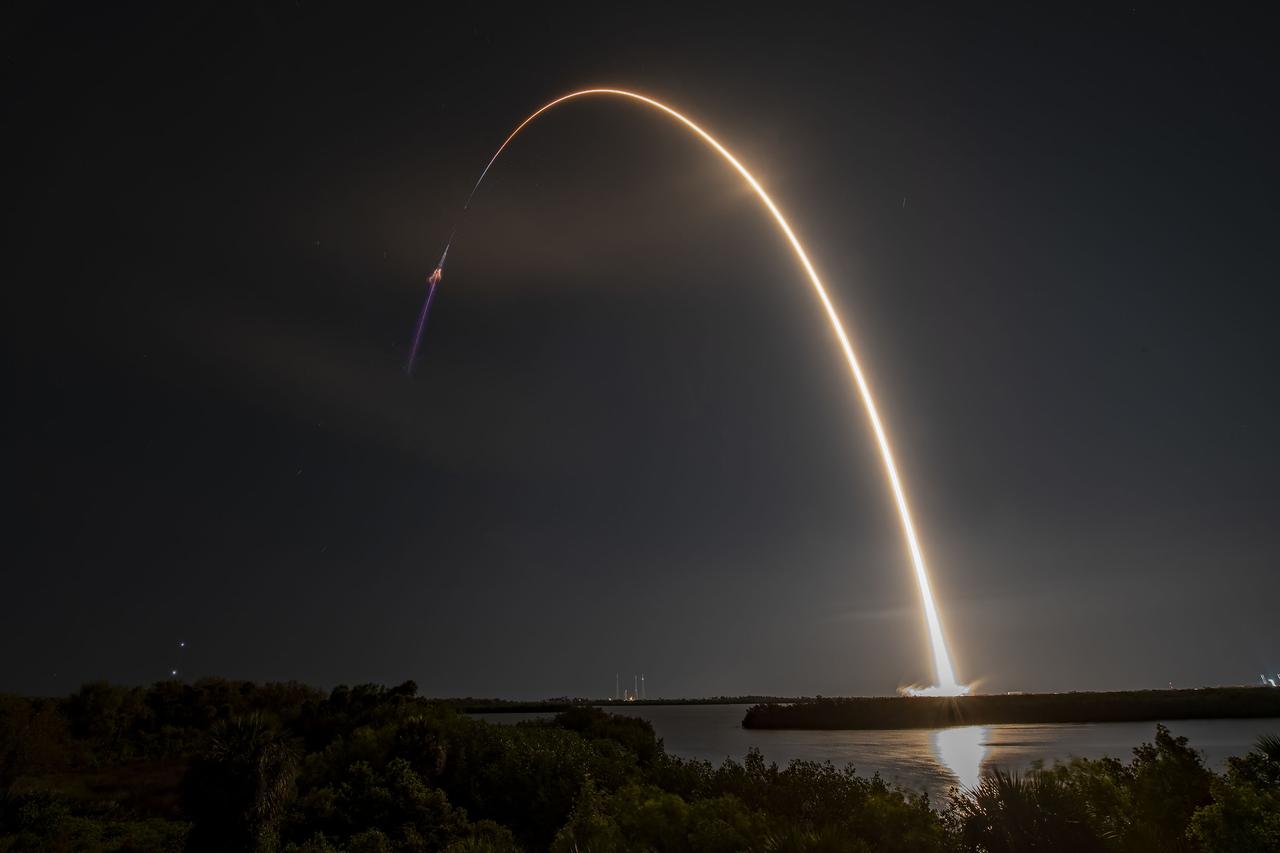
Creating a golden streak in the night sky, a SpaceX Falcon 9 rocket soars upward after liftoff from Launch Complex 39A at NASA’s Kennedy Space Center in Florida on March 14, 2023, on the company’s 27th Commercial Resupply Services mission for the agency to the International Space Station. Liftoff was at 8:30 p.m. EDT. The Dragon spacecraft will deliver more than 6,000 pounds of science and research, supplies, and equipment to the crew aboard the space station, including the final two experiments comprising the National Institutes for Health and International Space Station National Laboratory’s Tissue Chips in Space initiative, Cardinal Heart 2.0 and Engineered Heart Tissues-2. The spacecraft is expected to spend about a month attached to the orbiting outpost before it returns to Earth with research and return cargo, splashing down off the coast of Florida.
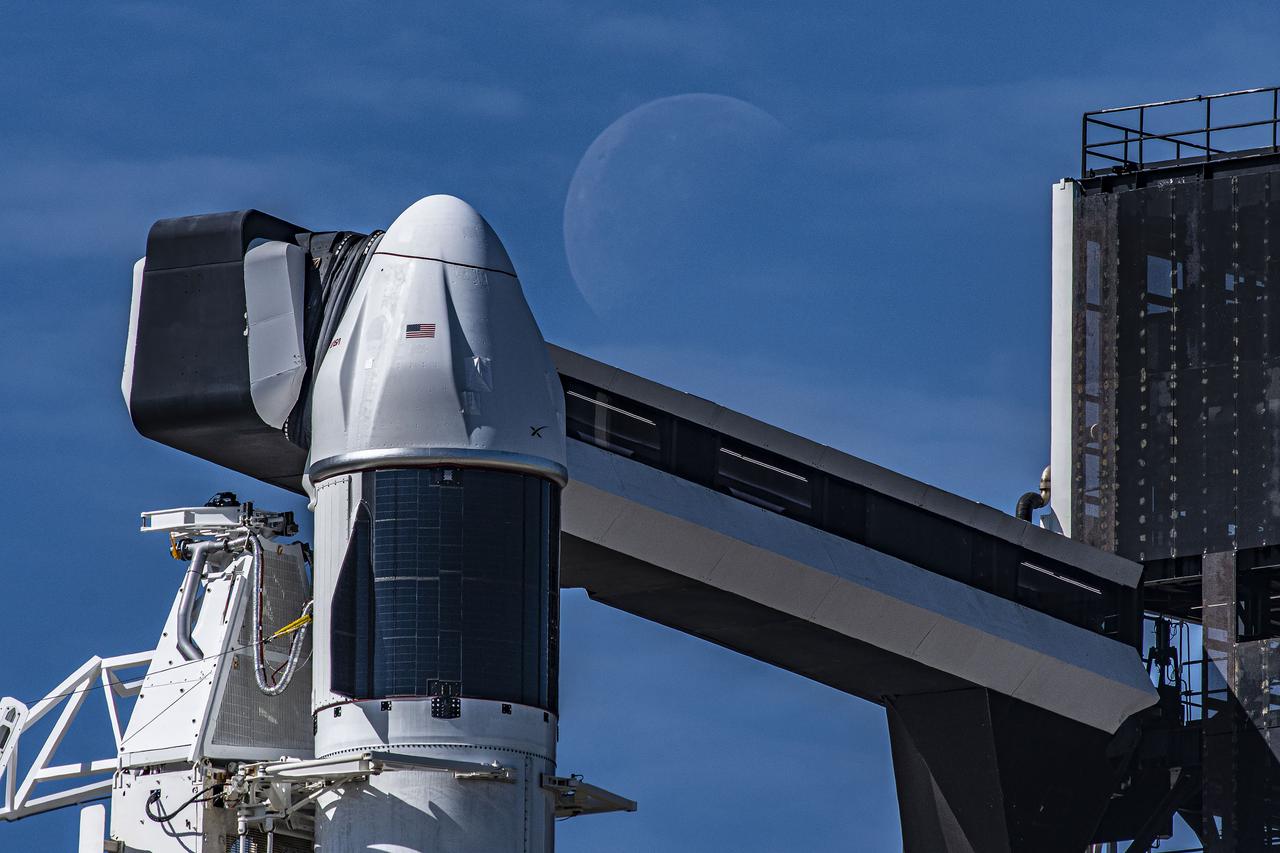
Seen here is a up-close view of the SpaceX Dragon spacecraft atop the company’s Falcon 9 rocket in the vertical position at NASA’s Kennedy Space Center in Florida on March 14, 2023, in preparation for the 27th commercial resupply services launch to the International Space Station. The mission will deliver new science investigations, supplies, and equipment to the crew aboard the space station, including the final two experiments comprising the National Institutes for Health and International Space Station National Laboratory’s Tissue Chips in Space initiative, Cardinal Heart 2.0 and Engineered Heart Tissues-2. Liftoff is scheduled for 8:30 p.m. EDT on Tuesday, March 14, from Kennedy’s Launch Complex 39A.
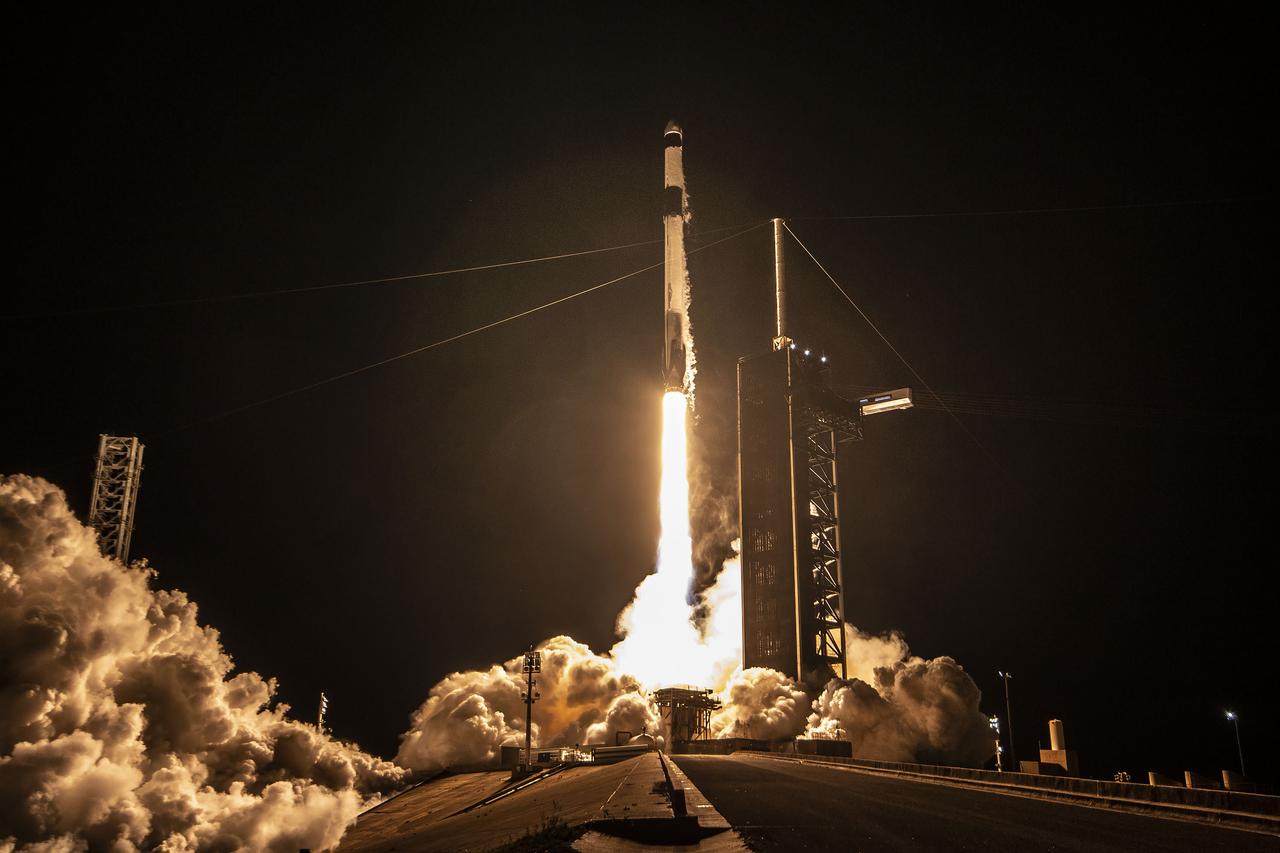
The SpaceX Falcon 9 rocket carrying the Dragon spacecraft lifts off from Launch Complex 39A at NASA’s Kennedy Space Center in Florida on March 14, 2023, on the company’s 27th commercial resupply services mission for the agency to the International Space Station. Liftoff was at 8:30 p.m. EDT. Dragon will deliver more than 6,000 pounds of cargo, including a variety of NASA investigations, supplies, and equipment to the crew aboard the space station, including the final two experiments comprising the National Institutes for Health and International Space Station National Laboratory’s Tissue Chips in Space initiative, Cardinal Heart 2.0 and Engineered Heart Tissues-2. The spacecraft is expected to spend about a month attached to the orbiting outpost before it returns to Earth with research and return cargo, splashing down off the coast of Florida.
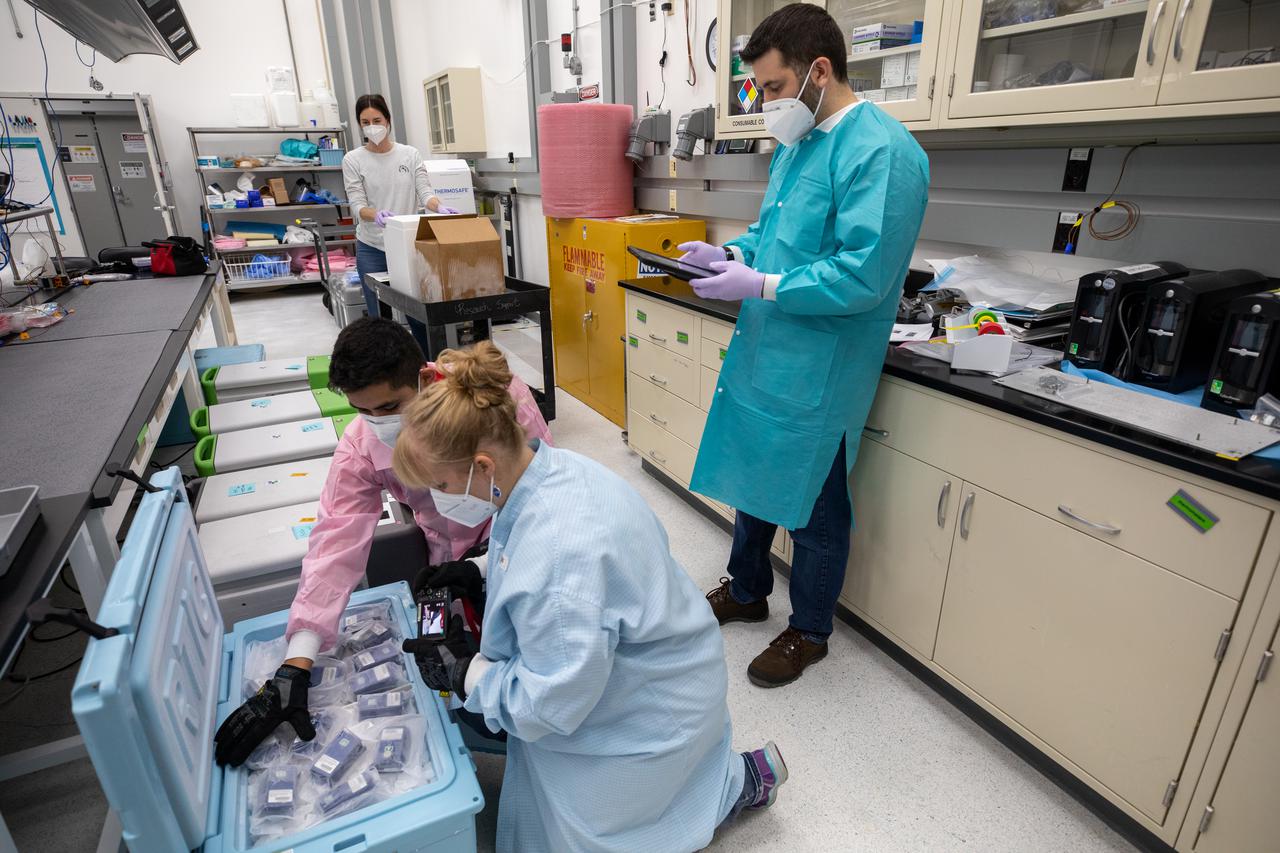
Members of the cold stowage team unpack science experiments inside the Space Station Processing Facility at NASA’s Kennedy Space Center in Florida on Jan. 14, 2021. The experiments returned to Earth on SpaceX’s 21st commercial resupply services mission (CRS-21). Making its successful parachute-assisted splashdown west of Tampa off the Florida coast, at 8:26 p.m. EST on Jan. 13, the SpaceX cargo Dragon returned more than 4,400 pounds of scientific experiments and other cargo from the International Space Station. After splashdown, SpaceX loaded Dragon aboard their Go Navigator recovery ship and packed an Airbus H225 helicopter with the time-sensitive research cargo for delivery to Kennedy. The upgraded cargo Dragon capsule also boasts double the powered locker capacity to preserve science samples, allowing for a significant increase in the research that can be carried back to Earth.
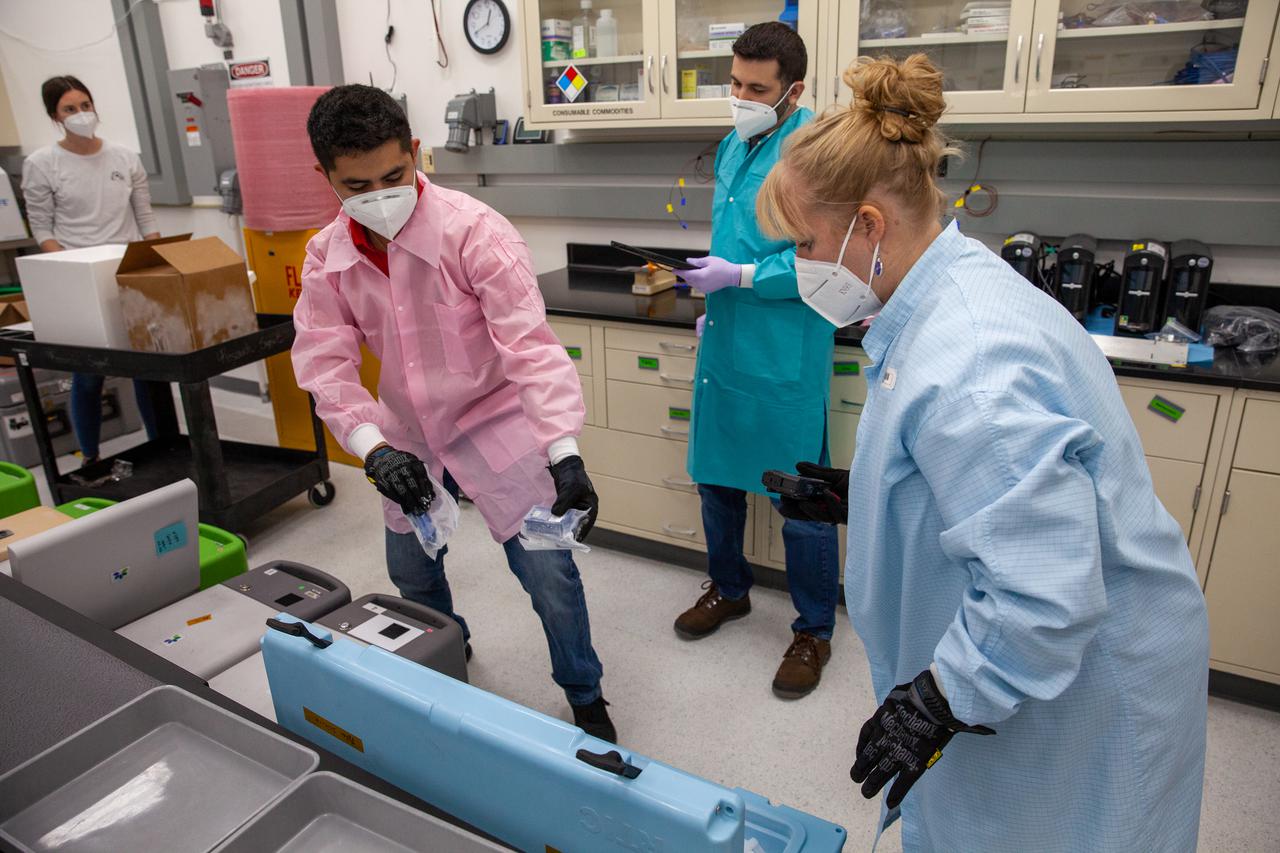
Members of the cold stowage team unpack science experiments inside the Space Station Processing Facility at NASA’s Kennedy Space Center in Florida on Jan. 14, 2021. The experiments returned to Earth on SpaceX’s 21st commercial resupply services mission (CRS-21). Making its successful parachute-assisted splashdown west of Tampa off the Florida coast, at 8:26 p.m. EST on Jan. 13, the SpaceX cargo Dragon returned more than 4,400 pounds of scientific experiments and other cargo from the International Space Station. After splashdown, SpaceX loaded Dragon aboard their Go Navigator recovery ship and packed an Airbus H225 helicopter with the time-sensitive research cargo for delivery to Kennedy. The upgraded cargo Dragon capsule also boasts double the powered locker capacity to preserve science samples, allowing for a significant increase in the research that can be carried back to Earth.
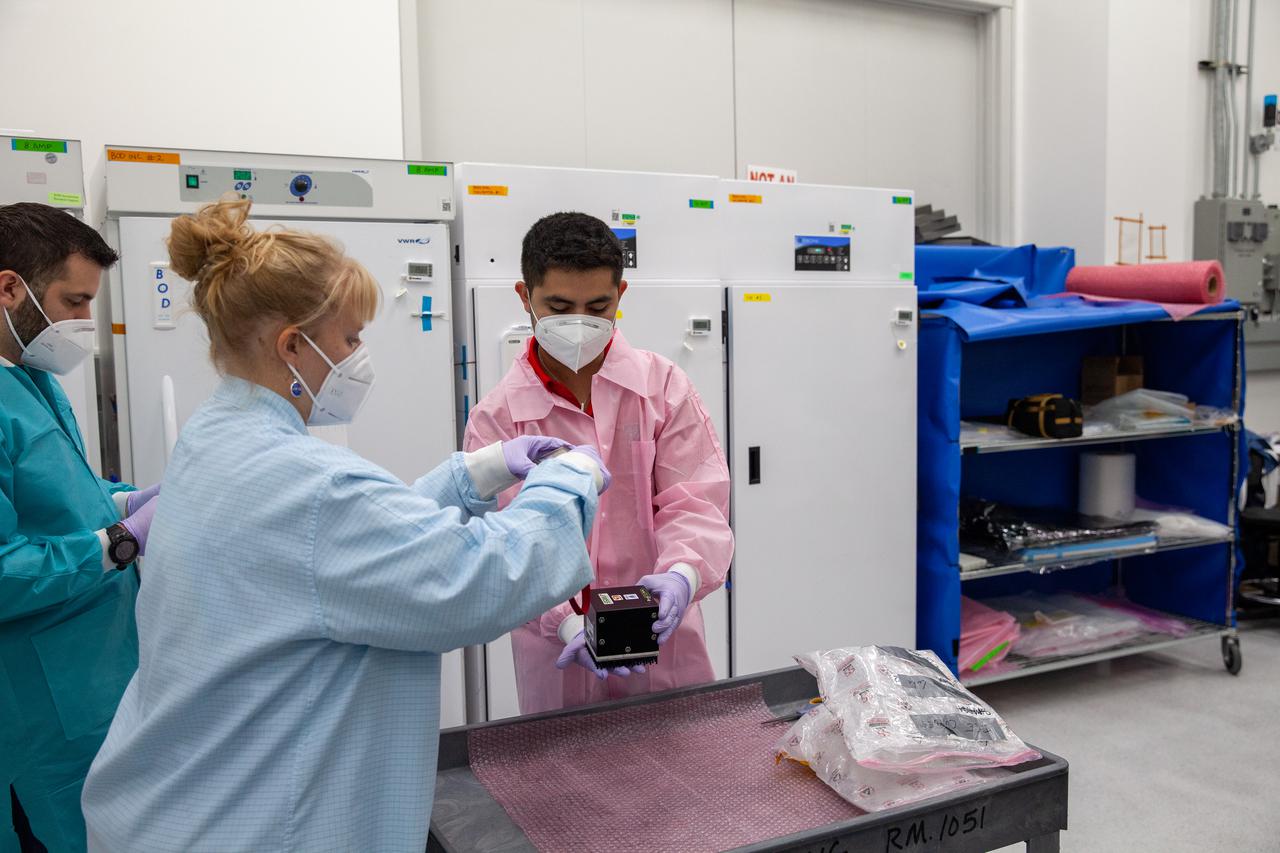
Members of the cold stowage team unpack science experiments inside the Space Station Processing Facility at NASA’s Kennedy Space Center in Florida on Jan. 14, 2021. The experiments returned to Earth on SpaceX’s 21st commercial resupply services mission (CRS-21). Making its successful parachute-assisted splashdown west of Tampa off the Florida coast, at 8:26 p.m. EST on Jan. 13, the SpaceX cargo Dragon returned more than 4,400 pounds of scientific experiments and other cargo from the International Space Station. After splashdown, SpaceX loaded Dragon aboard their Go Navigator recovery ship and packed an Airbus H225 helicopter with the time-sensitive research cargo for delivery to Kennedy. The upgraded cargo Dragon capsule also boasts double the powered locker capacity to preserve science samples, allowing for a significant increase in the research that can be carried back to Earth.
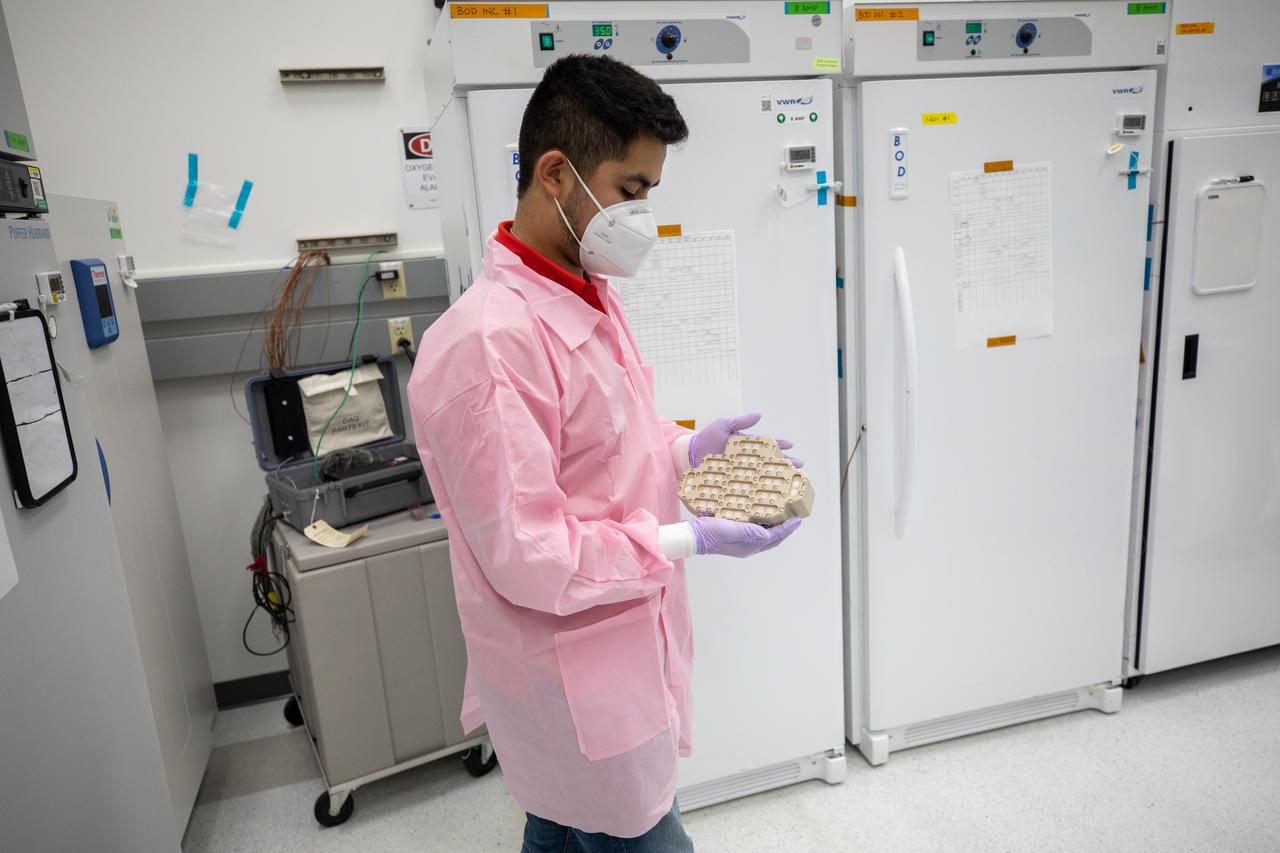
A member of the cold stowage team unpacks science experiments inside the Space Station Processing Facility at NASA’s Kennedy Space Center in Florida on Jan. 14, 2021. The experiments returned to Earth on SpaceX’s 21st commercial resupply services mission (CRS-21). Making its successful parachute-assisted splashdown west of Tampa off the Florida coast, at 8:26 p.m. EST on Jan. 13, the SpaceX cargo Dragon returned more than 4,400 pounds of scientific experiments and other cargo from the International Space Station. After splashdown, SpaceX loaded Dragon aboard their Go Navigator recovery ship and packed an Airbus H225 helicopter with the time-sensitive research cargo for delivery to Kennedy. The upgraded cargo Dragon capsule also boasts double the powered locker capacity to preserve science samples, allowing for a significant increase in the research that can be carried back to Earth.
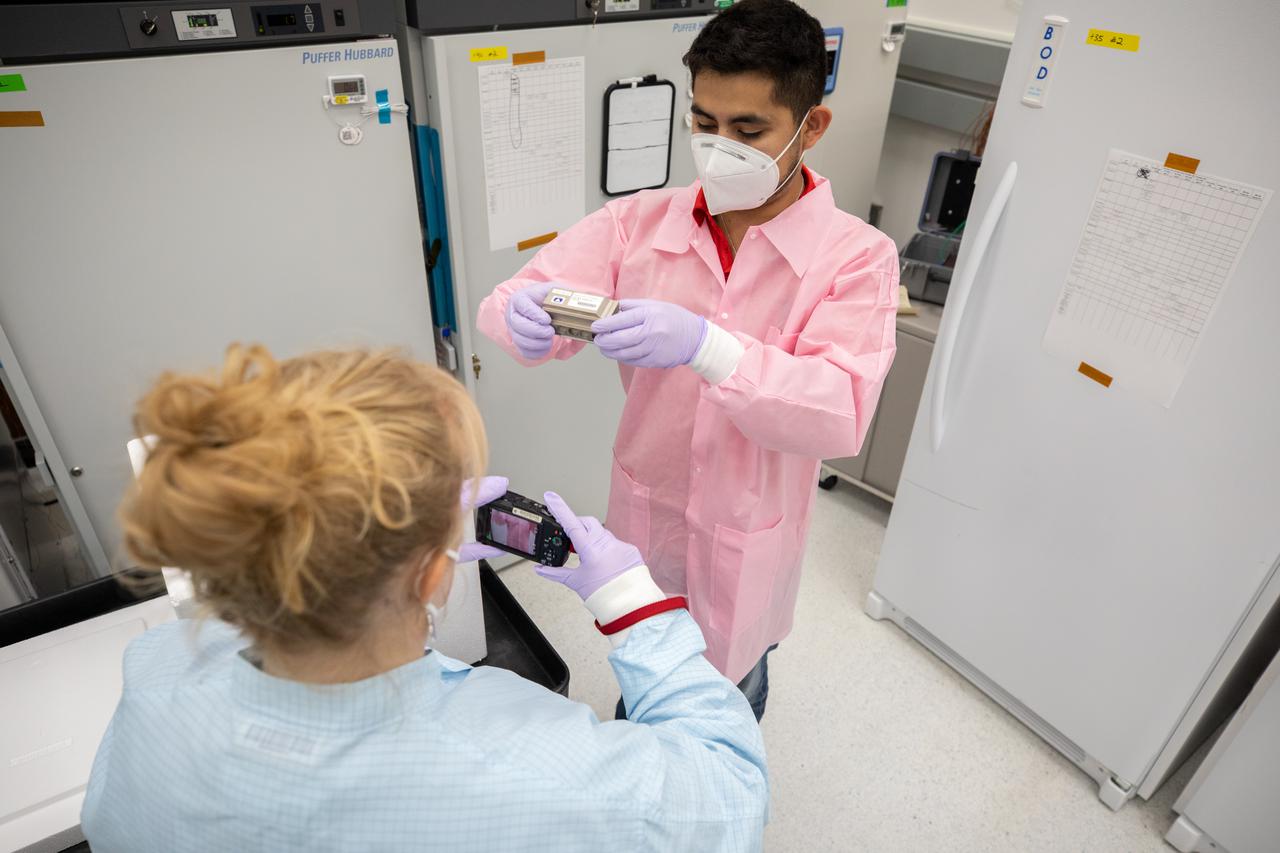
Members of the cold stowage team unpack science experiments inside the Space Station Processing Facility at NASA’s Kennedy Space Center in Florida on Jan. 14, 2021. The experiments returned to Earth on SpaceX’s 21st commercial resupply services mission (CRS-21). Making its successful parachute-assisted splashdown west of Tampa off the Florida coast, at 8:26 p.m. EST on Jan. 13, the SpaceX cargo Dragon returned more than 4,400 pounds of scientific experiments and other cargo from the International Space Station. After splashdown, SpaceX loaded Dragon aboard their Go Navigator recovery ship and packed an Airbus H225 helicopter with the time-sensitive research cargo for delivery to Kennedy. The upgraded cargo Dragon capsule also boasts double the powered locker capacity to preserve science samples, allowing for a significant increase in the research that can be carried back to Earth.
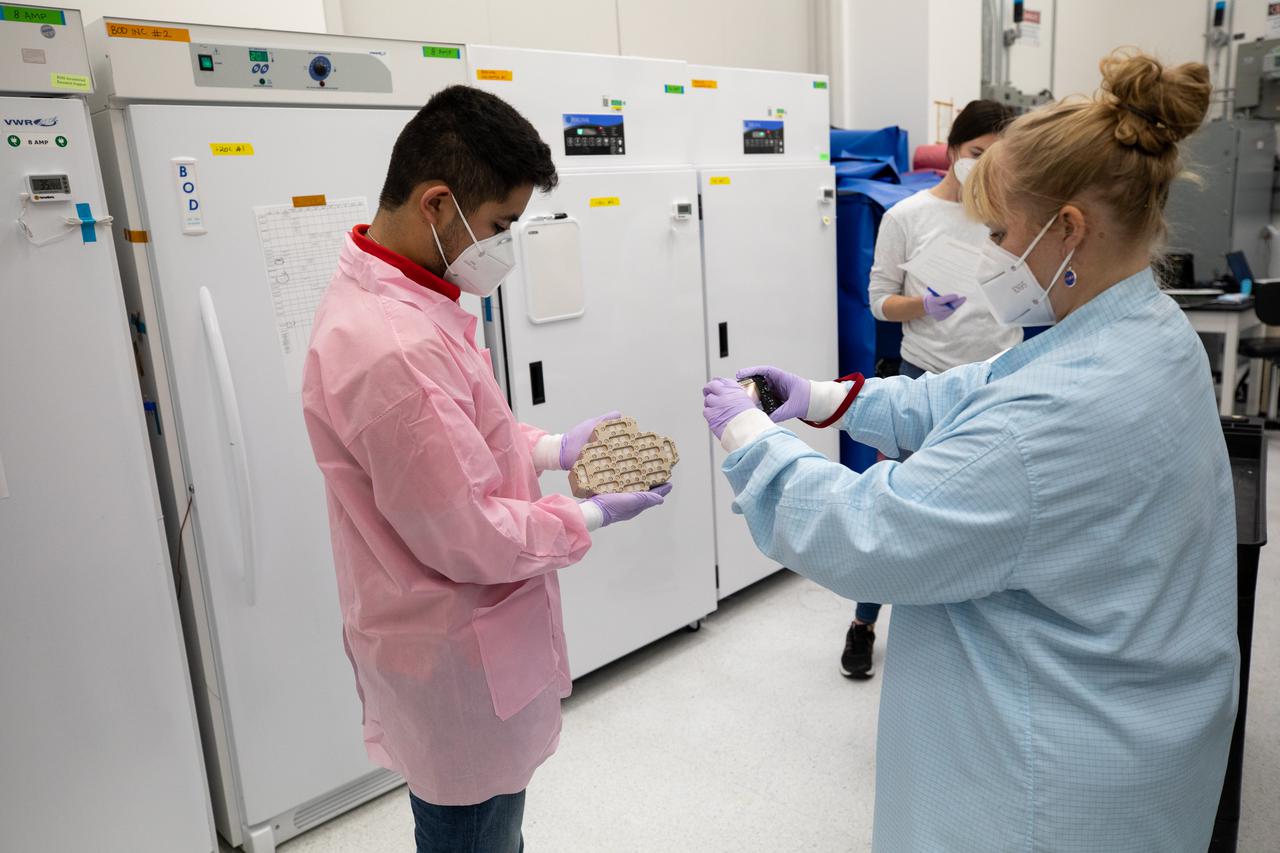
Members of the cold stowage team unpack science experiments inside the Space Station Processing Facility at NASA’s Kennedy Space Center in Florida on Jan. 14, 2021. The experiments returned to Earth on SpaceX’s 21st commercial resupply services mission (CRS-21). Making its successful parachute-assisted splashdown west of Tampa off the Florida coast, at 8:26 p.m. EST on Jan. 13, the SpaceX cargo Dragon returned more than 4,400 pounds of scientific experiments and other cargo from the International Space Station. After splashdown, SpaceX loaded Dragon aboard their Go Navigator recovery ship and packed an Airbus H225 helicopter with the time-sensitive research cargo for delivery to Kennedy. The upgraded cargo Dragon capsule also boasts double the powered locker capacity to preserve science samples, allowing for a significant increase in the research that can be carried back to Earth.
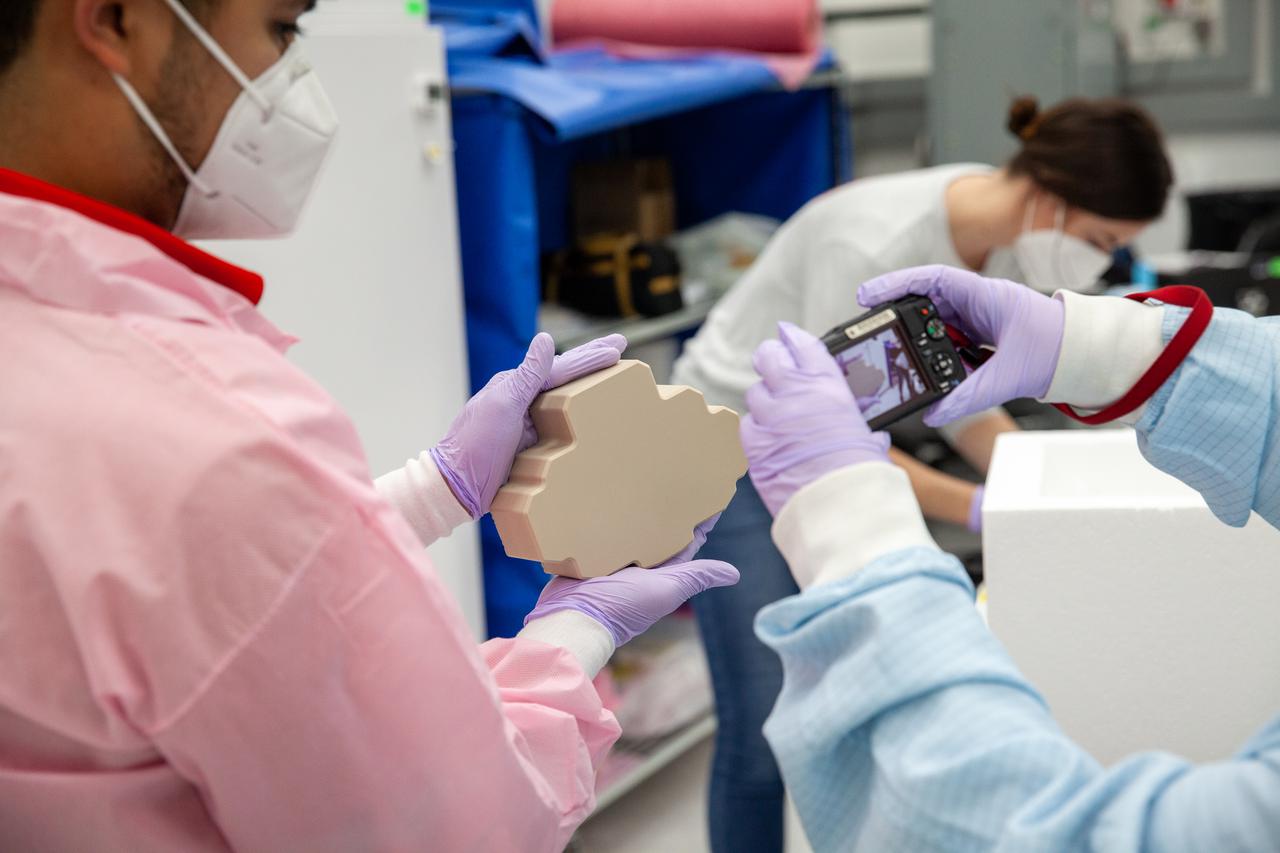
Members of the cold stowage team unpack science experiments inside the Space Station Processing Facility at NASA’s Kennedy Space Center in Florida on Jan. 14, 2021. The experiments returned to Earth on SpaceX’s 21st commercial resupply services mission (CRS-21). Making its successful parachute-assisted splashdown west of Tampa off the Florida coast, at 8:26 p.m. EST on Jan. 13, the SpaceX cargo Dragon returned more than 4,400 pounds of scientific experiments and other cargo from the International Space Station. After splashdown, SpaceX loaded Dragon aboard their Go Navigator recovery ship and packed an Airbus H225 helicopter with the time-sensitive research cargo for delivery to Kennedy. The upgraded cargo Dragon capsule also boasts double the powered locker capacity to preserve science samples, allowing for a significant increase in the research that can be carried back to Earth.
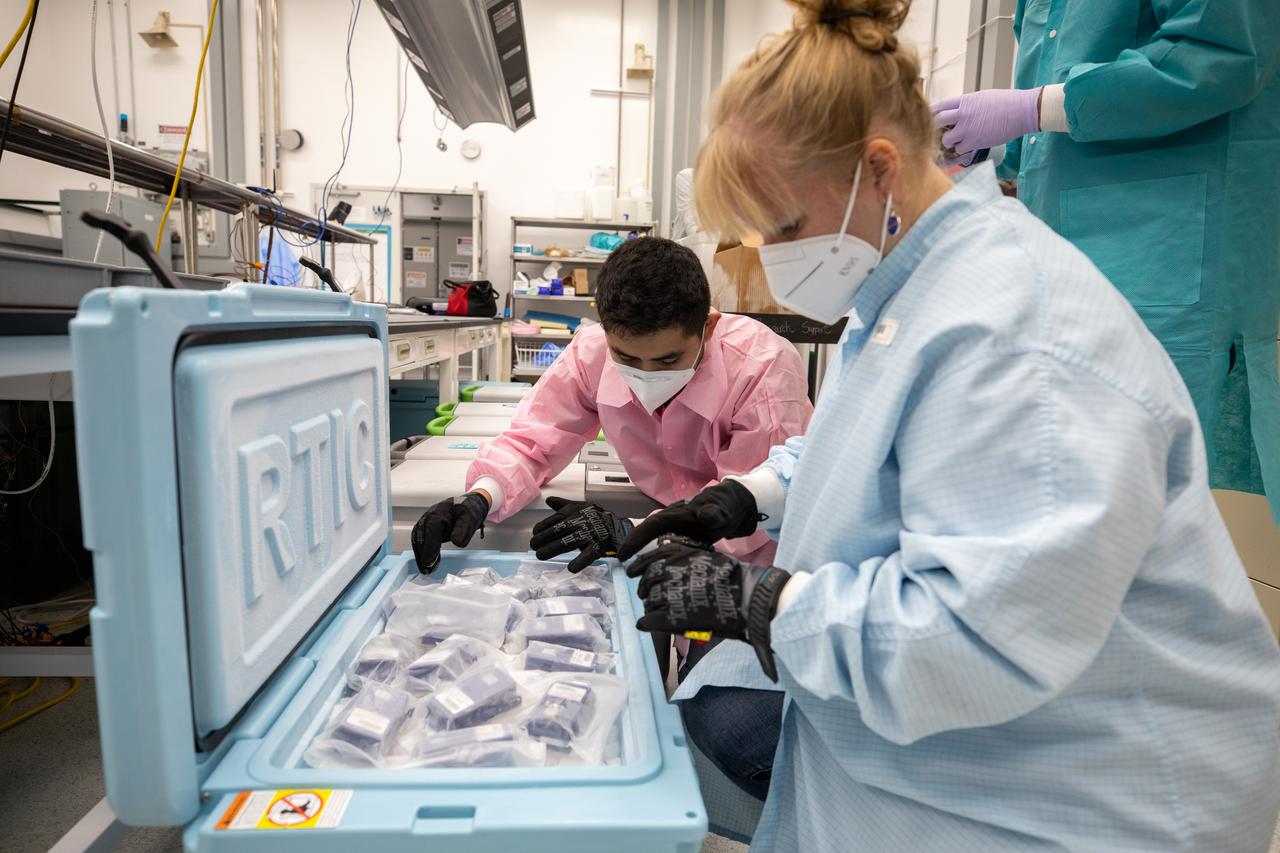
Members of the cold stowage team unpack science experiments inside the Space Station Processing Facility at NASA’s Kennedy Space Center in Florida on Jan. 14, 2021. The experiments returned to Earth on SpaceX’s 21st commercial resupply services mission (CRS-21). Making its successful parachute-assisted splashdown west of Tampa off the Florida coast, at 8:26 p.m. EST on Jan. 13, the SpaceX cargo Dragon returned more than 4,400 pounds of scientific experiments and other cargo from the International Space Station. After splashdown, SpaceX loaded Dragon aboard their Go Navigator recovery ship and packed an Airbus H225 helicopter with the time-sensitive research cargo for delivery to Kennedy. The upgraded cargo Dragon capsule also boasts double the powered locker capacity to preserve science samples, allowing for a significant increase in the research that can be carried back to Earth.
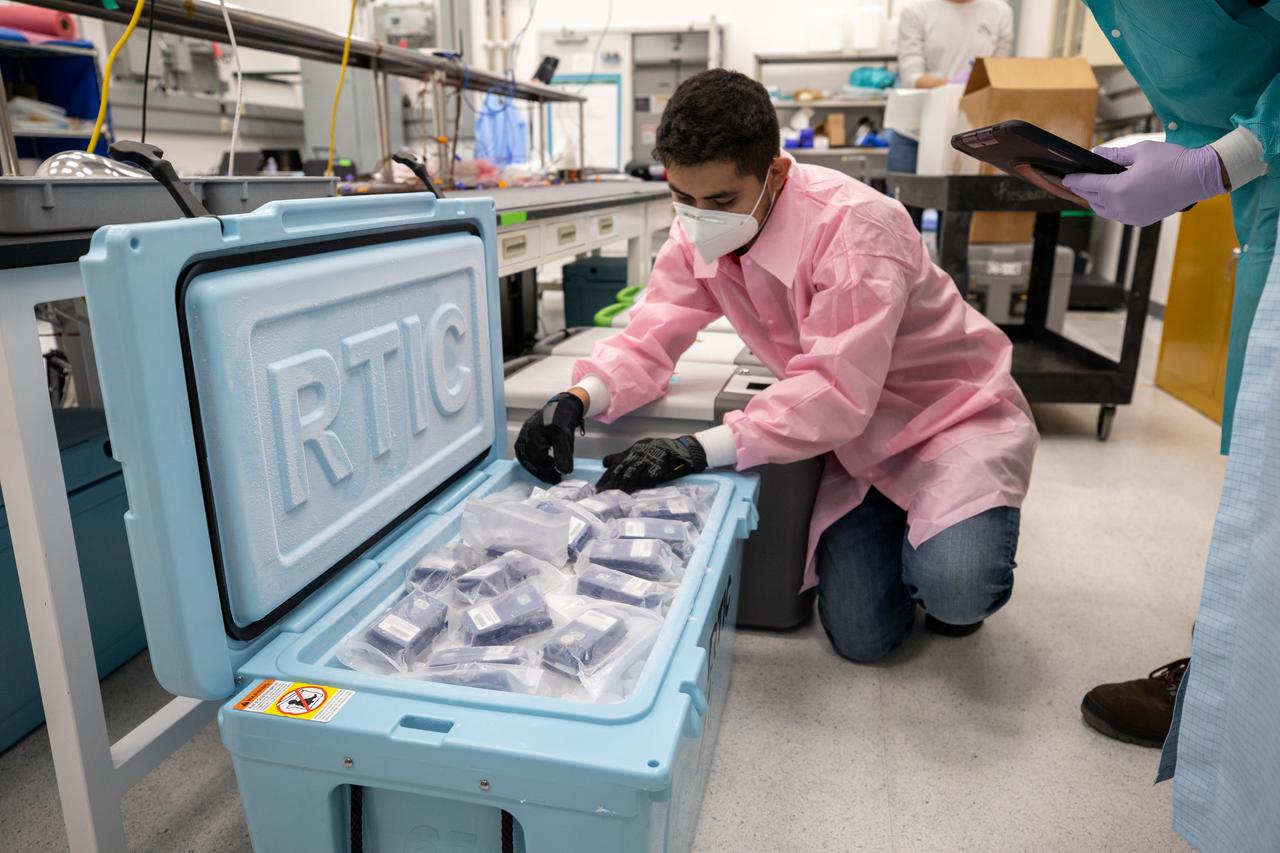
Members of the cold stowage team unpack science experiments inside the Space Station Processing Facility at NASA’s Kennedy Space Center in Florida on Jan. 14, 2021. The experiments returned to Earth on SpaceX’s 21st commercial resupply services mission (CRS-21). Making its successful parachute-assisted splashdown west of Tampa off the Florida coast, at 8:26 p.m. EST on Jan. 13, the SpaceX cargo Dragon returned more than 4,400 pounds of scientific experiments and other cargo from the International Space Station. After splashdown, SpaceX loaded Dragon aboard their Go Navigator recovery ship and packed an Airbus H225 helicopter with the time-sensitive research cargo for delivery to Kennedy. The upgraded cargo Dragon capsule also boasts double the powered locker capacity to preserve science samples, allowing for a significant increase in the research that can be carried back to Earth.
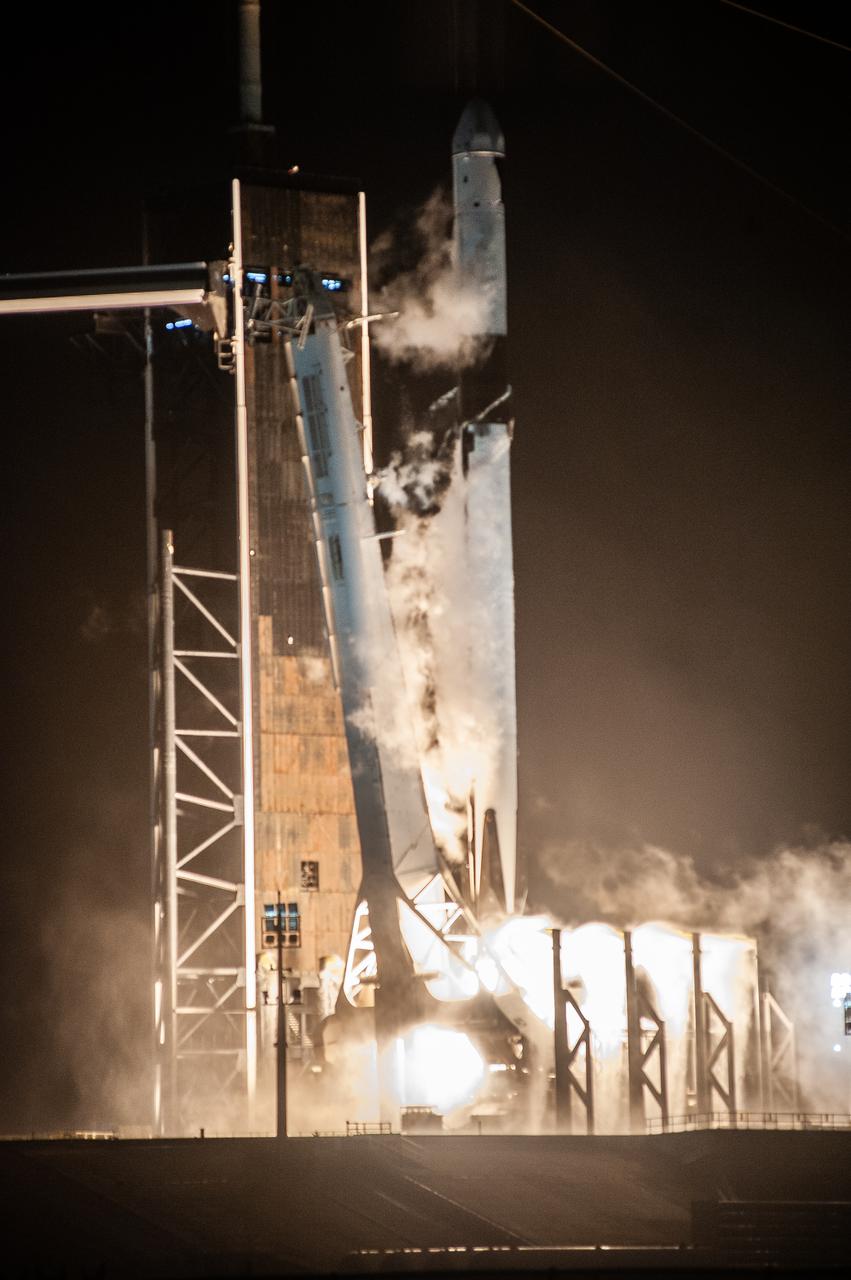
A SpaceX Falcon 9 rocket lifts off from Launch Complex 39A at Kennedy Space Center in Florida at 5:07 a.m. EST on Tuesday, Dec. 21, 2021, carrying the Dragon spacecraft on its journey to the International Space Station for SpaceX’s 24th commercial resupply services mission. Dragon will deliver new science investigations, supplies, and equipment to the crew on board the space station. Arrival to the orbiting laboratory is planned for Wednesday, Dec. 22.
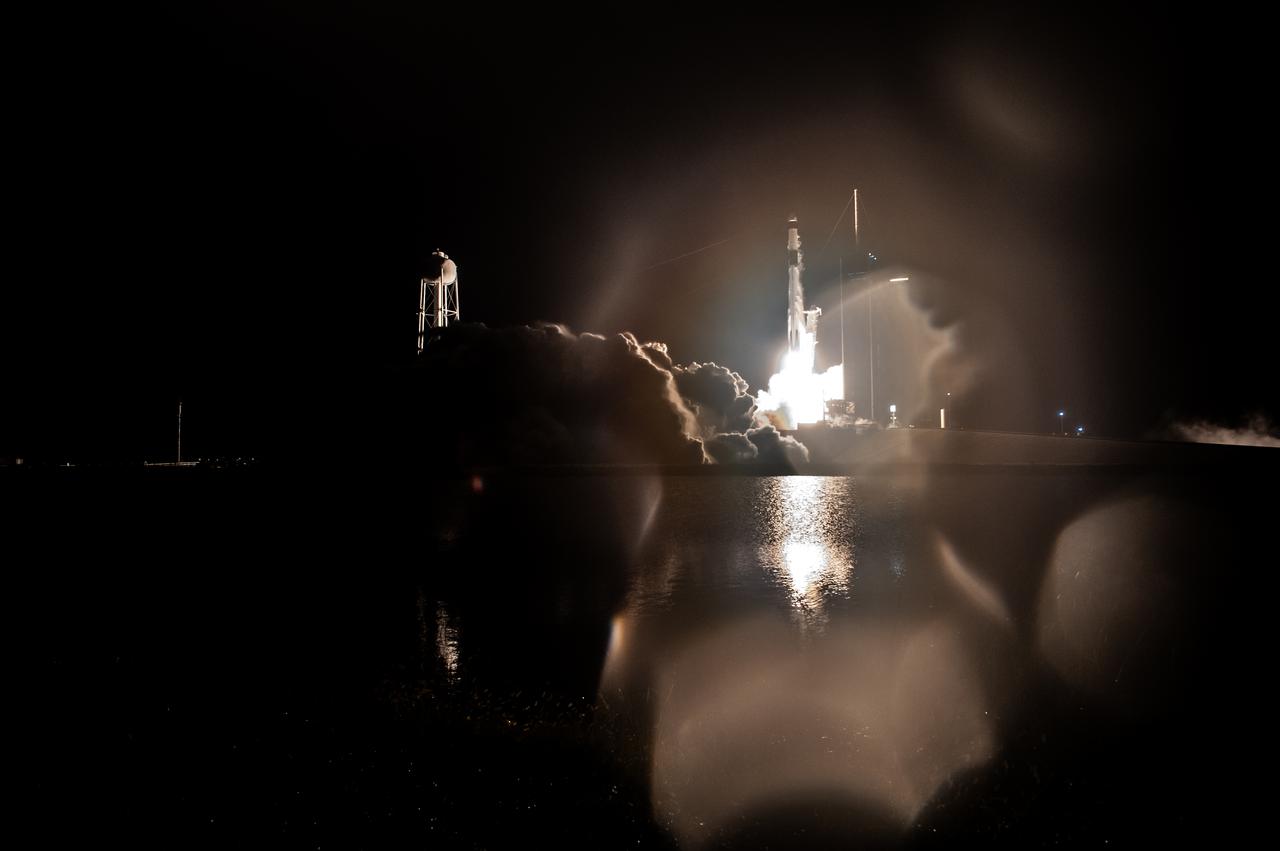
A SpaceX Falcon 9 rocket lifts off from Launch Complex 39A at Kennedy Space Center in Florida at 5:07 a.m. EST on Tuesday, Dec. 21, 2021, carrying the Dragon spacecraft on its journey to the International Space Station for SpaceX’s 24th commercial resupply services mission. Dragon will deliver new science investigations, supplies, and equipment to the crew on board the space station. Arrival to the orbiting laboratory is planned for Wednesday, Dec. 22.
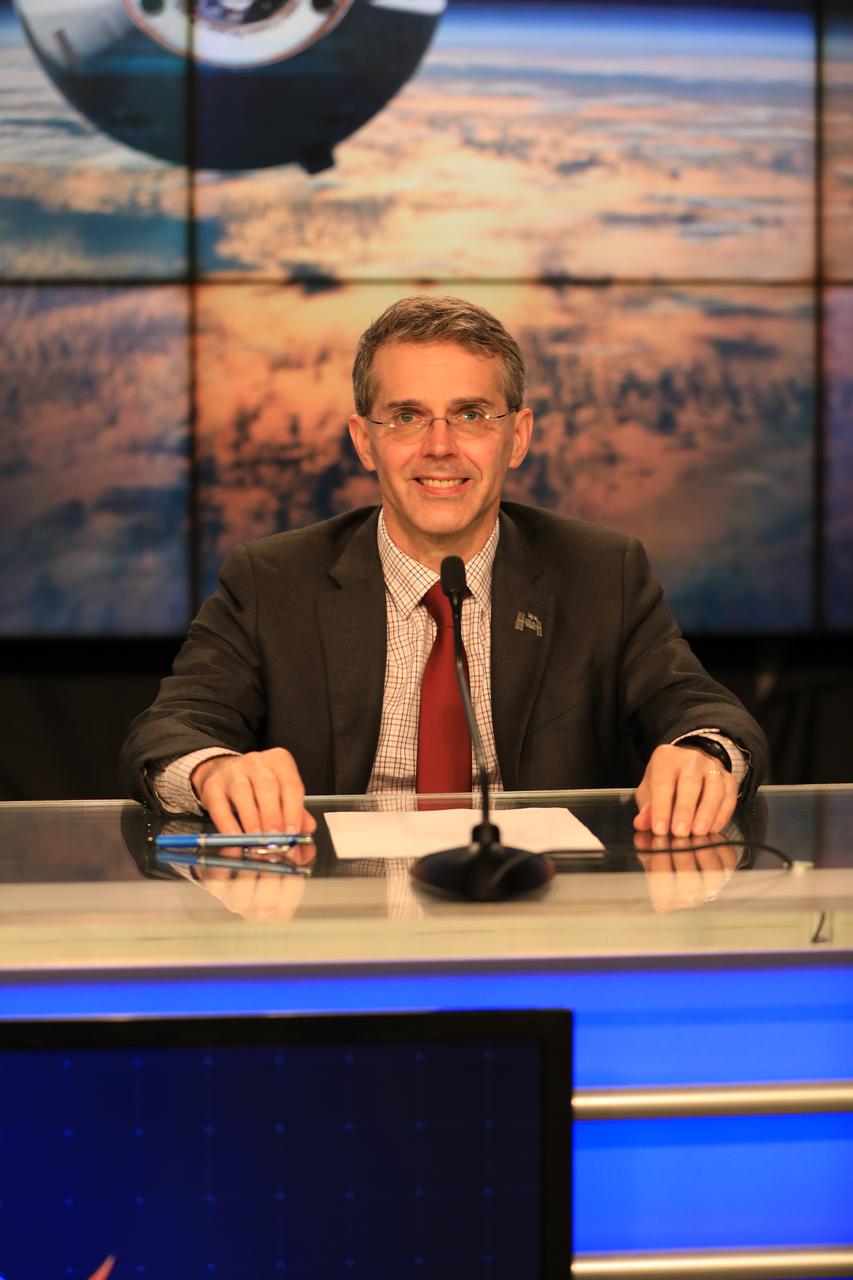
Dr. Bob Dempsey, acting deputy chief scientist, International Space Station Program, is introduced during a prelaunch news conference for SpaceX’s 24th commercial resupply services mission at Kennedy Space Center in Florida on Dec. 20, 2021. Liftoff of the SpaceX Falcon 9 rocket with the company’s Dragon spacecraft on board is targeted for Tuesday, Dec. 21, 2021, at 5:07 a.m. EST. The mission will deliver new science investigations, supplies, and equipment to the crew on board the space station.
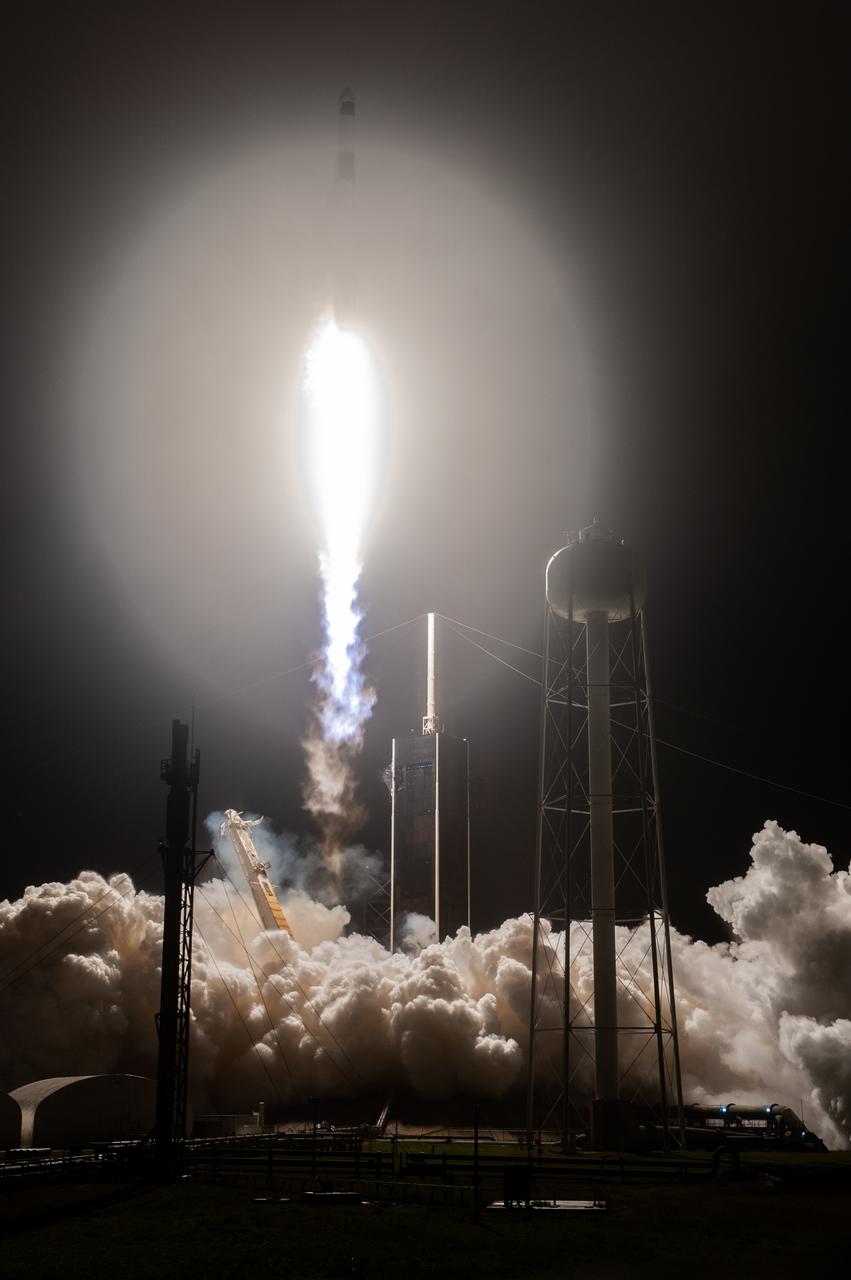
A SpaceX Falcon 9 rocket soars into the sky after lifting off from Launch Complex 39A at Kennedy Space Center in Florida at 5:07 a.m. EST on Tuesday, Dec. 21, 2021, carrying the Dragon spacecraft on its journey to the International Space Station for SpaceX’s 24th commercial resupply services mission. Dragon will deliver new science investigations, supplies, and equipment to the crew on board the space station. Arrival to the orbiting laboratory is planned for Wednesday, Dec. 22.

Arlena Moses, launch weather officer, 45th Weather Squadron, Cape Canaveral Space Force Station, is introduced during a prelaunch news conference for SpaceX’s 24th commercial resupply services mission at Kennedy Space Center in Florida on Tuesday, Dec. 20, 2021. Liftoff of the SpaceX Falcon 9 rocket with the company’s Dragon spacecraft on board is targeted for Tuesday, Dec. 21, 2021, at 5:07 a.m. EST. The mission will deliver new science investigations, supplies, and equipment to the crew on board the International Space Station.

NASA Communications’ Megan Cruz moderates a SpaceX 24th commercial resupply services mission prelaunch news conference at Kennedy Space Center in Florida on Tuesday, Dec. 20, 2021. Participants included Joel Montalbano, manager, International Space Station Program; Dr. Bob Dempsey, acting deputy chief scientist, International Space Station Program; Sarah Walker, director, Dragon mission management, SpaceX; and Arlena Moses, launch weather officer, 45th Weather Squadron, Cape Canaveral Space Force Station. Liftoff of the SpaceX Falcon 9 rocket with the company’s Dragon spacecraft on board is targeted for Tuesday, Dec. 21, 2021, at 5:07 a.m. EST. The mission will deliver new science investigations, supplies, and equipment to the crew on board the International Space Station.
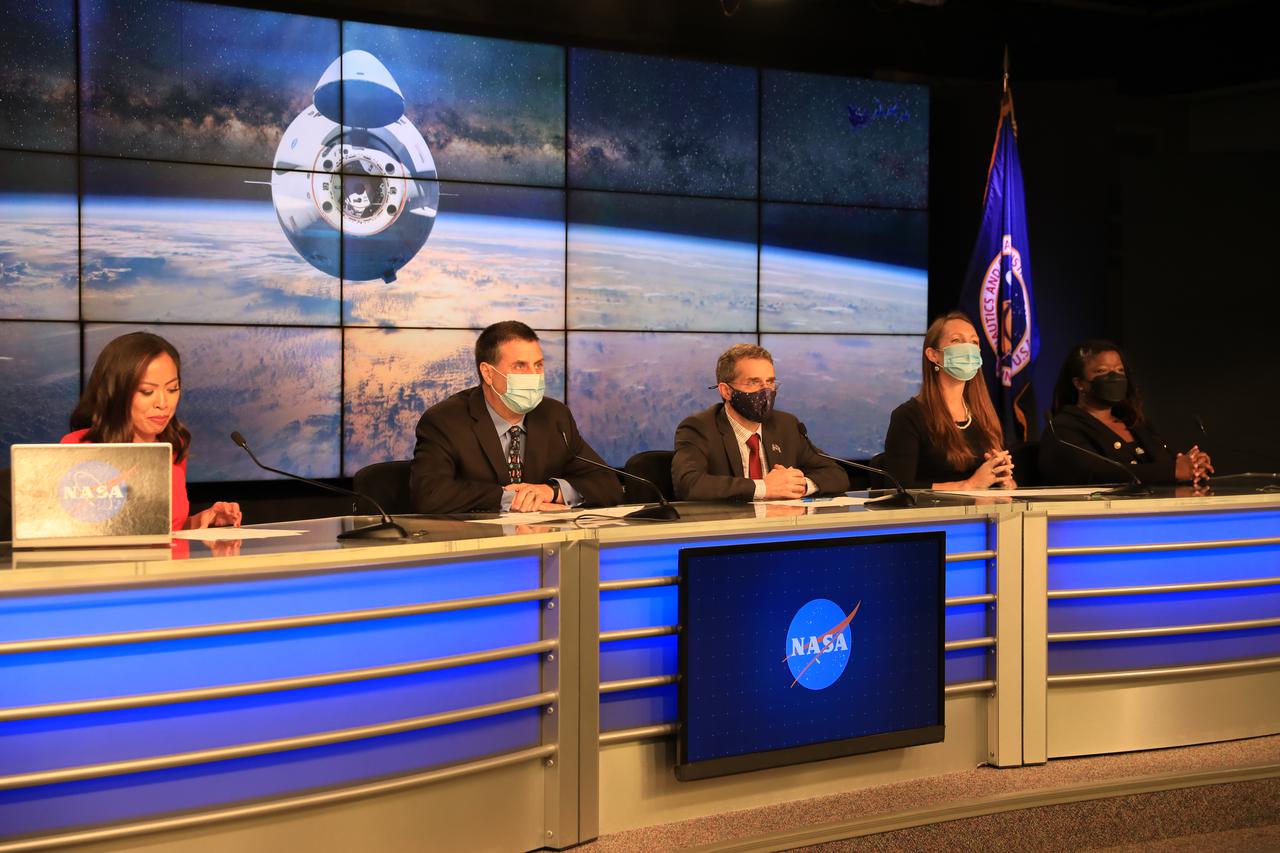
From left, Megan Cruz, NASA Communications; Joel Montalbano, manager, International Space Station Program; Dr. Bob Dempsey, acting deputy chief scientist, International Space Station Program; Sarah Walker, director, Dragon mission management, SpaceX; and Arlena Moses, launch weather officer, 45th Weather Squadron, Cape Canaveral Space Force Station, participate in NASA’s SpaceX 24th commercial resupply services mission prelaunch news conference at Kennedy Space Center in Florida on Tuesday, Dec. 20, 2021. Liftoff of the SpaceX Falcon 9 rocket with the company’s Dragon spacecraft on board is targeted for Tuesday, Dec. 21, 2021, at 5:07 a.m. EST. The mission will deliver new science investigations, supplies, and equipment to the crew on board the International Space Station.
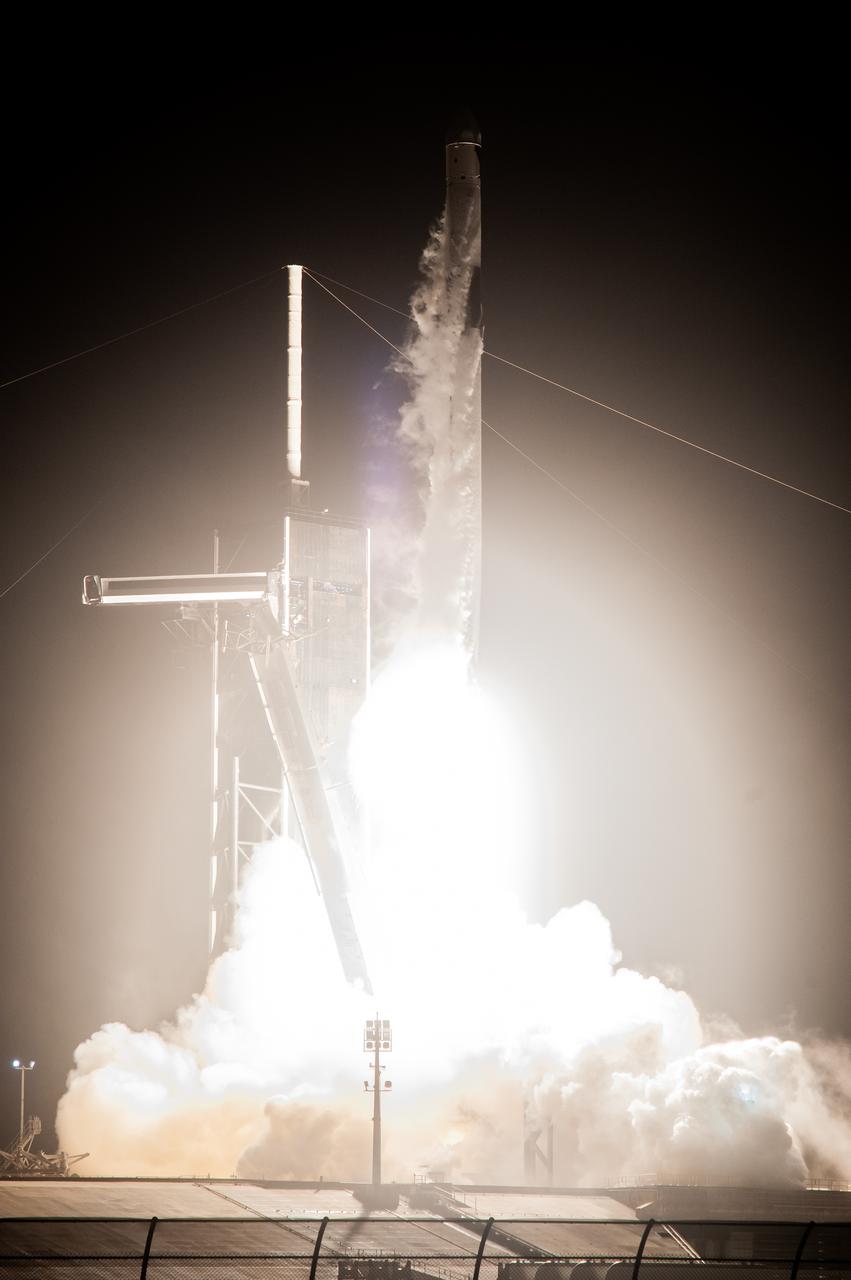
A SpaceX Falcon 9 rocket lifts off from Launch Complex 39A at Kennedy Space Center in Florida at 5:07 a.m. EST on Tuesday, Dec. 21, 2021, carrying the Dragon spacecraft on its journey to the International Space Station for SpaceX’s 24th commercial resupply services mission. Dragon will deliver new science investigations, supplies, and equipment to the crew on board the space station. Arrival to the orbiting laboratory is planned for Wednesday, Dec. 22.
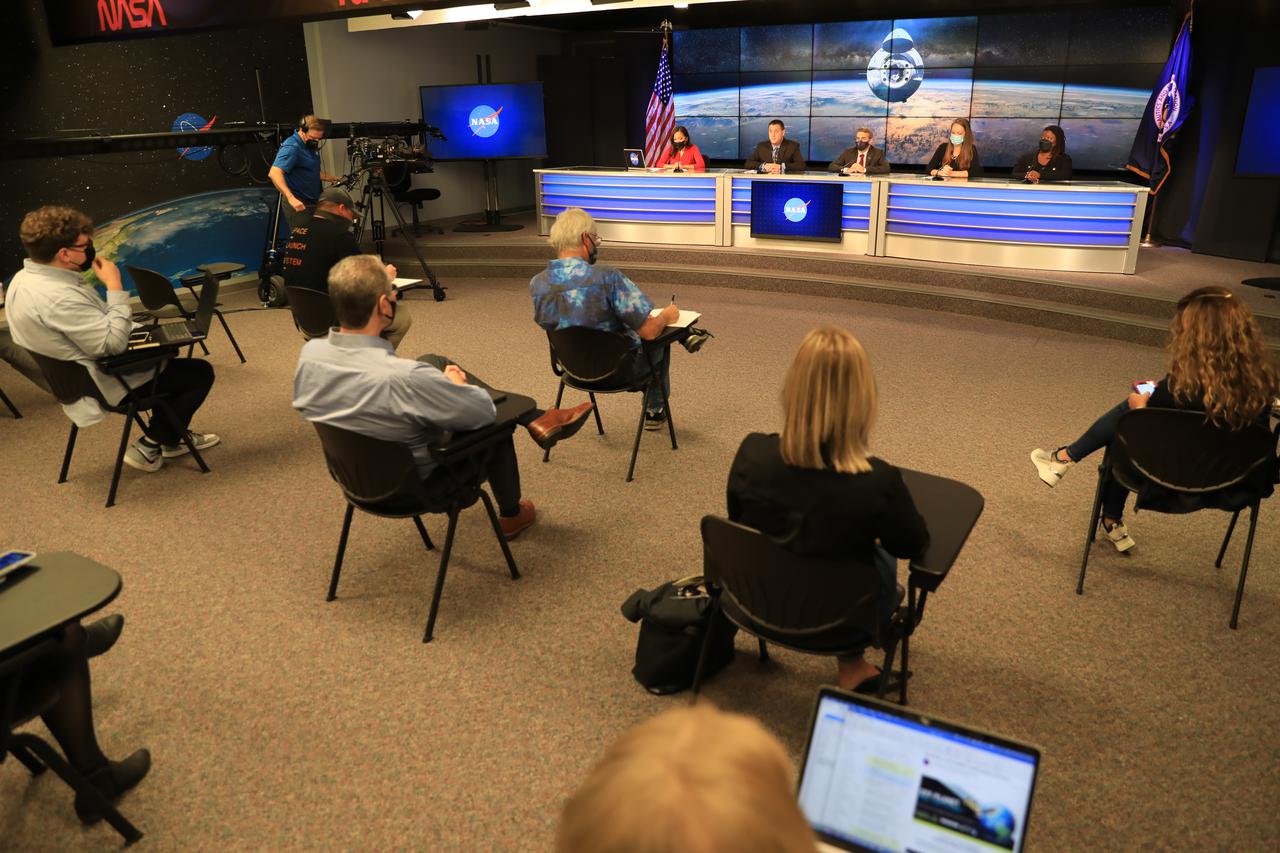
Media members participate in NASA’s SpaceX 24th commercial resupply services mission prelaunch news conference at Kennedy Space Center in Florida on Tuesday, Dec. 20, 2021. Participants included Joel Montalbano, manager, International Space Station Program; Dr. Bob Dempsey, acting deputy chief scientist, International Space Station Program; Sarah Walker, director, Dragon mission management, SpaceX; and Arlena Moses, launch weather officer, 45th Weather Squadron, Cape Canaveral Space Force Station. NASA Communications’ Megan Cruz moderated the event. Liftoff of the SpaceX Falcon 9 rocket with the company’s Dragon spacecraft on board is targeted for Tuesday, Dec. 21, 2021, at 5:07 a.m. EST. The mission will deliver new science investigations, supplies, and equipment to the crew on board the International Space Station.
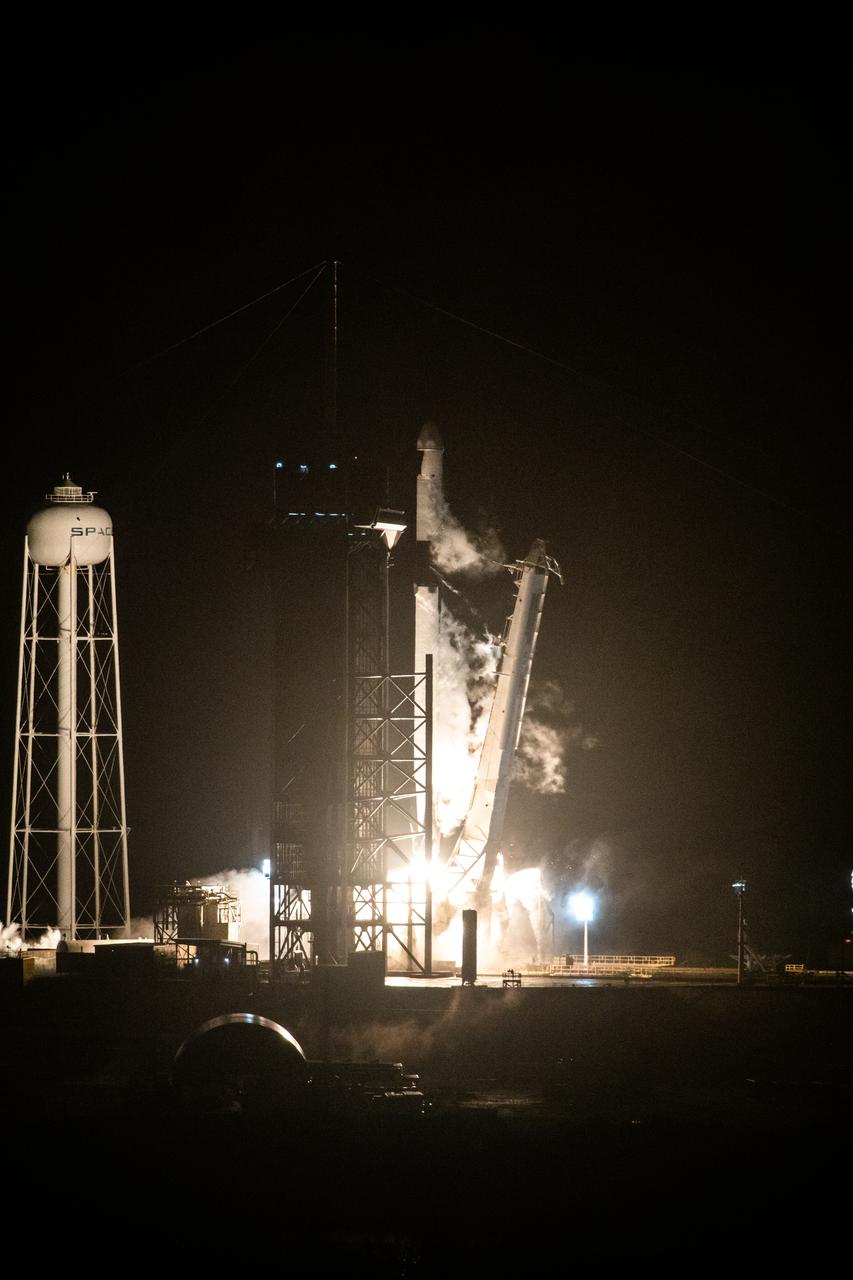
A SpaceX Falcon 9 rocket lifts off from Launch Complex 39A at Kennedy Space Center in Florida at 5:07 a.m. EST on Tuesday, Dec. 21, 2021, carrying the Dragon spacecraft on its journey to the International Space Station. SpaceX’s 24th commercial resupply services mission will deliver new science investigations, supplies, and equipment to the crew on board the space station. Arrival to the orbiting laboratory is planned for Wednesday, Dec. 22.
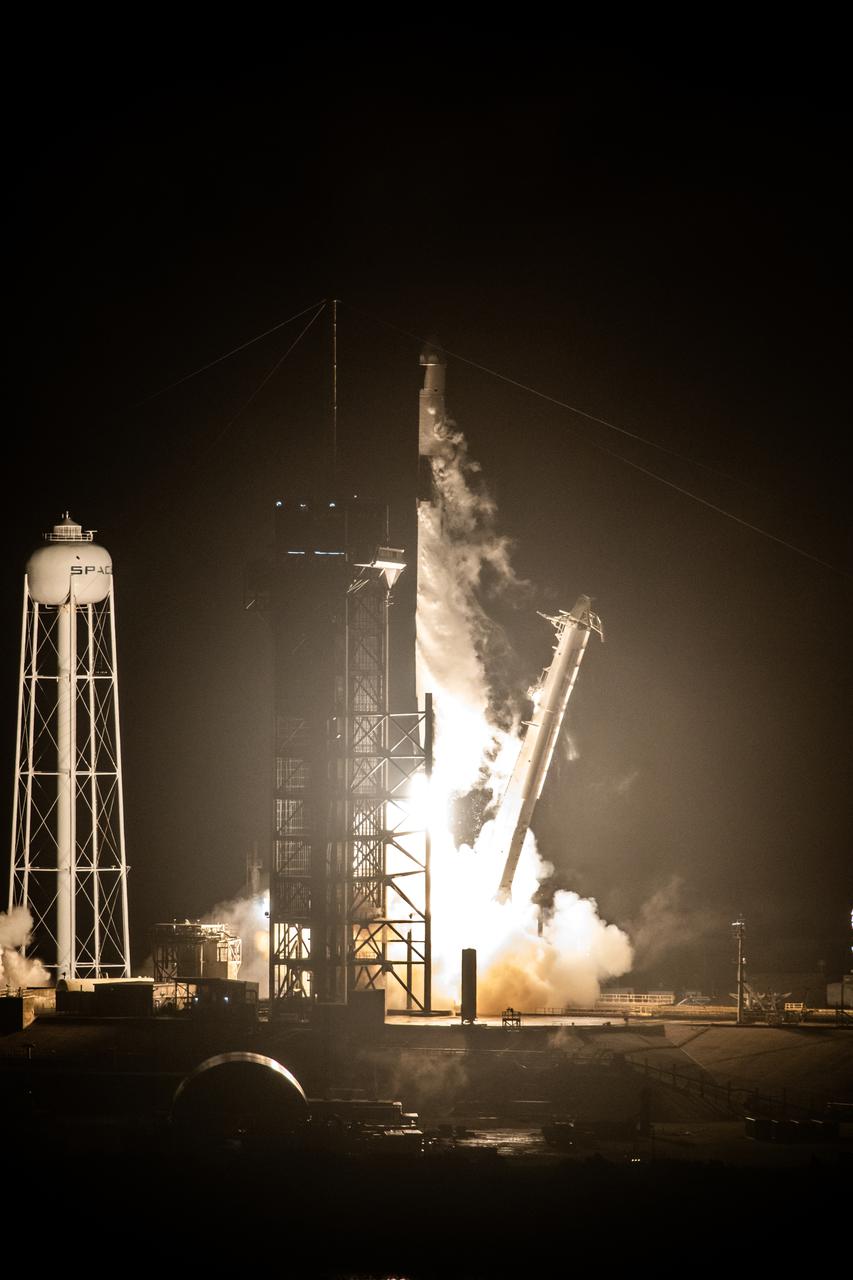
A SpaceX Falcon 9 rocket lifts off from Launch Complex 39A at Kennedy Space Center in Florida at 5:07 a.m. EST on Tuesday, Dec. 21, 2021, carrying the Dragon spacecraft on its journey to the International Space Station. SpaceX’s 24th commercial resupply services mission will deliver new science investigations, supplies, and equipment to the crew on board the space station. Arrival to the orbiting laboratory is planned for Wednesday, Dec. 22.
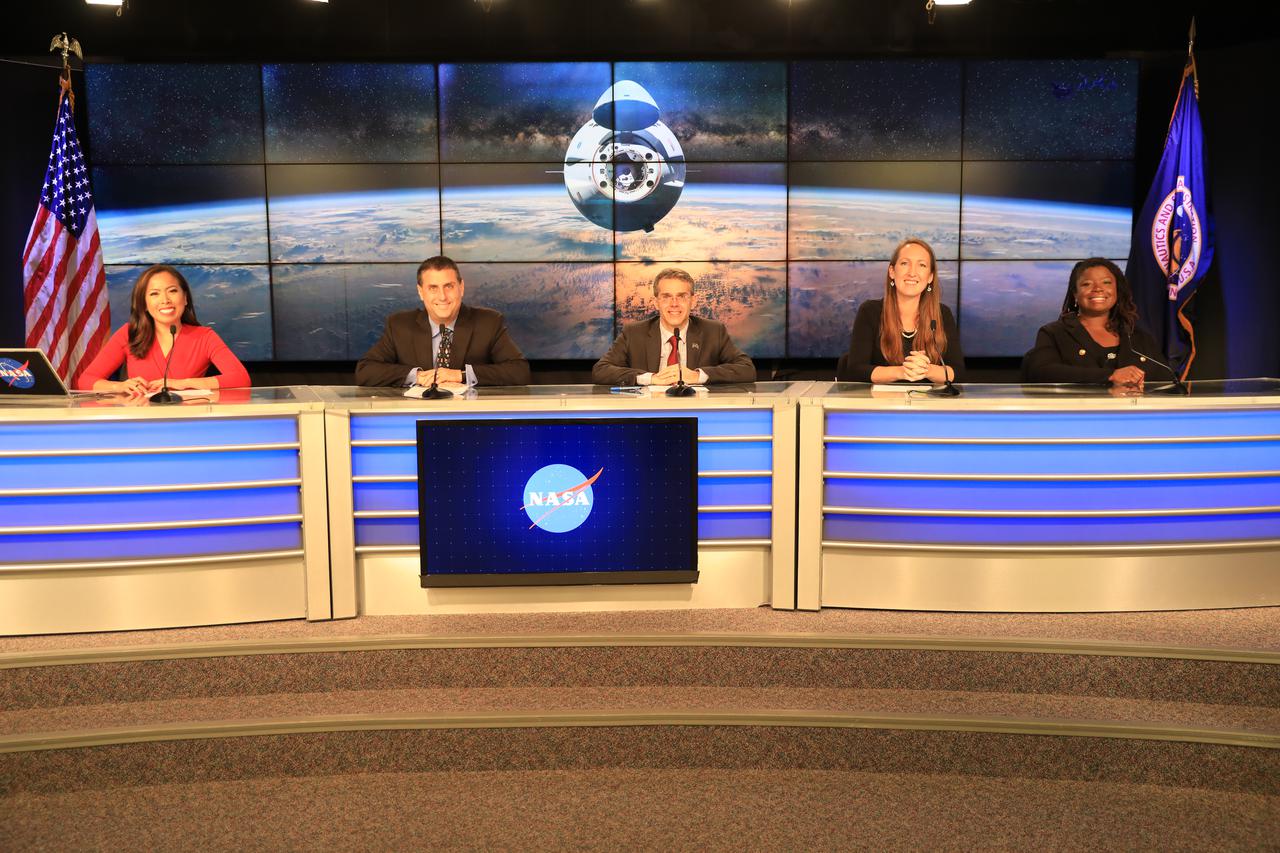
From left, Megan Cruz, NASA Communications; Joel Montalbano, manager, International Space Station Program; Dr. Bob Dempsey, acting deputy chief scientist, International Space Station Program; Sarah Walker, director, Dragon mission management, SpaceX; and Arlena Moses, launch weather officer, 45th Weather Squadron, Cape Canaveral Space Force Station, participate in NASA’s SpaceX 24th commercial resupply services mission prelaunch news conference at Kennedy Space Center in Florida on Tuesday, Dec. 20, 2021. Liftoff of the SpaceX Falcon 9 rocket with the company’s Dragon spacecraft on board is targeted for Tuesday, Dec. 21, 2021, at 5:07 a.m. EST. The mission will deliver new science investigations, supplies, and equipment to the crew on board the International Space Station.
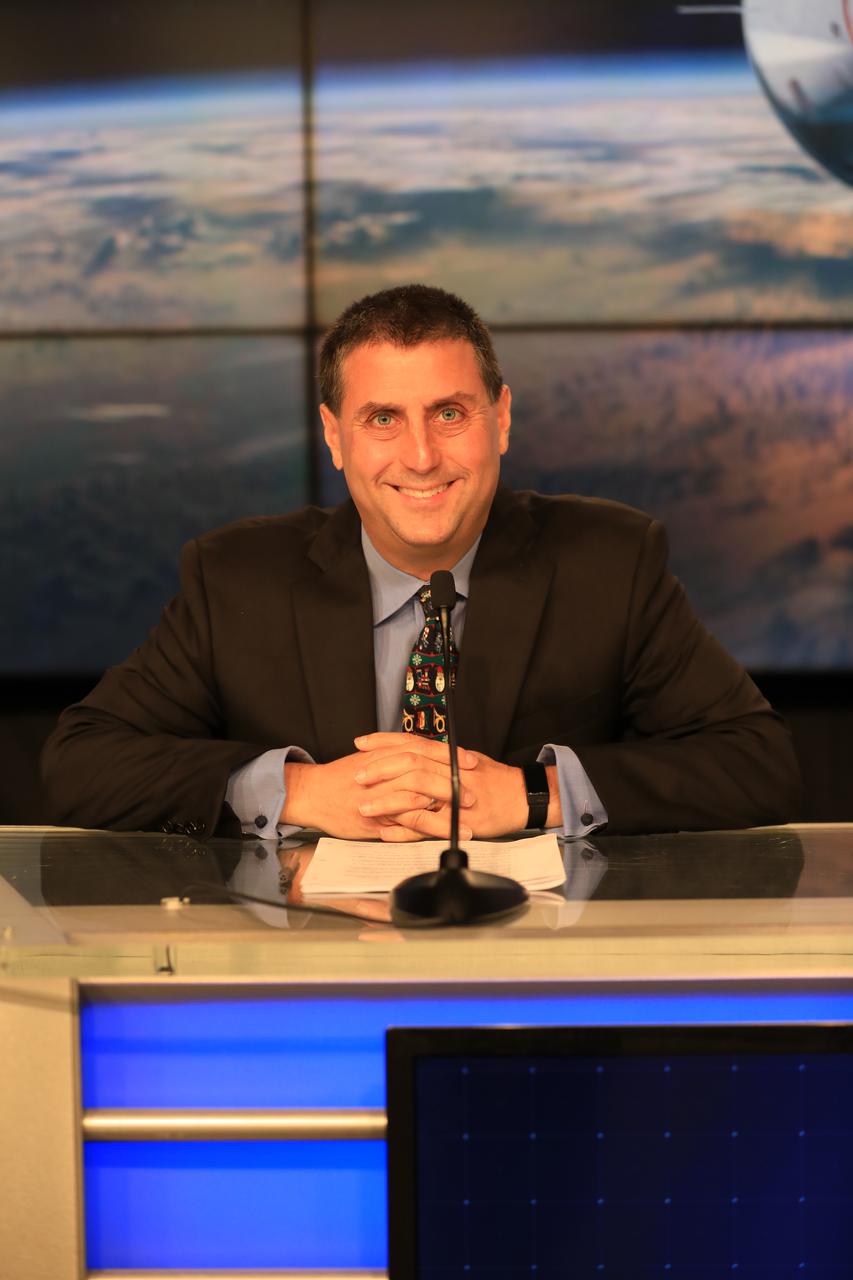
Joel Montalbano, manager, International Space Station Program, is introduced during a prelaunch news conference for SpaceX’s 24th commercial resupply services mission at Kennedy Space Center in Florida on Dec. 20, 2021. Liftoff of the SpaceX Falcon 9 rocket with the company’s Dragon spacecraft on board is targeted for Tuesday, Dec. 21, 2021, at 5:07 a.m. EST. The mission will deliver new science investigations, supplies, and equipment to the crew on board the space station.
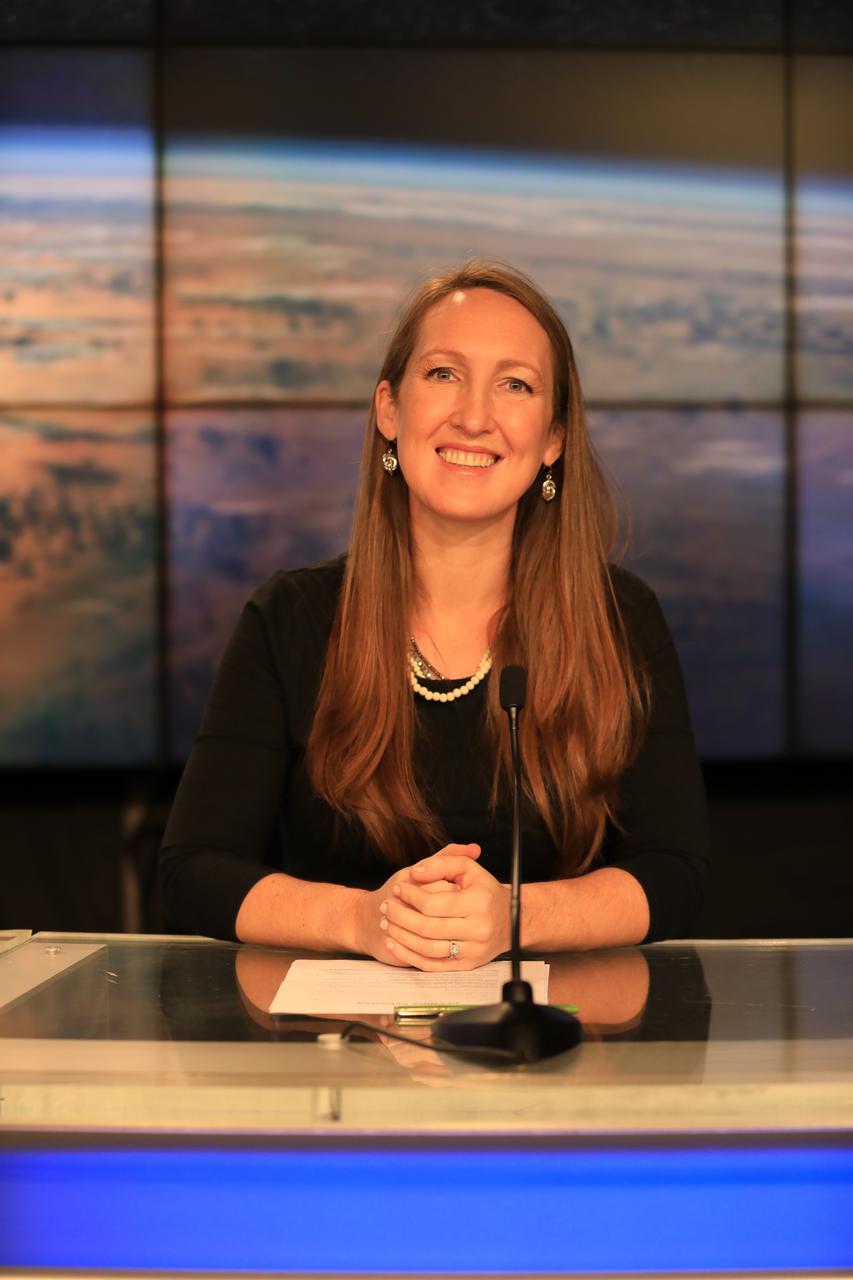
Sarah Walker, director, Dragon mission management, SpaceX, is introduced during a prelaunch news conference for SpaceX’s 24th commercial resupply services mission at Kennedy Space Center in Florida on Dec. 20, 2021. Liftoff of the SpaceX Falcon 9 rocket with the company’s Dragon spacecraft on board is targeted for Tuesday, Dec. 21, 2021, at 5:07 a.m. EST. The mission will deliver new science investigations, supplies, and equipment to the crew on board the International Space Station.
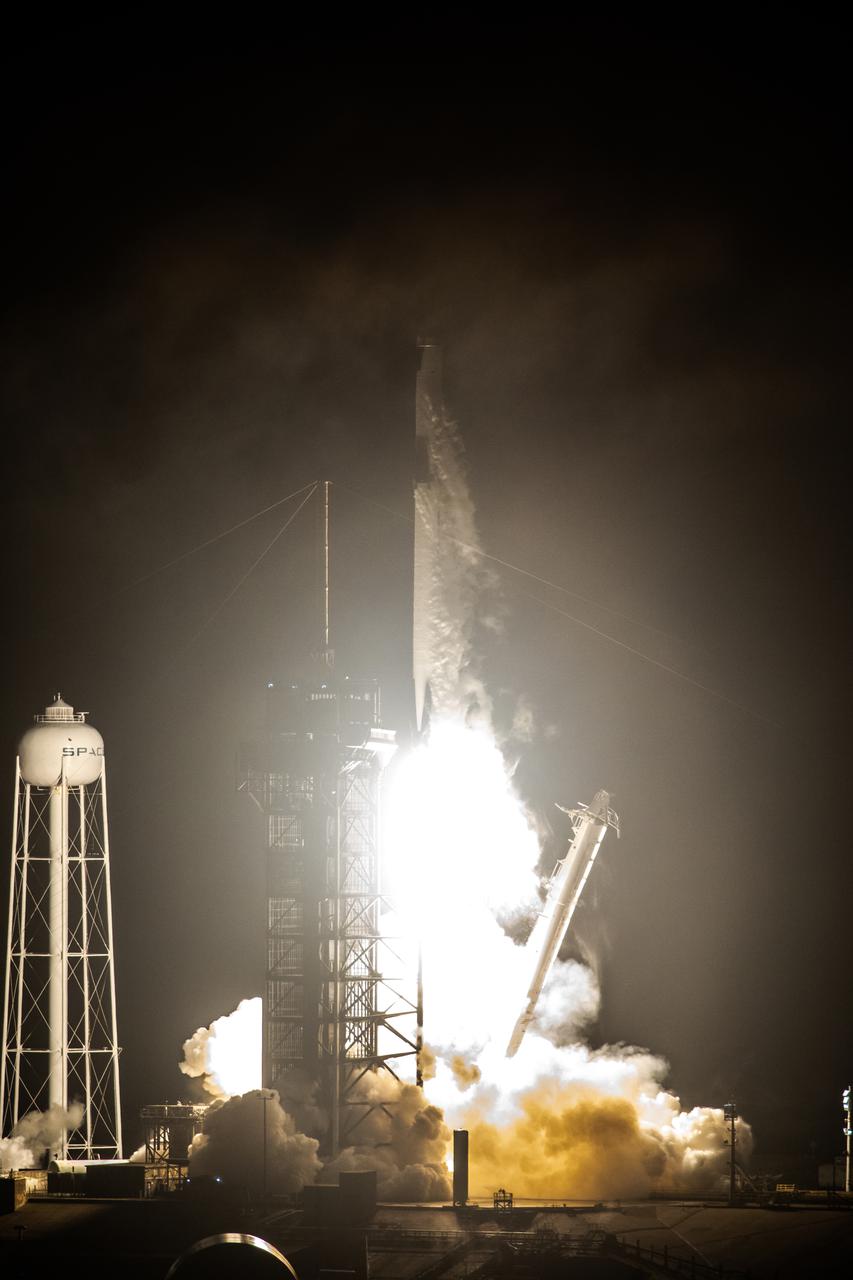
A SpaceX Falcon 9 rocket lifts off from Launch Complex 39A at Kennedy Space Center in Florida at 5:07 a.m. EST on Tuesday, Dec. 21, 2021, carrying the Dragon spacecraft on its journey to the International Space Station. SpaceX’s 24th commercial resupply services mission will deliver new science investigations, supplies, and equipment to the crew on board the space station. Arrival to the orbiting laboratory is planned for Wednesday, Dec. 22.
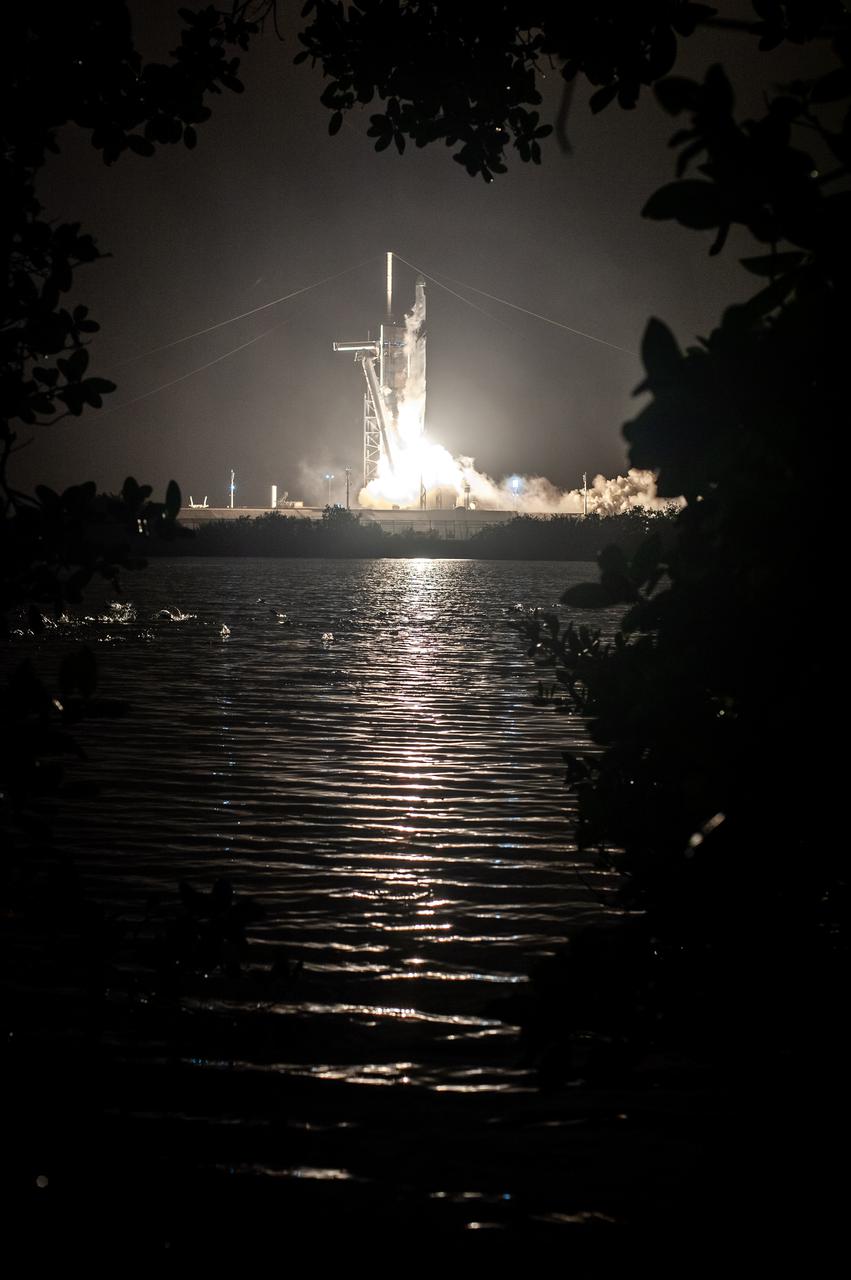
A SpaceX Falcon 9 rocket lifts off from Launch Complex 39A at Kennedy Space Center in Florida at 5:07 a.m. EST on Tuesday, Dec. 21, 2021, carrying the Dragon spacecraft on its journey to the International Space Station for SpaceX’s 24th commercial resupply services mission. Dragon will deliver new science investigations, supplies, and equipment to the crew on board the space station. Arrival to the orbiting laboratory is planned for Wednesday, Dec. 22.
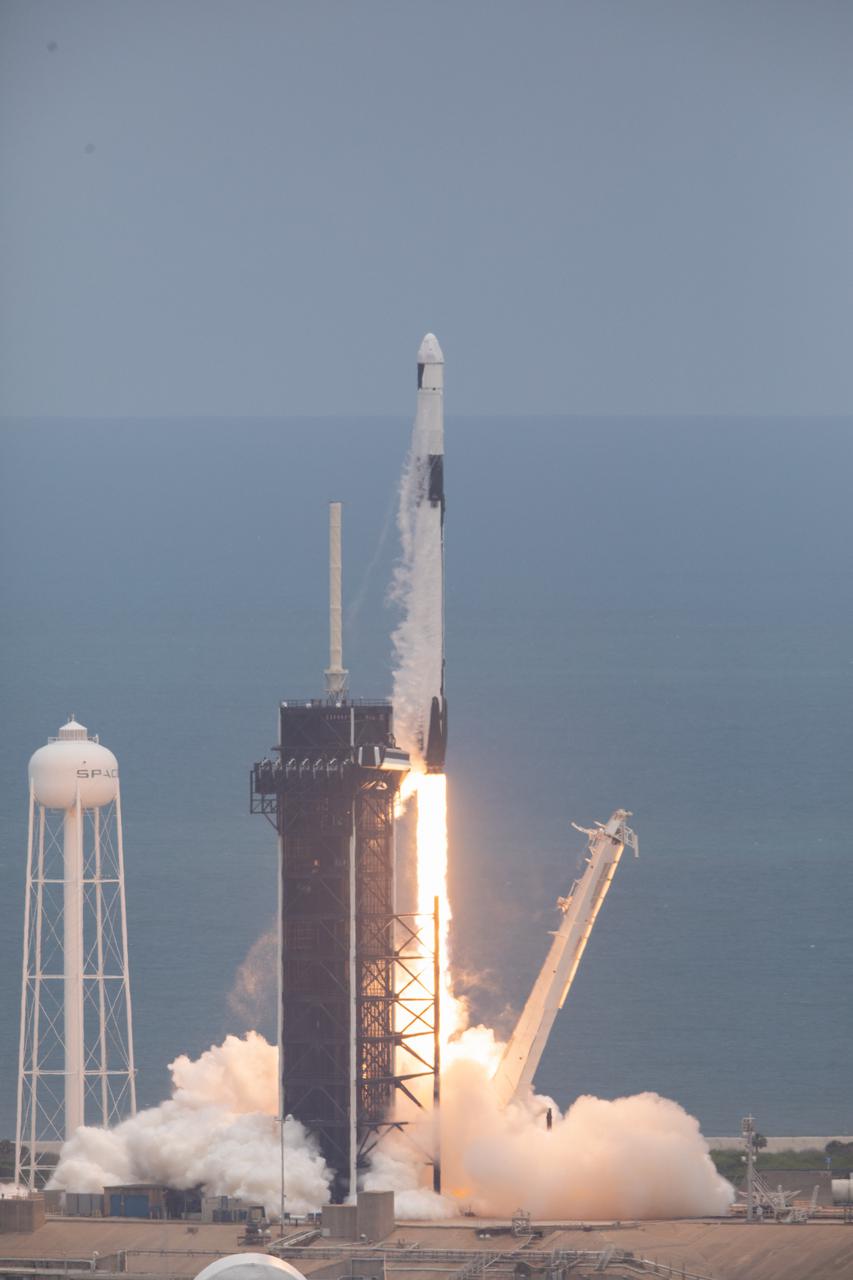
The SpaceX Falcon 9 rocket carrying the Dragon cargo capsule lifts off from Launch Complex 39A at NASA’s Kennedy Space Center in Florida on June 3, 2021, on the company’s 22nd Commercial Resupply Services mission for the agency to the International Space Station. Liftoff was at 1:29 p.m. EDT. Dragon is filled with supplies and payloads including critical materials to directly support dozens of the more than 250 science and research investigations that will occur during Expeditions 65 and 66 on the station.

The SpaceX Falcon 9 rocket carrying the Dragon cargo capsule soars upward after lifting off from Launch Complex 39A at NASA’s Kennedy Space Center in Florida on June 3, 2021, on the company’s 22nd Commercial Resupply Services mission for the agency to the International Space Station. Liftoff was at 1:29 p.m. EDT. Dragon is filled with supplies and payloads including critical materials to directly support dozens of the more than 250 science and research investigations that will occur during Expeditions 65 and 66 on the station.
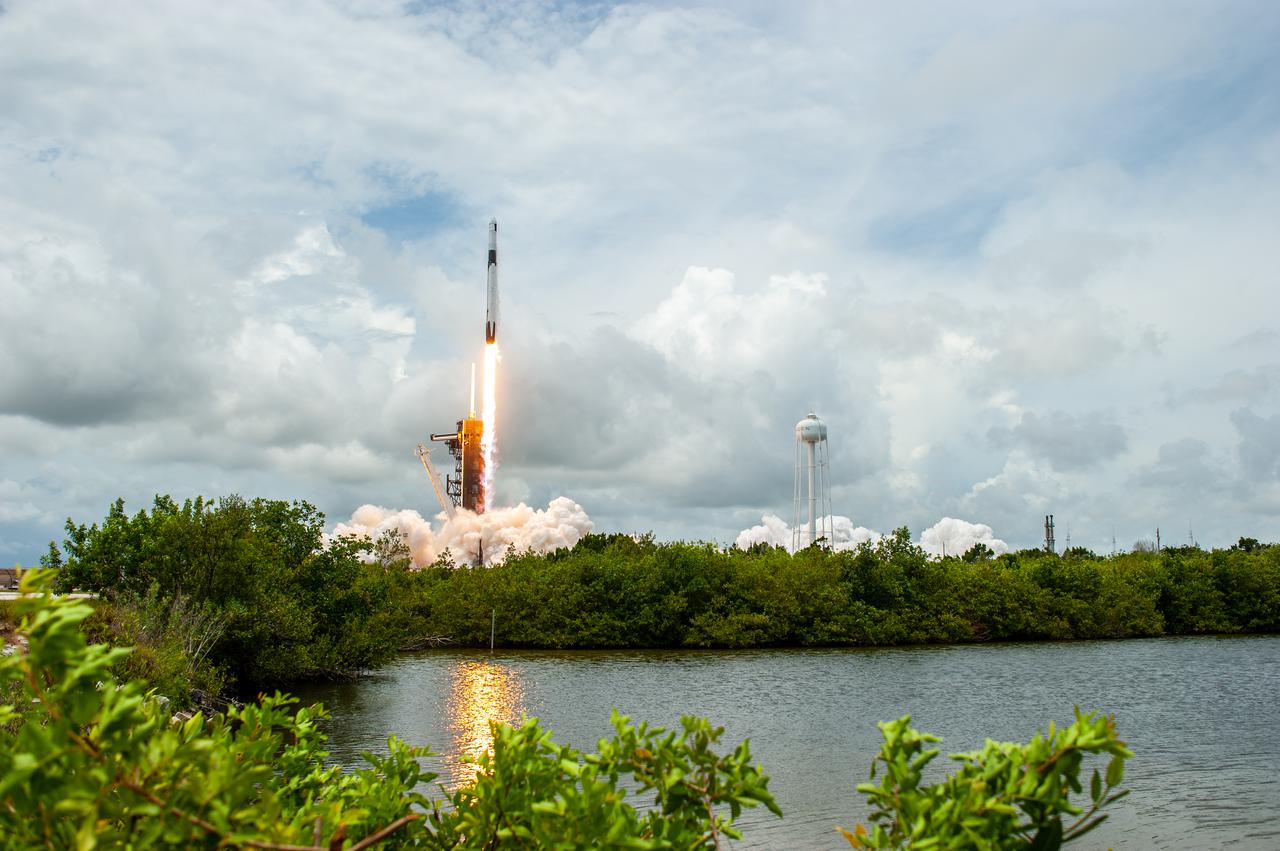
The SpaceX Falcon 9 rocket carrying the Dragon cargo capsule soars upward after lifting off from Launch Complex 39A at NASA’s Kennedy Space Center in Florida on June 3, 2021, on the company’s 22nd Commercial Resupply Services mission for the agency to the International Space Station. Liftoff was at 1:29 p.m. EDT. Dragon is filled with supplies and payloads including critical materials to directly support dozens of the more than 250 science and research investigations that will occur during Expeditions 65 and 66 on the station.
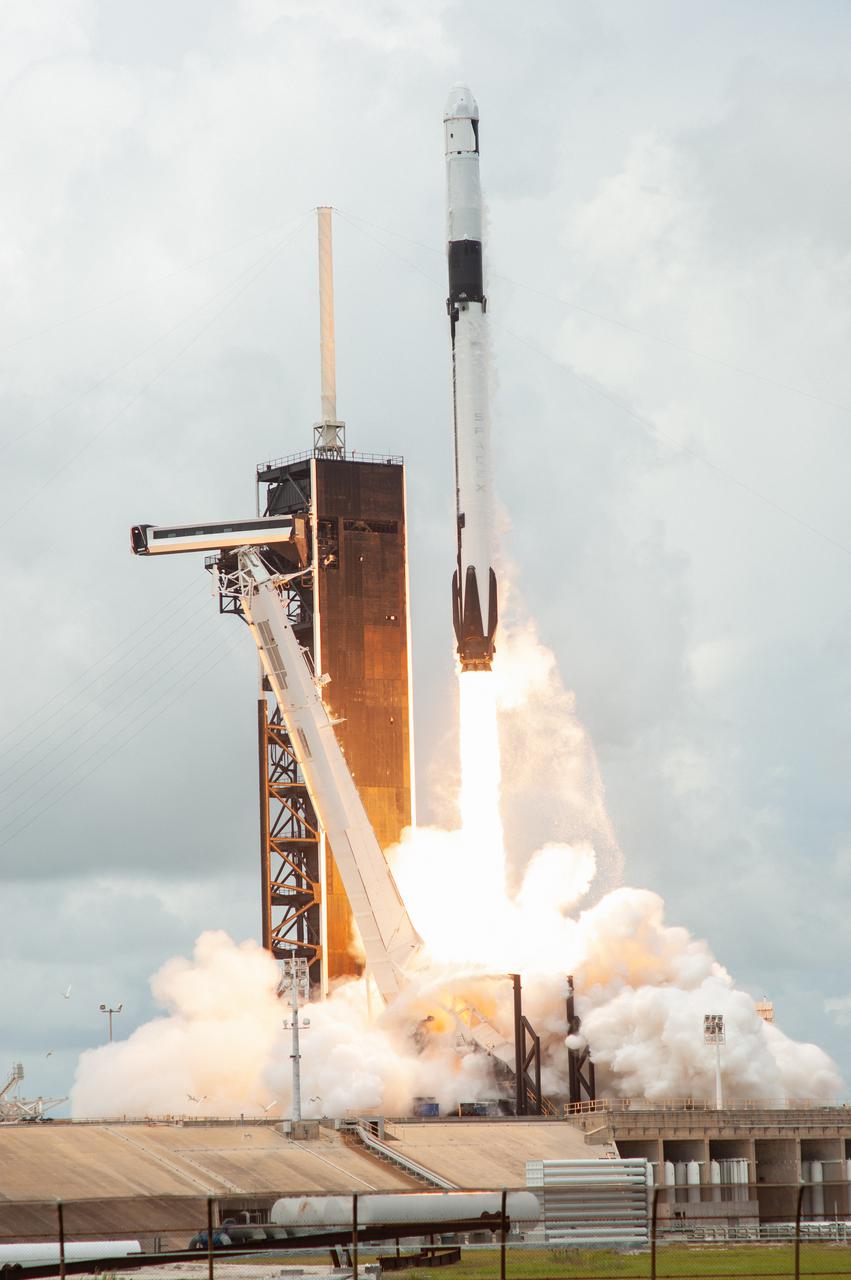
The SpaceX Falcon 9 rocket carrying the Dragon cargo capsule lifts off from Launch Complex 39A at NASA’s Kennedy Space Center in Florida on June 3, 2021, on the company’s 22nd Commercial Resupply Services mission for the agency to the International Space Station. Liftoff was at 1:29 p.m. EDT. Dragon is filled with supplies and payloads including critical materials to directly support dozens of the more than 250 science and research investigations that will occur during Expeditions 65 and 66 on the station.
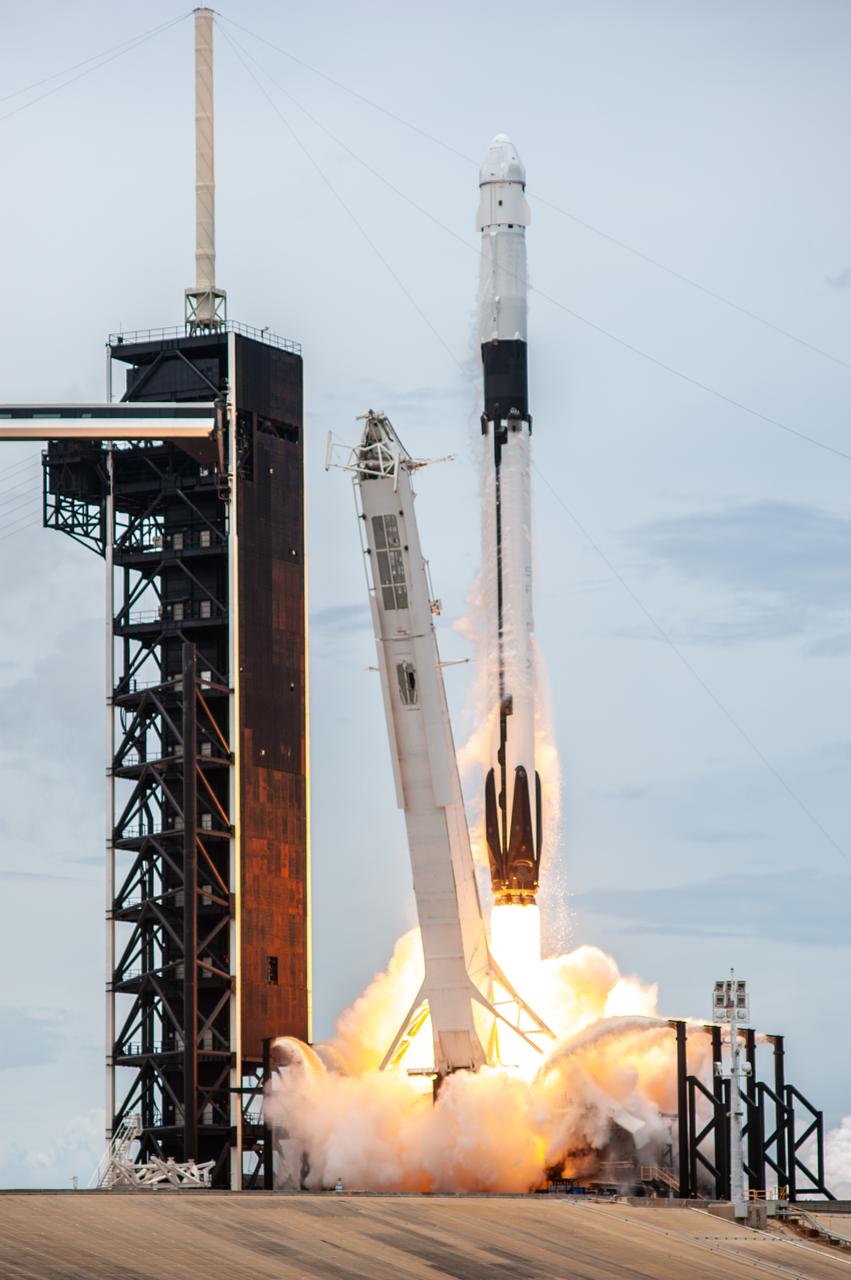
The SpaceX Falcon 9 rocket carrying the Dragon cargo capsule lifts off from Launch Complex 39A at NASA’s Kennedy Space Center in Florida on June 3, 2021, on the company’s 22nd Commercial Resupply Services mission for the agency to the International Space Station. Liftoff was at 1:29 p.m. EDT. Dragon is filled with supplies and payloads including critical materials to directly support dozens of the more than 250 science and research investigations that will occur during Expeditions 65 and 66 on the station.
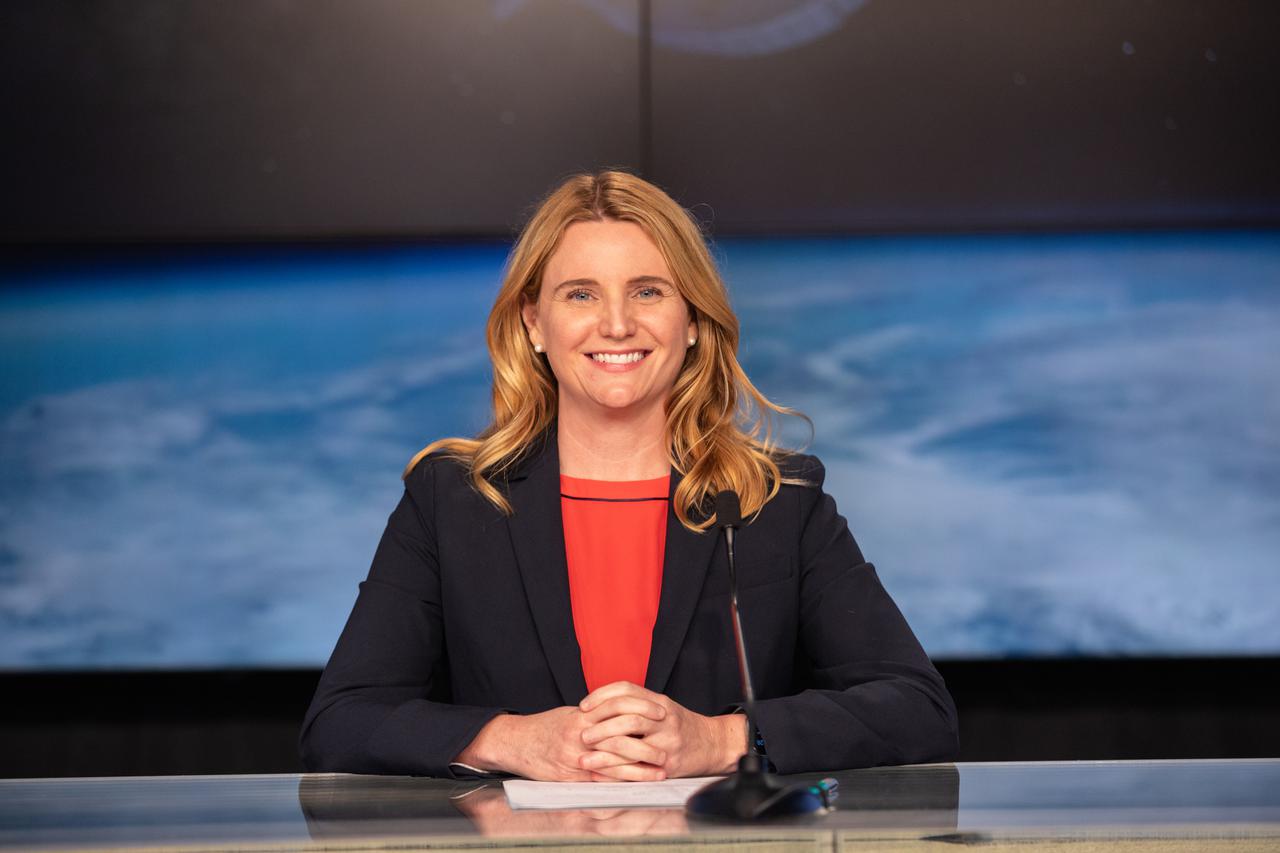
A prelaunch news conference for SpaceX’s 22nd Commercial Resupply Services mission for NASA to the International Space Station is held on June 2, 2021 at Kennedy Space Center in Florida. Jennifer Buchli, deputy chief scientist for International Space Station Program, answers questions from members of the media. The Dragon capsule atop SpaceX’s Falcon 9 rocket is scheduled to lift off from Launch Complex 39A at 1:29 p.m. EDT on Thursday, June 3. Dragon will deliver more than 7,300 pounds of cargo to the space station.
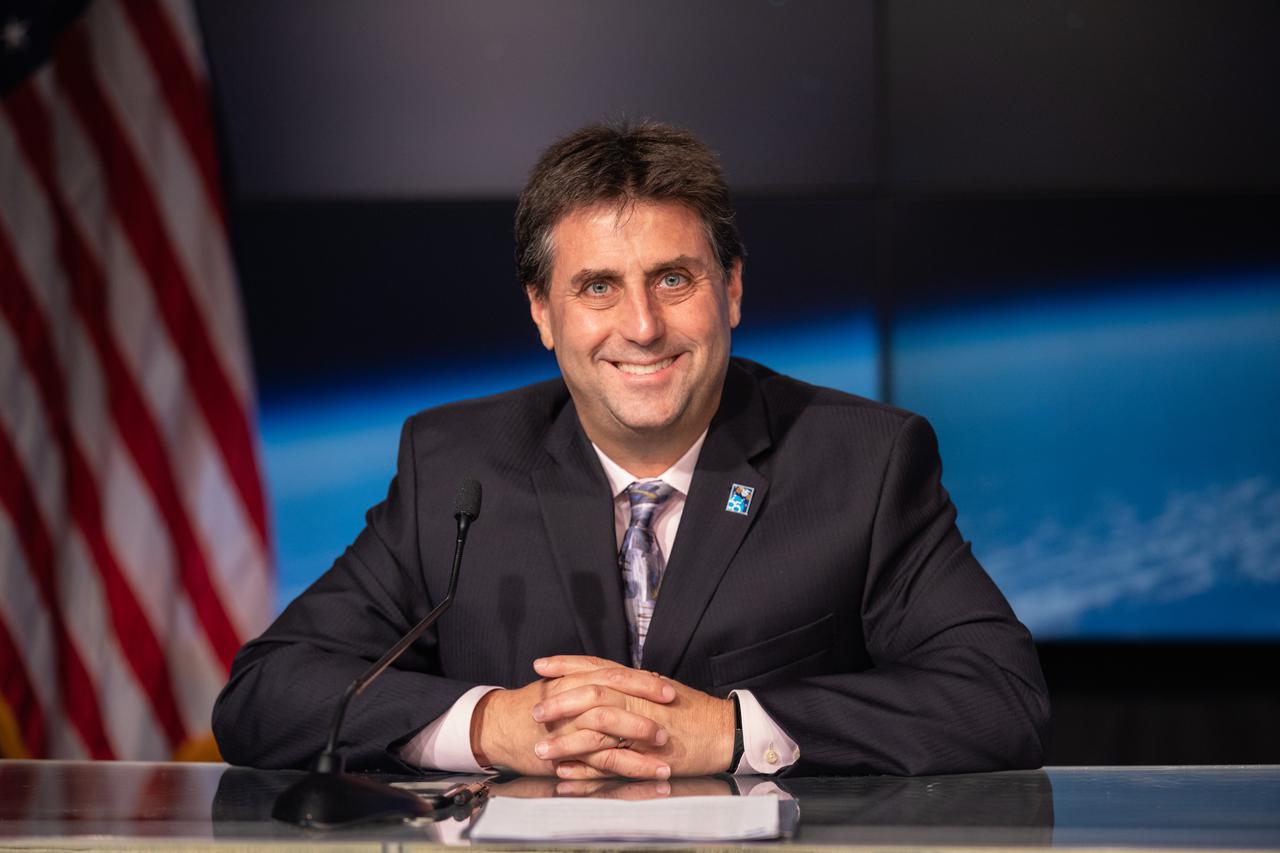
A prelaunch news conference for SpaceX’s 22nd Commercial Resupply Services mission for NASA to the International Space Station is held on June 2, 2021 at Kennedy Space Center in Florida. Joel Montalbano, manager for International Space Station Program, answers questions from members of the media. The Dragon capsule atop SpaceX’s Falcon 9 rocket is scheduled to lift off from Launch Complex 39A at 1:29 p.m. EDT on Thursday, June 3. Dragon will deliver more than 7,300 pounds of cargo to the space station.
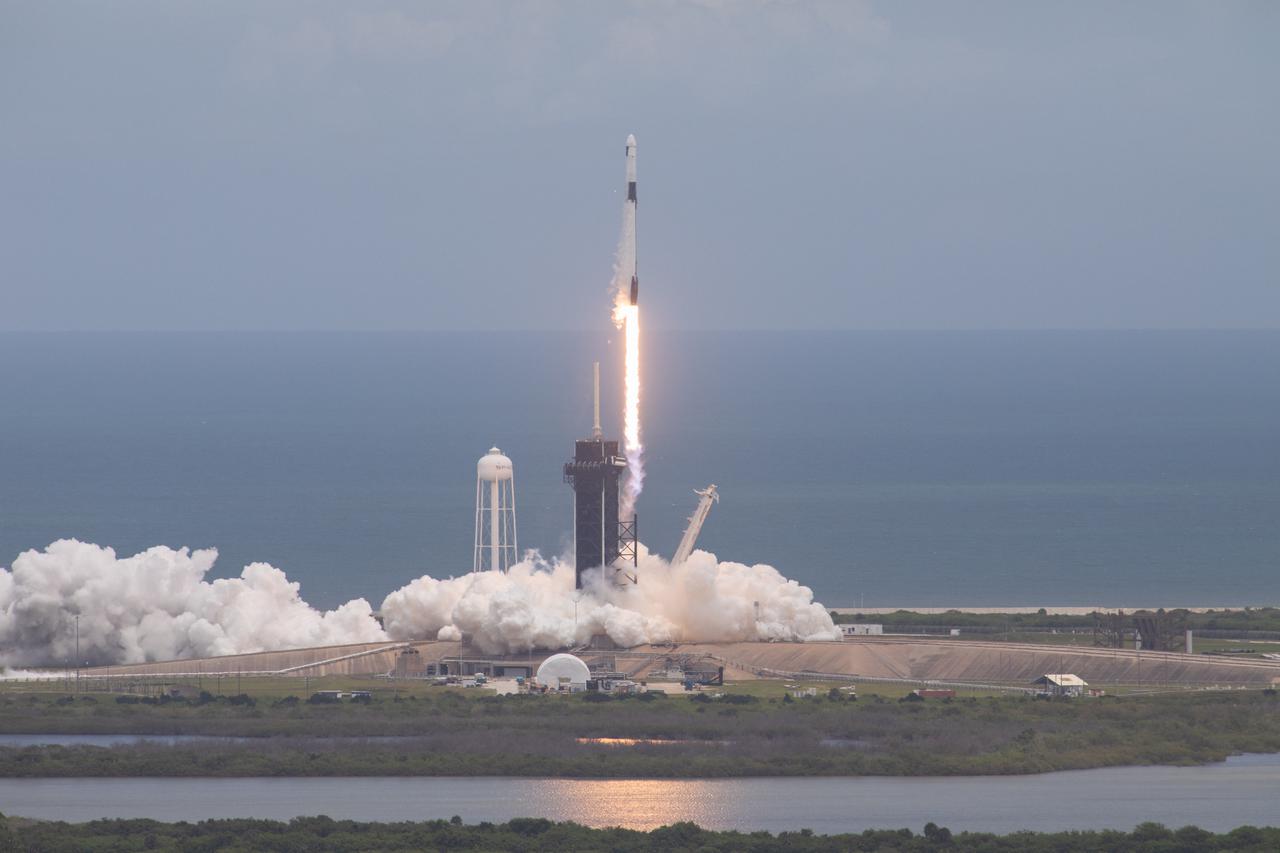
The SpaceX Falcon 9 rocket carrying the Dragon cargo capsule lifts off from Launch Complex 39A at NASA’s Kennedy Space Center in Florida on June 3, 2021, on the company’s 22nd Commercial Resupply Services mission for the agency to the International Space Station. Liftoff was at 1:29 p.m. EDT. Dragon is filled with supplies and payloads including critical materials to directly support dozens of the more than 250 science and research investigations that will occur during Expeditions 65 and 66 on the station.

The SpaceX Falcon 9 rocket carrying the Dragon cargo capsule lifts off from Launch Complex 39A at NASA’s Kennedy Space Center in Florida on June 3, 2021, on the company’s 22nd Commercial Resupply Services mission for the agency to the International Space Station. Liftoff was at 1:29 p.m. EDT. Dragon is filled with supplies and payloads including critical materials to directly support dozens of the more than 250 science and research investigations that will occur during Expeditions 65 and 66 on the station.
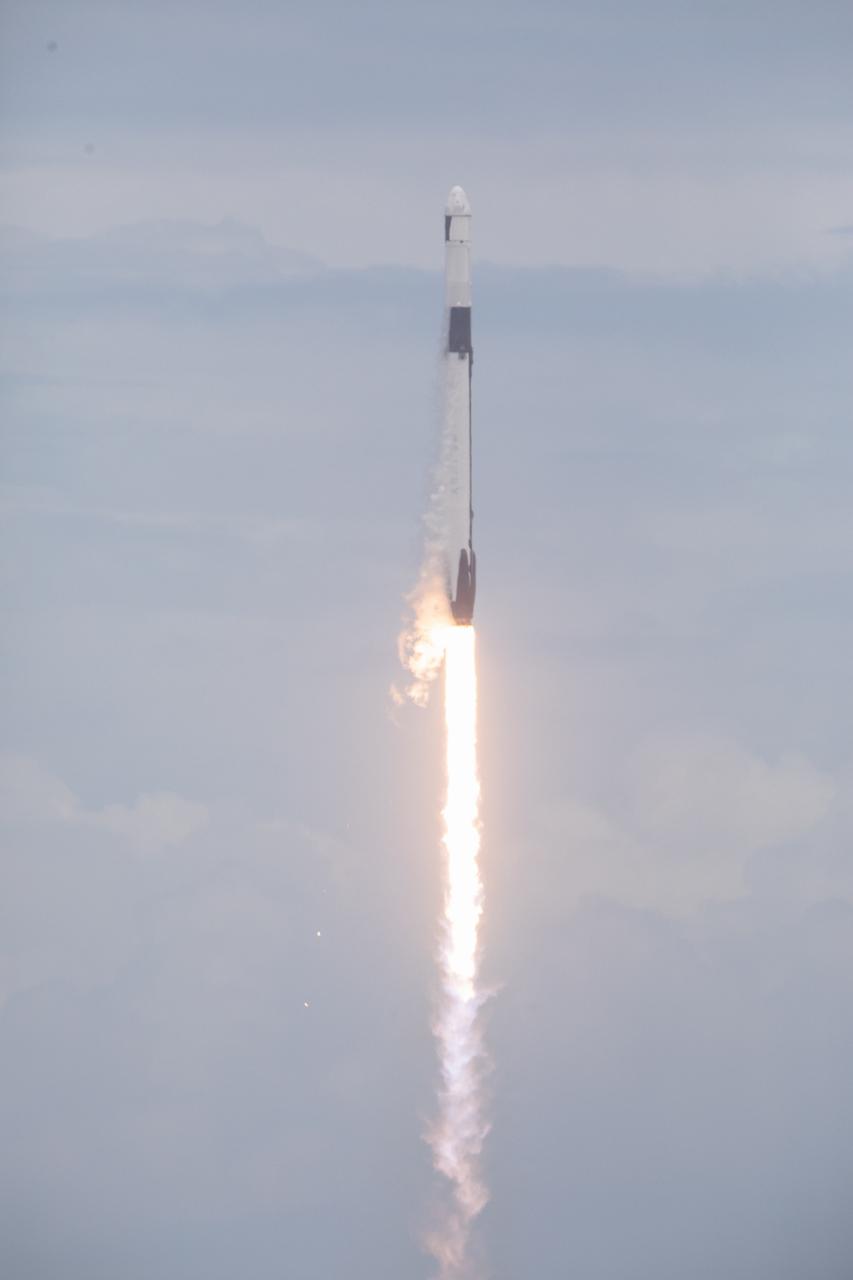
The SpaceX Falcon 9 rocket carrying the Dragon cargo capsule soars upward after lifting off from Launch Complex 39A at NASA’s Kennedy Space Center in Florida on June 3, 2021, on the company’s 22nd Commercial Resupply Services mission for the agency to the International Space Station. Liftoff was at 1:29 p.m. EDT. Dragon is filled with supplies and payloads including critical materials to directly support dozens of the more than 250 science and research investigations that will occur during Expeditions 65 and 66 on the station.
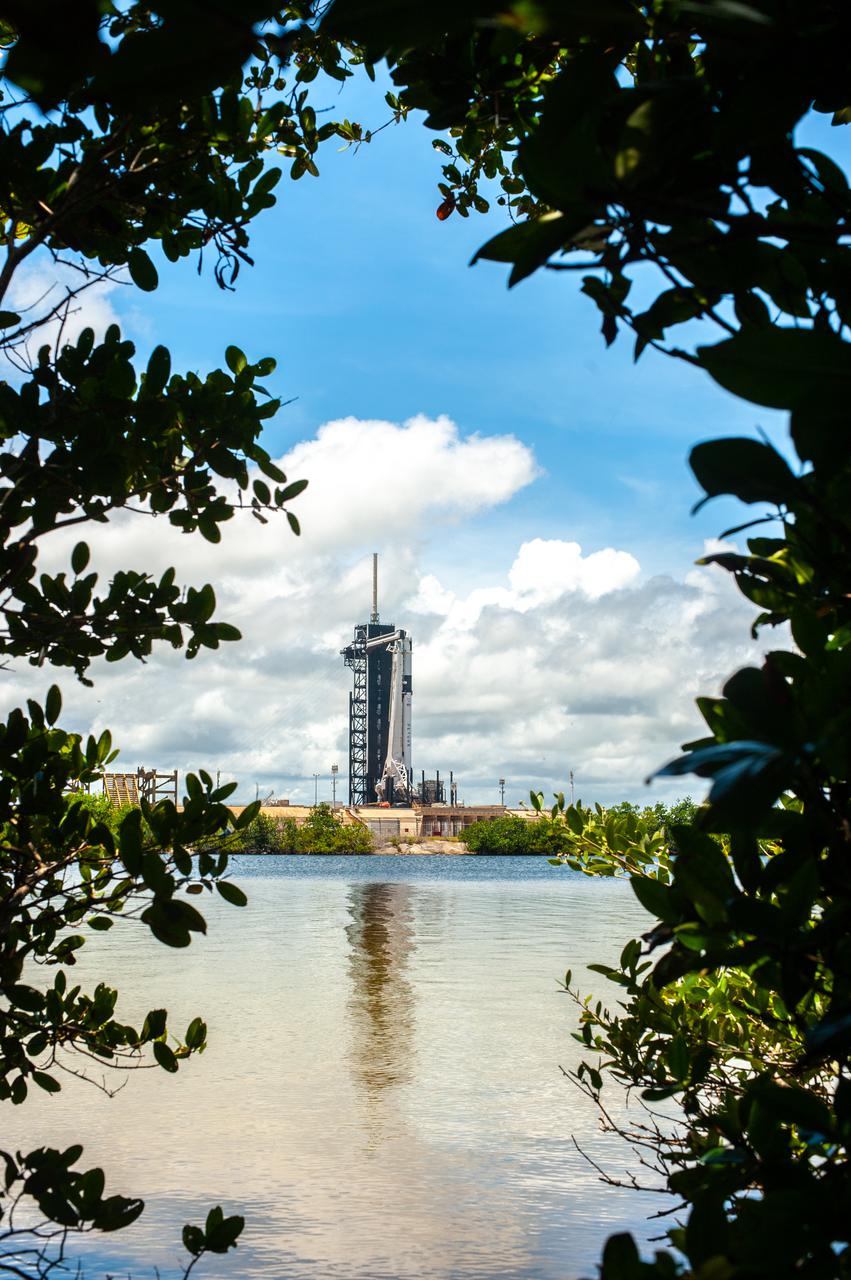
The SpaceX Falcon 9 rocket carrying the Dragon cargo capsule lifts off from Launch Complex 39A at NASA’s Kennedy Space Center in Florida on June 3, 2021, on the company’s 22nd Commercial Resupply Services mission for the agency to the International Space Station. Liftoff was at 1:29 p.m. EDT. Dragon is filled with supplies and payloads including critical materials to directly support dozens of the more than 250 science and research investigations that will occur during Expeditions 65 and 66 on the station.
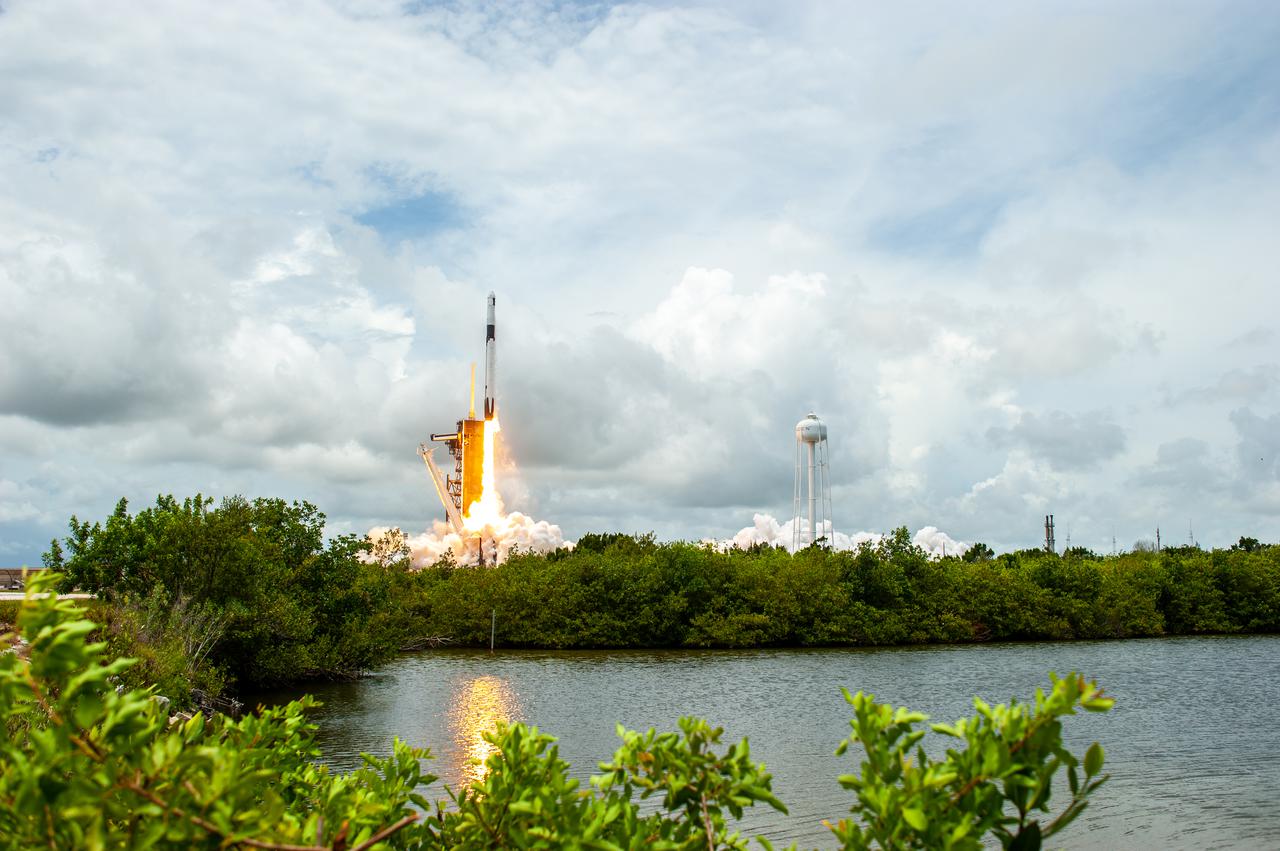
The SpaceX Falcon 9 rocket carrying the Dragon cargo capsule soars upward after lifting off from Launch Complex 39A at NASA’s Kennedy Space Center in Florida on June 3, 2021, on the company’s 22nd Commercial Resupply Services mission for the agency to the International Space Station. Liftoff was at 1:29 p.m. EDT. Dragon is filled with supplies and payloads including critical materials to directly support dozens of the more than 250 science and research investigations that will occur during Expeditions 65 and 66 on the station.
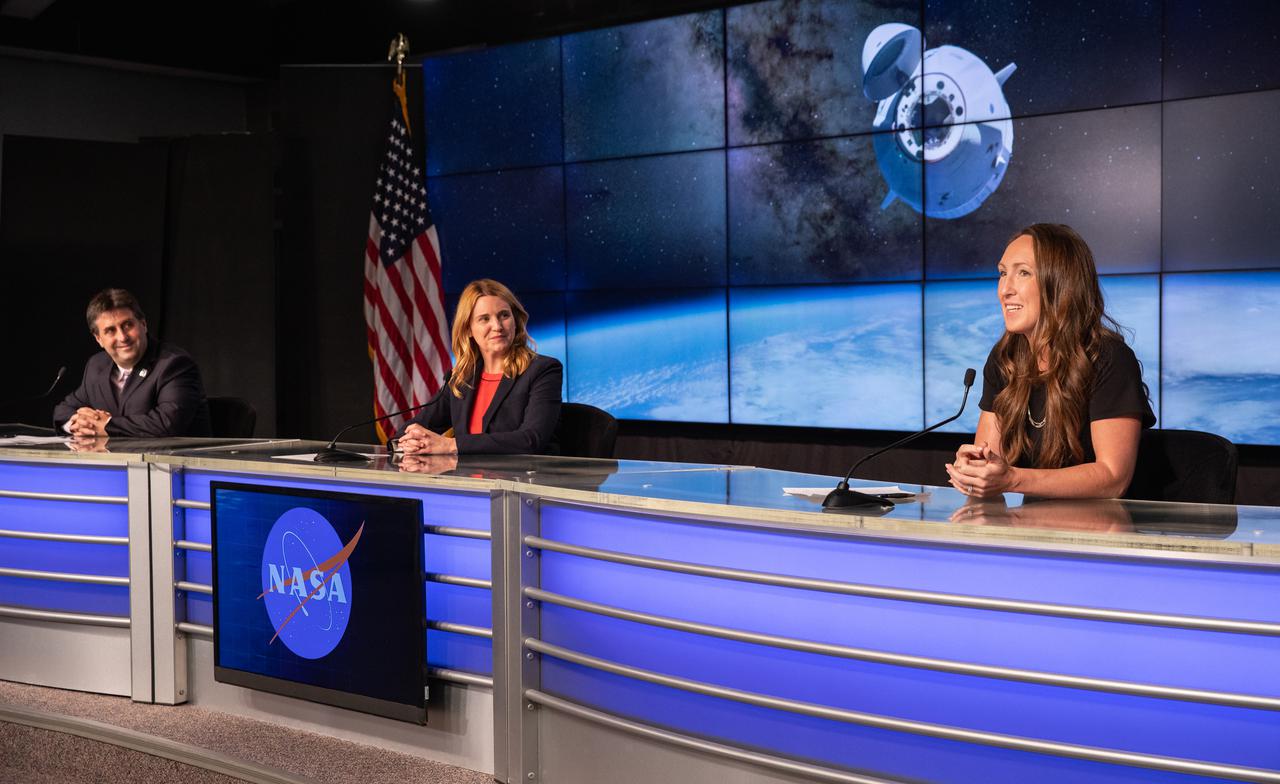
A prelaunch news conference for SpaceX’s 22nd Commercial Resupply Services mission for NASA to the International Space Station is held on June 2, 2021 at Kennedy Space Center in Florida. From left are Joel Montalbano, manager for International Space Station Program; Jennifer Buchli, deputy chief scientist for International Space Station Program; and Sarah Walker, director, Dragon mission management at SpaceX. The Dragon capsule atop SpaceX’s Falcon 9 rocket is scheduled to lift off from Launch Complex 39A at 1:29 p.m. EDT on Thursday, June 3. Dragon will deliver more than 7,300 pounds of cargo to the space station.
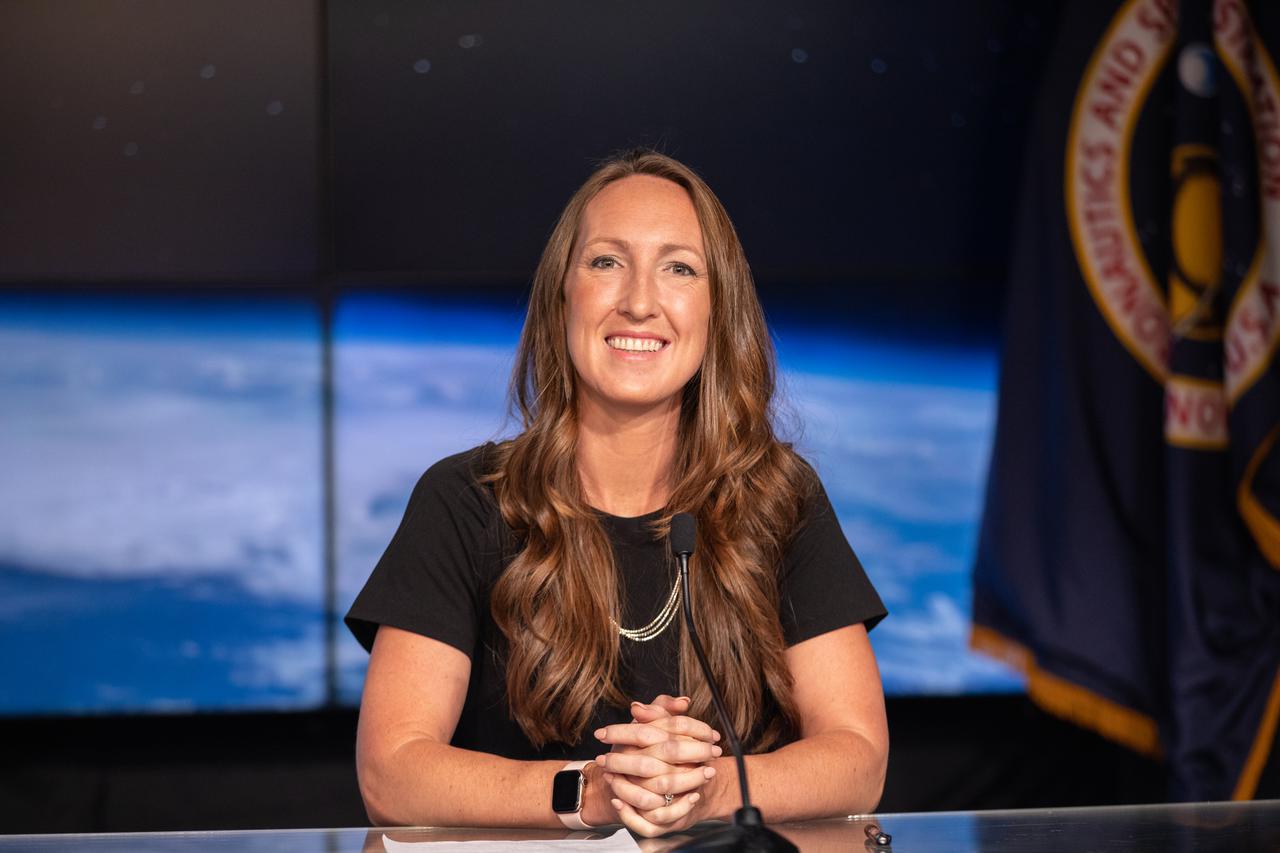
A prelaunch news conference for SpaceX’s 22nd Commercial Resupply Services mission for NASA to the International Space Station is held on June 2, 2021 at Kennedy Space Center in Florida. Sarah Walker, director, Dragon mission management at SpaceX, answers questions from members of the media. The Dragon capsule atop SpaceX’s Falcon 9 rocket is scheduled to lift off from Launch Complex 39A at 1:29 p.m. EDT on Thursday, June 3. Dragon will deliver more than 7,300 pounds of cargo to the space station.
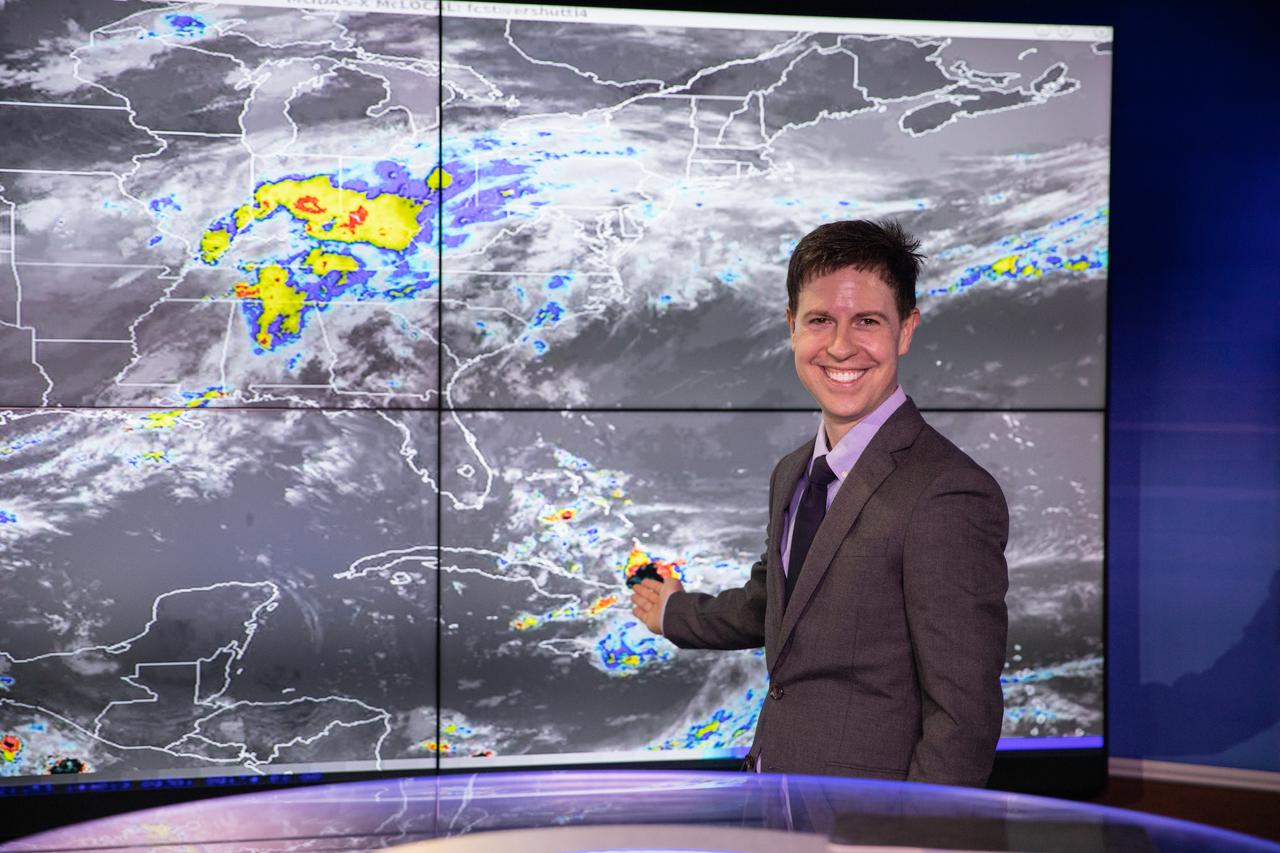
Mark Burger, launch weather officer, 45th Weather Squadron, Cape Canaveral Space Force Station, participates in a prelaunch news conference for SpaceX’s 22nd Commercial Resupply Services mission for NASA to the International Space Station on June 2, 2021 at Kennedy Space Center in Florida. The Dragon capsule atop SpaceX’s Falcon 9 rocket is scheduled to lift off from Launch Complex 39A at 1:29 p.m. EDT on June 3. Dragon will deliver more than 7,300 pounds of cargo to the space station.