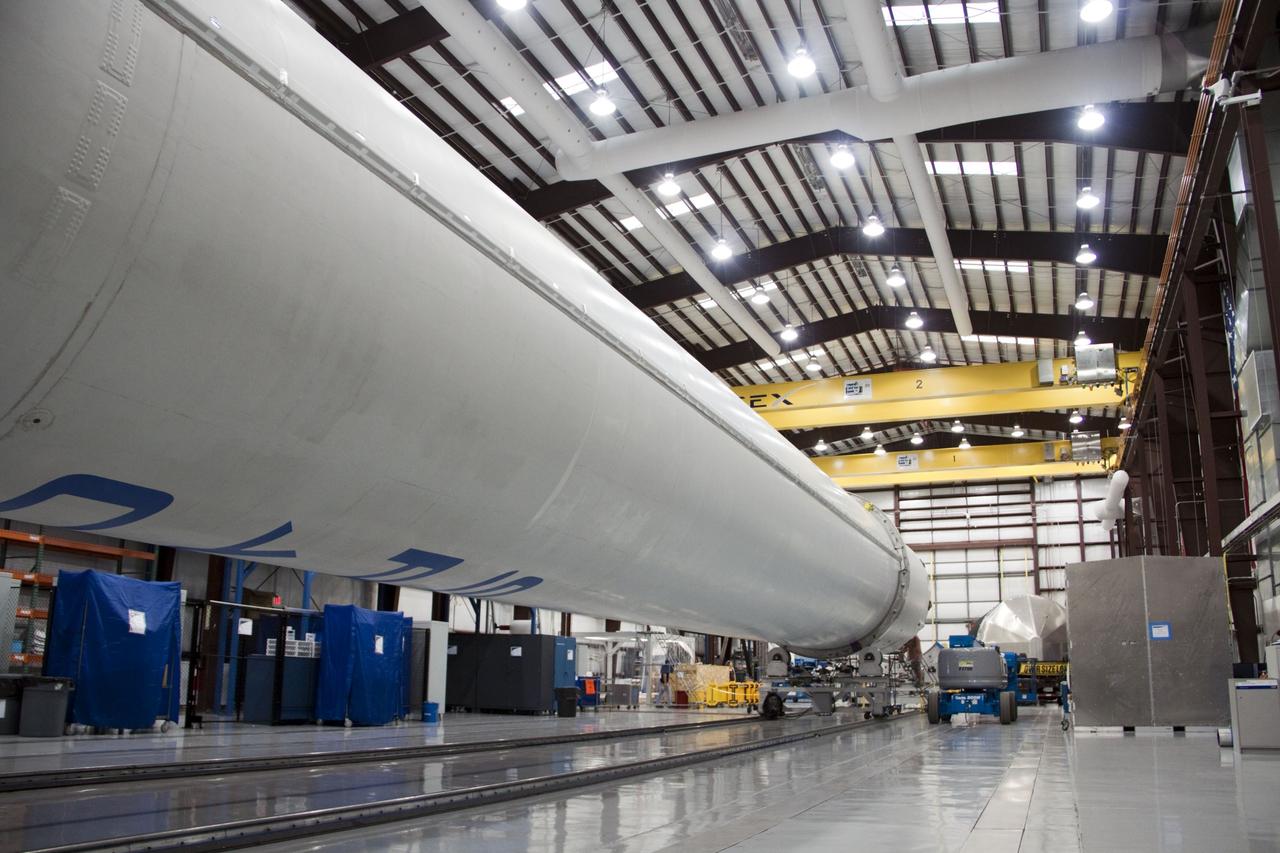
CAPE CANAVERAL, Fla. -- The second stage for the Space Exploration Technologies Corp., or SpaceX, Falcon 9 rocket is delivered to the SpaceX hangar at Pad 40 at Cape Canaveral Air Force Station in Florida. Also seen here in the foreground is the first stage of the Falcon 9. The Falcon 9 rocket will launch a second Dragon spacecraft, called Dragon C2, in late 2011. The mission will demonstrate proximity operations during an approach within six miles of the International Space Station. The company is building the Dragon to fly on resupply missions to the station. SpaceX was awarded procurement for three demonstration flights under the Commercial Orbital Transportation Services, or COTS, program managed by NASA's Johnson Space Center in Houston. The SpaceX contract provides for 12 missions to resupply the station from 2011 through 2015. Photo credit: NASA/Jim Grossmann
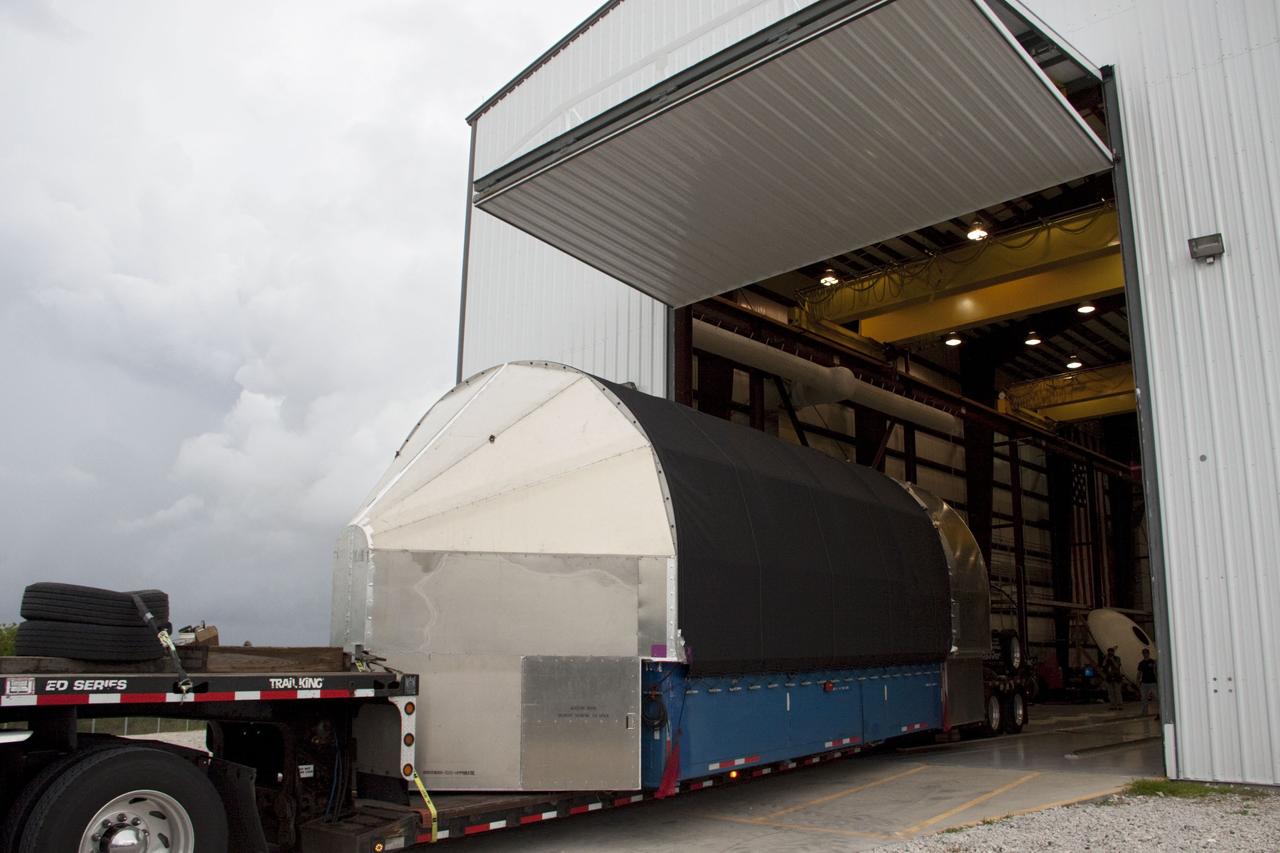
CAPE CANAVERAL, Fla. -- The second stage for the Space Exploration Technologies Corp., or SpaceX, Falcon 9 rocket is delivered to the SpaceX hangar at Pad 40 at Cape Canaveral Air Force Station in Florida. The Falcon 9 rocket will launch a second Dragon spacecraft, called Dragon C2, in late 2011. The mission will demonstrate proximity operations during an approach within six miles of the International Space Station. The company is building the Dragon to fly on resupply missions to the station. SpaceX was awarded procurement for three demonstration flights under the Commercial Orbital Transportation Services, or COTS, program managed by NASA's Johnson Space Center in Houston. The SpaceX contract provides for 12 missions to resupply the station from 2011 through 2015. Photo credit: NASA/Jim Grossmann

CAPE CANAVERAL, Fla. -- The second stage for the Space Exploration Technologies Corp., or SpaceX, Falcon 9 rocket is delivered to the SpaceX hangar at Pad 40 at Cape Canaveral Air Force Station in Florida. The Falcon 9 rocket will launch a second Dragon spacecraft, called Dragon C2, in late 2011. The mission will demonstrate proximity operations during an approach within six miles of the International Space Station. The company is building the Dragon to fly on resupply missions to the station. SpaceX was awarded procurement for three demonstration flights under the Commercial Orbital Transportation Services, or COTS, program managed by NASA's Johnson Space Center in Houston. The SpaceX contract provides for 12 missions to resupply the station from 2011 through 2015. Photo credit: NASA/Jim Grossmann
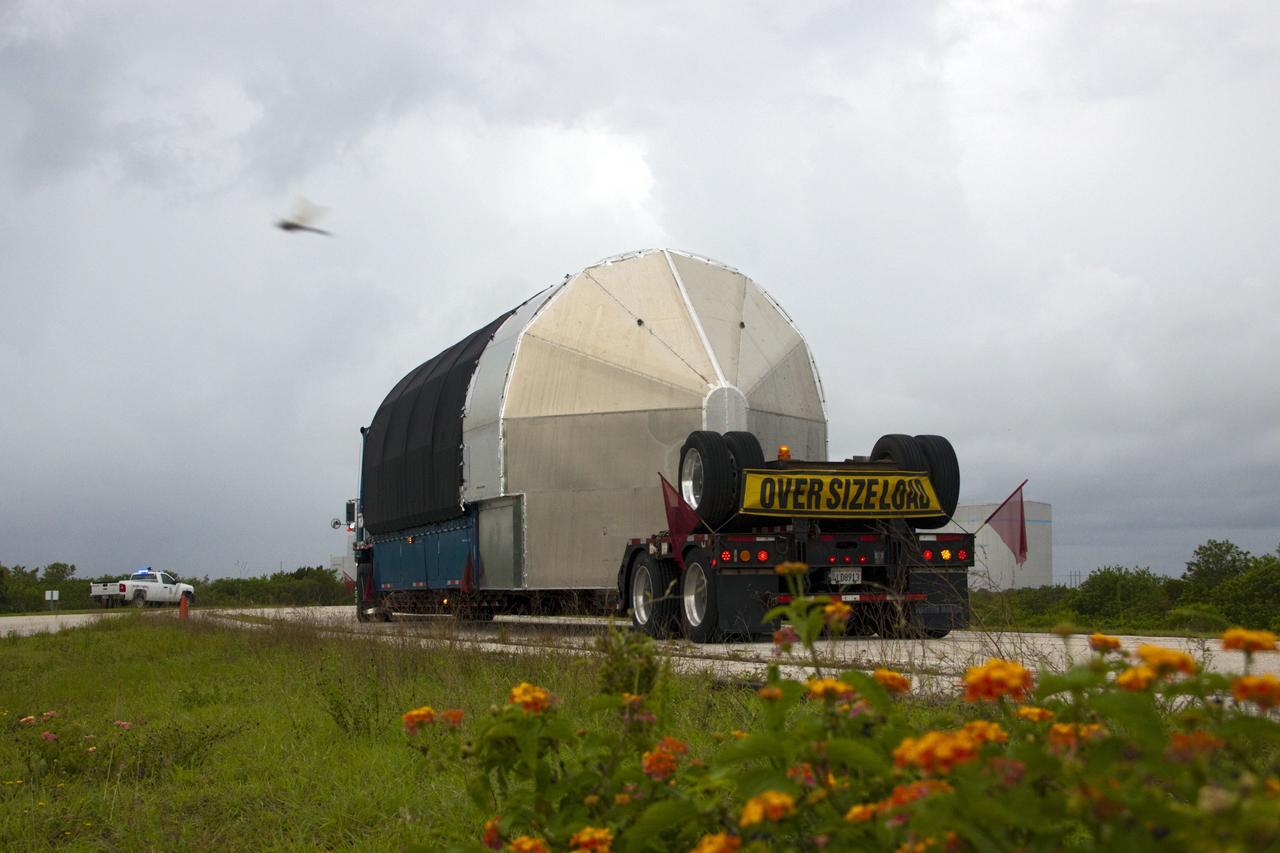
CAPE CANAVERAL, Fla. -- The second stage for the Space Exploration Technologies Corp., or SpaceX, Falcon 9 rocket is transported to the SpaceX hangar at Pad 40 at Cape Canaveral Air Force Station in Florida. The Falcon 9 rocket will launch a second Dragon spacecraft, called Dragon C2, in late 2011. The mission will demonstrate proximity operations during an approach within six miles of the International Space Station. The company is building the Dragon to fly on resupply missions to the station. SpaceX was awarded procurement for three demonstration flights under the Commercial Orbital Transportation Services, or COTS, program managed by NASA's Johnson Space Center in Houston. The SpaceX contract provides for 12 missions to resupply the station from 2011 through 2015. Photo credit: NASA/Jim Grossmann
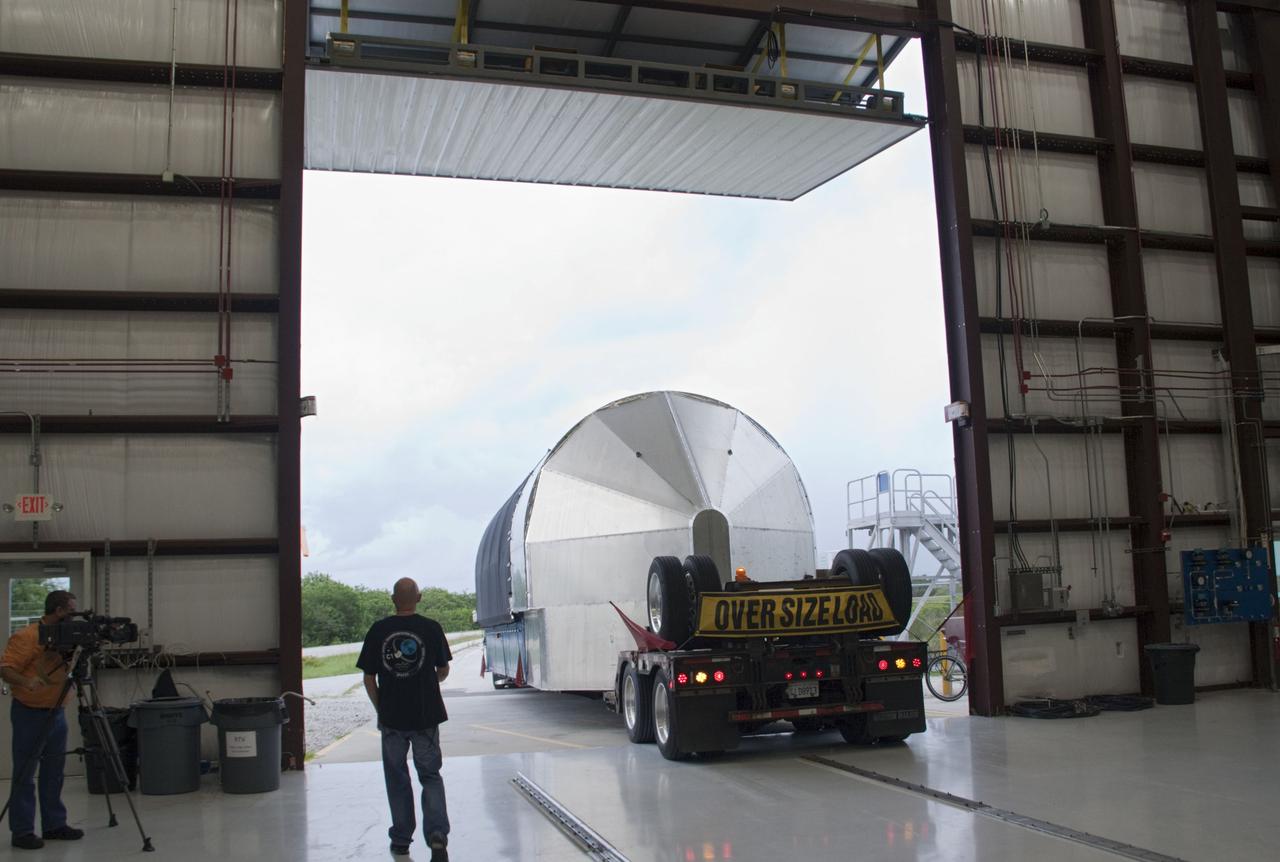
CAPE CANAVERAL, Fla. -- The second stage for the Space Exploration Technologies Corp., or SpaceX, Falcon 9 rocket is delivered to the SpaceX hangar at Pad 40 at Cape Canaveral Air Force Station in Florida. The Falcon 9 rocket will launch a second Dragon spacecraft, called Dragon C2, in late 2011. The mission will demonstrate proximity operations during an approach within six miles of the International Space Station. The company is building the Dragon to fly on resupply missions to the station. SpaceX was awarded procurement for three demonstration flights under the Commercial Orbital Transportation Services, or COTS, program managed by NASA's Johnson Space Center in Houston. The SpaceX contract provides for 12 missions to resupply the station from 2011 through 2015. Photo credit: NASA/Jim Grossmann
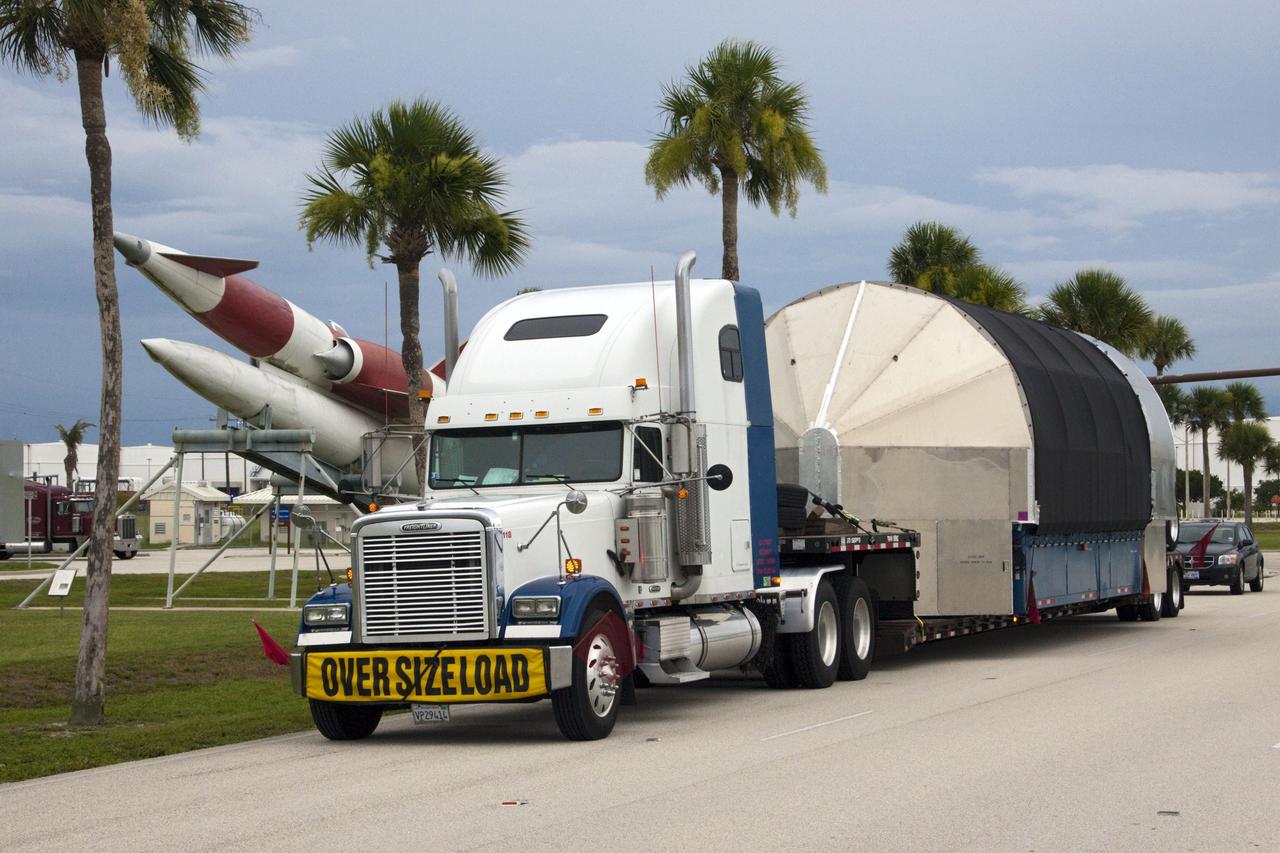
CAPE CANAVERAL, Fla. -- The second stage for the Space Exploration Technologies Corp., or SpaceX, Falcon 9 rocket is transported to the SpaceX hangar at Pad 40 at Cape Canaveral Air Force Station in Florida. The Falcon 9 rocket will launch a second Dragon spacecraft, called Dragon C2, in late 2011. The mission will demonstrate proximity operations during an approach within six miles of the International Space Station. The company is building the Dragon to fly on resupply missions to the station. SpaceX was awarded procurement for three demonstration flights under the Commercial Orbital Transportation Services, or COTS, program managed by NASA's Johnson Space Center in Houston. The SpaceX contract provides for 12 missions to resupply the station from 2011 through 2015. Photo credit: NASA/Jim Grossmann
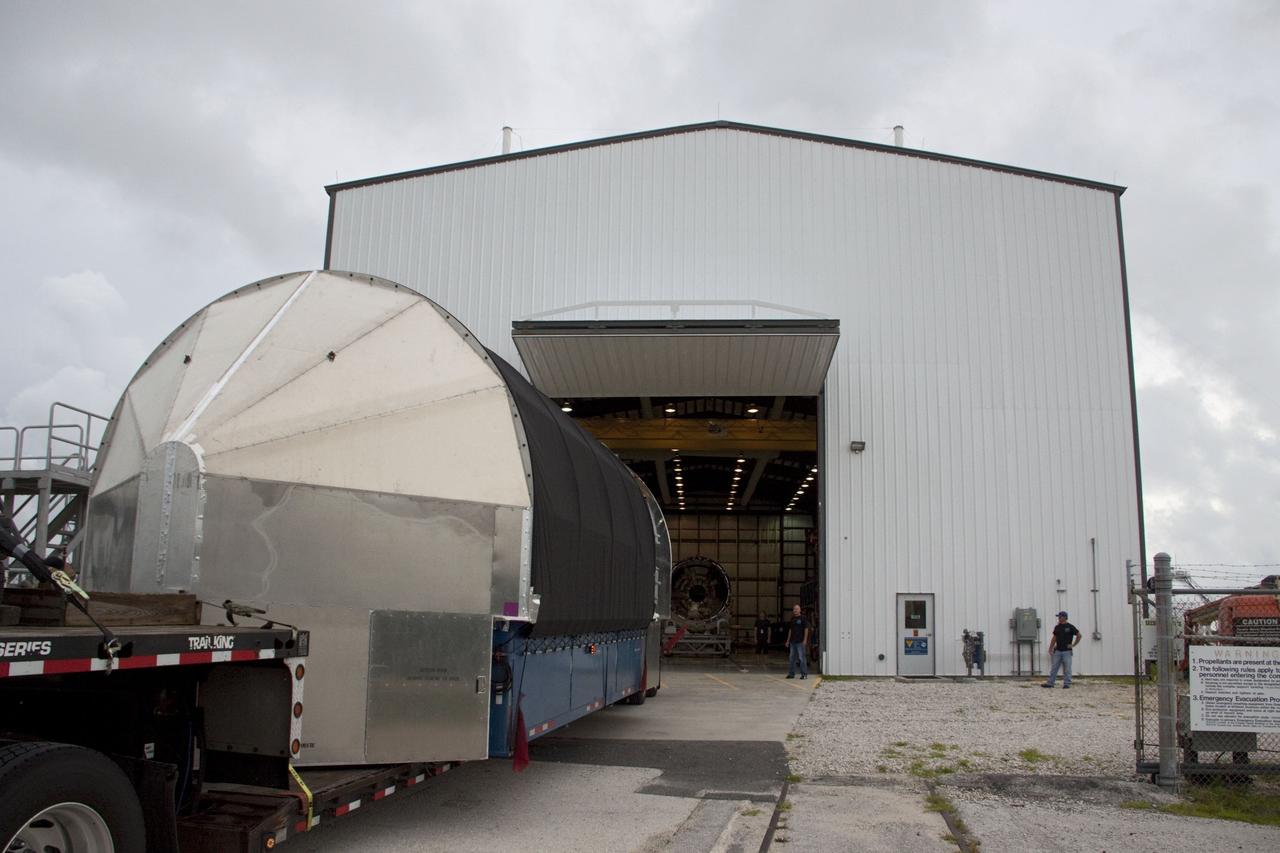
CAPE CANAVERAL, Fla. -- The second stage for the Space Exploration Technologies Corp., or SpaceX, Falcon 9 rocket is delivered to the SpaceX hangar at Pad 40 at Cape Canaveral Air Force Station in Florida. The Falcon 9 rocket will launch a second Dragon spacecraft, called Dragon C2, in late 2011. The mission will demonstrate proximity operations during an approach within six miles of the International Space Station. The company is building the Dragon to fly on resupply missions to the station. SpaceX was awarded procurement for three demonstration flights under the Commercial Orbital Transportation Services, or COTS, program managed by NASA's Johnson Space Center in Houston. The SpaceX contract provides for 12 missions to resupply the station from 2011 through 2015. Photo credit: NASA/Jim Grossmann
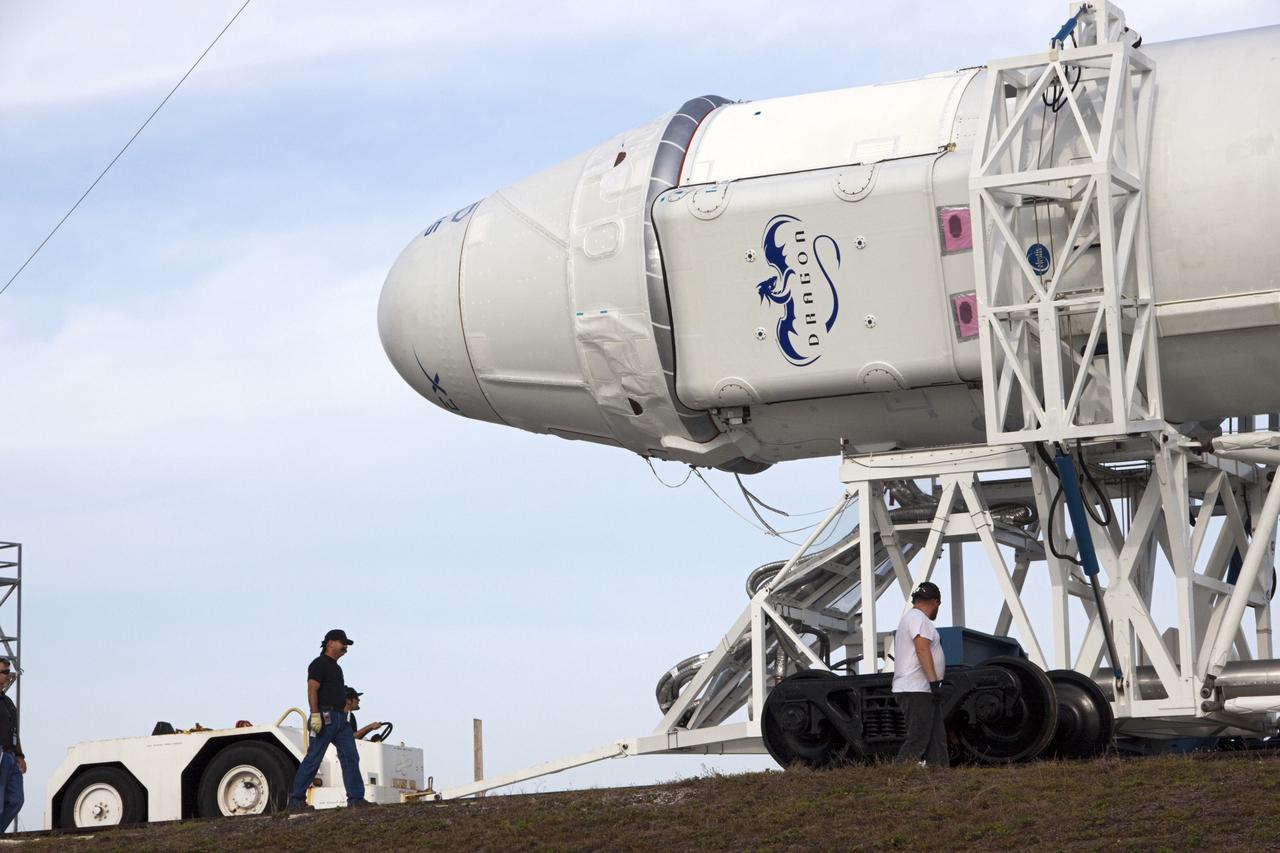
CAPE CANAVERAL, Fla. – As technicians monitor the progress of the transporter, the SpaceX Falcon 9 rocket with its Dragon spacecraft arrive at Space Launch Complex-40 on Cape Canaveral Air Force Station in Florida. Liftoff with the SpaceX Falcon 9 is set for 4:55 a.m. EDT on May 19. The launch will be the company's second demonstration test flight for NASA's Commercial Orbital Transportation Services Program, or COTS. During the flight, the capsule will conduct a series of check-out procedures to test and prove its systems, including rendezvous and berthing with the International Space Station. If the capsule performs as planned, the cargo and experiments it is carrying will be transferred to the station. The cargo includes food, water and provisions for the station’s Expedition crews, such as clothing, batteries and computer equipment. Under COTS, NASA has partnered with two aerospace companies to deliver cargo to the station. For more information, visit http://www.nasa.gov/spacex Photo credit: NASA/Jim Grossmann
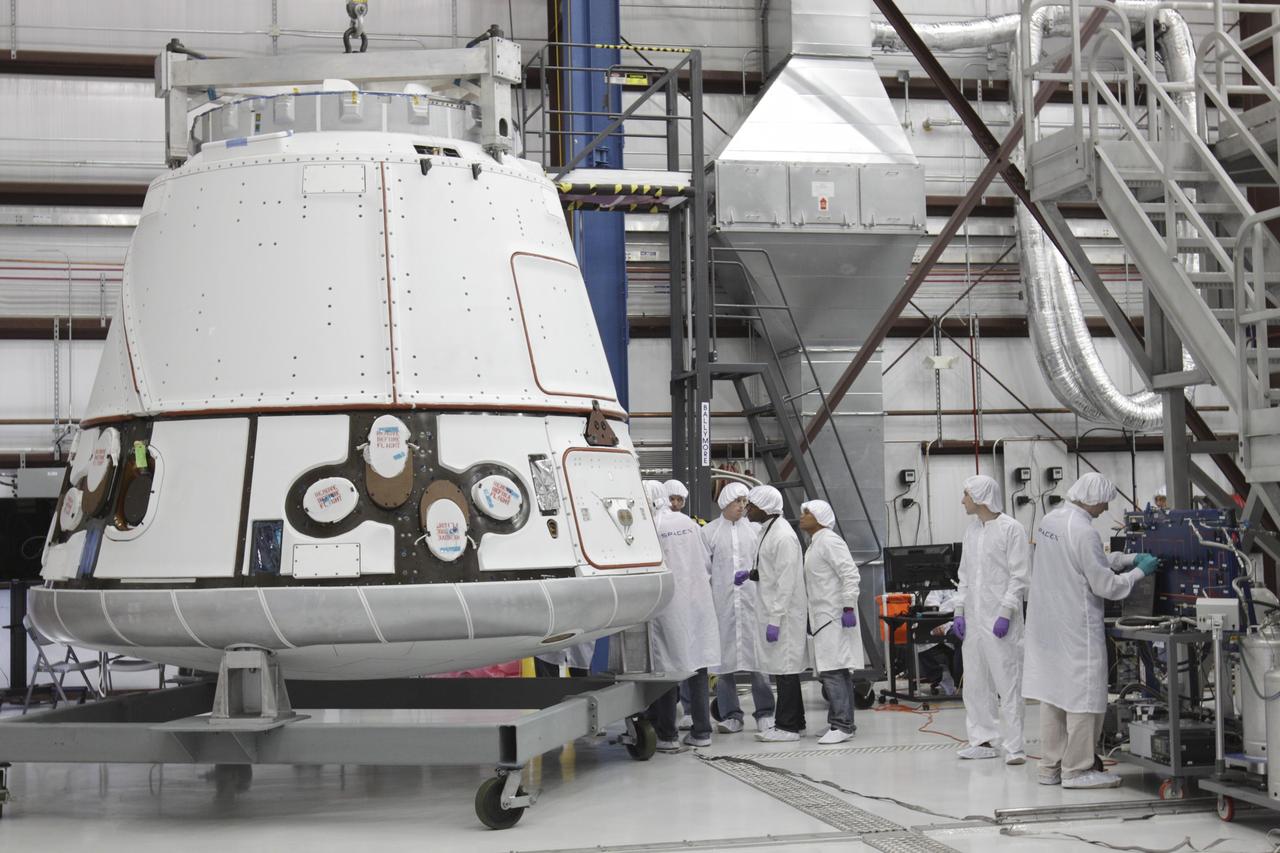
CAPE CANAVERAL, Fla. -- The Space Exploration Technologies Corp. (SpaceX) Dragon capsule is readied for lifting and placement to its cargo ring inside a processing hangar at Cape Canaveral Air Force Station in Florida on Nov. 16. Later, the combination will be attached to the top of a Falcon 9 rocket on Space Launch Complex-40 for the company's next demonstration test flight for NASA's Commercial Orbital Transportation Services (COTS) program. SpaceX is one of two companies under contract with NASA to take cargo to the International Space Station. NASA is working with SpaceX to combine its last two demonstration flights, and if approved, the Falcon 9 rocket would launch the Dragon capsule to the orbiting laboratory for a docking within the next several months. Photo credit: NASA/Kim Shiflett
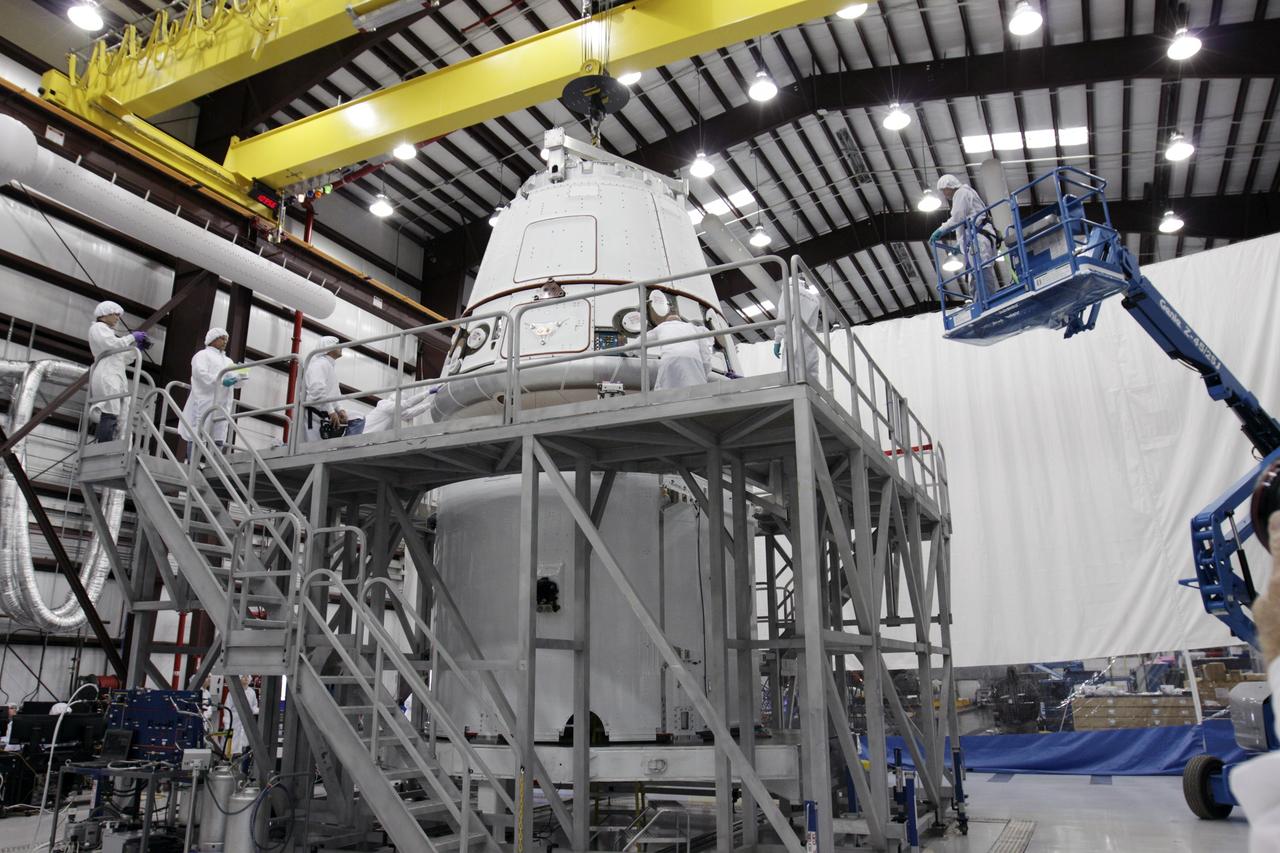
CAPE CANAVERAL, Fla. -- The Space Exploration Technologies Corp. (SpaceX) Dragon capsule is placed atop its cargo ring inside a processing hangar at Cape Canaveral Air Force Station in Florida on Nov. 16. Later, the combination will be attached to the top of a Falcon 9 rocket on Space Launch Complex-40 for the company's next demonstration test flight for NASA's Commercial Orbital Transportation Services (COTS) program. SpaceX is one of two companies under contract with NASA to take cargo to the International Space Station. NASA is working with SpaceX to combine its last two demonstration flights, and if approved, the Falcon 9 rocket would launch the Dragon capsule to the orbiting laboratory for a docking within the next several months. Photo credit: NASA/Kim Shiflett
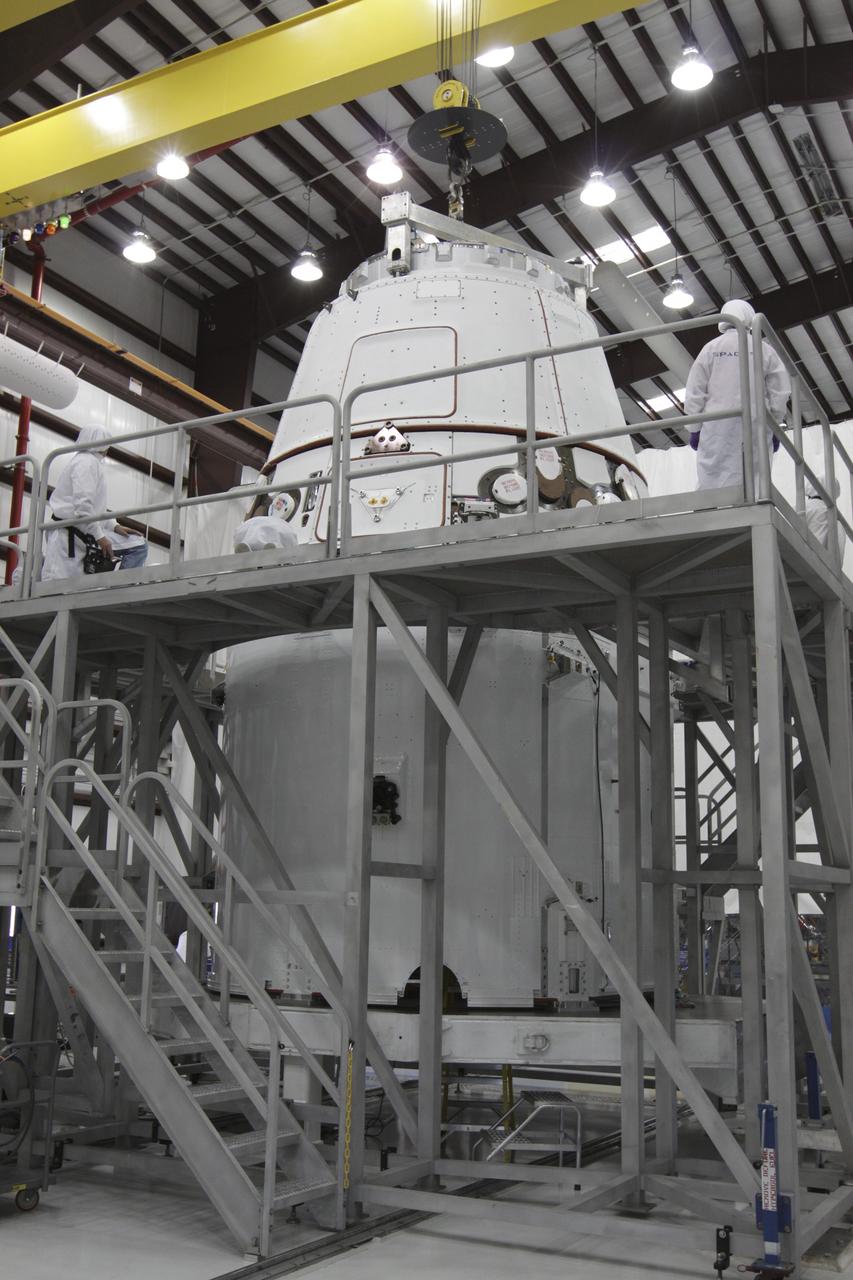
CAPE CANAVERAL, Fla. -- The Space Exploration Technologies Corp. (SpaceX) Dragon capsule is placed atop its cargo ring inside a processing hangar at Cape Canaveral Air Force Station in Florida on Nov. 16. Later, the combination will be attached to the top of a Falcon 9 rocket on Space Launch Complex-40 for the company's next demonstration test flight for NASA's Commercial Orbital Transportation Services (COTS) program. SpaceX is one of two companies under contract with NASA to take cargo to the International Space Station. NASA is working with SpaceX to combine its last two demonstration flights, and if approved, the Falcon 9 rocket would launch the Dragon capsule to the orbiting laboratory for a docking within the next several months. Photo credit: NASA/Kim Shiflett
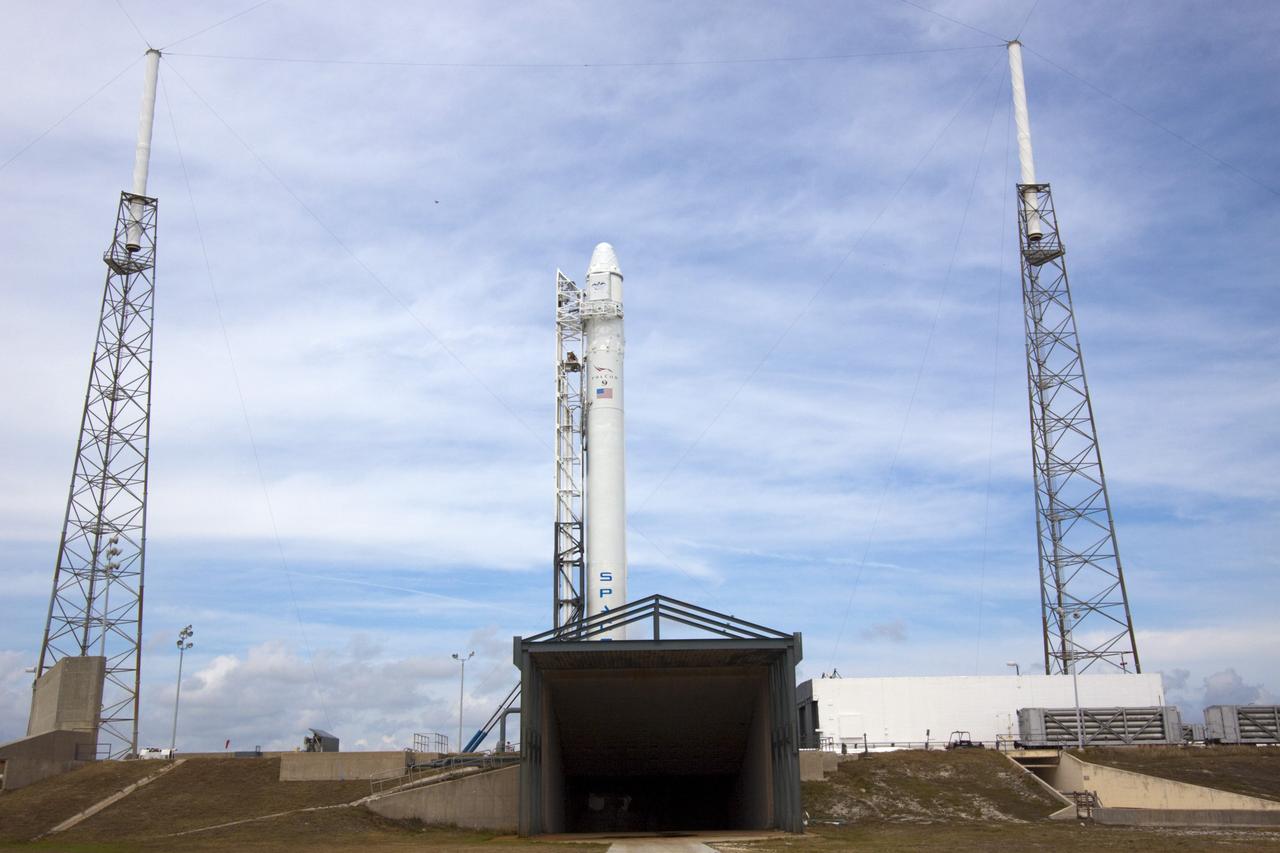
CAPE CANAVERAL, Fla. – Partially hidden behind a flame and exhaust deflector, the SpaceX Falcon 9 rocket stands at Space Launch Complex-40 on Cape Canaveral Air Force Station in Florida. Liftoff with the SpaceX Dragon capsule aboard is set for 4:55 a.m. EDT on May 19. The launch will be the company's second demonstration test flight for NASA's Commercial Orbital Transportation Services Program, or COTS. During the flight, the capsule will conduct a series of check-out procedures to test and prove its systems, including rendezvous and berthing with the International Space Station. If the capsule performs as planned, the cargo and experiments it is carrying will be transferred to the station. The cargo includes food, water and provisions for the station’s Expedition crews, such as clothing, batteries and computer equipment. Under COTS, NASA has partnered with two aerospace companies to deliver cargo to the station. For more information, visit http://www.nasa.gov/spacex Photo credit: NASA/Jim Grossmann
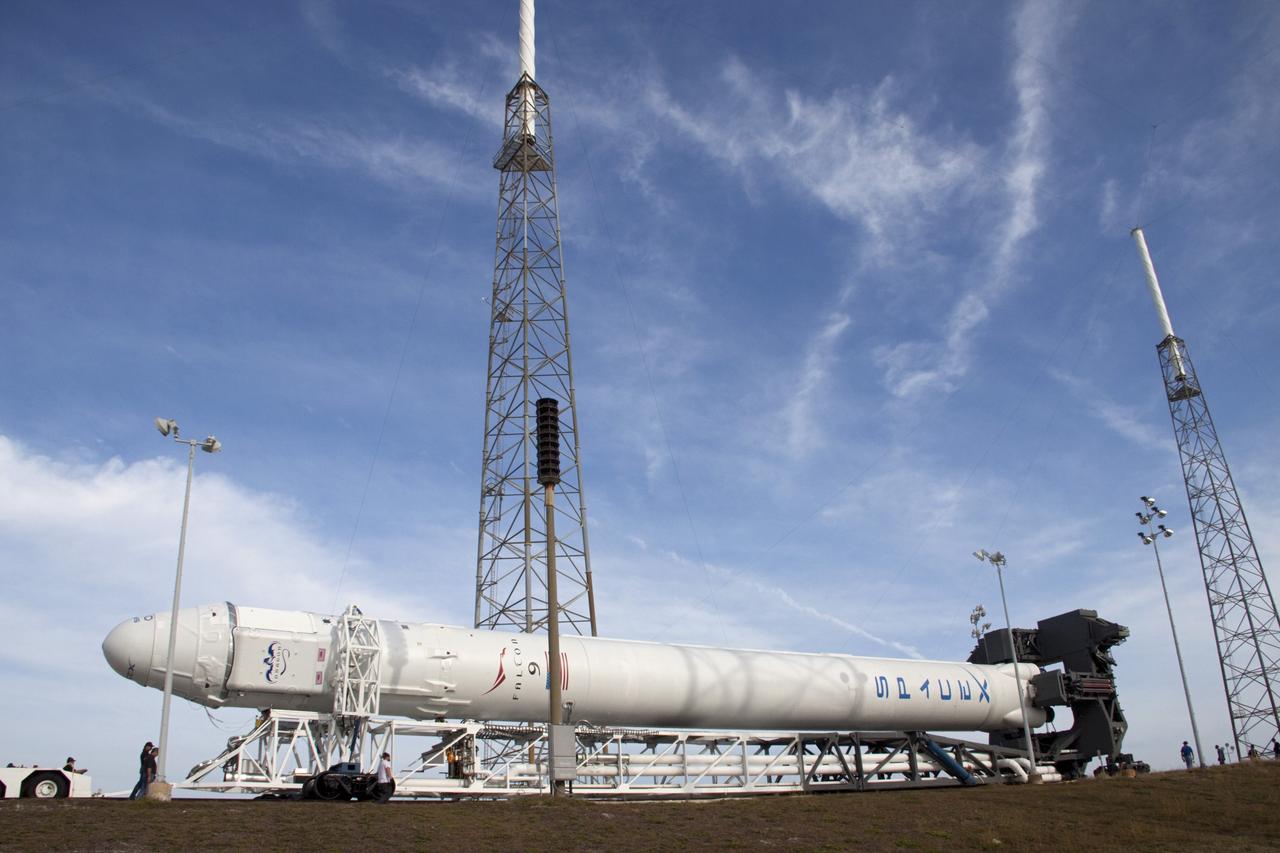
CAPE CANAVERAL, Fla. – The 227-foot-tall 69.2 meter) SpaceX Falcon 9 rocket arrives at Space Launch Complex-40 on Cape Canaveral Air Force Station in Florida. Liftoff with the SpaceX Dragon capsule aboard is set for 4:55 a.m. EDT on May 19. The launch will be the company's second demonstration test flight for NASA's Commercial Orbital Transportation Services Program, or COTS. During the flight, the capsule will conduct a series of check-out procedures to test and prove its systems, including rendezvous and berthing with the International Space Station. If the capsule performs as planned, the cargo and experiments it is carrying will be transferred to the station. The cargo includes food, water and provisions for the station’s Expedition crews, such as clothing, batteries and computer equipment. Under COTS, NASA has partnered with two aerospace companies to deliver cargo to the station. For more information, visit http://www.nasa.gov/spacex Photo credit: NASA/Jim Grossmann
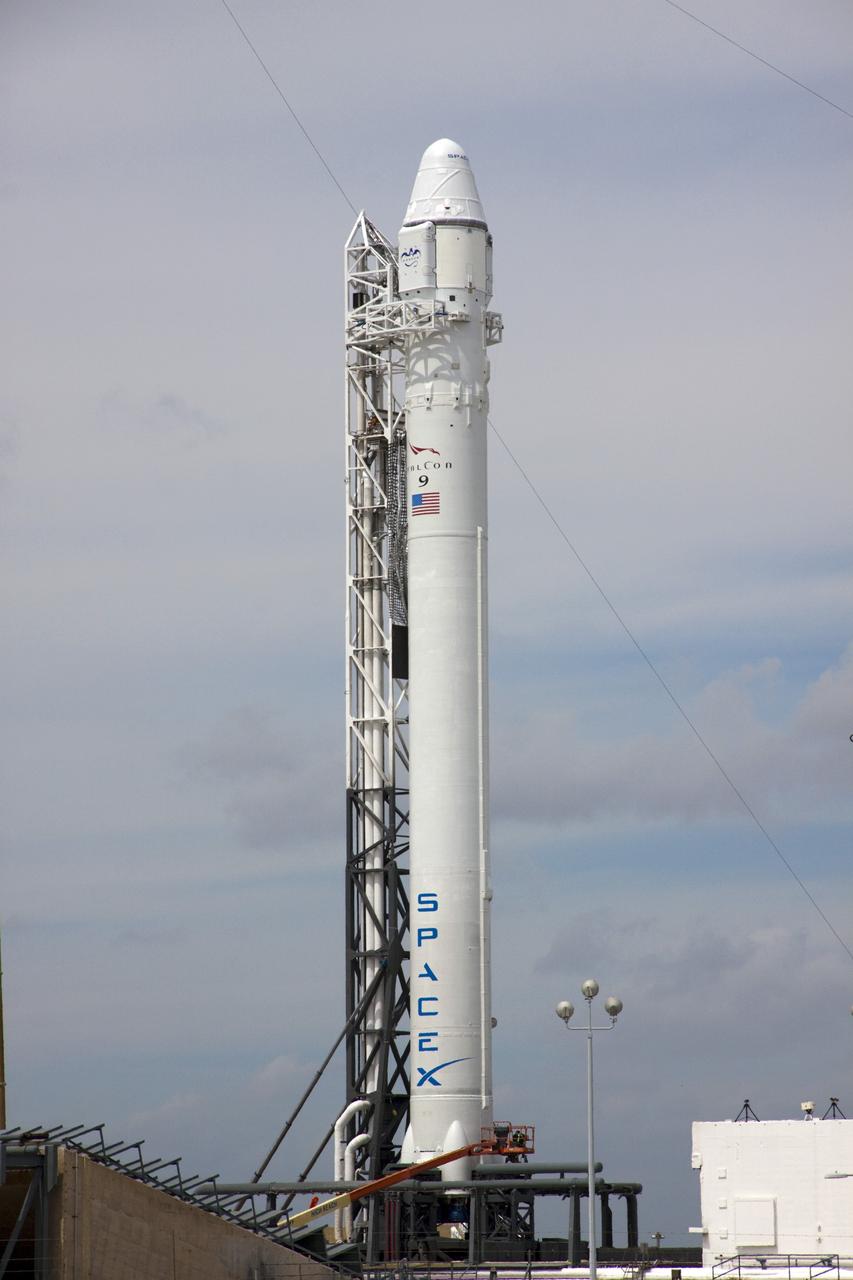
CAPE CANAVERAL, Fla. – The 227-foot-tall 69.2 meter) SpaceX Falcon 9 rocket stands at Space Launch Complex-40 on Cape Canaveral Air Force Station in Florida. Liftoff with the SpaceX Dragon capsule aboard is set for 4:55 a.m. EDT on May 19. The launch will be the company's second demonstration test flight for NASA's Commercial Orbital Transportation Services Program, or COTS. During the flight, the capsule will conduct a series of check-out procedures to test and prove its systems, including rendezvous and berthing with the International Space Station. If the capsule performs as planned, the cargo and experiments it is carrying will be transferred to the station. The cargo includes food, water and provisions for the station’s Expedition crews, such as clothing, batteries and computer equipment. Under COTS, NASA has partnered with two aerospace companies to deliver cargo to the station. For more information, visit http://www.nasa.gov/spacex Photo credit: NASA/Jim Grossmann
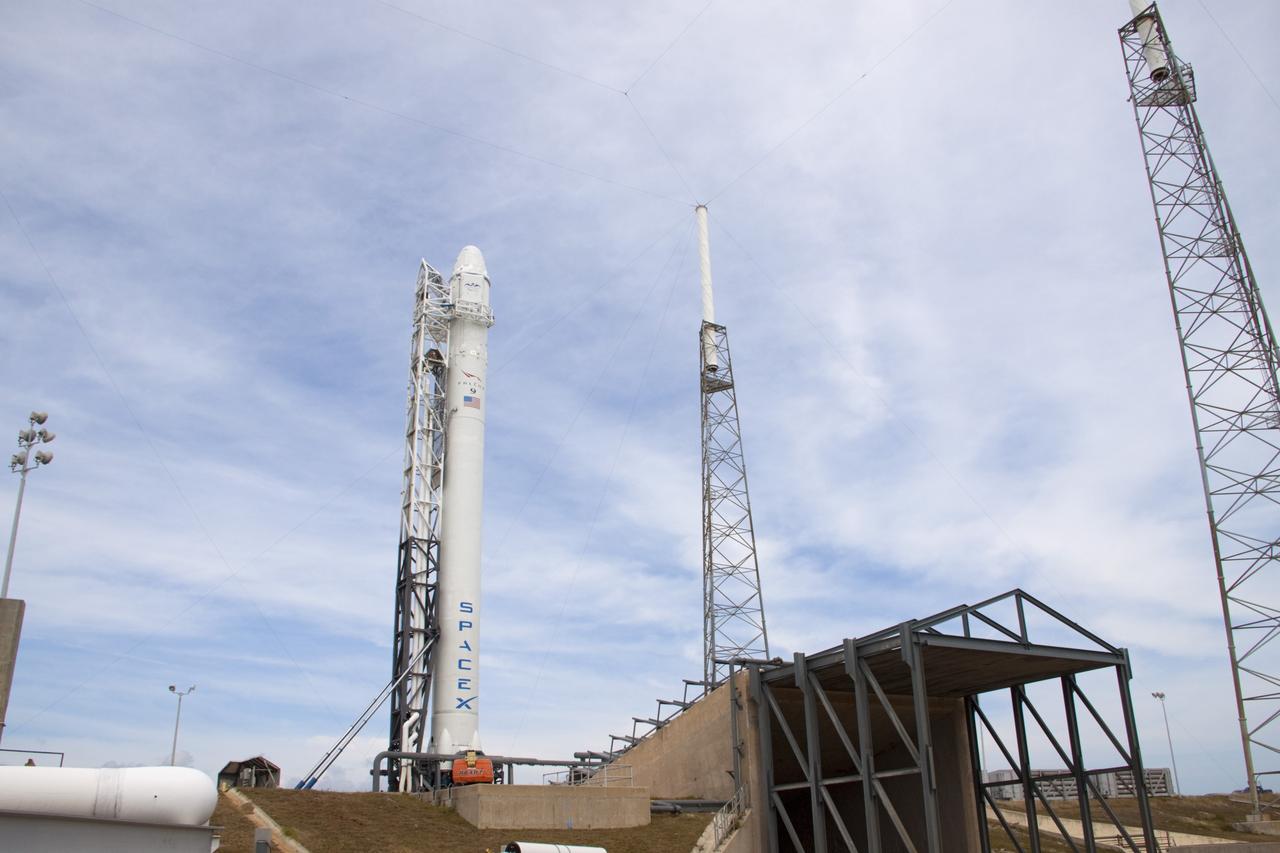
CAPE CANAVERAL, Fla. – The SpaceX Falcon 9 rocket stands at Space Launch Complex-40 on Cape Canaveral Air Force Station in Florida. Liftoff with the SpaceX Dragon capsule aboard is set for 4:55 a.m. EDT on May 19. The launch will be the company's second demonstration test flight for NASA's Commercial Orbital Transportation Services Program, or COTS. During the flight, the capsule will conduct a series of check-out procedures to test and prove its systems, including rendezvous and berthing with the International Space Station. If the capsule performs as planned, the cargo and experiments it is carrying will be transferred to the station. The cargo includes food, water and provisions for the station’s Expedition crews, such as clothing, batteries and computer equipment. Under COTS, NASA has partnered with two aerospace companies to deliver cargo to the station. For more information, visit http://www.nasa.gov/spacex Photo credit: NASA/Jim Grossmann

CAPE CANAVERAL, Fla. – The SpaceX Falcon 9 rocket stands at Space Launch Complex-40 on Cape Canaveral Air Force Station in Florida. Liftoff with the SpaceX Dragon capsule aboard is set for 4:55 a.m. EDT on May 19. The launch will be the company's second demonstration test flight for NASA's Commercial Orbital Transportation Services Program, or COTS. During the flight, the capsule will conduct a series of check-out procedures to test and prove its systems, including rendezvous and berthing with the International Space Station. If the capsule performs as planned, the cargo and experiments it is carrying will be transferred to the station. The cargo includes food, water and provisions for the station’s Expedition crews, such as clothing, batteries and computer equipment. Under COTS, NASA has partnered with two aerospace companies to deliver cargo to the station. For more information, visit http://www.nasa.gov/spacex Photo credit: NASA/Jim Grossmann
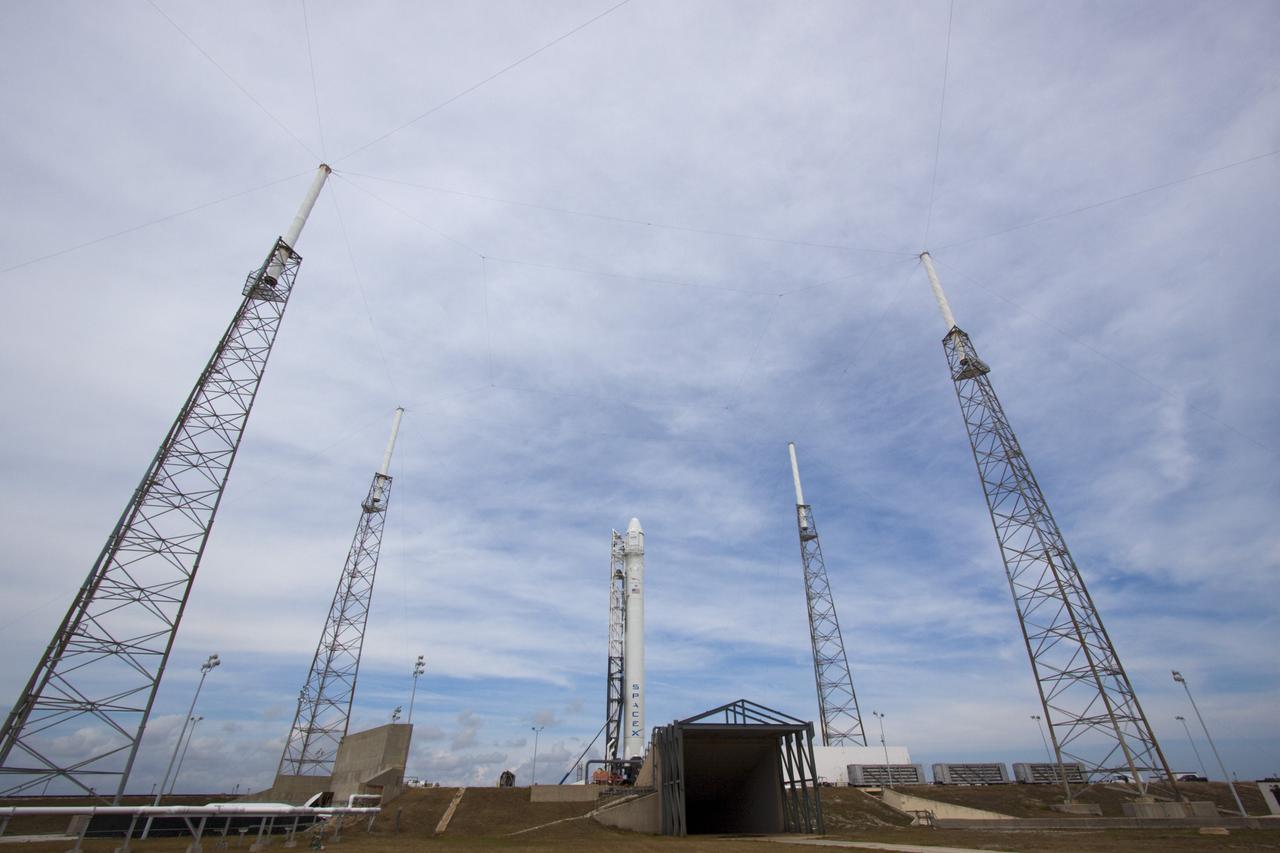
CAPE CANAVERAL, Fla. – Surrounded by four lightning suppression system towers, the SpaceX Falcon 9 rocket stands at Space Launch Complex-40 on Cape Canaveral Air Force Station in Florida. Liftoff with the SpaceX Dragon capsule aboard is set for 4:55 a.m. EDT on May 19. The launch will be the company's second demonstration test flight for NASA's Commercial Orbital Transportation Services Program, or COTS. During the flight, the capsule will conduct a series of check-out procedures to test and prove its systems, including rendezvous and berthing with the International Space Station. If the capsule performs as planned, the cargo and experiments it is carrying will be transferred to the station. The cargo includes food, water and provisions for the station’s Expedition crews, such as clothing, batteries and computer equipment. Under COTS, NASA has partnered with two aerospace companies to deliver cargo to the station. For more information, visit http://www.nasa.gov/spacex Photo credit: NASA/Jim Grossmann
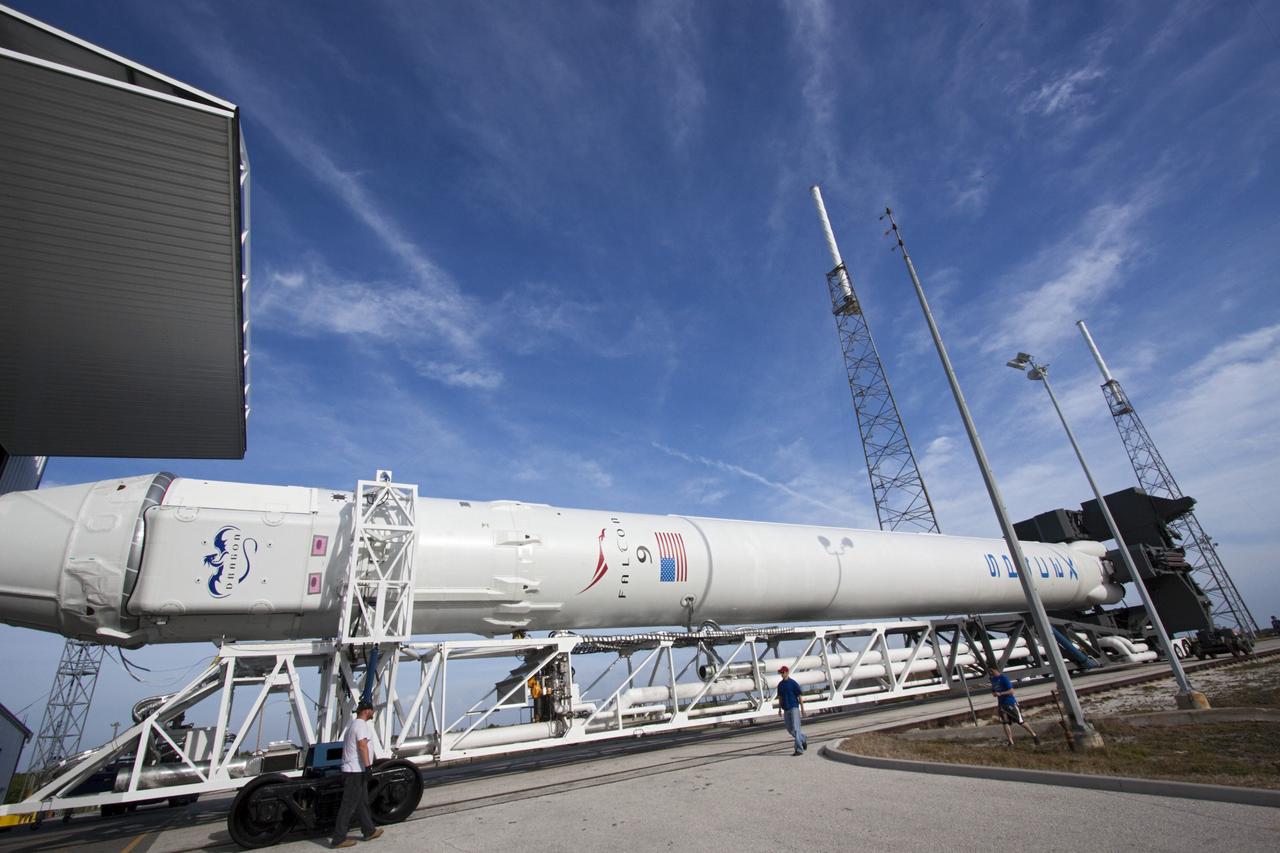
CAPE CANAVERAL, Fla. - The SpaceX Falcon 9 rocket arrives at Space Launch Complex-40 on Cape Canaveral Air Force Station in Florida. Liftoff with the SpaceX Dragon capsule aboard is set for 4:55 a.m. EDT on May 19. The launch will be the company's second demonstration test flight for NASA's Commercial Orbital Transportation Services Program, or COTS. During the flight, the capsule will conduct a series of check-out procedures to test and prove its systems, including rendezvous and berthing with the International Space Station. If the capsule performs as planned, the cargo and experiments it is carrying will be transferred to the station. The cargo includes food, water and provisions for the station’s Expedition crews, such as clothing, batteries and computer equipment. Under COTS, NASA has partnered with two aerospace companies to deliver cargo to the station. For more information, visit http://www.nasa.gov/spacex Photo credit: NASA/Jim Grossmann
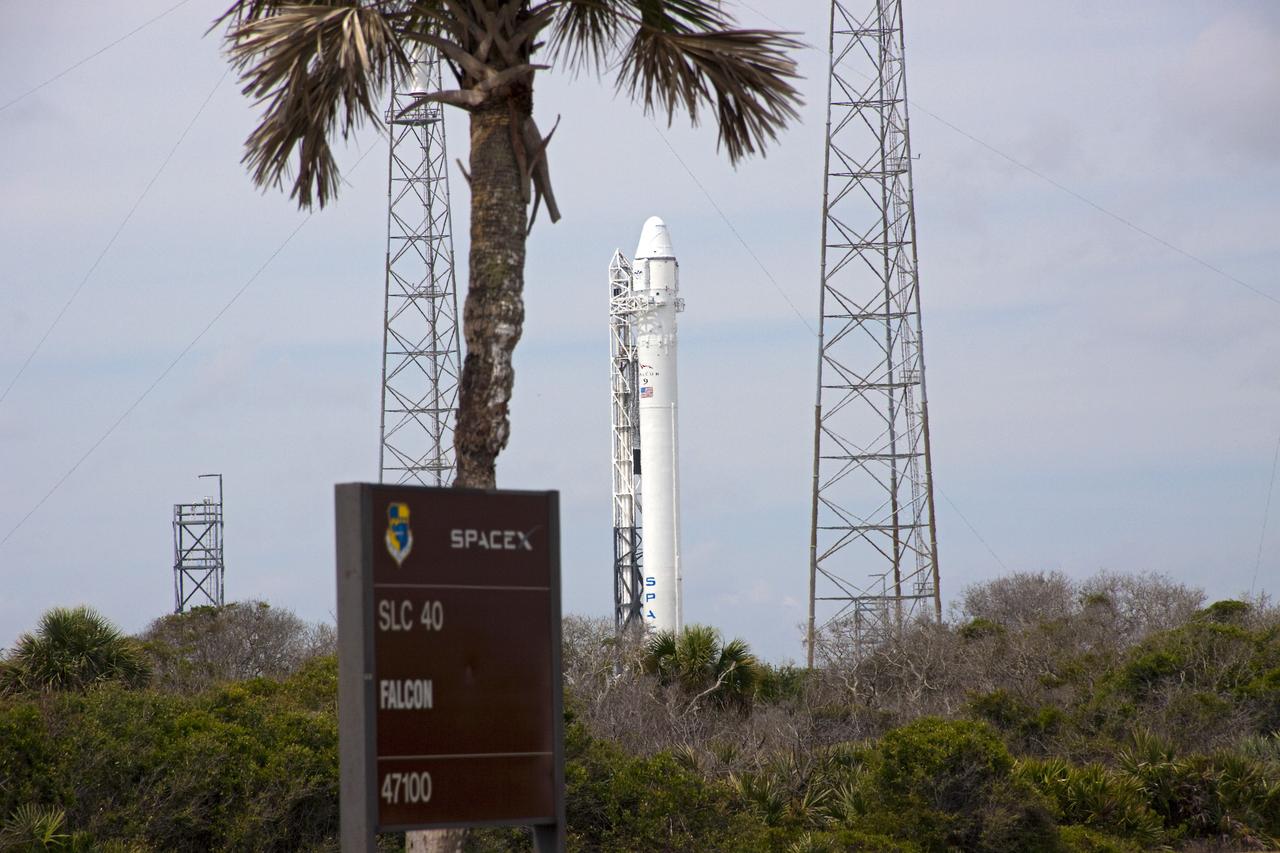
CAPE CANAVERAL, Fla. – The SpaceX Falcon 9 rocket stands at Space Launch Complex-40 on Cape Canaveral Air Force Station in Florida. Liftoff with the SpaceX Dragon capsule aboard is set for 4:55 a.m. EDT on May 19. The launch will be the company's second demonstration test flight for NASA's Commercial Orbital Transportation Services Program, or COTS. During the flight, the capsule will conduct a series of check-out procedures to test and prove its systems, including rendezvous and berthing with the International Space Station. If the capsule performs as planned, the cargo and experiments it is carrying will be transferred to the station. The cargo includes food, water and provisions for the station’s Expedition crews, such as clothing, batteries and computer equipment. Under COTS, NASA has partnered with two aerospace companies to deliver cargo to the station. For more information, visit http://www.nasa.gov/spacex Photo credit: NASA/Jim Grossmann
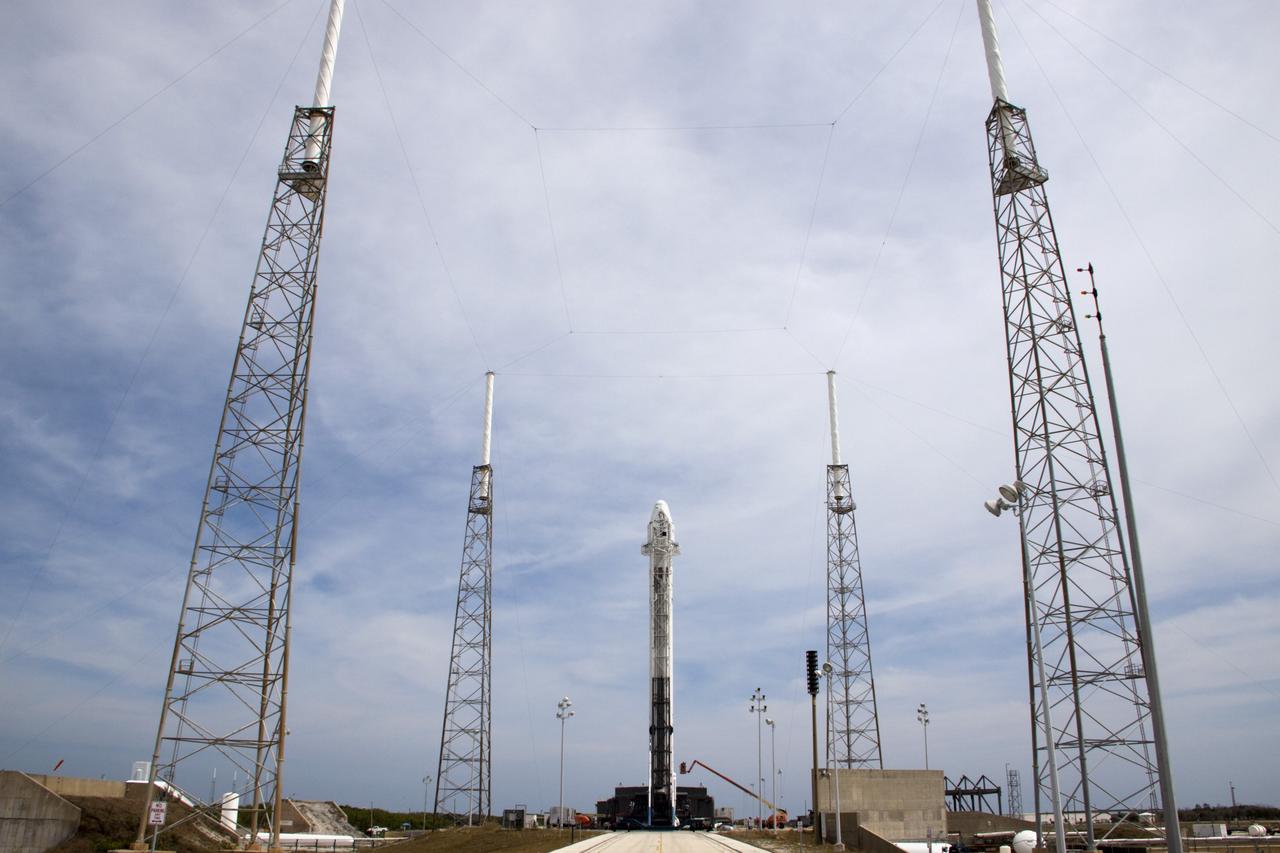
CAPE CANAVERAL, Fla. – Surrounded by four lightning suppression system towers, the SpaceX Falcon 9 rocket stands at Space Launch Complex-40 on Cape Canaveral Air Force Station in Florida. Liftoff with the SpaceX Dragon capsule aboard is set for 4:55 a.m. EDT on May 19. The launch will be the company's second demonstration test flight for NASA's Commercial Orbital Transportation Services Program, or COTS. During the flight, the capsule will conduct a series of check-out procedures to test and prove its systems, including rendezvous and berthing with the International Space Station. If the capsule performs as planned, the cargo and experiments it is carrying will be transferred to the station. The cargo includes food, water and provisions for the station’s Expedition crews, such as clothing, batteries and computer equipment. Under COTS, NASA has partnered with two aerospace companies to deliver cargo to the station. For more information, visit http://www.nasa.gov/spacex Photo credit: NASA/Jim Grossmann
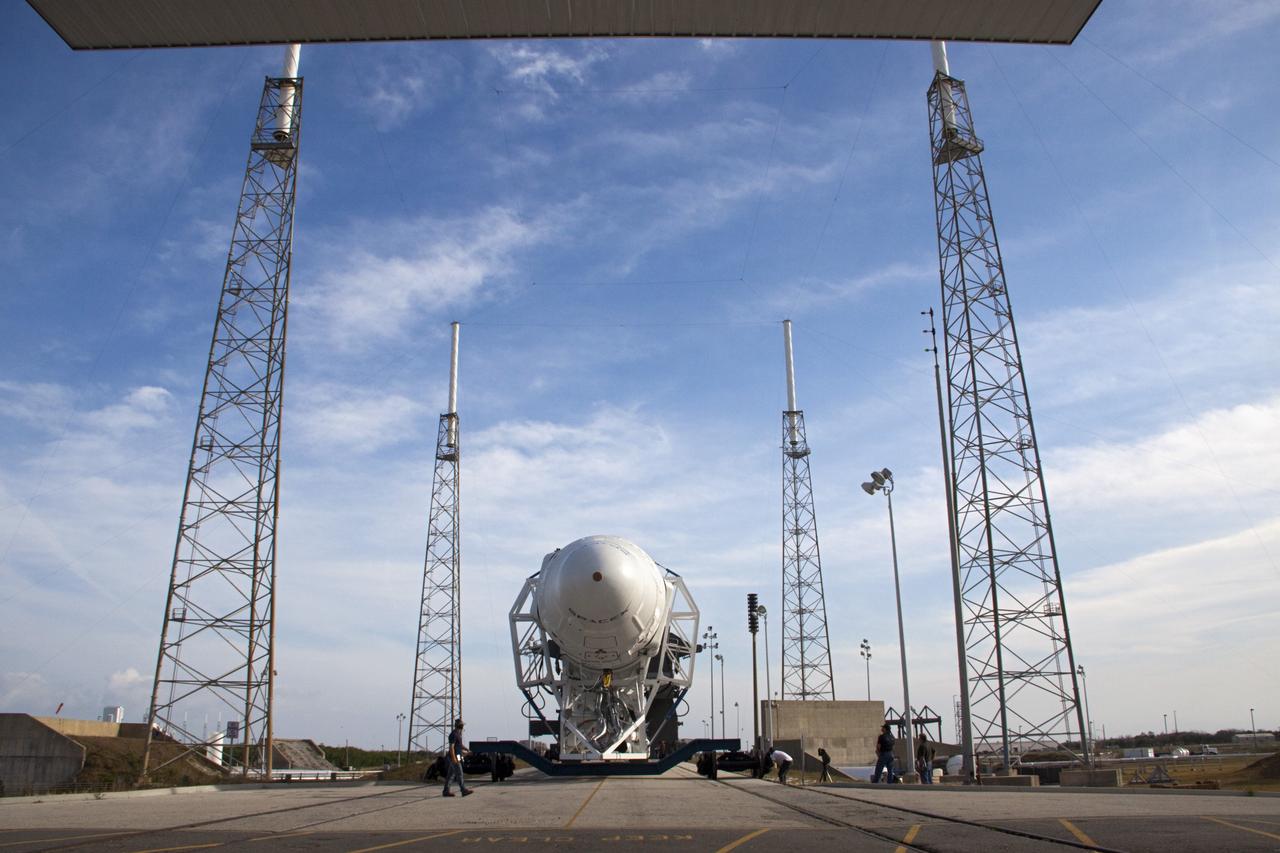
CAPE CANAVERAL, Fla. – In this nose-on view, the SpaceX Falcon 9 rocket arrives at Space Launch Complex-40 on Cape Canaveral Air Force Station in Florida. Liftoff with the SpaceX Dragon capsule aboard is set for 4:55 a.m. EDT on May 19. The launch will be the company's second demonstration test flight for NASA's Commercial Orbital Transportation Services Program, or COTS. During the flight, the capsule will conduct a series of check-out procedures to test and prove its systems, including rendezvous and berthing with the International Space Station. If the capsule performs as planned, the cargo and experiments it is carrying will be transferred to the station. The cargo includes food, water and provisions for the station’s Expedition crews, such as clothing, batteries and computer equipment. Under COTS, NASA has partnered with two aerospace companies to deliver cargo to the station. For more information, visit http://www.nasa.gov/spacex Photo credit: NASA/Jim Grossmann
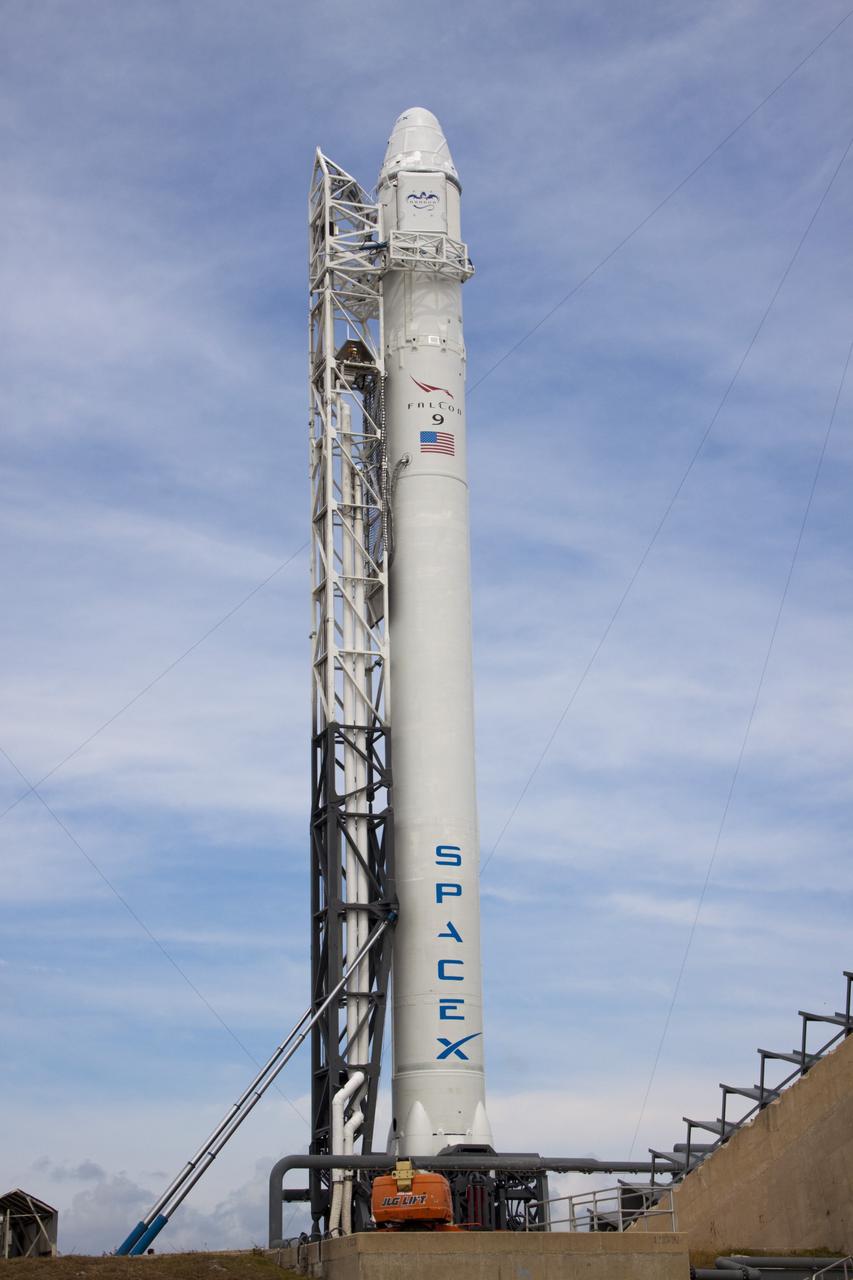
CAPE CANAVERAL, Fla. – The SpaceX Falcon 9 rocket stands at Space Launch Complex-40 on Cape Canaveral Air Force Station in Florida. Liftoff with the SpaceX Dragon capsule aboard is set for 4:55 a.m. EDT on May 19. The launch will be the company's second demonstration test flight for NASA's Commercial Orbital Transportation Services Program, or COTS. During the flight, the capsule will conduct a series of check-out procedures to test and prove its systems, including rendezvous and berthing with the International Space Station. If the capsule performs as planned, the cargo and experiments it is carrying will be transferred to the station. The cargo includes food, water and provisions for the station’s Expedition crews, such as clothing, batteries and computer equipment. Under COTS, NASA has partnered with two aerospace companies to deliver cargo to the station. For more information, visit http://www.nasa.gov/spacex Photo credit: NASA/Jim Grossmann
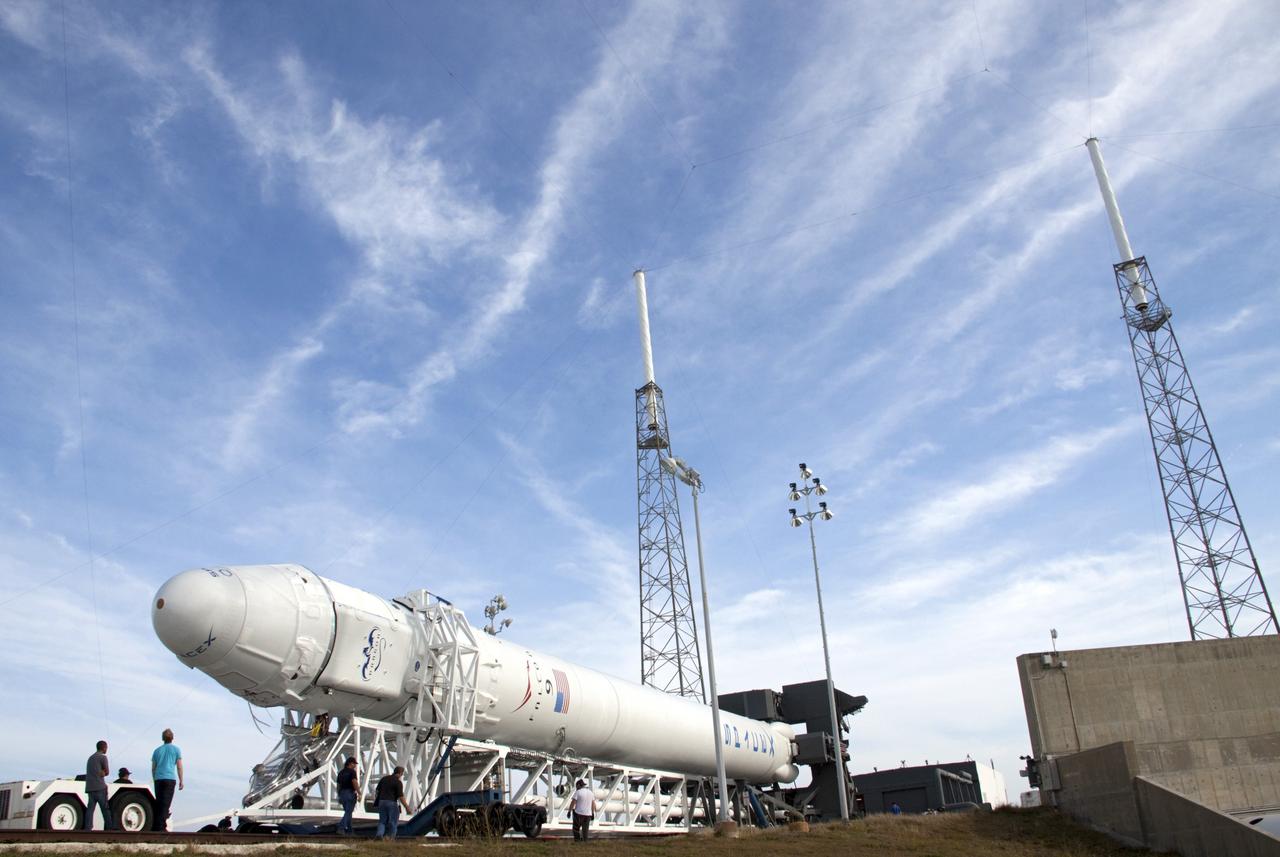
CAPE CANAVERAL, Fla. – Under the watchful eye of technicians, the SpaceX Falcon 9 rocket arrives at Space Launch Complex-40 on Cape Canaveral Air Force Station in Florida. Liftoff with the SpaceX Dragon capsule aboard is set for 4:55 a.m. EDT on May 19. The launch will be the company's second demonstration test flight for NASA's Commercial Orbital Transportation Services Program, or COTS. During the flight, the capsule will conduct a series of check-out procedures to test and prove its systems, including rendezvous and berthing with the International Space Station. If the capsule performs as planned, the cargo and experiments it is carrying will be transferred to the station. The cargo includes food, water and provisions for the station’s Expedition crews, such as clothing, batteries and computer equipment. Under COTS, NASA has partnered with two aerospace companies to deliver cargo to the station. For more information, visit http://www.nasa.gov/spacex Photo credit: NASA/Jim Grossmann
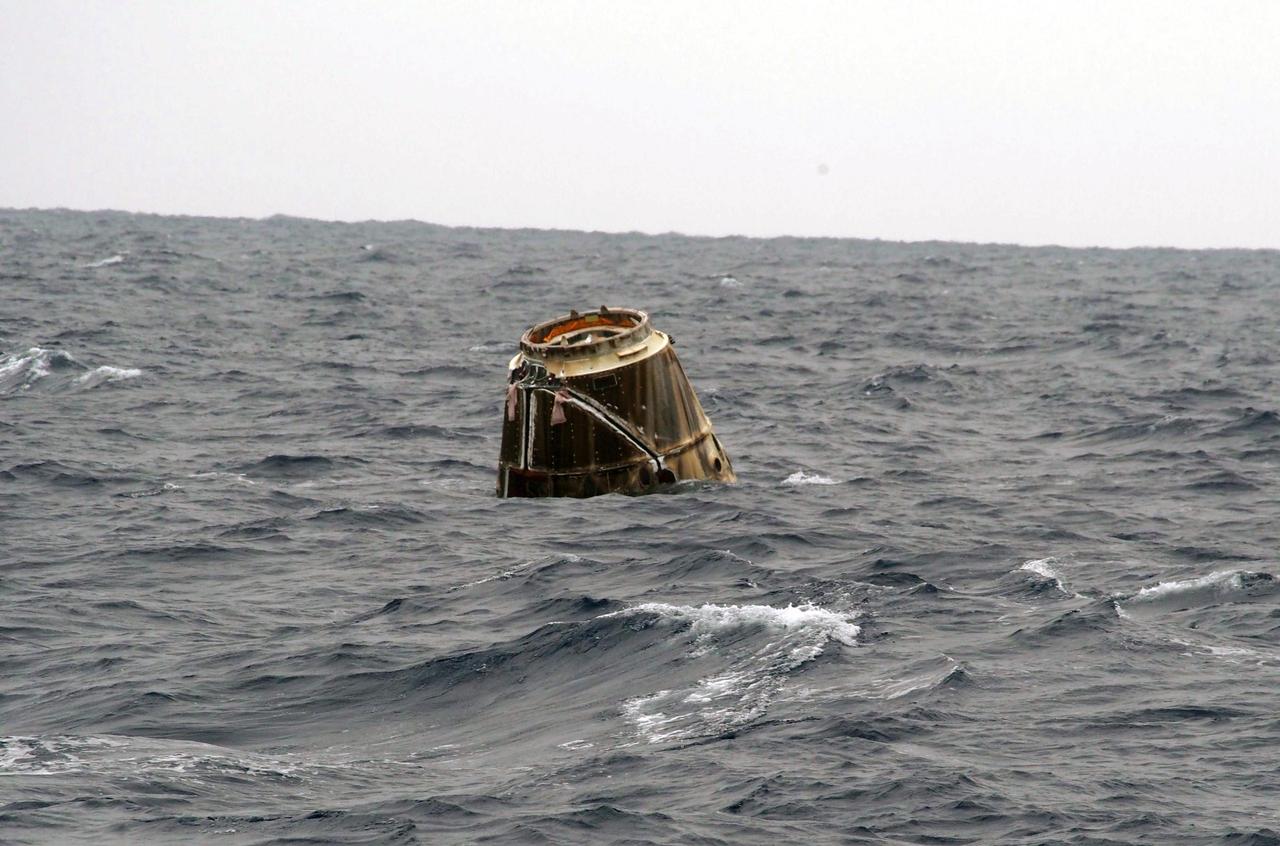
The SpaceX Dragon capsule floats in the Pacific Ocean after returning from space. Photo credit: SpaceX
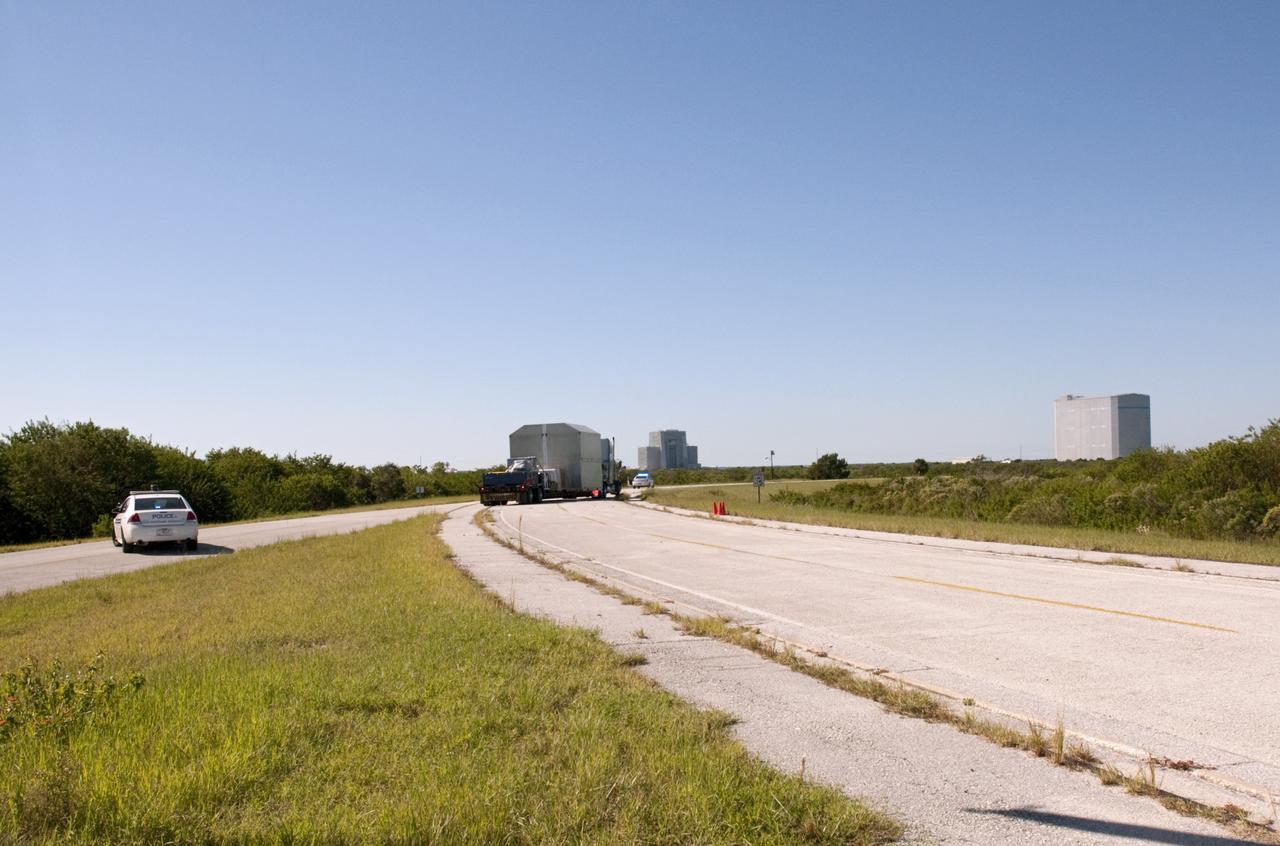
A truck brings the latest Space Exploration Technologies Corp. (SpaceX) Dragon capsule to Cape Canaveral Air Force Station in Florida on Oct. 23 so it can be processed and attached to the top of a Falcon 9 rocket on Space Launch Complex-40 for the company's next demonstration test flight for NASA's Commercial Orbital Transportation Services (COTS) program. SpaceX is one of two companies under contract with NASA to take cargo to the International Space Station. NASA is working with SpaceX to combine its last two demonstration flights, and if approved, the Falcon 9 rocket would launch the Dragon capsule to the orbiting laboratory for a docking within the next several months. Photo credit: NASA/ Charisse Nahser
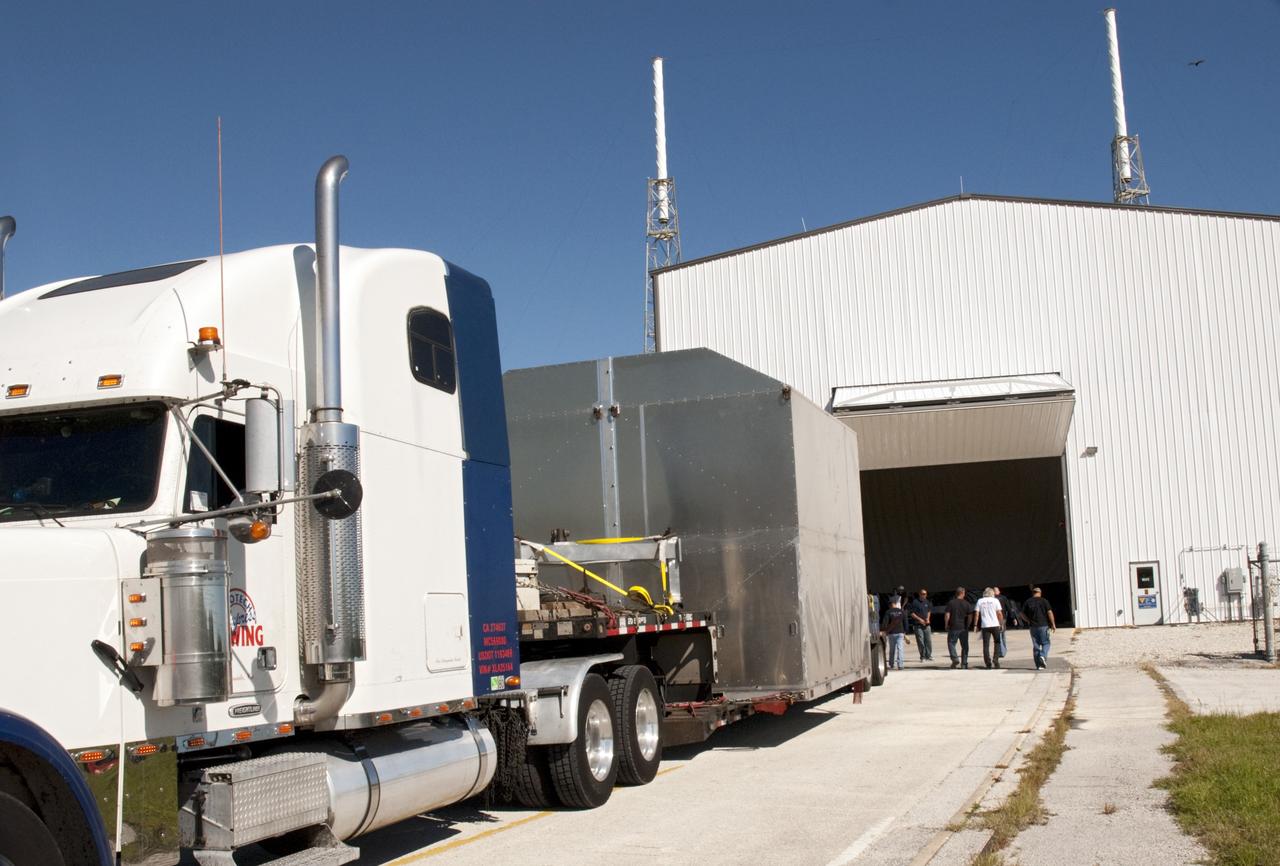
A truck carries the latest Space Exploration Technologies Corp. (SpaceX) Dragon capsule to Cape Canaveral Air Force Station in Florida on Oct. 23 so it can be processed and attached to the top of a Falcon 9 rocket on Space Launch Complex-40 for the company's next demonstration test flight for NASA's Commercial Orbital Transportation Services (COTS) program. SpaceX is one of two companies under contract with NASA to take cargo to the International Space Station. NASA is working with SpaceX to combine its last two demonstration flights, and if approved, the Falcon 9 rocket would launch the Dragon capsule to the orbiting laboratory for a docking within the next several months. Photo credit: NASA/ Charisse Nahser
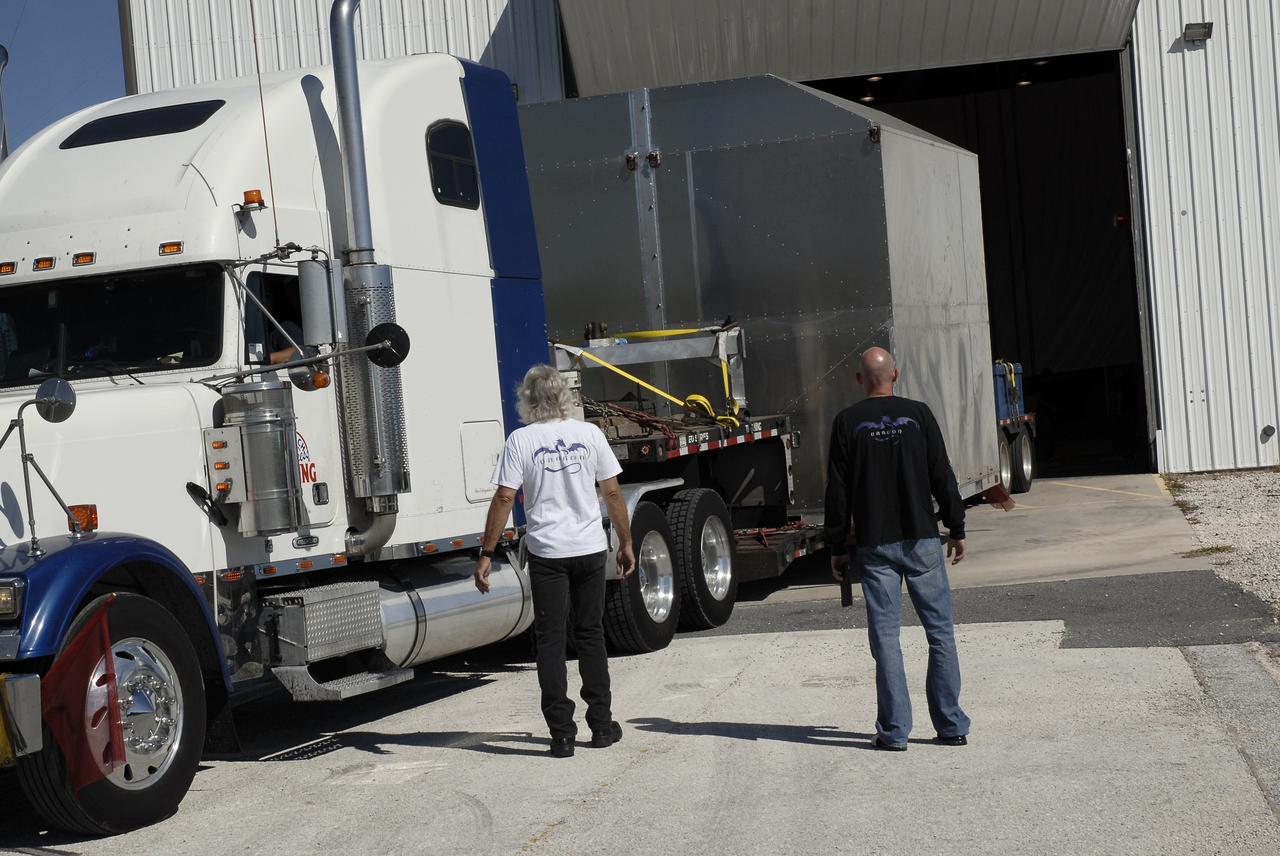
A truck carries the latest Space Exploration Technologies Corp. (SpaceX) Dragon capsule to Cape Canaveral Air Force Station in Florida on Oct. 23 so it can be processed and attached to the top of a Falcon 9 rocket on Space Launch Complex-40 for the company's next demonstration test flight for NASA's Commercial Orbital Transportation Services (COTS) program. SpaceX is one of two companies under contract with NASA to take cargo to the International Space Station. NASA is working with SpaceX to combine its last two demonstration flights, and if approved, the Falcon 9 rocket would launch the Dragon capsule to the orbiting laboratory for a docking within the next several months. Photo credit: NASA/ Charisse Nahser
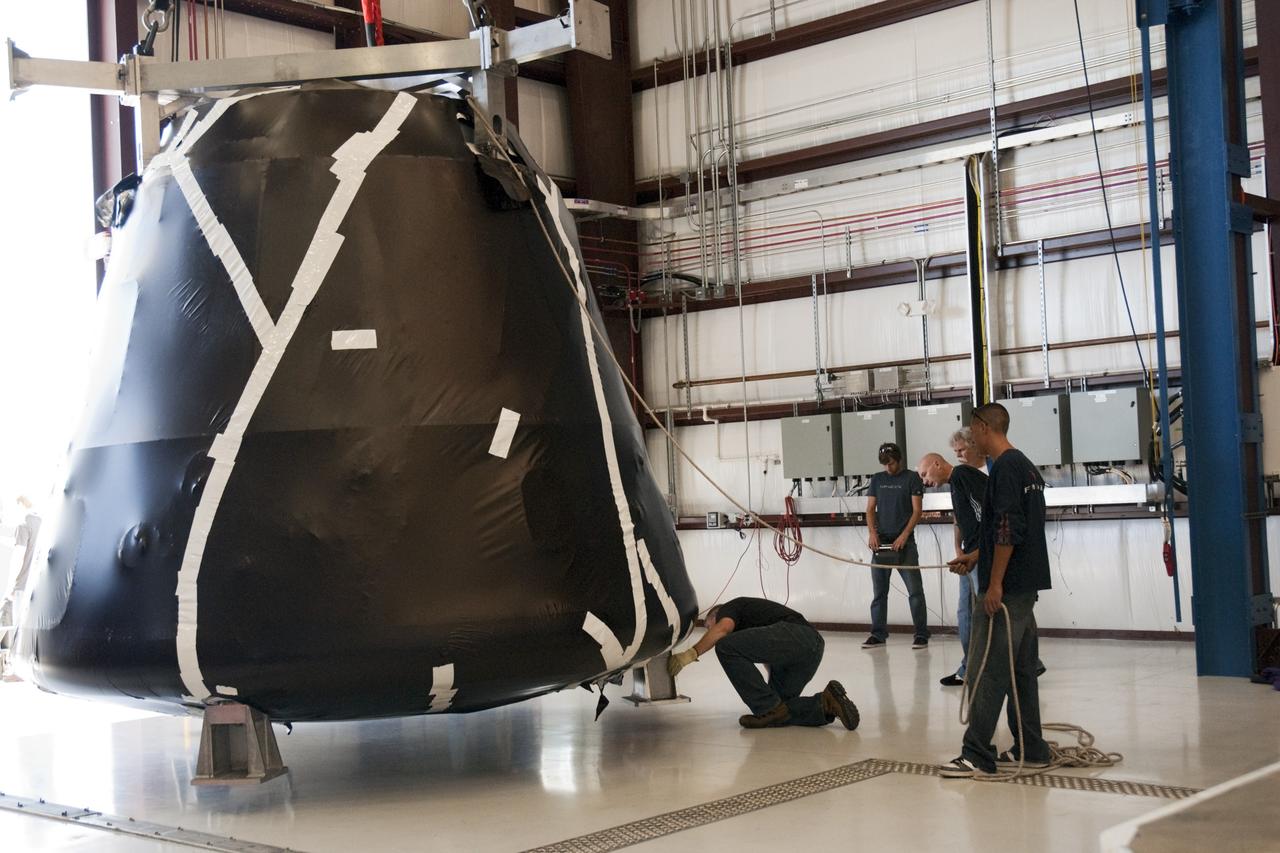
Workers lower the latest Space Exploration Technologies Corp. (SpaceX) Dragon capsule at Cape Canaveral Air Force Station in Florida on Oct. 23 so it can be processed and attached to the top of a Falcon 9 rocket on Space Launch Complex-40 for the company's next demonstration test flight for NASA's Commercial Orbital Transportation Services (COTS) program. SpaceX is one of two companies under contract with NASA to take cargo to the International Space Station. NASA is working with SpaceX to combine its last two demonstration flights, and if approved, the Falcon 9 rocket would launch the Dragon capsule to the orbiting laboratory for a docking within the next several months. Photo credit: NASA/ Charisse Nahser
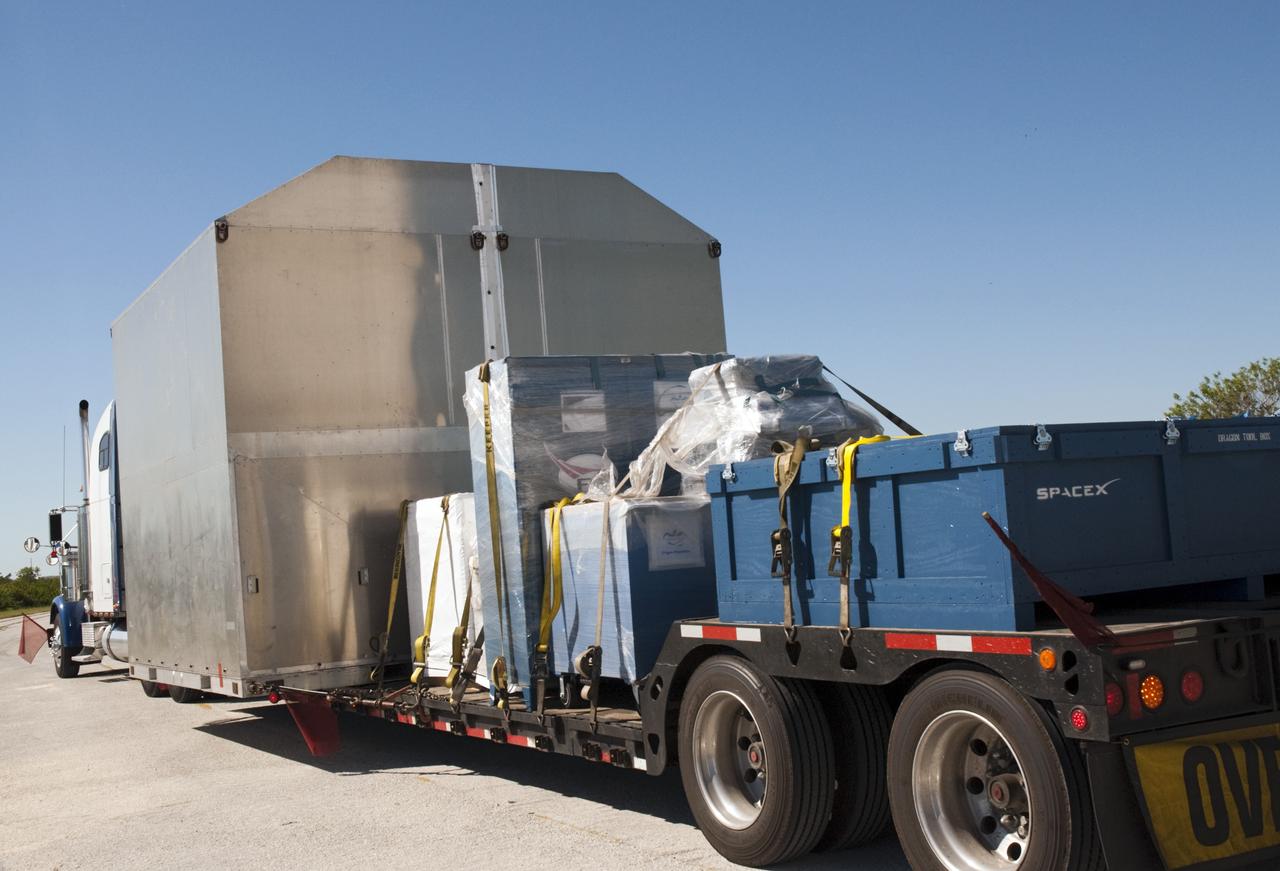
A truck carries the latest Space Exploration Technologies Corp. (SpaceX) Dragon capsule to Cape Canaveral Air Force Station in Florida on Oct. 23 so it can be processed and attached to the top of a Falcon 9 rocket on Space Launch Complex-40 for the company's next demonstration test flight for NASA's Commercial Orbital Transportation Services (COTS) program. SpaceX is one of two companies under contract with NASA to take cargo to the International Space Station. NASA is working with SpaceX to combine its last two demonstration flights, and if approved, the Falcon 9 rocket would launch the Dragon capsule to the orbiting laboratory for a docking within the next several months. Photo credit: NASA/ Charisse Nahser
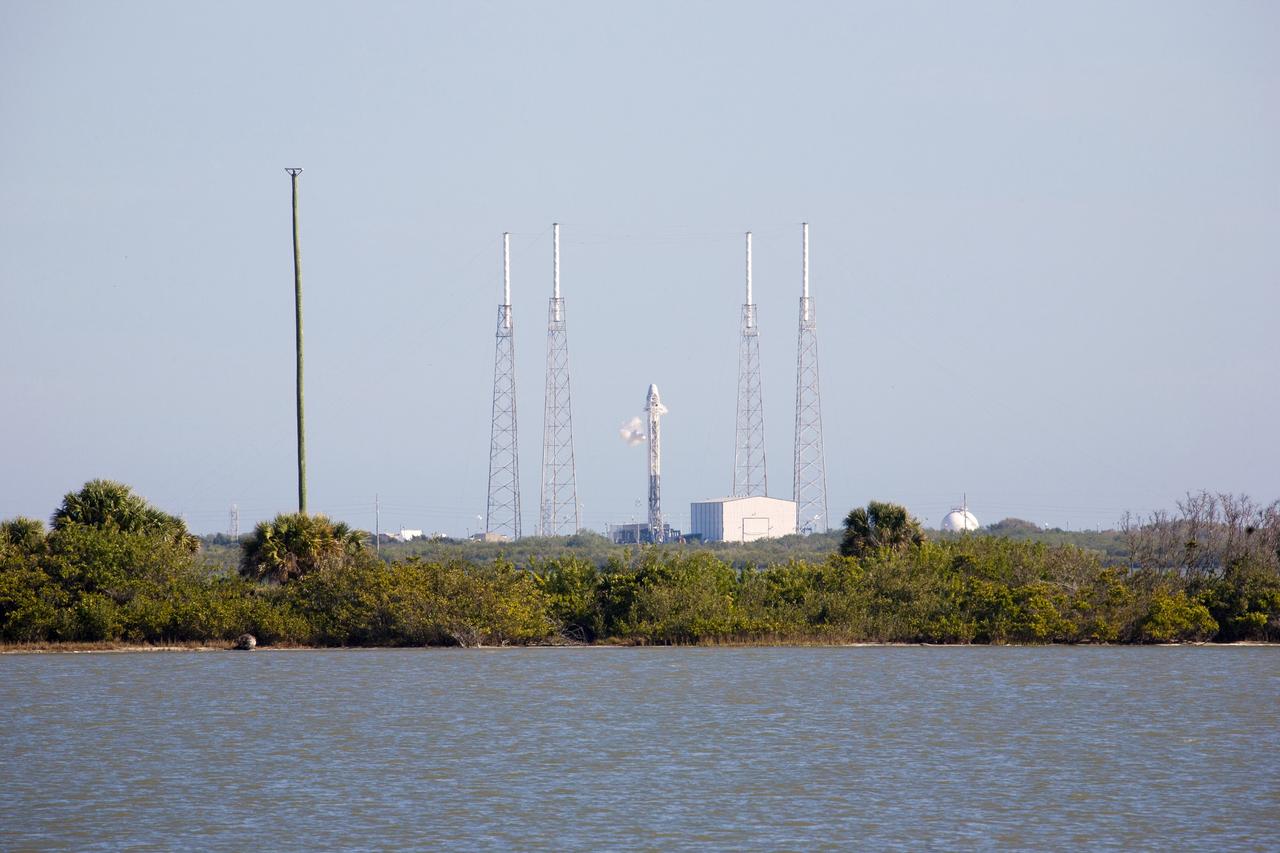
CAPE CANAVERAL, Fla. – The Space Exploration Technologies Corp. SpaceX Falcon 9 rocket with Dragon capsule attached on top sits fully fueled on Space Launch Complex-40 at Cape Canaveral Air Force Station in Florida during a launch dress rehearsal for the company’s next demonstration test flight for NASA’s Commercial Orbital Transportation Services-2 COTS-2) program. SpaceX is one of two companies under contract with NASA to take cargo to the International Space Station. NASA is working with SpaceX to combine its last two demonstration flights, and if approved, the Falcon 9 would launch the Dragon capsule to the orbiting laboratory for a docking within the next several months. Photo credit: NASA/Gianni Woods
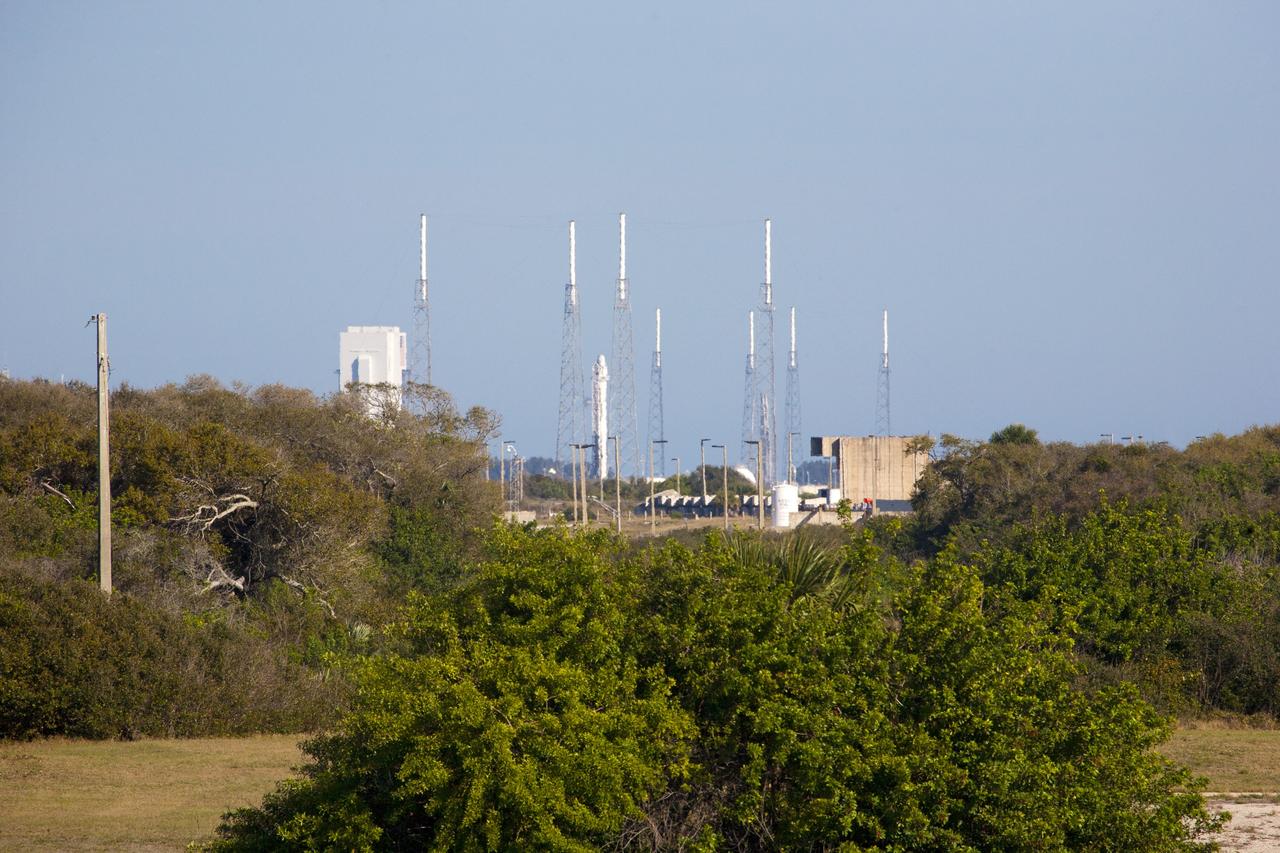
CAPE CANAVERAL, Fla. – The Space Exploration Technologies Corp. SpaceX Falcon 9 rocket with Dragon capsule attached on top sits fully fueled on Space Launch Complex-40 at Cape Canaveral Air Force Station in Florida during a launch dress rehearsal for the company’s next demonstration test flight for NASA’s Commercial Orbital Transportation Services-2 COTS-2) program. SpaceX is one of two companies under contract with NASA to take cargo to the International Space Station. NASA is working with SpaceX to combine its last two demonstration flights, and if approved, the Falcon 9 would launch the Dragon capsule to the orbiting laboratory for a docking within the next several months. Photo credit: NASA/Gianni Woods
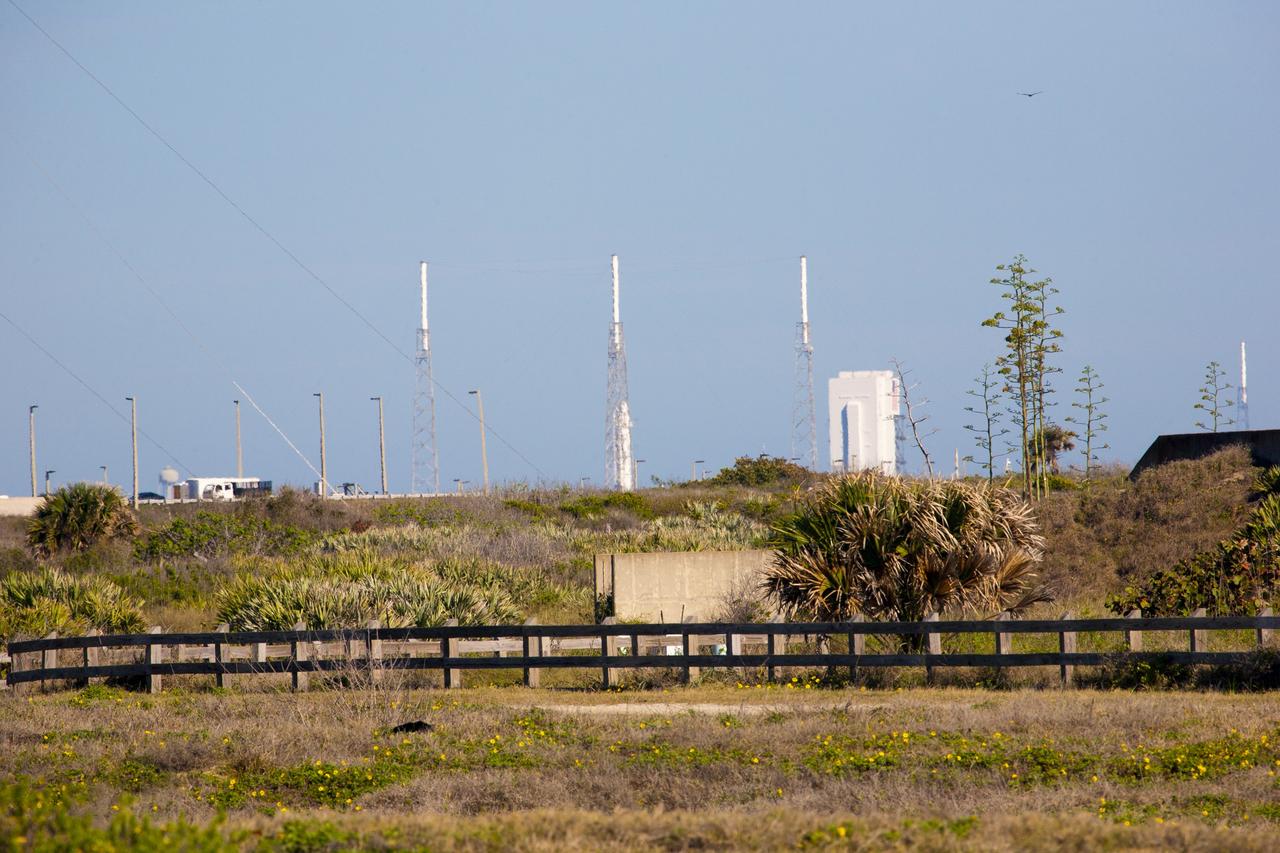
CAPE CANAVERAL, Fla. – The Space Exploration Technologies Corp. SpaceX Falcon 9 rocket with Dragon capsule attached on top sits fully fueled on Space Launch Complex-40 at Cape Canaveral Air Force Station in Florida during a launch dress rehearsal for the company’s next demonstration test flight for NASA’s Commercial Orbital Transportation Services-2 COTS-2) program. SpaceX is one of two companies under contract with NASA to take cargo to the International Space Station. NASA is working with SpaceX to combine its last two demonstration flights, and if approved, the Falcon 9 would launch the Dragon capsule to the orbiting laboratory for a docking within the next several months. Photo credit: NASA/Gianni Woods
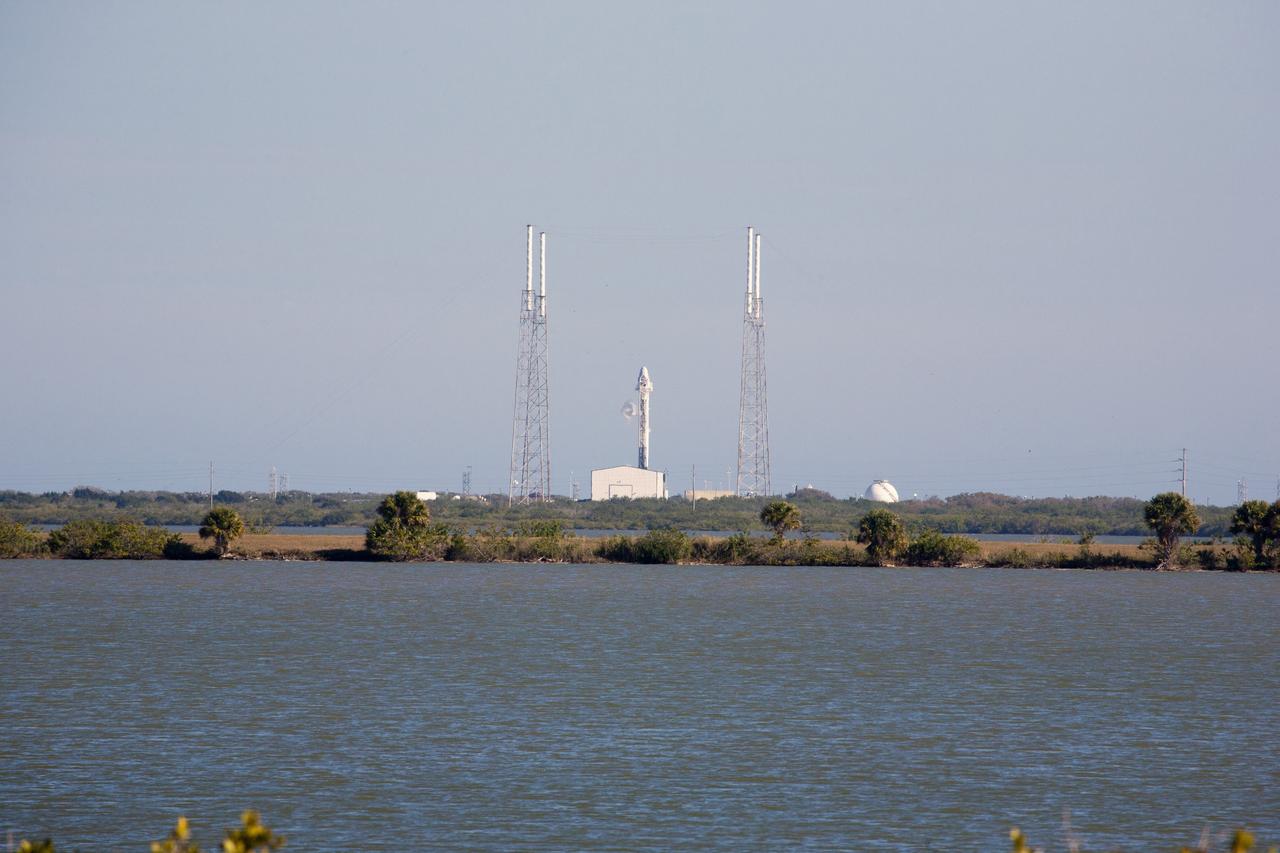
CAPE CANAVERAL, Fla. – The Space Exploration Technologies Corp. SpaceX Falcon 9 rocket with Dragon capsule attached on top sits fully fueled on Space Launch Complex-40 at Cape Canaveral Air Force Station in Florida during a launch dress rehearsal for the company’s next demonstration test flight for NASA’s Commercial Orbital Transportation Services-2 COTS-2) program. SpaceX is one of two companies under contract with NASA to take cargo to the International Space Station. NASA is working with SpaceX to combine its last two demonstration flights, and if approved, the Falcon 9 would launch the Dragon capsule to the orbiting laboratory for a docking within the next several months. Photo credit: NASA/Gianni Woods
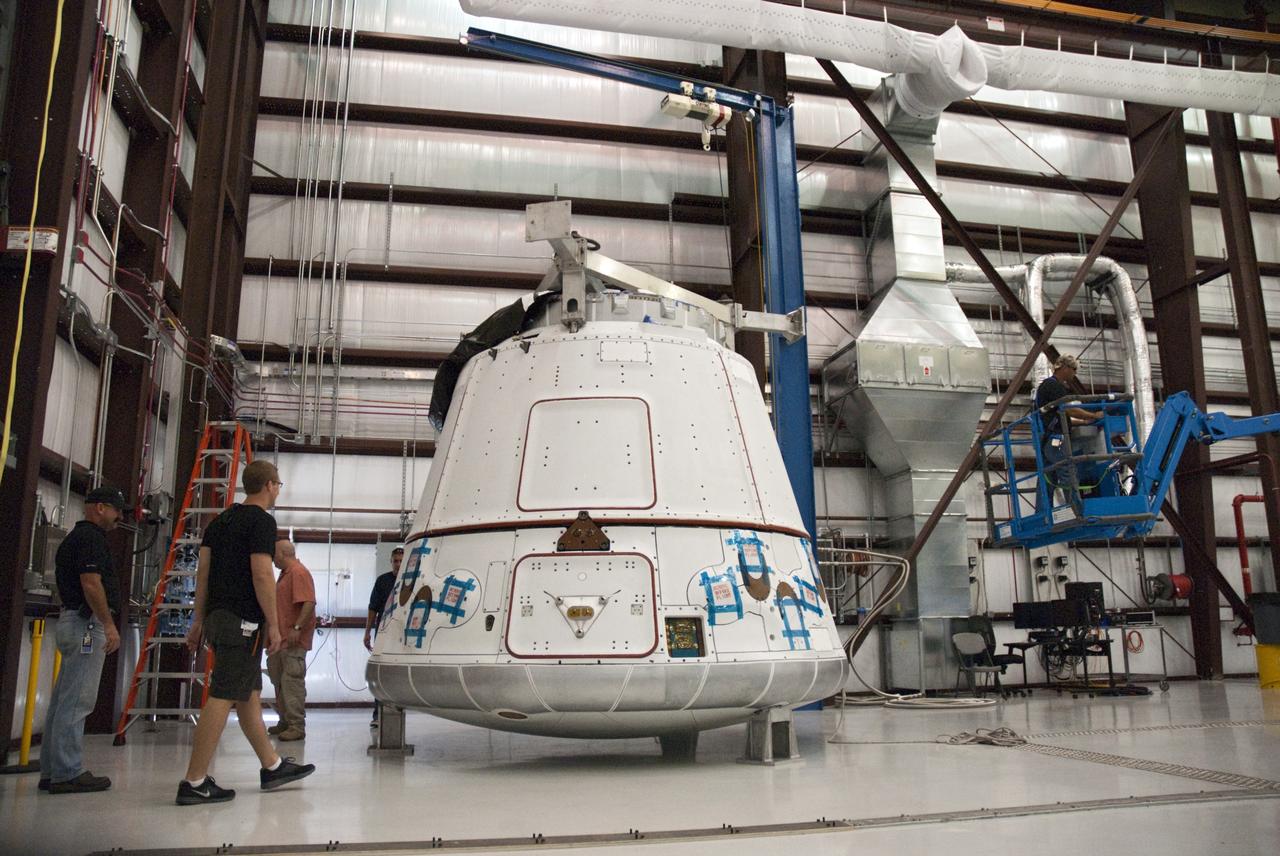
Workers unwrap the latest Space Exploration Technologies Corp. (SpaceX) Dragon capsule inside a building at Cape Canaveral Air Force Station in Florida on Oct. 23 so it can be processed and attached to the top of a Falcon 9 rocket on Space Launch Complex-40 for the company's next demonstration test flight for NASA's Commercial Orbital Transportation Services (COTS) program. SpaceX is one of two companies under contract with NASA to take cargo to the International Space Station. NASA is working with SpaceX to combine its last two demonstration flights, and if approved, the Falcon 9 rocket would launch the Dragon capsule to the orbiting laboratory for a docking within the next several months. Photo credit: NASA/ Charisse Nahser
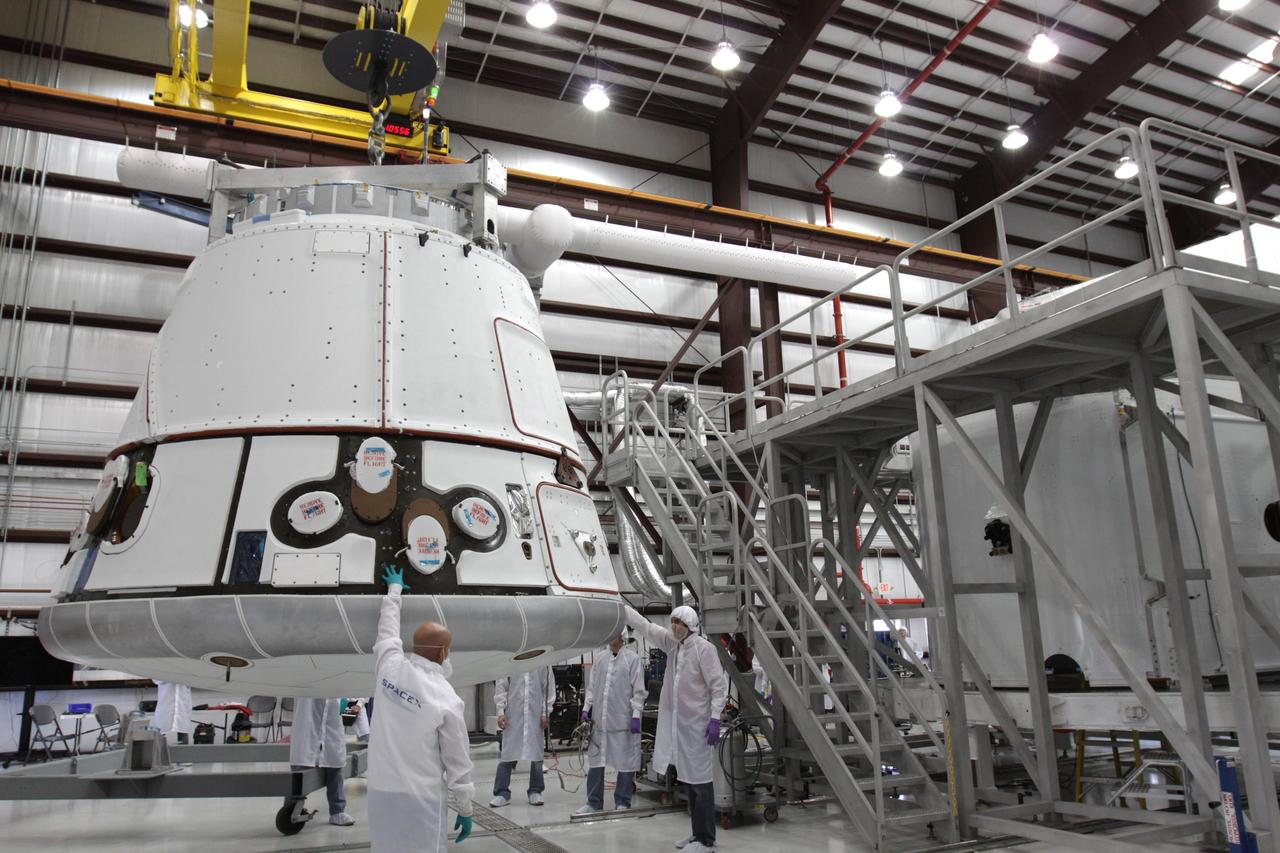
CAPE CANAVERAL, Fla. -- The Space Exploration Technologies Corp. (SpaceX) Dragon capsule is lifted to be placed atop its cargo ring inside a processing hangar at Cape Canaveral Air Force Station in Florida on Nov. 16. Later, the combination will be attached to the top of a Falcon 9 rocket on Space Launch Complex-40 for the company's next demonstration test flight for NASA's Commercial Orbital Transportation Services (COTS) program. SpaceX is one of two companies under contract with NASA to take cargo to the International Space Station. NASA is working with SpaceX to combine its last two demonstration flights, and if approved, the Falcon 9 rocket would launch the Dragon capsule to the orbiting laboratory for a docking within the next several months. Photo credit: NASA/Kim Shiflett
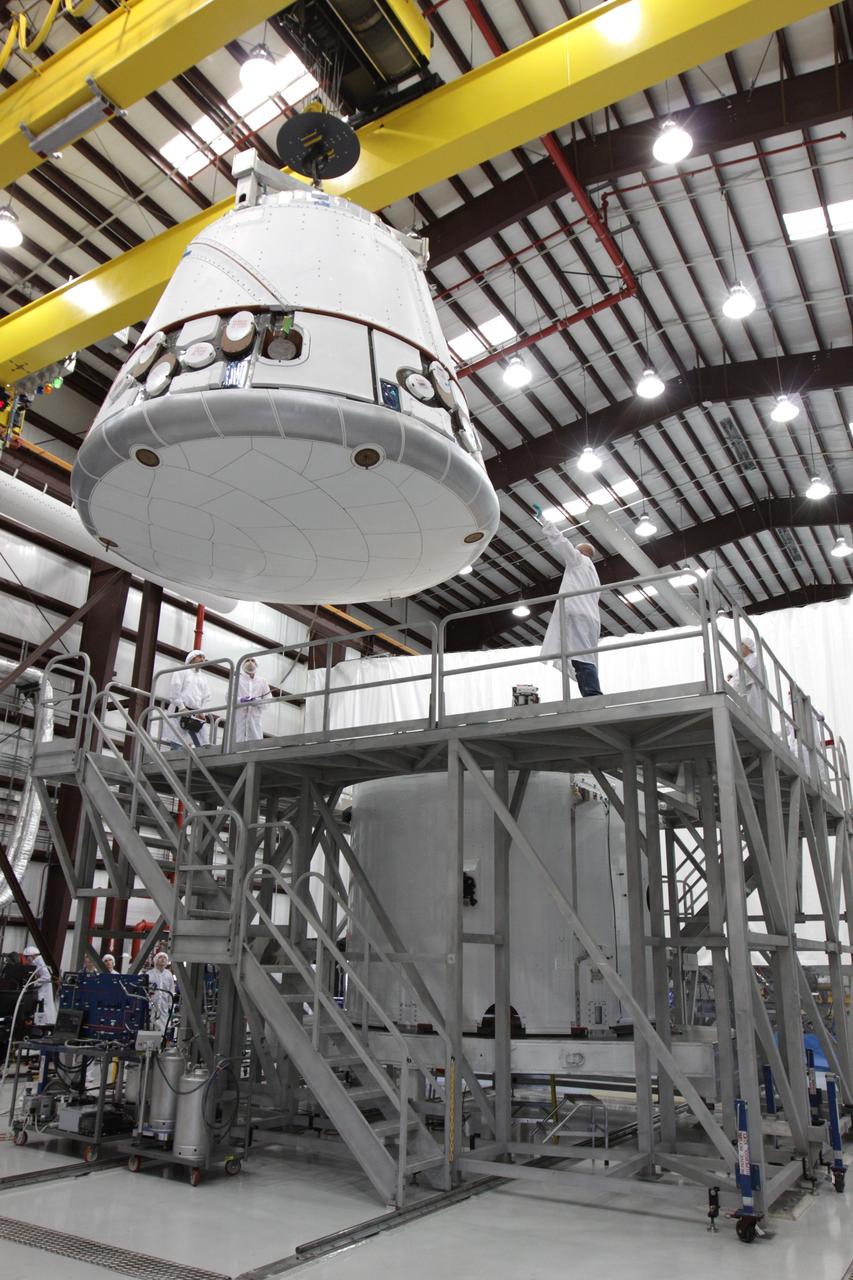
CAPE CANAVERAL, Fla. -- The Space Exploration Technologies Corp. (SpaceX) Dragon capsule is placed atop its cargo ring inside a processing hangar at Cape Canaveral Air Force Station in Florida on Nov. 16. Later, the combination will be attached to the top of a Falcon 9 rocket on Space Launch Complex-40 for the company's next demonstration test flight for NASA's Commercial Orbital Transportation Services (COTS) program. SpaceX is one of two companies under contract with NASA to take cargo to the International Space Station. NASA is working with SpaceX to combine its last two demonstration flights, and if approved, the Falcon 9 rocket would launch the Dragon capsule to the orbiting laboratory for a docking within the next several months. Photo credit: NASA/Kim Shiflett
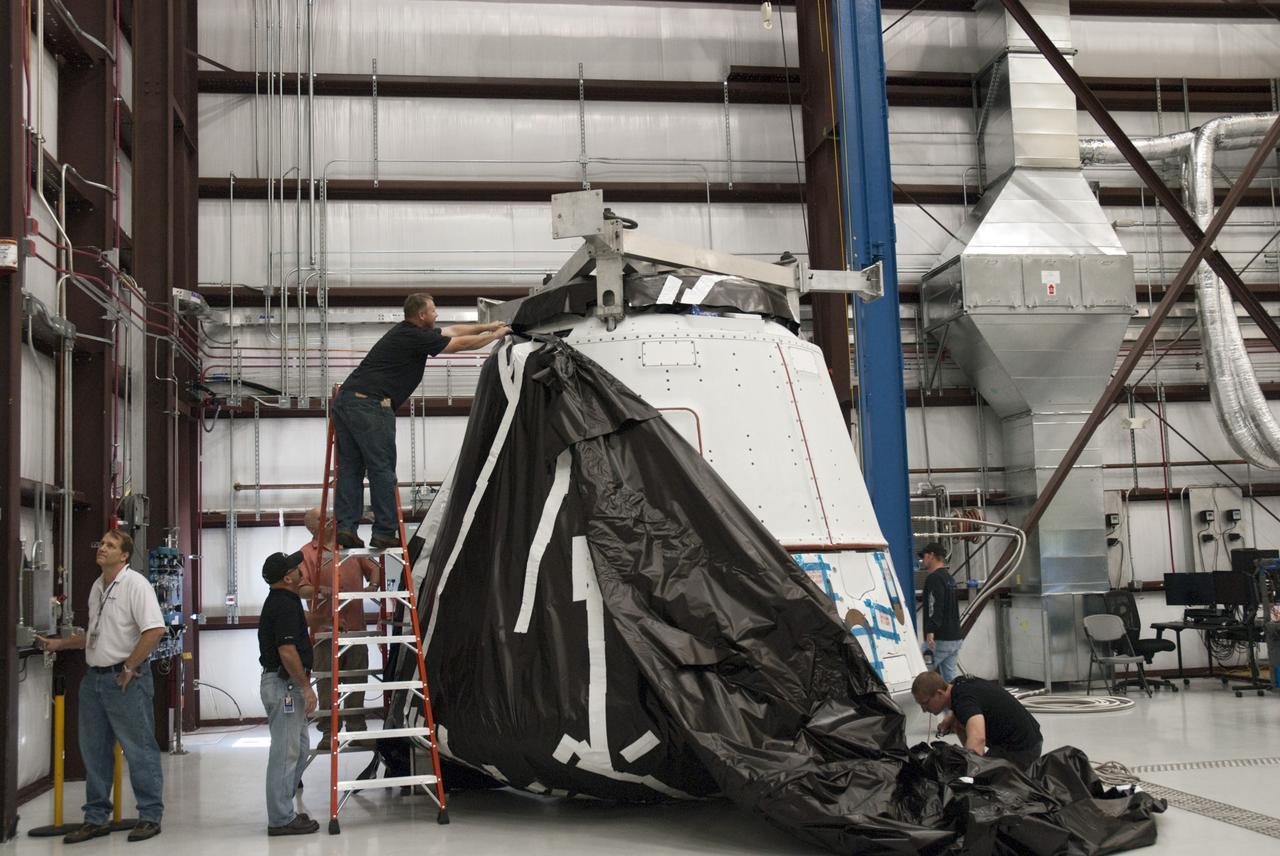
Workers unwrap the latest Space Exploration Technologies Corp. (SpaceX) Dragon capsule inside a building at Cape Canaveral Air Force Station in Florida on Oct. 23 so it can be processed and attached to the top of a Falcon 9 rocket on Space Launch Complex-40 for the company's next demonstration test flight for NASA's Commercial Orbital Transportation Services (COTS) program. SpaceX is one of two companies under contract with NASA to take cargo to the International Space Station. NASA is working with SpaceX to combine its last two demonstration flights, and if approved, the Falcon 9 rocket would launch the Dragon capsule to the orbiting laboratory for a docking within the next several months. Photo credit: NASA/ Charisse Nahser
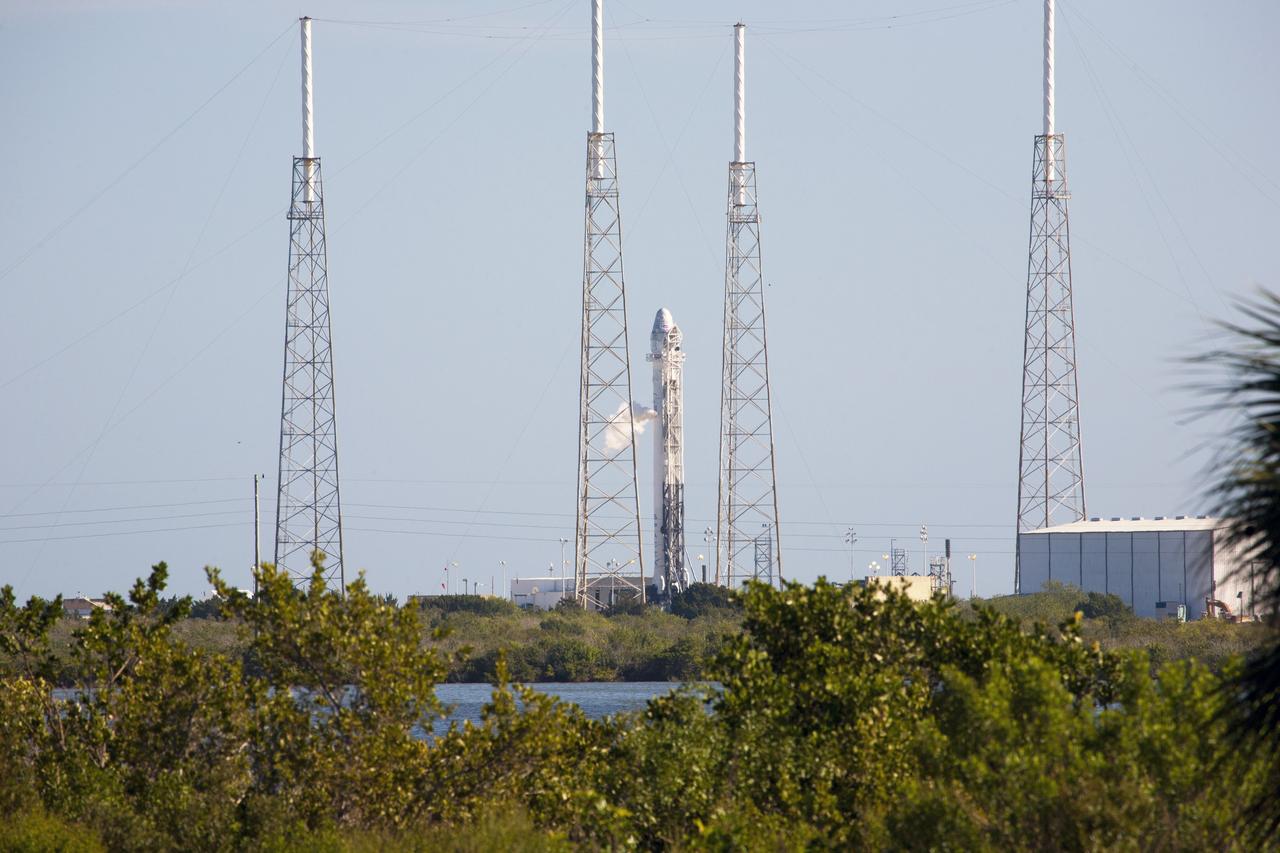
CAPE CANAVERAL, Fla. – The Space Exploration Technologies Corp. SpaceX Falcon 9 rocket with Dragon capsule attached on top sits fully fueled on Space Launch Complex-40 at Cape Canaveral Air Force Station in Florida during a launch dress rehearsal for the company’s next demonstration test flight for NASA’s Commercial Orbital Transportation Services-2 COTS-2) program. SpaceX is one of two companies under contract with NASA to take cargo to the International Space Station. NASA is working with SpaceX to combine its last two demonstration flights, and if approved, the Falcon 9 would launch the Dragon capsule to the orbiting laboratory for a docking within the next several months. Photo credit: NASA/Gianni Woods
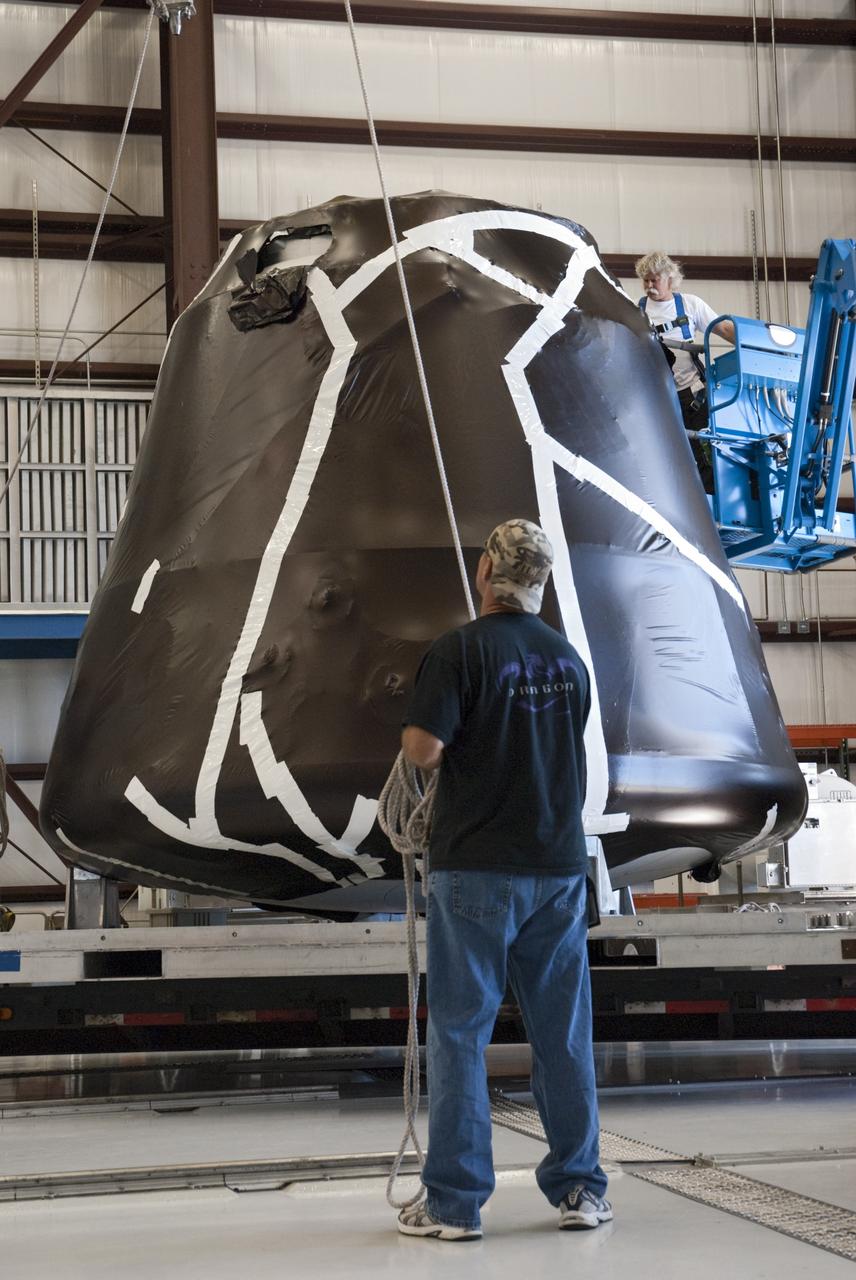
Workers lift the transportation canister from the latest Space Exploration Technologies Corp. (SpaceX) Dragon capsule to Cape Canaveral Air Force Station in Florida on Oct. 23 so it can be processed and attached to the top of a Falcon 9 rocket on Space Launch Complex-40 for the company's next demonstration test flight for NASA's Commercial Orbital Transportation Services (COTS) program. SpaceX is one of two companies under contract with NASA to take cargo to the International Space Station. NASA is working with SpaceX to combine its last two demonstration flights, and if approved, the Falcon 9 rocket would launch the Dragon capsule to the orbiting laboratory for a docking within the next several months. Photo credit: NASA/ Charisse Nahser
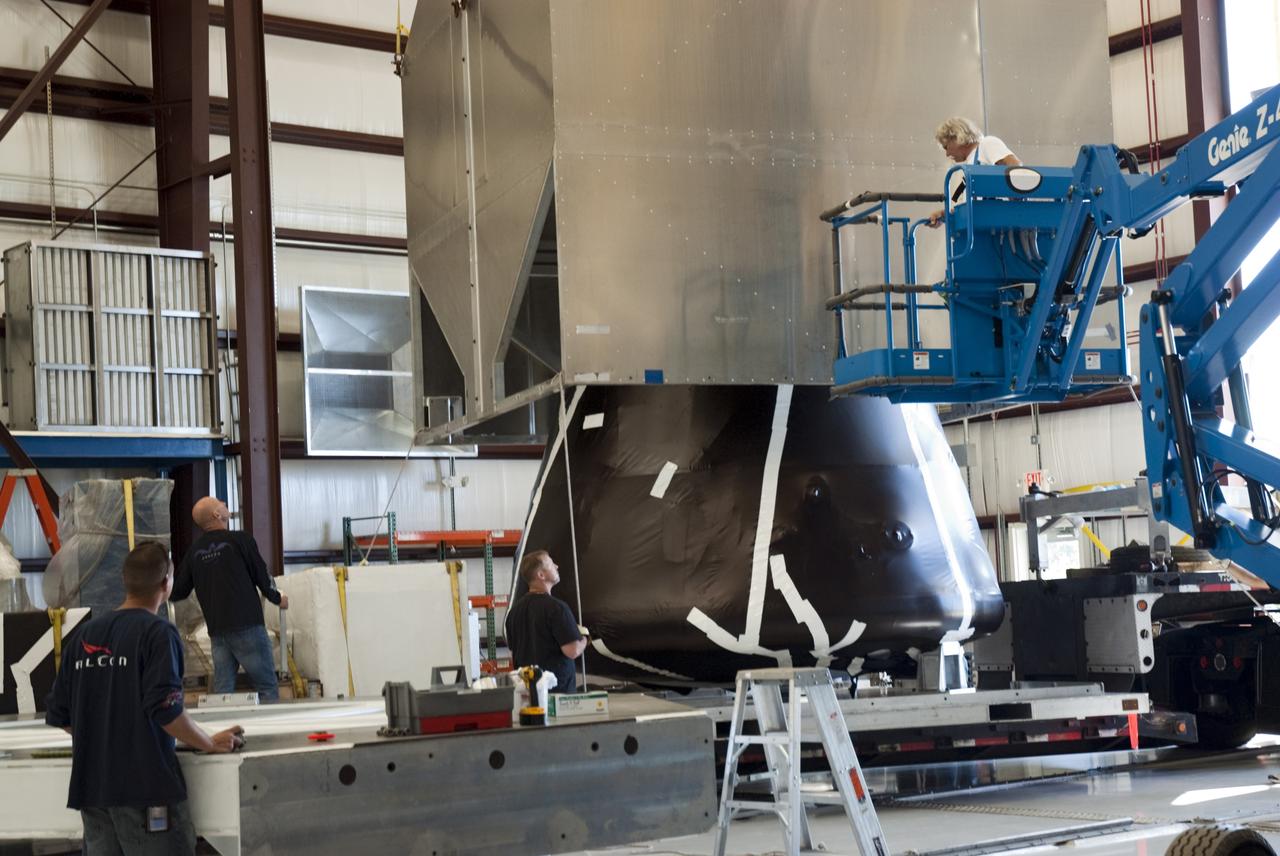
Workers lift the transportation canister away from the latest Space Exploration Technologies Corp. (SpaceX) Dragon capsule to Cape Canaveral Air Force Station in Florida on Oct. 23 so it can be processed and attached to the top of a Falcon 9 rocket on Space Launch Complex-40 for the company's next demonstration test flight for NASA's Commercial Orbital Transportation Services (COTS) program. SpaceX is one of two companies under contract with NASA to take cargo to the International Space Station. NASA is working with SpaceX to combine its last two demonstration flights, and if approved, the Falcon 9 rocket would launch the Dragon capsule to the orbiting laboratory for a docking within the next several months. Photo credit: NASA/ Charisse Nahser
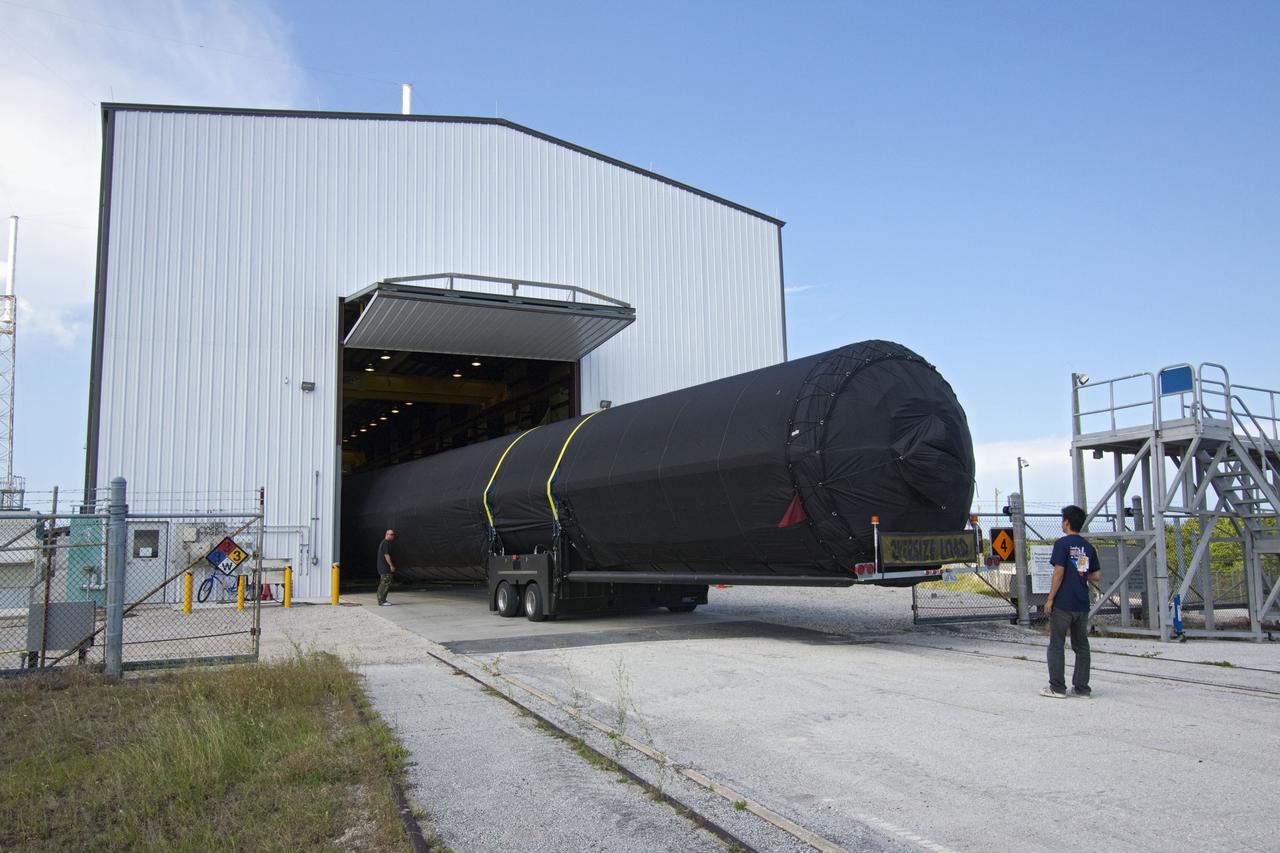
CAPE CANAVERAL, Fla. -- The first stage of the SpaceX COTS-2 Falcon 9 rocket is being moved into a SpaceX hangar at Pad 40 at Cape Canaveral Air Force Station in Florida. Once assembled, it will be a two-stage fully integrated launch vehicle, consisting of a first stage powered by nine SpaceX-developed Merlin 1C engines, a second stage, an interstage, an unpressurized trunk and the Dragon spacecraft qualification unit. SpaceX was awarded procurement for three demonstration flights under the Commercial Orbital Transportation Services, or COTS, program managed by NASA's Johnson Space Center in Houston. A subsequent contract for Commercial Resupply Services, or CRS, was awarded in late 2008 to resupply the International Space Station. The SpaceX CRS contract provides for 12 missions to resupply the station from 2011 through 2015. Photo credit: NASA/Jack Pfaller
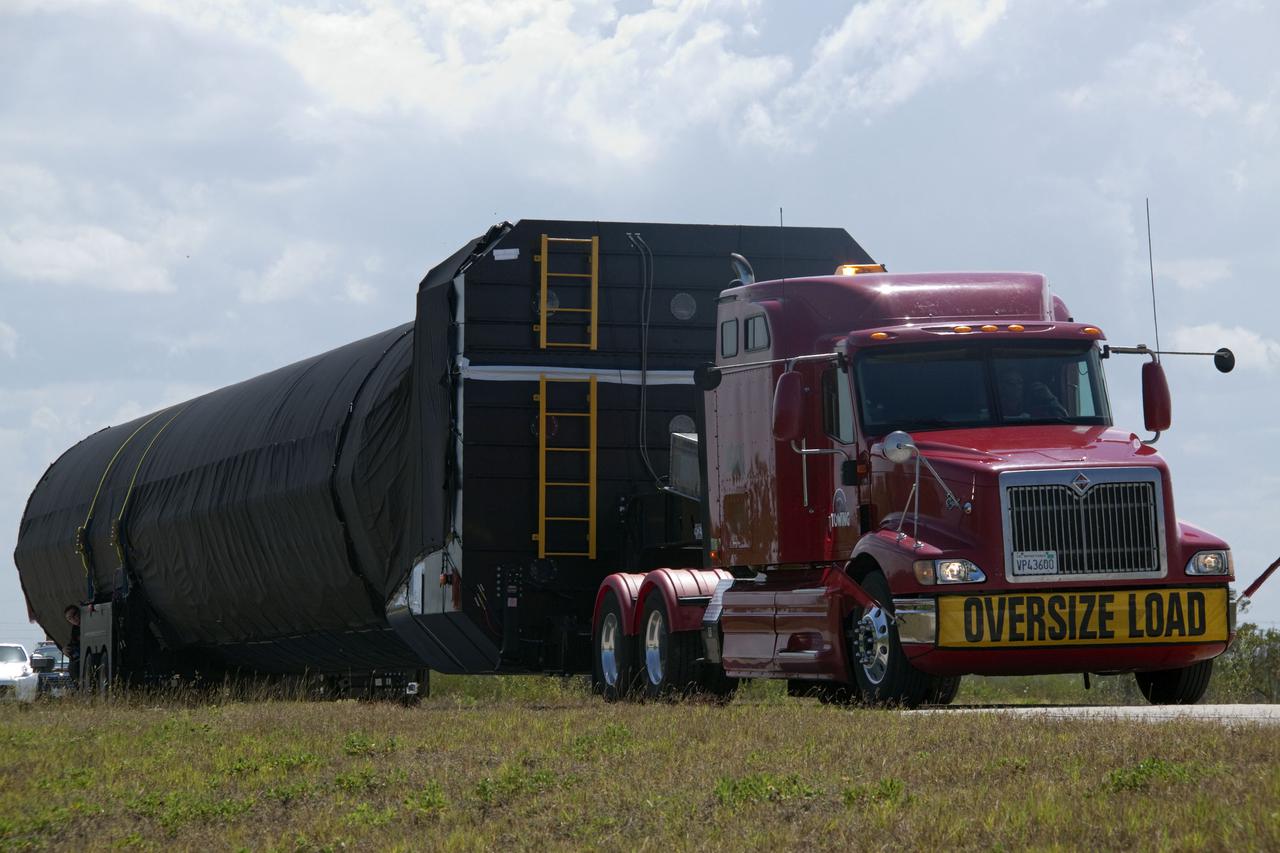
CAPE CANAVERAL, Fla. -- The first stage of the SpaceX COTS-2 Falcon 9 rocket is being transported to a SpaceX hangar at Pad 40 at Cape Canaveral Air Force Station in Florida. Once assembled, it will be a two-stage fully integrated launch vehicle, consisting of a first stage powered by nine SpaceX-developed Merlin 1C engines, a second stage, an interstage, an unpressurized trunk and the Dragon spacecraft qualification unit. SpaceX was awarded procurement for three demonstration flights under the Commercial Orbital Transportation Services, or COTS, program managed by NASA's Johnson Space Center in Houston. A subsequent contract for Commercial Resupply Services, or CRS, was awarded in late 2008 to resupply the International Space Station. The SpaceX CRS contract provides for 12 missions to resupply the station from 2011 through 2015. Photo credit: NASA_Jack Pfaller
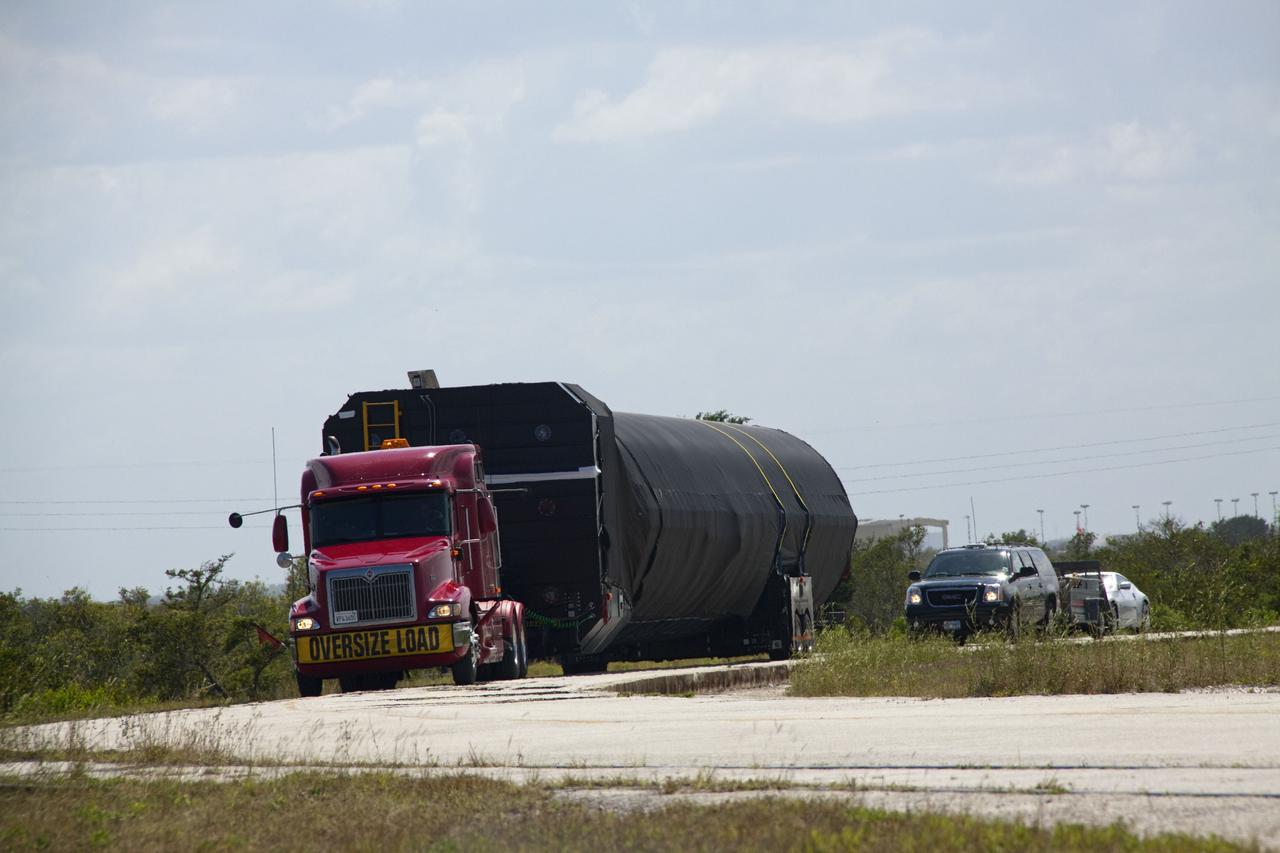
CAPE CANAVERAL, Fla. -- The first stage of the SpaceX COTS-2 Falcon 9 rocket is being transported to a SpaceX hangar at Pad 40 at Cape Canaveral Air Force Station in Florida. Once assembled, it will be a two-stage fully integrated launch vehicle, consisting of a first stage powered by nine SpaceX-developed Merlin 1C engines, a second stage, an interstage, an unpressurized trunk and the Dragon spacecraft qualification unit. SpaceX was awarded procurement for three demonstration flights under the Commercial Orbital Transportation Services, or COTS, program managed by NASA's Johnson Space Center in Houston. A subsequent contract for Commercial Resupply Services, or CRS, was awarded in late 2008 to resupply the International Space Station. The SpaceX CRS contract provides for 12 missions to resupply the station from 2011 through 2015. Photo credit: NASA_Jack Pfaller
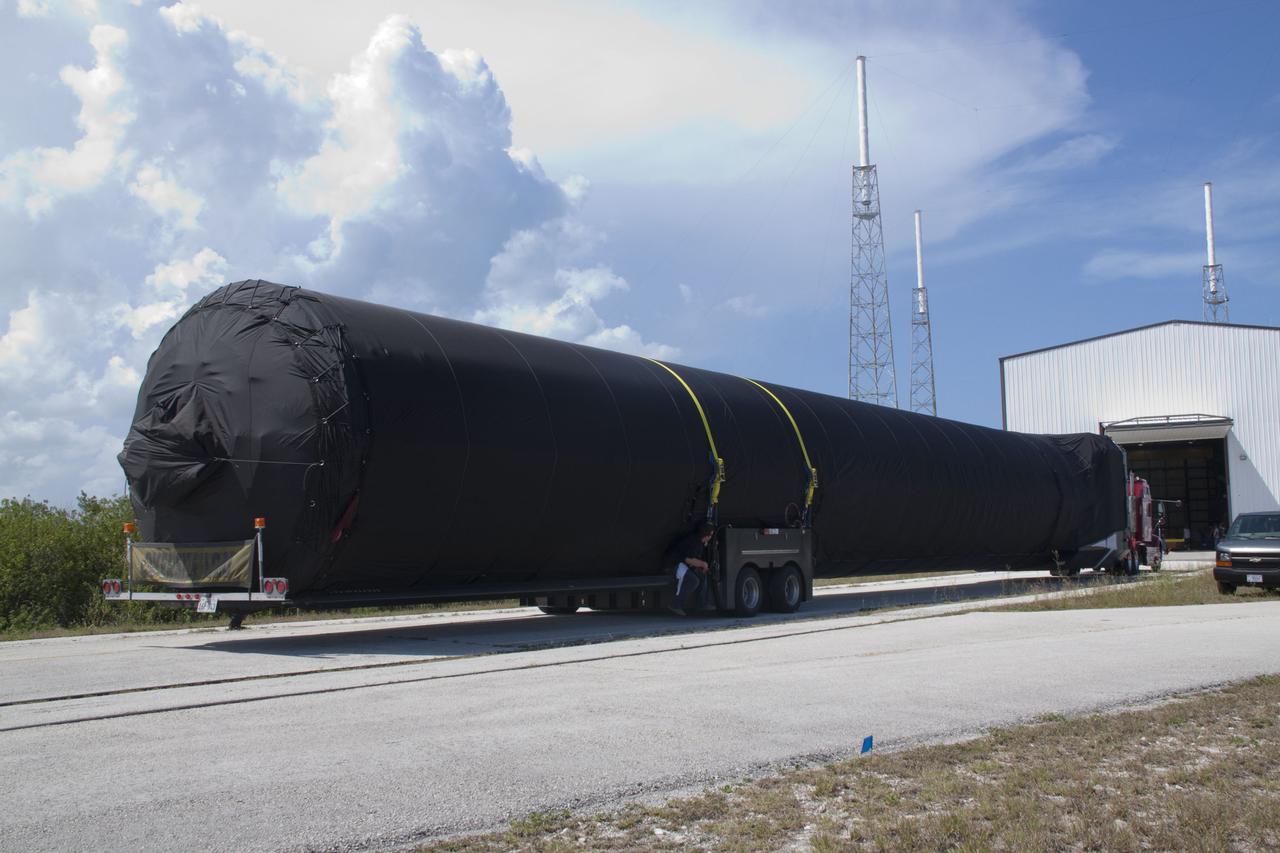
CAPE CANAVERAL, Fla. -- The first stage of the SpaceX COTS-2 Falcon 9 rocket is being transported to a SpaceX hangar at Pad 40 at Cape Canaveral Air Force Station in Florida. Once assembled, it will be a two-stage fully integrated launch vehicle, consisting of a first stage powered by nine SpaceX-developed Merlin 1C engines, a second stage, an interstage, an unpressurized trunk and the Dragon spacecraft qualification unit. SpaceX was awarded procurement for three demonstration flights under the Commercial Orbital Transportation Services, or COTS, program managed by NASA's Johnson Space Center in Houston. A subsequent contract for Commercial Resupply Services, or CRS, was awarded in late 2008 to resupply the International Space Station. The SpaceX CRS contract provides for 12 missions to resupply the station from 2011 through 2015. Photo credit: NASA_Jack Pfaller
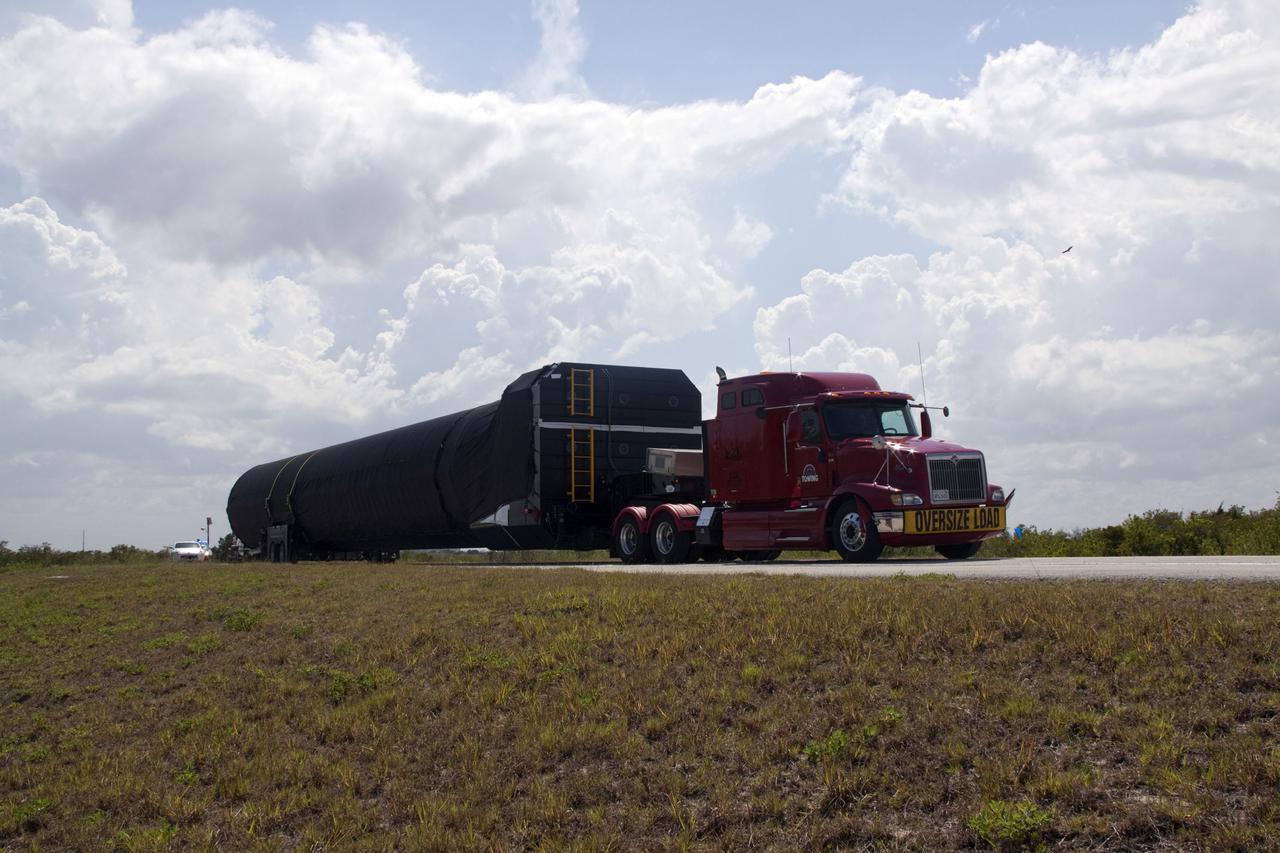
CAPE CANAVERAL, Fla. -- The first stage of the SpaceX COTS-2 Falcon 9 rocket is being transported to a SpaceX hangar at Pad 40 at Cape Canaveral Air Force Station in Florida. Once assembled, it will be a two-stage fully integrated launch vehicle, consisting of a first stage powered by nine SpaceX-developed Merlin 1C engines, a second stage, an interstage, an unpressurized trunk and the Dragon spacecraft qualification unit. SpaceX was awarded procurement for three demonstration flights under the Commercial Orbital Transportation Services, or COTS, program managed by NASA's Johnson Space Center in Houston. A subsequent contract for Commercial Resupply Services, or CRS, was awarded in late 2008 to resupply the International Space Station. The SpaceX CRS contract provides for 12 missions to resupply the station from 2011 through 2015. Photo credit: NASA_Jack Pfaller
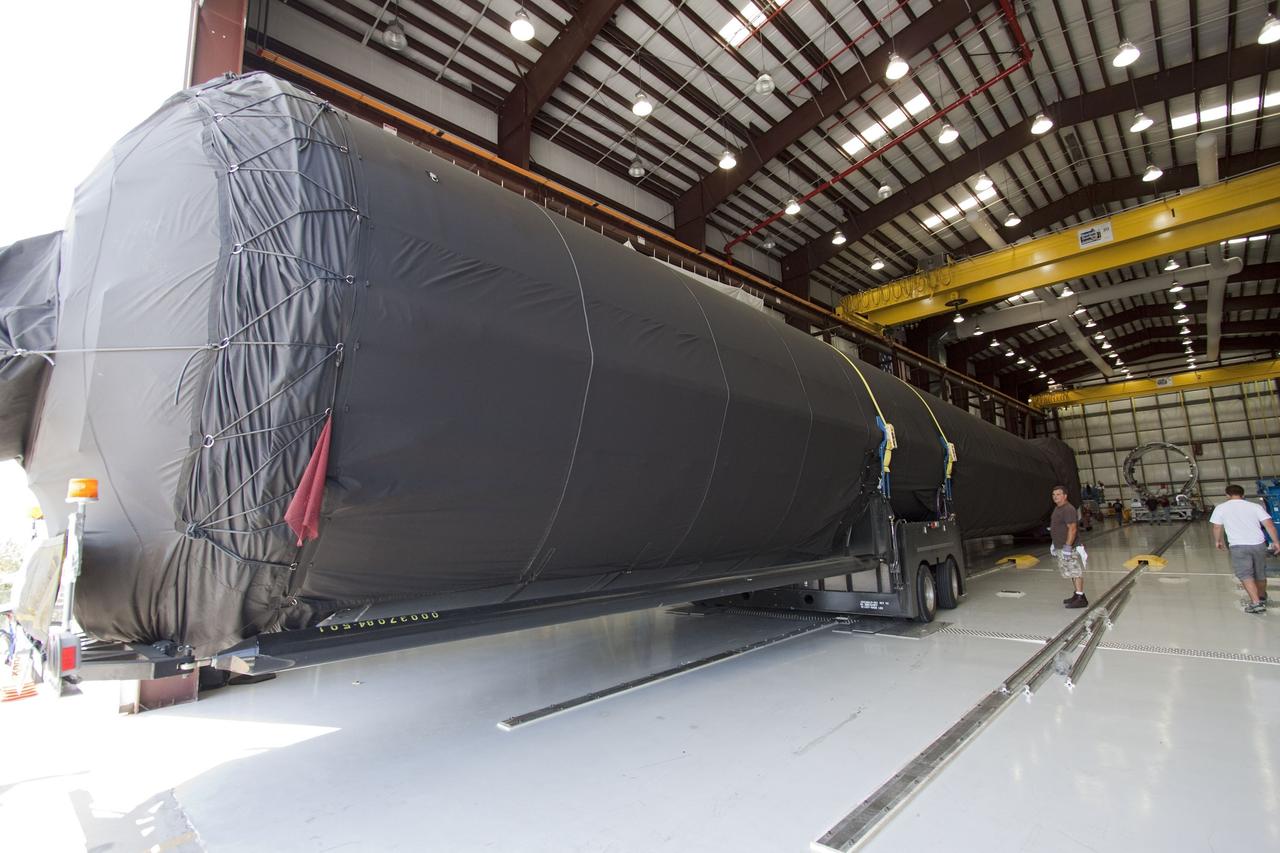
CAPE CANAVERAL, Fla. -- The first stage of the SpaceX COTS-2 Falcon 9 rocket has been moved to a SpaceX hangar at Pad 40 at Cape Canaveral Air Force Station in Florida. Once assembled, it will be a two-stage fully integrated launch vehicle, consisting of a first stage powered by nine SpaceX-developed Merlin 1C engines, a second stage, an interstage, an unpressurized trunk and the Dragon spacecraft qualification unit. SpaceX was awarded procurement for three demonstration flights under the Commercial Orbital Transportation Services, or COTS, program managed by NASA's Johnson Space Center in Houston. A subsequent contract for Commercial Resupply Services, or CRS, was awarded in late 2008 to resupply the International Space Station. The SpaceX CRS contract provides for 12 missions to resupply the station from 2011 through 2015. Photo credit: NASA/Jack Pfaller
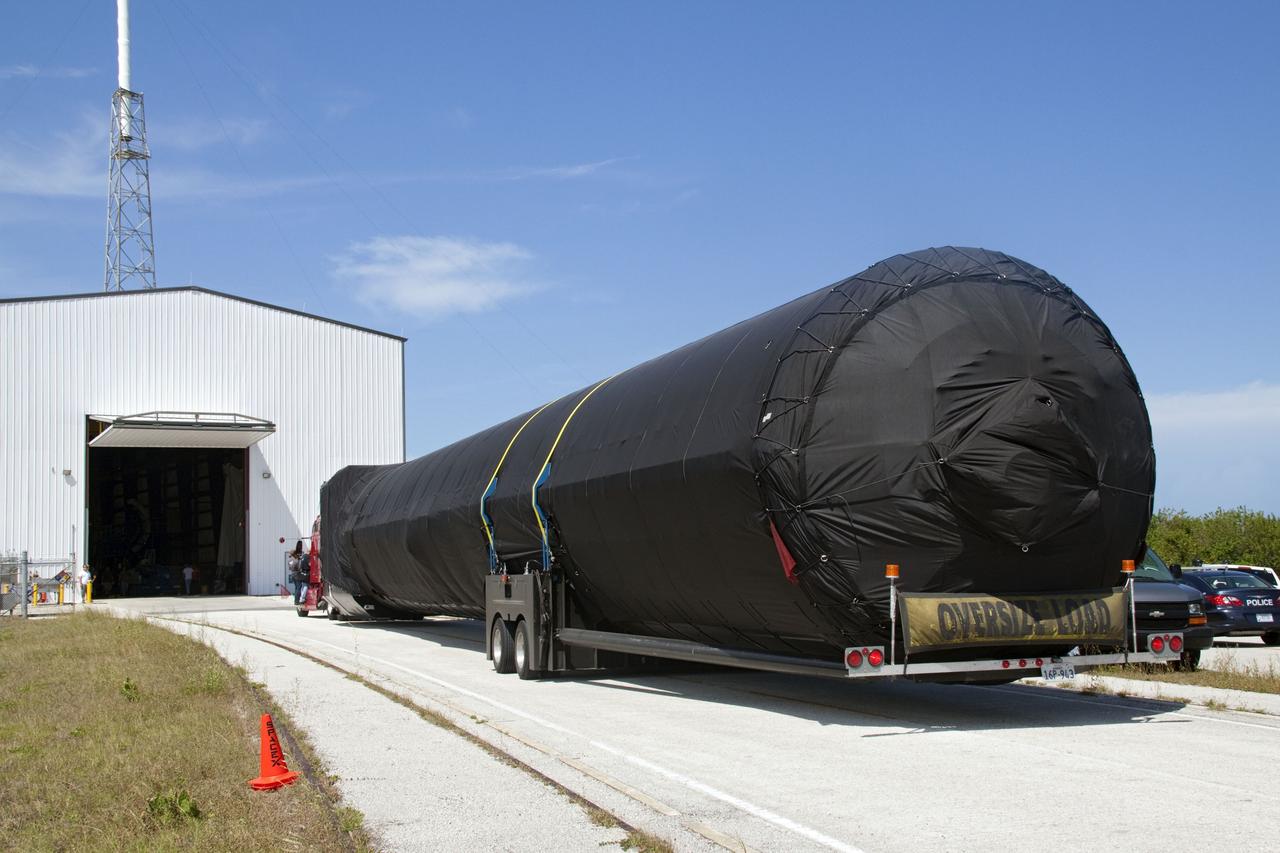
CAPE CANAVERAL, Fla. -- The first stage of the SpaceX COTS-2 Falcon 9 rocket is being moved into a SpaceX hangar at Pad 40 at Cape Canaveral Air Force Station in Florida. Once assembled, it will be a two-stage fully integrated launch vehicle, consisting of a first stage powered by nine SpaceX-developed Merlin 1C engines, a second stage, an interstage, an unpressurized trunk and the Dragon spacecraft qualification unit. SpaceX was awarded procurement for three demonstration flights under the Commercial Orbital Transportation Services, or COTS, program managed by NASA's Johnson Space Center in Houston. A subsequent contract for Commercial Resupply Services, or CRS, was awarded in late 2008 to resupply the International Space Station. The SpaceX CRS contract provides for 12 missions to resupply the station from 2011 through 2015. Photo credit: NASA/Jack Pfaller
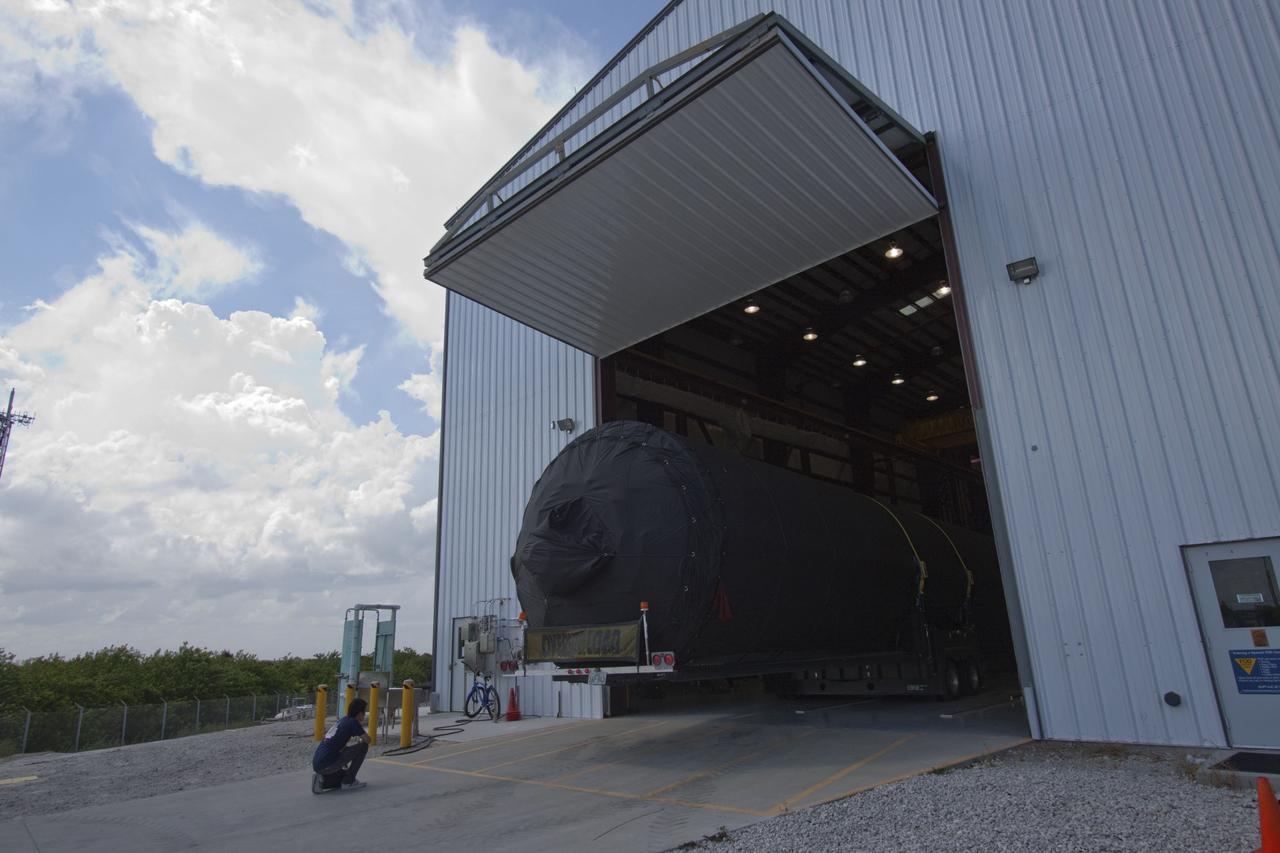
CAPE CANAVERAL, Fla. -- The first stage of the SpaceX COTS-2 Falcon 9 rocket is being moved into a SpaceX hangar at Pad 40 at Cape Canaveral Air Force Station in Florida. Once assembled, it will be a two-stage fully integrated launch vehicle, consisting of a first stage powered by nine SpaceX-developed Merlin 1C engines, a second stage, an interstage, an unpressurized trunk and the Dragon spacecraft qualification unit. SpaceX was awarded procurement for three demonstration flights under the Commercial Orbital Transportation Services, or COTS, program managed by NASA's Johnson Space Center in Houston. A subsequent contract for Commercial Resupply Services, or CRS, was awarded in late 2008 to resupply the International Space Station. The SpaceX CRS contract provides for 12 missions to resupply the station from 2011 through 2015. Photo credit: NASA/Jack Pfaller
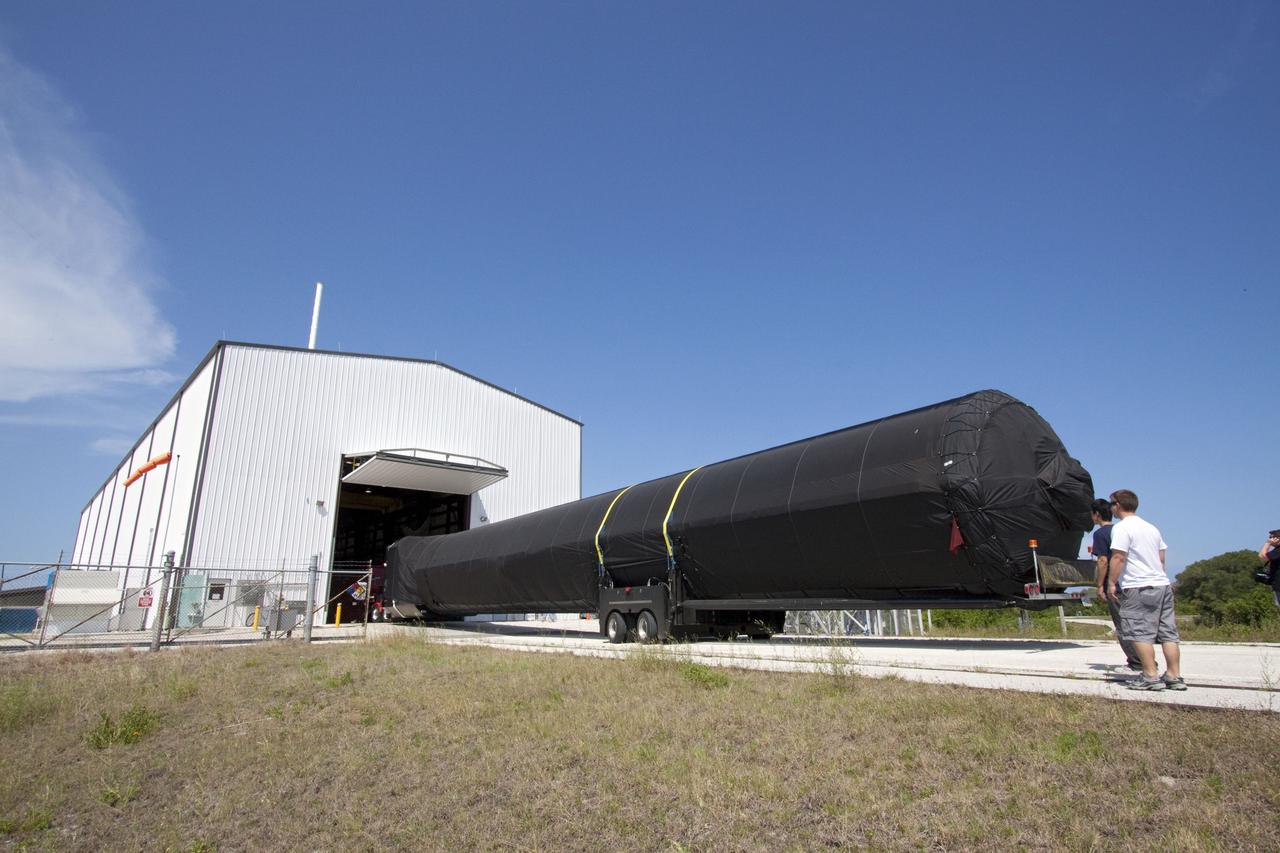
CAPE CANAVERAL, Fla. -- The first stage of the SpaceX COTS-2 Falcon 9 rocket is being moved into a SpaceX hangar at Pad 40 at Cape Canaveral Air Force Station in Florida. Once assembled, it will be a two-stage fully integrated launch vehicle, consisting of a first stage powered by nine SpaceX-developed Merlin 1C engines, a second stage, an interstage, an unpressurized trunk and the Dragon spacecraft qualification unit. SpaceX was awarded procurement for three demonstration flights under the Commercial Orbital Transportation Services, or COTS, program managed by NASA's Johnson Space Center in Houston. A subsequent contract for Commercial Resupply Services, or CRS, was awarded in late 2008 to resupply the International Space Station. The SpaceX CRS contract provides for 12 missions to resupply the station from 2011 through 2015. Photo credit: NASA/Jack Pfaller
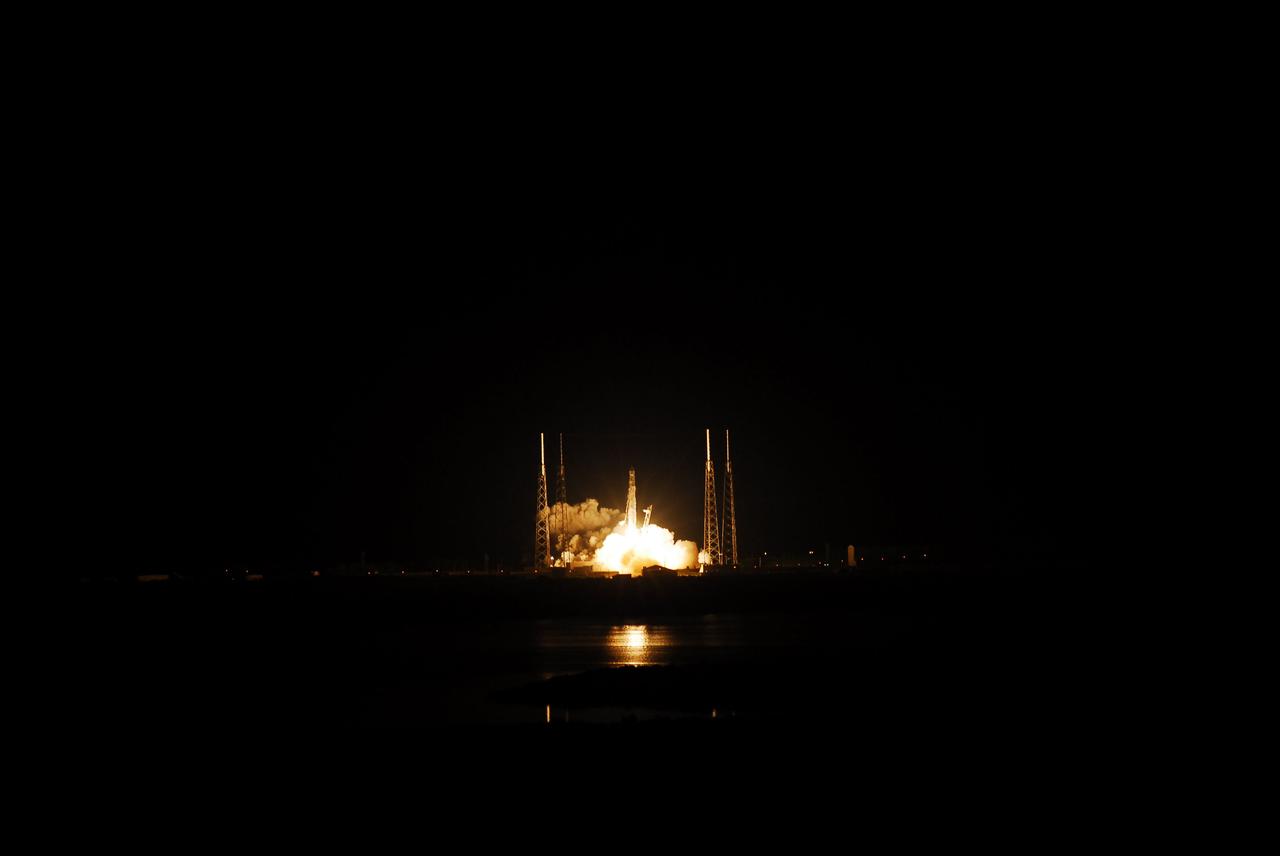
CAPE CANAVERAL, Fla. – The SpaceX Falcon 9 rocket lifts off Space Launch Complex-40 on Cape Canaveral Air Force Station in Florida at 3:44 a.m. EDT, carrying the Dragon capsule to orbit. The launch is the company's second demonstration test flight for NASA's Commercial Orbital Transportation Services, or COTS, Program. During the flight, the Dragon will conduct a series of check-out procedures to test and prove its systems, including rendezvous and berthing with the International Space Station. If the capsule performs as planned, the cargo and experiments it is carrying will be transferred to the station. The cargo includes food, water and provisions for the station’s Expedition crews, such as clothing, batteries and computer equipment. Under COTS, NASA has partnered with two aerospace companies to deliver cargo to the station. For more information, visit http://www.nasa.gov/spacex. Photo credit: NASA/Alan Ault
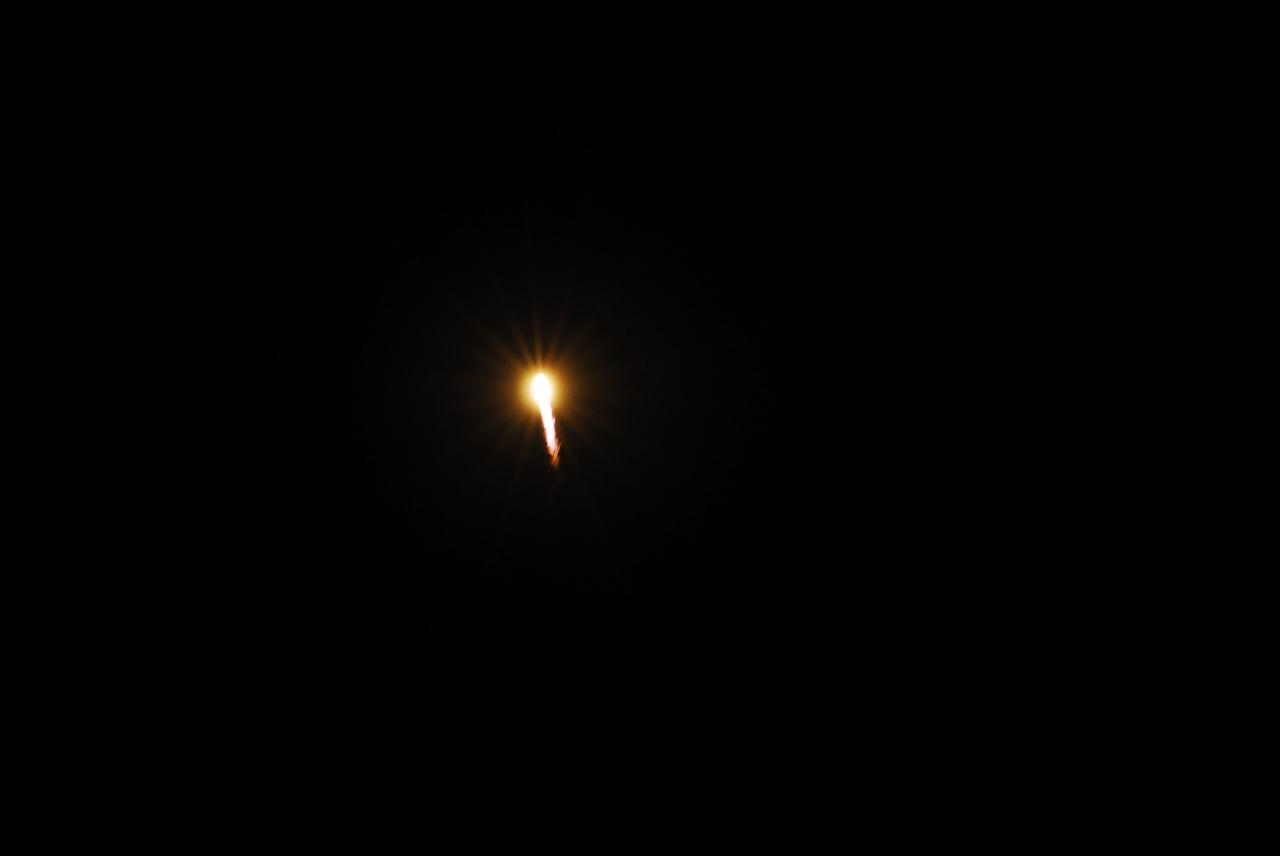
CAPE CANAVERAL, Fla. – The SpaceX Dragon capsule, powered by nine Merlin engines on the Falcon 9 rocket, soars into orbit at 3:44 a.m. EDT, leaving Space Launch Complex-40 on Cape Canaveral Air Force Station in Florida behind. The launch is the company's second demonstration test flight for NASA's Commercial Orbital Transportation Services, or COTS, Program. During the flight, the Dragon will conduct a series of check-out procedures to test and prove its systems, including rendezvous and berthing with the International Space Station. If the capsule performs as planned, the cargo and experiments it is carrying will be transferred to the station. The cargo includes food, water and provisions for the station’s Expedition crews, such as clothing, batteries and computer equipment. Under COTS, NASA has partnered with two aerospace companies to deliver cargo to the station. For more information, visit http://www.nasa.gov/spacex. Photo credit: NASA/Alan Ault
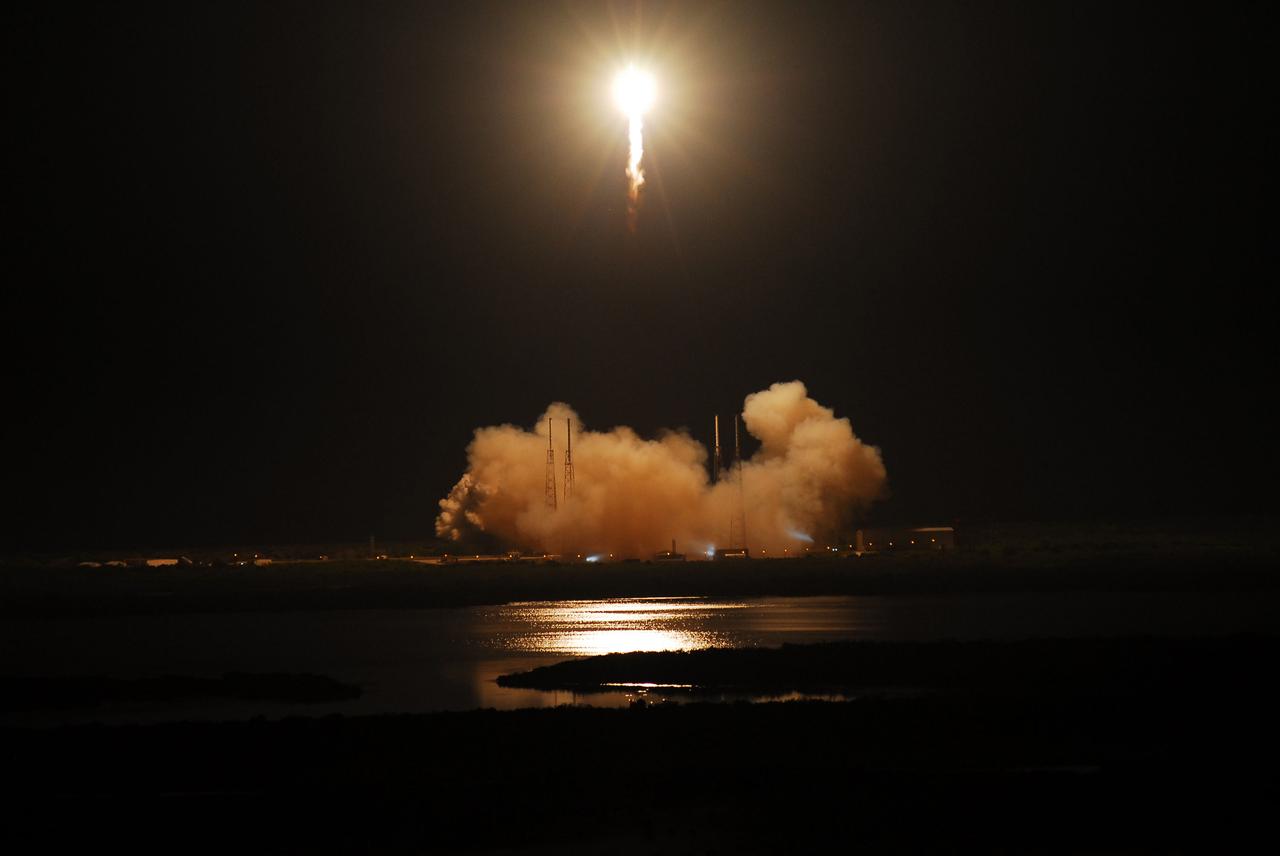
CAPE CANAVERAL, Fla. – Powered by nine Merlin engines, the SpaceX Falcon 9 rocket roars into space from Space Launch Complex-40 on Cape Canaveral Air Force Station in Florida at 3:44 a.m. EDT, carrying the Dragon capsule to orbit. The launch is the company's second demonstration test flight for NASA's Commercial Orbital Transportation Services, or COTS, Program. During the flight, the Dragon will conduct a series of check-out procedures to test and prove its systems, including rendezvous and berthing with the International Space Station. If the capsule performs as planned, the cargo and experiments it is carrying will be transferred to the station. The cargo includes food, water and provisions for the station’s Expedition crews, such as clothing, batteries and computer equipment. Under COTS, NASA has partnered with two aerospace companies to deliver cargo to the station. For more information, visit http://www.nasa.gov/spacex. Photo credit: NASA/Alan Ault
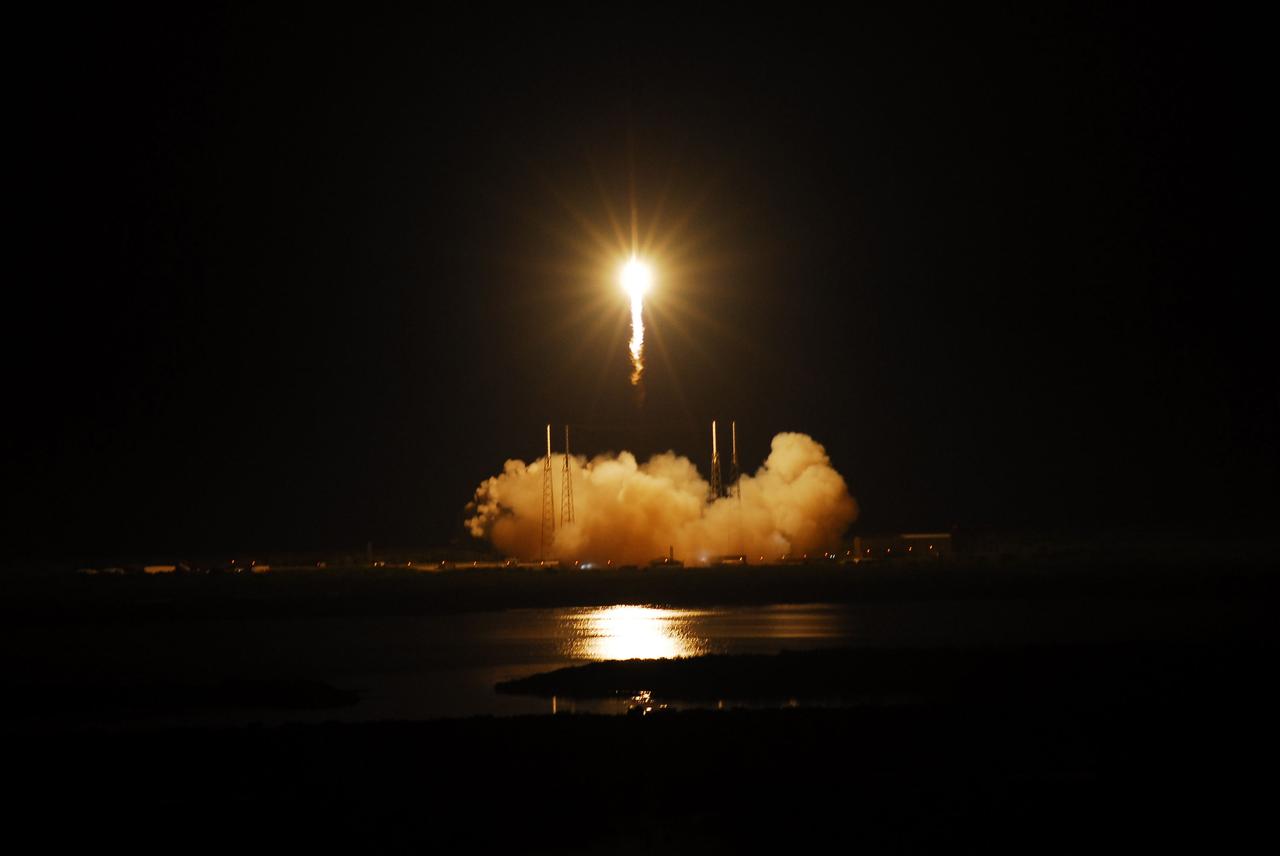
CAPE CANAVERAL, Fla. – The SpaceX Falcon 9 rocket soars into space from Space Launch Complex-40 on Cape Canaveral Air Force Station in Florida at 3:44 a.m. EDT, carrying the Dragon capsule to orbit. The launch is the company's second demonstration test flight for NASA's Commercial Orbital Transportation Services, or COTS, Program. During the flight, the Dragon will conduct a series of check-out procedures to test and prove its systems, including rendezvous and berthing with the International Space Station. If the capsule performs as planned, the cargo and experiments it is carrying will be transferred to the station. The cargo includes food, water and provisions for the station’s Expedition crews, such as clothing, batteries and computer equipment. Under COTS, NASA has partnered with two aerospace companies to deliver cargo to the station. For more information, visit http://www.nasa.gov/spacex. Photo credit: NASA/Alan Ault

CAPE CANAVERAL, Fla. – Powered by nine Merlin engines, the SpaceX Falcon 9 rocket lifts off Space Launch Complex-40 on Cape Canaveral Air Force Station in Florida at 3:44 a.m. EDT, carrying the Dragon capsule to orbit. The launch is the company's second demonstration test flight for NASA's Commercial Orbital Transportation Services, or COTS, Program. During the flight, the Dragon will conduct a series of check-out procedures to test and prove its systems, including rendezvous and berthing with the International Space Station. If the capsule performs as planned, the cargo and experiments it is carrying will be transferred to the station. The cargo includes food, water and provisions for the station’s Expedition crews, such as clothing, batteries and computer equipment. Under COTS, NASA has partnered with two aerospace companies to deliver cargo to the station. For more information, visit http://www.nasa.gov/spacex. Photo credit: NASA/Jim Grossmann
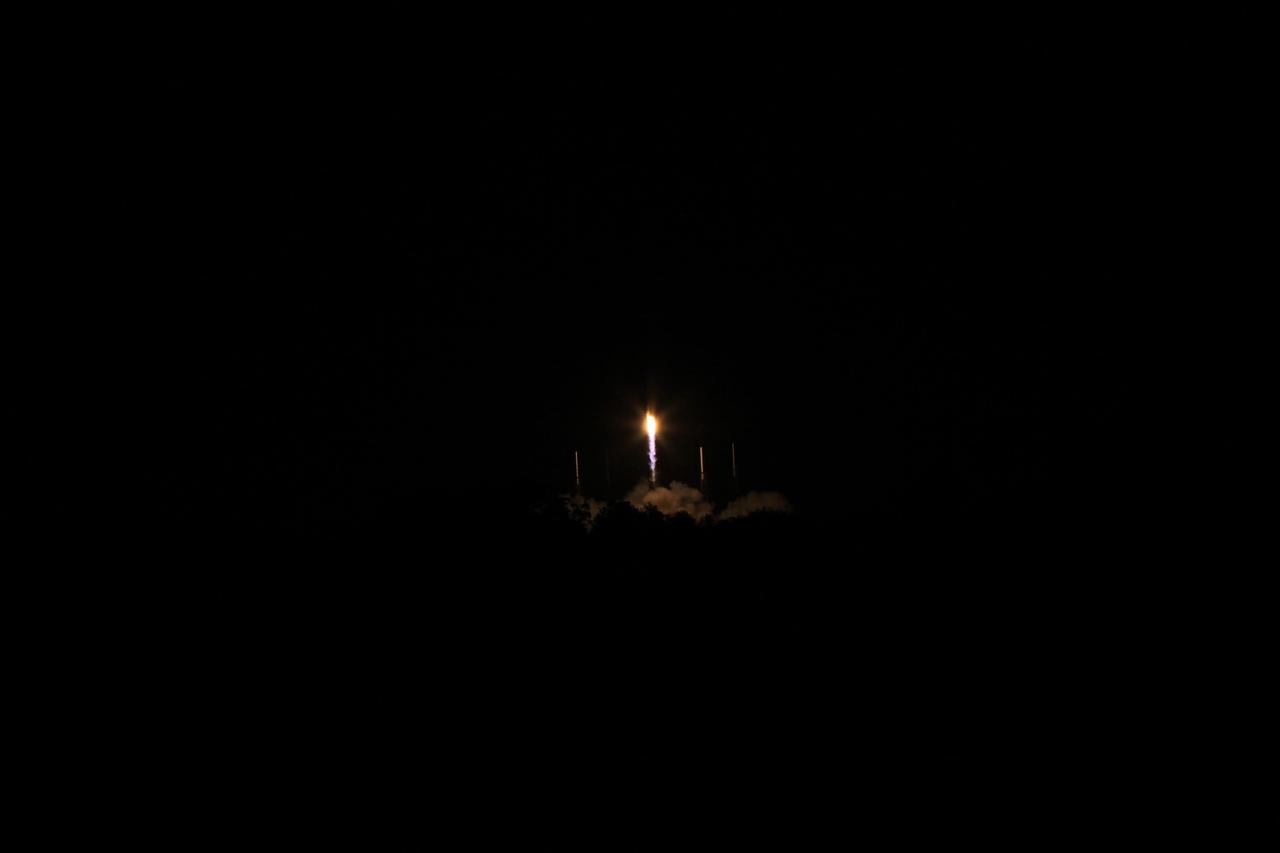
CAPE CANAVERAL, Fla. – The SpaceX Falcon 9 rocket soars off Space Launch Complex-40 on Cape Canaveral Air Force Station in Florida at 3:44 a.m. EDT, delivering the Dragon capsule to orbit. The launch is the company's second demonstration test flight for NASA's Commercial Orbital Transportation Services, or COTS, Program. During the flight, the Dragon will conduct a series of check-out procedures to test and prove its systems, including rendezvous and berthing with the International Space Station. If the capsule performs as planned, the cargo and experiments it is carrying will be transferred to the station. The cargo includes food, water and provisions for the station’s Expedition crews, such as clothing, batteries and computer equipment. Under COTS, NASA has partnered with two aerospace companies to deliver cargo to the station. For more information, visit http://www.nasa.gov/spacex. Photo credit: NASA/Jim Grossmann
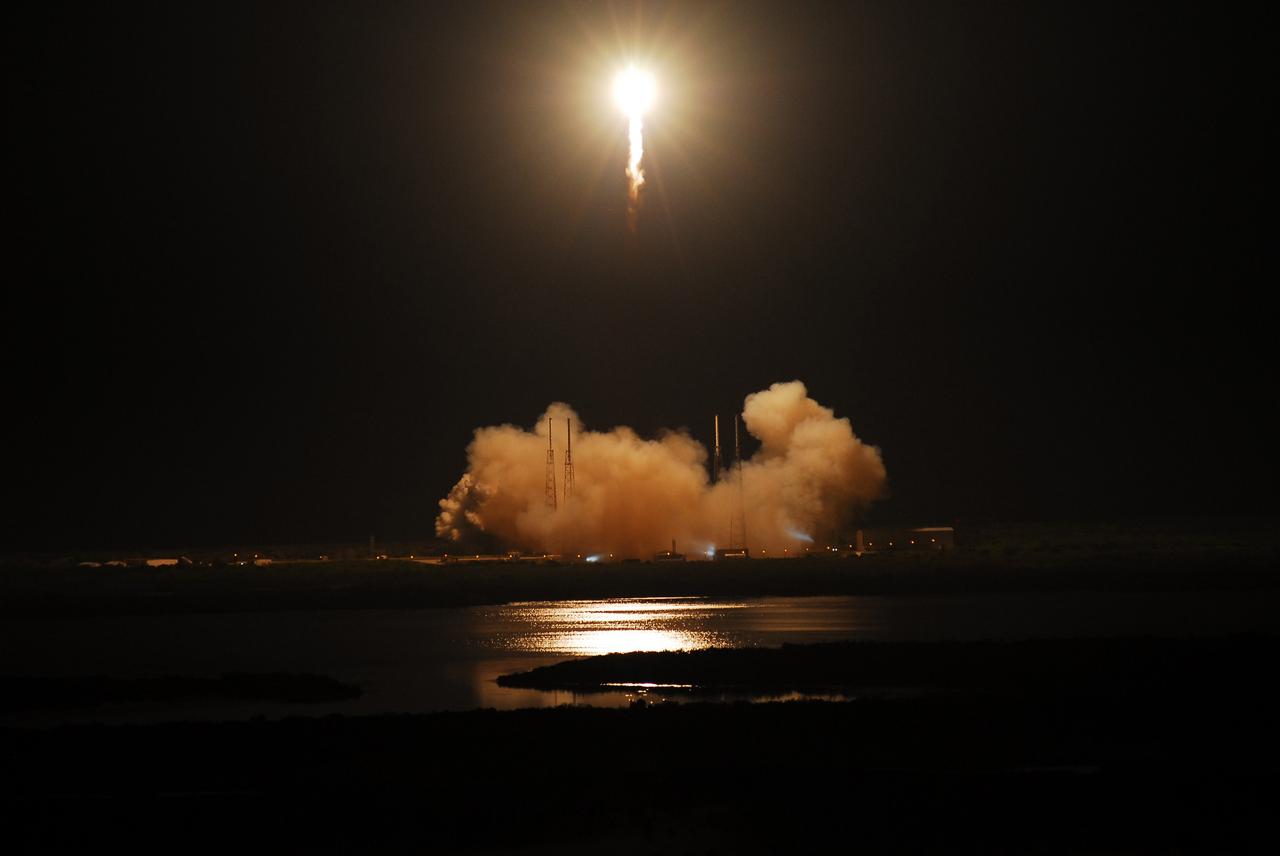
CAPE CANAVERAL, Fla. – Powered by nine Merlin engines, the SpaceX Falcon 9 rocket roars into space from Space Launch Complex-40 on Cape Canaveral Air Force Station in Florida at 3:44 a.m. EDT, carrying the Dragon capsule to orbit. The launch is the company's second demonstration test flight for NASA's Commercial Orbital Transportation Services, or COTS, Program. During the flight, the Dragon will conduct a series of check-out procedures to test and prove its systems, including rendezvous and berthing with the International Space Station. If the capsule performs as planned, the cargo and experiments it is carrying will be transferred to the station. The cargo includes food, water and provisions for the station’s Expedition crews, such as clothing, batteries and computer equipment. Under COTS, NASA has partnered with two aerospace companies to deliver cargo to the station. For more information, visit http://www.nasa.gov/spacex. Photo credit: NASA/Alan Ault
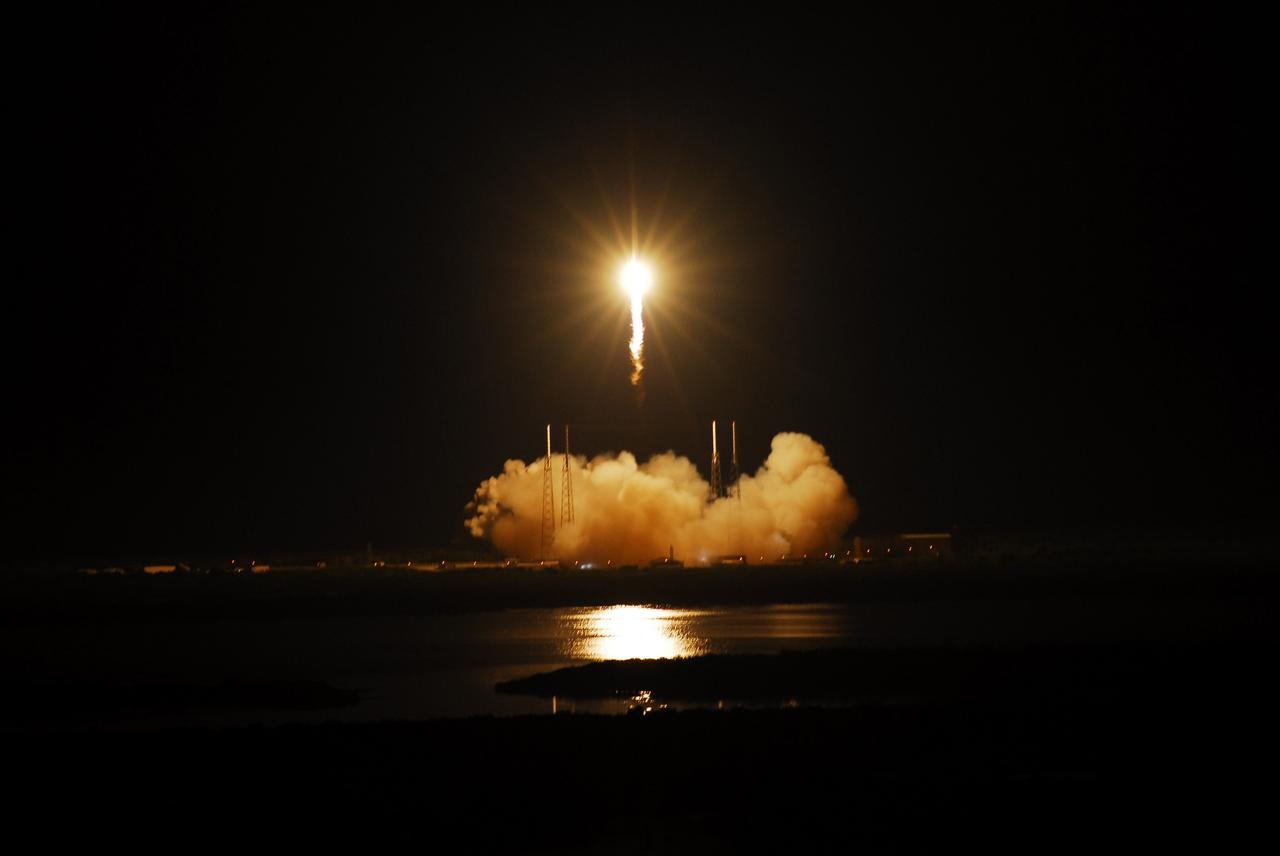
CAPE CANAVERAL, Fla. – The SpaceX Falcon 9 rocket soars into space from Space Launch Complex-40 on Cape Canaveral Air Force Station in Florida at 3:44 a.m. EDT, carrying the Dragon capsule to orbit. The launch is the company's second demonstration test flight for NASA's Commercial Orbital Transportation Services, or COTS, Program. During the flight, the Dragon will conduct a series of check-out procedures to test and prove its systems, including rendezvous and berthing with the International Space Station. If the capsule performs as planned, the cargo and experiments it is carrying will be transferred to the station. The cargo includes food, water and provisions for the station’s Expedition crews, such as clothing, batteries and computer equipment. Under COTS, NASA has partnered with two aerospace companies to deliver cargo to the station. For more information, visit http://www.nasa.gov/spacex. Photo credit: NASA/Alan Ault
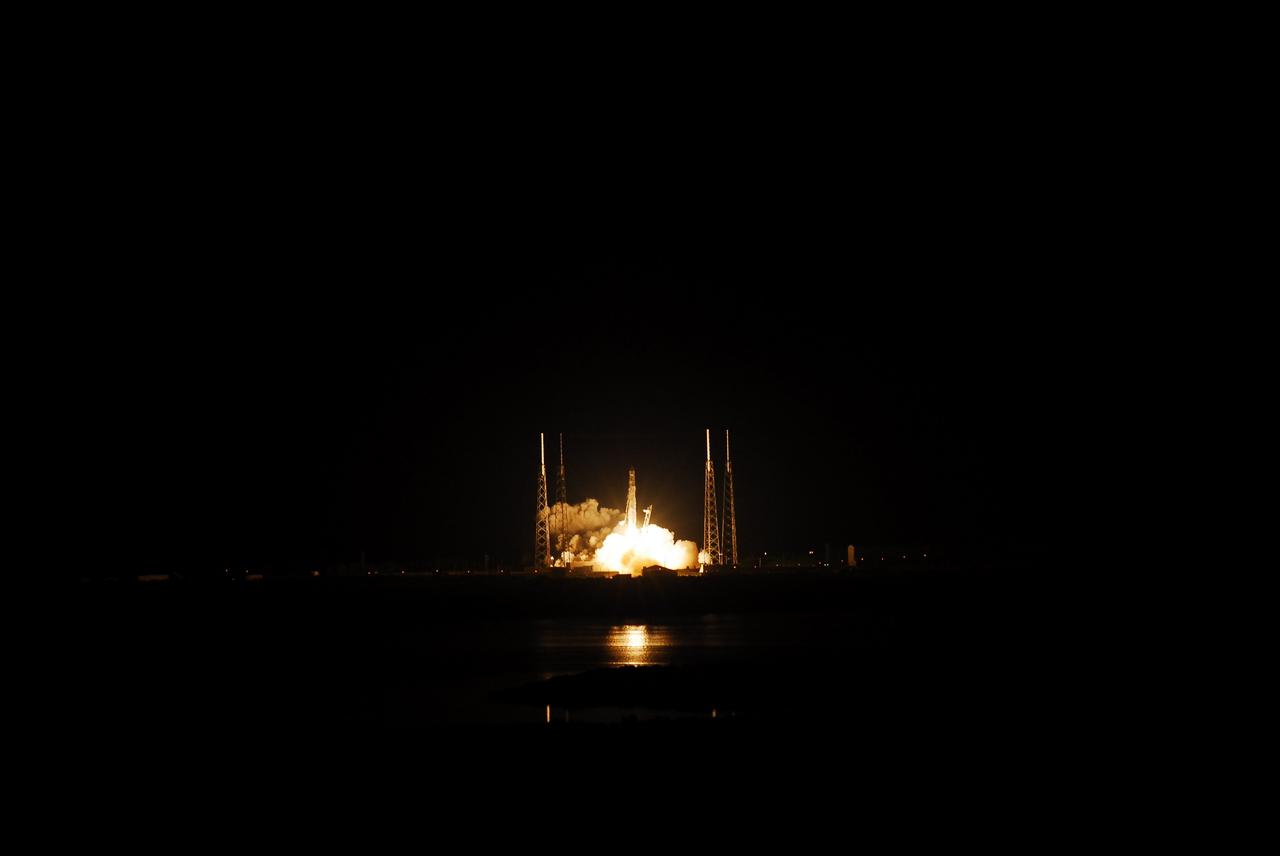
CAPE CANAVERAL, Fla. – The SpaceX Falcon 9 rocket lifts off Space Launch Complex-40 on Cape Canaveral Air Force Station in Florida at 3:44 a.m. EDT, carrying the Dragon capsule to orbit. The launch is the company's second demonstration test flight for NASA's Commercial Orbital Transportation Services, or COTS, Program. During the flight, the Dragon will conduct a series of check-out procedures to test and prove its systems, including rendezvous and berthing with the International Space Station. If the capsule performs as planned, the cargo and experiments it is carrying will be transferred to the station. The cargo includes food, water and provisions for the station’s Expedition crews, such as clothing, batteries and computer equipment. Under COTS, NASA has partnered with two aerospace companies to deliver cargo to the station. For more information, visit http://www.nasa.gov/spacex. Photo credit: NASA/Alan Ault
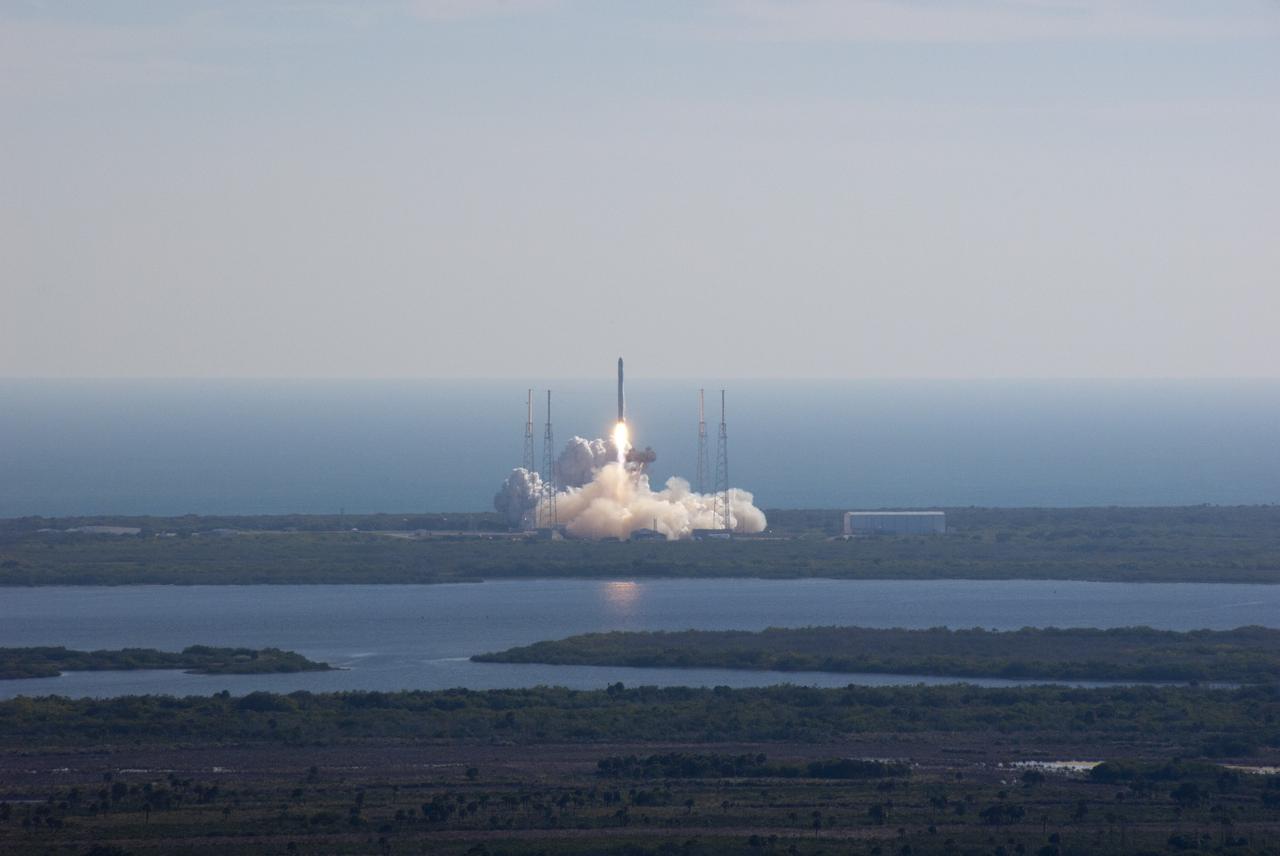
CAPE CANAVERAL, Fla. -- SpaceX’s Falcon 9 rocket and Dragon spacecraft lift off from Launch Complex 40 at Cape Canaveral Air Force Station at 10:43 a.m. EST. SpaceX was awarded procurement for three demonstration flights under the Commercial Orbital Transportation Services, or COTS, program managed by NASA's Johnson Space Center in Houston. A subsequent contract for Commercial Resupply Services, or CRS, was awarded in late 2008 to resupply the International Space Station. The SpaceX CRS contract provides for 12 missions to resupply the station from 2011 through 2015. Photo credit: NASA/Alan Ault
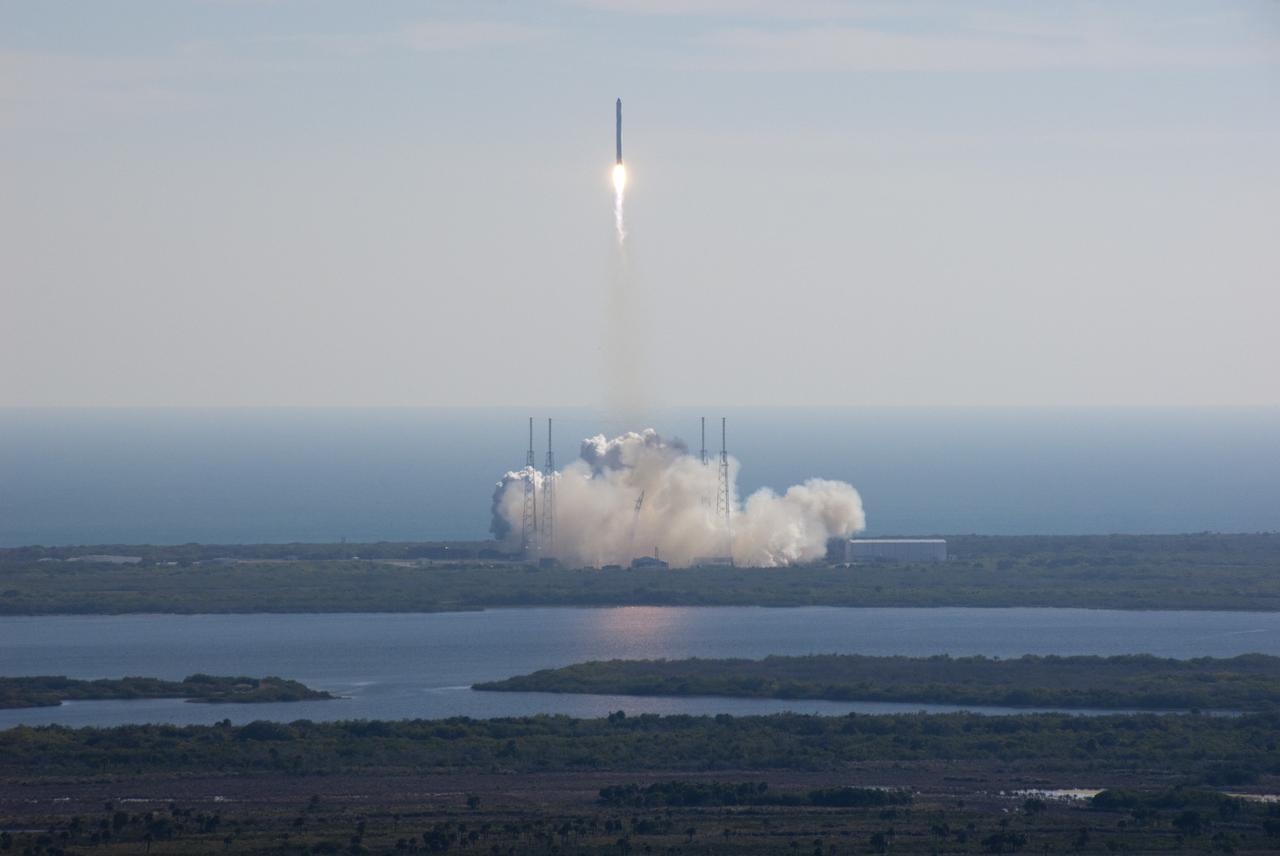
CAPE CANAVERAL, Fla. -- SpaceX’s Falcon 9 rocket and Dragon spacecraft lift off from Launch Complex 40 at Cape Canaveral Air Force Station at 10:43 a.m. EST. SpaceX was awarded procurement for three demonstration flights under the Commercial Orbital Transportation Services, or COTS, program managed by NASA's Johnson Space Center in Houston. A subsequent contract for Commercial Resupply Services, or CRS, was awarded in late 2008 to resupply the International Space Station. The SpaceX CRS contract provides for 12 missions to resupply the station from 2011 through 2015. Photo credit: NASA/Alan Ault
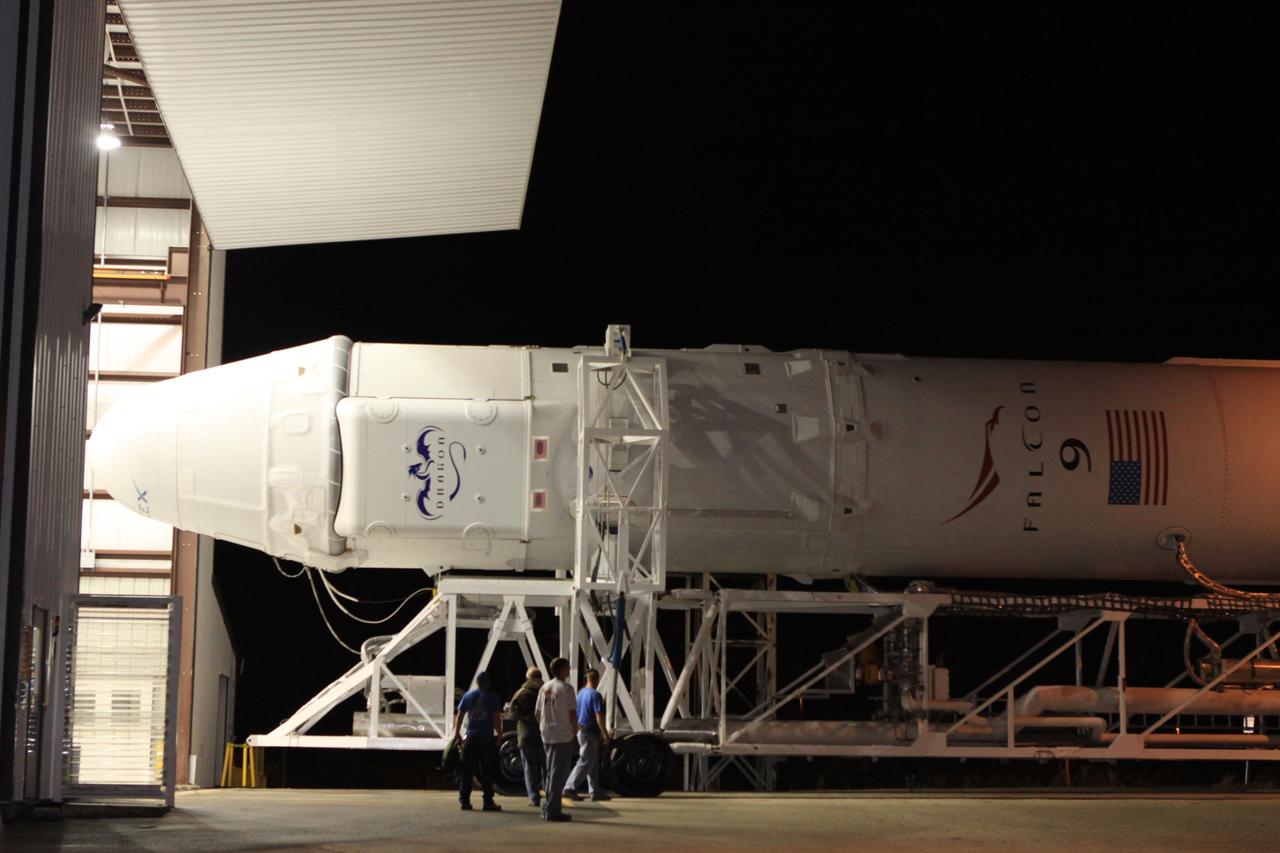
CAPE CANAVERAL, Fla. – The SpaceX Falcon 9 rocket begins its move from the processing facility to the pad at Space Launch Complex-40 on Cape Canaveral Air Force Station in Florida. Liftoff with the SpaceX Dragon capsule aboard is set for 4:55 a.m. EDT on May 19. The launch will be the company's second demonstration test flight for NASA's Commercial Orbital Transportation Services Program, or COTS. During the flight, the capsule will conduct a series of check-out procedures to test and prove its systems, including rendezvous and berthing with the International Space Station. If the capsule performs as planned, the cargo and experiments it is carrying will be transferred to the station. The cargo includes food, water and provisions for the station’s Expedition crews, such as clothing, batteries and computer equipment. Under COTS, NASA has partnered with two aerospace companies to deliver cargo to the station. For more information, visit http://www.nasa.gov/spacex. Photo credit: NASA/Jim Grossmann
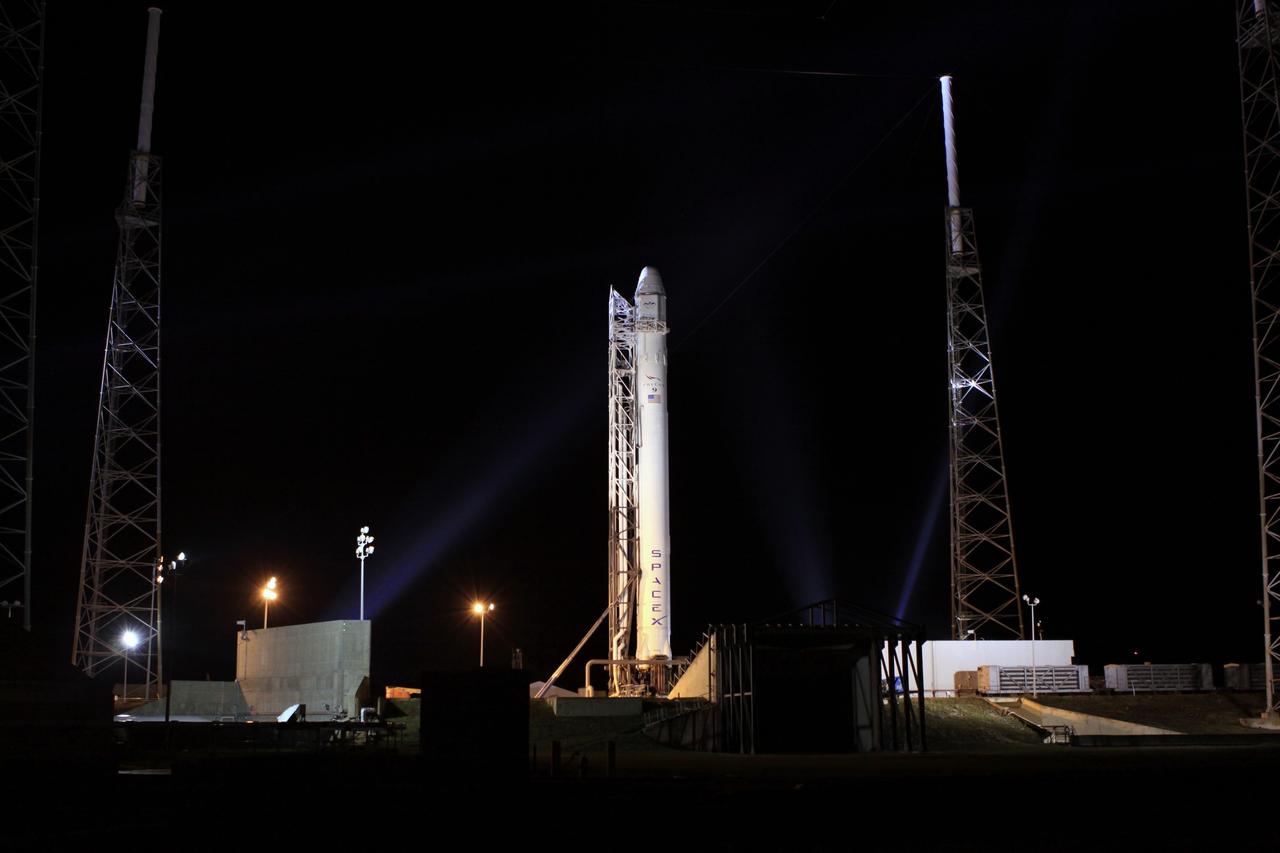
CAPE CANAVERAL, Fla. – The SpaceX Falcon 9 rocket is nestled between the lightning protection system towers surrounding the pad at Space Launch Complex-40 on Cape Canaveral Air Force Station in Florida. Liftoff with the SpaceX Dragon capsule aboard is set for 4:55 a.m. EDT on May 19. The launch will be the company's second demonstration test flight for NASA's Commercial Orbital Transportation Services Program, or COTS. During the flight, the capsule will conduct a series of check-out procedures to test and prove its systems, including rendezvous and berthing with the International Space Station. If the capsule performs as planned, the cargo and experiments it is carrying will be transferred to the station. The cargo includes food, water and provisions for the station’s Expedition crews, such as clothing, batteries and computer equipment. Under COTS, NASA has partnered with two aerospace companies to deliver cargo to the station. For more information, visit http://www.nasa.gov/spacex. Photo credit: NASA/Jim Grossmann
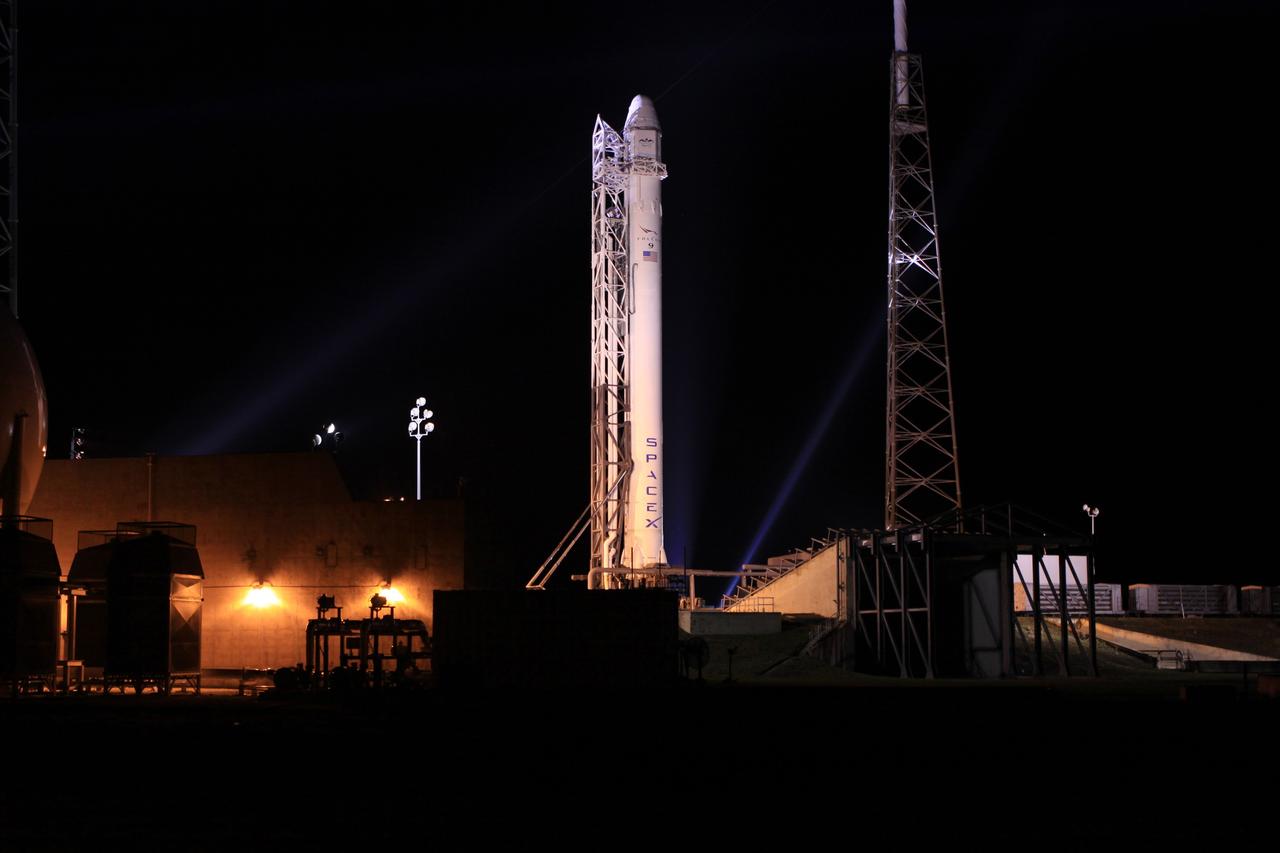
CAPE CANAVERAL, Fla. – A strongback lifts the SpaceX Falcon 9 rocket into a vertical position on the pad at Space Launch Complex-40 on Cape Canaveral Air Force Station in Florida. Liftoff with the SpaceX Dragon capsule aboard is set for 4:55 a.m. EDT on May 19. The launch will be the company's second demonstration test flight for NASA's Commercial Orbital Transportation Services Program, or COTS. During the flight, the capsule will conduct a series of check-out procedures to test and prove its systems, including rendezvous and berthing with the International Space Station. If the capsule performs as planned, the cargo and experiments it is carrying will be transferred to the station. The cargo includes food, water and provisions for the station’s Expedition crews, such as clothing, batteries and computer equipment. Under COTS, NASA has partnered with two aerospace companies to deliver cargo to the station. For more information, visit http://www.nasa.gov/spacex. Photo credit: NASA/Jim Grossmann
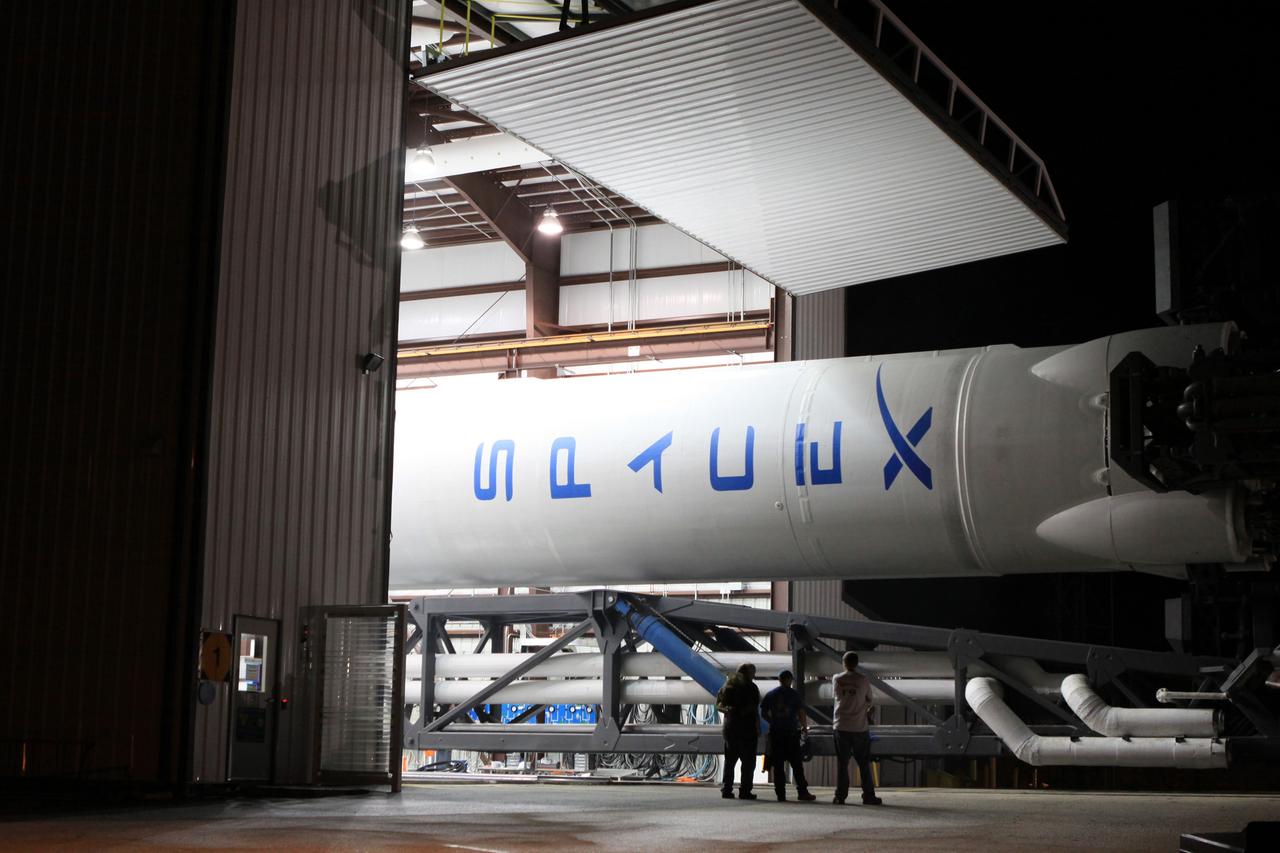
CAPE CANAVERAL, Fla. – Preparations are under way to roll the SpaceX Falcon 9 rocket out of the processing facility to the pad at Space Launch Complex-40 on Cape Canaveral Air Force Station in Florida. Liftoff with the SpaceX Dragon capsule aboard is set for 4:55 a.m. EDT on May 19. The launch will be the company's second demonstration test flight for NASA's Commercial Orbital Transportation Services Program, or COTS. During the flight, the capsule will conduct a series of check-out procedures to test and prove its systems, including rendezvous and berthing with the International Space Station. If the capsule performs as planned, the cargo and experiments it is carrying will be transferred to the station. The cargo includes food, water and provisions for the station’s Expedition crews, such as clothing, batteries and computer equipment. Under COTS, NASA has partnered with two aerospace companies to deliver cargo to the station. For more information, visit http://www.nasa.gov/spacex. Photo credit: NASA/Jim Grossmann
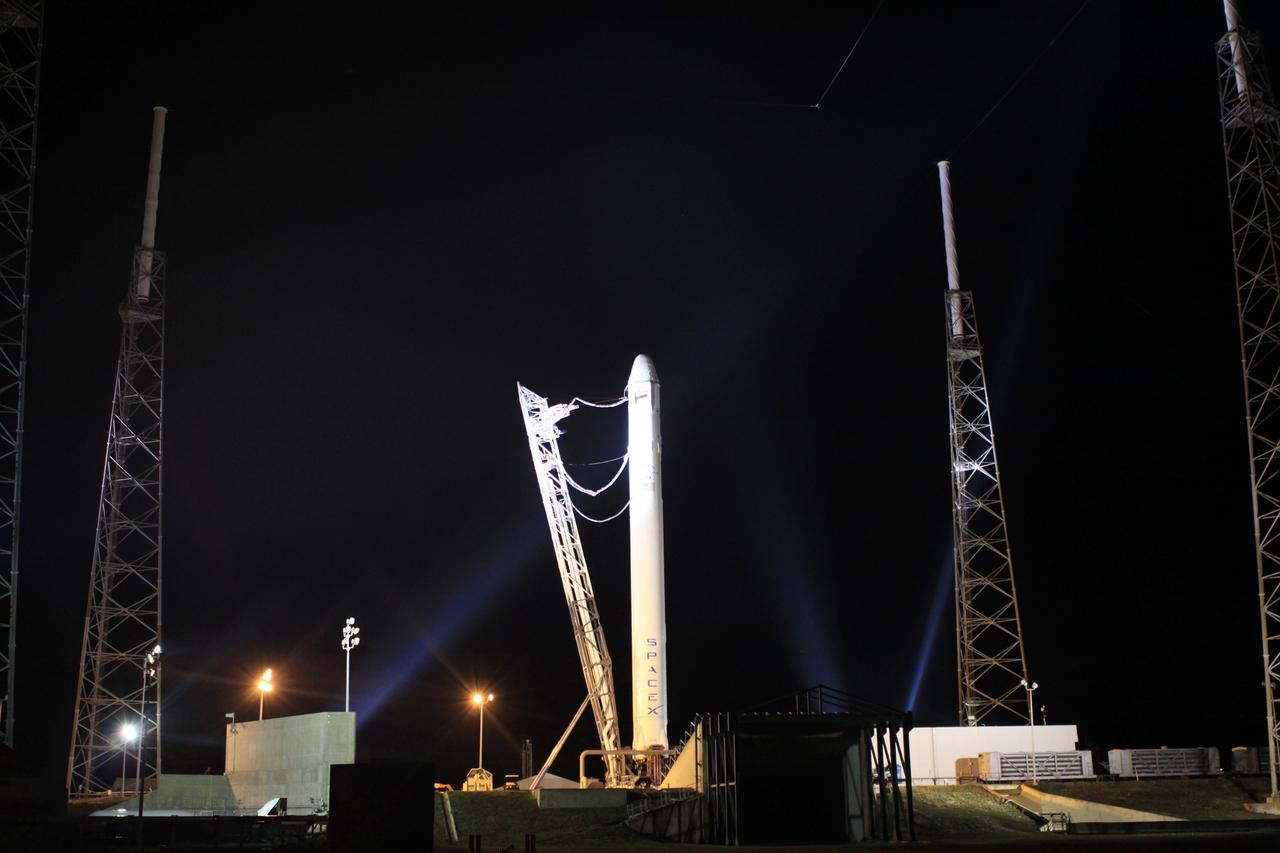
CAPE CANAVERAL, Fla. – Umbilical lines connect the strongback to the SpaceX Falcon 9 rocket which has just arrived on the pad at Space Launch Complex-40 on Cape Canaveral Air Force Station in Florida. Liftoff with the SpaceX Dragon capsule aboard is set for 4:55 a.m. EDT on May 19. The launch will be the company's second demonstration test flight for NASA's Commercial Orbital Transportation Services Program, or COTS. During the flight, the capsule will conduct a series of check-out procedures to test and prove its systems, including rendezvous and berthing with the International Space Station. If the capsule performs as planned, the cargo and experiments it is carrying will be transferred to the station. The cargo includes food, water and provisions for the station’s Expedition crews, such as clothing, batteries and computer equipment. Under COTS, NASA has partnered with two aerospace companies to deliver cargo to the station. For more information, visit http://www.nasa.gov/spacex. Photo credit: NASA/Jim Grossmann
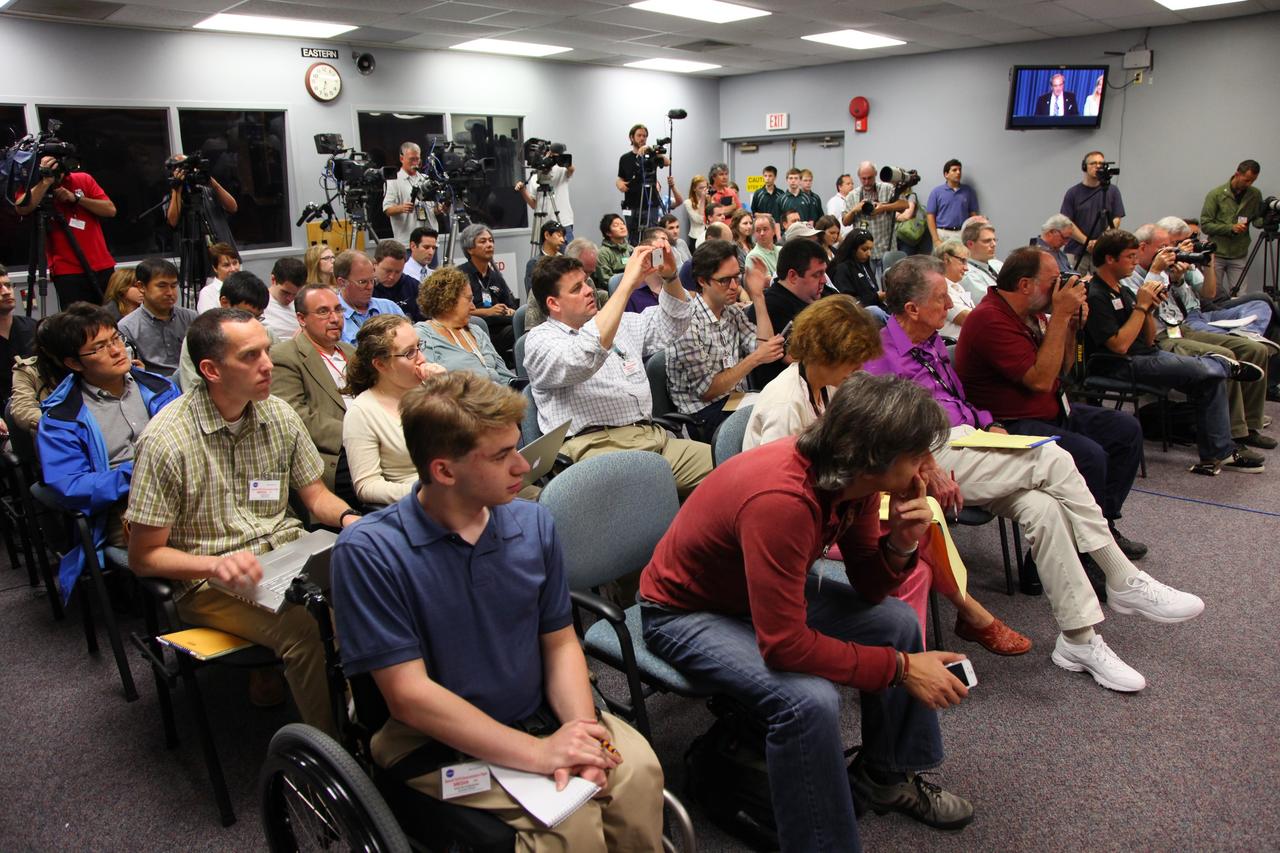
CAPE CANAVERAL, Fla. – Media representatives pack the Press Site auditorium at NASA’s Kennedy Space Center in Florida for a news conference following the launch abort of the SpaceX demonstration test flight. The next opportunity for liftoff of the SpaceX Falcon 9 rocket to carry the Dragon capsule to orbit is 4:33 a.m. EDT on May 22. The launch will be the company's second demonstration test flight for NASA's Commercial Orbital Transportation Services Program, or COTS. During the flight, the capsule will conduct a series of check-out procedures to test and prove its systems, including rendezvous and berthing with the International Space Station. If the capsule performs as planned, the cargo and experiments it is carrying will be transferred to the station. The cargo includes food, water and provisions for the station’s Expedition crews, such as clothing, batteries and computer equipment. Under COTS, NASA has partnered with two aerospace companies to deliver cargo to the station. For more information, visit http://www.nasa.gov/spacex. Photo credit: NASA/Gianni Woods
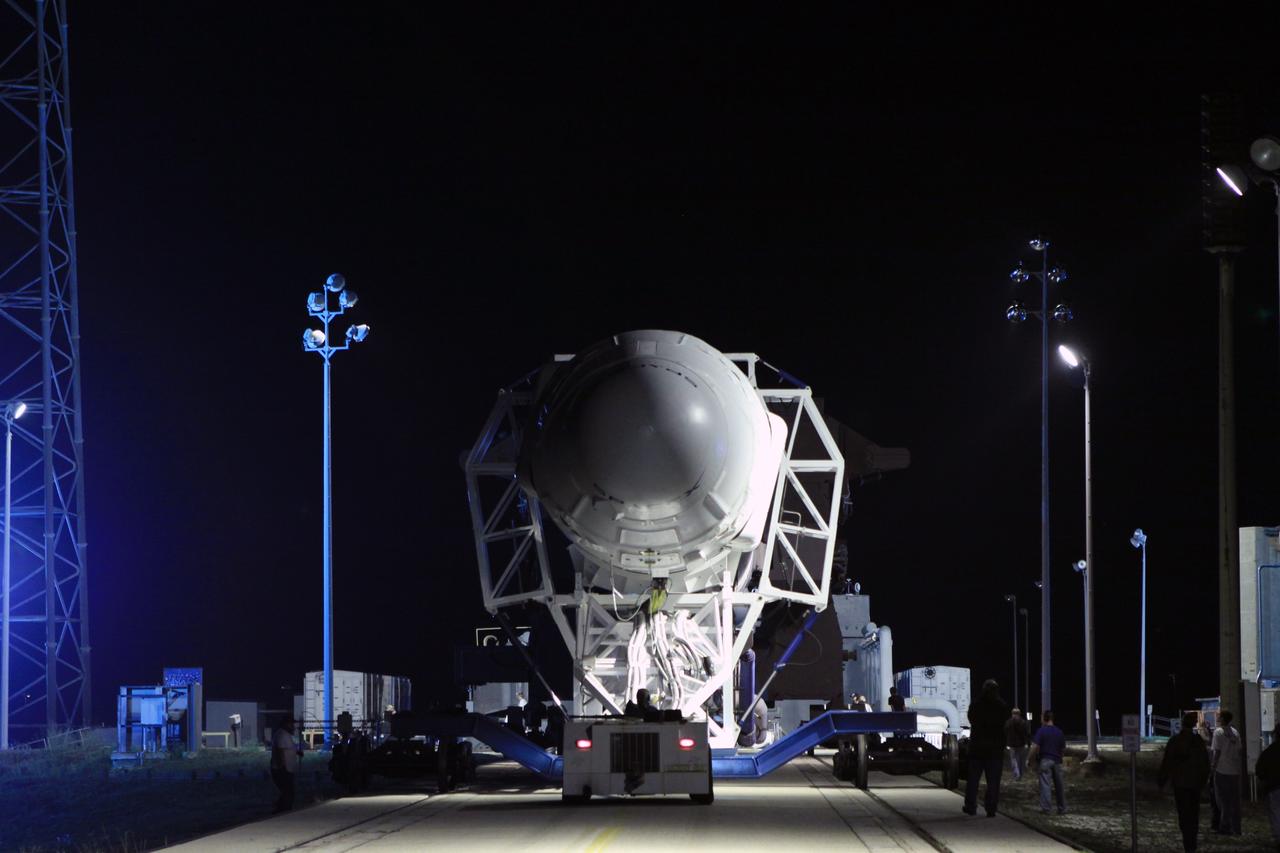
CAPE CANAVERAL, Fla. – The SpaceX Falcon 9 rocket makes its way to the pad at Space Launch Complex-40 on Cape Canaveral Air Force Station in Florida. Liftoff with the SpaceX Dragon capsule aboard is set for 4:55 a.m. EDT on May 19. The launch will be the company's second demonstration test flight for NASA's Commercial Orbital Transportation Services Program, or COTS. During the flight, the capsule will conduct a series of check-out procedures to test and prove its systems, including rendezvous and berthing with the International Space Station. If the capsule performs as planned, the cargo and experiments it is carrying will be transferred to the station. The cargo includes food, water and provisions for the station’s Expedition crews, such as clothing, batteries and computer equipment. Under COTS, NASA has partnered with two aerospace companies to deliver cargo to the station. For more information, visit http://www.nasa.gov/spacex. Photo credit: NASA/Jim Grossmann
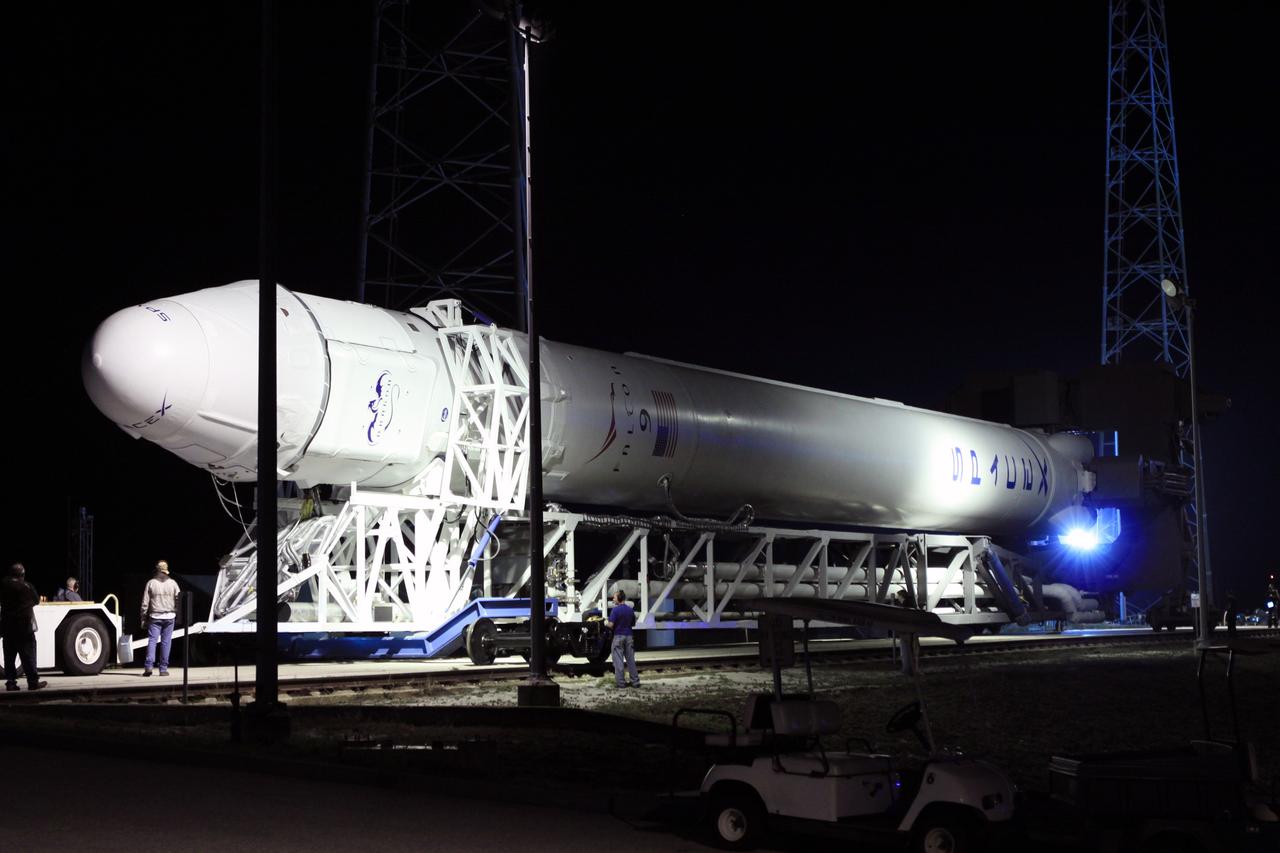
CAPE CANAVERAL, Fla. – The SpaceX Falcon 9 rocket rolls between the lightning protection system towers surrounding the pad at Space Launch Complex-40 on Cape Canaveral Air Force Station in Florida. Liftoff with the SpaceX Dragon capsule aboard is set for 4:55 a.m. EDT on May 19. The launch will be the company's second demonstration test flight for NASA's Commercial Orbital Transportation Services Program, or COTS. During the flight, the capsule will conduct a series of check-out procedures to test and prove its systems, including rendezvous and berthing with the International Space Station. If the capsule performs as planned, the cargo and experiments it is carrying will be transferred to the station. The cargo includes food, water and provisions for the station’s Expedition crews, such as clothing, batteries and computer equipment. Under COTS, NASA has partnered with two aerospace companies to deliver cargo to the station. For more information, visit http://www.nasa.gov/spacex. Photo credit: NASA/Jim Grossmann
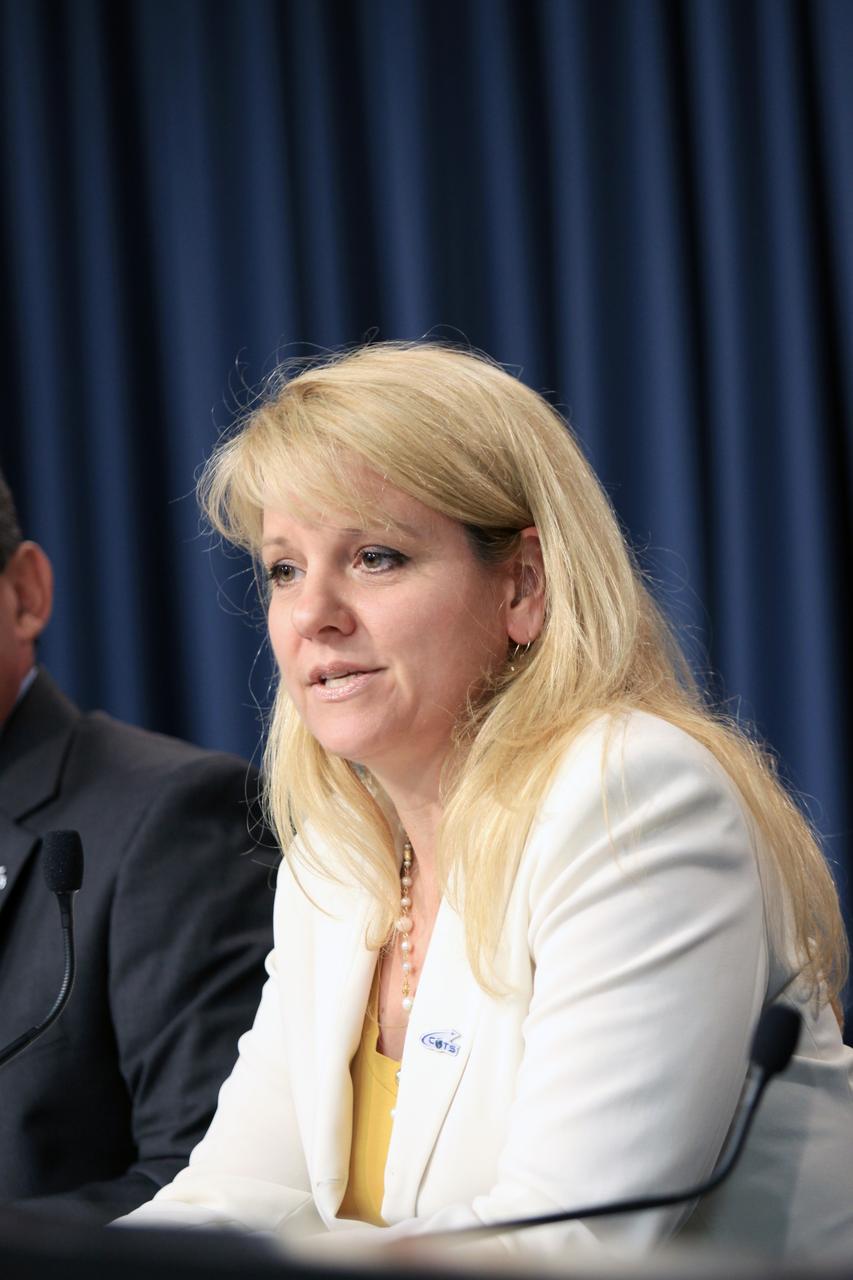
CAPE CANAVERAL, Fla. – Gwynne Shotwell, president of SpaceX, participates in a prelaunch news conference in the Press Site Auditorium at NASA’s Kennedy Space Center in Florida. Liftoff of the SpaceX Falcon 9 rocket carrying a Dragon capsule to orbit is set for 4:55 a.m. EDT on May 19. The launch will be the company's second demonstration test flight for NASA's Commercial Orbital Transportation Services Program, or COTS. During the flight, the capsule will conduct a series of check-out procedures to test and prove its systems, including rendezvous and berthing with the International Space Station. If the capsule performs as planned, the cargo and experiments it is carrying will be transferred to the station. The cargo includes food, water and provisions for the station’s Expedition crews, such as clothing, batteries and computer equipment. Under COTS, NASA has partnered with two aerospace companies to deliver cargo to the station. For more information, visit http://www.nasa.gov/spacex. Photo credit: NASA/Jim Grossmann
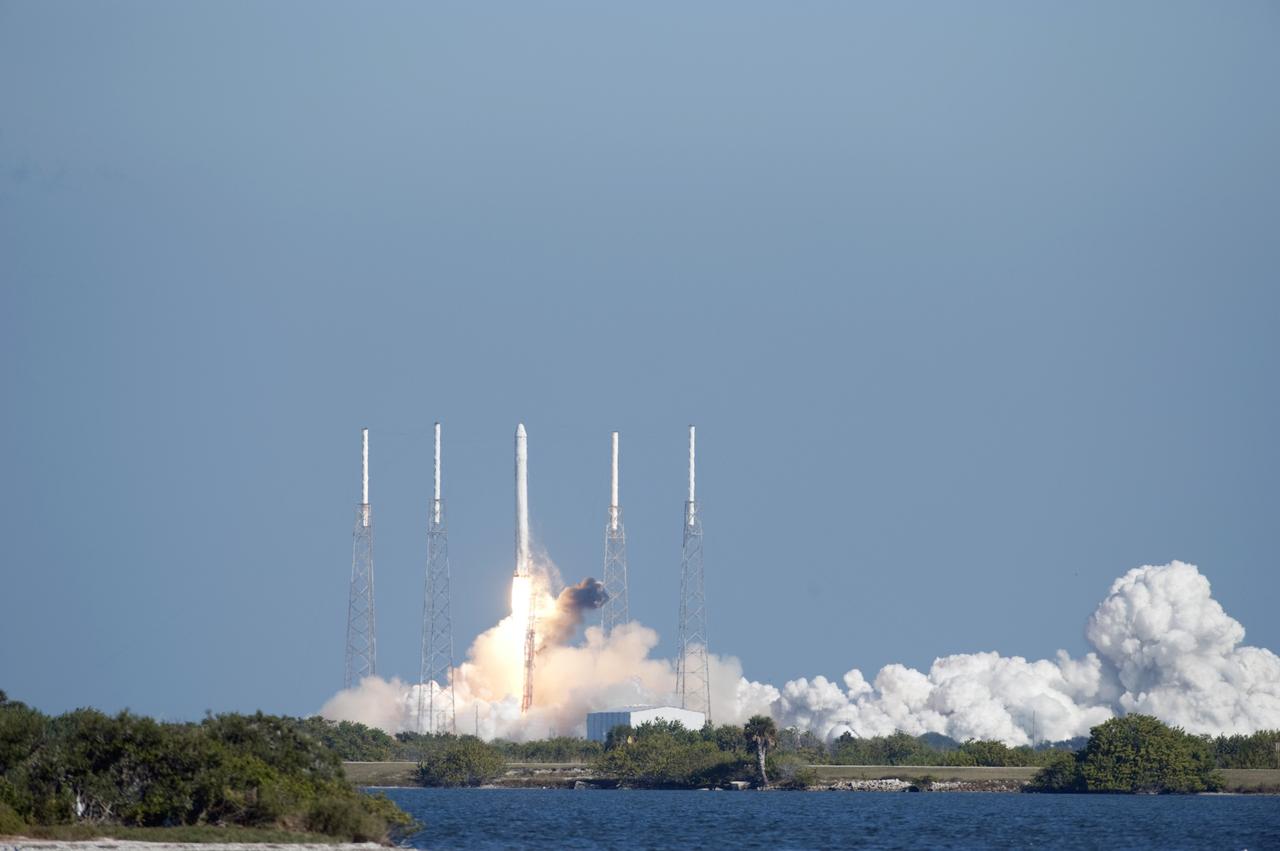
CAPE CANAVERAL, Fla. -- SpaceX’s Falcon 9 rocket and Dragon spacecraft lift off from Launch Complex-40 at Cape Canaveral Air Force Station, Fla., at 10:43 a.m. EST. In orbit, the Dragon capsule will go through several maneuvers before it re-enters the atmosphere and splashes down in the Pacific Ocean about 500 miles west of the coast of Mexico. This is first demonstration flight for NASA's Commercial Orbital Transportation Services (COTS) program, which will provide cargo flights to the International Space Station in the future. Photo credit: NASA/Kevin O'Connell
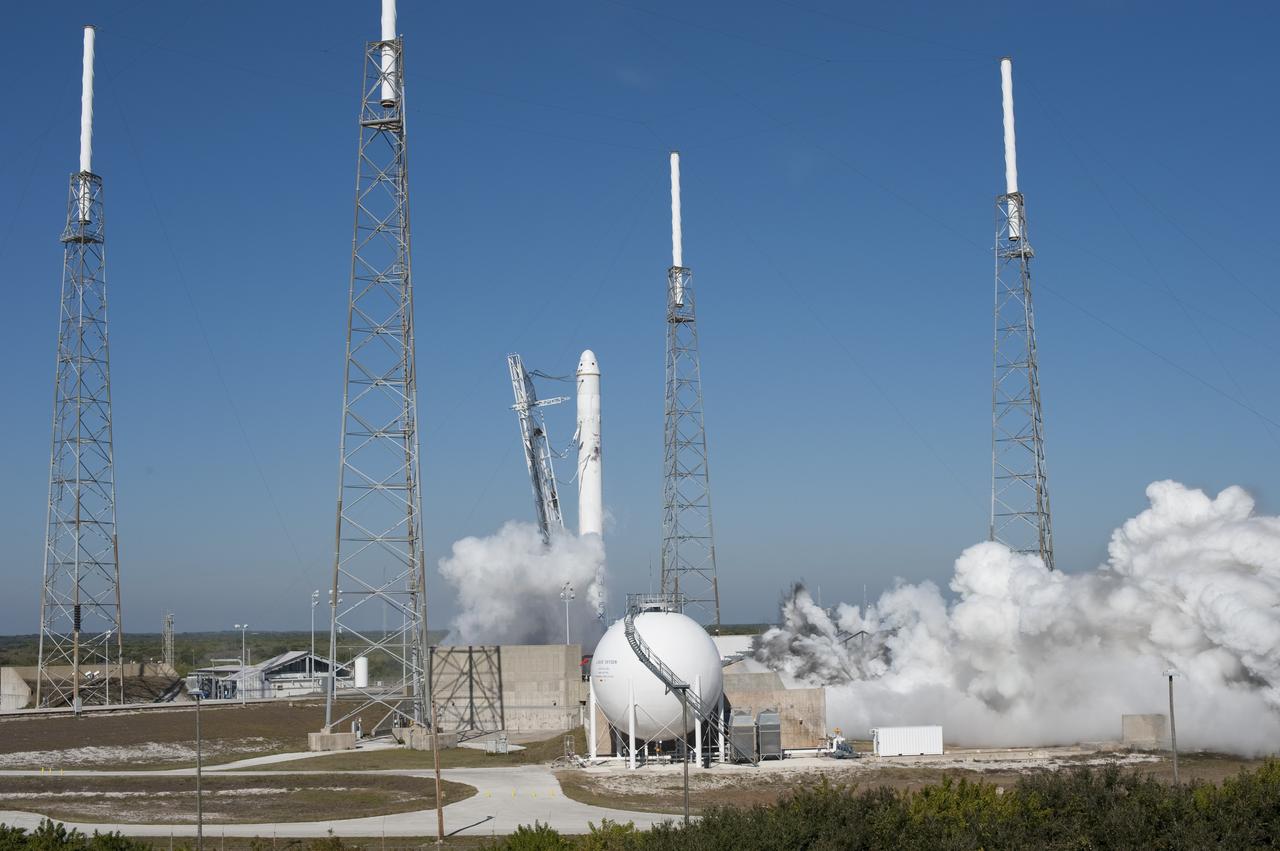
CAPE CANAVERAL, Fla. -- SpaceX’s Falcon 9 rocket and Dragon spacecraft lift off from Launch Complex-40 at Cape Canaveral Air Force Station, Fla., at 10:43 a.m. EST. In orbit, the Dragon capsule will go through several maneuvers before it re-enters the atmosphere and splashes down in the Pacific Ocean about 500 miles west of the coast of Mexico. This is first demonstration flight for NASA's Commercial Orbital Transportation Services (COTS) program, which will provide cargo flights to the International Space Station in the future. Photo credit: NASA/Tony Gray and Kevin O'Connell
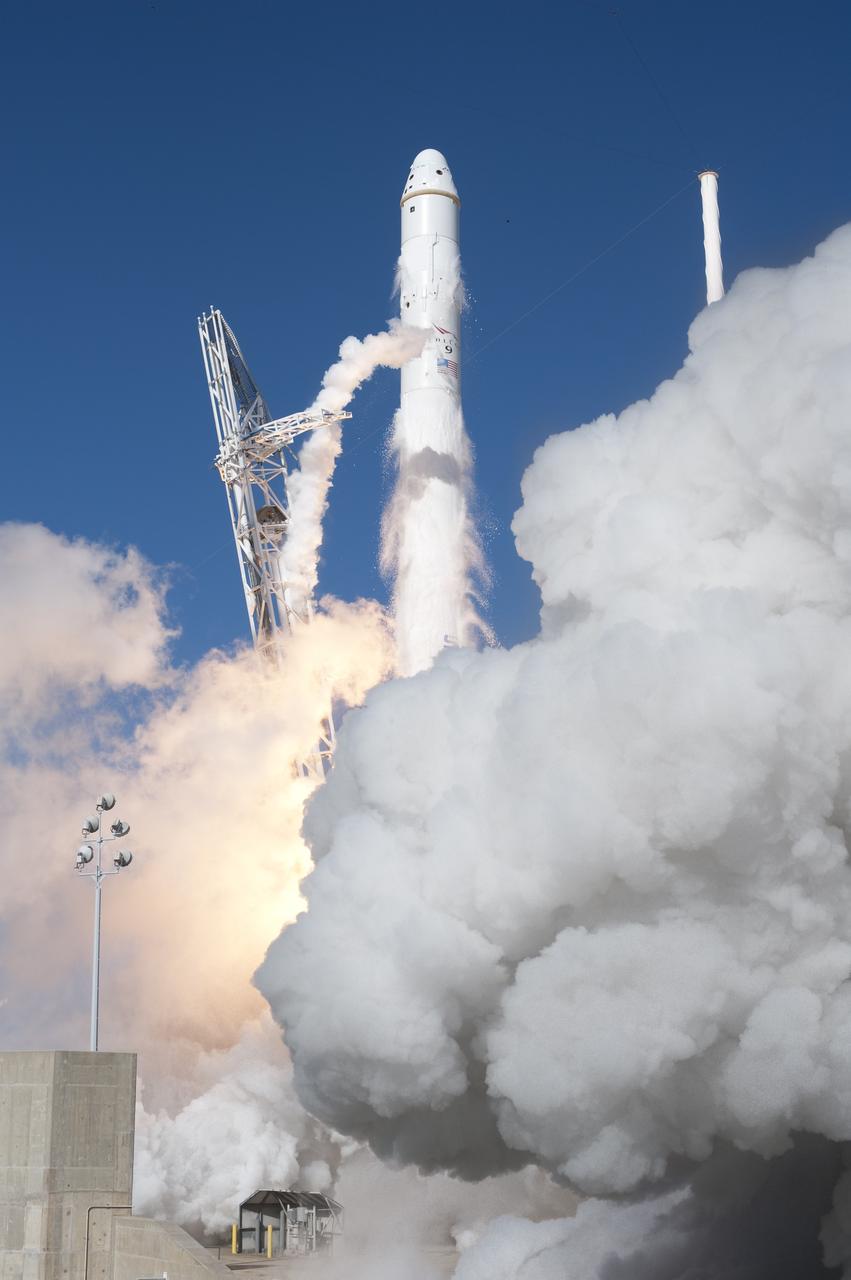
CAPE CANAVERAL, Fla. -- SpaceX’s Falcon 9 rocket and Dragon spacecraft lift off from Launch Complex-40 at Cape Canaveral Air Force Station, Fla., at 10:43 a.m. EST. In orbit, the Dragon capsule will go through several maneuvers before it re-enters the atmosphere and splashes down in the Pacific Ocean about 500 miles west of the coast of Mexico. This is first demonstration flight for NASA's Commercial Orbital Transportation Services (COTS) program, which will provide cargo flights to the International Space Station in the future. Photo credit: NASA/Tony Gray and Kevin O'Connell
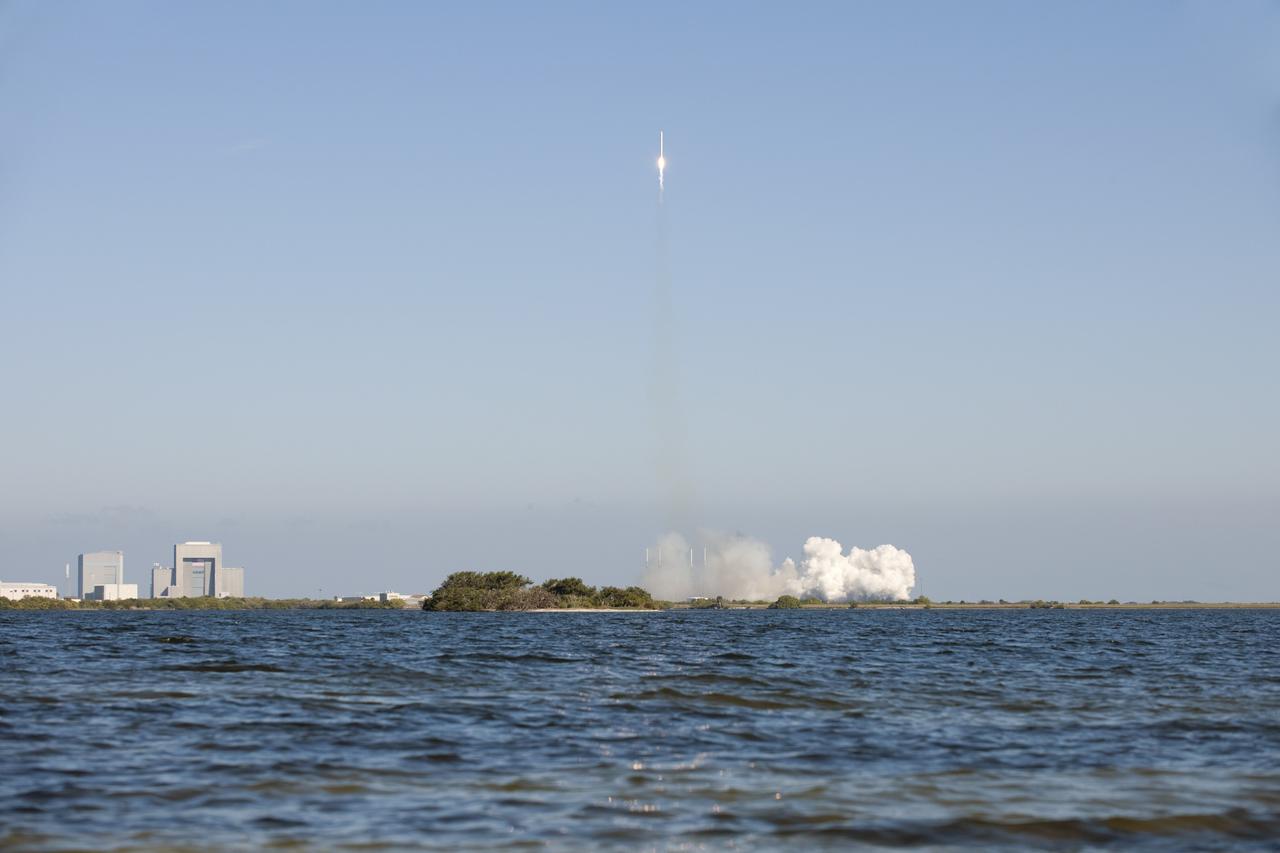
CAPE CANAVERAL, Fla. -- SpaceX’s Falcon 9 rocket and Dragon spacecraft race toward orbit after launching from Launch Complex-40 at Cape Canaveral Air Force Station, Fla., at 10:43 a.m. EST. The Dragon capsule will go through several maneuvers before it re-enters the atmosphere and splashes down in the Pacific Ocean about 500 miles west of the coast of Mexico. This is first demonstration flight for NASA's Commercial Orbital Transportation Services (COTS) program, which will provide cargo flights to the International Space Station in the future. Photo credit: NASA/Tony Gray

CAPE CANAVERAL, Fla. -- SpaceX’s Falcon 9 rocket and Dragon spacecraft lift off from Launch Complex-40 at Cape Canaveral Air Force Station, Fla., at 10:43 a.m. EST. In orbit, the Dragon capsule will go through several maneuvers before it re-enters the atmosphere and splashes down in the Pacific Ocean about 500 miles west of the coast of Mexico. This is first demonstration flight for NASA's Commercial Orbital Transportation Services (COTS) program, which will provide cargo flights to the International Space Station in the future. Photo credit: NASA/Tony Gray and Kevin O'Connell
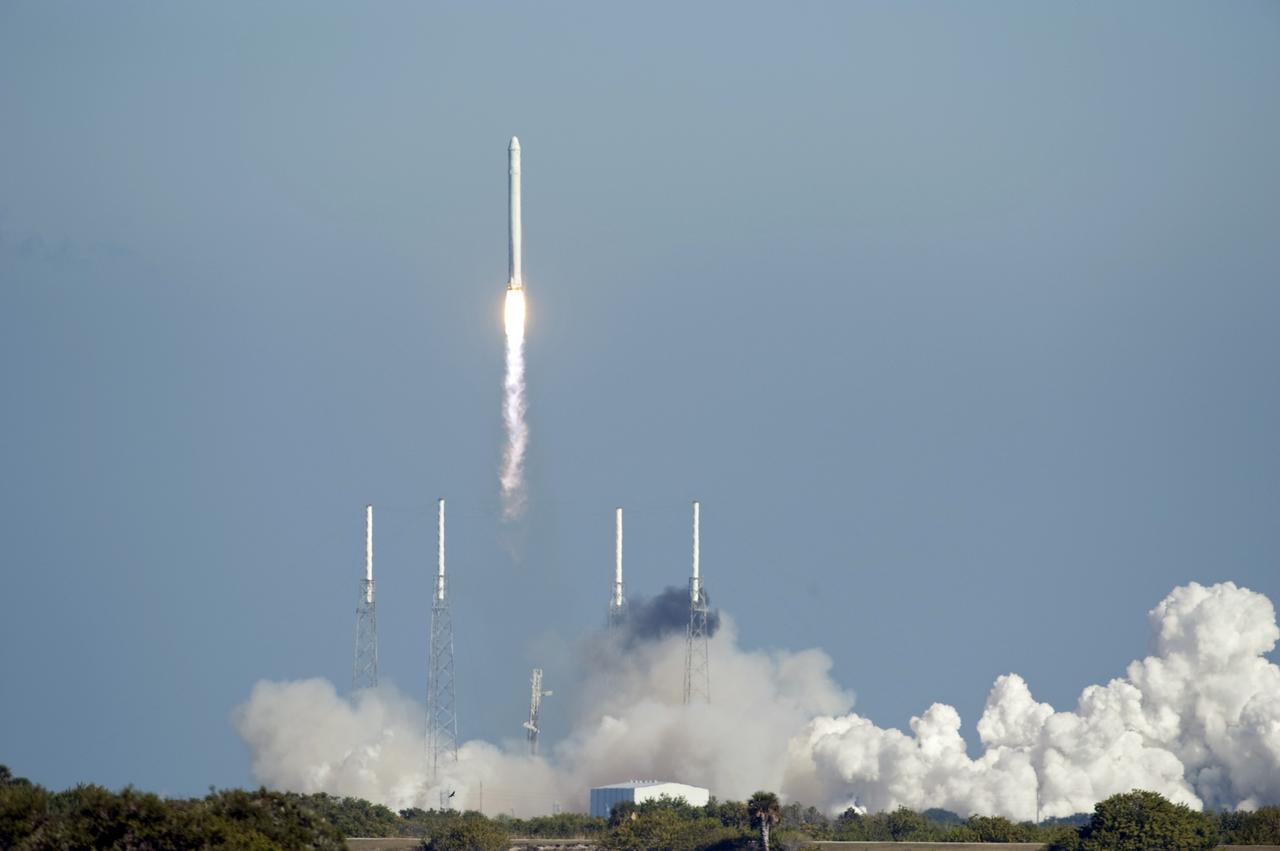
CAPE CANAVERAL, Fla. -- SpaceX’s Falcon 9 rocket and Dragon spacecraft lift off from Launch Complex-40 at Cape Canaveral Air Force Station, Fla., at 10:43 a.m. EST. In orbit, the Dragon capsule will go through several maneuvers before it re-enters the atmosphere and splashes down in the Pacific Ocean about 500 miles west of the coast of Mexico. This is first demonstration flight for NASA's Commercial Orbital Transportation Services (COTS) program, which will provide cargo flights to the International Space Station in the future. Photo credit: NASA/Kevin O'Connell
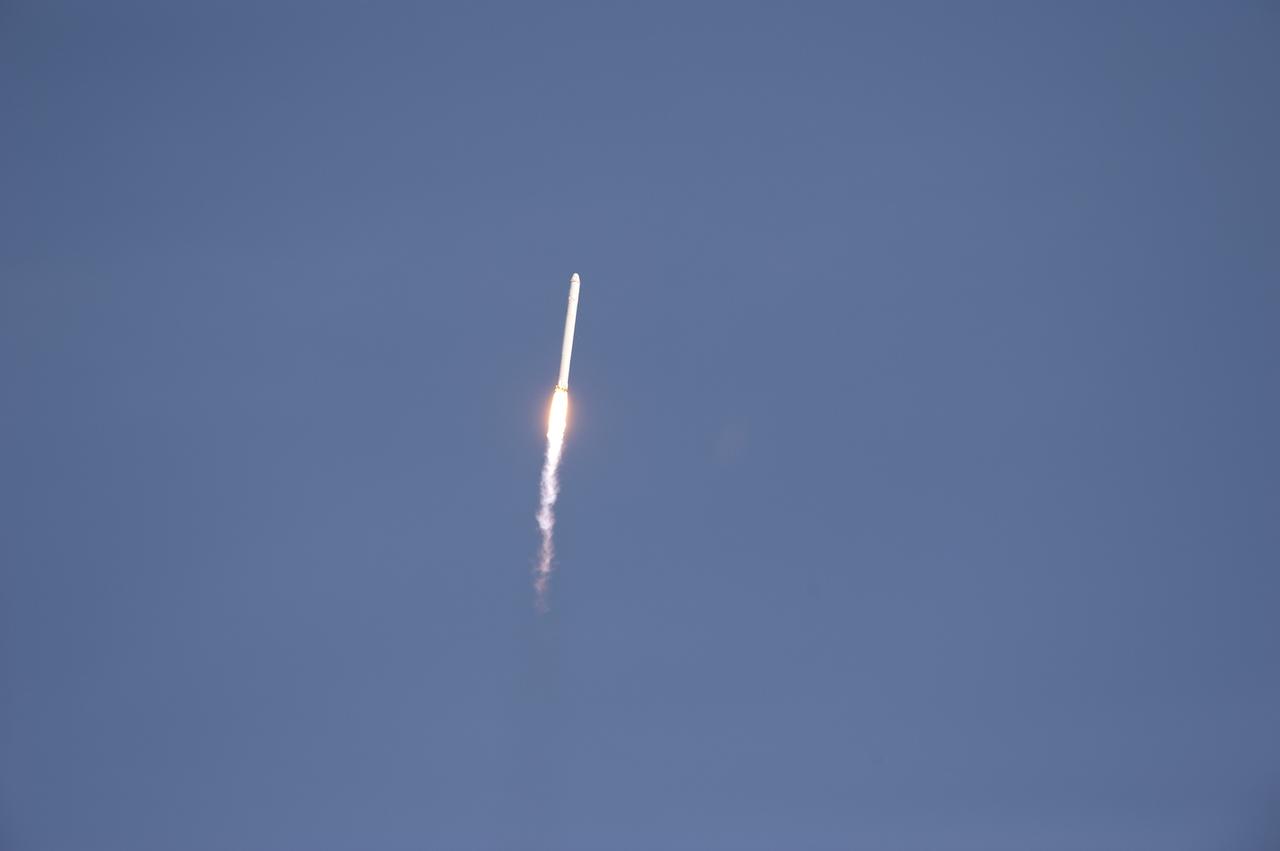
CAPE CANAVERAL, Fla. -- SpaceX’s Falcon 9 rocket and Dragon spacecraft race toward orbit after launching from Launch Complex-40 at Cape Canaveral Air Force Station, Fla., at 10:43 a.m. EST. The Dragon capsule will go through several maneuvers before it re-enters the atmosphere and splashes down in the Pacific Ocean about 500 miles west of the coast of Mexico. This is first demonstration flight for NASA's Commercial Orbital Transportation Services (COTS) program, which will provide cargo flights to the International Space Station in the future. Photo credit: NASA/Kevin O'Connell
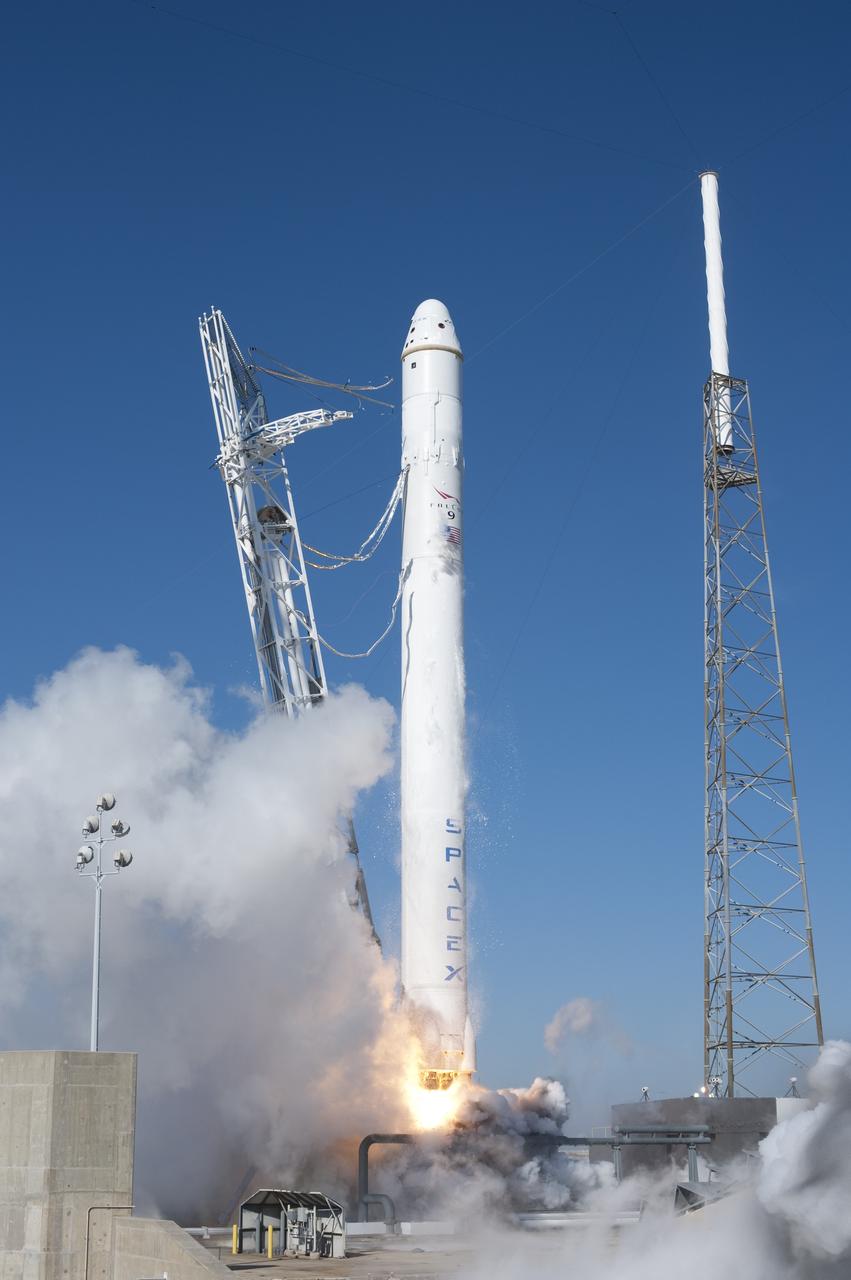
CAPE CANAVERAL, Fla. -- SpaceX’s Falcon 9 rocket and Dragon spacecraft lift off from Launch Complex-40 at Cape Canaveral Air Force Station, Fla., at 10:43 a.m. EST. In orbit, the Dragon capsule will go through several maneuvers before it re-enters the atmosphere and splashes down in the Pacific Ocean about 500 miles west of the coast of Mexico. This is first demonstration flight for NASA's Commercial Orbital Transportation Services (COTS) program, which will provide cargo flights to the International Space Station in the future. Photo credit: NASA/Tony Gray and Kevin O'Connell
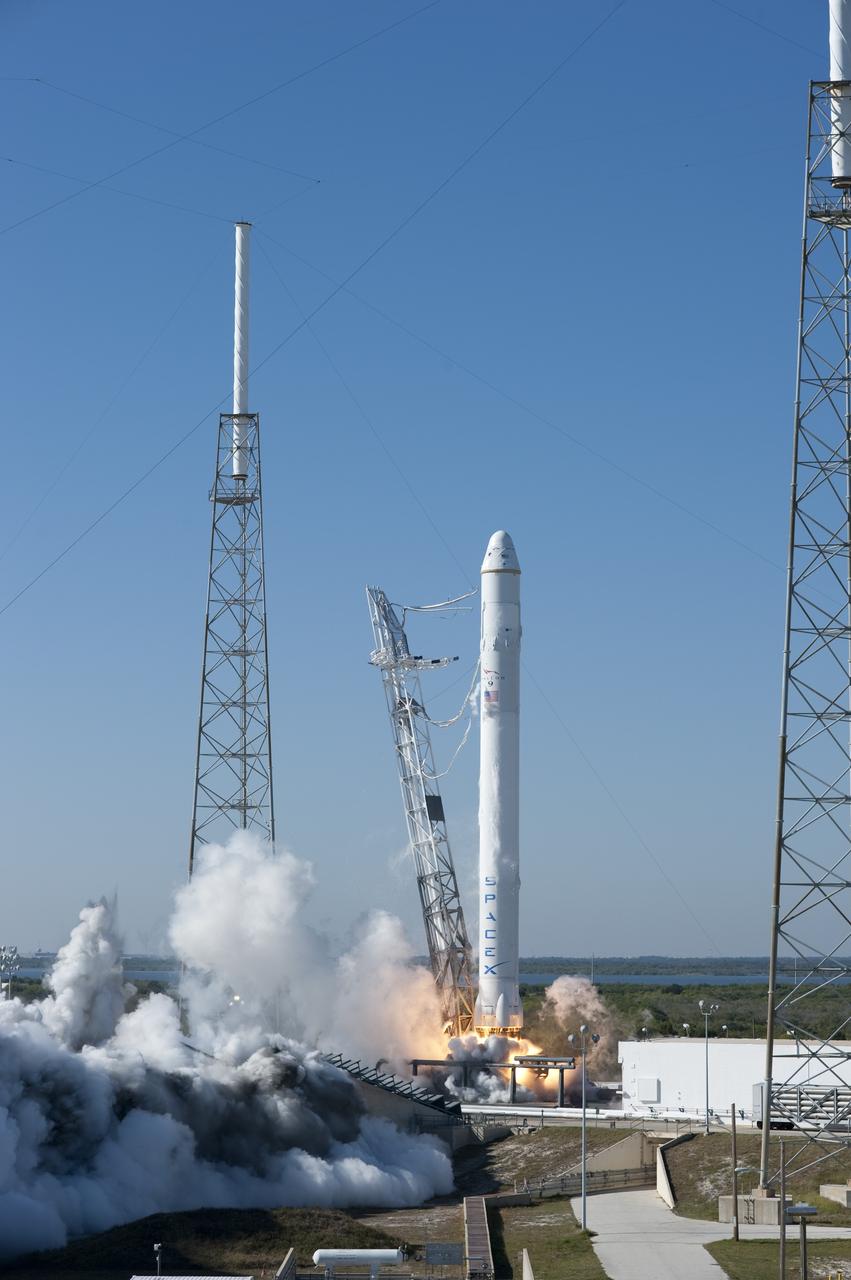
CAPE CANAVERAL, Fla. -- SpaceX’s Falcon 9 rocket and Dragon spacecraft lift off from Launch Complex-40 at Cape Canaveral Air Force Station, Fla., at 10:43 a.m. EST. In orbit, the Dragon capsule will go through several maneuvers before it re-enters the atmosphere and splashes down in the Pacific Ocean about 500 miles west of the coast of Mexico. This is first demonstration flight for NASA's Commercial Orbital Transportation Services (COTS) program, which will provide cargo flights to the International Space Station in the future. Photo credit: NASA/Tony Gray and Kevin O'Connell
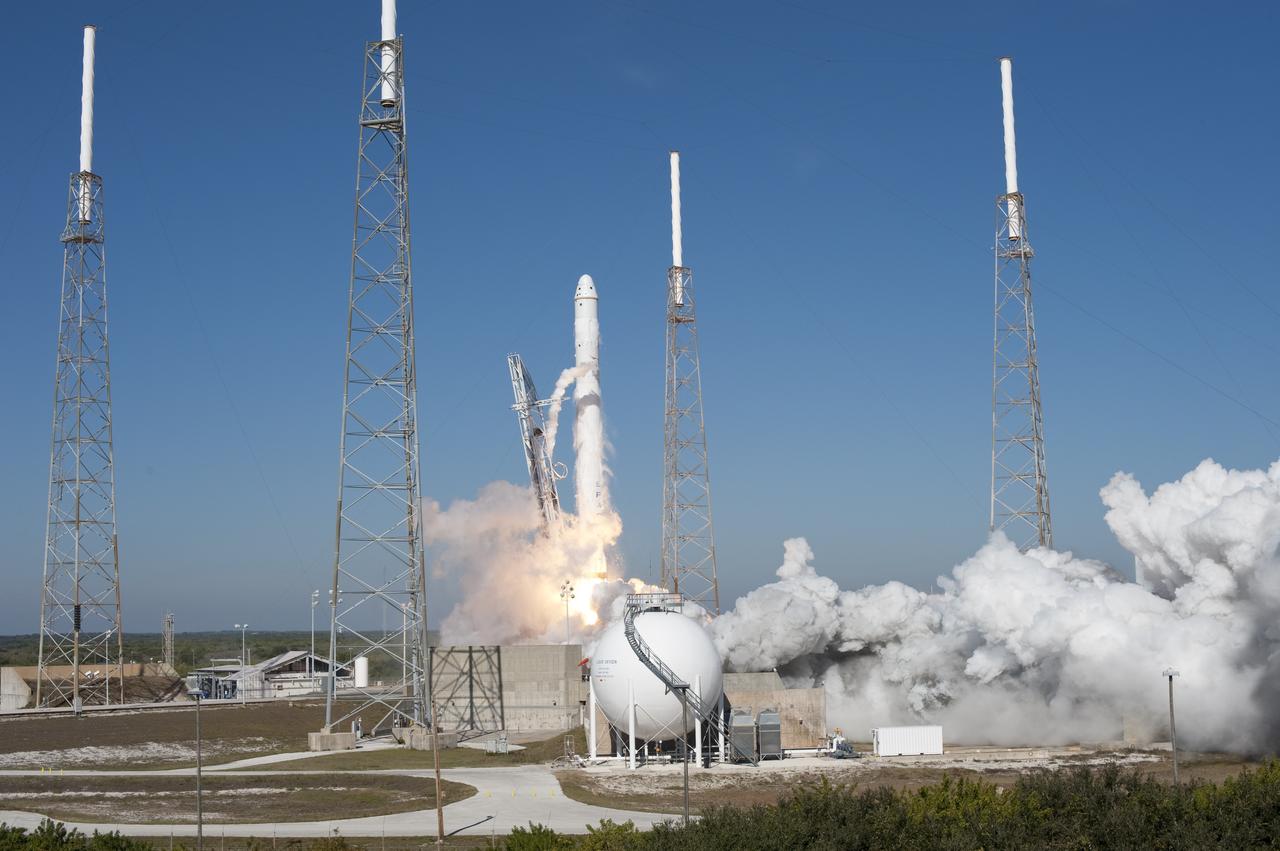
CAPE CANAVERAL, Fla. -- SpaceX’s Falcon 9 rocket and Dragon spacecraft lift off from Launch Complex-40 at Cape Canaveral Air Force Station, Fla., at 10:43 a.m. EST. In orbit, the Dragon capsule will go through several maneuvers before it re-enters the atmosphere and splashes down in the Pacific Ocean about 500 miles west of the coast of Mexico. This is first demonstration flight for NASA's Commercial Orbital Transportation Services (COTS) program, which will provide cargo flights to the International Space Station in the future. Photo credit: NASA/Tony Gray and Kevin O'Connell
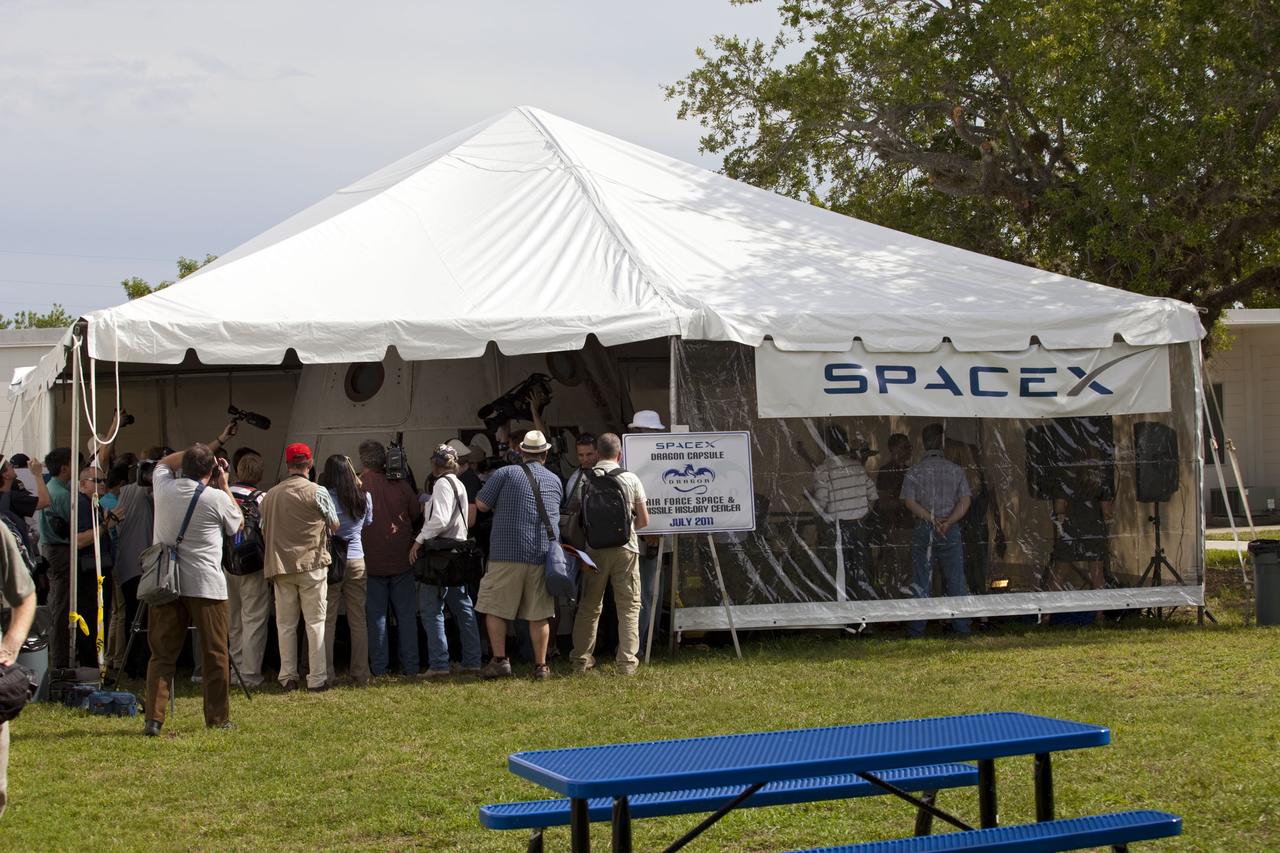
CAPE CANAVERAL, Fla. -- Space Exploration Technologies Corp., or SpaceX, displays a mock-up of its Dragon capsule during a media tour at Cape Canaveral Air Force Station, or CCAFS, in Florida. In December 2010, SpaceX launched its Falcon 9 rocket and Dragon spacecraft from CCAFS's Launch Complex 40. The Dragon capsule went through several maneuvers before it re-entered the atmosphere and splashed down in the Pacific Ocean about 500 miles west of the coast of Mexico. That was the first demonstration flight for NASA's Commercial Orbital Transportation Services (COTS) program, which will provide cargo flights to the International Space Station in the future. The company is preparing for another launch in late 2011, in which the Dragon spacecraft and trunk will fly close to the space station so the station’s robotic arm can grab the spacecraft and bring it in for a docking. Photo credit: NASA/Frankie Martin
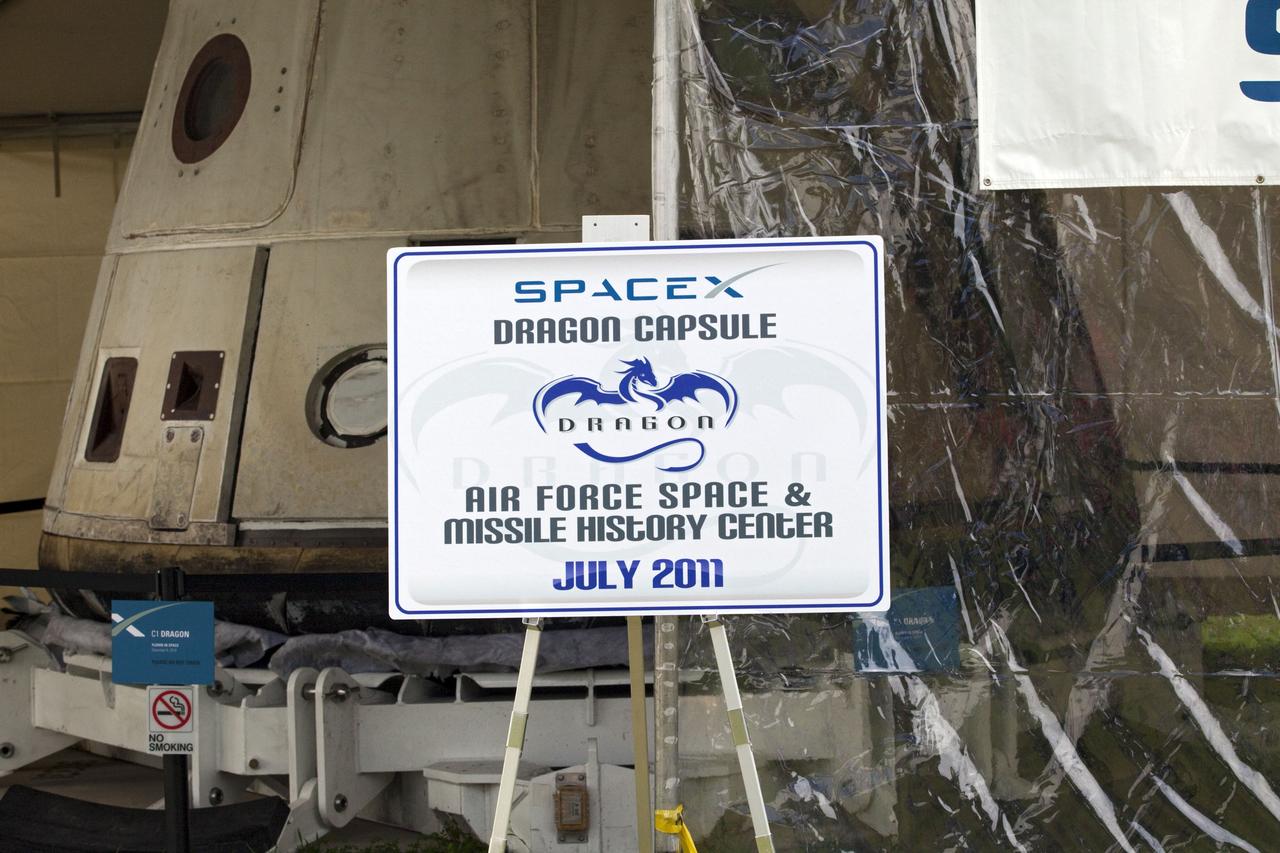
CAPE CANAVERAL, Fla. -- Space Exploration Technologies Corp., or SpaceX, displays a mock-up of its Dragon capsule during a media tour at Cape Canaveral Air Force Station, or CCAFS, in Florida. In December 2010, SpaceX launched its Falcon 9 rocket and Dragon spacecraft from CCAFS's Launch Complex 40. The Dragon capsule went through several maneuvers before it re-entered the atmosphere and splashed down in the Pacific Ocean about 500 miles west of the coast of Mexico. That was the first demonstration flight for NASA's Commercial Orbital Transportation Services (COTS) program, which will provide cargo flights to the International Space Station in the future. The company is preparing for another launch in late 2011, in which the Dragon spacecraft and trunk will fly close to the space station so the station’s robotic arm can grab the spacecraft and bring it in for a docking. Photo credit: NASA/Frankie Martin
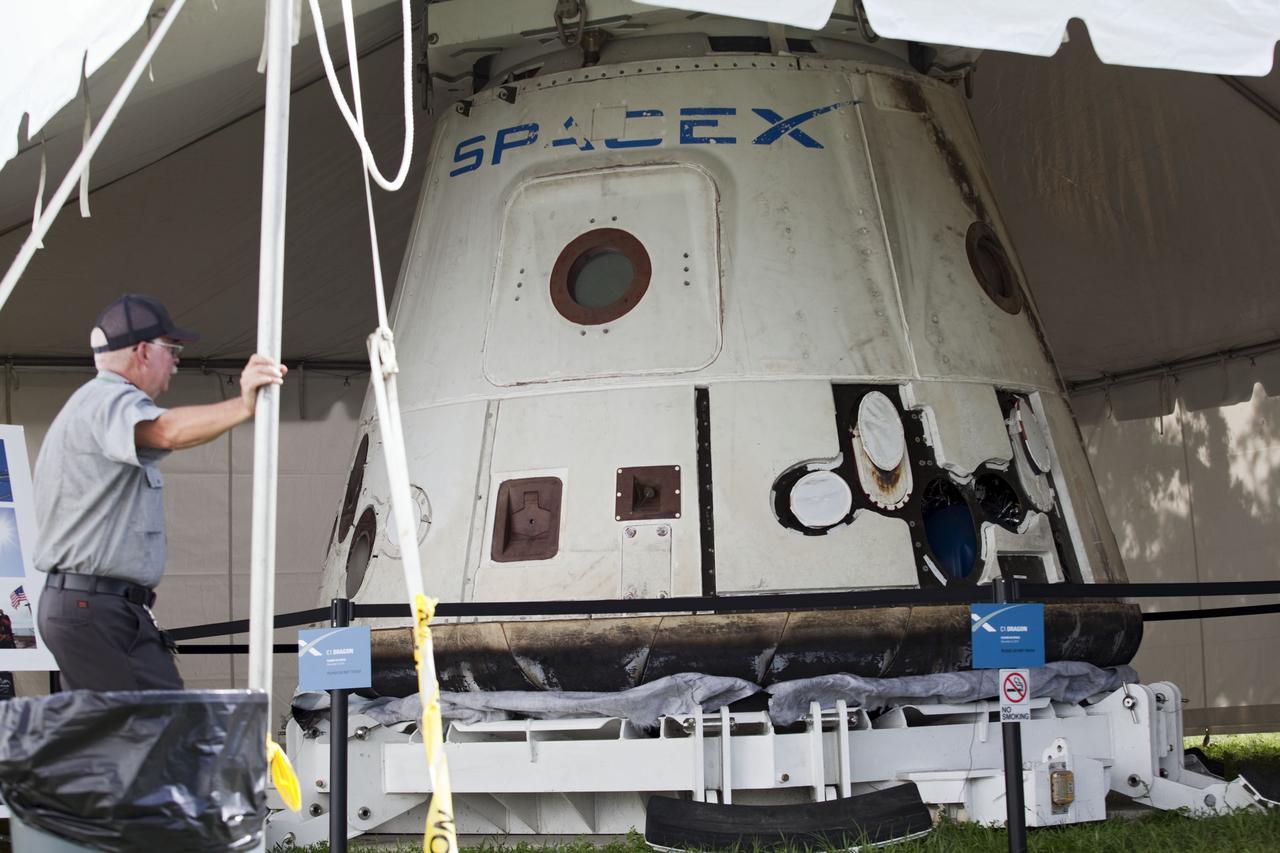
CAPE CANAVERAL, Fla. -- Space Exploration Technologies Corp., or SpaceX, displays a mock-up of its Dragon capsule during a media tour at Cape Canaveral Air Force Station, or CCAFS, in Florida. In December 2010, SpaceX launched its Falcon 9 rocket and Dragon spacecraft from CCAFS's Launch Complex 40. The Dragon capsule went through several maneuvers before it re-entered the atmosphere and splashed down in the Pacific Ocean about 500 miles west of the coast of Mexico. That was the first demonstration flight for NASA's Commercial Orbital Transportation Services (COTS) program, which will provide cargo flights to the International Space Station in the future. The company is preparing for another launch in late 2011, in which the Dragon spacecraft and trunk will fly close to the space station so the station’s robotic arm can grab the spacecraft and bring it in for a docking. Photo credit: NASA/Frankie Martin
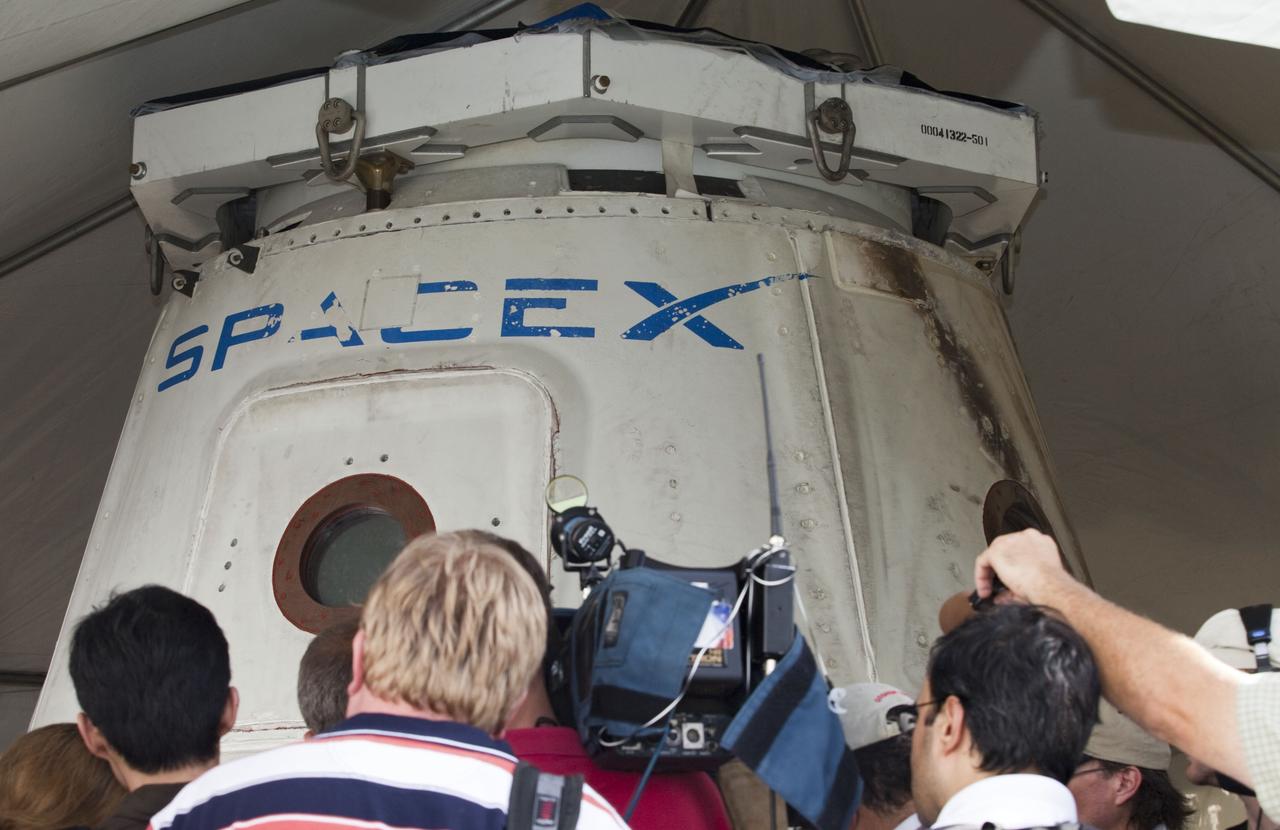
CAPE CANAVERAL, Fla. -- Space Exploration Technologies Corp., or SpaceX, displays a mock-up of its Dragon capsule during a media tour at Cape Canaveral Air Force Station, or CCAFS, in Florida. In December 2010, SpaceX launched its Falcon 9 rocket and Dragon spacecraft from CCAFS's Launch Complex 40. The Dragon capsule went through several maneuvers before it re-entered the atmosphere and splashed down in the Pacific Ocean about 500 miles west of the coast of Mexico. That was the first demonstration flight for NASA's Commercial Orbital Transportation Services (COTS) program, which will provide cargo flights to the International Space Station in the future. The company is preparing for another launch in late 2011, in which the Dragon spacecraft and trunk will fly close to the space station so the station’s robotic arm can grab the spacecraft and bring it in for a docking. Photo credit: NASA/Frankie Martin
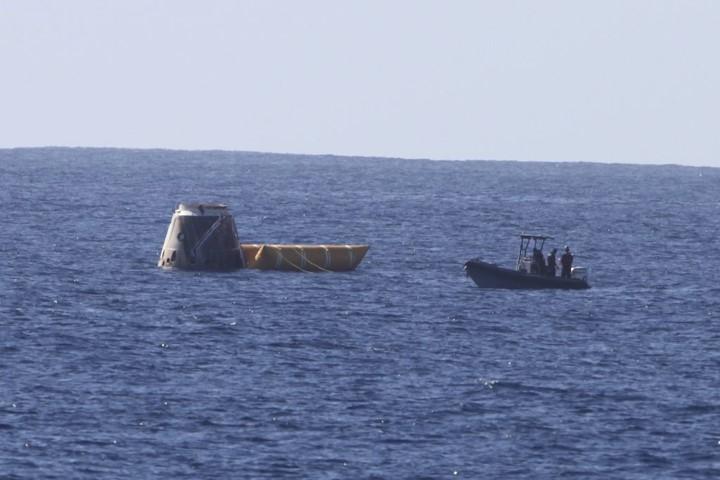
CAPE CANAVERAL, Fla. -- The Dragon capsule that launched from Launch Complex-40 at Cape Canaveral Air Force Station aboard a SpaceX Falcon 9 rocket is recovered in the Pacific Ocean about 500 miles west of the coast of Mexico. The rocket lifted off at 10:43 a.m. EST. The spacecraft went through several maneuvers before it re-entered the atmosphere and splashed down at about 2 p.m. EST. This is first demonstration flight for NASA's Commercial Orbital Transportation Services (COTS) program, which will provide cargo flights to the International Space Station in the future. Photo credit: Courtesy SpaceX
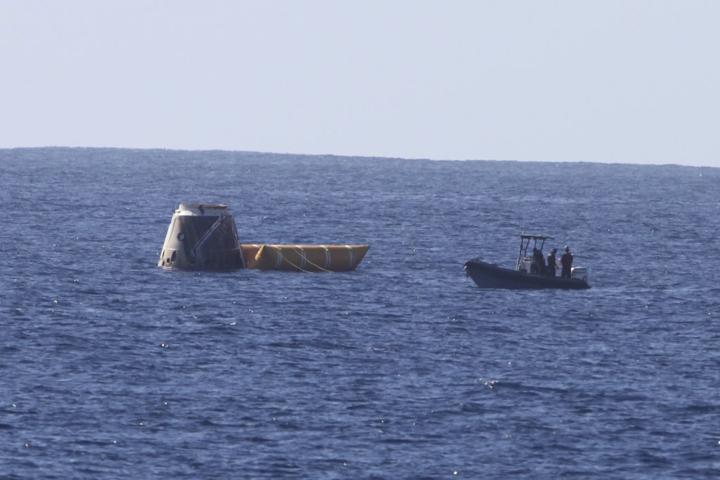
The Dragon capsule that launched from Launch Complex-40 at Cape Canaveral Air Force Station aboard a SpaceX Falcon 9 rocket is recovered in the Pacific Ocean about 500 miles west of the coast of Mexico. The rocket lifted off at 10:43 a.m. EST. The spacecraft went through several maneuvers before it re-entered the atmosphere and splashed down at about 2 p.m. EST. This is first demonstration flight for NASA's Commercial Orbital Transportation Services (COTS) program, which will provide cargo flights to the International Space Station in the future. Photo credit: Courtesy SpaceX
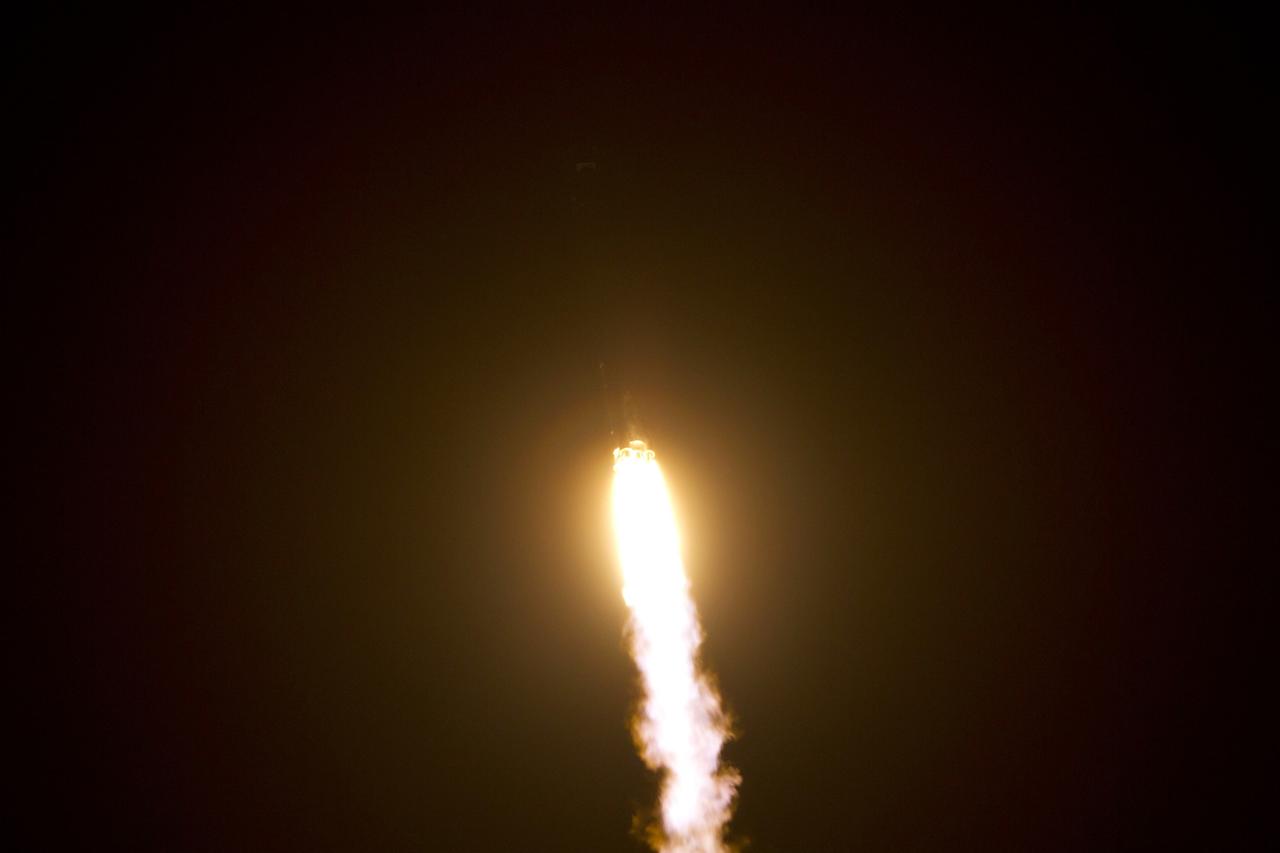
CAPE CANAVERAL, Fla. – On Cape Canaveral Air Force Station in Florida, Space Launch Complex-40 is ablaze as the SpaceX Falcon 9 rocket begins its ascent after liftoff at 3:44 a.m. EDT. The launch is the company's second demonstration test flight for NASA's Commercial Orbital Transportation Services, or COTS, Program. During the flight, the Dragon capsule will conduct a series of check-out procedures to test and prove its systems, including rendezvous and berthing with the International Space Station. If the capsule performs as planned, the cargo and experiments it is carrying will be transferred to the station. The cargo includes food, water and provisions for the station’s Expedition crews, such as clothing, batteries and computer equipment. Under COTS, NASA has partnered with two aerospace companies to deliver cargo to the station. For more information, visit http://www.nasa.gov/spacex. Photo credit: NASA/Rick Wetherington, Tim Powers and Tim Terry
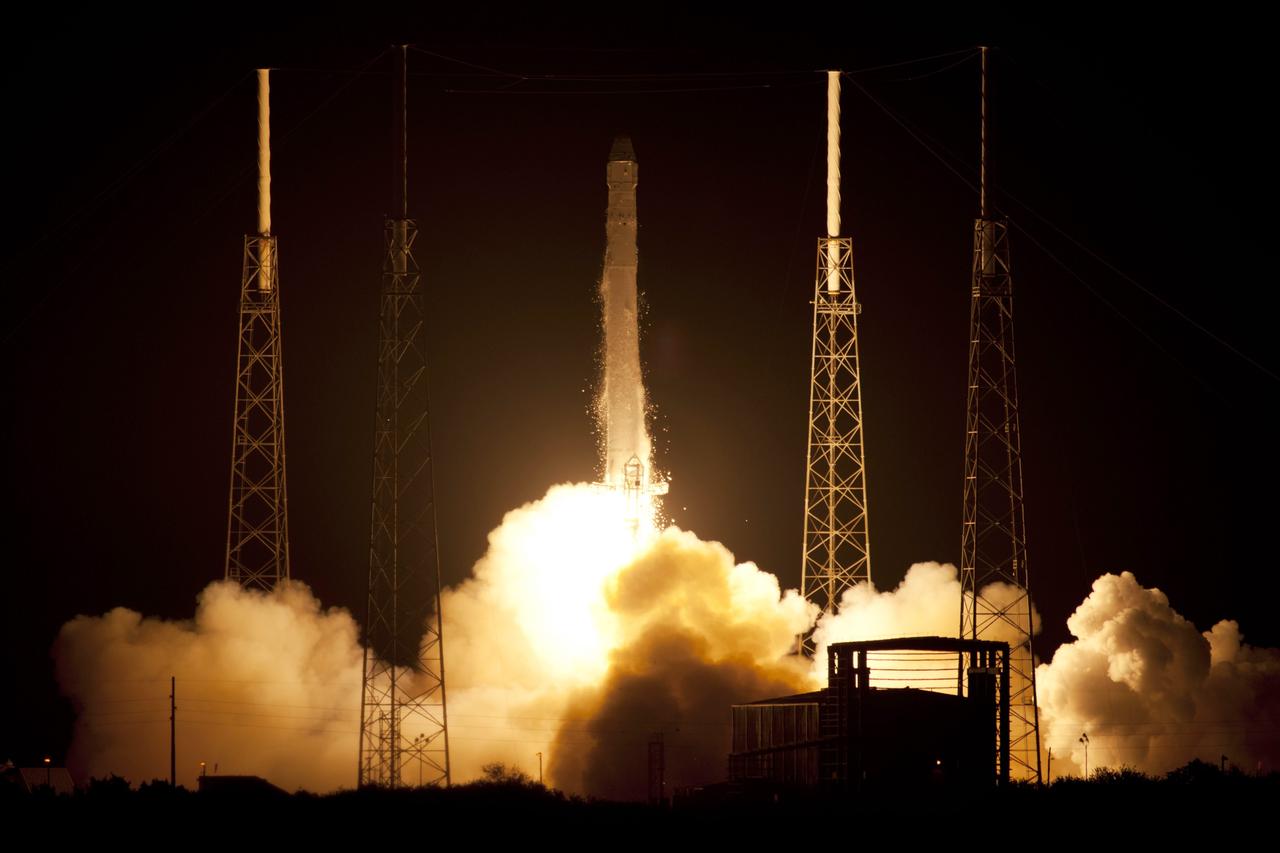
CAPE CANAVERAL, Fla. – Frost and ice breaks away from the SpaceX Falcon 9 rocket following ignition of its nine Merlin engines at 3:44 a.m. EDT at Space Launch Complex-40 on Cape Canaveral Air Force Station in Florida. The launch is the company's second demonstration test flight for NASA's Commercial Orbital Transportation Services, or COTS, Program. During the flight, the Dragon capsule will conduct a series of check-out procedures to test and prove its systems, including rendezvous and berthing with the International Space Station. If the capsule performs as planned, the cargo and experiments it is carrying will be transferred to the station. The cargo includes food, water and provisions for the station’s Expedition crews, such as clothing, batteries and computer equipment. Under COTS, NASA has partnered with two aerospace companies to deliver cargo to the station. For more information, visit http://www.nasa.gov/spacex. Photo credit: NASA/Rick Wetherington, Tim Powers and Tim Terry
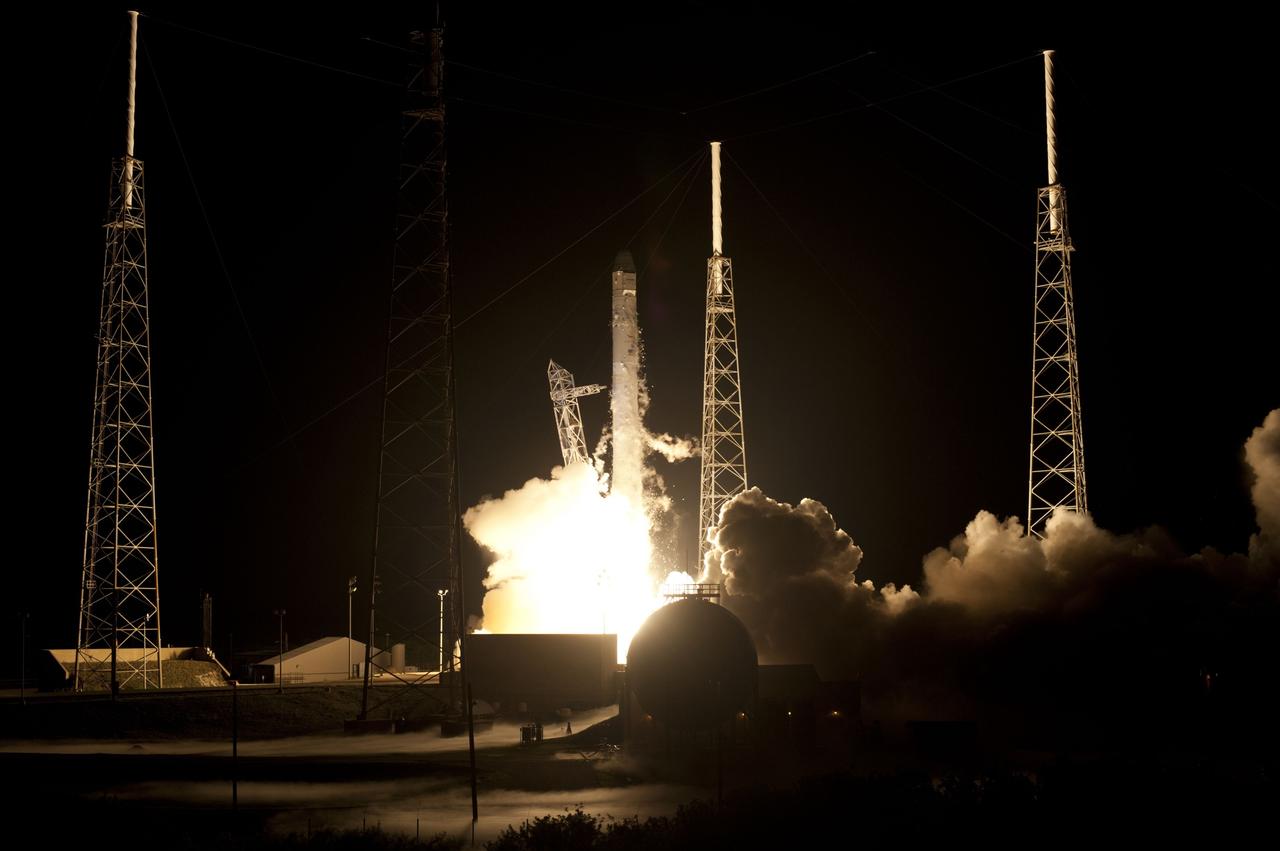
CAPE CANAVERAL, Fla. – The SpaceX Falcon 9 rocket begins its ascent to space at 3:44 a.m. EDT from Space Launch Complex-40 on Cape Canaveral Air Force Station in Florida. The launch is the company's second demonstration test flight for NASA's Commercial Orbital Transportation Services, or COTS, program. During the flight, the Dragon capsule will conduct a series of check-out procedures to test and prove its systems, including rendezvous and berthing with the International Space Station. If the capsule performs as planned, the cargo and experiments it is carrying will be transferred to the station. The cargo includes food, water and provisions for the station’s Expedition crews, such as clothing, batteries and computer equipment. Under COTS, NASA has partnered with two aerospace companies to deliver cargo to the station. For more information, visit http://www.nasa.gov/spacex. Photo credit: NASA/Rick Wetherington, Tim Powers and Tim Terry
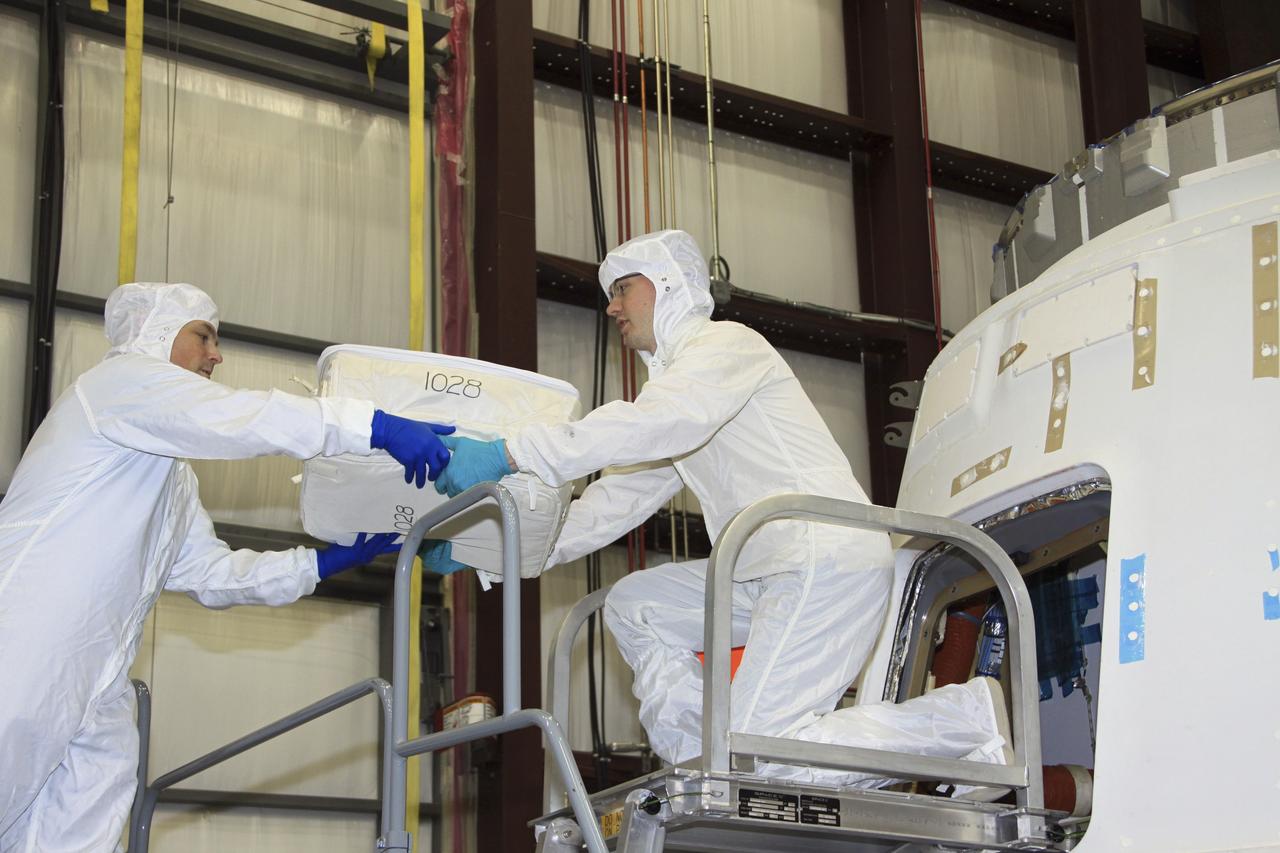
CAPE CANAVERAL, Fla. – In a processing hangar at Space Launch Complex-40 on Cape Canaveral Air Force Station in Florida, Space Exploration Technologies technicians load cargo into the Dragon capsule in preparation for its scheduled April 30 liftoff aboard a Falcon 9 rocket. Known as SpaceX, the launch will be the company's second demonstration test flight for NASA's Commercial Orbital Transportation Services program, or COTS. During the flight, the capsule will conduct a series of checkout procedures to test and prove its systems, including rendezvous and berthing with the International Space Station. The cargo includes food and provisions for the station’s Expedition crews, such as clothing, batteries, and computer equipment. Under COTS, NASA has partnered with two private companies to launch cargo safely to the station. For more information, visit http://www.nasa.gov/spacex. Photo credit: NASA/Jim Grossmann
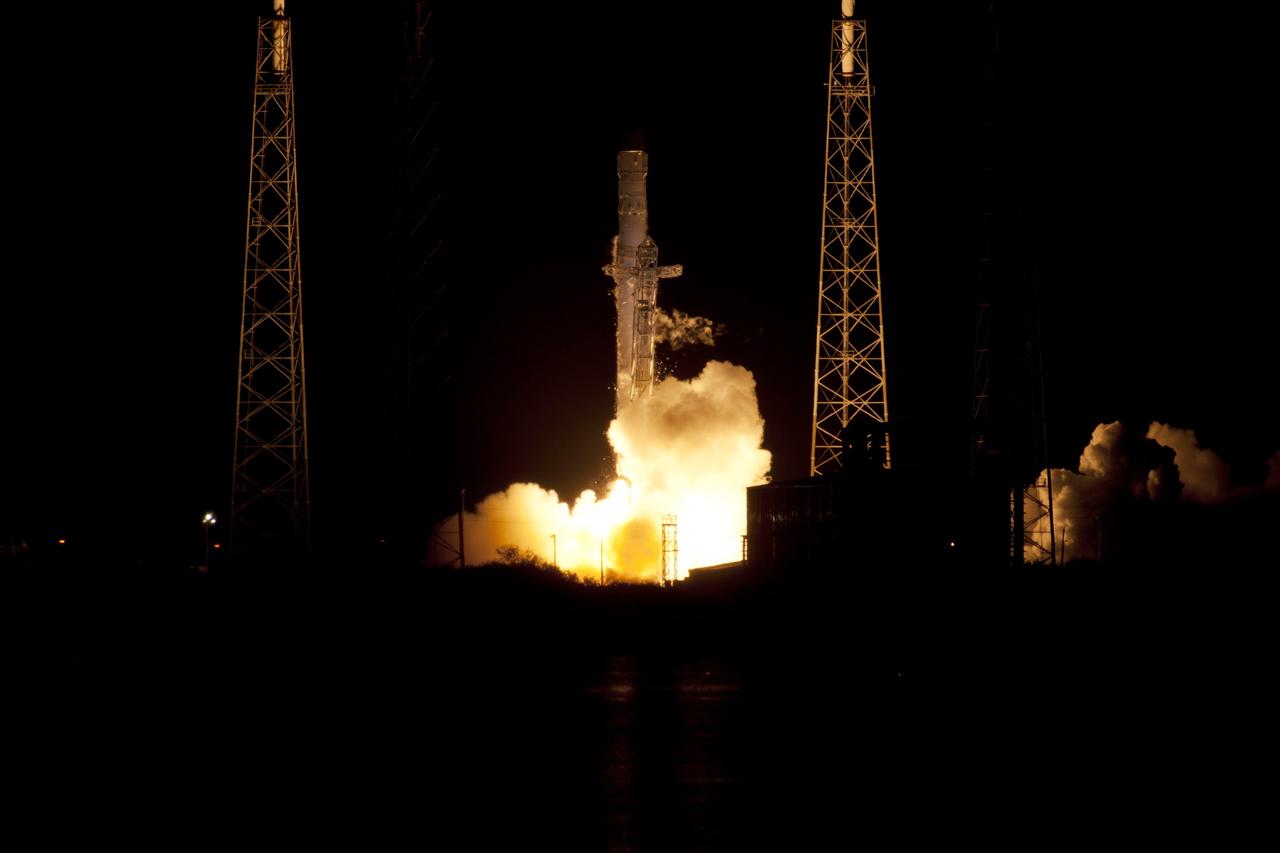
CAPE CANAVERAL, Fla. – The nine Merlin engines beneath the SpaceX Falcon 9 rocket roar to life at 3:44 a.m. EDT at Space Launch Complex-40 on Cape Canaveral Air Force Station in Florida. The launch is the company's second demonstration test flight for NASA's Commercial Orbital Transportation Services, or COTS, Program. During the flight, the Dragon capsule will conduct a series of check-out procedures to test and prove its systems, including rendezvous and berthing with the International Space Station. If the capsule performs as planned, the cargo and experiments it is carrying will be transferred to the station. The cargo includes food, water and provisions for the station’s Expedition crews, such as clothing, batteries and computer equipment. Under COTS, NASA has partnered with two aerospace companies to deliver cargo to the station. For more information, visit http://www.nasa.gov/spacex. Photo credit: NASA/Rick Wetherington, Tim Powers and Tim Terry

CAPE CANAVERAL, Fla. – On Cape Canaveral Air Force Station in Florida, Space Launch Complex-40 is ablaze as the SpaceX Falcon 9 rocket lifts off at 3:44 a.m. EDT. The launch is the company's second demonstration test flight for NASA's Commercial Orbital Transportation Services, or COTS, Program. During the flight, the Dragon capsule will conduct a series of check-out procedures to test and prove its systems, including rendezvous and berthing with the International Space Station. If the capsule performs as planned, the cargo and experiments it is carrying will be transferred to the station. The cargo includes food, water and provisions for the station’s Expedition crews, such as clothing, batteries and computer equipment. Under COTS, NASA has partnered with two aerospace companies to deliver cargo to the station. For more information, visit http://www.nasa.gov/spacex. Photo credit: NASA/Rick Wetherington, Tim Powers and Tim Terry
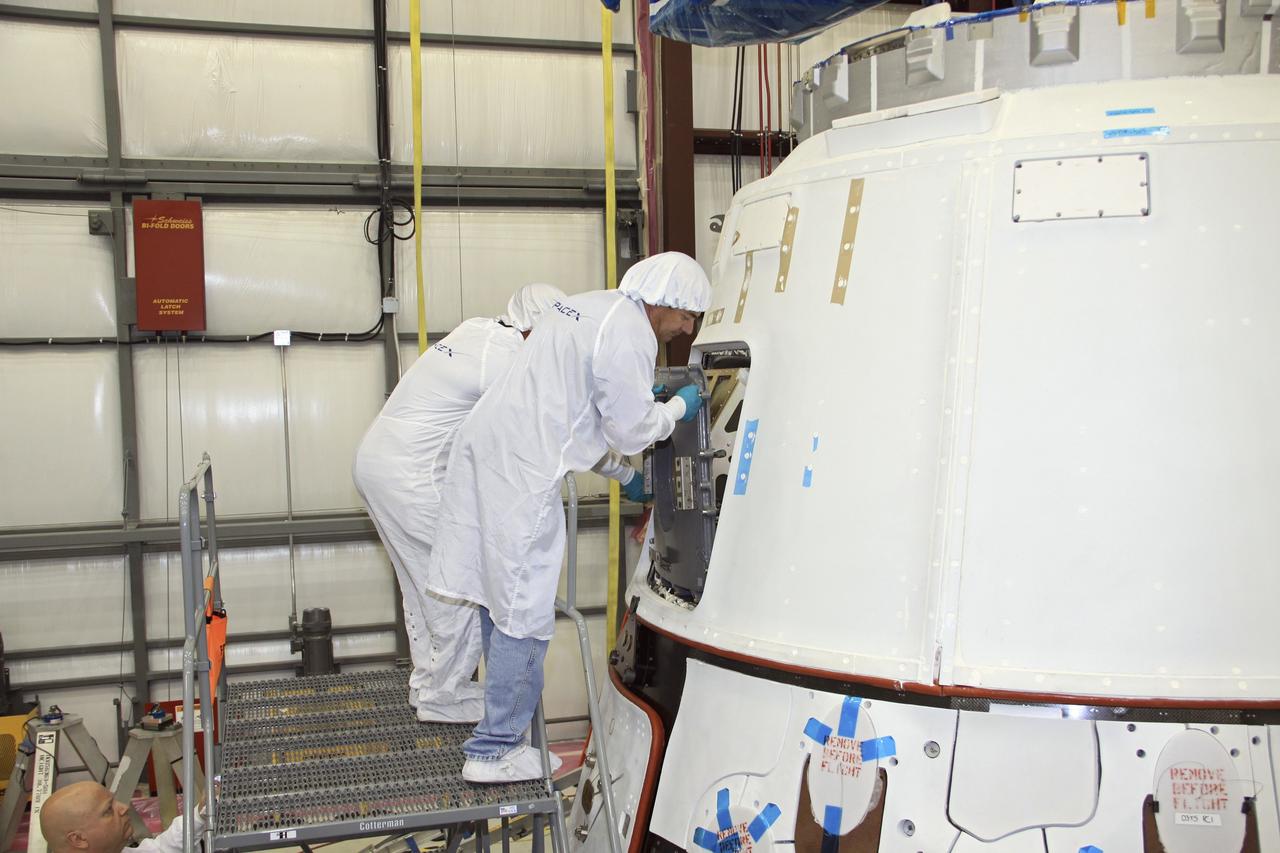
CAPE CANAVERAL, Fla. – In a processing hangar at Space Launch Complex-40 on Cape Canaveral Air Force Station in Florida, Space Exploration Technologies technicians close the hatch of the Dragon capsule. The hatch was open for cargo to be stowed in the capsule in preparation for its scheduled April 30 liftoff aboard a Falcon 9 rocket. Known as SpaceX, the launch will be the company's second demonstration test flight for NASA's Commercial Orbital Transportation Services program, or COTS. During the flight, the capsule will conduct a series of checkout procedures to test and prove its systems, including rendezvous and berthing with the International Space Station. The cargo includes food and provisions for the station’s Expedition crews, such as clothing, batteries, and computer equipment. Under COTS, NASA has partnered with two private companies to launch cargo safely to the station. For more information, visit http://www.nasa.gov/spacex. Photo credit: NASA/Jim Grossmann
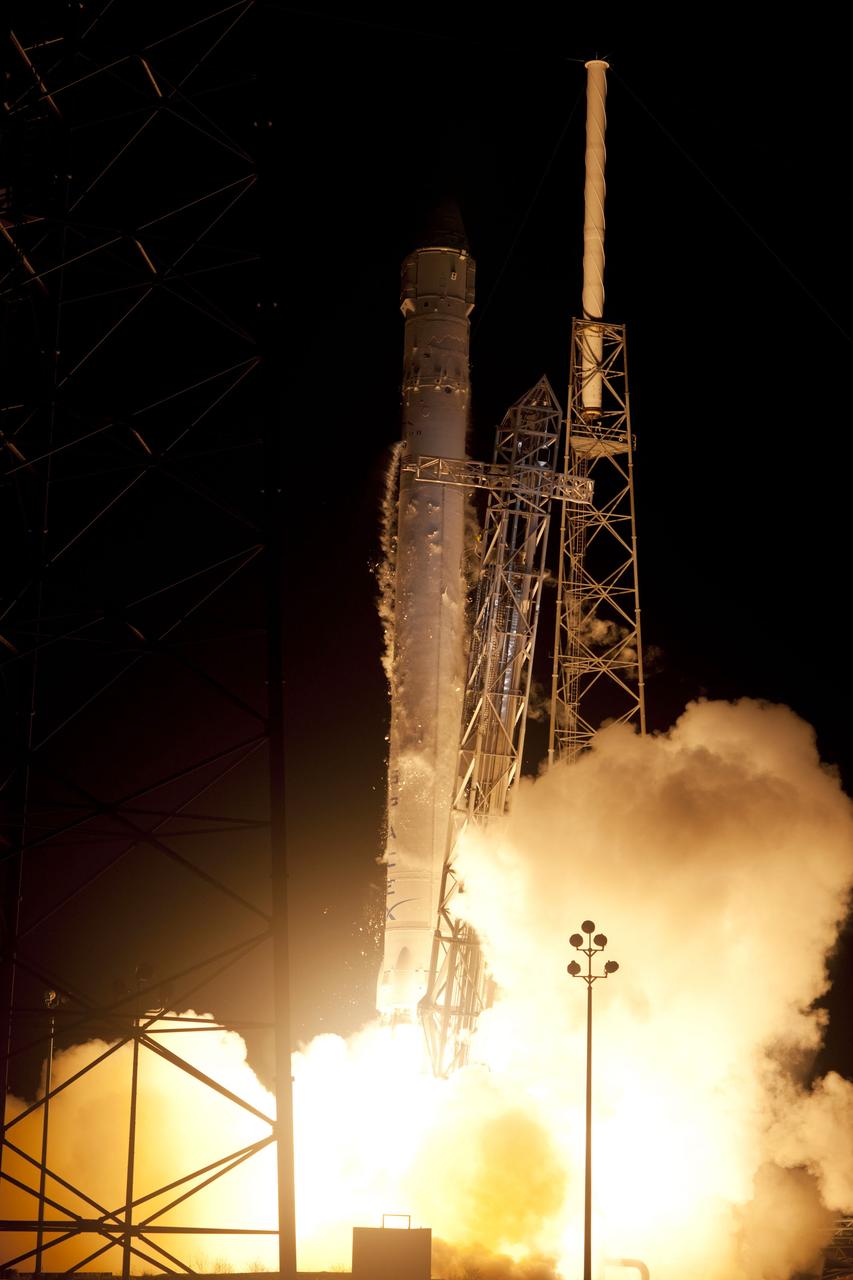
CAPE CANAVERAL, Fla. – Frost and ice breaks away from the SpaceX Falcon 9 rocket following ignition of its nine Merlin engines at 3:44 a.m. EDT at Space Launch Complex-40 on Cape Canaveral Air Force Station in Florida. The launch is the company's second demonstration test flight for NASA's Commercial Orbital Transportation Services, or COTS, Program. During the flight, the Dragon capsule will conduct a series of check-out procedures to test and prove its systems, including rendezvous and berthing with the International Space Station. If the capsule performs as planned, the cargo and experiments it is carrying will be transferred to the station. The cargo includes food, water and provisions for the station’s Expedition crews, such as clothing, batteries and computer equipment. Under COTS, NASA has partnered with two aerospace companies to deliver cargo to the station. For more information, visit http://www.nasa.gov/spacex. Photo credit: NASA/Rusty Backer
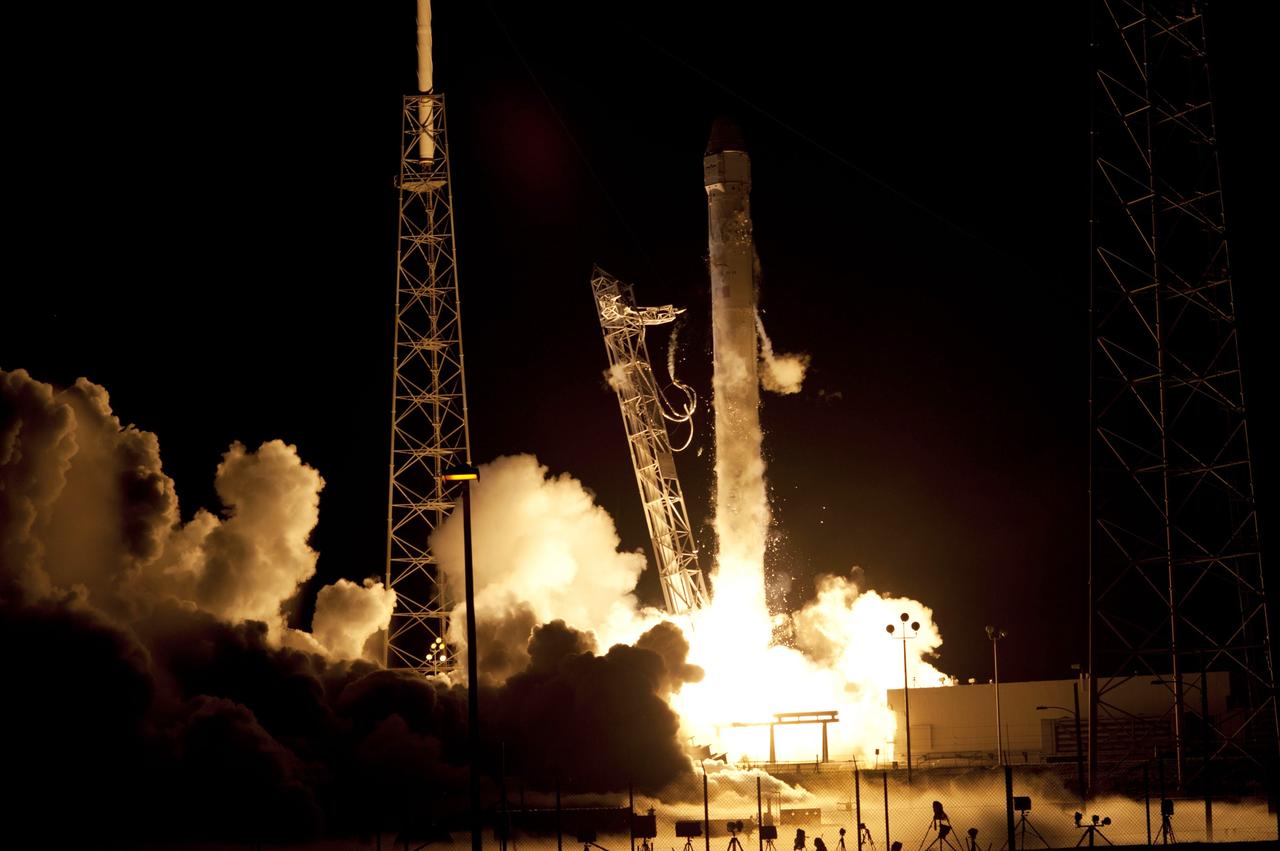
CAPE CANAVERAL, Fla. – Frost and ice breaks away from the SpaceX Falcon 9 rocket following ignition of its nine Merlin engines at 3:44 a.m. EDT at Space Launch Complex-40 on Cape Canaveral Air Force Station in Florida. The launch is the company's second demonstration test flight for NASA's Commercial Orbital Transportation Services, or COTS, Program. During the flight, the Dragon capsule will conduct a series of check-out procedures to test and prove its systems, including rendezvous and berthing with the International Space Station. If the capsule performs as planned, the cargo and experiments it is carrying will be transferred to the station. The cargo includes food, water and provisions for the station’s Expedition crews, such as clothing, batteries and computer equipment. Under COTS, NASA has partnered with two aerospace companies to deliver cargo to the station. For more information, visit http://www.nasa.gov/spacex. Photo credit: NASA/Rick Wetherington, Tim Powers and Tim Terry
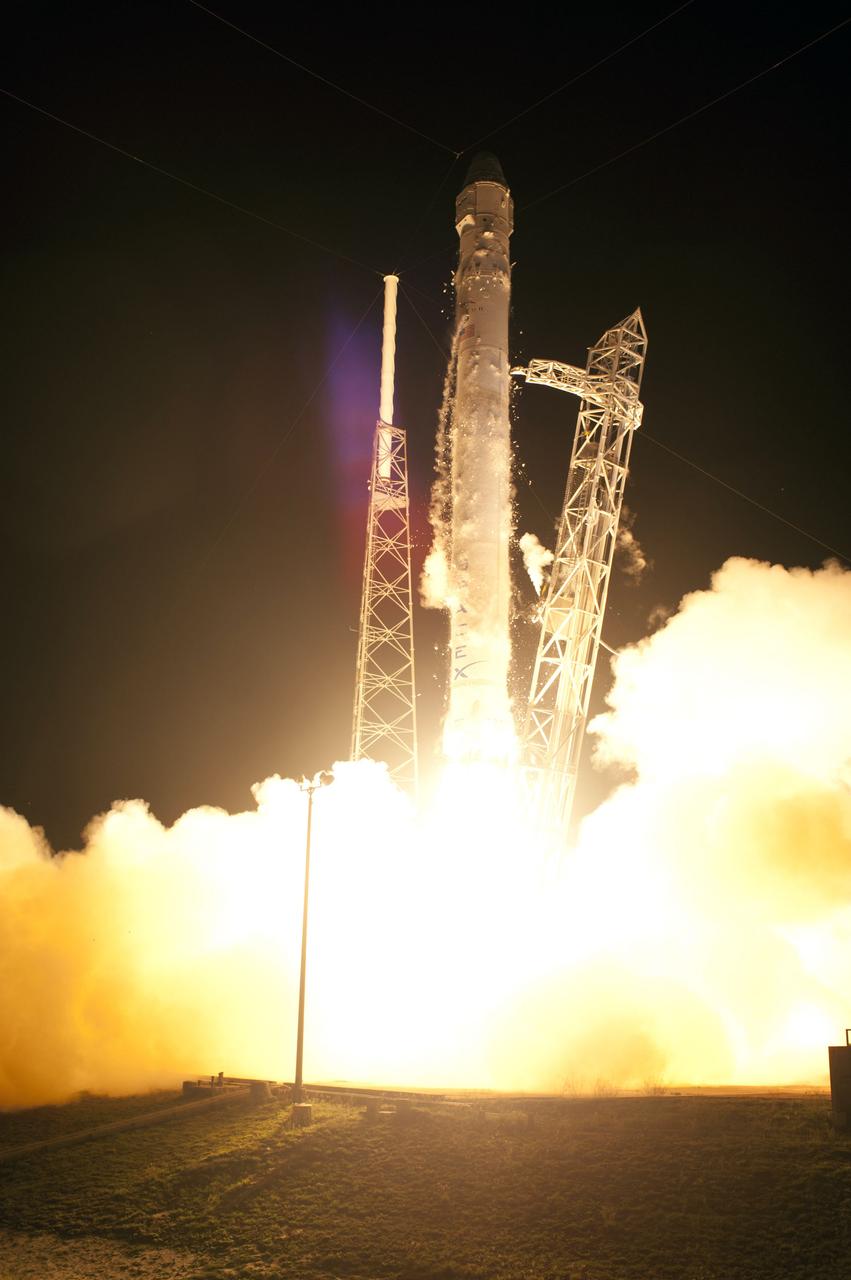
CAPE CANAVERAL, Fla. – On Cape Canaveral Air Force Station in Florida, Space Launch Complex-40 is ablaze as the SpaceX Falcon 9 rocket lifts off at 3:44 a.m. EDT. The launch is the company's second demonstration test flight for NASA's Commercial Orbital Transportation Services, or COTS, Program. During the flight, the Dragon capsule will conduct a series of check-out procedures to test and prove its systems, including rendezvous and berthing with the International Space Station. If the capsule performs as planned, the cargo and experiments it is carrying will be transferred to the station. The cargo includes food, water and provisions for the station’s Expedition crews, such as clothing, batteries and computer equipment. Under COTS, NASA has partnered with two aerospace companies to deliver cargo to the station. For more information, visit http://www.nasa.gov/spacex. Photo credit: NASA/Rick Wetherington, Tim Powers and Tim Terry
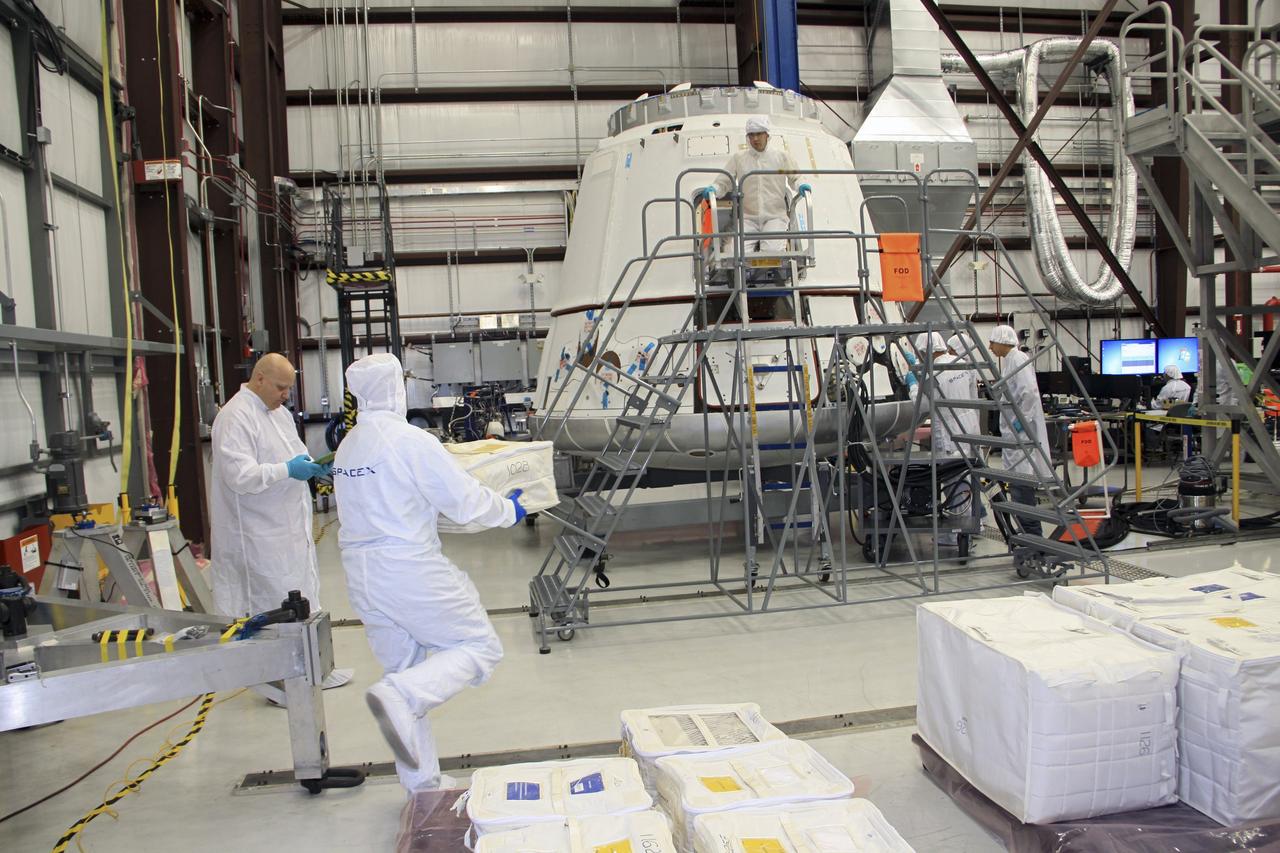
CAPE CANAVERAL, Fla. – In a processing hangar at Space Launch Complex-40 on Cape Canaveral Air Force Station in Florida, Space Exploration Technologies technicians load cargo into the Dragon capsule in preparation for its scheduled April 30 liftoff aboard a Falcon 9 rocket. Known as SpaceX, the launch will be the company's second demonstration test flight for NASA's Commercial Orbital Transportation Services program, or COTS. During the flight, the capsule will conduct a series of checkout procedures to test and prove its systems, including rendezvous and berthing with the International Space Station. The cargo includes food and provisions for the station’s Expedition crews, such as clothing, batteries, and computer equipment. Under COTS, NASA has partnered with two private companies to launch cargo safely to the station. For more information, visit http://www.nasa.gov/spacex. Photo credit: NASA/Jim Grossmann
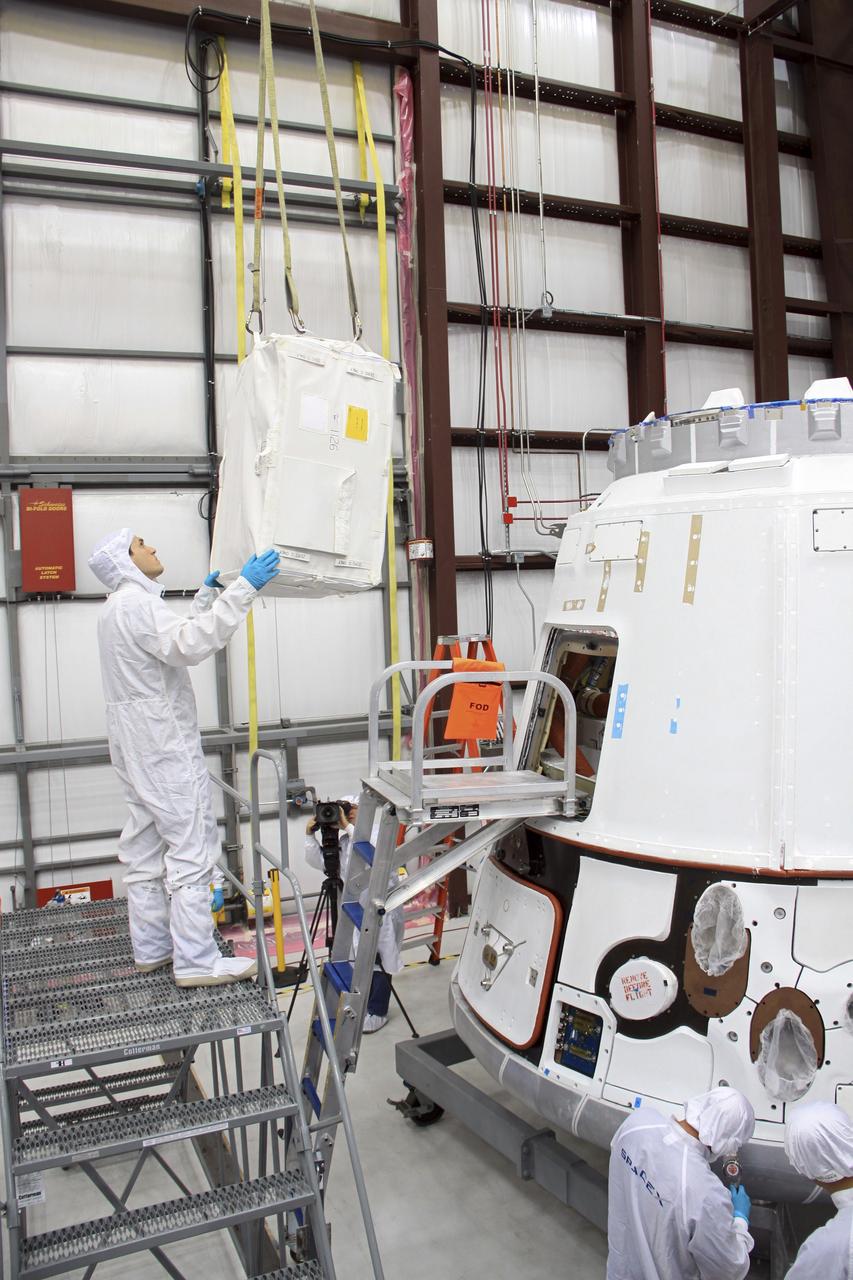
CAPE CANAVERAL, Fla. – In a processing hangar at Space Launch Complex-40 on Cape Canaveral Air Force Station in Florida, a cargo bag is lowered into the hands of a Space Exploration Technologies technician who will load it into the Dragon capsule in preparation for its scheduled April 30 liftoff aboard a Falcon 9 rocket. Known as SpaceX, the launch will be the company's second demonstration test flight for NASA's Commercial Orbital Transportation Services program, or COTS. During the flight, the capsule will conduct a series of checkout procedures to test and prove its systems, including rendezvous and berthing with the International Space Station. The cargo includes food and provisions for the station’s Expedition crews, such as clothing, batteries, and computer equipment. Under COTS, NASA has partnered with two private companies to launch cargo safely to the station. For more information, visit http://www.nasa.gov/spacex. Photo credit: NASA/Jim Grossmann
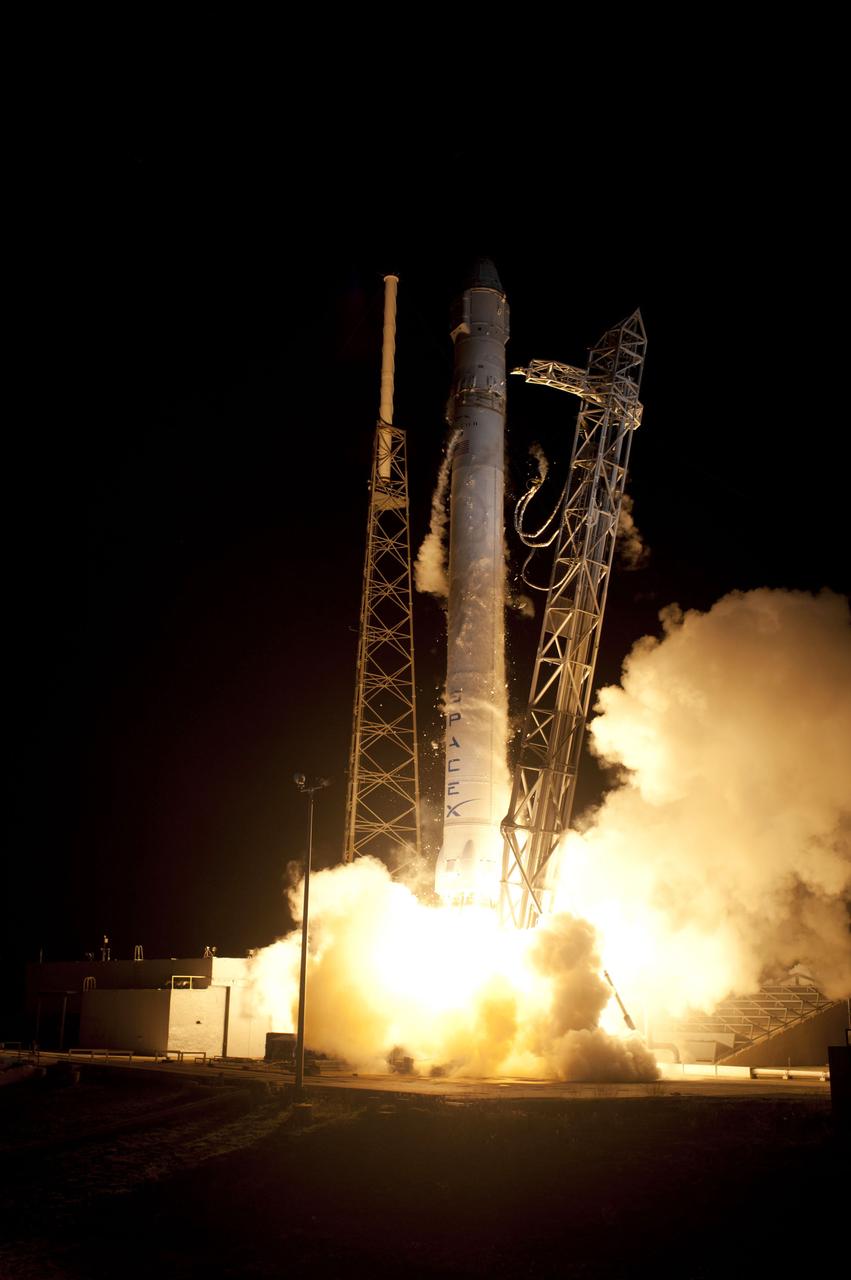
CAPE CANAVERAL, Fla. – Frost and ice breaks away from the SpaceX Falcon 9 rocket as its Merlin engines ignite at 3:44 a.m. EDT at Space Launch Complex-40 on Cape Canaveral Air Force Station in Florida. The launch is the company's second demonstration test flight for NASA's Commercial Orbital Transportation Services, or COTS, Program. During the flight, the Dragon capsule will conduct a series of check-out procedures to test and prove its systems, including rendezvous and berthing with the International Space Station. If the capsule performs as planned, the cargo and experiments it is carrying will be transferred to the station. The cargo includes food, water and provisions for the station’s Expedition crews, such as clothing, batteries and computer equipment. Under COTS, NASA has partnered with two aerospace companies to deliver cargo to the station. For more information, visit http://www.nasa.gov/spacex. Photo credit: NASA/Rick Wetherington, Tim Powers and Tim Terry
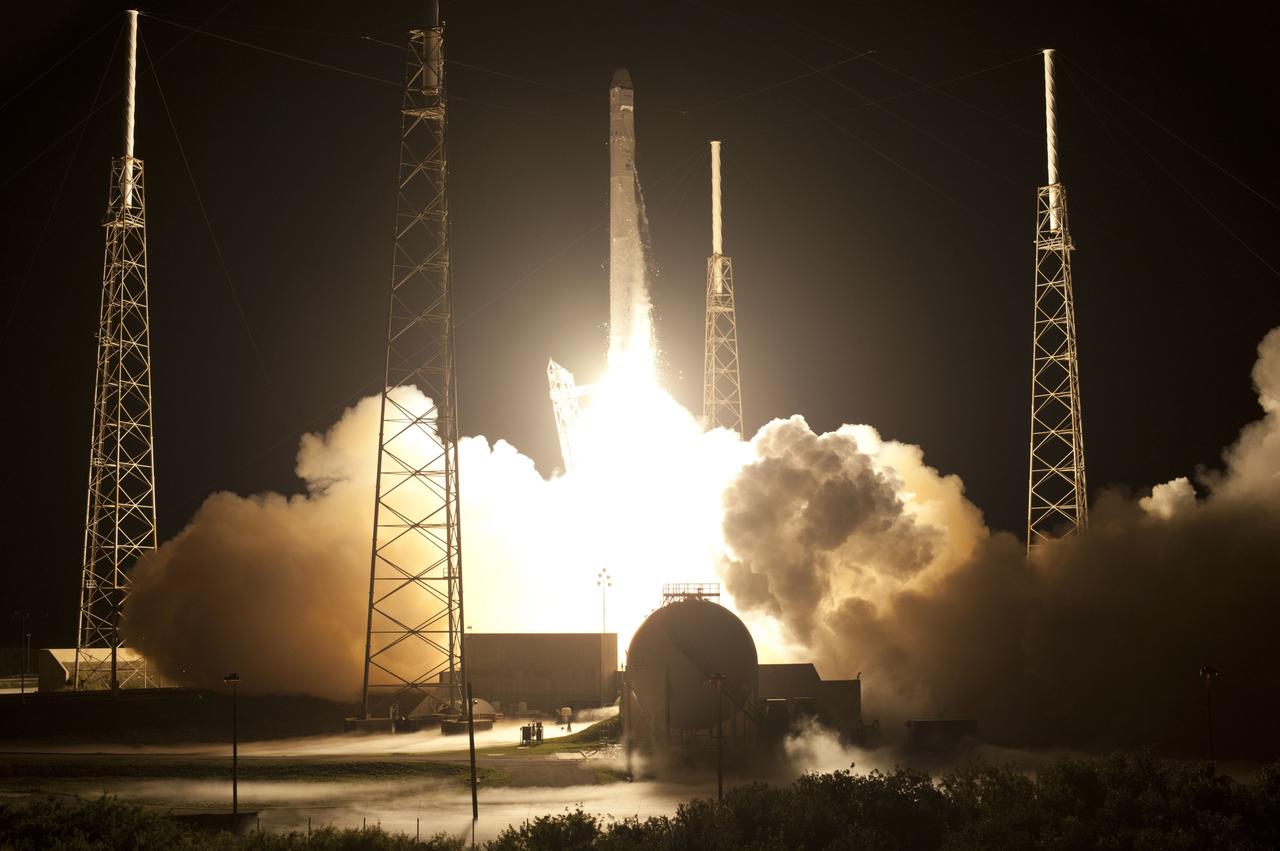
CAPE CANAVERAL, Fla. – Powered by nine Merlin engines, the SpaceX Falcon 9 rocket roars into space at 3:44 a.m. EDT from Space Launch Complex-40 on Cape Canaveral Air Force Station in Florida. The launch is the company's second demonstration test flight for NASA's Commercial Orbital Transportation Services, or COTS, program. During the flight, the Dragon capsule will conduct a series of check-out procedures to test and prove its systems, including rendezvous and berthing with the International Space Station. If the capsule performs as planned, the cargo and experiments it is carrying will be transferred to the station. The cargo includes food, water and provisions for the station’s Expedition crews, such as clothing, batteries and computer equipment. Under COTS, NASA has partnered with two aerospace companies to deliver cargo to the station. For more information, visit http://www.nasa.gov/spacex. Photo credit: NASA/Rick Wetherington, Tim Powers and Tim Terry
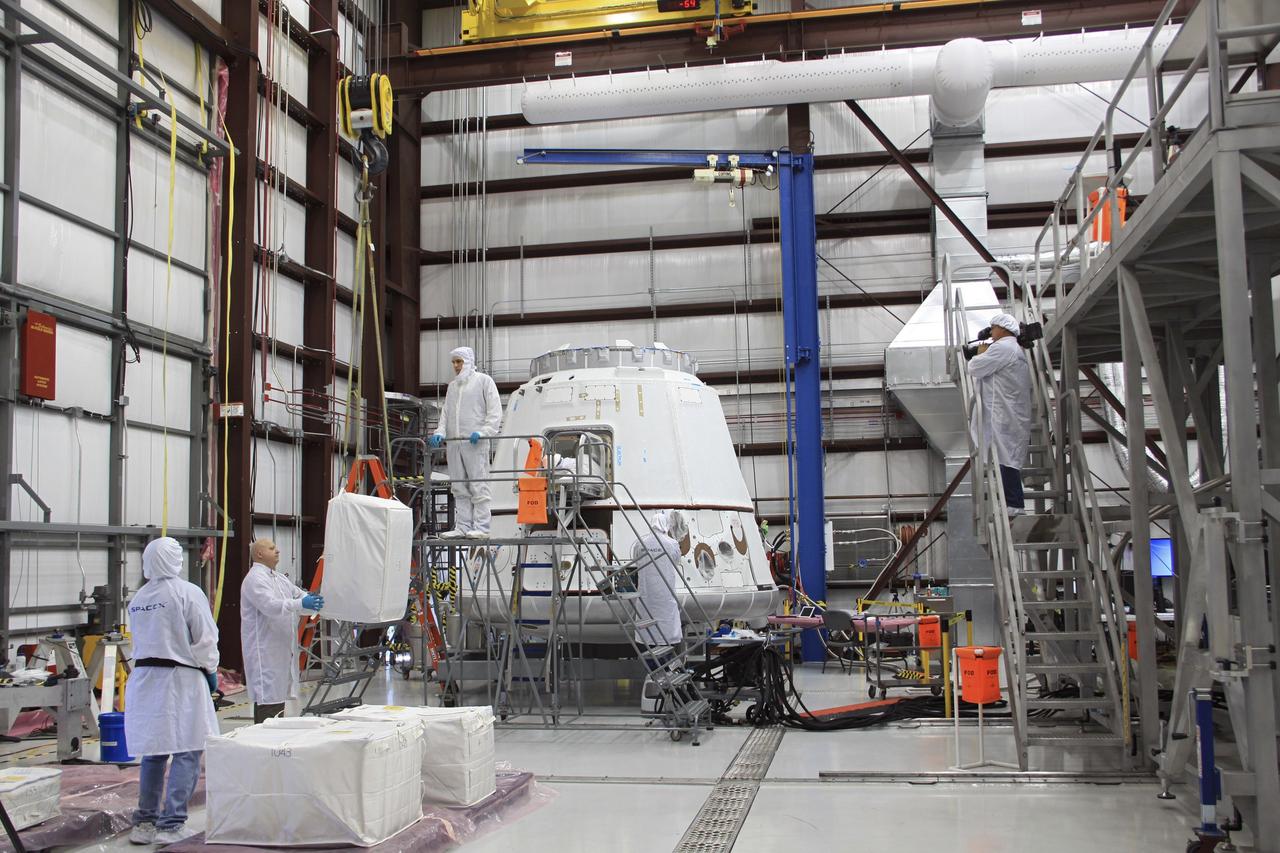
CAPE CANAVERAL, Fla. – In a processing hangar at Space Launch Complex-40 on Cape Canaveral Air Force Station in Florida, a Space Exploration Technologies technician attaches a cargo bag to the crane that will lift it toward the Dragon capsule where it will be stowed in preparation for its scheduled April 30 liftoff aboard a Falcon 9 rocket. Known as SpaceX, the launch will be the company's second demonstration test flight for NASA's Commercial Orbital Transportation Services program, or COTS. During the flight, the capsule will conduct a series of checkout procedures to test and prove its systems, including rendezvous and berthing with the International Space Station. The cargo includes food and provisions for the station’s Expedition crews, such as clothing, batteries, and computer equipment. Under COTS, NASA has partnered with two private companies to launch cargo safely to the station. For more information, visit http://www.nasa.gov/spacex. Photo credit: NASA/Jim Grossmann