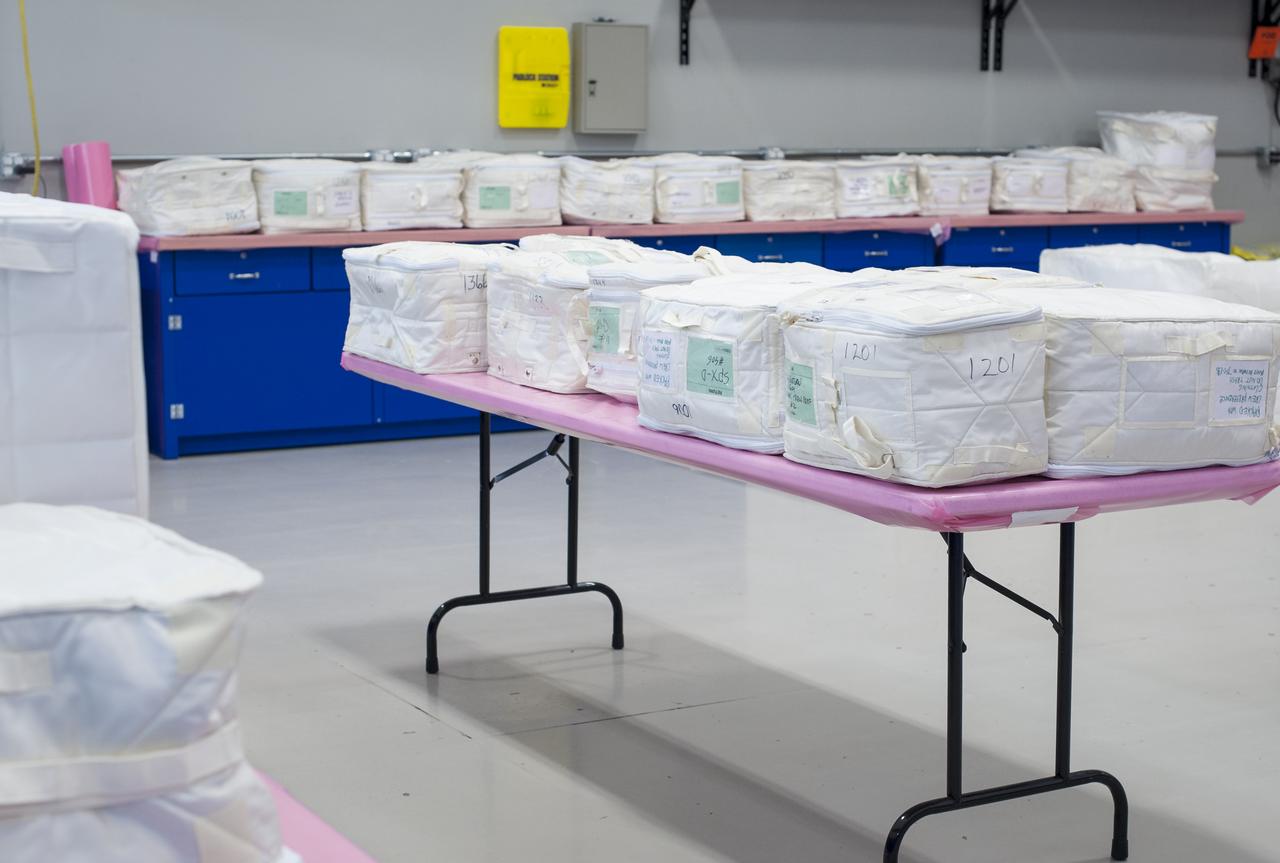
Some of the 1,367 pounds of cargo the SpaceX Dragon spacecraft returned to Earth from the space station are seen in a clean room at the SpaceX rocket development facility, Wednesday, June 13, 2012 in McGregor, Texas. NASA Administrator Charles Bolden and SpaceX CEO and Chief Designer Elon Musk were at the facility to view the historic Dragon capsule and to thank the more than 150 SpaceX employees working at the McGregor facility for their role in the historic mission. Photo Credit: (NASA/Bill Ingalls)

The team at SpaceX's rocket development facility in McGregor, Texas completed a static fire test of the Falcon 9 booster that will launch SpaceX's first demonstration mission for NASA's Commerical Crew Program.

A SpaceX SuperDraco engine is hot-fired at the company's test facility in McGregor, Texas. SpaceX is developing its Crew Dragon spacecraft and Falcon 9 rocket in partnership with NASA’s Commercial Crew Program to carry astronauts to and from the International Space Station.

A SpaceX Merlin engine is on a test stand at the company's facility in McGregor, Texas. SpaceX is developing its Crew Dragon spacecraft and Falcon 9 rocket in partnership with NASA’s Commercial Crew Program to carry astronauts to and from the International Space Station.

NASA Administrator Charles Bolden, left, and SpaceX CEO and Chief Designer Elon Musk, view the historic Dragon capsule, right, that returned to Earth on May 31 following the first successful mission by a private company to carry supplies to the International Space Station on Wednesday, June 13, 2012 at the SpaceX facility in McGregor, Texas. Bolden and Musk also thanked the more than 150 SpaceX employees working at the McGregor facility for their role in the historic mission. Some of the 1,367 pounds of cargo the SpaceX Dragon spacecraft returned to Earth from the space station are seen in a clean room to the left. Photo Credit: (NASA/Bill Ingalls)

NASA Administrator Charles Bolden, left, and SpaceX CEO and Chief Designer Elon Musk, view the historic Dragon capsule that returned to Earth on May 31 following the first successful mission by a private company to carry supplies to the International Space Station on Wednesday, June 13, 2012 at the SpaceX facility in McGregor, Texas. Bolden and Musk also thanked the more than 150 SpaceX employees working at the McGregor facility for their role in the historic mission. Photo Credit: (NASA/Bill Ingalls)

NASA Administrator Charles Bolden, left, and SpaceX CEO and Chief Designer Elon Musk, view the historic Dragon capsule that returned to Earth on May 31 following the first successful mission by a private company to carry supplies to the International Space Station on Wednesday, June 13, 2012 at the SpaceX facility in McGregor, Texas. Bolden and Musk also thanked the more than 150 SpaceX employees working at the McGregor facility for their role in the historic mission. Photo Credit: (NASA/Bill Ingalls)

NASA Administrator Charles Bolden, left, and SpaceX CEO and Chief Designer Elon Musk, view the historic Dragon capsule that returned to Earth on May 31 following the first successful mission by a private company to carry supplies to the International Space Station on Wednesday, June 13, 2012 at the SpaceX facility in McGregor, Texas. Bolden and Musk also thanked the more than 150 SpaceX employees working at the McGregor facility for their role in the historic mission. Photo Credit: (NASA/Bill Ingalls)

NASA Administrator Charles Bolden, left, and SpaceX CEO and Chief Designer Elon Musk, view the historic Dragon capsule that returned to Earth on May 31 following the first successful mission by a private company to carry supplies to the International Space Station on Wednesday, June 13, 2012 at the SpaceX facility in McGregor, Texas. Bolden and Musk also thanked the more than 150 SpaceX employees working at the McGregor facility for their role in the historic mission. Photo Credit: (NASA/Bill Ingalls)

NASA Administrator Charles Bolden, left, congratulates SpaceX CEO and Chief Designer Elon Musk in front of the historic Dragon capsule that returned to Earth on May 31 following the first successful mission by a private company to carry supplies to the International Space Station on Wednesday, June 13, 2012 at the SpaceX facility in McGregor, Texas. Bolden and Musk also thanked the more than 150 SpaceX employees working at the McGregor facility for their role in the historic mission. Photo Credit: (NASA/Bill Ingalls)
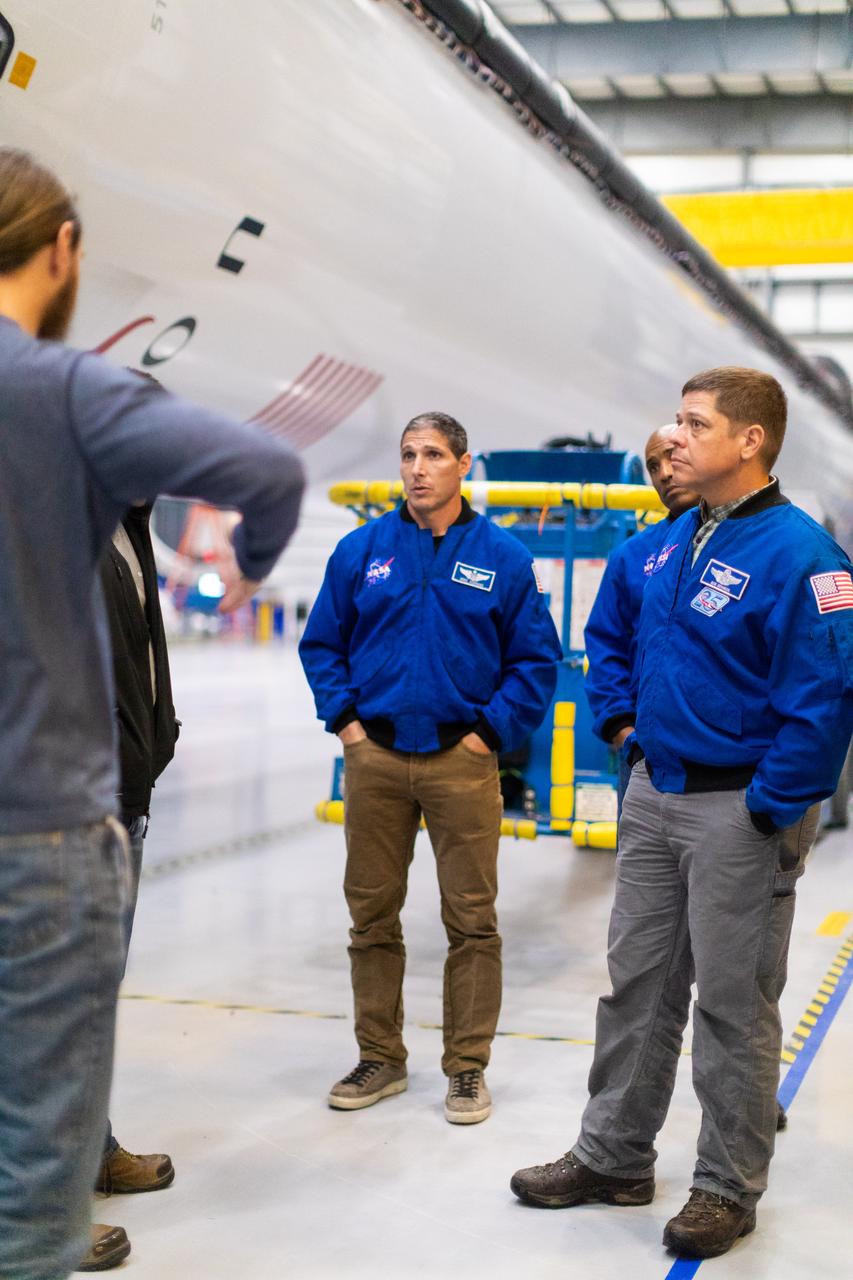
NASA astronauts who will be the first humans to fly aboard SpaceX's Crew Dragon spacecraft recently toured the company's Rocket Development Test Facility in McGregor, Texas, on Oct. 16, 2018. Astronauts Bob Behnken, far right, and Doug Hurley are set to crew SpaceX's Demo-2 flight test in June 2019, which will be the first flight of Crew Dragon with people onboard. Astronauts Victor Glover, behind Behnken, and Mike Hopkins, at left, will crew SpaceX's first regular mission to the International Space Station, following Demo-2 and NASA's certification of SpaceX commercial crew systems.
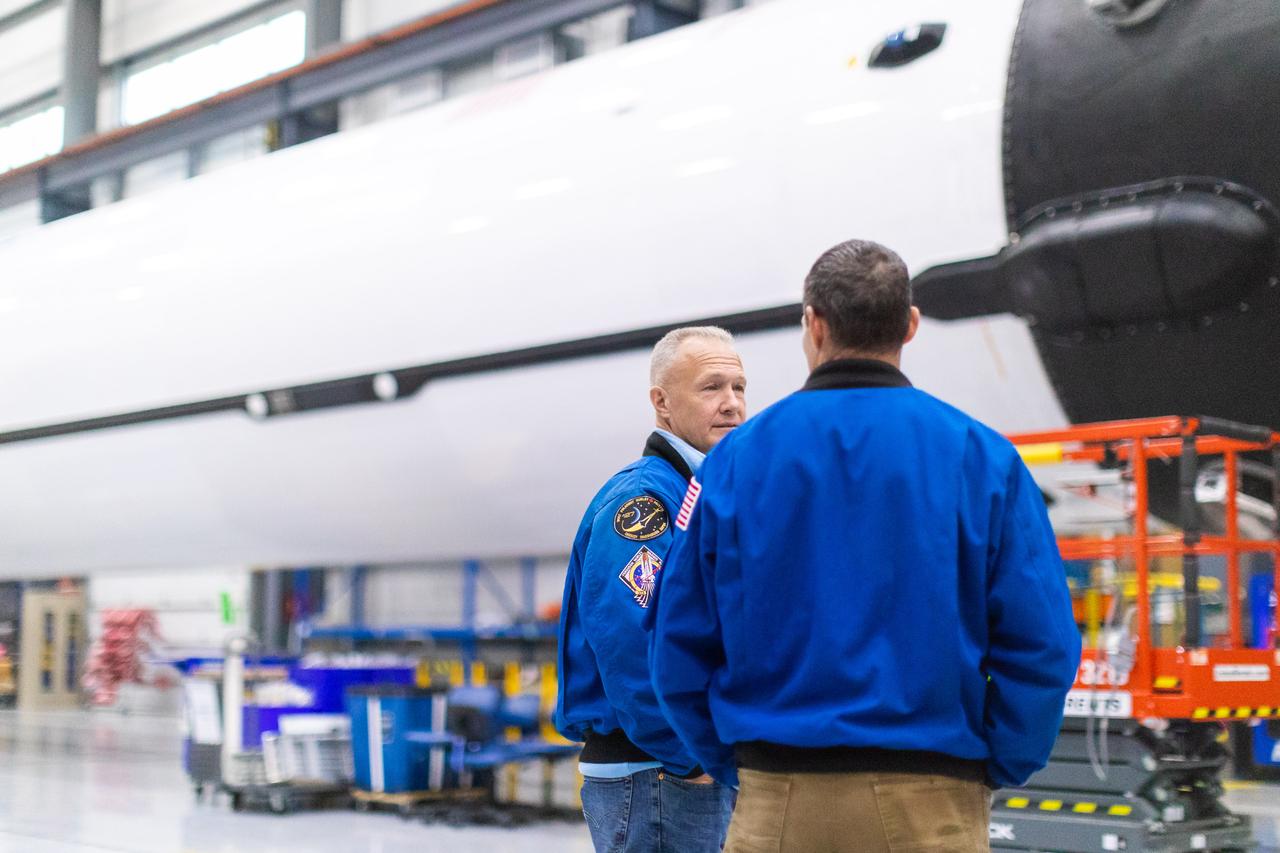
NASA astronauts who will be the first humans to fly aboard SpaceX's Crew Dragon spacecraft recently toured the company's Rocket Development Test Facility in McGregor, Texas, on Oct. 16, 2018. Astronauts Bob Behnken, and Doug Hurley, at left, are set to crew SpaceX's Demo-2 flight test in June 2019, which will be the first flight of Crew Dragon with people onboard. Astronauts Victor Glover, and Mike Hopkins, at right, will crew SpaceX's first regular mission to the International Space Station, following Demo-2 and NASA's certification of SpaceX commercial crew systems.
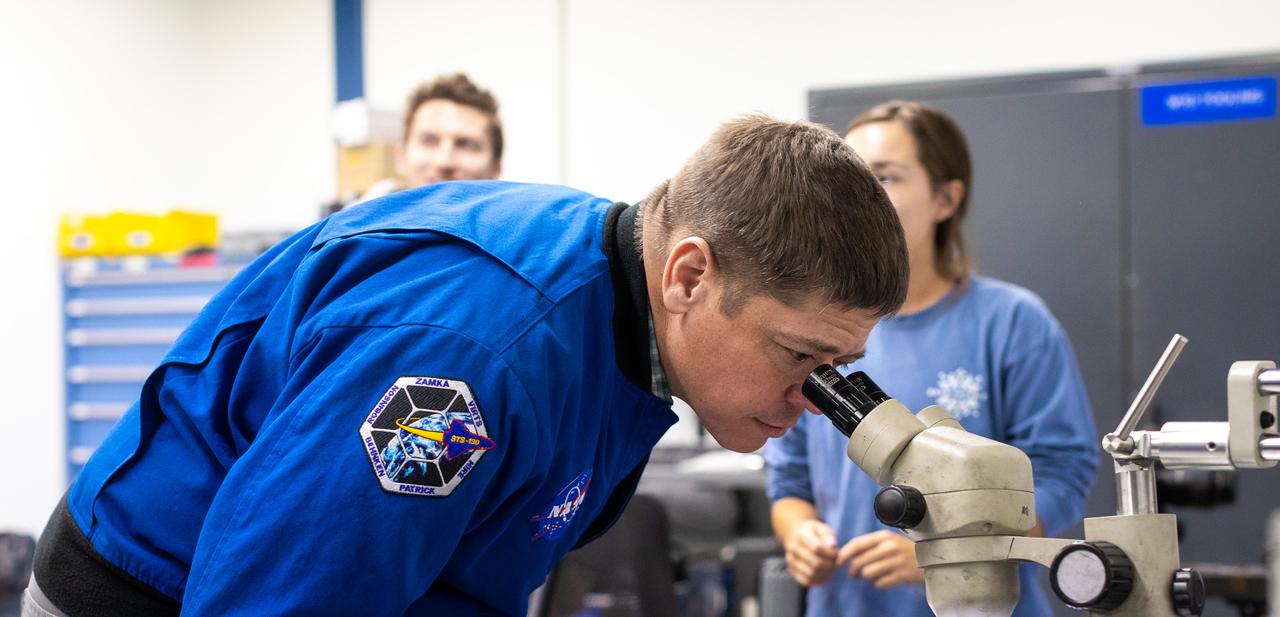
NASA astronauts who will be the first humans to fly aboard SpaceX's Crew Dragon spacecraft recently toured the company's Rocket Development Test Facility in McGregor, Texas, on Oct. 16, 2018. Astronauts Bob Behnken, pictured, and Doug Hurley are set to crew SpaceX's Demo-2 flight test in June 2019, which will be the first flight of Crew Dragon with people onboard. Astronauts Victor Glover and Mike Hopkins will crew SpaceX's first regular mission to the International Space Station, following Demo-2 and NASA's certification of SpaceX commercial crew systems.

NASA astronauts who will be the first humans to fly aboard SpaceX's Crew Dragon spacecraft recently toured the company's Rocket Development Test Facility in McGregor, Texas, on Oct. 16, 2018. Astronauts Bob Behnken and Doug Hurley are set to crew SpaceX's Demo-2 flight test in June 2019, which will be the first flight of Crew Dragon with people onboard. Astronauts Victor Glover, pictured, and Mike Hopkins will crew SpaceX's first regular mission to the International Space Station, following Demo-2 and NASA's certification of SpaceX commercial crew systems.

NASA astronauts who will be the first humans to fly aboard SpaceX's Crew Dragon spacecraft recently toured the company's Rocket Development Test Facility in McGregor, Texas, on Oct. 16, 2018. Astronauts Bob Behnken, second from left, and Doug Hurley are set to crew SpaceX's Demo-2 flight test in June 2019, which will be the first flight of Crew Dragon with people onboard. Astronauts Victor Glover, far right, and Mike Hopkins, at left, will crew SpaceX's first regular mission to the International Space Station, following Demo-2 and NASA's certification of SpaceX commercial crew systems.
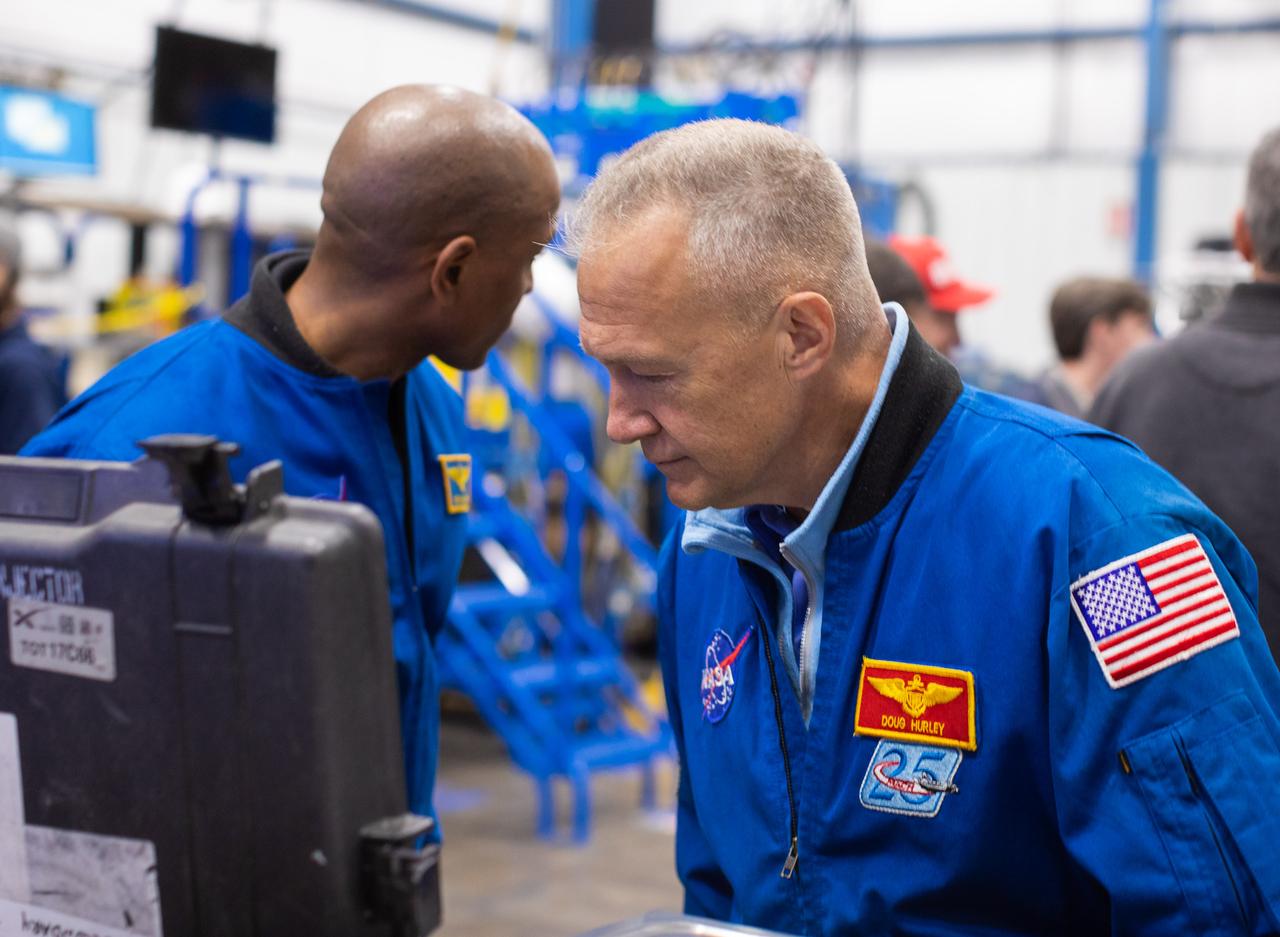
NASA astronauts who will be the first humans to fly aboard SpaceX's Crew Dragon spacecraft recently toured the company's Rocket Development Test Facility in McGregor, Texas, on Oct. 16, 2018. Astronauts Bob Behnken and Doug Hurley, pictured at right, are set to crew SpaceX's Demo-2 flight test in June 2019, which will be the first flight of Crew Dragon with people onboard. Astronauts Victor Glover, pictured at left, and Mike Hopkins will crew SpaceX's first regular mission to the International Space Station, following Demo-2 and NASA's certification of SpaceX commercial crew systems.

NASA astronauts who will be the first humans to fly aboard SpaceX's Crew Dragon spacecraft recently toured the company's Rocket Development Test Facility in McGregor, Texas, on Oct. 16, 2018. Astronauts Bob Behnken, at right, and Doug Hurley are set to crew SpaceX's Demo-2 flight test in June 2019, which will be the first flight of Crew Dragon with people onboard. Astronauts Victor Glover, behind Behnken, and Mike Hopkins, at left, will crew SpaceX's first regular mission to the International Space Station, following Demo-2 and NASA's certification of SpaceX commercial crew systems.

NASA astronauts who will be the first humans to fly aboard SpaceX's Crew Dragon spacecraft recently toured the company's Rocket Development Test Facility in McGregor, Texas, on Oct. 16, 2018. Astronauts Bob Behnken and Doug Hurley are set to crew SpaceX's Demo-2 flight test in June 2019, which will be the first flight of Crew Dragon with people onboard. Astronauts Victor Glover, pictured, and Mike Hopkins will crew SpaceX's first regular mission to the International Space Station, following Demo-2 and NASA's certification of SpaceX commercial crew systems.

NASA astronauts who will be the first humans to fly aboard SpaceX's Crew Dragon spacecraft recently toured the company's Rocket Development Test Facility in McGregor, Texas, on Oct. 16, 2018. Astronauts Bob Behnken, at left, and Doug Hurley, at right, are set to crew SpaceX's Demo-2 flight test in June 2019, which will be the first flight of Crew Dragon with people onboard. Astronauts Victor Glover and Mike Hopkins will crew SpaceX's first regular mission to the International Space Station, following Demo-2 and NASA's certification of SpaceX commercial crew systems.
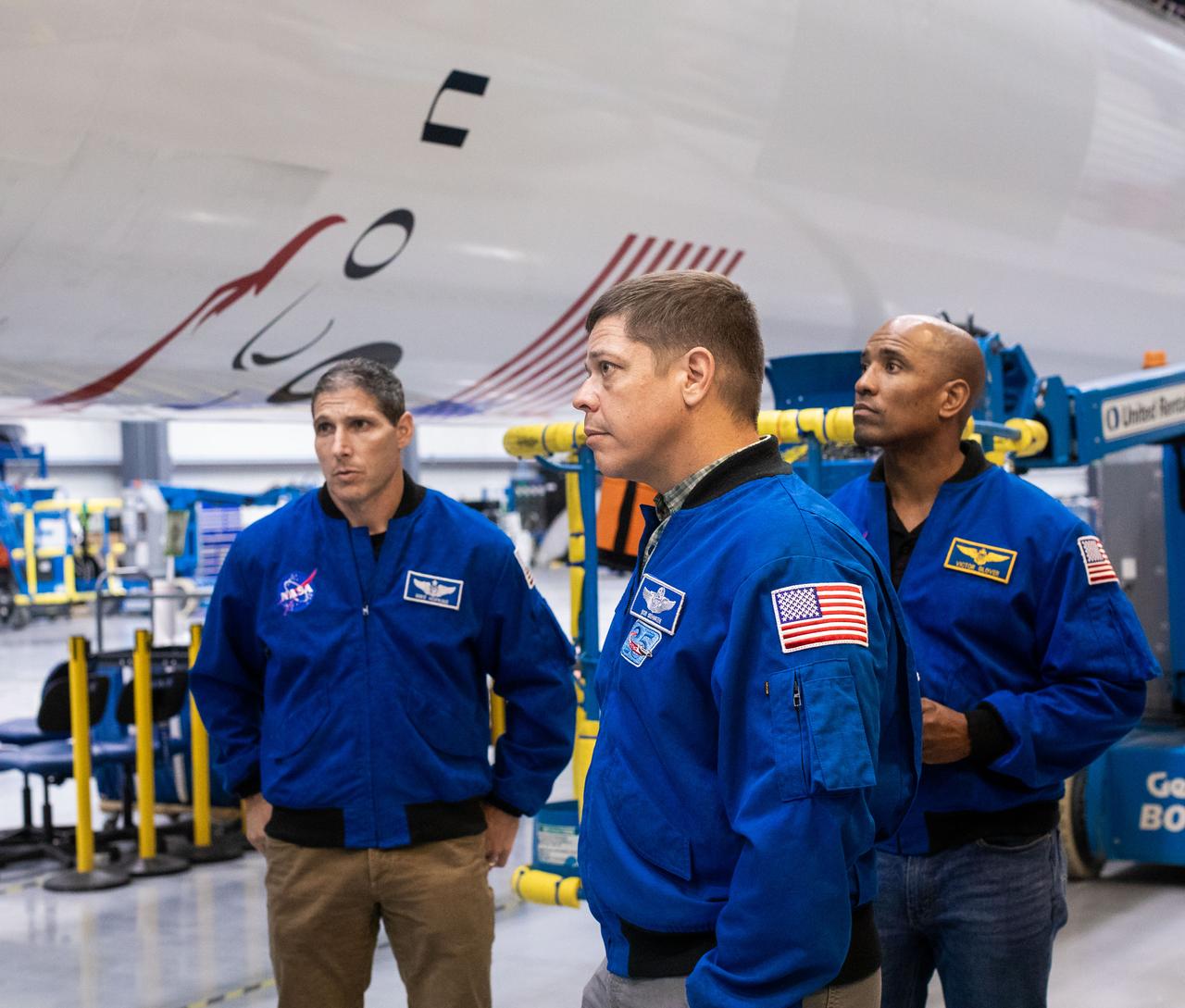
NASA astronauts who will be the first humans to fly aboard SpaceX's Crew Dragon spacecraft recently toured the company's Rocket Development Test Facility in McGregor, Texas, on Oct. 16, 2018. Astronauts Bob Behnken, center, and Doug Hurley are set to crew SpaceX's Demo-2 flight test in June 2019, which will be the first flight of Crew Dragon with people onboard. Astronauts Victor Glover, far right, and Mike Hopkins, at left, will crew SpaceX's first regular mission to the International Space Station, following Demo-2 and NASA's certification of SpaceX commercial crew systems.
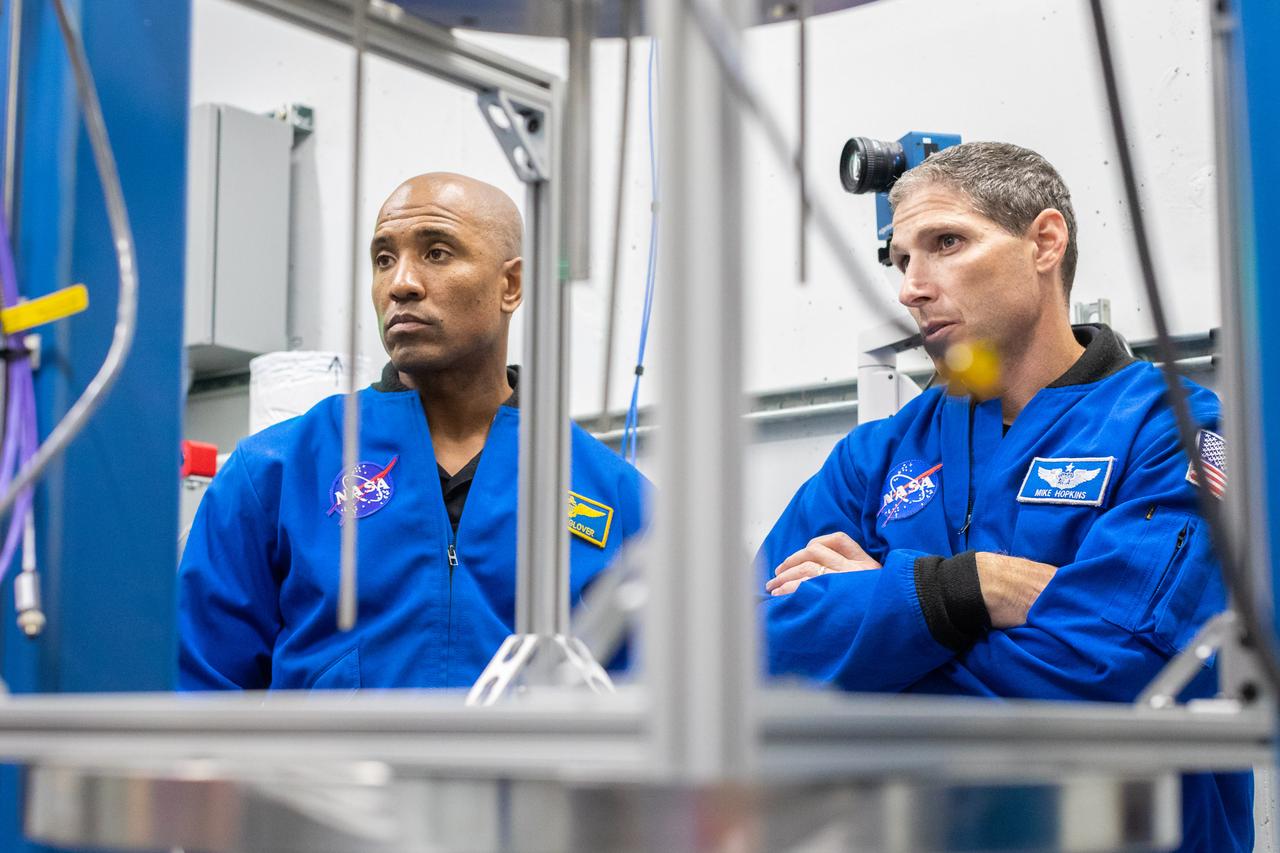
NASA astronauts who will be the first humans to fly aboard SpaceX's Crew Dragon spacecraft recently toured the company's Rocket Development Test Facility in McGregor, Texas, on Oct. 16, 2018. Astronauts Bob Behnken and Doug Hurley are set to crew SpaceX's Demo-2 flight test in June 2019, which will be the first flight of Crew Dragon with people onboard. Astronauts Victor Glover, at left, and Mike Hopkins, at right, will crew SpaceX's first regular mission to the International Space Station, following Demo-2 and NASA's certification of SpaceX commercial crew systems.

NASA astronauts who will be the first humans to fly aboard SpaceX's Crew Dragon spacecraft recently toured the company's Rocket Development Test Facility in McGregor, Texas, on Oct. 16, 2018. Astronauts Bob Behnken, and Doug Hurley, at left, are set to crew SpaceX's Demo-2 flight test in June 2019, which will be the first flight of Crew Dragon with people onboard. Astronauts Victor Glover, and Mike Hopkins, at right, will crew SpaceX's first regular mission to the International Space Station, following Demo-2 and NASA's certification of SpaceX commercial crew systems.
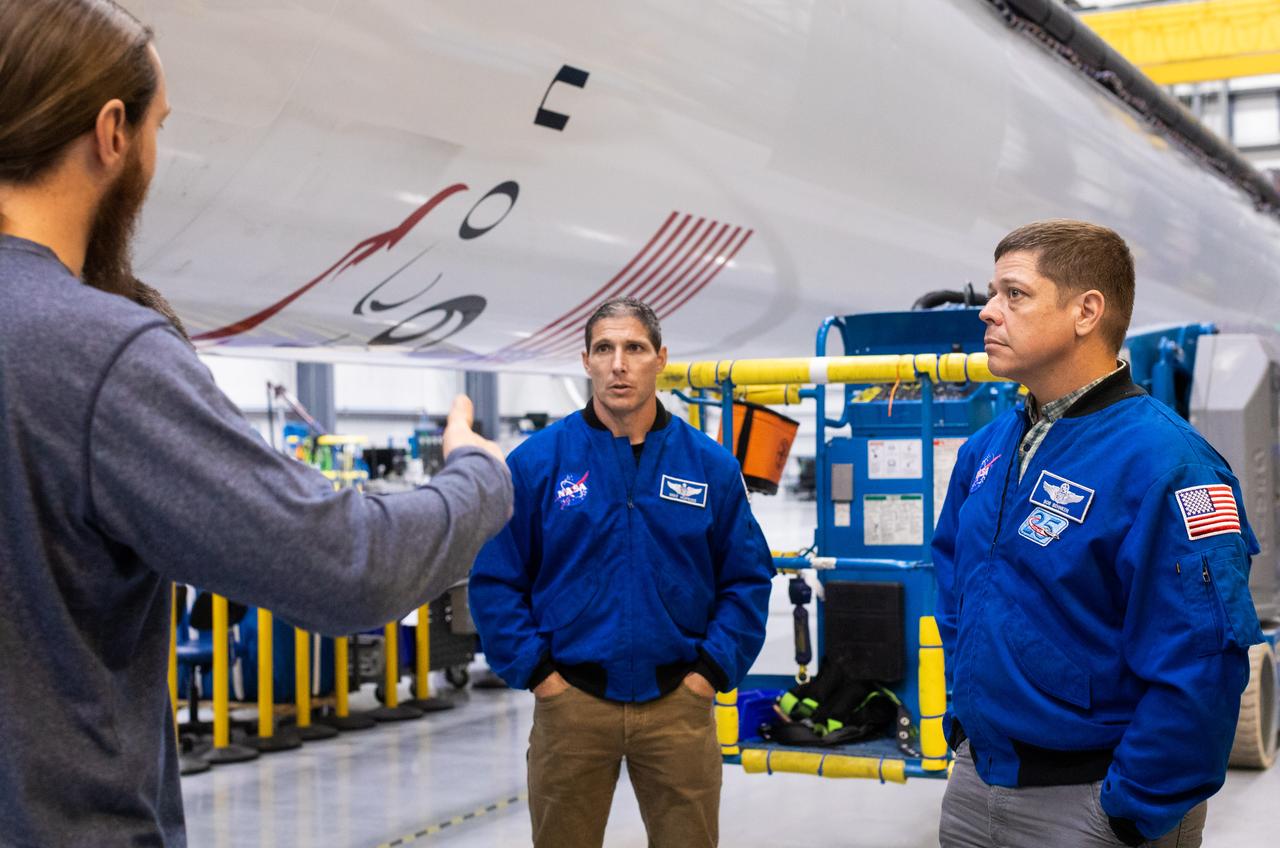
NASA astronauts who will be the first humans to fly aboard SpaceX's Crew Dragon spacecraft recently toured the company's Rocket Development Test Facility in McGregor, Texas, on Oct. 16, 2018. Astronauts Bob Behnken, at right, and Doug Hurley are set to crew SpaceX's Demo-2 flight test in June 2019, which will be the first flight of Crew Dragon with people onboard. Astronauts Victor Glover, and Mike Hopkins, at left, will crew SpaceX's first regular mission to the International Space Station, following Demo-2 and NASA's certification of SpaceX commercial crew systems.
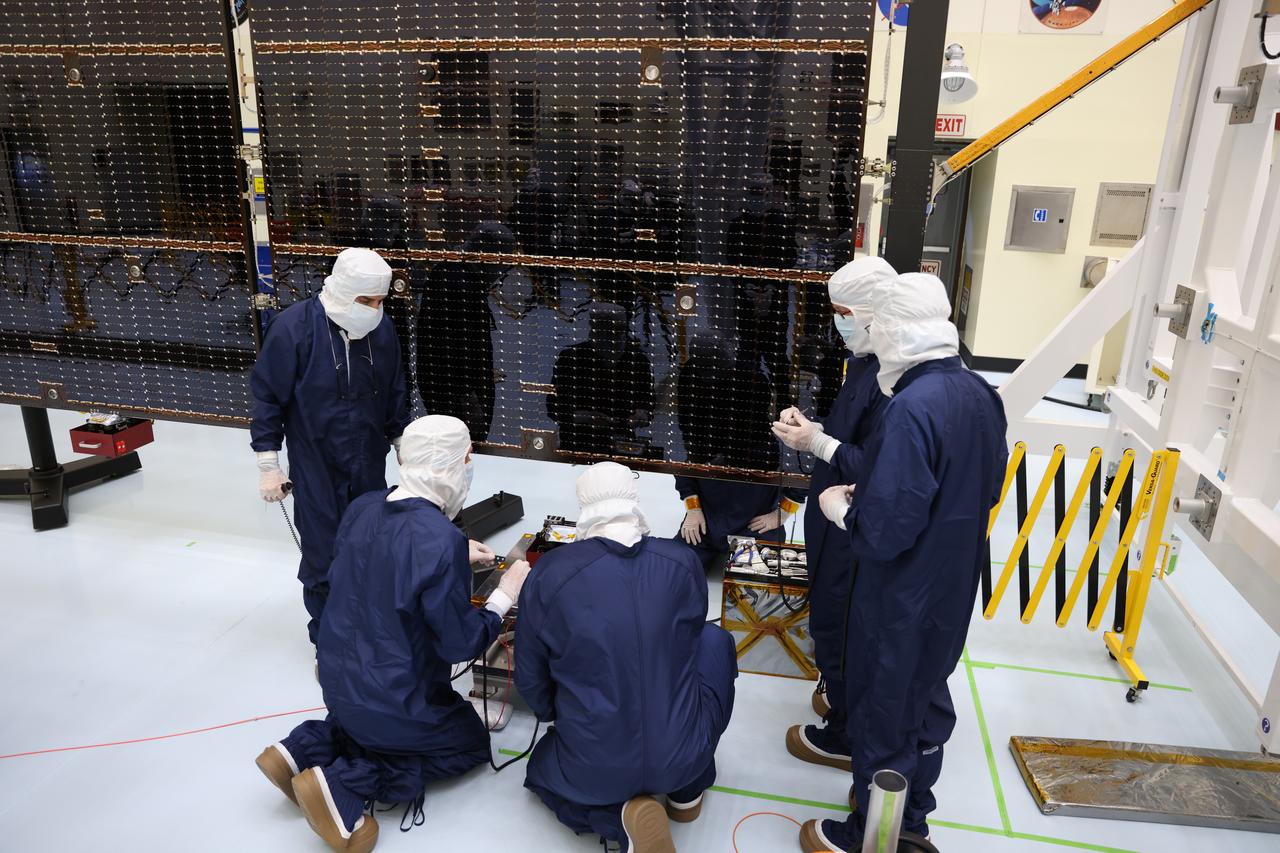
On March 20, technicians working inside the Payload Hazardous Servicing Facility at the agency’s Kennedy Space Center in Florida installed and began to test antennas on a solar array for NASA’s Europa Clipper spacecraft. The spacecraft will ship to Florida later this year from NASA’s Jet Propulsion Lab in Southern California in preparation for launch aboard a SpaceX Falcon Heavy rocket from Kennedy’s Launch Complex 39A. Europa Clipper is the largest spacecraft NASA has ever developed for a planetary mission, and it will seek to determine whether there are places below the surface of Jupiter’s icy moon, Europa, that could support life.

CAPE CANAVERAL, Fla. – In a processing facility at Space Launch Complex-40 on Cape Canaveral Air Force Station in Florida, aerospace technicians prepare a cargo container for installation into a Dragon capsule for launch aboard a Falcon 9 rocket. The new rocket and capsule were designed and manufactured by Space Exploration Technologies Corp., or SpaceX, for the company’s upcoming demonstration test flight for NASA’s Commercial Orbital Transportation Services, or COTS, program. Under COTS, NASA has partnered with two private companies to develop the capability to deliver cargo to the International Space Station. During the flight, SpaceX's Dragon capsule will conduct a series of checkout procedures that will test and prove its systems. These tests include rendezvous and berthing with the space station and are intended to lead to regular resupply missions to the station. Liftoff is targeted for April 30 at 12:22 p.m. EDT pending official approval at the Flight Readiness Review on April 16. For more information, visit www.nasa.gov/exploration/commercial/cargo/spacex_index.html. Photo credit: NASA/Cory Huston
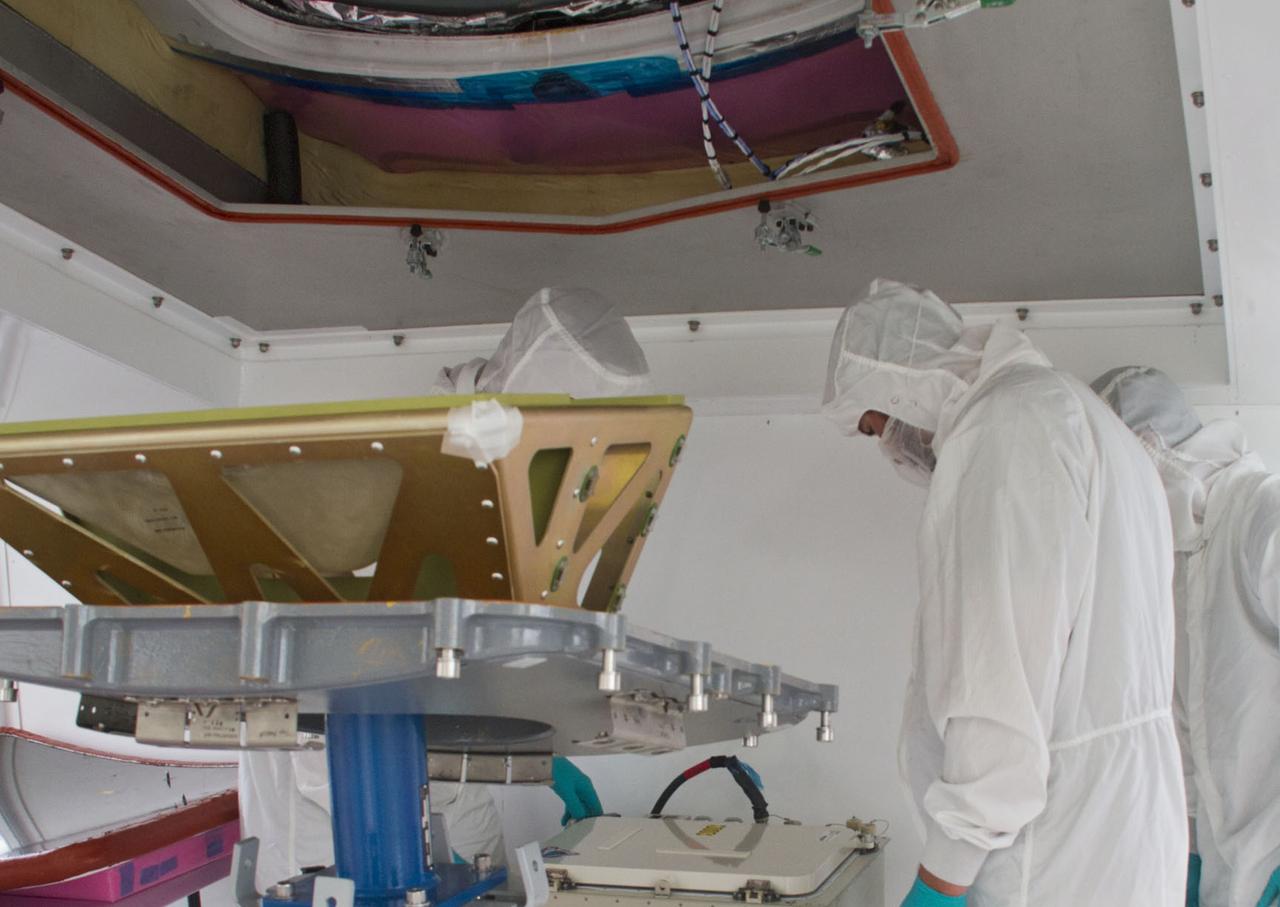
CAPE CANAVERAL, Fla. – In a processing facility at Space Launch Complex-40 on Cape Canaveral Air Force Station in Florida, aerospace technicians prepare to move a cargo container onto a lift to facilitate its installation into a Dragon capsule. The Dragon is set to launch aboard a Falcon 9 rocket. The new rocket and capsule were designed and manufactured by Space Exploration Technologies Corp., or SpaceX, for the company’s upcoming demonstration test flight for NASA’s Commercial Orbital Transportation Services, or COTS, program. Under COTS, NASA has partnered with two private companies to develop the capability to deliver cargo to the International Space Station. During the flight, SpaceX's Dragon capsule will conduct a series of checkout procedures that will test and prove its systems. These tests include rendezvous and berthing with the space station and are intended to lead to regular resupply missions to the station. Liftoff is targeted for April 30 at 12:22 p.m. EDT pending official approval at the Flight Readiness Review on April 16. For more information, visit www.nasa.gov/exploration/commercial/cargo/spacex_index.html. Photo credit: NASA/Cory Huston
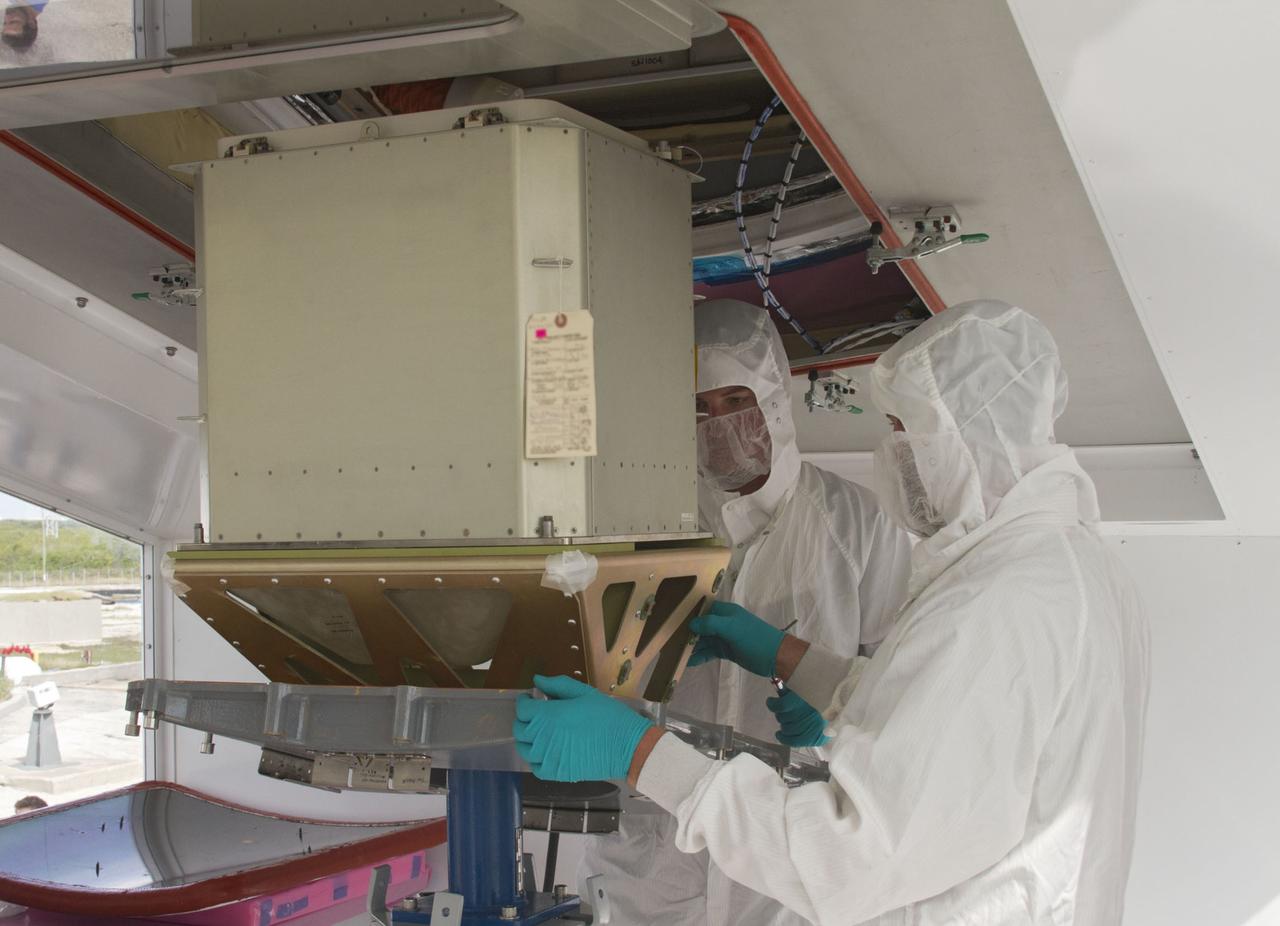
CAPE CANAVERAL, Fla. – In a processing facility at Space Launch Complex-40 on Cape Canaveral Air Force Station in Florida, aerospace technicians prepare to position a cargo container onto a lift to facilitate its installation into a Dragon capsule. The Dragon is set to launch aboard a Falcon 9 rocket. The new rocket and capsule were designed and manufactured by Space Exploration Technologies Corp., or SpaceX, for the company’s upcoming demonstration test flight for NASA’s Commercial Orbital Transportation Services, or COTS, program. Under COTS, NASA has partnered with two private companies to develop the capability to deliver cargo to the International Space Station. During the flight, SpaceX's Dragon capsule will conduct a series of checkout procedures that will test and prove its systems. These tests include rendezvous and berthing with the space station and are intended to lead to regular resupply missions to the station. Liftoff is targeted for April 30 at 12:22 p.m. EDT pending official approval at the Flight Readiness Review on April 16. For more information, visit www.nasa.gov/exploration/commercial/cargo/spacex_index.html. Photo credit: NASA/Cory Huston
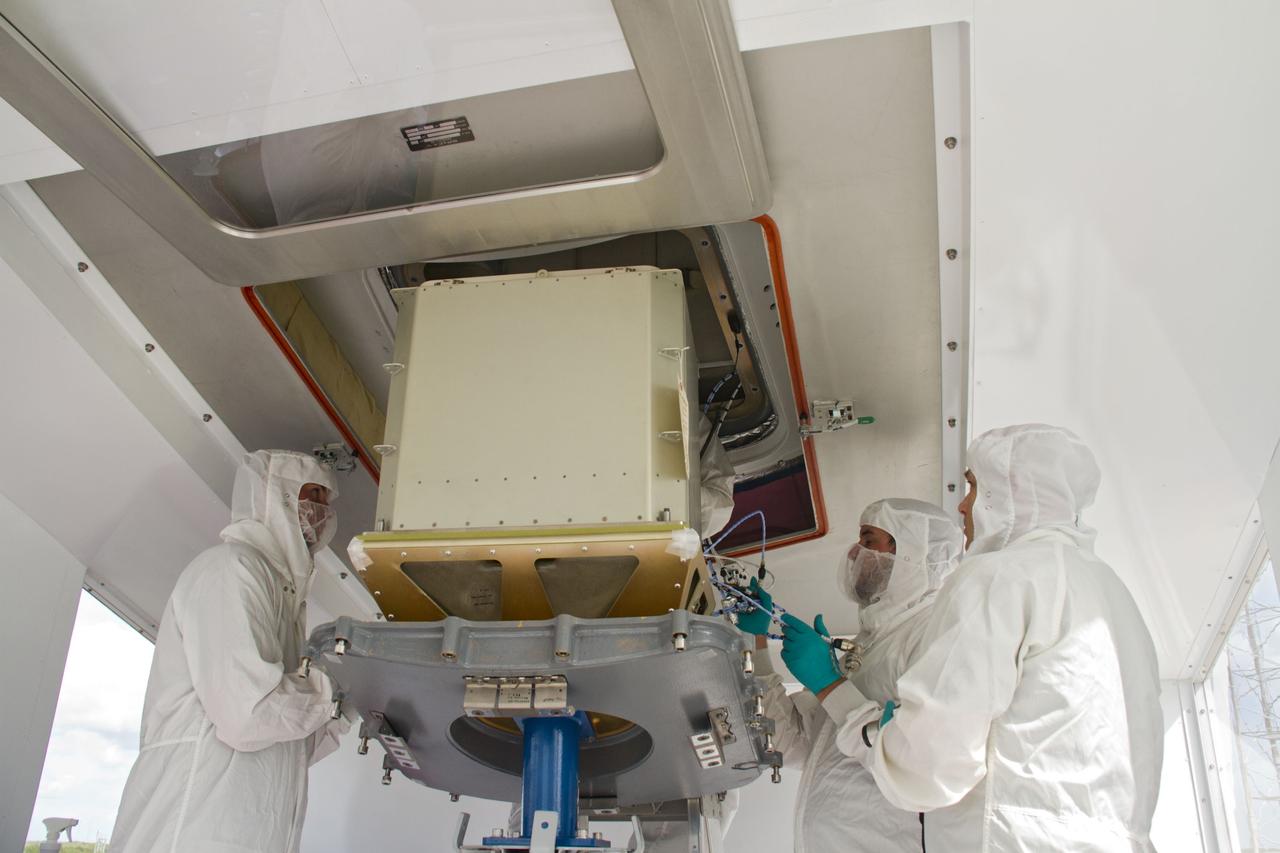
CAPE CANAVERAL, Fla. – In a processing facility at Space Launch Complex-40 on Cape Canaveral Air Force Station in Florida, a cargo container is lifted toward the open hatch of a Dragon capsule. The Dragon is set to launch aboard a Falcon 9 rocket. The new rocket and capsule were designed and manufactured by Space Exploration Technologies Corp., or SpaceX, for the company’s upcoming demonstration test flight for NASA’s Commercial Orbital Transportation Services, or COTS, program. Under COTS, NASA has partnered with two private companies to develop the capability to deliver cargo to the International Space Station. During the flight, SpaceX's Dragon capsule will conduct a series of checkout procedures that will test and prove its systems. These tests include rendezvous and berthing with the space station and are intended to lead to regular resupply missions to the station. Liftoff is targeted for April 30 at 12:22 p.m. EDT pending official approval at the Flight Readiness Review on April 16. For more information, visit www.nasa.gov/exploration/commercial/cargo/spacex_index.html. Photo credit: NASA/Cory Huston
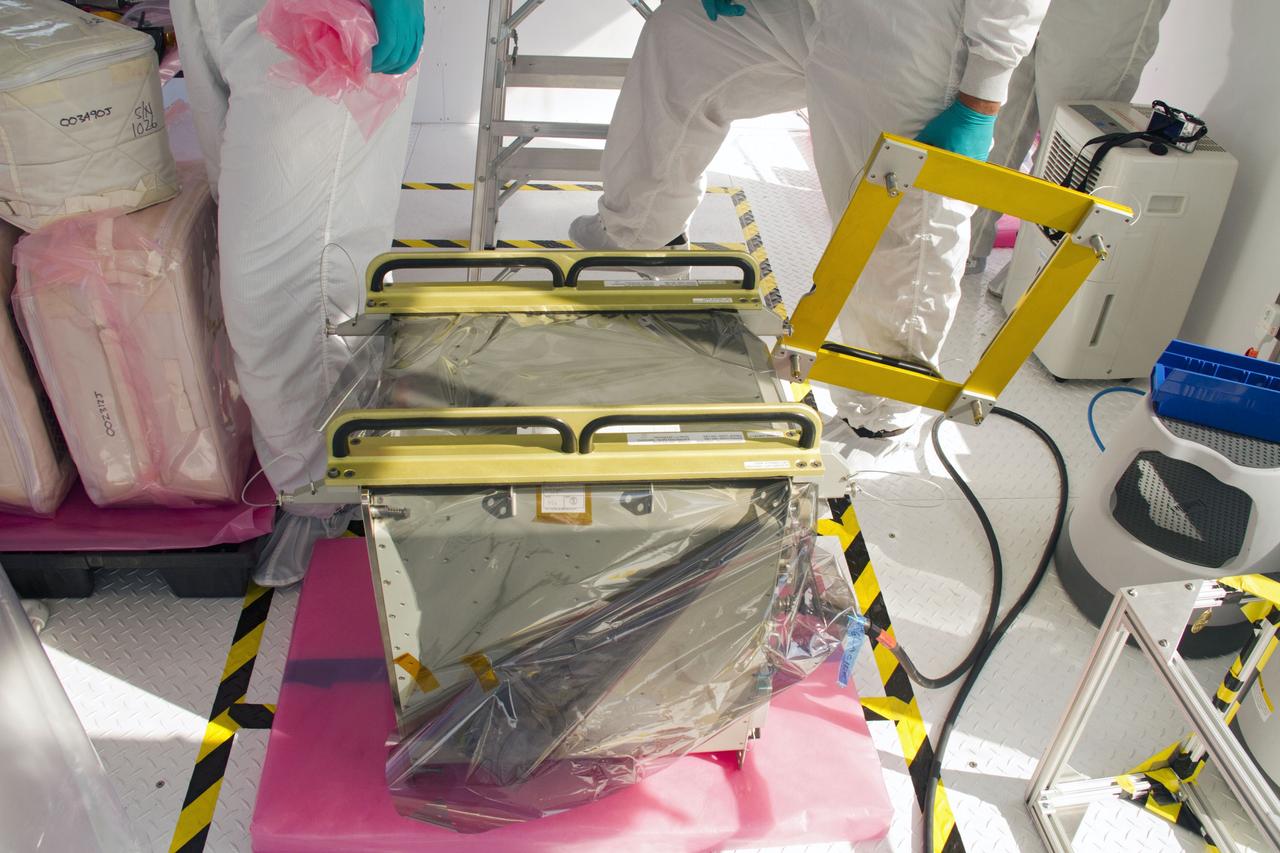
CAPE CANAVERAL, Fla. – In a processing facility at Space Launch Complex-40 on Cape Canaveral Air Force Station in Florida, preparations are under way to install cargo containers into a Dragon capsule for launch aboard a Falcon 9 rocket. The new rocket and capsule were designed and manufactured by Space Exploration Technologies Corp., or SpaceX, for the company’s upcoming demonstration test flight for NASA’s Commercial Orbital Transportation Services, or COTS, program. Under COTS, NASA has partnered with two private companies to develop the capability to deliver cargo to the International Space Station. During the flight, SpaceX's Dragon capsule will conduct a series of checkout procedures that will test and prove its systems. These tests include rendezvous and berthing with the space station and are intended to lead to regular resupply missions to the station. Liftoff is targeted for April 30 at 12:22 p.m. EDT pending official approval at the Flight Readiness Review on April 16. For more information, visit www.nasa.gov/exploration/commercial/cargo/spacex_index.html. Photo credit: NASA/Cory Huston
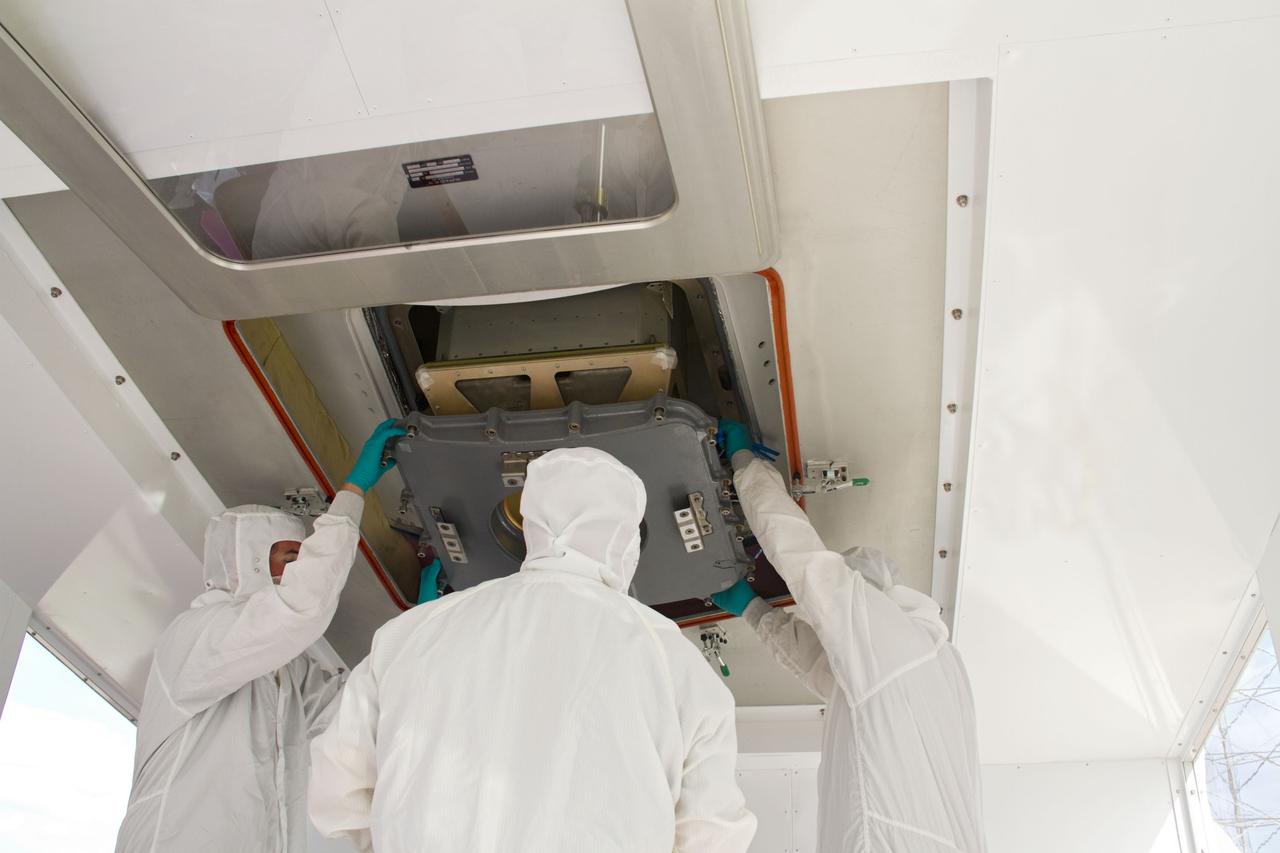
CAPE CANAVERAL, Fla. – In a processing facility at Space Launch Complex-40 on Cape Canaveral Air Force Station in Florida, a cargo container is installed inside a Dragon capsule. The Dragon is set to launch aboard a Falcon 9 rocket. The new rocket and capsule were designed and manufactured by Space Exploration Technologies Corp., or SpaceX, for the company’s upcoming demonstration test flight for NASA’s Commercial Orbital Transportation Services, or COTS, program. Under COTS, NASA has partnered with two private companies to develop the capability to deliver cargo to the International Space Station. During the flight, SpaceX's Dragon capsule will conduct a series of checkout procedures that will test and prove its systems. These tests include rendezvous and berthing with the space station and are intended to lead to regular resupply missions to the station. Liftoff is targeted for April 30 at 12:22 p.m. EDT pending official approval at the Flight Readiness Review on April 16. For more information, visit www.nasa.gov/exploration/commercial/cargo/spacex_index.html. Photo credit: NASA/Cory Huston
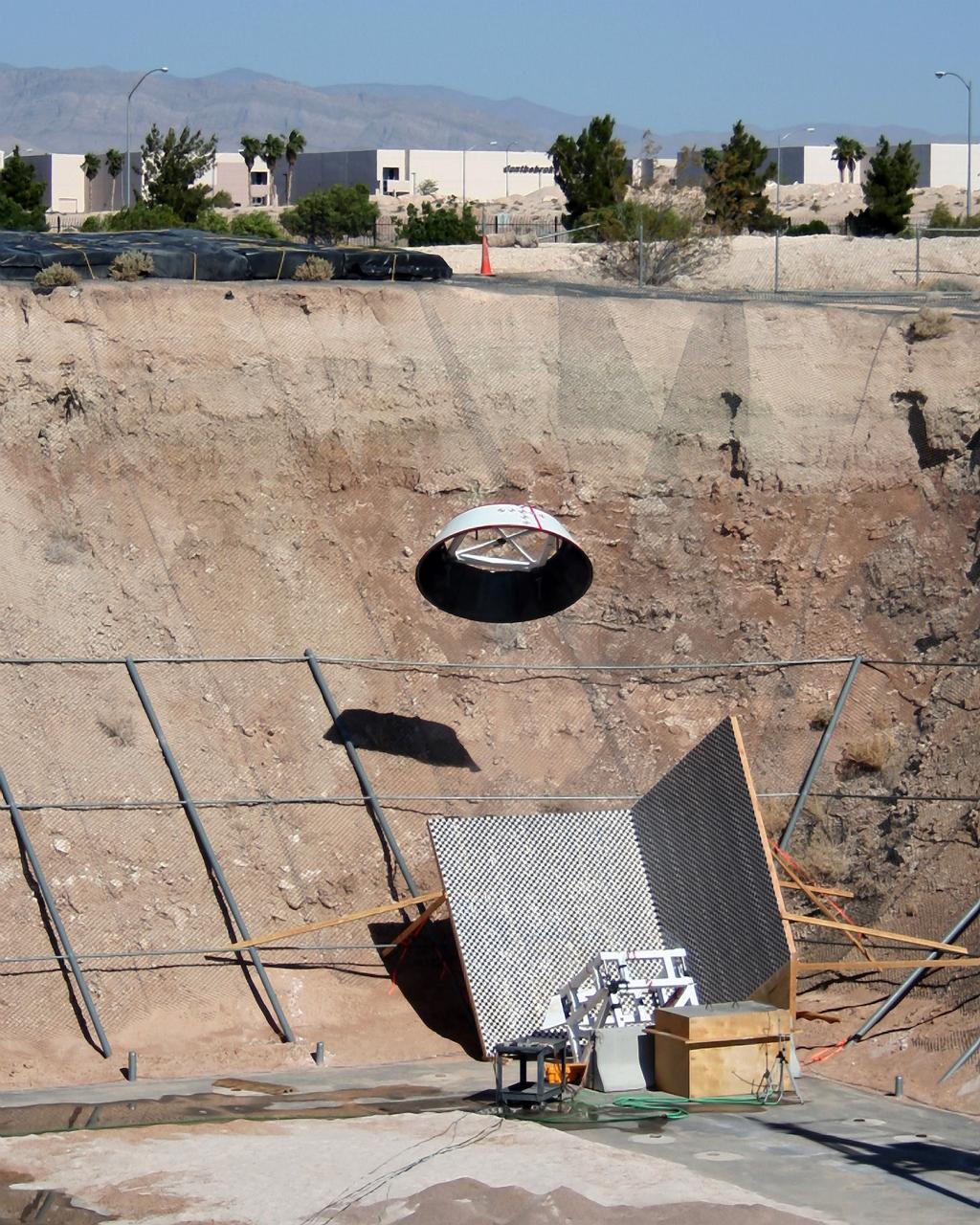
LAS VEGAS -- The Boeing Company tests the forward heat shield FHS jettison system of its CST-100 spacecraft at the Bigelow Aerospace facility in Las Vegas as part of an agreement with NASA's Commercial Crew Program CCP during Commercial Crew Development Round 2 CCDev2) activities. The FHS will protect the spacecraft's parachutes, rendezvous-and-docking sensor packages, and docking mechanism during ascent and re-entry. During a mission to low Earth orbit, the shield will be jettisoned after re-entry heating, allowing the spacecraft's air bags to deploy for a safe landing. In 2011, NASA selected Boeing for CCDev2 to mature the design and development of a crew transportation system with the overall goal of accelerating a United States-led capability to the International Space Station. The goal of CCP is to drive down the cost of space travel as well as open up space to more people than ever before by balancing industry’s own innovative capabilities with NASA's 50 years of human spaceflight experience. Six other aerospace companies also were selected to mature launch vehicle and spacecraft designs under CCDev2, including Alliant Techsystems Inc. ATK, Excalibur Almaz Inc., Blue Origin, Sierra Nevada Corp. SNC, Space Exploration Technologies SpaceX, and United Launch Alliance ULA. For more information, visit www.nasa.gov/commercialcrew. Image credit: Boeing The Ground Systems Development and Operations Program is developing the necessary ground systems, infrastructure and operational approaches required to safely process, assemble, transport and launch the next generation of rockets and spacecraft in support of NASA’s exploration objectives. Future work also will replace the antiquated communications, power and vehicle access resources with modern efficient systems. Some of the utilities and systems slated for replacement have been used since the VAB opened in 1965. For more information, visit http://www.nasa.gov/exploration/systems/ground/index.html Photo credit: Boeing