
A small model of NASA's Kepler spacecraft is seen on display prior to a media briefing, Thursday, Feb. 19, 2009, at NASA Headquarters in Washington. Photo Credit: (NASA/Paul. E. Alers)
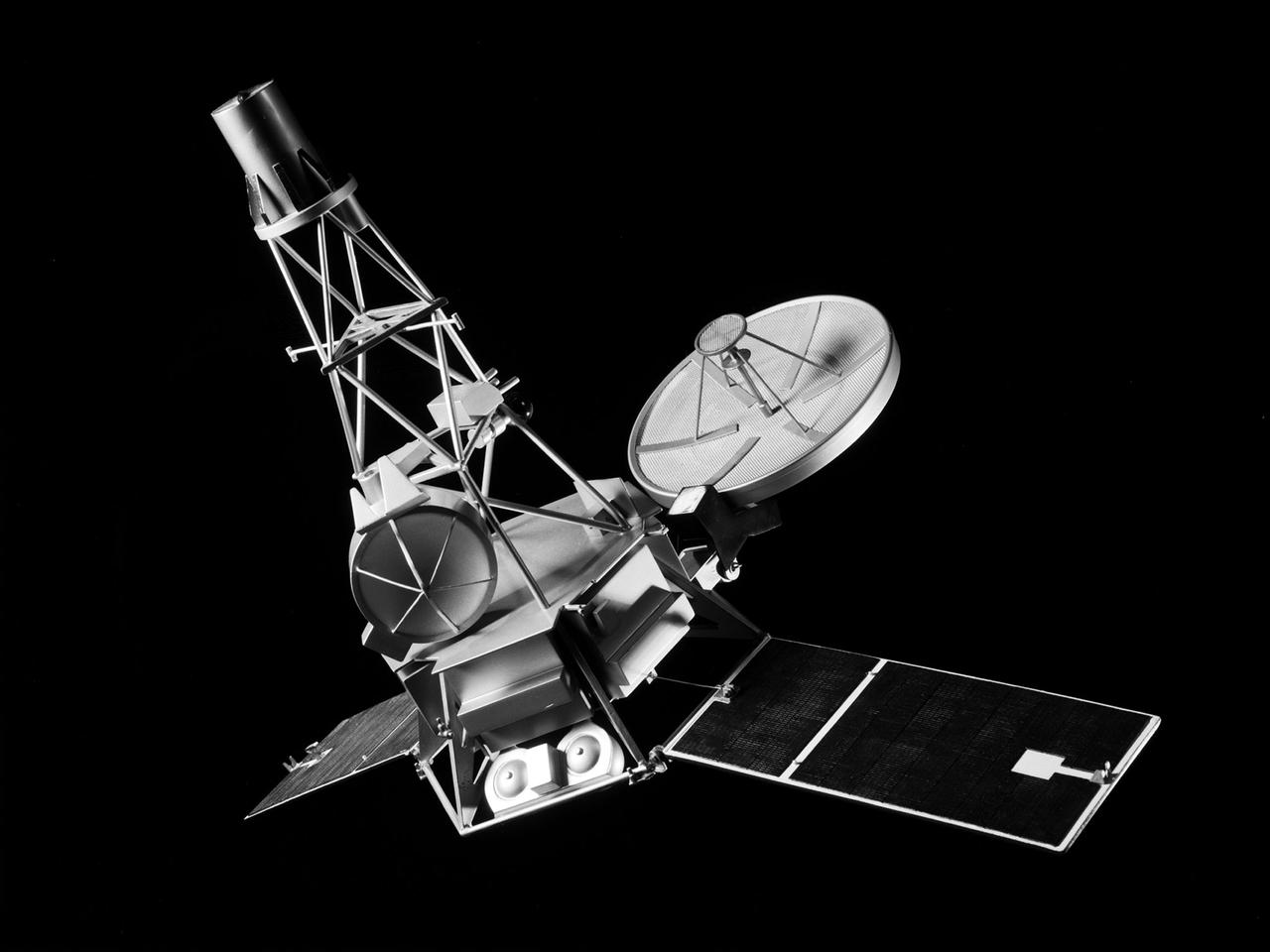
A model of the Mariner-C spacecraft at the National Aeronautics and Space Administration (NASA) Lewis Research Center for a June 1964 Conference on New Technology. Mariner-C and Mariner-D were identical spacecraft designed by the Jet Propulsion Laboratory to flyby Mars and photograph the Martian surface. Mariner-C was launched on November 4, 1964, but the payload shroud did not jettison properly and the spacecraft’s battery power did not function. The mission ended unsuccessfully two days later. Mariner-D was launched as designed on November 28, 1964 and became the first successful mission to Mars. It was the first time a planet was photographed from space. Mariner-D’s 21 photographs revealed an inhospitable and barren landscape. The two Mariner spacecraft were launched by Atlas-Agena-D rockets. Lewis had taken over management of the Agena Program in October 1962. There had been five failures and two partial failures in the 17 Agena launches before being taken over by NASA Lewis. Lewis, however, oversaw 28 successful Agena missions between 1962 and 1968, including several Rangers and the Mariner Venus '67.
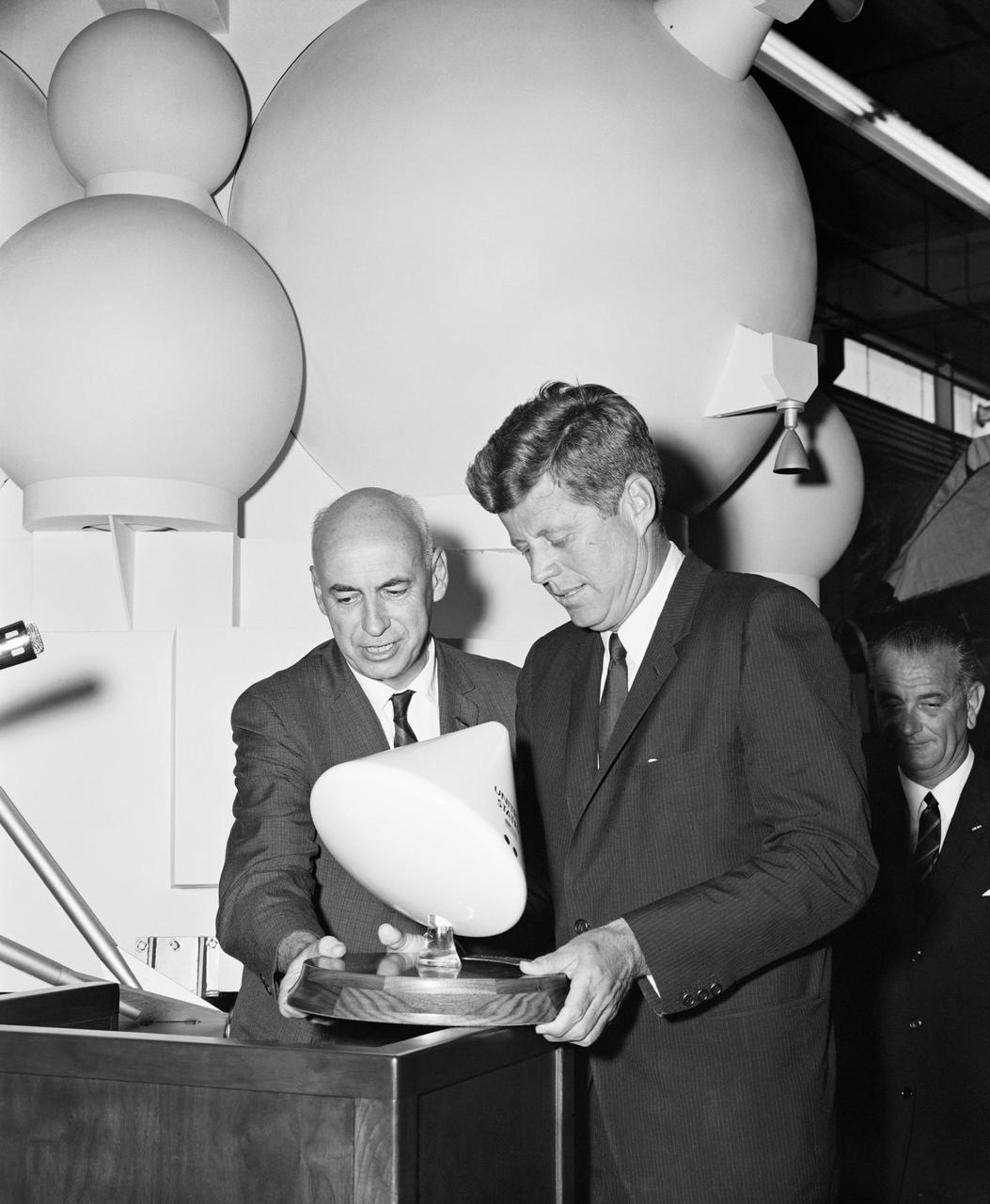
S62-03984 (12 September 1962) --- Dr. Robert R. Gilruth (left), MSC Director, presented President John F. Kennedy with this mounted model of the Apollo spacecraft at the end of the president's visit. Kennedy said, "We will take this back to the White House as a reminder of most extraordinary efforts being made by the men of NASA here and all across the country."
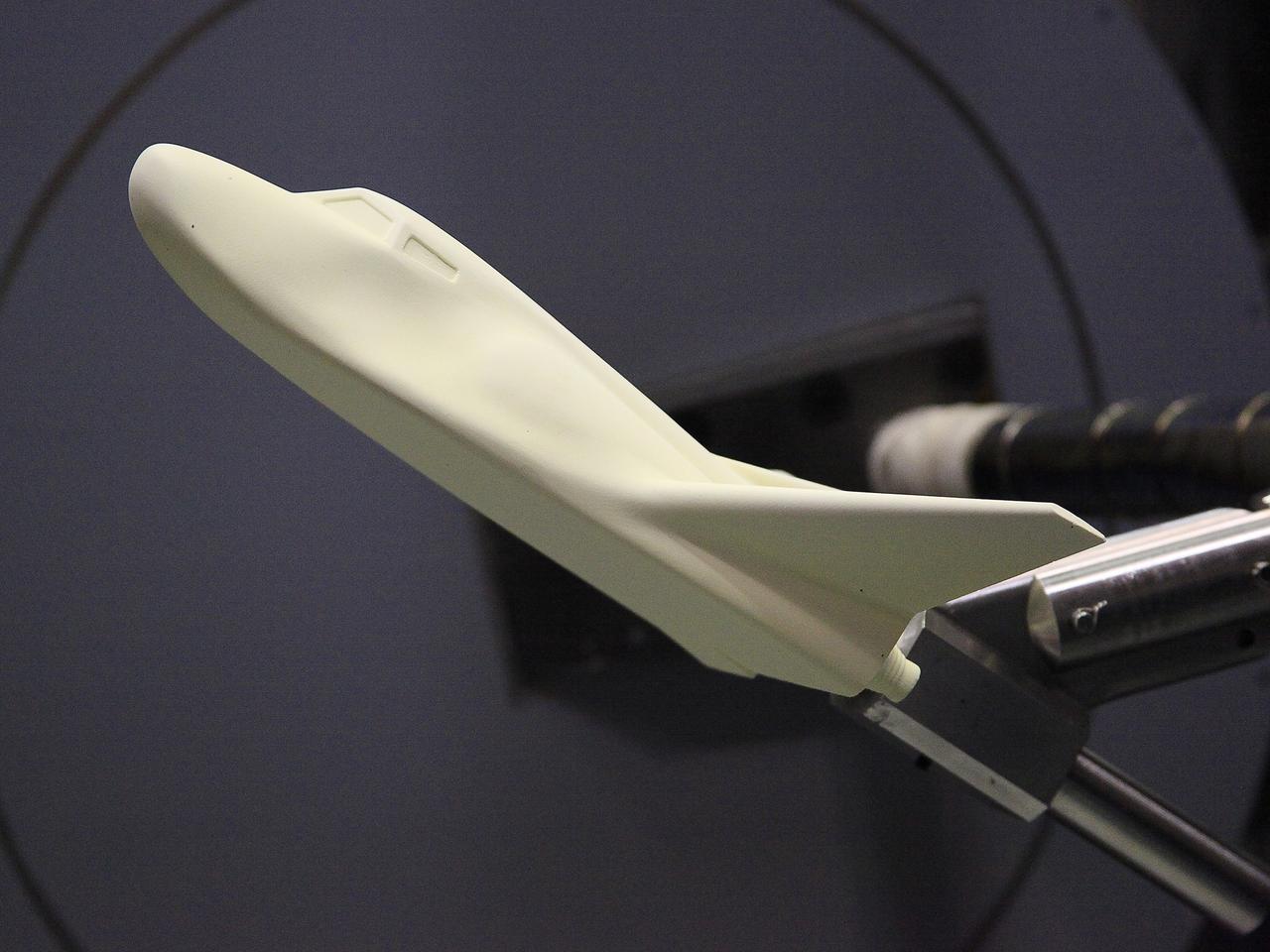
HAMPTON, Va. –A 10-inch long ceramic model of the Sierra Nevada Corporation, or SNC, Dream Chaser spacecraft is prepared for high-speed wind tunnel tests at NASA's Langley Research Center in Hampton, Va. The tests measure how much heat the winged vehicle would experience during ascent and re-entry through the atmosphere, including the spacecraft's lower- and upper-body flaps, elevons and a rudder. They're also helping the company obtain necessary data for the material selection and design of the spacecraft's thermal protection system. SNC is continuing the development of its Dream Chaser spacecraft under the agency's Commercial Crew Integrated Capability, or CCiCap, initiative, which is intended to lead to the availability of commercial human spaceflight services for government and commercial customers. To learn more about CCP and its industry partners, visit www.nasa.gov/commercialcrew. Image credit: NASA/David Bowman
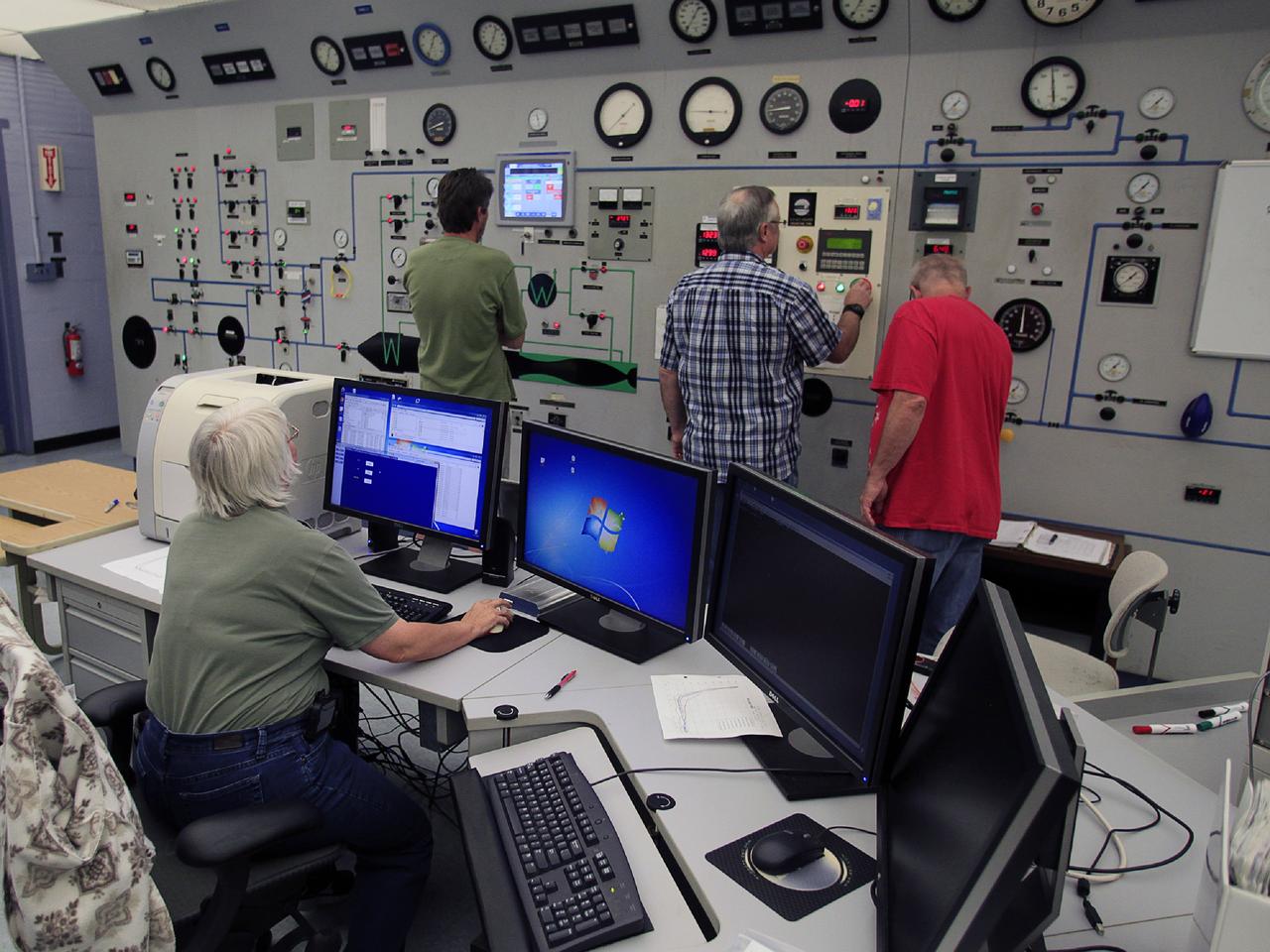
HAMPTON, Va. –Engineers monitor high-speed wind tunnel testing of a 10-inch long ceramic model of the Sierra Nevada Corporation, or SNC, Dream Chaser spacecraft at NASA's Langley Research Center in Hampton, Va. The tests measure how much heat the winged vehicle would experience during ascent and re-entry through the atmosphere, including the spacecraft's lower- and upper-body flaps, elevons and a rudder. They're also helping the company obtain necessary data for the material selection and design of the spacecraft's thermal protection system. SNC is continuing the development of its Dream Chaser spacecraft under the agency's Commercial Crew Integrated Capability, or CCiCap, initiative, which is intended to lead to the availability of commercial human spaceflight services for government and commercial customers. To learn more about CCP and its industry partners, visit www.nasa.gov/commercialcrew. Image credit: NASA/David Bowman
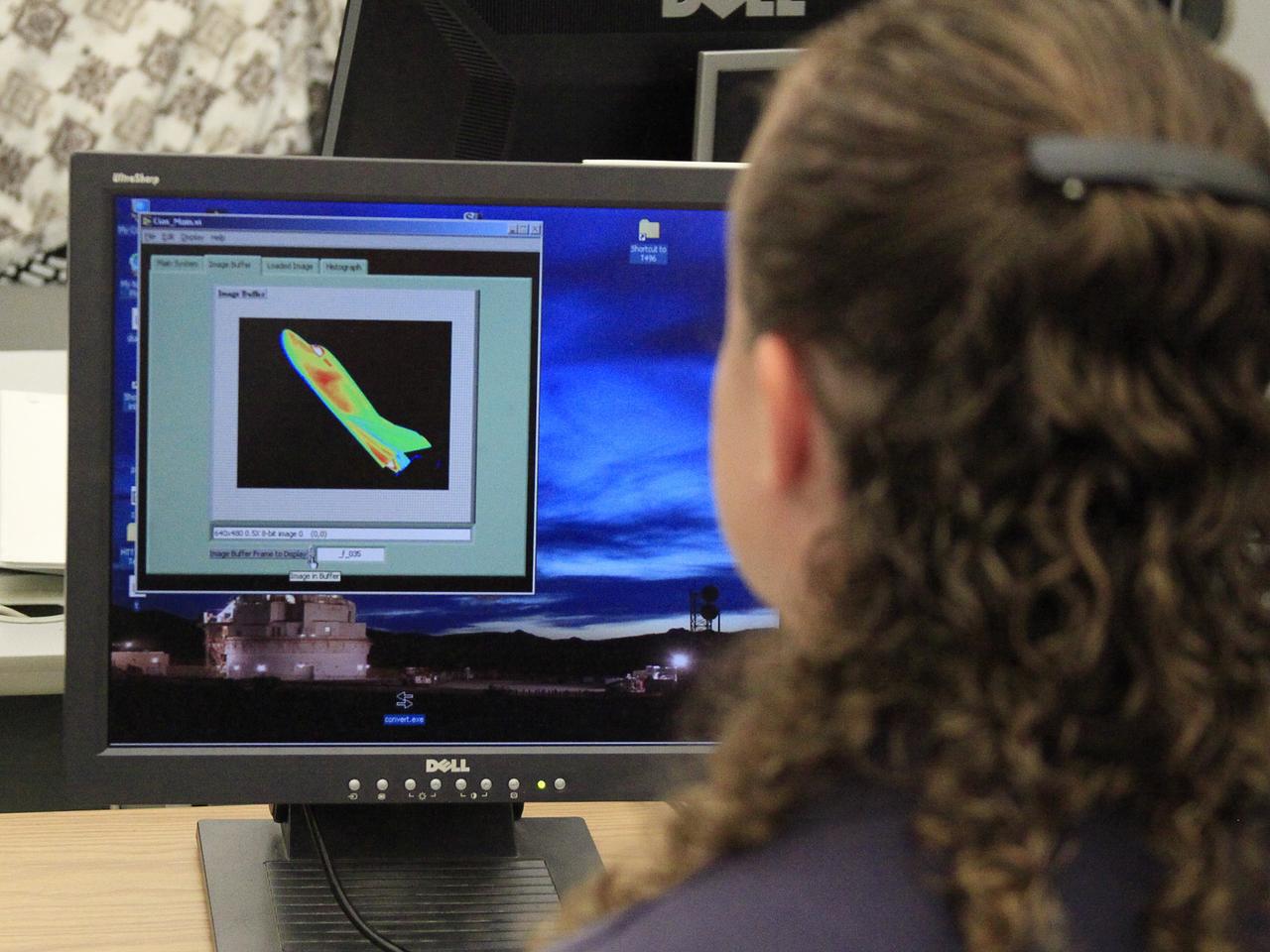
HAMPTON, Va. –An engineer monitors high-speed wind tunnel testing of a 10-inch long ceramic model of the Sierra Nevada Corporation, or SNC, Dream Chaser spacecraft at NASA's Langley Research Center in Hampton, Va. The tests measure how much heat the winged vehicle would experience during ascent and re-entry through the atmosphere, including the spacecraft's lower- and upper-body flaps, elevons and a rudder. They're also helping the company obtain necessary data for the material selection and design of the spacecraft's thermal protection system. SNC is continuing the development of its Dream Chaser spacecraft under the agency's Commercial Crew Integrated Capability, or CCiCap, initiative, which is intended to lead to the availability of commercial human spaceflight services for government and commercial customers. To learn more about CCP and its industry partners, visit www.nasa.gov/commercialcrew. Image credit: NASA/David Bowman
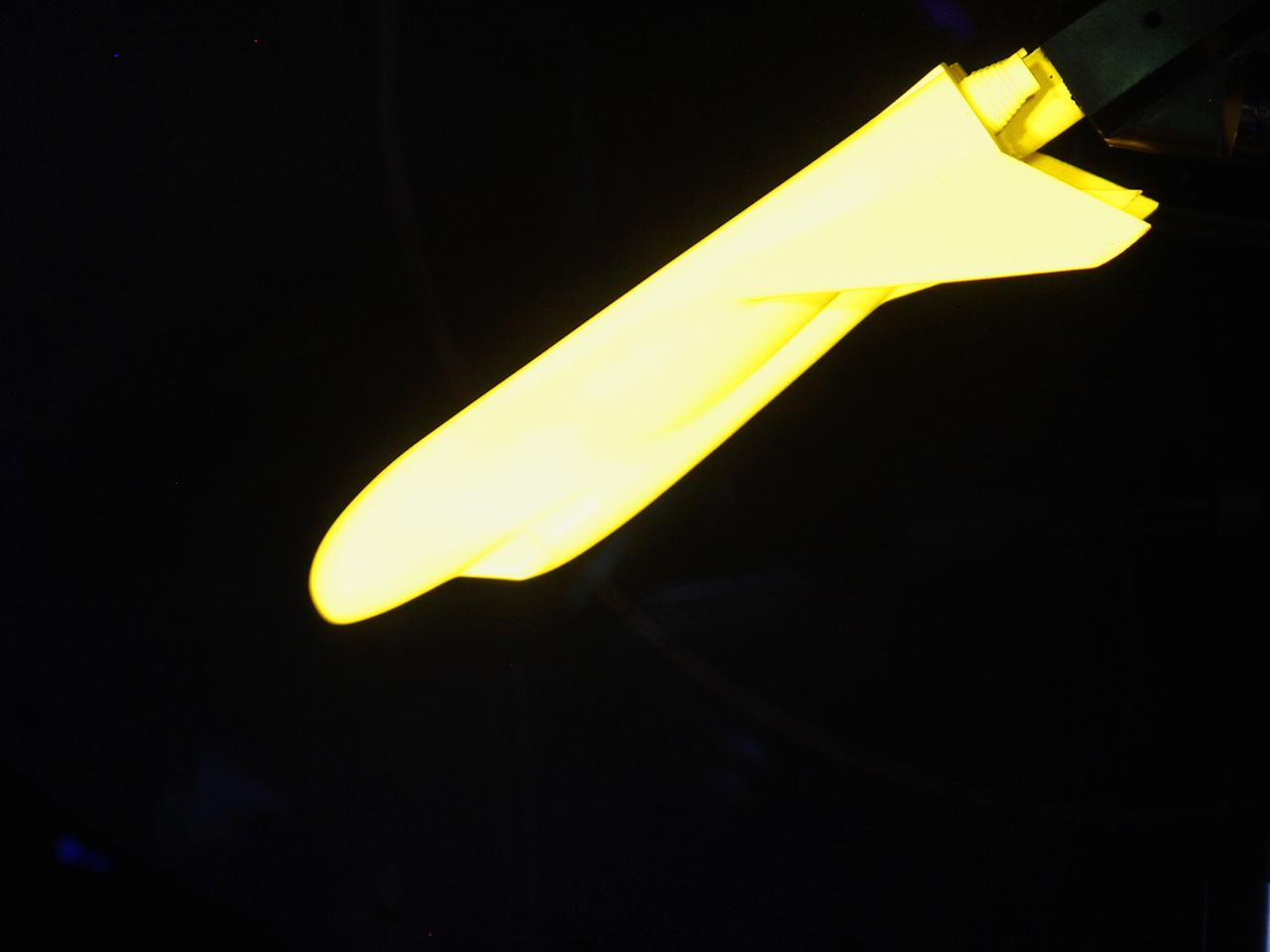
HAMPTON, Va. –A 10-inch long ceramic model of the Sierra Nevada Corporation, or SNC, Dream Chaser spacecraft undergoes high-speed wind tunnel tests at NASA's Langley Research Center in Hampton, Va. The tests measure how much heat the winged vehicle would experience during ascent and re-entry through the atmosphere, including the spacecraft's lower- and upper-body flaps, elevons and a rudder. They're also helping the company obtain necessary data for the material selection and design of the spacecraft's thermal protection system. SNC is continuing the development of its Dream Chaser spacecraft under the agency's Commercial Crew Integrated Capability, or CCiCap, initiative, which is intended to lead to the availability of commercial human spaceflight services for government and commercial customers. To learn more about CCP and its industry partners, visit www.nasa.gov/commercialcrew. Image credit: NASA/David Bowman
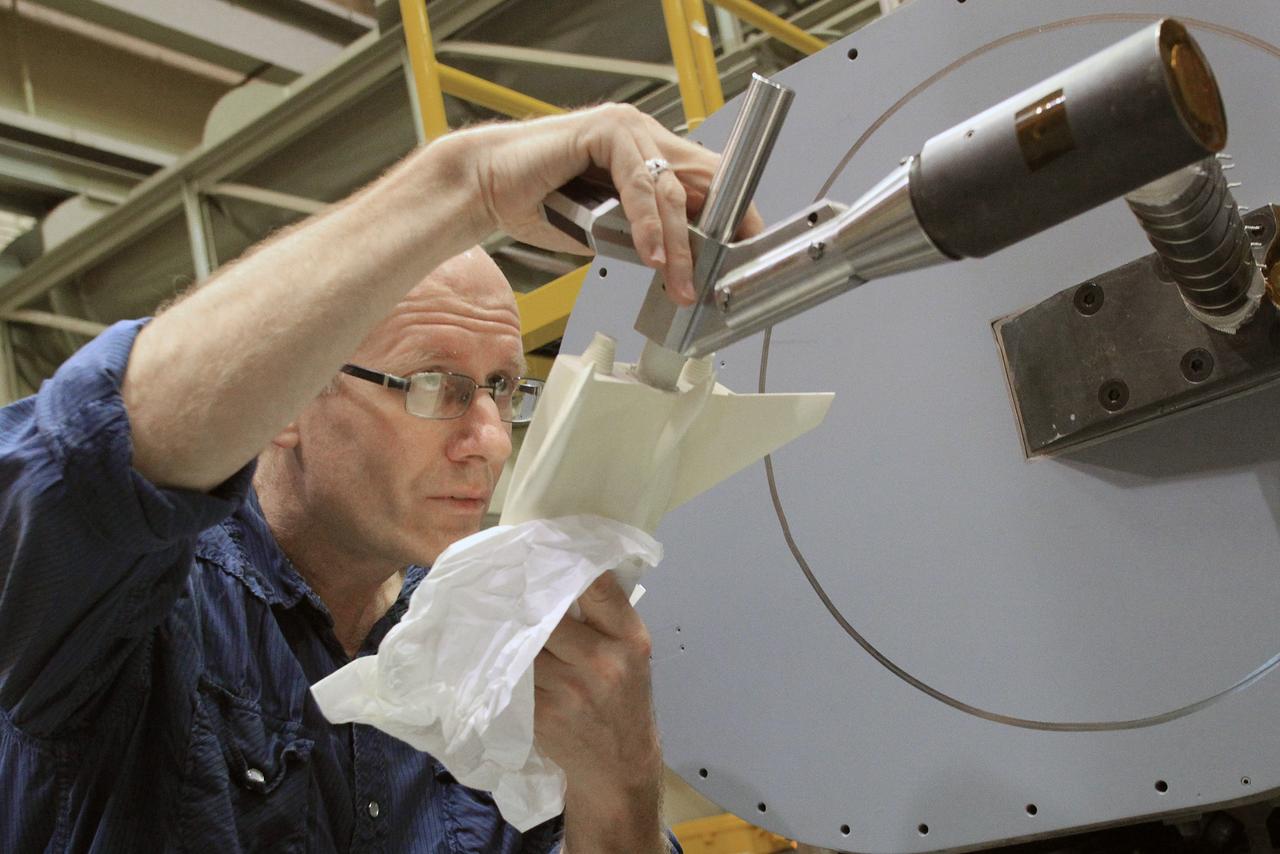
HAMPTON, Va. –A 10-inch long ceramic model of the Sierra Nevada Corporation, or SNC, Dream Chaser spacecraft is prepared for high-speed wind tunnel tests at NASA's Langley Research Center in Hampton, Va. The tests measure how much heat the winged vehicle would experience during ascent and re-entry through the atmosphere, including the spacecraft's lower- and upper-body flaps, elevons and a rudder. They're also helping the company obtain necessary data for the material selection and design of the spacecraft's thermal protection system. SNC is continuing the development of its Dream Chaser spacecraft under the agency's Commercial Crew Integrated Capability, or CCiCap, initiative, which is intended to lead to the availability of commercial human spaceflight services for government and commercial customers. To learn more about CCP and its industry partners, visit www.nasa.gov/commercialcrew. Image credit: NASA/David Bowman
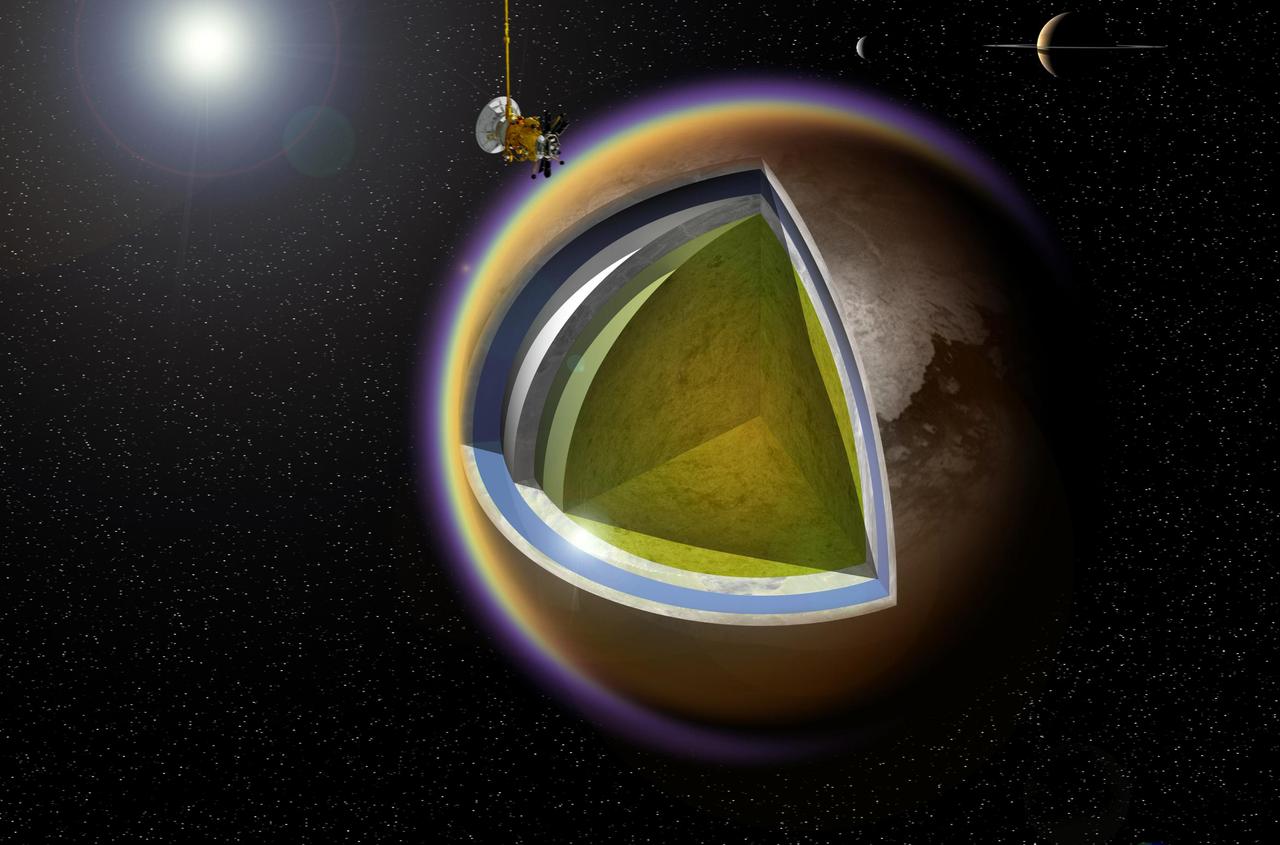
This artist concept shows a possible model of Titan internal structure that incorporates data from NASA Cassini spacecraft. A model of Cassini is shown making a targeted flyby over Titan cloudtops; Saturn and Enceladus appear at upper right.

Students learn about research model aircraft and spacecraft built in the Aerospace Composite and Model Development Section during a visit to NASA Langley Research Center, Wednesday, April 29, 2026. Photo Credit (NASA/Ryan H. Hill)

Students learn about research model aircraft and spacecraft built in the Aerospace Composite and Model Development Section during a visit to NASA Langley Research Center, Wednesday, April 29, 2026. Photo Credit (NASA/Ryan H. Hill)

Students learn about research model aircraft and spacecraft built in the Aerospace Composite and Model Development Section during a visit to NASA Langley Research Center, Wednesday, April 29, 2026. Photo Credit (NASA/Ryan H. Hill)

Students learn about research model aircraft and spacecraft built in the Aerospace Composite and Model Development Section during a visit to NASA Langley Research Center, Wednesday, April 29, 2026. Photo Credit (NASA/Ryan H. Hill)

Students learn about research model aircraft and spacecraft built in the Aerospace Composite and Model Development Section during a visit to NASA Langley Research Center, Wednesday, April 29, 2026. Photo Credit (NASA/Ryan H. Hill)

Students learn about research model aircraft and spacecraft built in the Aerospace Composite and Model Development Section during a visit to NASA Langley Research Center, Wednesday, April 29, 2026. Photo Credit (NASA/Ryan H. Hill)

Students learn about research model aircraft and spacecraft built in the Aerospace Composite and Model Development Section during a visit to NASA Langley Research Center, Wednesday, April 29, 2026. Photo Credit (NASA/ Mark L. Knopp)

Students learn about research model aircraft and spacecraft built in the Aerospace Composite and Model Development Section during a visit to NASA Langley Research Center, Wednesday, April 29, 2026. Photo Credit (NASA/ Mark L. Knopp)

CAPE CANAVERAL, Fla. -- This is a printable version of the NASA Kennedy Space Center 2012 holiday poster. It depicts Santa Claus riding a spacecraft from NASA's Commercial Crew Program as he delivers toys all over the world for the holidays, including Astro Socks, Cosmic Soda and Magnetic boots that have been International Space Station certified. Santa also holds a model rocket for delivery and is steering his rocketship toward a stop at the space station during his deliveries. Lifting off from NASA's Kennedy Space Center in Florida, Santa is taking advantage of technologies developed at Kennedy in the Ground Systems Operations and Development Program and the Launch Services Program. The same advancements that are propelling Santa through space will be used for NASA's next generation of deep space missions: the Space Launch System rocket and Orion spacecraft. The NASA insignia appears in the upper right corner. For a black-and-white coloring sheet version, go to http://go.nasa.gov/V3KLEc. For more information, visit www.nasa.gov/kennedy.Poster designed by Kennedy Space Center Graphics Department. Credit: NASA
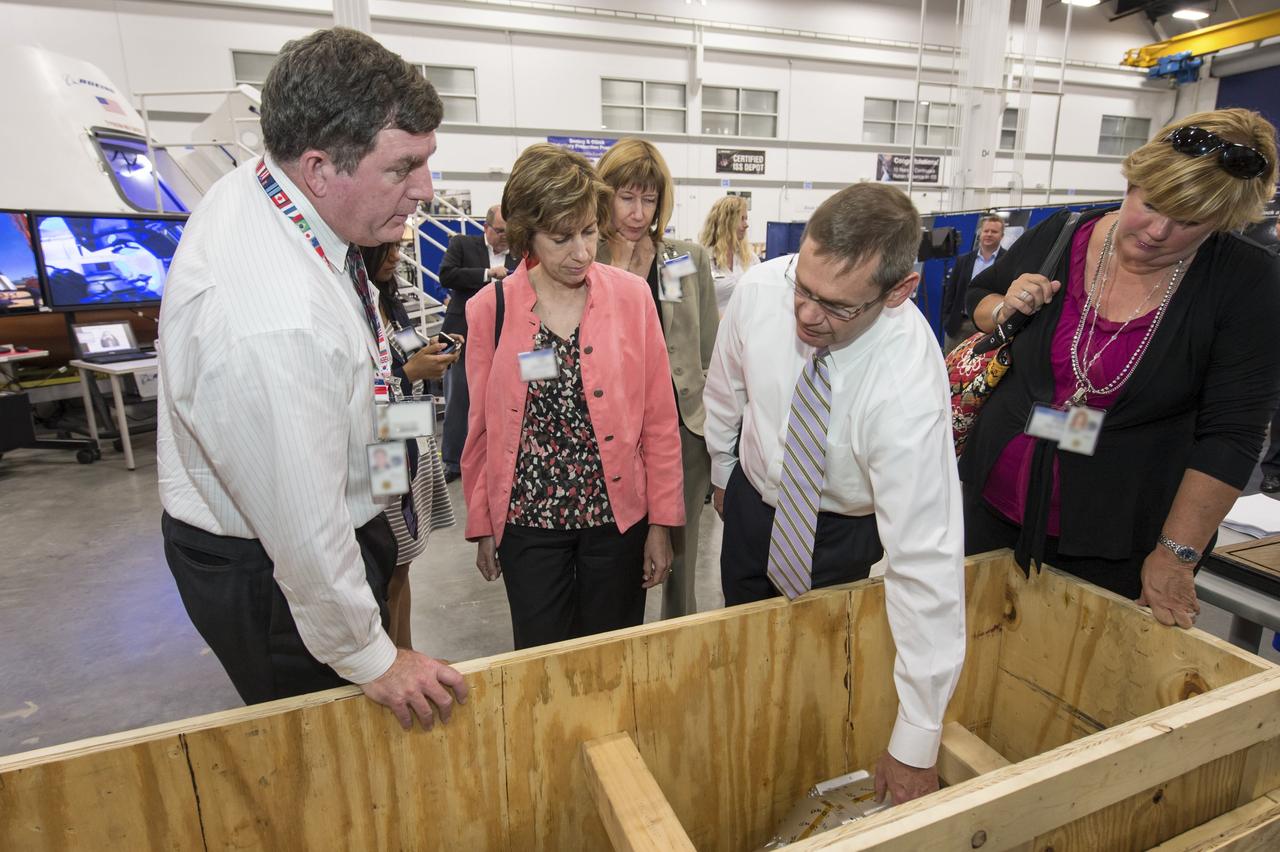
HOUSTON -- JSC-2013-E076043 -- John Elbon, The Boeing Company's vice president of Space Exploration, second right, shows off a wind tunnel model of the CST-100 spacecraft to Johnson Space Center management at the company's Houston Product Support Center. From left, are Kirk Shireman, Johnson's deputy director, Ellen Ochoa, Johnson's director, Kathy Lueders, deputy director of NASA's Commercial Crew Program, Elbon, and Melanie Saunders, Johnson's associate director. Boeing's CST-100 is designed to transport a mix of crew and cargo to low-Earth-orbit destinations. Boeing is one of three aerospace industry partners working with NASA's Commercial Crew Program, or CCP, during the Commercial Crew Integrated Capability, or CCiCap, initiative, which is intended to make commercial human spaceflight services available for government and commercial customers. To learn more about CCP, visit www.nasa.gov/commercialcrew. Photo credit: NASA/James Blair
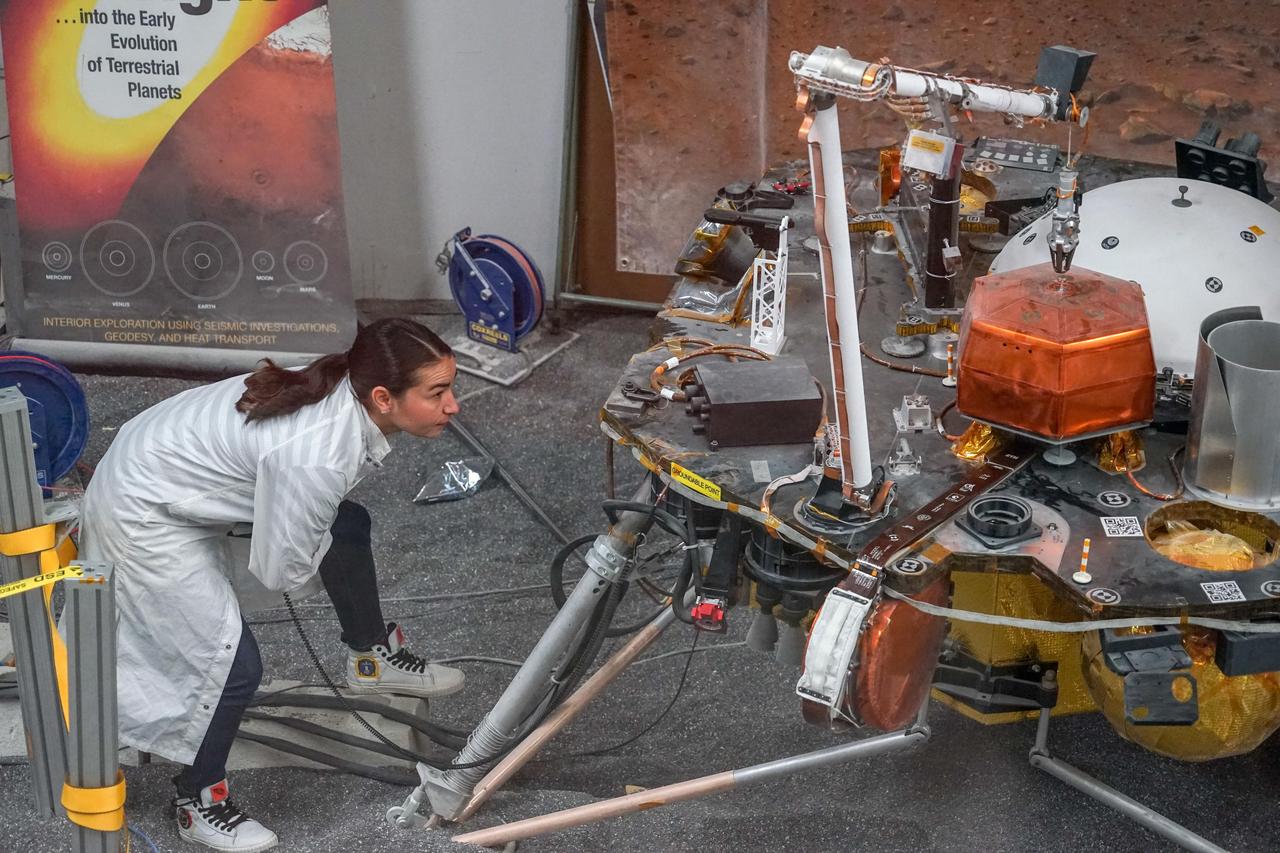
Engineer Marleen Sundgaard watches as a test version of NASA's Mars InSight lander grasps a model of the spacecraft's seismometer. This work was done at NASA's Jet Propulsion Laboratory in Pasadena, California. https://photojournal.jpl.nasa.gov/catalog/PIA22952
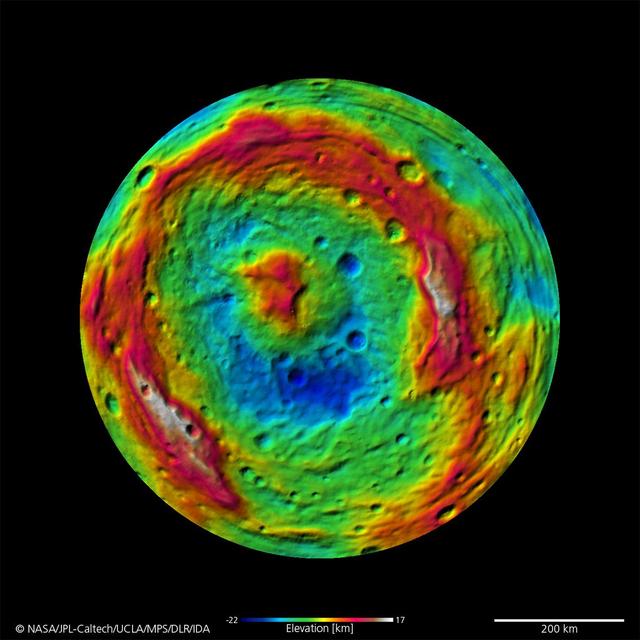
The terrain model of Vesta southern hemisphere shows a big circular structure, its rim rising above the interior of the structure. This false-color map of the giant asteroid Vesta is from the framing camera aboard NASA Dawn spacecraft.
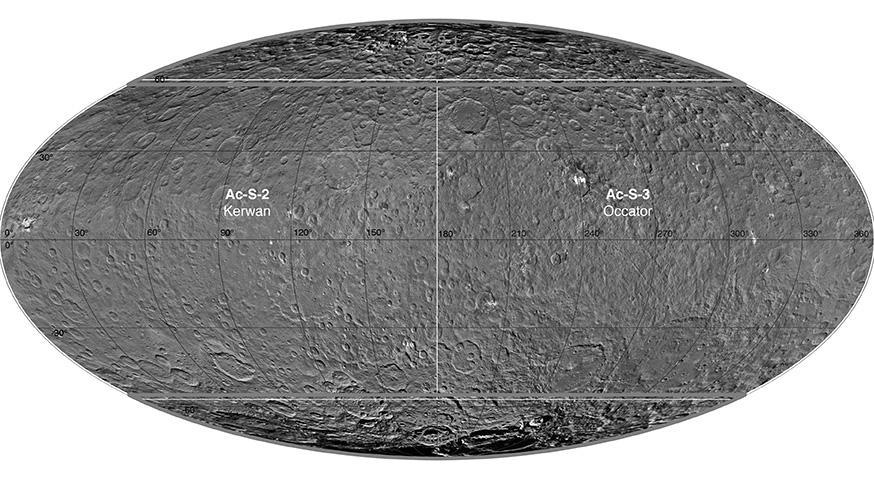
This atlas of Ceres was created using images taken by NASA Dawn spacecraft in June 2015. Researchers used 12,000 points on Ceres to construct a terrain model, which served as the basis for other maps. http://photojournal.jpl.nasa.gov/catalog/PIA20014
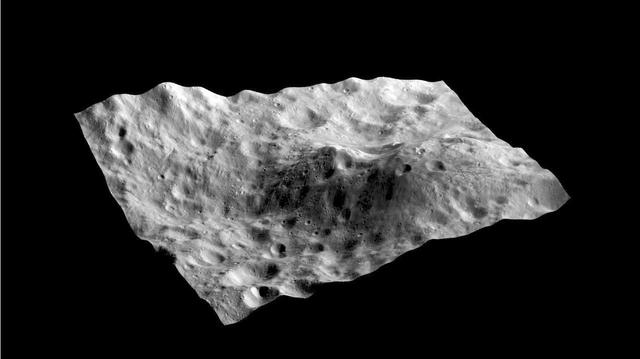
This still from a movie shows an image taken by NASA Dawn spacecraft layered on a digital terrain model of an unusual hill containing a dark-rayed impact crater and nearby dark deposit on asteroid Vesta.
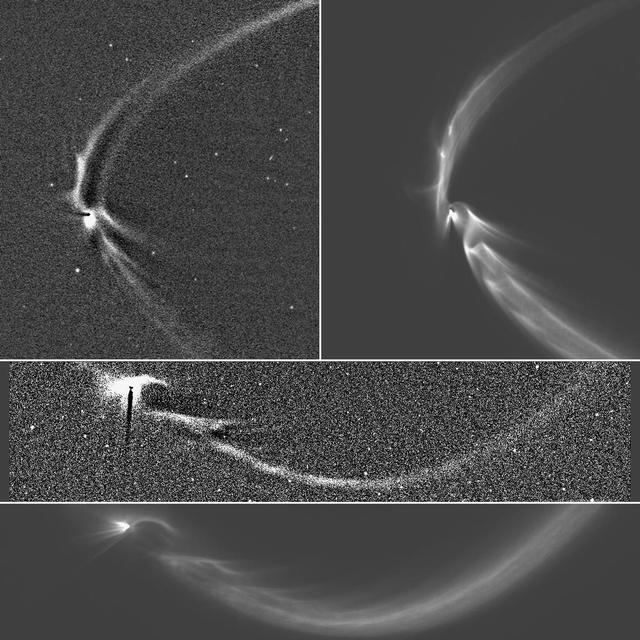
This collage of NASA Cassini spacecraft images and computer simulations shows how long, sinuous features from Enceladus can be modeled by tracing the trajectories of tiny, icy grains ejected from the moon south polar geysers.
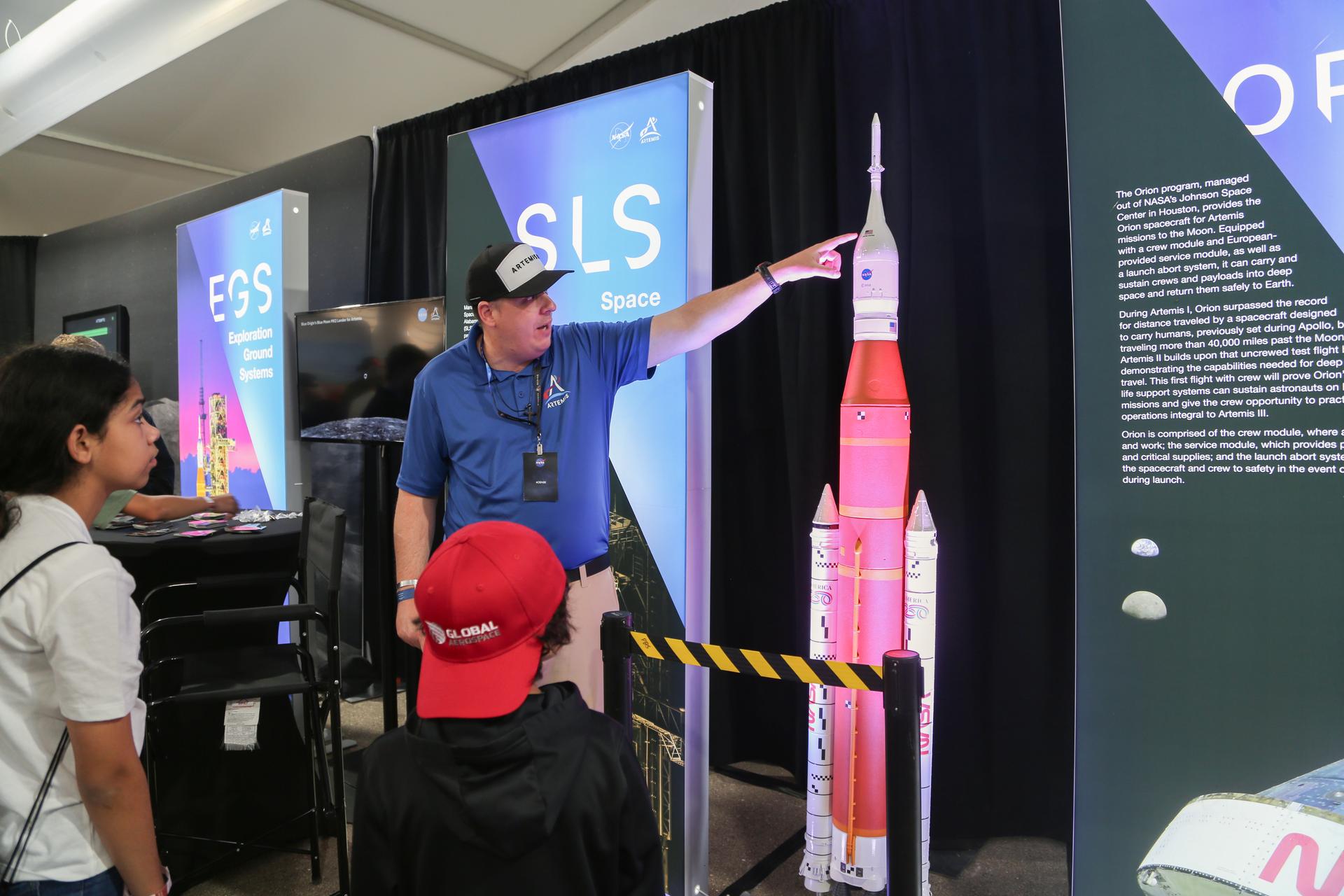
NASA Communications Strategist Will Bryan shows visitors an Orion spacecraft model at the Artemis display in the NASA pavilion at the 2026 Experimental Aircraft Association (EAA) AirVenture air show in Oshkosh, Wisconsin, Monday, July 20, 2026.
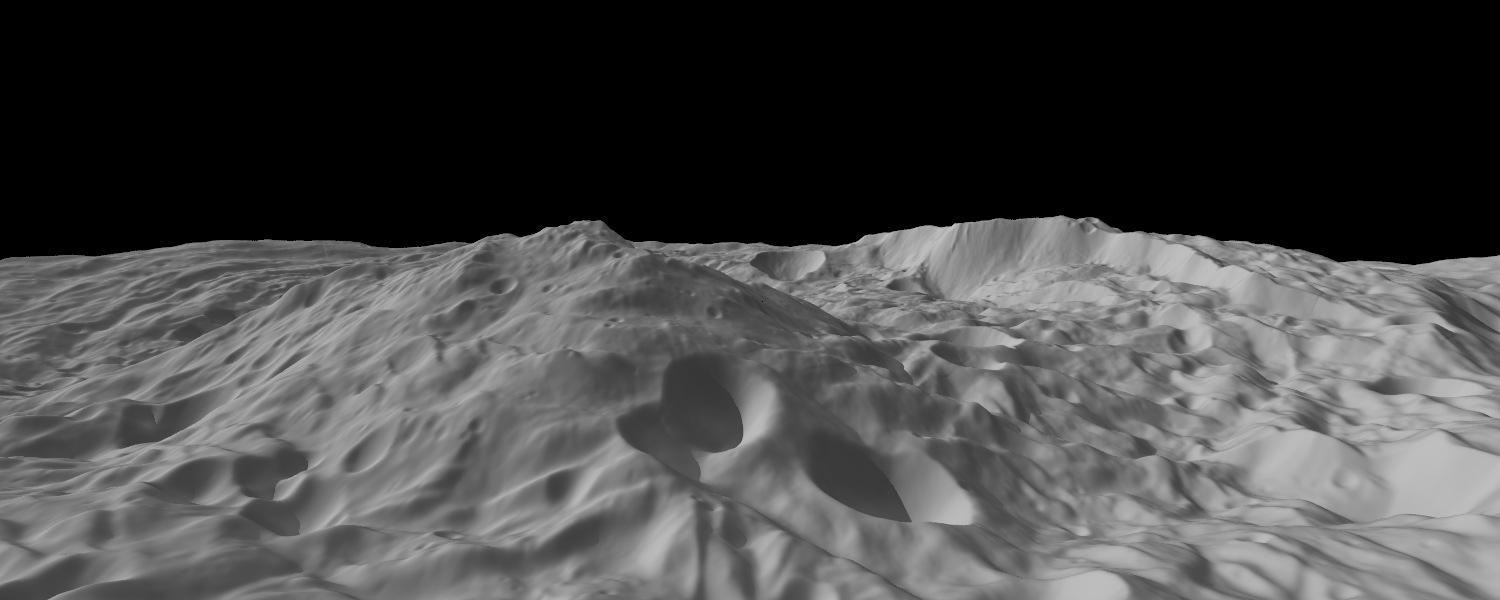
This image of asteroid Vesta, from NASA Dawn spacecraft, calculated from a shape model, shows a tilted view of the topography of the south polar region. This perspective removes the overall curvature of Vesta, as if the giant asteroid were flat and not
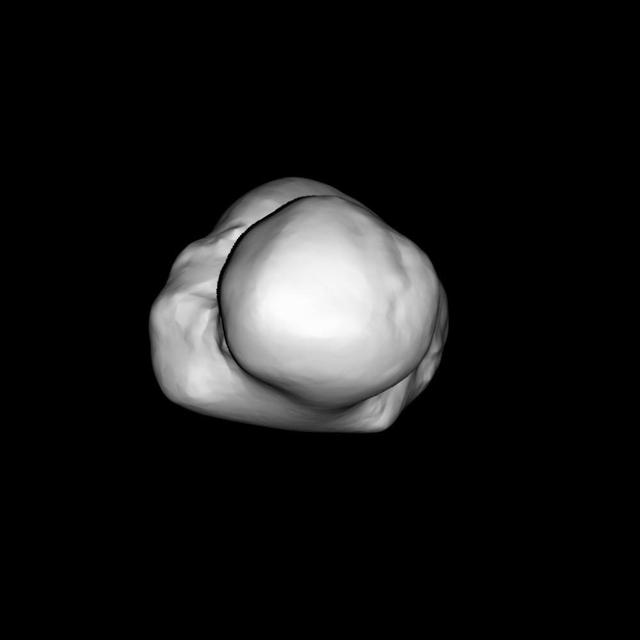
Images of comet 67P/Churyumov-Gerasimenko taken on July 14, 2014, by the OSIRIS imaging system aboard ESA Rosetta spacecraft have allowed scientists to create this three-dimensional shape model of the nucleus.
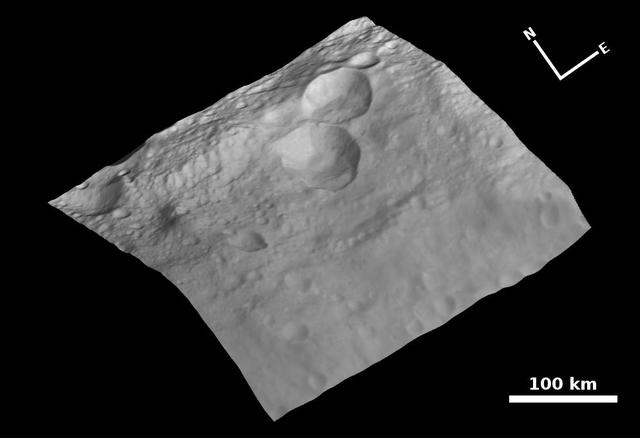
This view of the topography of asteroid Vesta surface is composed of several images obtained with the framing camera on NASA Dawn spacecraft on August 6, 2011. The image mosaic is shown superimposed on a digital terrain model.
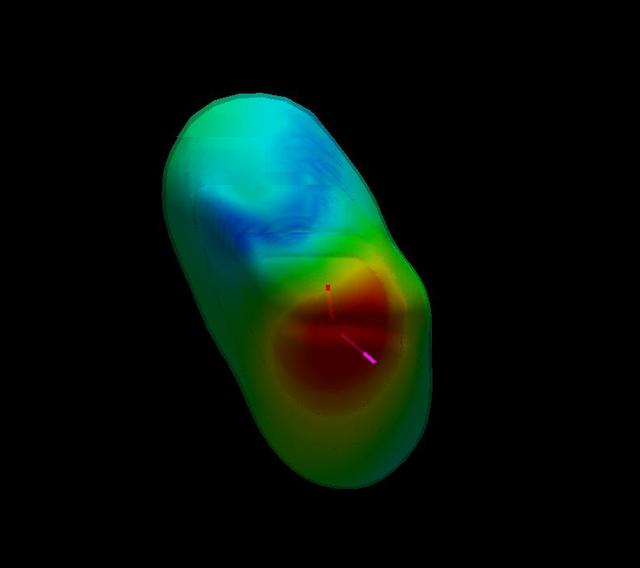
This graphic, based on data from NASA Voyager spacecraft, shows a model of what our solar system looks like to an observer outside in interstellar space, watching our solar system fly towards the observer.
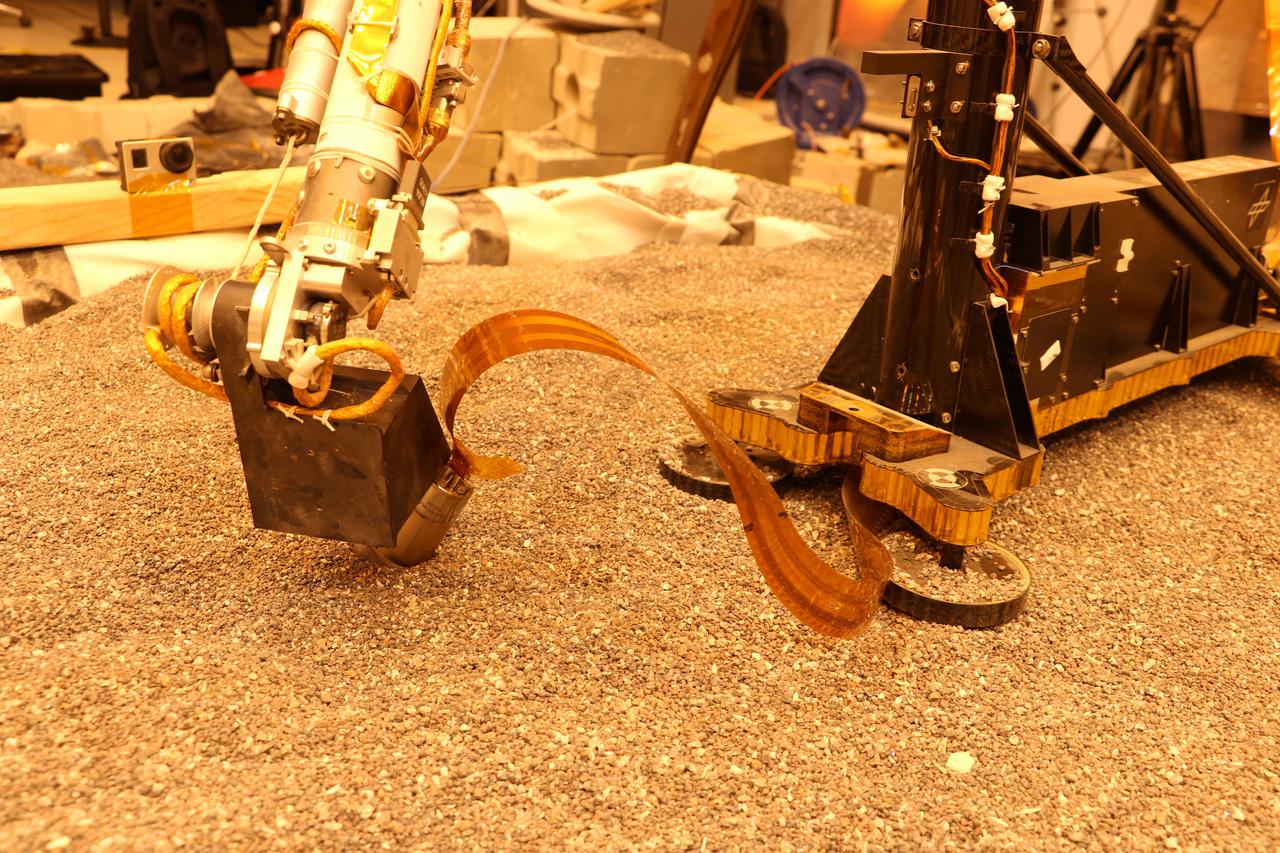
This test using an engineering model of the InSight lander here on Earth shows how the spacecraft on Mars will use its robotic arm to press on a digging device, called the "mole." https://photojournal.jpl.nasa.gov/catalog/PIA23619
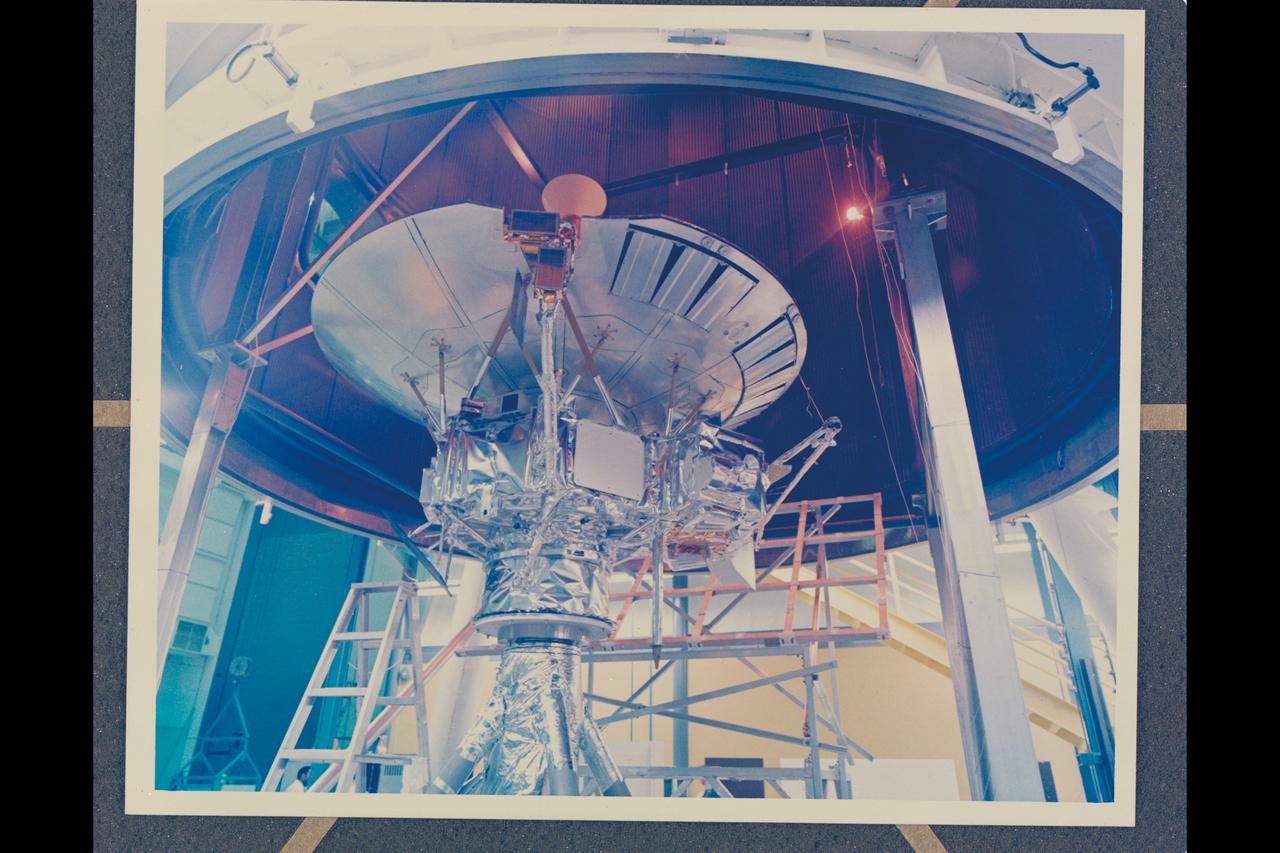
Pioneer F/G spacecraft thermal model
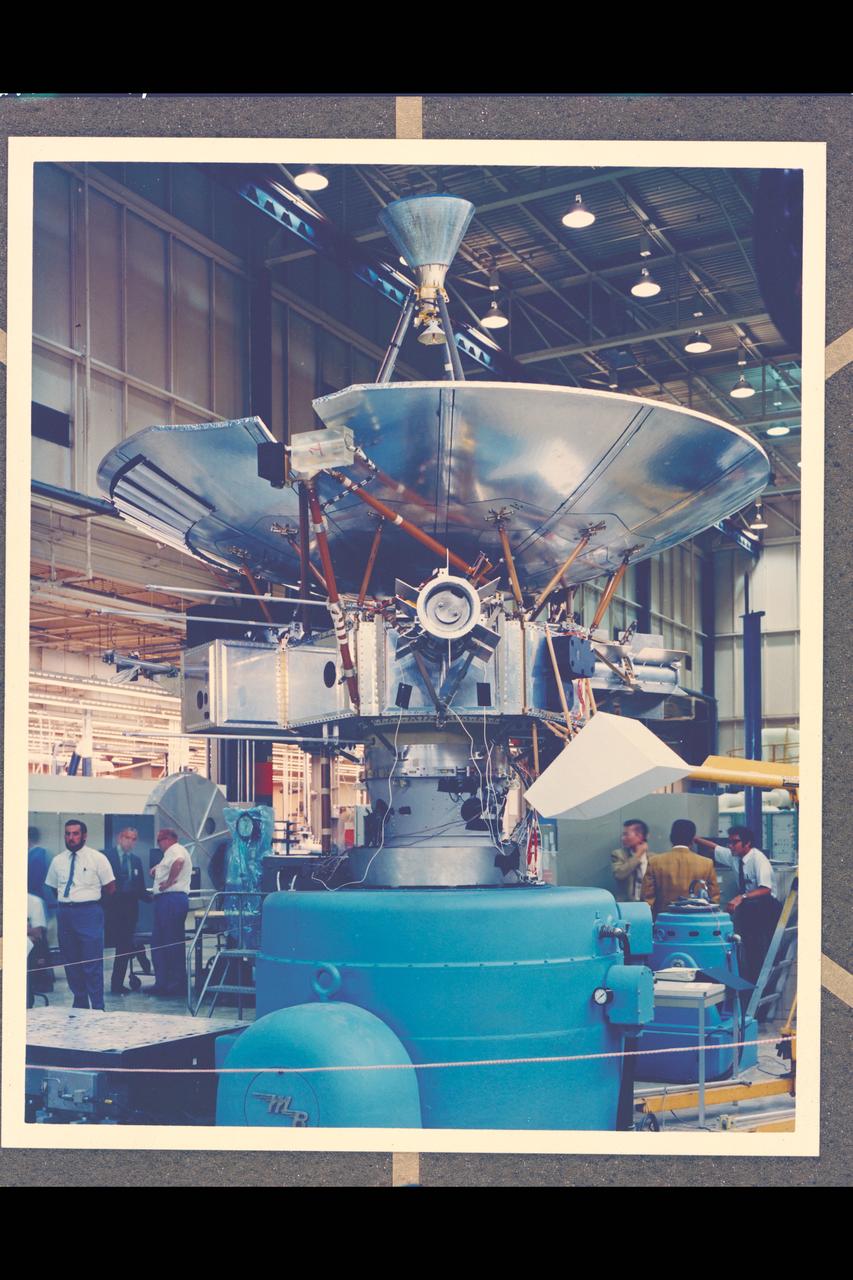
Pioneer F/G spacecraft structural model on shaker
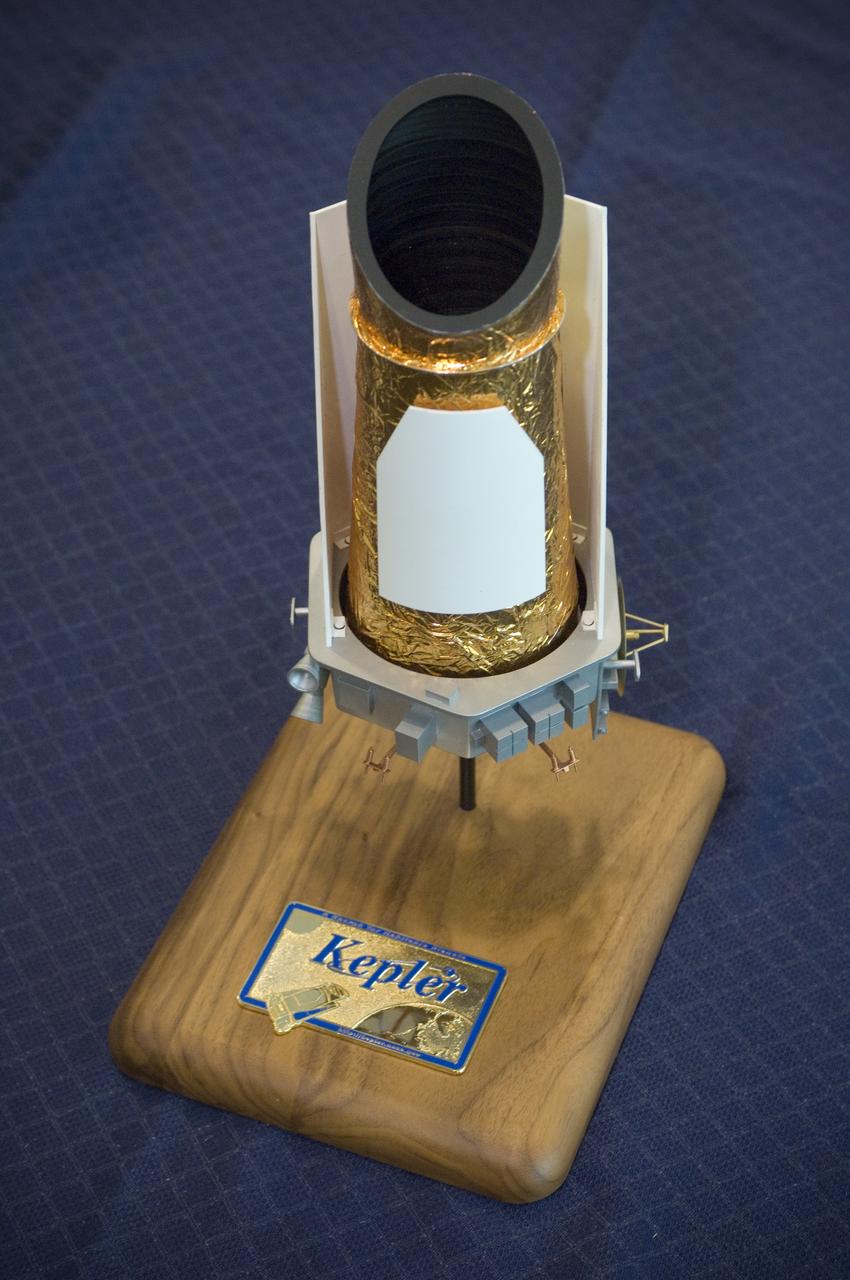
Kepler conference at SETI Institute - model of spacecraft
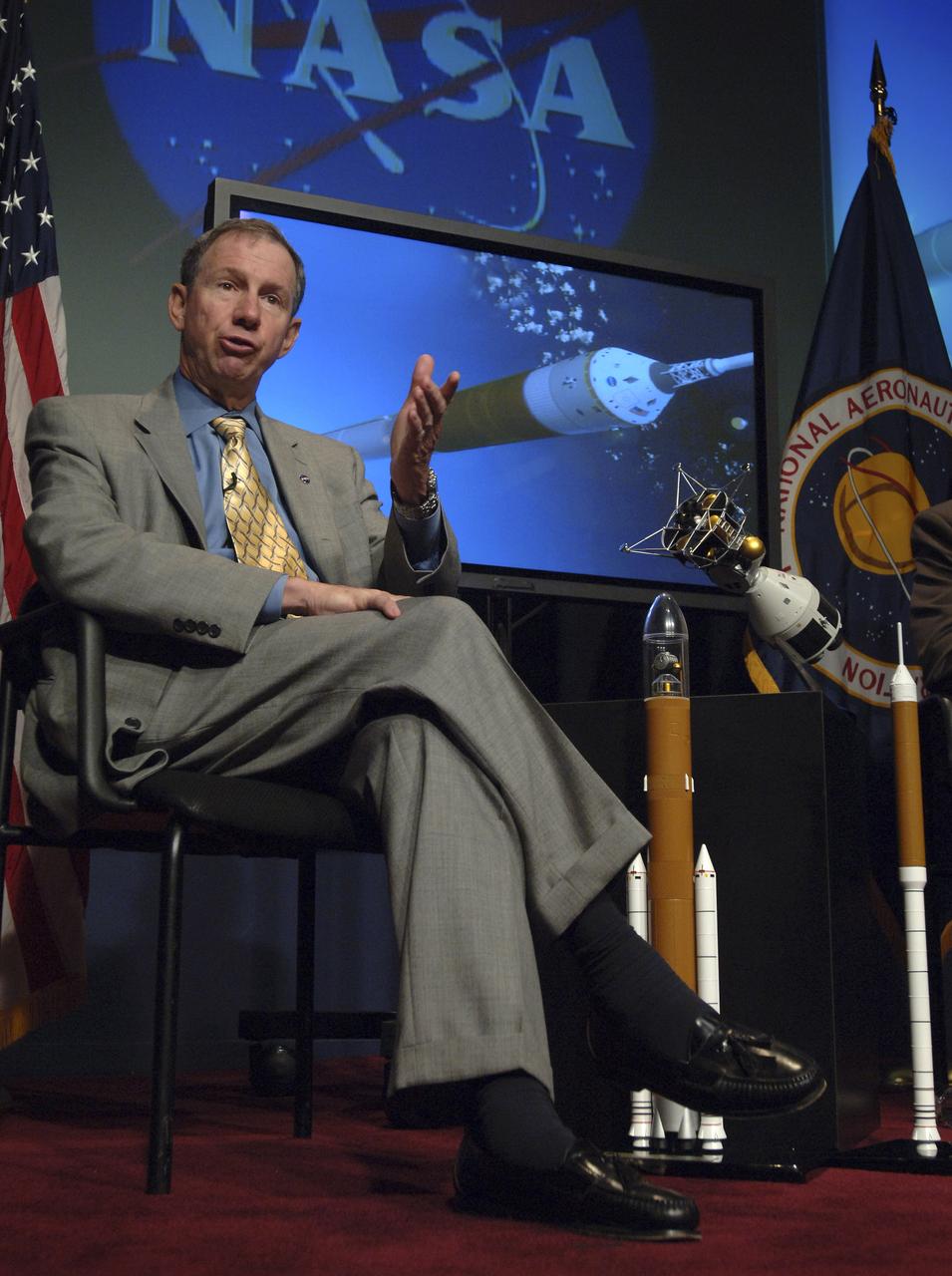
NASA Administrator Michael Griffin discusses the results of the agency's exploration architecture study on Monday, Sept. 19, 2005, at NASA Headquarters in Washington. The study made specific design recommendations for a vehicle to carry crews into space, a family of launch vehicles to take missions to the moon and beyond, and a "lunar mission architecture" for landing on the moon. Photo Credit: (NASA/Bill Ingalls)
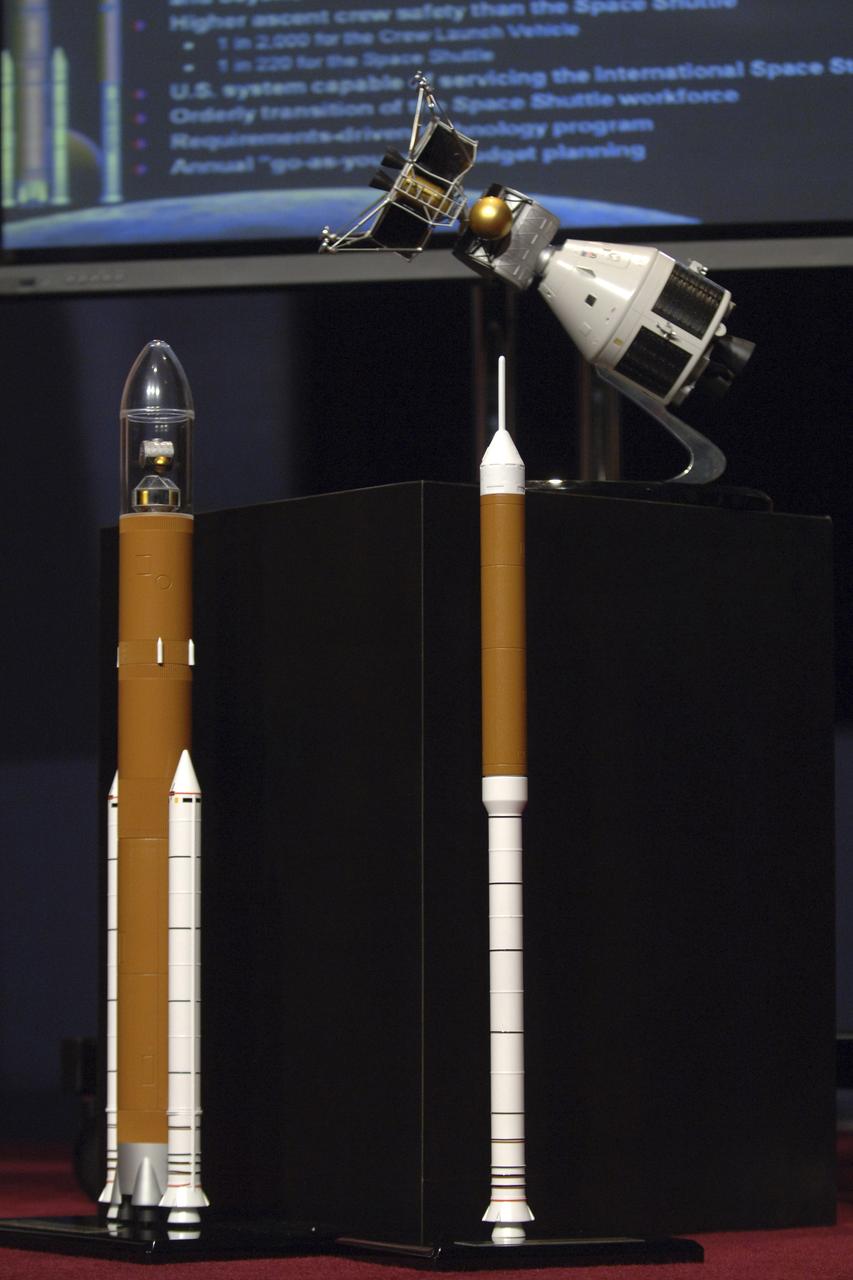
NASA Administrator Michael Griffin discusses the results of the agency's exploration architecture study on Monday, Sept. 19, 2005, at NASA Headquarters in Washington. The study made specific design recommendations for a vehicle to carry crews into space, a family of launch vehicles to take missions to the moon and beyond, and a "lunar mission architecture" for landing on the moon. Photo Credit: (NASA/Bill Ingalls)
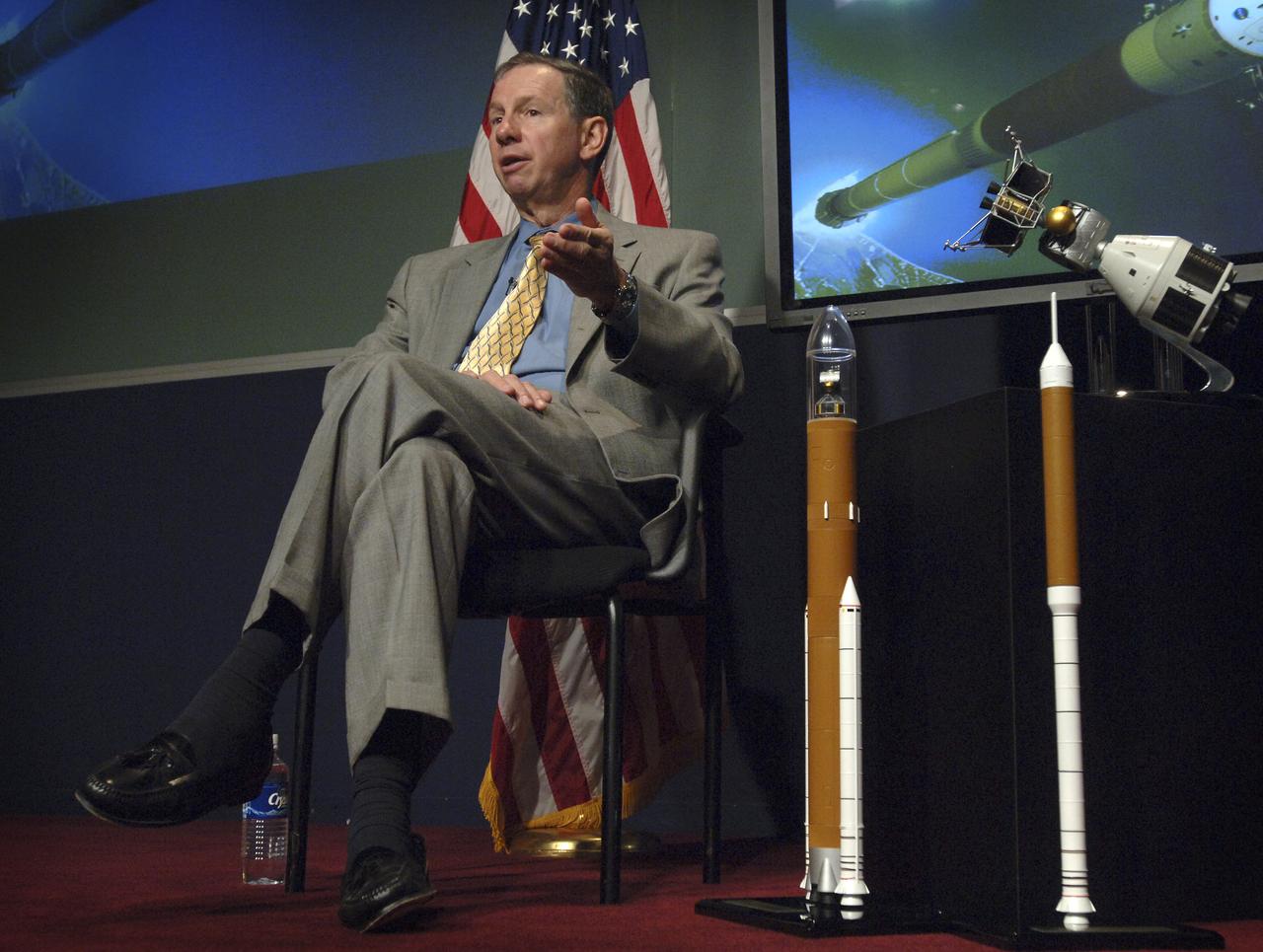
NASA Administrator Michael Griffin discusses the results of the agency's exploration architecture study on Monday, Sept. 19, 2005, at NASA Headquarters in Washington. The study made specific design recommendations for a vehicle to carry crews into space, a family of launch vehicles to take missions to the moon and beyond, and a "lunar mission architecture" for landing on the moon. Photo Credit: (NASA/Bill Ingalls)
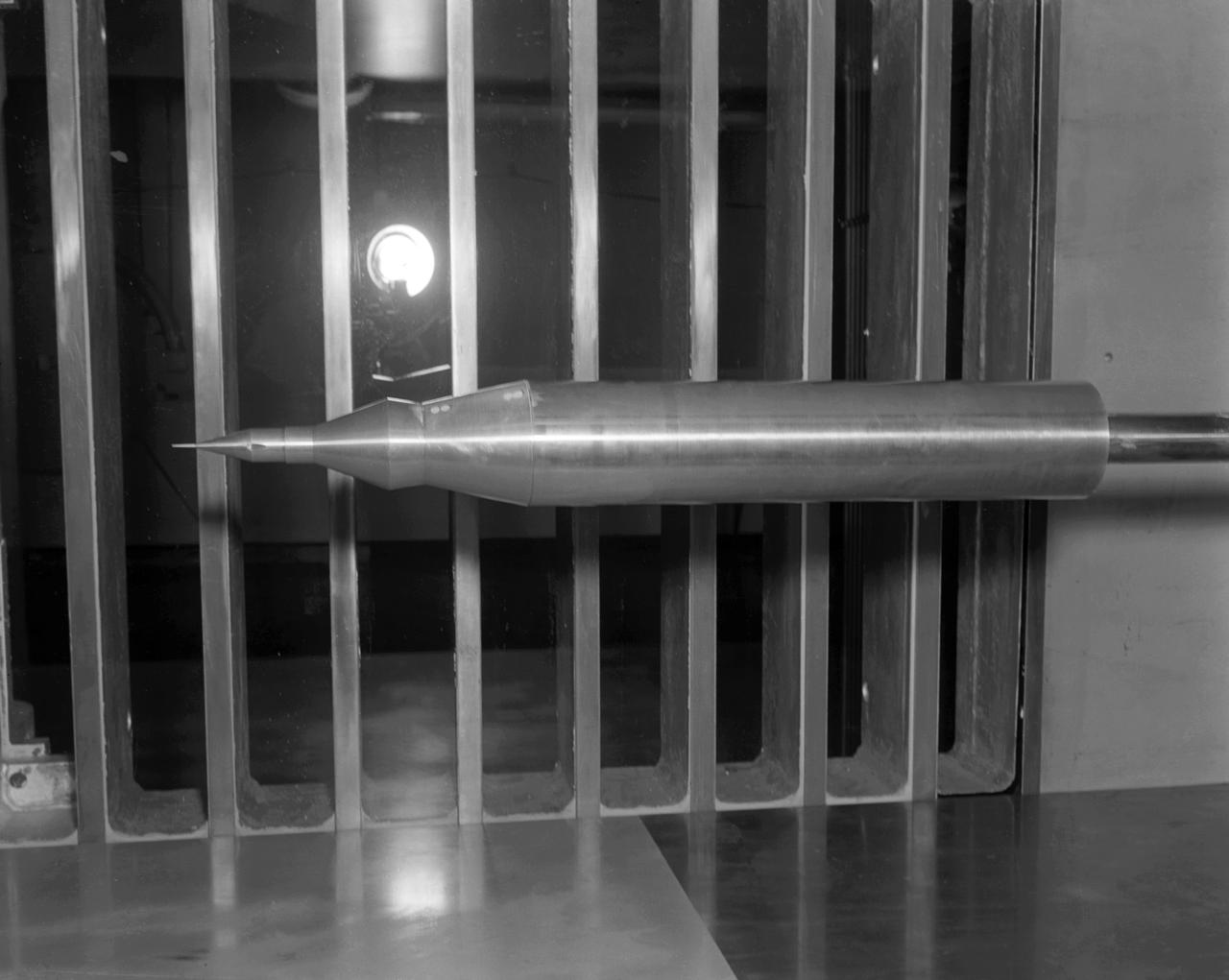
Model of Mercury (Redstone booster) carrying the spacecraft in the Unitary Plan wind tunnel for testing.
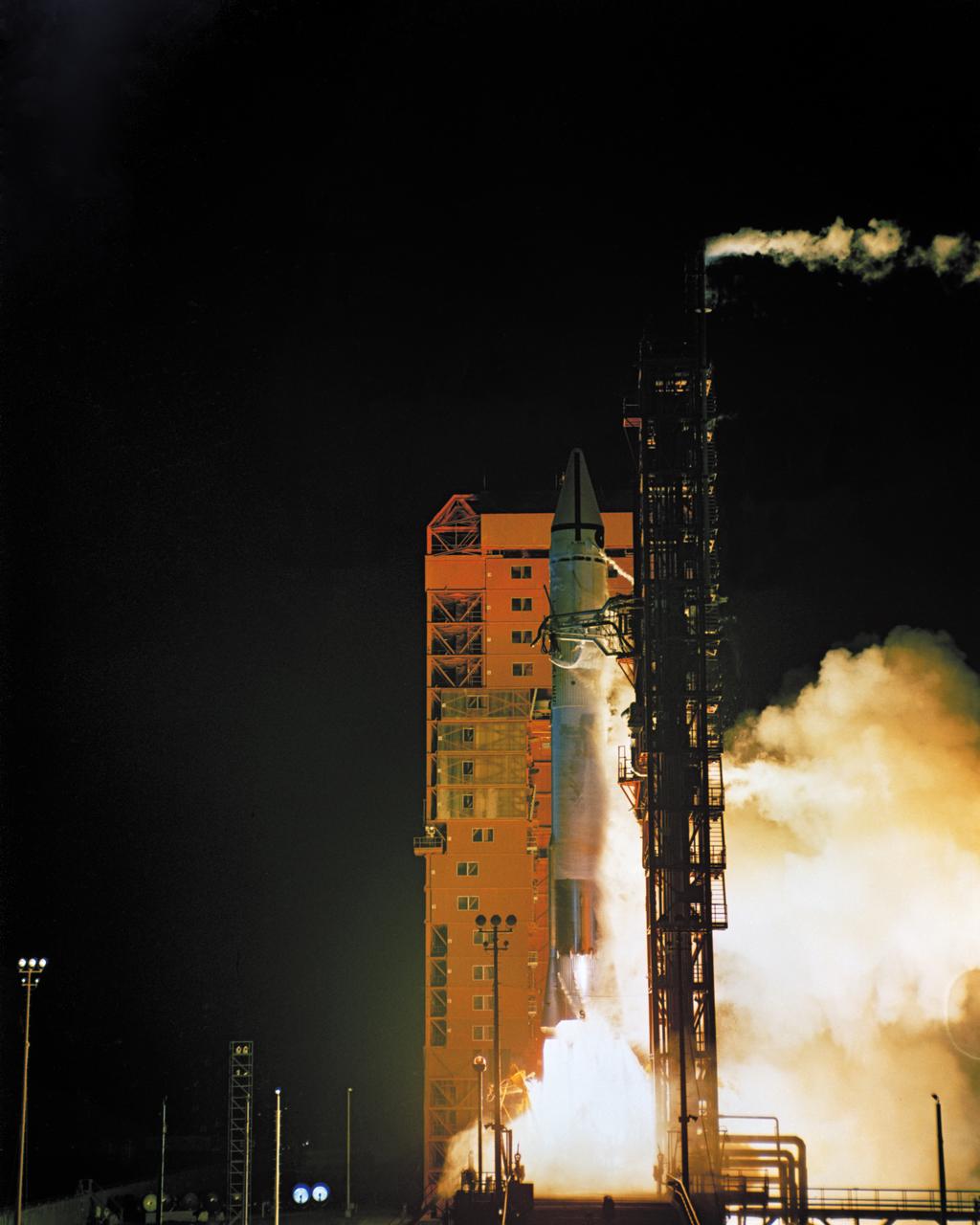
Lift off of Atlas Centaur 9 with Surveyor Mass Model spacecraft. Pad 36B. Item 1.3-25

Model of Mercury (Redstone booster) carrying the spacecraft in the Unitary Plan wind tunnel for testing.
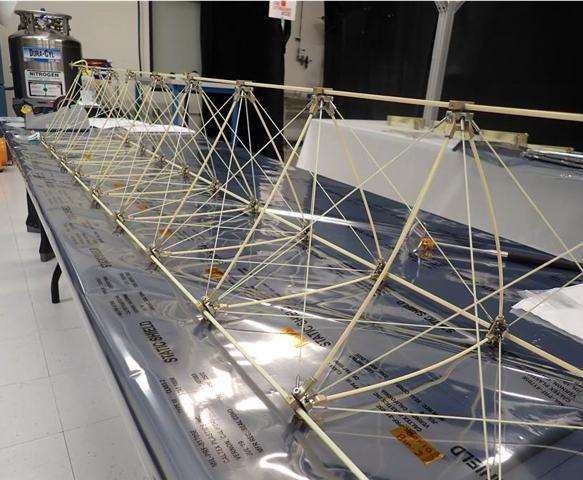
A test model of the boom that will be used for the magnetometer aboard NASA's Europa Clipper spacecraft is readied in NASA's Jet Propulsion Laboratory in Southern California. Called a dynamic test model, it is an exact duplicate of the Europa Clipper Magnetometer (ECM) boom that will fly on Europa Clipper. To fit aboard the rocket, the boom will be stowed in a canister and will deploy to its full length of 25 feet (8.5 meters) in the days after launch. The ECM will allow scientists to measure Europa's magnetic field and to measure the salinity and depth of Europa's internal global ocean. NASA scientists believe Jupiter's moon Europa may have the potential to harbor existing life, because of the internal ocean. Europa Clipper will swoop around Jupiter on an elliptical path, dipping close to the moon on each flyby. Understanding Europa's habitability will help scientists better understand how life developed on Earth and the potential for finding life beyond our planet. Europa Clipper is set to launch in 2024. https://photojournal.jpl.nasa.gov/catalog/PIA24786

Maxime Faget explains a model of the Apollo Spacecraft to members of the Korean National Assembly.( 19431 thru 19432 ); MSC, HOUSTON, TX B&W
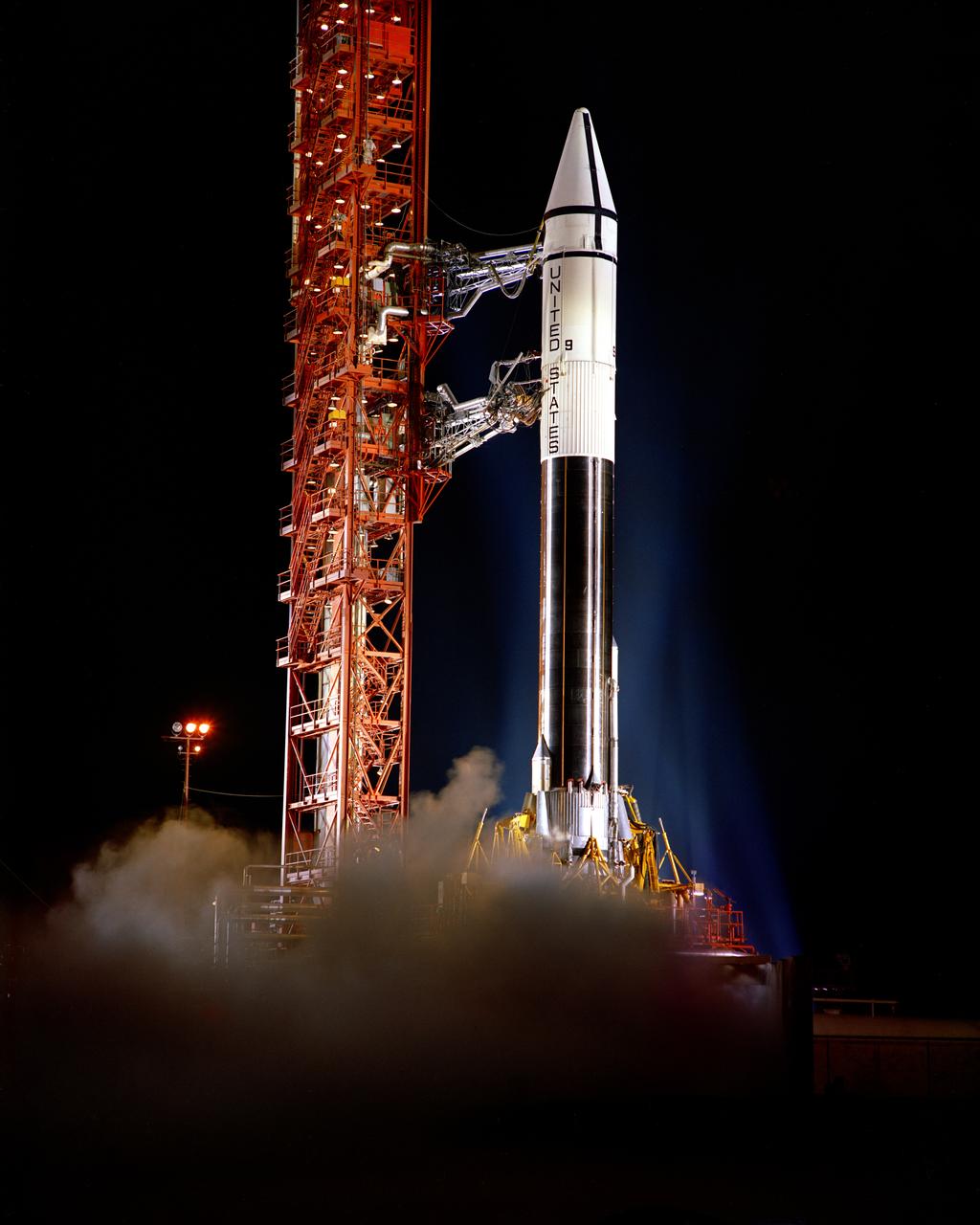
Pre-launch alert, Complex 36B. Gantry pull back with LOX vapor around launcher, Centaur 9. Surveyor Mass Model Spacecraft.
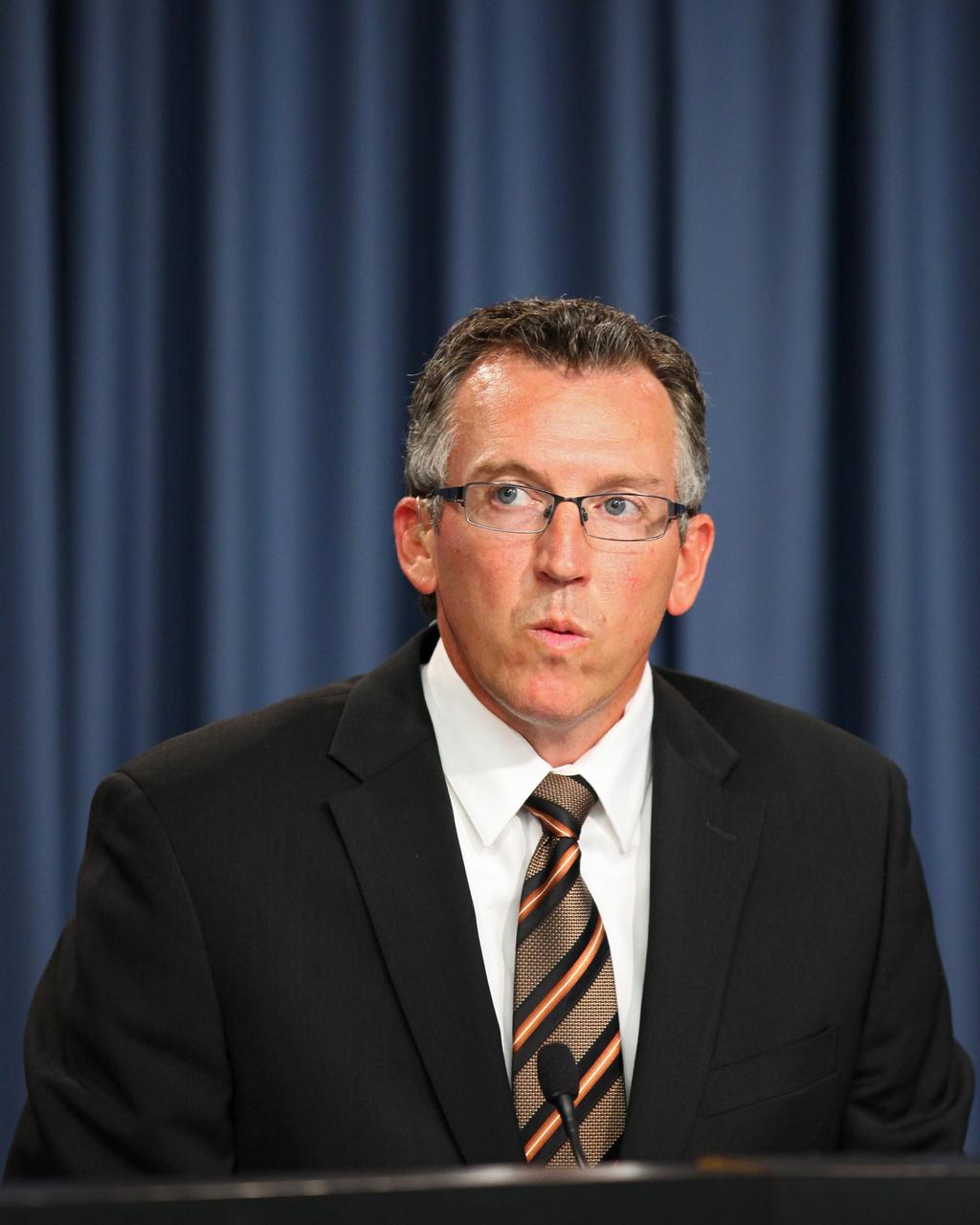
CAPE CANAVERAL, Fla. -- Steve Janney of NASA's Commercial Crew Program, or CCP, talks to aerospace industry representatives during a pre-proposal conference to inform prospective companies about the recently released request for contract proposals and updates to the certification requirements for crewed missions to the International Space Station, or ISS. The two-phase certification process, called Certification Products Contract, or CPC, will enable NASA to eventually purchase service missions to fly astronauts to and from the ISS. Janney serves as the contracting officer during CPC procurement. To learn more about CCP, visit www.nasa.gov/commercialcrew. Photo credit: Kim Shiflett
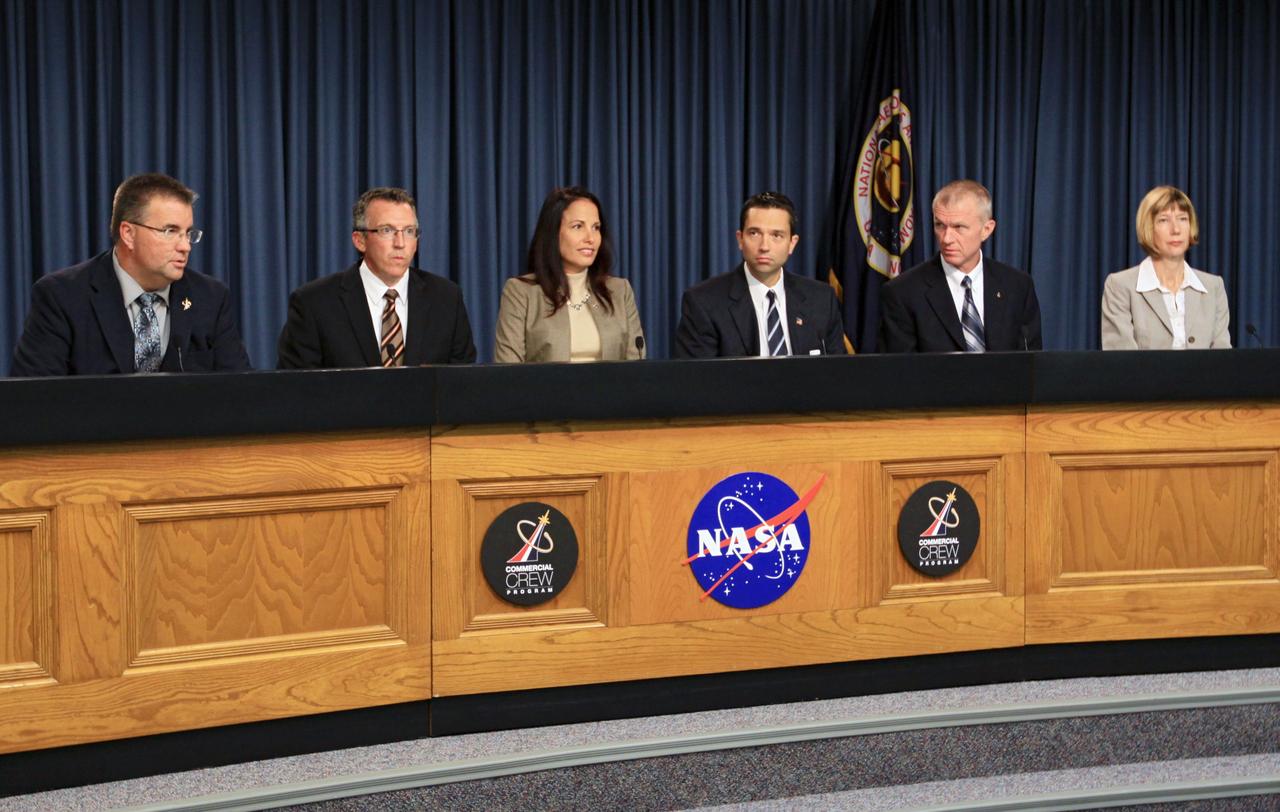
CAPE CANAVERAL, Fla. -- NASA's Commercial Crew Program, or CCP, hosts a pre-proposal conference to inform prospective companies about the recently released request for contract proposals and updates to the certification requirements for crewed missions to the International Space Station, or ISS. The two-phase certification process, called Certification Products Contract, or CPC, will enable NASA to eventually purchase service missions to fly astronauts to and from the ISS. From left, Ed Mango, CCP's program manager Steve Janney, CPC contracting officer Maria Collura, CCP certification manager Tom Simon, CPC Evaluation Team chair Brent Jett, CCP deputy program manager and Kathy Lueders, manager of the ISS Transportation Integration Office. To learn more about CCP, visit www.nasa.gov/commercialcrew. Photo credit: Kim Shiflett
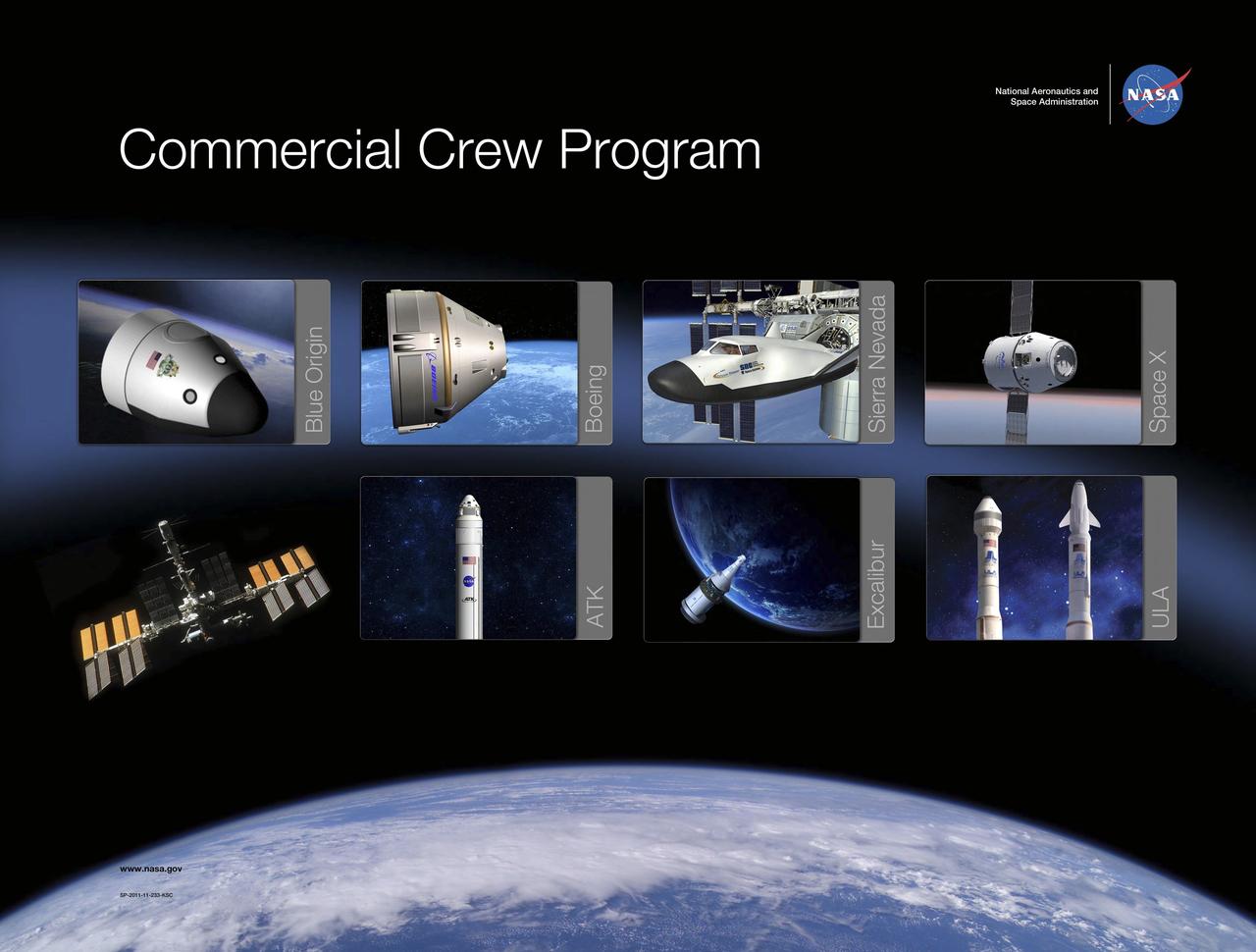
CAPE CANAVERAL, Fla. -- This is a printable poster of the aerospace companies NASA's Commercial Crew Program (CCP) entered into Space Act Agreements with during Commercial Crew Development Round 2 (CCDev2) activities in 2011 in order to mature the design and development of crew transportation systems with the overall goal of accelerating a United States-led capability to the International Space Station. CCDev2 companies are Alliant Techsystems (ATK), Blue Origin, The Boeing Co., Excalibur Almaz Inc., Sierra Nevada Corp., Space Exploration Technologies (SpaceX), and United Launch Alliance (ULA). The goal of CCP is to drive down the cost of space travel as well as open up space to more people than ever before by balancing industry’s own innovative capabilities with NASA's 50 years of human spaceflight experience. For more information, visit www.nasa.gov/commercialcrew
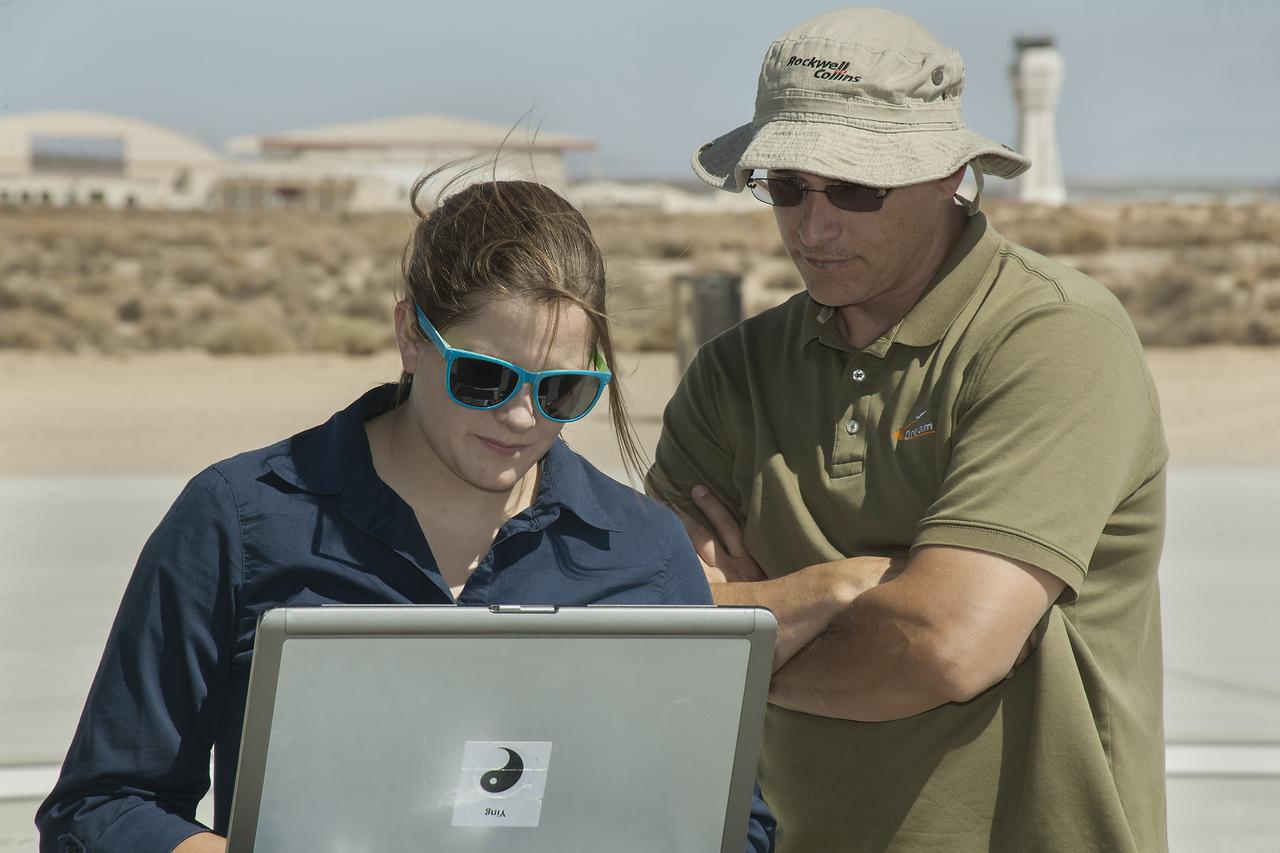
Edwards, Calif. – ED13-0266-056- Sierra Nevada Corporation, or SNC, team members monitor the company's Dream Chaser flight vehicle systems during 60 mph tow testing on taxi and runways at NASA's Dryden Flight Research Center at Edwards Air Force Base in California. Ground testing at 10, 20, 40 and 60 miles per hour is helping the company validate the performance of the spacecraft's braking and landing systems prior to captive-carry and free-flight tests scheduled for later this year. SNC is continuing the development of its Dream Chaser spacecraft under the agency's Commercial Crew Development Round 2, or CCDev2, and Commercial Crew Integrated Capability, or CCiCap, phases, which are intended to lead to the availability of commercial human spaceflight services for government and commercial customers. To learn more about CCP and its industry partners, visit www.nasa.gov/commercialcrew. Image credit: NASA/Ken Ulbrich
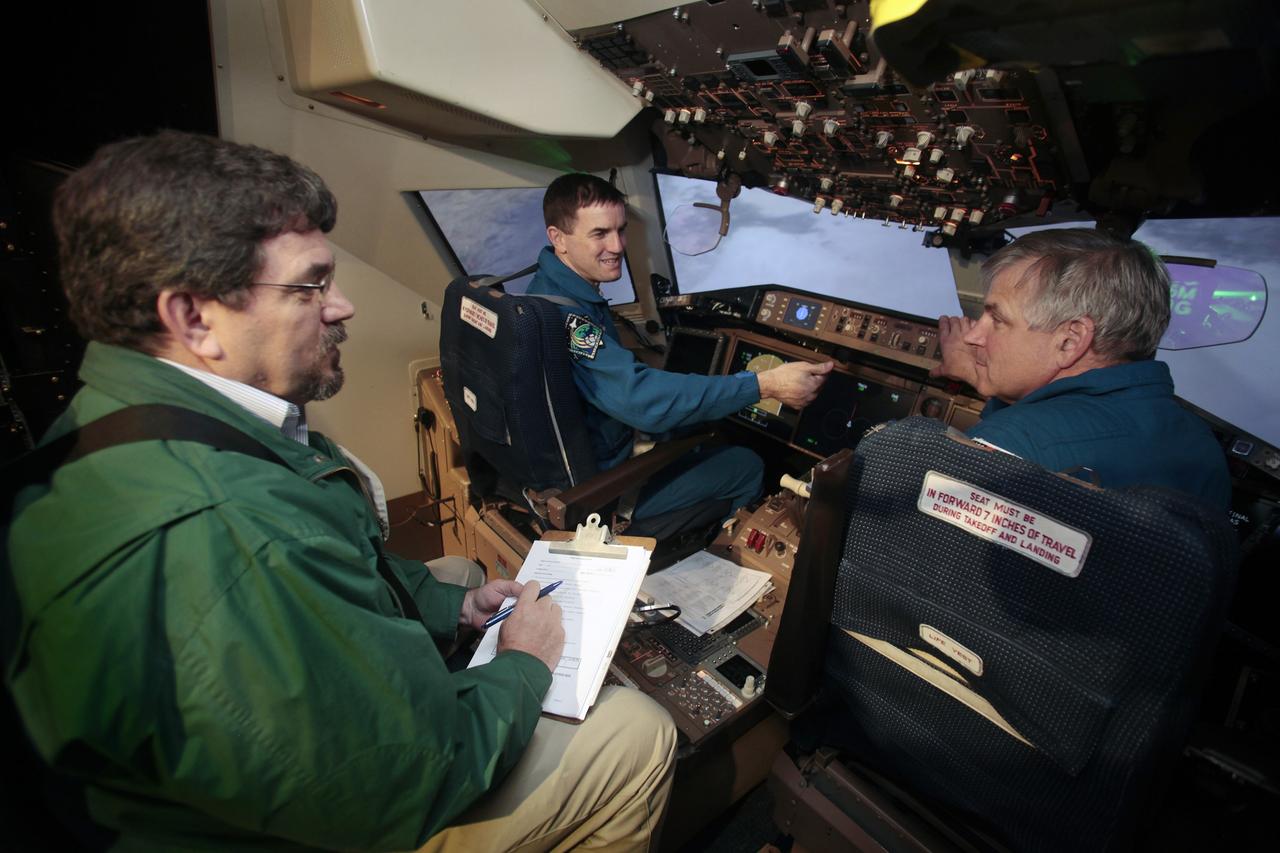
HAMPTON, Va. – Bruce Jackson, an aerospace engineer at NASA’s Langley Flight Research Center, briefs astronauts Rex Walheim, left, and Gregory Johnson as they evaluate Sierra Nevada Corporation, or SNC, Space Systems' Dream Chaser landing simulation, in support of NASA Commercial Crew Program, or CCP, efforts. The simulation makes use of the Synthetic Vision and Enhanced Vision systems in the center's Cockpit Motion Facility. SNC is one of three companies working with CCP during the agency's Commercial Crew Integrated Capability, or CCiCap, initiative, which is intended to lead to the availability of commercial human spaceflight services for government and commercial customers. To learn more about CCP and its industry partners, visit www.nasa.gov/commercialcrew. Image credit: NASA/David C. Bowman
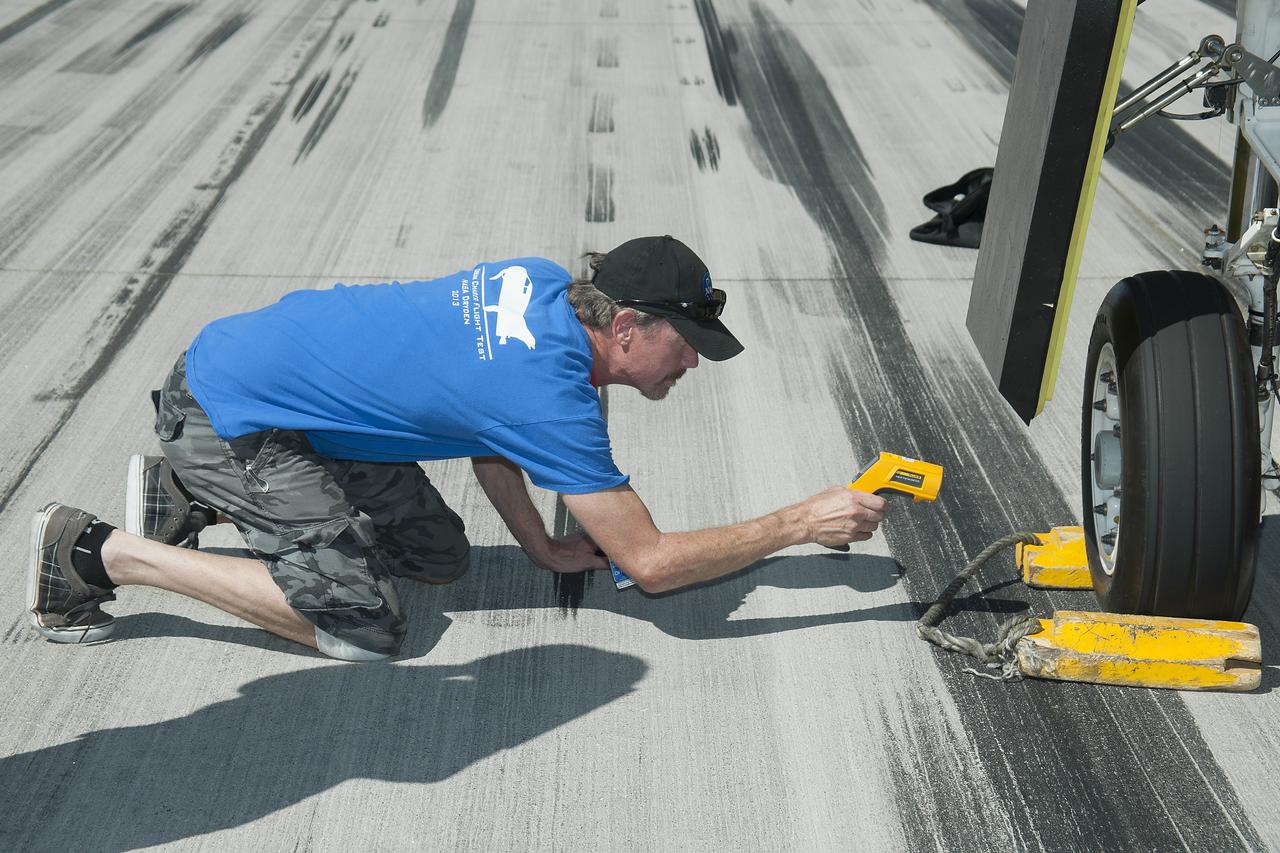
Edwards, Calif. – ED13-0266-060- A Sierra Nevada Corporation, or SNC, team member checks the company's Dream Chaser flight vehicle systems following a 60 mph tow test on taxi and runways at NASA's Dryden Flight Research Center at Edwards Air Force Base in California. Ground testing at 10, 20, 40 and 60 miles per hour is helping the company validate the performance of the spacecraft's braking and landing systems prior to captive-carry and free-flight tests scheduled for later this year. SNC is continuing the development of its Dream Chaser spacecraft under the agency's Commercial Crew Development Round 2, or CCDev2, and Commercial Crew Integrated Capability, or CCiCap, phases, which are intended to lead to the availability of commercial human spaceflight services for government and commercial customers. To learn more about CCP and its industry partners, visit www.nasa.gov/commercialcrew. Image credit: NASA/Ken Ulbrich
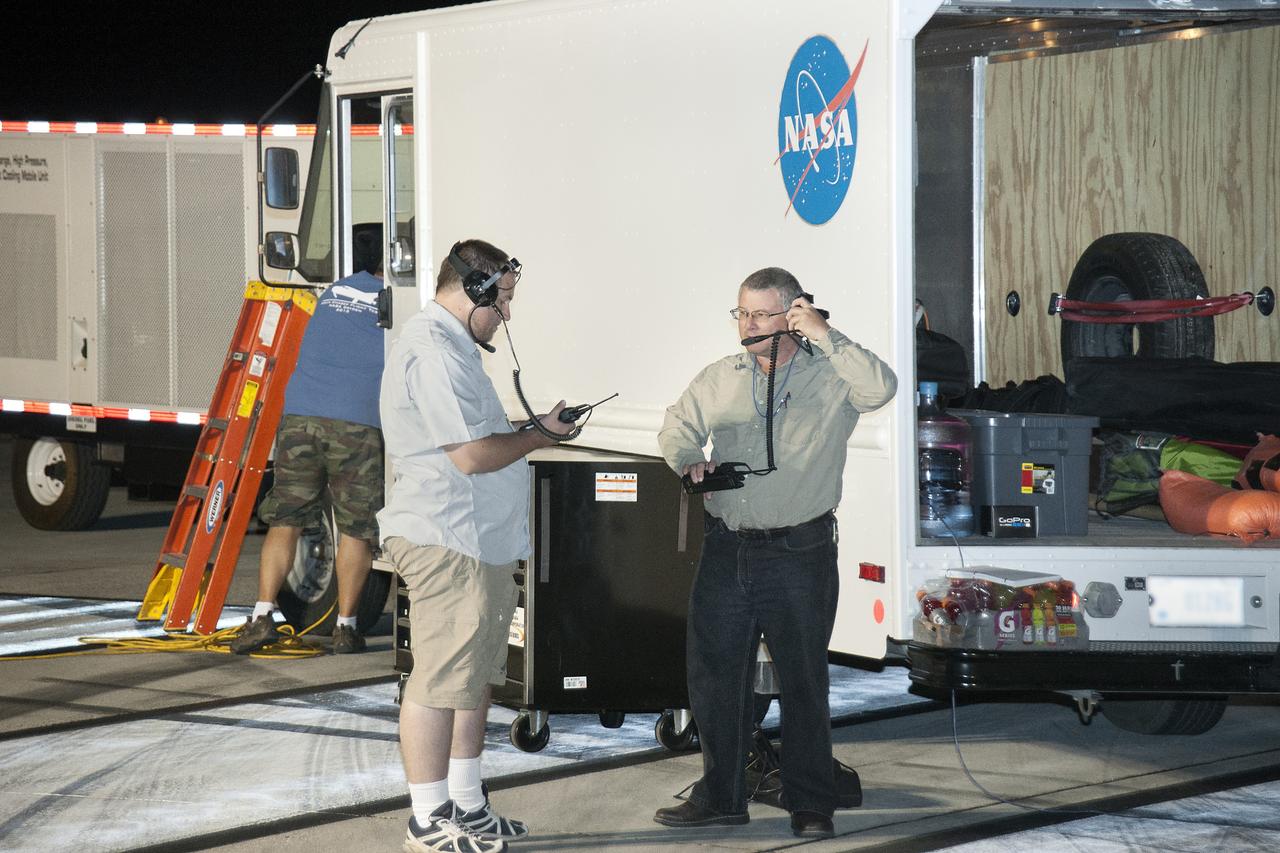
Edwards, Calif. – ED13-0266-012- Technicians prepare for 60 mph tow tests of Sierra Nevada Corporation's, or SNC's, Dream Chaser flight vehicle on taxi and runways at NASA's Dryden Flight Research Center at Edwards Air Force Base in California. Ground testing at 10, 20, 40 and 60 miles per hour is helping the company validate the performance of the spacecraft's braking and landing systems prior to captive-carry and free-flight tests scheduled for later this year. SNC is continuing the development of its Dream Chaser spacecraft under the agency's Commercial Crew Development Round 2, or CCDev2, and Commercial Crew Integrated Capability, or CCiCap, phases, which are intended to lead to the availability of commercial human spaceflight services for government and commercial customers. To learn more about CCP and its industry partners, visit www.nasa.gov/commercialcrew. Image credit: NASA/Ken Ulbrich
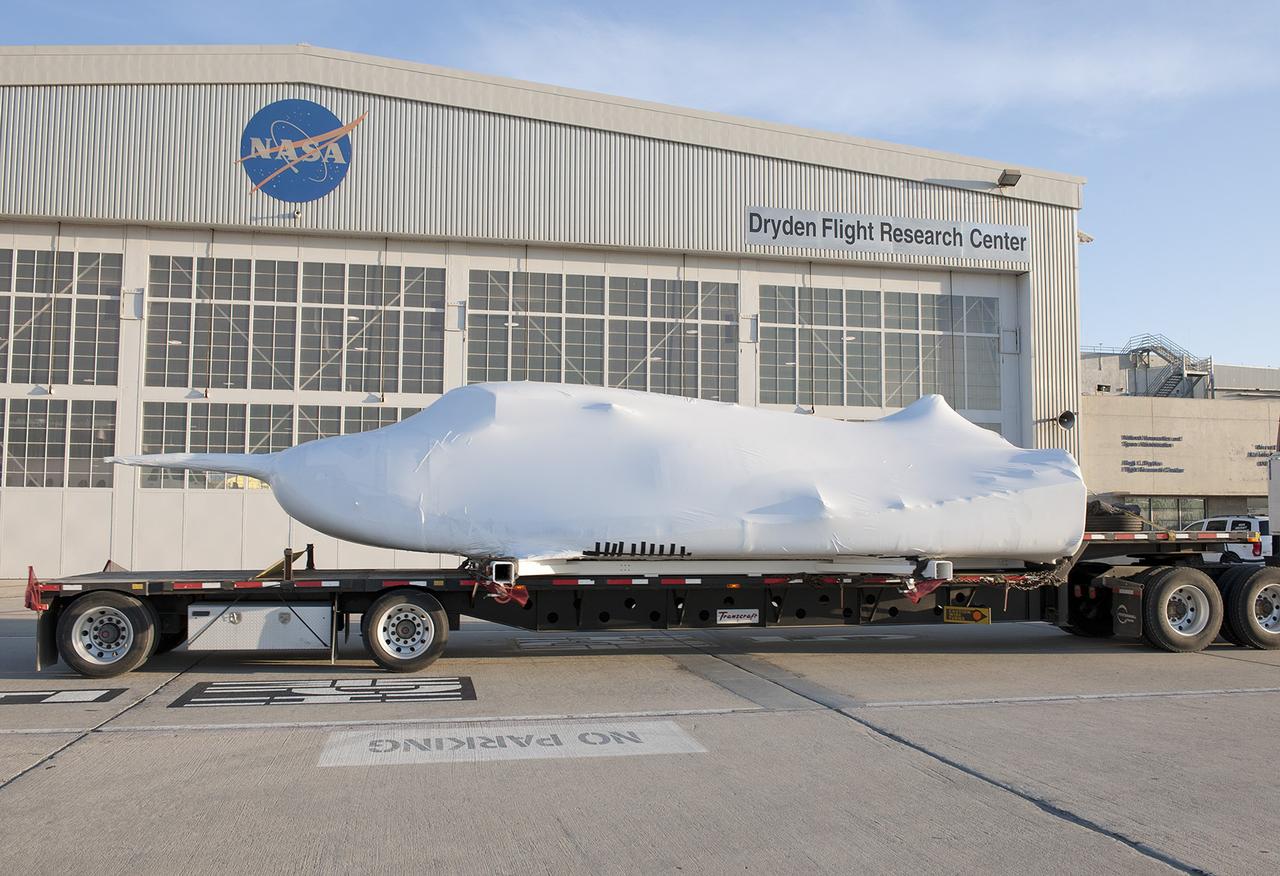
EDWARDS, Calif. – ED13-0142-08: The flatbed truck and trailer that transported Sierra Nevada Corporation, or SNC, Space Systems' Dream Chaser engineering test article pauses behind Hangar 4802 on the aircraft ramp at NASA's Dryden Flight Research Center on Edwards Air Force Base, Calif., upon arrival at the center. The vehicle was shrouded in protective plastic wrap with its wings and tail structure removed for its four-day overland transport from Sierra Nevada's facility in Louisville, Colo., to NASA Dryden. SNC is one of three companies working with NASA's Commercial Crew Program, or CCP, during the agency's Commercial Crew Integrated Capability, or CCiCap, initiative, which is intended to lead to the availability of commercial human spaceflight services for government and commercial customers. To learn more about CCP and its industry partners, visit www.nasa.gov/commercialcrew. Image credit: NASA/Tom Tschida
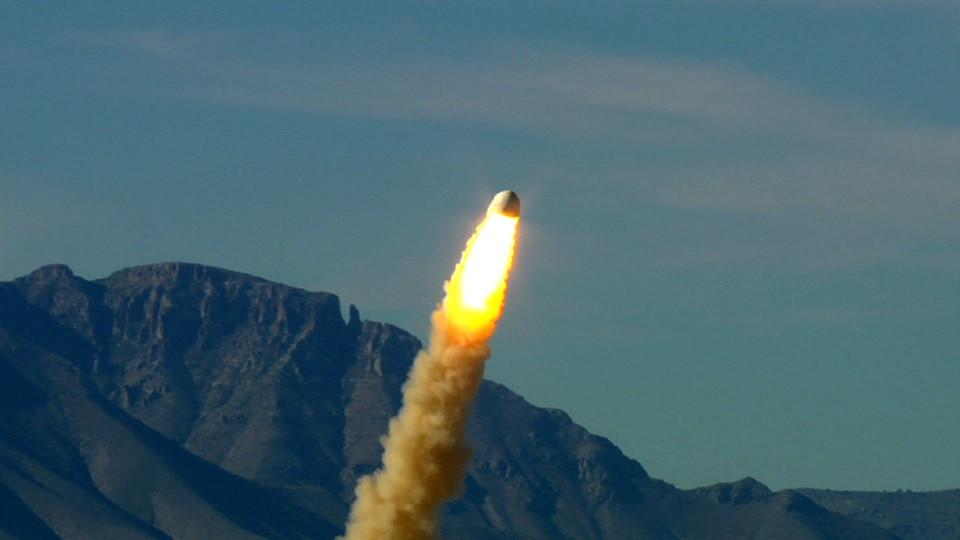
VAN HORN, Texas – Blue Origin’s pusher escape system rockets its New Shepard crew capsule away from a simulated propulsion module launch pad at the company's West Texas launch site, demonstrating a key safety system for both suborbital and orbital flights. The pad escape test took the company's suborbital crew capsule to an altitude of 2,307 feet during the flight test before descending safely by parachute to a soft landing 1,630 feet away. The pusher escape system was designed and developed by Blue Origin to allow crew escape in the event of an emergency during any phase of ascent for its suborbital New Shepard system. As part of an incremental development program, the results of this test will shape the design of the escape system for the company's orbital biconic-shaped Space Vehicle. The system is expected to enable full reusability of the launch vehicle, which is different from NASA's previous launch escape systems that would pull a spacecraft away from its rocket before reaching orbit. The test was part of Blue Origin's work supporting its funded Space Act Agreement with NASA during Commercial Crew Development Round 2 CCDev2). Through initiatives like CCDev2, NASA is fostering the development of a U.S. commercial crew space transportation capability with the goal of achieving safe, reliable and cost-effective access to and from the International Space Station and low-Earth orbit. After the capability is matured and available to the government and other customers, NASA could contract to purchase commercial services to meet its station crew transportation needs. For more information, visit www.nasa.gov/commercialcrew. Image credit: Blue Origin

CAPE CANAVERAL, Fla. - NASA Kennedy Space Center Director Bob Cabana welcomes aerospace industry representatives to the Commercial Crew Transportation Capability, or CCtCap, Pre-Proposal Conference. CCtCap will be the next phase of certification efforts for the agency's Commercial Crew Program, or CCP, missions to the International Space Station. The purpose of the conference was to involve industry in the CCtCap draft Request for Proposal, or RFP, process and provide a greater understanding for both parties before the official RFP is released in the fall of 2013. To learn more about CCP, visit www.nasa.gov/commercialcrew. Photo credit: NASA/Jim Grossmann
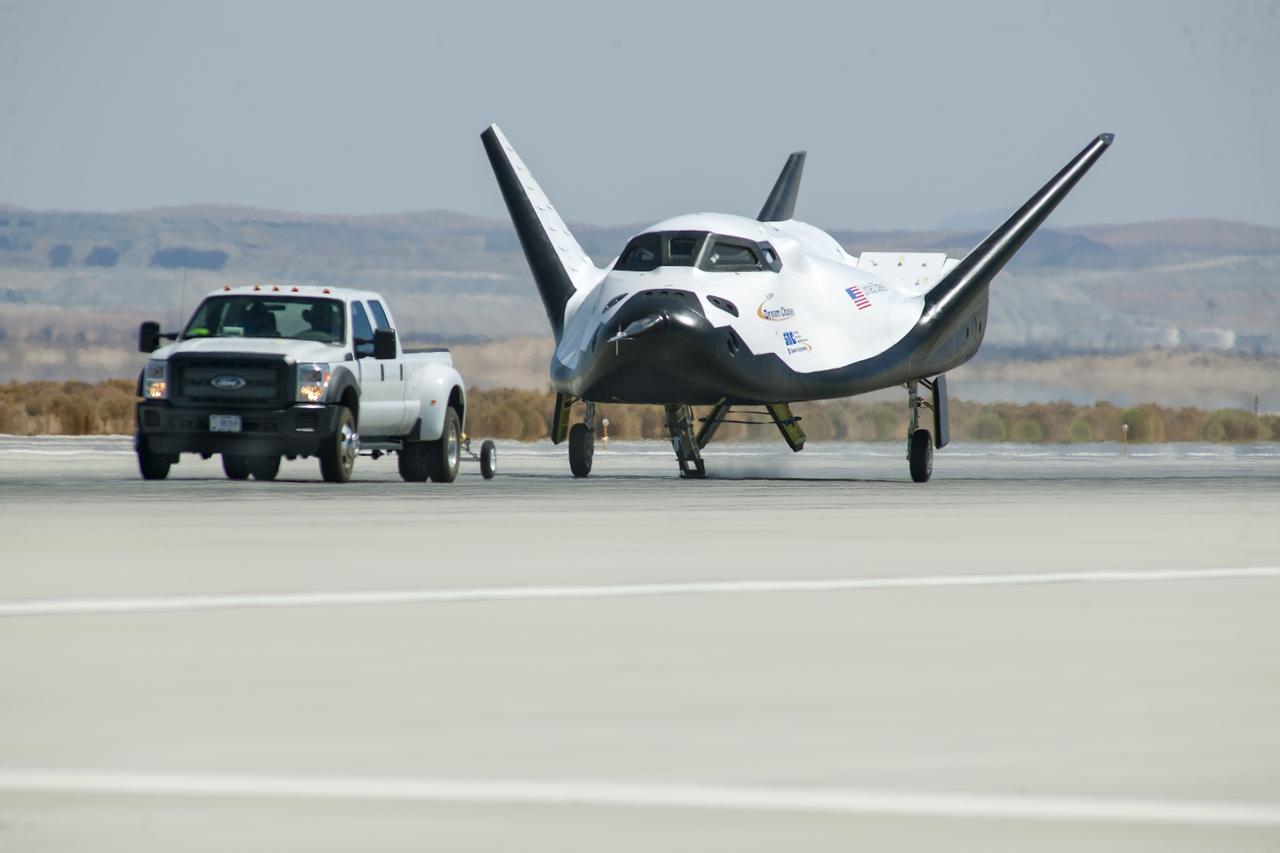
Edwards, Calif. – ED13-0266-047- A pickup truck pulls the Sierra Nevada Corporation, or SNC, Dream Chaser flight vehicle through 60 mile per hour tow tests on taxi and runways at NASA's Dryden Flight Research Center at Edwards Air Force Base in California. Ground testing at 10, 20, 40 and 60 miles per hour is helping the company validate the performance of the spacecraft's braking and landing systems prior to captive-carry and free-flight tests scheduled for later this year. SNC is continuing the development of its Dream Chaser spacecraft under the agency's Commercial Crew Development Round 2, or CCDev2, and Commercial Crew Integrated Capability, or CCiCap, phases, which are intended to lead to the availability of commercial human spaceflight services for government and commercial customers. To learn more about CCP and its industry partners, visit www.nasa.gov/commercialcrew. Image credit: NASA/Ken Ulbrich
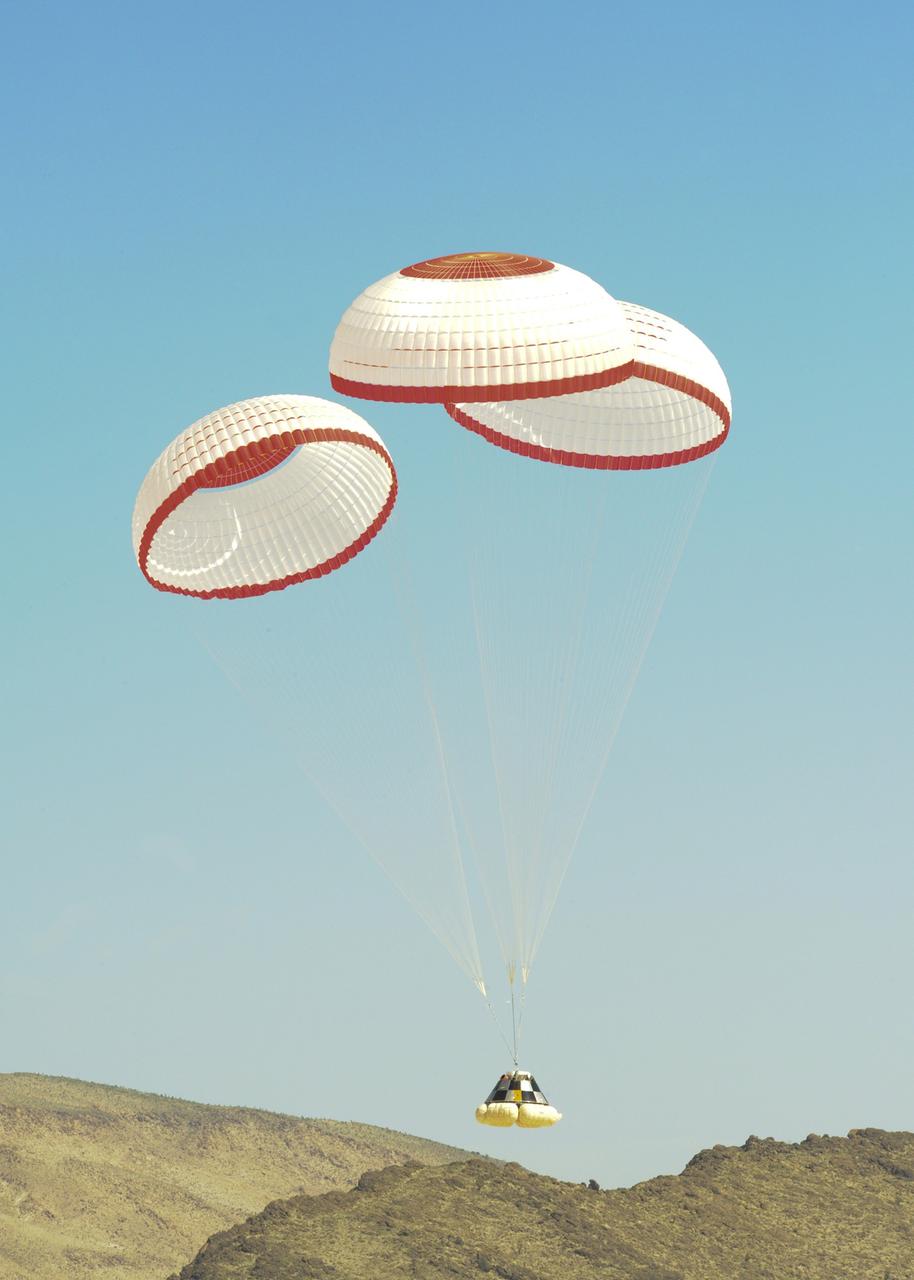
DELAMAR DRY LAKE BED, Nev. – The Boeing Company's CST-100 crew capsule floats to a smooth landing beneath three main parachutes over the Delamar Dry Lake Bed near Alamo, Nev. This is the second parachute test that Boeing performed under its partnership with NASA's Commercial Crew Program CCP. The first showed the parachute system’s deployment scheme worked and that it could be re-packed and re-used for this second test. In 2011, NASA selected Boeing during Commercial Crew Development Round 2 CCDev2) activities to mature the design and development of a crew transportation system with the overall goal of accelerating a United States-led capability to the International Space Station. The goal of CCP is to drive down the cost of space travel as well as open up space to more people than ever before by balancing industry’s own innovative capabilities with NASA's 50 years of human spaceflight experience. Six other aerospace companies also are maturing launch vehicle and spacecraft designs under CCDev2, including Alliant Techsystems Inc. ATK, Excalibur Almaz Inc., Blue Origin, Sierra Nevada, Space Exploration Technologies SpaceX, and United Launch Alliance ULA. For more information, visit www.nasa.gov/commercialcrew. Image credit: Boeing
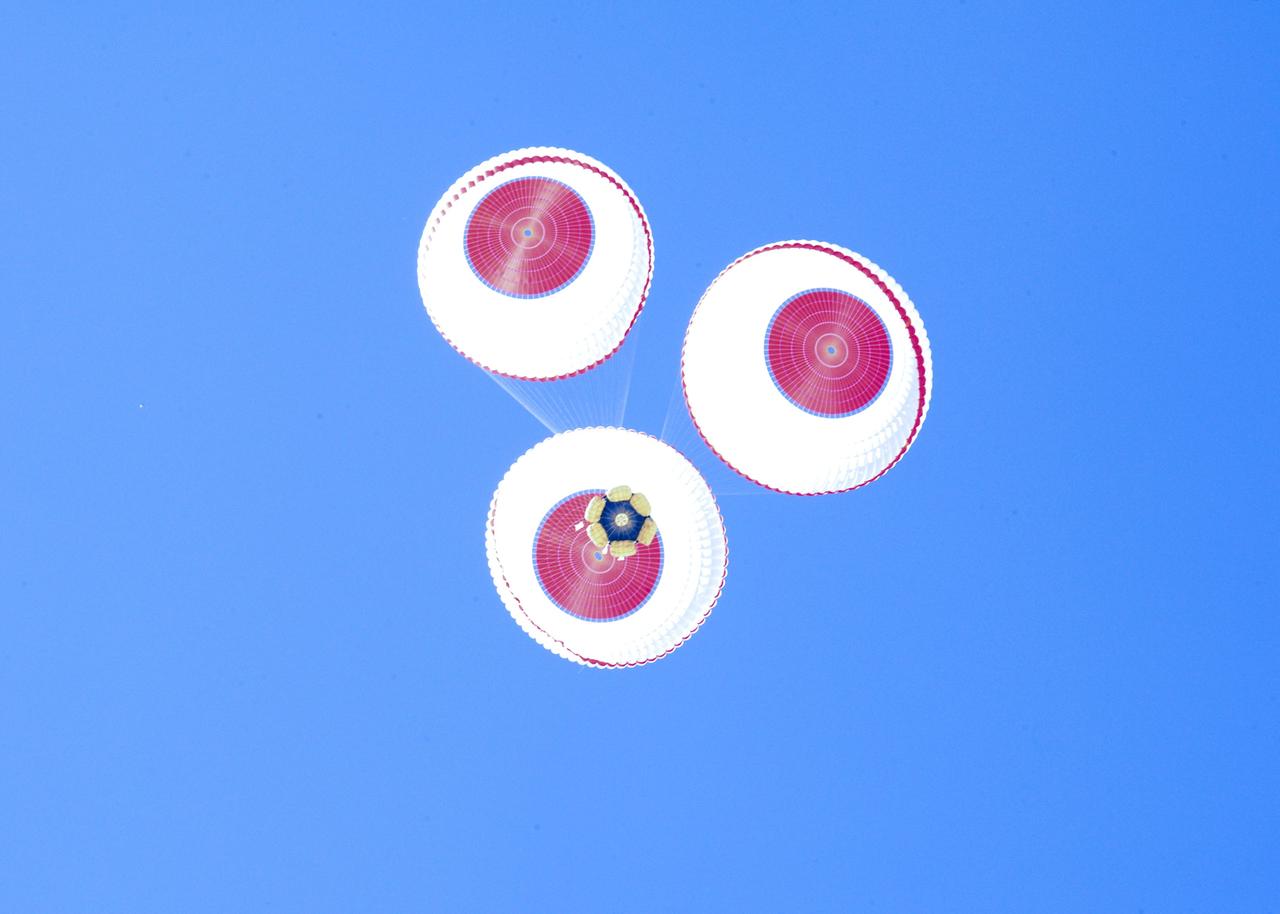
DELAMAR DRY LAKE BED, Nev. – The Boeing Company's CST-100 crew capsule floats to a smooth landing beneath three main parachutes over the Delamar Dry Lake Bed near Alamo, Nev. This is the second parachute test that Boeing performed under its partnership with NASA's Commercial Crew Program CCP. The first showed the parachute system’s deployment scheme worked and that it could be re-packed and re-used for this second test. In 2011, NASA selected Boeing during Commercial Crew Development Round 2 CCDev2) activities to mature the design and development of a crew transportation system with the overall goal of accelerating a United States-led capability to the International Space Station. The goal of CCP is to drive down the cost of space travel as well as open up space to more people than ever before by balancing industry’s own innovative capabilities with NASA's 50 years of human spaceflight experience. Six other aerospace companies also are maturing launch vehicle and spacecraft designs under CCDev2, including Alliant Techsystems Inc. ATK, Excalibur Almaz Inc., Blue Origin, Sierra Nevada, Space Exploration Technologies SpaceX, and United Launch Alliance ULA. For more information, visit www.nasa.gov/commercialcrew. Image credit: Boeing
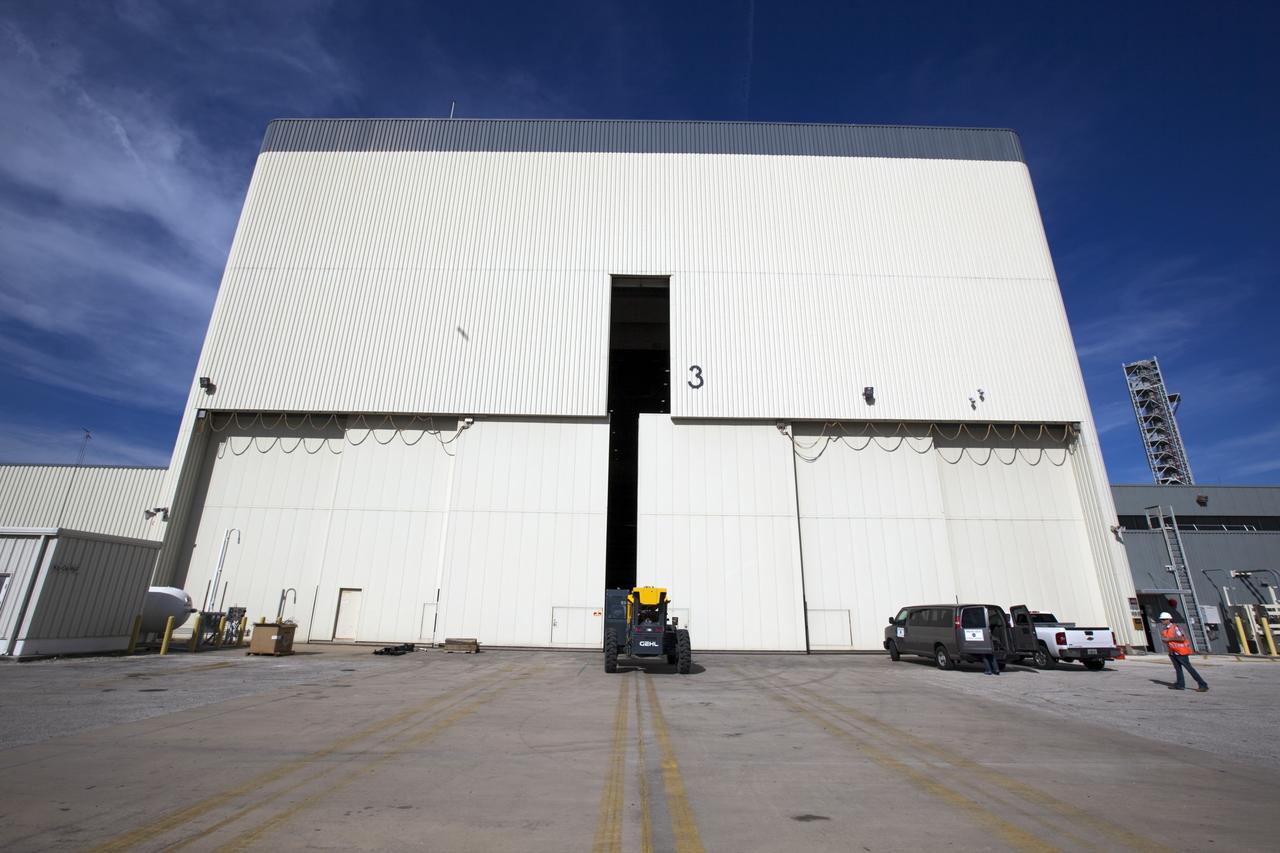
CAPE CANAVERAL, Fla. -- The Commercial Crew and Cargo Processing Facility, or C3PF, at NASA's Kennedy Space Center in Florida is going through major renovations to support the manufacturing of The Boeing Company's CST-100 spacecraft. Known throughout the space shuttle era as Orbiter Processing Facilty-3, or OPF-3, the facility's orbiter-specific platforms were removed recently to make room for a clean-floor factory-like facility. The modernization will allow Boeing to process its new fleet of low-Earth-orbit bound spacecraft, which is under development in collaboration with NASA's Commercial Crew Program, or CCP. Boeing is leasing the excess government facility for next-generation commercial activities through a land-use agreement with Space Florida. To learn more about CCP and its industry partners, visit www.nasa.gov/commercialcrew. Photo credit: Dimitri Gerondidakis
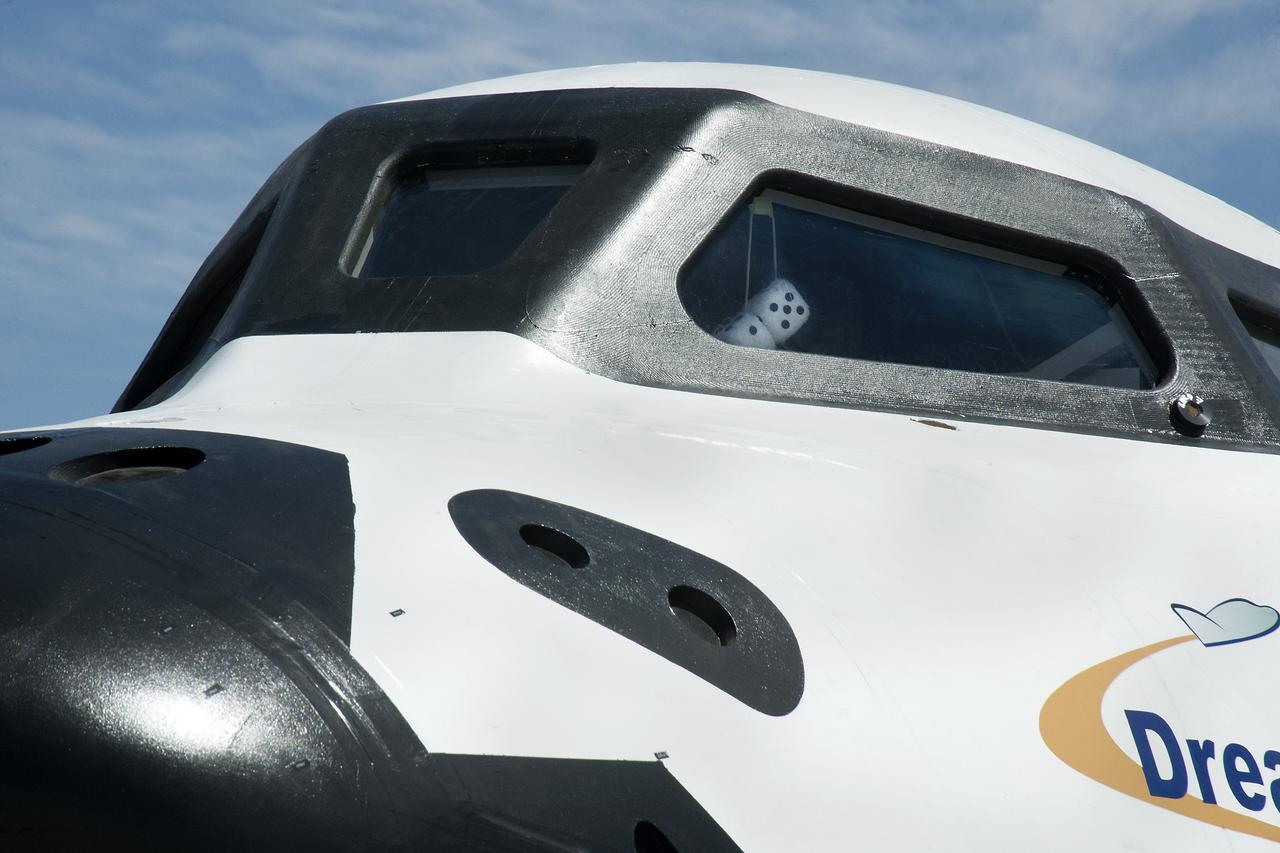
Edwards, Calif. – ED13-0266-074- Sierra Nevada Corporation's, or SNC's, Dream Chaser flight vehicle sports a pair of fuzzy dice during 60 mph tow tests at NASA's Dryden Flight Research Center in California. Ground testing at 10, 20, 40 and 60 miles per hour is helping the company validate the performance of the spacecraft's braking and landing systems prior to captive-carry and free-flight tests scheduled for later this year. SNC is continuing the development of its Dream Chaser spacecraft under the agency's Commercial Crew Development Round 2, or CCDev2, and Commercial Crew Integrated Capability, or CCiCap, phases, which are intended to lead to the availability of commercial human spaceflight services for government and commercial customers. To learn more about CCP and its industry partners, visit www.nasa.gov/commercialcrew. Image credit: NASA/Ken Ulbrich
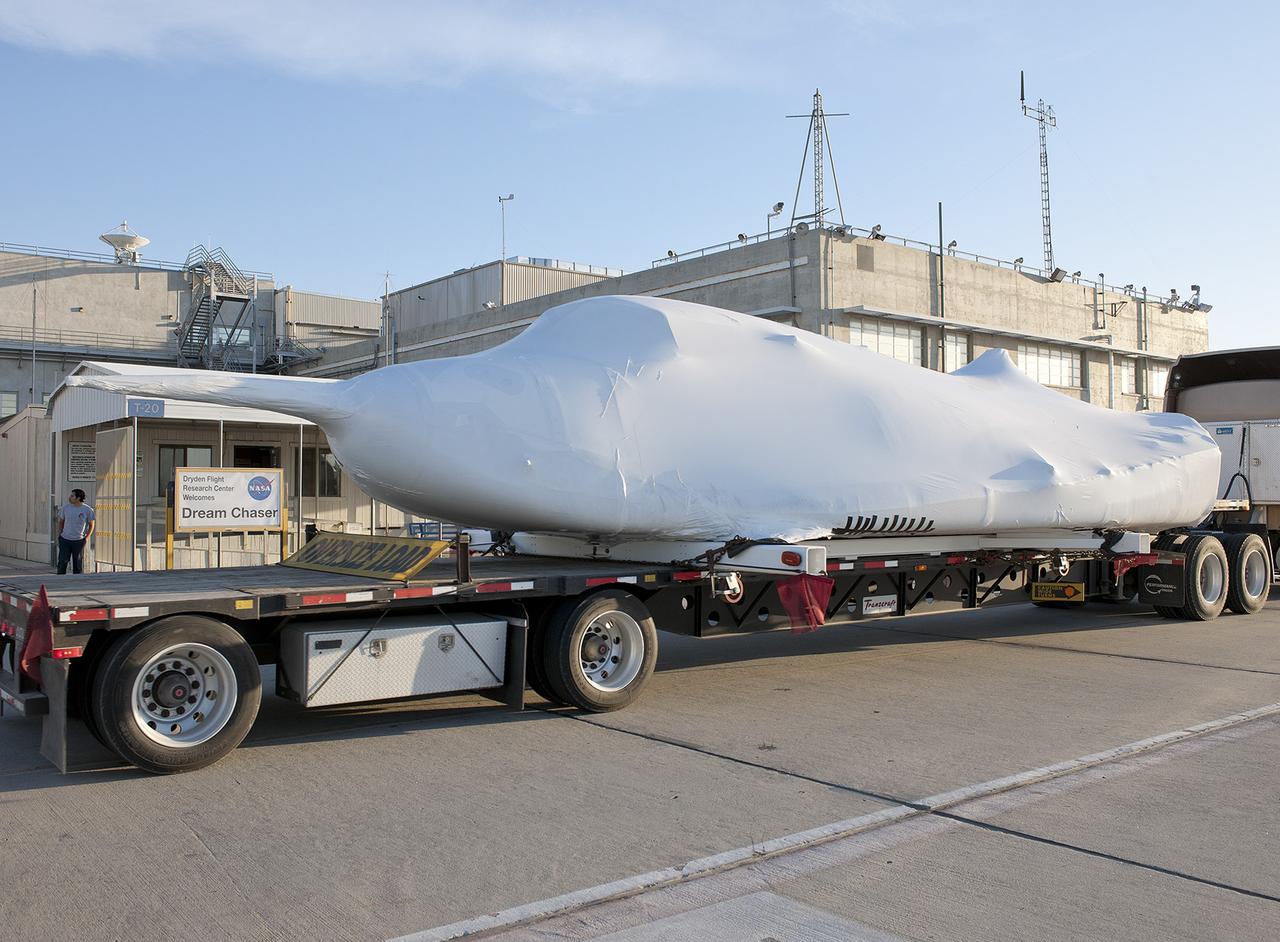
EDWARDS, Calif. – ED13-0142-10: The flatbed truck and trailer that transported Sierra Nevada Corporation, or SNC, Space Systems' Dream Chaser engineering test article pauses on the aircraft ramp at NASA's Dryden Flight Research Center on Edwards Air Force Base, Calif., upon arrival at the center. Following removal of the protective plastic wrap and reinstallation of its wings and tail structure, the Dream Chaser will begin ground tests in the next few weeks leading to approach and landing flight tests this summer. SNC is one of three companies working with NASA's Commercial Crew Program, or CCP, during the agency's Commercial Crew Integrated Capability, or CCiCap, initiative, which is intended to lead to the availability of commercial human spaceflight services for government and commercial customers. To learn more about CCP and its industry partners, visit www.nasa.gov/commercialcrew. Image credit: NASA/Tom Tschida
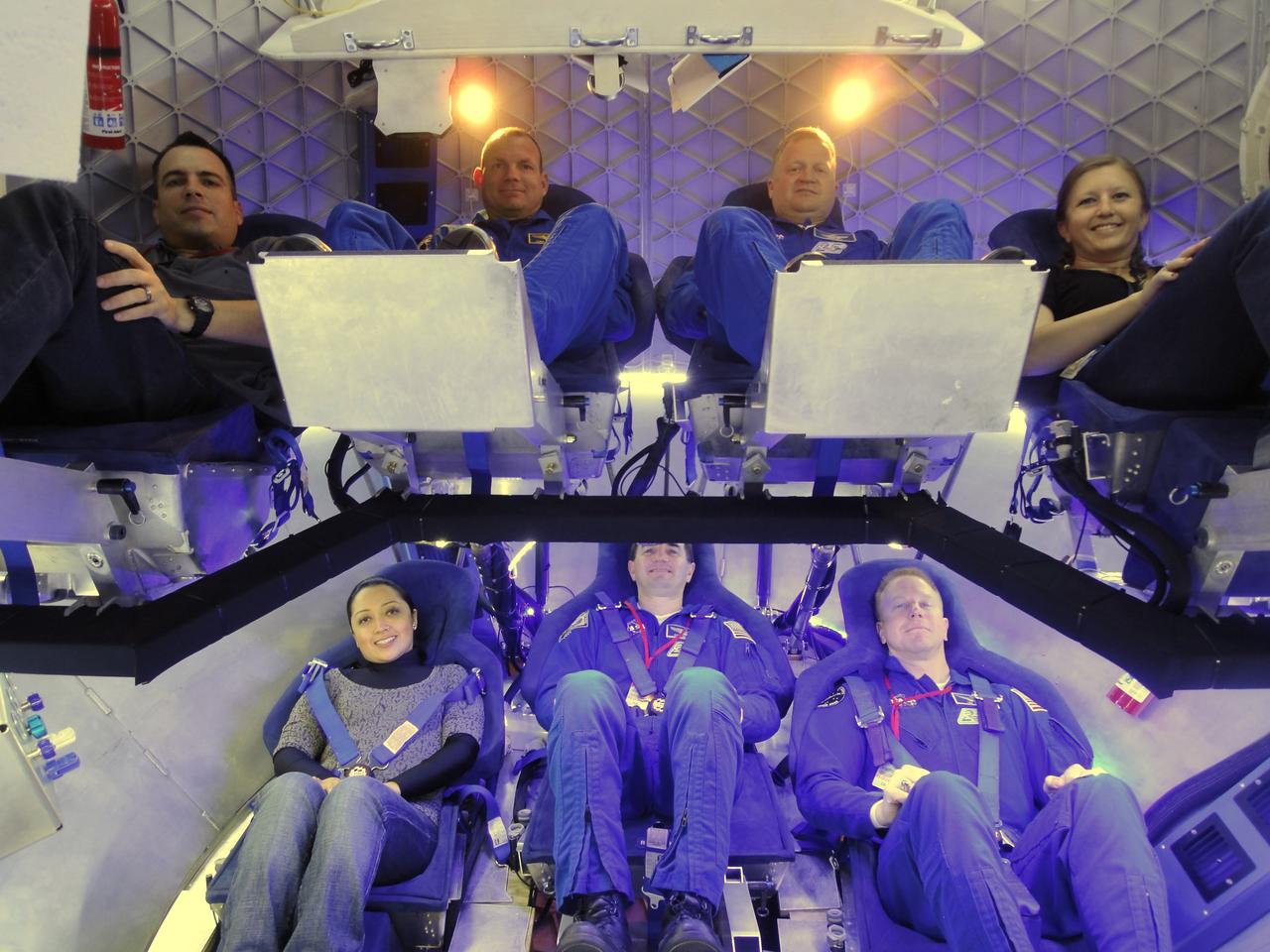
HAWTHORNE, Calif. -- NASA astronauts and industry experts check out the crew accommodations in the Dragon spacecraft under development by Space Exploration Technologies SpaceX of Hawthorne, Calif., for the agency's Commercial Crew Program. On top, from left, are NASA Crew Survival Engineering Team Lead Dustin Gohmert, NASA astronauts Tony Antonelli and Eric Boe and SpaceX Mission Operations Engineer Laura Crabtree. On bottom, from left, are SpaceX Thermal Engineer Brenda Hernandez and NASA astronauts Rex Walheim and Tim Kopra. This is the second crew accommodation check that allowed passengers to get a feel for Dragon’s interior, including displays and simulated control panels. In 2011, NASA selected SpaceX during Commercial Crew Development Round 2 CCDev2) activities to mature the design and development of a crew transportation system with the overall goal of accelerating a United States-led capability to the International Space Station. The goal of CCP is to drive down the cost of space travel as well as open up space to more people than ever before by balancing industry’s own innovative capabilities with NASA's 50 years of human spaceflight experience. Six other aerospace companies also are maturing launch vehicle and spacecraft designs under CCDev2, including Alliant Techsystems Inc. ATK, The Boeing Co., Excalibur Almaz Inc., Blue Origin, Sierra Nevada, and United Launch Alliance ULA. For more information, visit www.nasa.gov/commercialcrew. Image credit: Space Exploration Technologies
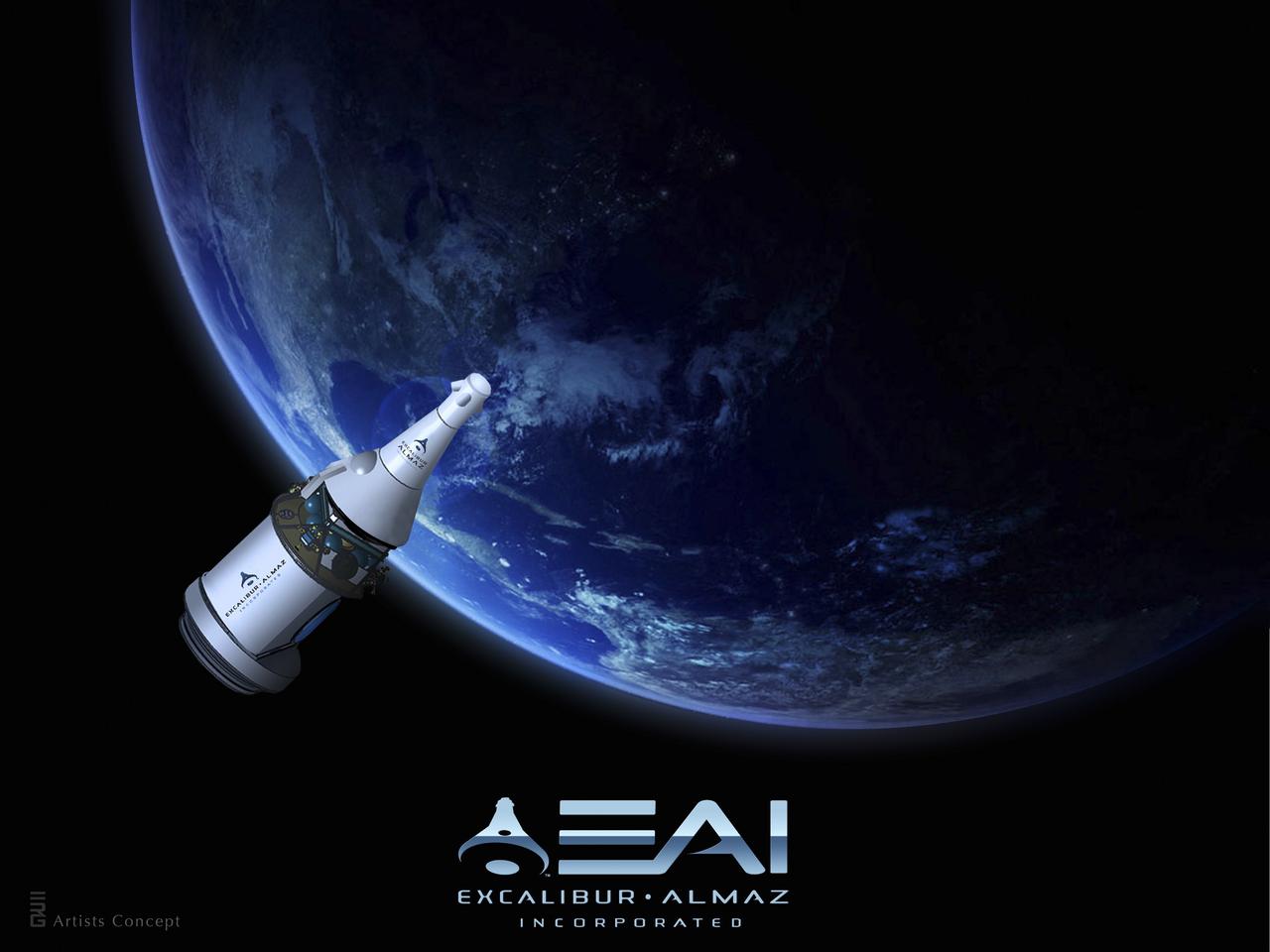
CAPE CANAVERAL, Fla. -- This is an artist's conception of the Human Spacecraft being considered for NASA's Commercial Crew Program CCP. In 2011, NASA and Excalibur Almaz Inc. of Houston entered into an unfunded Space Act Agreement during Commercial Crew Development Round 2 CCDev2) activities to mature the design and development of a crew transportation system with the overall goal of accelerating a United States-led capability to the International Space Station. The goal of CCP is to drive down the cost of space travel as well as open up space to more people than ever before by balancing industry’s own innovative capabilities with NASA's 50 years of human spaceflight experience. Six other aerospace companies also are maturing launch vehicle and spacecraft designs under CCDev2, including Alliant Techsystems Inc. ATK, Blue Origin, The Boeing Co., Sierra Nevada Corp., Space Exploration Technologies SpaceX, and United Launch Alliance ULA. For more information, visit www.nasa.gov/exploration/commercialcrew Image credit: Excalibur Almaz Inc.

Edwards, Calif. – ED13-0266-070- Sierra Nevada Corporation, or SNC, team members check the company's Dream Chaser flight vehicle systems following a 60 mph tow test on taxi and runways at NASA's Dryden Flight Research Center at Edwards Air Force Base in California. Ground testing at 10, 20, 40 and 60 miles per hour is helping the company validate the performance of the spacecraft's braking and landing systems prior to captive-carry and free-flight tests scheduled for later this year. SNC is continuing the development of its Dream Chaser spacecraft under the agency's Commercial Crew Development Round 2, or CCDev2, and Commercial Crew Integrated Capability, or CCiCap, phases, which are intended to lead to the availability of commercial human spaceflight services for government and commercial customers. To learn more about CCP and its industry partners, visit www.nasa.gov/commercialcrew. Image credit: NASA/Ken Ulbrich
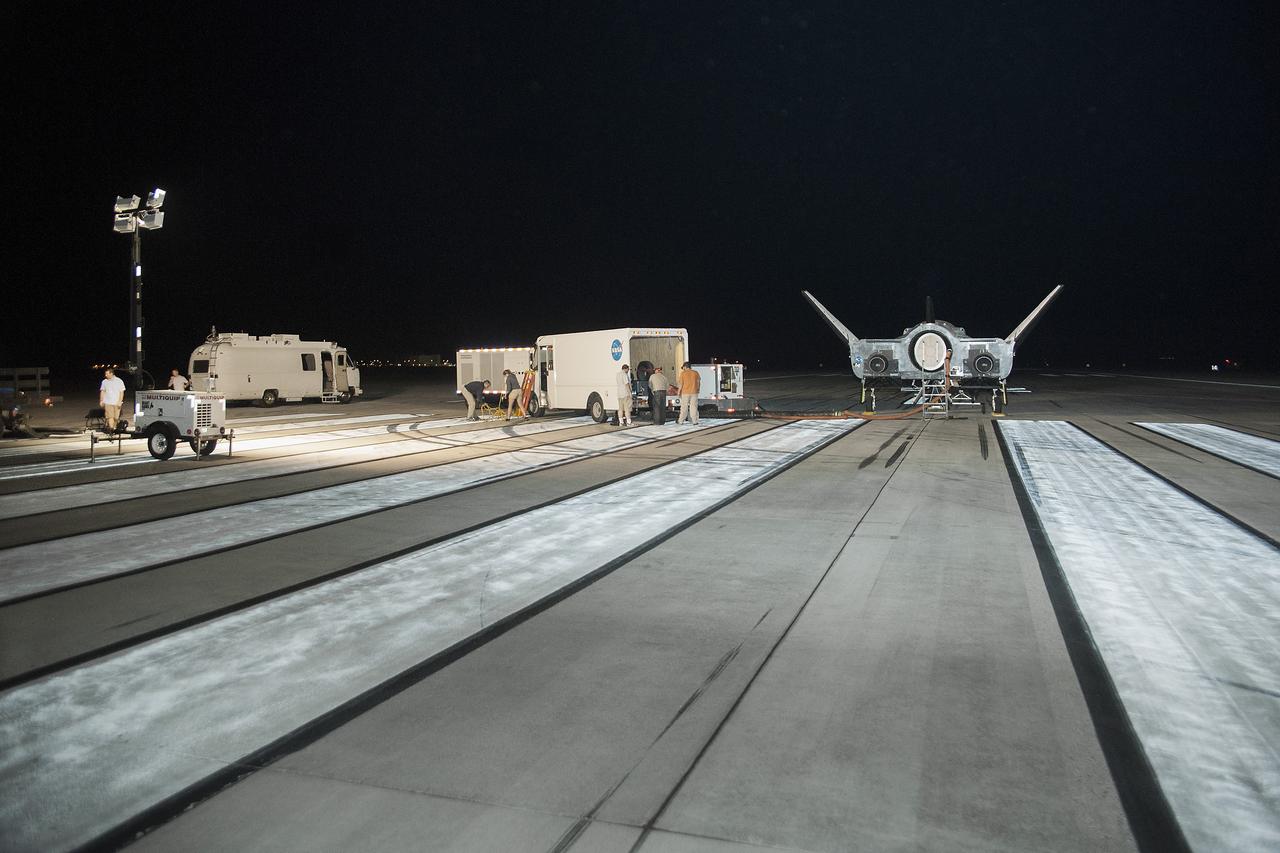
Edwards, Calif. – ED13-0266-010- The Sierra Nevada Corporation, or SNC, Dream Chaser flight vehicle is prepared for 60 mph tow tests on taxi and runways at NASA's Dryden Flight Research Center at Edwards Air Force Base in California. Ground testing at 10, 20, 40 and 60 miles per hour is helping the company validate the performance of the spacecraft's braking and landing systems prior to captive-carry and free-flight tests scheduled for later this year. SNC is continuing the development of its Dream Chaser spacecraft under the agency's Commercial Crew Development Round 2, or CCDev2, and Commercial Crew Integrated Capability, or CCiCap, phases, which are intended to lead to the availability of commercial human spaceflight services for government and commercial customers. To learn more about CCP and its industry partners, visit www.nasa.gov/commercialcrew. Image credit: NASA/Ken Ulbrich
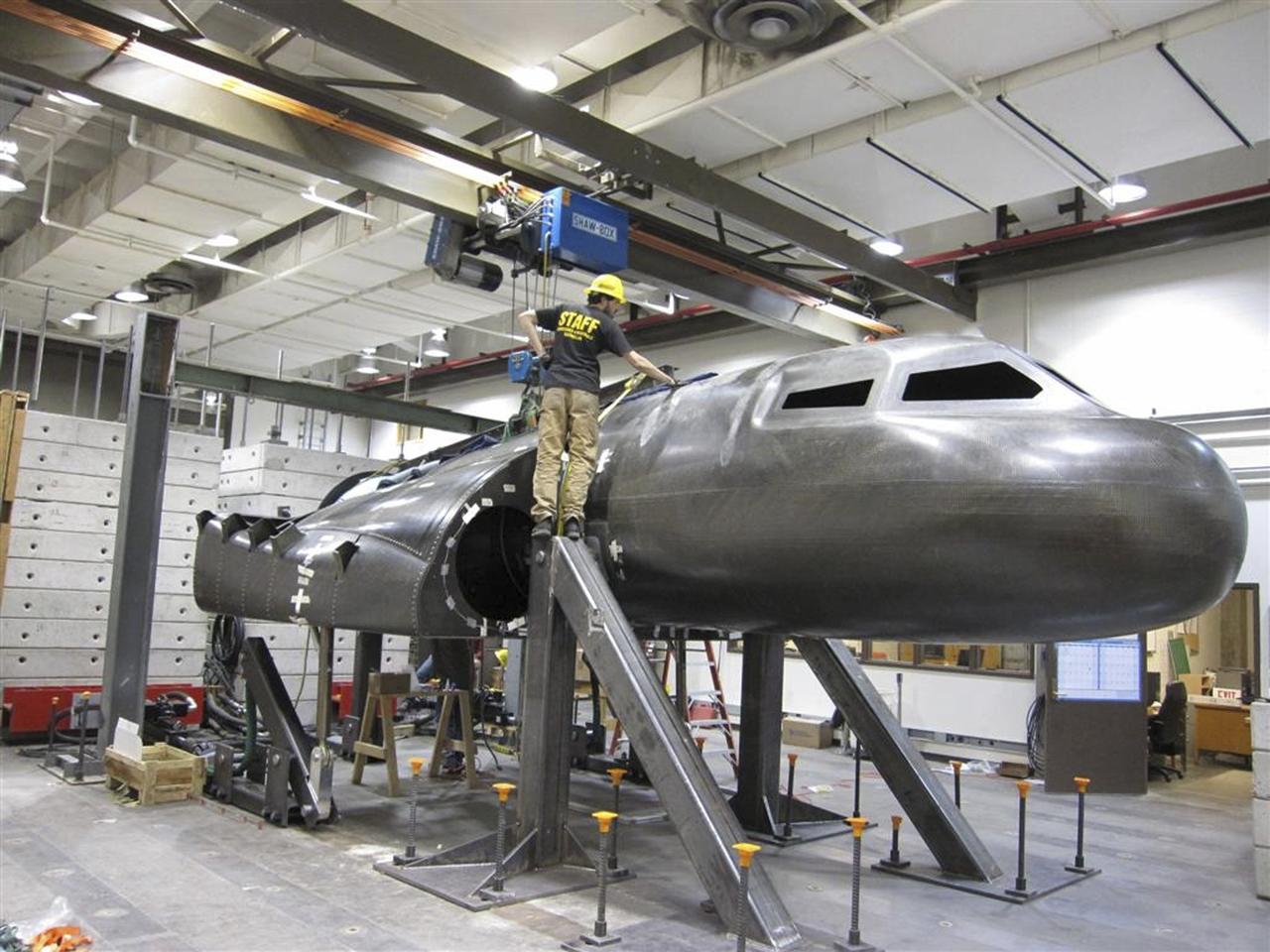
BOULDER, Colo. – A Sierra Nevada Corp. team member examines the company's structural test article for the Dream Chaser spacecraft in the University of Colorado at Boulder’s Facility for Advanced Spatial Technology. The university is one of Sierra Nevada’s partners on the design and development of the Dream Chaser orbital crew vehicle. Dream Chaser is one of five systems NASA invested in during Commercial Crew Development Round 1 CCDev1 activities in order to aid in the innovation and development of American-led commercial capabilities for crew transportation and rescue services to and from the International Space Station and other low Earth orbit destinations. In 2011, NASA's Commercial Crew Program CCP entered into another funded Space Act Agreement with Sierra Nevada for the second round of commercial crew development CCDev2) so the company could further develop its Dream Chaser spacecraft for NASA transportation services. For information about CCP, visit www.nasa.gov/commercialcrew. Photo credit: Sierra Nevada Corp.
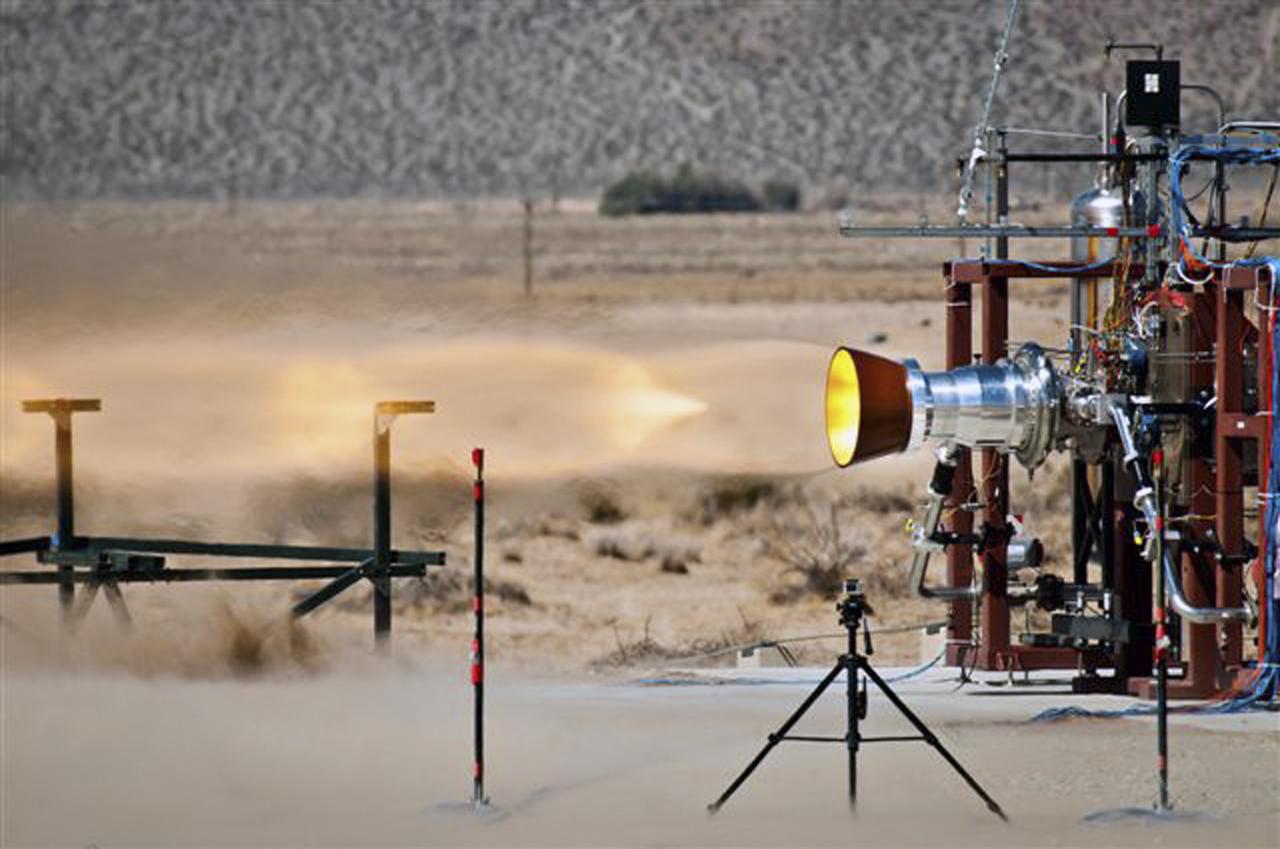
CANOGA PARK, Calif. -- Pratt & Whitney Rocketdyne hot-fires a launch abort engine for The Boeing Co., which is developing its CST-100 spacecraft for NASA's Commercial Crew Program. Under its fixed-price contract with Boeing, Pratt and Whitney Rocketdyne is combining its Attitude Control Propulsion System thrusters from heritage spaceflight programs, Bantam abort engine design and storable propellant engineering capabilities. In 2011, NASA selected Boeing of Houston during Commercial Crew Development Round 2 CCDev2) activities to mature the design and development of a crew transportation system with the overall goal of accelerating a United States-led capability to the International Space Station. The goal of CCP is to drive down the cost of space travel as well as open up space to more people than ever before by balancing industry’s own innovative capabilities with NASA's 50 years of human spaceflight experience. Six other aerospace companies also are maturing launch vehicle and spacecraft designs under CCDev2, including Alliant Techsystems Inc. ATK, Blue Origin, Excalibur Almaz Inc., Sierra Nevada Corp., Space Exploration Technologies SpaceX, and United Launch Alliance ULA. For more information, visit www.nasa.gov/commercialcrew. Image credit: Pratt & Whitney Rocketdyne
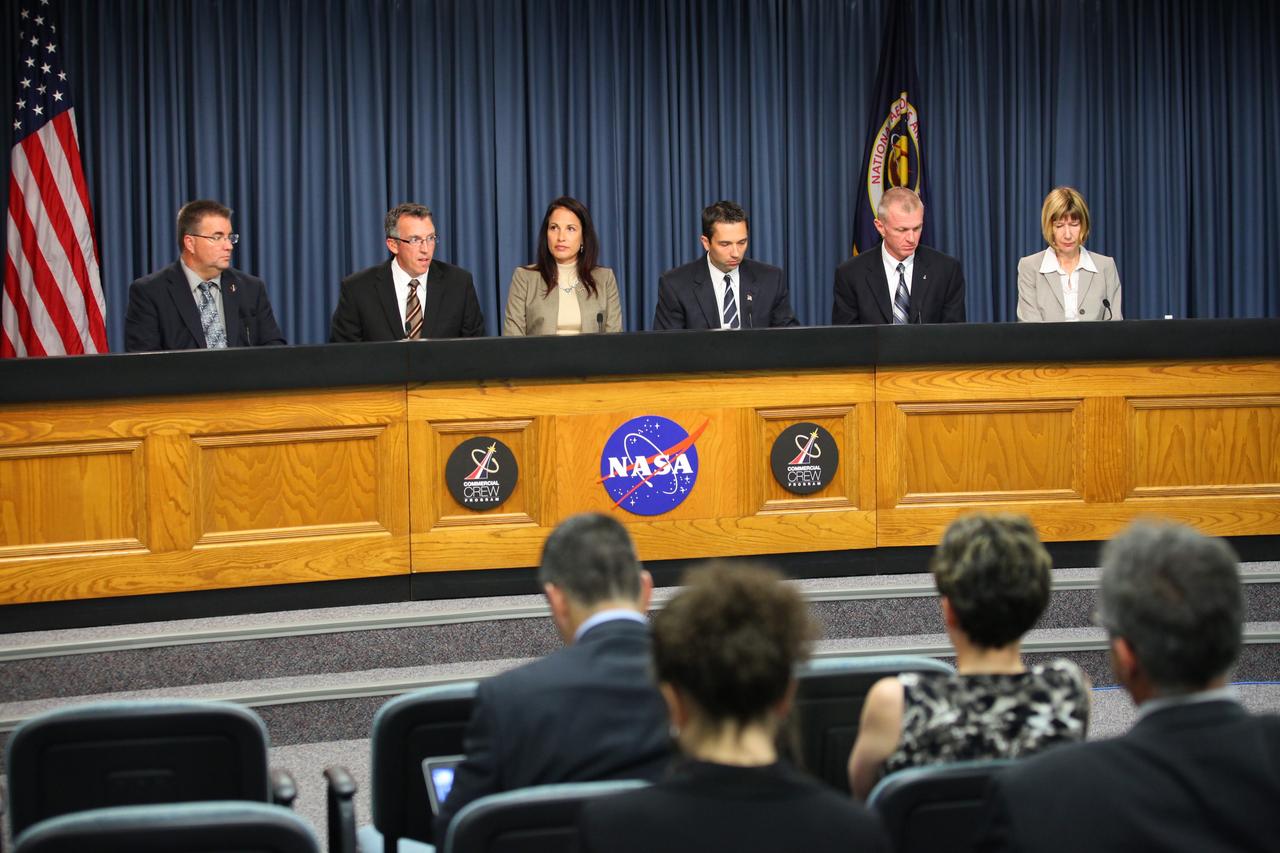
CAPE CANAVERAL, Fla. -- NASA's Commercial Crew Program, or CCP, hosts a pre-proposal conference to inform prospective companies about the recently released request for contract proposals and updates to the certification requirements for crewed missions to the International Space Station, or ISS. The two-phase certification process, called Certification Products Contract, or CPC, will enable NASA to eventually purchase service missions to fly astronauts to and from the ISS. From left, Ed Mango, CCP's program manager Steve Janney, CPC contracting officer Maria Collura, CCP certification manager Tom Simon, CPC Evaluation Team chair Brent Jett, CCP deputy program manager and Kathy Lueders, manager of the ISS Transportation Integration Office. To learn more about CCP, visit www.nasa.gov/commercialcrew. Photo credit: Kim Shiflett
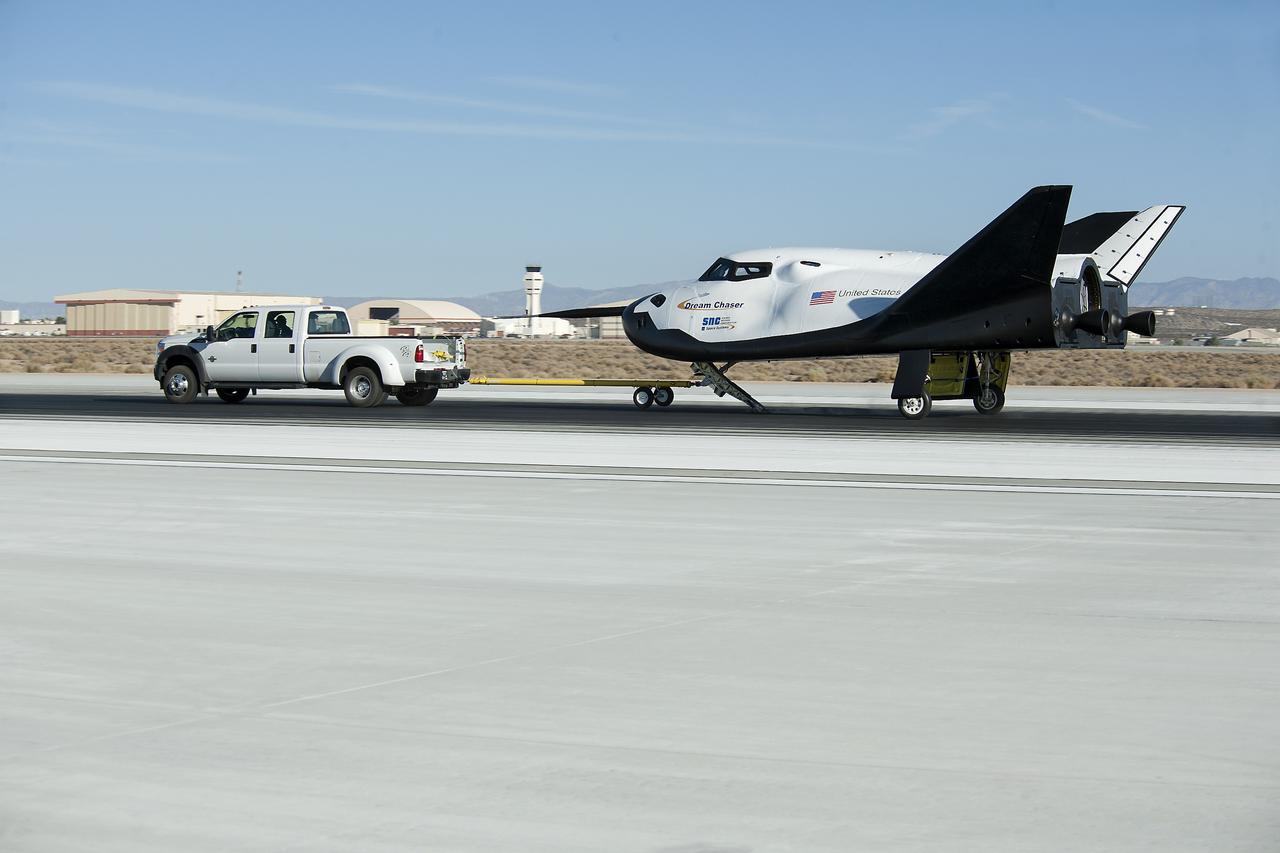
Edwards, Calif. – ED13-0266-049- A pickup truck pulls the Sierra Nevada Corporation, or SNC, Dream Chaser flight vehicle through 60 mile per hour tow tests on taxi and runways at NASA's Dryden Flight Research Center at Edwards Air Force Base in California. Ground testing at 10, 20, 40 and 60 miles per hour is helping the company validate the performance of the spacecraft's braking and landing systems prior to captive-carry and free-flight tests scheduled for later this year. SNC is continuing the development of its Dream Chaser spacecraft under the agency's Commercial Crew Development Round 2, or CCDev2, and Commercial Crew Integrated Capability, or CCiCap, phases, which are intended to lead to the availability of commercial human spaceflight services for government and commercial customers. To learn more about CCP and its industry partners, visit www.nasa.gov/commercialcrew. Image credit: NASA/Ken Ulbrich
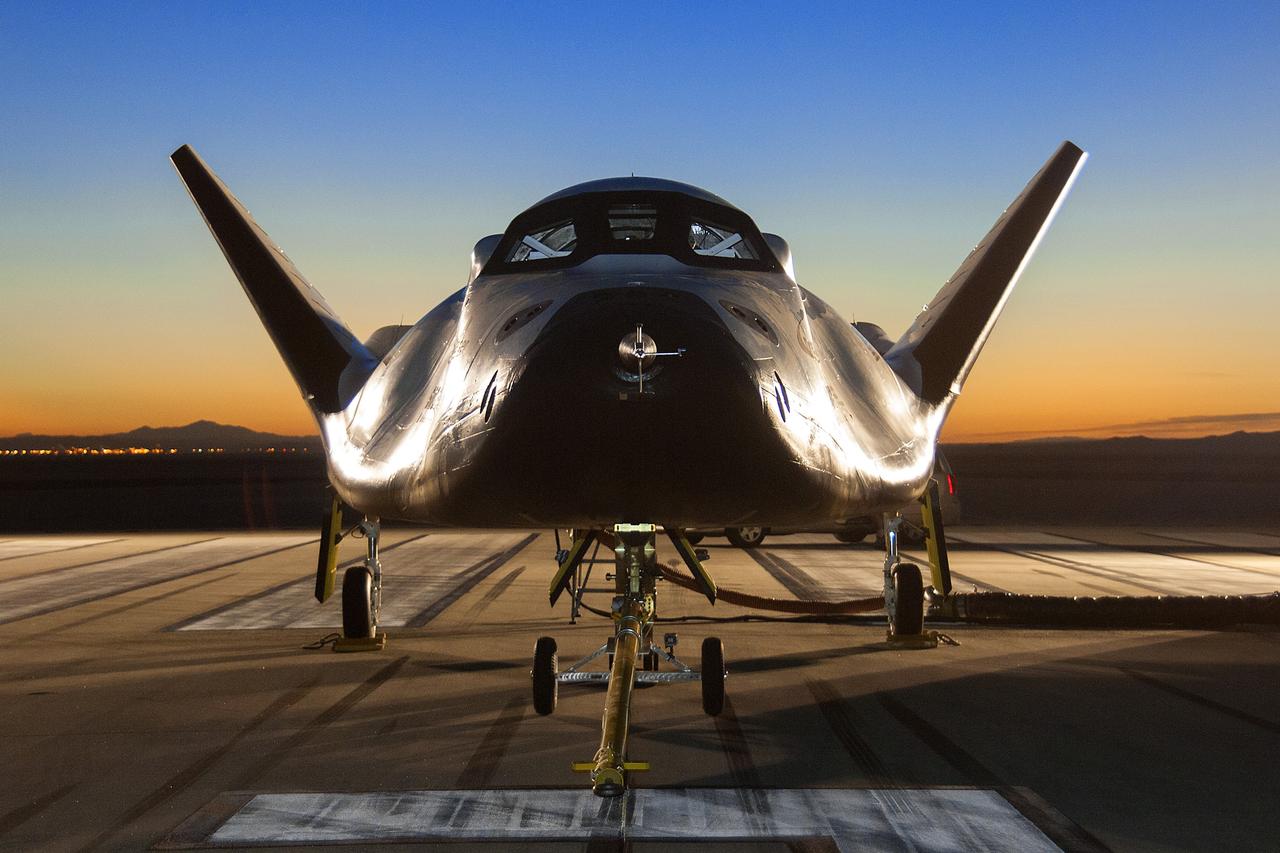
Edwards, Calif. – ED13-0266-022- The Sierra Nevada Corporation, or SNC, Dream Chaser flight vehicle is prepared for 60 mile per hour tow tests on taxi and runways at NASA's Dryden Flight Research Center at Edwards Air Force Base in California. Ground testing at 10, 20, 40 and 60 miles per hour is helping the company validate the performance of the spacecraft's braking and landing systems prior to captive-carry and free-flight tests scheduled for later this year. SNC is continuing the development of its Dream Chaser spacecraft under the agency's Commercial Crew Development Round 2, or CCDev2, and Commercial Crew Integrated Capability, or CCiCap, phases, which are intended to lead to the availability of commercial human spaceflight services for government and commercial customers. To learn more about CCP and its industry partners, visit www.nasa.gov/commercialcrew. Image credit: NASA/Ken Ulbrich
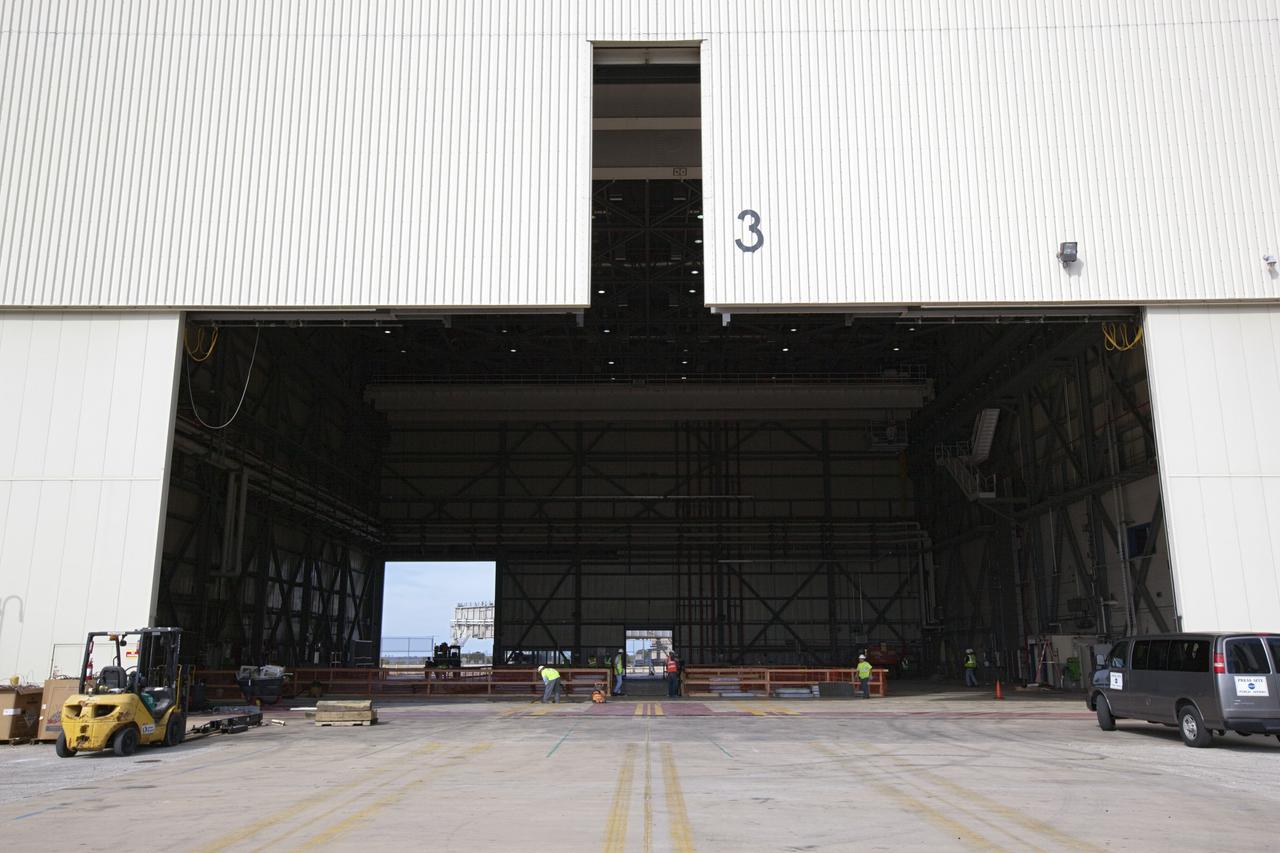
CAPE CANAVERAL, Fla. -- The Commercial Crew and Cargo Processing Facility, or C3PF, at NASA's Kennedy Space Center in Florida is going through major renovations to support the manufacturing of The Boeing Company's CST-100 spacecraft. Known throughout the space shuttle era as Orbiter Processing Facilty-3, or OPF-3, the facility's orbiter-specific platforms were removed recently to make room for a clean-floor factory-like facility. The modernization will allow Boeing to process its new fleet of low-Earth-orbit bound spacecraft, which is under development in collaboration with NASA's Commercial Crew Program, or CCP. Boeing is leasing the excess government facility for next-generation commercial activities through a land-use agreement with Space Florida. To learn more about CCP and its industry partners, visit www.nasa.gov/commercialcrew. Photo credit: Dimitri Gerondidakis
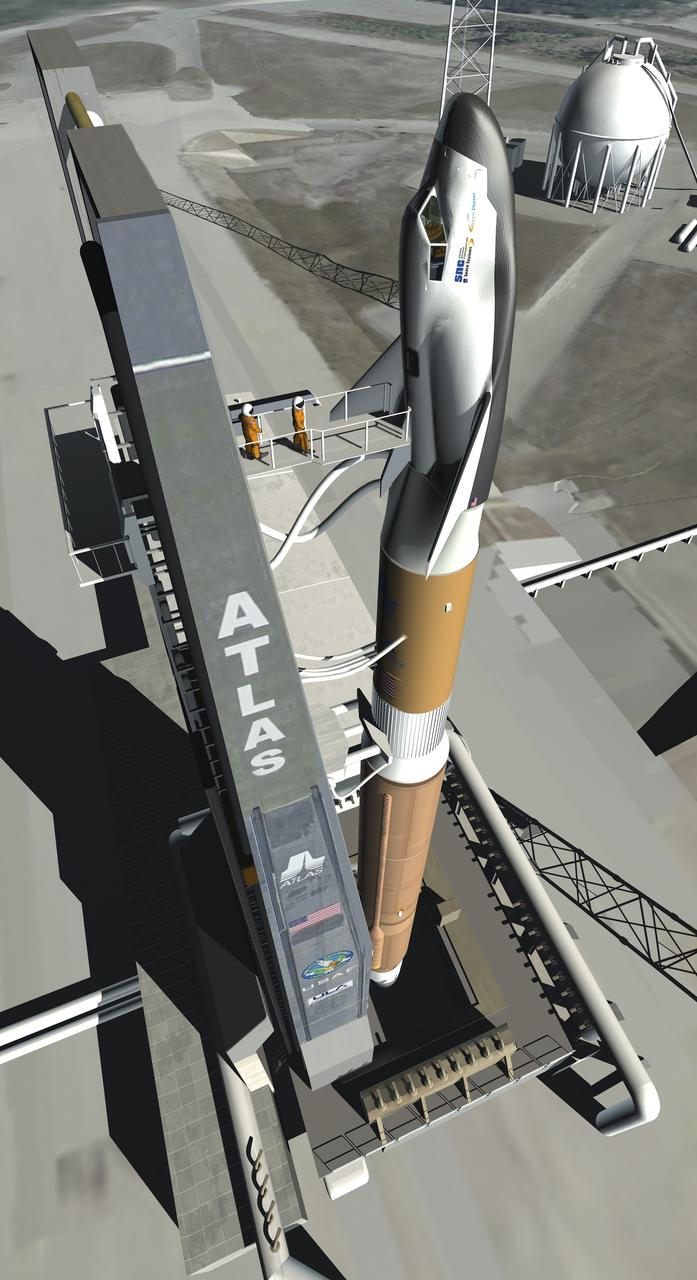
CAPE CANAVERAL, Fla. -- This is an artist's conception of the Dream Chaser spacecraft integrated with an Atlas V rocket. Dream Chaser is under development by Sierra Nevada of Centennial, Colo., for NASA's Commercial Crew Program (CCP). In 2011, NASA selected Sierra Nevada during Commercial Crew Development Round 2 (CCDev2) activities to mature the design and development of a crew transportation system with the overall goal of accelerating a United States-led capability to the International Space Station. United Launch Alliance's Atlas V also is being considered under CCDev2. The goal of CCP is to drive down the cost of space travel as well as open up space to more people than ever before by balancing industry’s own innovative capabilities with NASA's 50 years of human spaceflight experience. Five other aerospace companies also are maturing launch vehicle and spacecraft designs under CCDev2, including Alliant Techsystems Inc. (ATK), The Boeing Co., Excalibur Almaz Inc., Blue Origin, and Space Exploration Technologies (SpaceX). For more information, visit www.nasa.gov/commercialcrew. Image credit: Sierra Nevada Corp.
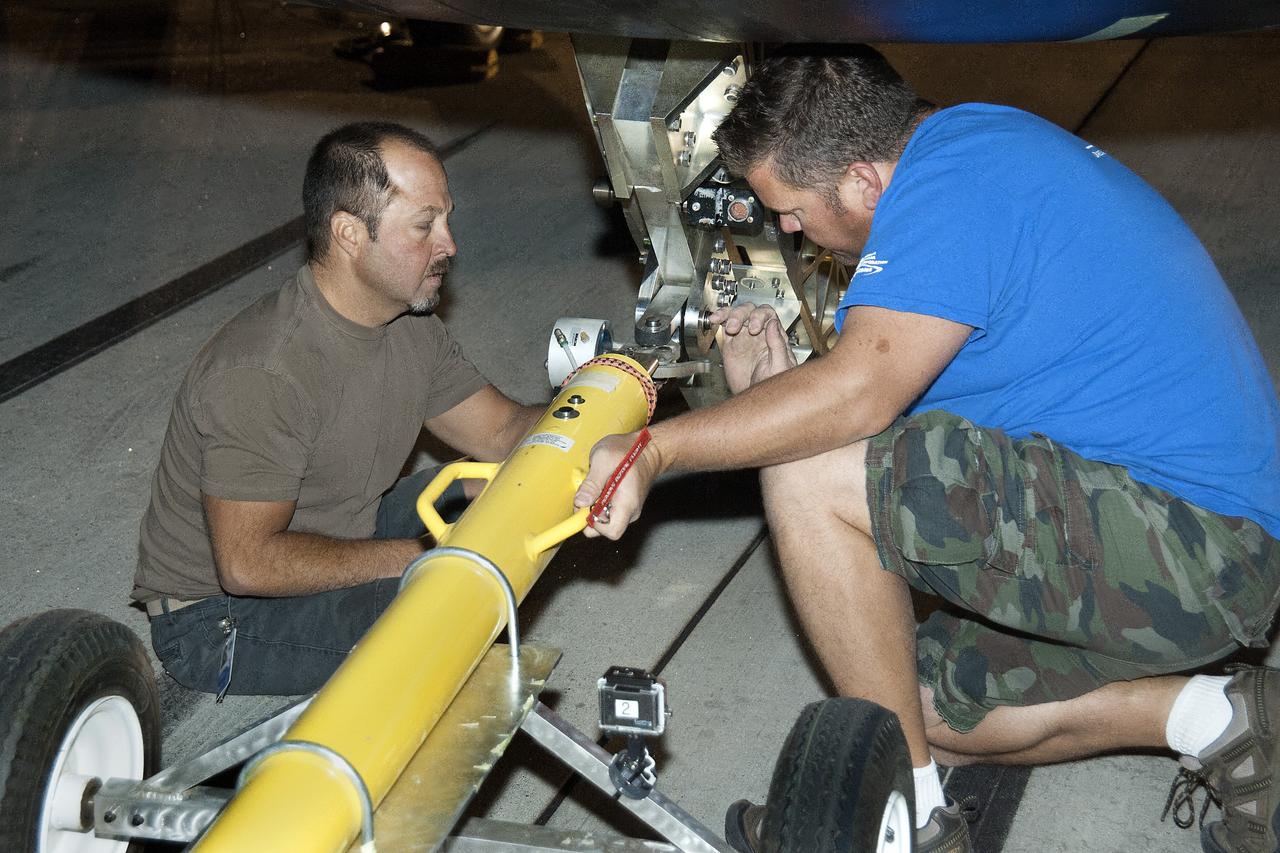
Edwards, Calif. – ED13-0266-016- Sierra Nevada Corporation, or SNC, team members prepare for 60 mph tow tests of the company's Dream Chaser flight vehicle on taxi and runways at NASA's Dryden Flight Research Center at Edwards Air Force Base in California. Ground testing at 10, 20, 40 and 60 miles per hour is helping the company validate the performance of the spacecraft's braking and landing systems prior to captive-carry and free-flight tests scheduled for later this year. SNC is continuing the development of its Dream Chaser spacecraft under the agency's Commercial Crew Development Round 2, or CCDev2, and Commercial Crew Integrated Capability, or CCiCap, phases, which are intended to lead to the availability of commercial human spaceflight services for government and commercial customers. To learn more about CCP and its industry partners, visit www.nasa.gov/commercialcrew. Image credit: NASA/Ken Ulbrich
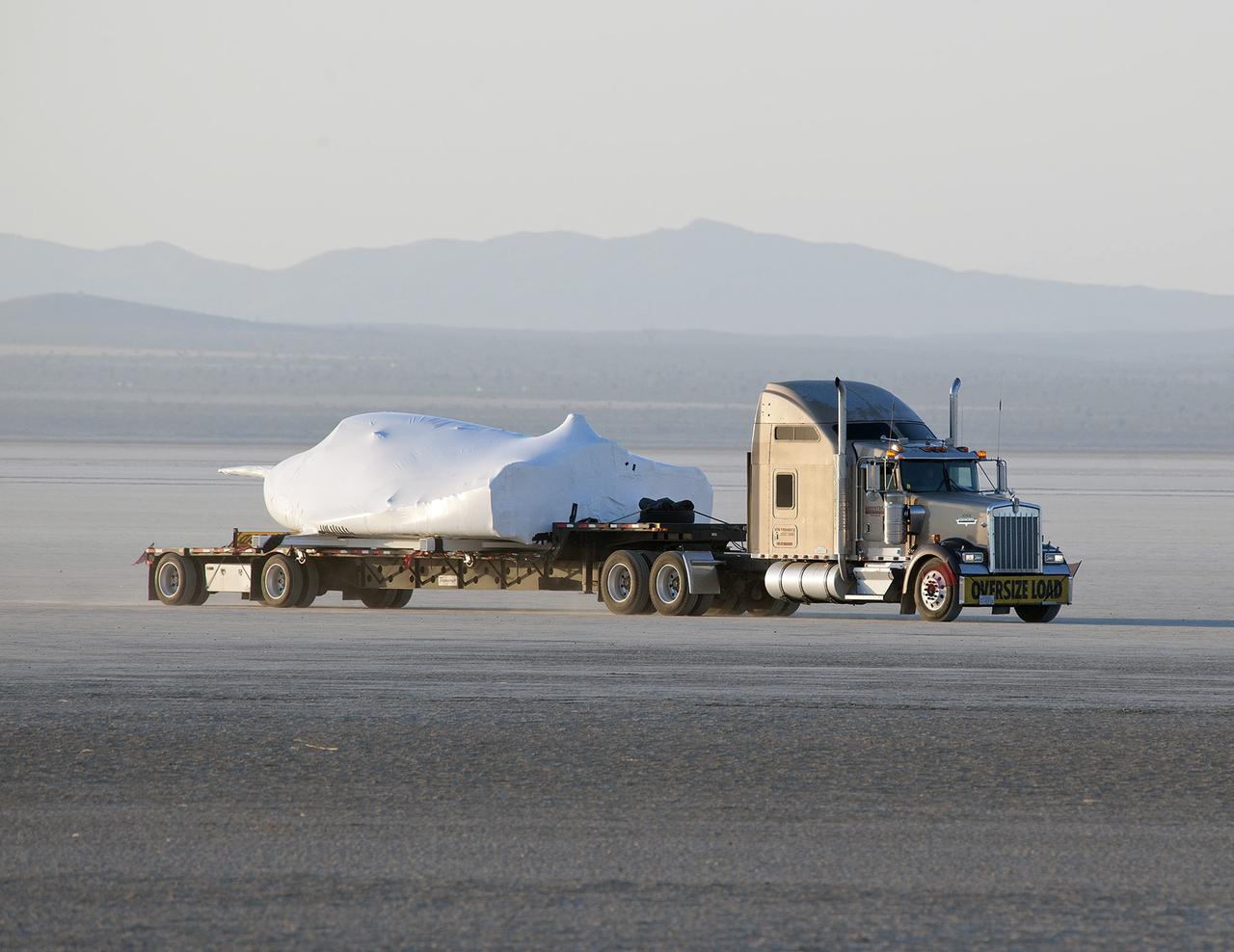
EDWARDS, Calif. – ED13-0142-01: With its wings and tail structure removed and shrouded in plastic wrap for ground transport, Sierra Nevada Corporation, or SNC, Space Systems' Dream Chaser engineering test article is hauled across the bed of Rogers Dry Lake at Edwards Air Force Base, Calif., to NASA's Dryden Flight Research Center. The Dream Chaser will begin its approach-and-landing flight test program in collaboration with NASA's Commercial Crew Program this summer. SNC is one of three companies working with NASA's Commercial Crew Program, or CCP, during the agency's Commercial Crew Integrated Capability, or CCiCap, initiative, which is intended to lead to the availability of commercial human spaceflight services for government and commercial customers. To learn more about CCP and its industry partners, visit www.nasa.gov/commercialcrew. Image credit: NASA/Tom Tschida
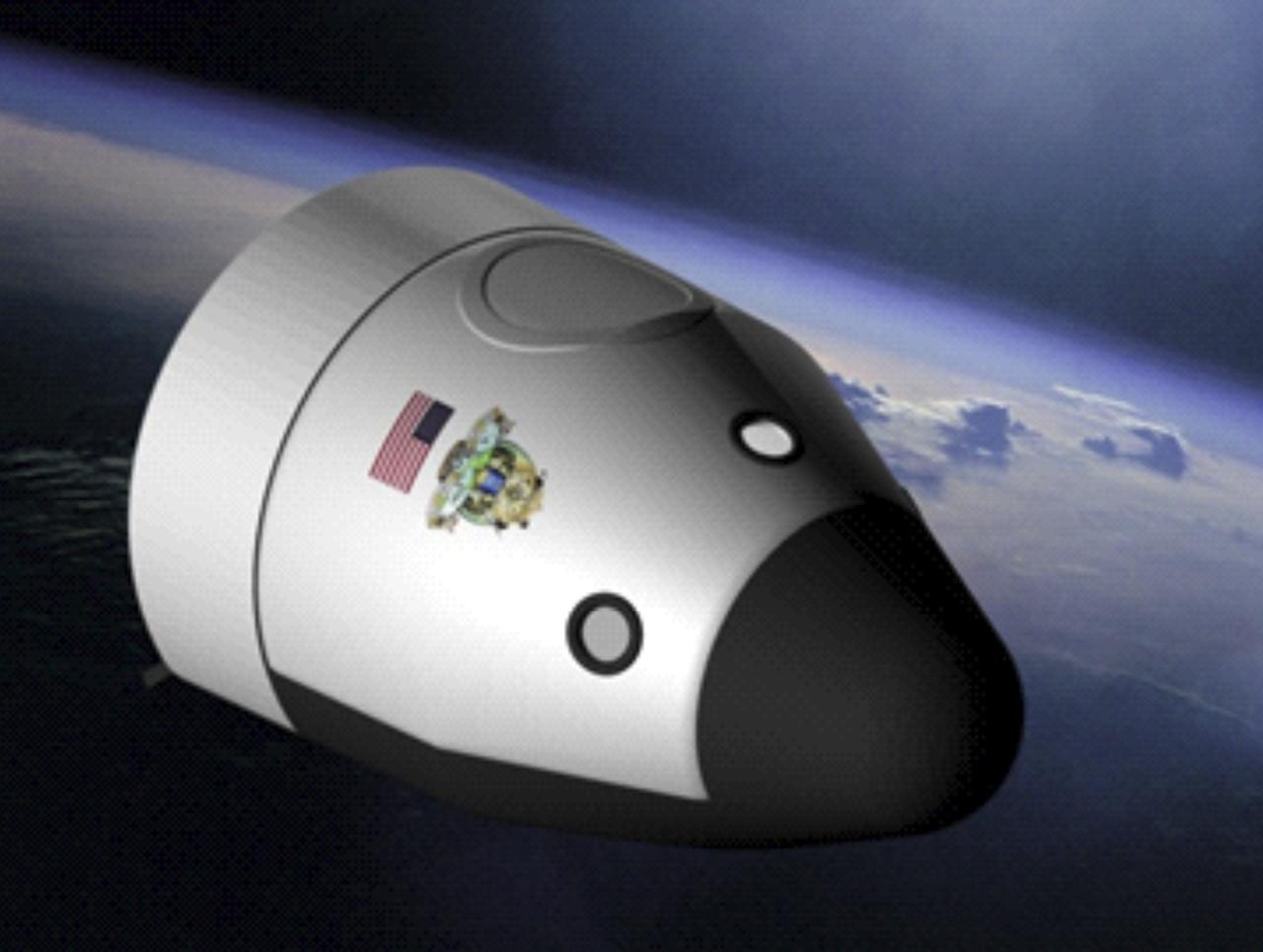
CAPE CANAVERAL, Fla. -- This is an artist's conception of the Space Vehicle under development by Blue Origin of Kent, Wash., for NASA's Commercial Crew Program (CCP). In 2011, NASA selected Blue Origin during Commercial Crew Development Round 2 (CCDev2) activities to mature the design and development of a crew transportation system with the overall goal of accelerating a United States-led capability to the International Space Station. The goal of CCP is to drive down the cost of space travel as well as open up space to more people than ever before by balancing industry’s own innovative capabilities with NASA's 50 years of human spaceflight experience. Six other aerospace companies also are maturing launch vehicle and spacecraft designs under CCDev2, including Alliant Techsystems Inc. (ATK), The Boeing Co., Excalibur Almaz Inc., Sierra Nevada Corp., Space Exploration Technologies (SpaceX), and United Launch Alliance (ULA). For more information, visit www.nasa.gov/commercialcrew. Image credit: Blue Origin
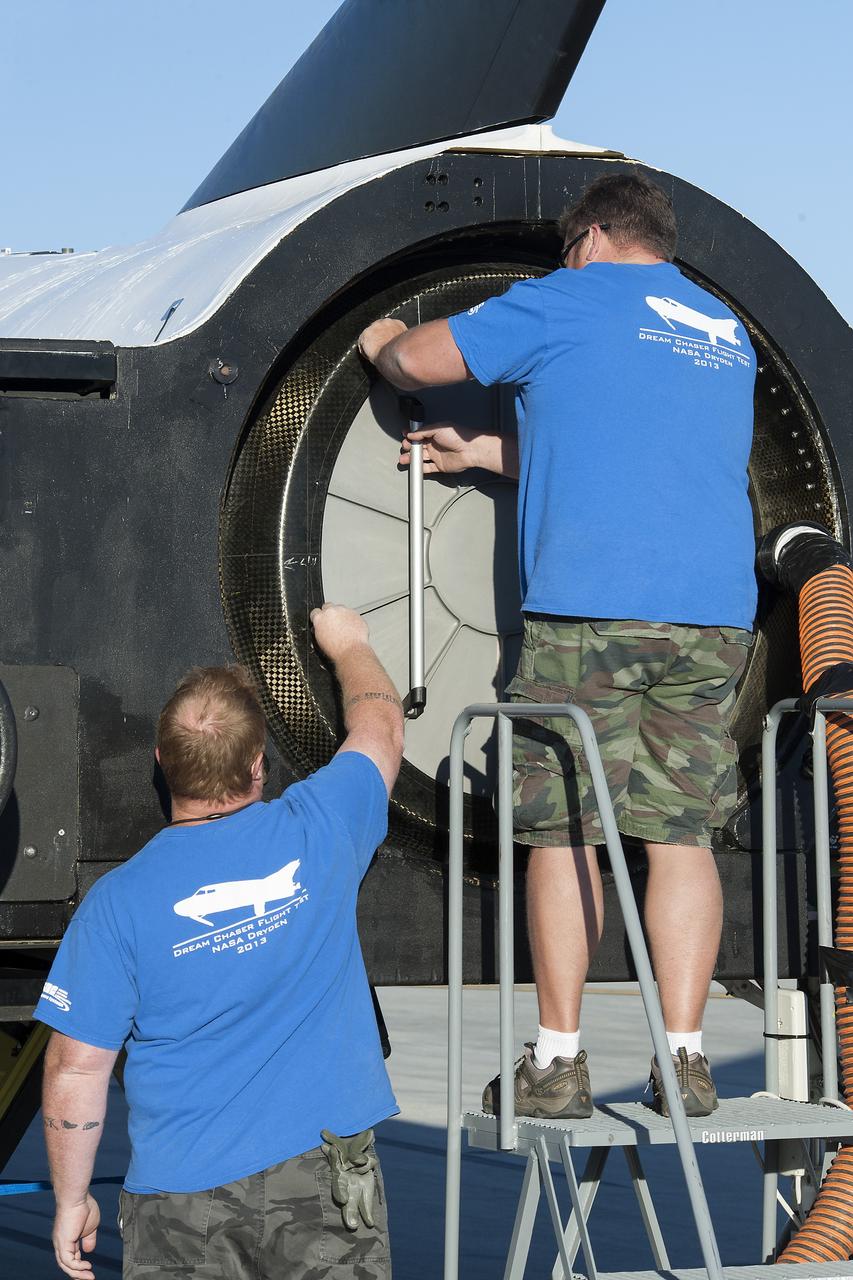
Edwards, Calif. – ED13-0266-046- Sierra Nevada Corporation, or SNC, team members prepare for 60 mph tow tests of the company's Dream Chaser flight vehicle on taxi and runways at NASA's Dryden Flight Research Center at Edwards Air Force Base in California. Ground testing at 10, 20, 40 and 60 miles per hour is helping the company validate the performance of the spacecraft's braking and landing systems prior to captive-carry and free-flight tests scheduled for later this year. SNC is continuing the development of its Dream Chaser spacecraft under the agency's Commercial Crew Development Round 2, or CCDev2, and Commercial Crew Integrated Capability, or CCiCap, phases, which are intended to lead to the availability of commercial human spaceflight services for government and commercial customers. To learn more about CCP and its industry partners, visit www.nasa.gov/commercialcrew. Image credit: NASA/Ken Ulbrich
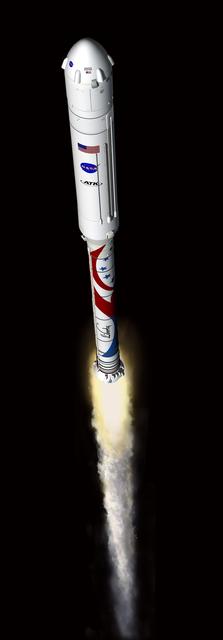
CAPE CANAVERAL, Fla. -- This is an artist's conception of the Liberty Launch Vehicle under development by Alliant Techsystems Inc. (ATK) of Promontory, Utah, for NASA's Commercial Crew Program (CCP). In 2011, NASA and ATK entered into an unfunded Space Act Agreement during Commercial Crew Development Round 2 (CCDev2) activities to mature the design and development of a crew transportation system with the overall goal of accelerating a United States-led capability to the International Space Station. The goal of CCP is to drive down the cost of space travel as well as open up space to more people than ever before by balancing industry’s own innovative capabilities with NASA's 50 years of human spaceflight experience. Six other aerospace companies also are maturing launch vehicle and spacecraft designs under CCDev2, including Blue Origin, The Boeing Co., Excalibur Almaz Inc., Sierra Nevada Corp., Space Exploration Technologies (SpaceX), and United Launch Alliance (ULA). For more information, visit www.nasa.gov/commercialcrew. Image credit: Alliant Techsystems Inc.
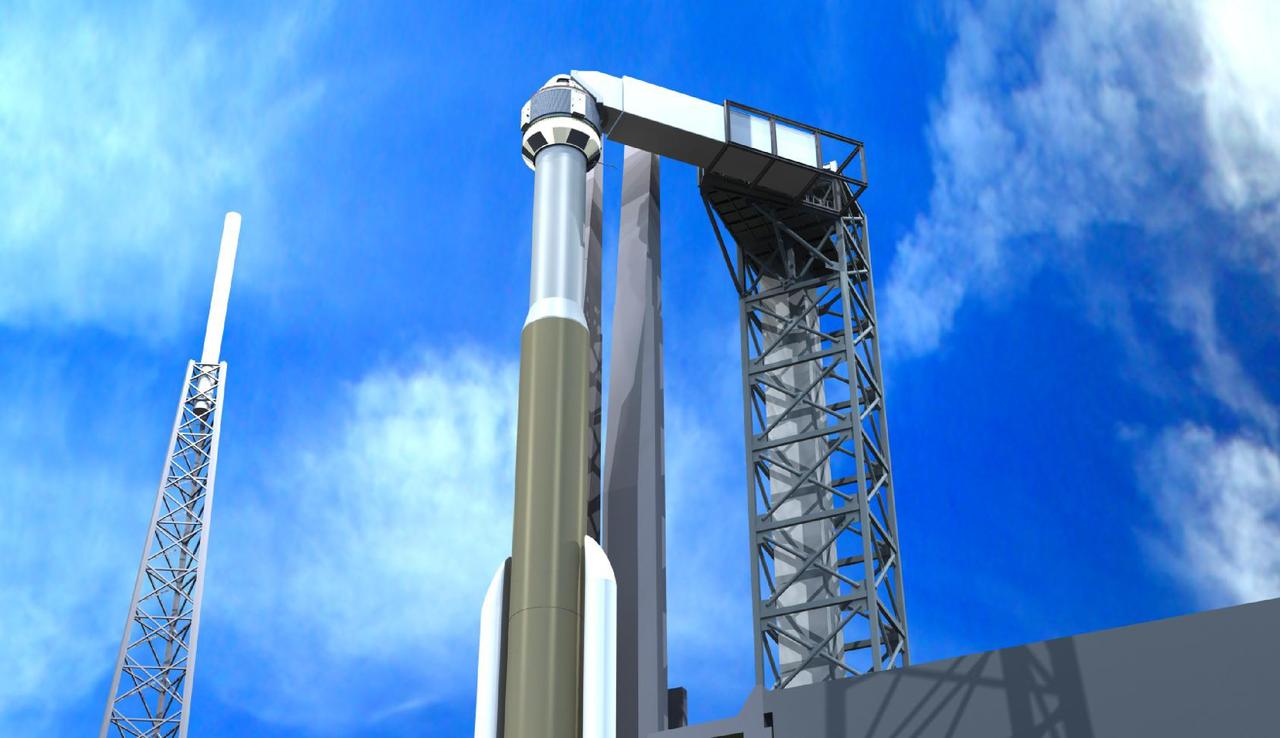
CAPE CANAVERAL, Fla. -- This is an artist's concept of The Boeing Company's CST-100 spacecraft and United Launch Alliance, or ULA, Atlas V rocket at Space Launch Complex 41 on Cape Canaveral Air Force Station in Florida. The integrated system is being developed in collaboration with NASA's Commercial Crew Program during the Commercial Crew Integrated Capability, or CCiCap, initiative. Image credit: Boeing
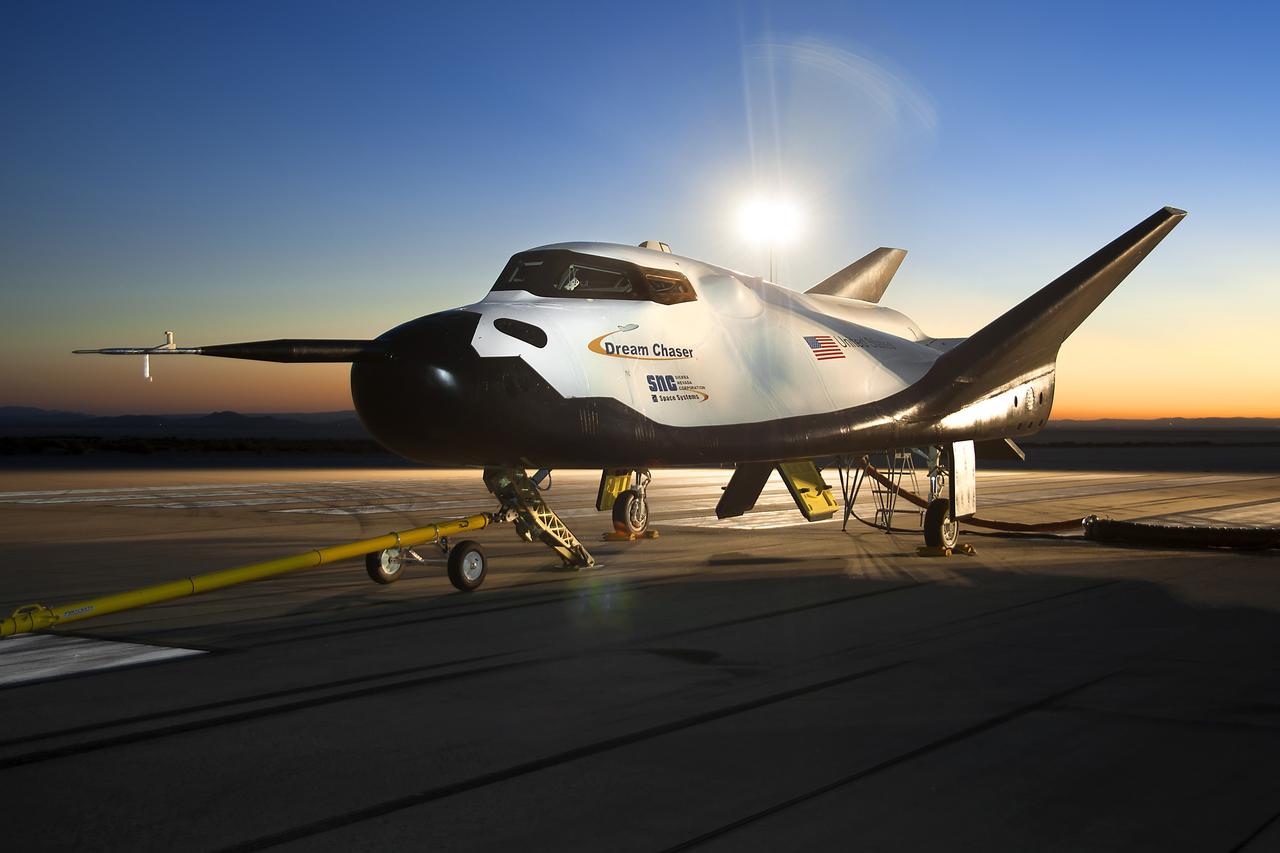
Edwards, Calif. – ED13-0266-023- The Sierra Nevada Corporation, or SNC, Dream Chaser flight vehicle is prepared for 60 mile per hour tow tests on taxi and runways at NASA's Dryden Flight Research Center at Edwards Air Force Base in California. Ground testing at 10, 20, 40 and 60 miles per hour is helping the company validate the performance of the spacecraft's braking and landing systems prior to captive-carry and free-flight tests scheduled for later this year. SNC is continuing the development of its Dream Chaser spacecraft under the agency's Commercial Crew Development Round 2, or CCDev2, and Commercial Crew Integrated Capability, or CCiCap, phases, which are intended to lead to the availability of commercial human spaceflight services for government and commercial customers. To learn more about CCP and its industry partners, visit www.nasa.gov/commercialcrew. Image credit: NASA/Ken Ulbrich
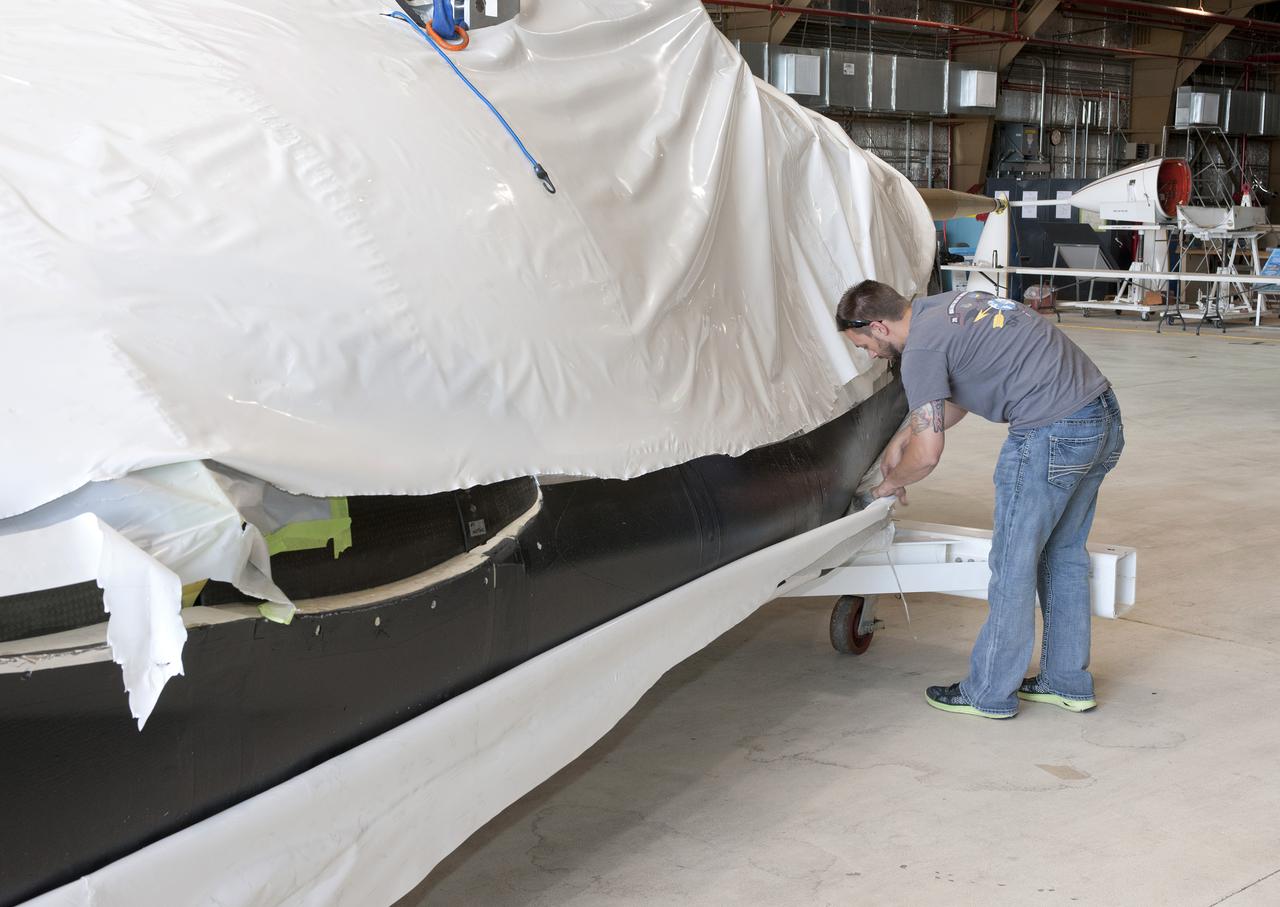
Edwards, Calif. – ED-0144-05 - Plastic wrapping that protected the Sierra Nevada Corporation, or SNC, Dream Chaser flight test vehicle during its transport from Colorado is carefully removed by SNC employee Jason Dixon following the craft's arrival at NASA's Dryden Flight Research Center in southern California. The prototype space access vehicle will undergo ground and approach-and-landing flight tests in the coming months at Dryden as part of NASA's Commercial Crew Program, or CCP, development work. SNC is one of three companies working with CCP during the agency's Commercial Crew Integrated Capability, or CCiCap, initiative, which is intended to lead to the availability of commercial human spaceflight services for government and commercial customers. To learn more about CCP and its industry partners, visit www.nasa.gov_commercialcrew. Image credit: NASA_Tom Tschida
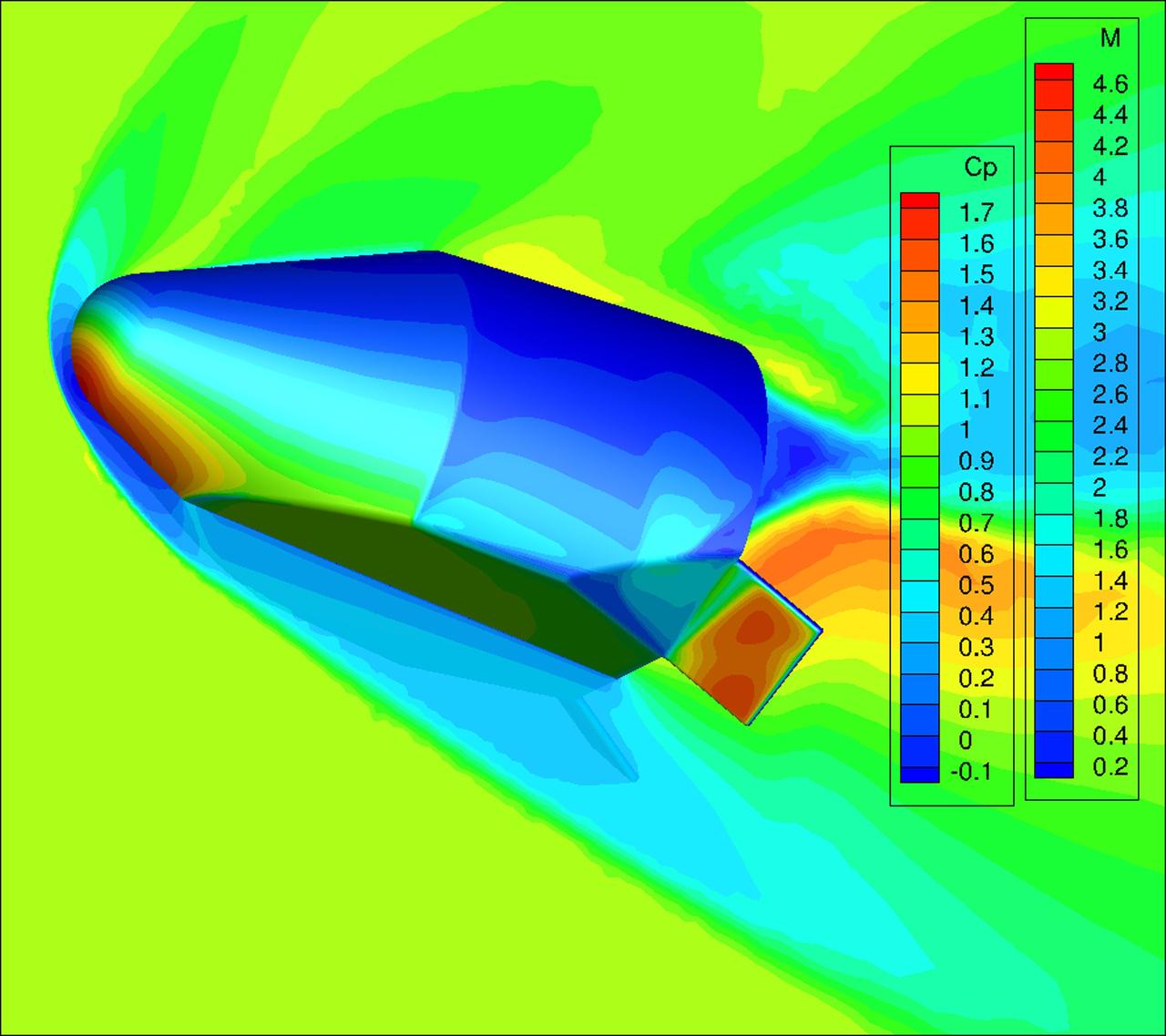
DALLAS – This computational fluid dynamics CFD image was taken during a series of wind tunnel tests for Blue Origin's next-generation Space Vehicle at Lockheed Martin's High Speed Wind Tunnel Facility in Dallas. The Space Vehicle's innovative biconic shape is designed to provide more cross-range and interior volume than a traditional capsule and weigh less than a winged vehicle. More than 180 wind tunnel tests validated the company's analysis of the Space Vehicle's aerodynamics during descent through the atmosphere and the ability to change its flight path, which could increase the number of available landing opportunities and enhance the vehicle's emergency return capability. In 2011, NASA selected Blue Origin during Commercial Crew Development Round 2 CCDev2) activities for NASA’s Commercial Crew Program to mature the design and development of a crew transportation system with the overall goal of accelerating a United States-led capability to the International Space Station. The goal of CCP is to drive down the cost of space travel as well as open up space to more people than ever before by balancing industry’s own innovative capabilities with NASA's 50 years of human spaceflight experience. Six other aerospace companies also are maturing launch vehicle and spacecraft designs under CCDev2, including Alliant Techsystems Inc. ATK, The Boeing Co., Excalibur Almaz Inc., Sierra Nevada Corp., Space Exploration Technologies SpaceX, and United Launch Alliance ULA. For more information, visit www.nasa.gov/commercialcrew. Image credit: Blue Origin
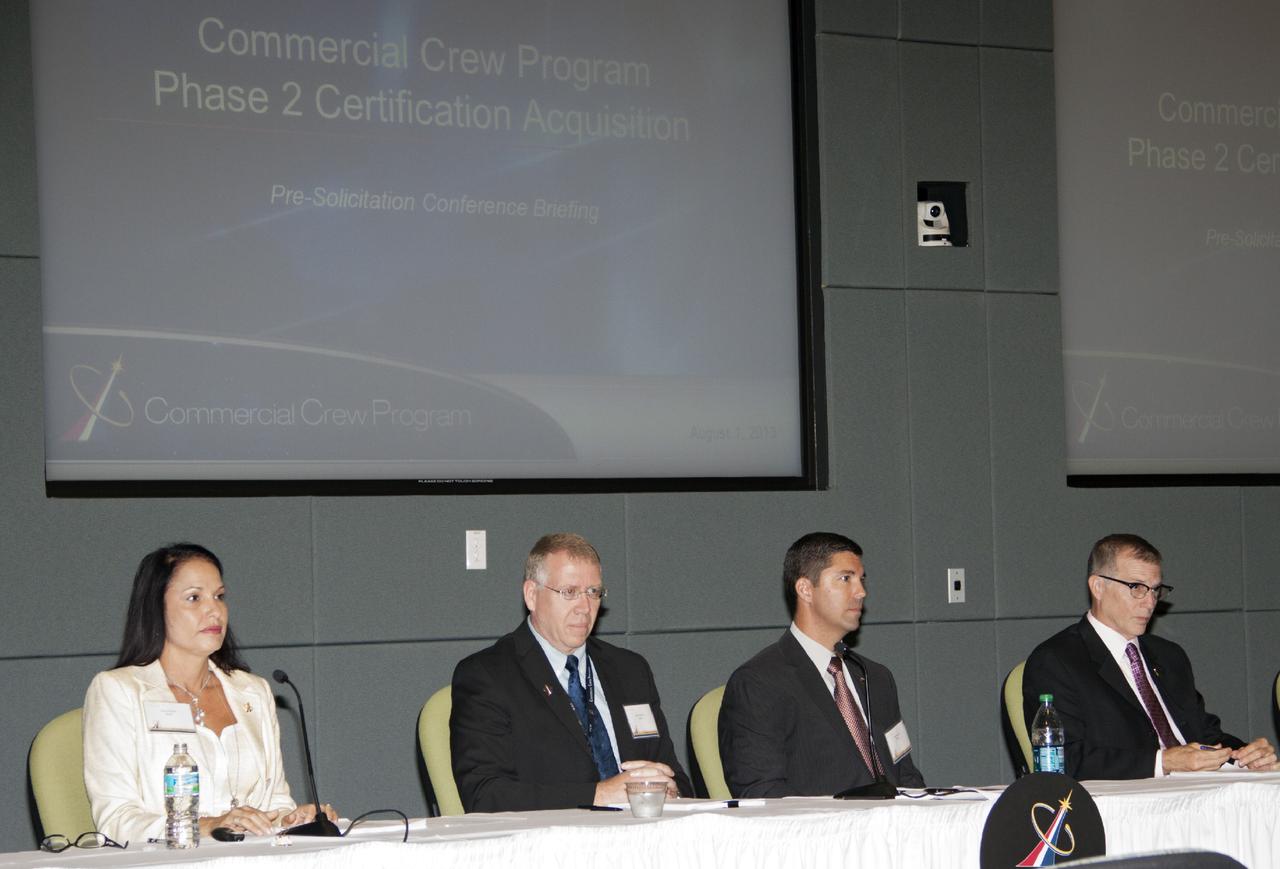
CAPE CANAVERAL, Fla. - Panelists of the Commercial Crew Transportation Capability, or CCtCap, Pre-Proposal Conference at Kennedy Space Center in Florida are, from left, Maria Collura, Brian Hinerth, Trip Healy and Lee Pagel. CCtCap will be the next phase of certification efforts for CCP mission to the International Space Station. The purpose of the conference was to involve aerospace industry representatives in the CCtCap draft Request for Proposal, or RFP, process and provide a greater understanding for both parties before the official RFP is released in the fall of 2013. To learn more about CCP, visit www.nasa.gov/commercialcrew. Photo credit: NASA/Jim Grossmann
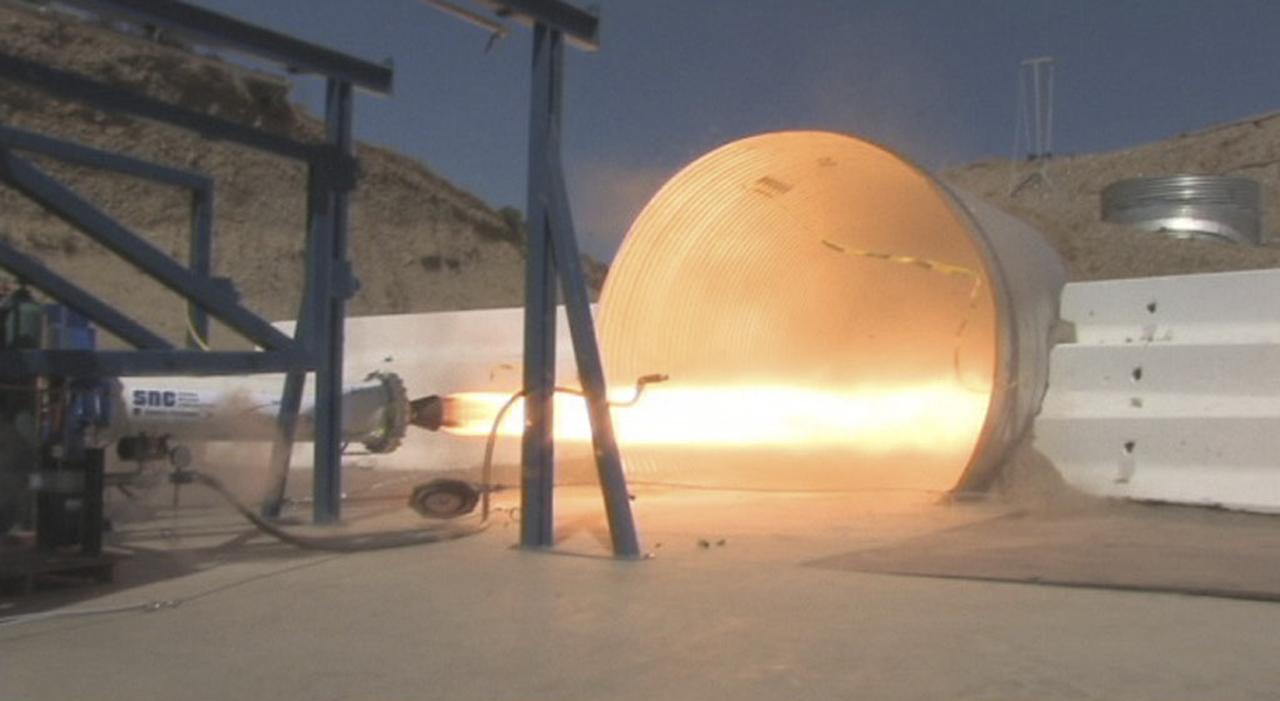
POWAY, Calif. – During NASA's Commercial Crew Development Round 1 CCDev1 activities, the rocket motor under development by Sierra Nevada Corp. for its Dream Chaser spacecraft successfully fires at the company's rocket test facility located near San Diego. NASA team members reviewed the motor's system and then watched it fire three times in one day, including one firing under vacuum ignition conditions. The tests, which simulated a complete nominal mission profile, demonstrated the multiple restart capability of Sierra Nevada's hybrid rocket. Two of the company's designed and developed hybrid rocket motors will be used as the main propulsion system on the Dream Chaser after launching aboard an Atlas V rocket. Dream Chaser is one of five systems NASA invested in during CCDev1 in order to aid in the innovation and development of American-led commercial capabilities for crew transportation and rescue services to and from the International Space Station and other low Earth orbit destinations. In 2011, NASA's Commercial Crew Program CCP entered into another funded Space Act Agreement with Sierra Nevada for the second round of commercial crew development CCDev2) so the company could further develop its Dream Chaser spacecraft for NASA transportation services. For information about CCP, visit www.nasa.gov/commercialcrew. Photo credit: Sierra Nevada Corp.
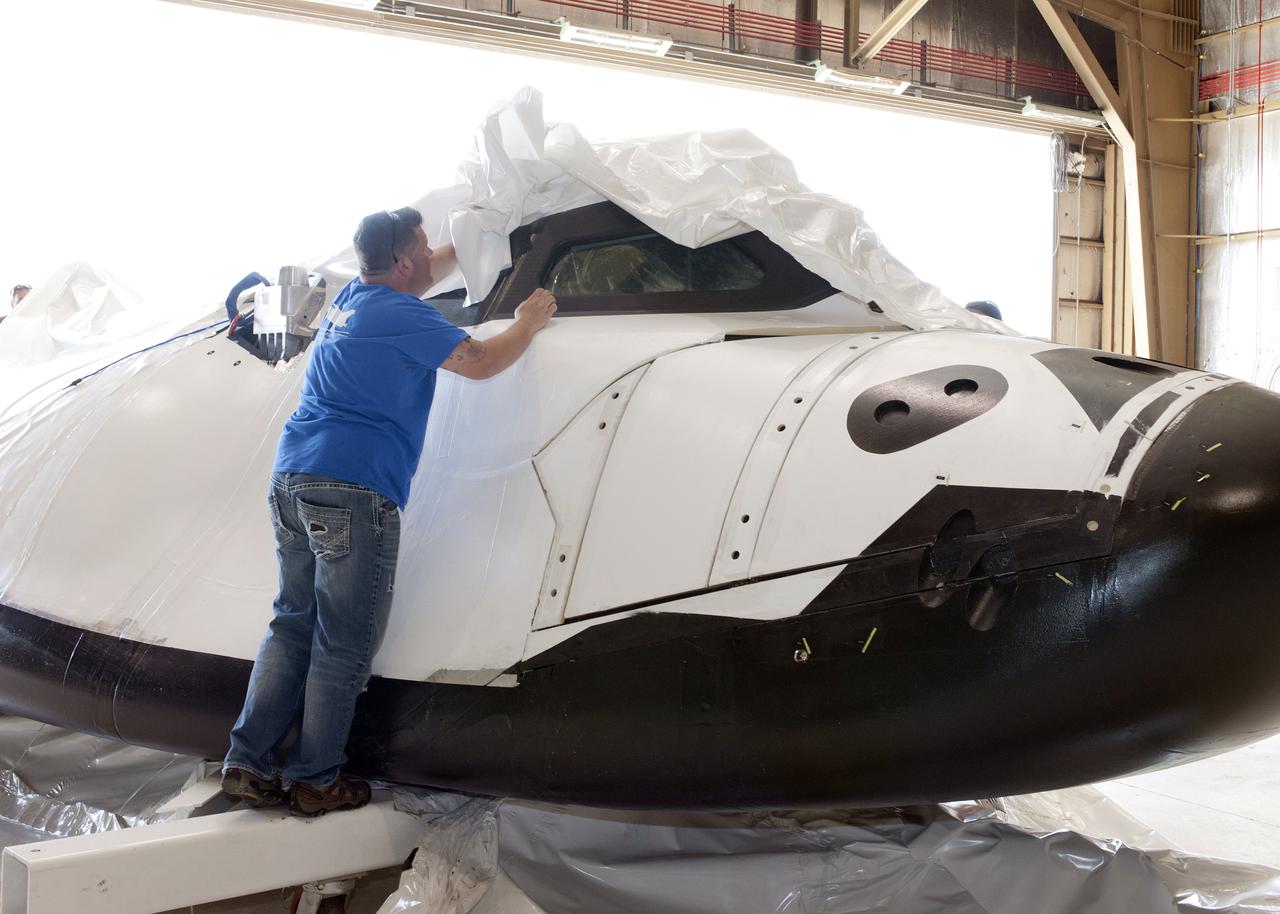
Edwards, Calif. – ED-0144-09 - Plastic wrapping that protected the Sierra Nevada Corporation, or SNC, Dream Chaser flight test vehicle during its transport from Colorado is carefully removed by SNC Dream Chaser crew chief Christian White following the craft's arrival at NASA's Dryden Flight Research Center in southern California. The prototype space access vehicle will undergo ground and approach-and-landing flight tests in the coming months at Dryden as part of NASA's Commercial Crew Program, or CCP, development work. SNC is one of three companies working with CCP during the agency's Commercial Crew Integrated Capability, or CCiCap, initiative, which is intended to lead to the availability of commercial human spaceflight services for government and commercial customers. To learn more about CCP and its industry partners, visit www.nasa.gov_commercialcrew. Image credit: NASA_Tom Tschida
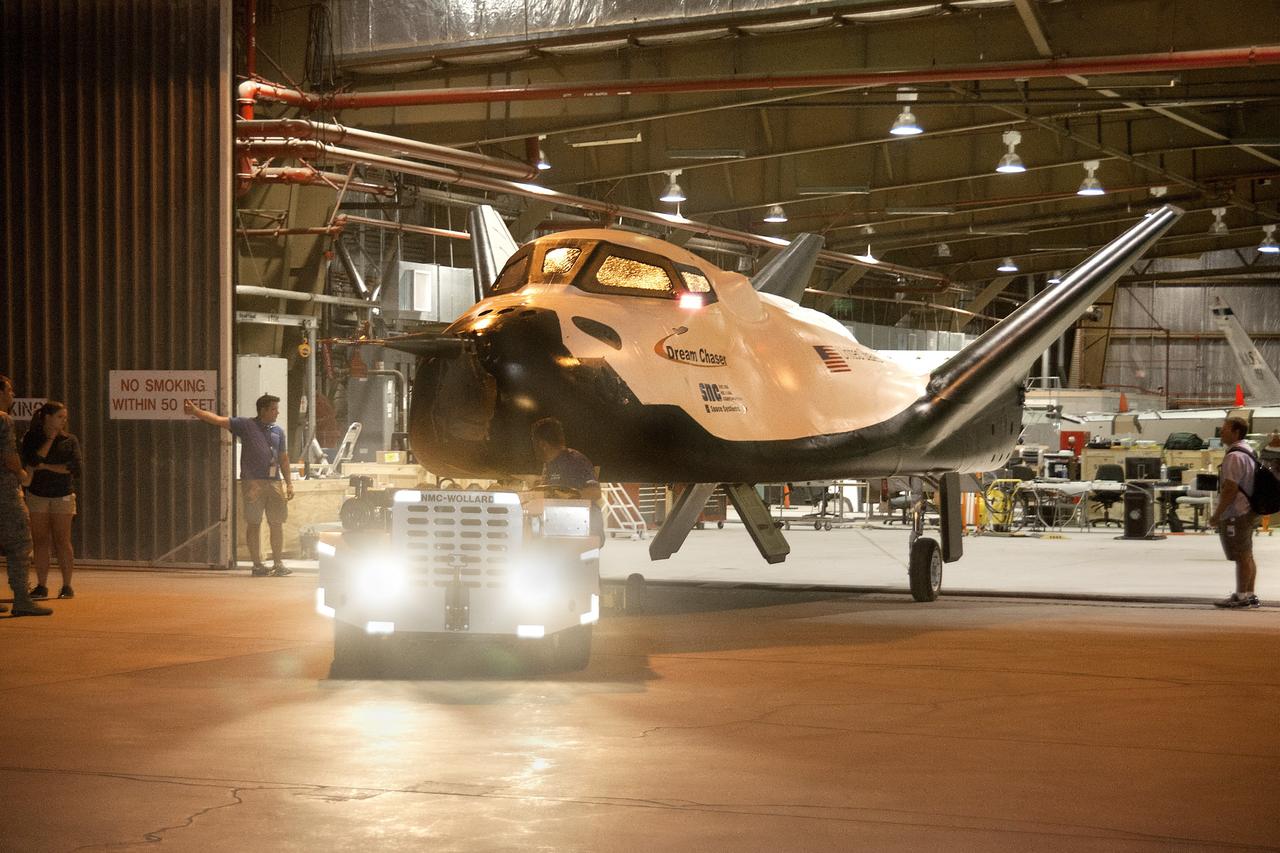
Edwards, Calif. – ED13-0266-004- The Sierra Nevada Corporation, or SNC, Dream Chaser flight vehicle pulls out of a hangar at NASA's Dryden Flight Research Center in California in preparation for tow tests. Ground testing at 10, 20, 40 and 60 miles per hour is helping the company validate the performance of the spacecraft's braking and landing systems prior to captive-carry and free-flight tests scheduled for later this year. SNC is continuing the development of its Dream Chaser spacecraft under the agency's Commercial Crew Development Round 2, or CCDev2, and Commercial Crew Integrated Capability, or CCiCap, phases, which are intended to lead to the availability of commercial human spaceflight services for government and commercial customers. To learn more about CCP and its industry partners, visit www.nasa.gov/commercialcrew. Image credit: NASA/Ken Ulbrich
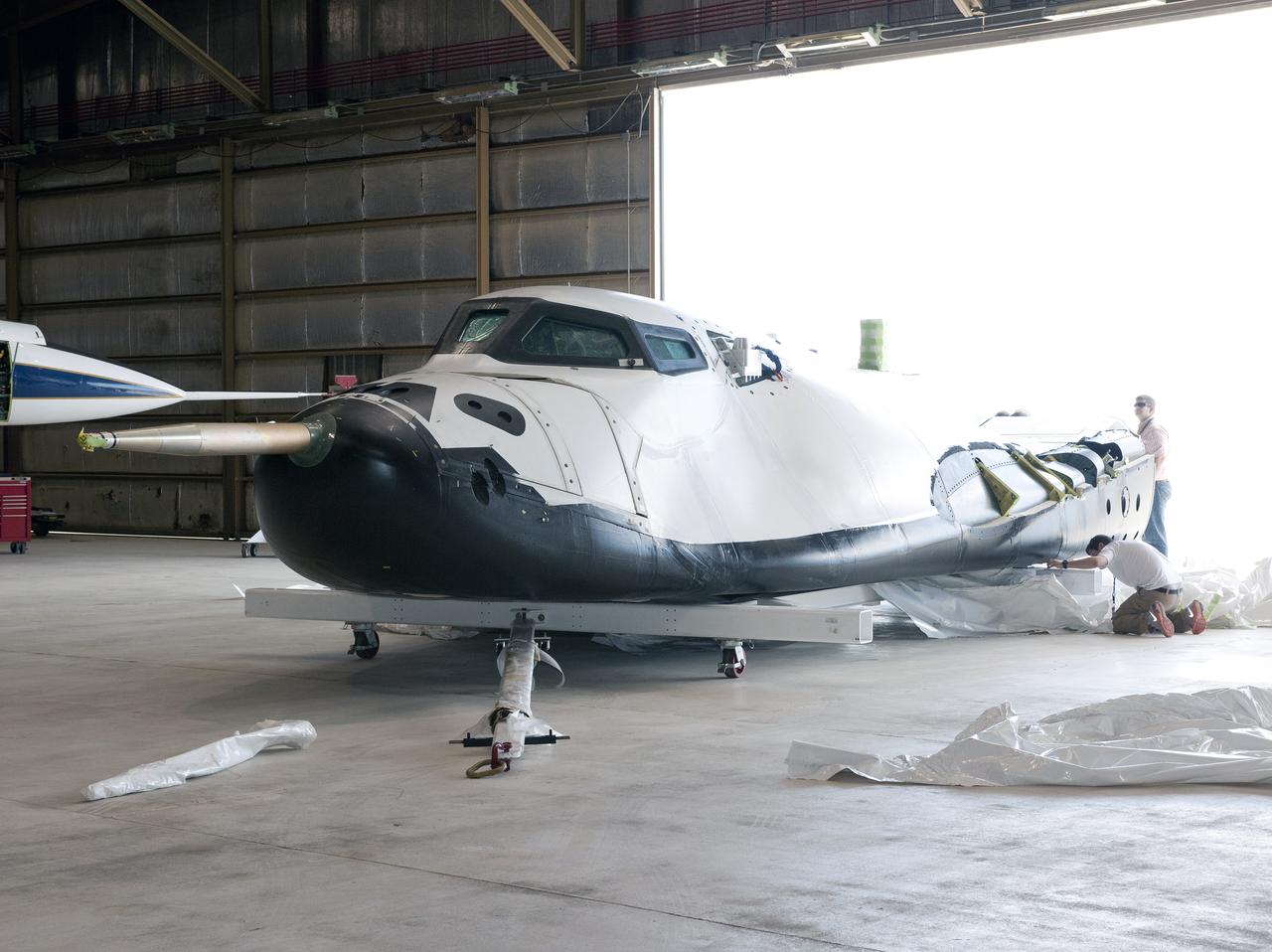
Edwards, Calif. – ED-0144-12 - Plastic wrapping that protected the Sierra Nevada Corporation, or SNC, Dream Chaser flight test vehicle during its transport from Colorado is carefully removed by SNC employee Will Armijo following the craft's arrival at NASA's Dryden Flight Research Center in southern California. The prototype space access vehicle will undergo ground and approach-and-landing flight tests in the coming months at Dryden as part of NASA's Commercial Crew Program, or CCP, development work. SNC is one of three companies working with CCP during the agency's Commercial Crew Integrated Capability, or CCiCap, initiative, which is intended to lead to the availability of commercial human spaceflight services for government and commercial customers. To learn more about CCP and its industry partners, visit www.nasa.gov_commercialcrew. Image credit: NASA_Tom Tschida
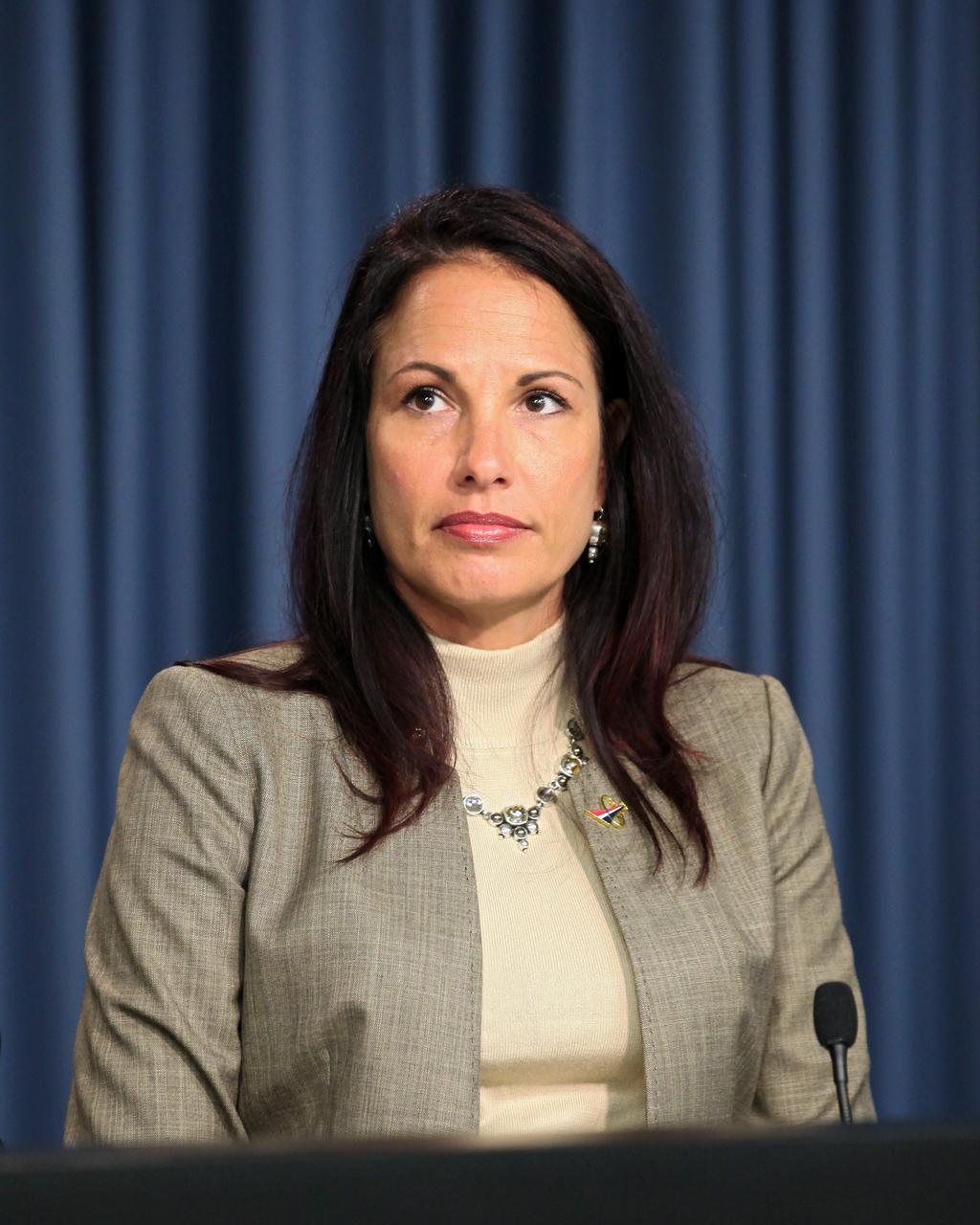
CAPE CANAVERAL, Fla. -- Maria Collura of NASA's Commercial Crew Program, or CCP, talks to aerospace industry representatives during a pre-proposal conference to inform prospective companies about the recently released request for contract proposals and updates to the certification requirements for crewed missions to the International Space Station, or ISS. The two-phase certification process, called Certification Products Contract, or CPC, will enable NASA to eventually purchase service missions to fly astronauts to and from the ISS. Collura serves as a CCP certification manager. To learn more about CCP, visit www.nasa.gov/commercialcrew. Photo credit: Kim Shiflett
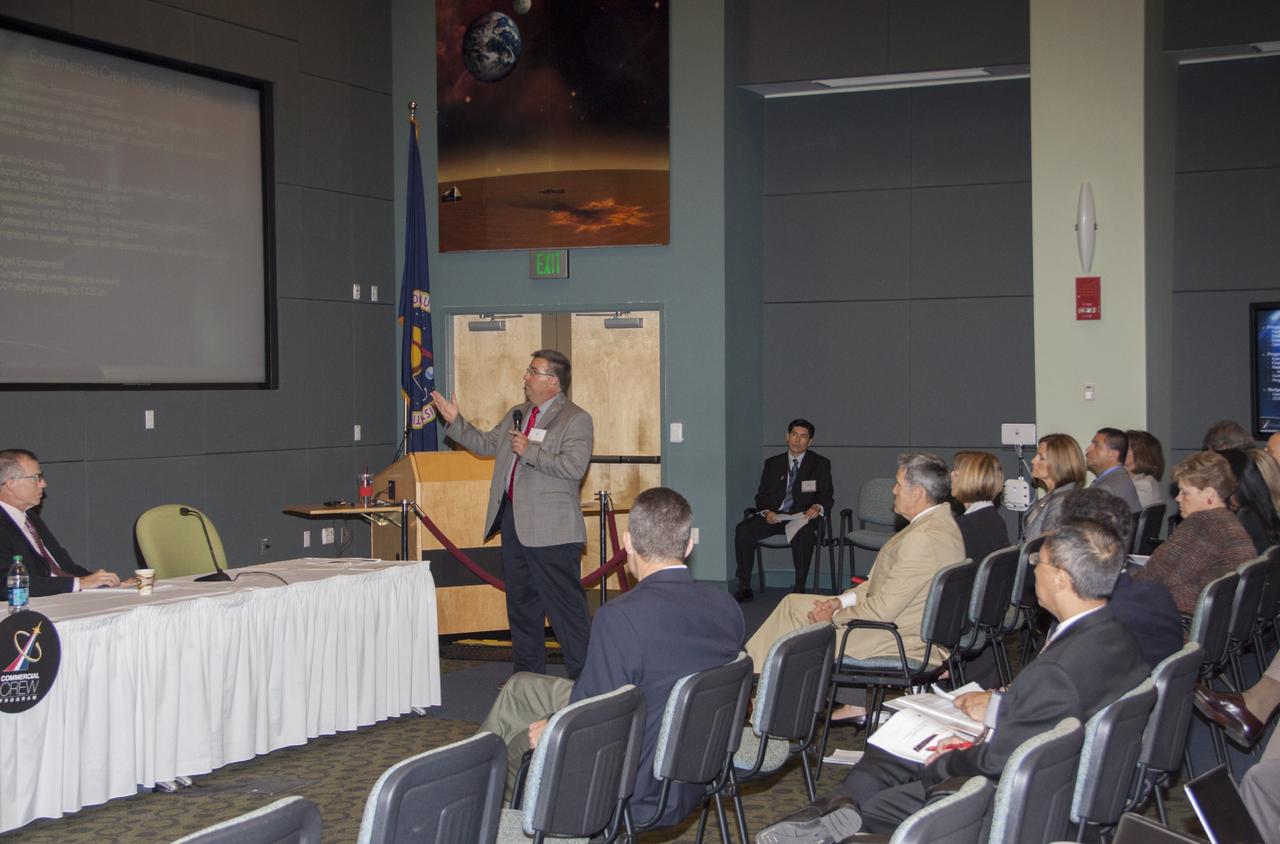
CAPE CANAVERAL, Fla. - Ed Mango, manager of NASA's Commercial Crew Program, or CCP, makes opening remarks at the Commercial Crew Transportation Capability, or CCtCap, Pre-Proposal Conference at Kennedy Space Center in Florida. CCtCap will be the next phase of certification efforts for CCP mission to the International Space Station. The purpose of the conference was to involve aerospace industry representatives in the CCtCap draft Request for Proposal, or RFP, process and provide a greater understanding for both parties before the official RFP is released in the fall of 2013. To learn more about CCP, visit www.nasa.gov/commercialcrew. Photo credit: NASA/Jim Grossmann
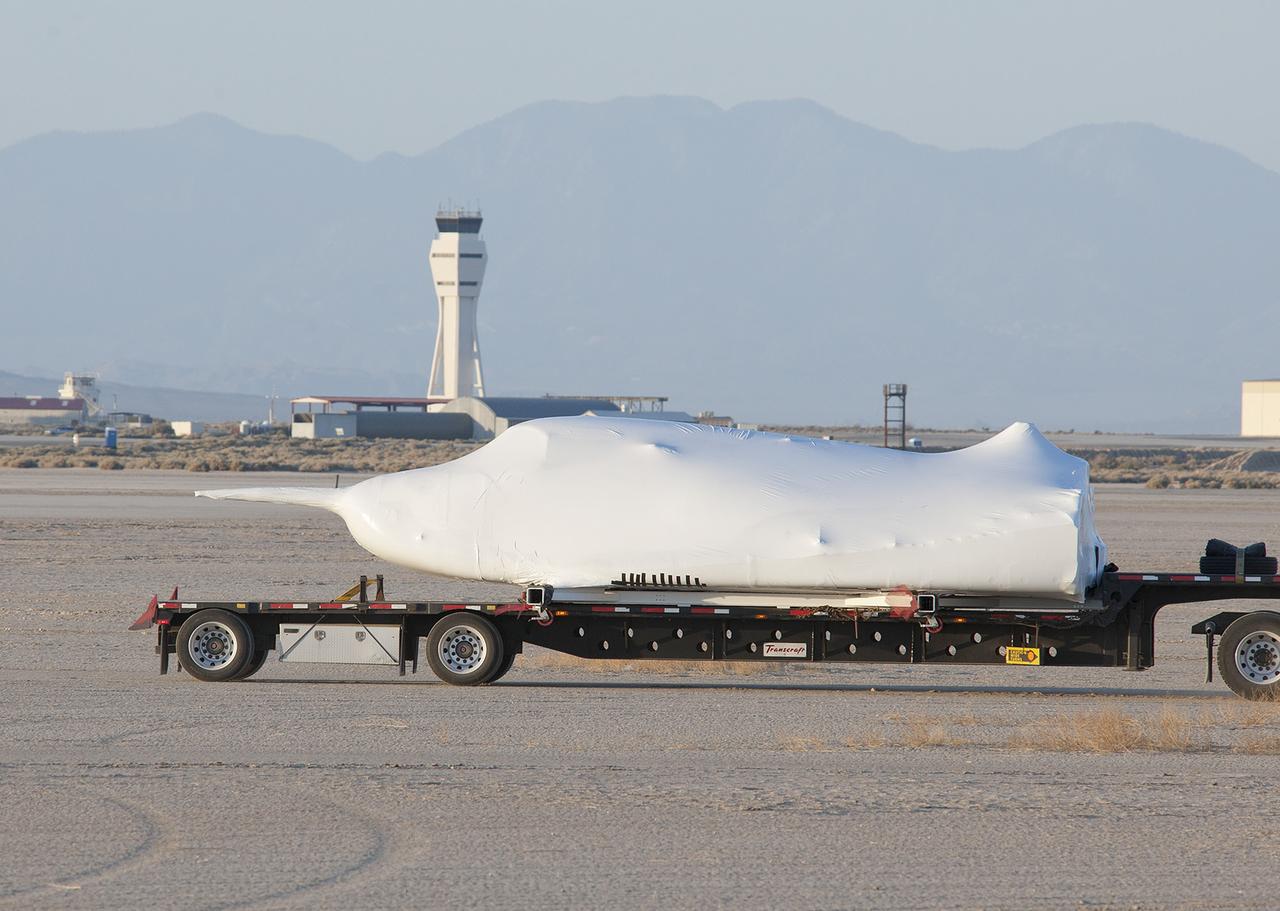
EDWARDS, Calif. – ED13-0142-03: Shrouded in plastic wrap with its wings and tail structure removed for ground transport, Sierra Nevada Corporation, or SNC, Space Systems' Dream Chaser engineering test article is hauled across the bed of Rogers Dry Lake in front of the control tower at Edwards Air Force Base, Calif., to NASA's Dryden Flight Research Center. The Dream Chaser will begin its flight test program in collaboration with NASA's Commercial Crew Program this summer. SNC is one of three companies working with NASA's Commercial Crew Program, or CCP, during the agency's Commercial Crew Integrated Capability, or CCiCap, initiative, which is intended to lead to the availability of commercial human spaceflight services for government and commercial customers. To learn more about CCP and its industry partners, visit www.nasa.gov/commercialcrew. Image credit: NASA/Tom Tschida
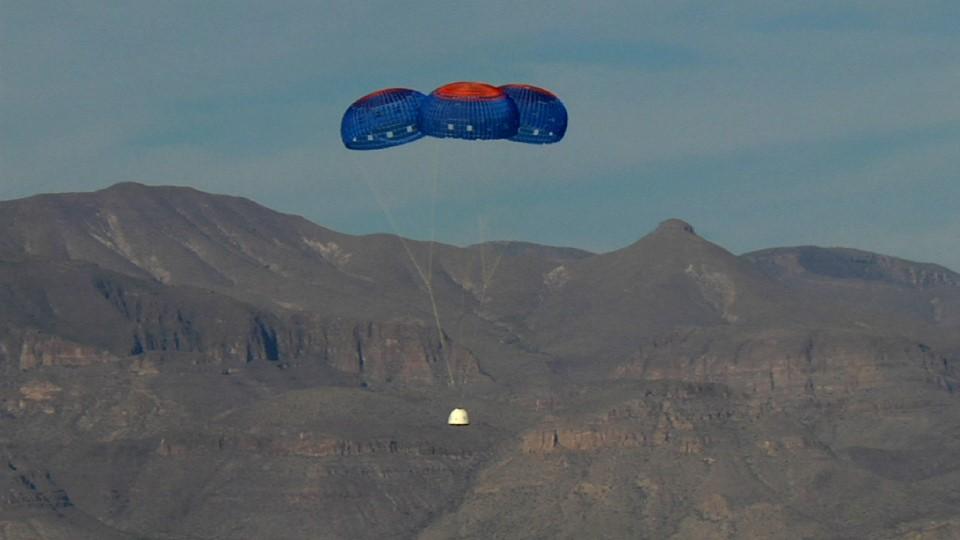
VAN HORN, Texas – Blue Origin’s New Shepard crew capsule escaped to an altitude of 2,307 feet before deploying parachutes for a safe return for a pad escape test at the company's West Texas launch site. The pusher escape system was designed and developed by Blue Origin to allow crew escape in the event of an emergency during any phase of ascent for its suborbital New Shepard system. As part of an incremental development program, the results of this test will shape the design of the escape system for the company's orbital biconic-shaped Space Vehicle. The system is expected to enable full reusability of the launch vehicle, which is different from NASA's previous launch escape systems that would pull a spacecraft away from its rocket before reaching orbit. The test was part of Blue Origin's work supporting its funded Space Act Agreement with NASA during Commercial Crew Development Round 2 CCDev2). Through initiatives like CCDev2, NASA is fostering the development of a U.S. commercial crew space transportation capability with the goal of achieving safe, reliable and cost-effective access to and from the International Space Station and low-Earth orbit. After the capability is matured and available to the government and other customers, NASA could contract to purchase commercial services to meet its station crew transportation needs. For more information, visit www.nasa.gov/commercialcrew. Image credit: Blue Origin
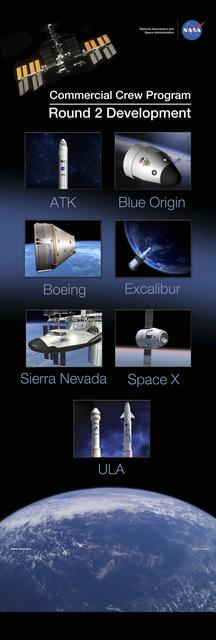
CAPE CANAVERAL, Fla. -- This is a printable banner of the aerospace companies NASA's Commercial Crew Program (CCP) entered into Space Act Agreements with during Commercial Crew Development Round 2 (CCDev2) activities in 2011 in order to mature the design and development of crew transportation systems with the overall goal of accelerating a United States-led capability to the International Space Station. CCDev2 companies are Alliant Techsystems (ATK), Blue Origin, The Boeing Co., Excalibur Almaz Inc., Sierra Nevada Corp., Space Exploration Technologies (SpaceX), and United Launch Alliance (ULA). The goal of CCP is to drive down the cost of space travel as well as open up space to more people than ever before by balancing industry’s own innovative capabilities with NASA's 50 years of human spaceflight experience. For more information, visit www.nasa.gov/commercialcrew

Edwards, Calif. – ED-0155-29 - Steve Lindsey, Sierra Nevada Corporation, or SNC, director of flight operations and former space shuttle astronaut, talks to the media about the development work Sierra Nevada Corporation, or SNC, will perform in collaboration with NASA's Commercial Crew Program, or CCP, with its Dream Chaser flight test vehicle at the agency's Dryden Flight Research Center in the coming months. At left is NASA Administrator Charlie Bolden. At right is Dryden Flight Research Deputy Center Director Patrick Stoliker. SNC is one of three companies working with CCP during the agency's Commercial Crew Integrated Capability, or CCiCap, initiative, which is intended to lead to the availability of commercial human spaceflight services for government and commercial customers. To learn more about CCP and its industry partners, visit www.nasa.gov_commercialcrew. Image credit: NASA_Tom Tschida
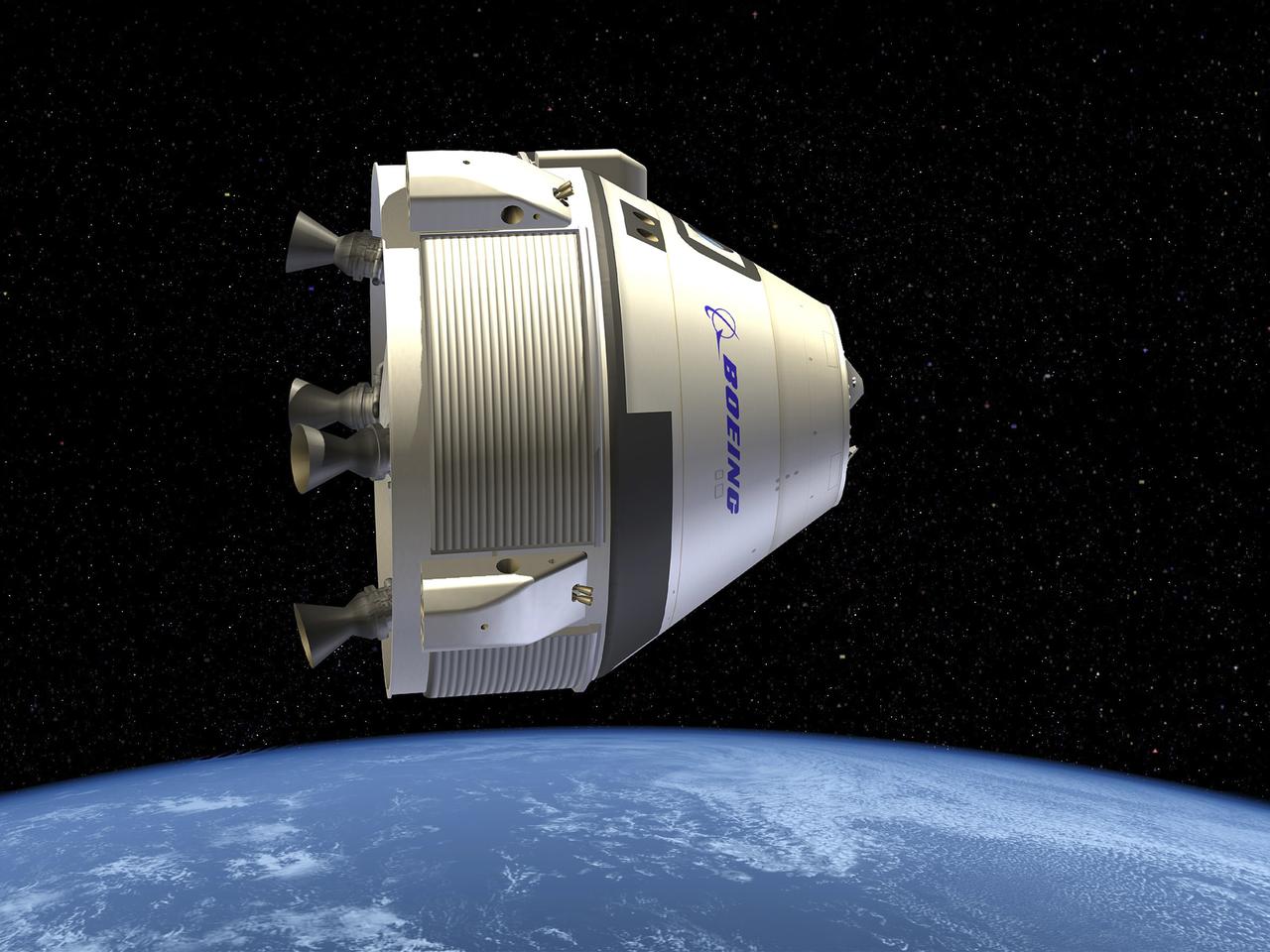
CAPE CANAVERAL, Fla. -- This is an artist's conception of the CST-100 under development by The Boeing Co. of Houston for NASA's Commercial Crew Program (CCP). In 2011, NASA selected Boeing during Commercial Crew Development Round 2 (CCDev2) activities to mature the design and development of a crew transportation system with the overall goal of accelerating a United States-led capability to the International Space Station. The goal of CCP is to drive down the cost of space travel as well as open up space to more people than ever before by balancing industry’s own innovative capabilities with NASA's 50 years of human spaceflight experience. Six other aerospace companies also are maturing launch vehicle and spacecraft designs under CCDev2, including Alliant Techsystems Inc. (ATK), Blue Origin, Excalibur Almaz Inc., Sierra Nevada Corp., Space Exploration Technologies (SpaceX), and United Launch Alliance (ULA). For more information, visit www.nasa.gov/commercialcrew. Image credit: The Boeing Co.

CAPE CANAVERAL, Fla. -- This is a printable poster with NASA's Commercial Crew Program (CCP) logo. CCP is leading NASA's effort of accelerating a United States-led capability to the International Space Station by investing in the design and development of the aerospace industry's crew transportation systems. The goal of CCP is to drive down the cost of space travel as well as open up space to more people than ever before by balancing industry’s own innovative capabilities with NASA's 50 years of human spaceflight experience. For more information, visit www.nasa.gov/commercialcrew
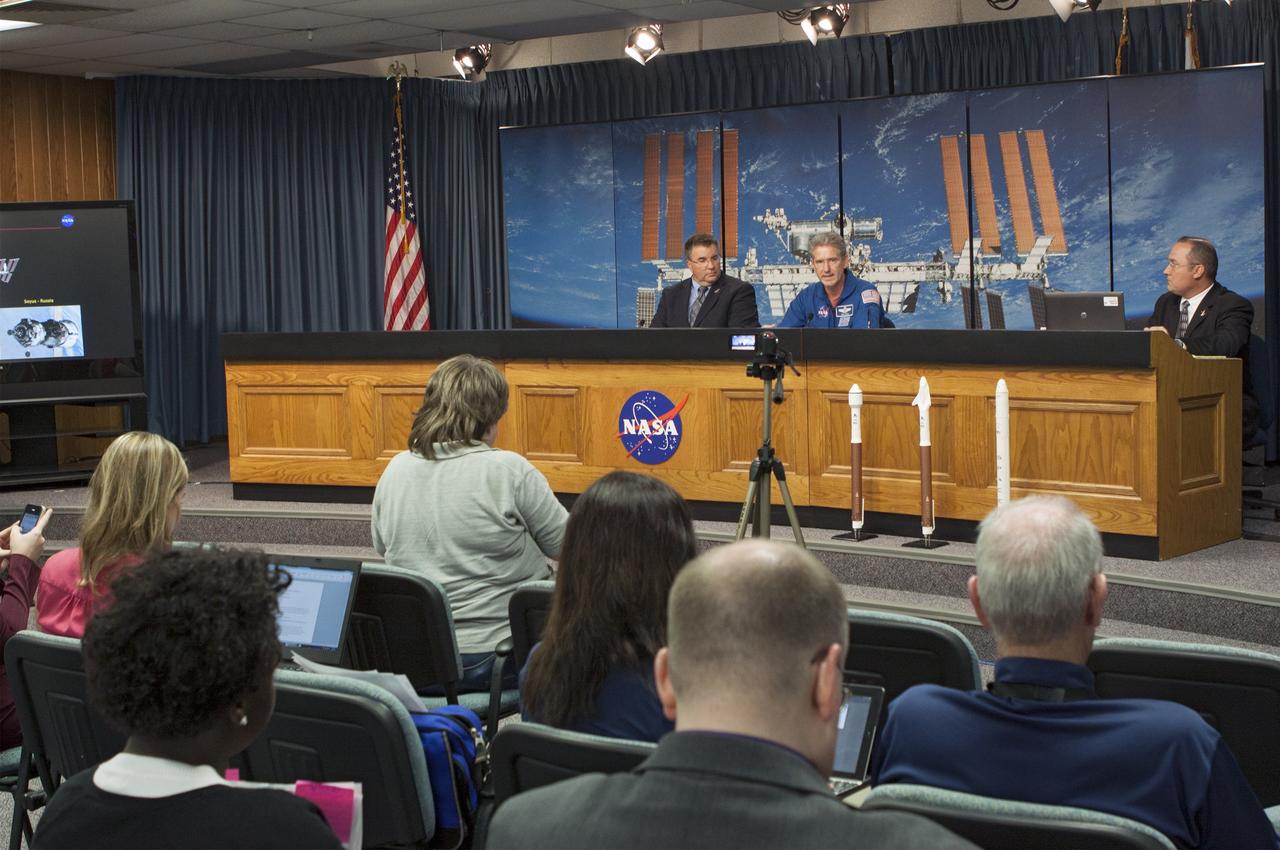
CAPE CANAVERAL, Fla. - NASA's Commercial Crew Program Manager Ed Mango and astronaut Mike Good media on the progress of American human spaceflight development at Kennedy Space Center in Florida. At right is NASA Public Affairs Officer Gregory Harland. They also discussed the future steps the program will take to certify crew transportation systems for missions to the International Space Station. The program is working toward the next phase of certification, which will be called Commercial Crew Transportation Capability, or CCtCap. That phase will include a joint test concept in which NASA astronauts will play a role in flight testing the systems. To learn more about CCP, visit www.nasa.gov/commercialcrew. Photo credit: Jim Grossmann
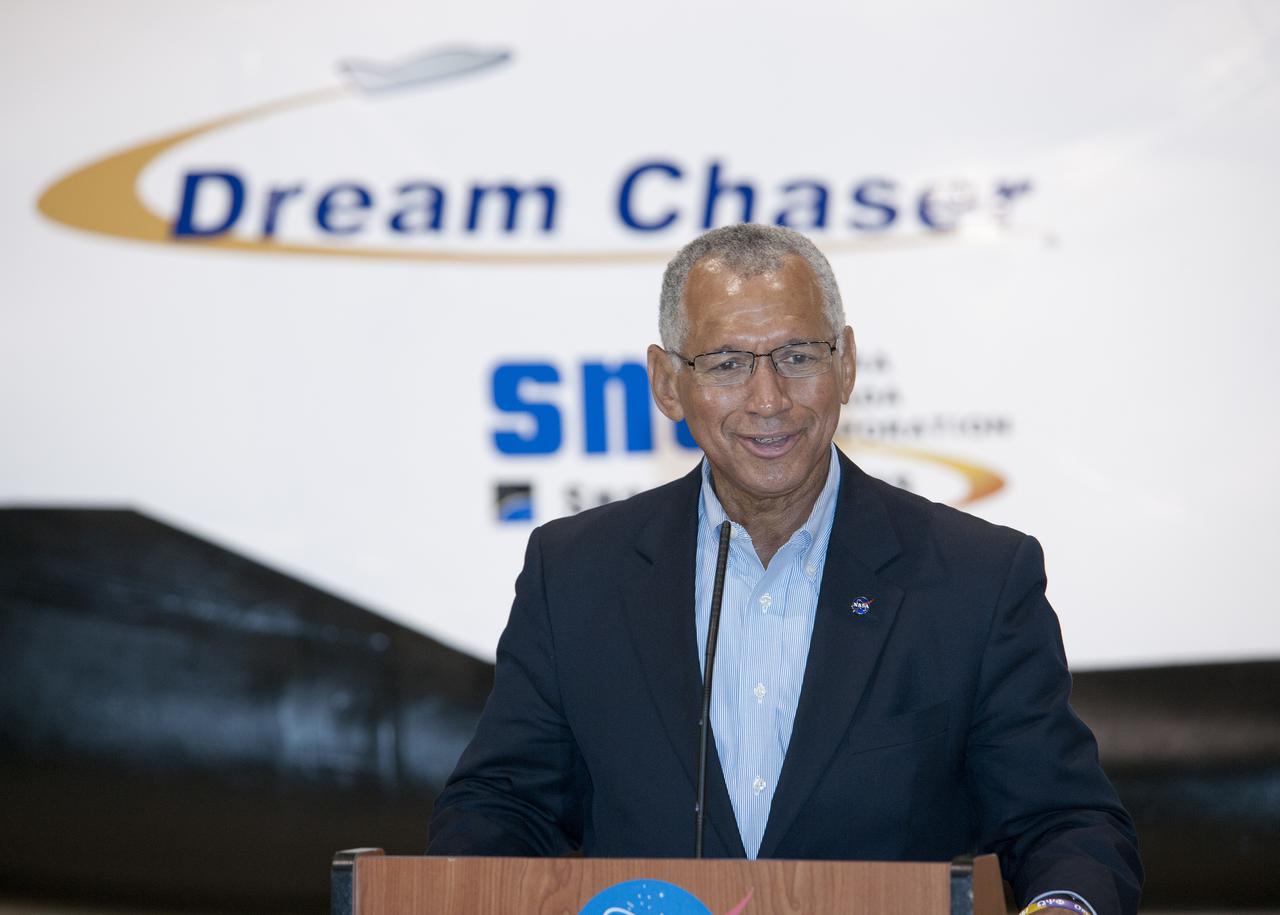
Edwards, Calif. – ED-0155-20 - NASA Administrator Charlie Bolden talks to the media about the importance of the agency's Commercial Crew Program, or CCP, and the development work Sierra Nevada Corporation, or SNC, will perform with its Dream Chaser flight test vehicle at the agency's Dryden Flight Research Center in the coming months. SNC is one of three companies working with CCP during the agency's Commercial Crew Integrated Capability, or CCiCap, initiative, which is intended to lead to the availability of commercial human spaceflight services for government and commercial customers. To learn more about CCP and its industry partners, visit www.nasa.gov_commercialcrew. Image credit: NASA_Ken Ulbrich
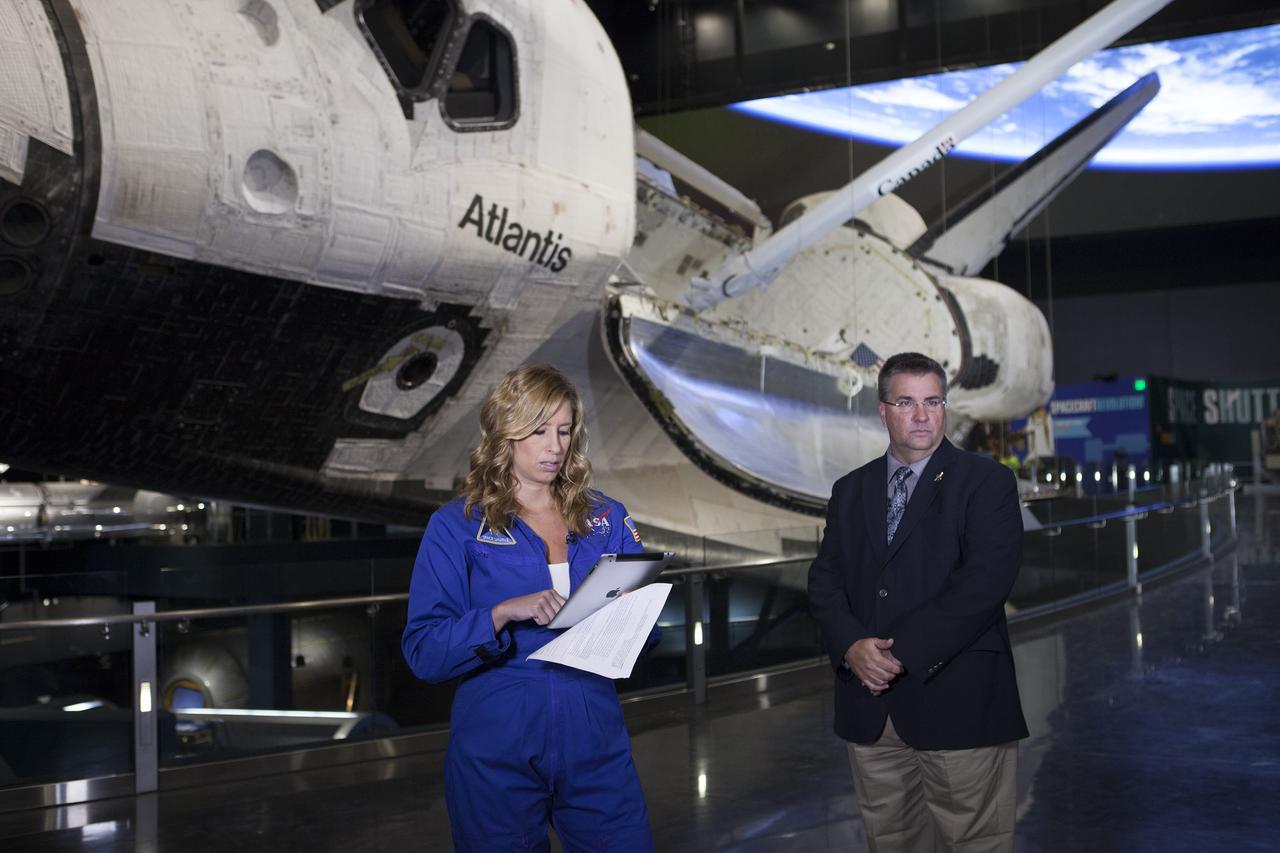
CAPE CANAVERAL, Fla. - Stephanie Abrams, a meteorologist with The Weather Channel, prepares for a live interview with Ed Mango, manager of NASA's Commercial Crew Program, or CCP, in front of the Atlantis display at the Kennedy Space Center Visitor Complex in Florida. During the interview, Mango explained the program is working with the commercial aerospace industry to return America's domestic capability to launch astronauts from U.S. soil to the International Space Station around the middle of the decade. He also discussed the program's role in helping NASA reach its deep-space exploration goals. To learn more about CCP, visit www.nasa.gov/commercialcrew. Photo credit: Kim Shiflett
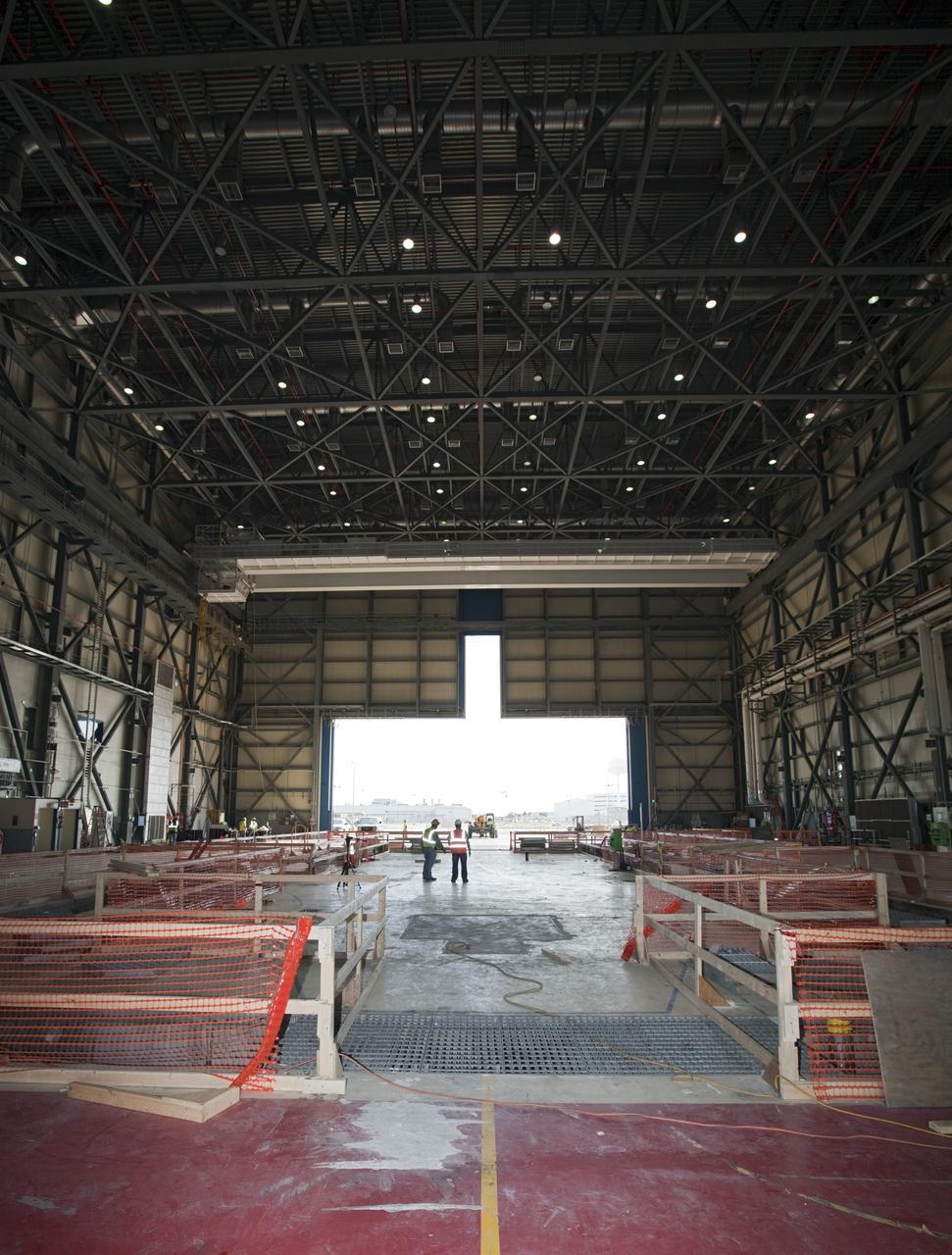
CAPE CANAVERAL, Fla. -- The Commercial Crew and Cargo Processing Facility, or C3PF, at NASA's Kennedy Space Center in Florida is going through major renovations to support the manufacturing of The Boeing Company's CST-100 spacecraft. Known throughout the space shuttle era as Orbiter Processing Facilty-3, or OPF-3, the facility's orbiter-specific platforms were removed recently to make room for a clean-floor factory-like facility. The modernization will allow Boeing to process its new fleet of low-Earth-orbit bound spacecraft, which is under development in collaboration with NASA's Commercial Crew Program, or CCP. Boeing is leasing the excess government facility for next-generation commercial activities through a land-use agreement with Space Florida. To learn more about CCP and its industry partners, visit www.nasa.gov/commercialcrew. Photo credit: Dimitri Gerondidakis
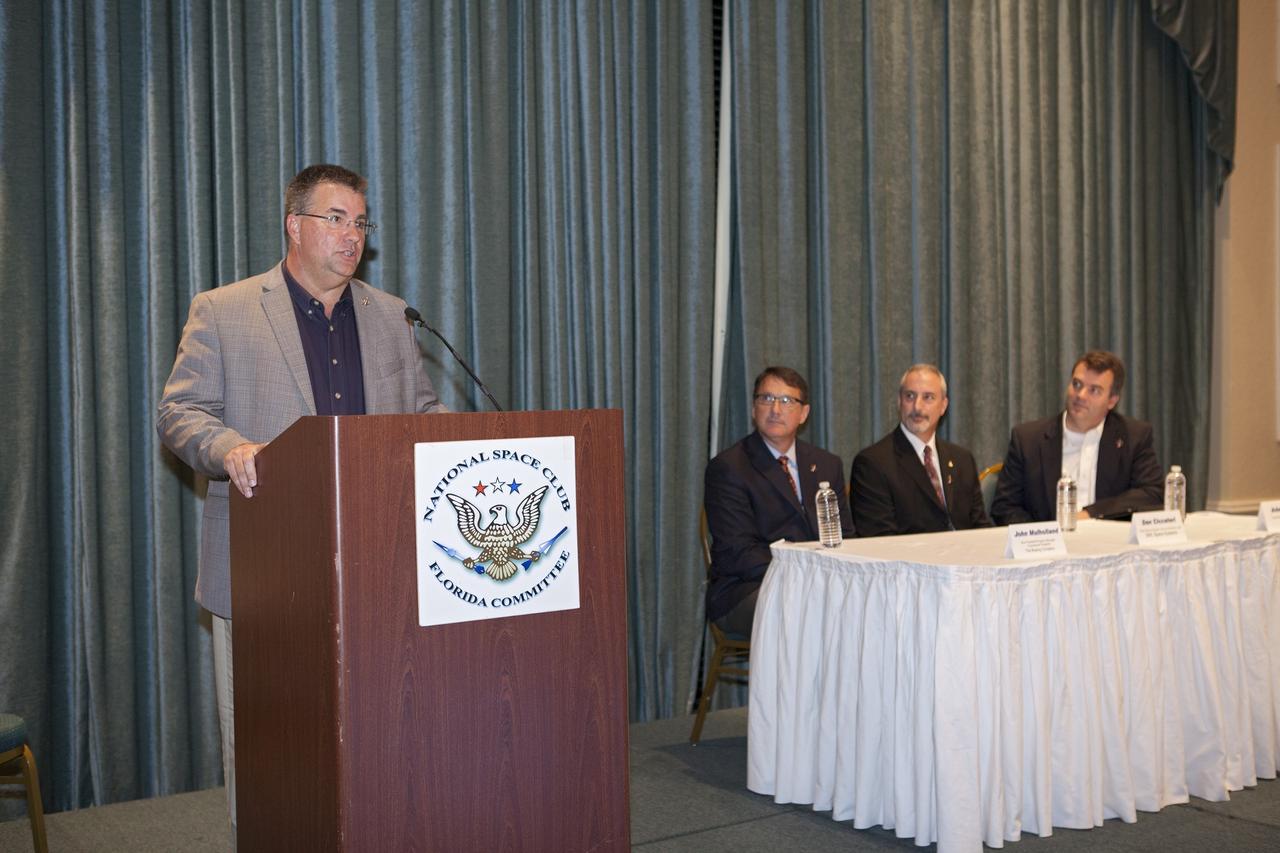
CAPE CANAVERAL, Fla. - Ed Mango, manager of NASA's Commercial Crew Program, or CCP, speaks to a crowd of spaceflight enthusiasts at the National Space Club Florida Committee's June meeting near the Kennedy Space Center. Mango was joined at the Radisson Resort at the Port in Cape Canaveral, Fla., by partner representatives from The Boeing Company, Sierra Nevada Corporation, or SNC, and Space Exploration Technologies, or SpaceX, all of whom plan to increase their commercial activities on Florida’s space coast to send astronauts to low-Earth orbit. Seated from left are vice president and program manager of Boeing's Commercial Programs John Mulholland, SNC's chief systems engineer Dan Ciccateri, and SpaceX's vice president of government sales Adam Harris. To learn more about the Commercial Crew Program, visit www.nasa.gov/commercialcrew. Photo credit: Kim Shiflett
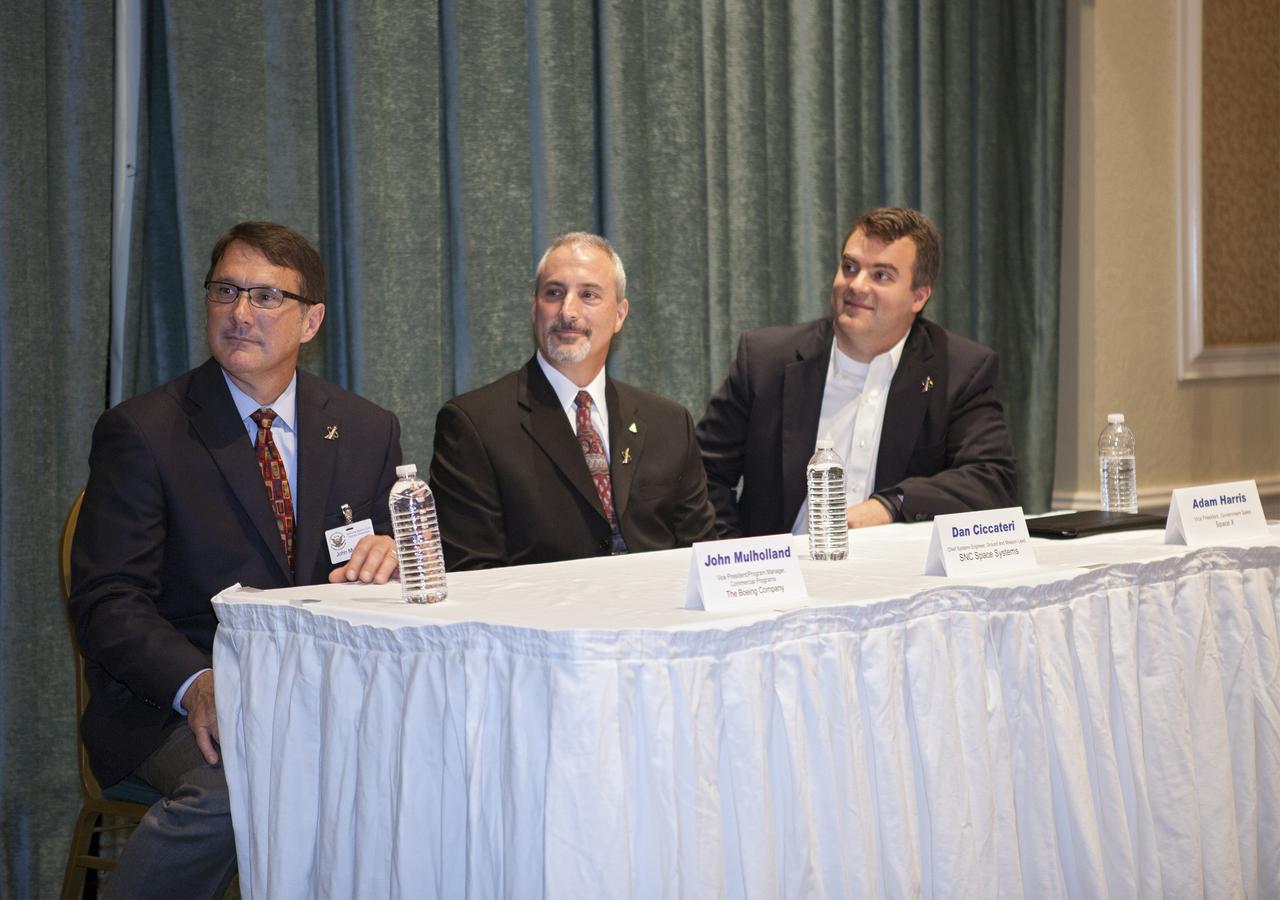
CAPE CANAVERAL, Fla. - NASA Commercial Crew Program, or CCP, partner representatives participate in the National Space Club Florida Committee's June meeting near the Kennedy Space Center. From left are The Boeing Company's vice president and program manager of Commercial Programs John Mulholland, Sierra Nevada Corporation, or SNC, Space Systems chief systems engineer Dan Ciccateri, and Space Exploration Technologies, or SpaceX, vice president of government sales Adam Harris. CCP Program Manager Ed Mango and the partners talked about plans to increase commercial activities on Florida’s space coast to send astronauts to low-Earth orbit. To learn more about the Commercial Crew Program, visit www.nasa.gov/commercialcrew. Photo credit: Kim Shiflett
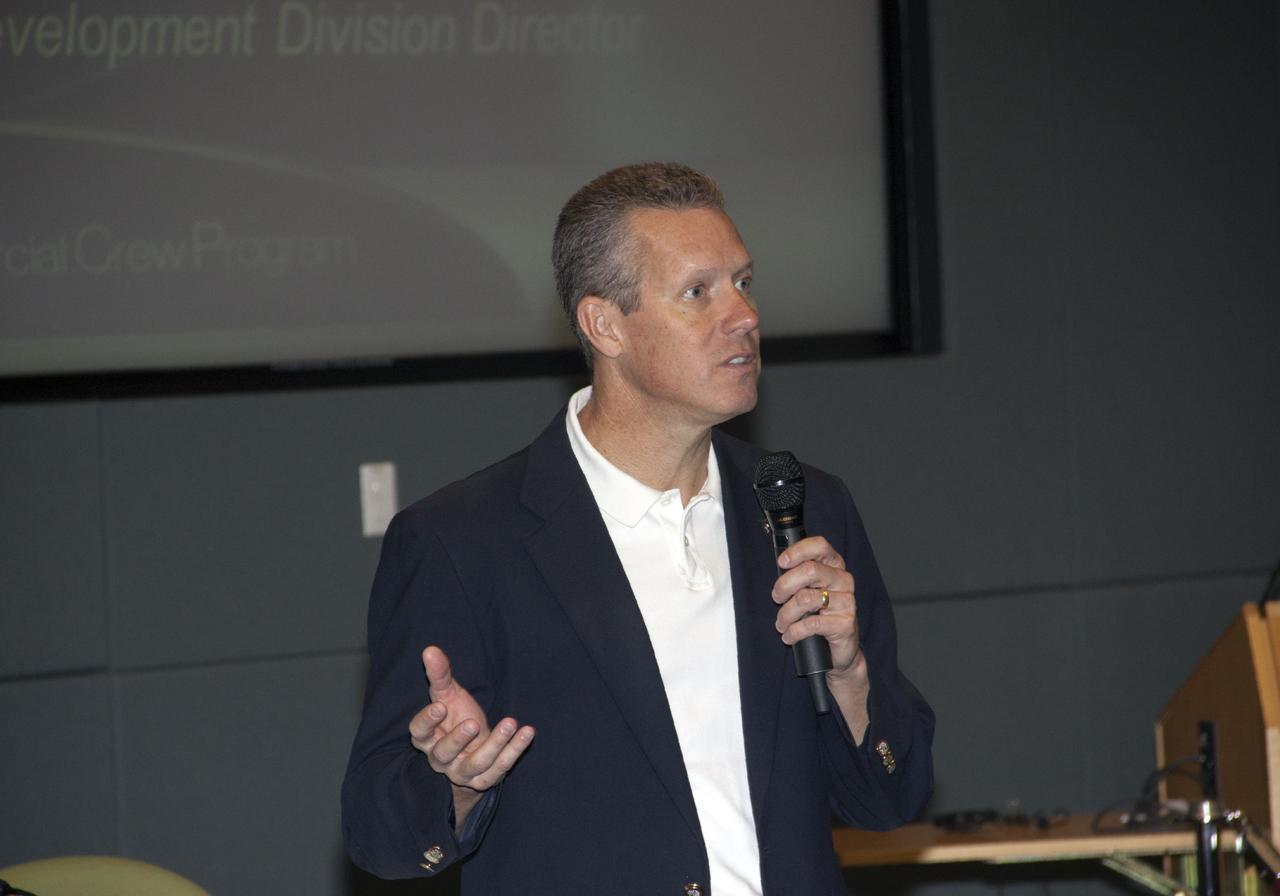
CAPE CANAVERAL, Fla. - Phil McAlister, director of Commercial Spaceflight Development at NASA Headquarters in Washington, D.C., makes opening remarks at the Commercial Crew Transportation Capability, or CCtCap, Pre-Proposal Conference at Kennedy Space Center in Florida. CCtCap will be the next phase of certification efforts for the agency's Commercial Crew Program, or CCP, missions to the International Space Station. The purpose of the conference was to involve aerospace industry representatives in the CCtCap draft Request for Proposal, or RFP, process and provide a greater understanding for both parties before the official RFP is released in the fall of 2013. To learn more about CCP, visit www.nasa.gov/commercialcrew. Photo credit: NASA/Jim Grossmann
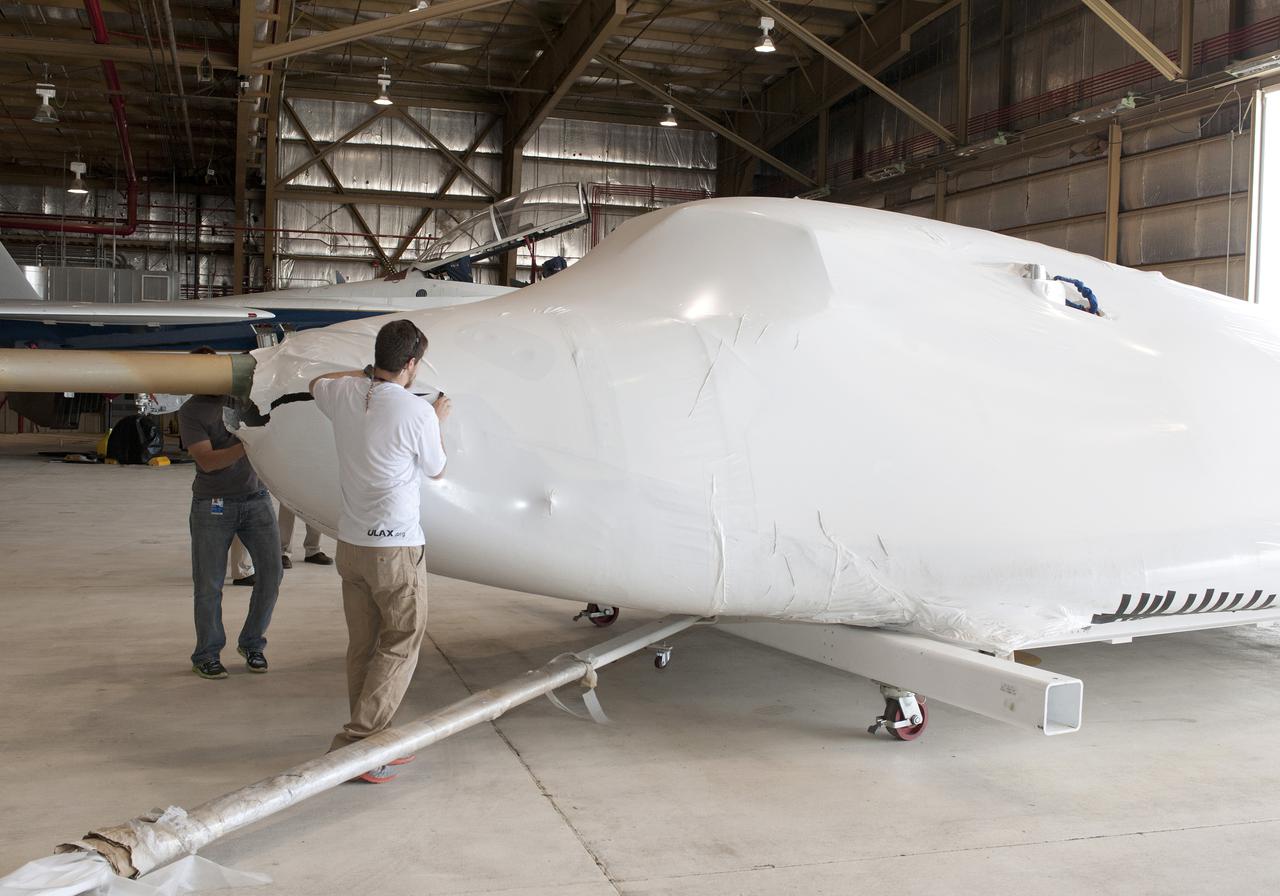
Edwards, Calif. – ED-0144-01 - Plastic wrapping that protected the Sierra Nevada Corporation, or SNC, Dream Chaser flight test vehicle during its transport from Colorado is carefully removed by SNC employee Will Armijo following the craft's arrival at NASA's Dryden Flight Research Center in southern California. The prototype space access vehicle will undergo ground and approach-and-landing flight tests in the coming months as part of NASA's Commercial Crew Program, or CCP, development work. SNC is one of three companies working with CCP during the agency's Commercial Crew Integrated Capability, or CCiCap, initiative, which is intended to lead to the availability of commercial human spaceflight services for government and commercial customers. To learn more about CCP and its industry partners, visit www.nasa.gov_commercialcrew. Image credit: NASA_Tom Tschida
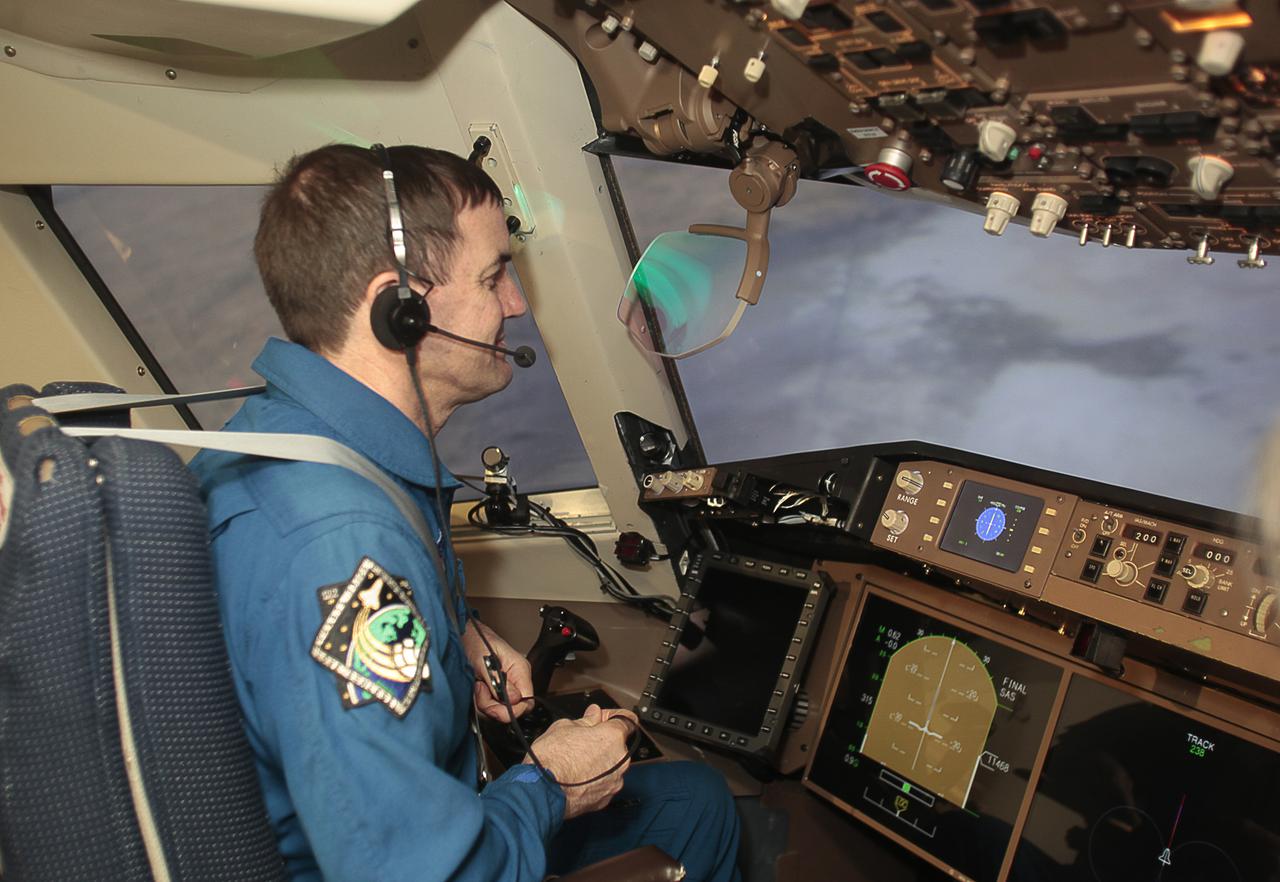
HAMPTON, Va. – At NASA's Langley Research Center in Hampton, Va., astronaut Rex Walheim flies simulations of a Dream Chaser approach and landing to help evaluate the spacecraft's subsonic handling in support of the agency's Commercial Crew Program, or CCP, efforts. The simulation makes use of the Synthetic Vision and Enhanced Vision systems in the center's Cockpit Motion Facility. SNC is one of three companies working with CCP during the agency's Commercial Crew Integrated Capability, or CCiCap, initiative, which is intended to lead to the availability of commercial human spaceflight services for government and commercial customers. To learn more about CCP and its industry partners, visit www.nasa.gov_commercialcrew. Image credit: NASA_David C. Bowman