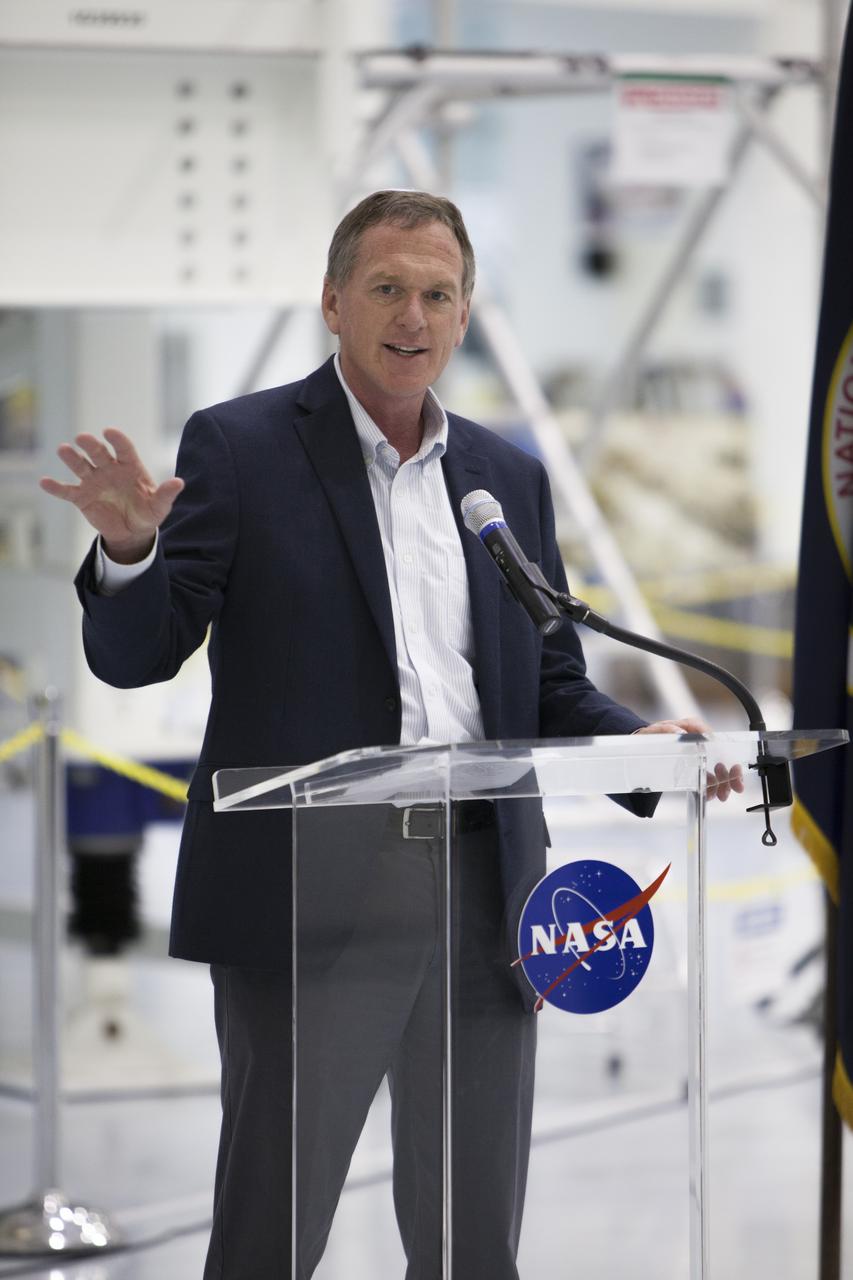
Mike Bolger, Ground Systems Development and Operations Program manager at NASA's Kennedy Space Center, speaks to guests during a ceremony in the high bay of the Space Station Processing Facility. The event marked the milestone of the Space Launch System rocket's Interim Cryogenic Propulsion Stage (ICPS) being turned over from NASA's Spacecraft/Payload Integration and Evolution organization to the spaceport's Ground Systems Development and Operations directorate. The ICPS is the first integrated piece of flight hardware to arrive in preparation for the uncrewed Exploration Mission-1.
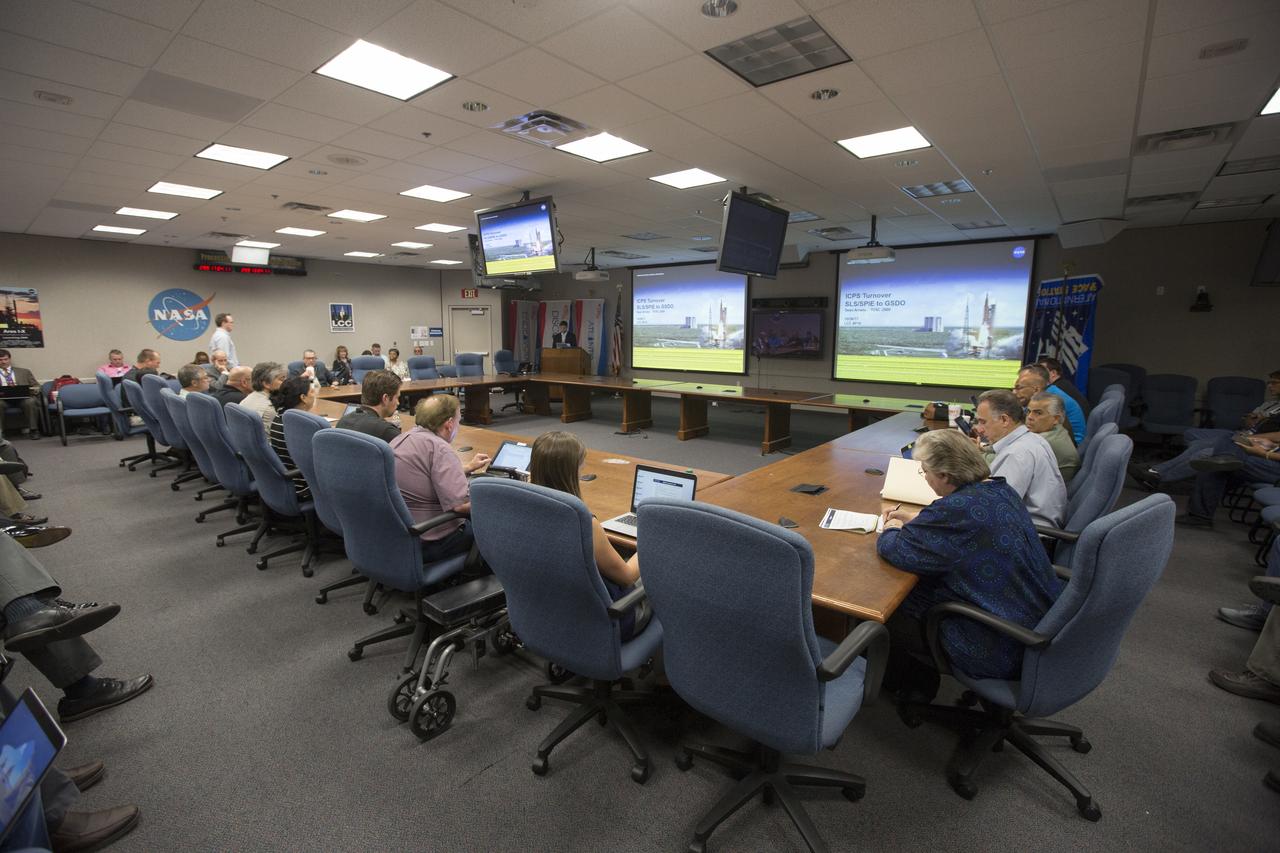
Meeting in the Launch Control Center of NASA's Kennedy Space Center in Florida, officials of the agency's Spacecraft/Payload Integration and Evolution (SPIE) organization formally turn over processing of the Space Launch System (SLS) rocket's Interim Cryogenic Propulsion Stage (ICPS) to the center's Ground Systems Development and Operations (GSDO) directorate. The ICPS is the first integrated piece of flight hardware to arrive in preparation for the uncrewed Exploration Mission-1. With the Orion attached, the ICPS sits atop the SLS rocket and will provide the spacecraft with the additional thrust needed to travel tens of thousands of miles beyond the Moon.
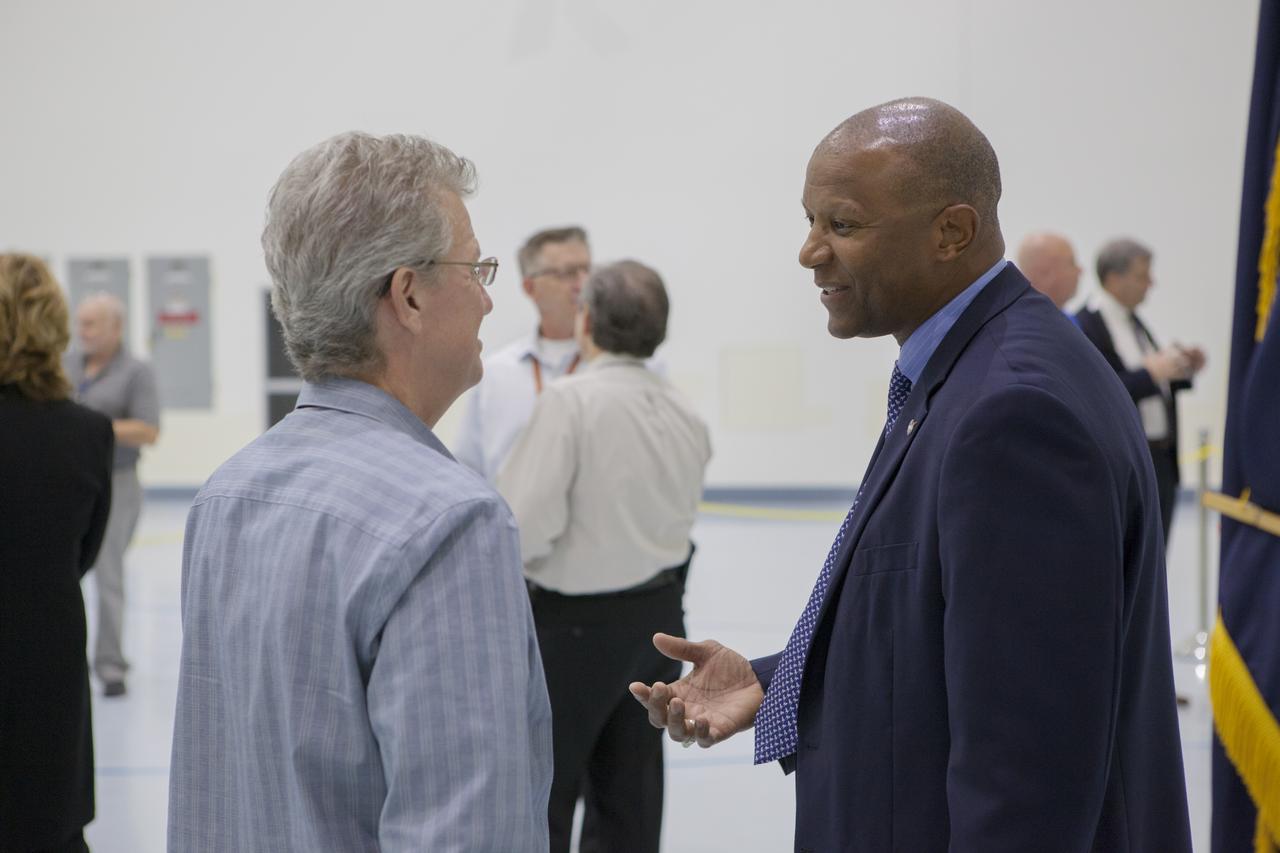
Kennedy Space Center Associate Director Kelvin Manning, right, speaks with a guest during a ceremony marking NASA's Spacecraft/Payload Integration and Evolution (SPIE) organization formally turning over processing of the Space Launch System (SLS) rocket's Interim Cryogenic Propulsion Stage (ICPS) to the center's Ground Systems Development and Operations (GSDO) Directorate. The ICPS is the first integrated piece of flight hardware to arrive in preparation for the uncrewed Exploration Mission-1. With the Orion attached, the ICPS sits atop the SLS rocket and will provide the spacecraft with the additional thrust needed to travel tens of thousands of miles beyond the Moon.
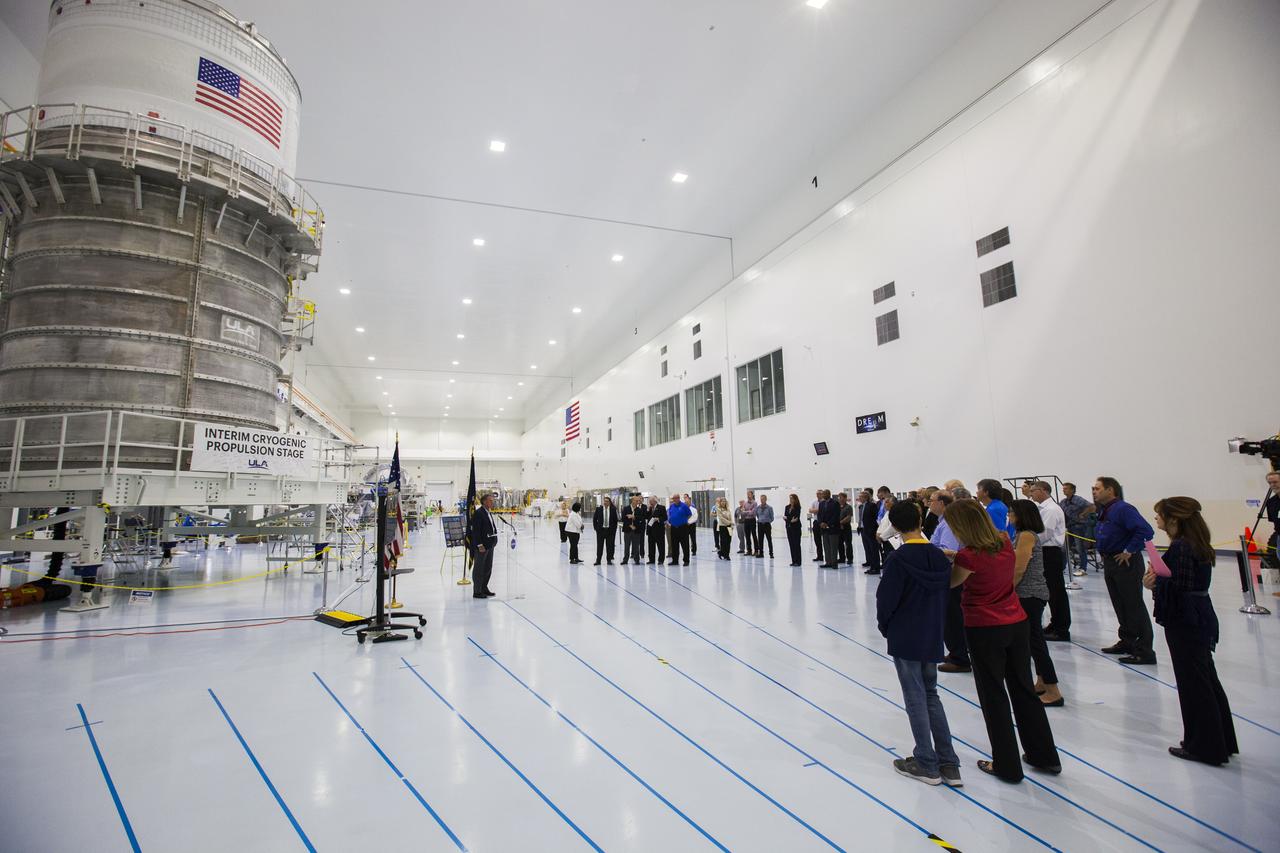
In the Space Station Processing Facility at NASA's Kennedy Space Center in Florida, a ceremony is underway marking the agency's Spacecraft/Payload Integration and Evolution (SPIE) organization formally turning over processing of the Space Launch System (SLS) rocket's Interim Cryogenic Propulsion Stage (ICPS), to the center's Ground Systems Development and Operations (GSDO) Directorate. The ICPS is seen on the left in its shipping container and is the first integrated piece of flight hardware to arrive in preparation for the uncrewed Exploration Mission-1. With the Orion attached, the ICPS sits atop the SLS rocket and will provide the spacecraft with the additional thrust needed to travel tens of thousands of miles beyond the Moon.
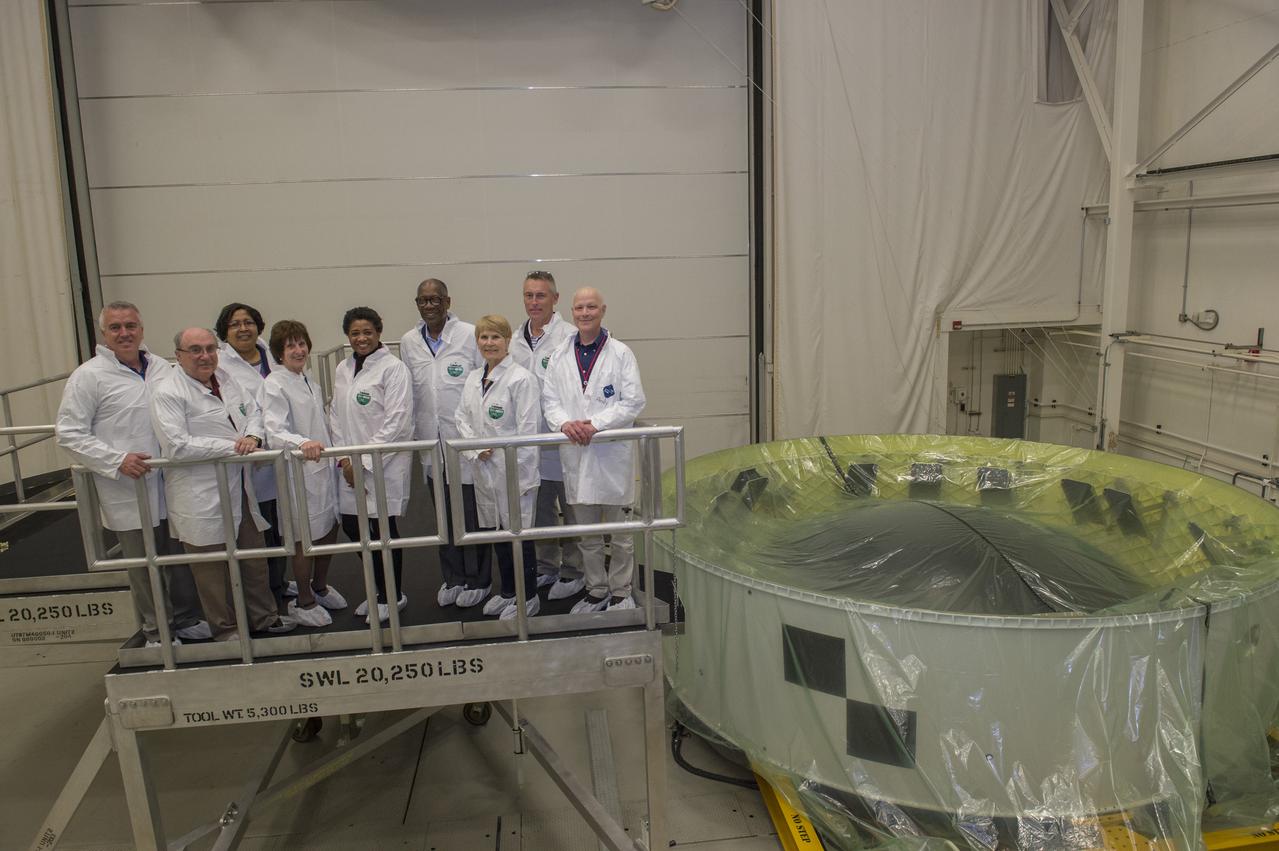
ASAP, (Aerospace Safety Advisory Panel), members, Dr. Sandra Magnus, Dr. Donald P. McErlean, Dr. George Nield, Captain Christopher Saindon, Mr. David West, Dr. Patricia Sanders, Ms. Carol Hamilton, Ms. Evette Whatley, Ms. Paula Frankel, view LVSA, (Launch Vehicle Stage Adapter), and Orion Stage Adapter. Members were escorted to buildings 4707 and 4708 by Andrew Schorr, Deputy Manager for Spacecraft/Payload Integration & Evolution Office (SPIE)
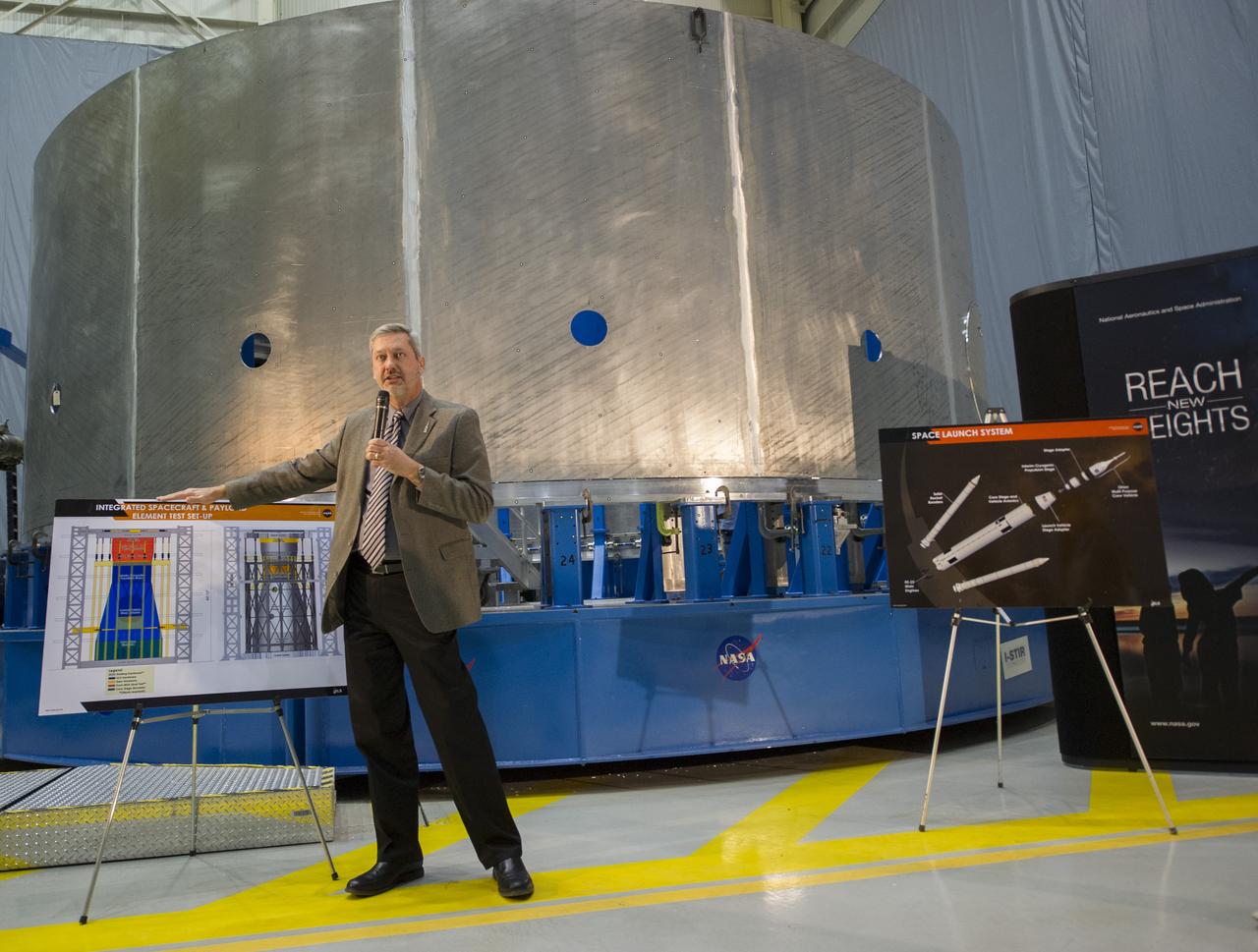
CHRISTOPHER CRUMBLY, MANAGER OF THE SPACECRAFT PAYLOAD INTEGRATION AND EVOLUTION OFFICE, GAVE VISITORS AN INSIDER'S PERSPECTIVE ON THE CORE STAGE SIMULATOR AT MARSHALL AND ITS IMPORTANCE TO DEVELOPMENT OF THE SPACE LAUNCH SYSTEM. CHRISTOPHER CRUMBLY, MANAGER OF THE SPACECRAFT PAYLOAD INTEGRATION AND EVOLUTION OFFICE, GAVE VISITORS AN INSIDER'S PERSPECTIVE ON THE CORE STAGE SIMULATOR AT MARSHALL AND ITS IMPORTANCE TO DEVELOPMENT OF THE SPACE LAUNCH SYSTEM.

RICK BURT, RIGHT, DIRECTOR OF SAFETY AND MISSION ASSURANCE TALKS WITH ANDY SCHORR, ASSISTANT MANAGER OF THE SPACE LAUNCH SYSTEM'S SPACECRAFT PAYLOAD INTEGRATION AND EVOLUTION OFFICE. BEHIND THEM IS THE LAUNCH VEHICLE STAGE ADAPTOR, WHICH WAS DESIGNED AND MANUFACTURED AT MARSHALL AND WILL CONNECT TWO MAJOR SLS UPPER SECTIONS
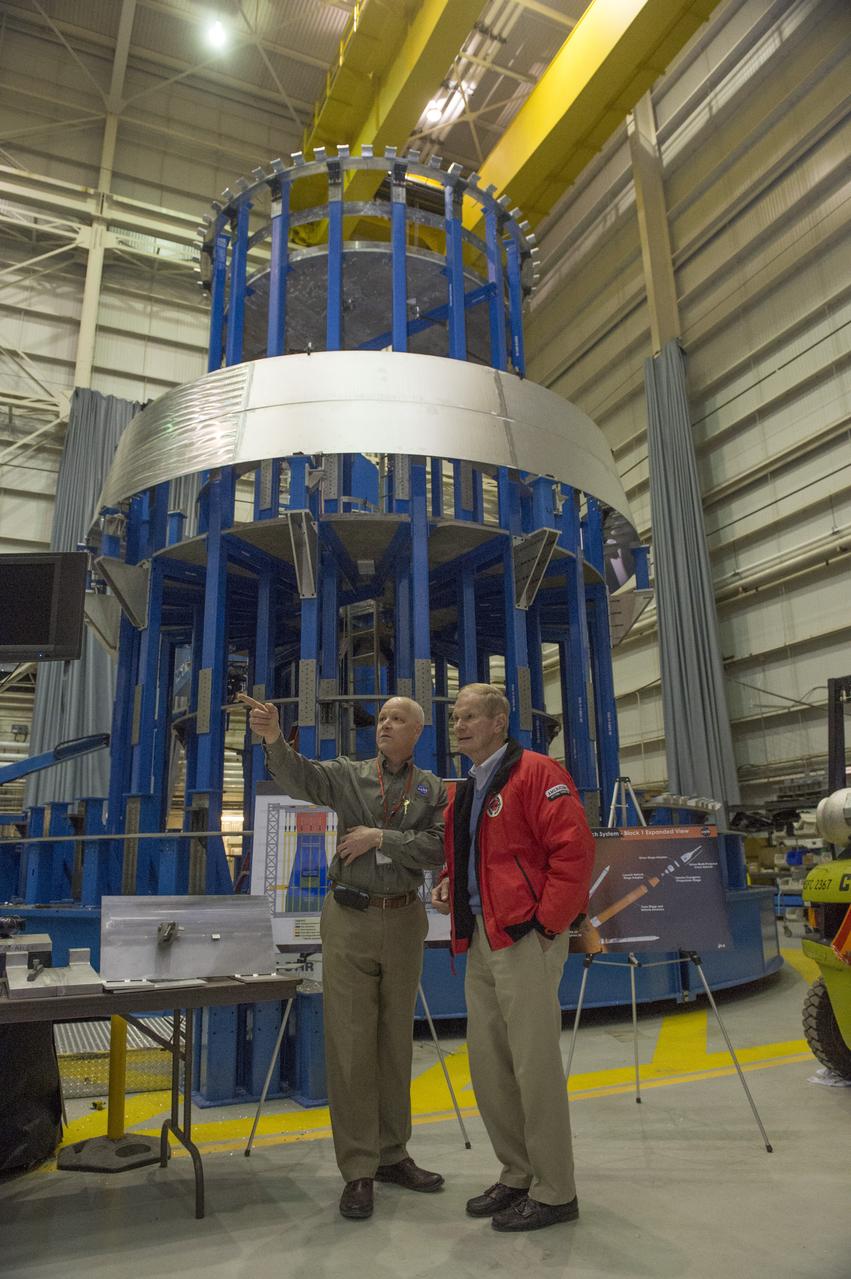
U.S. SENATOR BILL NELSON OF FLORIDA, RIGHT, LISTENS AS ANDY SCHORR, ASSISTANT MANAGER FOR SPACECRAFT/PAYLOAD INTEGRATION AND EVOLUTION, EXPLAINS THE PROGRESS OF NASA'S SPACE LAUNCH SYSTEM DURING A VISIT TO NASA'S MARSHALL SPACE FLIGHT CENTER ON FEB. 12, 2016
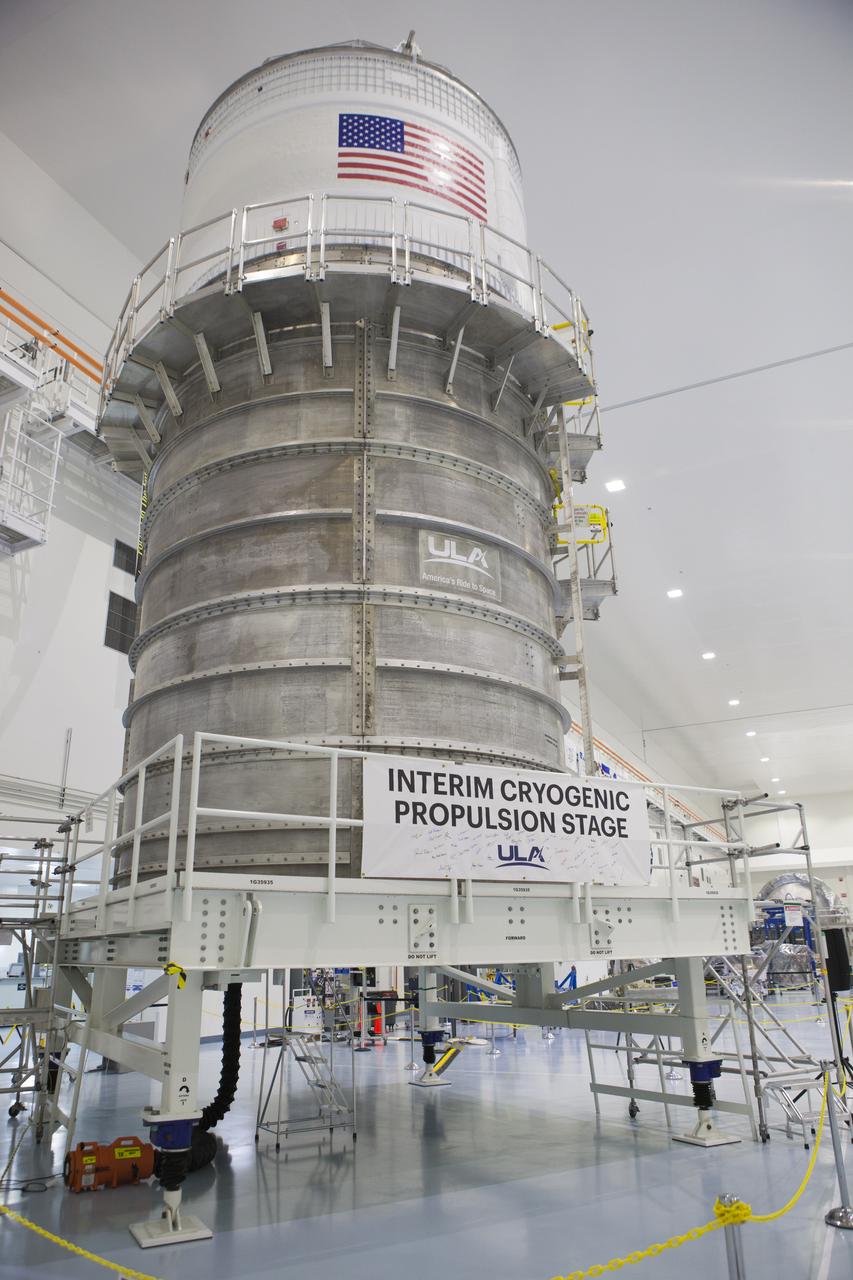
Packed inside its canister, the Interim Cryogenic Propulsion Stage (ICPS) stands inside the high bay of the Space Station Processing Facility at NASA's Kennedy Space Center in Florida. The ICPS is the first integrated piece of flight hardware to arrive in preparation for the uncrewed Exploration Mission-1. With the Orion attached, the ICPS sits atop the SLS rocket and will provide the spacecraft with the additional thrust needed to travel tens of thousands of miles beyond the Moon.
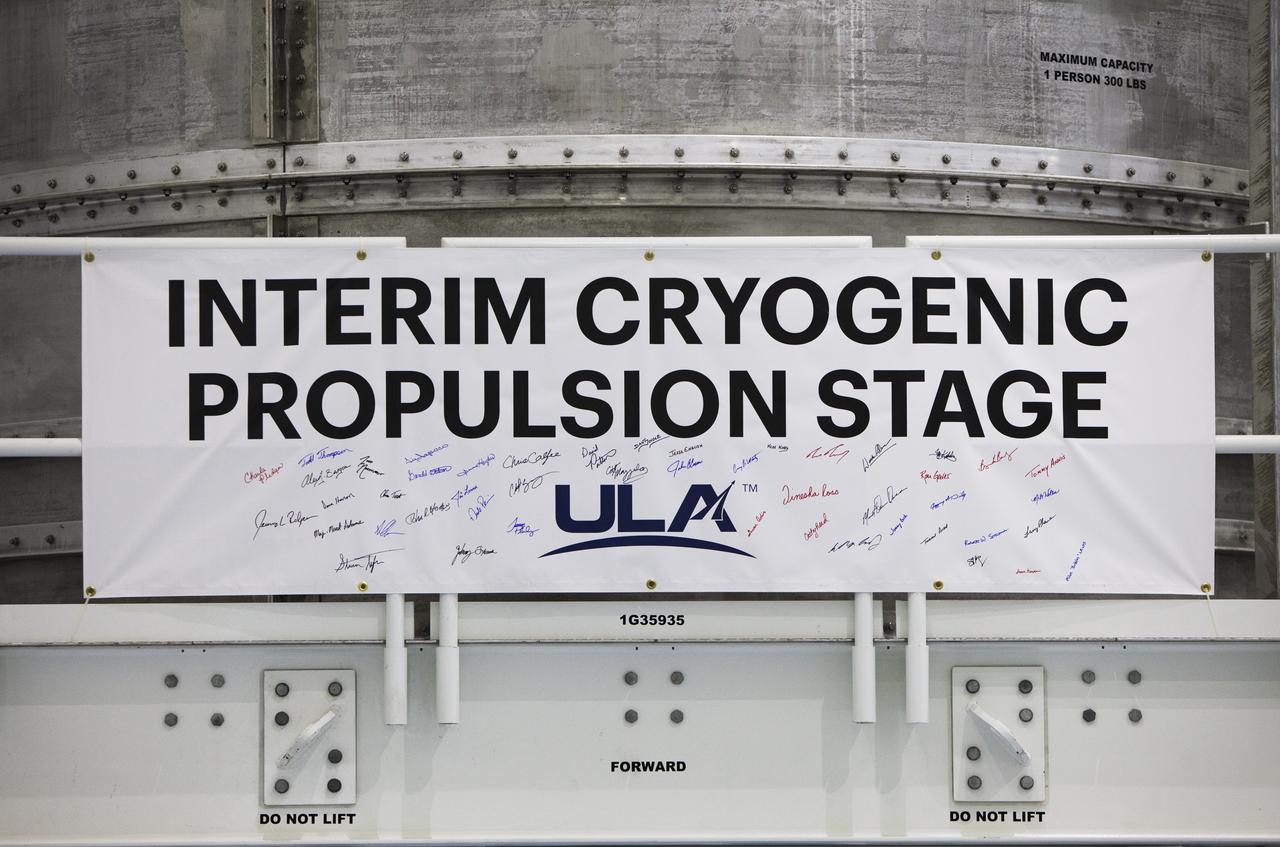
Several employees at NASA's Kennedy Space Center in Florida signed the banner at the base of the platform holding the Interim Cryogenic Propulsion Stage (ICPS) which stands inside the high bay of the Space Station Processing Facility. The ICPS is the first integrated piece of flight hardware to arrive in preparation for the uncrewed Exploration Mission-1. With the Orion attached, the ICPS sits atop the SLS rocket and will provide the spacecraft with the additional thrust needed to travel tens of thousands of miles beyond the Moon.
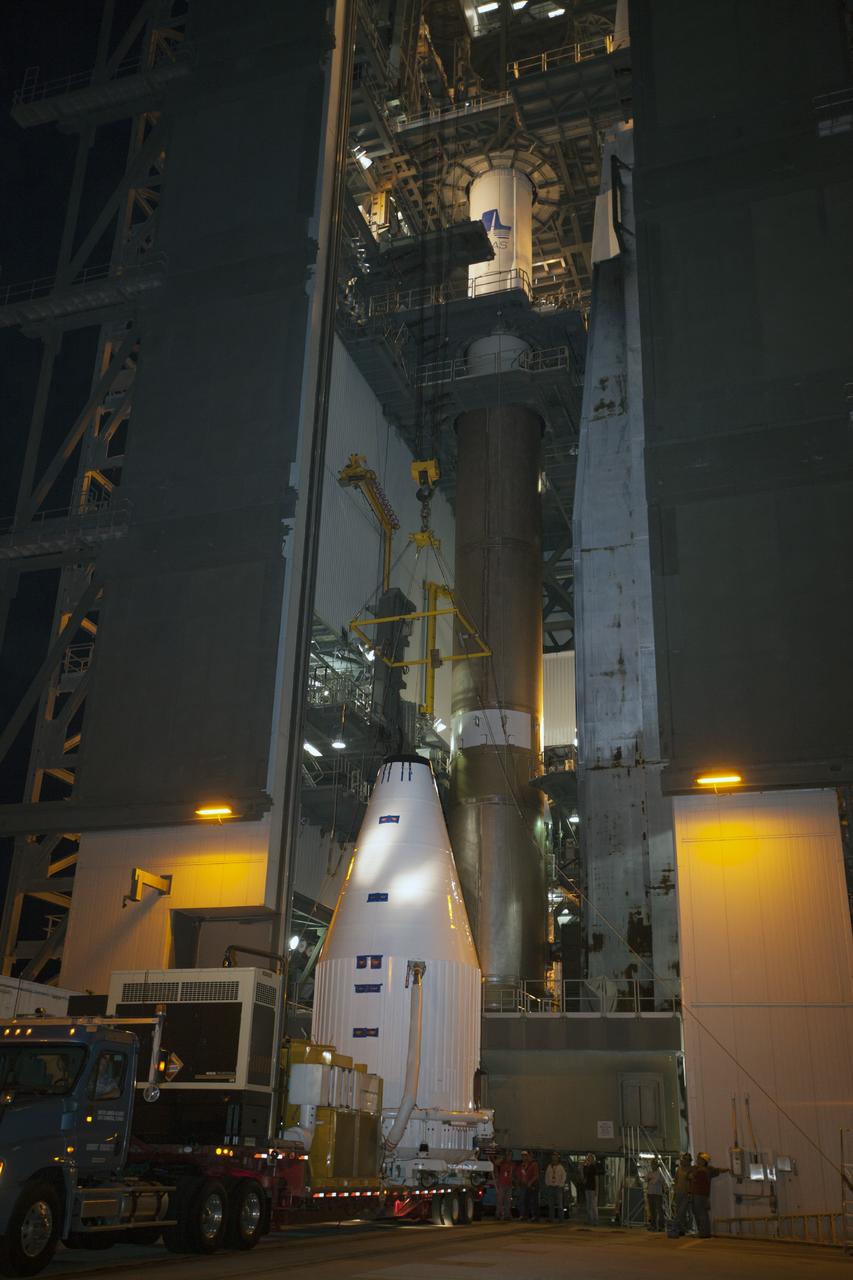
CAPE CANAVERAL, Fla. – A sling is lowered into place over NASA's MAVEN spacecraft, inside a payload fairing, at the Vertical Integration Facility at Space Launch Complex 41 so the spacecraft can be hoisted atop a United Launch Alliance Atlas V rocket that will lift it into space and on to Mars. MAVEN is short for Mars Atmosphere and Volatile Evolution. Photo credit: NASA/Kim Shiflett
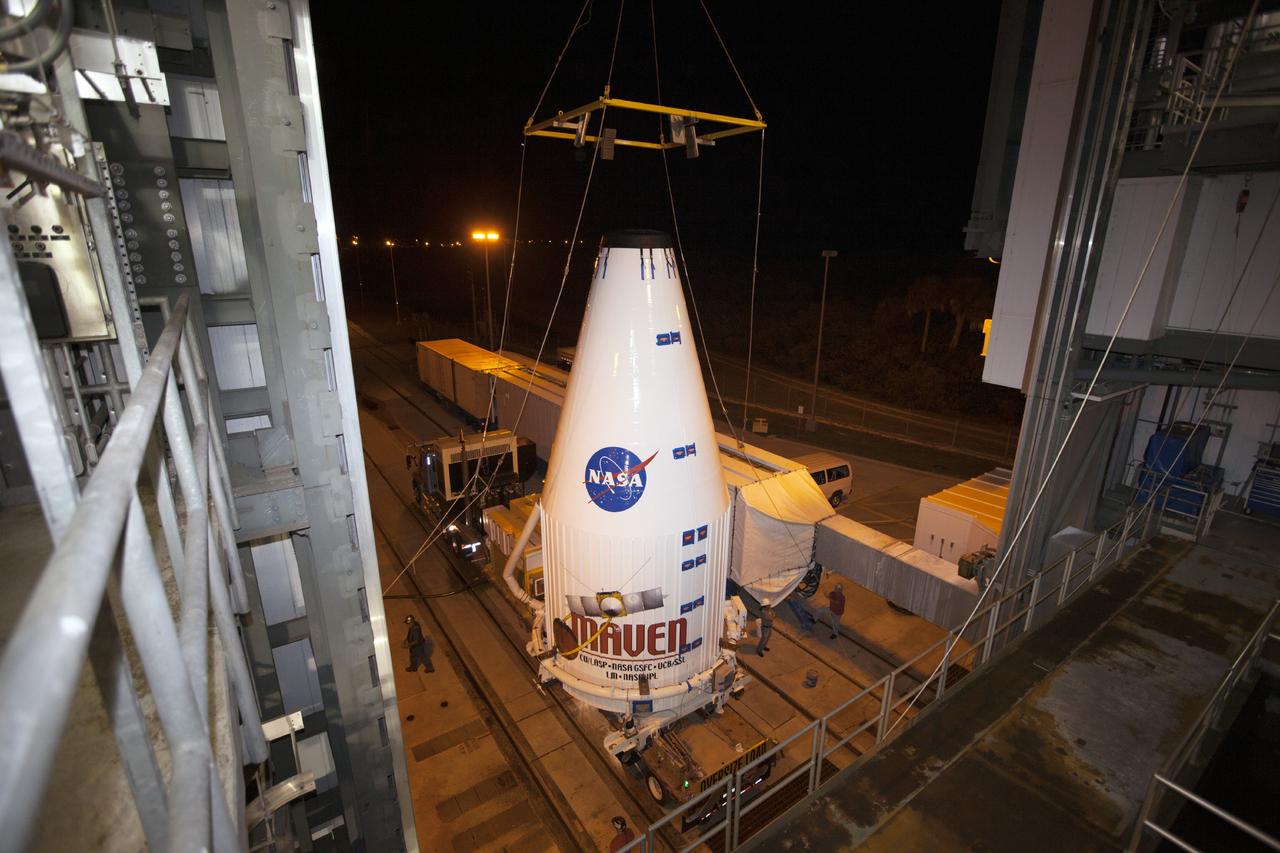
CAPE CANAVERAL, Fla. – A sling is lowered into place over NASA's MAVEN spacecraft, inside a payload fairing, at the Vertical Integration Facility at Space Launch Complex 41 so the spacecraft can be hoisted atop a United Launch Alliance Atlas V rocket that will lift it into space and on to Mars. MAVEN is short for Mars Atmosphere and Volatile Evolution. Photo credit: NASA/Kim Shiflett
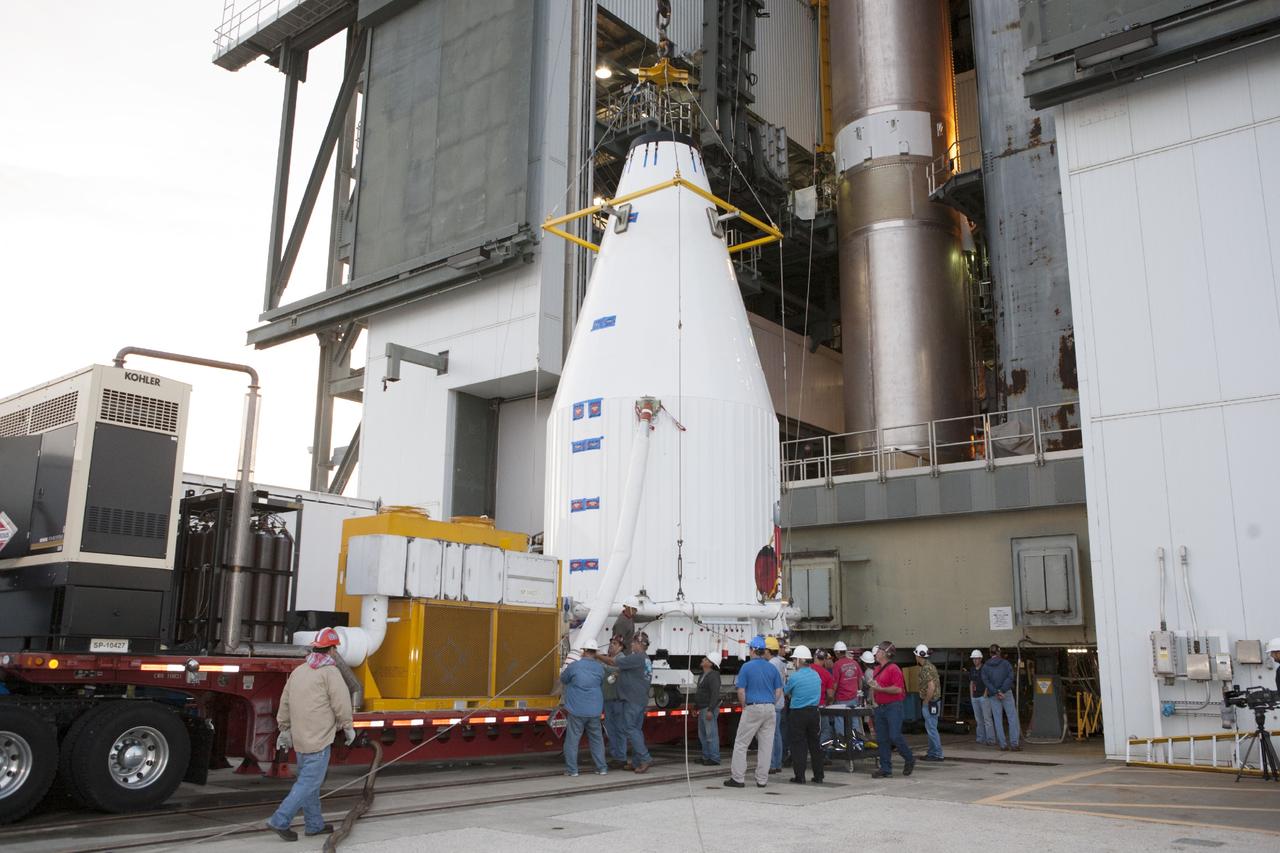
CAPE CANAVERAL, Fla. – A sling is lowered into place over NASA's MAVEN spacecraft, inside a payload fairing, at the Vertical Integration Facility at Space Launch Complex 41 so the spacecraft can be hoisted atop a United Launch Alliance Atlas V rocket that will lift it into space and on to Mars. MAVEN is short for Mars Atmosphere and Volatile Evolution. Photo credit: NASA/Kim Shiflett
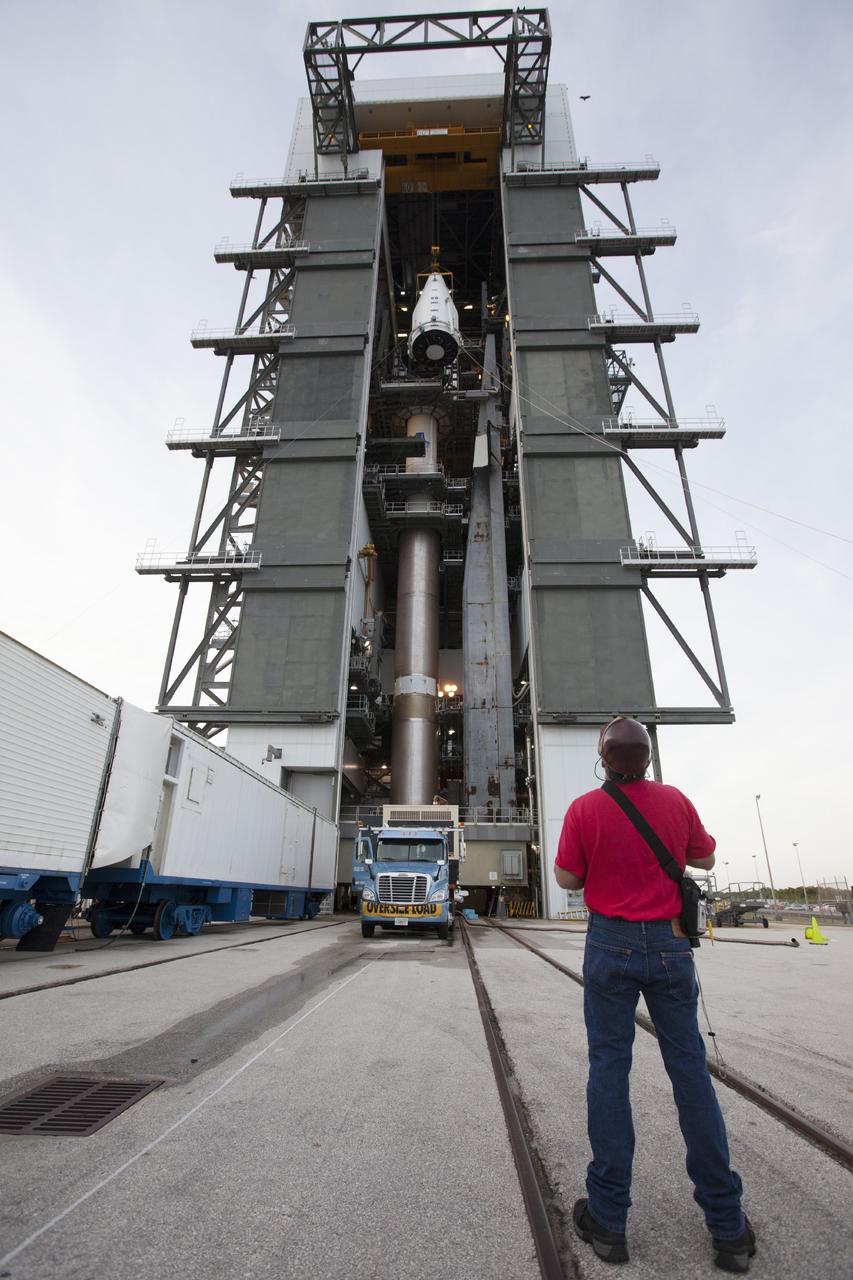
CAPE CANAVERAL, Fla. – NASA's MAVEN spacecraft, inside a payload fairing, is hoisted to the top of a United Launch Alliance Atlas V rocket at the Vertical Integration Facility at Space Launch Complex 41. The Atlas V will lift MAVEN into space and on to Mars. MAVEN is short for Mars Atmosphere and Volatile Evolution. Photo credit: NASA/Kim Shiflett
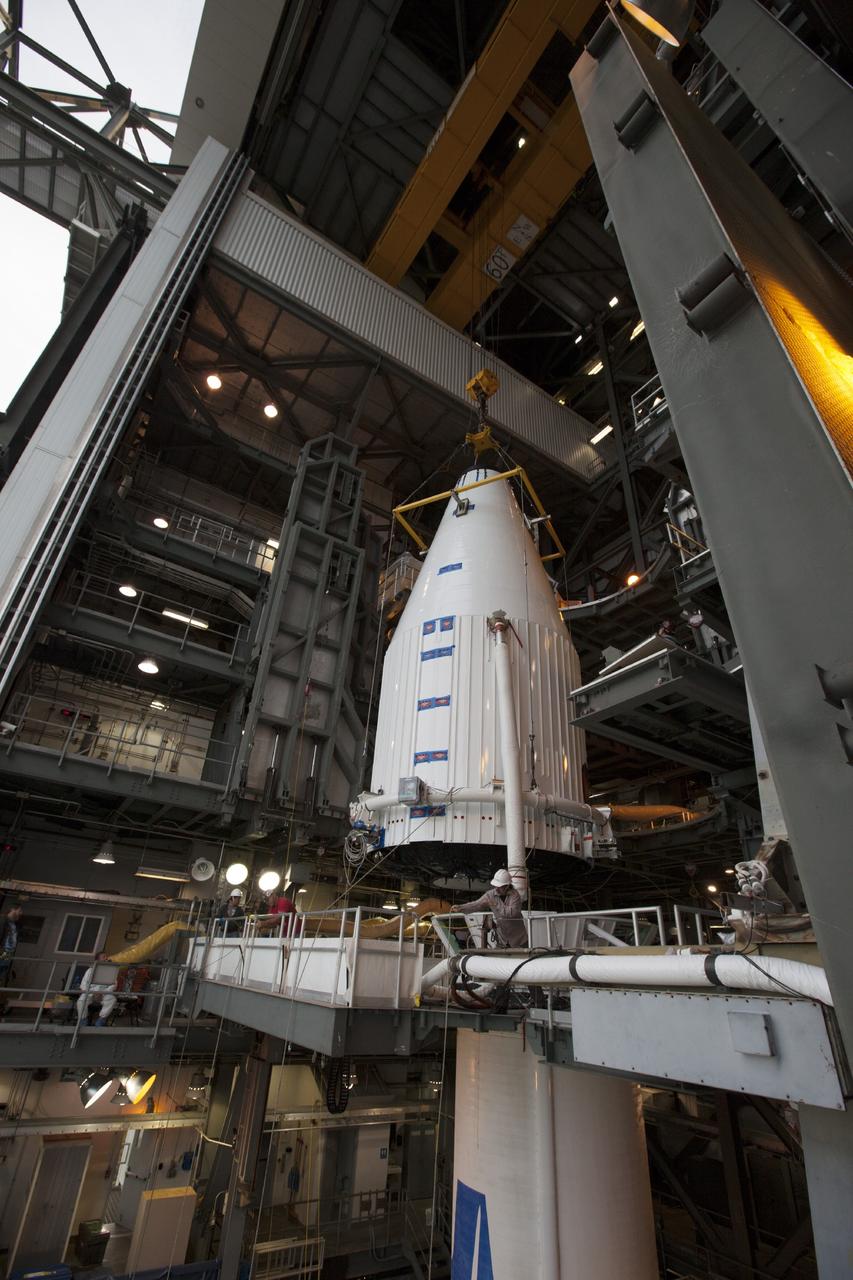
CAPE CANAVERAL, Fla. – NASA's MAVEN spacecraft, inside a payload fairing, is hoisted to the top of a United Launch Alliance Atlas V rocket at the Vertical Integration Facility at Space Launch Complex 41. The Atlas V will lift MAVEN into space and on to Mars. MAVEN is short for Mars Atmosphere and Volatile Evolution. Photo credit: NASA/Kim Shiflett
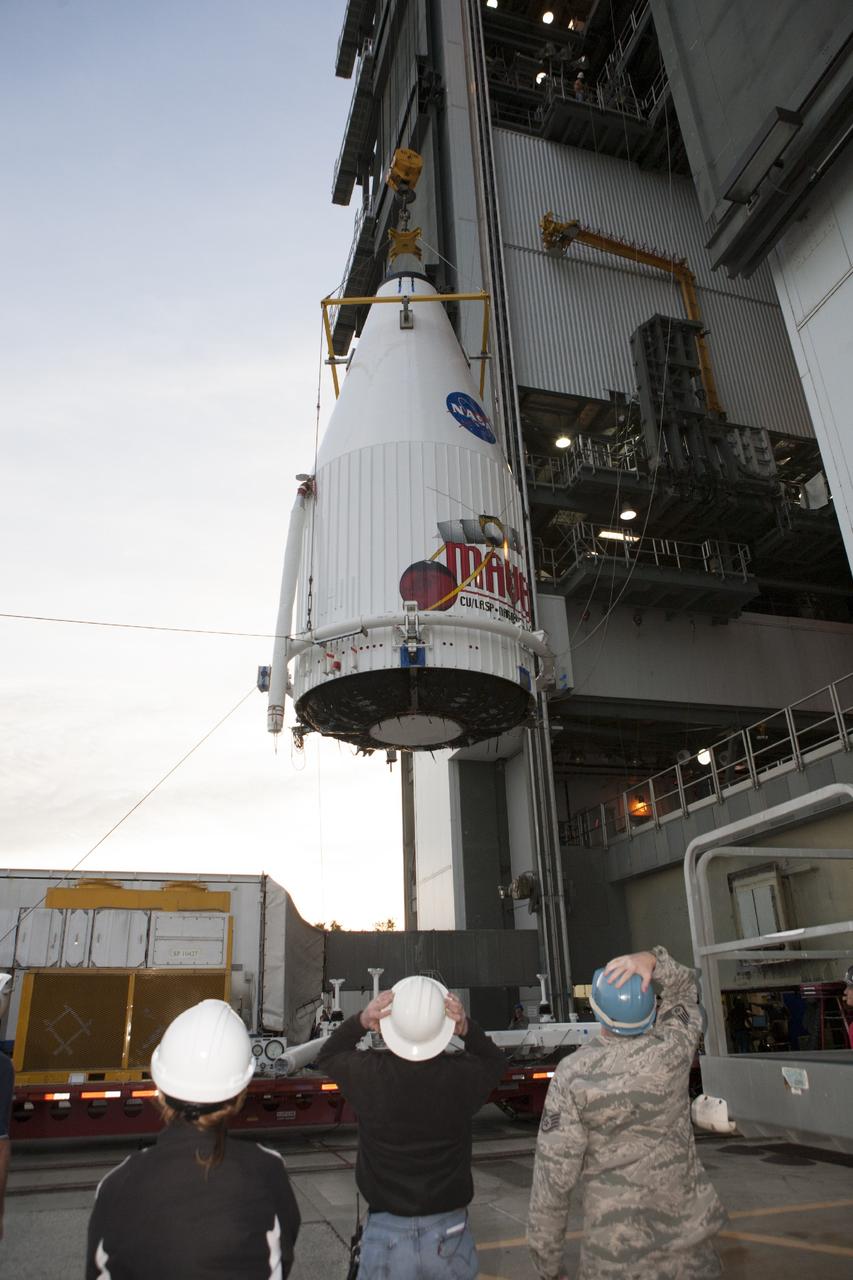
CAPE CANAVERAL, Fla. – NASA's MAVEN spacecraft, inside a payload fairing, is hoisted to the top of a United Launch Alliance Atlas V rocket at the Vertical Integration Facility at Space Launch Complex 41. The Atlas V will lift MAVEN into space and on to Mars. MAVEN is short for Mars Atmosphere and Volatiles Evolution. Photo credit: NASA/Kim Shiflett
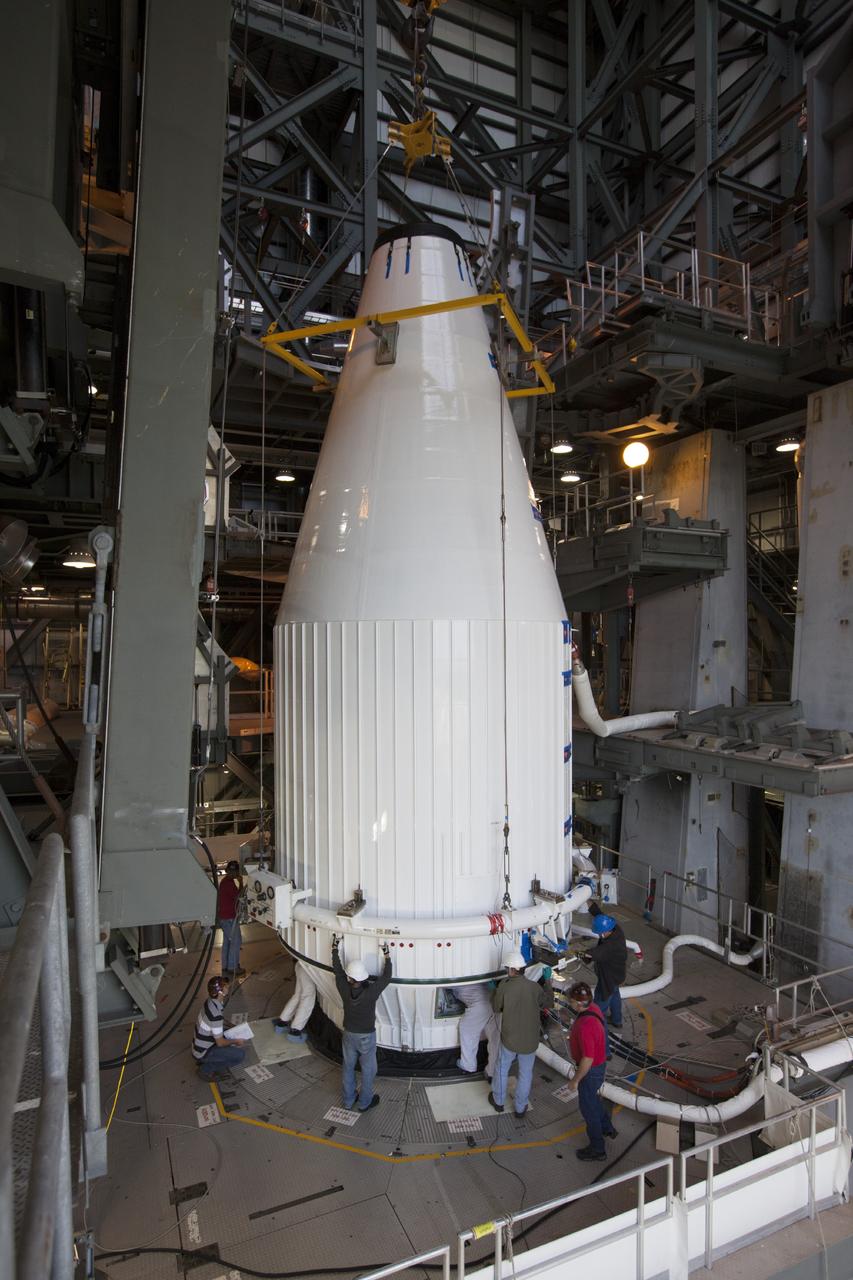
CAPE CANAVERAL, Fla. – Crews guide NASA's MAVEN spacecraft, inside a payload fairing, into place atop a United Launch Alliance Atlas V rocket at the Vertical Integration Facility at Space Launch Complex 41. The Atlas V will lift MAVEN into space and on to Mars. MAVEN is short for Mars Atmosphere and Volatile Evolution. Photo credit: NASA/Kim Shiflett
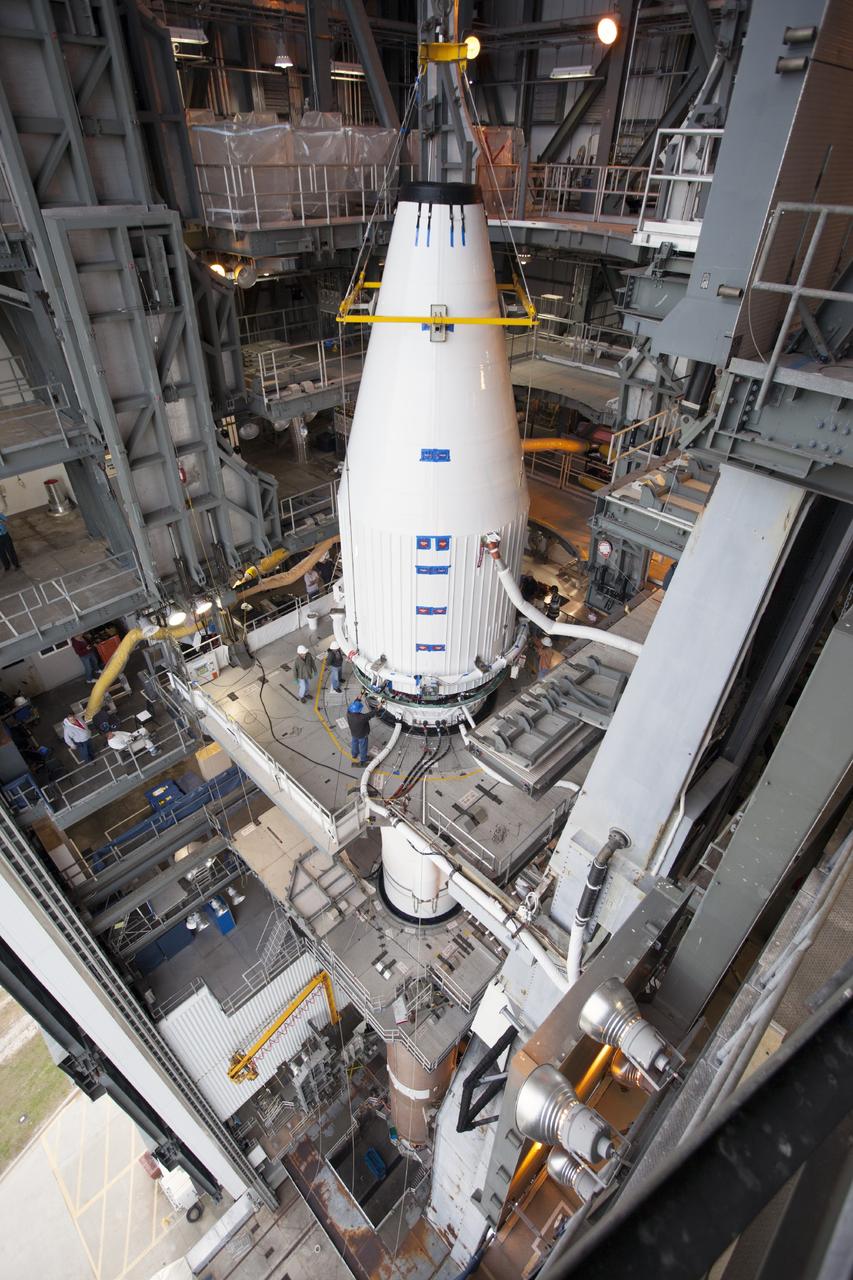
CAPE CANAVERAL, Fla. – Crews guide NASA's MAVEN spacecraft, inside a payload fairing, into place atop a United Launch Alliance Atlas V rocket at the Vertical Integration Facility at Space Launch Complex 41. The Atlas V will lift MAVEN into space and on to Mars. MAVEN is short for Mars Atmosphere and Volatile Evolution. Photo credit: NASA/Kim Shiflett
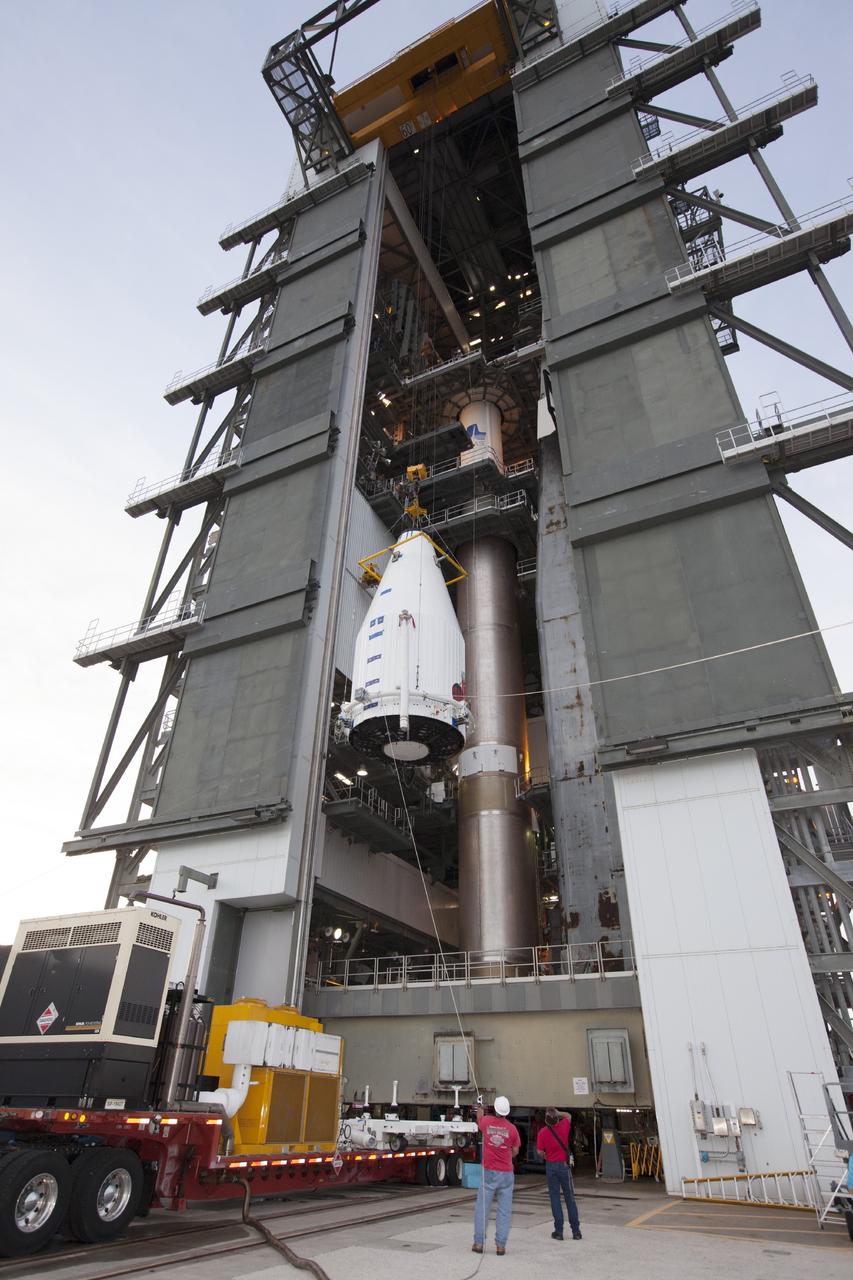
CAPE CANAVERAL, Fla. – NASA's MAVEN spacecraft, inside a payload fairing, is hoisted to the top of a United Launch Alliance Atlas V rocket at the Vertical Integration Facility at Space Launch Complex 41. The Atlas V will lift MAVEN into space and on to Mars. MAVEN is short for Mars Atmosphere and Volatile Evolution. Photo credit: NASA/Kim Shiflett
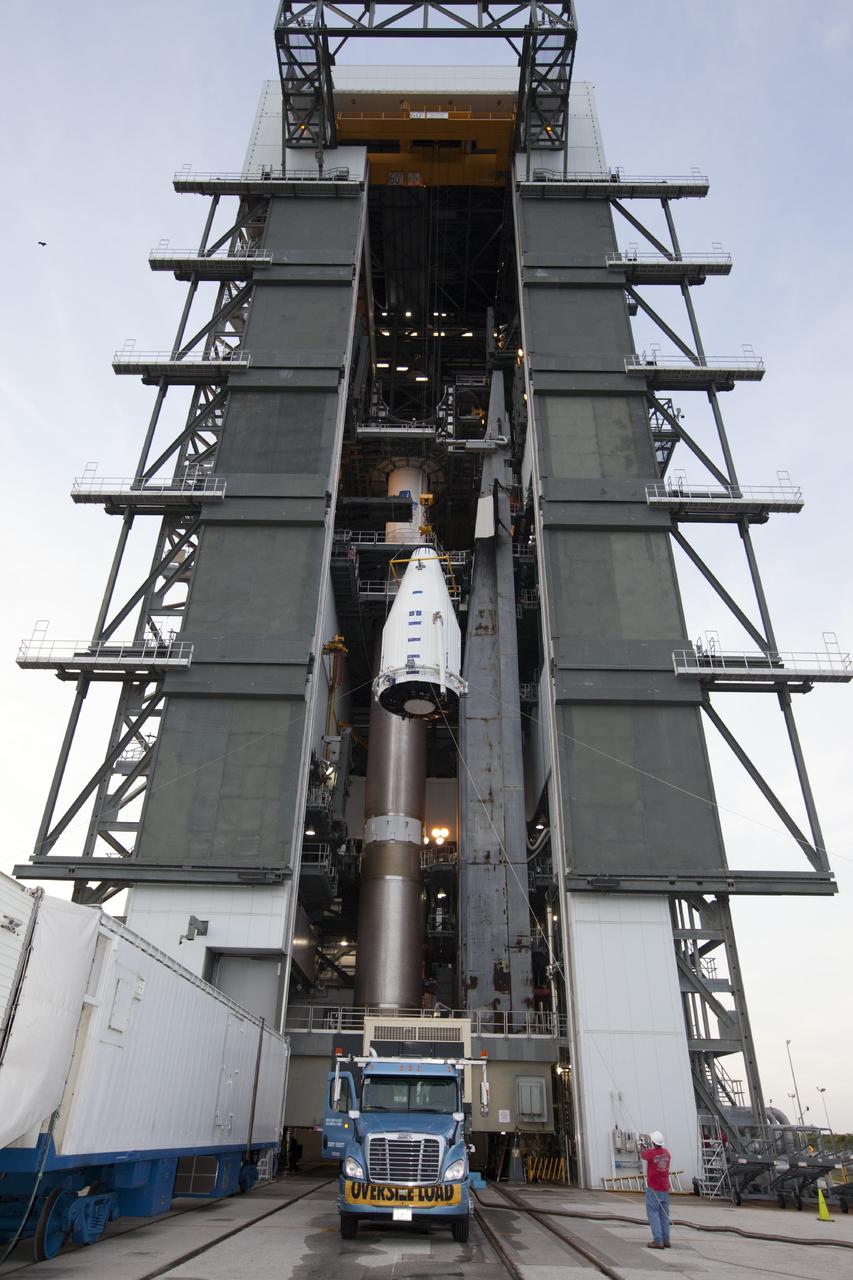
CAPE CANAVERAL, Fla. – NASA's MAVEN spacecraft, inside a payload fairing, is hoisted to the top of a United Launch Alliance Atlas V rocket at the Vertical Integration Facility at Space Launch Complex 41. The Atlas V will lift MAVEN into space and on to Mars. MAVEN is short for Mars Atmosphere and Volatile Evolution. Photo credit: NASA/Kim Shiflett
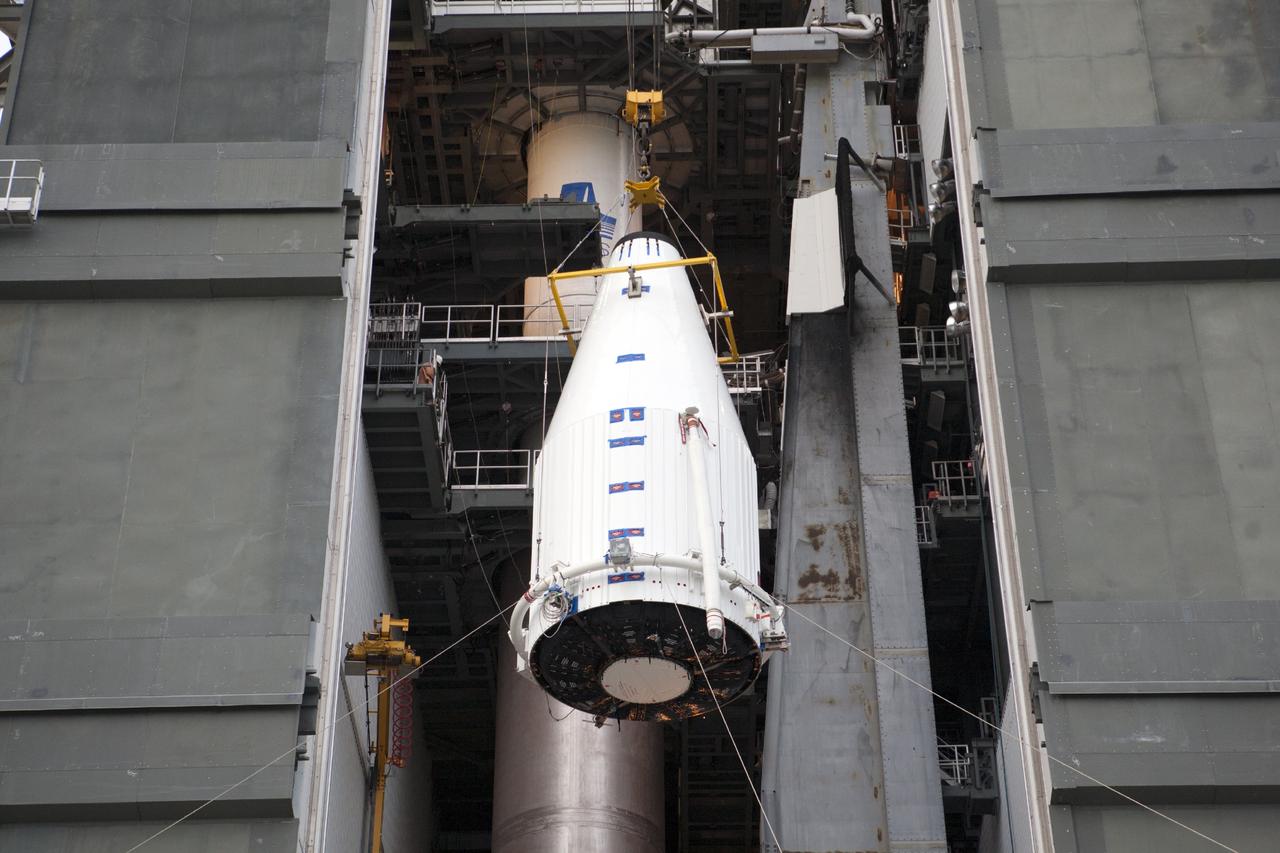
CAPE CANAVERAL, Fla. – NASA's MAVEN spacecraft, inside a payload fairing, is hoisted to the top of a United Launch Alliance Atlas V rocket at the Vertical Integration Facility at Space Launch Complex 41. The Atlas V will lift MAVEN into space and on to Mars. MAVEN is short for Mars Atmosphere and Volatile Evolution. Photo credit: NASA/Kim Shiflett
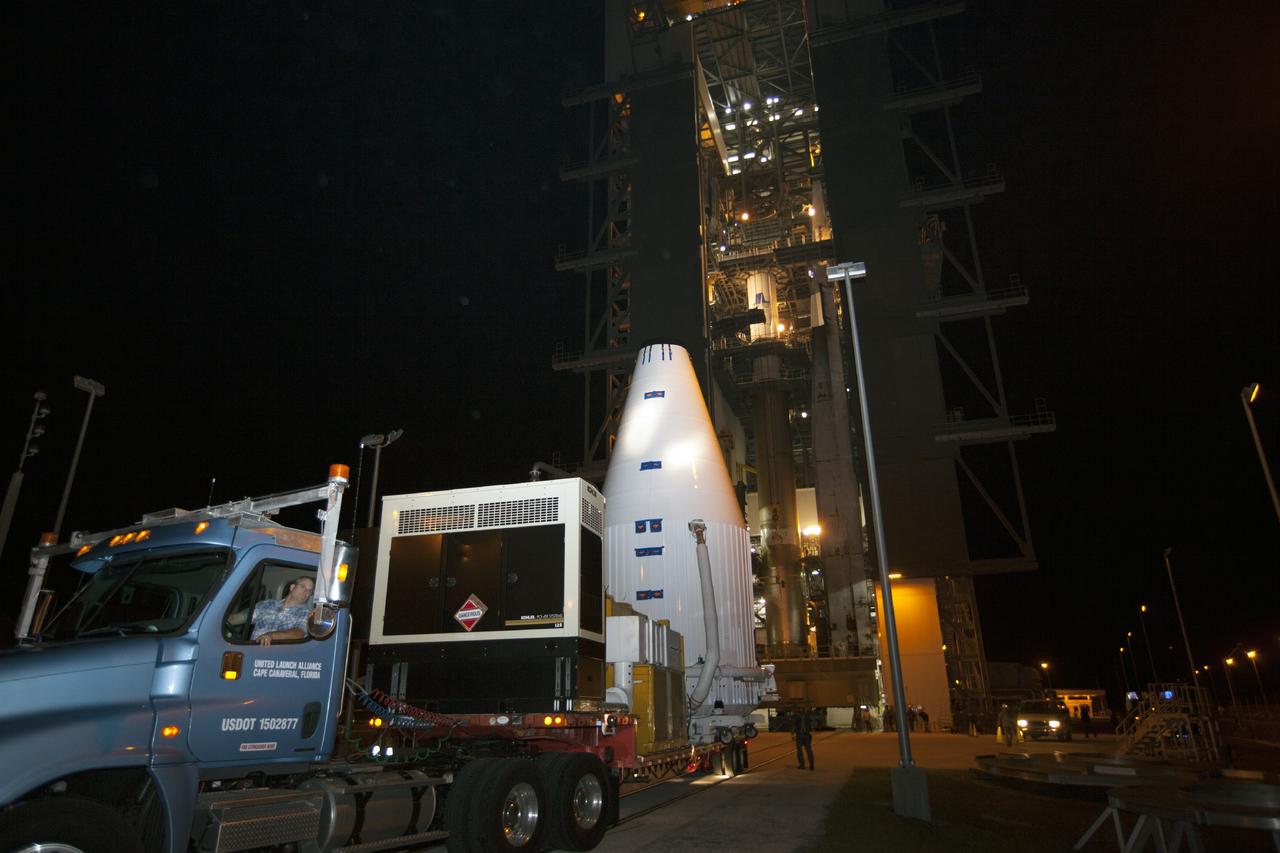
CAPE CANAVERAL, Fla. – A transporter moves NASA's MAVEN spacecraft, inside a payload fairing, to the Vertical Integration Facility at Space Launch Complex 41 where it will be hoisted atop a United Launch Alliance Atlas V rocket that will lift it into space and on to Mars. MAVEN is short for Mars Atmosphere and Volatile Evolution. Photo credit: NASA/Kim Shiflett
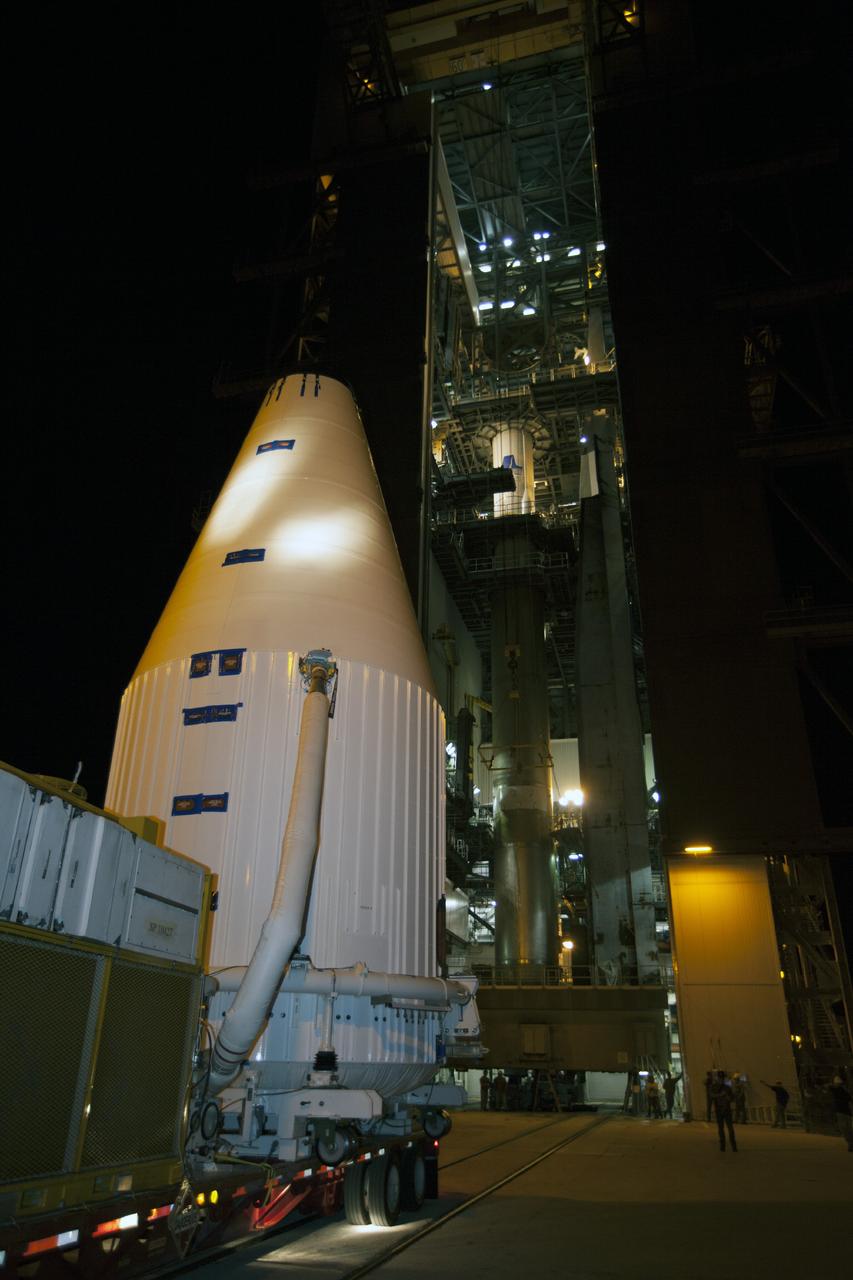
CAPE CANAVERAL, Fla. – A transporter moves NASA's MAVEN spacecraft, inside a payload fairing, to the Vertical Integration Facility at Space Launch Complex 41 where it will be hoisted atop a United Launch Alliance Atlas V rocket that will lift it into space and on to Mars. MAVEN is short for Mars Atmosphere and Volatile Evolution. Photo credit: NASA/Kim Shiflett
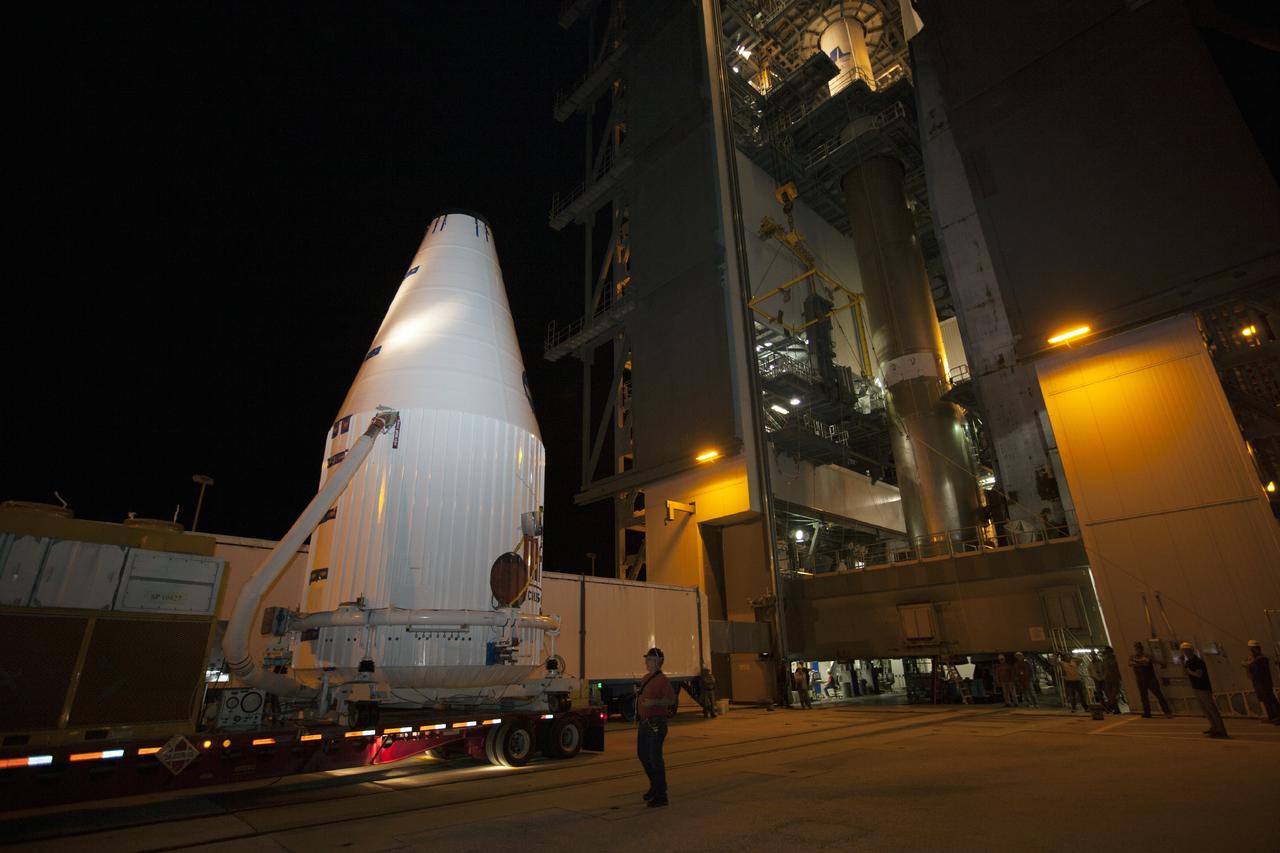
CAPE CANAVERAL, Fla. – A transporter moves NASA's MAVEN spacecraft, inside a payload fairing, to the Vertical Integration Facility at Space Launch Complex 41 where it will be hoisted atop a United Launch Alliance Atlas V rocket that will lift it into space and on to Mars. MAVEN is short for Mars Atmosphere and Volatile Evolution. Photo credit: NASA/Kim Shiflett
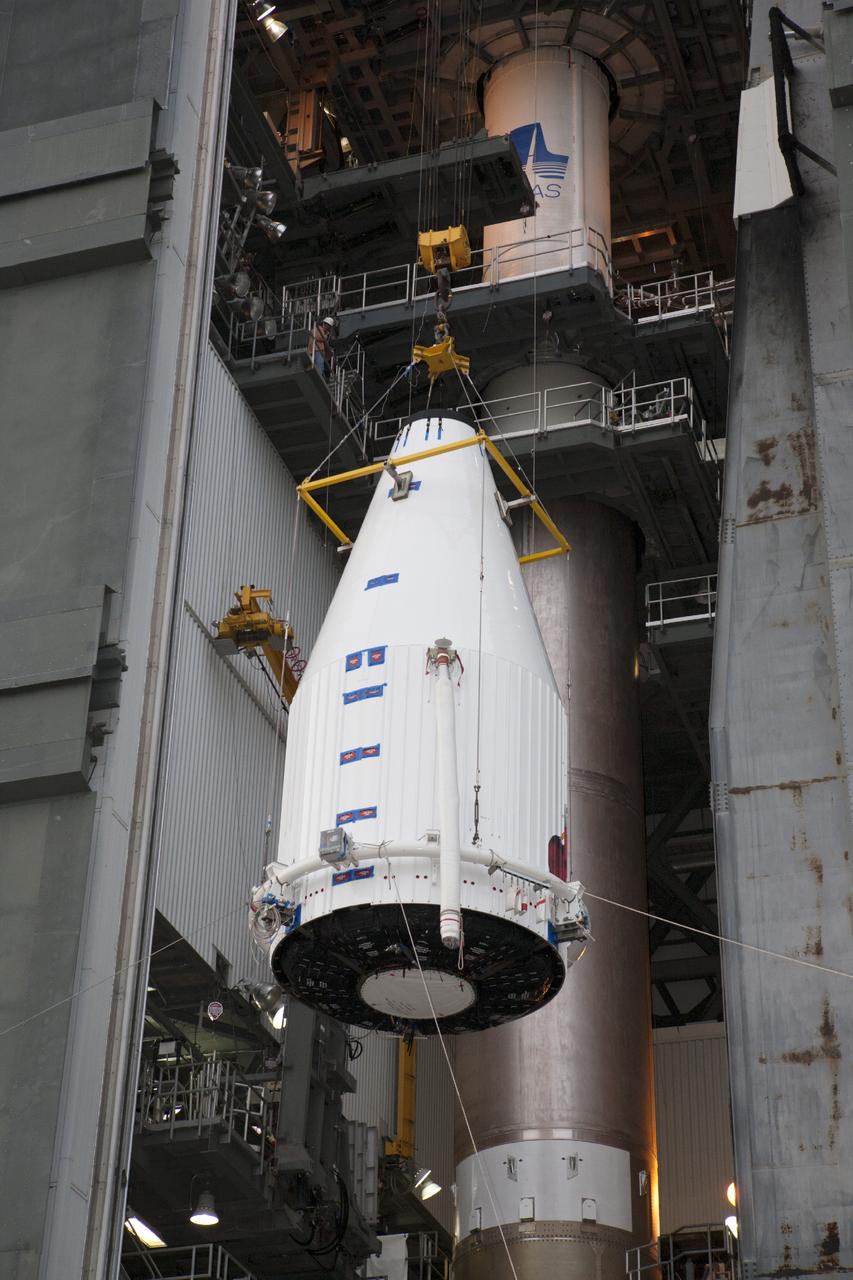
CAPE CANAVERAL, Fla. – NASA's MAVEN spacecraft, inside a payload fairing, is hoisted to the top of a United Launch Alliance Atlas V rocket at the Vertical Integration Facility at Space Launch Complex 41. The Atlas V will lift MAVEN into space and on to Mars. MAVEN is short for Mars Atmosphere and Volatile Evolution. Photo credit: NASA/Kim Shiflett
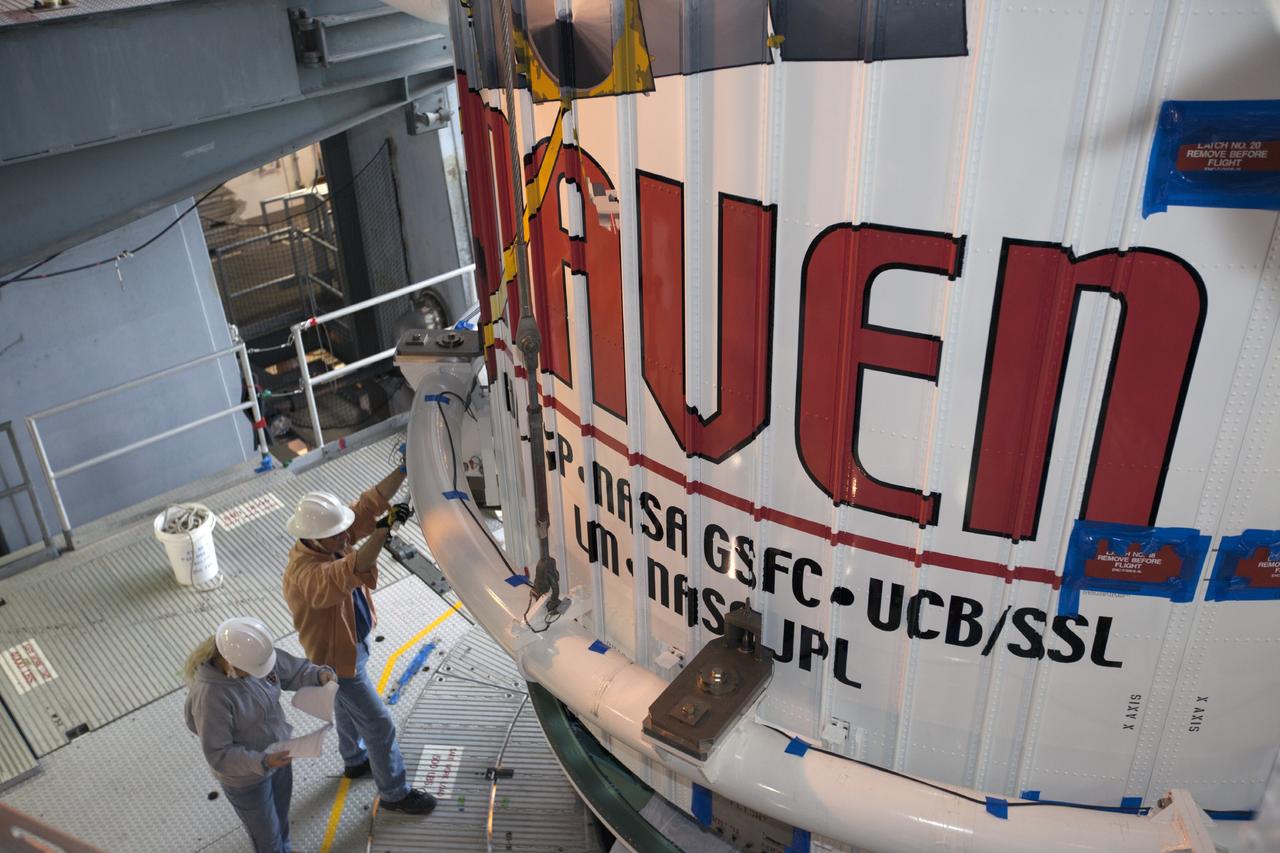
CAPE CANAVERAL, Fla. – Crews guide NASA's MAVEN spacecraft, inside a payload fairing, into place atop a United Launch Alliance Atlas V rocket at the Vertical Integration Facility at Space Launch Complex 41. The Atlas V will lift MAVEN into space and on to Mars. MAVEN is short for Mars Atmosphere and Volatile Evolution. Photo credit: NASA/Kim Shiflett
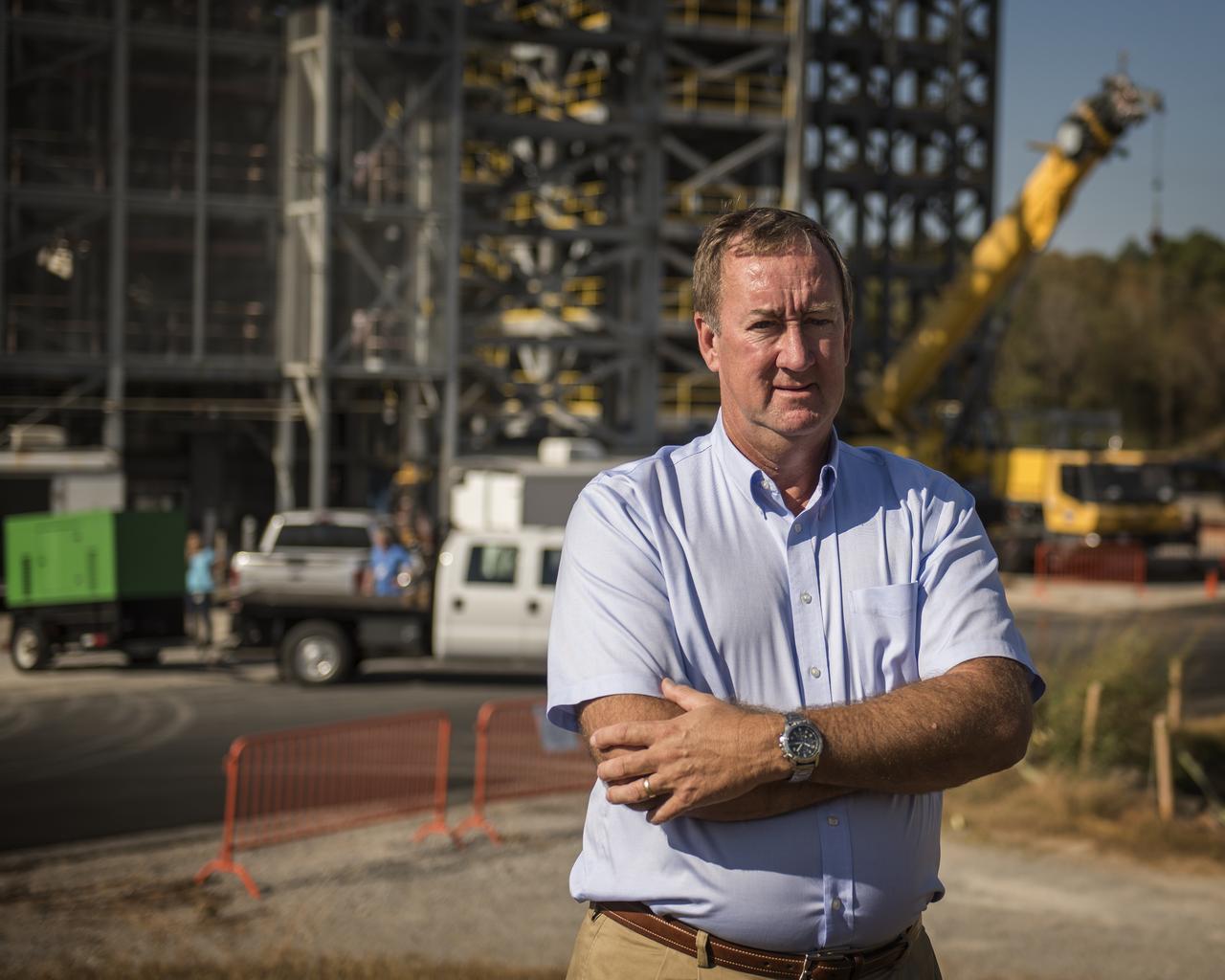
KEITH HIGGINBOTHAM, STRUCTURAL TEST LEAD FOR THE SLS SPACECRAFT PAYLOAD INTEGRATION AND EVOLUTION OFFICE, IS SHOWN BESIDE TEST STAND 4699 AT THE MARSHALL SPACE FLIGHT CENTER’S WEST TEST AREA. HIGGINBOTHAM WILL BE LEADING STRUCTURAL LOADS TESTING AT TEST STAND 4699 FOR THE CORE STAGE SIMULATER AND THE LAUNCH VEHICLE STAGE ADAPTER. THE TEST SERIES WILL ENSURE EACH STRUCTURE CAN WITHSTAND THE INCREDIBLE STRESSES OF LAUNCH.
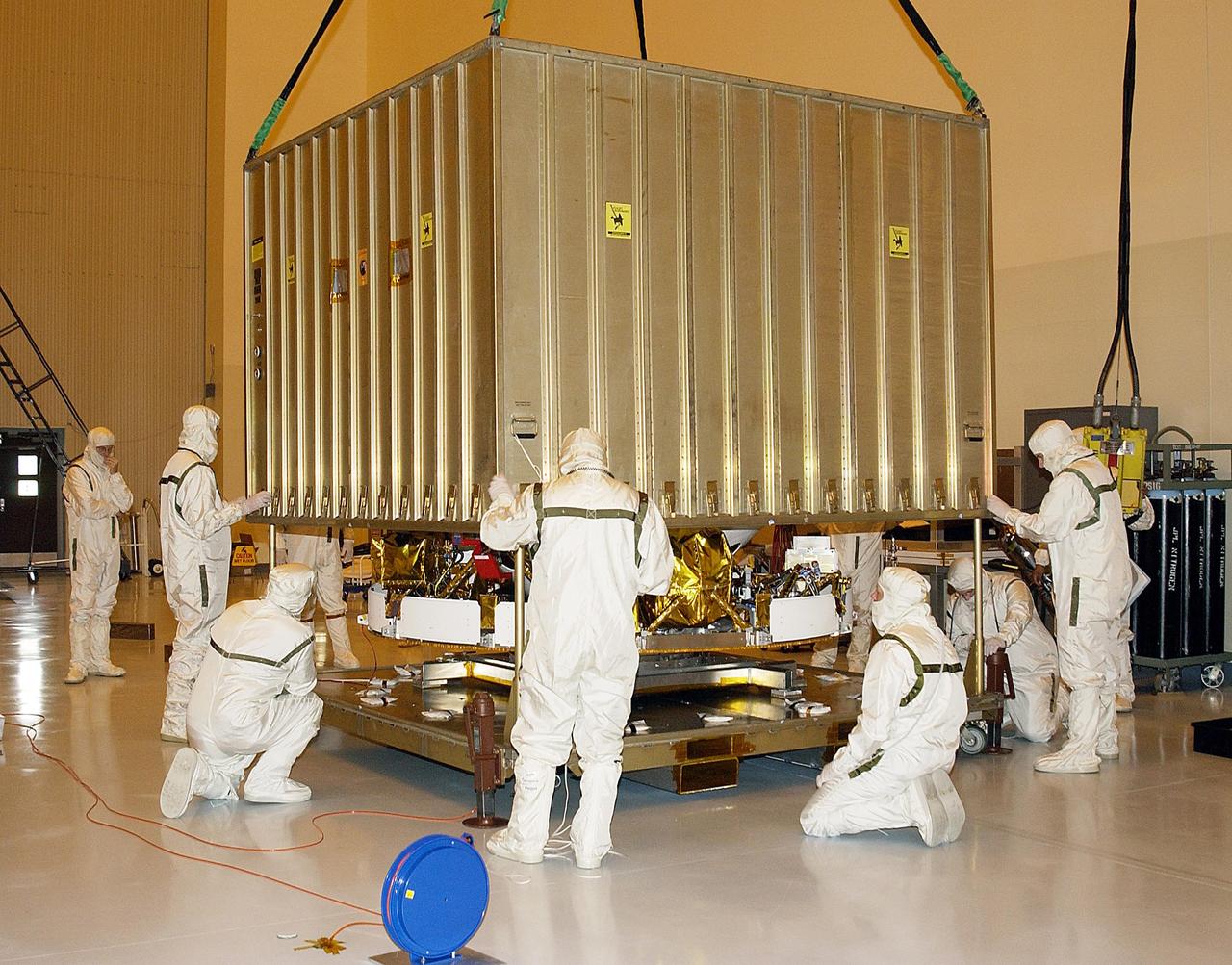
KENNEDY SPACE CENTER, FLA. - In the Payload Hazardous Servicing Facility, the shipping container is lifted off the components of Mars Exploration Rover-1, the aershell and cruise stage. Each rover , aeroshell and lander will undergo a full mission simulation while at KSC. All flight elements will then be integrated. After spin balance testing, each spacecraft will be mated to a solid propellant upper stage booster that will propel it out of Earth orbit. The rovers will serve as robotic geologists to seek answers about the evolution of Mars, particularly for a history of water. The rovers will be identical to each other, but will land at different regions of Mars. Launch of the MER-1 is scheduled for May 30. MER-2 will follow June 25.
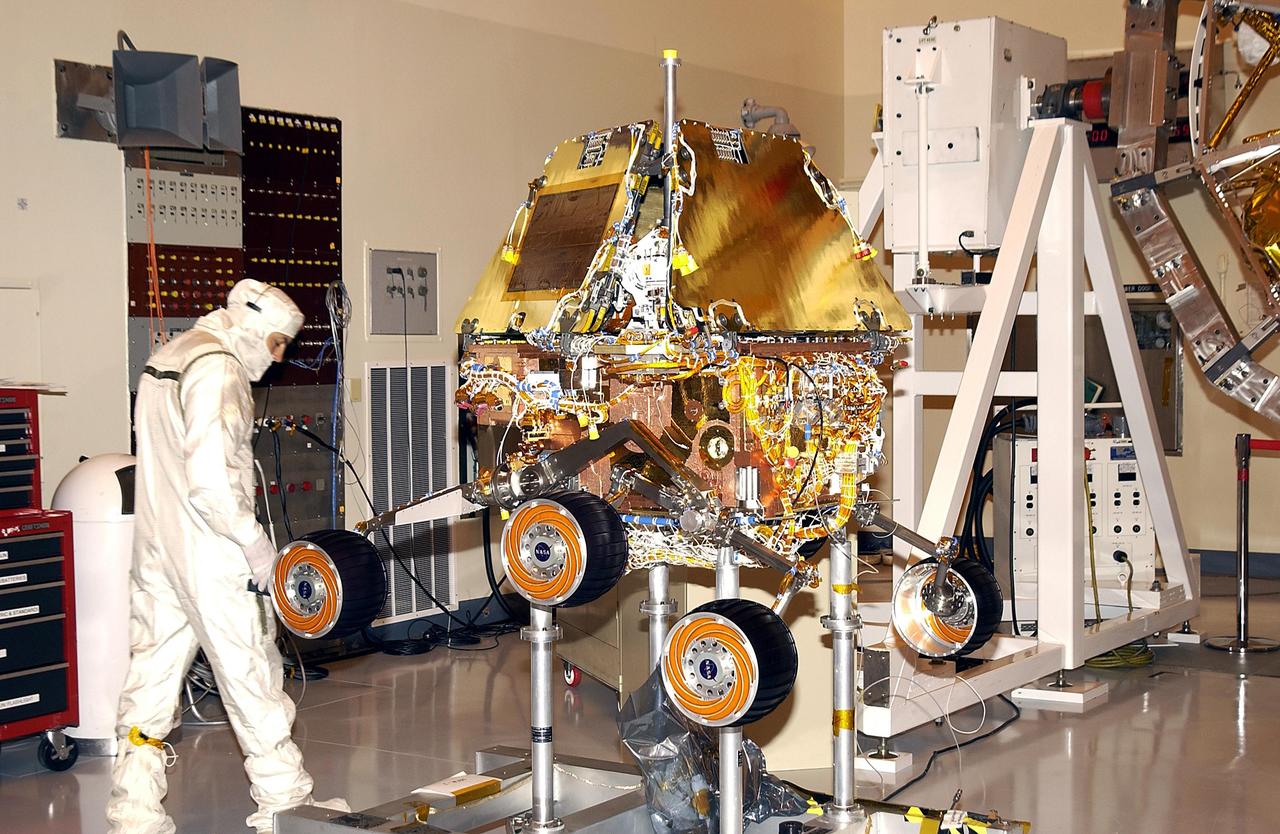
KENNEDY SPACE CENTER, FLA. -- A worker in the Payload Hazardous Servicing Facility looks closely at the Mars Exploration Rover-2. Each rover , aeroshell and lander will undergo a full mission simulation while at KSC. All flight elements will then be integrated. After spin balance testing, each spacecraft will be mated to a solid propellant upper stage booster that will propel it out of Earth orbit. The rovers will serve as robotic geologists to seek answers about the evolution of Mars, particularly for a history of water. The rovers will be identical to each other, but will land at different regions of Mars. Launch of the MER-1 is scheduled for May 30. MER-2 will follow June 25.
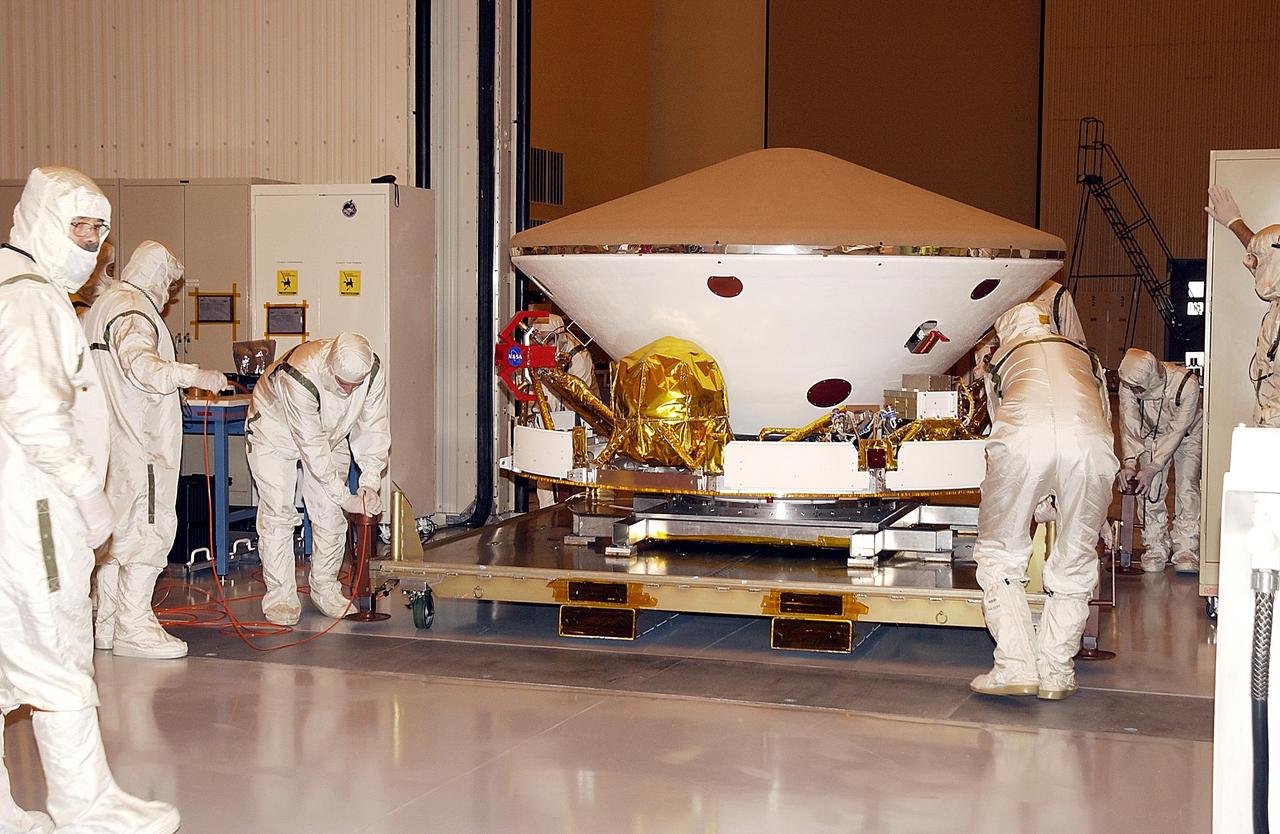
KENNEDY SPACE CENTER, FLA. - Workers in the Payload Hazardous Servicing Facility move the aeroshell and cruise stage of one of the Mars Exploration Rovers (MER). The two rovers, MER-1 and MER-2, aeroshells and landesr will undergo a full mission simulation while at KSC. All flight elements will then be integrated. After spin balance testing, each spacecraft will be mated to a solid propellant upper stage booster that will propel it out of Earth orbit. The rovers will serve as robotic geologists to seek answers about the evolution of Mars, particularly for a history of water. The rovers will be identical to each other, but will land at different regions of Mars. Launch of the MER-1 is scheduled for May 30. MER-2 will follow June 25.
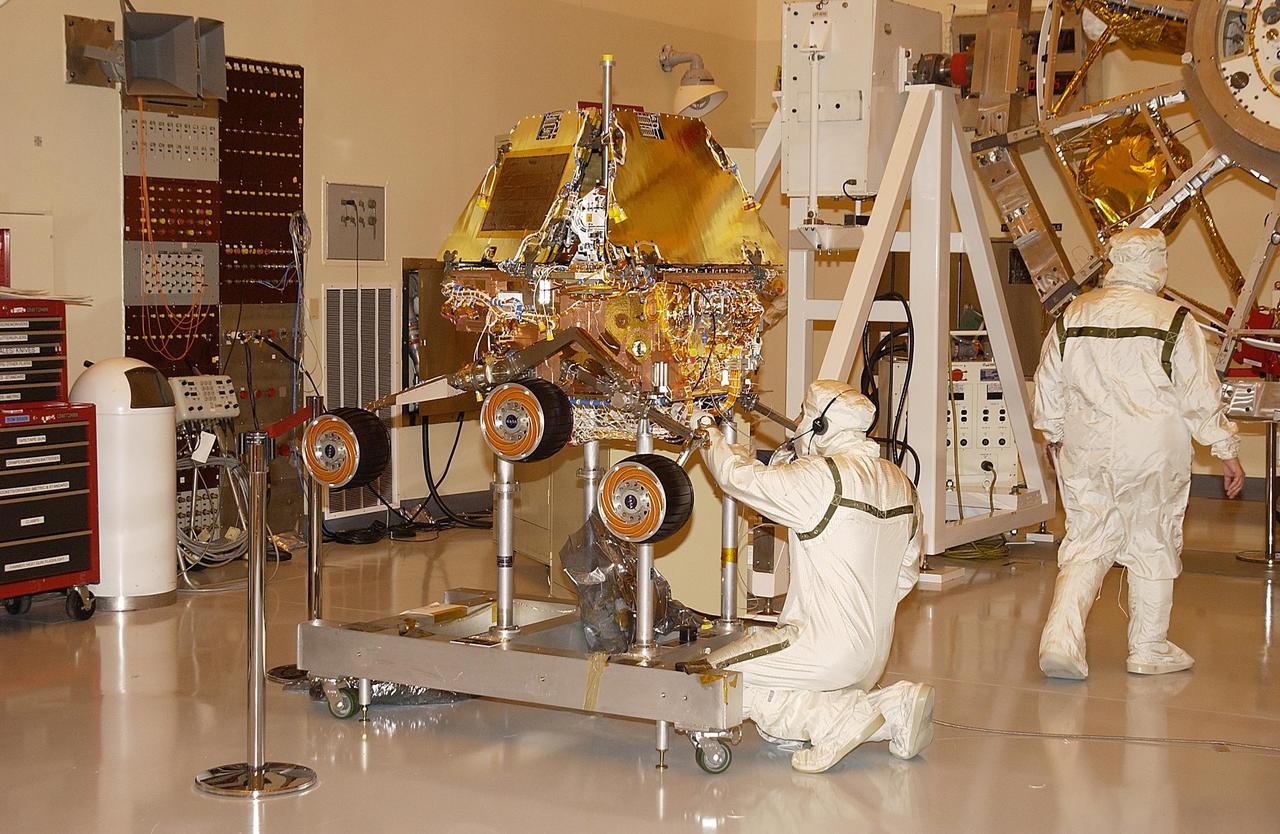
KENNEDY SPACE CENTER, FLA. -- A worker in the Payload Hazardous Servicing Facility examines the Mars Exploration Rover-2.The rover , aeroshell and lander will undergo a full mission simulation while at KSC. All flight elements will then be integrated. After spin balance testing, each spacecraft will be mated to a solid propellant upper stage booster that will propel it out of Earth orbit. The rovers will serve as robotic geologists to seek answers about the evolution of Mars, particularly for a history of water. The rovers will be identical to each other, but will land at different regions of Mars. Launch of the MER-1 is scheduled for May 30. MER-2 will follow June 25.
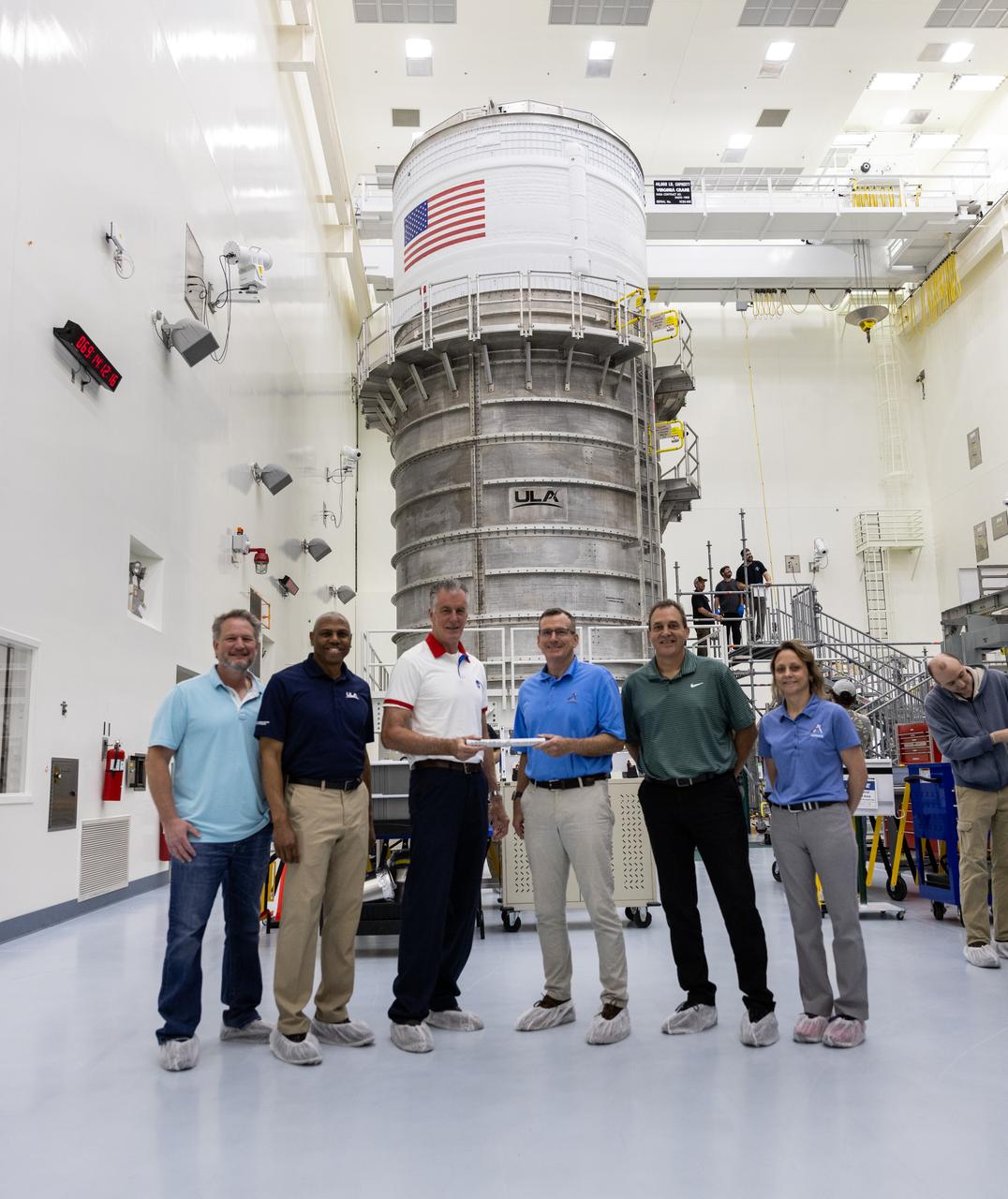
Managers from NASA and industry partners for NASA’s SLS (Space Launch System) rocket upper stage hand off the baton to managers from the agency’s Exploration Ground Systems (EGS) are shown with the SLS interim cryogenic propulsion stage inside the Multi-Payload Processing Facility at NASA’s Kennedy Space Center in Florida on Monday, March 10, 2025, after being transported from United Launch Alliance’s (ULA) Delta Operations Center at nearby Cape Canaveral Space Force Station. From left to right are Jim Bonato, ICPS Mission Manager, ULA; Ron Fortson, Director and General Manager, ULA; Chris Calfee, Spacecraft/Payload Integration and Evolution element manager, SLS; Cliff Lanham, senior vehicle operations manager, EGS; Todd Lamond, Strategic Planning and Integration, Amentum; and Natasha Wiest, Interim Director, Boeing Core Stage Integrated Product Team; The interim cryogenic propulsion stage is a liquid oxygen and liquid hydrogen-based system that will fire its RL10 engine to give the Orion spacecraft the big in-space push needed to fly around the Moon and back.
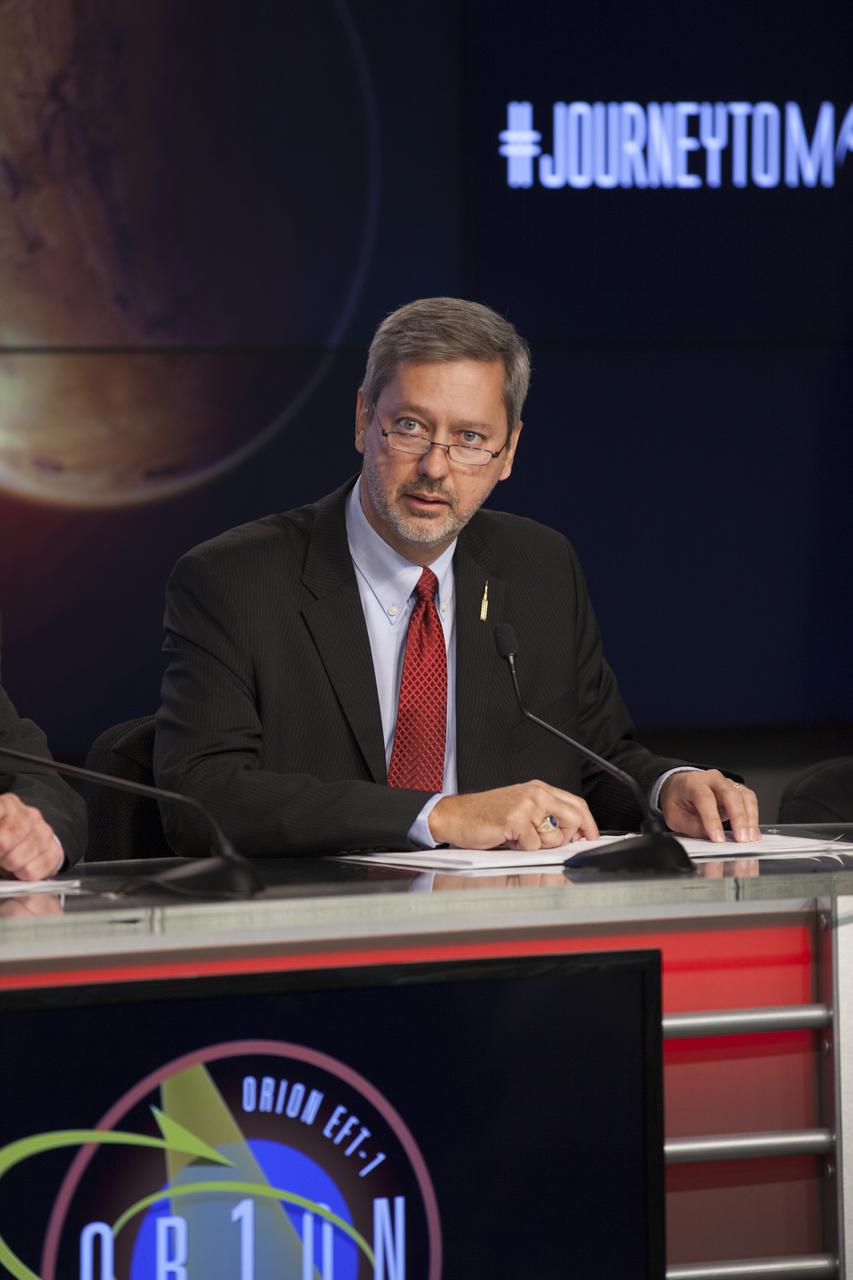
At NASA's Kennedy Space Center in Florida, Chris Crumbly, manager of Space Launch System Spacecraft/Payload Integration and Evolution, was one of several agency leaders who spoke to member of the news media about how the first flight of the new Orion spacecraft is a first step in the agency's plans to send humans to Mars. Orion is the exploration spacecraft designed to carry astronauts to destinations not yet explored by humans, including an asteroid and Mars. It will have emergency abort capability, sustain the crew during space travel and provide safe re-entry from deep space return velocities. The first unpiloted flight test of Orion is scheduled to launch Dec. 4, 2014 atop a United Launch Alliance Delta IV Heavy rocket, and in 2018 on NASA’s Space Launch System rocket.
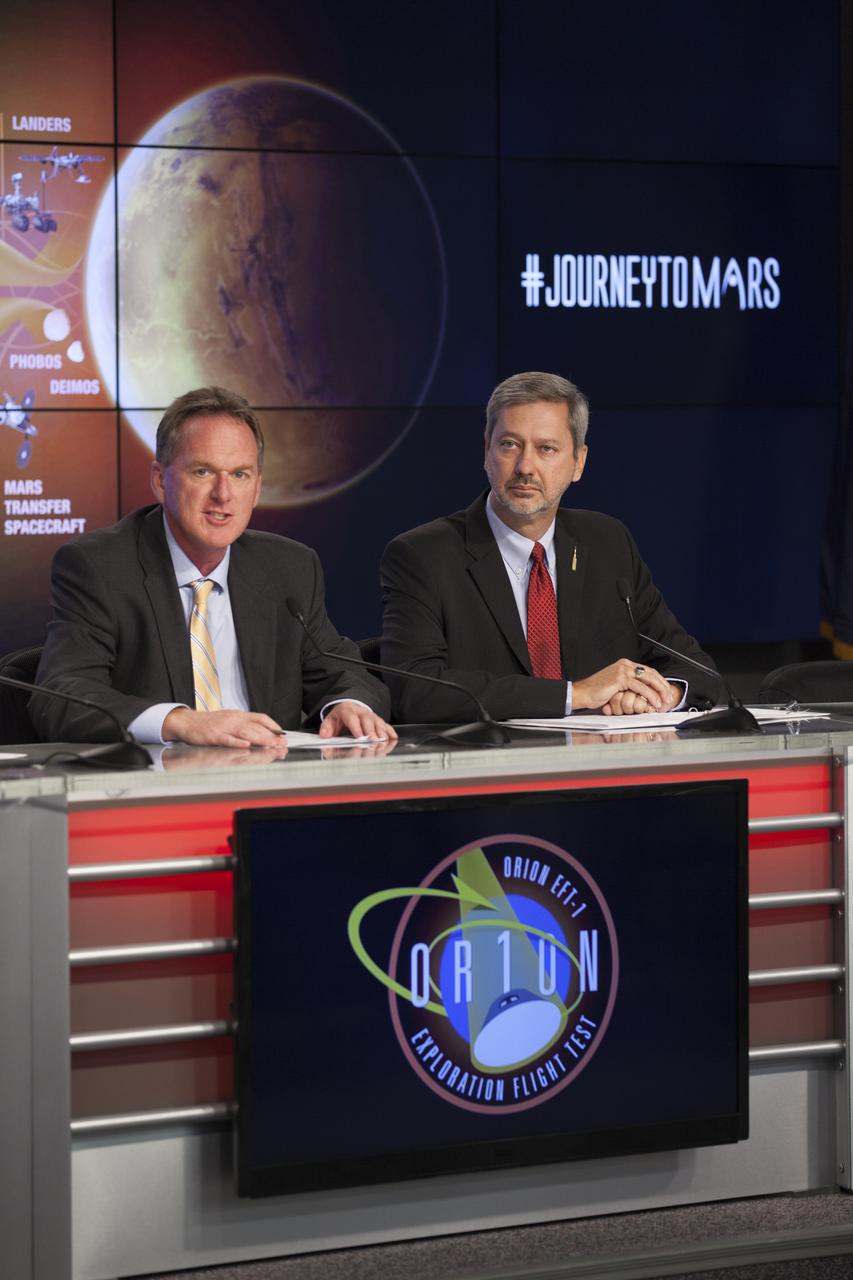
At NASA's Kennedy Space Center in Florida, Mike Bolger, program manager of Ground Systems Development and Operations Program, and Chris Crumbly, manager of Space Launch System Spacecraft/Payload Integration and Evolution, were among several agency leaders who spoke to members of the news media about how the first fight of the new Orion spacecraft is a first step in NASA's plans to send humans to Mars. Orion is the exploration spacecraft designed to carry astronauts to destinations not yet explored by humans, including an asteroid and Mars. It will have emergency abort capability, sustain the crew during space travel and provide safe re-entry from deep space return velocities. The first unpiloted flight test of Orion is scheduled to launch Dec. 4, 2014 atop a United Launch Alliance Delta IV Heavy rocket, and in 2018 on NASA’s Space Launch System rocket.
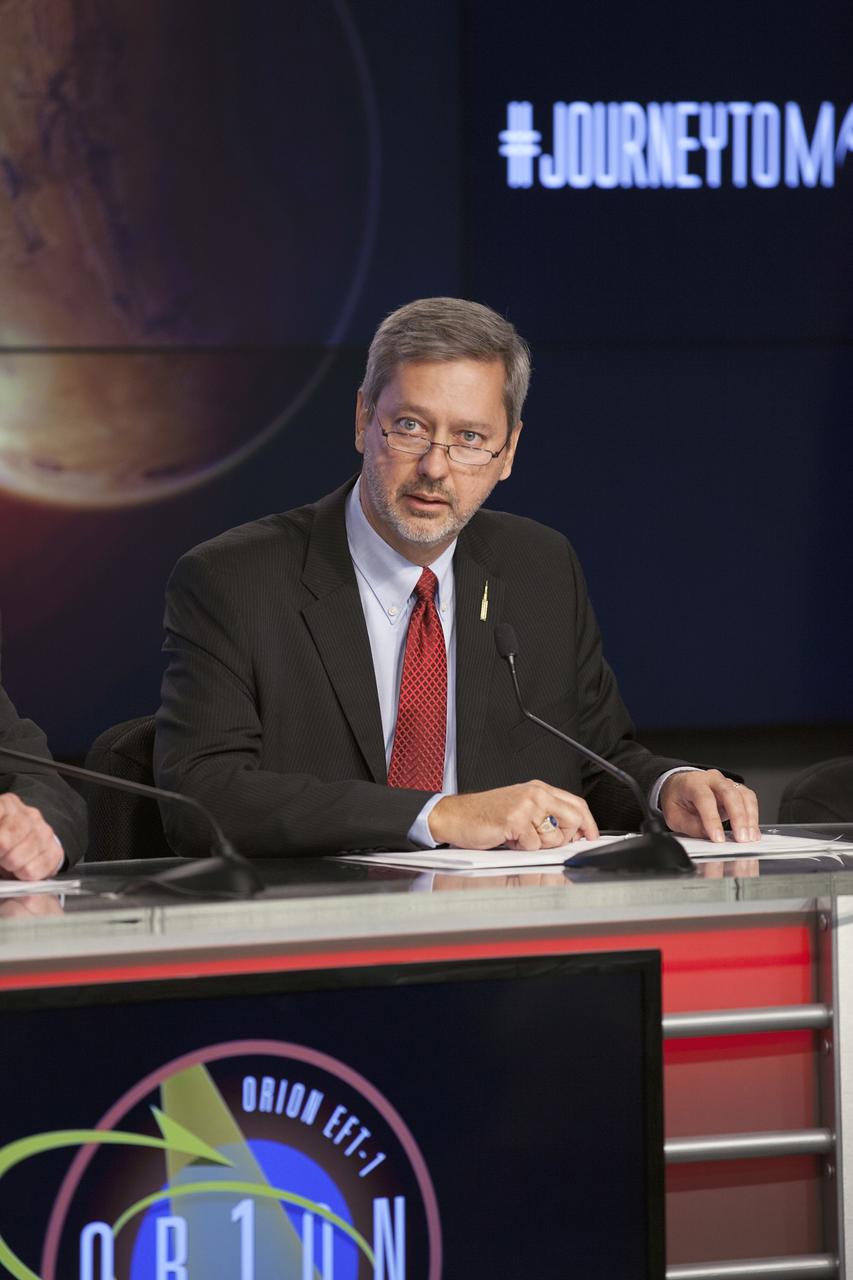
CAPE CANAVERAL, Fla. – At NASA's Kennedy Space Center in Florida, Chris Crumbly, manager of Space Launch System Spacecraft/Payload Integration and Evolution, was one of several agency leaders who spoke to member of the news media about how the first flight of the new Orion spacecraft is a first step in the agency's plans to send humans to Mars. Orion is the exploration spacecraft designed to carry astronauts to destinations not yet explored by humans, including an asteroid and Mars. It will have emergency abort capability, sustain the crew during space travel and provide safe re-entry from deep space return velocities. The first unpiloted flight test of Orion is scheduled to launch Dec. 4, 2014 atop a United Launch Alliance Delta IV Heavy rocket, and in 2018 on NASA’s Space Launch System rocket. For more information, visit www.nasa.gov/orion Photo credit: NASA/Kim Shiflett
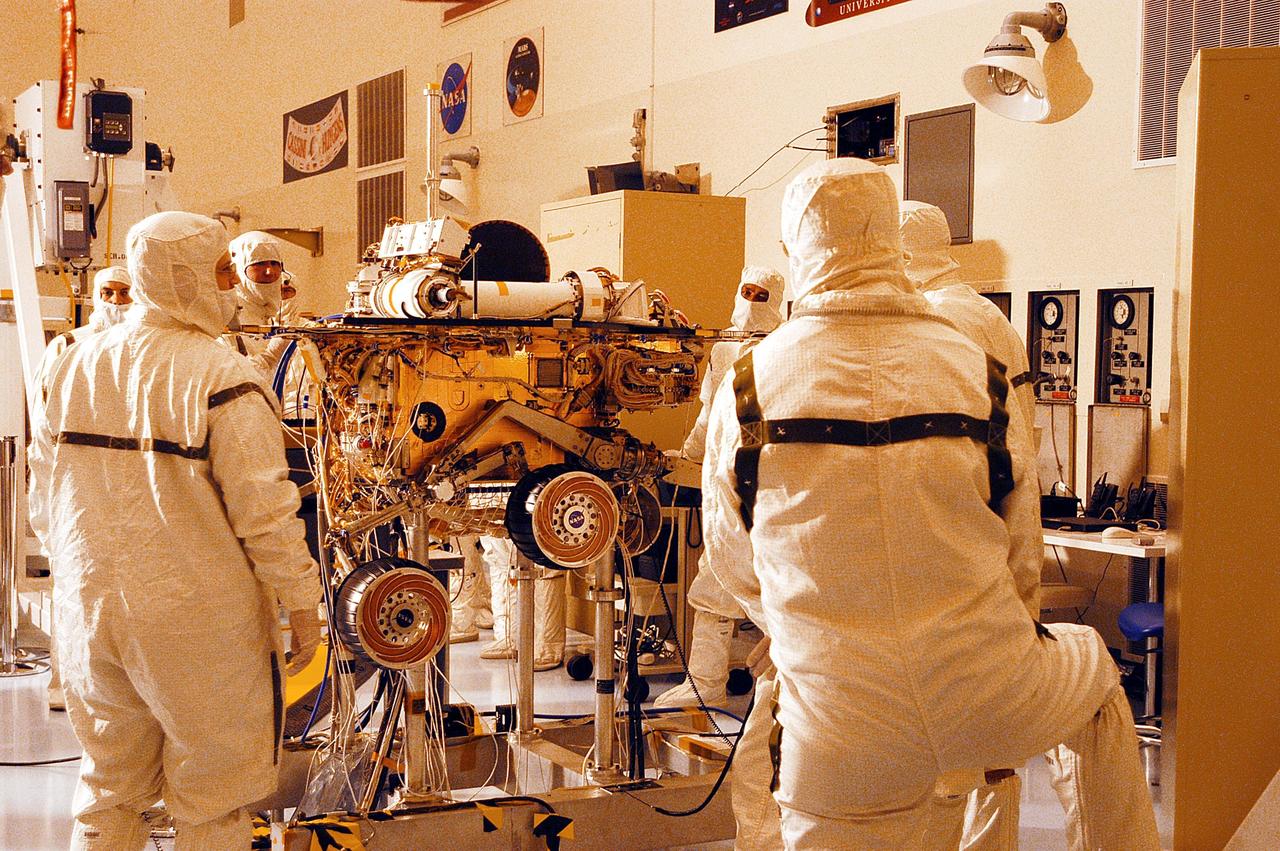
KENNEDY SPACE CENTER, Fla. - Workers in the Payload Hazardous Servicing Facility observe as one of the two Mars Exploration Rovers, MER-2, undergoes testing. MER-1 and MER-2, their aeroshells and landers will undergo a full mission simulation before being integrated. After spin balance testing, each spacecraft will be mated to a solid propellant upper stage booster that will propel the spacecraft out of Earth orbit. Approximately 10 days before launch they will be transported to the launch pad for mating with their respective Boeing Delta II rockets. The rovers will serve as robotic geologists to seek answers about the evolution of Mars, particularly for a history of water. The rovers are identical to each other, but will land at different regions of Mars. Launch of the first rover is scheduled for May 30 from Cape Canaveral Air Force Station. The second will follow June 25.
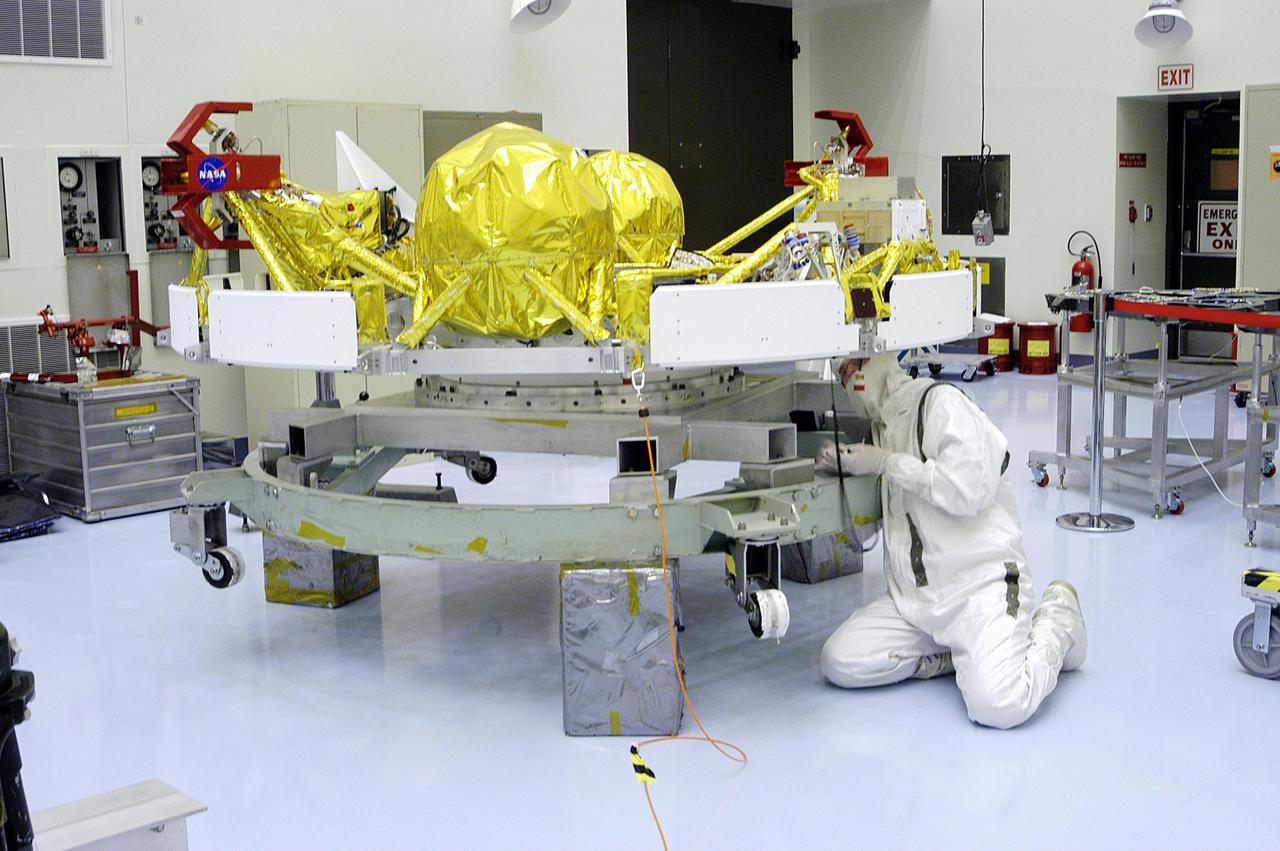
KENNEDY SPACE CENTER, Fla. - A technician in the Payload Hazardous Servicing Facility works on the cruise stage of one of the Mars Exploration Rovers (MER). MER-1 and MER-2, their aeroshells and landers will undergo a full mission simulation before being integrated. After spin balance testing, each spacecraft will be mated to a solid propellant upper stage booster that will propel the spacecraft out of Earth orbit. Approximately 10 days before launch they will be transported to the launch pad for mating with their respective Boeing Delta II rockets. The rovers will serve as robotic geologists to seek answers about the evolution of Mars, particularly for a history of water. The rovers are identical to each other, but will land at different regions of Mars. Launch of the first rover is scheduled for May 30 from Cape Canaveral Air Force Station. The second will follow June 25.
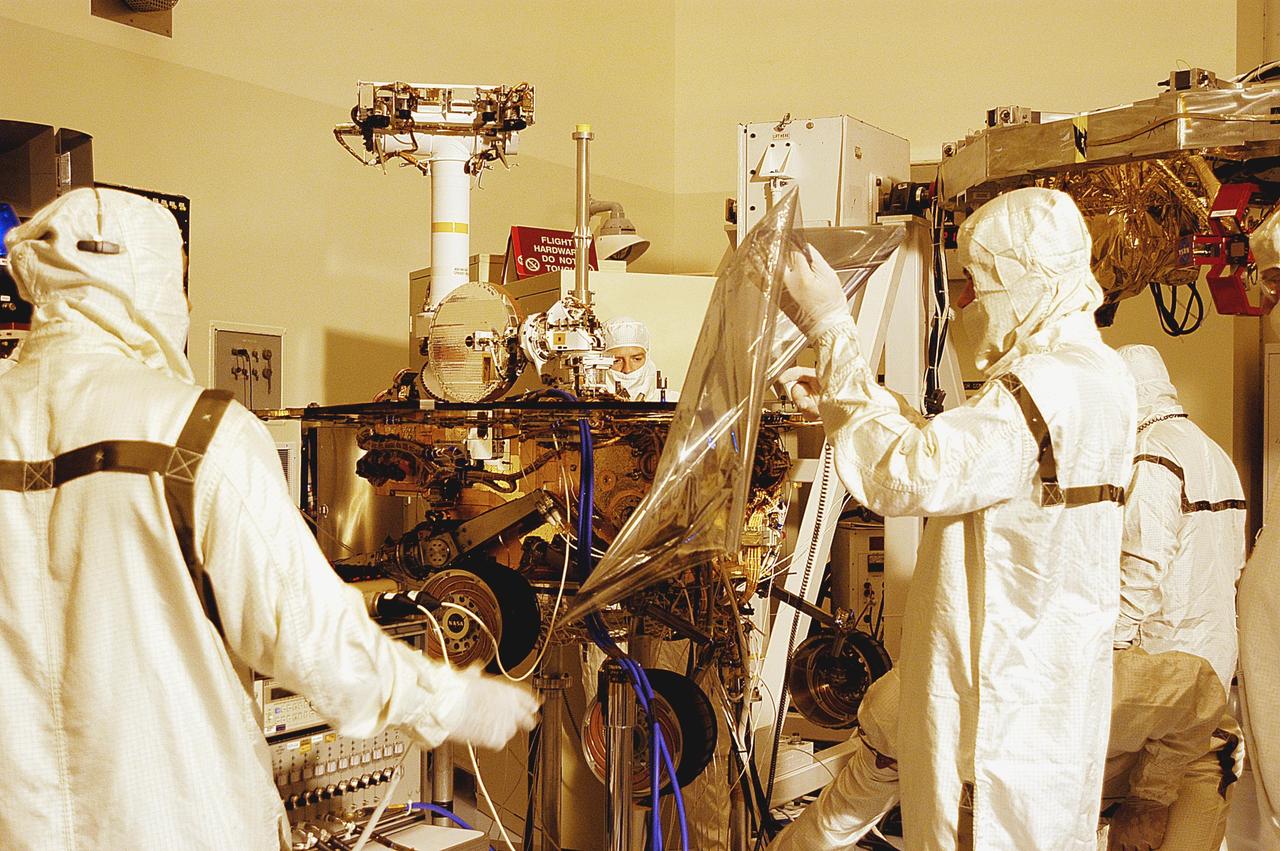
KENNEDY SPACE CENTER, Fla. - Technicians in the Payload Hazardous Servicing Facility work on one of the Mars Exploration Rovers, MER-2. The two rovers, MER-1 and MER-2, their aeroshells and landers will undergo a full mission simulation before being integrated. After spin balance testing, each spacecraft will be mated to a solid propellant upper stage booster that will propel the spacecraft out of Earth orbit. Approximately 10 days before launch they will be transported to the launch pad for mating with their respective Boeing Delta II rockets. The rovers will serve as robotic geologists to seek answers about the evolution of Mars, particularly for a history of water. The rovers are identical to each other, but will land at different regions of Mars. Launch of the first rover is scheduled for May 30 from Cape Canaveral Air Force Station. The second will follow June 25.
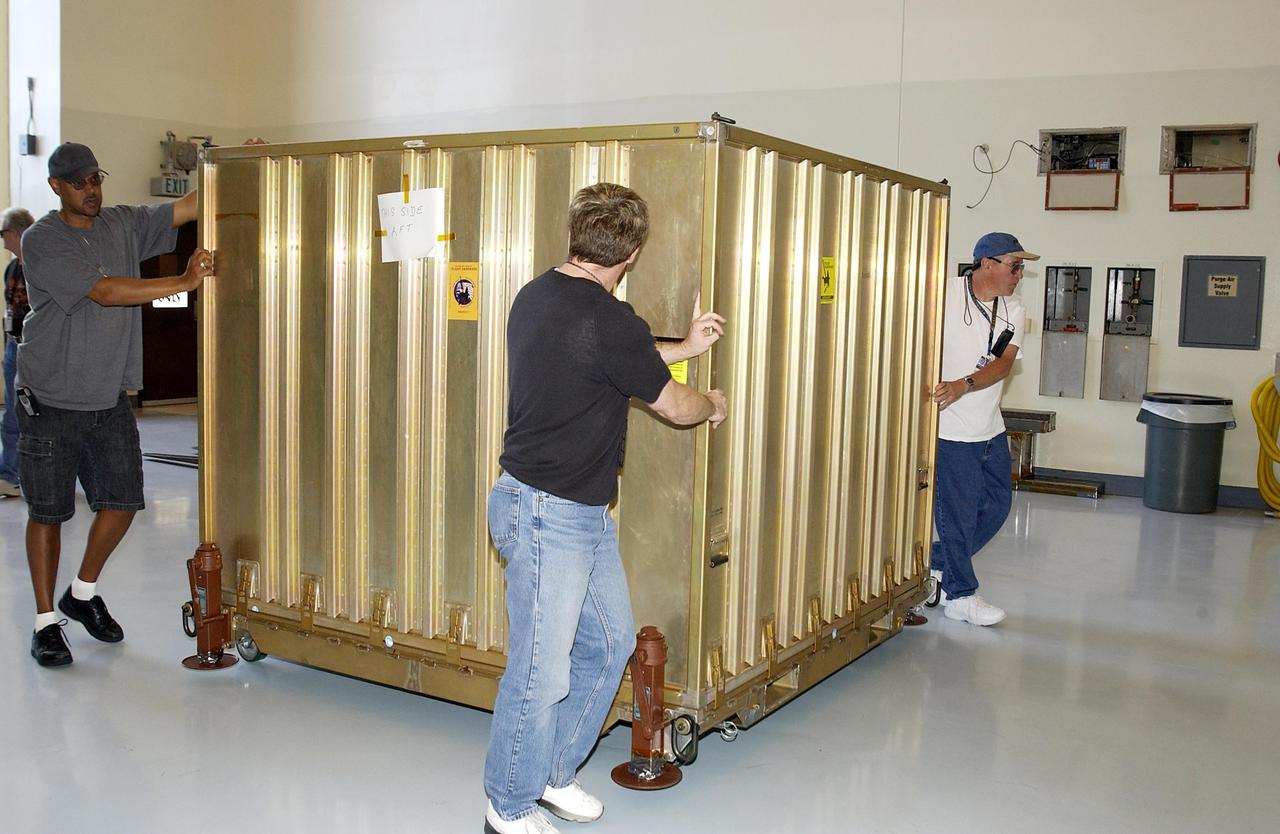
KENNEDY SPACE CENTER, FLA. -- The aeroshell for the Mars Exploration Rover-1 mission is moved into KSC's Multi-Payload Processing Facility. While at KSC, the rovers, aeroshells and landers will undergo a full mission simulation. All of these flight elements will then be integrated together. After spin balance testing, each spacecraft will be mated to a solid propellant upper stage booster that will propel the spacecraft out of Earth orbit. Approximately 10 days before launch they will be transported to the launch pad for mating with their respective Boeing Delta II rockets. The rovers will serve as robotic geologists to seek answers about the evolution of Mars, particularly for a history of water. The rovers will be identical to each other, but will land at different regions of Mars. Launch of the MER-1 is scheduled for May 30. MER-2 will follow June 25.
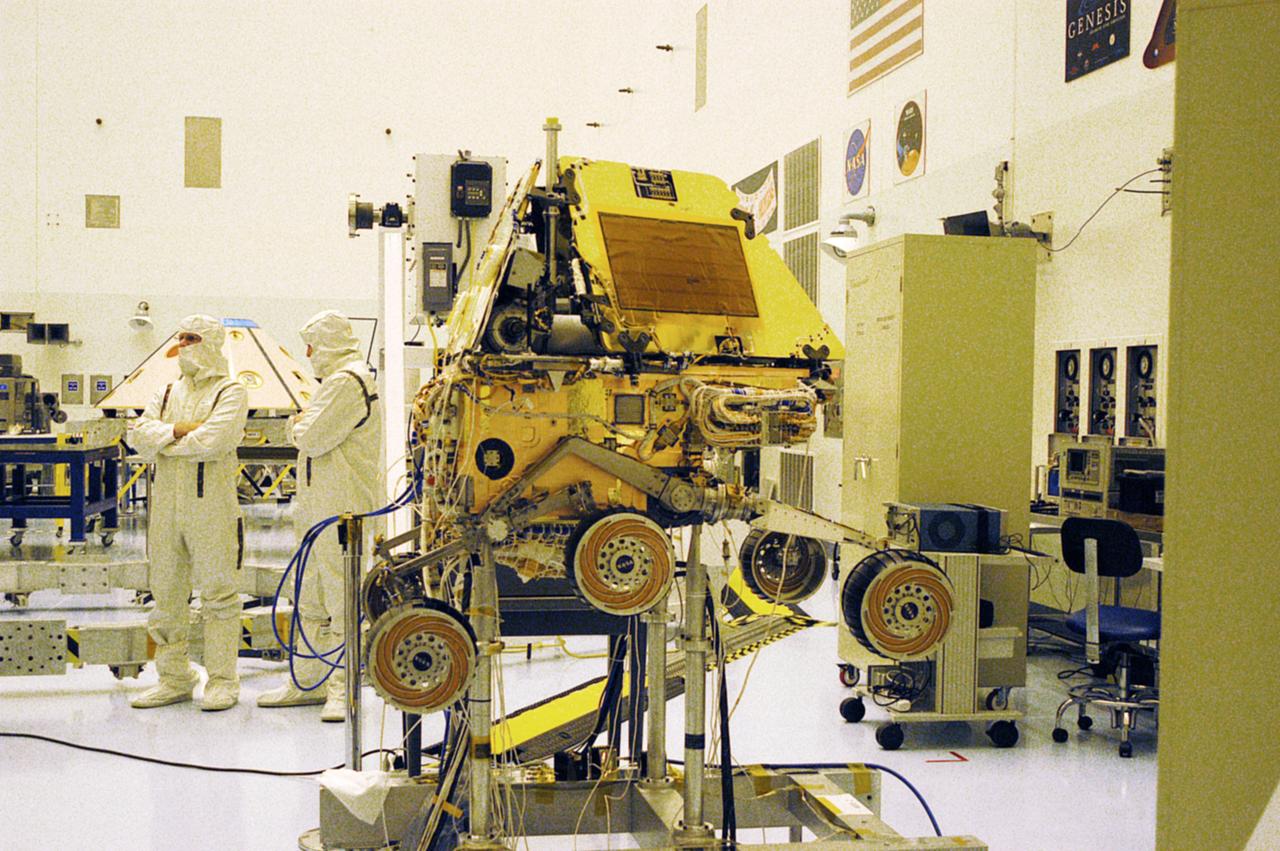
In the Payload Hazardous Servicing Facility resides one of the Mars Exploration Rovers, MER-2. MER-1 and MER-2, their aeroshells and landers will undergo a full mission simulation before being integrated. After spin balance testing, each spacecraft will be mated to a solid propellant upper stage booster that will propel the spacecraft out of Earth orbit. Approximately 10 days before launch they will be transported to the launch pad for mating with their respective Boeing Delta II rockets. The rovers will serve as robotic geologists to seek answers about the evolution of Mars, particularly for a history of water. The rovers are identical to each other, but will land at different regions of Mars. Launch of the first rover is scheduled for May 30 from Cape Canaveral Air Force Station. The second will follow June 25.
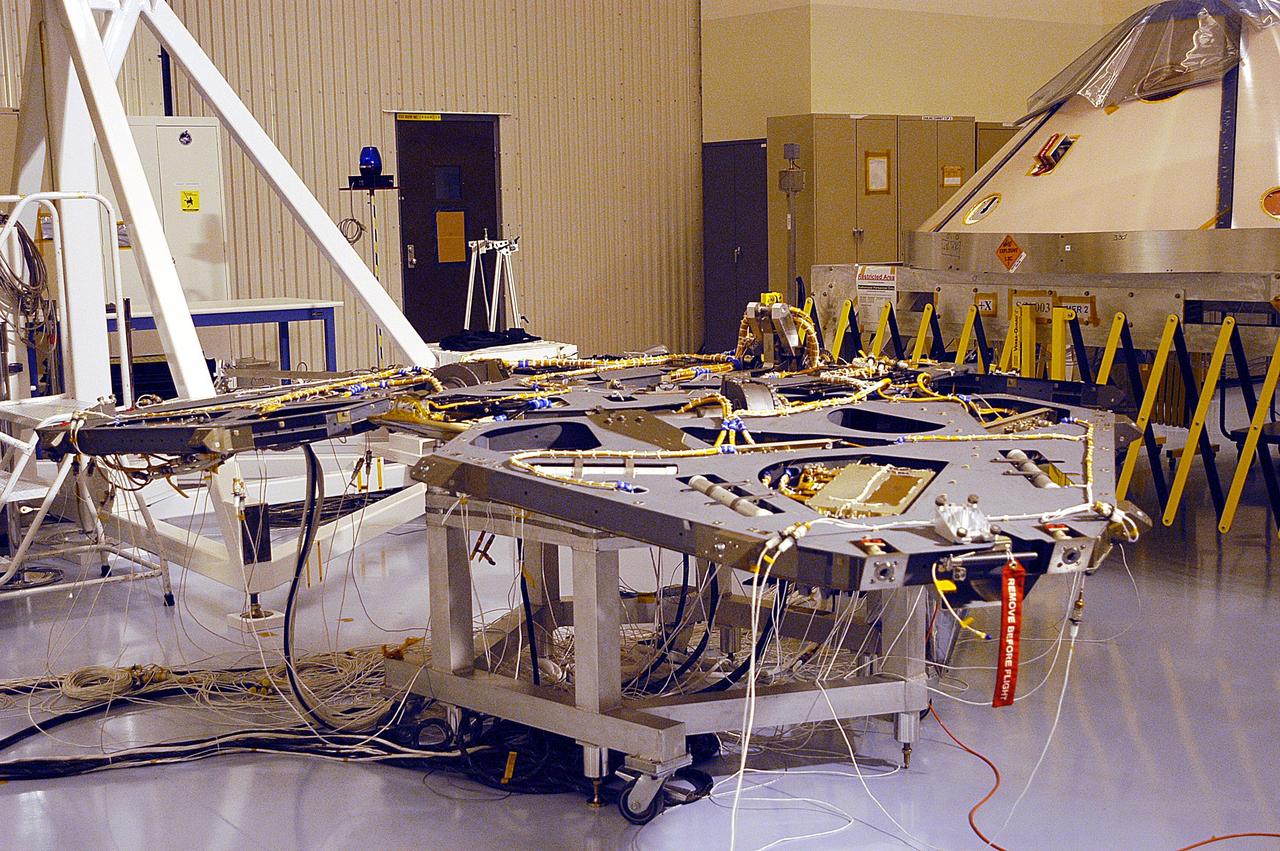
KENNEDY SPACE CENTER, Fla. - This view in the Payload Hazardous Servicing Facility shows one of the Mars Exploration Rover landers with its three side petals extended. The rover will sit inside of the enclosed petals for its voyage and landing on Mars. The two rovers, MER-1 and MER-2, their aeroshells and landers will undergo a full mission simulation before being integrated. After spin balance testing, each spacecraft will be mated to a solid propellant upper stage booster that will propel the spacecraft out of Earth orbit. Approximately 10 days before launch they will be transported to the launch pad for mating with their respective Boeing Delta II rockets. The rovers will serve as robotic geologists to seek answers about the evolution of Mars, particularly for a history of water. The rovers are identical to each other, but will land at different regions of Mars. Launch of the first rover is scheduled for May 30 from Cape Canaveral Air Force Station. The second will follow June 25.
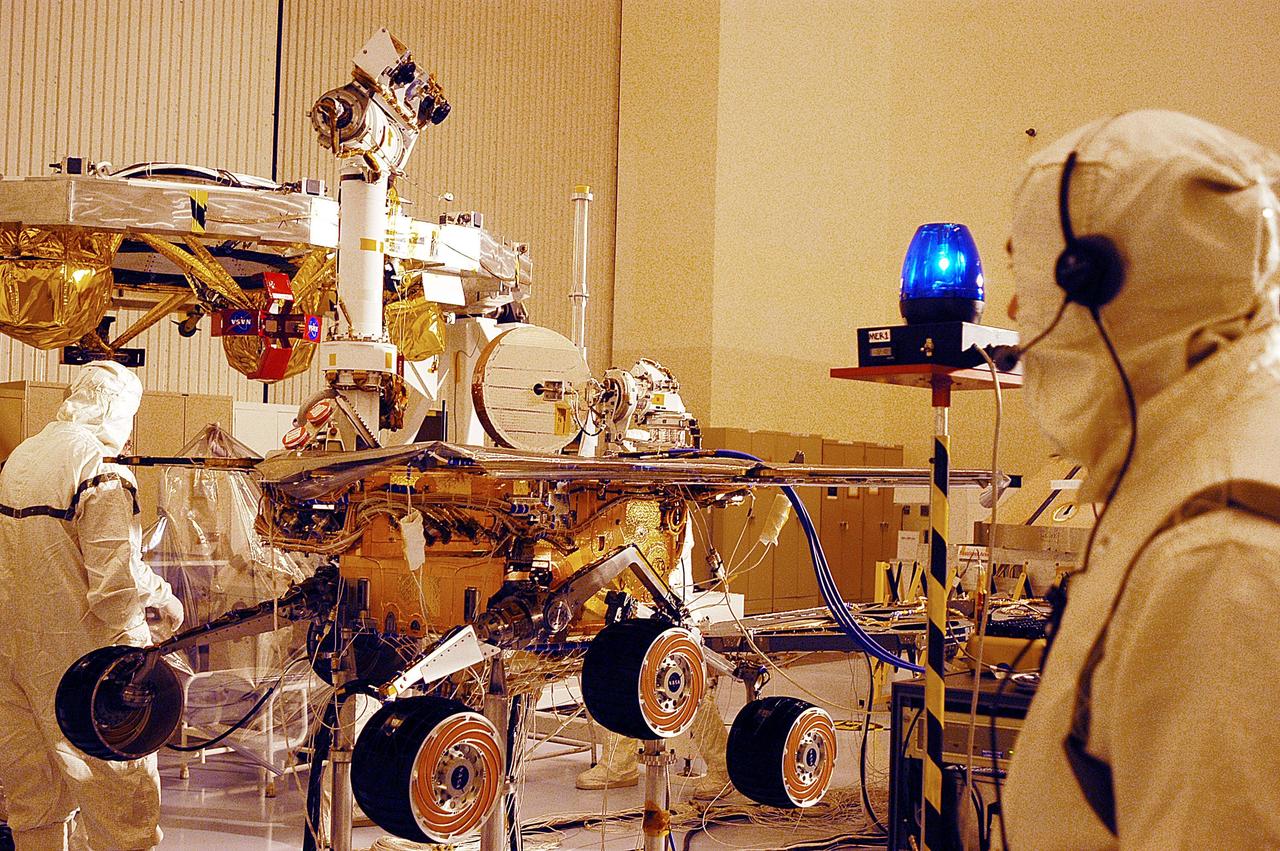
KENNEDY SPACE CENTER, Fla. - Workers in the Payload Hazardous Servicing Facility look over one of the two Mars Exploration Rovers, MER-2. MER-1 and MER-2, their aeroshells and landers will undergo a full mission simulation before being integrated. After spin balance testing, each spacecraft will be mated to a solid propellant upper stage booster that will propel the spacecraft out of Earth orbit. Approximately 10 days before launch they will be transported to the launch pad for mating with their respective Boeing Delta II rockets. The rovers will serve as robotic geologists to seek answers about the evolution of Mars, particularly for a history of water. The rovers are identical to each other, but will land at different regions of Mars. Launch of the first rover is scheduled for May 30 from Cape Canaveral Air Force Station. The second will follow June 25.
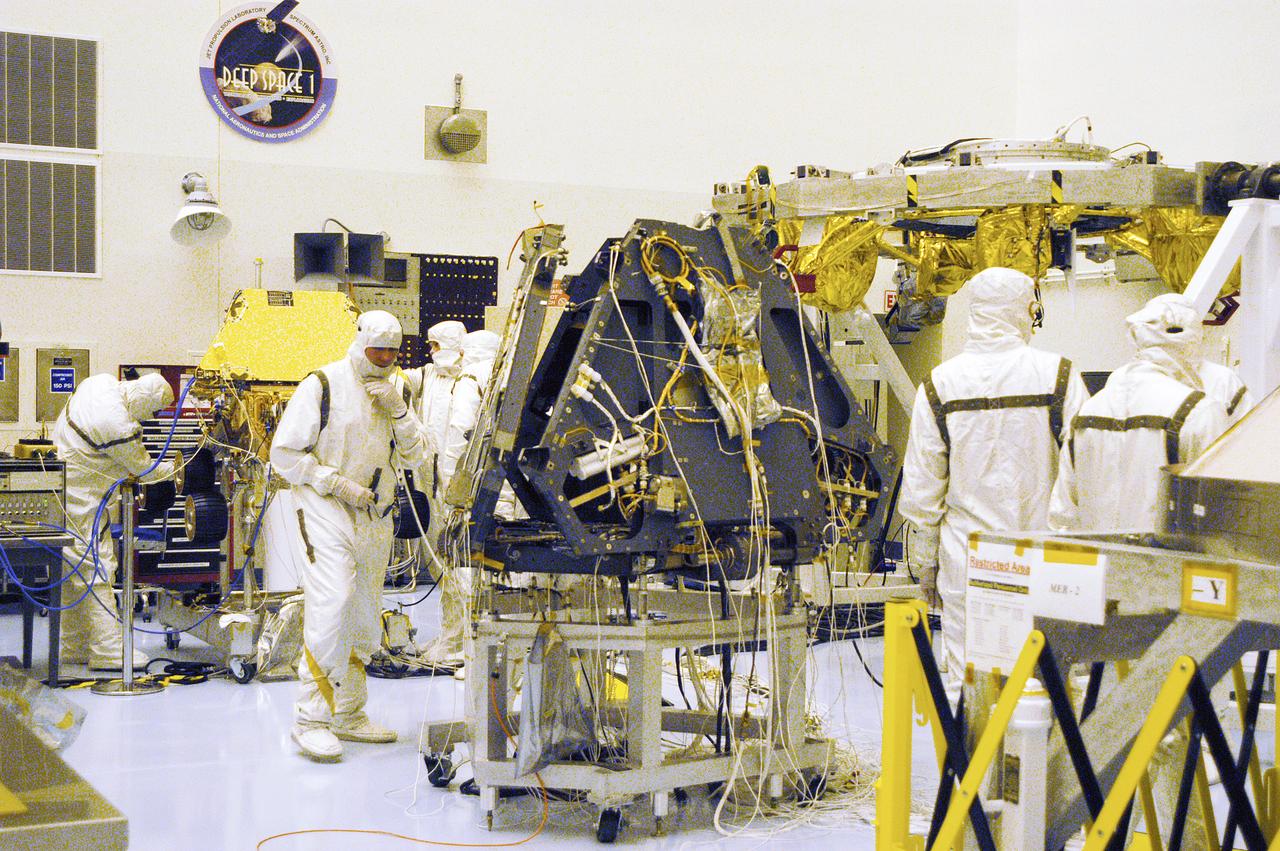
Technicians in the Payload Hazardous Servicing Facility work on components of the Mars Exploration Rovers. In the center is a lander. MER-1 and MER-2, their aeroshells and landers will undergo a full mission simulation before being integrated. After spin balance testing, each spacecraft will be mated to a solid propellant upper stage booster that will propel the spacecraft out of Earth orbit. Approximately 10 days before launch they will be transported to the launch pad for mating with their respective Boeing Delta II rockets. The rovers will serve as robotic geologists to seek answers about the evolution of Mars, particularly for a history of water. The rovers are identical to each other, but will land at different regions of Mars. Launch of the first rover is scheduled for May 30 from Cape Canaveral Air Force Station. The second will follow June 25.
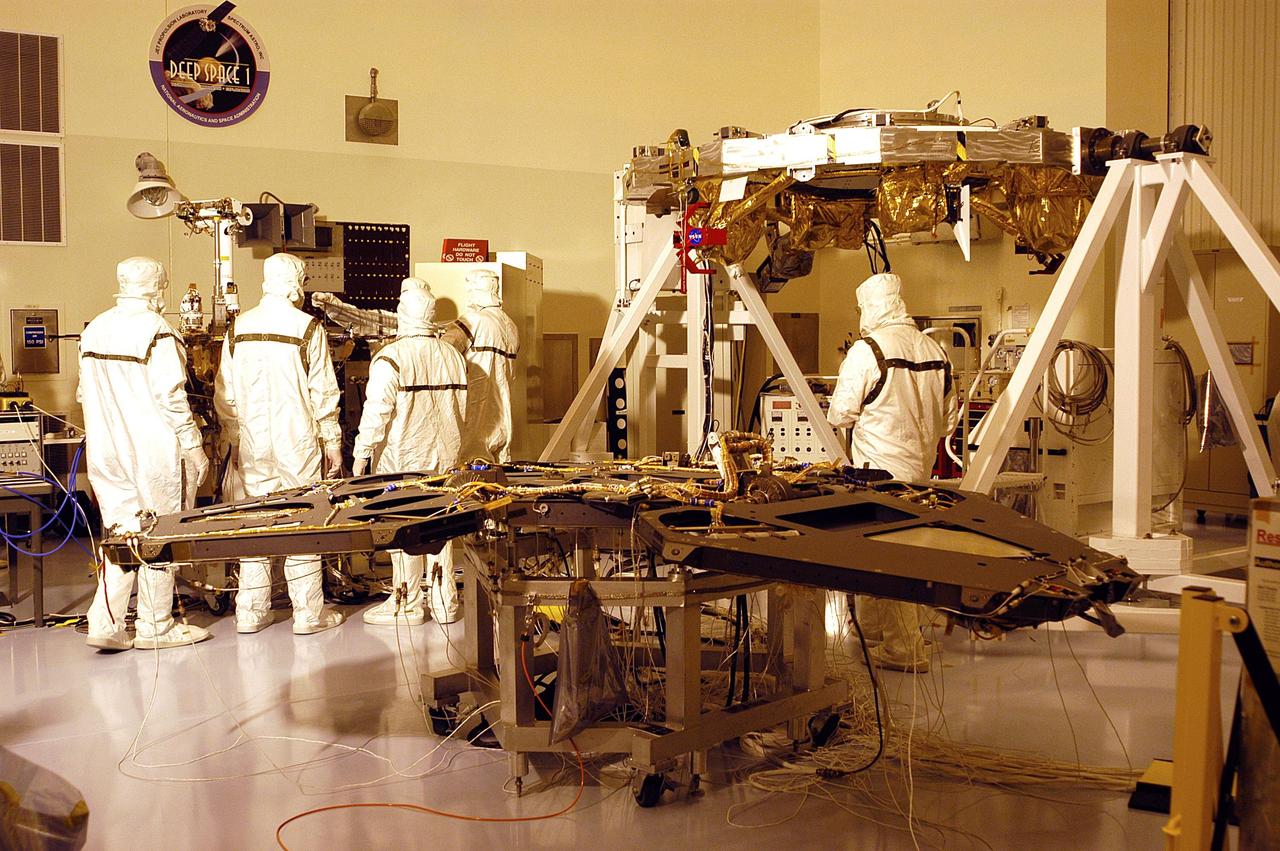
KENNEDY SPACE CENTER, Fla. - Components of the Mars Exploration Rovers are undergoing testing in the Payload Hazardous Servicing Facility. In the foreground is a lander with its three side petals extended. In the background is a cruise stage assembly. The two rovers, MER-1 and MER-2, their aeroshells and landers will undergo a full mission simulation before being integrated. After spin balance testing, each spacecraft will be mated to a solid propellant upper stage booster that will propel the spacecraft out of Earth orbit. Approximately 10 days before launch they will be transported to the launch pad for mating with their respective Boeing Delta II rockets. The rovers will serve as robotic geologists to seek answers about the evolution of Mars, particularly for a history of water. The rovers are identical to each other, but will land at different regions of Mars. Launch of the first rover is scheduled for May 30 from Cape Canaveral Air Force Station. The second will follow June 25.
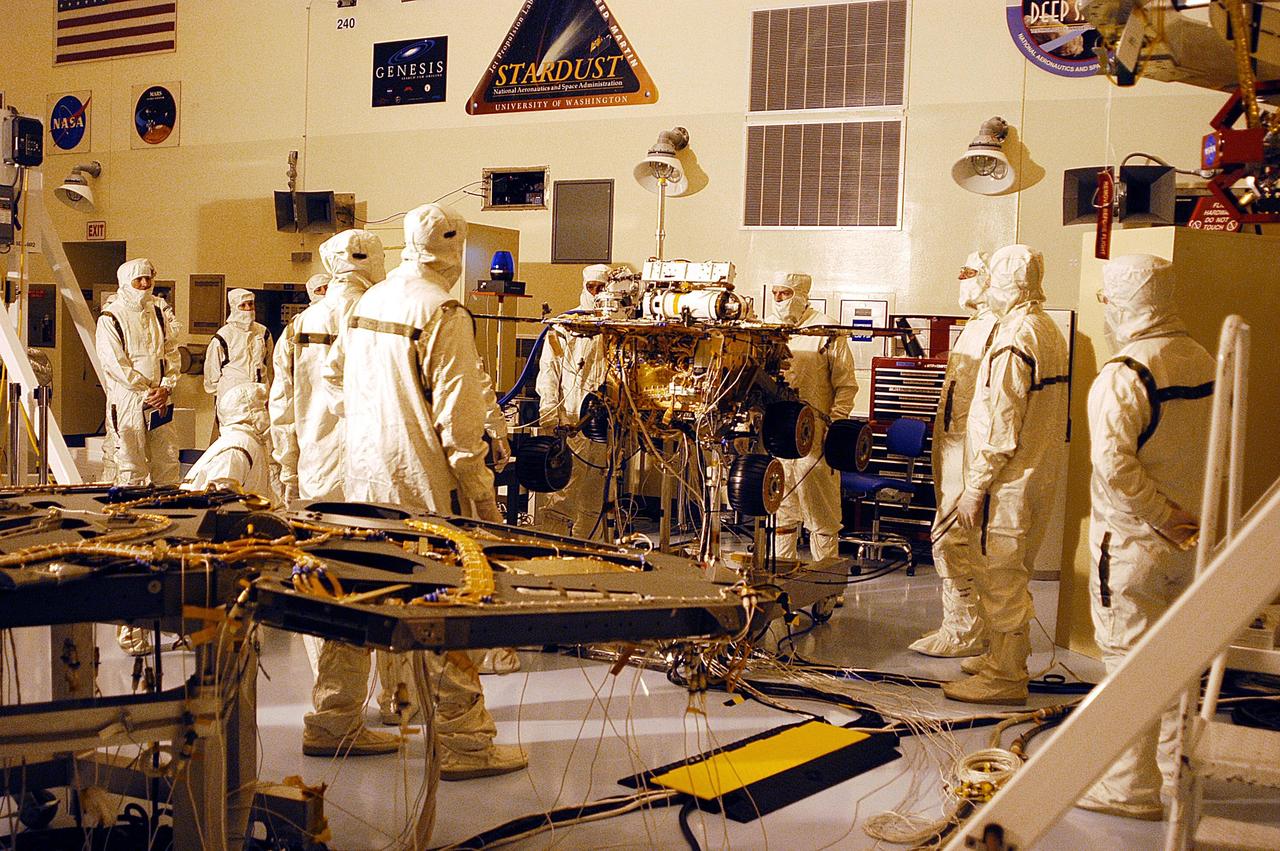
KENNEDY SPACE CENTER, Fla. - Workers in the Payload Hazardous Servicing Facility observe as one of the two Mars Exploration Rovers, MER-2, undergoes testing. MER-1 and MER-2, their aeroshells and landers will undergo a full mission simulation before being integrated. After spin balance testing, each spacecraft will be mated to a solid propellant upper stage booster that will propel the spacecraft out of Earth orbit. Approximately 10 days before launch they will be transported to the launch pad for mating with their respective Boeing Delta II rockets. The rovers will serve as robotic geologists to seek answers about the evolution of Mars, particularly for a history of water. The rovers are identical to each other, but will land at different regions of Mars. Launch of the first rover is scheduled for May 30 from Cape Canaveral Air Force Station. The second will follow June 25.
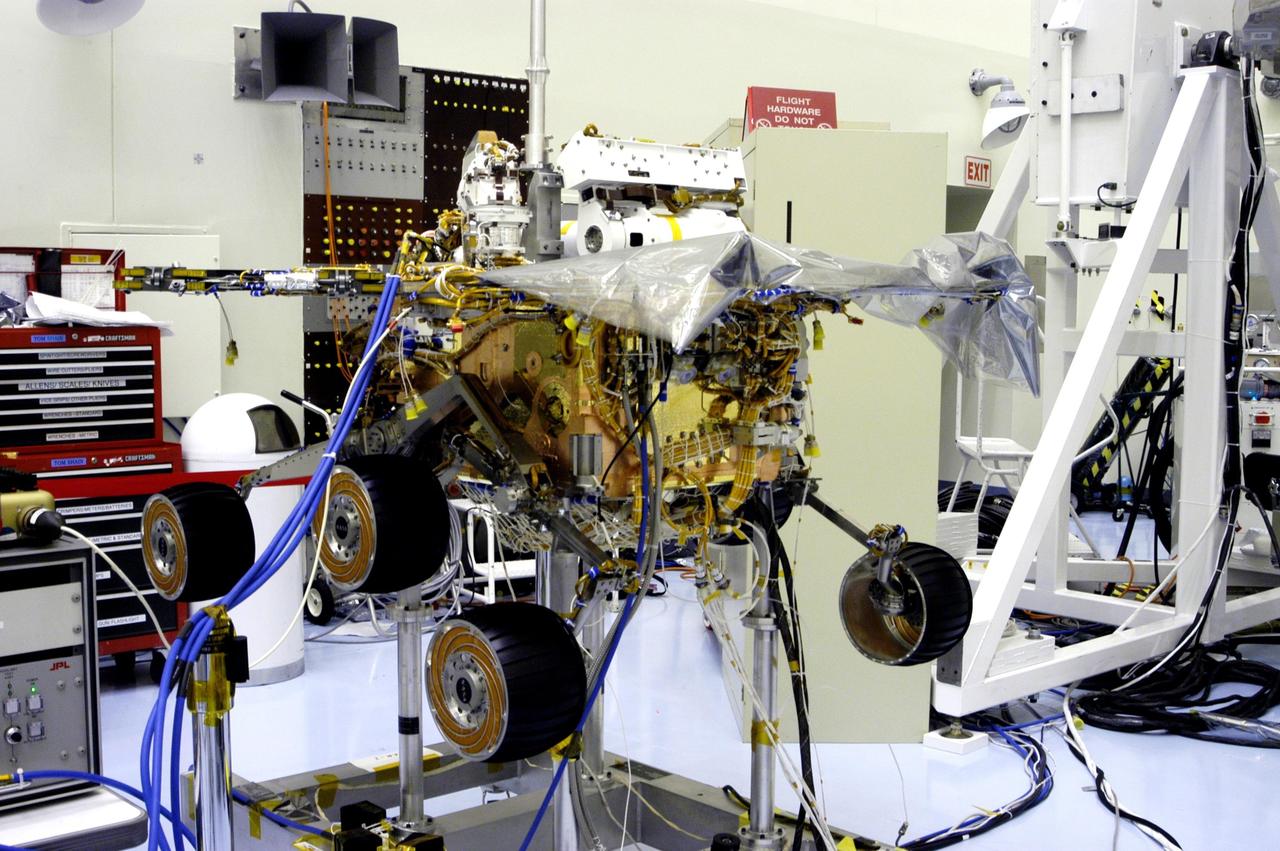
KENNEDY SPACE CENTER, Fla. - The Mars Exploration Rover 2 (MER-2) undergoes testing in the Payload Hazardous Servicing Facility. MER-1 and MER-2, their aeroshells and landers will undergo a full mission simulation before being integrated. After spin balance testing, each spacecraft will be mated to a solid propellant upper stage booster that will propel the spacecraft out of Earth orbit. Approximately 10 days before launch they will be transported to the launch pad for mating with their respective Boeing Delta II rockets. The rovers will serve as robotic geologists to seek answers about the evolution of Mars, particularly for a history of water. The rovers are identical to each other, but will land at different regions of Mars. Launch of the first rover is scheduled for May 30 from Cape Canaveral Air Force Station. The second will follow June 25.
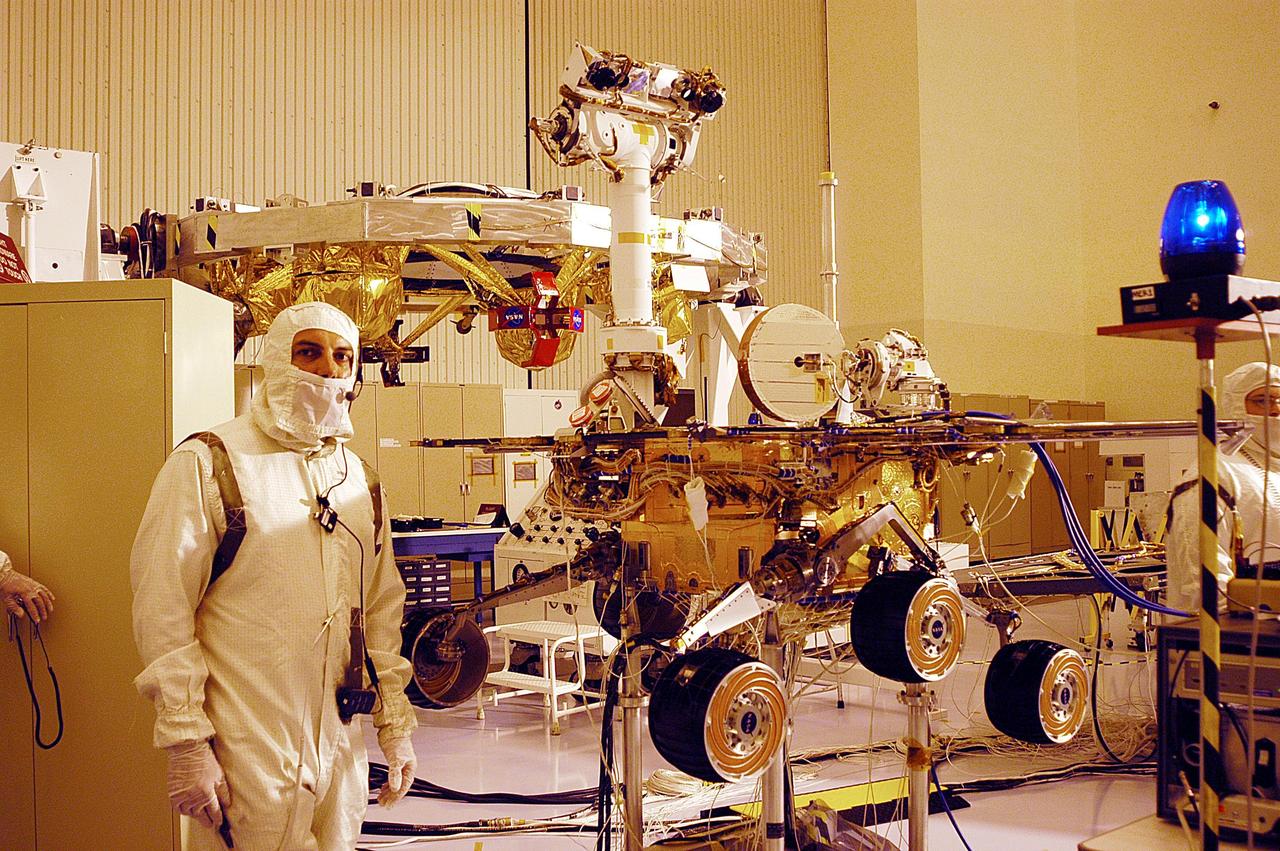
KENNEDY SPACE CENTER, Fla. -A worker in the Payload Hazardous Servicing Facility pauses during checkout of one of the two Mars Exploration Rovers, MER-2. MER-1 and MER-2, their aeroshells and landers will undergo a full mission simulation before being integrated. After spin balance testing, each spacecraft will be mated to a solid propellant upper stage booster that will propel the spacecraft out of Earth orbit. Approximately 10 days before launch they will be transported to the launch pad for mating with their respective Boeing Delta II rockets. The rovers will serve as robotic geologists to seek answers about the evolution of Mars, particularly for a history of water. The rovers are identical to each other, but will land at different regions of Mars. Launch of the first rover is scheduled for May 30 from Cape Canaveral Air Force Station. The second will follow June 25.
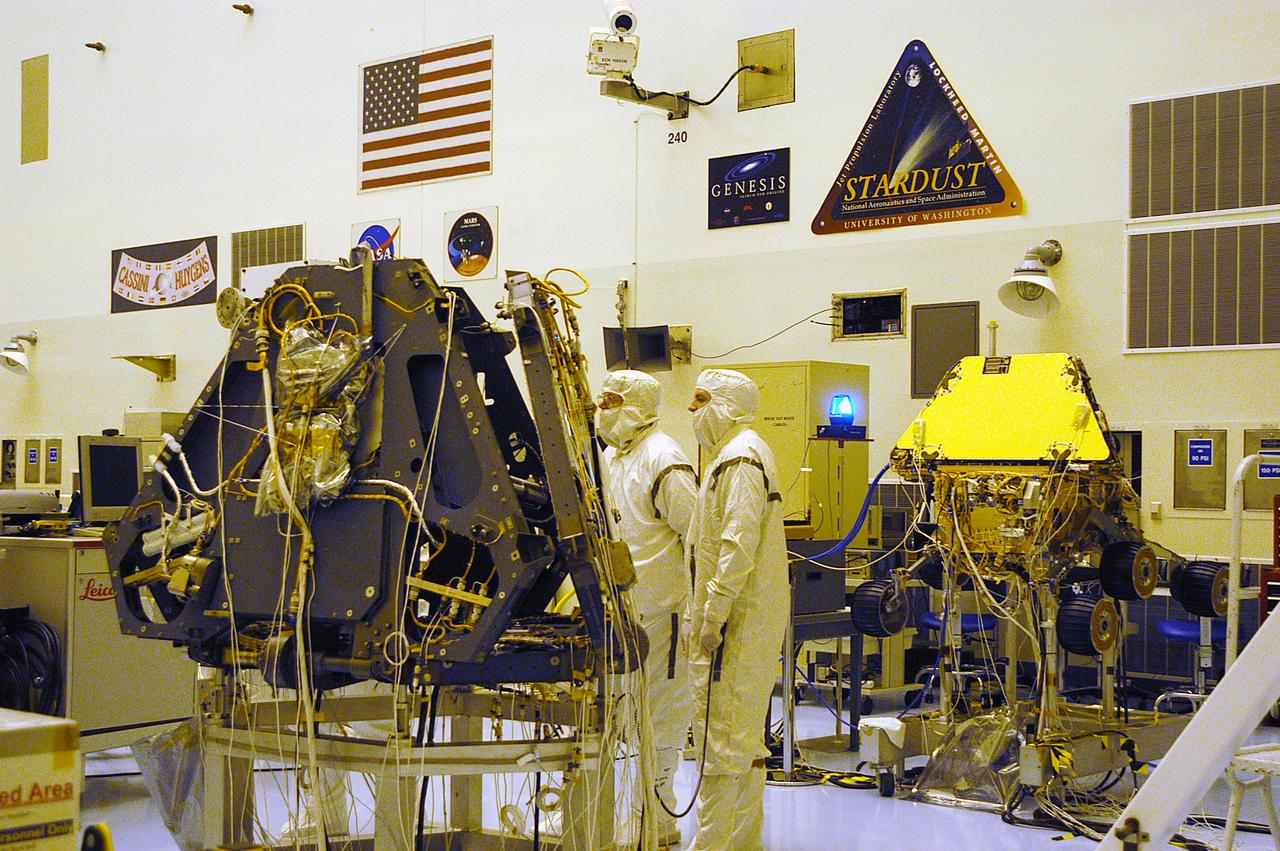
Technicians in the Payload Hazardous Servicing Facility look over the Mars Exploration Rover -2. MER-1 and MER-2, their aeroshells and landers will undergo a full mission simulation before being integrated. After spin balance testing, each spacecraft will be mated to a solid propellant upper stage booster that will propel the spacecraft out of Earth orbit. Approximately 10 days before launch they will be transported to the launch pad for mating with their respective Boeing Delta II rockets. The rovers will serve as robotic geologists to seek answers about the evolution of Mars, particularly for a history of water. The rovers are identical to each other, but will land at different regions of Mars. Launch of the first rover is scheduled for May 30 from Cape Canaveral Air Force Station. The second will follow June 25.
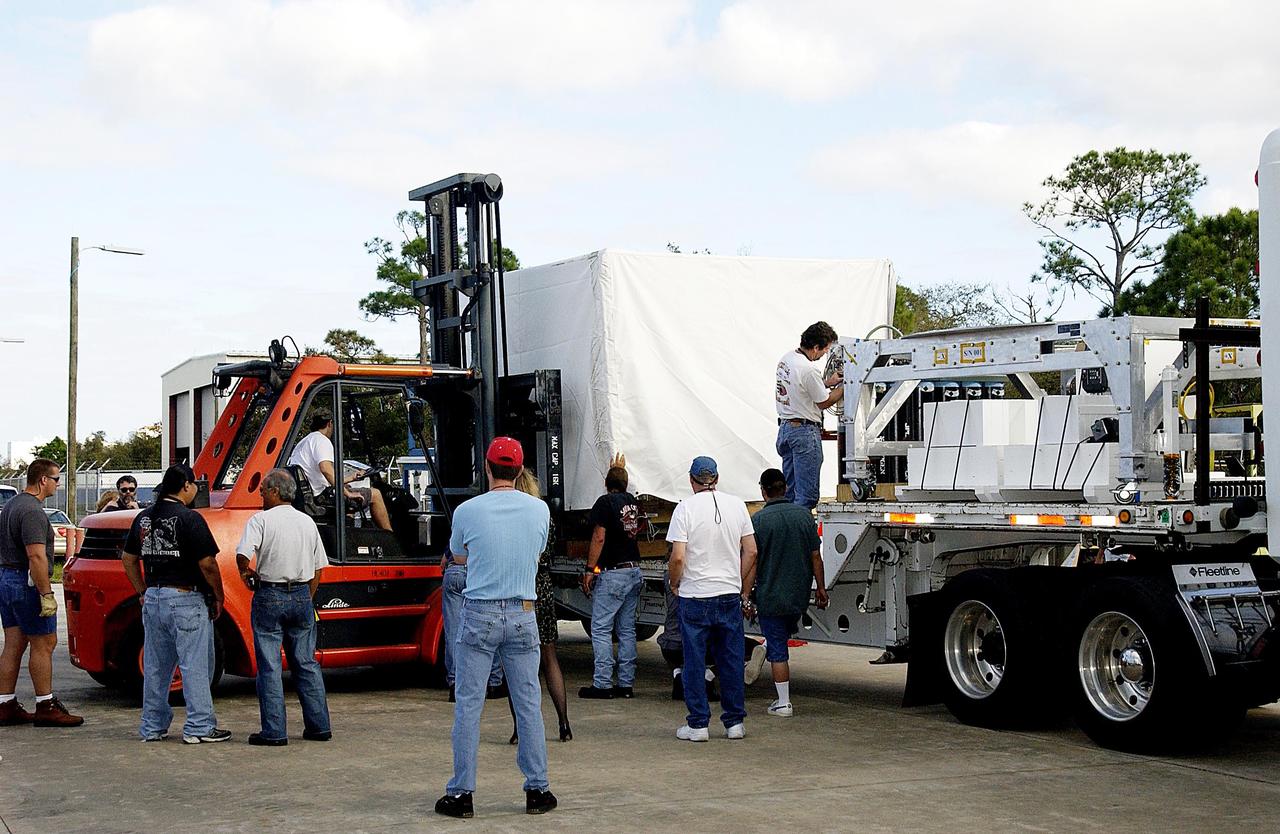
KENNEDY SPACE CENTER, FLA. -- Another component of the Mars Exploration Rover-1 mission is offloaded at KSC's Multi-Payload Processing Facility. While at KSC, the rovers, aeroshells and landers will undergo a full mission simulation. All of these flight elements will then be integrated together. After spin balance testing, each spacecraft will be mated to a solid propellant upper stage booster that will propel the spacecraft out of Earth orbit. Approximately 10 days before launch they will be transported to the launch pad for mating with their respective Boeing Delta II rockets. The rovers will serve as robotic geologists to seek answers about the evolution of Mars, particularly for a history of water. The rovers will be identical to each other, but will land at different regions of Mars. Launch of the MER-1 is scheduled for May 30. MER-2 will follow June 25.
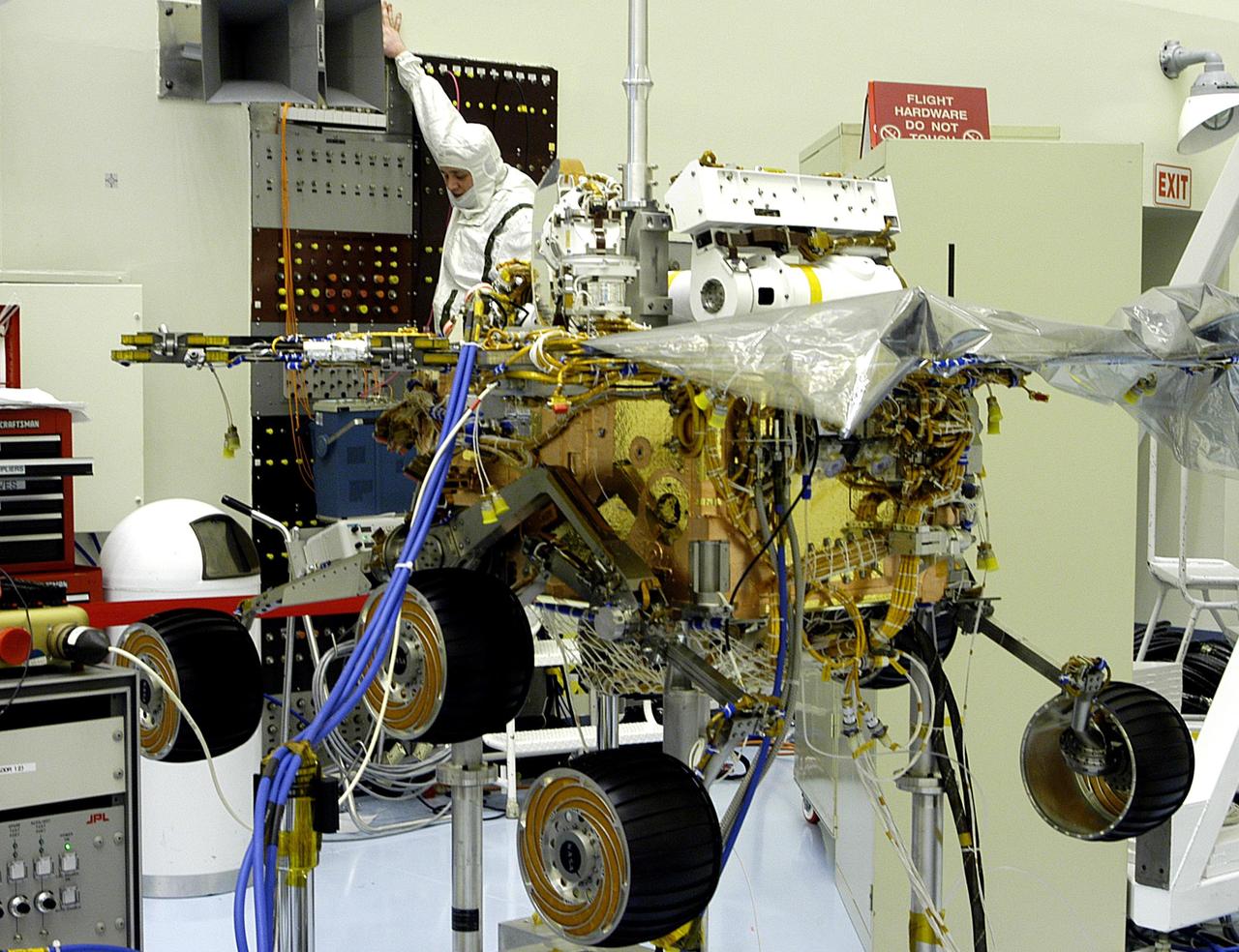
KENNEDY SPACE CENTER, Fla. - The Mars Exploration Rover 2 (MER-2) undergoes testing in the Payload Hazardous Servicing Facility. MER-1 and MER-2, their aeroshells and landers will undergo a full mission simulation before being integrated. After spin balance testing, each spacecraft will be mated to a solid propellant upper stage booster that will propel the spacecraft out of Earth orbit. Approximately 10 days before launch they will be transported to the launch pad for mating with their respective Boeing Delta II rockets. The rovers will serve as robotic geologists to seek answers about the evolution of Mars, particularly for a history of water. The rovers are identical to each other, but will land at different regions of Mars. Launch of the first rover is scheduled for May 30 from Cape Canaveral Air Force Station. The second will follow June 25.
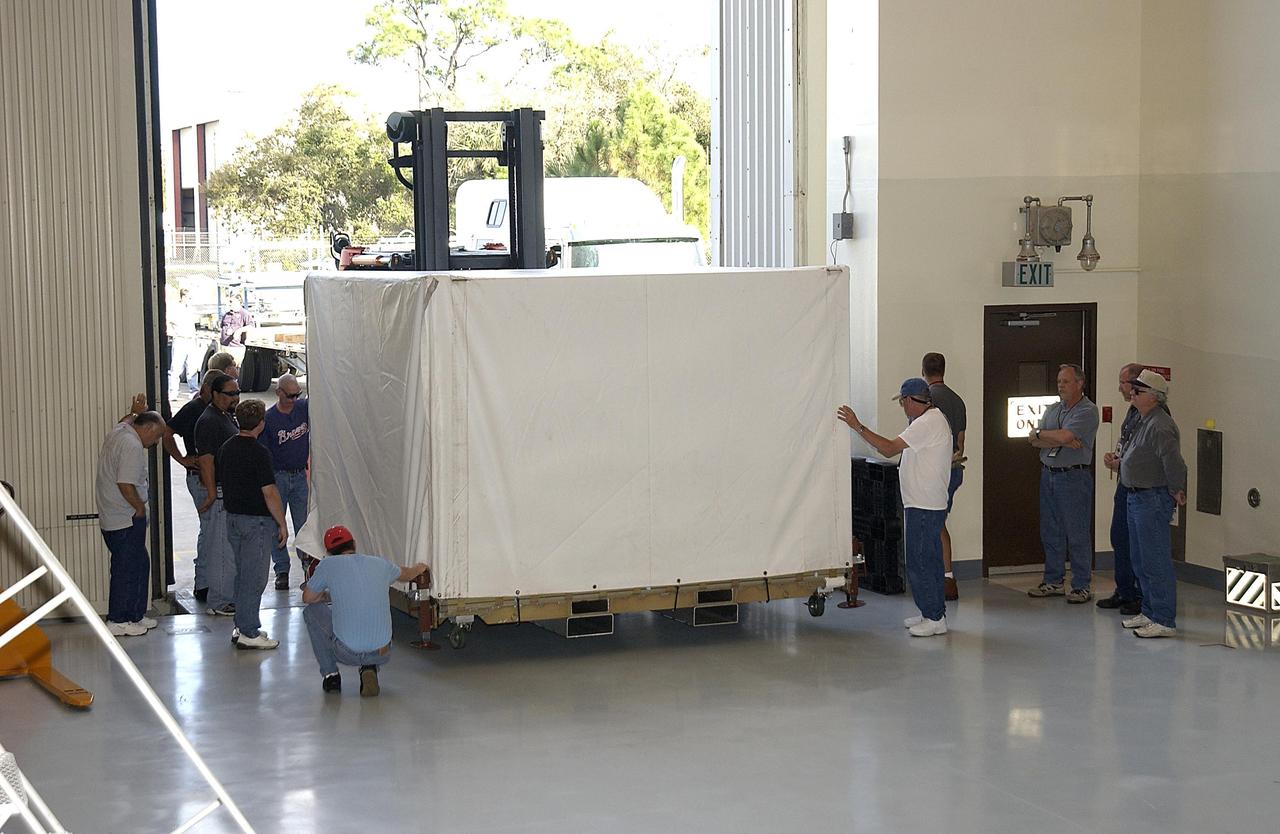
KENNEDY SPACE CENTER, FLA. -- Another component of the Mars Exploration Rover-1 mission is moved into KSC's Multi-Payload Processing Facility. While at KSC, the rovers, aeroshells and landers will undergo a full mission simulation. All of these flight elements will then be integrated together. After spin balance testing, each spacecraft will be mated to a solid propellant upper stage booster that will propel the spacecraft out of Earth orbit. Approximately 10 days before launch they will be transported to the launch pad for mating with their respective Boeing Delta II rockets. The rovers will serve as robotic geologists to seek answers about the evolution of Mars, particularly for a history of water. The rovers will be identical to each other, but will land at different regions of Mars. Launch of the MER-1 is scheduled for May 30. MER-2 will follow June 25.
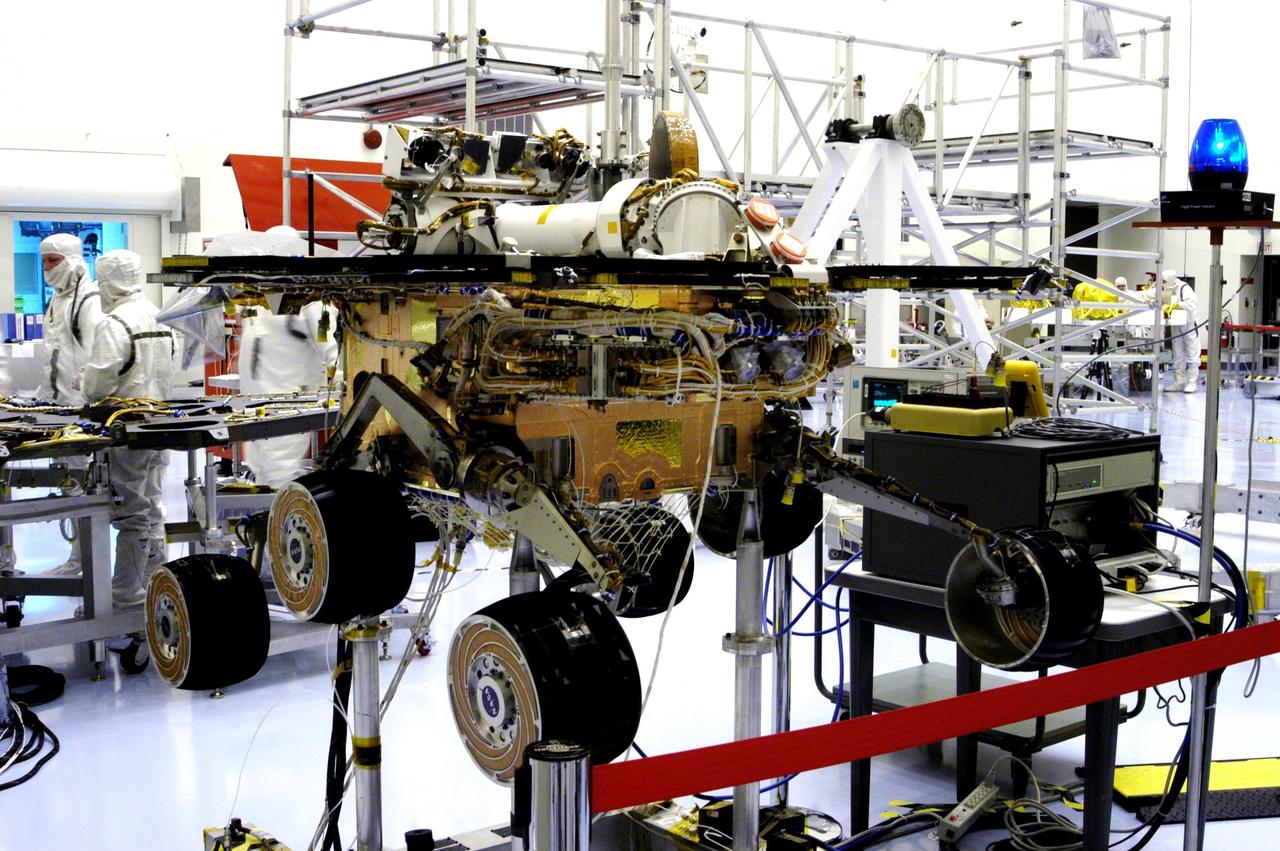
KENNEDY SPACE CENTER, FLA. - The Mars Exploration Rover 2 (MER-2) undergoes testing in the Payload Hazardous Servicing Facility. MER-1 and MER-2, their aeroshells and landers will undergo a full mission simulation before being integrated. After spin balance testing, each spacecraft will be mated to a solid propellant upper stage booster that will propel the spacecraft out of Earth orbit. Approximately 10 days before launch they will be transported to the launch pad for mating with their respective Boeing Delta II rockets. The rovers will serve as robotic geologists to seek answers about the evolution of Mars, particularly for a history of water. The rovers are identical to each other, but will land at different regions of Mars. Launch of the first rover is scheduled for May 30 from Cape Canaveral Air Force Station. The second will follow June 25.
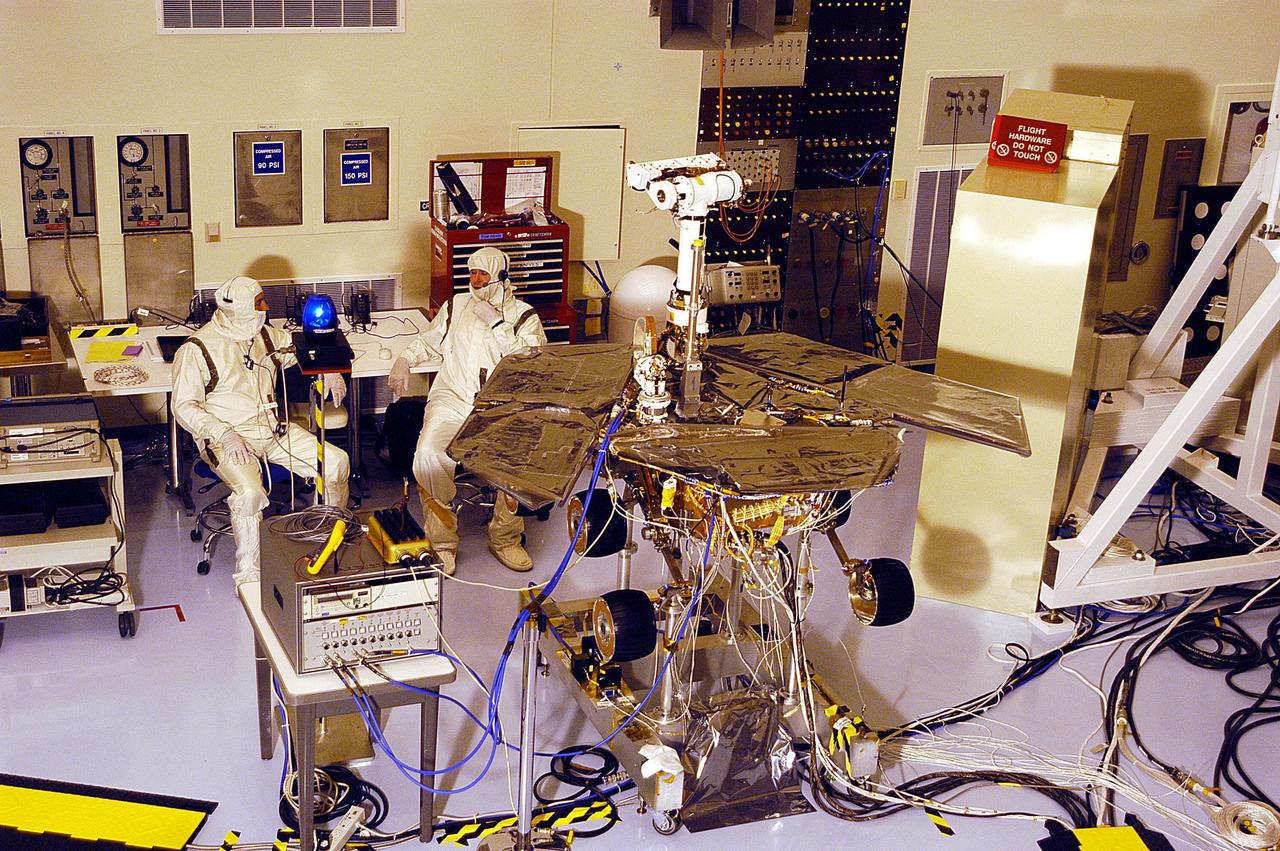
KENNEDY SPACE CENTER, Fla. - In the Payload Hazardous Servicing Facility, one of the two Mars Exploration Rovers, MER-2, undergoes testing. MER-1 and MER-2, their aeroshells and landers will undergo a full mission simulation before being integrated. After spin balance testing, each spacecraft will be mated to a solid propellant upper stage booster that will propel the spacecraft out of Earth orbit. Approximately 10 days before launch they will be transported to the launch pad for mating with their respective Boeing Delta II rockets. The rovers will serve as robotic geologists to seek answers about the evolution of Mars, particularly for a history of water. The rovers are identical to each other, but will land at different regions of Mars. Launch of the first rover is scheduled for May 30 from Cape Canaveral Air Force Station. The second will follow June 25.

Components of the two Mars Exploration Rovers (MER) reside in the Payload Hazardous Servicing Facility. At right MER-2. At left is a lander. In the background is one of the aeroshells. MER-1 and MER-2, their aeroshells and landers will undergo a full mission simulation before being integrated. After spin balance testing, each spacecraft will be mated to a solid propellant upper stage booster that will propel the spacecraft out of Earth orbit. Approximately 10 days before launch they will be transported to the launch pad for mating with their respective Boeing Delta II rockets. The rovers will serve as robotic geologists to seek answers about the evolution of Mars, particularly for a history of water. The rovers are identical to each other, but will land at different regions of Mars. Launch of the first rover is scheduled for May 30 from Cape Canaveral Air Force Station. The second will follow June 25.
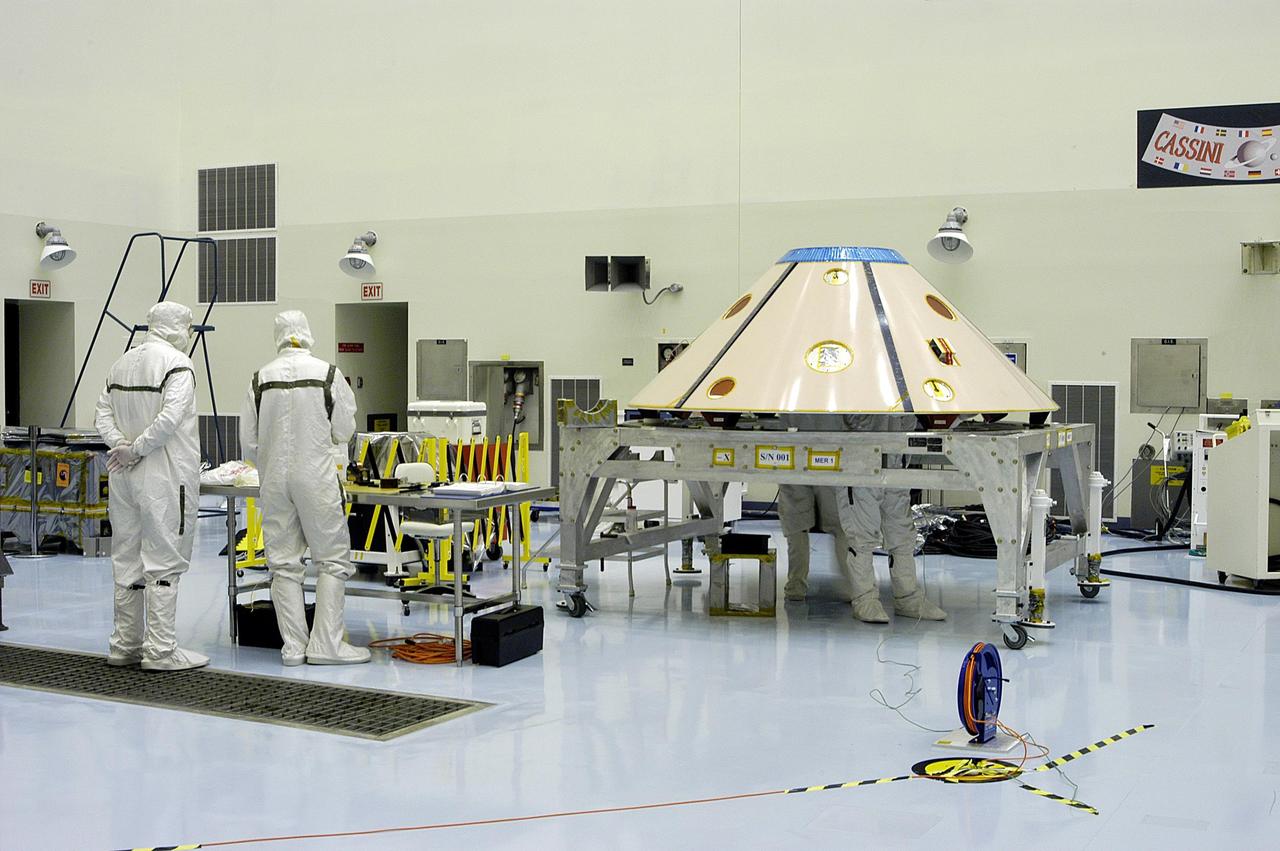
KENNEDY SPACE CENTER, Fla. - In the Payload Hazardous Servicing Facility technicians work on one of the aeroshell assemblies for the Mars Exploration Rovers (MER). MER-1 and MER-2, their aeroshells and landers will undergo a full mission simulation before being integrated. After spin balance testing, each spacecraft will be mated to a solid propellant upper stage booster that will propel the spacecraft out of Earth orbit. Approximately 10 days before launch they will be transported to the launch pad for mating with their respective Boeing Delta II rockets. The rovers will serve as robotic geologists to seek answers about the evolution of Mars, particularly for a history of water. The rovers are identical to each other, but will land at different regions of Mars. Launch of the first rover is scheduled for May 30 from Cape Canaveral Air Force Station. The second will follow June 25.
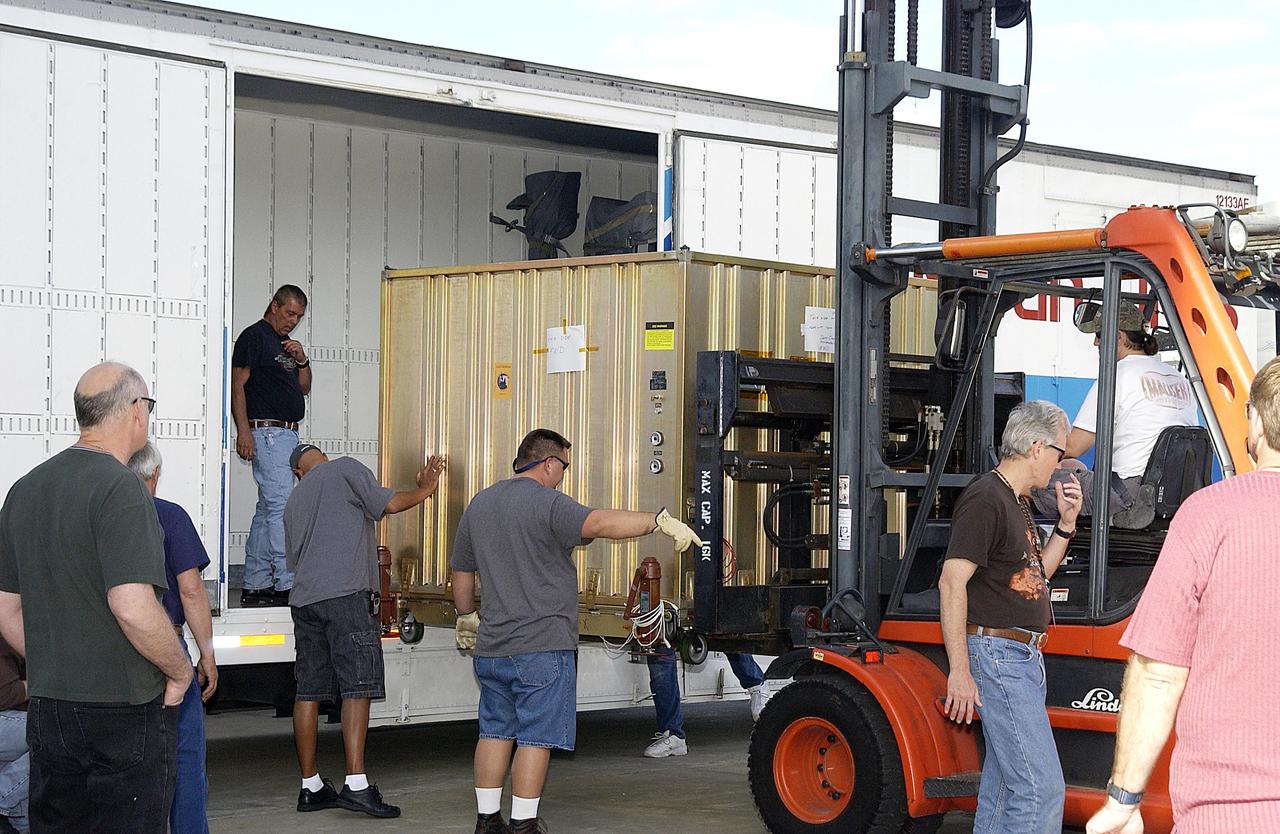
KENNEDY SPACE CENTER, FLA. - The aeroshell for the Mars Exploration Rover-1 mission is offloaded at KSC's Multi-Payload Processing Facility. While at KSC, the rovers, aeroshells and landers will undergo a full mission simulation. All of these flight elements will then be integrated together. After spin balance testing, each spacecraft will be mated to a solid propellant upper stage booster that will propel the spacecraft out of Earth orbit. Approximately 10 days before launch they will be transported to the launch pad for mating with their respective Boeing Delta II rockets. The rovers will serve as robotic geologists to seek answers about the evolution of Mars, particularly for a history of water. The rovers will be identical to each other, but will land at different regions of Mars. Launch of the MER-1 is scheduled for May 30. MER-2 will follow June 25.
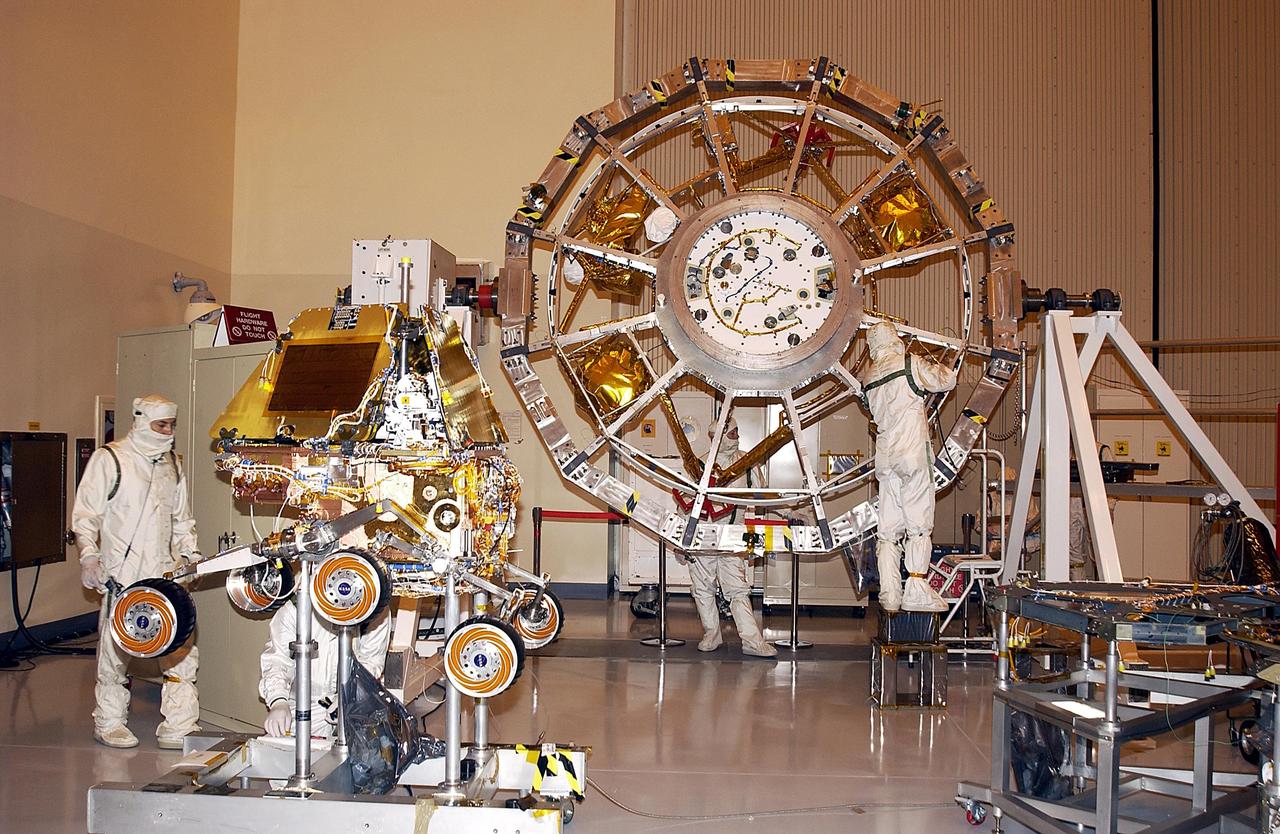
KENNEDY SPACE CENTER, FLA. -- Components of the flight hardware for Mars Exploration Rover-1 are in the Payload Hazardous Servicing Facility. At left is the rover. In the center is the cruise stage, which includes elements such as the thruster clusters, launch vehicle adapter and cruise electronics module. Each rover , aeroshell and lander will undergo a full mission simulation while at KSC. All flight elements will then be integrated. After spin balance testing, each spacecraft will be mated to a solid propellant upper stage booster that will propel it out of Earth orbit. The rovers will serve as robotic geologists to seek answers about the evolution of Mars, particularly for a history of water. The rovers will be identical to each other, but will land at different regions of Mars. Launch of the MER-1 is scheduled for May 30. MER-2 will follow June 25.
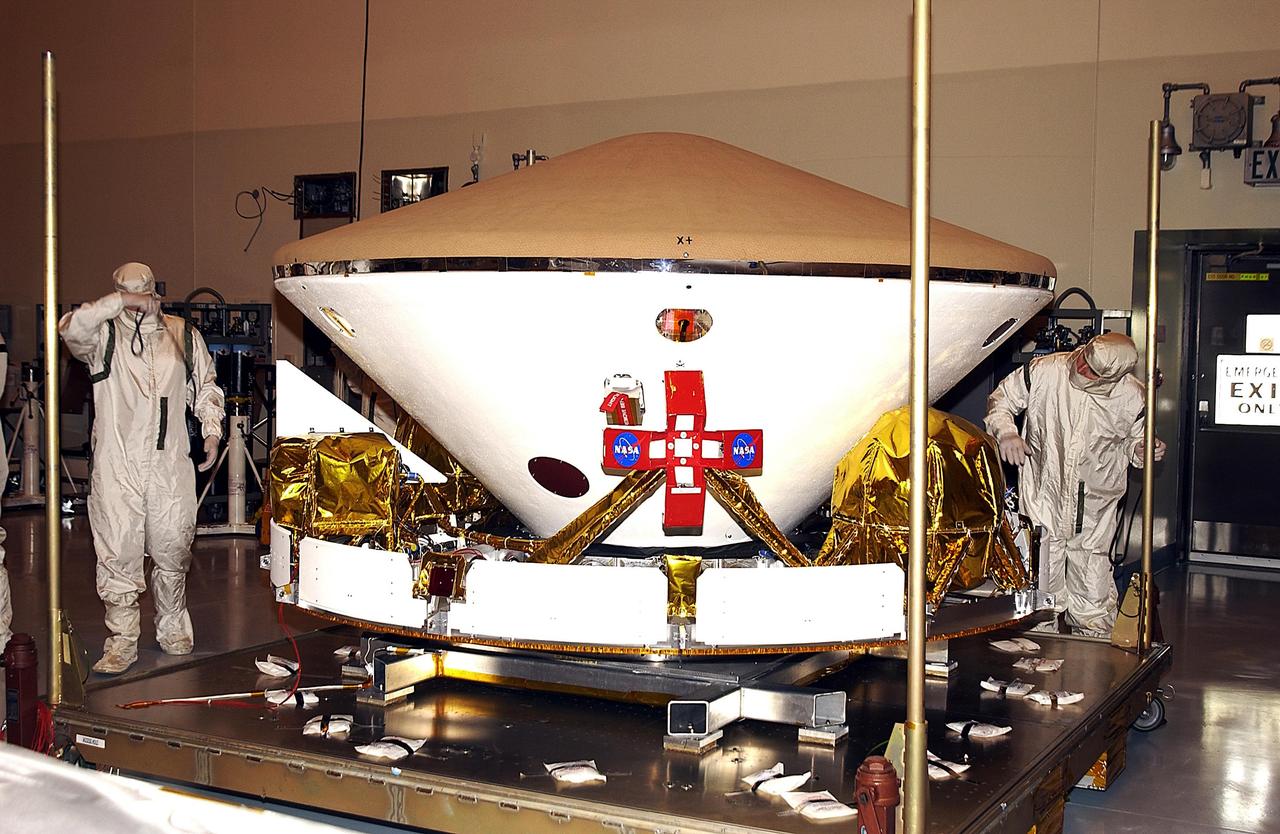
KENNEDY SPACE CENTER, FLA. - Workers in the Payload Hazardous Servicing Facility look over the aeroshell and cruise stage of Mars Exploration Rover-1. The upper portion is the heat shield on the aeroshell. Each rover , aeroshell and lander will undergo a full mission simulation while at KSC. All flight elements will then be integrated. After spin balance testing, each spacecraft will be mated to a solid propellant upper stage booster that will propel it out of Earth orbit. The rovers will serve as robotic geologists to seek answers about the evolution of Mars, particularly for a history of water. The rovers will be identical to each other, but will land at different regions of Mars. Launch of the MER-1 is scheduled for May 30. MER-2 will follow June 25.
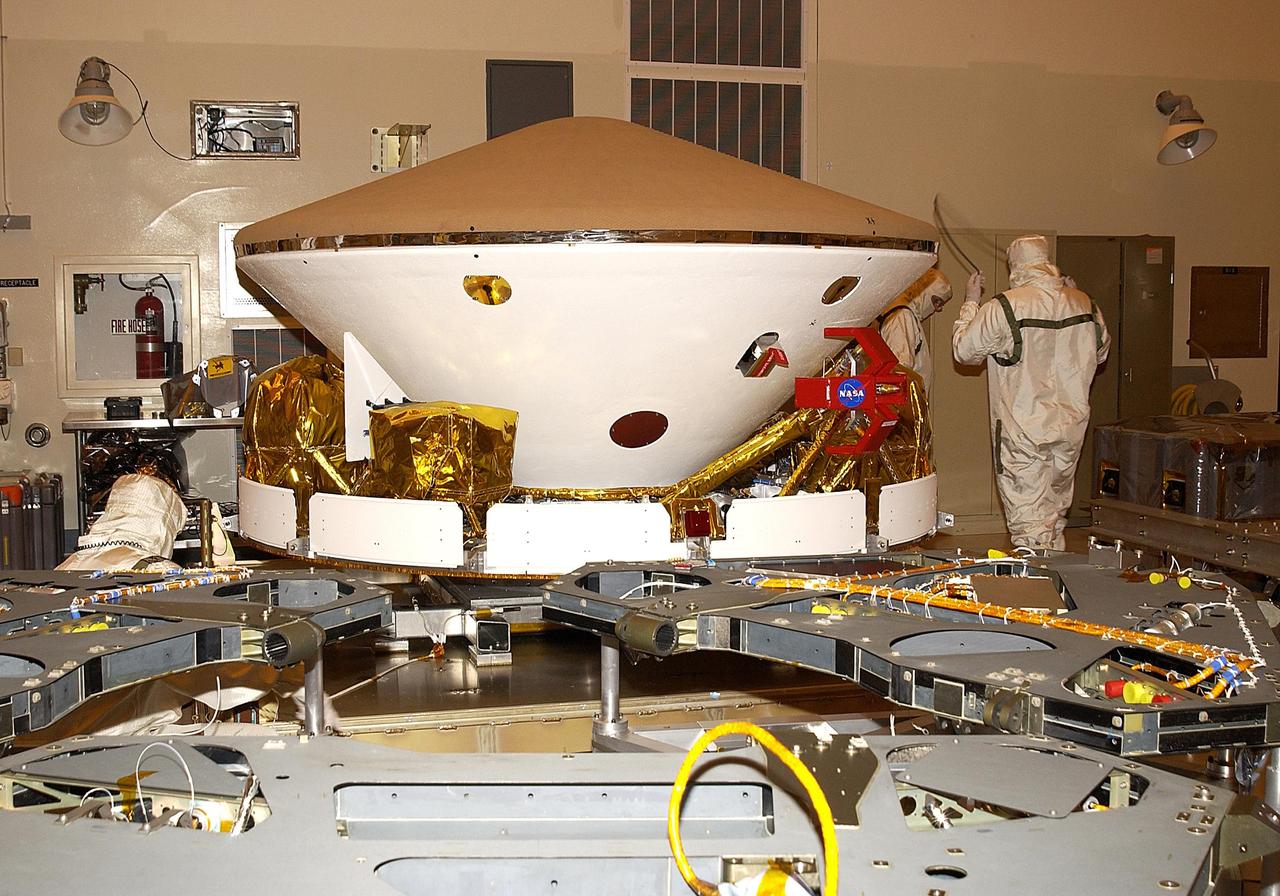
KENNEDY SPACE CENTER, FLA. - In the Payload Hazardous Servicing Facility, elements of one of the Mars Exploration Rovers (MER) come together. In the foreground is a lander. In the background are an aeroshell, with the heat shield on top, and cruise stage below. The two rovers, MER-1 and MER-2 , aeroshells and landers will undergo a full mission simulation while at KSC. All flight elements will then be integrated. After spin balance testing, each spacecraft will be mated to a solid propellant upper stage booster that will propel it out of Earth orbit. The rovers will serve as robotic geologists to seek answers about the evolution of Mars, particularly for a history of water. The rovers will be identical to each other, but will land at different regions of Mars. Launch of the MER-1 is scheduled for May 30. MER-2 will follow June 25.
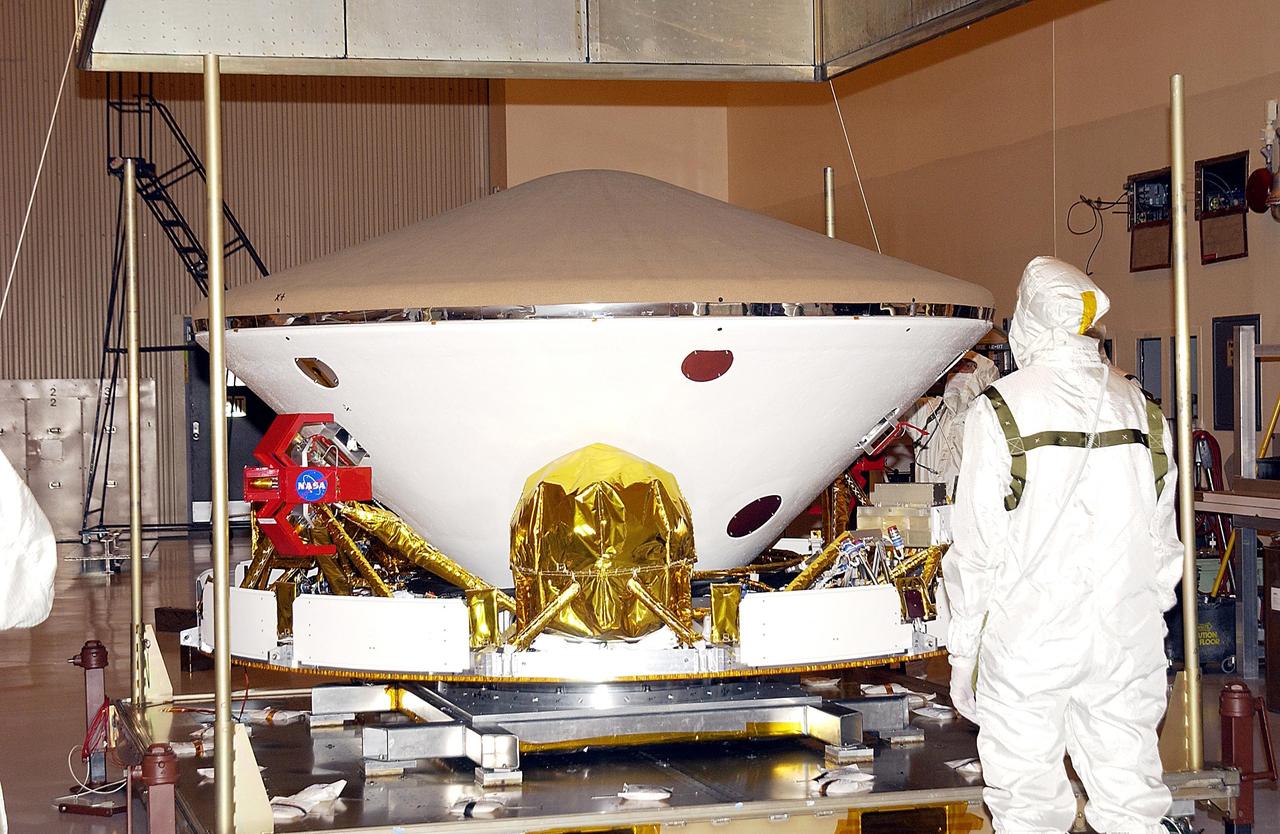
KENNEDY SPACE CENTER, FLA. -- With the shipping container lifted, the aeroshell and cruise stage of Mars Exploration Rover-1 are revealed in the Payload Hazardous Servicing Facility. The upper portion is the heat shield on the aeroshell. Each rover , aeroshell and lander will undergo a full mission simulation while at KSC. All flight elements will then be integrated. After spin balance testing, each spacecraft will be mated to a solid propellant upper stage booster that will propel it out of Earth orbit. The rovers will serve as robotic geologists to seek answers about the evolution of Mars, particularly for a history of water. The rovers will be identical to each other, but will land at different regions of Mars. Launch of the MER-1 is scheduled for May 30. MER-2 will follow June 25.
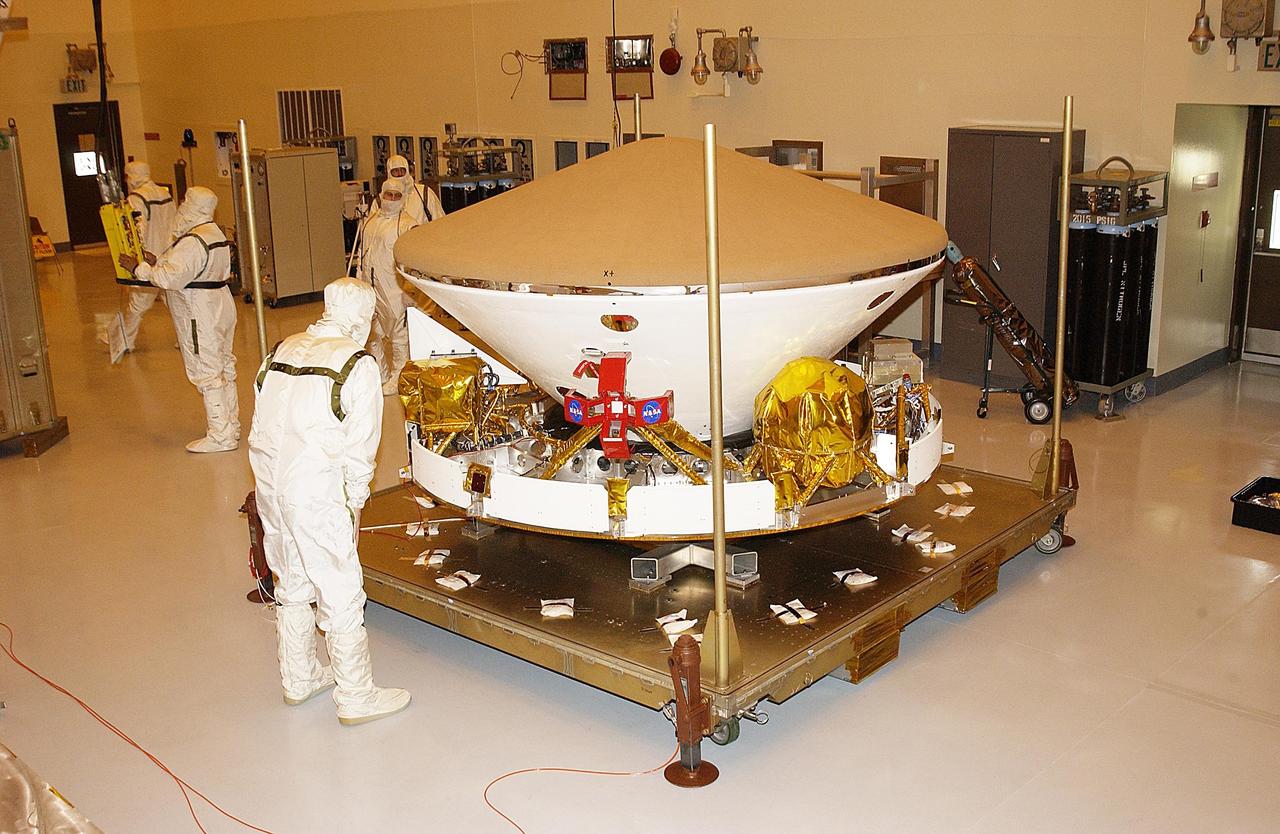
KENNEDY SPACE CENTER, FLA. -- Workers in the Payload Hazardous Servicing Facility take a close look at the aeroshell and cruise stage of one of the Mars Exploration Rovers (MER). The upper portion is the heat shield on the aeroshell. The two rovers , aeroshell and lander will undergo a full mission simulation while at KSC. All flight elements will then be integrated. After spin balance testing, each spacecraft will be mated to a solid propellant upper stage booster that will propel it out of Earth orbit. The rovers will serve as robotic geologists to seek answers about the evolution of Mars, particularly for a history of water. The rovers will be identical to each other, but will land at different regions of Mars. Launch of the MER-1 is scheduled for May 30. MER-2 will follow June 25.
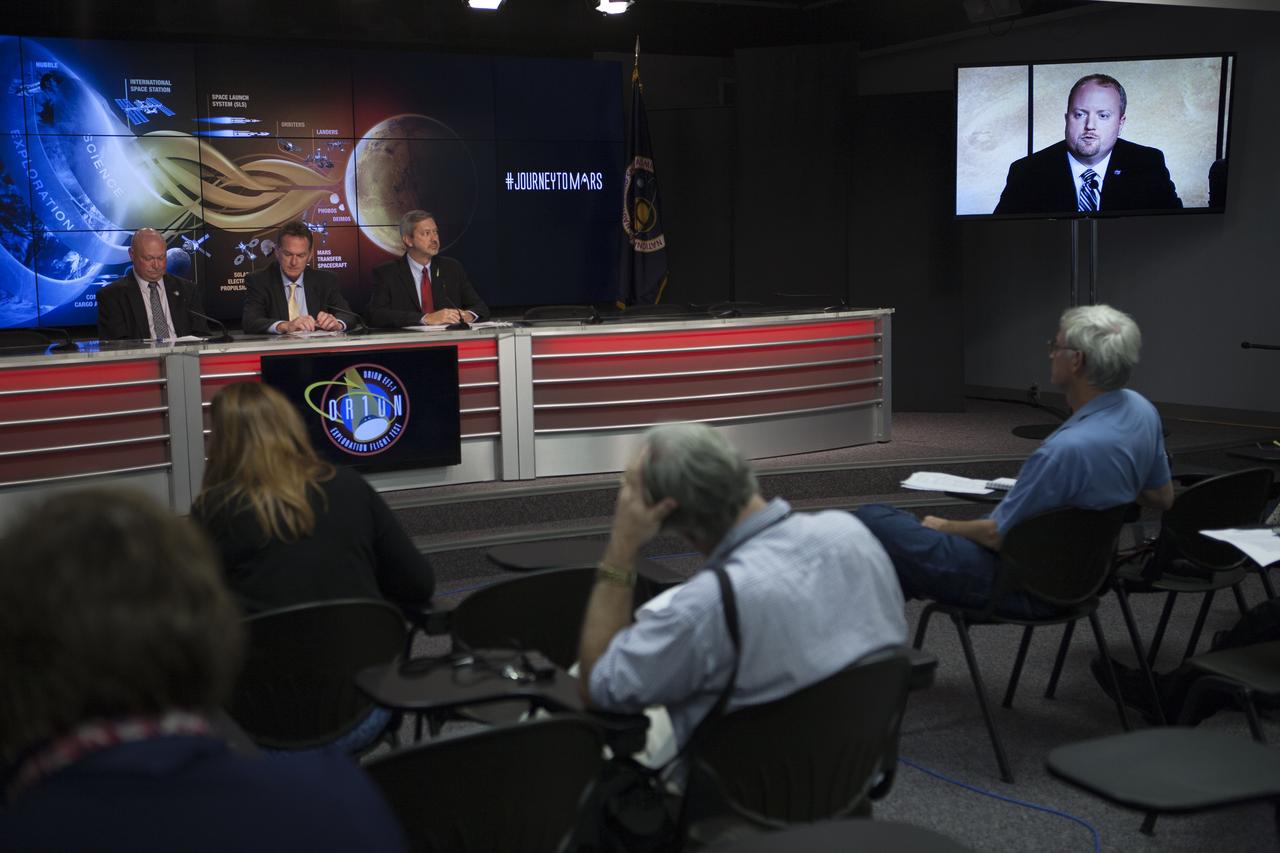
At NASA's Kennedy Space Center in Florida, NASA leaders spoke to members of the news media about how the first flight of the new Orion spacecraft is a first step in the agency's plans to send humans to Mars. At Kennedy's News Center auditorium from the left are: Mike Curie of NASA Public Affairs, Mike Bolger, program manager of Ground Systems Development and Operations Program, and Chris Crumbly, manager of Space Launch System Spacecraft/Payload Integration and Evolution. Participating via video from the agency's headquarters in Washington included Jason Crusan, director of Advanced Exploration Systems Division of Human Exploration and Operations Mission Directorate, seen on the monitor on the right. Orion is the exploration spacecraft designed to carry astronauts to destinations not yet explored by humans, including an asteroid and Mars. It will have emergency abort capability, sustain the crew during space travel and provide safe re-entry from deep space return velocities. The first unpiloted flight test of Orion is scheduled to launch Dec. 4, 2014 atop a United Launch Alliance Delta IV Heavy rocket, and in 2018 on NASA’s Space Launch System rocket.
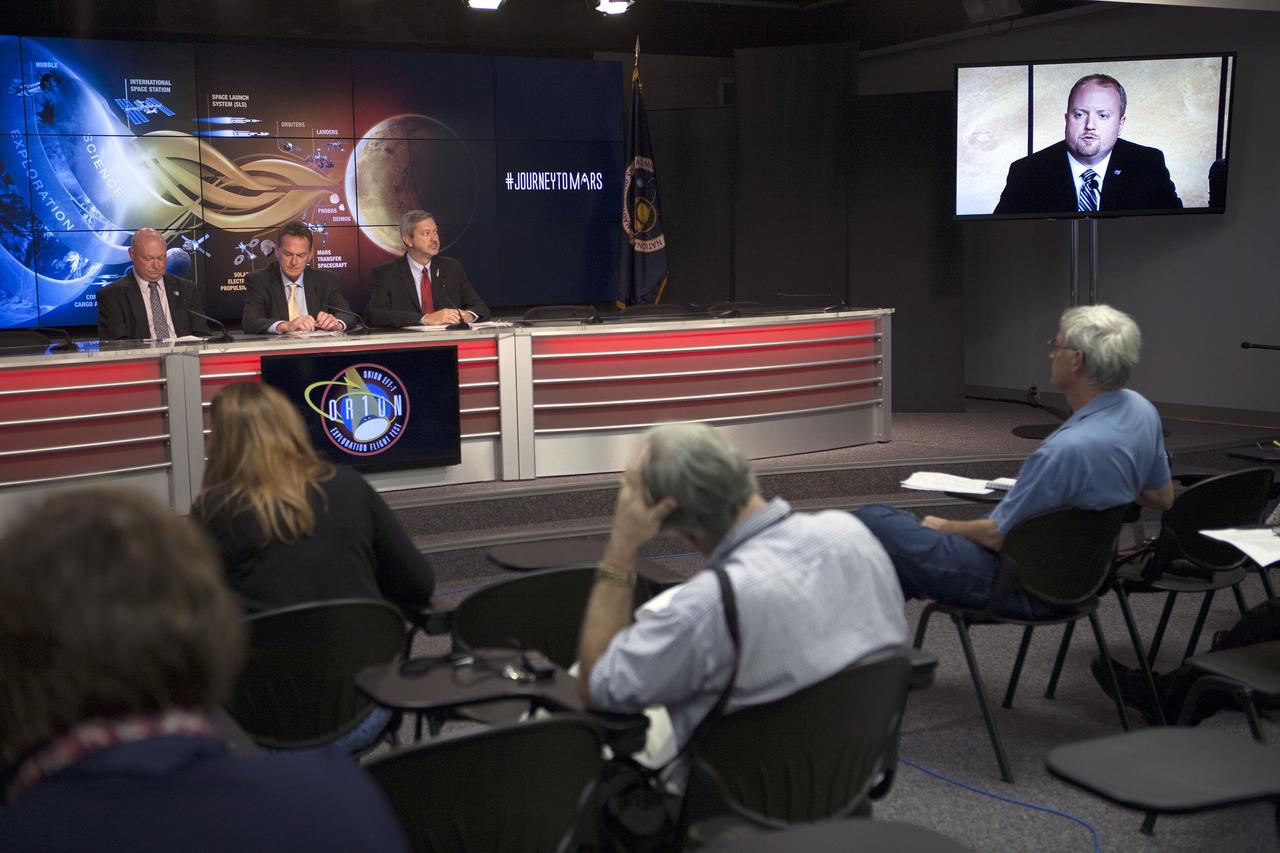
CAPE CANAVERAL, Fla. – At NASA's Kennedy Space Center in Florida, NASA leaders spoke to members of the news media about how the first flight of the new Orion spacecraft is a first step in the agency's plans to send humans to Mars. At Kennedy's News Center auditorium from the left are: Mike Curie of NASA Public Affairs, Mike Bolger, program manager of Ground Systems Development and Operations Program, and Chris Crumbly, manager of Space Launch System Spacecraft/Payload Integration and Evolution. Participating via video from the agency's headquarters in Washington included Jason Crusan, director of Advanced Exploration Systems Division of Human Exploration and Operations Mission Directorate, seen on the monitor on the right. Orion is the exploration spacecraft designed to carry astronauts to destinations not yet explored by humans, including an asteroid and Mars. It will have emergency abort capability, sustain the crew during space travel and provide safe re-entry from deep space return velocities. The first unpiloted flight test of Orion is scheduled to launch Dec. 4, 2014 atop a United Launch Alliance Delta IV Heavy rocket, and in 2018 on NASA’s Space Launch System rocket. For more information, visit www.nasa.gov/orion Photo credit: NASA/Kim Shiflett
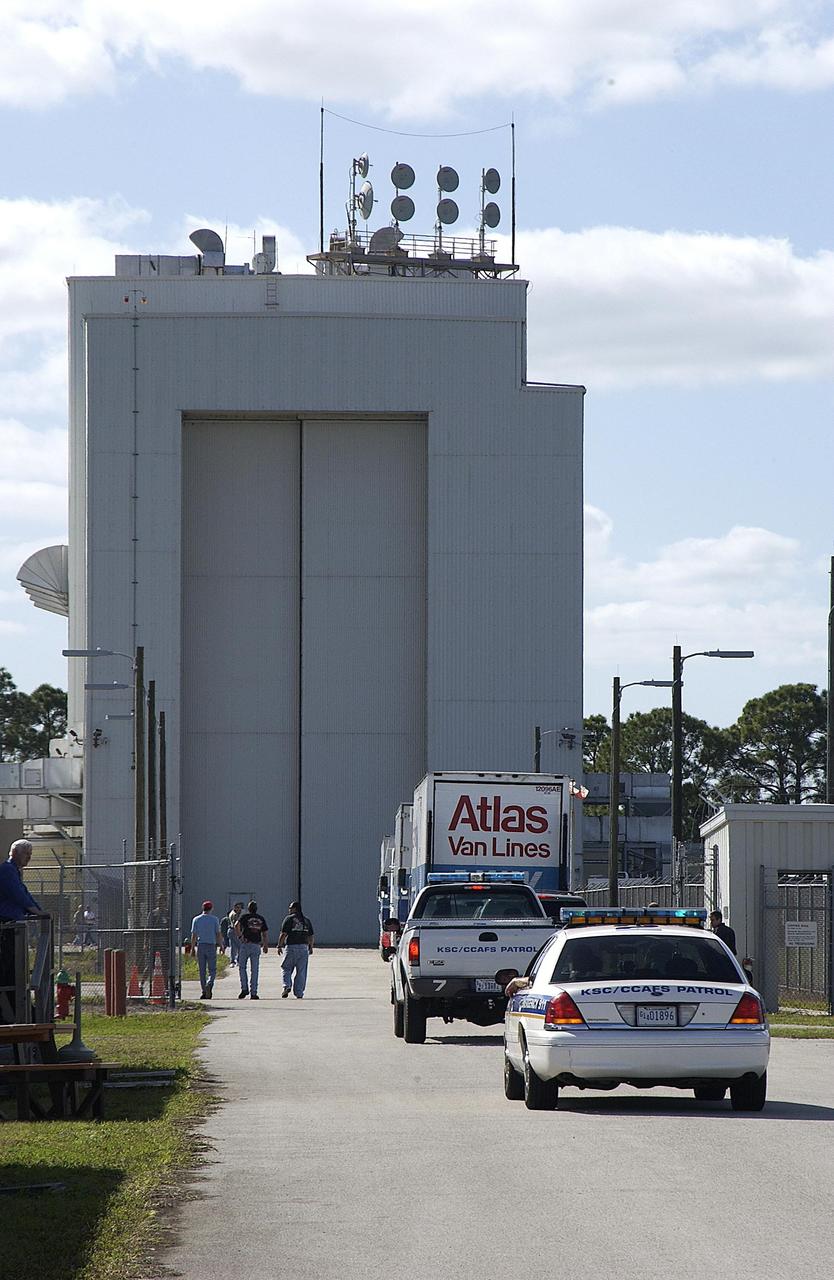
KENNEDY SPACE CENTER, FLA. -- The cruise stage, aeroshell and lander for the Mars Exploration Rover-1 mission and the MER-2 rover arrive at KSC's Multi-Payload Processing Facility. The same flight hardware for the MER-2 rover arrived Jan. 27; however, the MER-2 rover is scheduled to arrive at KSC in March. While at KSC, each of the two rovers, the aeroshells and the landers will undergo a full mission simulation. All of these flight elements will then be integrated together. After spin balance testing, each spacecraft will be mated to a solid propellant upper stage booster that will propel the spacecraft out of Earth orbit. Approximately 10 days before launch they will be transported to the launch pad for mating with their respective Boeing Delta II rockets. The rovers will serve as robotic geologists to seek answers about the evolution of Mars, particularly for a history of water. The rovers will be identical to each other, but will land at different regions of Mars. Launch of the MER-1 is scheduled for May 30. MER-2 will follow June 25.