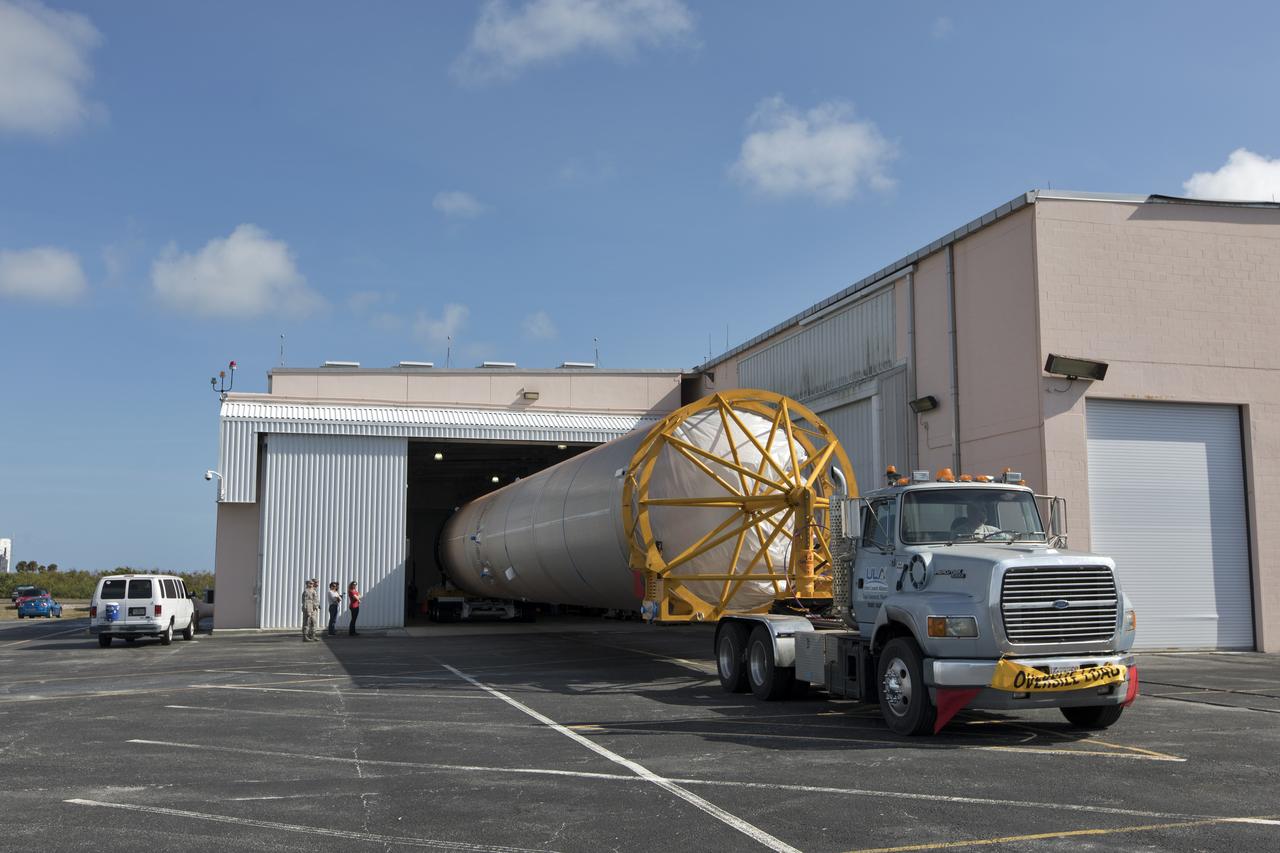
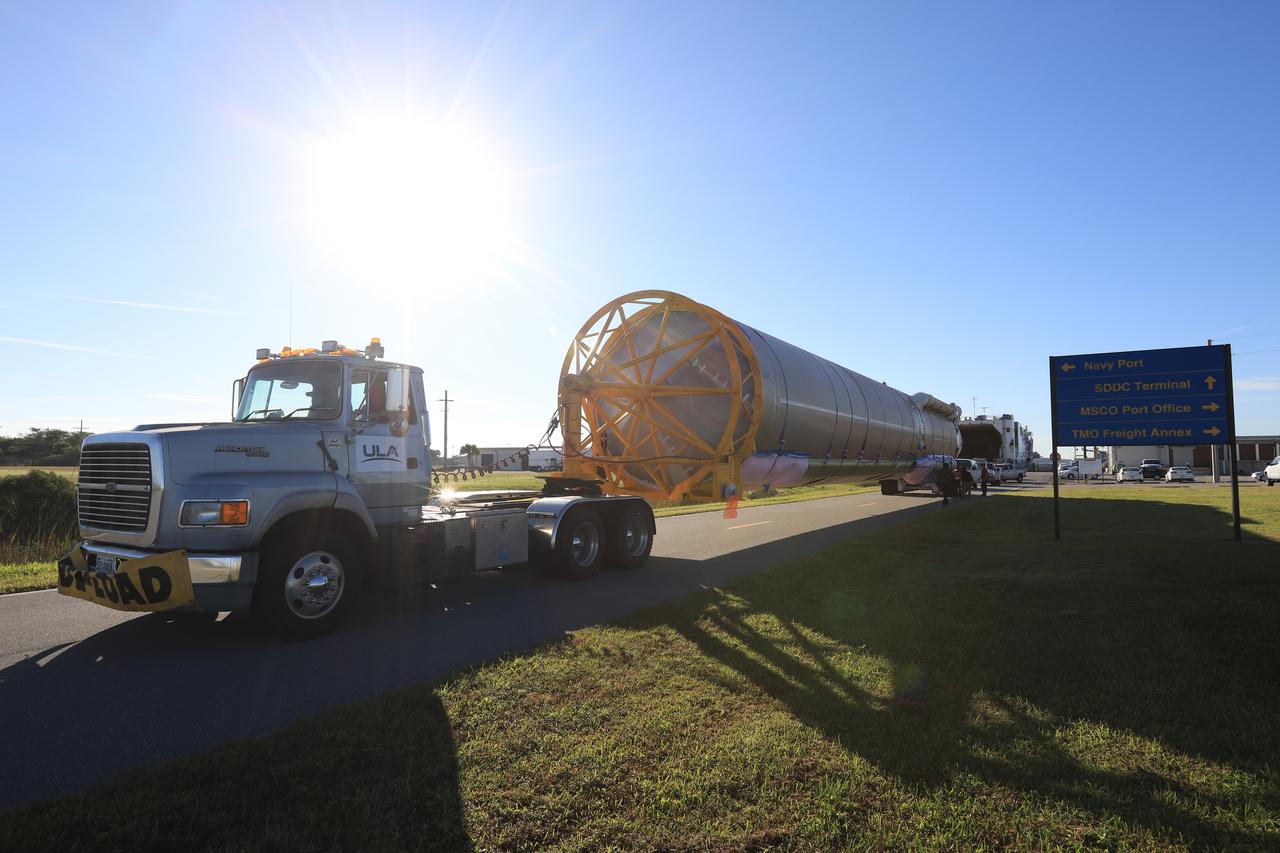
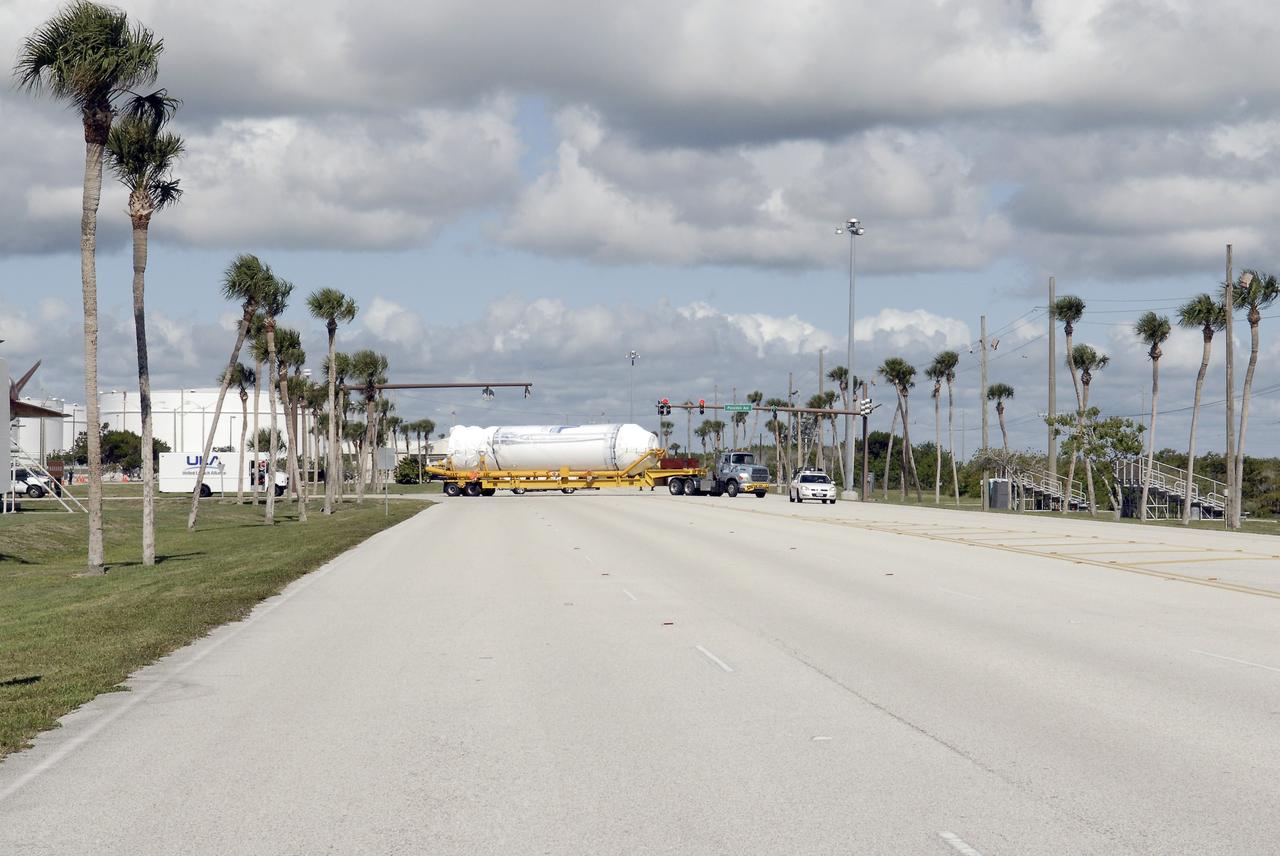
The United Launch Alliance Atlas V booster for NOAA's Geostationary Operational Environmental Satellite-S (GOES-S) arrives at the Atlas Spaceflight Operations Center near Space Launch Complex 41 at Cape Canaveral Air Force Station in Florida. GOES-S is the second in a series of four advanced geostationary weather satellites. The satellite is slated to launch aboard the Atlas V rocket March 1.
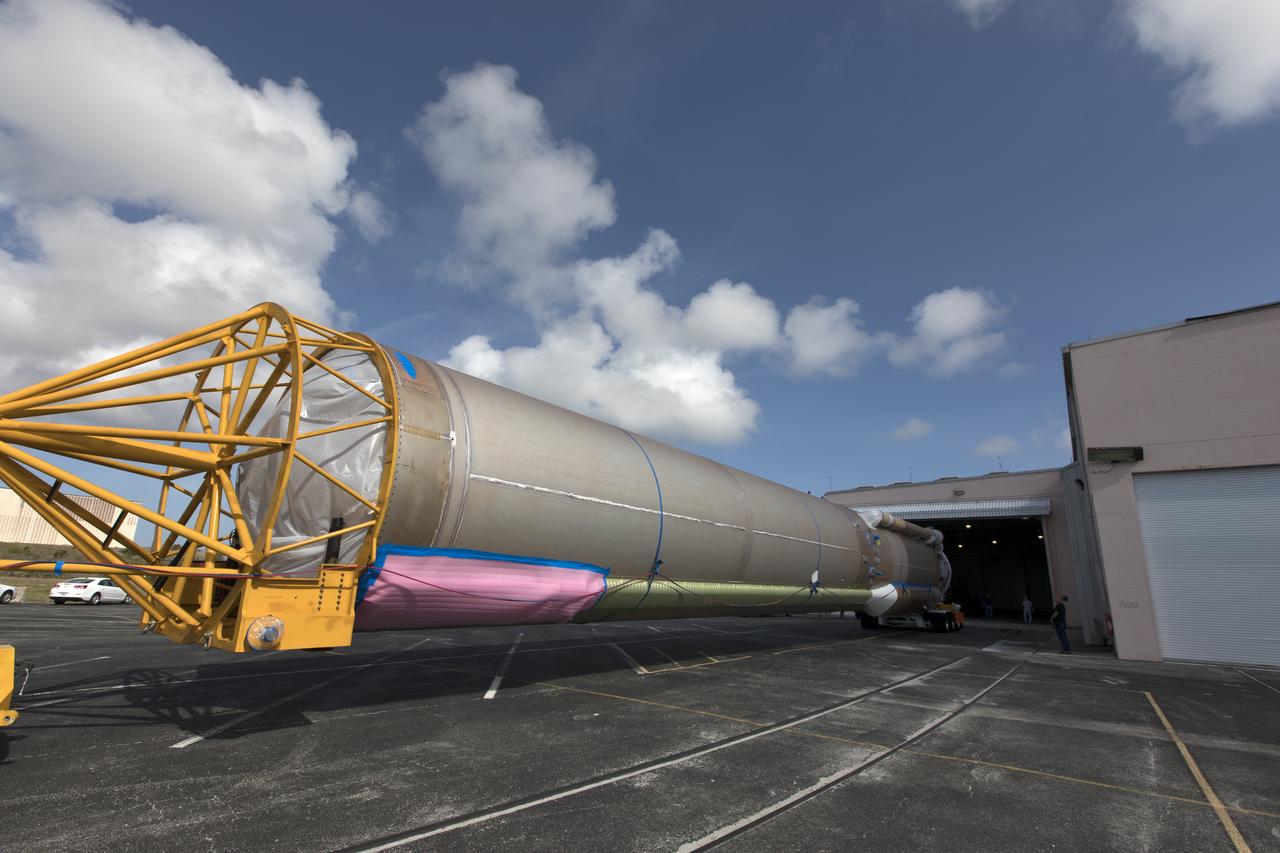
The United Launch Alliance Atlas V booster for NOAA's Geostationary Operational Environmental Satellite-S (GOES-S) arrives at the Atlas Spaceflight Operations Center near Space Launch Complex 41 at Cape Canaveral Air Force Station in Florida. GOES-S is the second in a series of four advanced geostationary weather satellites. The satellite is slated to launch aboard the Atlas V rocket March 1.

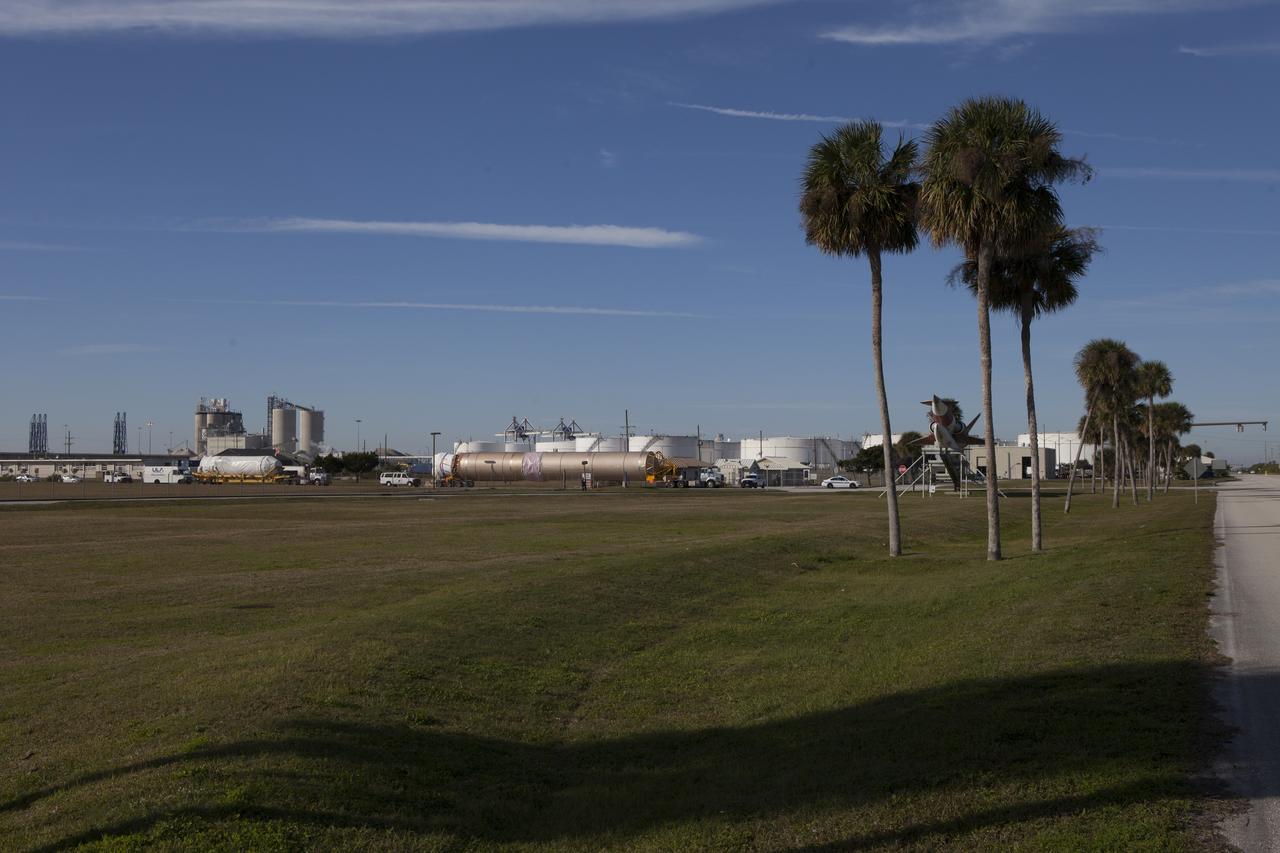
After being offloaded from the Mariner transport ship at the Army Wharf at Cape Canaveral Air Force Station in Florida, the United Launch Alliance Atlas V booster for NOAA's Geostationary Operational Environmental Satellite-S (GOES-S) arrives in the area of the Atlas Spaceflight Operations Center near Space Launch Complex 41 at CCAFS. GOES-S is the second in a series of four advanced geostationary weather satellites. The satellite is slated to launch aboard the Atlas V rocket March 1.

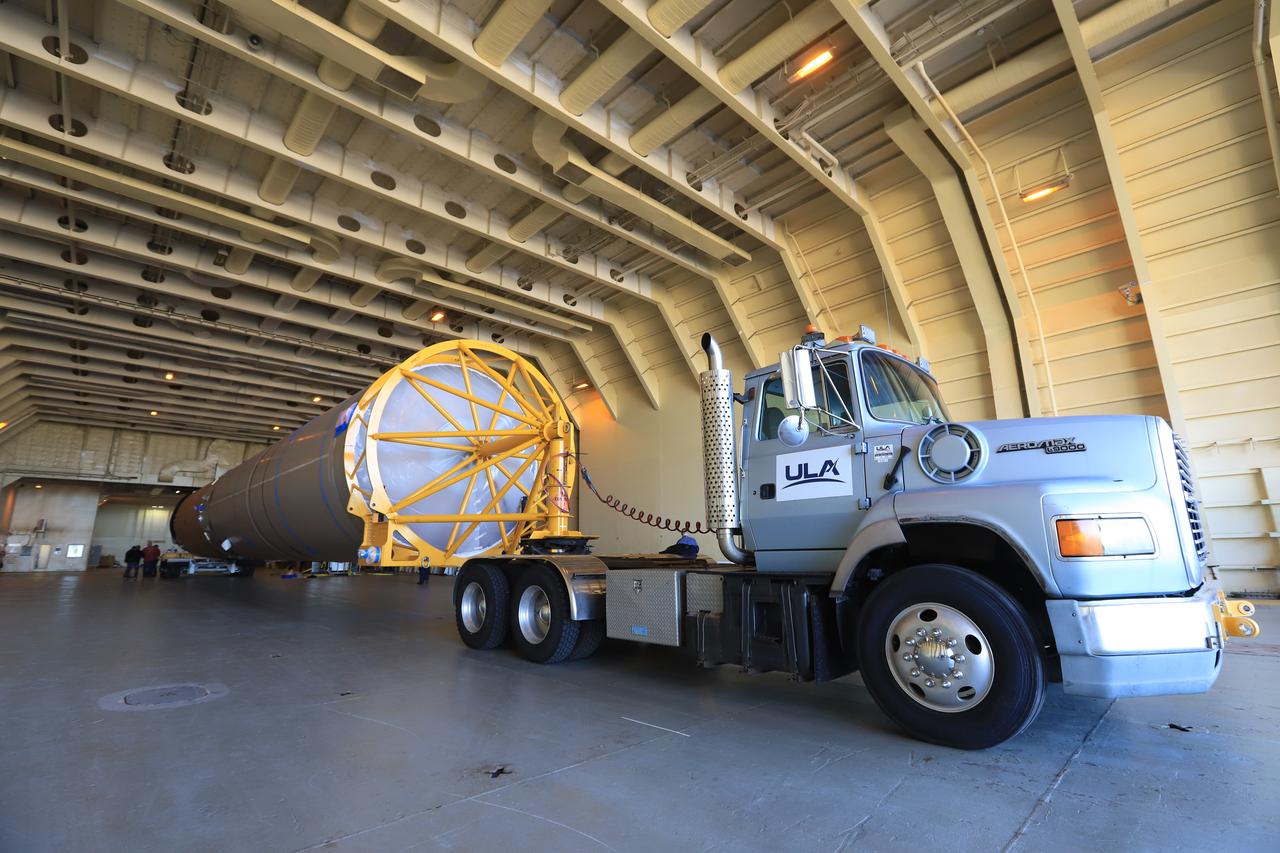
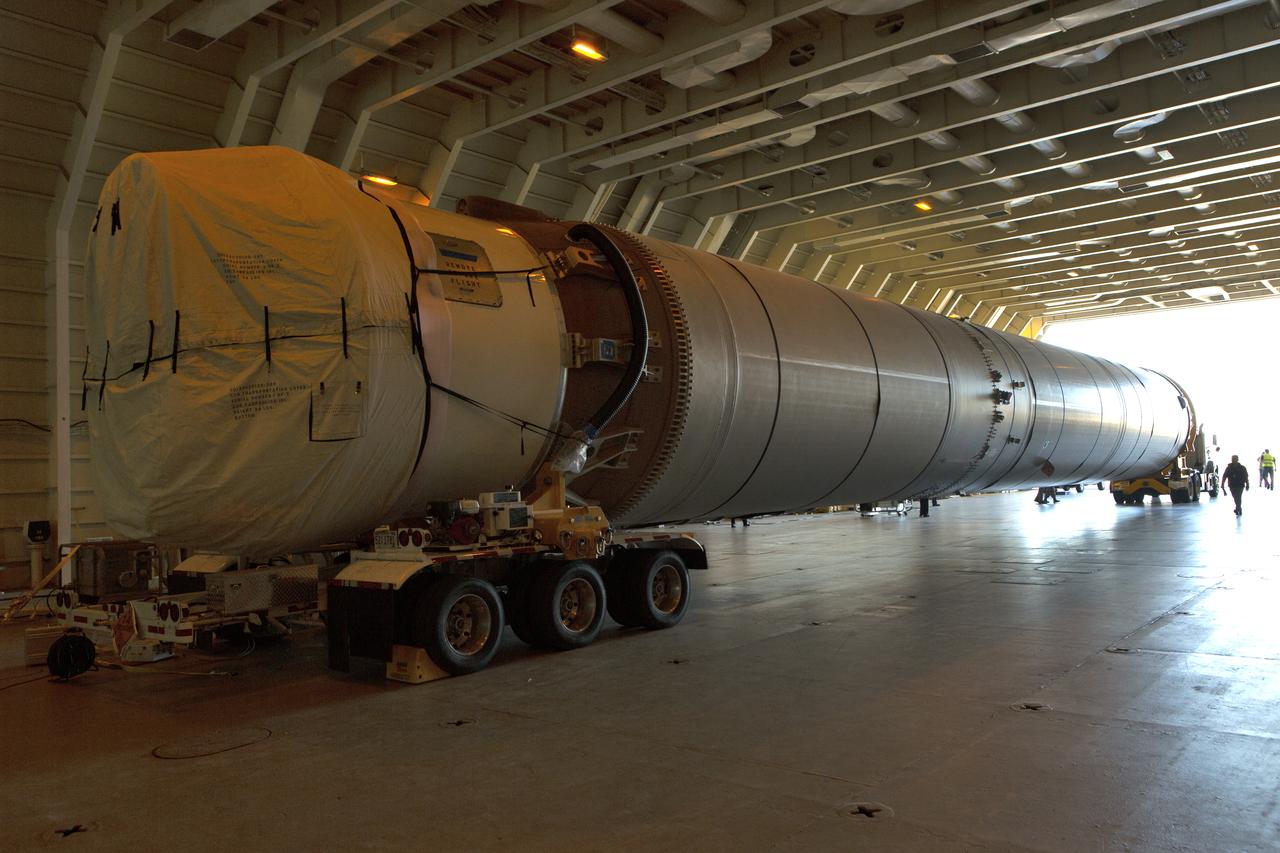
The United Launch Alliance Atlas V booster for NOAA's Geostationary Operational Environmental Satellite-S (GOES-S) is moved inside the Atlas Spaceflight Operations Center near Space Launch Complex 41 at Cape Canaveral Air Force Station in Florida. GOES-S is the second in a series of four advanced geostationary weather satellites. The satellite is slated to launch aboard the Atlas V rocket March 1.
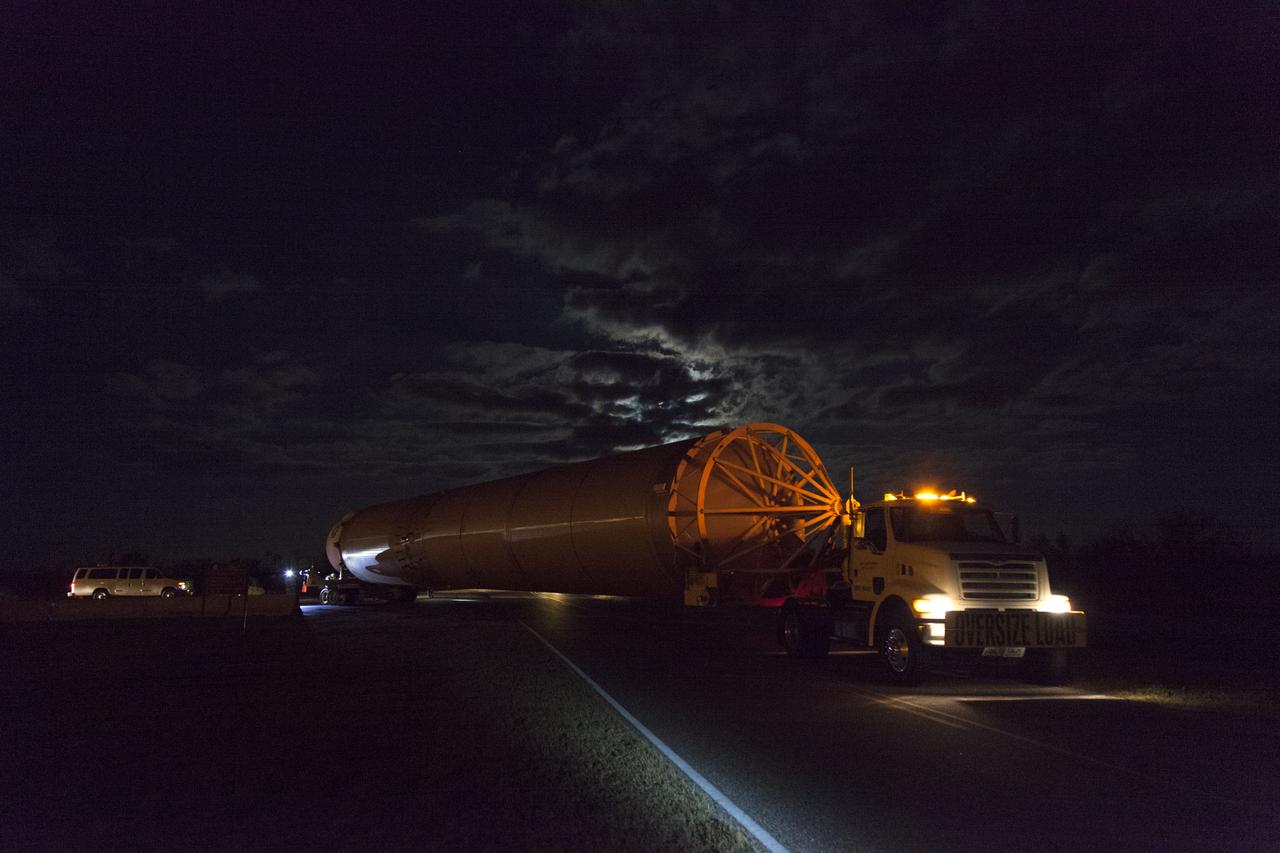
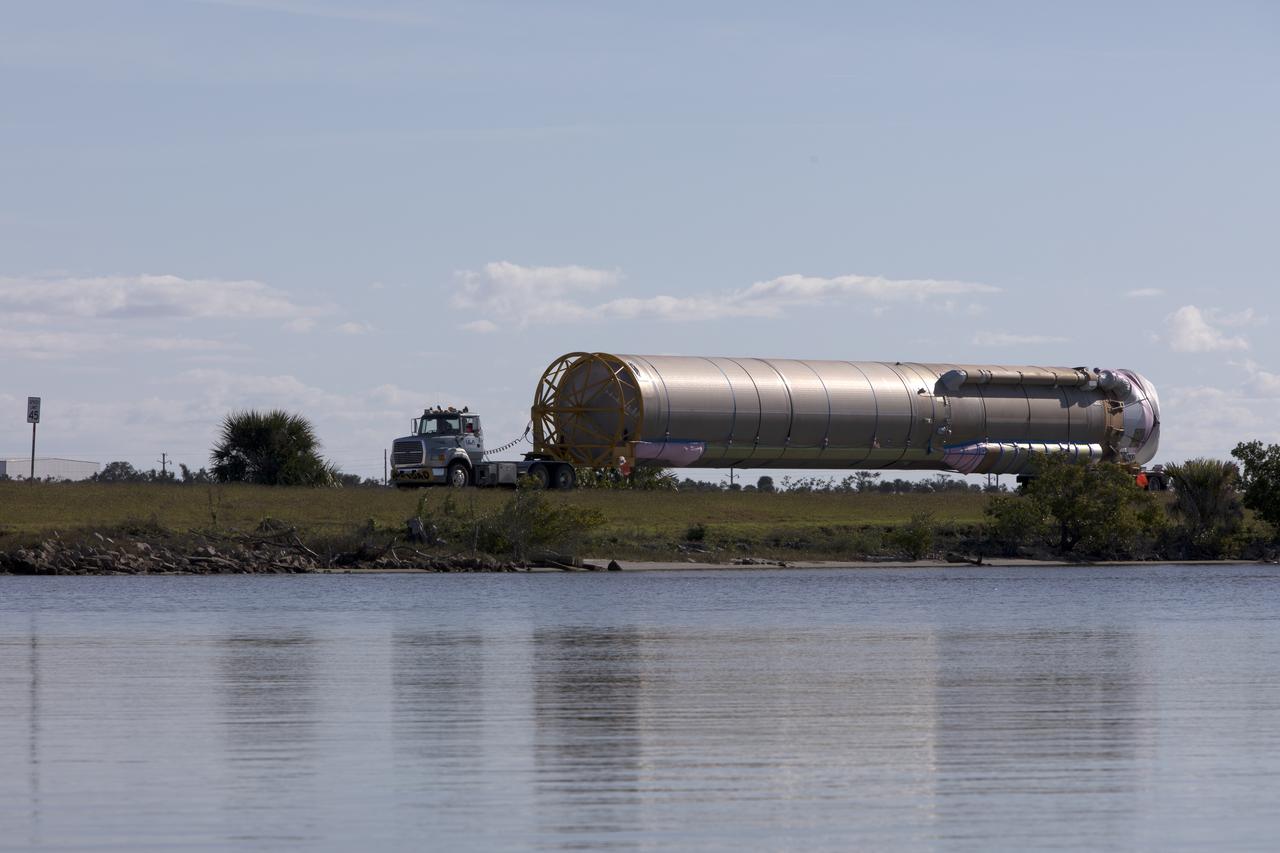
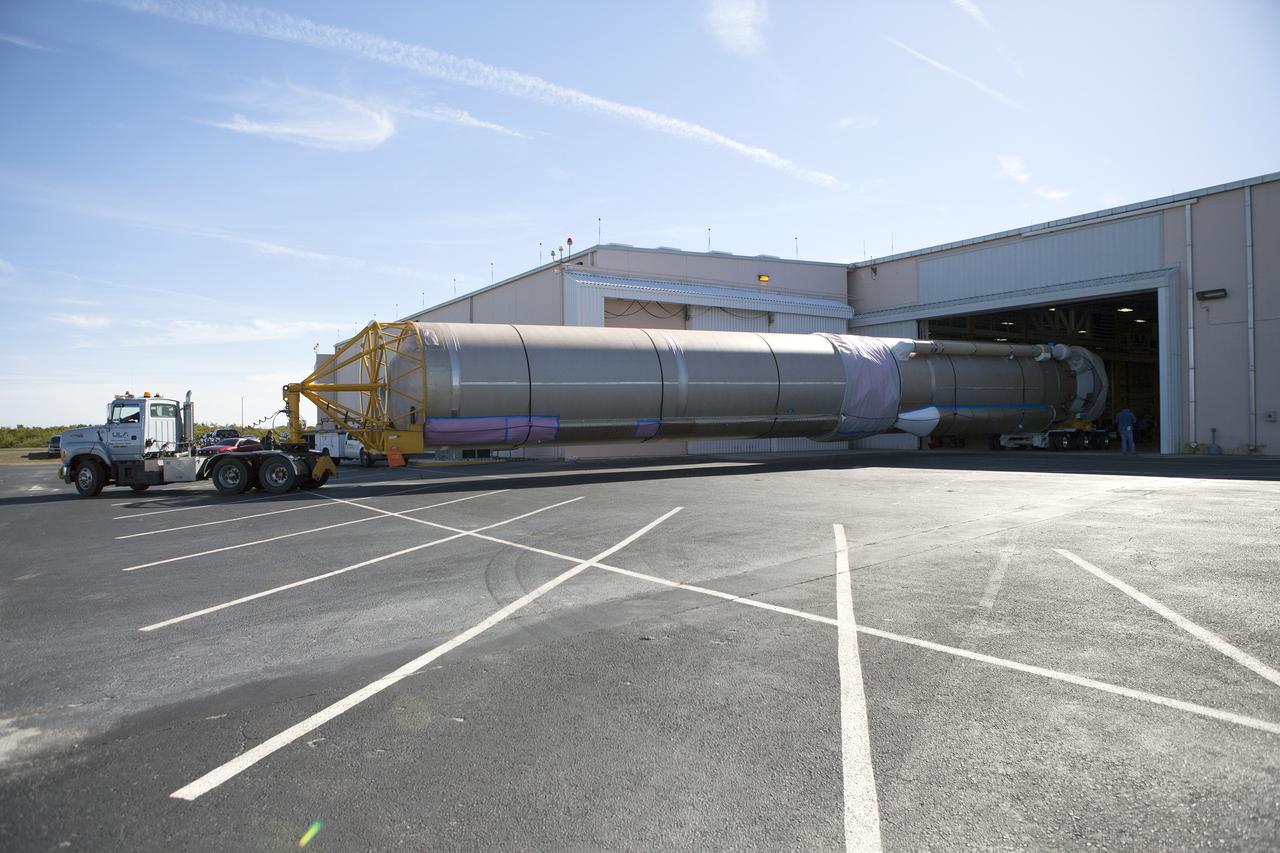
A United Launch Alliance Atlas V first stage leaves the Atlas Spaceflight Operations Center aboard a transport trailer for delivery to the Vertical Integration Facility at Space Launch Complex 41 at Cape Canaveral Air Force Station in Florida. The rocket is being prepared to launch the Geostationary Operational Environmental Satellite, or GOES-S. It will be the second in a series of four advanced geostationary weather satellites and will significantly improve the detection and observation of environmental phenomena that directly affect public safety. GOES-S is slated to launch March 1, 2018.
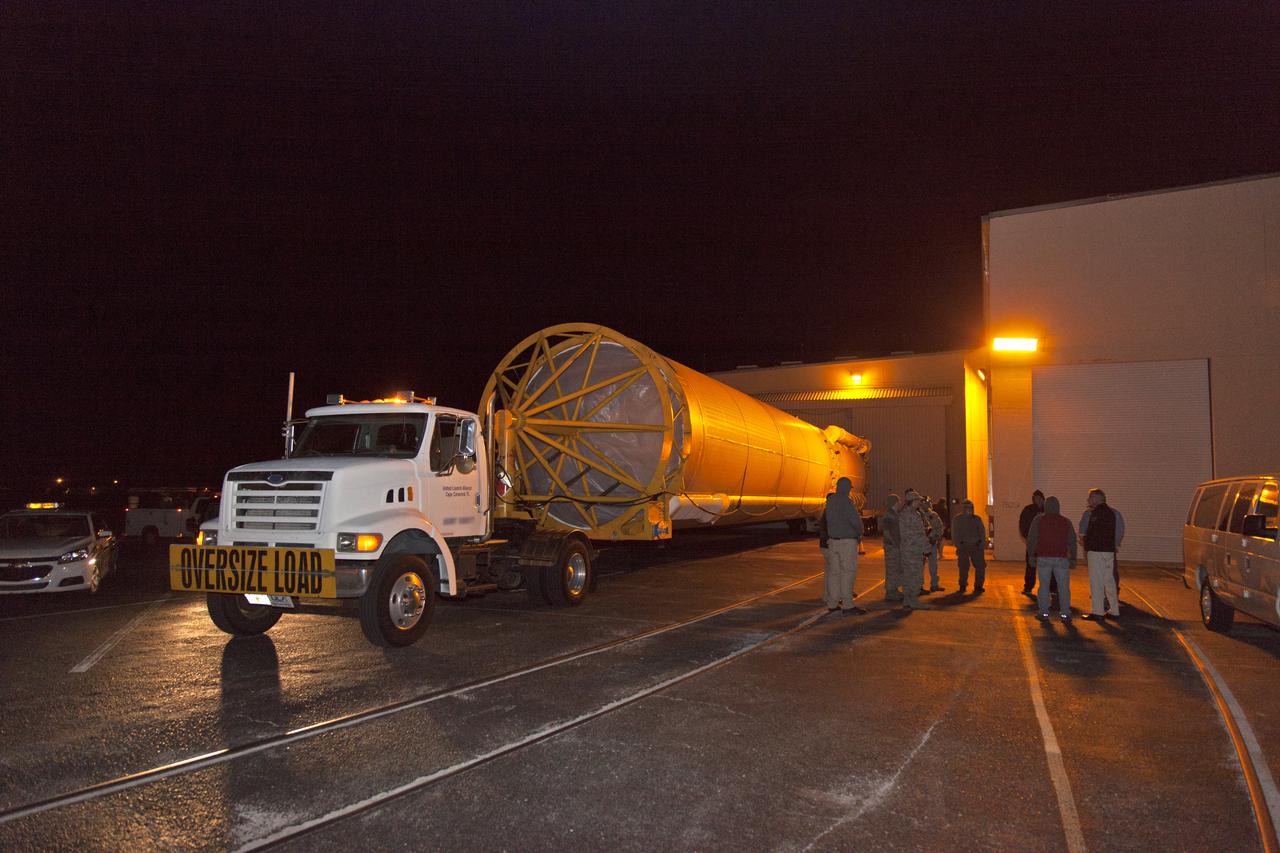
A United Launch Alliance Atlas V first stage leaves the Atlas Spaceflight Operations Center aboard a transport trailer for delivery to the Vertical Integration Facility at Space Launch Complex 41 at Cape Canaveral Air Force Station in Florida. The rocket is being prepared to launch the Geostationary Operational Environmental Satellite, or GOES-S. It will be the second in a series of four advanced geostationary weather satellites and will significantly improve the detection and observation of environmental phenomena that directly affect public safety. GOES-S is slated to launch March 1, 2018.
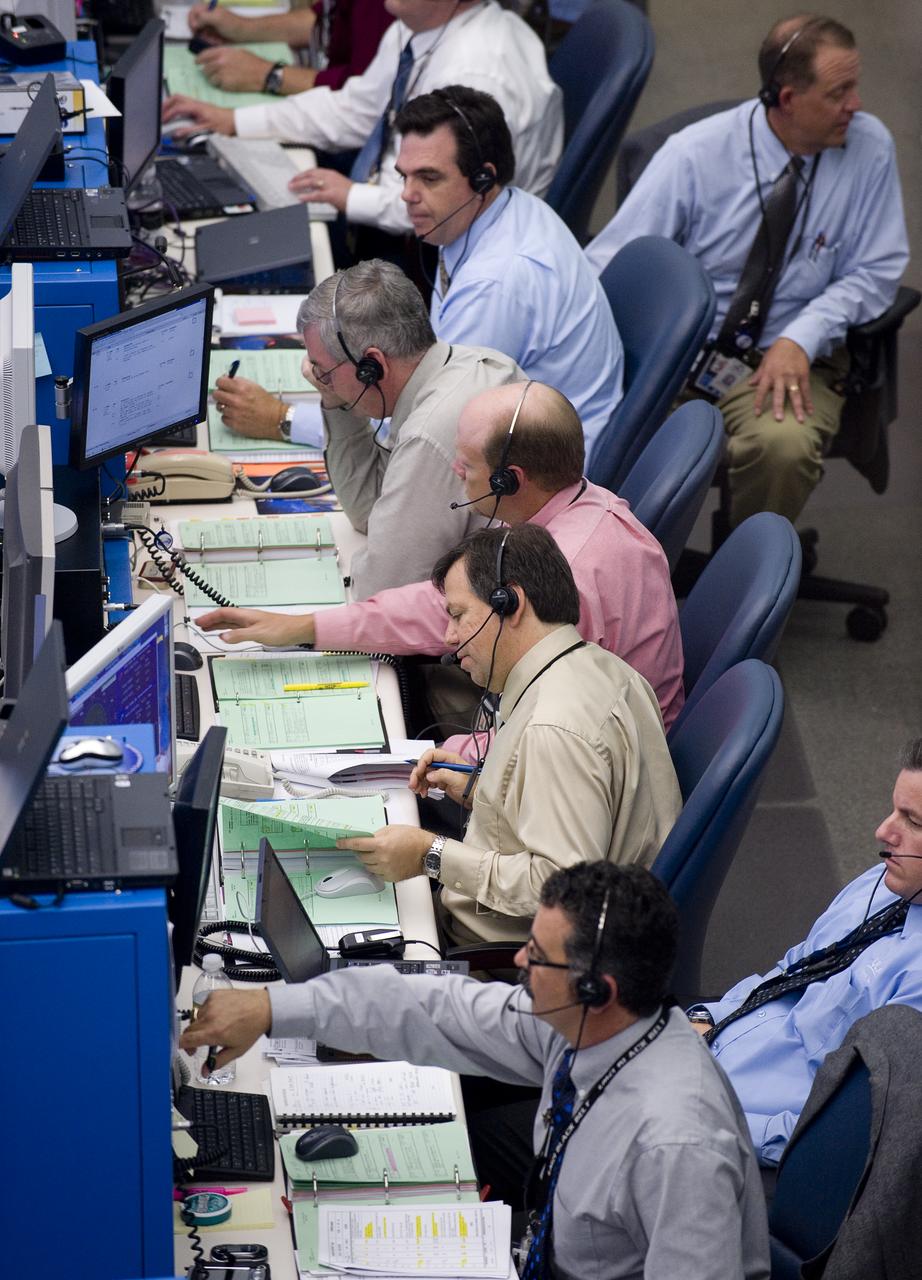
United Launch Alliance (ULA) team members work in the Atlas V Spaceflight Operations Center prior to the launch of the Lunar Reconnaissance Orbiter and Lunar Crater Observation and Sensing Satellite Thursday, June 18, 2009, from Cape Canaveral Air Force Station, Florida. Photo Credit: (NASA/Bill Ingalls)
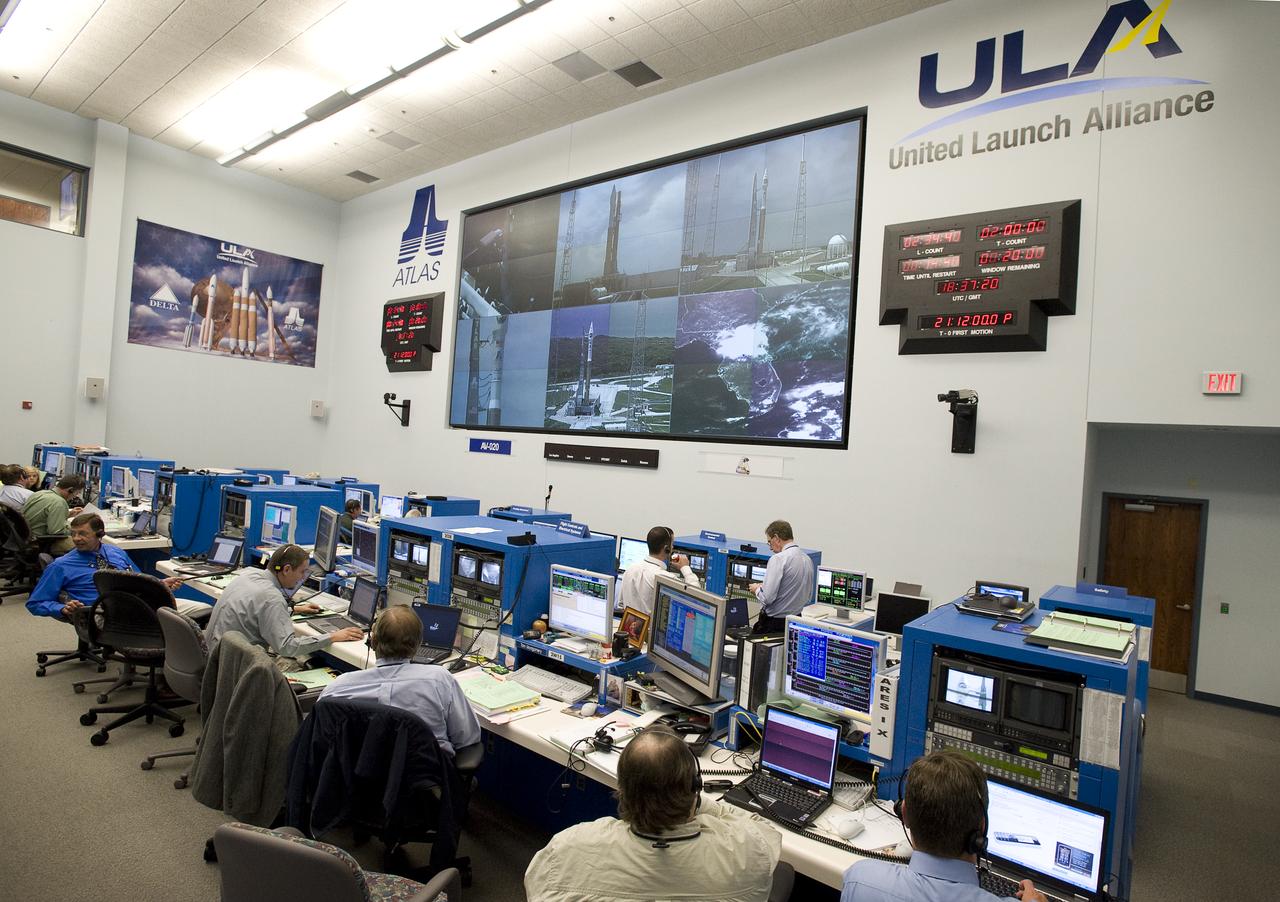
United Launch Alliance (ULA) team members work in the Atlas V Spaceflight Operations Center prior to the launch of the Lunar Reconnaissance Orbiter and Lunar Crater Observation and Sensing Satellite Thursday, June 18, 2009, from Cape Canaveral Air Force Station, Florida. . Photo Credit: (NASA/Bill Ingalls)
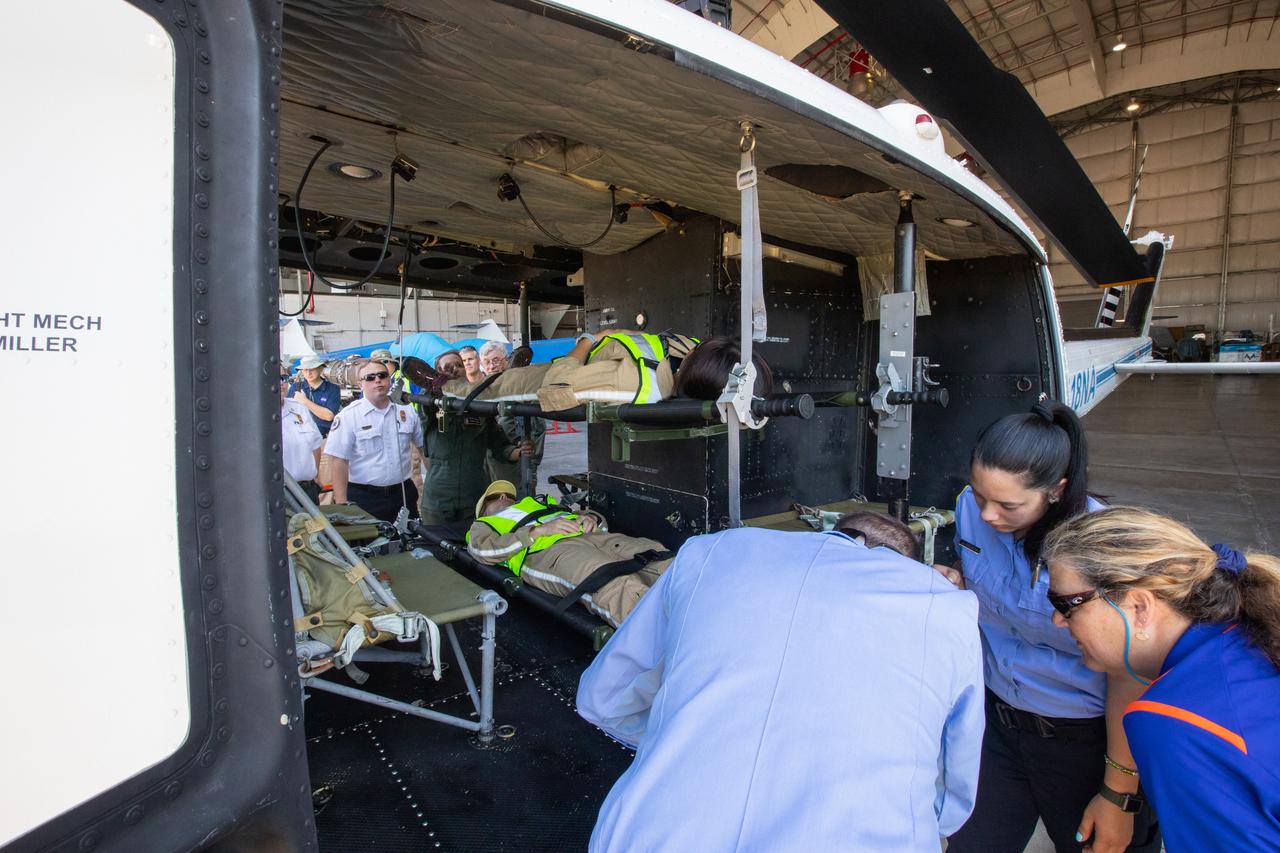
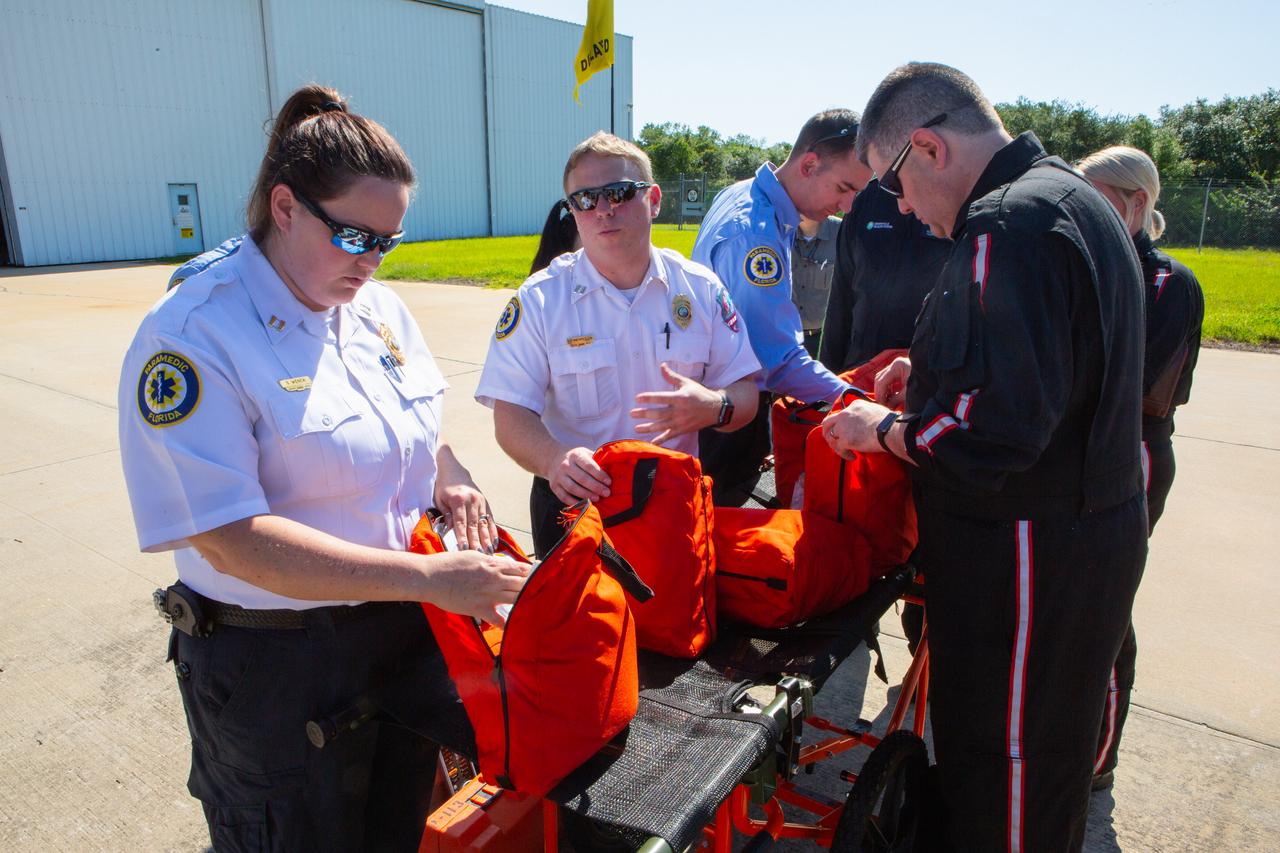
Kennedy Space Center personnel and American Medical Response (AMR) contractor paramedics gather around a “patient,” a KEMCON Fitness Center staff member, during a medical support training course in the Space Florida hangar at the spaceport’s Shuttle Landing Facility on May 17, 2019. The course was designed to familiarize the AMR paramedics with the center’s Triage Forces deployment, which included medical team members, fire/rescue personnel, environmental health specialists and flight operations crew members, as well as a helicopter, Mine Resistant Ambush Protected (MRAP) tactical vehicle, fire pumper truck and triage vehicles. The AMR paramedics will assist the agency in contingency planning for the return of human spaceflight from Kennedy.
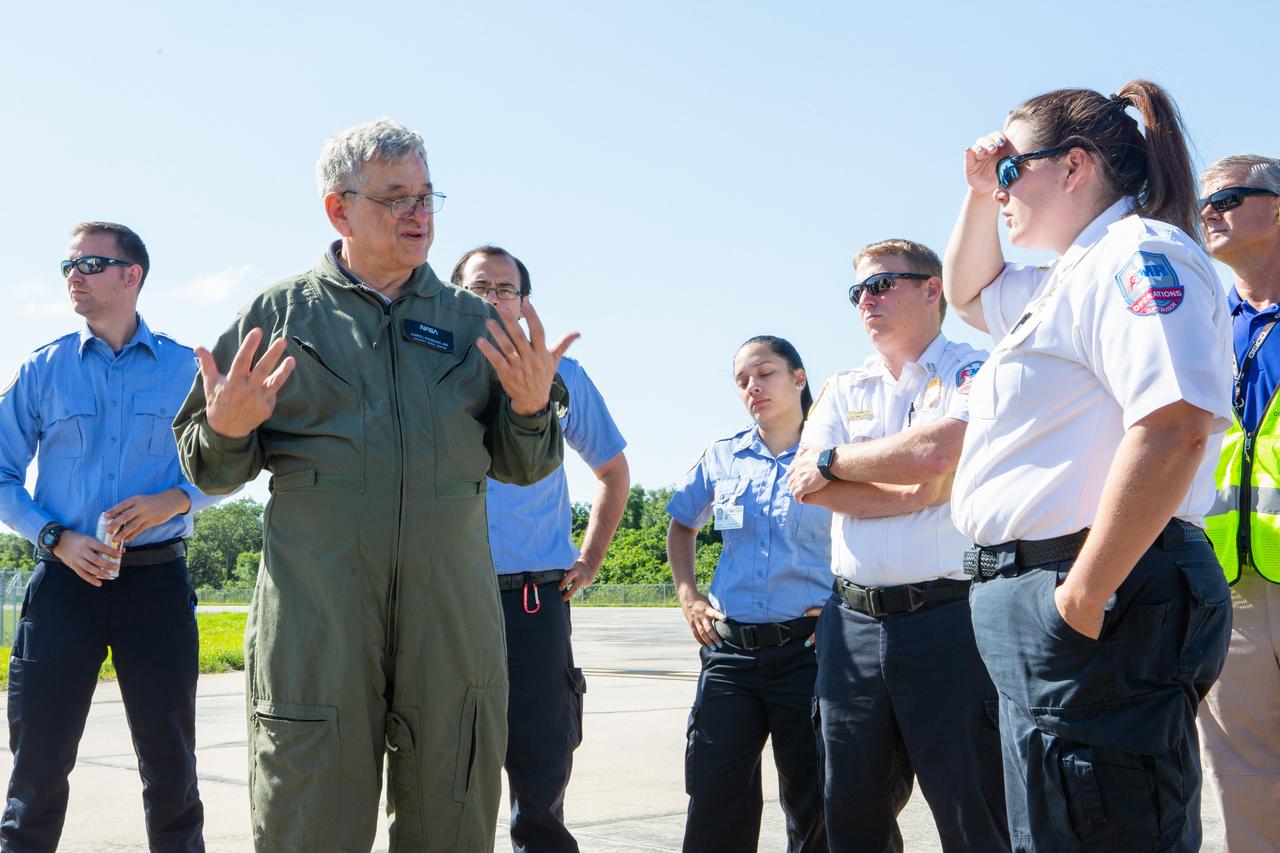
KEMCON physician Dr. Dan Woodard speaks to Kennedy Space Center personnel and American Medical Response (AMR) contractor paramedics gathered at the Florida spaceport’s Shuttle Landing Facility on May 17, 2019, for a medical support training course. The course was designed to familiarize the AMR paramedics with the center’s Triage Forces deployment, which included medical team members, fire/rescue personnel, environmental health specialists and flight operations crew members, as well as a helicopter, Mine Resistant Ambush Protected (MRAP) tactical vehicle, fire pumper truck and triage vehicles. The AMR paramedics will assist the agency in contingency planning for the return of human spaceflight from Kennedy.
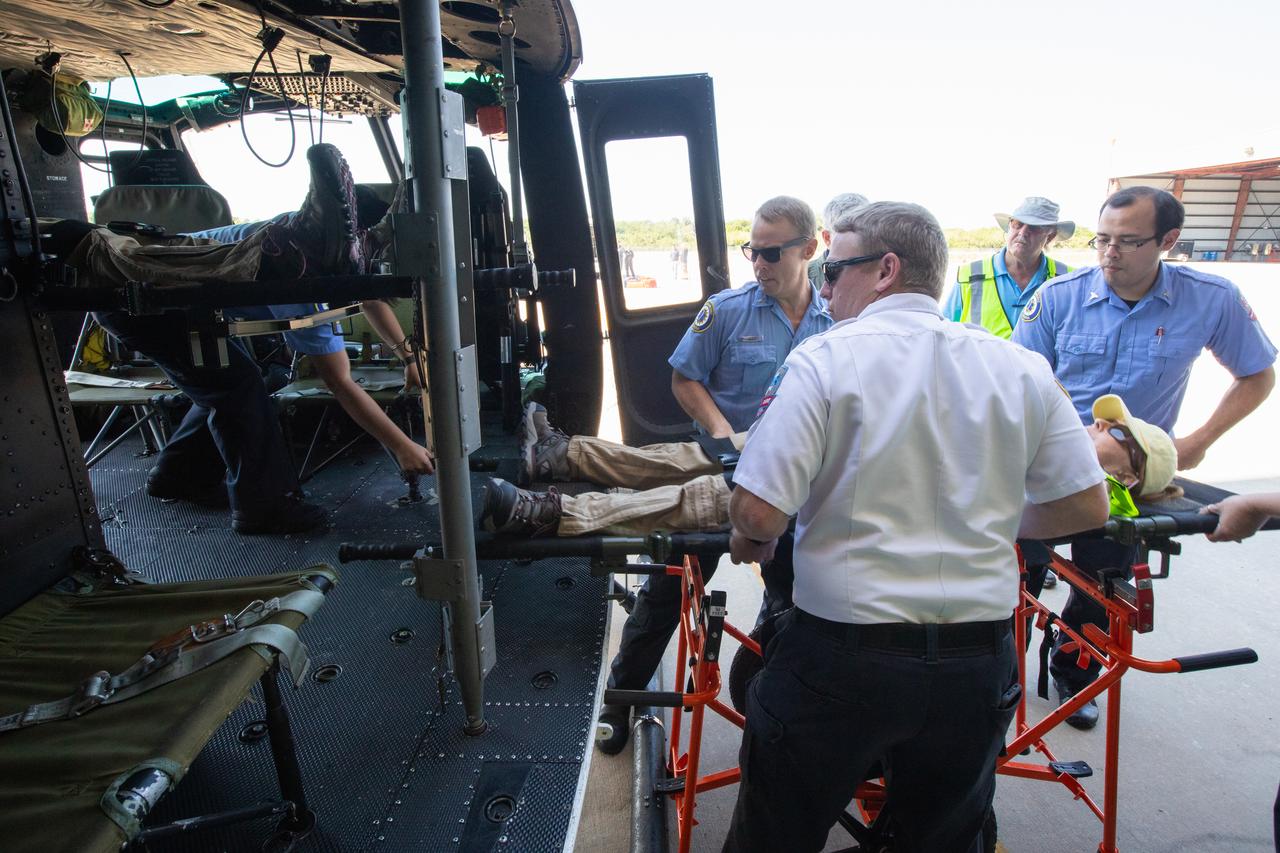
Kennedy Space Center personnel and American Medical Response (AMR) contractor paramedics load a “patient,” a KEMCON Fitness Center staff member, into a NASA helicopter during a medical support training course in the Space Florida hangar at the spaceport’s Shuttle Landing Facility on May 17, 2019. The course was designed to familiarize the AMR paramedics with the center’s Triage Forces deployment, which included medical team members, fire/rescue personnel, environmental health specialists and flight operations crew members, as well as a helicopter, Mine Resistant Ambush Protected (MRAP) tactical vehicle, fire pumper truck and triage vehicles. The AMR paramedics will assist the agency in contingency planning for the return of human spaceflight from Kennedy.
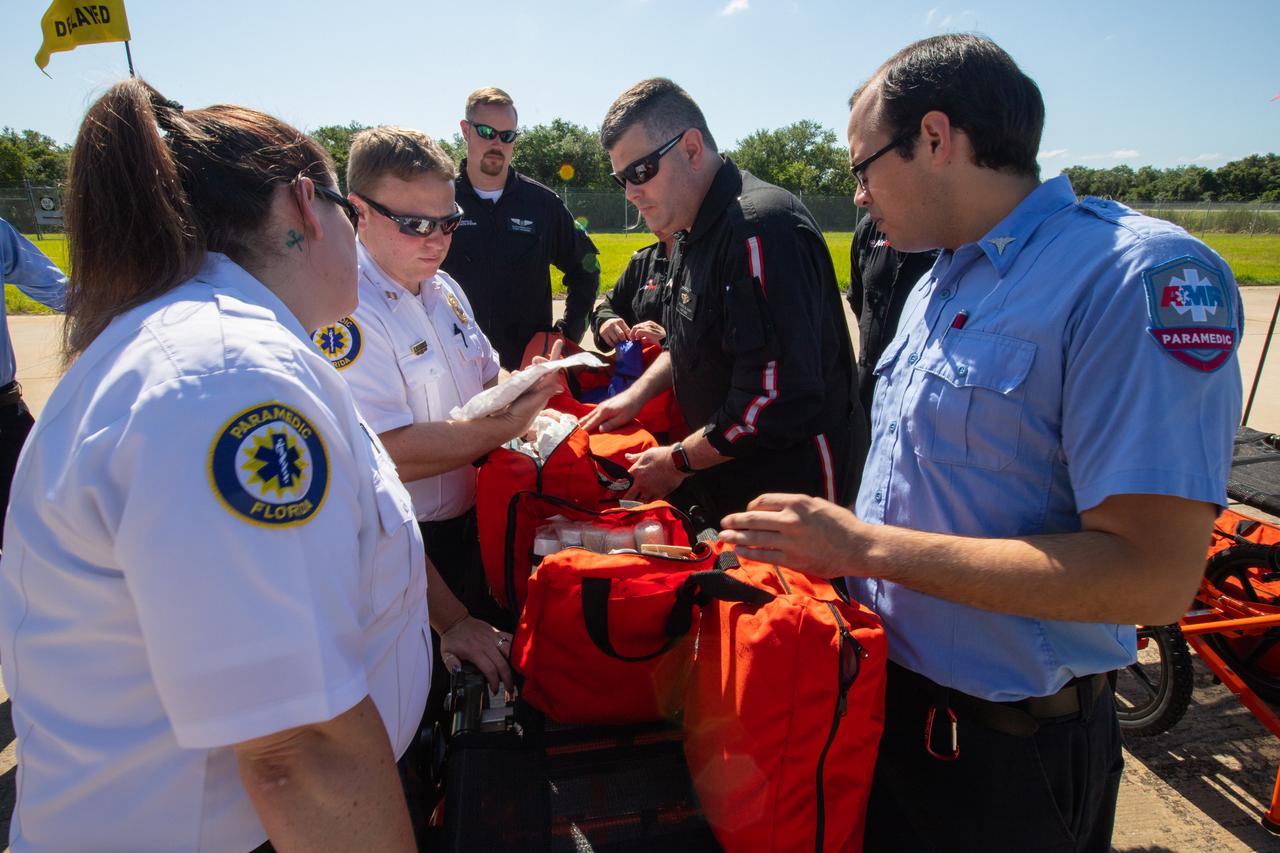
Kennedy Space Center personnel and American Medical Response (AMR) contractor paramedics participate in a medical support training course at the Florida spaceport’s Shuttle Landing Facility on May 17, 2019. The course was designed to familiarize the AMR paramedics with the center’s Triage Forces deployment, which included medical team members, fire/rescue personnel, environmental health specialists and flight operations crew members, as well as a helicopter, Mine Resistant Ambush Protected (MRAP) tactical vehicle, fire pumper truck and triage vehicles. The AMR paramedics will assist the agency in contingency planning for the return of human spaceflight from Kennedy.
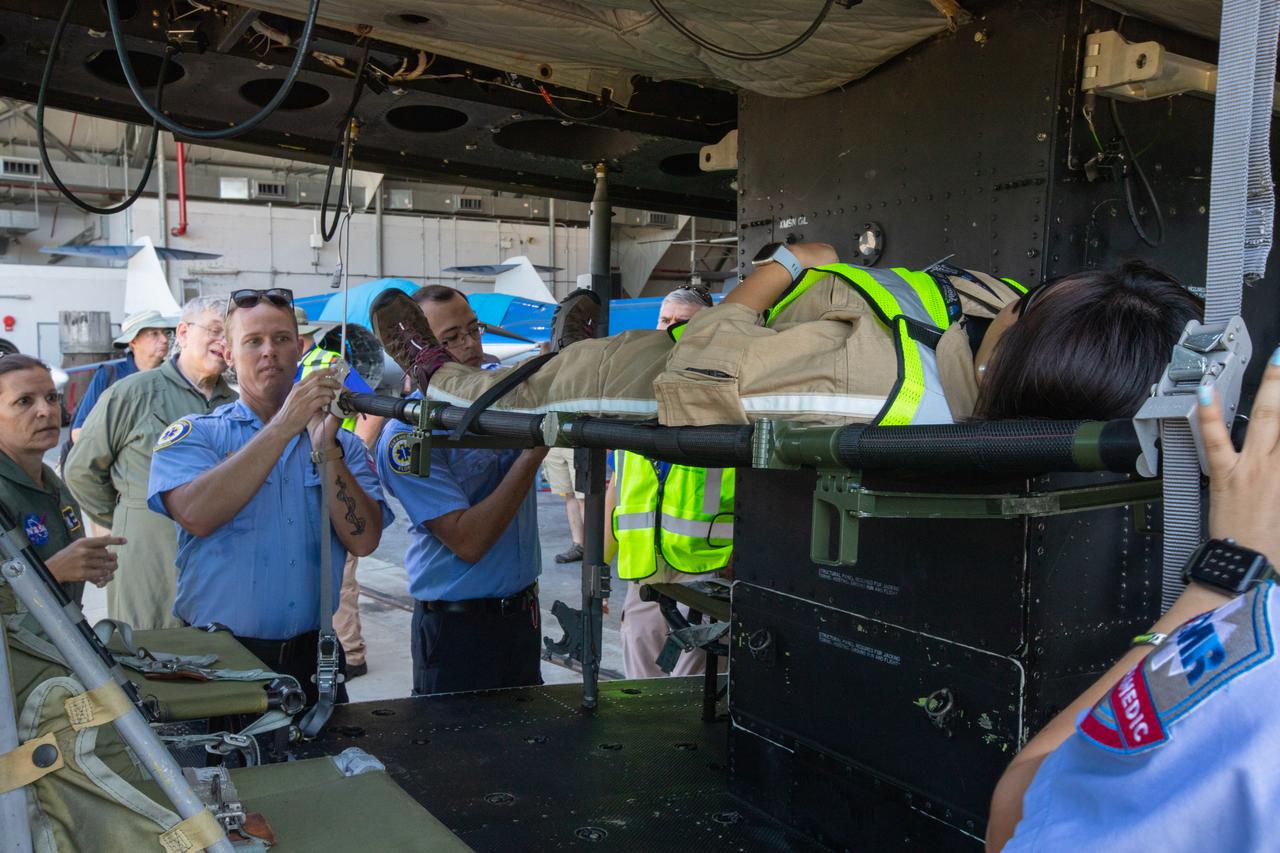
Kennedy Space Center personnel and American Medical Response (AMR) contractor paramedics load a “patient,” a KEMCON Fitness Center staff member, into a NASA helicopter during a medical support training course in the Space Florida hangar at the spaceport’s Shuttle Landing Facility on May 17, 2019. The course was designed to familiarize the AMR paramedics with the center’s Triage Forces deployment, which included medical team members, fire/rescue personnel, environmental health specialists and flight operations crew members, as well as a helicopter, Mine Resistant Ambush Protected (MRAP) tactical vehicle, fire pumper truck and triage vehicles. The AMR paramedics will assist the agency in contingency planning for the return of human spaceflight from Kennedy.
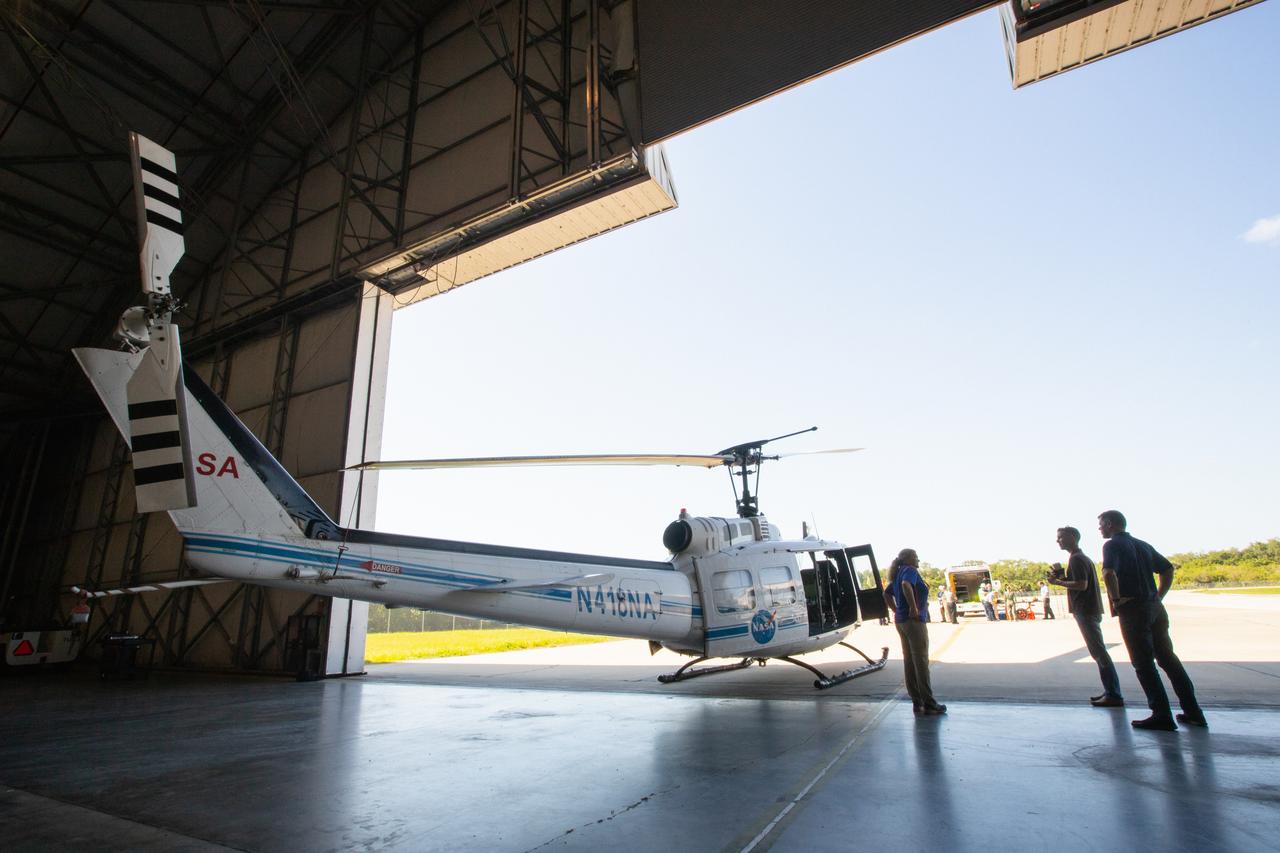
Kennedy Space Center personnel and American Medical Response (AMR) contractor paramedics gather near a NASA helicopter during a medical support training course in the Space Florida hangar at the spaceport’s Shuttle Landing Facility on May 17, 2019. The course was designed to familiarize the AMR paramedics with the center’s Triage Forces deployment, which included medical team members, fire/rescue personnel, environmental health specialists and flight operations crew members, as well as a helicopter, Mine Resistant Ambush Protected (MRAP) tactical vehicle, fire pumper truck and triage vehicles. The AMR paramedics will assist the agency in contingency planning for the return of human spaceflight from Kennedy.
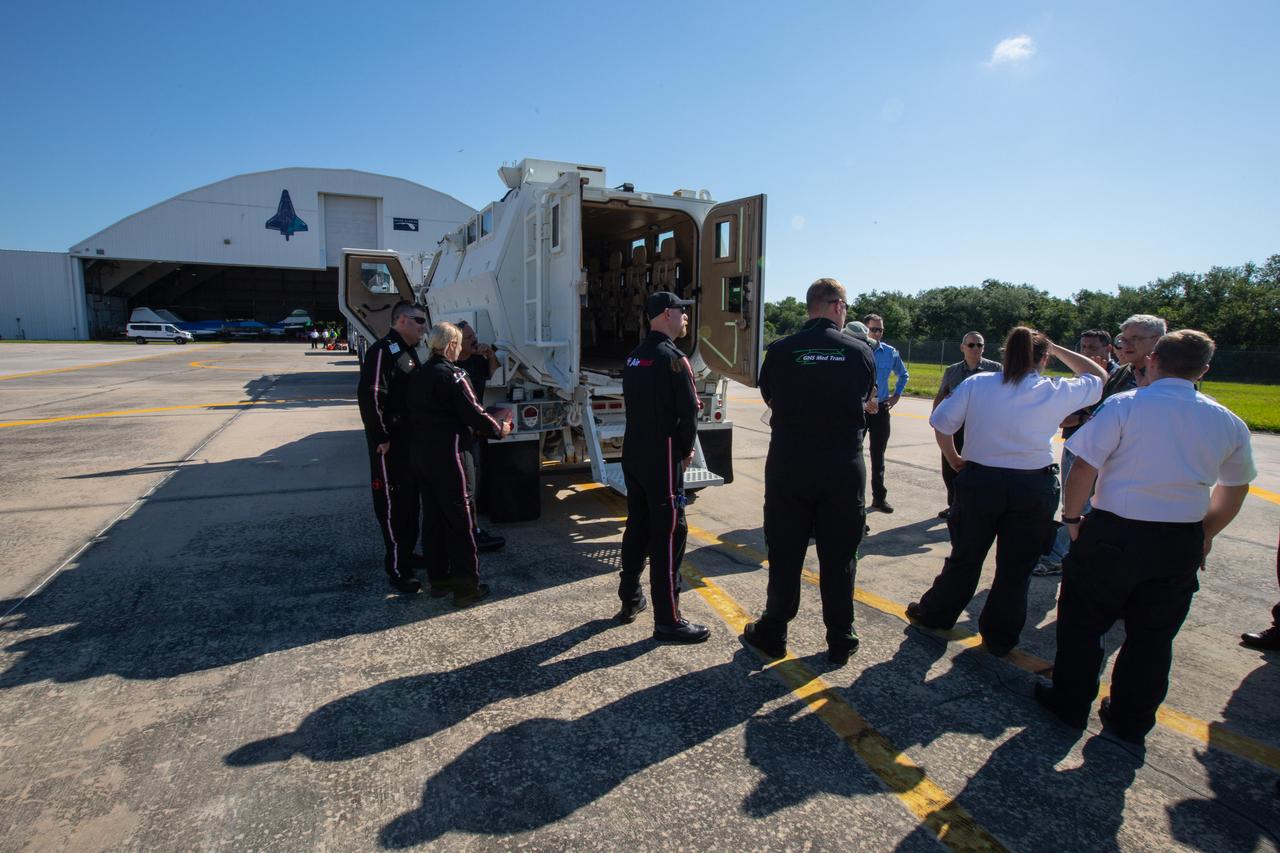
A Kennedy Space Center Mine Resistant Ambush Protected (MRAP) tactical vehicle stands at the ready during a medical support training course at the Florida spaceport’s Shuttle Landing Facility on May 17, 2019. Kennedy personnel and American Medical Response (AMR) contractor paramedics participated in the course, which was designed to familiarize the AMR paramedics with the center’s Triage Forces deployment, including medical team members, fire/rescue personnel, environmental health specialists and flight operations crew members, as well as a helicopter, MRAP, fire pumper truck and triage vehicles. The AMR paramedics will assist the agency in contingency planning for the return of human spaceflight from Kennedy.
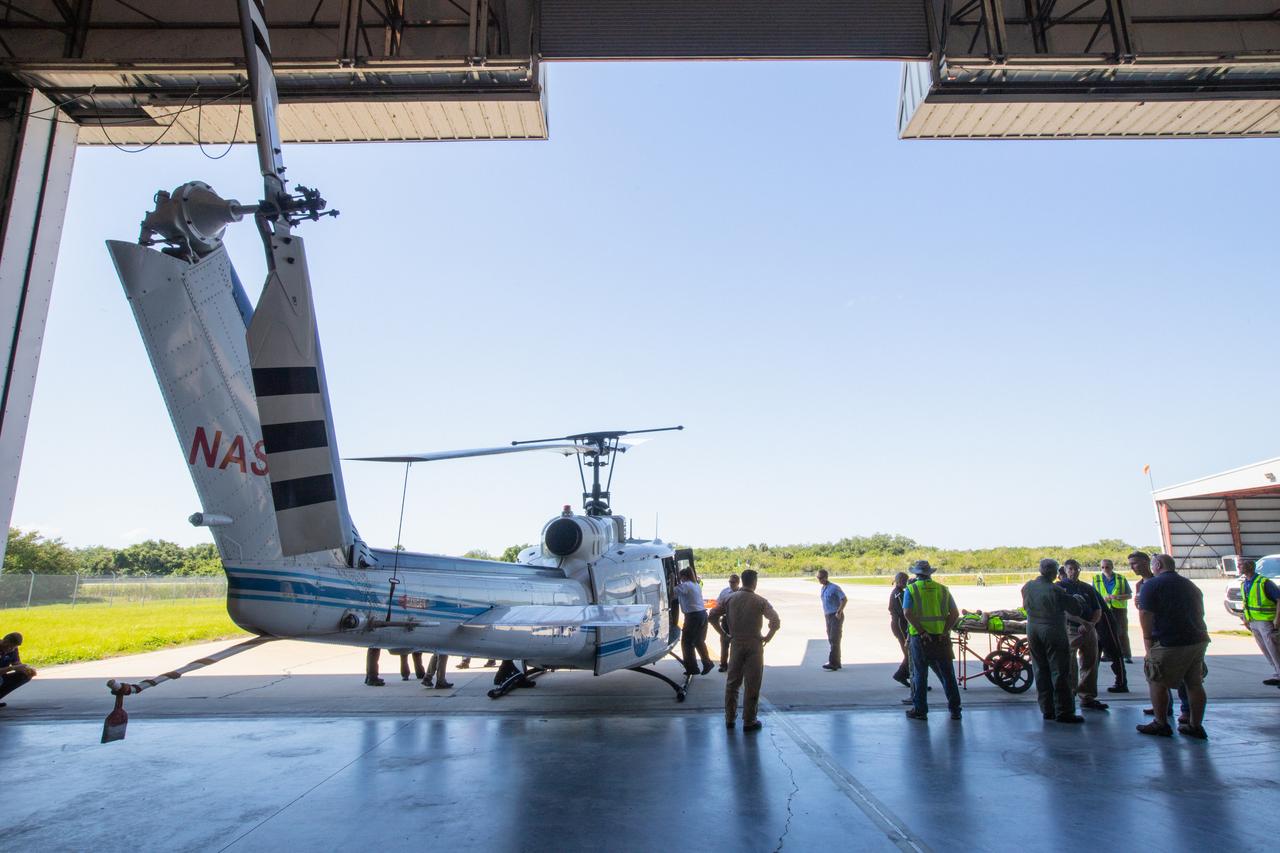
Kennedy Space Center personnel and American Medical Response (AMR) contractor paramedics gather near a NASA helicopter in the Space Florida hangar at the spaceport’s Shuttle Landing Facility on May 17, 2019, for a medical support training course. The course was designed to familiarize the AMR paramedics with the center’s Triage Forces deployment, which included medical team members, fire/rescue personnel, environmental health specialists and flight operations crew members, as well as the helicopter, Mine Resistant Ambush Protected (MRAP) tactical vehicle, fire pumper truck and triage vehicles. The AMR paramedics will assist the agency in contingency planning for the return of human spaceflight from Kennedy.
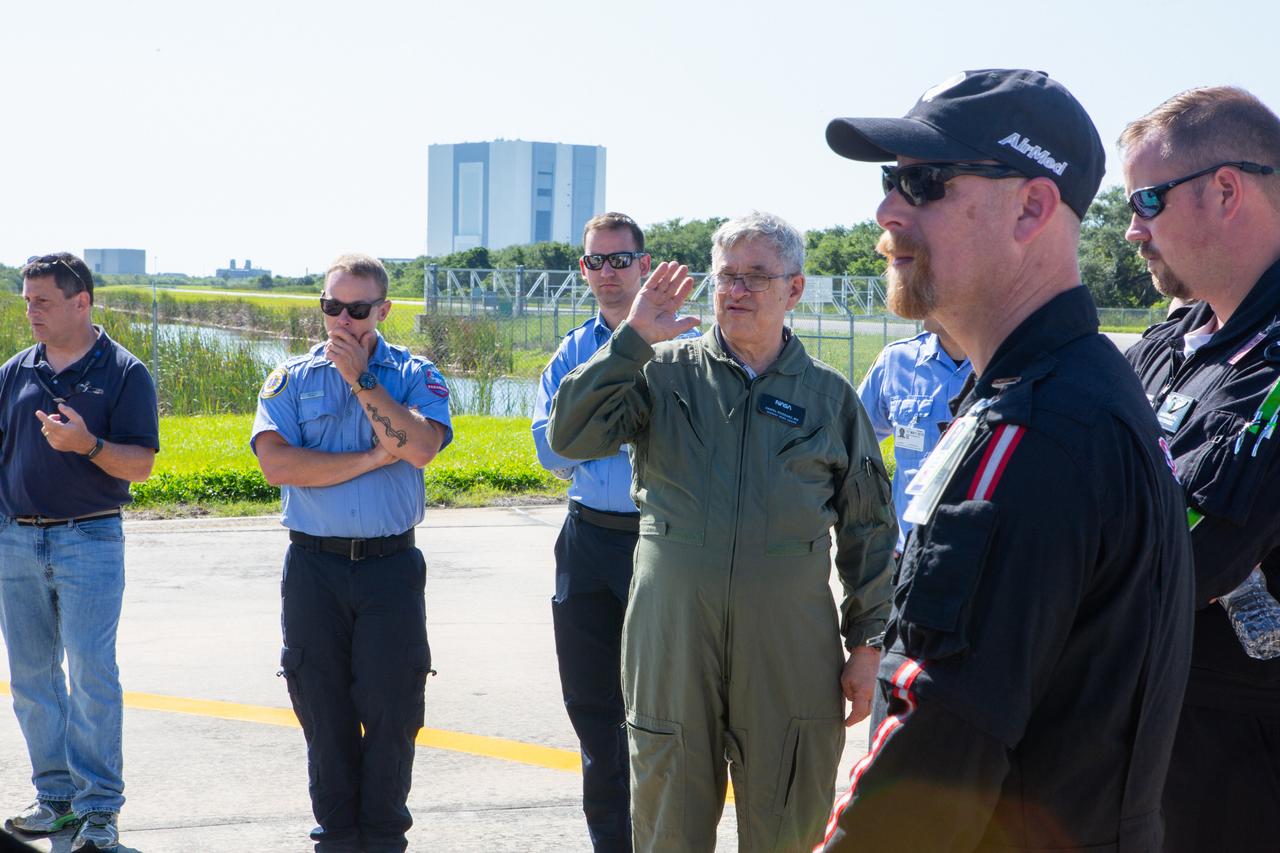
KEMCON physician Dr. Dan Woodard speaks to Kennedy Space Center personnel and American Medical Response (AMR) contractor paramedics gathered at the Florida spaceport’s Shuttle Landing Facility on May 17, 2019, for a medical support training course. The course was designed to familiarize the AMR paramedics with the center’s Triage Forces deployment, which included medical team members, fire/rescue personnel, environmental health specialists and flight operations crew members, as well as a helicopter, Mine Resistant Ambush Protected (MRAP) tactical vehicle, fire pumper truck and triage vehicles. The AMR paramedics will assist the agency in contingency planning for the return of human spaceflight from Kennedy.
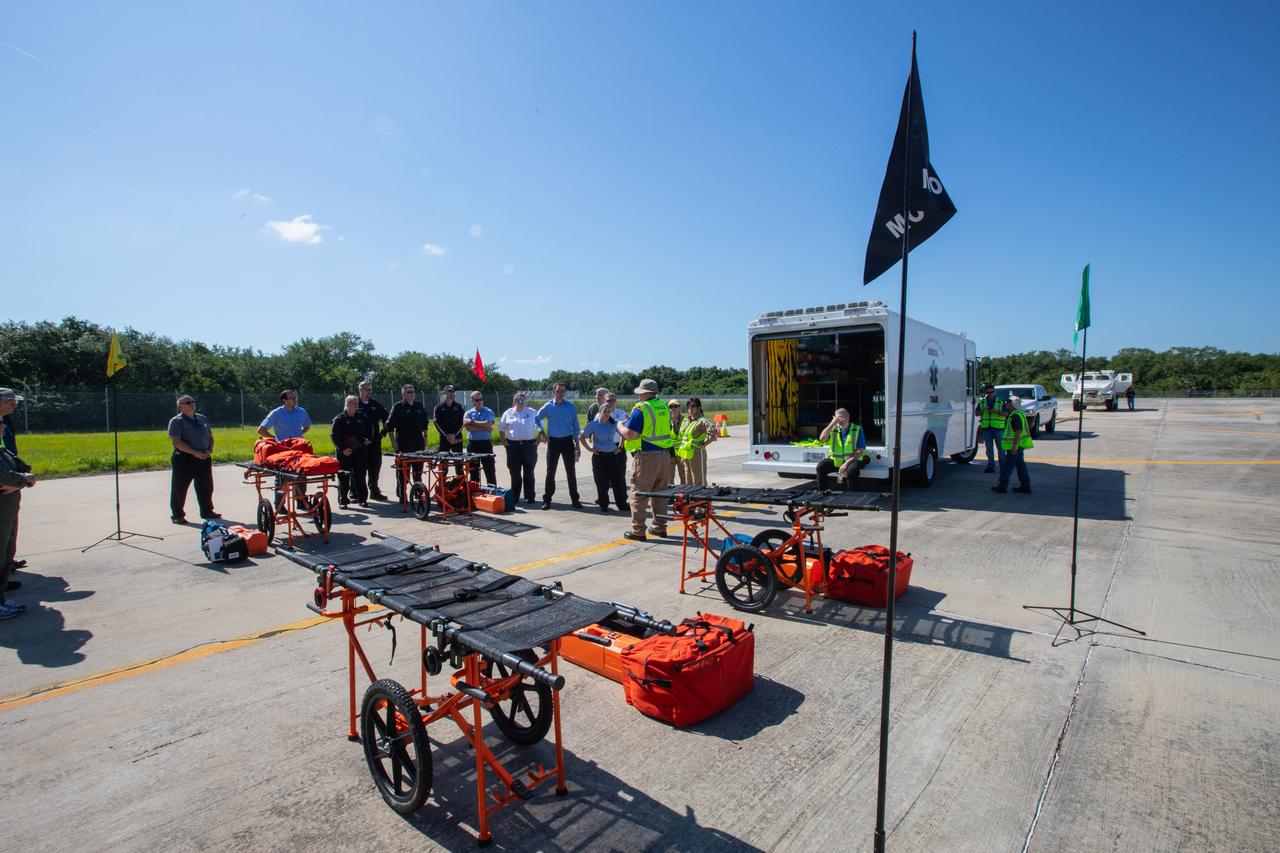
Kennedy Space Center personnel and American Medical Response (AMR) contractor paramedics gather at the Florida spaceport’s Shuttle Landing Facility on May 17, 2019, for a medical support training course. The course was designed to familiarize the AMR paramedics with the center’s Triage Forces deployment, which included medical team members, fire/rescue personnel, environmental health specialists and flight operations crew members, as well as a helicopter, Mine Resistant Ambush Protected (MRAP) tactical vehicle, fire pumper truck and triage vehicles. The AMR paramedics will assist the agency in contingency planning for the return of human spaceflight from Kennedy.
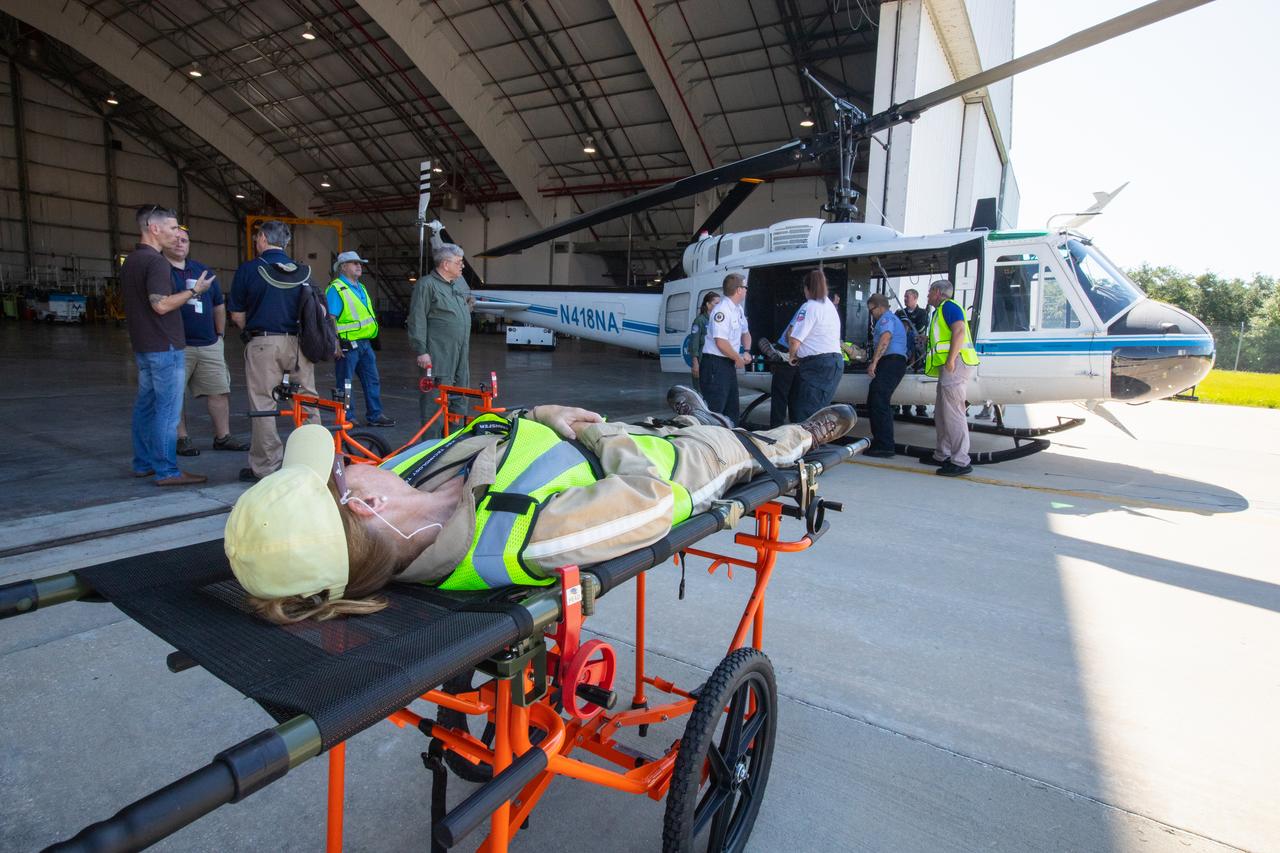
A Kennedy Space Center staff member serves as a “patient” during a medical support training course held May 17, 2019, in the Space Florida hangar at the spaceport’s Shuttle Landing Facility. The course was designed to familiarize the AMR paramedics with the center’s Triage Forces deployment, which included medical team members, fire/rescue personnel, environmental health specialists and flight operations crew members, as well as a helicopter, Mine Resistant Ambush Protected (MRAP) tactical vehicle, fire pumper truck and triage vehicles. The AMR paramedics will assist the agency in contingency planning for the return of human spaceflight from Kennedy.
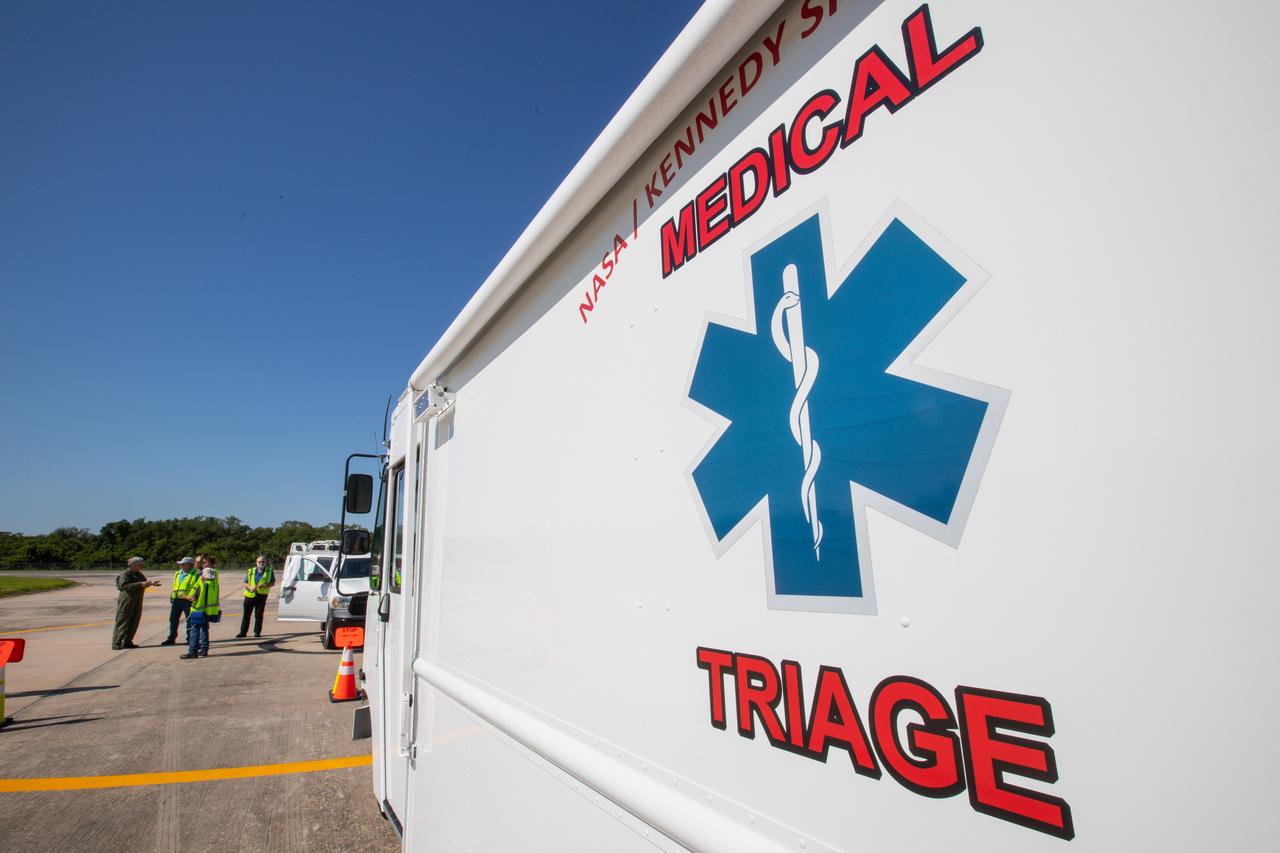
One of Kennedy Space Center’s medical triage vehicles stands at the ready during a medical support training course at the Florida spaceport’s Shuttle Landing Facility on May 17, 2019. Kennedy personnel and American Medical Response (AMR) contractor paramedics participated in the course, which was designed to familiarize the AMR paramedics with the center’s Triage Forces deployment, including medical team members, fire/rescue personnel, environmental health specialists and flight operations crew members, as well as a helicopter, Mine Resistant Ambush Protected (MRAP) tactical vehicle, fire pumper truck and triage vehicles. The AMR paramedics will assist the agency in contingency planning for the return of human spaceflight from Kennedy.
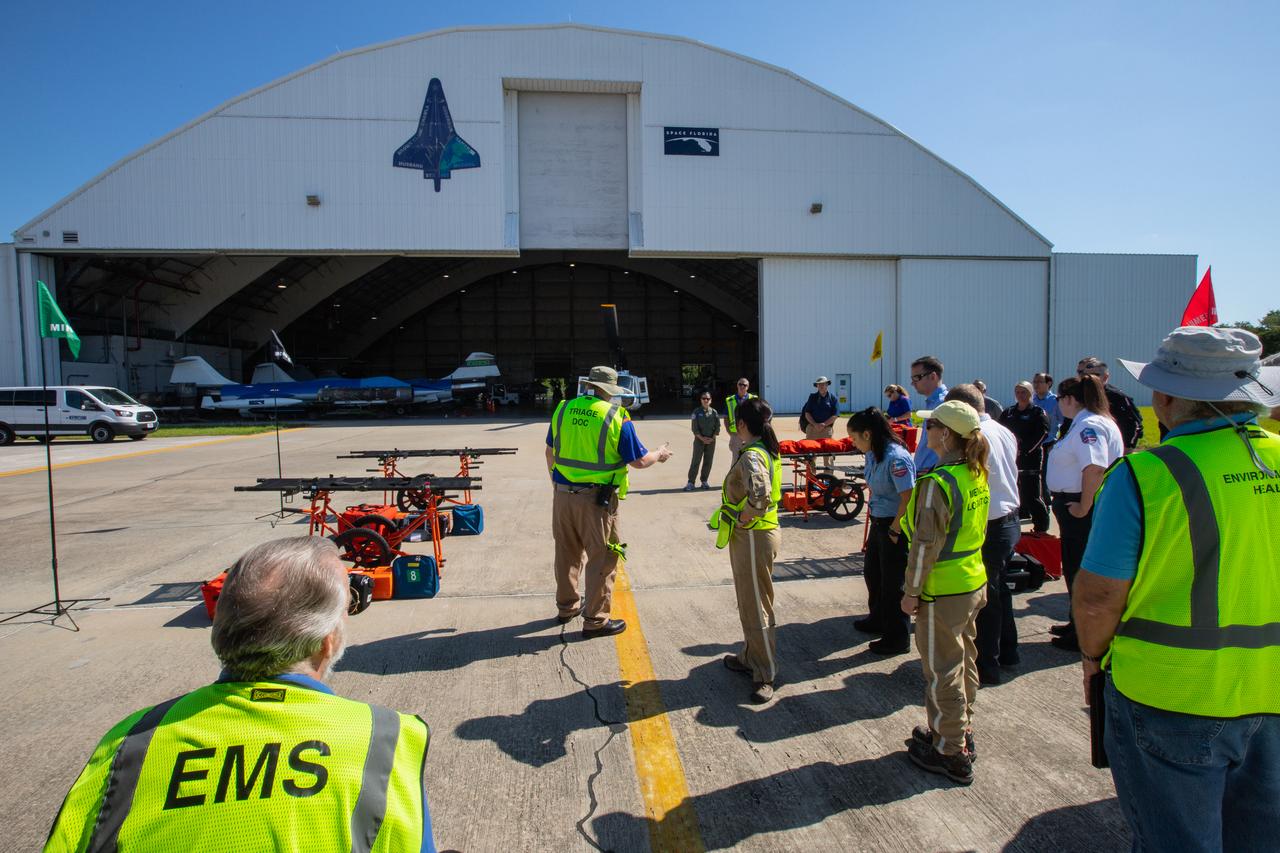
Kennedy Space Center personnel and American Medical Response (AMR) contractor paramedics gather near the Space Florida hangar at the spaceport’s Shuttle Landing Facility on May 17, 2019, for a medical support training course. The course was designed to familiarize the AMR paramedics with the center’s Triage Forces deployment, which included medical team members, fire/rescue personnel, environmental health specialists and flight operations crew members, as well as a helicopter, Mine Resistant Ambush Protected (MRAP) tactical vehicle, fire pumper truck and triage vehicles. The AMR paramedics will assist the agency in contingency planning for the return of human spaceflight from Kennedy.
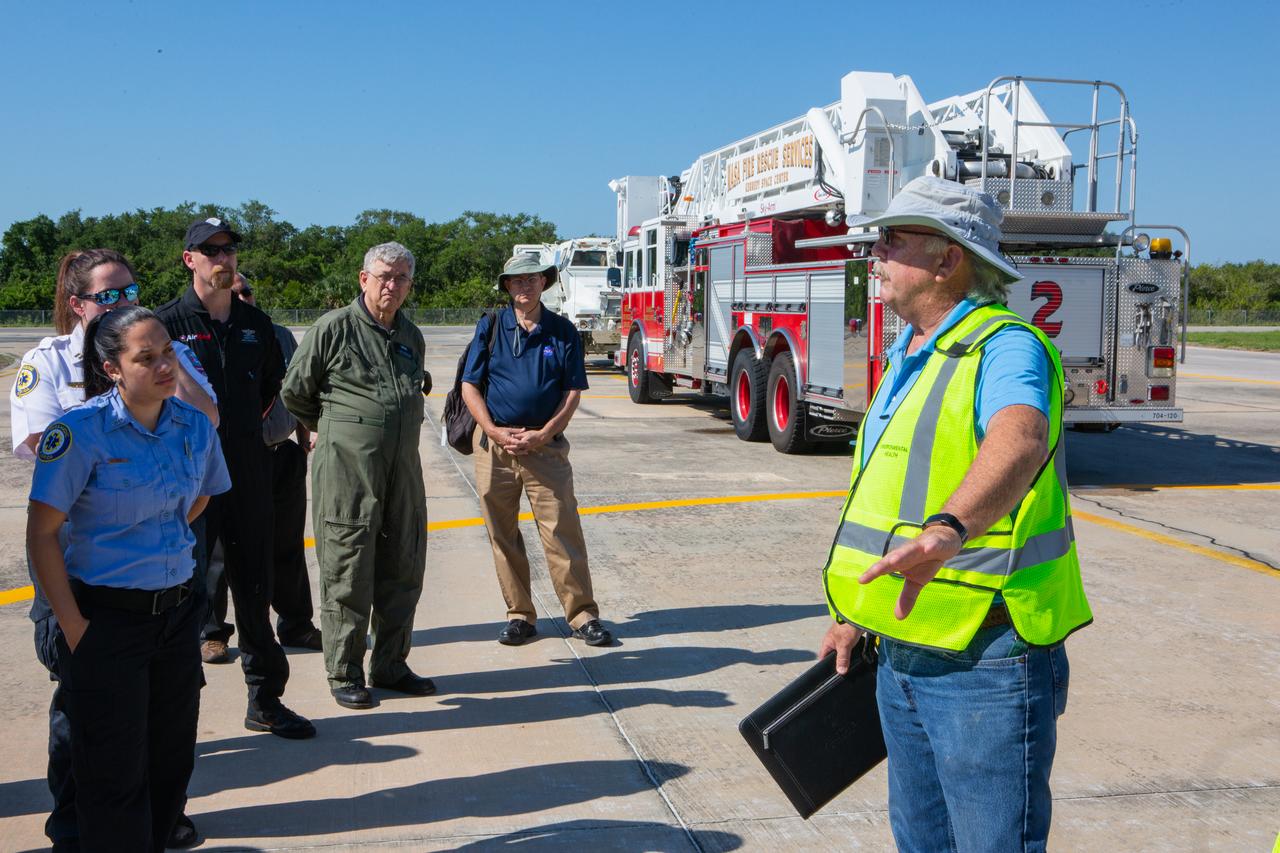
Kennedy Space Center personnel and American Medical Response (AMR) contractor paramedics gather at the Florida spaceport’s Shuttle Landing Facility on May 17, 2019, for a medical support training course. The course was designed to familiarize the AMR paramedics with the center’s Triage Forces deployment, which included medical team members, fire/rescue personnel, environmental health specialists and flight operations crew members, as well as a helicopter, Mine Resistant Ambush Protected (MRAP) tactical vehicle, fire pumper truck and triage vehicles. The AMR paramedics will assist the agency in contingency planning for the return of human spaceflight from Kennedy.
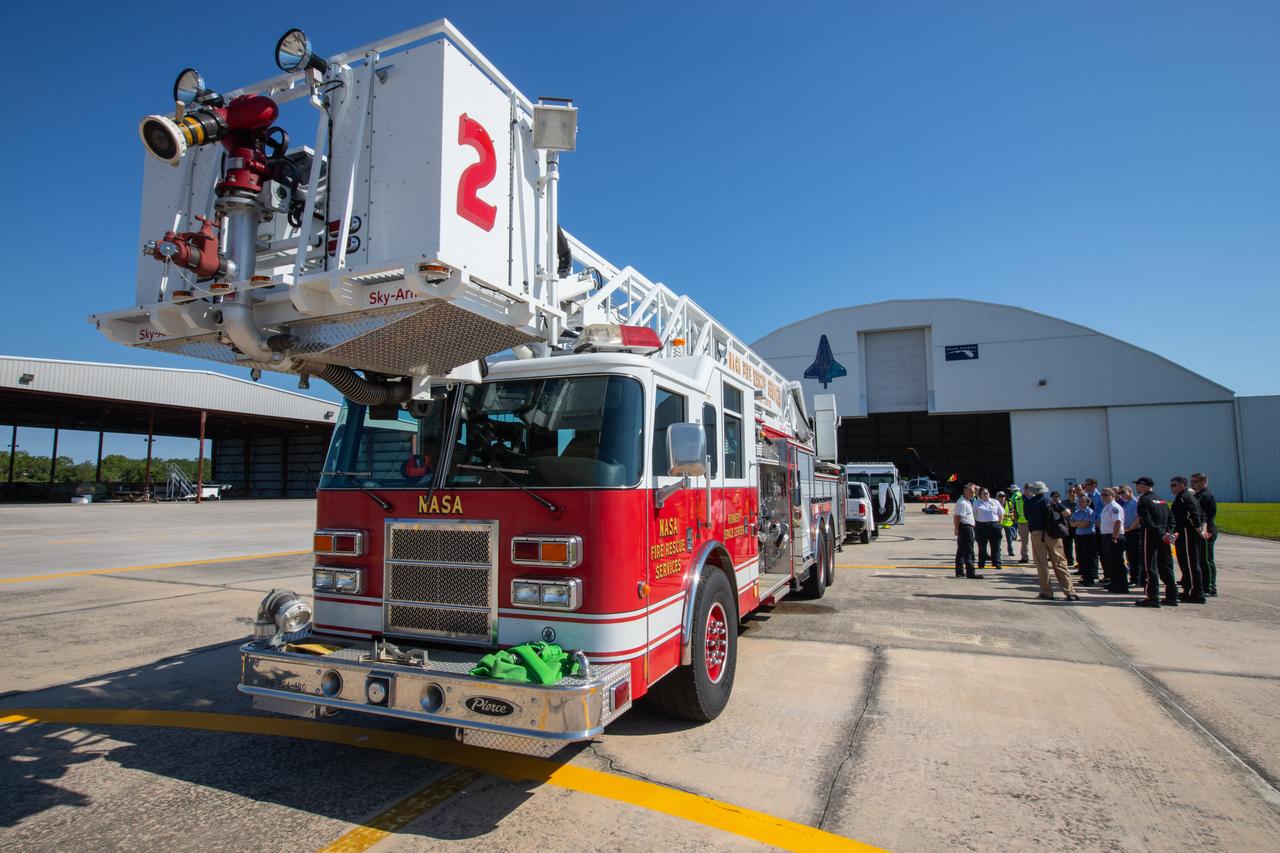
A Kennedy Space Center fire pumper truck stands at the ready during a medical support training course at the Florida spaceport’s Shuttle Landing Facility on May 17, 2019. Kennedy personnel and American Medical Response (AMR) contractor paramedics participated in the course, which was designed to familiarize the AMR paramedics with the center’s Triage Forces deployment, including medical team members, fire/rescue personnel, environmental health specialists and flight operations crew members, as well as a helicopter, Mine Resistant Ambush Protected (MRAP) tactical vehicle, fire pumper truck and triage vehicles. The AMR paramedics will assist the agency in contingency planning for the return of human spaceflight from Kennedy.
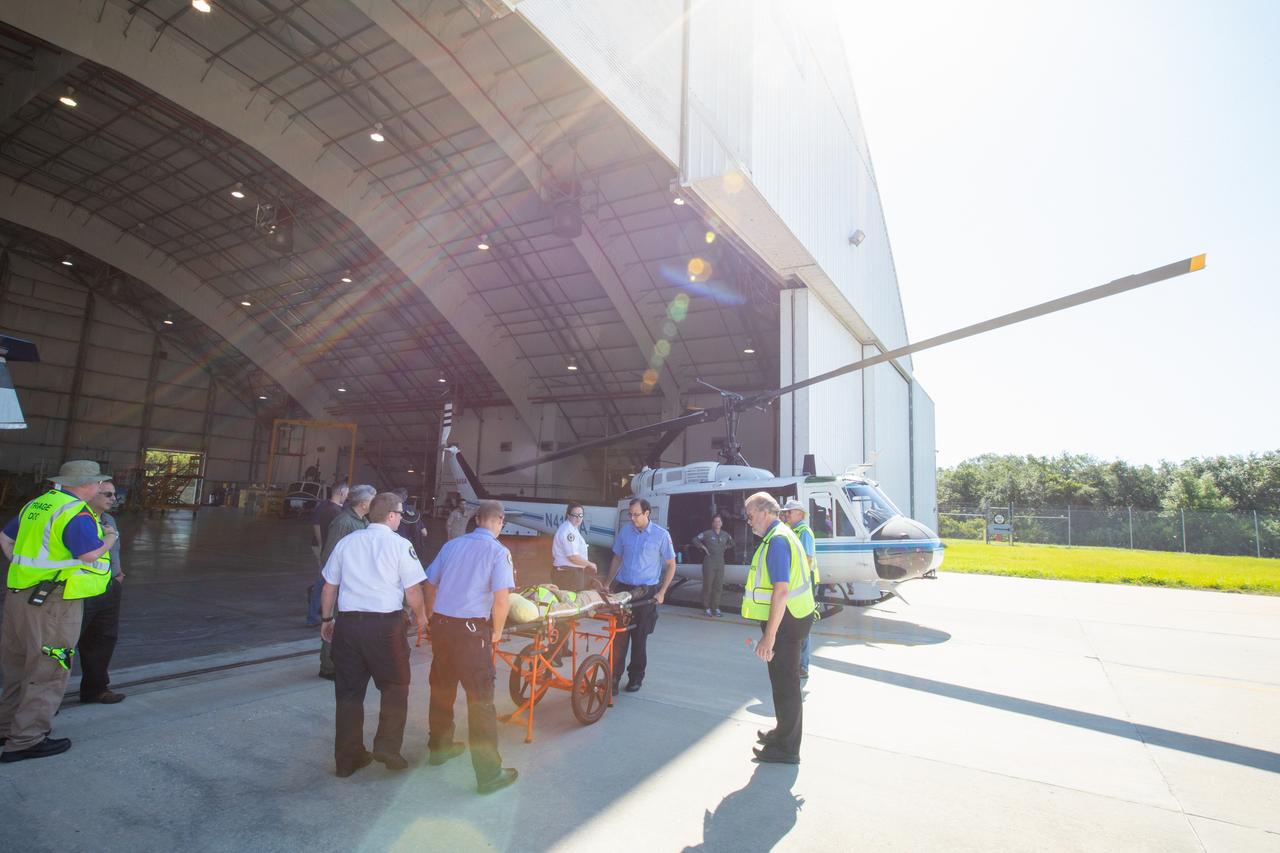
Kennedy Space Center personnel and American Medical Response (AMR) contractor paramedics gather around a “patient,” a KEMCON Fitness Center staff member, during a medical support training course in the Space Florida hangar at the spaceport’s Shuttle Landing Facility on May 17, 2019. The course was designed to familiarize the AMR paramedics with the center’s Triage Forces deployment, which included medical team members, fire/rescue personnel, environmental health specialists and flight operations crew members, as well as a helicopter, Mine Resistant Ambush Protected (MRAP) tactical vehicle, fire pumper truck and triage vehicles. The AMR paramedics will assist the agency in contingency planning for the return of human spaceflight from Kennedy.
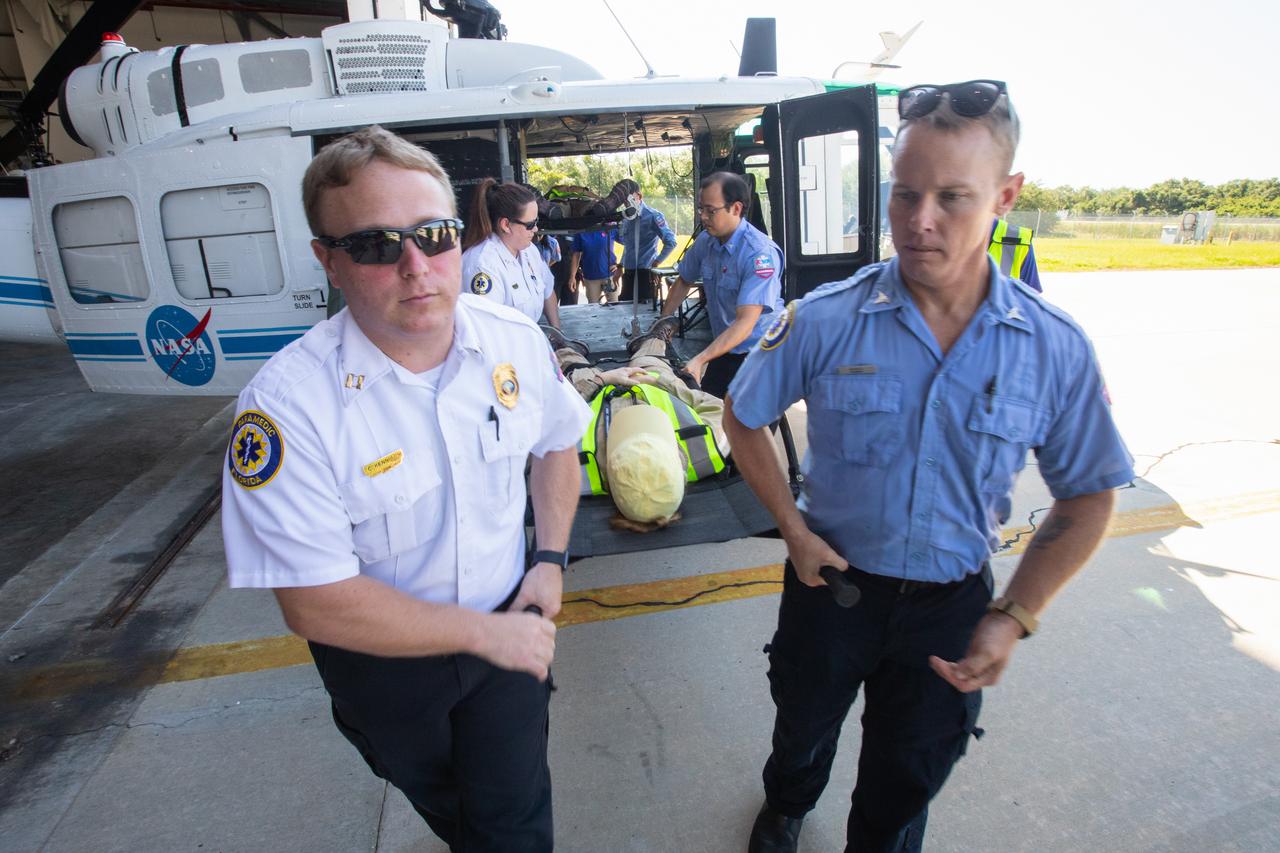
Kennedy Space Center personnel and American Medical Response (AMR) contractor paramedics gather around a “patient,” a KEMCON Fitness Center staff member, during a medical support training course in the Space Florida hangar at the spaceport’s Shuttle Landing Facility on May 17, 2019. The course was designed to familiarize the AMR paramedics with the center’s Triage Forces deployment, which included medical team members, fire/rescue personnel, environmental health specialists and flight operations crew members, as well as a helicopter, Mine Resistant Ambush Protected (MRAP) tactical vehicle, fire pumper truck and triage vehicles. The AMR paramedics will assist the agency in contingency planning for the return of human spaceflight from Kennedy.
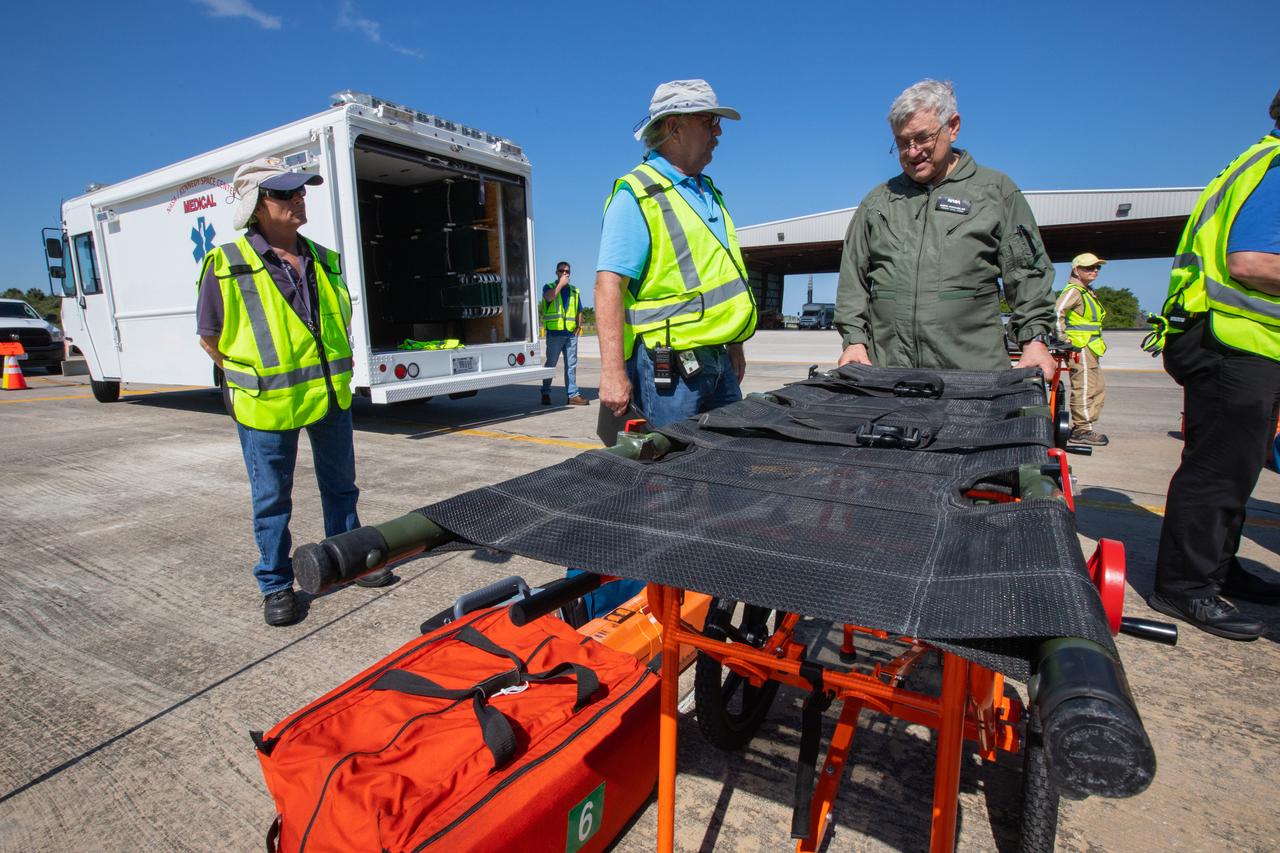
Kennedy Space Center personnel and American Medical Response (AMR) contractor paramedics participate in a medical support training course at the Florida spaceport’s Shuttle Landing Facility on May 17, 2019. The course was designed to familiarize the AMR paramedics with the center’s Triage Forces deployment, which included medical team members, fire/rescue personnel, environmental health specialists and flight operations crew members, as well as a helicopter, Mine Resistant Ambush Protected (MRAP) tactical vehicle, fire pumper truck and triage vehicles. The AMR paramedics will assist the agency in contingency planning for the return of human spaceflight from Kennedy.
Kennedy Space Center personnel and American Medical Response (AMR) contractor paramedics gather at the Florida spaceport’s Shuttle Landing Facility on May 17, 2019, for a medical support training course. The course was designed to familiarize the AMR paramedics with the center’s Triage Forces deployment, which included medical team members, fire/rescue personnel, environmental health specialists and flight operations crew members, as well as a helicopter, Mine Resistant Ambush Protected (MRAP) tactical vehicle, fire pumper truck and triage vehicles. The AMR paramedics will assist the agency in contingency planning for the return of human spaceflight from Kennedy.
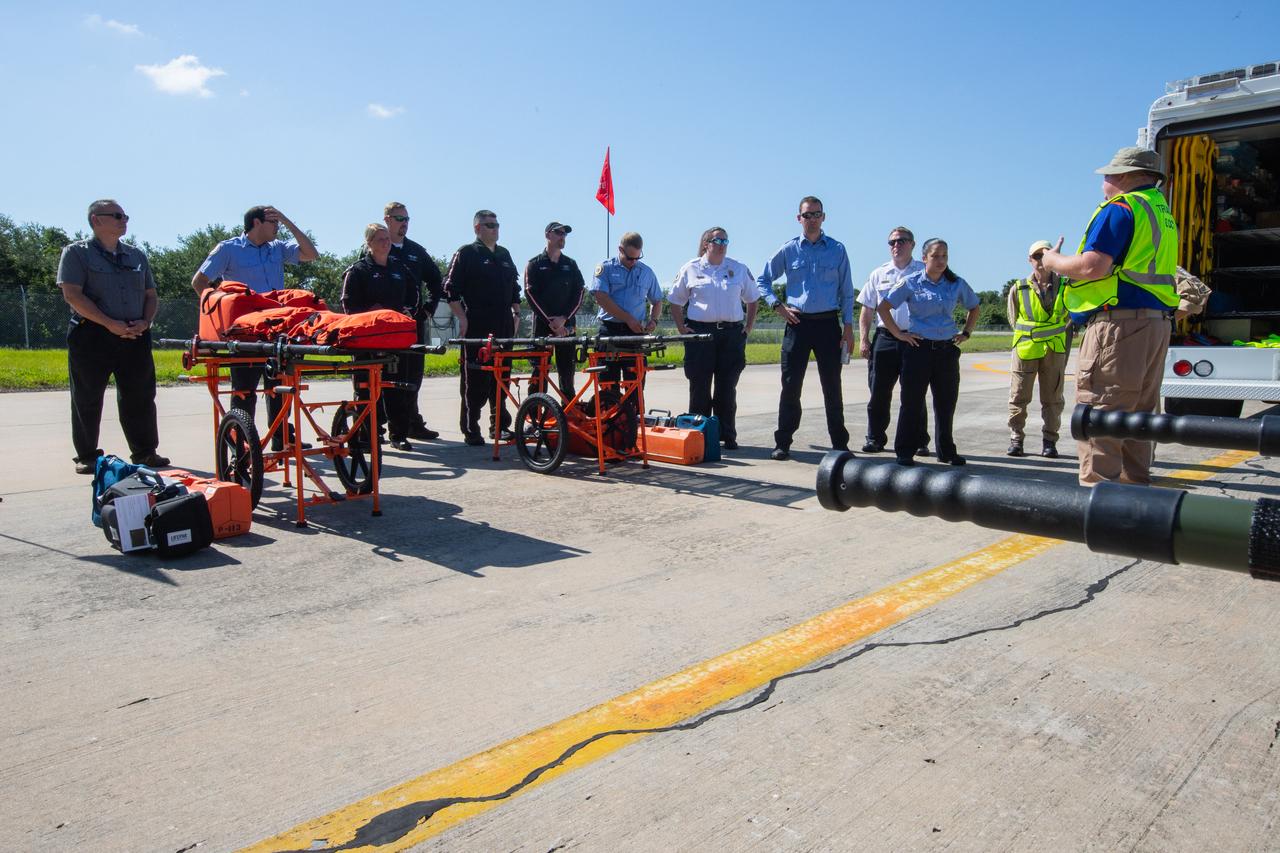
Kennedy Space Center personnel and American Medical Response (AMR) contractor paramedics gather at the Florida spaceport’s Shuttle Landing Facility on May 17, 2019, for a medical support training course. The course was designed to familiarize the AMR paramedics with the center’s Triage Forces deployment, which included medical team members, fire/rescue personnel, environmental health specialists and flight operations crew members, as well as a helicopter, Mine Resistant Ambush Protected (MRAP) tactical vehicle, fire pumper truck and triage vehicles. The AMR paramedics will assist the agency in contingency planning for the return of human spaceflight from Kennedy.
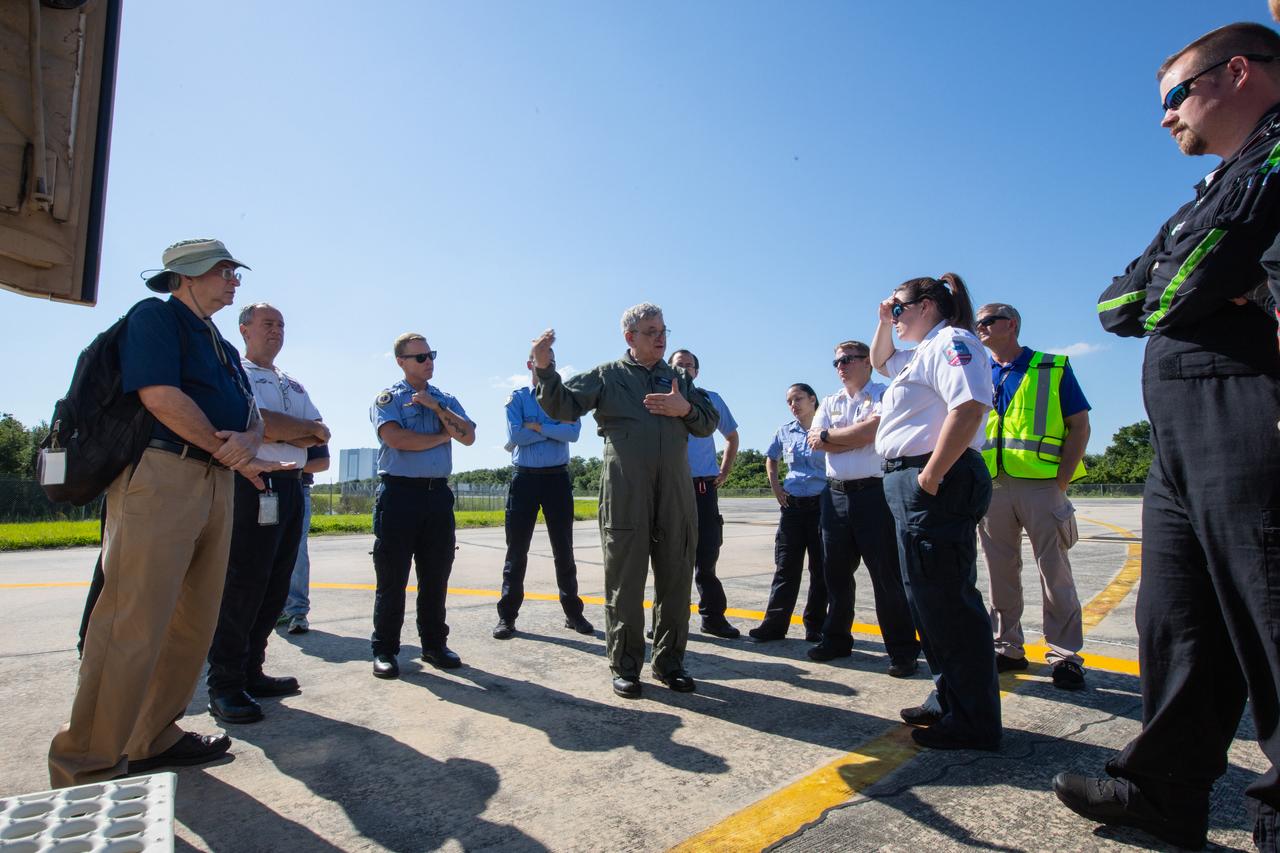
KEMCON physician Dr. Dan Woodard speaks to Kennedy Space Center personnel and American Medical Response (AMR) contractor paramedics gathered at the Florida spaceport’s Shuttle Landing Facility on May 17, 2019, for a medical support training course. The course was designed to familiarize the AMR paramedics with the center’s Triage Forces deployment, which included medical team members, fire/rescue personnel, environmental health specialists and flight operations crew members, as well as a helicopter, Mine Resistant Ambush Protected (MRAP) tactical vehicle, fire pumper truck and triage vehicles. The AMR paramedics will assist the agency in contingency planning for the return of human spaceflight from Kennedy.
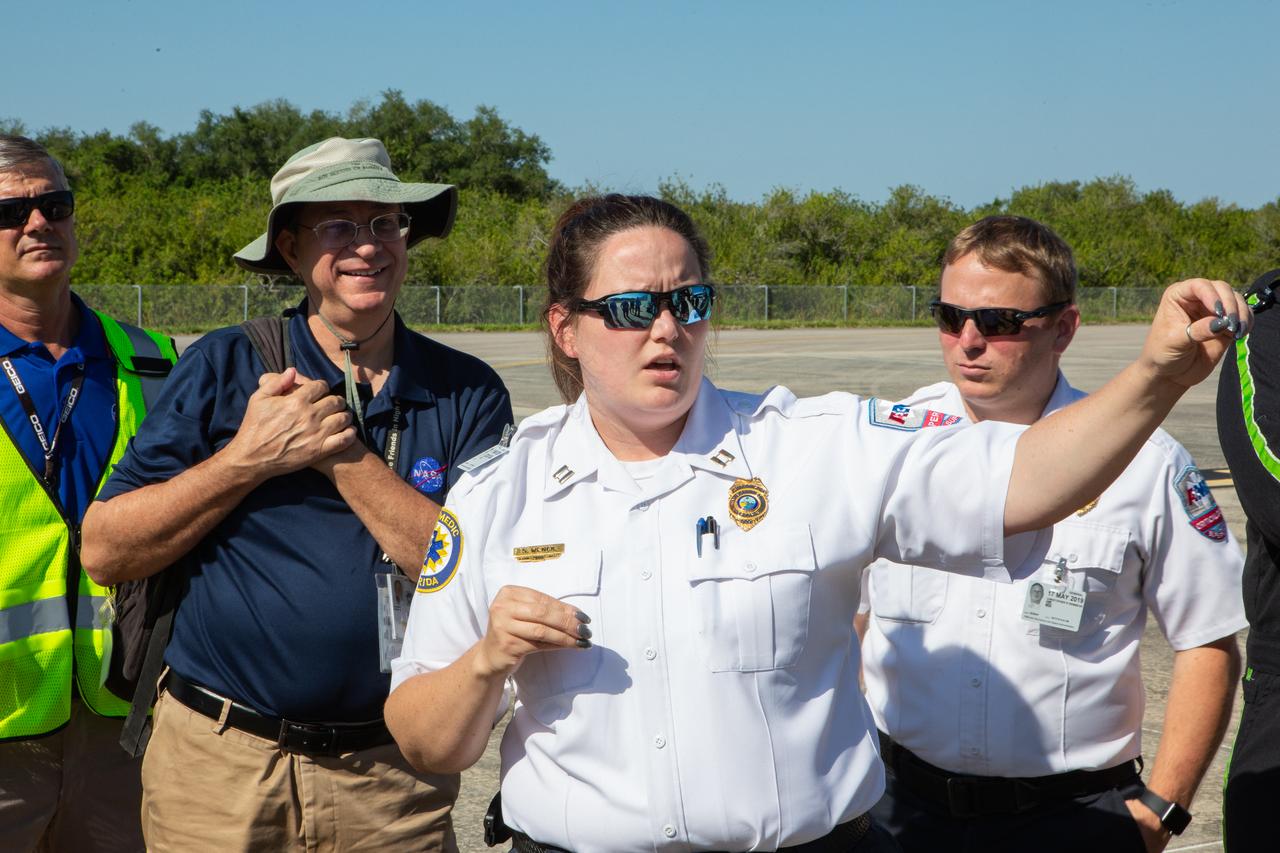
An American Medical Response (AMR) contractor paramedic speaks to Kennedy Space Center and AMR personnel gathered at the Florida spaceport’s Shuttle Landing Facility on May 17, 2019, for a medical support training course. The course was designed to familiarize the AMR paramedics with the center’s Triage Forces deployment, which included medical team members, fire/rescue personnel, environmental health specialists and flight operations crew members, as well as a helicopter, Mine Resistant Ambush Protected (MRAP) tactical vehicle, fire pumper truck and triage vehicles. The AMR paramedics will assist the agency in contingency planning for the return of human spaceflight from Kennedy.
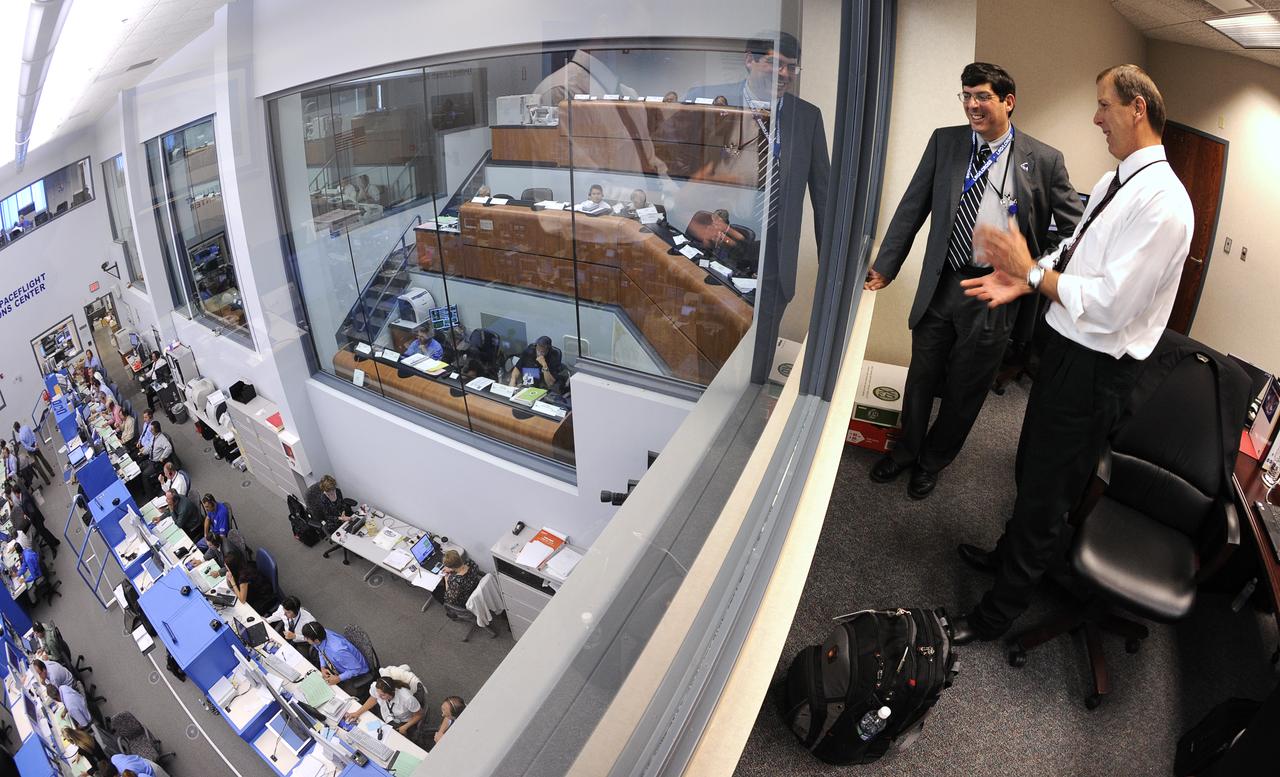
NASA Acting Administrator Chris Scolese, 2nd from right, looks out over the Atlas V Spaceflight Operations Center prior to the launch of the Lunar Reconnaissance Orbiter and Lunar Crater Observation and Sensing Satellite Thursday, June 18, 2009, from Cape Canaveral Air Force Station, Florida. Photo Credit: (NASA/Bill Ingalls)
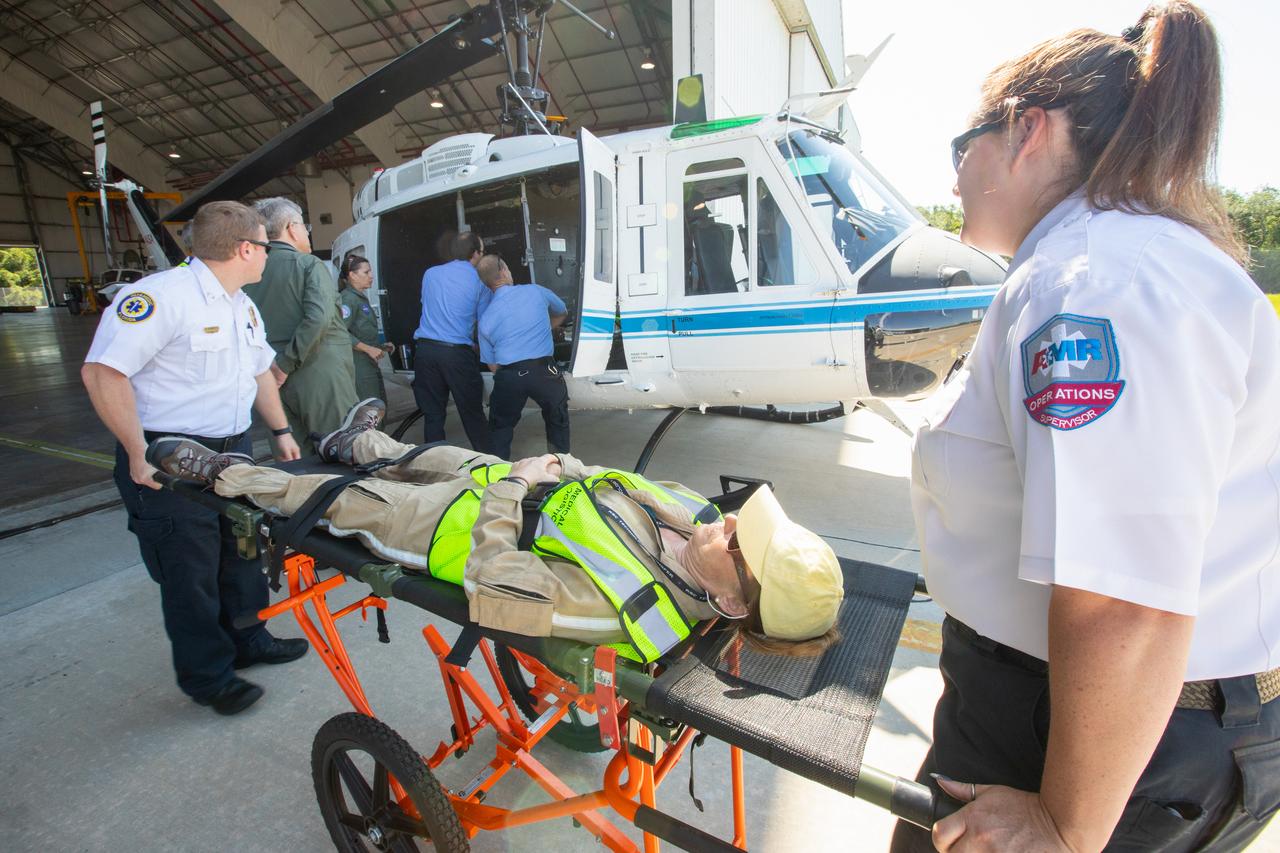
Kennedy Space Center personnel and American Medical Response (AMR) contractor paramedics prepare to load a “patient,” a KEMCON Fitness Center staff member, into a NASA helicopter during a medical support training course in the Space Florida hangar at the spaceport’s Shuttle Landing Facility on May 17, 2019. The course was designed to familiarize the AMR paramedics with the center’s Triage Forces deployment, which included medical team members, fire/rescue personnel, environmental health specialists and flight operations crew members, as well as a helicopter, Mine Resistant Ambush Protected (MRAP) tactical vehicle, fire pumper truck and triage vehicles. The AMR paramedics will assist the agency in contingency planning for the return of human spaceflight from Kennedy.
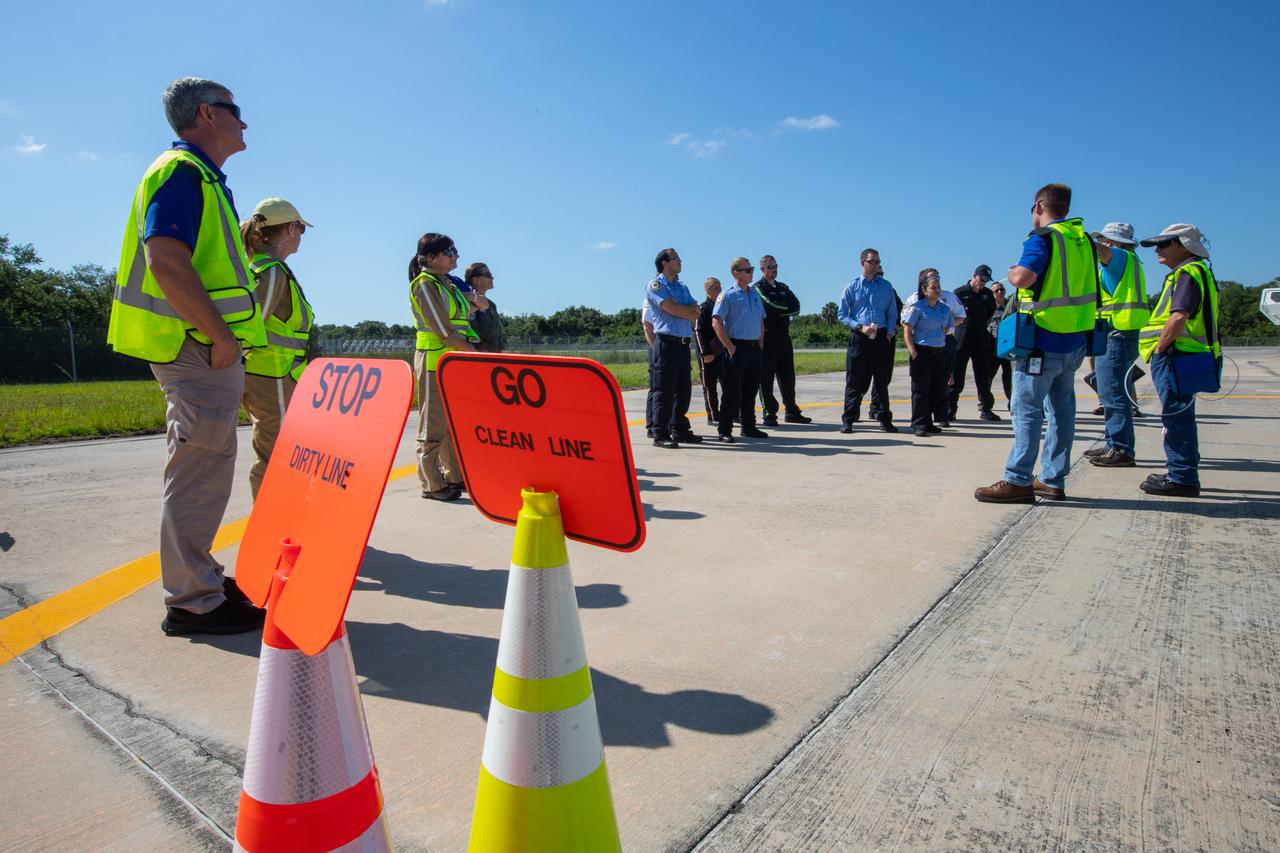
Kennedy Space Center personnel and American Medical Response (AMR) contractor paramedics gather at the Florida spaceport’s Shuttle Landing Facility on May 17, 2019, for a medical support training course. Signs in the foreground indicate the “dirty side,” where patient off-loading and decontamination would take place, and the “clean side,” used for patient evaluation and medevac. The course was designed to familiarize the AMR paramedics with the center’s Triage Forces deployment, which included medical team members, fire/rescue personnel, environmental health specialists and flight operations crew members, as well as a helicopter, Mine Resistant Ambush Protected (MRAP) tactical vehicle, fire pumper truck and triage vehicles. The AMR paramedics will assist the agency in contingency planning for the return of human spaceflight from Kennedy.
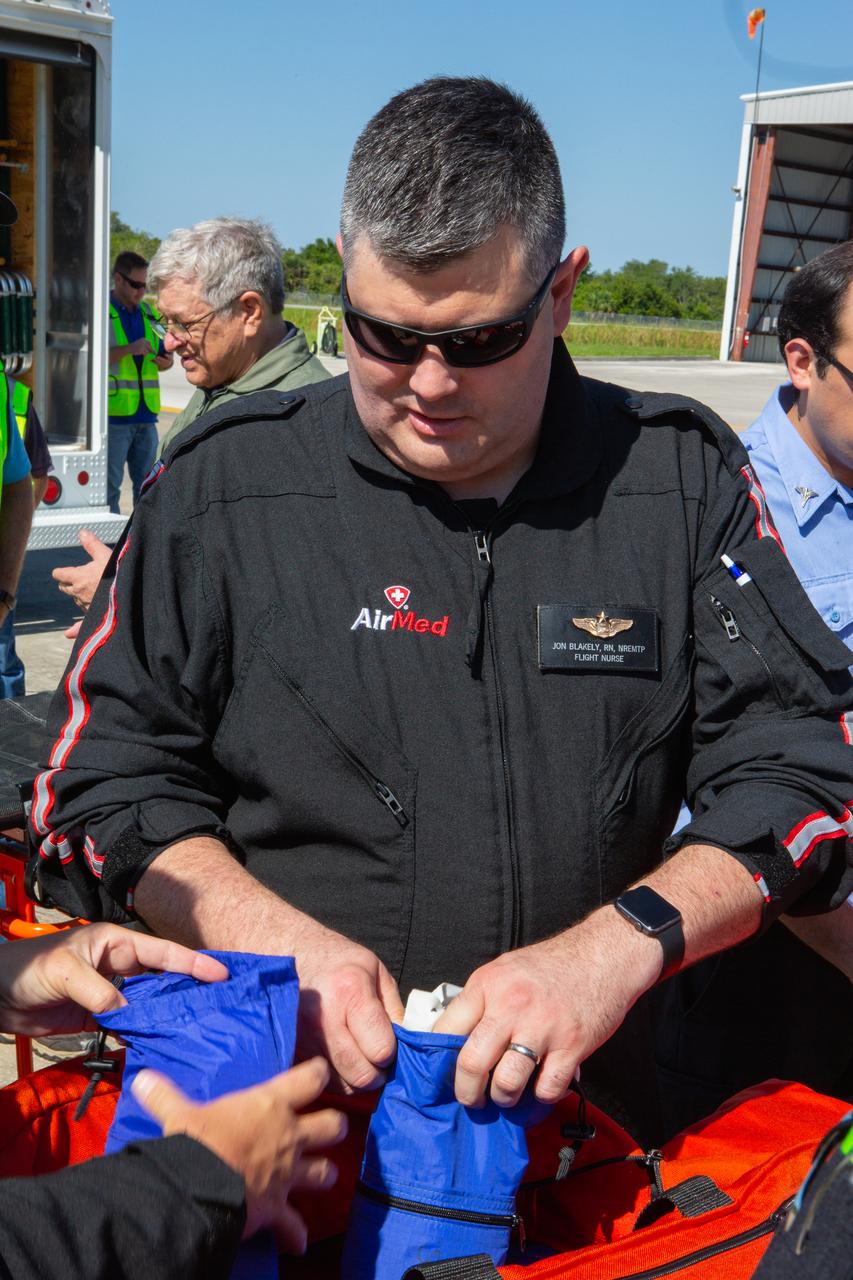
Jon Blakely, an AirMed flight nurse, joins Kennedy Space Center personnel and American Medical Response (AMR) contractor paramedics at the Florida spaceport’s Shuttle Landing Facility on May 17, 2019, for a medical support training course. Signs in the foreground indicate the “dirty side,” where patient off-loading and decontamination would take place, and the “clean side,” used for patient evaluation and medevac. The course was designed to familiarize the AMR paramedics with the center’s Triage Forces deployment, which included medical team members, fire/rescue personnel, environmental health specialists and flight operations crew members, as well as a helicopter, Mine Resistant Ambush Protected (MRAP) tactical vehicle, fire pumper truck and triage vehicles. The AMR paramedics will assist the agency in contingency planning for the return of human spaceflight from Kennedy.
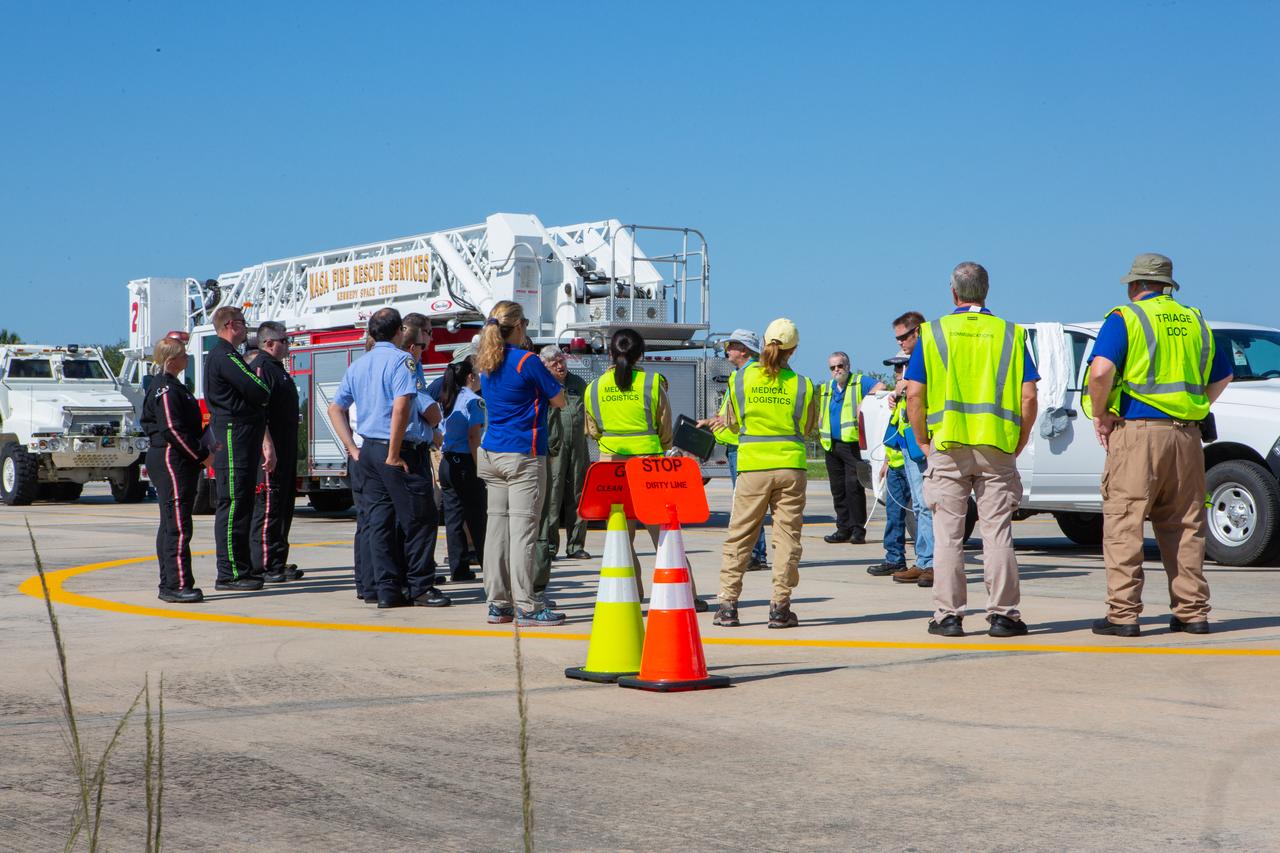
Kennedy Space Center personnel and American Medical Response (AMR) contractor paramedics gather at the Florida spaceport’s Shuttle Landing Facility on May 17, 2019, for a medical support training course. Signs in the foreground indicate the “dirty side,” where patient off-loading and decontamination would take place, and the “clean side,” used for patient evaluation and medevac. The course was designed to familiarize the AMR paramedics with the center’s Triage Forces deployment, which included medical team members, fire/rescue personnel, environmental health specialists and flight operations crew members, as well as a helicopter, Mine Resistant Ambush Protected (MRAP) tactical vehicle, fire pumper truck and triage vehicles. The AMR paramedics will assist the agency in contingency planning for the return of human spaceflight from Kennedy.
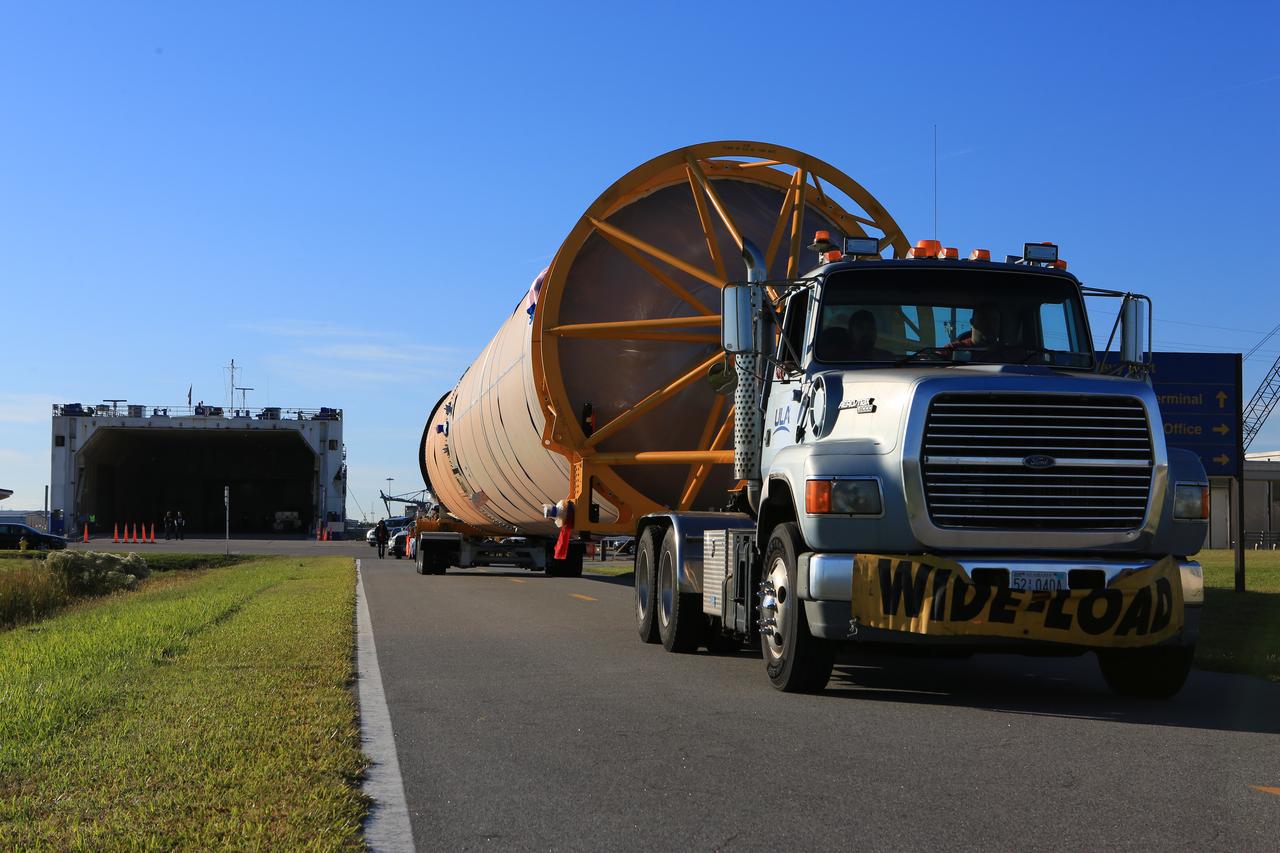
The first stage of the rocket that will launch Boeing's CST-100 Starliner spacecraft to the International Space Station on the company's uncrewed Orbital Flight Test arrives at Cape Canaveral Air Force Station in Florida on Dec. 7, 2018. The United Launch Alliance (ULA) Atlas V first stage booster was shipped aboard ULA's Mariner cargo vessel from the company's manufacturing plant in Decatur, Alabama. It is the final piece of hardware that ULA needs to launch the first Boeing Starliner. The booster will be transported to the Atlas Spaceflight Operations Center for receiving inspections and checkout.
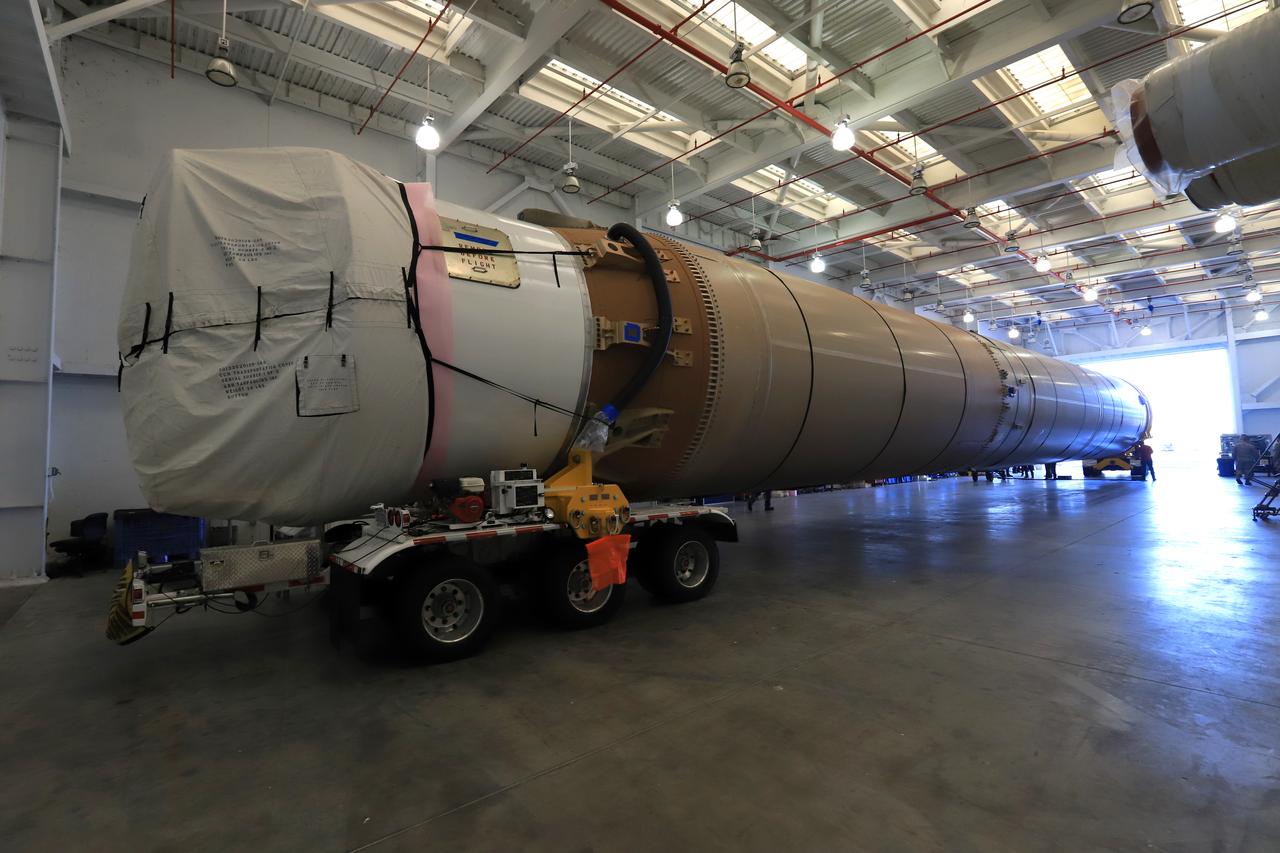
The first stage of the rocket that will launch Boeing's CST-100 Starliner spacecraft to the International Space Station on the company's uncrewed Orbital Flight Test arrives at the United Launch Alliance (ULA) Atlas Spaceflight Operations Center (ASOC) at Cape Canaveral Air Force Station in Florida on Dec. 7, 2018. The ULA Atlas V first stage booster was shipped aboard the company's Mariner cargo vessel from the company's manufacturing plant in Decatur, Alabama. It is the final piece of hardware that ULA needs to launch the first Boeing Starliner. Inside the ASOC, the booster will be inspected and checked out.
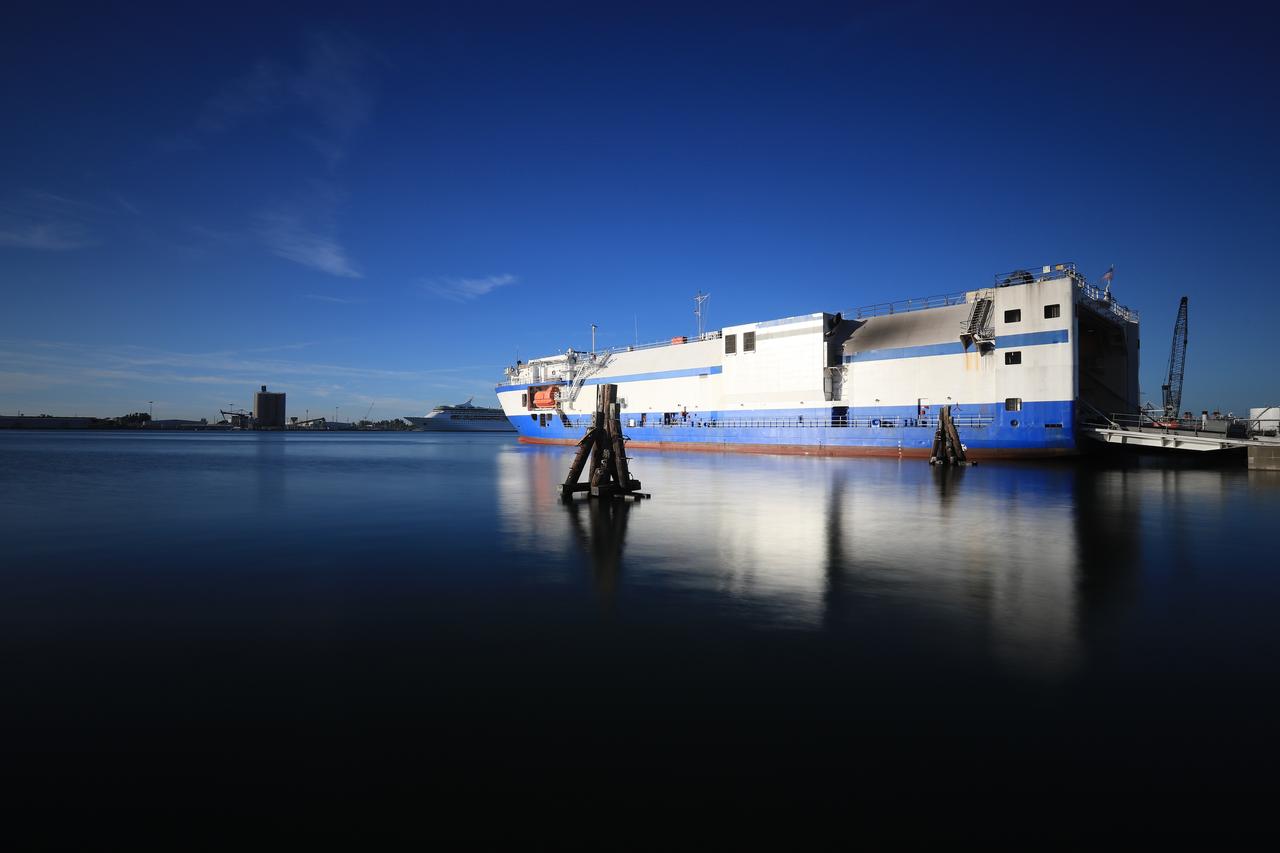
The United Launch Alliance (ULA) Mariner cargo vessel arrives at Cape Canaveral Air Force Station in Florida on Dec. 7, 2018, carrying the first stage of the rocket that will launch Boeing's CST-100 Starliner spacecraft to the International Space Station on the company's uncrewed Orbital Flight Test. The ULA Atlas V first stage booster was shipped from the company's manufacturing plant in Decatur, Alabama. It is the final piece of hardware that ULA needs to launch the first Boeing Starliner. The booster will be transported to the Atlas Spaceflight Operations Center for receiving inspections and checkout.

The first stage of the rocket that will launch Boeing's CST-100 Starliner spacecraft to the International Space Station on the company's uncrewed Orbital Flight Test is on its way to the United Launch Alliance (ULA) Atlas Spaceflight Operations Center (ASOC) at Cape Canaveral Air Force Station in Florida on Dec. 7, 2018. The ULA Atlas V first stage booster was shipped aboard the company's Mariner cargo vessel from the company's manufacturing plant in Decatur, Alabama. It is the final piece of hardware that ULA needs to launch the first Boeing Starliner. Inside the ASOC, the booster will be inspected and checked out.
The first stage of the rocket that will launch Boeing's CST-100 Starliner spacecraft to the International Space Station on the company's uncrewed Orbital Flight Test is on its way to the United Launch Alliance (ULA) Atlas Spaceflight Operations Center (ASOC) at Cape Canaveral Air Force Station in Florida on Dec. 7, 2018. The ULA Atlas V first stage booster was shipped aboard the company's Mariner cargo vessel from the company's manufacturing plant in Decatur, Alabama. It is the final piece of hardware that ULA needs to launch the first Boeing Starliner. Inside the ASOC, the booster will be inspected and checked out.
The first stage of the rocket that will launch Boeing's CST-100 Starliner spacecraft to the International Space Station on the company's uncrewed Orbital Flight Test arrived at Cape Canaveral Air Force Station in Florida on Dec. 7, 2018. The United Launch Alliance (ULA) Atlas V first stage booster was shipped aboard ULA's Mariner cargo vessel from the company's manufacturing plant in Decatur, Alabama. It is the final piece of hardware that ULA needs to launch the first Boeing Starliner. The booster will be transported to the Atlas Spaceflight Operations Center for receiving inspections and checkout.
The first stage of the rocket that will launch Boeing's CST-100 Starliner spacecraft to the International Space Station on the company's uncrewed Orbital Flight Test is on its way to the United Launch Alliance (ULA) Atlas Spaceflight Operations Center (ASOC) at Cape Canaveral Air Force Station in Florida on Dec. 7, 2018. The ULA Atlas V first stage booster was shipped aboard the company's Mariner cargo vessel from the company's manufacturing plant in Decatur, Alabama. It is the final piece of hardware that ULA needs to launch the first Boeing Starliner. Inside the ASOC, the booster will be inspected and checked out.
The first stage of the rocket that will launch Boeing's CST-100 Starliner spacecraft to the International Space Station on the company's uncrewed Orbital Flight Test arrives at Cape Canaveral Air Force Station in Florida on Dec. 7, 2018. The United Launch Alliance (ULA) Atlas V first stage booster was shipped aboard ULA's Mariner cargo vessel from the company's manufacturing plant in Decatur, Alabama. It is the final piece of hardware that ULA needs to launch the first Boeing Starliner. The booster will be transported to the Atlas Spaceflight Operations Center for receiving inspections and checkout.
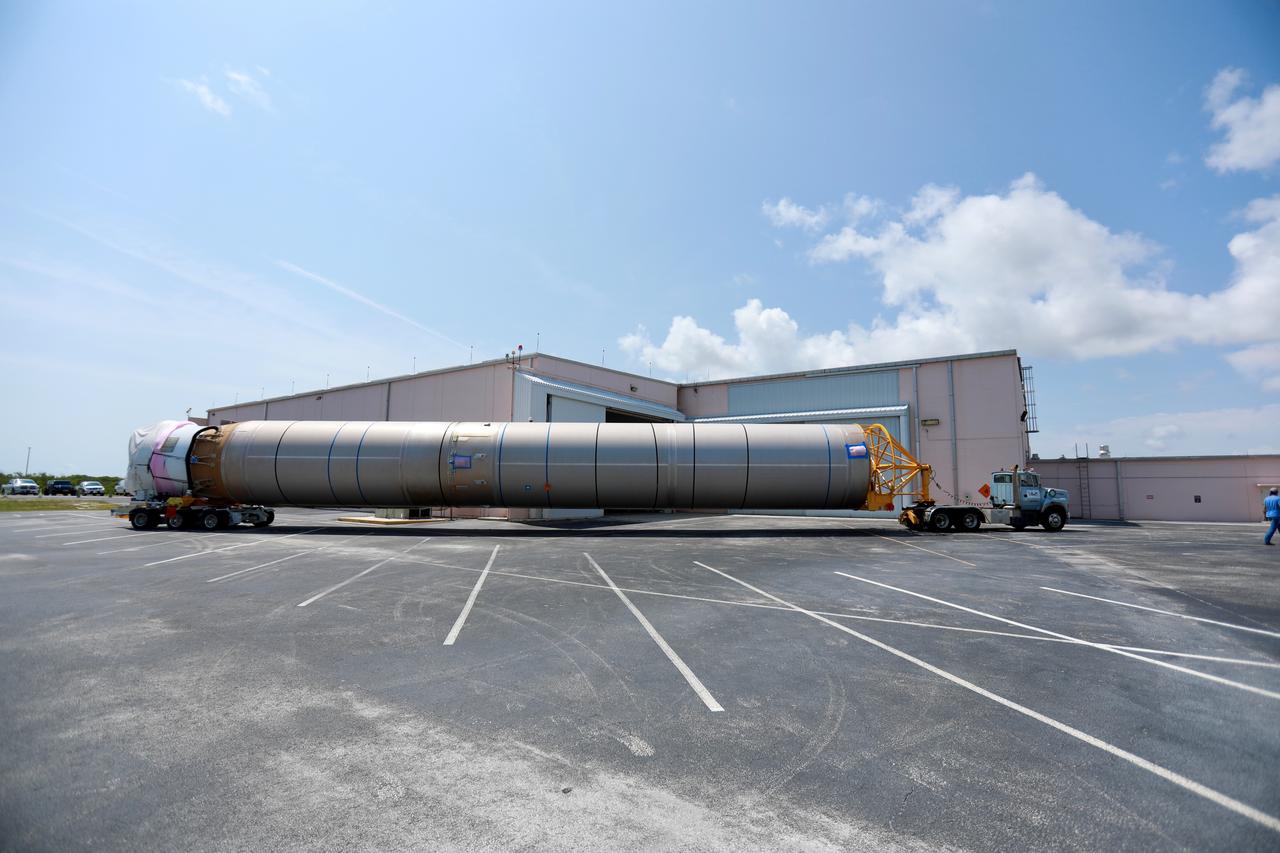
The United Launch Alliance (ULA) Atlas V booster that will be used for Boeing’s Crew Flight Test (CFT) nears the Atlas Spaceflight Operations Center (ASOC) at Cape Canaveral Air Force Station in Florida on June 5, 2019. The ULA Atlas V rocket will launch Starliner and its crew, NASA astronauts Mike Fincke and Nicole Mann and Boeing astronaut Chris Ferguson, to the International Space Station for NASA’s Commercial Crew Program. Inside the ASOC, the booster will await the start of operations for its missions. The CFT will demonstrate Starliner and Atlas V’s ability to safely carry crew to and from the orbiting laboratory.
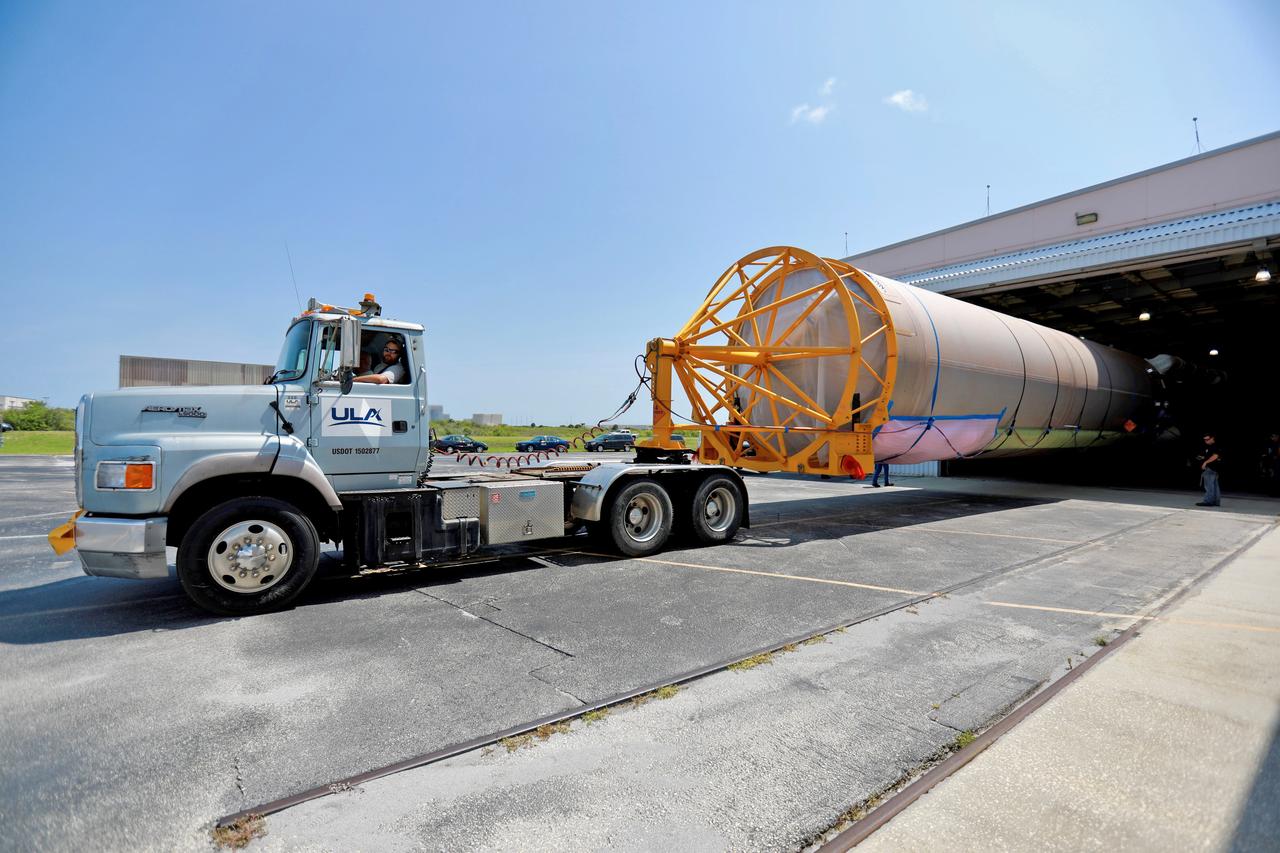
The United Launch Alliance (ULA) Atlas V booster that will be used for Boeing’s Crew Flight Test (CFT) is backed into the Atlas Spaceflight Operations Center (ASOC) at Cape Canaveral Air Force Station in Florida on June 5, 2019. The ULA Atlas V rocket will launch Starliner and its crew, NASA astronauts Mike Fincke and Nicole Mann and Boeing astronaut Chris Ferguson, to the International Space Station for NASA’s Commercial Crew Program. Inside the ASOC, the booster will await the start of operations for its missions. The CFT will demonstrate Starliner and Atlas V’s ability to safely carry crew to and from the orbiting laboratory.
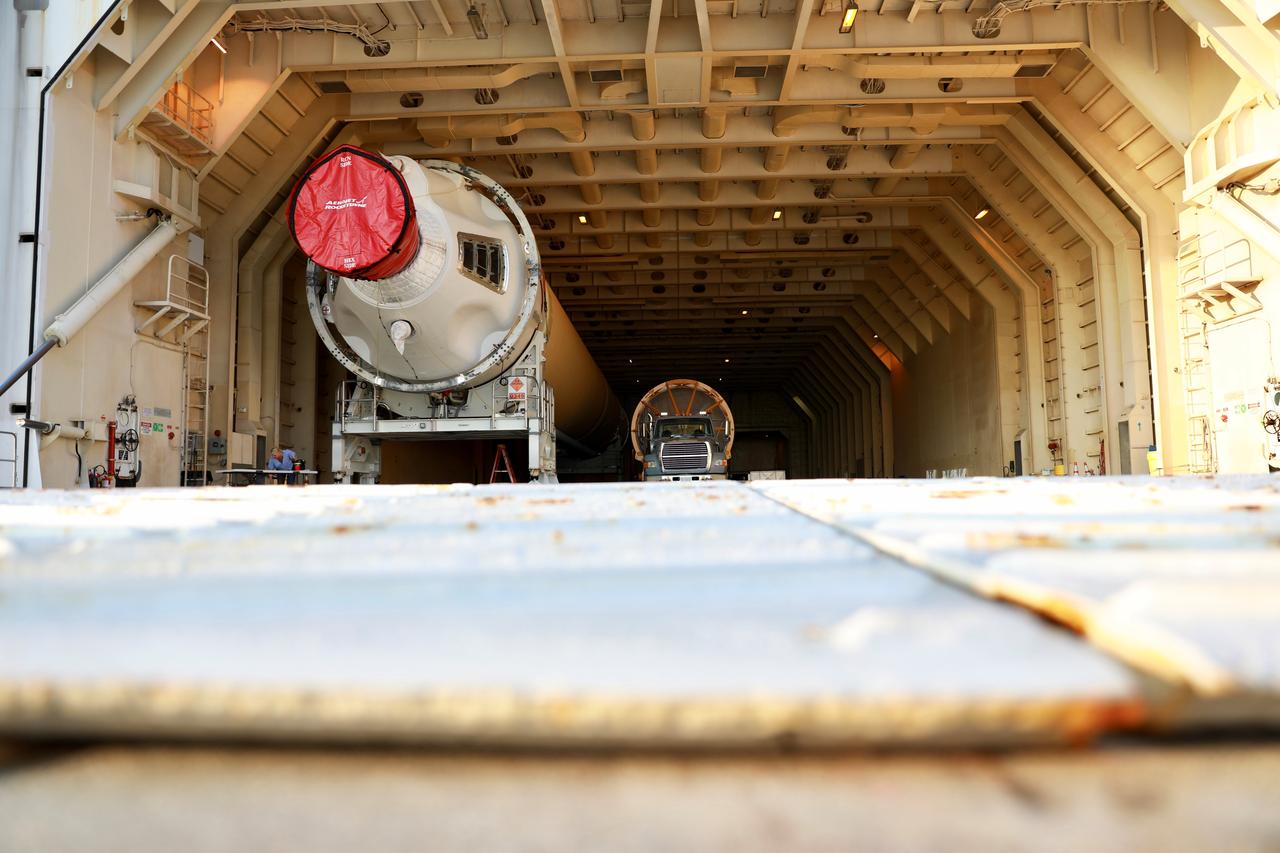
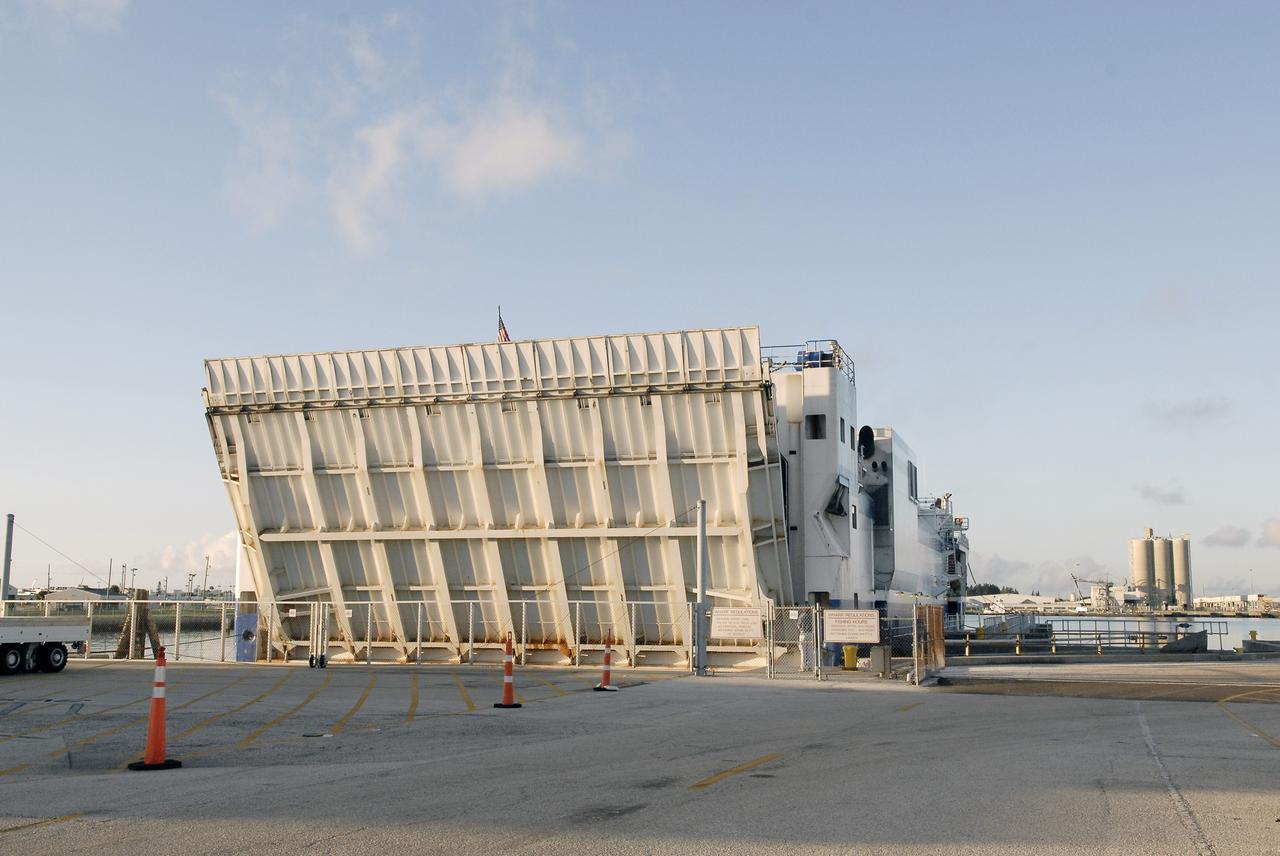
At the Army Wharf at Cape Canaveral Air Force Station in Florida, the United Launch Alliance (ULA) Mariner cargo ship door is lowered on June 5, 2019, for offloading of the ULA Atlas V booster that will be used for Boeing’s Crew Flight Test (CFT). The Atlas V rocket will launch the CST-100 Starliner spacecraft and its crew, NASA astronauts Mike Fincke and Nicole Mann and Boeing astronaut Chris Ferguson, to the International Space Station for NASA’s Commercial Crew Program. The booster will be transported to the Atlas Spaceflight Operations Center to await the start of operations for its mission. The CFT will demonstrate Starliner and Atlas V’s ability to safely carry crew to and from the orbiting laboratory.
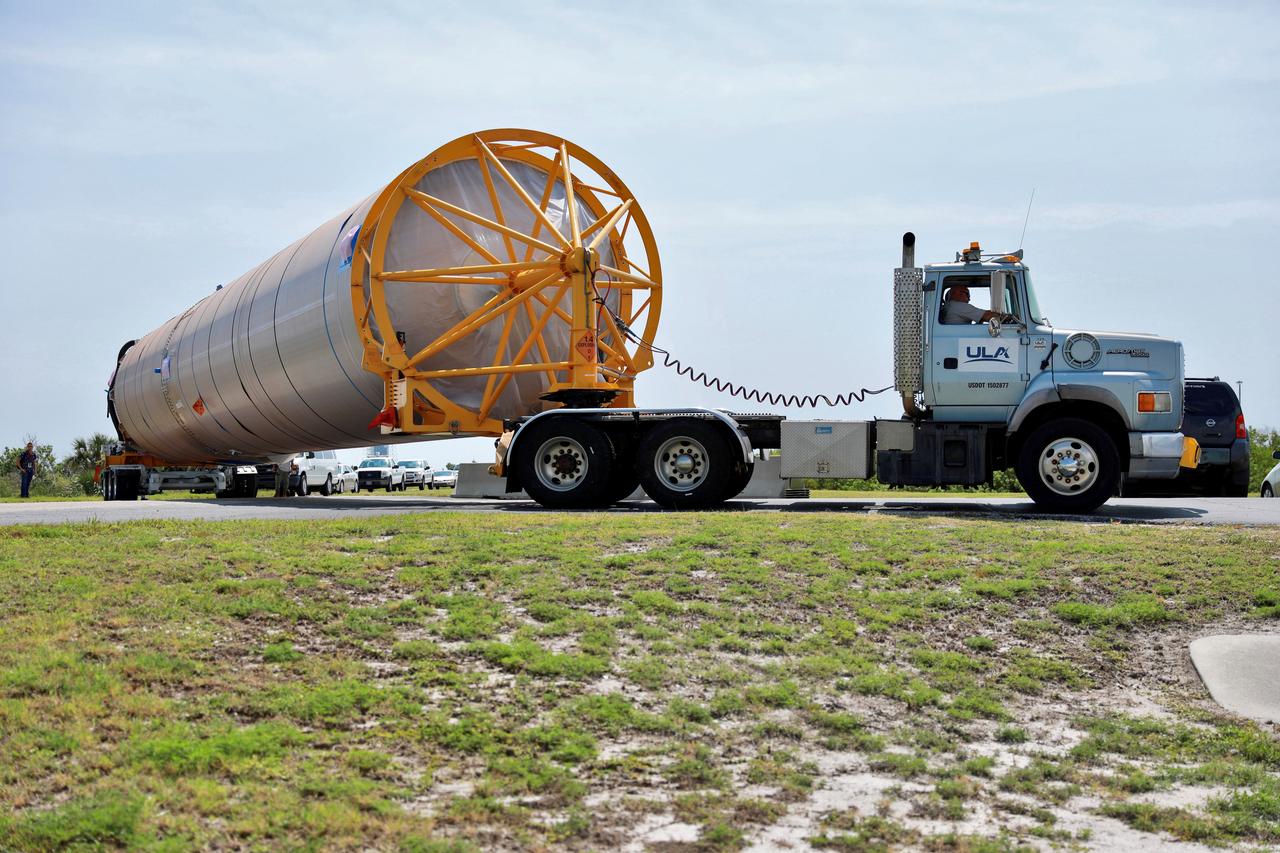
The United Launch Alliance (ULA) Atlas V booster that will be used for Boeing’s Crew Flight Test (CFT) nears the Atlas Spaceflight Operations Center (ASOC) at Cape Canaveral Air Force Station in Florida on June 5, 2019. The ULA Atlas V rocket will launch Starliner and its crew, NASA astronauts Mike Fincke and Nicole Mann and Boeing astronaut Chris Ferguson, to the International Space Station for NASA’s Commercial Crew Program. Inside the ASOC, the booster will await the start of operations for its missions. The CFT will demonstrate Starliner and Atlas V’s ability to safely carry crew to and from the orbiting laboratory.
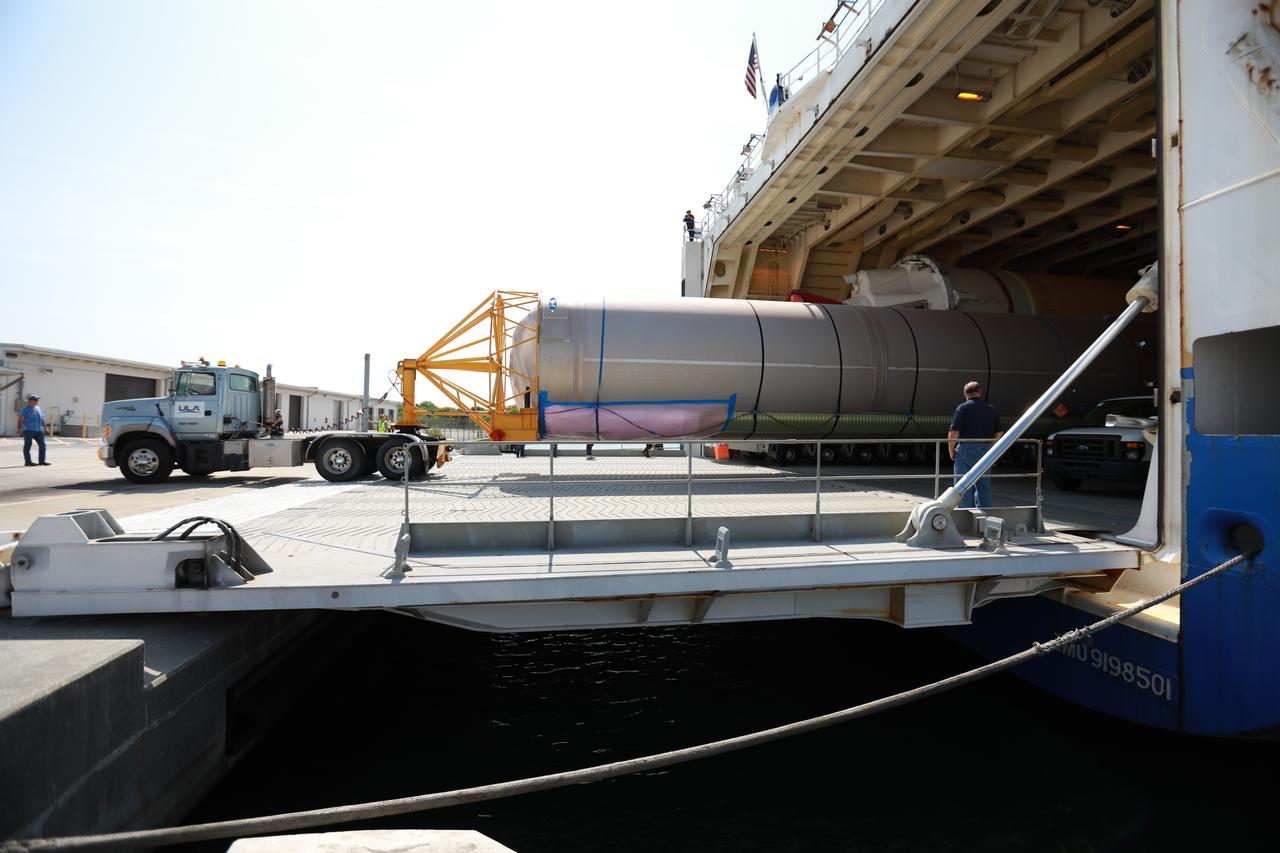
The United Launch Alliance (ULA) Atlas V booster that will be used for Boeing’s Crew Flight Test (CFT) is moved out of the Mariner cargo ship at the Army Wharf at Cape Canaveral Air Force Station in Florida on June 5, 2019. The ULA Atlas V rocket will launch the CST-100 Starliner and its crew, NASA astronauts Mike Fincke and Nicole Mann and Boeing astronaut Chris Ferguson, to the International Space Station for NASA’s Commercial Crew Program. The booster will be transported to the Atlas Spaceflight Operations Center to await the start of operations for its missions. The CFT will demonstrate Starliner and Atlas V’s ability to safely carry crew to and from the orbiting laboratory.
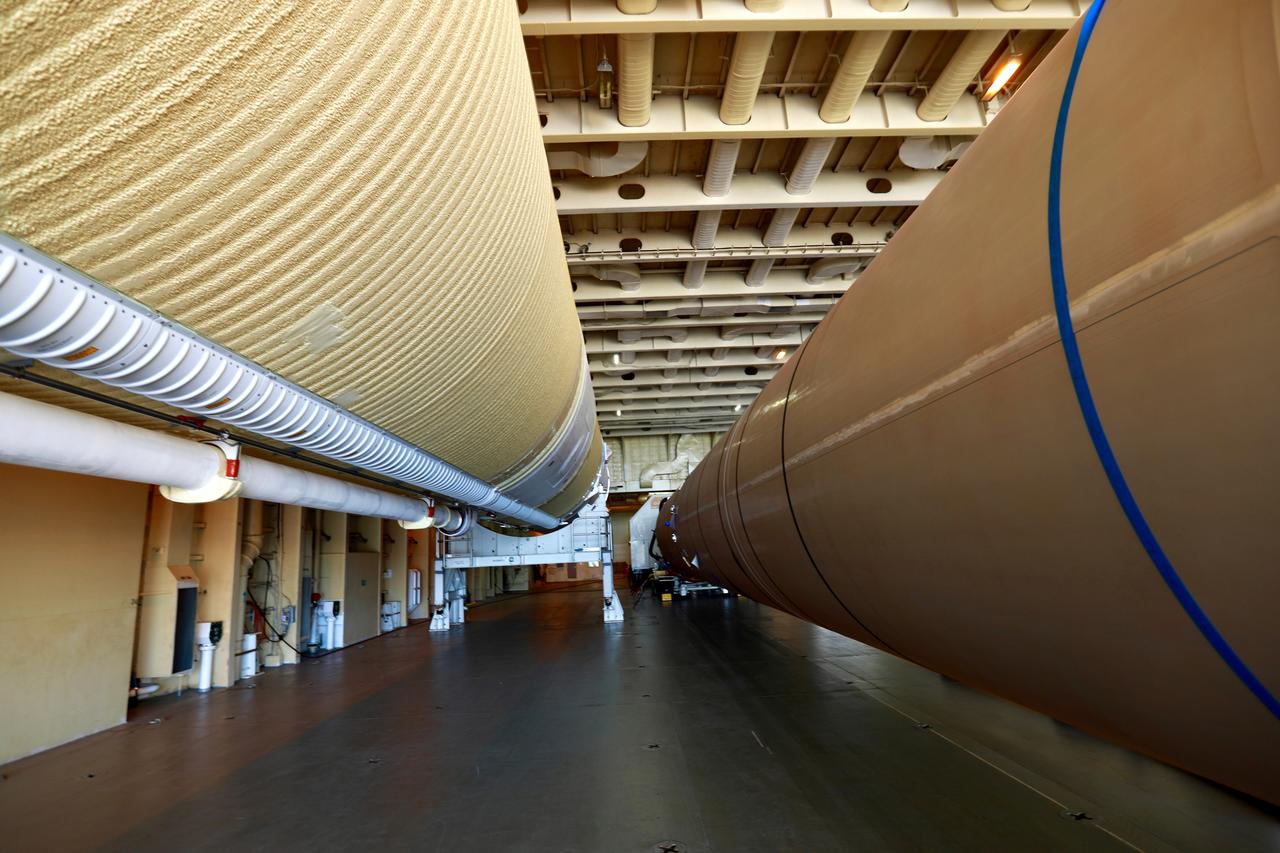
The United Launch Alliance (ULA) Atlas V booster that will be used for Boeing’s Crew Flight Test (CFT) is moved out of the Mariner cargo ship at the Army Wharf at Cape Canaveral Air Force Station in Florida on June 5, 2019. The ULA Atlas V rocket will launch the CST-100 Starliner and its crew, NASA astronauts Mike Fincke and Nicole Mann and Boeing astronaut Chris Ferguson, to the International Space Station for NASA’s Commercial Crew Program. The booster will be transported to the Atlas Spaceflight Operations Center to await the start of operations for its missions. The CFT will demonstrate Starliner and Atlas V’s ability to safely carry crew to and from the orbiting laboratory.
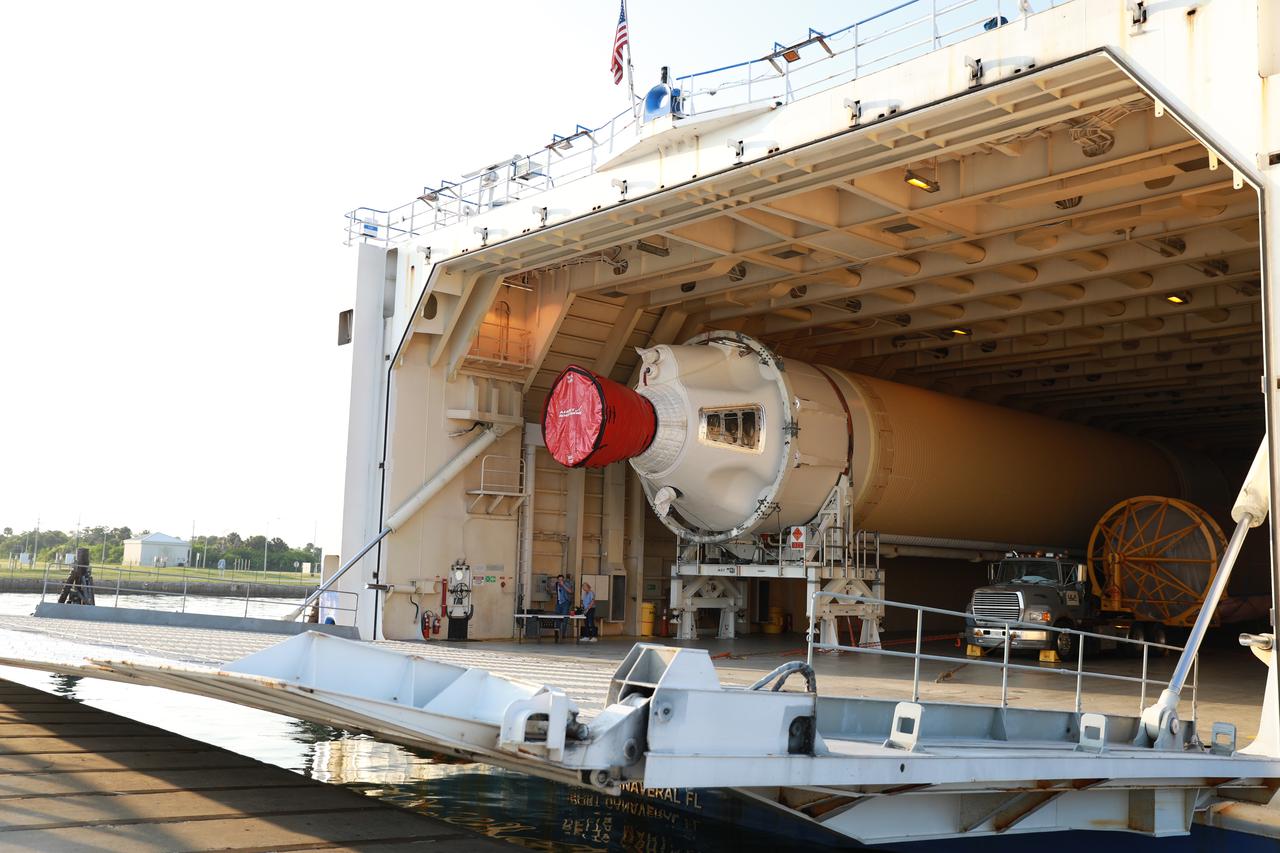
At the Army Wharf at Cape Canaveral Air Force Station in Florida, the United Launch Alliance (ULA) Mariner cargo ship door is lowered on June 5, 2019, for offloading of the ULA Atlas V booster that will be used for Boeing’s Crew Flight Test (CFT). The Atlas V rocket will launch the CST-100 Starliner spacecraft and its crew, NASA astronauts Mike Fincke and Nicole Mann and Boeing astronaut Chris Ferguson, to the International Space Station for NASA’s Commercial Crew Program. The booster will be transported to the Atlas Spaceflight Operations Center to await the start of operations for its mission. The CFT will demonstrate Starliner and Atlas V’s ability to safely carry crew to and from the orbiting laboratory.
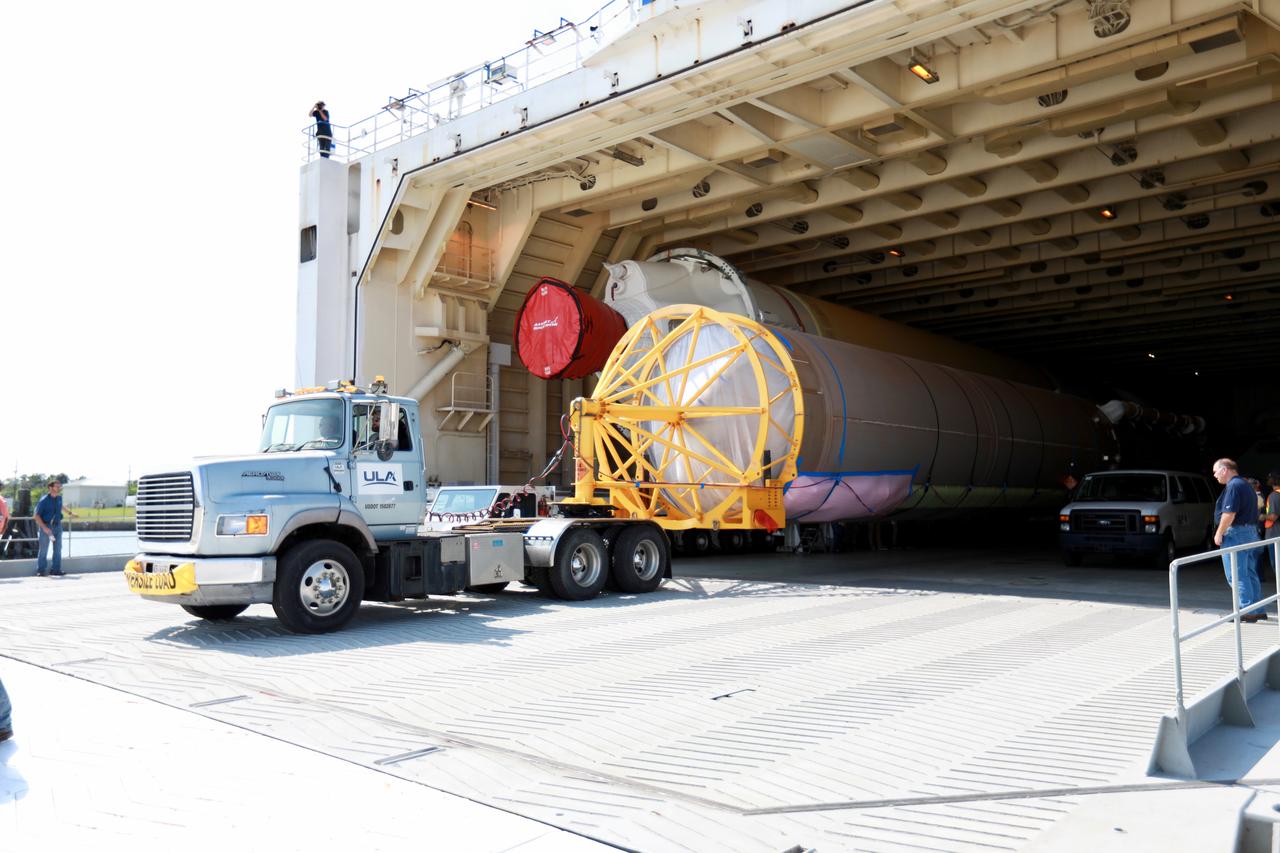
The United Launch Alliance (ULA) Atlas V booster that will be used for Boeing’s Crew Flight Test (CFT) is moved out of the Mariner cargo ship at the Army Wharf at Cape Canaveral Air Force Station in Florida on June 5, 2019. The ULA Atlas V rocket will launch the CST-100 Starliner and its crew, NASA astronauts Mike Fincke and Nicole Mann and Boeing astronaut Chris Ferguson, to the International Space Station for NASA’s Commercial Crew Program. The booster will be transported to the Atlas Spaceflight Operations Center to await the start of operations for its missions. The CFT will demonstrate Starliner and Atlas V’s ability to safely carry crew to and from the orbiting laboratory.
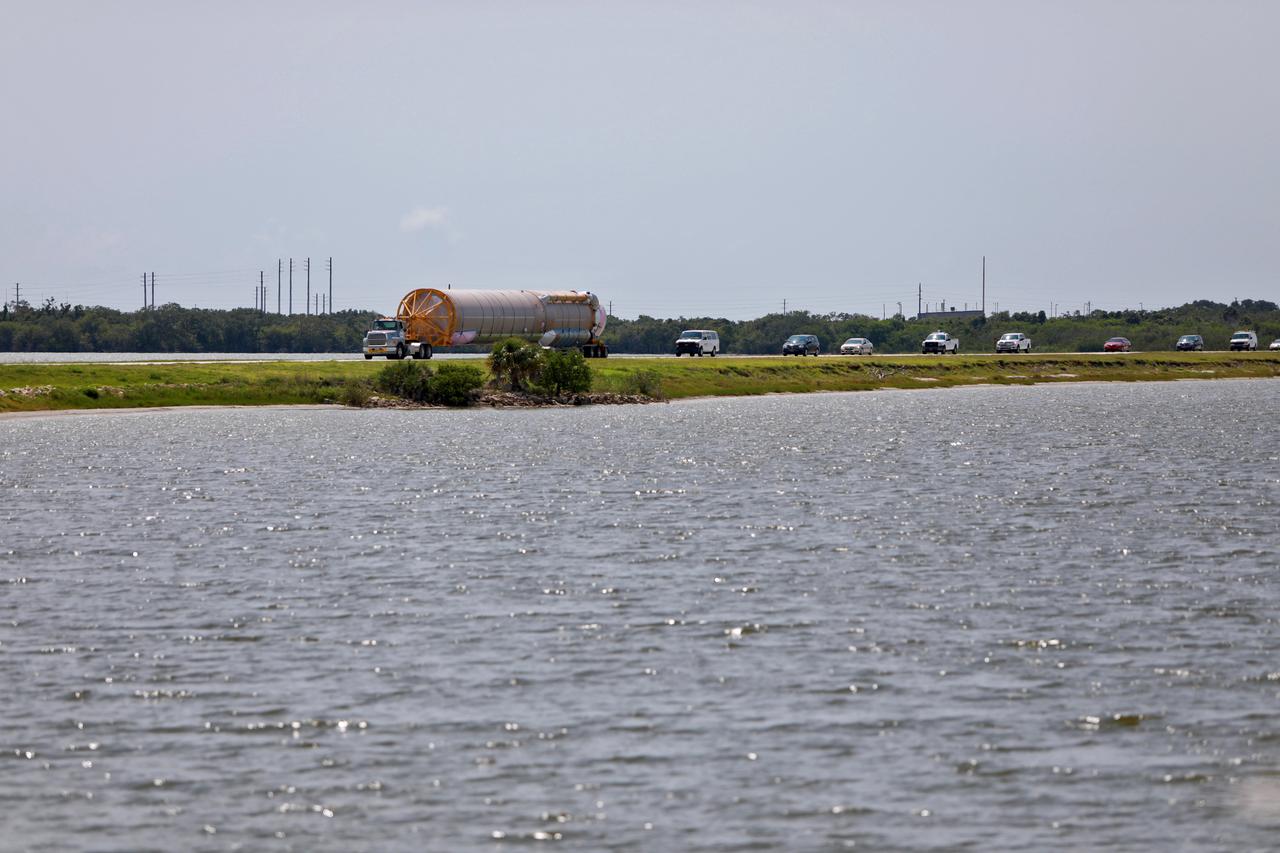
The United Launch Alliance (ULA) Atlas V booster that will be used for Boeing’s Crew Flight Test (CFT) is being transported to the Atlas Spaceflight Operations Center (ASOC) at Cape Canaveral Air Force Station in Florida on June 5, 2019. The ULA Atlas V rocket will launch the CST-100 Starliner and its crew, NASA astronauts Mike Fincke and Nicole Mann and Boeing astronaut Chris Ferguson, to the International Space Station for NASA’s Commercial Crew Program. Inside the ASOC, the booster will await the start of operations for its missions. The CFT will demonstrate Starliner and Atlas V’s ability to safely carry crew to and from the orbiting laboratory.
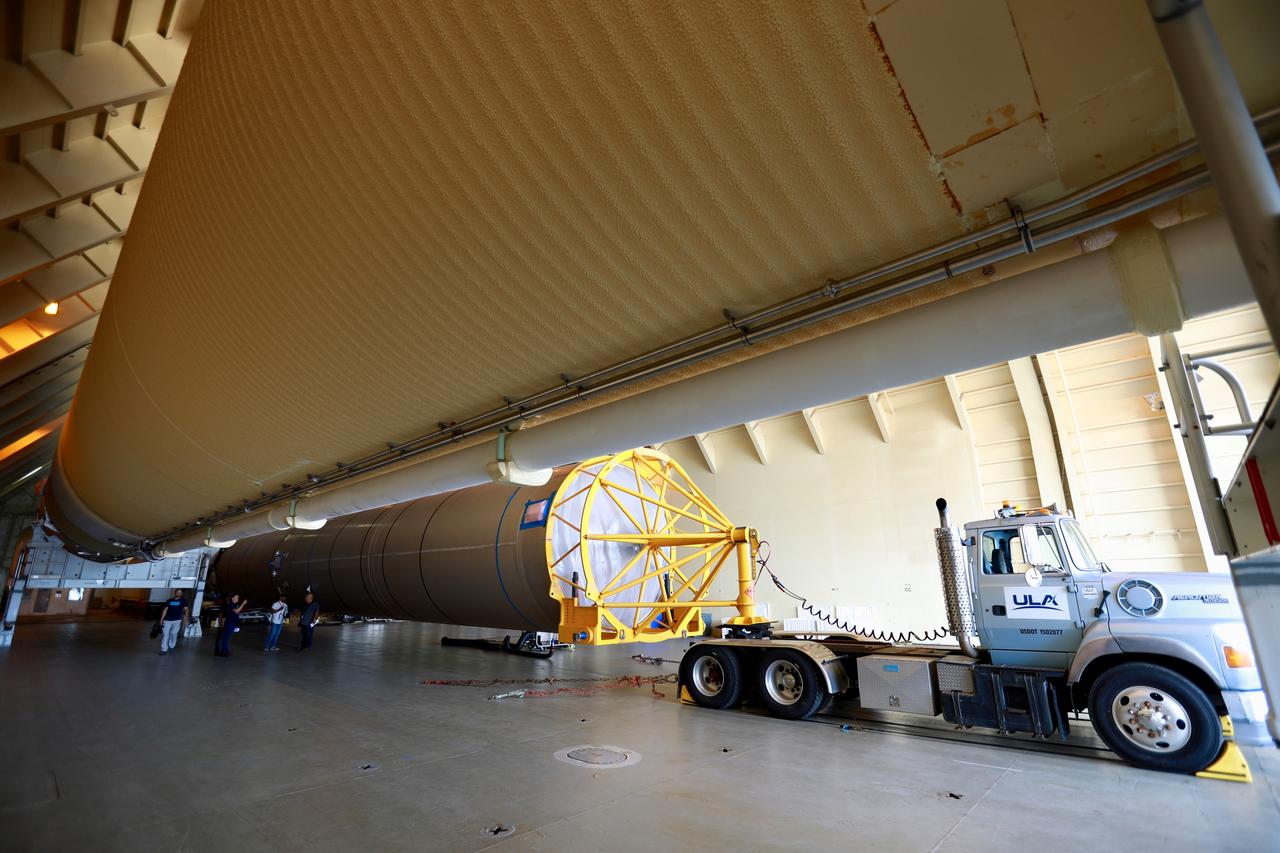
The United Launch Alliance (ULA) Atlas V booster that will be used for Boeing’s Crew Flight Test (CFT) is moved out of the Mariner cargo ship at the Army Wharf at Cape Canaveral Air Force Station in Florida on June 5, 2019. The ULA Atlas V rocket will launch the CST-100 Starliner and its crew, NASA astronauts Mike Fincke and Nicole Mann and Boeing astronaut Chris Ferguson, to the International Space Station for NASA’s Commercial Crew Program. The booster will be transported to the Atlas Spaceflight Operations Center to await the start of operations for its missions. The CFT will demonstrate Starliner and Atlas V’s ability to safely carry crew to and from the orbiting laboratory.
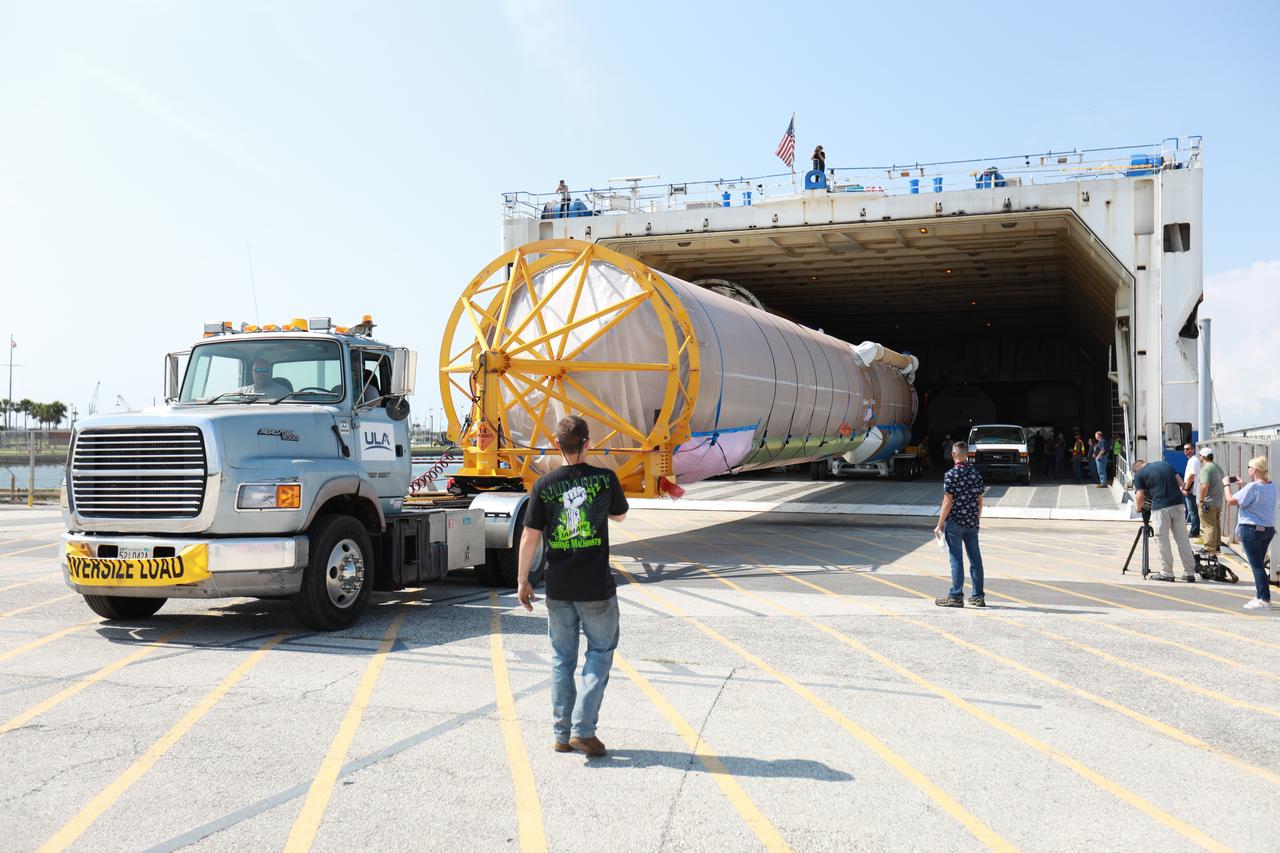
The United Launch Alliance (ULA) Atlas V booster that will be used for Boeing’s Crew Flight Test (CFT) is moved out of the Mariner cargo ship at the Army Wharf at Cape Canaveral Air Force Station in Florida on June 5, 2019. The ULA Atlas V rocket will launch the CST-100 Starliner and its crew, NASA astronauts Mike Fincke and Nicole Mann and Boeing astronaut Chris Ferguson, to the International Space Station for NASA’s Commercial Crew Program. The booster will be transported to the Atlas Spaceflight Operations Center to await the start of operations for its missions. The CFT will demonstrate Starliner and Atlas V’s ability to safely carry crew to and from the orbiting laboratory.
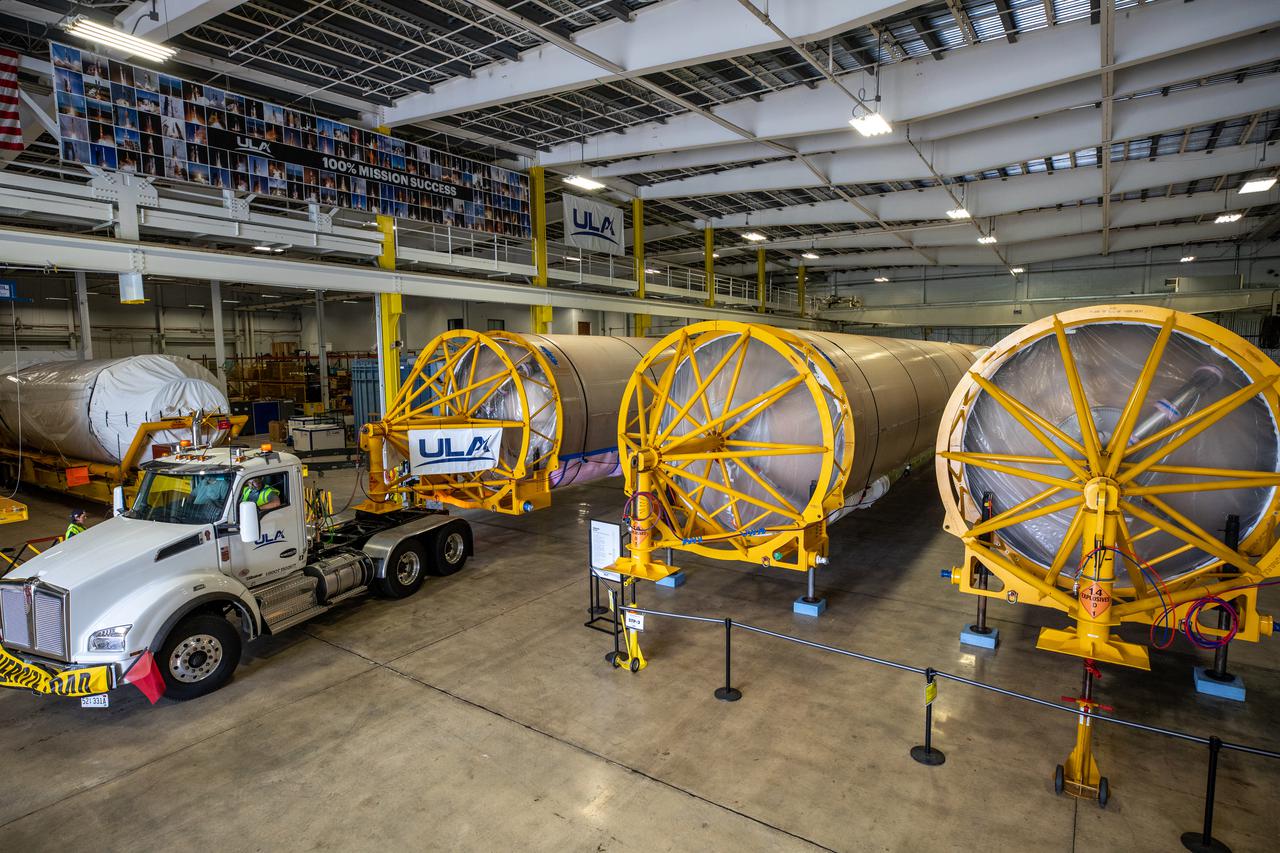
A flatbed truck moves the United Launch Alliance (ULA) Atlas V booster and Centaur upper stage for Boeing's CST-100 Starliner Crew Flight Test (CFT) inside the Atlas Spaceflight Operations Center at Space Launch Complex 41 (SLC-41) at Cape Canaveral Space Force Station on June 21, 2021. Starliner's first flight with astronauts aboard, CFT will launch from SLC-41. The flight test will demonstrate the ability of the Atlas V and Starliner to safely carry astronauts to and from the International Space Station for the agency's Commercial Crew Program.
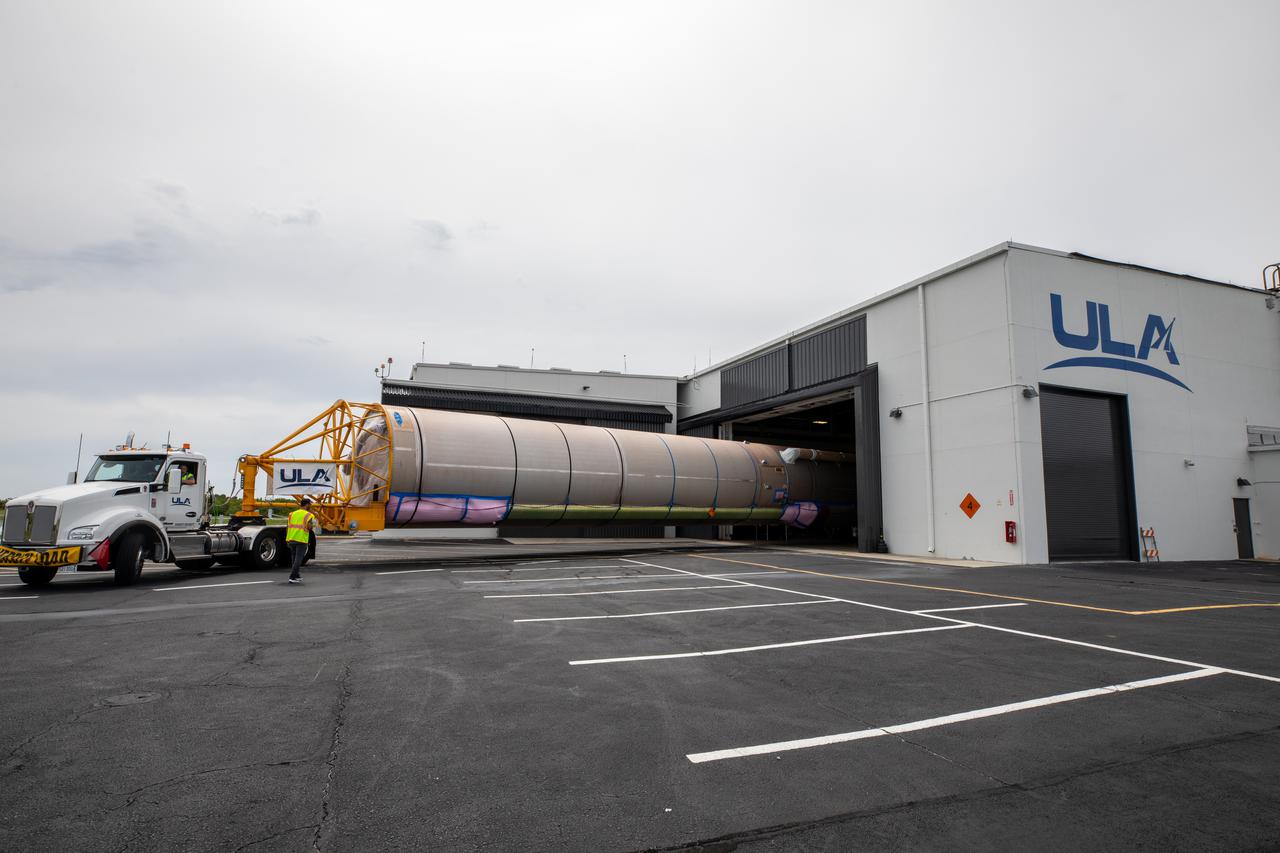
A flatbed truck delivers the United Launch Alliance (ULA) Atlas V booster and Centaur upper stage for Boeing's CST-100 Starliner Crew Flight Test (CFT) to the Atlas Spaceflight Operations Center at Space Launch Complex 41 (SLC-41) at Cape Canaveral Space Force Station on June 21, 2021. Starliner's first flight with astronauts aboard, CFT will launch from SLC-41. The flight test will demonstrate the ability of the Atlas V and Starliner to safely carry astronauts to and from the International Space Station for the agency's Commercial Crew Program.
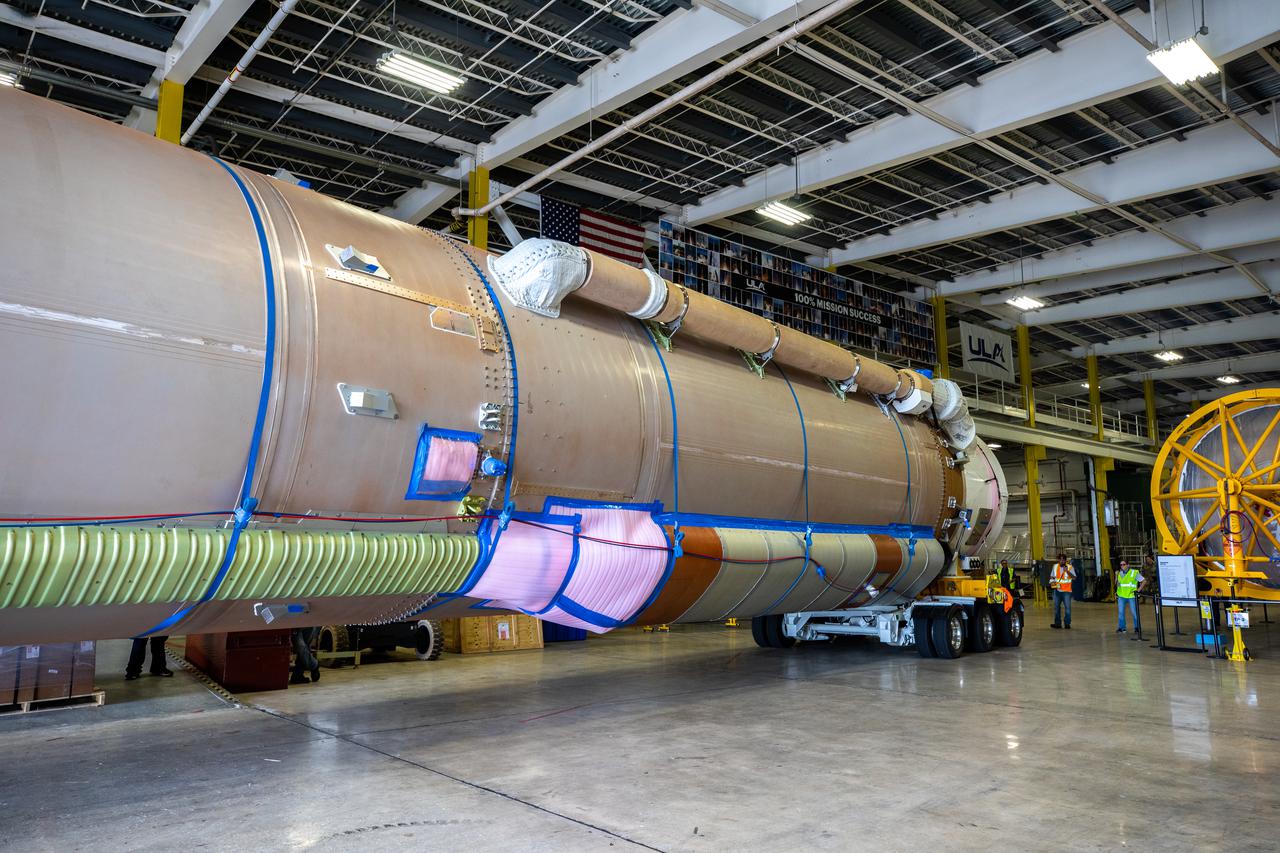
The United Launch Alliance (ULA) Atlas V booster and Centaur upper stage for Boeing's CST-100 Starliner Crew Flight Test (CFT) are inside the Atlas Spaceflight Operations Center at Space Launch Complex 41 (SLC-41) at Cape Canaveral Space Force Station on June 21, 2021. Starliner's first flight with astronauts aboard, CFT will launch from SLC-41. The flight test will demonstrate the ability of the Atlas V and Starliner to safely carry astronauts to and from the International Space Station for the agency's Commercial Crew Program.
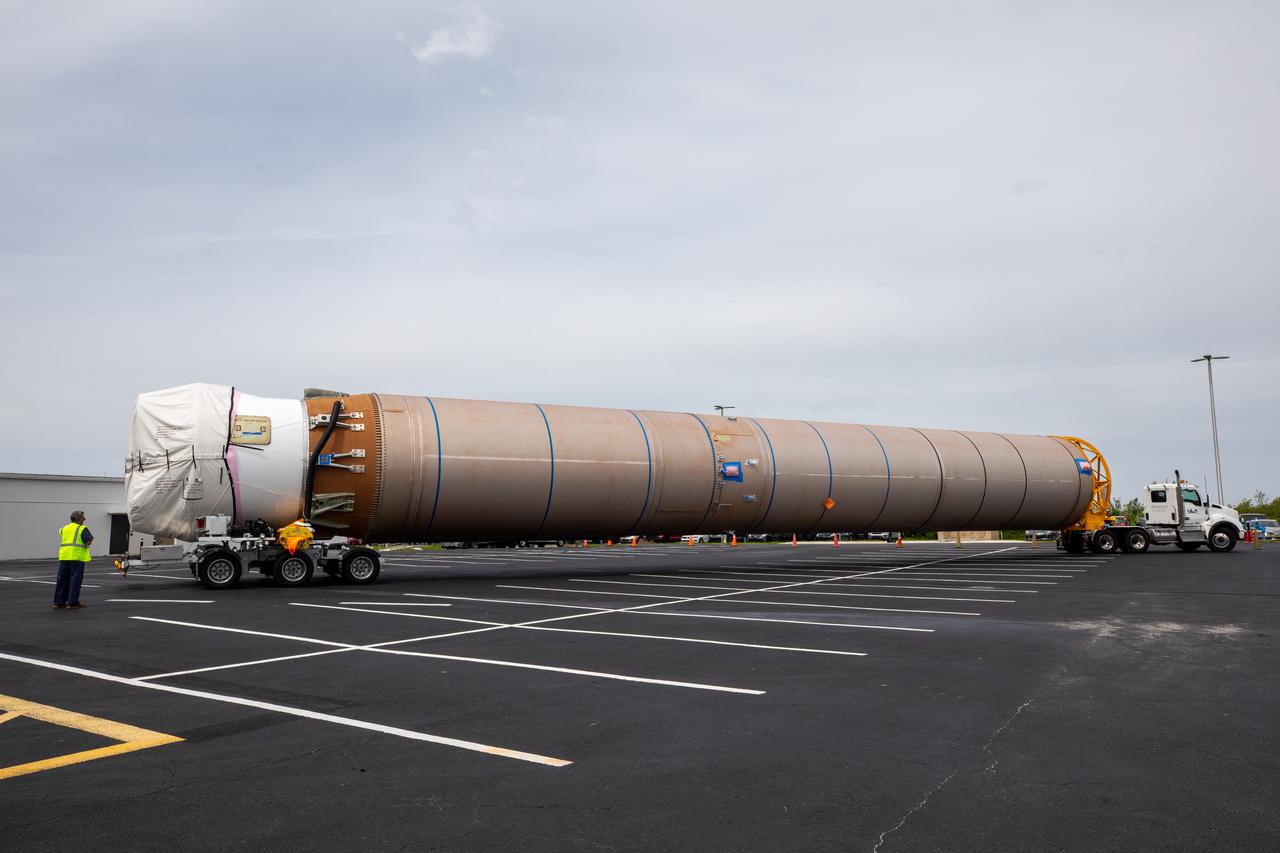
The United Launch Alliance (ULA) Atlas V booster and Centaur upper stage for Boeing's CST-100 Starliner Crew Flight Test (CFT) arrive at the Atlas Spaceflight Operations Center at Space Launch Complex 41 (SLC-41) at Cape Canaveral Space Force Station on June 21, 2021. Starliner's first flight with astronauts aboard, CFT will launch from SLC-41. The flight test will demonstrate the ability of the Atlas V and Starliner to safely carry astronauts to and from the International Space Station for the agency's Commercial Crew Program.
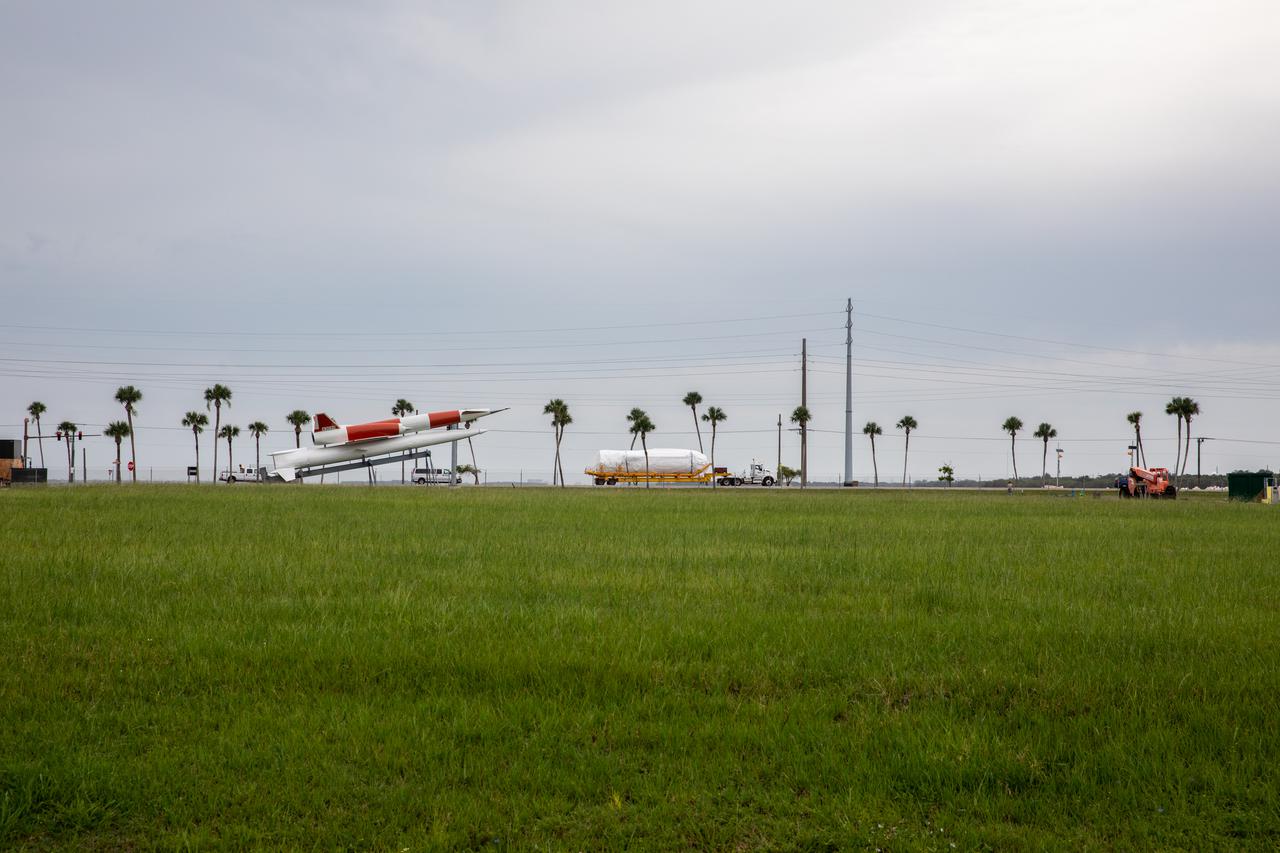
The United Launch Alliance (ULA) Atlas V booster and Centaur upper stage for Boeing's CST-100 Starliner Crew Flight Test (CFT) are on their way to the Atlas Spaceflight Operations Center at Space Launch Complex 41 (SLC-41) at Cape Canaveral Space Force Station on June 21, 2021. Starliner's first flight with astronauts aboard, CFT will launch from SLC-41. The flight test will demonstrate the ability of the Atlas V and Starliner to safely carry astronauts to and from the International Space Station for the agency's Commercial Crew Program.

The United Launch Alliance (ULA) Atlas V booster and Centaur upper stage for Boeing's CST-100 Starliner Crew Flight Test (CFT) are on their way to the Atlas Spaceflight Operations Center at Space Launch Complex 41 (SLC-41) at Cape Canaveral Space Force Station on June 21, 2021. Starliner's first flight with astronauts aboard, CFT will launch from SLC-41. The flight test will demonstrate the ability of the Atlas V and Starliner to safely carry astronauts to and from the International Space Station for the agency's Commercial Crew Program.
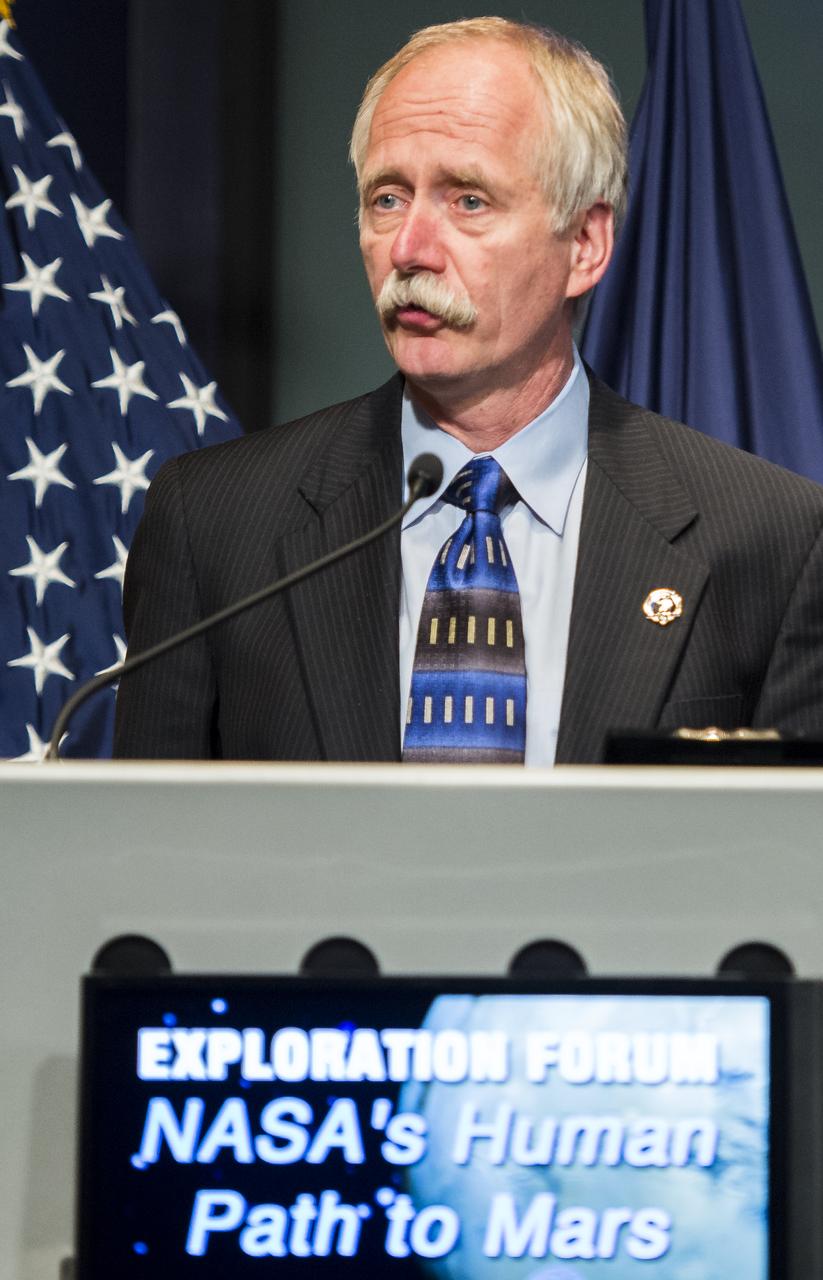
William Gerstenmaier, NASA Associate Administrator for Human Exploration and Operations, speaks during an Exploration Forum showcasing NASA's human exploration path to Mars in the James E. Webb Auditorium at NASA Headquarters on Tuesday, April 29, 2014. Photo Credit: (NASA/Joel Kowsky)
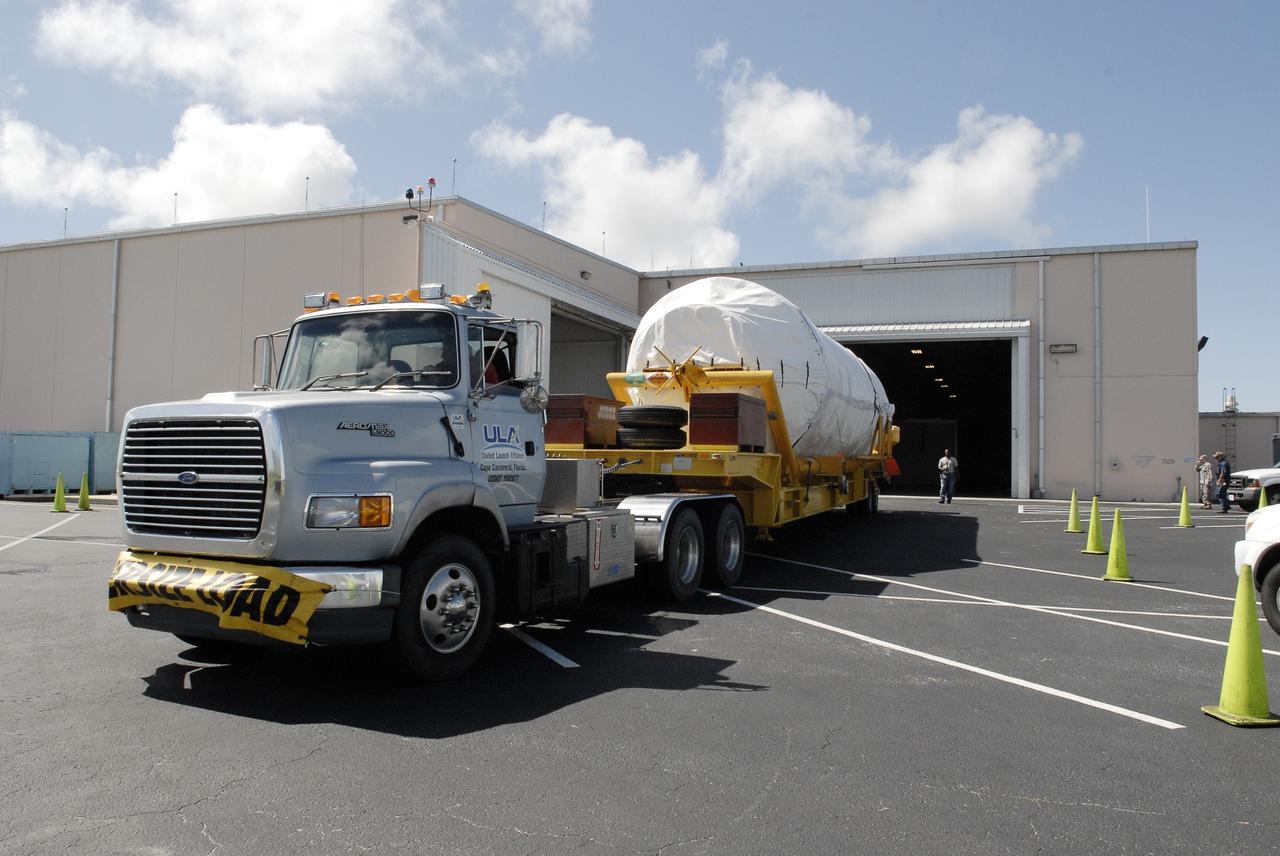
CAPE CANAVERAL, Fla. – The Centaur upper stage is moved into the Atlas Spaceflight Operations Center, or ASOC, to begin checkout for the launch of the Radiation Belt Storm Probes, or RBSP, mission. Photo credit: NASA/Charisse Nahser
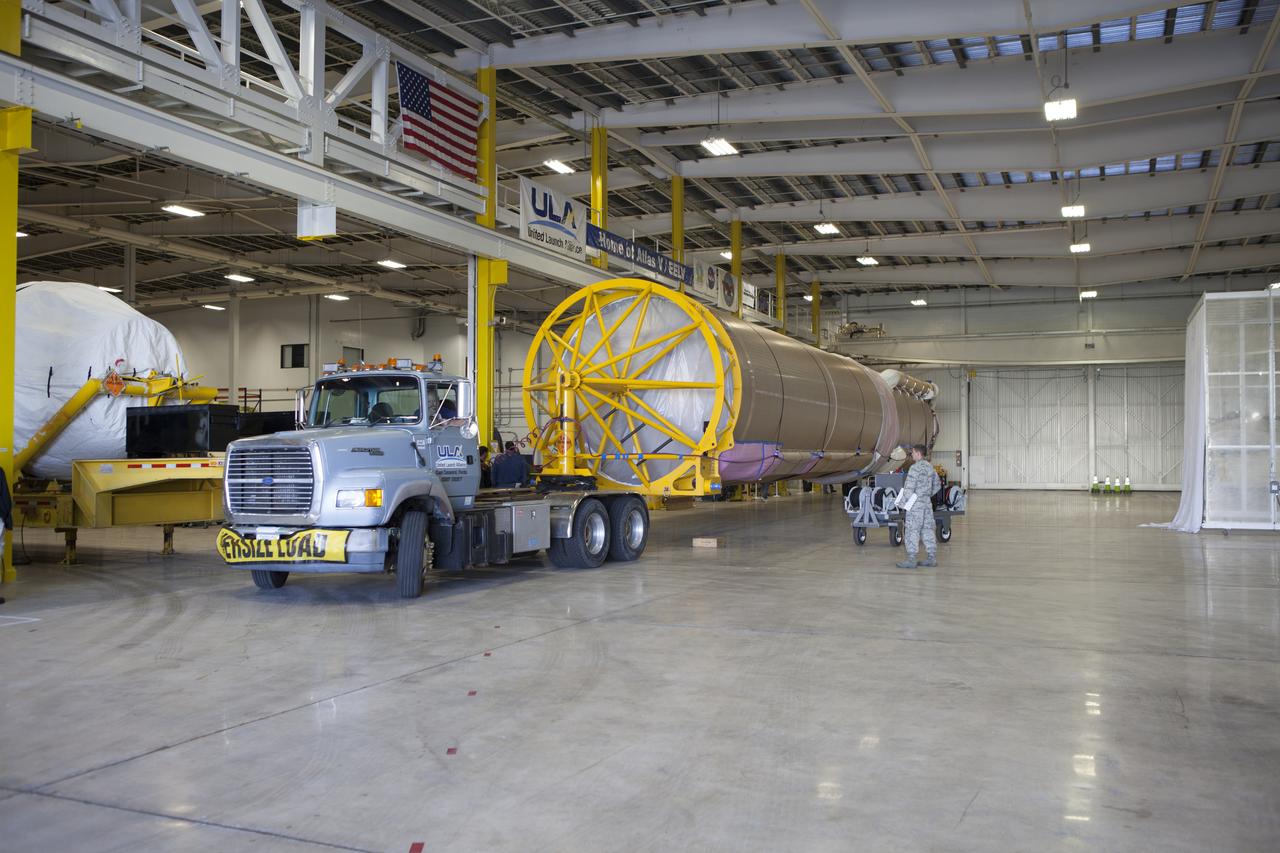
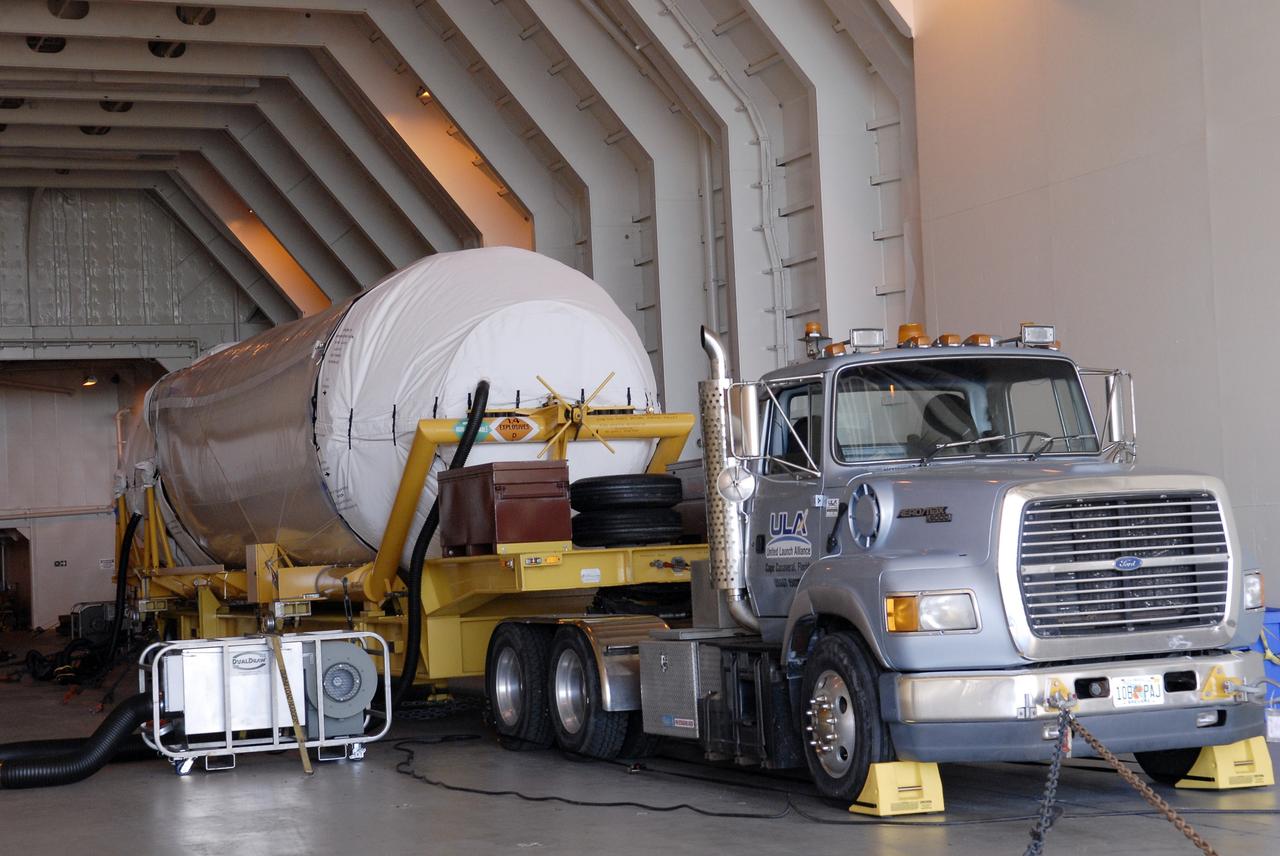
A truck positions an Atlas V booster stage inside the hangar at the Atlas V Spaceflight Operations Center at Cape Canaveral Air Force Station. The rocket will be used to launch NASA's Magnetospheric Multiscale mission.
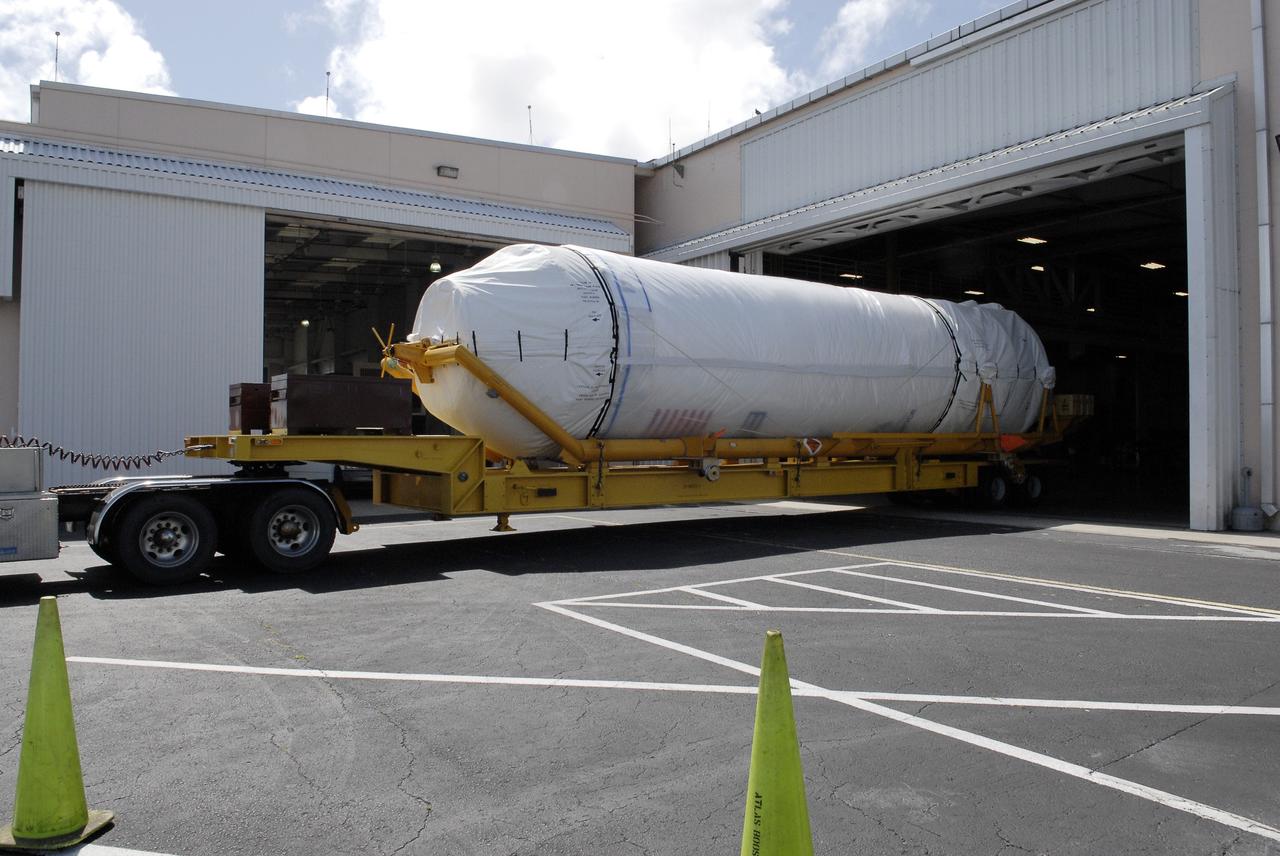
CAPE CANAVERAL, Fla. – The Centaur upper stage is moved into the Atlas Spaceflight Operations Center, or ASOC, to begin checkout for the launch of the Radiation Belt Storm Probes, or RBSP, mission. Photo credit: NASA/Charisse Nahser
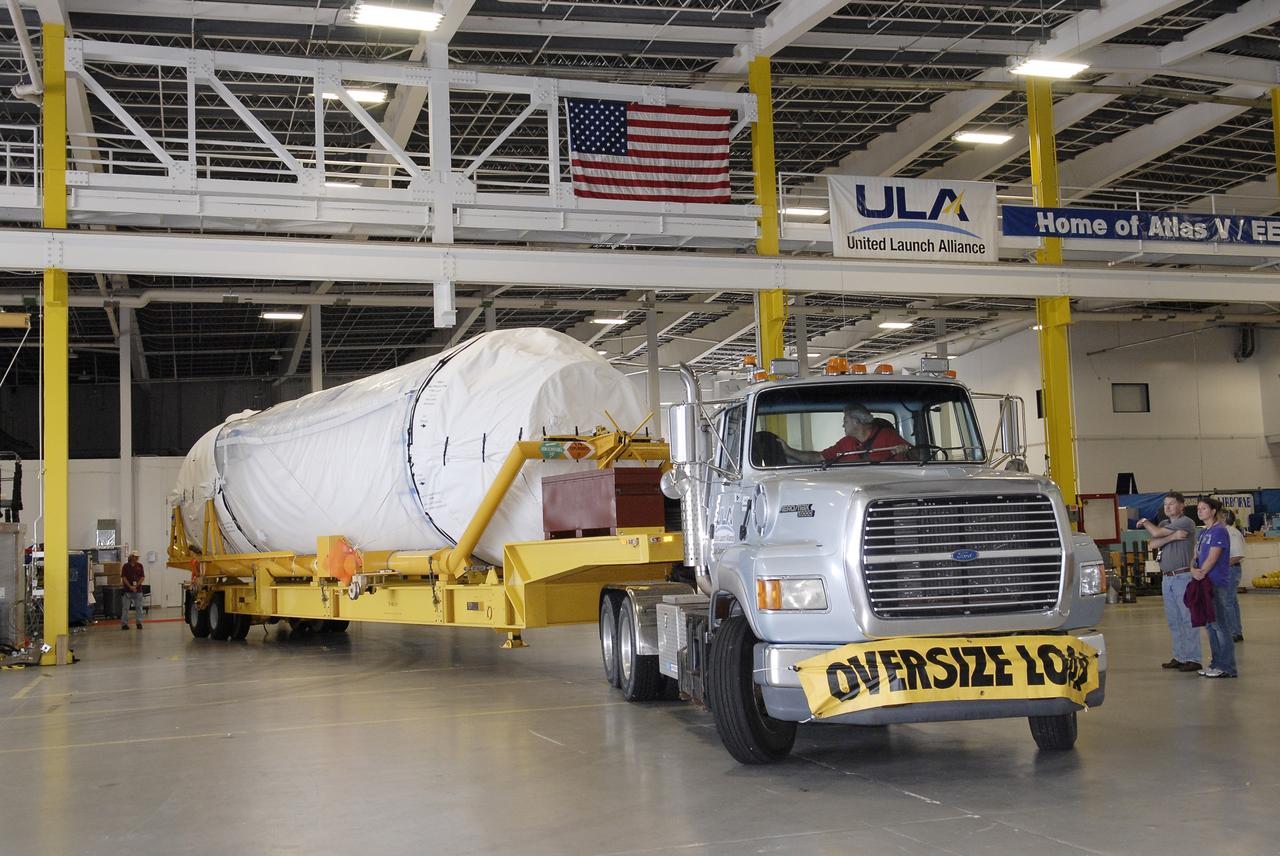
CAPE CANAVERAL, Fla. – The Centaur upper stage is moved into the Atlas Spaceflight Operations Center, or ASOC, to begin checkout for the launch of the Radiation Belt Storm Probes, or RBSP, mission. Photo credit: NASA/Charisse Nahser
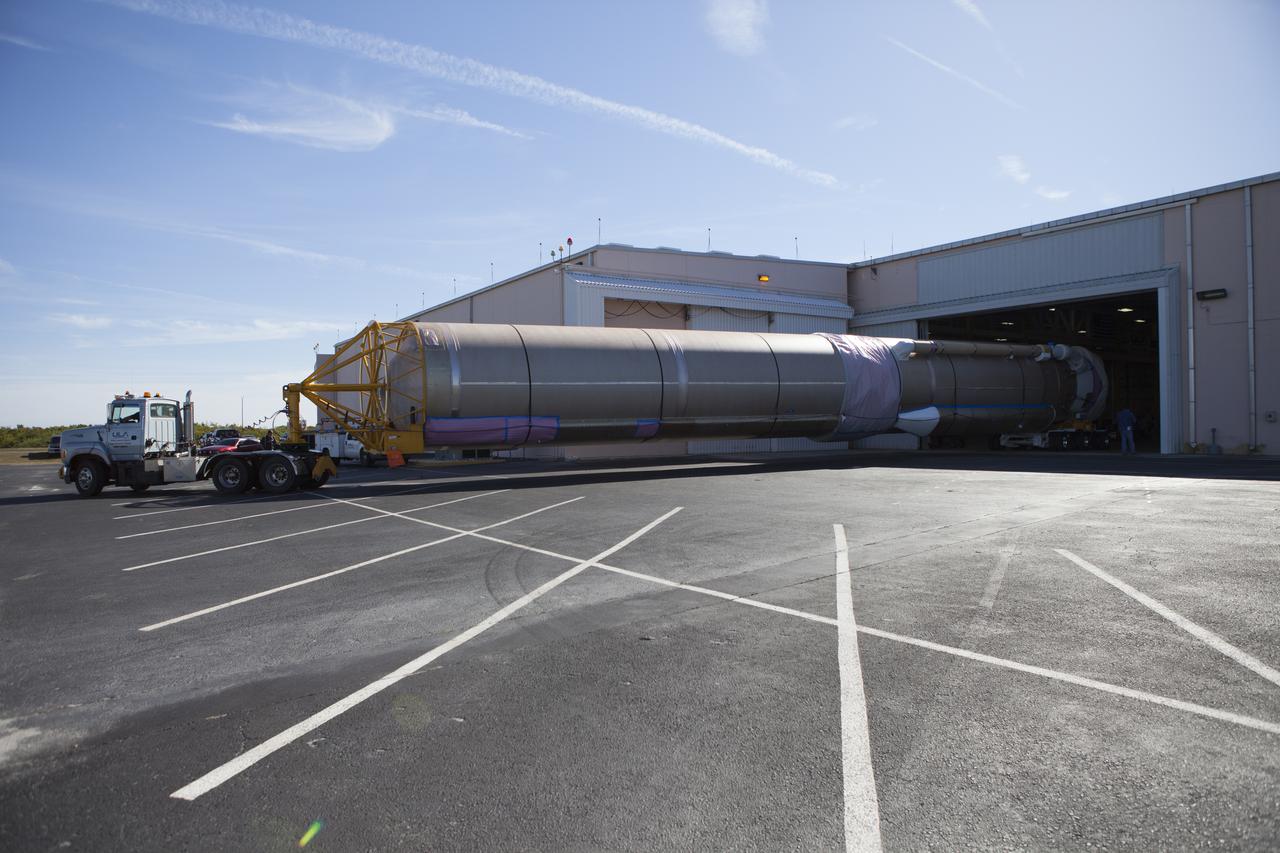
A truck positions an Atlas V booster stage inside the hangar at the Atlas V Spaceflight Operations Center at Cape Canaveral Air Force Station. The rocket will be used to launch NASA's Magnetospheric Multiscale mission.
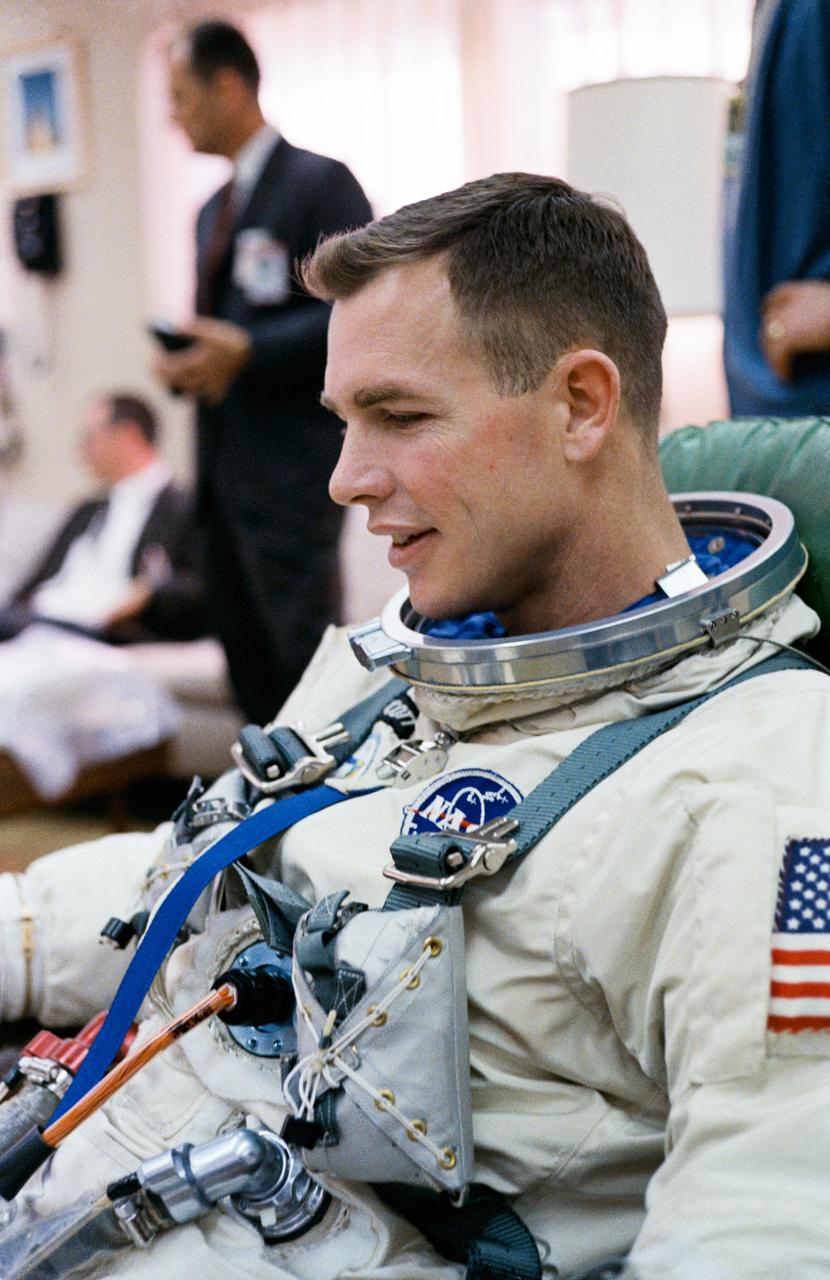
S66-24491 (16 March 1966) --- Astronaut David R. Scott, pilot of the Gemini-8 spaceflight, relaxes in the Launch Complex 16 trailer during suiting up operations for the Gemini-8 mission. Photo credit: NASA

S65-46366 (19 Aug. 1965) --- Astronauts Charles Conrad Jr. (right) and L. Gordon Cooper Jr. during suiting up operations before Gemini-5 spaceflight.
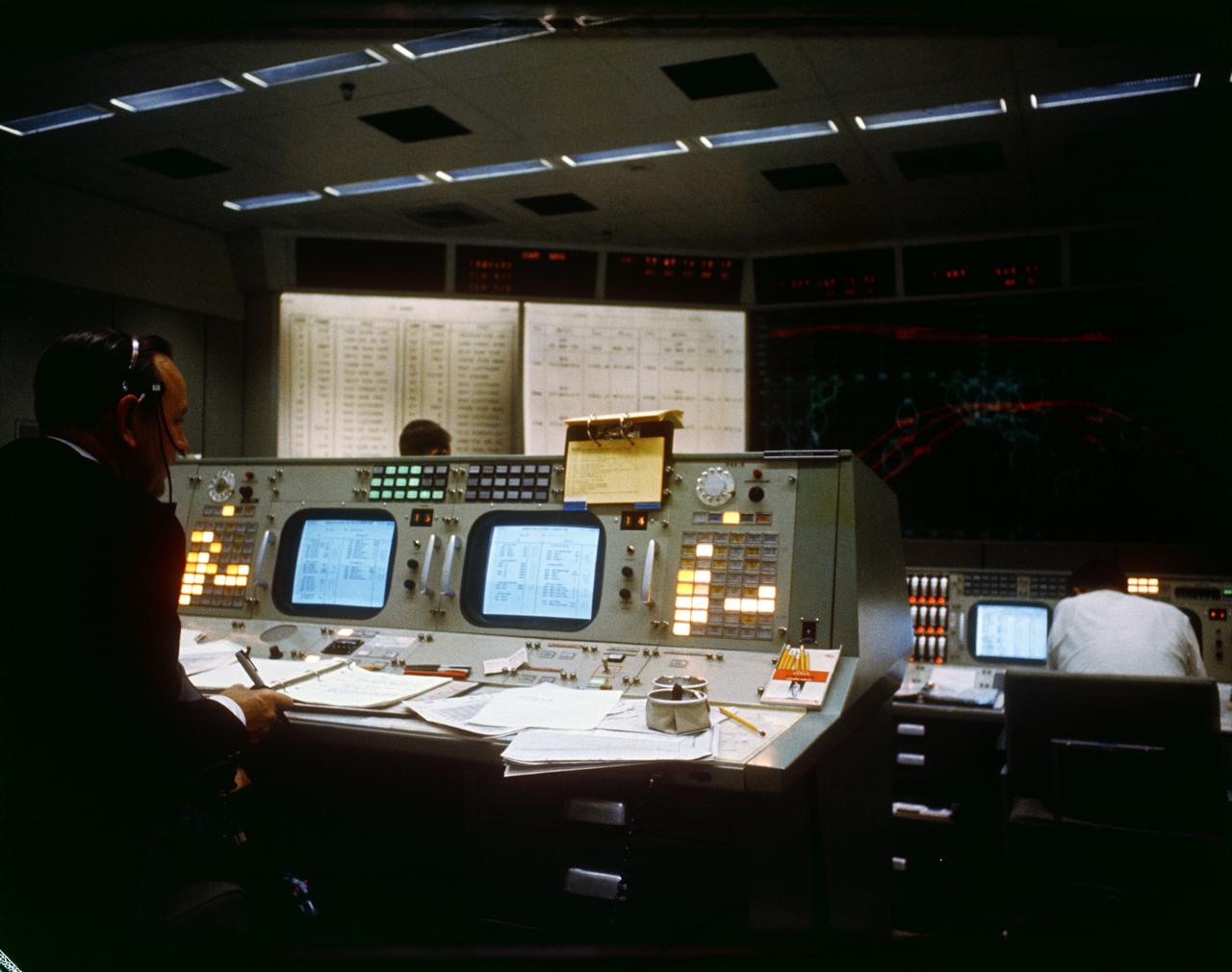
S65-60039 (7 Dec. 1965) --- Christopher C. Kraft Jr. (left), assistant director for Flight Operations, monitors his console in the Mission Control Center during the Gemini-7 spaceflight. Photo credit: NASA
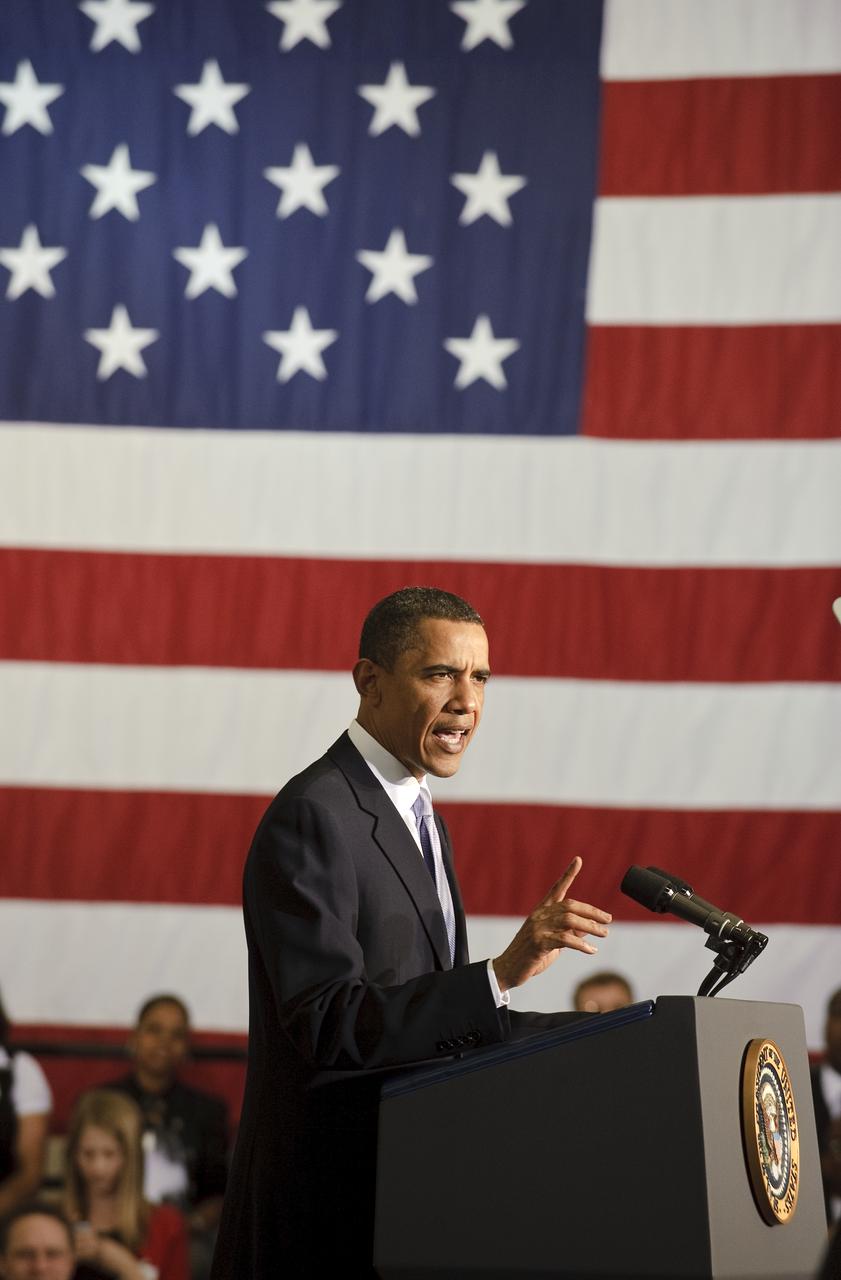
President Barack Obama delivers a speech at the Operations and Checkout Building at NASA Kennedy Space Center in Cape Canaveral, Fla. on Thursday, April 15, 2010. Obama visited Kennedy Space Center to deliver remarks on the bold new course the Administration is charting for NASA and the future of U.S. leadership in human space flight. Photo Credit: (NASA/Paul E. Alers)

President Barack Obama delivers a speech at the Operations and Checkout Building at NASA Kennedy Space Center in Cape Canaveral, Fla. on Thursday, April 15, 2010. Obama visited Kennedy Space Center to deliver remarks on the bold new course the Administration is charting for NASA and the future of U.S. leadership in human space flight. Photo Credit: (NASA/Paul E. Alers)
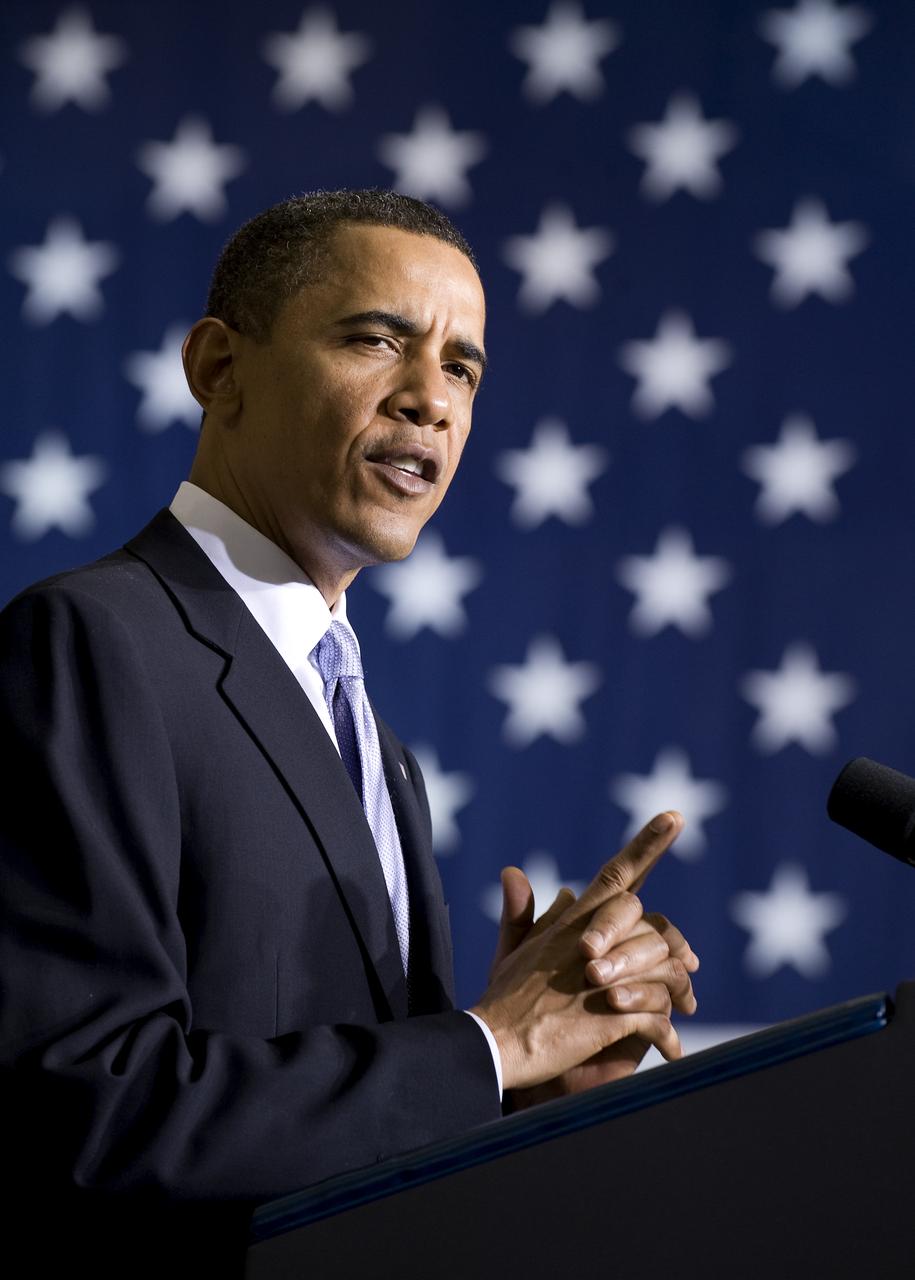
President Barack Obama delivers a speech at the Operations and Checkout Building at NASA Kennedy Space Center in Cape Canaveral, Fla. on Thursday, April 15, 2010. Obama visited Kennedy Space Center to deliver remarks on the bold new course the Administration is charting for NASA and the future of U.S. leadership in human space flight. Photo Credit: (NASA/Bill Ingalls)
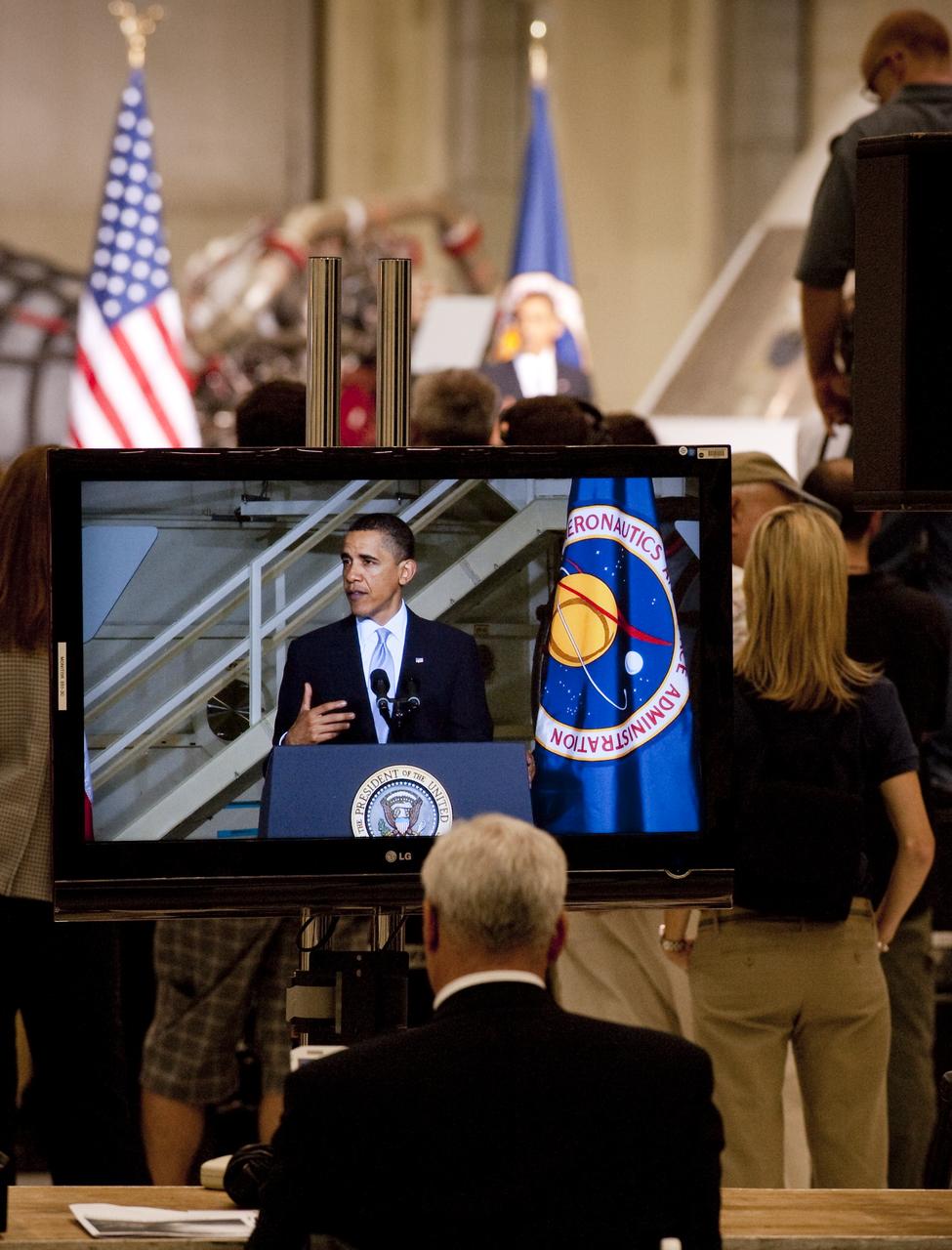
Members of the press watch on monitors as President Barack Obama delivers a speech at the Operations and Checkout Building at NASA Kennedy Space Center in Cape Canaveral, Fla. on Thursday, April 15, 2010. Obama visited Kennedy Space Center to deliver remarks on the bold new course the Administration is charting for NASA and the future of U.S. leadership in human space flight. Photo Credit: (NASA/Bill Ingalls)
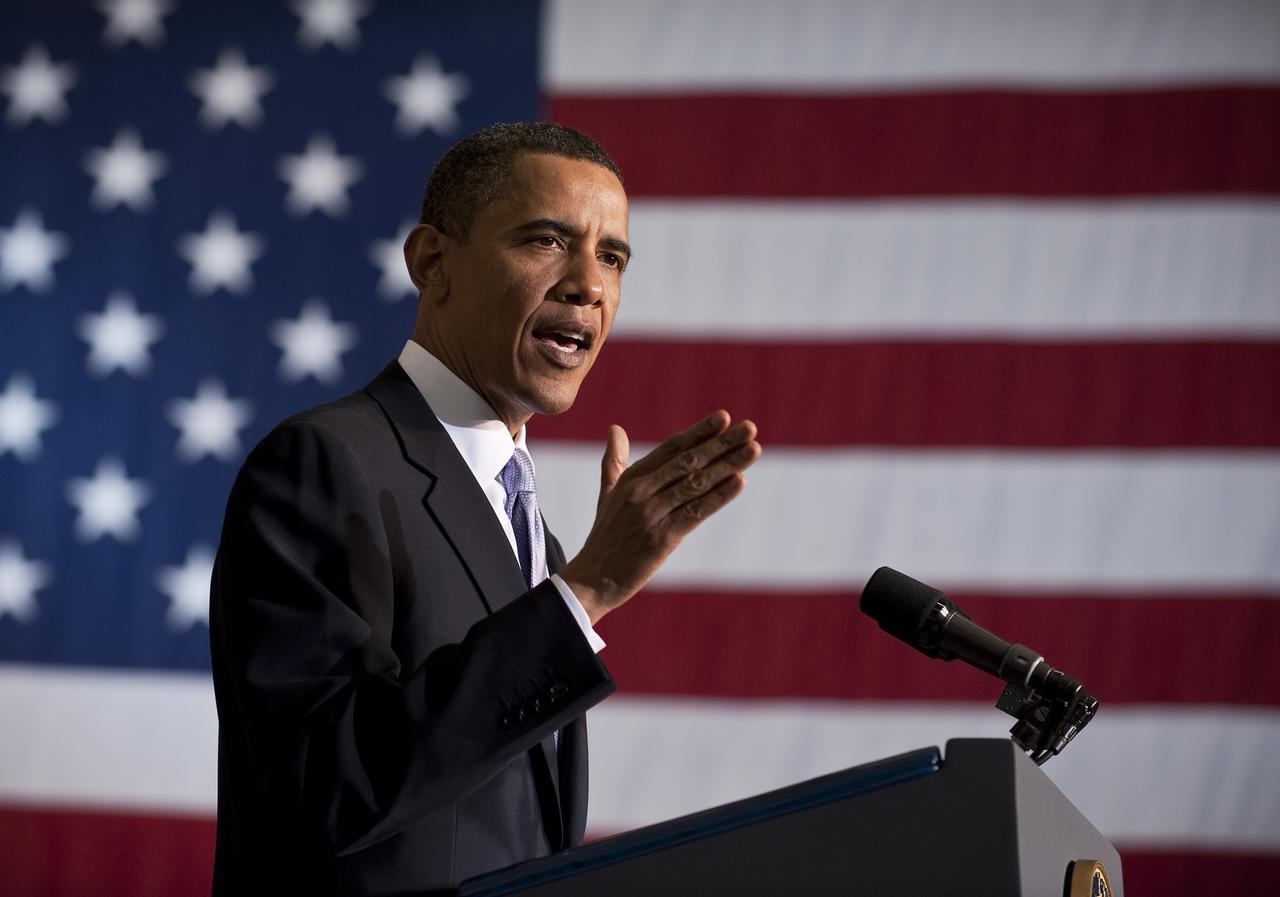
President Barack Obama delivers a speech at the Operations and Checkout Building at NASA Kennedy Space Center in Cape Canaveral, Fla. on Thursday, April 15, 2010. Obama visited Kennedy Space Center to deliver remarks on the bold new course the Administration is charting for NASA and the future of U.S. leadership in human space flight. Photo Credit: (NASA/Bill Ingalls)
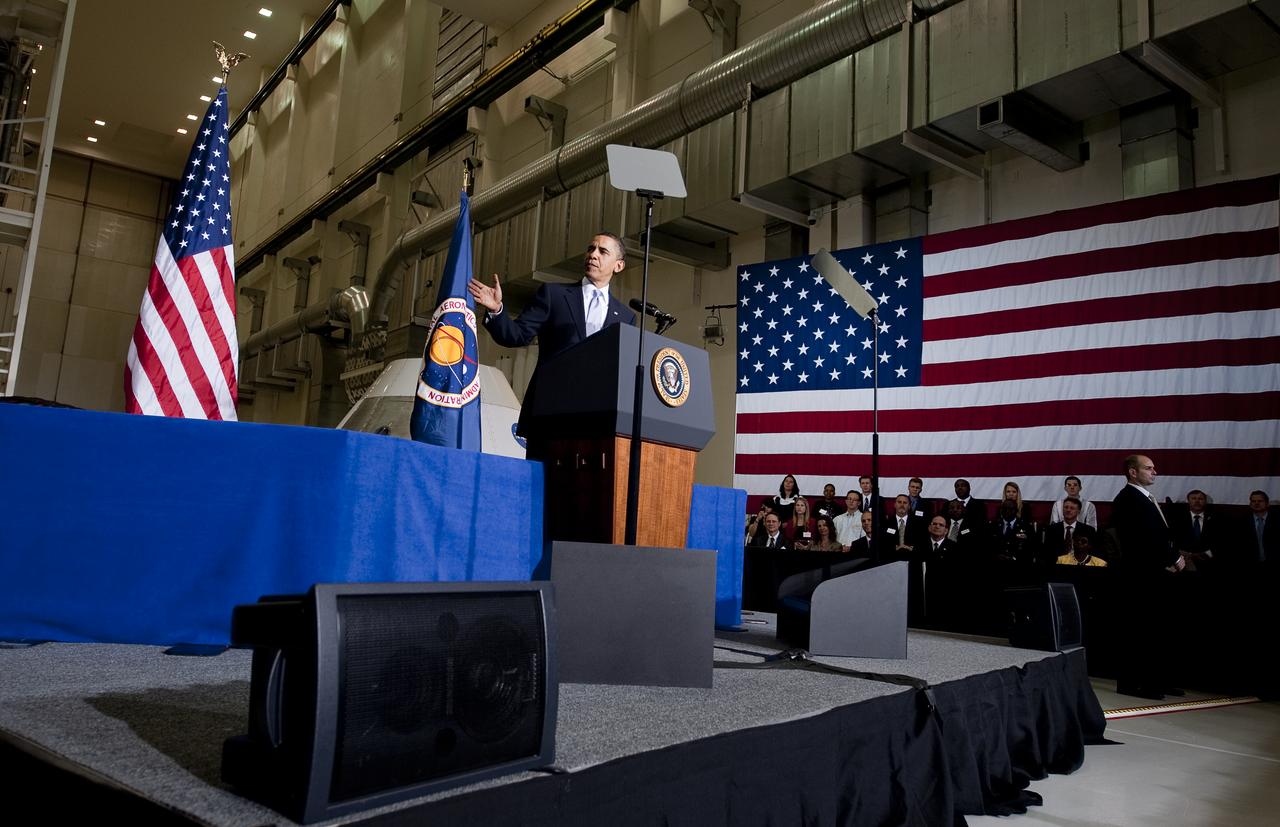
President Barack Obama delivers a speech at the Operations and Checkout Building at NASA Kennedy Space Center in Cape Canaveral, Fla. on Thursday, April 15, 2010. Obama visited Kennedy Space Center to deliver remarks on the bold new course the Administration is charting for NASA and the future of U.S. leadership in human space flight. Photo Credit: (NASA/Bill Ingalls)
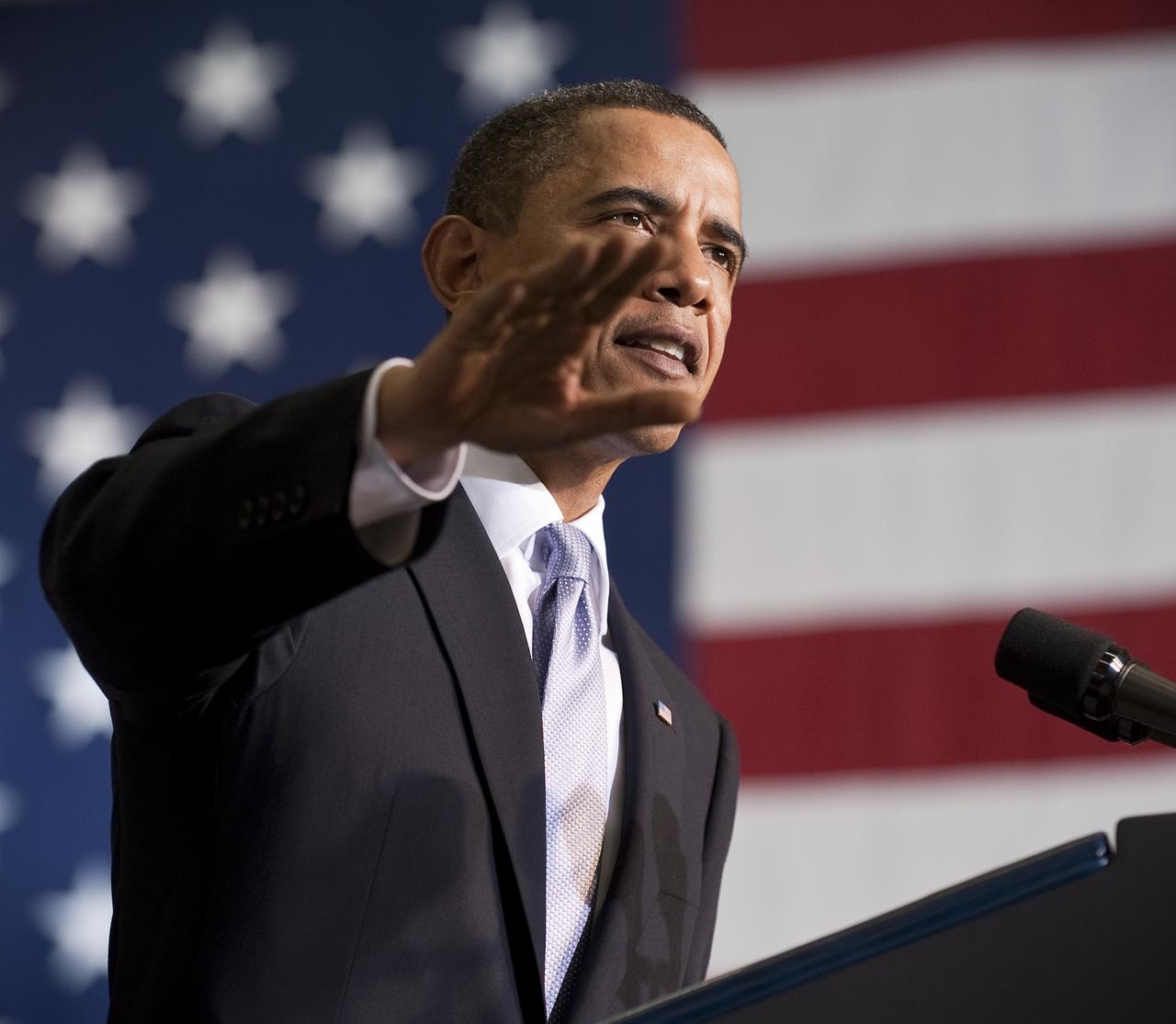
President Barack Obama delivers a speech at the Operations and Checkout Building at NASA Kennedy Space Center in Cape Canaveral, Fla. on Thursday, April 15, 2010. Obama visited Kennedy Space Center to deliver remarks on the bold new course the Administration is charting for NASA and the future of U.S. leadership in human space flight. Photo Credit: (NASA/Bill Ingalls)
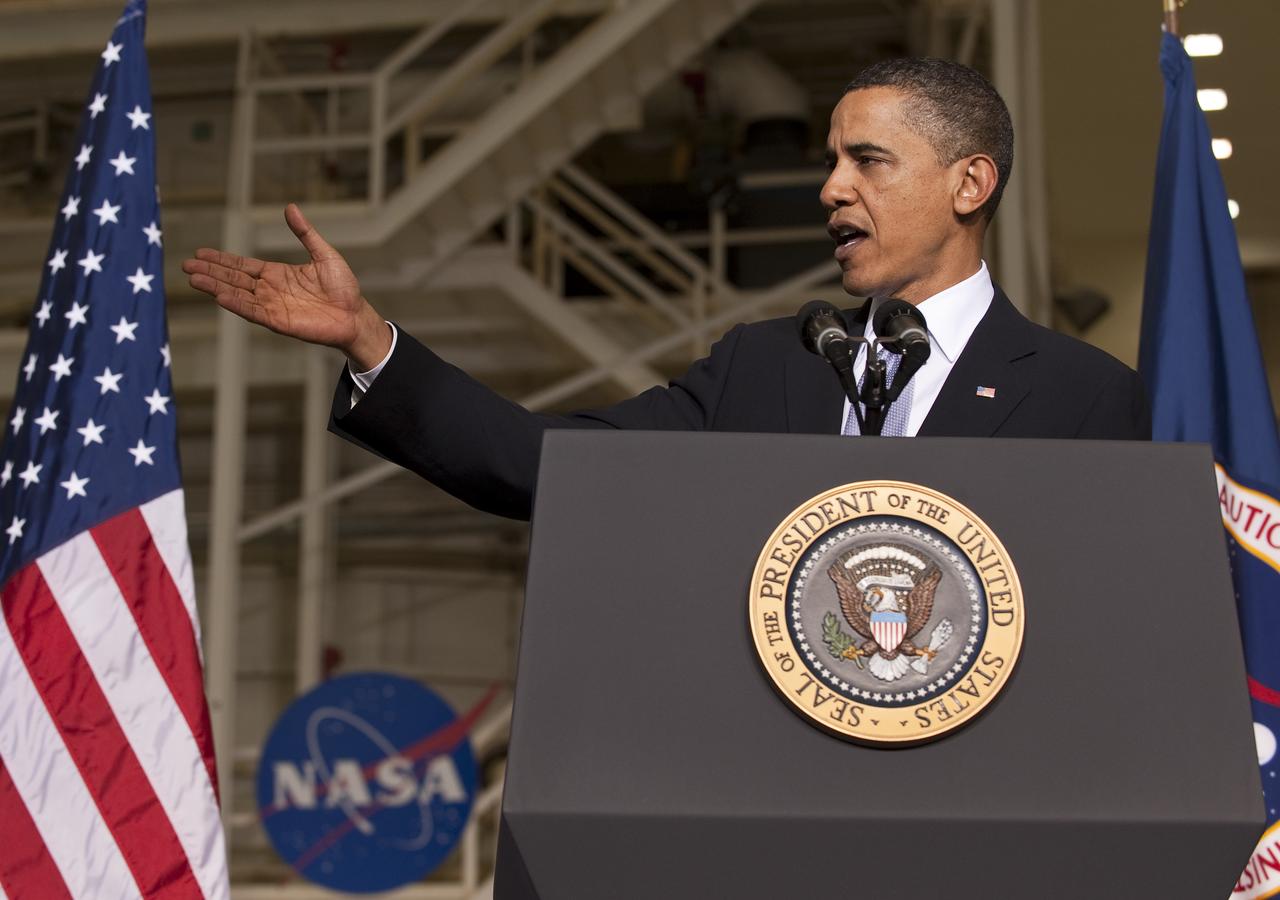
President Barack Obama delivers a speech at the Operations and Checkout Building at NASA Kennedy Space Center in Cape Canaveral, Fla. on Thursday, April 15, 2010. Obama visited Kennedy Space Center to deliver remarks on the bold new course the Administration is charting for NASA and the future of U.S. leadership in human space flight. Photo Credit: (NASA/Bill Ingalls)
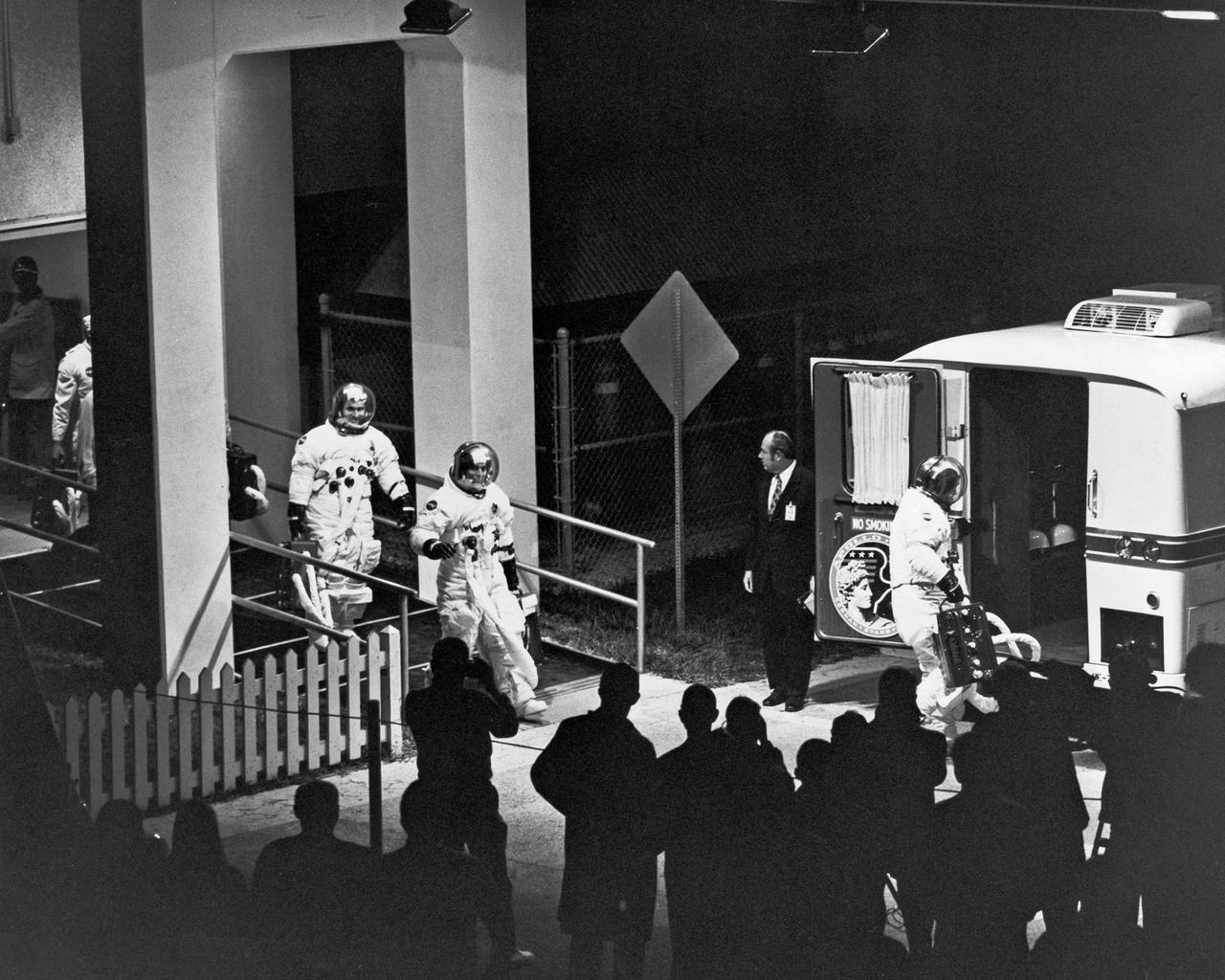
The Apollo 17 prime crew leaves the Manned Spaceflight Operations Building to enter the transfer van which will carry them to Complex 39's Pad A to participate in the CDDT. From right are Eugene A. Cernan, Commander Ronald E. Evans, Command Module Pilot, and Harrison H. Schmitt, Lunar Module Pilot.
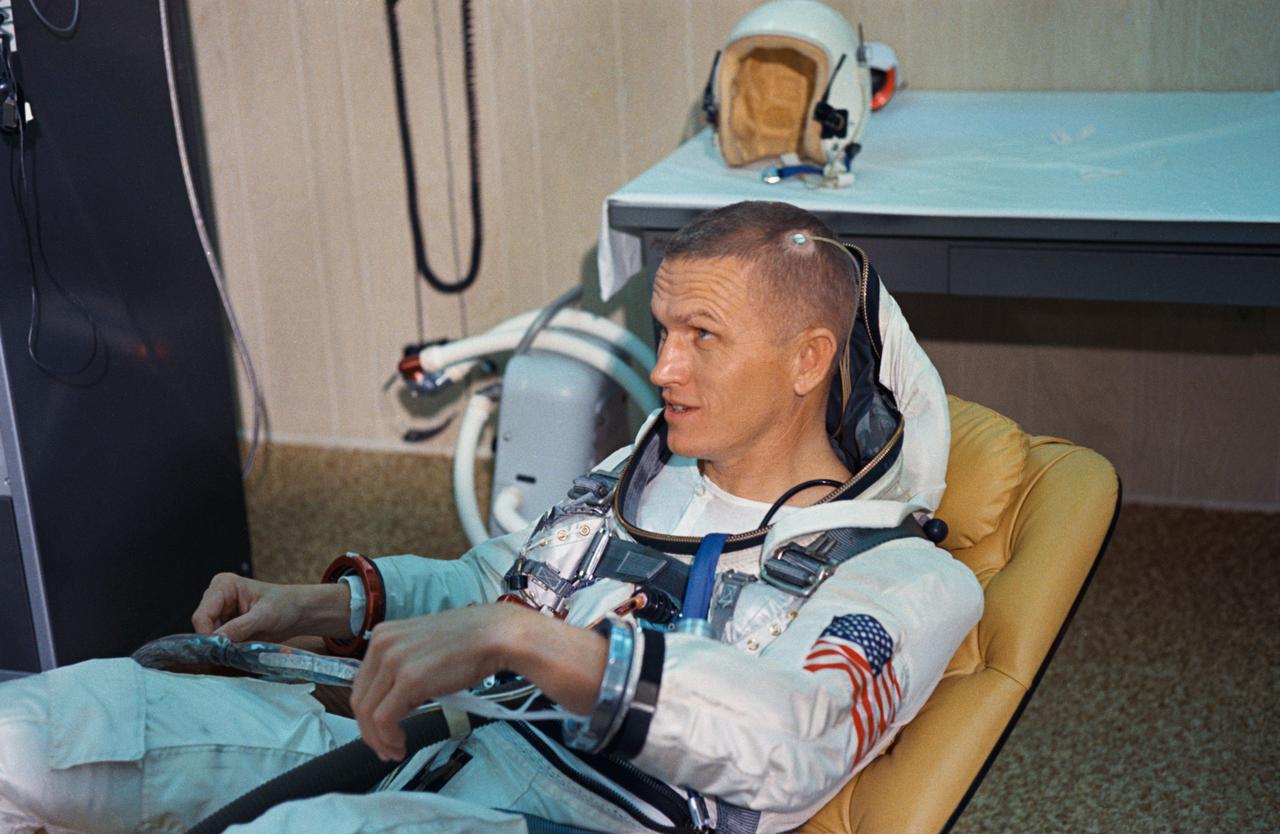
S65-61757 (4 Dec. 1965) --- Astronaut Frank Borman, command pilot of the National Aeronautics and Space Administration's (NASA) Gemini-7 spaceflight, undergoes suiting up operations in the Launch Complex 16 suiting trailer. A medical biosenser is attached to his scalp. Photo credit: NASA
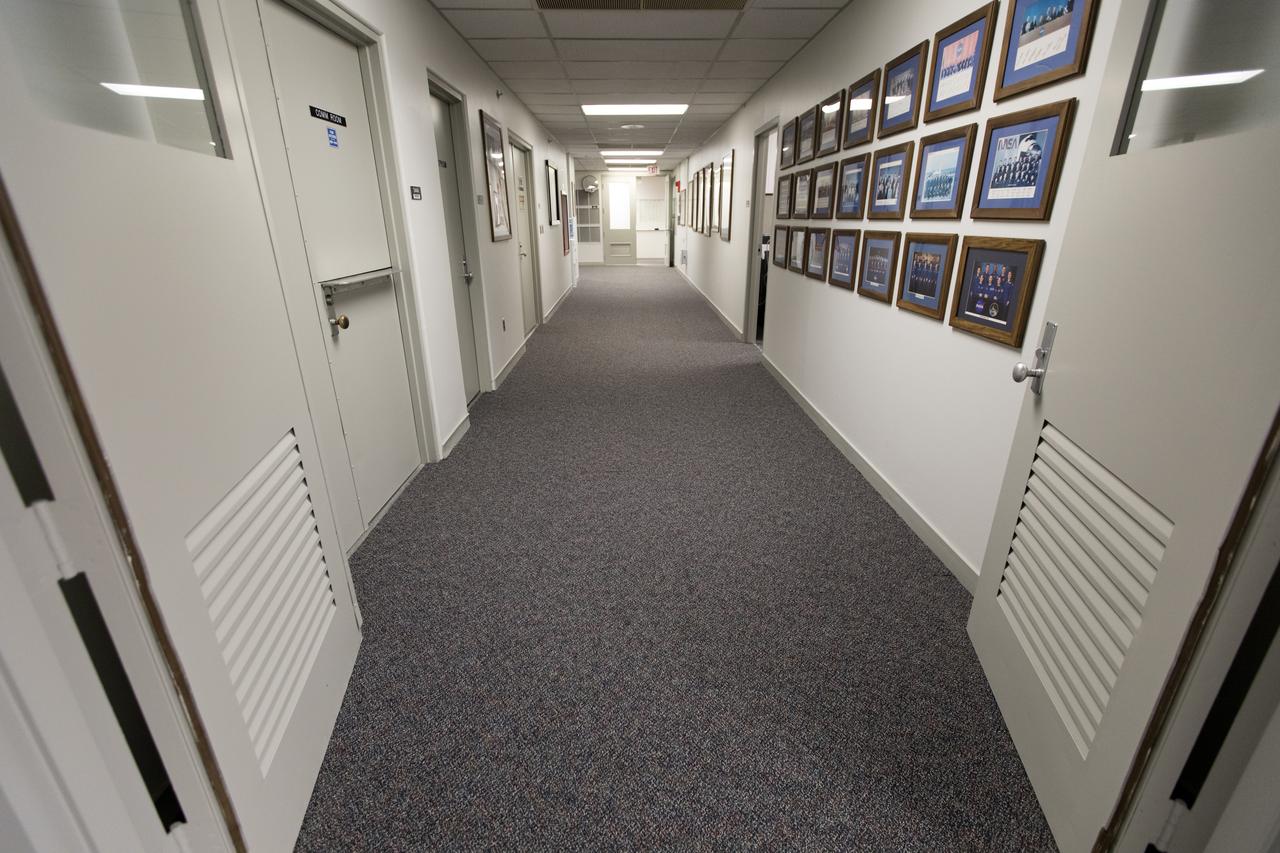
The hallway of the astronaut crew quarters at Kennedy Space Center in Florida reflects new carpeting and a fresh coat of paint. The crew quarters, located on the third floor of the Neil Armstrong Operations and Checkout Building, has been recently upgraded in preparation for Kennedy’s return to human spaceflight.
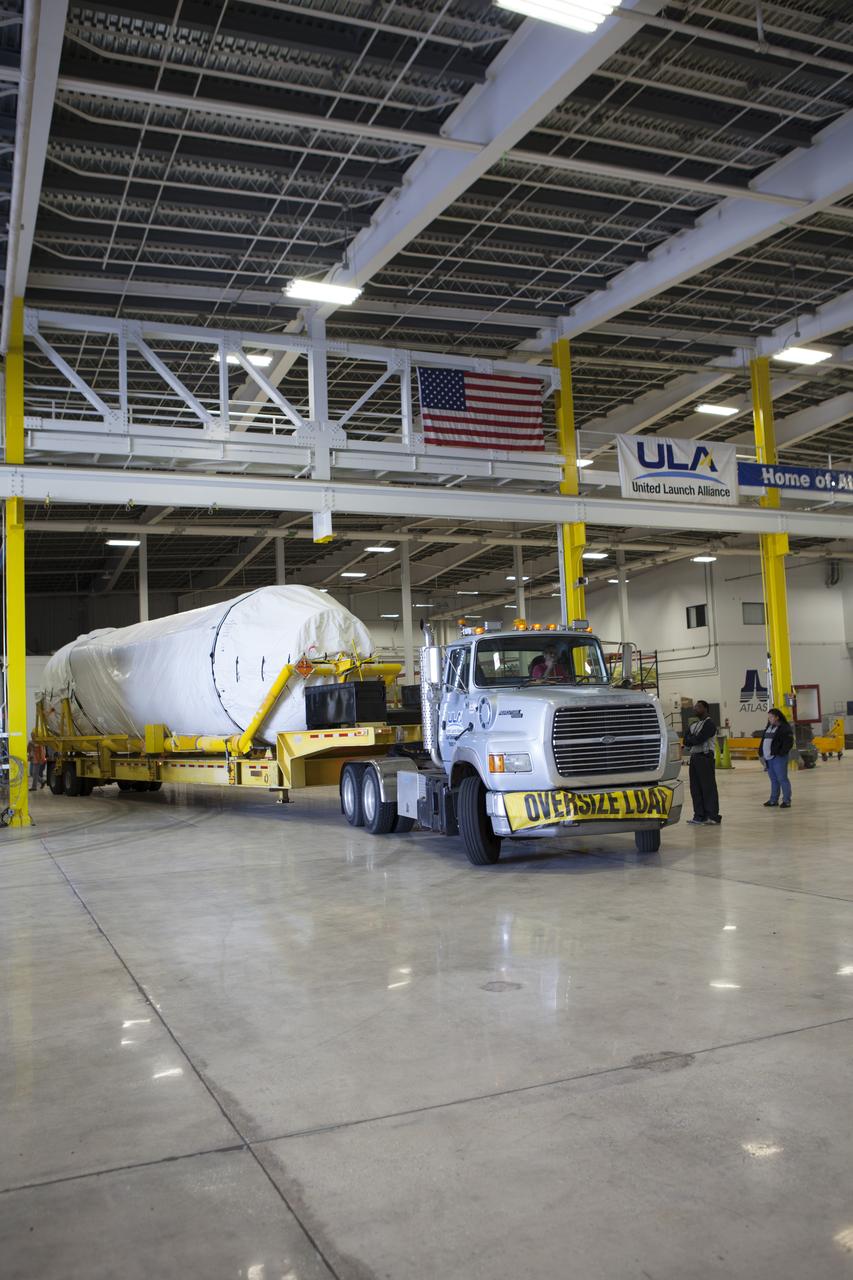
A truck positions a Centaur upper stage inside the hangar at the Atlas V Spaceflight Operations Center at Cape Canaveral Air Force Station. The upper stage will be used as part of the Atlas V rocket that will be used to launch NASA's Magnetospheric Multiscale mission.
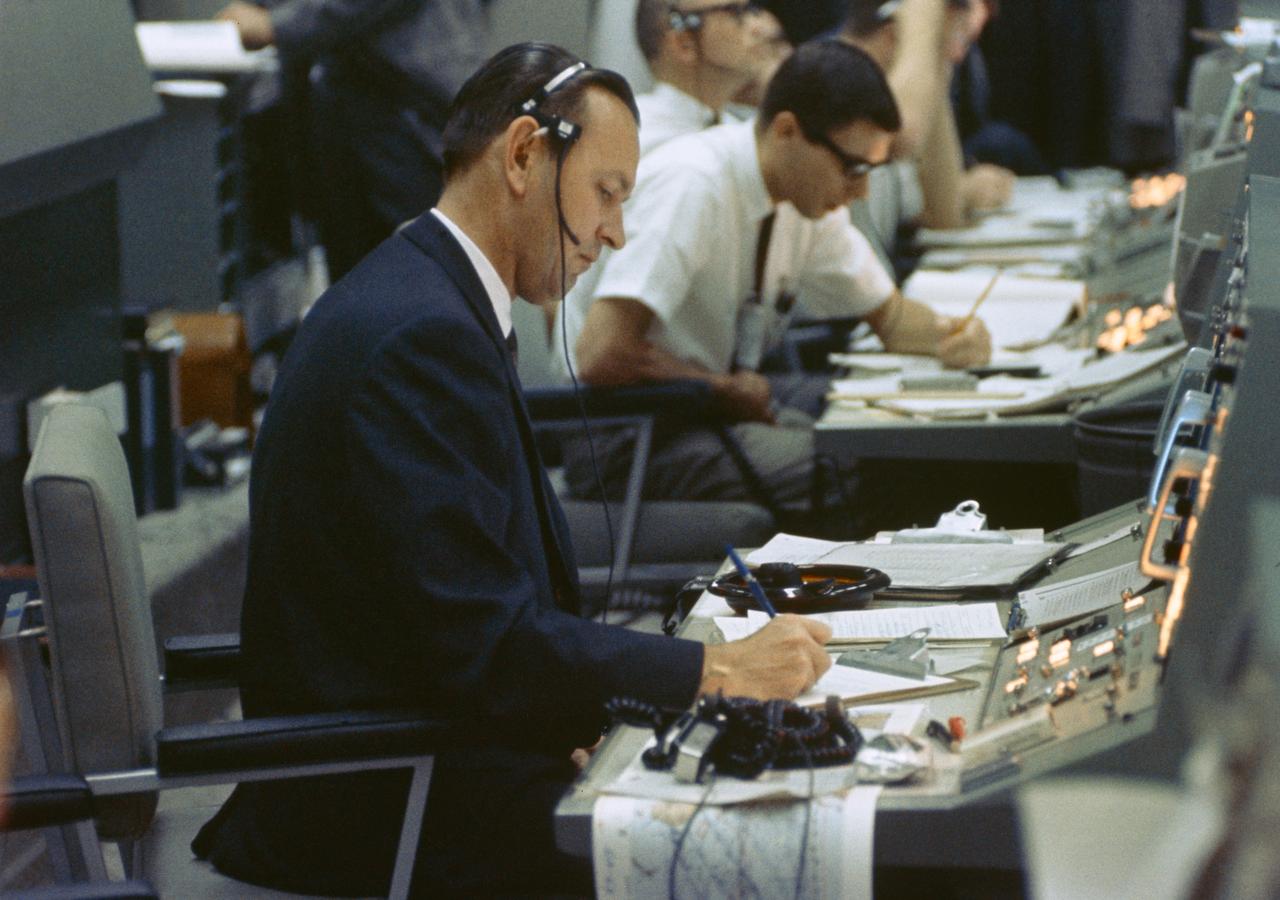
S65-28462 (3-7 June 1965) --- Christopher C. Kraft Jr., assistant director for Flight Operations, at his console in the Mission Control Center during Gemini-4 spaceflight. He served as mission director and as a flight director.
CAPE CANAVERAL, Fla. – The Centaur upper stage is taken from Port Canaveral to the Atlas Spaceflight Operations Center, or ASOC, to begin checkout for the launch of the Radiation Belt Storm Probes, or RBSP, mission. Photo credit: NASA/Charisse Nahser
CAPE CANAVERAL, Fla. – The Delta Mariner arrives at Port Canaveral carrying the Centaur upper stage destined to help launch the Radiation Belt Storm Probes, or RBSP, mission. The upper stage was removed from the ship and taken to the Atlas Spaceflight Operations Center, or ASOC, to begin checkout for the launch. Photo credit: NASA/Charisse Nahser
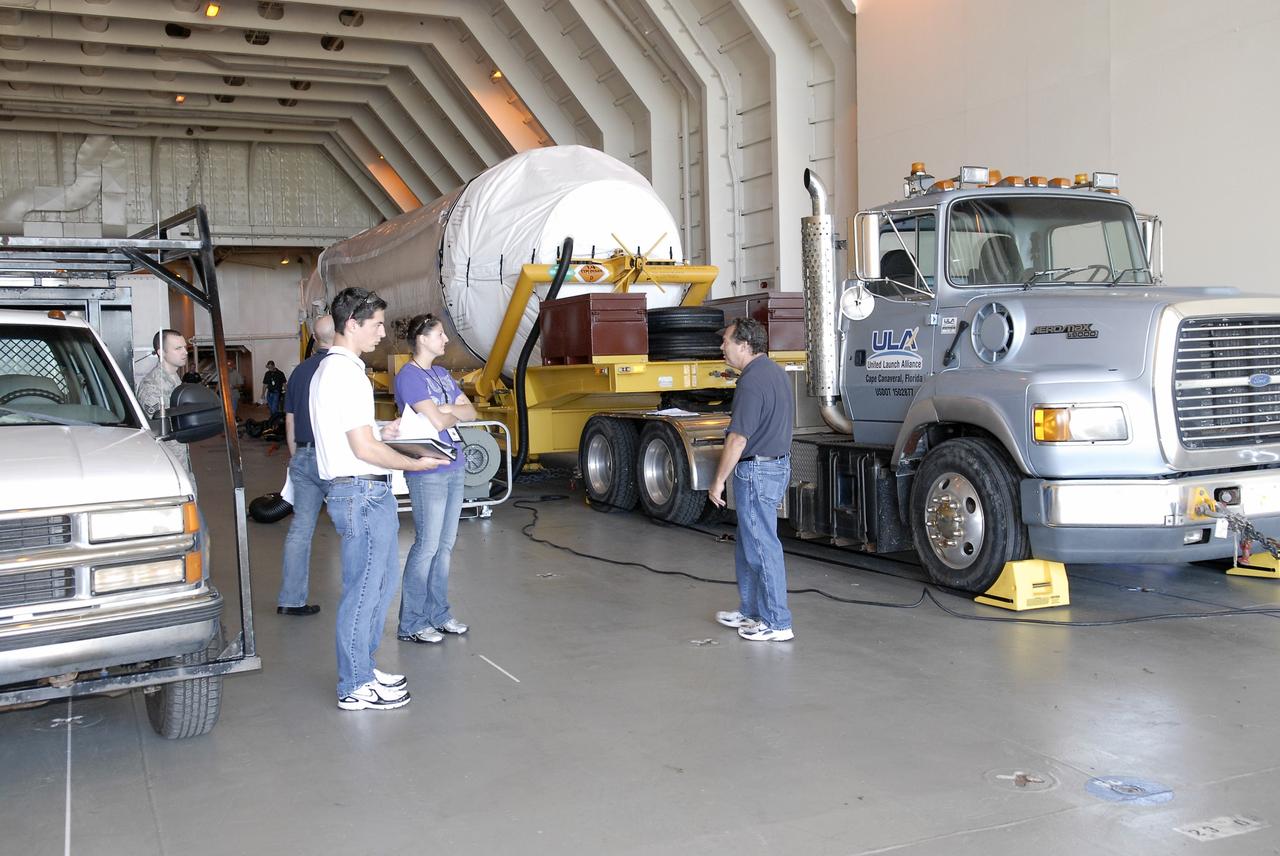
CAPE CANAVERAL, Fla. – The Centaur upper stage sits on its transport trailer inside the Delta Mariner at Port Canaveral as crews prepare to move it from the ship to the Atlas Spaceflight Operations Center, or ASOC, to begin checkout for the launch of the Radiation Belt Storm Probes, or RBSP, mission. Photo credit: NASA/Charisse Nahser
Trucks transport the Atlas V rocket and Centaur upper stage from the United Launch Alliance Delta Mariner to the Atlas V Spaceflight Operations Center at Cape Canaveral Air Force Station. The rocket will be used to launch NASA's Magnetospheric Multiscale mission.
The Delta Mariner arrives at Port Canaveral carrying the Centaur upper stage destined to help launch the Radiation Belt Storm Probes, or RBSP, mission. The upper stage was removed from the ship and taken to the Atlas Spaceflight Operations Center, or ASOC, to begin checkout for the launch. Photo credit: NASA/Charisse Nahser
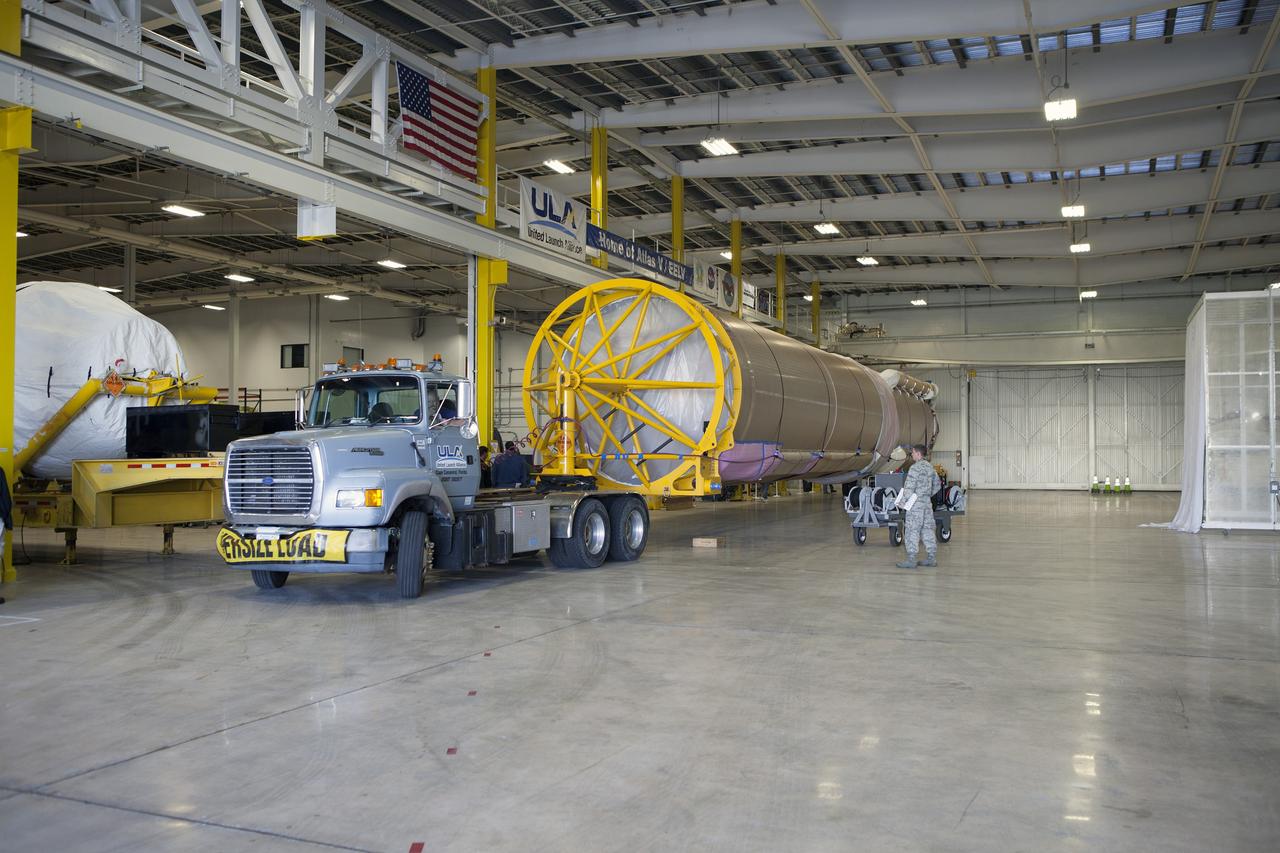
CAPE CANAVERAL, Fla. – A truck positions an Atlas V booster stage inside the hangar at the Atlas V Spaceflight Operations Center at Cape Canaveral Air Force Station. The rocket will be used to launch NASA's Magnetospheric Multiscale mission. To learn about the MMS, go to http://go.nasa.gov/1GUbzxb. Photo credit: NASA/Ben Smegelsky
CAPE CANAVERAL, Fla. – A truck positions an Atlas V booster stage inside the hangar at the Atlas V Spaceflight Operations Center at Cape Canaveral Air Force Station. The rocket will be used to launch NASA's Magnetospheric Multiscale mission. To learn about the MMS, go to http://go.nasa.gov/1GUbzxb. Photo credit: NASA/Ben Smegelsky
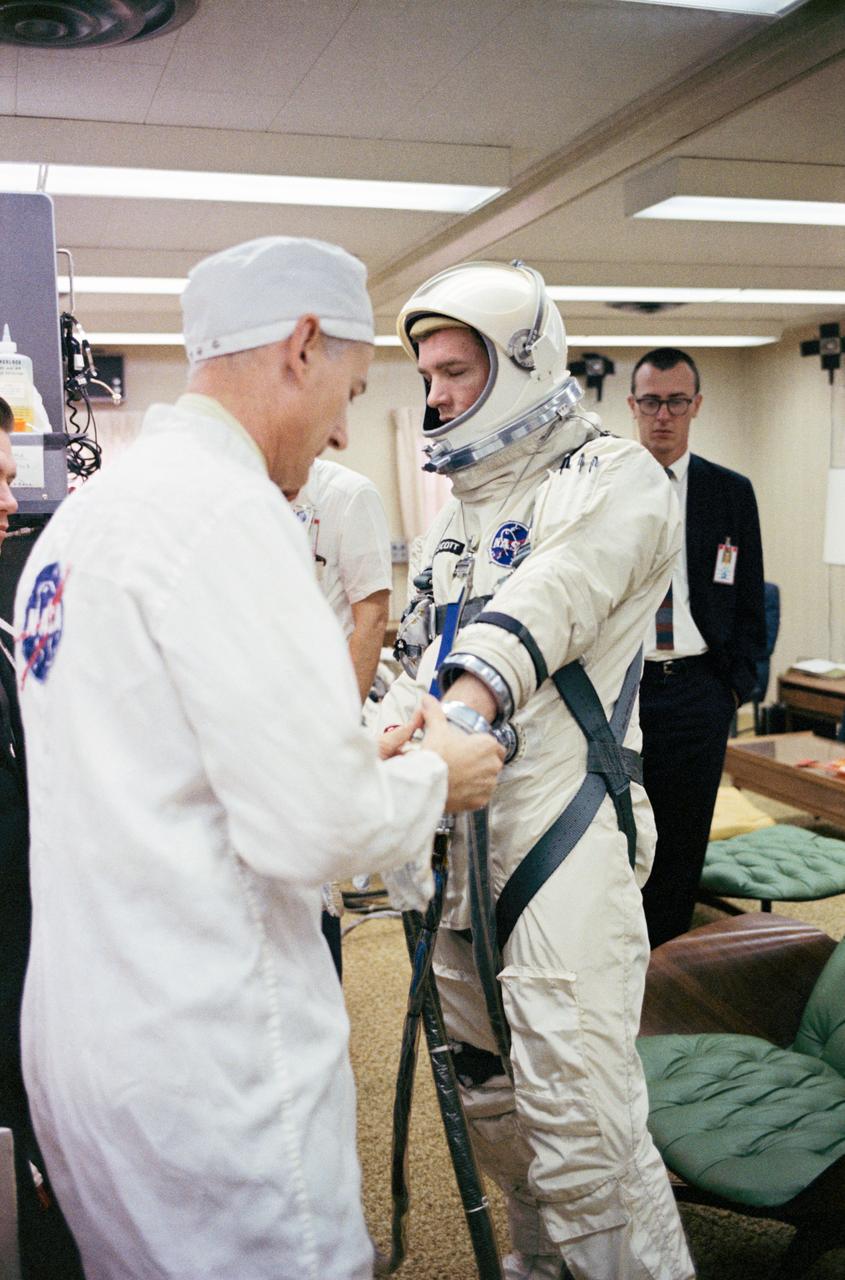
S66-24405 (16 March 1966) --- Astronaut David R. Scott, pilot of the Gemini-8 spaceflight, in the Launch Complex 16 trailer during suiting up operations for the Gemini-8 mission. NASA suit technician Joe Schmitt helps the astronaut put on his gloves. Photo credit: NASA
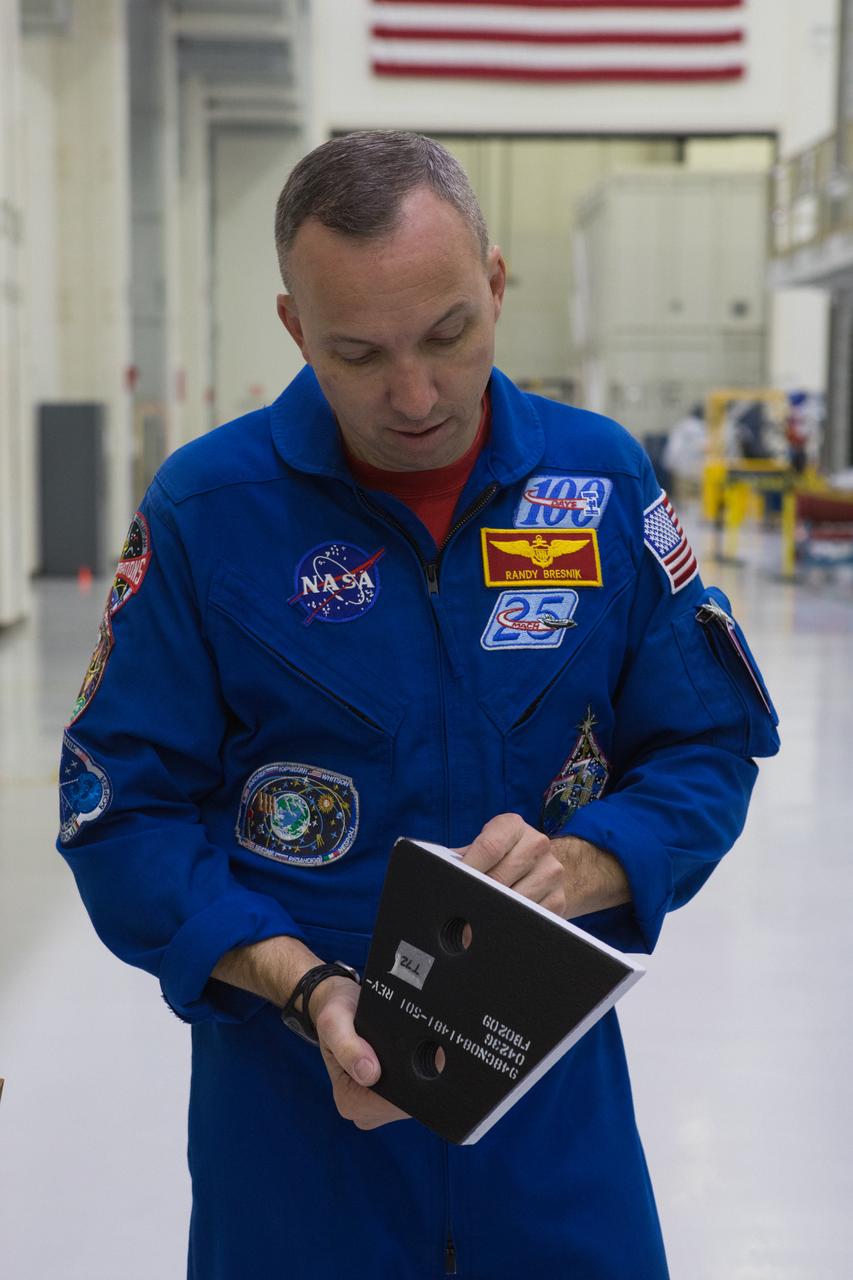
NASA astronaut Randy Bresnik examines a heat-resistant tile sample inside the Operations and Checkout Building high bay at NASA’s Kennedy Space Center in Florida during a tour on Feb. 12, 2019. Bresnik also viewed additional spaceflight hardware being processed for Exploration Mission-1 and Exploration Mission-2.
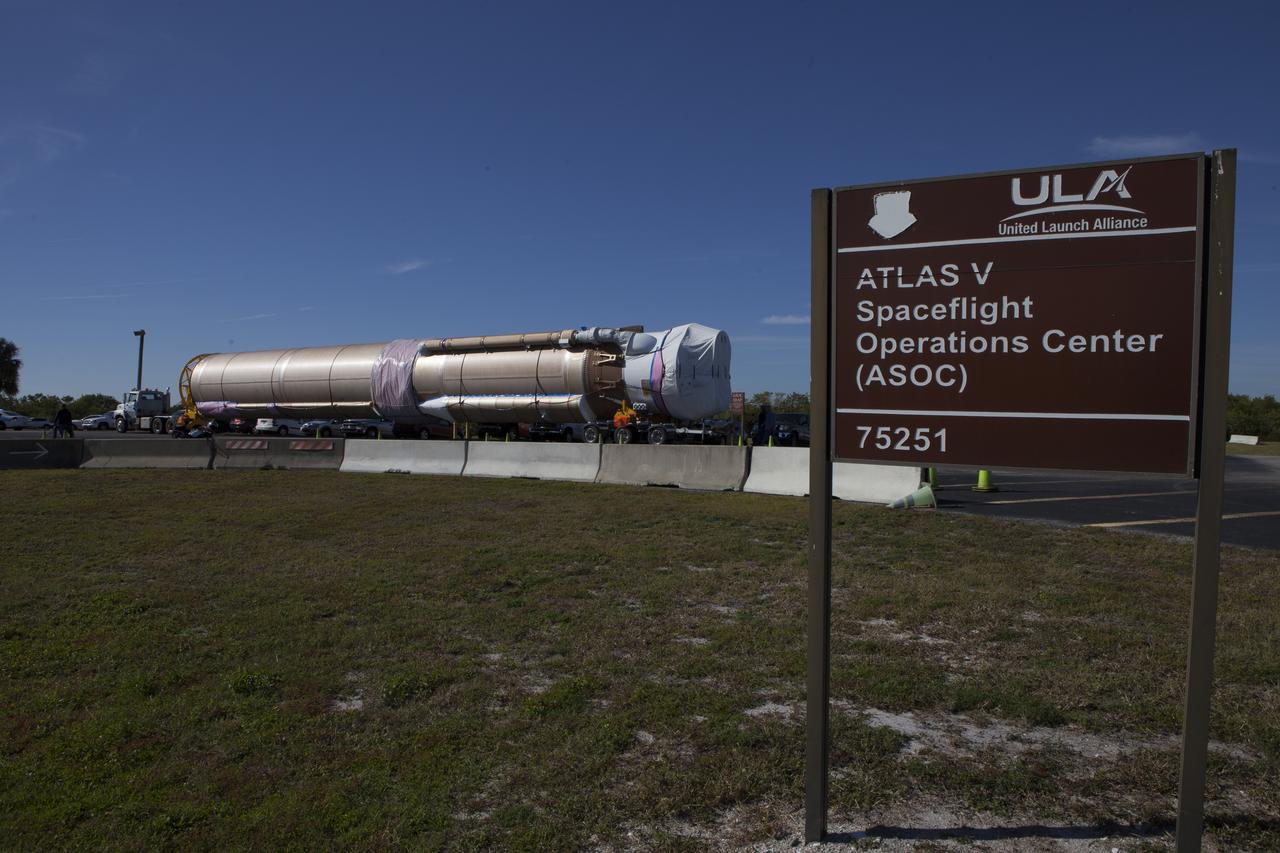
Trucks transport the Atlas V rocket and Centaur upper stage from the United Launch Alliance Delta Mariner to the Atlas V Spaceflight Operations Center at Cape Canaveral Air Force Station. The rocket will be used to launch NASA's Magnetospheric Multiscale mission.
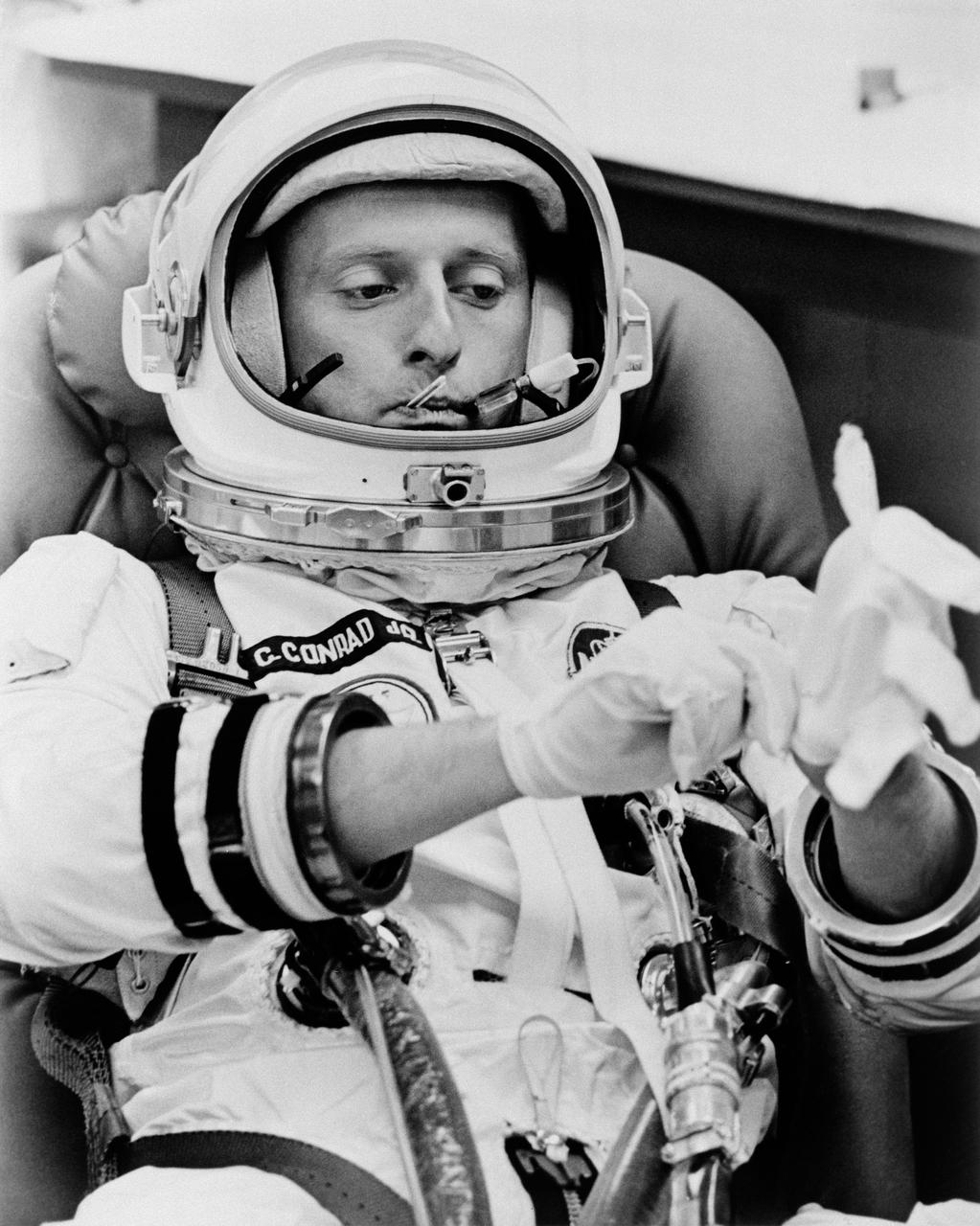
S65-46377 (21 Aug. 1965) --- Astronaut Charles Conrad Jr. pulls on a pair of white undergloves and has his temperature taken during suiting up operations on the morning of liftoff of Gemini-5 spaceflight from Cape Kennedy, Florida.
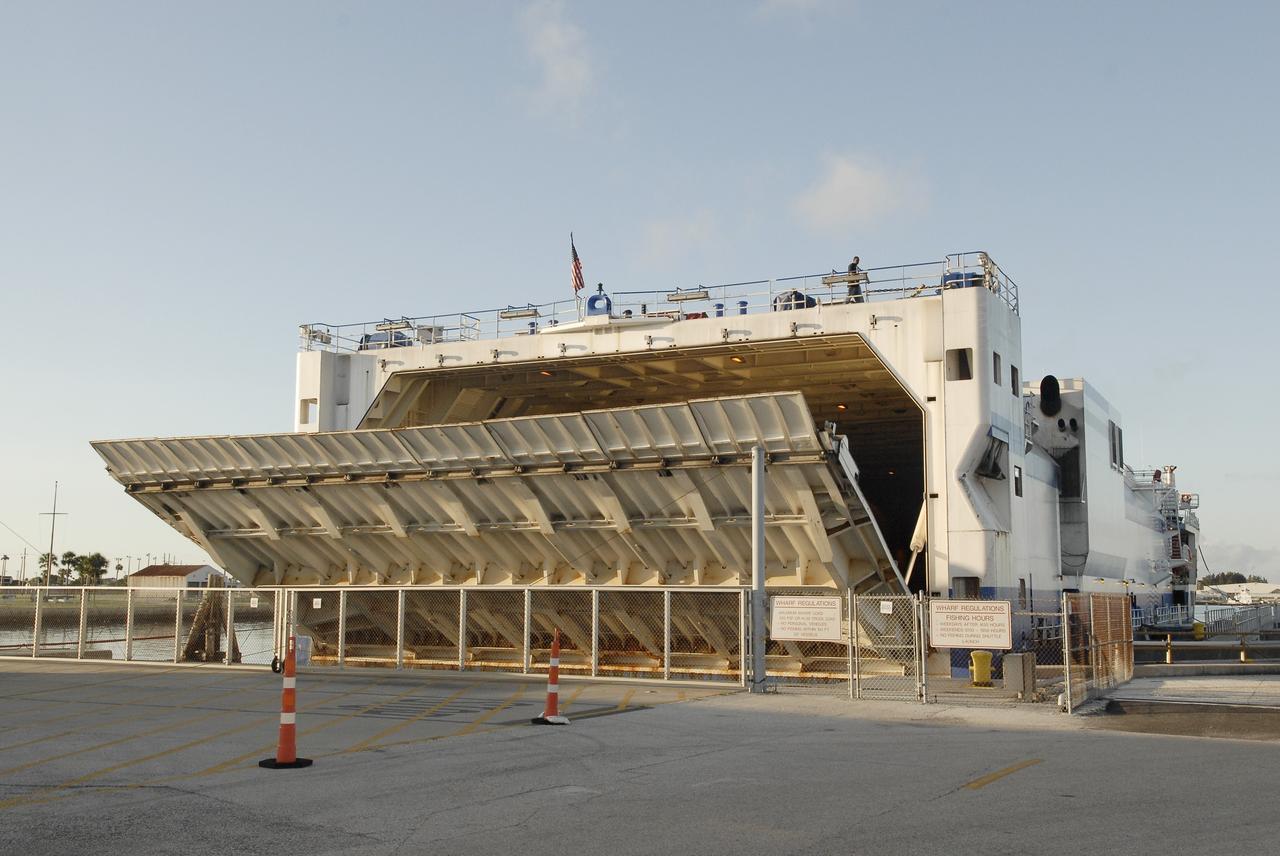
The Delta Mariner arrives at Port Canaveral carrying the Centaur upper stage destined to help launch the Radiation Belt Storm Probes, or RBSP, mission. The upper stage was removed from the ship and taken to the Atlas Spaceflight Operations Center, or ASOC, to begin checkout for the launch. Photo credit: NASA/Charisse Nahser
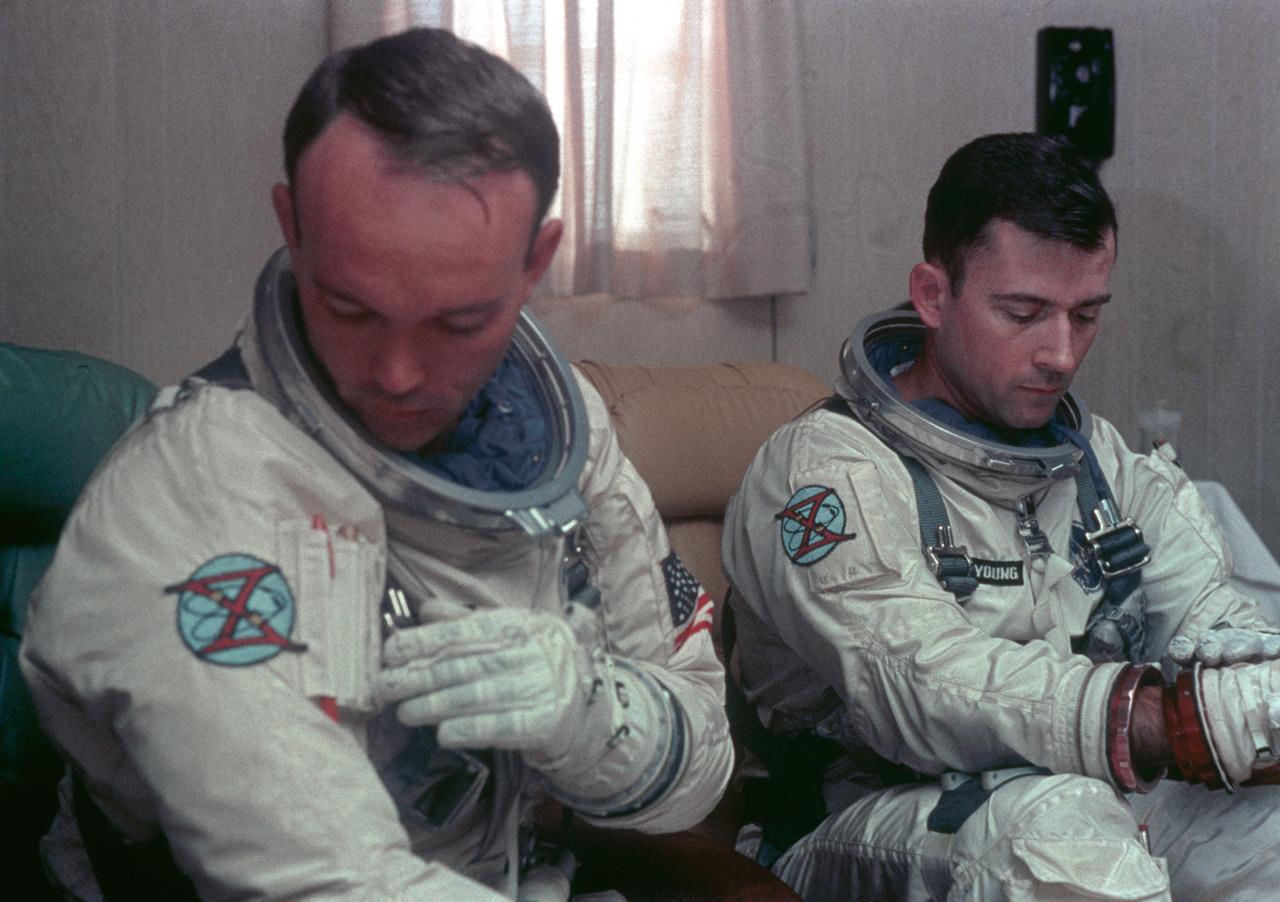
S66-42424 (18 July 1966) --- Astronauts John W. Young (right), command pilot, and Michael Collins (left), pilot, prime crew for the Gemini-10 spaceflight, undergo suiting up operations in the Launch Complex 16 suiting trailer. Photo credit: NASA
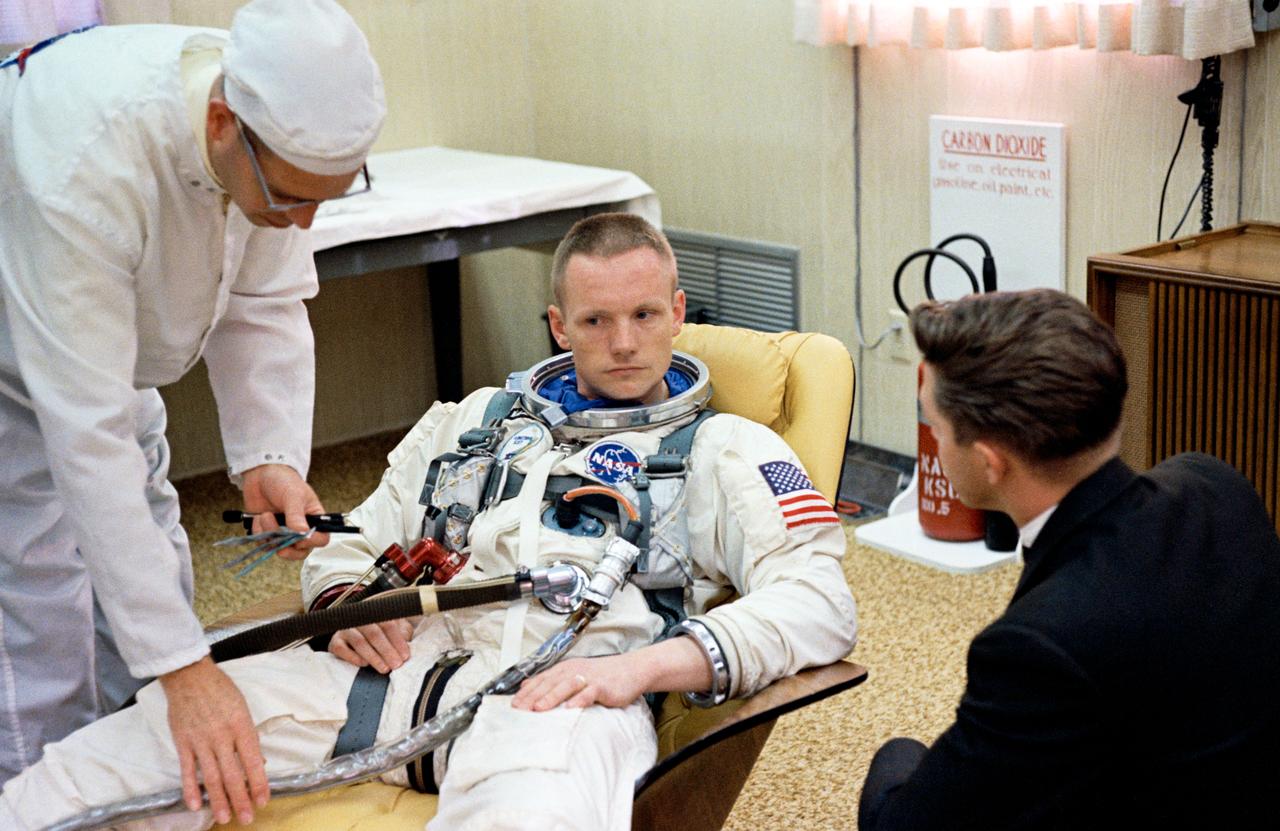
S66-24446 (16 March 1966) --- Astronaut Neil A. Armstrong, command pilot of the Gemini-8 spaceflight, sits in the Launch Complex 16 trailer during suiting up operations for the Gemini-8 mission. Suit technician Jim Garrepy assists. Photo credit: NASA

Astronaut candidate Kayla Barron examines a heat-resistant tile sample inside the Operations and Checkout Building high bay at NASA’s Kennedy Space Center in Florida during a tour on Feb. 12, 2019. Barron also viewed additional spaceflight hardware being processed for Exploration Mission-1 and Exploration Mission-2.
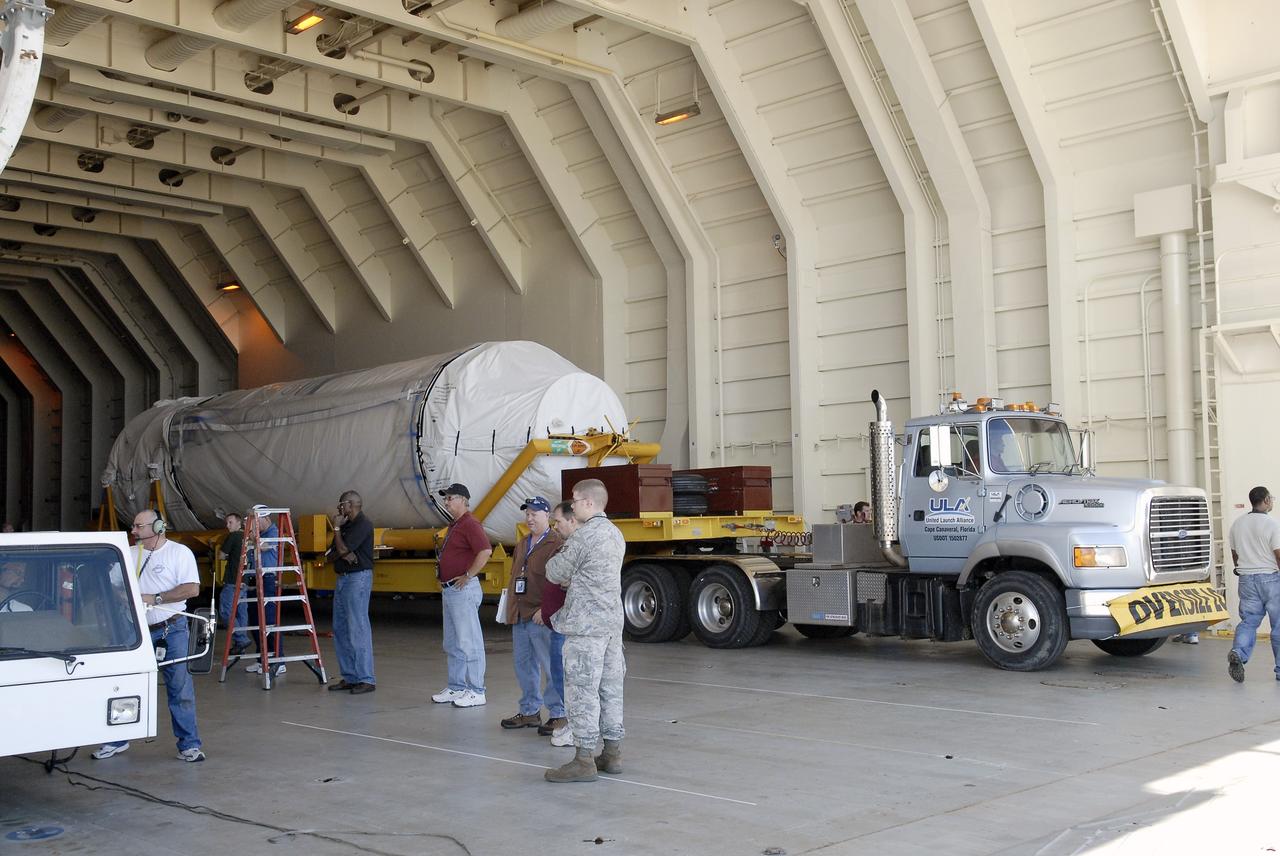
CAPE CANAVERAL, Fla. – The Centaur upper stage sits on its transport trailer inside the Delta Mariner at Port Canaveral as crews prepare to move it from the ship to the Atlas Spaceflight Operations Center, or ASOC, to begin checkout for the launch of the Radiation Belt Storm Probes, or RBSP, mission. Photo credit: NASA/Charisse Nahser
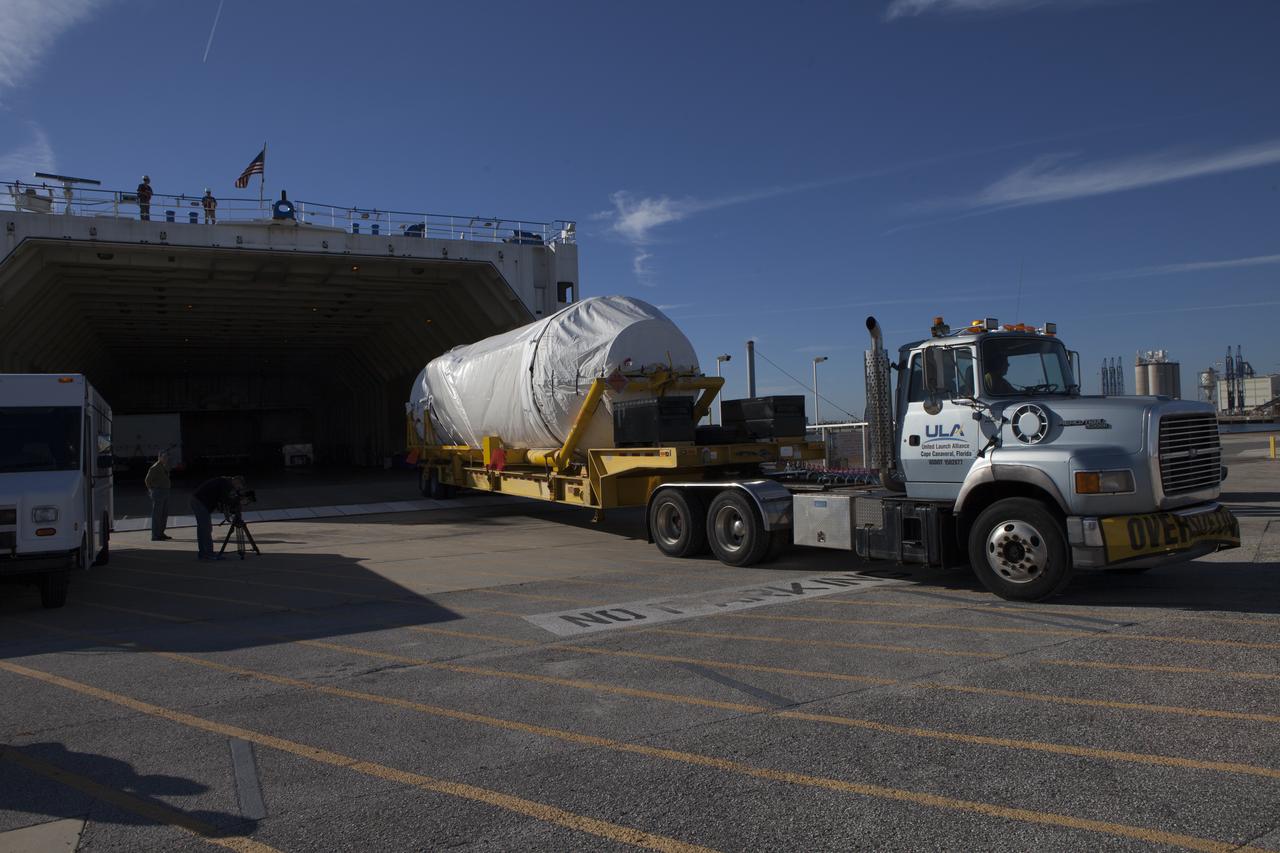
A truck begins to transport a Centaur upper stage from the United Launch Alliance Delta Mariner to the Atlas V Spaceflight Operations Center at Cape Canaveral Air Force Station. The rocket will be used to launch NASA's Magnetospheric Multiscale mission.
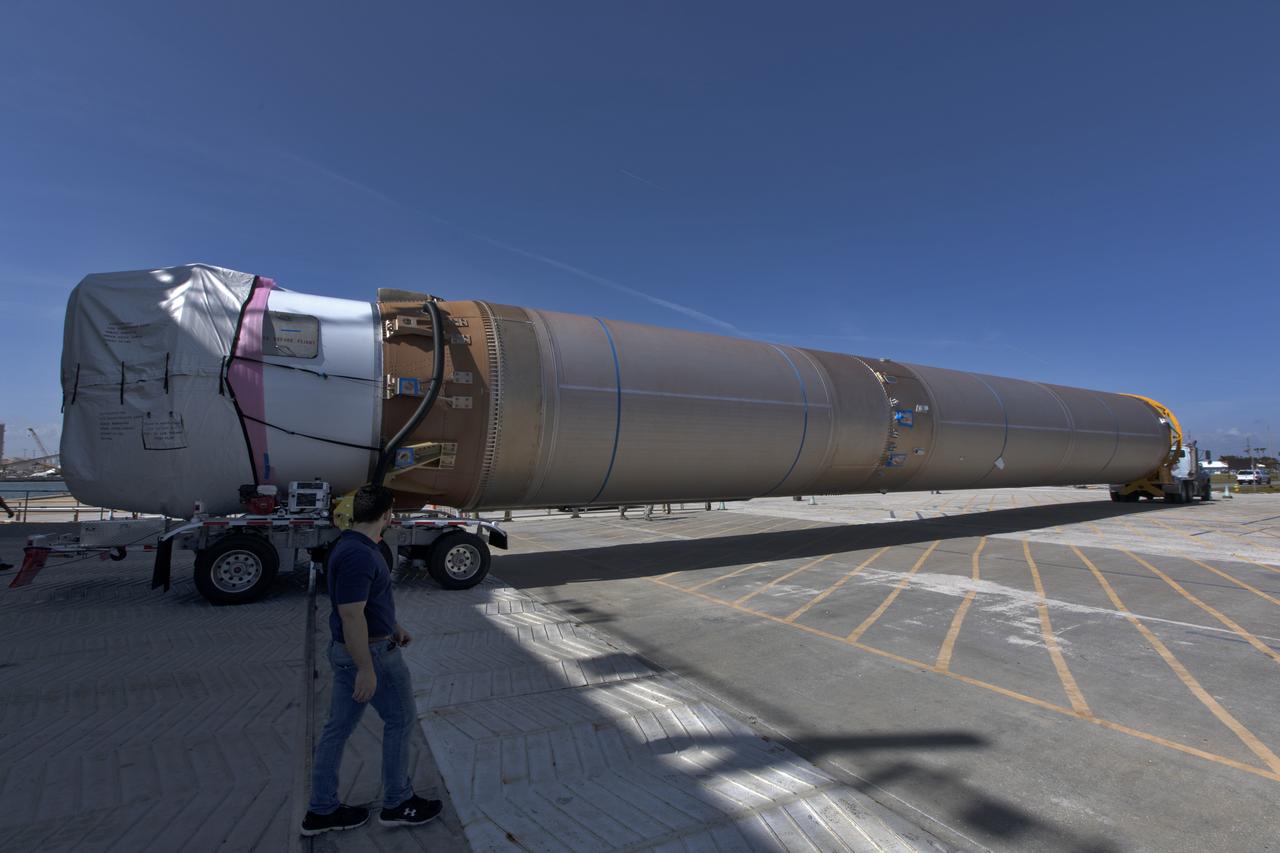
The United Launch Alliance Atlas V booster for NOAA's Geostationary Operational Environmental Satellite-S (GOES-S) is offloaded from the Mariner transport ship at the Army Wharf at Cape Canaveral Air Force Station in Florida. The booster will be transported to the Atlas Spaceflight Operations Center near Space Launch Complex 41 at CCAFS. GOES-S is the second in a series of four advanced geostationary weather satellites. The satellite is slated to launch aboard the Atlas V rocket March 1.