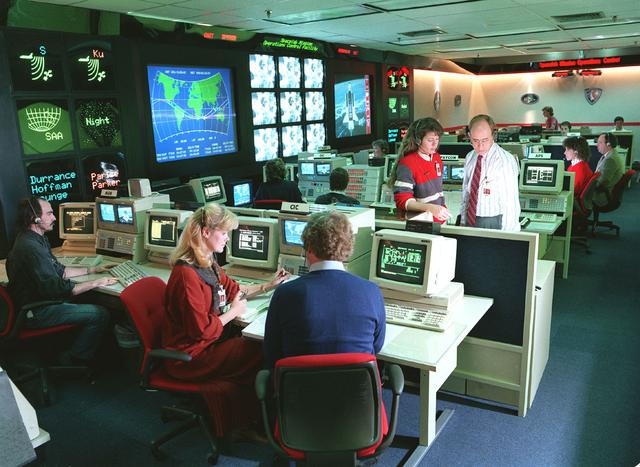
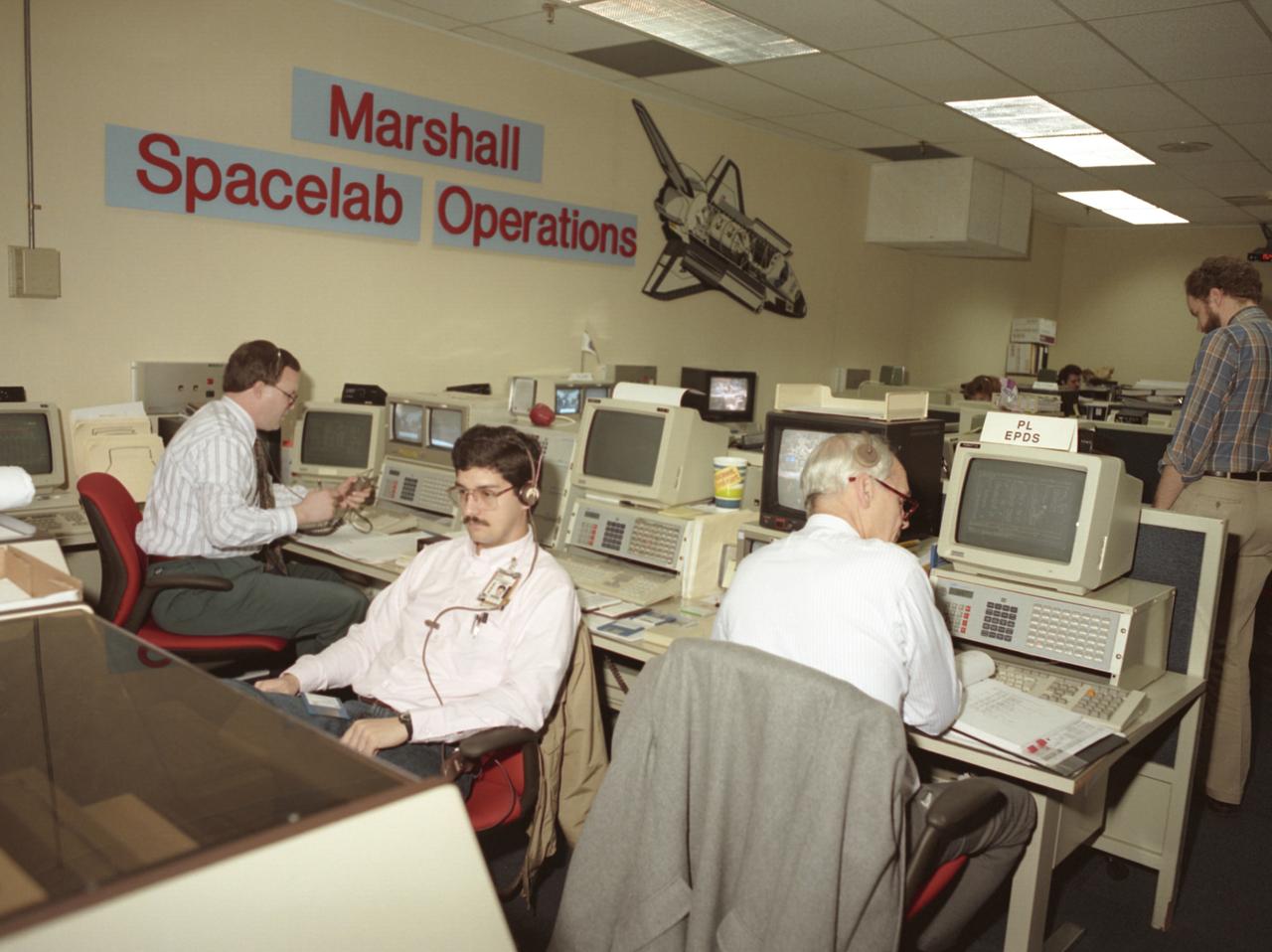
Activities in the Spacelab Mission Operations Control facility at the Marshall Space Flight Center (MSFC) are shown in this photograph. All NASA Spacelab science missions were controlled from and the science astronauts were supported by this facility during the missions. Teams of flight controllers and researchers at the MSFC Space Mission Operations Control Center directed all NASA science operations, sent commands directly to the crew of Spacelab, and received and analyzed data from experiments on board the Spacelab. The facility used the air/ground communications charnels between the astronauts and ground control teams during the Spacelab missions. Spacelab science operations were a cooperative effort between the science astronaut crew in orbit and their colleagues in the Space Mission Operations Control Center. Though the crew and the instrument science teams were separated by many miles, they interacted with one another to evaluate observations and solve problems in much the same way as they would when working side by side in a ground-based laboratory. Most of the action was centered in two work areas: The payload control area from which the overall payload was monitored and controlled and the science operations area where teams of scientists monitored their instruments and direct experiment activities. This facility is no longer operational since the last Spacelab mission, U.S. Microgravity Payload-4 in December 1997, and has become one of the historical sites at MSFC. The facility was reopened as the International Space Station Payload Operations Center in March 2001.
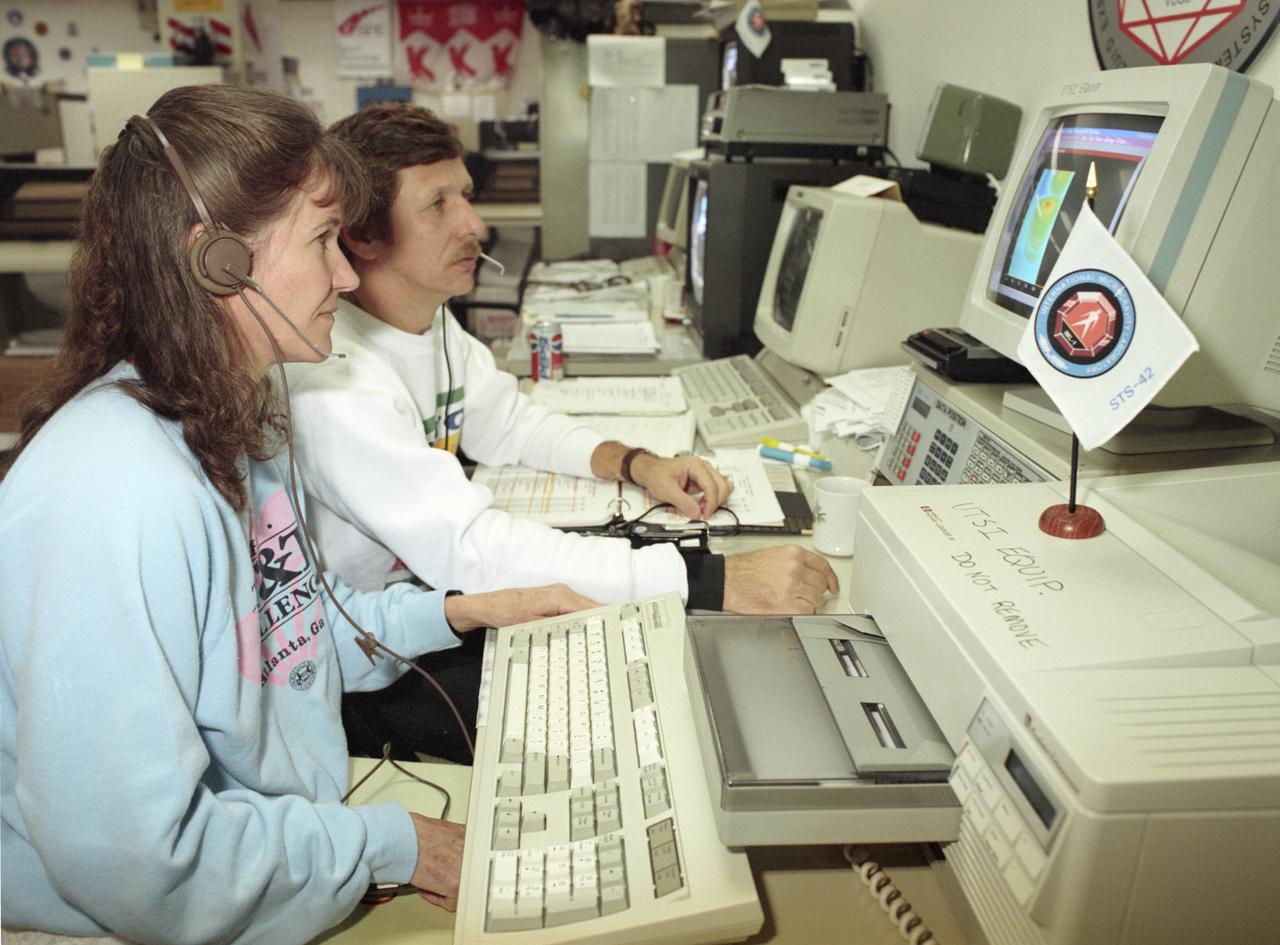
The primary payload for Space Shuttle Mission STS-42, launched January 22, 1992, was the International Microgravity Laboratory-1 (IML-1), a pressurized manned Spacelab module. The goal of IML-1 was to explore in depth the complex effects of weightlessness of living organisms and materials processing. Around-the-clock research was performed on the human nervous system's adaptation to low gravity and effects of microgravity on other life forms such as shrimp eggs, lentil seedlings, fruit fly eggs, and bacteria. Materials processing experiments were also conducted, including crystal growth from a variety of substances such as enzymes, mercury iodide, and a virus. The Huntsville Operations Support Center (HOSC) Spacelab Payload Operations Control Center (SL POCC) at the Marshall Space Flight Center (MSFC) was the air/ground communication channel used between the astronauts and ground control teams during the Spacelab missions. Featured are activities in the SL POCC during STS-42, IML-1 mission.
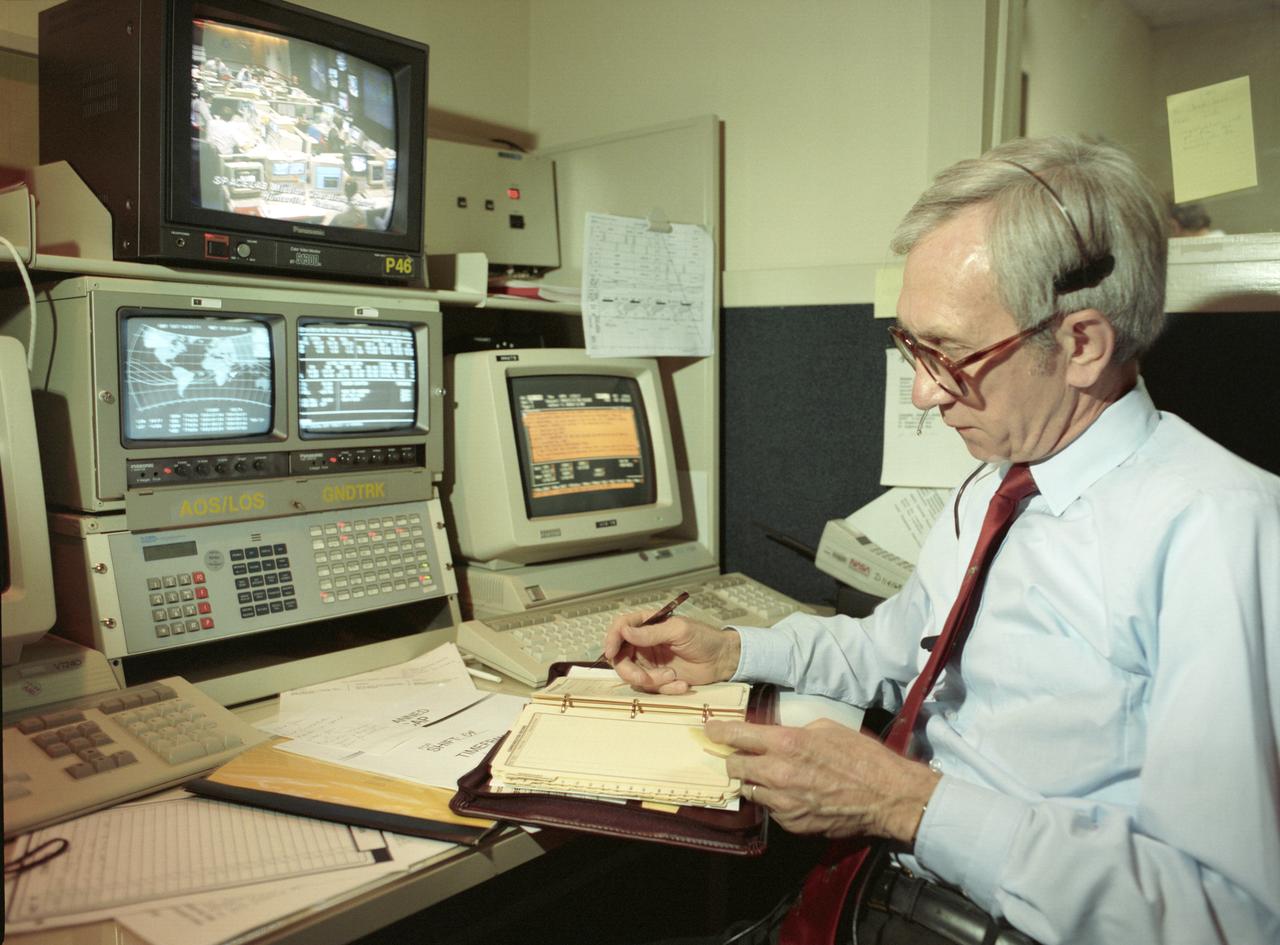
The primary objective of the STS-35 mission was round the clock observation of the celestial sphere in ultraviolet and X-Ray astronomy with the Astro-1 observatory which consisted of four telescopes: the Hopkins Ultraviolet Telescope (HUT); the Wisconsin Ultraviolet Photo-Polarimeter Experiment (WUPPE); the Ultraviolet Imaging Telescope (UIT); and the Broad Band X-Ray Telescope (BBXRT). The Huntsville Operations Support Center (HOSC) Spacelab Payload Operations Control Center (SL POCC) at the Marshall Space Flight Center (MSFC) was the air/ground communication channel used between the astronauts and ground control teams during the Spacelab missions. Teams of controllers and researchers directed on-orbit science operations, sent commands to the spacecraft, received data from experiments aboard the Space Shuttle, adjusted mission schedules to take advantage of unexpected science opportunities or unexpected results, and worked with crew members to resolve problems with their experiments. Pictured is Jack Jones in the Mission Manager Area.
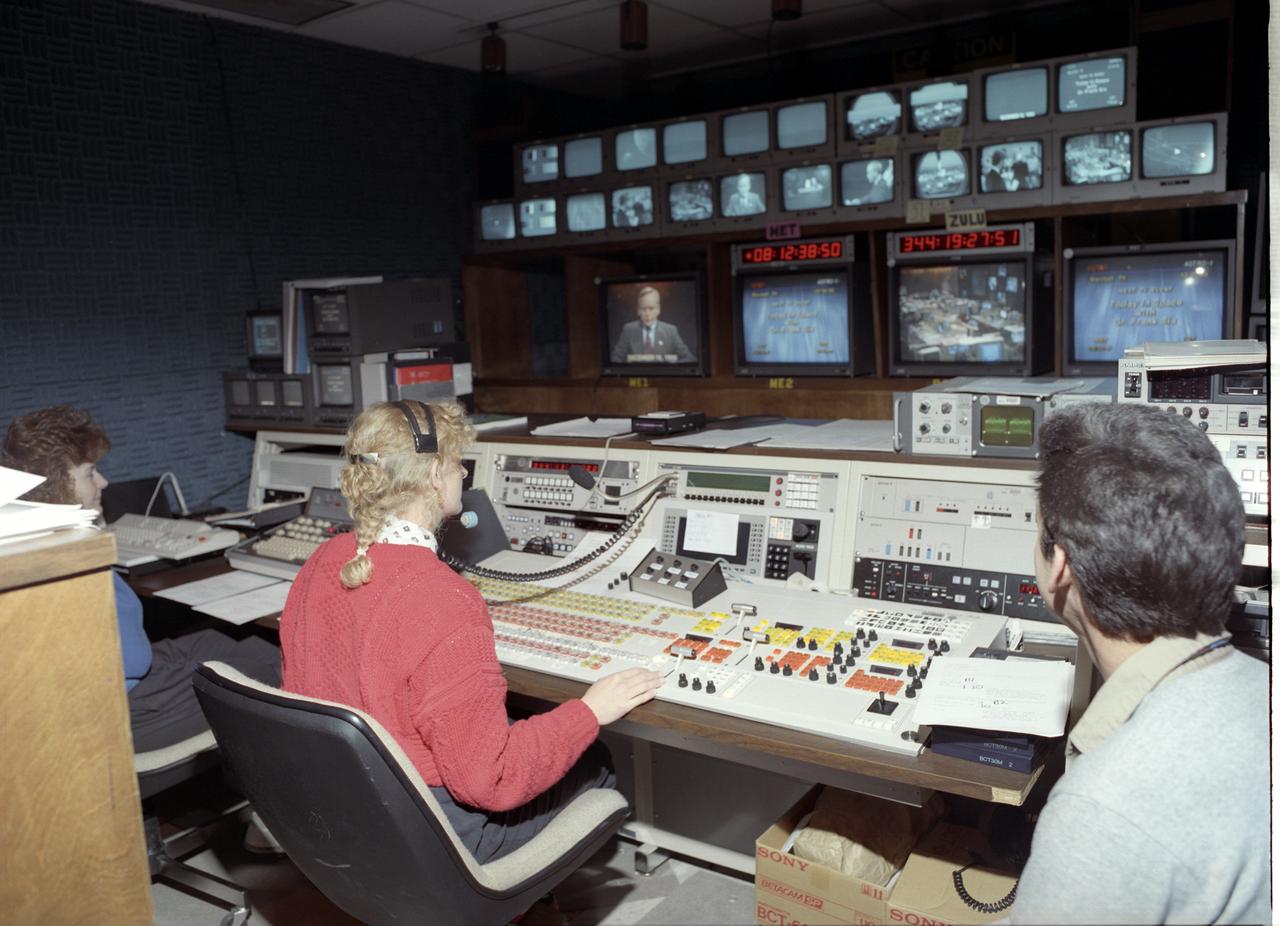
The primary objective of the STS-35 mission was round the clock observation of the celestial sphere in ultraviolet and X-Ray astronomy with the Astro-1 observatory which consisted of four telescopes: the Hopkins Ultraviolet Telescope (HUT); the Wisconsin Ultraviolet Photo-Polarimeter Experiment (WUPPE); the Ultraviolet Imaging Telescope (UIT); and the Broad Band X-Ray Telescope (BBXRT). The Huntsville Operations Support Center (HOSC) Spacelab Payload Operations Control Center (SL POCC) at the Marshall Space Flight Center (MSFC) was the air/ground communication channel used between the astronauts and ground control teams during the Spacelab missions. Teams of controllers and researchers directed on-orbit science operations, sent commands to the spacecraft, received data from experiments aboard the Space Shuttle, adjusted mission schedules to take advantage of unexpected science opportunities or unexpected results, and worked with crew members to resolve problems with their experiments. Pictured is the TV OPS area of the SL POCC.
The primary payload for Space Shuttle Mission STS-42, launched January 22, 1992, was the International Microgravity Laboratory-1 (IML-1), a pressurized manned Spacelab module. The goal of IML-1 was to explore in depth the complex effects of weightlessness of living organisms and materials processing. Around-the-clock research was performed on the human nervous system's adaptation to low gravity and effects of microgravity on other life forms such as shrimp eggs, lentil seedlings, fruit fly eggs, and bacteria. Materials processing experiments were also conducted, including crystal growth from a variety of substances such as enzymes, mercury iodide, and a virus. The Huntsville Operations Support Center (HOSC) Spacelab Payload Operations Control Center (SL POCC) at the Marshall Space Flight Center (MSFC) was the air/ground communication channel used between the astronauts and ground control teams during the Spacelab missions. Featured is the Spacelab Operations Support Room Space Engineering Support team in the SL POCC during STS-42, IML-1 mission.
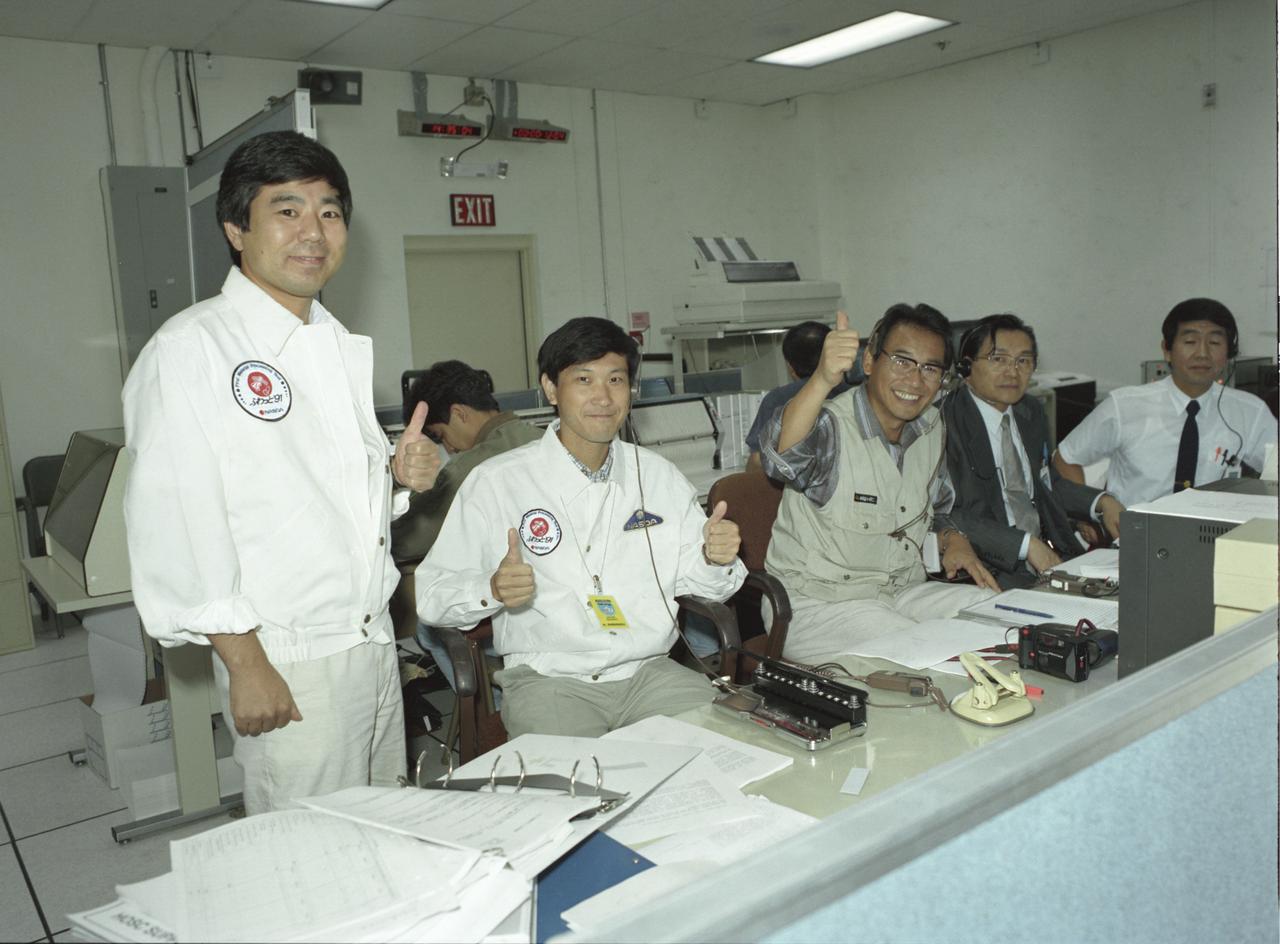
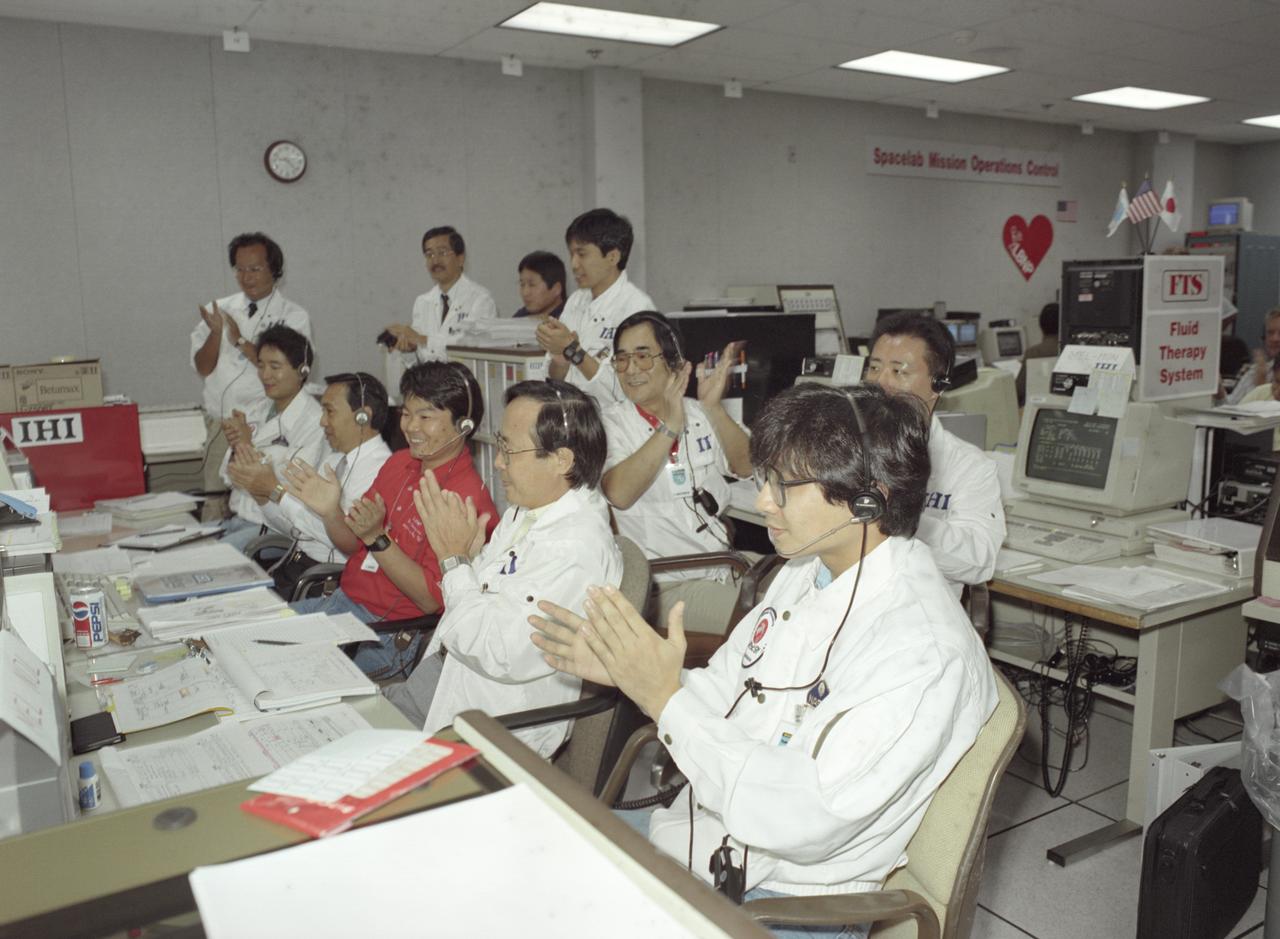
The group of Japanese researchers of the Spacelab-J (SL-J) were thumbs-up in the Payload Operations Control Center (POCC) at the Marshall Space Flight Center after the successful launch of Space Shuttle Orbiter Endeavour that carried their experiments. The SL-J was a joint mission of NASA and the National Space Development Agency of Japan (NASDA) utilizing a marned Spacelab module. The mission conducted microgravity investigations in materials and life sciences. Materials science investigations covered such fields as biotechnology, electronic materials, fluid dynamics and transport phenomena, glasses and ceramics, metals and alloys, and acceleration measurements. Life sciences included experiments on human health, cell separation and biology, developmental biology, animal and human physiology and behavior, space radiation, and biological rhythms. Test subjects included the crew, Japanese koi fish (carp), cultured animal and plant cells, chicken embryos, fruit flies, fungi and plant seeds, frogs, and frog eggs. The POCC was the air/ground communications channel between the astronauts and ground control teams during the Spacelab missions. The Spacelab science operations were a cooperative effort between the science astronaut crew in orbit and their colleagues in the POCC. Spacelab-J was launched aboard the Space Shuttle Orbiter Endeavour on September 12, 1992.
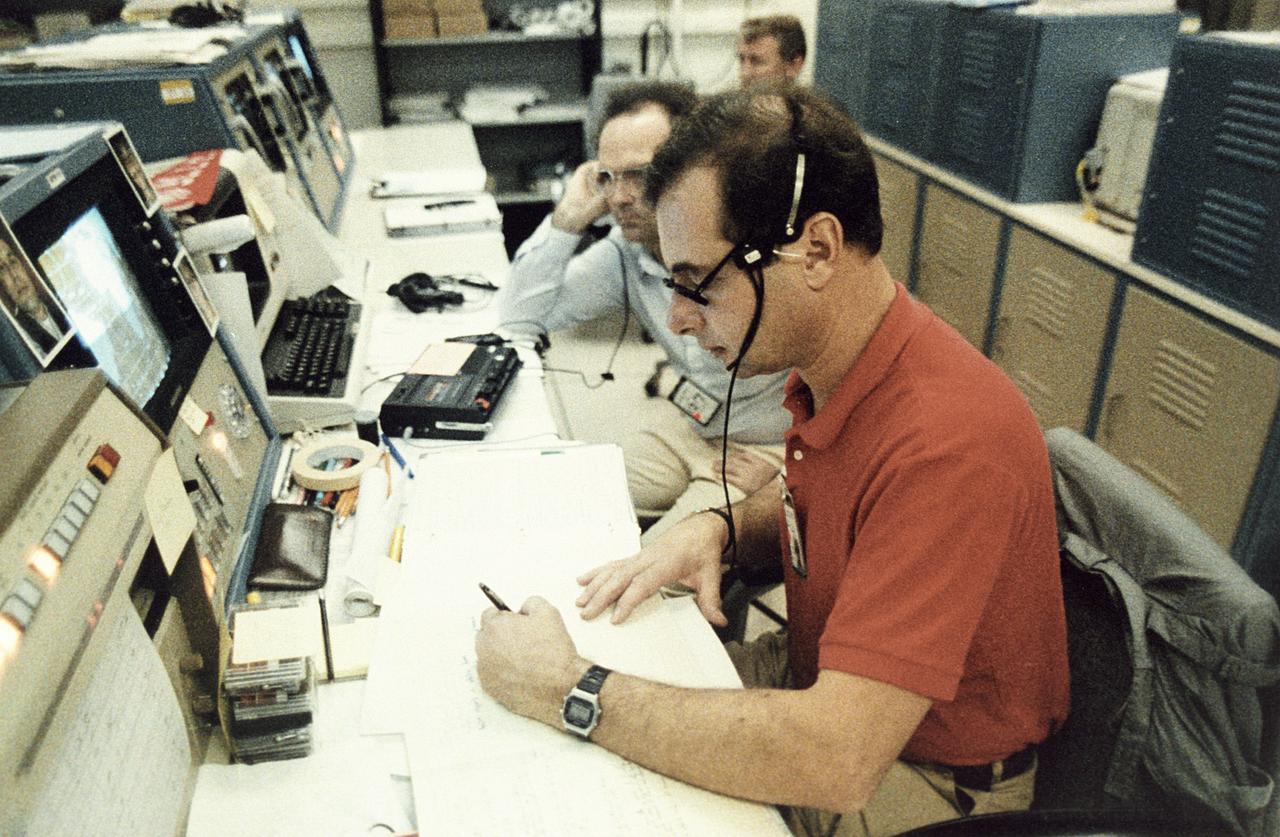
During a Spacelab flight, the hub of activity was the Payload Operations Control Center (POCC) at the Johnson Space Flight Center (JSC) in Houston, Texas. The POCC became home to the management and science teams who worked around the clock to guide and support the mission. All Spacelab principal investigators and their teams of scientists and engineers set up work areas in the POCC. Through the use of computers, they could send commands to their instruments and receive and analyze experiment data. Instantaneous video and audio communications made it possible for scientists on the ground to follow the progress of their research almost as if they were in space with the crew. This real-time interaction between investigators on the ground and the crew in space was probably the most exciting of Spacelab's many capabilities. As principal investigators talked to the payload specialists during the mission, they consulted on experiment operations, made decisions, and shared in the thrill of gaining new knowledge. In December 1990, a newly-established POCC at the Marshall Space Flight Center (MSFC) opened its door for the operations of the Spacelab payloads and experiments, while JSC monitored the Shuttle flight operations. MSFC had managing responsibilities for the Spacelab missions.
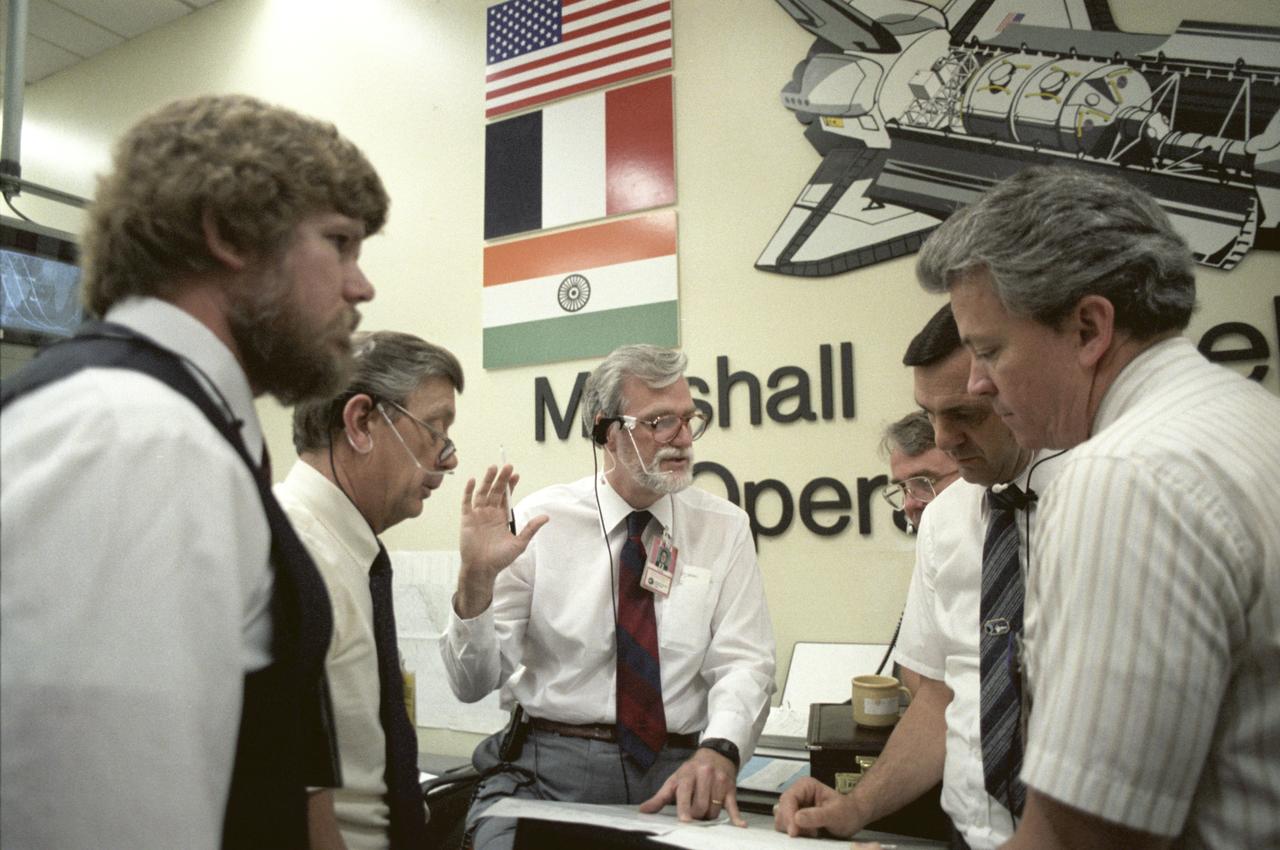
Spacelab-3 launched aboard STS-51B, with the major science objective being to perform engineering tests on two new facilities: the rodent animal holding facility and the primate animal holding facility. In addition, scientists observed the animals to obtain first hand knowledge of the effects of launch and reentry stresses and behavior. The need for suitable animal housing to support research in space led to the development of the Research Animal Holding Facility at the Ames Research Center. Scientists often study animals to find clues to human physiology and behavior. Rats, insects, and microorganisms had already been studied aboard the Shuttle on previous missions. On Spacelab-3, scientists had a chance to observe a large number of animals living in space in a specially designed and independently controlled housing facility. Marshall Space Flight Center (MSFC) had management responsibility for the Spacelab 3 mission. This photograph depicts activities during the mission at the Huntsville Operations Support Center (HOSC) Spacelab Payload Operations Control Center (SL POCC) at MSFC.
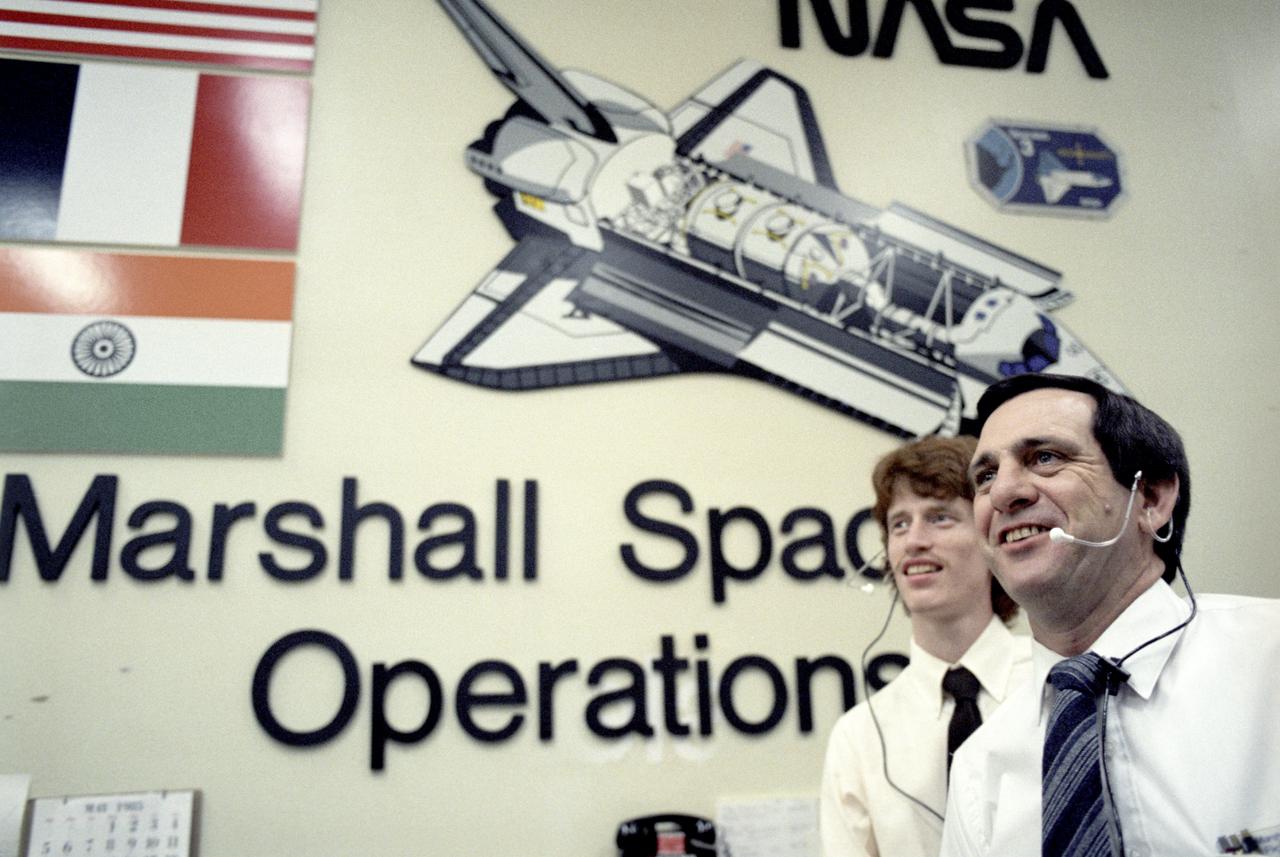
Spacelab-3 launched aboard STS-51B, with the major science objective being to perform engineering tests on two new facilities: the rodent animal holding facility and the primate animal holding facility. In addition, scientists observed the animals to obtain first hand knowledge of the effects of launch and reentry stresses and behavior. The need for suitable animal housing to support research in space led to the development of the Research Animal Holding Facility at the Ames Research Center. Scientists often study animals to find clues to human physiology and behavior. Rats, insects, and microorganisms had already been studied aboard the Shuttle on previous missions. On Spacelab-3, scientists had a chance to observe a large number of animals living in space in a specially designed and independently controlled housing facility. Marshall Space Flight Center (MSFC) had management responsibility for the Spacelab-3 mission. This photograph depicts activities during the mission at the Huntsville Operations Support Center (HOSC) Spacelab Payload Operations Control Center (SL POCC) at MSFC.
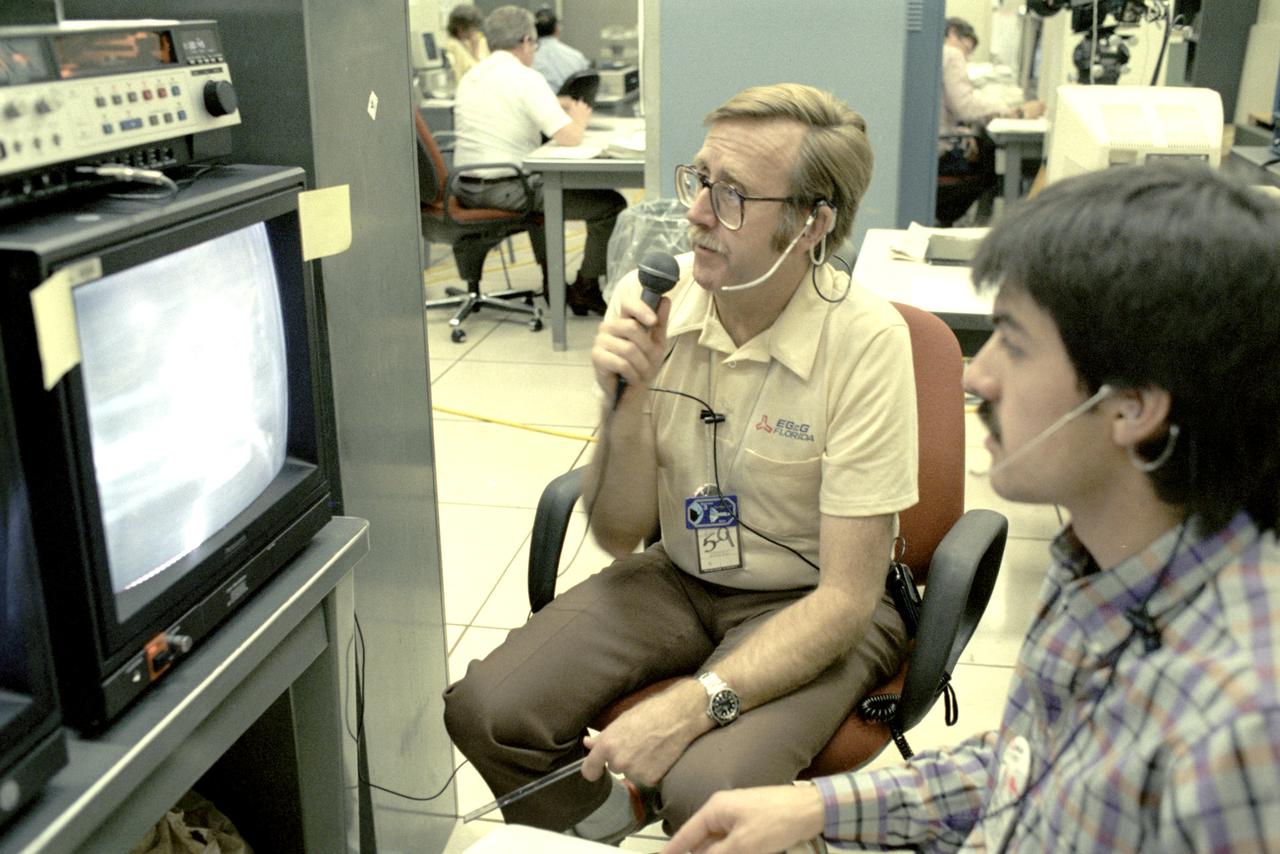
Spacelab-3 launched aboard STS-51B, with the major science objective being to perform engineering tests on two new facilities: the rodent animal holding facility and the primate animal holding facility. In addition, scientists observed the animals to obtain first hand knowledge of the effects of launch and reentry stresses and behavior. The need for suitable animal housing to support research in space led to the development of the Research Animal Holding Facility at the Ames Research Center. Scientists often study animals to find clues to human physiology and behavior. Rats, insects, and microorganisms had already been studied aboard the Shuttle on previous missions. On Spacelab-3, scientists had a chance to observe a large number of animals living in space in a specially designed and independently controlled housing facility. Marshall Space Flight Center (MSFC) had management responsibility for the Spacelab-3 mission. This photograph depicts activities during the mission at the Huntsville Operations Support Center (HOSC) Spacelab Payload Operations Control Center (SL POCC) at MSFC.
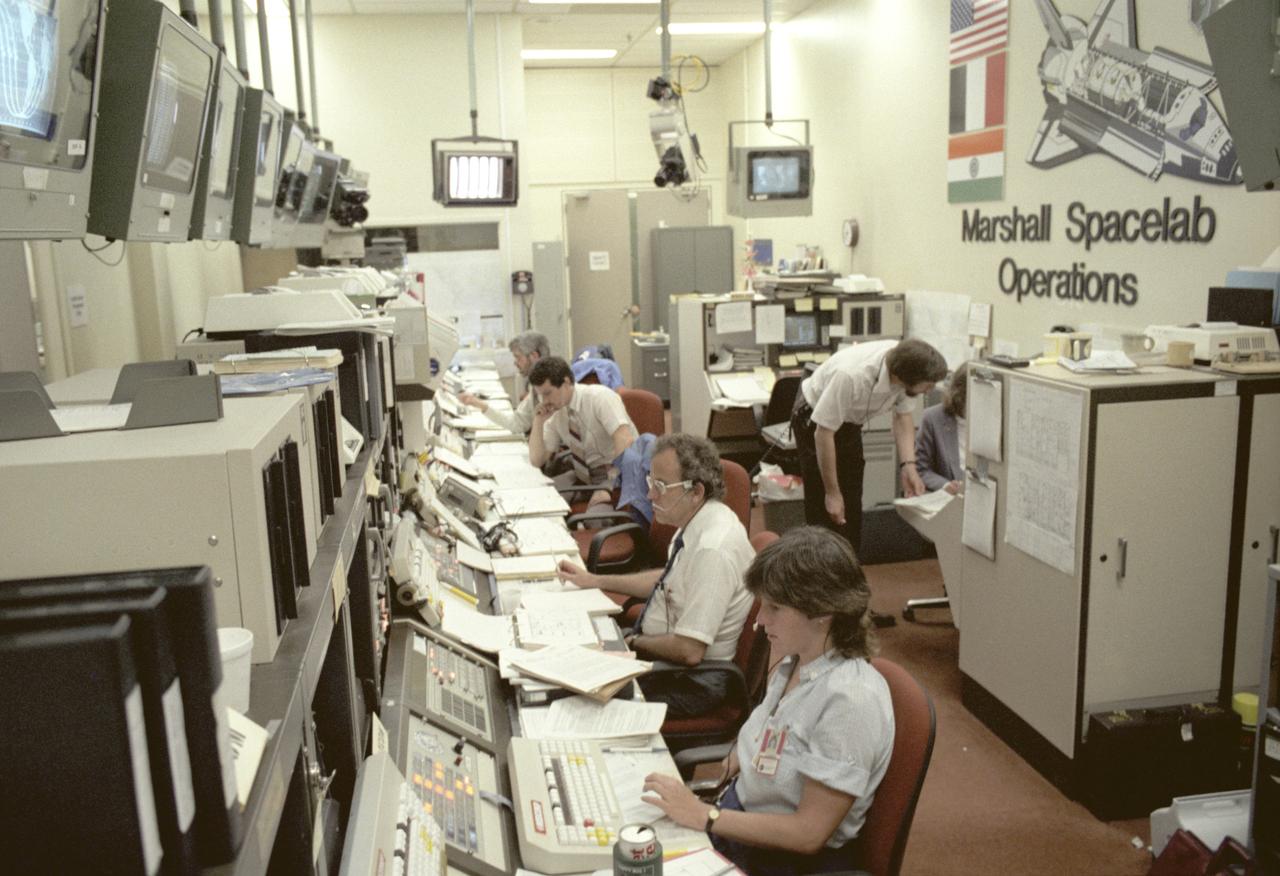
Spacelab-3 launched aboard STS-51B, with the major science objective being to perform engineering tests on two new facilities: the rodent animal holding facility and the primate animal holding facility. In addition, scientists observed the animals to obtain first hand knowledge of the effects of launch and reentry stresses and behavior. The need for suitable animal housing to support research in space led to the development of the Research Animal Holding Facility at the Ames Research Center. Scientists often study animals to find clues to human physiology and behavior. Rats, insects, and microorganisms had already been studied aboard the Shuttle on previous missions. On Spacelab-3, scientists had a chance to observe a large number of animals living in space in a specially designed and independently controlled housing facility. Marshall Space Flight Center (MSFC) had management responsibility for the Spacelab-3 mission. This photograph depicts activities during the mission at the Huntsville Operations Support Center (HOSC) Spacelab Payload Operations Control Center (SL POCC) at MSFC.
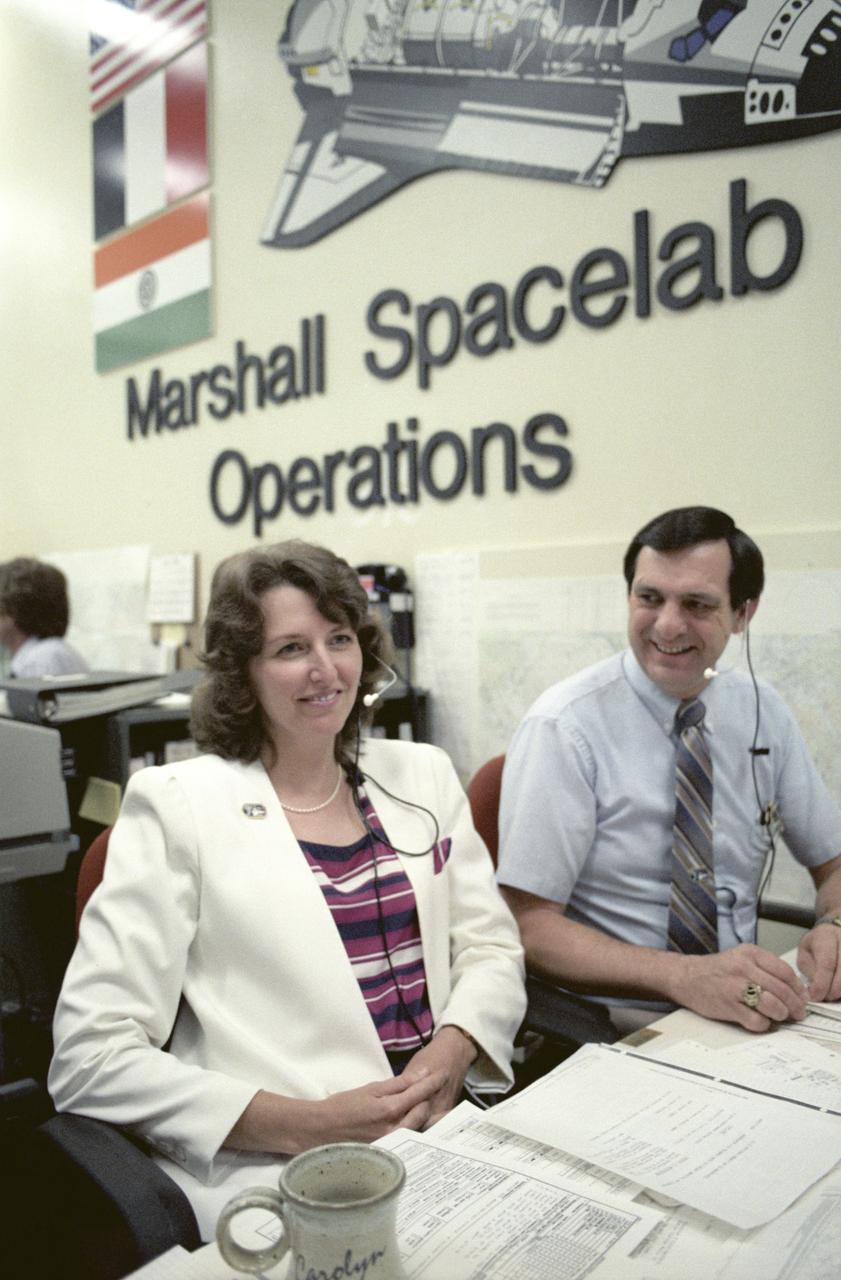
Spacelab-3 launched aboard STS-51B, with the major science objective being to perform engineering tests on two new facilities: the rodent animal holding facility and the primate animal holding facility. In addition, scientists observed the animals to obtain first hand knowledge of the effects of launch and reentry stresses and behavior. The need for suitable animal housing to support research in space led to the development of the Research Animal Holding Facility at the Ames Research Center. Scientists often study animals to find clues to human physiology and behavior. Rats, insects, and microorganisms had already been studied aboard the Shuttle on previous missions. On Spacelab-3, scientists had a chance to observe a large number of animals living in space in a specially designed and independently controlled housing facility. Marshall Space Flight Center (MSFC) had management responsibility for the Spacelab-3 mission. This photograph depicts activities during the mission at the Huntsville Operations Support Center (HOSC) Spacelab Payload Operations Control Center (SL POCC) at MSFC.

Spacelab-3 launched aboard STS-51B, with the major science objective being to perform engineering tests on two new facilities: the rodent animal holding facility and the primate animal holding facility. In addition, scientists observed the animals to obtain first hand knowledge of the effects of launch and reentry stresses and behavior. The need for suitable animal housing to support research in space led to the development of the Research Animal Holding Facility at the Ames Research Center. Scientists often study animals to find clues to human physiology and behavior. Rats, insects, and microorganisms had already been studied aboard the Shuttle on previous missions. On Spacelab-3, scientists had a chance to observe a large number of animals living in space in a specially designed and independently controlled housing facility. Marshall Space Flight Center (MSFC) had management responsibility for the Spacelab 3 mission. This photograph depicts activities during the mission at the Huntsville Operations Support Center (HOSC) Spacelab Payload Operations Control Center (SL POCC) at MSFC.
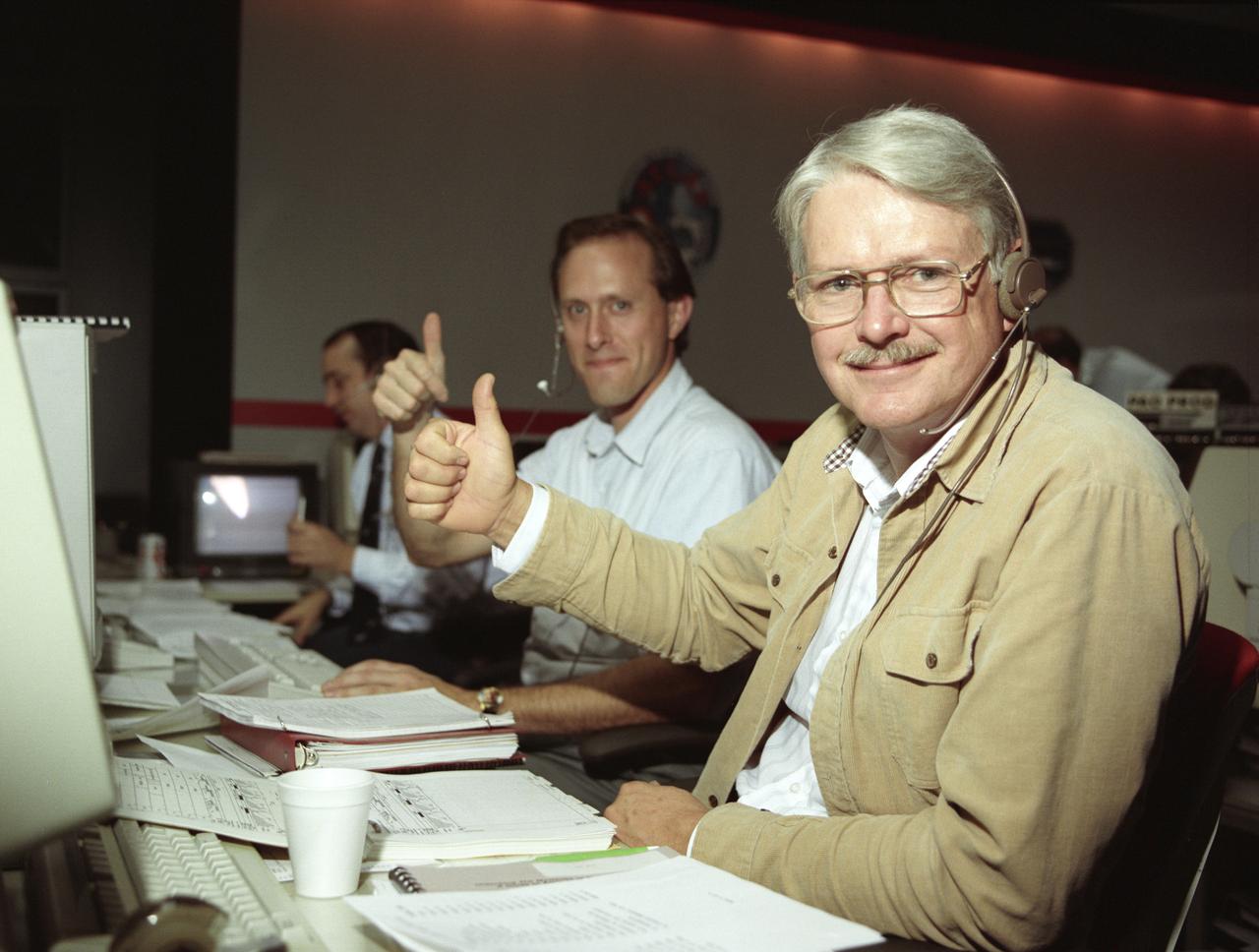
The primary objective of the STS-35 mission was round the clock observation of the celestial sphere in ultraviolet and X-Ray astronomy with the Astro-1 observatory which consisted of four telescopes: the Hopkins Ultraviolet Telescope (HUT); the Wisconsin Ultraviolet Photo-Polarimeter Experiment (WUPPE); the Ultraviolet Imaging Telescope (UIT); and the Broad Band X-Ray Telescope (BBXRT). The Huntsville Operations Support Center (HOSC) Spacelab Payload Operations Control Center (SL POCC) at the Marshall Space Flight Center (MSFC) was the air/ground communication channel used between the astronauts and ground control teams during the Spacelab missions. Teams of controllers and researchers directed on-orbit science operations, sent commands to the spacecraft, received data from experiments aboard the Space Shuttle, adjusted mission schedules to take advantage of unexpected science opportunities or unexpected results, and worked with crew members to resolve problems with their experiments. Due to loss of data used for pointing and operating the ultraviolet telescopes, MSFC ground teams were forced to aim the telescopes with fine tuning by the flight crew. This photo captures the activity at the Operations Control Facility during the mission as Dr. Urban and Paul Whitehouse give a “thumbs up”.
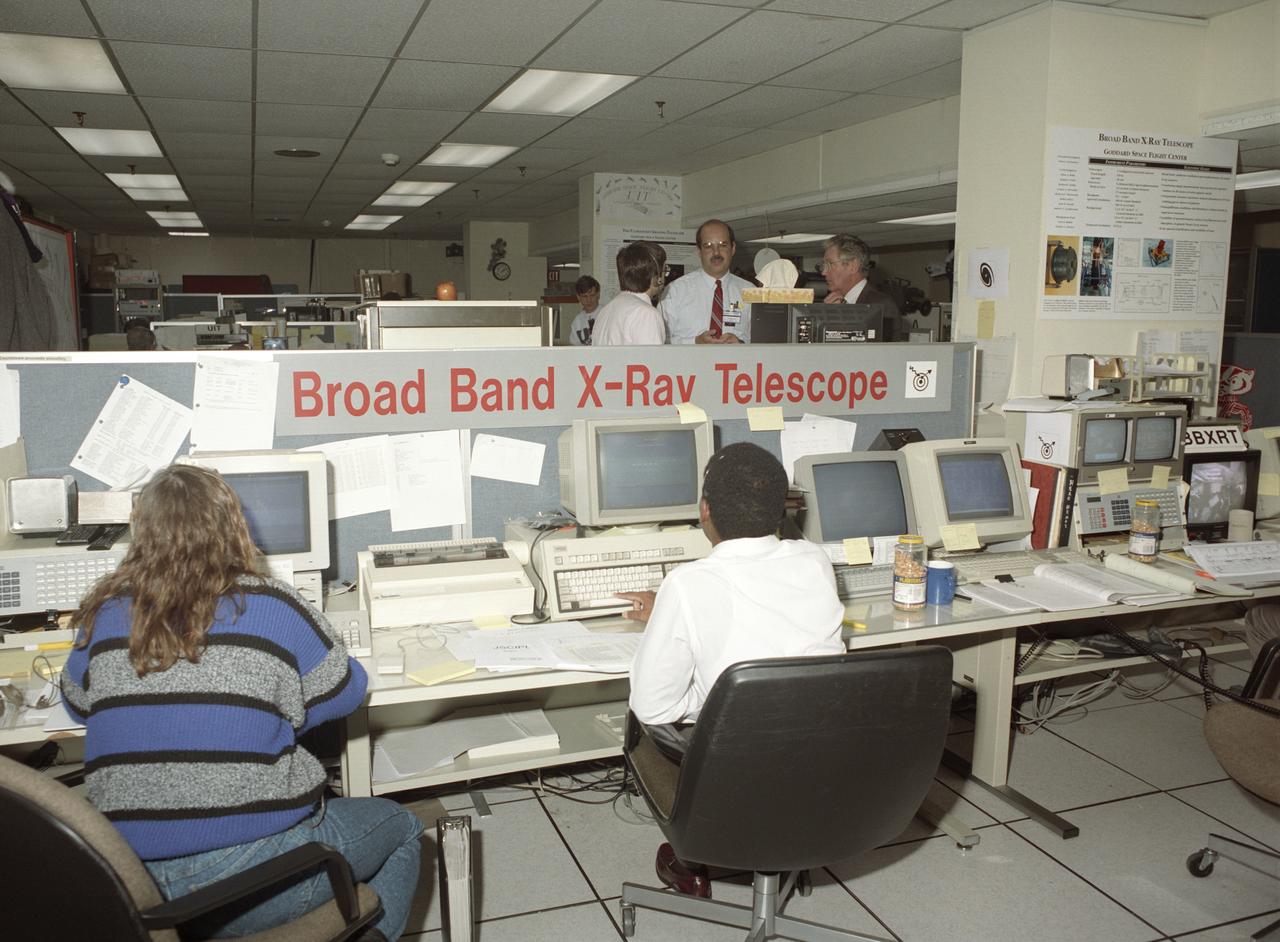
The primary objective of the STS-35 mission was round the clock observation of the celestial sphere in ultraviolet and X-Ray astronomy with the Astro-1 observatory which consisted of four telescopes: the Hopkins Ultraviolet Telescope (HUT); the Wisconsin Ultraviolet Photo-Polarimeter Experiment (WUPPE); the Ultraviolet Imaging Telescope (UIT); and the Broad Band X-Ray Telescope (BBXRT). The Huntsville Operations Support Center (HOSC) Spacelab Payload Operations Control Center (SL POCC) at the Marshall Space Flight Center (MSFC) was the air/ground communication channel used between the astronauts and ground control teams during the Spacelab missions. Teams of controllers and researchers directed on-orbit science operations, sent commands to the spacecraft, received data from experiments aboard the Space Shuttle, adjusted mission schedules to take advantage of unexpected science opportunities or unexpected results, and worked with crew members to resolve problems with their experiments. Due to loss of data used for pointing and operating the ultraviolet telescopes, MSFC ground teams were forced to aim the telescopes with fine tuning by the flight crew. This photo captures the activity of WUPPE (Wisconsin Ultraviolet Photo-Polarimeter Experiment) data review at the Science Operations Area during the mission. This image shows mission activities at the Broad Band X-Ray Telescope (BBXRT) Work Station in the Science Operations Area (SOA).
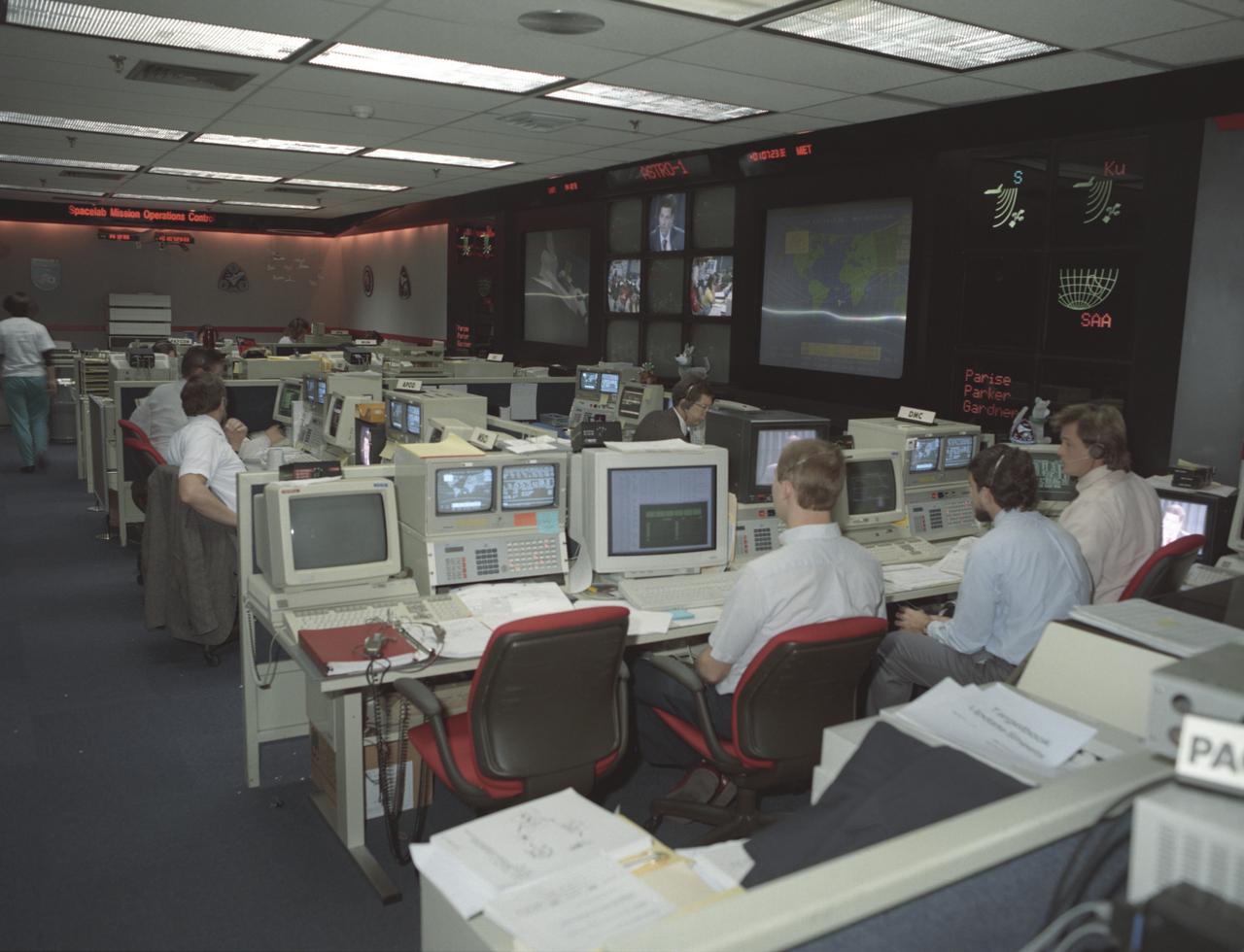
This photograph was taken during the Astro-1 mission (STS-35) showing activities at NASA's new Payload Operations Control Center (POCC) at the Marshall Space Flight Center. The POCC was the air/ground communication charnel used between the astronauts and ground control teams during the Spacelab missions. Teams of controllers and researchers directed on-orbit science operations, sent commands to the spacecraft, received data from experiments aboard the Space Shuttle, adjusted mission schedules to take advantage of unexpected science opportunities or unexpected results, and worked with crewmembers to resolve problems with their experiments.
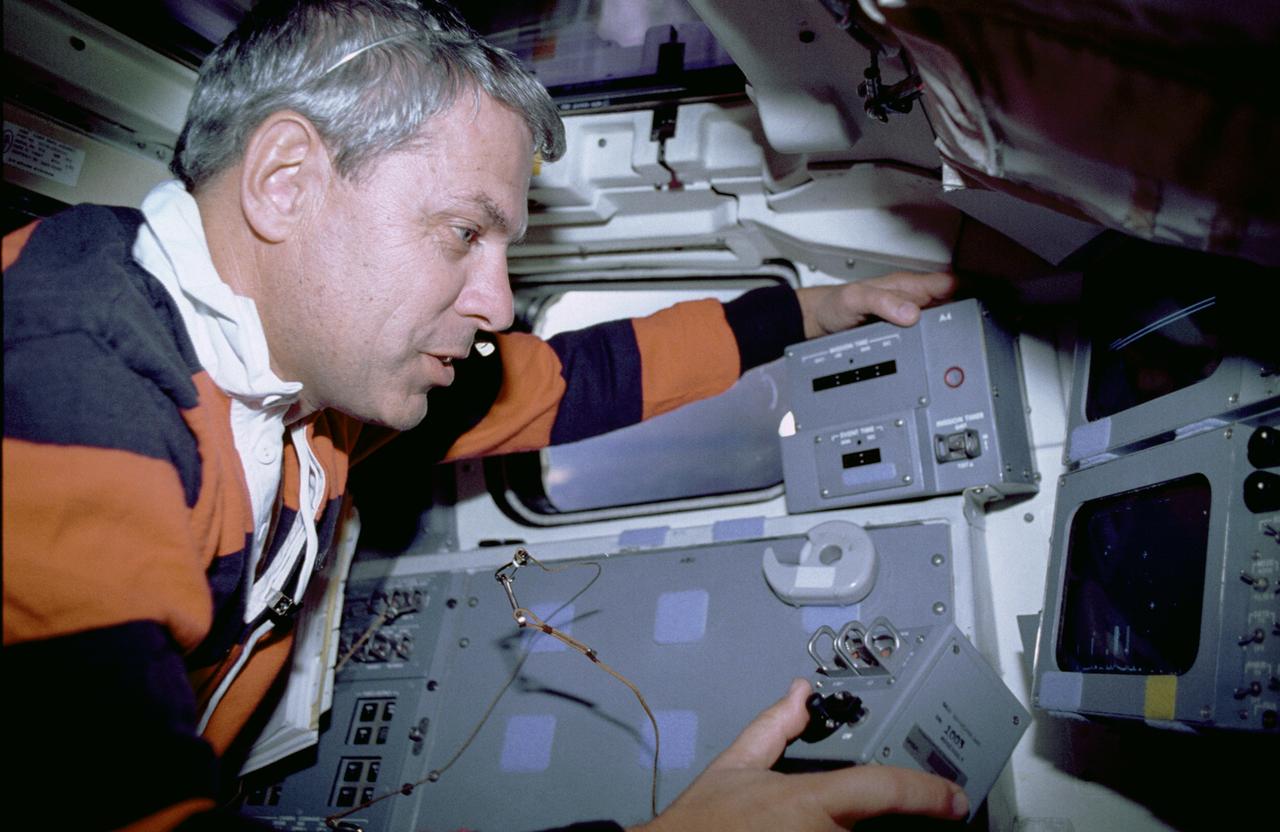
The primary objective of the STS-35 mission was round the clock observation of the celestial sphere in ultraviolet and X-Ray astronomy with the Astro-1 observatory which consisted of four telescopes: the Hopkins Ultraviolet Telescope (HUT); the Wisconsin Ultraviolet Photo-Polarimeter Experiment (WUPPE); the Ultraviolet Imaging Telescope (UIT); and the Broad Band X-Ray Telescope (BBXRT). The Huntsville Operations Support Center (HOSC) Spacelab Payload Operations Control Center (SL POCC) at the Marshall Space Flight Center (MSFC) was the air/ground communication channel used between the astronauts and ground control teams during the Spacelab missions. Teams of controllers and researchers directed on-orbit science operations, sent commands to the spacecraft, received data from experiments aboard the Space Shuttle, adjusted mission schedules to take advantage of unexpected science opportunities or unexpected results, and worked with crew members to resolve problems with their experiments. Due to loss of data used for pointing and operating the ultraviolet telescopes, MSFC ground teams were forced to aim the telescopes with fine tuning by the flight crew. Pictured onboard the shuttle is astronaut Robert Parker using a Manual Pointing Controller (MPC) for the ASTRO-1 mission Instrument Pointing System (IPS).
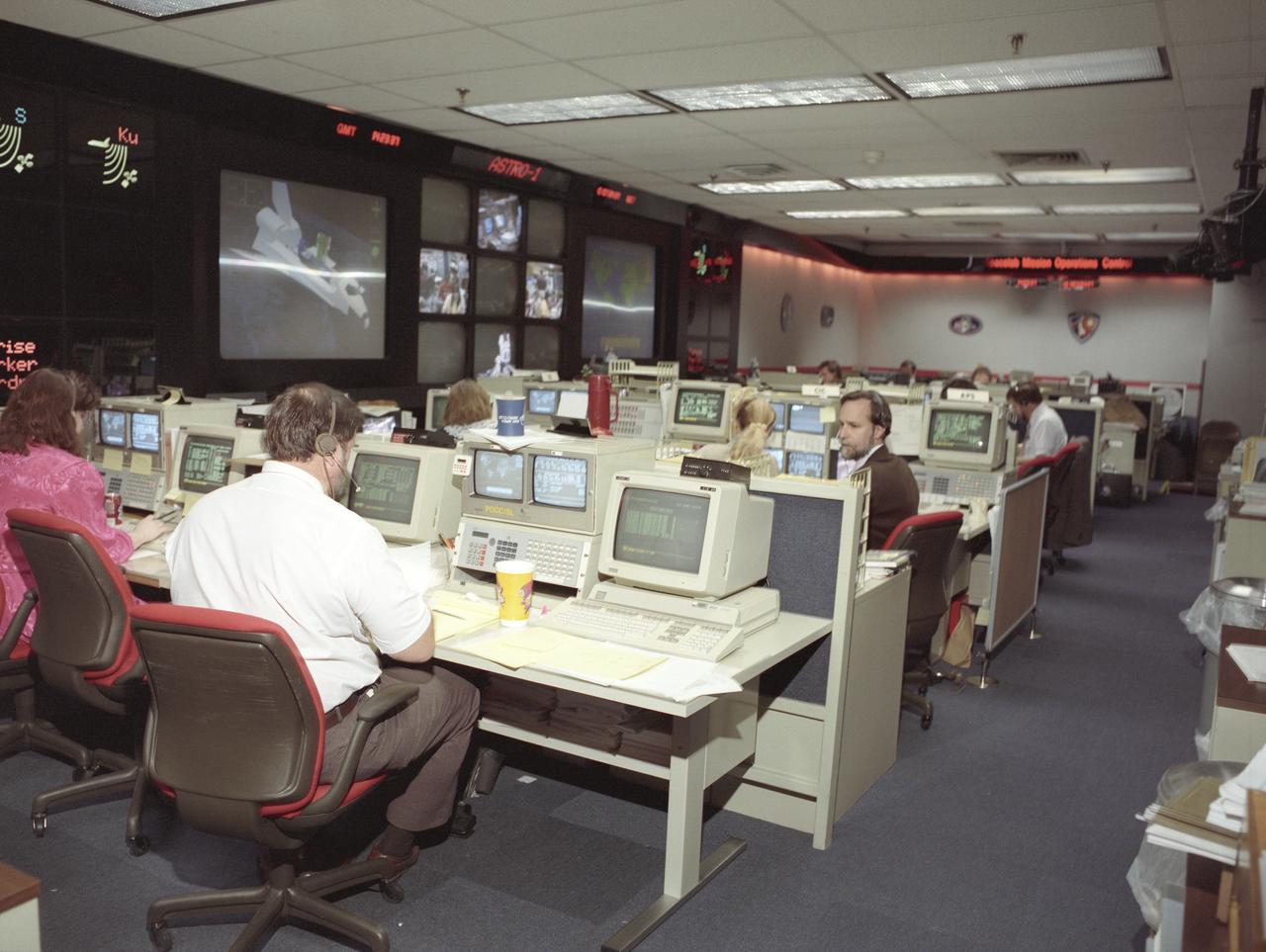
The primary objective of the STS-35 mission was round the clock observation of the celestial sphere in ultraviolet and X-Ray astronomy with the Astro-1 observatory which consisted of four telescopes: the Hopkins Ultraviolet Telescope (HUT); the Wisconsin Ultraviolet Photo-Polarimeter Experiment (WUPPE); the Ultraviolet Imaging Telescope (UIT); and the Broad Band X-Ray Telescope (BBXRT). The Huntsville Operations Support Center (HOSC) Spacelab Payload Operations Control Center (SL POCC) at the Marshall Space Flight Center (MSFC) was the air/ground communication channel used between the astronauts and ground control teams during the Spacelab missions. Teams of controllers and researchers directed on-orbit science operations, sent commands to the spacecraft, received data from experiments aboard the Space Shuttle, adjusted mission schedules to take advantage of unexpected science opportunities or unexpected results, and worked with crew members to resolve problems with their experiments. Due to loss of data used for pointing and operating the ultraviolet telescopes, MSFC ground teams were forced to aim the telescopes with fine tuning by the flight crew. This photo is an overview of the MSFC Payload Control Room (PCR).
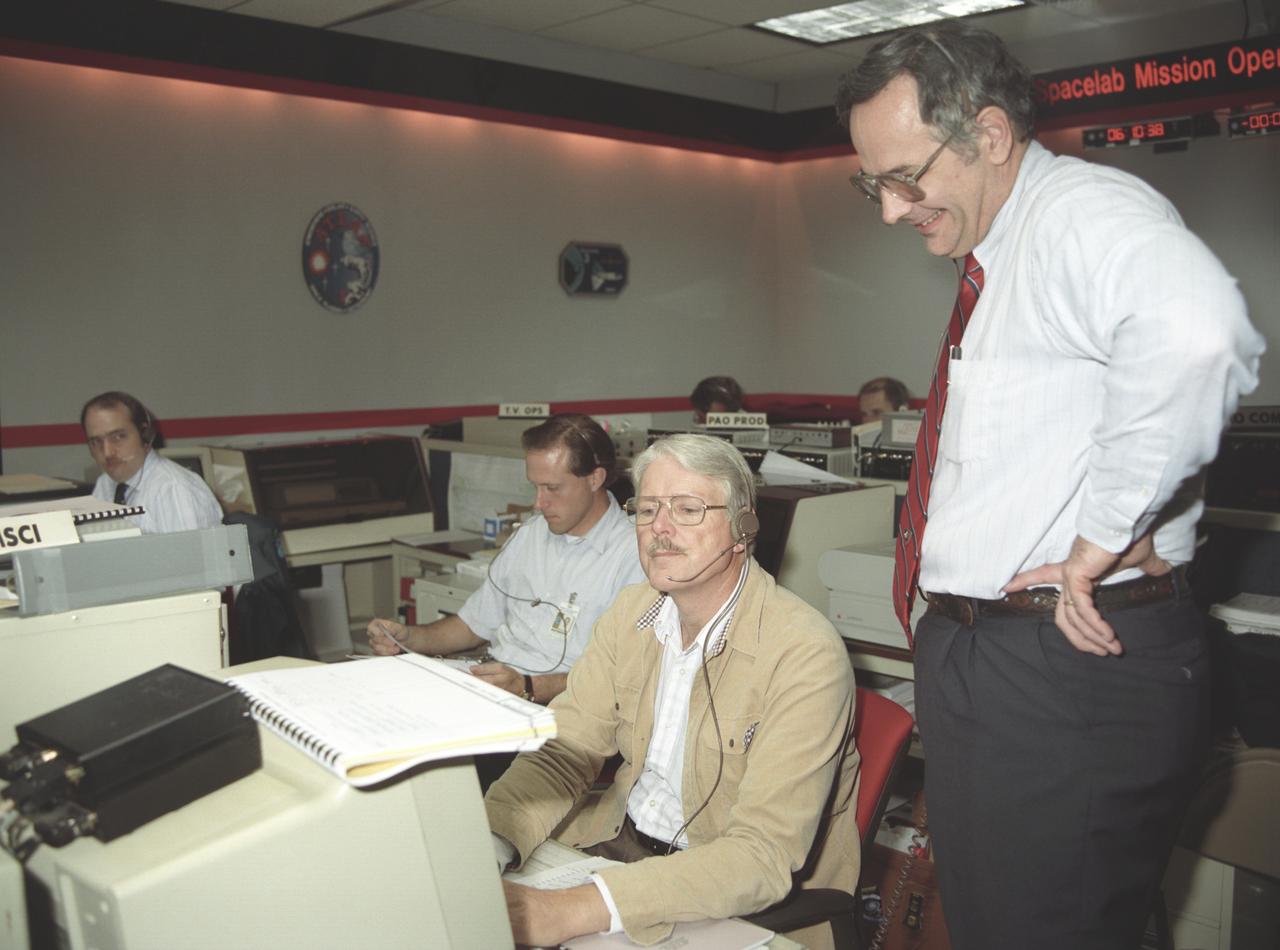
The primary objective of the STS-35 mission was round the clock observation of the celestial sphere in ultraviolet and X-Ray astronomy with the Astro-1 observatory which consisted of four telescopes: the Hopkins Ultraviolet Telescope (HUT); the Wisconsin Ultraviolet Photo-Polarimeter Experiment (WUPPE); the Ultraviolet Imaging Telescope (UIT); and the Broad Band X-Ray Telescope (BBXRT). The Huntsville Operations Support Center (HOSC) Spacelab Payload Operations Control Center (SL POCC) at the Marshall Space Flight Center (MSFC) was the air/ground communication channel used between the astronauts and ground control teams during the Spacelab missions. Teams of controllers and researchers directed on-orbit science operations, sent commands to the spacecraft, received data from experiments aboard the Space Shuttle, adjusted mission schedules to take advantage of unexpected science opportunities or unexpected results, and worked with crew members to resolve problems with their experiments. Due to loss of data used for pointing and operating the ultraviolet telescopes, MSFC ground teams were forced to aim the telescopes with fine tuning by the flight crew. This photo captures the activity of WUPPE data review at the Science Operations Area during the mission.
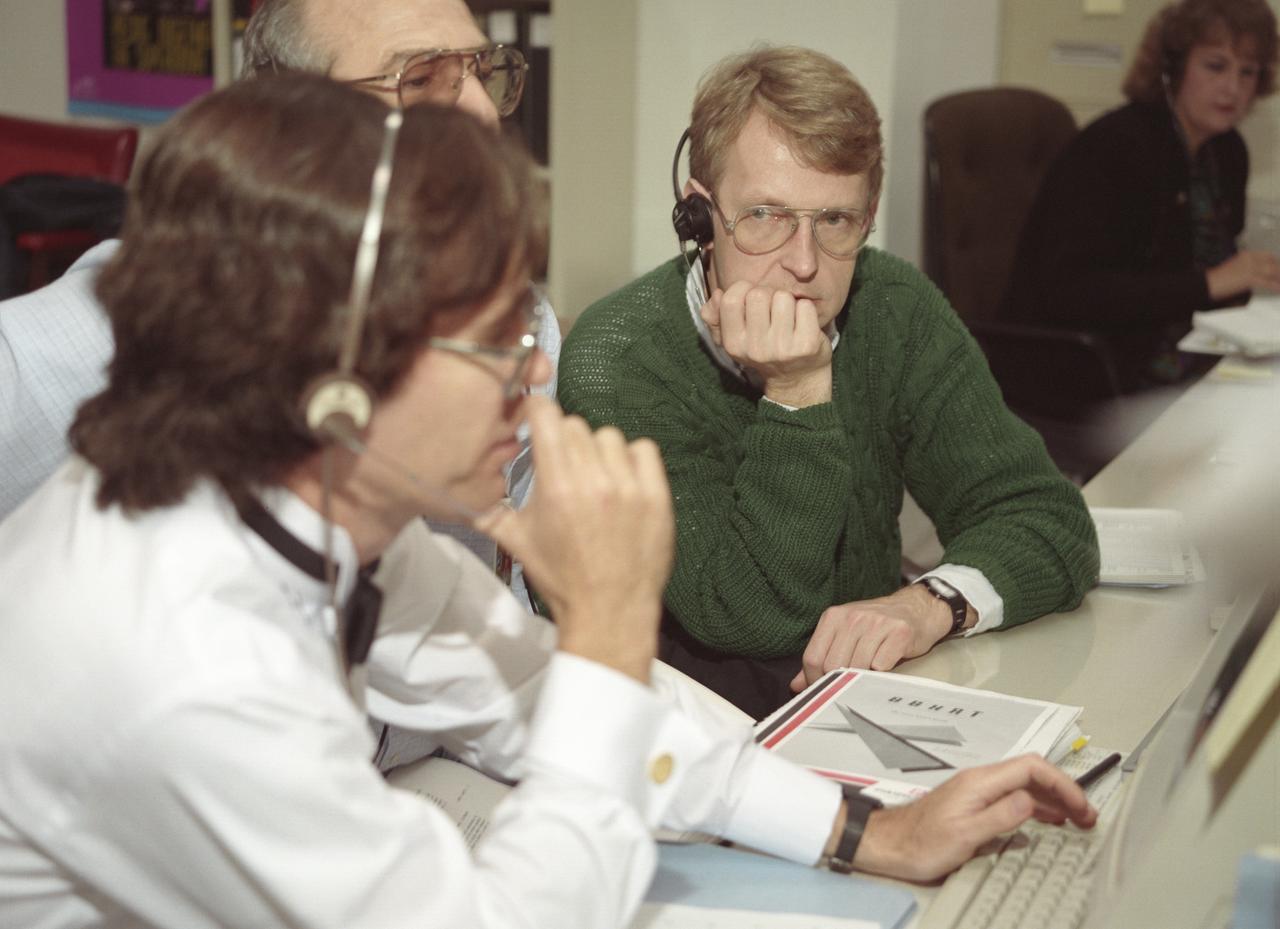
The primary objective of the STS-35 mission was round the clock observation of the celestial sphere in ultraviolet and X-Ray astronomy with the Astro-1 observatory which consisted of four telescopes: the Hopkins Ultraviolet Telescope (HUT); the Wisconsin Ultraviolet Photo-Polarimeter Experiment (WUPPE); the Ultraviolet Imaging Telescope (UIT); and the Broad Band X-Ray Telescope (BBXRT). The Huntsville Operations Support Center (HOSC) Spacelab Payload Operations Control Center (SL POCC) at the Marshall Space Flight Center (MSFC) was the air/ground communication channel used between the astronauts and ground control teams during the Spacelab missions. Teams of controllers and researchers directed on-orbit science operations, sent commands to the spacecraft, received data from experiments aboard the Space Shuttle, adjusted mission schedules to take advantage of unexpected science opportunities or unexpected results, and worked with crew members to resolve problems with their experiments. Due to loss of data used for pointing and operating the ultraviolet telescopes, MSFC ground teams were forced to aim the telescopes with fine tuning by the flight crew. This photo captures the activity of BBKRT data review in the Science Operations Area during the mission.
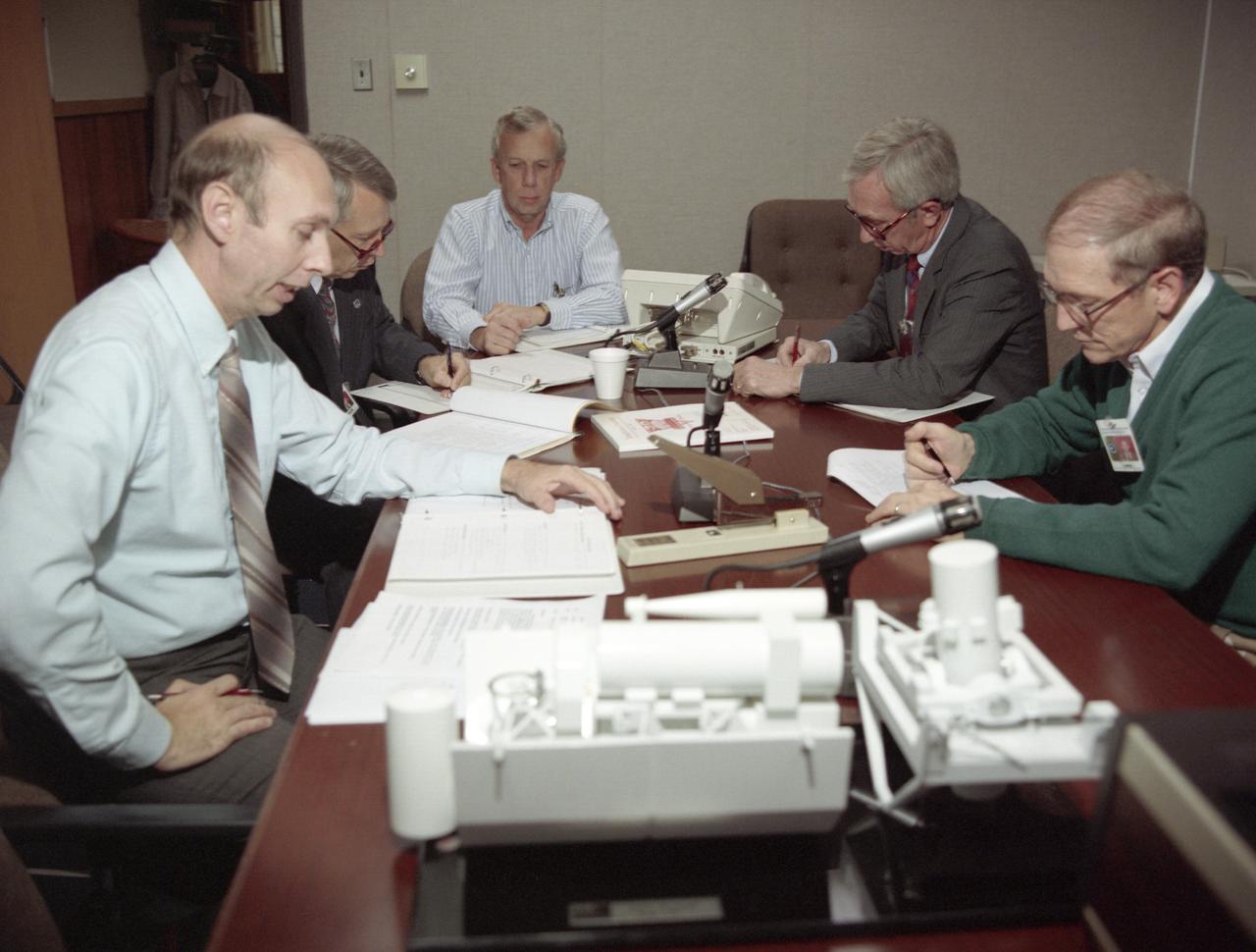
The primary objective of the STS-35 mission was round the clock observation of the celestial sphere in ultraviolet and X-Ray astronomy with the Astro-1 observatory which consisted of four telescopes: the Hopkins Ultraviolet Telescope (HUT); the Wisconsin Ultraviolet Photo-Polarimeter Experiment (WUPPE); the Ultraviolet Imaging Telescope (UIT); and the Broad Band X-Ray Telescope (BBXRT). The Huntsville Operations Support Center (HOSC) Spacelab Payload Operations Control Center (SL POCC) at the Marshall Space Flight Center (MSFC) was the air/ground communication channel used between the astronauts and ground control teams during the Spacelab missions. Teams of controllers and researchers directed on-orbit science operations, sent commands to the spacecraft, received data from experiments aboard the Space Shuttle, adjusted mission schedules to take advantage of unexpected science opportunities or unexpected results, and worked with crew members to resolve problems with their experiments. Due to loss of data used for pointing and operating the ultraviolet telescopes, MSFC ground teams were forced to aim the telescopes with fine tuning by the flight crew. This photo captures the activities at the Mission Manager Actions Room during the mission.
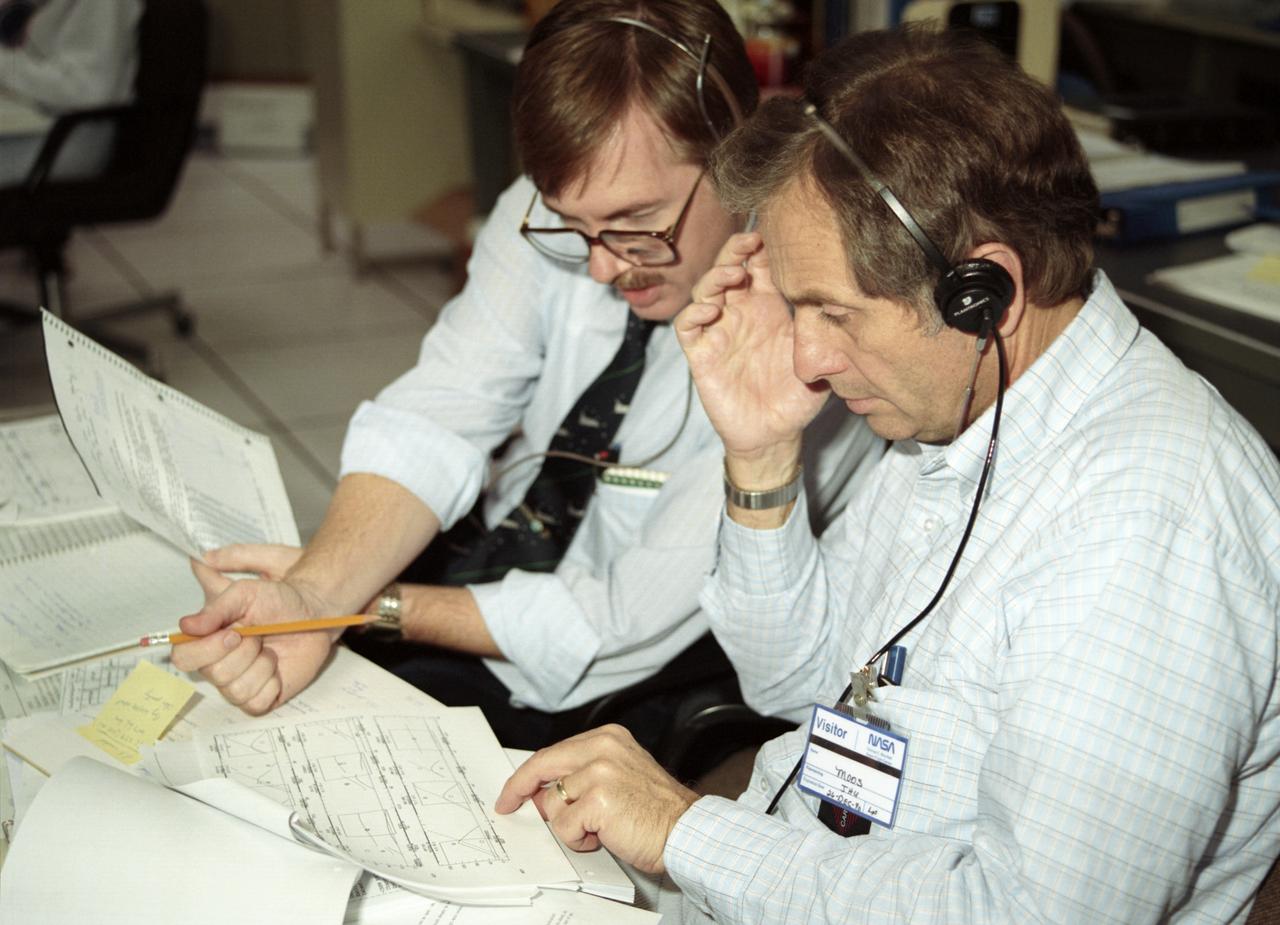
The primary objective of the STS-35 mission was round the clock observation of the celestial sphere in ultraviolet and X-Ray astronomy with the Astro-1 observatory which consisted of four telescopes: the Hopkins Ultraviolet Telescope (HUT); the Wisconsin Ultraviolet Photo-Polarimeter Experiment (WUPPE); the Ultraviolet Imaging Telescope (UIT); and the Broad Band X-Ray Telescope (BBXRT). The Huntsville Operations Support Center (HOSC) Spacelab Payload Operations Control Center (SL POCC) at the Marshall Space Flight Center (MSFC) was the air/ground communication channel used between the astronauts and ground control teams during the Spacelab missions. Teams of controllers and researchers directed on-orbit science operations, sent commands to the spacecraft, received data from experiments aboard the Space Shuttle, adjusted mission schedules to take advantage of unexpected science opportunities or unexpected results, and worked with crew members to resolve problems with their experiments. Due to loss of data used for pointing and operating the ultraviolet telescopes, MSFC ground teams were forced to aim the telescopes with fine tuning by the flight crew. This photo captures the activity of viewing HUT data in the Mission Manager Actions Room during the mission.
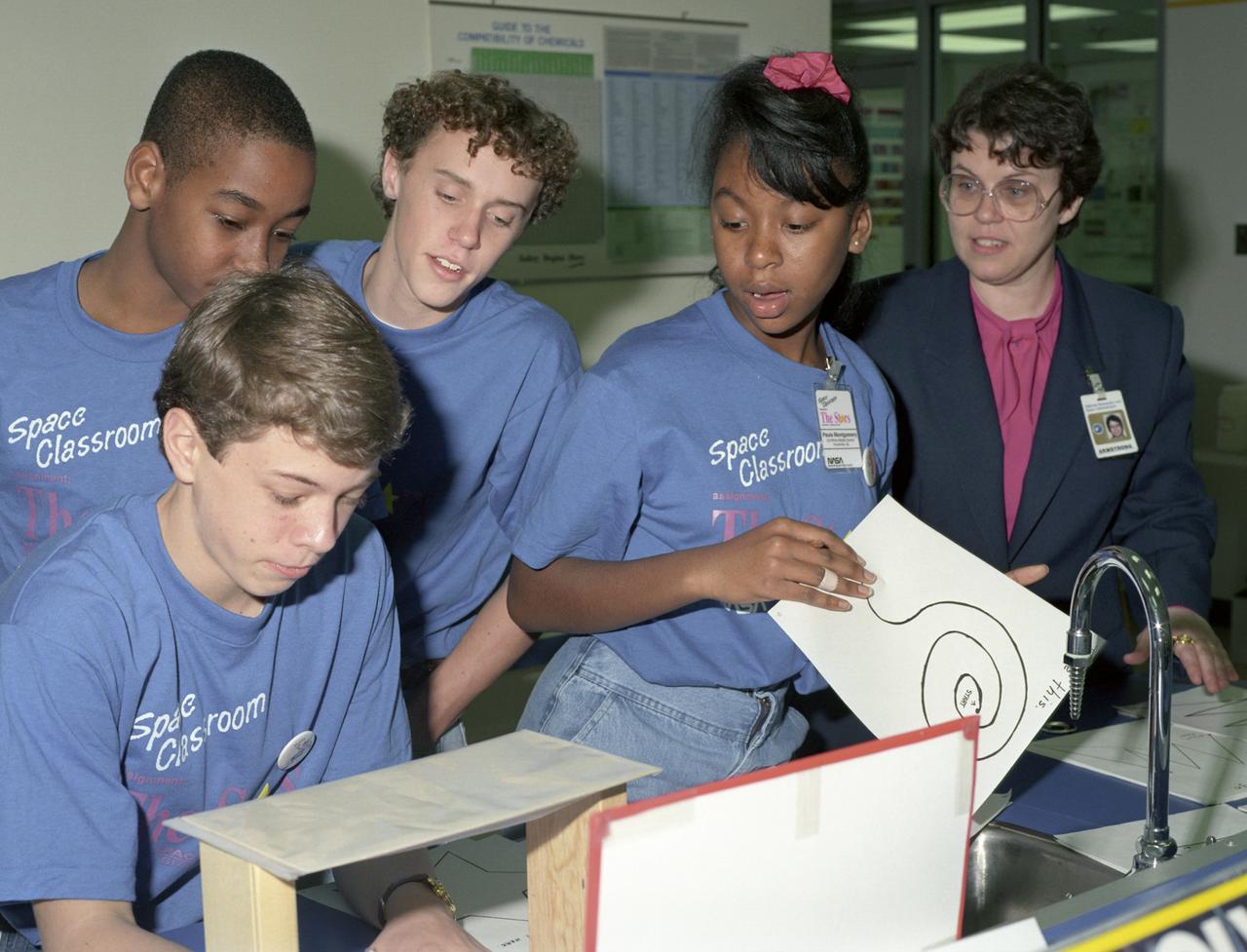
The primary objective of the STS-35 mission was round the clock observation of the celestial sphere in ultraviolet and X-Ray astronomy with the Astro-1 observatory which consisted of four telescopes: the Hopkins Ultraviolet Telescope (HUT); the Wisconsin Ultraviolet Photo-Polarimeter Experiment (WUPPE); the Ultraviolet Imaging Telescope (UIT); and the Broad Band X-Ray Telescope (BBXRT). The Huntsville Operations Support Center (HOSC) Spacelab Payload Operations Control Center (SL POCC) at the Marshall Space Flight Center (MSFC) was the air/ground communication channel used between the astronauts and ground control teams during the Spacelab missions. Teams of controllers and researchers directed on-orbit science operations, sent commands to the spacecraft, received data from experiments aboard the Space Shuttle, adjusted mission schedules to take advantage of unexpected science opportunities or unexpected results, and worked with crew members to resolve problems with their experiments. This photo is of Space classroom students in the Discovery Optics Lab at MSFC during STS-35, ASTRO-1 mission payload operations.
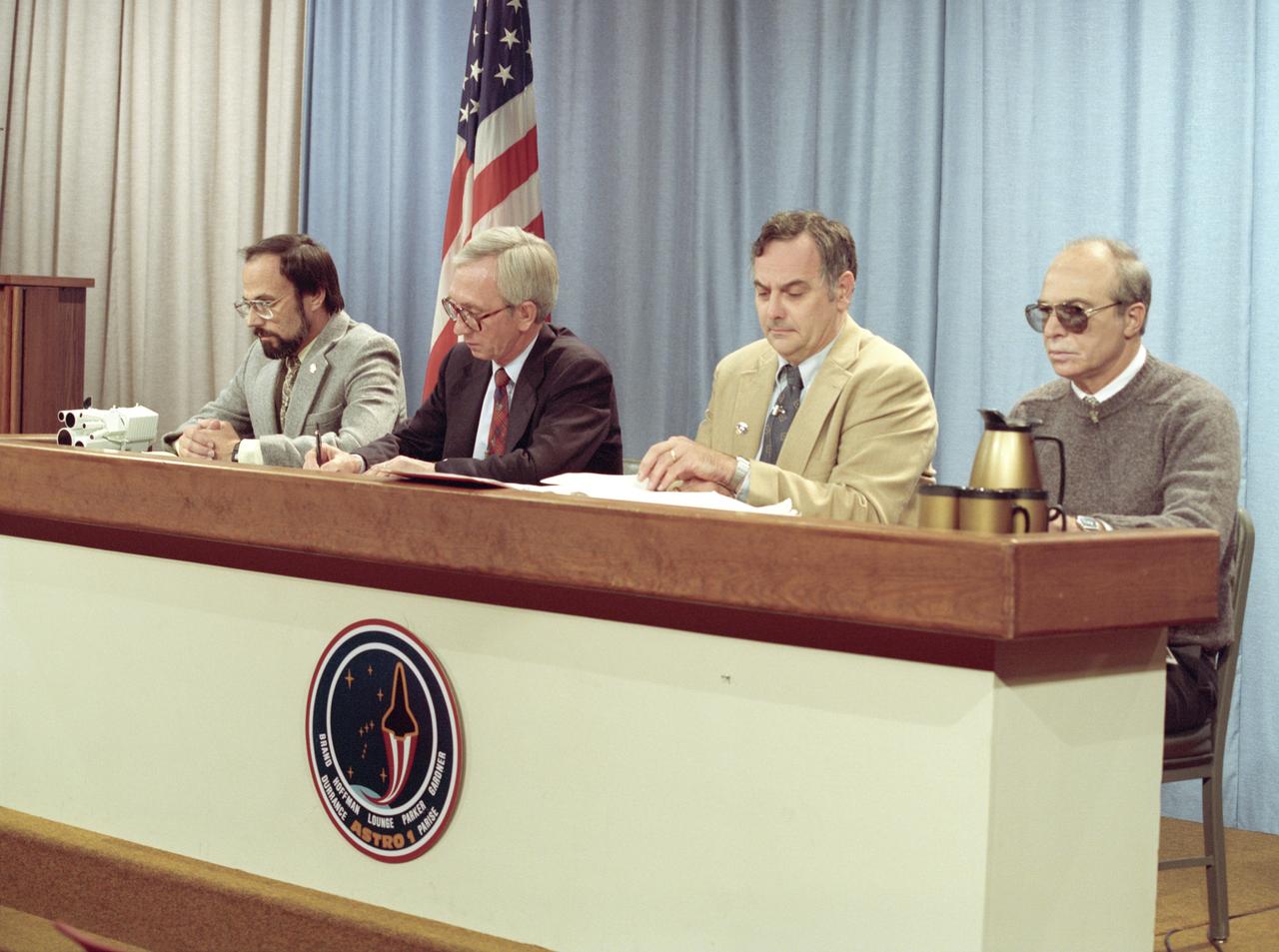
The primary objective of the STS-35 mission was round the clock observation of the celestial sphere in ultraviolet and X-Ray astronomy with the Astro-1 observatory which consisted of four telescopes: the Hopkins Ultraviolet Telescope (HUT); the Wisconsin Ultraviolet Photo-Polarimeter Experiment (WUPPE); the Ultraviolet Imaging Telescope (UIT); and the Broad Band X-Ray Telescope (BBXRT). The Huntsville Operations Support Center (HOSC) Spacelab Payload Operations Control Center (SL POCC) at the Marshall Space Flight Center (MSFC) was the air/ground communication channel used between the astronauts and ground control teams during the Spacelab missions. Teams of controllers and researchers directed on-orbit science operations, sent commands to the spacecraft, received data from experiments aboard the Space Shuttle, adjusted mission schedules to take advantage of unexpected science opportunities or unexpected results, and worked with crew members to resolve problems with their experiments. Due to loss of data used for pointing and operating the ultraviolet telescopes, MSFC ground teams were forced to aim the telescopes with fine tuning by the flight crew. This photo captures a press briefing at MSFC during STS-35, ASTRO-1 Mission.
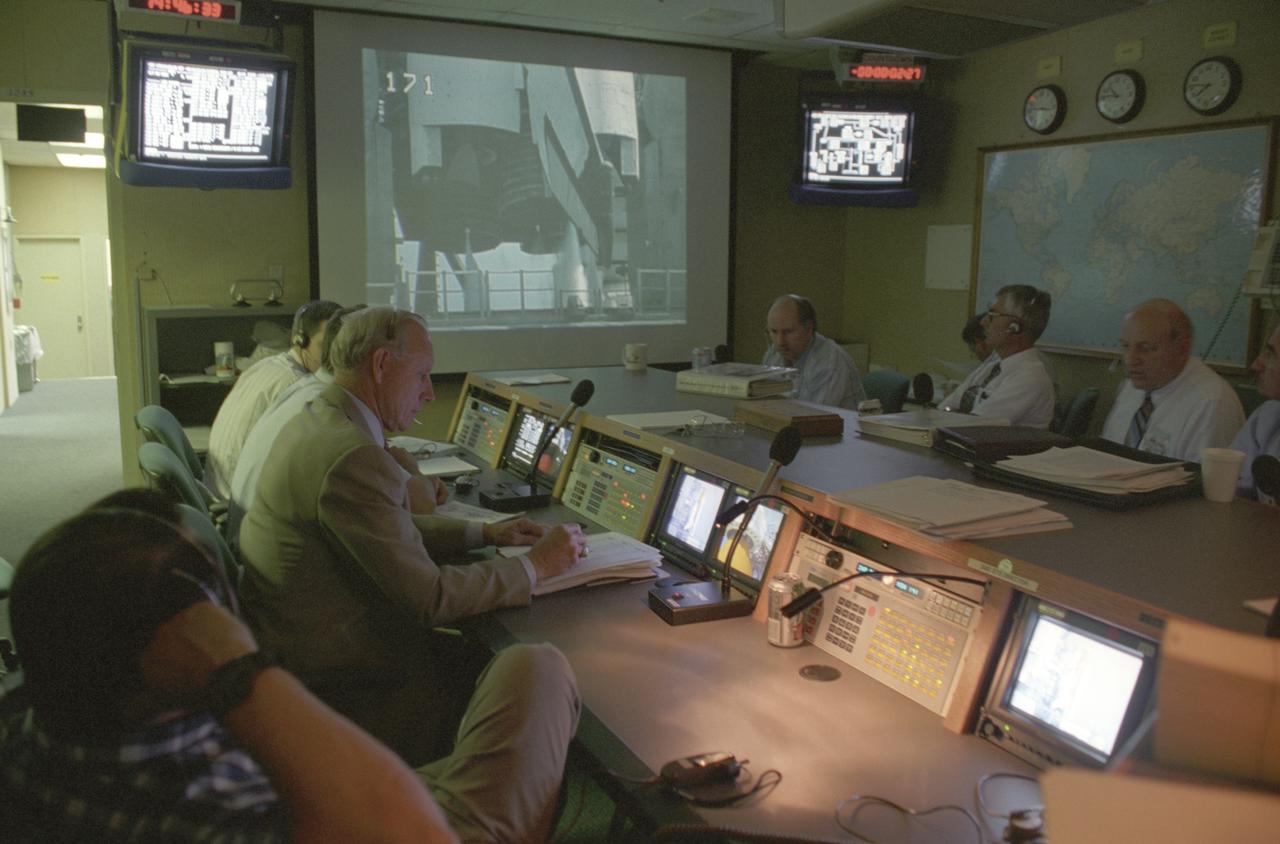
Launched on June 20, 1996, the STS-78 mission’s primary payload was the Life and Microgravity Spacelab (LMS), which was managed by the Marshall Space Flight Center (MSFC). During the 17 day space flight, the crew conducted a diverse slate of experiments divided into a mix of life science and microgravity investigations. In a manner very similar to future International Space Station operations, LMS researchers from the United States and their European counterparts shared resources such as crew time and equipment. Five space agencies (NASA/USA, European Space Agency/Europe (ESA), French Space Agency/France, Canadian Space Agency /Canada, and Italian Space Agency/Italy) along with research scientists from 10 countries worked together on the design, development and construction of the LMS. This photo was taken in the Shuttle Action Center (SAC) of the Huntsville Operations Support Center (HOSC) Spacelab Payload Operations Control Center (SL POCC) at MSFC during the mission.
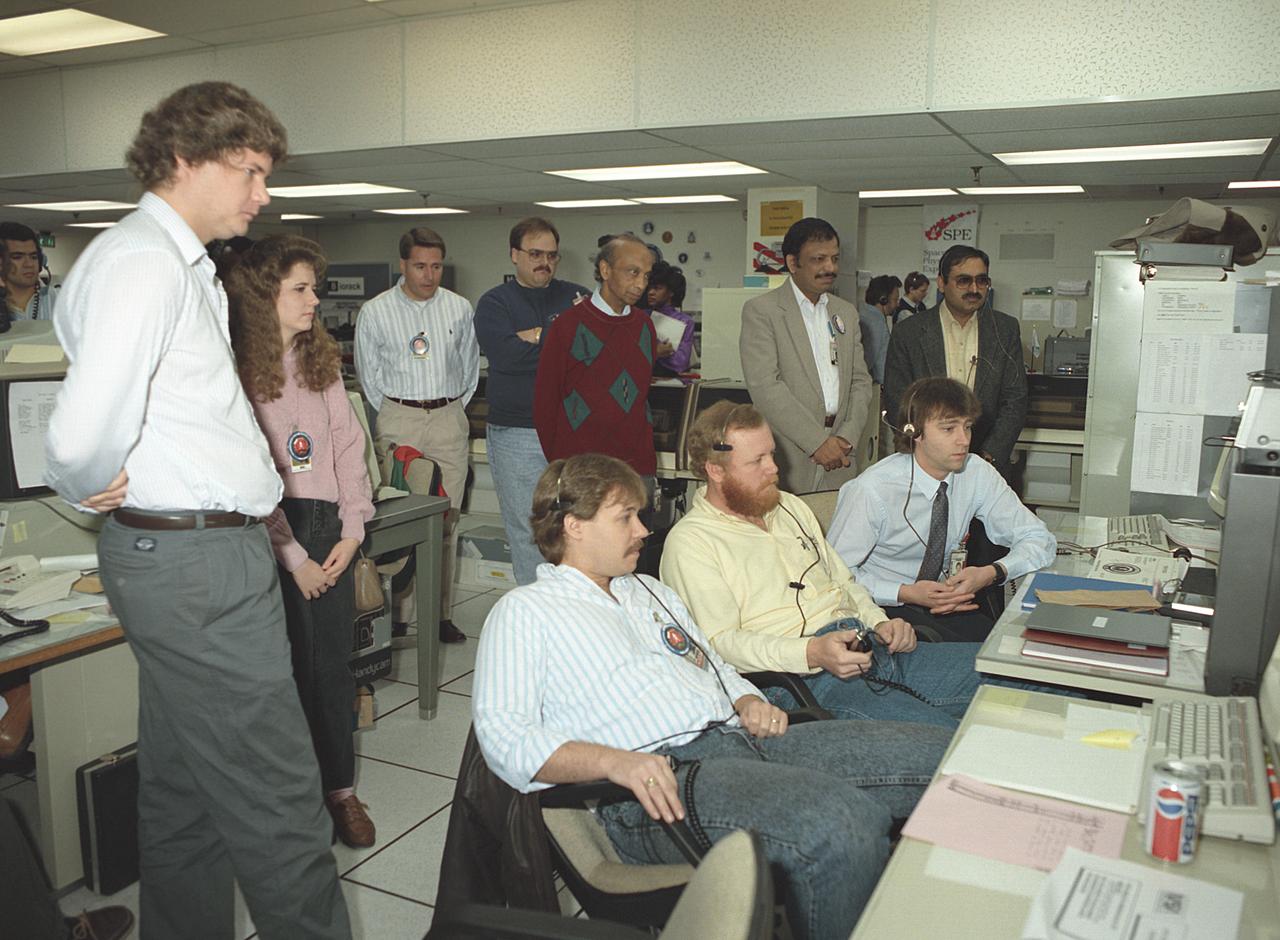
The primary payload for Space Shuttle Mission STS-42, launched January 22, 1992, was the International Microgravity Laboratory-1 (IML-1), a pressurized manned Spacelab module. The goal of IML-1 was to explore in depth the complex effects of weightlessness of living organisms and materials processing. Around-the-clock research was performed on the human nervous system's adaptation to low gravity and effects of microgravity on other life forms such as shrimp eggs, lentil seedlings, fruit fly eggs, and bacteria. Materials processing experiments were also conducted, including crystal growth from a variety of substances such as enzymes, mercury iodide, and a virus. The Huntsville Operations Support Center (HOSC) Spacelab Payload Operations Control Center (SL POCC) at the Marshall Space Flight Center (MSFC) was the air/ground communication channel used between the astronauts and ground control teams during the Spacelab missions. Featured is the Crystal Growth team in the SL POCC during STS-42, IML-1 mission.
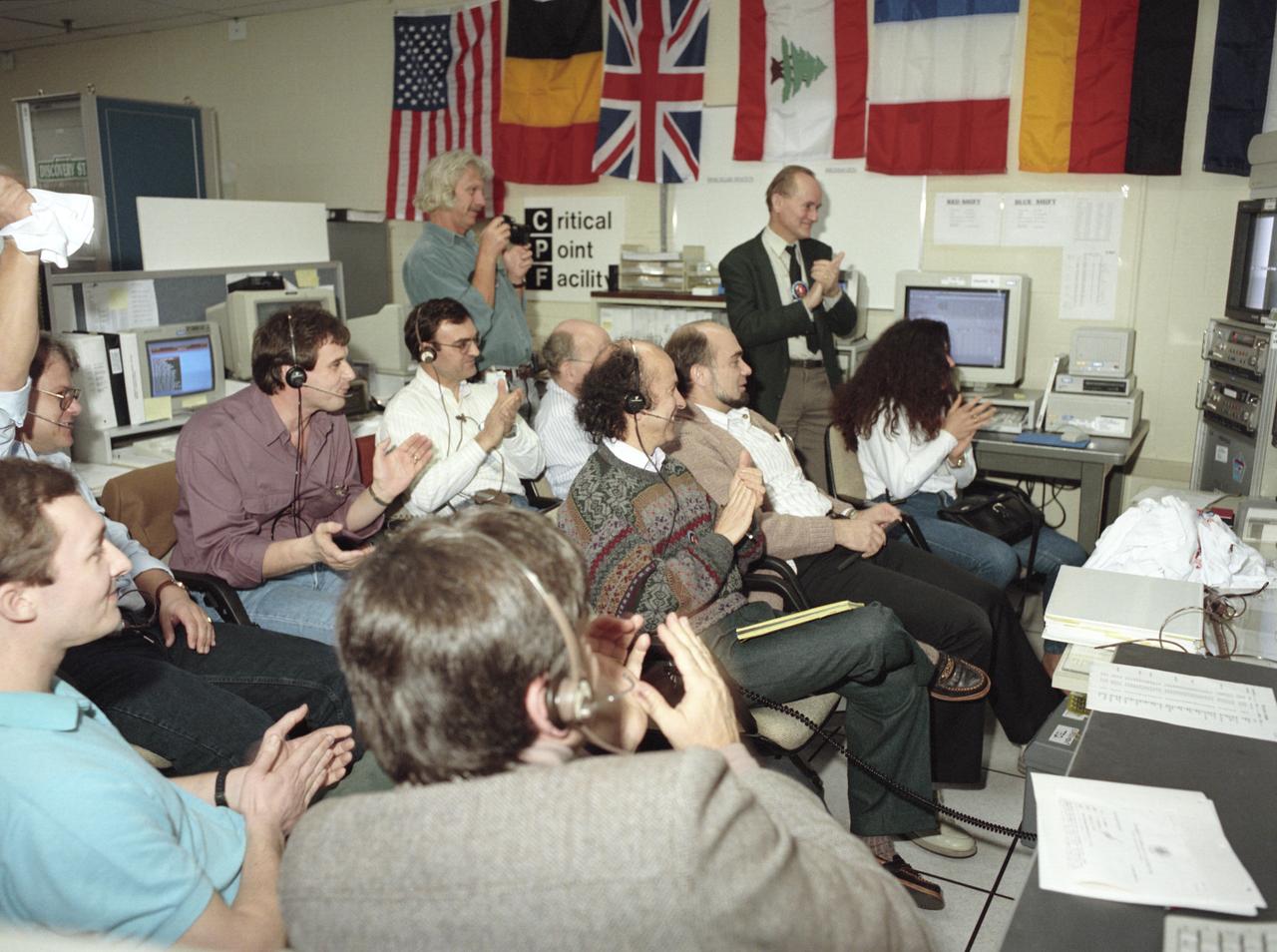
The primary payload for Space Shuttle Mission STS-42, launched January 22, 1992, was the International Microgravity Laboratory-1 (IML-1), a pressurized manned Spacelab module. The goal of IML-1 was to explore in depth the complex effects of weightlessness of living organisms and materials processing. Around-the-clock research was performed on the human nervous system's adaptation to low gravity and effects of microgravity on other life forms such as shrimp eggs, lentil seedlings, fruit fly eggs, and bacteria. Materials processing experiments were also conducted, including crystal growth from a variety of substances such as enzymes, mercury iodide, and a virus. The Huntsville Operations Support Center (HOSC) Spacelab Payload Operations Control Center (SL POCC) at the Marshall Space Flight Center (MSFC) was the air/ground communication channel used between the astronauts and ground control teams during the Spacelab missions. Featured is the Critical Point Facility (CPE) group in the SL POCC during STS-42, IML-1 mission.
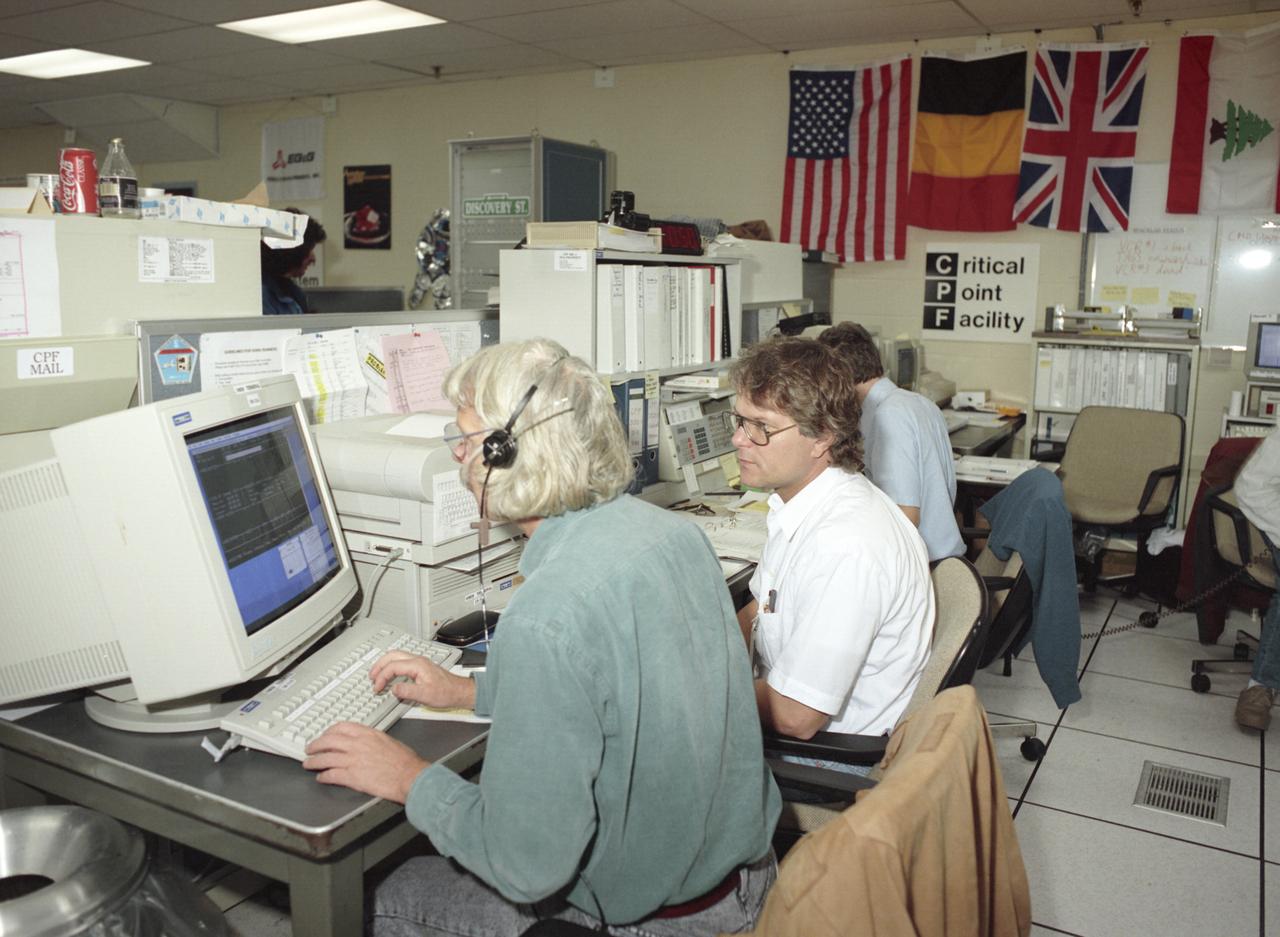
The primary payload for Space Shuttle Mission STS-42, launched January 22, 1992, was the International Microgravity Laboratory-1 (IML-1), a pressurized manned Spacelab module. The goal of IML-1 was to explore in depth the complex effects of weightlessness of living organisms and materials processing. Around-the-clock research was performed on the human nervous system's adaptation to low gravity and effects of microgravity on other life forms such as shrimp eggs, lentil seedlings, fruit fly eggs, and bacteria. Materials processing experiments were also conducted, including crystal growth from a variety of substances such as enzymes, mercury iodide, and a virus. The Huntsville Operations Support Center (HOSC) Spacelab Payload Operations Control Center (SL POCC) at the Marshall Space Flight Center (MSFC) was the air/ground communication channel used between the astronauts and ground control teams during the Spacelab missions. Featured is the Critical Point Facility (CPF) team in the SL POCC during the IML-1 mission.
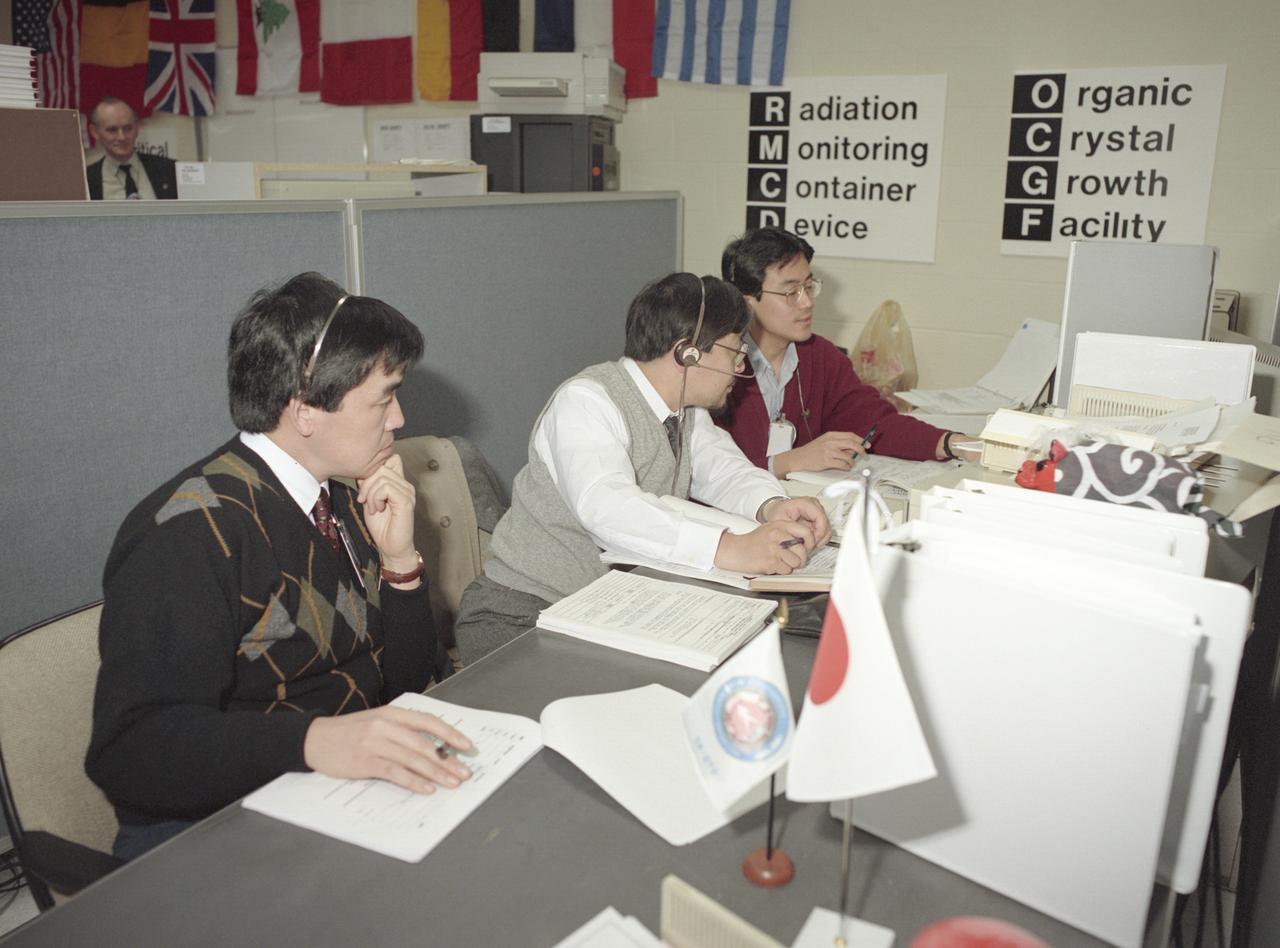
The primary payload for Space Shuttle Mission STS-42, launched January 22, 1992, was the International Microgravity Laboratory-1 (IML-1), a pressurized manned Spacelab module. The goal of IML-1 was to explore in depth the complex effects of weightlessness of living organisms and materials processing. Around-the-clock research was performed on the human nervous system's adaptation to low gravity and effects of microgravity on other life forms such as shrimp eggs, lentil seedlings, fruit fly eggs, and bacteria. Materials processing experiments were also conducted, including crystal growth from a variety of substances such as enzymes, mercury iodide, and a virus. The Huntsville Operations Support Center (HOSC) Spacelab Payload Operations Control Center (SL POCC) at the Marshall Space Flight Center (MSFC) was the air/ground communication channel used between the astronauts and ground control teams during the Spacelab missions. Featured are activities of the Organic Crystal Growth Facility (OCGF) and Radiation Monitoring Container Device (RMCD) groups in the SL POCC during the IML-1 mission.
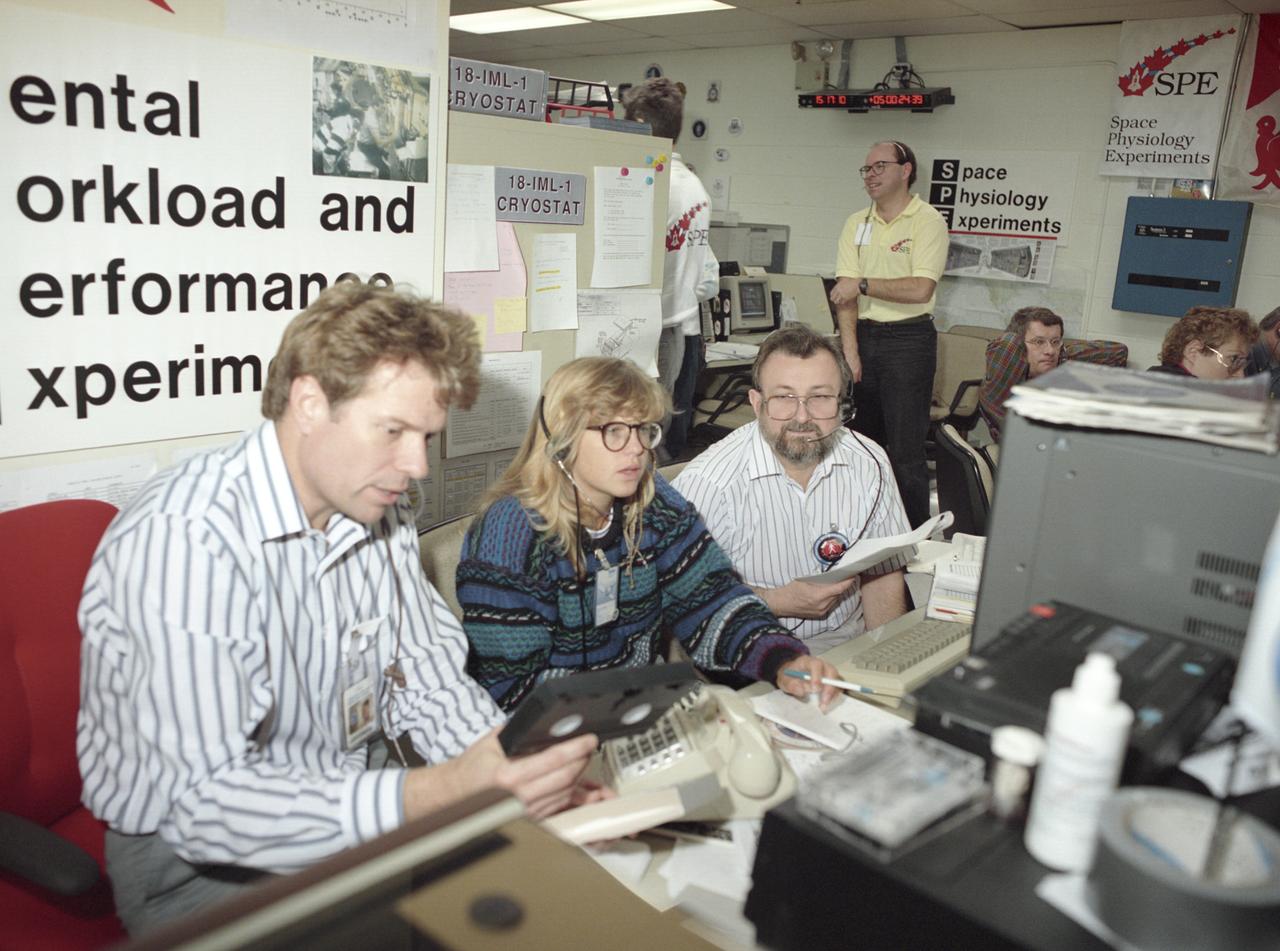
The primary payload for Space Shuttle Mission STS-42, launched January 22, 1992, was the International Microgravity Laboratory-1 (IML-1), a pressurized manned Spacelab module. The goal of IML-1 was to explore in depth the complex effects of weightlessness of living organisms and materials processing. Around-the-clock research was performed on the human nervous system's adaptation to low gravity and effects of microgravity on other life forms such as shrimp eggs, lentil seedlings, fruit fly eggs, and bacteria. Materials processing experiments were also conducted, including crystal growth from a variety of substances such as enzymes, mercury iodide, and a virus. The Huntsville Operations Support Center (HOSC) Spacelab Payload Operations Control Center (SL POCC) at the Marshall Space Flight Center (MSFC) was the air/ground communication channel used between the astronauts and ground control teams during the Spacelab missions. Featured activities are of the Mental Workload and Performance Experiment (MWPE) team in the SL POCC during the IML-1 mission.
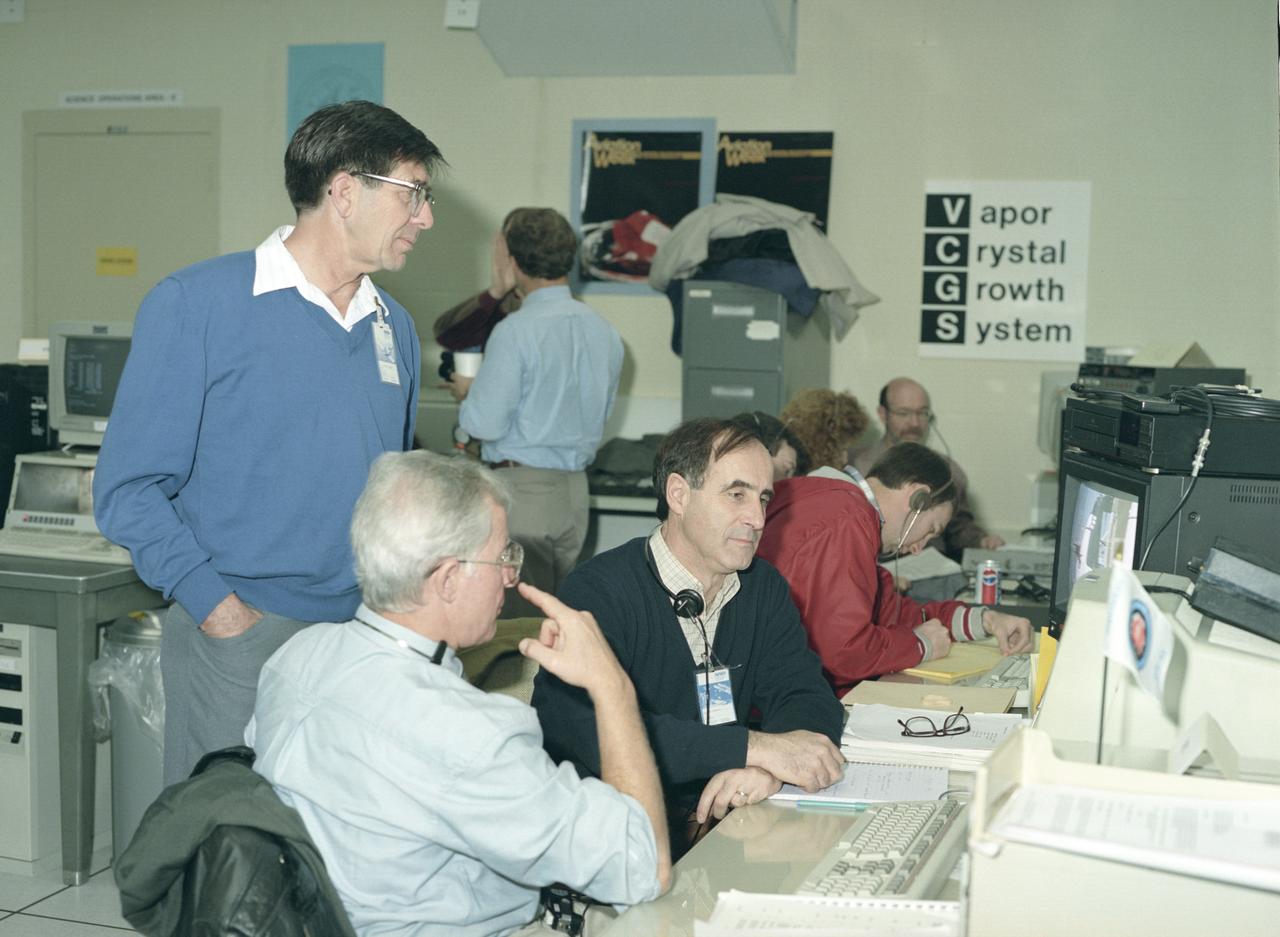
The primary payload for Space Shuttle Mission STS-42, launched January 22, 1992, was the International Microgravity Laboratory-1 (IML-1), a pressurized manned Spacelab module. The goal of IML-1 was to explore in depth the complex effects of weightlessness of living organisms and materials processing. Around-the-clock research was performed on the human nervous system's adaptation to low gravity and effects of microgravity on other life forms such as shrimp eggs, lentil seedlings, fruit fly eggs, and bacteria. Materials processing experiments were also conducted, including crystal growth from a variety of substances such as enzymes, mercury iodide, and a virus. The Huntsville Operations Support Center (HOSC) Spacelab Payload Operations Control Center (SL POCC) at the Marshall Space Flight Center (MSFC) was the air/ground communication channel used between the astronauts and ground control teams during the Spacelab missions. Featured is the Vapor Crystal Growth System (VCGS) team in SL POCC), during STS-42, IML-1 mission.
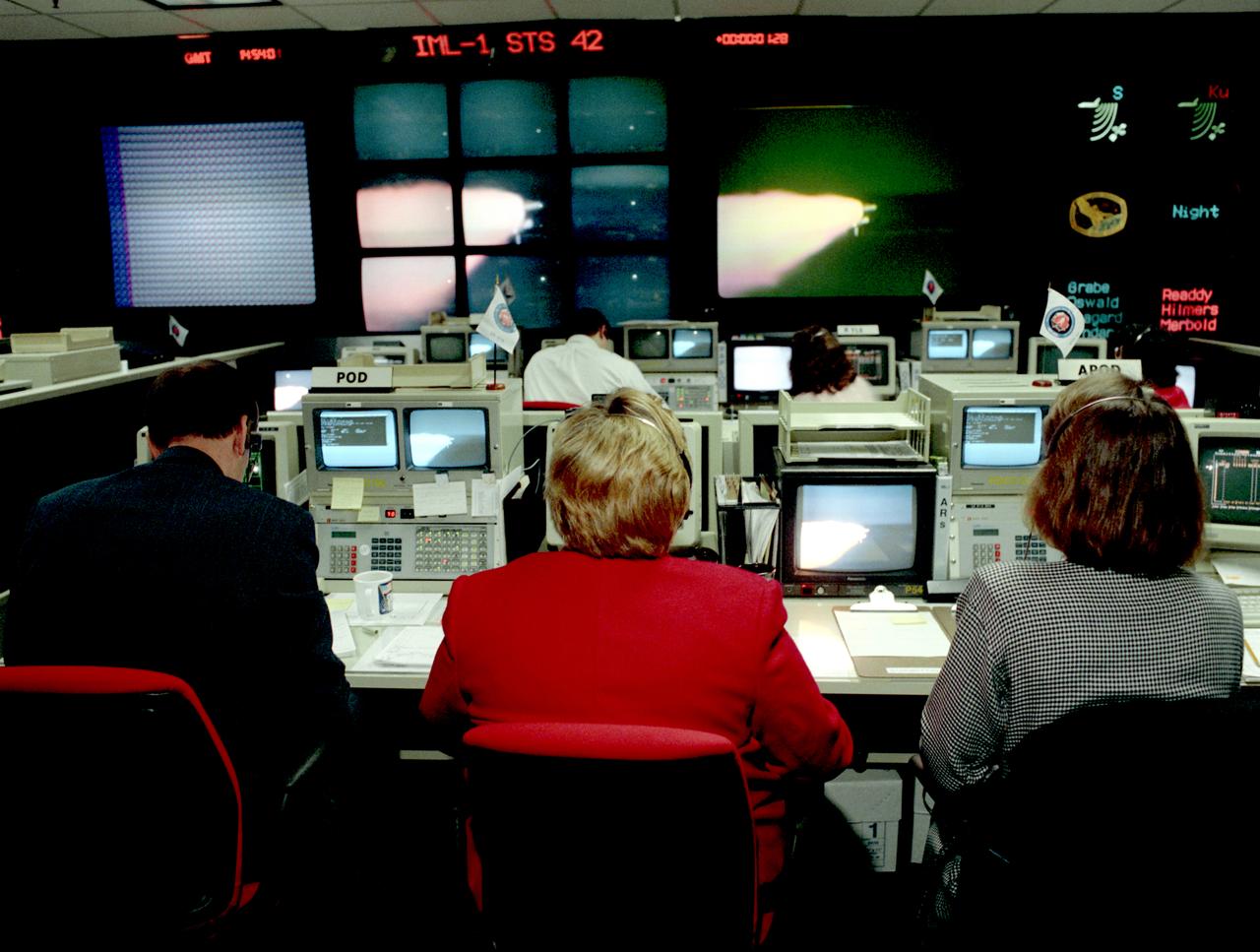
The primary payload for Space Shuttle Mission STS-42, launched January 22, 1992, was the International Microgravity Laboratory-1 (IML-1), a pressurized manned Spacelab module. The goal of IML-1 was to explore in depth the complex effects of weightlessness of living organisms and materials processing. Around-the-clock research was performed on the human nervous system's adaptation to low gravity and effects of microgravity on other life forms such as shrimp eggs, lentil seedlings, fruit fly eggs, and bacteria. Materials processing experiments were also conducted, including crystal growth from a variety of substances such as enzymes, mercury iodide and a virus. The Huntsville Operations Support Center (HOSC) Spacelab Payload Operations Control Center (SL POCC) at the Marshall Space Flight Center (MSFC) was the air/ground communication channel used between the astronauts aboard the Spacelab and scientists, researchers, and ground control teams during the Spacelab missions. The facility made instantaneous video and audio communications possible for scientists on the ground to follow the progress and to send direct commands of their research almost as if they were in space with the crew. Teams of controllers and researchers directed on-orbit science operations, sent commands to the spacecraft, received data from experiments aboard the Space Shuttle, adjusted mission schedules to take advantage of unexpected science opportunities or unexpected results, and worked with crew members to resolve problems with their experiments. In this photograph the Payload Operations Director (POD) views the launch.
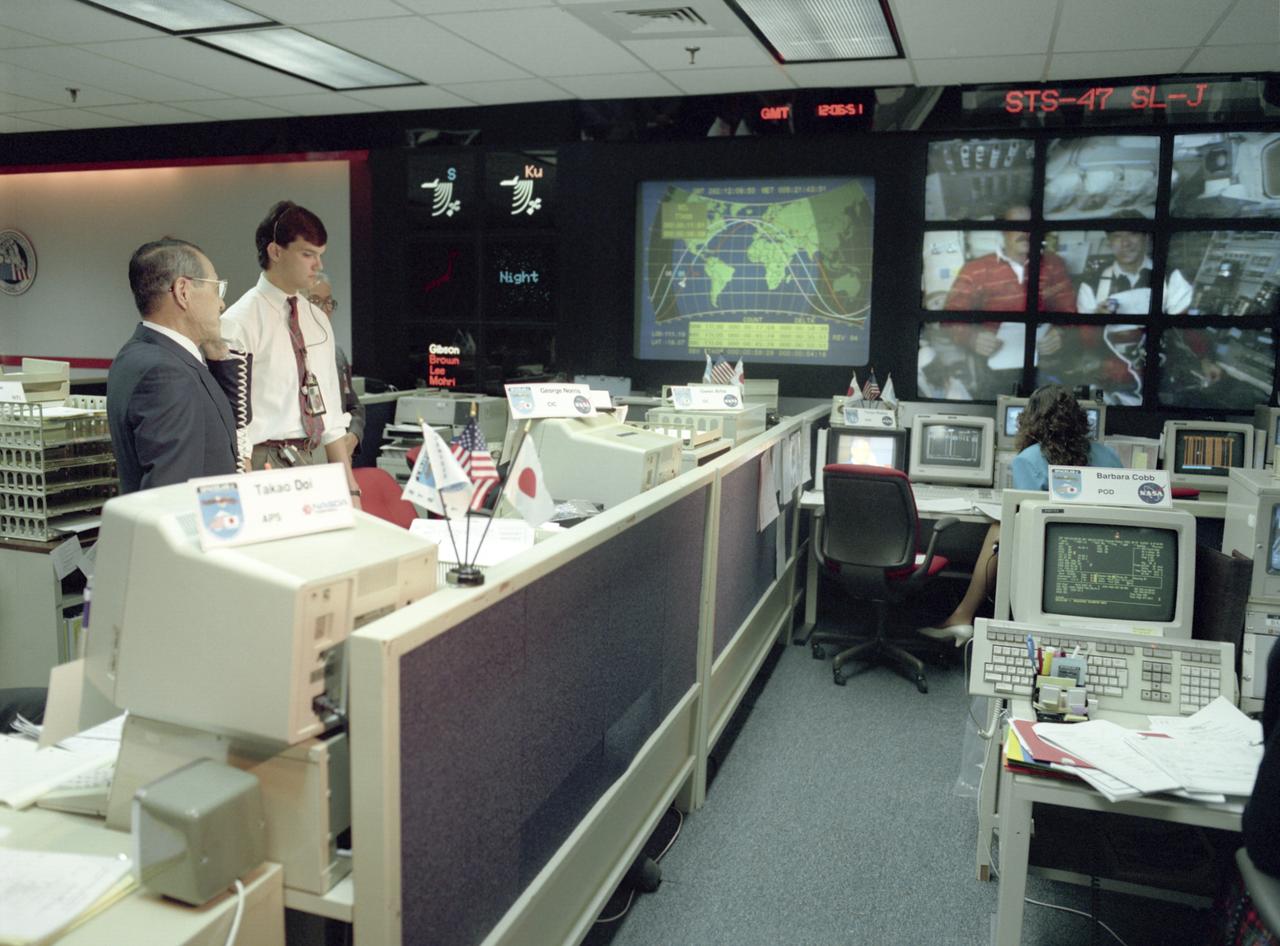
The science laboratory, Spacelab-J (SL-J), flown aboard the STS-47 flight was a joint venture between NASA and the National Space Development Agency of Japan (NASDA) utilizing a manned Spacelab module. The mission conducted 24 materials science and 20 life science experiments, of which 35 were sponsored by NASDA, 7 by NASA, and two collaborative efforts. Materials science investigations covered such fields as biotechnology, electronic materials, fluid dynamics and transport phenomena, glasses and ceramics, metals and alloys, and acceleration measurements. Life sciences included experiments on human health, cell separation and biology, developmental biology, animal and human physiology and behavior, space radiation, and biological rhythms. Test subjects included the crew, Japanese koi fish (carp), cultured animal and plant cells, chicken embryos, fruit flies, fungi and plant seeds, and frogs and frog eggs. From the Huntsville Operations Support Center (HOSC) Spacelab Payload Operations Control Center (SL POCC), NASDA President, Mr. Yamano, speaks to Payload Specialist Mamoru Mohri, a Japanese crew member aboard the STS-47 Spacelab J mission.
The science laboratory, Spacelab-J (SL-J), flown aboard the STS-47 flight was a joint venture between NASA and the National Space Development Agency of Japan (NASDA) utilizing a manned Spacelab module. The mission conducted 24 materials science and 20 life science experiments, of which 35 were sponsored by NASDA, 7 by NASA, and two collaborative efforts. Materials science investigations covered such fields as biotechnology, electronic materials, fluid dynamics and transport phenomena, glasses and ceramics, metals and alloys, and acceleration measurements. Life sciences included experiments on human health, cell separation and biology, developmental biology, animal and human physiology and behavior, space radiation, and biological rhythms. Test subjects included the crew, Japanese koi fish (carp), cultured animal and plant cells, chicken embryos, fruit flies, fungi and plant seeds, and frogs and frog eggs. Featured together in the Science Operation Area (SOA) are payload specialists’ first Materials Processing Test during NASA/NASDA joint ground activities at the Huntsville Operations Support Center (HOSC) Spacelab Payload Operations Control Center (SL POCC) at Marshall Space Flight Center (MSFC).
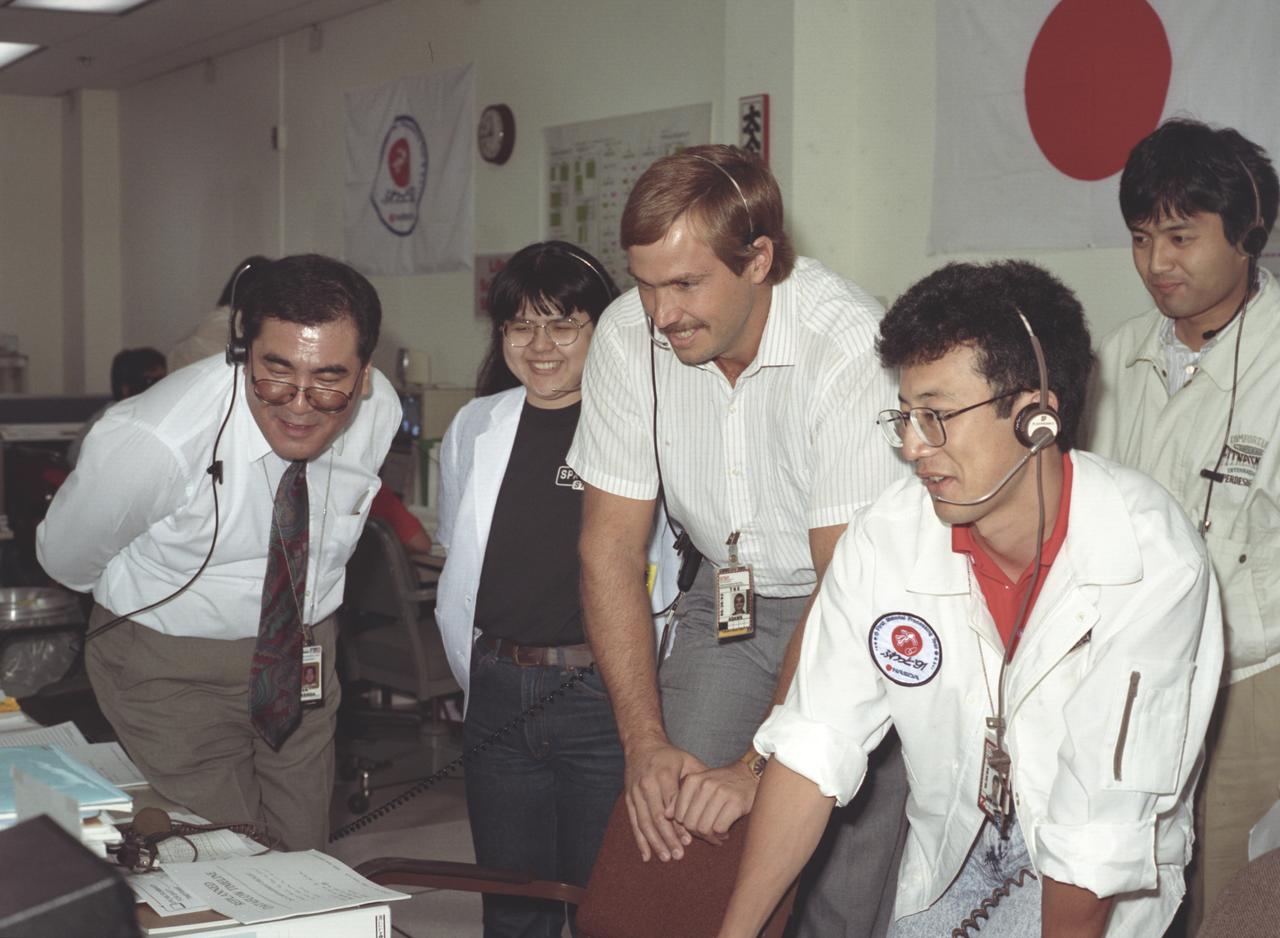
The science laboratory, Spacelab-J (SL-J), flown aboard the STS-47 flight was a joint venture between NASA and the National Space Development Agency of Japan (NASDA) utilizing a manned Spacelab module. The mission conducted 24 materials science and 20 life science experiments, of which 35 were sponsored by NASDA, 7 by NASA, and two collaborative efforts. Materials science investigations covered such fields as biotechnology, electronic materials, fluid dynamics and transport phenomena, glasses and ceramics, metals and alloys, and acceleration measurements. Life sciences included experiments on human health, cell separation and biology, developmental biology, animal and human physiology and behavior, space radiation, and biological rhythms. Test subjects included the crew, Japanese koi fish (carp), cultured animal and plant cells, chicken embryos, fruit flies, fungi and plant seeds, and frogs and frog eggs. Featured together in joint ground activities during the SL-J mission are NASA/NASDA personnel at the Huntsville Operations Support Center (HOSC) Spacelab Payload Operations Control Center (SL POCC) at Marshall Space Flight Center (MSFC).
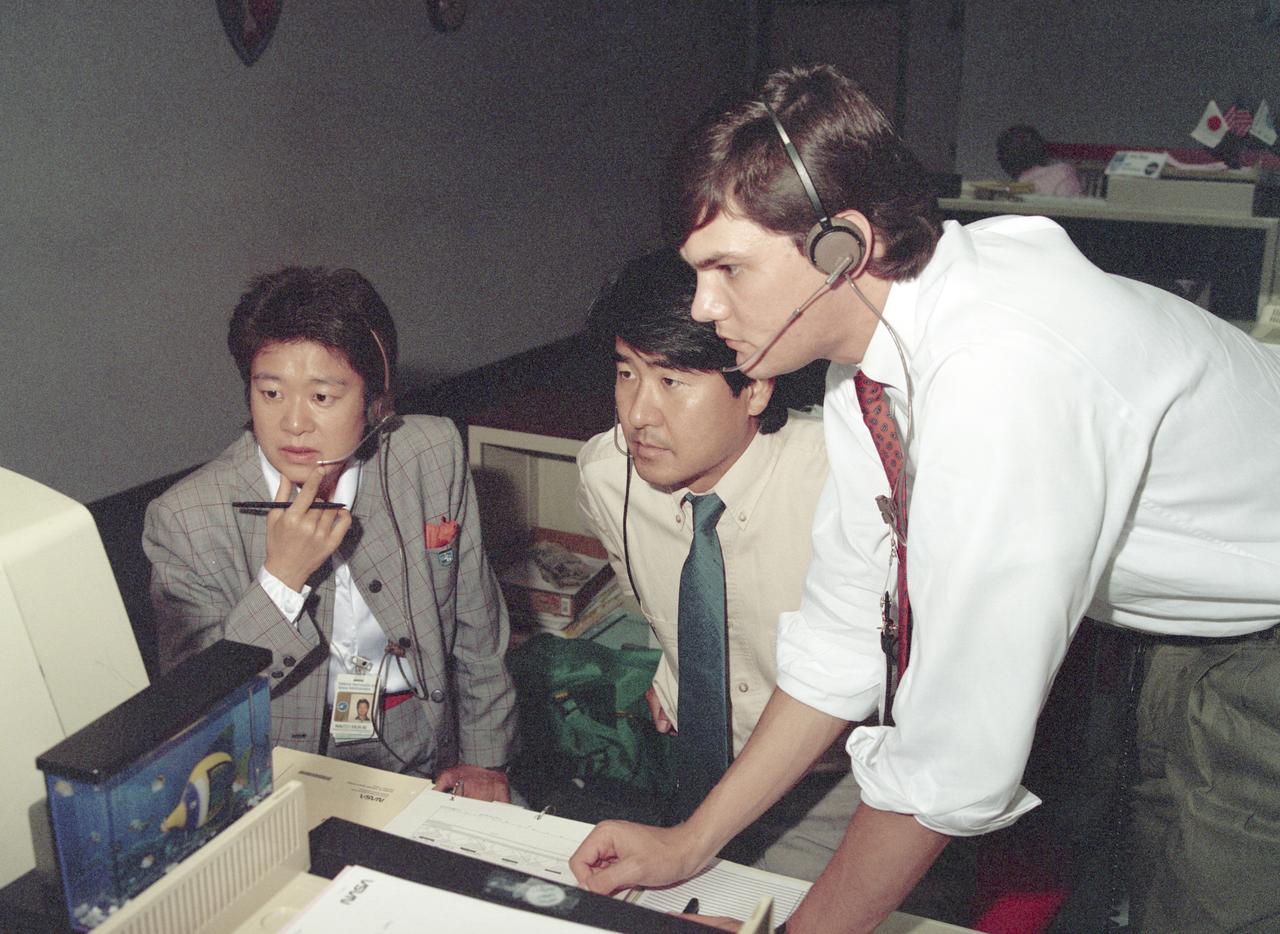
The science laboratory, Spacelab-J (SL-J), flown aboard the STS-47 flight was a joint venture between NASA and the National Space Development Agency of Japan (NASDA) utilizing a manned Spacelab module. The mission conducted 24 materials science and 20 life science experiments, of which 35 were sponsored by NASDA, 7 by NASA, and two collaborative efforts. Materials science investigations covered such fields as biotechnology, electronic materials, fluid dynamics and transport phenomena, glasses and ceramics, metals and alloys, and acceleration measurements. Life sciences included experiments on human health, cell separation and biology, developmental biology, animal and human physiology and behavior, space radiation, and biological rhythms. Test subjects included the crew, Japanese koi fish (carp), cultured animal and plant cells, chicken embryos, fruit flies, fungi and plant seeds, and frogs and frog eggs. Pictured along with George Norris in the Huntsville Operations Support Center (HOSC) Spacelab Payload Operations Control Center (SL POCC) at Marshall Space Flight Center (MSFC) are NASDA alternate payload specialists Dr. Doi and Dr. Mukai.
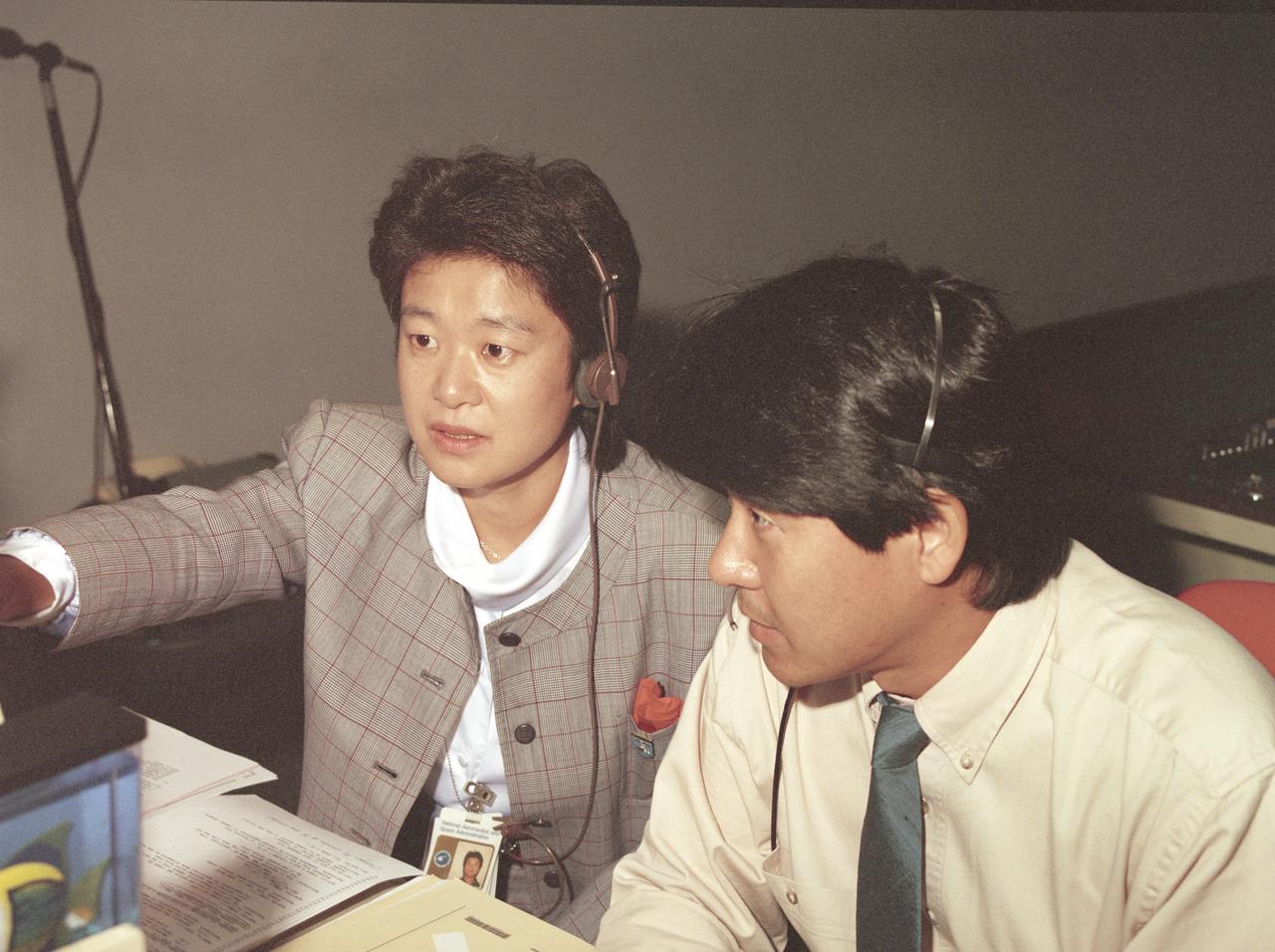
The science laboratory, Spacelab-J (SL-J), flown aboard the STS-47 flight was a joint venture between NASA and the National Space Development Agency of Japan (NASDA) utilizing a manned Spacelab module. The mission conducted 24 materials science and 20 life science experiments, of which 35 were sponsored by NASDA, 7 by NASA, and two collaborative efforts. Materials science investigations covered such fields as biotechnology, electronic materials, fluid dynamics and transport phenomena, glasses and ceramics, metals and alloys, and acceleration measurements. Life sciences included experiments on human health, cell separation and biology, developmental biology, animal and human physiology and behavior, space radiation, and biological rhythms. Test subjects included the crew, Japanese koi fish (carp), cultured animal and plant cells, chicken embryos, fruit flies, fungi and plant seeds, and frogs and frog eggs. Pictured in the Huntsville Operations Support Center (HOSC) Spacelab Payload Operations Control Center (SL POCC) of Marshall Space Flight Center (MSFC) are NASDA alternate payload specialists Dr. Doi and Dr. Mukai.
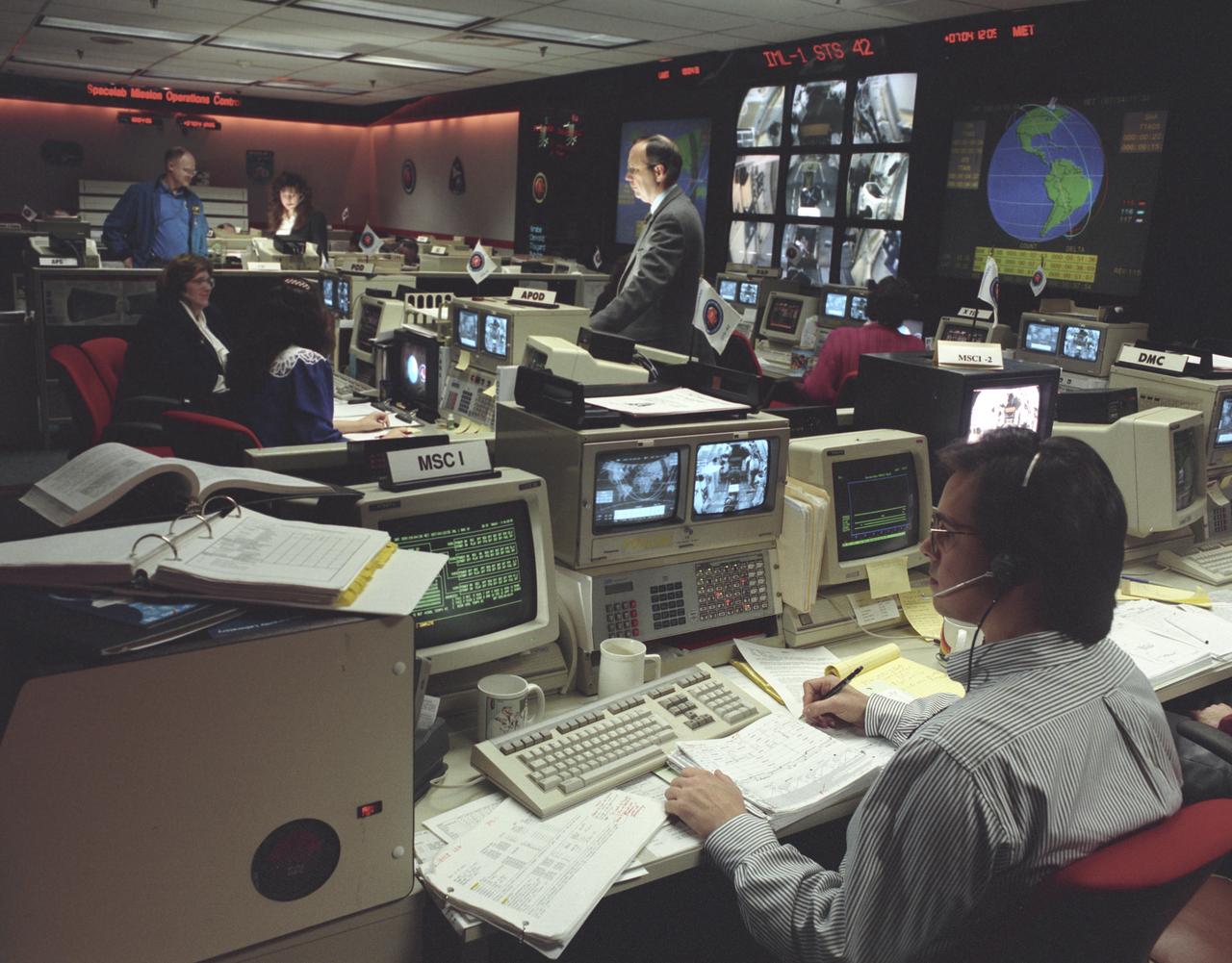
This photograph shows activities during the International Microgravity Laboratory-1 (IML-1) mission (STS-42) in the Payload Operations Control Center (POCC) at the Marshall Space Flight Center. The IML-1 mission was the first in a series of Shuttle flights dedicated to fundamental materials and life sciences research. The mission was to explore, in depth, the complex effects of weightlessness on living organisms and materials processing. The crew conducted experiments on the human nervous system's adaptation to low gravity and the effects on other life forms such as shrimp eggs, lentil seedlings, fruit fly eggs, and bacteria. Low gravity materials processing experiments included crystal growth from a variety of substances such as enzymes, mercury, iodine, and virus. The International space science research organizations that participated in this mission were: The U.S. National Aeronautics and Space Administration, the European Space Agency, the Canadian Space Agency, the French National Center for Space Studies, the German Space Agency, and the National Space Development Agency of Japan. The POCC was the air/ground communication charnel used between the astronauts aboard the Spacelab and scientists, researchers, and ground control teams during the Spacelab missions. The facility made instantaneous video and audio communications possible for scientists on the ground to follow the progress and to send direct commands of their research almost as if they were in space with the crew.
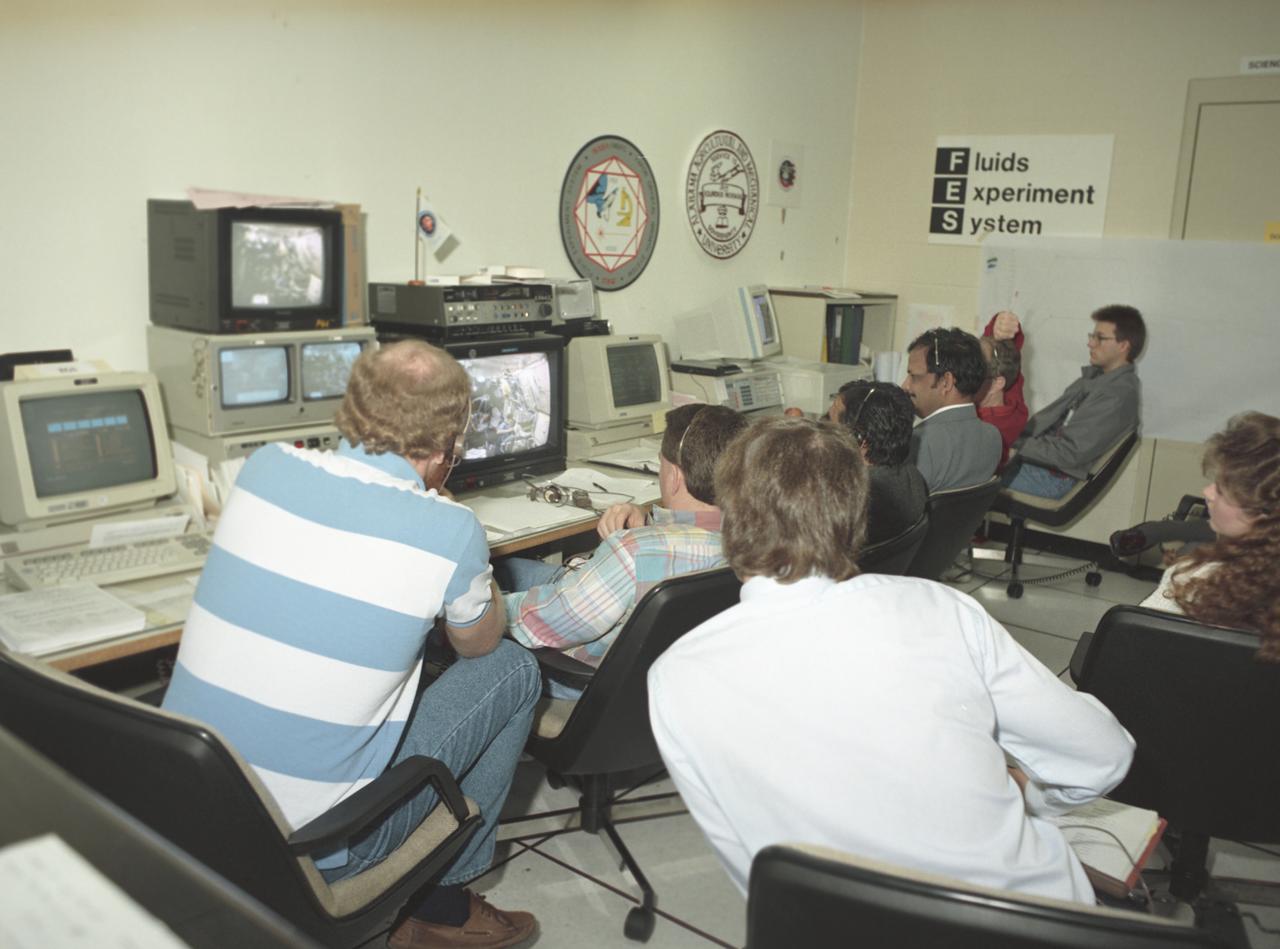
This photograph shows activities during the International Microgravity Laboratory-1 (IML-1) mission (STS-42) in the Payload Operations Control Center (POCC) at the Marshall Space Flight Center. Members of the Fluid Experiment System (FES) group monitor the progress of their experiment through video at the POCC. The IML-1 mission was the first in a series of Shuttle flights dedicated to fundamental materials and life sciences research. The mission was to explore, in depth, the complex effects of weightlessness on living organisms and materials processing. The crew conducted experiments on the human nervous system's adaptation to low gravity and the effects on other life forms such as shrimp eggs, lentil seedlings, fruit fly eggs, and bacteria. Low gravity materials processing experiments included crystal growth from a variety of substances such as enzymes, mercury, iodine, and virus. The International space science research organizations that participated in this mission were: The U.S. National Aeronautics and Space Administion, the European Space Agency, the Canadian Space Agency, the French National Center for Space Studies, the German Space Agency, and the National Space Development Agency of Japan. The POCC was the air/ground communication charnel used between astronauts aboard the Spacelab and scientists, researchers, and ground control teams during the Spacelab missions. The facility made instantaneous video and audio communications possible for scientists on the ground to follow the progress and to send direct commands of their research almost as if they were in space with the crew.
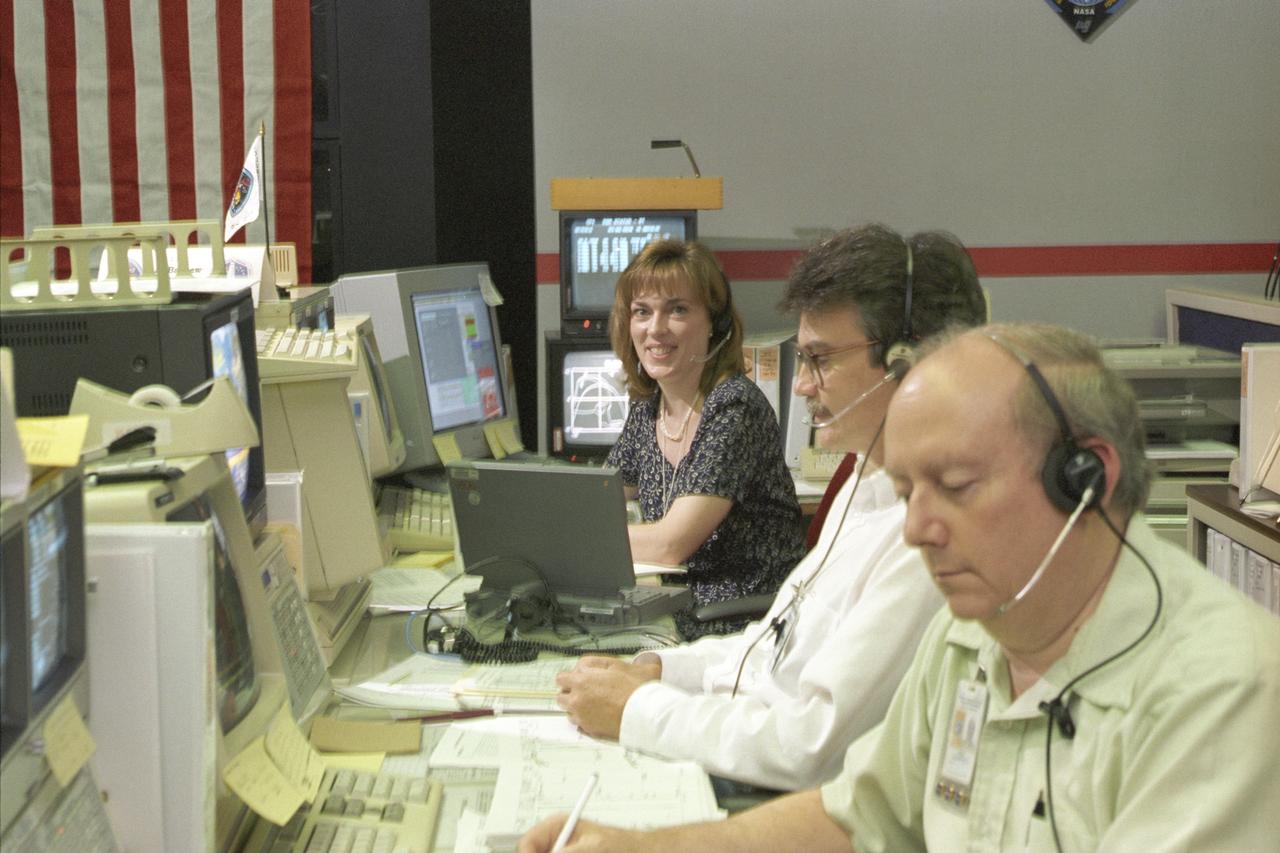
Launched on June 20, 1996, the STS-78 mission’s primary payload was the Life and Microgravity Spacelab (LMS), which was managed by the Marshall Space Flight Center (MSFC). During the 17 day space flight, the crew conducted a diverse slate of experiments divided into a mix of life science and microgravity investigations. In a manner very similar to future International Space Station operations, LMS researchers from the United States and their European counterparts shared resources such as crew time and equipment. Five space agencies (NASA/USA, European Space Agency/Europe (ESA), French Space Agency/France, Canadian Space Agency /Canada, and Italian Space Agency/Italy) along with research scientists from 10 countries worked together on the design, development and construction of the LMS. This photo represents Data Management Coordinators monitoring the progress of the mission at the Huntsville Operations Support Center (HOSC) Spacelab Payload Operations Control Center (SL POCC) at MSFC. Pictured are assistant mission scientist Dr. Dalle Kornfeld, Rick McConnel, and Ann Bathew.
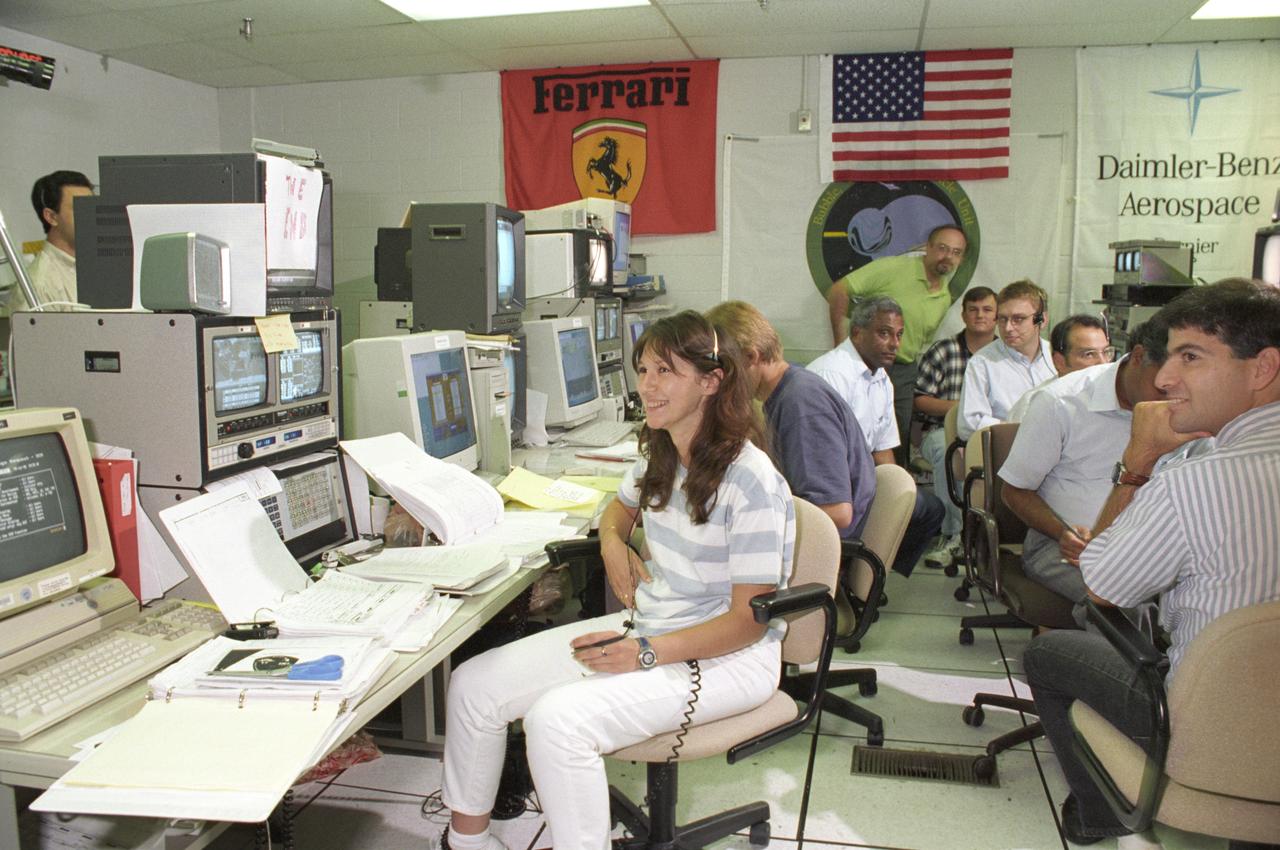
Launched on June 20, 1996, the STS-78 mission’s primary payload was the Life and Microgravity Spacelab (LMS), which was managed by the Marshall Space Flight Center (MSFC). During the 17 day space flight, the crew conducted a diverse slate of experiments divided into a mix of life science and microgravity investigations. In a manner very similar to future International Space Station operations, LMS researchers from the United States and their European counterparts shared resources such as crew time and equipment. Five space agencies (NASA/USA, European Space Agency/Europe (ESA), French Space Agency/France, Canadian Space Agency /Canada, and Italian Space Agency/Italy) along with research scientists from 10 countries worked together on the design, development and construction of the LMS. This photo represents members of the Bubble Drop and Particle Unit team expressing satisfaction with a completed experiment run at the Huntsville Operations Support Center (HOSC) Spacelab Payload Operations Control Center (SL POCC) at MSFC.
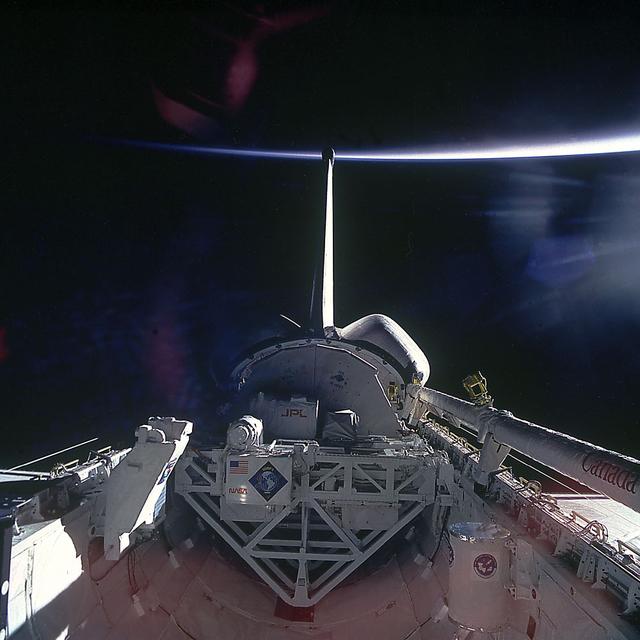
This is a Space Shuttle Columbia (STS-52) onboard photograph of the United States Microgravity Payload-1 (USMP-1) in the cargo bay. The USMP program is a series of missions developed by NASA to provide scientists with the opportunity to conduct research in the unique microgravity environment of the Space Shuttle's payload bay. The USMP-1 mission was designed for microgravity experiments that do not require the hands-on environment of the Spacelab. Science teams on the ground would remotely command and monitor instruments and analyze data from work stations at NASA's Spacelab Mission Operation Control facility at the Marshall Space Flight Center (MSFC). The USMP-1 payload carried three investigations: two studied basic fluid and metallurgical processes in microgravity, and the third would characterize the microgravity environment onboard the Space Shuttle. The three experiments that made up USMP-1 were the Lambda Point Experiment, the Space Acceleration Measurement System, and the Materials for the Study of Interesting Phenomena of Solidification Earth and in Orbit (MEPHISTO). The three experiments were mounted on two cornected Mission Peculiar Equipment Support Structures (MPESS) mounted in the orbiter's cargo bay. The USMP program was managed by the MSFC and the MPESS was developed by the MSFC.
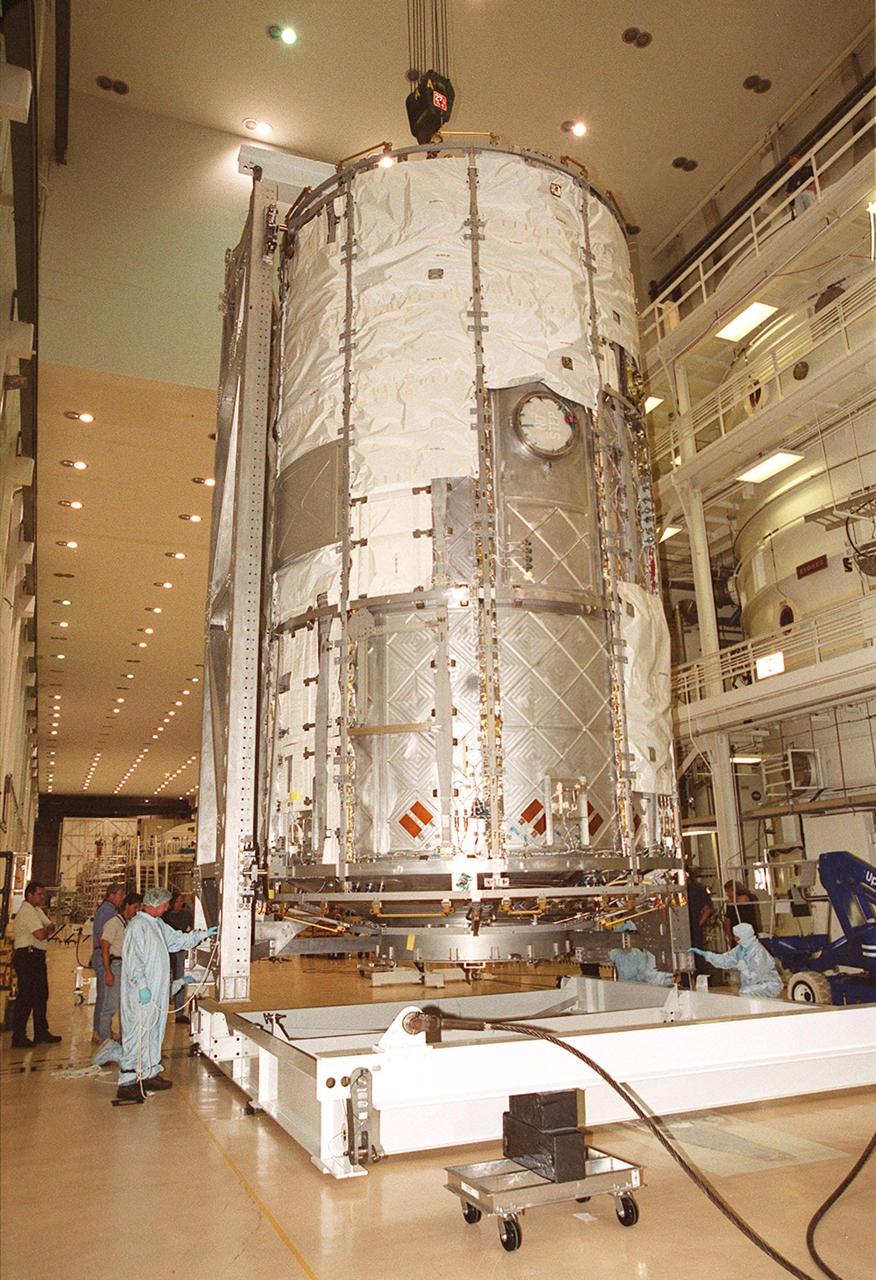
KENNEDY SPACE CENTER, FLA. -- In the Operations and Checkout Building, the U.S. Lab reaches the open floor after being lifted out of the vacuum chamber where it was tested for leaks. The test was very successful. The 32,000-pound scientific research lab, named Destiny, is the first Space Station element to spend seven days in the renovated vacuum chamber. Destiny is scheduled to be launched on Shuttle mission STS-98, the 5A assembly mission, targeted for Jan. 18, 2001. During the mission, the crew will install the Lab in the Space Station during a series of three space walks. The STS-98 mission will provide the Station with science research facilities and expand its power, life support and control capabilities. The U.S. Lab module continues a long tradition of microgravity materials research, first conducted by Skylab and later Shuttle and Spacelab missions. Destiny is expected to be a major feature in future research, providing facilities for biotechnology, fluid physics, combustion, and life sciences research
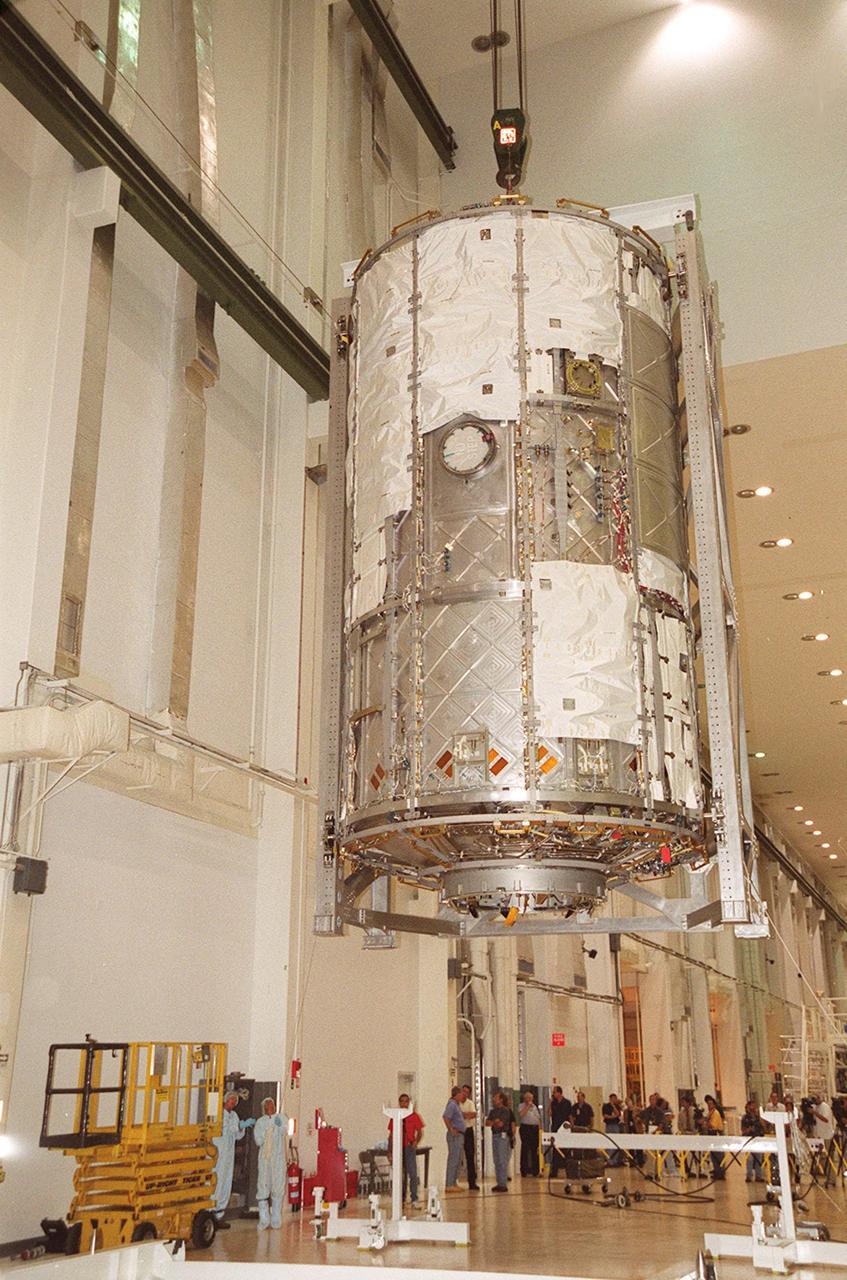
KENNEDY SPACE CENTER, FLA. -- In the Operations and Checkout Building, the U.S. Lab is lowered toward the floor after being lifted out of the vacuum chamber where it was tested for leaks. The test was very successful. The 32,000-pound scientific research lab, named Destiny, is the first Space Station element to spend seven days in the renovated vacuum chamber. Destiny is scheduled to be launched on Shuttle mission STS-98, the 5A assembly mission, targeted for Jan. 18, 2001. During the mission, the crew will install the Lab in the Space Station during a series of three space walks. The STS-98 mission will provide the Station with science research facilities and expand its power, life support and control capabilities. The U.S. Lab module continues a long tradition of microgravity materials research, first conducted by Skylab and later Shuttle and Spacelab missions. Destiny is expected to be a major feature in future research, providing facilities for biotechnology, fluid physics, combustion, and life sciences research
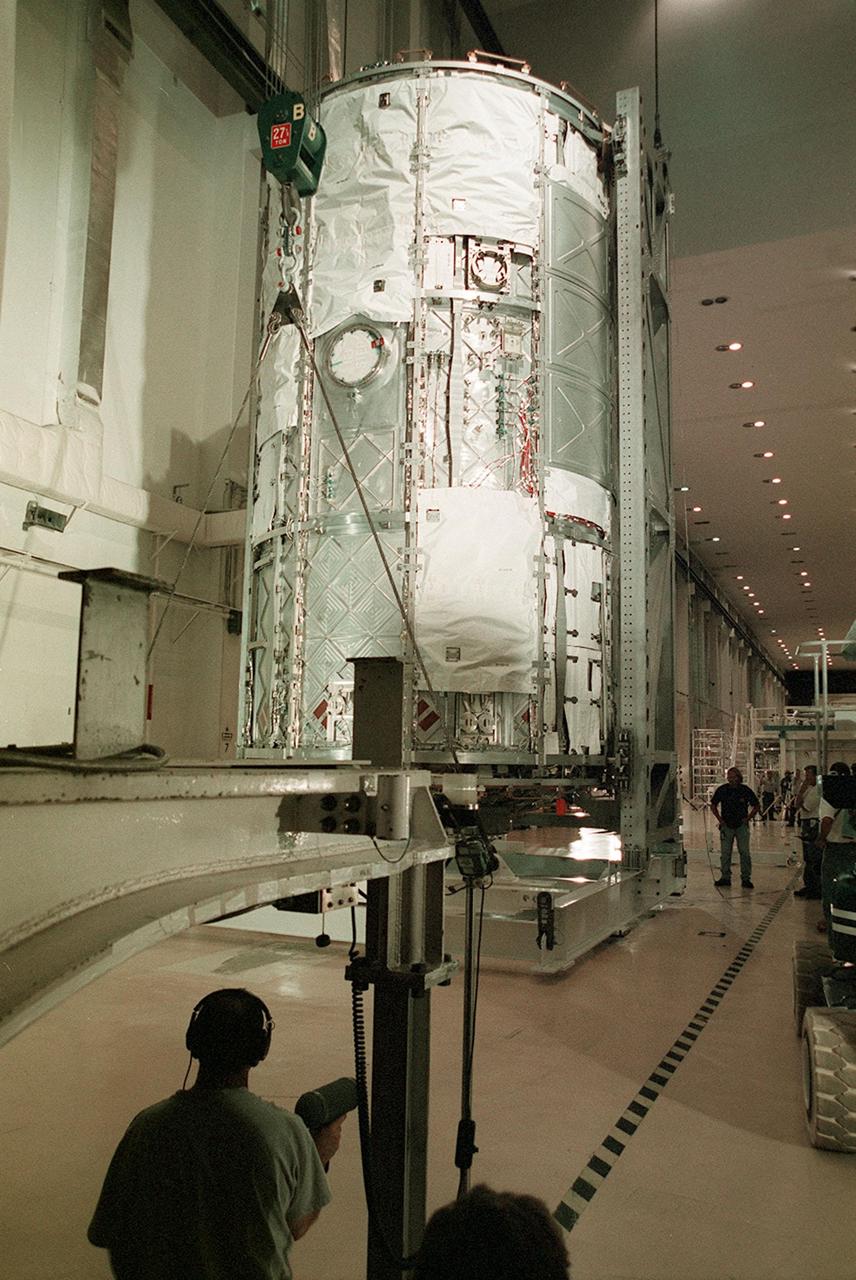
KENNEDY SPACE CENTER, FLA. -- The U.S. Lab, a component of the International Space Station, is moved to the vacuum chamber in the Operations and Checkout Building for testing. The 32,000-pound scientific research lab, named Destiny, is the first Space Station element to spend seven days in the renovated vacuum chamber for a leak test. Destiny is scheduled to be launched on Shuttle mission STS-98, the 5A assembly mission, targeted for Jan. 18, 2001. During the mission, the crew will install the Lab in the Space Station during a series of three space walks. The STS-98 mission will provide the Station with science research facilities and expand its power, life support and control capabilities. The U.S. Lab module continues a long tradition of microgravity materials research, first conducted by Skylab and later Shuttle and Spacelab missions. Destiny is expected to be a major feature in future research, providing facilities for biotechnology, fluid physics, combustion, and life sciences research.
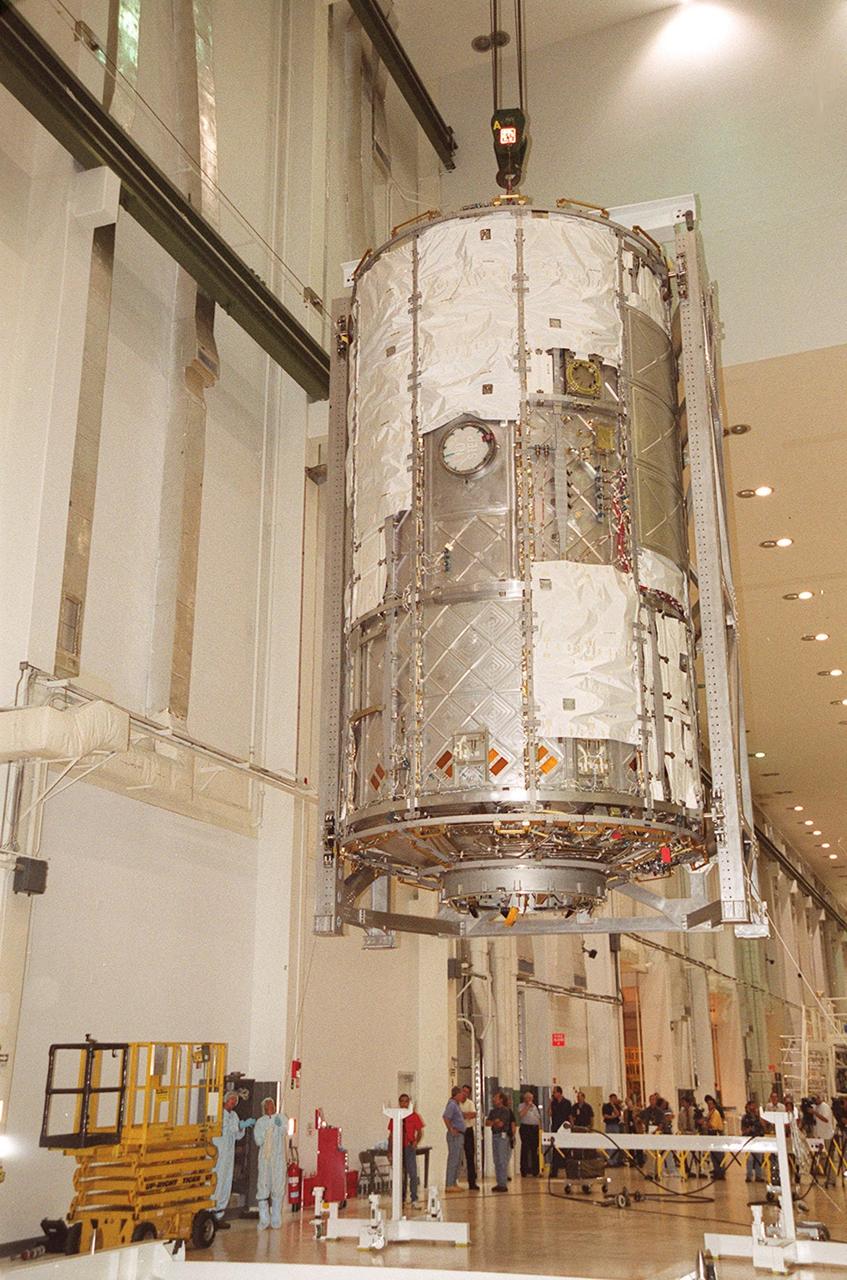
KENNEDY SPACE CENTER, FLA. -- In the Operations and Checkout Building, the U.S. Lab is lowered toward the floor after being lifted out of the vacuum chamber where it was tested for leaks. The test was very successful. The 32,000-pound scientific research lab, named Destiny, is the first Space Station element to spend seven days in the renovated vacuum chamber. Destiny is scheduled to be launched on Shuttle mission STS-98, the 5A assembly mission, targeted for Jan. 18, 2001. During the mission, the crew will install the Lab in the Space Station during a series of three space walks. The STS-98 mission will provide the Station with science research facilities and expand its power, life support and control capabilities. The U.S. Lab module continues a long tradition of microgravity materials research, first conducted by Skylab and later Shuttle and Spacelab missions. Destiny is expected to be a major feature in future research, providing facilities for biotechnology, fluid physics, combustion, and life sciences research
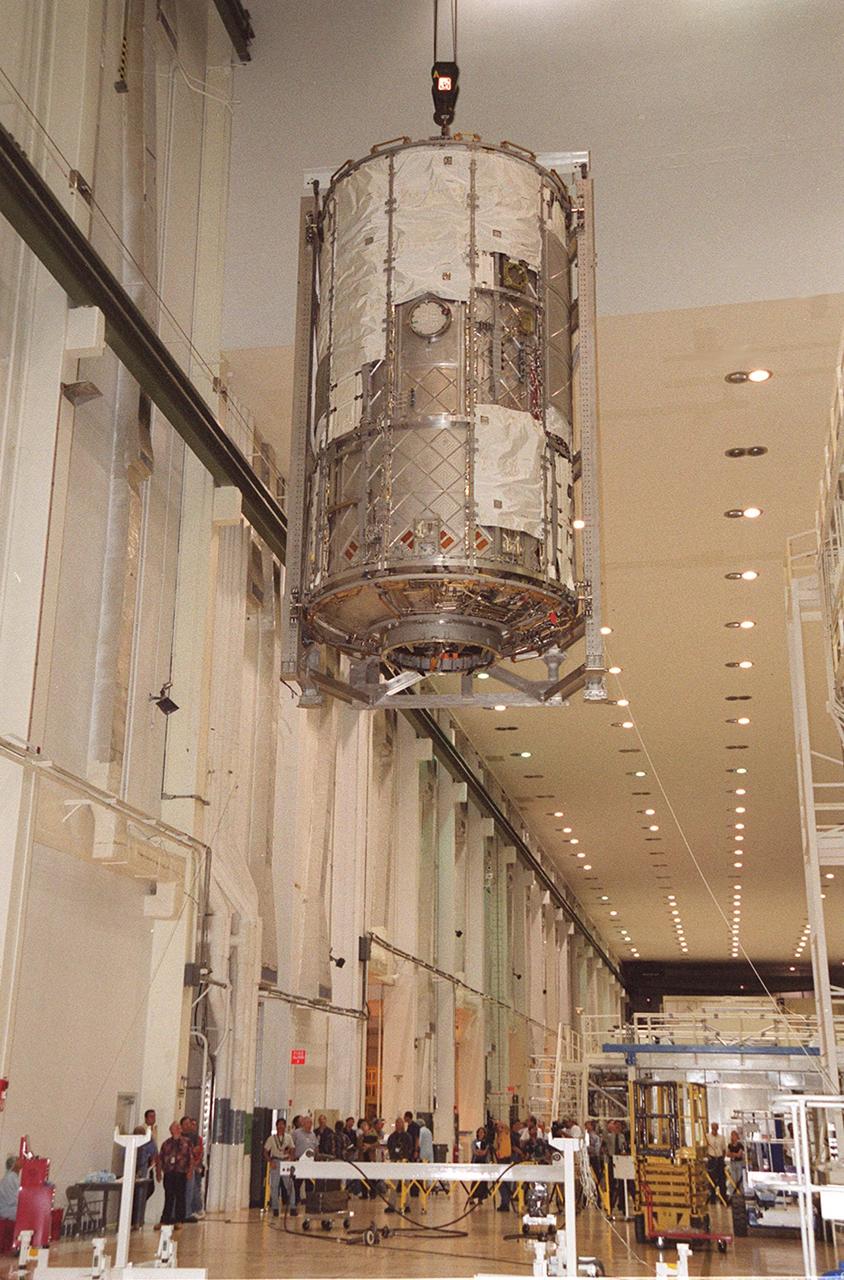
KENNEDY SPACE CENTER, FLA. -- In the Operations and Checkout Building, the U.S. Lab is lowered toward the floor after being lifted out of the vacuum chamber where it was tested for leaks. The test was very successful. The 32,000-pound scientific research lab, named Destiny, is the first Space Station element to spend seven days in the renovated vacuum chamber. Destiny is scheduled to be launched on Shuttle mission STS-98, the 5A assembly mission, targeted for Jan. 18, 2001. During the mission, the crew will install the Lab in the Space Station during a series of three space walks. The STS-98 mission will provide the Station with science research facilities and expand its power, life support and control capabilities. The U.S. Lab module continues a long tradition of microgravity materials research, first conducted by Skylab and later Shuttle and Spacelab missions. Destiny is expected to be a major feature in future research, providing facilities for biotechnology, fluid physics, combustion, and life sciences research
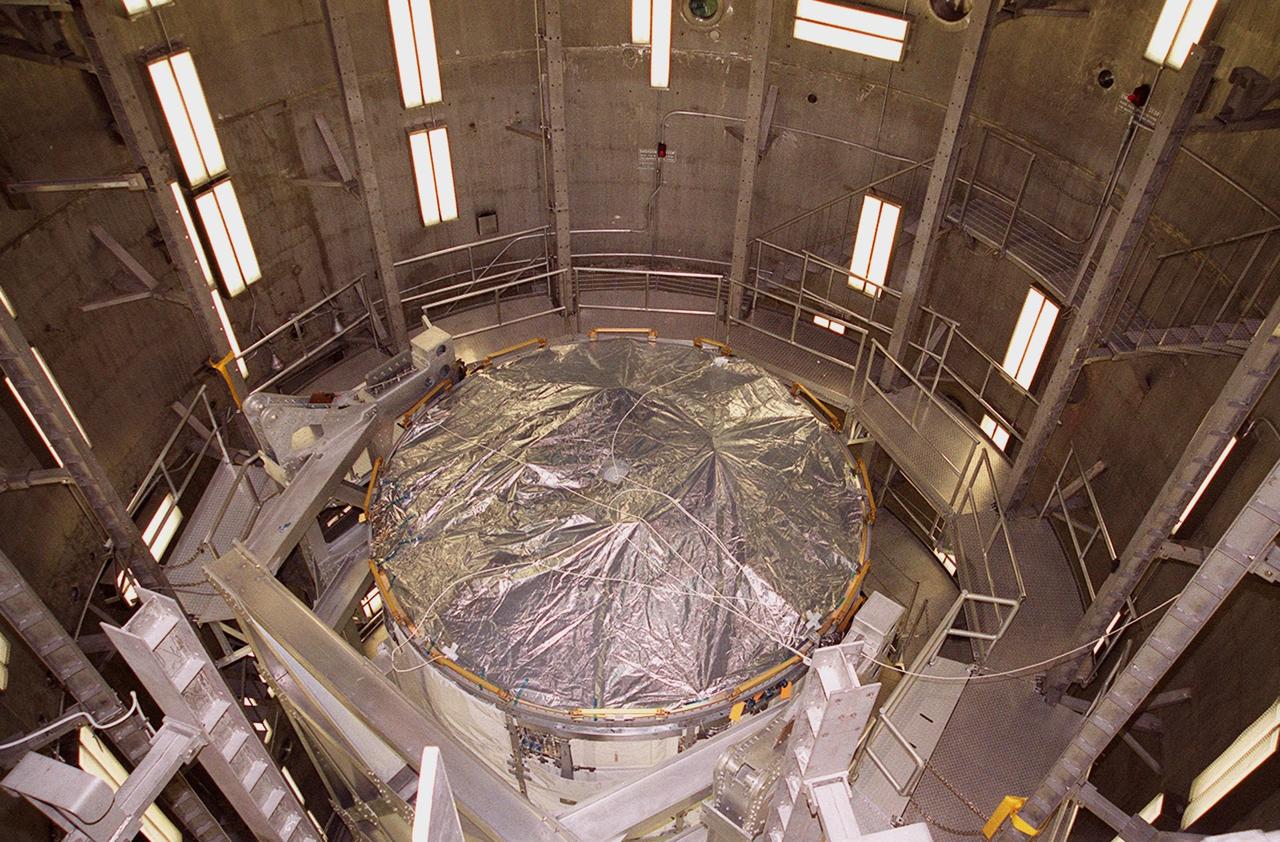
KENNEDY SPACE CENTER, FLA. -- The U.S. Lab, a component of the International Space Station, is lowered inside the three-story vacuum chamber in the Operations and Checkout Building. The 32,000-pound scientific research lab, named Destiny, is the first Space Station element to spend seven days in the renovated vacuum chamber for a leak test. Destiny is scheduled to be launched on Shuttle mission STS-98, the 5A assembly mission, targeted for Jan. 18, 2001. During the mission, the crew will install the Lab in the Space Station during a series of three space walks. The STS-98 mission will provide the Station with science research facilities and expand its power, life support and control capabilities. The U.S. Lab module continues a long tradition of microgravity materials research, first conducted by Skylab and later Shuttle and Spacelab missions. Destiny is expected to be a major feature in future research, providing facilities for biotechnology, fluid physics, combustion, and life sciences research
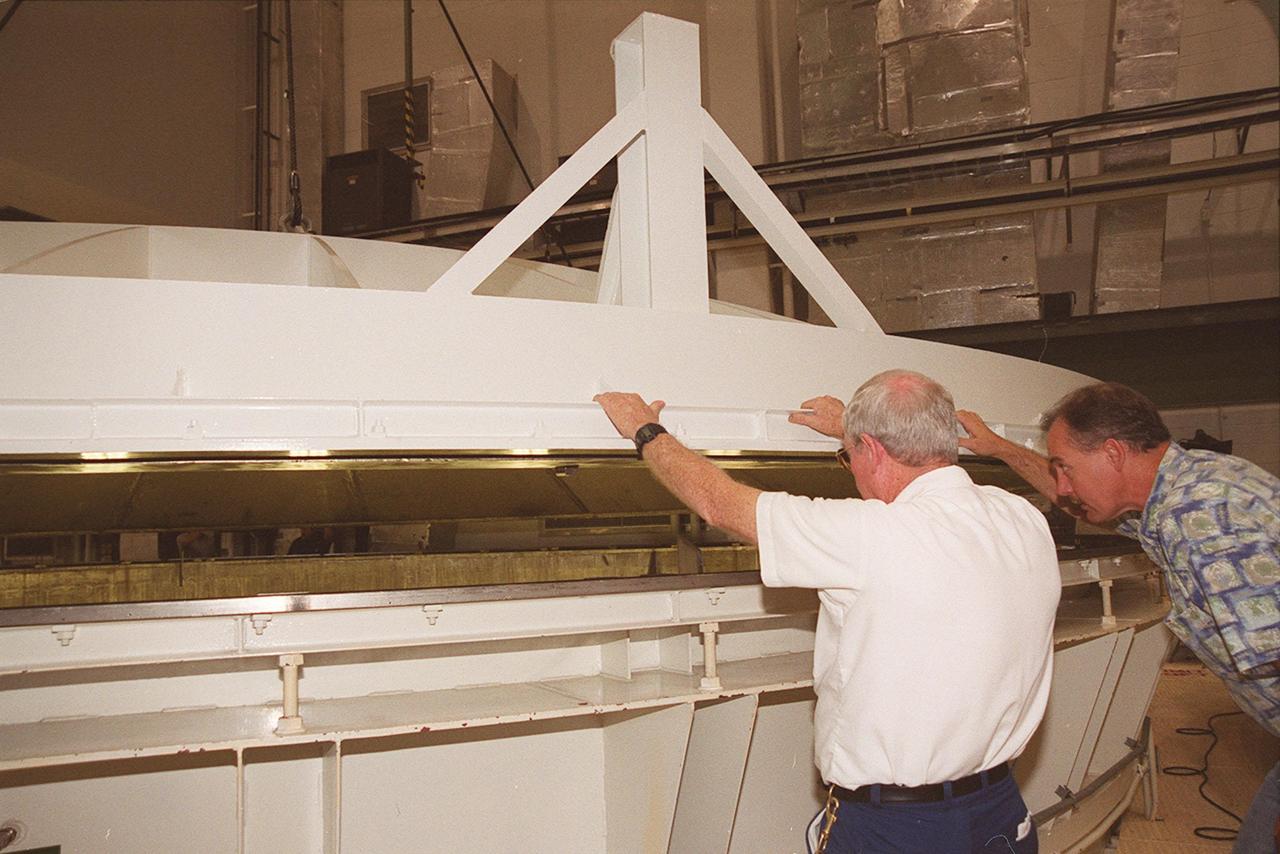
KENNEDY SPACE CENTER, FLA. -- Workers in the Operations and Checkout Building check the placement of the lid on the vacuum chamber containing the U.S. Lab, a component of the International Space Station. The 32,000-pound scientific research lab, named Destiny, is the first Space Station element to spend seven days in the renovated vacuum chamber for a leak test. Destiny is scheduled to be launched on Shuttle mission STS-98, the 5A assembly mission, targeted for Jan. 18, 2001. During the mission, the crew will install the Lab in the Space Station during a series of three space walks. The STS-98 mission will provide the Station with science research facilities and expand its power, life support and control capabilities. The U.S. Lab module continues a long tradition of microgravity materials research, first conducted by Skylab and later Shuttle and Spacelab missions. Destiny is expected to be a major feature in future research, providing facilities for biotechnology, fluid physics, combustion, and life sciences research
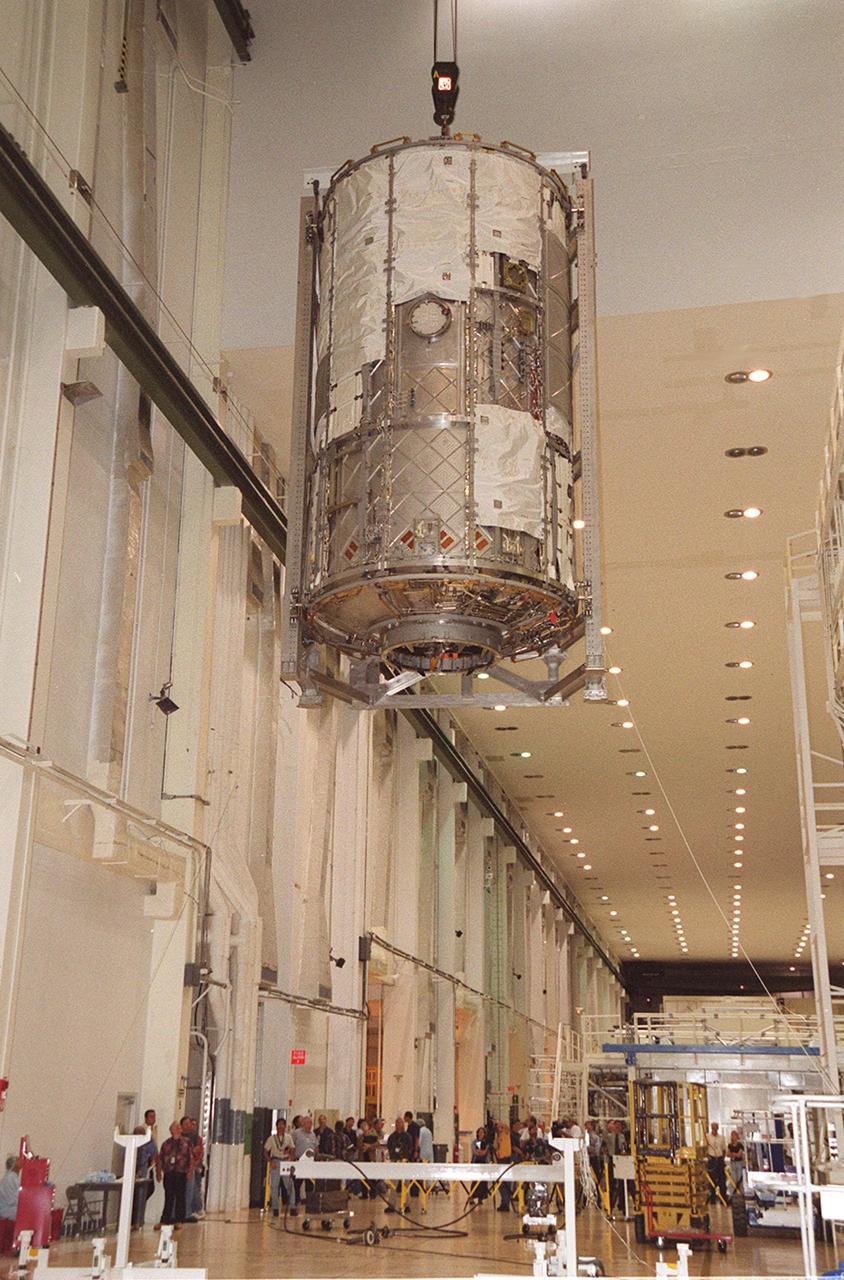
KENNEDY SPACE CENTER, FLA. -- In the Operations and Checkout Building, the U.S. Lab is lowered toward the floor after being lifted out of the vacuum chamber where it was tested for leaks. The test was very successful. The 32,000-pound scientific research lab, named Destiny, is the first Space Station element to spend seven days in the renovated vacuum chamber. Destiny is scheduled to be launched on Shuttle mission STS-98, the 5A assembly mission, targeted for Jan. 18, 2001. During the mission, the crew will install the Lab in the Space Station during a series of three space walks. The STS-98 mission will provide the Station with science research facilities and expand its power, life support and control capabilities. The U.S. Lab module continues a long tradition of microgravity materials research, first conducted by Skylab and later Shuttle and Spacelab missions. Destiny is expected to be a major feature in future research, providing facilities for biotechnology, fluid physics, combustion, and life sciences research
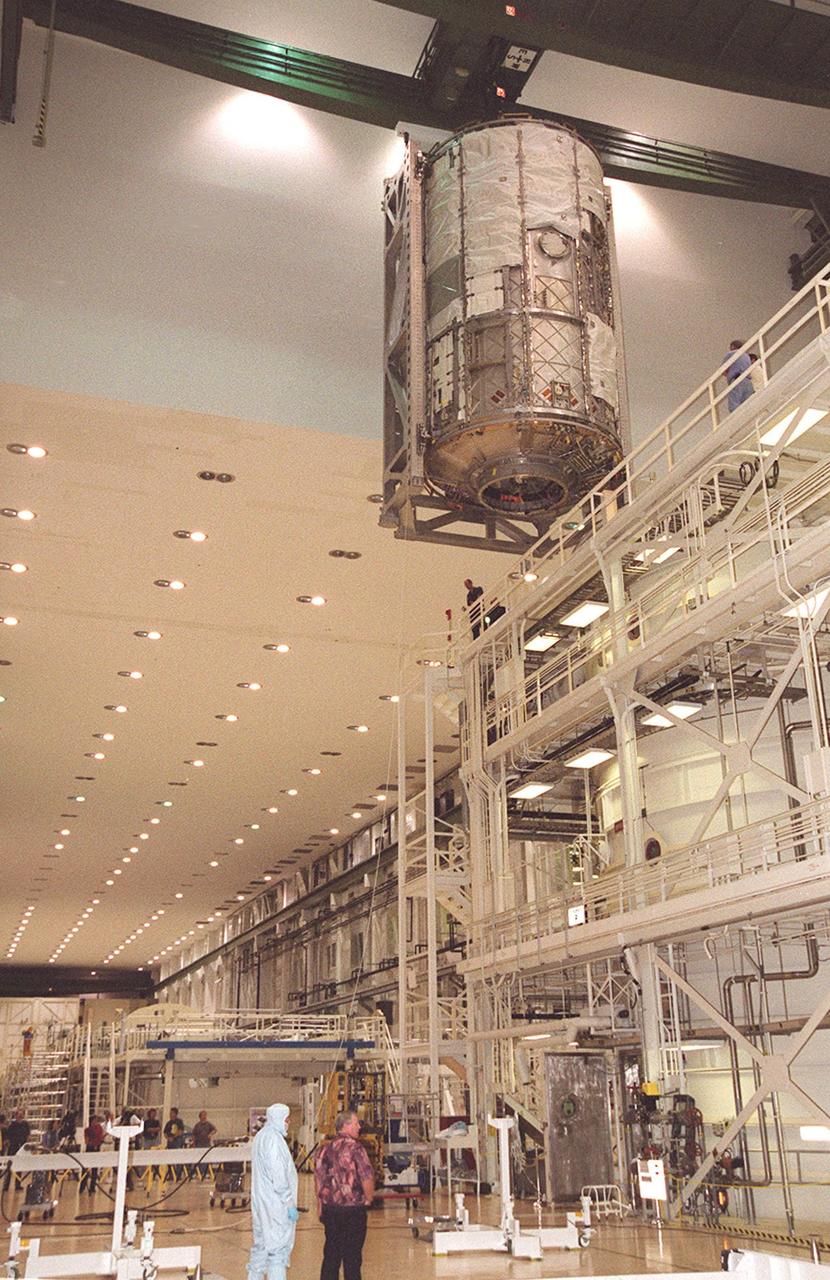
KENNEDY SPACE CENTER, FLA. -- In the Operations and Checkout Building, the U.S. Lab moves overhead after being lifted out of the vacuum chamber where it was tested for leaks. The test was very successful. The 32,000-pound scientific research lab, named Destiny, is the first Space Station element to spend seven days in the renovated vacuum chamber. Destiny is scheduled to be launched on Shuttle mission STS-98, the 5A assembly mission, targeted for Jan. 18, 2001. During the mission, the crew will install the Lab in the Space Station during a series of three space walks. The STS-98 mission will provide the Station with science research facilities and expand its power, life support and control capabilities. The U.S. Lab module continues a long tradition of microgravity materials research, first conducted by Skylab and later Shuttle and Spacelab missions. Destiny is expected to be a major feature in future research, providing facilities for biotechnology, fluid physics, combustion, and life sciences research
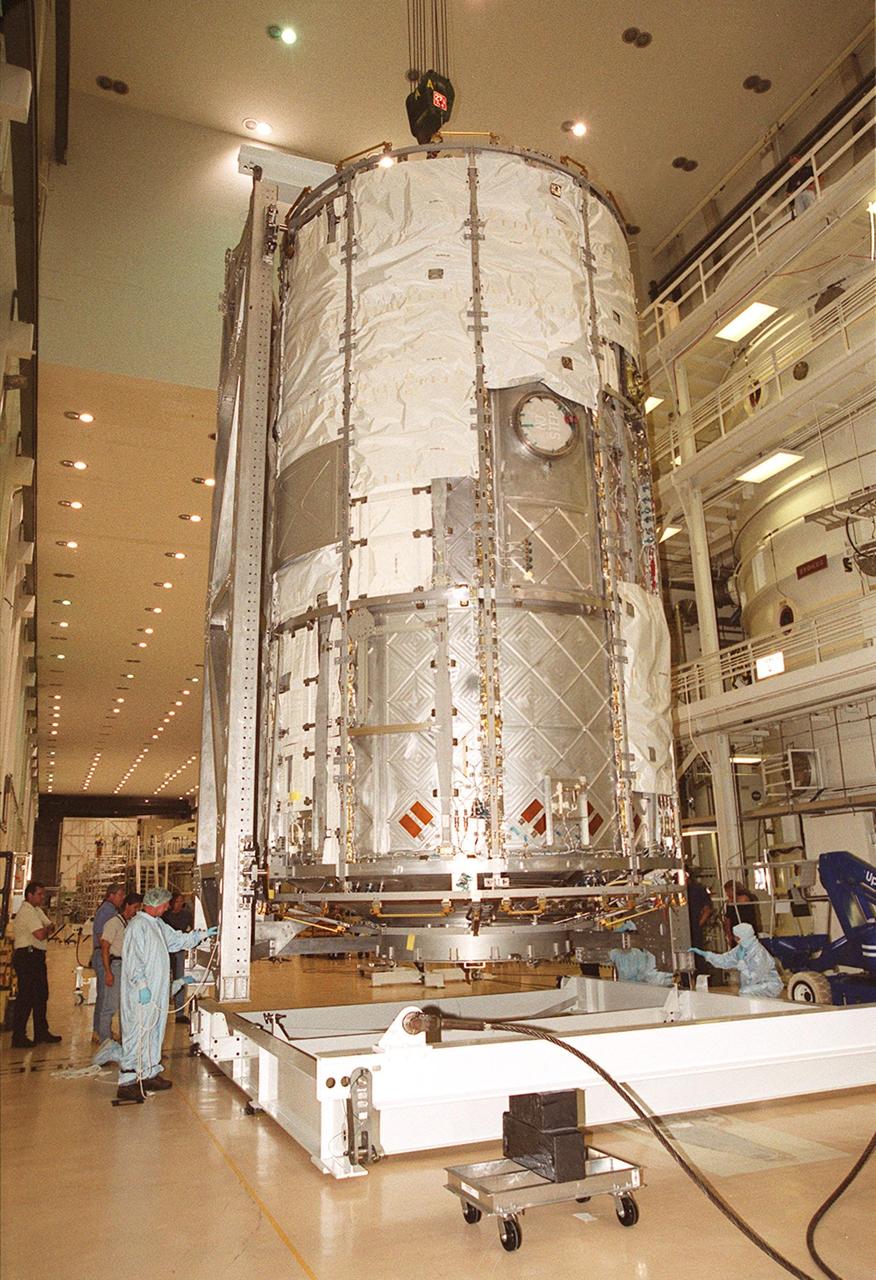
KENNEDY SPACE CENTER, FLA. -- In the Operations and Checkout Building, the U.S. Lab reaches the open floor after being lifted out of the vacuum chamber where it was tested for leaks. The test was very successful. The 32,000-pound scientific research lab, named Destiny, is the first Space Station element to spend seven days in the renovated vacuum chamber. Destiny is scheduled to be launched on Shuttle mission STS-98, the 5A assembly mission, targeted for Jan. 18, 2001. During the mission, the crew will install the Lab in the Space Station during a series of three space walks. The STS-98 mission will provide the Station with science research facilities and expand its power, life support and control capabilities. The U.S. Lab module continues a long tradition of microgravity materials research, first conducted by Skylab and later Shuttle and Spacelab missions. Destiny is expected to be a major feature in future research, providing facilities for biotechnology, fluid physics, combustion, and life sciences research
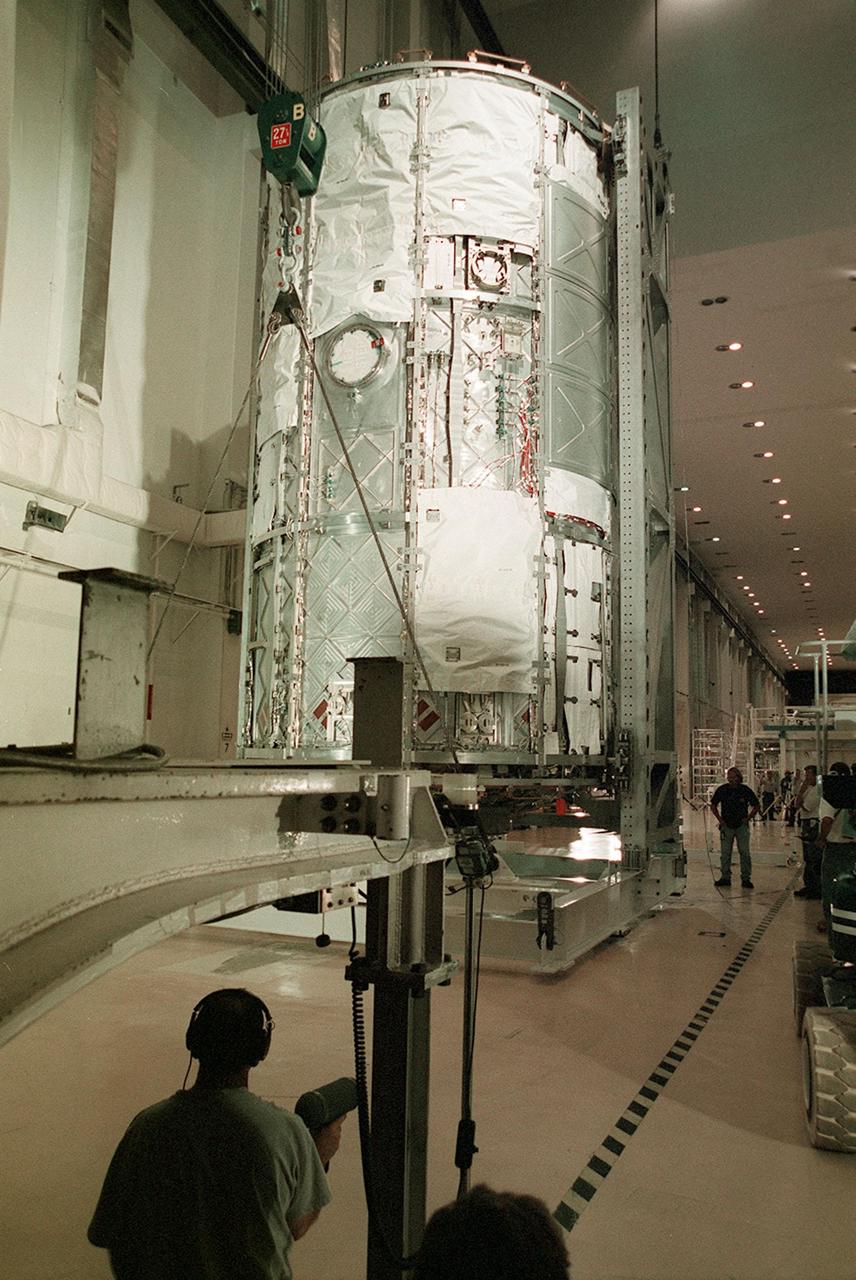
KENNEDY SPACE CENTER, FLA. -- The U.S. Lab, a component of the International Space Station, is moved to the vacuum chamber in the Operations and Checkout Building for testing. The 32,000-pound scientific research lab, named Destiny, is the first Space Station element to spend seven days in the renovated vacuum chamber for a leak test. Destiny is scheduled to be launched on Shuttle mission STS-98, the 5A assembly mission, targeted for Jan. 18, 2001. During the mission, the crew will install the Lab in the Space Station during a series of three space walks. The STS-98 mission will provide the Station with science research facilities and expand its power, life support and control capabilities. The U.S. Lab module continues a long tradition of microgravity materials research, first conducted by Skylab and later Shuttle and Spacelab missions. Destiny is expected to be a major feature in future research, providing facilities for biotechnology, fluid physics, combustion, and life sciences research.
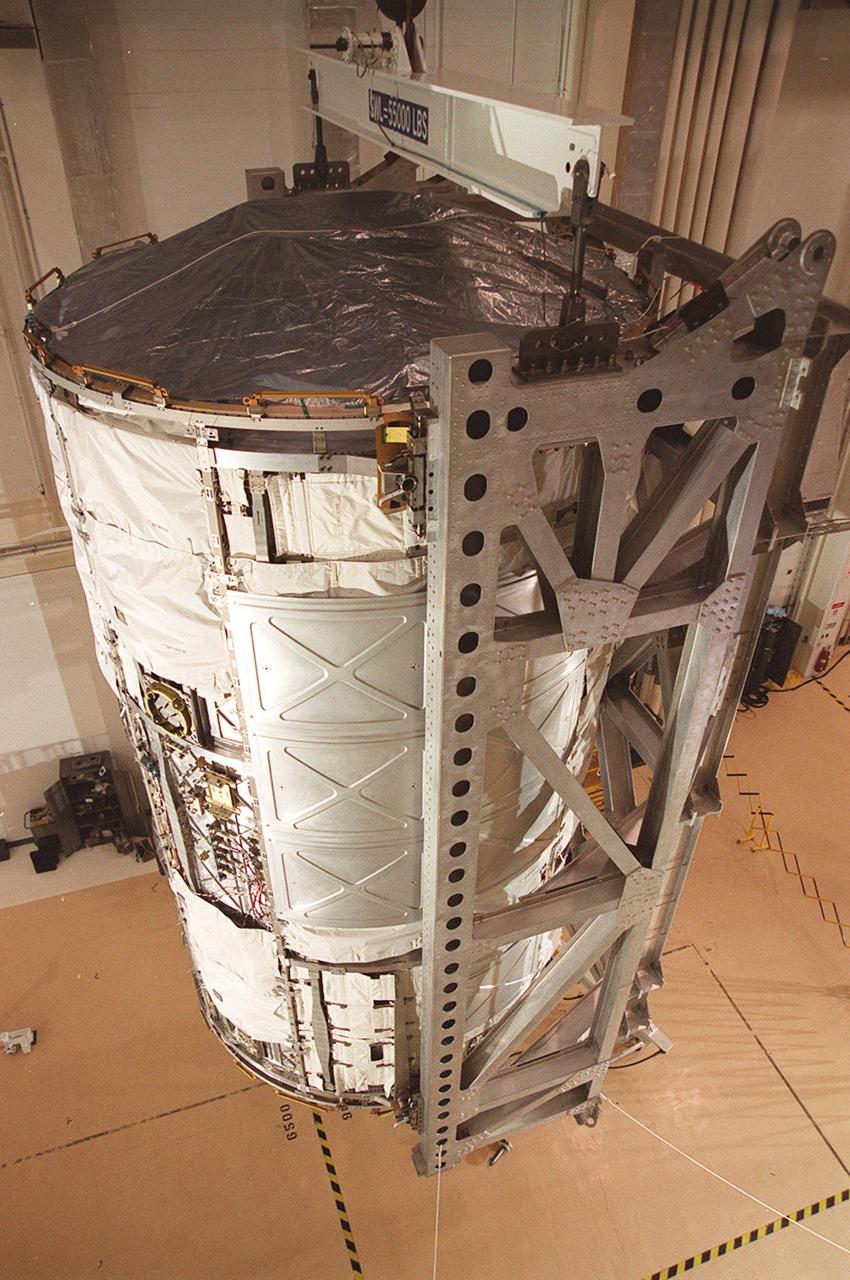
KENNEDY SPACE CENTER, FLA. -- The U.S. Lab, a component of the International Space Station, is lifted off the floor of the Operations and Checkout Building in order to be placed inside the vacuum chamber in the building. The 32,000-pound scientific research lab, named Destiny, is the first Space Station element to spend seven days in the renovated vacuum chamber for a leak test. Destiny is scheduled to be launched on Shuttle mission STS-98, the 5A assembly mission, targeted for Jan. 18, 2001. During the mission, the crew will install the Lab in the Space Station during a series of three space walks. The STS-98 mission will provide the Station with science research facilities and expand its power, life support and control capabilities. The U.S. Lab module continues a long tradition of microgravity materials research, first conducted by Skylab and later Shuttle and Spacelab missions. Destiny is expected to be a major feature in future research, providing facilities for biotechnology, fluid physics, combustion, and life sciences research
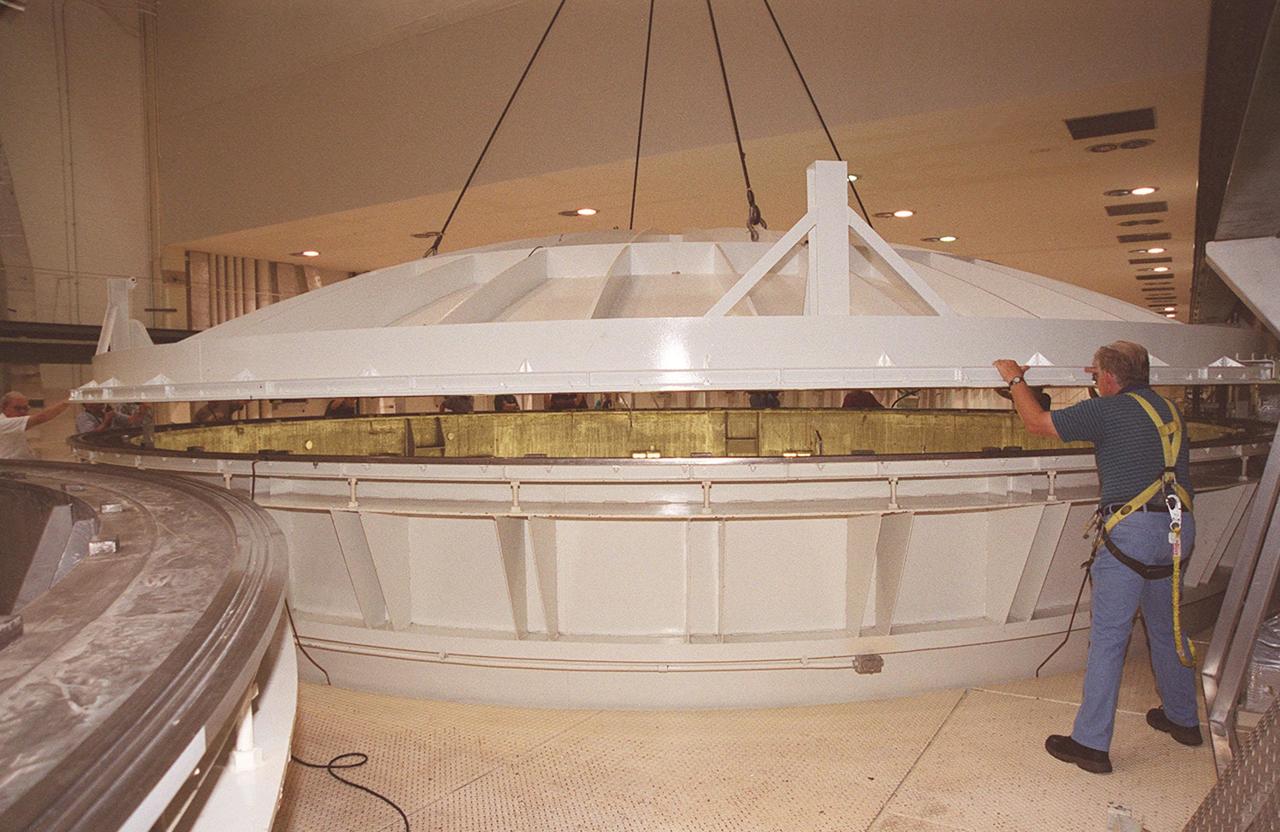
KENNEDY SPACE CENTER, FLA. -- A worker in the Operations and Checkout Building checks the placement of the lid on the vacuum chamber containing the U.S. Lab, a component of the International Space Station. The 32,000-pound scientific research lab, named Destiny, is the first Space Station element to spend seven days in the renovated vacuum chamber for a leak test. Destiny is scheduled to be launched on Shuttle mission STS-98, the 5A assembly mission, targeted for Jan. 18, 2001. During the mission, the crew will install the Lab in the Space Station during a series of three space walks. The STS-98 mission will provide the Station with science research facilities and expand its power, life support and control capabilities. The U.S. Lab module continues a long tradition of microgravity materials research, first conducted by Skylab and later Shuttle and Spacelab missions. Destiny is expected to be a major feature in future research, providing facilities for biotechnology, fluid physics, combustion, and life sciences research
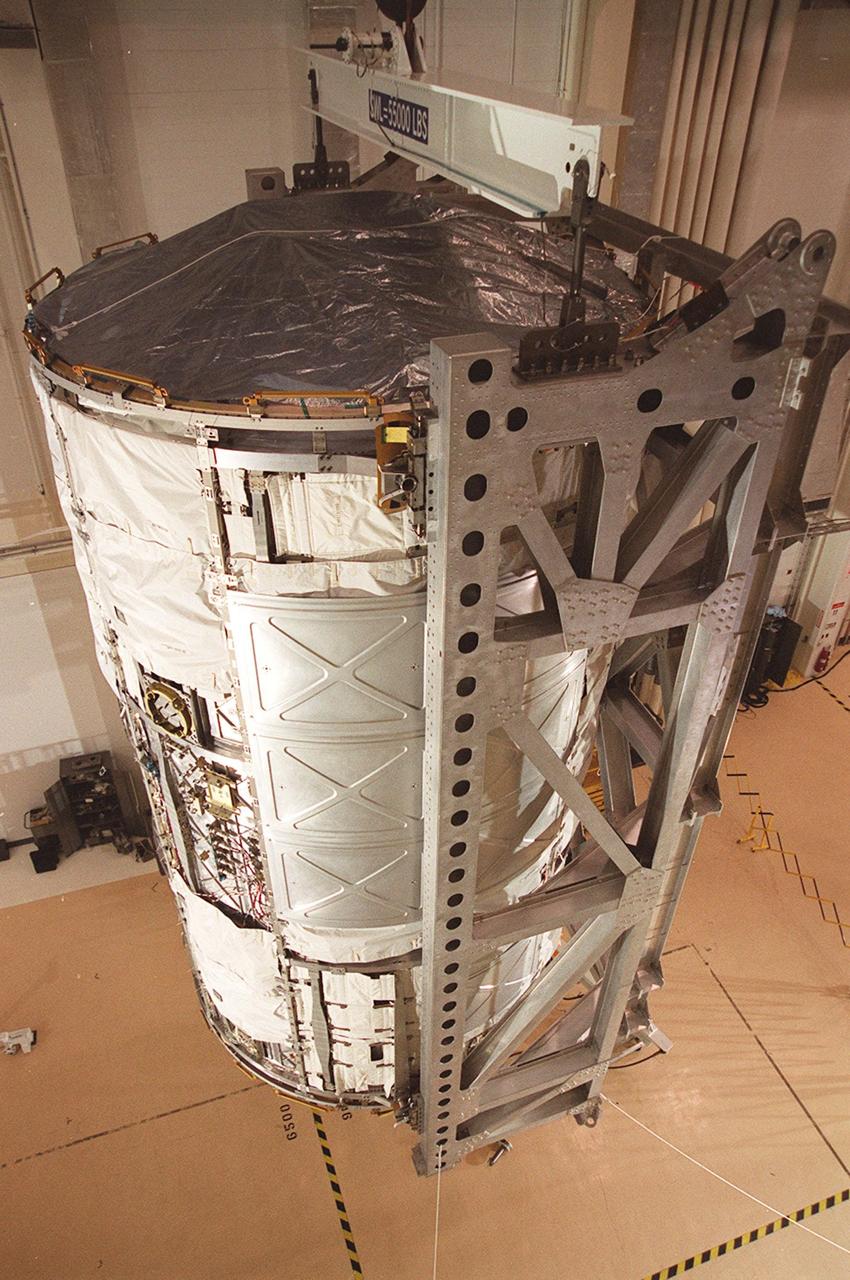
KENNEDY SPACE CENTER, FLA. -- The U.S. Lab, a component of the International Space Station, is lifted off the floor of the Operations and Checkout Building in order to be placed inside the vacuum chamber in the building. The 32,000-pound scientific research lab, named Destiny, is the first Space Station element to spend seven days in the renovated vacuum chamber for a leak test. Destiny is scheduled to be launched on Shuttle mission STS-98, the 5A assembly mission, targeted for Jan. 18, 2001. During the mission, the crew will install the Lab in the Space Station during a series of three space walks. The STS-98 mission will provide the Station with science research facilities and expand its power, life support and control capabilities. The U.S. Lab module continues a long tradition of microgravity materials research, first conducted by Skylab and later Shuttle and Spacelab missions. Destiny is expected to be a major feature in future research, providing facilities for biotechnology, fluid physics, combustion, and life sciences research
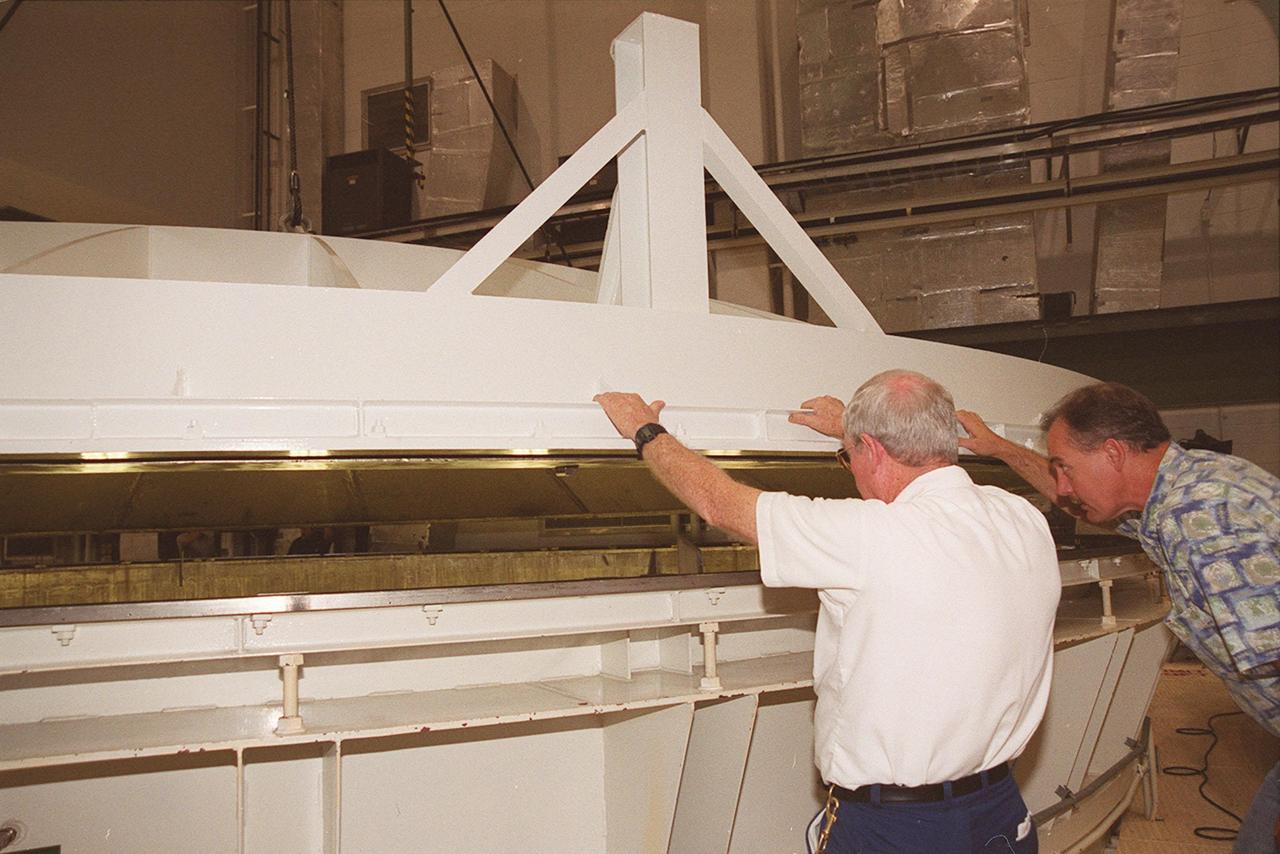
KENNEDY SPACE CENTER, FLA. -- Workers in the Operations and Checkout Building check the placement of the lid on the vacuum chamber containing the U.S. Lab, a component of the International Space Station. The 32,000-pound scientific research lab, named Destiny, is the first Space Station element to spend seven days in the renovated vacuum chamber for a leak test. Destiny is scheduled to be launched on Shuttle mission STS-98, the 5A assembly mission, targeted for Jan. 18, 2001. During the mission, the crew will install the Lab in the Space Station during a series of three space walks. The STS-98 mission will provide the Station with science research facilities and expand its power, life support and control capabilities. The U.S. Lab module continues a long tradition of microgravity materials research, first conducted by Skylab and later Shuttle and Spacelab missions. Destiny is expected to be a major feature in future research, providing facilities for biotechnology, fluid physics, combustion, and life sciences research
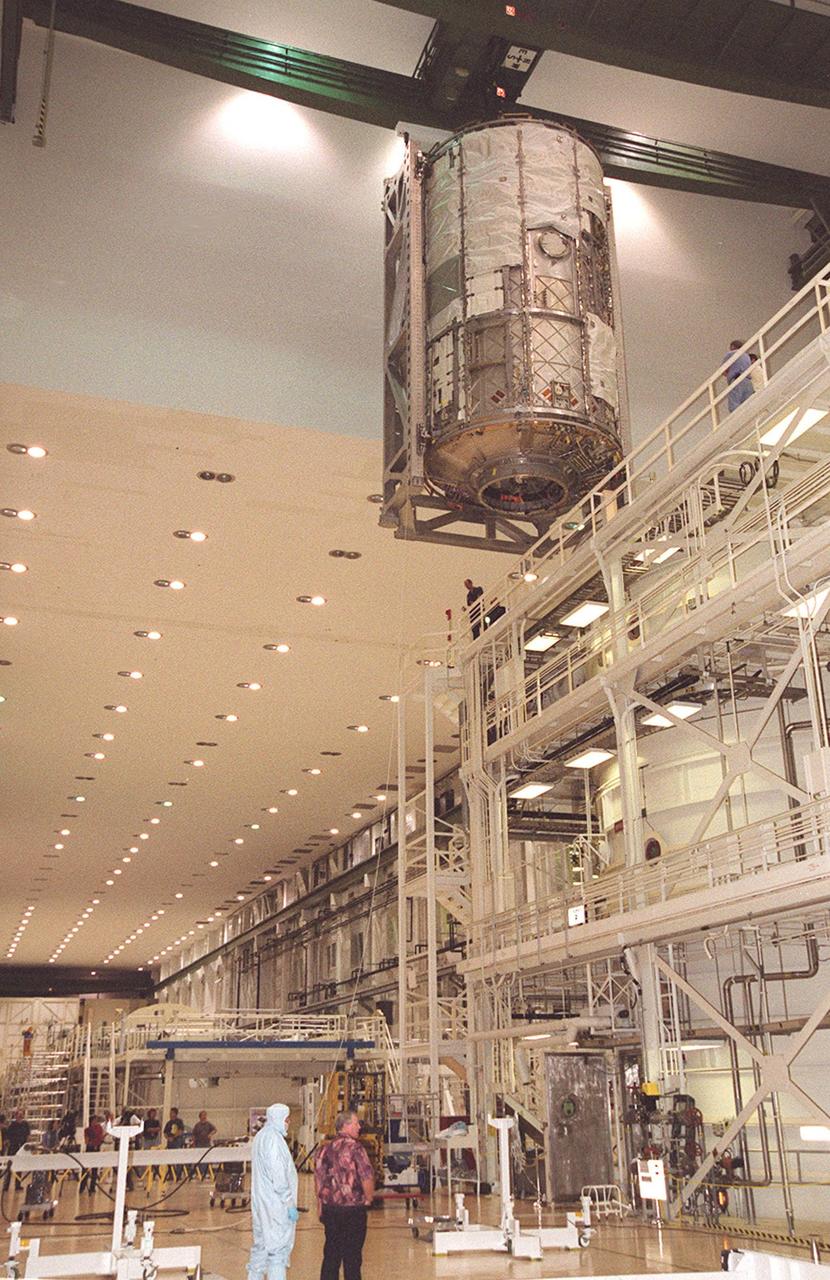
KENNEDY SPACE CENTER, FLA. -- In the Operations and Checkout Building, the U.S. Lab moves overhead after being lifted out of the vacuum chamber where it was tested for leaks. The test was very successful. The 32,000-pound scientific research lab, named Destiny, is the first Space Station element to spend seven days in the renovated vacuum chamber. Destiny is scheduled to be launched on Shuttle mission STS-98, the 5A assembly mission, targeted for Jan. 18, 2001. During the mission, the crew will install the Lab in the Space Station during a series of three space walks. The STS-98 mission will provide the Station with science research facilities and expand its power, life support and control capabilities. The U.S. Lab module continues a long tradition of microgravity materials research, first conducted by Skylab and later Shuttle and Spacelab missions. Destiny is expected to be a major feature in future research, providing facilities for biotechnology, fluid physics, combustion, and life sciences research
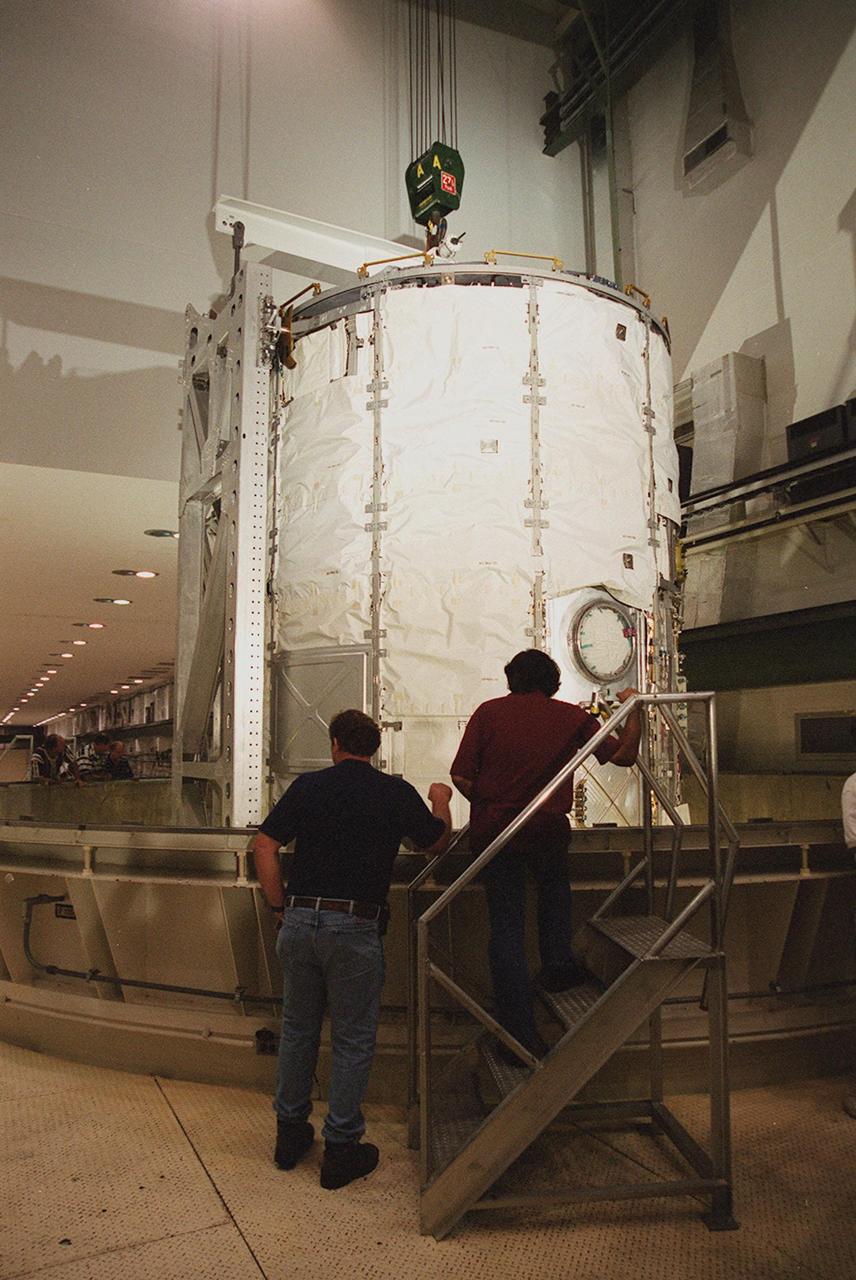
KENNEDY SPACE CENTER, FLA. -- In the Operations and Checkout Building, the U.S. Lab, a component of the International Space Station, is lowered into a three-story vacuum chamber. The 32,000-pound scientific research lab, named Destiny, is the first Space Station element to spend seven days in the renovated vacuum chamber for a leak test. Destiny is scheduled to be launched on Shuttle mission STS-98, the 5A assembly mission, targeted for Jan. 18, 2001. During the mission, the crew will install the Lab in the Space Station during a series of three space walks. The STS-98 mission will provide the Station with science research facilities and expand its power, life support and control capabilities. The U.S. Lab module continues a long tradition of microgravity materials research, first conducted by Skylab and later Shuttle and Spacelab missions. Destiny is expected to be a major feature in future research, providing facilities for biotechnology, fluid physics, combustion, and life sciences research
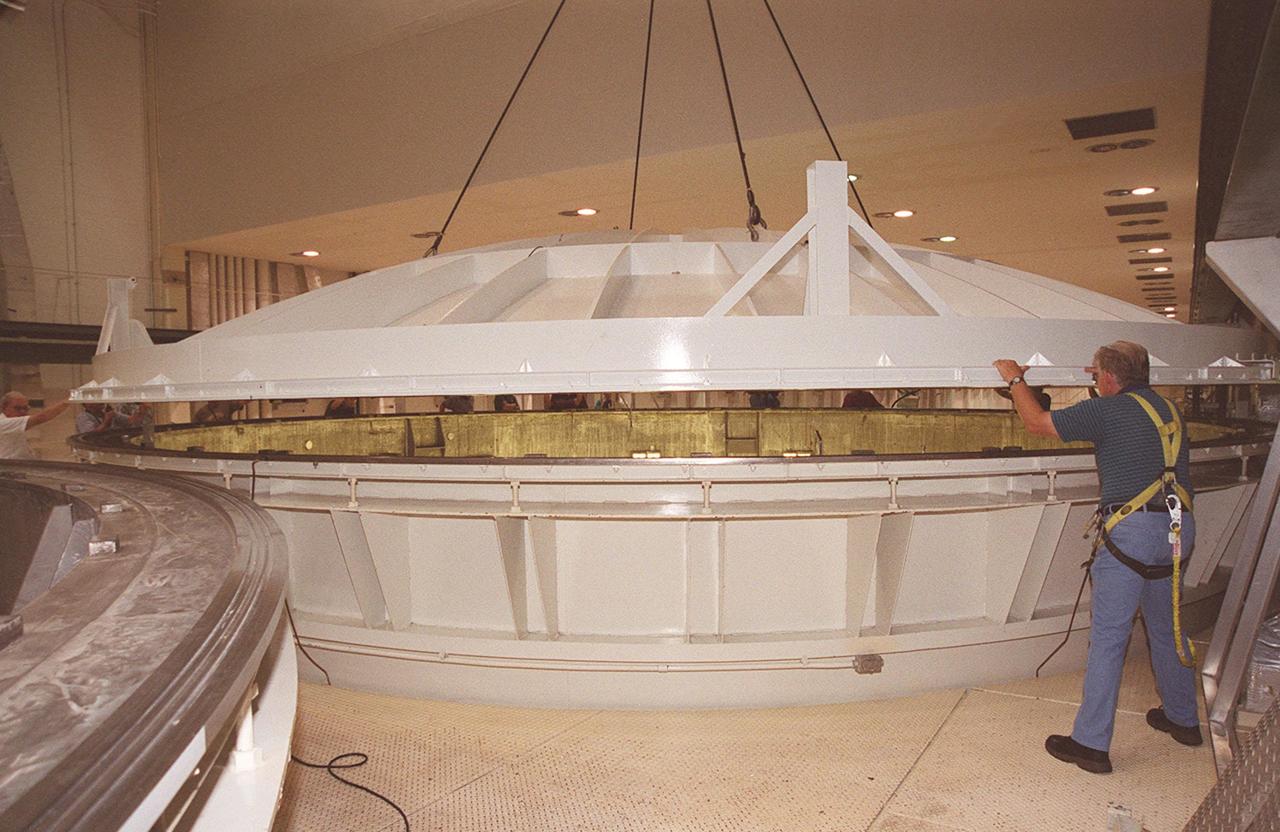
KENNEDY SPACE CENTER, FLA. -- A worker in the Operations and Checkout Building checks the placement of the lid on the vacuum chamber containing the U.S. Lab, a component of the International Space Station. The 32,000-pound scientific research lab, named Destiny, is the first Space Station element to spend seven days in the renovated vacuum chamber for a leak test. Destiny is scheduled to be launched on Shuttle mission STS-98, the 5A assembly mission, targeted for Jan. 18, 2001. During the mission, the crew will install the Lab in the Space Station during a series of three space walks. The STS-98 mission will provide the Station with science research facilities and expand its power, life support and control capabilities. The U.S. Lab module continues a long tradition of microgravity materials research, first conducted by Skylab and later Shuttle and Spacelab missions. Destiny is expected to be a major feature in future research, providing facilities for biotechnology, fluid physics, combustion, and life sciences research
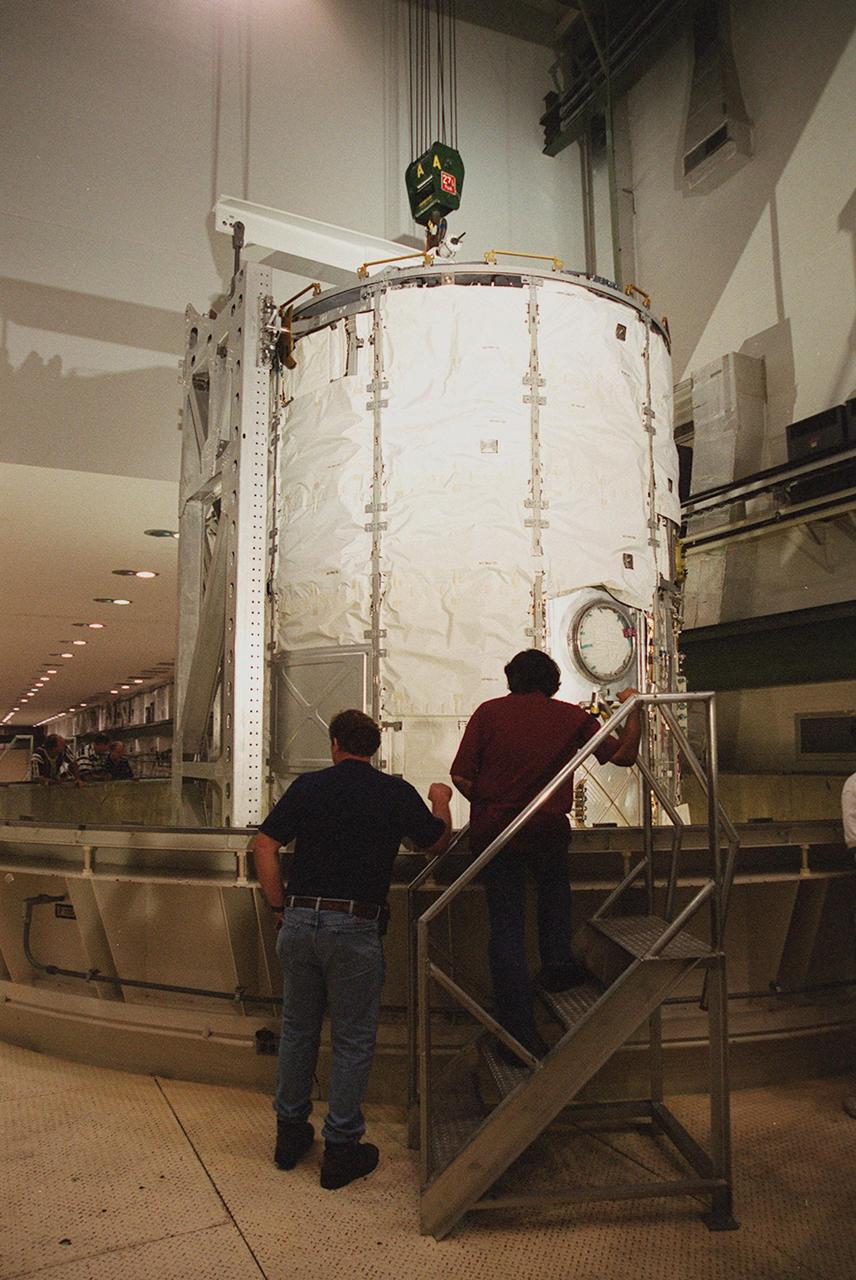
KENNEDY SPACE CENTER, FLA. -- In the Operations and Checkout Building, the U.S. Lab, a component of the International Space Station, is lowered into a three-story vacuum chamber. The 32,000-pound scientific research lab, named Destiny, is the first Space Station element to spend seven days in the renovated vacuum chamber for a leak test. Destiny is scheduled to be launched on Shuttle mission STS-98, the 5A assembly mission, targeted for Jan. 18, 2001. During the mission, the crew will install the Lab in the Space Station during a series of three space walks. The STS-98 mission will provide the Station with science research facilities and expand its power, life support and control capabilities. The U.S. Lab module continues a long tradition of microgravity materials research, first conducted by Skylab and later Shuttle and Spacelab missions. Destiny is expected to be a major feature in future research, providing facilities for biotechnology, fluid physics, combustion, and life sciences research

KENNEDY SPACE CENTER, FLA. -- Resting in a rotation and handling fixture, the U.S. Lab, a component of the International Space Station, is nearly vertical. The Lab, named Destiny, will undergo testing in the altitude chamber in the Operations and Checkout Building. Behind the Lab is the payload canister which transported it from the Space Station Processing Facility. Destiny is scheduled to fly on mission STS-98 in early 2001. During the mission, the crew will install the Lab in the Space Station during a series of three space walks. The STS-98 mission will provide the Station with science research facilities and expand its power, life support and control capabilities. The U.S. Lab module continues a long tradition of microgravity materials research, first conducted by Skylab and later Shuttle and Spacelab missions. Destiny is expected to be a major feature in future research, providing facilities for biotechnology, fluid physics, combustion, and life sciences research
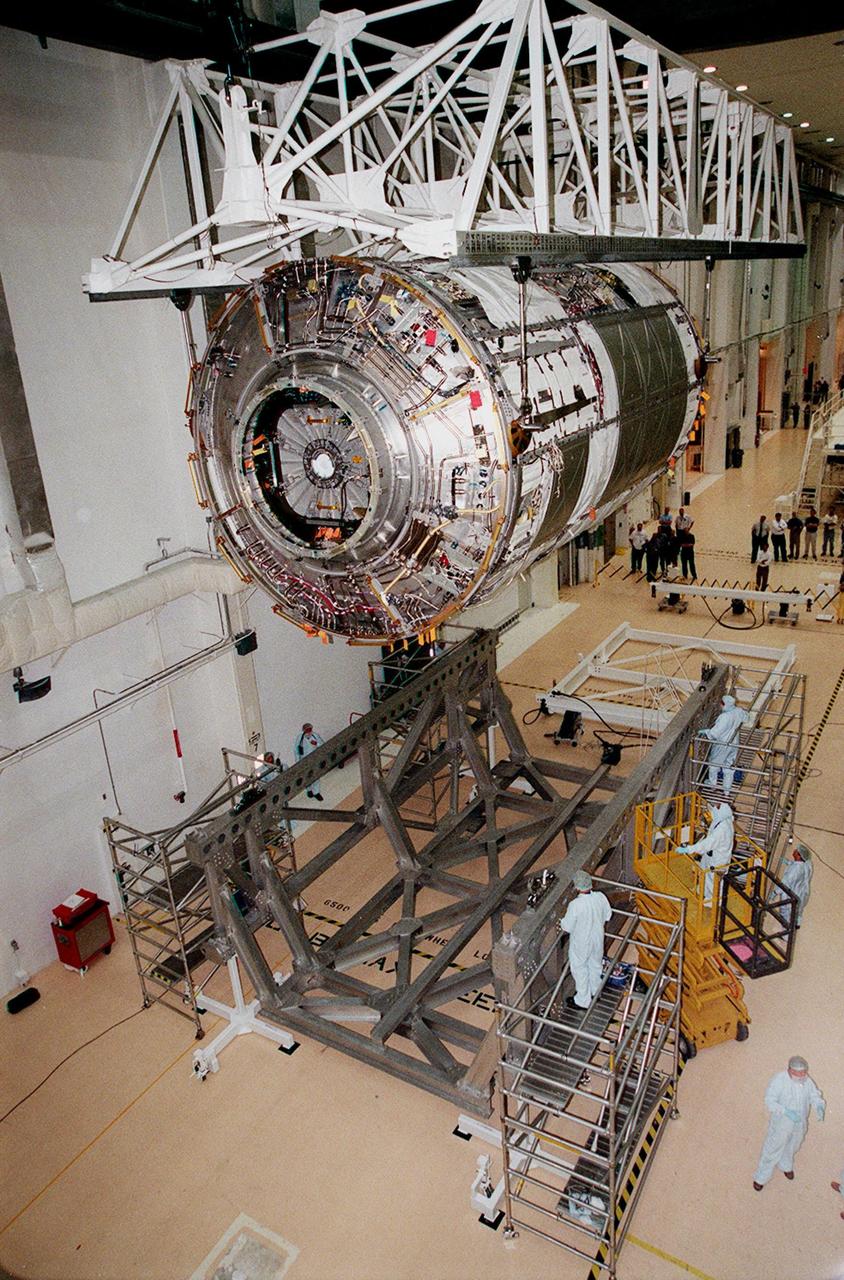
KENNEDY SPACE CENTER, FLA. -- In the Operations and Checkout Building, the U.S. Lab, named Destiny, is moved to the rotation and handling fixture in preparation for testing in the altitude chamber. Destiny is scheduled to fly on mission STS-98 in early 2001. During the mission, the crew will install the Lab in the Space Station during a series of three space walks. The STS-98 mission will provide the Station with science research facilities and expand its power, life support and control capabilities. The U.S. Lab module continues a long tradition of microgravity materials research, first conducted by Skylab and later Shuttle and Spacelab missions. Destiny is expected to be a major feature in future research, providing facilities for biotechnology, fluid physics, combustion, and life sciences research
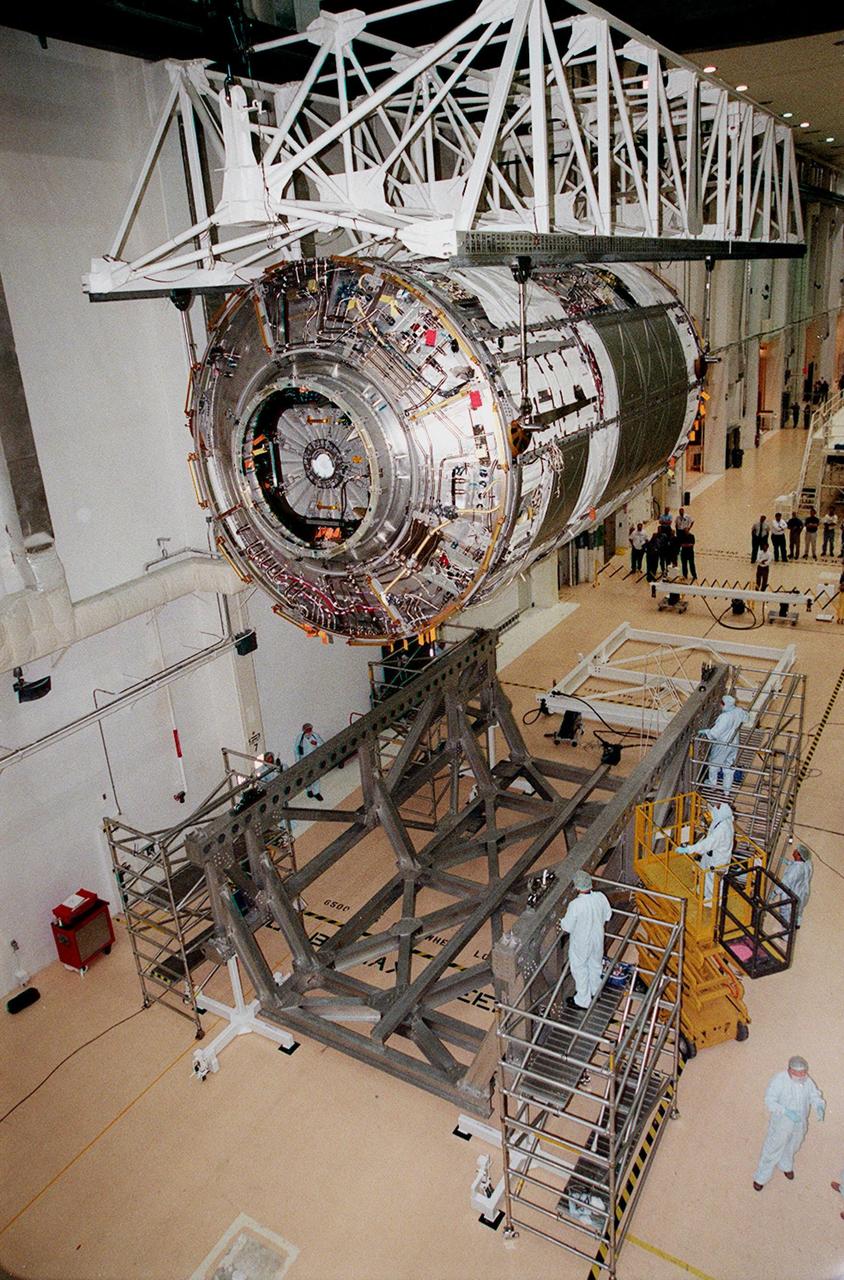
KENNEDY SPACE CENTER, FLA. -- In the Operations and Checkout Building, the U.S. Lab, named Destiny, is moved to the rotation and handling fixture in preparation for testing in the altitude chamber. Destiny is scheduled to fly on mission STS-98 in early 2001. During the mission, the crew will install the Lab in the Space Station during a series of three space walks. The STS-98 mission will provide the Station with science research facilities and expand its power, life support and control capabilities. The U.S. Lab module continues a long tradition of microgravity materials research, first conducted by Skylab and later Shuttle and Spacelab missions. Destiny is expected to be a major feature in future research, providing facilities for biotechnology, fluid physics, combustion, and life sciences research
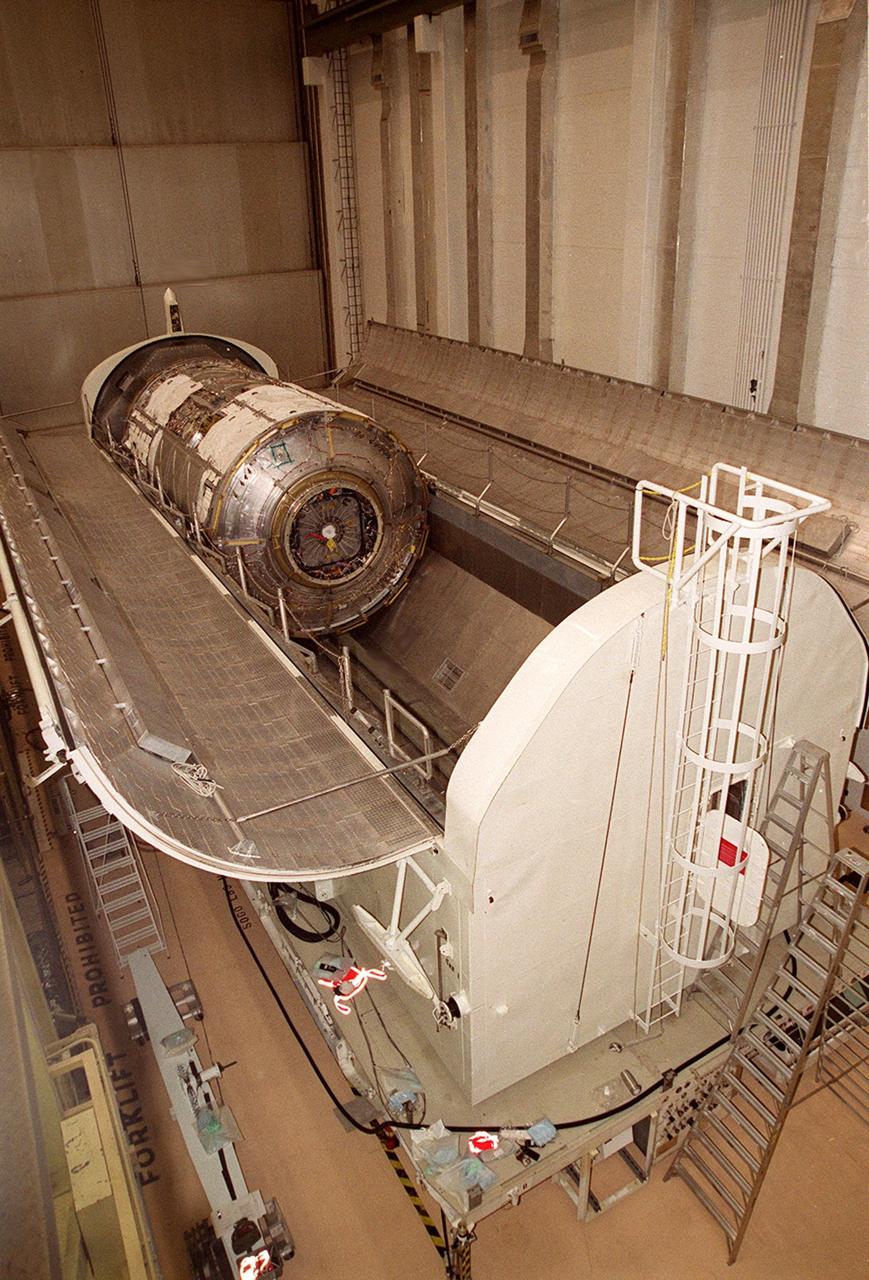
KENNEDY SPACE CENTER, FLA. -- In the Operations and Checkout Building (O&C), the doors of the payload canister open to reveal the U.S. Lab, named Destiny. The Lab will undergo testing in the altitude chamber in the O&C. Destiny is scheduled to fly on mission STS-98 in early 2001. During the mission, the crew will install the Lab in the Space Station during a series of three space walks. The STS-98 mission will provide the Station with science research facilities and expand its power, life support and control capabilities. The U.S. Lab module continues a long tradition of microgravity materials research, first conducted by Skylab and later Shuttle and Spacelab missions. Destiny is expected to be a major feature in future research, providing facilities for biotechnology, fluid physics, combustion, and life sciences research
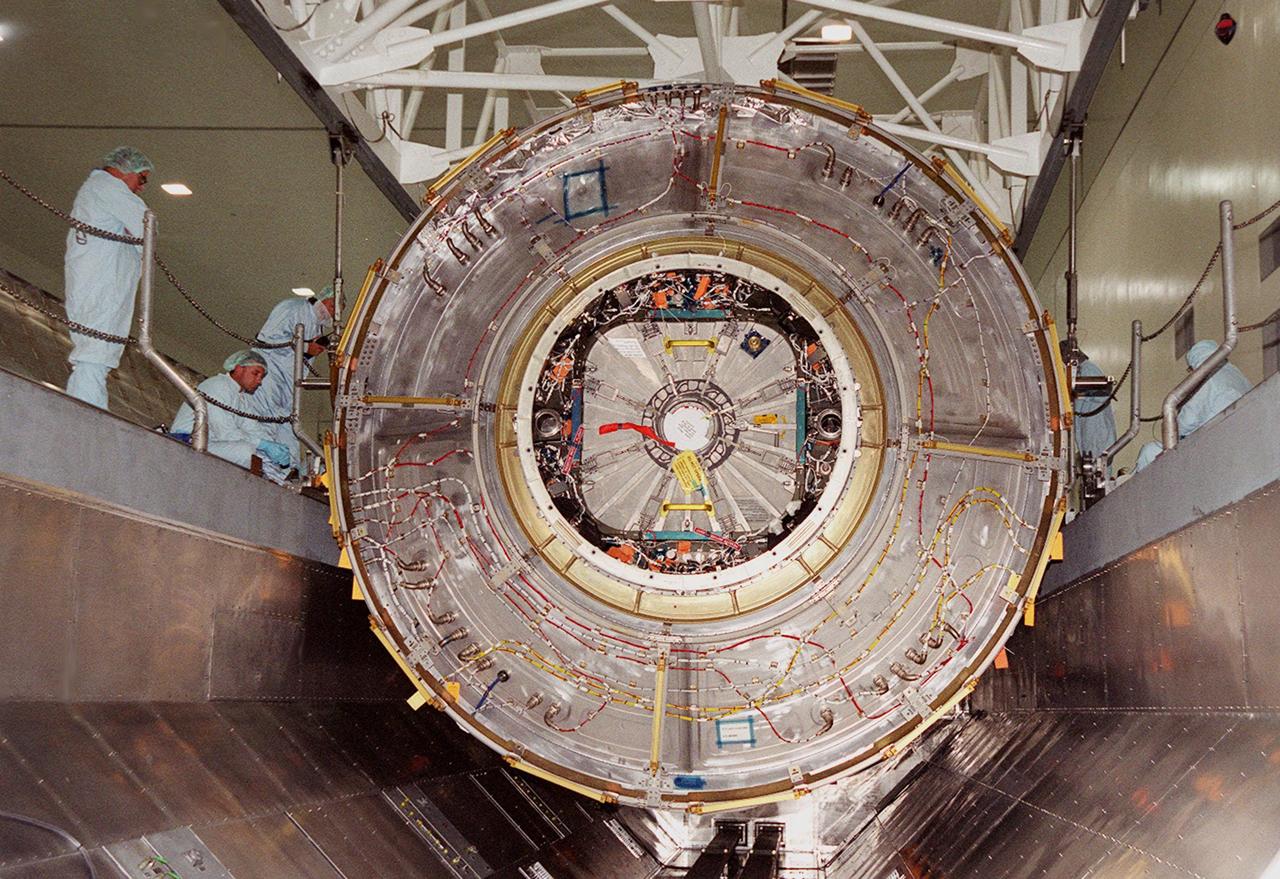
KENNEDY SPACE CENTER, FLA. -- Workers watch as the U.S. Laboratory Destiny, a component of the International Space Station, is lowered into a payload canister for transfer to the Operations and Checkout Building where it will be tested in the altitude chamber. Destiny is scheduled to fly on mission STS-98 in early 2001. During the mission, the crew will install the Lab in the Space Station during a series of three space walks. The STS-98 mission will provide the Station with science research facilities and expand its power, life support and control capabilities. The U.S. Lab module continues a long tradition of microgravity materials research, first conducted by Skylab and later Shuttle and Spacelab missions. Destiny is expected to be a major feature in future research, providing facilities for biotechnology, fluid physics, combustion, and life sciences research
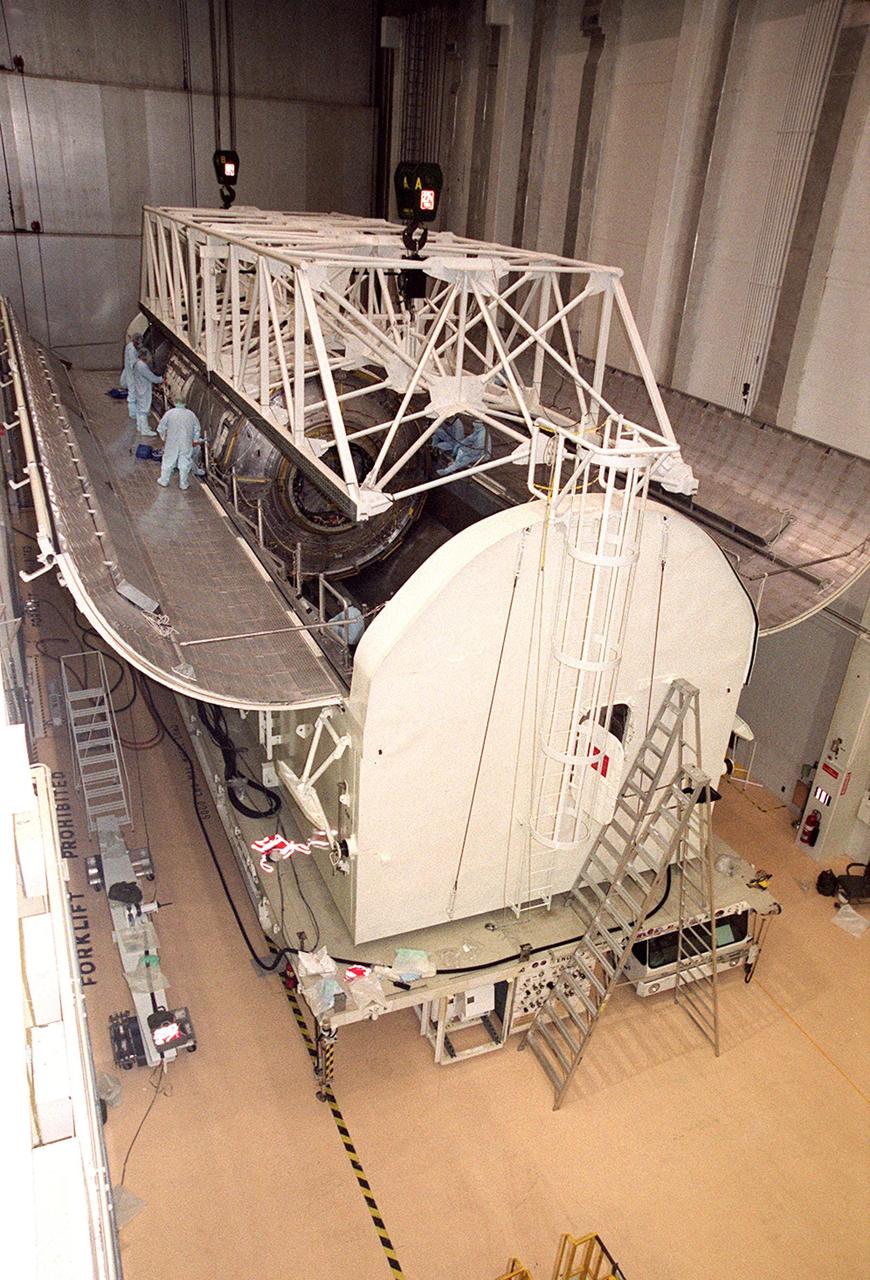
KENNEDY SPACE CENTER, FLA. -- In the Operations and Checkout Building (O&C), an overhead crane hovers over the U.S. Lab, named Destiny, while workers attach cables for lifting the Lab. The Lab will undergo testing in the altitude chamber in the O&C. Destiny is scheduled to fly on mission STS-98 in early 2001. During the mission, the crew will install the Lab in the Space Station during a series of three space walks. The STS-98 mission will provide the Station with science research facilities and expand its power, life support and control capabilities. The U.S. Lab module continues a long tradition of microgravity materials research, first conducted by Skylab and later Shuttle and Spacelab missions. Destiny is expected to be a major feature in future research, providing facilities for biotechnology, fluid physics, combustion, and life sciences research

KENNEDY SPACE CENTER, FLA. -- In the Operations and Checkout Building (O&C), the U.S. Lab, a component of the International Space Station, is lifted off the floor in order to be raised to a vertical position. The Lab, named Destiny, will undergo testing in the altitude chamber in the O&C. Behind the Lab is the payload canister which transported it from the Space Station Processing Facility. Destiny is scheduled to fly on mission STS-98 in early 2001. During the mission, the crew will install the Lab in the Space Station during a series of three space walks. The STS-98 mission will provide the Station with science research facilities and expand its power, life support and control capabilities. The U.S. Lab module continues a long tradition of microgravity materials research, first conducted by Skylab and later Shuttle and Spacelab missions. Destiny is expected to be a major feature in future research, providing facilities for biotechnology, fluid physics, combustion, and life sciences research
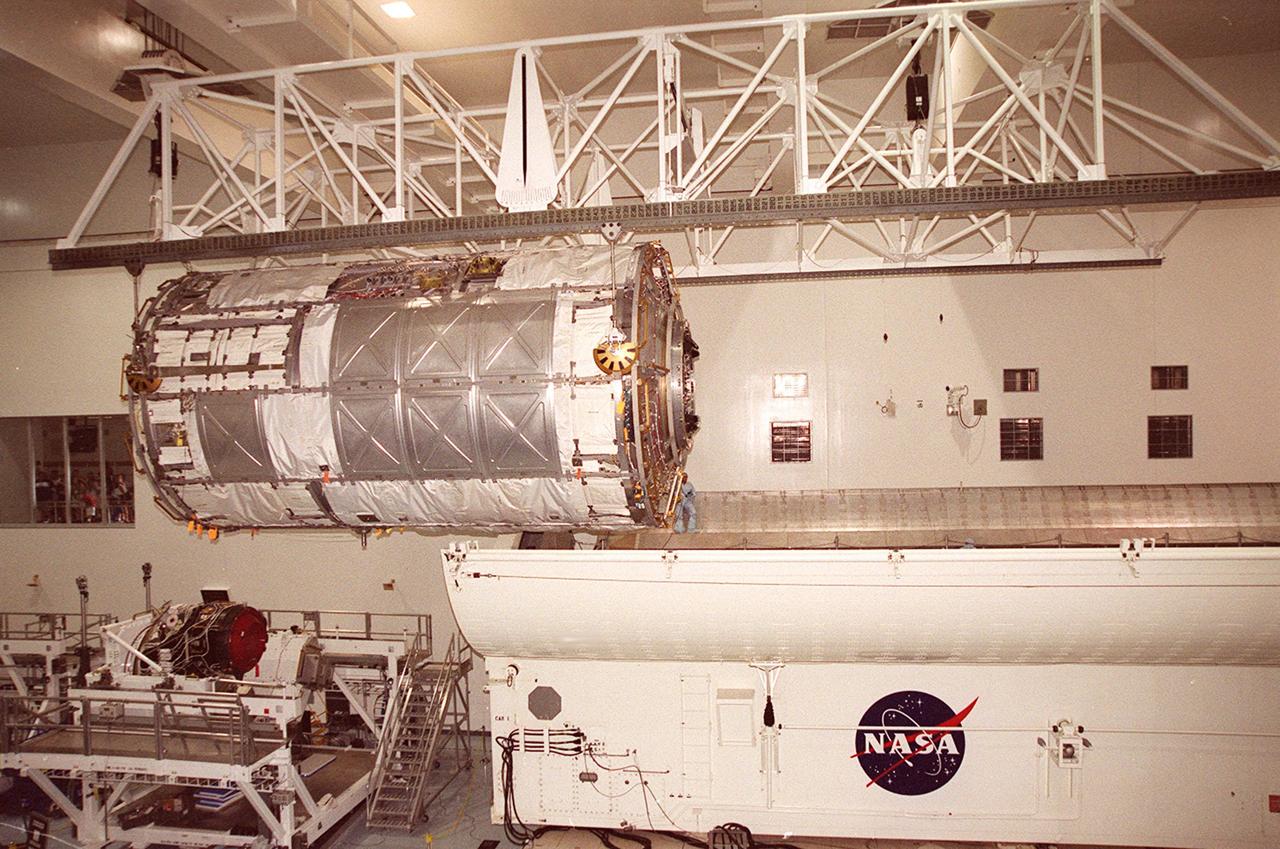
KENNEDY SPACE CENTER, FLA. -- In the Space Station Processing Facility (SSPF), the U.S. Laboratory Destiny, a component of the International Space Station, is moved to a payload canister for transfer to the Operations and Checkout Building where it will be tested in the altitude chamber. On the floor of the SSPF, left, is a Pressurized Mating Adapter-3. Destiny is scheduled to fly on mission STS-98 in early 2001. During the mission, the crew will install the Lab in the Space Station during a series of three space walks. The STS-98 mission will provide the Station with science research facilities and expand its power, life support and control capabilities. The U.S. Lab module continues a long tradition of microgravity materials research, first conducted by Skylab and later Shuttle and Spacelab missions. Destiny is expected to be a major feature in future research, providing facilities for biotechnology, fluid physics, combustion, and life sciences research
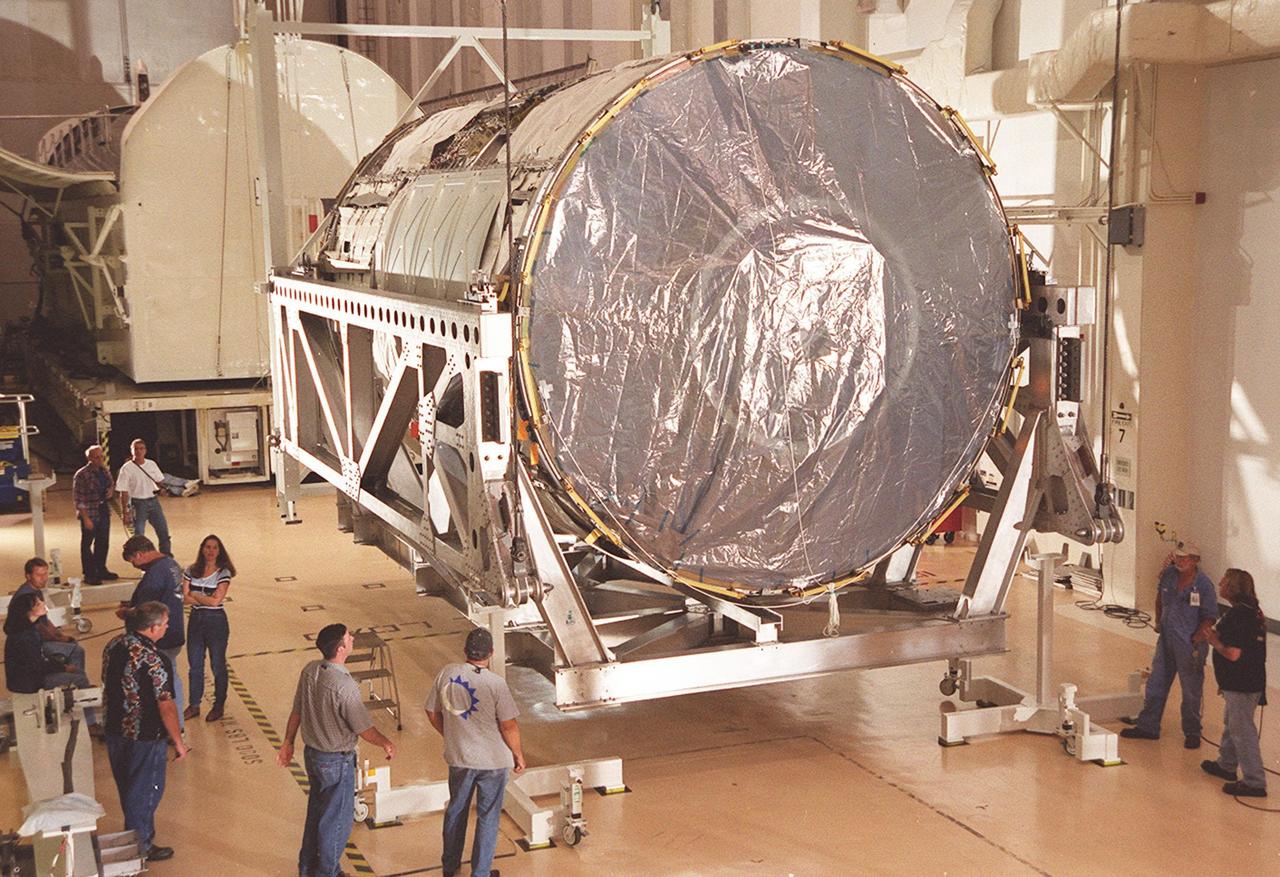
KENNEDY SPACE CENTER, FLA. -- In the Operations and Checkout Building (O&C), the U.S. Lab, a component of the International Space Station, is lifted off the floor in order to be raised to a vertical position. The Lab, named Destiny, will undergo testing in the altitude chamber in the O&C. Behind the Lab is the payload canister which transported it from the Space Station Processing Facility. Destiny is scheduled to fly on mission STS-98 in early 2001. During the mission, the crew will install the Lab in the Space Station during a series of three space walks. The STS-98 mission will provide the Station with science research facilities and expand its power, life support and control capabilities. The U.S. Lab module continues a long tradition of microgravity materials research, first conducted by Skylab and later Shuttle and Spacelab missions. Destiny is expected to be a major feature in future research, providing facilities for biotechnology, fluid physics, combustion, and life sciences research
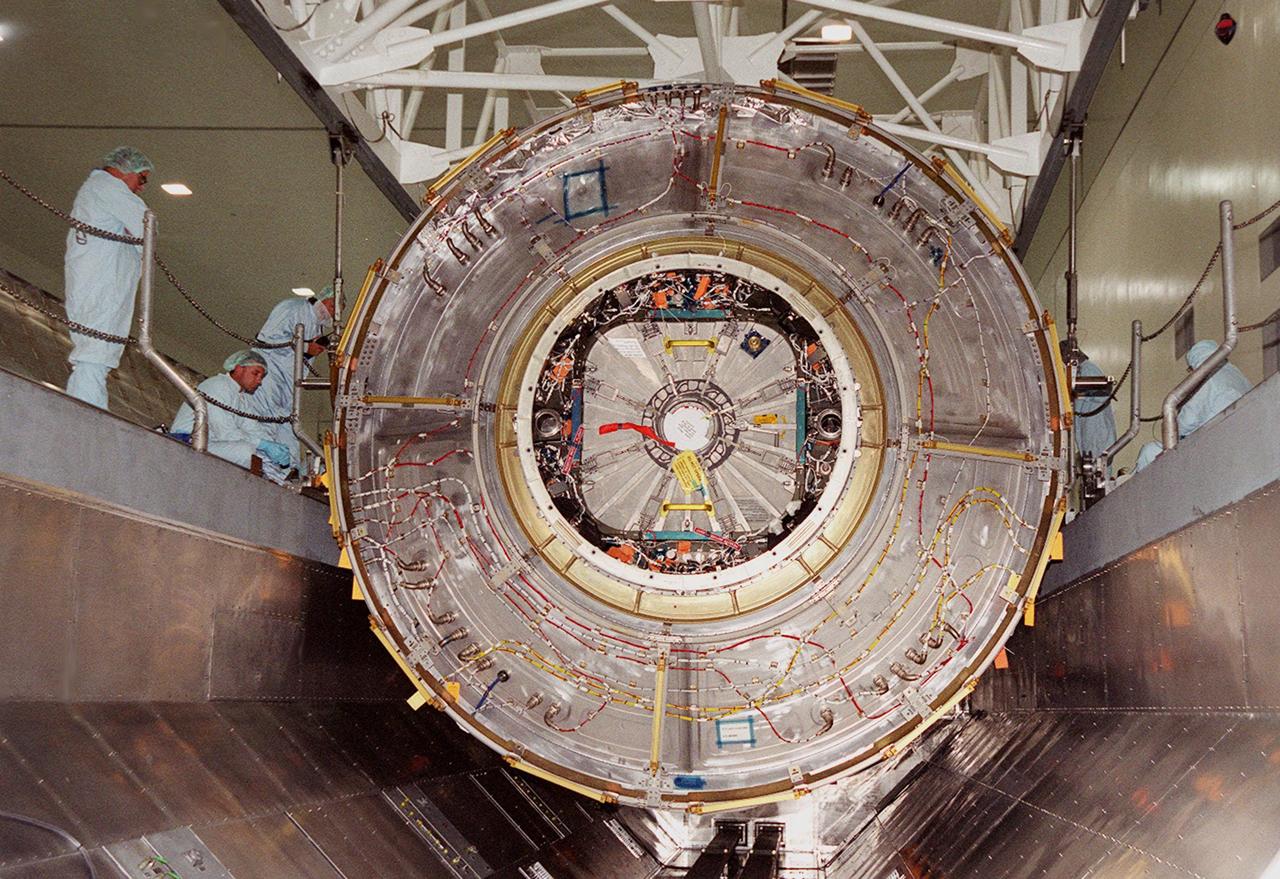
KENNEDY SPACE CENTER, FLA. -- Workers watch as the U.S. Laboratory Destiny, a component of the International Space Station, is lowered into a payload canister for transfer to the Operations and Checkout Building where it will be tested in the altitude chamber. Destiny is scheduled to fly on mission STS-98 in early 2001. During the mission, the crew will install the Lab in the Space Station during a series of three space walks. The STS-98 mission will provide the Station with science research facilities and expand its power, life support and control capabilities. The U.S. Lab module continues a long tradition of microgravity materials research, first conducted by Skylab and later Shuttle and Spacelab missions. Destiny is expected to be a major feature in future research, providing facilities for biotechnology, fluid physics, combustion, and life sciences research
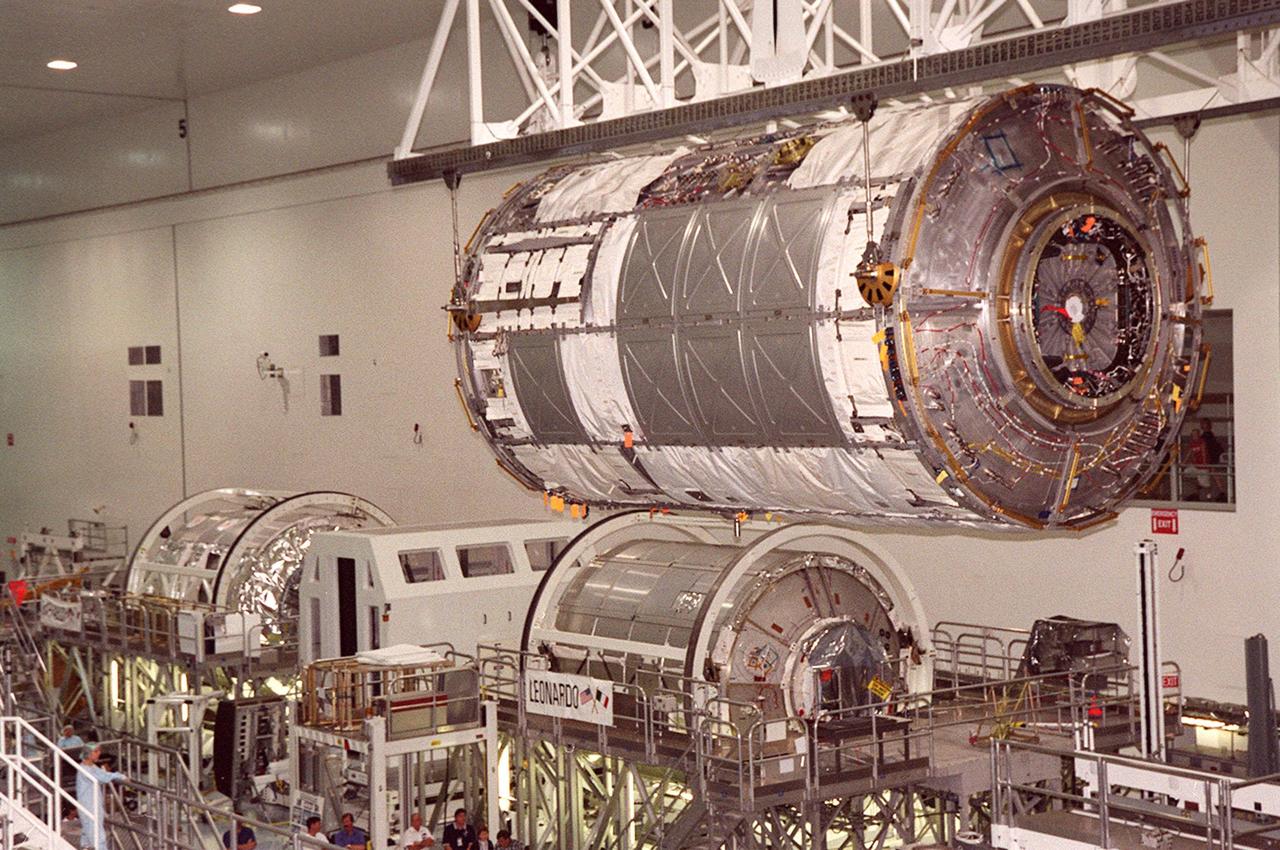
KENNEDY SPACE CENTER, FLA. -- The U.S. Laboratory Destiny, a component of the International Space Station, glides above two Multi-Purpose Logistics Modules (MPLMs), Raffaello (far left) and Leonardo, in the Space Station Processing Facility. Destiny is being moved to a payload canister for transfer to the Operations and Checkout Building where it will be tested in the altitude chamber. Destiny is scheduled to fly on mission STS-98 in early 2001. During the mission, the crew will install the Lab in the Space Station during a series of three space walks. The STS-98 mission will provide the Station with science research facilities and expand its power, life support and control capabilities. The U.S. Lab module continues a long tradition of microgravity materials research, first conducted by Skylab and later Shuttle and Spacelab missions. Destiny is expected to be a major feature in future research, providing facilities for biotechnology, fluid physics, combustion, and life sciences research
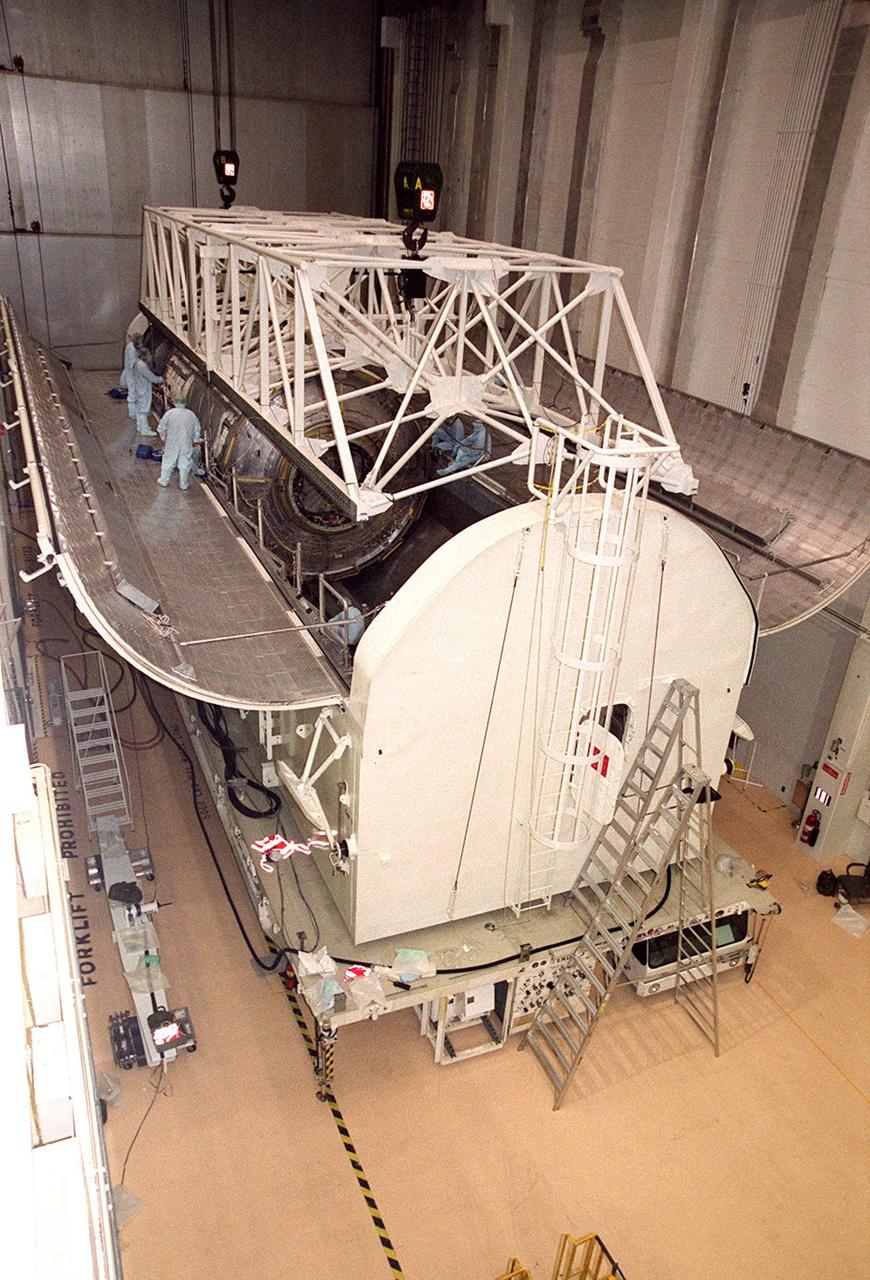
KENNEDY SPACE CENTER, FLA. -- In the Operations and Checkout Building (O&C), an overhead crane hovers over the U.S. Lab, named Destiny, while workers attach cables for lifting the Lab. The Lab will undergo testing in the altitude chamber in the O&C. Destiny is scheduled to fly on mission STS-98 in early 2001. During the mission, the crew will install the Lab in the Space Station during a series of three space walks. The STS-98 mission will provide the Station with science research facilities and expand its power, life support and control capabilities. The U.S. Lab module continues a long tradition of microgravity materials research, first conducted by Skylab and later Shuttle and Spacelab missions. Destiny is expected to be a major feature in future research, providing facilities for biotechnology, fluid physics, combustion, and life sciences research
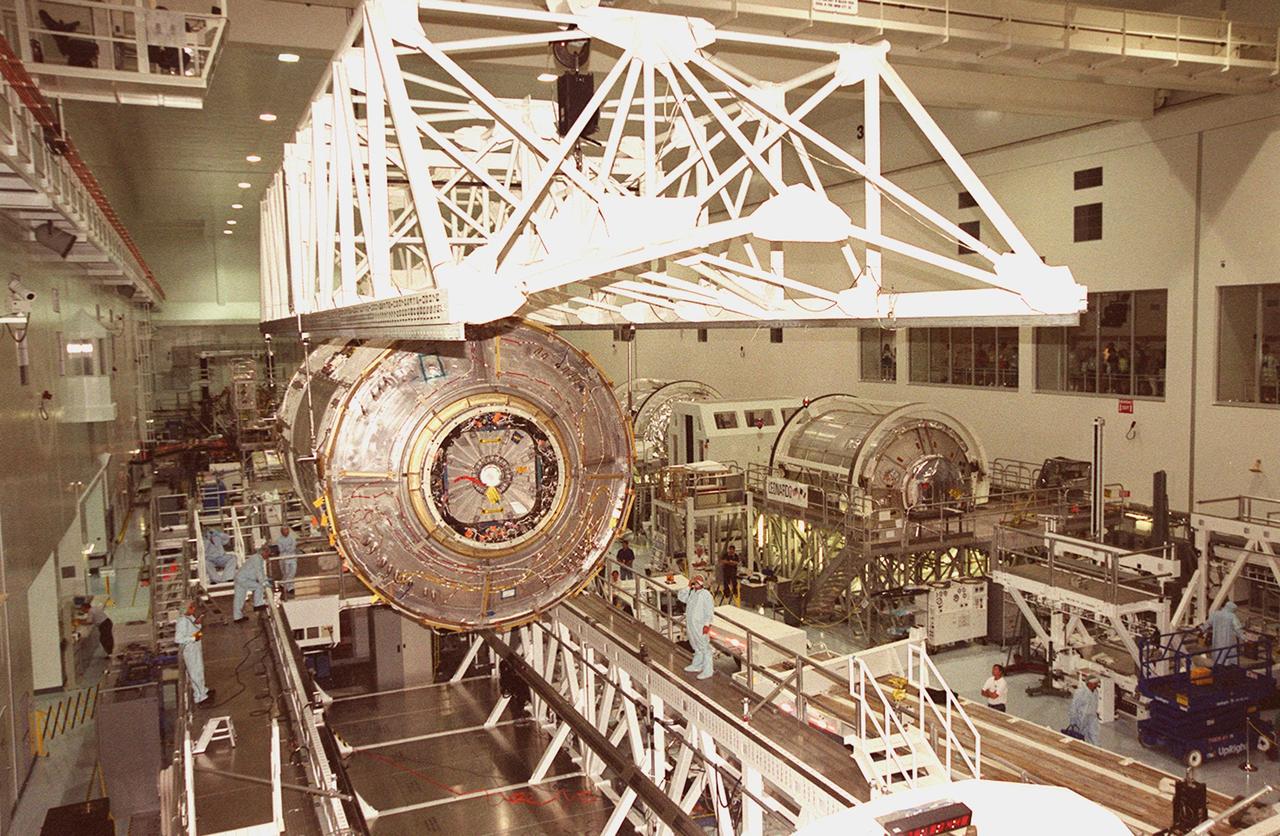
KENNEDY SPACE CENTER, FLA. -- The U.S. Laboratory Destiny, a component of the International Space Station, is lifted off a weigh stand (below) in the Space Station Processing Facility. The module is being moved to a payload canister for transfer to the Operations and Checkout Building where it will be tested in the altitude chamber. Destiny is scheduled to fly on mission STS-98 in early 2001. During the mission, the crew will install the Lab in the Space Station during a series of three space walks. The STS-98 mission will provide the Station with science research facilities and expand its power, life support and control capabilities. The U.S. Lab module continues a long tradition of microgravity materials research, first conducted by Skylab and later Shuttle and Spacelab missions. Destiny is expected to be a major feature in future research, providing facilities for biotechnology, fluid physics, combustion, and life sciences research

KENNEDY SPACE CENTER, FLA. -- Resting in a rotation and handling fixture, the U.S. Lab, a component of the International Space Station, is nearly vertical. The Lab, named Destiny, will undergo testing in the altitude chamber in the Operations and Checkout Building. Behind the Lab is the payload canister which transported it from the Space Station Processing Facility. Destiny is scheduled to fly on mission STS-98 in early 2001. During the mission, the crew will install the Lab in the Space Station during a series of three space walks. The STS-98 mission will provide the Station with science research facilities and expand its power, life support and control capabilities. The U.S. Lab module continues a long tradition of microgravity materials research, first conducted by Skylab and later Shuttle and Spacelab missions. Destiny is expected to be a major feature in future research, providing facilities for biotechnology, fluid physics, combustion, and life sciences research

KENNEDY SPACE CENTER, FLA. -- Resting in a rotation and handling fixture, the U.S. Lab, a component of the International Space Station, is nearly vertical. The Lab, named Destiny, will undergo testing in the altitude chamber in the Operations and Checkout Building. Behind the Lab is the payload canister which transported it from the Space Station Processing Facility. Destiny is scheduled to fly on mission STS-98 in early 2001. During the mission, the crew will install the Lab in the Space Station during a series of three space walks. The STS-98 mission will provide the Station with science research facilities and expand its power, life support and control capabilities. The U.S. Lab module continues a long tradition of microgravity materials research, first conducted by Skylab and later Shuttle and Spacelab missions. Destiny is expected to be a major feature in future research, providing facilities for biotechnology, fluid physics, combustion, and life sciences research
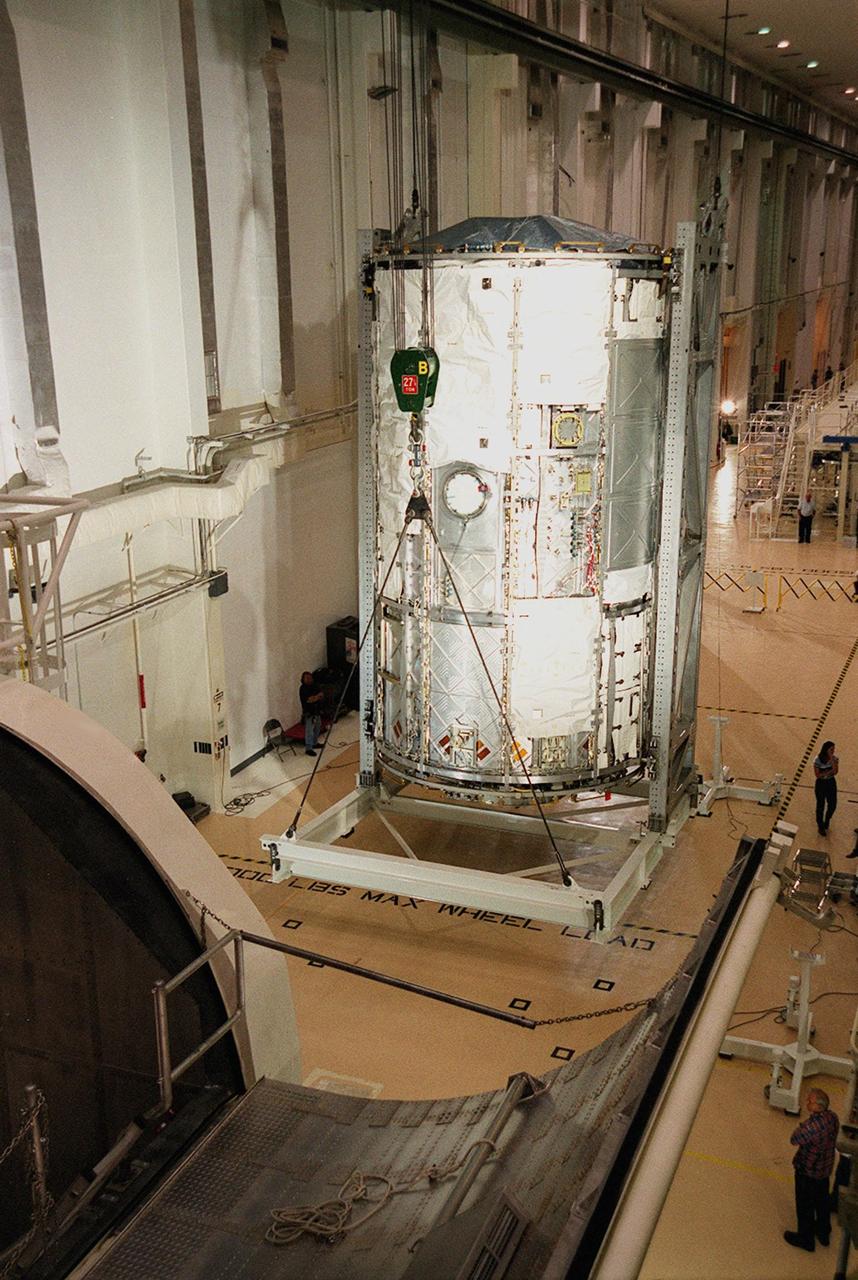
KENNEDY SPACE CENTER, FLA. -- The U.S. Lab, a component of the International Space Station, rests in a vertical position in the Operations and Checkout Building. The Lab, named Destiny, will undergo testing in the altitude chamber in the O&C. Destiny is scheduled to fly on mission STS-98 in early 2001. During the mission, the crew will install the Lab in the Space Station during a series of three space walks. The STS-98 mission will provide the Station with science research facilities and expand its power, life support and control capabilities. The U.S. Lab module continues a long tradition of microgravity materials research, first conducted by Skylab and later Shuttle and Spacelab missions. Destiny is expected to be a major feature in future research, providing facilities for biotechnology, fluid physics, combustion, and life sciences research
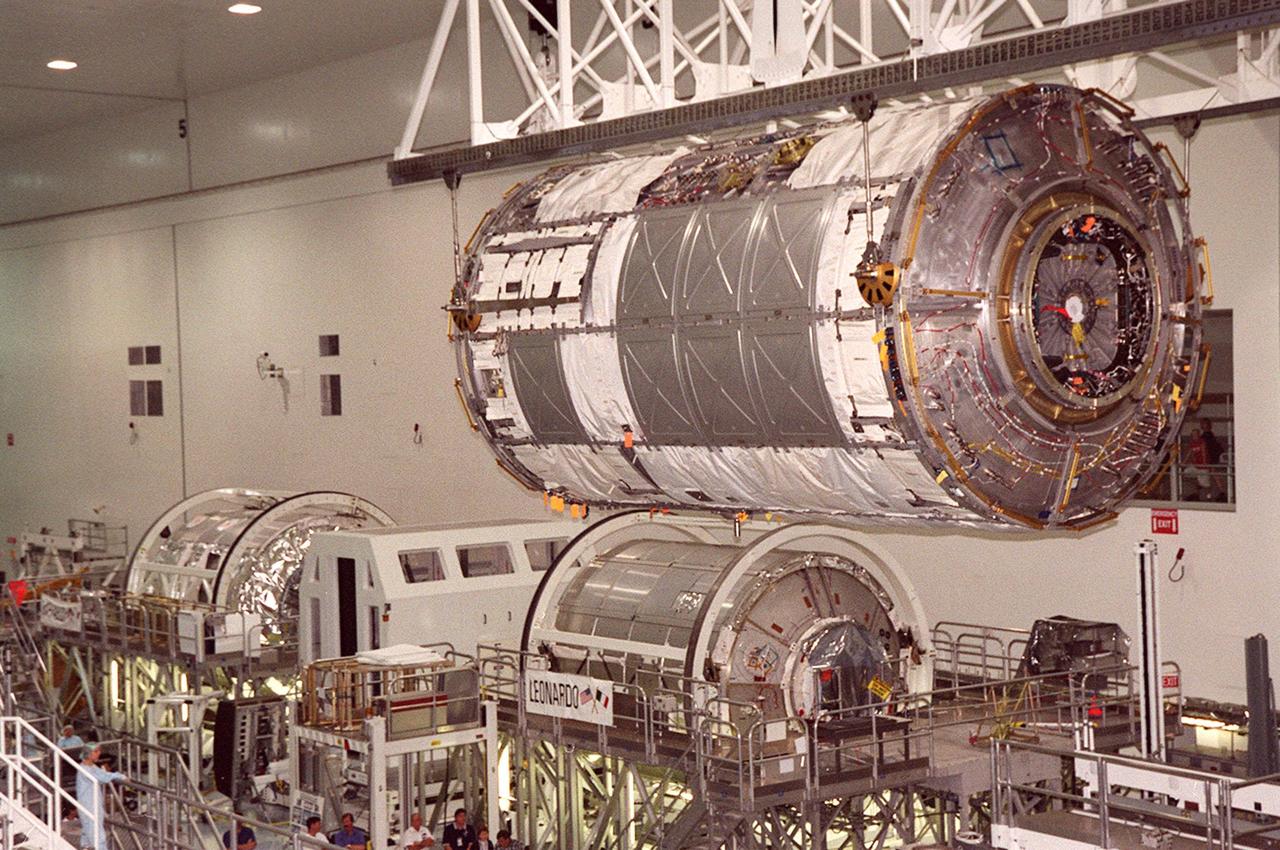
KENNEDY SPACE CENTER, FLA. -- The U.S. Laboratory Destiny, a component of the International Space Station, glides above two Multi-Purpose Logistics Modules (MPLMs), Raffaello (far left) and Leonardo, in the Space Station Processing Facility. Destiny is being moved to a payload canister for transfer to the Operations and Checkout Building where it will be tested in the altitude chamber. Destiny is scheduled to fly on mission STS-98 in early 2001. During the mission, the crew will install the Lab in the Space Station during a series of three space walks. The STS-98 mission will provide the Station with science research facilities and expand its power, life support and control capabilities. The U.S. Lab module continues a long tradition of microgravity materials research, first conducted by Skylab and later Shuttle and Spacelab missions. Destiny is expected to be a major feature in future research, providing facilities for biotechnology, fluid physics, combustion, and life sciences research

KENNEDY SPACE CENTER, FLA. -- The U.S. Laboratory Destiny, a component of the International Space Station, is lifted off a weigh stand (below) in the Space Station Processing Facility. The module is being moved to a payload canister for transfer to the Operations and Checkout Building where it will be tested in the altitude chamber. Destiny is scheduled to fly on mission STS-98 in early 2001. During the mission, the crew will install the Lab in the Space Station during a series of three space walks. The STS-98 mission will provide the Station with science research facilities and expand its power, life support and control capabilities. The U.S. Lab module continues a long tradition of microgravity materials research, first conducted by Skylab and later Shuttle and Spacelab missions. Destiny is expected to be a major feature in future research, providing facilities for biotechnology, fluid physics, combustion, and life sciences research
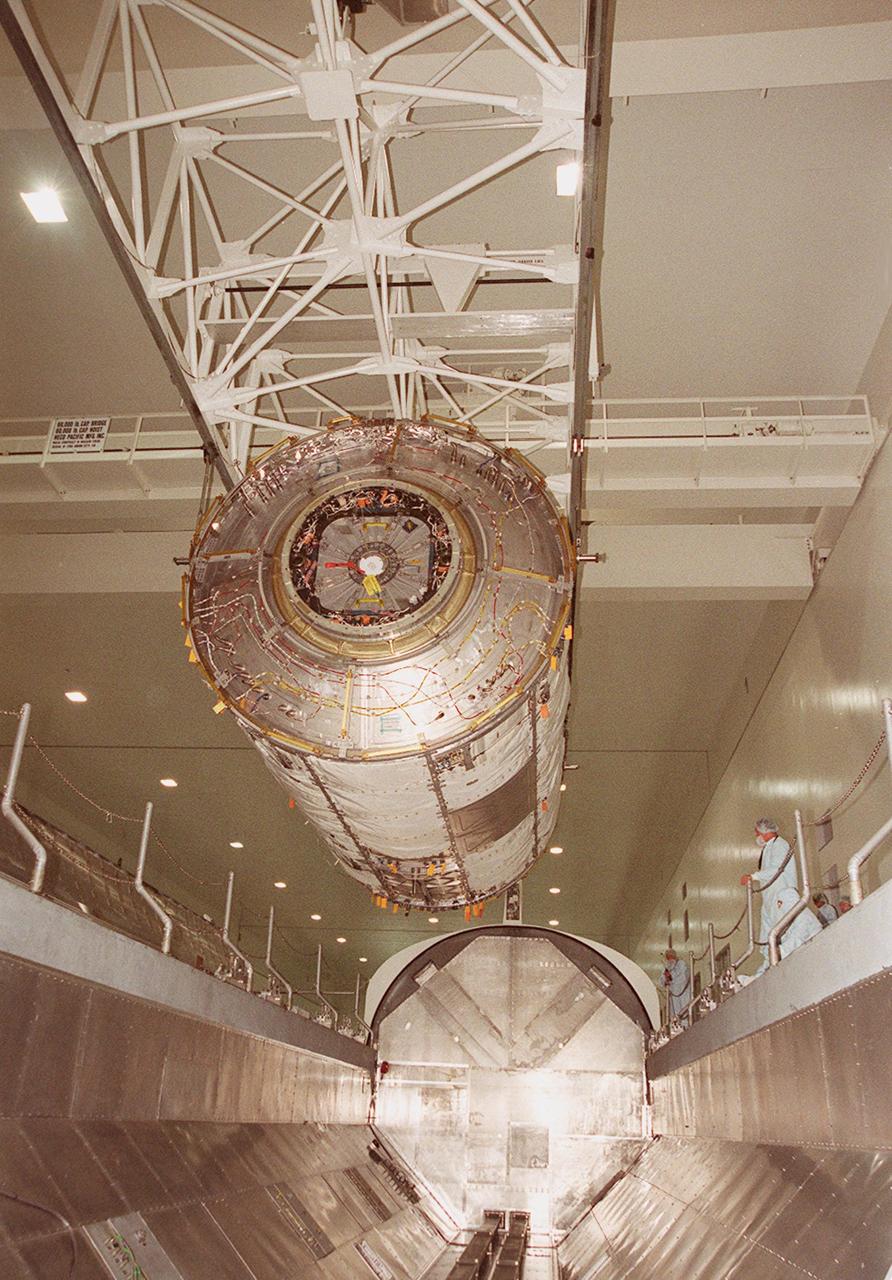
KENNEDY SPACE CENTER, FLA. -- In the Space Station Processing Facility, the U.S. Laboratory Destiny, a component of the International Space Station, is lowered into a payload canister for transfer to the Operations and Checkout Building where it will be tested in the altitude chamber. Destiny is scheduled to fly on mission STS-98 in early 2001. During the mission, the crew will install the Lab in the Space Station during a series of three space walks. The STS-98 mission will provide the Station with science research facilities and expand its power, life support and control capabilities. The U.S. Lab module continues a long tradition of microgravity materials research, first conducted by Skylab and later Shuttle and Spacelab missions. Destiny is expected to be a major feature in future research, providing facilities for biotechnology, fluid physics, combustion, and life sciences research
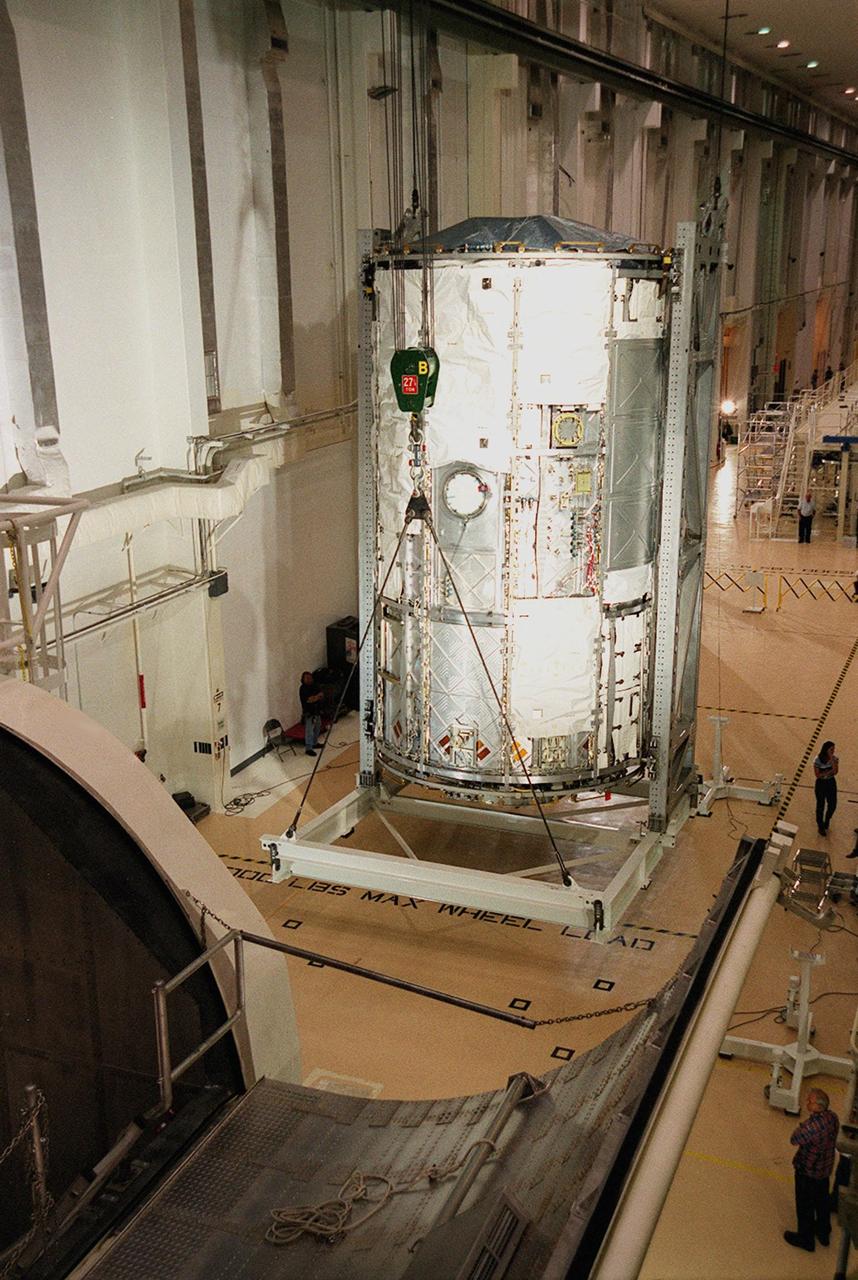
KENNEDY SPACE CENTER, FLA. -- The U.S. Lab, a component of the International Space Station, rests in a vertical position in the Operations and Checkout Building. The Lab, named Destiny, will undergo testing in the altitude chamber in the O&C. Destiny is scheduled to fly on mission STS-98 in early 2001. During the mission, the crew will install the Lab in the Space Station during a series of three space walks. The STS-98 mission will provide the Station with science research facilities and expand its power, life support and control capabilities. The U.S. Lab module continues a long tradition of microgravity materials research, first conducted by Skylab and later Shuttle and Spacelab missions. Destiny is expected to be a major feature in future research, providing facilities for biotechnology, fluid physics, combustion, and life sciences research
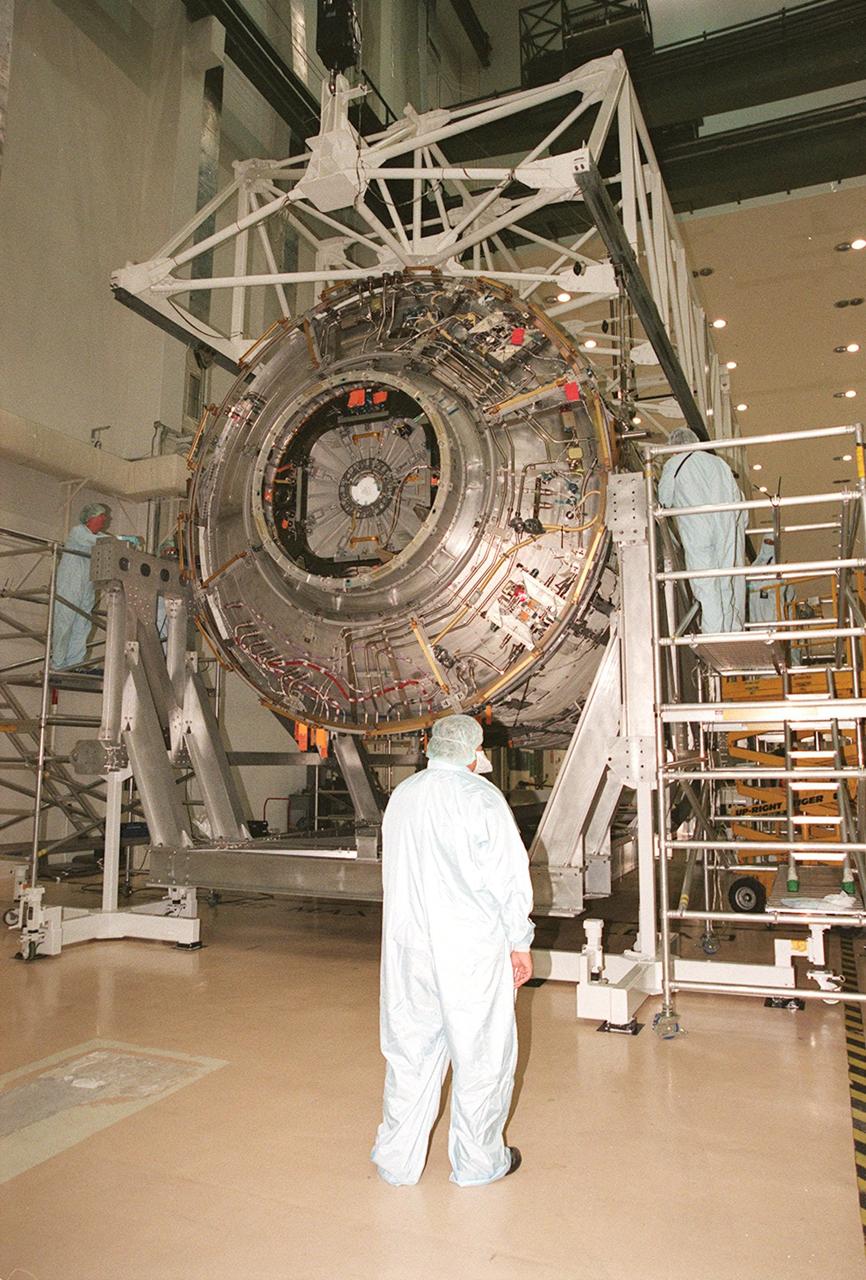
KENNEDY SPACE CENTER, FLA. -- In the Operations and Checkout Building, the U.S. Lab, named Destiny, is lowered into the rotation and handling fixture in preparation for testing in the altitude chamber. Destiny is scheduled to fly on mission STS-98 in early 2001. During the mission, the crew will install the Lab in the Space Station during a series of three space walks. The STS-98 mission will provide the Station with science research facilities and expand its power, life support and control capabilities. The U.S. Lab module continues a long tradition of microgravity materials research, first conducted by Skylab and later Shuttle and Spacelab missions. Destiny is expected to be a major feature in future research, providing facilities for biotechnology, fluid physics, combustion, and life sciences research
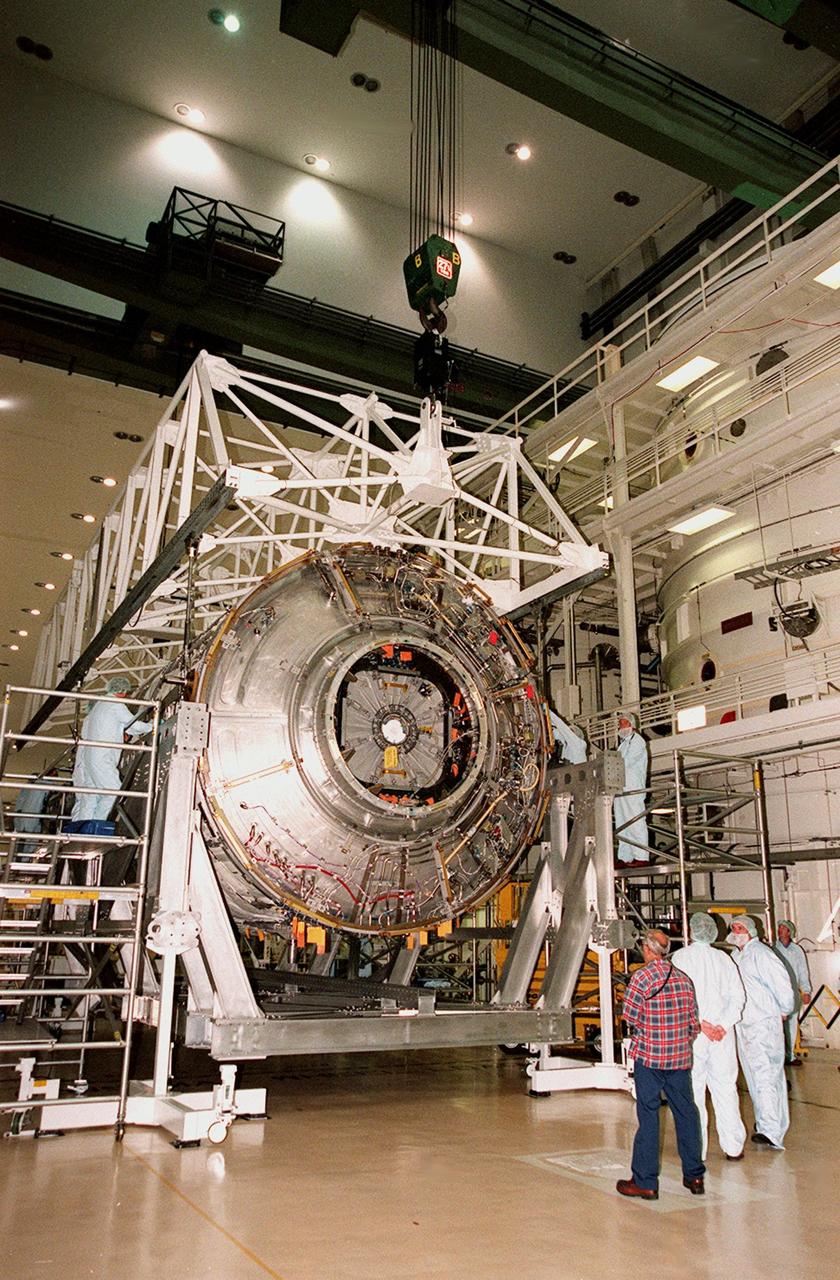
KENNEDY SPACE CENTER, FLA. -- In the Operations and Checkout Building, workers check the U.S. Lab, named Destiny, as it settles into the rotation and handling fixture in preparation for testing in the altitude chamber. Destiny is scheduled to fly on mission STS-98 in early 2001. During the mission, the crew will install the Lab in the Space Station during a series of three space walks. The STS-98 mission will provide the Station with science research facilities and expand its power, life support and control capabilities. The U.S. Lab module continues a long tradition of microgravity materials research, first conducted by Skylab and later Shuttle and Spacelab missions. Destiny is expected to be a major feature in future research, providing facilities for biotechnology, fluid physics, combustion, and life sciences research

KENNEDY SPACE CENTER, FLA. -- Resting in a rotation and handling fixture, the U.S. Lab, a component of the International Space Station, is nearly vertical. The Lab, named Destiny, will undergo testing in the altitude chamber in the Operations and Checkout Building. Behind the Lab is the payload canister which transported it from the Space Station Processing Facility. Destiny is scheduled to fly on mission STS-98 in early 2001. During the mission, the crew will install the Lab in the Space Station during a series of three space walks. The STS-98 mission will provide the Station with science research facilities and expand its power, life support and control capabilities. The U.S. Lab module continues a long tradition of microgravity materials research, first conducted by Skylab and later Shuttle and Spacelab missions. Destiny is expected to be a major feature in future research, providing facilities for biotechnology, fluid physics, combustion, and life sciences research
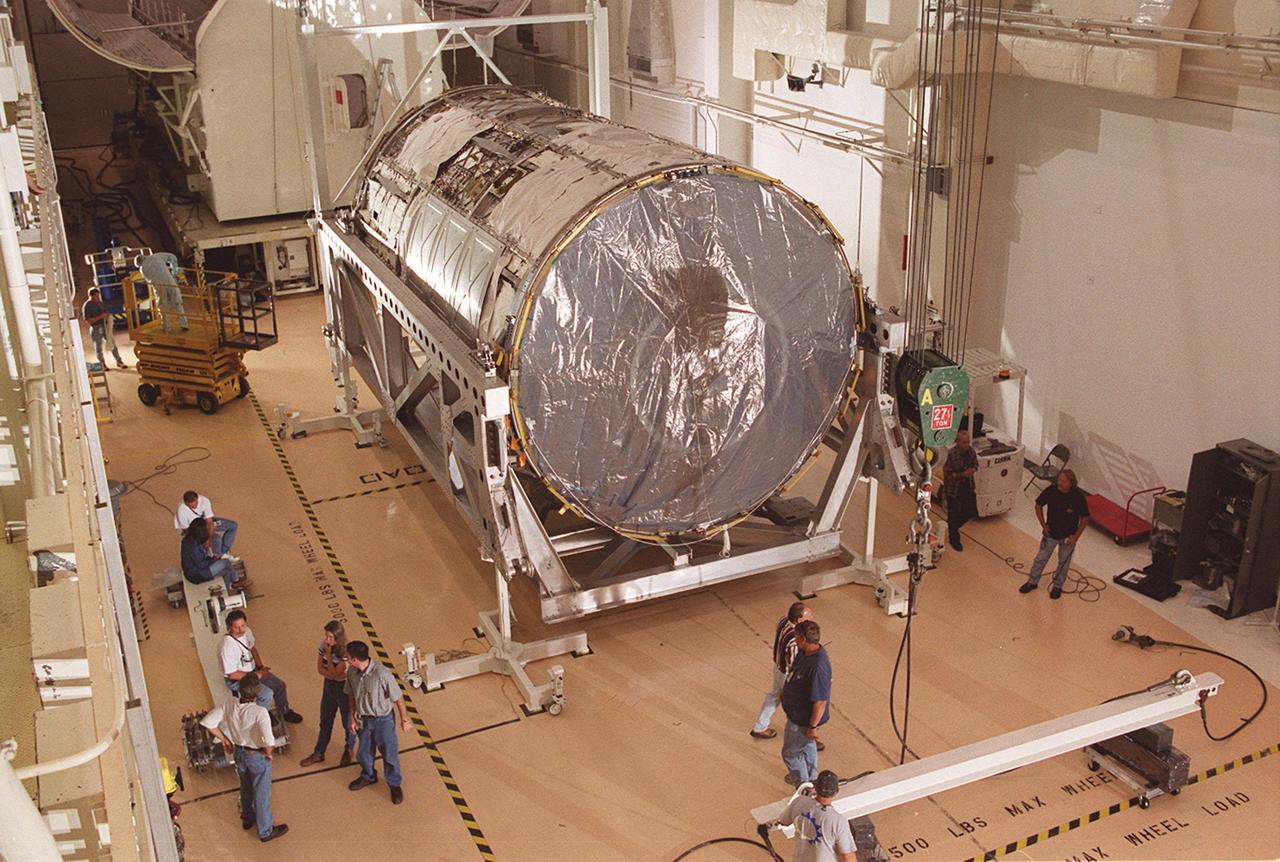
KENNEDY SPACE CENTER, FLA -- In the Operations and Checkout Building (O&C), the U.S. Lab, a component of the International Space Station, sits on a rotation and handling fixture before being raised to vertical. The Lab, named Destiny, will undergo testing in the altitude chamber in the O&C. Destiny is scheduled to fly on mission STS-98 in early 2001. During the mission, the crew will install the Lab in the Space Station during a series of three space walks. The STS-98 mission will provide the Station with science research facilities and expand its power, life support and control capabilities. The U.S. Lab module continues a long tradition of microgravity materials research, first conducted by Skylab and later Shuttle and Spacelab missions. Destiny is expected to be a major feature in future research, providing facilities for biotechnology, fluid physics, combustion, and life sciences research
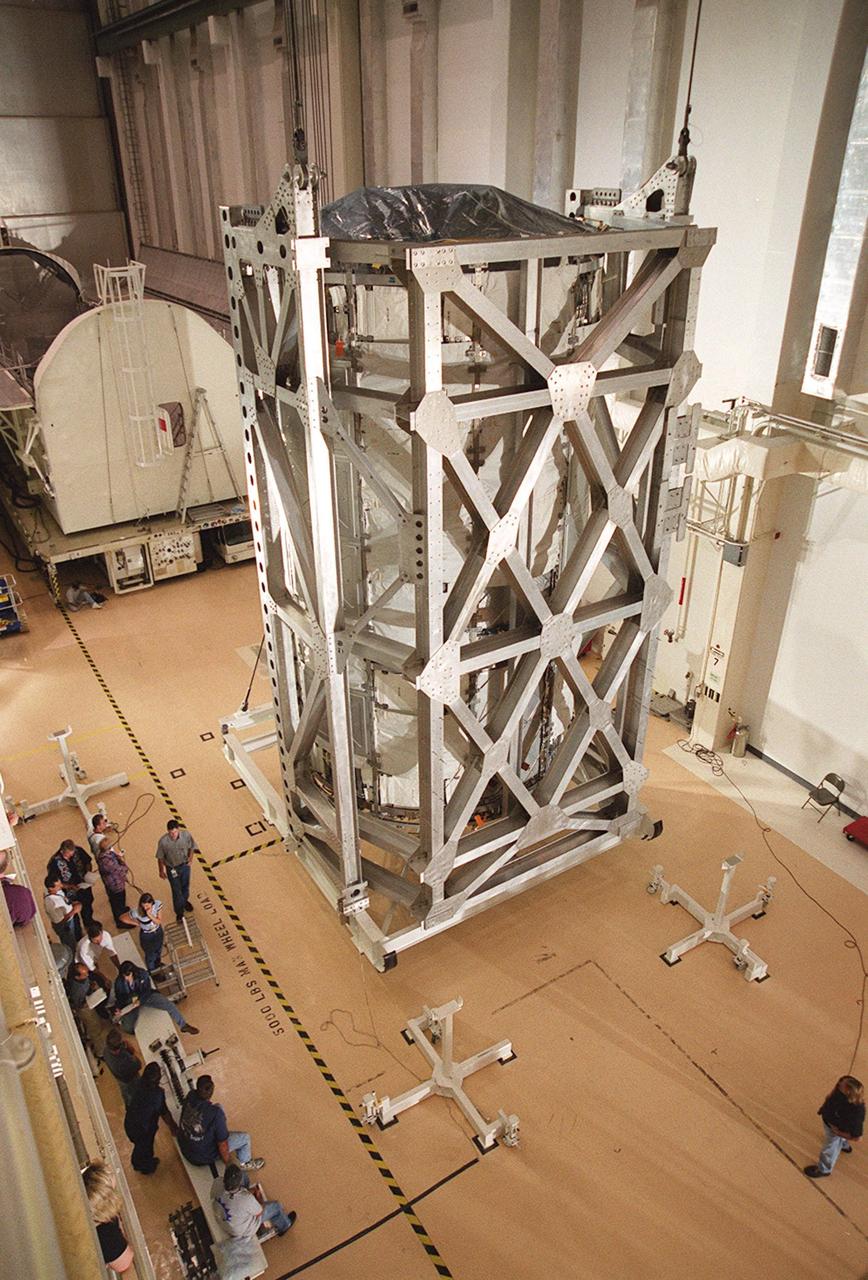
KENNEDY SPACE CENTER, FLA. -- The U.S. Lab, a component of the International Space Station, rests in a vertical position in the Operations and Checkout Building. The Lab, named Destiny, will undergo testing in the altitude chamber in the O&C. Behind the Lab is the payload canister which transported it from the Space Station Processing Facility. Destiny is scheduled to fly on mission STS-98 in early 2001. During the mission, the crew will install the Lab in the Space Station during a series of three space walks. The STS-98 mission will provide the Station with science research facilities and expand its power, life support and control capabilities. The U.S. Lab module continues a long tradition of microgravity materials research, first conducted by Skylab and later Shuttle and Spacelab missions. Destiny is expected to be a major feature in future research, providing facilities for biotechnology, fluid physics, combustion, and life sciences research
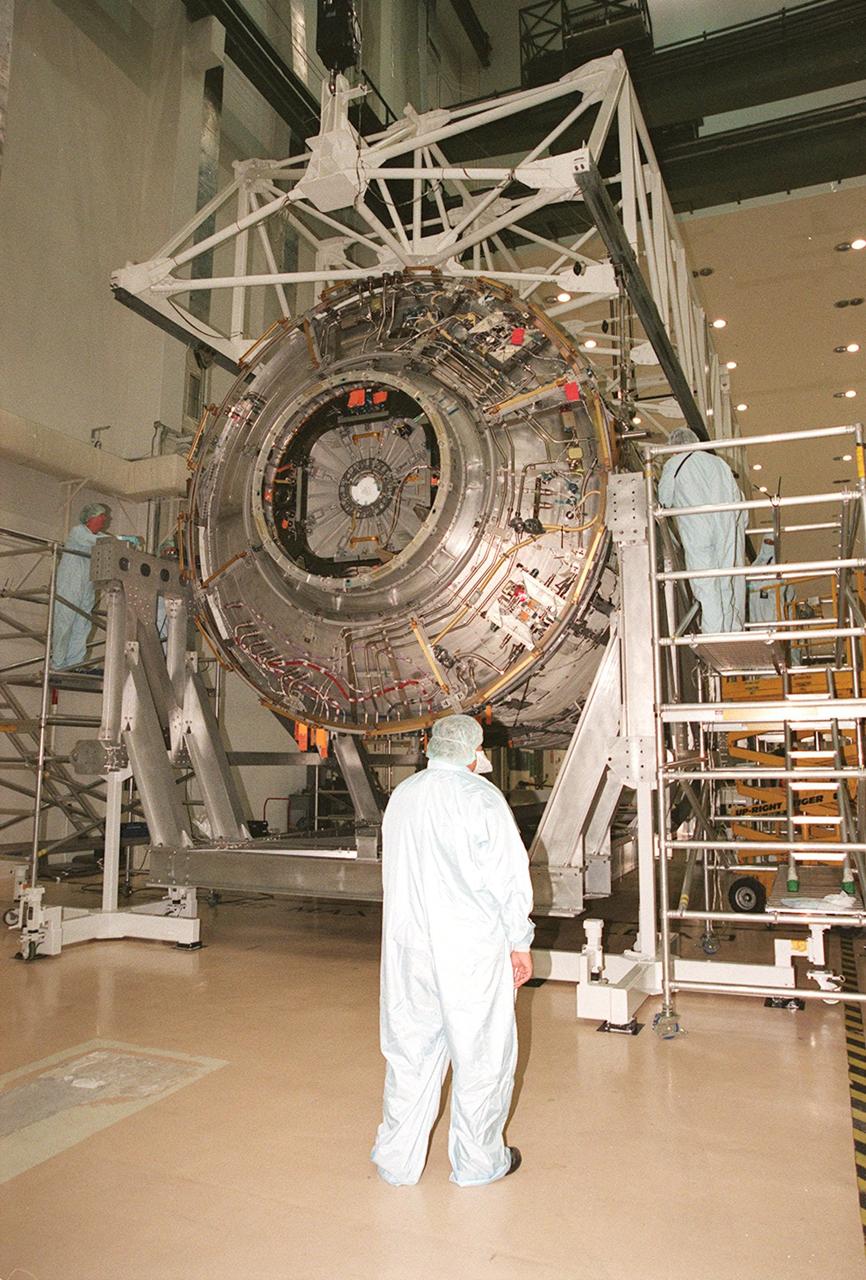
KENNEDY SPACE CENTER, FLA. -- In the Operations and Checkout Building, the U.S. Lab, named Destiny, is lowered into the rotation and handling fixture in preparation for testing in the altitude chamber. Destiny is scheduled to fly on mission STS-98 in early 2001. During the mission, the crew will install the Lab in the Space Station during a series of three space walks. The STS-98 mission will provide the Station with science research facilities and expand its power, life support and control capabilities. The U.S. Lab module continues a long tradition of microgravity materials research, first conducted by Skylab and later Shuttle and Spacelab missions. Destiny is expected to be a major feature in future research, providing facilities for biotechnology, fluid physics, combustion, and life sciences research
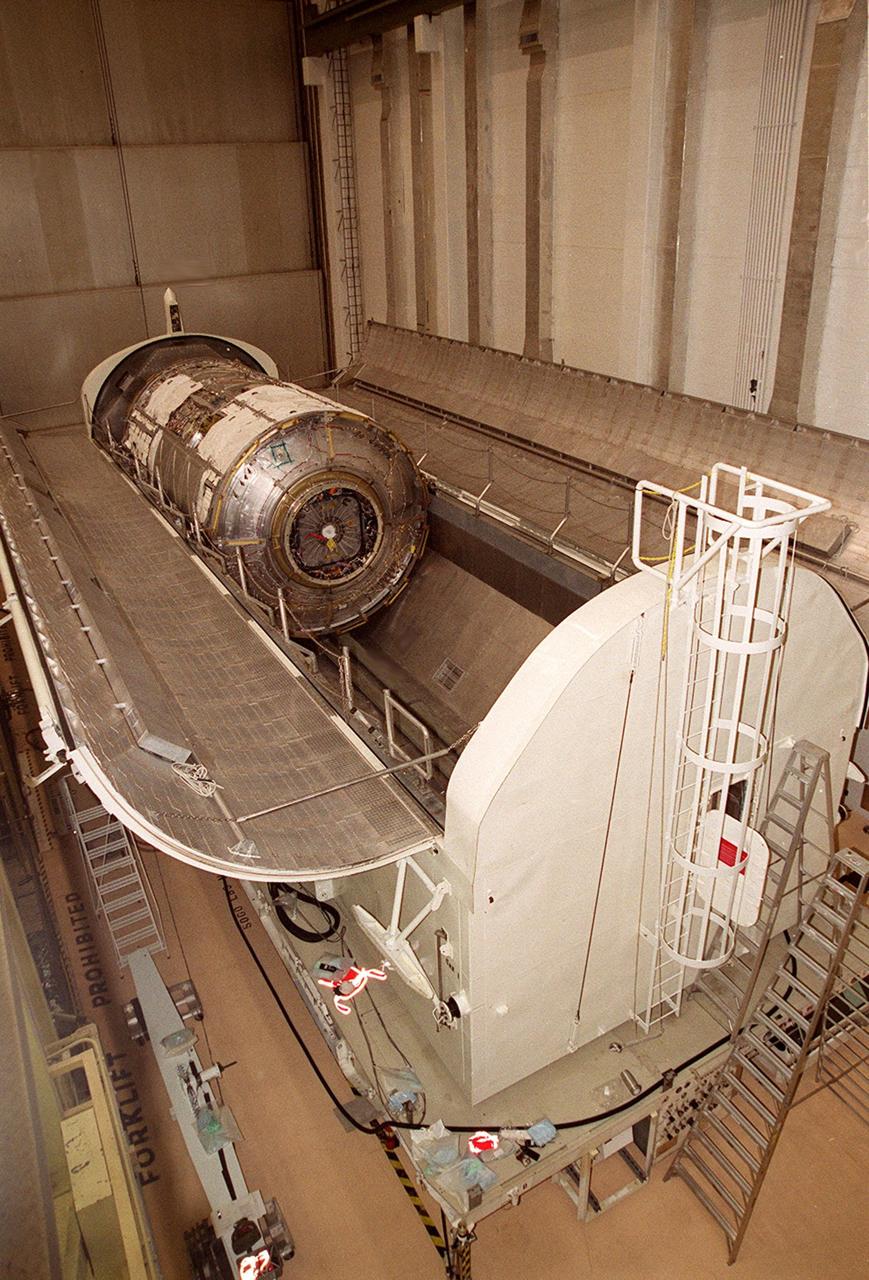
KENNEDY SPACE CENTER, FLA. -- In the Operations and Checkout Building (O&C), the doors of the payload canister open to reveal the U.S. Lab, named Destiny. The Lab will undergo testing in the altitude chamber in the O&C. Destiny is scheduled to fly on mission STS-98 in early 2001. During the mission, the crew will install the Lab in the Space Station during a series of three space walks. The STS-98 mission will provide the Station with science research facilities and expand its power, life support and control capabilities. The U.S. Lab module continues a long tradition of microgravity materials research, first conducted by Skylab and later Shuttle and Spacelab missions. Destiny is expected to be a major feature in future research, providing facilities for biotechnology, fluid physics, combustion, and life sciences research
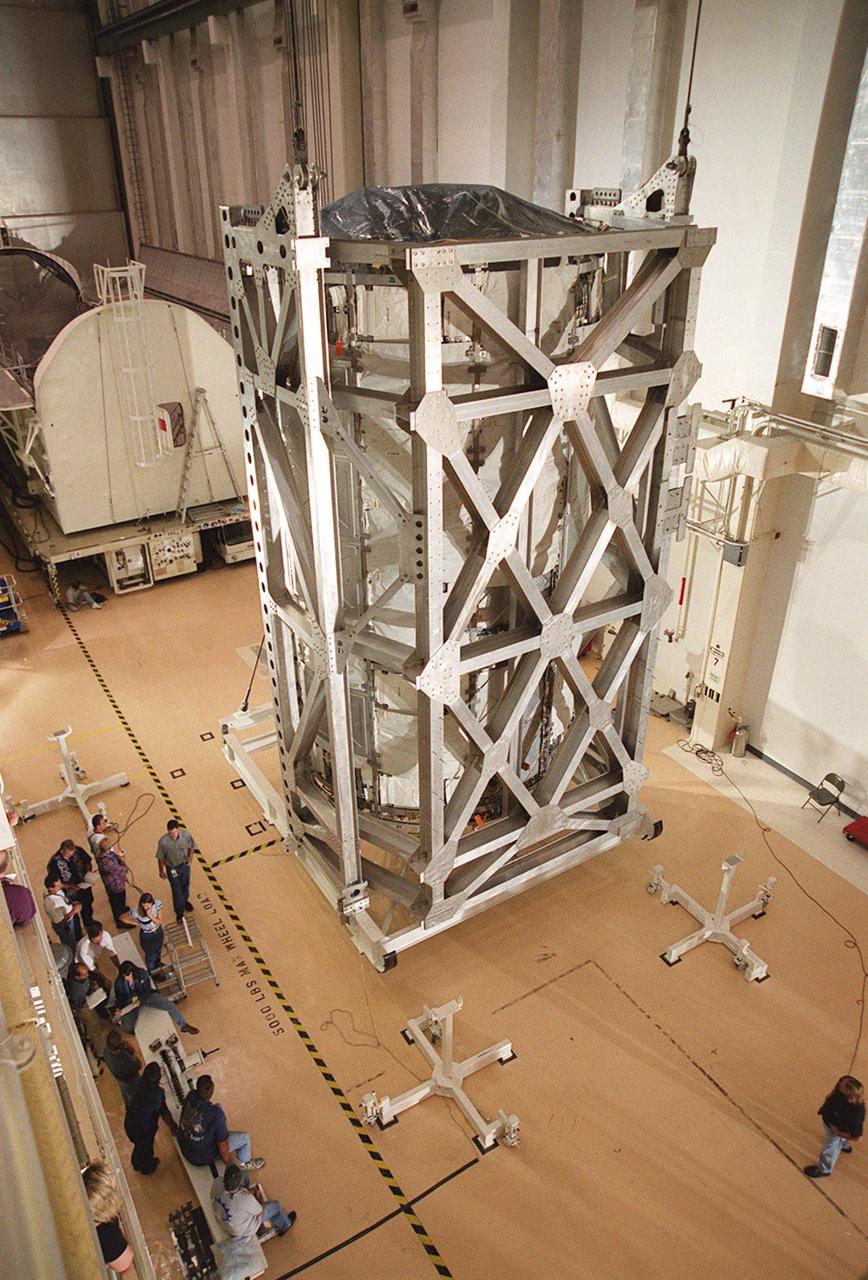
KENNEDY SPACE CENTER, FLA. -- The U.S. Lab, a component of the International Space Station, rests in a vertical position in the Operations and Checkout Building. The Lab, named Destiny, will undergo testing in the altitude chamber in the O&C. Behind the Lab is the payload canister which transported it from the Space Station Processing Facility. Destiny is scheduled to fly on mission STS-98 in early 2001. During the mission, the crew will install the Lab in the Space Station during a series of three space walks. The STS-98 mission will provide the Station with science research facilities and expand its power, life support and control capabilities. The U.S. Lab module continues a long tradition of microgravity materials research, first conducted by Skylab and later Shuttle and Spacelab missions. Destiny is expected to be a major feature in future research, providing facilities for biotechnology, fluid physics, combustion, and life sciences research
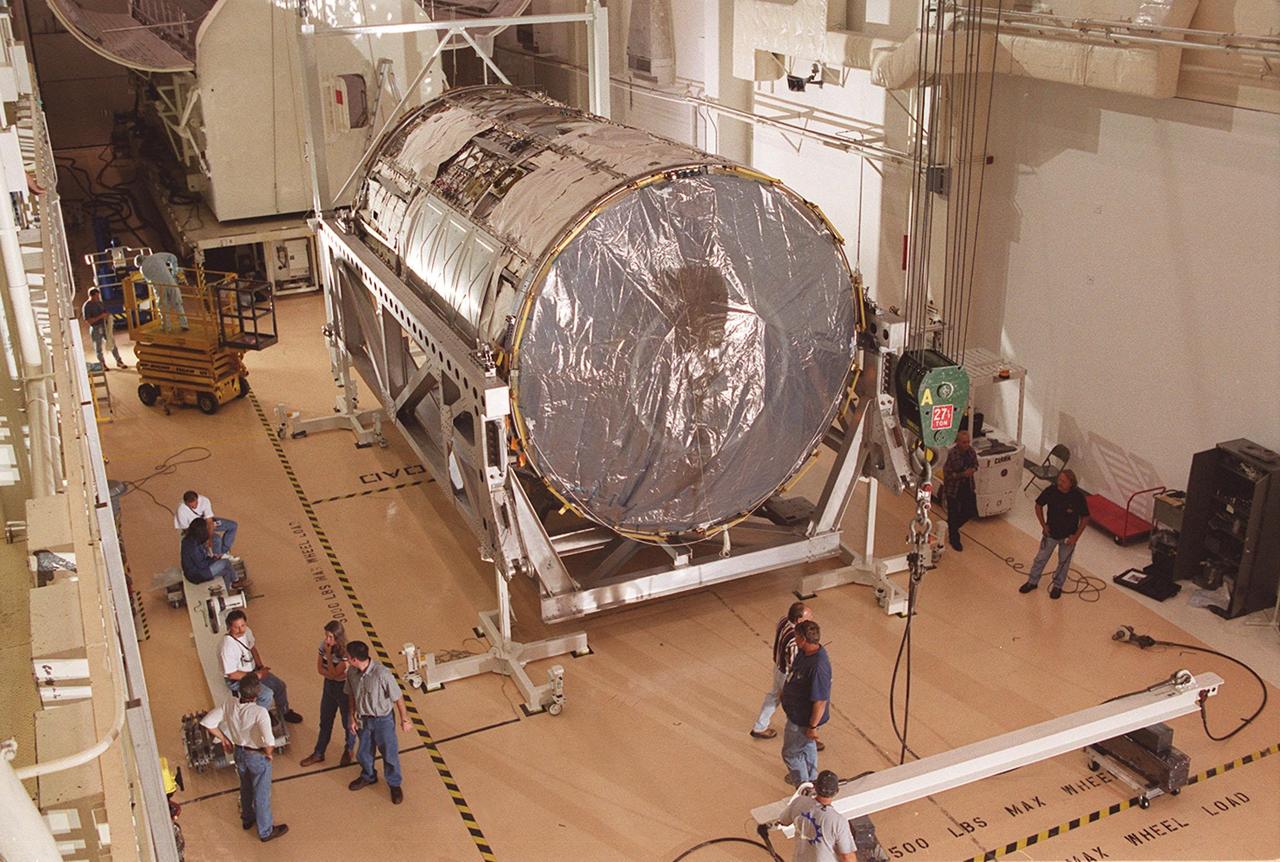
KENNEDY SPACE CENTER, FLA -- In the Operations and Checkout Building (O&C), the U.S. Lab, a component of the International Space Station, sits on a rotation and handling fixture before being raised to vertical. The Lab, named Destiny, will undergo testing in the altitude chamber in the O&C. Destiny is scheduled to fly on mission STS-98 in early 2001. During the mission, the crew will install the Lab in the Space Station during a series of three space walks. The STS-98 mission will provide the Station with science research facilities and expand its power, life support and control capabilities. The U.S. Lab module continues a long tradition of microgravity materials research, first conducted by Skylab and later Shuttle and Spacelab missions. Destiny is expected to be a major feature in future research, providing facilities for biotechnology, fluid physics, combustion, and life sciences research
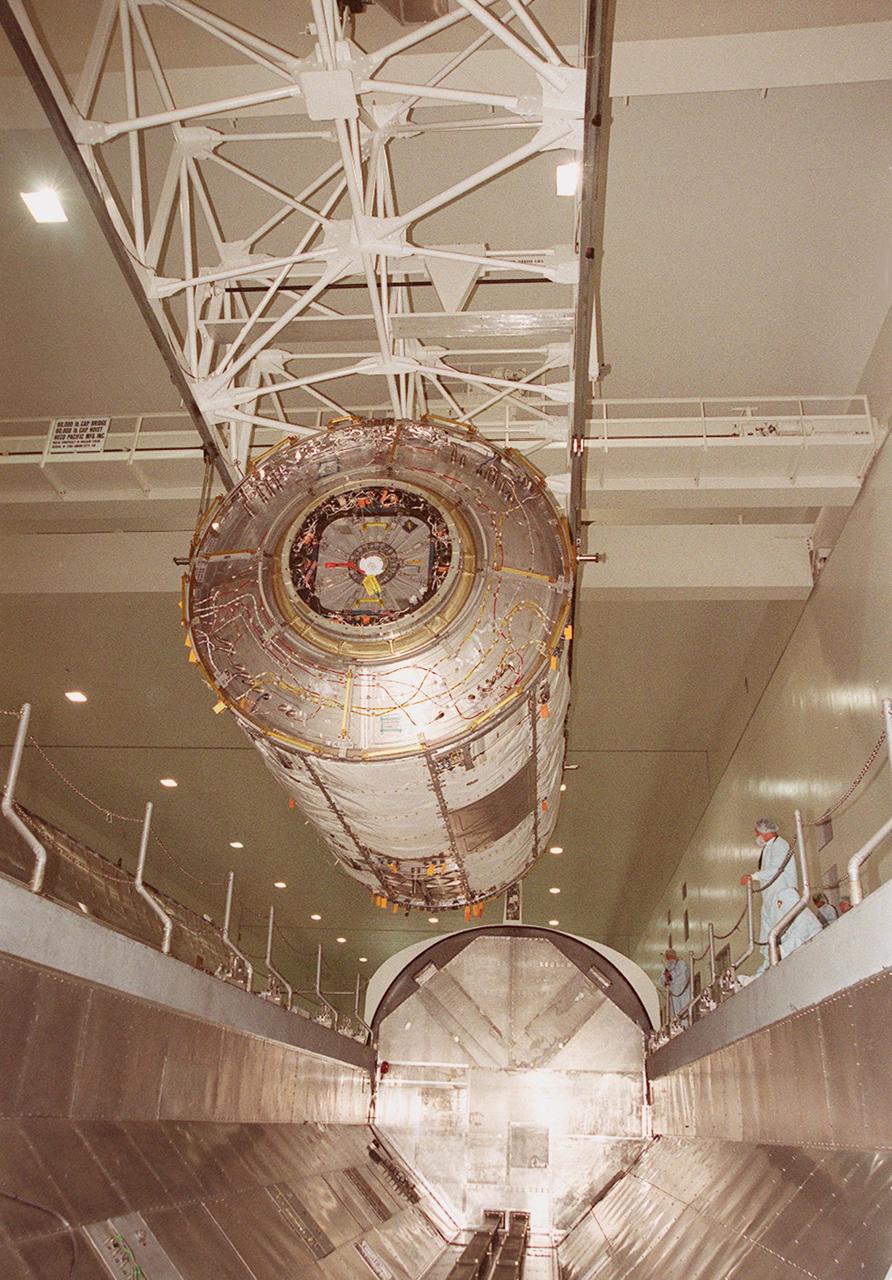
KENNEDY SPACE CENTER, FLA. -- In the Space Station Processing Facility, the U.S. Laboratory Destiny, a component of the International Space Station, is lowered into a payload canister for transfer to the Operations and Checkout Building where it will be tested in the altitude chamber. Destiny is scheduled to fly on mission STS-98 in early 2001. During the mission, the crew will install the Lab in the Space Station during a series of three space walks. The STS-98 mission will provide the Station with science research facilities and expand its power, life support and control capabilities. The U.S. Lab module continues a long tradition of microgravity materials research, first conducted by Skylab and later Shuttle and Spacelab missions. Destiny is expected to be a major feature in future research, providing facilities for biotechnology, fluid physics, combustion, and life sciences research
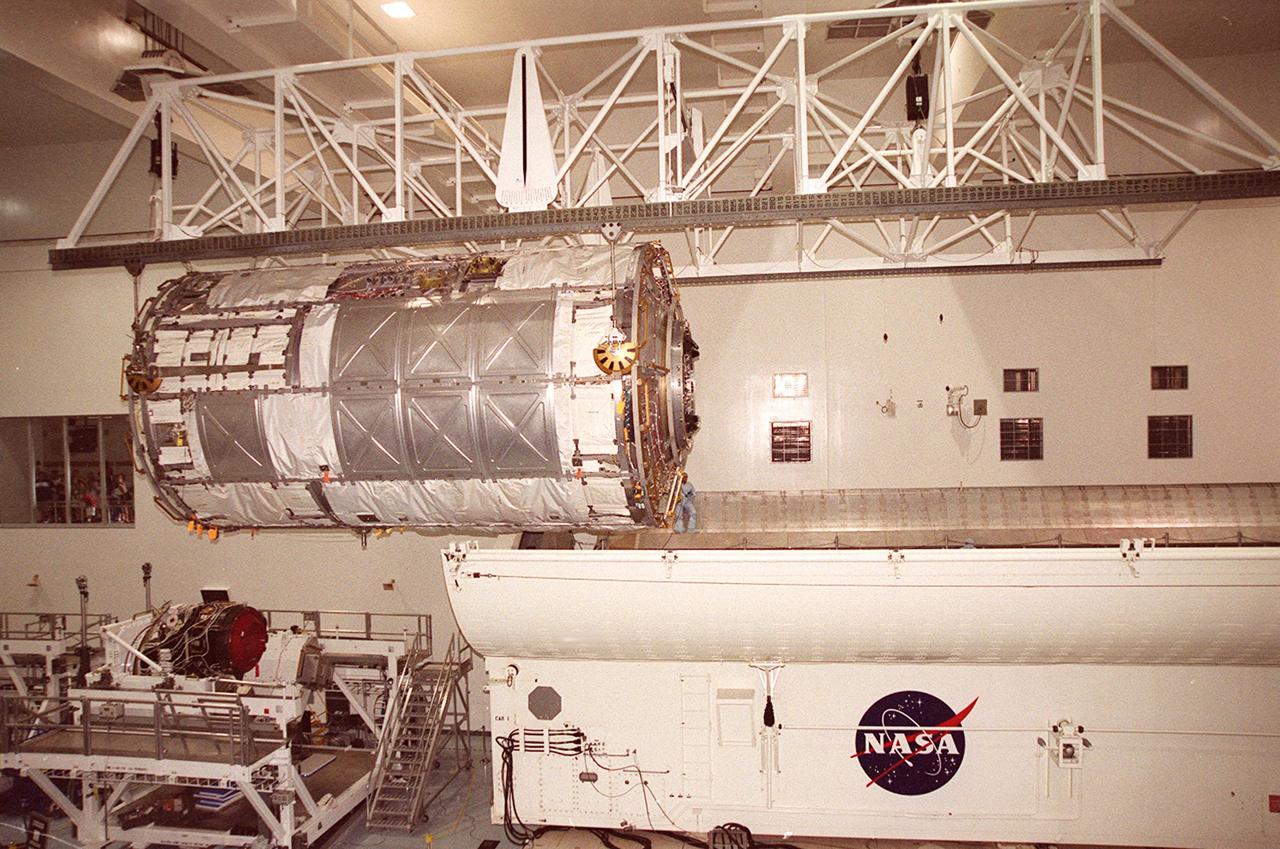
KENNEDY SPACE CENTER, FLA. -- In the Space Station Processing Facility (SSPF), the U.S. Laboratory Destiny, a component of the International Space Station, is moved to a payload canister for transfer to the Operations and Checkout Building where it will be tested in the altitude chamber. On the floor of the SSPF, left, is a Pressurized Mating Adapter-3. Destiny is scheduled to fly on mission STS-98 in early 2001. During the mission, the crew will install the Lab in the Space Station during a series of three space walks. The STS-98 mission will provide the Station with science research facilities and expand its power, life support and control capabilities. The U.S. Lab module continues a long tradition of microgravity materials research, first conducted by Skylab and later Shuttle and Spacelab missions. Destiny is expected to be a major feature in future research, providing facilities for biotechnology, fluid physics, combustion, and life sciences research
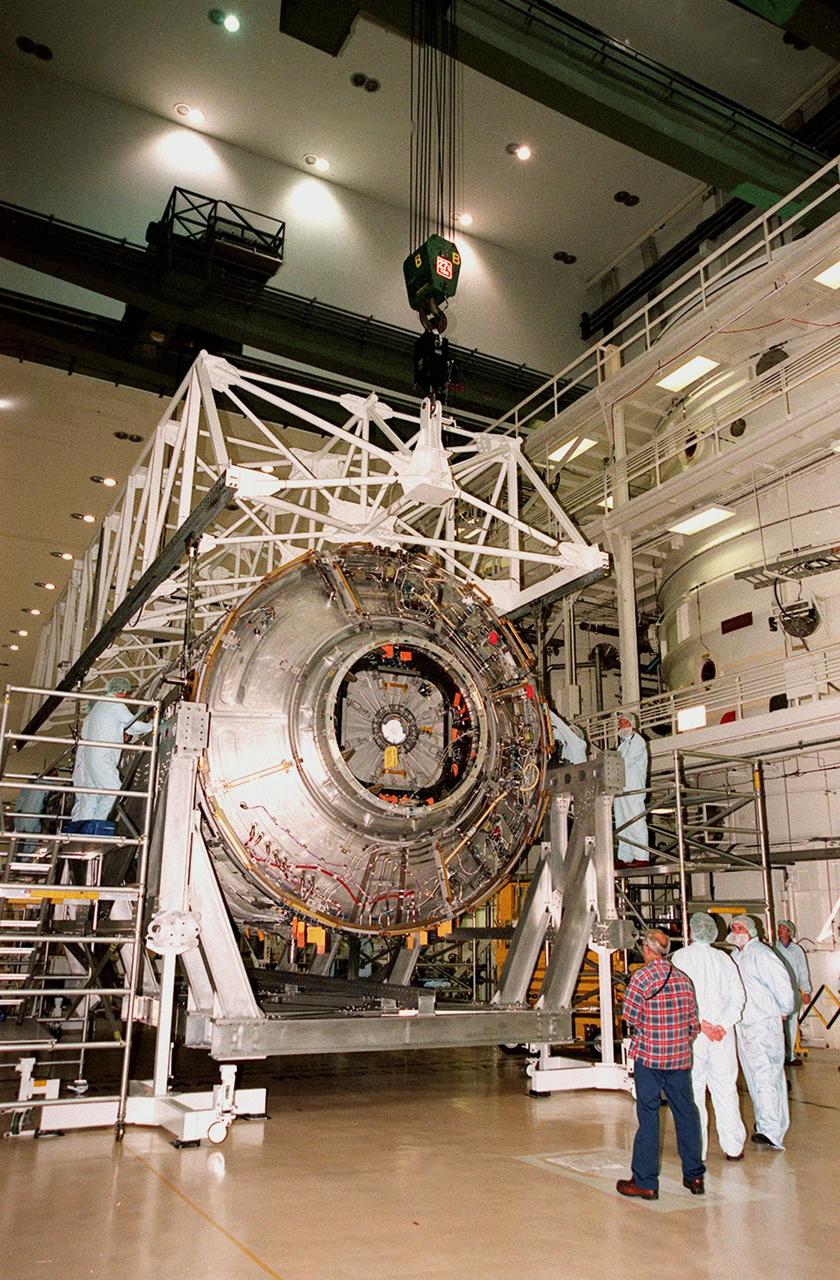
KENNEDY SPACE CENTER, FLA. -- In the Operations and Checkout Building, workers check the U.S. Lab, named Destiny, as it settles into the rotation and handling fixture in preparation for testing in the altitude chamber. Destiny is scheduled to fly on mission STS-98 in early 2001. During the mission, the crew will install the Lab in the Space Station during a series of three space walks. The STS-98 mission will provide the Station with science research facilities and expand its power, life support and control capabilities. The U.S. Lab module continues a long tradition of microgravity materials research, first conducted by Skylab and later Shuttle and Spacelab missions. Destiny is expected to be a major feature in future research, providing facilities for biotechnology, fluid physics, combustion, and life sciences research
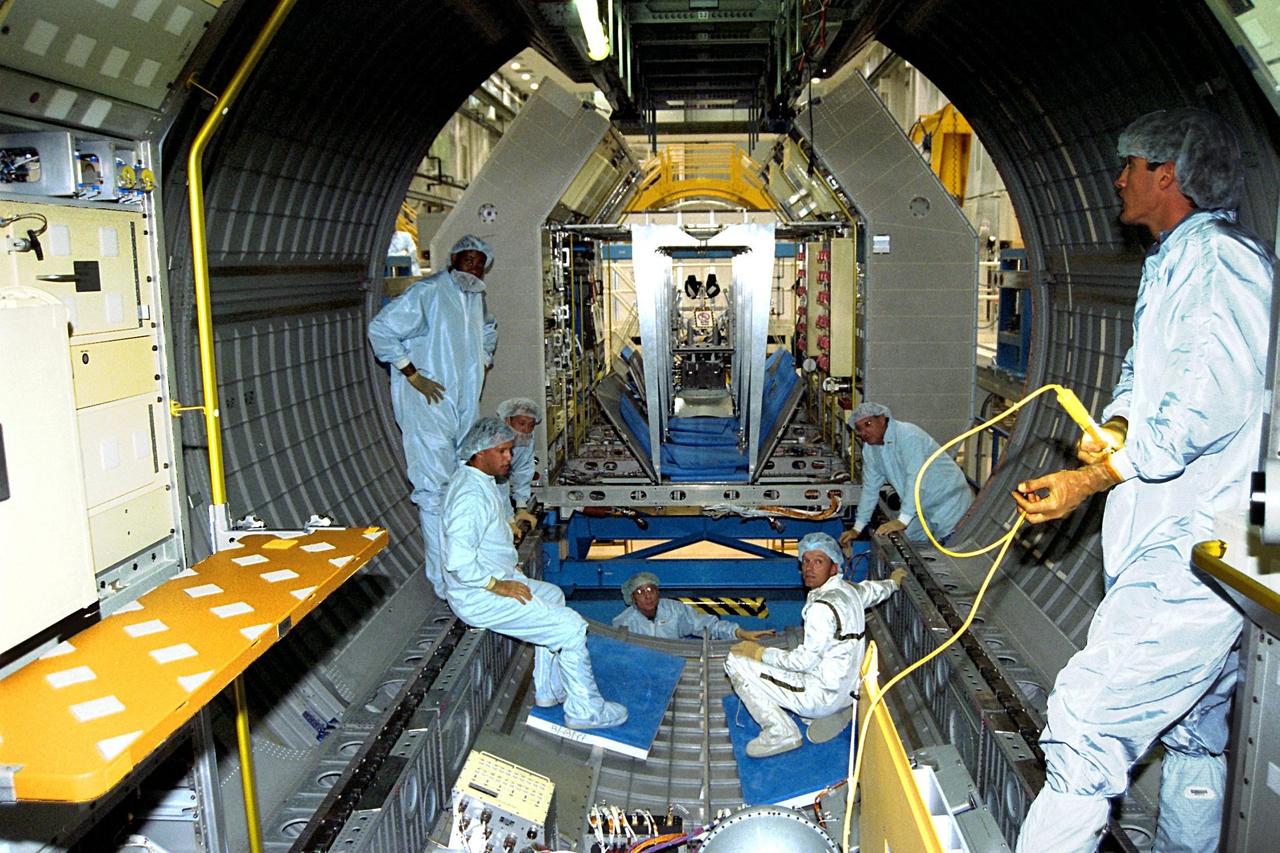
The Neurolab payload for STS-90, scheduled to launch aboard the Shuttle Columbia from Kennedy Space Center (KSC) on April 2, 1998, is installed in the Spacelab module by Boeing technicians in the Operations and Checkout Building at KSC. Investigations during the Neurolab mission will focus on the effects of microgravity on the nervous system. Specifically, experiments will study the adaptation of the vestibular system, the central nervous system, and the pathways that control the ability to sense location in the absence of gravity, as well as the effect of microgravity on a developing nervous system. The crew of STS-90 will include Commander Richard Searfoss, Pilot Scott Altman, Mission Specialists Richard Linnehan, Dafydd (Dave) Williams, M.D., and Kathryn (Kay) Hire, and Payload Specialists Jay Buckey, M.D., and James Pawelczyk, Ph.D
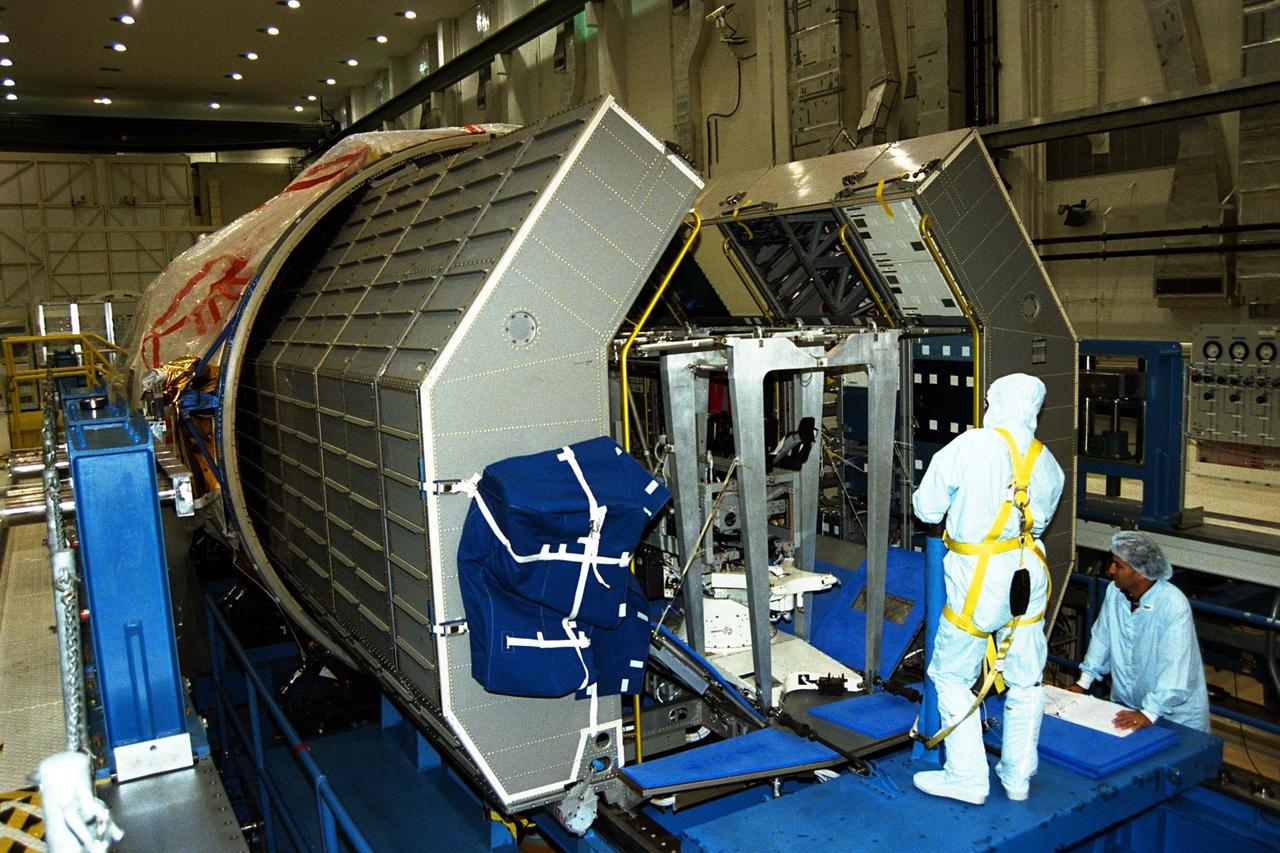
The Neurolab payload for STS-90, scheduled to launch aboard the Shuttle Columbia from Kennedy Space Center (KSC) on April 2, 1998, is installed in the Spacelab module by Boeing technicians in the Operations and Checkout Building at KSC. Investigations during the Neurolab mission will focus on the effects of microgravity on the nervous system. Specifically, experiments will study the adaptation of the vestibular system, the central nervous system, and the pathways that control the ability to sense location in the absence of gravity, as well as the effect of microgravity on a developing nervous system. The crew of STS-90 will include Commander Richard Searfoss, Pilot Scott Altman, Mission Specialists Richard Linnehan, Dafydd (Dave) Williams, M.D., and Kathryn (Kay) Hire, and Payload Specialists Jay Buckey, M.D., and James Pawelczyk, Ph.D

The Neurolab payload for STS-90, scheduled to launch aboard the Shuttle Columbia from Kennedy Space Center (KSC) on April 2, 1998, is installed in the Spacelab module by Boeing technicians in the Operations and Checkout Building at KSC. Investigations during the Neurolab mission will focus on the effects of microgravity on the nervous system. Specifically, experiments will study the adaptation of the vestibular system, the central nervous system, and the pathways that control the ability to sense location in the absence of gravity, as well as the effect of microgravity on a developing nervous system. The crew of STS-90 will include Commander Richard Searfoss, Pilot Scott Altman, Mission Specialists Richard Linnehan, Dafydd (Dave) Williams, M.D., and Kathryn (Kay) Hire, and Payload Specialists Jay Buckey, M.D., and James Pawelczyk, Ph.D
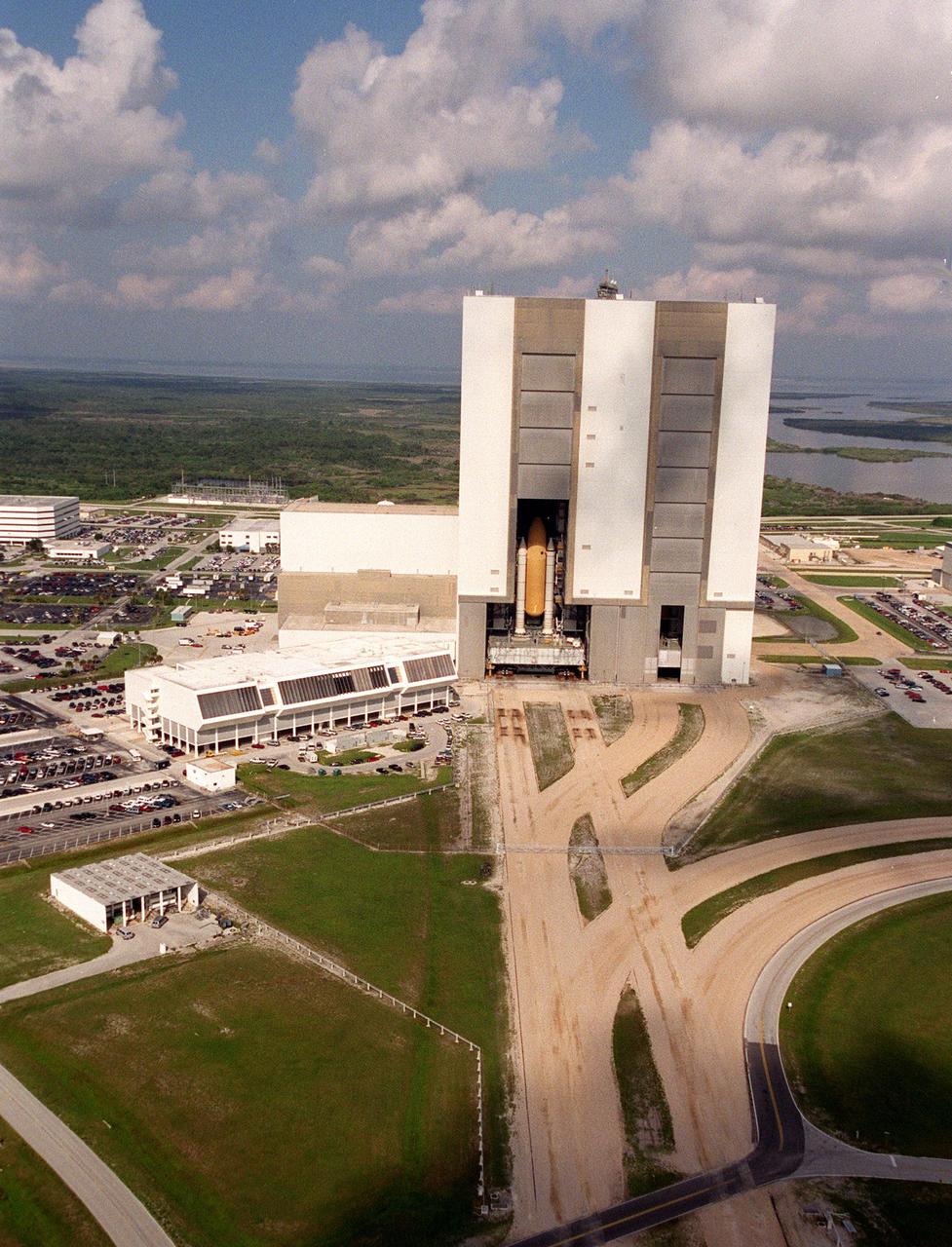
KENNEDY SPACE CENTER, Fla. -- Scattered clouds cast shadows as Space Shuttle Atlantis crawls back inside the Vehicle Assembly Building high bay 1. After earlier starting its trek to Launch Pad 39B, Atlantis was returned to the VAB due to lightning in the area. To the left of the VAB is the Launch Control Center. The four-story building houses the firing rooms that are used to conduct Space Shuttle launches. Leading away from the VAB, in the foreground, is the crawlerway, the 130-foot-wide road specially constructed to transport the Shuttle, mobile launcher platform and crawler-transporter with a combined weight of about 17 million pounds. Space Shuttle Atlantis is targeted for launch no earlier than July 12 on mission STS-104, the 10th flight to the International Space Station. The payload on the 11-day mission is the Joint Airlock Module, which will allow astronauts and cosmonauts in residence on the Station to perform future spacewalks without the presence of a Space Shuttle. The module, which comprises a crew lock and an equipment lock, will be connected to the starboard (right) side of Node 1 Unity. Atlantis will also carry oxygen and nitrogen storage tanks, vital to operation of the Joint Airlock, on a Spacelab Logistics Double Pallet in the payload bay. The tanks, to be installed on the perimeter of the Joint Module during the mission’s spacewalks, will support future spacewalk operations and experiments plus augment the resupply system for the Station’s Service Module
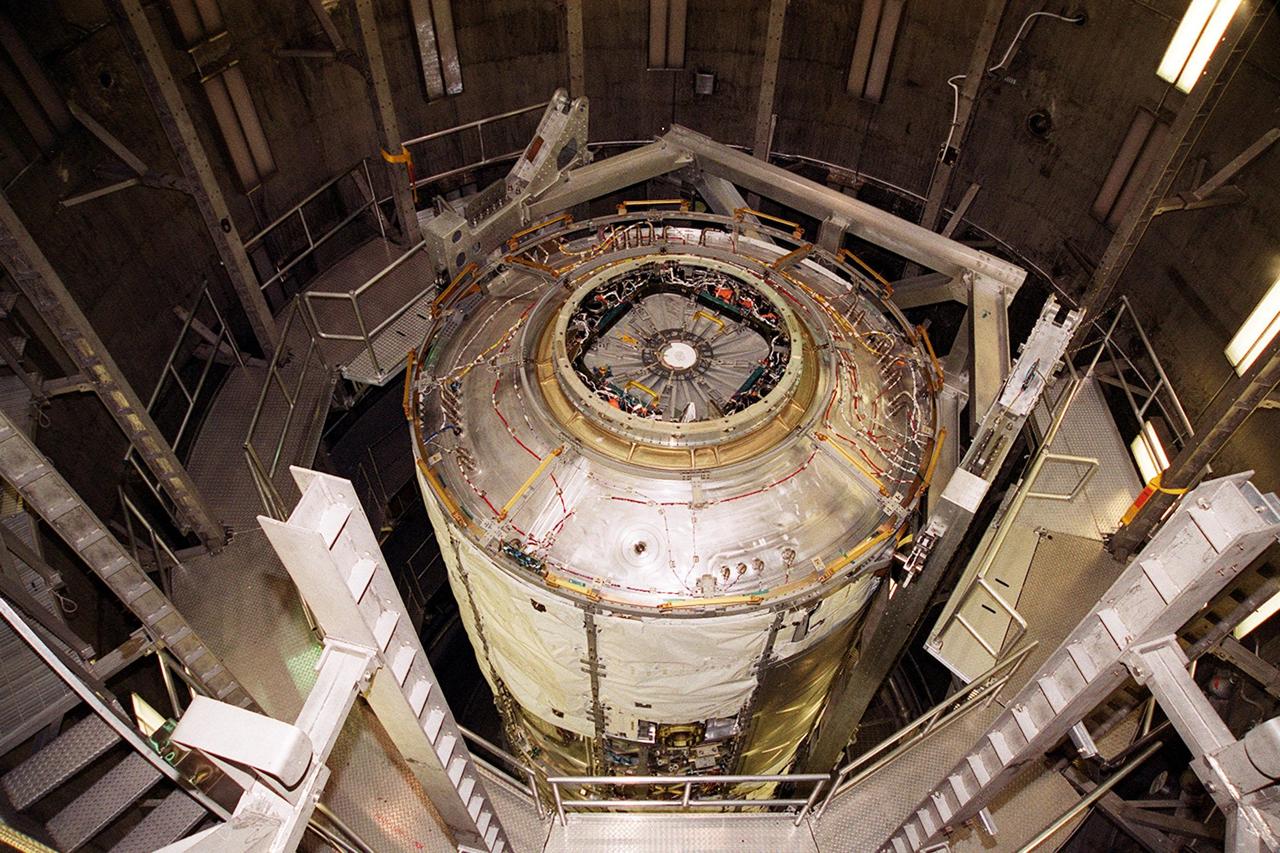
KENNEDY SPACE CENTER, FLA. -- After successfully completing a leak test inside a vacuum chamber in the Operations and Checkout Building, the U.S. Lab, a component of the International Space Station, is ready to be lifted and removed from the chamber. The 32,000-pound scientific research lab, named Destiny, is the first Space Station element to spend seven days in the renovated vacuum chamber. Destiny is scheduled to be launched on Shuttle mission STS-98, the 5A assembly mission, targeted for Jan. 18, 2001. During the mission, the crew will install the Lab in the Space Station during a series of three space walks. The STS-98 mission will provide the Station with science research facilities and expand its power, life support and control capabilities. The U.S. Lab module continues a long tradition of microgravity materials research, first conducted by Skylab and later Shuttle and Spacelab missions. Destiny is expected to be a major feature in future research, providing facilities for biotechnology, fluid physics, combustion, and life sciences research

KENNEDY SPACE CENTER, FLA. -- After successfully completing a leak test inside a vacuum chamber in the Operations and Checkout Building, the U.S. Lab, a component of the International Space Station, is lifted out of the chamber. A rotation and handling fixture holds the Lab. The 32,000-pound scientific research lab, named Destiny, is the first Space Station element to spend seven days in the renovated vacuum chamber. Destiny is scheduled to be launched on Shuttle mission STS-98, the 5A assembly mission, targeted for Jan. 18, 2001. During the mission, the crew will install the Lab in the Space Station during a series of three space walks. The STS-98 mission will provide the Station with science research facilities and expand its power, life support and control capabilities. The U.S. Lab module continues a long tradition of microgravity materials research, first conducted by Skylab and later Shuttle and Spacelab missions. Destiny is expected to be a major feature in future research, providing facilities for biotechnology, fluid physics, combustion, and life sciences research

KENNEDY SPACE CENTER, FLA. -- In the Operations and Checkout Building, the U.S. Lab moves overhead toward the open floor after being lifted out of the vacuum chamber where it was tested for leaks. The test was very successful. The 32,000-pound scientific research lab, named Destiny, is the first Space Station element to spend seven days in the renovated vacuum chamber. Destiny is scheduled to be launched on Shuttle mission STS-98, the 5A assembly mission, targeted for Jan. 18, 2001. During the mission, the crew will install the Lab in the Space Station during a series of three space walks. The STS-98 mission will provide the Station with science research facilities and expand its power, life support and control capabilities. The U.S. Lab module continues a long tradition of microgravity materials research, first conducted by Skylab and later Shuttle and Spacelab missions. Destiny is expected to be a major feature in future research, providing facilities for biotechnology, fluid physics, combustion, and life sciences research