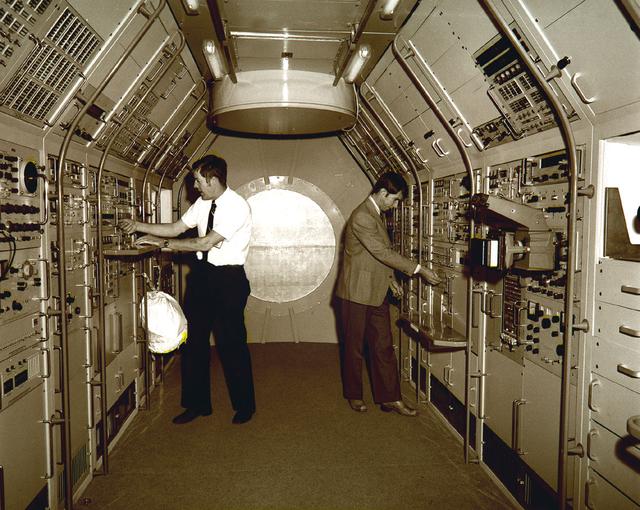
Astronauts Joseph Kerwin (left) and William Lenoir familiarize themselves with equipment aboard the Spacelab mockup during a 1976 visit to the Marshall Space Flight Center. Kerwin and Lenoir were part of an astronaut group briefed on Spacelab subsystems and crew activities by Marshall scientists and engineers. The Marshall Space Flight Center had management responsibility for Spacelab.
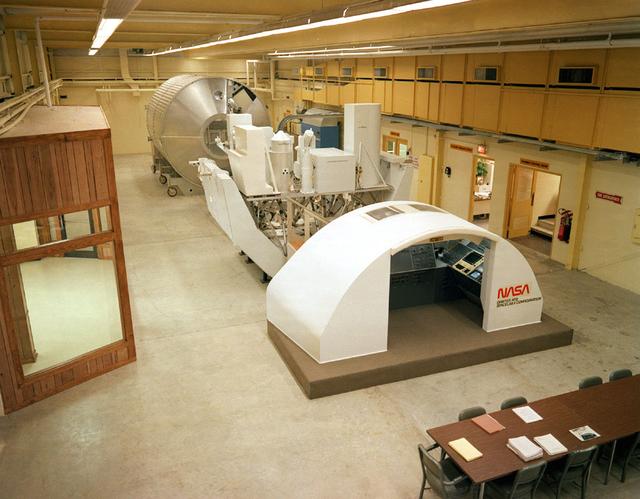
A mockup of the Spacelab II configuration was built at Marshall's Completed Payload Crew Training Complex (PCTC) located at Building 4612.
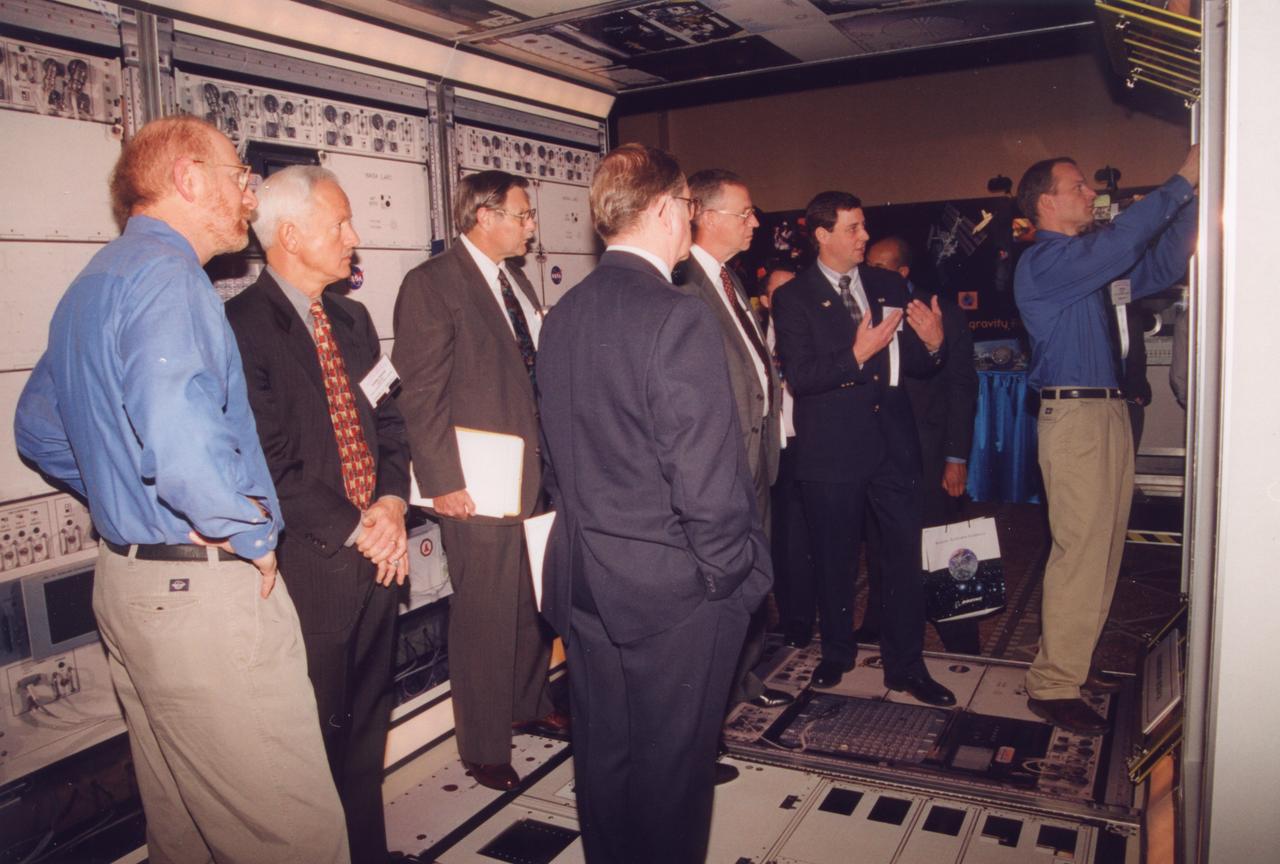
Engineers from NASA's Glenn Research Center demonstrate the access to one of the experiment racks planned for the U.S. Destiny laboratory module on the International Space Station (ISS). This mockup has the full diameter, full corridor width, and half the length of the module. The mockup includes engineering mockups of the Fluids and Combustion Facility being developed by NASA's Glenn Research Center. (The full module will be six racks long; the mockup is three racks long). Listening at left (coat and patterned tie) is John-David Bartoe, ISS research manager at NASA's Johnson Space Center and a payload specialist on Spacelab 2 mission (1985). Photo credit: NASA/Marshall Space Flight Center (MSFC)
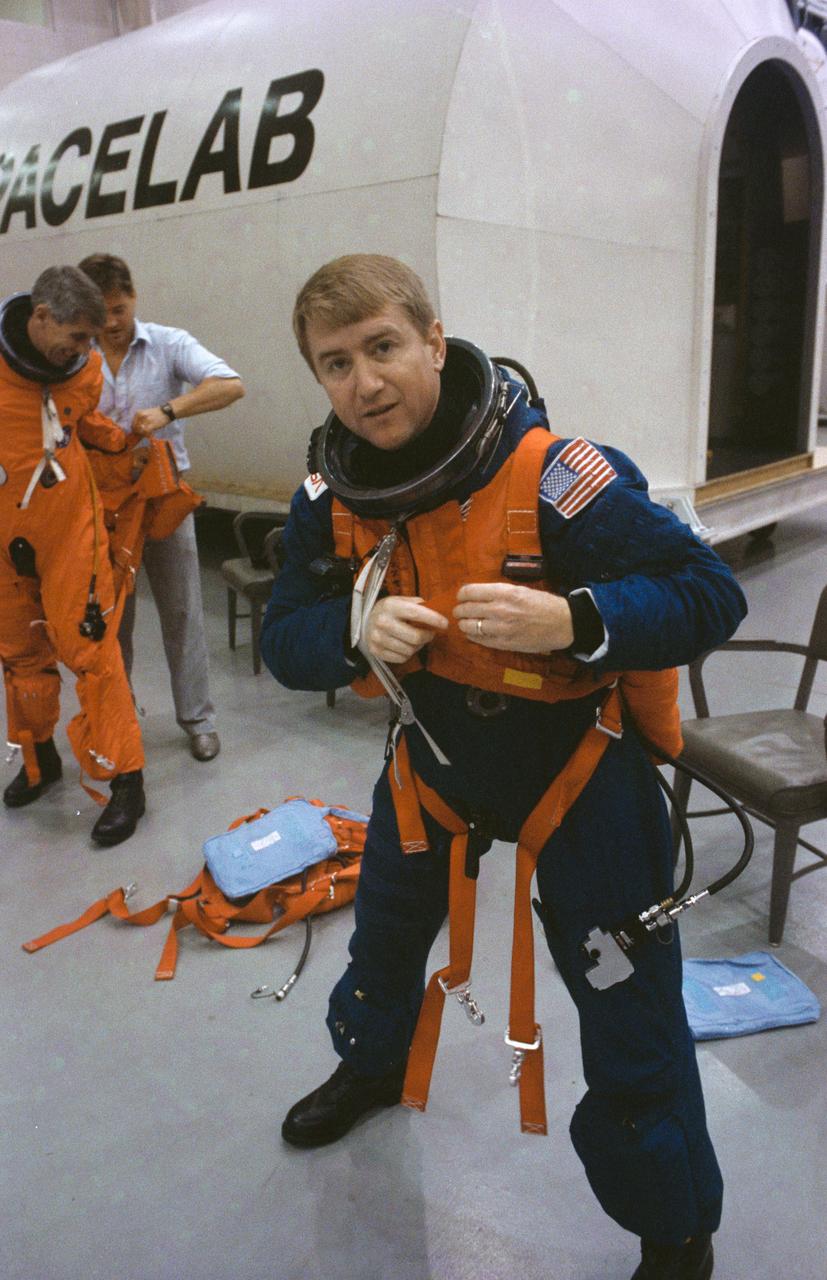
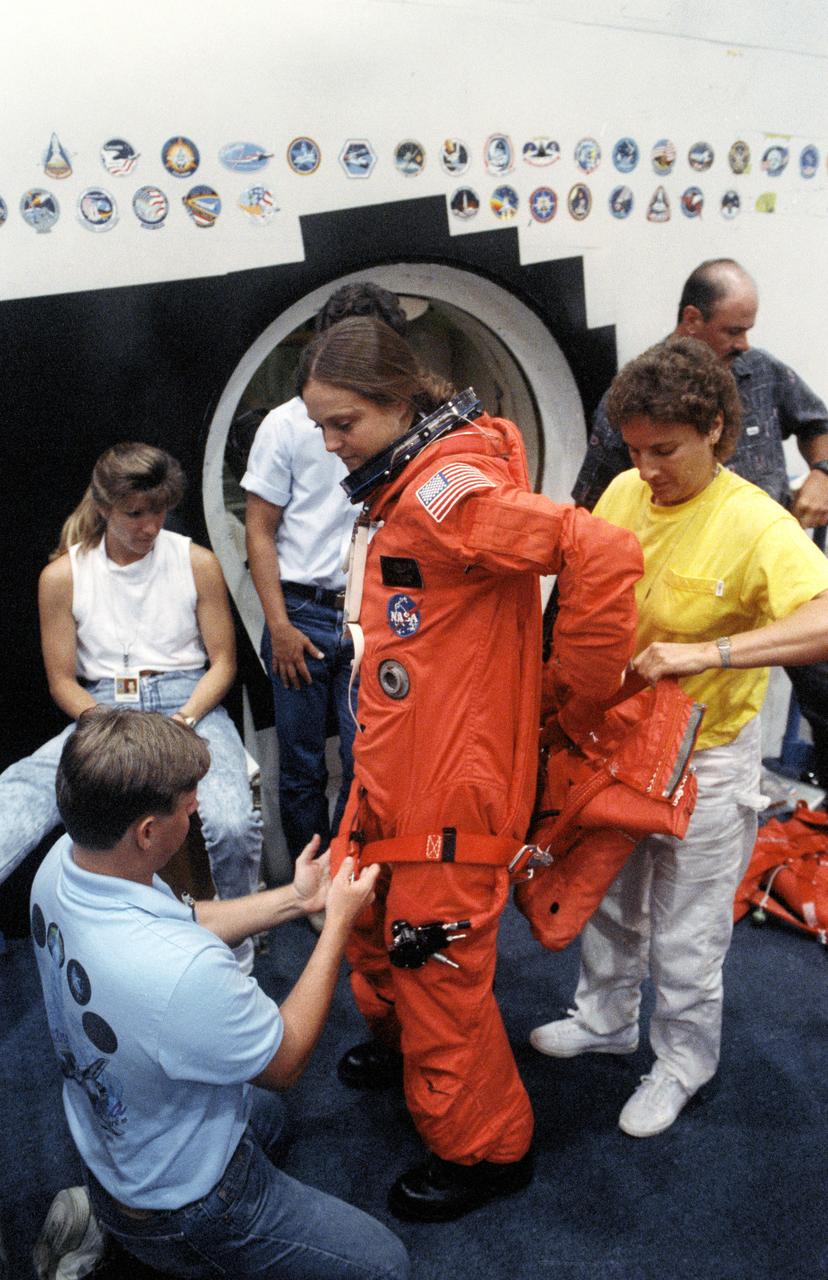
STS-38 crewmembers don launch and entry suit (LES) equipment prior to emergency egress training in JSC's Mockup and Integration Laboratory (MAIL) Bldg 9A. Pilot Frank L. Culbertson, wearing navy blue LES, fastens parachute strap and Mission Specialist (MS) Robert C. Springer, wearing orange LES, dons parachute pack with a technician's assistance in front of a Spacelab module mockup.
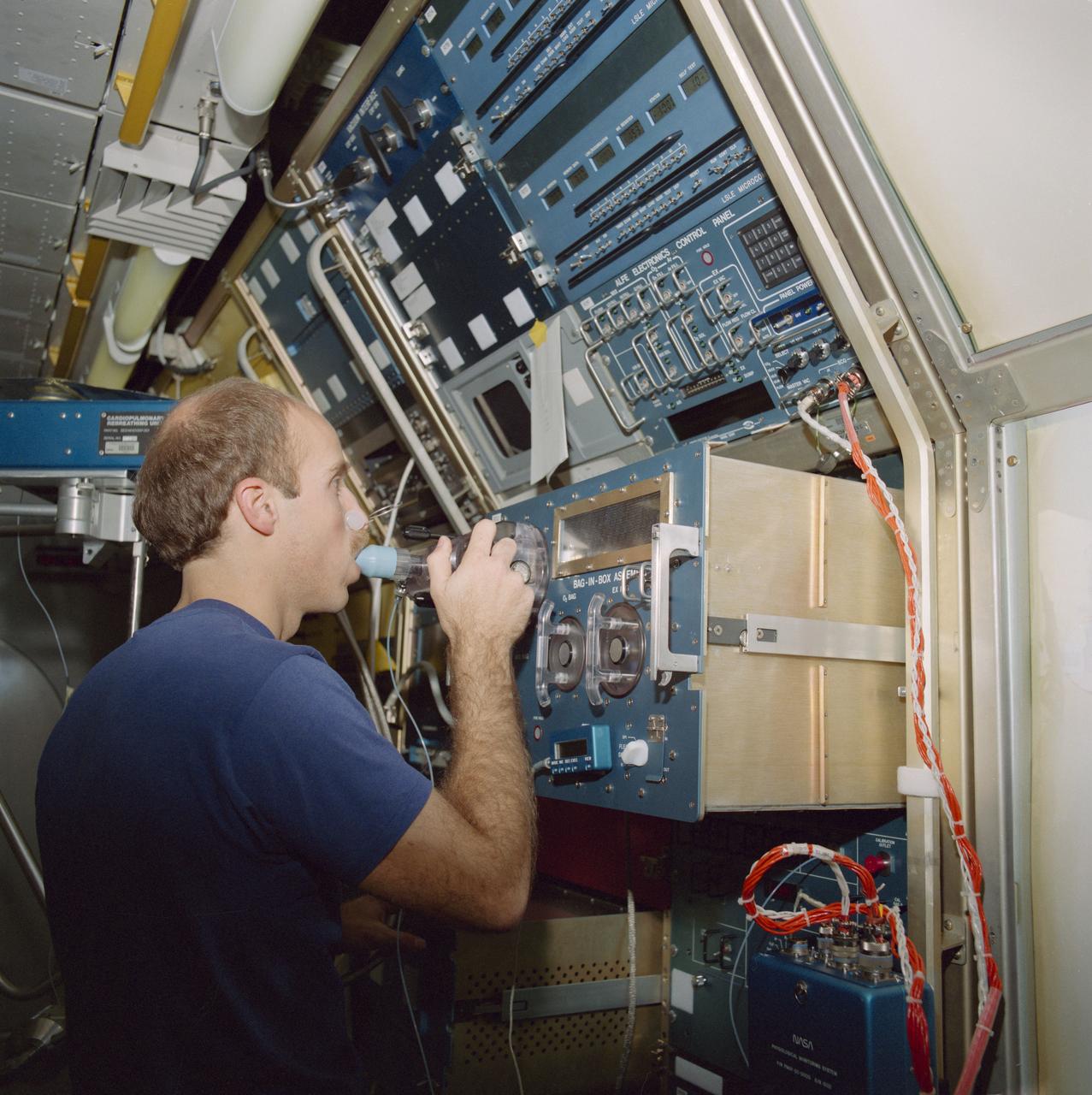
S85-26582 (Feb 1985) --- Training on the rebreathing assembly, astronaut James P. Bagian, STS-40 mission specialist, inhales a predetermined gas composition. A gas analyzer mass spectrometer determines the composition of the gases he exhales. The rebreathing assembly and gas analyzer system are part of an investigation that explores how lung function is altered. Dr. Bagian will be joined by two other mission specialists, the mission commander, the pilot and two payload specialists for the scheduled 10-day Spacelab Life Sciences-1 (SLS-1) mission. The flight is totally dedicated to biological and medical experimentation.
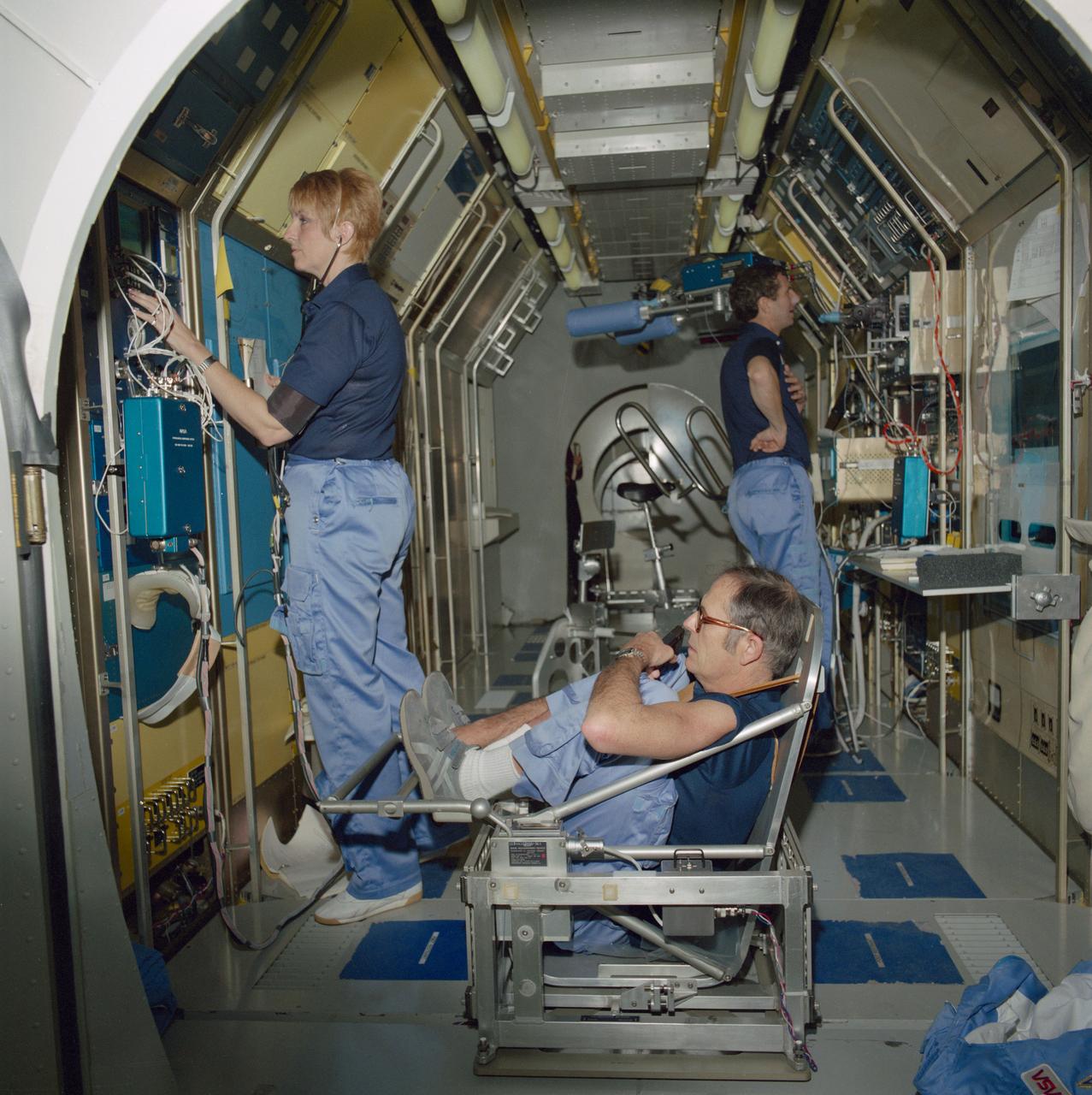
S85-26569 (Feb 1985) --- Two prime crew payload specialists (PS) for NASA's Space Life Sciences-1 (STS-40) mission and a backup PS rehearse medical experiments in a JSC trainer. Left to right are Millie Hughes-Fulford, Robert Phillips and Drew Gaffney. Hughes-Fulford and Gaffney are scheduled to join five NASA astronauts for a Space Shuttle mission devoted to the study of life sciences.
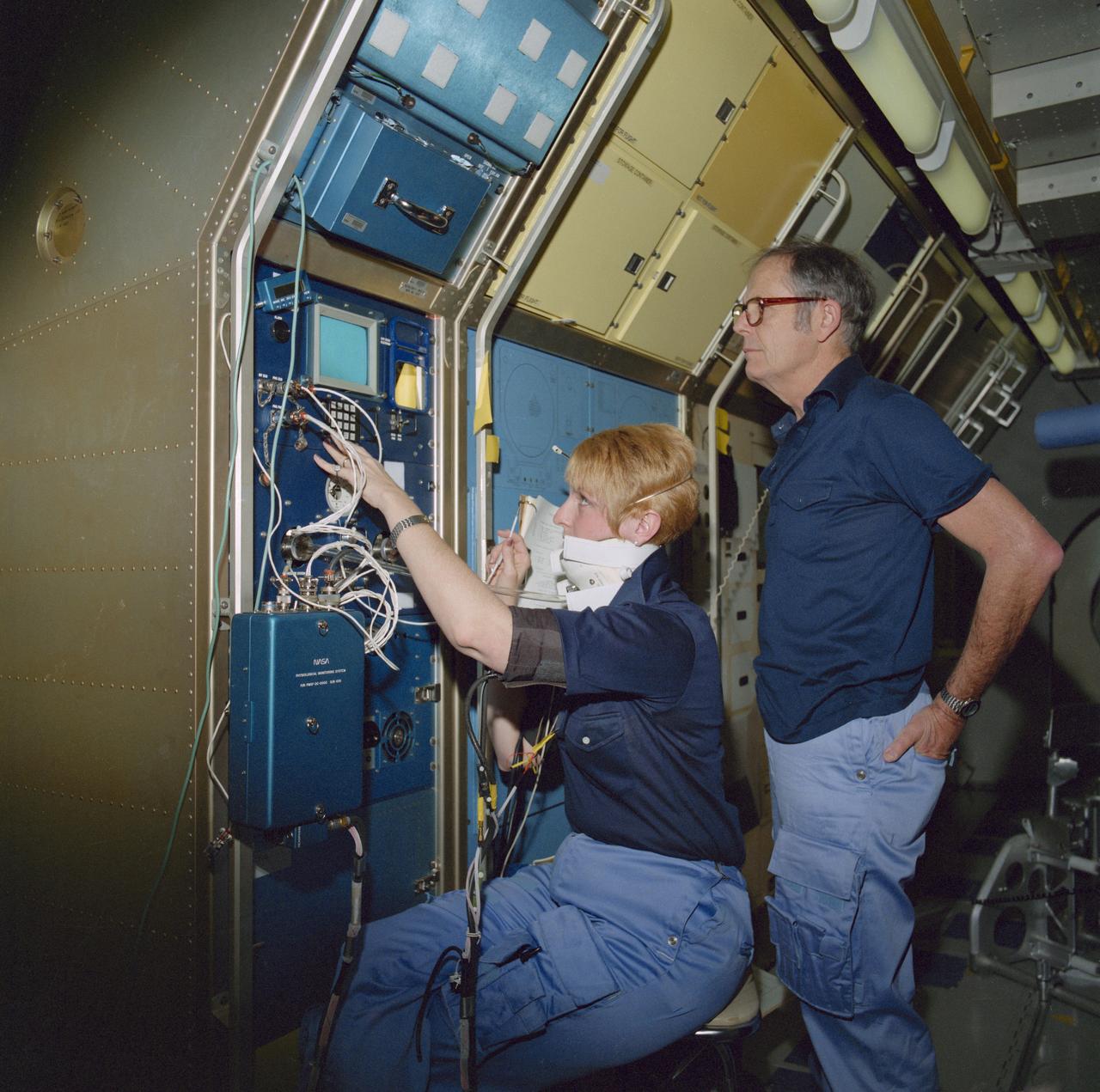
S85-26571 (Feb 1985) --- Wearing a special collar, Millie Hughes-Fulford, payload specialist, practices medical test operations scheduled for the Spacelab Life Sciences (SLS-1) mission. Robert Ward Phillips, backup payload specialist, looks on. The collar, called the baroflex neck pressure chamber, is designed to stimulate the bioceptors in the carotid artery, one of the two main arteries that supply blood to the head.
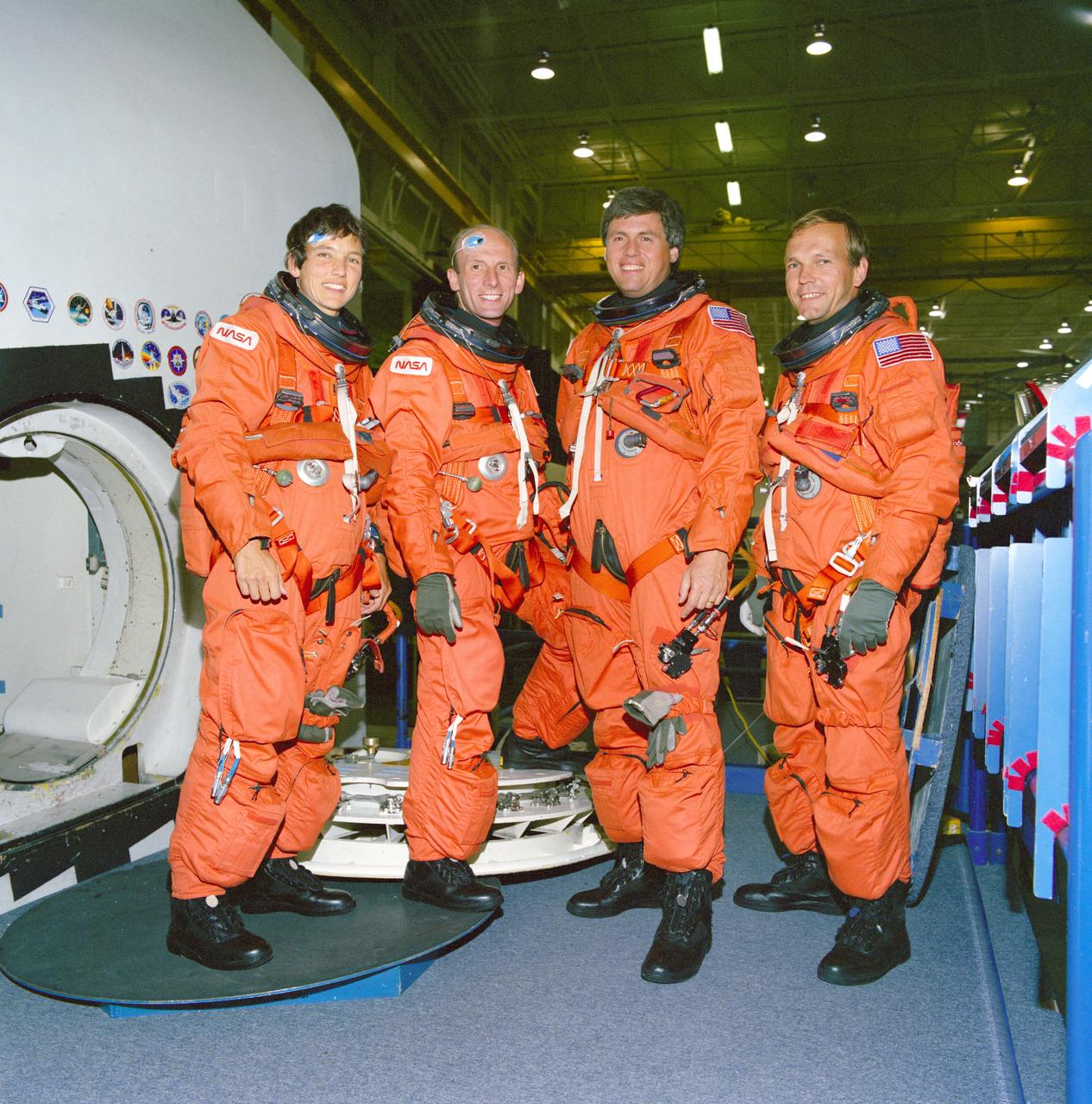
S92-48735 (18 Sept 1992) --- These four Germans have been assigned as payload specialists to support the STS-55\Spacelab D-2 mission. Left to right are Renate Brummer, Gerhard Thiele, Ulrich Walter and Hans Schlegel. Walter and Schlegel are scheduled to fly aboard the Space Shuttle Columbia for the mission, while Brummer and Thiele will serve as alternates and fill supportive roles on the ground. They are seen during a break in training in the Shuttle mockup and integration laboratory at the Johnson Space Center.
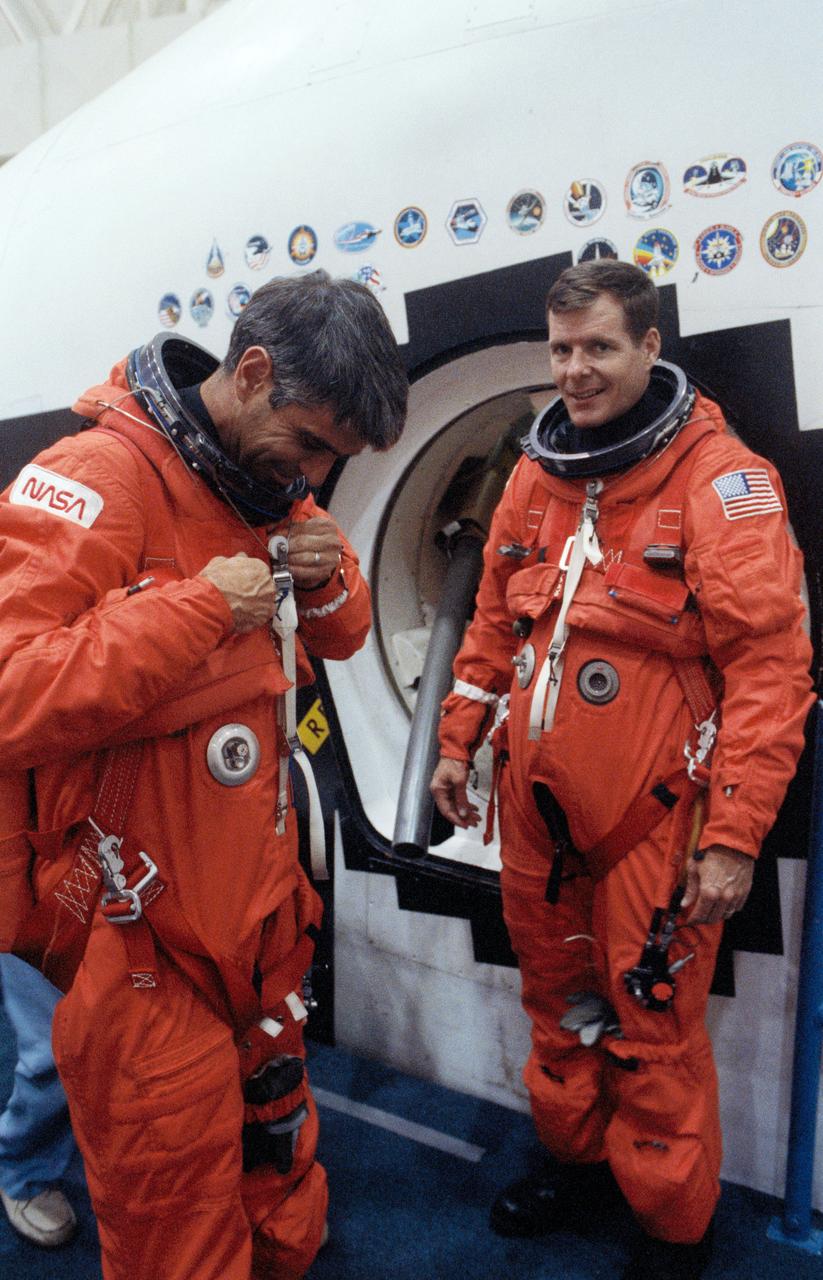
S90-41360 (11 June 1990) --- Two crewmembers assigned to NASA's Spacelab Life Sciences (SLS-1)/STS-40 mission are pictured during emergency egress training in the Shuttle mockup and integration laboratory at the Johnson Space Center (JSC). Seen are astronauts Sidney M. Gutierrez (left) pilot, and Bryan D. O'Connor, mission commander. Out of frame are astronauts Rhea Seddon, James P. Bagian, Tamara E. Jernigan, all mission specialists; and payload specialists Millie Hughes-Fulford and F. Drew Gaffney.
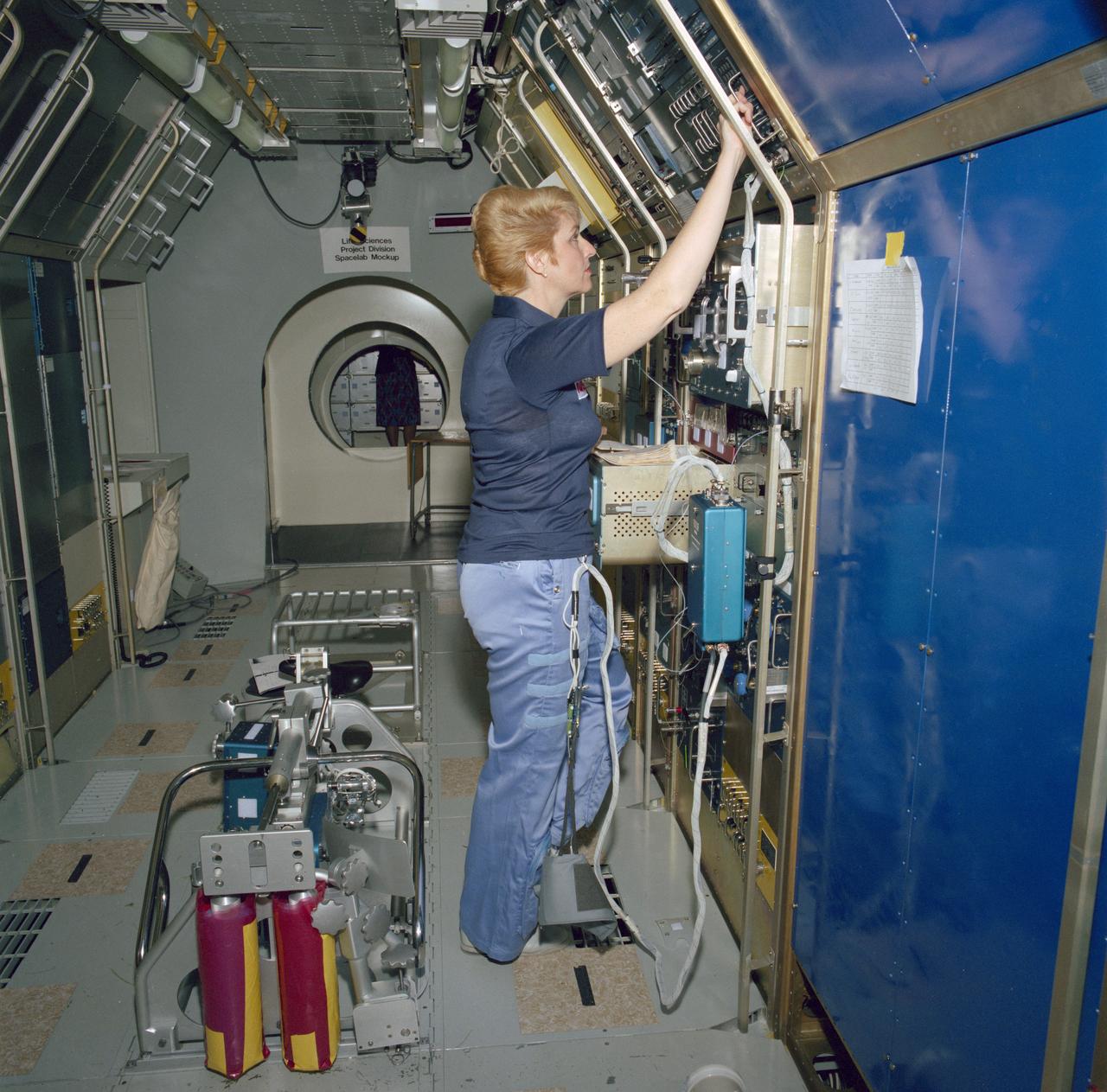
STS-40 Payload Specialist Millie Hughes-Fulford conducts Spacelab Life Sciences 1 (SLS-1) Experiment No. 198, Pulmonary Function During Weightlessness, in JSC's Life Sciences Project Division (LSPD) SLS mockup located in the Bioengineering and Test Support Facility Bldg 36. Hughes-Fulford sets switches on Rack 8. Behind her in the center aisle are the stowed bicycle ergometer (foreground) and the body restraint system.
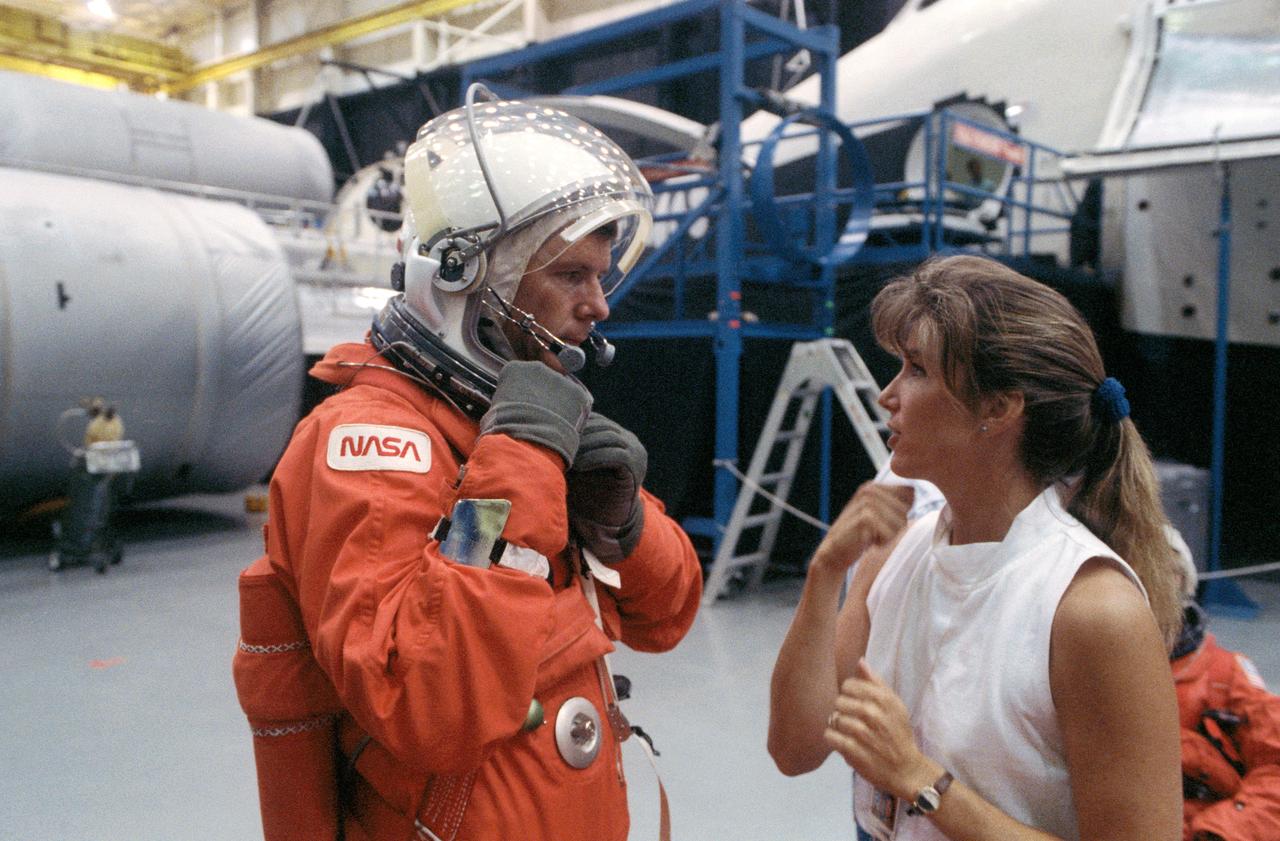
S90-41366 (11 June 1990) --- Astronaut Bryan D. O'Connor, STS-40 mission commander, talks with Elizabeth Youmans of the crew training staff at JSC, during a break in mission training. This exercise, in JSC's Shuttle mockup and integration laboratory, was designed to familiarize the astronauts with proper procedures and gear involved in emergency egress from the Space Shuttle. O'Connor is wearing the orange partial pressure ascent/entry suit. Primary payload of the STS-40 mission is Spacelab Life Sciences (SLS-1).
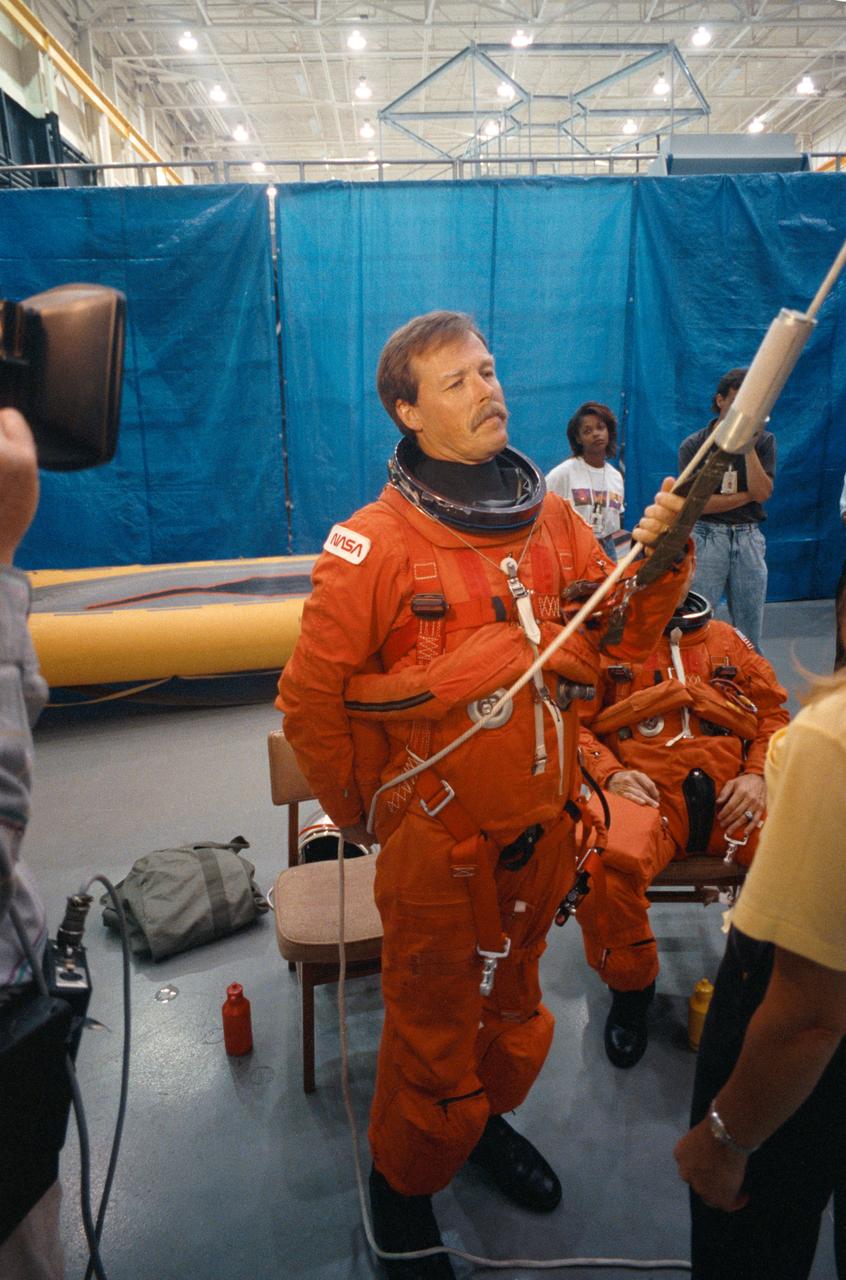
STS-47 Endeavour, Orbiter Vehicle (OV) 105, Spacelab Japan (SLJ) Commander Robert L. Gibson, wearing launch and entry suit (LES), holds sky genie equipment in proper position while listening to a training instructor's directions. Gibson along with the other STS-47 crewmembers is participating in post landing emergency egress procedures at JSC's Mockup and Integration Laboratory (MAIL) Bldg 9NE.
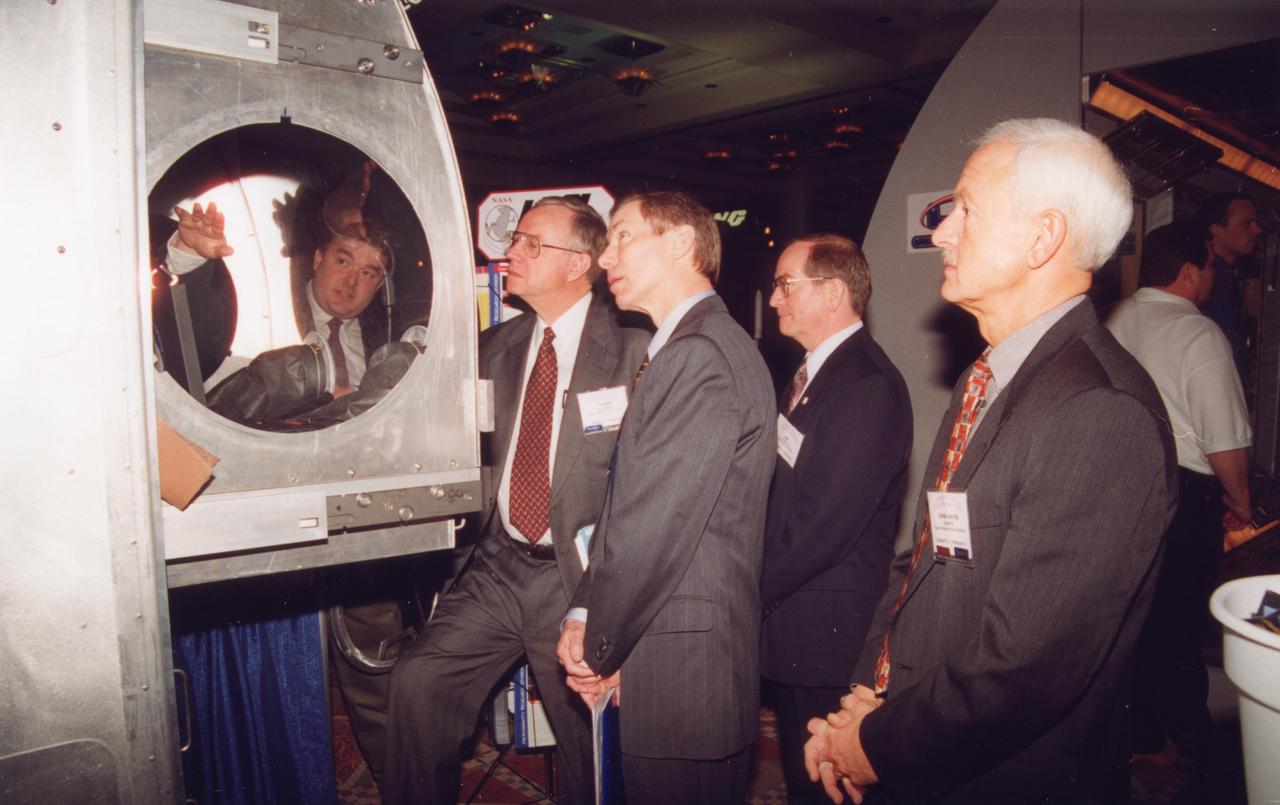
Tim Broach (seen through window) of NASA/Marshall Spce Flight Center (MSFC), demonstrates the working volume inside the Microgravity Sciences Glovebox being developed by the European Space Agency (ESA) for use aboard the U.S. Destiny laboratory module on the International Space Station (ISS). This mockup is the same size as the flight hardware. Observing are Tommy Holloway and Brewster Shaw of The Boeing Co. (center) and John-David Bartoe, ISS research manager at NASA/John Space Center and a payload specialist on Spacelab-2 mission (1985). Photo crdit: NASA/Marshall Space Flight Center (MSFC)
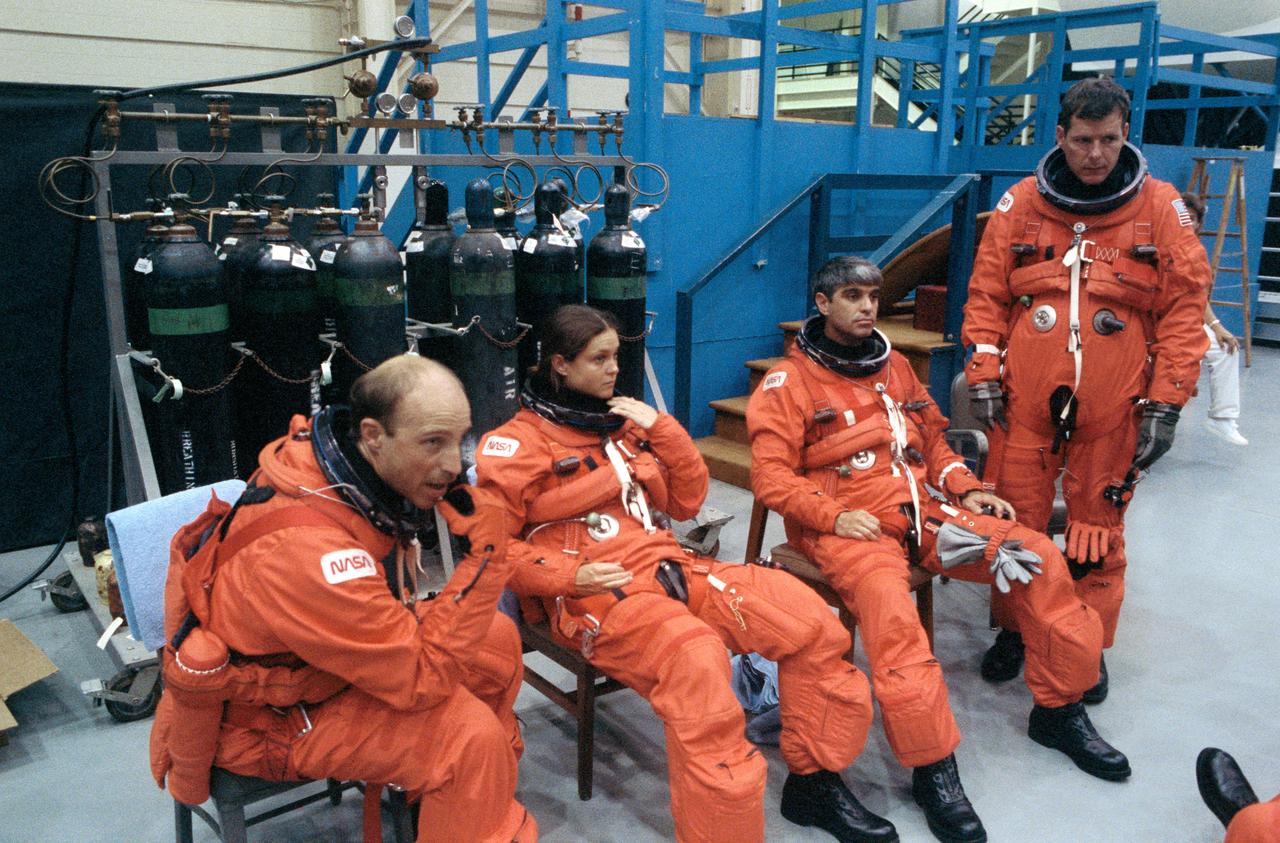
S90-41372 (11 June 1990) --- Crewmembers assigned to NASA's STS 40 Spacelab Life Sciences (SLS-1) mission take a brief break during emergency egress training in the Shuttle mockup and integration laboratory at the Johnson Space Center (JSC). Left to right are astronauts James P. Bagian, Tamara E. Jernigan, both mission specialists; and Sidney M. Gutierrez, pilot; and Bryan D. O'Connor, mission commander. Out of frame are astronaut Rhea Seddon, mission specialist, and payload specialists Millie Hughes-Fulford and Drew Gaffney.
S90-41359 (11 June 1990) --- Astronaut James P. Bagian, STS-40 mission specialist, is seen in his partial pressure ascent/entry suit during a training exercise in the Johnson Space Center's Shuttle mockup and integration laboratory. Dr. Bagian will be joined on the Spacelab Life Sciences (SLS-1) mission, scheduled for launch in less than a year, by astronauts Bryan D. O'Connor, Sidney M. Gutierrez, Rhea Seddon and Tamara E. Jernigan, along with payload specialists F. Drew Gaffney and Millie Hughes-Fulford.
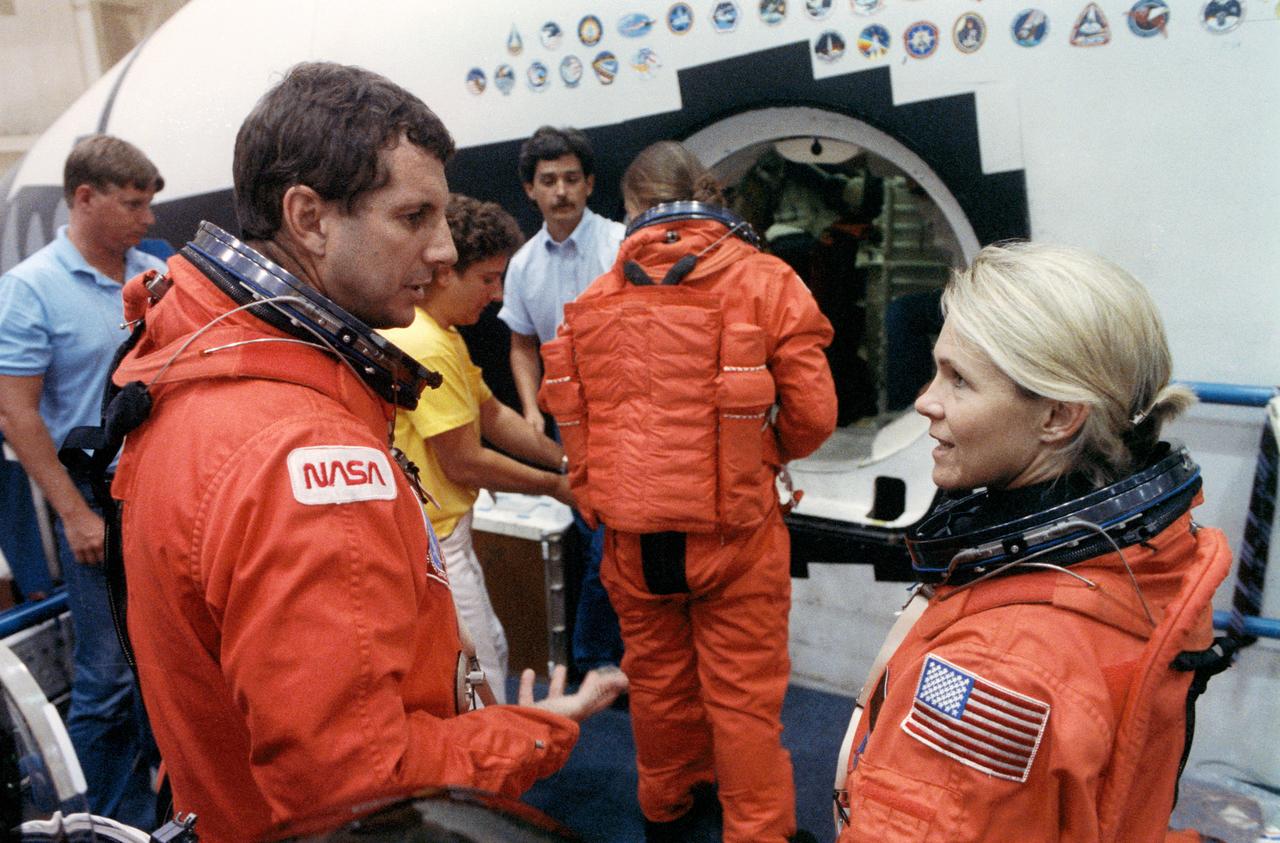
S90-41365 (11 June 1990) --- Crewmembers assigned to NASA's STS-40/Spacelab Life Sciences (SLS-1) mission take a brief break during emergency egress training in the Shuttle mockup and integration laboratory at the Johnson Space Center (JSC). In the foreground are astronauts Rhea Seddon and payload specialist F. Drew Gaffney. In the background, also wearing an orange partial pressure, ascent/entry suit is astronaut Tamara E. Jernigan, mission specialist. Not in the frame are astronauts Bryan D. O'Connor, mission commander; Sidney M. Gutierrez, pilot; James P. Bagian, mission specialist, and payload specialist Millie Fulford-Hughes.
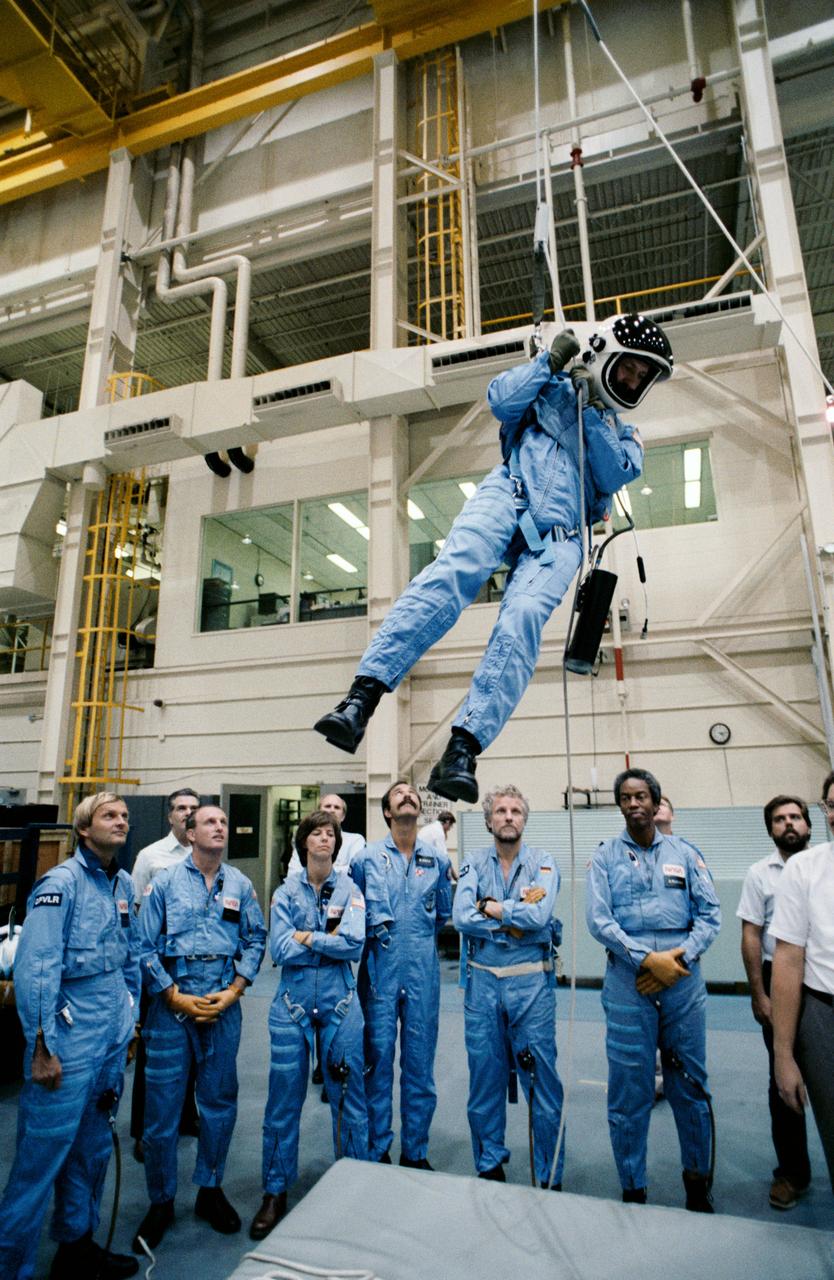
S85-41246 (26 Sept 1985) --- The STS 61-A/Spacelab D-1 crewmembers are seen in this training scene in the Johnson Space Center's Space Shuttle mockup and integration laboratory. Descending from a simulated Shuttle orbiter in distress, using a Sky-Genie device, is Astronaut Henry W. Hartsfield, Jr. mission commander. Watching in blue flight garments are other members of the crew. They are, left to right, Ernst Messerschmid, German payload specialist (PS1); James F. Buchli, NASA mission specialist (MS2); Bonnie J. Dunbar, NASA mission specialist (MS1); Wubbo J. Ockels, Dutch PS3. Not pictured is Steven R. Nagel, pilot. Photo was taken by Otis Imboden.
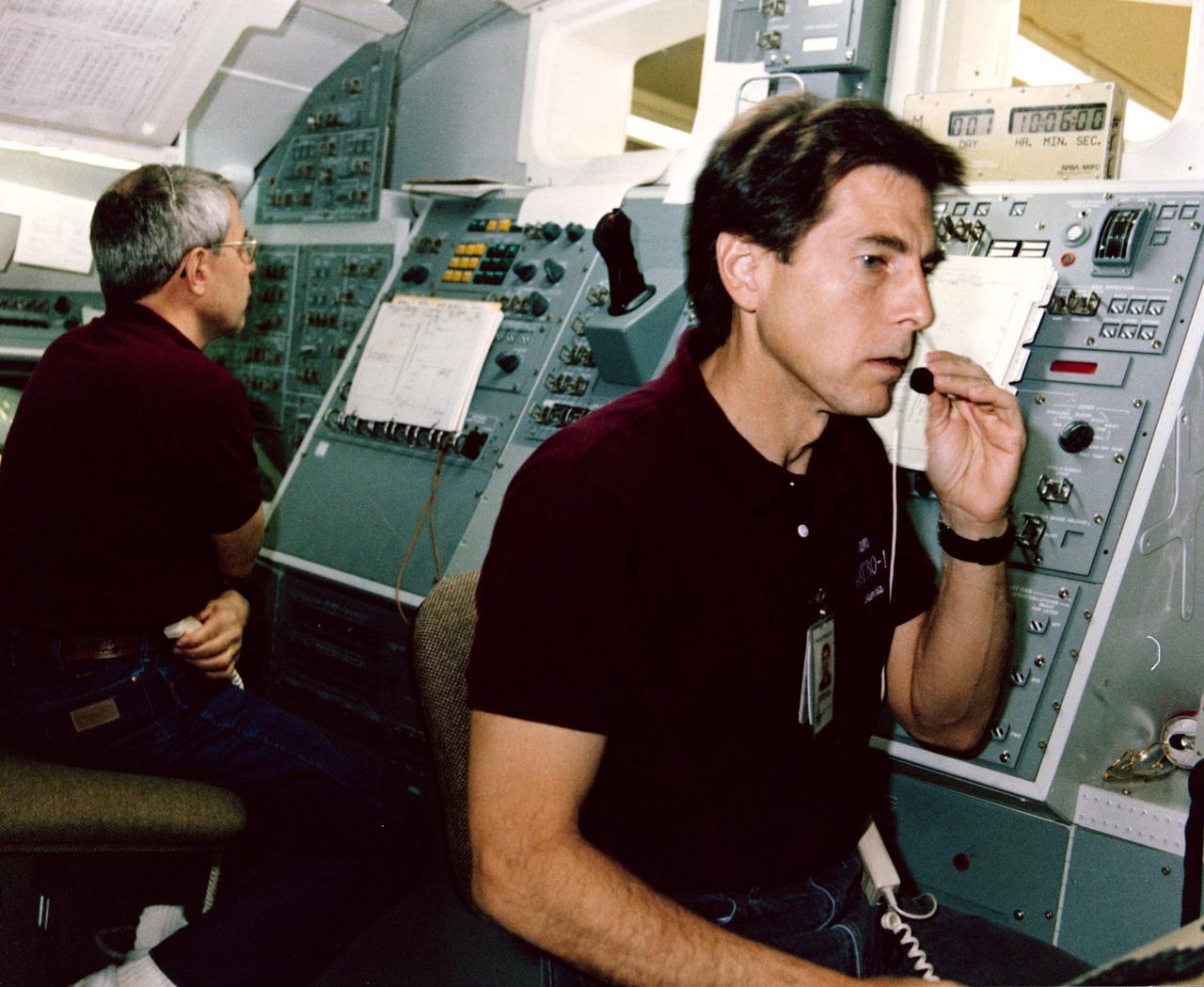
STS-35 Mission Specialist (MS) Robert A.R. Parker (left) and Payload Specialist Samuel T. Durrance practice Astronomy Laboratory 1 (ASTRO-1) experiment procedures in a space shuttle aft flight deck mockup in the Payload Crew Training Complex at the Marshall Space Flight Center (MSFC) in Huntsville, Alabama. For all Spacelab missions, shuttle crew members train regularly in the facility in preparation to operate experiments on their Spacelab missions. The ASTRO-1 crew will operate the ultraviolet telescopes and instrument pointing system (IPS) from Columbia's, Orbiter Vehicle (OV) 102's, aft flight deck. The seven-member ASTRO-1 crew will work around the clock, in 12-hour shifts, to allow the maximum number of observations to be made during their nine or ten days in orbit. In addition to the commander and pilot, the crew consistss of three MSs and two payload specialists. (MSs are career astronauts who are trained in a specialized field. Payload specialists are members of the science investigator teams who were nominated by their peers to operate their experiments on orbit. They are trained and certified for flight by NASA.) View provided by MSFC with alternate number 9005803.
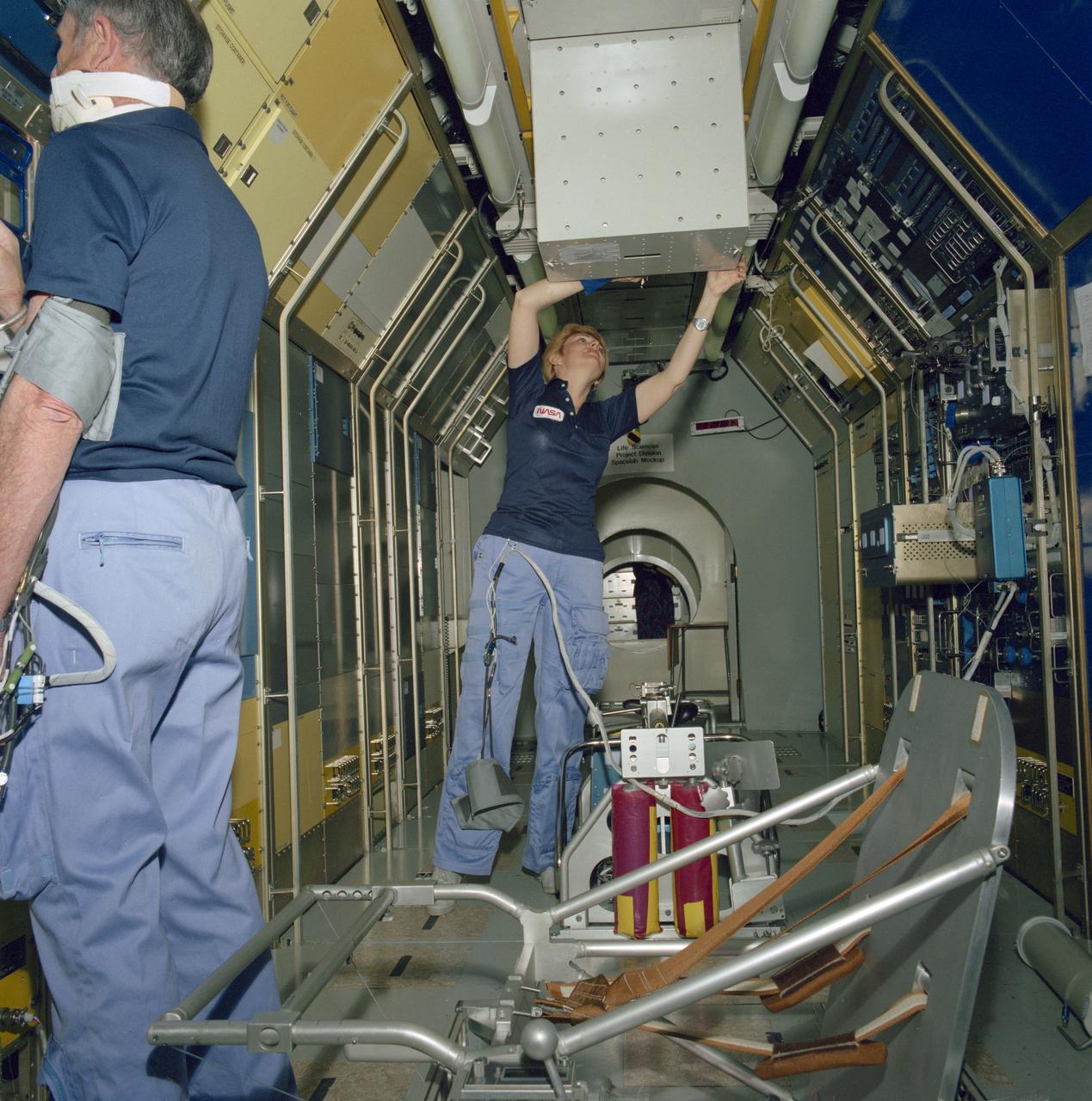
STS-40 Payload Specialist Millie Hughes-Fulford along with backup payload specialist Robert Ward Phillips familiarize themselves with Spacelab Life Sciences 1 (SLS-1) equipment. The two scientists are in JSC's Life Sciences Project Division (LSPD) SLS mockup located in the Bioengineering and Test Support Facility Bldg 36. Hughes-Fulford, in the center aisle, pulls equipment from an overhead stowage locker while Phillips, in the foreground, experiments with the baroreflex neck pressure chamber at Rack 11. The baroreflex collar will be used in conjuction with Experiment No. 022, Influence of Weightlessness Upon Human Autonomic Cardiovascular Control. Behind Phillips in the center aisle are body mass measurement device (BMMD) (foreground) and the stowed bicycle ergometer.