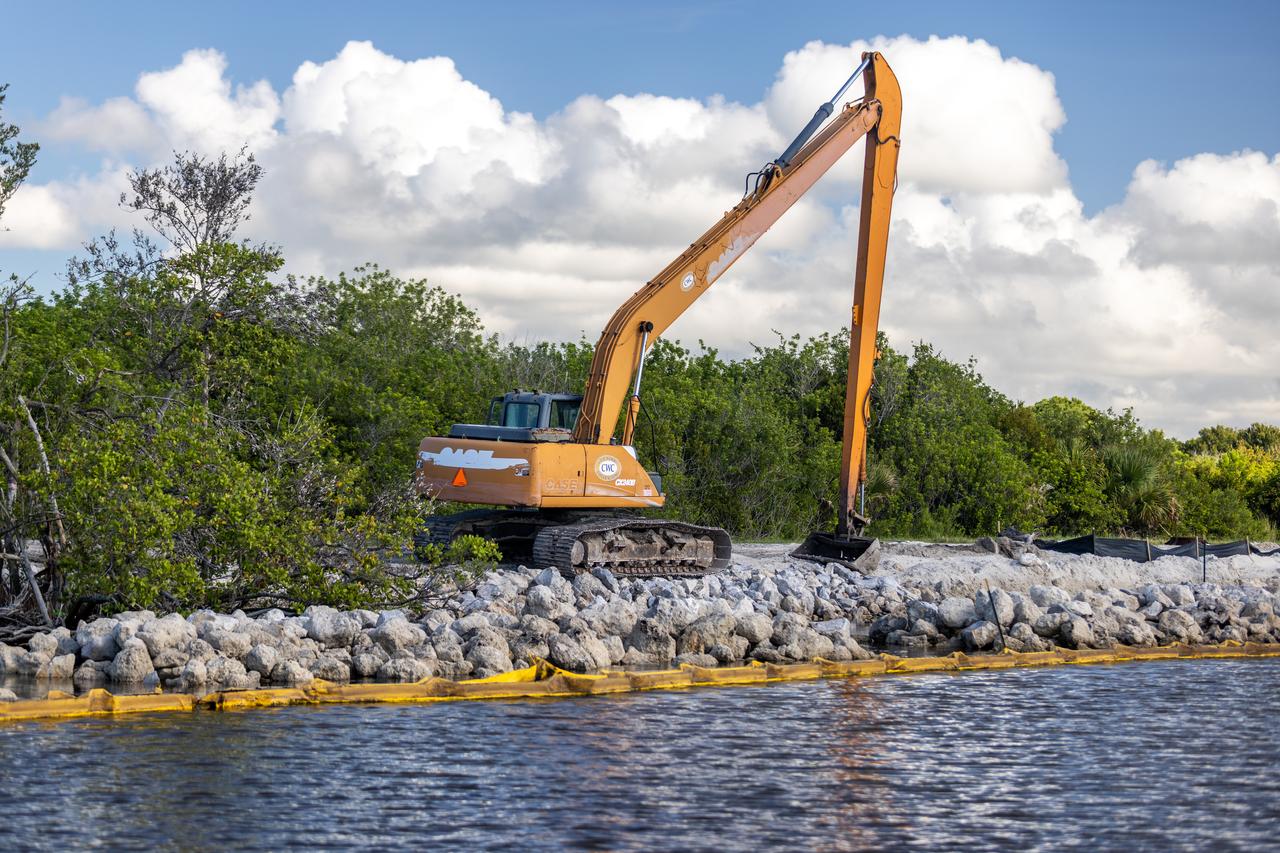
NASA Kennedy Space Center’s Spaceport Integration and Services organization is leading a restoration project at KARS Park on Hall Road in Merritt Island, Florida. As part of this project, a wavebreak is being created about 20 feet offshore to allow mangroves and other plants to propagate into the gap, providing protection for the shoreline.
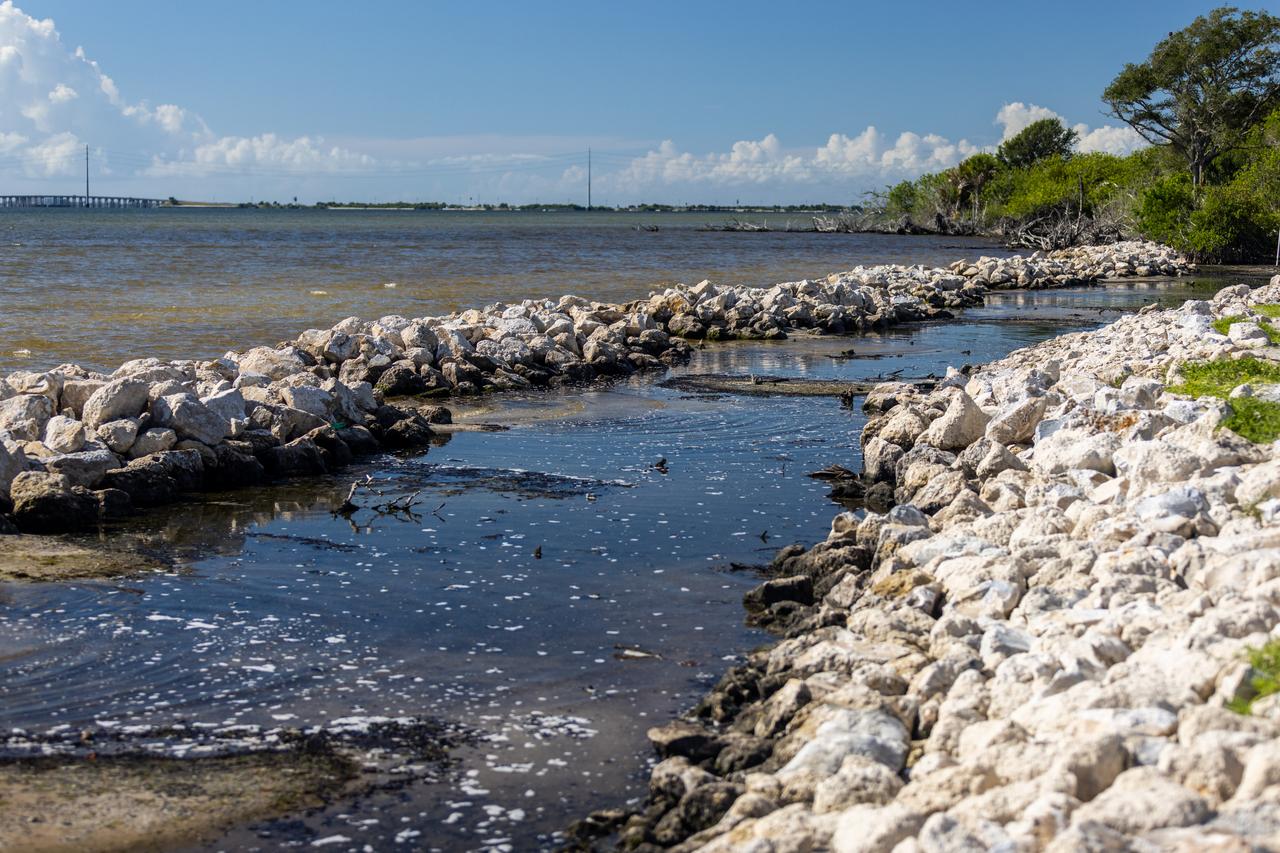
NASA Kennedy Space Center’s Spaceport Integration and Services organization is leading a restoration project at KARS Park on Hall Road in Merritt Island, Florida. As part of this project, a wavebreak is being created about 20 feet offshore to allow mangroves and other plants to propagate into the gap, providing protection for the shoreline.
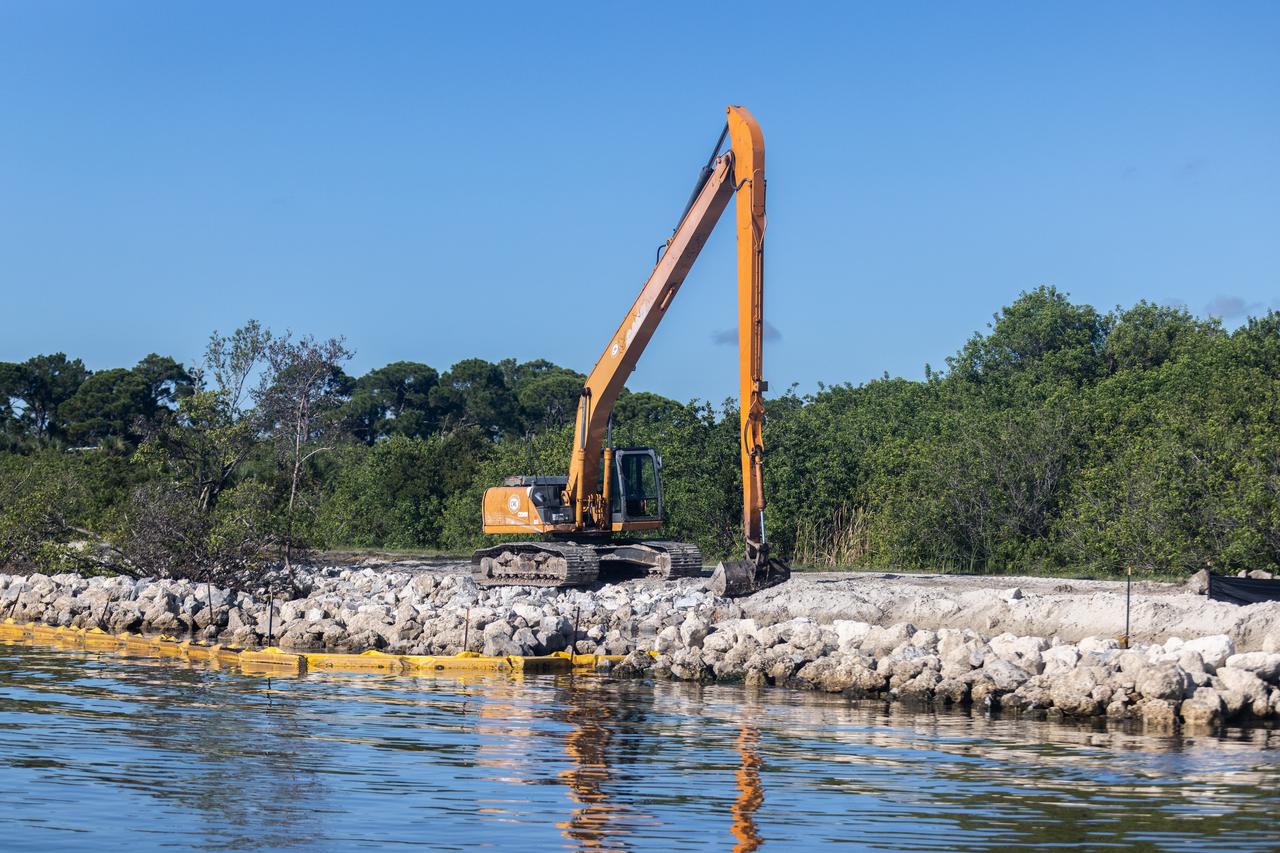
NASA Kennedy Space Center’s Spaceport Integration and Services organization is leading a restoration project at KARS Park on Hall Road in Merritt Island, Florida. As part of this project, a wavebreak is being created about 20 feet offshore to allow mangroves and other plants to propagate into the gap, providing protection for the shoreline.
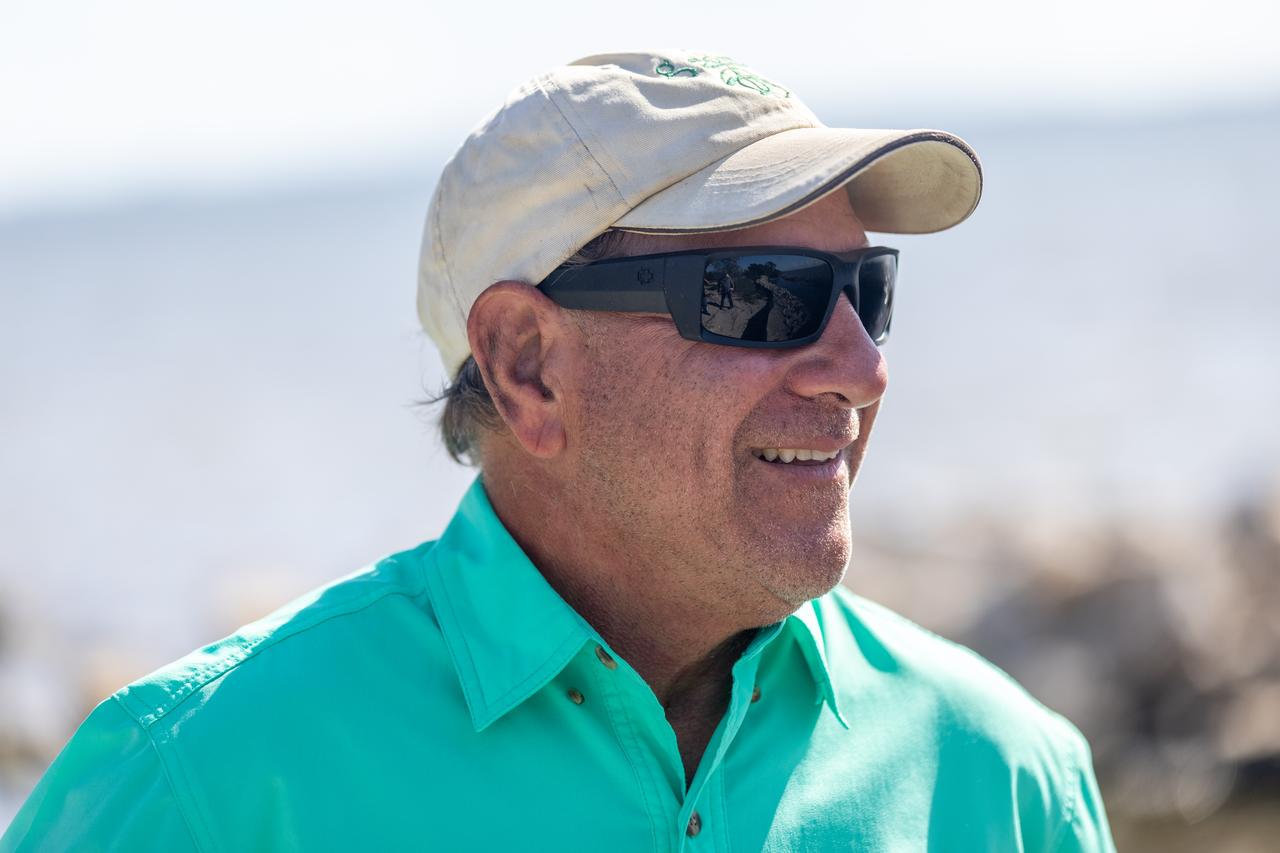
NASA Kennedy Space Center’s Spaceport Integration and Services organization is leading a restoration project at KARS Park on Hall Road in Merritt Island, Florida. As part of this project, a wavebreak is being created about 20 feet offshore to allow mangroves and other plants to propagate into the gap, providing protection for the shoreline. Shown here is Mark Mercadante, an environmental scientist at Kennedy.
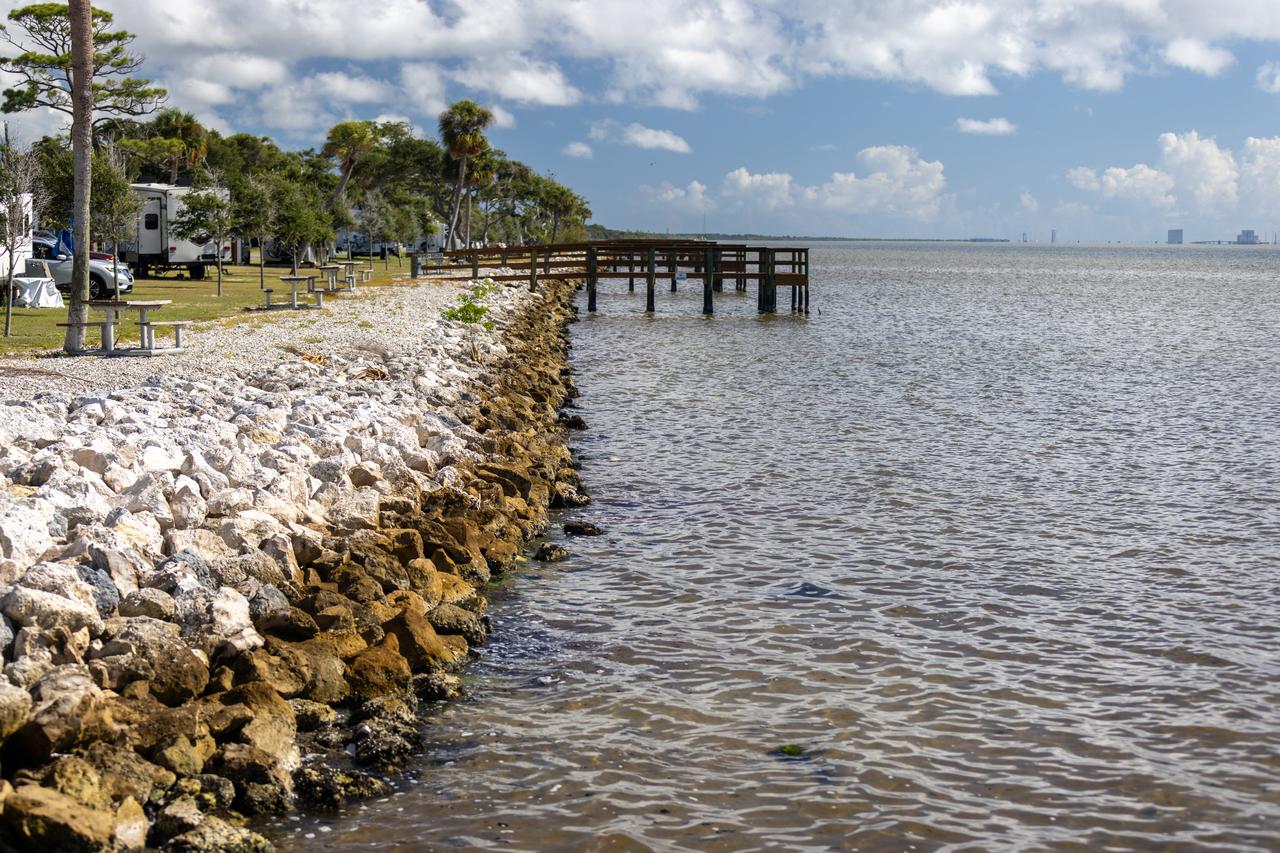
NASA Kennedy Space Center’s Spaceport Integration and Services organization is leading a restoration project at KARS Park on Hall Road in Merritt Island, Florida. As part of this project, a wavebreak is being created about 20 feet offshore to allow mangroves and other plants to propagate into the gap, providing protection for the shoreline. Shown here is the section of KARS park that was first completed during the project.
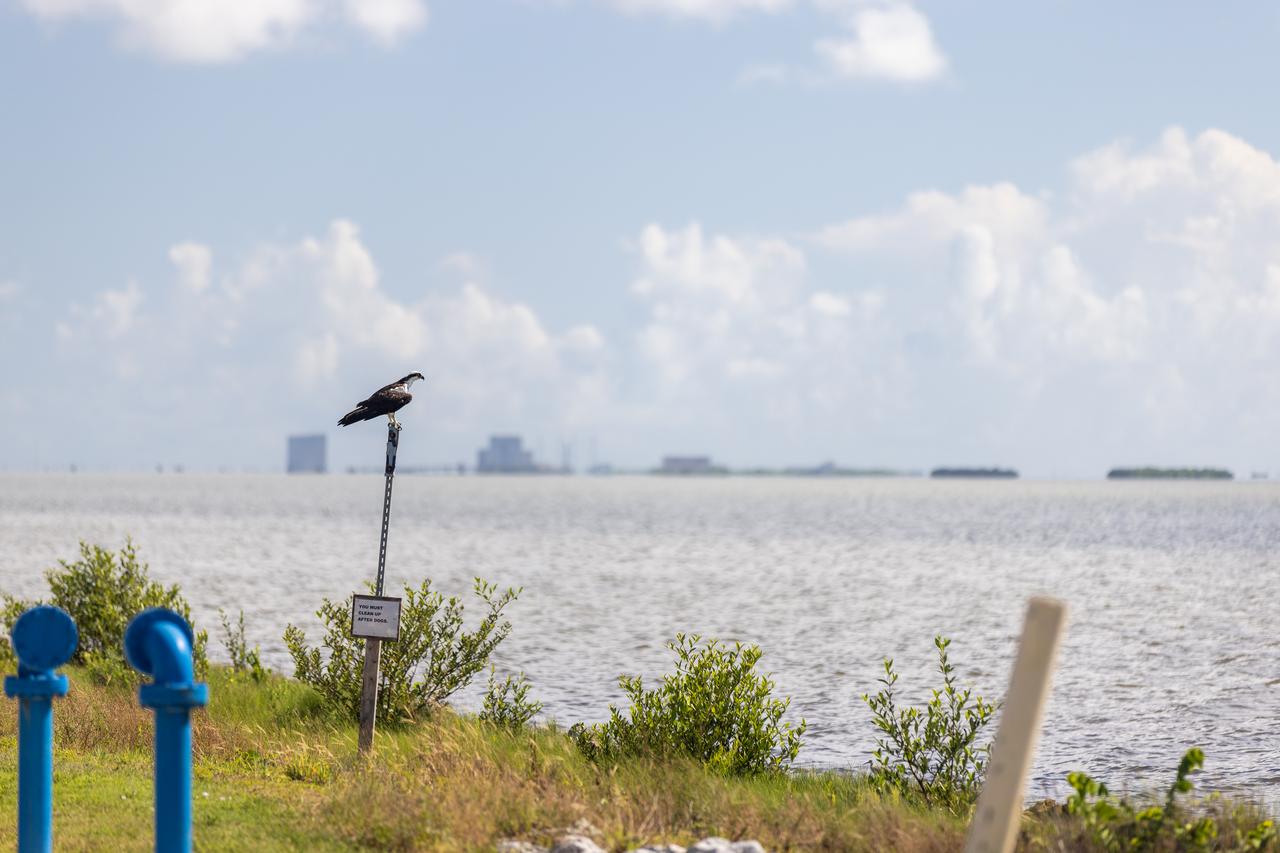
NASA Kennedy Space Center’s Spaceport Integration and Services organization is leading a restoration project at KARS Park on Hall Road in Merritt Island, Florida. As part of this project, a wavebreak is being created about 20 feet offshore to allow mangroves and other plants to propagate into the gap, providing protection for the shoreline. Shown here is an osprey overlooking the water.
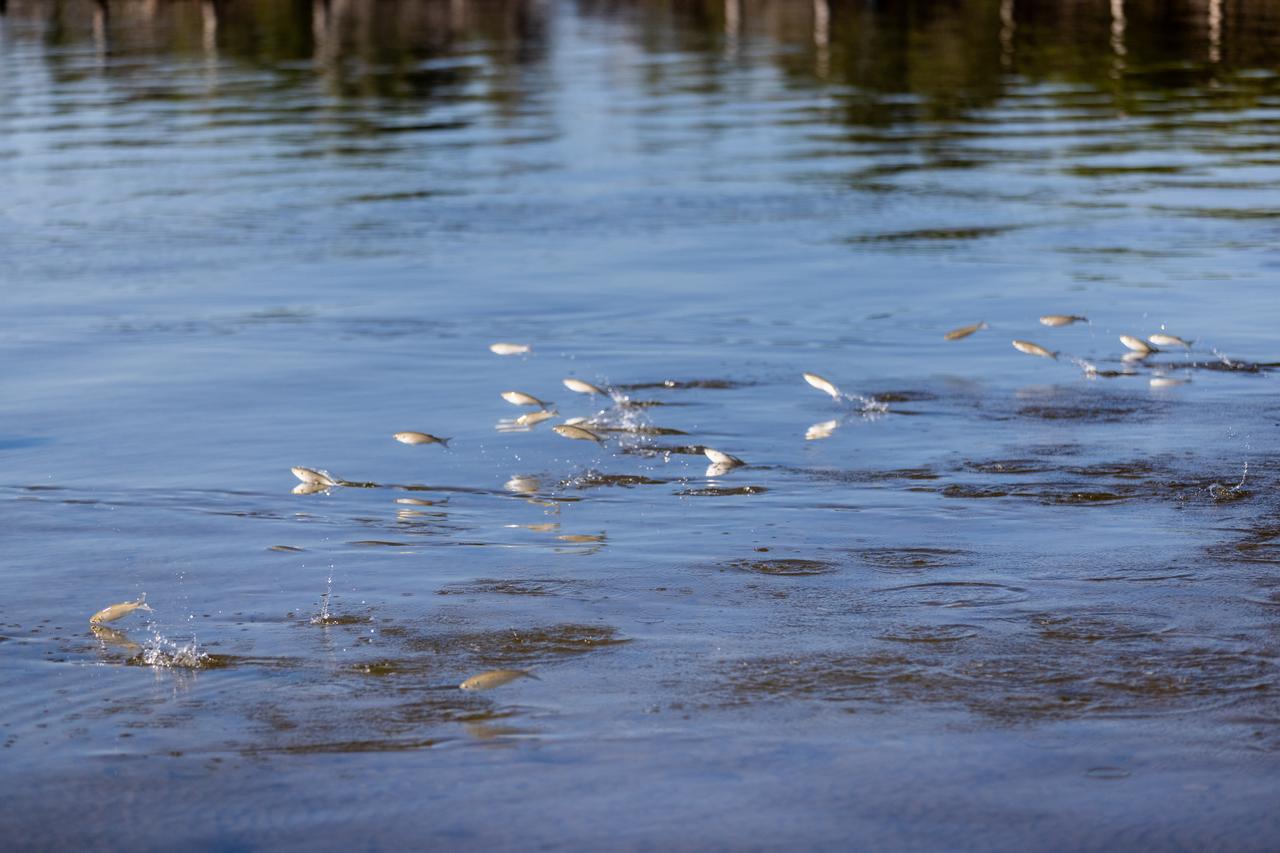
NASA Kennedy Space Center’s Spaceport Integration and Services organization is leading a restoration project at KARS Park on Hall Road in Merritt Island, Florida. As part of this project, a wavebreak is being created about 20 feet offshore to allow mangroves and other plants to propagate into the gap, providing protection for the shoreline. Shown here are mullet swimming at the location.

NASA Kennedy Space Center’s Spaceport Integration and Services organization is leading a restoration project at KARS Park on Hall Road in Merritt Island, Florida. As part of this project, a wavebreak is being created about 20 feet offshore to allow mangroves and other plants to propagate into the gap, providing protection for the shoreline. Shown in this photo is red mangrove starting to grow in the restoration area.
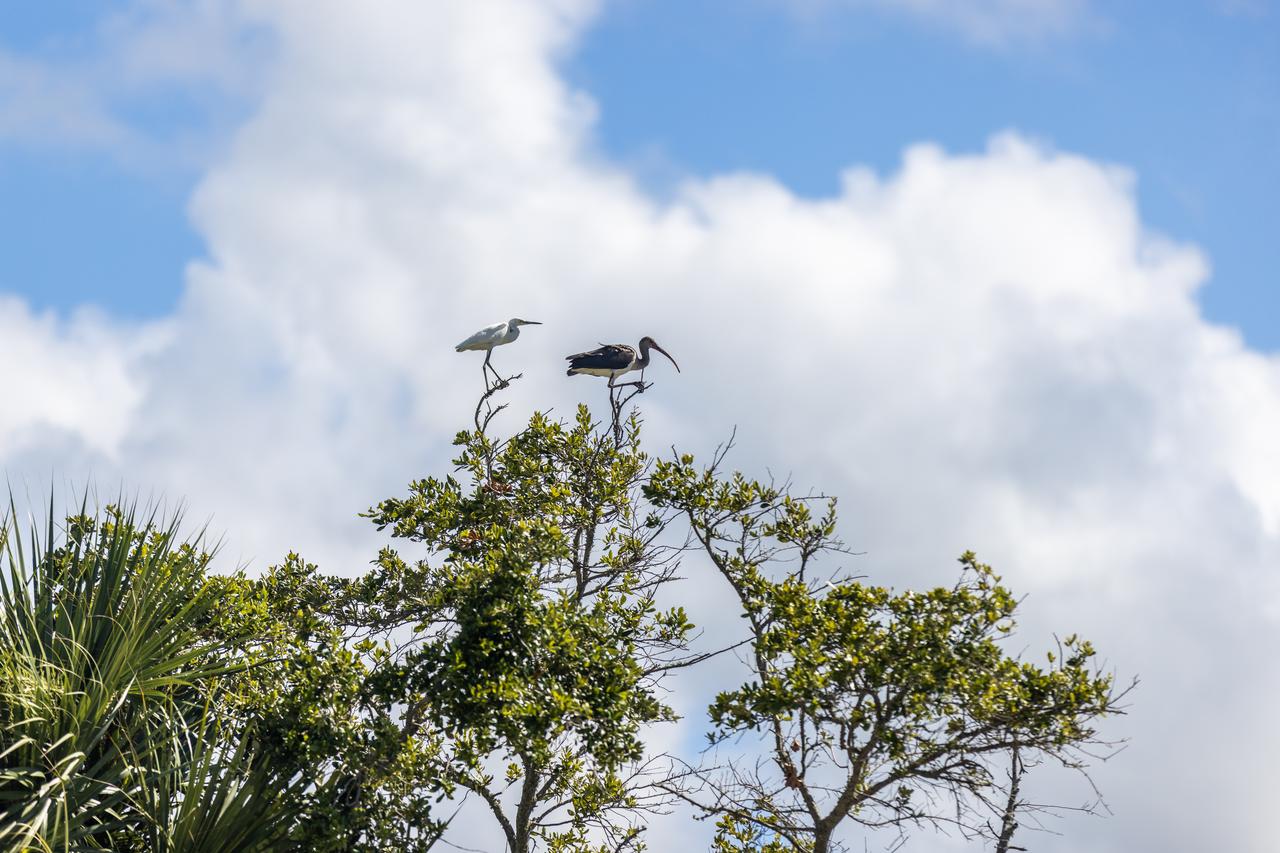
NASA Kennedy Space Center’s Spaceport Integration and Services organization is leading a restoration project at KARS Park on Hall Road in Merritt Island, Florida. As part of this project, a wavebreak is being created about 20 feet offshore to allow mangroves and other plants to propagate into the gap, providing protection for the shoreline. Show here in a tree are a snowy egret, left, and a limpkin.
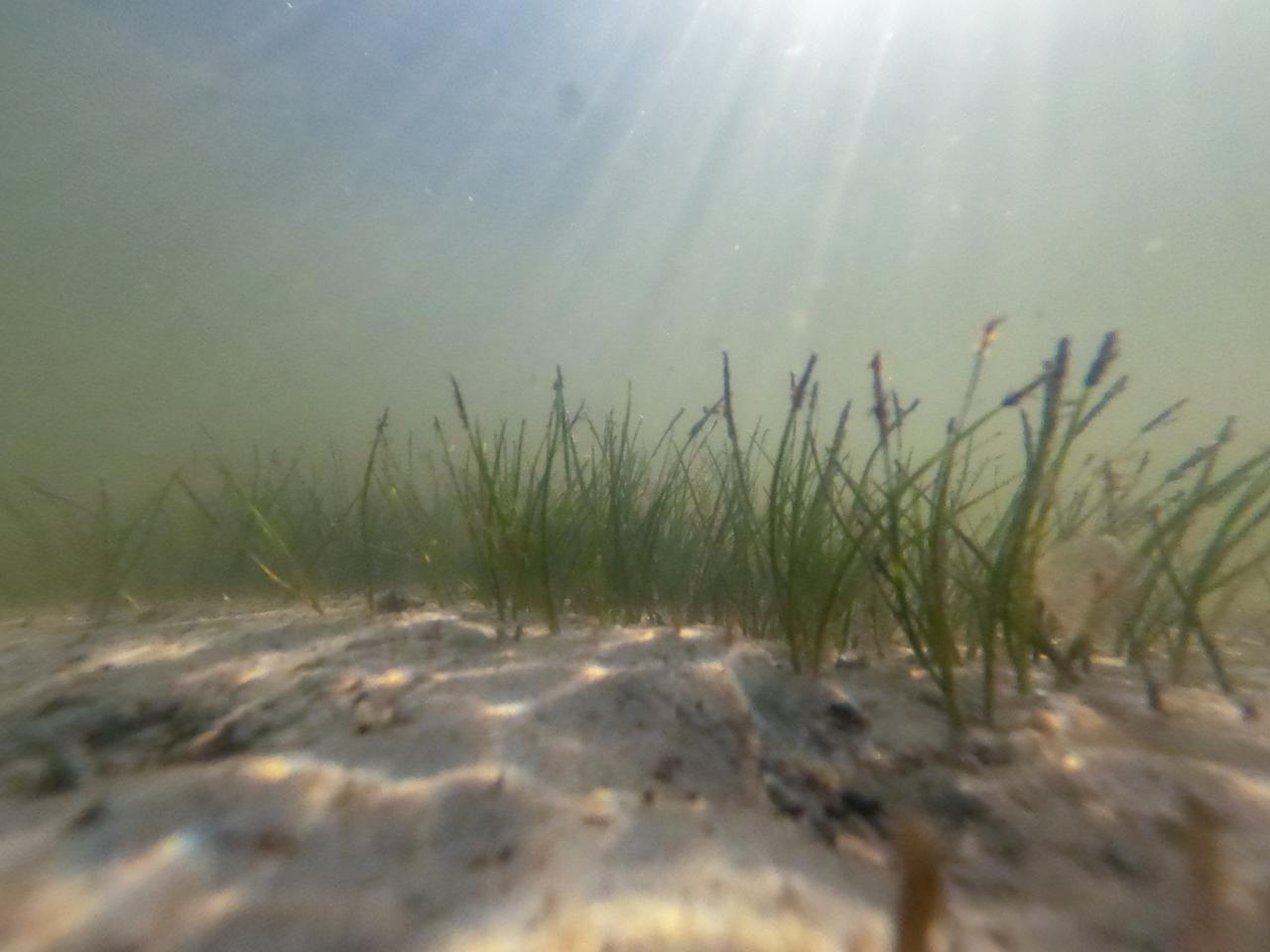
NASA Kennedy Space Center’s Spaceport Integration and Services organization is leading a restoration project at KARS Park on Hall Road in Merritt Island, Florida. As part of this project, a wavebreak is being created about 20 feet offshore to allow mangroves and other plants to propagate into the gap, providing protection for the shoreline. Shown here is shoalgrass taking hold in the restoration area.

Nancy Bray, director of Spaceport Integration and Services at NASA's Kennedy Space Center, left, is joined by Myrna Scott, center, and Dr. David Tipton, chief of Aerospace Medicine and Occupational Health, in cutting a ceremonial ribbon dedicating the Randal E. Scott Radiological Control Center at the Florida spaceport. Myrna Scott is the widow of Randy Scott, who was a professional health physicist of more than 40 years. He served as the Florida spaceport's Radiation Protection Officer for 14 years until his death June 17, 2016.

Nancy Bray, director of Spaceport Integration and Services at NASA's Kennedy Space Center, left, is joined by Myrna Scott, center, and Dr. David Tipton, chief of Aerospace Medicine and Occupational Health, in cutting a ceremonial ribbon dedicating the Randal E. Scott Radiological Control Center at the Florida spaceport. Myrna Scott is the widow of Randy Scott, who was a professional health physicist of more than 40 years. He served as the Florida spaceport's Radiation Protection Officer for 14 years until his death June 17, 2016.

Nancy Bray, director of Spaceport Integration and Services at NASA's Kennedy Space Center, left, is joined by Myrna Scott, center, and Dr. David Tipton, chief of Aerospace Medicine and Occupational Health, in cutting a ceremonial ribbon dedicating the Randal E. Scott Radiological Control Center at the Florida spaceport. Myrna Scott is the widow of Randy Scott, who was a professional health physicist of more than 40 years. He served as the Florida spaceport's Radiation Protection Officer for 14 years until his death June 17, 2016.
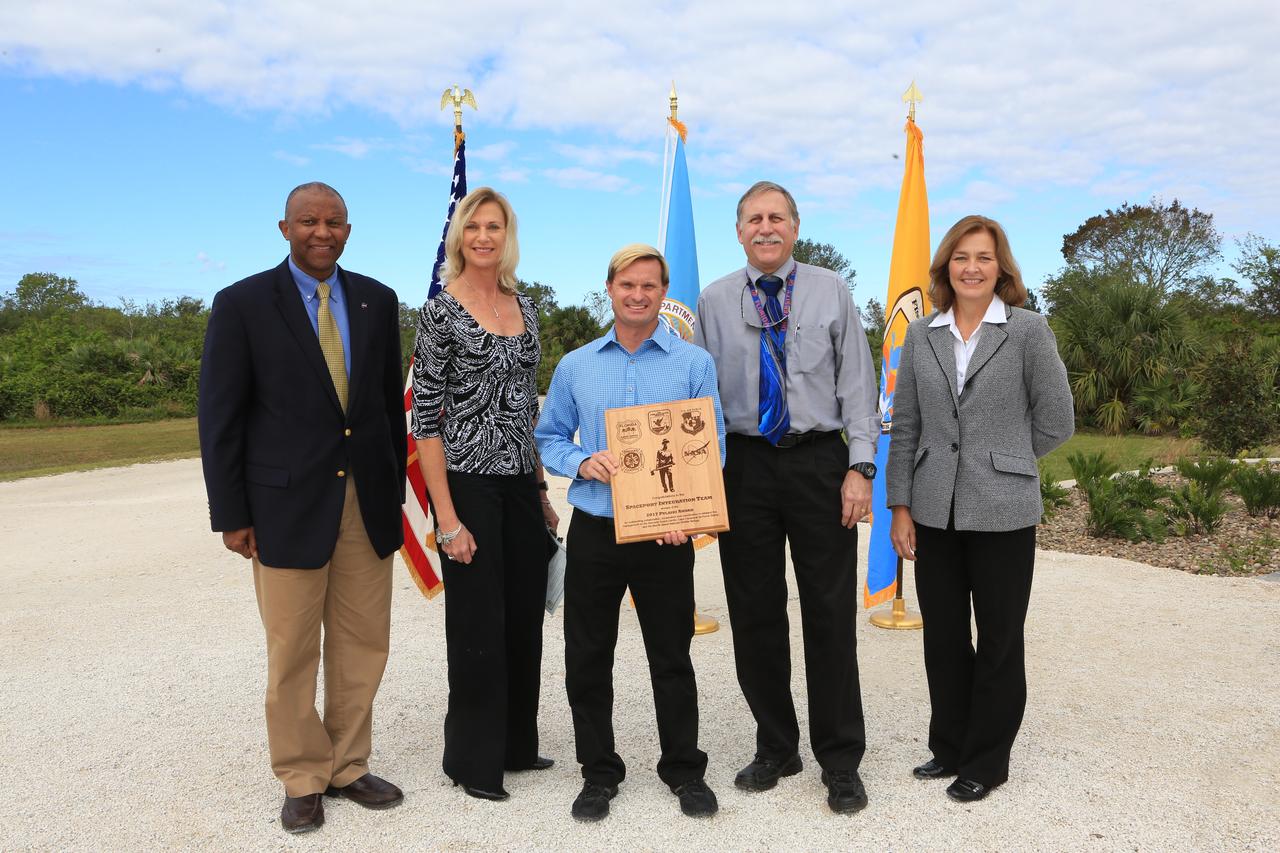
NASA's Kennedy Space Center Associate Director Kelvin Manning, left, and representatives from Kennedy's Spaceport Integration and Services pose for a portrait following a ceremony Nov. 1 on the Merritt Island National Wildlife Refuge in Florida. Next to Manning are, from left, Nancy Bray, director; William Heidtman, Spaceport Integrator; Dan Tweed, deputy director, Technical; and Jean Flowers, chief, Customer Services and Integration Branch. During the joint ceremony, the Spaceport Integration Team and its partners were presented with the prestigious 2017 Pulaski Award and a new memorial marker was dedicated. The multi-agency team includes representatives from NASA's Kennedy Space Center, Cape Canaveral Air Force Station's 45th Space Wing, the Merritt Island National Wildlife Refuge, as well as the Florida Forest Service and Brevard County Fire Rescue. The memorial marker honors two fallen firefighters, Scott Maness and Beau Sauselein, who died fighting a wildfire on space center property in 1981. Held outdoors, the ceremony was attended by 140 guests.
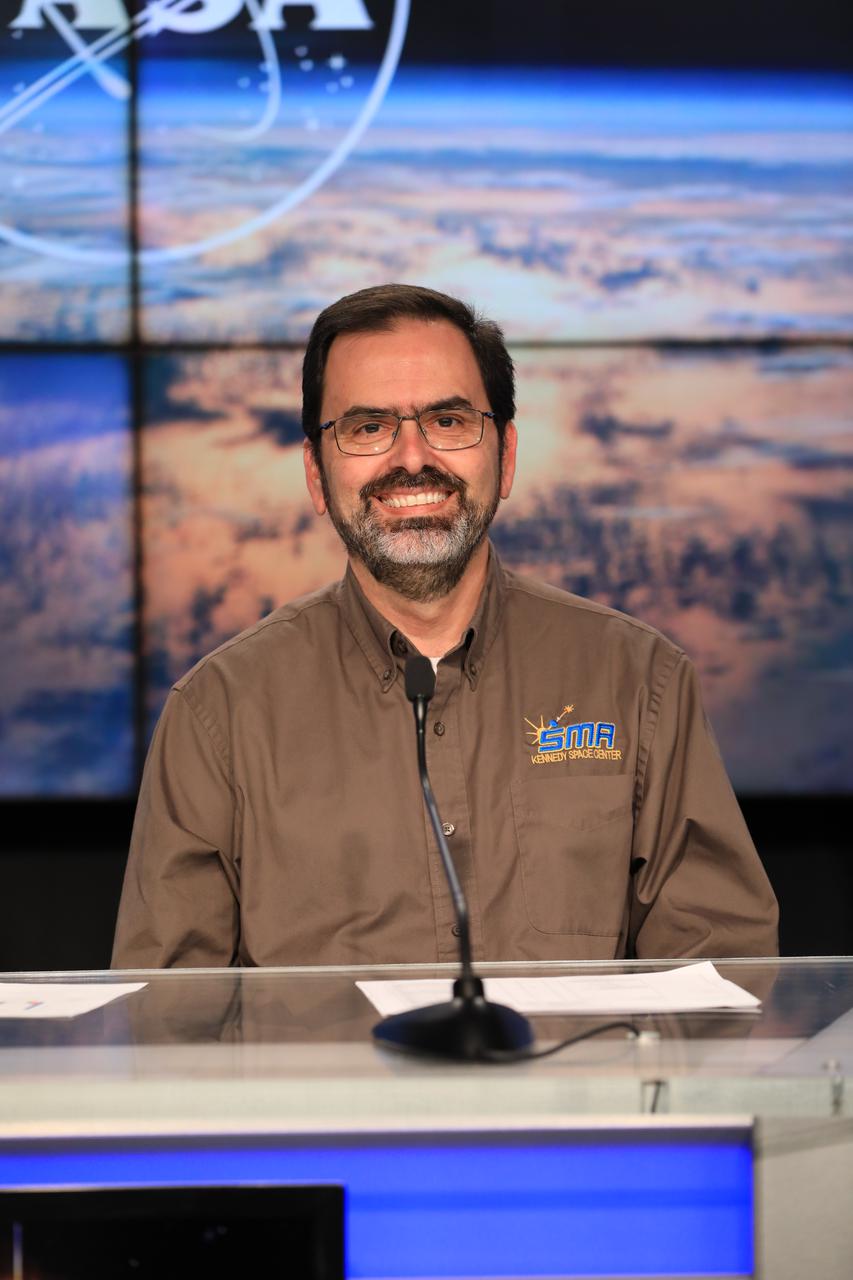
Director of Safety and Mission Assurance Ronnie Rodriguez participates in the Safety Starts With You Leadership Panel on Jan. 25, 2022, at NASA’s Kennedy Space Center in Florida. The panel discussion featured senior leaders from the spaceport addressing ways employees can focus on safely completing mission objectives in the new year. Other panelists included Kennedy Space Center Director Janet Petro, Director of Spaceport Integration and Services Nancy Bray, and Exploration Ground Systems Chief of Staff Sasha Sims.
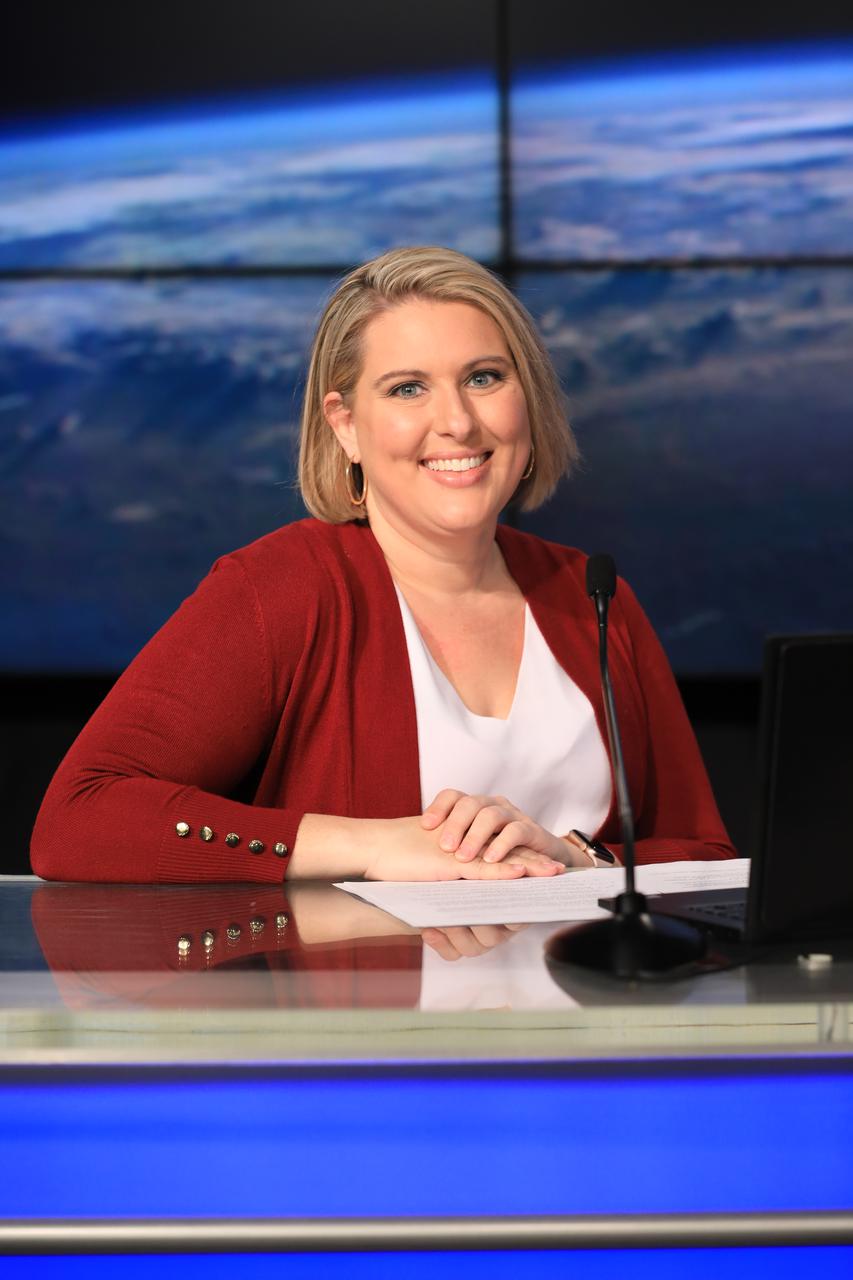
Leah Martin, NASA Communications, moderates the Safety Starts With You Leadership Panel on Jan. 25, 2022, at Kennedy Space Center in Florida. The panel discussion featured senior leaders from the spaceport addressing ways employees can focus on safely completing mission objectives in the new year. Panelists included Kennedy Space Center Director Janet Petro, Director of Safety and Mission Assurance Ronnie Rodriguez, Director of Spaceport Integration and Services Nancy Bray, and Exploration Ground Systems Chief of Staff Sasha Sims.
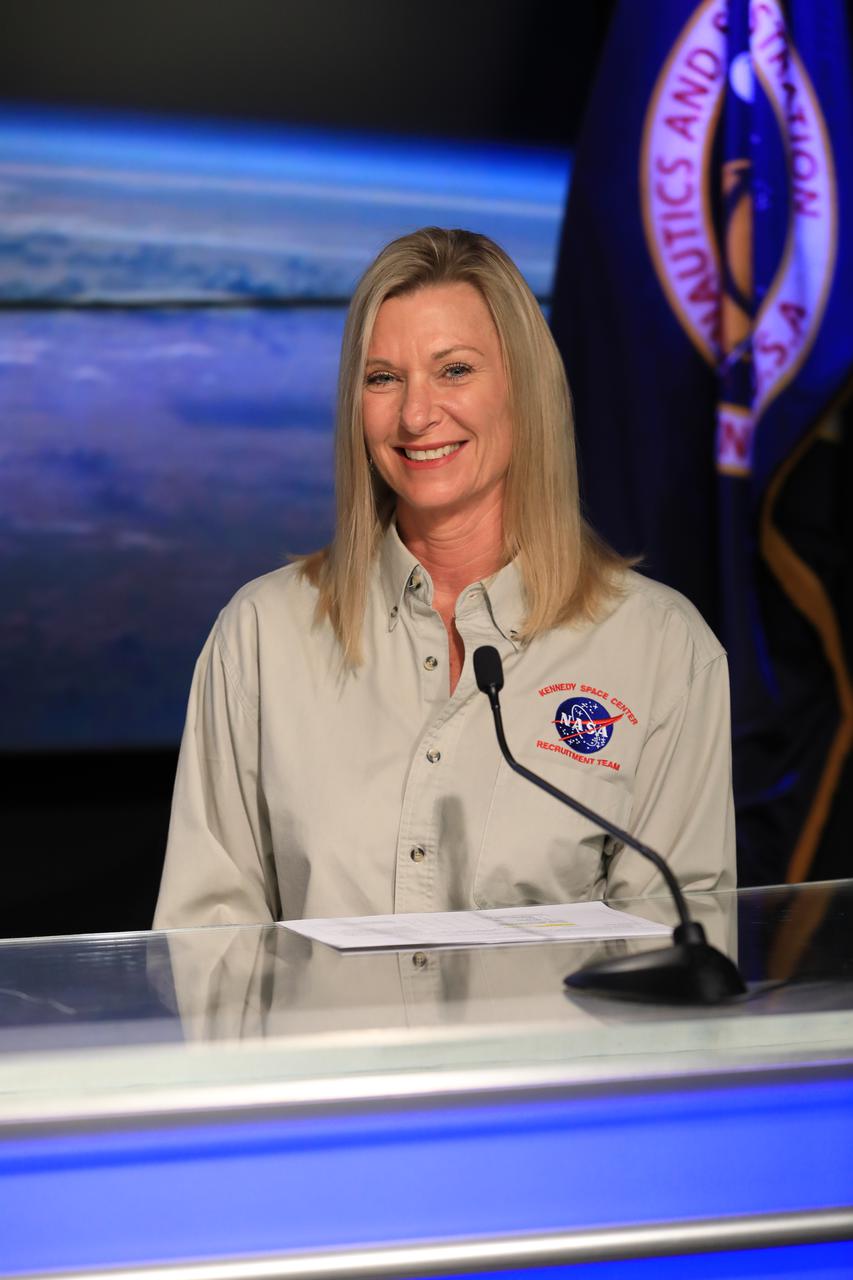
Director of Spaceport Integration and Services Nancy Bray participates in the Safety Starts With You Leadership Panel on Jan. 25, 2022, at NASA’s Kennedy Space Center in Florida. The panel discussion featured senior leaders from the spaceport addressing ways employees can focus on safely completing mission objectives in the new year. Other panelists included Kennedy Space Center Director Janet Petro, Director of KSC Safety and Mission Assurance Ronnie Rodriguez, and Exploration Ground Systems Chief of Staff Sasha Sims.
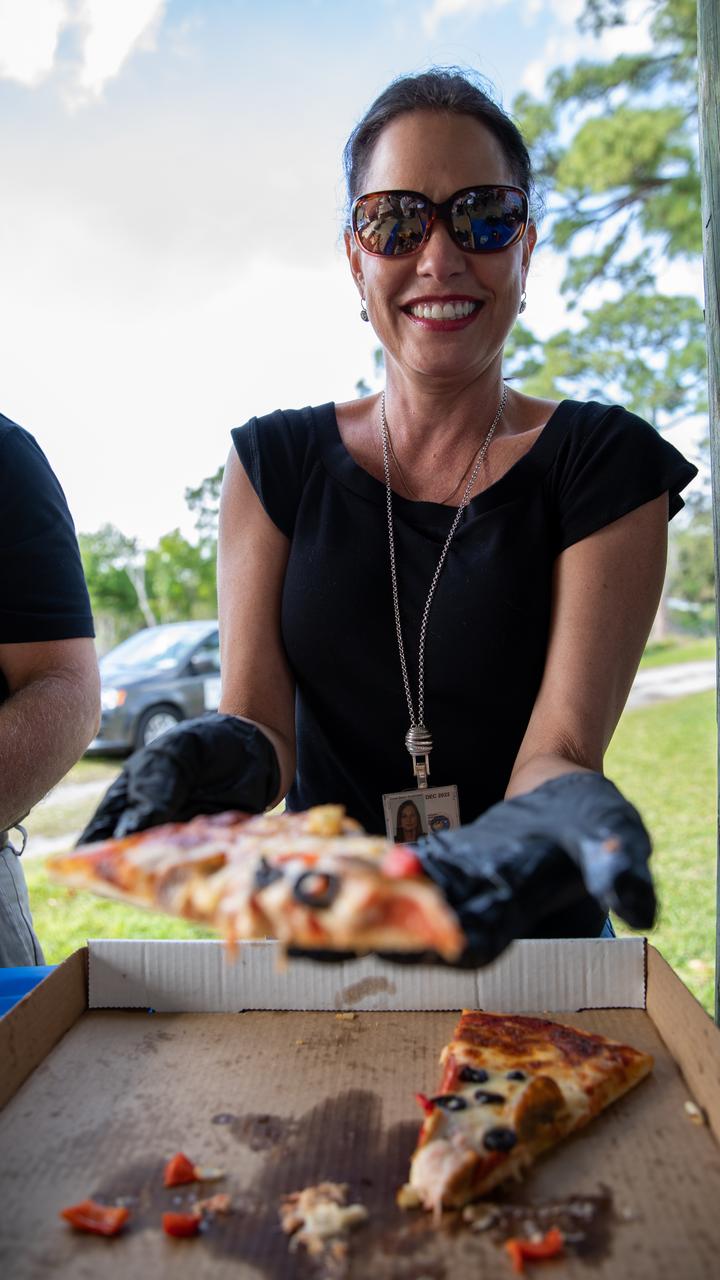
Maria Collura, deputy director of Spaceport Services and Integration at NASA’s Kennedy Space Center in Florida, is photographed serving pizza to Kennedy employees during a Safety and Health Days celebration at the spaceport’s KARS Park II on March 5, 2020. Taking place March 2 through March 6, Safety and Health Days provides Kennedy employees with a variety of presentations to attend – all of which focus on how to maintain a safe and healthy workforce.
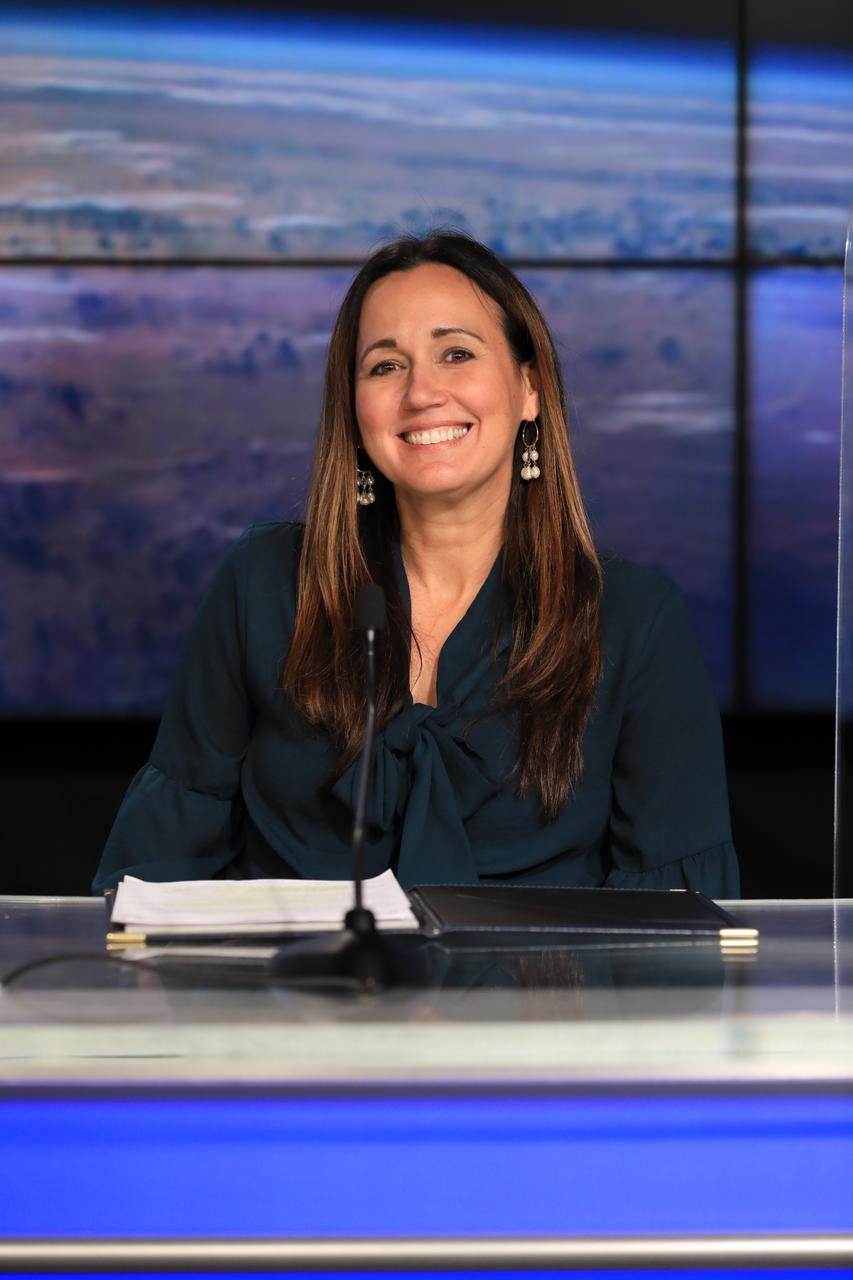
Exploration Ground Systems Chief of Staff Sasha Sims participates in the Safety Starts With You Leadership Panel on Jan. 25, 2022, at NASA’s Kennedy Space Center in Florida. The panel discussion featured senior leaders from the spaceport addressing ways employees can focus on safely completing mission objectives in the new year. Other panelists included Kennedy Space Center Director Janet Petro, Director of Safety and Mission Assurance Ronnie Rodriguez, and Director of Spaceport Integration and Services Nancy Bray.

Nancy Bray, director of Spaceport Integration and Services at NASA's Kennedy Space Center, speaks during ceremonies to name the Radiological Control Center in honor for Randy Scott. A professional health physicist of more than 40 years, Scott served as the Florida spaceport's Radiation Protection Officer for 14 years until his death June 17, 2016.
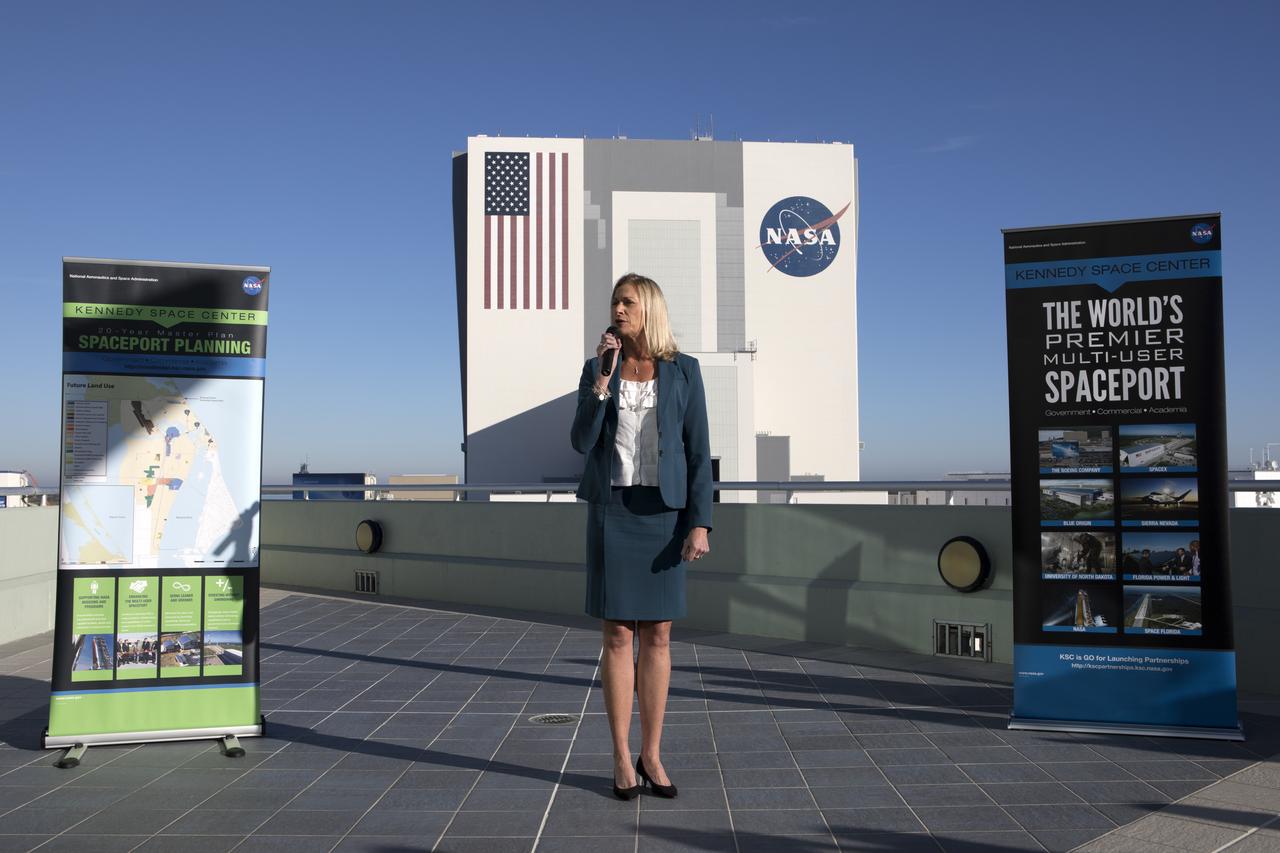
Nancy Bray, director of Spaceport Integration and Services at NASA's Kennedy Space Center, speaks to members of the news media on the balcony of Operations Support Building II describing the site's transition from a primarily government-only facility to a premier, multi-user spaceport. In the background is the Vehicle Assembly Building (VAB). Modifications were recently completed in the VAB where new work platforms were installed to support processing of NASA's Space Launch System rocket designed to send the Orion spacecraft on missions beyond low-Earth orbit.
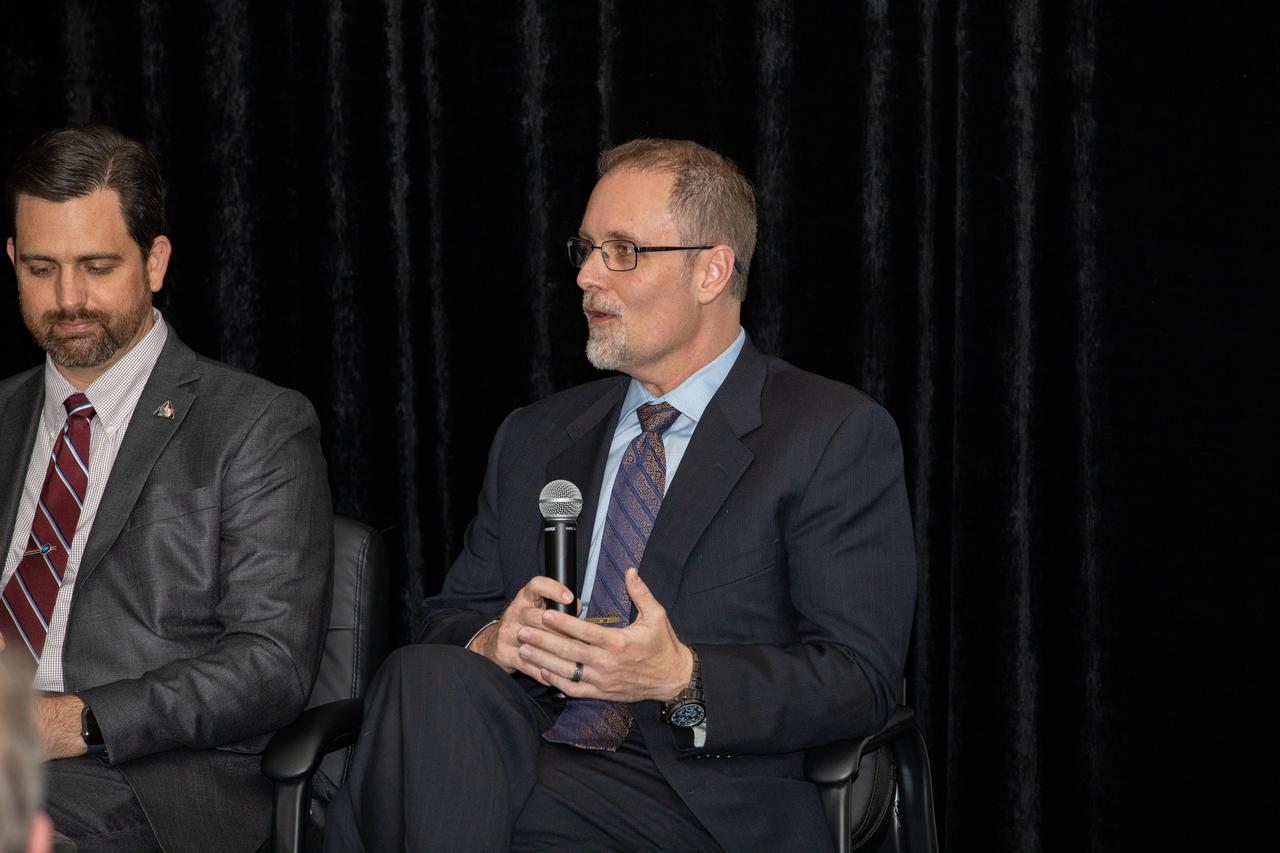
Phil Meade, at right, associate director, Spaceport Integration and Services, participates in a panel discussion during a Community Leaders Update hosted by NASA Kennedy Space Center on Feb. 18, 2020, at the Kennedy Space Center Visitor Complex. At left is Jeremy Parsons, deputy manager, Exploration Ground Systems. Center Director Bob Cabana moderated a panel discussion featuring senior leaders from Exploration Ground Systems, Spaceport Integration and Services, Exploration Research and Technology Programs, Gateway Logistics Element, and Center Planning and Development. Attendees included community leaders, business executives, partners, educators and government leaders. After the presentation, guests had the opportunity to ask questions and visit displays from the programs and some of the commercial partners.
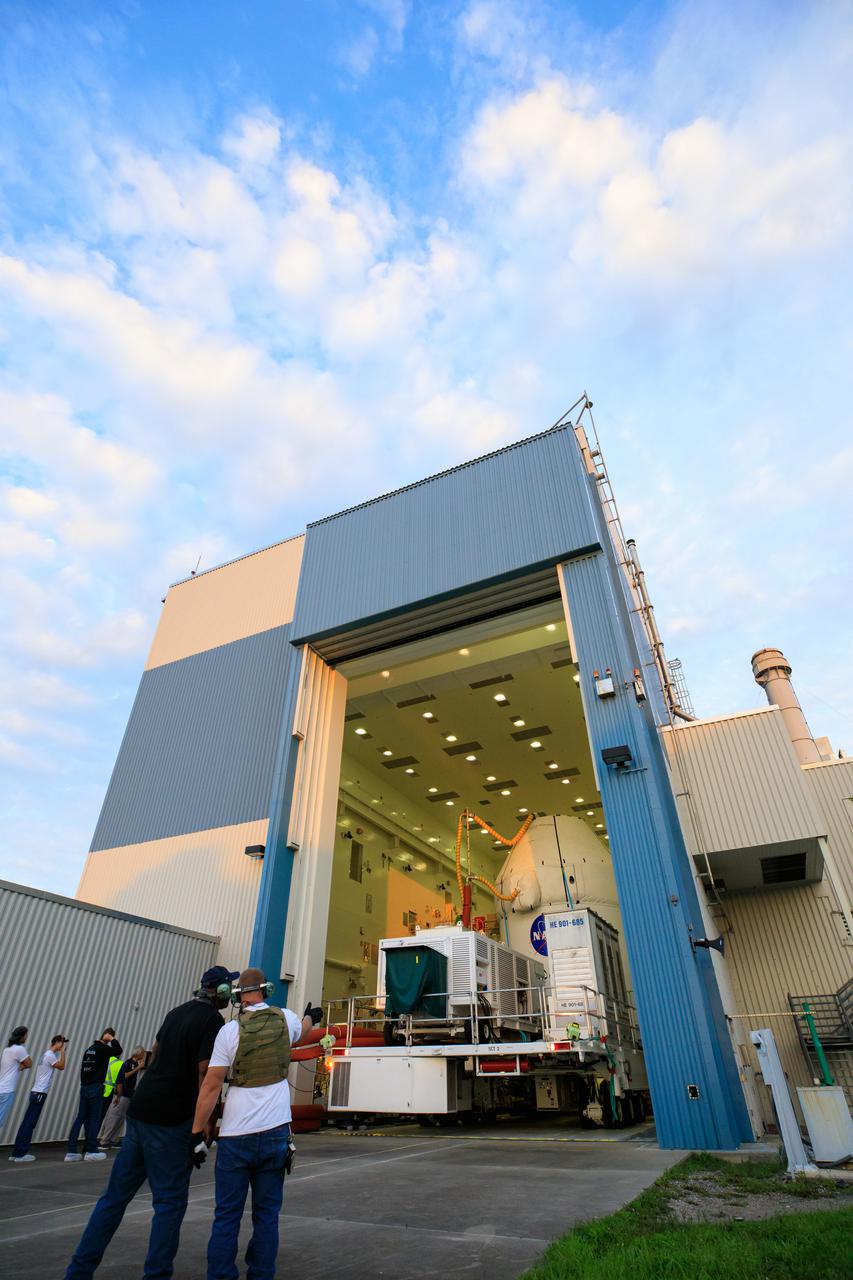
After recently completing fueling and servicing checks, the Orion spacecraft for the Artemis I mission departs from Kennedy Space Center’s Multi-Payload Processing on July 10, 2021. It is being transported to the Florida spaceport’s Launch Abort System Facility, where teams with Exploration Ground Systems and contractor Jacobs will integrate components of the launch abort system onto the spacecraft. Launching later this year, Artemis I will be a test of the Orion spacecraft and SLS rocket as an integrated system ahead of crewed flights to the Moon.
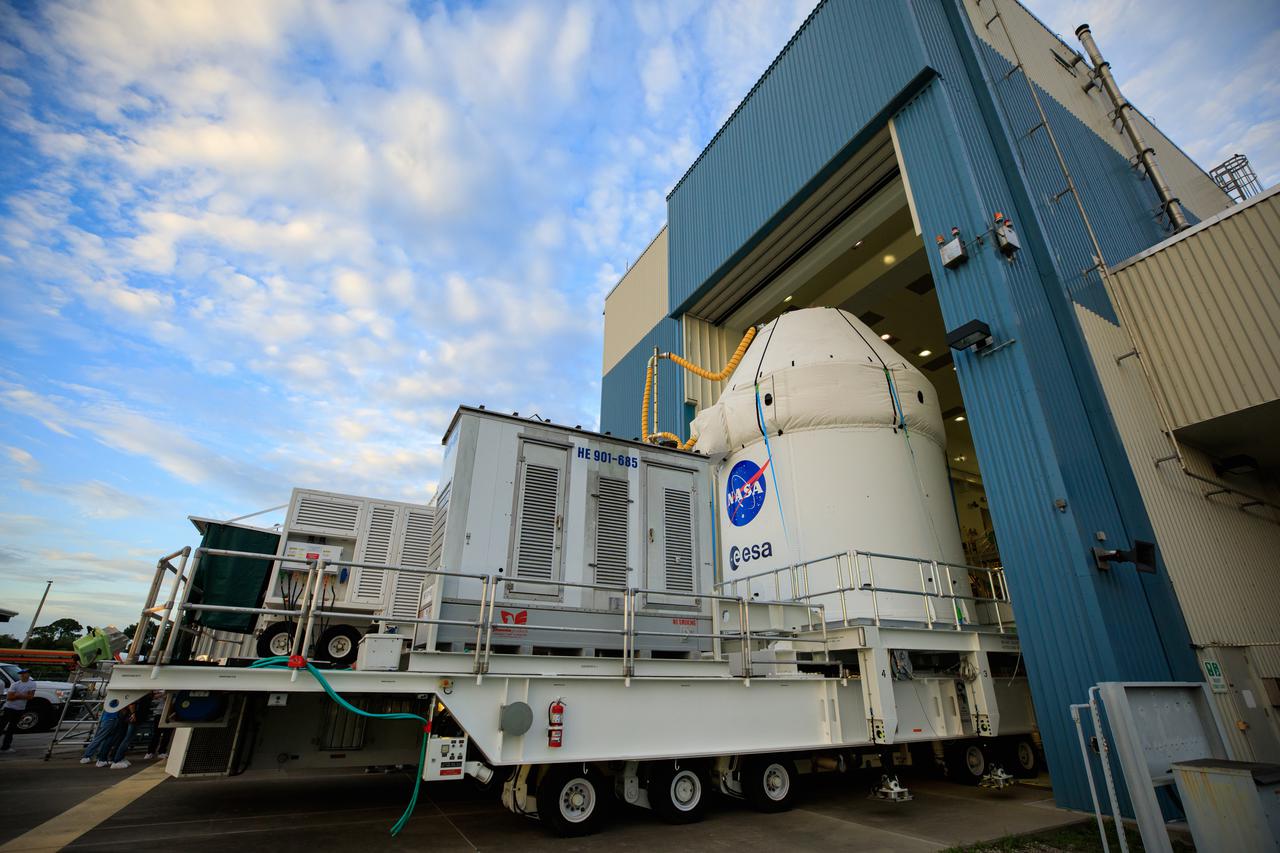
After recently completing fueling and servicing checks, the Orion spacecraft for the Artemis I mission departs from Kennedy Space Center’s Multi-Payload Processing on July 10, 2021. It is being transported to the Florida spaceport’s Launch Abort System Facility, where teams with Exploration Ground Systems and contractor Jacobs will integrate components of the launch abort system onto the spacecraft. Launching later this year, Artemis I will be a test of the Orion spacecraft and SLS rocket as an integrated system ahead of crewed flights to the Moon.
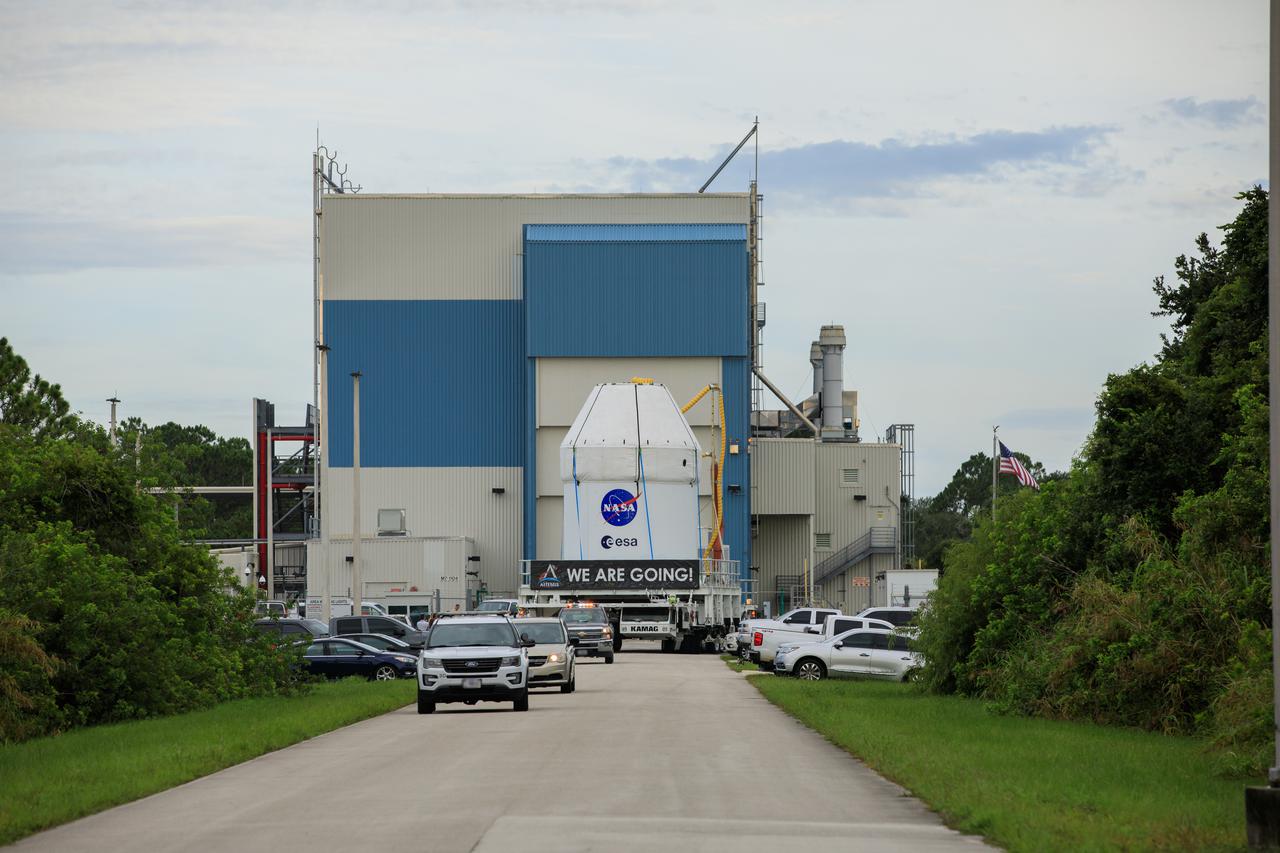
After recently completing fueling and servicing checks, the Orion spacecraft for the Artemis I mission departs Kennedy Space Center’s Multi-Payload Processing on July 10, 2021. The capsule is being transported to the Florida spaceport’s Launch Abort System Facility, where teams with Exploration Ground Systems and contractor Jacobs will integrate components of the launch abort system onto the spacecraft. Launching later this year, Artemis I will be a test of the Orion spacecraft and SLS rocket as an integrated system ahead of crewed flights to the Moon.
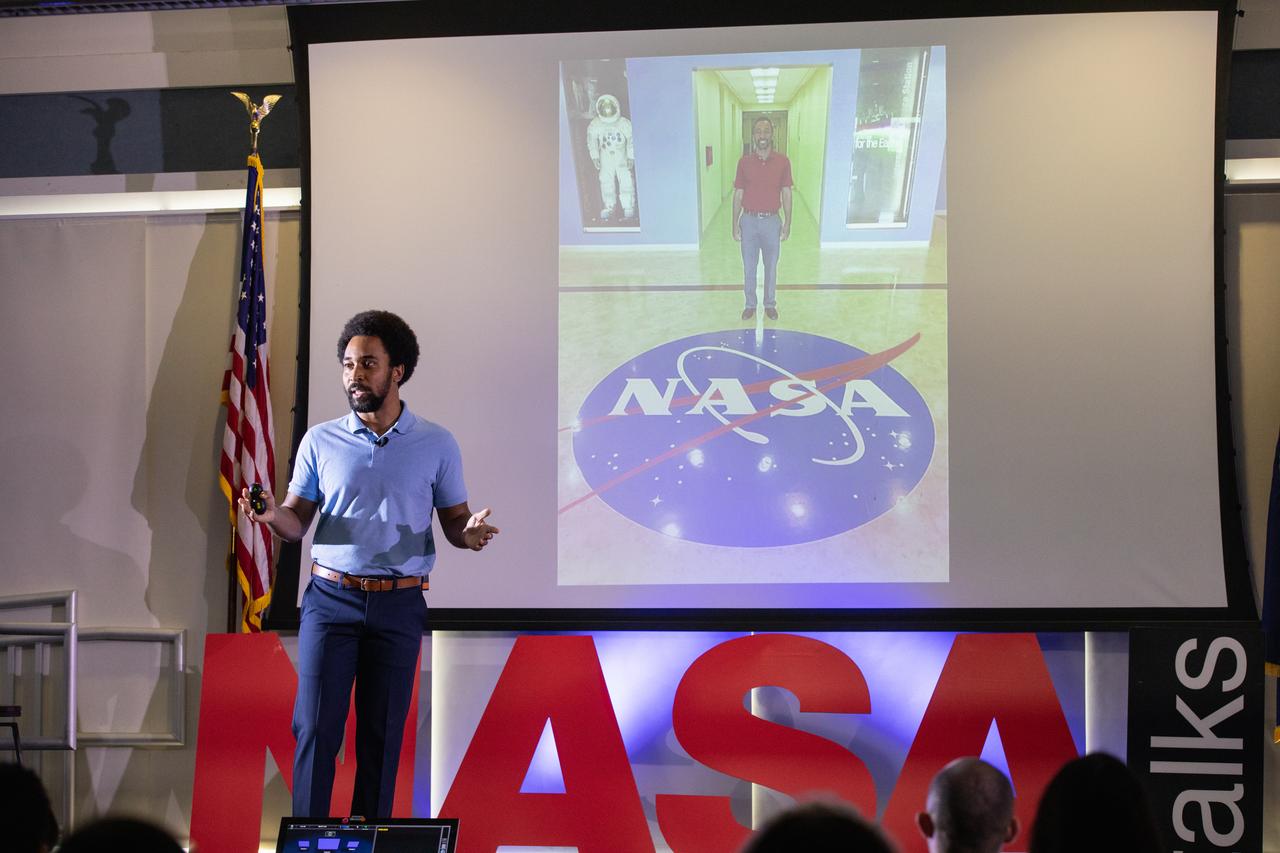
Kennedy Space Center’s Phillip Hargrove addresses co-workers inside the Florida spaceport’s Kennedy Learning Institute on Sept. 26, 2019, during the first in a series of five TED Talk-style informational sessions. Sponsored by Kennedy’s Launching Leaders and Leadership for the Future, NASAtalks focuses on the topic of intentional careers and aims to provide employees with tools and knowledge that can be utilized for career growth. The theme of this first session was innovation, and additional speakers included Kennedy employees Andy Phan and Brittney Mott, with a skill-building section on career planning by Nancy Bray, director of Spaceport Integration and Services.
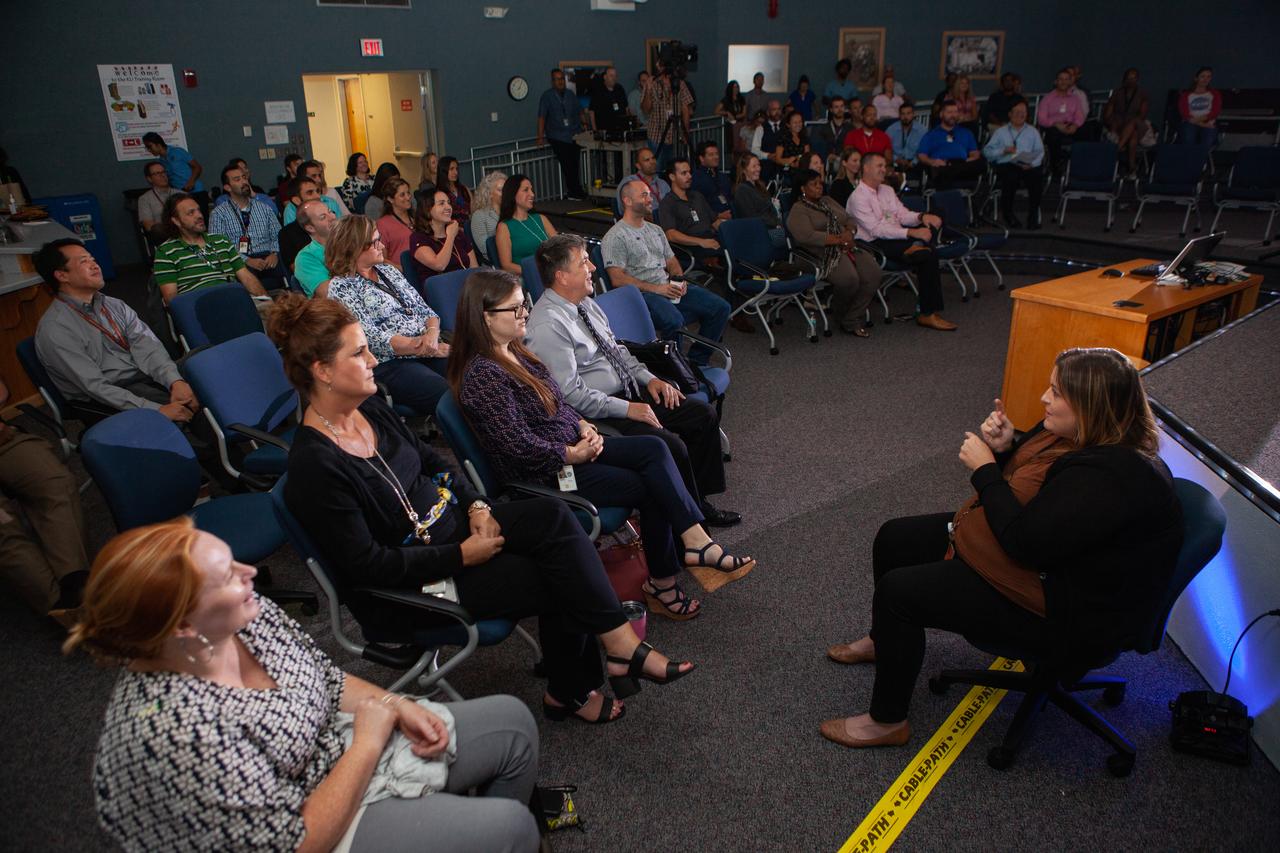
Kennedy Space Center employees attend the first in a series of five TED Talk-style informational sessions on Sept. 26, 2019, inside the Florida spaceport’s Kennedy Learning Institute. Sponsored by Kennedy’s Launching Leaders and Leadership for the Future, NASAtalks focuses on the topic of intentional careers and aims to provide employees with tools and knowledge that can be utilized for career growth. The theme of this first session was innovation, and speakers included Kennedy employees Phillip Hargrove, Andy Phan and Brittney Mott, with a skill-building section on career planning by Nancy Bray, director of Spaceport Integration and Services.
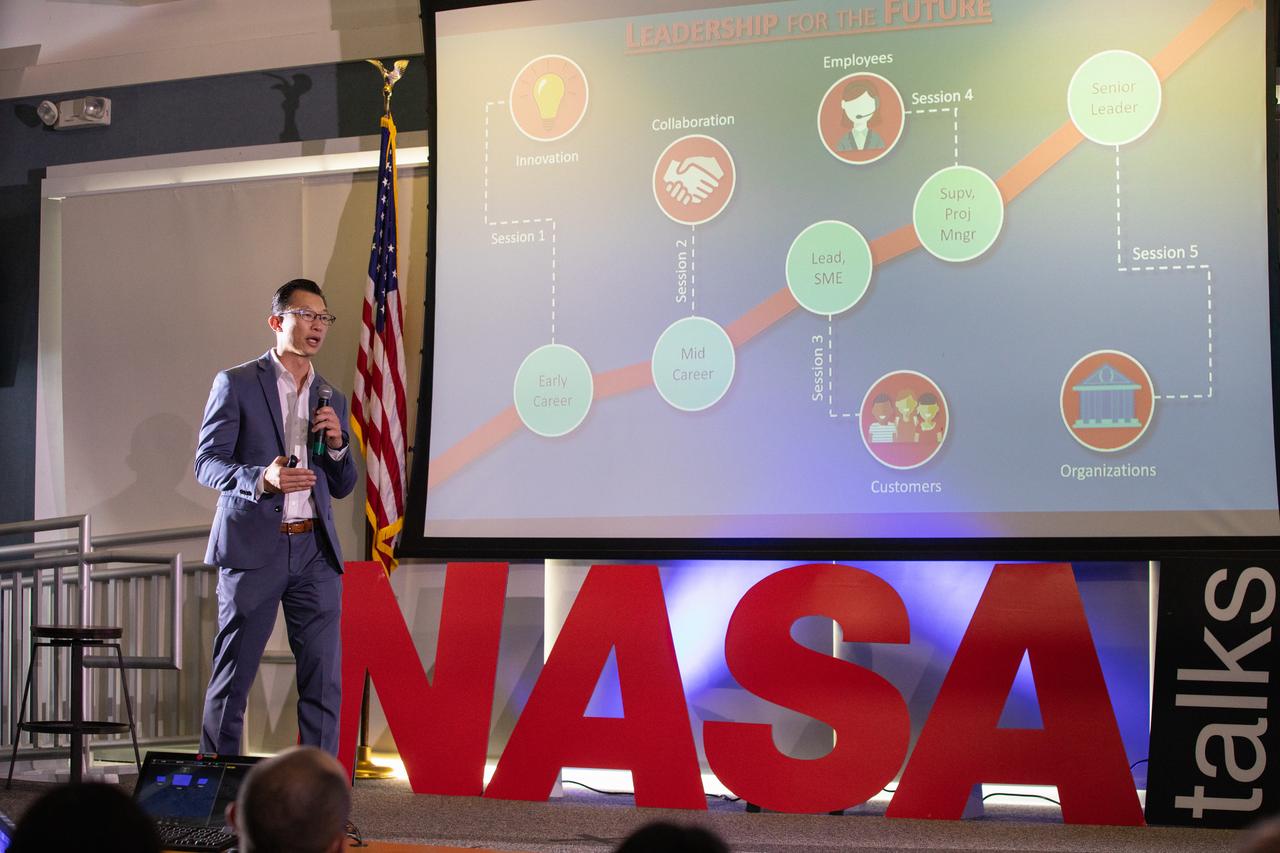
Kennedy Space Center’s Johnny Nguyen addresses co-workers inside the Florida spaceport’s Kennedy Learning Institute on Sept. 26, 2019, during the first in a series of five TED Talk-style informational sessions. Sponsored by Kennedy’s Launching Leaders and Leadership for the Future, NASAtalks focuses on the topic of intentional careers and aims to provide employees with tools and knowledge that can be utilized for career growth. The theme of this first session was innovation, and speakers included Kennedy employees Phillip Hargrove, Andy Phan and Brittney Mott, with a skill-building section on career planning by Nancy Bray, director of Spaceport Integration and Services.
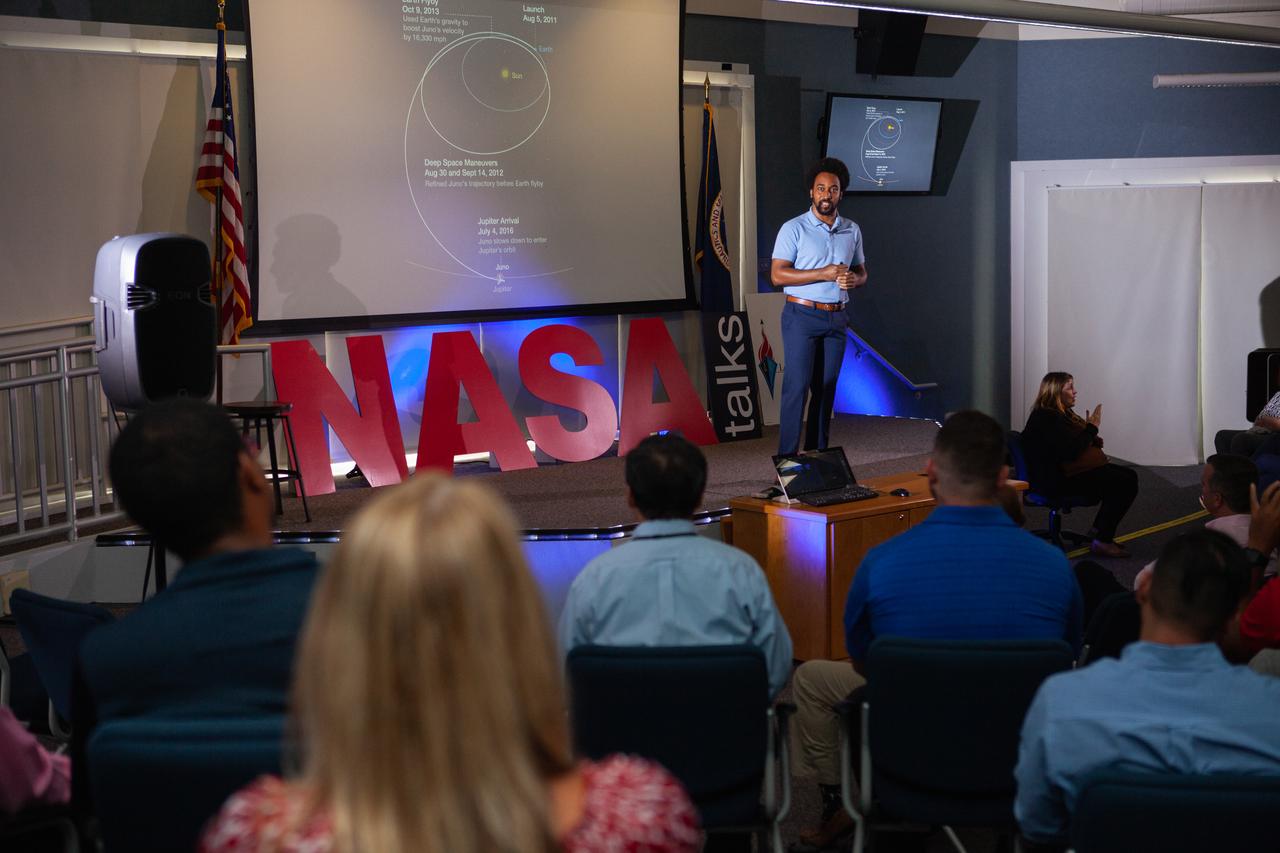
Kennedy Space Center’s Phillip Hargrove addresses co-workers inside the Florida spaceport’s Kennedy Learning Institute on Sept. 26, 2019, during the first in a series of five TED Talk-style informational sessions. Sponsored by Kennedy’s Launching Leaders and Leadership for the Future, NASAtalks focuses on the topic of intentional careers and aims to provide employees with tools and knowledge that can be utilized for career growth. The theme of this first session was innovation, and additional speakers included Kennedy employees Andy Phan and Brittney Mott, with a skill-building section on career planning by Nancy Bray, director of Spaceport Integration and Services.
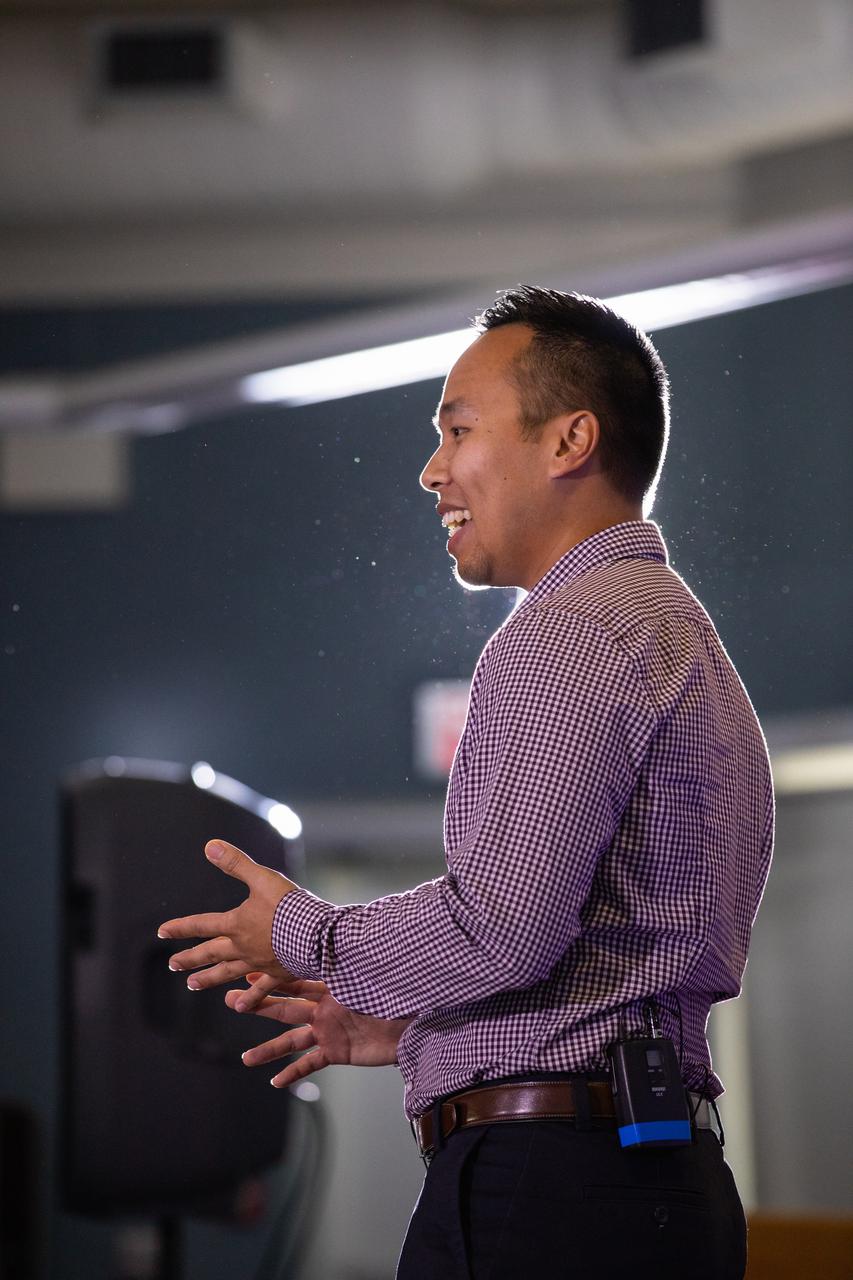
Kennedy Space Center’s Andy Phan speaks at the first in a series of five TED Talk-style informational sessions on Sept. 26, 2019, in the Florida spaceport’s Kennedy Learning Institute. Sponsored by Kennedy’s Launching Leaders and Leadership for the Future, NASAtalks focuses on the topic of intentional careers and aims to provide employees with tools and knowledge that can be utilized for career growth. The theme of this first session was innovation, and additional speakers included Kennedy employees Phillip Hargrove and Brittney Mott, with a skill-building section on career planning by Nancy Bray, director of Spaceport Integration and Services.
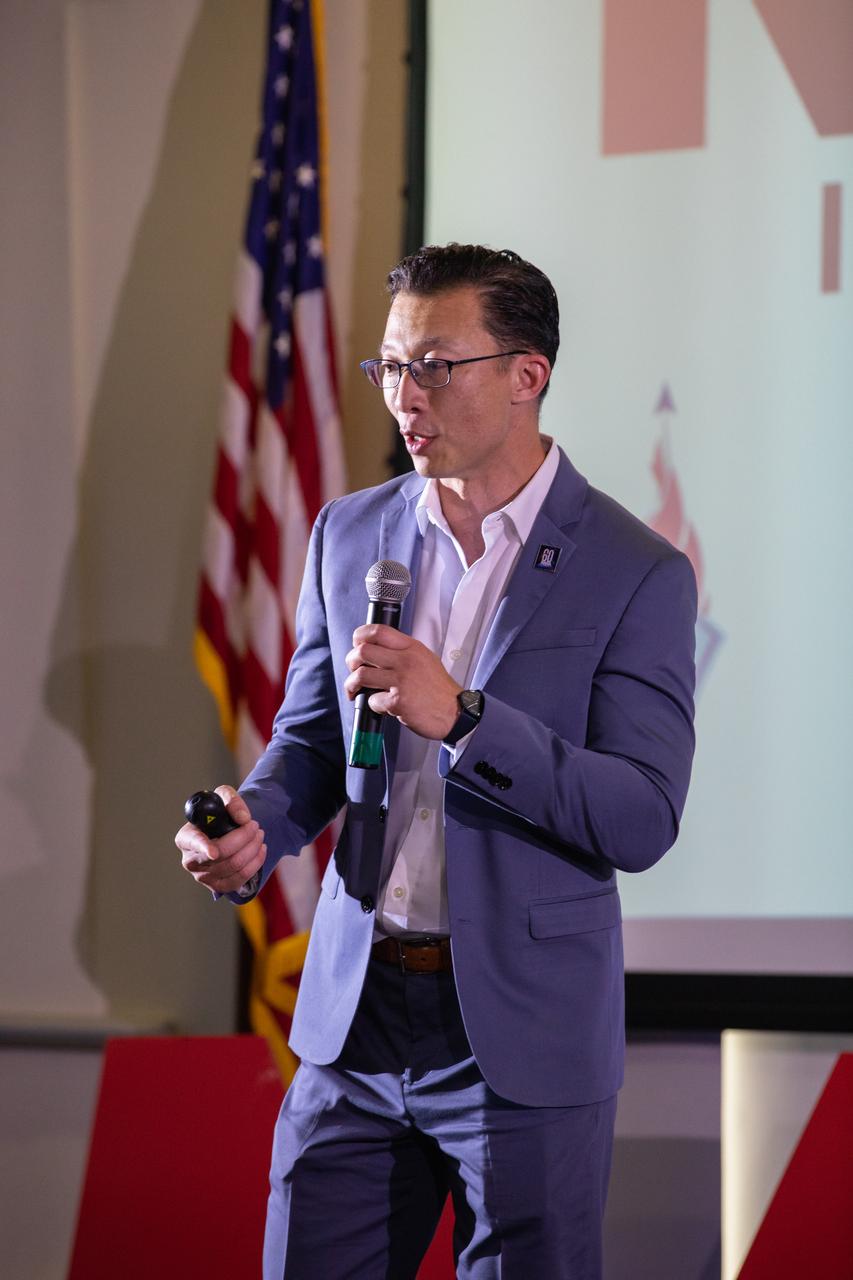
Kennedy Space Center’s Johnny Nguyen introduces event speakers for the first in a series of five TED Talk-style informational sessions on Sept. 26, 2019, inside the Florida spaceport’s Kennedy Learning Institute. Sponsored by Kennedy’s Launching Leaders and Leadership for the Future, NASAtalks focuses on the topic of intentional careers and aims to provide employees with tools and knowledge that can be utilized for career growth. The theme of this first session was innovation, and speakers included Kennedy employees Phillip Hargrove, Andy Phan and Brittney Mott, with a skill-building section on career planning by Nancy Bray, director of Spaceport Integration and Services.
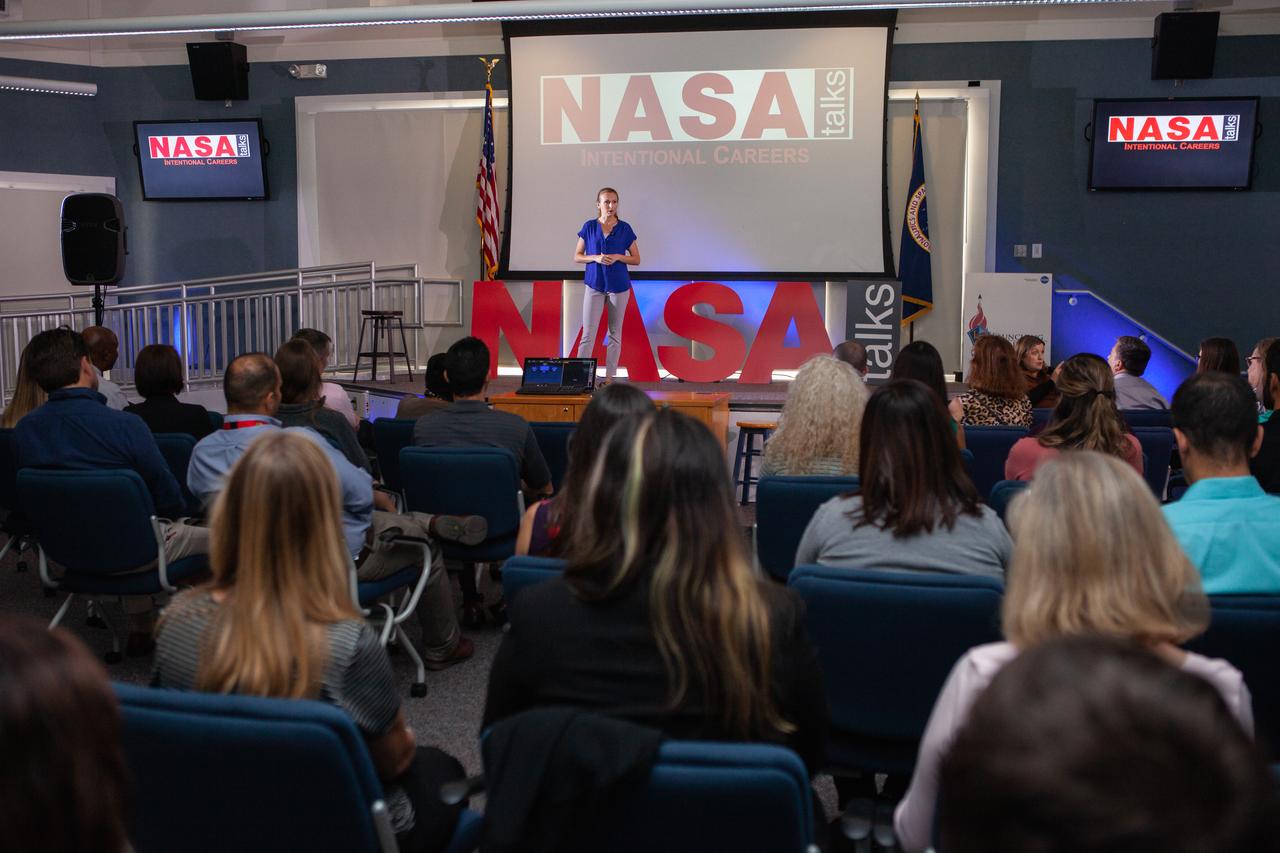
Kennedy Space Center’s Brittany Mott addresses co-workers inside the Florida spaceport’s Kennedy Learning Institute on Sept. 26, 2019, during the first in a series of five TED Talk-style informational sessions. Sponsored by Kennedy’s Launching Leaders and Leadership for the Future, NASAtalks focuses on the topic of intentional careers and aims to provide employees with tools and knowledge that can be utilized for career growth. The theme of this first session was innovation, and additional speakers included Kennedy employees Phillip Hargrove and Andy Phan, with a skill-building section on career planning by Nancy Bray, director of Spaceport Integration and Services.
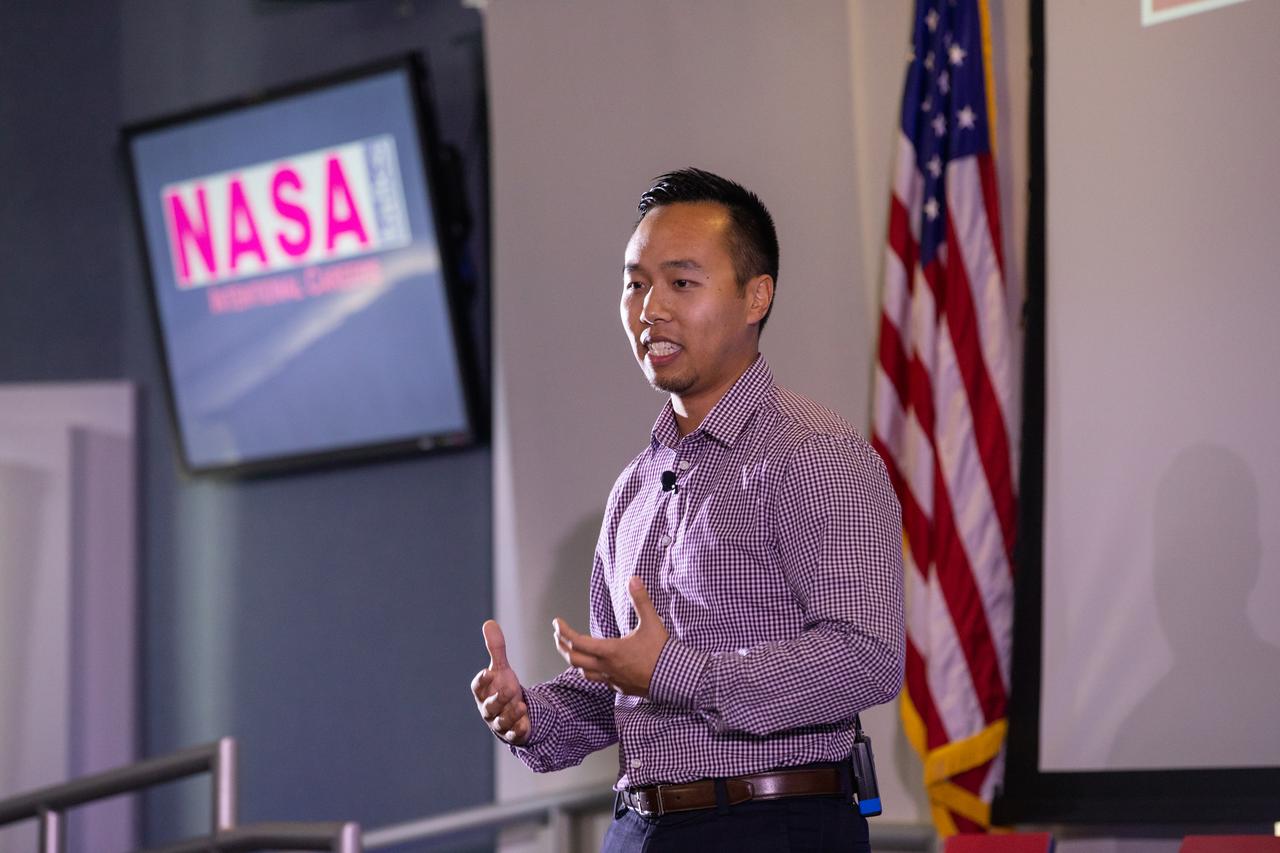
Kennedy Space Center’s Andy Phan speaks at the first in a series of five TED Talk-style informational sessions on Sept. 26, 2019, in the Florida spaceport’s Kennedy Learning Institute. Sponsored by Kennedy’s Launching Leaders and Leadership for the Future, NASAtalks focuses on the topic of intentional careers and aims to provide employees with tools and knowledge that can be utilized for career growth. The theme of this first session was innovation, and additional speakers included Kennedy employees Phillip Hargrove and Brittney Mott, with a skill-building section on career planning by Nancy Bray, director of Spaceport Integration and Services.
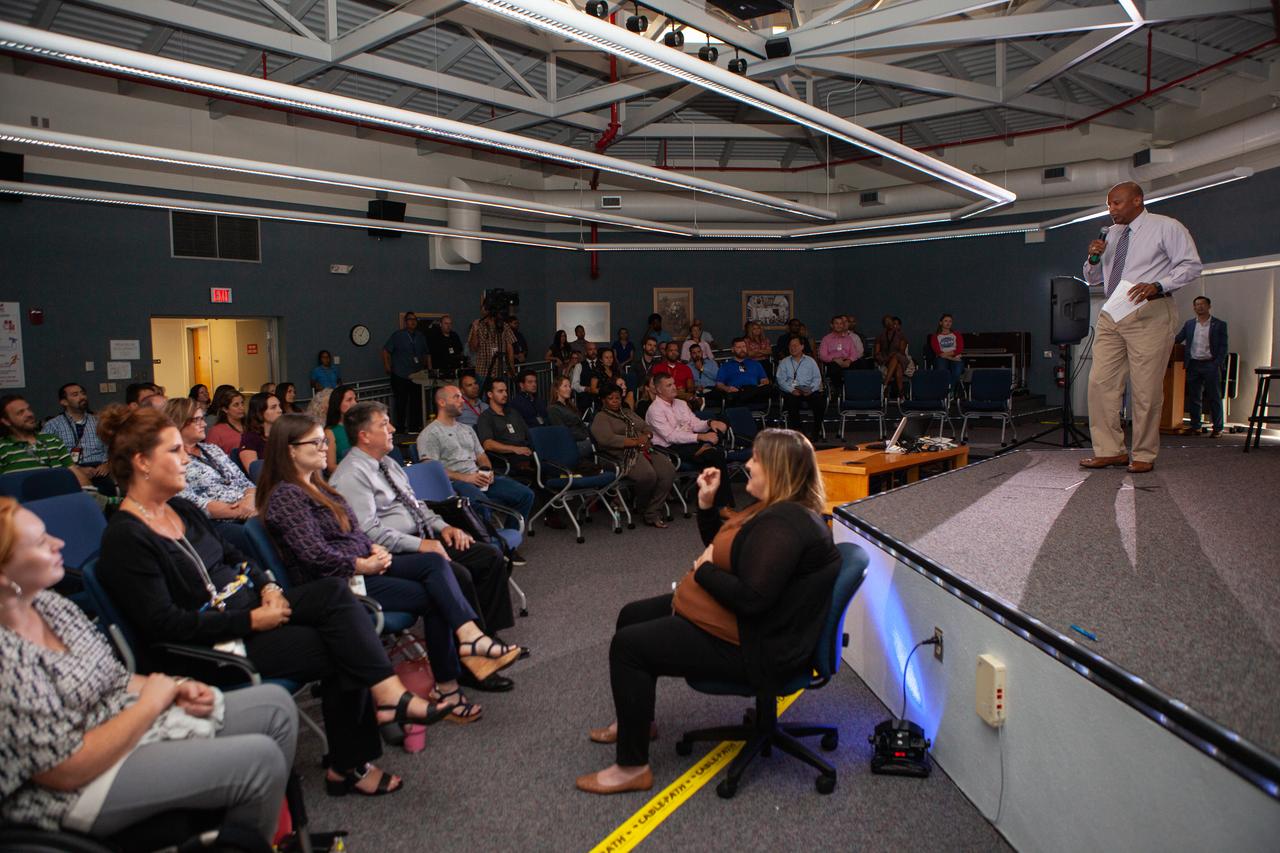
Kennedy Space Center Associate Director, Technical, Kelvin Manning addresses Kennedy employees inside the Florida spaceport’s Kennedy Learning Institute on Sept. 26, 2019, during the first in a series of five TED Talk-style informational sessions. Sponsored by Kennedy’s Launching Leaders and Leadership for the Future, NASAtalks focuses on the topic of intentional careers and aims to provide employees with tools and knowledge that can be utilized for career growth. The theme of this first session was innovation, and speakers included Kennedy employees Phillip Hargrove, Andy Phan and Brittney Mott, with a skill-building section on career planning by Nancy Bray, director of Spaceport Integration and Services.
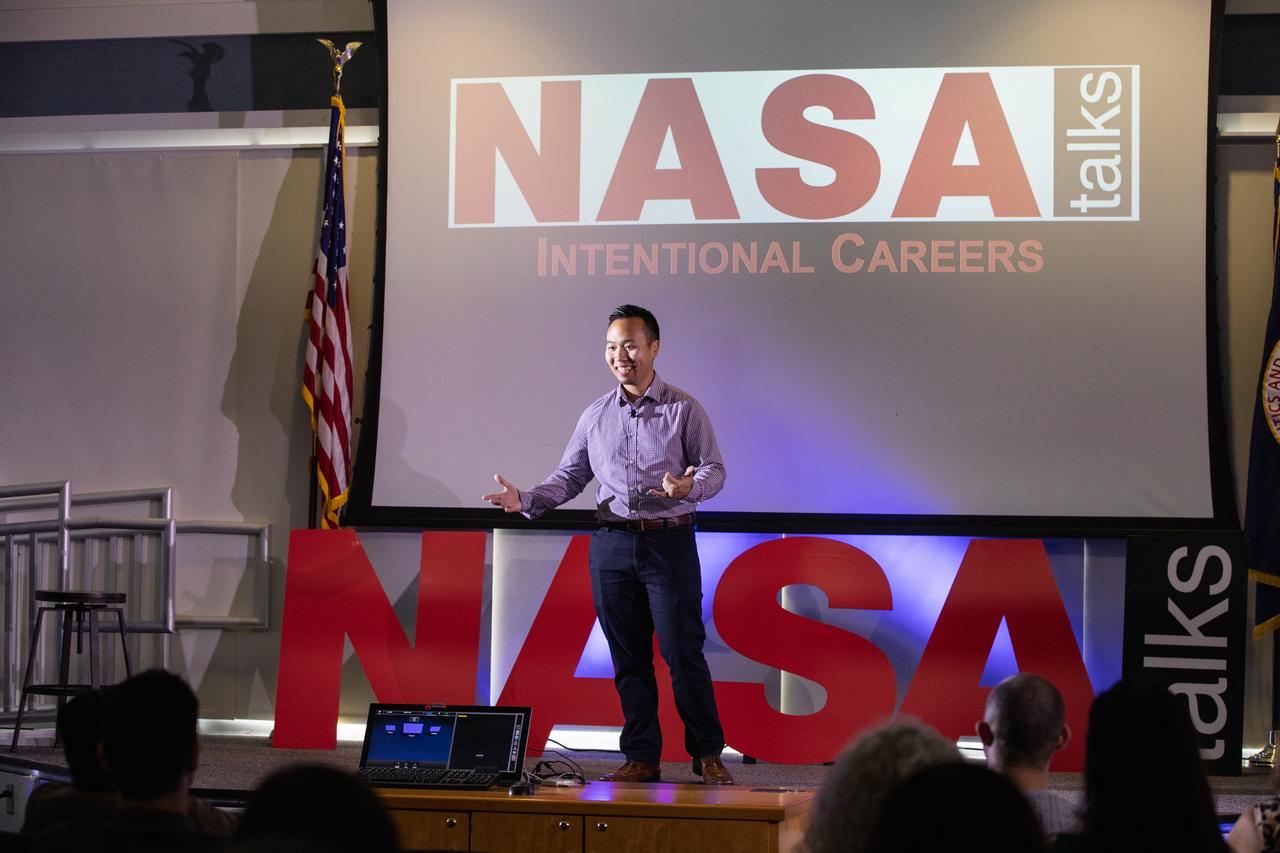
Kennedy Space Center’s Andy Phan addresses co-workers inside the Florida spaceport’s Kennedy Learning Institute on Sept. 26, 2019, during the first in a series of five TED Talk-style informational sessions. Sponsored by Kennedy’s Launching Leaders and Leadership for the Future, NASAtalks focuses on the topic of intentional careers and aims to provide employees with tools and knowledge that can be utilized for career growth. The theme of this first session was innovation, and additional speakers included Kennedy employees Phillip Hargrove and Brittney Mott, with a skill-building section on career planning by Nancy Bray, director of Spaceport Integration and Services.
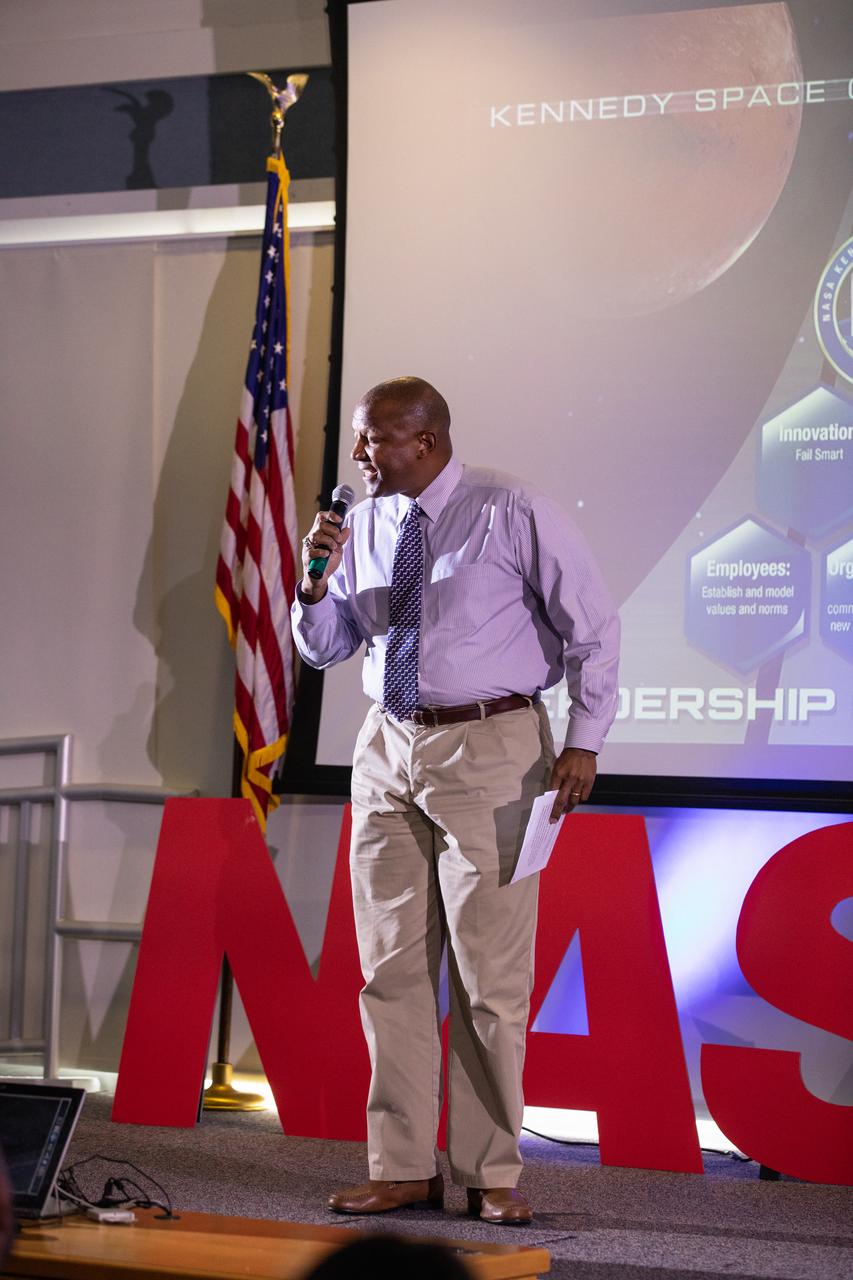
Kennedy Space Center Associate Director, Technical, Kelvin Manning addresses Kennedy employees inside the Florida spaceport’s Kennedy Learning Institute on Sept. 26, 2019, during the first in a series of five TED Talk-style informational sessions. Sponsored by Kennedy’s Launching Leaders and Leadership for the Future, NASAtalks focuses on the topic of intentional careers and aims to provide employees with tools and knowledge that can be utilized for career growth. The theme of this first session was innovation, and speakers included Kennedy employees Phillip Hargrove, Andy Phan and Brittney Mott, with a skill-building section on career planning by Nancy Bray, director of Spaceport Integration and Services.
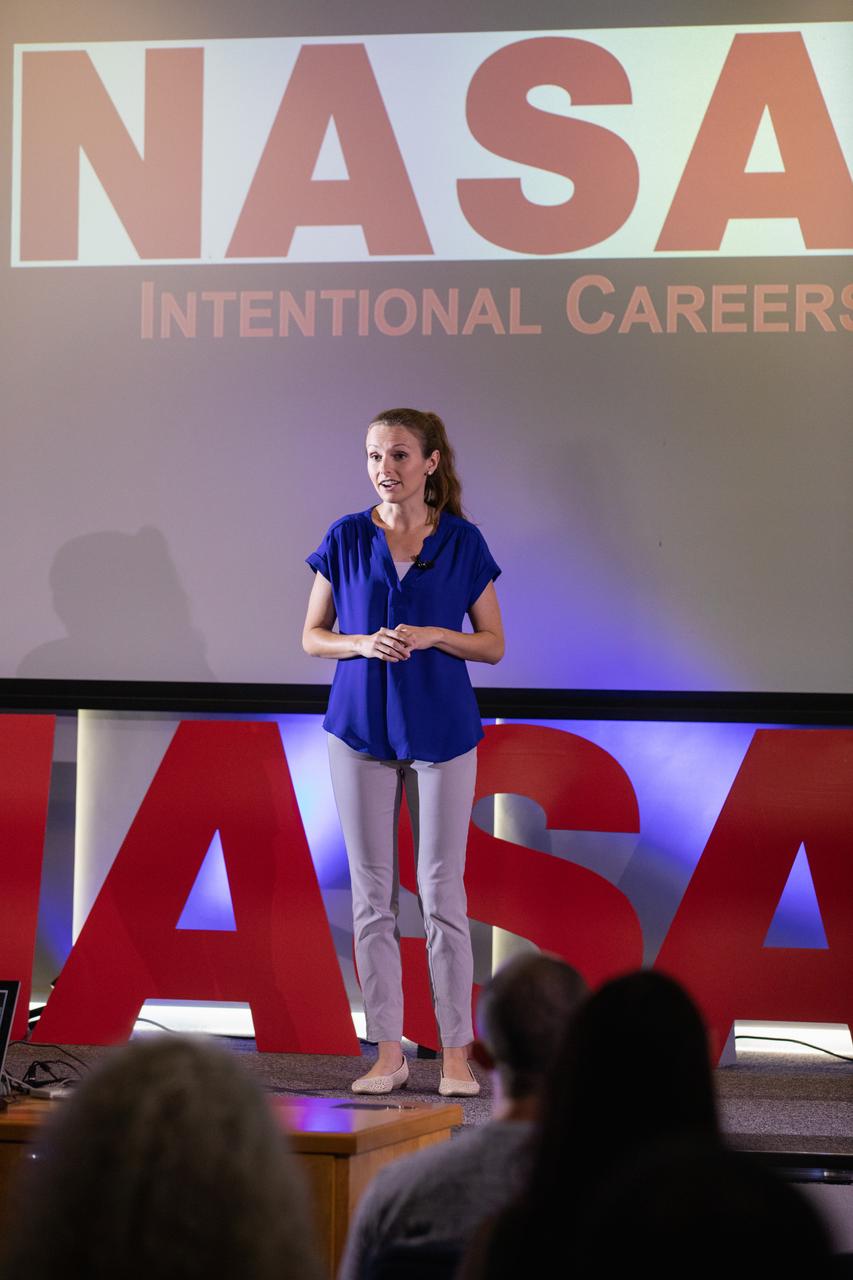
Kennedy Space Center’s Brittany Mott addresses co-workers inside the Florida spaceport’s Kennedy Learning Institute on Sept. 26, 2019, during the first in a series of five TED Talk-style informational sessions. Sponsored by Kennedy’s Launching Leaders and Leadership for the Future, NASAtalks focuses on the topic of intentional careers and aims to provide employees with tools and knowledge that can be utilized for career growth. The theme of this first session was innovation, and additional speakers included Kennedy employees Phillip Hargrove and Andy Phan, with a skill-building section on career planning by Nancy Bray, director of Spaceport Integration and Services.
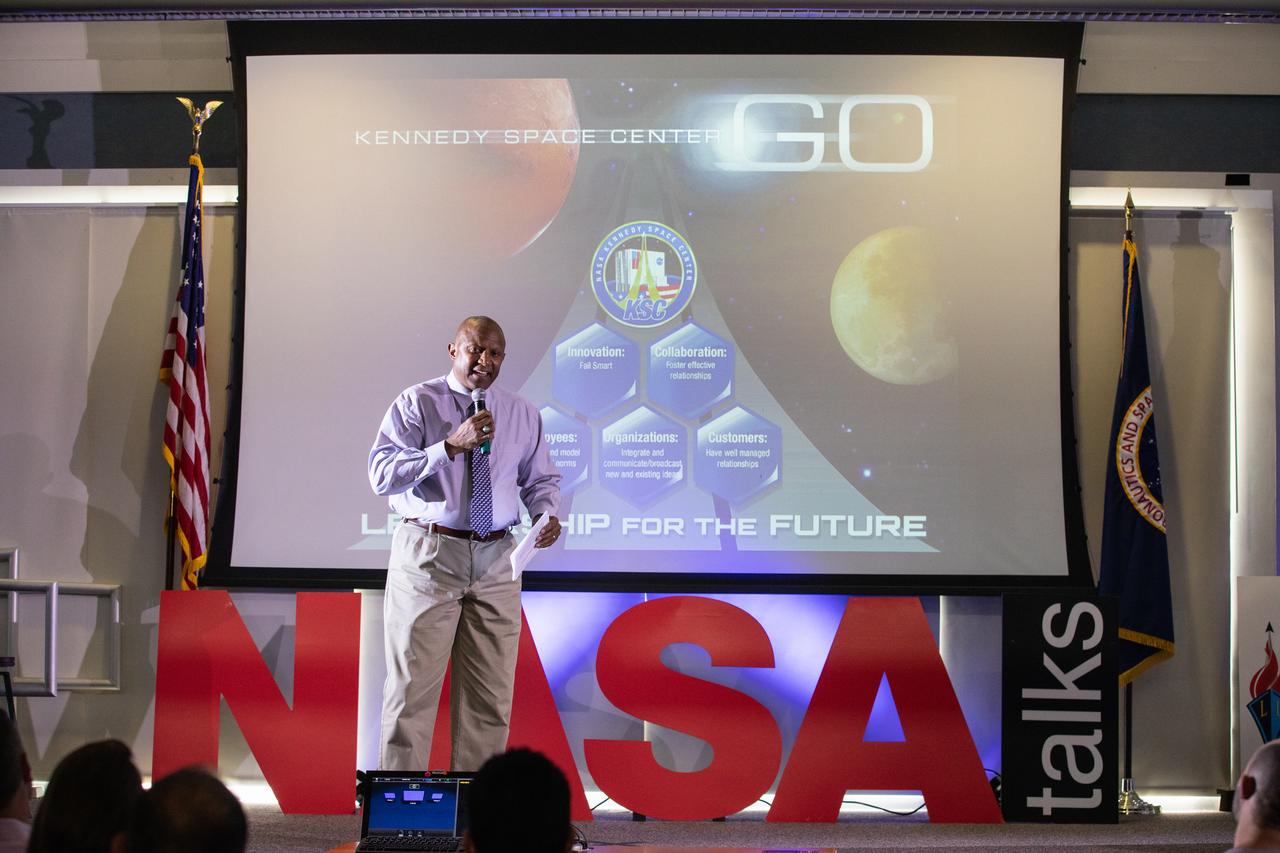
Kennedy Space Center Associate Director, Technical, Kelvin Manning addresses Kennedy employees inside the Florida spaceport’s Kennedy Learning Institute on Sept. 26, 2019, during the first in a series of five TED Talk-style informational sessions. Sponsored by Kennedy’s Launching Leaders and Leadership for the Future, NASAtalks focuses on the topic of intentional careers and aims to provide employees with tools and knowledge that can be utilized for career growth. The theme of this first session was innovation, and speakers included Kennedy employees Phillip Hargrove, Andy Phan and Brittney Mott, with a skill-building section on career planning by Nancy Bray, director of Spaceport Integration and Services.
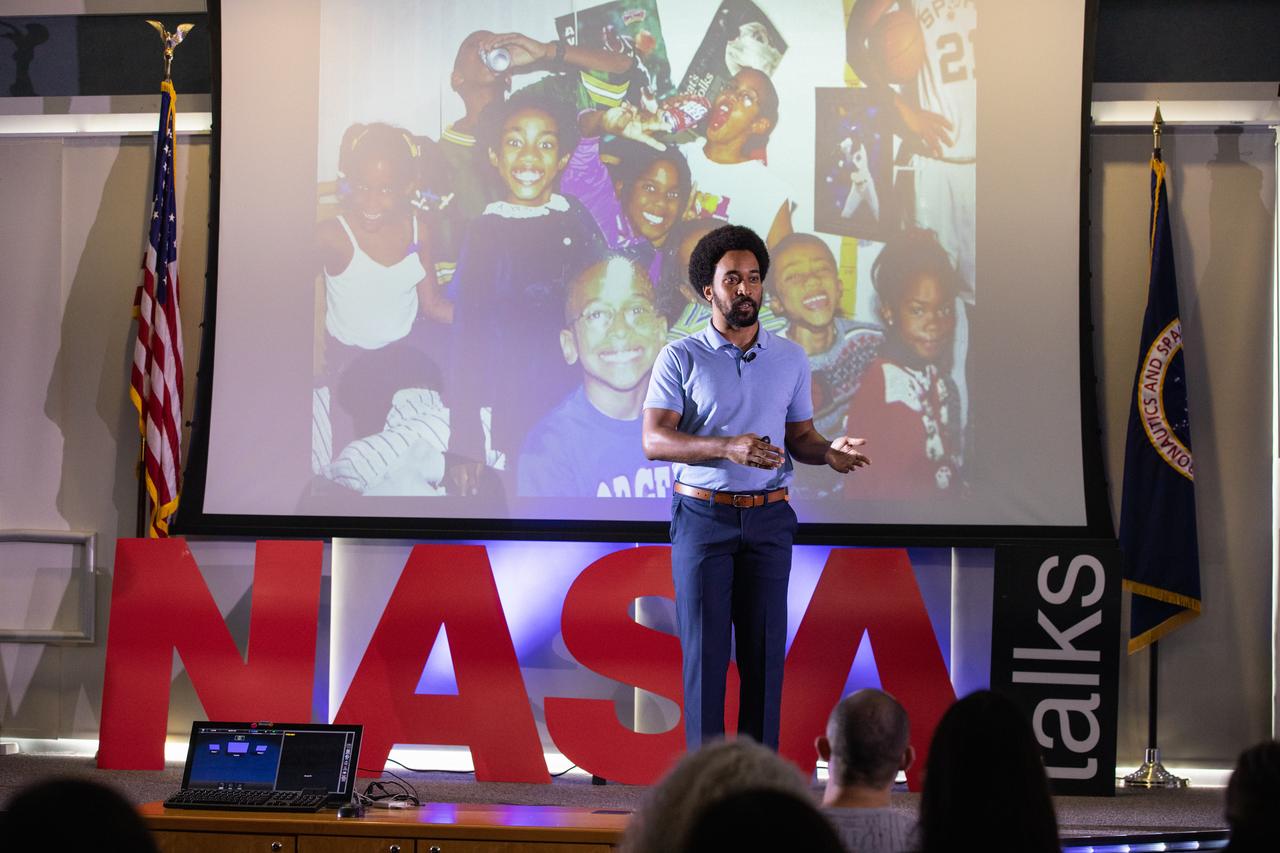
Kennedy Space Center’s Phillip Hargrove addresses co-workers inside the Florida spaceport’s Kennedy Learning Institute on Sept. 26, 2019, during the first in a series of five TED Talk-style informational sessions. Sponsored by Kennedy’s Launching Leaders and Leadership for the Future, NASAtalks focuses on the topic of intentional careers and aims to provide employees with tools and knowledge that can be utilized for career growth. The theme of this first session was innovation, and additional speakers included Kennedy employees Andy Phan and Brittney Mott, with a skill-building section on career planning by Nancy Bray, director of Spaceport Integration and Services.
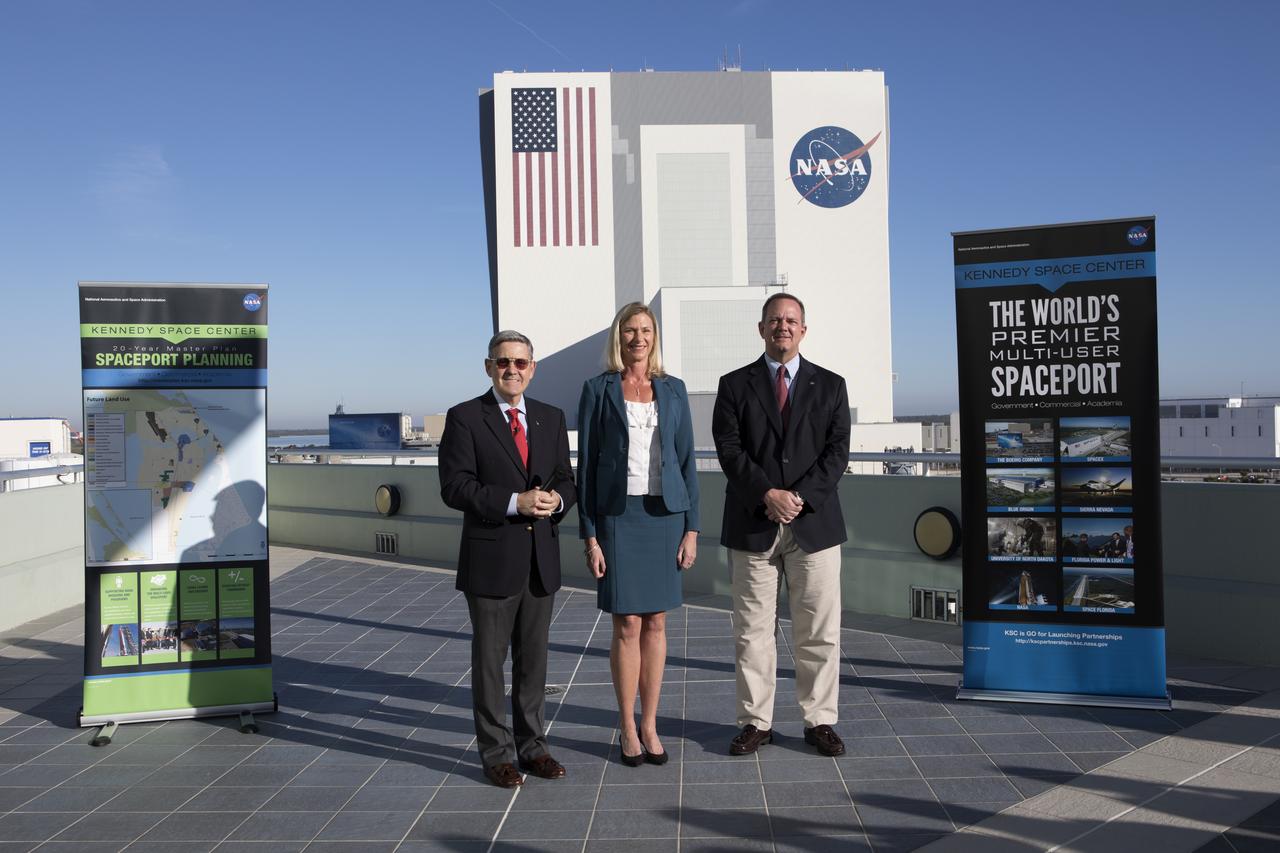
Kennedy Space Center Director Bob Cabana, left, was joined by Nancy Bray, director of Spaceport Integration and Services, center, and Tom Engler, director of Center Planning and Development in briefing members of the news media on the balcony of Operations Support Building II. They described Kennedy's transition from a primarily government-only facility to a premier, multi-user spaceport. In the background is the Vehicle Assembly Building (VAB). Modifications were recently completed in the VAB where new work platforms were installed to support processing of NASA's Space Launch System rocket designed to send the Orion spacecraft on missions beyond low-Earth orbit.
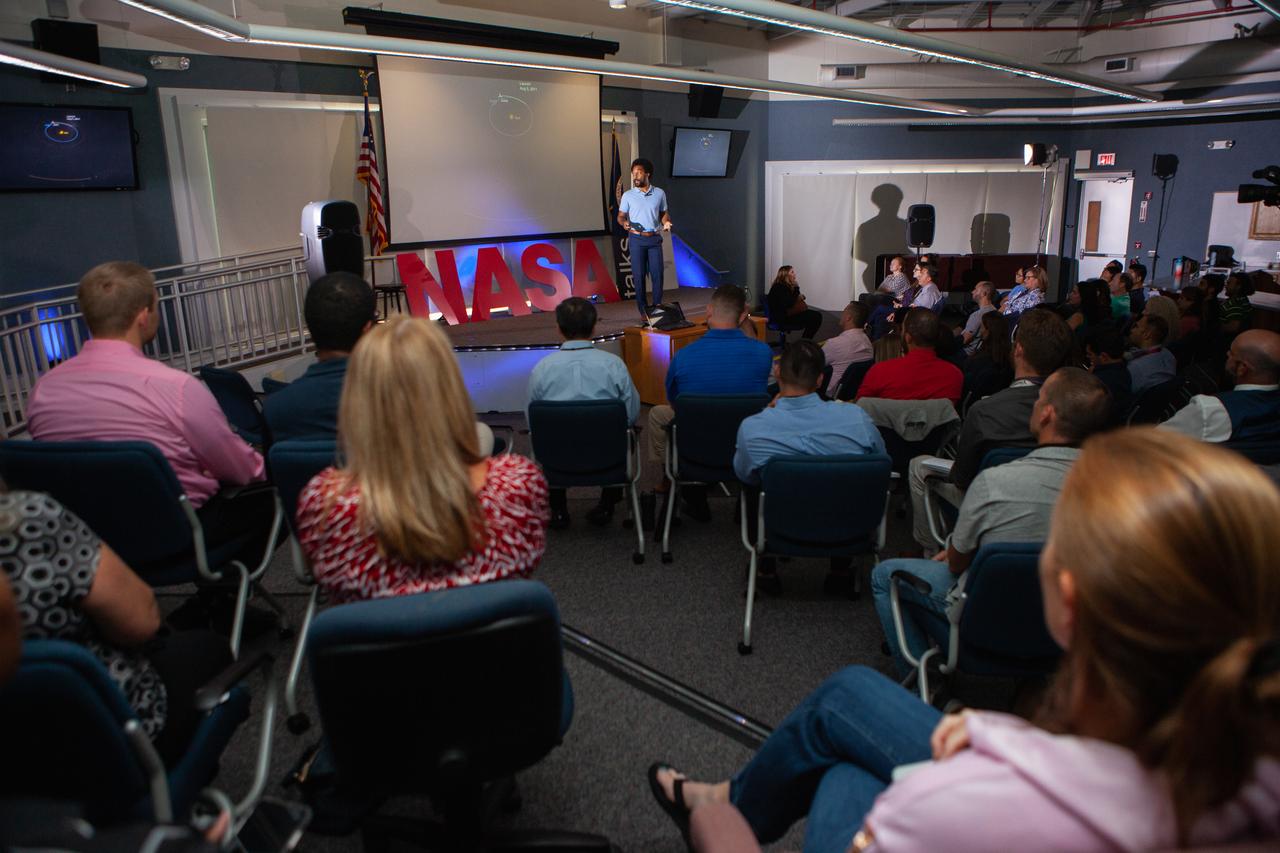
Kennedy Space Center’s Phillip Hargrove addresses co-workers inside the Florida spaceport’s Kennedy Learning Institute on Sept. 26, 2019, during the first in a series of five TED Talk-style informational sessions. Sponsored by Kennedy’s Launching Leaders and Leadership for the Future, NASAtalks focuses on the topic of intentional careers and aims to provide employees with tools and knowledge that can be utilized for career growth. The theme of this first session was innovation, and additional speakers included Kennedy employees Andy Phan and Brittney Mott, with a skill-building section on career planning by Nancy Bray, director of Spaceport Integration and Services.
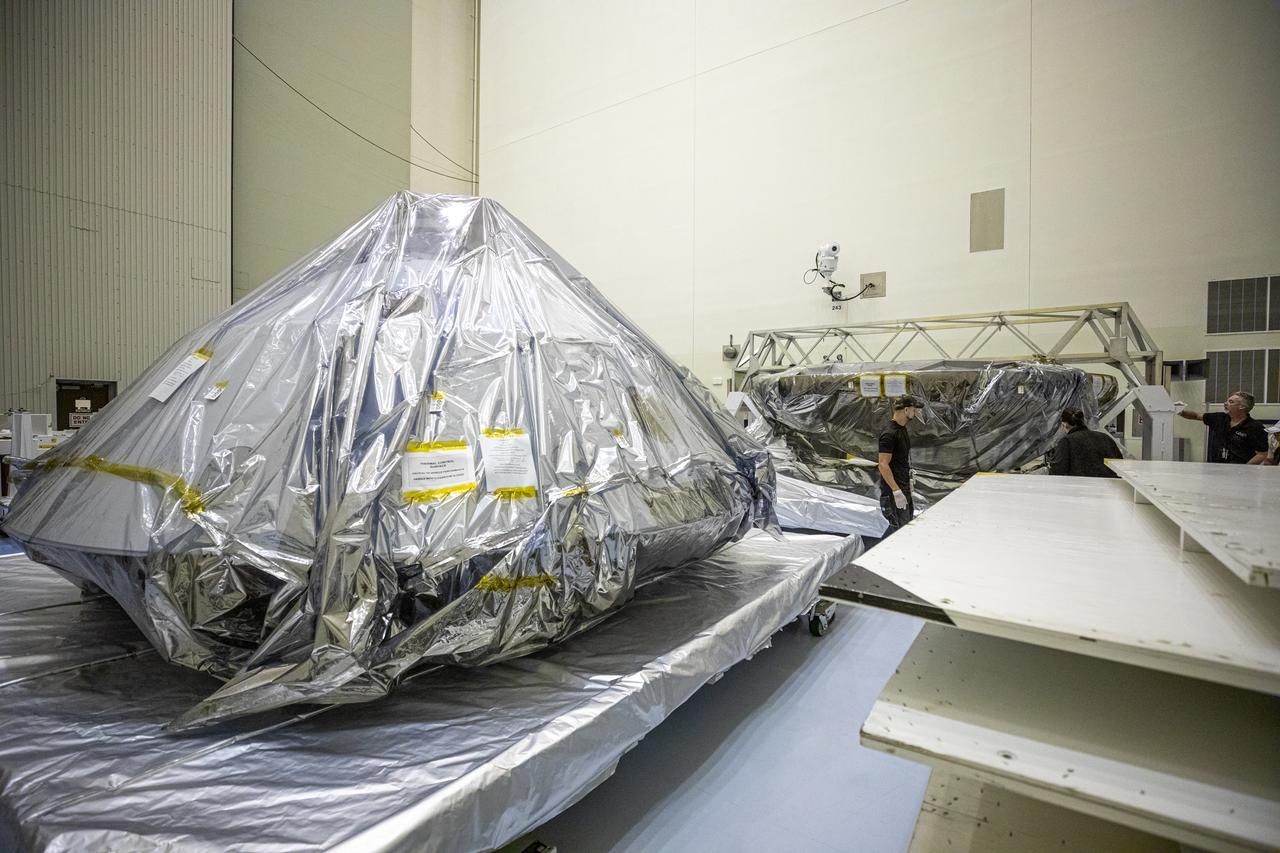
The heat shield and back shell for the Mars 2020 rover are unboxed inside the Payload Hazardous Servicing Facility at NASA’s Kennedy Space Center on Dec. 13, 2019. The two integral pieces of equipment, which were flown to the Florida spaceport from Lockheed Martin Space in Denver, Colorado, will protect the rover during its passage to Mars. The Mars 2020 rover is being manufactured at NASA’s Jet Propulsion Laboratory in California. When completed, the rover will be delivered to Kennedy in mid-February, 2020, with the mission scheduled to launch in the summer of 2020.
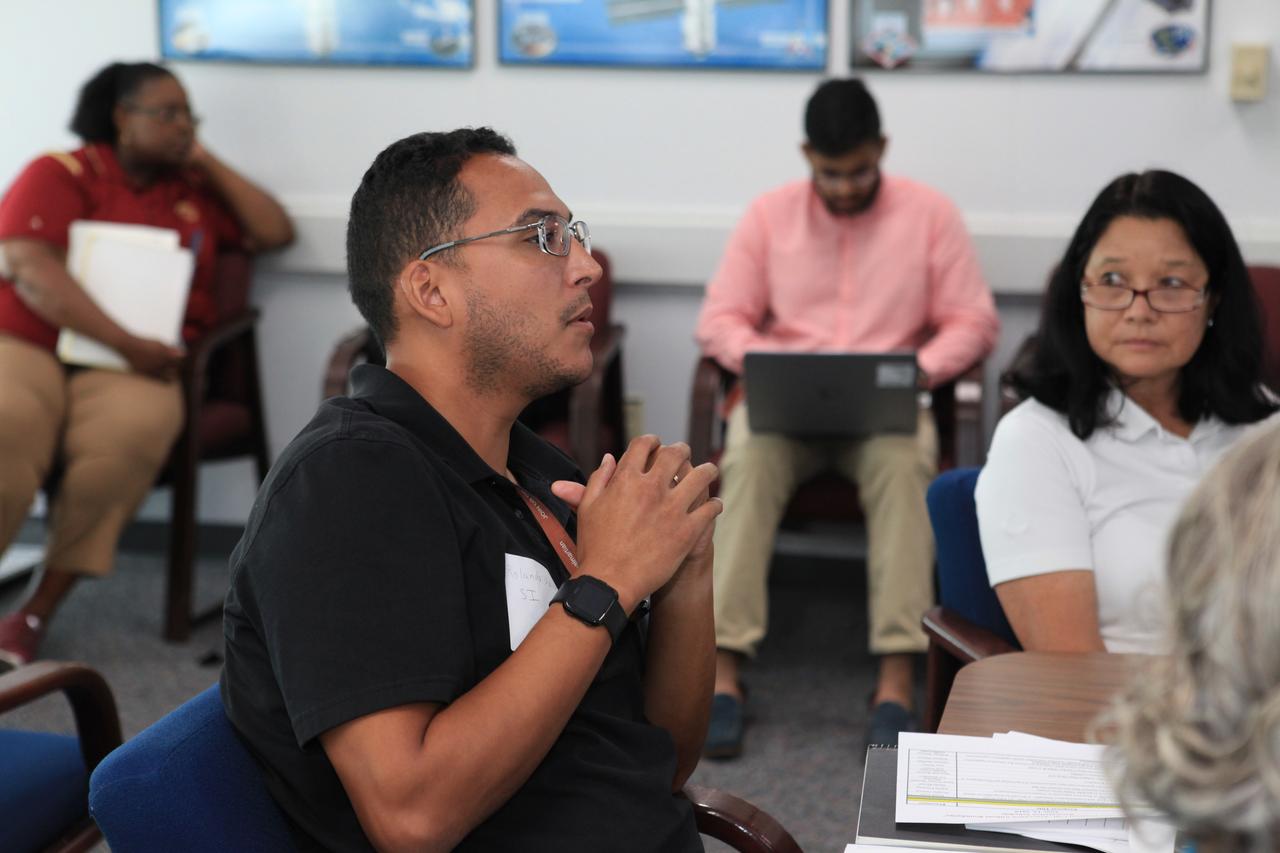
Rolando Valdez, serving as NASA’s Kennedy Space Center Spaceport Integration and Services representative for this year’s “Innovation Without Boundaries” event, gives feedback to participants in Kennedy’s Space Station Processing Facility on June 14, 2019. A number of employees presented their proposals to a panel of judges as part of the Chief Technologist Innovation Call. Participants had five minutes to present their innovative idea for the chance to receive an award of up to $500 for ideas with little-to-no cost that would make a significant impact.
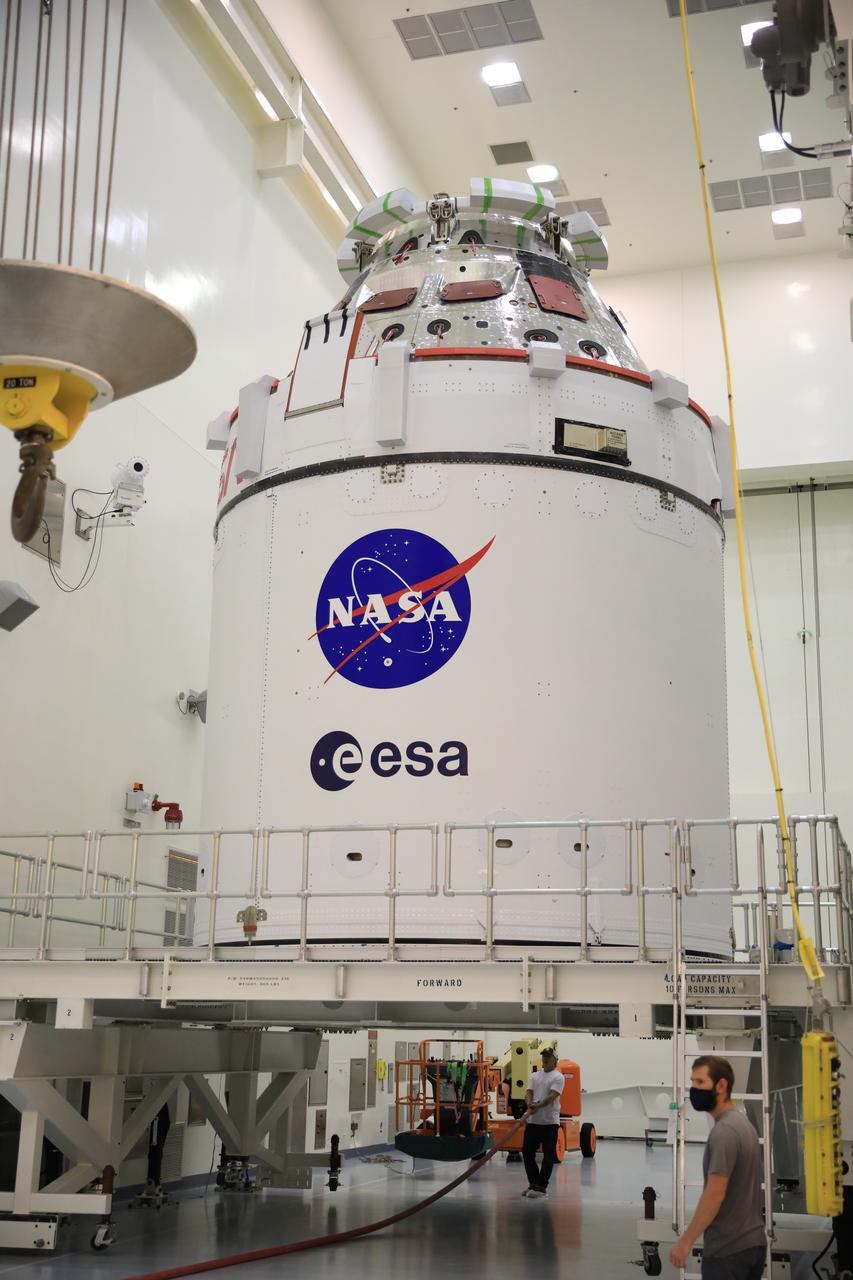
Fueling and servicing checks on the Orion spacecraft for the Artemis I mission are completed inside Kennedy Space Center’s Multi-Payload Processing Facility on July 8, 2021. The capsule will be transported to the Florida spaceport’s Launch Abort System Facility, where teams with Exploration Ground Systems and contractor Jacobs will work to add parts of the launch abort system onto the spacecraft. Launching later this year, Artemis I will be a test of the Orion spacecraft and SLS rocket as an integrated system ahead of crewed flights to the Moon.
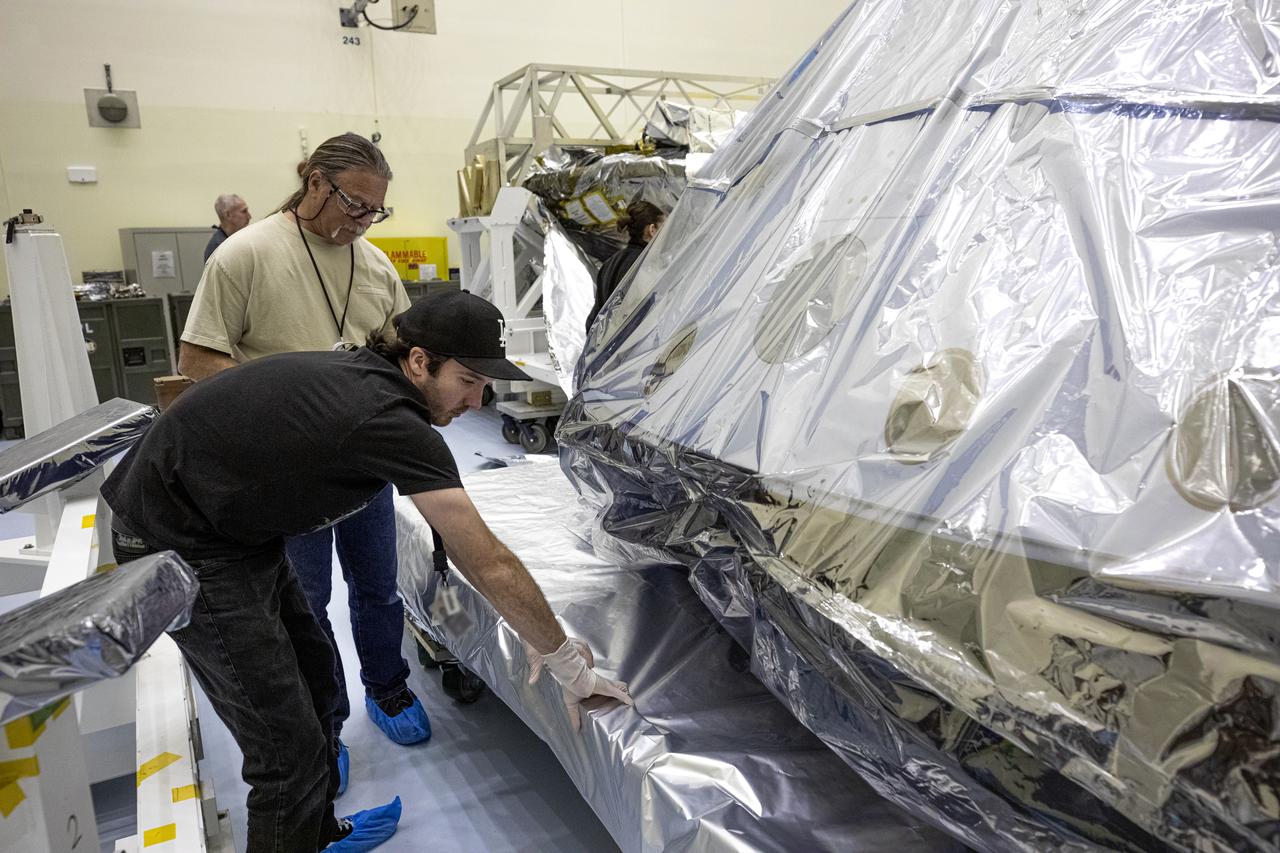
The heat shield and back shell for the Mars 2020 rover are unboxed inside the Payload Hazardous Servicing Facility at NASA’s Kennedy Space Center on Dec. 13, 2019. The two integral pieces of equipment, which were flown to the Florida spaceport from Lockheed Martin Space in Denver, Colorado, will protect the rover during its passage to Mars. The Mars 2020 rover is being manufactured at NASA’s Jet Propulsion Laboratory in California. When completed, the rover will be delivered to Kennedy in mid-February, 2020, with the mission scheduled to launch in the summer of 2020.
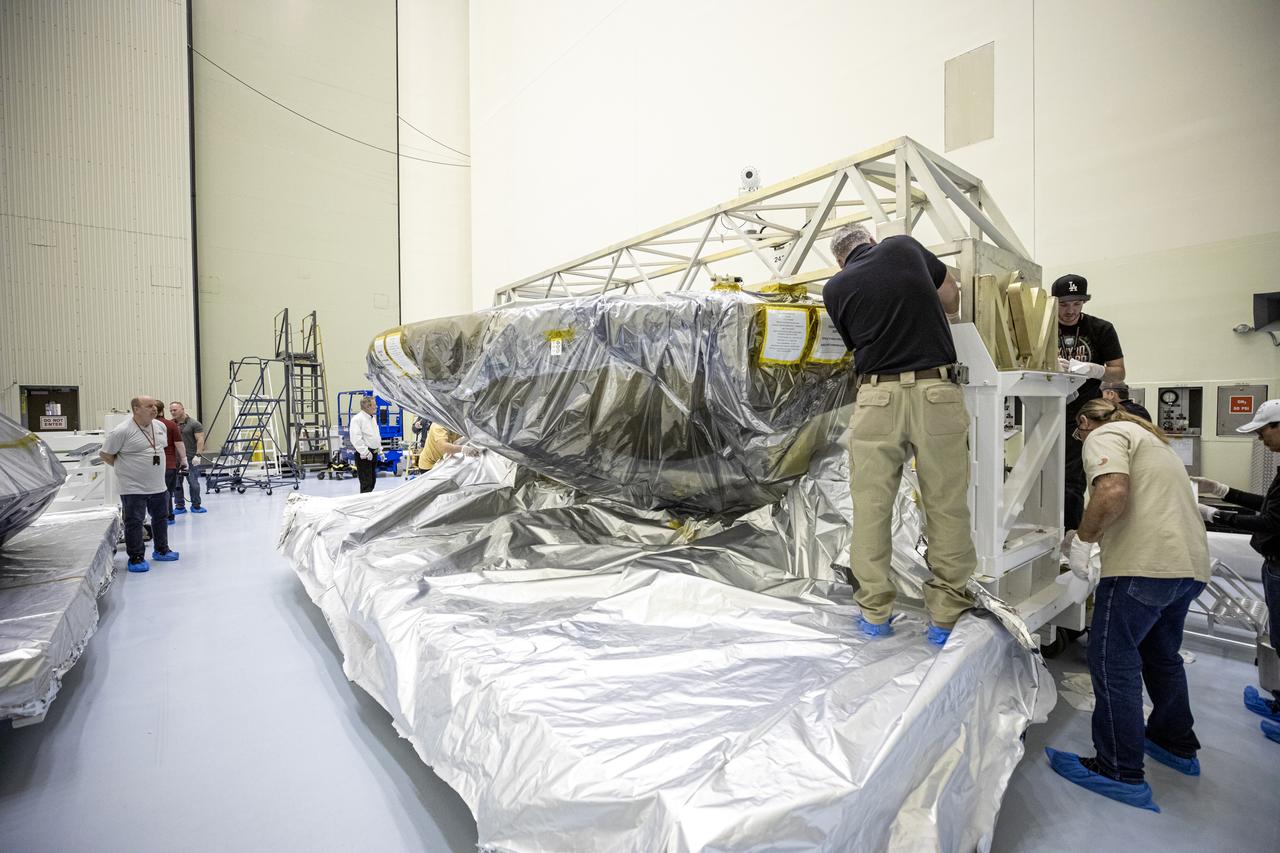
The heat shield and back shell for the Mars 2020 rover are unboxed inside the Payload Hazardous Servicing Facility at NASA’s Kennedy Space Center on Dec. 13, 2019. The two integral pieces of equipment, which were flown to the Florida spaceport from Lockheed Martin Space in Denver, Colorado, will protect the rover during its passage to Mars. The Mars 2020 rover is being manufactured at NASA’s Jet Propulsion Laboratory in California. When completed, the rover will be delivered to Kennedy in mid-February, 2020, with the mission scheduled to launch in the summer of 2020.
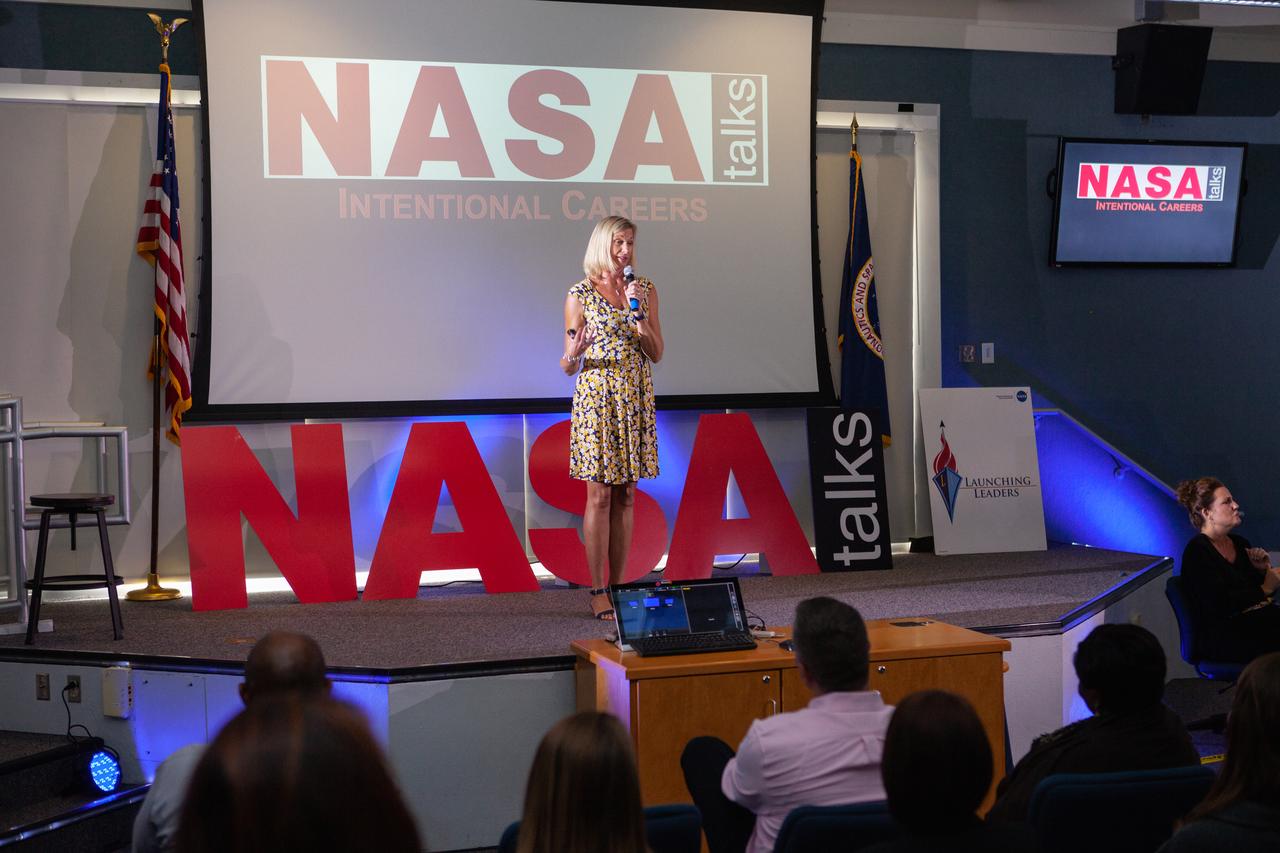
Nancy Bray, director of Spaceport Integration and Services at NASA’s Kennedy Space Center in Florida, speaks to Kennedy employees on Sept. 26, 2019, in the Kennedy Learning Institute during the first in a series of five TED Talk-style informational sessions. Sponsored by Kennedy’s Launching Leaders and Leadership for the Future, NASAtalks focuses on the topic of intentional careers and aims to provide employees with tools and knowledge that can be utilized for career growth. The theme of this first session was innovation, and additional speakers included Kennedy employees Phillip Hargrove, Andy Phan and Brittany Mott.
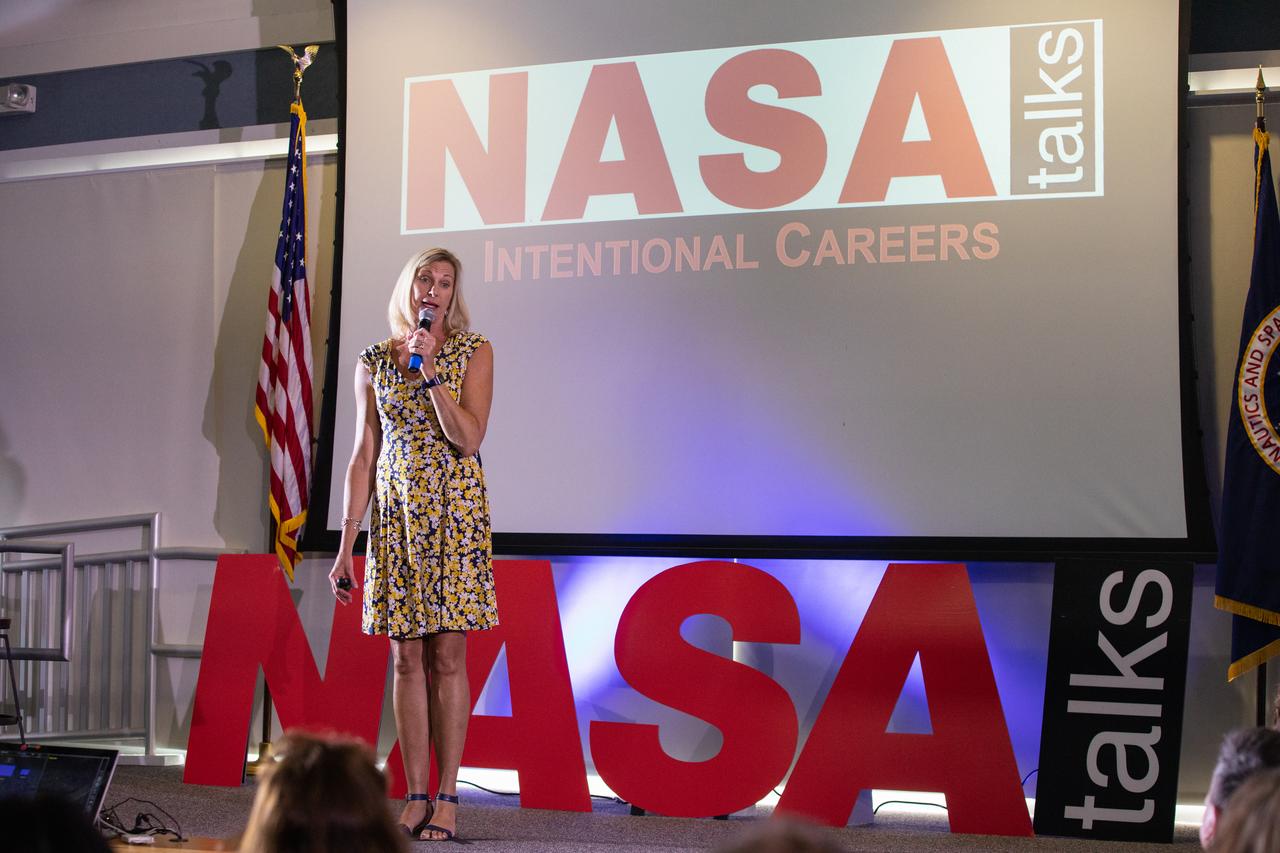
Nancy Bray, director of Spaceport Integration and Services at NASA’s Kennedy Space Center in Florida, speaks to Kennedy employees on Sept. 26, 2019, in the Kennedy Learning Institute during the first in a series of five TED Talk-style informational sessions. Sponsored by Kennedy’s Launching Leaders and Leadership for the Future, NASAtalks focuses on the topic of intentional careers and aims to provide employees with tools and knowledge that can be utilized for career growth. The theme of this first session was innovation, and additional speakers included Kennedy employees Phillip Hargrove, Andy Phan and Brittany Mott.
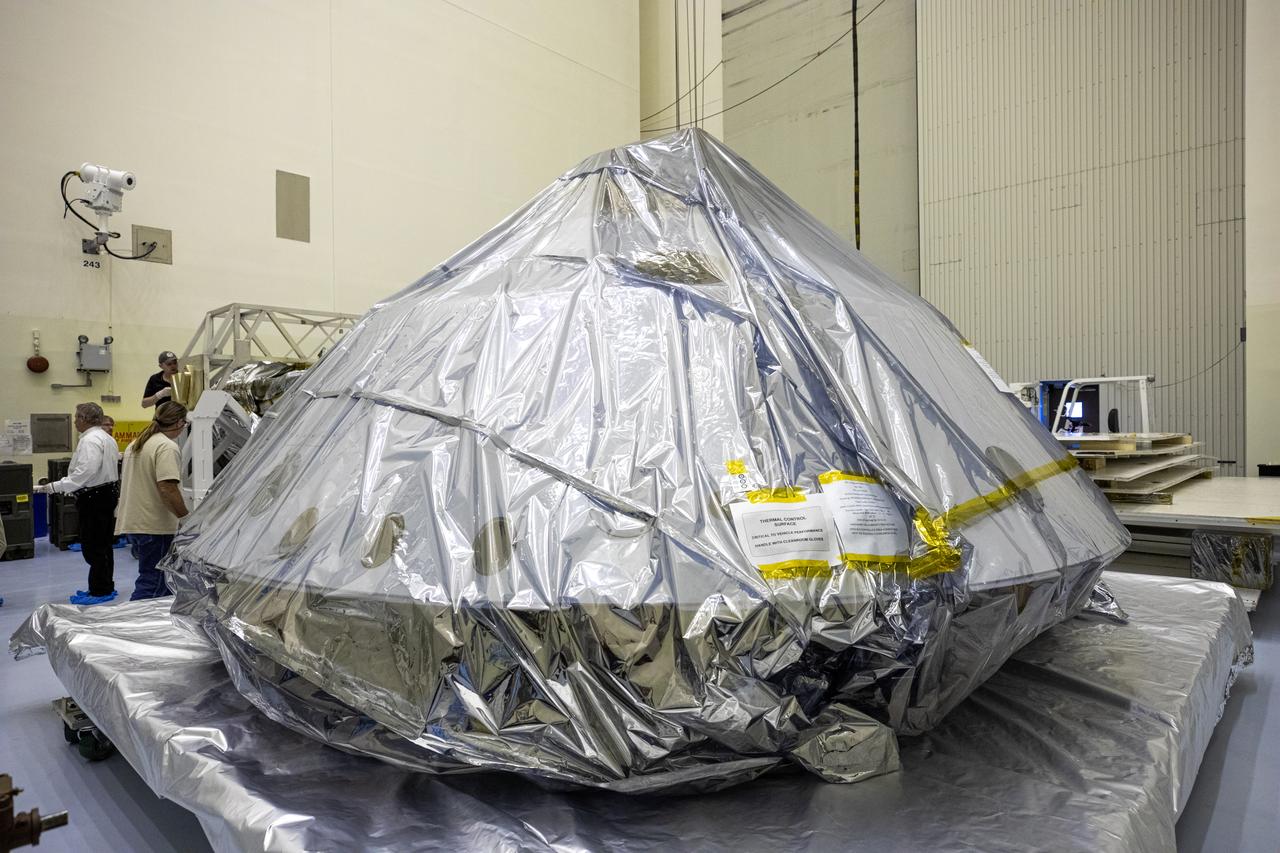
The heat shield and back shell for the Mars 2020 rover are unboxed inside the Payload Hazardous Servicing Facility at NASA’s Kennedy Space Center on Dec. 13, 2019. The two integral pieces of equipment, which were flown to the Florida spaceport from Lockheed Martin Space in Denver, Colorado, will protect the rover during its passage to Mars. The Mars 2020 rover is being manufactured at NASA’s Jet Propulsion Laboratory in California. When completed, the rover will be delivered to Kennedy in mid-February, 2020, with the mission scheduled to launch in the summer of 2020.
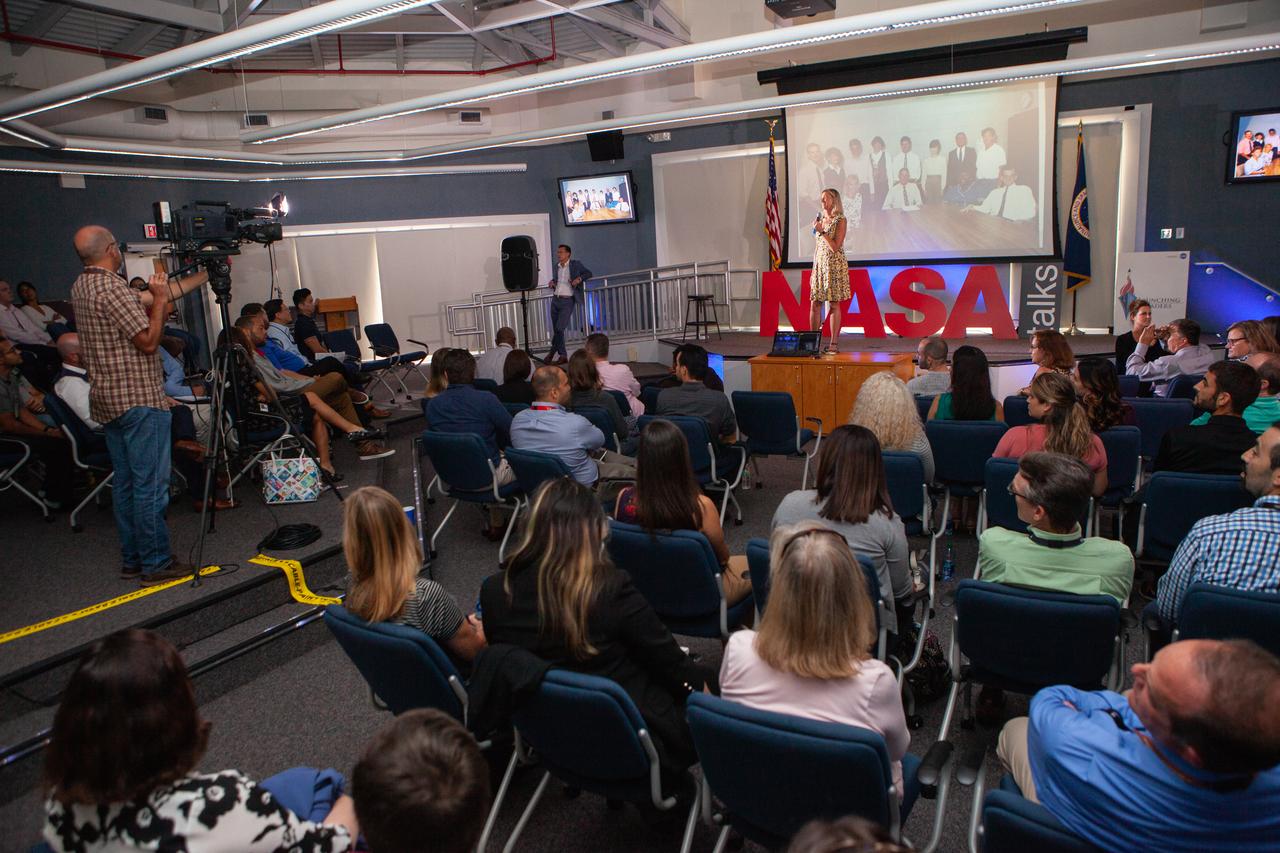
Nancy Bray, director of Spaceport Integration and Services at NASA’s Kennedy Space Center in Florida, speaks to Kennedy employees on Sept. 26, 2019, in the Kennedy Learning Institute during the first in a series of five TED Talk-style informational sessions. Sponsored by Kennedy’s Launching Leaders and Leadership for the Future, NASAtalks focuses on the topic of intentional careers and aims to provide employees with tools and knowledge that can be utilized for career growth. The theme of this first session was innovation, and additional speakers included Kennedy employees Phillip Hargrove, Andy Phan and Brittany Mott.
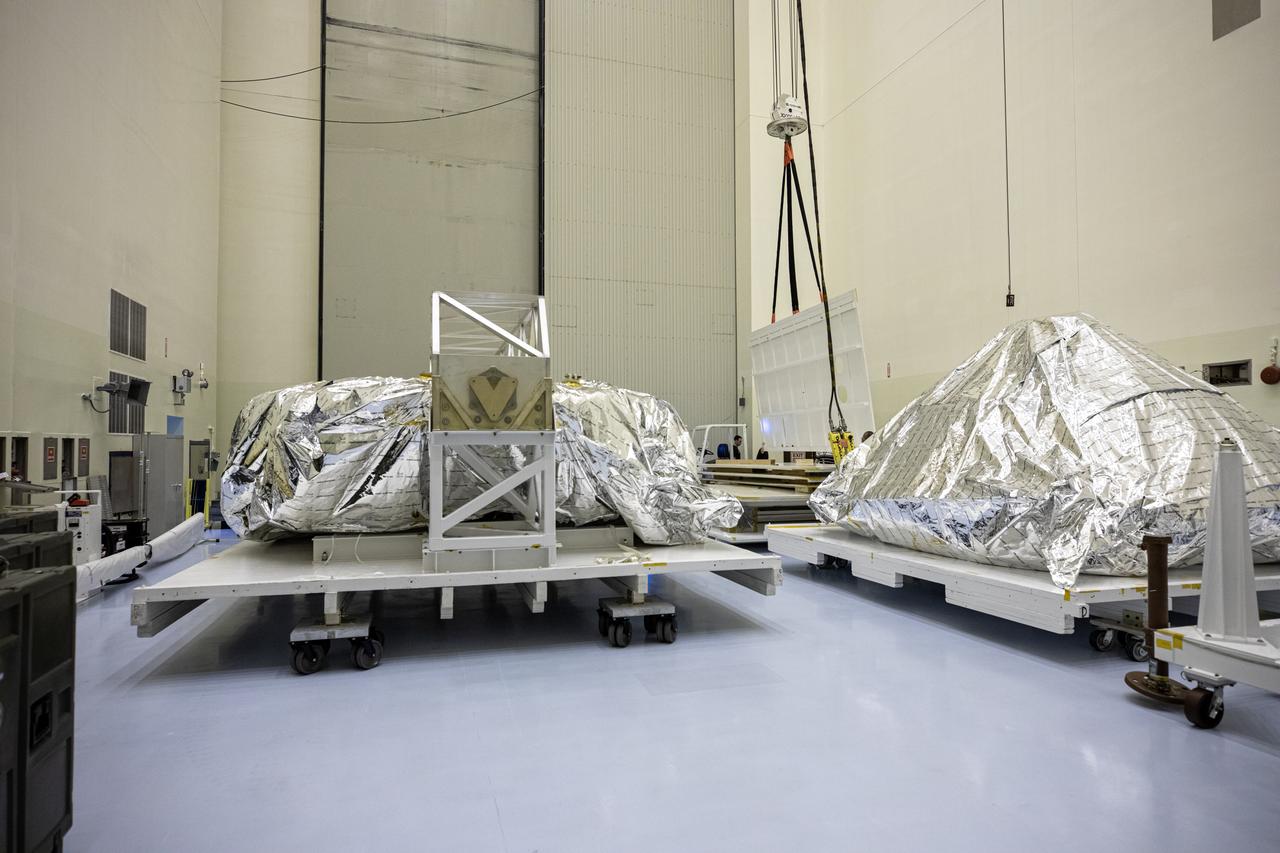
The heat shield and back shell for the Mars 2020 rover are unboxed inside the Payload Hazardous Servicing Facility at NASA’s Kennedy Space Center on Dec. 13, 2019. The two integral pieces of equipment, which were flown to the Florida spaceport from Lockheed Martin Space in Denver, Colorado, will protect the rover during its passage to Mars. The Mars 2020 rover is being manufactured at NASA’s Jet Propulsion Laboratory in California. When completed, the rover will be delivered to Kennedy in mid-February, 2020, with the mission scheduled to launch in the summer of 2020.
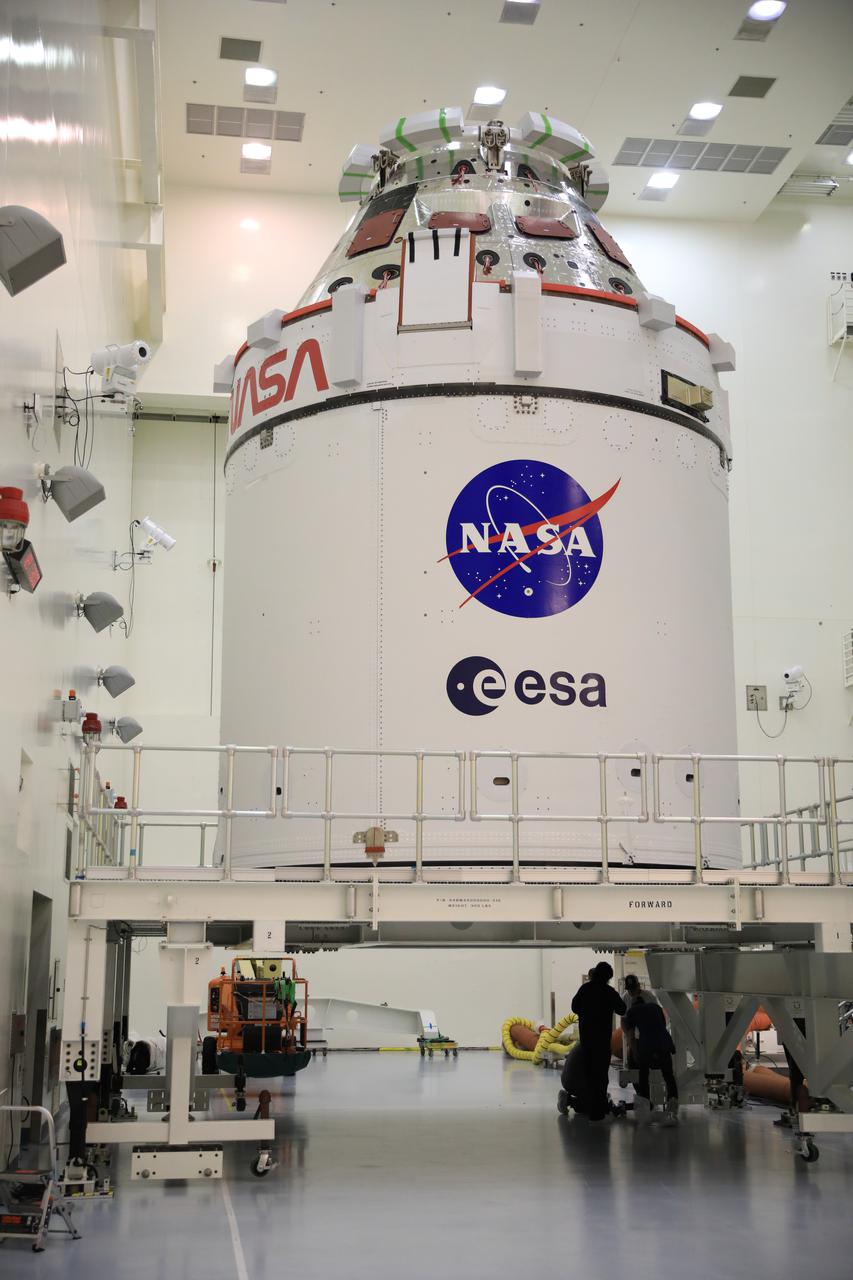
Fueling and servicing checks on the Orion spacecraft for the Artemis I mission are completed inside Kennedy Space Center’s Multi-Payload Processing Facility on July 8, 2021. The capsule will be transported to the Florida spaceport’s Launch Abort System Facility, where teams with Exploration Ground Systems and contractor Jacobs will work to add parts of the launch abort system onto the spacecraft. Launching later this year, Artemis I will be a test of the Orion spacecraft and SLS rocket as an integrated system ahead of crewed flights to the Moon.
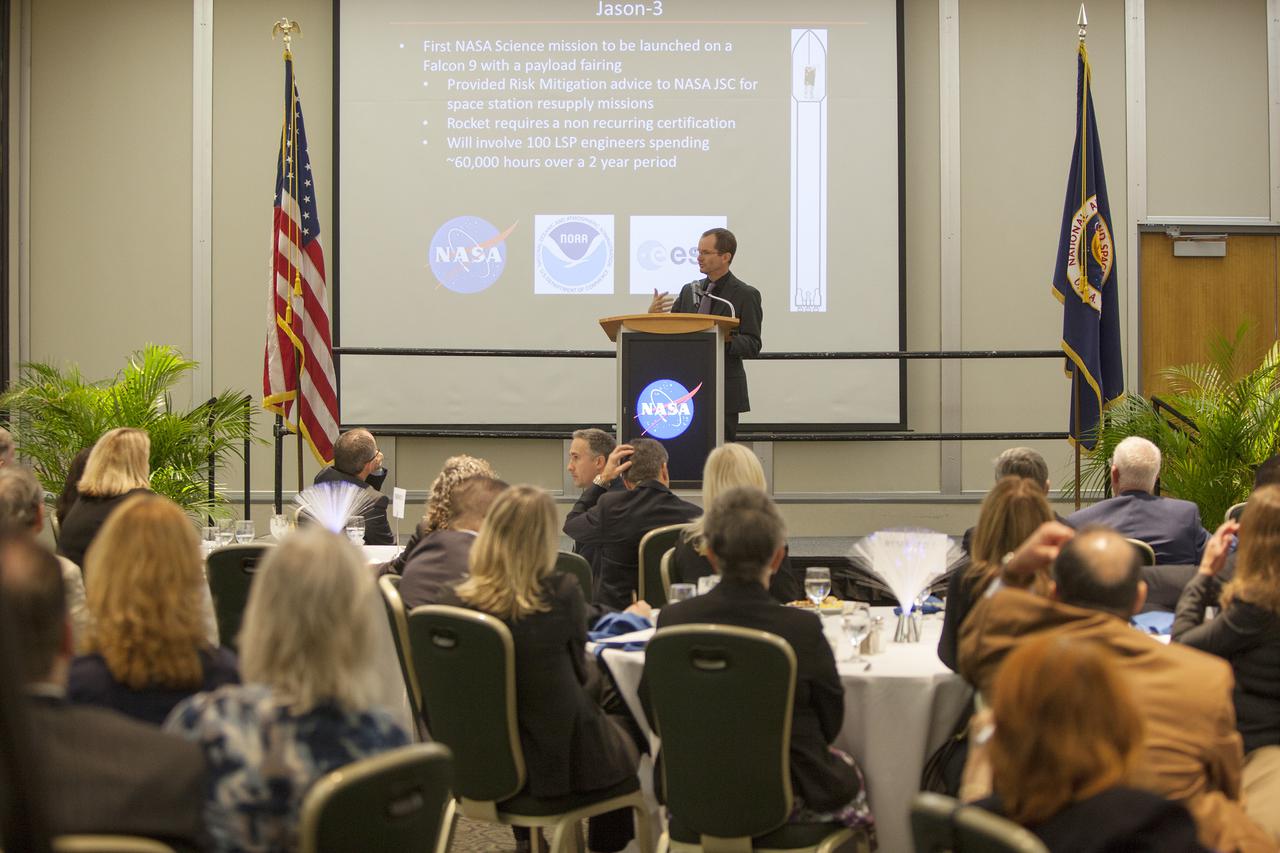
CAPE CANAVERAL, Fla. -- Darren Bedell, System Integration manager in the Launch Services Program Office at the Kennedy Space Center provided an on current and future activities at the Florida spaceport during the annual Community Leaders Briefing. The reports were part of the annual Community Leaders Briefing at the Kurt H. Debus Conference Center at the Kennedy Space Center Visitor Complex attended by local, state and U.S. government representatives, along with individuals from business and industry. Photo credit: NASA_Dimitri Gerondidakis
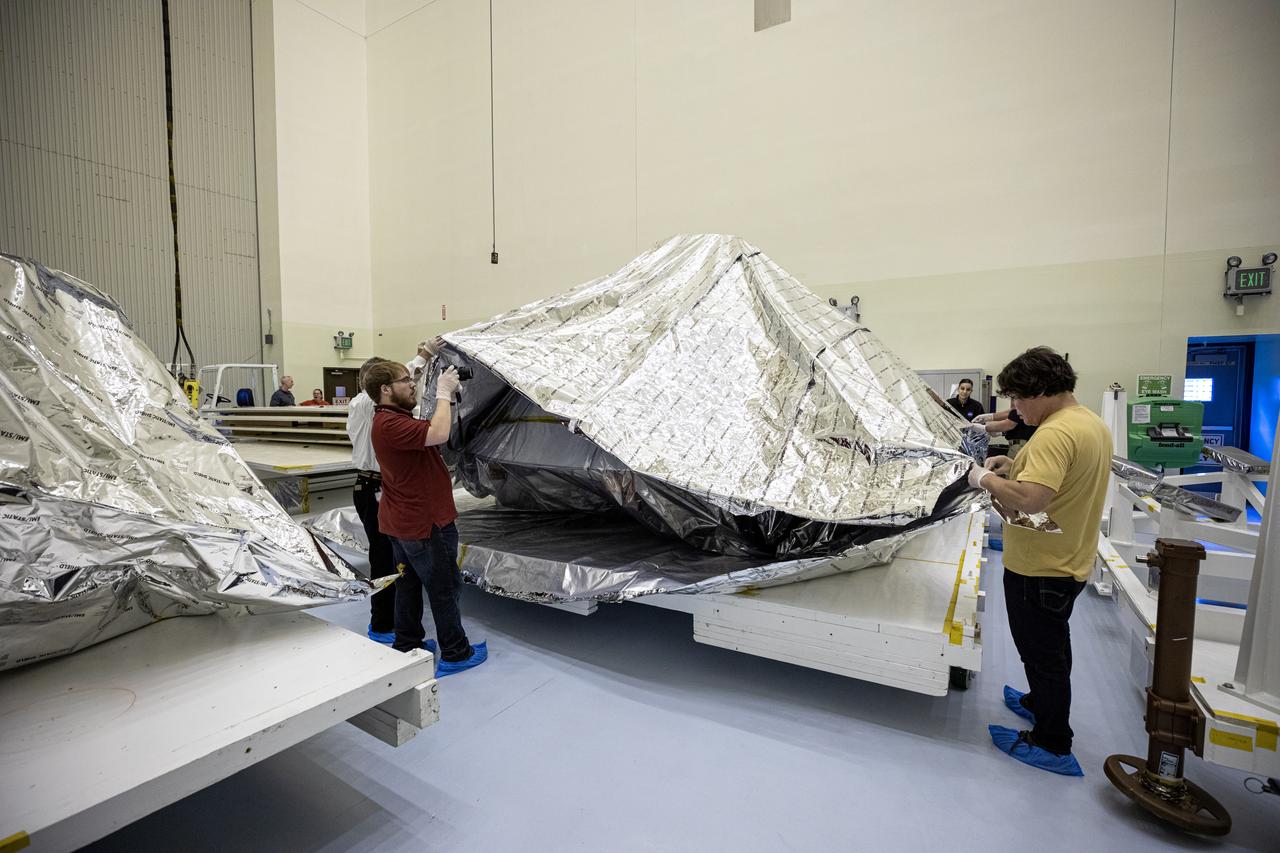
The heat shield and back shell for the Mars 2020 rover are unboxed inside the Payload Hazardous Servicing Facility at NASA’s Kennedy Space Center on Dec. 13, 2019. The two integral pieces of equipment, which were flown to the Florida spaceport from Lockheed Martin Space in Denver, Colorado, will protect the rover during its passage to Mars. The Mars 2020 rover is being manufactured at NASA’s Jet Propulsion Laboratory in California. When completed, the rover will be delivered to Kennedy in mid-February, 2020, with the mission scheduled to launch in the summer of 2020.
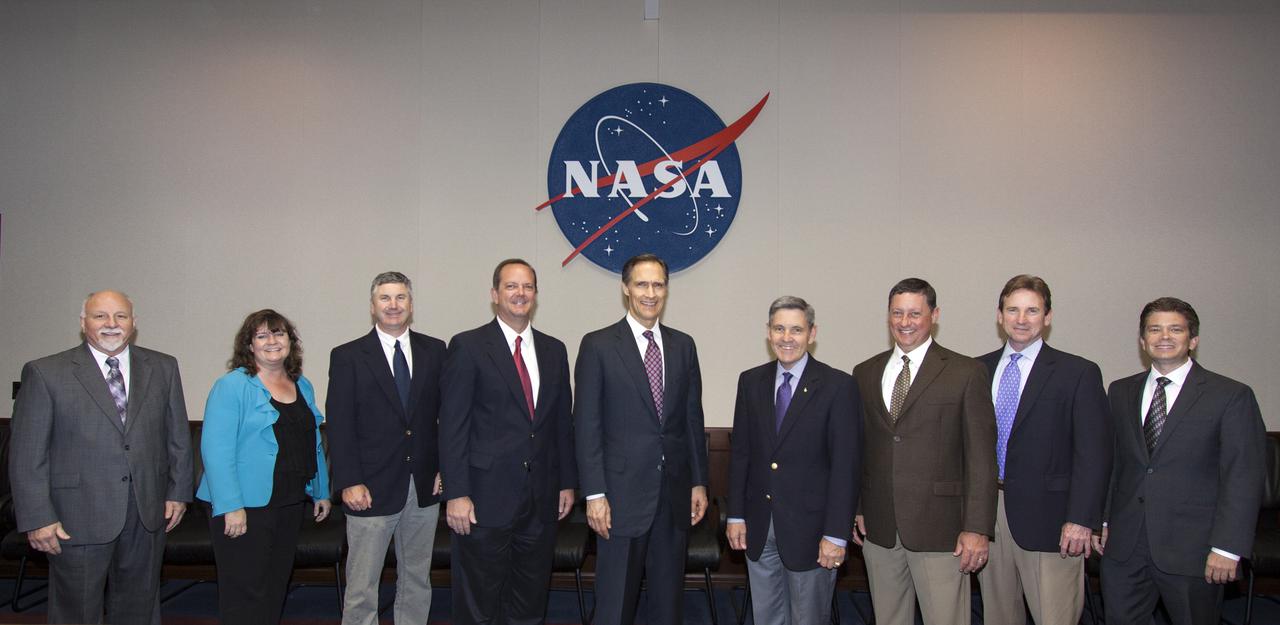
CAPE CANAVERAL, Fla. -- Kennedy Space Center Director Bob Cabana, met with representatives of PaR Systems Inc. NASA recently established a partnership agreement with PaR to operate of the Hangar N facility and its nondestructive testing equipment. Participating were, from the left, Cliff Hausmann, Technical Integration manager in NASA's Program Control and Integration Office, Amy Houts-Gilfriche, Partnership Development manager in NASA's Center Planning and Development Directorate, Scott Colloredo of NASA's Systems Engineering and Integration Division, Tom Engler, deputy director of Center Planning and Development, Brian Behm, president of the Robotics Division of PaR Systems, Tony Corak, manager, of Non-destructive Testing Services for PaR Systems, Dale Ketcham of Space Florida, and Robert Salonen, director of Business Development for the Economic Development Commission of Florida's Space Coast. As the spaceport transitions from a historically government-only launch facility to a multiuser spaceport for both federal and commercial customers, partnerships with other organizations will be a key element in that effort. Hangar N is located at Cape Canaveral Air Force Station adjacent to Kennedy. The facility's unique inventory of nondestructive test and evaluation NDE equipment and the capability for current and future mission spaceflight support was an asset NASA wanted to retain. Photo credit: NASA_Jim Grossmann
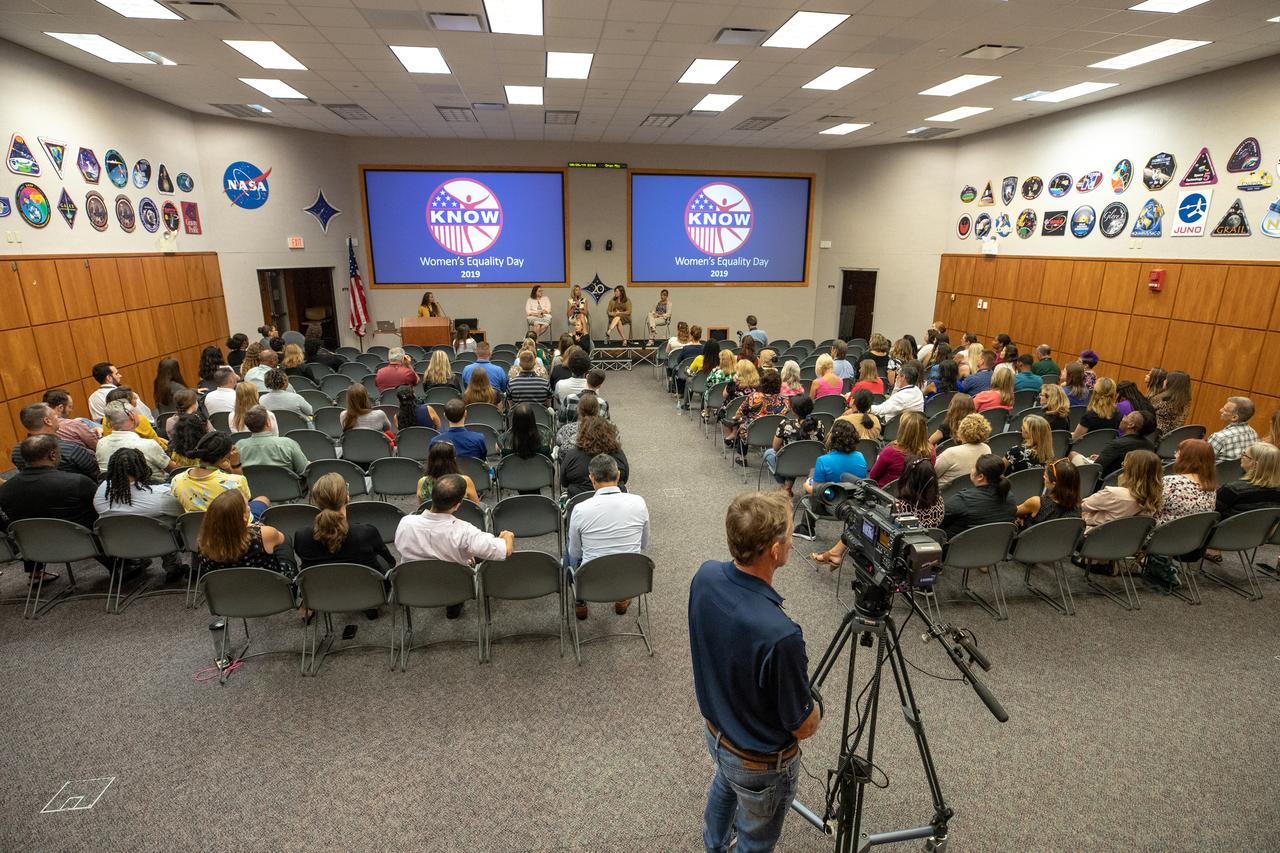
A panel discussion, featuring women in leadership roles at NASA’s Kennedy Space Center in Florida, is held on Aug. 26, 2019, to celebrate Women’s Equality Day. The event, sponsored by the Kennedy Networking Opportunities for Women (KNOW) employee resource group, honored the 100th anniversary of the passing of the 19th amendment guaranteeing all American women the right to vote. Seated in front from left, are Digna Carballosa, director of the Human Resources Office; Nancy Bray, director of Spaceport Integration and Services; Jennifer Kunz, director of Safety and Mission Assurance; and Amanda Mitskevich, Launch Services Program manager. At far left is Ashley Nelsen, Launch Service Program information manager and panel discussion moderator. The purpose of KNOW is to provide focus on issues such as employment, retention, promotion, training, career and personal development, education, and identify and eliminate barriers that hinder the advancement of women in the workforce.
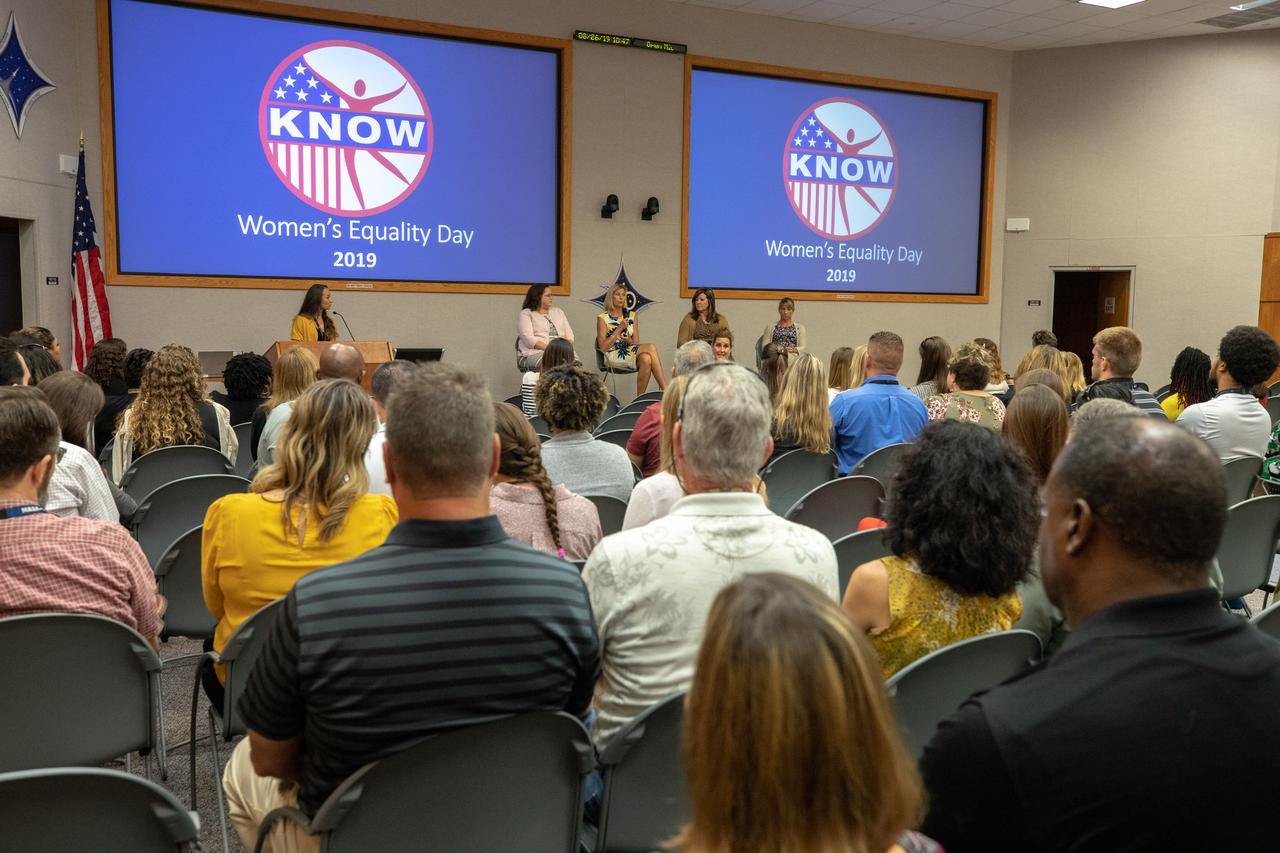
A panel discussion, featuring women in leadership roles at NASA’s Kennedy Space Center in Florida, is held on Aug. 26, 2019, to celebrate Women’s Equality Day. The event, sponsored by the Kennedy Networking Opportunities for Women (KNOW) employee resource group, honored the 100th anniversary of the passing of the 19th amendment guaranteeing all American women the right to vote. Seated in front from left, are Digna Carballosa, director of the Human Resources Office; Nancy Bray, director of Spaceport Integration and Services; Jennifer Kunz, director of Safety and Mission Assurance; and Amanda Mitskevich, Launch Services Program manager. At far left is Ashley Nelsen, Launch Service Program information manager and panel discussion moderator. The purpose of KNOW is to provide focus on issues such as employment, retention, promotion, training, career and personal development, education, and identify and eliminate barriers that hinder the advancement of women in the workforce.
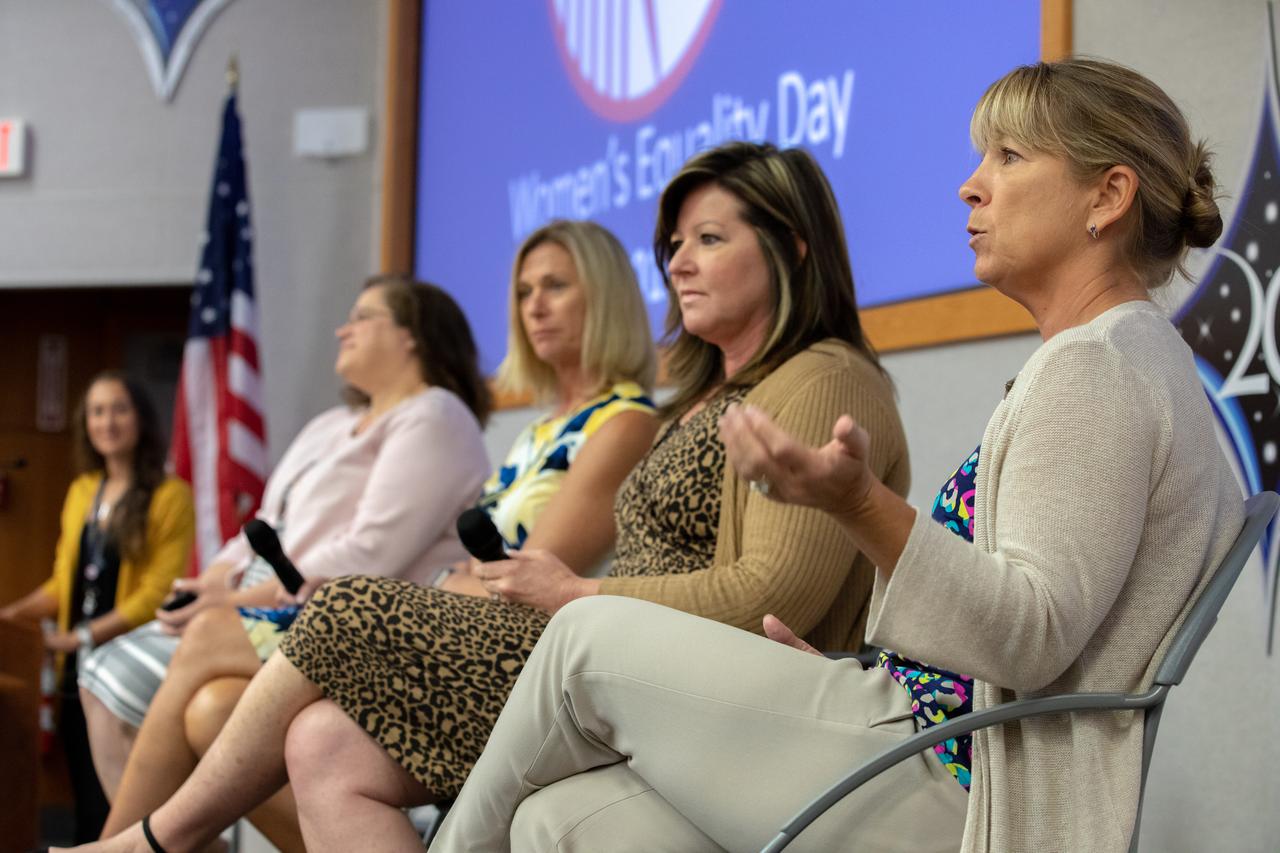
A panel discussion, featuring women in leadership roles at NASA’s Kennedy Space Center in Florida, is held on Aug. 26, 2019, to celebrate Women’s Equality Day. The event, sponsored by the Kennedy Networking Opportunities for Women (KNOW) employee resource group, honored the 100th anniversary of the passing of the 19th amendment guaranteeing all American women the right to vote. Seated in front from left, are Digna Carballosa, director of the Human Resources Office; Nancy Bray, director of Spaceport Integration and Services; Jennifer Kunz, director of Safety and Mission Assurance; and Amanda Mitskevich, Launch Services Program manager. At far left, is Ashley Nelsen, Launch Service Program information manager and panel discussion moderator. The purpose of KNOW is to provide focus on issues such as employment, retention, promotion, training, career and personal development, education, and identify and eliminate barriers that hinder the advancement of women in the workforce.
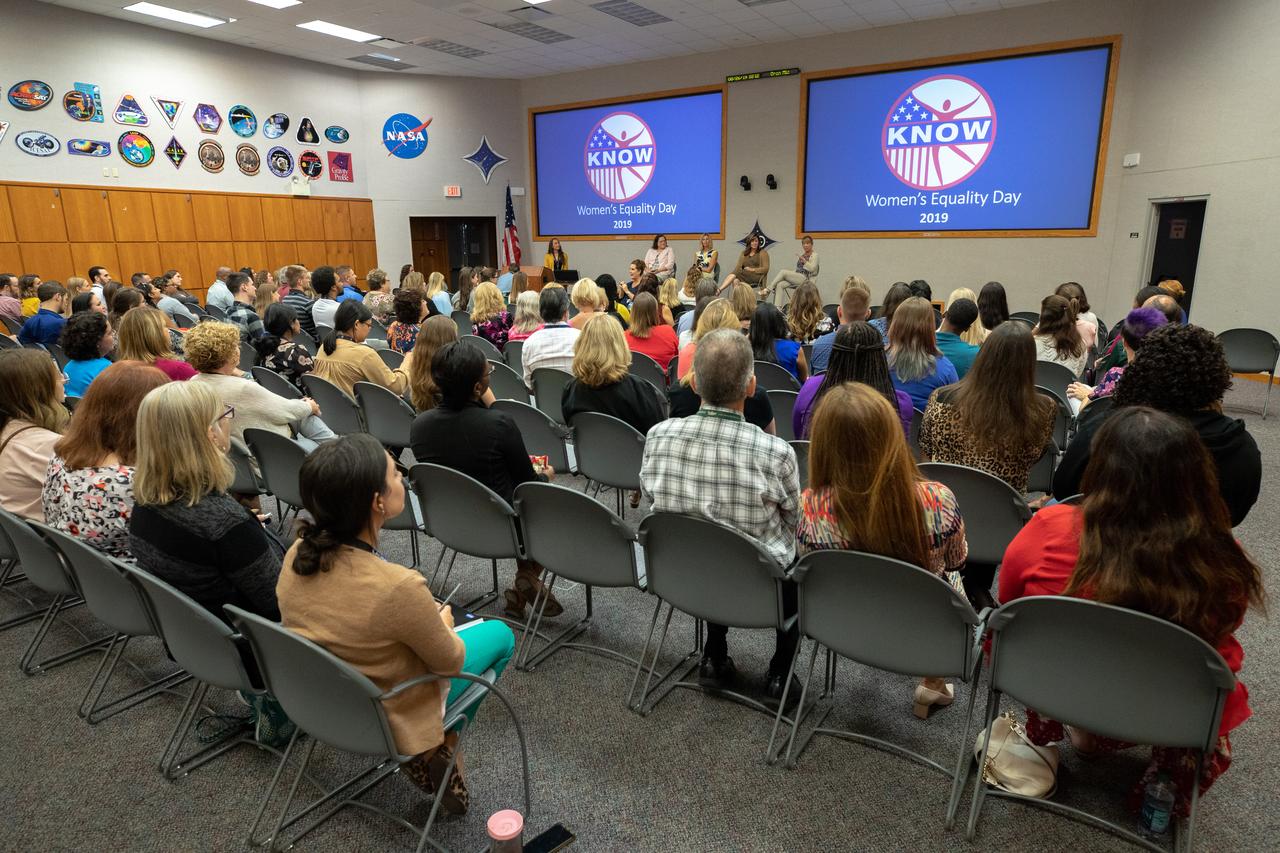
A panel discussion, featuring women in leadership roles at NASA’s Kennedy Space Center in Florida, is held on Aug. 26, 2019, to celebrate Women’s Equality Day. The event, sponsored by the Kennedy Networking Opportunities for Women (KNOW) employee resource group, honored the 100th anniversary of the passing of the 19th amendment guaranteeing all American women the right to vote. Seated in front from left, are Digna Carballosa, director of the Human Resources Office; Nancy Bray, director of Spaceport Integration and Services; Jennifer Kunz, director of Safety and Mission Assurance; and Amanda Mitskevich, Launch Services Program manager. At far left is Ashley Nelsen, Launch Service Program information manager and panel discussion moderator. The purpose of KNOW is to provide focus on issues such as employment, retention, promotion, training, career and personal development, education, and identify and eliminate barriers that hinder the advancement of women in the workforce.
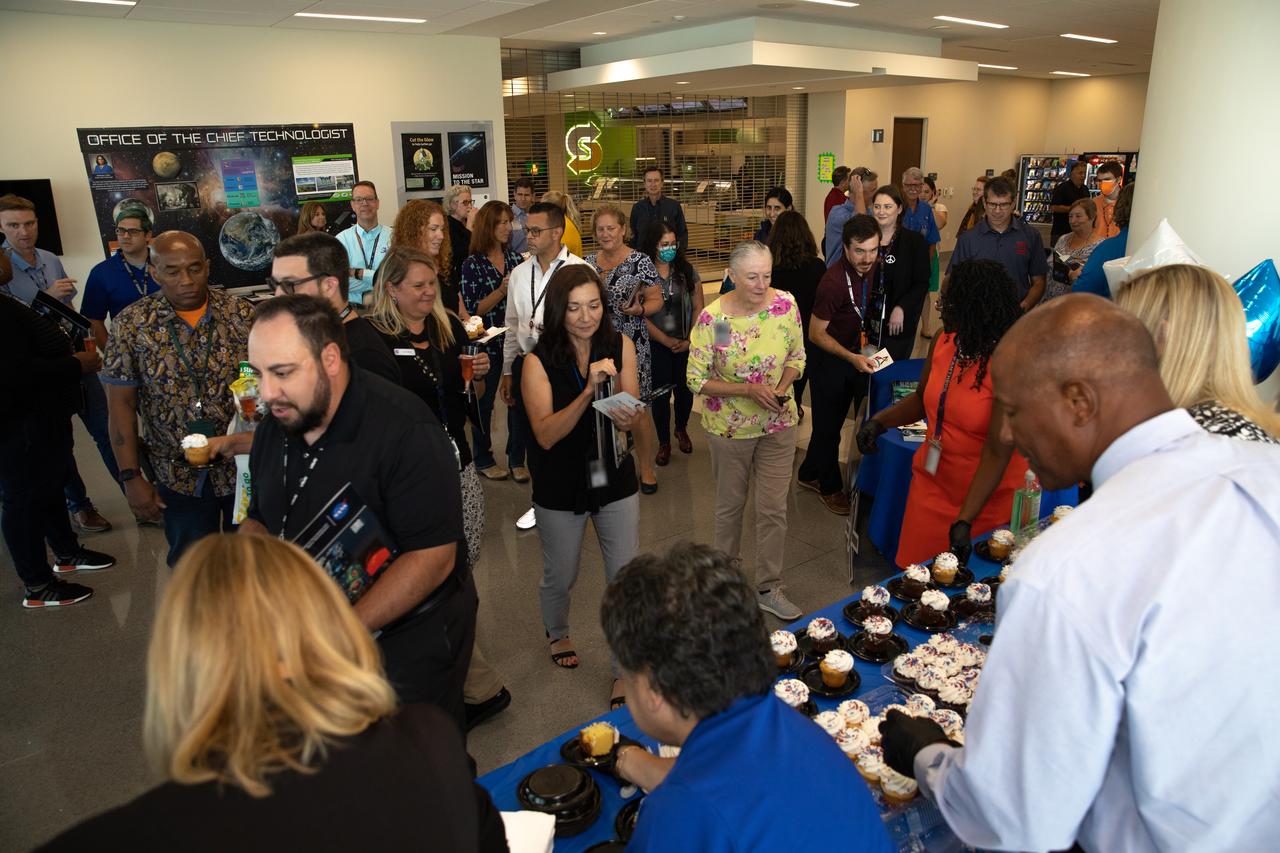
The NASA Kennedy Space Center senior leaders and employees celebrated the center’s 60th anniversary with a “Cheers to 60 Years” cake and non-alcoholic toast in the Central Campus Headquarters on June 28, 2022. From left, serving cake at the table, are Center Director Janet Petro; Janet Sellars, director of Human Resources; Kelvin Manning, deputy center director; and Nancy Bray, partially hidden, director of Spaceport Integration and Services. In July 1962, the Launch Operations Center in Florida was established. By December 1963, it was renamed the John F. Kennedy Space Center.
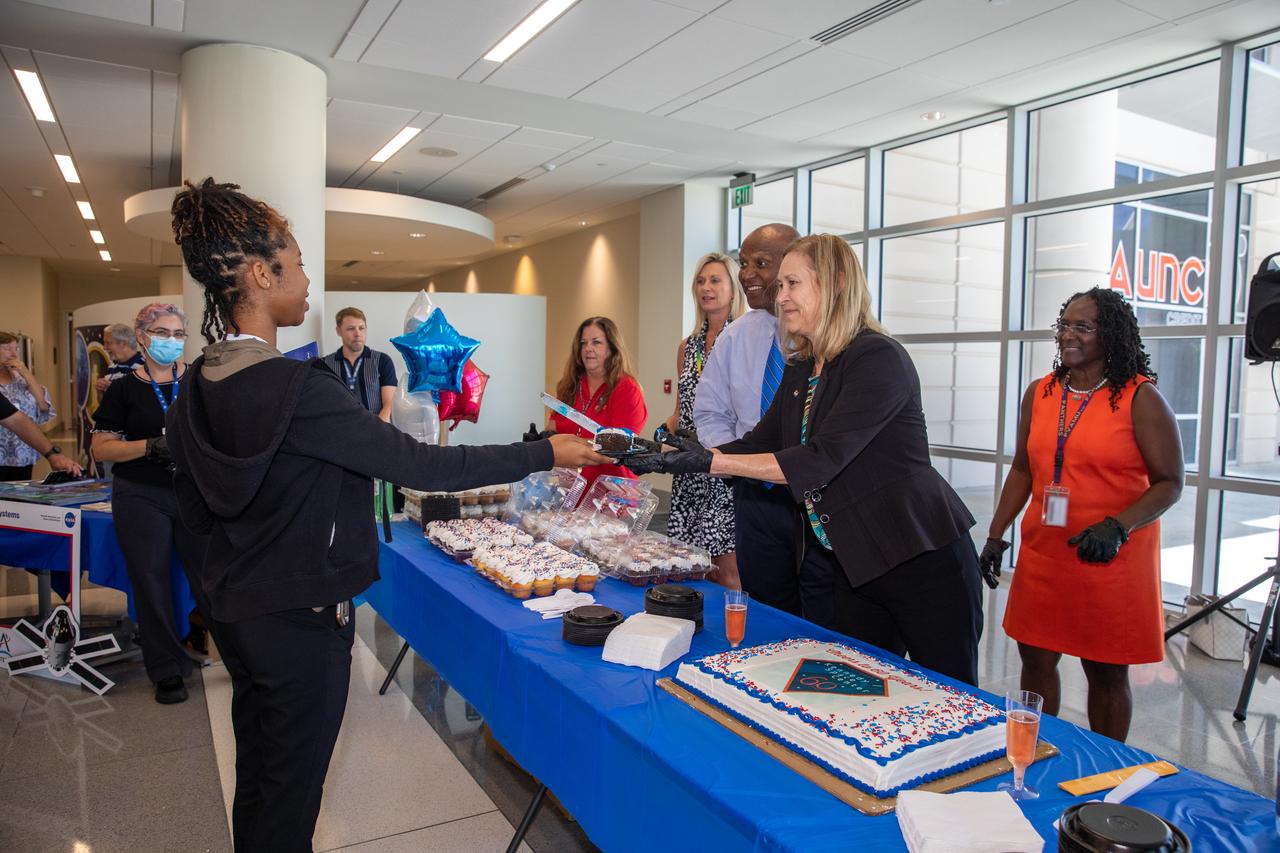
NASA Kennedy Space Center senior leaders helped celebrate the center’s 60th anniversary with a “Cheers to 60 Years” cake and non-alcoholic toast in the Central Campus Headquarters on June 28, 2022. Center Director Janet Petro hands a slice of cake to an employee. Also, from left are Nancy Bray, director of Spaceport Integration and Services; Kelvin Manning, deputy center director; and Hortense Blackwell, director of Communication and Public Engagement. In July 1962, the Launch Operations Center in Florida was established. By December 1963, it was renamed the John F. Kennedy Space Center.

Attendees visit NASA and contractor exhibits during a Community Leaders Update hosted by NASA Kennedy Space Center on Feb. 18, 2020, at the Kennedy Space Center Visitor Complex in Florida. Center Director Bob Cabana moderated a panel discussion featuring senior leaders from Exploration Ground Systems, Spaceport Integration and Services, Exploration Research and Technology Programs, Gateway Logistics Element, and Center Planning and Development. Attendees included community leaders, business executives, partners, educators and government leaders. After the presentation, guests had the opportunity to ask questions and visit displays from the programs and some of the commercial partners.

A business leader visits an exhibitor booth during a Community Leaders Update hosted by NASA Kennedy Space Center on Feb. 18, 2020, at the Kennedy Space Center Visitor Complex in Florida. Center Director Bob Cabana moderated a panel discussion featuring senior leaders from Exploration Ground Systems, Spaceport Integration and Services, Exploration Research and Technology Programs, Gateway Logistics Element, and Center Planning and Development. Attendees included community leaders, business executives, partners, educators and government leaders. After the presentation, guests had the opportunity to ask questions and visit displays from the programs and some of the commercial partners.
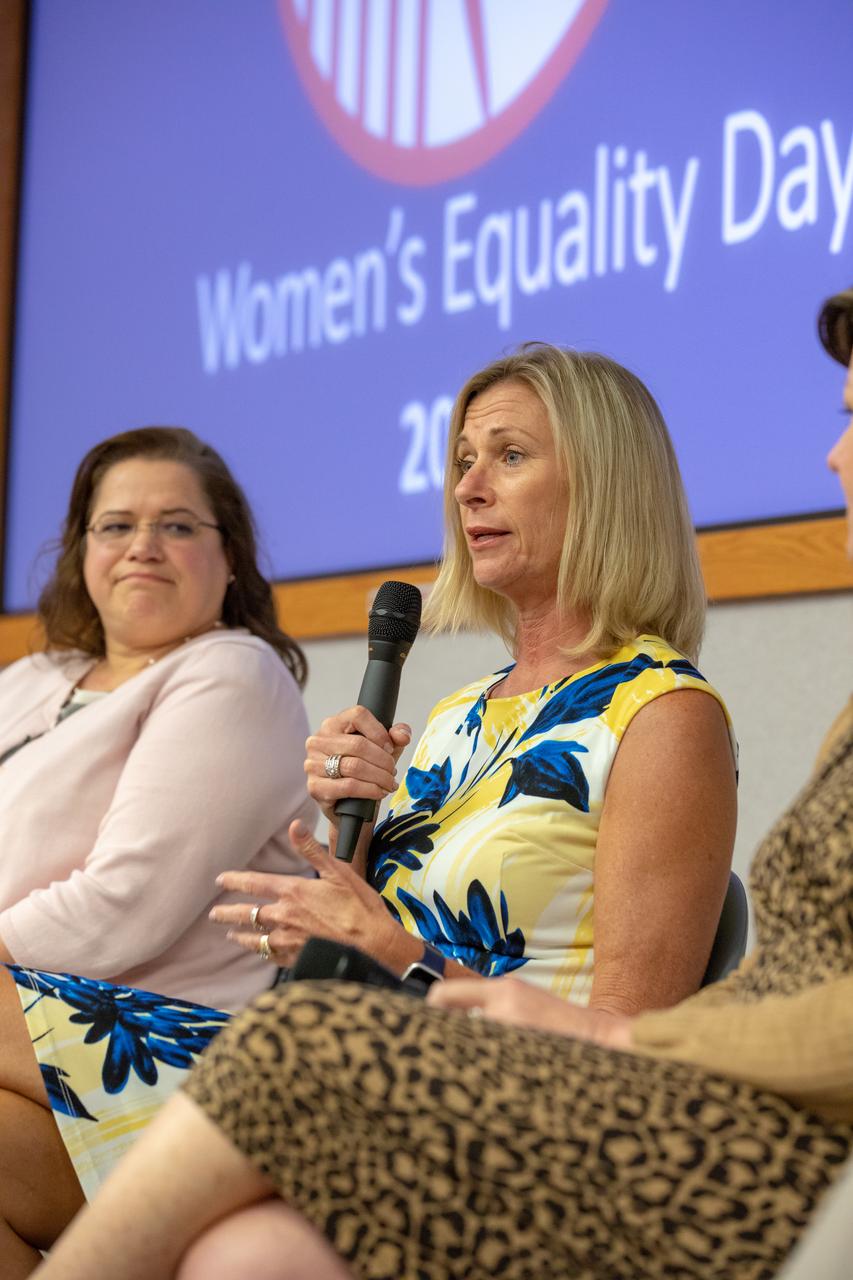
A panel discussion, featuring women in leadership roles at NASA’s Kennedy Space Center in Florida, is held on Aug. 26, 2019, to celebrate Women’s Equality Day. The event, sponsored by the Kennedy Networking Opportunities for Women (KNOW) employee resource group, honored the 100th anniversary of the passing of the 19th amendment guaranteeing all American women the right to vote. Nancy Bray, director of Spaceport Integration and Services, answers a question. At left is Digna Carballosa, director of the Human Resources Office. The purpose of KNOW is to provide focus on issues such as employment, retention, promotion, training, career and personal development, education, and identify and eliminate barriers that hinder the advancement of women in the workforce.
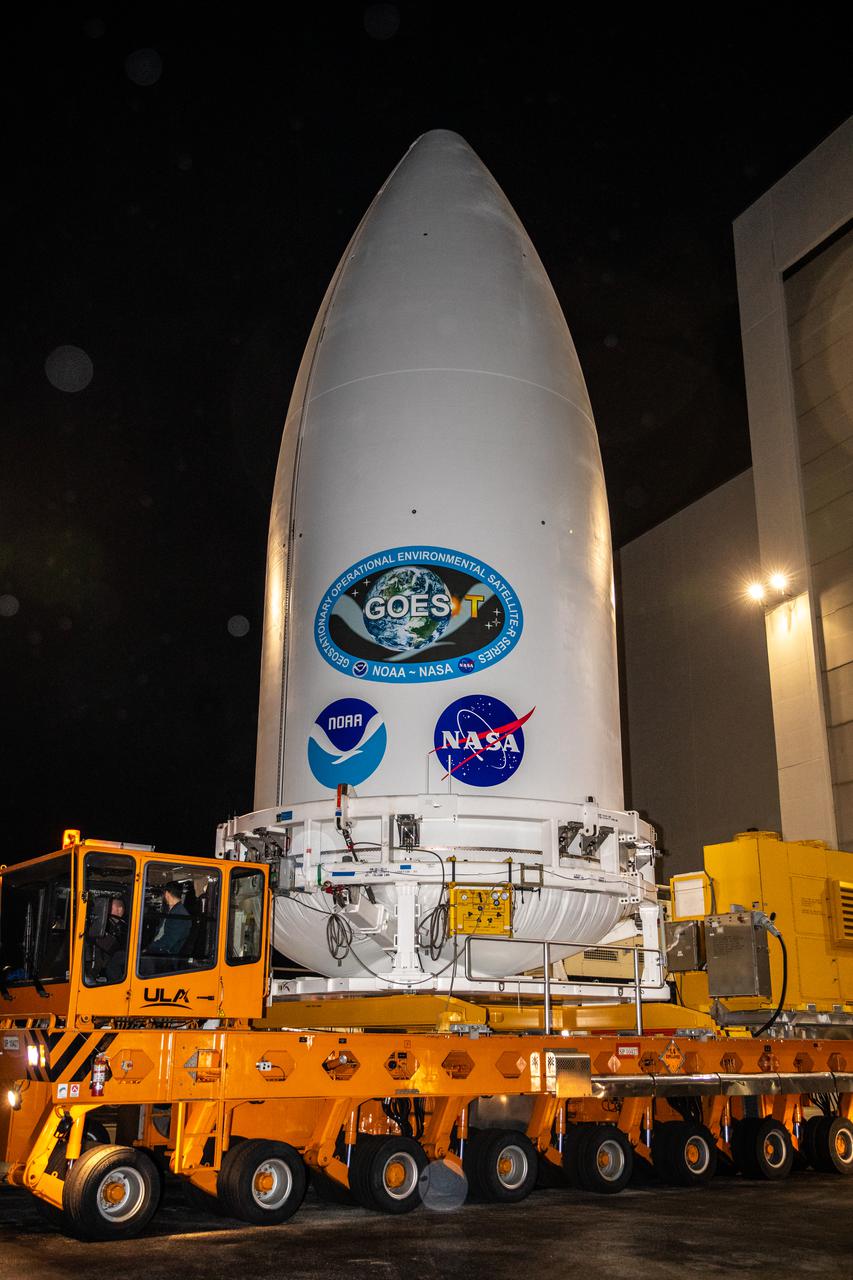
The National Oceanic and Atmospheric Administration’s (NOAA) Geostationary Operational Environmental Satellite-T (GOES-T), enclosed in its payload fairing, exits the Astrotech Space Operations facility in Titusville, Florida, for its trip to the Vertical Integration Facility at Space Launch Complex 41 at Cape Canaveral Space Force Station in Florida on Feb. 17, 2022. The satellite will be lifted up inside the integration facility and secured to the United Launch Alliance Atlas V 541 rocket. GOES-T is scheduled to launch atop the Atlas V rocket from SLC-41 on March 1, 2022, at 4:38 p.m. GOES-T is the third satellite in the GOES-R series that will continue to help meteorologists observe and predict local weather events that affect public safety. The launch is being managed by NASA’s Launch Services Program based at Kennedy Space Center in Florida, America’s multi-user spaceport.
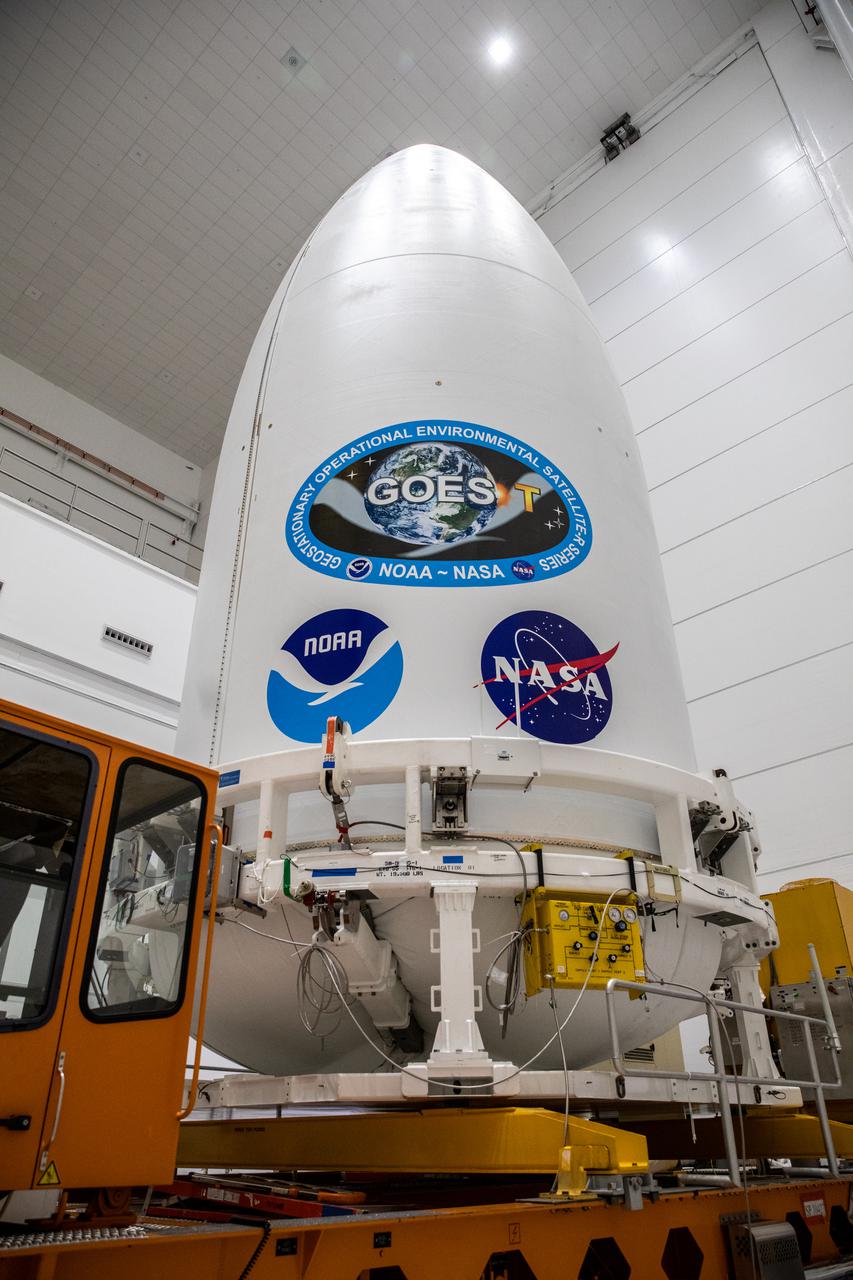
The National Oceanic and Atmospheric Administration’s (NOAA) Geostationary Operational Environmental Satellite-T (GOES-T), enclosed in its payload fairing, is prepared for its move from the Astrotech Space Operations facility in Titusville, Florida, to the Vertical Integration Facility at Space Launch Complex 41 at Cape Canaveral Space Force Station in Florida on Feb. 17, 2022. The satellite will be lifted up inside the integration facility and secured to the United Launch Alliance Atlas V 541 rocket. GOES-T is scheduled to launch atop the Atlas V rocket from SLC-41 on March 1, 2022, at 4:38 p.m. GOES-T is the third satellite in the GOES-R series that will continue to help meteorologists observe and predict local weather events that affect public safety. The launch is being managed by NASA’s Launch Services Program based at Kennedy Space Center in Florida, America’s multi-user spaceport.
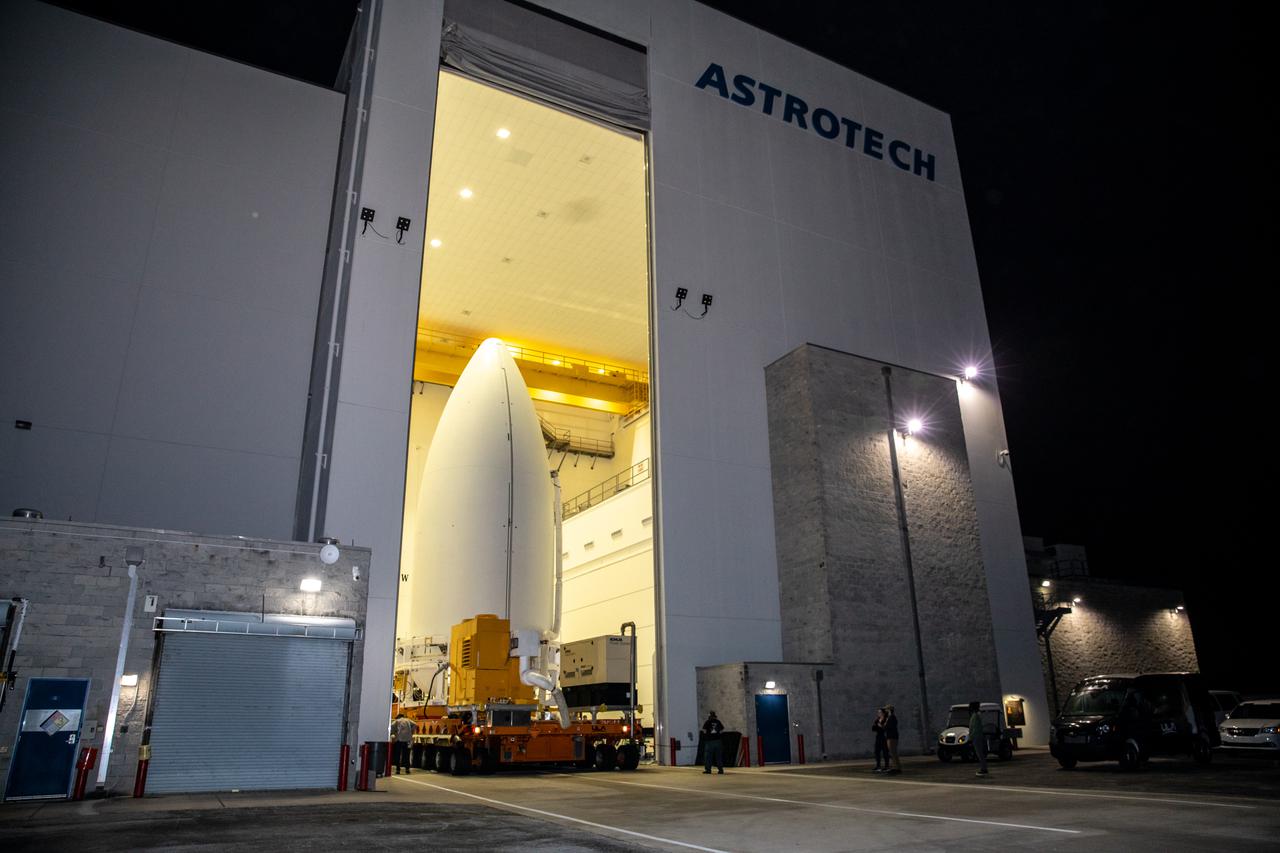
The National Oceanic and Atmospheric Administration’s (NOAA) Geostationary Operational Environmental Satellite-T (GOES-T), enclosed in its payload fairing, begins its move out of the Astrotech Space Operations facility in Titusville, Florida, for the trip to the Vertical Integration Facility at Space Launch Complex 41 at Cape Canaveral Space Force Station in Florida on Feb. 17, 2022. The satellite will be lifted up inside the integration facility and secured to the United Launch Alliance Atlas V 541 rocket. GOES-T is scheduled to launch atop the Atlas V rocket from SLC-41 on March 1, 2022, at 4:38 p.m. GOES-T is the third satellite in the GOES-R series that will continue to help meteorologists observe and predict local weather events that affect public safety. The launch is being managed by NASA’s Launch Services Program based at Kennedy Space Center in Florida, America’s multi-user spaceport.
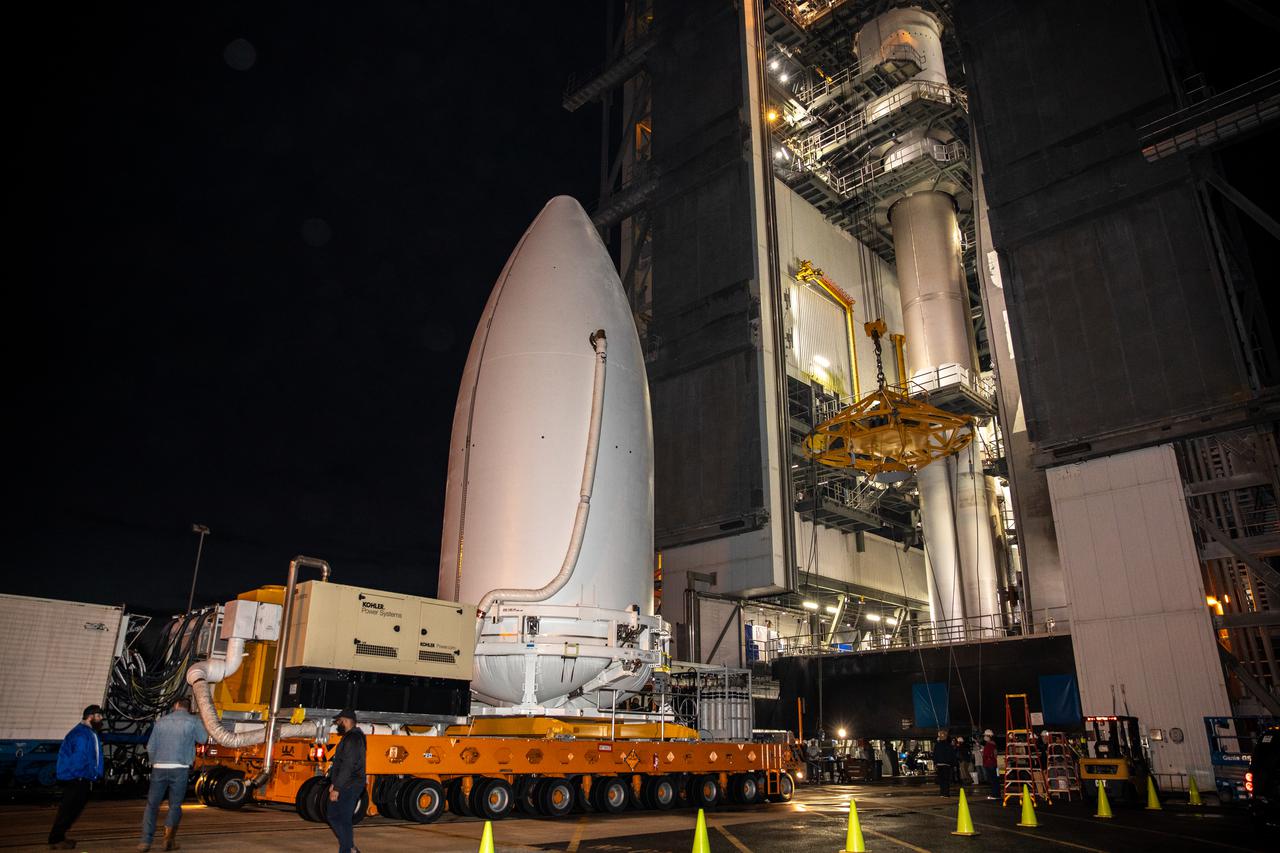
The National Oceanic and Atmospheric Administration’s (NOAA) Geostationary Operational Environmental Satellite-T (GOES-T), enclosed in its payload fairing, arrives at the Vertical Integration Facility at Space Launch Complex 41 at Cape Canaveral Space Force Station in Florida on Feb. 17, 2022. The satellite will be lifted up inside the integration facility and secured to the United Launch Alliance Atlas V 541 rocket. GOES-T is scheduled to launch atop the Atlas V rocket from SLC-41 on March 1, 2022, at 4:38 p.m. GOES-T is the third satellite in the GOES-R series that will continue to help meteorologists observe and predict local weather events that affect public safety. The launch is being managed by NASA’s Launch Services Program based at Kennedy Space Center in Florida, America’s multi-user spaceport.
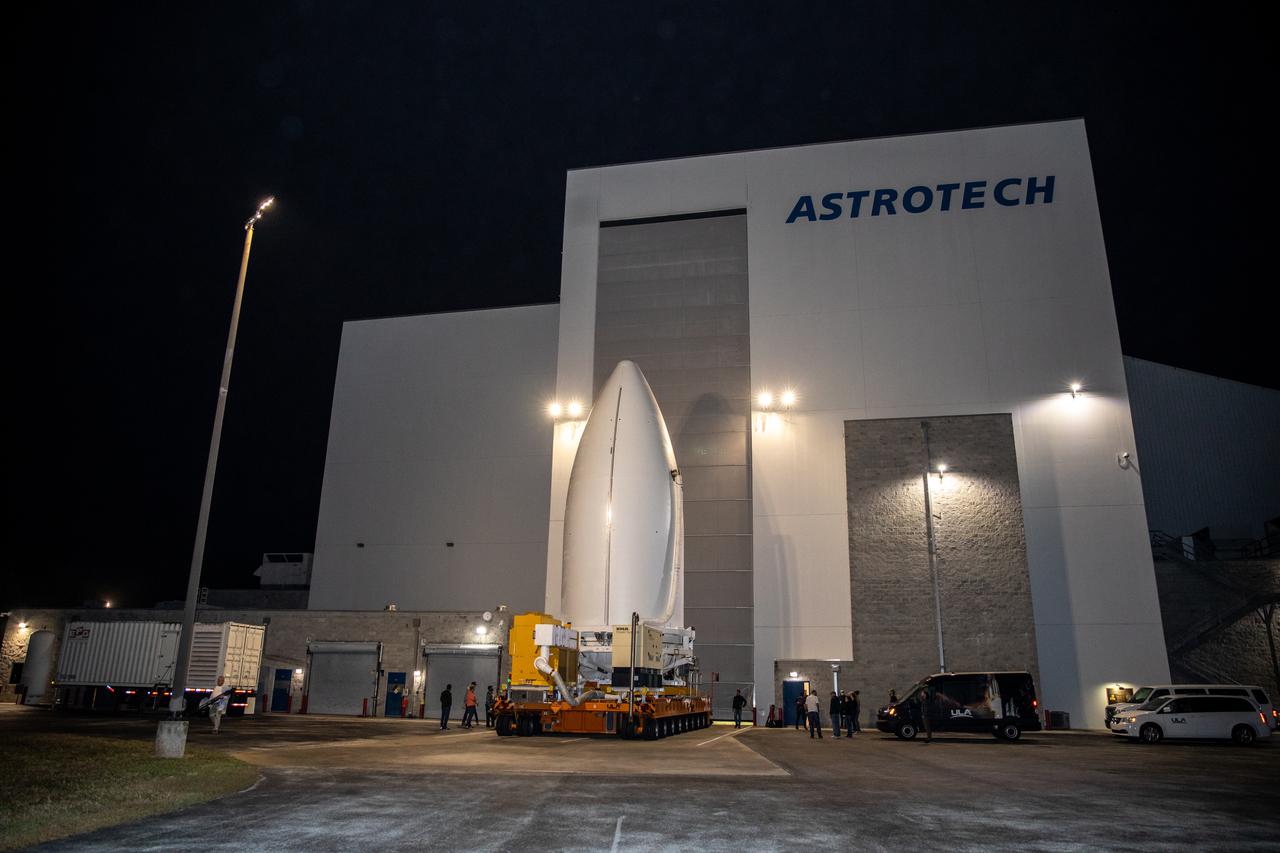
The National Oceanic and Atmospheric Administration’s (NOAA) Geostationary Operational Environmental Satellite-T (GOES-T), enclosed in its payload fairing, exits the Astrotech Space Operations facility in Titusville, Florida, for its trip to the Vertical Integration Facility at Space Launch Complex 41 at Cape Canaveral Space Force Station in Florida on Feb. 17, 2022. The satellite will be lifted up inside the integration facility and secured to the United Launch Alliance Atlas V 541 rocket. GOES-T is scheduled to launch atop the Atlas V rocket from SLC-41 on March 1, 2022, at 4:38 p.m. GOES-T is the third satellite in the GOES-R series that will continue to help meteorologists observe and predict local weather events that affect public safety. The launch is being managed by NASA’s Launch Services Program based at Kennedy Space Center in Florida, America’s multi-user spaceport.
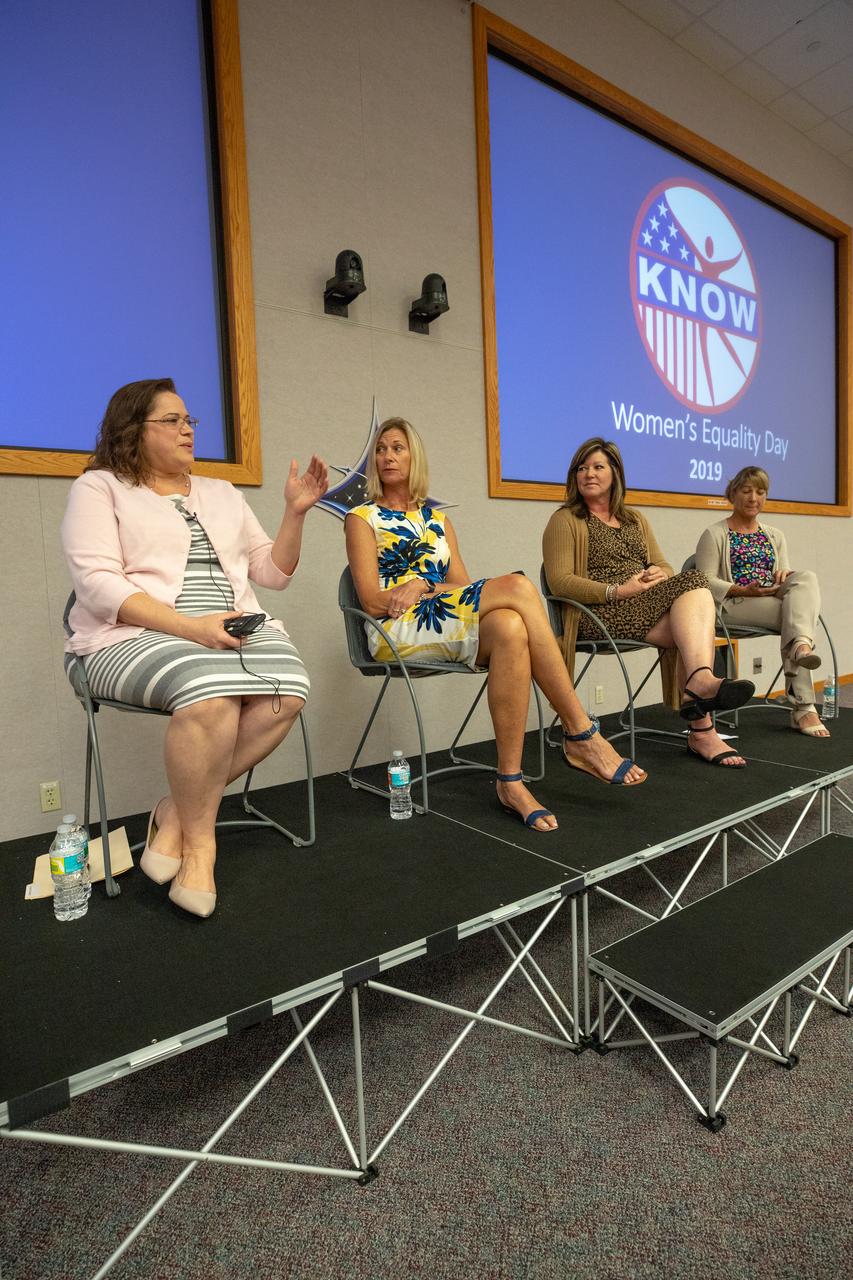
A panel discussion, featuring women in leadership roles at NASA’s Kennedy Space Center in Florida, is held on Aug. 26, 2019, to celebrate Women’s Equality Day. The event, sponsored by the Kennedy Networking Opportunities for Women (KNOW) employee resource group, honored the 100th anniversary of the passing of the 19th amendment guaranteeing all American women the right to vote. Seated from left, are Digna Carballosa, director of the Human Resources Office; Nancy Bray, director of Spaceport Integration and Services; Jennifer Kunz, director of Safety and Mission Assurance; and Amanda Mitskevich, Launch Services Program manager. The purpose of KNOW is to provide focus on issues such as employment, retention, promotion, training, career and personal development, education, and identify and eliminate barriers that hinder the advancement of women in the workforce.
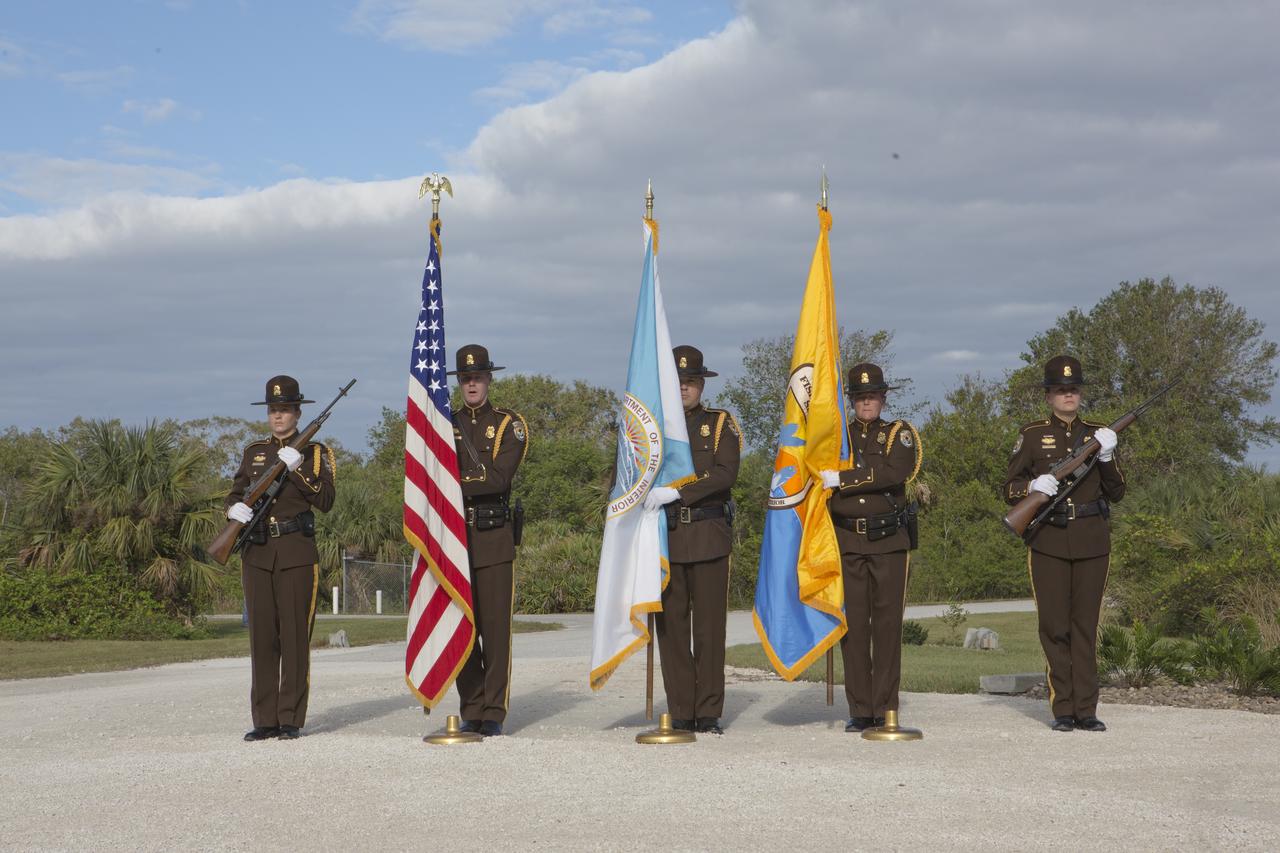
A presentation of colors by the U.S. Fish and Wildlife Service honor guard opened a ceremony Nov. 1 on the Merritt Island National Wildlife Refuge in Florida. During the joint ceremony, the Spaceport Integration Team and its partners were presented with the prestigious 2017 Pulaski Award and the new memorial marker was dedicated. The multi-agency team includes representatives from NASA's Kennedy Space Center, Cape Canaveral Air Force Station's 45th Space Wing, the Merritt Island National Wildlife Refuge, as well as the Florida Forest Service and Brevard County Fire Rescue. The memorial marker honors two fallen firefighters, Scott Maness and Beau Sauselein, who died fighting a wildfire on space center property in 1981. Held outdoors, the ceremony was attended by 140 guests.
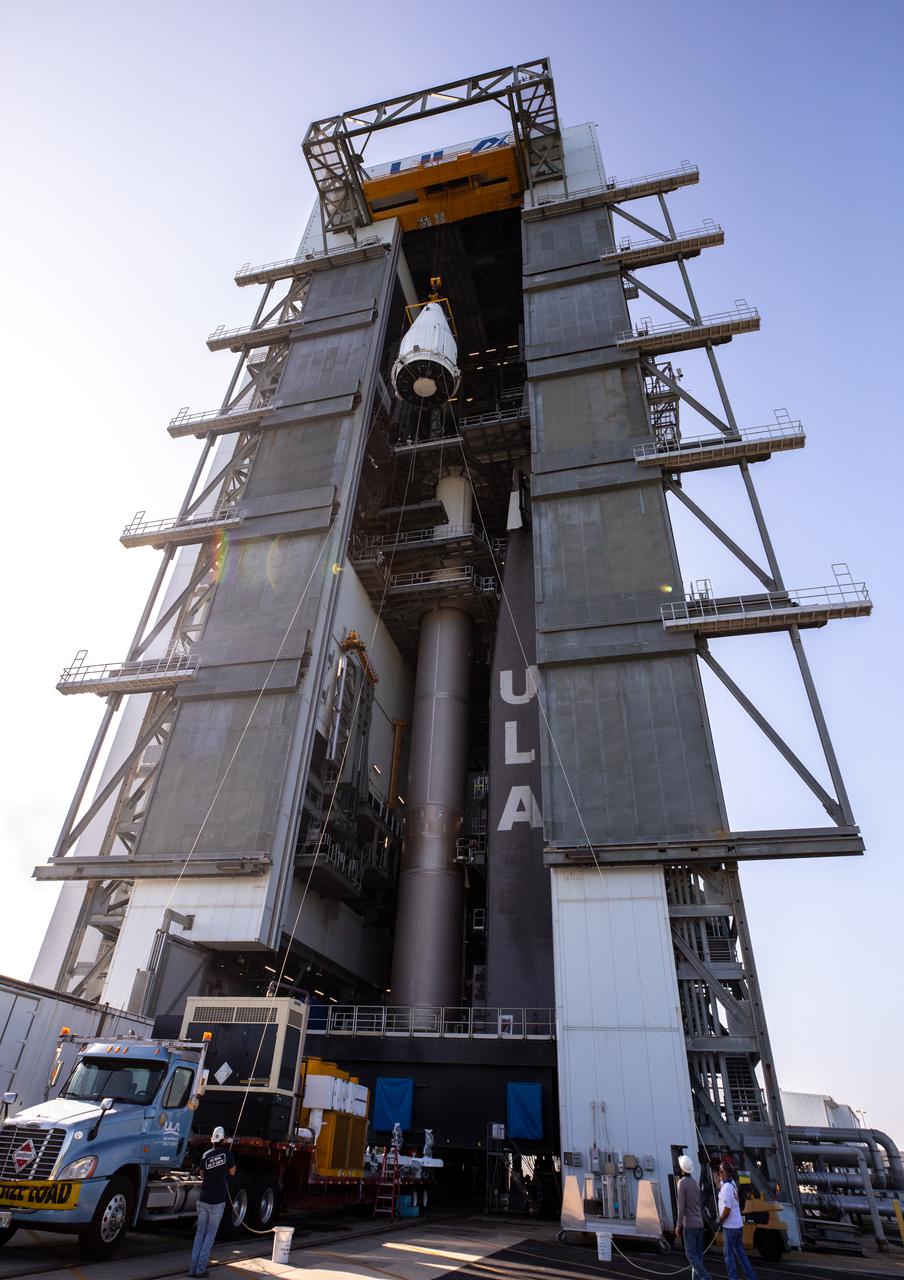
The payload fairing containing NASA’s Lucy spacecraft is hoisted up at the Vertical Integration Facility at Space Launch Complex 41 at Cape Canaveral Space Force Station in Florida on Oct. 7, 2021. It will be lowered onto the United Launch Alliance (ULA) Atlas V Centaur second stage. Lucy is scheduled to launch no earlier than Saturday, Oct. 16, on the ULA Atlas V 401 rocket from Launch Pad 41. NASA’s Launch Services Program, based at Kennedy Space Center, America’s premier multi-user spaceport, is managing the launch. Over its 12-year primary mission, Lucy will explore a record-breaking number of asteroids, flying by one asteroid in the solar system’s main belt and seven Trojan asteroids. Additionally, Lucy’s path will circle back to Earth three times for gravity assists, making it the first spacecraft ever to return to the vicinity of Earth from the outer solar system.
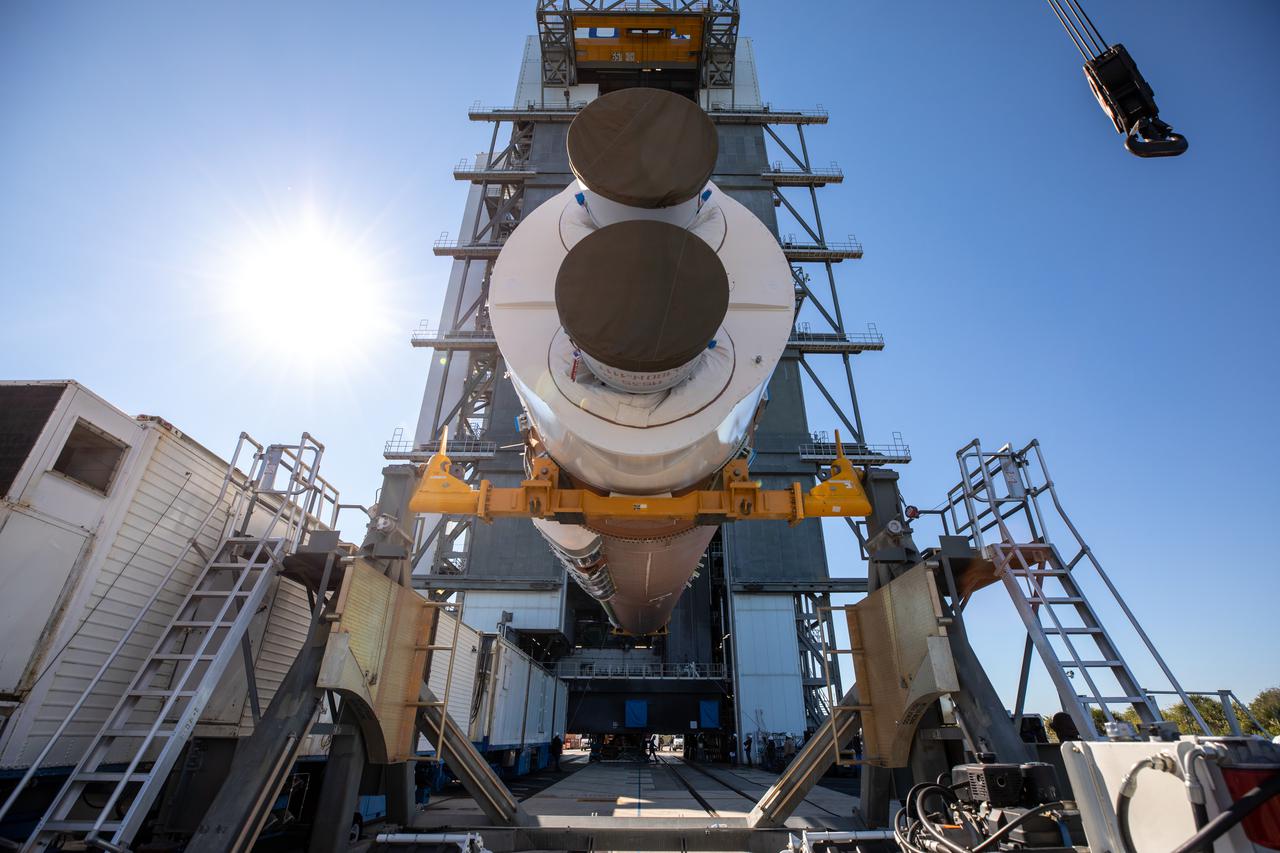
United Launch Alliance’s (ULA) first stage of the Atlas V 541 rocket is lifted up at the Space Launch Complex-41 Vertical Integration Facility at Cape Canaveral Space Force Station in Florida on Jan. 31, 2022. The Atlas V will launch the National Oceanic and Atmospheric Administration’s (NOAA) Geostationary Operational Environmental Satellite T (GOES-T). GOES-T is the third satellite in the GOES-R series that will continue to help meteorologists observe and predict local weather events that affect public safety. GOES-T is scheduled to launch from Space Launch Complex-41 on March 1, 2022. The launch is being managed by NASA’s Launch Services Program based at Kennedy Space Center, America’s multi-user spaceport.
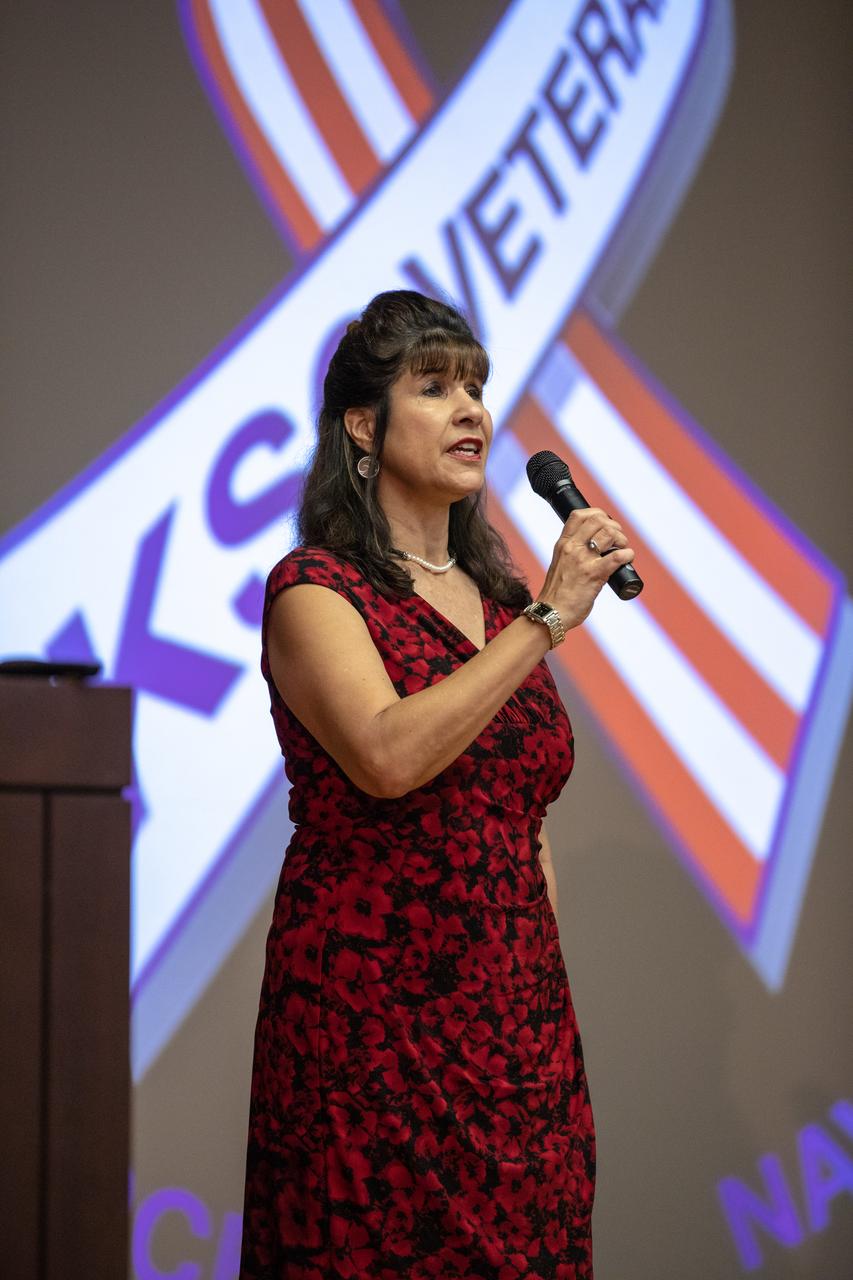
The National Anthem is sung by Suzy Cunningham, NASA Strategy and Integration manager, during a Veterans Day observance ceremony held in the Kennedy Space Center’s Training Auditorium in Florida on Nov. 7, 2019. During the event, Kennedy was named a Purple Heart Entity by the Military Order of the Purple Heart, becoming the first NASA center to receive this designation for support and services provided to veterans through the spaceport’s Veterans employee resource group. Attendees included Kennedy employees and more than 20 Purple Heart recipients. Following the award presentation, Christopher Vedvick, a combat wounded veteran and Military Order of the Purple Heart department of Florida commander, spoke about his experience serving in the United States Army before retiring, his involvement in the Military Order of the Purple Heart and the purpose of the organization.
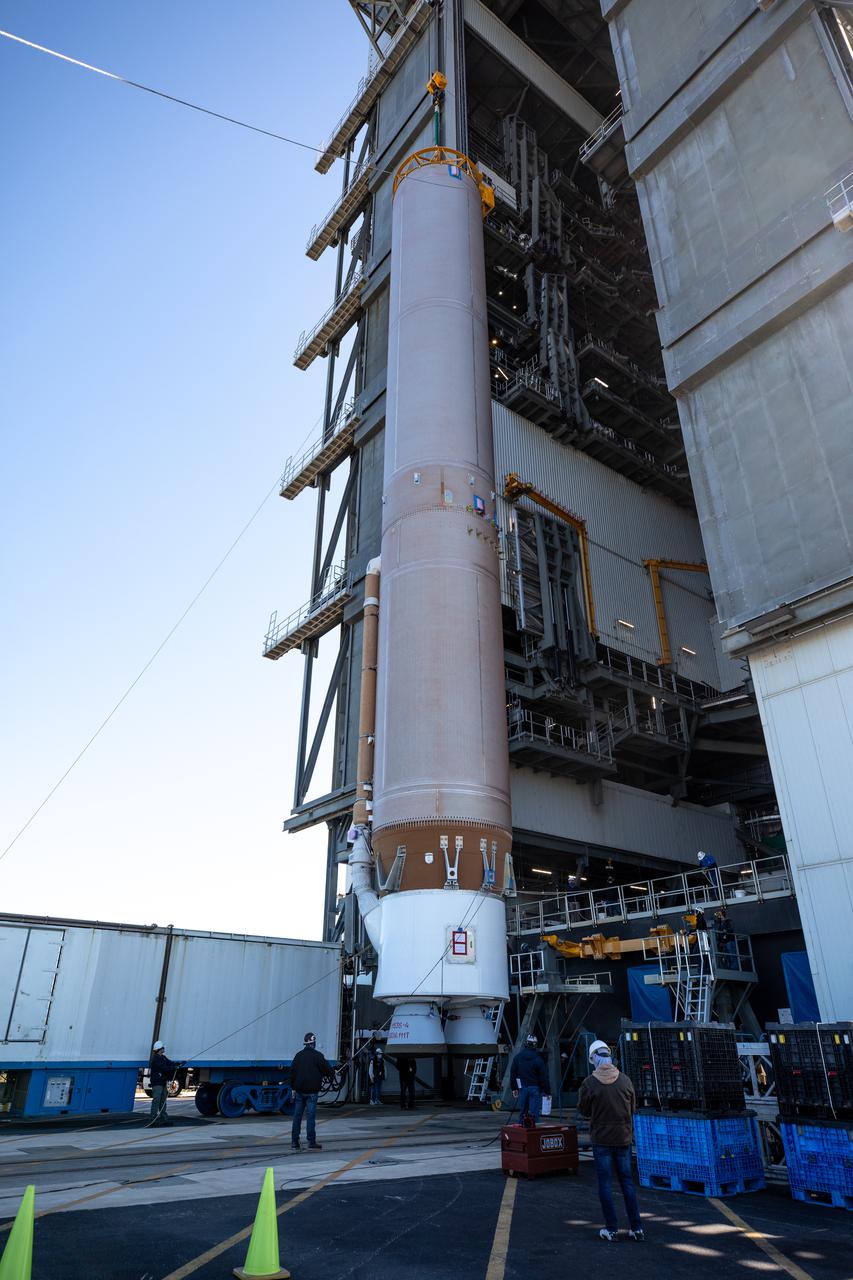
A crane is used to lift the United Launch Alliance’s (ULA) first stage of the Atlas V 541 rocket vertical for its move into the Space Launch Complex-41 Vertical Integration Facility at Cape Canaveral Space Force Station in Florida on Jan. 31, 2022. The Atlas V will launch the National Oceanic and Atmospheric Administration’s (NOAA) Geostationary Operational Environmental Satellite T (GOES-T). GOES-T is the third satellite in the GOES-R series that will continue to help meteorologists observe and predict local weather events that affect public safety. GOES-T is scheduled to launch from Space Launch Complex-41 on March 1, 2022. The launch is being managed by NASA’s Launch Services Program based at Kennedy Space Center, America’s multi-user spaceport.
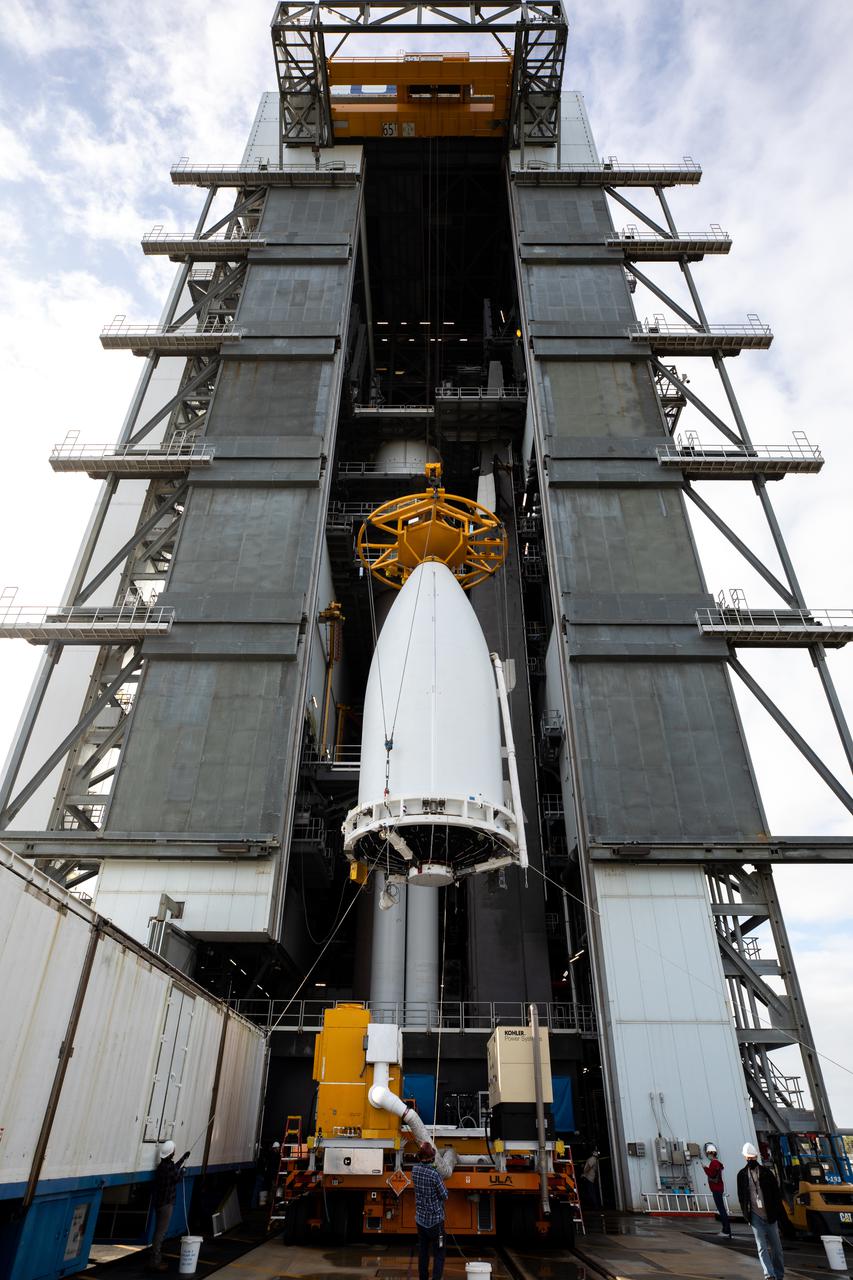
The National Oceanic and Atmospheric Administration’s (NOAA) Geostationary Operational Environmental Satellite-T (GOES-T), enclosed in its payload fairing, is lifted up by crane for its move into the Vertical Integration Facility at Space Launch Complex 41 at Cape Canaveral Space Force Station in Florida on Feb. 17, 2022. The satellite will be secured atop the United Launch Alliance Atlas V 541 rocket. GOES-T is scheduled to launch atop the Atlas V rocket from SLC-41 on March 1, 2022, at 4:38 p.m. GOES-T is the third satellite in the GOES-R series that will continue to help meteorologists observe and predict local weather events that affect public safety. The launch is being managed by NASA’s Launch Services Program based at Kennedy Space Center in Florida, America’s multi-user spaceport.
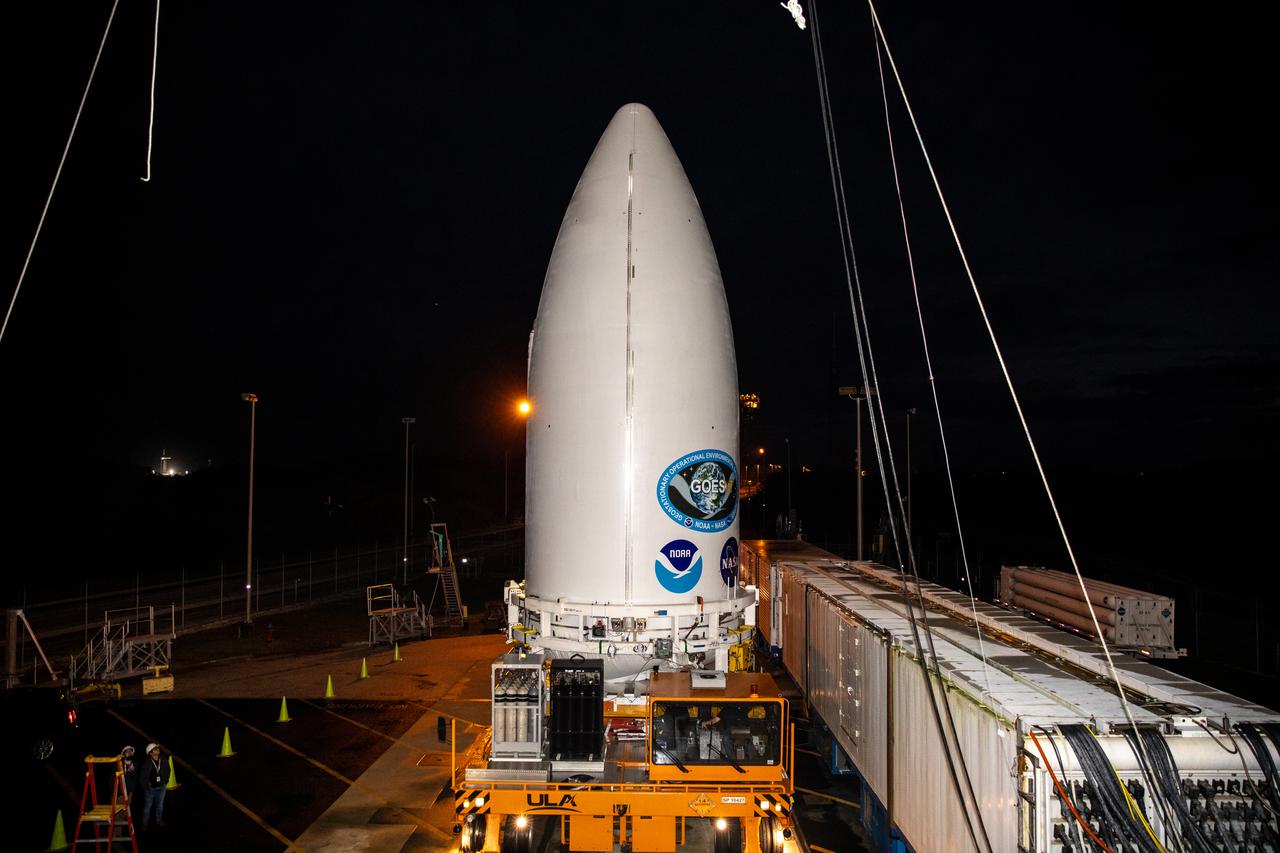
Preparations are underway to lift the National Oceanic and Atmospheric Administration’s (NOAA) Geostationary Operational Environmental Satellite-T (GOES-T), enclosed in its payload fairing, up into the Vertical Integration Facility at Space Launch Complex 41 at Cape Canaveral Space Force Station in Florida on Feb. 17, 2022. The satellite will be secured atop the United Launch Alliance Atlas V 541 rocket. GOES-T is scheduled to launch atop the Atlas V rocket from SLC-41 on March 1, 2022, at 4:38 p.m. GOES-T is the third satellite in the GOES-R series that will continue to help meteorologists observe and predict local weather events that affect public safety. The launch is being managed by NASA’s Launch Services Program based at Kennedy Space Center in Florida, America’s multi-user spaceport.
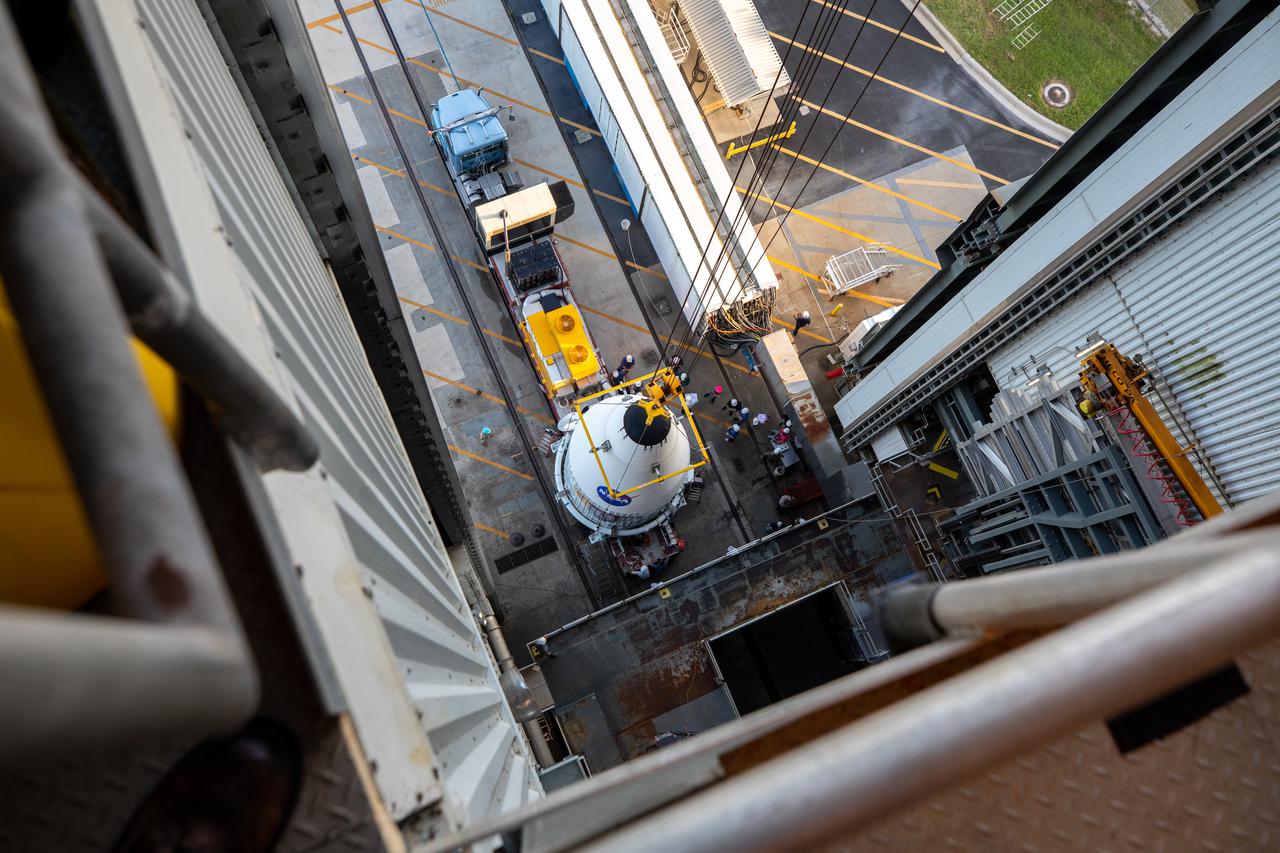
The payload fairing containing NASA’s Lucy spacecraft is hoisted up at the Vertical Integration Facility at Space Launch Complex 41 at Cape Canaveral Space Force Station in Florida on Oct. 7, 2021. It will be lowered onto the United Launch Alliance (ULA) Atlas V Centaur second stage. Lucy is scheduled to launch no earlier than Saturday, Oct. 16, on the ULA Atlas V 401 rocket from Launch Pad 41. NASA’s Launch Services Program, based at Kennedy Space Center, America’s premier multi-user spaceport, is managing the launch. Over its 12-year primary mission, Lucy will explore a record-breaking number of asteroids, flying by one asteroid in the solar system’s main belt and seven Trojan asteroids. Additionally, Lucy’s path will circle back to Earth three times for gravity assists, making it the first spacecraft ever to return to the vicinity of Earth from the outer solar system.
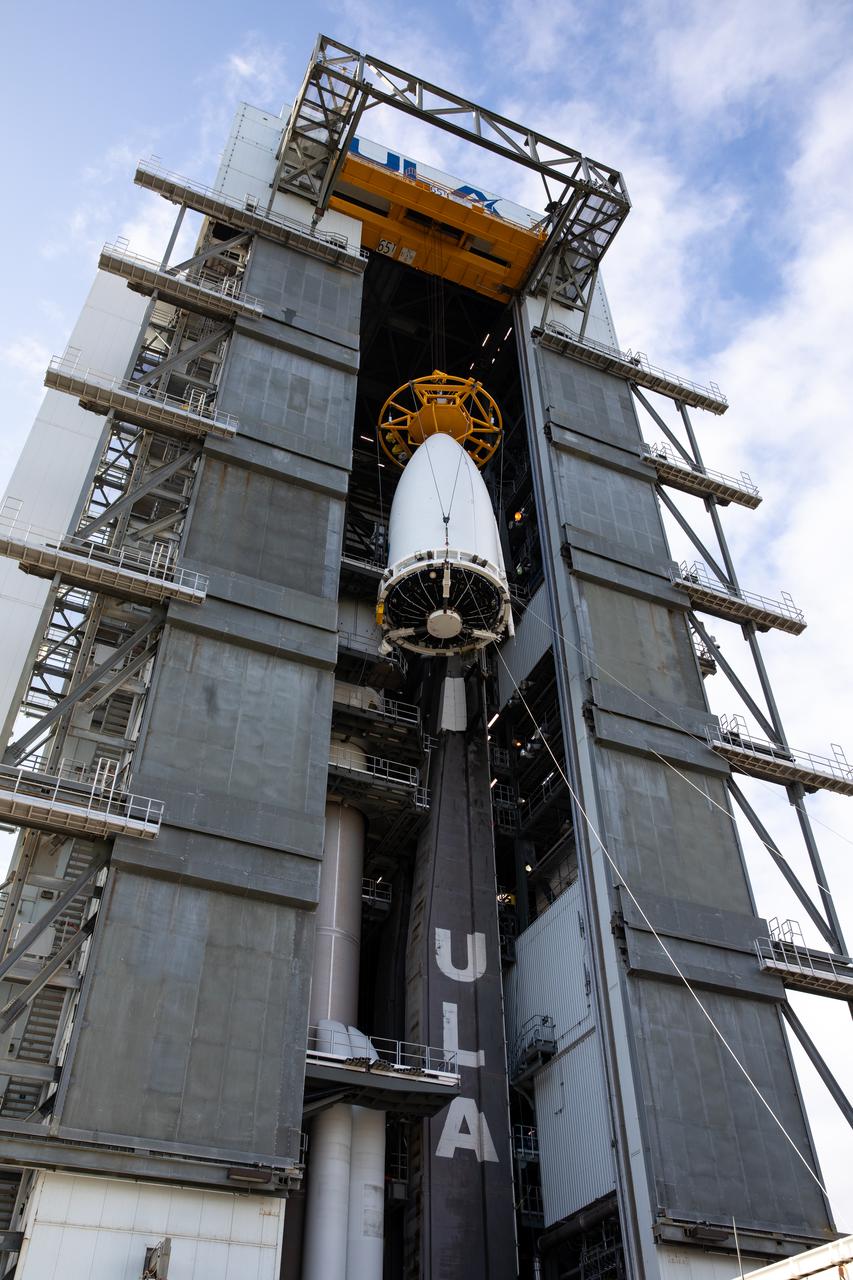
The National Oceanic and Atmospheric Administration’s (NOAA) Geostationary Operational Environmental Satellite-T (GOES-T), enclosed in its payload fairing, is lifted up by crane for its move into the Vertical Integration Facility at Space Launch Complex 41 at Cape Canaveral Space Force Station in Florida on Feb. 17, 2022. The satellite will be secured atop the United Launch Alliance Atlas V 541 rocket. GOES-T is scheduled to launch atop the Atlas V rocket from SLC-41 on March 1, 2022, at 4:38 p.m. GOES-T is the third satellite in the GOES-R series that will continue to help meteorologists observe and predict local weather events that affect public safety. The launch is being managed by NASA’s Launch Services Program based at Kennedy Space Center in Florida, America’s multi-user spaceport.

NASA’s Kennedy Space Center senior managers (on right, front to back) Janet Sellars, director of Human Resources; Kimberlyn B. Carter, associate program manager for Exploration Ground Systems; Barbara L. Brown, director of Exploration Research and Technology Programs; and Hortense Blackwell, director of Center Engagement and Business Integration Services, pose with members of the all-female flight crew for Delta Air Lines’ Women Inspiring Our Next Generation (WING) flight after the crew touched down at the Launch and Landing Facility at NASA’s Kennedy Space Center on Friday, Sept. 22, 2023. The flight brought girls from Atlanta, Georgia, ranging in age from 12 to 18, to learn about the various careers available at the Florida spaceport. While at Kennedy, the group had the opportunity to view center facilities, hear from a panel of women with a combination of careers from Kennedy and Delta, and tour the visitor complex.
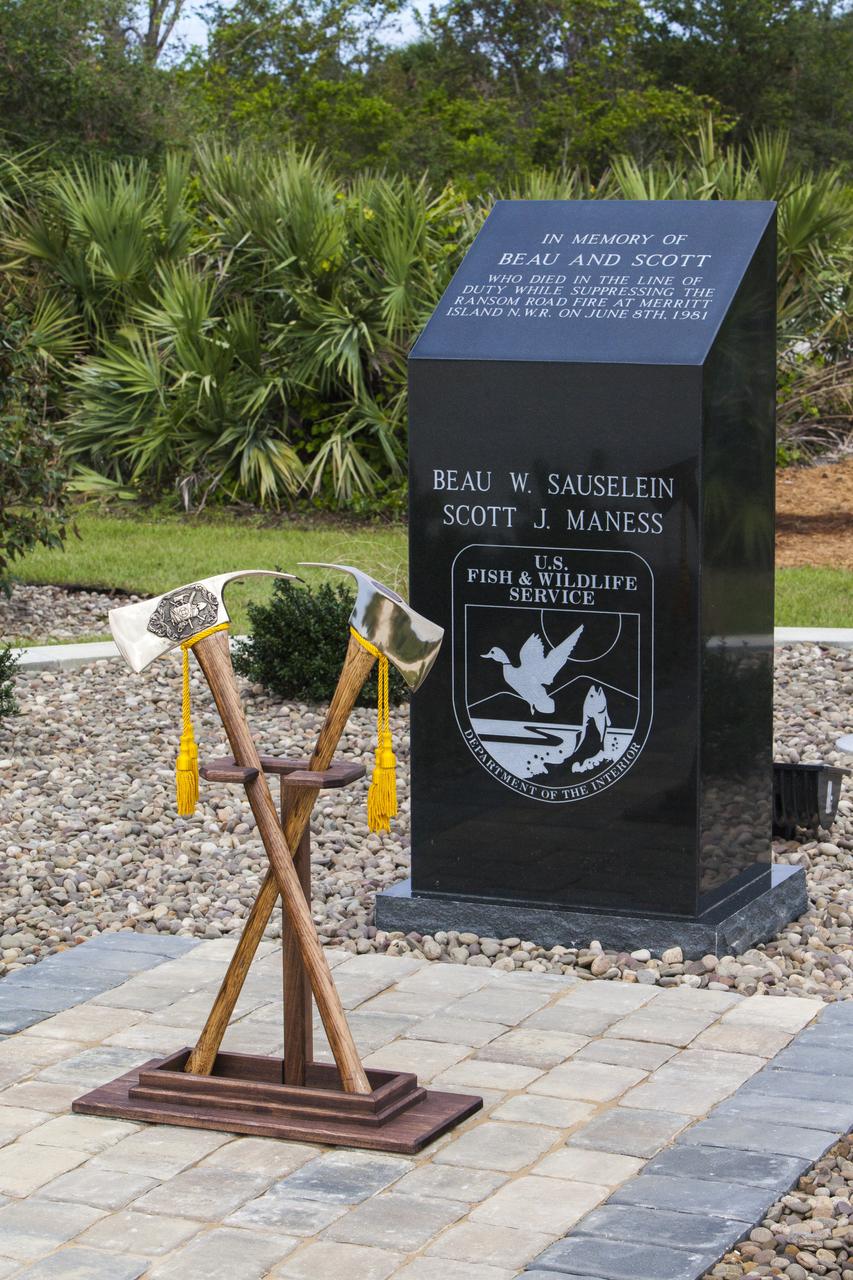
Ceremonial Pulaski tools are positioned in front of a new memorial marker Nov. 1 on the Merritt Island National Wildlife Refuge in Florida. During a joint ceremony, the Spaceport Integration Team and its partners were presented with the prestigious 2017 Pulaski Award and the new memorial marker was dedicated. The multi-agency team includes representatives from NASA's Kennedy Space Center, Cape Canaveral Air Force Station's 45th Space Wing, the Merritt Island National Wildlife Refuge, as well as the Florida Forest Service and Brevard County Fire Rescue. The memorial marker honors two fallen firefighters, Scott Maness and Beau Sauselein, who died fighting a wildfire on space center property in 1981. Held outdoors, the ceremony was attended by 140 guests.
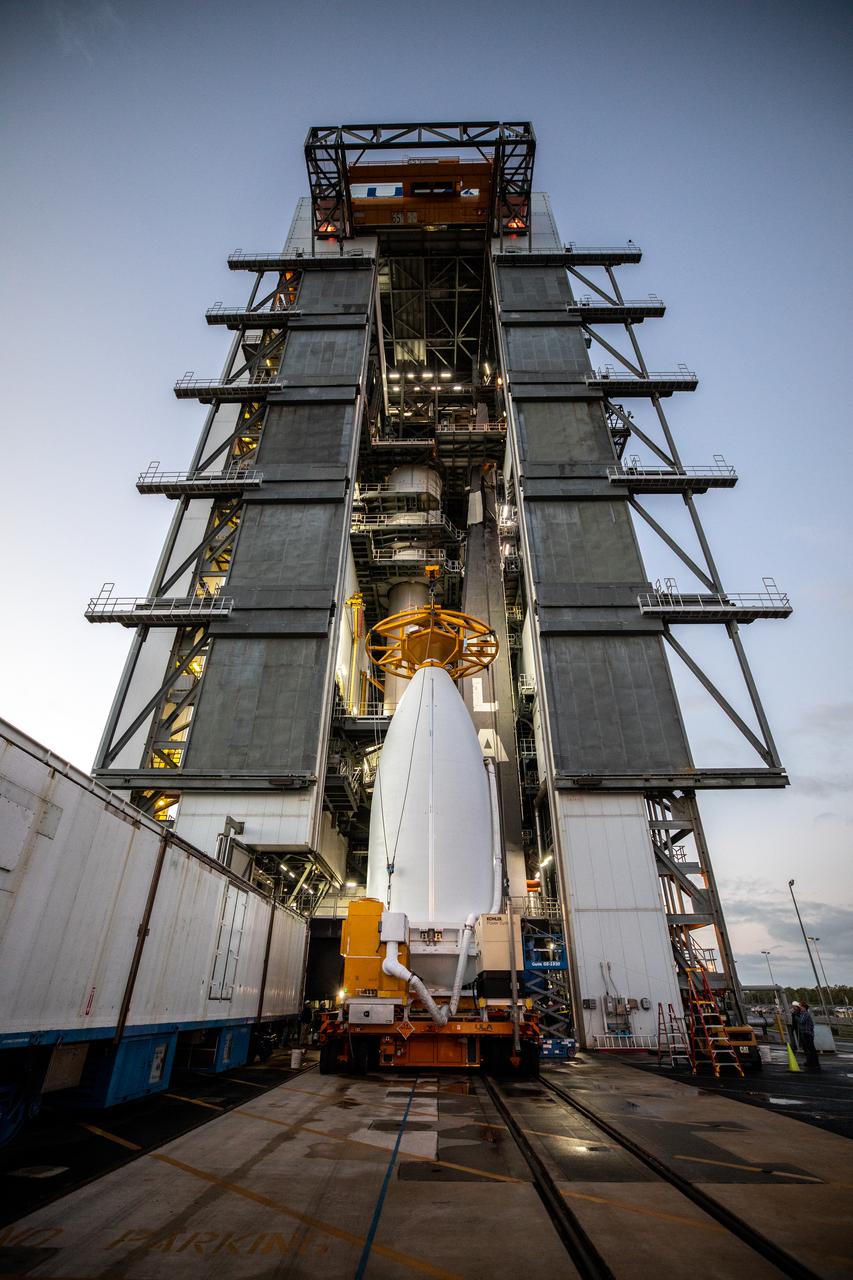
Preparations are underway to lift the National Oceanic and Atmospheric Administration’s (NOAA) Geostationary Operational Environmental Satellite-T (GOES-T), enclosed in its payload fairing, up into the Vertical Integration Facility at Space Launch Complex 41 at Cape Canaveral Space Force Station in Florida on Feb. 17, 2022. The satellite will be secured atop the United Launch Alliance Atlas V 541 rocket. GOES-T is scheduled to launch atop the Atlas V rocket from SLC-41 on March 1, 2022, at 4:38 p.m. GOES-T is the third satellite in the GOES-R series that will continue to help meteorologists observe and predict local weather events that affect public safety. The launch is being managed by NASA’s Launch Services Program based at Kennedy Space Center in Florida, America’s multi-user spaceport.
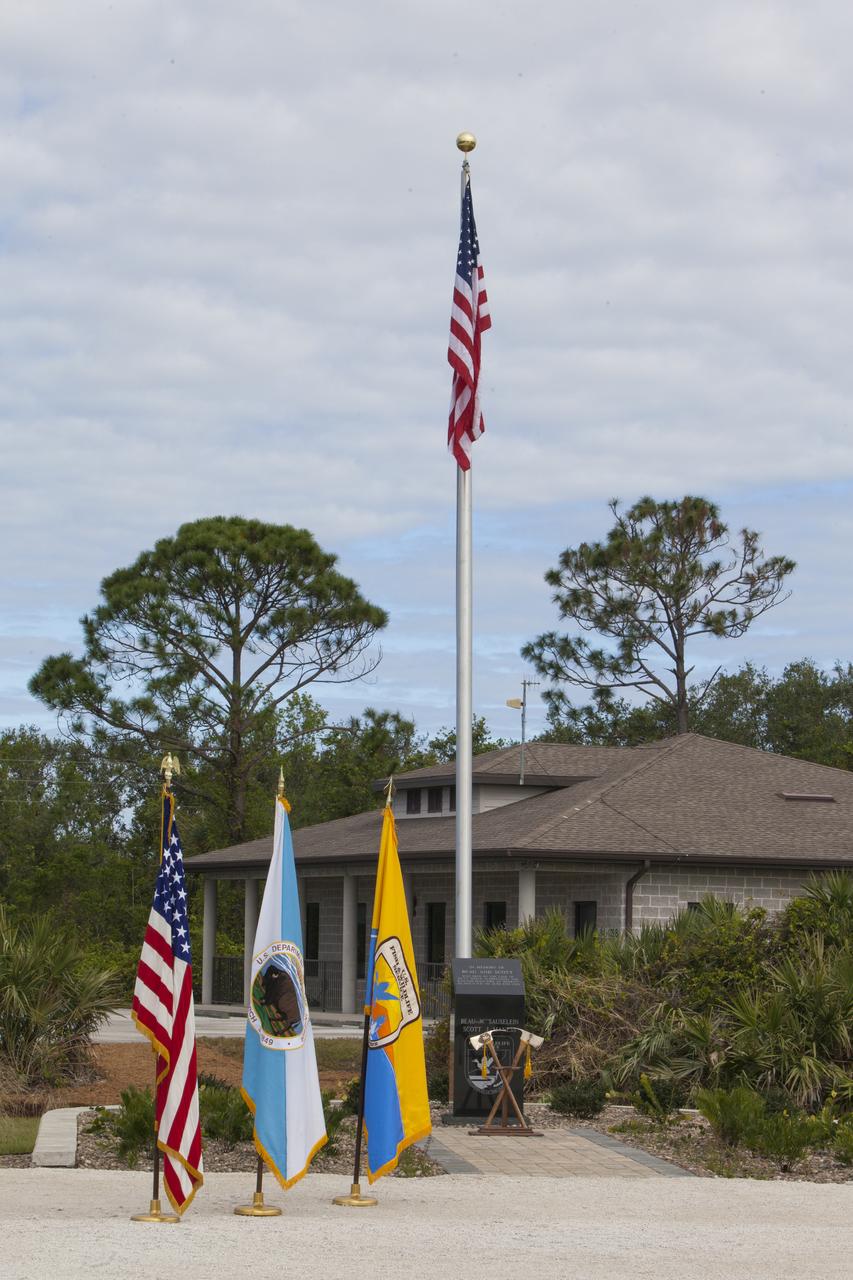
A presentation of colors opened a ceremony Nov. 1 on the Merritt Island National Wildlife Refuge in Florida. During the joint ceremony, the Spaceport Integration Team and its partners were presented with the prestigious 2017 Pulaski Award and a new memorial marker was dedicated. The multi-agency team includes representatives from NASA's Kennedy Space Center, Cape Canaveral Air Force Station's 45th Space Wing, the Merritt Island National Wildlife Refuge, as well as the Florida Forest Service and Brevard County Fire Rescue. The memorial marker honors two fallen firefighters, Scott Maness and Beau Sauselein, who died fighting a wildfire on space center property in 1981. Held outdoors, the ceremony was attended by 140 guests.
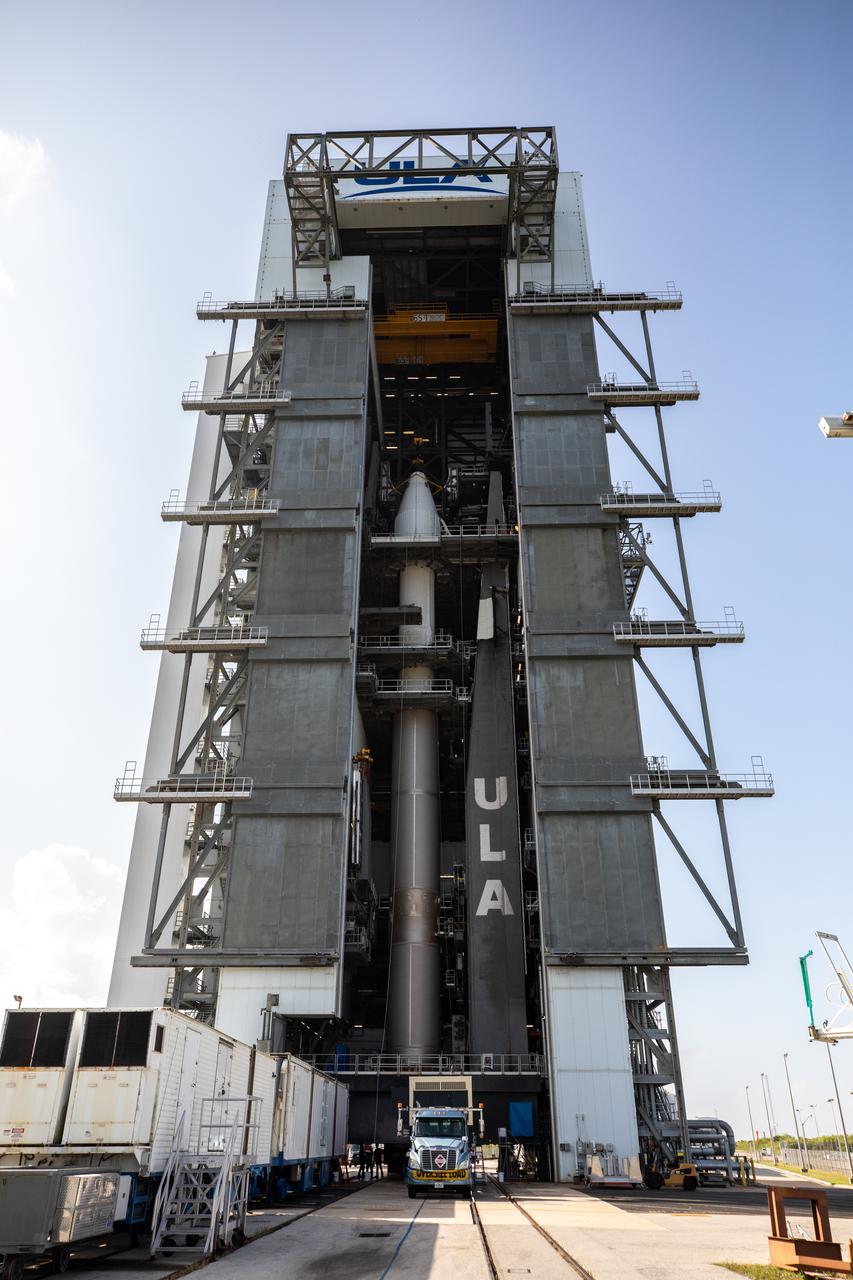
Workers assist as the payload fairing containing NASA’s Lucy spacecraft is lowered onto the United Launch Alliance (ULA) Atlas V Centaur second stage in the Vertical Integration Facility at Space Launch Complex 41 at Cape Canaveral Space Force Base in Florida on Oct. 7, 2021. Lucy is scheduled to launch no earlier than Saturday, Oct. 16, on the ULA Atlas V 401 rocket from Launch Pad 41. NASA’s Launch Services Program, based at Kennedy Space Center, America’s premier multi-user spaceport, is managing the launch. Over its 12-year primary mission, Lucy will explore a record-breaking number of asteroids, flying by one asteroid in the solar system’s main belt and seven Trojan asteroids. Additionally, Lucy’s path will circle back to Earth three times for gravity assists, making it the first spacecraft ever to return to the vicinity of Earth from the outer solar system.
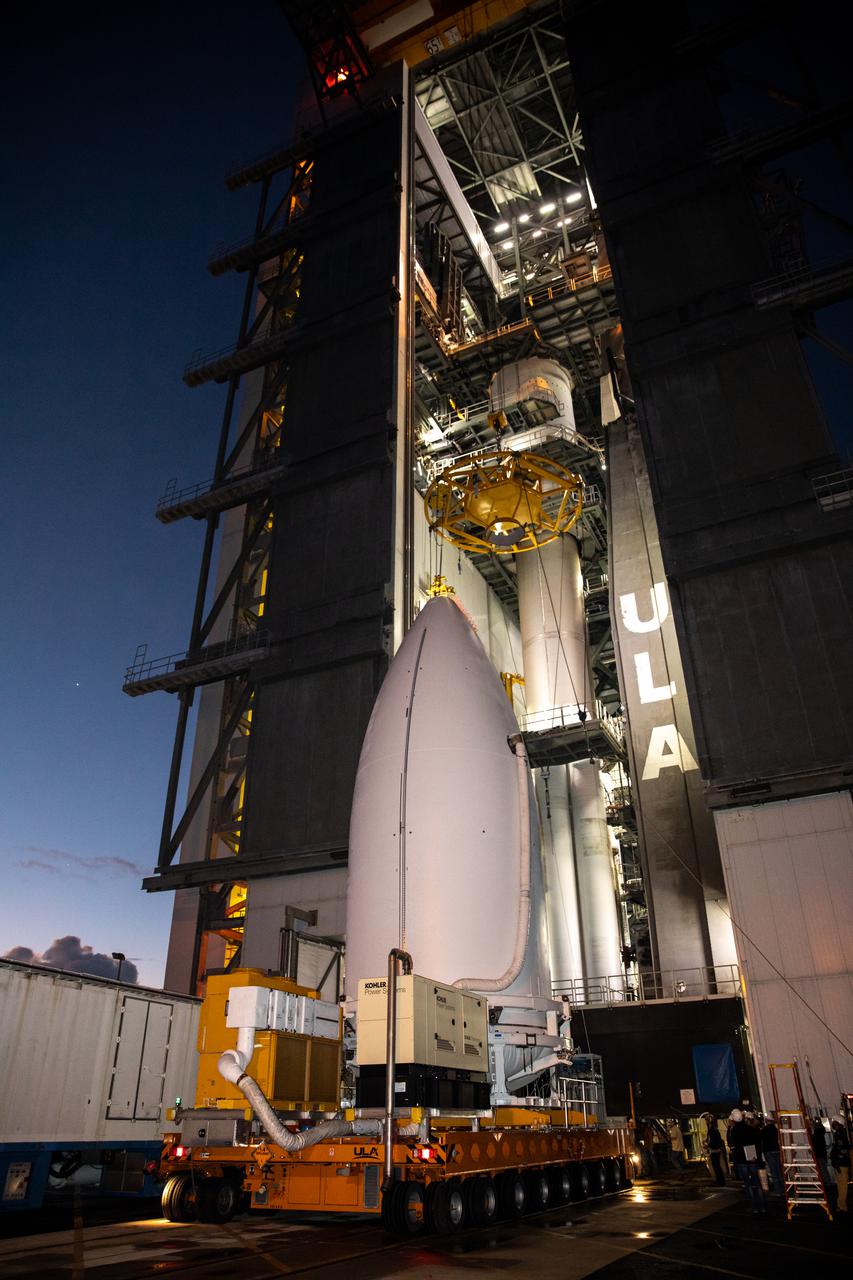
Preparations are underway to lift the National Oceanic and Atmospheric Administration’s (NOAA) Geostationary Operational Environmental Satellite-T (GOES-T), enclosed in its payload fairing, up into the Vertical Integration Facility at Space Launch Complex 41 at Cape Canaveral Space Force Station in Florida on Feb. 17, 2022. The satellite will be secured atop the United Launch Alliance Atlas V 541 rocket. GOES-T is scheduled to launch atop the Atlas V rocket from SLC-41 on March 1, 2022, at 4:38 p.m. GOES-T is the third satellite in the GOES-R series that will continue to help meteorologists observe and predict local weather events that affect public safety. The launch is being managed by NASA’s Launch Services Program based at Kennedy Space Center in Florida, America’s multi-user spaceport.
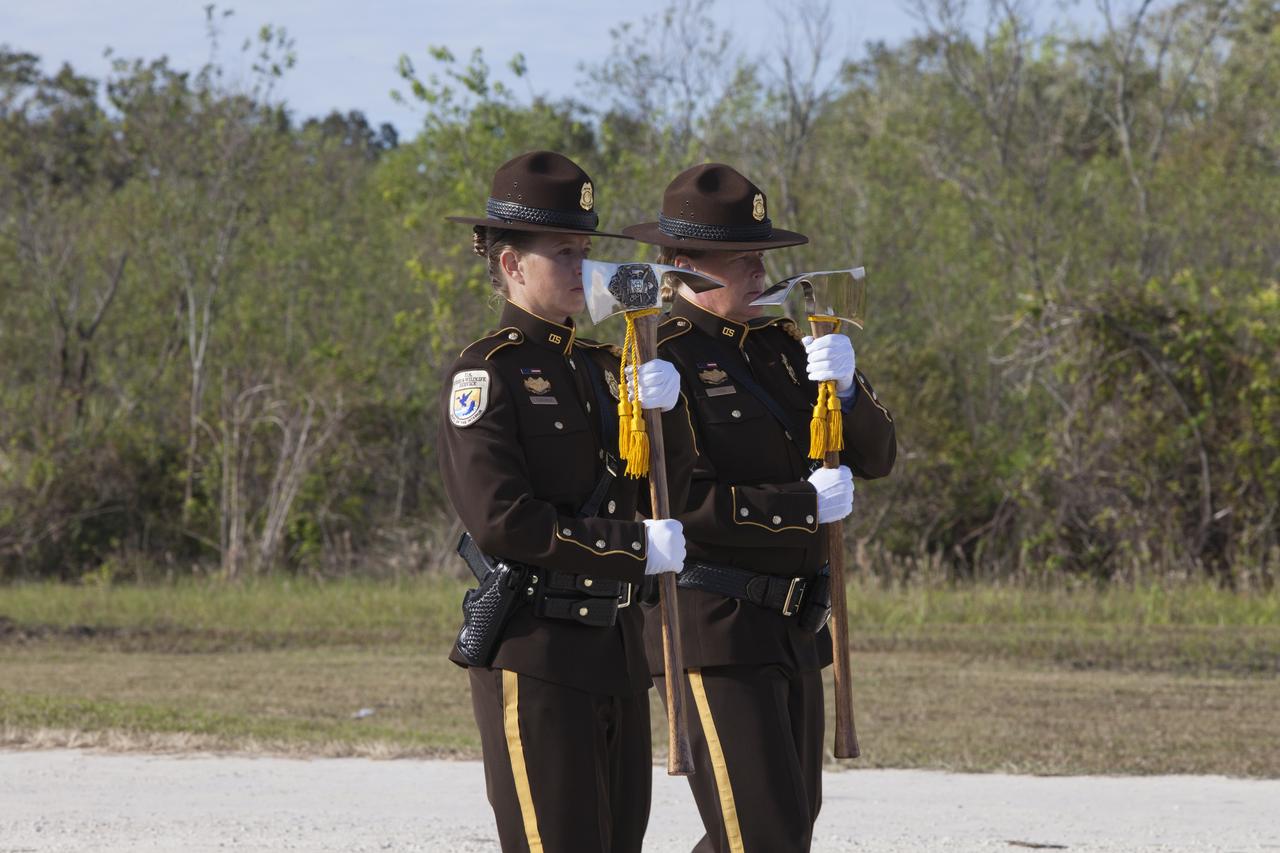
Firefighters prepare to place ceremonial Pulaski tools by a new memorial marker Nov. 1 on the Merritt Island National Wildlife Refuge in Florida. During a joint ceremony, the Spaceport Integration Team and its partners were presented with the prestigious 2017 Pulaski Award and the new memorial marker was dedicated. The multi-agency team includes representatives from NASA's Kennedy Space Center, Cape Canaveral Air Force Station's 45th Space Wing, the Merritt Island National Wildlife Refuge, as well as the Florida Forest Service and Brevard County Fire Rescue. The memorial marker honors two fallen firefighters, Scott Maness and Beau Sauselein, who died fighting a wildfire on space center property in 1981. Held outdoors, the ceremony was attended by 140 guests.
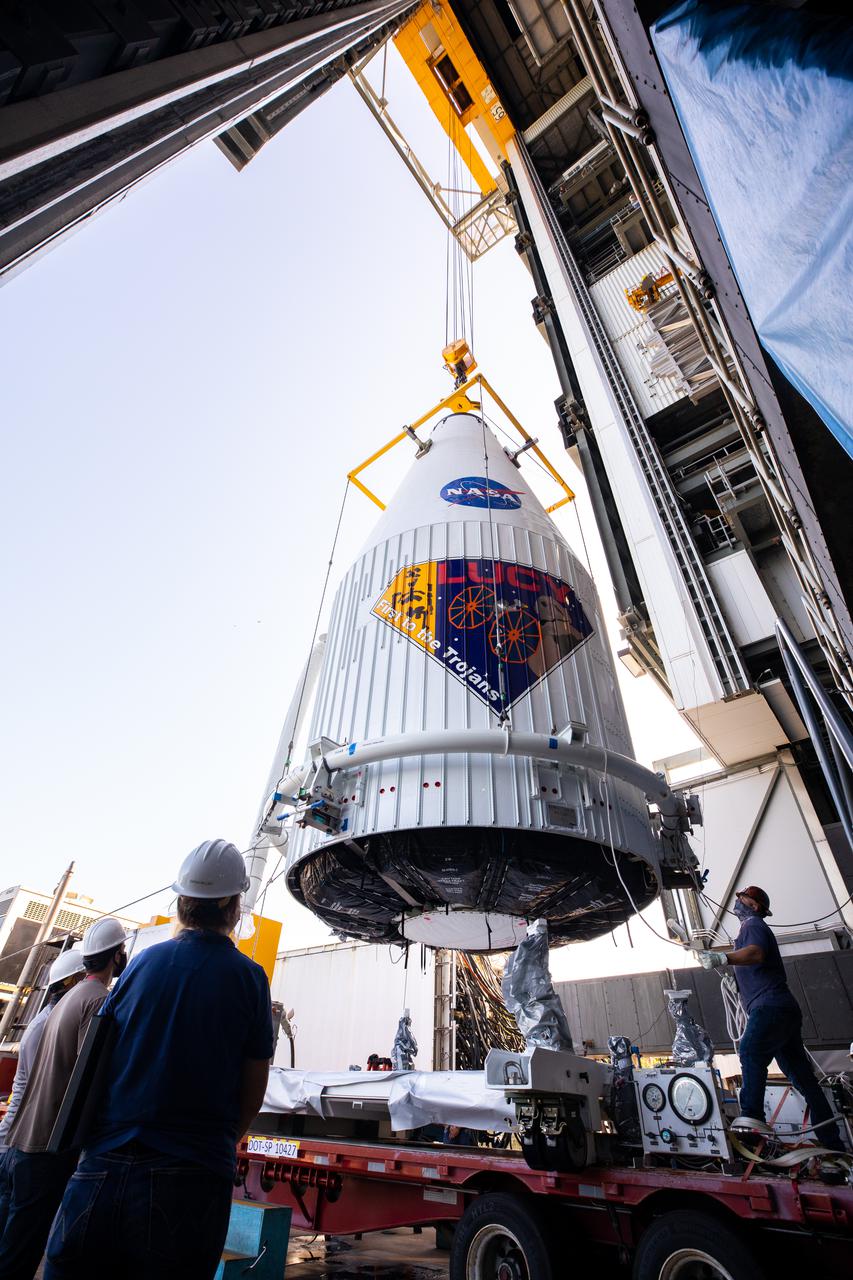
The payload fairing containing NASA’s Lucy spacecraft is hoisted up at the Vertical Integration Facility at Space Launch Complex 41 at Cape Canaveral Space Force Station in Florida on Oct. 7, 2021. It will be lowered onto the United Launch Alliance (ULA) Atlas V Centaur second stage. Lucy is scheduled to launch no earlier than Saturday, Oct. 16, on the ULA Atlas V 401 rocket from Launch Pad 41. NASA’s Launch Services Program, based at Kennedy Space Center, America’s premier multi-user spaceport, is managing the launch. Over its 12-year primary mission, Lucy will explore a record-breaking number of asteroids, flying by one asteroid in the solar system’s main belt and seven Trojan asteroids. Additionally, Lucy’s path will circle back to Earth three times for gravity assists, making it the first spacecraft ever to return to the vicinity of Earth from the outer solar system.
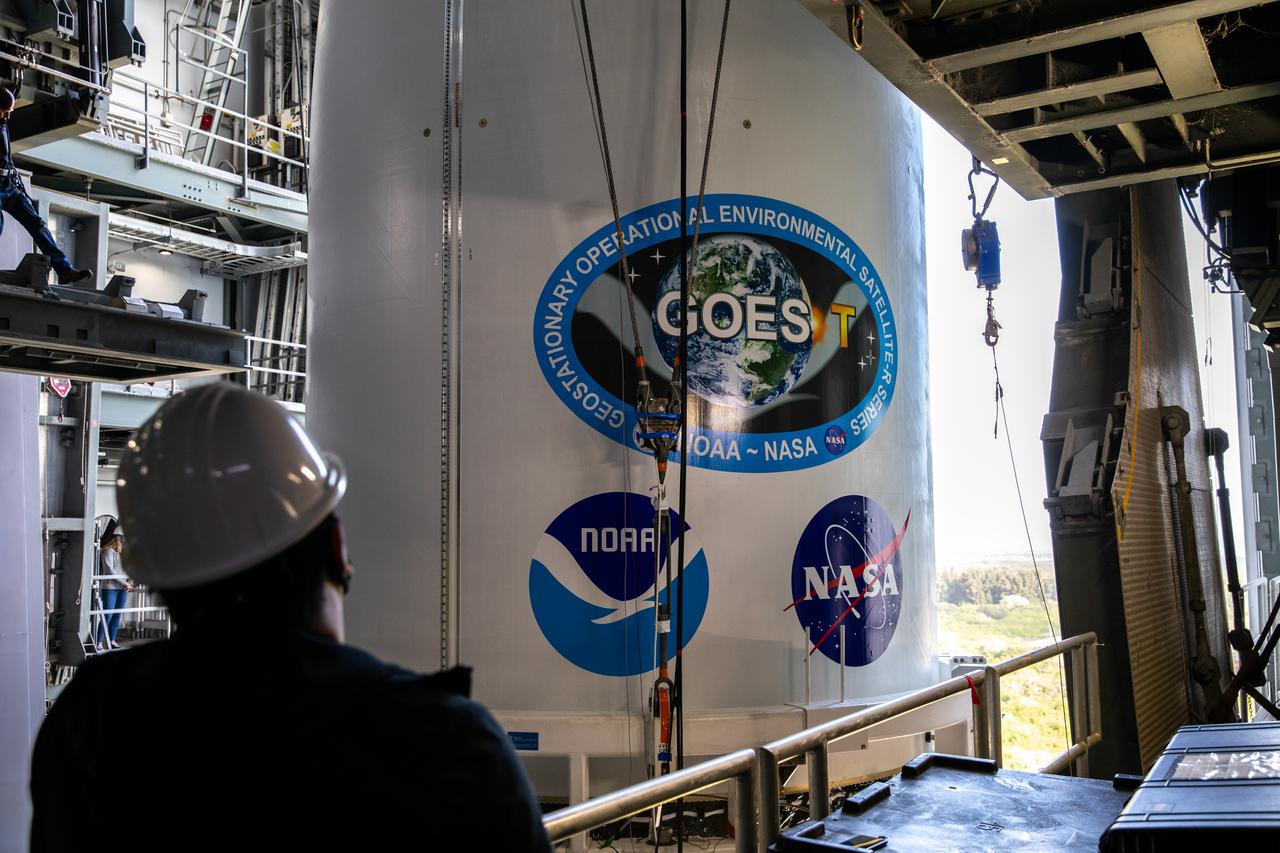
A United Launch Alliance technician monitors the progress as the National Oceanic and Atmospheric Administration’s (NOAA) Geostationary Operational Environmental Satellite-T (GOES-T), enclosed in its payload fairing, is moved into the Vertical Integration Facility at Space Launch Complex 41 at Cape Canaveral Space Force Station in Florida on Feb. 17, 2022. The satellite will be secured atop the United Launch Alliance Atlas V 541 rocket. GOES-T is scheduled to launch atop the Atlas V rocket from SLC-41 on March 1, 2022, at 4:38 p.m. GOES-T is the third satellite in the GOES-R series that will continue to help meteorologists observe and predict local weather events that affect public safety. The launch is being managed by NASA’s Launch Services Program based at Kennedy Space Center in Florida, America’s multi-user spaceport.
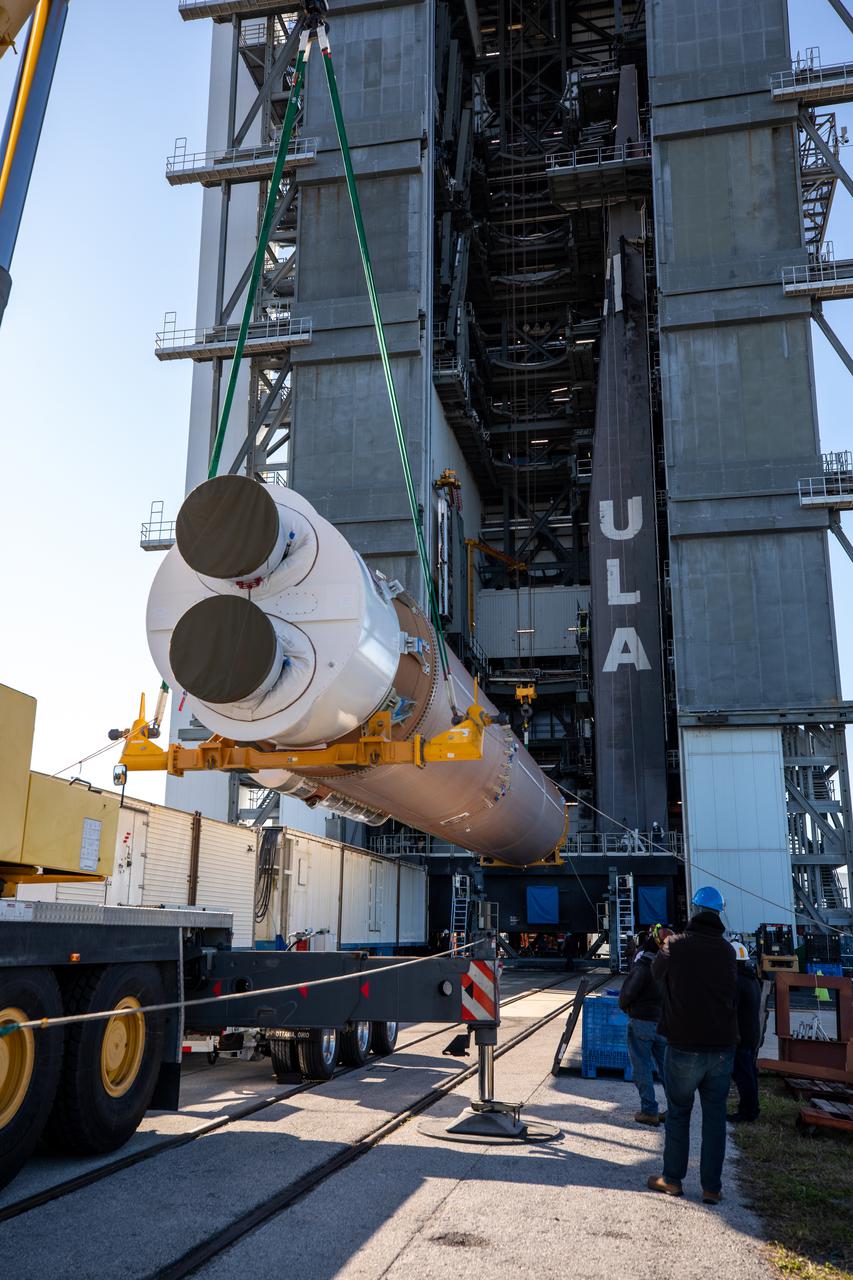
A United Launch Alliance (ULA) Atlas V 541 rocket first stage is lifted up at the Space Launch Complex-41 Vertical Integration Facility at Cape Canaveral Space Force Station in Florida on Jan. 31, 2022. The Atlas V will launch the National Oceanic and Atmospheric Administration’s (NOAA) Geostationary Operational Environmental Satellite T (GOES-T). GOES-T is the third satellite in the GOES-R series that will continue to help meteorologists observe and predict local weather events that affect public safety. GOES-T is scheduled to launch from Space Launch Complex-41 on March 1, 2022. The launch is being managed by NASA’s Launch Services Program based at Kennedy Space Center, America’s multi-user spaceport.
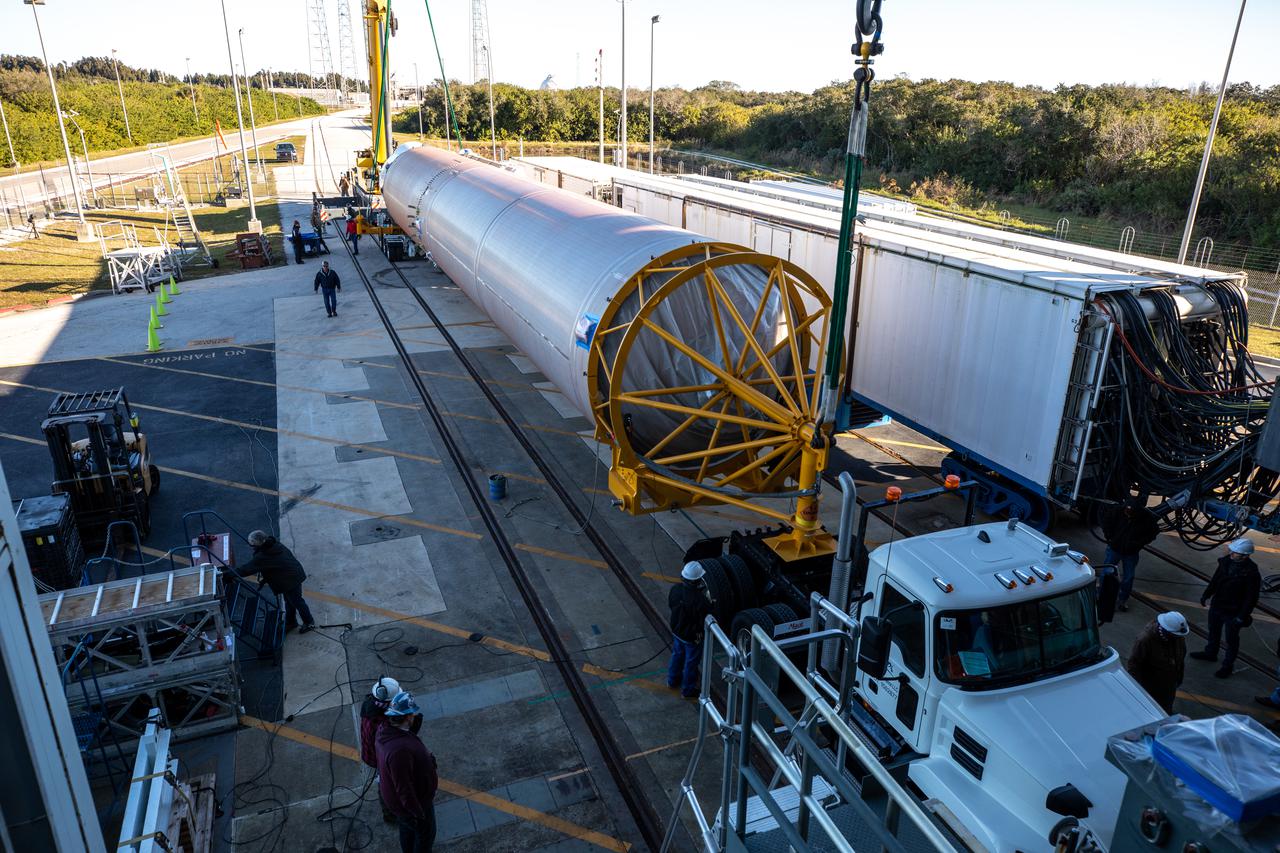
A United Launch Alliance (ULA) Atlas V 541 rocket first stage arrives at the Space Launch Complex-41 Vertical Integration Facility at Cape Canaveral Space Force Station in Florida on Jan. 31, 2022. The Atlas V will launch the National Oceanic and Atmospheric Administration’s (NOAA) Geostationary Operational Environmental Satellite T (GOES-T). GOES-T is the third satellite in the GOES-R series that will continue to help meteorologists observe and predict local weather events that affect public safety. GOES-T is scheduled to launch from Space Launch Complex-41 on March 1, 2022. The launch is being managed by NASA’s Launch Services Program based at Kennedy Space Center, America’s multi-user spaceport.
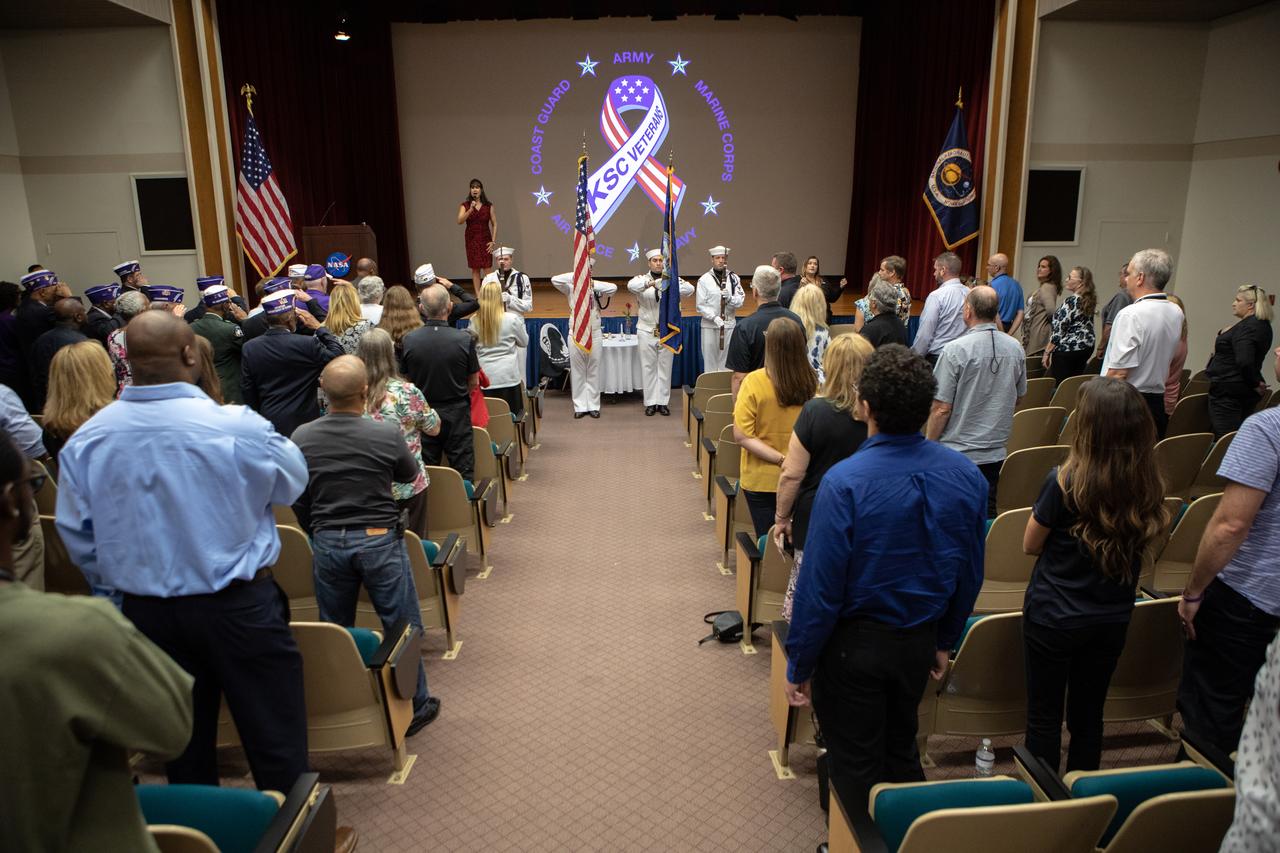
The National Anthem is sung by Suzy Cunningham, NASA Strategy and Integration manager, during a Veterans Day observance ceremony held in the Kennedy Space Center’s Training Auditorium in Florida on Nov. 7, 2019. During the event, Kennedy was named a Purple Heart Entity by the Military Order of the Purple Heart, becoming the first NASA center to receive this designation for support and services provided to veterans through the spaceport’s Veterans employee resource group. Attendees included Kennedy employees and more than 20 Purple Heart recipients. Following the award presentation, Christopher Vedvick, a combat wounded veteran and Military Order of the Purple Heart department of Florida commander, spoke about his experience serving in the United States Army before retiring, his involvement in the Military Order of the Purple Heart and the purpose of the organization.
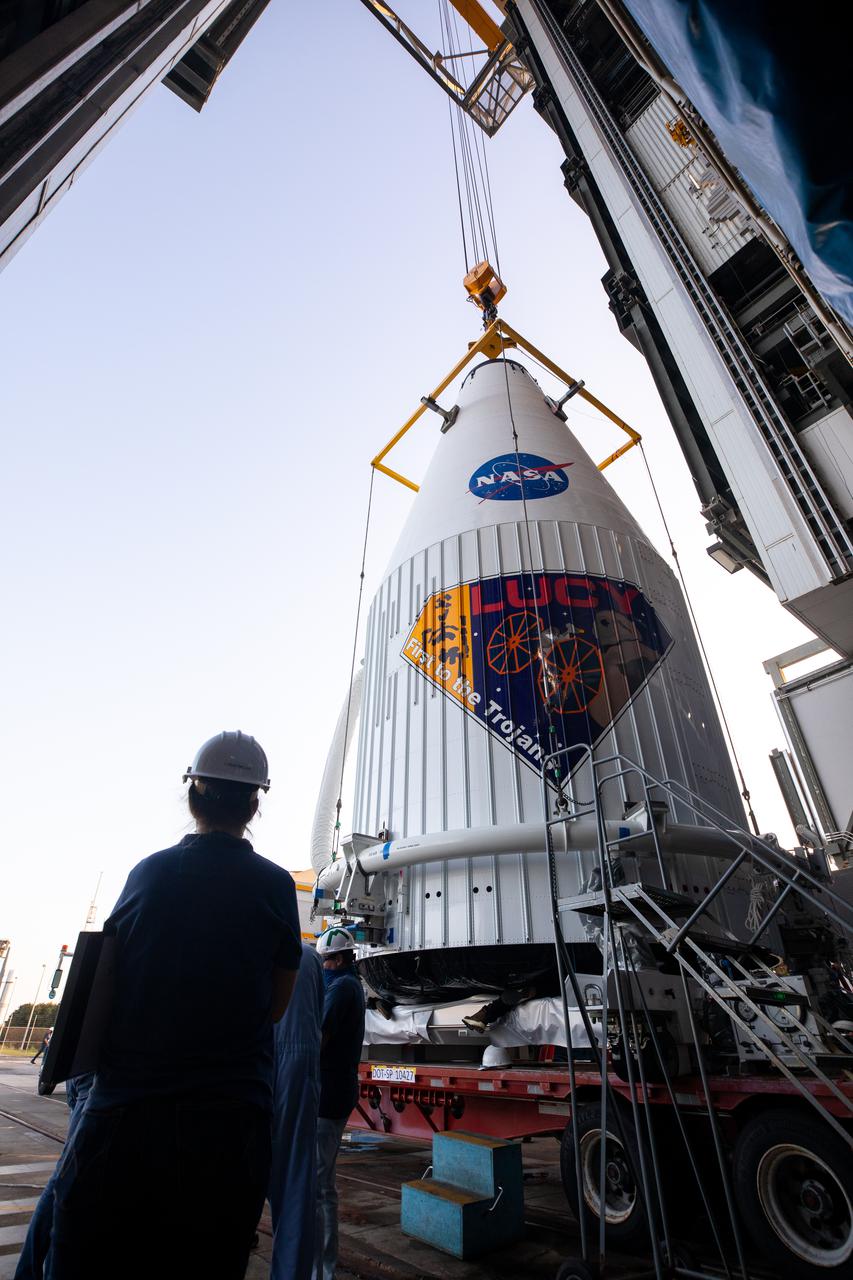
The payload fairing containing NASA’s Lucy spacecraft is hoisted up at the Vertical Integration Facility at Space Launch Complex 41 at Cape Canaveral Space Force Station in Florida on Oct. 7, 2021. It will be lowered onto the United Launch Alliance (ULA) Atlas V Centaur second stage. Lucy is scheduled to launch no earlier than Saturday, Oct. 16, on the ULA Atlas V 401 rocket from Launch Pad 41. NASA’s Launch Services Program, based at Kennedy Space Center, America’s premier multi-user spaceport, is managing the launch. Over its 12-year primary mission, Lucy will explore a record-breaking number of asteroids, flying by one asteroid in the solar system’s main belt and seven Trojan asteroids. Additionally, Lucy’s path will circle back to Earth three times for gravity assists, making it the first spacecraft ever to return to the vicinity of Earth from the outer solar system.
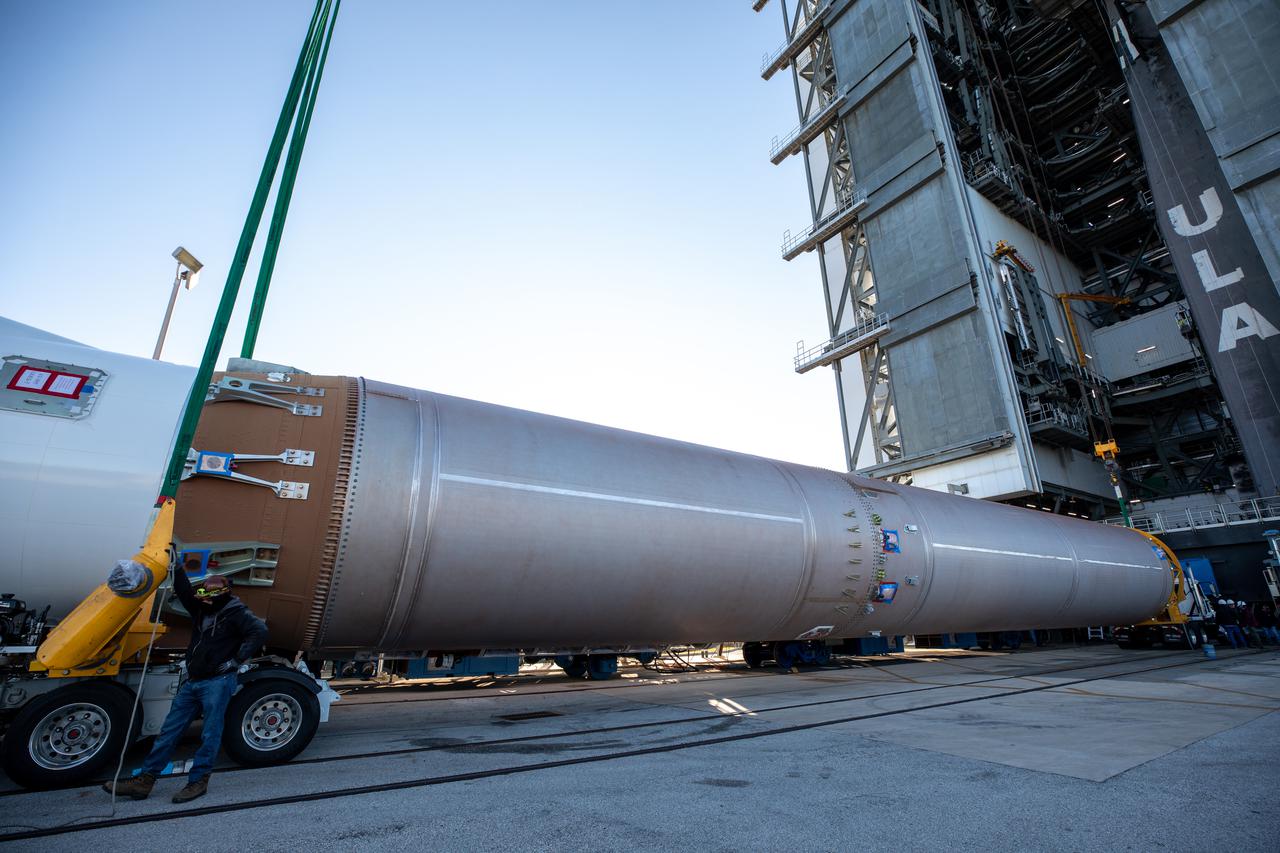
A United Launch Alliance (ULA) Atlas V 541 rocket first stage arrives at the Space Launch Complex-41 Vertical Integration Facility at Cape Canaveral Space Force Station in Florida on Jan. 31, 2022. The Atlas V will launch the National Oceanic and Atmospheric Administration’s (NOAA) Geostationary Operational Environmental Satellite T (GOES-T). GOES-T is the third satellite in the GOES-R series that will continue to help meteorologists observe and predict local weather events that affect public safety. GOES-T is scheduled to launch from Space Launch Complex-41 on March 1, 2022. The launch is being managed by NASA’s Launch Services Program based at Kennedy Space Center, America’s multi-user spaceport.
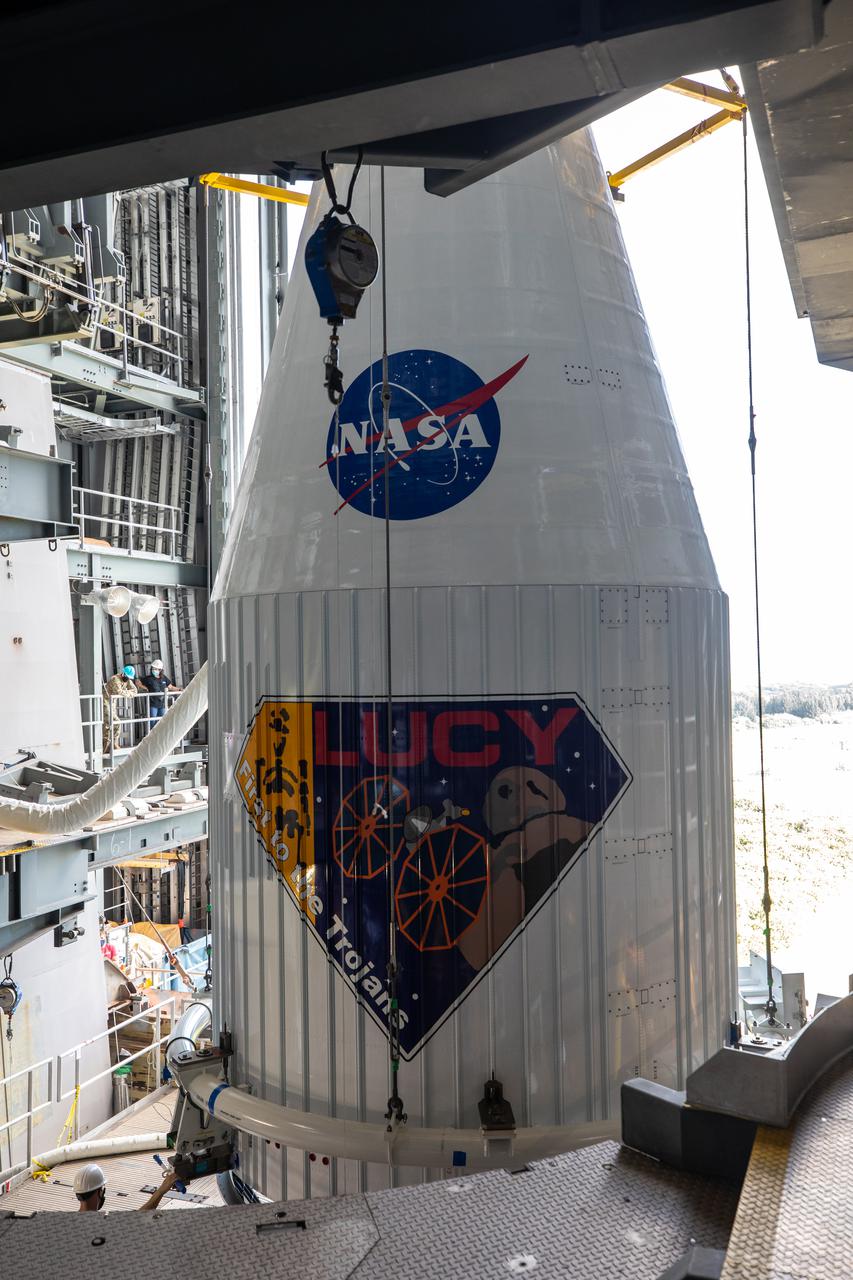
Workers assist as the payload fairing containing NASA’s Lucy spacecraft is lowered onto the United Launch Alliance (ULA) Atlas V Centaur second stage in the Vertical Integration Facility at Space Launch Complex 41 at Cape Canaveral Space Force Base in Florida on Oct. 7, 2021. Lucy is scheduled to launch no earlier than Saturday, Oct. 16, on the ULA Atlas V 401 rocket from Launch Pad 41. NASA’s Launch Services Program, based at Kennedy Space Center, America’s premier multi-user spaceport, is managing the launch. Over its 12-year primary mission, Lucy will explore a record-breaking number of asteroids, flying by one asteroid in the solar system’s main belt and seven Trojan asteroids. Additionally, Lucy’s path will circle back to Earth three times for gravity assists, making it the first spacecraft ever to return to the vicinity of Earth from the outer solar system.
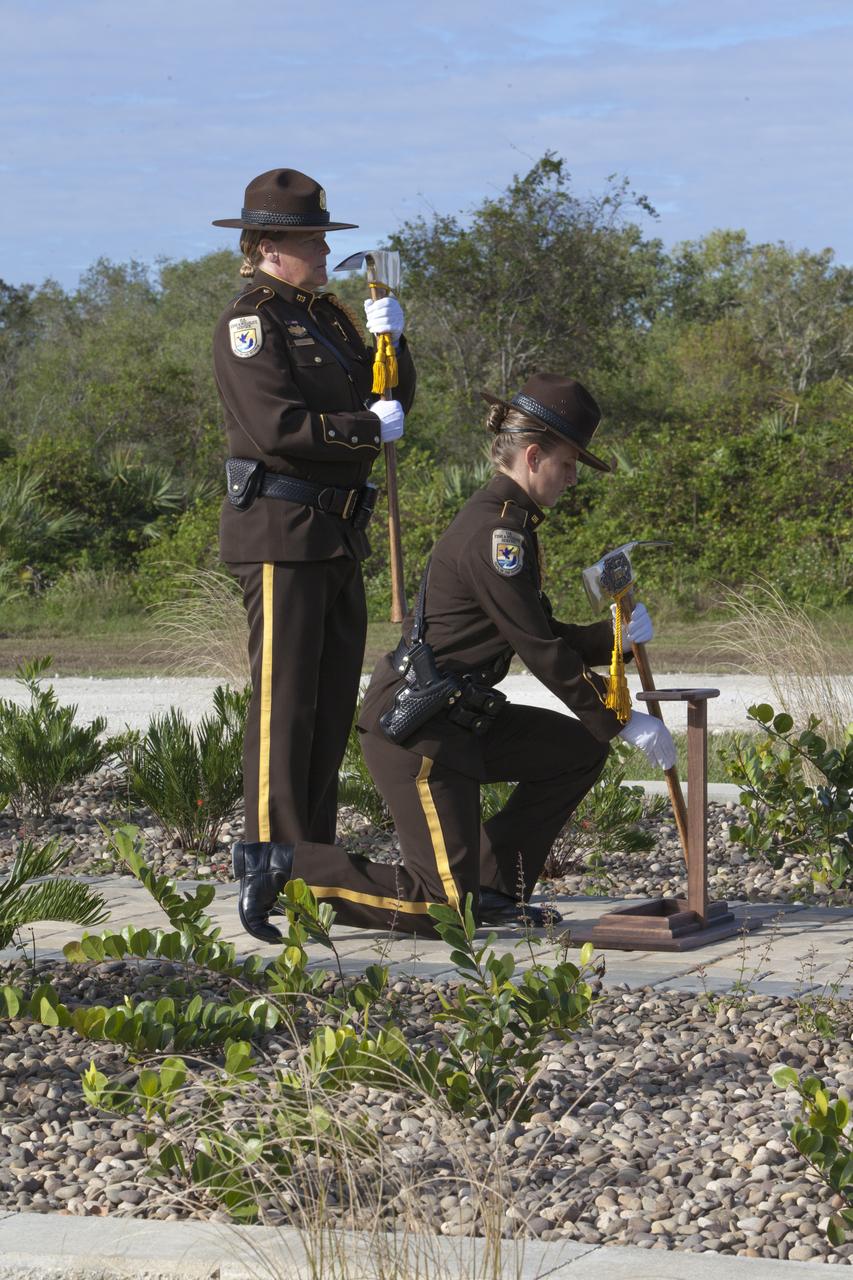
Firefighters place ceremonial Pulaski tools by a new memorial marker Nov. 1 on the Merritt Island National Wildlife Refuge in Florida. During a joint ceremony, the Spaceport Integration Team and its partners were presented with the prestigious 2017 Pulaski Award and the new memorial marker was dedicated. The multi-agency team includes representatives from NASA's Kennedy Space Center, Cape Canaveral Air Force Station's 45th Space Wing, the Merritt Island National Wildlife Refuge, as well as the Florida Forest Service and Brevard County Fire Rescue. The memorial marker honors two fallen firefighters, Scott Maness and Beau Sauselein, who died fighting a wildfire on space center property in 1981. Held outdoors, the ceremony was attended by 140 guests.
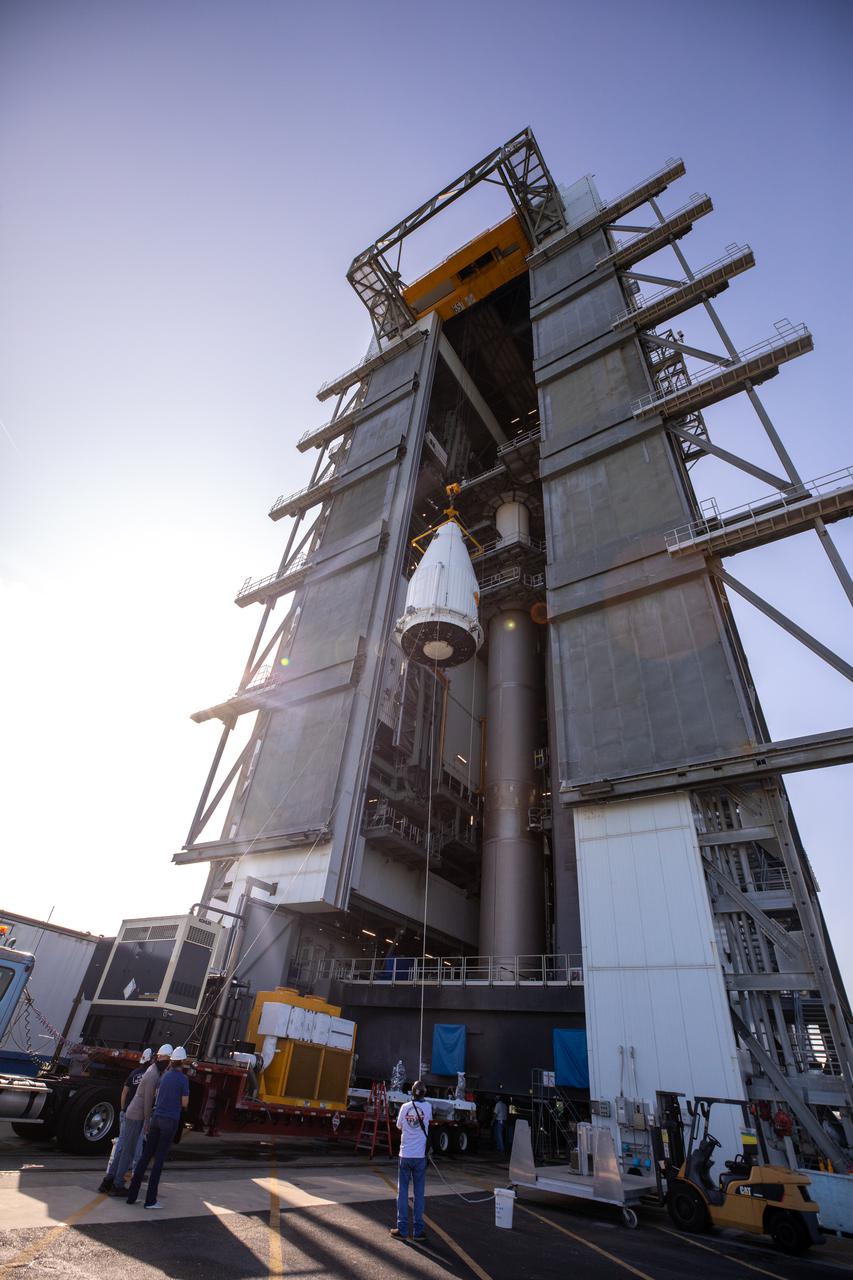
The payload fairing containing NASA’s Lucy spacecraft is hoisted up at the Vertical Integration Facility at Space Launch Complex 41 at Cape Canaveral Space Force Station in Florida on Oct. 7, 2021. It will be lowered onto the United Launch Alliance (ULA) Atlas V Centaur second stage. Lucy is scheduled to launch no earlier than Saturday, Oct. 16, on the ULA Atlas V 401 rocket from Launch Pad 41. NASA’s Launch Services Program, based at Kennedy Space Center, America’s premier multi-user spaceport, is managing the launch. Over its 12-year primary mission, Lucy will explore a record-breaking number of asteroids, flying by one asteroid in the solar system’s main belt and seven Trojan asteroids. Additionally, Lucy’s path will circle back to Earth three times for gravity assists, making it the first spacecraft ever to return to the vicinity of Earth from the outer solar system.
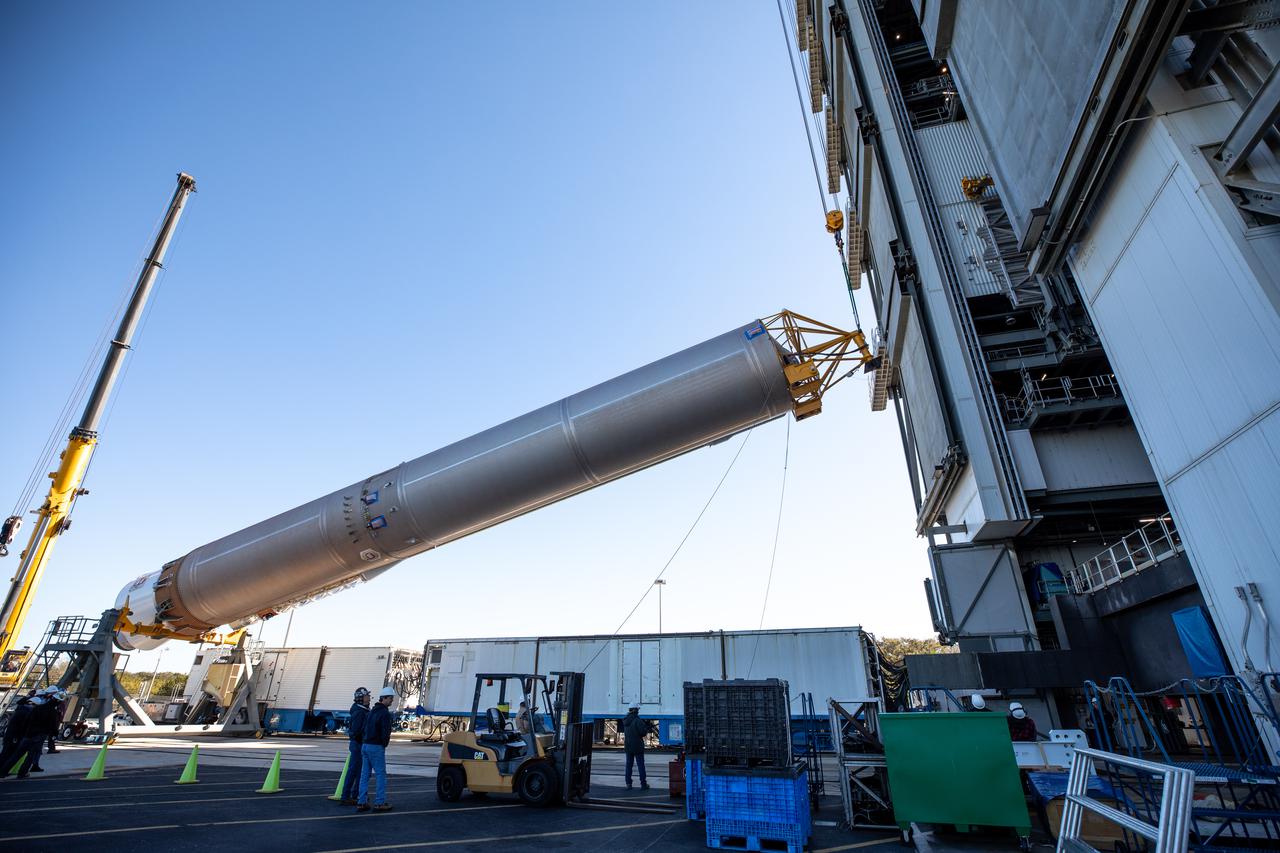
A crane is used to lift the United Launch Alliance’s (ULA) first stage of the Atlas V 541 rocket at the Space Launch Complex-41 Vertical Integration Facility at Cape Canaveral Space Force Station in Florida on Jan. 31, 2022. The Atlas V will launch the National Oceanic and Atmospheric Administration’s (NOAA) Geostationary Operational Environmental Satellite T (GOES-T). GOES-T is the third satellite in the GOES-R series that will continue to help meteorologists observe and predict local weather events that affect public safety. GOES-T is scheduled to launch from Space Launch Complex-41 on March 1, 2022. The launch is being managed by NASA’s Launch Services Program based at Kennedy Space Center, America’s multi-user spaceport.
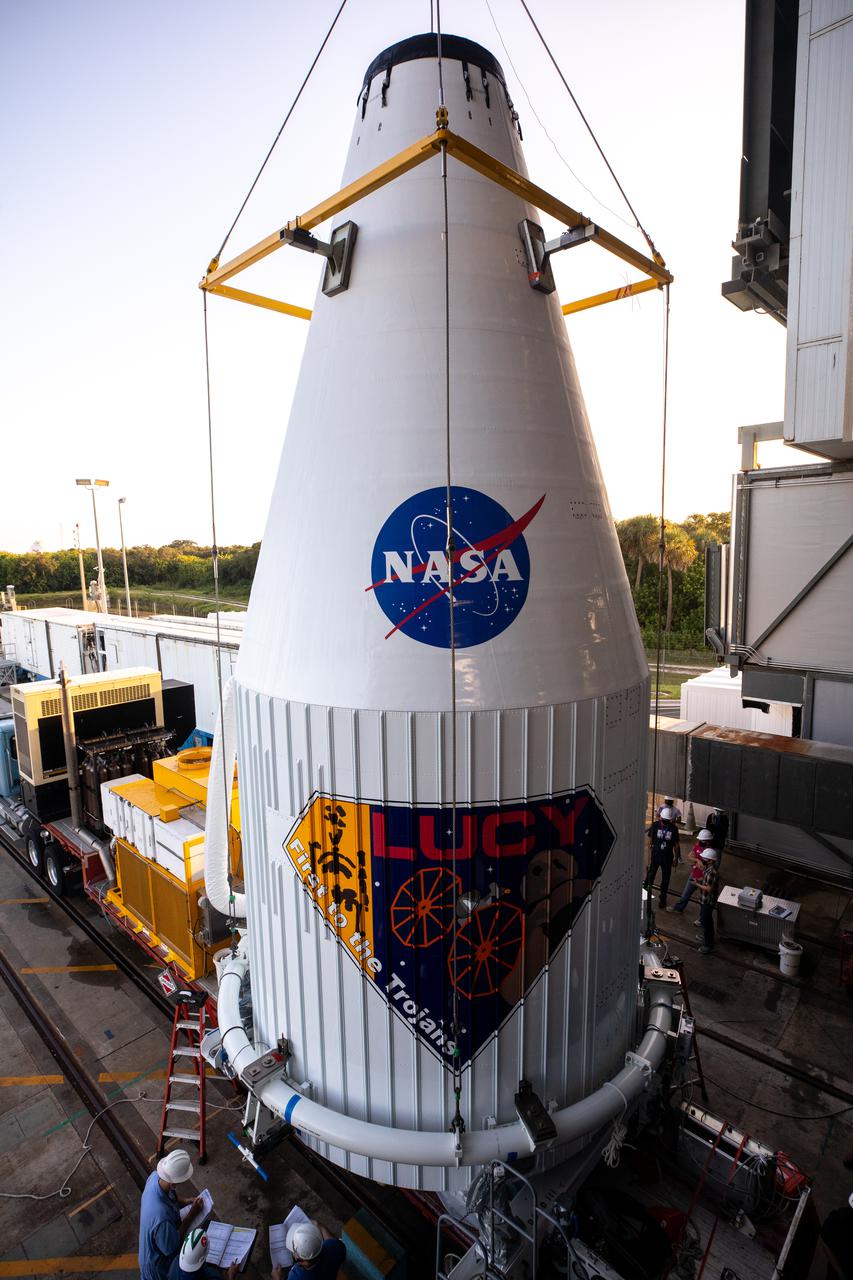
The payload fairing containing NASA’s Lucy spacecraft is hoisted up at the Vertical Integration Facility at Space Launch Complex 41 at Cape Canaveral Space Force Station in Florida on Oct. 7, 2021. It will be lowered onto the United Launch Alliance (ULA) Atlas V Centaur second stage. Lucy is scheduled to launch no earlier than Saturday, Oct. 16, on the ULA Atlas V 401 rocket from Launch Pad 41. NASA’s Launch Services Program, based at Kennedy Space Center, America’s premier multi-user spaceport, is managing the launch. Over its 12-year primary mission, Lucy will explore a record-breaking number of asteroids, flying by one asteroid in the solar system’s main belt and seven Trojan asteroids. Additionally, Lucy’s path will circle back to Earth three times for gravity assists, making it the first spacecraft ever to return to the vicinity of Earth from the outer solar system.
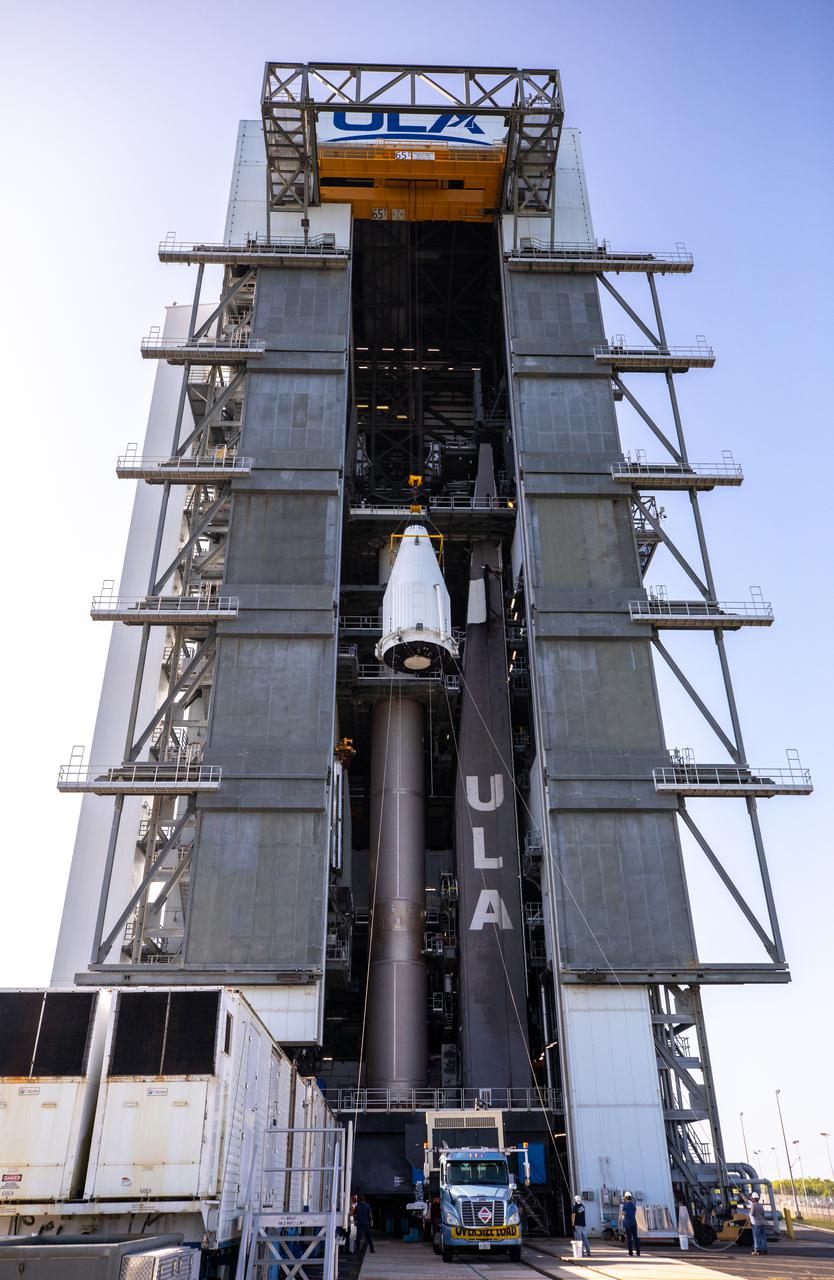
The payload fairing containing NASA’s Lucy spacecraft is hoisted up at the Vertical Integration Facility at Space Launch Complex 41 at Cape Canaveral Space Force Station in Florida on Oct. 7, 2021. It will be lowered onto the United Launch Alliance (ULA) Atlas V Centaur second stage. Lucy is scheduled to launch no earlier than Saturday, Oct. 16, on the ULA Atlas V 401 rocket from Launch Pad 41. NASA’s Launch Services Program, based at Kennedy Space Center, America’s premier multi-user spaceport, is managing the launch. Over its 12-year primary mission, Lucy will explore a record-breaking number of asteroids, flying by one asteroid in the solar system’s main belt and seven Trojan asteroids. Additionally, Lucy’s path will circle back to Earth three times for gravity assists, making it the first spacecraft ever to return to the vicinity of Earth from the outer solar system.
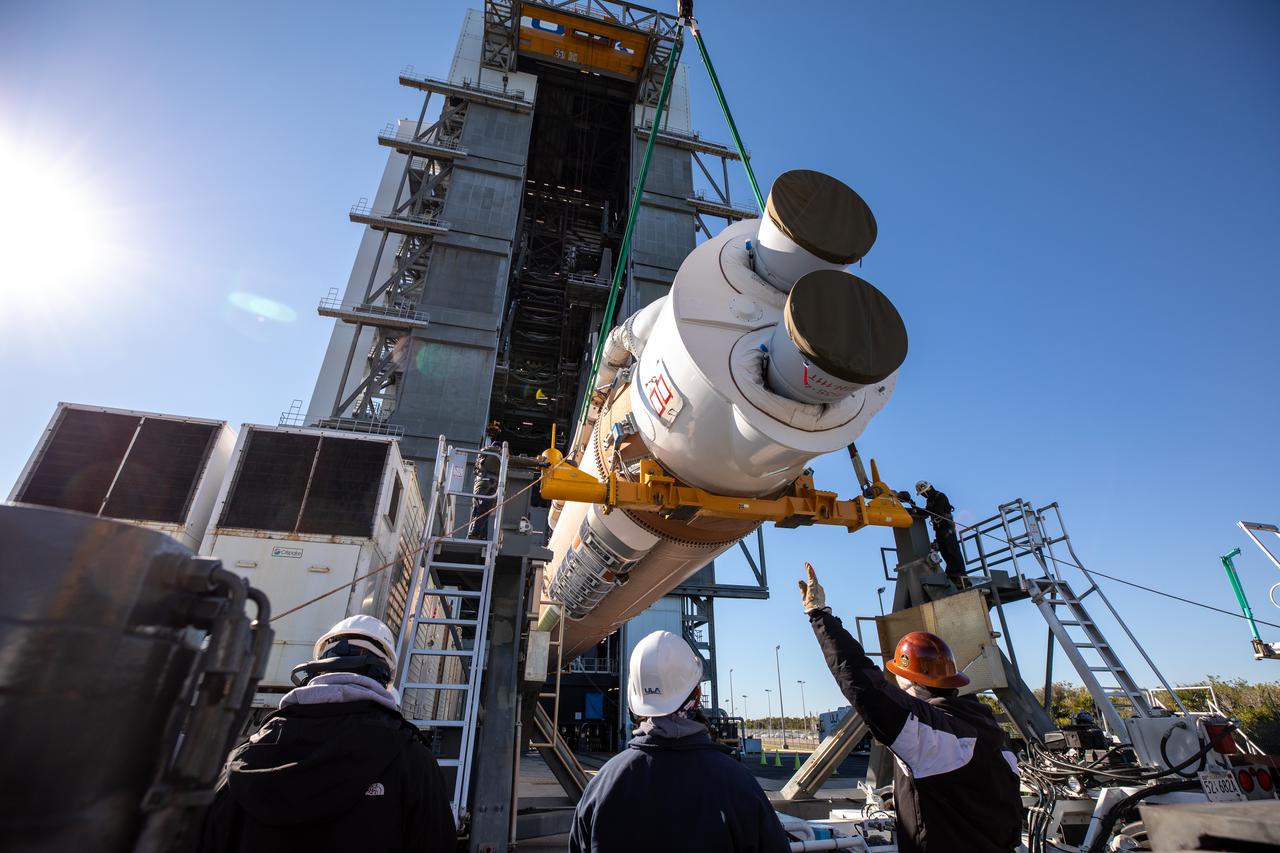
United Launch Alliance’s (ULA) first stage of the Atlas V 541 rocket is lifted up at the Space Launch Complex-41 Vertical Integration Facility at Cape Canaveral Space Force Station in Florida on Jan. 31, 2022. The Atlas V will launch the National Oceanic and Atmospheric Administration’s (NOAA) Geostationary Operational Environmental Satellite T (GOES-T). GOES-T is the third satellite in the GOES-R series that will continue to help meteorologists observe and predict local weather events that affect public safety. GOES-T is scheduled to launch from Space Launch Complex-41 on March 1, 2022. The launch is being managed by NASA’s Launch Services Program based at Kennedy Space Center, America’s multi-user spaceport.