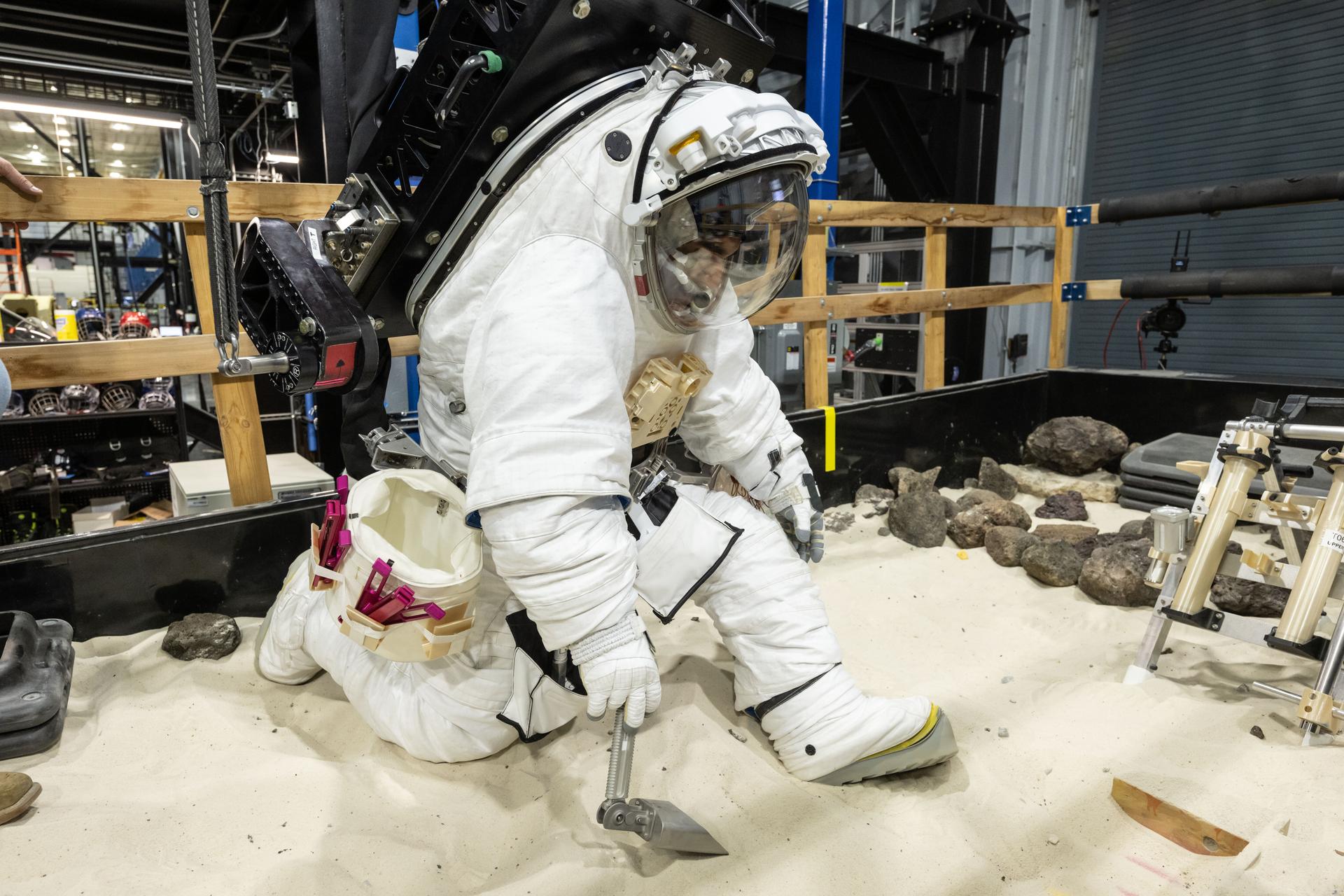
A NASA crew member practices using lunar tools to collect geology samples at NASA’s Johnson Space Center during an elevated suit pressure test where teams evaluate how well crew perform tasks in different suit pressure levels while wearing the Artemis III lunar spacesuit developed by Axiom Space called the AxEMU (Axiom Extravehicular Mobility Unit).
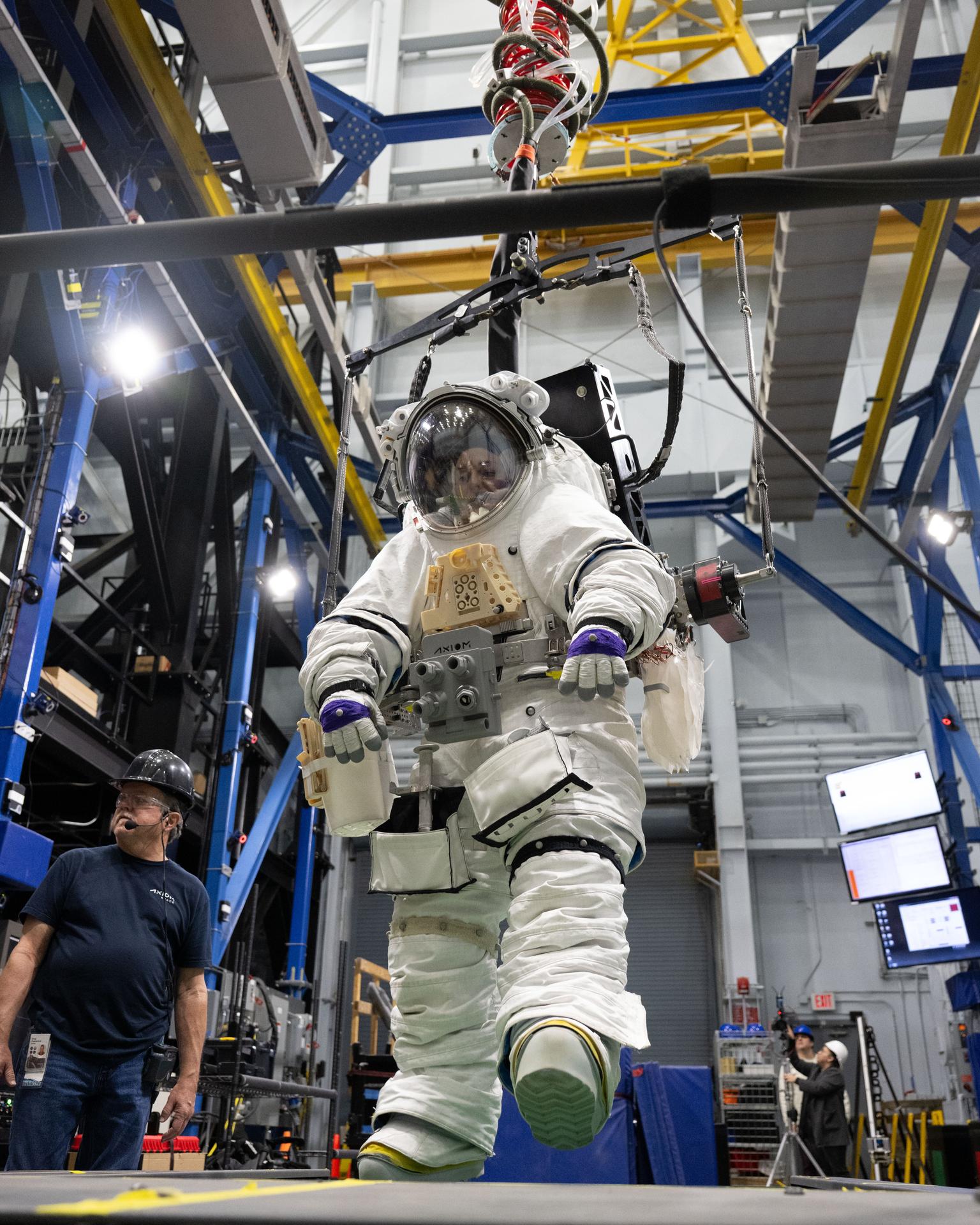
A NASA crew member practices simulated lunar surface operations at NASA’s Johnson Space Center during an elevated suit pressure test where teams evaluate how well crew perform tasks in different suit pressure levels while wearing the Artemis III lunar spacesuit developed by Axiom Space called the AxEMU (Axiom Extravehicular Mobility Unit).
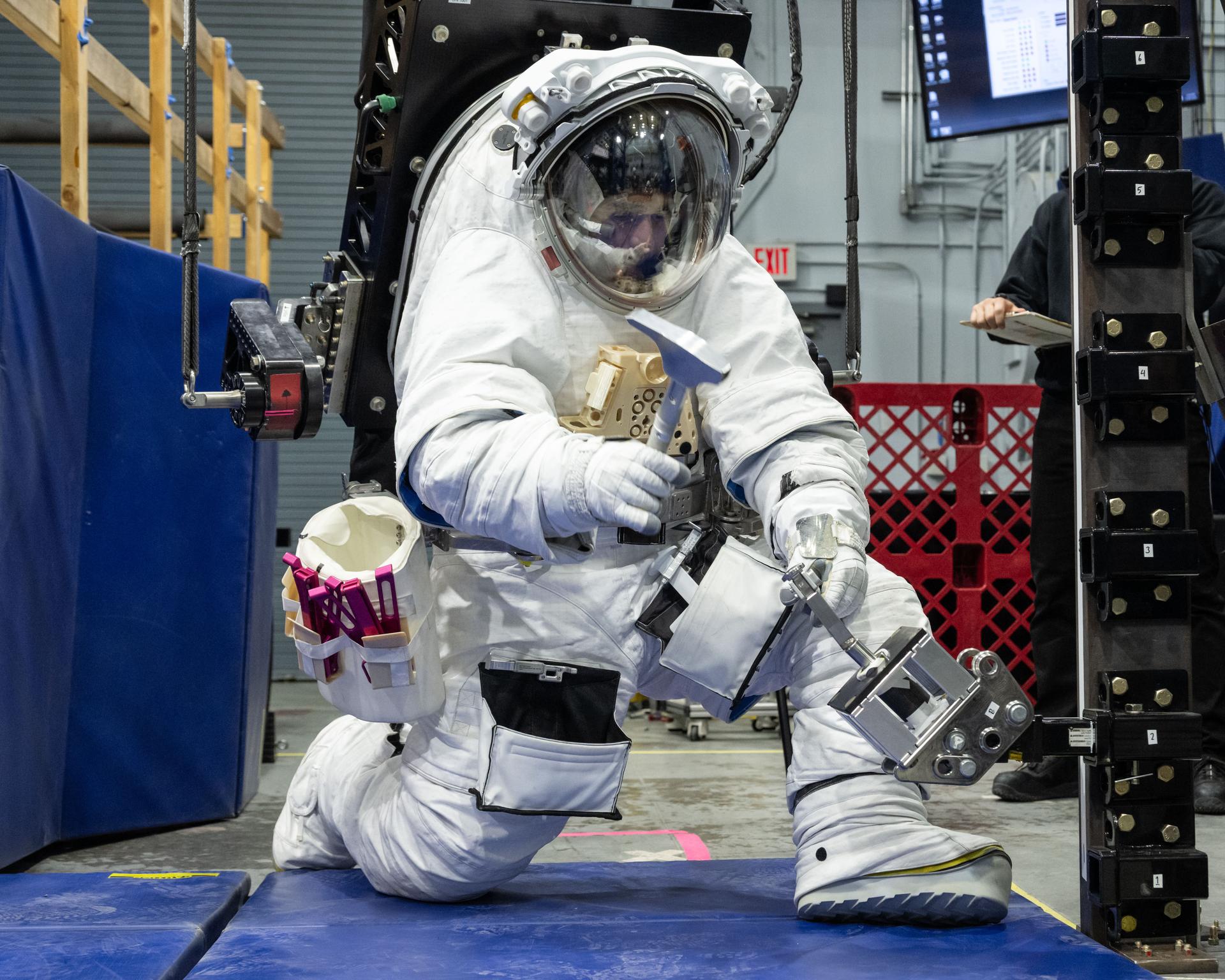
A NASA crew member practices simulated lunar surface operations at NASA’s Johnson Space Center during an elevated suit pressure test where teams evaluate how well crew perform tasks in different suit pressure levels while wearing the Artemis III lunar spacesuit developed by Axiom Space called the AxEMU (Axiom Extravehicular Mobility Unit).
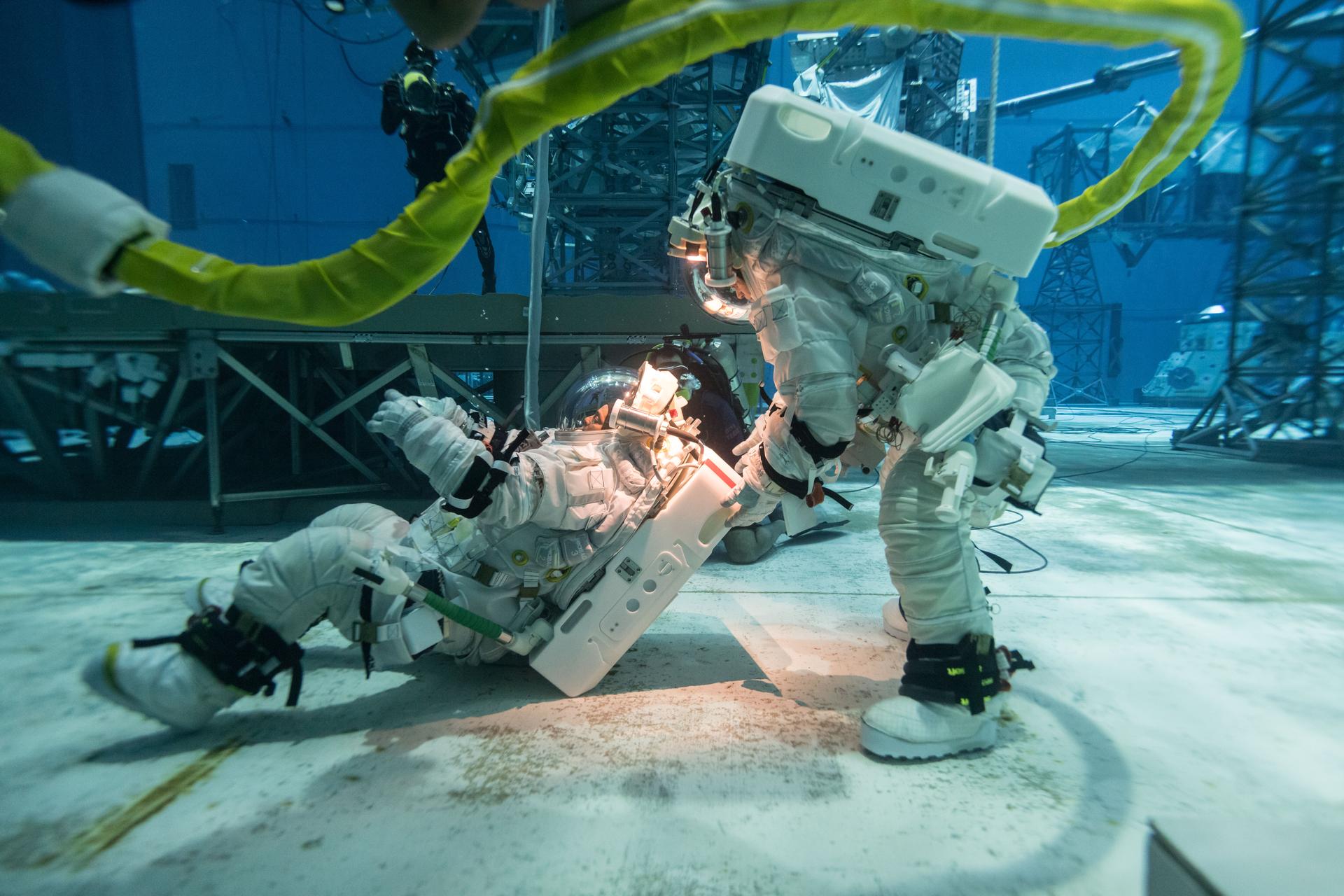
NASA crew members practice emergency rescue drills during simulated lunar surface operations at NASA’s Neutral Buoyancy Laboratory where teams evaluate how well crew perform tasks while wearing the Artemis III lunar spacesuit developed by Axiom Space called the AxEMU (Axiom Extravehicular Mobility Unit).
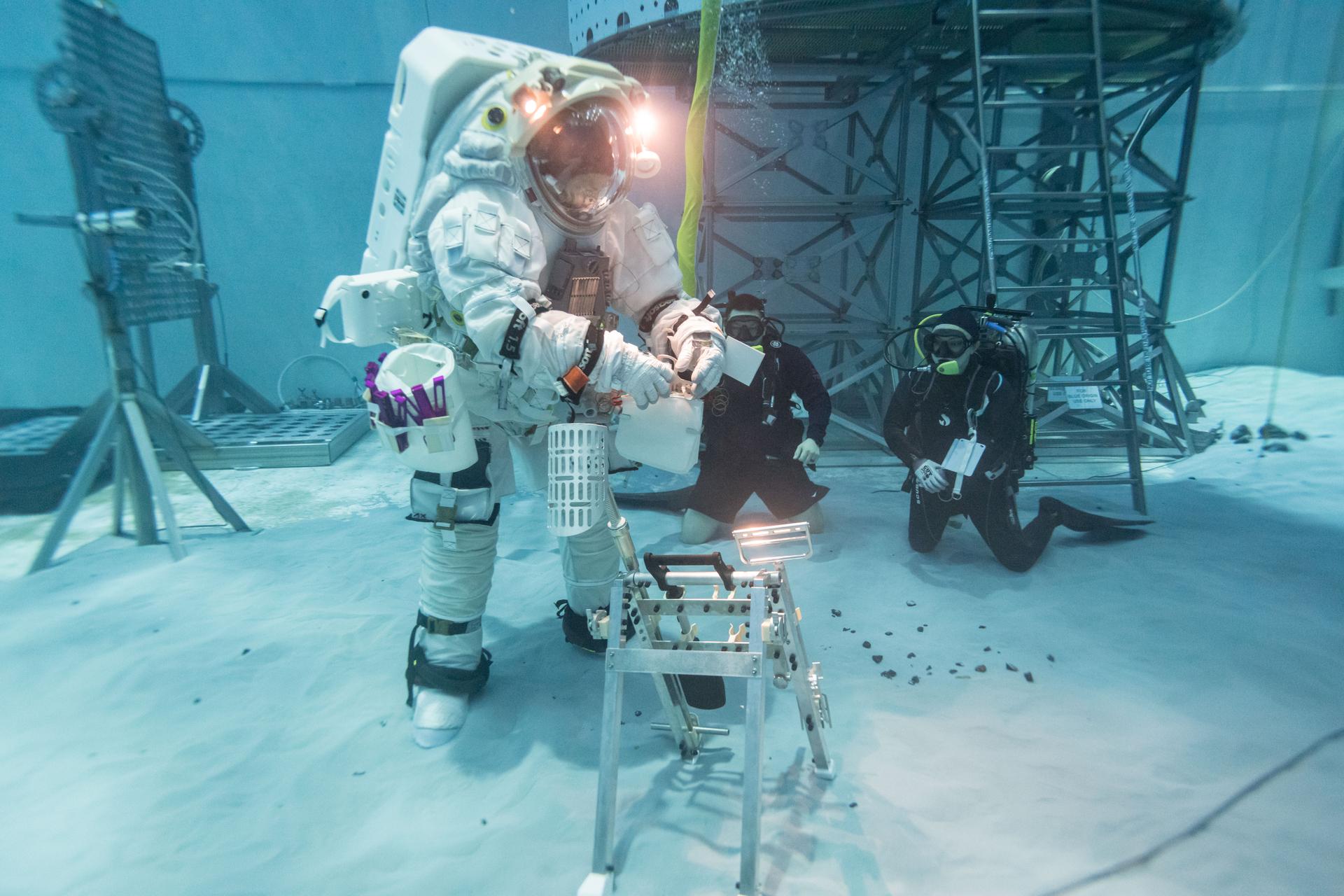
A NASA crew member practices simulated lunar surface operations at NASA’s Neutral Buoyancy Laboratory where teams evaluate how well crew perform tasks while wearing the Artemis III lunar spacesuit developed by Axiom Space called the AxEMU (Axiom Extravehicular Mobility Unit).
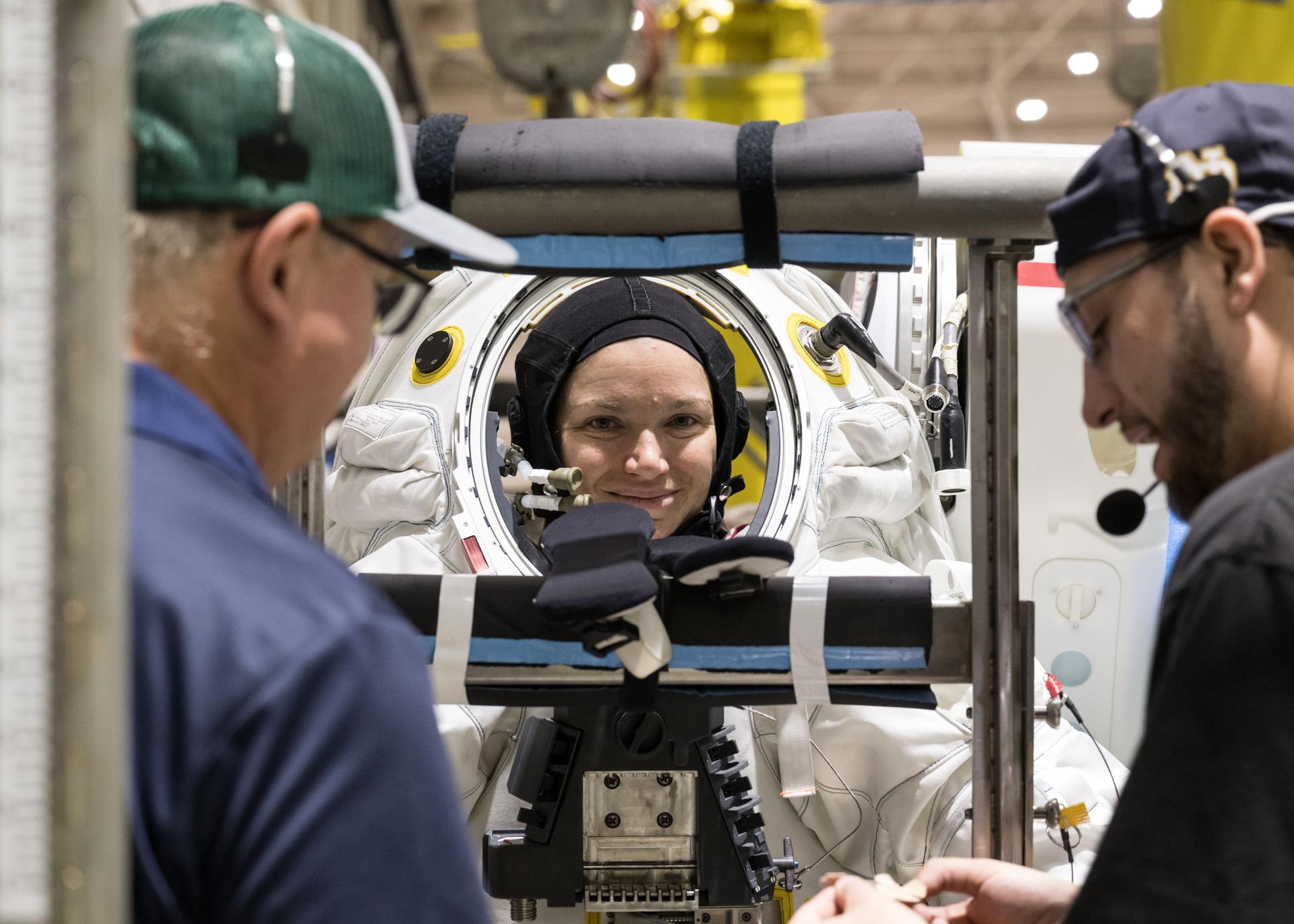
Canadian Space Agency astronaut Jenni Gibbons gets suited up in Axiom Space’s lunar spacesuit at NASA’s Neutral Buoyancy Laboratory in Houston. During a recent test series, NASA engineers and crewmembers wore the lunar spacesuit under water and conducted numerous tasks during simulated lunar operations to test its mobility and functionality and ensure the spacesuit is prepped and ready for Artemis training.
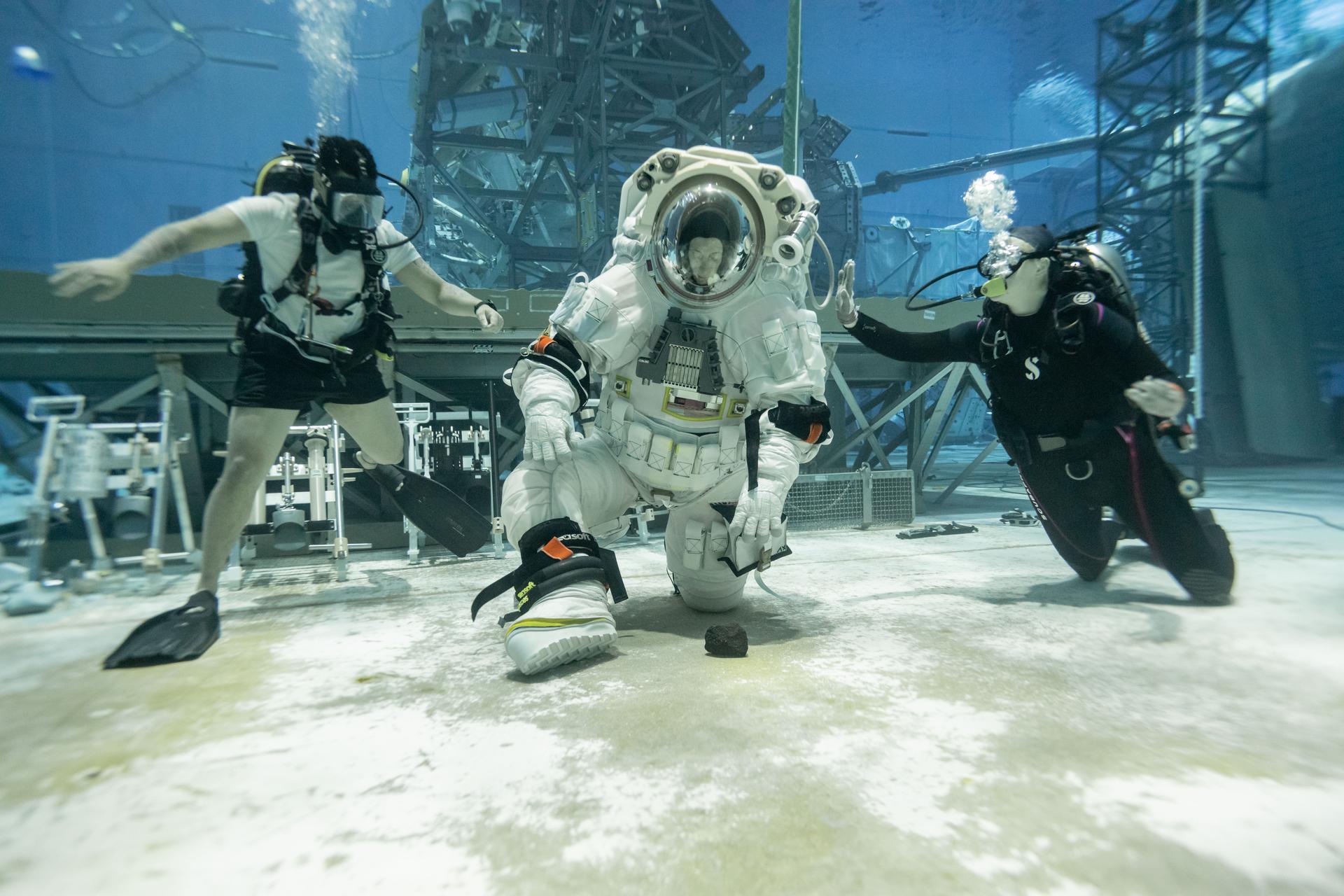
NASA astronaut Loral O’Hara kneels to pick up a rock while testing the mobility of Axiom Space’s lunar spacesuit. NASA and Axiom Space teams held the first dual spacesuit run at the Neutral Buoyancy Laboratory in Houston on September 24, 2025 with NASA Astronauts Stan Love and Loral O’Hara wearing Axiom Space’s lunar spacesuit, called the Axiom Extravehicular Mobility Unit (AxEMU). This was the final integration test in the pool, proving both the spacesuit and facility are prepped and ready for Artemis training.
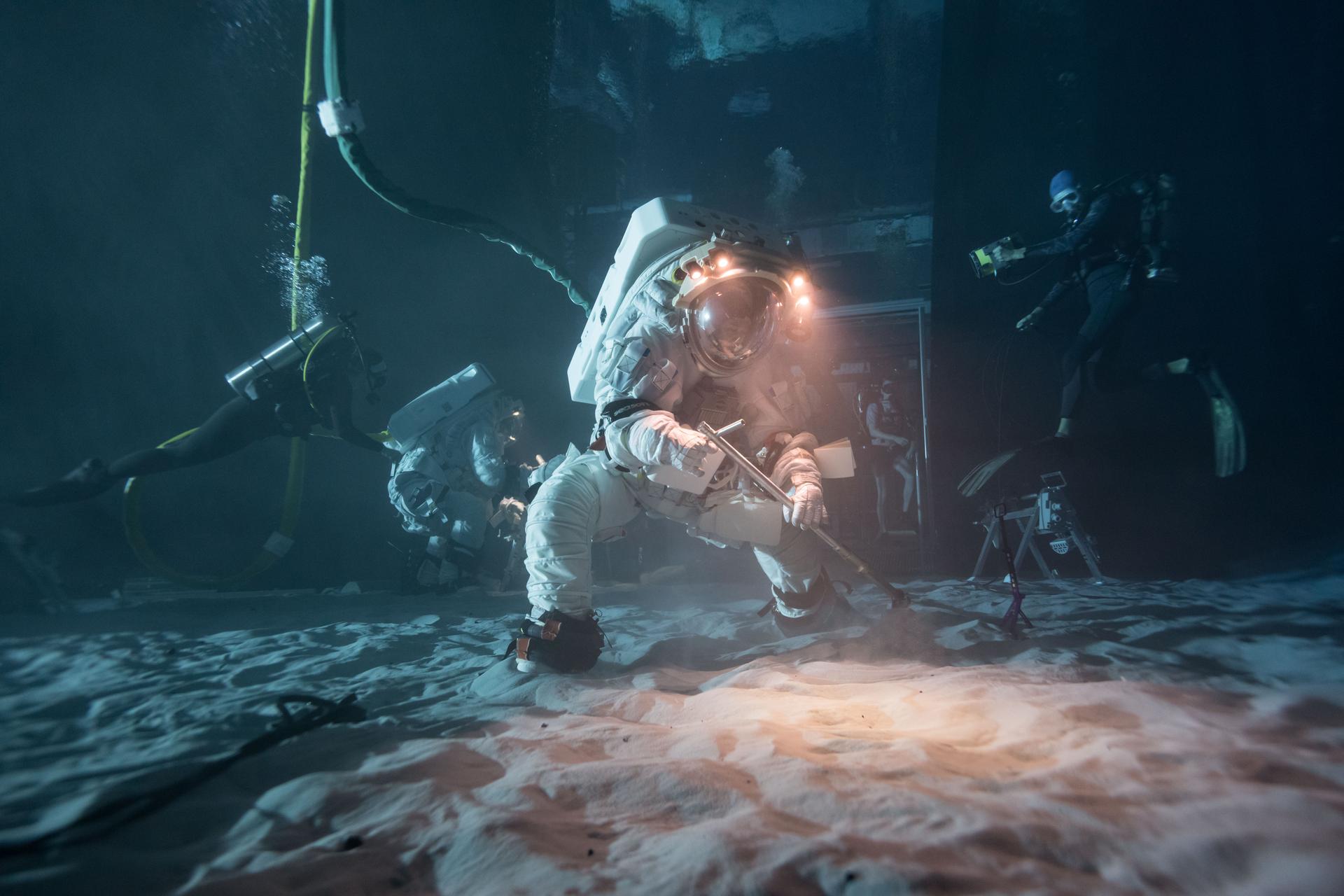
Exploration geologists and Artemis science officers Trevor Graff, left, and Angela Garcia carry out a lunar training development run at NASA’s Neutral Buoyancy Laboratory (NBL) in Houston. The NBL is a 40-foot deep pool at NASA’s Johnson Space Center where astronauts train for spacewalks in a neutrally buoyant environment. During the session, Garcia and Graff conducted tests of Artemis geology tools and deployed a mock lunar payload under low-angle lighting conditions similar to what astronauts will encounter at the Moon’s south pole. A section of the NBL, which contains full-scale mockups of the International Space Station modules, has been transformed into a lunar training area with soil and rocks that mimic the Moon’s landscape. This testing run marked the first time in the Artemis program that two geologists were suited up simultaneously for lunar geology training in the NBL. The team is using insights from these tests to build the training program for astronauts assigned to future landed missions on the Moon. Credit: NASA
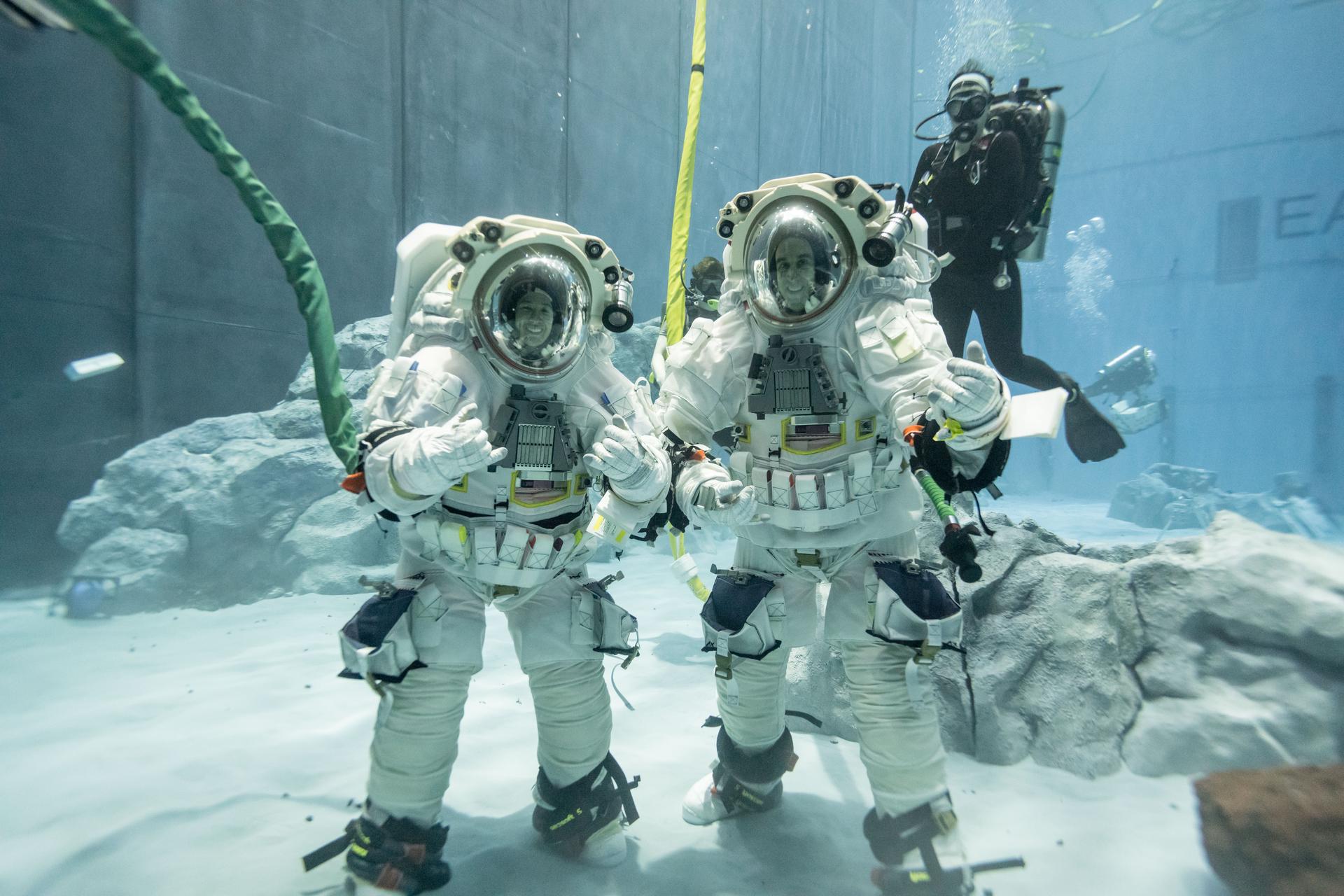
Exploration geologists and Artemis science officers Trevor Graff, left, and Angela Garcia carry out a lunar training development run at NASA’s Neutral Buoyancy Laboratory (NBL) in Houston. The NBL is a 40-foot deep pool at NASA’s Johnson Space Center where astronauts train for spacewalks in a neutrally buoyant environment. During the session, Garcia and Graff conducted tests of Artemis geology tools and deployed a mock lunar payload under low-angle lighting conditions similar to what astronauts will encounter at the Moon’s south pole. A section of the NBL, which contains full-scale mockups of the International Space Station modules, has been transformed into a lunar training area with soil and rocks that mimic the Moon’s landscape. This testing run marked the first time in the Artemis program that two geologists were suited up simultaneously for lunar geology training in the NBL. The team is using insights from these tests to build the training program for astronauts assigned to future landed missions on the Moon. Credit: NASA
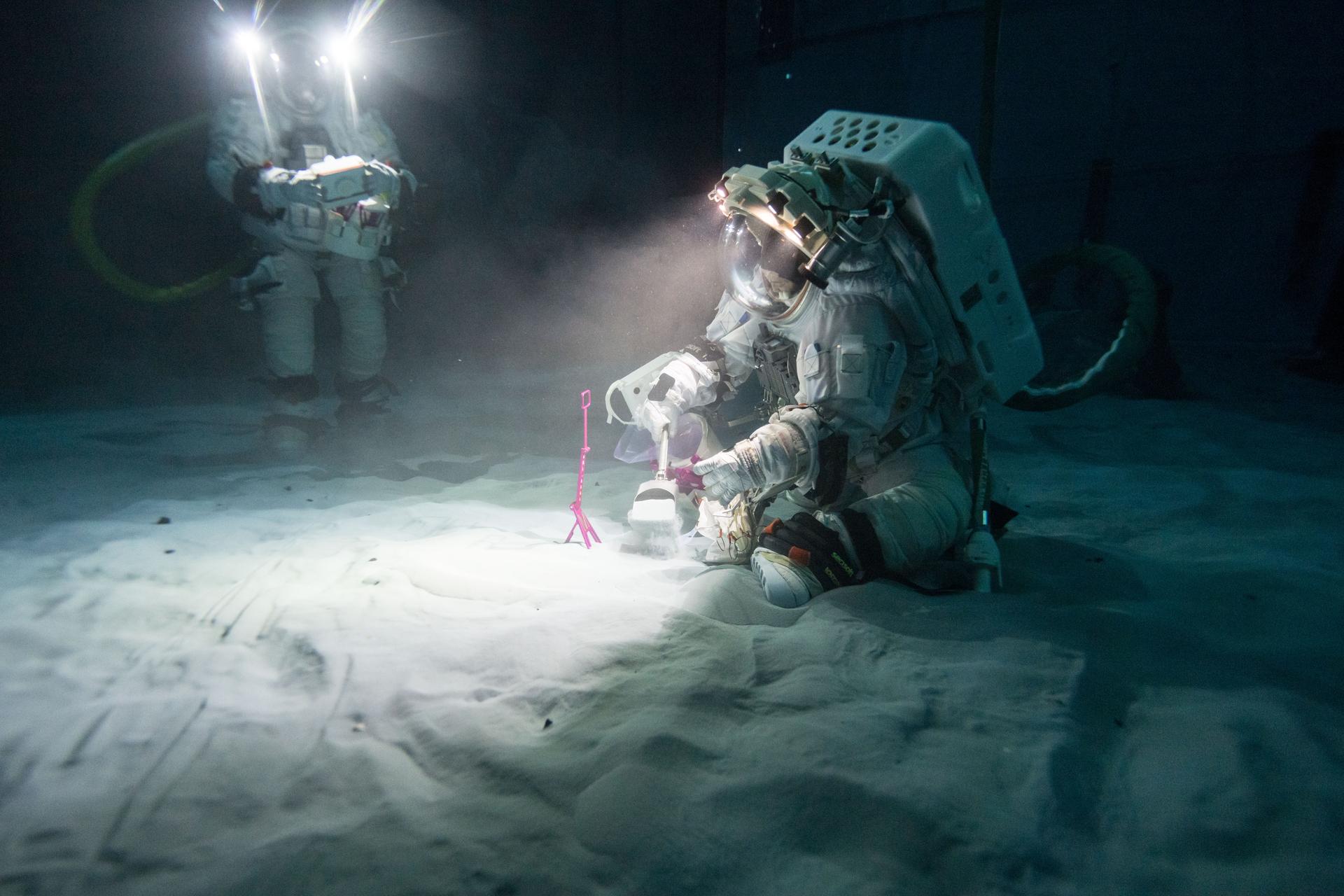
Exploration geologists and Artemis science officers Trevor Graff, left, and Angela Garcia carry out a lunar training development run at NASA’s Neutral Buoyancy Laboratory (NBL) in Houston. The NBL is a 40-foot deep pool at NASA’s Johnson Space Center where astronauts train for spacewalks in a neutrally buoyant environment. During the session, Garcia and Graff conducted tests of Artemis geology tools and deployed a mock lunar payload under low-angle lighting conditions similar to what astronauts will encounter at the Moon’s south pole. A section of the NBL, which contains full-scale mockups of the International Space Station modules, has been transformed into a lunar training area with soil and rocks that mimic the Moon’s landscape. This testing run marked the first time in the Artemis program that two geologists were suited up simultaneously for lunar geology training in the NBL. The team is using insights from these tests to build the training program for astronauts assigned to future landed missions on the Moon. Credit: NASA
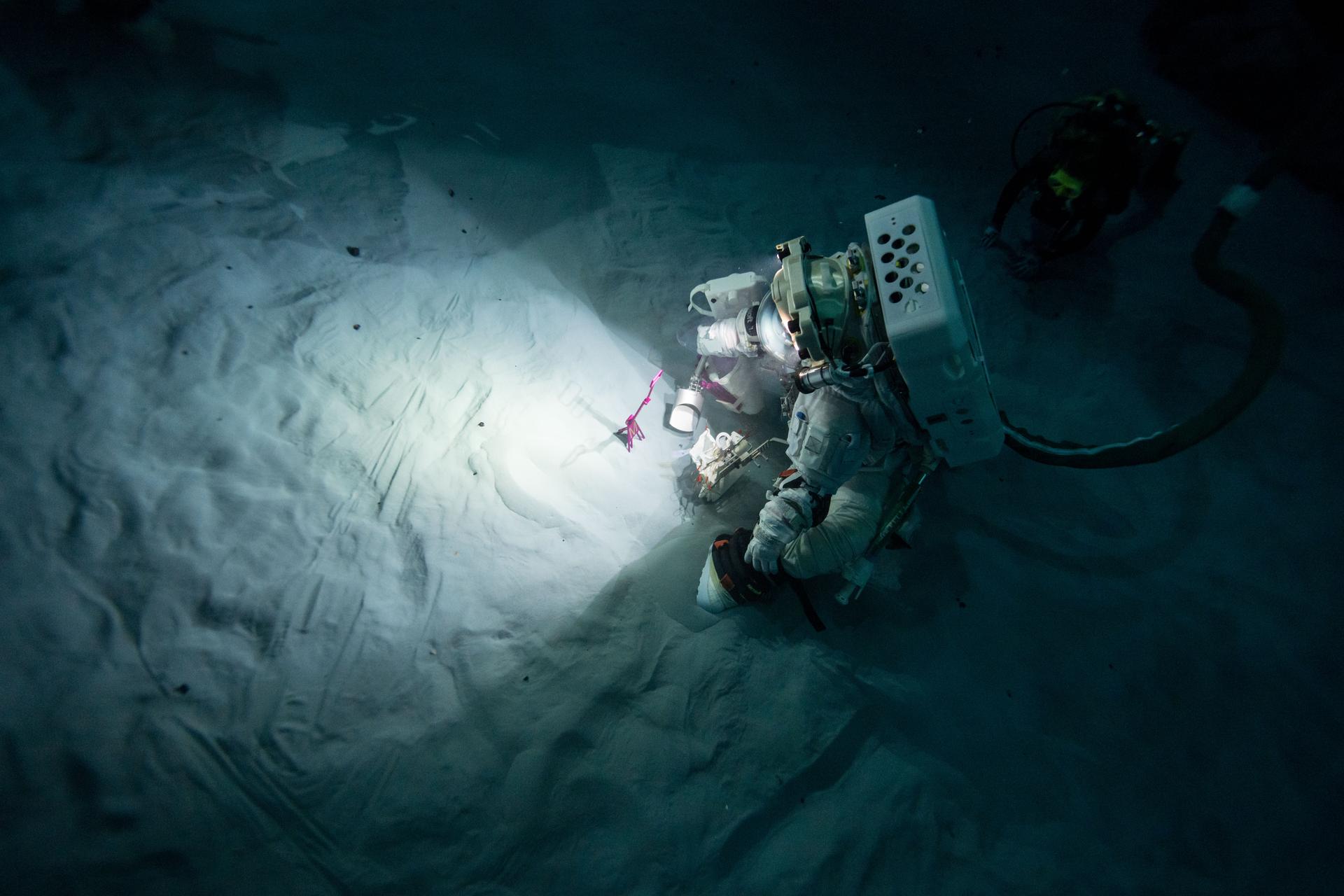
Exploration geologist and Artemis science officer Angela Garcia carries out a lunar training development run at NASA’s Neutral Buoyancy Laboratory (NBL) in Houston. The NBL is a 40-foot deep pool at NASA’s Johnson Space Center where astronauts train for spacewalks in a neutrally buoyant environment. During the session, Garcia and fellow exploration geologist and Artemis science officer Trevor Graff conducted tests of Artemis geology tools and deployed a mock lunar payload under low-angle lighting conditions similar to what astronauts will encounter at the Moon’s south pole. A section of the NBL, which contains full-scale mockups of the International Space Station modules, has been transformed into a lunar training area with soil and rocks that mimic the Moon’s landscape. This testing run marked the first time in the Artemis program that two geologists were suited up simultaneously for lunar geology training in the NBL. The team is using insights from these tests to build the training program for astronauts assigned to future landed missions on the Moon. Credit: NASA
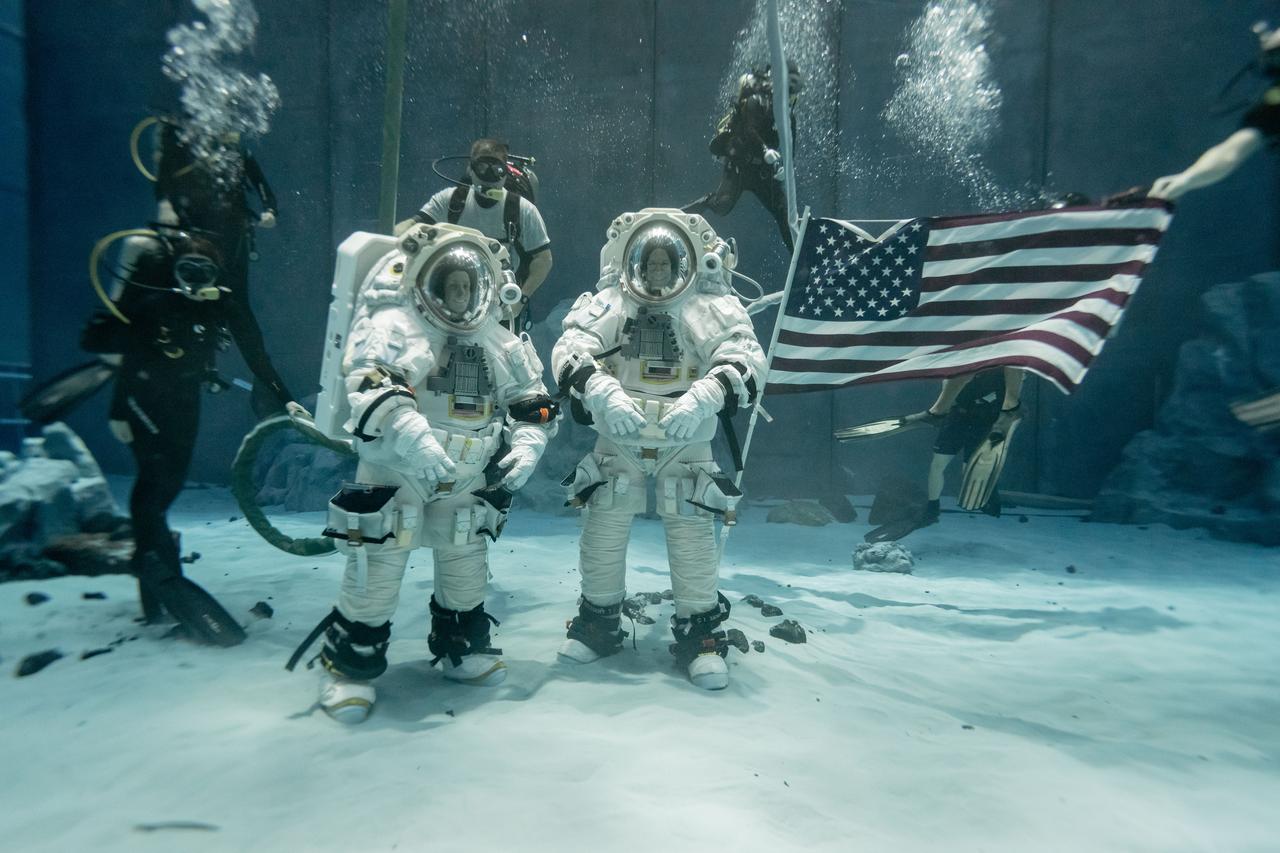
NASA astronauts Loral O’Hara (left) and Stan Love (right) pose for a photo during the first dual spacesuit run at NASA’s Neutral Buoyancy Laboratory while wearing Axiom Space’s lunar spacesuits. NASA and Axiom Space teams held the first dual spacesuit run at the Neutral Buoyancy Laboratory in Houston on September 24, 2025 with NASA Astronauts Stan Love and Loral O’Hara wearing Axiom Space’s lunar spacesuit, called the Axiom Extravehicular Mobility Unit (AxEMU). This was the final integration test in the pool, proving both the spacesuit and facility are prepped and ready for Artemis training.
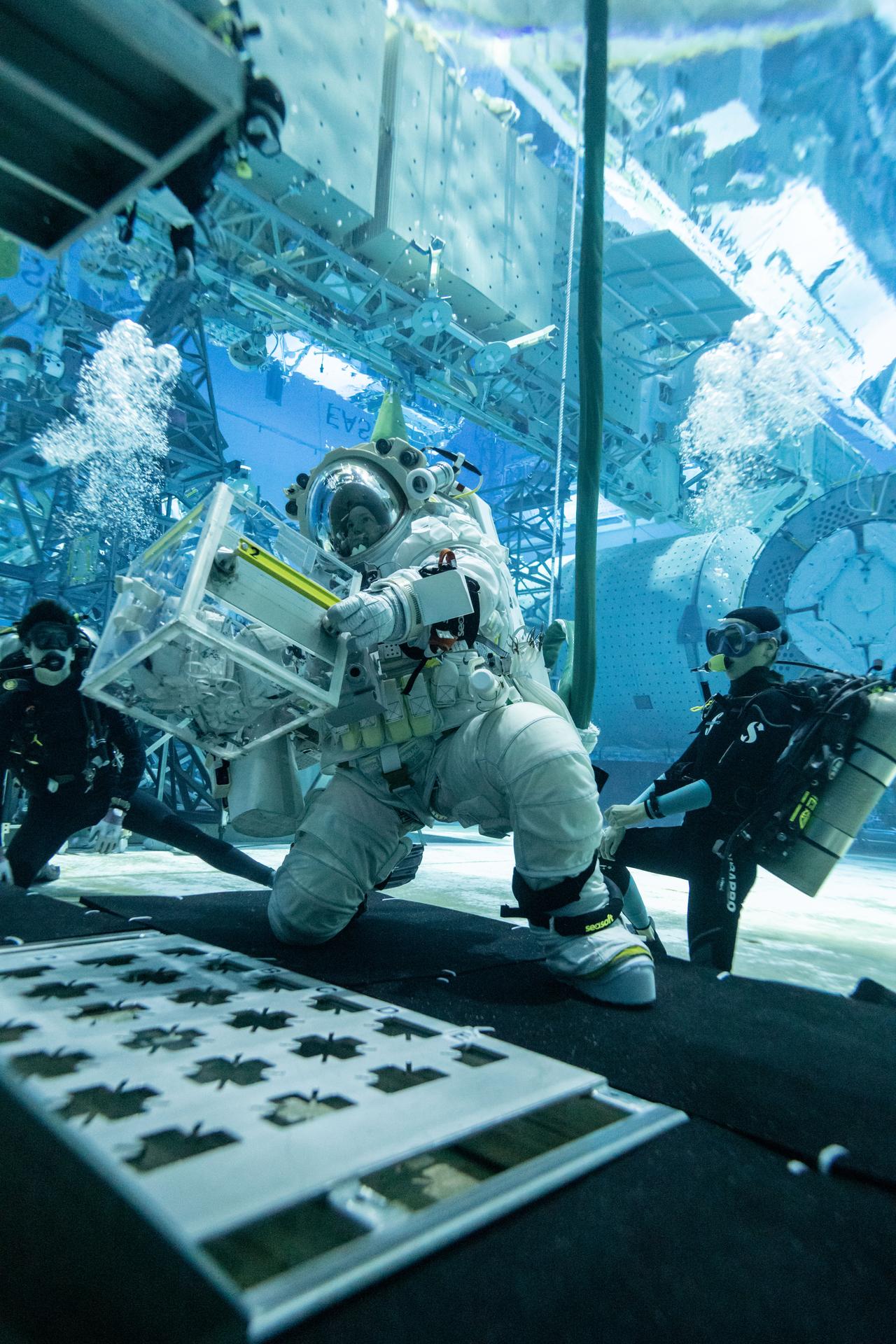
Canadian Space Agency astronaut Jenni Gibbons practices simulated lunar tasks under water while wearing Axiom Space’s lunar spacesuit at NASA’s Neutral Buoyancy Laboratory in Houston. During a recent test series, NASA engineers and crewmembers wore the lunar spacesuit under water and conducted numerous tasks during simulated lunar operations to test its mobility and functionality and ensure the spacesuit is prepped and ready for Artemis training.
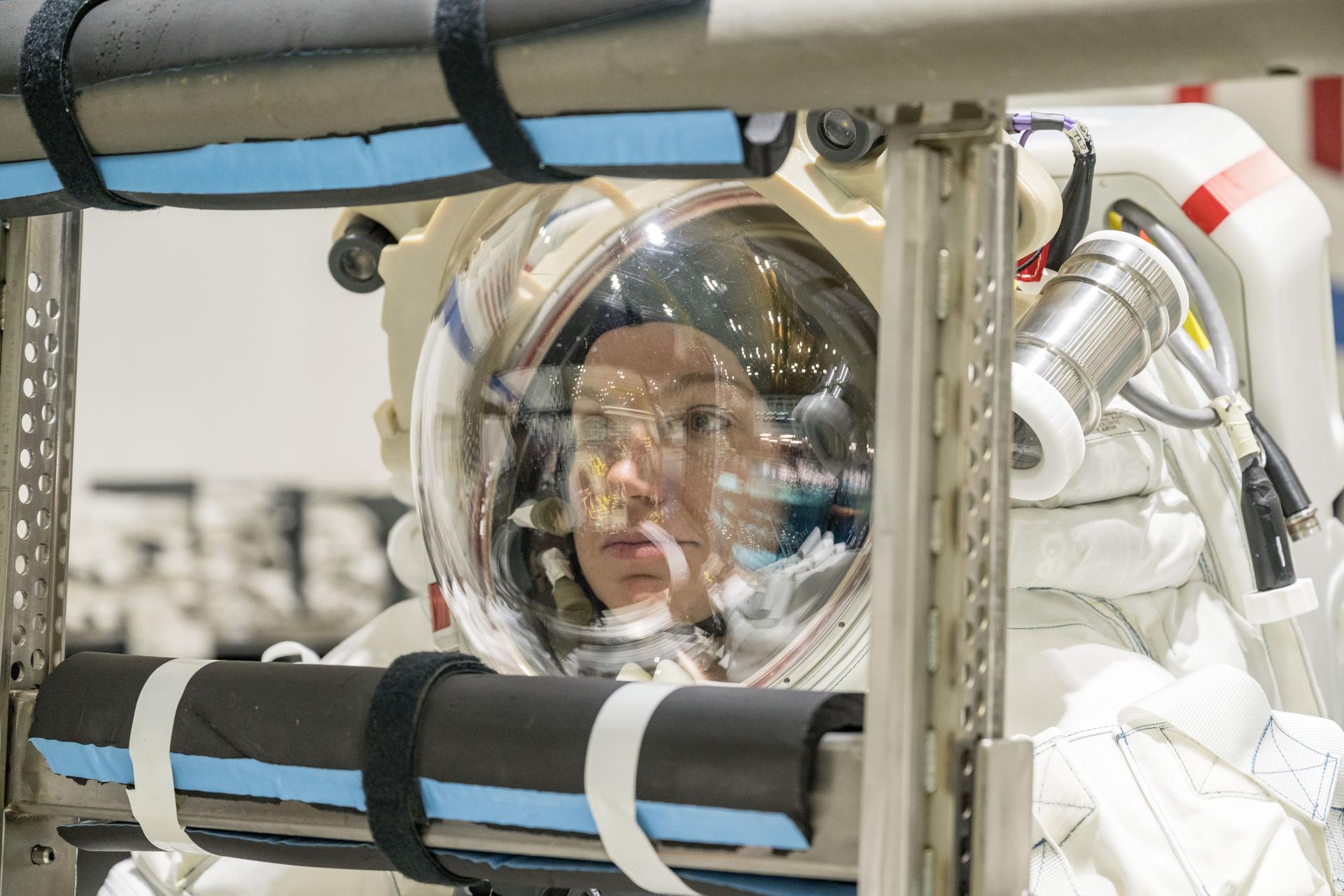
Canadian Space Agency astronaut Jenni Gibbons gets suited up in Axiom Space’s lunar spacesuit at NASA’s Neutral Buoyancy Laboratory in Houston. During a recent test series, NASA engineers and crewmembers wore the lunar spacesuit under water and conducted numerous tasks during simulated lunar operations to test its mobility and functionality and ensure the spacesuit is prepped and ready for Artemis training.
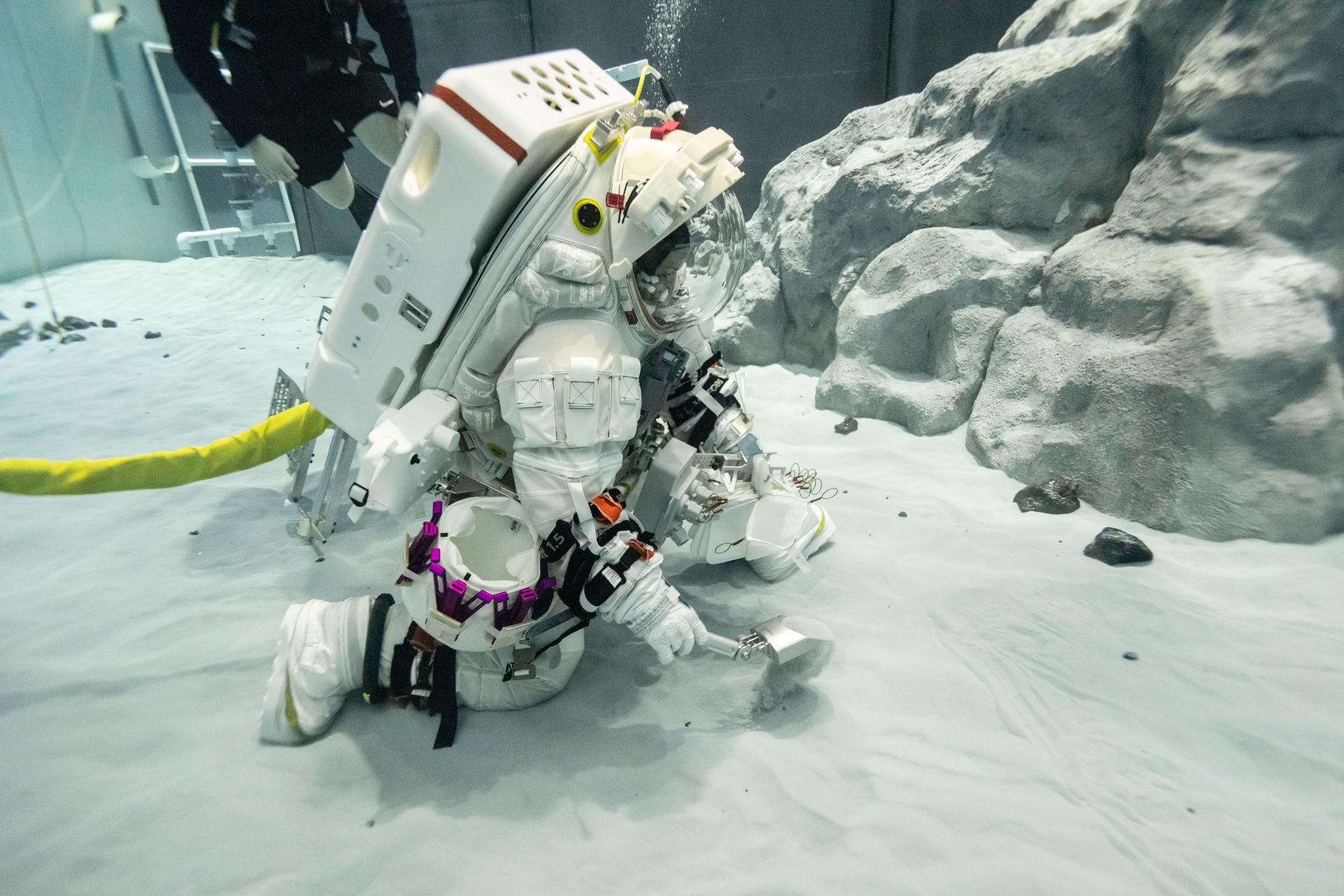
Canadian Space Agency astronaut Jenni Gibbons practices simulated lunar tasks under water while wearing Axiom Space’s lunar spacesuit at NASA’s Neutral Buoyancy Laboratory in Houston. During a recent test series, NASA engineers and crewmembers wore the lunar spacesuit under water and conducted numerous tasks during simulated lunar operations to test its mobility and functionality and ensure the spacesuit is prepped and ready for Artemis training.
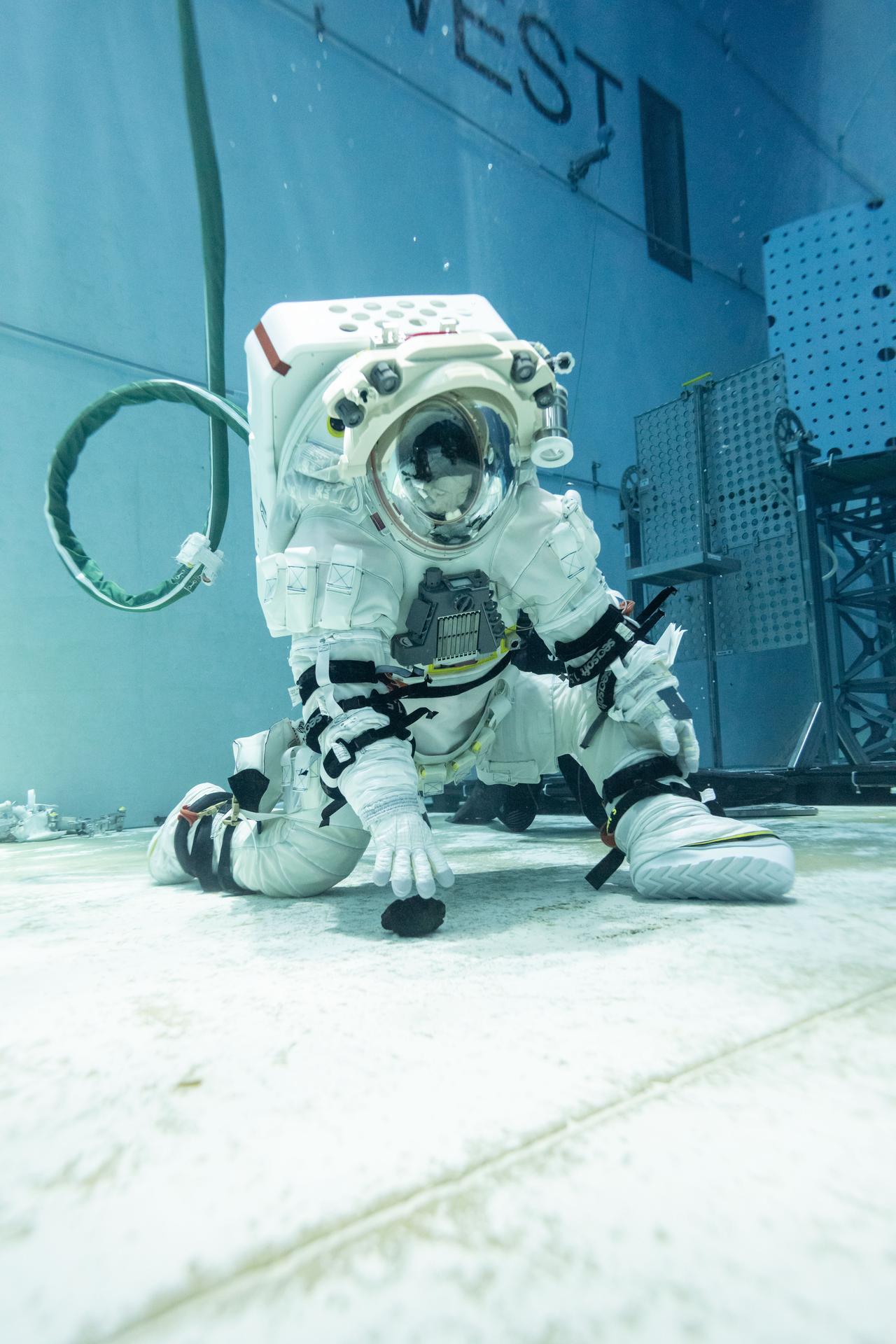
Canadian Space Agency astronaut Jenni Gibbons practices simulated lunar tasks under water while wearing Axiom Space’s lunar spacesuit at NASA’s Neutral Buoyancy Laboratory in Houston. During a recent test series, NASA engineers and crewmembers wore the lunar spacesuit under water and conducted numerous tasks during simulated lunar operations to test its mobility and functionality and ensure the spacesuit is prepped and ready for Artemis training.
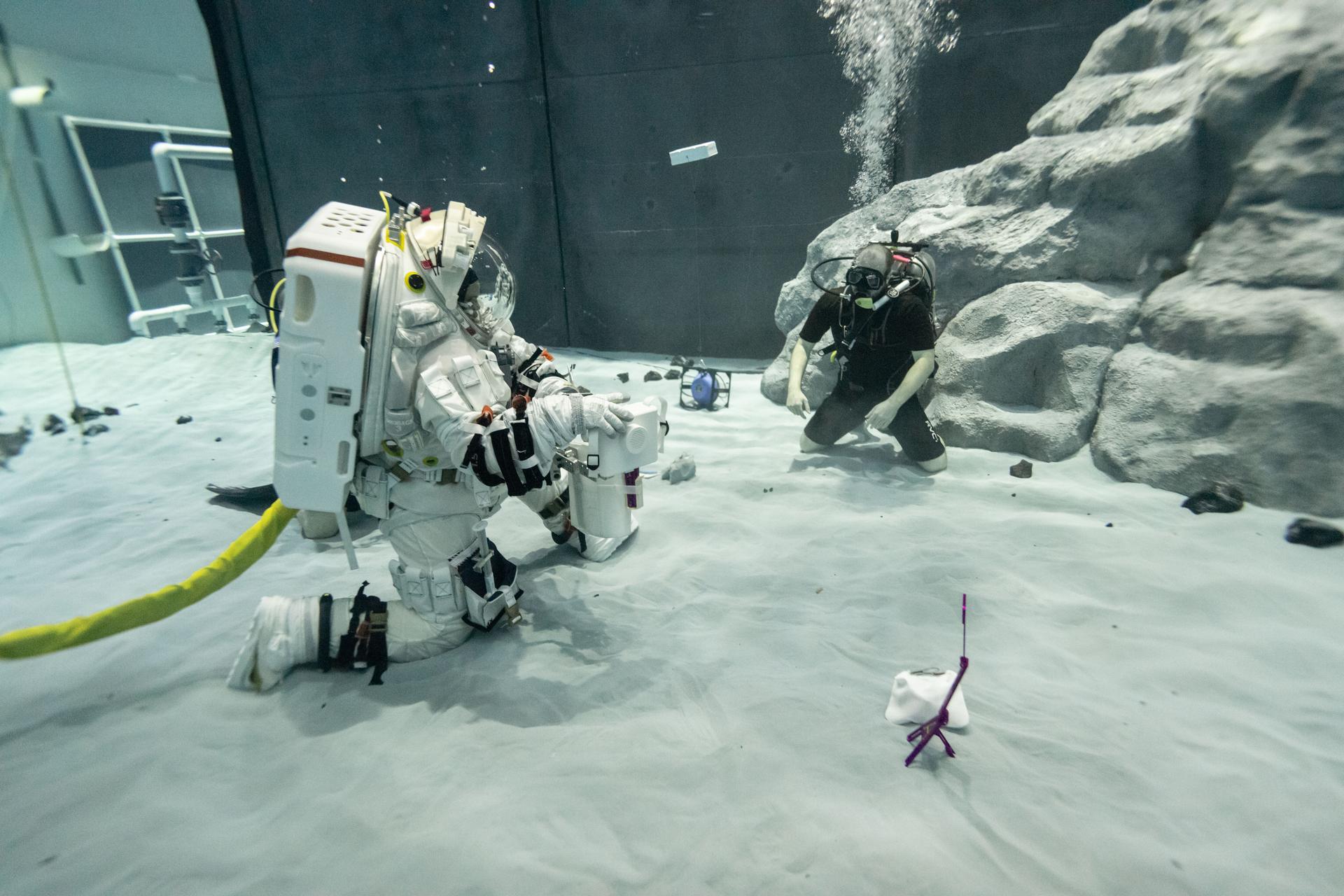
Canadian Space Agency astronaut Jenni Gibbons practices simulated lunar tasks under water while wearing Axiom Space’s lunar spacesuit at NASA’s Neutral Buoyancy Laboratory in Houston. During a recent test series, NASA engineers and crewmembers wore the lunar spacesuit under water and conducted numerous tasks during simulated lunar operations to test its mobility and functionality and ensure the spacesuit is prepped and ready for Artemis training.
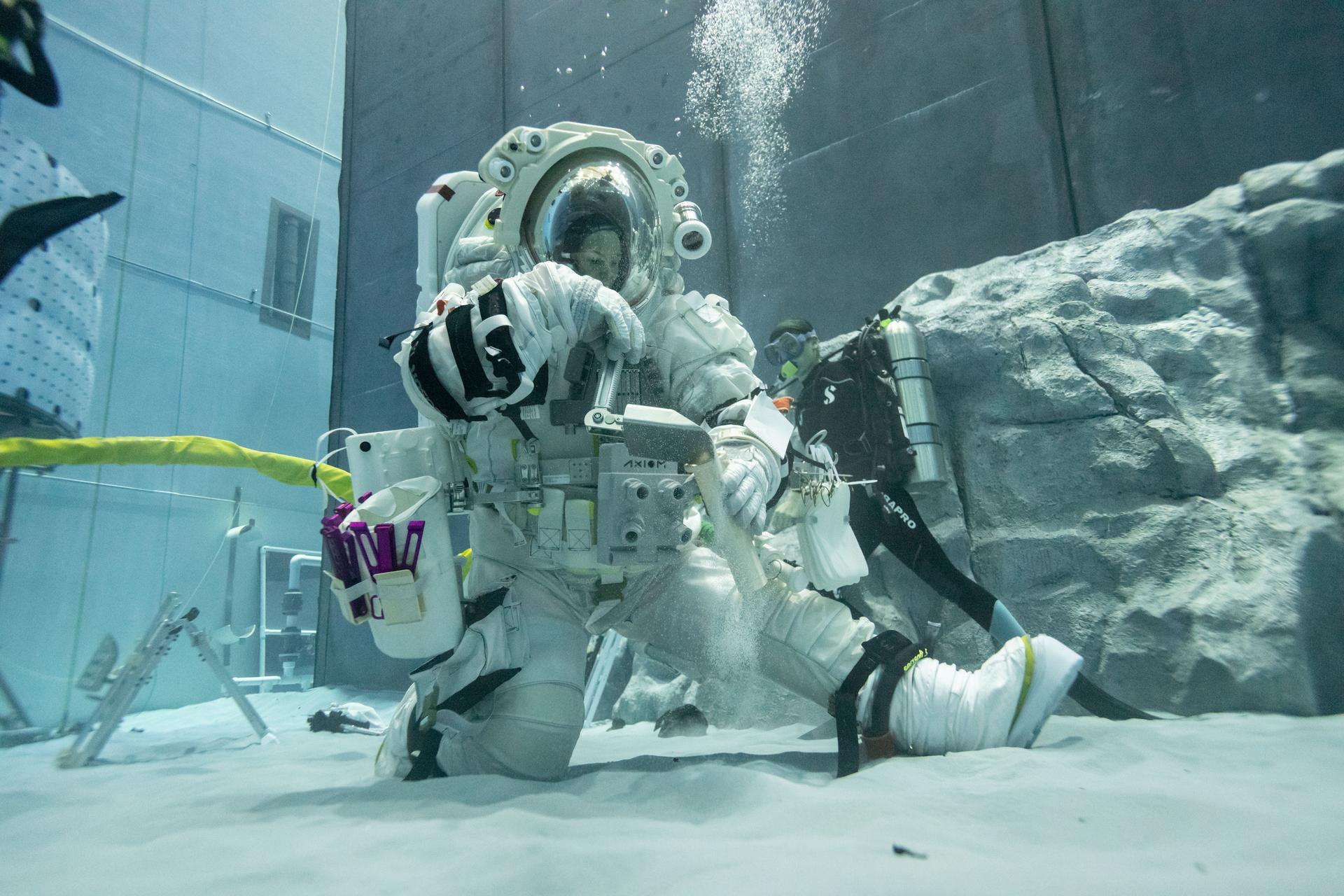
Canadian Space Agency astronaut Jenni Gibbons practices simulated lunar tasks under water while wearing Axiom Space’s lunar spacesuit at NASA’s Neutral Buoyancy Laboratory in Houston. During a recent test series, NASA engineers and crewmembers wore the lunar spacesuit under water and conducted numerous tasks during simulated lunar operations to test its mobility and functionality and ensure the spacesuit is prepped and ready for Artemis training.
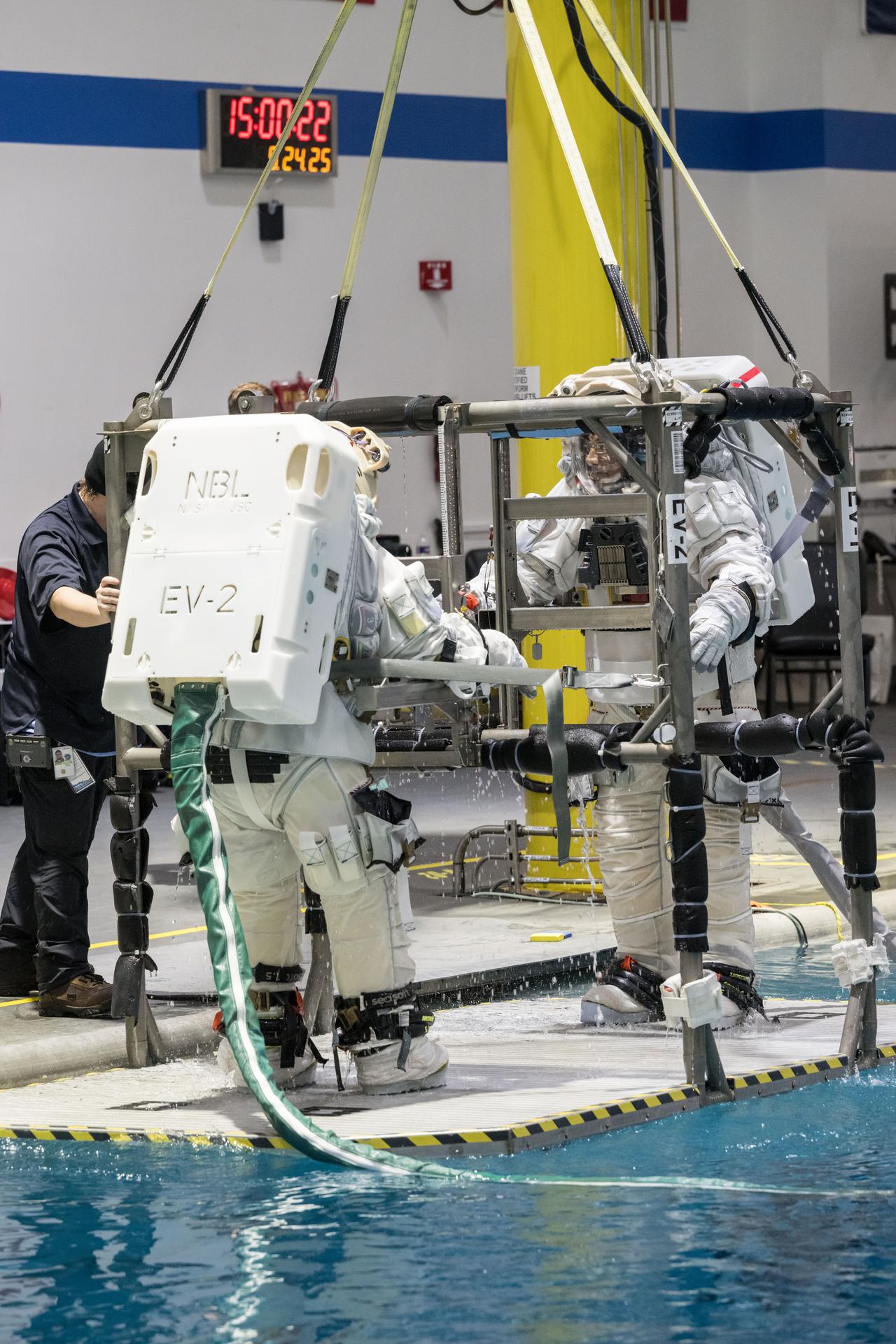
NASA and Axiom Space teams held the first dual spacesuit run at the Neutral Buoyancy Laboratory in Houston on September 24, 2025 with NASA Astronauts Stan Love and Loral O’Hara wearing Axiom Space’s lunar spacesuit, called the Axiom Extravehicular Mobility Unit (AxEMU). This was the final integration test in the pool, proving both the spacesuit and facility are prepped and ready for Artemis training.
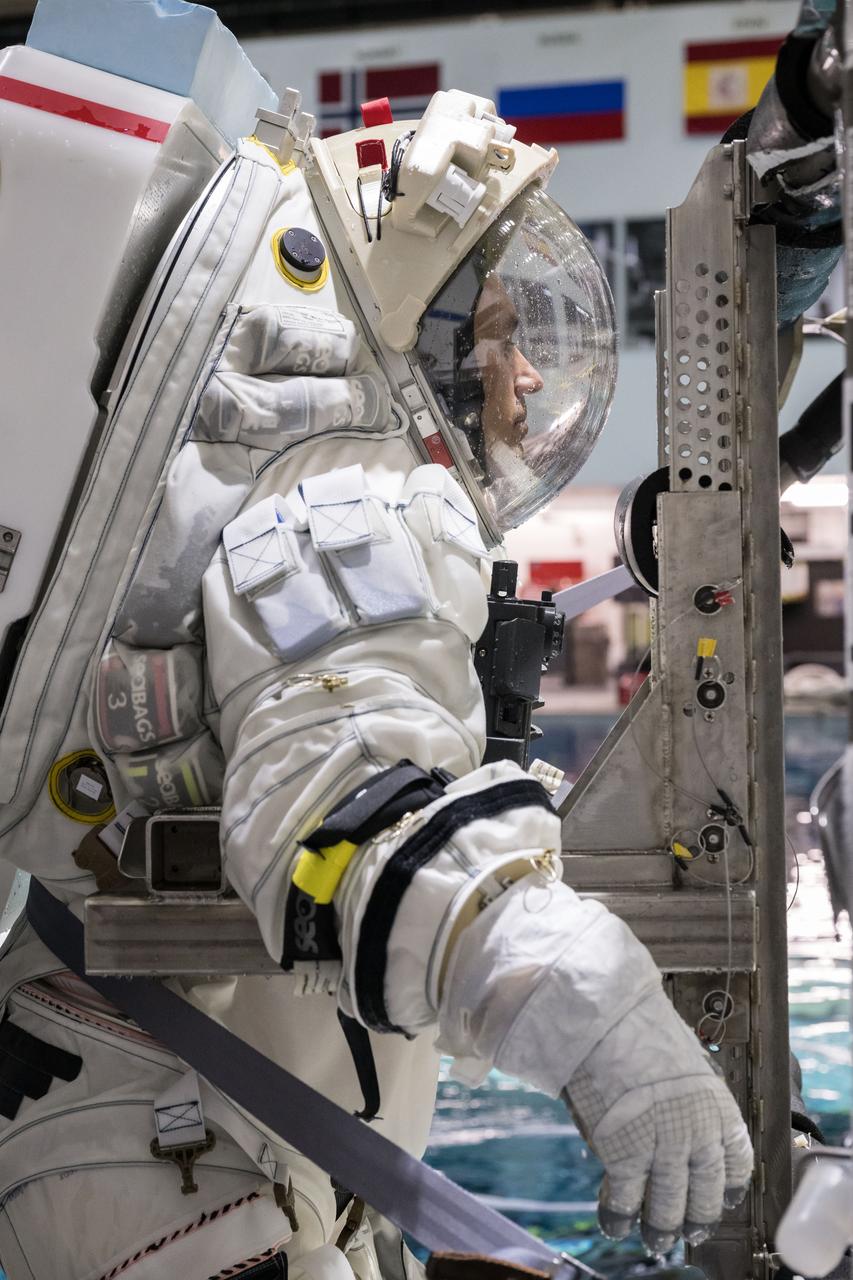
NASA spacesuit engineer Richard Rhodes suits up in Axiom Space's lunar spacesuit before going under water for testing at NASA's Neutral Buoyancy Laboratory. Image Credit: NASA/Robert Markowitz
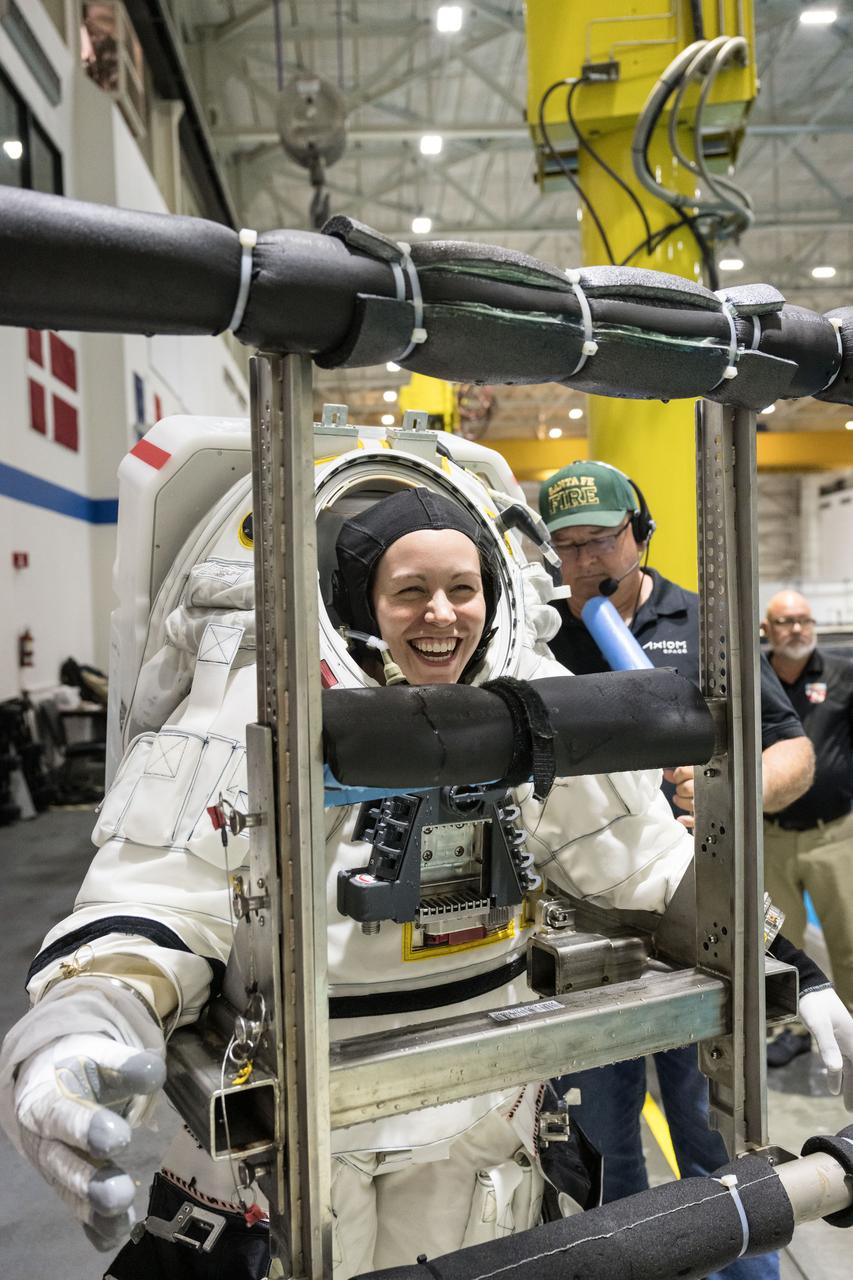
NASA spacesuit engineer Kristine Davis suits up in Axiom Space's lunar spacesuit before going under water for testing at NASA's Neutral Buoyancy Laboratory. Image Credit: NASA/James Blair
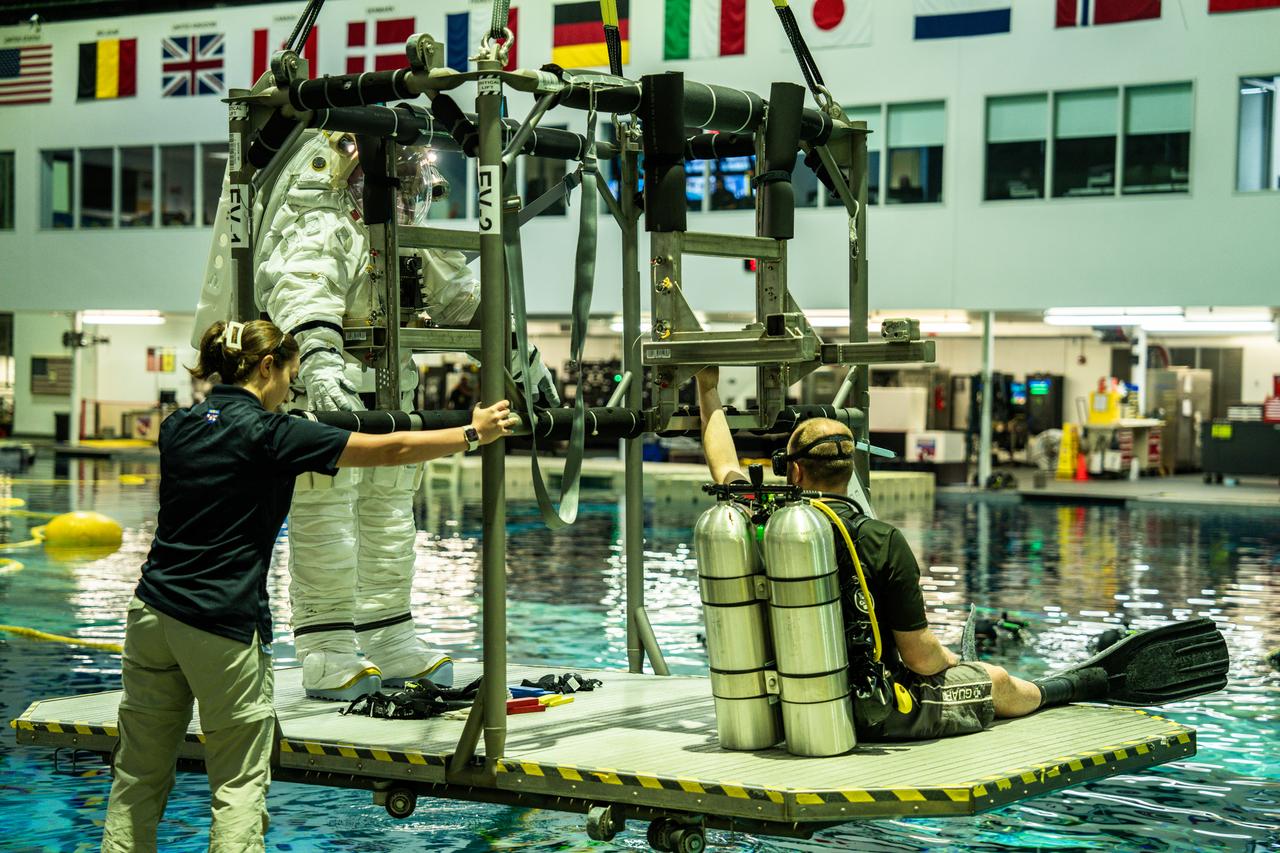
Axiom Space's AxEMU (Axiom Extravehicular Mobility Unit) spacesuit being tested at NASA Johnson's Neutral Buoyancy Laboratory. Image Credit: Axiom Space
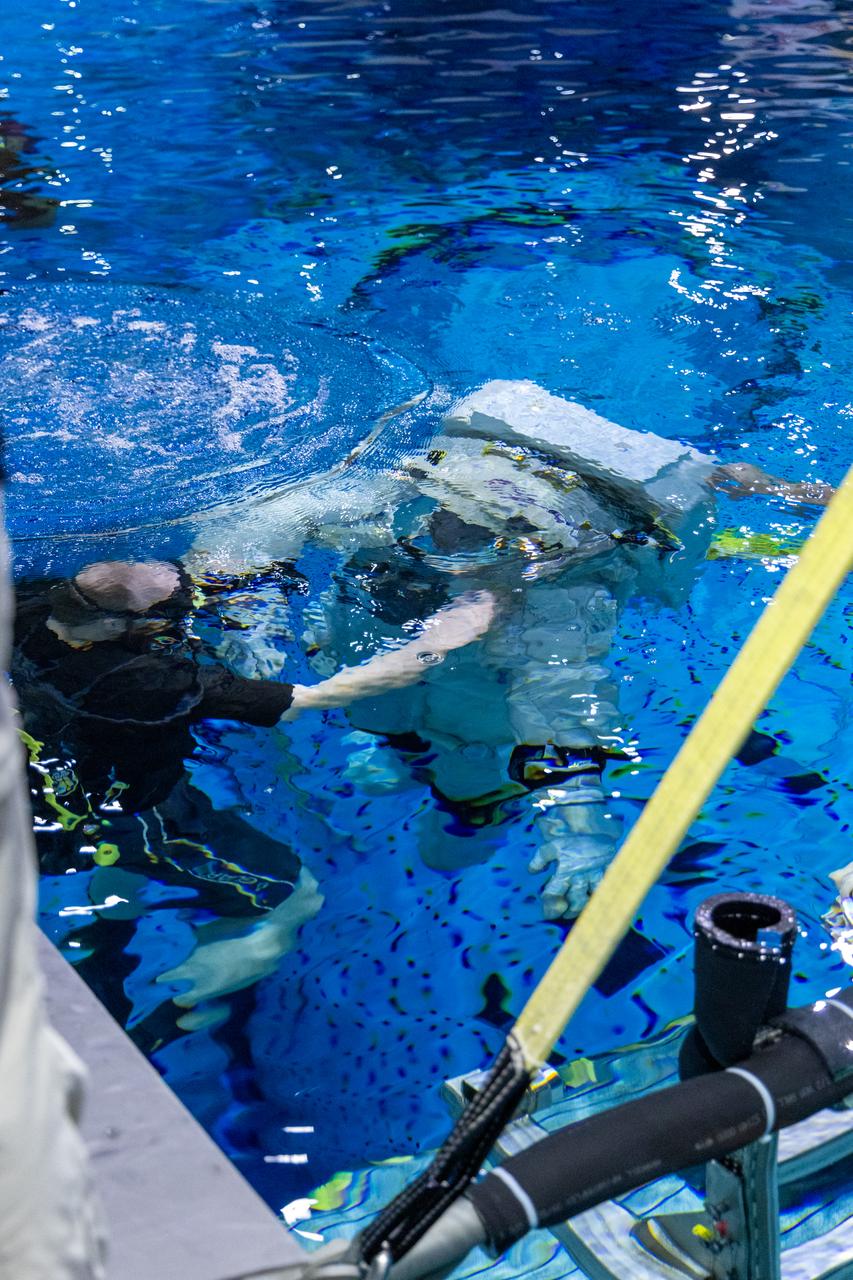
Axiom Space's AxEMU (Axiom Extravehicular Mobility Unit) spacesuit underwater during testing of its pressure garment system at NASA Johnson's Neutral Buoyancy Laboratory. Image Credit: Axiom Space
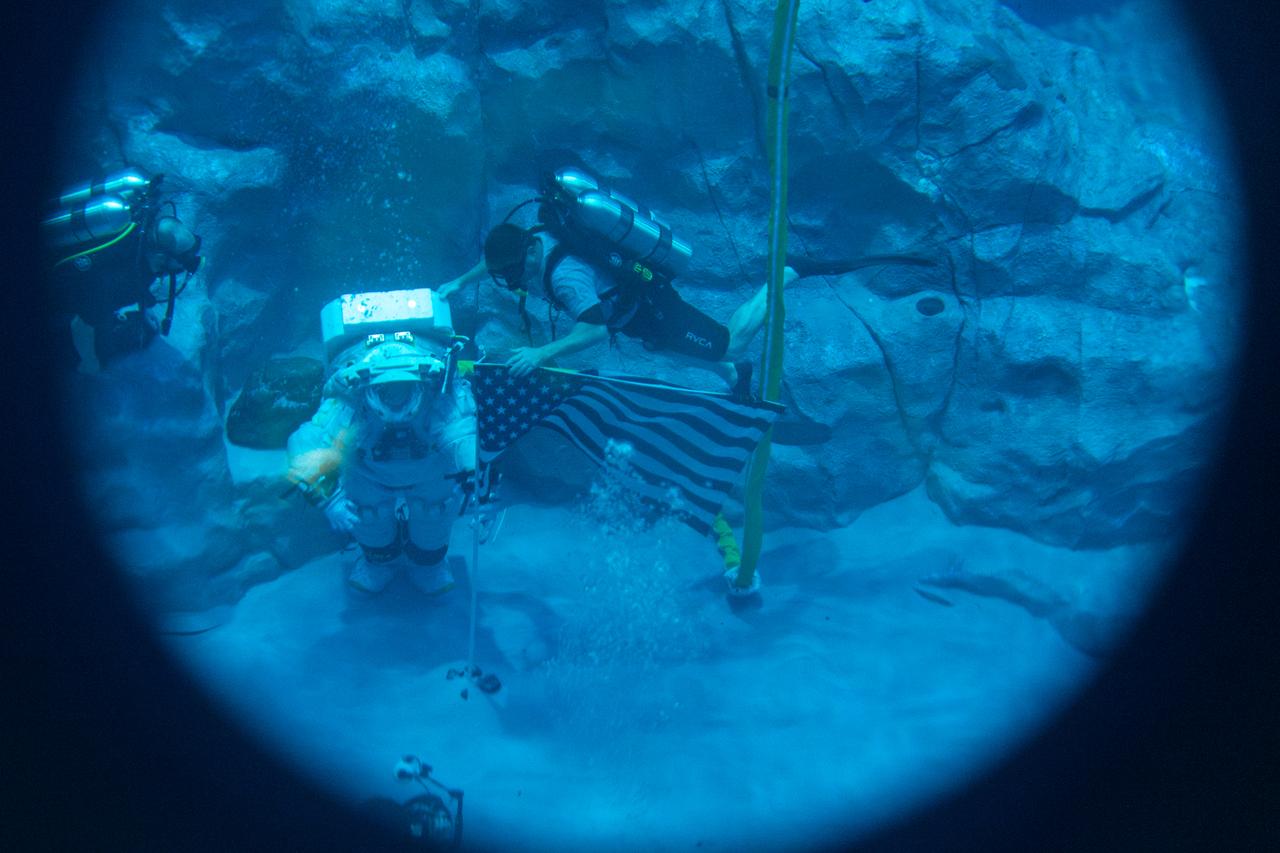
Axiom Space's AxEMU (Axiom Extravehicular Mobility Unit) spacesuit underwater during testing of its pressure garment system at NASA Johnson's Neutral Buoyancy Laboratory. Image Credit: Axiom Space
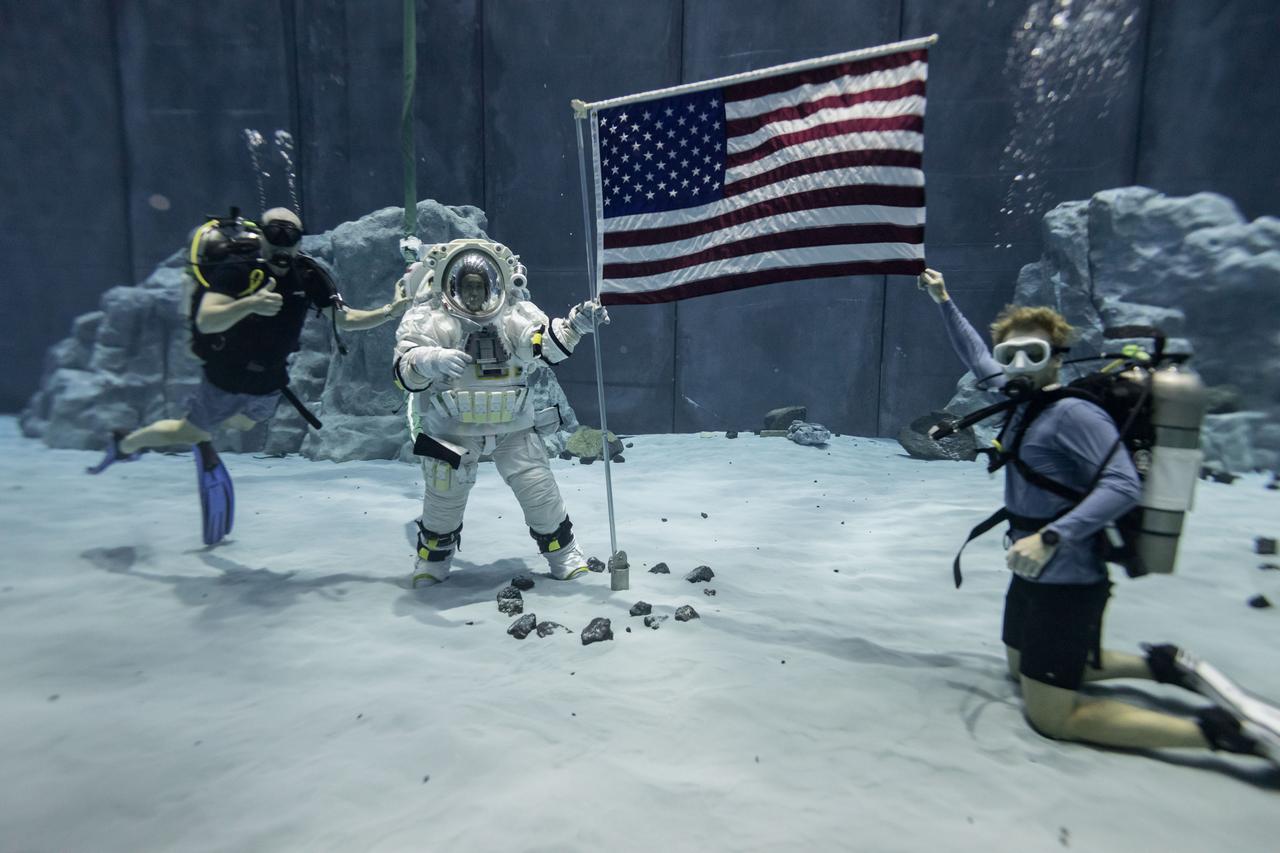
Axiom Space astronaut and Chief Technology Officer Koichi Wakata holds up an American flag in NASA's Neutral Buoyancy Laboratory during the first crewed underwater test of Axiom Space's lunar spacesuit. Image Credit: NASA
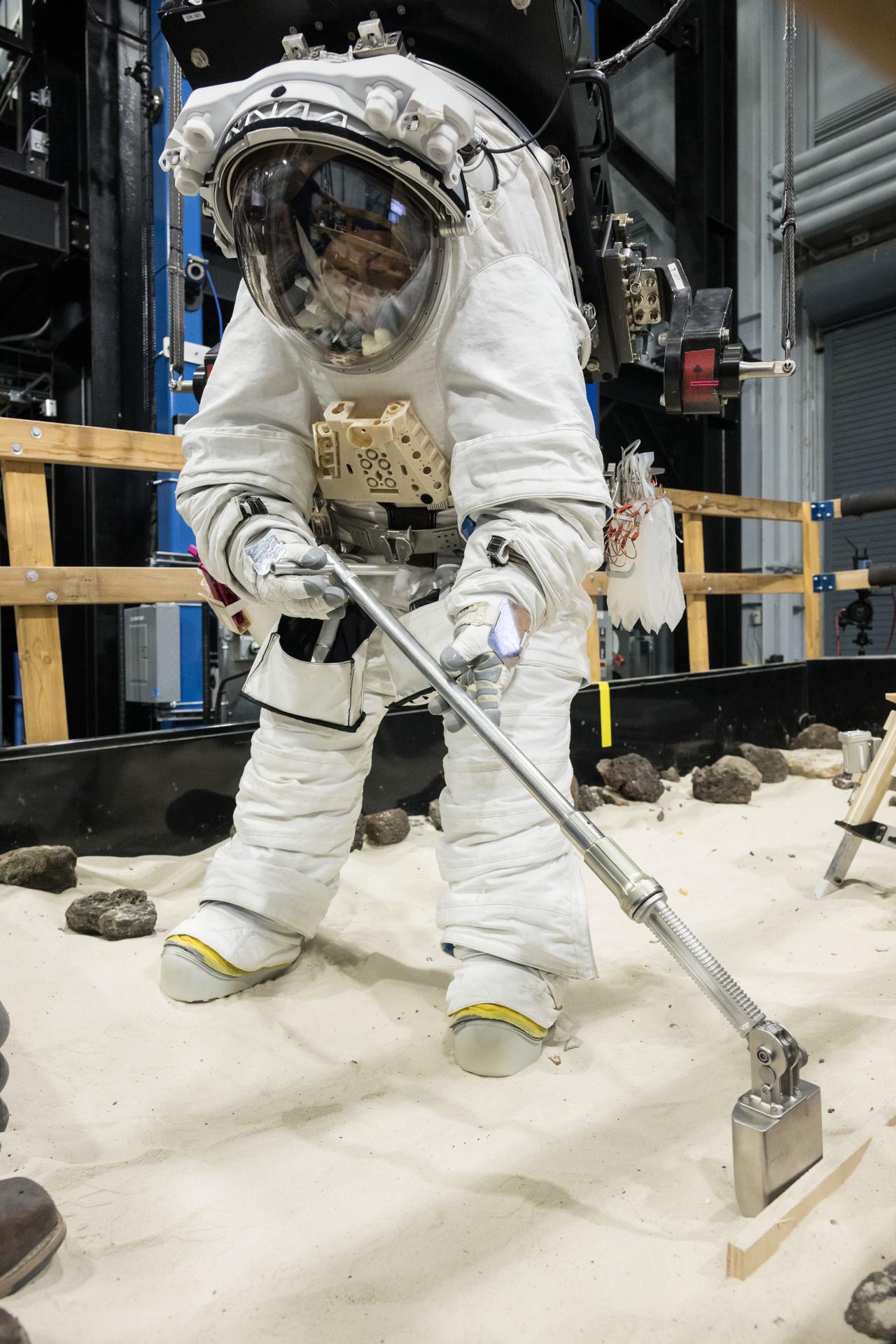
A NASA crew member practices using lunar tools to collect geology samples at NASA’s Johnson Space Center during an elevated suit pressure test where teams evaluate how well crew perform tasks in different suit pressure levels while wearing the Artemis III lunar spacesuit developed by Axiom Space called the AxEMU (Axiom Extravehicular Mobility Unit).
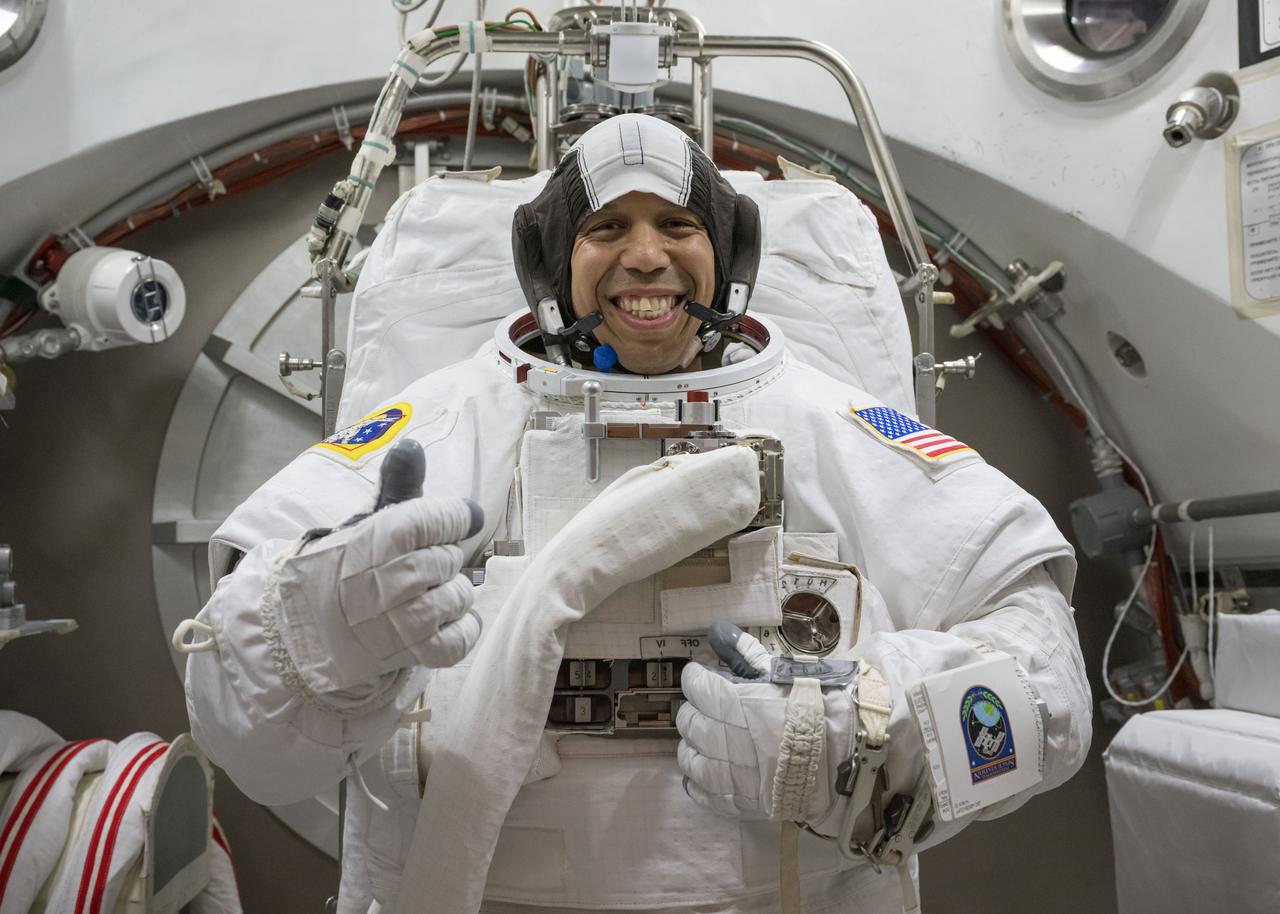
jsc2025e044433 (May 6, 2025) --- NASA astronaut Chris Williams poses for a photo in an Extravehicular Mobility Unit spacesuit during vacuum chambers testing at NASA’s Johnson Space Center in Houston, Texas.
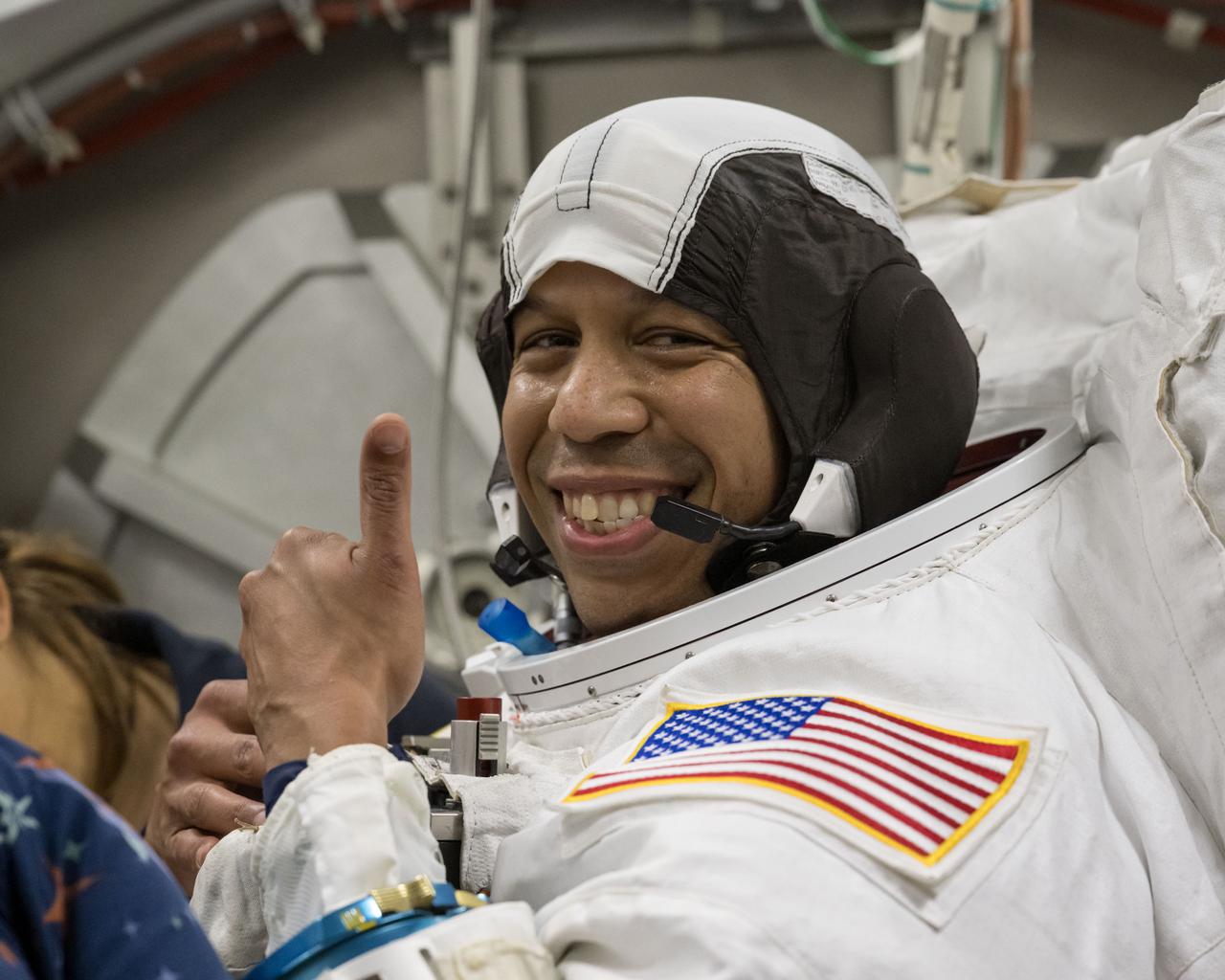
jsc2025e044425 (May 6, 2025) --- NASA astronaut Chris Williams poses for a photo in an Extravehicular Mobility Unit spacesuit during vacuum chambers testing at NASA’s Johnson Space Center in Houston, Texas.
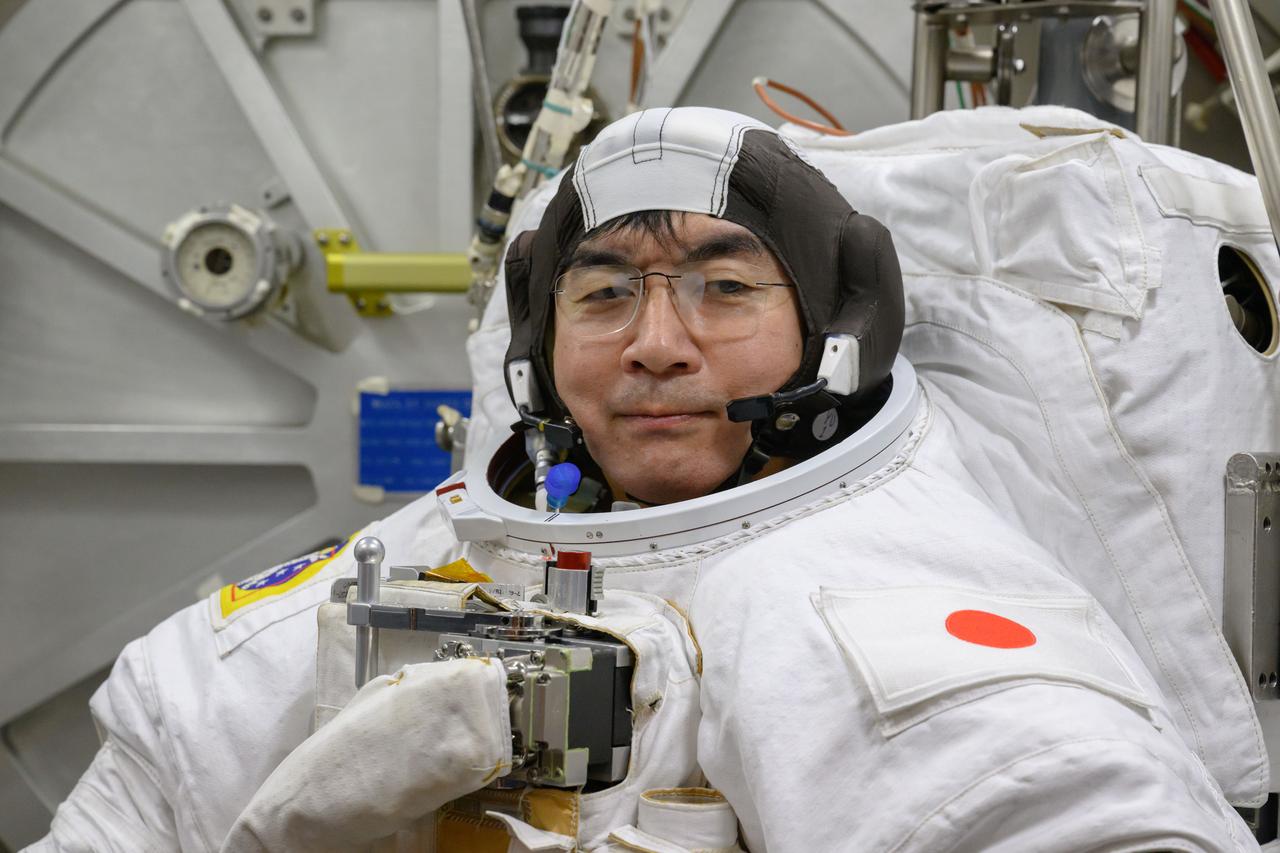
jsc2024e076519 (Nov. 19, 2024) --- JAXA astronaut Kimiya Yui poses for a photo in his spacesuit during space station airlock testing at NASA’s Johnson Space Center in Houston, Texas. Credit: NASA/James Blair
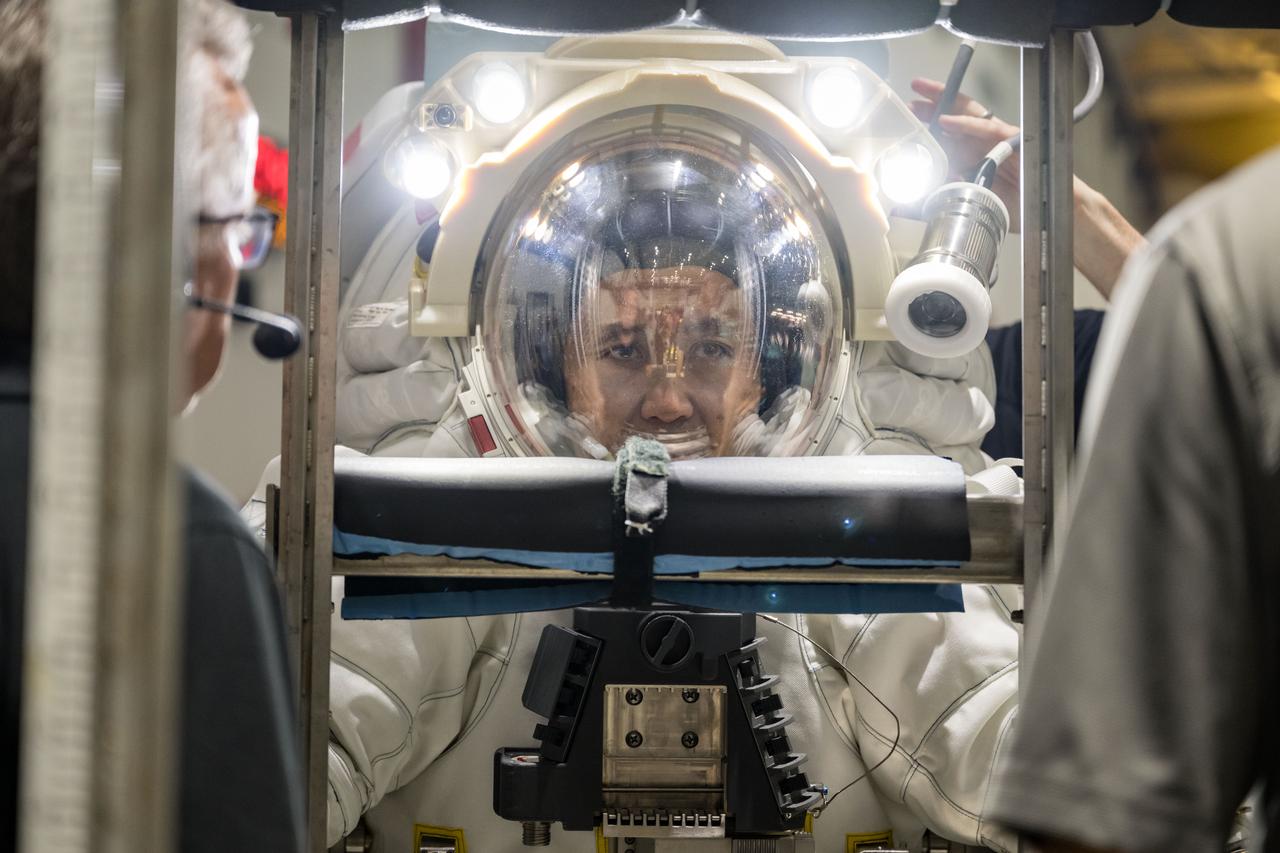
PHOTO DATE: May 29, 2025.LOCATION: NBL - Pool Topside SUBJECT: EVA & Human Surface Mobility Program's Axiom Space xEVA System - NBL Integration Testing - Lunar Integration Run 1 - Subject: Koichi Wakata 29 May 2025. PHOTOGRAPHER: Josh Valcarcel
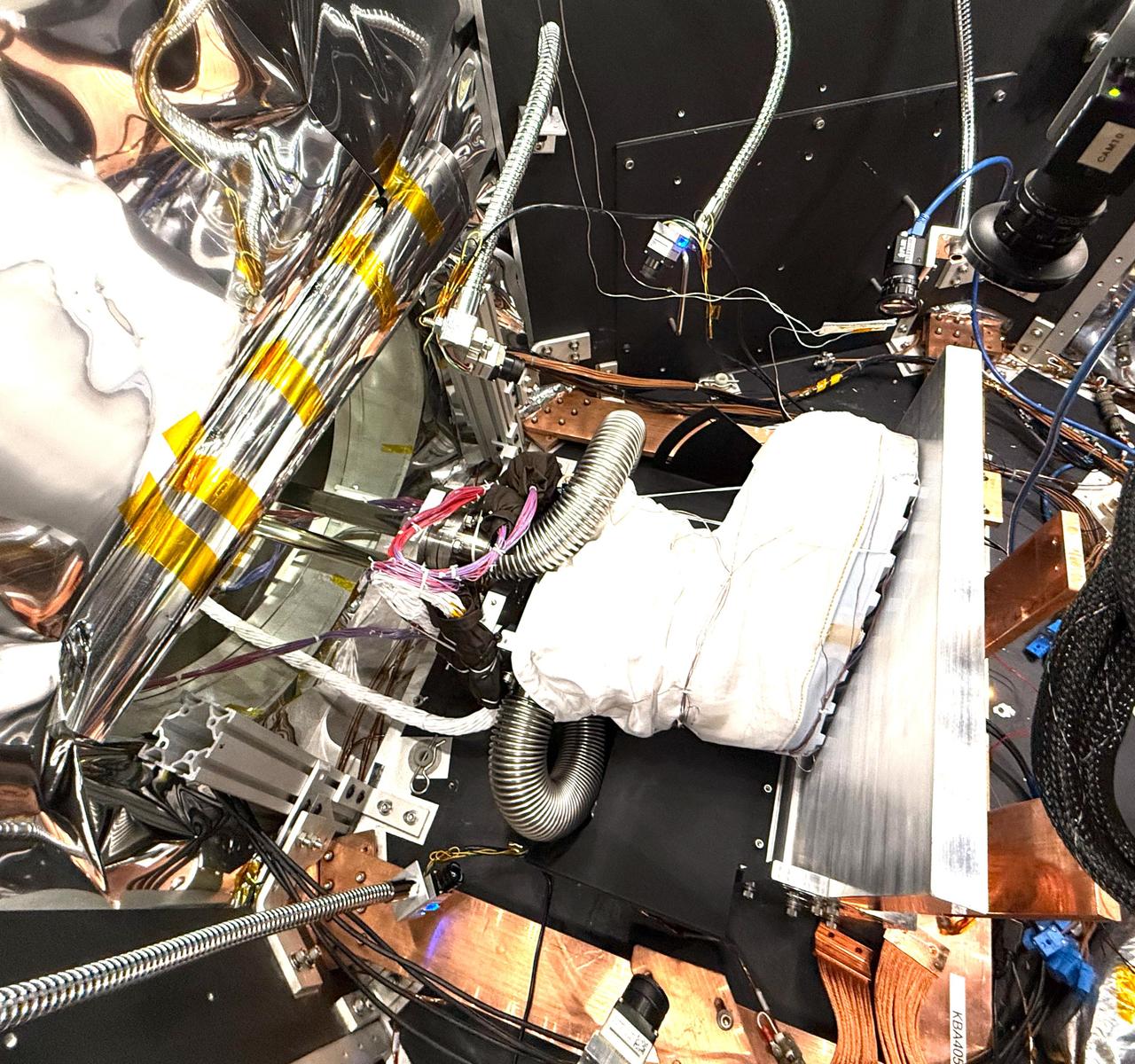
A boot that's part of a NASA lunar surface spacesuit prototype is readied for testing inside a thermal vacuum chamber called CITADEL at the agency's Jet Propulsion Laboratory in Southern California on Nov. 8, 2024. The thick aluminum plate at right stands in for the frigid surface of the lunar South Pole, where Artemis III astronauts will confront conditions more extreme than any previously experienced by humans. Built to prepare potential future robotic spacecraft for the frosty, low-pressure conditions on ocean worlds like Jupiter's frozen moon Europa, CITADEL (Cryogenic Ice Testing, Acquisition Development, and Excavation Laboratory) has also proven key to evaluating how astronaut gloves and boots hold up in extraordinary cold. It can reach temperatures as low as low as minus 370 degrees Fahrenheit (minus 223 degrees Celsius), approximating conditions in permanently shadowed regions that astronauts will explore. Figure A, showing the outer boot sole, was taken from inside CITADEL on Nov. 13, 2024. The boot is positioned in a load lock, one of four small drawer-like chambers through which test materials are inserted into the larger chamber. Initiated by the Extravehicular Activity and Human Surface Mobility Program at NASA's Johnson Space Center, the boot testing took place from October 2024 to January 2025. The boot is part of a NASA spacesuit called the Exploration Extravehicular Mobility Unit, or xEMU. Results haven't yet been fully analyzed. In addition to spotting vulnerabilities with existing suits, the experiments are intended to help NASA develop this unique test capability and prepare criteria for standardized, repeatable, and inexpensive test methods for the next-generation lunar suit being built by Axiom Space. https://photojournal.jpl.nasa.gov/catalog/PIA26592

jsc2021e022515 (June 11, 2021) --- NASA’s Exploration Extravehicular Mobility Unit (xEMU) spacesuit undergoes antenna testing in NASA Johnson Space Center’s anechoic chamber to inspect multi-layer insulation keep-out zones for the Wi-Fi and ultra-high-frequency antennas that are part of the spacesuit’s communication system. The xEMU test article is named xGUS, the successor to the Extravehicular Mobility Unit test article (also named GUS), which was named after NASA astronaut Gus Grissom and his iconic silver spacesuit. This image was taken from where the "horn," or source antenna, is located that sends out radio frequency signals to the spacesuit. The anechoic chamber walls are covered with a material that absorbs electromagnetic energy allowing the anechoic chamber to simulate a space environment. The antenna test facility is utilized to test antenna radiation distribution pattern performance for spaceflight applications in electromagnetic environments. Pictured in the photo is antenna test engineer Will Bond.
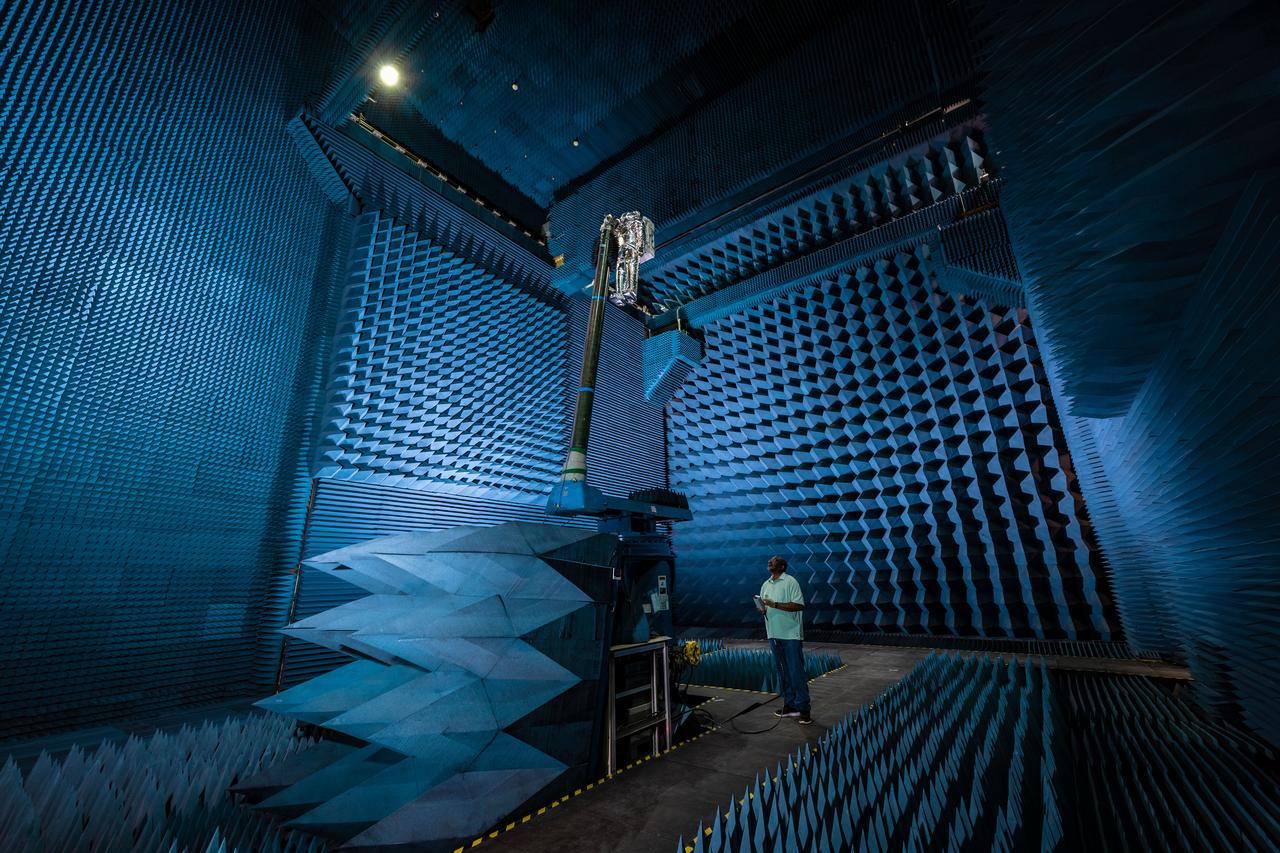
jsc2021e022488 (June 11, 2021) --- NASA’s Exploration Extravehicular Mobility Unit (xEMU) spacesuit undergoes antenna testing in NASA Johnson Space Center’s anechoic chamber to inspect multi-layer insulation keep-out zones for the Wi-Fi and ultra-high-frequency antennas that are part of the spacesuit’s communication system. The xEMU test article is named xGUS, the successor to the Extravehicular Mobility Unit test article (also named GUS), which was named after NASA astronaut Gus Grissom and his iconic silver spacesuit. This image was taken from where the "horn," or source antenna, is located that sends out radio frequency signals to the spacesuit. The anechoic chamber walls are covered with a material that absorbs electromagnetic energy allowing the anechoic chamber to simulate a space environment. The antenna test facility is utilized to test antenna radiation distribution pattern performance for spaceflight applications in electromagnetic environments. Pictured in the photo is antenna test engineer Will Bond.
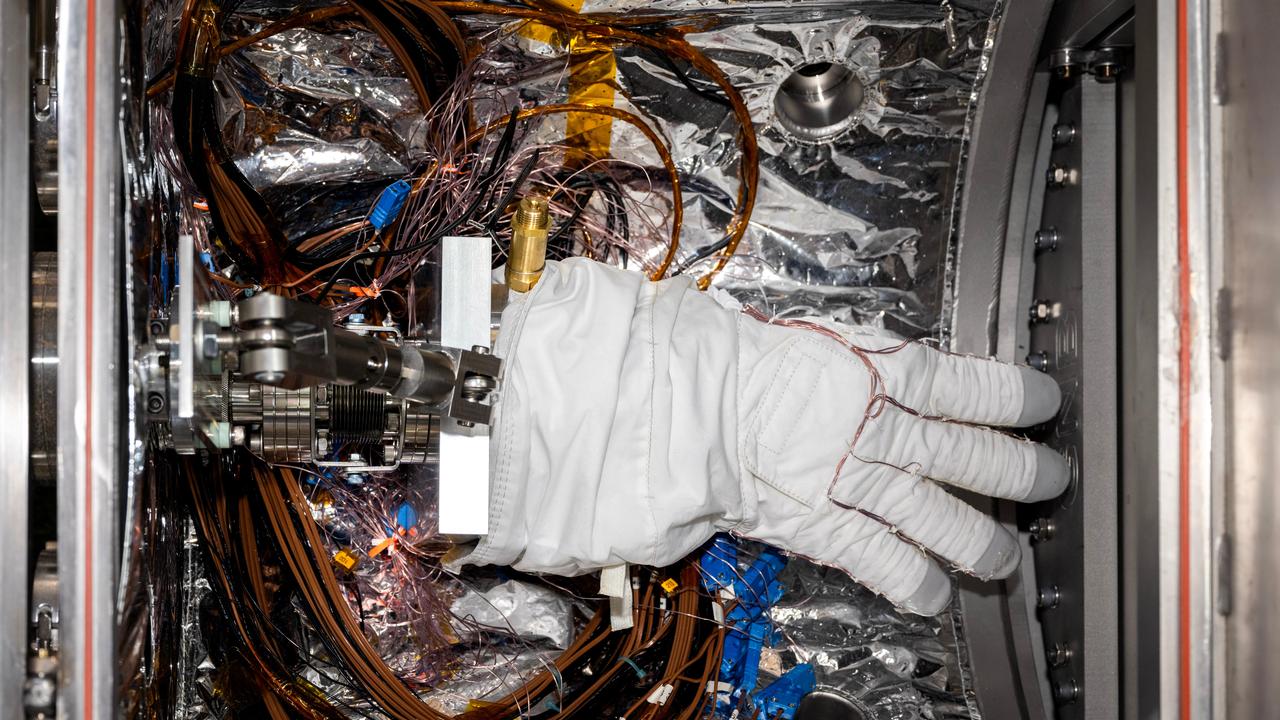
An astronaut glove designed for use during spacewalks on the International Space Station is prepared for thermal vacuum testing inside a chamber at NASA's Jet Propulsion Laboratory in Southern California on Nov. 1, 2023. The glove lies in a load lock, one of four small drawer-like chambers through which test materials are inserted into the larger main chamber of a facility called CITADEL (Cryogenic Ice Testing, Acquisition Development, and Excavation Laboratory). The glove was tested at vacuum and temperatures as low as minus 352 degrees Fahrenheit (minus 213 degrees Celsius) – temperatures as frigid as those Artemis III astronauts could experience on the Moon's South Pole. Built to prepare potential future robotic spacecraft for the frosty, low-pressure conditions on ocean worlds like Jupiter's frozen moon Europa, CITADEL has also proven key to evaluating how astronaut gloves and boots hold up in extraordinary cold. The NASA Engineering and Safety Center spearheaded a glove testing campaign in CITADEL from October 2023 to March 2024. Part of a spacesuit design called the Extravehicular Mobility Unit, the gloves tested in the chamber are the sixth version of a glove NASA began using in the 1980s. The testing in CITADEL showed that the legacy glove would not meet thermal requirements in the more challenging lunar South Pole environment. In addition to spotting vulnerabilities with existing suits, the CITADEL experiments will help NASA develop this unique test capability and prepare criteria for standardized, repeatable, and inexpensive test methods for the next-generation lunar suit being built by Axiom Space. https://photojournal.jpl.nasa.gov/catalog/PIA26430
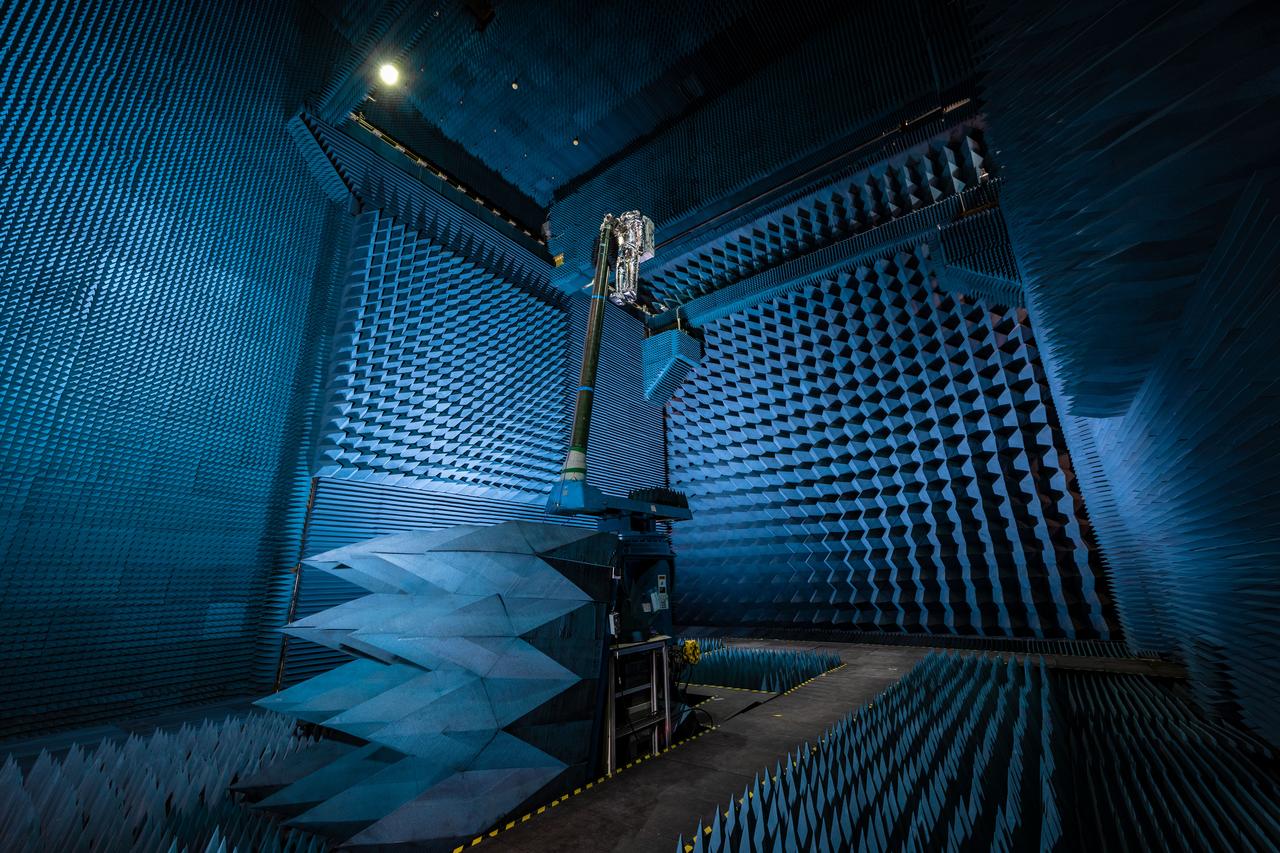
jsc2021e022487 (June 11, 2021) --- NASA’s Exploration Extravehicular Mobility Unit (xEMU) spacesuit undergoes antenna testing in NASA Johnson Space Center’s anechoic chamber to inspect multi-layer insulation keep-out zones for the Wi-Fi and ultra-high-frequency antennas that are part of the spacesuit’s communication system. The xEMU test article is named xGUS, the successor to the Extravehicular Mobility Unit test article (also named GUS), which was named after NASA astronaut Gus Grissom and his iconic silver spacesuit. This image was taken from where the "horn," or source antenna, is located that sends out radio frequency signals to the spacesuit. The anechoic chamber walls are covered with a material that absorbs electromagnetic energy allowing the anechoic chamber to simulate a space environment. The antenna test facility is utilized to test antenna radiation distribution pattern performance for spaceflight applications in electromagnetic environments.
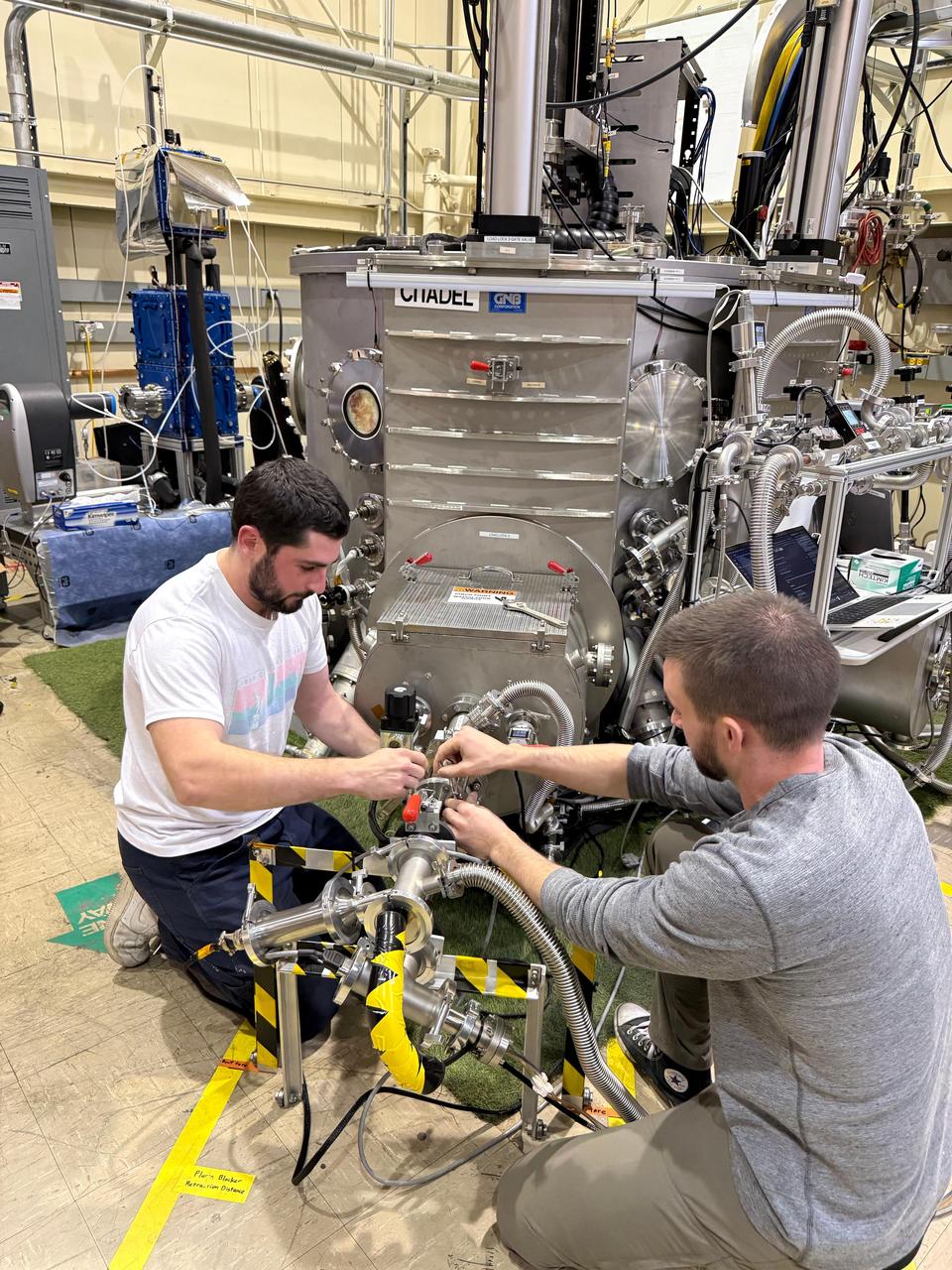
Robotics technologist Brendan Chamberlain-Simon, left, of NASA's Jet Propulsion Laboratory and spacesuit engineer Zach Fester of the agency's Johnson Space Center adjust a thermal vacuum chamber called CITADEL at JPL on Nov. 12, 2024, before testing an astronaut boot inside the chamber. Built to prepare potential robotic explorers for the frosty, low-pressure conditions on ocean worlds like Jupiter's frozen moon Europa, CITADEL (Cryogenic Ice Testing, Acquisition Development, and Excavation Laboratory) has also proven key to evaluating how astronaut gloves and boots hold up in extraordinary cold. It can reach temperatures as low as low as minus 370 degrees Fahrenheit (minus 223 degrees Celsius), approximating extreme conditions Artemis III astronauts will confront in permanently shadowed regions of the lunar South Pole. The boot testing was initiated by the Extravehicular Activity and Human Surface Mobility Program at NASA Johnson and took place from October 2024 to January 2025. The boot is part of a NASA spacesuit called the Exploration Extravehicular Mobility Unit, or xEMU. Test results haven't yet been fully analyzed. In addition to spotting vulnerabilities with existing suits, the experiments are intended to help NASA develop this unique test capability and prepare criteria for standardized, repeatable, and inexpensive test methods for the next-generation lunar suit being built by Axiom Space. https://photojournal.jpl.nasa.gov/catalog/PIA26593
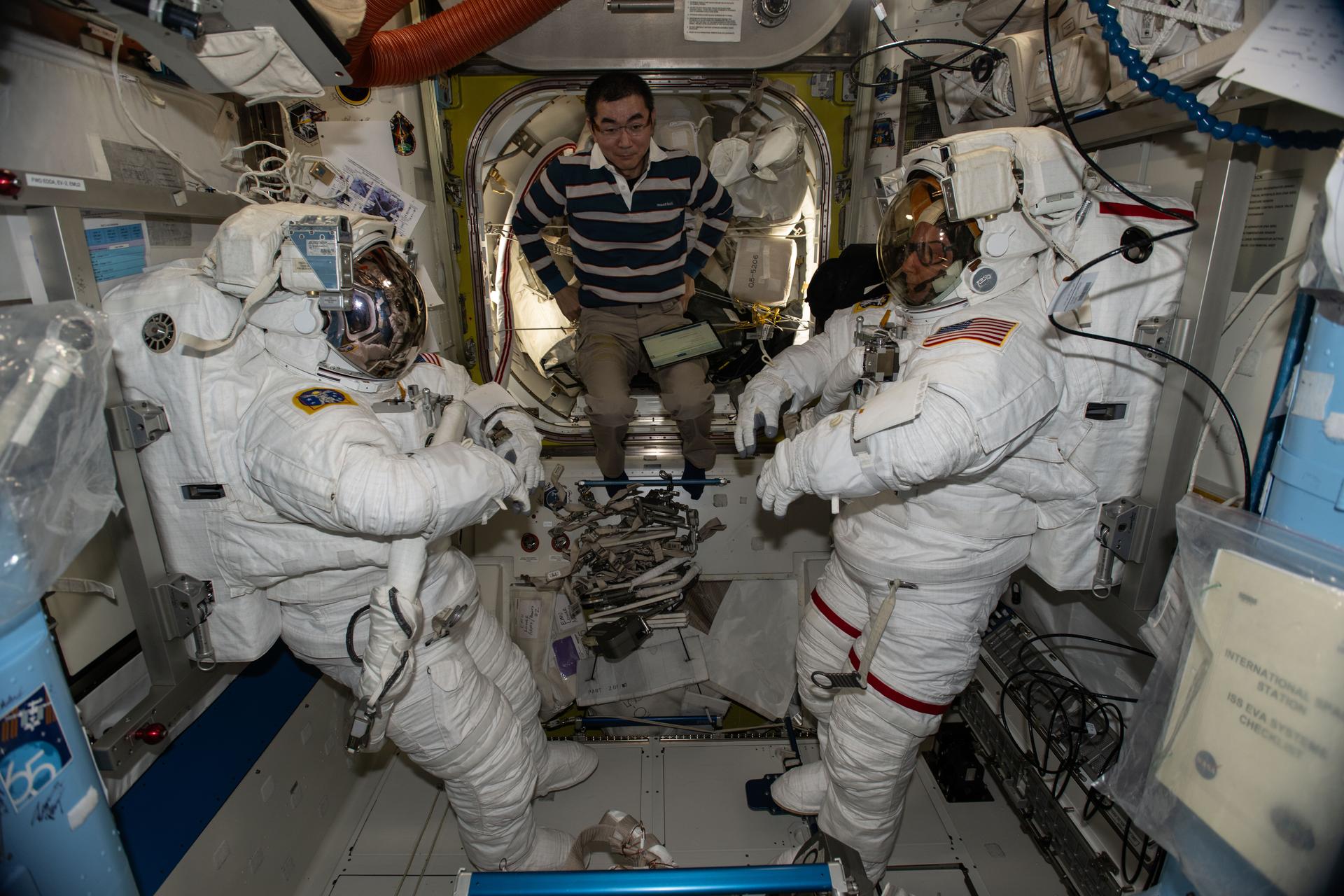
iss074e0007216 (Dec. 30,2025) --- At center, JAXA (Japan Aerospace Exploration Agency) astronaut and Expedition 74 Flight Engineer Kimiya Yui assists NASA astronauts Zena Cardman (left) and Mike Fincke (right), the station’s flight engineer and commander respectively, during spacesuit checks inside the International Space Station’s Quest airlock.

iss071e414633 (July 31, 2024) --- NASA astronaut and Expedition 71 Flight Engineer Matthew Dominick is pictured wearing a spacesuit aboard the International Space Station's Quest airlock. Dominick was evaluating the spacesuit, configuring its components, and testing the suit’s communications and life support systems.

iss071e414639 (July 31, 2024) --- NASA astronaut and Expedition 71 Flight Engineer Matthew Dominick is pictured wearing a spacesuit aboard the International Space Station's Quest airlock. Dominick was evaluating the spacesuit, configuring its components, and testing the suit’s communications and life support systems.
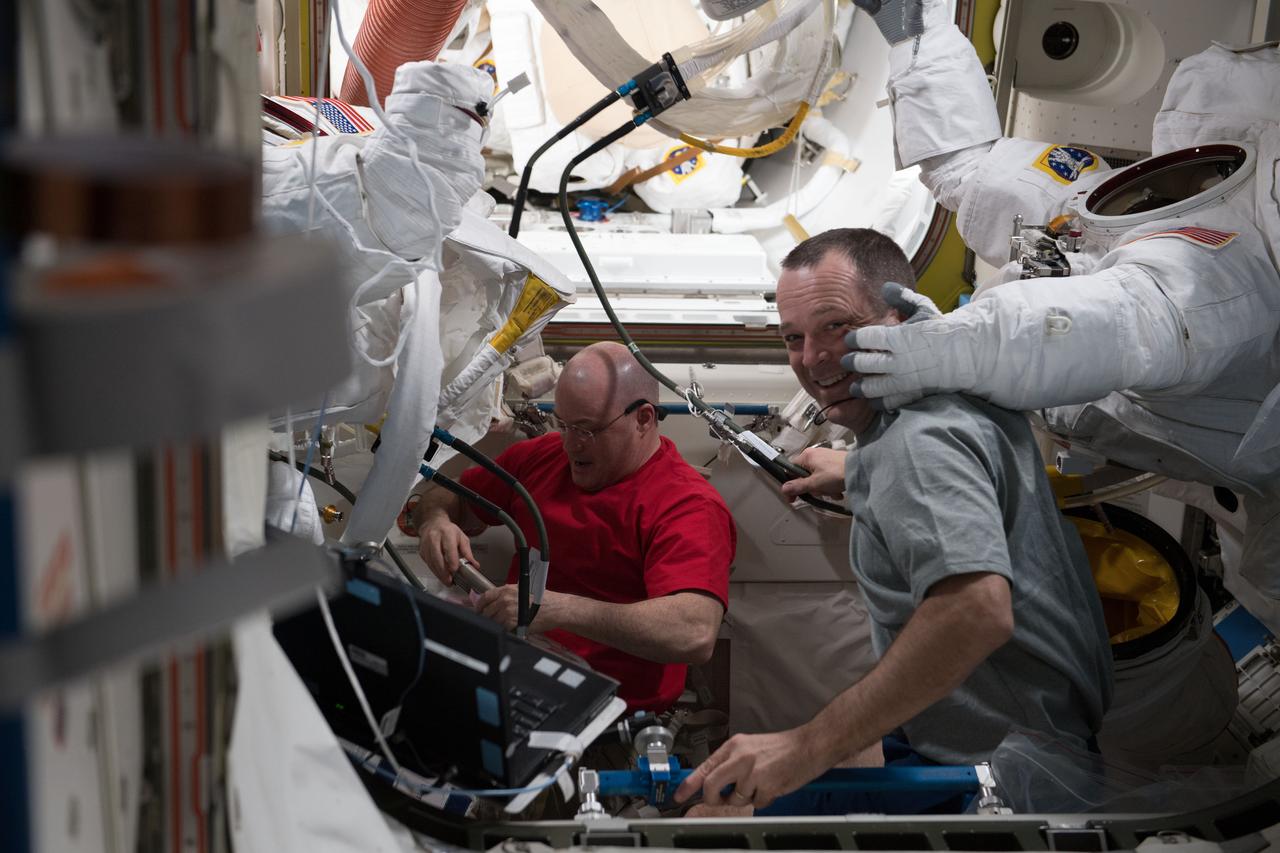
iss055e008298 (April 2, 2018) --- Astronauts Scott Tingle (left) and Ricky Arnold wrap up spacesuit work following a successful spacewalk on March 29, 2018. The duo scrubbed cooling loops, performed the iodination of ion filters and tested the water conductivity inside a pair of U.S. spacesuits.
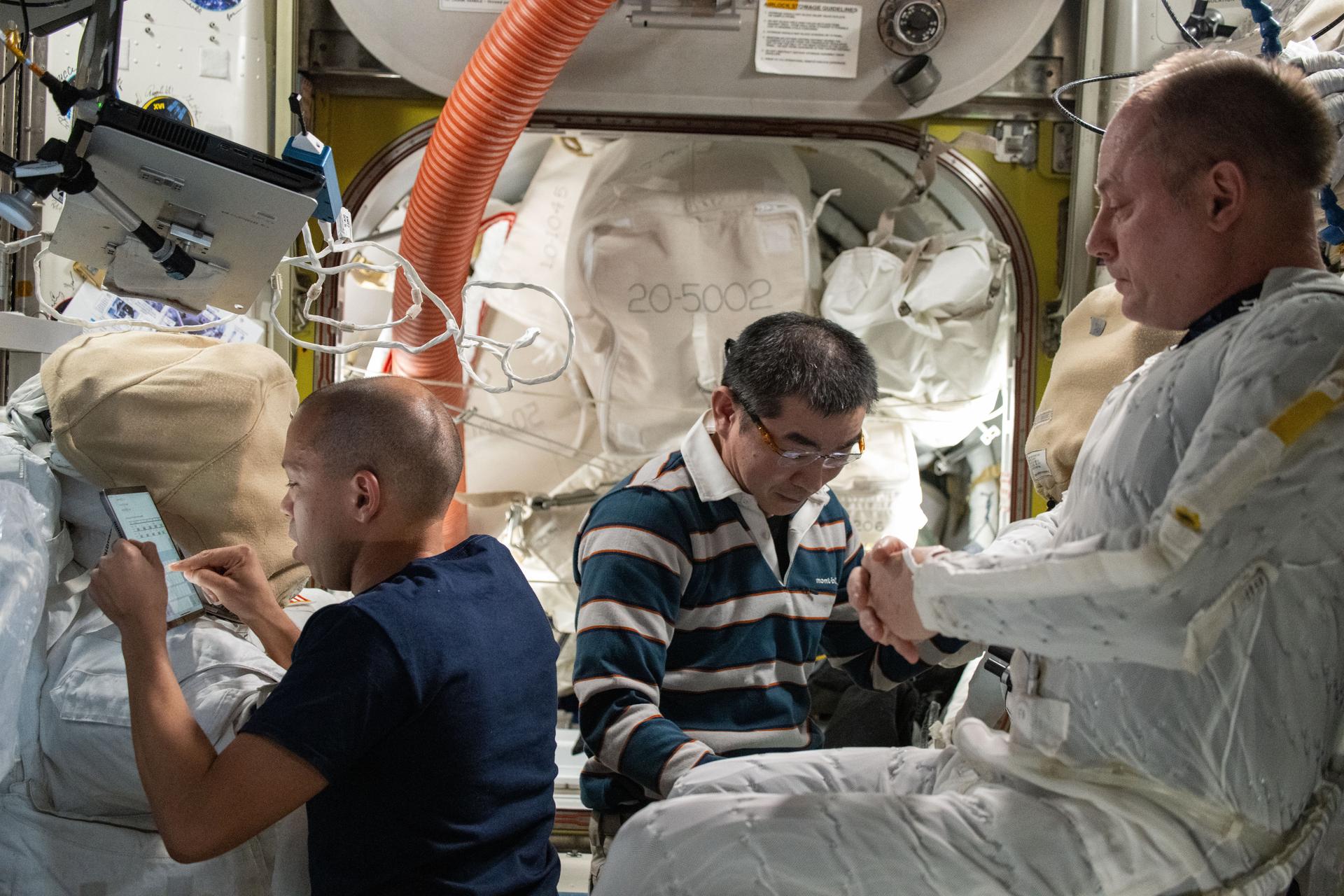
iss074e0008259 (Dec. 30,2025) --- At right, NASA astronaut and Expedition 74 Commander Mike Fincke waits patiently while wearing his spacesuit undergarment, known as the liquid cooling and ventilation garment, during spacesuit check preparations. At left and center are Flight Engineers Chris Williams of NASA and Kimiya Yui of JAXA (Japan Aerospace Exploration Agency) as they ready spacesuits for checks and tests inside the International Space Station’s Quest airlock.
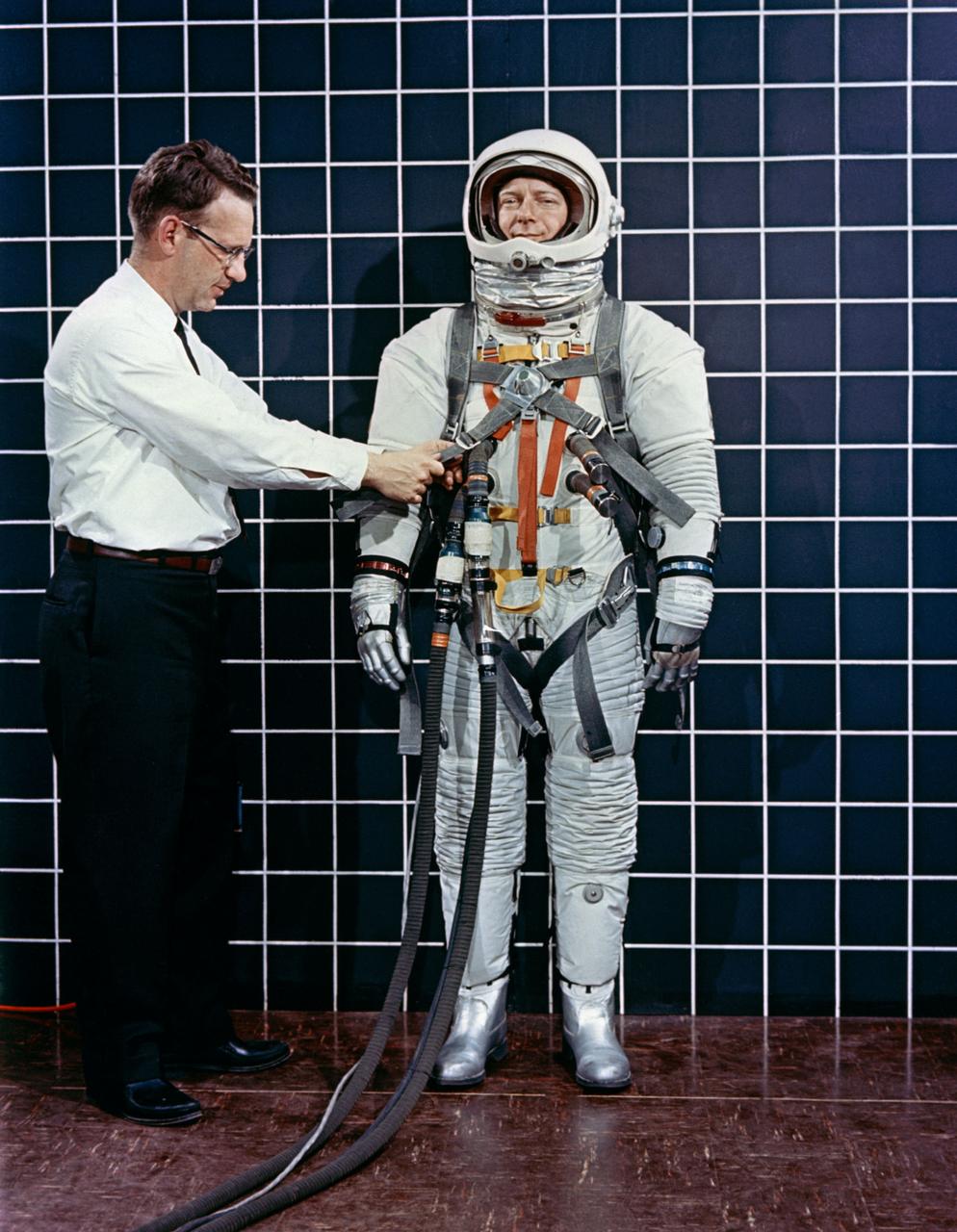
Engineer Bill Peterson fits test pilot Bob Smyth in spacesuit A-3H-024 with the LEM Astronaut restraint harness during suit evaluation study.

S66-33162 (May 1966) --- Test subject Fred Spross, Crew Systems Division, wears configured extravehicular spacesuit assembly and Extravehicular Life Support System chest pack. The spacesuit legs are covered with Chromel R, which is a cloth woven from stainless steel fibers, used to protect the suit and astronaut from the hot exhaust thrust of the Astronaut Maneuvering Unit backpack. The Gemini spacesuit, backpack and chest pack comprise the AMU, a system which is essentially a miniature manned spacecraft. Astronaut Eugene A. Cernan will wear the AMU during his Gemini-9A extravehicular activity (EVA). Photo credit: NASA
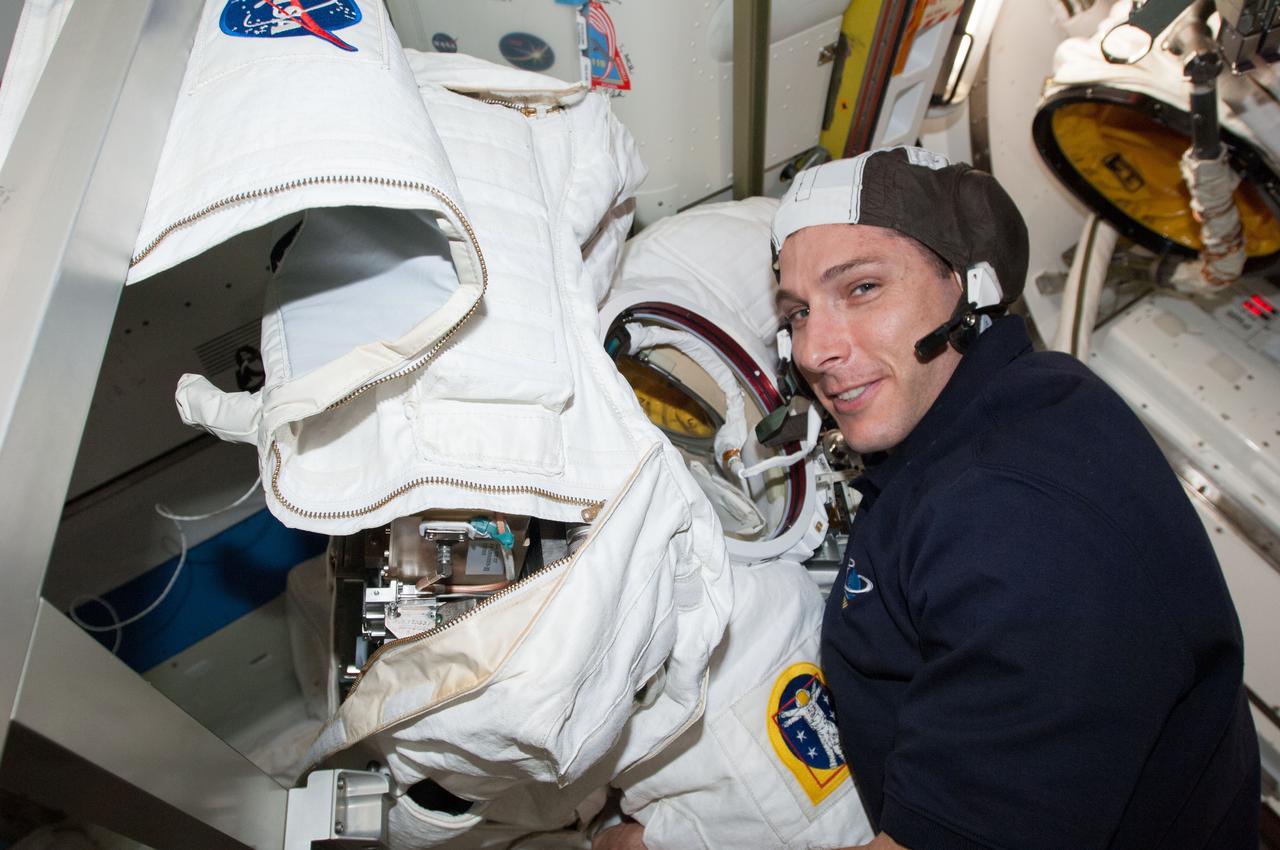
ISS038-E-004128 (18 Nov. 2013) --- NASA astronaut Michael Hopkins, Expedition 38 flight engineer, participates in Extravehicular Mobility Unit (EMU) spacesuit tests and repairs in the Quest airlock of the International Space Station.
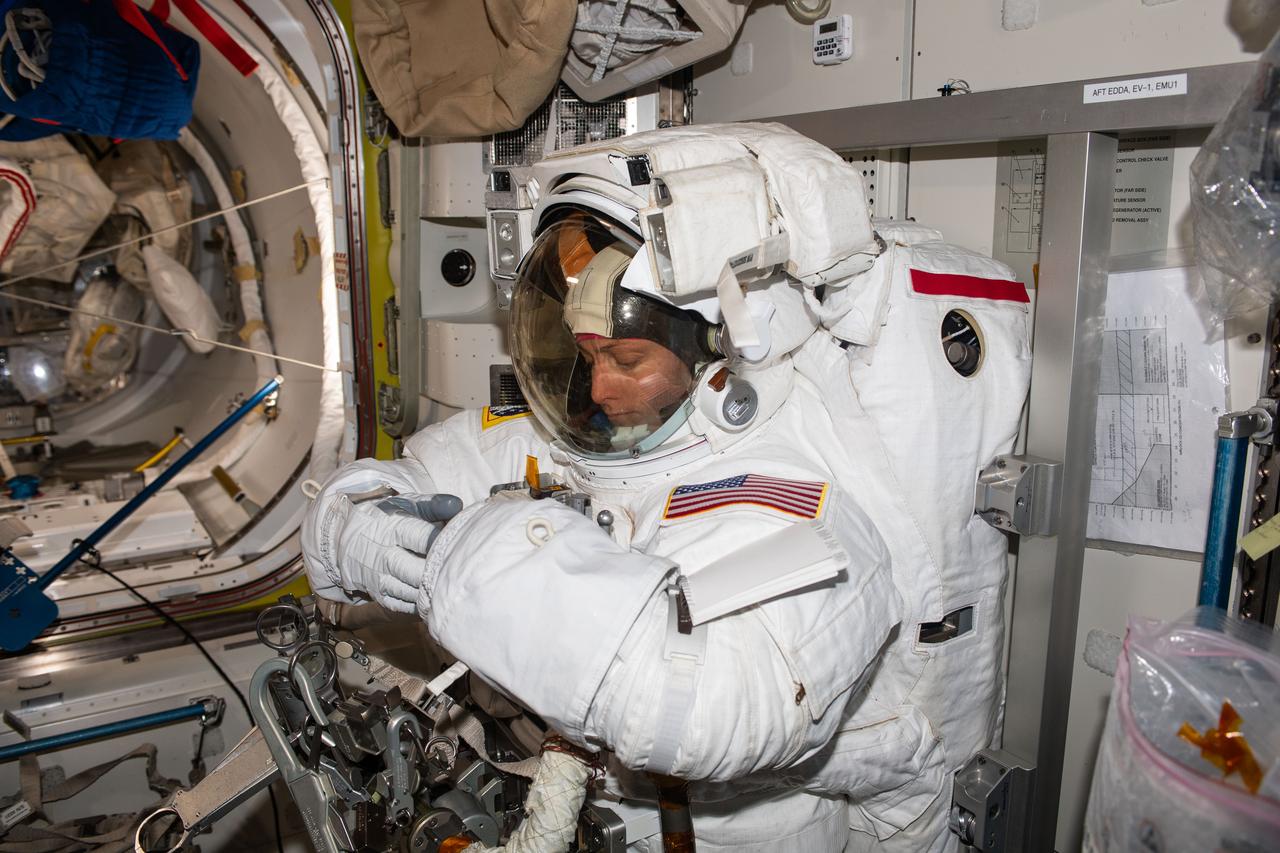
iss070e002032 (Oct. 4, 2023) --- NASA astronaut and Expedition 70 Flight Engineer Loral O'Hara is pictured trying on her spacesuit and testing its components aboard the International Space Station's Quest airlock in preparation for an upcoming spacewalk.
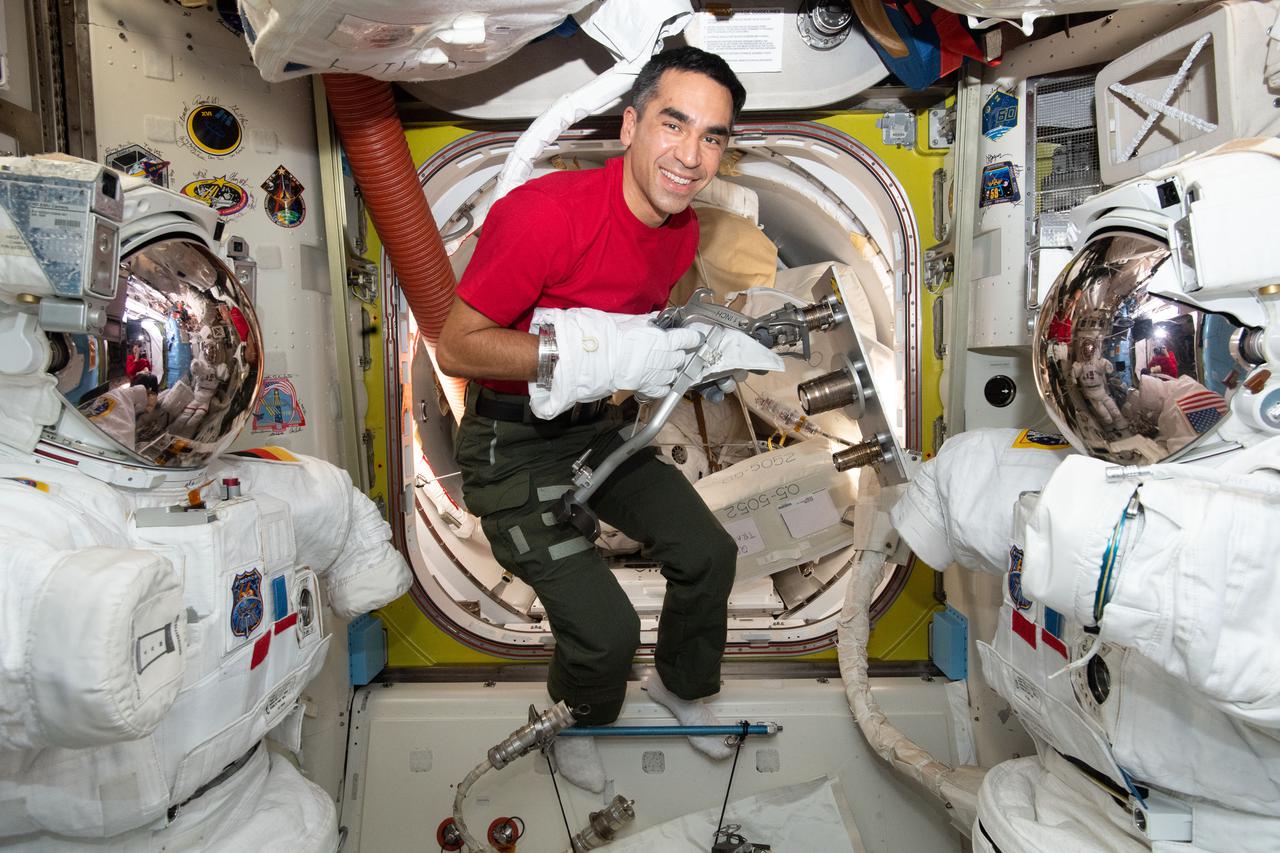
iss066e146485 (Feb. 19, 2022) --- NASA astronaut and Expedition 66 Flight Engineer Raja Chari tests using tools while wearing a spacesuit glove inside the International Space Station's U.S. Quest airlock.
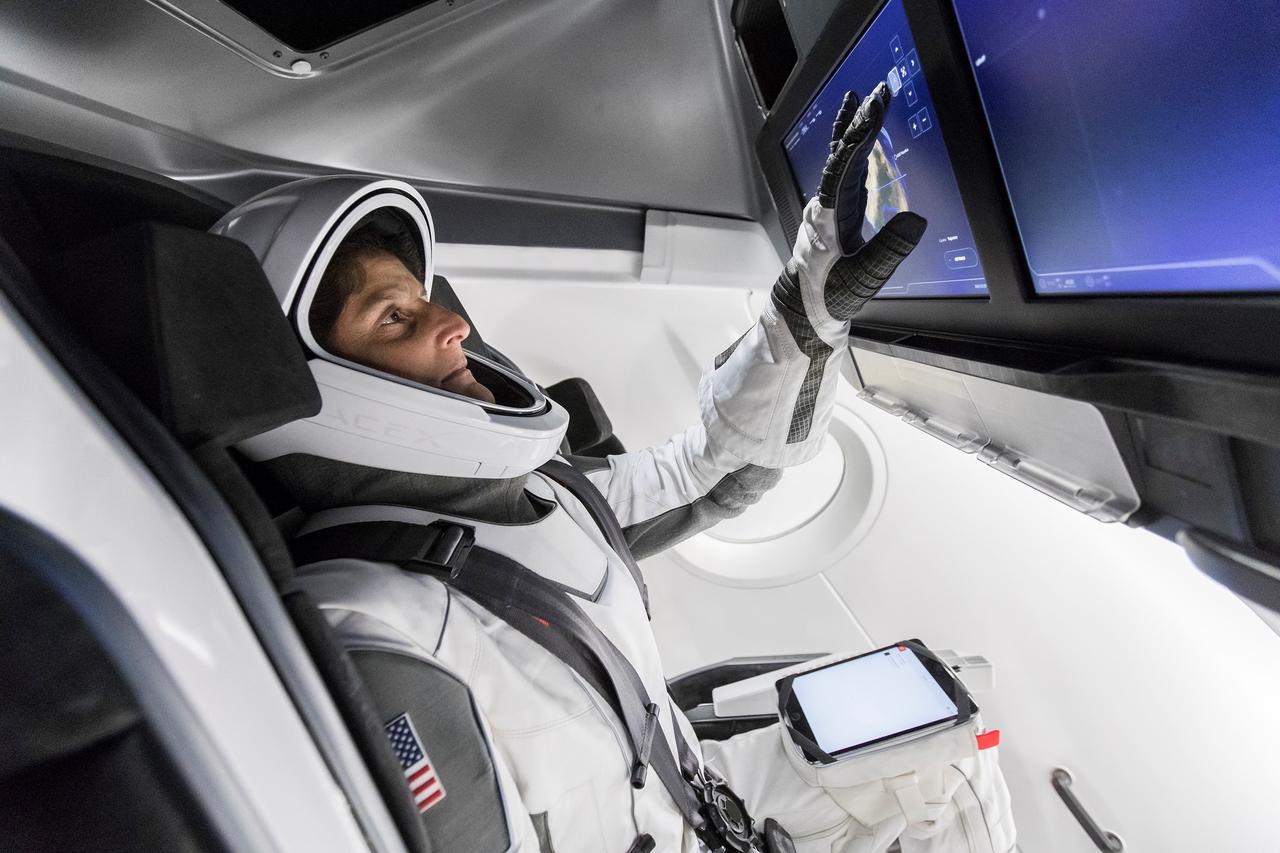
NASA Astronaut Suni Williams, fully suited in SpaceX’s spacesuit, interfaces with the display inside a mock-up of the Crew Dragon spacecraft in Hawthorne, California, during a testing exercise on Tuesday, April 3, 2018.
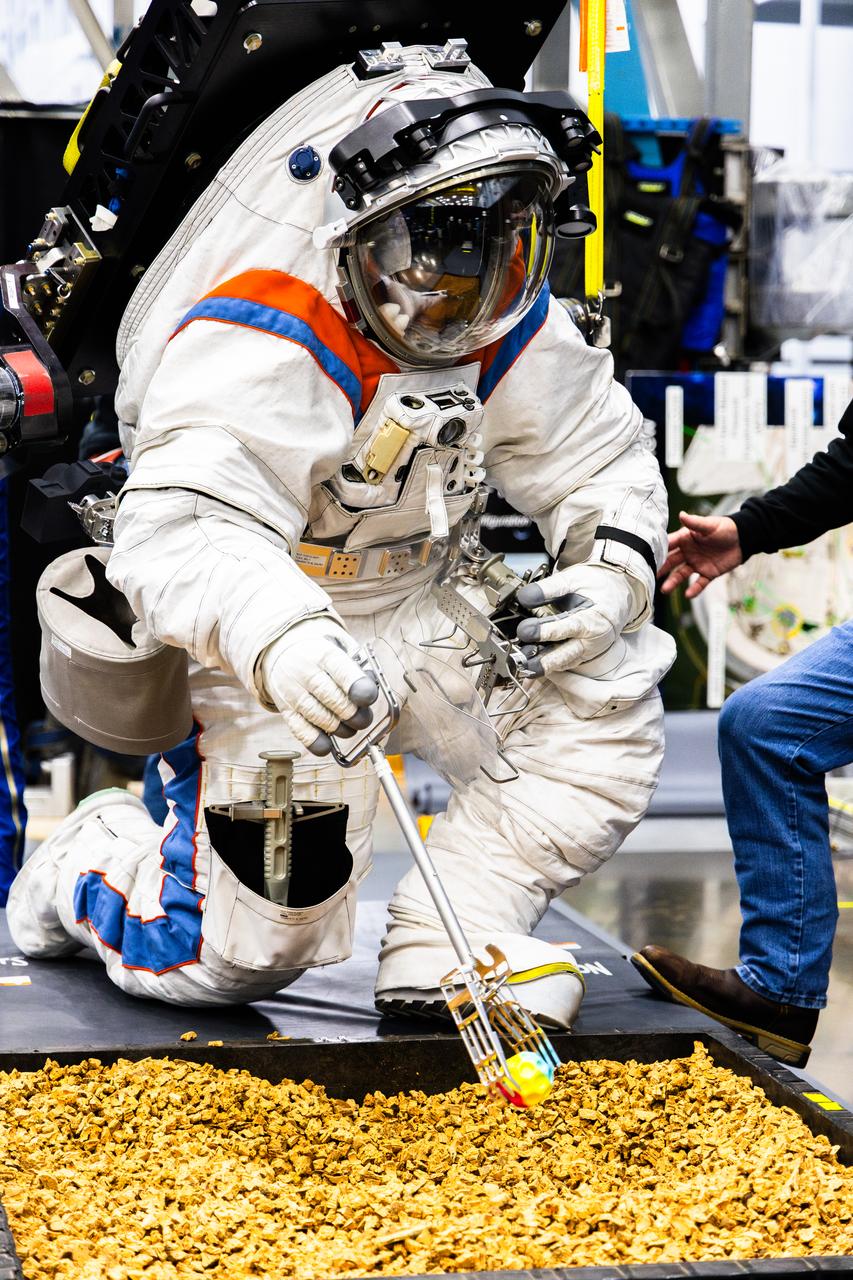
An Axiom Space engineer uses tongs to pick up a simulated lunar rock while wearing the AxEMU (Axiom Extravehicular Mobility Unit) spacesuit during testing at NASA’s Johnson Space Center. Image Credit: Axiom Space

jsc2018e004965 (February 7, 2018) --- Expedition 56-57 crew member Serena Auñón-Chancellor of NASA trains inside the Space Station Airlock Test Article wearing an Extravehicular Mobility Unit, or U.S. spacesuit.
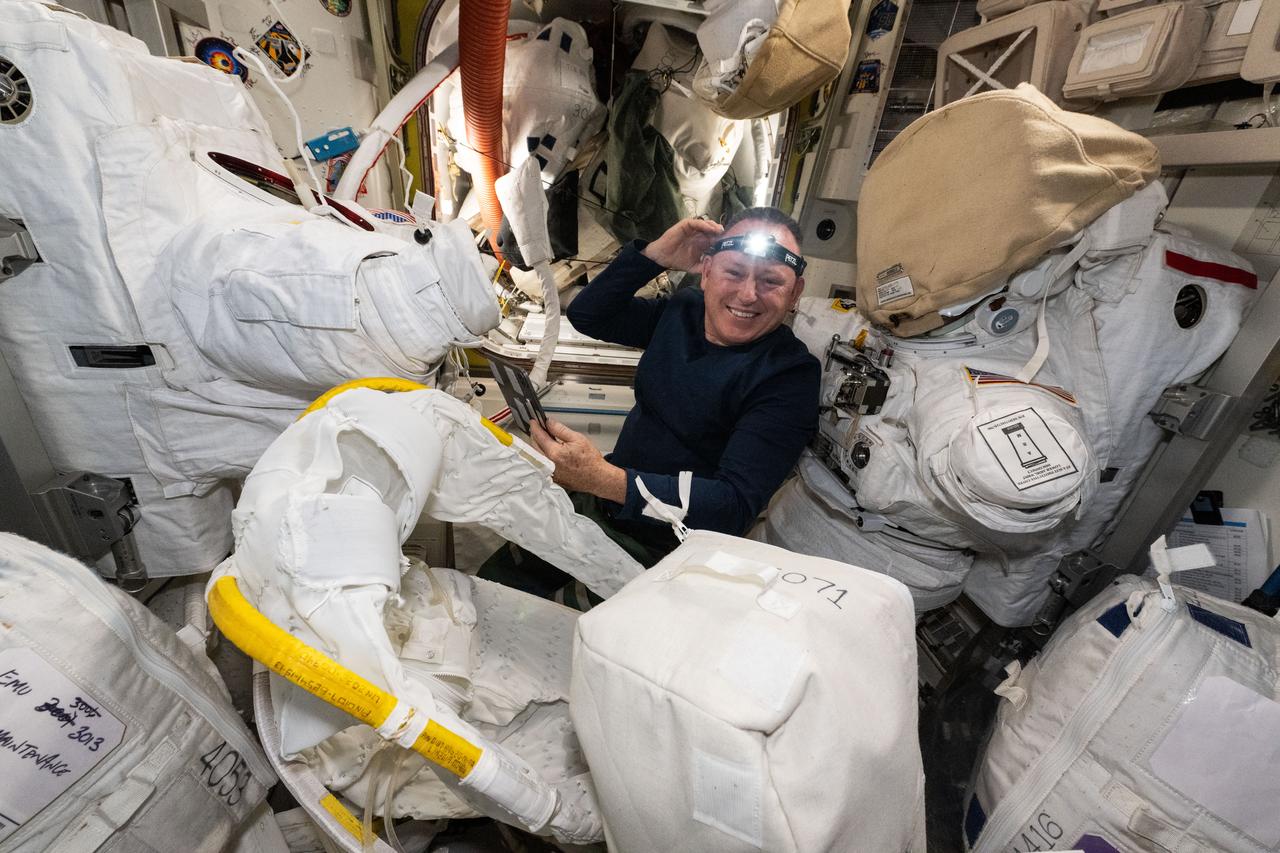
iss071e321395 (July 11, 2024) --- NASA astronaut and Boeing Crew Flight Test Commander Butch Wilmore performs spacesuit maintenance inside the International Space Station's Quest airlock.
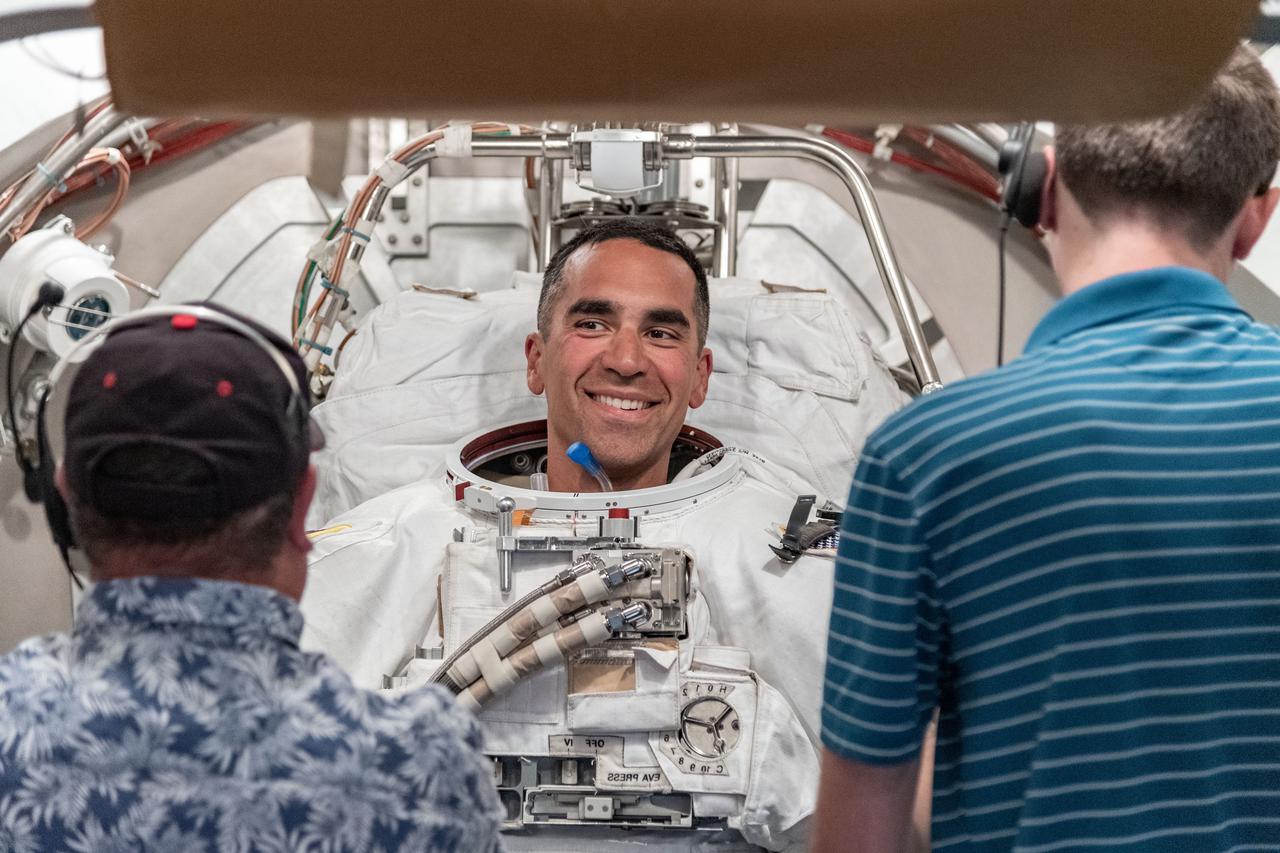
jsc2021e030708 (July 19, 2021) --- NASA astronaut Raja Chari tries on a U.S. spacesuit during a dry run for spacewalk preparations in the Space Station Airlock Test Article at NASA's Johnson Space Center in Houston, Texas.
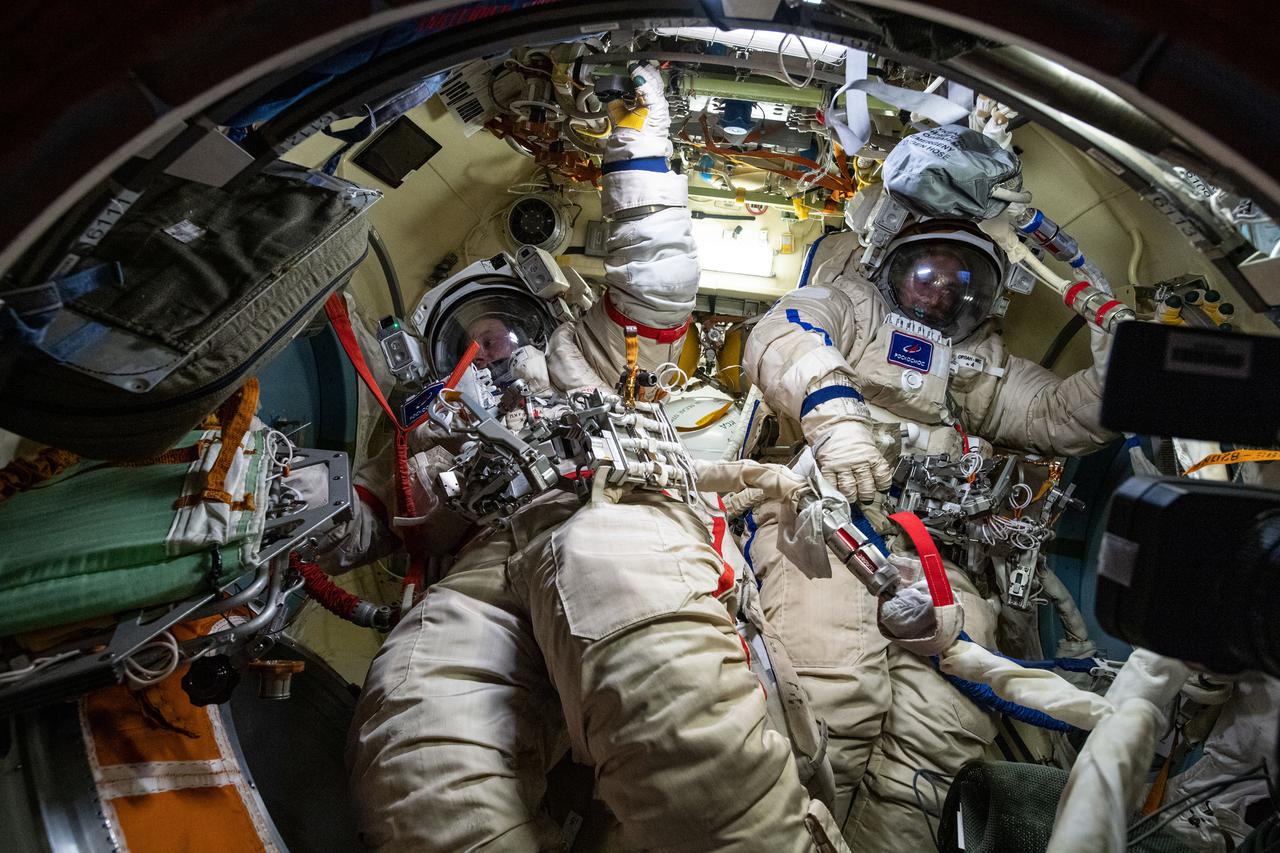
iss065e093418 (May 28, 2021) --- Roscosmos cosmonauts Oleg Novitskiy (left) and Pyotr Dubrov are pictured in their Russian Orlan spacesuits for tests a few days ahead of a spacewalk they conducted on June 2, 2021.
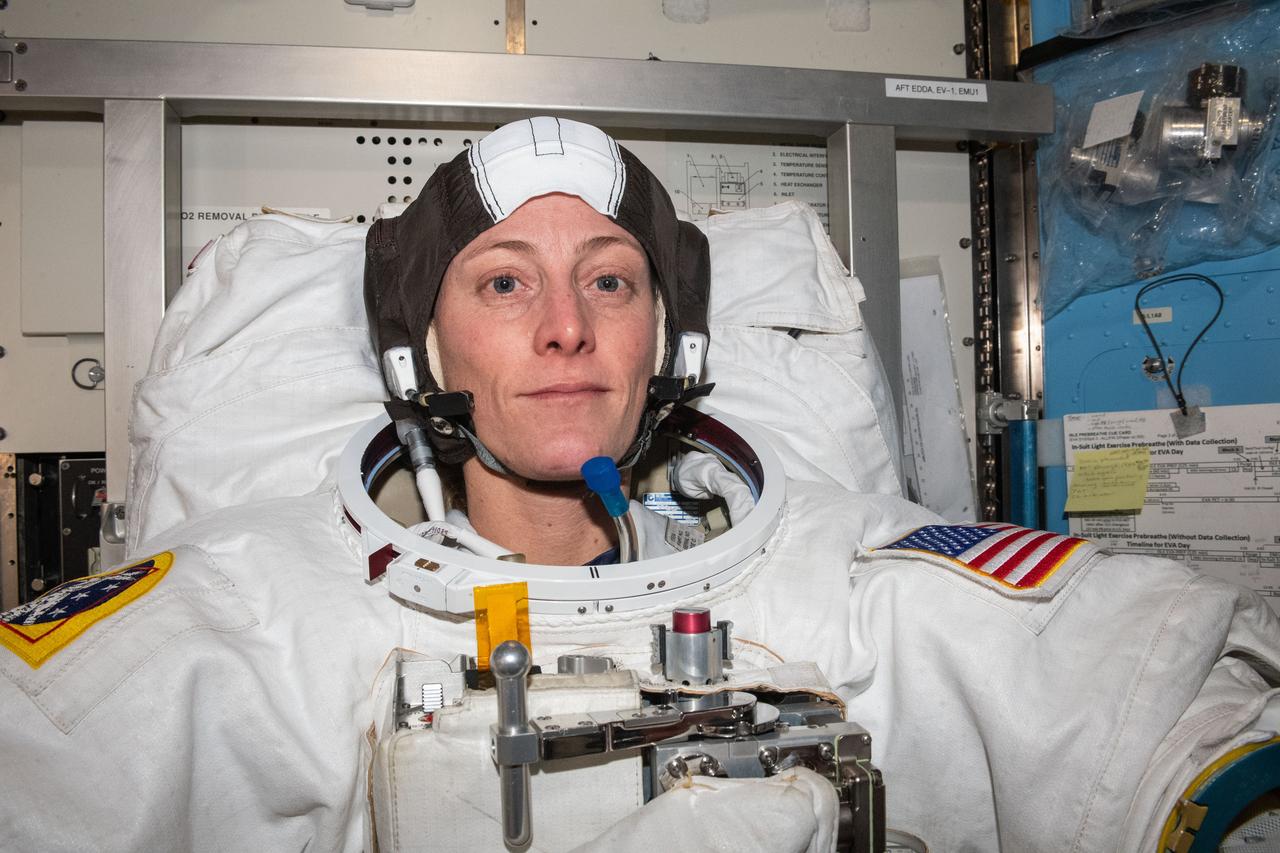
iss070e002029 (Oct. 4, 2023) --- NASA astronaut and Expedition 70 Flight Engineer Loral O'Hara is pictured trying on her spacesuit and testing its components aboard the International Space Station's Quest airlock in preparation for an upcoming spacewalk.
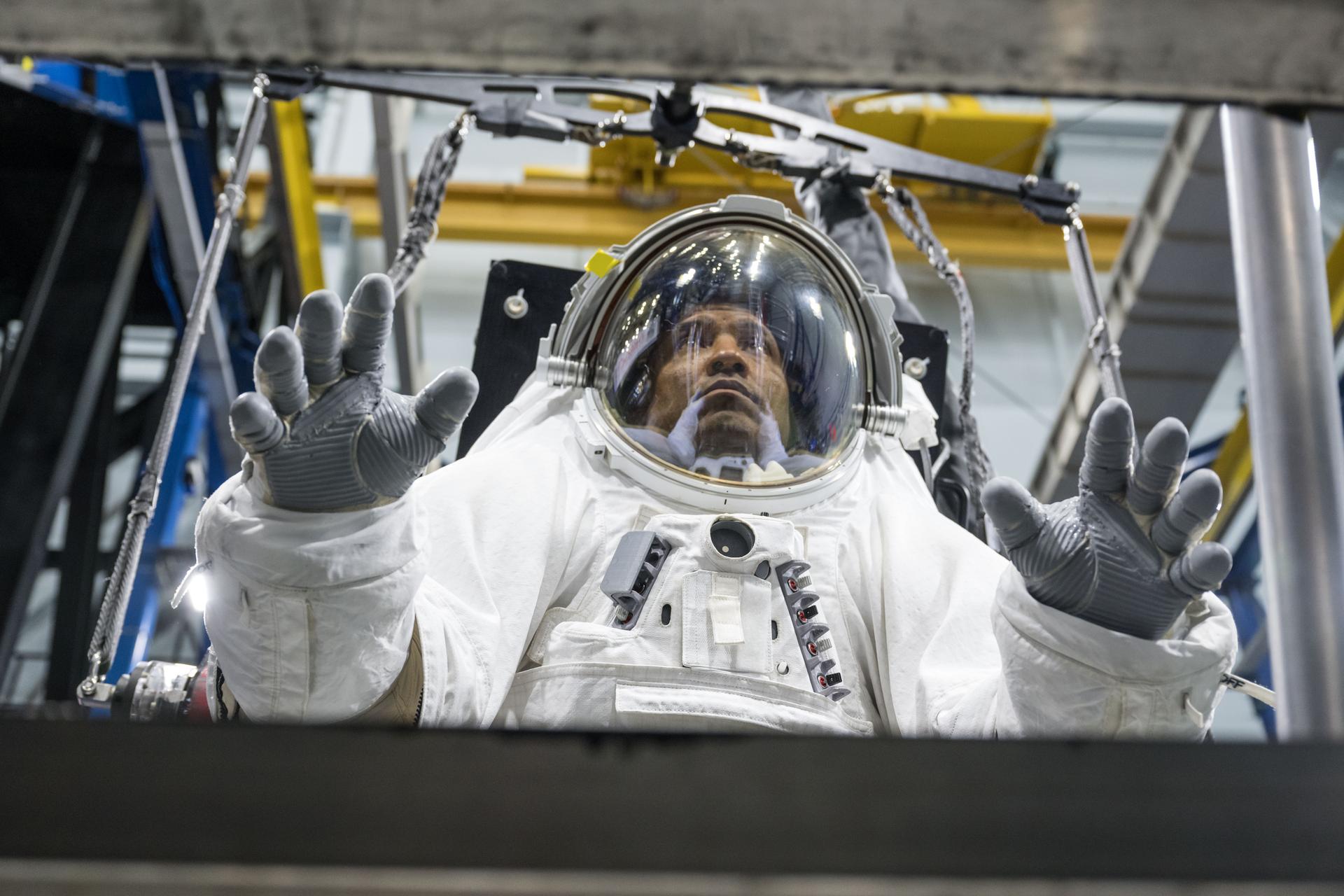
Artemis II astronaut Victor Glover, fully suited, evaluates the mobility of his xEMU spacesuit during the Artemis Spaceflight Standard Measures Test at NASA’s Johnson Space Center on Jan. 13, 2026. (NASA/Robert Markowitz)
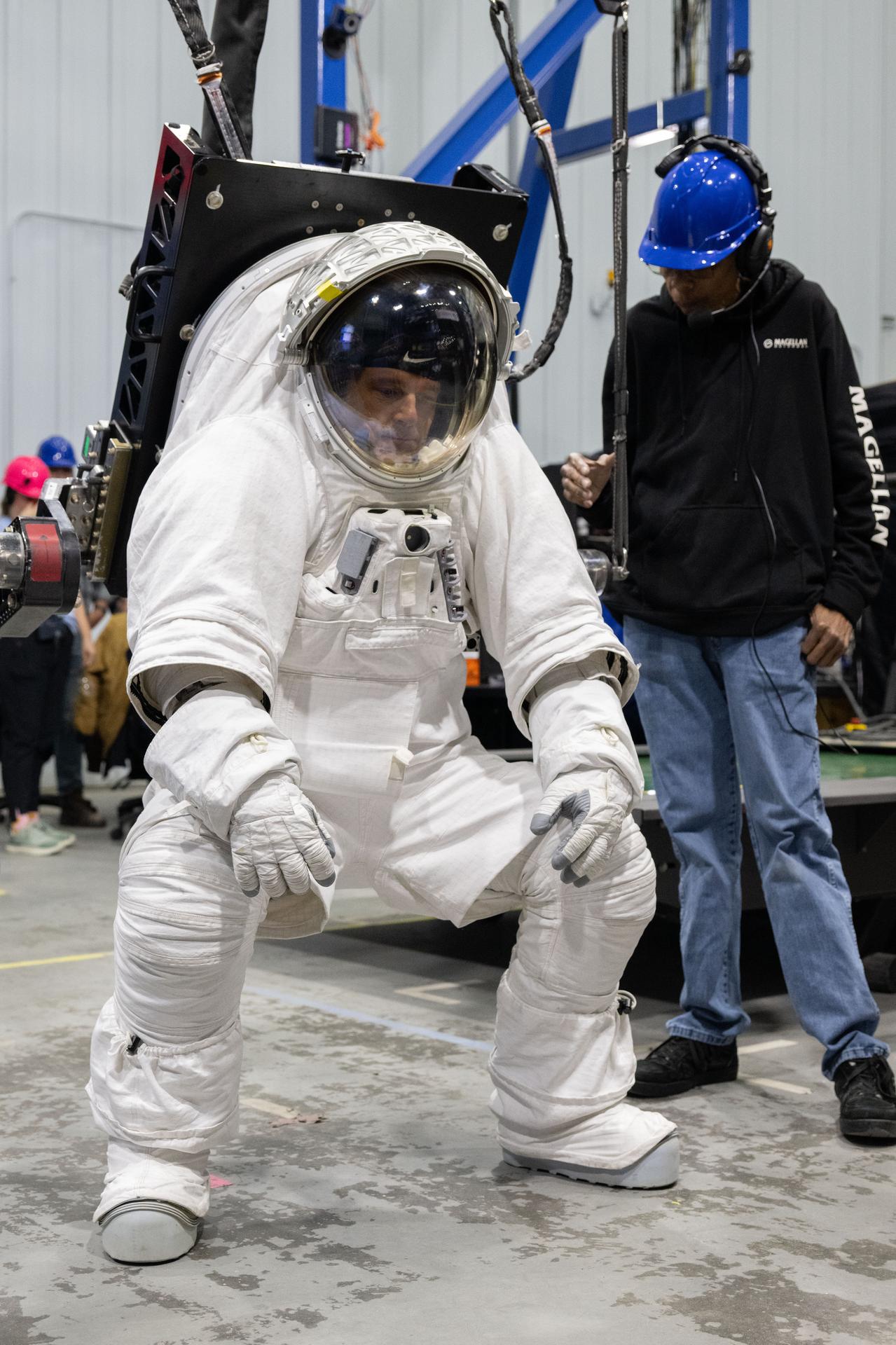
Artemis II astronaut Reid Wiseman assesses lower-body mobility in the xEMU spacesuit during the Artemis Spaceflight Standard Measures Test at NASA’s Johnson Space Center on Dec. 8, 2025. (NASA/Josh Valcarcel)
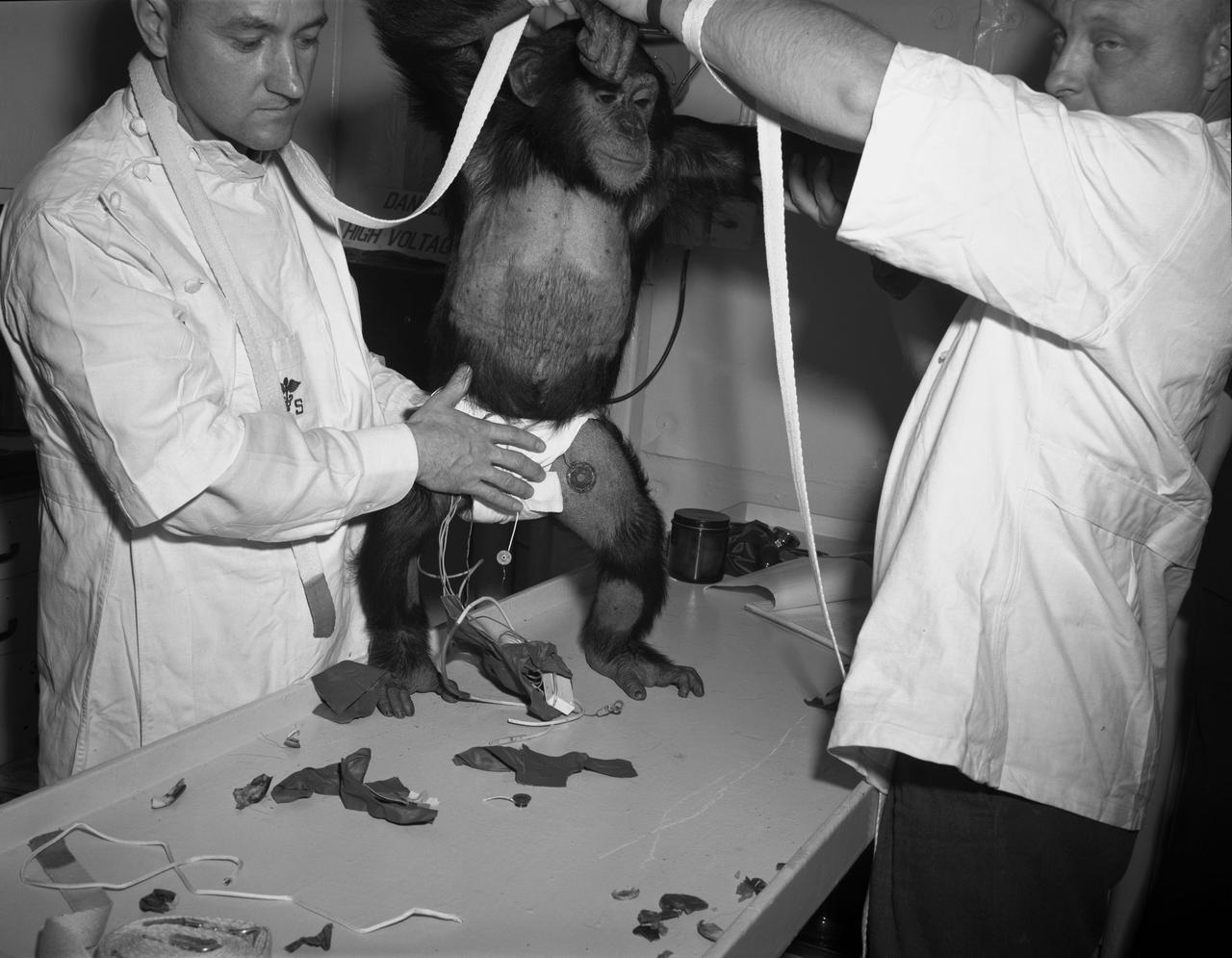
S63-20800 (31 Jan. 1961) --- Chimpanzee "Ham" being assisted into "spacesuit" prior to the Mercury-Redstone 2 (MR-2) test flight which was conducted on Jan. 31, 1961. Photo credit: NASA
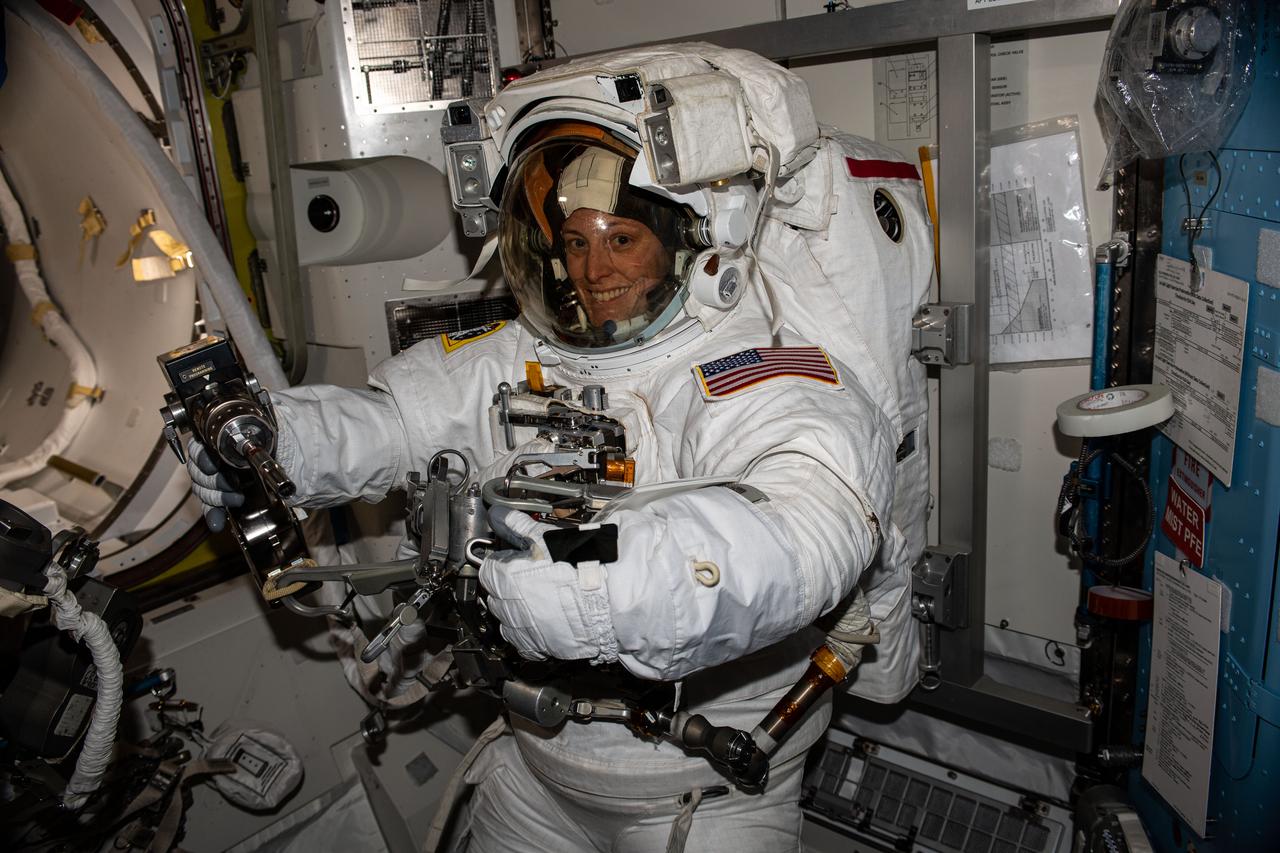
iss070e002889 (Oct. 9, 2023) --- NASA astronaut and Expedition 70 Flight Engineer Loral O'Hara is pictured trying on her spacesuit and testing its components aboard the International Space Station's Quest airlock in preparation for an upcoming spacewalk.
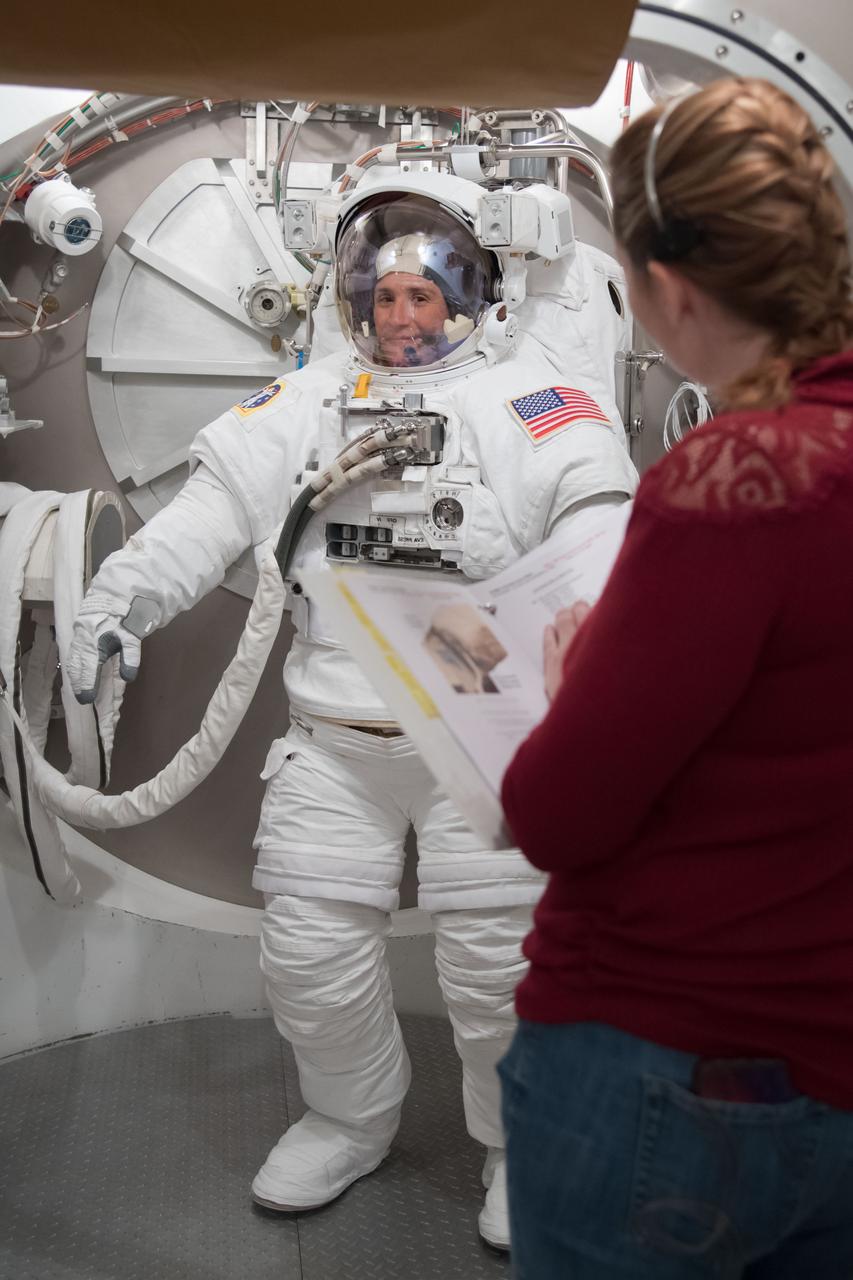
jsc2018e004976 (February 7, 2018) --- Expedition 56-57 crew member Serena Auñón-Chancellor of NASA trains inside the Space Station Airlock Test Article wearing an Extravehicular Mobility Unit, or U.S. spacesuit.
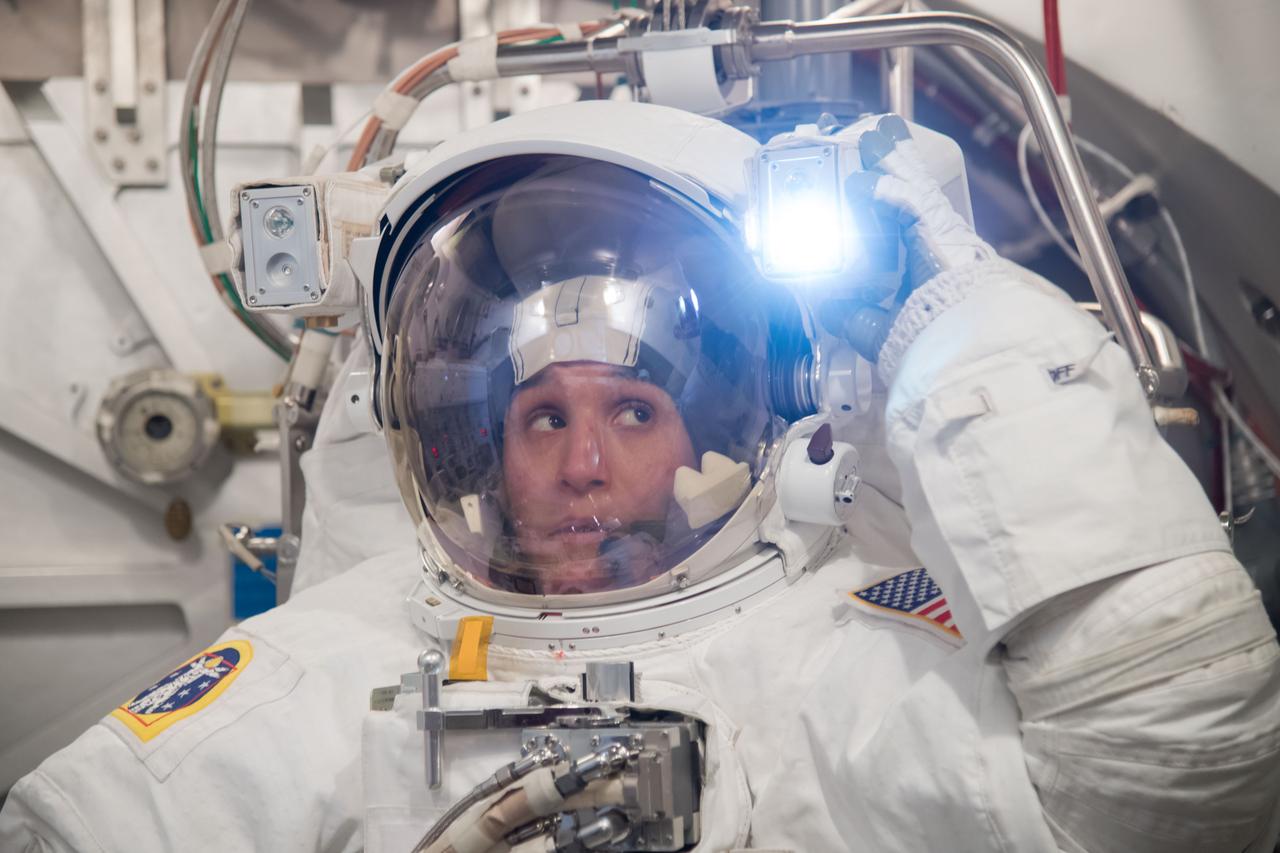
jsc2018e004977 (February 7, 2018) --- Expedition 56-57 crew member Serena Auñón-Chancellor of NASA trains inside the Space Station Airlock Test Article wearing an Extravehicular Mobility Unit, or U.S. spacesuit.
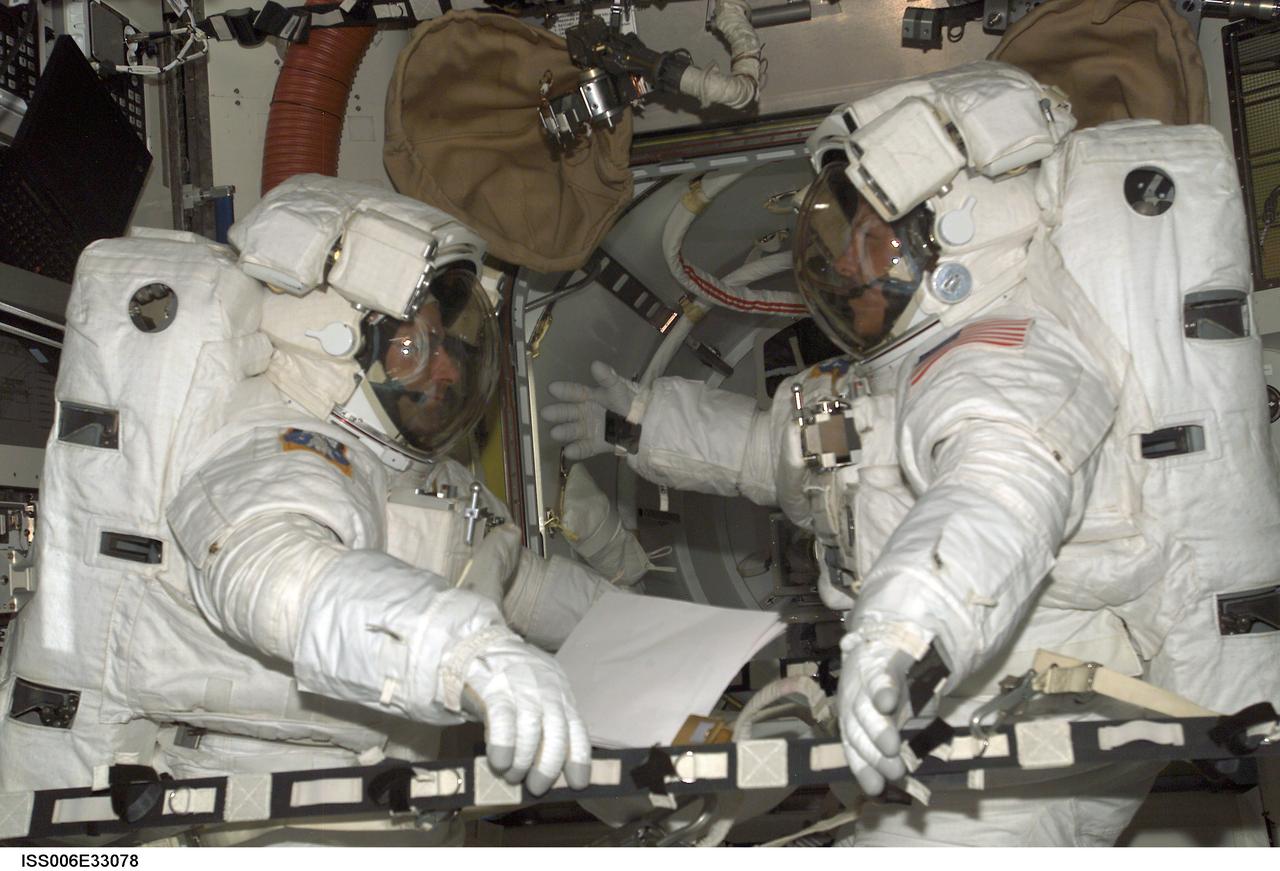
ISS006-E-33078 (24 February 2003) --- Astronauts Kenneth D. Bowersox (right) and Donald R. Pettit, Expedition Six mission commander and NASA ISS science officer, respectively, participate in a scheduled extravehicular activity (EVA) development test objective (DTO) in the Quest Airlock on the International Space Station (ISS). The test demonstrated the ability of two crewmembers to safely get into the American Extravehicular Mobility Unit (EMU) spacesuit without the assistance of a third crewmember; that ability is a prerequisite to sending smaller crews to ISS while the space shuttle fleet remains grounded during the investigation of the Columbia accident. Bowersox and Pettit helped each other into their EMU spacesuits, donned jet backpacks called Simplified Aid for EVA Rescue (SAFER), set up the necessary equipment for a pre-breathe of oxygen to purge nitrogen from their bloodstreams, and then got out of the spacesuits.
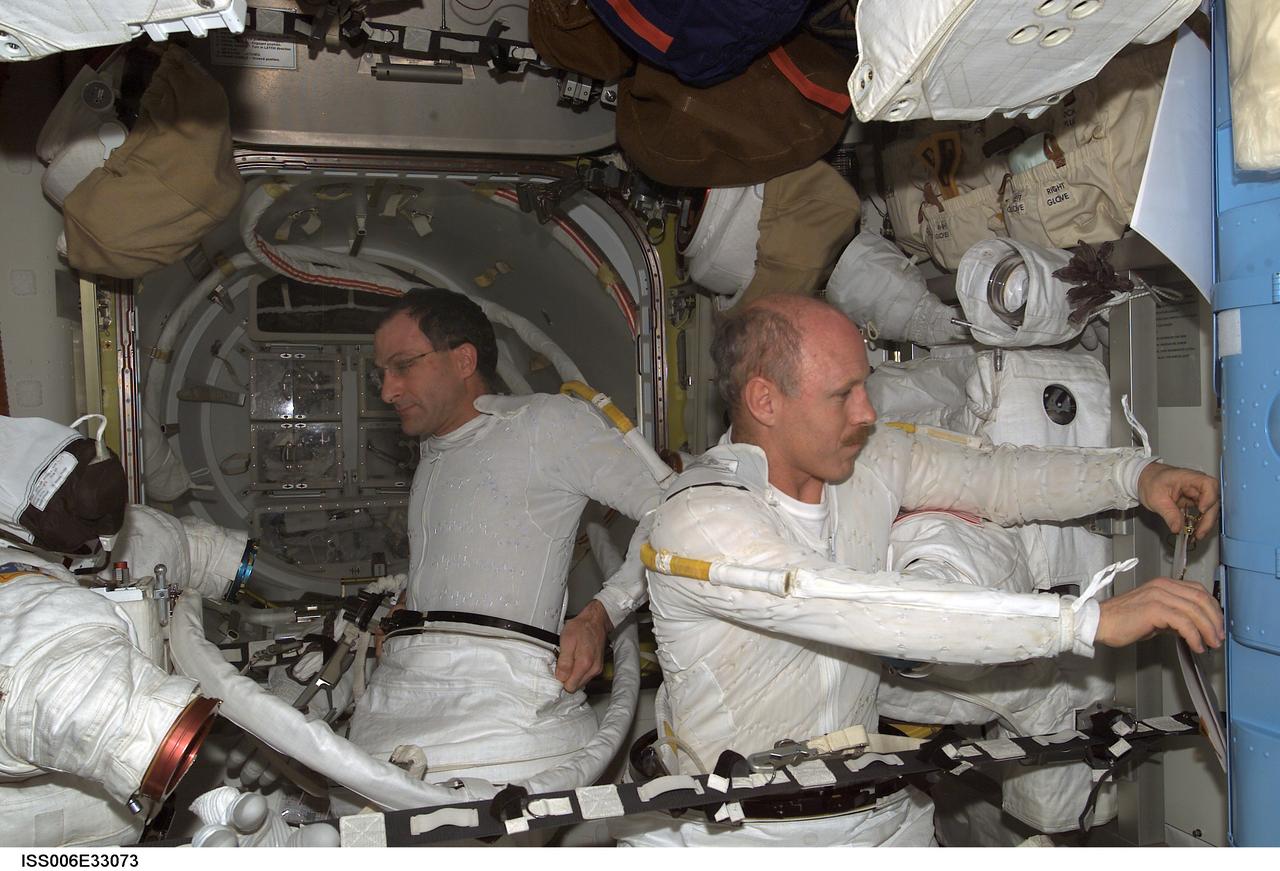
ISS006-E-33073 (24 February 2003) --- Astronauts Kenneth D. Bowersox (right) and Donald R. Pettit, Expedition Six mission commander and NASA ISS science officer, respectively, participate in a scheduled extravehicular activity (EVA) development test objective (DTO) in the Quest Airlock on the International Space Station (ISS). The test demonstrated the ability of two crewmembers to safely get into the American Extravehicular Mobility Unit (EMU) spacesuit without the assistance of a third crewmember; that ability is a prerequisite to sending smaller crews to ISS while the space shuttle fleet remains grounded during the investigation of the Columbia accident. Bowersox and Pettit helped each other into their EMU spacesuits, donned jet backpacks called Simplified Aid for EVA Rescue (SAFER), set up the necessary equipment for a pre-breathe of oxygen to purge nitrogen from their bloodstreams, and then got out of the spacesuits.
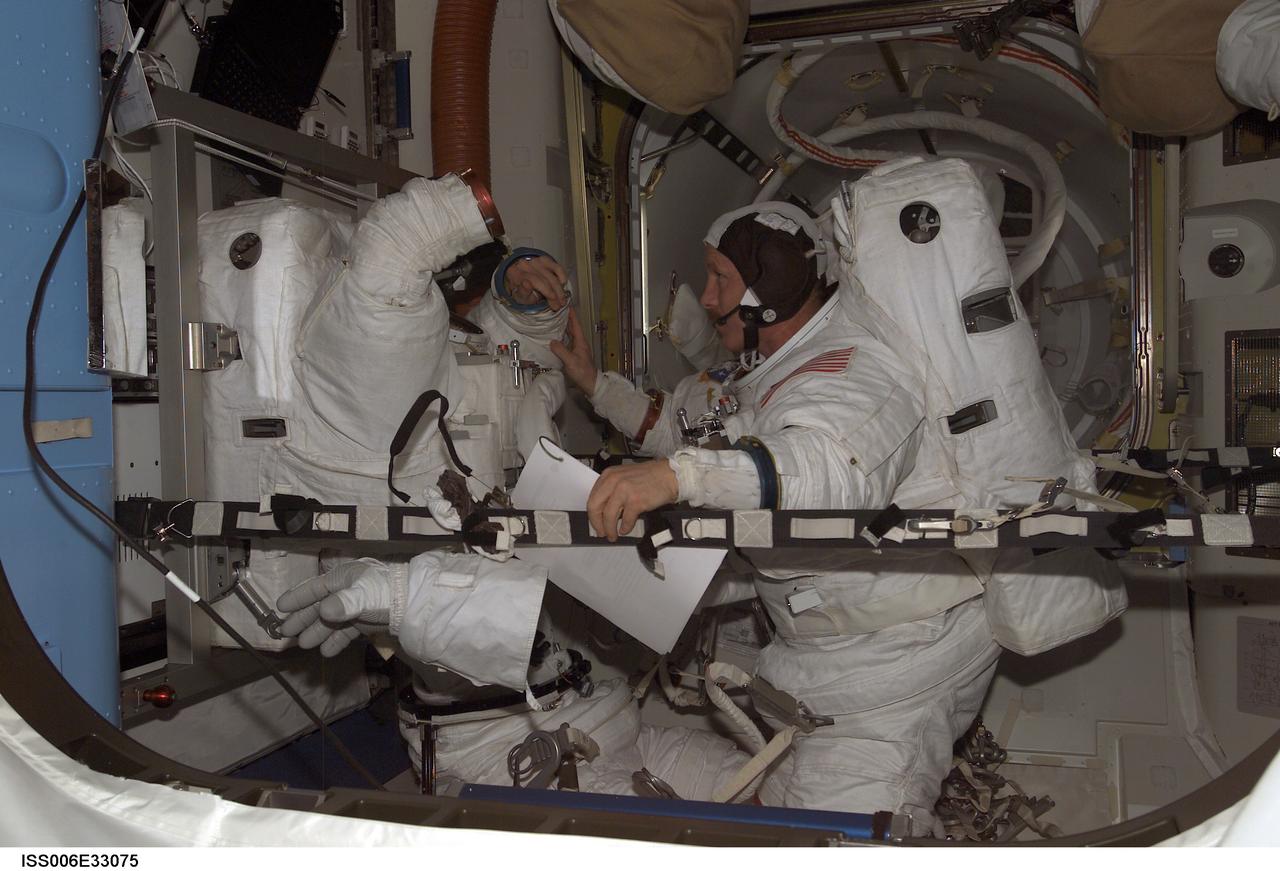
ISS006-E-33075 (24 February 2003) --- Astronauts Kenneth D. Bowersox (right) and Donald R. Pettit, Expedition Six mission commander and NASA ISS science officer, respectively, participate in a scheduled extravehicular activity (EVA) development test objective (DTO) in the Quest Airlock on the International Space Station (ISS). The test demonstrated the ability of two crewmembers to safely get into the American Extravehicular Mobility Unit (EMU) spacesuit without the assistance of a third crewmember; that ability is a prerequisite to sending smaller crews to ISS while the space shuttle fleet remains grounded during the investigation of the Columbia accident. Bowersox and Pettit helped each other into their EMU spacesuits, donned jet backpacks called Simplified Aid for EVA Rescue (SAFER), set up the necessary equipment for a pre-breathe of oxygen to purge nitrogen from their bloodstreams, and then got out of the spacesuits.
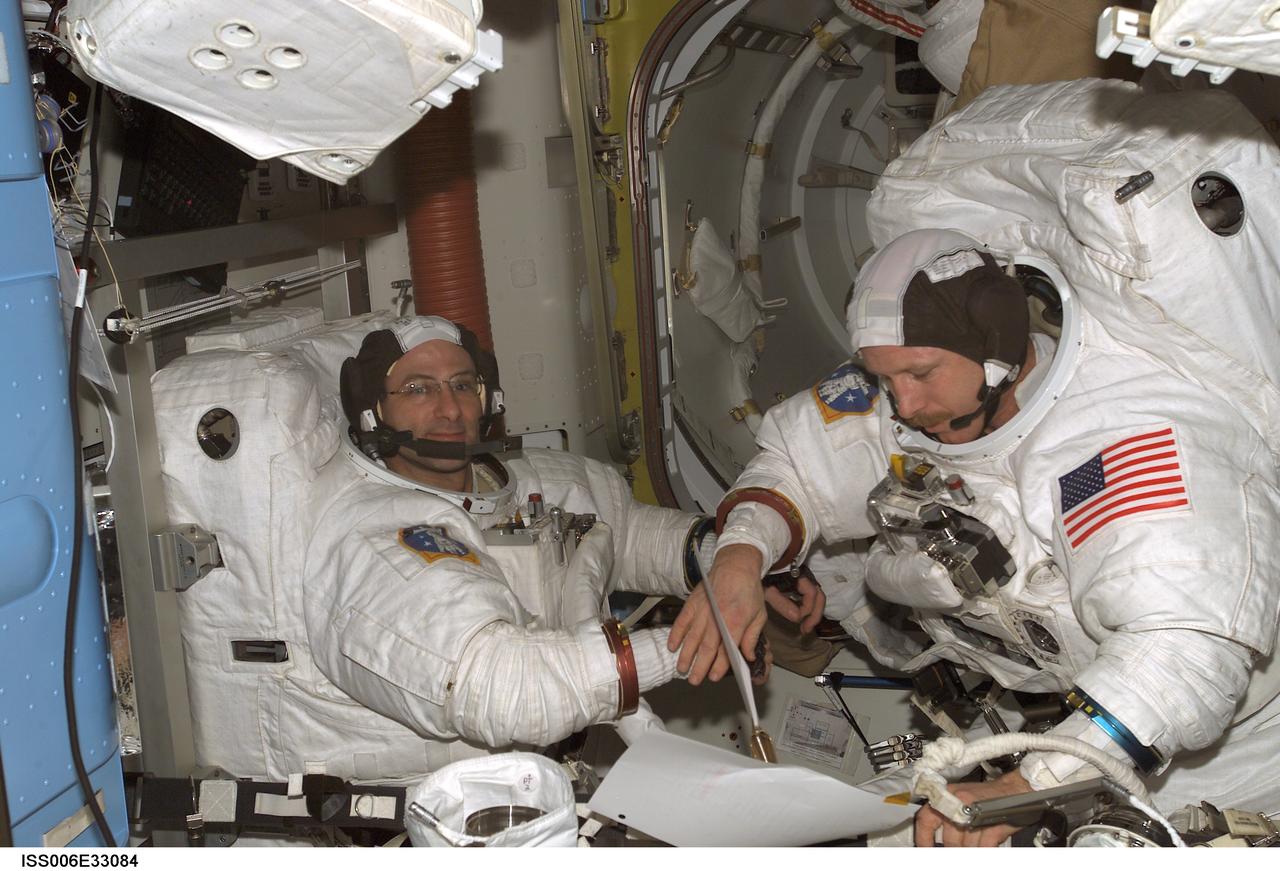
ISS006-E-33084 (24 February 2003) --- Astronauts Kenneth D. Bowersox (right) and Donald R. Pettit, Expedition Six mission commander and NASA ISS science officer, respectively, participate in a scheduled extravehicular activity (EVA) development test objective (DTO) in the Quest Airlock on the International Space Station (ISS). The test demonstrated the ability of two crewmembers to safely get into the American Extravehicular Mobility Unit (EMU) spacesuit without the assistance of a third crewmember; that ability is a prerequisite to sending smaller crews to ISS while the space shuttle fleet remains grounded during the investigation of the Columbia accident. Bowersox and Pettit helped each other into their EMU spacesuits, donned jet backpacks called Simplified Aid for EVA Rescue (SAFER), set up the necessary equipment for a pre-breathe of oxygen to purge nitrogen from their bloodstreams, and then got out of the spacesuits.
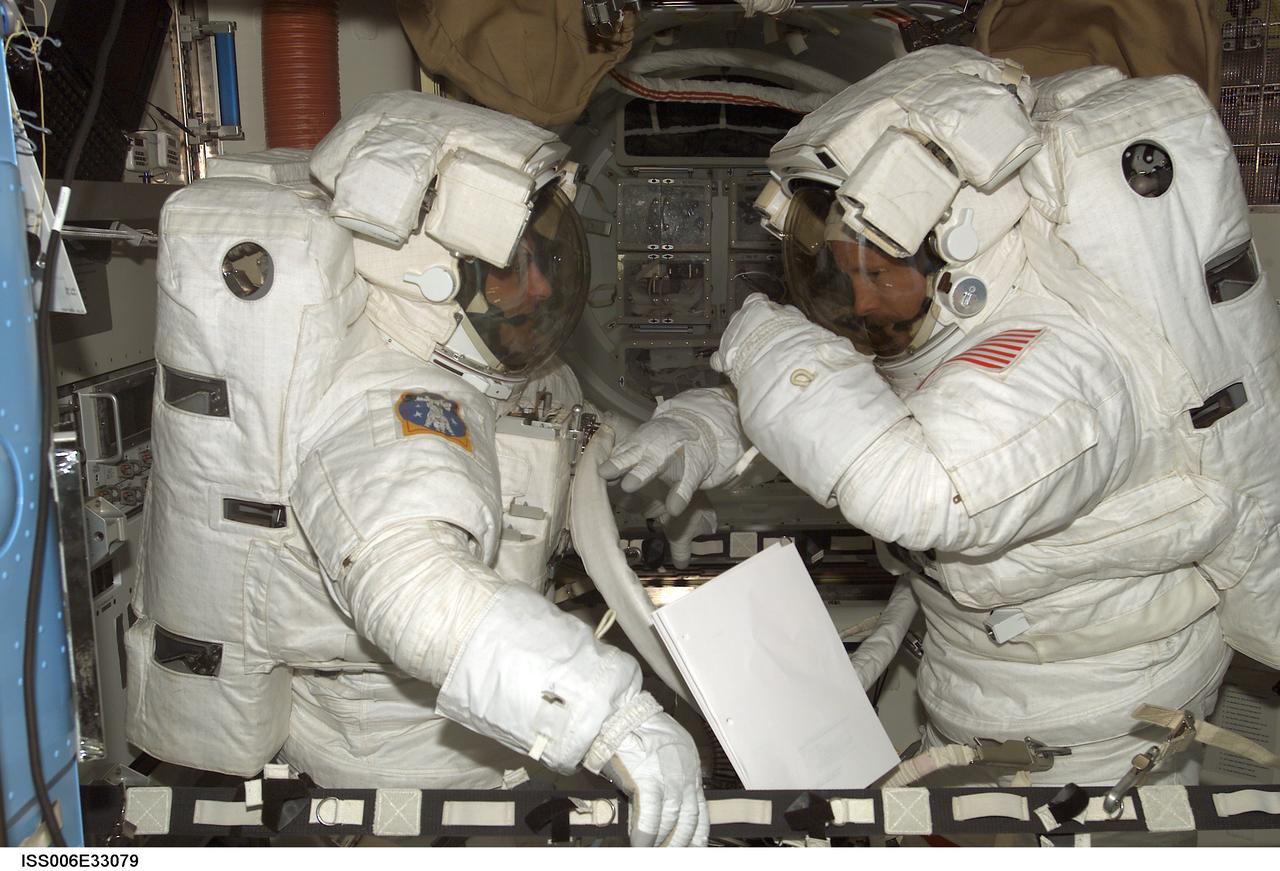
ISS006-E-33079 (24 February 2003) --- Astronauts Kenneth D. Bowersox (right) and Donald R. Pettit, Expedition Six mission commander and NASA ISS science officer, respectively, participate in a scheduled extravehicular activity (EVA) development test objective (DTO) in the Quest Airlock on the International Space Station (ISS). The test demonstrated the ability of two crewmembers to safely get into the American Extravehicular Mobility Unit (EMU) spacesuit without the assistance of a third crewmember; that ability is a prerequisite to sending smaller crews to ISS while the space shuttle fleet remains grounded during the investigation of the Columbia accident. Bowersox and Pettit helped each other into their EMU spacesuits, donned jet backpacks called Simplified Aid for EVA Rescue (SAFER), set up the necessary equipment for a pre-breathe of oxygen to purge nitrogen from their bloodstreams, and then got out of the spacesuits.
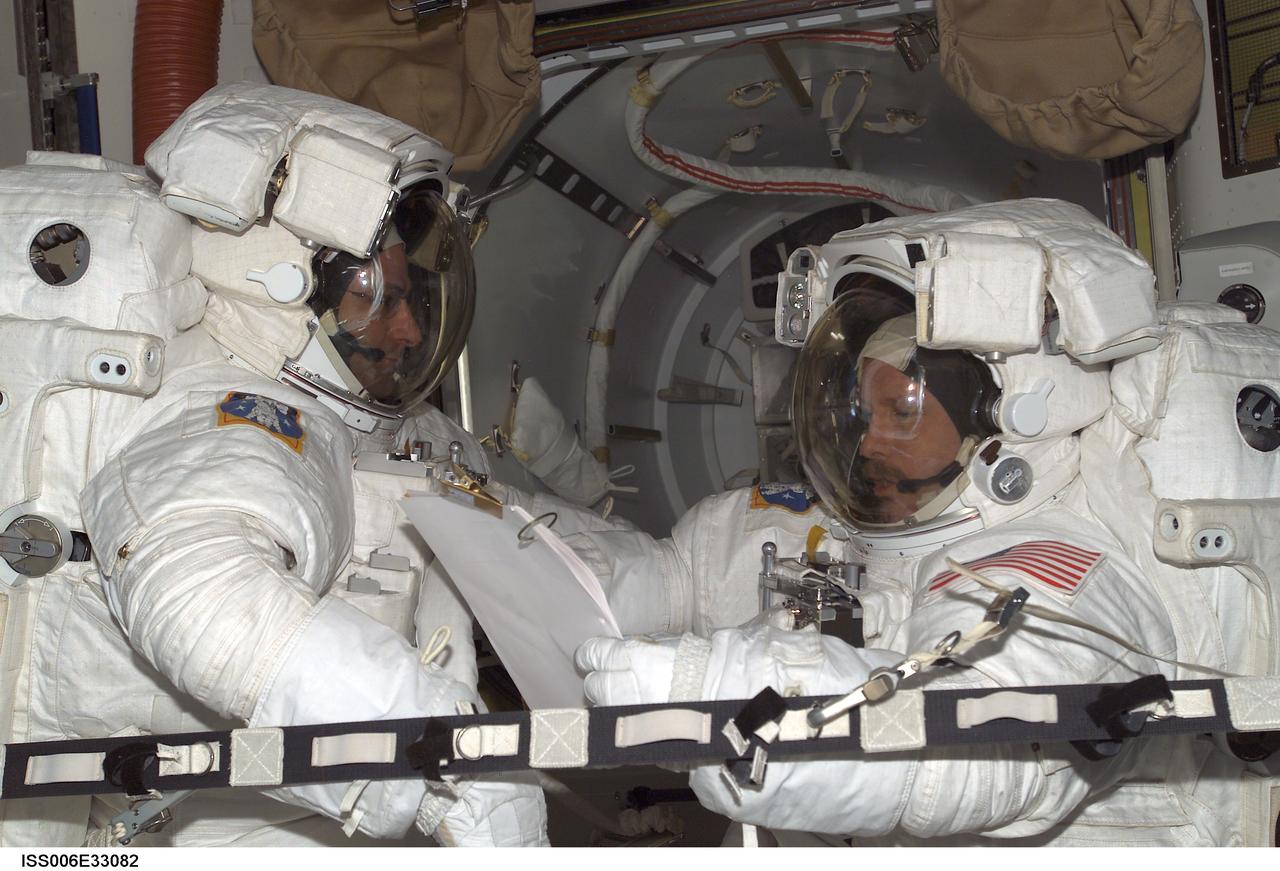
ISS006-E-33082 (24 February 2003) --- Astronauts Kenneth D. Bowersox (right) and Donald R. Pettit, Expedition Six mission commander and NASA ISS science officer, respectively, participate in a scheduled extravehicular activity (EVA) development test objective (DTO) in the Quest Airlock on the International Space Station (ISS). The test demonstrated the ability of two crewmembers to safely get into the American Extravehicular Mobility Unit (EMU) spacesuit without the assistance of a third crewmember; that ability is a prerequisite to sending smaller crews to ISS while the space shuttle fleet remains grounded during the investigation of the Columbia accident. Bowersox and Pettit helped each other into their EMU spacesuits, donned jet backpacks called Simplified Aid for EVA Rescue (SAFER), set up the necessary equipment for a pre-breathe of oxygen to purge nitrogen from their bloodstreams, and then got out of the spacesuits.

Spacesuit engineers Sheldon Stockfleth and Christine Jerome work to set up the base camp for the Joint Extravehicular Activity and Human Surface Mobility Test Team Field Test 5 (JETT5) in the San Francisco Volcanic Field in Northern Arizona on May 11, 2024. Credit: NASA/Josh Valcarcel
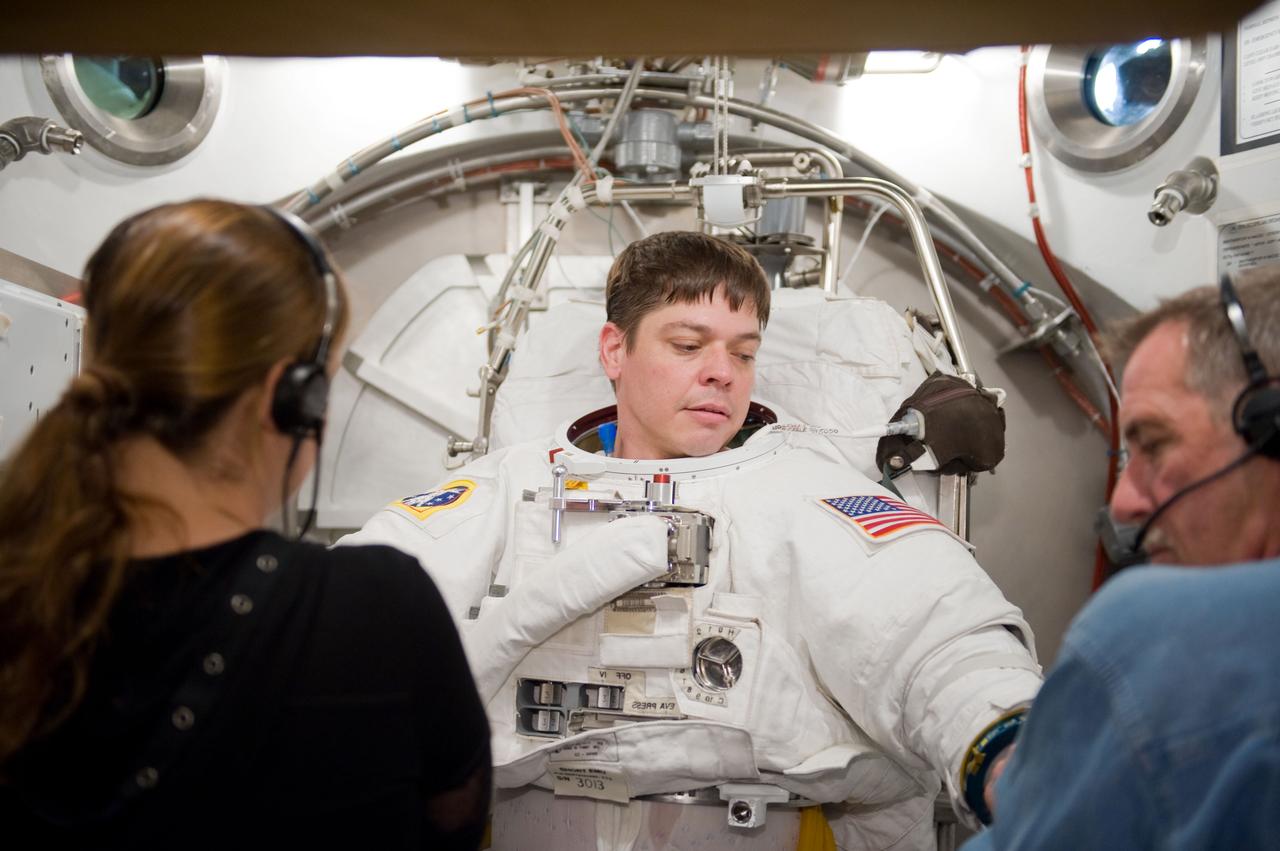
JSC2009-E-226273 (27 Oct. 2009) --- Astronaut Robert Behnken, STS-130 mission specialist, participates in an Extravehicular Mobility Unit (EMU) spacesuit fit check in the Space Station Airlock Test Article (SSATA) in the Crew Systems Laboratory at NASA's Johnson Space Center. Test directors assisted Behnken.
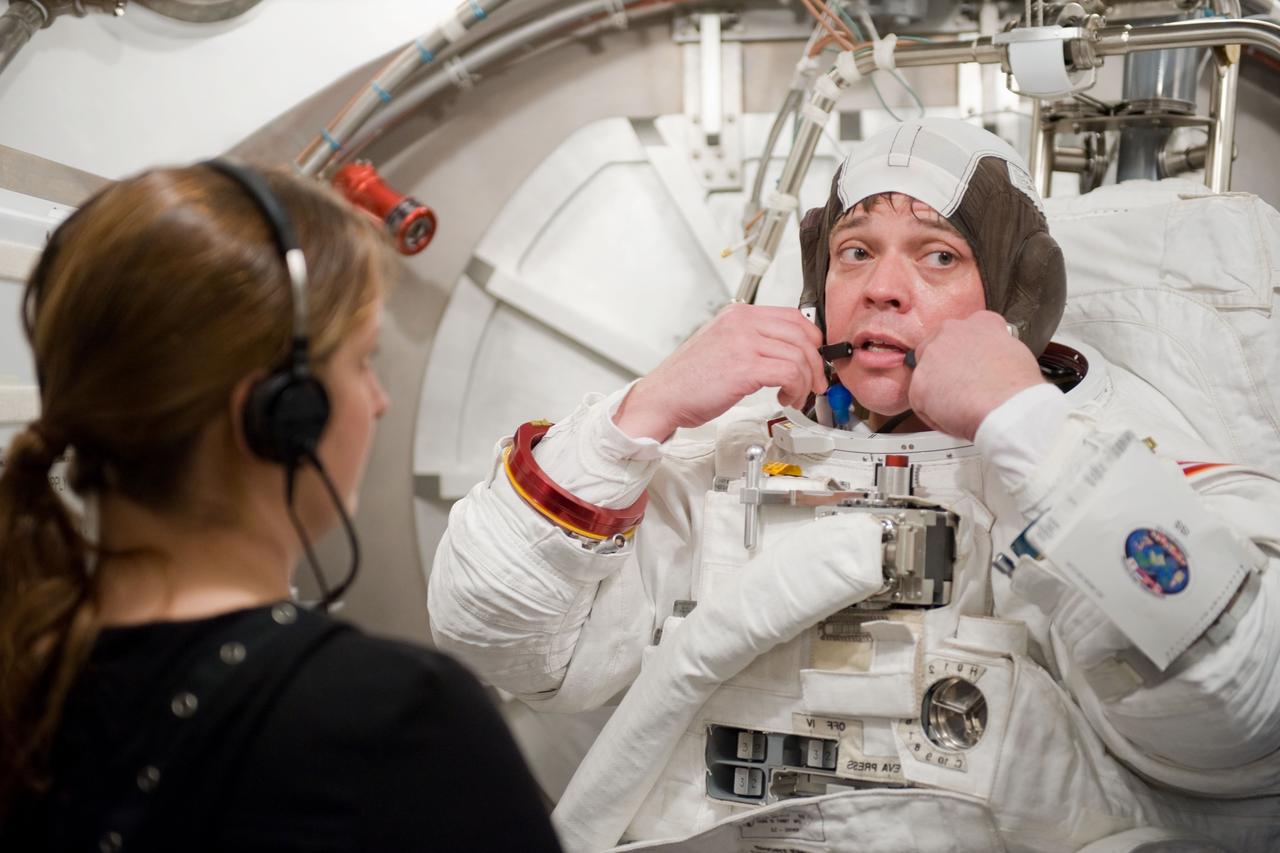
JSC2009-E-226274 (27 Oct. 2009) --- Astronaut Robert Behnken, STS-130 mission specialist, participates in an Extravehicular Mobility Unit (EMU) spacesuit fit check in the Space Station Airlock Test Article (SSATA) in the Crew Systems Laboratory at NASA's Johnson Space Center. Test director Christine Anchondo assisted Behnken.
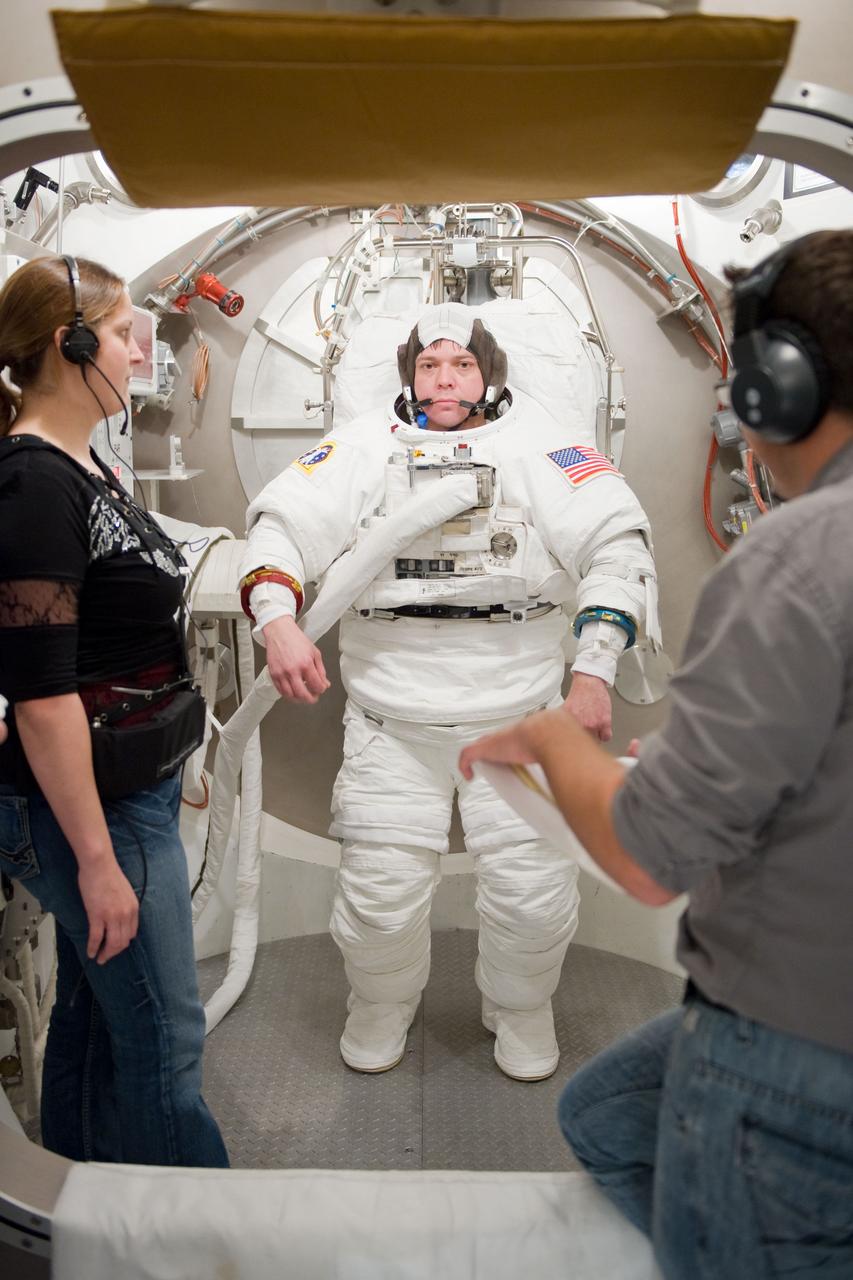
JSC2009-E-226276 (27 Oct. 2009) --- Astronaut Robert Behnken, STS-130 mission specialist, participates in an Extravehicular Mobility Unit (EMU) spacesuit fit check in the Space Station Airlock Test Article (SSATA) in the Crew Systems Laboratory at NASA's Johnson Space Center. Test directors assisted Behnken.
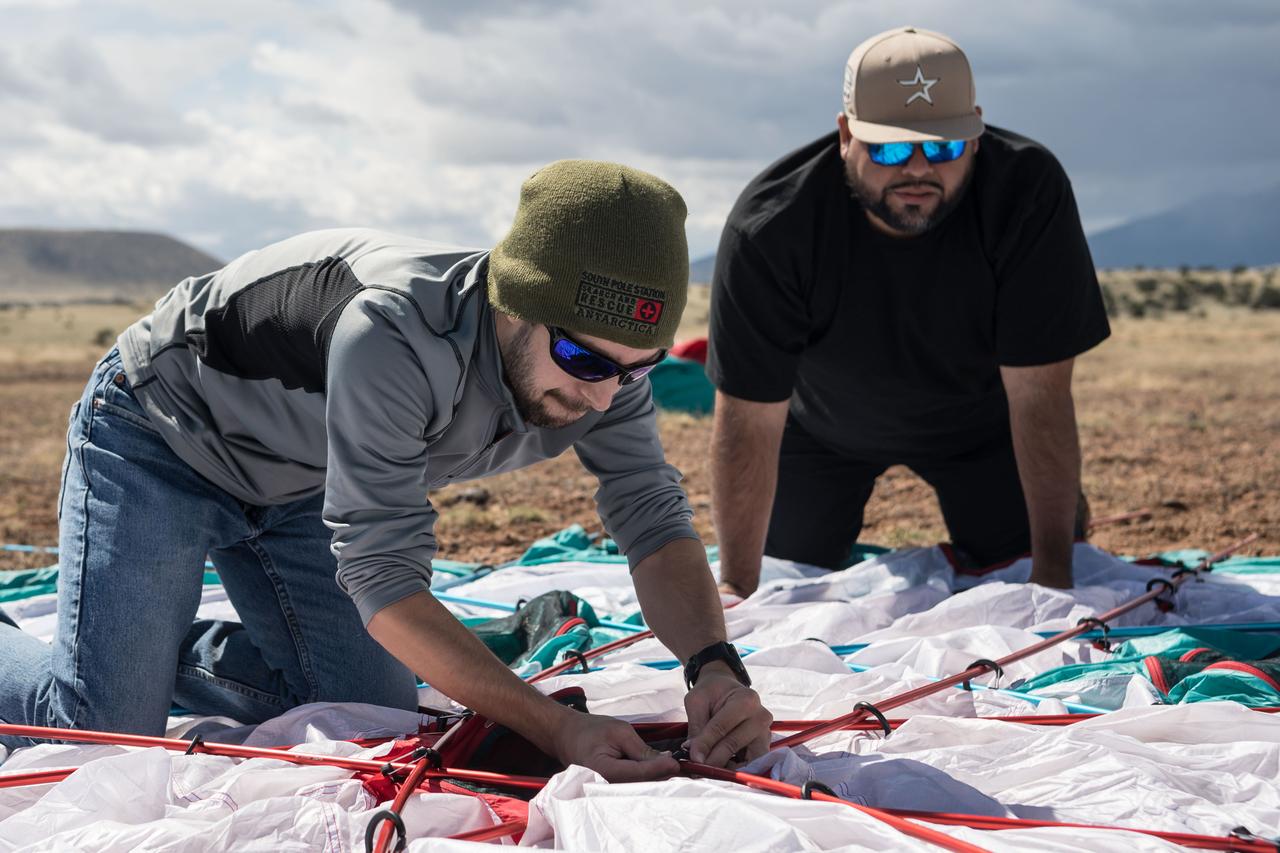
Spacesuit engineers Zach Tejral (left) and Joel Alvarado (right) work to set up the base camp for the Joint Extravehicular Activity and Human Surface Mobility Test Team Field Test 5 in the San Francisco Volcanic Field in Northern Arizona on May 11, 2024. Credit: NASA/Josh Valcarcel
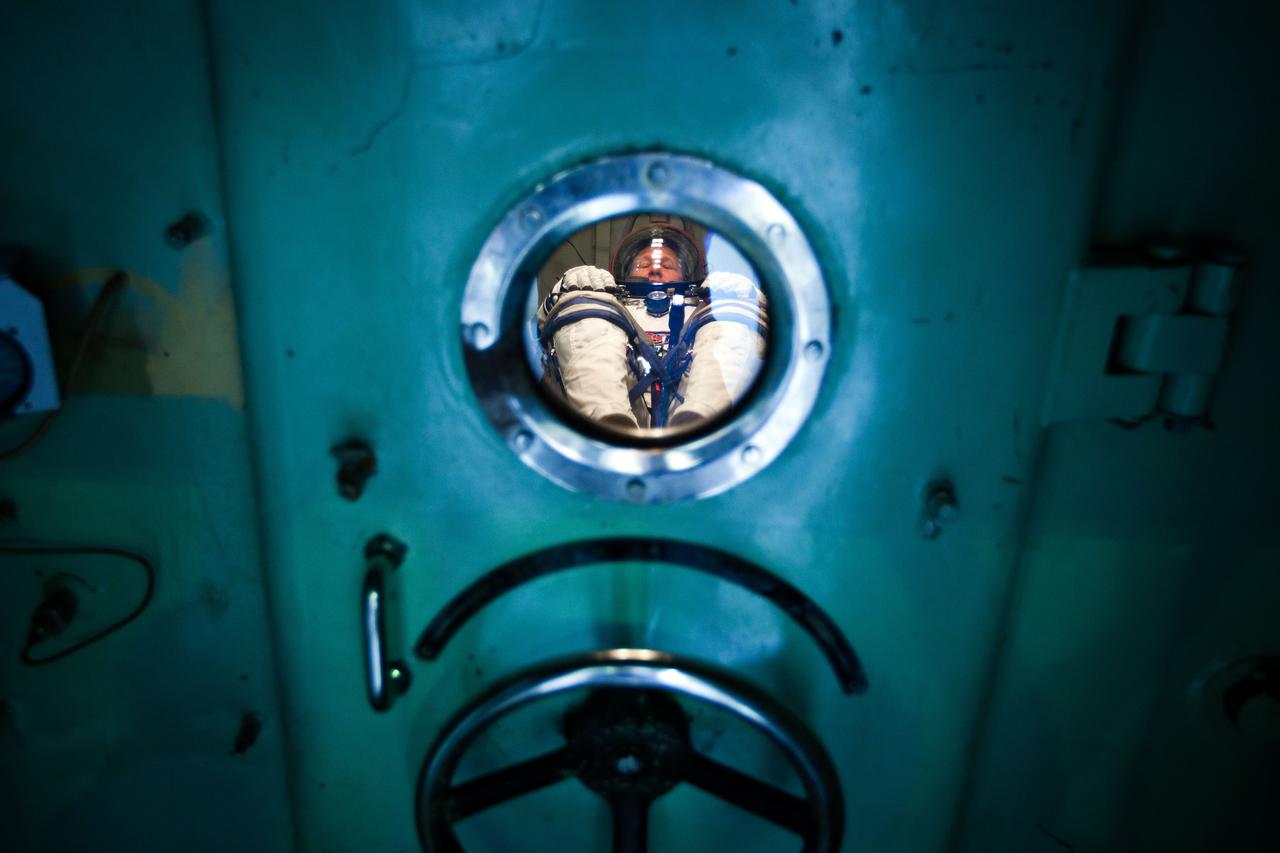
JSC2011-E-040325 (30 March 2011) --- NASA astronaut Doug Hurley, STS-135 pilot, waits in a pressure chamber before a test of his Sokol spacesuit at the Zvezda facility in Moscow March 30, 2011. The crew of the final shuttle mission traveled to Moscow for a suit fit check of their Russian spacesuits which would be required in the event of an emergency. Photo credit: NASA Photo/Houston Chronicle, Smiley N. Pool
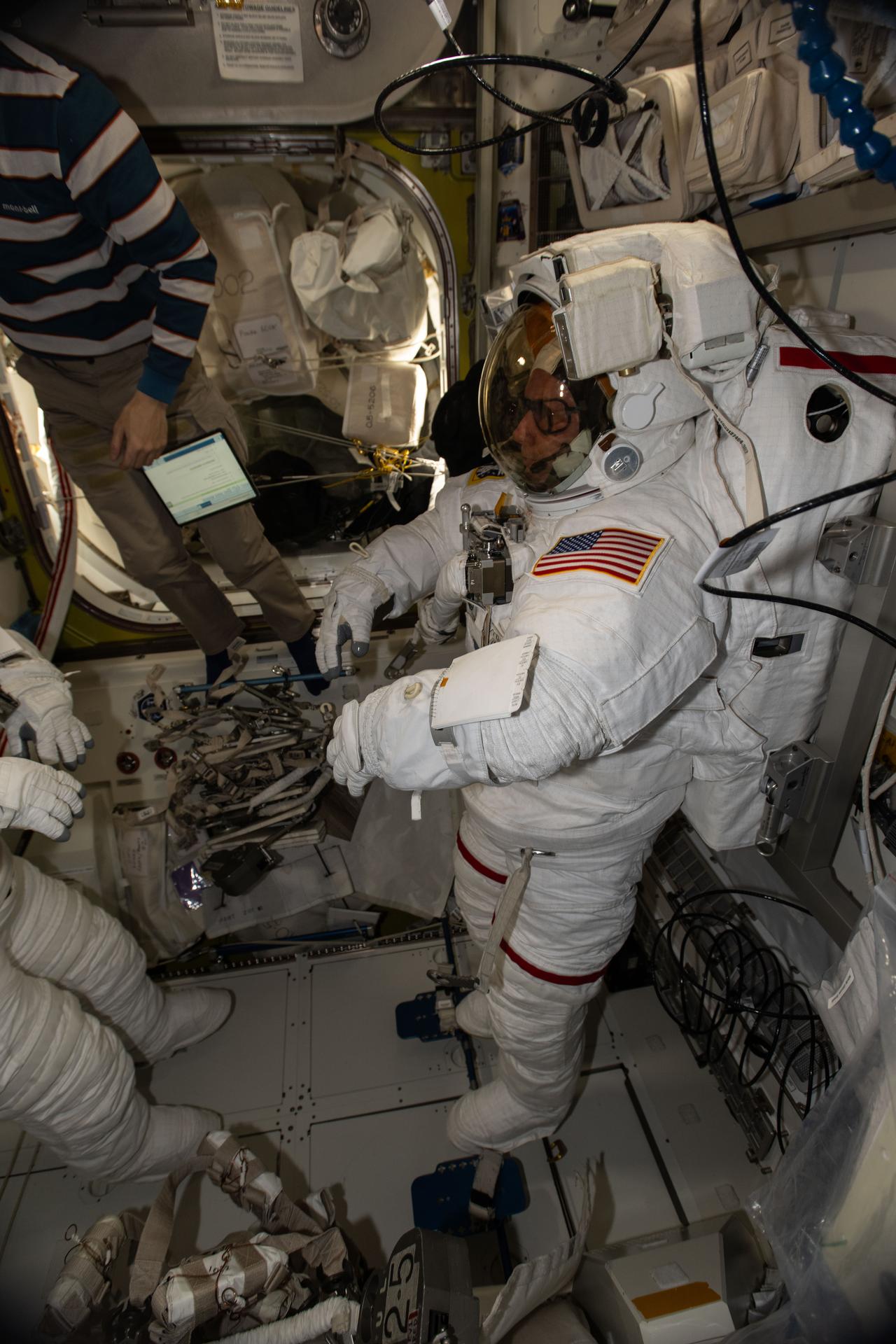
iss074e0007218 (Dec. 30,2025) --- NASA astronaut and Expedition 74 Commander Mike Fincke is pictured in his pressurized spacesuit, checking its communication and power systems ahead of a spacewalk planned for Thursday, Jan. 8, 2025. Partially obscured at left, JAXA (Japan Aerospace Exploration Agency) astronaut and Flight Engineer Kimiya Yui assists NASA Flight Engineer Zena Cardman as she tests the operations of her spacesuit inside the International Space Station’s Quest airlock.
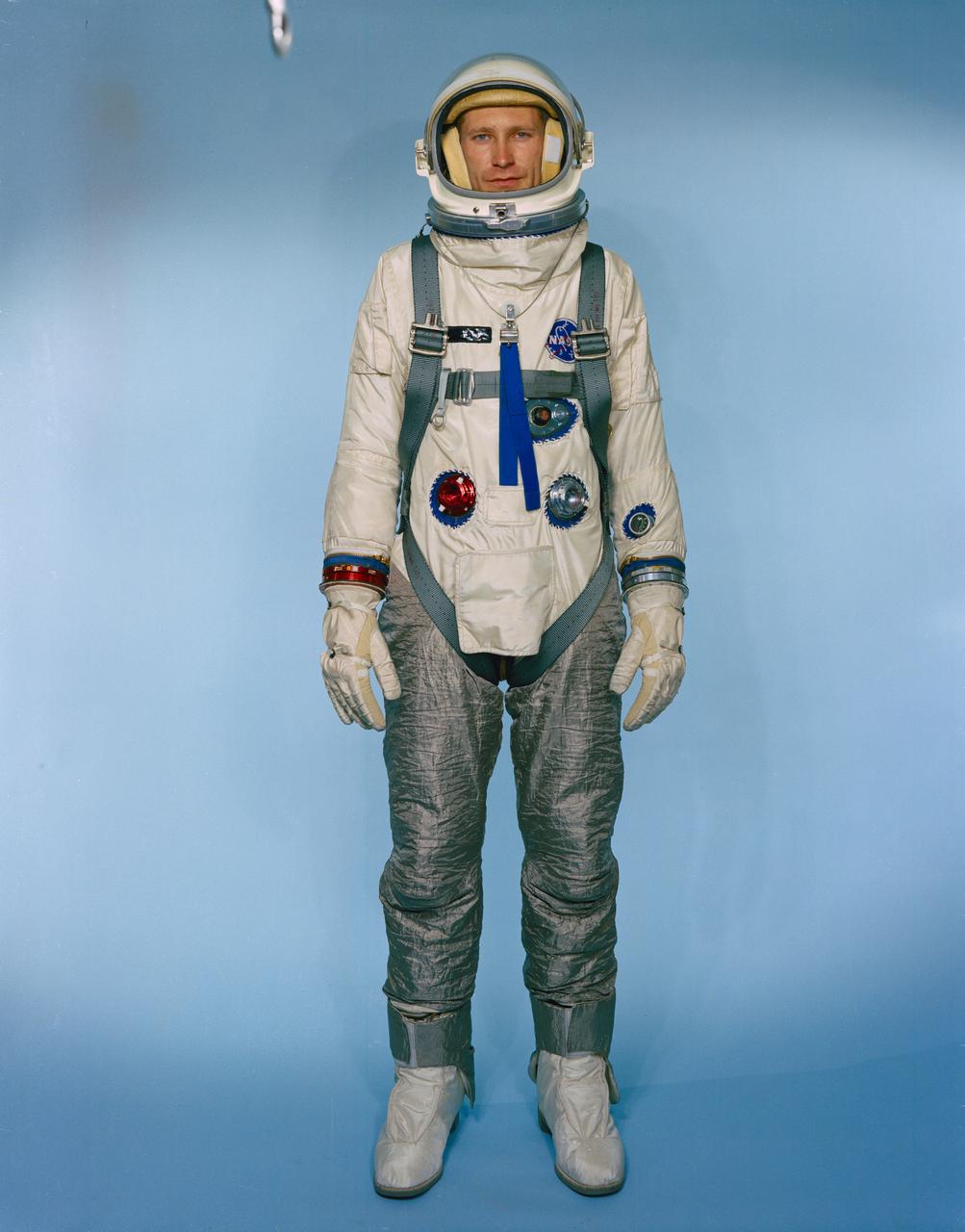
S66-31019 (May 1966) --- Test subject Fred Spross, Crew Systems Division, wears the Gemini-9 configured extravehicular spacesuit assembly. The legs are covered with Chromel R, which is a cloth woven from stainless steel fibers, used to protect the astronaut and suit from the hot exhaust thrust of the Astronaut Maneuvering Unit (AMU). Astronaut Eugene A. Cernan will wear this spacesuit during his Gemini-9A extravehicular activity (EVA). Photo credit: NASA
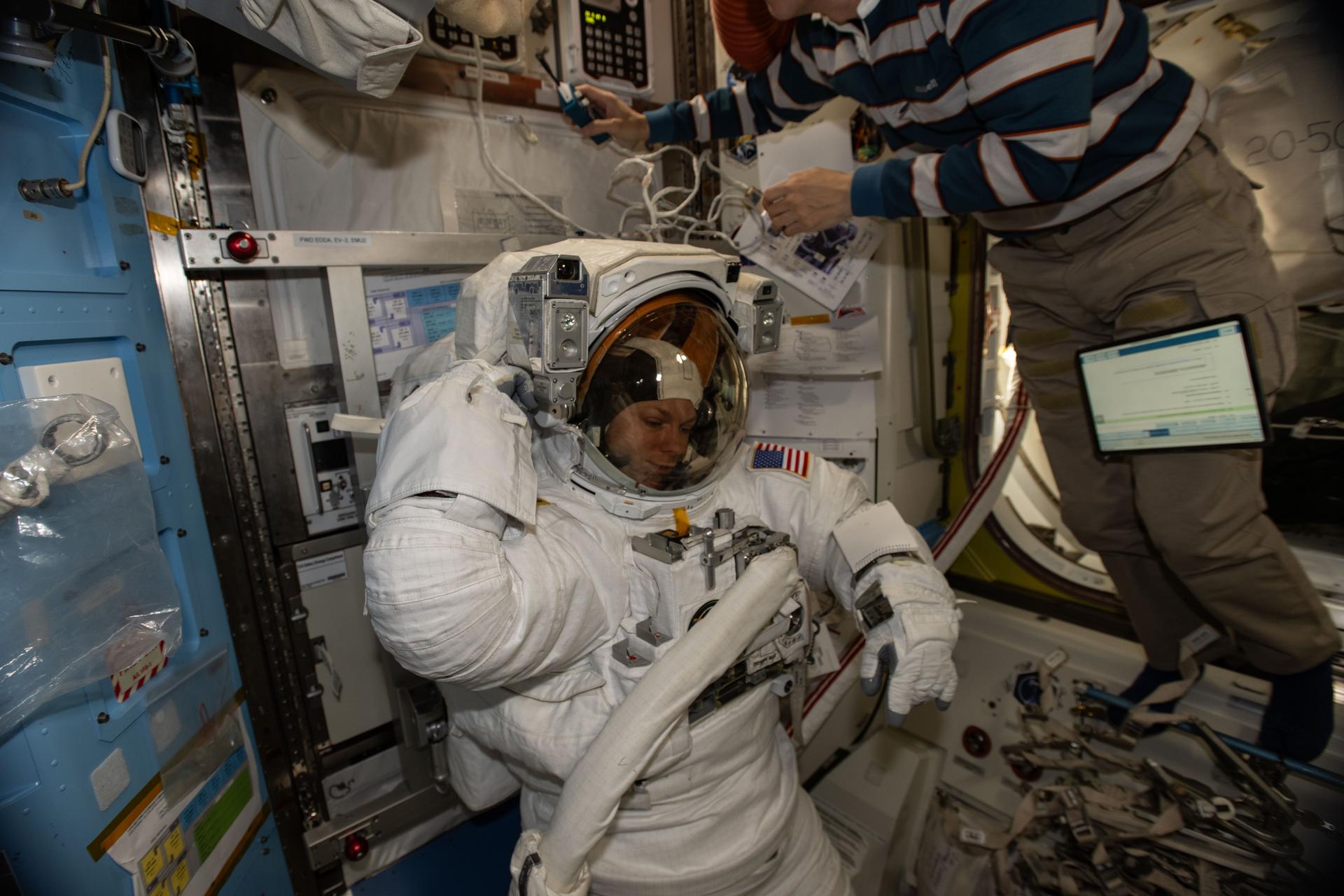
iss074e0007219 (Dec. 30,2025) --- NASA astronaut and Expedition 74 Flight Engineer Zena Cardman is pictured in her pressurized spacesuit, checking its communication and power systems ahead of a spacewalk planned for Thursday, Jan. 8, 2025. At upper right, JAXA (Japan Aerospace Exploration Agency) astronaut and Flight Engineer Kimiya Yui assists Cardman as she tests the operations of her spacesuit inside the International Space Station’s Quest airlock.
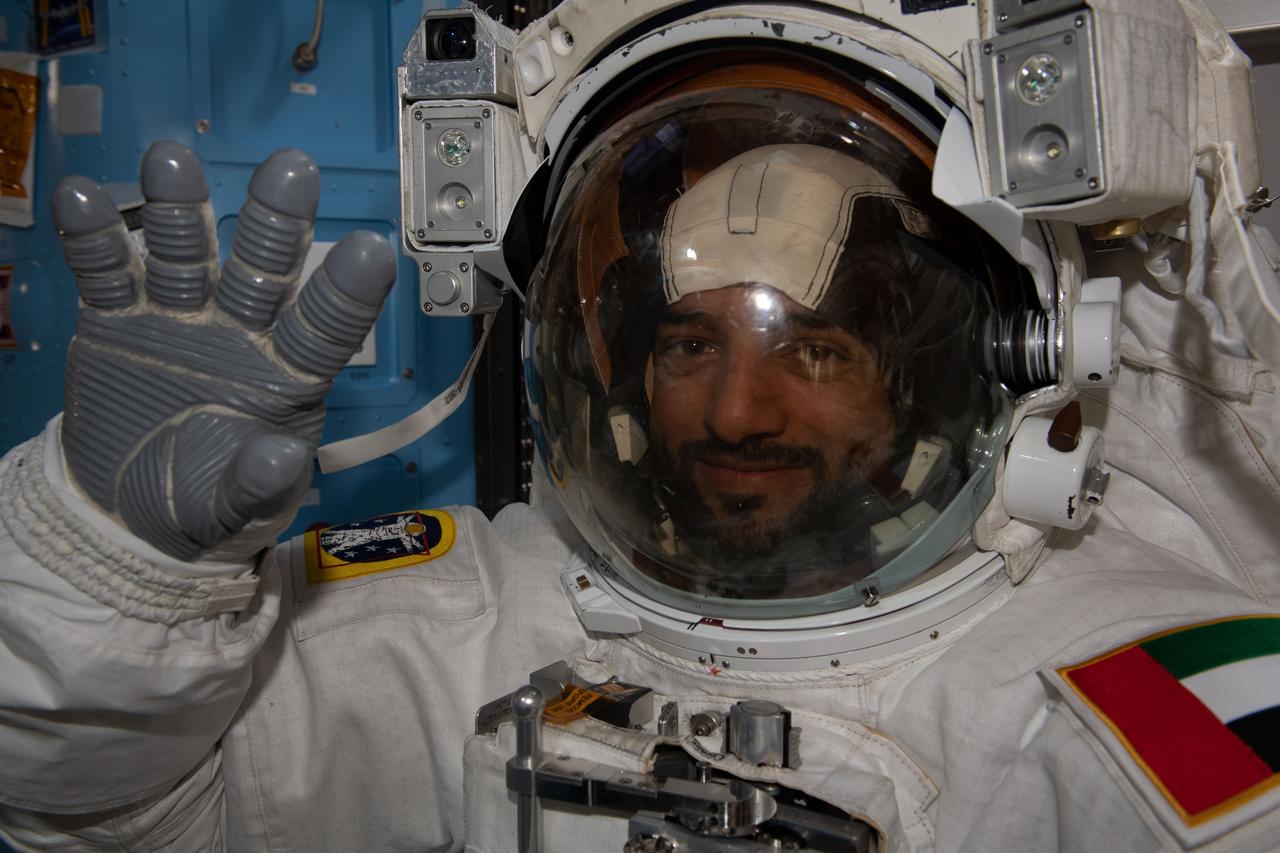
iss069e005102 (April 24, 2023) --- UAE (United Arab Emirates) astronaut and Expedition 69 Flight Engineer Sultan Alneyadi is pictured trying on his Extravehicular Mobility Unit, or spacesuit, and testing it ahead of a spacewalk planned for Friday, April 28. Alneyadi, along with NASA astronaut Stephen Bowen, will spend about six-and-a-half hours in the vacuum of space continuing to upgrade the International Space Station’s power generation system readying the orbiting lab for its next set of roll-out solar arrays.
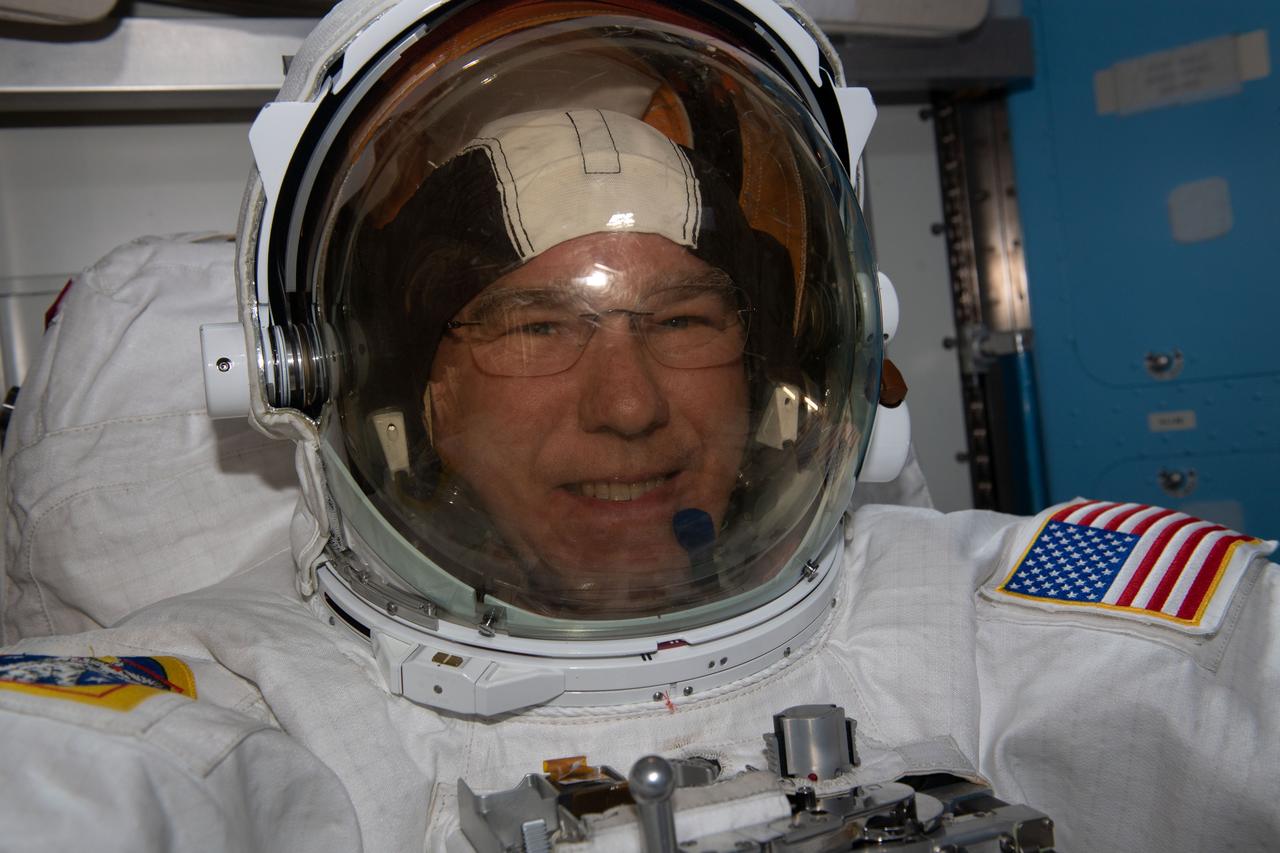
iss069e005093 (April 24, 2023) --- NASA astronaut and Expedition 69 Flight Engineer Stephen Bowen is pictured trying on his Extravehicular Mobility Unit, or spacesuit, and testing it ahead of a spacewalk planned for Friday, April 28. Bowen, along with UAE (United Arab Emirates) astronaut Sultan Alneyadi, will spend about six-and-a-half hours in the vacuum of space continuing to upgrade the International Space Station’s power generation system readying the orbiting lab for its next set of roll-out solar arrays.
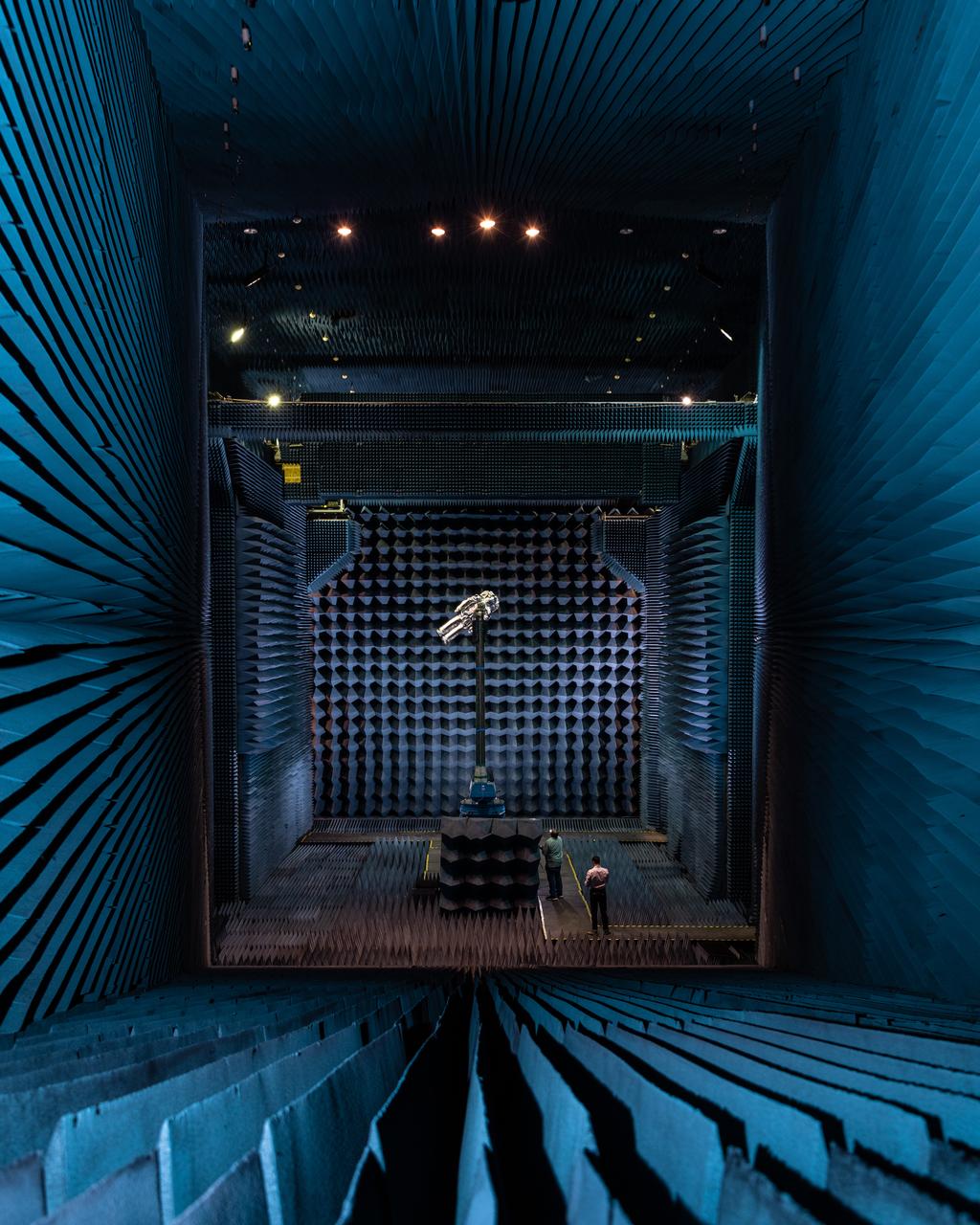
xEMU Antenna testing being performed in the B14 Anechoic Chamber to inspect MLI keep out zones for the antennas. The xEMU Test article is named xGUS, the successor to the EMU Test Article also named GUS (named after Gus Grissom and his iconic silver spacesuit). Image taken from where "horn" is located that sends out radio frequency signals for test. Photographer: Norah Moran – Johnson Space Center
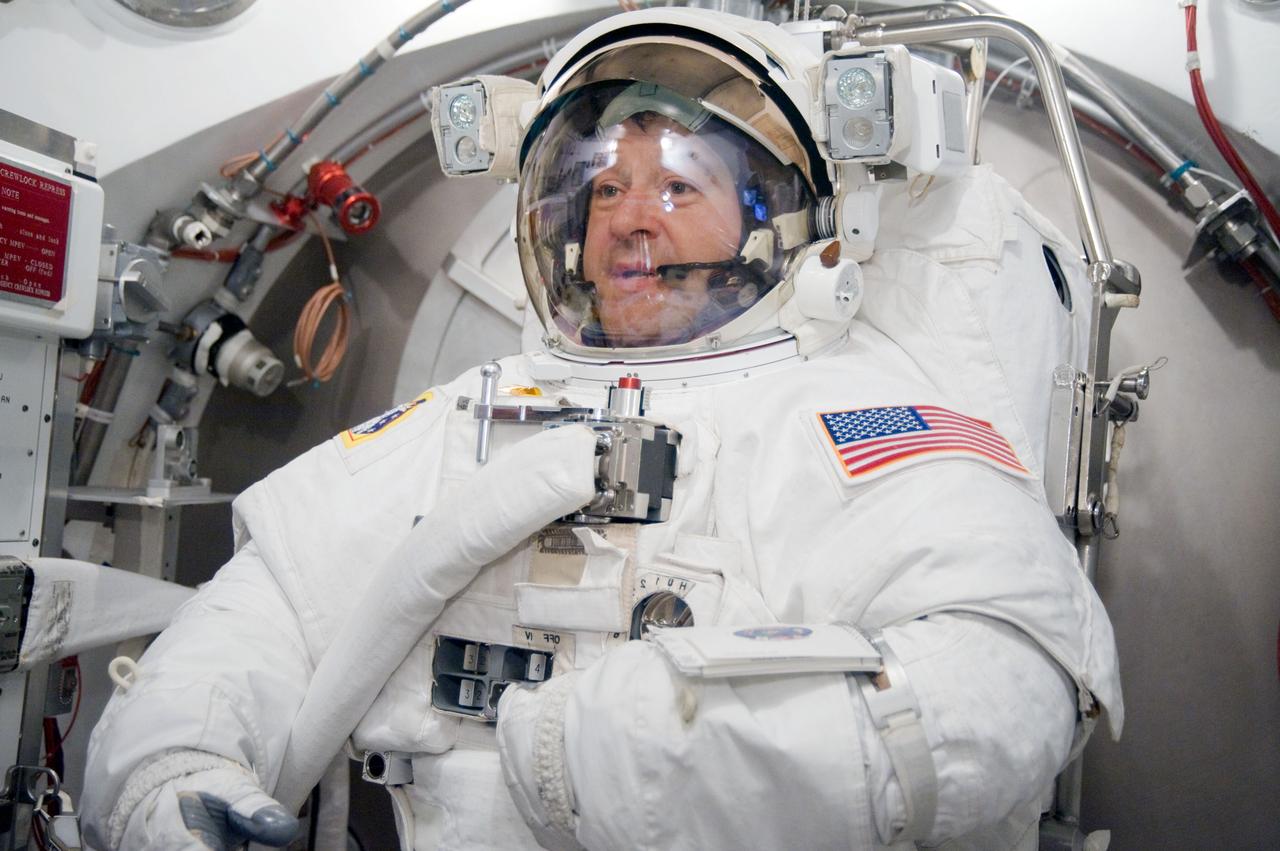
JSC2009-E-228759 (29 Oct. 2009) --- Astronaut Nicholas Patrick, STS-130 mission specialist, participates in an Extravehicular Mobility Unit (EMU) spacesuit fit check in the Space Station Airlock Test Article (SSATA) in the Crew Systems Laboratory at NASA's Johnson Space Center.
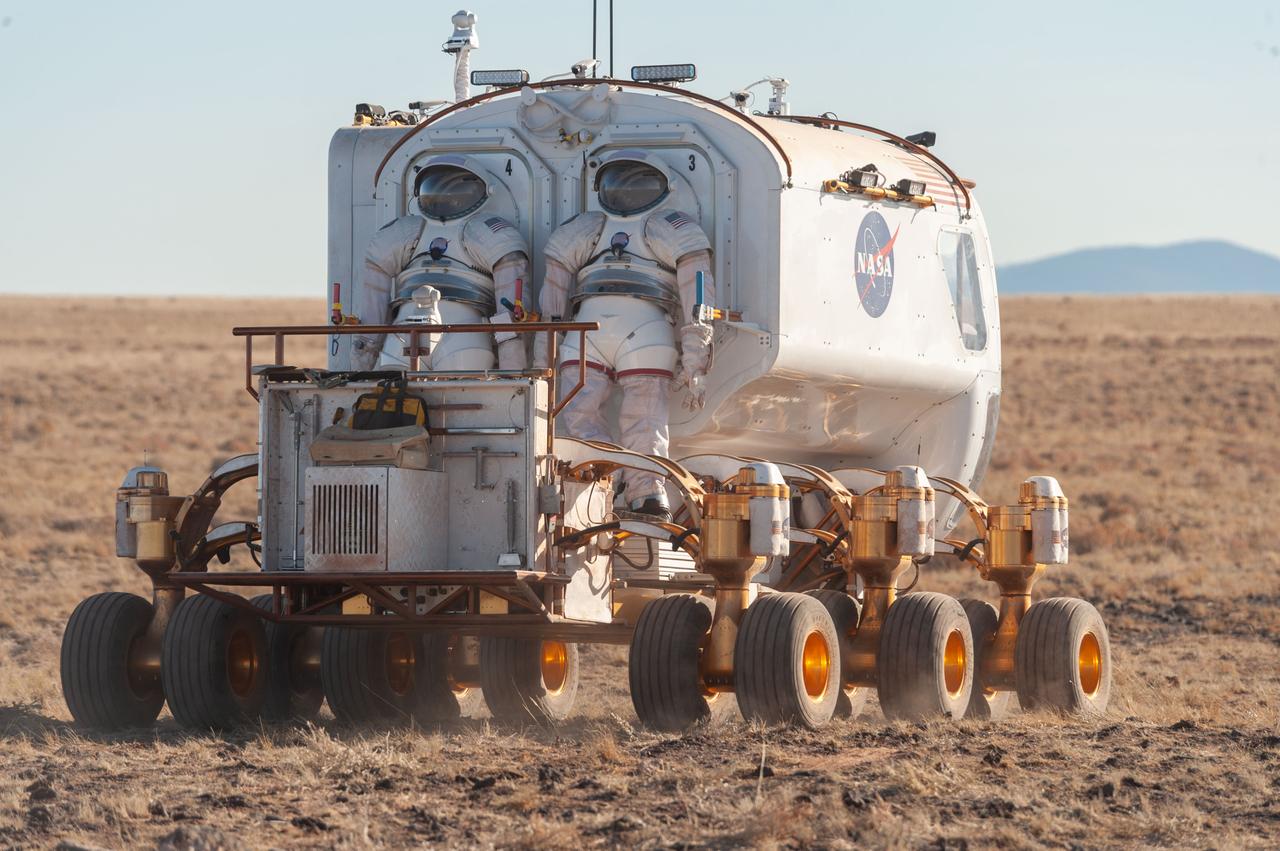
A back view of the Lunar Electric Rover (LER) during the Desert Research and Technology Studies (RATS) remote field test at Black Point Lava Flow, Arizona in 2008. Two Mark III spacesuits are visibly mounted on the LER suit port.
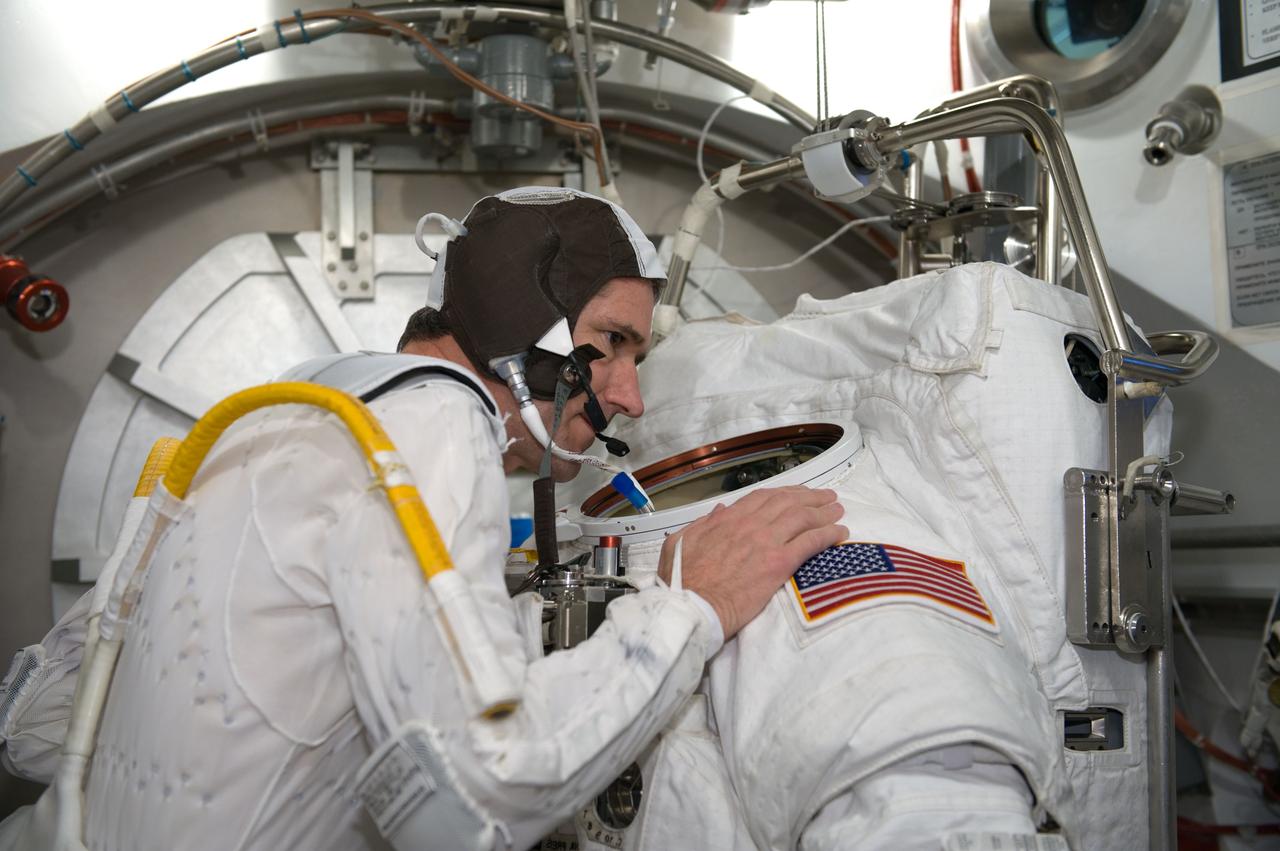
JSC2010-E-026875 (26 Feb. 2010) --- NASA astronaut Michael Good, STS-132 mission specialist, participates in an Extravehicular Mobility Unit (EMU) spacesuit fit check in the Space Station Airlock Test Article (SSATA) in the Crew Systems Laboratory at NASA's Johnson Space Center.
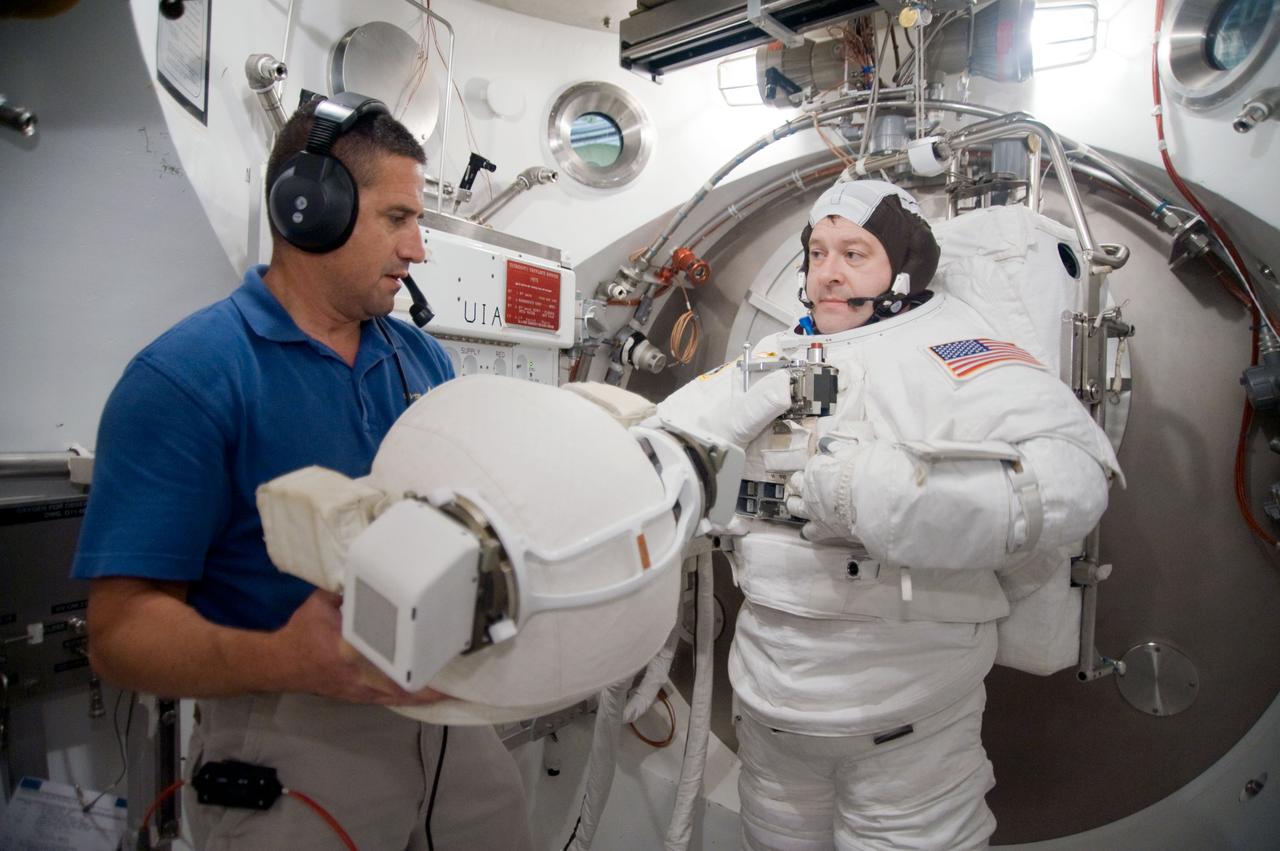
JSC2009-E-228755 (29 Oct. 2009) --- Astronaut Nicholas Patrick, STS-130 mission specialist, participates in an Extravehicular Mobility Unit (EMU) spacesuit fit check in the Space Station Airlock Test Article (SSATA) in the Crew Systems Laboratory at NASA's Johnson Space Center. Astronaut George Zamka, commander, assisted Patrick.
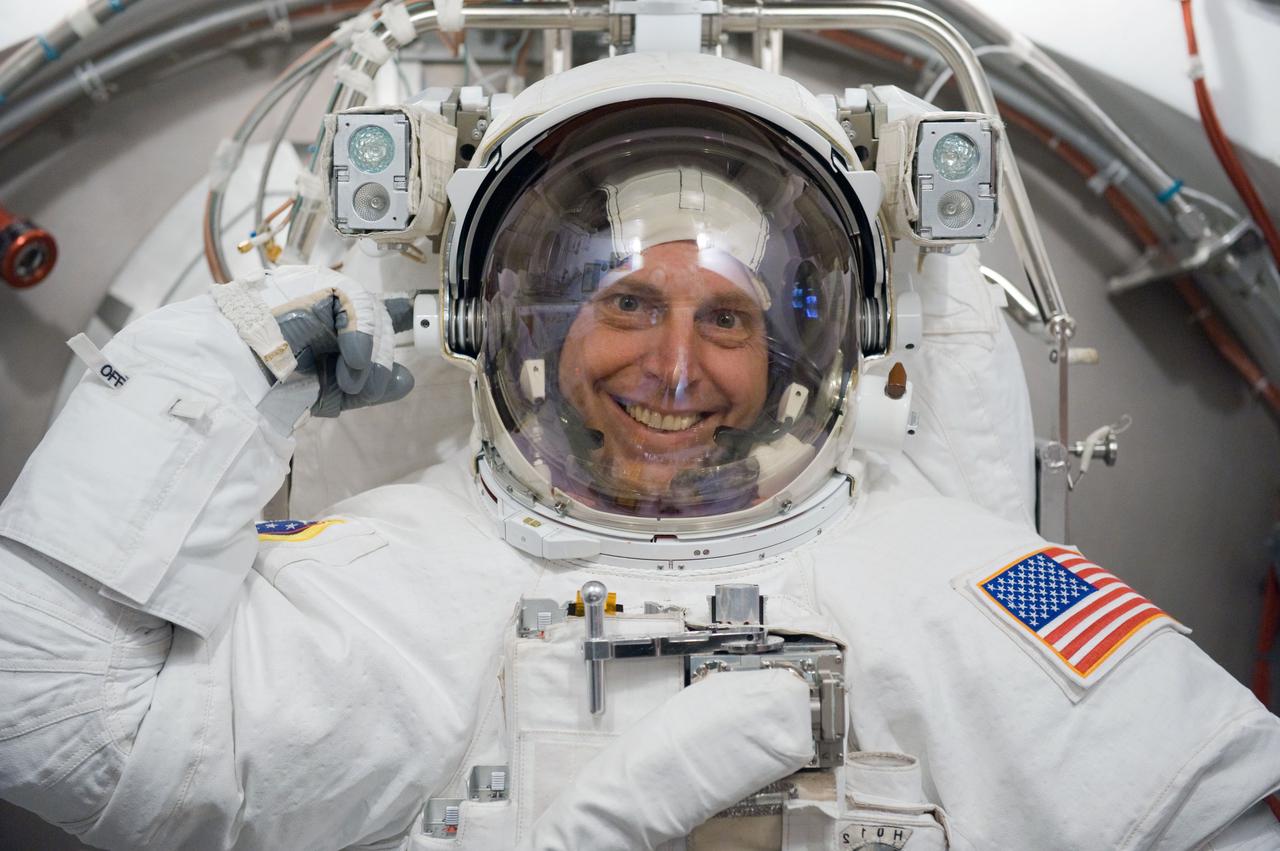
JSC2009-E-240514 (5 Nov. 2009) --- Astronaut Clayton Anderson, STS-131 mission specialist, participates in an Extravehicular Mobility Unit (EMU) spacesuit fit check in the Space Station Airlock Test Article (SSATA) in the Crew Systems Laboratory at NASA's Johnson Space Center.
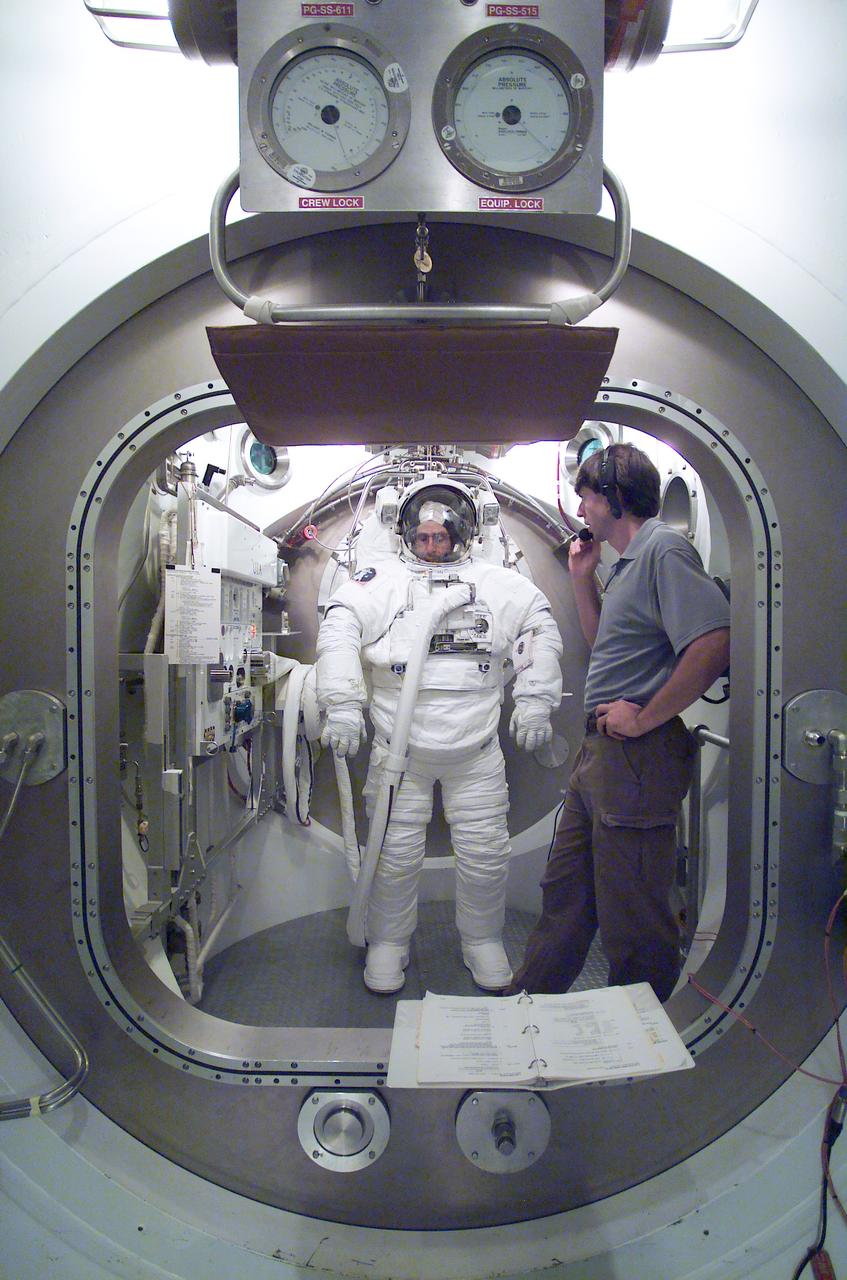
JSC2002-E-36202 (27 August 2002) --- Astronaut Donald R. Pettit, Expedition Six flight engineer, participates in an Extravehicular Mobility Unit (EMU) spacesuit fit check in a Space Station Airlock Test Article (SSATA) in the Crew Systems Laboratory at the Johnson Space Center (JSC). Zebulon L. Scoville assisted Pettit.
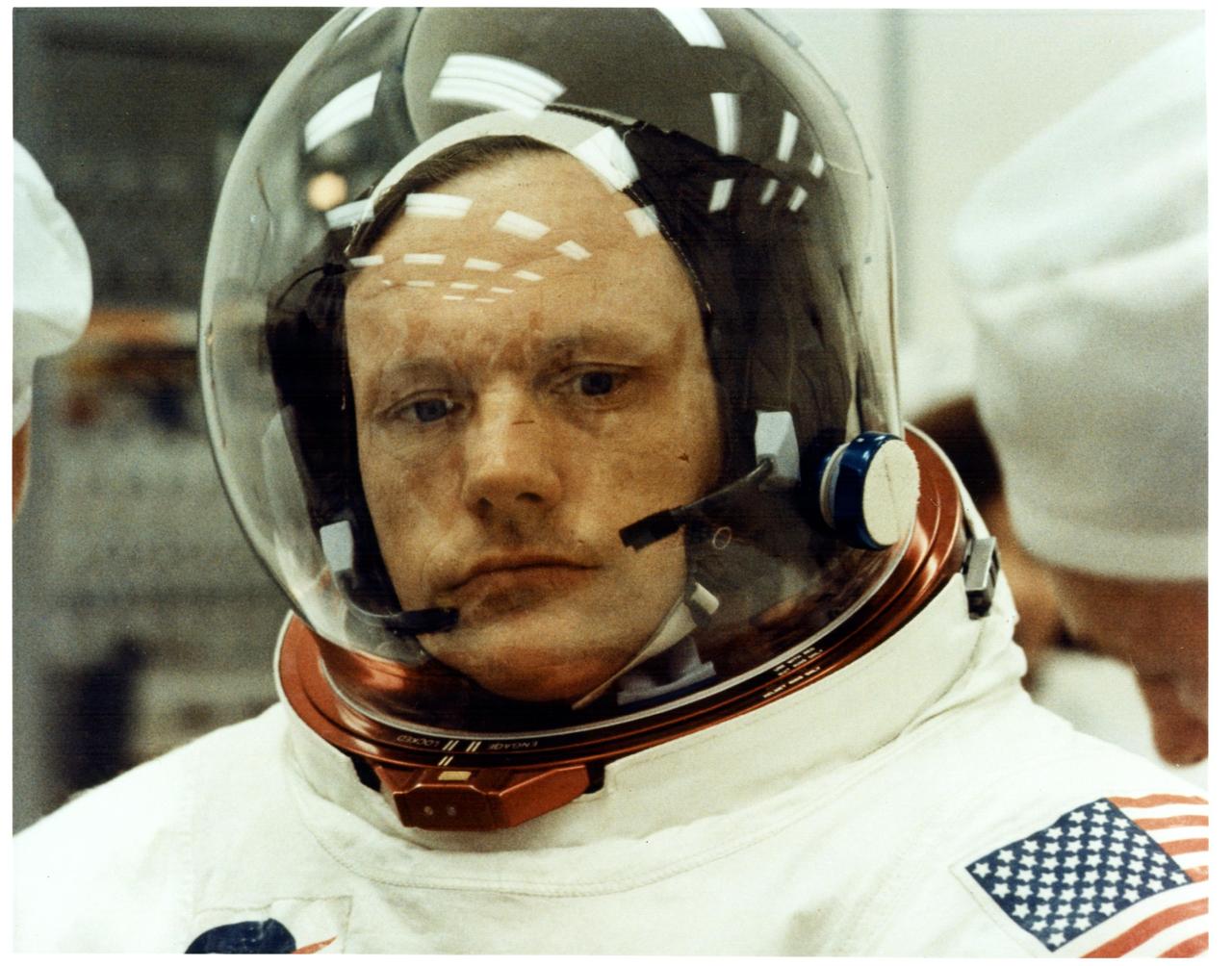
KENNEDY SPACE CENTER, FLA. - Technicians make the final adjustments to Apollo 11 Commander Neil A. Armstrong's spacesuit as he prepares to take part in a space vehicle Countdown Demonstration Test (CDDT). Astronauts Armstrong, Aldrin and Collins are practicing for ther mission, the first manned Lunar landing.

JSC2009-E-228746 (29 Oct. 2009) --- Astronaut Nicholas Patrick, STS-130 mission specialist, participates in an Extravehicular Mobility Unit (EMU) spacesuit fit check in the Space Station Airlock Test Article (SSATA) in the Crew Systems Laboratory at NASA's Johnson Space Center. Astronaut George Zamka, commander, assisted Patrick.
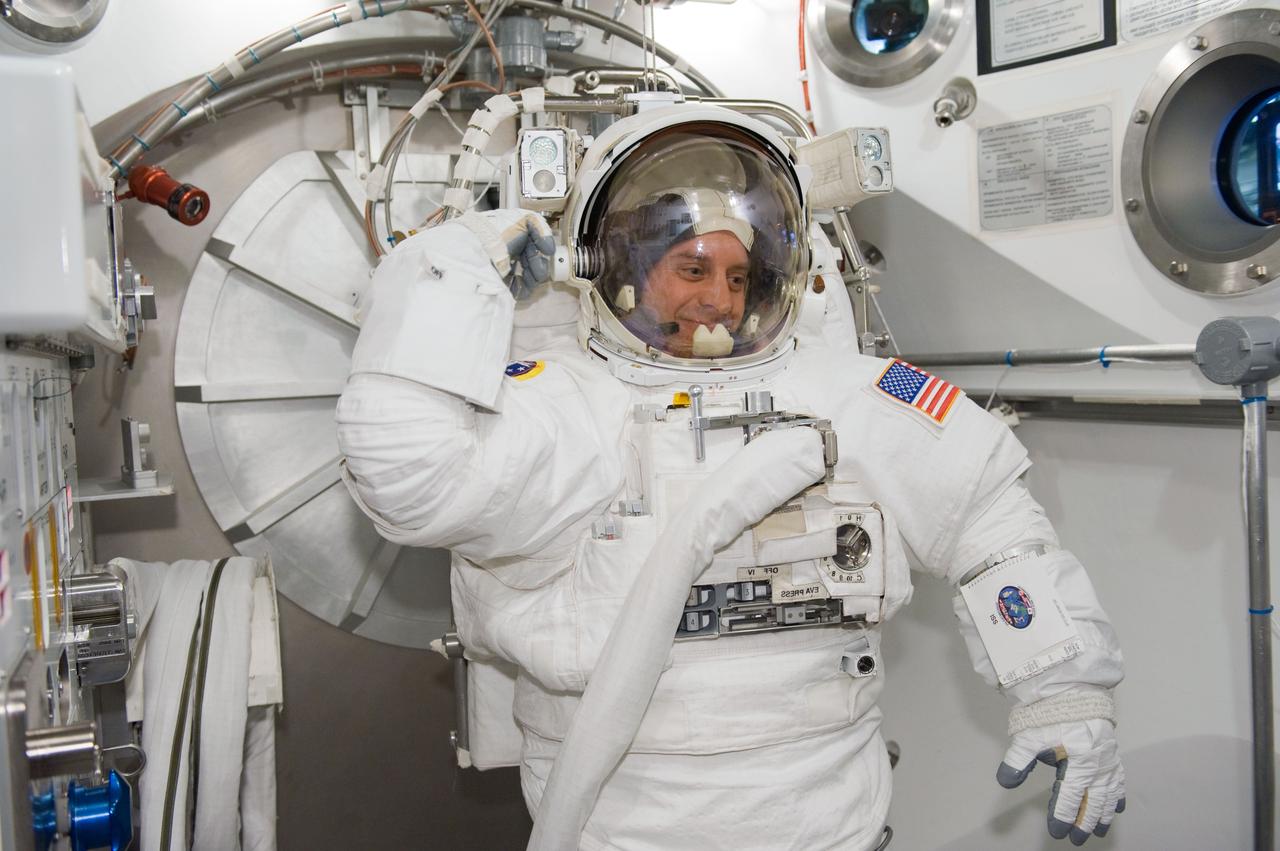
JSC2010-E-041268 (17 March 2010) --- NASA astronaut Garrett Reisman, STS-132 mission specialist, participates in an Extravehicular Mobility Unit (EMU) spacesuit fit check in the Space Station Airlock Test Article (SSATA) in the Crew Systems Laboratory at NASA's Johnson Space Center.
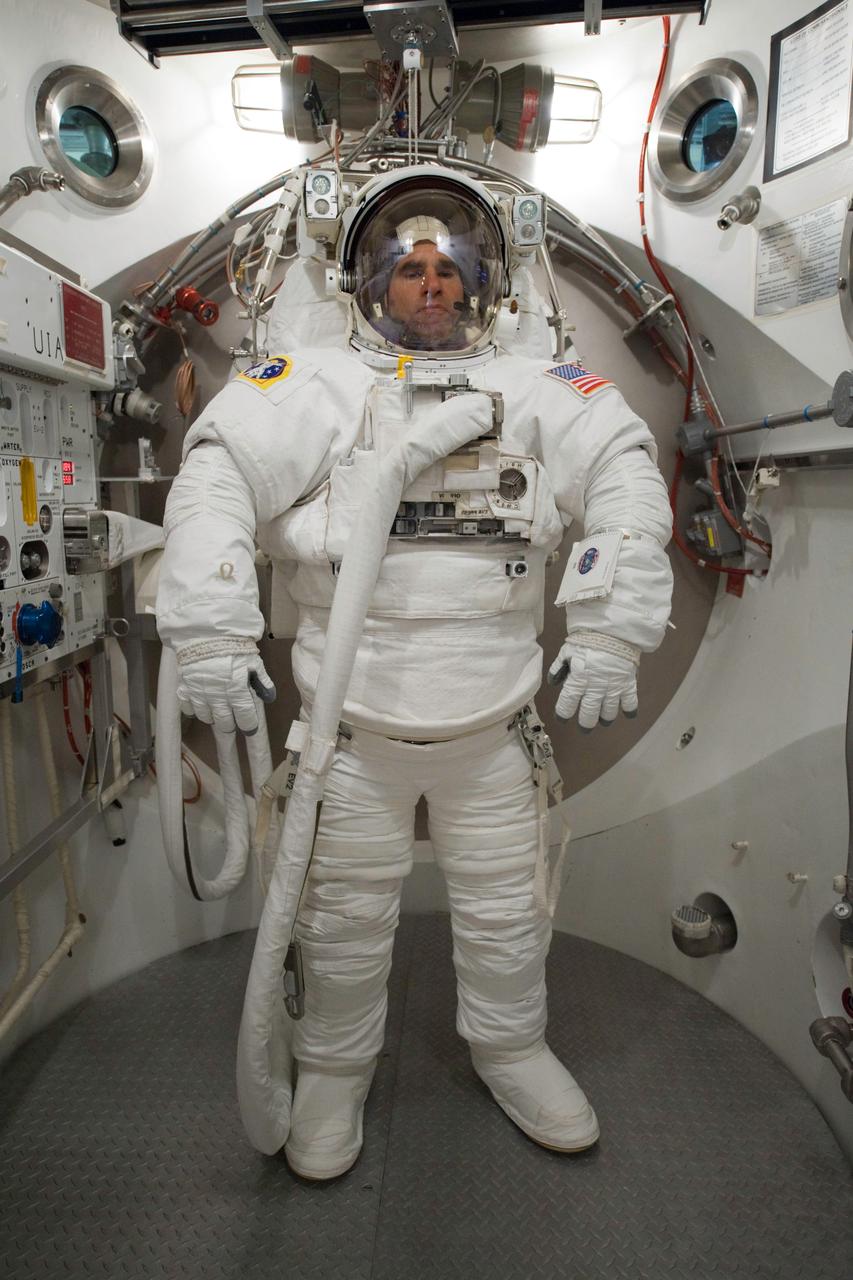
JSC2010-E-060735 (29 April 2010) --- NASA astronaut Greg Chamitoff, STS-134 mission specialist, participates in an Extravehicular Mobility Unit (EMU) spacesuit fit check in the Space Station Airlock Test Article (SSATA) in the Crew Systems Laboratory at NASA's Johnson Space Center.
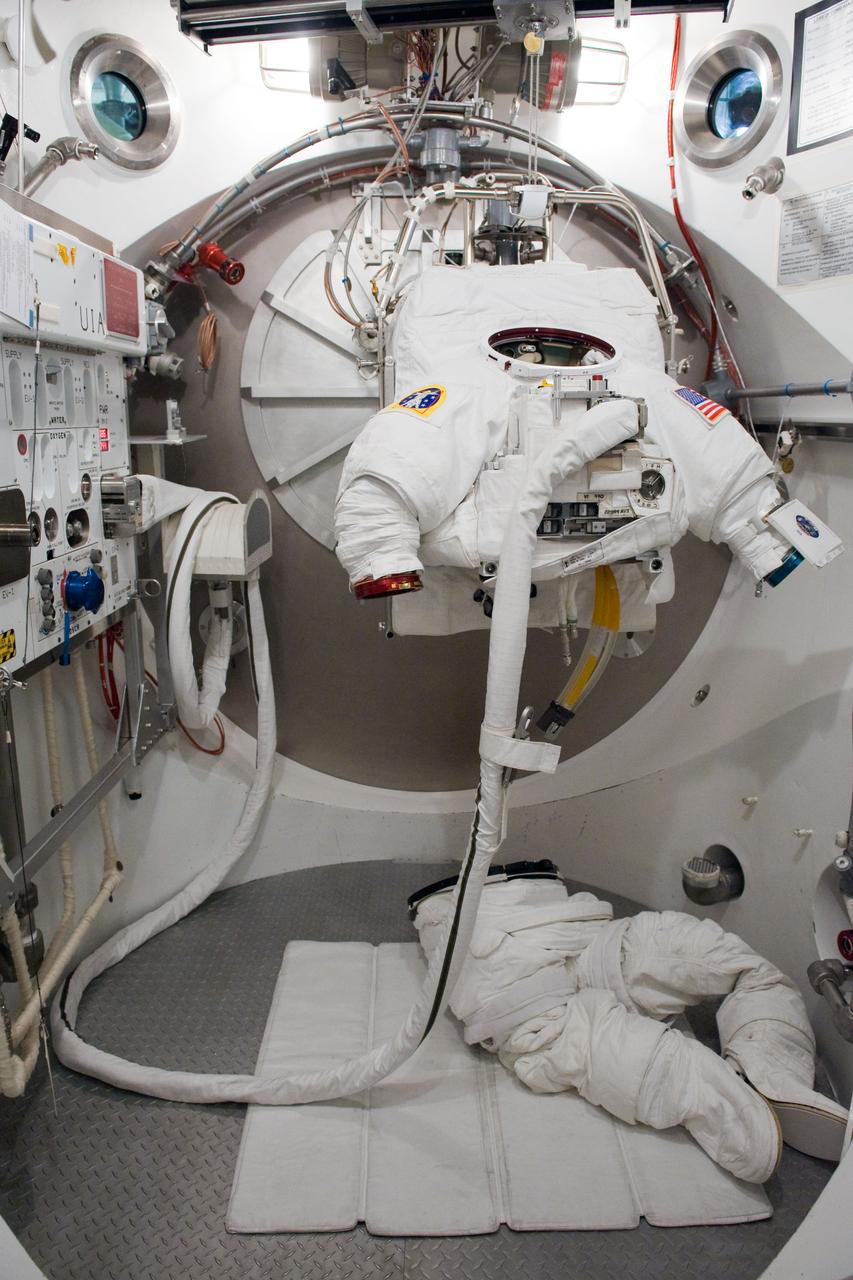
JSC2009-E-240471 (5 Nov. 2009) --- An empty Extravehicular Mobility Unit (EMU) spacesuit is photographed prior to a fit check with astronaut Clayton Anderson (out of frame), STS-131 mission specialist, in the Space Station Airlock Test Article (SSATA) in the Crew Systems Laboratory at NASA's Johnson Space Center.

JSC2010-E-098612 (22 June 2010) --- NASA astronaut Tim Kopra, STS-133 mission specialist, participates in an Extravehicular Mobility Unit (EMU) spacesuit fit check in the Space Station Airlock Test Article (SSATA) in the Crew Systems Laboratory at NASA's Johnson Space Center.
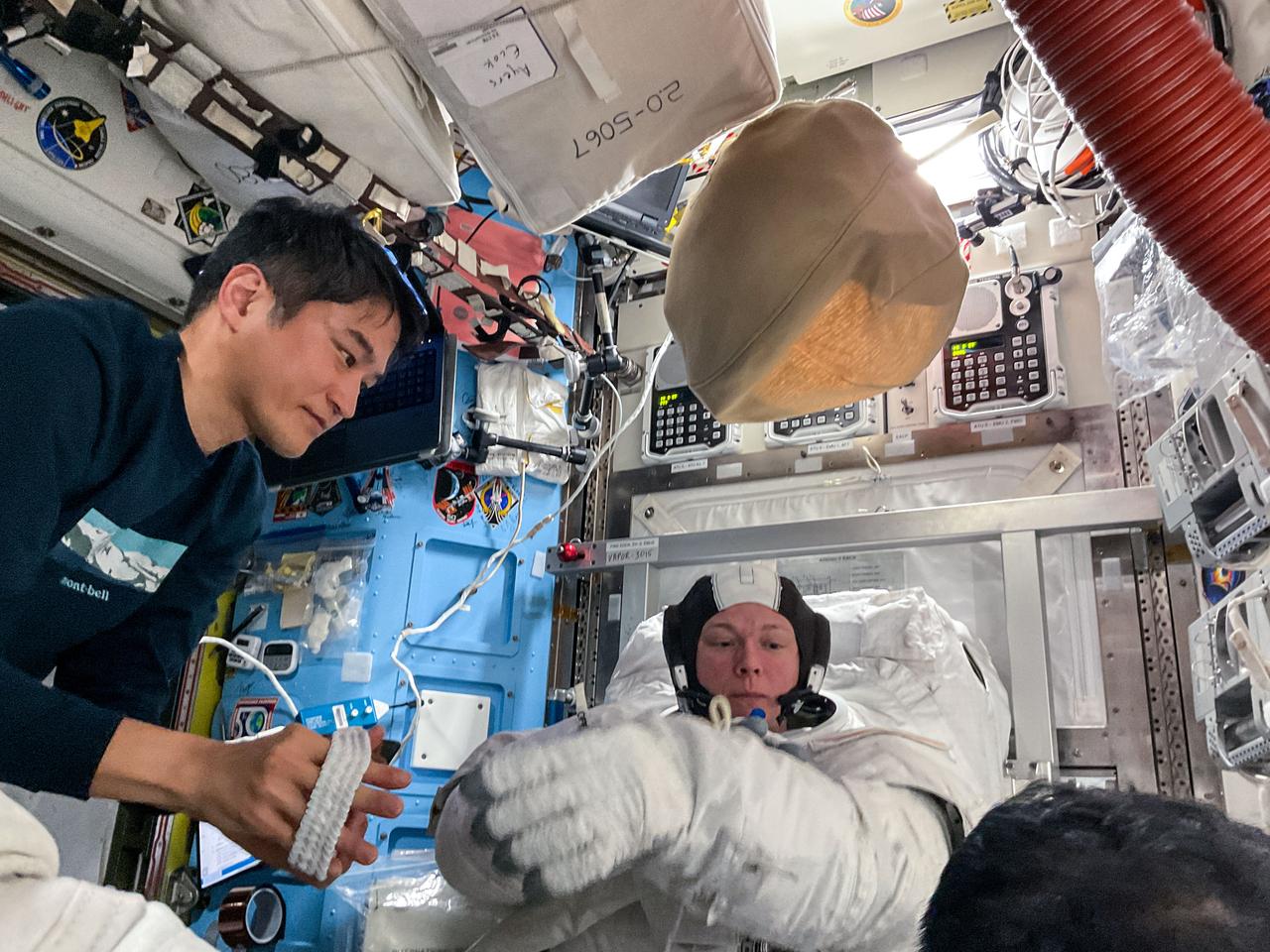
iss073e0379898 (May 1, 2025) --- Expedition 73 Commander Takuya Onishi from JAXA (Japan Aerospace Exploration Agency) assists Flight Engineer Nichole Ayers from NASA as she tries on a spacesuit and tests its components during a fit check inside the International Space Station's Quest airlock.
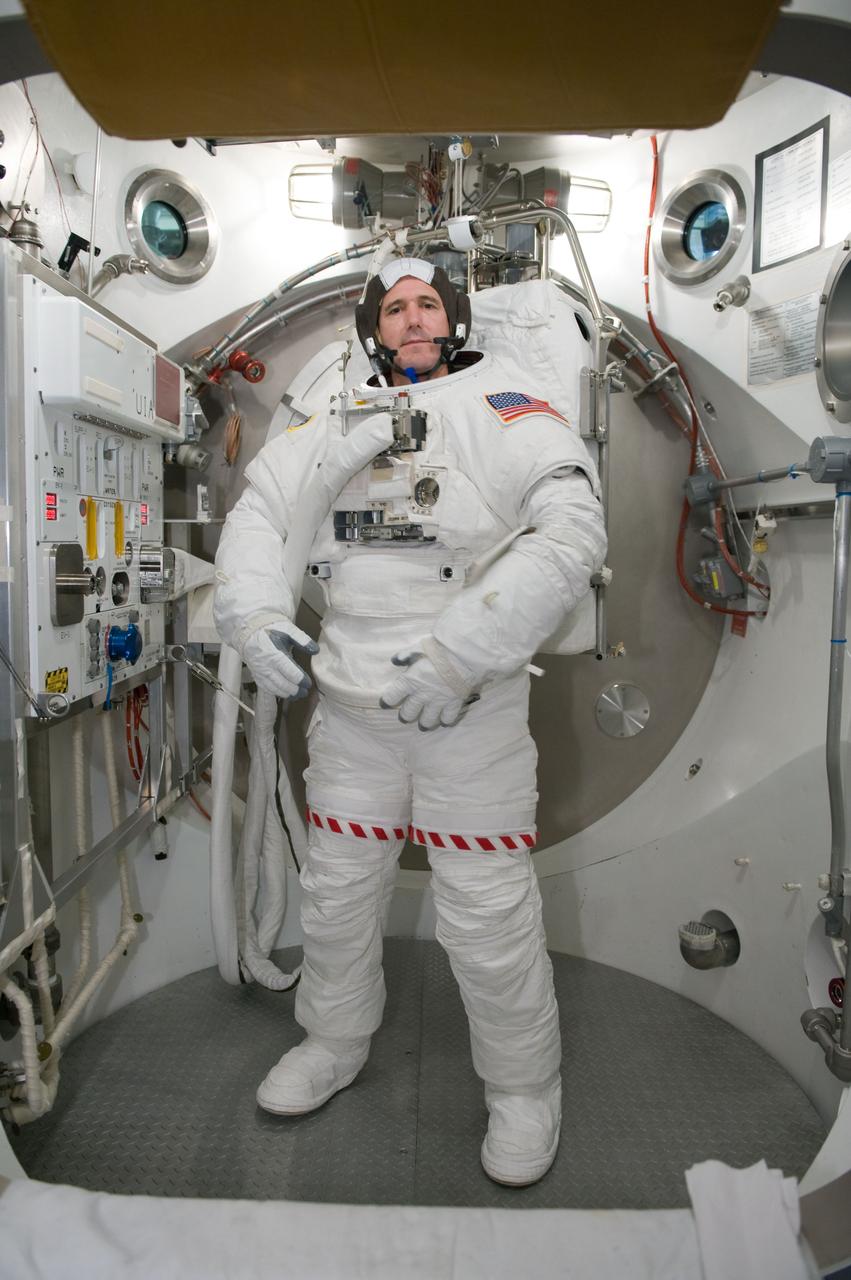
JSC2010-E-026888 (26 Feb. 2010) --- NASA astronaut Michael Good, STS-132 mission specialist, participates in an Extravehicular Mobility Unit (EMU) spacesuit fit check in the Space Station Airlock Test Article (SSATA) in the Crew Systems Laboratory at NASA's Johnson Space Center.
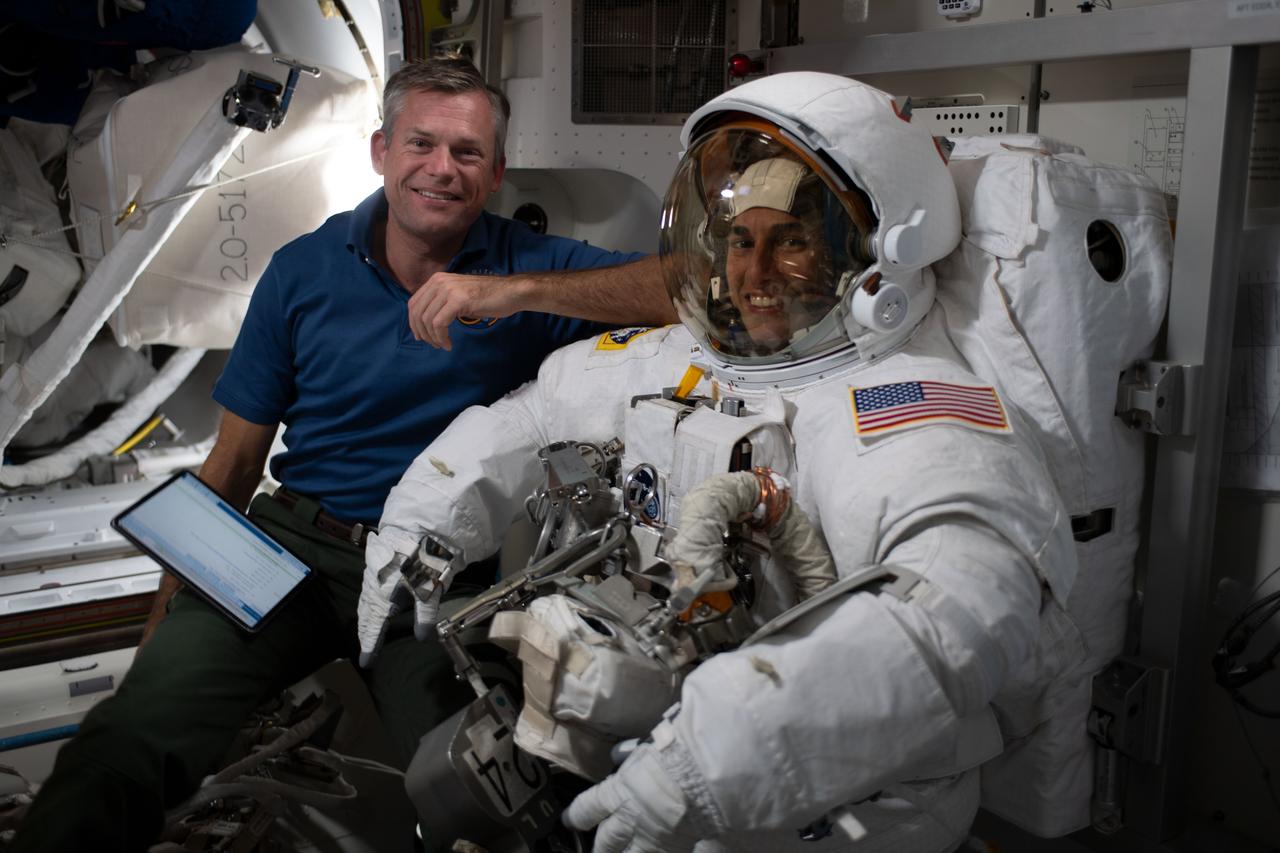
iss070e0017543 (Oct. 3, 2023) --- Expedition 70 Commander Andreas Mogensen from ESA (European Space Agency) assists NASA astronaut Jasmin Moghbeli as she tries on her spacesuit and tests its components aboard the International Space Station's Quest airlock in preparation for an upcoming spacewalk.
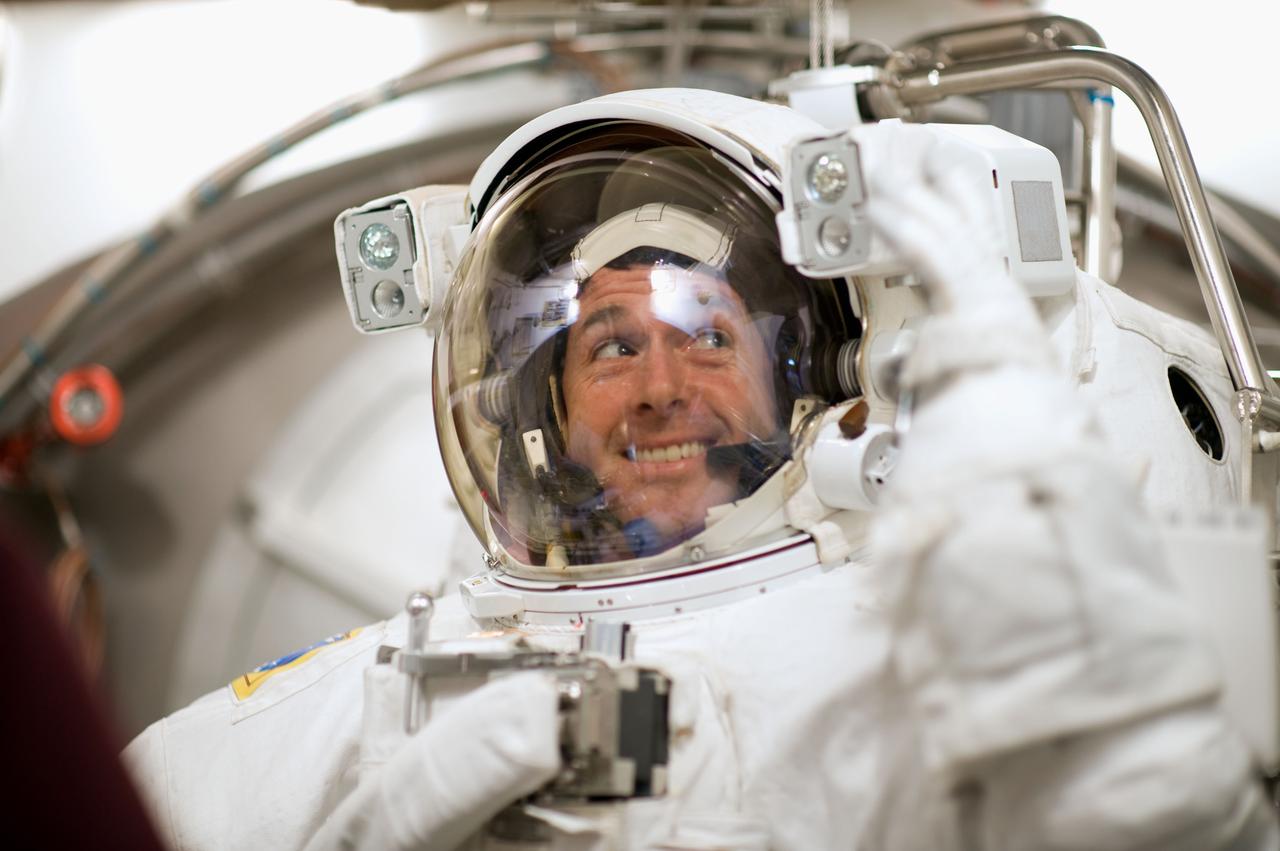
JSC2008-E-050230 (8 July 2008) --- Astronaut Robert S. (Shane) Kimbrough, STS-126 mission specialist, participates in an Extravehicular Mobility Unit (EMU) spacesuit fit check in the Space Station Airlock Test Article (SSATA) in the Crew Systems Laboratory at NASA's Johnson Space Center.
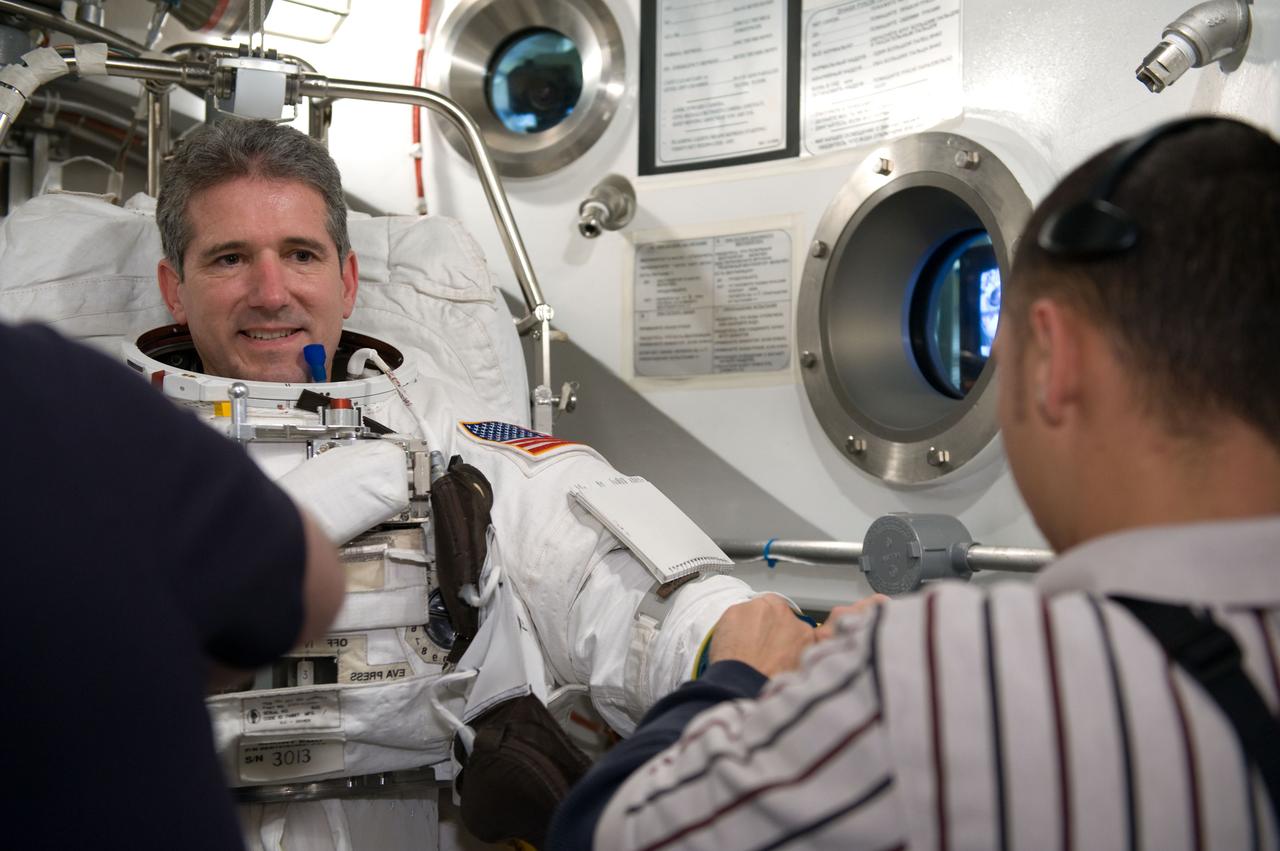
JSC2010-E-026877 (26 Feb. 2010) --- NASA astronaut Michael Good, STS-132 mission specialist, participates in an Extravehicular Mobility Unit (EMU) spacesuit fit check in the Space Station Airlock Test Article (SSATA) in the Crew Systems Laboratory at NASA's Johnson Space Center.
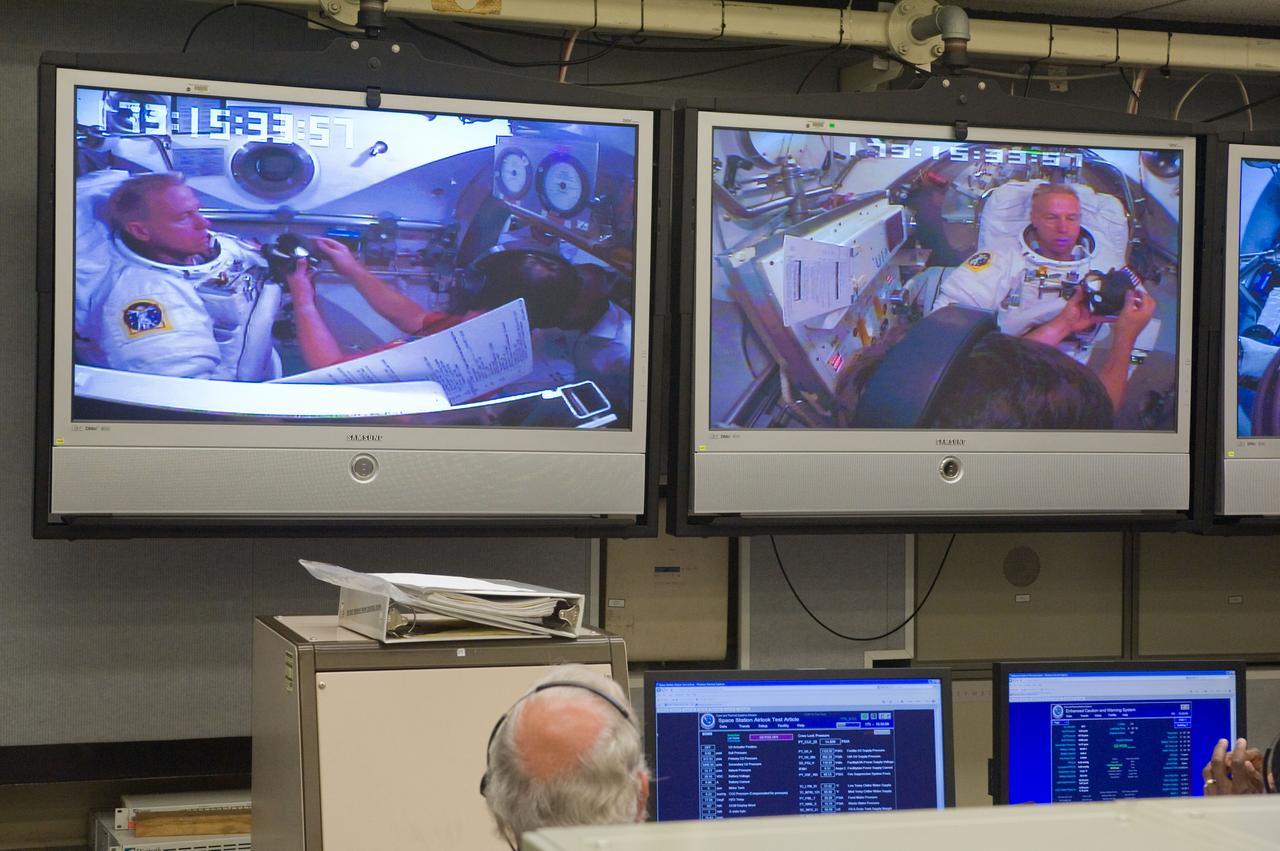
JSC2010-E-098603 (22 June 2010) --- NASA astronaut Tim Kopra, STS-133 mission specialist, is visible on the screens in the Space Station Airlock Test Article (SSATA) Control Room in the Crew Systems Laboratory at NASA?s Johnson Space Center during an Extravehicular Mobility Unit (EMU) spacesuit fit check.
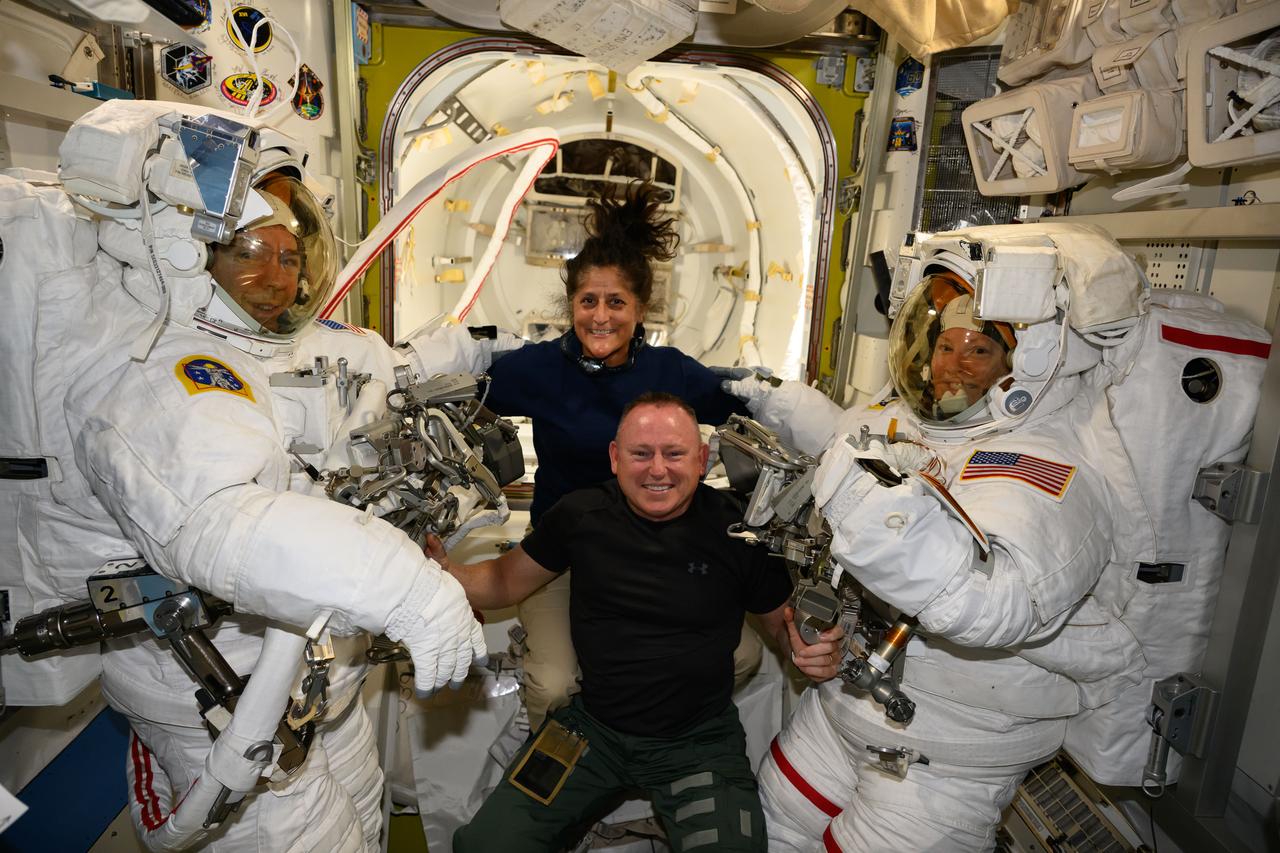
iss071e207890 (June 24, 2024) --- NASA's Boeing Crew Flight Test astronauts Suni Williams and Butch Wilmore (at center) pose with Expedition 71 Flight Engineers (far left) Mike Barratt and Tracy C. Dyson (far right), both NASA astronauts, in their spacesuits aboard the International Space Station's Quest airlock.
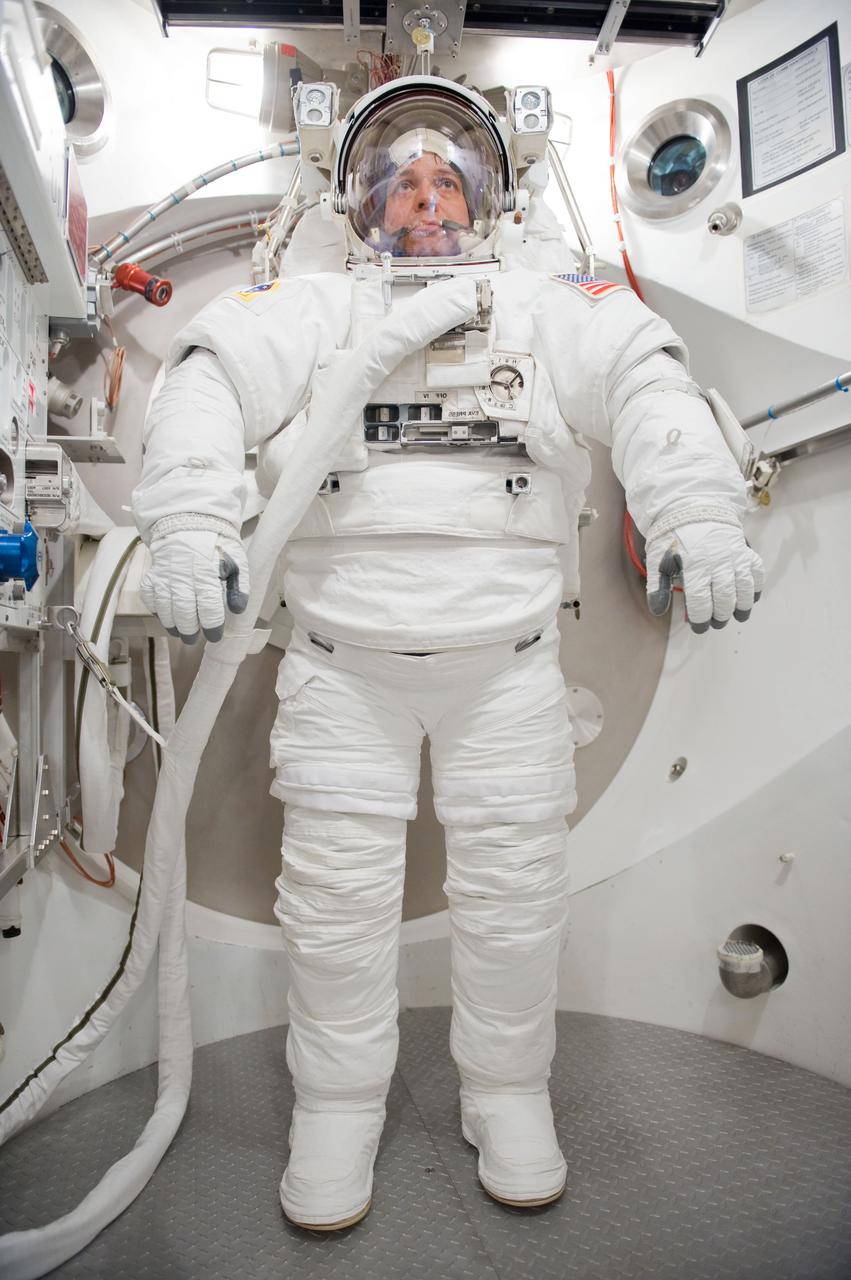
JSC2009-E-226283 (27 Oct. 2009) --- Astronaut Robert Behnken, STS-130 mission specialist, participates in an Extravehicular Mobility Unit (EMU) spacesuit fit check in the Space Station Airlock Test Article (SSATA) in the Crew Systems Laboratory at NASA's Johnson Space Center.
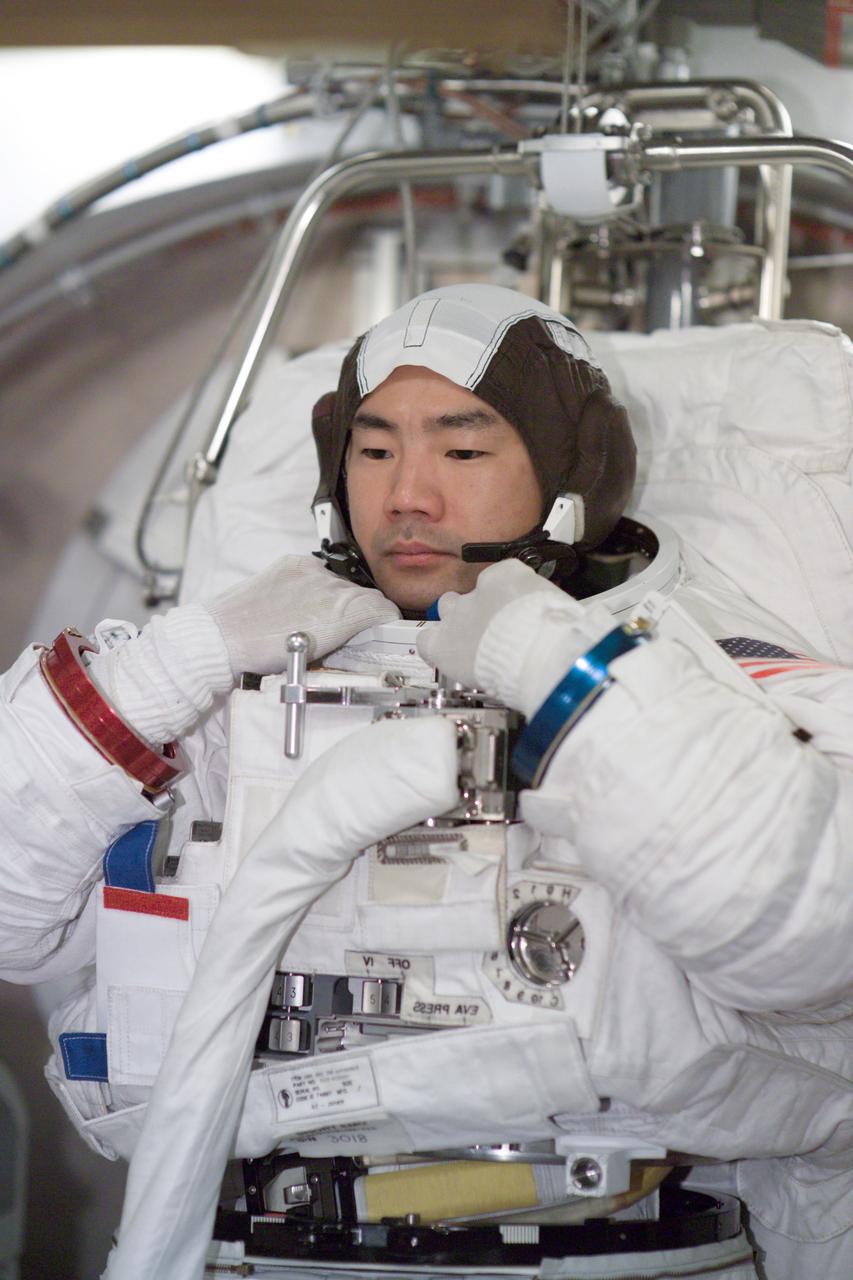
JSC2005-E-12411 (29 March 2005) --- Astronaut Soichi Noguchi, STS-114 mission specialist representing the Japan Aerospace Exploration Agency (JAXA), participates in an Extravehicular Mobility Unit (EMU) spacesuit fit check in the Space Station Airlock Test Article (SSATA) in the Crew Systems Laboratory at the Johnson Space Center (JSC).
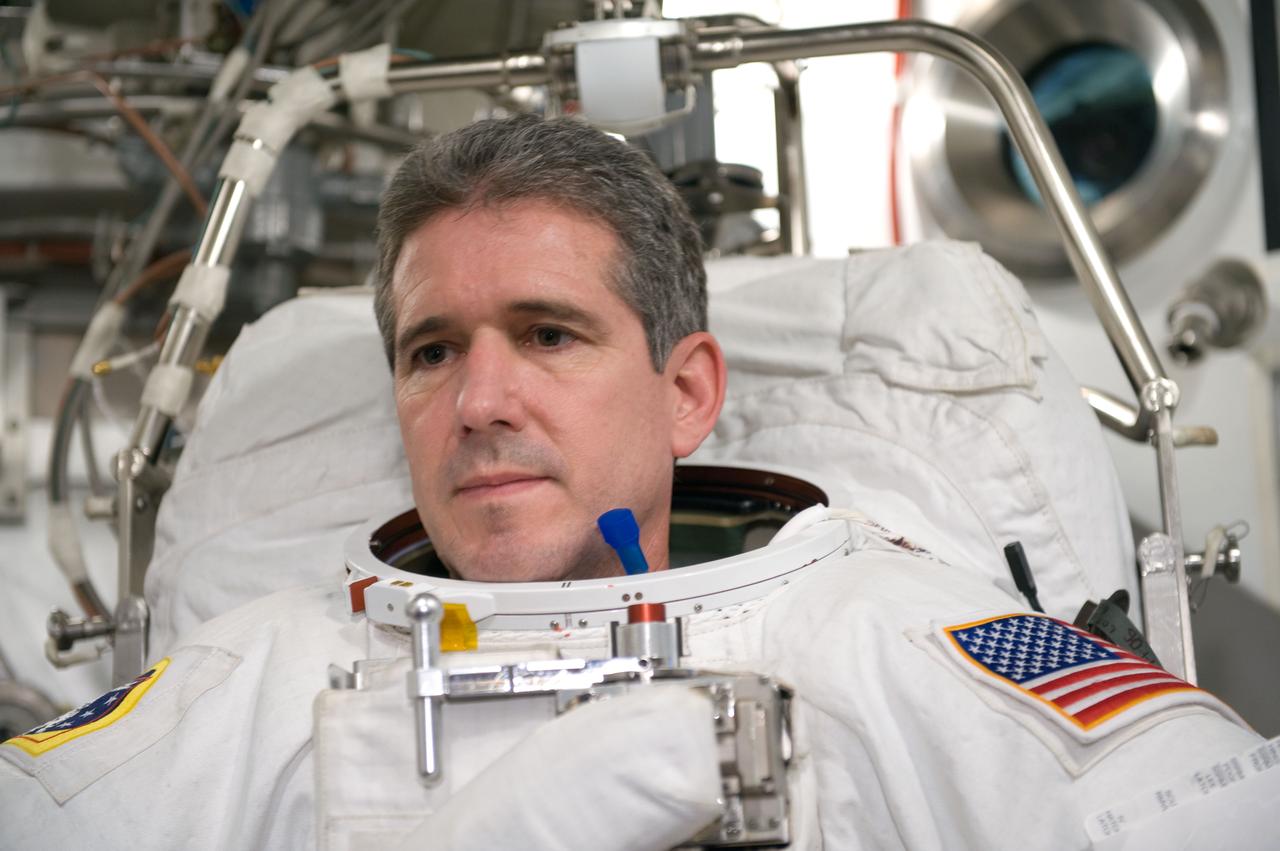
JSC2010-E-026878 (26 Feb. 2010) --- NASA astronaut Michael Good, STS-132 mission specialist, participates in an Extravehicular Mobility Unit (EMU) spacesuit fit check in the Space Station Airlock Test Article (SSATA) in the Crew Systems Laboratory at NASA's Johnson Space Center.
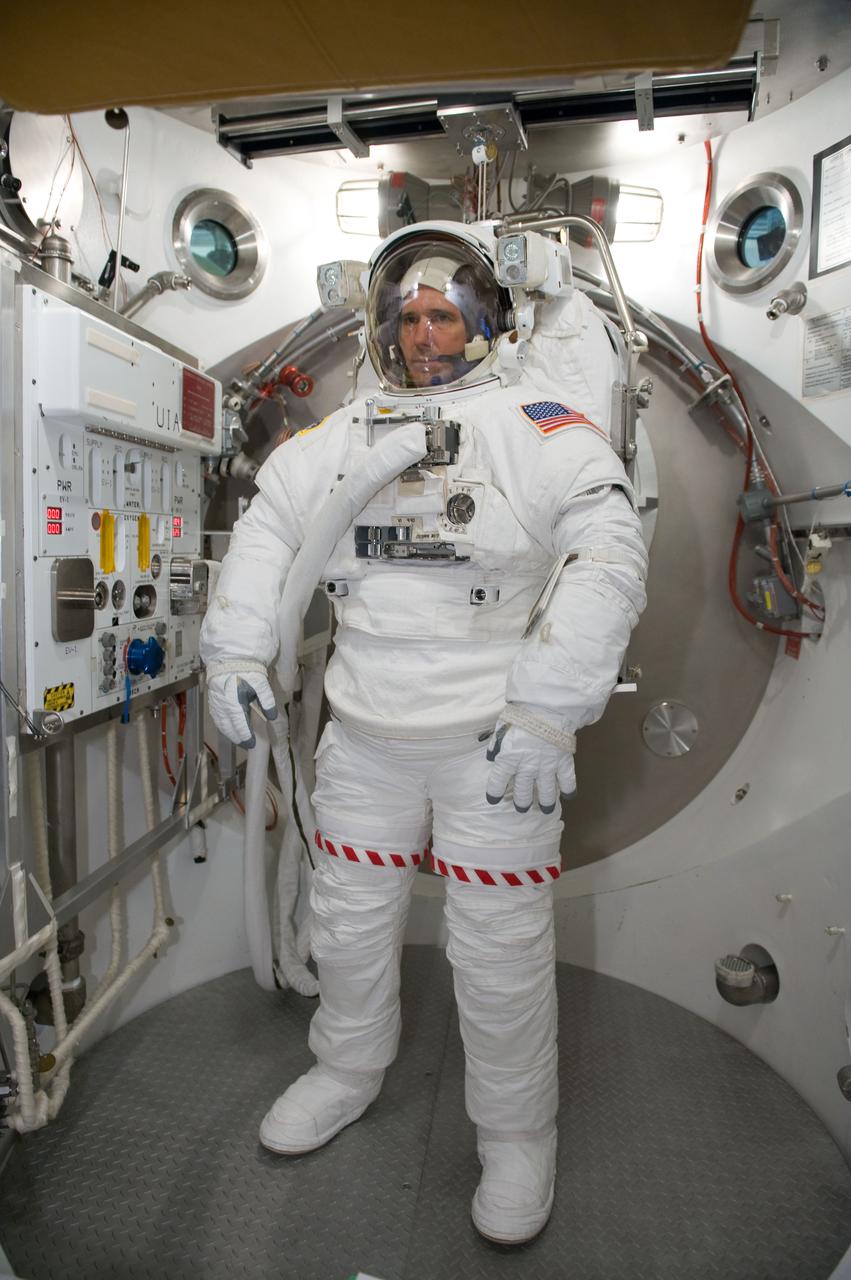
JSC2010-E-026895 (26 Feb. 2010) --- NASA astronaut Michael Good, STS-132 mission specialist, participates in an Extravehicular Mobility Unit (EMU) spacesuit fit check in the Space Station Airlock Test Article (SSATA) in the Crew Systems Laboratory at NASA's Johnson Space Center.