
Ana Leon, Solar Orbiter contamination control architect with Airbus Defence and Space, participates in a Spanish Facebook Live event for the Solar Orbiter mission in the Press Site auditorium at NASA’s Kennedy Space Center in Florida on Jan. 29, 2020. Solar Orbiter is an international cooperative mission between ESA (European Space Agency) and NASA. The mission aims to study the Sun, its outer atmosphere and solar wind. The spacecraft will provide the first images of the Sun’s poles. NASA’s Launch Services Program based at Kennedy is managing the launch. The spacecraft has been developed by Airbus Defence and Space. Solar Orbiter will launch in February 2020 aboard a United Launch Alliance Atlas V rocket from Space Launch Complex 41 at Cape Canaveral Air Force Station in Florida.

Teresa Nieves-chinchilla, deputy project scientist at NASA’s Goddard Space Flight Center in Greenbelt, Maryland, participates in a Spanish Facebook Live event for the Solar Orbiter mission in the Press Site auditorium at the agency’s Kennedy Space Center in Florida on Jan. 29, 2020. Solar Orbiter is an international cooperative mission between ESA (European Space Agency) and NASA. The mission aims to study the Sun, its outer atmosphere and solar wind. The spacecraft will provide the first images of the Sun’s poles. NASA’s Launch Services Program based at Kennedy is managing the launch. The spacecraft has been developed by Airbus Defence and Space. Solar Orbiter will launch in February 2020 aboard a United Launch Alliance Atlas V rocket from Space Launch Complex 41 at Cape Canaveral Air Force Station in Florida.

At left, Albert Sierra, Launch Services Program, moderates a Spanish Facebook Live event for the Solar Orbiter mission, with Teresa Nieves-chinchilla, deputy project scientist at NASA’s Goddard Space Flight Center in Greenbelt, Maryland, and Ana Leon, Solar Orbiter contamination control architect with Airbus Defence and Space. The event was held in the Press Site auditorium at the agency’s Kennedy Space Center in Florida on Jan. 29, 2020. Solar Orbiter is an international cooperative mission between ESA (European Space Agency) and NASA. The mission aims to study the Sun, its outer atmosphere and solar wind. The spacecraft will provide the first images of the Sun’s poles. NASA’s Launch Services Program based at Kennedy is managing the launch. The spacecraft has been developed by Airbus Defence and Space. Solar Orbiter will launch in February 2020 aboard a United Launch Alliance Atlas V rocket from Space Launch Complex 41 at Cape Canaveral Air Force Station in Florida.

At left, Albert Sierra, Launch Services Program, moderates a Spanish Facebook Live event for the Solar Orbiter mission, with Teresa Nieves-chinchilla, deputy project scientist at NASA’s Goddard Space Flight Center in Greenbelt, Maryland, and Ana Leon, Solar Orbiter contamination control architect with Airbus Defence and Space. The event was held in the Press Site auditorium at the agency’s Kennedy Space Center in Florida on Jan. 29, 2020. Solar Orbiter is an international cooperative mission between ESA (European Space Agency) and NASA. The mission aims to study the Sun, its outer atmosphere and solar wind. The spacecraft will provide the first images of the Sun’s poles. NASA’s Launch Services Program based at Kennedy is managing the launch. The spacecraft has been developed by Airbus Defence and Space. Solar Orbiter will launch in February 2020 aboard a United Launch Alliance Atlas V rocket from Space Launch Complex 41 at Cape Canaveral Air Force Station in Florida.
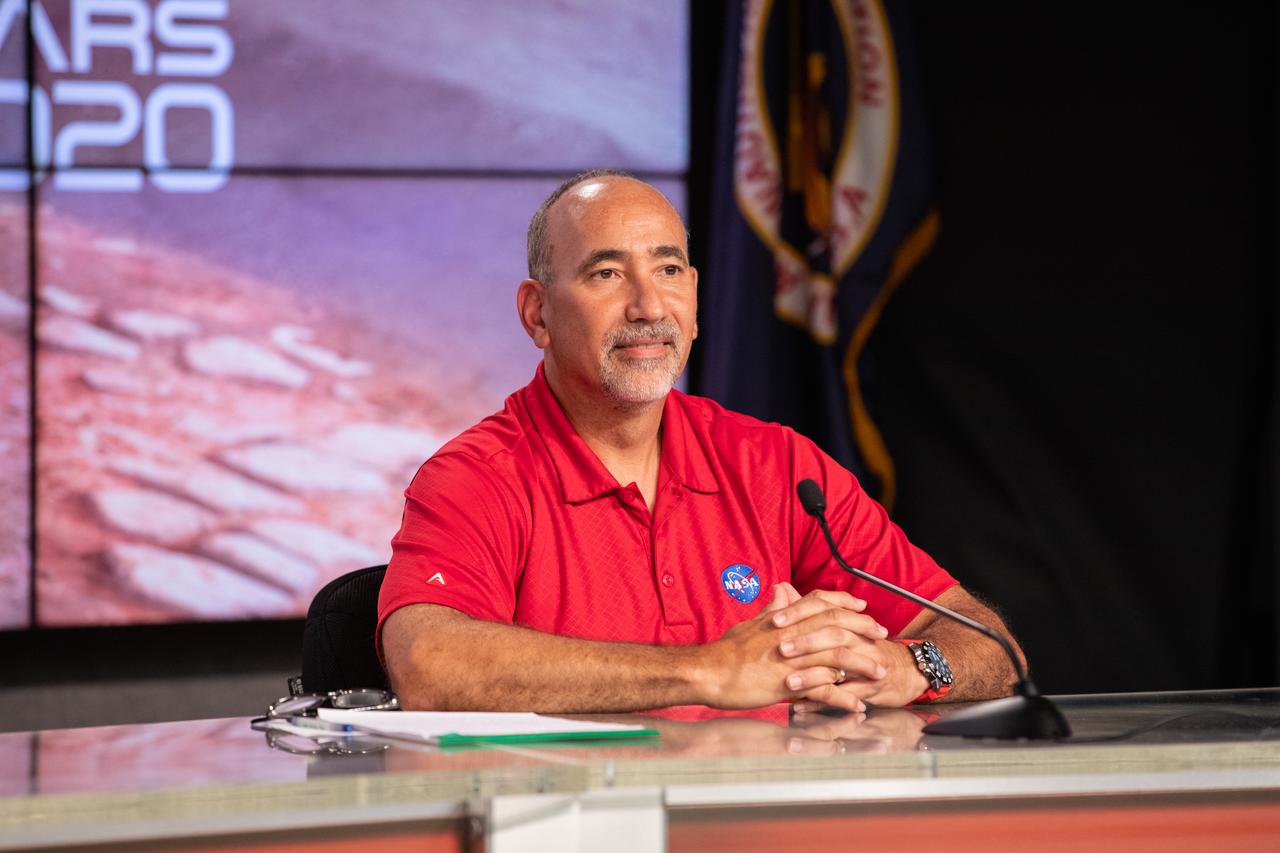
NASA’s Launch Services Program (LSP) Chief of Flight Projects Office Albert Sierra participates in a “Mars 2020 Social Media Q&A: En Español” program on Wednesday, July 22, at NASA’s Kennedy Space Center in Florida. The event featured representatives from LSP and NASA’s Jet Propulsion Laboratory. The Mars Perseverance rover is scheduled to lift off aboard a United Launch Alliance Atlas V 541 rocket from Cape Canaveral Air Force Station’s Space Launch Complex 41 on Thursday, July 30. The two-hour window opens at 7:50 a.m. EDT. LSP, based at Kennedy, is managing the launch.
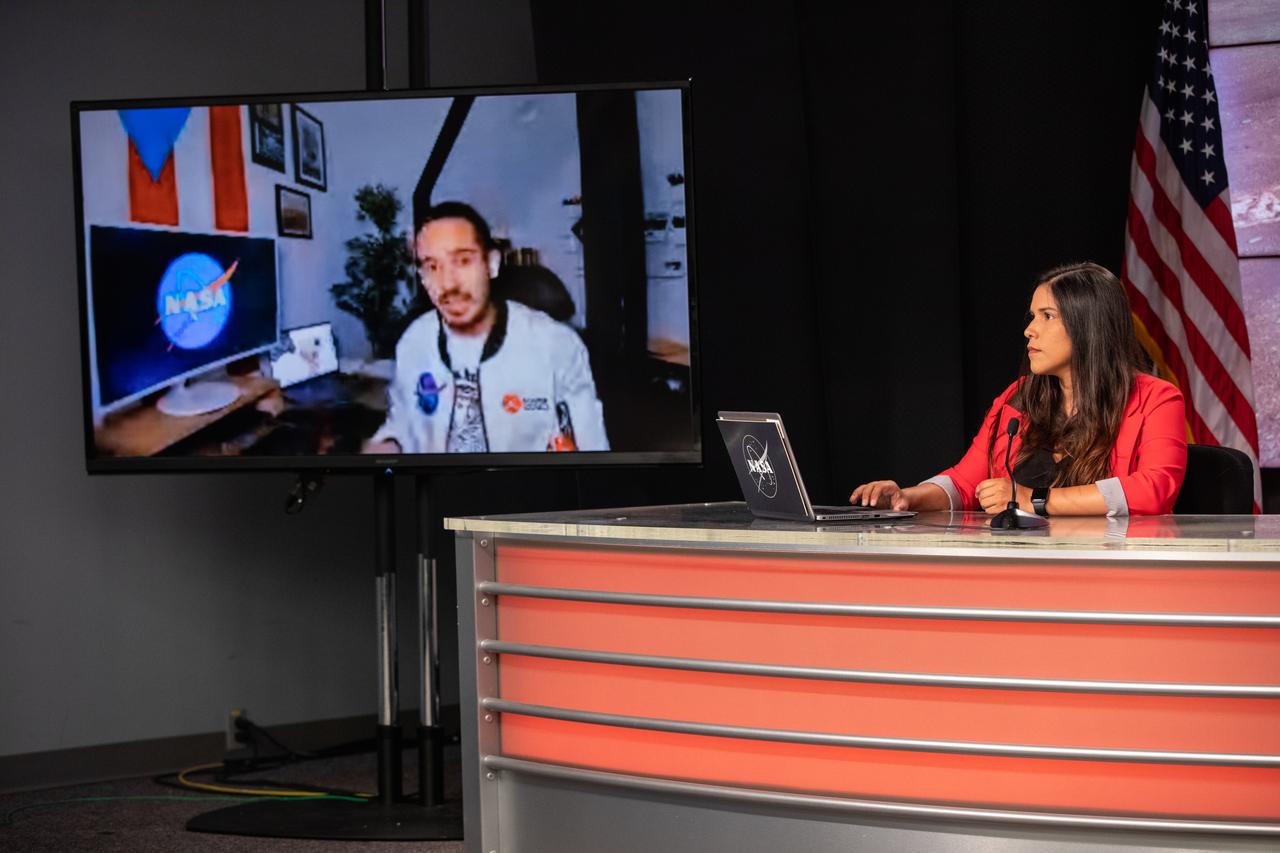
Mars 2020 Social Media Q&A: En Español with representatives from NASA’s Launch Services Program and NASA’s Jet Propulsion Laboratory.
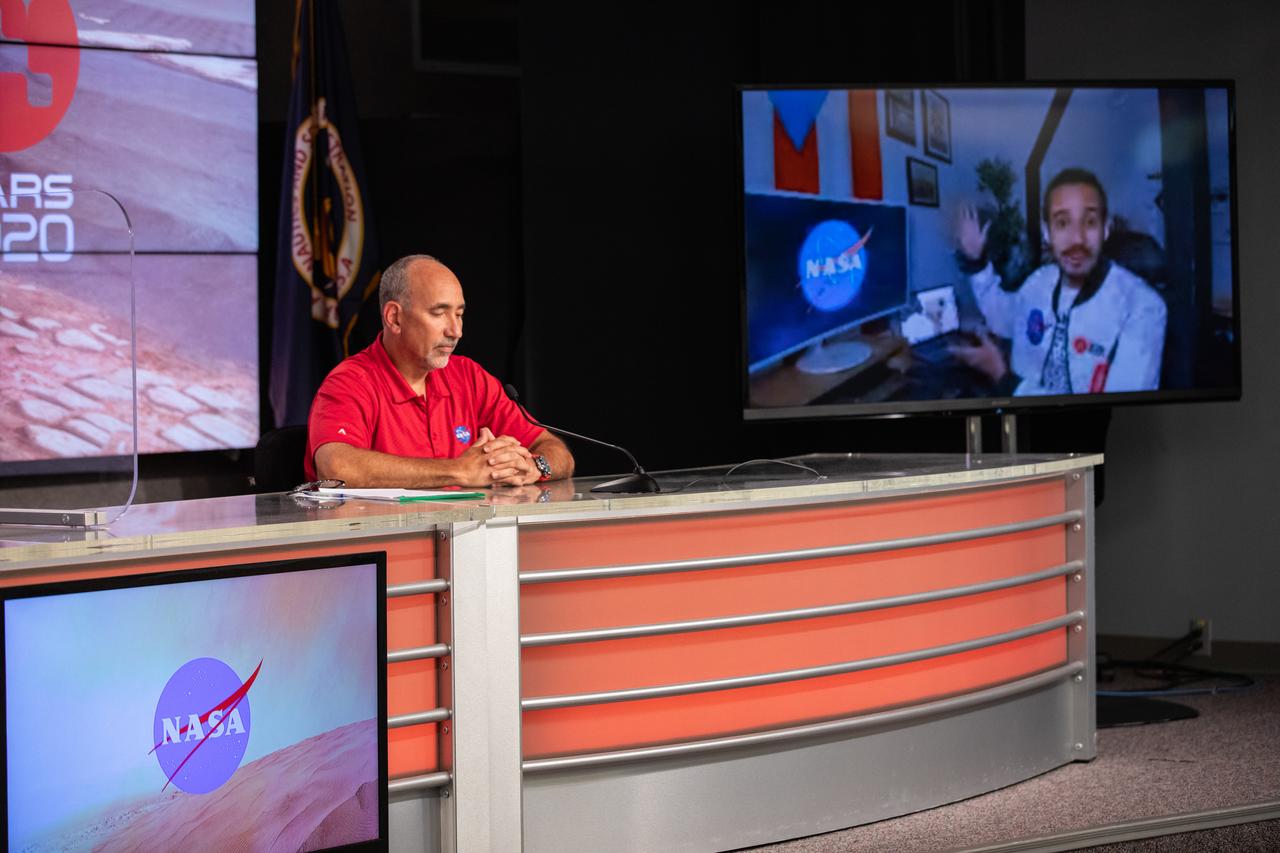
Elio Morillo, a Mars 2020 system testbed engineer from NASA’s Jet Propulsion Laboratory, speaks remotely while Albert Sierra, NASA’s Launch Services Program (LSP) chief of Flight Projects Office, listens during a “Mars 2020 Social Media Q&A: En Español” program on Wednesday, July 22, at NASA’s Kennedy Space Center in Florida. The event featured representatives from LSP and NASA’s Jet Propulsion Laboratory. The Mars Perseverance rover is scheduled to lift off aboard a United Launch Alliance Atlas V 541 rocket from Cape Canaveral Air Force Station’s Space Launch Complex 41 on Thursday, July 30. The two-hour window opens at 7:50 a.m. EDT. LSP, based at Kennedy, is managing the launch.

NASA Public Affairs Specialist Kristi Irastorza hosts a “Mars 2020 Social Media Q&A: En Español” program on Wednesday, July 22, at NASA’s Kennedy Space Center in Florida. The event featured representatives from NASA’s Launch Services Program (LSP) and NASA’s Jet Propulsion Laboratory. The Mars Perseverance rover is scheduled to lift off aboard a United Launch Alliance Atlas V 541 rocket from Cape Canaveral Air Force Station’s Space Launch Complex 41 on Thursday, July 30. The two-hour window opens at 7:50 a.m. EDT. LSP, based at Kennedy, is managing the launch.
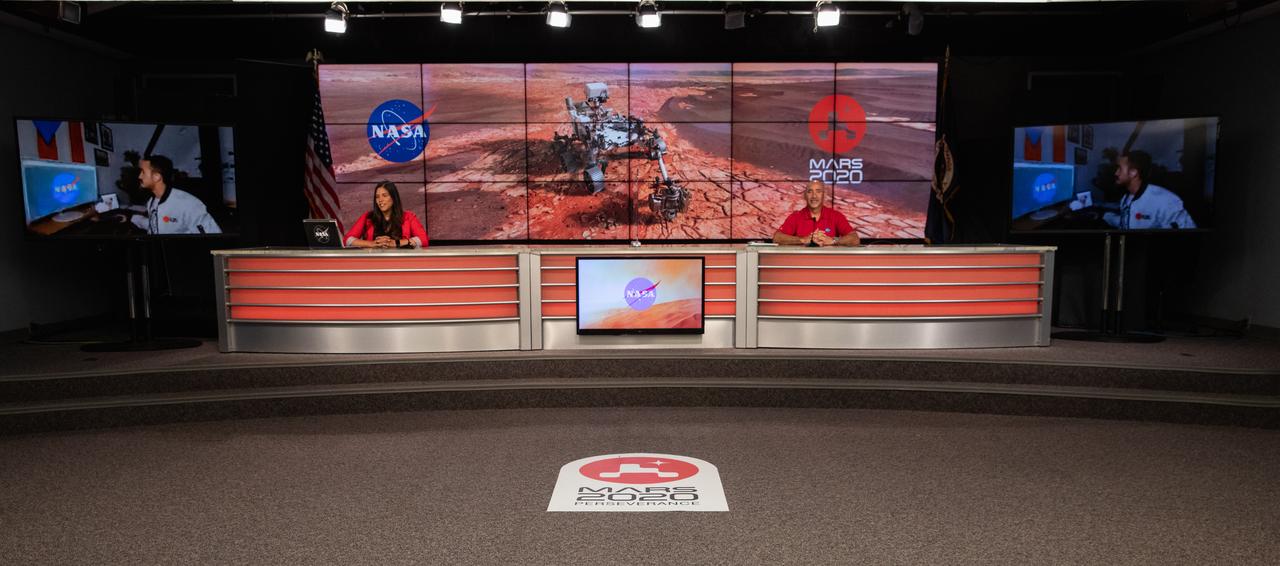
NASA Public Affairs Specialist Kristi Irastorza, left, and NASA’s Launch Services Program (LSP) Chief of Flight Projects Office Albert Sierra, participate in a “Mars 2020 Social Media Q&A: En Español” program on Wednesday, July 22, at NASA’s Kennedy Space Center in Florida. The event featured representatives from LSP and NASA’s Jet Propulsion Laboratory. The Mars Perseverance rover is scheduled to lift off aboard a United Launch Alliance Atlas V 541 rocket from Cape Canaveral Air Force Station’s Space Launch Complex 41 on Thursday, July 30. The two-hour window opens at 7:50 a.m. EDT. LSP, based at Kennedy, is managing the launch.

NASA Public Affairs Specialist Kristi Irastorza hosts a “Mars 2020 Social Media Q&A: En Español” program on Wednesday, July 22, at NASA’s Kennedy Space Center in Florida. The event featured representatives from NASA’s Launch Services Program (LSP) and NASA’s Jet Propulsion Laboratory. The Mars Perseverance rover is scheduled to lift off aboard a United Launch Alliance Atlas V 541 rocket from Cape Canaveral Air Force Station’s Space Launch Complex 41 on Thursday, July 30. The two-hour window opens at 7:50 a.m. EDT. LSP, based at Kennedy, is managing the launch.

NASA Public Affairs Specialist Kristi Irastorza hosts a “Mars 2020 Social Media Q&A: En Español” program on Wednesday, July 22, at NASA’s Kennedy Space Center in Florida. The event featured representatives from NASA’s Launch Services Program (LSP) and NASA’s Jet Propulsion Laboratory. The Mars Perseverance rover is scheduled to lift off aboard a United Launch Alliance Atlas V 541 rocket from Cape Canaveral Air Force Station’s Space Launch Complex 41 on Thursday, July 30. The two-hour window opens at 7:50 a.m. EDT. LSP, based at Kennedy, is managing the launch.
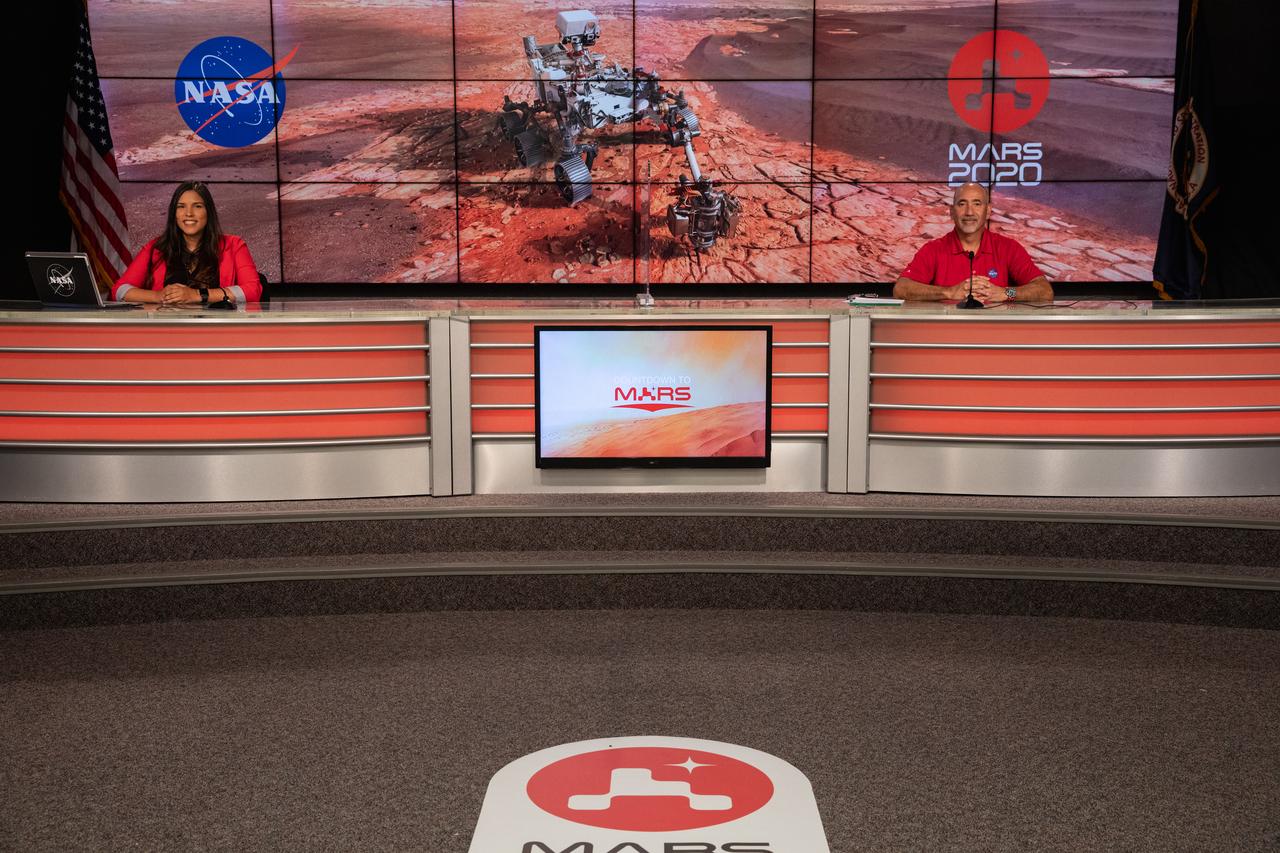
NASA Public Affairs Specialist Kristi Irastorza, left, and NASA’s Launch Services Program (LSP) Chief of Flight Projects Office Albert Sierra, participate in a “Mars 2020 Social Media Q&A: En Español” program on Wednesday, July 22, at NASA’s Kennedy Space Center in Florida. The event featured representatives from LSP and NASA’s Jet Propulsion Laboratory. The Mars Perseverance rover is scheduled to lift off aboard a United Launch Alliance Atlas V 541 rocket from Cape Canaveral Air Force Station’s Space Launch Complex 41 on Thursday, July 30. The two-hour window opens at 7:50 a.m. EDT. LSP, based at Kennedy, is managing the launch.
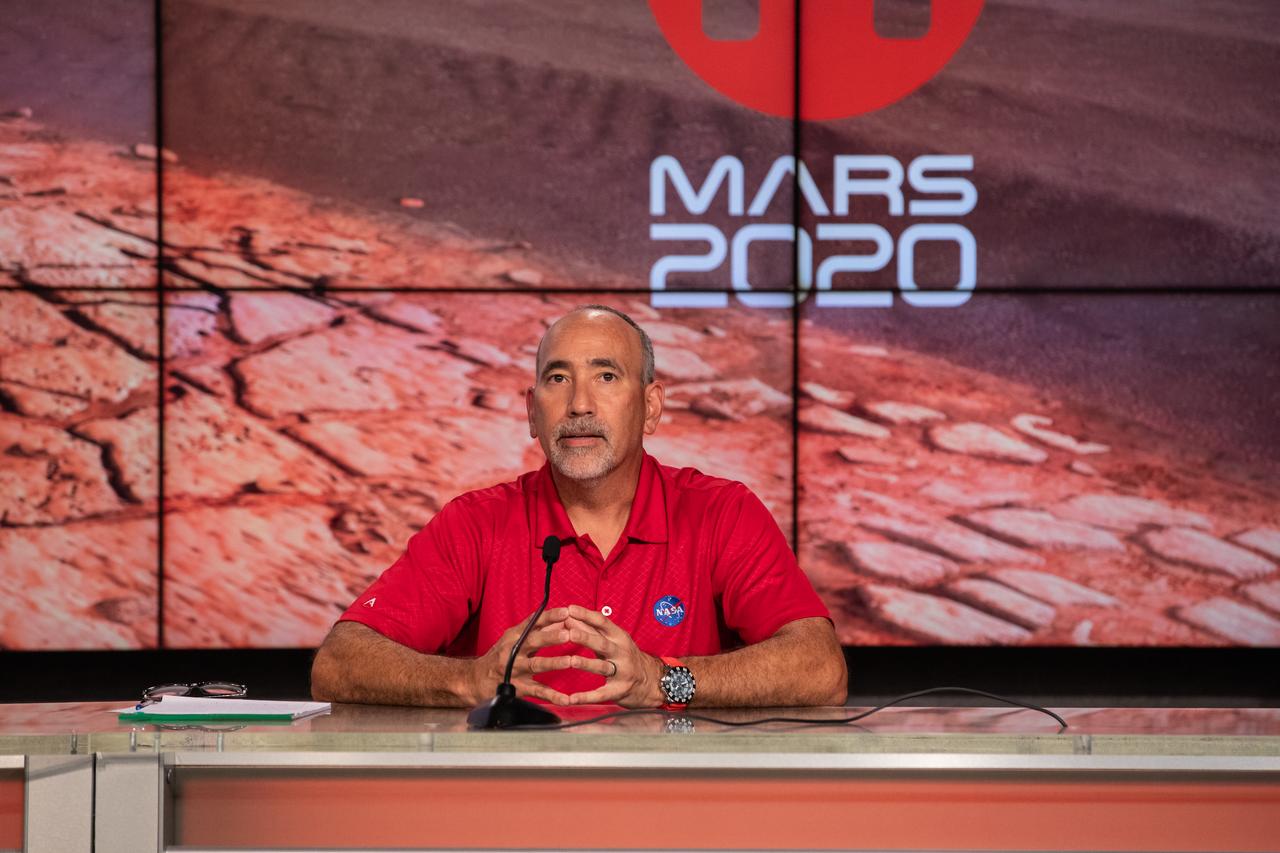
NASA’s Launch Services Program (LSP) Chief of Flight Projects Office Albert Sierra participates in a “Mars 2020 Social Media Q&A: En Español” program on Wednesday, July 22, at NASA’s Kennedy Space Center in Florida. The event featured representatives from LSP and NASA’s Jet Propulsion Laboratory. The Mars Perseverance rover is scheduled to lift off aboard a United Launch Alliance Atlas V 541 rocket from Cape Canaveral Air Force Station’s Space Launch Complex 41 on Thursday, July 30. The two-hour window opens at 7:50 a.m. EDT. LSP, based at Kennedy, is managing the launch.

In January 2013, a new Earth-observing instrument was installed on the International Space Station (ISS). ISERV Pathfinder consists of a commercial camera, a telescope, and a pointing system, all positioned to look through the Earth-facing window of ISS’s Destiny module. ISERV Pathfinder is intended as an engineering exercise, with the long-term goal of developing a system for providing imagery to developing nations as they monitor natural disasters and environmental concerns. The image above is the “first light” from the new ISERV camera system, taken at 1:44 p.m. local time on February 16, 2013. It shows the Rio San Pablo as it empties into the Golfo de Montijo in Veraguas, Panama. It is an ecological transition zone, changing from agriculture and pastures to mangrove forests, swamps, and estuary systems. The area has been designated a protected area by the National Environmental Authority (ANAM) of Panama and is listed as a “wetland of international importance” under the Ramsar Convention. (Note that the image is rotated so that north is to the upper right.) “ISERV’s full potential is yet to be seen, but we hope it will really make a difference in people’s lives,” said principal investigator Burgess Howell of NASA’s Marshall Space Flight Center. “For example, if an earthen dam gives way in Bhutan, we want to be able to show officials where the bridge is out or where a road is washed out or a power substation is inundated. This kind of information is critical to focus and speed rescue efforts.” The instrument will be controlled from NASA Marshall in Huntsville, Alabama, in collaboration with researchers at hubs in Central America, East Africa, and the Hindu Kush–Himalaya region. They will rely on positioning software to know where the space station is at each moment and to calculate the next chance to view a particular area on the ground. If there's a good viewing opportunity, the SERVIR team will instruct the camera to take high-resolution photographs at 3 to 7 frames per second, totaling as many as 100 images per pass. With a resolution down to 3.2 meters (10 feet), it will be possible to spot fairly small details and objects. The current mission will test the limitations of Pathfinder and identify measures for improvements in a more permanent system. For instance, the engineering team is working to determine how the geometry of the ISS window affects the imagery; how much sunlight is needed to capture clear images; and how the atmosphere affects that clarity. This characterization phase will last several weeks to a few months. Eventually, ISERV should be made available to the natural hazards community and to basic research scientists. ISERV is short for ISS SERVIR Environmental Research and Visualization system. Together with the U.S. Agency for International Development, NASA runs the SERVIR program to provide satellite data, maps, and other tools to environmental decisionmakers in developing countries. (Servir is a Spanish word meaning “to serve.”) Learn more about the SERVIR program by clicking here: <a href="https://servirglobal.net/Global.aspx" rel="nofollow">servirglobal.net/Global.aspx</a> NASA image by Burgess Howell, SERVIR Global program. Caption by Dauna Coulter, NASA Marshall Space Flight Center, and Mike Carlowicz, NASA Earth Observatory. Instrument: ISS - ISERV Pathfinder Credit: <b><a href="http://www.earthobservatory.nasa.gov/" rel="nofollow"> NASA Earth Observatory</a></b> - <a href="http://1.usa.gov/12Aqmg9" rel="nofollow">1.usa.gov/12Aqmg9</a> <b><a href="http://www.nasa.gov/audience/formedia/features/MP_Photo_Guidelines.html" rel="nofollow">NASA image use policy.</a></b> <b><a href="http://www.nasa.gov/centers/goddard/home/index.html" rel="nofollow">NASA Goddard Space Flight Center</a></b> enables NASA’s mission through four scientific endeavors: Earth Science, Heliophysics, Solar System Exploration, and Astrophysics. Goddard plays a leading role in NASA’s accomplishments by contributing compelling scientific knowledge to advance the Agency’s mission. <b>Follow us on <a href="http://twitter.com/NASA_GoddardPix" rel="nofollow">Twitter</a></b> <b>Like us on <a href="http://www.facebook.com/pages/Greenbelt-MD/NASA-Goddard/395013845897?ref=tsd" rel="nofollow">Facebook</a></b> <b>Find us on <a href="http://instagram.com/nasagoddard?vm=grid" rel="nofollow">Instagram</a></b>