
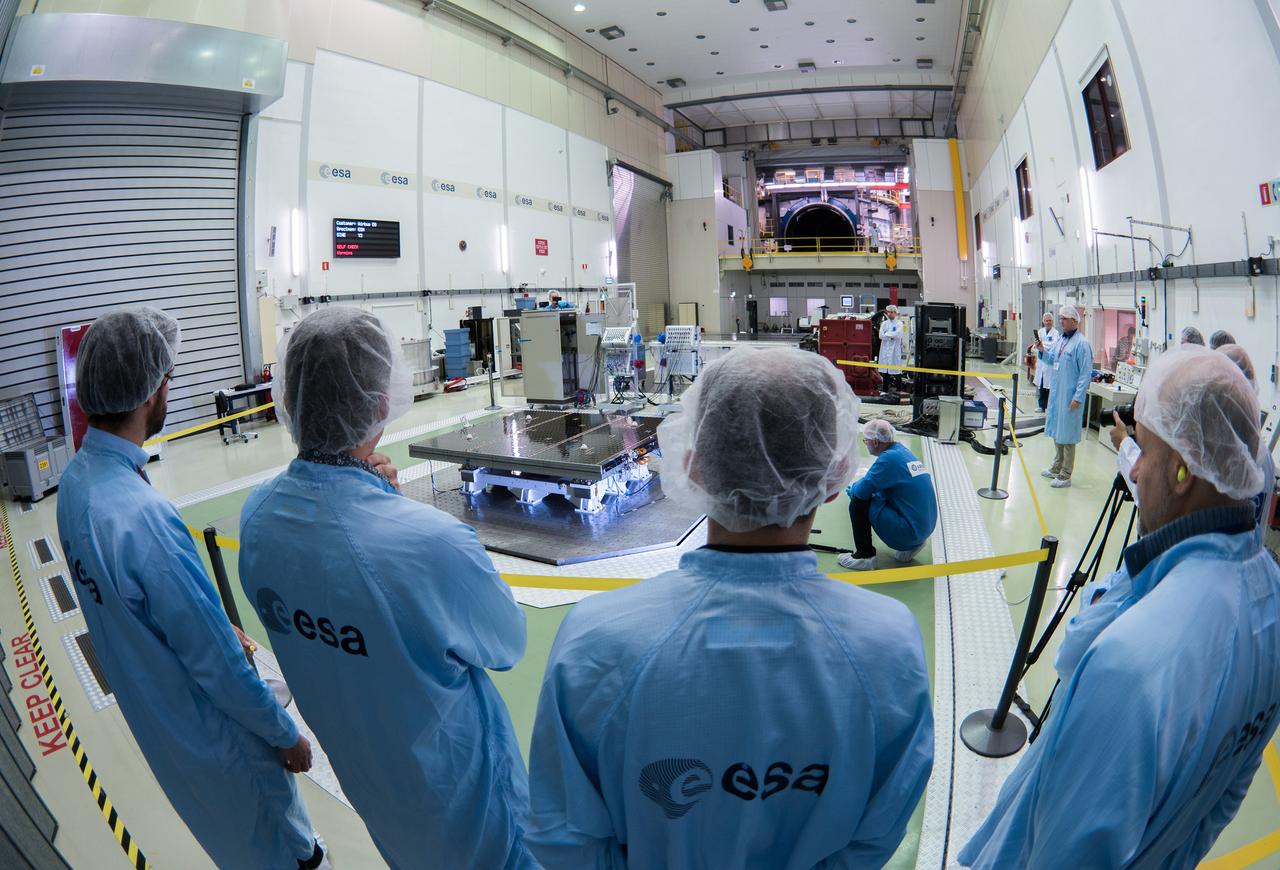
Direct Field Acoustic (DFA) Testing was successfully completed on the Exploration Flight Test-1 (EFT-1) crew module at the Lockheed Martin Waterton Reverberant Acoustic Lab (RAL) on March 1, 2016. DFA Testing is an alternative method for spacecraft module acoustic qualification and acceptance verification that is being investigated for use in the Orion program. Its portability would allow testing at KSC and eliminate the transportation risks and associated cost and schedule of performing this verification activity off-site. Two configurations were tested; one representing the future reverberant acoustic comparison test and one representing the future configuration for the Artemis I crew module. A mock-up of the service module without the fairings will also be tested to gather volumetric data to decide viability of performing DFA Testing on the Static Test Article (STA) SM in the 2016 Fall. Data will be used to develop predictive algorithms for future tests.
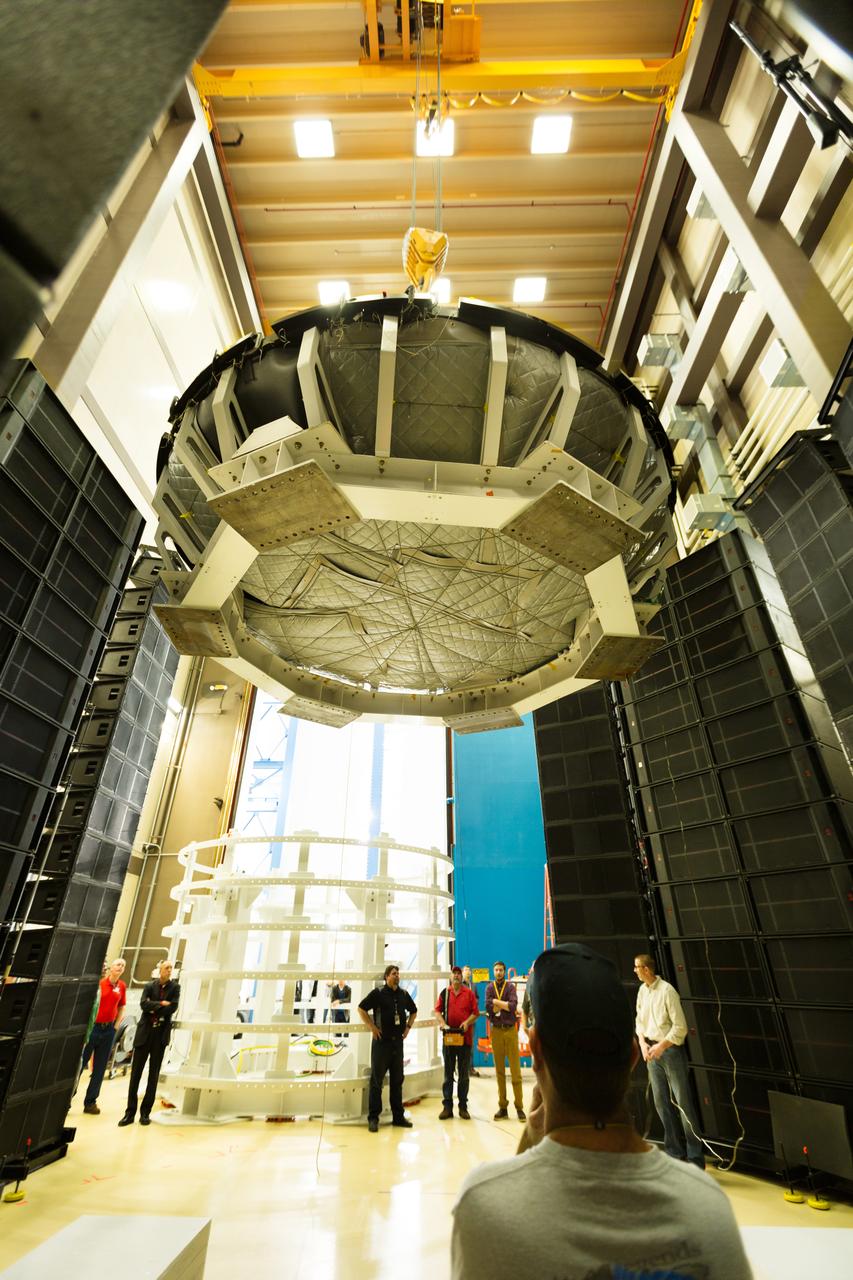
Direct Field Acoustic (DFA) Testing was successfully completed on the Exploration Flight Test-1 (EFT-1) crew module at the Lockheed Martin Waterton Reverberant Acoustic Lab (RAL) on March 1, 2016. DFA Testing is an alternative method for spacecraft module acoustic qualification and acceptance verification that is being investigated for use in the Orion program. Its portability would allow testing at KSC and eliminate the transportation risks and associated cost and schedule of performing this verification activity off-site. Two configurations were tested; one representing the future reverberant acoustic comparison test and one representing the future configuration for the Artemis I crew module. A mock-up of the service module without the fairings will also be tested to gather volumetric data to decide viability of performing DFA Testing on the Static Test Article (STA) SM in the 2016 Fall. Data will be used to develop predictive algorithms for future tests.
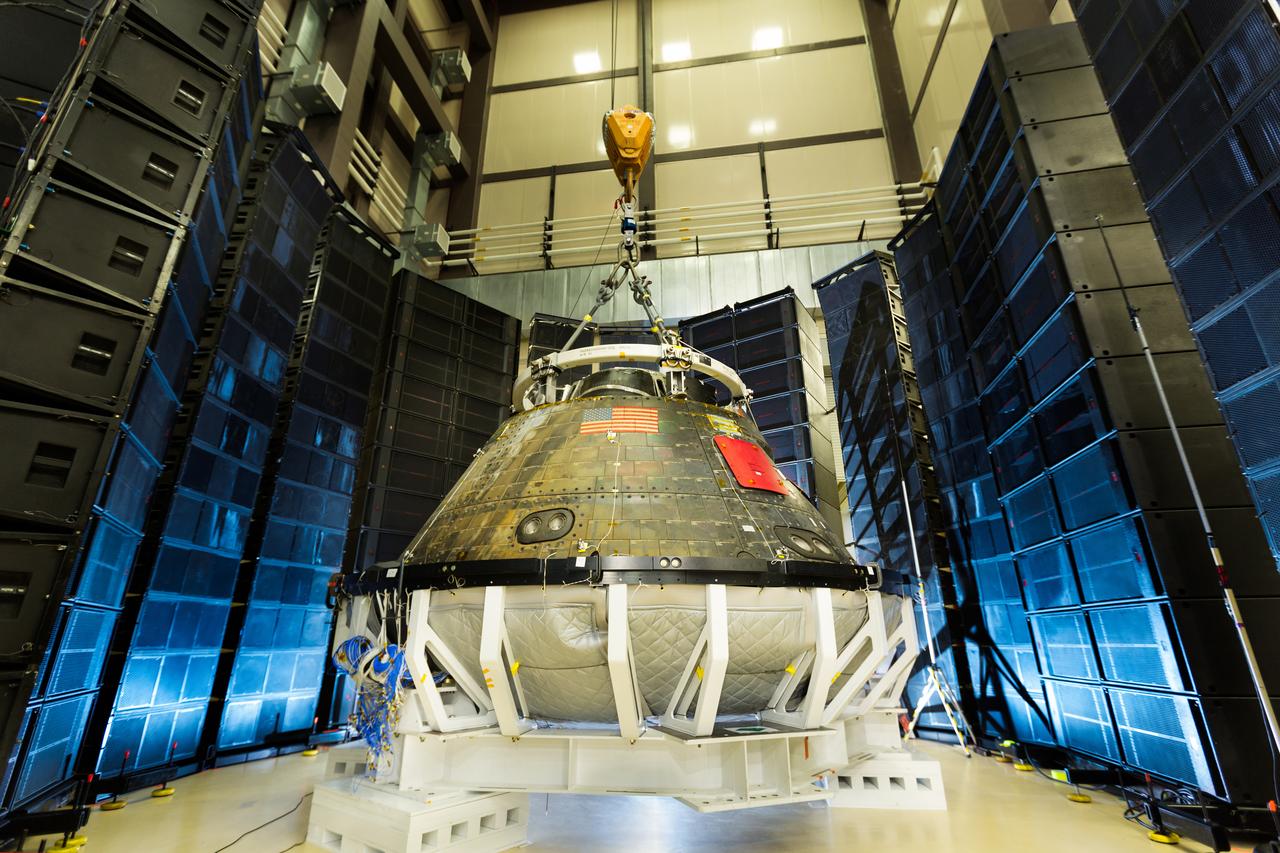
Direct Field Acoustic (DFA) Testing was successfully completed on the Exploration Flight Test-1 (EFT-1) crew module at the Lockheed Martin Waterton Reverberant Acoustic Lab (RAL) on March 1, 2016. DFA Testing is an alternative method for spacecraft module acoustic qualification and acceptance verification that is being investigated for use in the Orion program. Its portability would allow testing at KSC and eliminate the transportation risks and associated cost and schedule of performing this verification activity off-site. Two configurations were tested; one representing the future reverberant acoustic comparison test and one representing the future configuration for the Artemis I crew module. A mock-up of the service module without the fairings will also be tested to gather volumetric data to decide viability of performing DFA Testing on the Static Test Article (STA) SM in the 2016 Fall. Data will be used to develop predictive algorithms for future tests.
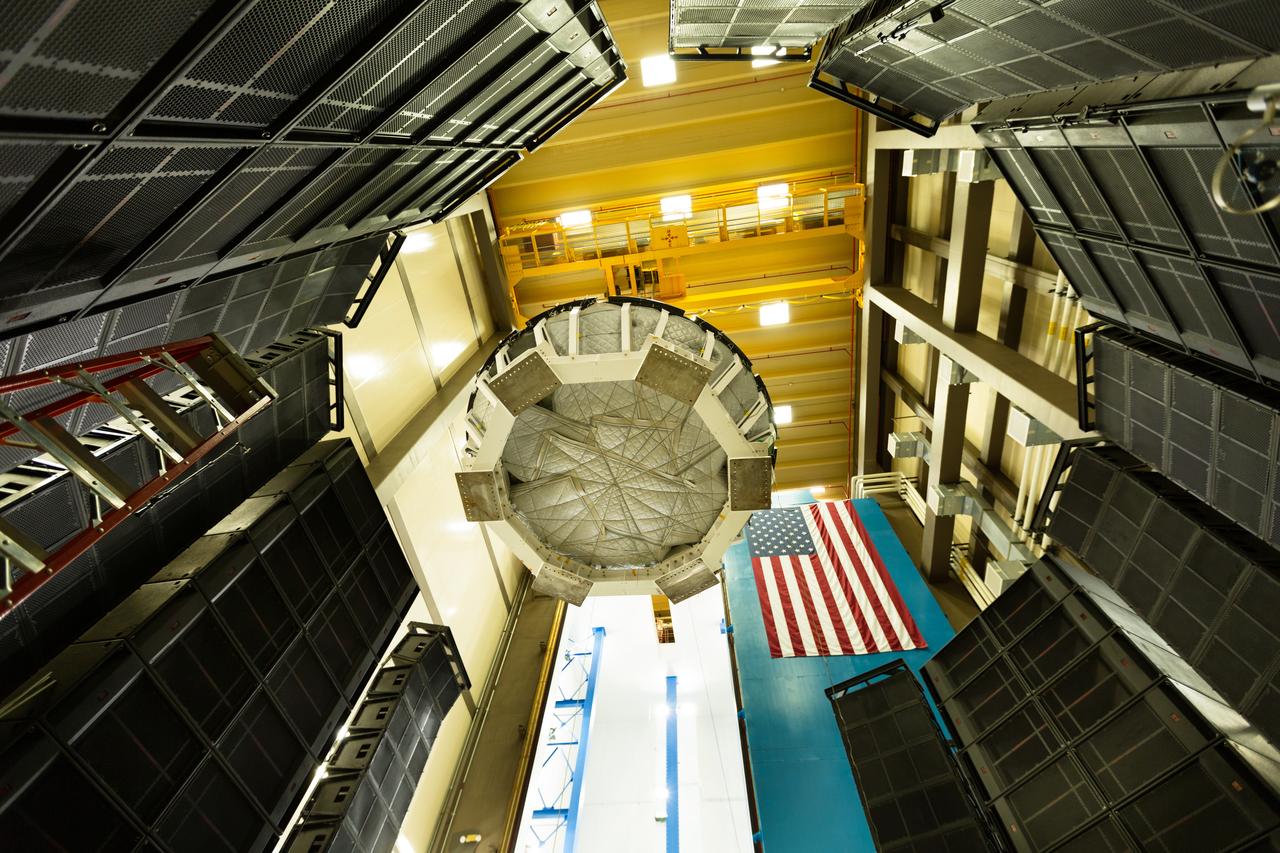
Direct Field Acoustic (DFA) Testing was successfully completed on the Exploration Flight Test-1 (EFT-1) crew module at the Lockheed Martin Waterton Reverberant Acoustic Lab (RAL) on March 1, 2016. DFA Testing is an alternative method for spacecraft module acoustic qualification and acceptance verification that is being investigated for use in the Orion program. Its portability would allow testing at KSC and eliminate the transportation risks and associated cost and schedule of performing this verification activity off-site. Two configurations were tested; one representing the future reverberant acoustic comparison test and one representing the future configuration for the Artemis I crew module. A mock-up of the service module without the fairings will also be tested to gather volumetric data to decide viability of performing DFA Testing on the Static Test Article (STA) SM in the 2016 Fall. Data will be used to develop predictive algorithms for future tests.
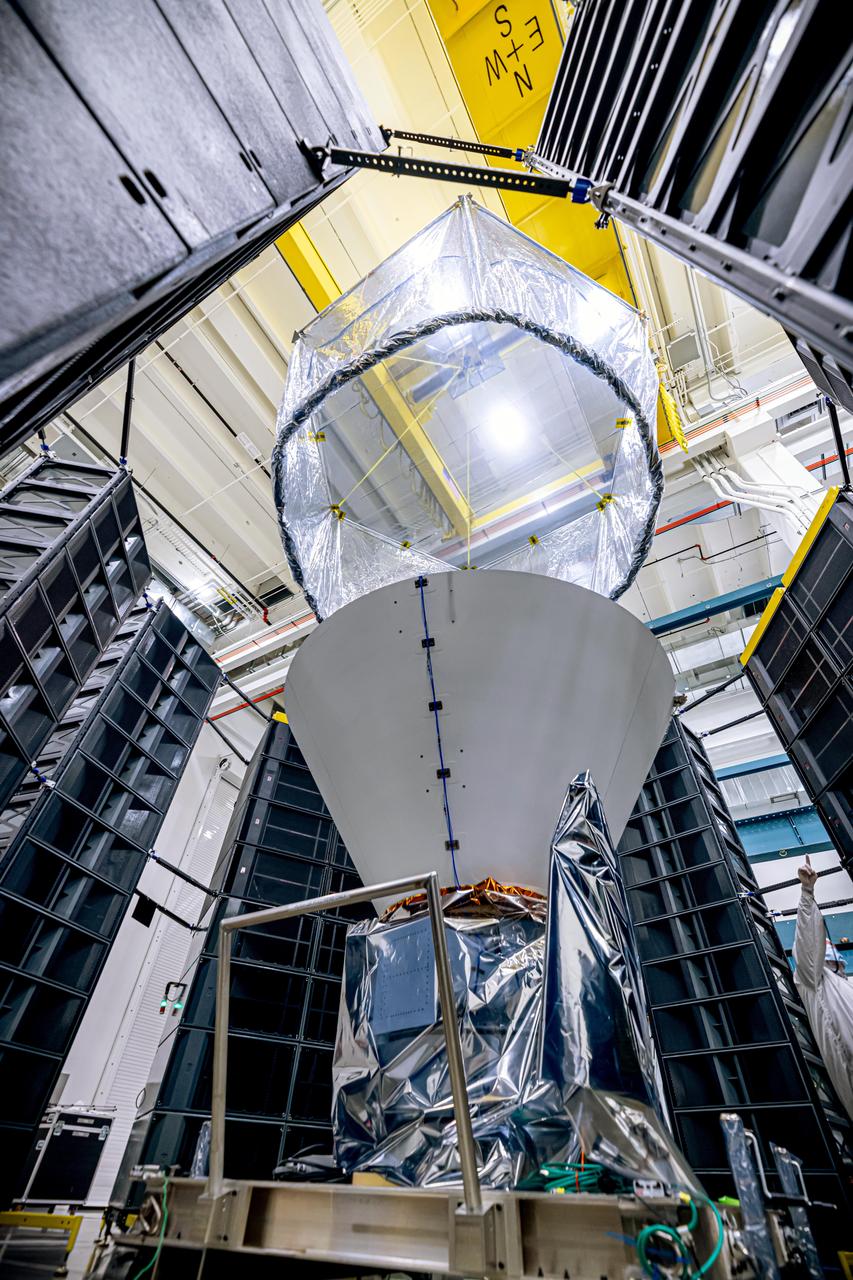
NASA's SPHEREx observatory is installed in the Fiesta Area at BAE Systems in Boulder, Colorado, in July 2024. The observatory is surrounded by speaker stacks used to perform acoustics testing, which subjects the spacecraft to the acoustics loads that it will experience during launch. Short for Spectro-Photometer for the History of the Universe, Epoch of Reionization and Ices Explorer, SPHEREx will create a map of the cosmos like no other. Using a technique called spectroscopy to image the entire sky in 102 wavelengths of infrared light, SPHEREx will gather information about the composition of and distance to millions of galaxies and stars. With this map, scientists will study what happened in the first fraction of a second after the big bang, how galaxies formed and evolved, and the origins of water in planetary systems in our galaxy. https://photojournal.jpl.nasa.gov/catalog/PIA26540
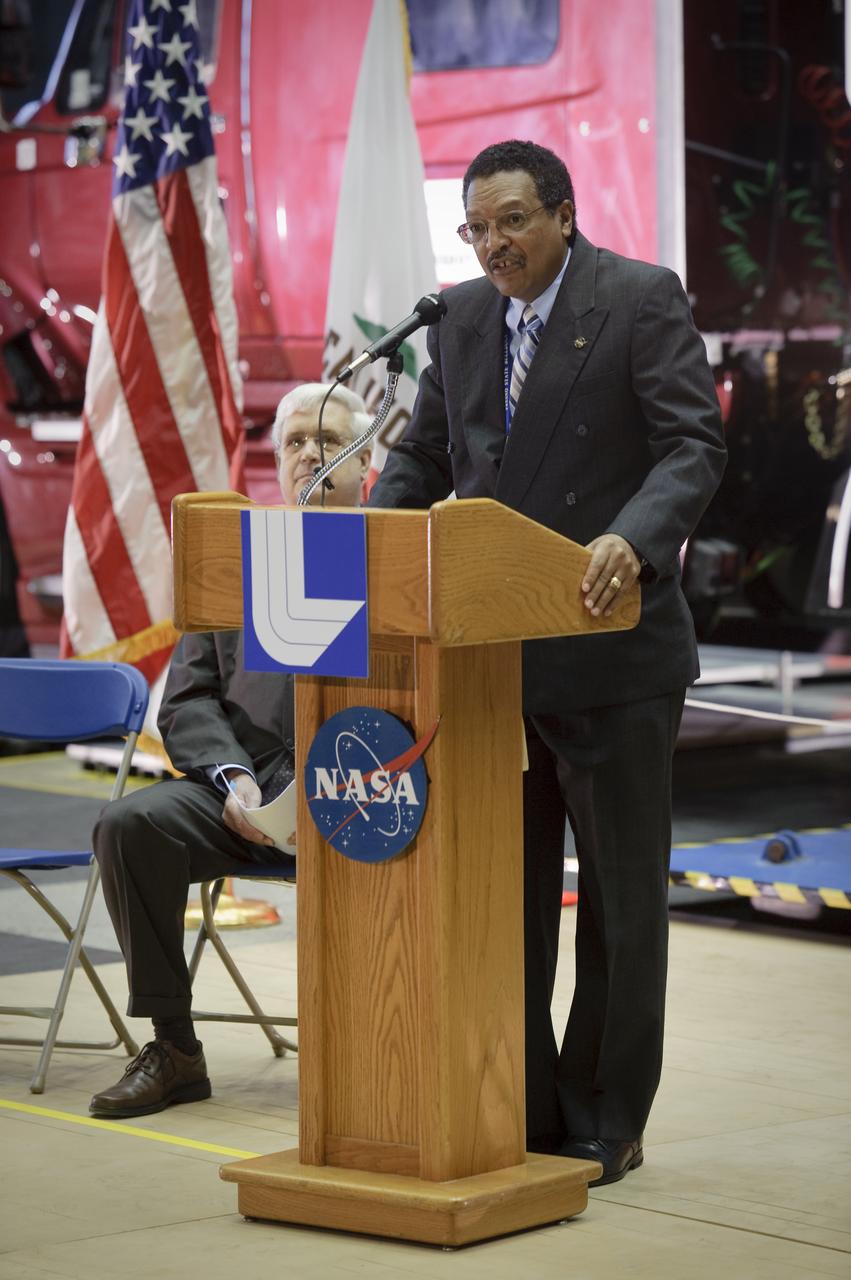
Lawrence Livermore National Laboratories media Day for their LLNL project aimed at aerodynamic truck and trailer devices. Tests are being preformed in the Ames Full-Scale Aerodynamic Complex 80x120 foot wind tunnel. Lewis Braxton III, Deputy Director Ames Research Center speaker.
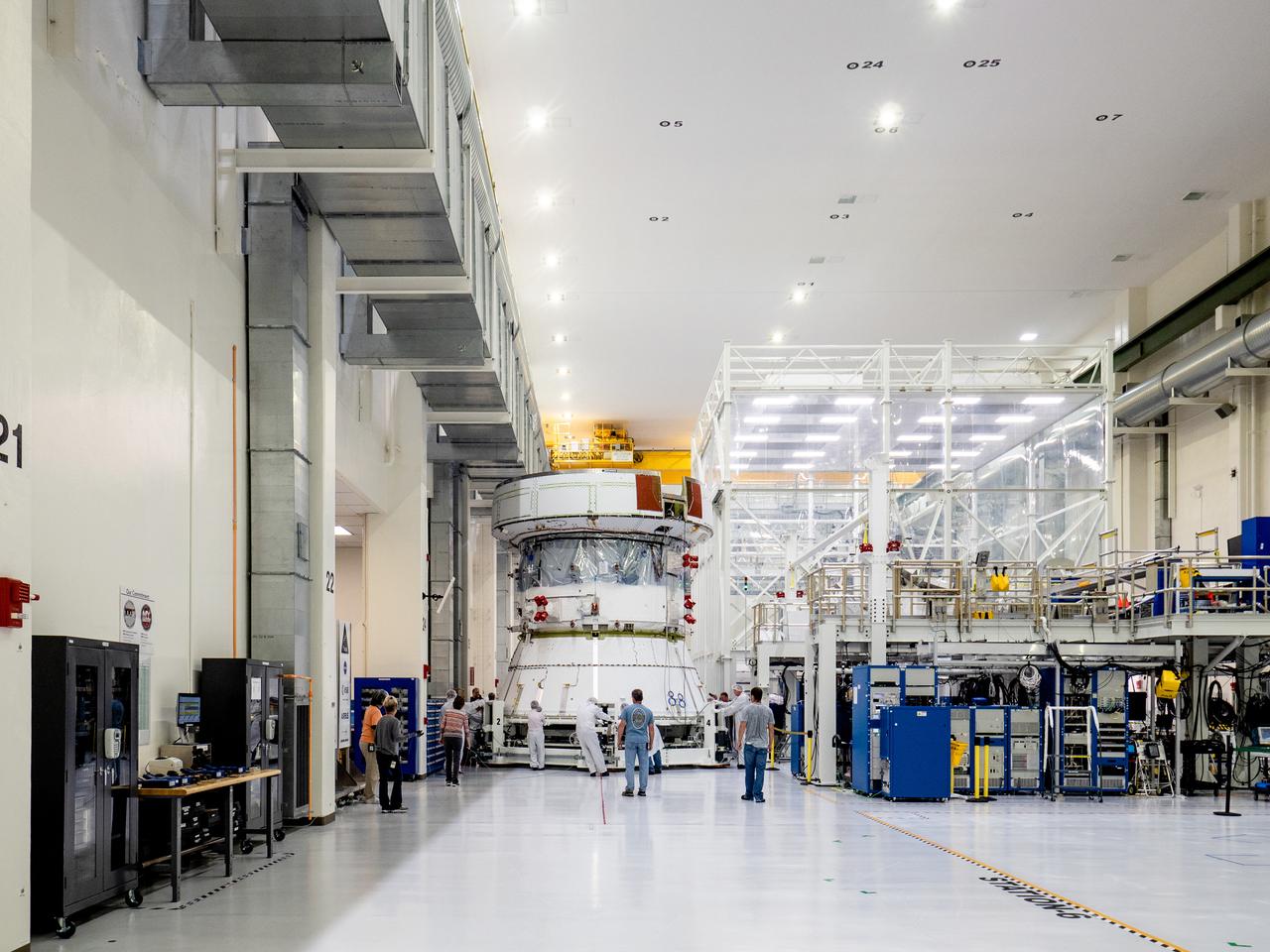
On April 29, Orion’s Service Module, shown here on May 3, 2019, moved to the lift station inside the assembly bay for installation and fastening of systems in preparation for Direct Field Acoustics Test (DFAT). The Service Module will move down to the east end of the bay next week where it will be surrounded with speakers and exposed to the acoustic level that will be experienced in space.
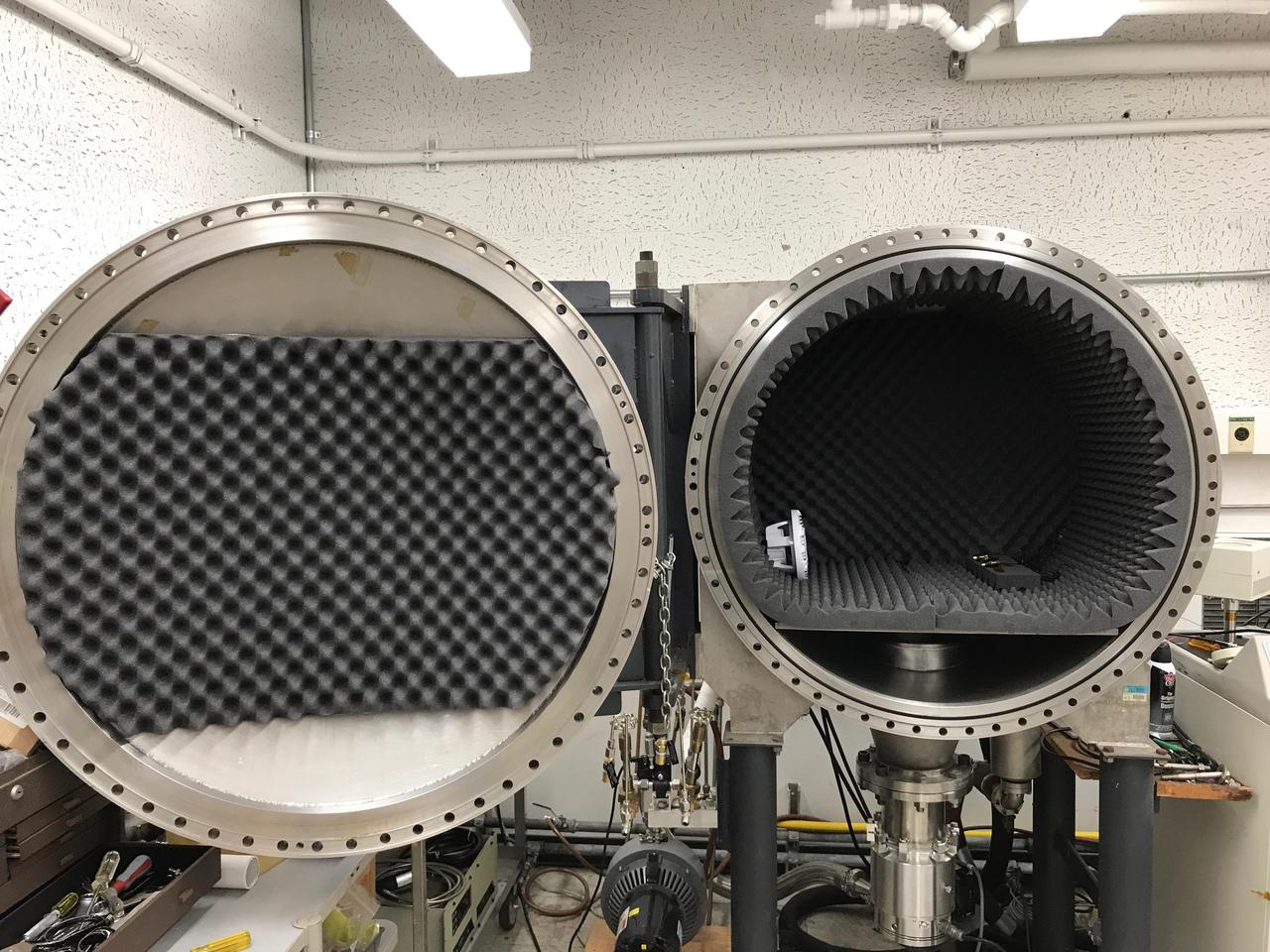
NASA's Mars 2020 Perseverance rover is equipped with two microphones that, if all goes as planned, will capture the sounds during entry, descent, and landing, and sounds on the Martian surface — from listening to the gusts of Mars' winds, to the "zap" of SuperCam's laser. This image depicts microphones under consideration the mission being tested at NASA's Jet Propulsion Laboratory in 2017. The microphones were placed inside a chamber with a playback speaker to record sounds within a simulated Martian environment. https://photojournal.jpl.nasa.gov/catalog/PIA24166
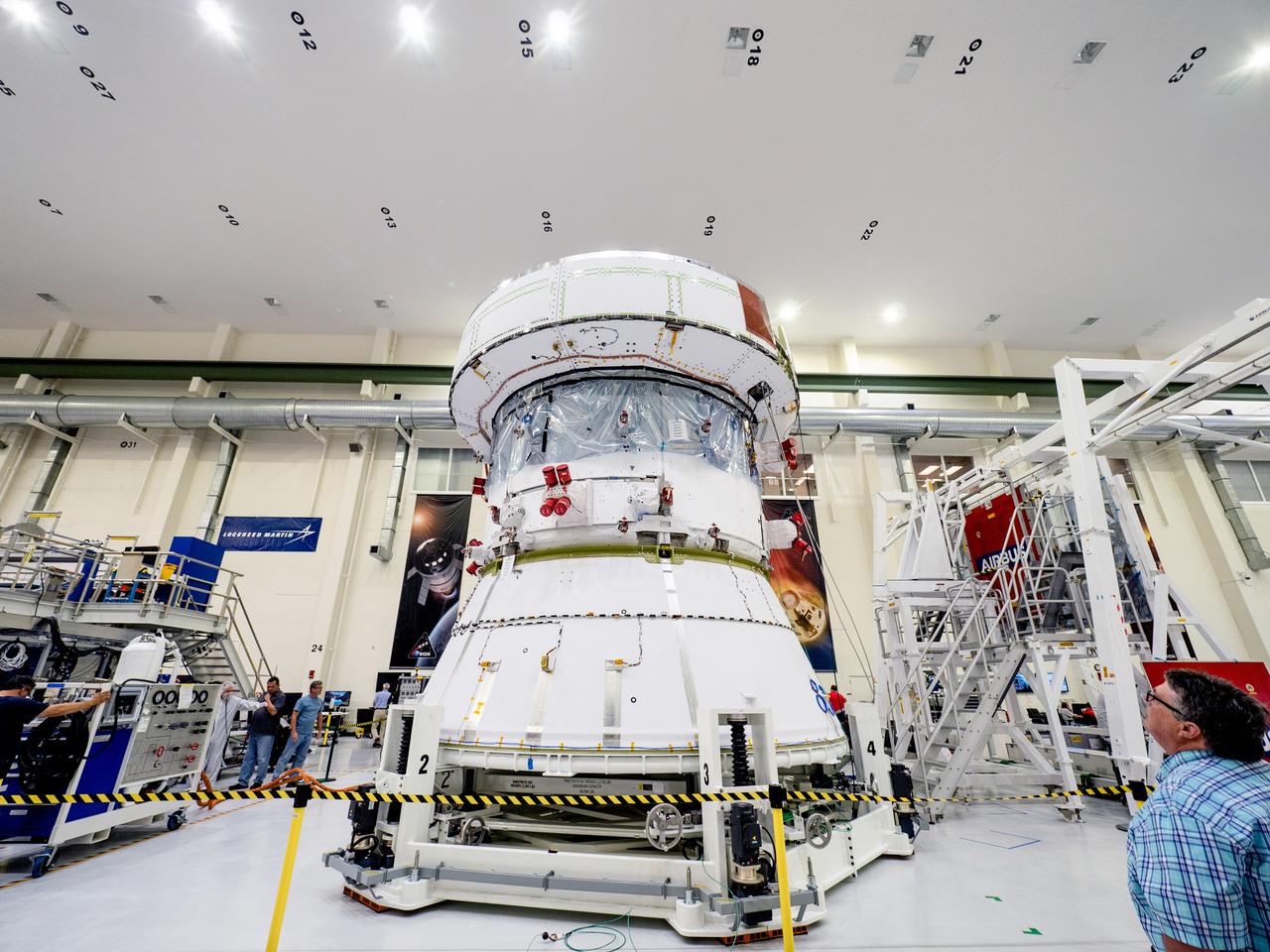
On April 29, Orion’s Service Module, shown here on May 3, 2019, moved to the lift station inside the assembly bay for installation and fastening of systems in preparation for Direct Field Acoustics Test (DFAT). The Service Module will move down to the east end of the bay next week where it will be surrounded with speakers and exposed to the acoustic level that will be experienced in space.
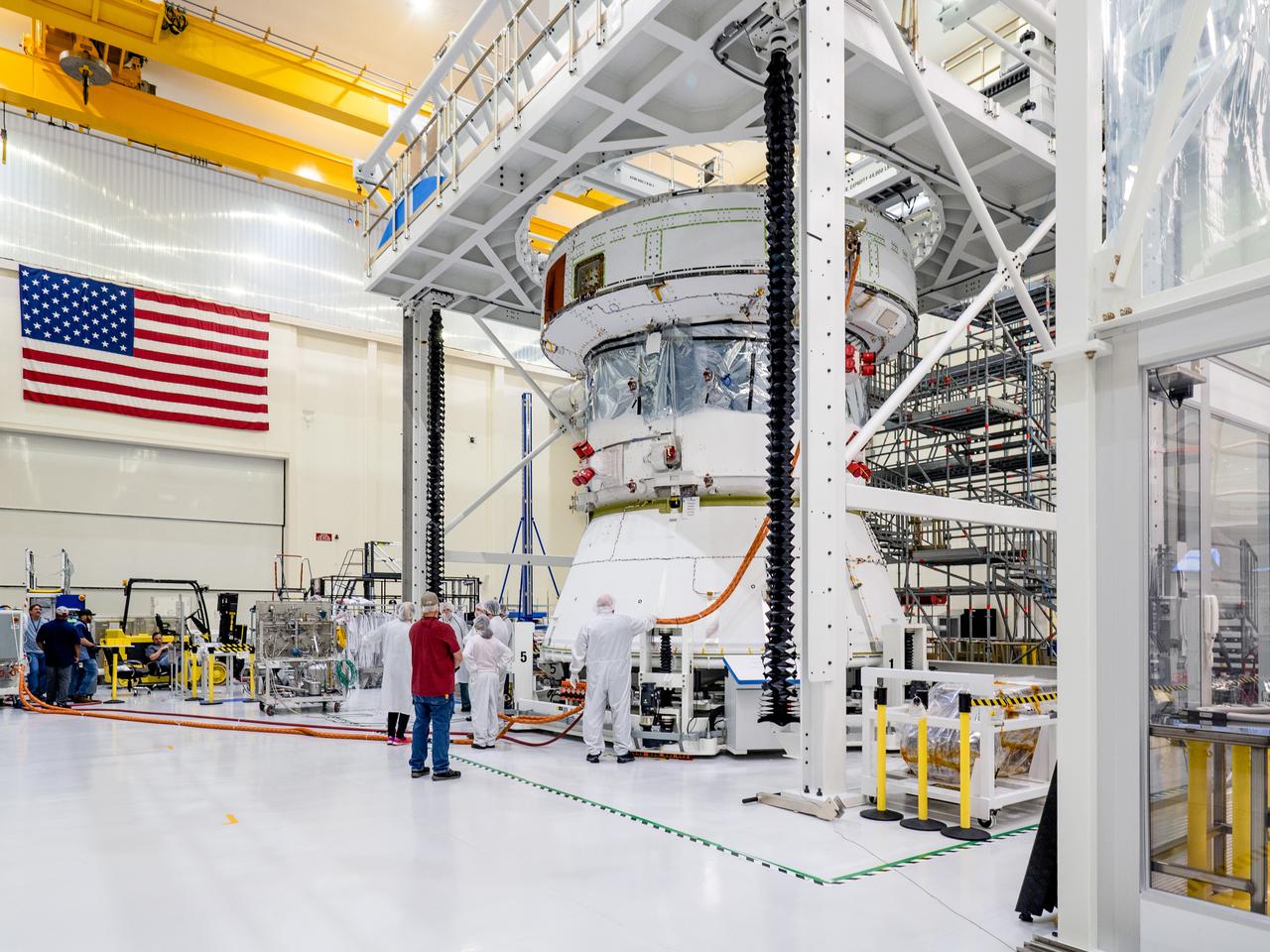
On April 29, Orion’s Service Module, shown here on May 3, 2019, moved to the lift station inside the assembly bay for installation and fastening of systems in preparation for Direct Field Acoustics Test (DFAT). The Service Module will move down to the east end of the bay next week where it will be surrounded with speakers and exposed to the acoustic level that will be experienced in space.
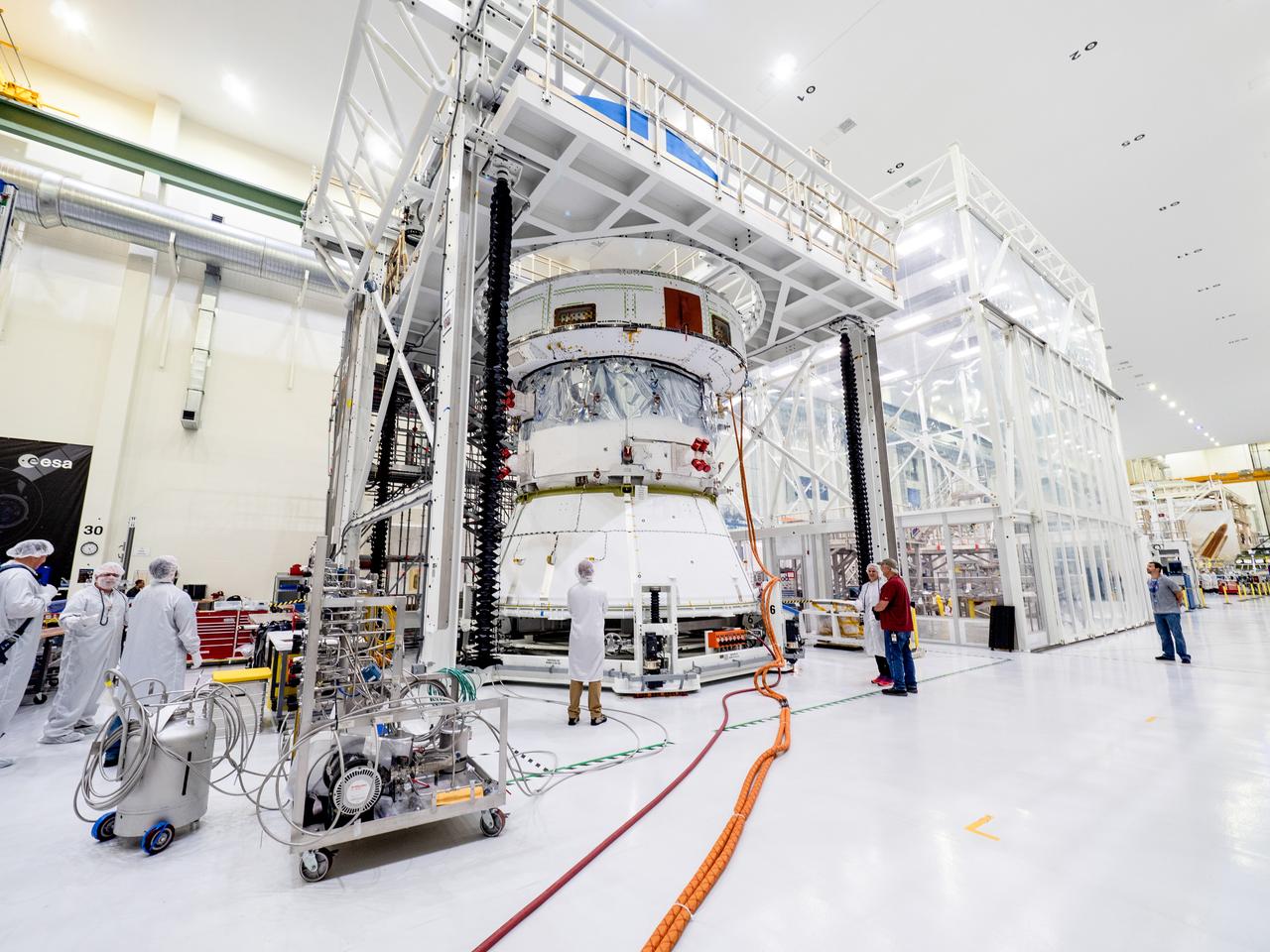
On April 29, Orion’s Service Module, shown here on May 3, 2019, moved to the lift station inside the assembly bay for installation and fastening of systems in preparation for Direct Field Acoustics Test (DFAT). The Service Module will move down to the east end of the bay next week where it will be surrounded with speakers and exposed to the acoustic level that will be experienced in space.
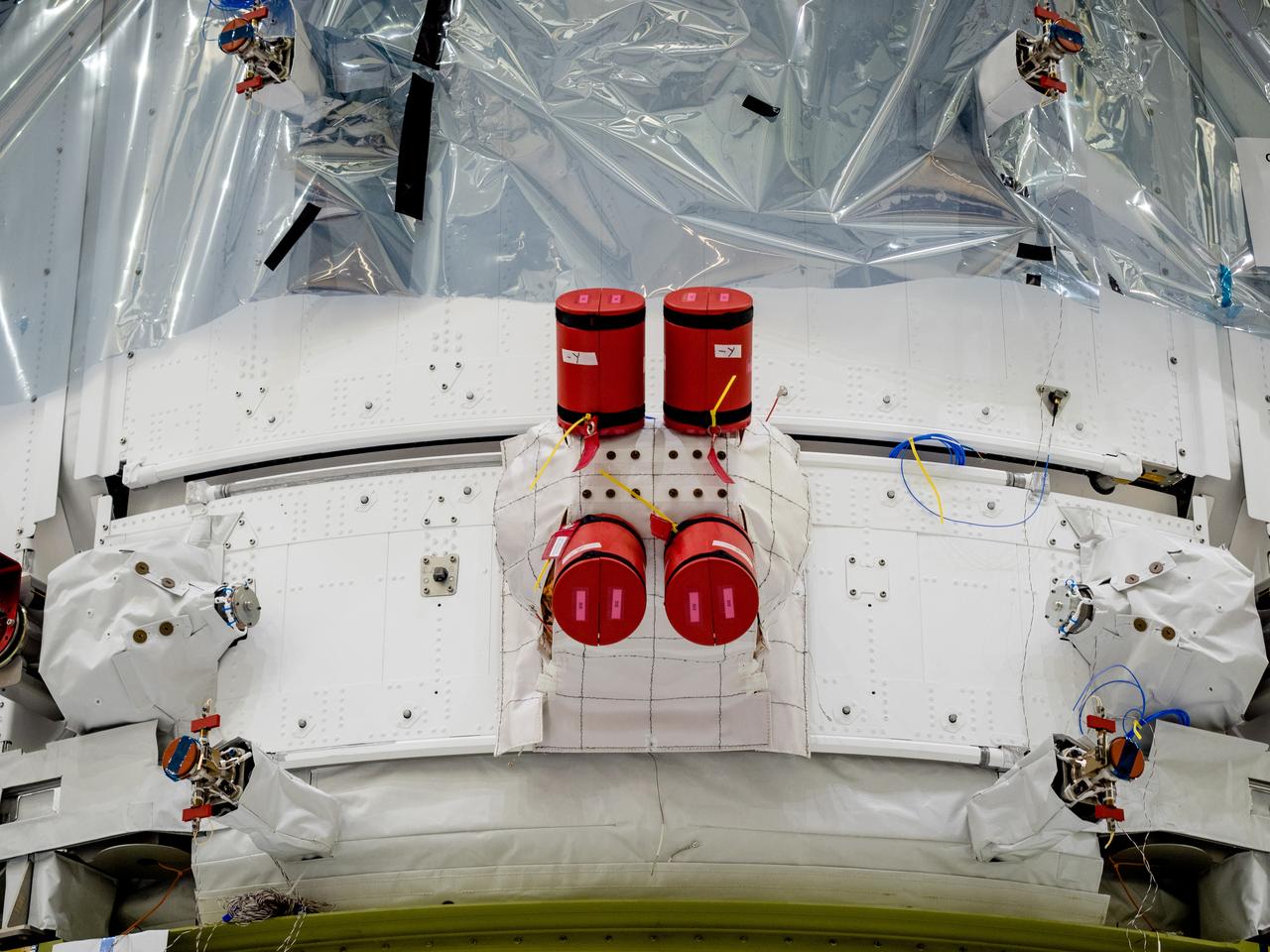
On April 29, Orion’s Service Module, shown here on May 3, 2019, moved to the lift station inside the assembly bay for installation and fastening of systems in preparation for Direct Field Acoustics Test (DFAT). The Service Module will move down to the east end of the bay next week where it will be surrounded with speakers and exposed to the acoustic level that will be experienced in space.
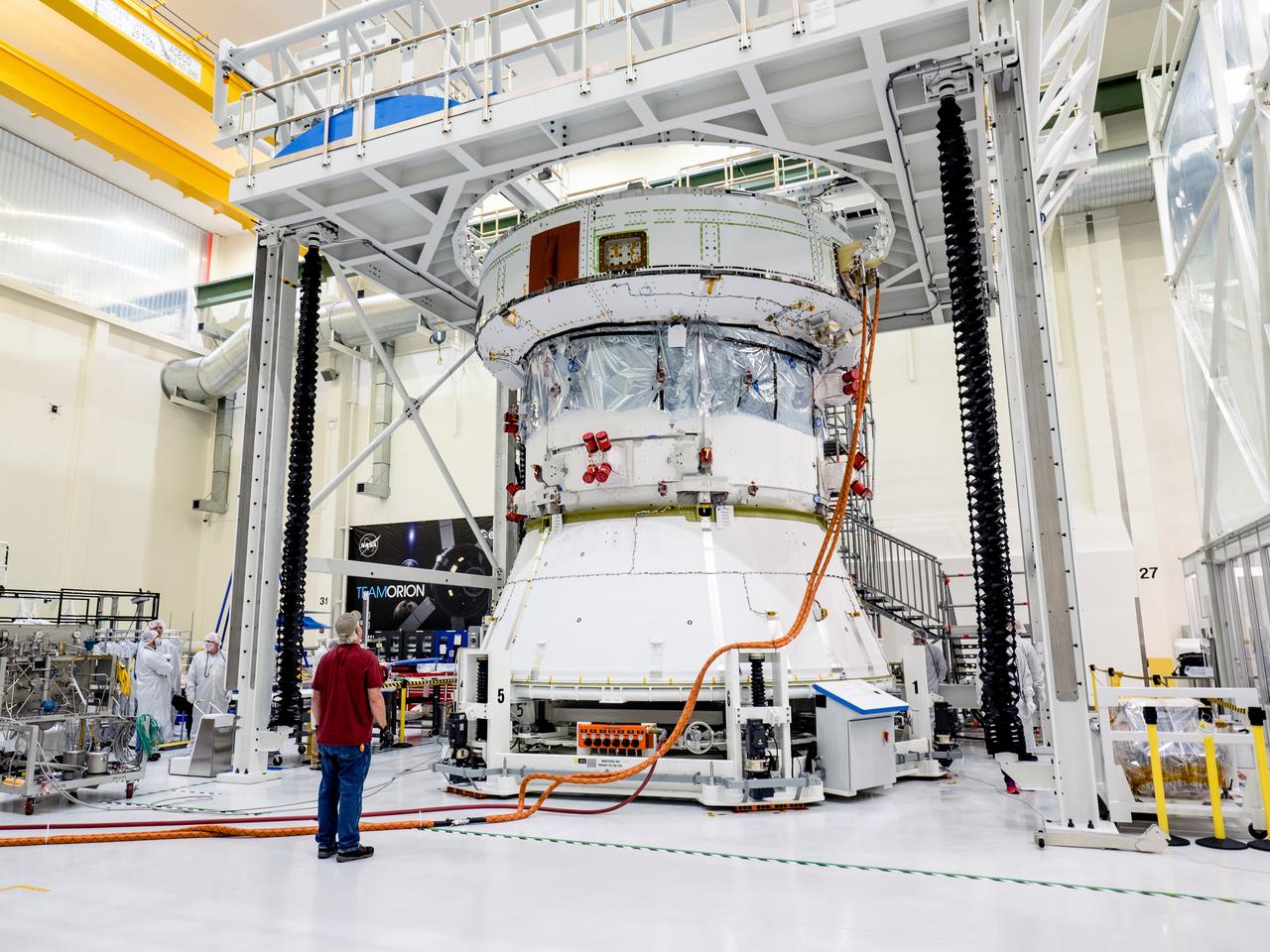
On April 29, Orion’s Service Module, shown here on May 3, 2019, moved to the lift station inside the assembly bay for installation and fastening of systems in preparation for Direct Field Acoustics Test (DFAT). The Service Module will move down to the east end of the bay next week where it will be surrounded with speakers and exposed to the acoustic level that will be experienced in space.
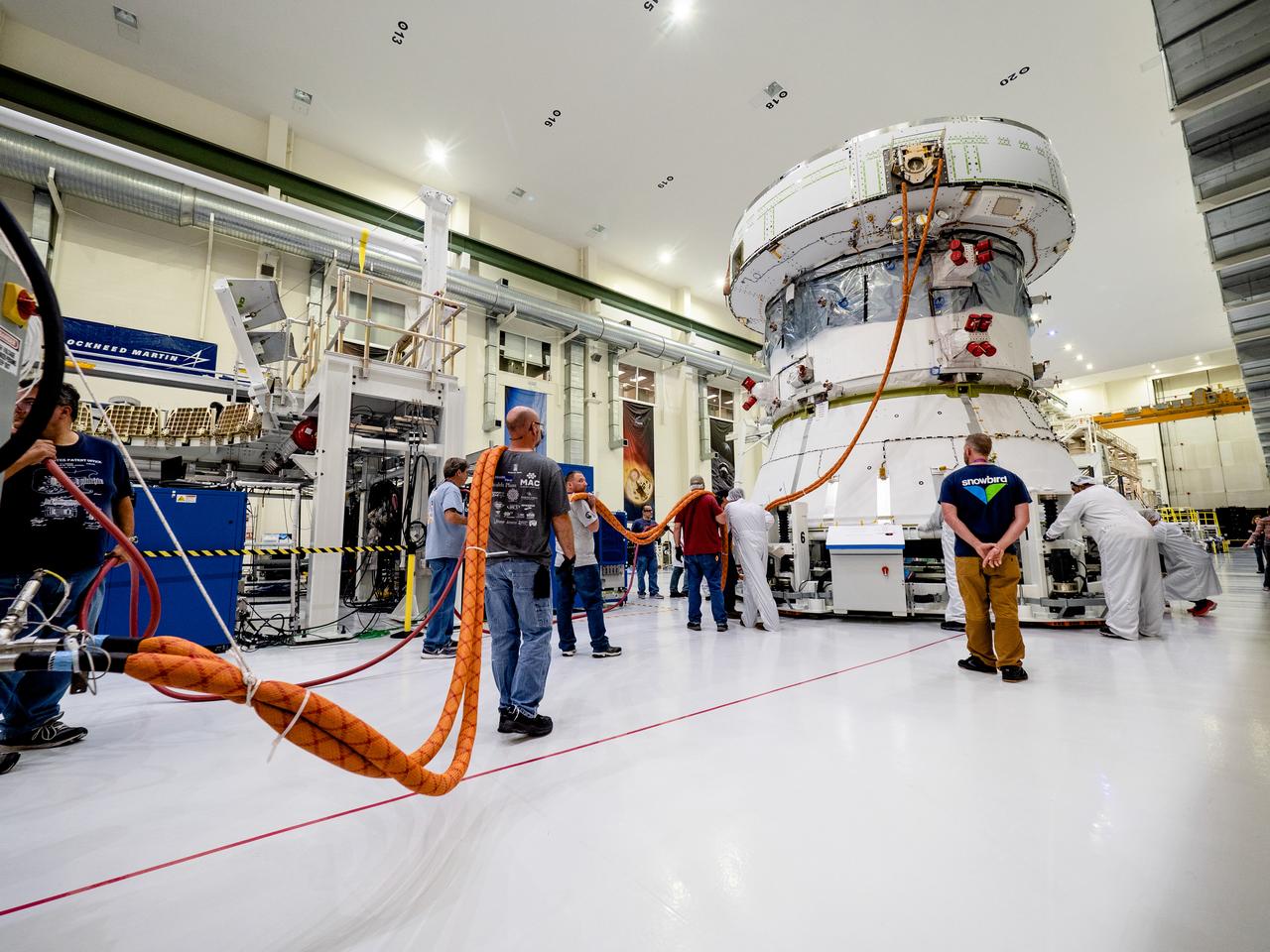
On April 29, Orion’s Service Module, shown here on May 3, 2019, moved to the lift station inside the assembly bay for installation and fastening of systems in preparation for Direct Field Acoustics Test (DFAT). The Service Module will move down to the east end of the bay next week where it will be surrounded with speakers and exposed to the acoustic level that will be experienced in space.
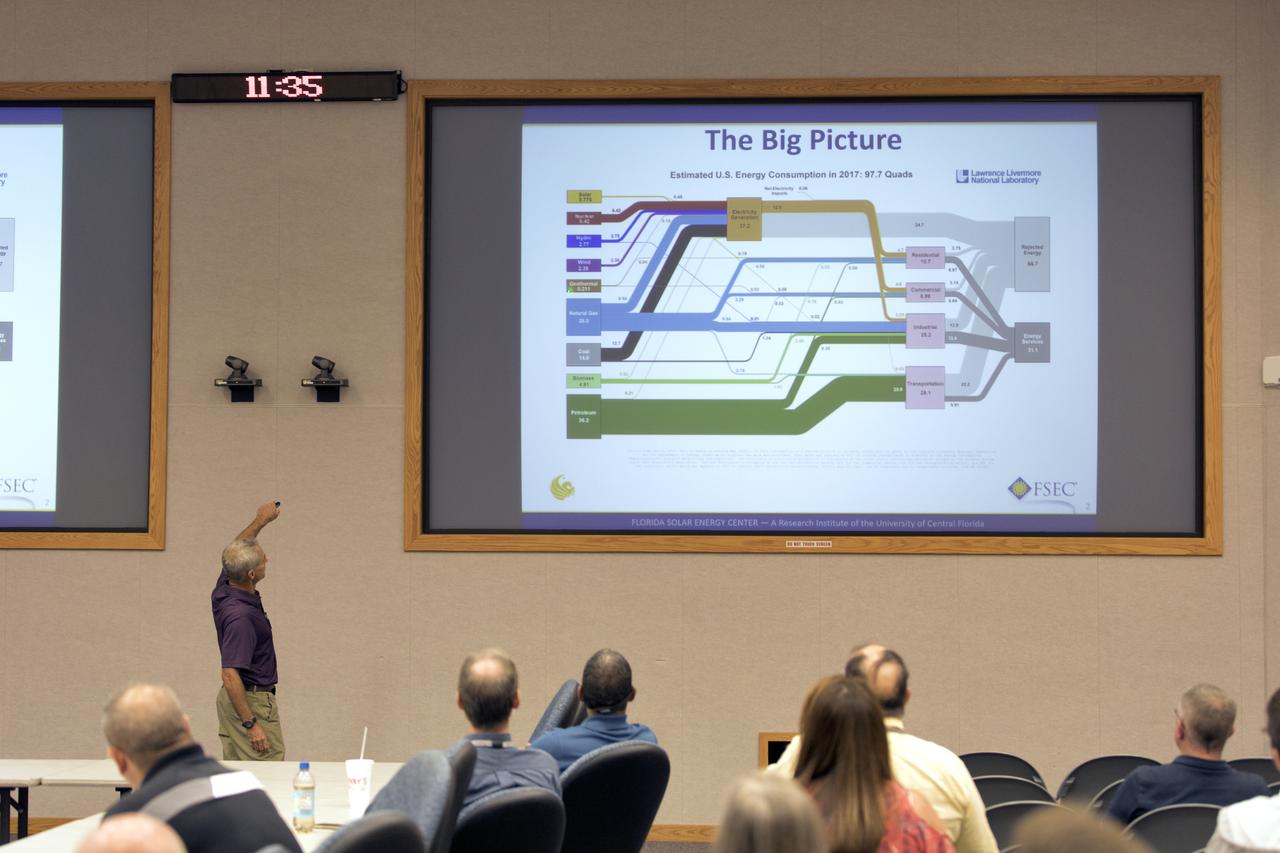
Guest speaker John Sherwin shares a presentation featuring residential solar and home energy-saving methods during a “lunch and learn” held Tuesday, Oct. 23, 2018, for employees at NASA’s Kennedy Space Center in Florida. Sherwin is the director of the Photovoltaic System Certification and Testing Program at the Florida Solar Energy Center in Cocoa. The event was one of two held during October in conjunction with Energy Awareness Month, which aims to recognize the importance of energy management for our national prosperity, security and environmental sustainability.
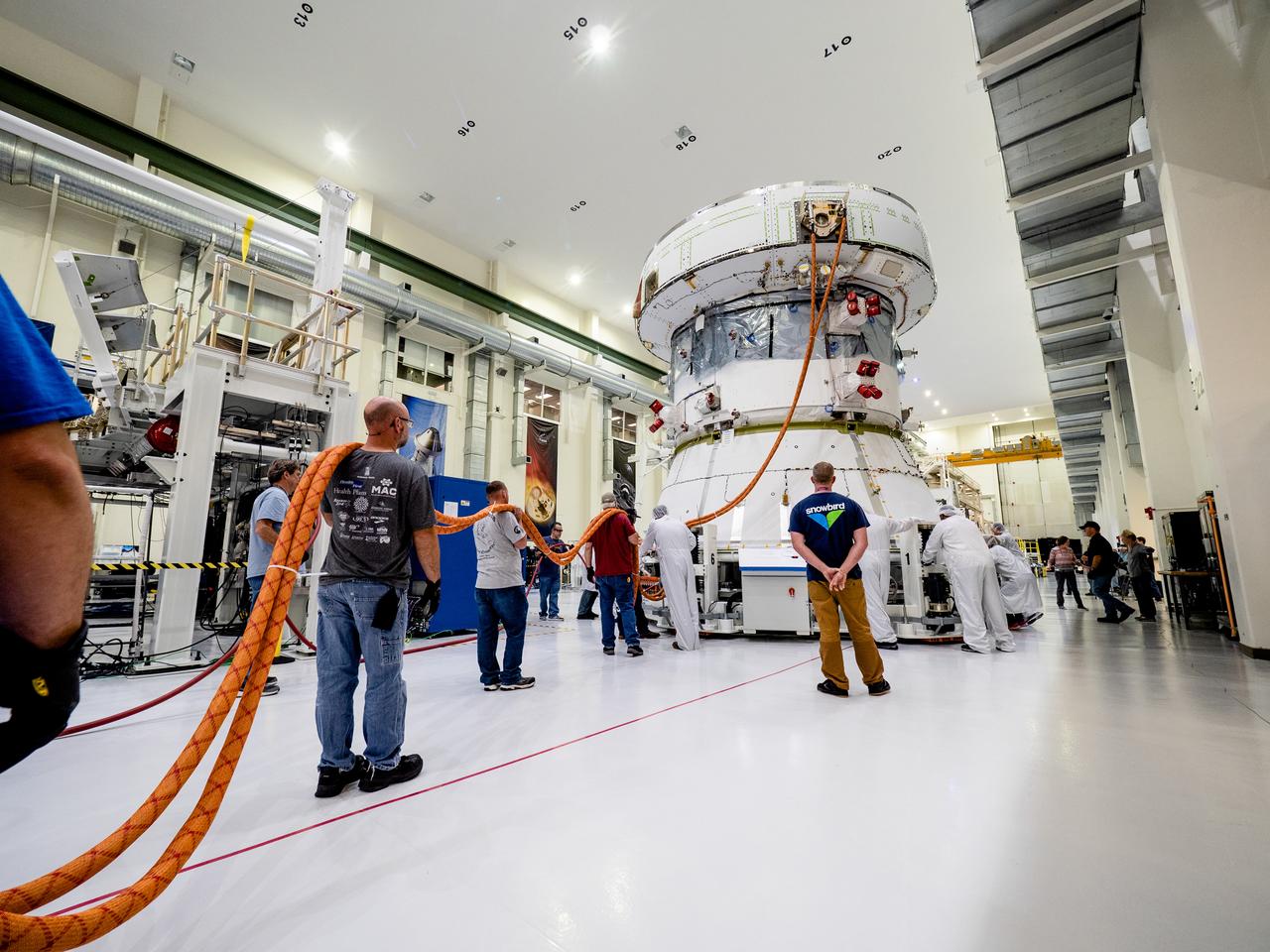
On April 29, Orion’s Service Module, shown here on May 3, 2019, moved to the lift station inside the assembly bay for installation and fastening of systems in preparation for Direct Field Acoustics Test (DFAT). The Service Module will move down to the east end of the bay next week where it will be surrounded with speakers and exposed to the acoustic level that will be experienced in space.

On April 29, Orion’s service module, shown here on May 2, 2019, moved to the lift station inside the assembly bay for installation and fastening of systems in preparation for Direct Field Acoustics Test (DFAT). The service module will move down to the east end of the bay next week where it will be surrounded with speakers and exposed to the acoustic level that will be experienced in space.
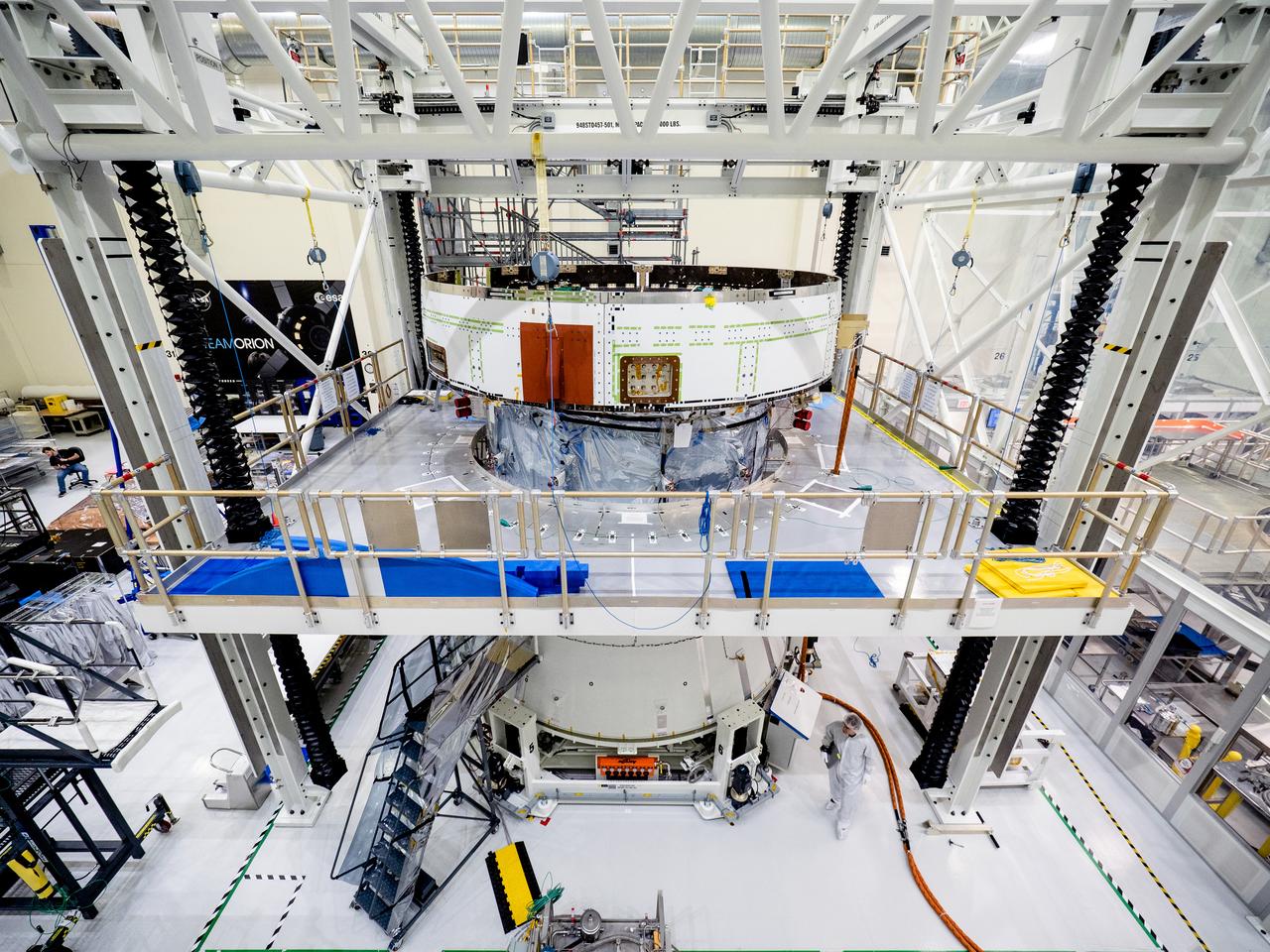
On April 29, Orion’s service module, shown here on May 2, 2019, moved to the lift station inside the assembly bay for installation and fastening of systems in preparation for Direct Field Acoustics Test (DFAT). The service module will move down to the east end of the bay next week where it will be surrounded with speakers and exposed to the acoustic level that will be experienced in space.
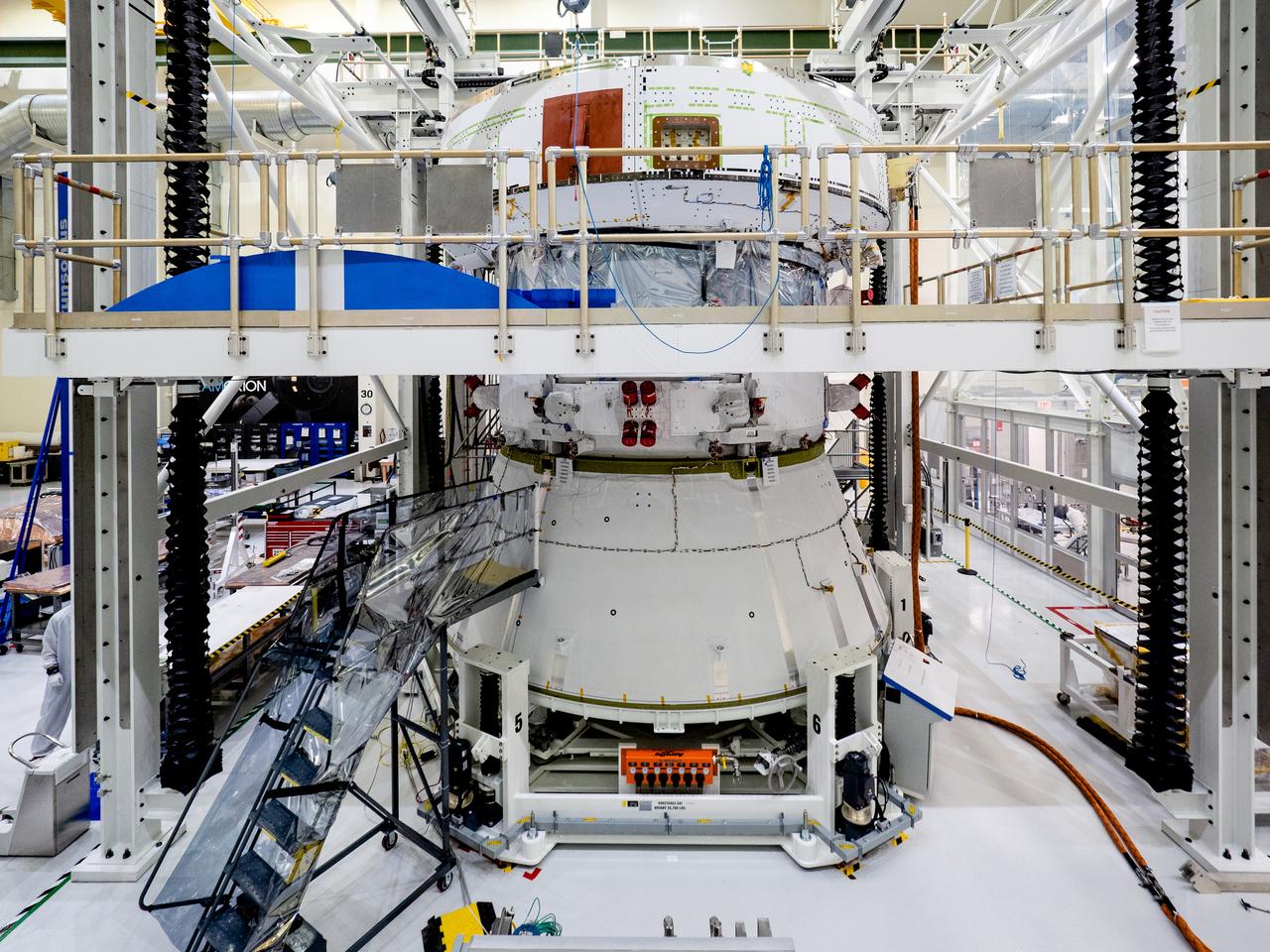
On April 29, Orion’s service module, shown here on May 2, 2019, moved to the lift station inside the assembly bay for installation and fastening of systems in preparation for Direct Field Acoustics Test (DFAT). The service module will move down to the east end of the bay next week where it will be surrounded with speakers and exposed to the acoustic level that will be experienced in space.

On April 29, Orion’s Service Module, shown here on May 3, 2019, moved to the lift station inside the assembly bay for installation and fastening of systems in preparation for Direct Field Acoustics Test (DFAT). The Service Module will move down to the east end of the bay next week where it will be surrounded with speakers and exposed to the acoustic level that will be experienced in space.
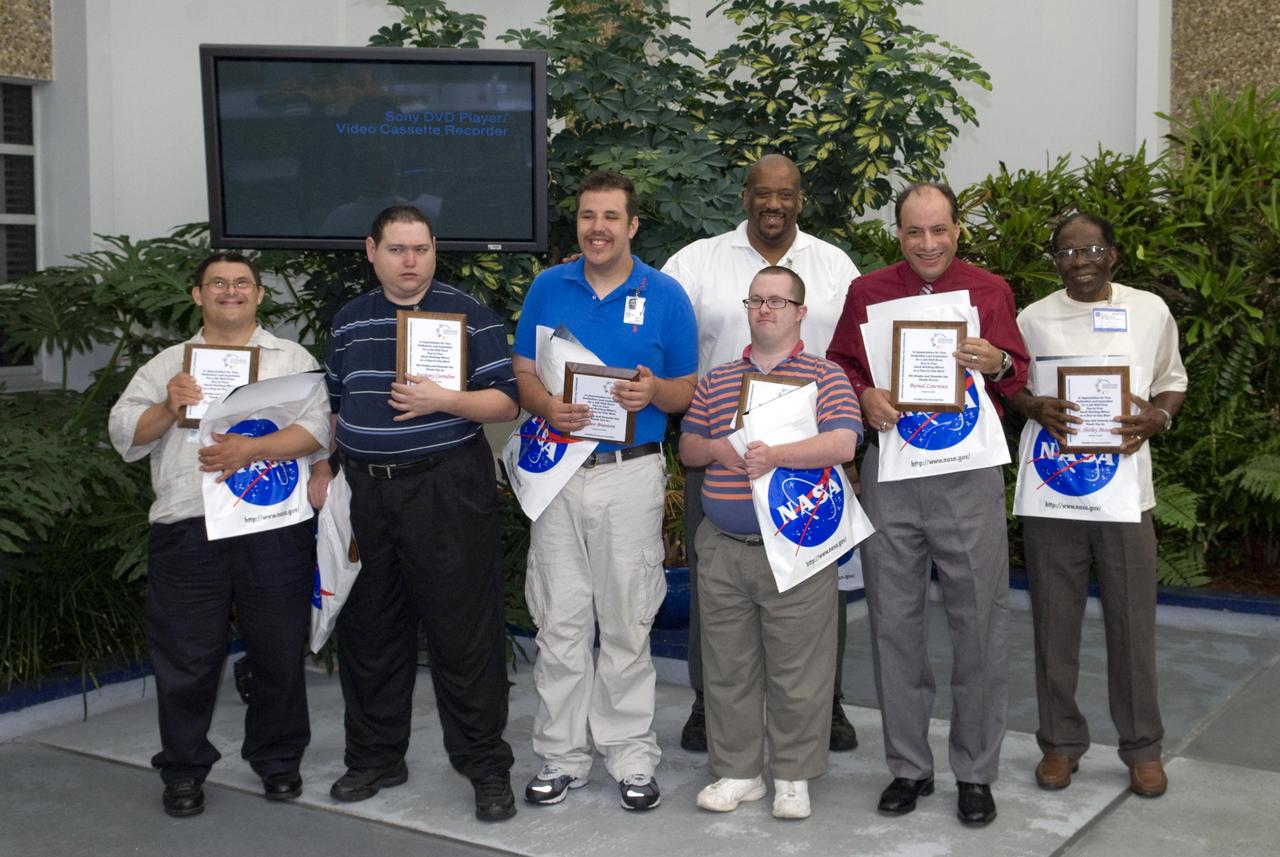
Members of STARC, a non-profit organization in Slidell, La., that seeks to help people with disabilities lead meaningful, productive lives, pose with their appreciation awards during Disability Awareness Day at Stennis Space Center on Oct. 15. The group members received appreciation awards for their dedicated service to the rocket engine testing facility. Disability Awareness Day was hosted by the Stennis Diversity Council and included guest speakers from several area agencies.
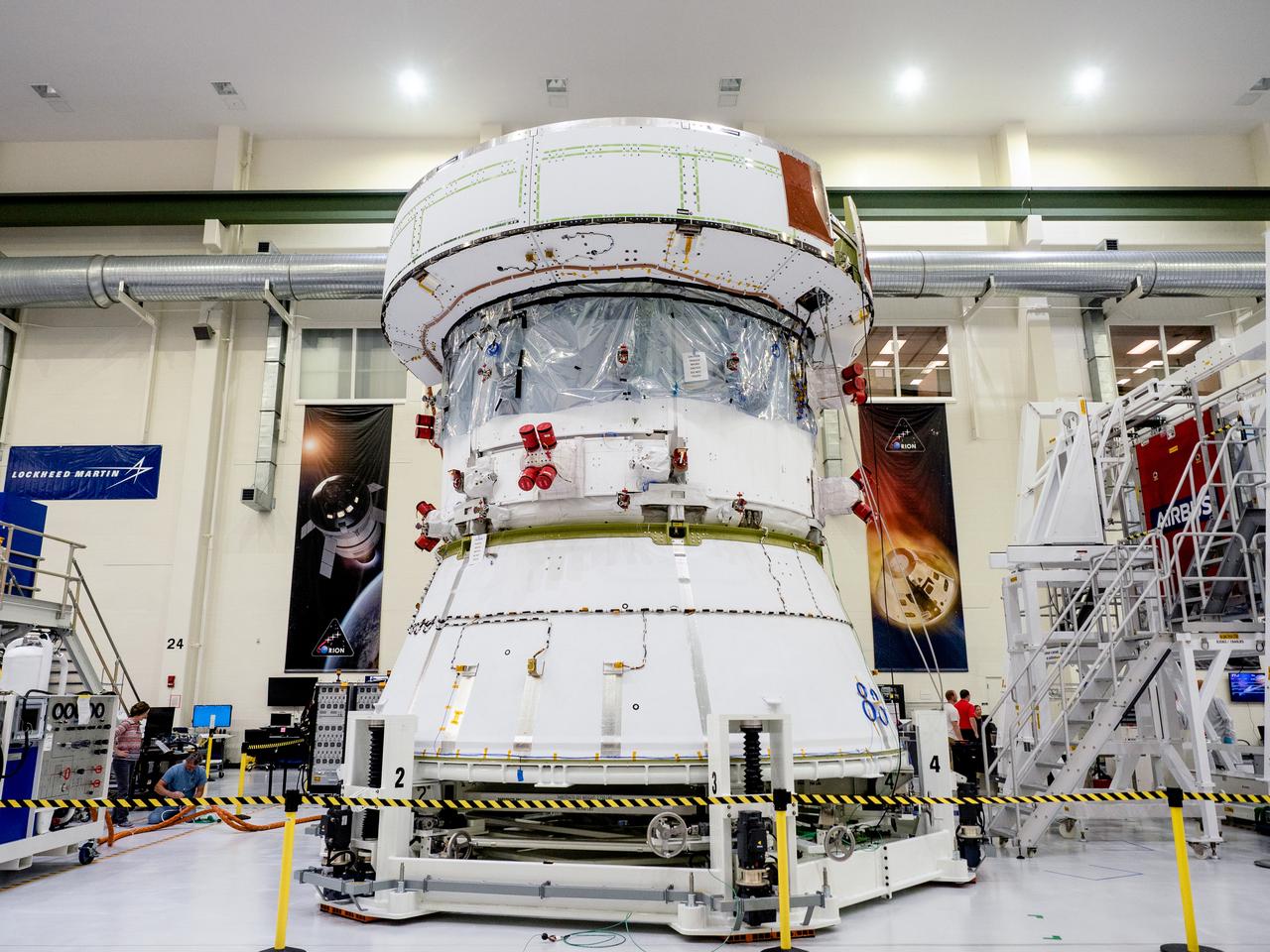
On April 29, Orion’s Service Module, shown here on May 3, 2019, moved to the lift station inside the assembly bay for installation and fastening of systems in preparation for Direct Field Acoustics Test (DFAT). The Service Module will move down to the east end of the bay next week where it will be surrounded with speakers and exposed to the acoustic level that will be experienced in space.
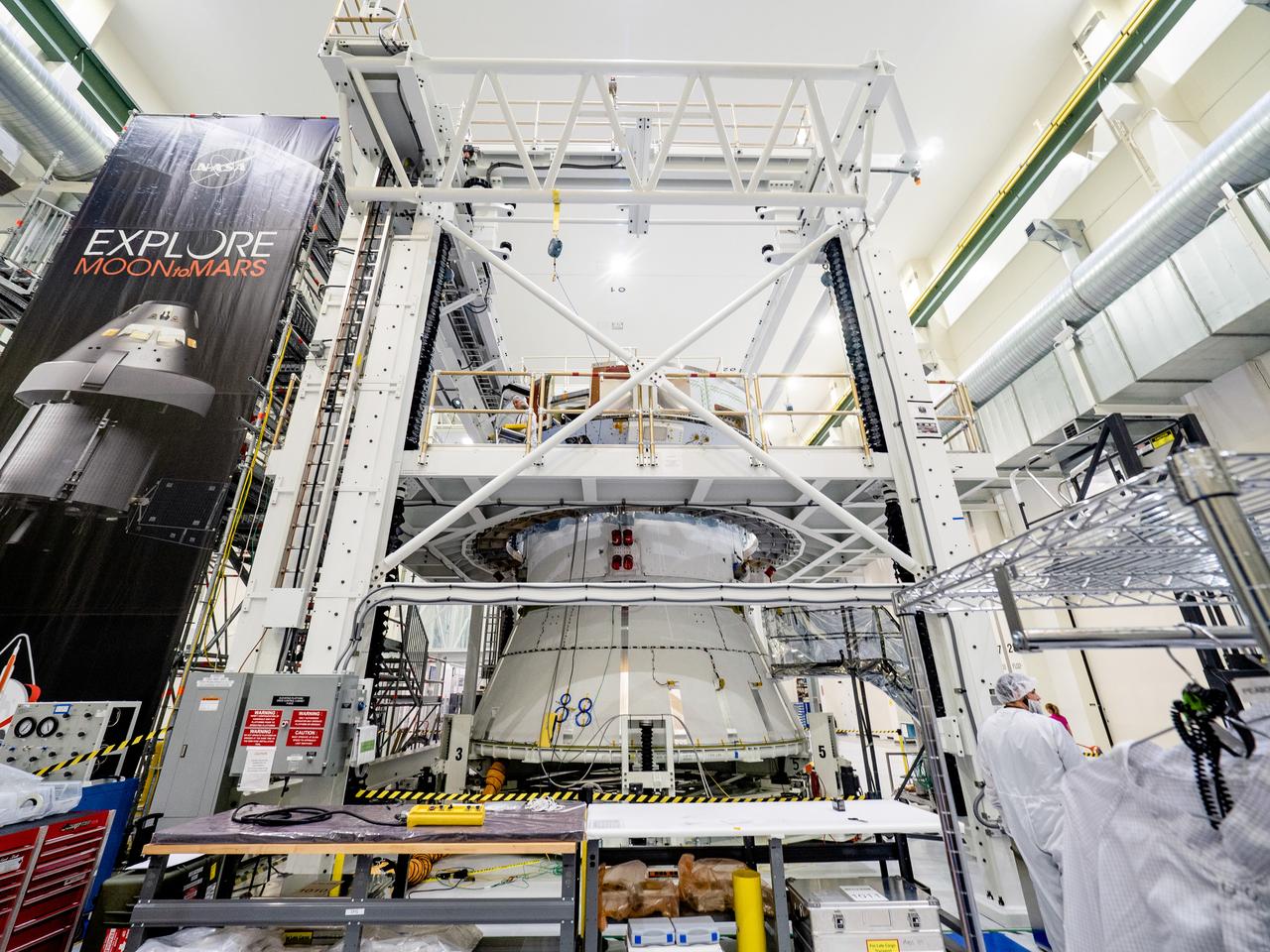
On April 29, Orion’s service module, shown here on May 2, 2019, moved to the lift station inside the assembly bay for installation and fastening of systems in preparation for Direct Field Acoustics Test (DFAT). The service module will move down to the east end of the bay next week where it will be surrounded with speakers and exposed to the acoustic level that will be experienced in space.
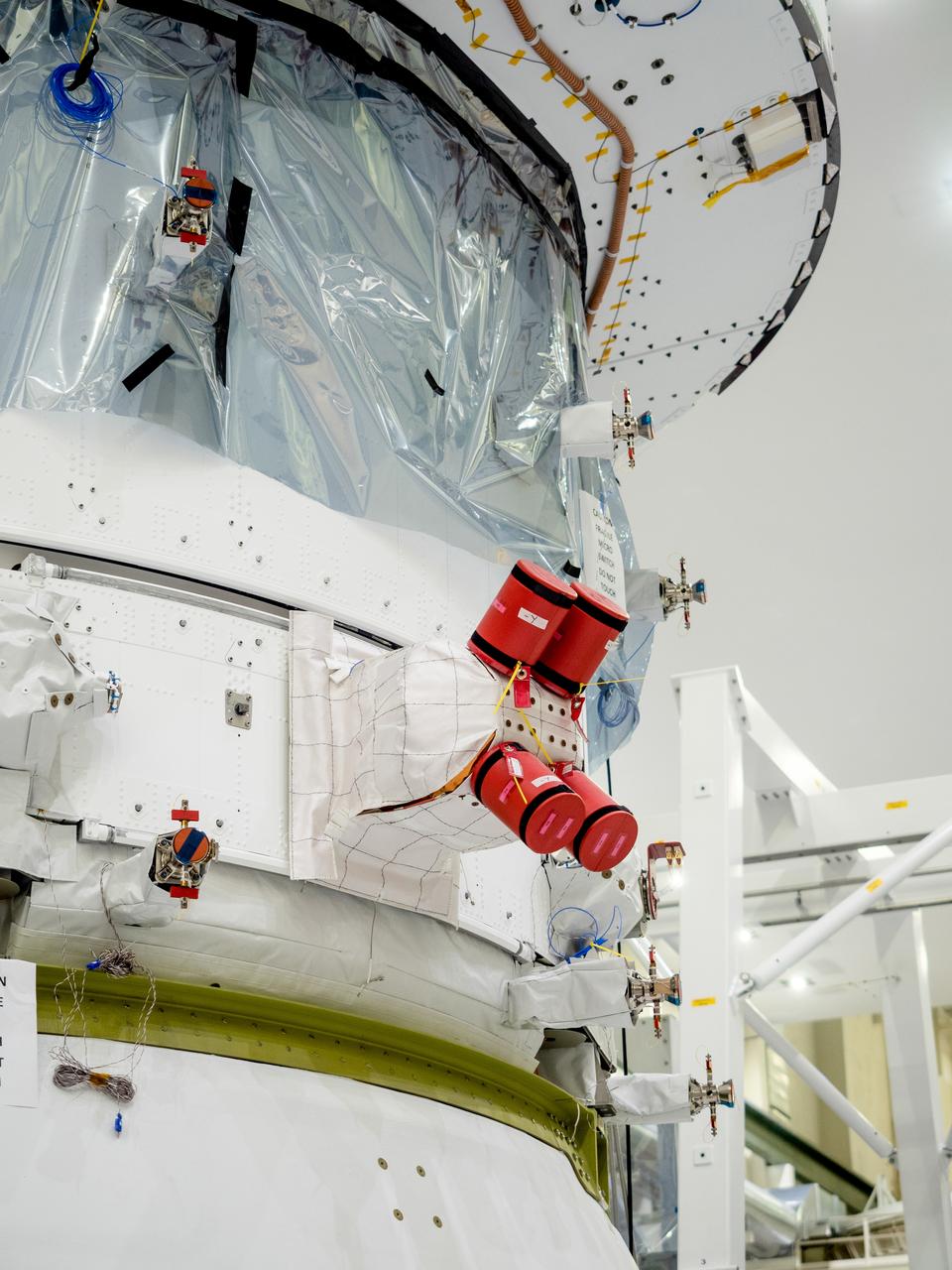
On April 29, Orion’s Service Module, shown here on May 3, 2019, moved to the lift station inside the assembly bay for installation and fastening of systems in preparation for Direct Field Acoustics Test (DFAT). The Service Module will move down to the east end of the bay next week where it will be surrounded with speakers and exposed to the acoustic level that will be experienced in space.
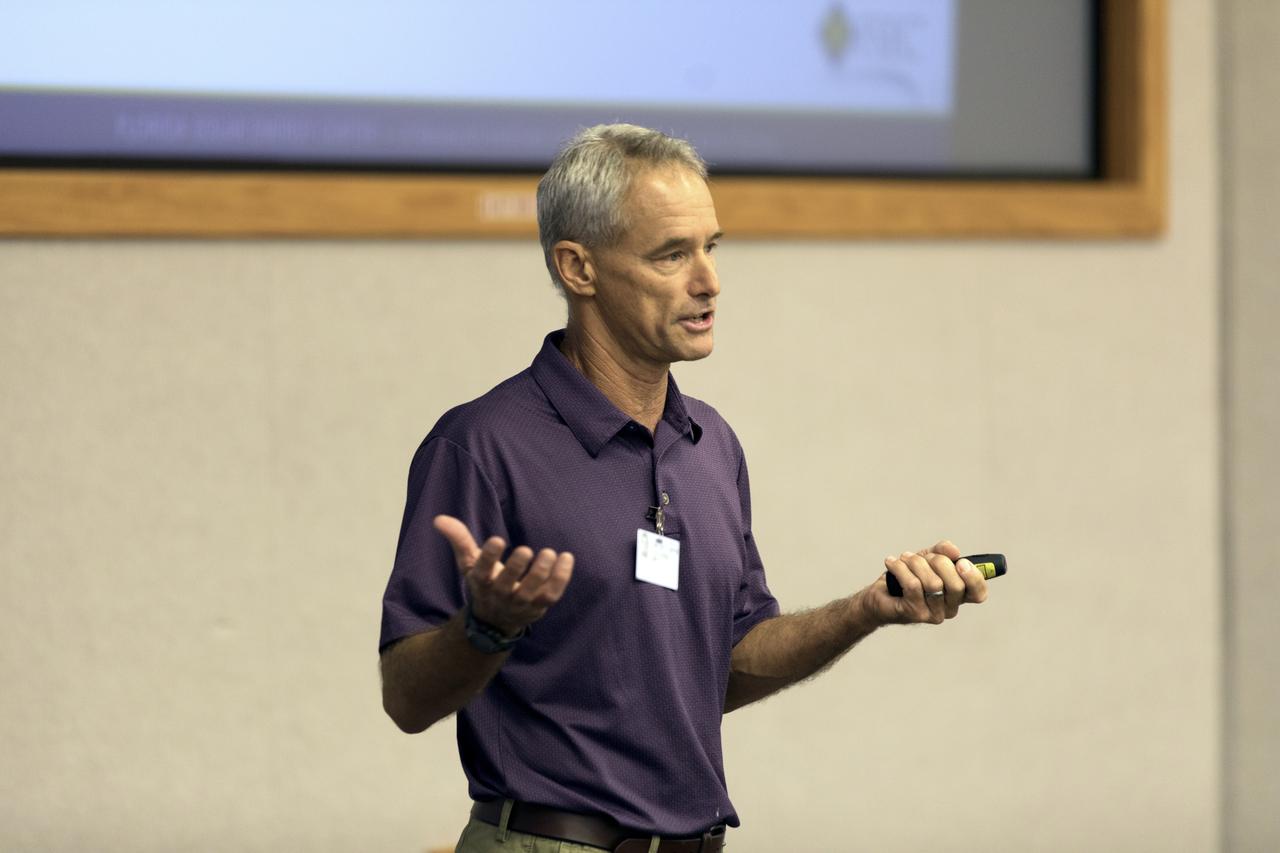
Guest speaker John Sherwin explains residential solar and home energy-saving methods during a “lunch and learn” held Tuesday, Oct. 23, 2018, for employees at NASA’s Kennedy Space Center in Florida. Sherwin is the director of the Photovoltaic System Certification and Testing Program at the Florida Solar Energy Center in Cocoa. The event was one of two held during October in conjunction with Energy Awareness Month, which aims to recognize the importance of energy management for our national prosperity, security and environmental sustainability.
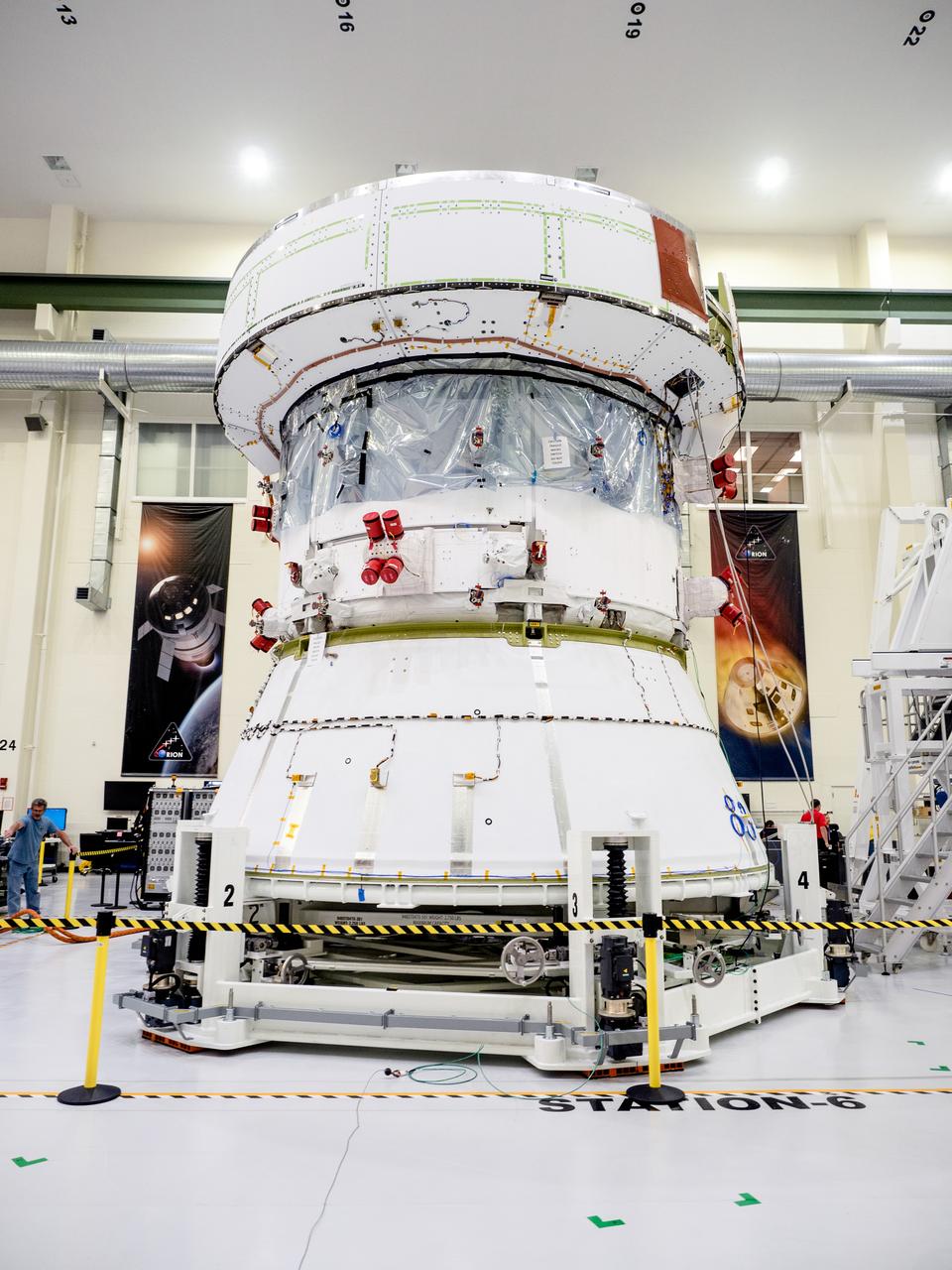
On April 29, Orion’s Service Module, shown here on May 3, 2019, moved to the lift station inside the assembly bay for installation and fastening of systems in preparation for Direct Field Acoustics Test (DFAT). The Service Module will move down to the east end of the bay next week where it will be surrounded with speakers and exposed to the acoustic level that will be experienced in space.

On April 29, Orion’s service module, shown here on May 2, 2019, moved to the lift station inside the assembly bay for installation and fastening of systems in preparation for Direct Field Acoustics Test (DFAT). The service module will move down to the east end of the bay next week where it will be surrounded with speakers and exposed to the acoustic level that will be experienced in space.

On April 29, Orion’s Service Module, shown here on May 3, 2019, moved to the lift station inside the assembly bay for installation and fastening of systems in preparation for Direct Field Acoustics Test (DFAT). The Service Module will move down to the east end of the bay next week where it will be surrounded with speakers and exposed to the acoustic level that will be experienced in space.
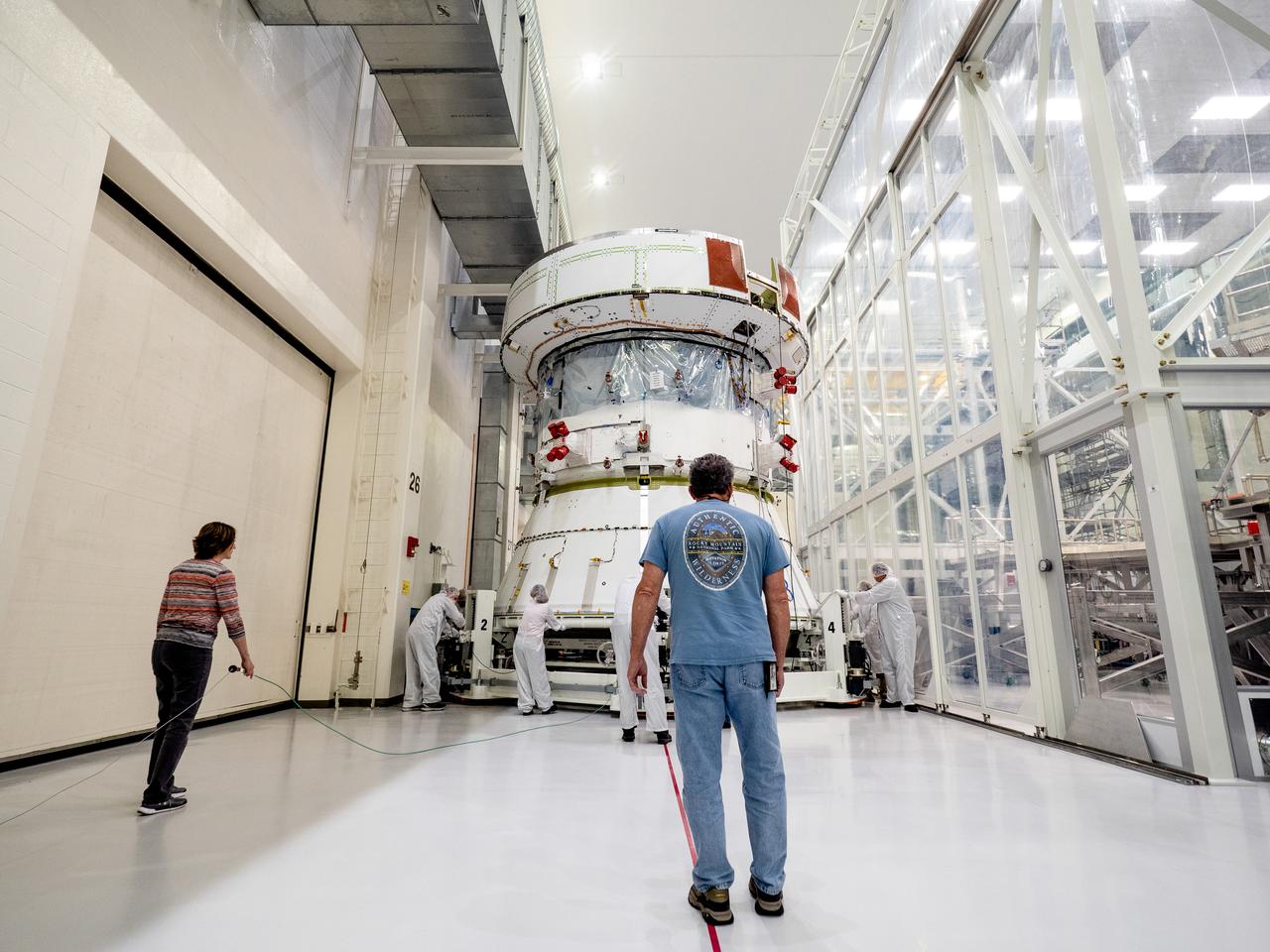
On April 29, Orion’s Service Module, shown here on May 3, 2019, moved to the lift station inside the assembly bay for installation and fastening of systems in preparation for Direct Field Acoustics Test (DFAT). The Service Module will move down to the east end of the bay next week where it will be surrounded with speakers and exposed to the acoustic level that will be experienced in space.
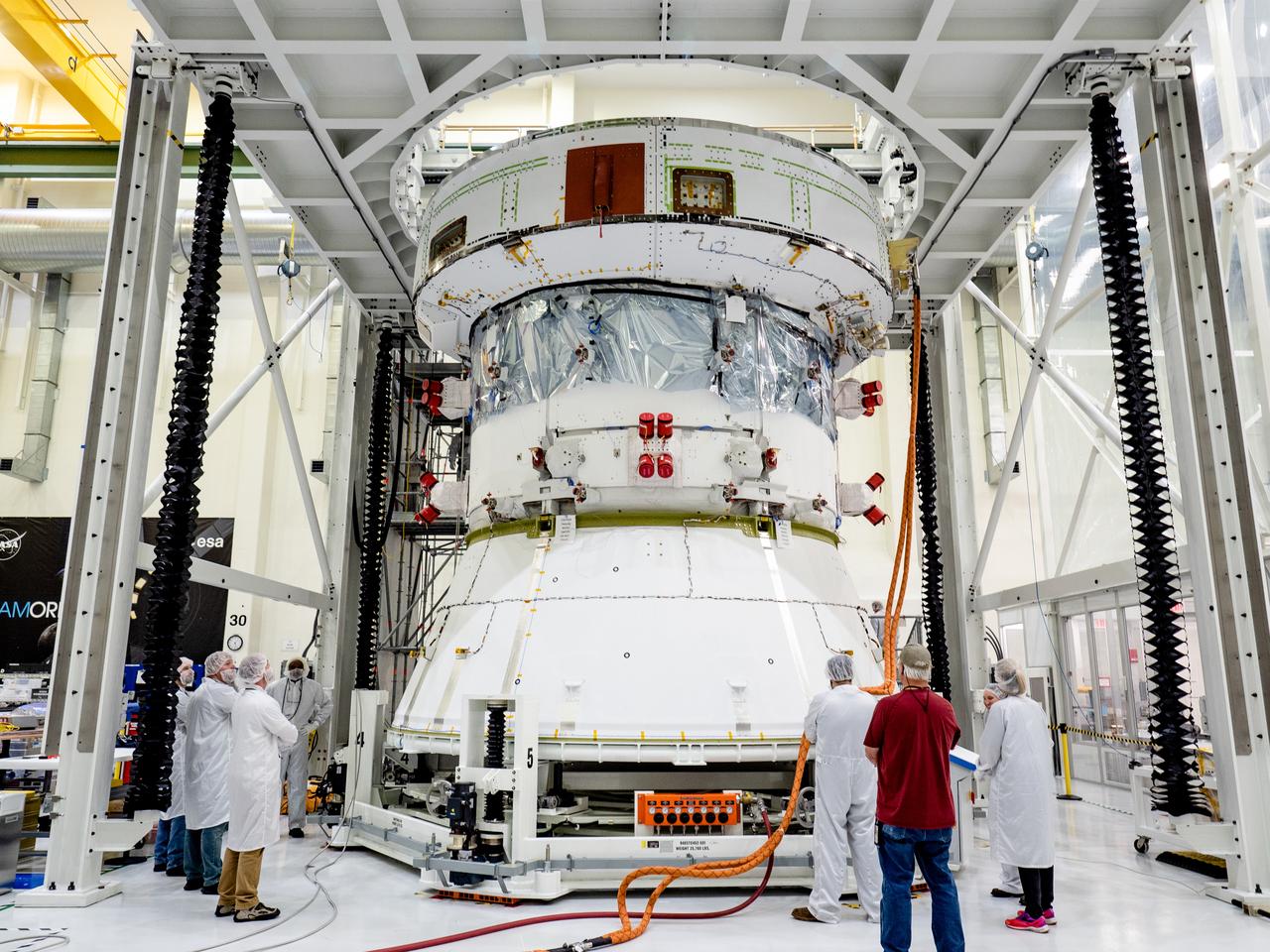
On April 29, Orion’s Service Module, shown here on May 3, 2019, moved to the lift station inside the assembly bay for installation and fastening of systems in preparation for Direct Field Acoustics Test (DFAT). The Service Module will move down to the east end of the bay next week where it will be surrounded with speakers and exposed to the acoustic level that will be experienced in space.
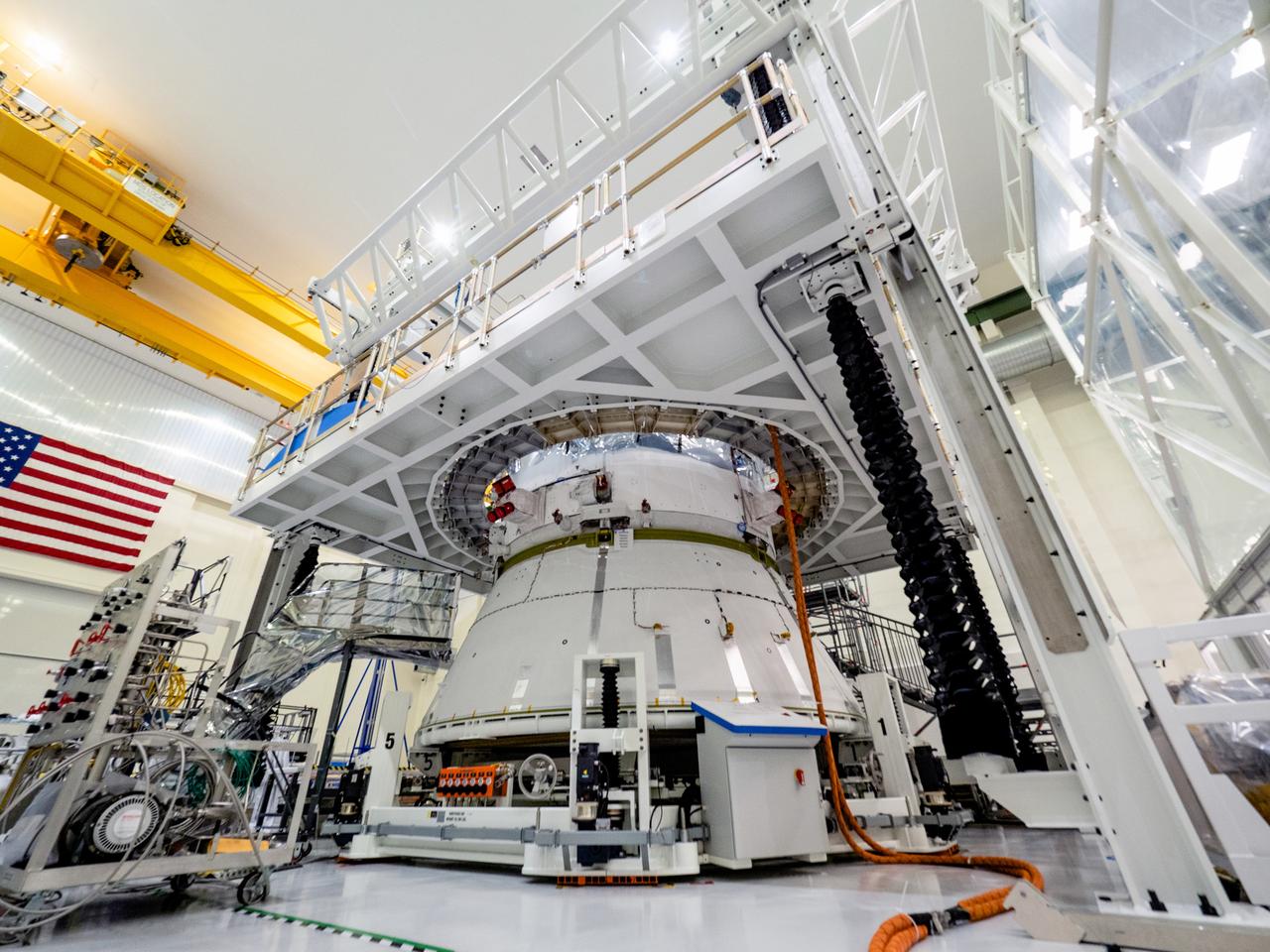
On April 29, Orion’s service module, shown here on May 2, 2019, moved to the lift station inside the assembly bay for installation and fastening of systems in preparation for Direct Field Acoustics Test (DFAT). The service module will move down to the east end of the bay next week where it will be surrounded with speakers and exposed to the acoustic level that will be experienced in space.
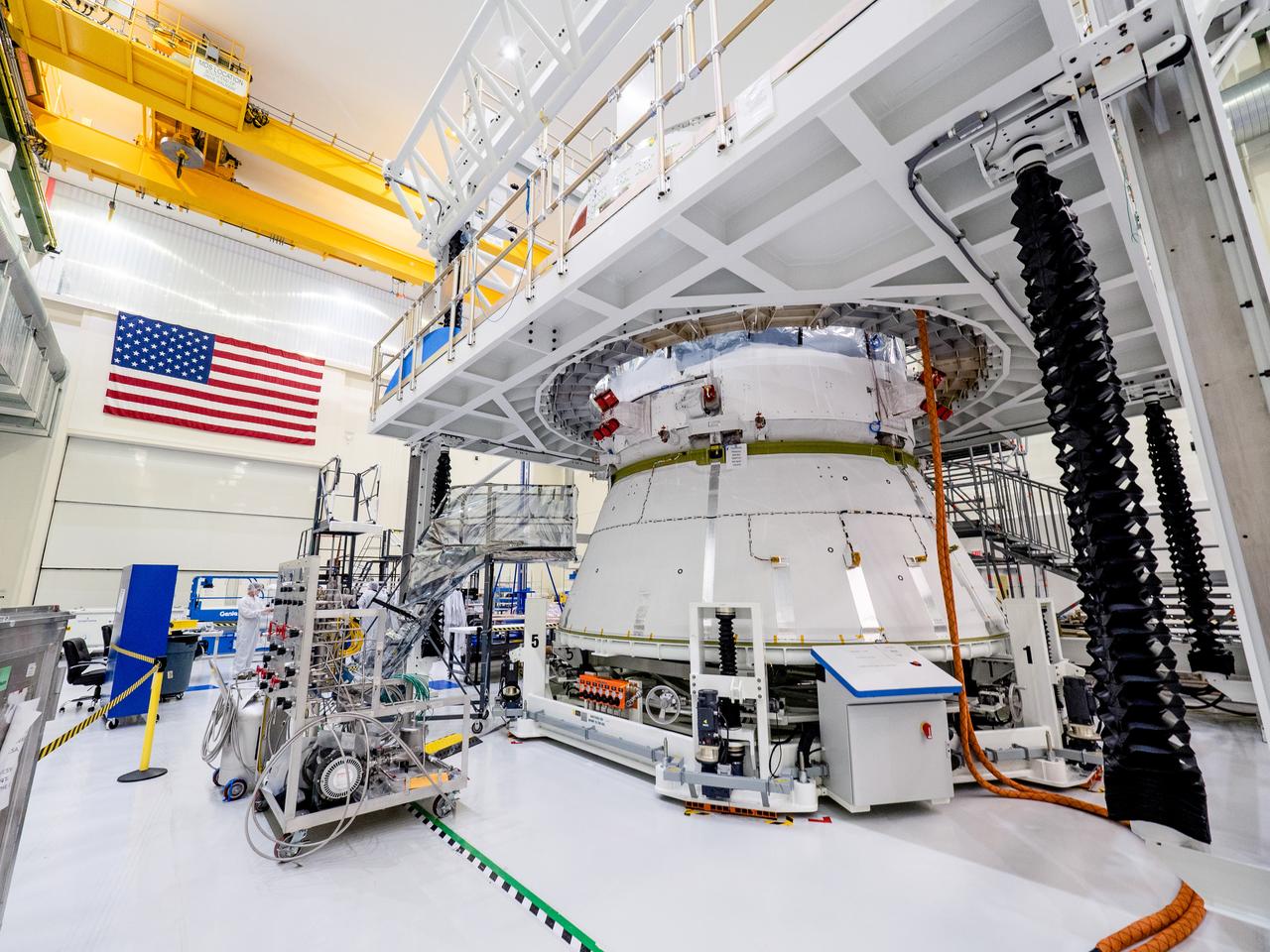
On April 29, Orion’s service module, shown here on May 2, 2019, moved to the lift station inside the assembly bay for installation and fastening of systems in preparation for Direct Field Acoustics Test (DFAT). The service module will move down to the east end of the bay next week where it will be surrounded with speakers and exposed to the acoustic level that will be experienced in space.
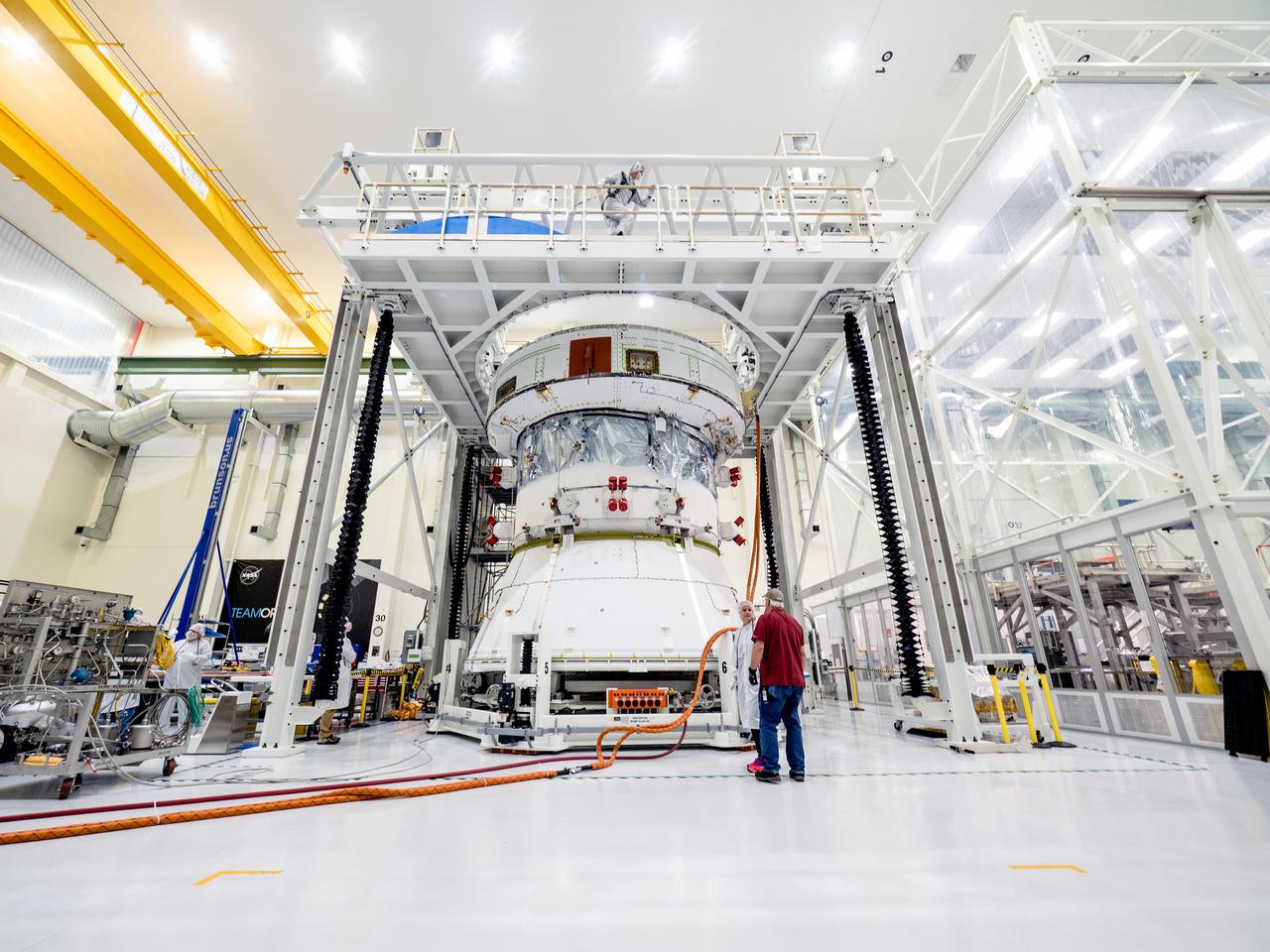
On April 29, Orion’s Service Module, shown here on May 3, 2019, moved to the lift station inside the assembly bay for installation and fastening of systems in preparation for Direct Field Acoustics Test (DFAT). The Service Module will move down to the east end of the bay next week where it will be surrounded with speakers and exposed to the acoustic level that will be experienced in space.
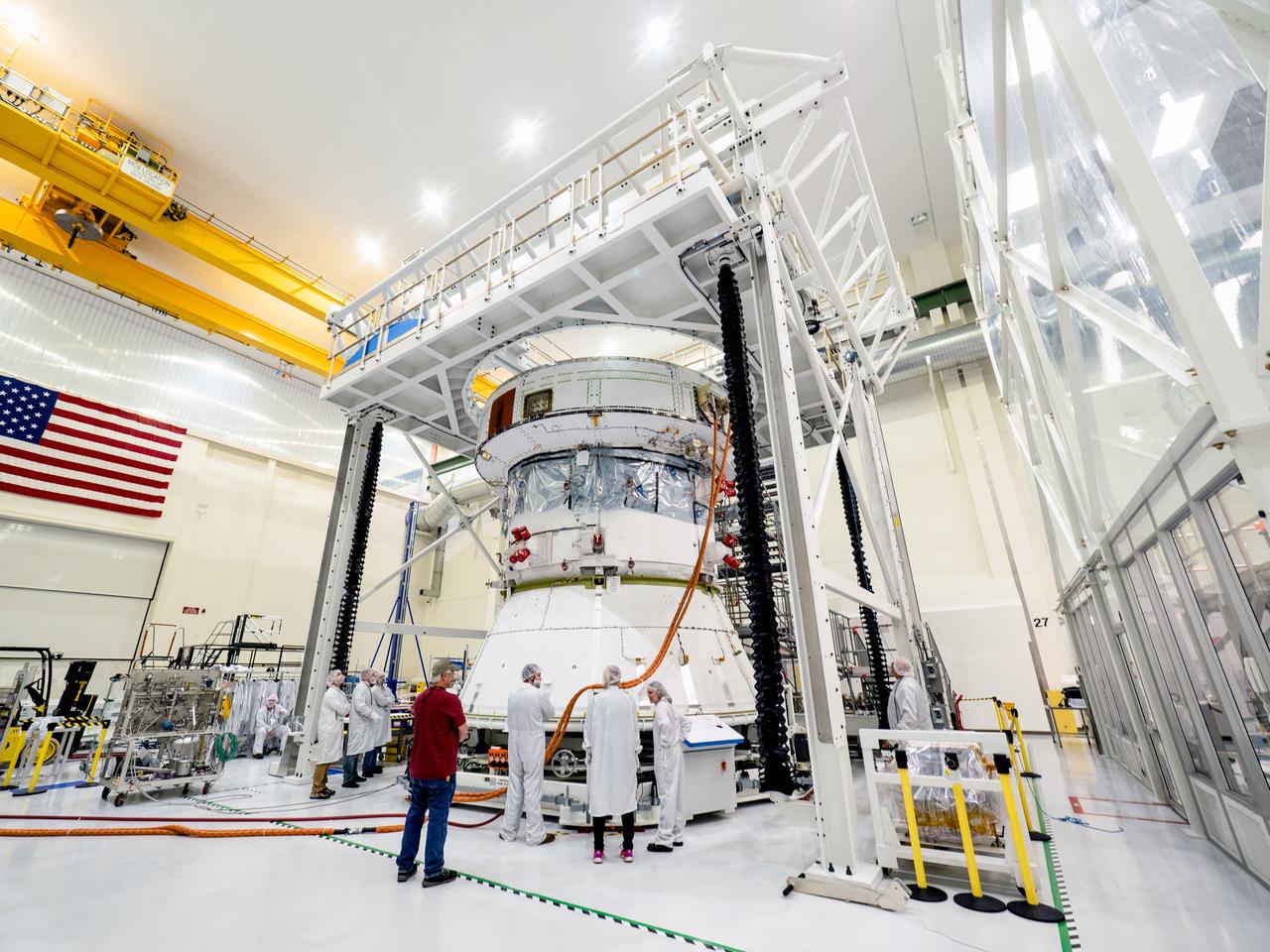
On April 29, Orion’s Service Module, shown here on May 3, 2019, moved to the lift station inside the assembly bay for installation and fastening of systems in preparation for Direct Field Acoustics Test (DFAT). The Service Module will move down to the east end of the bay next week where it will be surrounded with speakers and exposed to the acoustic level that will be experienced in space.
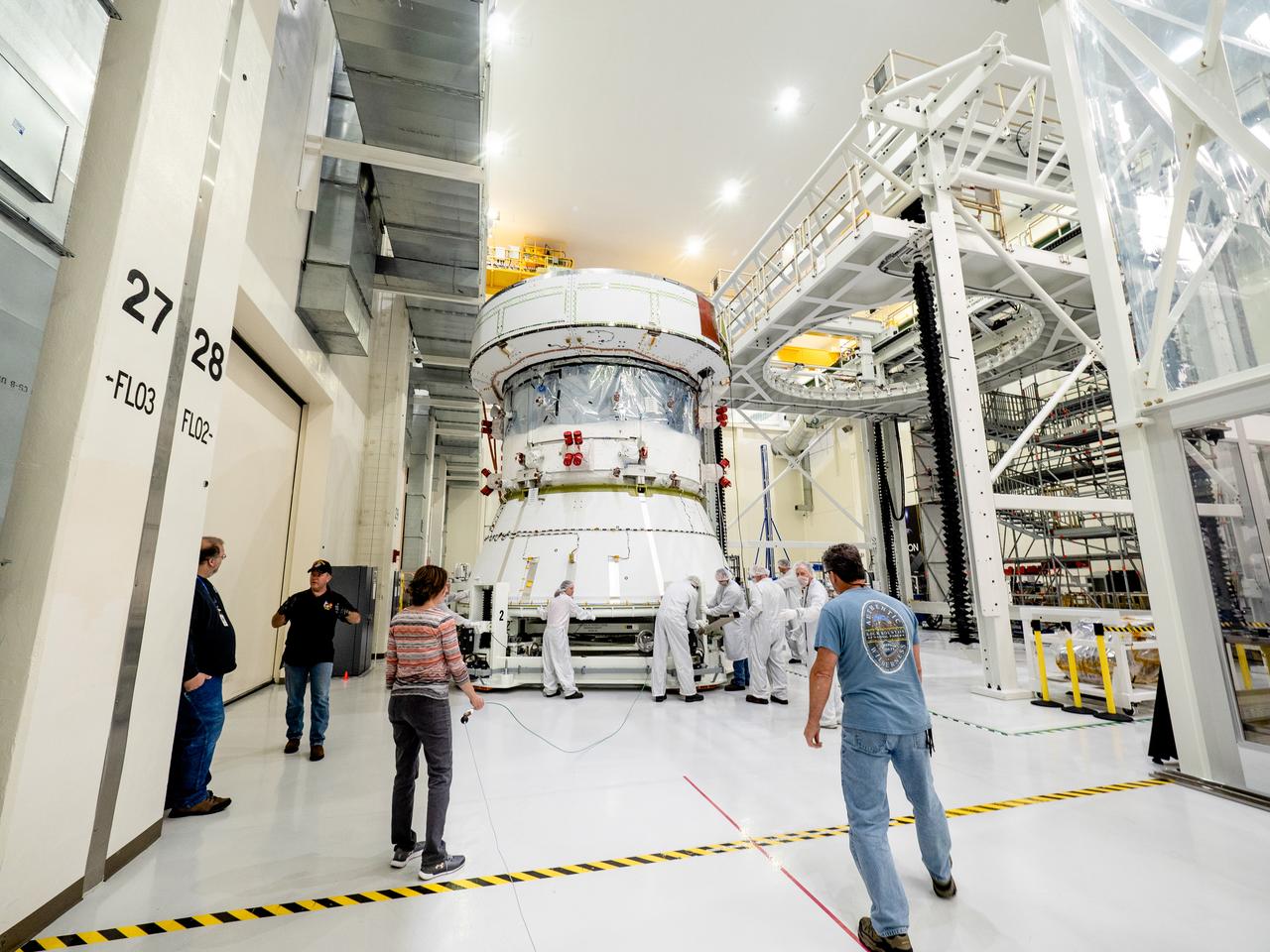
On April 29, Orion’s Service Module, shown here on May 3, 2019, moved to the lift station inside the assembly bay for installation and fastening of systems in preparation for Direct Field Acoustics Test (DFAT). The Service Module will move down to the east end of the bay next week where it will be surrounded with speakers and exposed to the acoustic level that will be experienced in space.
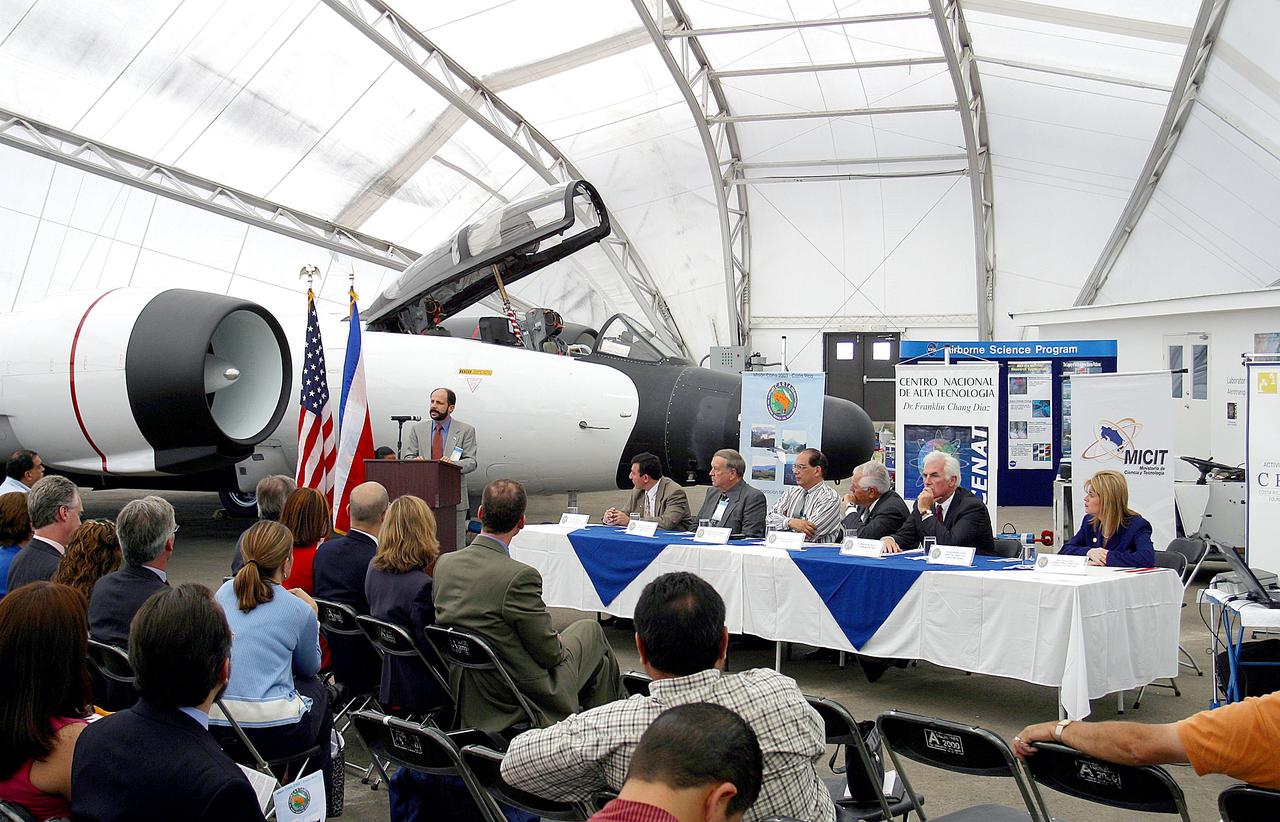
KENNEDY SPACE CENTER, FLA. - At the airport in San Jose, Costa Rica, the NASA hangar is dedicated. The speaker is Hermann Faith, executive director, Costa Rica-USA (CRUSA) Foundation. At the table are (from left) Dr. Jorge Andres Diaz, head scientiest CARTA mission; Gary Shelton, NASA deployment manager; Dr. Pedro Leon, general director, National Center for Advanced Technology (CENAT); Dr. Rogelio Pardo, minister of science and tchnology; John Danilovioch, U.S. ambassador to Costa Rica; and Lic. Vilma Lopez, subdirector, Civil Aviation (DGAC). NASA KSC has been testing its Aircraft-based Volcanic Emission Mass Spectrometer (AVEMS) in flights over the Turrialba volcano and in the crater, sampling and analyzing fresh volcanic gases in their natural chemical state. The AVEMS system has been developed for use in the Space Shuttle program, to detect toxic gas leaks and emissions in the Shuttle’s aft compartment and the crew compartment.

The European Service Module for NASA’s Artemis III mission undergoes acoustic testing inside the Neil A. Armstrong Operations and Checkout Building at the agency’s Kennedy Space Center in Florida on Thursday, May 7, 2026. To simulate vibrations experienced during launch, technicians surround the module with a wall of high‑power speakers and measure how the structure responds using microphones, strain gauges, and accelerometers. Provided by ESA (European Space Agency) and its partner Airbus Space, the service module is the Orion spacecraft’s powerhouse, supplying it with electricity, propulsion, thermal control, air, and water in space.

The European Service Module for NASA’s Artemis III mission undergoes acoustic testing inside the Neil A. Armstrong Operations and Checkout Building at the agency’s Kennedy Space Center in Florida on Thursday, May 7, 2026. To simulate vibrations experienced during launch, technicians surround the module with a wall of high‑power speakers and measure how the structure responds using microphones, strain gauges, and accelerometers. Provided by ESA (European Space Agency) and its partner Airbus Space, the service module is the Orion spacecraft’s powerhouse, supplying it with electricity, propulsion, thermal control, air, and water in space.
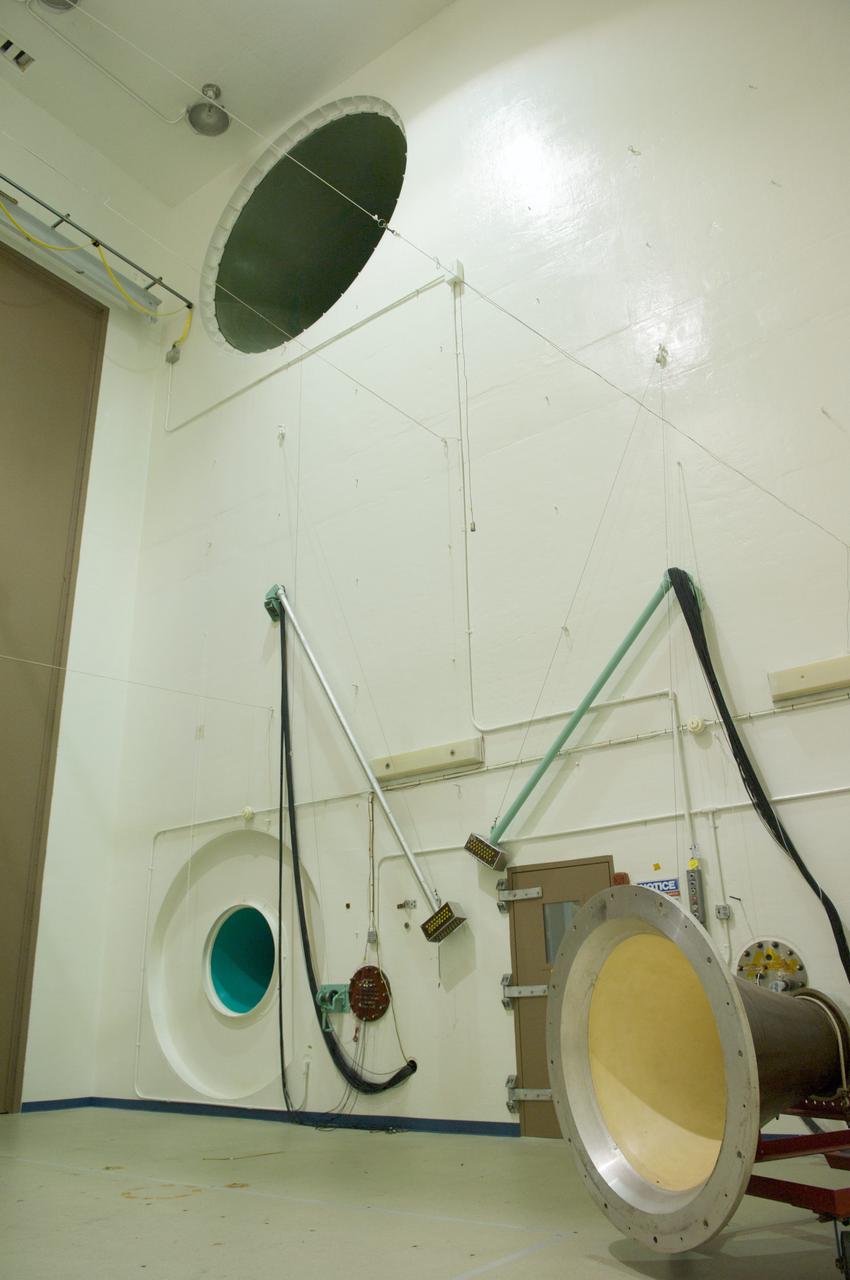
At Goddard, the engineers use the Acoustic Test Chamber, a 42-foot-tall chamber, with 6-foot-diameter speaker horns to replicate the launch environment. The horns use an altering flow of gaseous nitrogen to produce a sound level as high as 150 decibels for two-minute tests. That’s about the level of sound heard standing next to a jet engine during takeoff. The 6-foot-wide horns in this 42-foot-tall chamber can produce noise at levels as high as 150 dB. During the acoustics test, the speakers can still be heard outside of its insulated massive metal doors. Credits: NASA/Goddard/Chris Gunn <b><a href="http://www.nasa.gov/audience/formedia/features/MP_Photo_Guidelines.html" rel="nofollow">NASA image use policy.</a></b> <b><a href="http://www.nasa.gov/centers/goddard/home/index.html" rel="nofollow">NASA Goddard Space Flight Center</a></b> enables NASA’s mission through four scientific endeavors: Earth Science, Heliophysics, Solar System Exploration, and Astrophysics. Goddard plays a leading role in NASA’s accomplishments by contributing compelling scientific knowledge to advance the Agency’s mission. <b>Follow us on <a href="http://twitter.com/NASAGoddardPix" rel="nofollow">Twitter</a></b> <b>Like us on <a href="http://www.facebook.com/pages/Greenbelt-MD/NASA-Goddard/395013845897?ref=tsd" rel="nofollow">Facebook</a></b> <b>Find us on <a href="http://instagrid.me/nasagoddard/?vm=grid" rel="nofollow">Instagram</a></b>
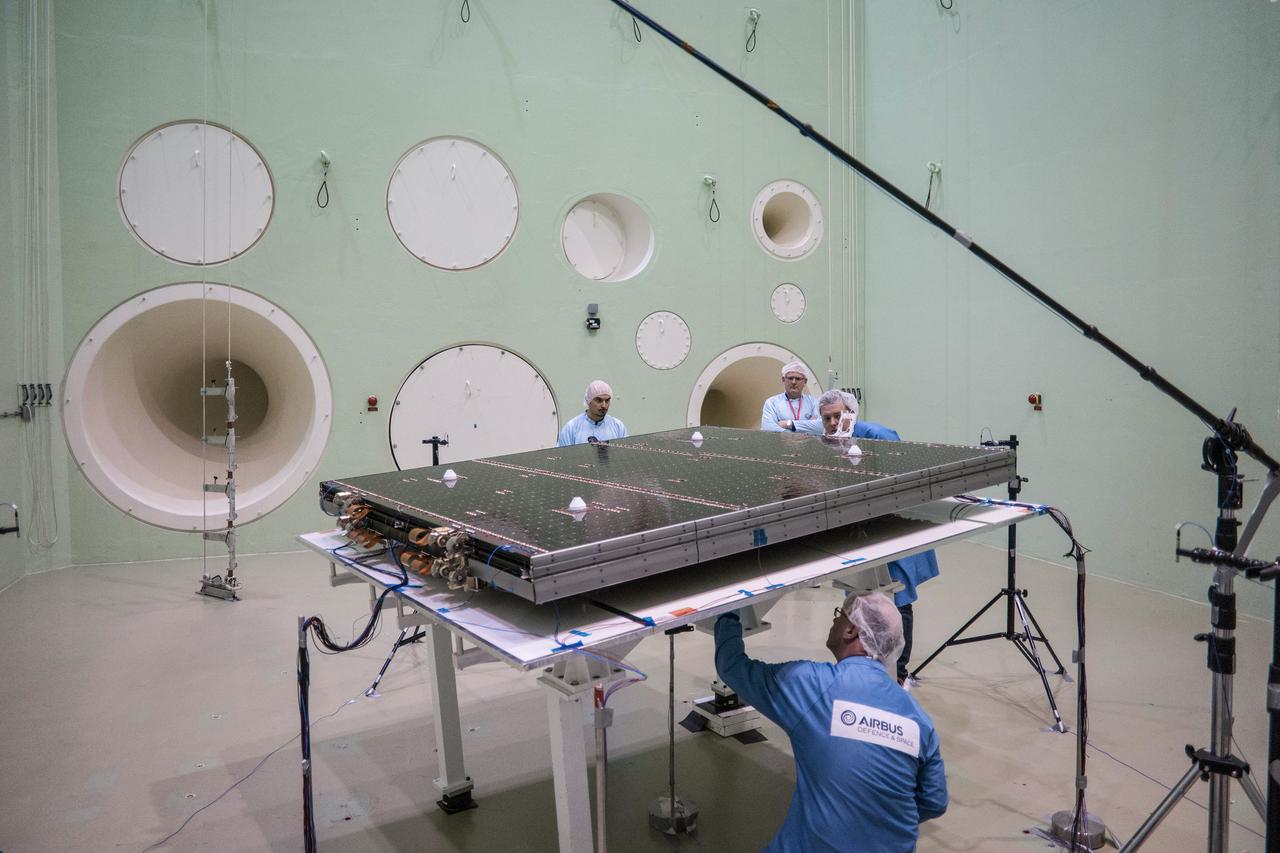
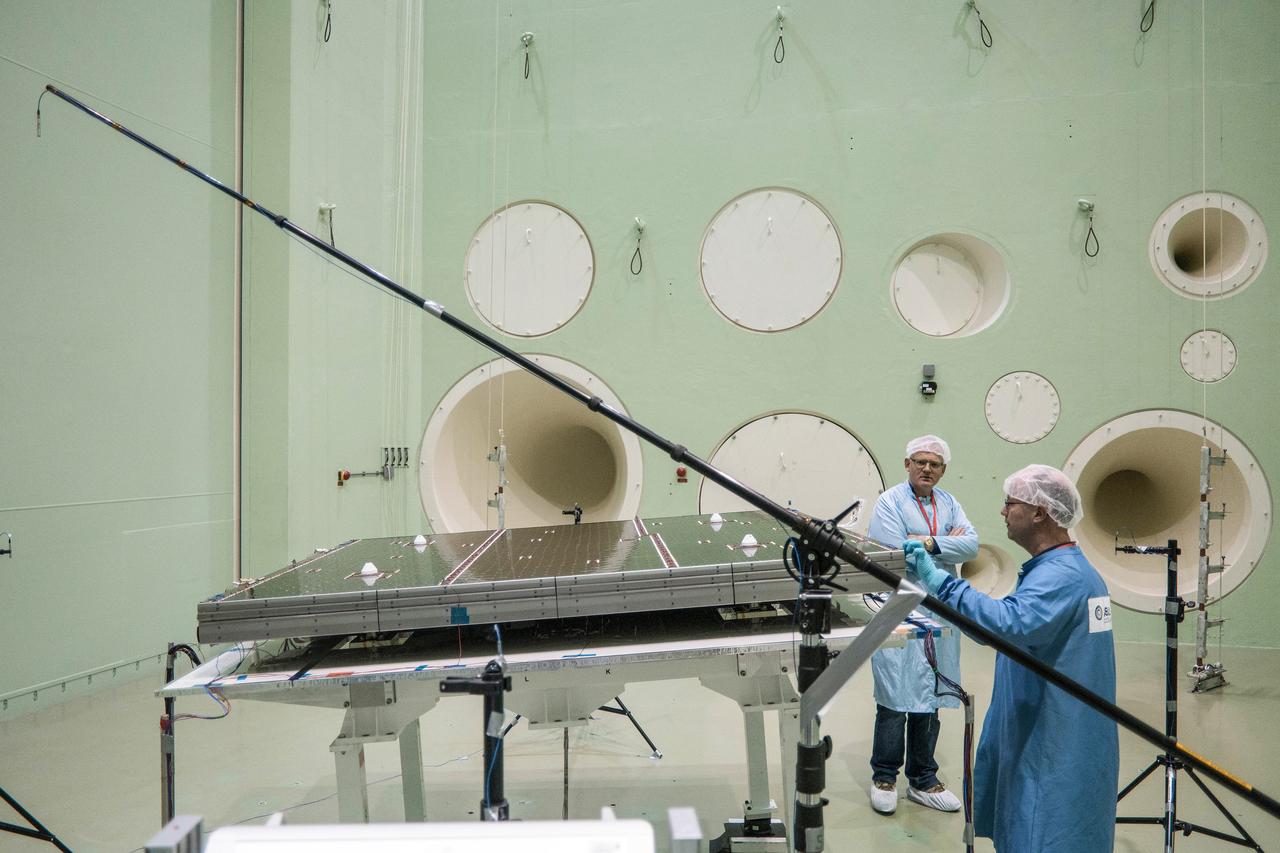
The solar arrays that will provide electricity to the Orion spacecraft were put through launch-day paces at ESA’s Test Centre in the Netherlands to verify that they can handle the rigours of the trip around the Moon... .The wings are seen here on April 11, 2018, on the shaking table that vibrates with the full force of a rumbling rocket. They were also placed in front of enormous speakers that recreate the harsh conditions they can expect on launch day. The solar arrays passed with flying colours... .The wings will be tested on how they deploy before shipping to Bremen, Germany, for integration with the European service module. ESA’s contribution to the Orion mission will provide power, propulsion, water, and air... .The first mission will take Orion around the Moon without astronauts. The solar panels will be folded inside the rocket fairing, once released from NASA’s Space Launch System rocket they will unfold and rotate towards the Sun to start delivering power... .With solar wings tested and fuel tanks installed, Orion is one step closer to its maiden voyage.
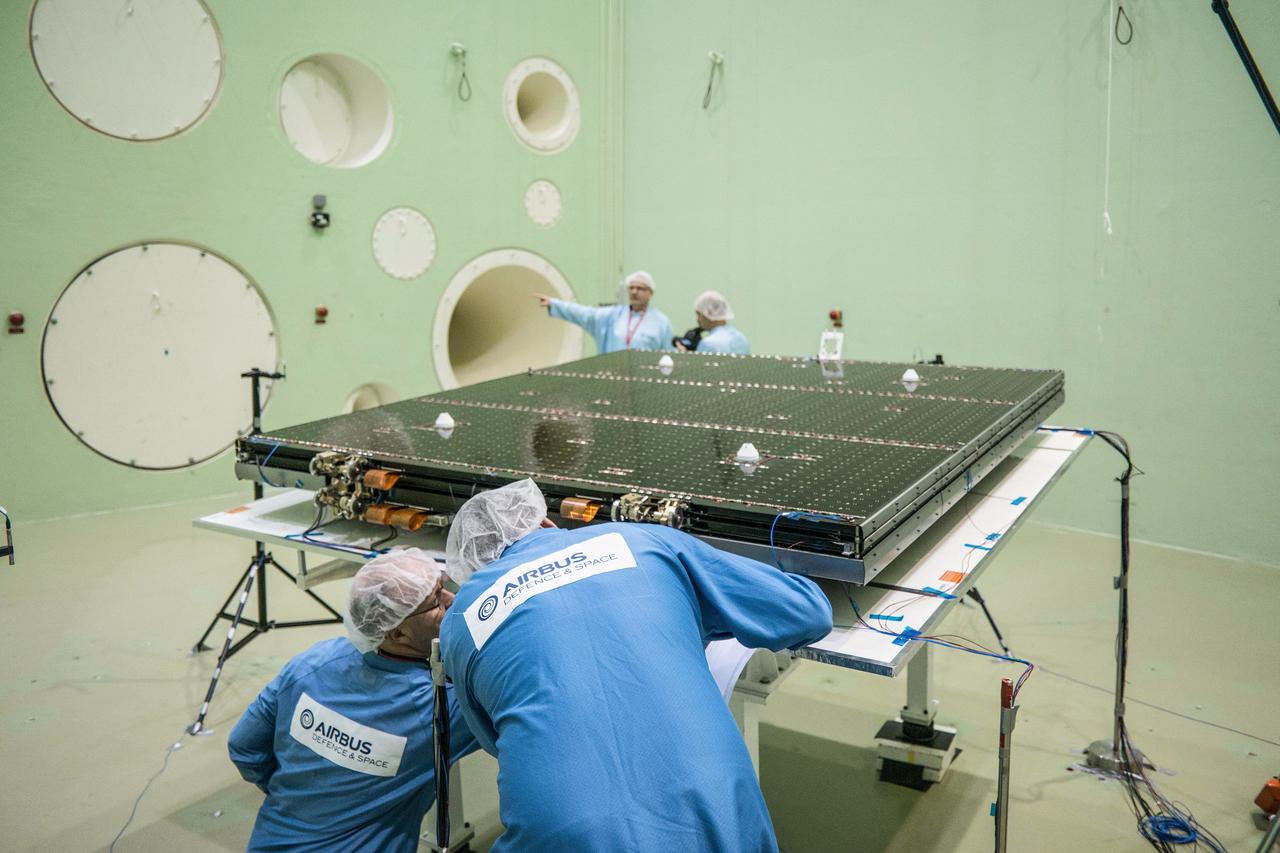
The solar arrays that will provide electricity to the Orion spacecraft were put through launch-day paces at ESA’s Test Centre in the Netherlands to verify that they can handle the rigours of the trip around the Moon... .The wings are seen here on April 11, 2018, on the shaking table that vibrates with the full force of a rumbling rocket. They were also placed in front of enormous speakers that recreate the harsh conditions they can expect on launch day. The solar arrays passed with flying colours... .The wings will be tested on how they deploy before shipping to Bremen, Germany, for integration with the European service module. ESA’s contribution to the Orion mission will provide power, propulsion, water, and air... .The first mission will take Orion around the Moon without astronauts. The solar panels will be folded inside the rocket fairing, once released from NASA’s Space Launch System rocket they will unfold and rotate towards the Sun to start delivering power... .With solar wings tested and fuel tanks installed, Orion is one step closer to its maiden voyage.
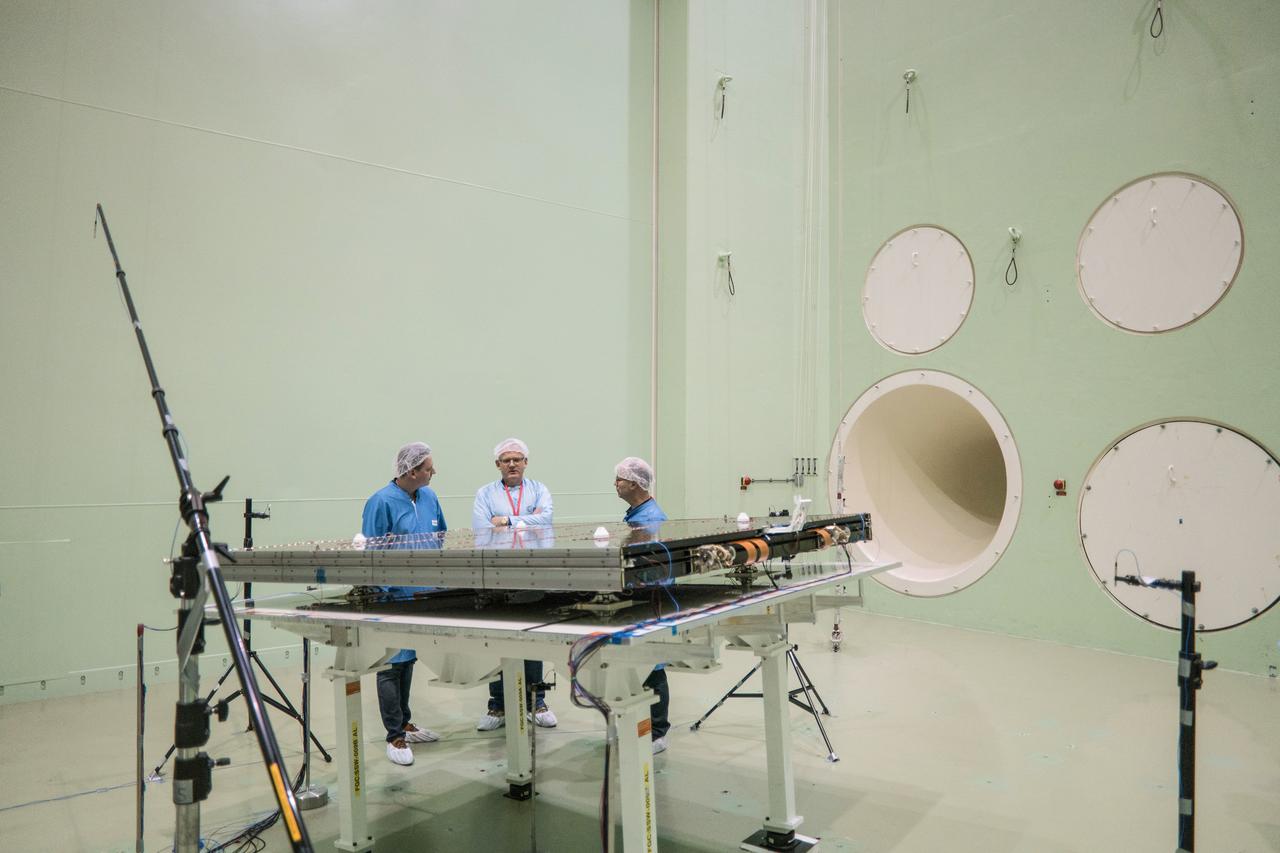
The solar arrays that will provide electricity to the Orion spacecraft were put through launch-day paces at ESA’s Test Centre in the Netherlands to verify that they can handle the rigours of the trip around the Moon... .The wings are seen here on April 11, 2018, on the shaking table that vibrates with the full force of a rumbling rocket. They were also placed in front of enormous speakers that recreate the harsh conditions they can expect on launch day. The solar arrays passed with flying colours... .The wings will be tested on how they deploy before shipping to Bremen, Germany, for integration with the European service module. ESA’s contribution to the Orion mission will provide power, propulsion, water, and air... .The first mission will take Orion around the Moon without astronauts. The solar panels will be folded inside the rocket fairing, once released from NASA’s Space Launch System rocket they will unfold and rotate towards the Sun to start delivering power... .With solar wings tested and fuel tanks installed, Orion is one step closer to its maiden voyage.
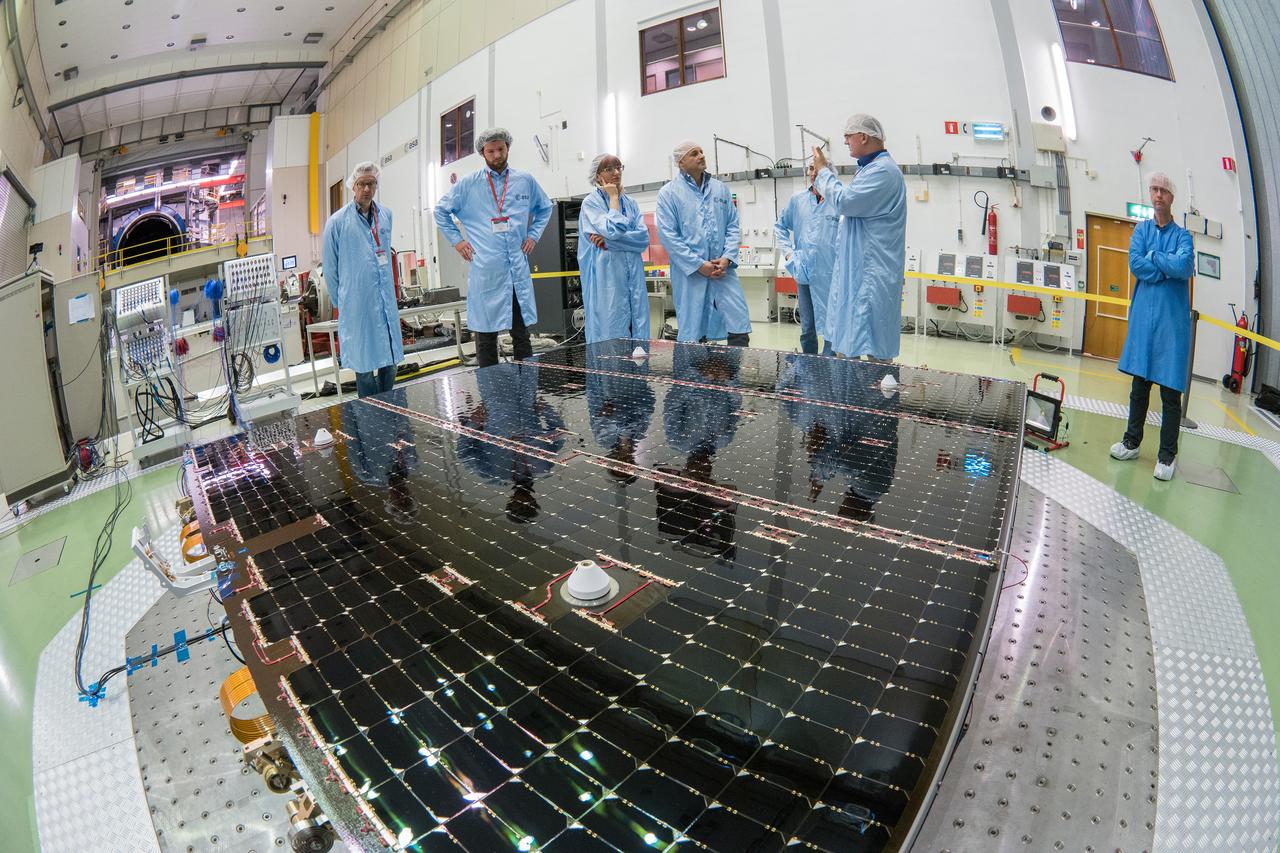
The solar arrays that will provide electricity to the Orion spacecraft were put through launch-day paces at ESA’s Test Centre in the Netherlands to verify that they can handle the rigours of the trip around the Moon... .The wings are seen here on April 11, 2018, on the shaking table that vibrates with the full force of a rumbling rocket. They were also placed in front of enormous speakers that recreate the harsh conditions they can expect on launch day. The solar arrays passed with flying colours... .The wings will be tested on how they deploy before shipping to Bremen, Germany, for integration with the European service module. ESA’s contribution to the Orion mission will provide power, propulsion, water, and air... .The first mission will take Orion around the Moon without astronauts. The solar panels will be folded inside the rocket fairing, once released from NASA’s Space Launch System rocket they will unfold and rotate towards the Sun to start delivering power... .With solar wings tested and fuel tanks installed, Orion is one step closer to its maiden voyage.
The solar arrays that will provide electricity to the Orion spacecraft were put through launch-day paces at ESA’s Test Centre in the Netherlands to verify that they can handle the rigours of the trip around the Moon... .The wings are seen here on April 11, 2018, on the shaking table that vibrates with the full force of a rumbling rocket. They were also placed in front of enormous speakers that recreate the harsh conditions they can expect on launch day. The solar arrays passed with flying colours... .The wings will be tested on how they deploy before shipping to Bremen, Germany, for integration with the European service module. ESA’s contribution to the Orion mission will provide power, propulsion, water, and air... .The first mission will take Orion around the Moon without astronauts. The solar panels will be folded inside the rocket fairing, once released from NASA’s Space Launch System rocket they will unfold and rotate towards the Sun to start delivering power... .With solar wings tested and fuel tanks installed, Orion is one step closer to its maiden voyage.
The solar arrays that will provide electricity to the Orion spacecraft were put through launch-day paces at ESA’s Test Centre in the Netherlands to verify that they can handle the rigours of the trip around the Moon... .The wings are seen here on April 11, 2018, on the shaking table that vibrates with the full force of a rumbling rocket. They were also placed in front of enormous speakers that recreate the harsh conditions they can expect on launch day. The solar arrays passed with flying colours... .The wings will be tested on how they deploy before shipping to Bremen, Germany, for integration with the European service module. ESA’s contribution to the Orion mission will provide power, propulsion, water, and air... .The first mission will take Orion around the Moon without astronauts. The solar panels will be folded inside the rocket fairing, once released from NASA’s Space Launch System rocket they will unfold and rotate towards the Sun to start delivering power... .With solar wings tested and fuel tanks installed, Orion is one step closer to its maiden voyage.
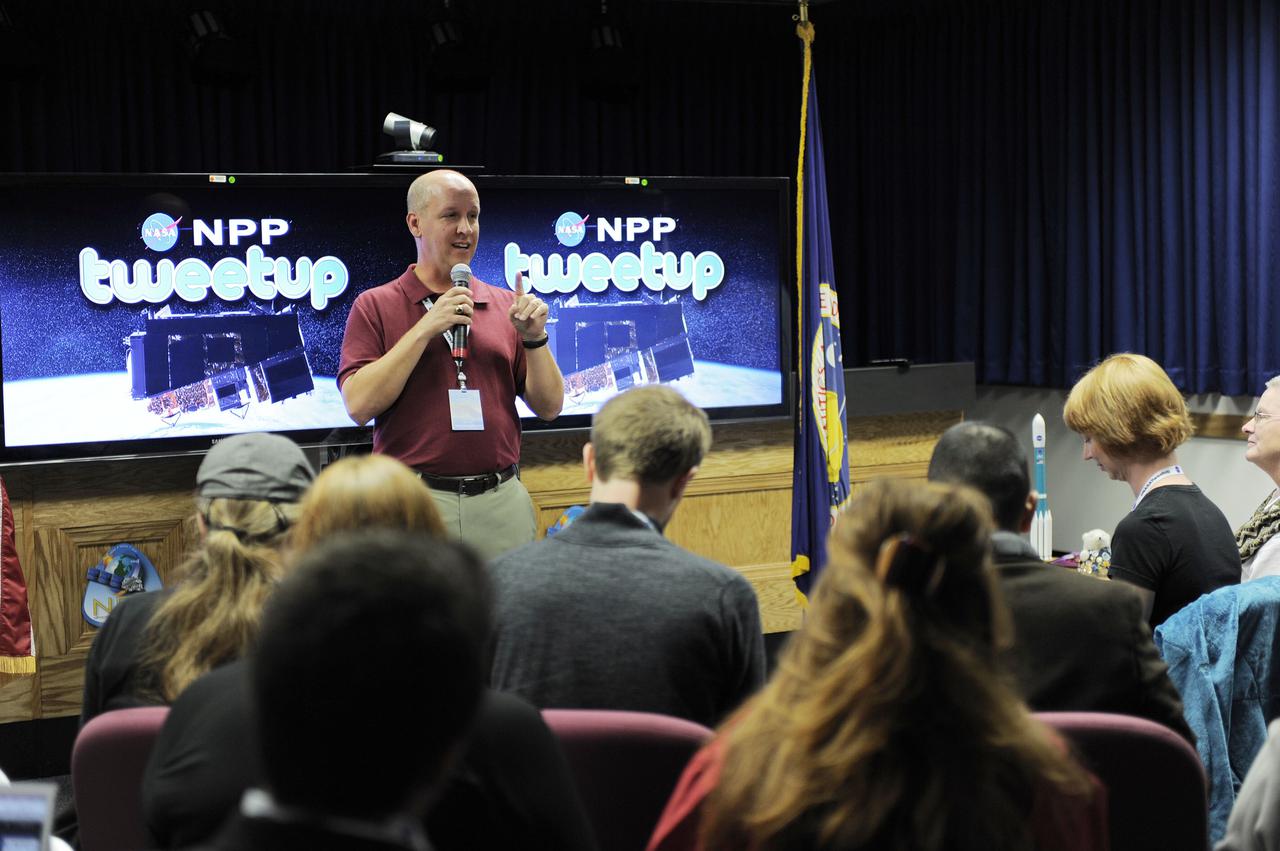
VANDENBERG AIR FORCE BASE, Calif. – A speaker talks with a group of Tweetup participants at Vandenberg Air Force Base in California during prelaunch activities for NASA’s National Polar-orbiting Operational Environmental Satellite System Preparatory Project (NPP) spacecraft mission. The tweeters will share their experiences with followers through the social networking site Twitter. NPP represents a critical first step in building the next-generation of Earth-observing satellites. NPP will carry the first of the new sensors developed for this satellite fleet, now known as the Joint Polar Satellite System (JPSS) to be launched in 2016. NPP is the bridge between NASA's Earth Observing System (EOS) satellites and the forthcoming series of JPSS satellites. The mission will test key technologies and instruments for the JPSS missions. NPP is targeted to launch Oct. 28 from Space Launch Complex-2 aboard a United Launch Alliance Delta II rocket. For more information, visit http:__www.nasa.gov_NPP. Photo credit: NASA_Kim Shiflett
VANDENBERG AIR FORCE BASE, Calif. – A speaker talks with a group of Tweetup participants at Vandenberg Air Force Base in California during prelaunch activities for NASA’s National Polar-orbiting Operational Environmental Satellite System Preparatory Project (NPP) spacecraft mission. The tweeters will share their experiences with followers through the social networking site Twitter. NPP represents a critical first step in building the next-generation of Earth-observing satellites. NPP will carry the first of the new sensors developed for this satellite fleet, now known as the Joint Polar Satellite System (JPSS) to be launched in 2016. NPP is the bridge between NASA's Earth Observing System (EOS) satellites and the forthcoming series of JPSS satellites. The mission will test key technologies and instruments for the JPSS missions. NPP is targeted to launch Oct. 28 from Space Launch Complex-2 aboard a United Launch Alliance Delta II rocket. For more information, visit http:__www.nasa.gov_NPP. Photo credit: NASA_Kim Shiflett
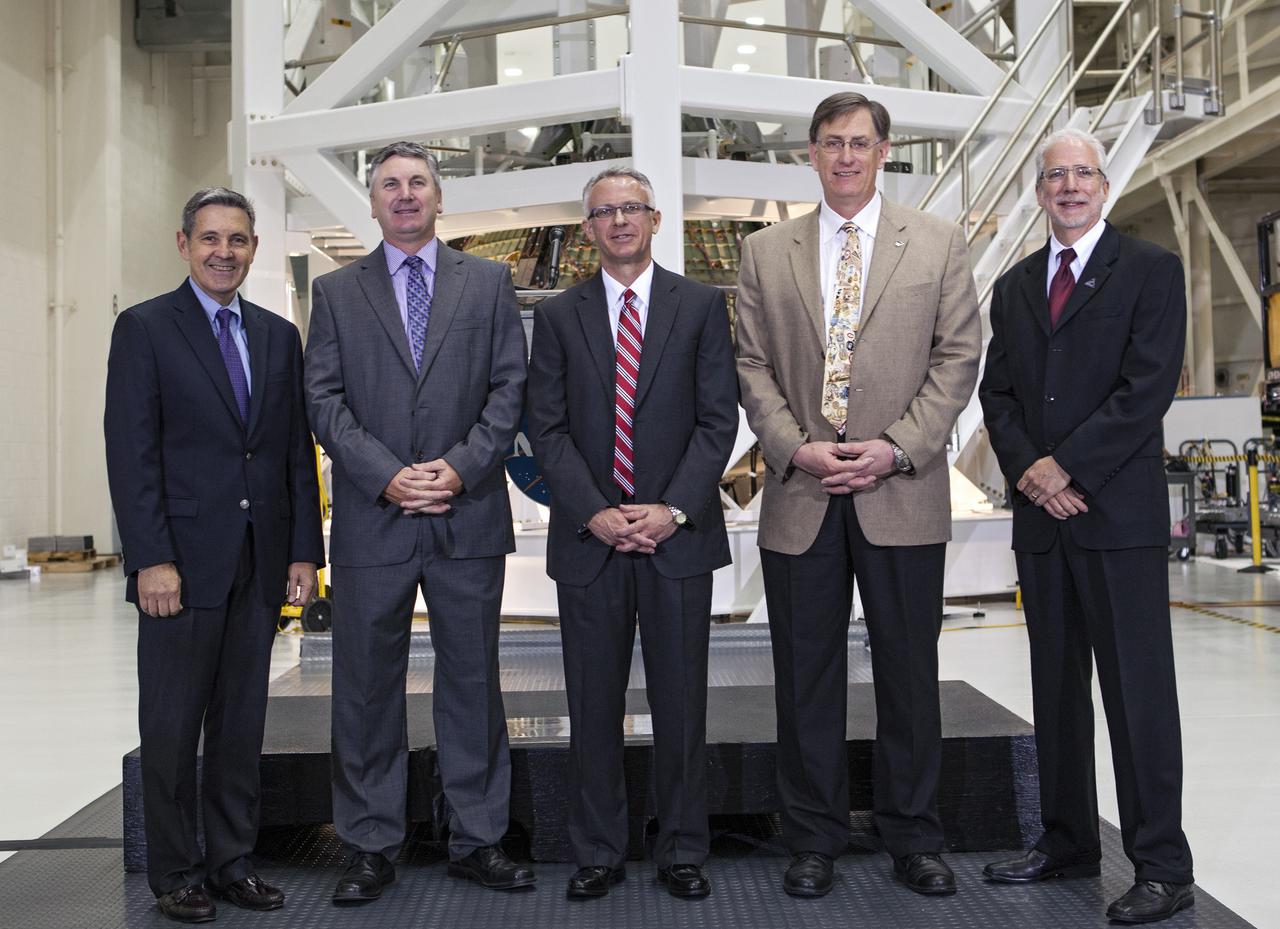
CAPE CANAVERAL, Fla. – In the Operations and Checkout Building OandC at the Kennedy Space Center in Florida, news media representatives were updated progress on preparing the Orion spacecraft for its first uncrewed mission, Exploration Flight Test-1 EFT-1 in 2014. Speakers included, from left, Kennedy Director Bob Cabana Scott Colloredo, chief architect for the Ground Systems Development and Operations Program Keith Hefner, NASA's Space Launch System program planning and control manager Dan Dumbacher, NASA's deputy associate administrator for Exploration Systems Development and Mark Geyer, NASA's Orion program manager. Launched atop NASA's heavy-lift Space Launch System rocket, Orion is now targeted to take astronauts in a sample return mission to an asteroid as early as 2021. On the third anniversary of President Barack Obama issuing his challenge to NASA to send astronauts to an asteroid, news media representatives were given an opportunity to see up-close the Orion spacecraft which could take astronauts on such a flight. They also heard from key leaders of that effort in Kennedy's OandC where Orion's assembly is taking place. Photo credit: NASA_Kim Shiflett

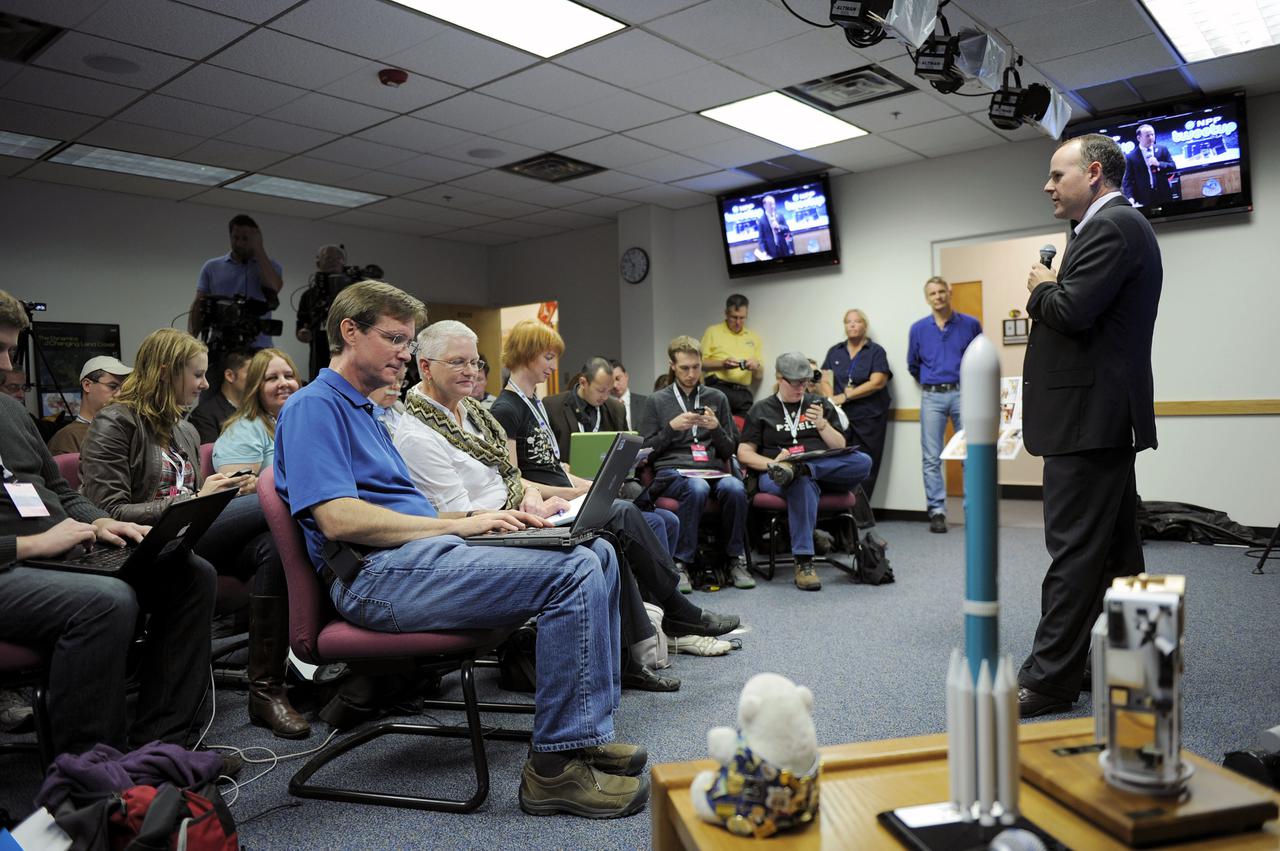
VANDENBERG AIR FORCE BASE, Calif. – A speaker talks with a group of Tweetup participants at Vandenberg Air Force Base in California during prelaunch activities for NASA’s National Polar-orbiting Operational Environmental Satellite System Preparatory Project (NPP) spacecraft mission. The tweeters will share their experiences with followers through the social networking site Twitter. NPP represents a critical first step in building the next-generation of Earth-observing satellites. NPP will carry the first of the new sensors developed for this satellite fleet, now known as the Joint Polar Satellite System (JPSS) to be launched in 2016. NPP is the bridge between NASA's Earth Observing System (EOS) satellites and the forthcoming series of JPSS satellites. The mission will test key technologies and instruments for the JPSS missions. NPP is targeted to launch Oct. 28 from Space Launch Complex-2 aboard a United Launch Alliance Delta II rocket. For more information, visit http:__www.nasa.gov_NPP. Photo credit: NASA_Kim Shiflett
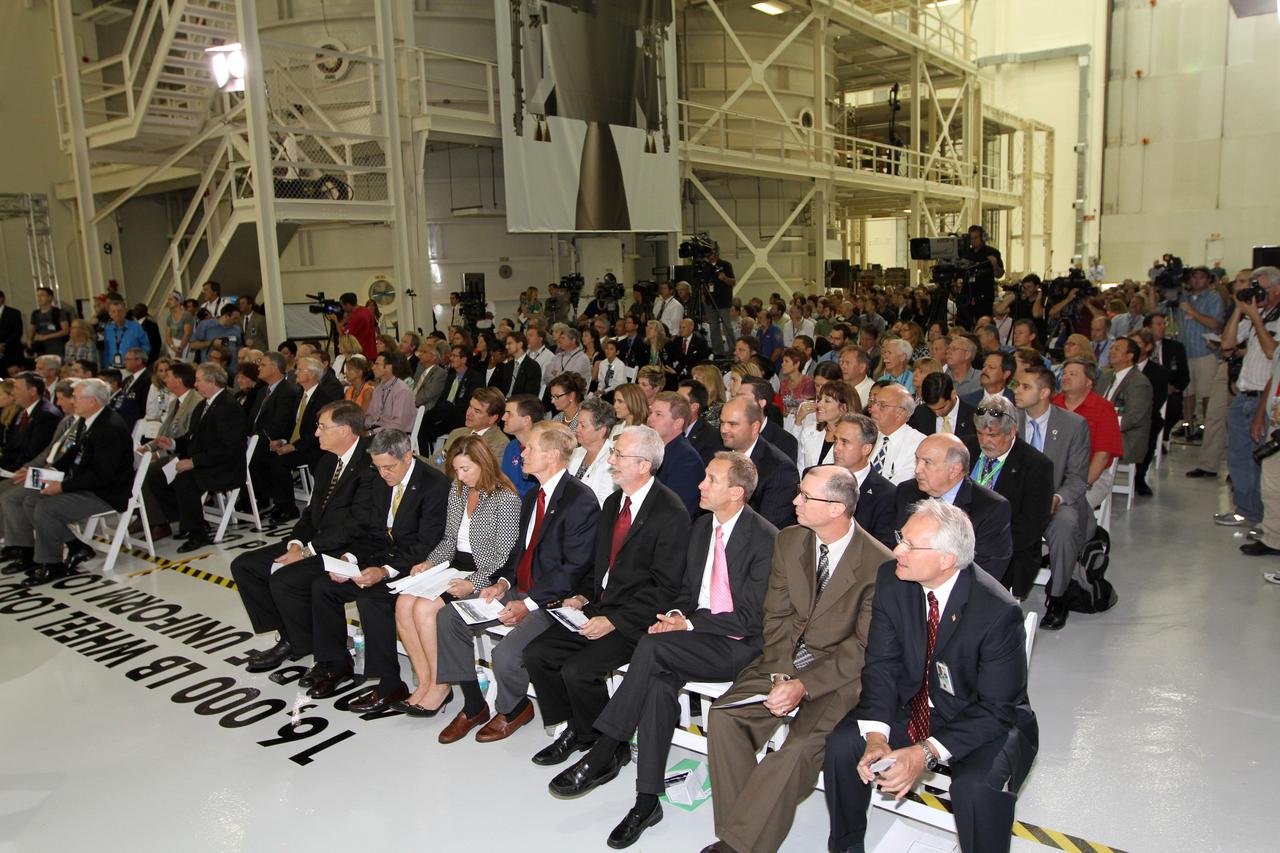
CAPE CANAVERAL, Fla. – Distinguished speakers are seated in the front row in Kennedy Space Center's Operations and Checkout Building high bay for an event marking the arrival of NASA's first space-bound Orion capsule in Florida. From left are Dan Dumbacher, NASA deputy associate administrator for Exploration Systems Development, NASA Kennedy Space Center Director Robert Cabana, NASA Deputy Administrator Lori Garver, U.S. Senator Bill Nelson, Mark Geyer, Orion program manager, David Beaman, NASA Space Launch System spacecraft and payload integration manager, Pepper Phillips, program manager for NASA's Ground Systems Development and Operations, and John Karas, vice president and general manager of Human Spaceflight for Lockheed Martin Space Systems. Slated for Exploration Flight Test-1, an uncrewed mission planned for 2014, the capsule will travel farther into space than any human spacecraft has gone in more than 40 years. The capsule was shipped to Kennedy from NASA's Michoud Assembly Facility in New Orleans where the crew module pressure vessel was built. The Orion production team will prepare the module for flight at Kennedy by installing heat-shielding thermal protection systems, avionics and other subsystems. For more information, visit http://www.nasa.gov/orion. Photo credit: NASA/Kim Shiflett
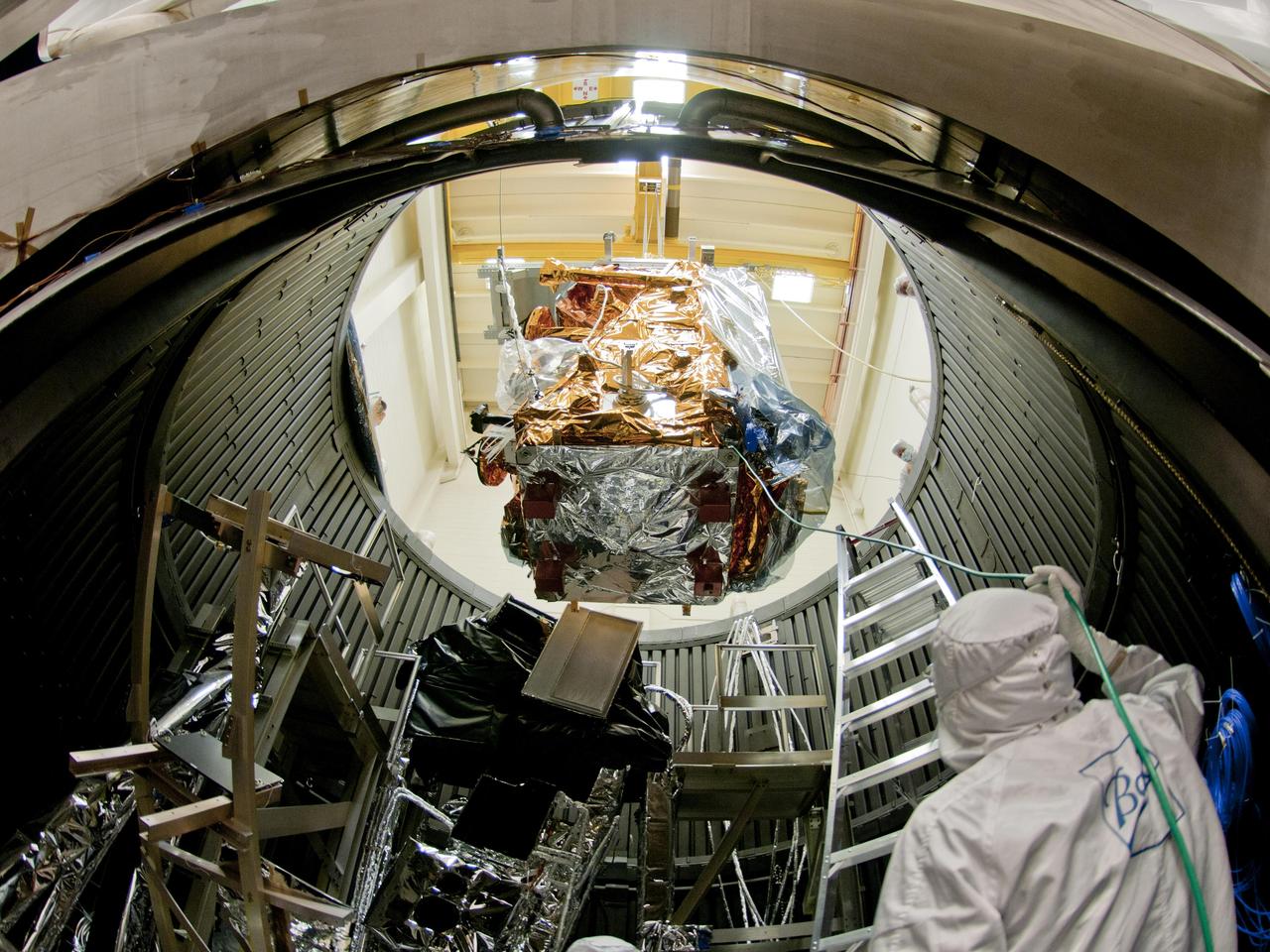
NPP is lowered into the thermal vacuum chamber. Once inside the Iron Maiden (visible in the lower left) is fitted in place. Then air is pumped out of the chamber and temperature extremes are applied to replicate orbit conditions. Credit: Ball Aerospace The NPP satellite sits surrounded by 144 rock concert speakers. They're stacked in a circle 16 feet high in a testing room at Ball Aerospace in Boulder, Colorado. As engineers set up for the environmental test, Pink Floyd's song "Money" plays gently in the background. The music stops. The room clears. Then the sound engineer wearing earplugs and headphones in the control room next door flips a switch. Slowly, the noise of thousands of pounds of exploding rocket fuel builds louder and louder until it blasts the satellite at a deafening 143.6 decibels -- loud enough to cause serious damage and pain to unprotected ears. "I was outside the building when they did the full level acoustics," says Glenn Iona, NPP Chief Engineer at NASA Goddard Space Flight Center, Greenbelt, Md. "and I could feel the ground shaking." To read more go to: <a href="http://www.nasa.gov/mission_pages/NPP/news/npp-testing.html" rel="nofollow">www.nasa.gov/mission_pages/NPP/news/npp-testing.html</a> <b><a href="http://www.nasa.gov/centers/goddard/home/index.html" rel="nofollow">NASA Goddard Space Flight Center</a></b> enables NASA’s mission through four scientific endeavors: Earth Science, Heliophysics, Solar System Exploration, and Astrophysics. Goddard plays a leading role in NASA’s accomplishments by contributing compelling scientific knowledge to advance the Agency’s mission. <b>Follow us on <a href="http://twitter.com/NASA_GoddardPix" rel="nofollow">Twitter</a></b> <b>Like us on <a href="http://www.facebook.com/pages/Greenbelt-MD/NASA-Goddard/395013845897?ref=tsd" rel="nofollow">Facebook</a></b> <b>Find us on <a href="http://web.stagram.com/n/nasagoddard/?vm=grid" rel="nofollow">Instagram</a></b>
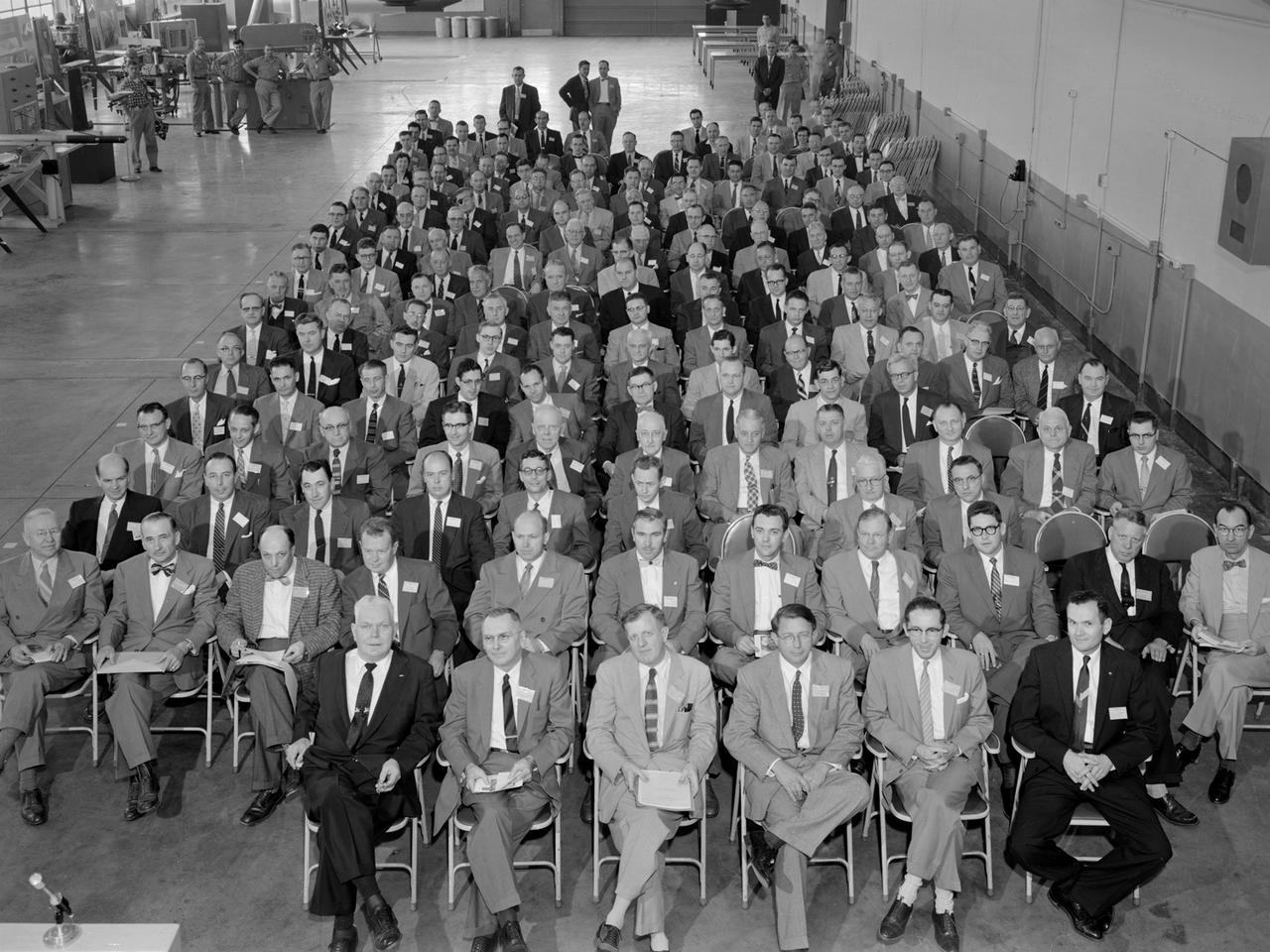
Attendees listen during the May 22, 1956 Inspection of the new 10- by 10-Foot Supersonic Wind Tunnel at the National Advisory Committee for Aeronautics (NACA) Lewis Flight Propulsion Laboratory. The facility, known at the time as the Lewis Unitary Plan Tunnel, was in its initial stages of operation. The $33 million 10- by 10 was the most powerful wind tunnel in the nation. Over 150 guests from industry, other NACA laboratories, and the media attended the event. The speakers, from left to right in the front row, addressed the crowd before the tour. Lewis Director Raymond Sharp began the event by welcoming the visitors to the laboratory. NACA Director Hugh Dryden discussed Congress’ Unitary Plan Act and its effect on the creation of the facility. Lewis Associate Director Abe Silverstein discussed the need for research tools and the 10- by 10’s place among the NACA’s other research facilities. Lewis Assistant Director Eugene Wasielewski described the detailed design work that went into the facility. Carl Schueller, Chief of the 10- by 10, described the tunnel’s components and how the facility operated. Robert Godman led the tour afterwards. The 10- by 10 can test engines up to five feet in diameter at supersonic speeds and simulated altitudes of 30 miles. Its main purpose is to investigate problems relating to engine inlet and outlet geometry, engine matching and interference effects, and overall drag. The tunnel’s 250,000-horsepower electric motor drive, the most powerful of its kind in the world, creates air speeds between Mach 2.0 and 3.5.
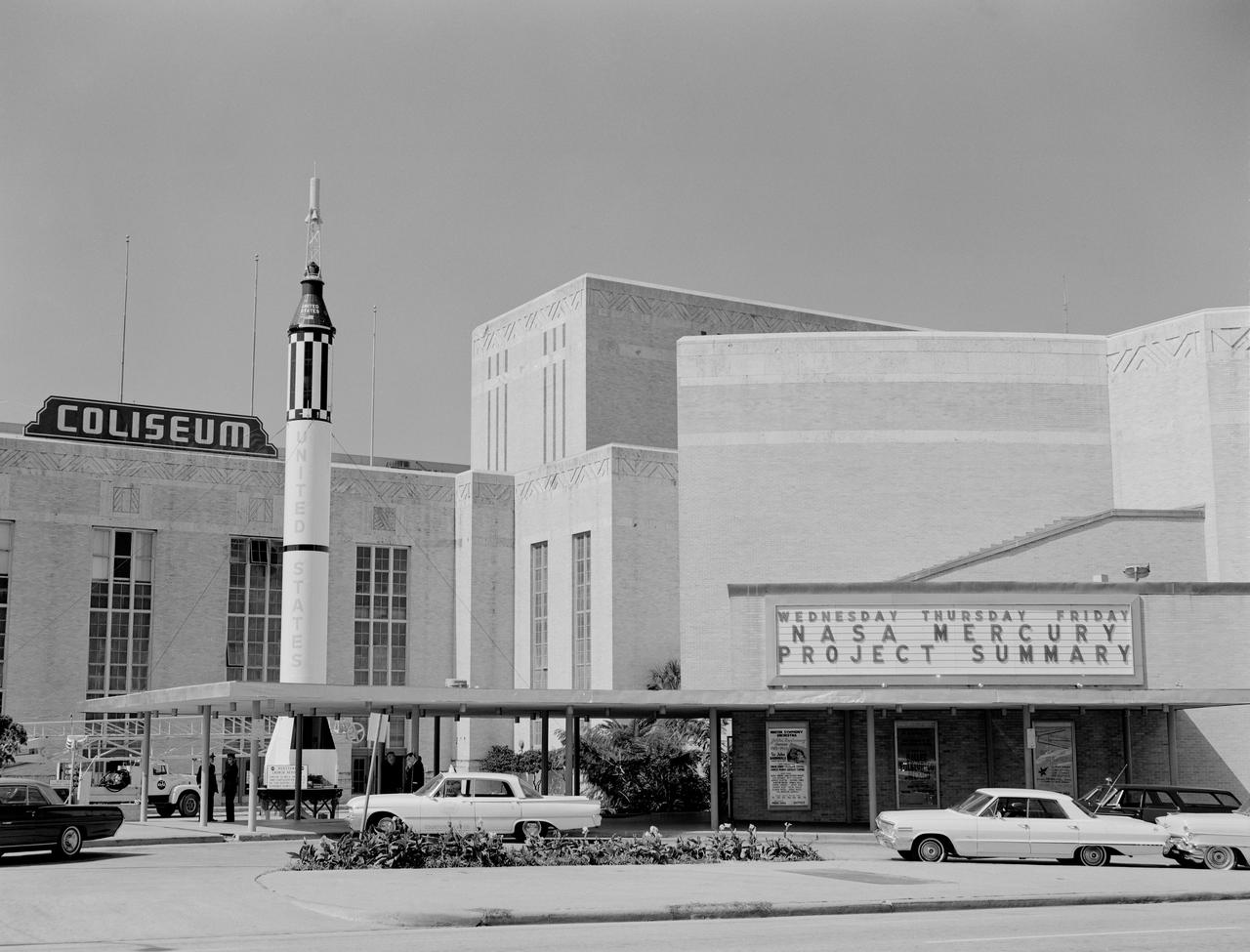
In October 1963, the Project Mercury Summary Conference was held in the Houston, TX, Coliseum. This series of 44 photos is documentation of that conference. A view of the Houston, TX, Coliseum, and parking area in front with a Mercury Redstone Rocket setup in the parking lot for display (S63-16451). A view of an Air Force Atlas Rocket, a Mercury Redstone Rocket, and a Mercury Spacecraft on a test booster on display in the front area of the Coliseum (S63-16452). A view an Air Force Atlas Rocket and a Mercury Redstone Rocket set up for display with the Houston City Hall in the background (S63- 16453). This view shows the Atlas Rocket, Mercury Redstone, and Mercury Test Rocket with the Houston, TX, Coliseum in the background (S63- 16454). A balcony view, from the audience right side, of the attendees looking at the stage (S63-16455). A view of the NASA Space Science Demonstration with equipment setup on a table, center stage and Space Science Specialist briefing the group as he pours Liquid Oxygen into a beaker (S63-16456). View of the audience from the balcony on the audience right showing the speakers lecturn on stage to the audience left (S63-16457). A view of attendees in the lobby. Bennet James, MSC Public Affairs Office is seen to the left of center (S63-16458). Another view of the attendees in the lobby (S63- 16459). In this view, Astronaut Neil Armstrong is seen writing as others look on (S63-16460). In this view of the attendees, Astronauts Buzz Aldrin and Walt Cunningham are seen in the center of the shot. The October Calendar of Events is visable in the background (S63-16461). Dr. Charles Berry is seen in this view to the right of center, seated in the audience (S63-16462). View of " Special Registration " and the five ladies working there (S63-16463). A view from behind the special registration table, of the attendees being registered (S63-16464). A view of a conference table with a panel seated. (R-L): Dr. Robert R. Gilruth, Hugh L. Dryden, Walter C. Williams, and an unidentified man (S63- 16465). A closeup of the panel at the table with Dr. Gilruth on the left (S63-16466). About the same shot as number S63-16462, Dr. Berry is seen in this shot as well (S63-16467). In this view the audio setup is seen. In the audience, (L-R): C. C. Kraft, Vernon E. (Buddy) Powell, Public Affairs Office (PAO); and, in the foreground mixing the audio is Art Tantillo; and, at the recorder is Doyle Hodges both of the audio people are contractors that work for PAO at MSC (S63-16468). In this view Maxime Faget is seen speaking at the lecturn (S63-16469). Unidentified person at the lecturn (S63-16470). In this view the motion picture cameras and personel are shown documenting the conference (S63-16471). A motion picture cameraman in the balcony is shown filming the audience during a break (S63- 16472). Family members enjoy an exhibit (S63-16473). A young person gets a boost to look in a Gemini Capsule on display (S63-16474). A young person looks at the Gemini Capsule on display (S63-16475). Dr. Robert R. Gilruth is seen at the conference table (S63-16476). Walt Williams is seen in this view at the conference table (S63-16477). Unidentified man sitting next to Walt Williams (S63-16478). (L-R): Seated at the conference table, Dr. Robert Gilruth, Hugh L. Dryden, and Walt Williams (S63- 16479). Group in lobby faces visable, (L-R): Walt Williams, unidentified person, Dr. Robert Gilruth, Congressman (S63-16480). Man in uniform at the lecturn (S63-16481). Astronaut Leroy Gordon Cooper at the lecturn (S63-16482). Astronaut Cooper at the lecturn with a picture on the screen with the title, " Astronaut Names for Spacecraft " (S63-16483). Dr. Gilruth at the lecturn (S63-16484). Walt Williams at the lecturn (S63-16485). Unidentified man at the lecturn (S63-16486). John H. Boynton addresses the Summary Conference (S63-16487). (L-R): Astronaut Leroy Gordon Cooper, Mrs. Cooper, Senator Cris Cole, and Mrs. Cole (S63- 16488). In this view in the lobby, Senator and Mrs. Cris Cole, with Astronaut Gordon Cooper standing near the heatshield, and Mrs. Cooper; next, on the right is a press photographer (S63-16489). (L-R): Astronaut L. Gordon Cooper and Mrs. Cooper, unidentified man, and Senator Walter Richter (S63-16490). (L-R): Eugene Horton, partially obscured, briefs a group on the Mercury Spacecraft, an unidentified person, Harold Ogden, a female senator, Senator Chris Cole, Mrs. Cole, an unidentified female, Senator Walter Richter, Jim Bower, and an unidentified female (S63-16491). In this view, Mrs. Jim Bates is seen in the center, and Senator Walter Richter to the right (S63- 16492). The next three (3) shots are 4X5 CN (S63-16493 - S63-16495). In this view a NASA Space Science Demonstration is seen (S63-16493). In this view a shot of the conference table is seen, and, (L-R): Dr. Robert R. Gilruth, Hugh L. Dryden, Mr. Walter Williams, and an unidentfied man (S63-16494 - S63-16495). HOUSTON, TX