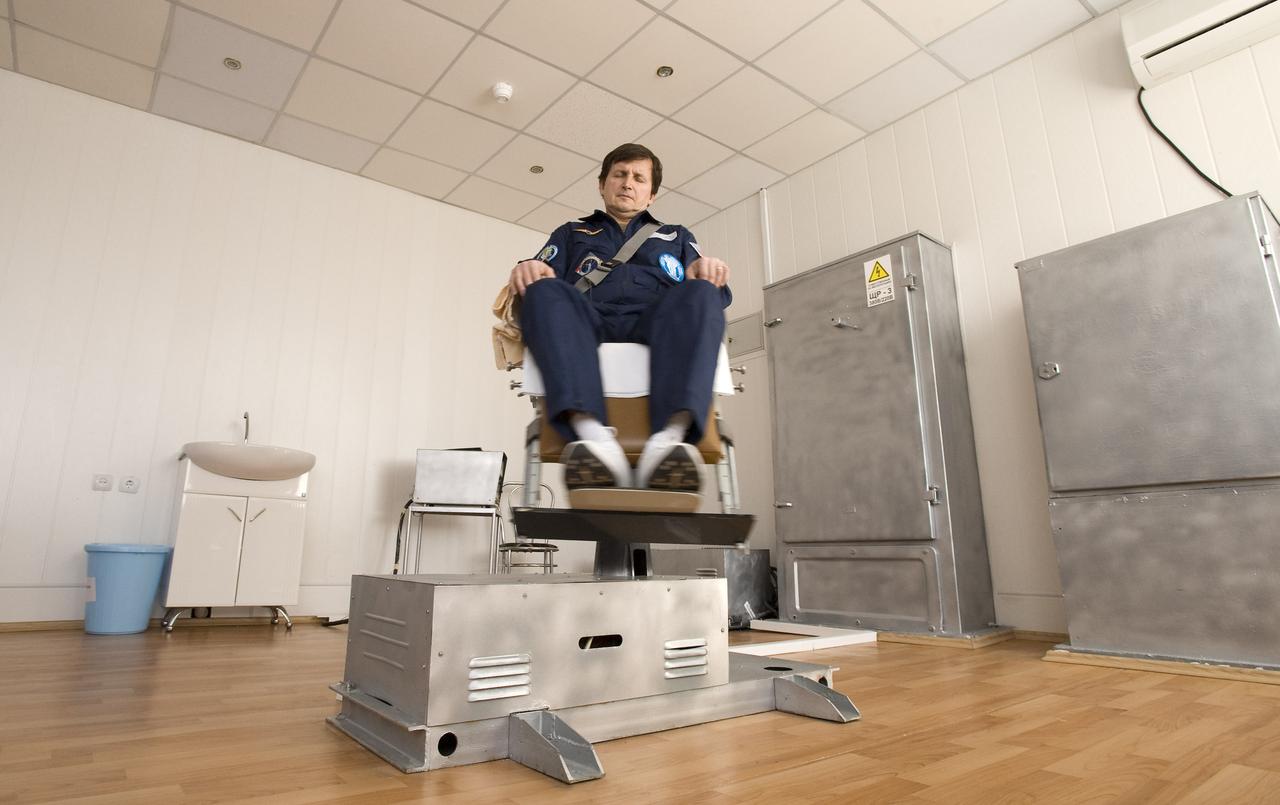
Spaceflight Participant Charles Simonyi participates in the spin chair training at the Cosmonaut Hotel, Saturday, March 21, 2009 in Baikonur, Kazakhstan. (Photo Credit: NASA/Bill Ingalls)
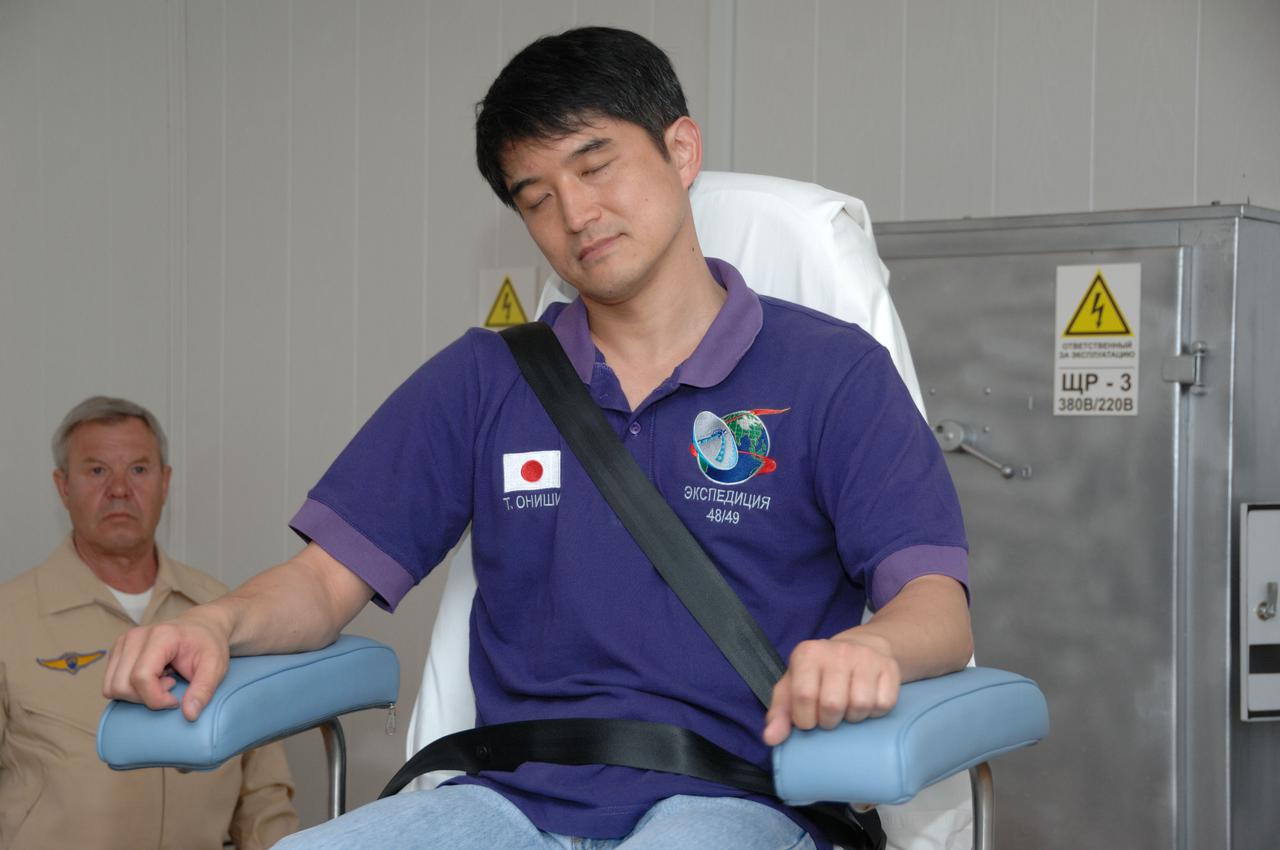
At the Cosmonaut Hotel in Baikonur, Kazakhstan, Expedition 48-49 crewmember Takuya Onishi of the Japan Aerospace Exploration Agency takes a spin in a rotating chair to test his vestibular system June 30 as part of pre-launch activities. Onishi, Kate Rubins of NASA and Anatoly Ivanishin of Roscosmos will launch July 7, Baikonur time, on the Soyuz MS-01 spacecraft for a planned four-month mission on the International Space Station. NASA/Alexander Vysotsky
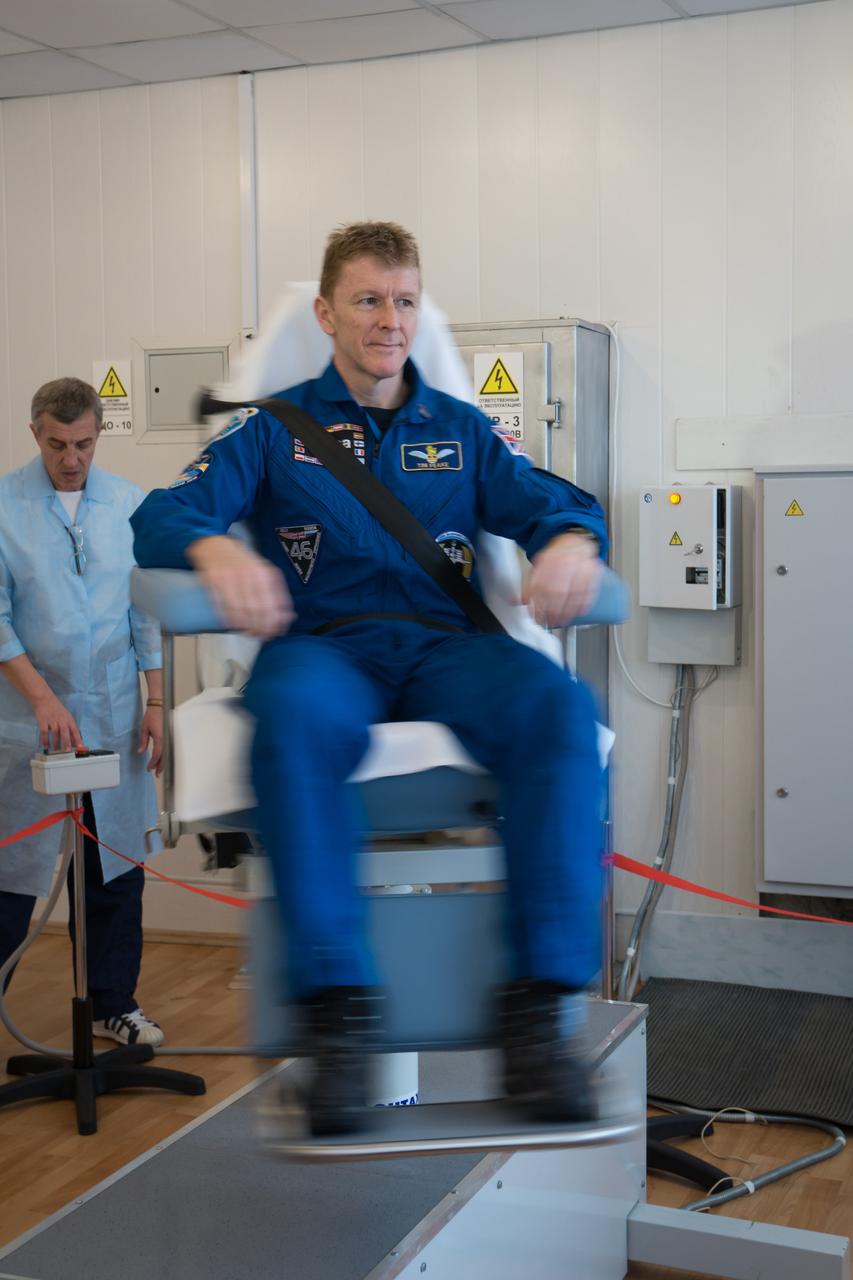
At the Cosmonaut Hotel crew quarters in Baikonur, Kazakhstan, Expedition 46-47 crewmember Tim Peake of the European Space Agency took a turn in a spinning chair to test his vestibular system Dec. 9 as part of his pre-launch training. Peake, Yuri Malenchenko of the Russian Federal Space Agency (Roscosmos) and Tim Kopra of NASA will launch Dec. 15 on their Soyuz TMA-19M spacecraft for a six-month mission on the International Space Station. NASA/Victor Zelentsov
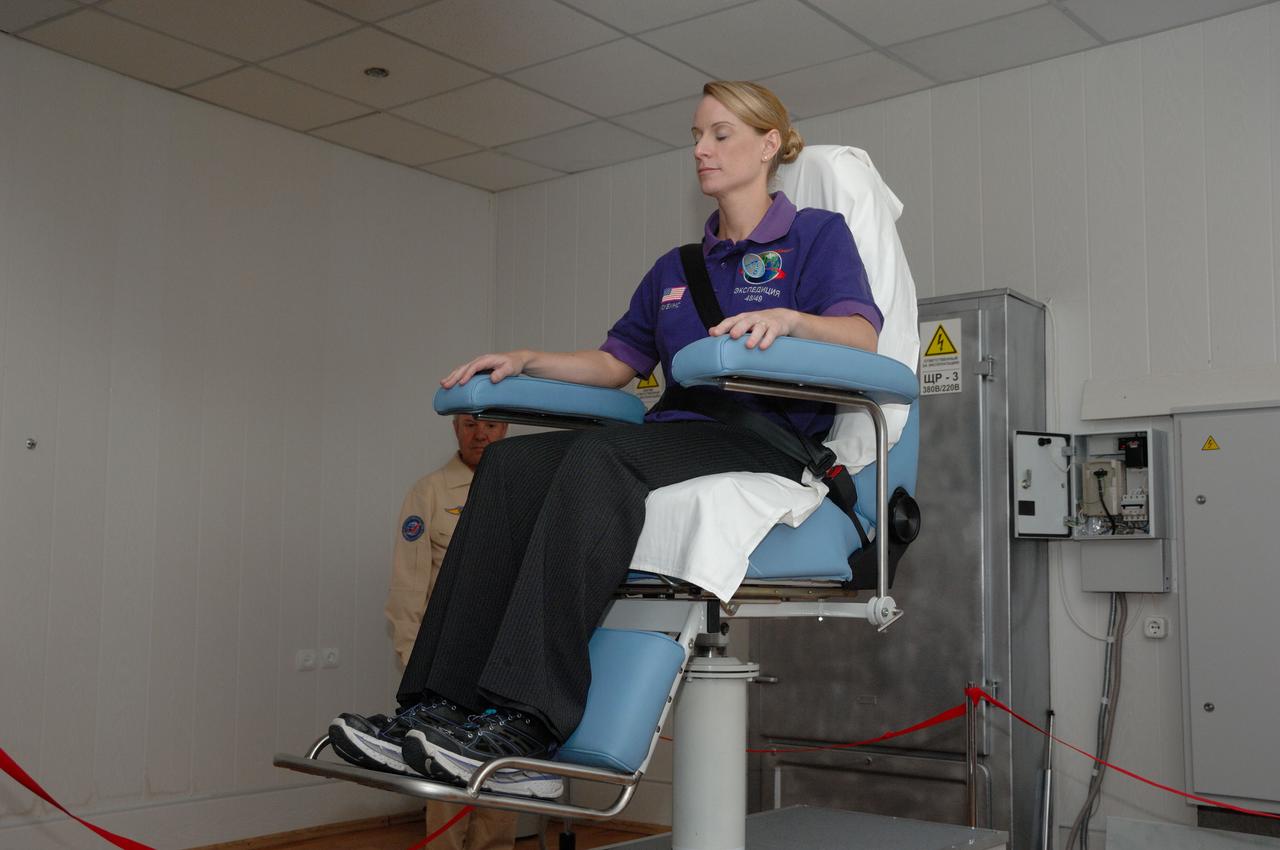
At the Cosmonaut Hotel in Baikonur, Kazakhstan, Expedition 48-49 crewmember Kate Rubins of NASA takes a spin in a rotating chair to test her vestibular system June 30 as part of pre-launch activities. Rubins, Anatoly Ivanishin of Roscosmos and Takuya Onishi of the Japan Aerospace Exploration Agency will launch July 7, Baikonur time, on the Soyuz MS-01 spacecraft for a planned four-month mission on the International Space Station. NASA/Alexander Vysotsky
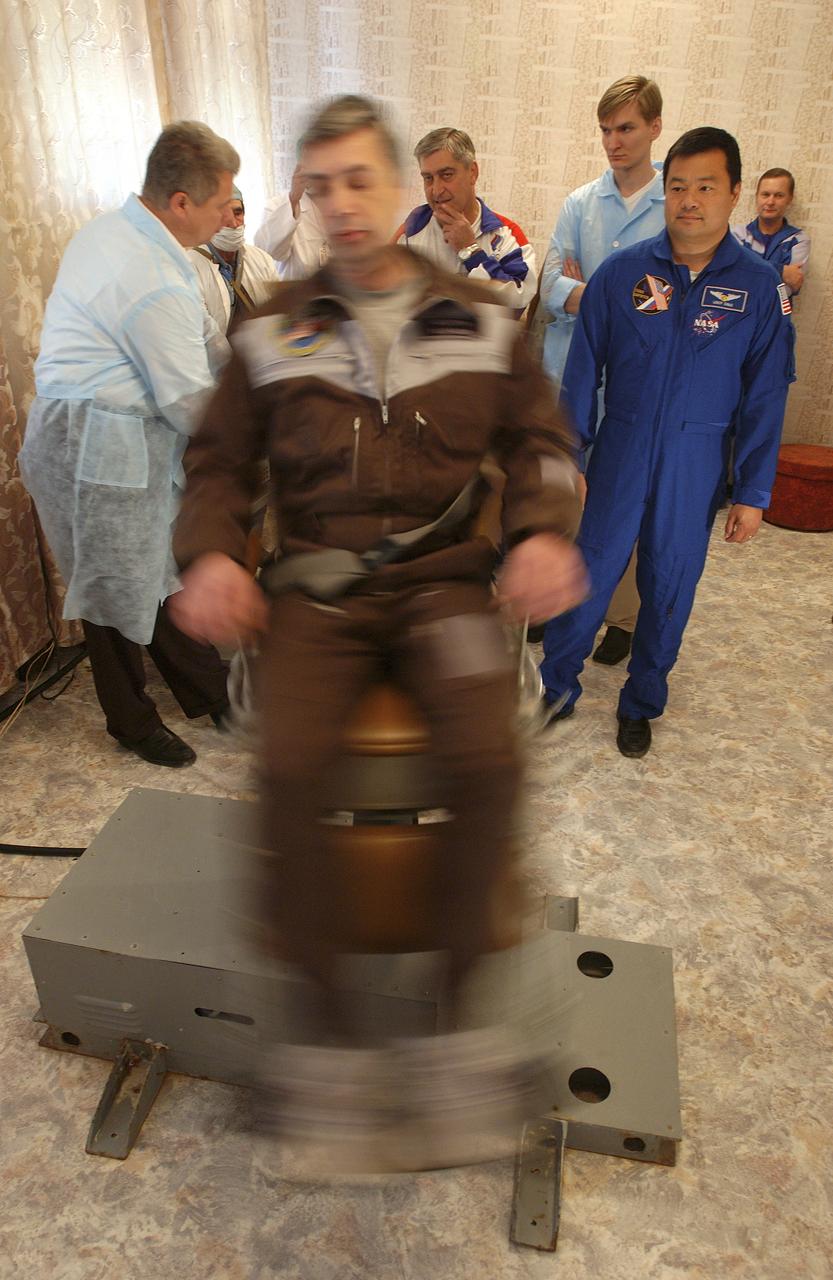
Expedition 10 Commander Leroy Chiao, right, looks on as Russian Space Forces cosmonaut Yuri Shargin takes a spin in a rotating chair at their crew quarters in Baikonur, Kazakhstan, Friday, October 8, 2004, as they prepare for launch to the International Space Station October 14 with Flight Engineer and Soyuz Commander Salizhan Sharipov. The chair is designed to condition the crewmembers' vestibular system against the effects of weightlessness once on orbit. Photo Credit: (NASA/Bill Ingalls)
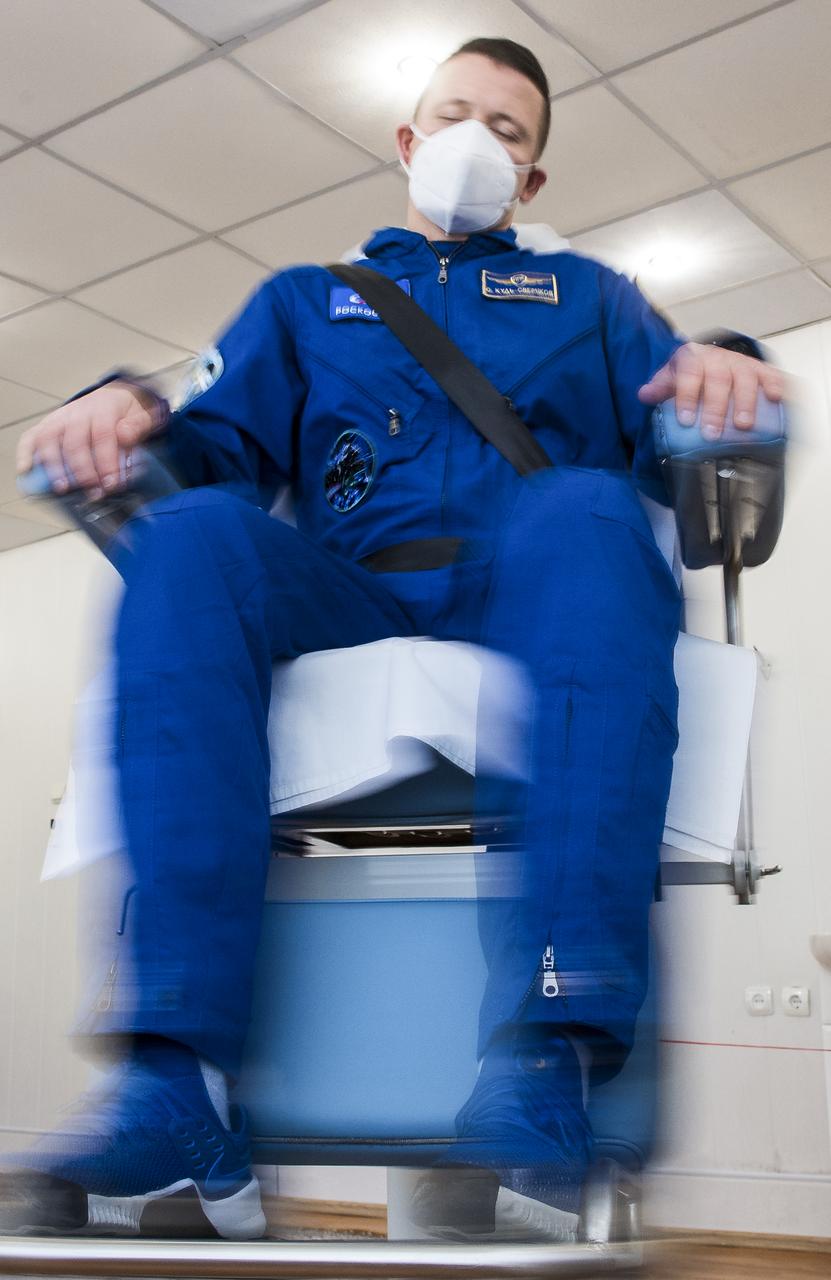
Expedition 64 Russian cosmonaut Sergey Kud-Sverchkov of Roscosmos takes part in spin chair training, Tuesday, Oct. 6, 2020, at the Cosmonaut Hotel in Baikonur, Kazakhstan. Kud-Sverchkov, Sergey Ryzhikov of Roscosmos, and Kate Rubins of NASA are scheduled to launch to the International Space Station aboard the Soyuz MS-17 spacecraft on October 14. Photo Credit: (NASA/GCTC/Andrey Shelepin)
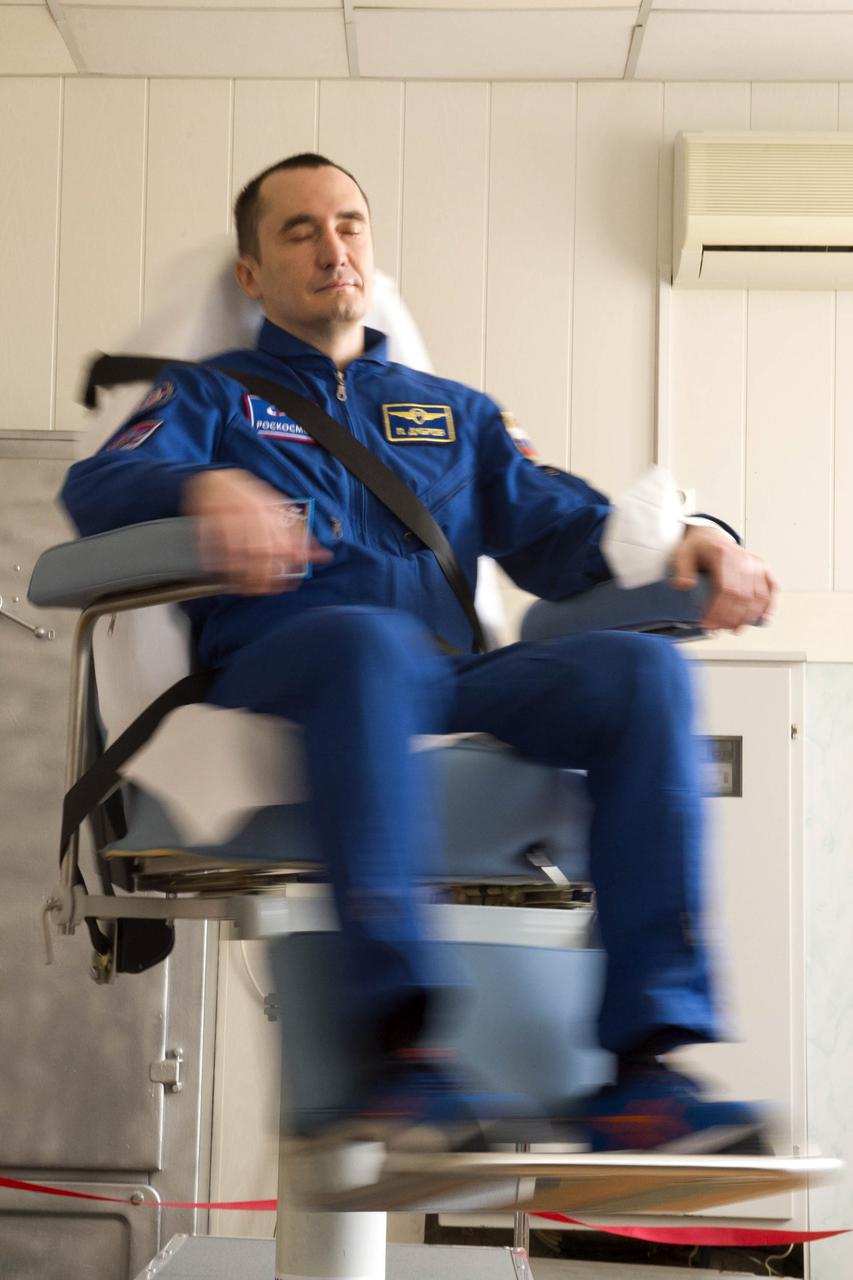
Expedition 65 prime crew member Russian cosmonaut Pyotr Dubrov of Roscosmos, takes part in spin chair training, Saturday, April 3, 2021, at the Cosmonaut Hotel in Baikonur, Kazakhstan. Dubrov, NASA astronaut Mark Vande Hei, and Russian cosmonaut Oleg Novitskiy of Roscosmos are scheduled to launch to the International Space Station aboard the Soyuz MS-18 spacecraft on April 9. Photo Credit: (NASA/GCTC/Irina Spector)
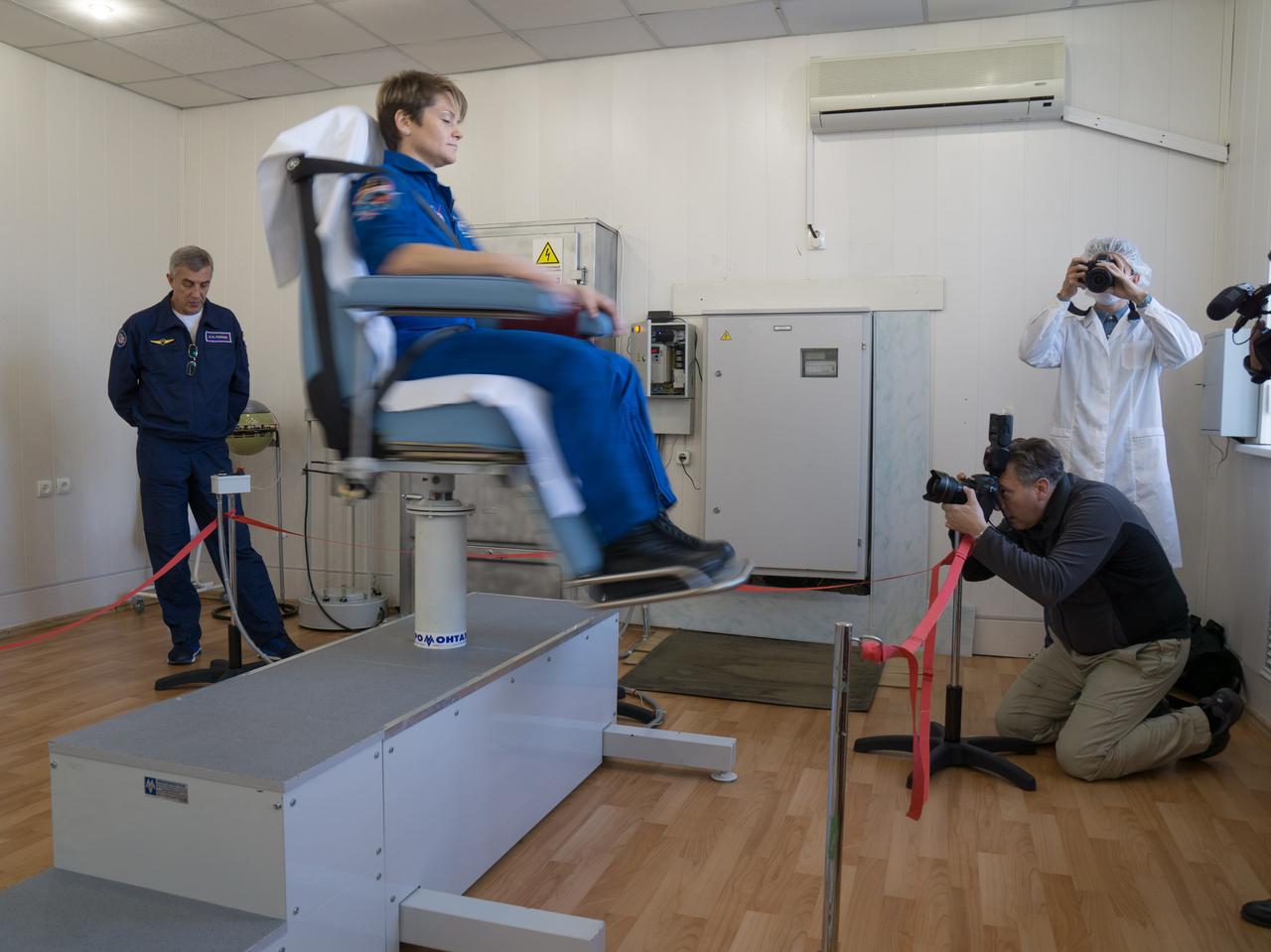
jsc2018e097775 - At the Cosmonaut Hotel crew quarters in Baikonur, Kazakhstan, Expedition 58 crewmember Anne McClain of NASA conducts vestibular system response training in a spinning chair Nov. 27 as part of pre-launch training. McClain, David Saint-Jacques of the Canadian Space Agency and Oleg Kononenko of Roscosmos will launch Dec. 3 on the Soyuz MS-11 spacecraft from the Baikonur Cosmodrome in Kazakhstan for a six-and-a-half month mission on the International Space Station...NASA/Victor Zelentsov.
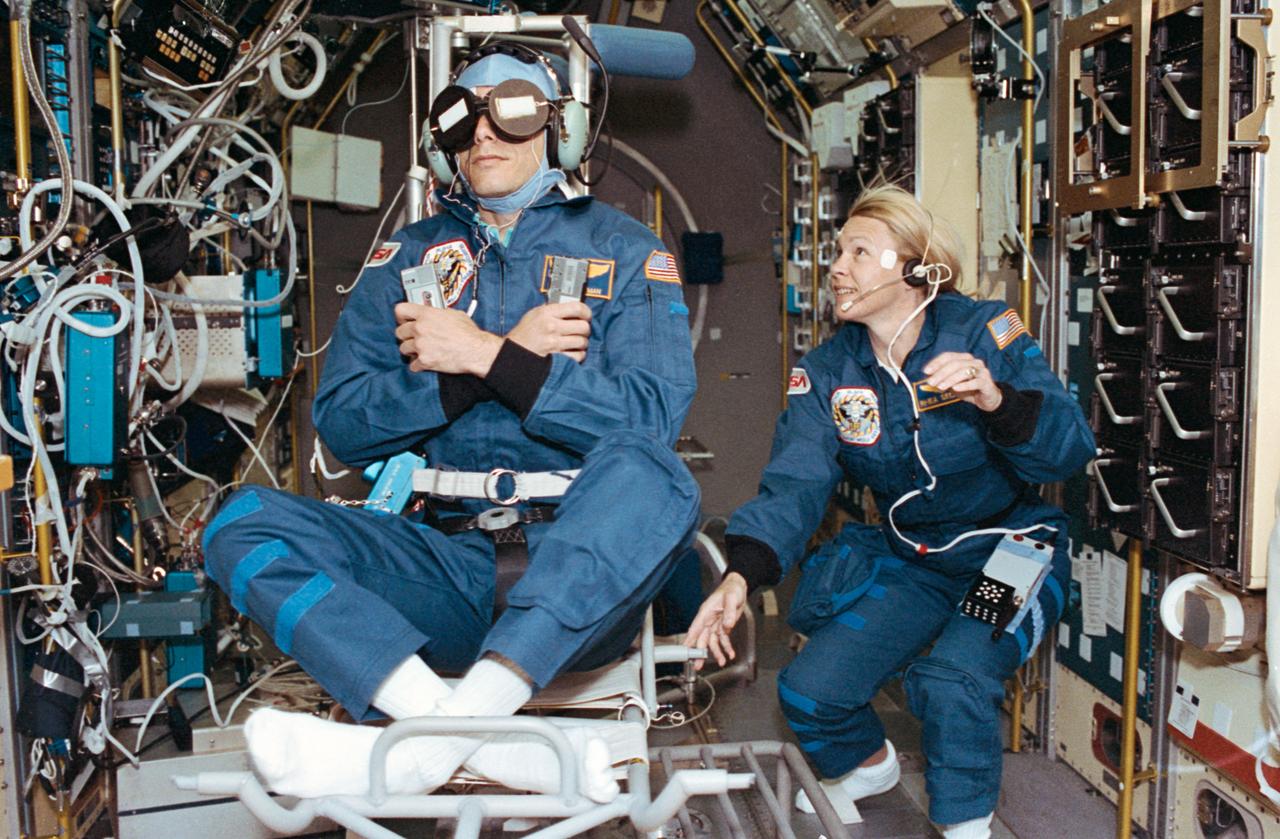
STS058-202-002 (18 Oct.-1 Nov. 1993) --- Astronaut Rhea Seddon, STS-58 payload commander, spins the Spacelab Life Sciences (SLS-2) rotating chair as payload specialist Martin J. Fettman serves as test subject. The two joined five NASA astronauts for fourteen days of medical research aboard the Earth-orbiting space shuttle Columbia. Photo credit: NASA
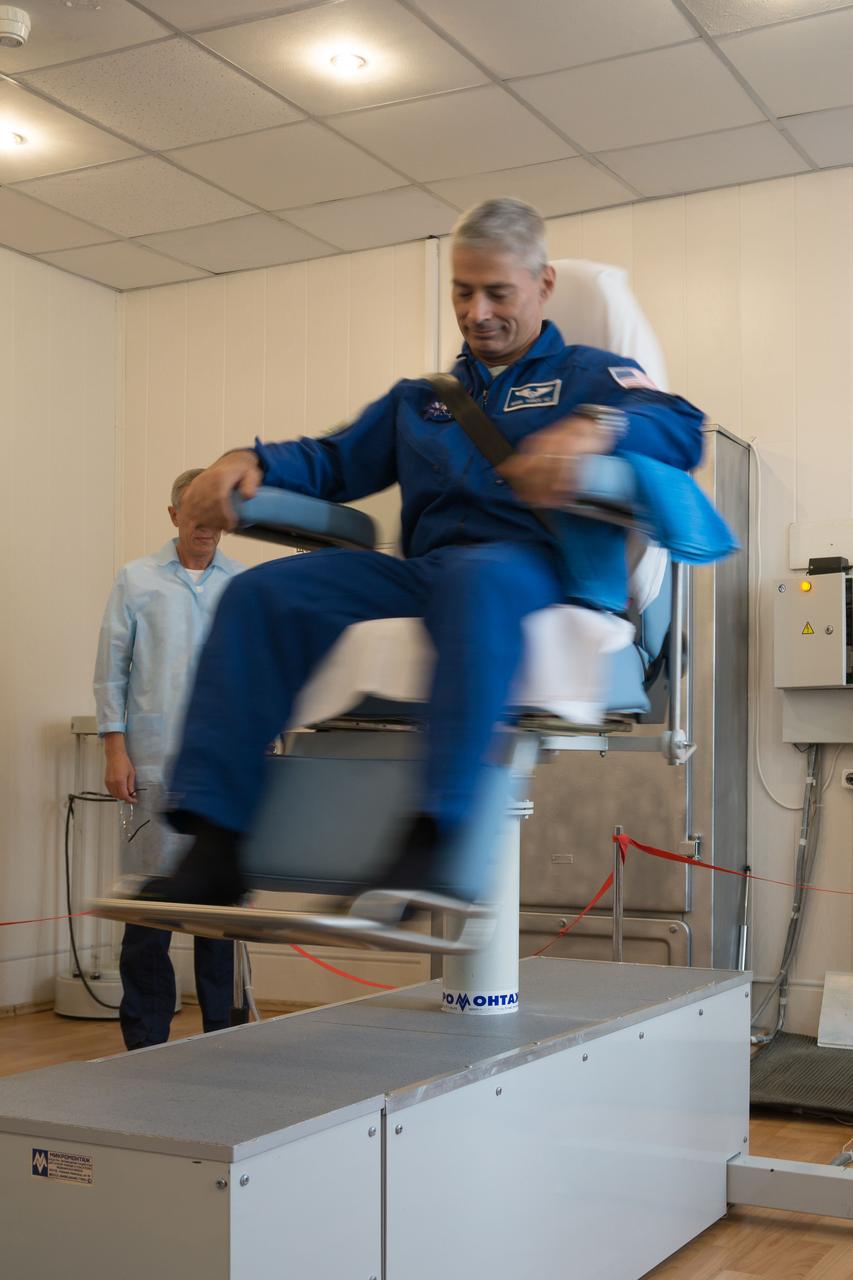
Expedition 49 backup crew member Mark Vande Hei takes part in spin chair training during media day on Friday, Sept. 16, 2016 at the Cosmonaut Hotel in Baikonur, Kazakhstan. Expedition 49 flight engineer Shane Kimbrough of NASA, flight engineer Andrey Borisenko of Roscosmos, and Soyuz commander Sergey Ryzhikov of Roscosmos are scheduled to launch to the International Space Station in their Soyuz MS-02 spacecraft from the Baikonur Cosmodrome on September 24 Kazakh time. Photo Credit: (NASA/Victor Zelentsov)
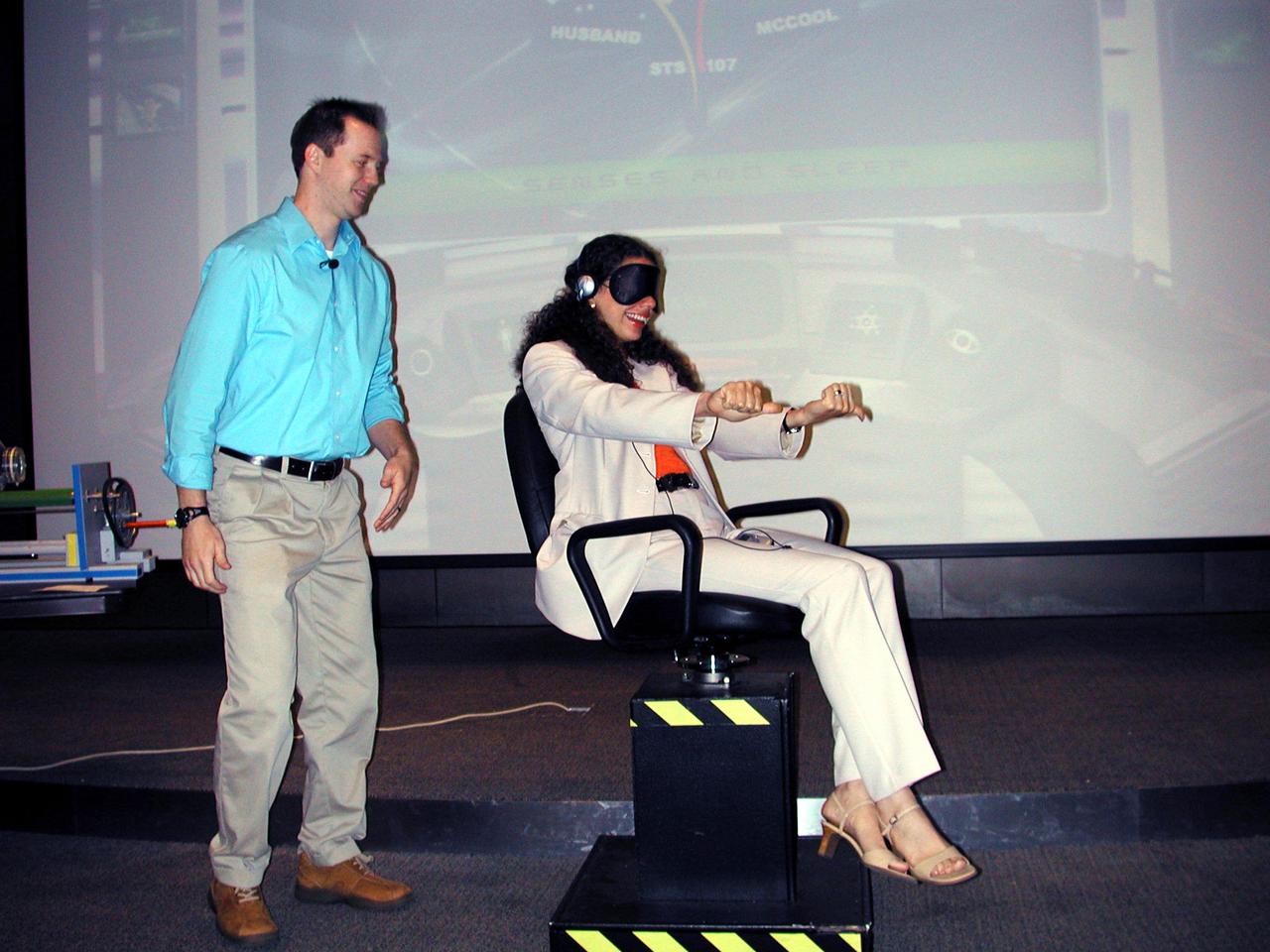
Brad McLain for the Space Biology Museum Network spins a volunteer in a rotating chair to illustrate how dependent the human vestibular system is on visual cues. The volunteer's thumbs indicate which way she thinks she is turning. Similar tests are conducted on astronauts to study how they adapt to space and readapt to Earth. The activity was part of the Space Research and You education event held by NASA's Office of Biological and Physical Research on June 25, 2002, in Arlington, VA, to highlight the research that will be conducted on STS-107.

jsc2019e053721 - At the Cosmonaut Hotel crew quarters in Baikonur, Kazakhstan, Expedition 61 crewmember Jessica Meir of NASA takes a spin in a rotating chair Sept. 18 to test her vestibular system as part of pre-launch activities. Along with Oleg Skripochka of Roscosmos and spaceflight participant Hazzaa Ali Almansoori of the United Arab Emirates, they will launch Sept. 25 from the Baikonur Cosmodrome in Kazakhstan on the Soyuz MS-15 spacecraft for a mission on the International Space Station...NASA/Victor Zelentsov
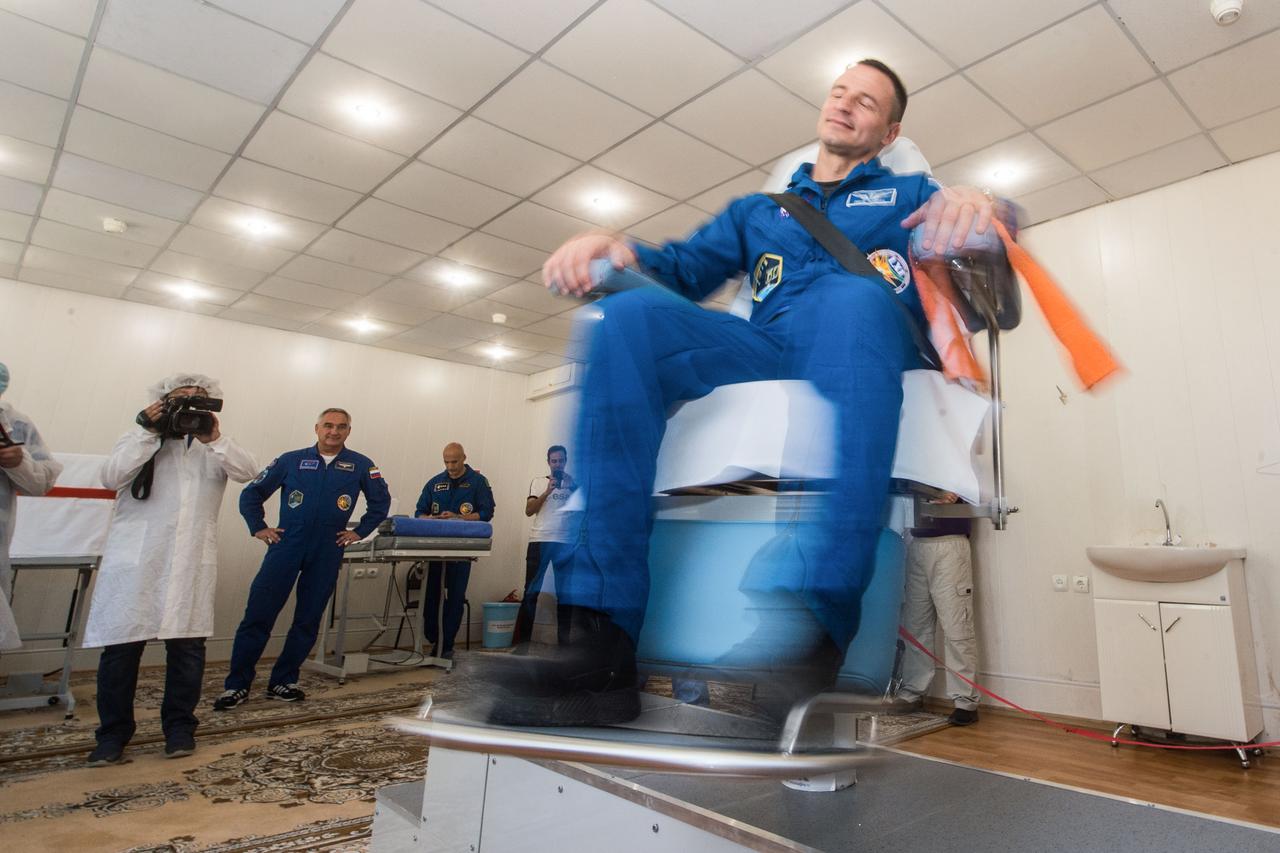
jsc2019e039262 - At the Cosmonaut Hotel crew quarters in Baikonur, Kazakhstan, Expedition 60 crewmember Drew Morgan of NASA takes a ride in a spinning chair July 12 to test his vestibular system as part of pre-launch activities. Morgan, Alexander Skvortsov of Roscosmos and Luca Parmitano of the European Space Agency will launch July 20 on the Soyuz MS-13 spacecraft from the Baikonur Cosmodrome in Kazakhstan on a mission to the International Space Station...Andrey Shelepin/GCTC.
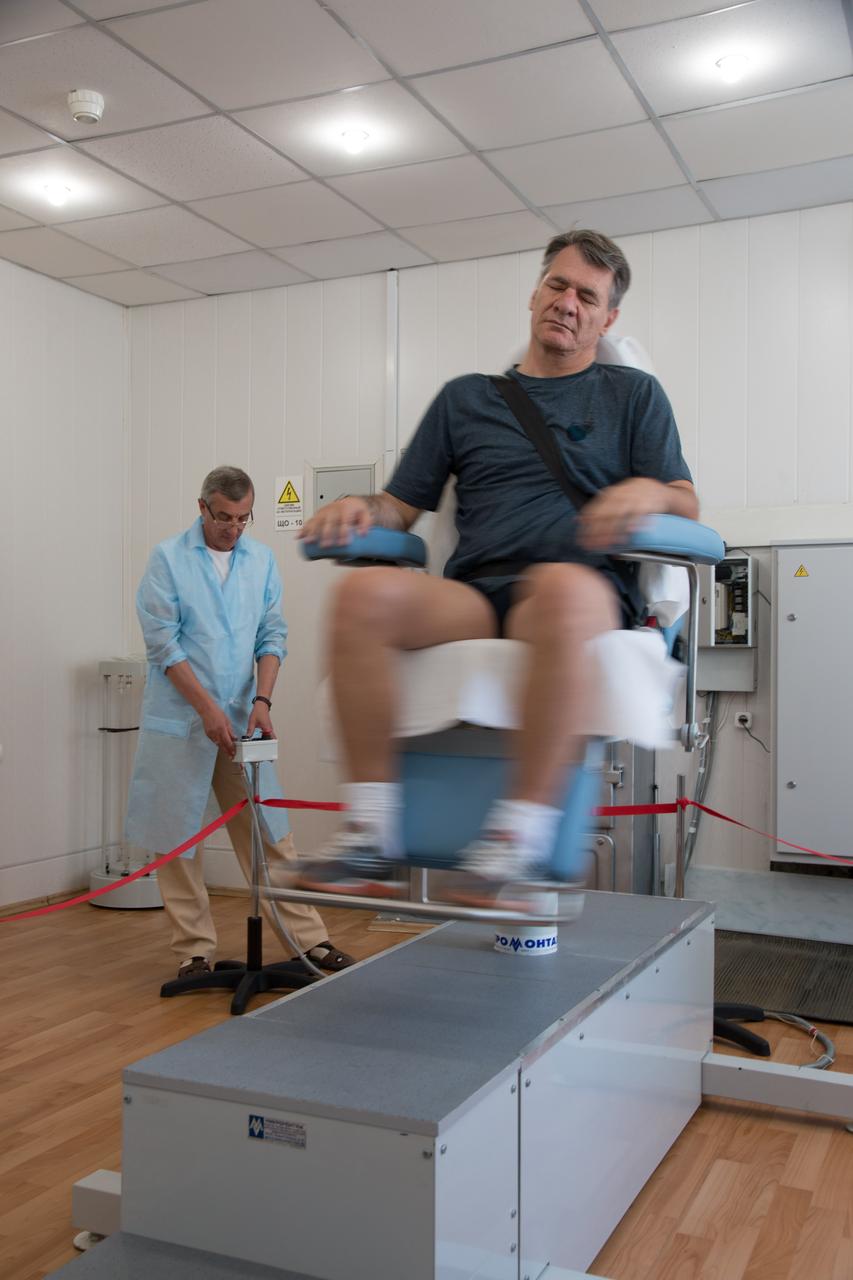
jsc2017e101945 (July 22, 2017) --- At the Cosmonaut Hotel crew quarters in Baikonur, Kazakhstan, Expedition 52-53 crewmember Paolo Nespoli of the European Space Agency tests his vestibular system in a spinning chair July 22 as part of pre-launch activities. Nespoli, Randy Bresnik of NASA and Sergey Ryazanskiy of the Russian Federal Space Agency (Roscosmos) will launch July 28 on the Soyuz MS-05 spacecraft from the Baikonur Cosmodrome for a five-month mission on the International Space Station. Credit: NASA/Victor Zelentsov
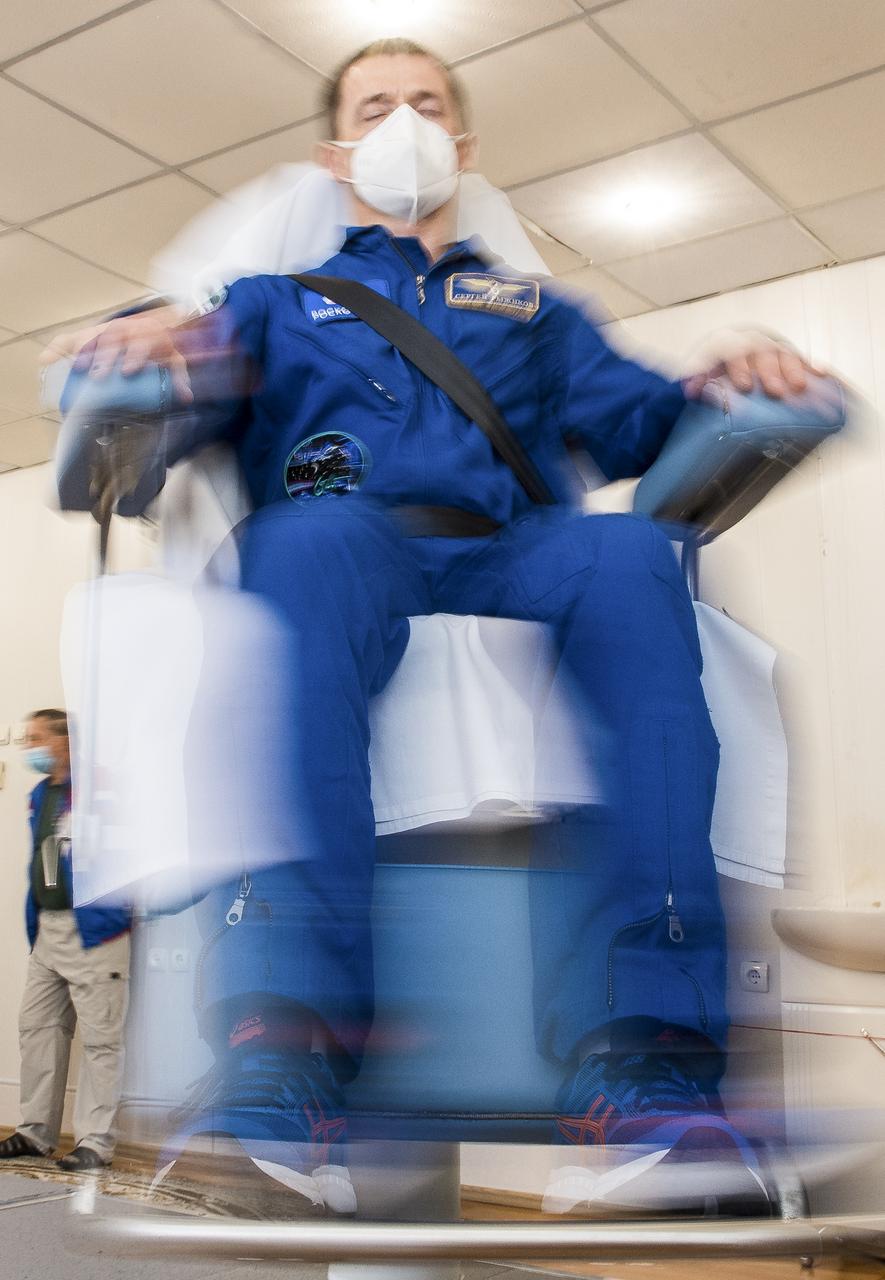
Expedition 64 Russian cosmonaut Sergey Ryzhikov of Roscosmos takes part in spin chair training, Tuesday, Oct. 6, 2020, at the Cosmonaut Hotel in Baikonur, Kazakhstan. Ryzhikov, Sergey Kud-Sverchkov of Roscosmos and Kate Rubins of NASA are scheduled to launch to the International Space Station aboard the Soyuz MS-17 spacecraft on October 14. Photo Credit: (NASA/GCTC/Andrey Shelepin)
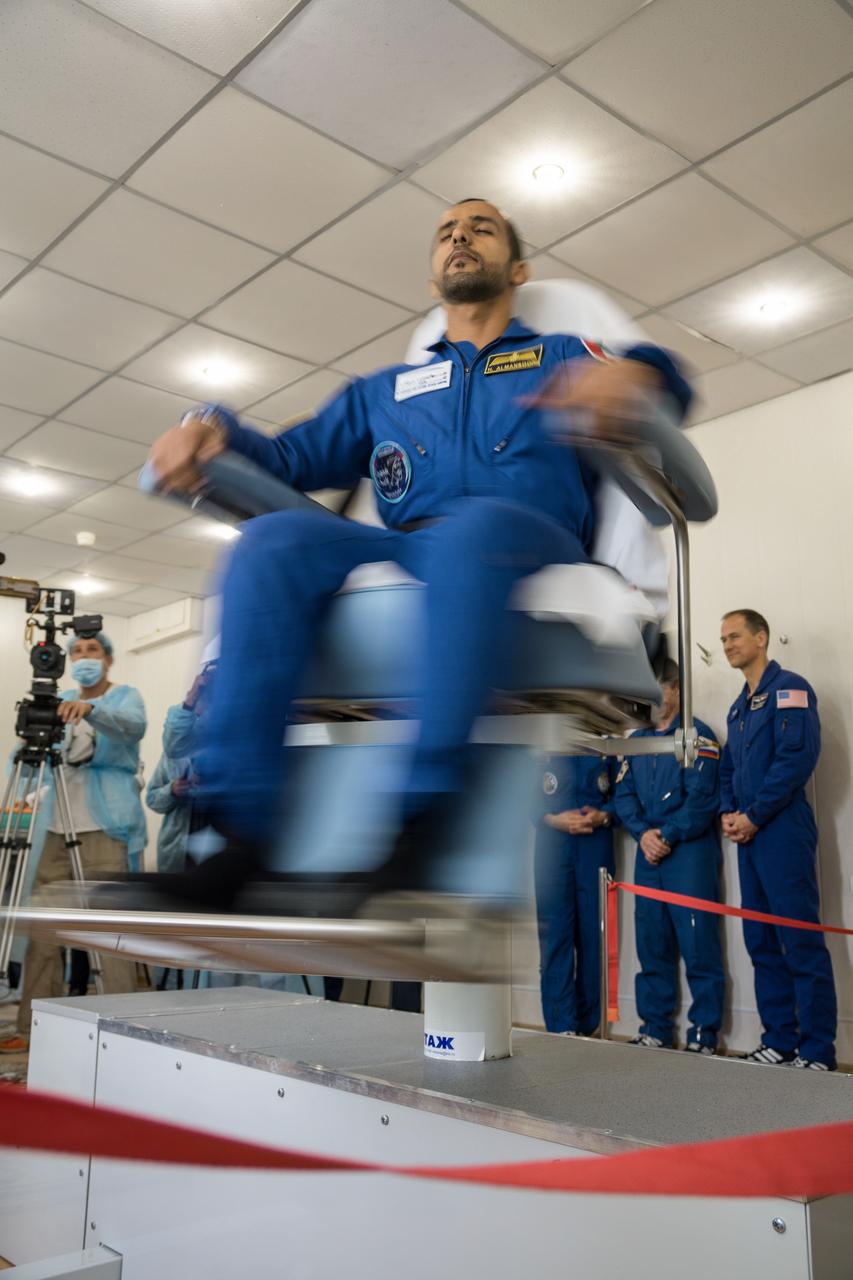
jsc2019e053723 - At the Cosmonaut Hotel crew quarters in Baikonur, Kazakhstan, spaceflight participant Hazzaa Ali Almansoori of the United Arab Emirates takes a spin in a rotating chair Sept. 18 to test his vestibular system as part of pre-launch activities. Along with Expedition 61 crewmembers Oleg Skripochka of Roscosmos and Jessica Meir of NASA, they will launch Sept. 25 from the Baikonur Cosmodrome in Kazakhstan on the Soyuz MS-15 spacecraft for a mission on the International Space Station...NASA/Victor Zelentsov
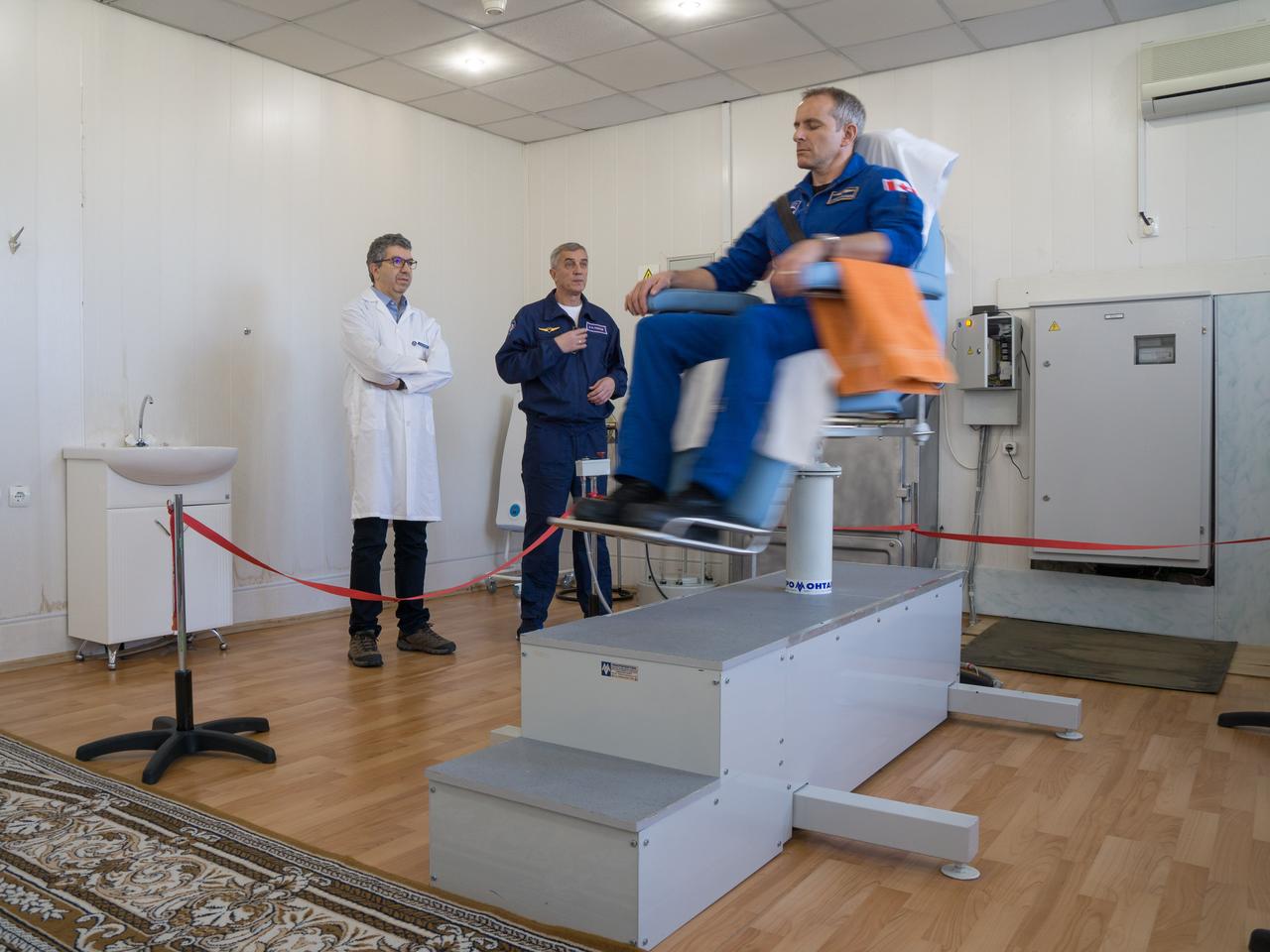
jsc2018e097772 - At the Cosmonaut Hotel crew quarters in Baikonur, Kazakhstan, Expedition 58 crewmember David Saint-Jacques of the Canadian Space Agency conducts vestibular system response training in a spinning chair Nov. 27 as part of pre-launch training. Saint-Jacques, Anne McClain of NASA and Oleg Kononenko of Roscosmos will launch Dec. 3 on the Soyuz MS-11 spacecraft from the Baikonur Cosmodrome in Kazakhstan for a six-and-a-half month mission on the International Space Station...NASA/Victor Zelentsov.
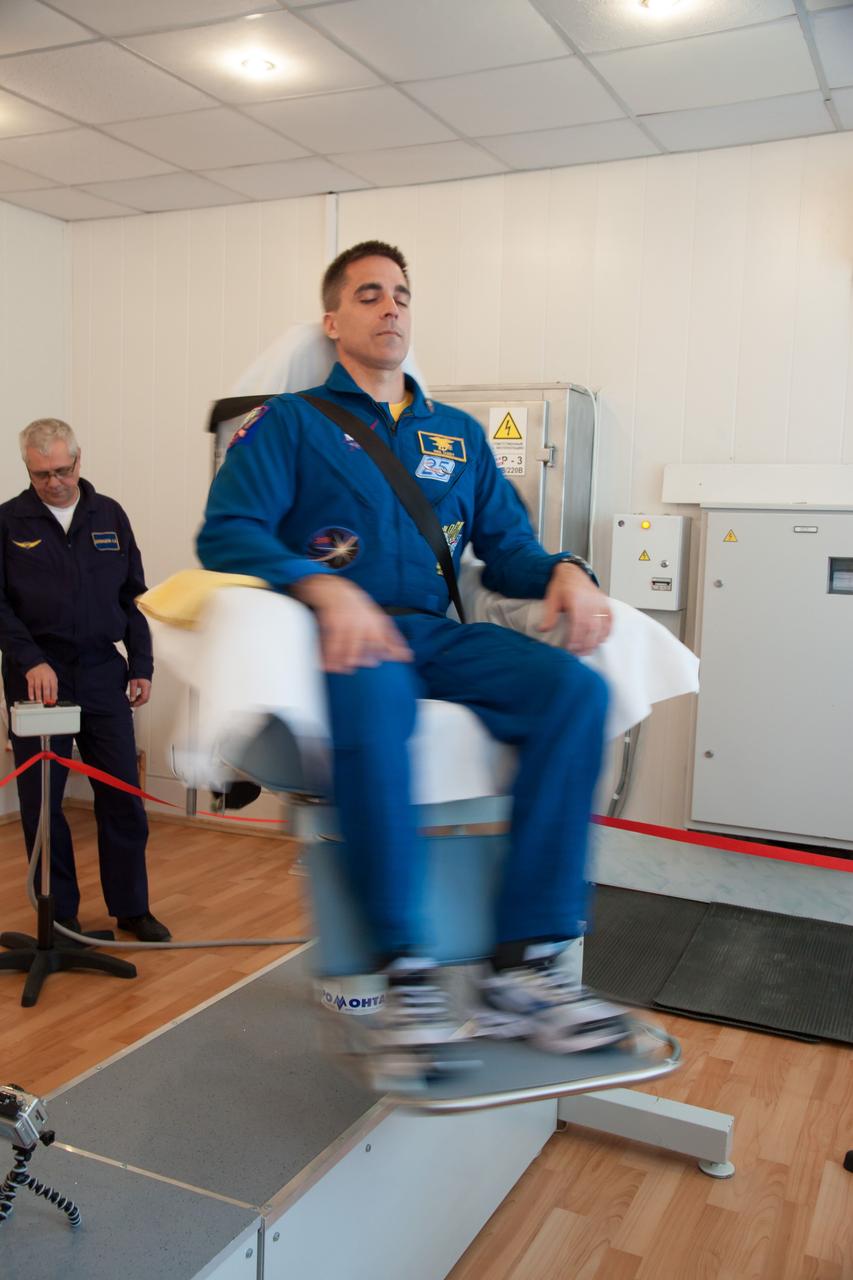
At the Cosmonaut Hotel crew quarters in Baikonur, Kazakhstan, Expedition 35-36 Chris Cassidy of NASA takes a turn in a spinning chair March 21 as he trains for launch to the International Space Station with his crewmates, Soyuz Commander Pavel Vinogradov and Alexander Misurkin March 29, Kazakh time, in their Soyuz TMA-08M spacecraft from the Baikonur Cosmodrome. The three crewmembers will spend 5 ½ months on the orbital laboratory. NASA/Victor Zelentsov
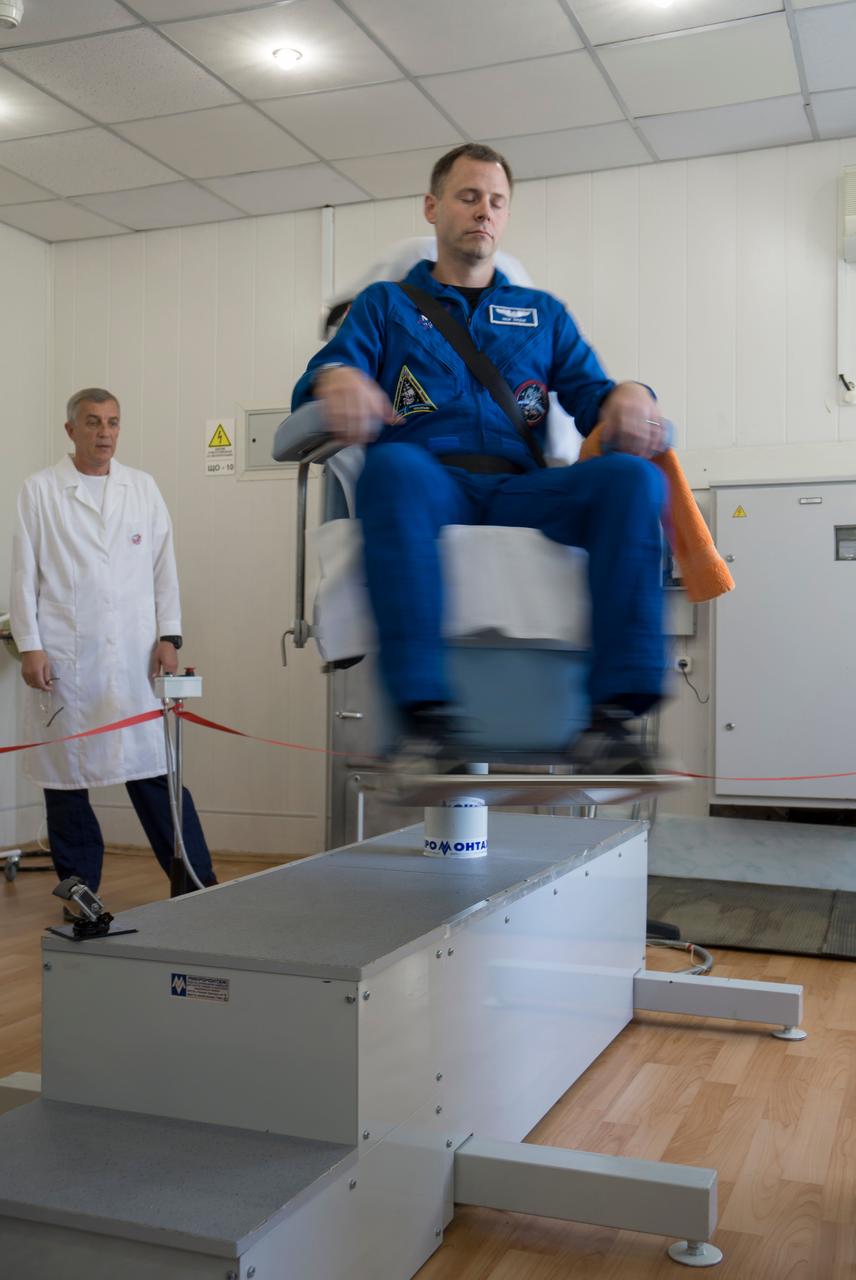
jsc2018e085899 (Oct. 3, 2018) --- Expedition 57 prime crew member Nick Hague of NASA takes a spin in a rotating chair to test his vestibular system as part of pre-launch activities, Wednesday, Oct. 3, 2018 at the Cosmonaut Hotel in Baikonur, Kazakhstan. Hague and Alexey Ovchinin of Roscosmos are scheduled to launch on Oct. 11 onboard the Soyuz MS-10 spacecraft from the Baikonur Cosmodrome in Kazakhstan for a six-month mission on the International Space Station. Photo Credit: (NASA/Victor Zelentsov)
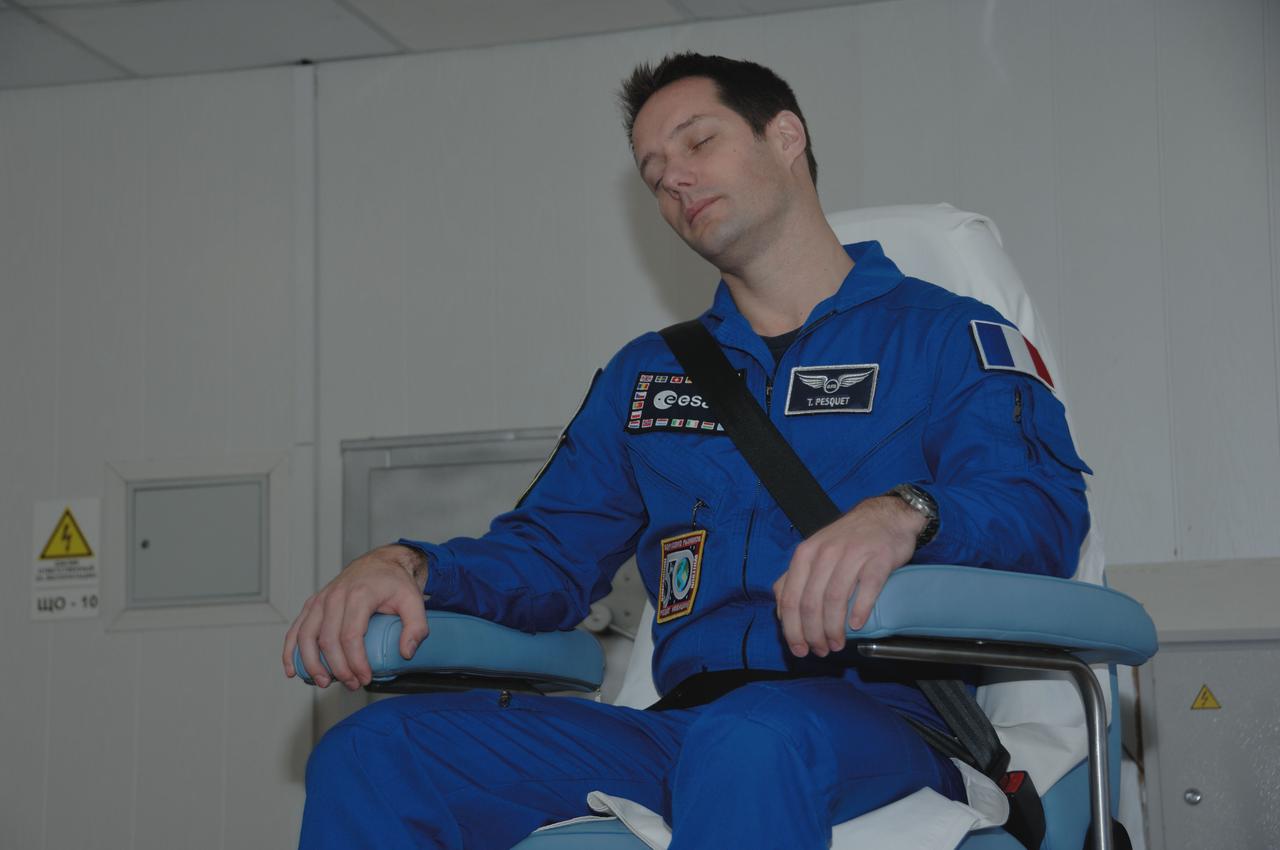
At his Cosmonaut Hotel crew quarters in Baikonur, Kazakhstan, Expedition 50-51 crewmember Thomas Pesquet of the European Space Agency takes a spin in a rotating chair Nov. 10 to test his vestibular system as part of preflight activities. Pesquet, Peggy Whitson of NASA and Oleg Novitskiy of the Russian Federal Space Agency (Roscosmos) will launch Nov. 18, Baikonur time, on the Soyuz MS-03 spacecraft for a six-month mission on the International Space Station. NASA/Alexander Vysotsky
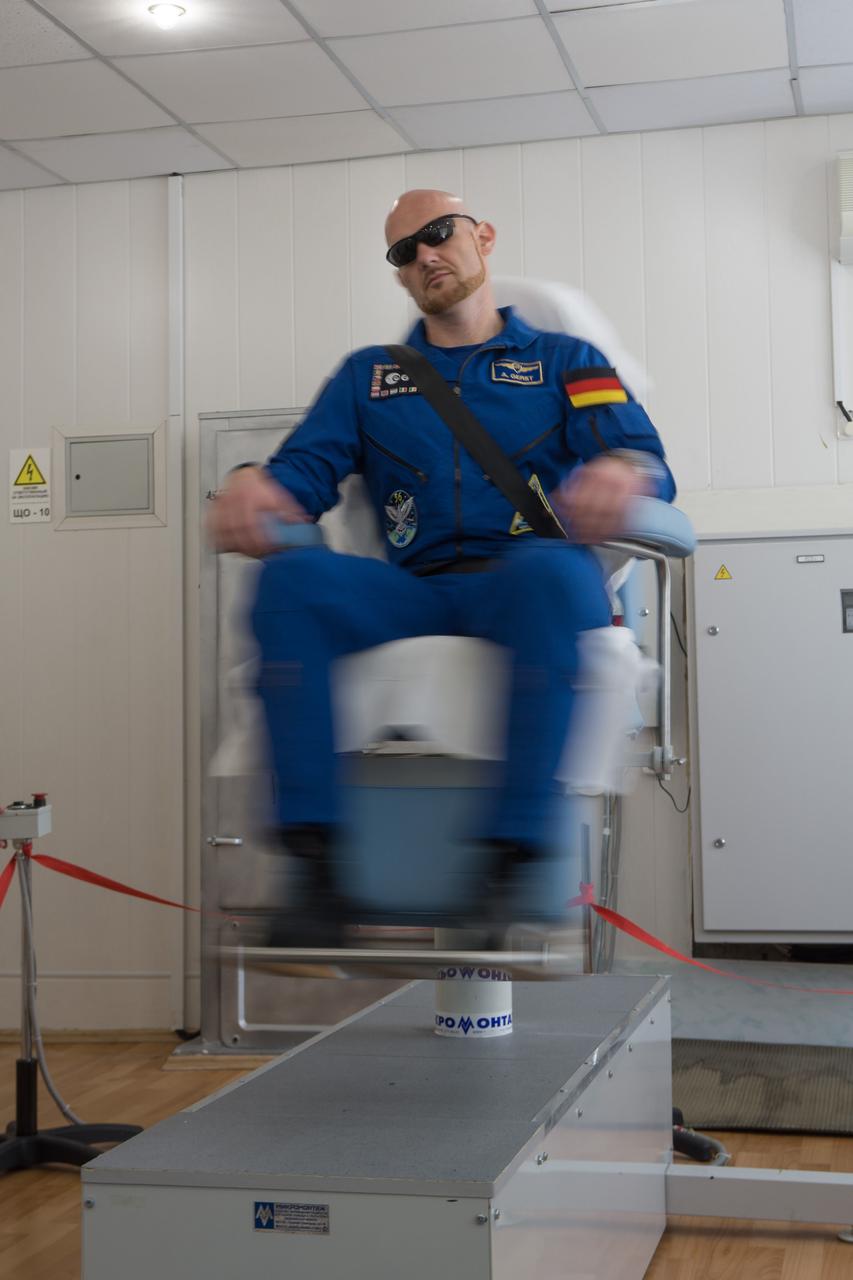
jsc2018e050828 - At the Cosmonaut Hotel crew quarters in Baikonur, Kazakhstan, Expedition 56 prime crewmember Alexander Gerst of the European Space Agency takes a spin in a rotating chair May 29 to test his vestibular system as part of pre-launch activities. Gerst, Serena Aunon-Chancellor of NASA and Sergey Prokopyev of Roscosmos will launch June 6 from the Baikonur Cosmodrome in Kazakhstan on the Soyuz MS-09 spacecraft for a six-month mission on the International Space Station...NASA/Victor Zelentsov.
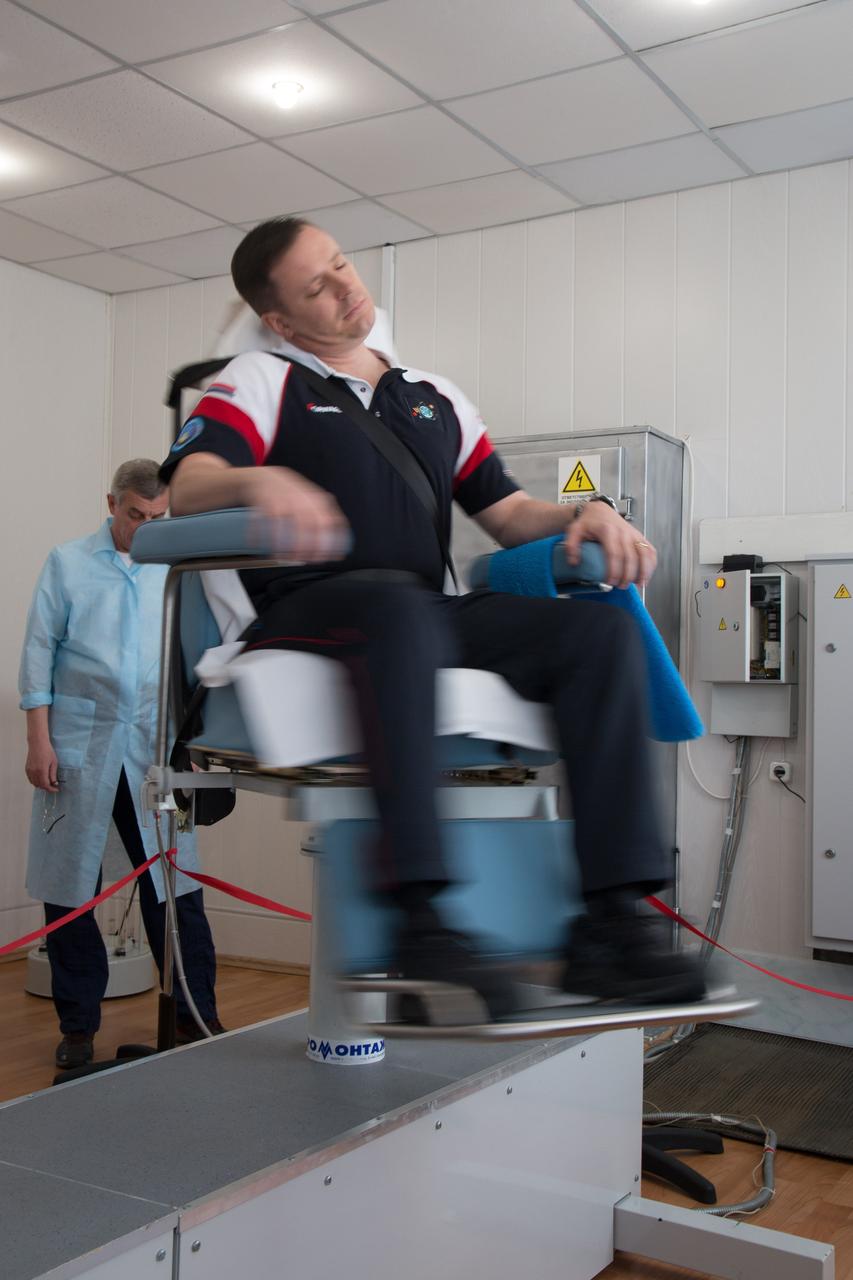
jsc2017e043073 (April 13, 2017) --- At the Cosmonaut Hotel crew quarters in Baikonur, Kazakhstan, Expedition 51 crewmember Jack Fischer of NASA takes a spin in a rotating chair to test his vestibular system April 13 as part of his pre-launch activities. Fischer and Fyodor Yurchikhin of the Russian Federal Space Agency (Roscosmos) will liftoff April 20 from the Baikonur Cosmodrome on the Soyuz MS-04 spacecraft for a four and a half month mission on the International Space Station. NASA/Victor Zelentsov
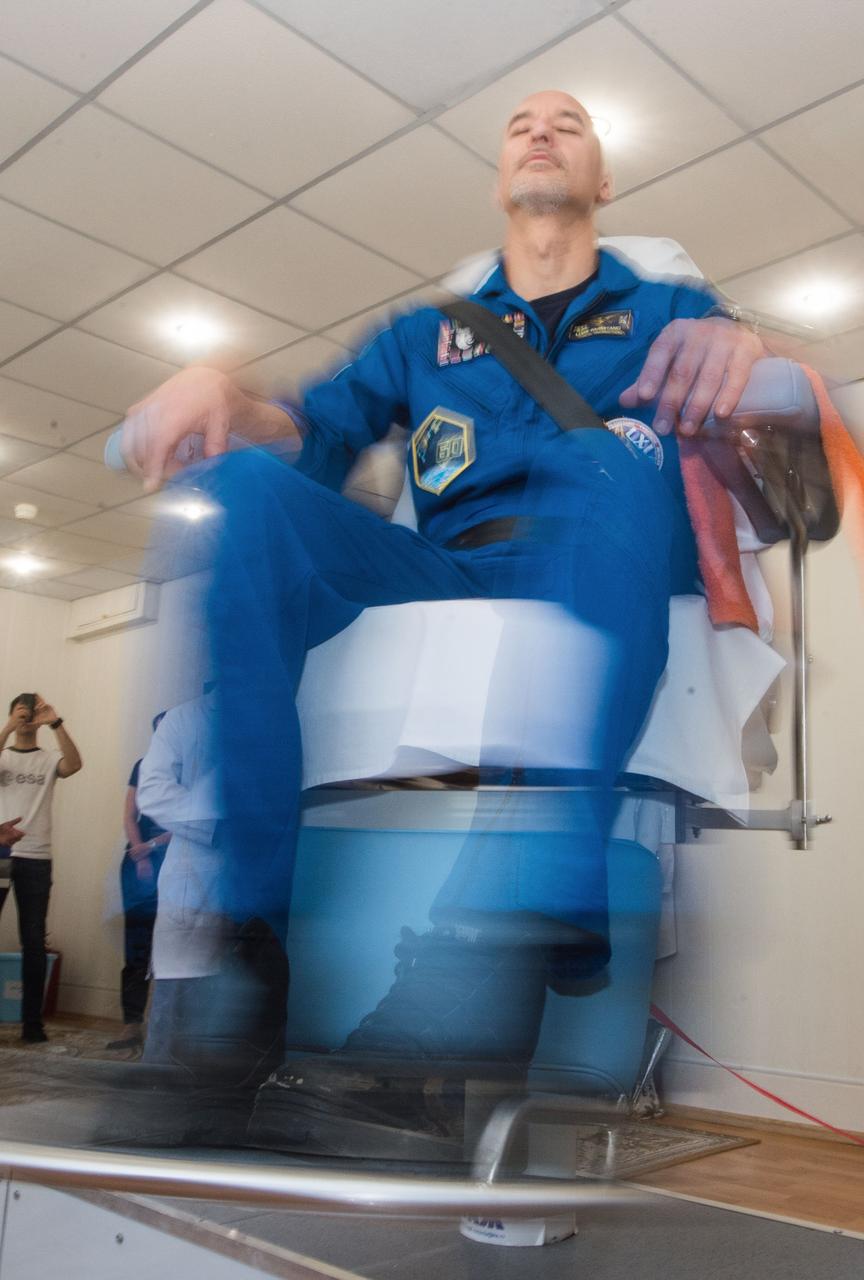
jsc2019e039267 - At the Cosmonaut Hotel crew quarters in Baikonur, Kazakhstan, Expedition 60 crewmember Luca Parmitano of the European Space Agency takes a ride in a spinning chair July 12 to test his vestibular system as part of pre-launch activities. Parmitano, Drew Morgan of NASA and Alexander Skvortsov of Roscosmos will launch July 20 on the Soyuz MS-13 spacecraft from the Baikonur Cosmodrome in Kazakhstan on a mission to the International Space Station...Andrey Shelepin/GCTC.
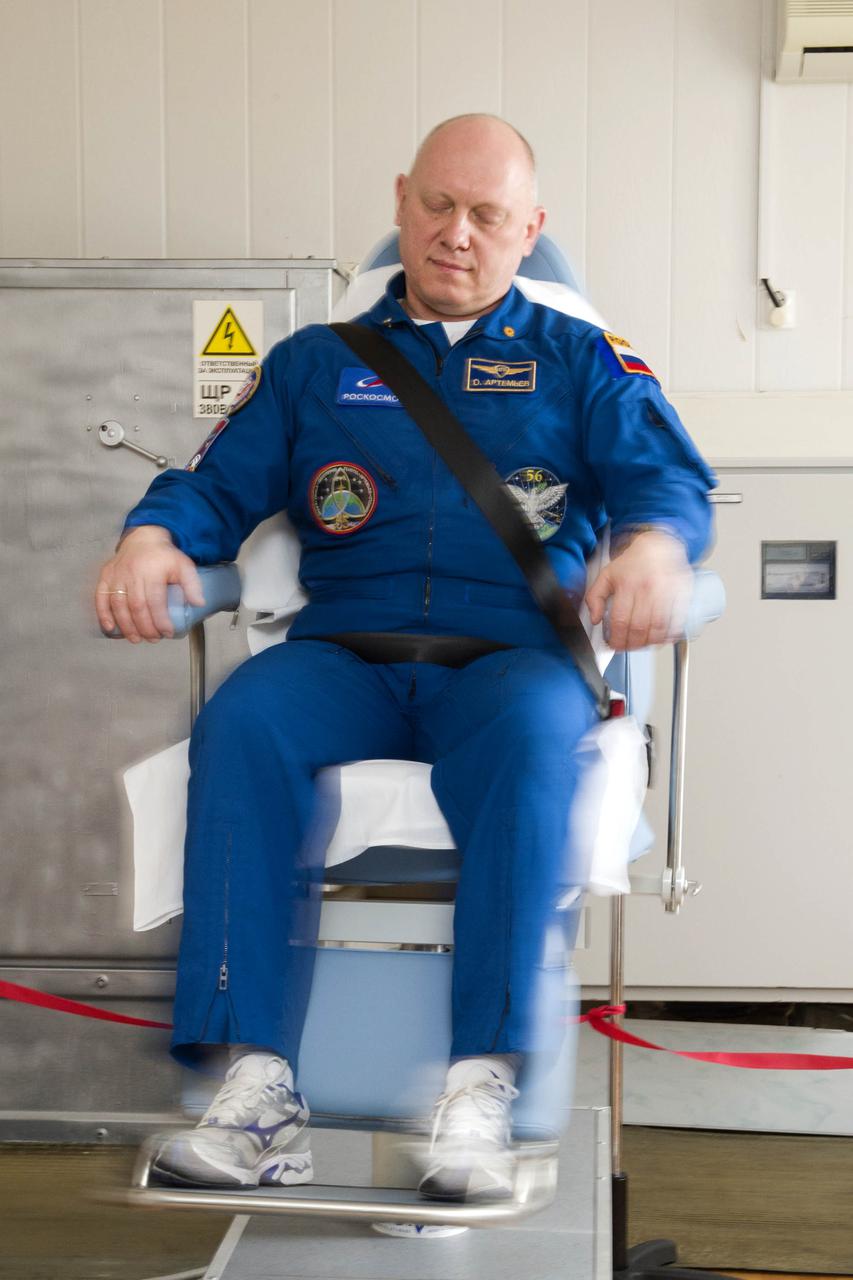
Expedition 65 backup crew member Russian cosmonaut Oleg Artemyev of Roscosmos, takes part in spin chair training, Saturday, April 3, 2021, at the Cosmonaut Hotel in Baikonur, Kazakhstan. The prime crew, Russian cosmonauts Oleg Novitskiy and Pyotr Dubrov of Roscosmos, and NASA astronaut Mark Vande Hei, are scheduled to launch to the International Space Station aboard the Soyuz MS-18 spacecraft on April 9. Photo Credit: (NASA/GCTC/Irina Spector)
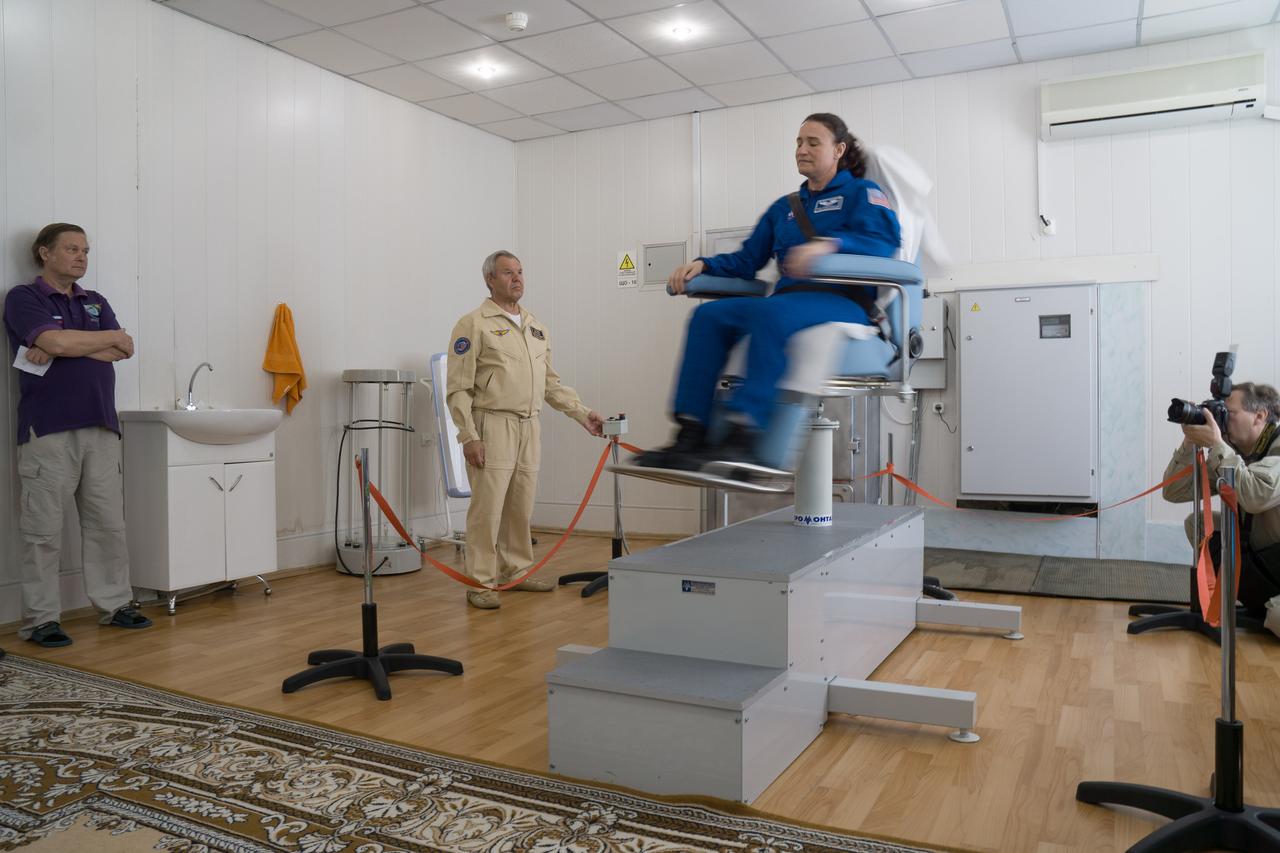
jsc2018e050829 - At the Cosmonaut Hotel crew quarters in Baikonur, Kazakhstan, Expedition 56 prime crewmember Serena Aunon-Chancellor of NASA takes a spin in a rotating chair May 29 to test her vestibular system as part of pre-launch activities. Aunon-Chancellor, Alexander Gerst of the European Space Agency and Sergey Prokopyev of Roscosmos will launch June 6 from the Baikonur Cosmodrome in Kazakhstan on the Soyuz MS-09 spacecraft for a six-month mission on the International Space Station...NASA/Victor Zelentsov.
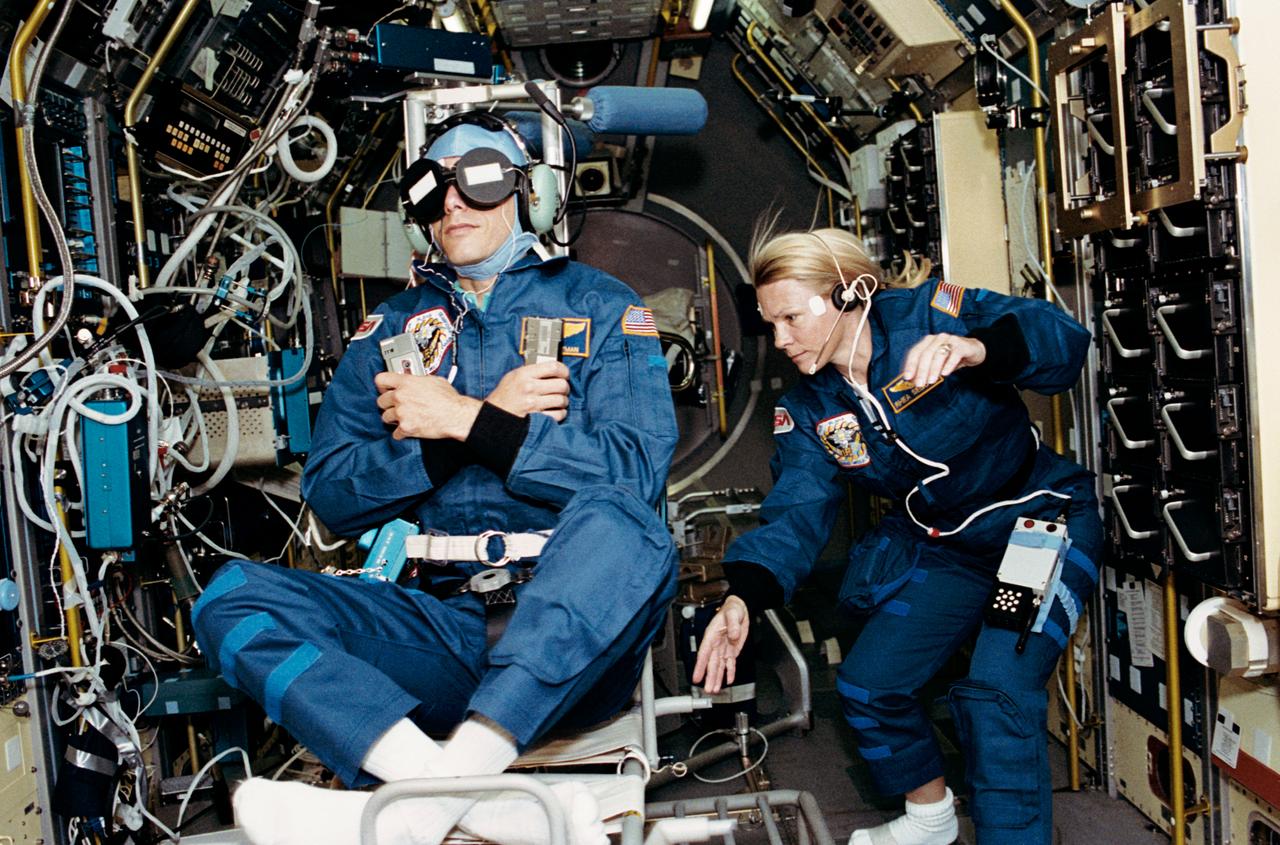
STS058-202-001 (18 Oct.-1 Nov. 1993) --- Astronaut Rhea Seddon, payload commander, spins the Spacelab Life Sciences (SLS-2) rotating chair as payload specialist Martin J. Fettman serves as test subject. The two joined five NASA astronauts for fourteen days of medical research aboard the Earth-orbiting space shuttle Columbia. Photo credit: NASA
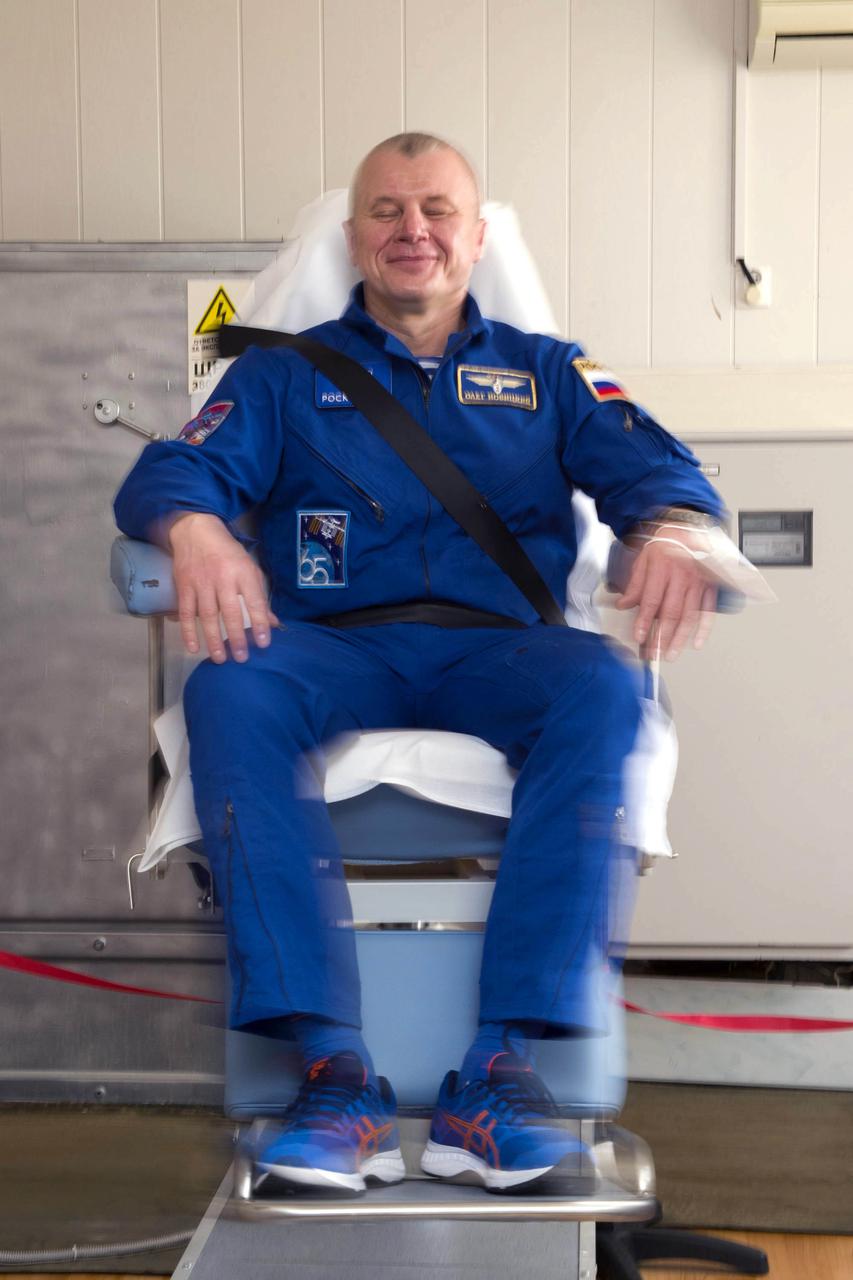
Expedition 65 prime crew member Russian cosmonaut Oleg Novitskiy of Roscosmos, takes part in spin chair training, Saturday, April 3, 2021, at the Cosmonaut Hotel in Baikonur, Kazakhstan. Novitskiy, NASA astronaut Mark Vande Hei, and Russian cosmonaut Pyotr Dubrov of Roscosmos are scheduled to launch to the International Space Station aboard the Soyuz MS-18 spacecraft on April 9. Photo Credit: (NASA/GCTC/Irina Spector)
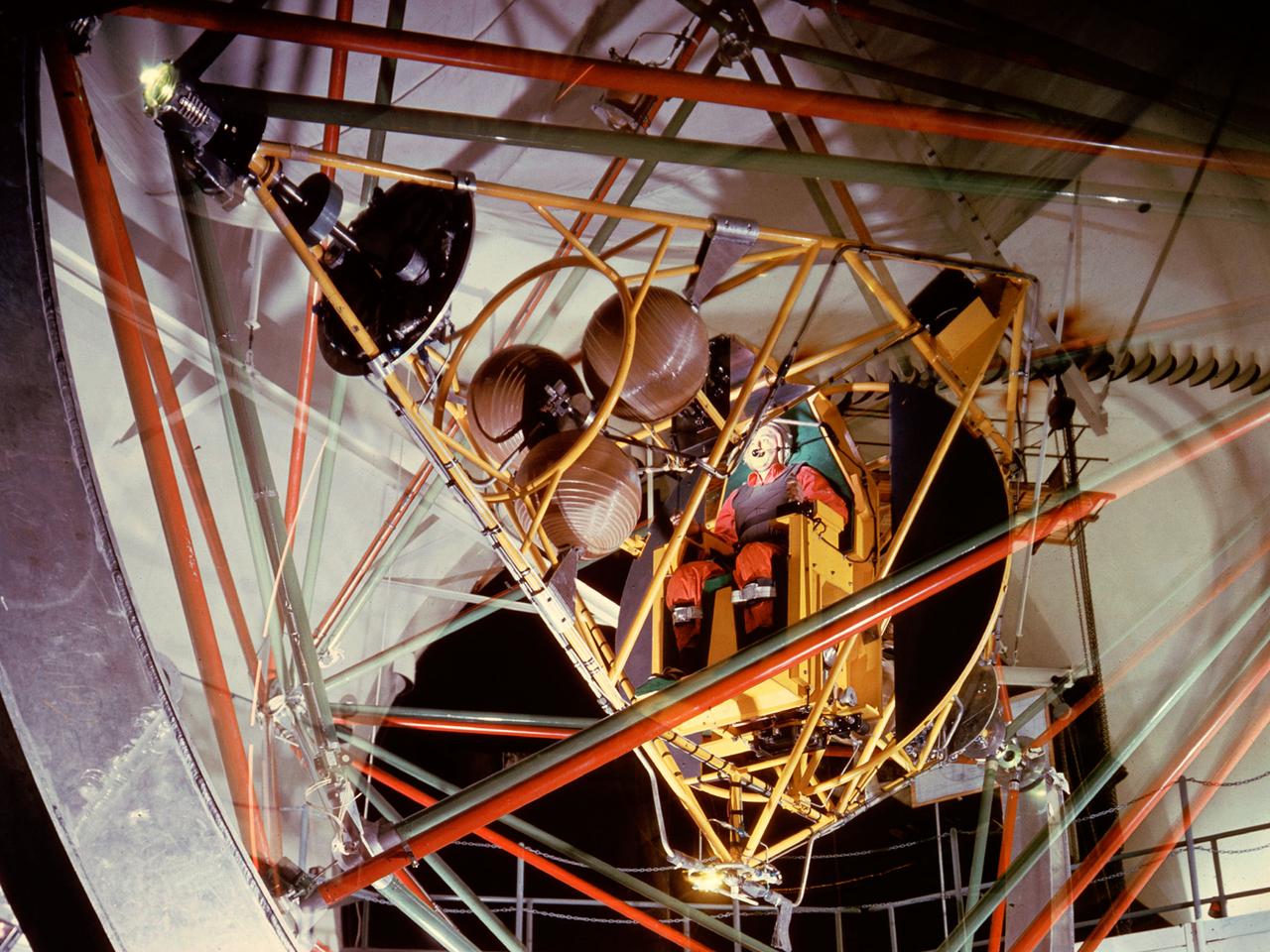
National Aeronautics and Space Administration (NASA) pilot Joe Algranti tests the Multi-Axis Space Test Inertia Facility (MASTIF) inside the Altitude Wind Tunnel while researcher Robert Miller looks on. The MASTIF was a three-axis rig with a pilot’s chair mounted in the center to train Project Mercury pilots to bring a spinning spacecraft under control. An astronaut was secured in a foam couch in the center of the rig. The rig then spun on three axes from 2 to 50 rotations per minute. Small nitrogen gas thrusters were used by the astronauts to bring the MASTIF under control. The device was originally designed in early 1959 without the chair and controllers. It was used by Lewis researchers to determine if the Lewis-designed autopilot system could rectify the capsule’s attitude following separation. If the control system failed to work properly, the heatshield would be out of place and the spacecraft would burn up during reentry. The system was flight tested during the September 1959 launch of the Lewis-assembled Big Joe capsule. The MASTIF was adapted in late 1959 for the astronaut training. NASA engineers added a pilot’s chair, a hand controller, and an instrument display to the MASTIF in order familiarize the astronauts with the sensations of an out-of-control spacecraft. NASA Lewis researcher James Useller and Algranti perfected and calibrated the MASTIF in the fall of 1959. In February and March 1960, the seven Project Mercury astronauts traveled to Cleveland to train on the MASTIF.
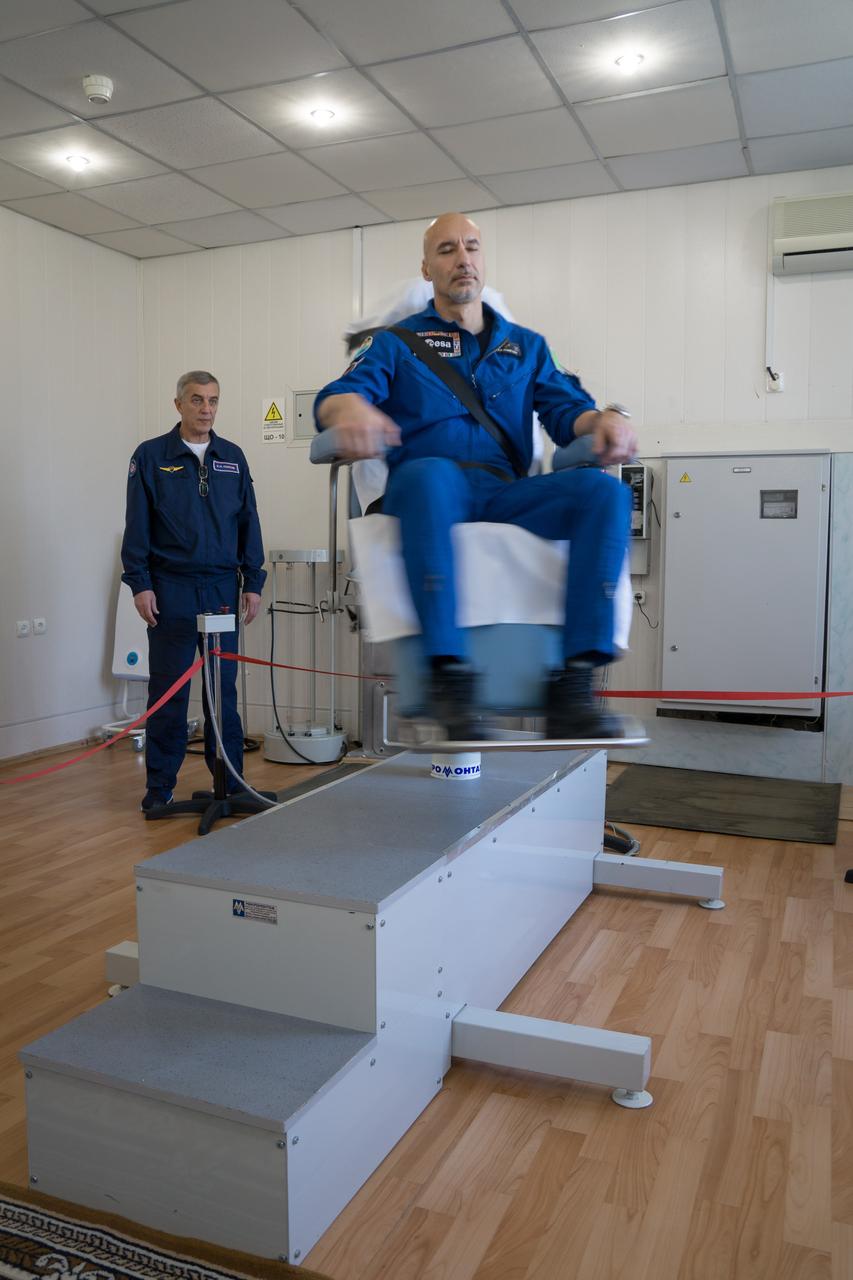
jsc2018e097770 - At the Cosmonaut Hotel crew quarters in Baikonur, Kazakhstan, Expedition 58 backup crewmember Luca Parmitano of the European Space Agency conducts vestibular system response training in a spinning chair Nov. 27 as part of pre-launch training. He is one of the backups to prime crewmembers Anne McClain of NASA, Oleg Kononenko of Roscosmos and David Saint-Jacques of the Canadian Space Agency who will launch Dec. 3 on the Soyuz MS-11 spacecraft from the Baikonur Cosmodrome in Kazakhstan for a six-and-a-half month mission on the International Space Station...NASA/Victor Zelentsov.
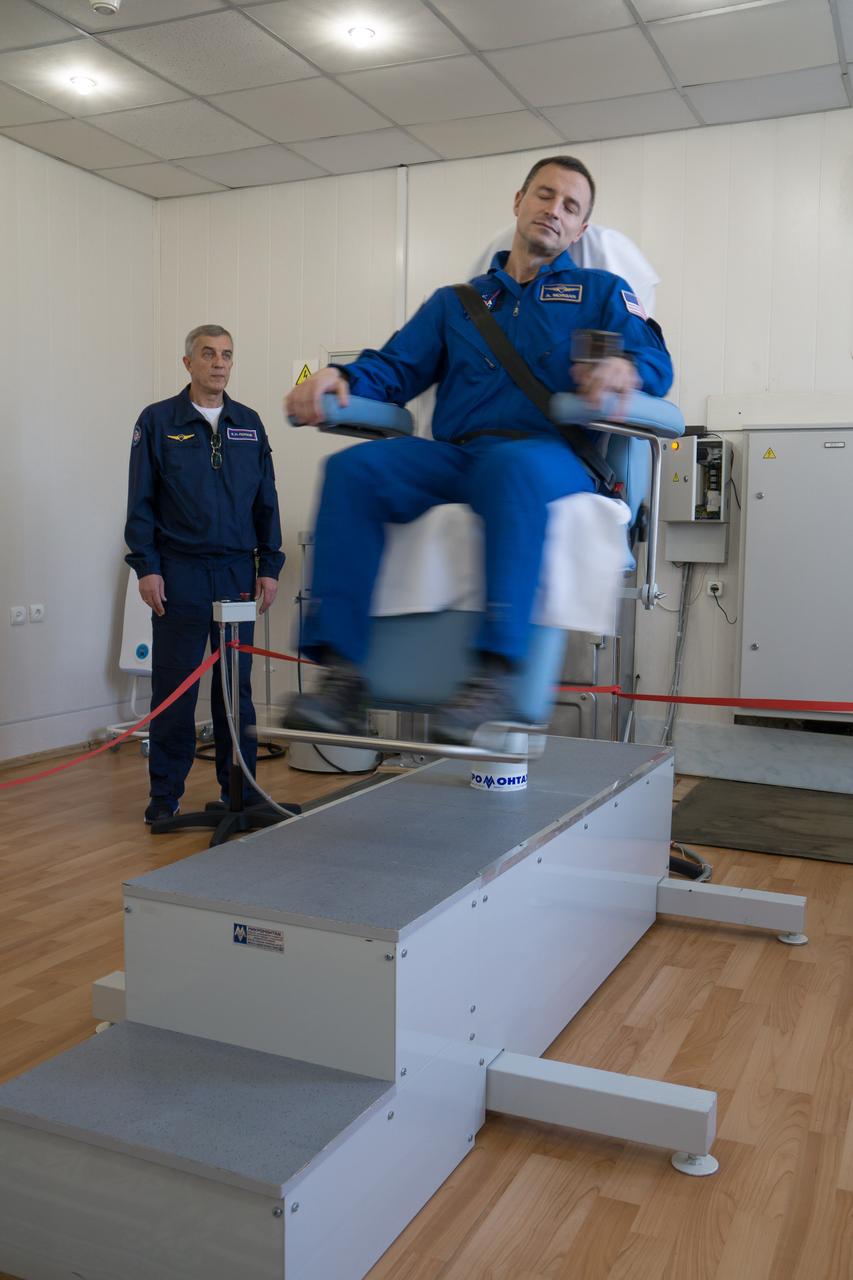
jsc2018e097771 - At the Cosmonaut Hotel crew quarters in Baikonur, Kazakhstan, Expedition 58 backup crewmember Drew Morgan of NASA conducts vestibular system response training in a spinning chair Nov. 27 as part of pre-launch training. He is one of the backups to prime crewmembers Anne McClain of NASA, Oleg Kononenko of Roscosmos and David Saint-Jacques of the Canadian Space Agency who will launch Dec. 3 on the Soyuz MS-11 spacecraft from the Baikonur Cosmodrome in Kazakhstan for a six-and-a-half month mission on the International Space Station...NASA/Victor Zelentsov.

jsc2018e085900 (Oct. 3, 2018) --- Expedition 57 backup crew member David Saint-Jacques of the Canadian Space Agency takes a spin in a rotating chair to test his vestibular system as part of pre-launch activities, Wednesday, Oct. 3, 2018 at the Cosmonaut Hotel in Baikonur, Kazakhstan. Alexey Ovchinin of Roscosmos and Nick Hague of NASA are scheduled to launch on Oct. 11 onboard the Soyuz MS-10 spacecraft from the Baikonur Cosmodrome in Kazakhstan for a six-month mission on the International Space Station. Photo Credit: (NASA/Victor Zelentsov)
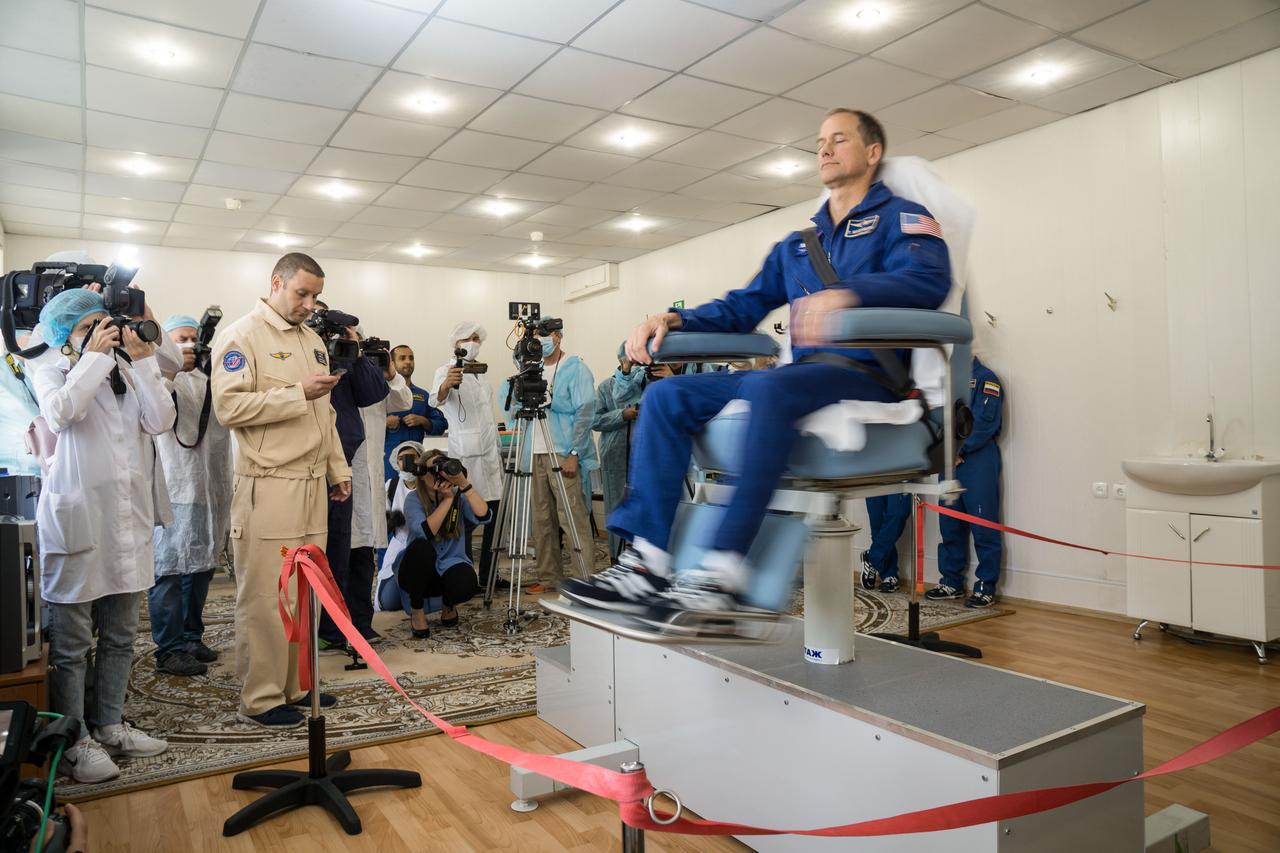
jsc2019e053722 - At the Cosmonaut Hotel crew quarters in Baikonur, Kazakhstan, backup Expedition 61 crewmember Tom Marshburn of NASA takes a spin in a rotating chair Sept. 18 to test his vestibular system as part of pre-launch activities. He is one of the backups to the prime crew, spaceflight participant Hazzaa ali Almansoori of the United Arab Emirates and Expedition 61 crewmembers Oleg Skripochka of Roscosmos and Jessica Meir of NASA, who are set to launch Sept. 25 from the Baikonur Cosmodrome in Kazakhstan on the Soyuz MS-15 spacecraft for a mission on the International Space Station...NASA/Victor Zelentsov
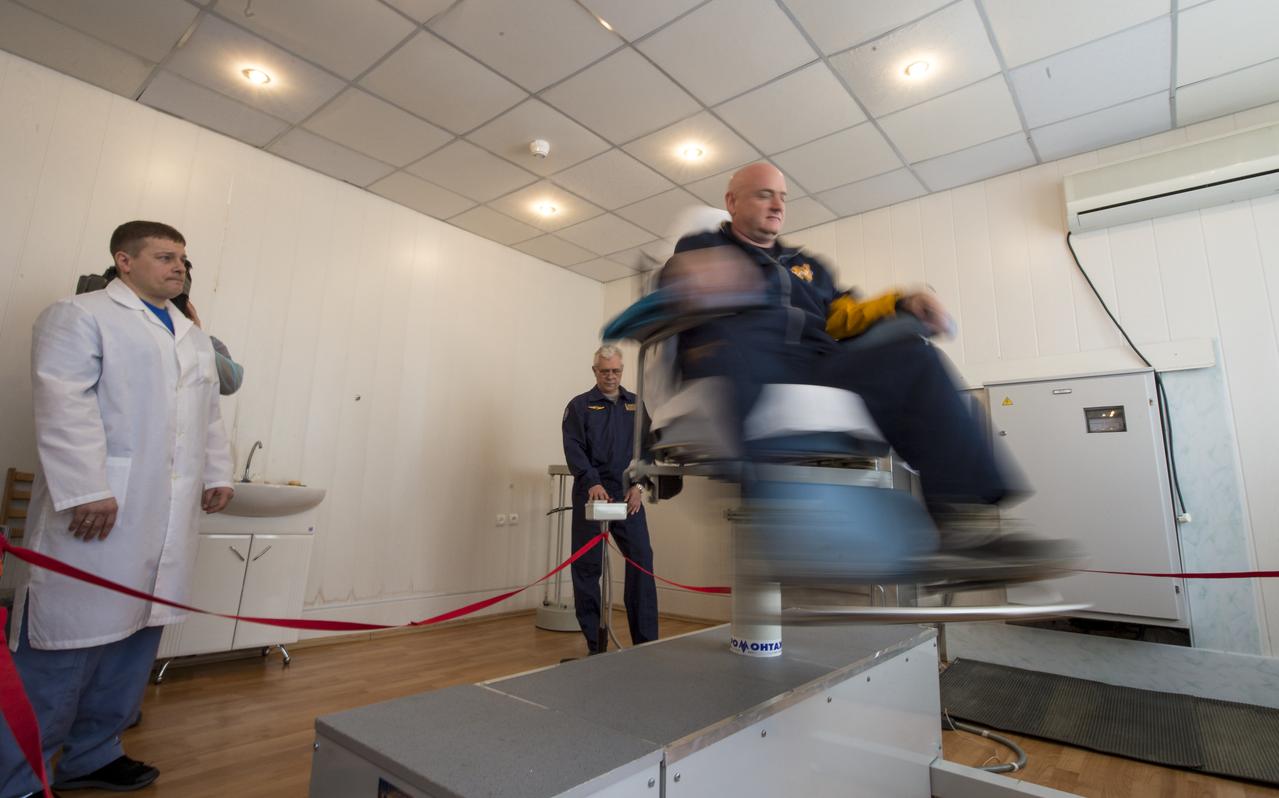
Expedition 43 NASA Astronaut Scott Kelly takes part in the spin chair training during media day, Saturday, March 21, 2015, Baikonur, Kazakhstan. Kelly, and Russian Cosmonauts Gennady Padalka, and Mikhail Kornienko of the Russian Federal Space Agency (Roscosmos) are scheduled to launch to the International Space Station in the Soyuz TMA-16M spacecraft from the Baikonur Cosmodrome in Kazakhstan March 28, Kazakh time (March 27 Eastern time.) As the one-year crew, Kelly and Kornienko will return to Earth on Soyuz TMA-18M in March 2016. Photo Credit: (NASA/Bill Ingalls)
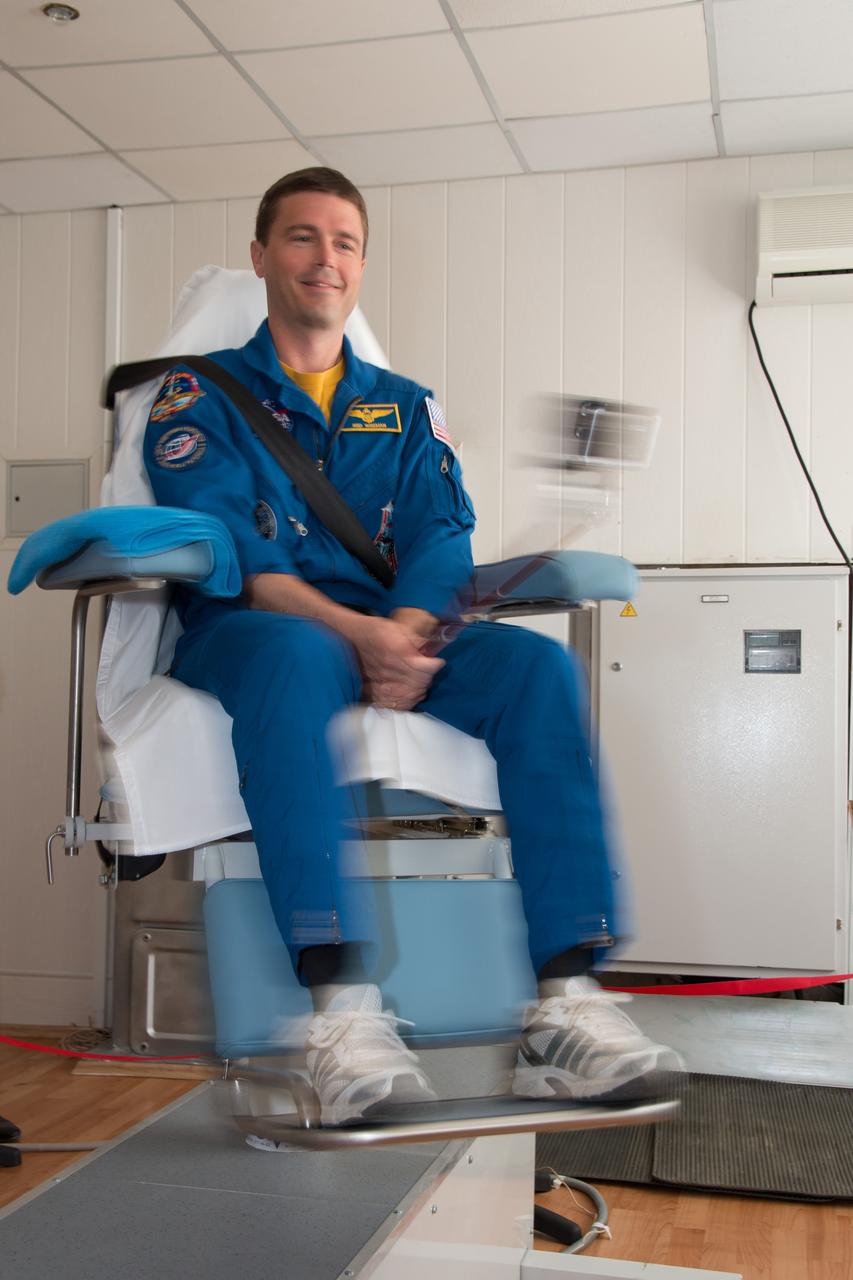
11-56-02-4: At the Cosmonaut Hotel crew quarters in Baikonur, Kazakhstan, Expedition 40/41 Flight Engineer Reid Wiseman of NASA takes a ride in a spinning chair May 21 as he tests his vestibular system during pre-launch medical tests. Wiseman, Soyuz Commander Max Suraev of the Russian Federal Space Agency (Roscosmos) and Flight Engineer Alexander Gerst of the European Space Agency will launch on May 29, Kazakh time, on the Soyuz TMA-13M spacecraft from the Baikonur Cosmodrome for a 5 ½ month mission on the International Space Station. NASA/Victor Zelentsov
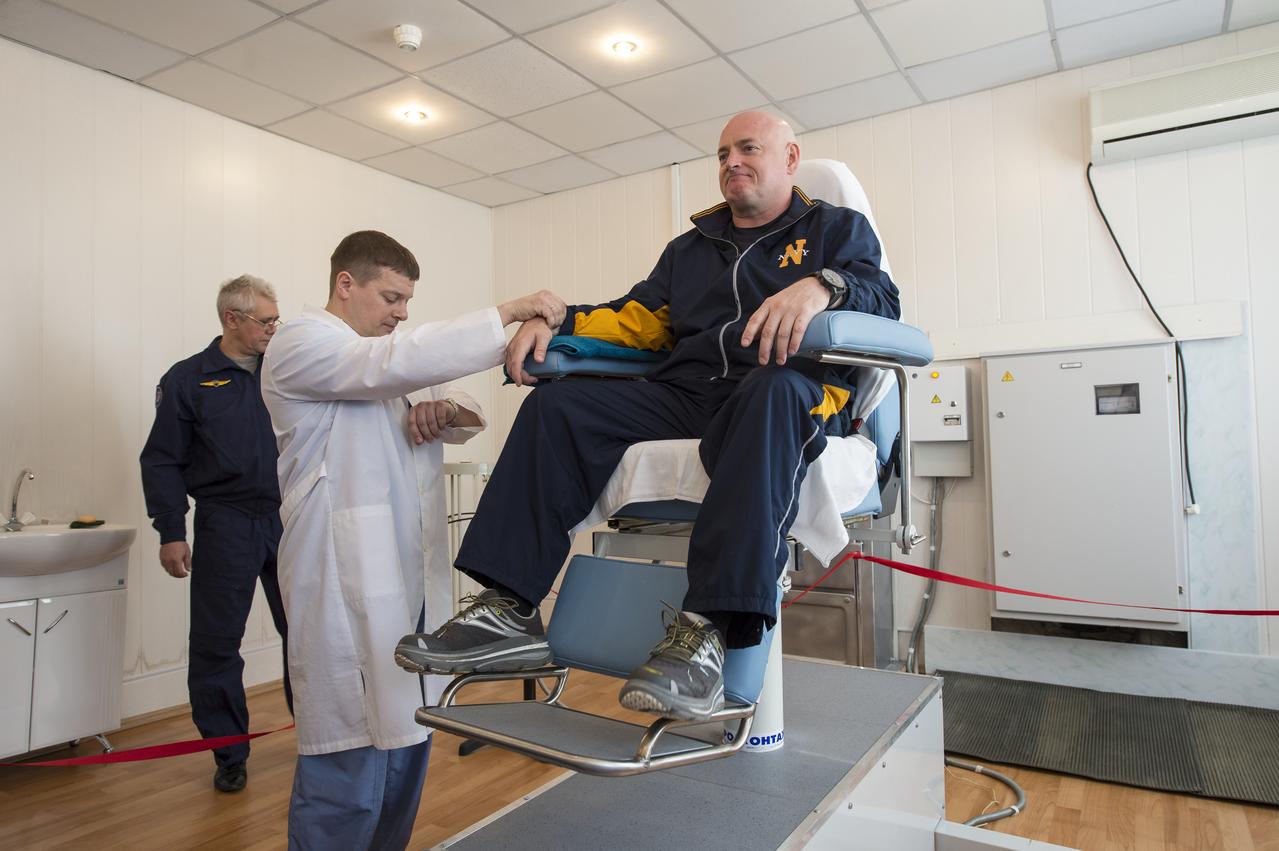
Expedition 43 NASA Astronaut Scott Kelly takes part in the spin chair training during media day, Saturday, March 21, 2015, Baikonur, Kazakhstan. Kelly, and Russian Cosmonauts Gennady Padalka, and Mikhail Kornienko of the Russian Federal Space Agency (Roscosmos) are scheduled to launch to the International Space Station in the Soyuz TMA-16M spacecraft from the Baikonur Cosmodrome in Kazakhstan March 28, Kazakh time (March 27 Eastern time.) As the one-year crew, Kelly and Kornienko will return to Earth on Soyuz TMA-18M in March 2016. Photo Credit: (NASA/Bill Ingalls)
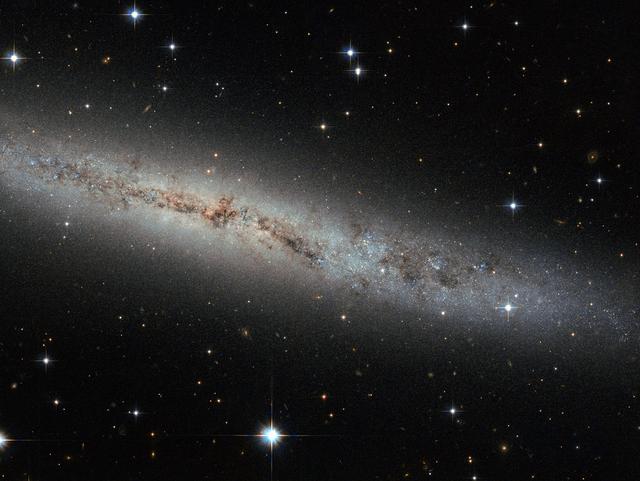
Located some 25 million light-years away, this new Hubble image shows spiral galaxy ESO 373-8. Together with at least seven of its galactic neighbors, this galaxy is a member of the NGC 2997 group. We see it side-on as a thin, glittering streak across the sky, with all its contents neatly aligned in the same plane. We see so many galaxies like this — flat, stretched-out pancakes — that our brains barely process their shape. But let us stop and ask: Why are galaxies stretched out and aligned like this? Try spinning around in your chair with your legs and arms out. Slowly pull your legs and arms inwards, and tuck them in against your body. Notice anything? You should have started spinning faster. This effect is due to conservation of angular momentum, and it’s true for galaxies, too. This galaxy began life as a humungous ball of slowly rotating gas. Collapsing in upon itself, it spun faster and faster until, like pizza dough spinning and stretching in the air, a disc started to form. Anything that bobbed up and down through this disk was pulled back in line with this motion, creating a streamlined shape. Angular momentum is always conserved — from a spinning galactic disk 25 million light-years away from us, to any astronomer, or astronomer-wannabe, spinning in an office chair. Credit: NASA <b><a href="http://www.nasa.gov/audience/formedia/features/MP_Photo_Guidelines.html" rel="nofollow">NASA image use policy.</a></b> <b><a href="http://www.nasa.gov/centers/goddard/home/index.html" rel="nofollow">NASA Goddard Space Flight Center</a></b> enables NASA’s mission through four scientific endeavors: Earth Science, Heliophysics, Solar System Exploration, and Astrophysics. Goddard plays a leading role in NASA’s accomplishments by contributing compelling scientific knowledge to advance the Agency’s mission. <b>Follow us on <a href="http://twitter.com/NASA_GoddardPix" rel="nofollow">Twitter</a></b> <b>Like us on <a href="http://www.facebook.com/pages/Greenbelt-MD/NASA-Goddard/395013845897?ref=tsd" rel="nofollow">Facebook</a></b> <b>Find us on <a href="http://instagram.com/nasagoddard?vm=grid" rel="nofollow">Instagram</a></b>

Mercury astronaut John Glenn prepares for a test in the Multi-Axis Space Test Inertia Facility (MASTIF) inside the Altitude Wind Tunnel at the National Aeronautics and Space Administration (NASA) Lewis Research Center. The MASTIF was a three-axis test rig with a pilot’s chair mounted in the center. The device was designed to train Project Mercury pilots to bring a spinning spacecraft under control. An astronaut was secured in a foam couch in the center of the rig. The rig was then spun on three axes from 2 to 50 rotations per minute. Small nitrogen gas thrusters were used by the astronauts to bring the MASTIF under control. In February and March 1960, the seven Project Mercury astronauts traveled to Cleveland to train on the MASTIF. Warren North and a team of air force physicians were on hand to monitor their health. After being briefed by Lewis pilot Joe Algranti and researcher James Useller, the rider would climb into the rig and be secured in the chair, as seen in this photograph. A Lewis engineer would then slowly set the MASTIF in motion. It was the astronaut’s job to bring it under control. Each individual was required to accumulate 4.5 to 5 hours of MASTIF time. Glenn became the first American to orbit the earth on February 20, 1962 in the Friendship 7 Mercury capsule. In March 1999, the Lewis Research Center was renamed the John H. Glenn Research Center at Lewis Field.
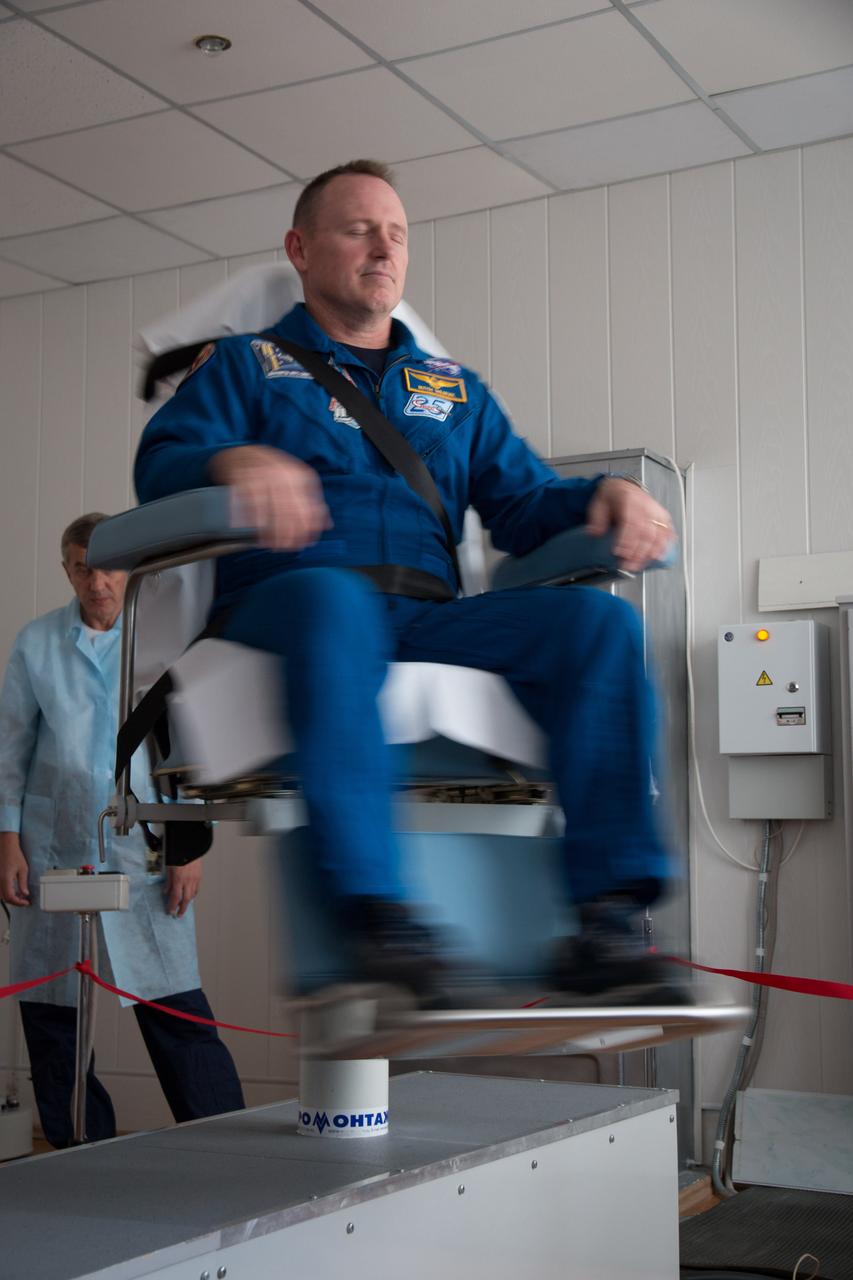
17-12-17-17-2: (17 Sept. 2014) --- At the Cosmonaut Hotel crew quarters in Baikonur, Kazakhstan, Expedition 41 Flight Engineer Barry Wilmore of NASA takes a turn in a spinning chair to test his vestibular system Sept. 17 as he and his crewmates prepare for their upcoming launch. Wilmore, Soyuz Commander Alexander Samokutyaev of the Russian Federal Space Agency (Roscosmos) and Flight Engineer Elena Serova of Roscosmos will launch from the Baikonur Cosmodrome Sept. 26, Kazakh time, in the Soyuz TMA-14M spacecraft for a 5 ½ month mission on the International Space Station. Serova will become the fourth Russian woman to fly in space and the first Russian woman to live and work on the station. Photo credit: NASA/Victor Zelentsov
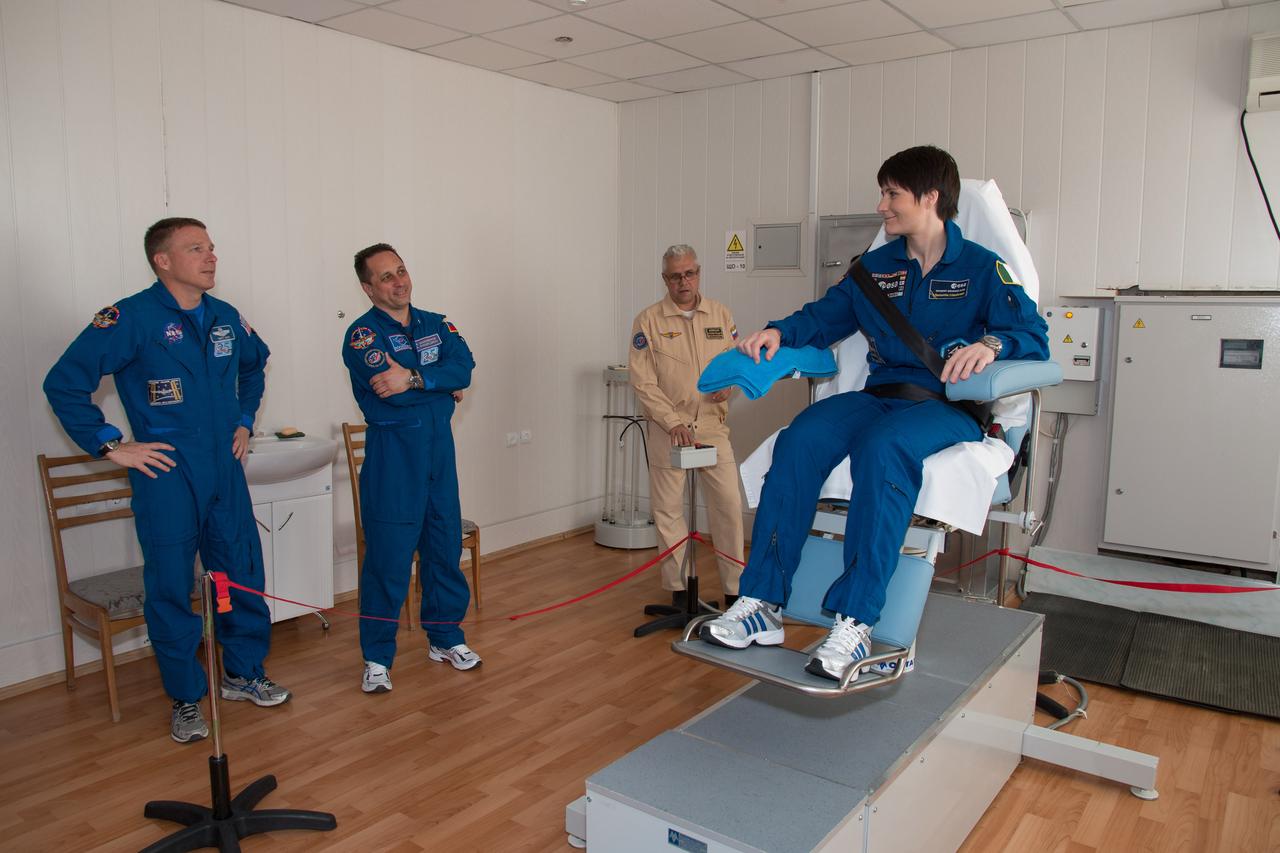
11-59-33-2: At the Cosmonaut Hotel crew quarters in Baikonur, Kazakhstan, Expedition 40/41 backup crewmember Samantha Cristoforetti of the European Space Agency (right) prepares to take a ride in a spinning chair May 21 to exercise her vestibular system during pre-launch medical tests. Looking on are backup crewmates Terry Virts of NASA (far left) and Anton Shkaplerov of the Russian Federal Space Agency (Roscosmos, second from the left). The trio is backing up the prime crew, Flight Engineer Alexander Gerst of the European Space Agency, Soyuz Commander Max Suraev of Roscosmos and NASA Flight Engineer Reid Wiseman, who will launch on May 29, Kazakh time, on the Soyuz TMA-13M spacecraft from the Baikonur Cosmodrome for a 5 ½ month mission on the International Space Station. NASA/Victor Zelentsov

Jerrie Cobb prepares to operate the Multi-Axis Space Test Inertia Facility (MASTIF) inside the Altitude Wind Tunnel at the National Aeronautics and Space Administration (NASA) Lewis Research Center. The MASTIF was a three-axis rig with a pilot’s chair mounted in the center to train Project Mercury pilots to bring a spinning spacecraft under control. An astronaut was secured in a foam couch in the center of the rig. The rig was then spun on three axes from 2 to 50 rotations per minute. The pilots were tested on each of the three axis individually, then all three simultaneously. The two controllers in Cobb’s hands activated the small nitrogen gas thrusters that were used to bring the MASTIF under control. A makeshift spacecraft control panel was set up in front of the trainee’s face. Cobb was one of several female pilots who underwent the skill and endurance testing that paralleled that of the Project Mercury astronauts. In 1961 Jerrie Cobb was the first female to pass all three phases of the Mercury Astronaut Program. NASA rules, however, stipulated that only military test pilots could become astronauts and there were no female military test pilots. The seven Mercury astronauts had taken their turns on the MASTIF in February and March 1960.