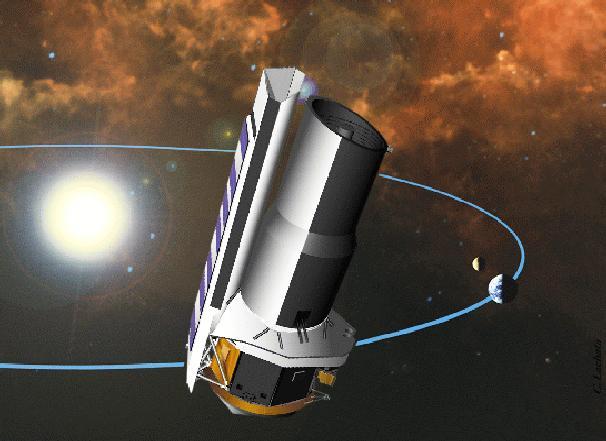
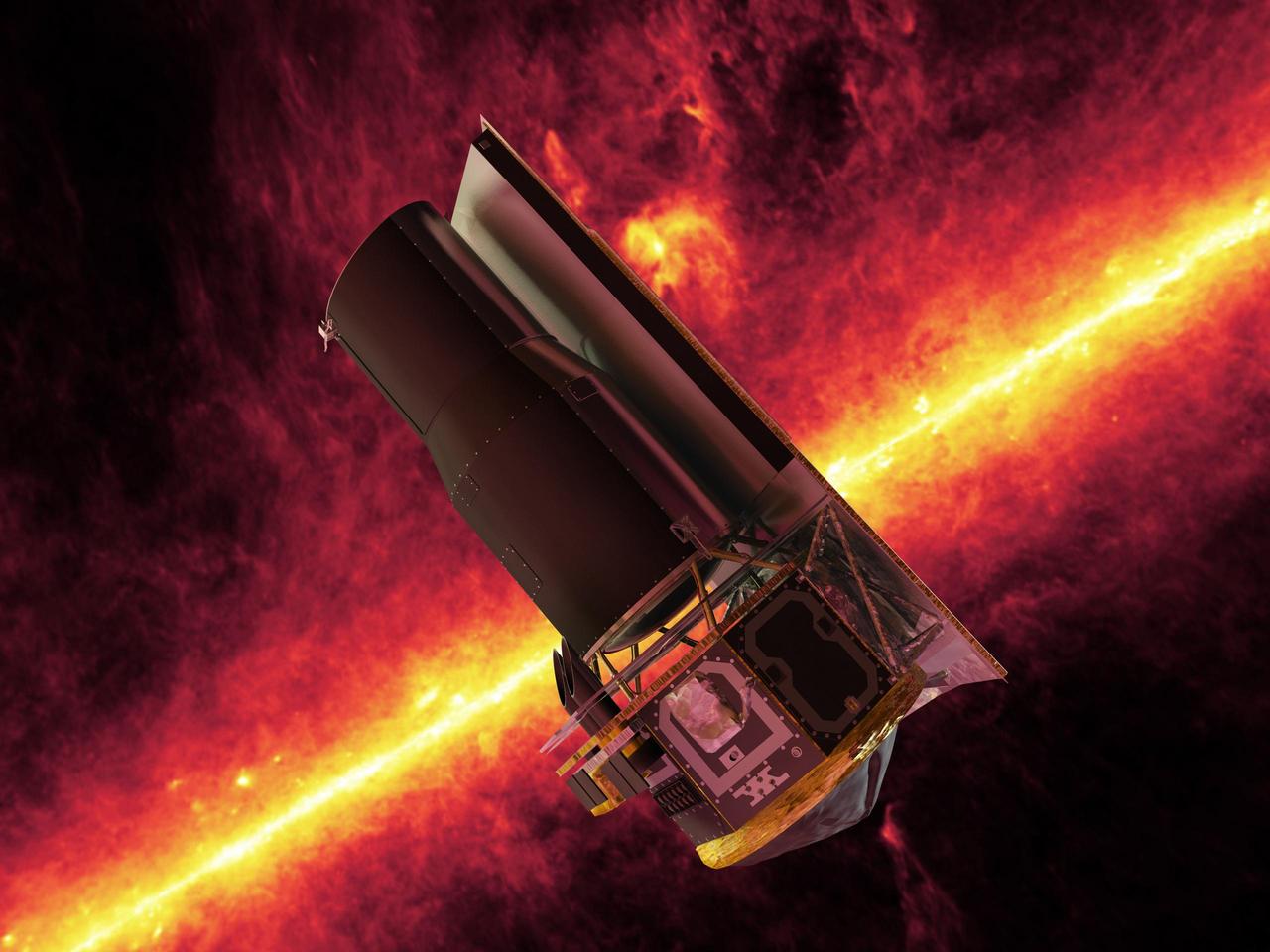
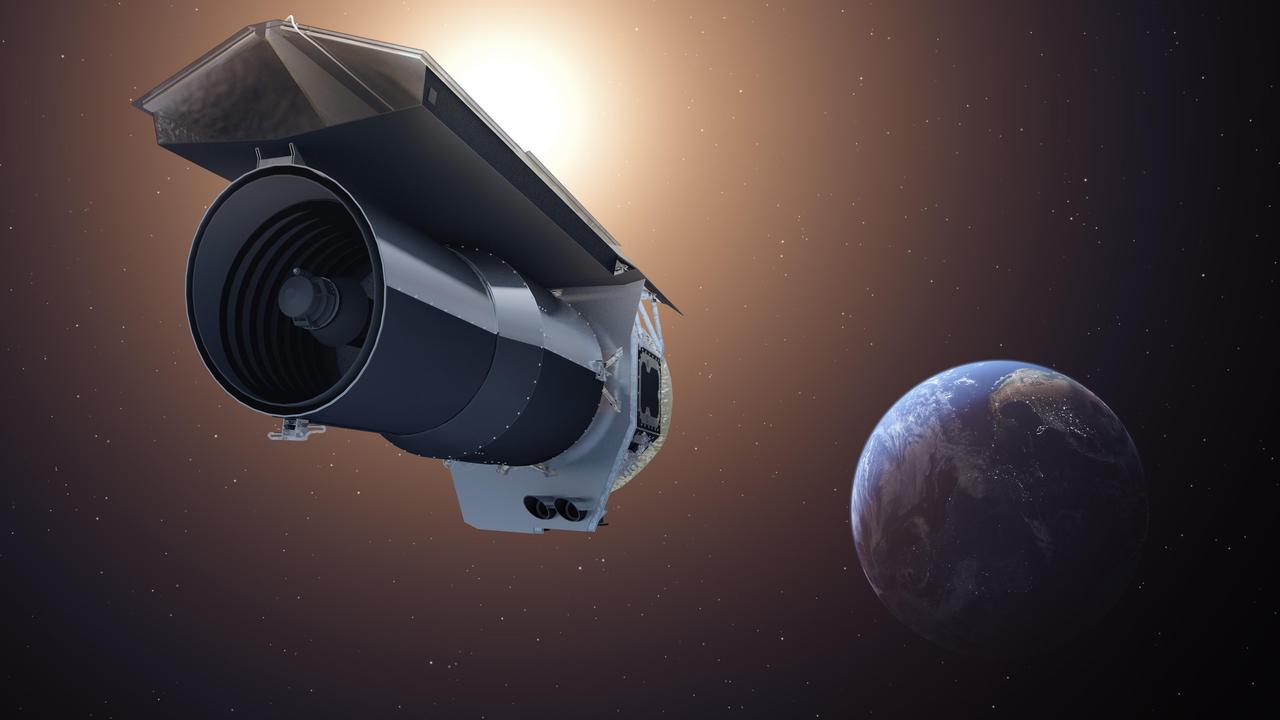
In this artist's rendering of NASA's Spitzer Space Telescope in space, the background is shown in infrared light.  https://photojournal.jpl.nasa.gov/catalog/PIA23643
Spitzer Space Telescope (Illustration)
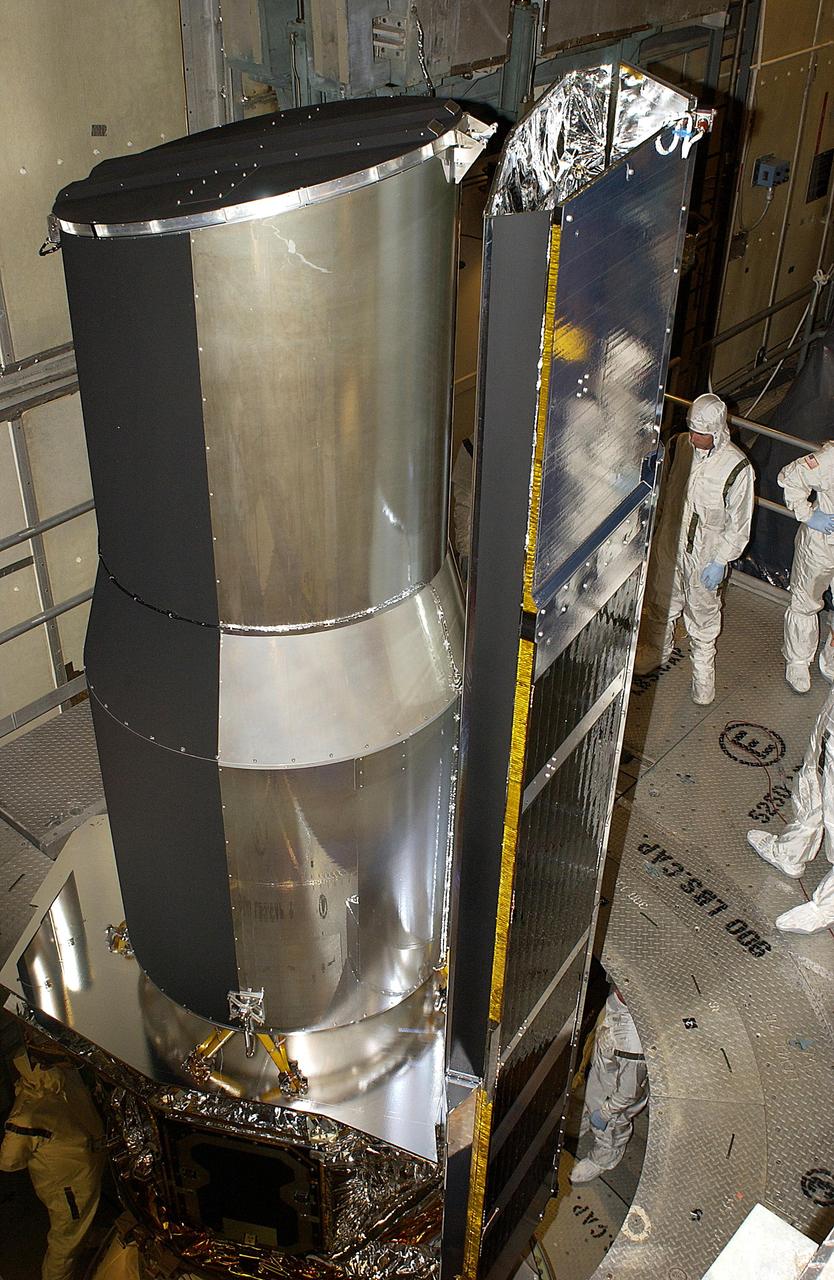
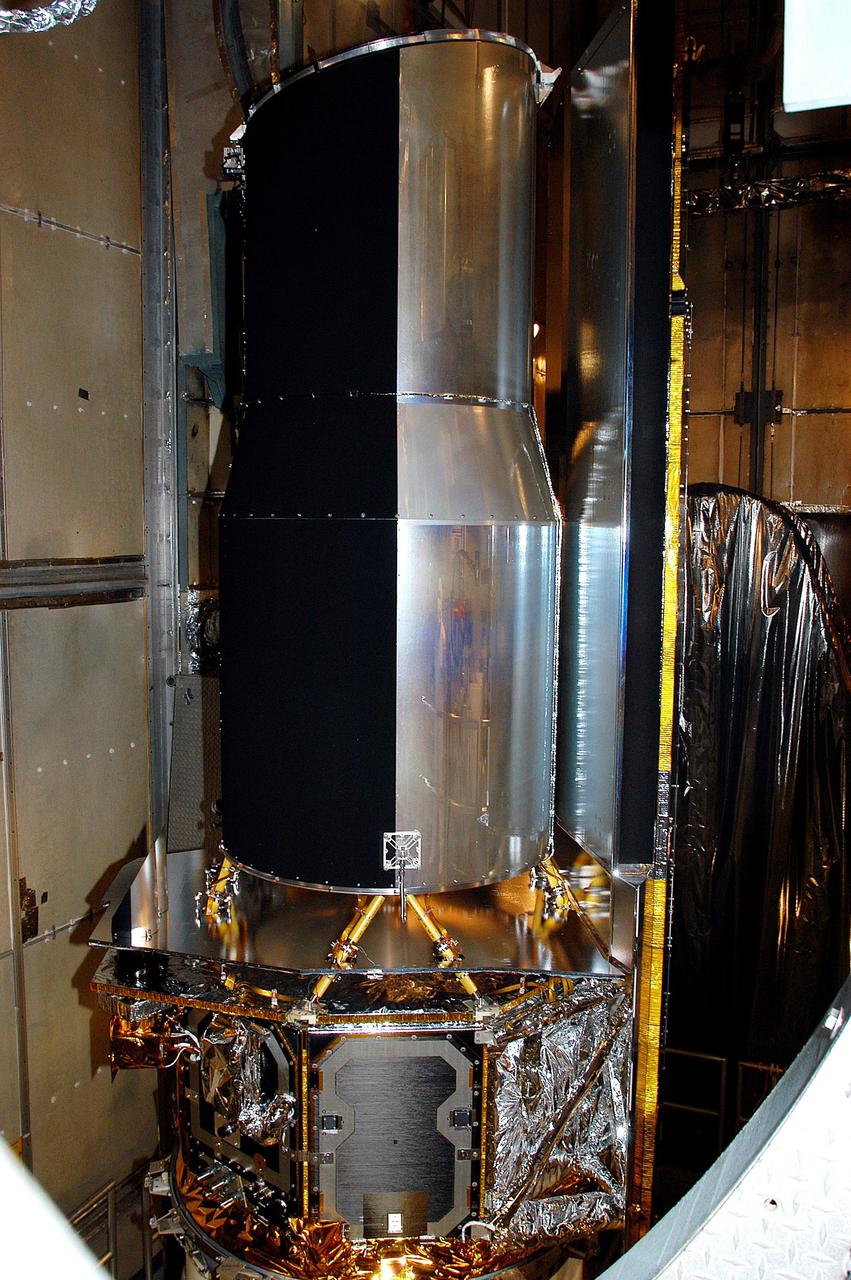
The Spitzer Space Telescope (formerly the Space Infrared Telescope Facility or SIRTF) is readied for launch at Cape Canaveral Air Force Station, in 2003.  https://photojournal.jpl.nasa.gov/catalog/PIA23644
Spitzer Space Telescope Ready for Launch
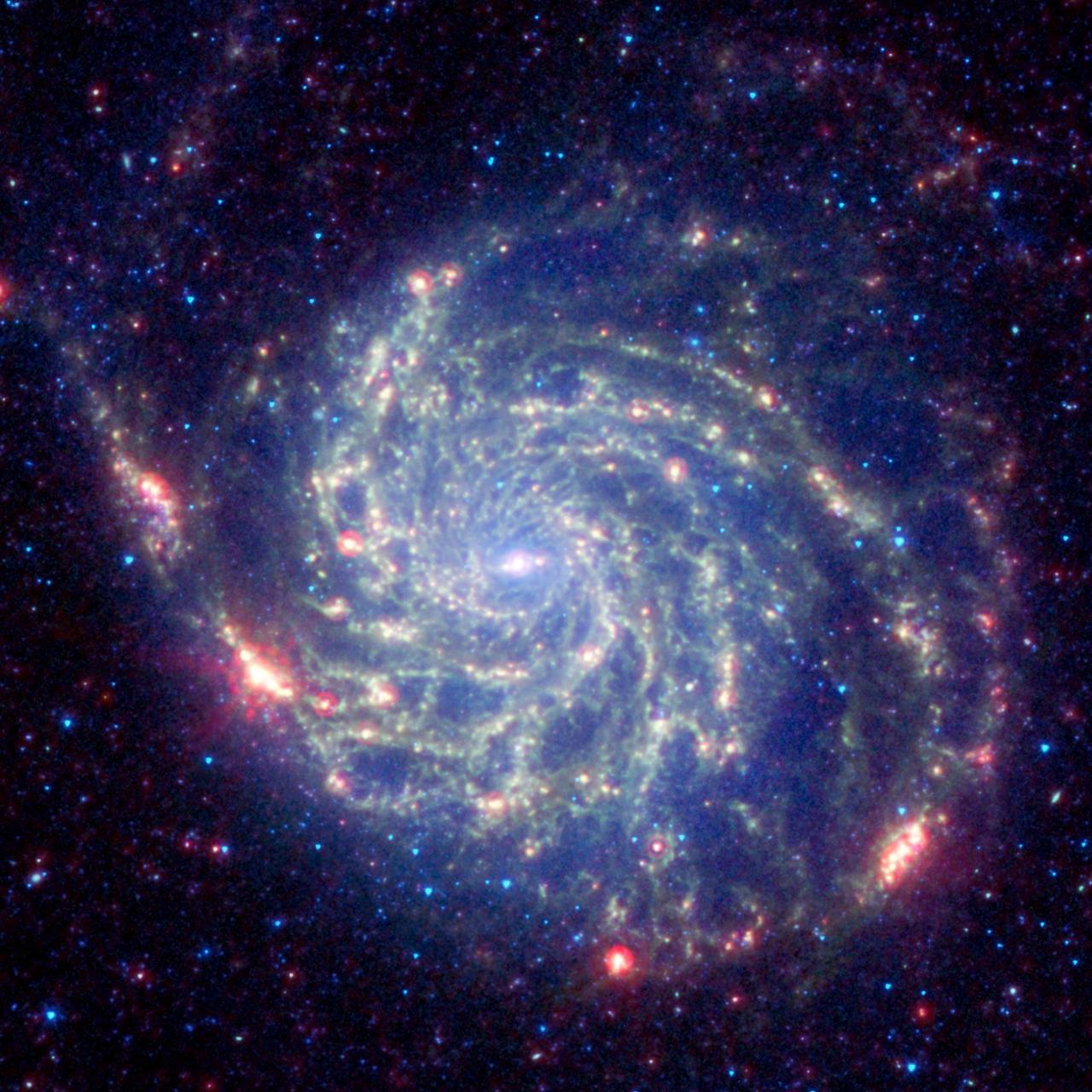
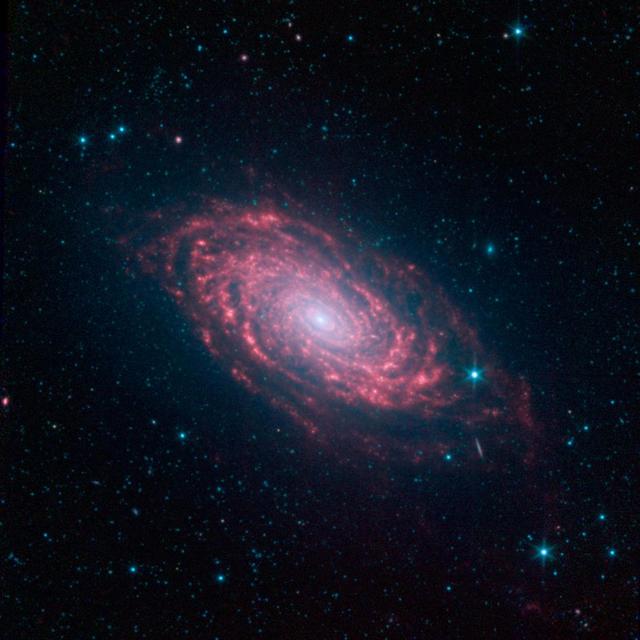
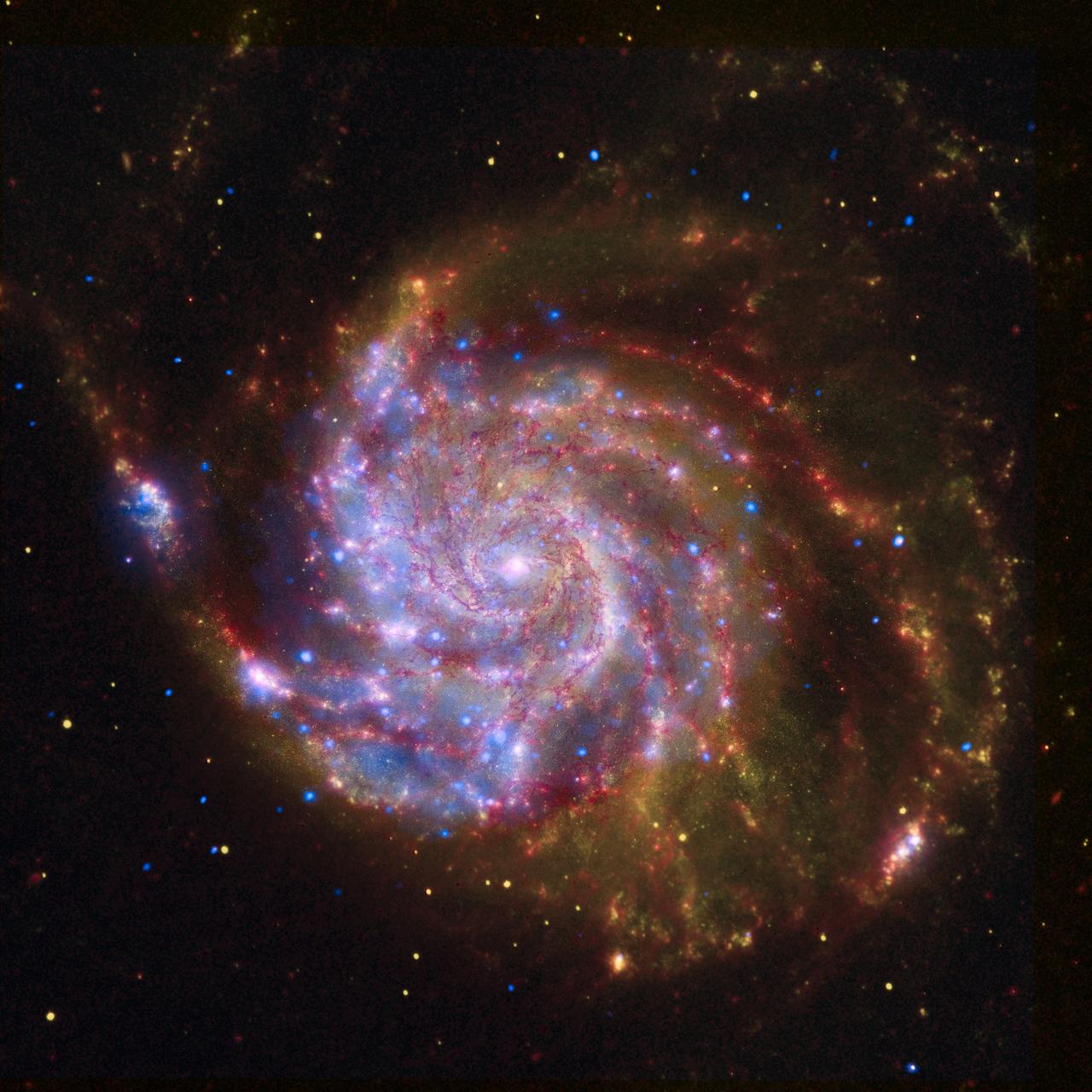
The galaxy Messier 101 is a swirling spiral of stars, gas, and dust. Messier 101 is nearly twice as wide as our Milky Way galaxy in this image as seen by NASA Spitzer Space Telescope.
Spitzer Space Telescope View of Galaxy Messier 101
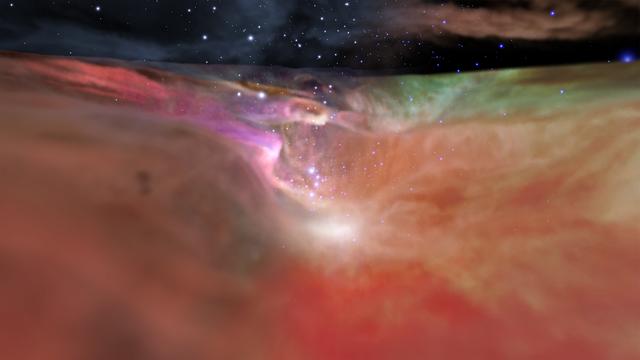
This image showcases both the visible and infrared visualizations of the Orion Nebula. This view from a movie sequence looks down the 'valley' leading to the star cluster at the far end. The left side of the image shows the visible-light visualization, which fades to the infrared-light visualization on the right. These two contrasting models derive from observations by the Hubble and Spitzer space telescopes.  An animation is available at https://photojournal.jpl.nasa.gov/catalog/PIA22089
Hubble Space Telescope,Spitzer Space Telescope
This image was used in a contest to rename the Space InfraRed Telescope Facility SIRTF, now known as the Spitzer Space Telescope.
Help Stamp Out Boring Space Acronyms
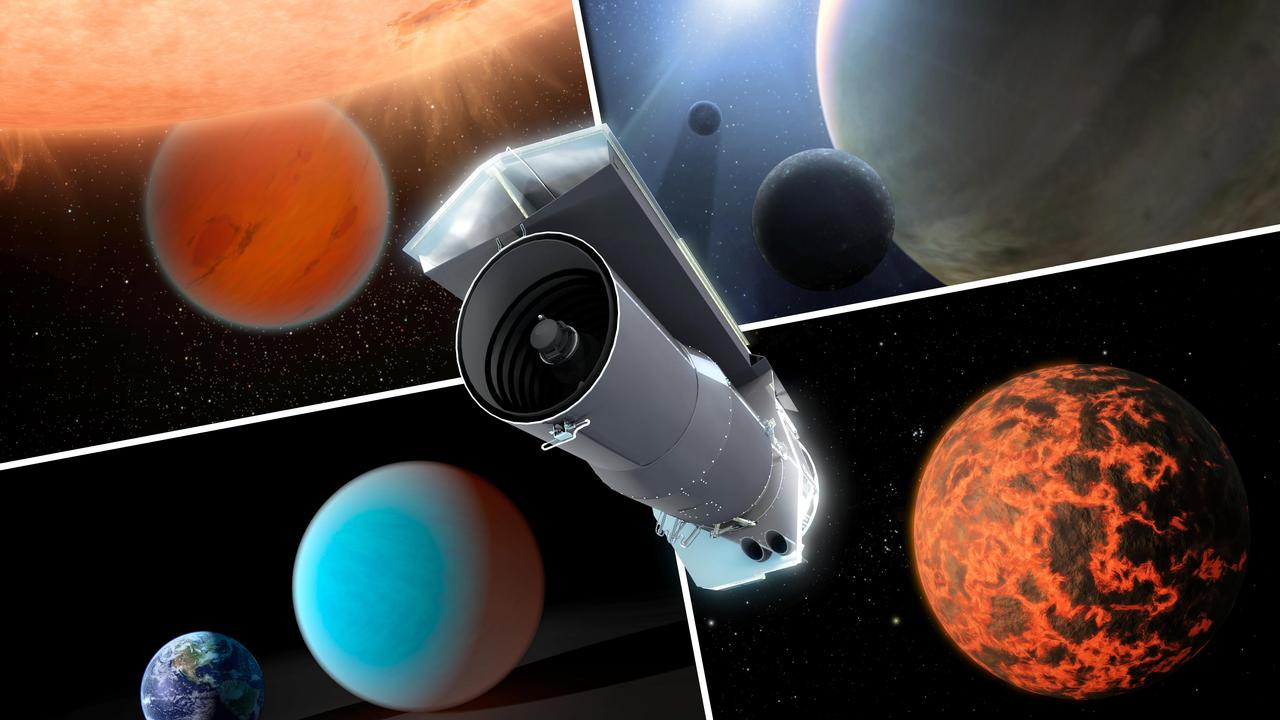
This artist concept shows NASA Spitzer Space Telescope surrounded by examples of exoplanets the telescope has examined in over its ten years in space.
Spitzer Trains Its Eyes on Exoplanets Artist Concept
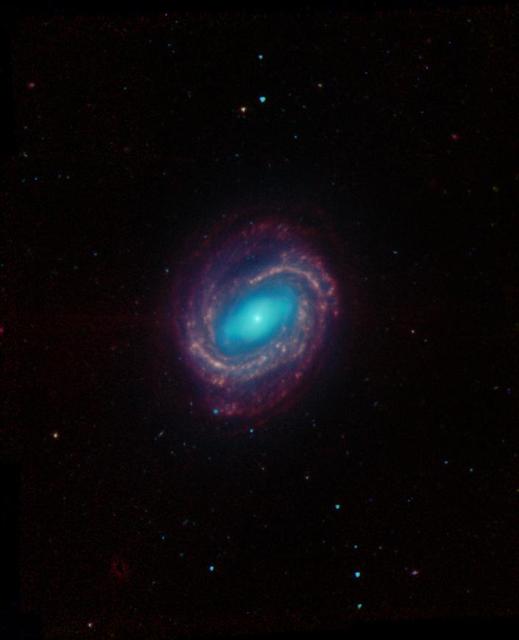
Galaxy NGC 4579 was captured by the Spitzer Infrared Nearby Galaxy Survey, or Sings, Legacy project using the Spitzer Space Telescope infrared array camera. I
Galaxy NGC 4579
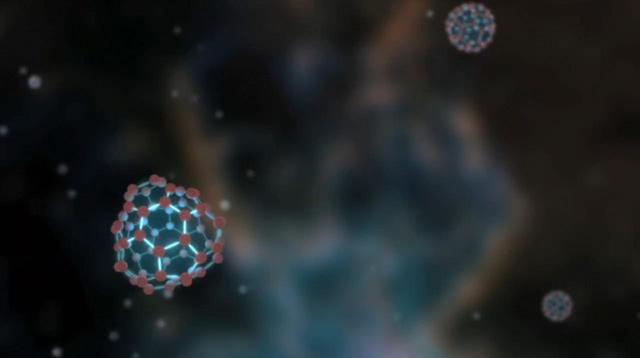
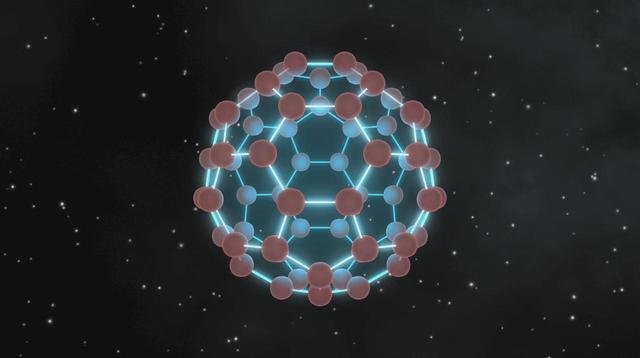
This artist image illustrates vibrating buckyballs -- spherical molecules of carbon discovered in space for the first time by NASA Spitzer Space Telescope.
Buckyballs Jiggle Like Jello Artist Concept
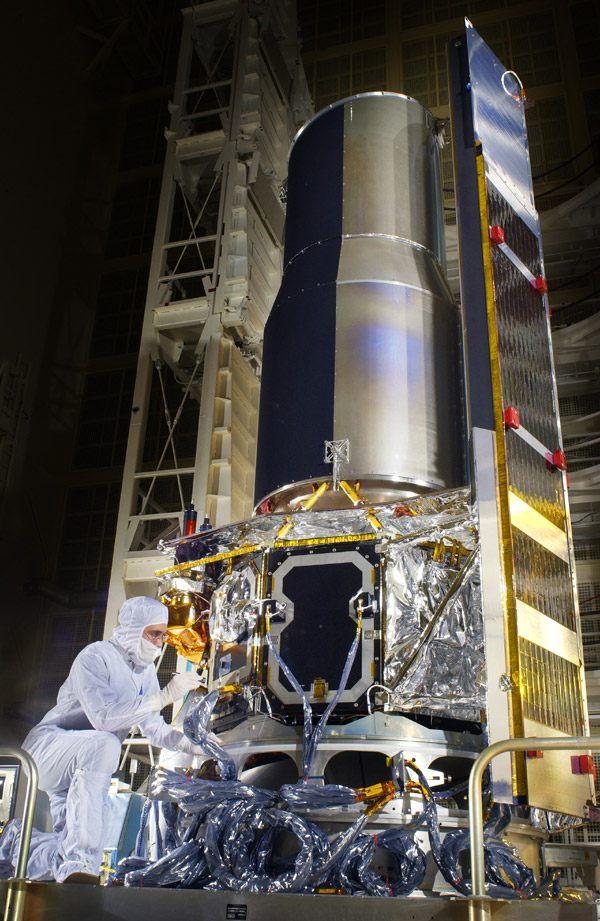
Technicians put final touches on NASA Space Infrared Telescope Facility at Lockheed Martin Aeronautics in Sunnyvale, Calif., which launched on August 25, 2003. The telescope is now known as the Spitzer Space Telescope.
Finishing Touches for Space Infrared Telescope Facility SIRTF
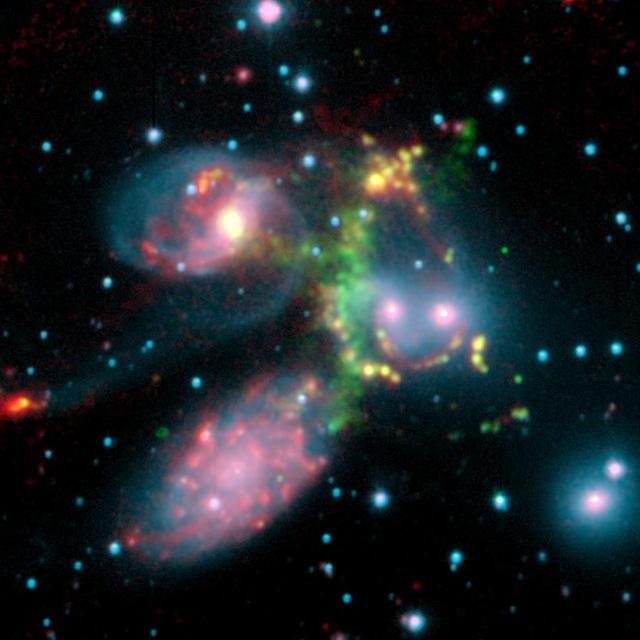
The false-color composite image of the Stephan’s Quintet galaxy cluster is made up of data from NASA Spitzer Space Telescope and a ground-based telescope in Spain.
A Shocking Surprise in Stephan Quintet
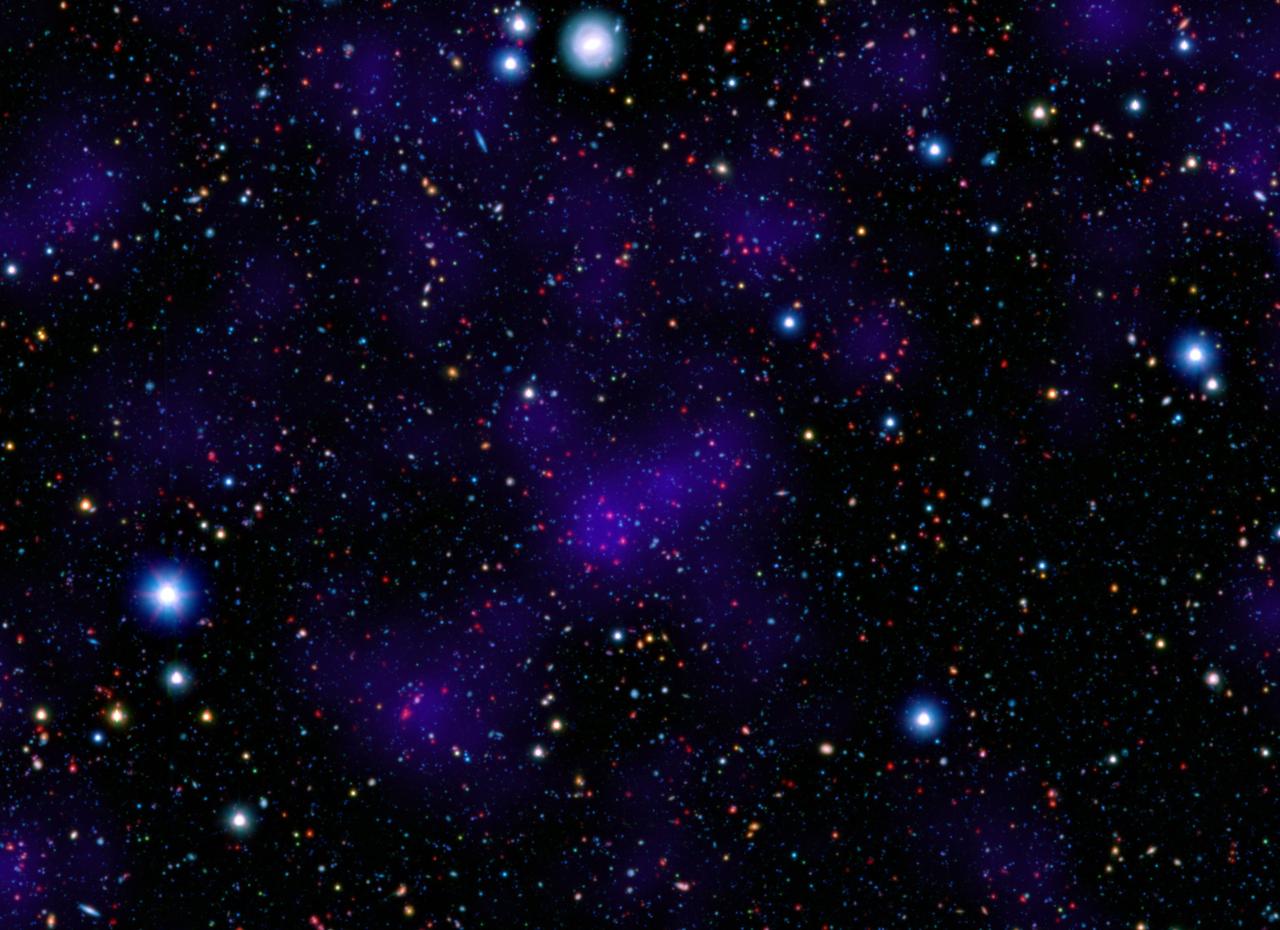
This deep-field view of the sky, taken by NASA's Spitzer Space Telescope, is dominated by galaxies - including some very faint, very distant ones - circled in red. The bottom right inset shows one of those distant galaxies, made visible thanks to a long-duration observation by Spitzer. The wide-field view also includes data from NASA's Hubble Space Telescope. The Spitzer observations came from the GREATS survey, short for GOODS Re-ionization Era wide-Area Treasury from Spitzer. GOODS is itself an acronym: Great Observatories Origins Deep Survey.  https://photojournal.jpl.nasa.gov/catalog/PIA23123
A Field of Galaxies Seen by Spitzer and Hubble
The famous Horsehead nebula takes on a ghostly appearance in this image from NASA Spitzer Space Telescope, released on December 18, 2014.
Horsehead of a Different Color
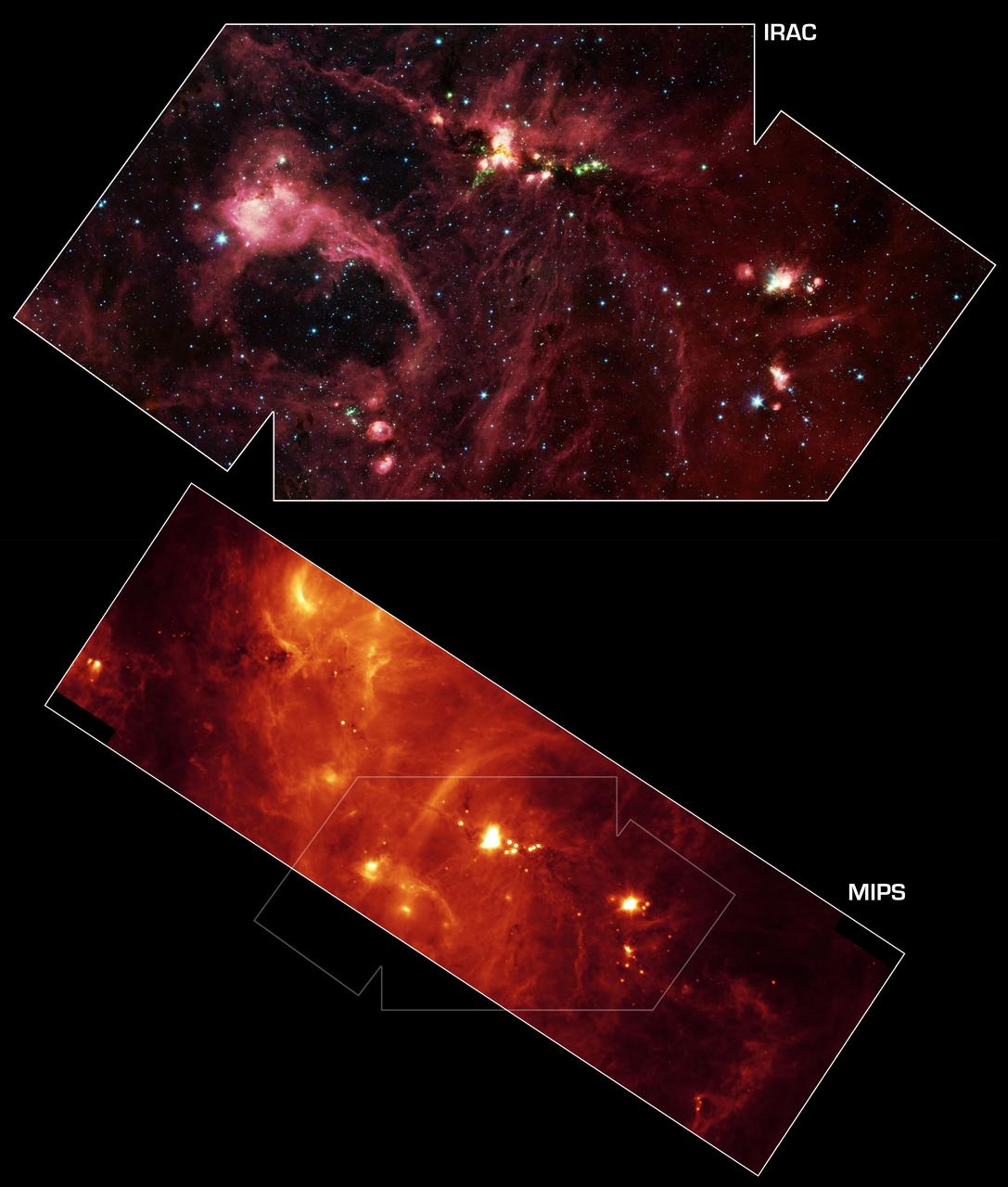
This image from NASA Spitzer Space Telescope shows an exceptionally bright source of radio emission called DR21.
Star Formation in the DR21 Region B
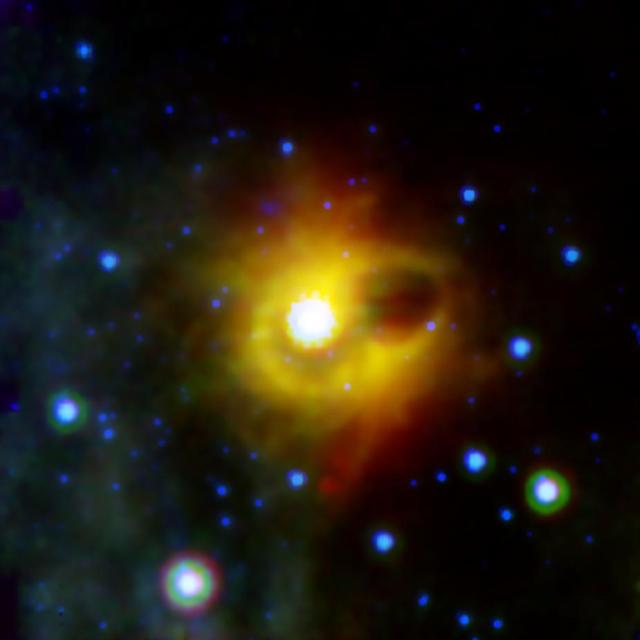
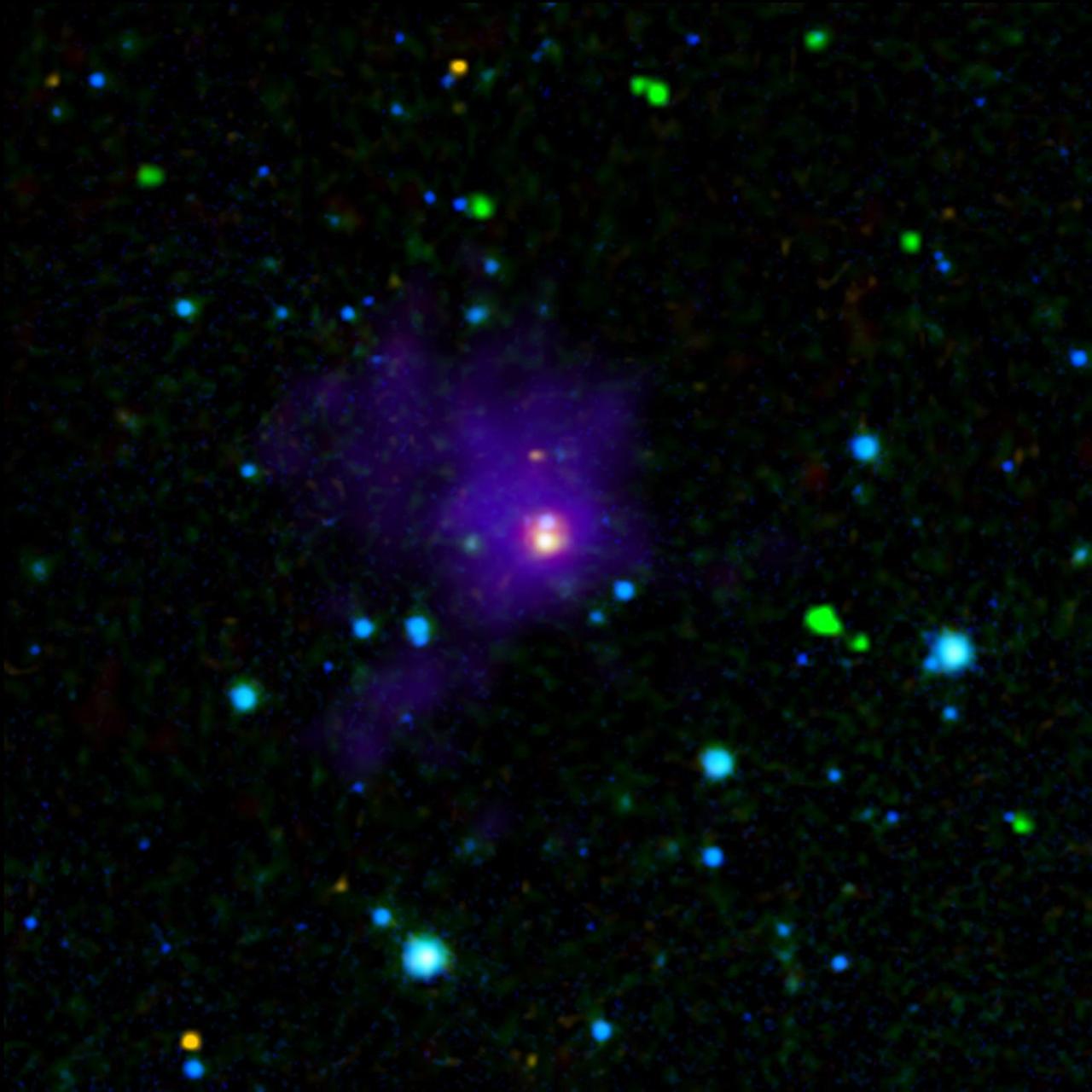
NASA Spitzer Space Telescope imaged the mysterious ring around magnetar SGR 1900+14 in infrared light.
Ghostly Ring
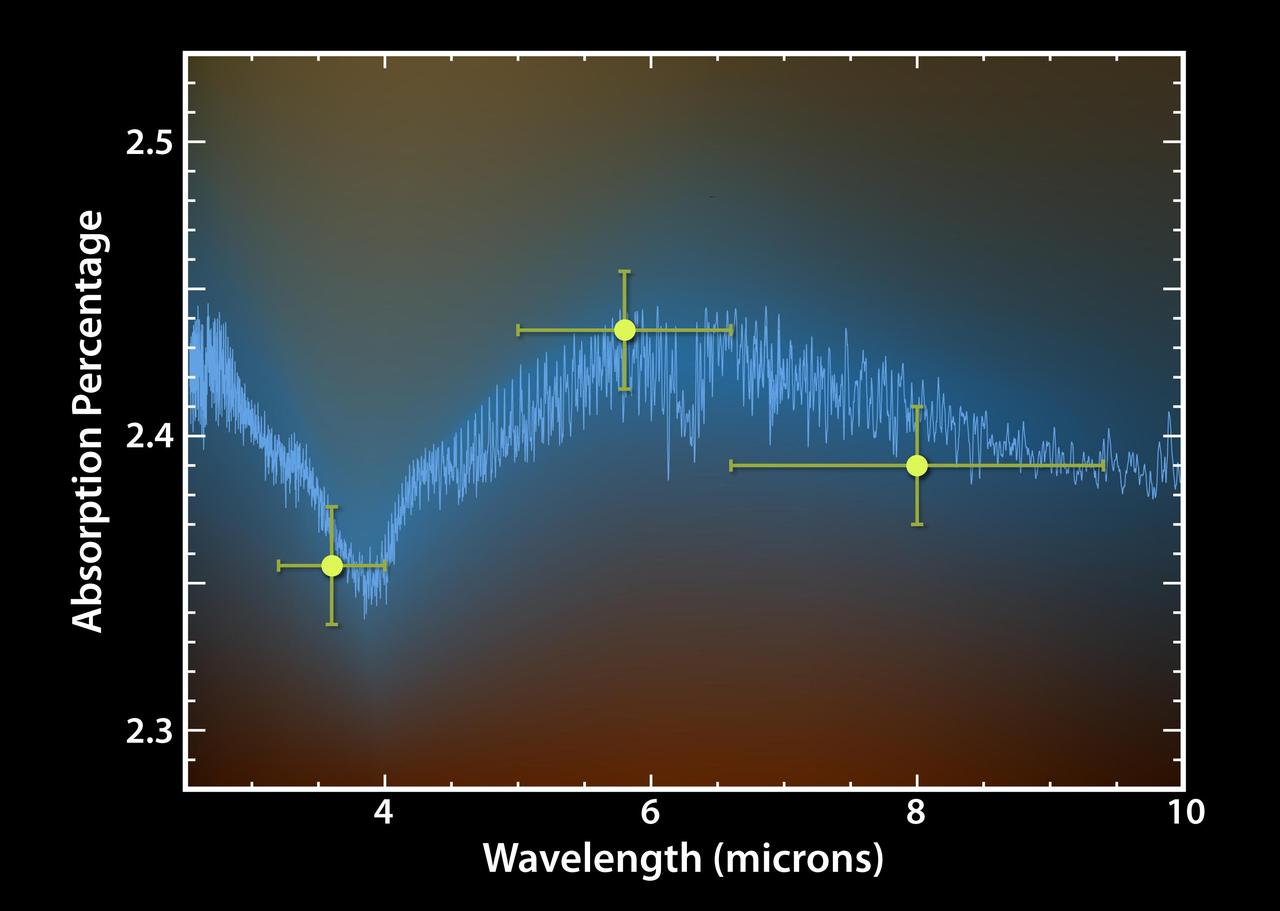
The varying brightness of an exoplanet called 55 Cancri e is shown in this plot of infrared data captured by NASA Spitzer Space Telescope.
Hot N Hotter Planet Measured by Spitzer
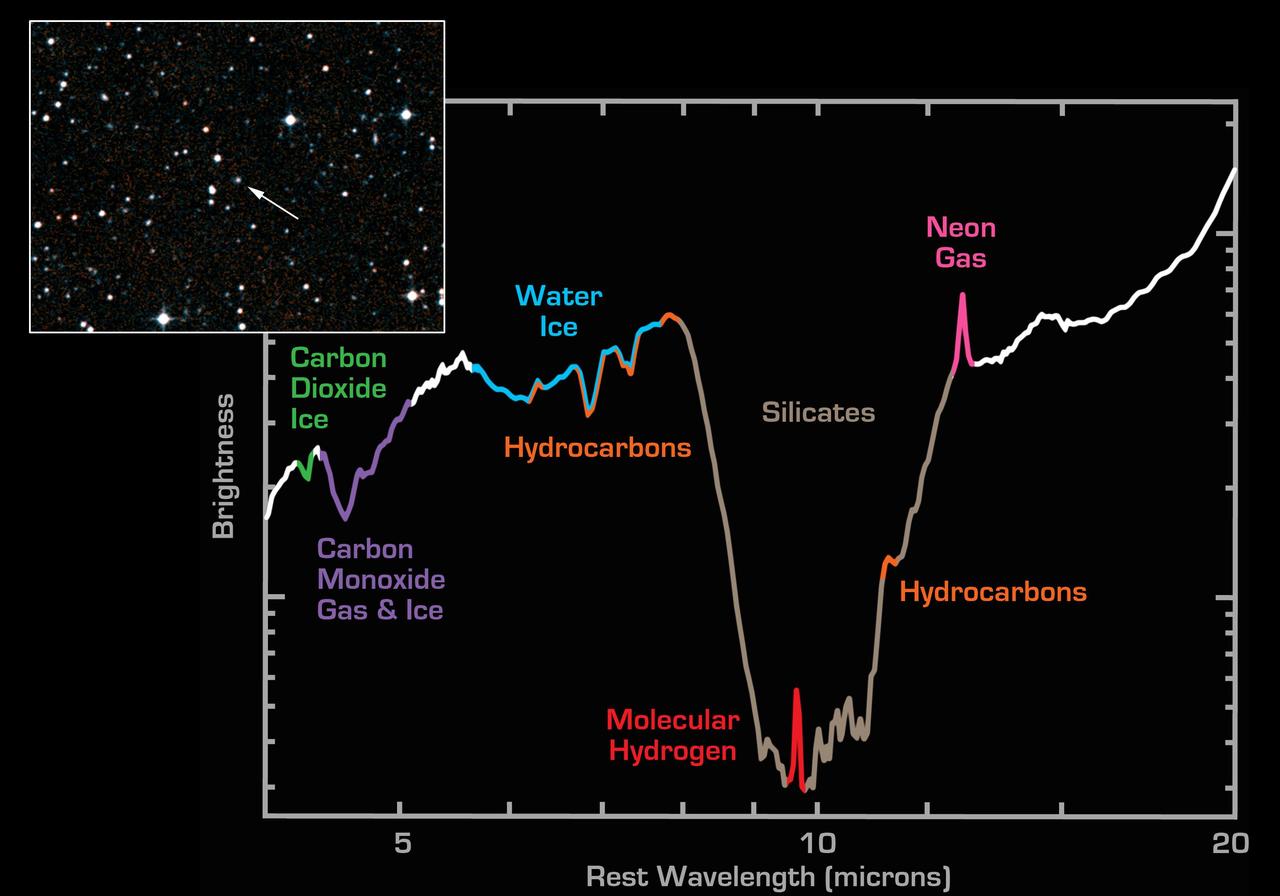
NASA Spitzer Space Telescope has detected the building blocks of life in the distant universe, albeit in a violent milieu.
Spectrum from Faint Galaxy IRAS F00183-7111
This image of asteroid 2011 MD was taken by NASA Spitzer Space Telescope in Feb. 2014, over a period of 20 hours.
I Spy a Little Asteroid With My Infrared Eye
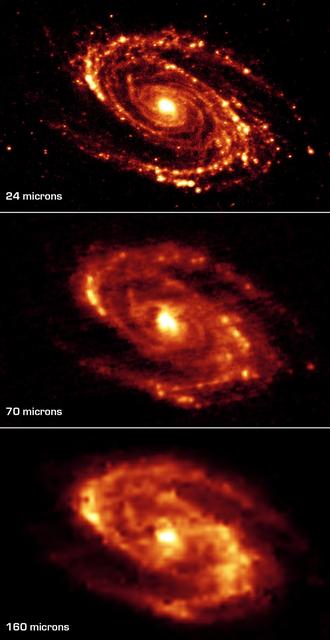
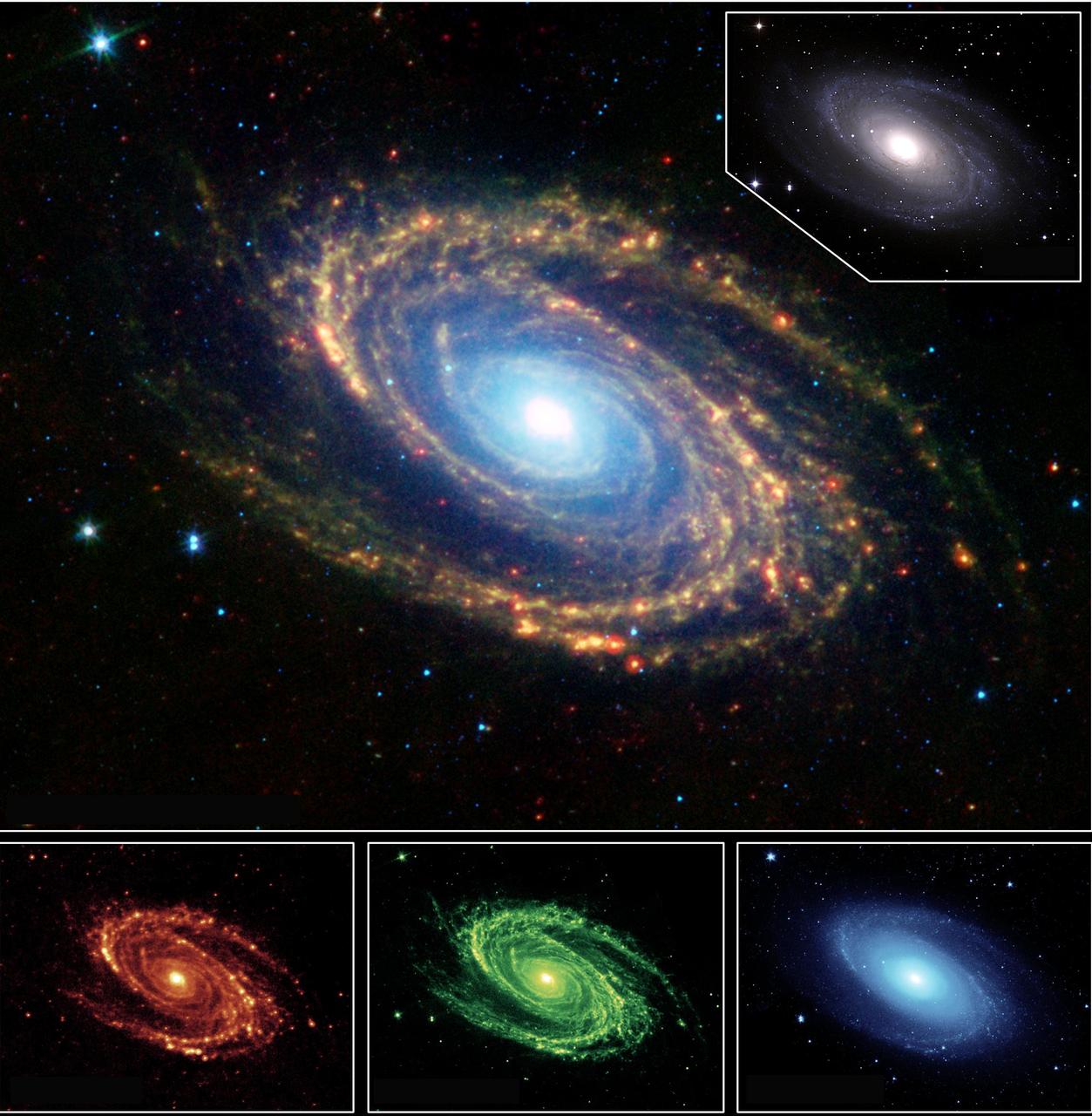
The magnificent and dusty spiral arms of the nearby galaxy Messier 81 are highlighted in these NASA Spitzer Space Telescope images.
Long-Wavelength Infrared Views of Messier 81
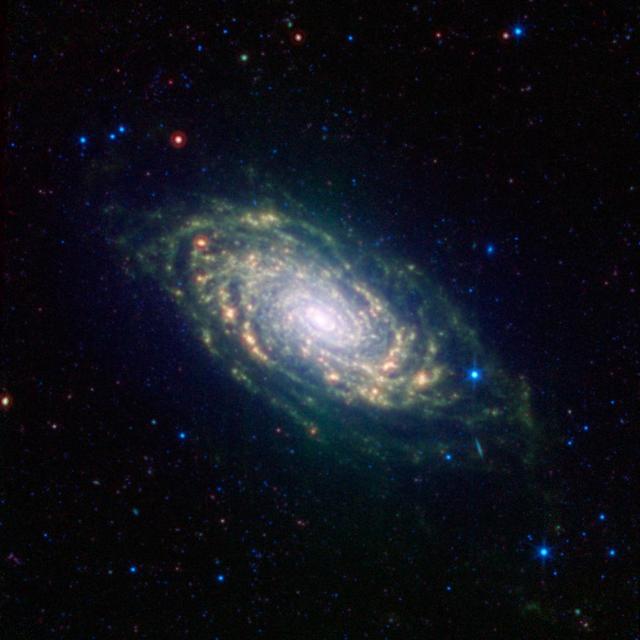
This view of the Sunflower galaxy highlights a variety of infrared wavelengths captured by NASA Spitzer Space Telescope.
Spitzer Sunflower Galaxy
The magnificent spiral arms of the nearby galaxy Messier 81 are highlighted in this image from NASA Spitzer Space Telescope.
Multi-Wavelength Views of Messier 81
Two large elliptical galaxies, NGC 4889 and NGC 4874 are shown in this image from NASA Spitzer Space Telescope.
Dwarfs in Coma Cluster
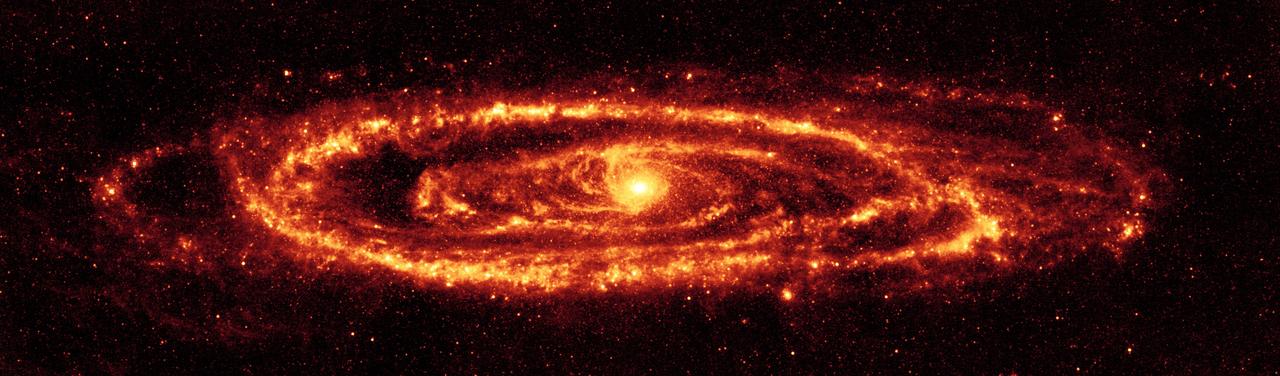
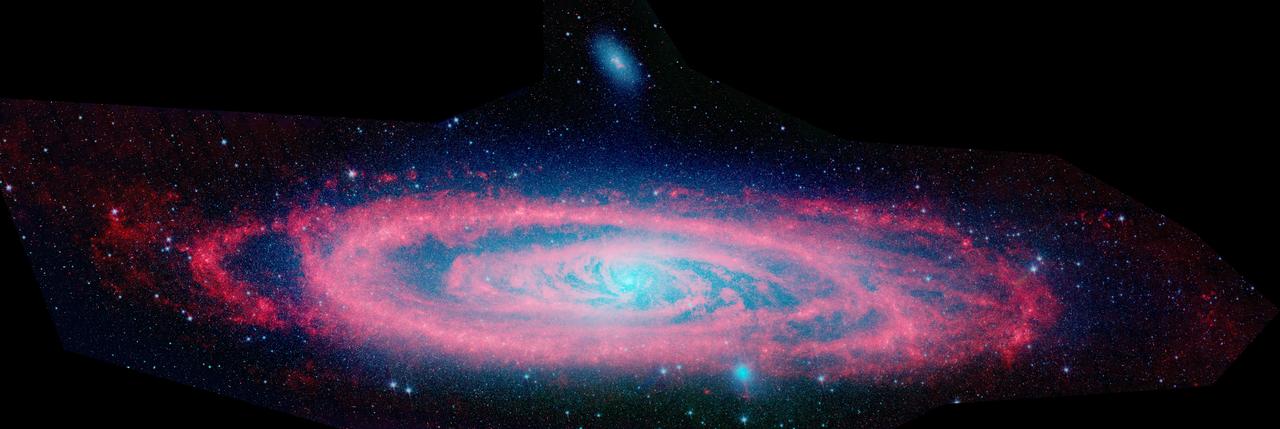
NASA Spitzer Space Telescope has captured this stunning infrared view of the famous galaxy Messier 31, also known as Andromeda.
Amazing Andromeda in Red
NASA Spitzer Space Telescope whizzes in front of a brilliant, infrared view of the Milky Way galaxy plane in this artistic depiction.
SST and the Milky Way, an Artist Concept
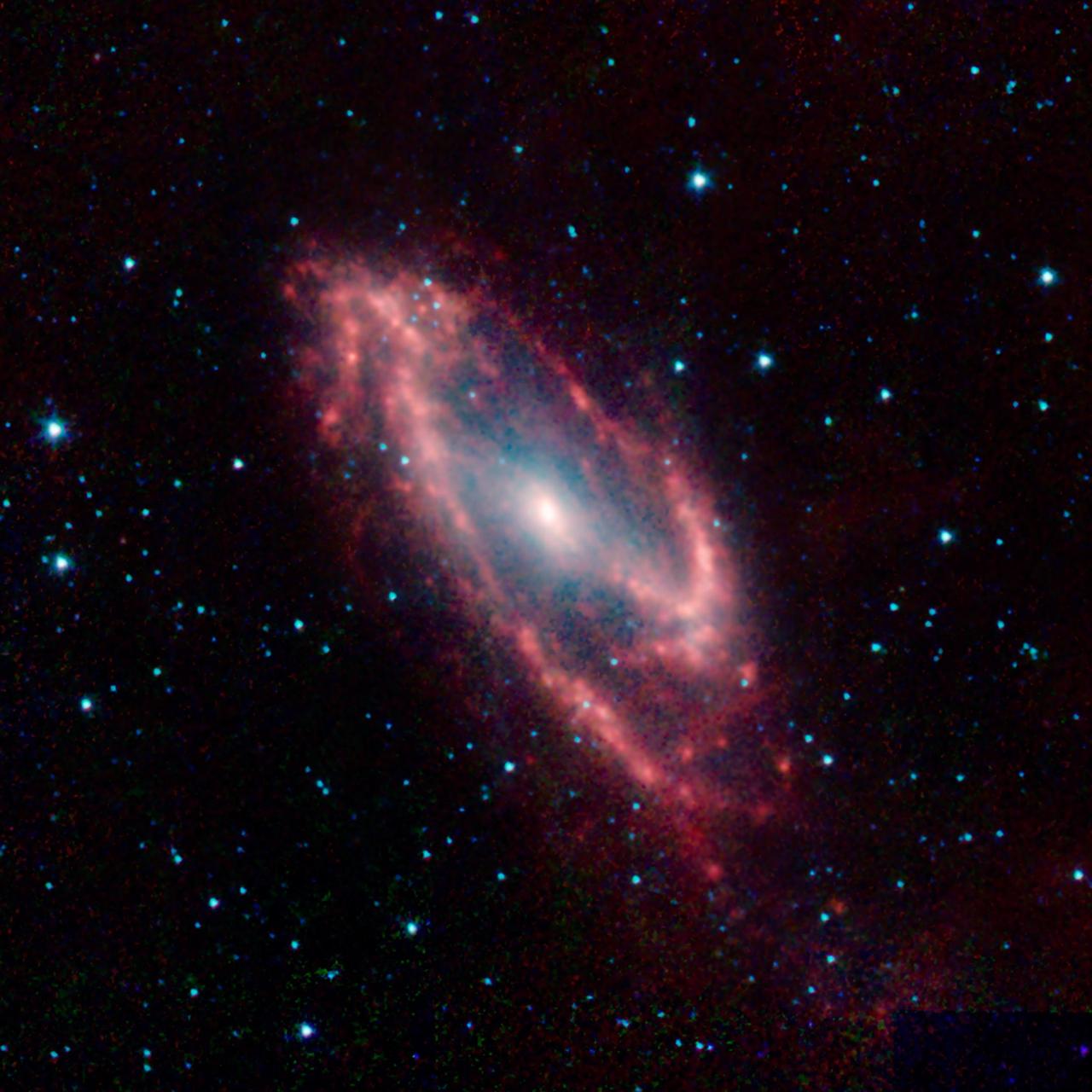
The spectacular swirling arms and central bar of the Sculptor galaxy are revealed in this new view from NASA Spitzer Space Telescope.
The Barred Sculptor Galaxy
This infographic explains how NASA Spitzer Space Telescope can be used in tandem with a telescope on the ground to measure the distances to planets discovered using the microlensing technique.  http://photojournal.jpl.nasa.gov/catalog/PIA19332
Infographic: Finding Planets With Microlensing
This image from NASA Spitzer Space Telescope shows infrared light from the Sunflower galaxy, otherwise known as Messier 63. Spitzer view highlights the galaxy dusty spiral arms.
Sunflower Galaxy Glows with Infrared Light
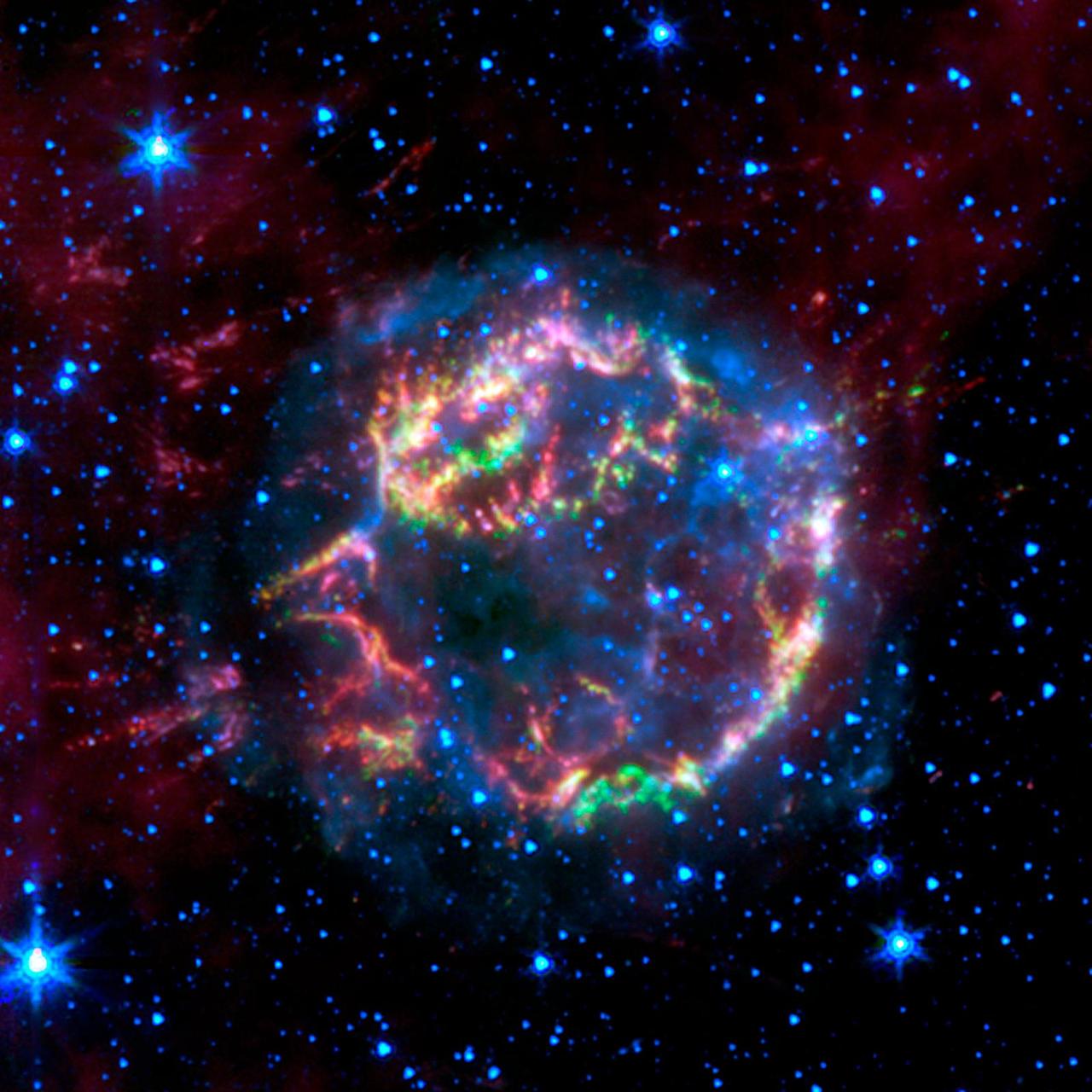
This image from NASA Spitzer Space Telescope shows the scattered remains of an exploded star named Cassiopeia A. Spitzer infrared detectors picked through these remains and found that much of the star original layering had been preserved.
Lighting up a Dead Star Layers
This figure charts 30 hours of observations taken by NASA Spitzer Space Telescope of a strongly irradiated exoplanet an planet orbiting a star beyond our own. Spitzer measured changes in the planet heat, or infrared light.
Light from Red-Hot Planet
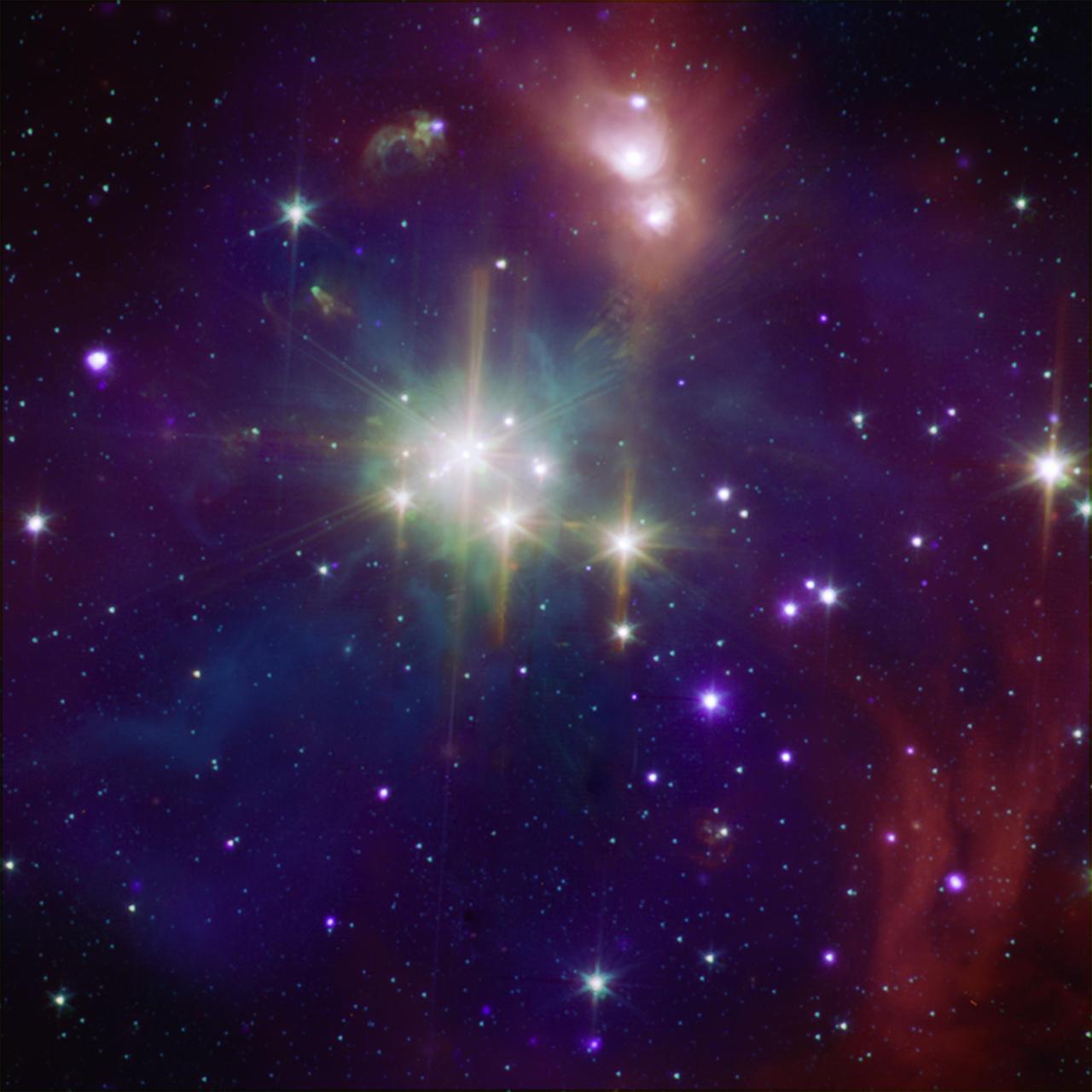
This composite image shows the Coronet in X-rays from Chandra and infrared from NASA Spitzer Space Telescope orange, green, and cyan. The Spitzer data show young stars plus diffuse emission from dust.
Coronet: A Star-Formation Neighbor
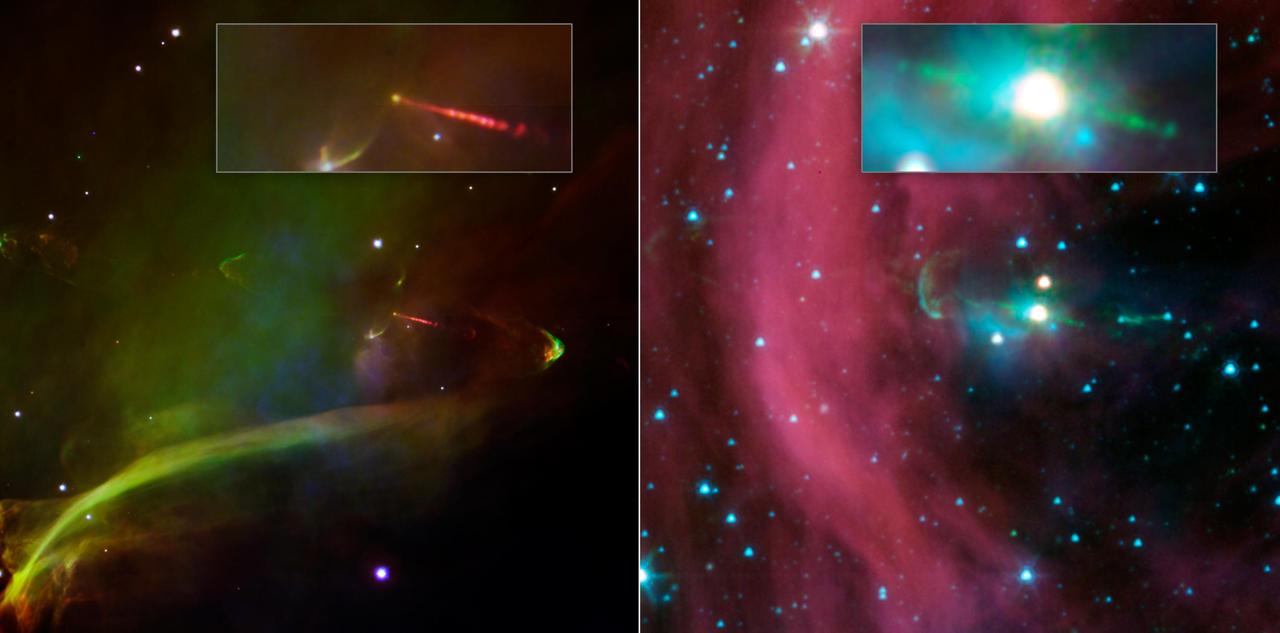
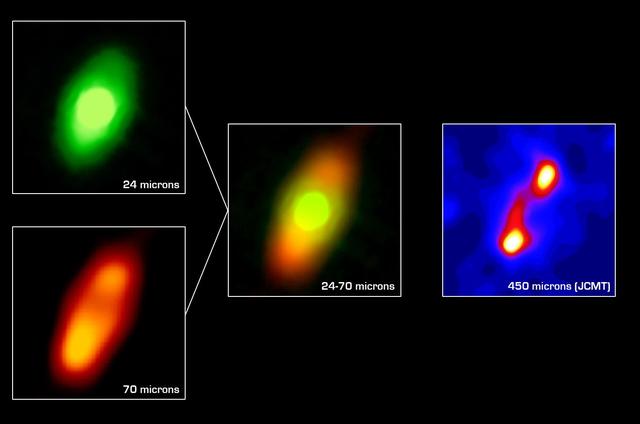
This image layout shows two views of the same baby star from NASA Spitzer Space Telescope. Spitzer view shows that this star has a second, identical jet shooting off in the opposite direction of the first.
Undercover Jet Exposed
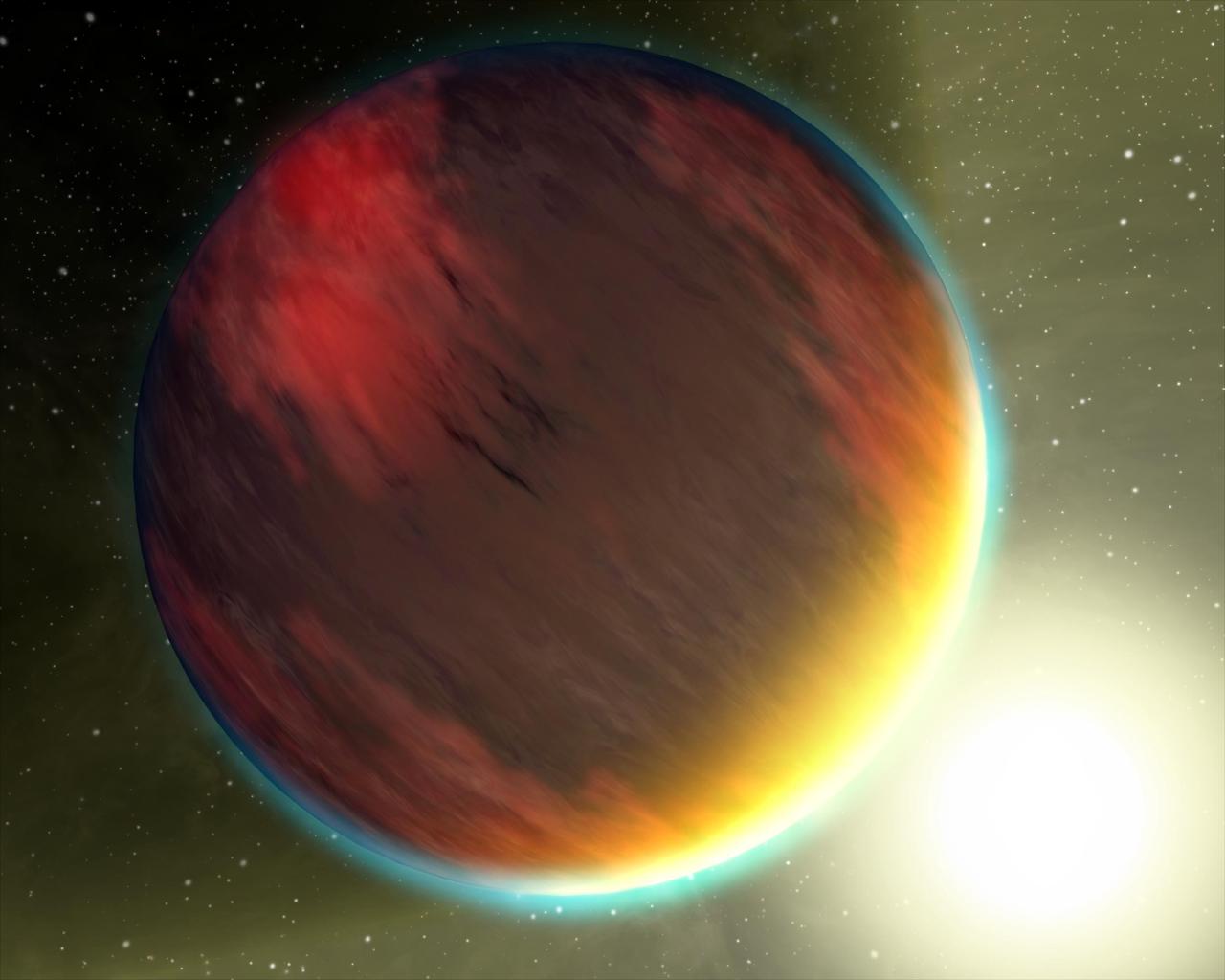
This artist concept, based on spectral observations from NASA Hubble Space Telescope and Spitzer Space Telescope, shows a cloudy Jupiter-like planet that orbits very close to its fiery hot star.
Exotic Atmospheres Artist Concept
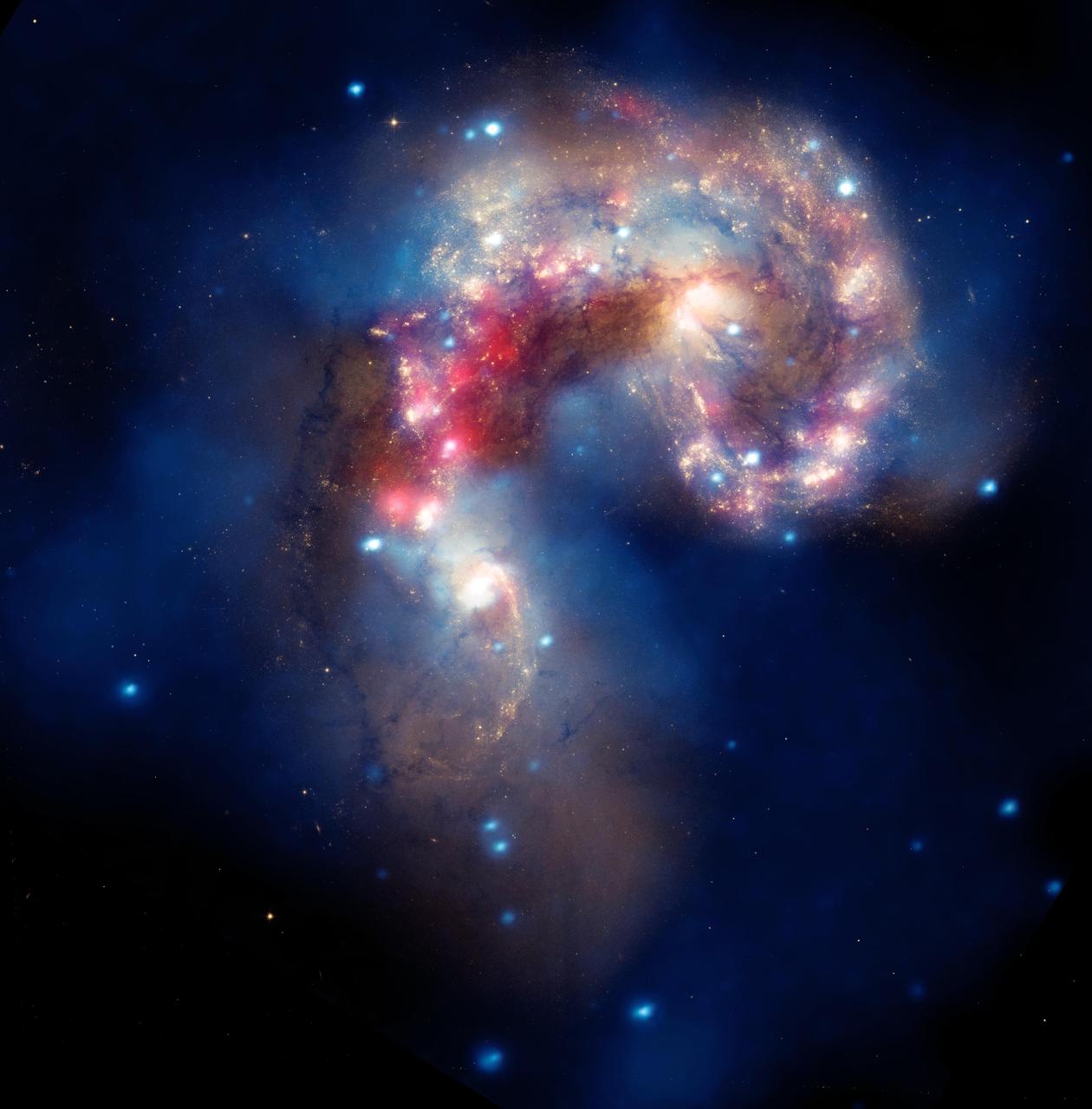
This image of two tangled galaxies has been released by NASA Great Observatories. The Antennae galaxies are shown in this composite image from the Chandra X-ray Observatory, the Hubble Space Telescope, and the Spitzer Space Telescope.
NASA Great Observatories Witness a Galactic Spectacle
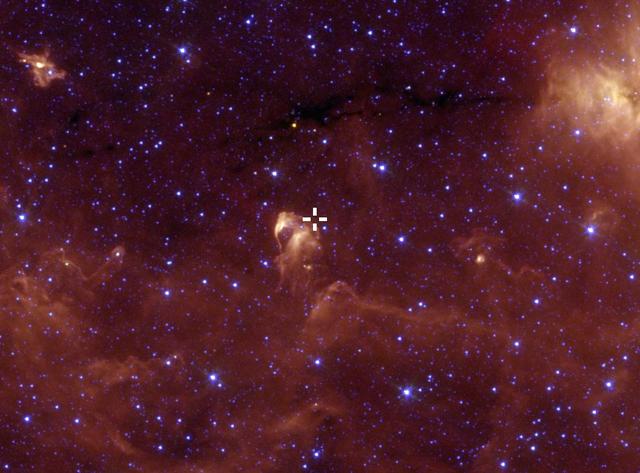
The location of Gaia 17bpi, which lies in the Sagitta constellation, is indicated in this image taken by NASA's Spitzer Space Telescope.  https://photojournal.jpl.nasa.gov/catalog/PIA22918
Star Gaia 17pbi Seen by Spitzer
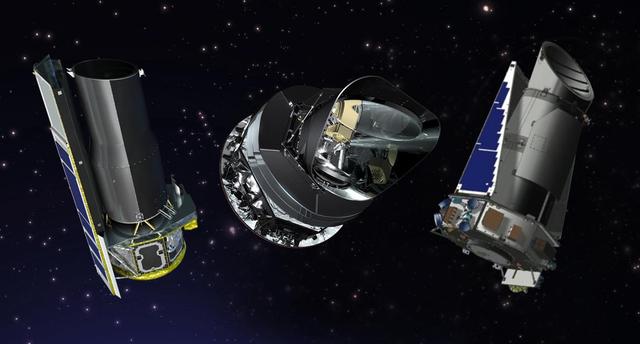
From left to right, artist concepts of the Spitzer, Planck and Kepler space telescopes. NASA extended Spitzer and Kepler for two additional years; and the U.S. portion of Planck, a European Space Agency mission, for one year.
Spitzer, Planck and Kepler Extended by NASA Artist Concept
This plot shows data obtained from NASA's Spitzer Space Telescope and the Optical Gravitational Lensing Experiment, or OGLE, telescope located in Chile, during a "microlensing" event. Microlensing events occur when one star passes another, and the gravity of the foreground star causes the distant star's light to magnify and brighten. This magnification is evident in the plot, as both Spitzer and OGLE register an increase in the star's brightness.  If the foreground star is circled by a planet, the planet's gravity can alter the magnification over a shorter period, seen in the plot in the form of spikes and a dip. The great distance between Spitzer, in space, and OGLE, on the ground, meant that Spitzer saw this particular microlensing event before OGLE. The offset in the timing can be used to measure the distance to the planet.  In this case, the planet, called OGLE-2014-BLG-0124L, was found to be 13,000 light-years away, near the center of our Milky Way galaxy.  The finding was the result of fortuitous timing because Spitzer's overall program to observe microlensing events was only just starting up in the week before the planet's effects were visible from Spitzer's vantage point.  While Spitzer sees infrared light of 3.6 microns in wavelength, OGLE sees visible light of 0.8 microns.  http://photojournal.jpl.nasa.gov/catalog/PIA19331
Time Delay in Microlensing Event
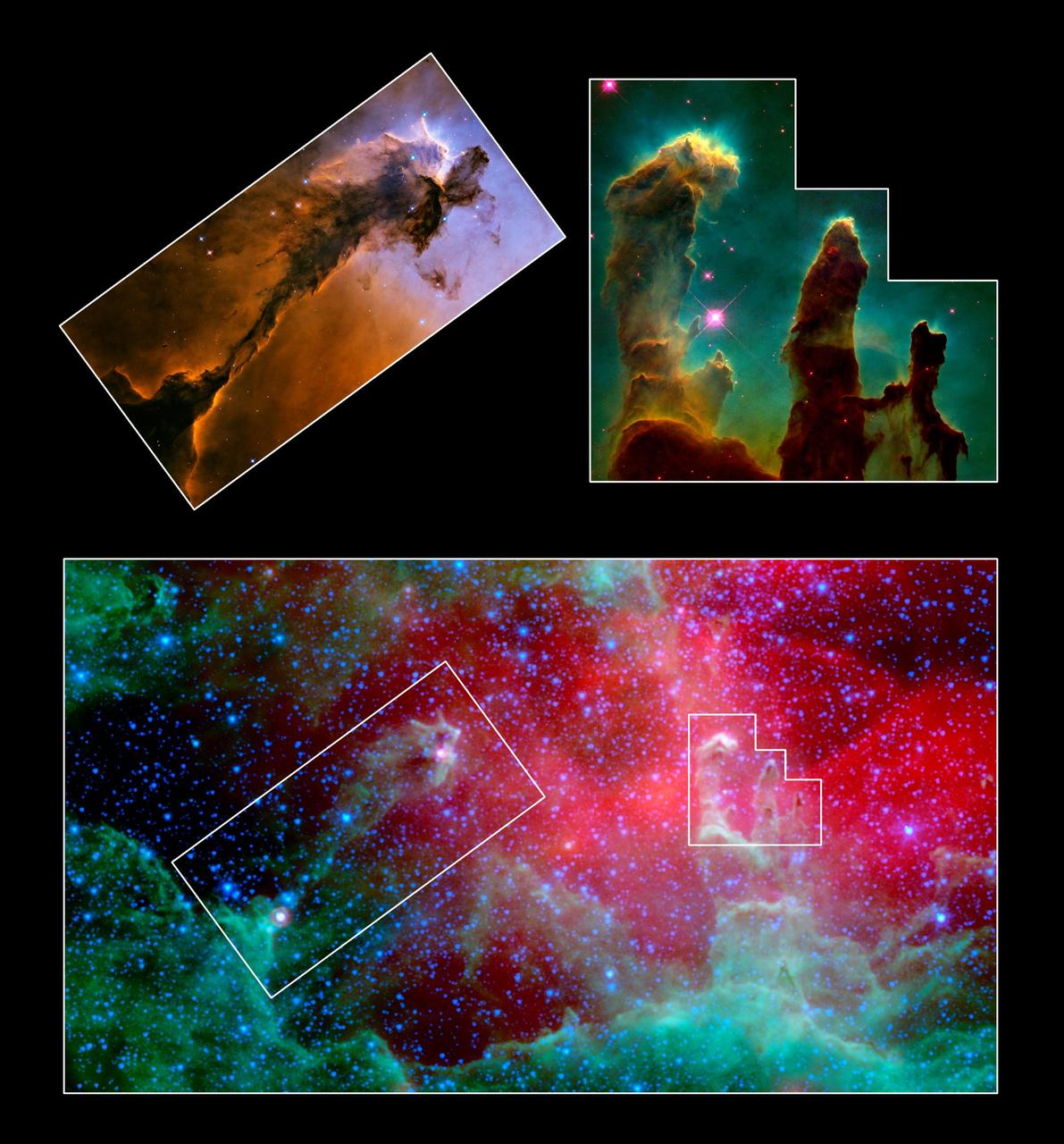
This image composite highlights the pillars of the Eagle nebula, as seen in infrared light by NASA Spitzer Space Telescope bottom and visible light by NASA Hubble Space Telescope top insets.
Unwrapping the Pillars
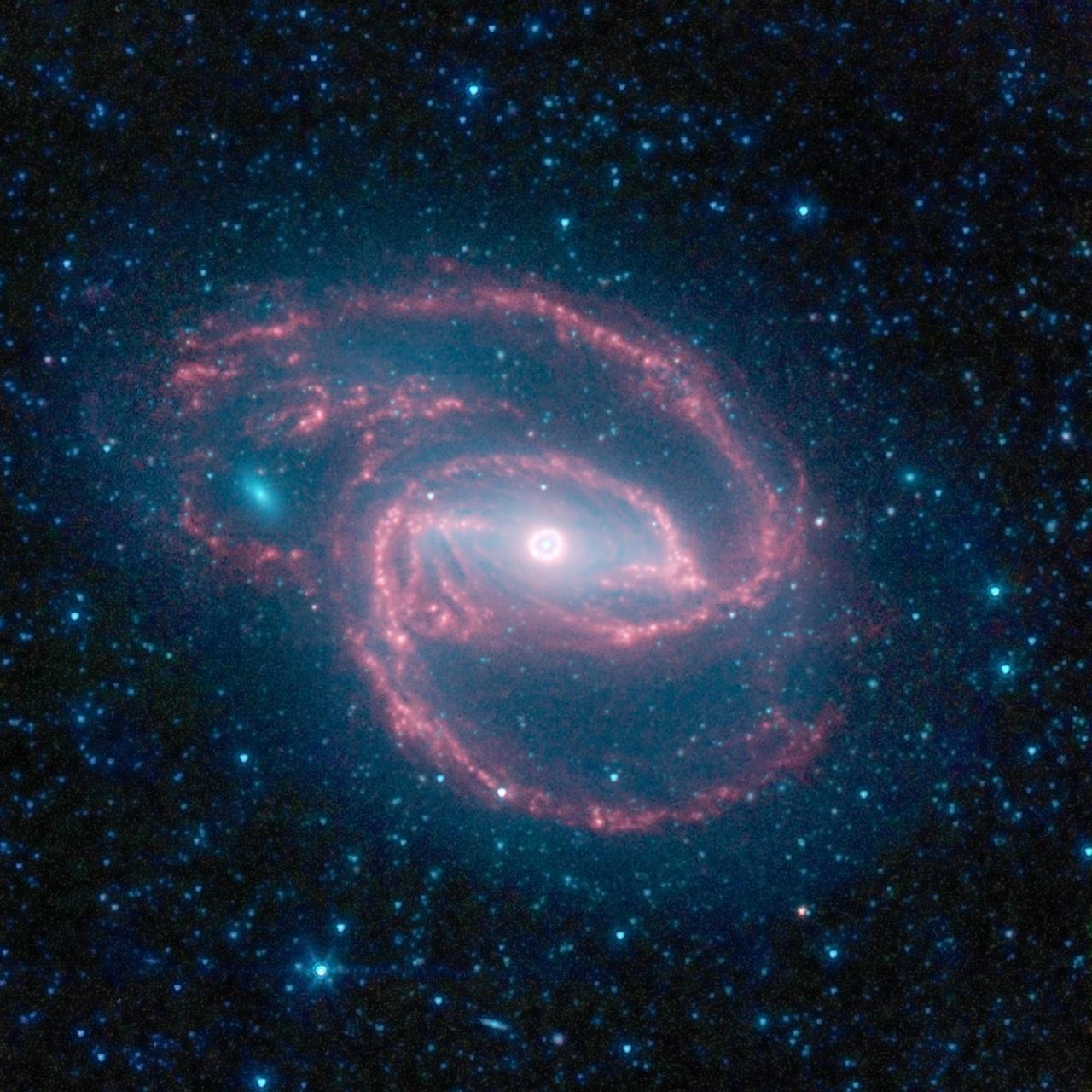
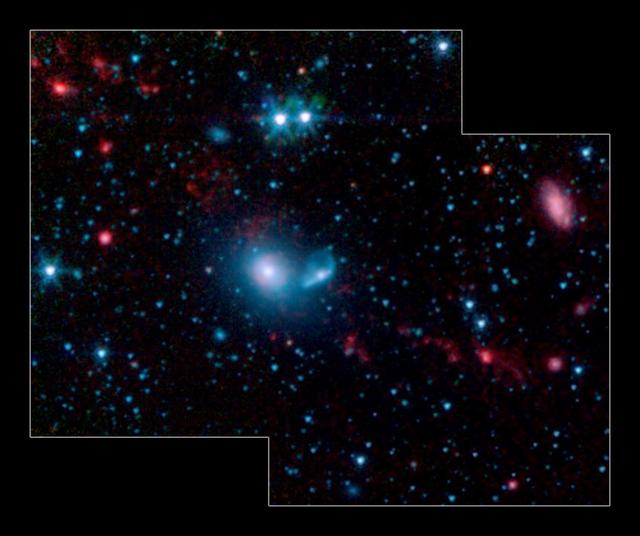
NASA Spitzer Space Telescope has imaged a wild creature of the dark -- a coiled galaxy with an eye-like object at its center.
Coiled Creature of the Night
A newly expanded image of the Helix nebula lends a festive touch to the fourth anniversary of the launch of NASA Spitzer Space Telescope
Spitzer Celebrates Fourth Anniversary with Celestial Fireworks
This spectrum shows the light from a dusty, distant galaxy located 11 billion light-years away. The galaxy is invisible to optical telescopes, but NASA Spitzer Space Telescope captured the light from it and dozens of other similar galaxies.
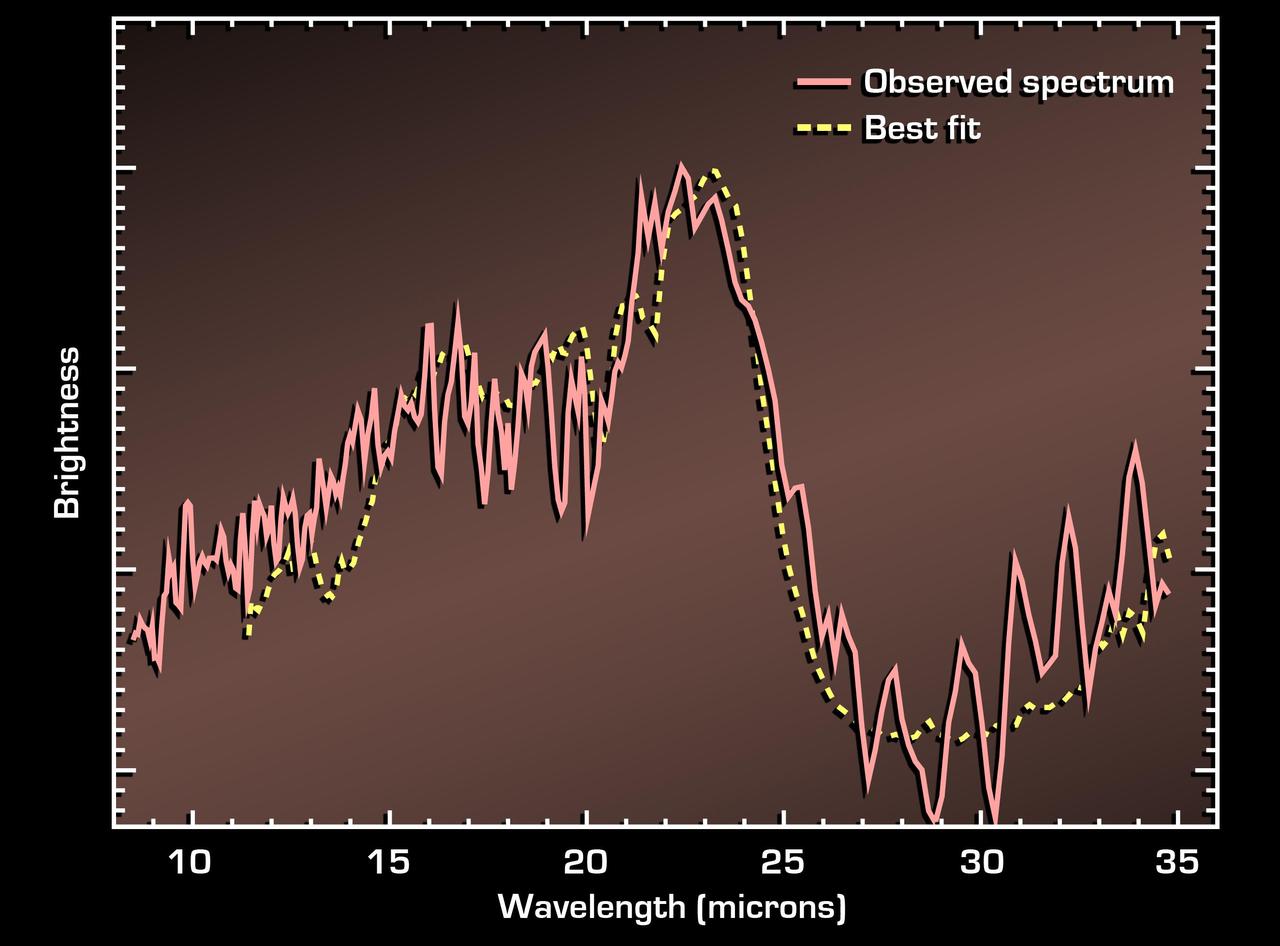
Fingerprints in the Light
This is a composite image of N49, the brightest supernova remnant in optical light in the Large Magellanic Cloud; the image combines data from the Chandra X-ray Telescope blue and NASA Spitzer Space Telescope red.
Stellar Debris in the Large Magellanic Cloud
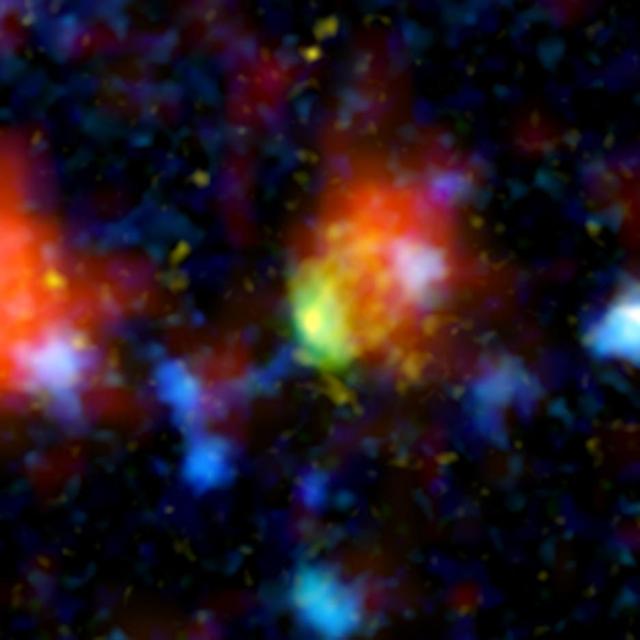
The green and red splotch in this image is the most active star-making galaxy in the very distant universe. Nicknamed Baby Boom, it was spotted 12.3 billion light-years away by a suite of telescopes, including NASA Spitzer Space Telescope.
Super Starburst Galaxy
This artist animation shows a blistering world revolving around its nearby un. NASA infrared Spitzer Space Telescope observed a planetary system like this one, as the planet sunlit and dark hemispheres swung alternately into the telescope view.
Fire and Ice Planet Artist Concept
Maffei 2 is the poster child for an infrared galaxy that is almost invisible to optical telescopes. But this infrared image from NASA Spitzer Space Telescope penetrates the dust to reveal the galaxy in all its glory.
The Hidden Galaxy
NASA Spitzer Space Telescope contributed to the infrared component of the observations of a surprisingly large collections of galaxies red dots in center. Shorter-wavelength infrared and visible data are provided by Japan Subaru telescope.
Galactic Metropolis
Two rambunctious young stars are destroying their natal dust cloud with powerful jets of radiation, in an infrared image from NASA Spitzer Space Telescope.
Spitzer Digs Up Hidden Stars
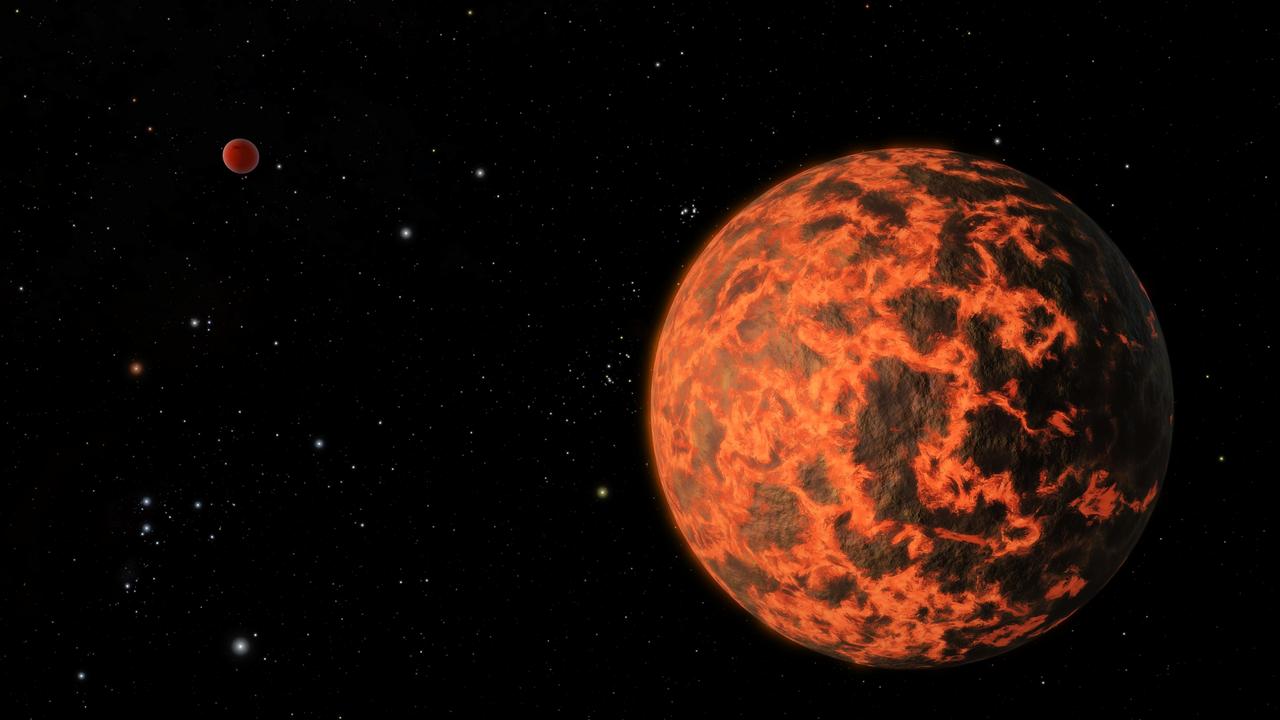
Astronomers using NASA Spitzer Space Telescope have detected what they believe is an alien world just two-thirds the size of Earth -- one of the smallest on record.
Exoplanet is Extremely Hot and Incredibly Close Artist Concept
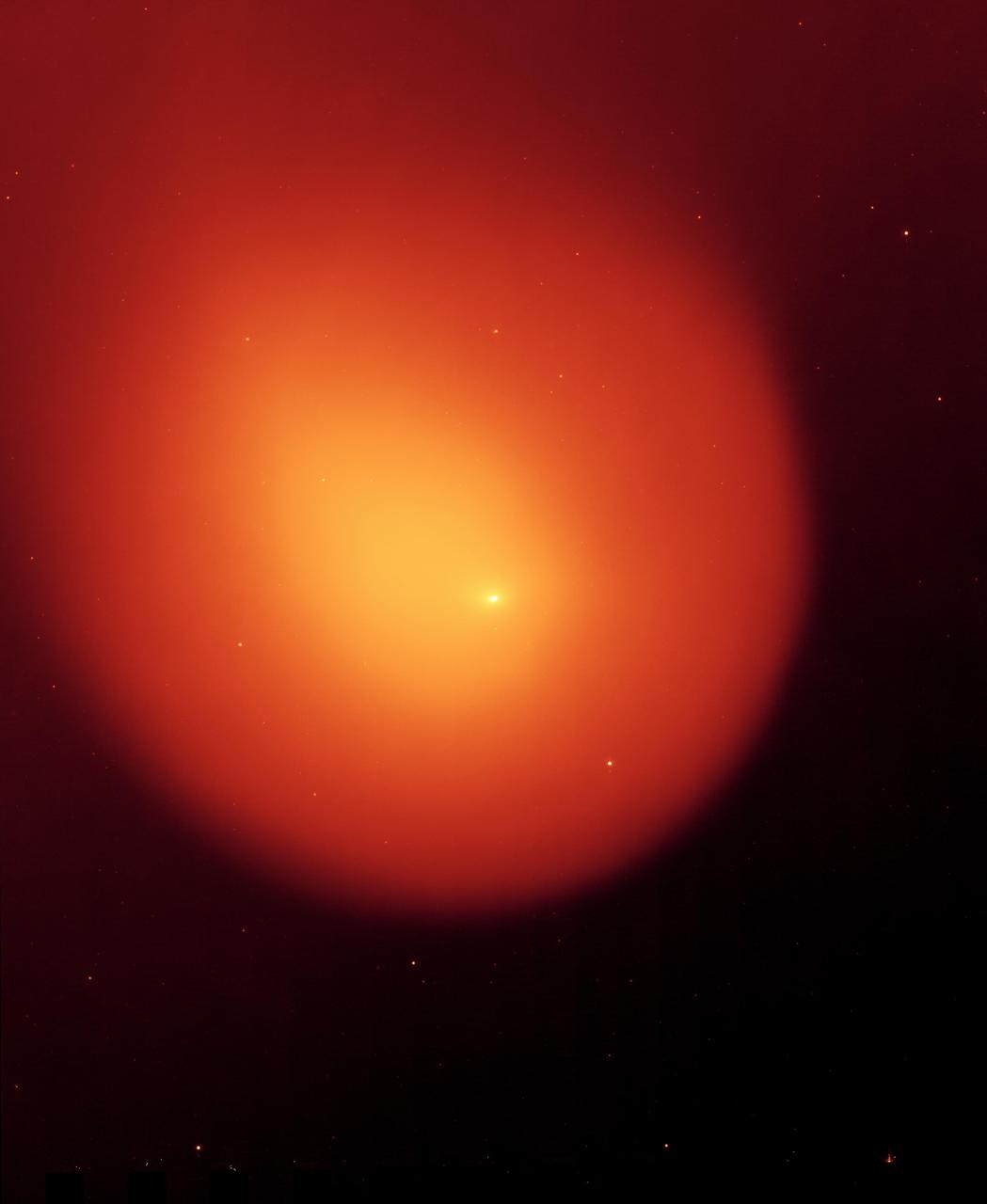
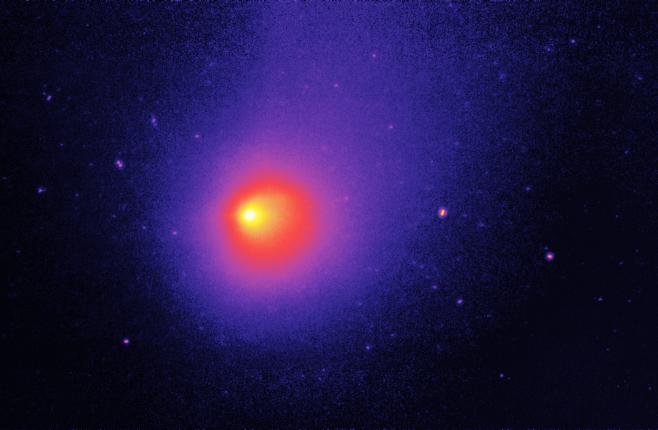
NASA Spitzer Space Telescope captured this picture of comet Holmes in March 2008, five months after the comet suddenly erupted and brightened a millionfold overnight.
Anatomy of a Busted Comet
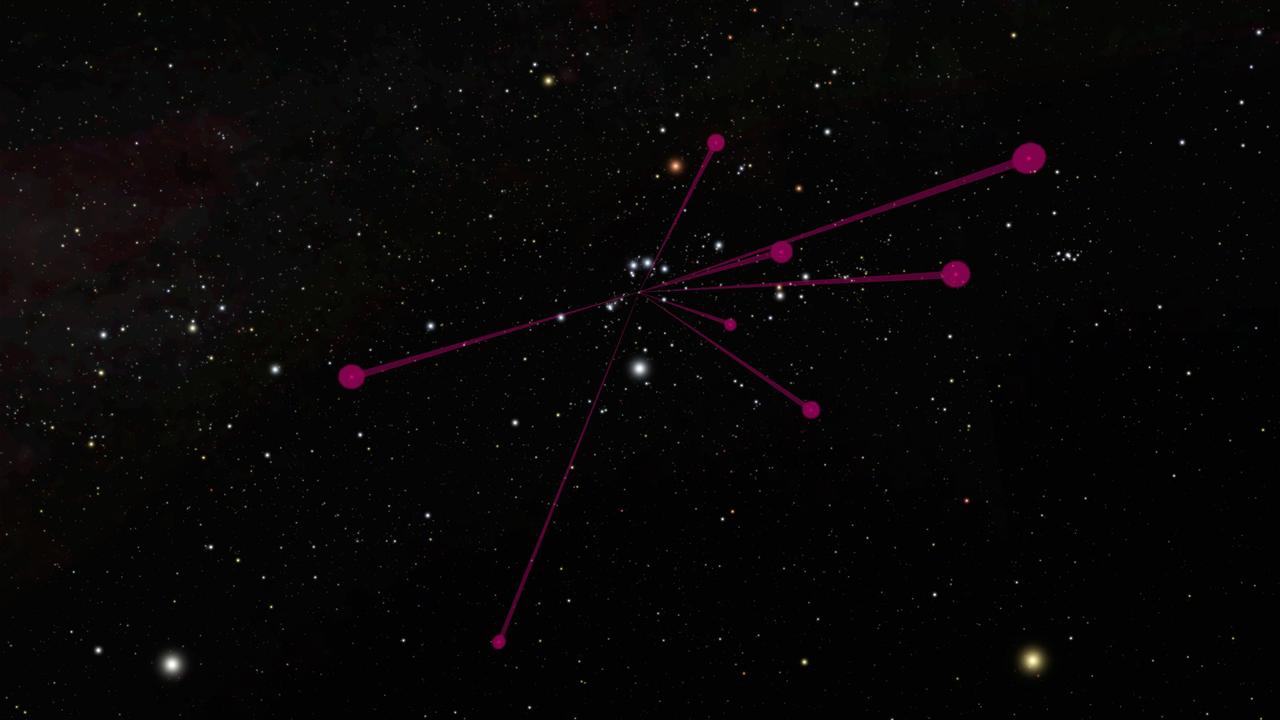
The locations of brown dwarfs discovered by NASA Wide-field Infrared Survey Explorer, or WISE, and mapped by NASA Spitzer Space Telescope, are shown in this diagram as red circles.
Brown Dwarf Backyardigans
This graphic illuminates the process by which astronomers using NASA Spitzer Space Telescope have, for the first time, detected the light from a super Earth planet.
Measuring Brightness of Super Earth 55 Cancri e
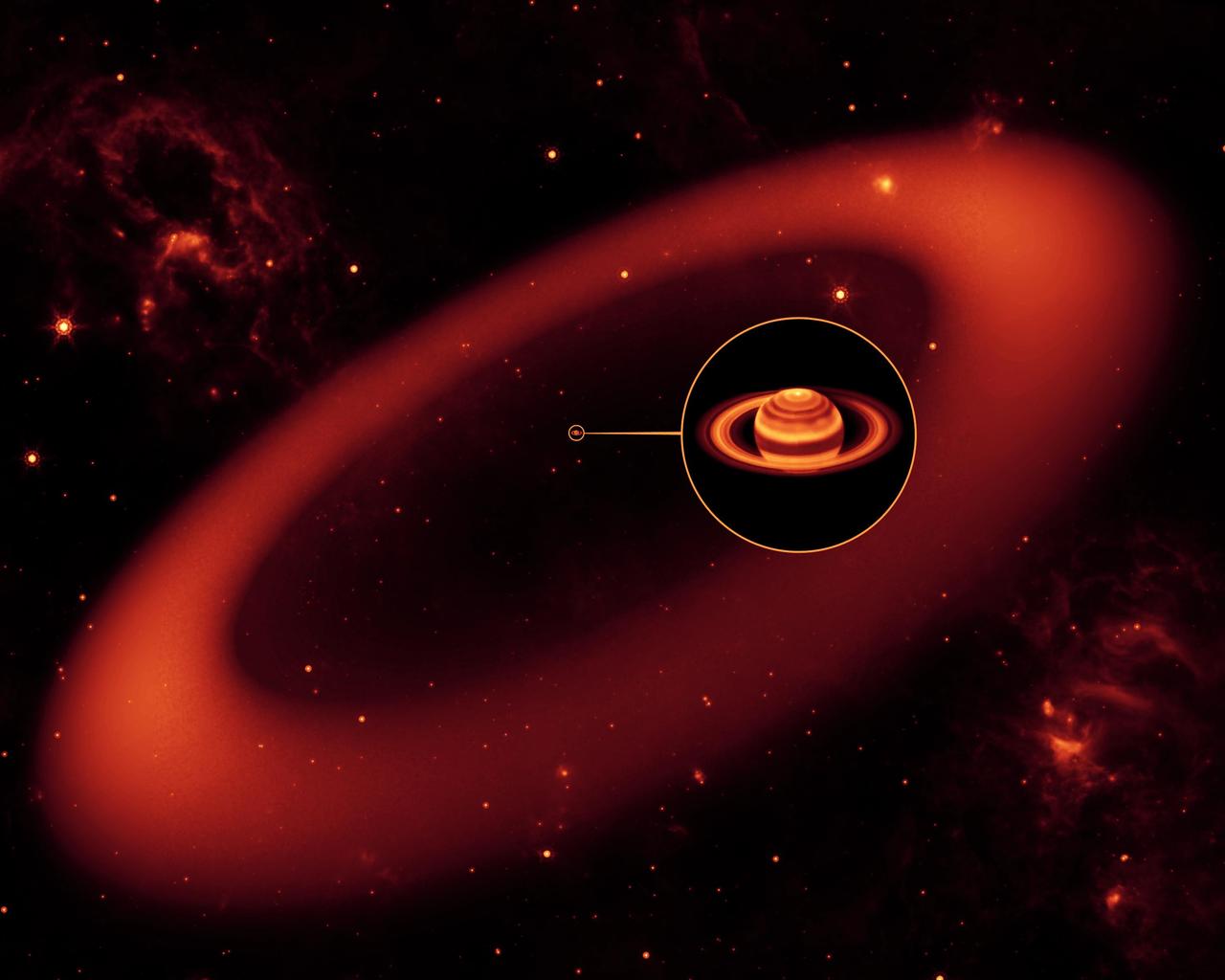
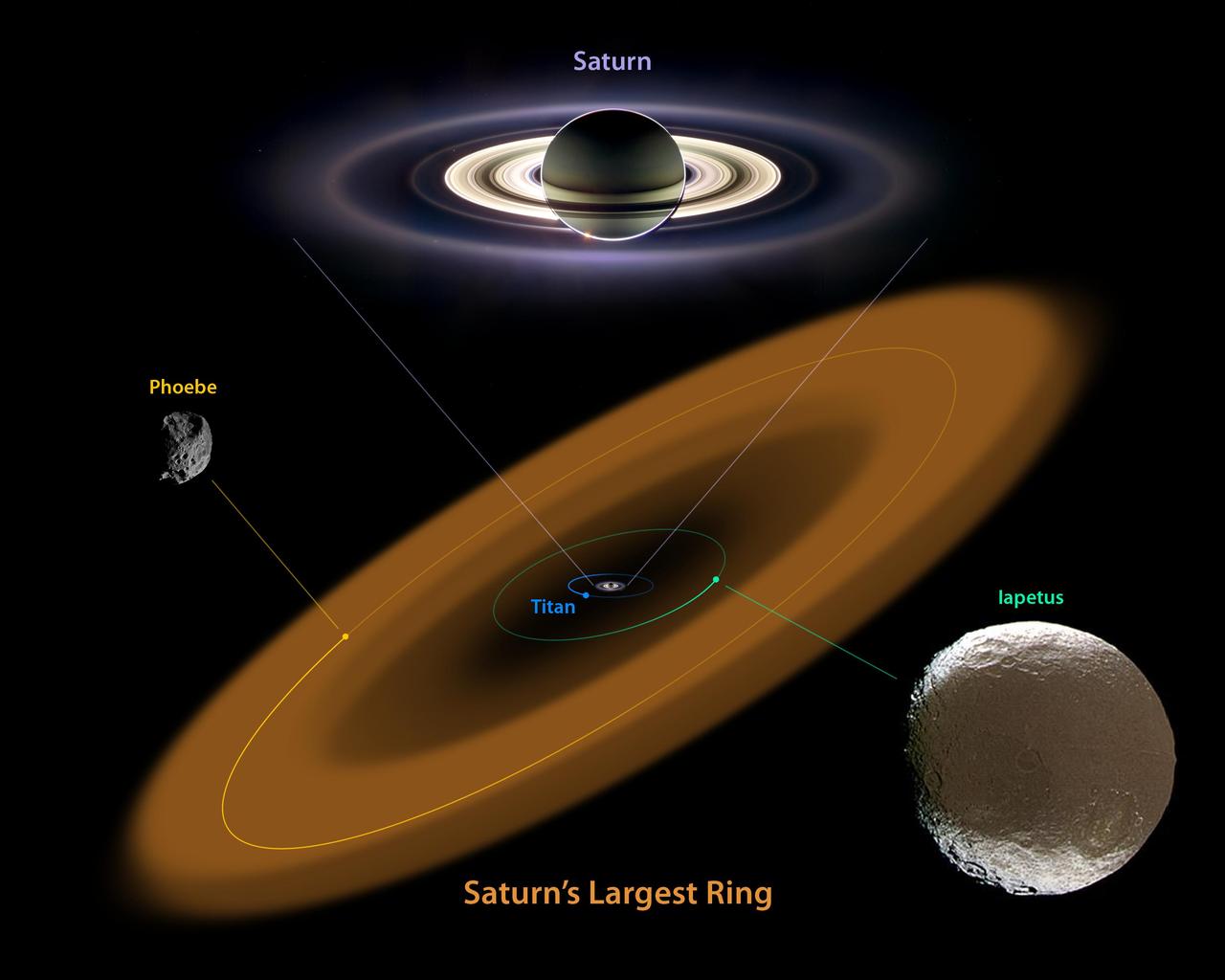
This artist conception shows a nearly invisible ring around Saturn -- the largest of the giant planet many rings. It was discovered by NASA Spitzer Space Telescope.
The King of Rings Artist Concept
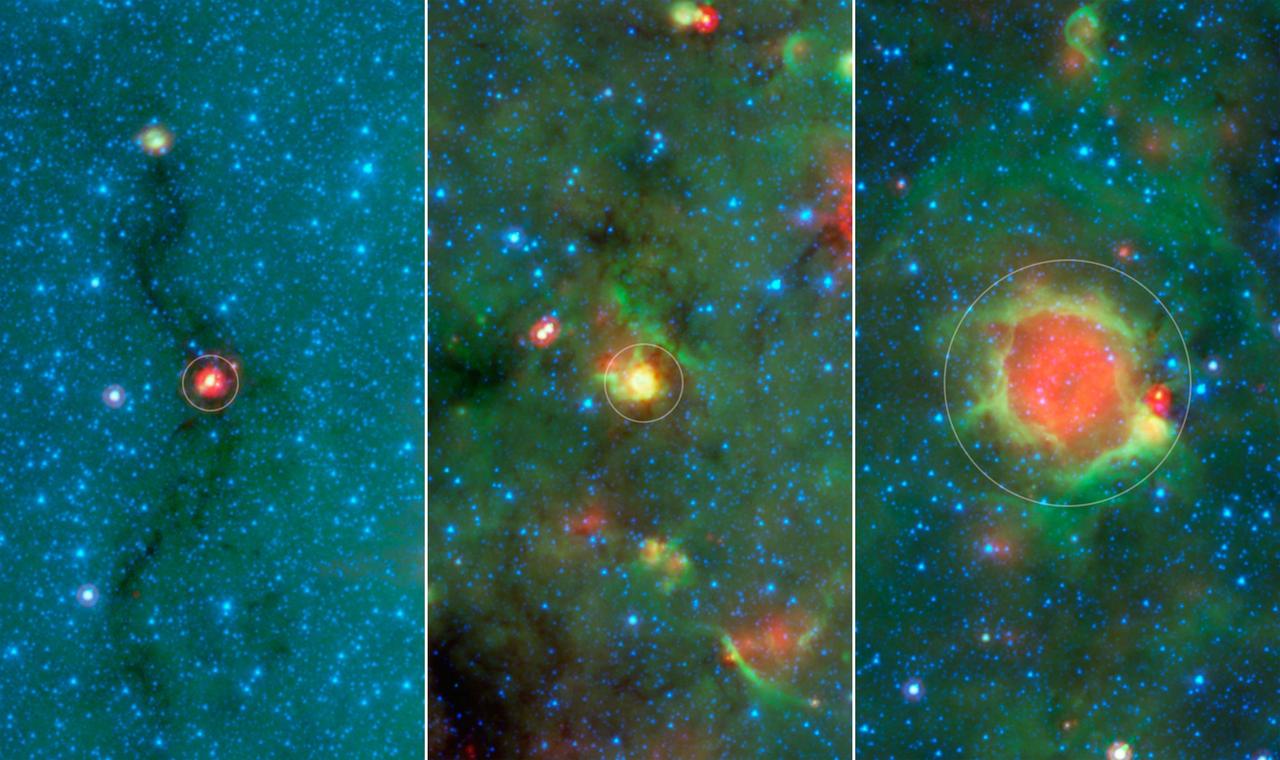
This series of images show three evolutionary phases of massive star formation, as pictured in infrared images from NASA Spitzer Space Telescope.
Evolution of a Massive Star
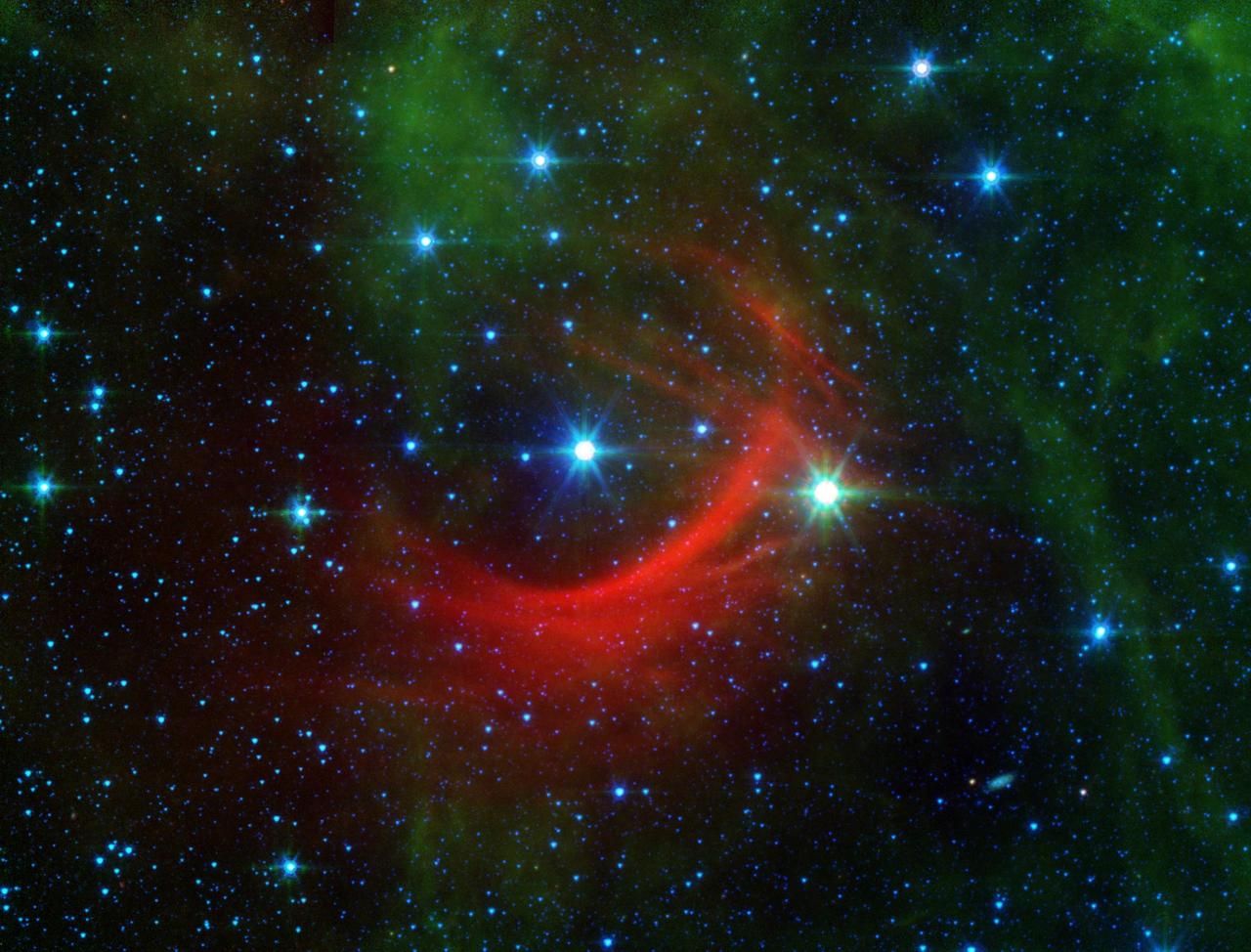
The red arc in this infrared image from NASA Spitzer Space Telescope is a giant shock wave, created by a speeding star known as Kappa Cassiopeiae.
Speedster Star Shocks the Galaxy
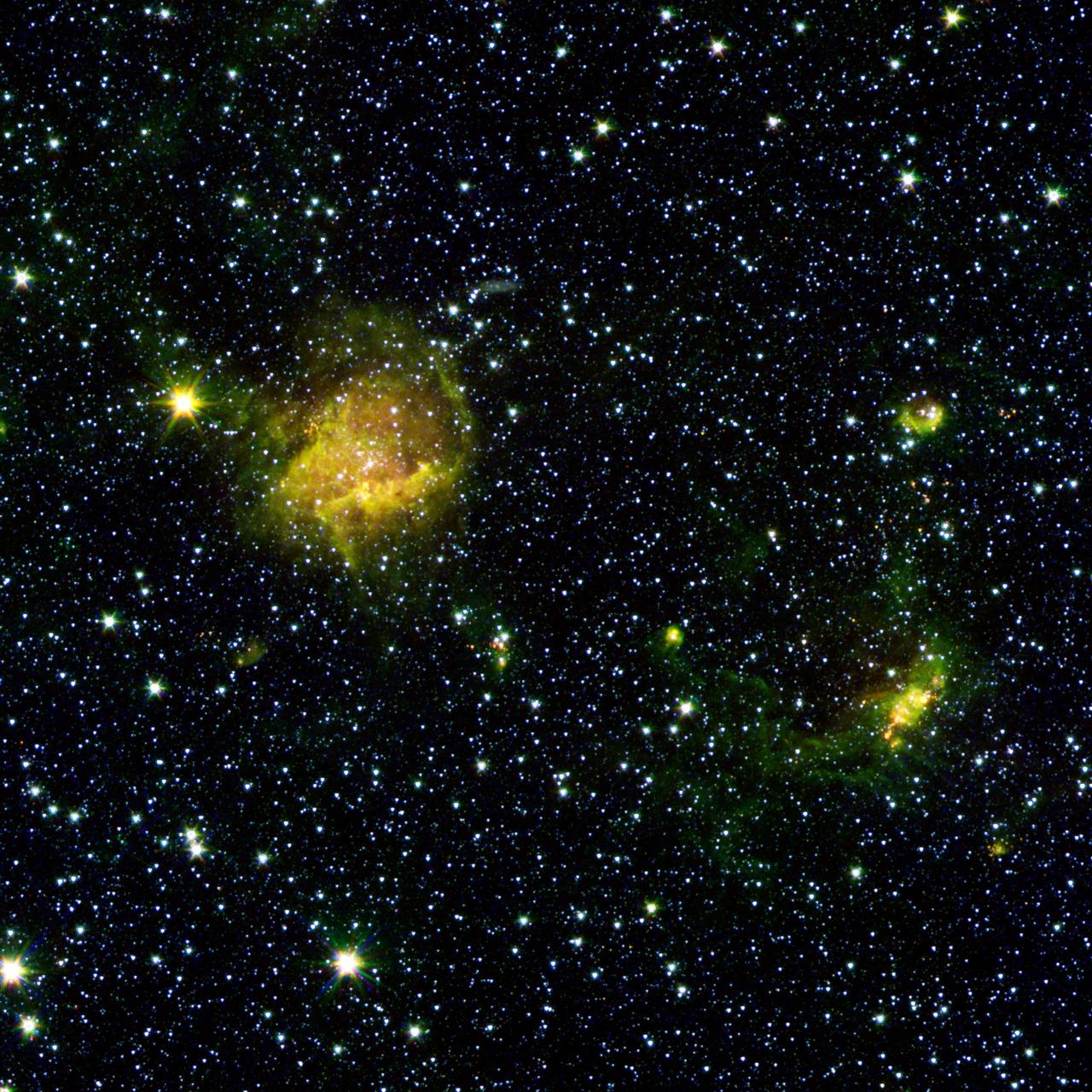
Yellow balls -- which are several hundred to thousands times the size of our solar system -- are pictured here in the center of this image taken by NASA Spitzer Space Telescope.
Finding Yellowballs in our Milky Way
This image from NASA Spitzer Space Telescope shows two young brown dwarfs, objects that fall somewhere between planets and stars in terms of their temperature and mass.
Twin Brown Dwarfs Wrapped in a Blanket
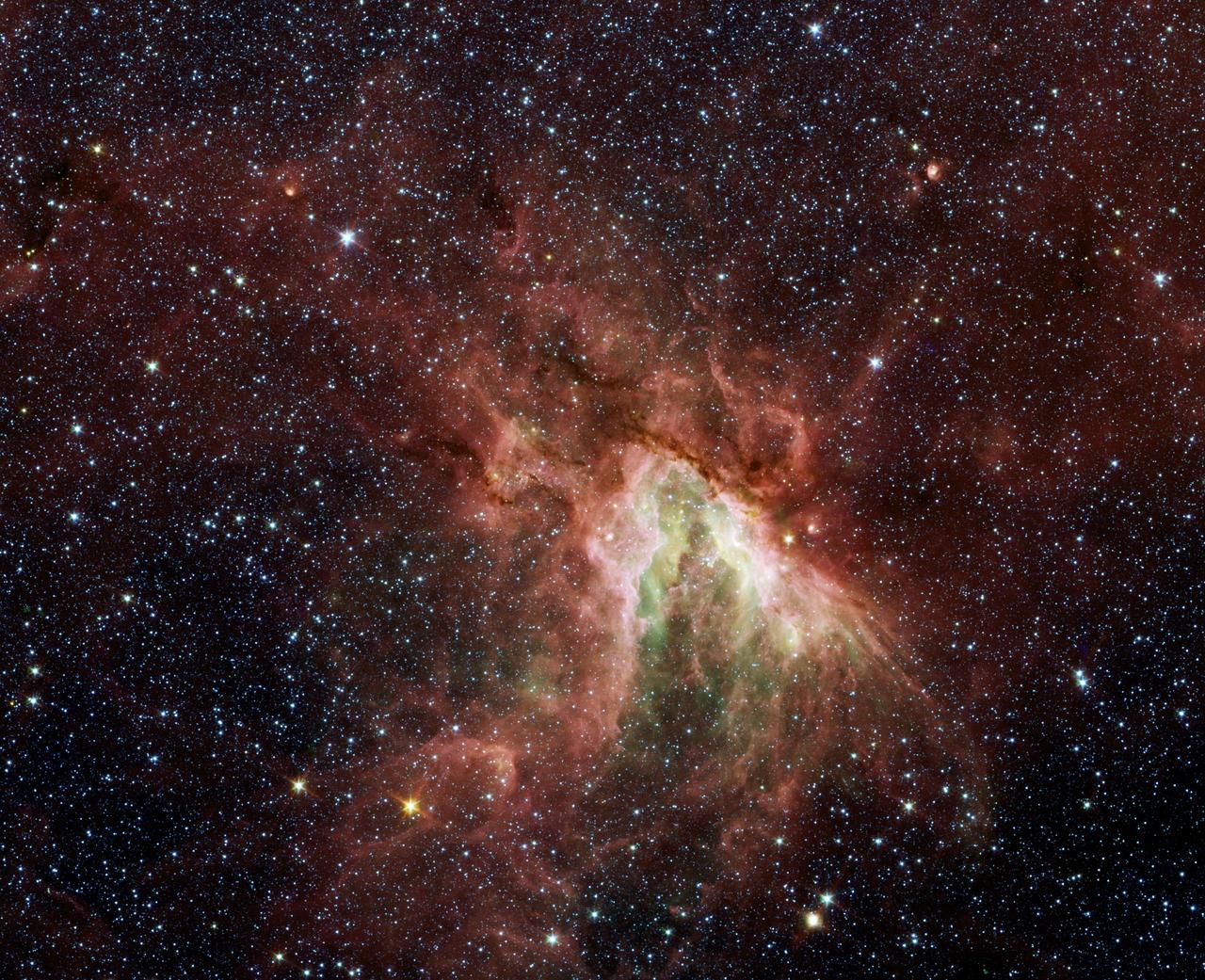
NASA Spitzer Space Telescope has captured a new, infrared view of the choppy star-making cloud called M17, or the Swan nebula.
Celestial Sea of Stars
This artist conception shows a nearly invisible ring around Saturn -- the largest of the giant planet many rings. It was discovered by NASA Spitzer Space Telescope.
Saturn Infrared Ring Artist Concept
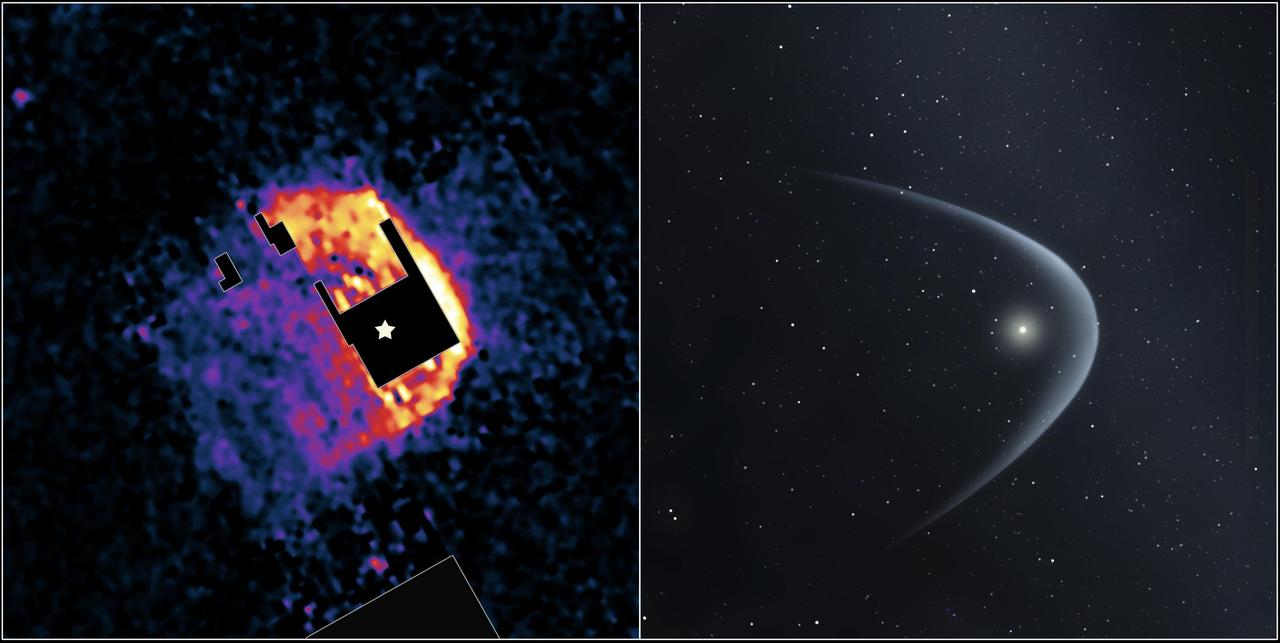
This image from NASA Spitzer Space Telescope left panel shows the bow shock of a dying star named R Hydrae, or R Hya, in the constellation Hydra.
Red Giant Plunging Through Space
A jet of gas firing out of a very young star can be seen ramming into a wall of material in this infrared image from NASA Spitzer Space Telescope.
Laser-Sharp Jet Splits Water
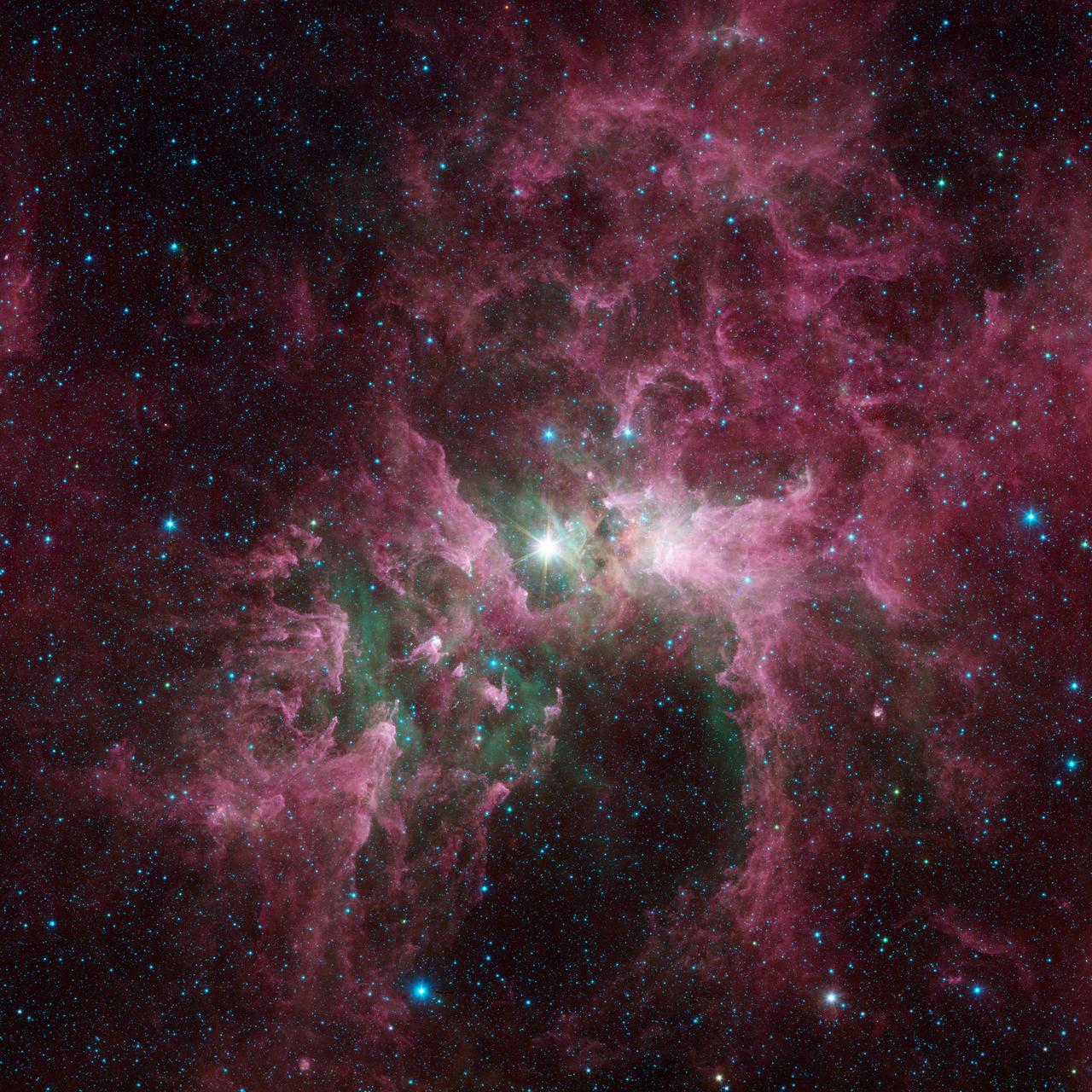
Massive stars can wreak havoc on their surroundings, as can be seen in this new view of the Carina nebula from NASAs Spitzer Space Telescope.
The Tortured Clouds of Eta Carinae
Using NASA Spitzer Space Telescope, astronomers have, for the first time, found signatures of silicate crystals around a newly forming protostar in the constellation of Orion.
Cosmic Fountain of Crystal Rain
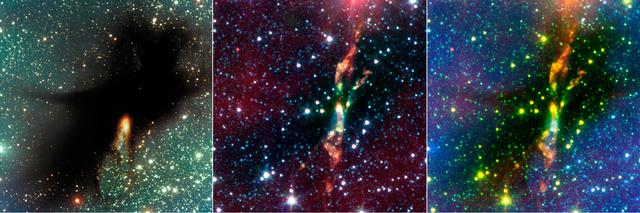
This image from NASA Spitzer Space Telescope transforms a dark cloud into a silky translucent veil, revealing the molecular outflow from an otherwise hidden newborn star.
Embedded Outflows from Herbig-Haro 46/47
Astronomers using NASA Spitzer Space Telescope found evidence that such quasar winds might have forged these dusty particles in the very early universe.
Dust in the Quasar Wind Artist Concept
With the help of NASA Spitzer Space Telescope, astronomers have discovered that what was thought to be a large asteroid called Don Quixote is in fact a comet.
Spitzer Spies a Comet Coma and Tail
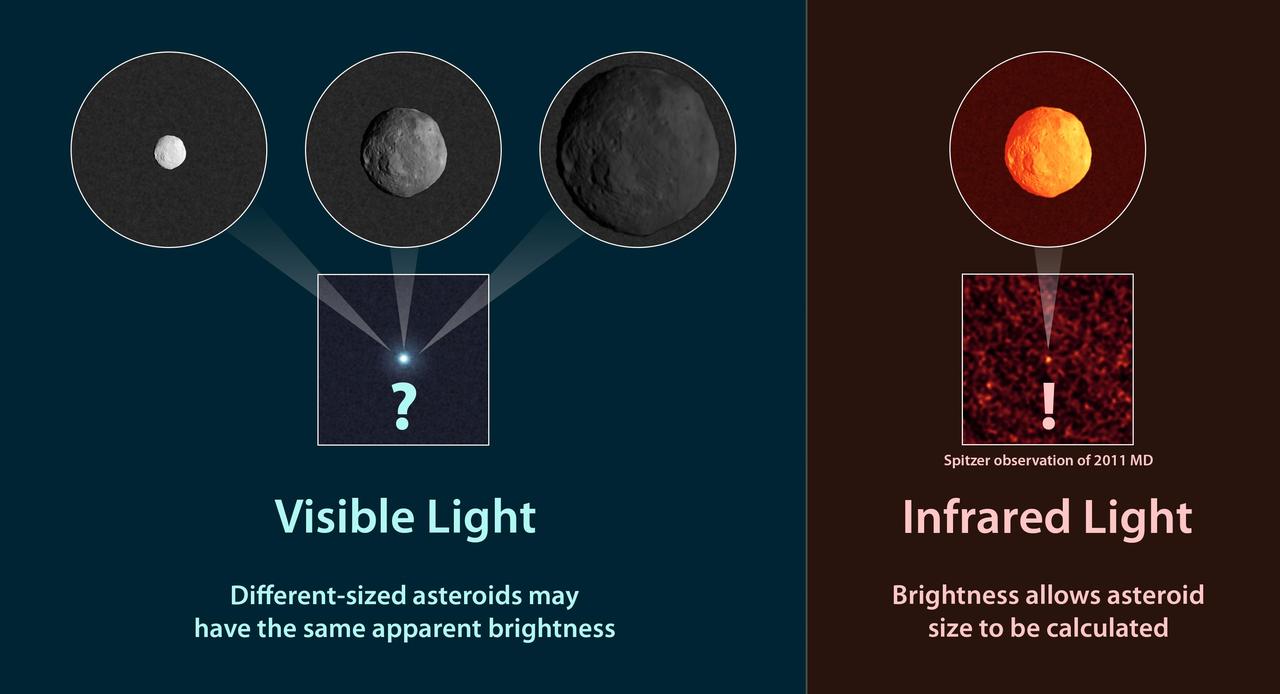
Observations of infrared light from NASA Spitzer Space Telescope coming from asteroids provide a better estimate of their true sizes than visible-light measurements.
How to Measure the Size of an Asteroid
This set of images from NASA Spitzer Space Telescope shows the Eagle nebula in different hues of infrared light. Each view tells a different tale.
Eagle Nebula Flaunts its Infrared Feathers
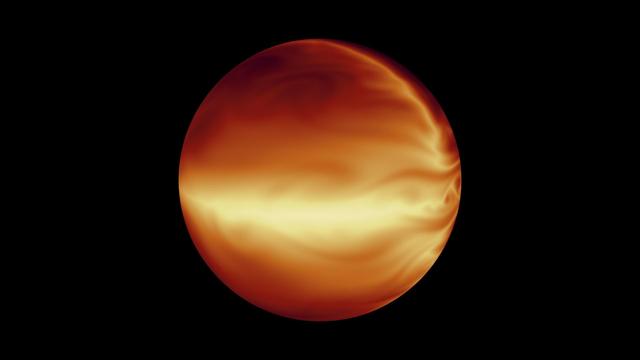
The turbulent atmosphere of a hot, gaseous planet known as HD 80606b is shown in this simulation based on data from NASA Spitzer Space Telescope.
Simulated Atmosphere of a Hot Gas Giant
NASA Spitzer Space Telescope image of a glowing stellar nursery provides a spectacular contrast to the opaque cloud seen in visible light inset.
Dark Globule in IC 1396 IRAC
NASA Spitzer Space Telescope has captured an image of an unusual comet that experiences frequent outbursts, which produce abrupt changes in brightness.
Comet Schwassmann-Wachmann I
NASA Spitzer Space Telescope has obtained the first infrared images of the dust disc surrounding Fomalhaut, the 18th brightest star in the sky.
Circumstellar Disk Around Fomalhaut
This false-color infrared image from NASA Spitzer Space Telescope shows little dwarf galaxies forming in the tails of two larger galaxies that are colliding together.
Dwarf Galaxies Swimming in Tidal Tails
This image from NASA Spitzer Space Telescope shows he Peony nebula star, a blazing ball of gas shines with the equivalent light of 3.2 million suns.
Peony Nebula Star Settles for Silver Medal
An infrared photo of the Small Magellanic Cloud taken by NASA Spitzer Space Telescope is shown in this artist illustration; an example of a planetary nebula, and a magnified depiction of buckyballs.
Extragalactic Space Balls Artist Concept
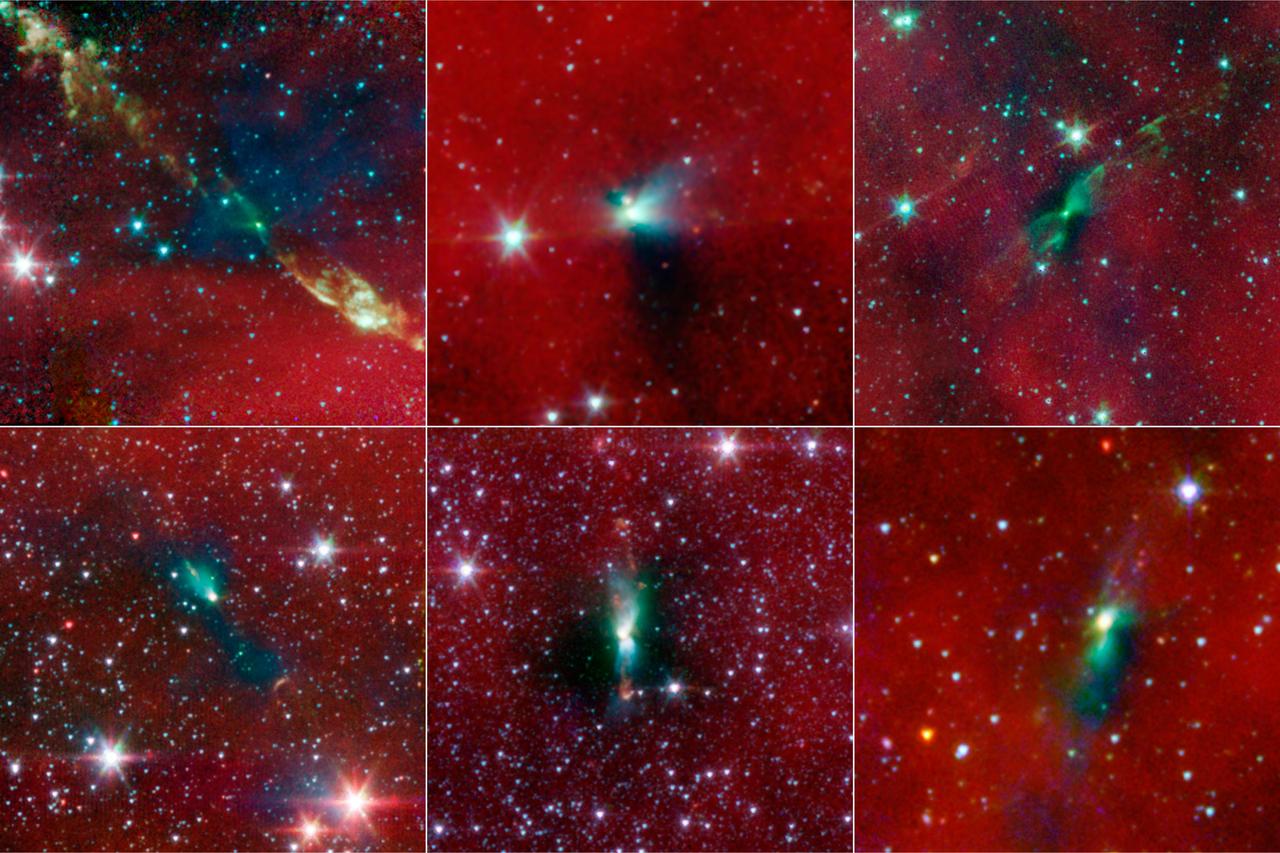
This image is one of six images taken by NASA Spitzer Space Telescope, showing that tight-knit twin, or binary stars might be triggered to form by asymmetrical envelopes.
Blobs House Twin Stars
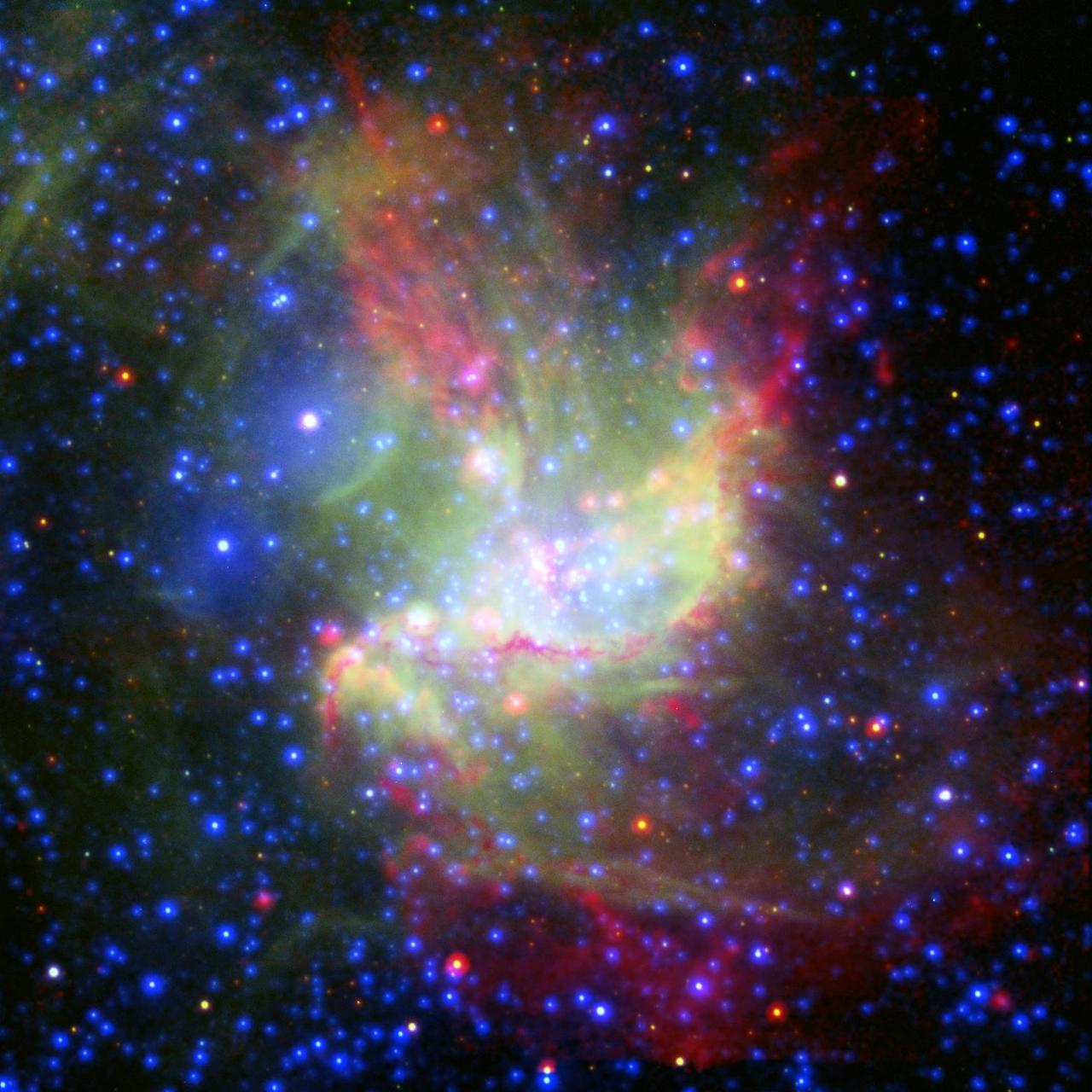
This painterly portrait of a star-forming cloud, called NGC 346, is a combination of multiwavelength light from NASA Spitzer Space Telescope, the European Southern Observatory New Technology Telescope, and the European Space Agency.
Stellar Work of Art
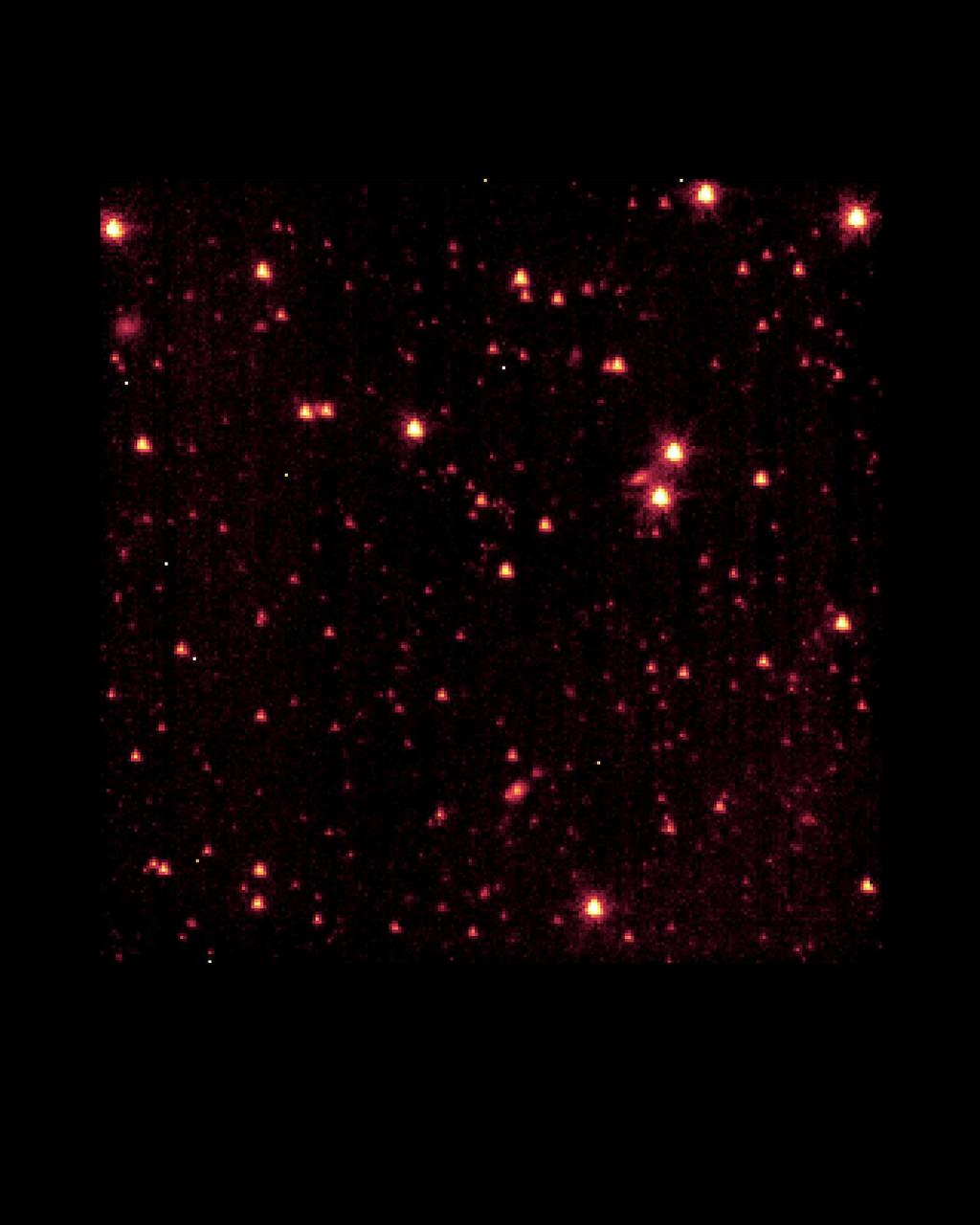
This engineering image derives from 100 seconds of observing time on one of the three science instruments aboard the Space InfraRed Telescope Facility (SIRTF). SIRTF was launched on August 25, and opened up its focal plane to starlight on August 30. This image was obtained as part of the instrument power-on sequence on September 1, one week after launch and a full month before the telescope is expected to reach optimal operating temperature and focus. The stars and galaxies seen in this image already attest to the observatory's great sensitivity in the infrared and to its proper operation.  The Space Infrared Telescope Facility (SIRTF) telescope was renamed the Spitzer Space Telescope on December 18, 2003, after the late Dr. Lyman Spitzer, in a contest which was open to the general public.   http://photojournal.jpl.nasa.gov/catalog/PIA04724
SIRTF Aliveness
This graph shows the brightness variations of the brown dwarf named 2MASSJ22282889-431026 measured simultaneously by both NASA Hubble and Spitzer space telescopes.
Probing Brown Dwarf Layers
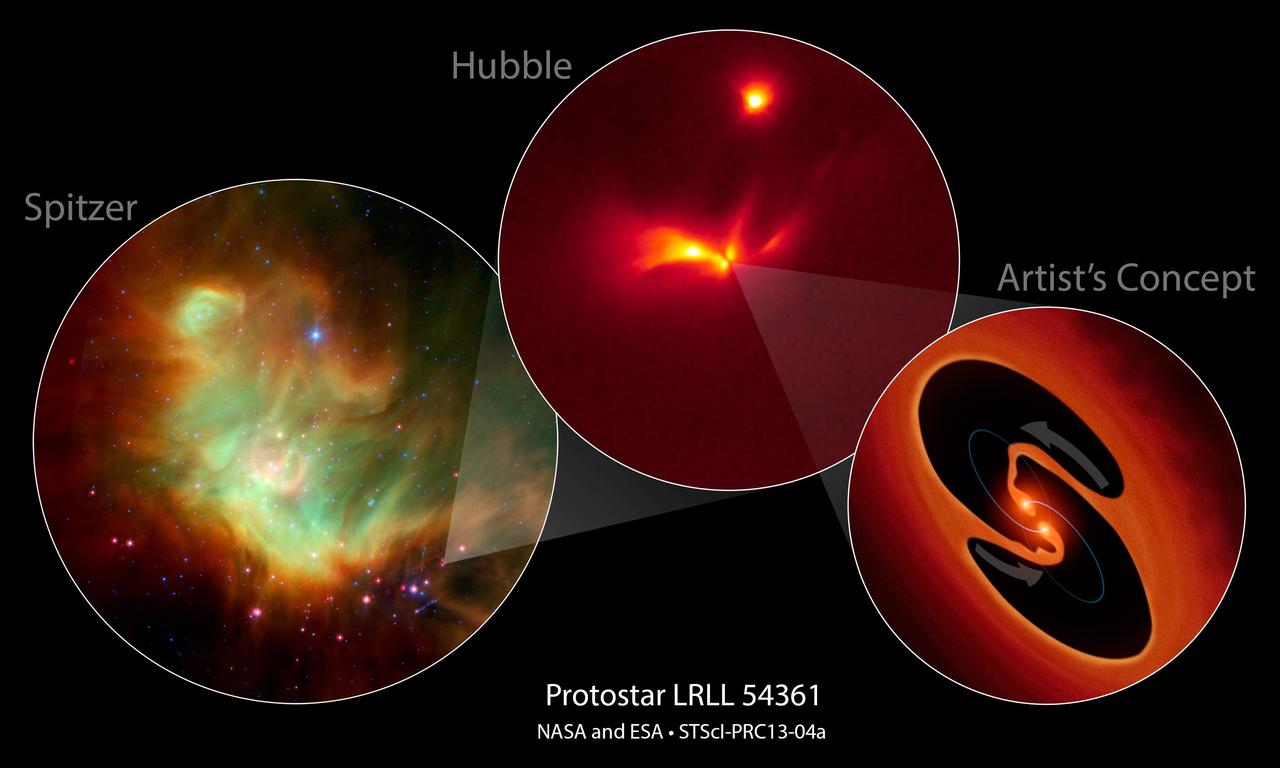
NASA Spitzer and Hubble space telescopes have teamed up to uncover a mysterious infant star that behaves like a police strobe light.
Protostar LRLL 54361
At the time of launch, the Spitzer Space Telescope bore its original name: the Space Infrared Telescope Facility (SIRTF). It's shown here in the mobile service tower on Launch Pad 17-B, Cape Canaveral Air Force Station, waiting for encapsulation.  https://photojournal.jpl.nasa.gov/catalog/PIA23649
Space Infrared Telescope Facility (SIRTF) Before Launch
This artist's concept shows NASA's Spitzer Space Telescope. Spitzer begins its "Beyond" mission phase on Oct. 1, 2016. Spitzer is depicted in the orientation it assumes to establish communications with ground stations.  Spitzer is over 130 million miles (210 million kilometers) away from Earth, or about 1.5 times the distance between Earth and the Sun. The selected research proposals for Spitzer's Beyond phase include a variety of objects that the mission was not originally planned to address -- such as galaxies in the early universe, the black hole at the center of the Milky Way and exoplanets.  Spitzer faces increasing challenges and risks in its Beyond phase. To enable this riskier mode of operations, the mission team will have to override some autonomous safety systems. Mission engineers are hard at work preparing for these new challenges.  http://photojournal.jpl.nasa.gov/catalog/PIA20913
Spitzer Beyond Artist Concept
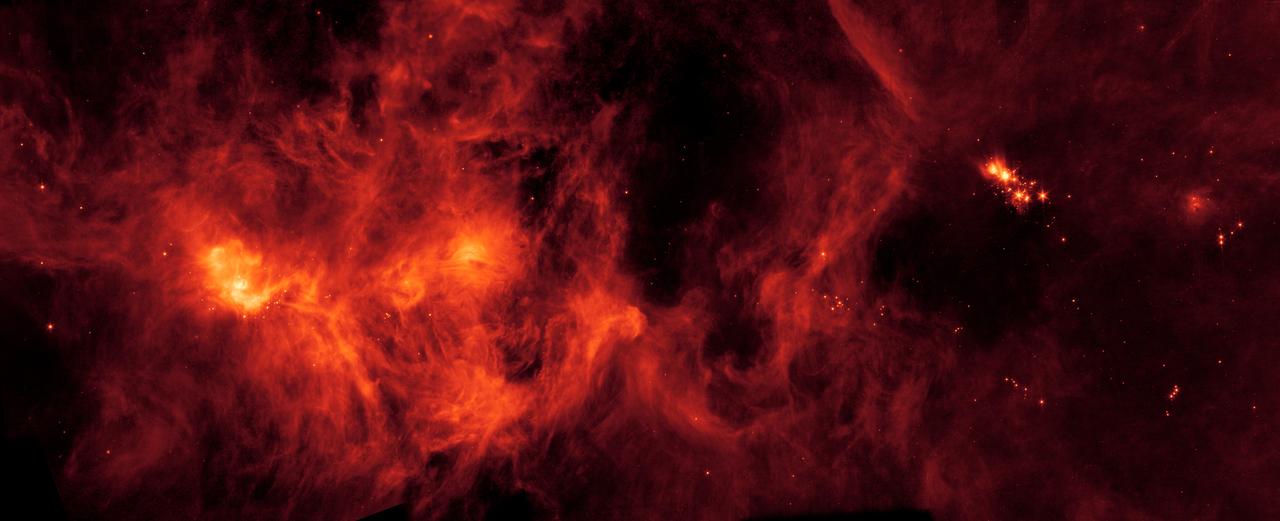
A collection of gas and dust over 500 light-years across, the Perseus Molecular Cloud hosts an abundance of young stars. It was imaged here by the NASA's Spitzer Space Telescope.  https://photojournal.jpl.nasa.gov/catalog/PIA23405
Perseus Molecular Cloud
NASA Spitzer Space Telescope has detected the solid form of buckyballs in space for the first time. To form a solid particle, the buckyballs must stack together, as illustrated in this artist concept showing the very beginnings of the process.
Building a Buckyball Particle in Space Artist Concept
This is an image from NASA Spitzer Space Telescope of stars and galaxies in the Ursa Major constellation. This infrared image covers a region of space so large that light would take up to 100 million years to travel across it.
The Universe First Fireworks
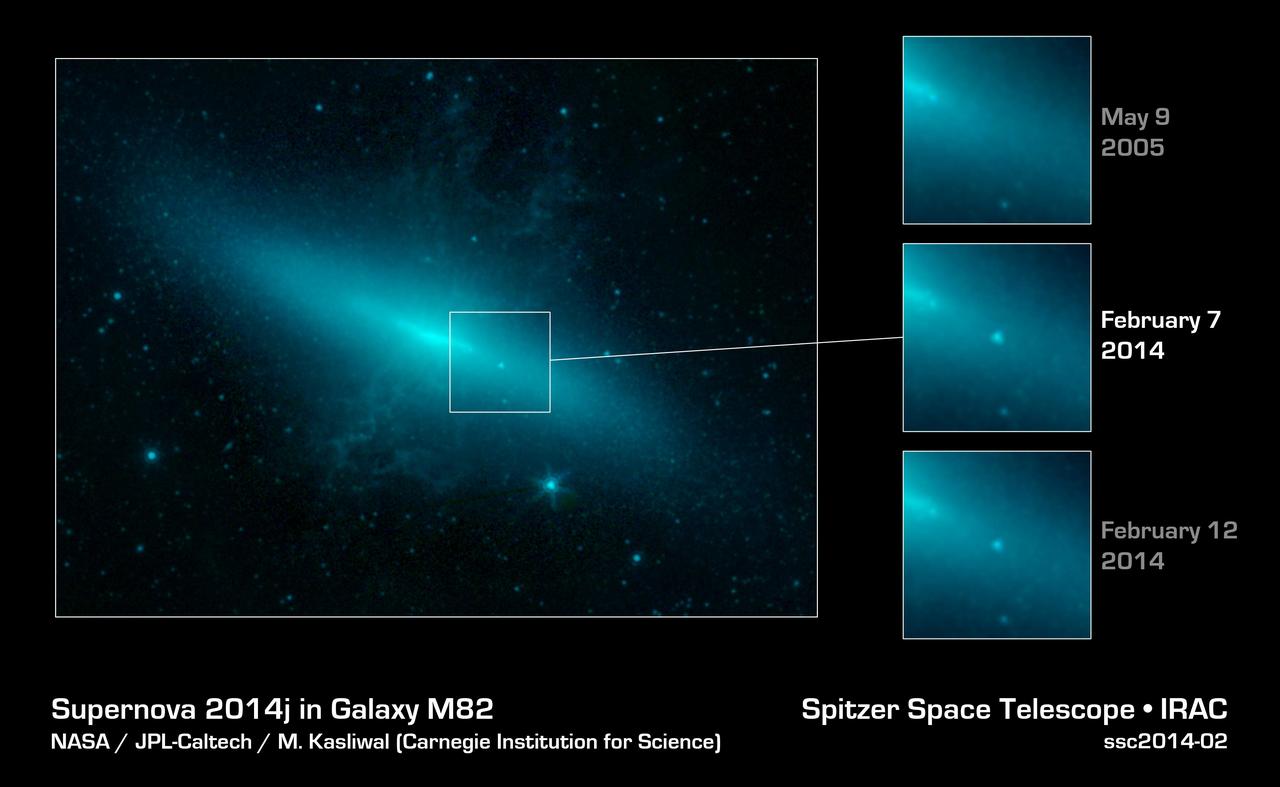
The closest supernova of its kind to be observed in the last few decades, M82 or the Cigar galaxy, has sparked a global observing campaign involving legions of instruments on the ground and in space, including NASA Spitzer Space Telescope.
Seeing Through a Veil of Dust
This image illustrates that buckyballs -- discovered in space by NASA Spitzer Space Telescope -- closely resemble old fashioned, black-and-white soccer balls, only on much smaller scales.
Mini Soccer Balls in Space
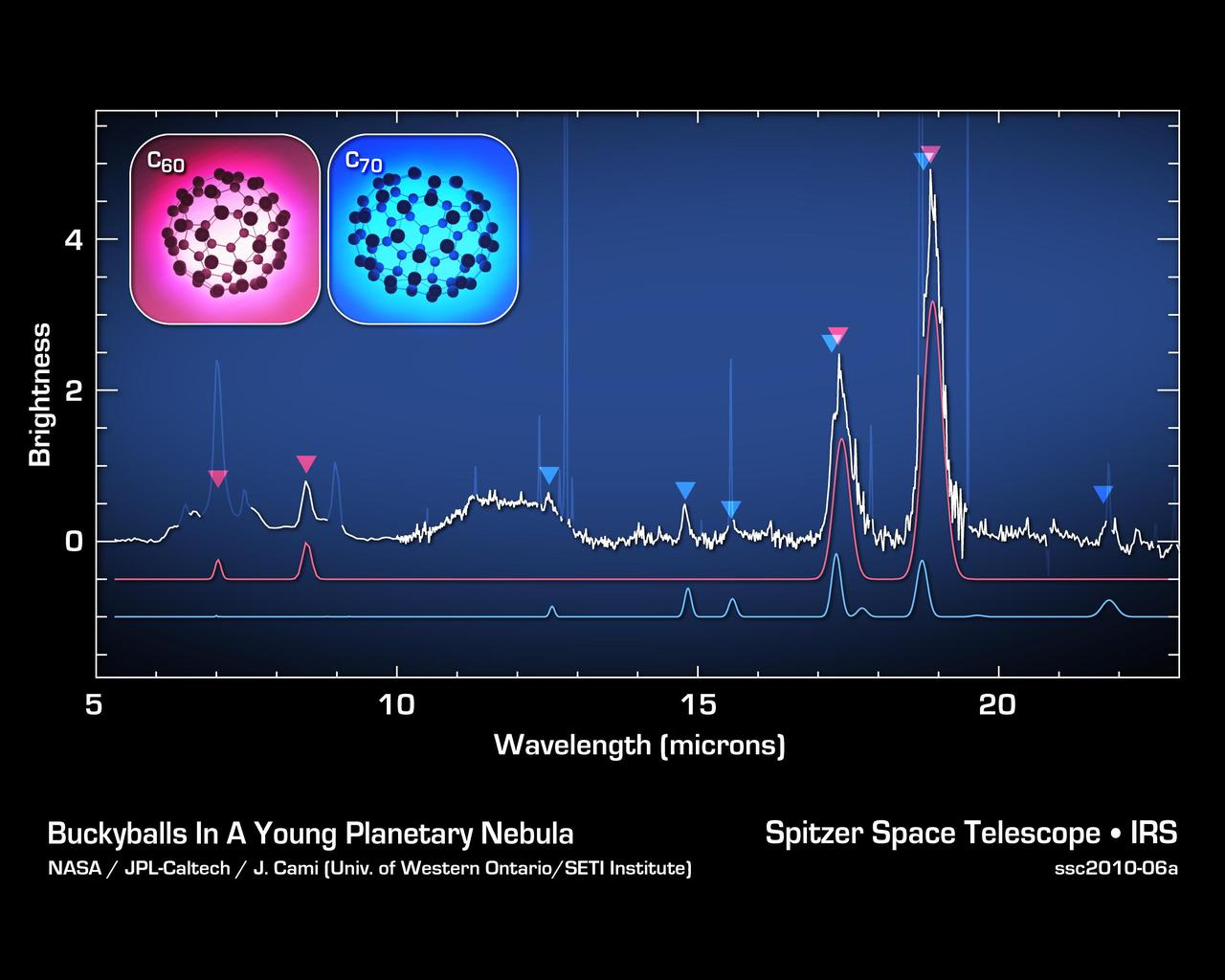
These data from NASA Spitzer Space Telescope show the signatures of buckyballs in space. Buckyballs, also called C60 or buckministerfullerenes, after architect Buckminister Fuller geodesic domes.
Jiggling Soccer-Ball Molecules in Space
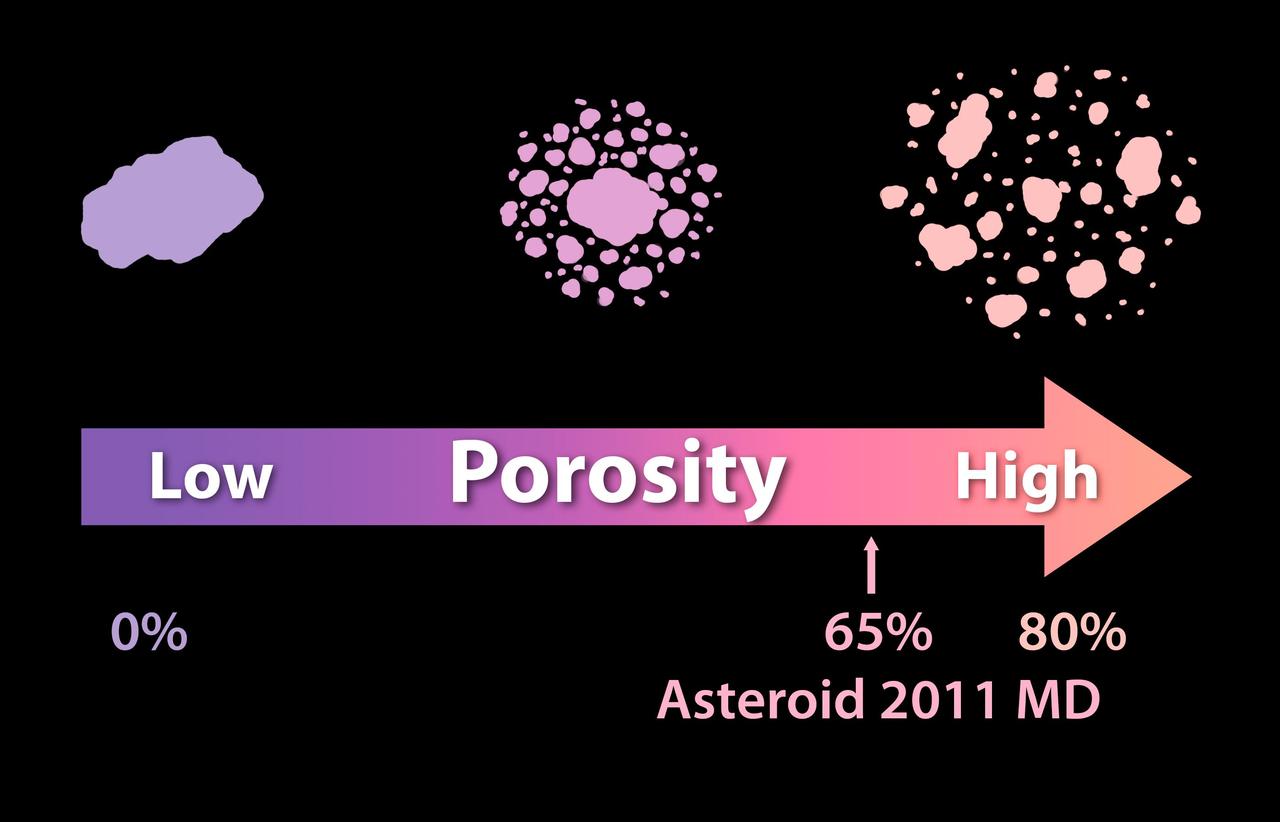
Observations from NASA Spitzer Space Telescope, taken in infrared light, have helped to reveal that a small asteroid called 2011 MD is made-up of two-thirds empty space.
Solid as a Rock? Porosity of Asteroids
This image from NASA Spitzer Space Telescope shows a computer simulation of the planet HD 80606b from an observer located at a point in space lying between the Earth and the HD 80606 system.
Tour of Planet with Extreme Temperature Swings
NASA Great Observatories continue Galileo legacy with stunning images and breakthrough science from the Hubble Space Telescope, the Spitzer Space Telescope, and the Chandra X-ray Observatory.
NASA Great Observatories Celebrate the International Year of Astronomy
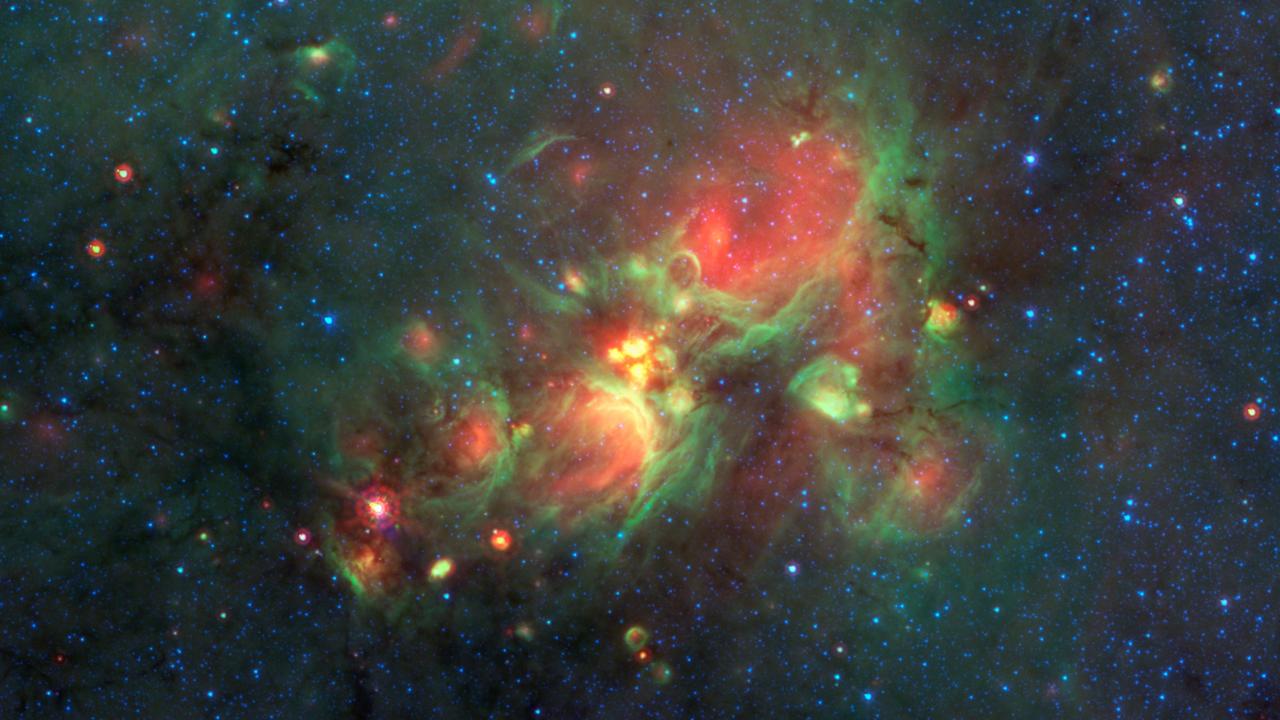
A star-forming region shines from the considerable distance of more than 30,000 light-years away in the upper left of this image from NASA Spitzer Space Telescope. This image is a combination of data from Spitzer and the Two Micron All Sky Survey.
Beastly Stars and a Bubble
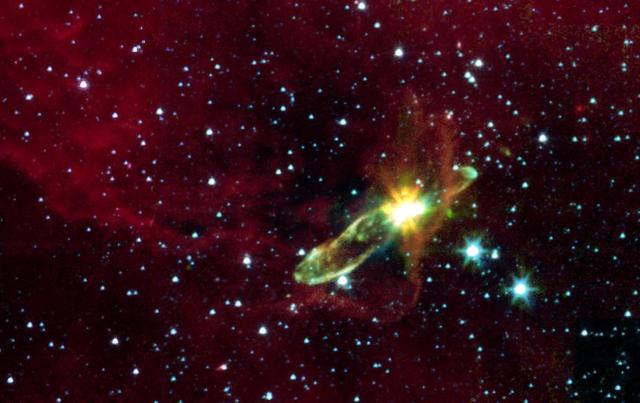
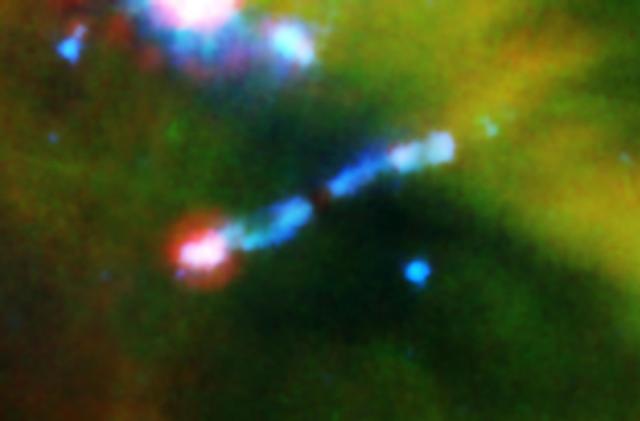
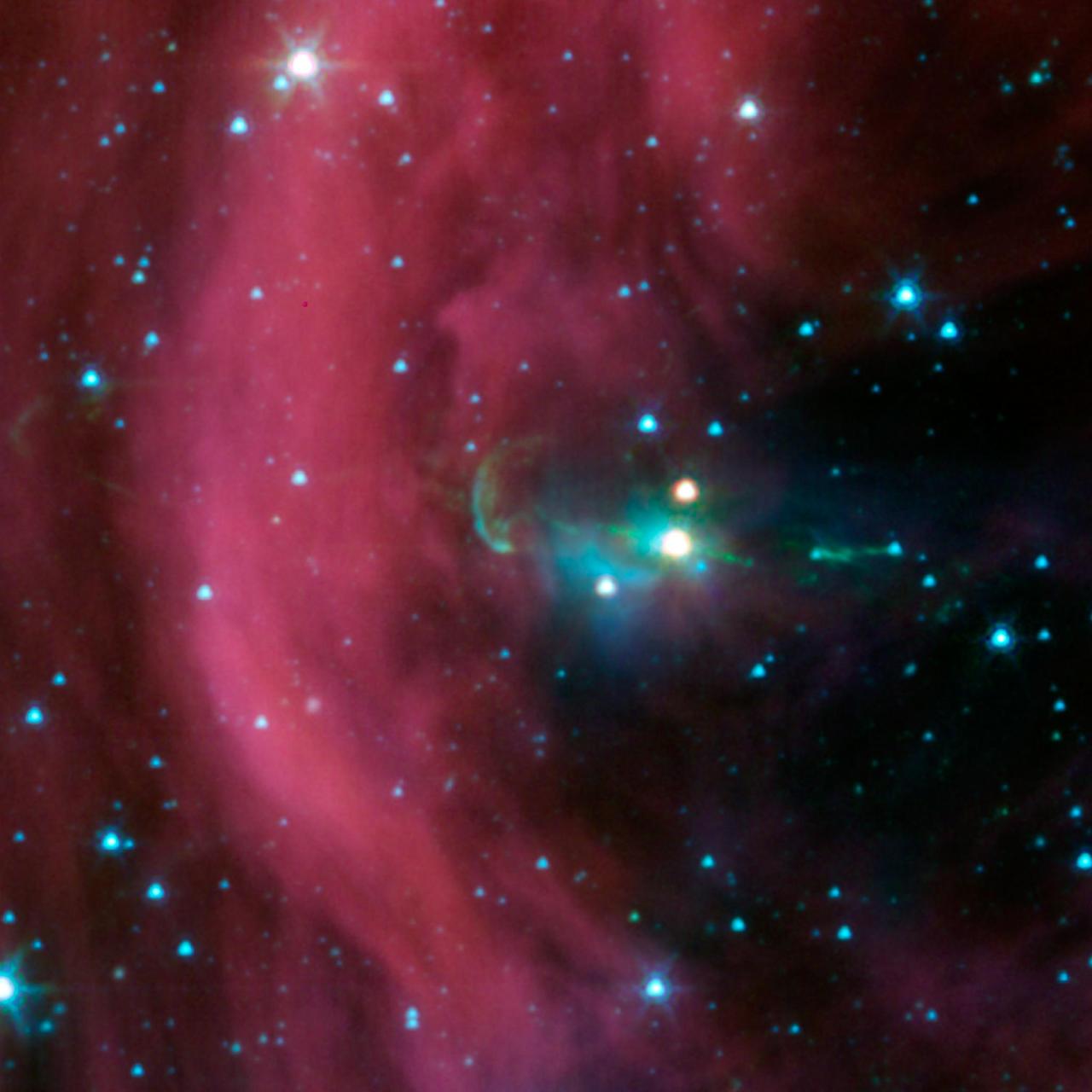
NASA Spitzer Space Telescope took this image of a baby star sprouting two identical jets green lines emanating from fuzzy star. The left jet was hidden behind a dark cloud, which Spitzer can see through.
It Twins! Spitzer Finds Hidden Jet
Newborn stars, hidden behind thick dust, are revealed in this image of a section of the Christmas Tree cluster from NASA Spitzer Space Telescope, created in joint effort between Spitzer infrared array camera and multiband imaging photometer instrument
Stellar Snowflake Cluster
This dazzling infrared image from NASA Spitzer Space Telescope shows hundreds of thousands of stars crowded into the swirling core of our spiral Milky Way galaxy.
A Cauldron of Stars at the Galaxy Center
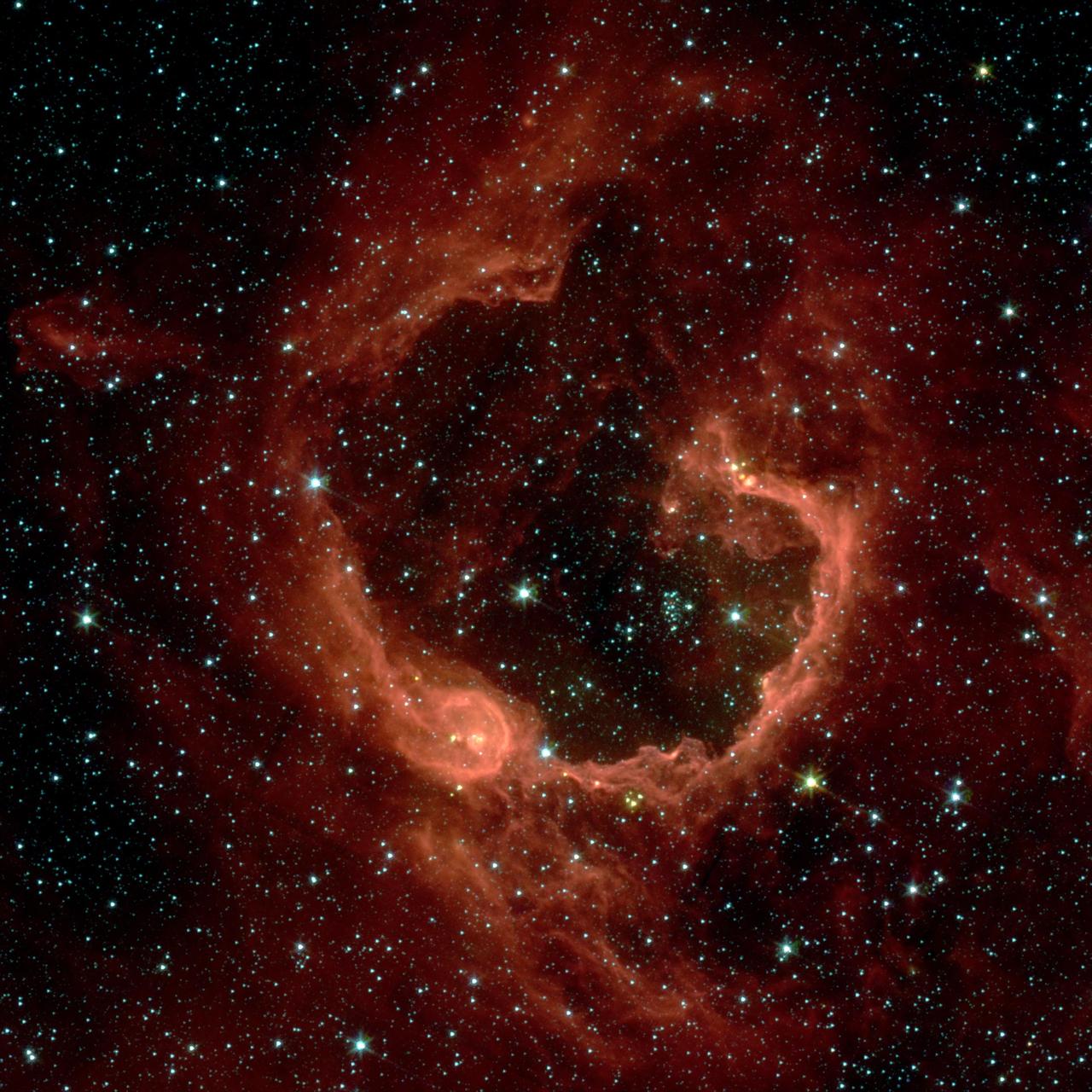
NASA Spitzer Space Telescope sees RCW 79 in the southern Milky Way, 17,200 light-years from Earth in the constellation Centaurus.
A Bubble Bursts
This artist diagram based on observations from NASA Spitzer Space Telescope compares the Epsilon Eridani system to our own solar system. The two systems are structure
Young Solar System in the Making Artist Concept
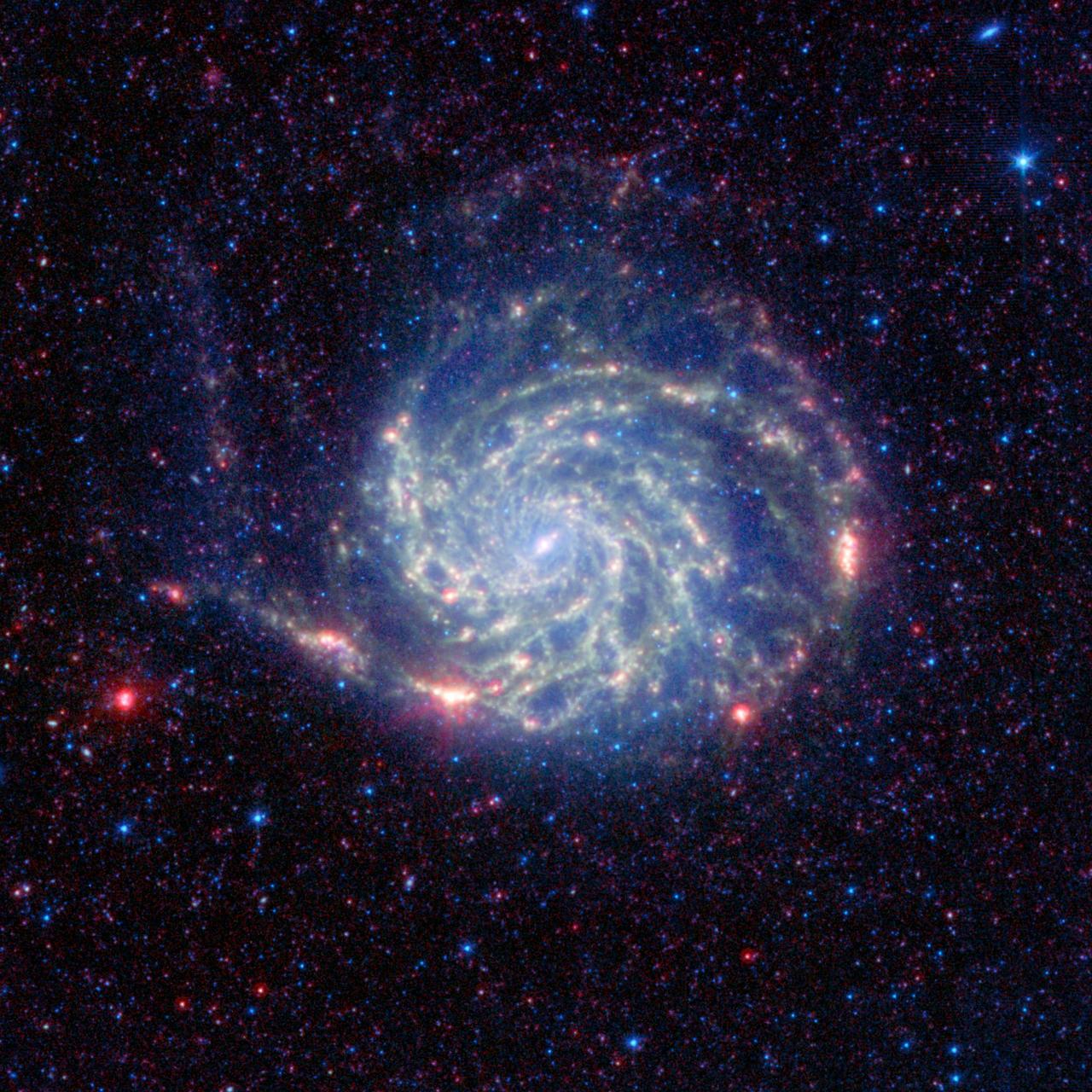
The Pinwheel galaxy, otherwise known as Messier 101, sports bright reddish edges in this new infrared image from NASA Spitzer Space Telescope.
No
This plot of data from NASA Spitzer Space Telescopes shows that asteroid dust around a dead white dwarf star contains silicates -- a common mineral on Earth.
Silicates in Alien Asteroids
Newborn stars peek out from beneath their natal blanket of dust in this dynamic image of the Rho Ophiuchi dark cloud from NASA Spitzer Space Telescope.
Young Stars in Their Baby Blanket of Dust
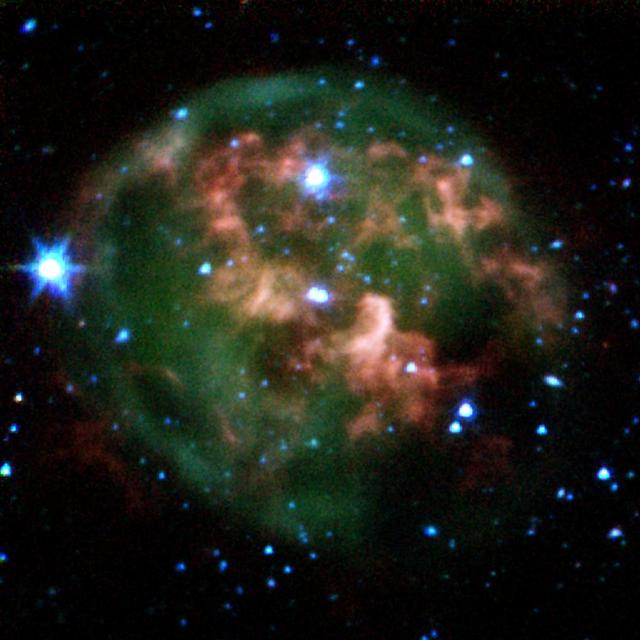
This false-color image from NASA Spitzer Space Telescope shows a dying star center surrounded by a cloud of glowing gas and dust.
Ring of Stellar Death
This image shows the Andromeda galaxy, first as seen in visible light by the National Optical Astronomy Observatory, then as seen in infrared by NASA Spitzer Space Telescope.
Fade to Red
These false-color image taken by NASA Spitzer Space Telescope shows the South Pillar region of the star-forming region called the Carina Nebula.
All Pillars Point to Eta