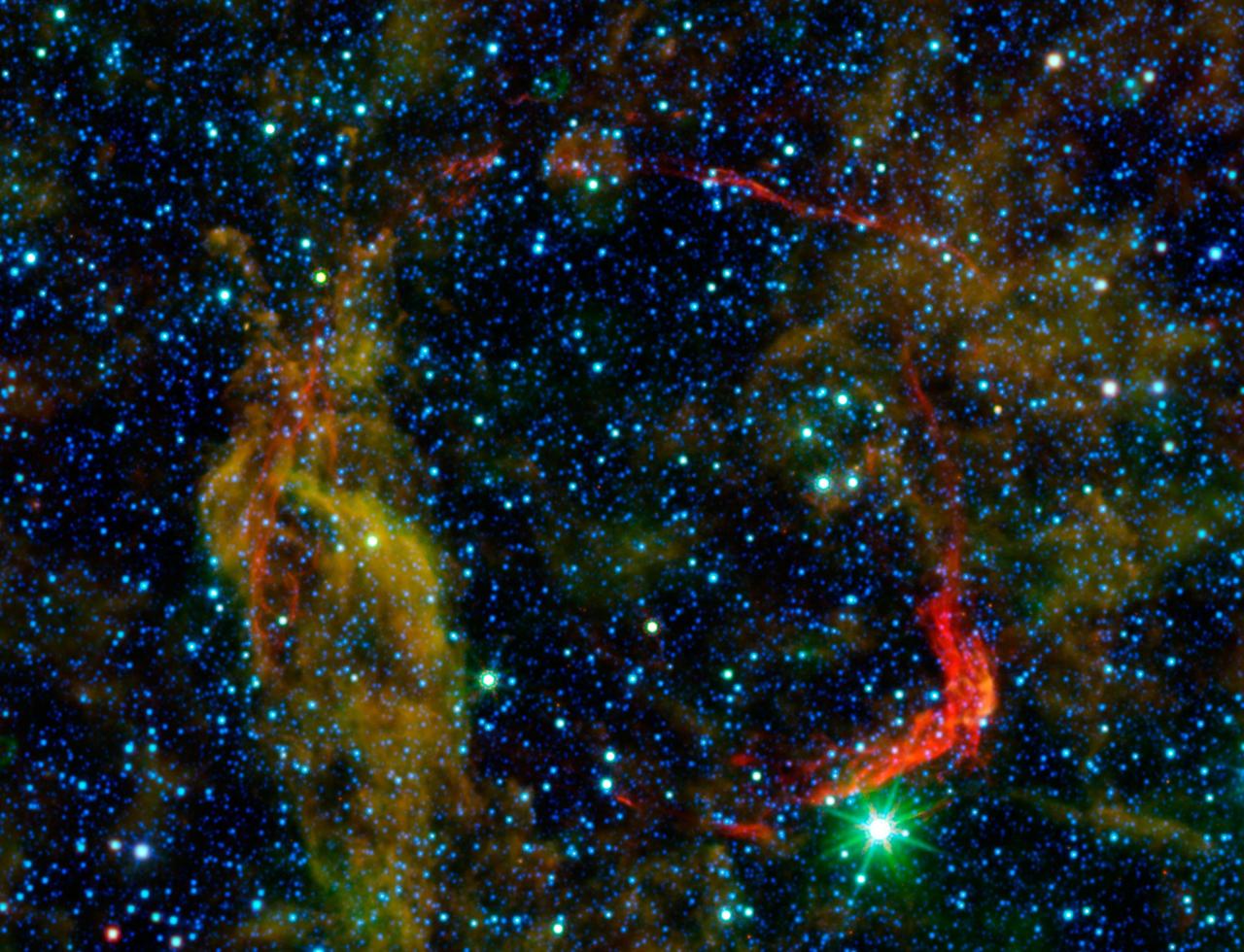
Infrared images from NASA Spitzer Space Telescope and Wide-field Infrared Survey Explorer are combined in this image of RCW 86, the dusty remains of the oldest documented example of an exploding star, or supernova.
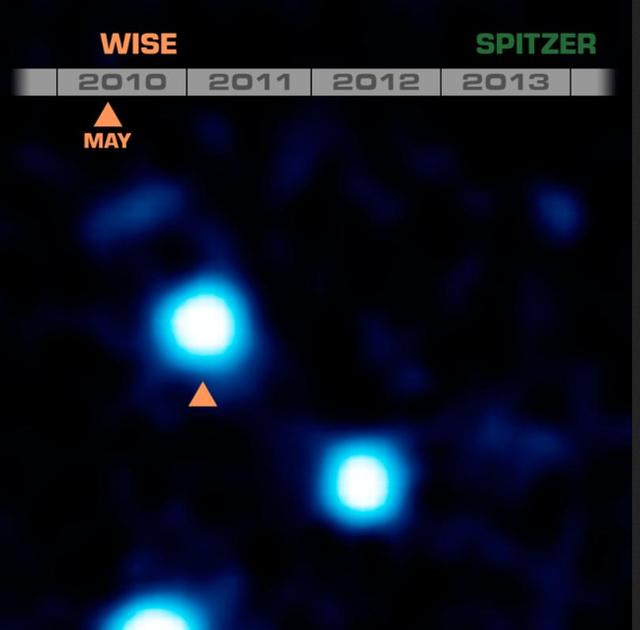
This frame from an animation shows the coldest brown dwarf yet seen, and the fourth closest system to our sun. Called WISE J085510.83-071442.5, this dim object was discovered through its rapid motion across the sky.
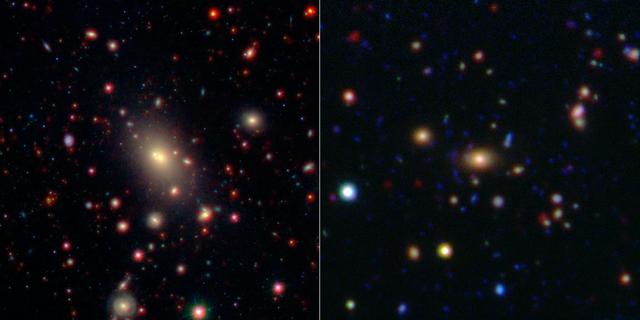
This image shows two of the galaxy clusters observed by NASA WISE and Spitzer Space Telescope missions. Galaxy clusters are among the most massive structures in the universe.
This artist concept shows hundreds of brown dwarfs deep red, expected to be added to the population of known stars in our solar neighborhood. Our sun and other known stars appear white, yellow or red.
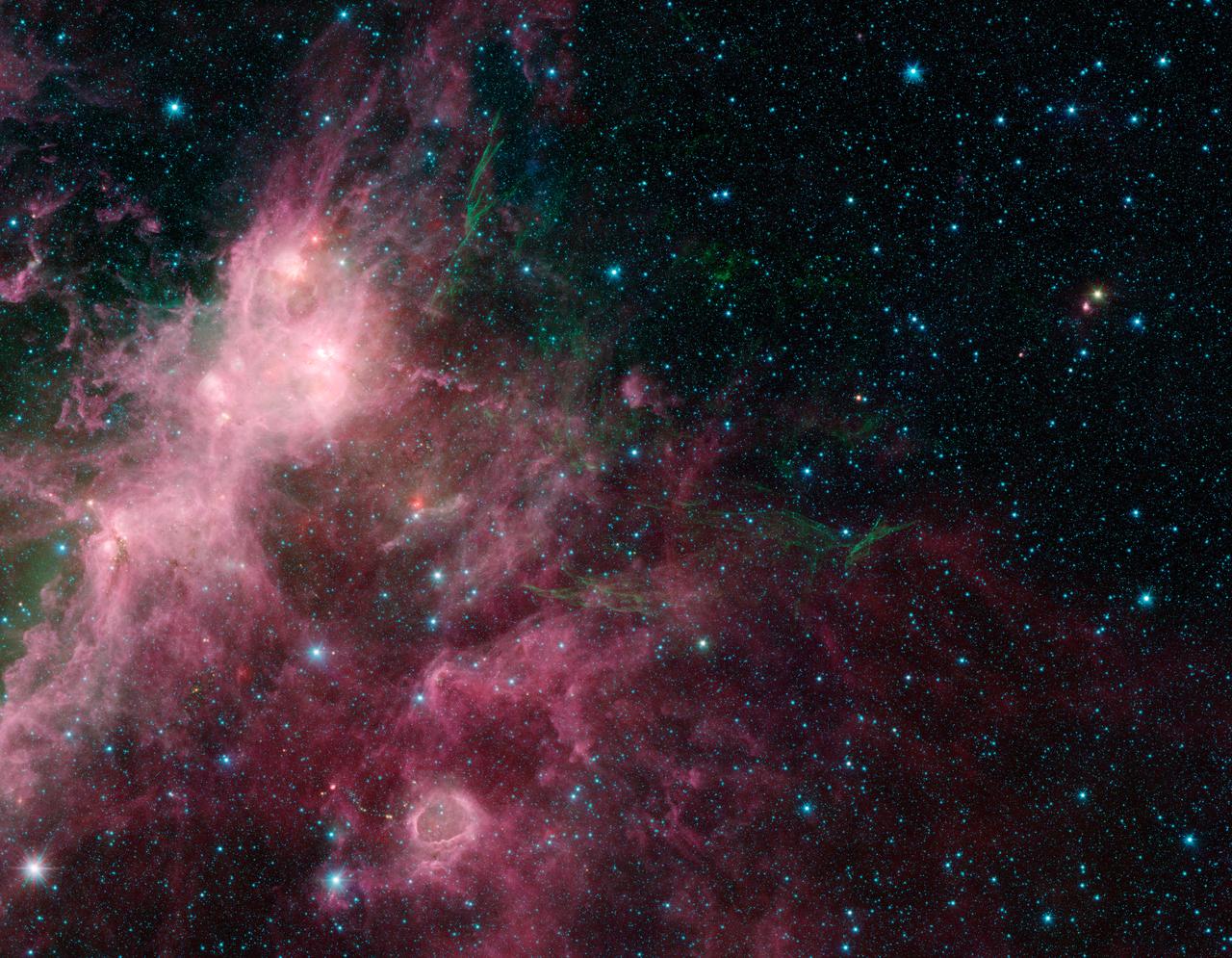
In what may look to some like an undersea image of coral and seaweed, a new image from NASA Spitzer Space Telescope is showing the birth and death of stars.
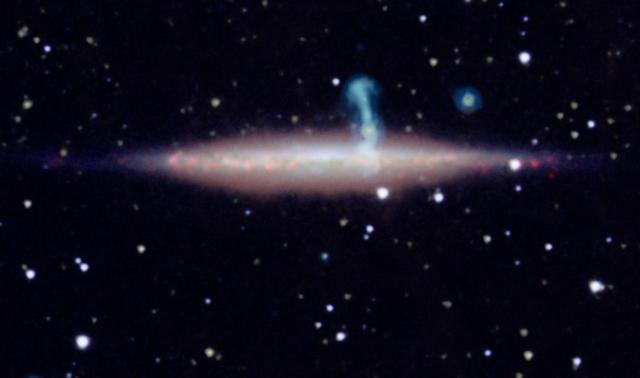
New detailed radio data from the NRAO Jansky Very Large Array VLA revealed that the large perpendicular extension of UGC 10288 halo blue is really a distant background galaxy with radio jets.
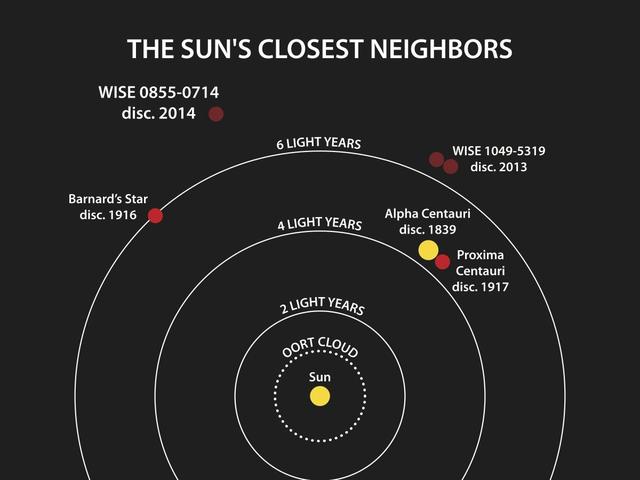
This diagram illustrates the locations of the star systems closest to the sun. The year when the distance to each system was determined is listed after the system name.
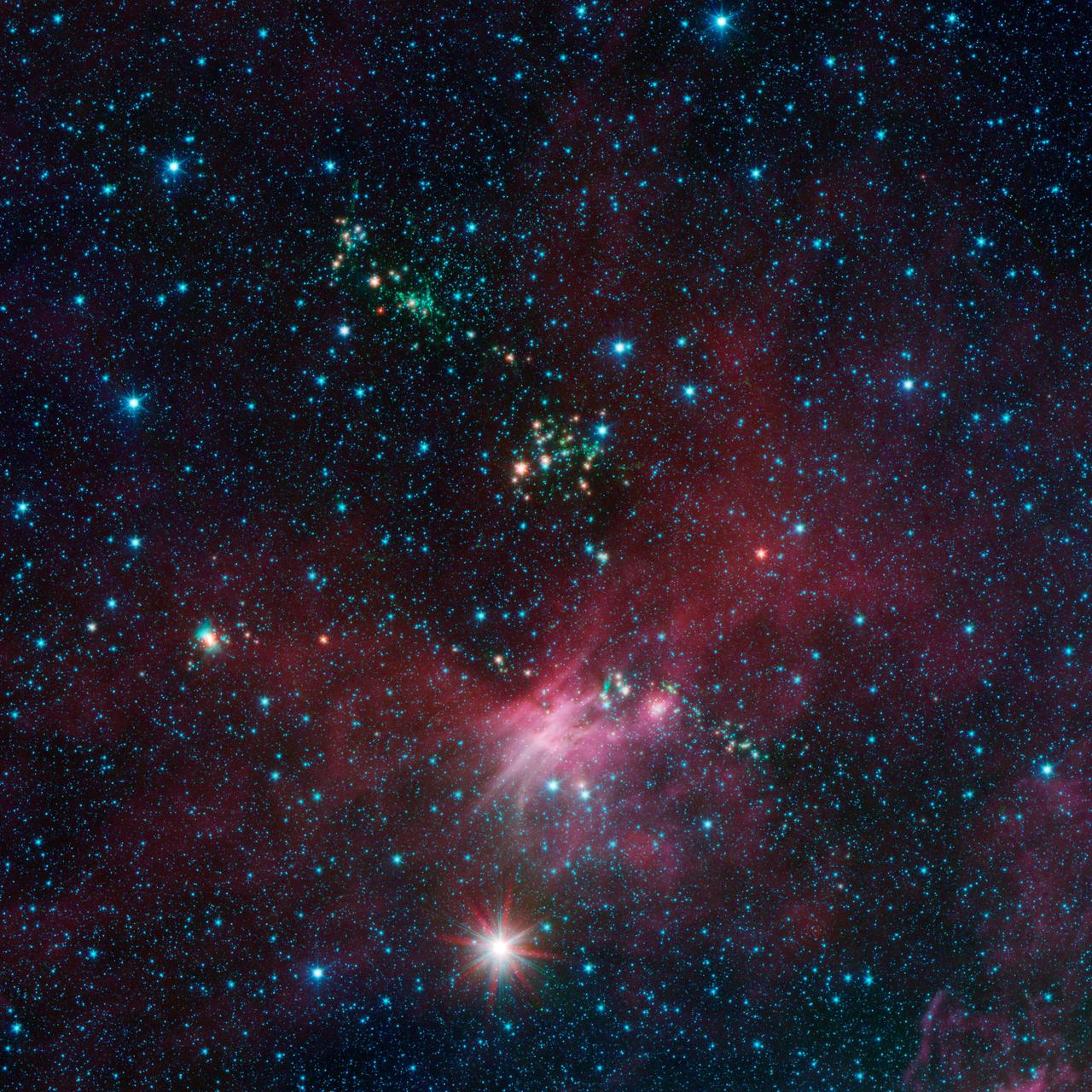
Dozens of newborn stars sprouting jets from their dusty cocoons have been spotted in images from NASA Spitzer Space Telescope. This view shows a portion of sky near Canis Major.