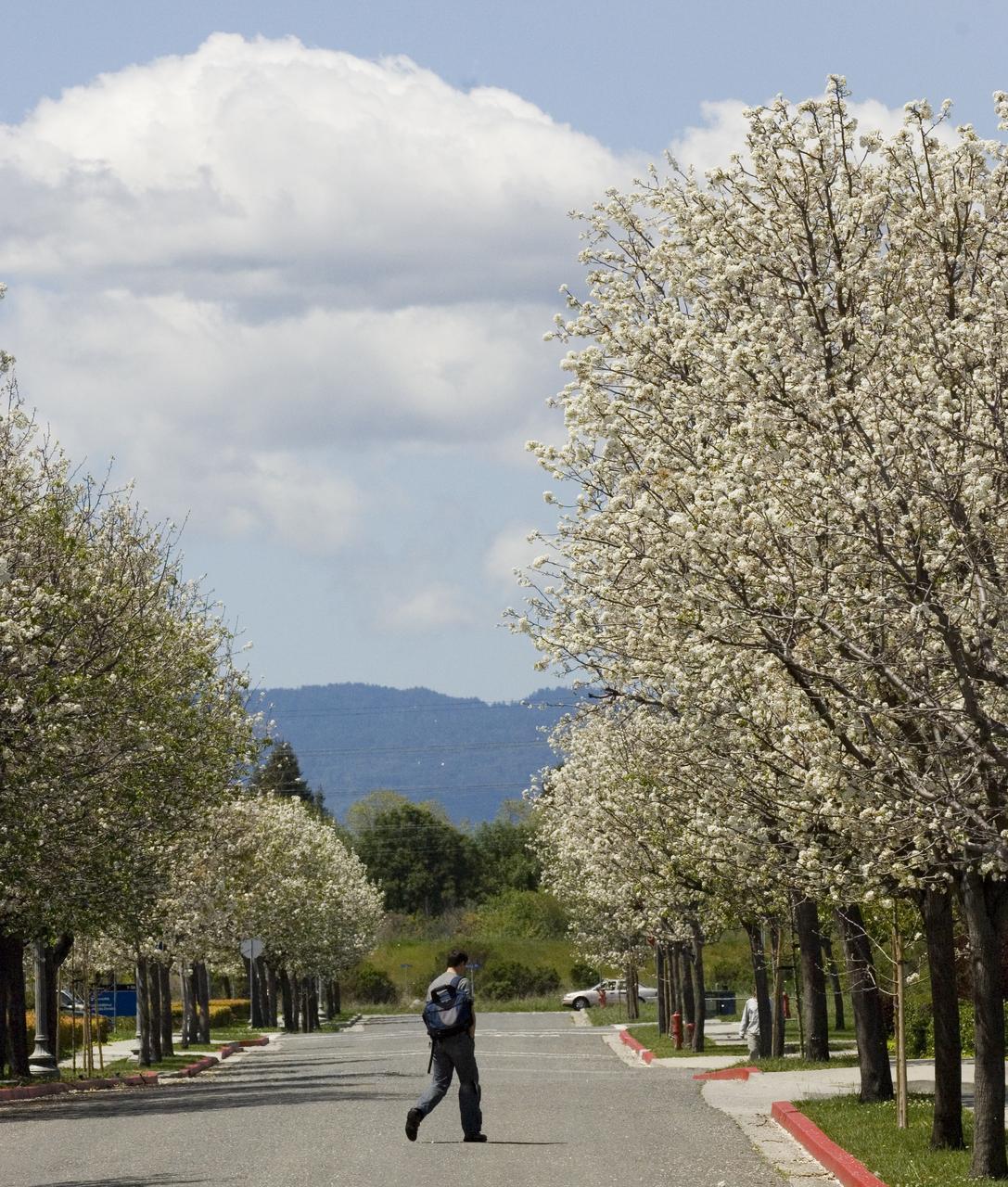
Spring comes to Ames Research Center, an employee walks among the blossoming trees.

Spring comes to Ames Research Center. Kathy Reda walks among the blossoming trees.

Spring comes to Ames Research Center, trees are blossoming, and the resident Mallard ducks are out and about.
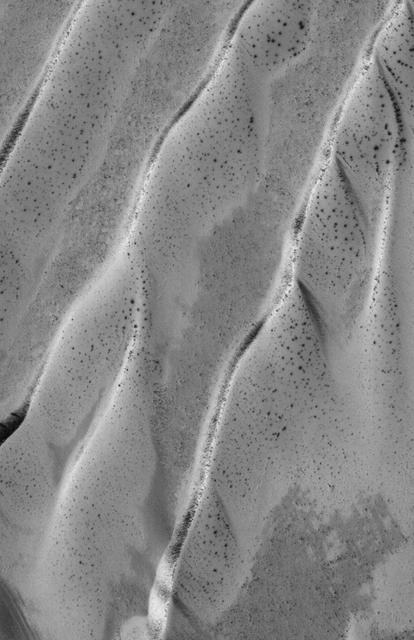
Spring Defrosting
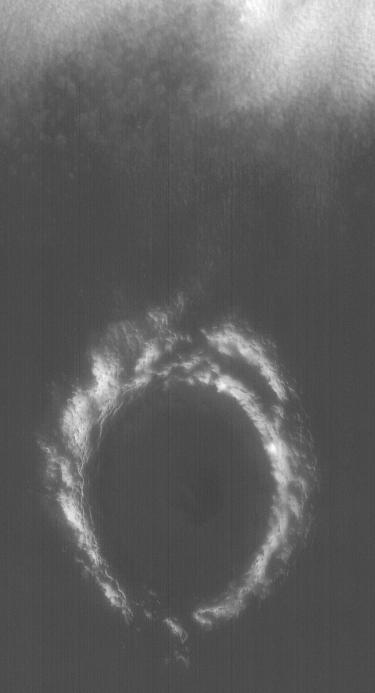
Lomonosov In Spring
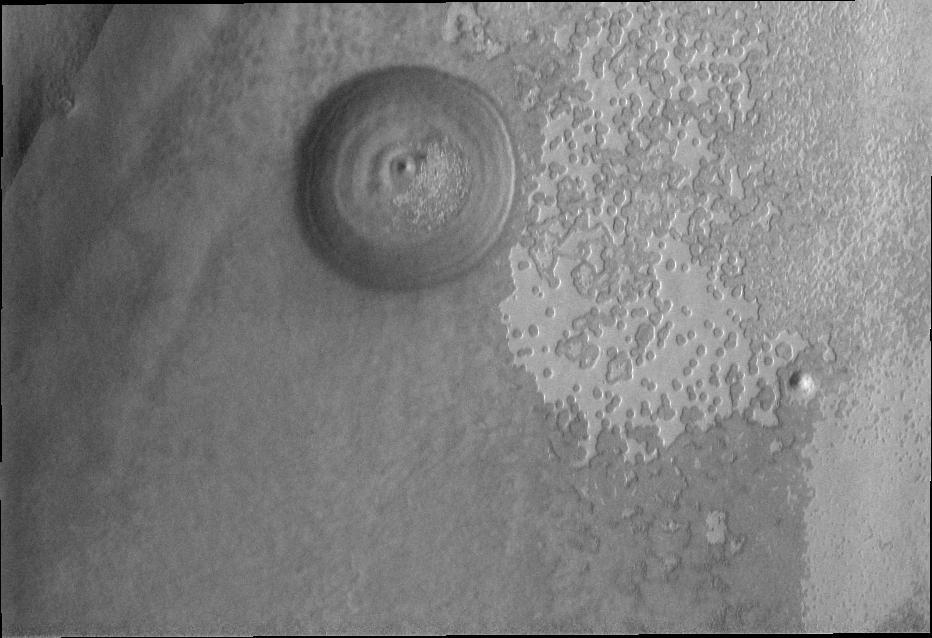
Southern Spring
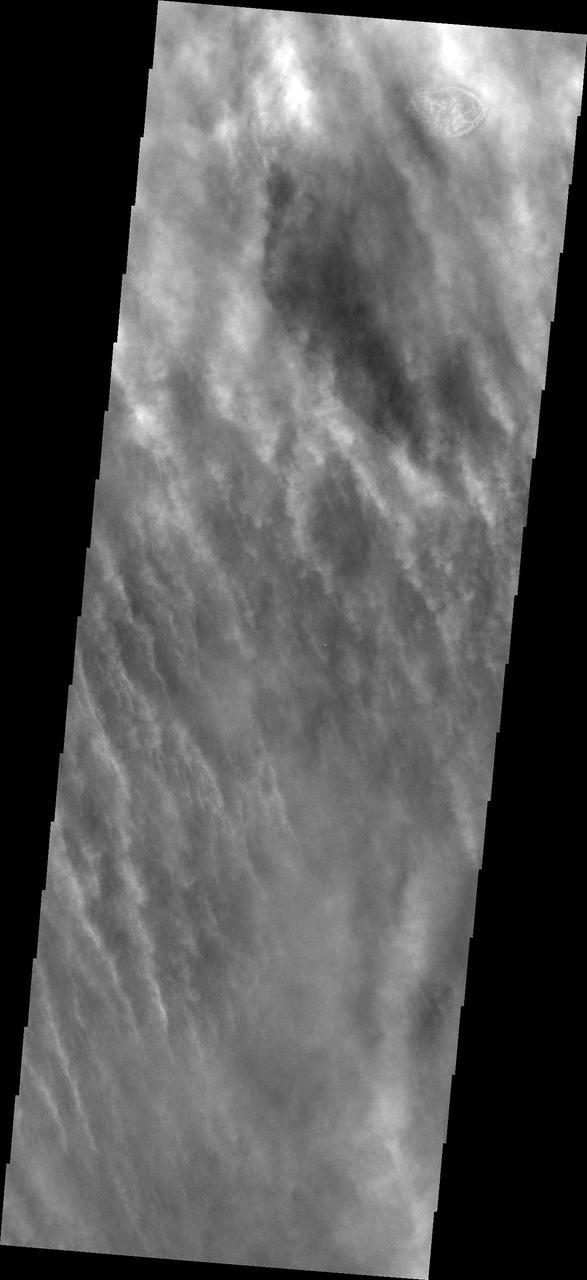
Spring Storms
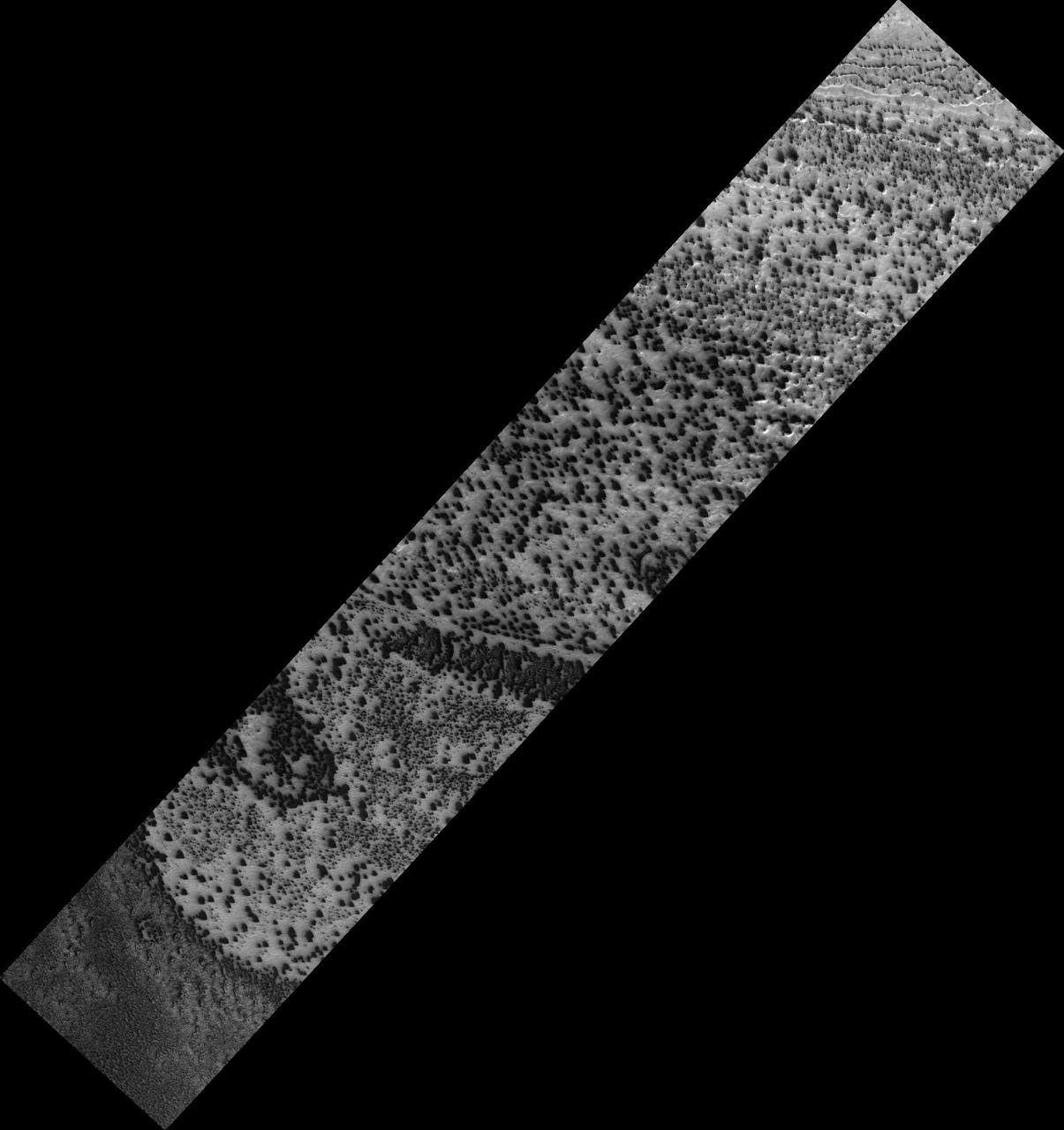
Southern Spring

Spring Storms
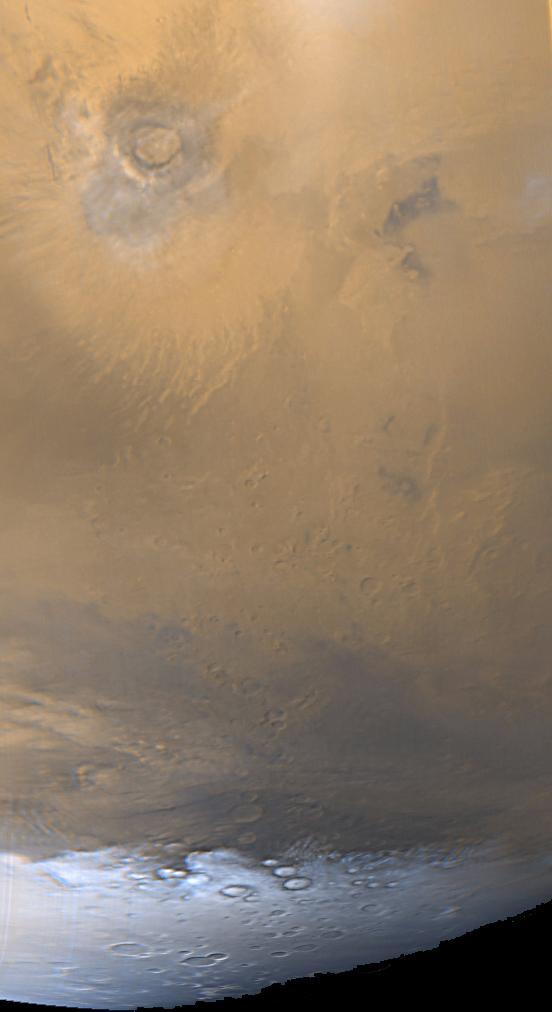
Southern Mars: It Spring!
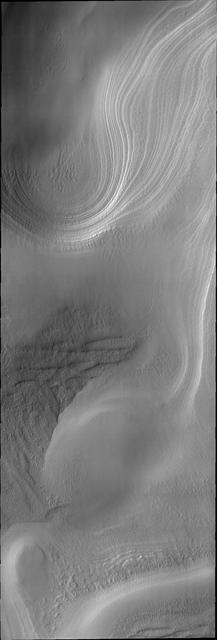
South Polar Spring
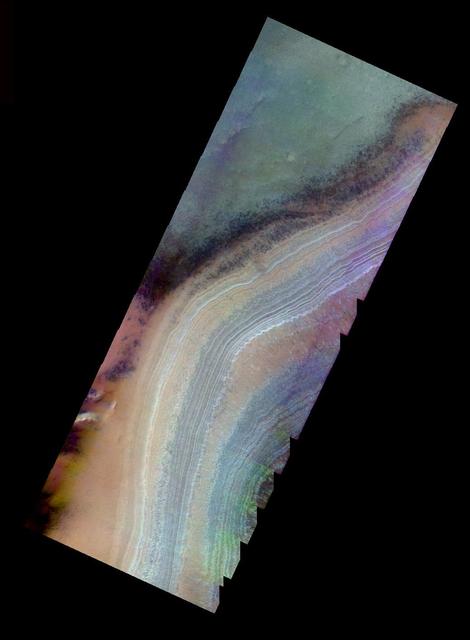
Southern Spring in False Color

Mars in Early Northern Spring
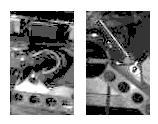
Sojourner Latch Spring Deployed
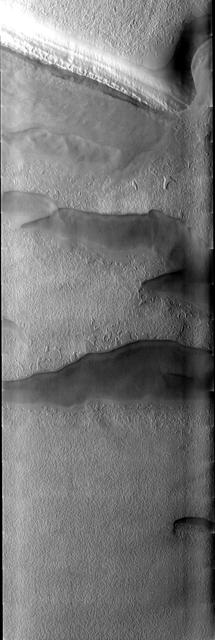
South Polar Spring

Northern Polar Spring in IR
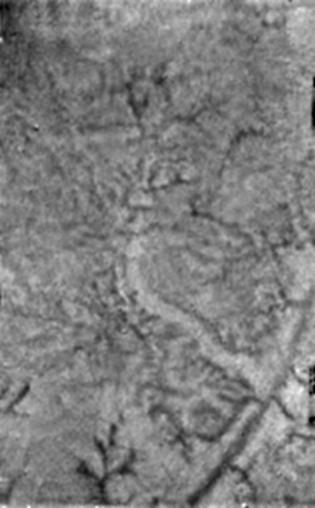
Water Ice and Methane Springs
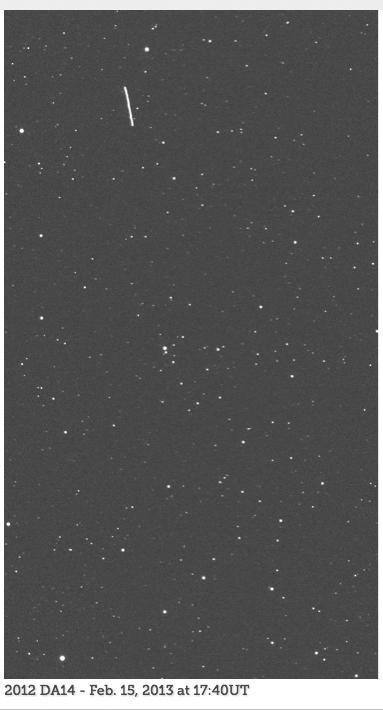
An animated set of images, from the telescope known as the iTelescope.net Siding Spring Observatory, shows asteroid 2012 DA14 as the streak moving from top to bottom in the field of view. The animation is available in the Planetary Photojournal.
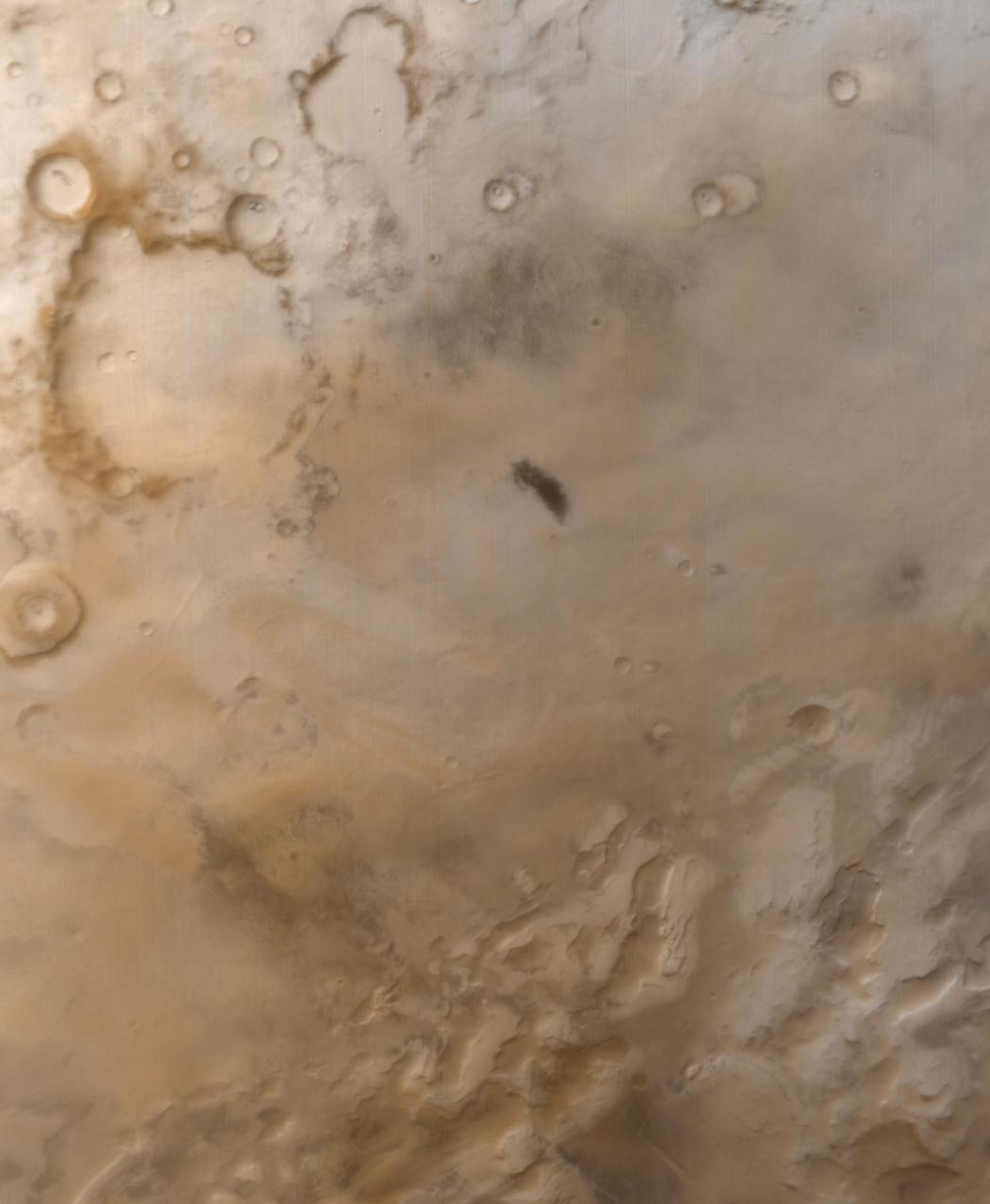
Frosted Southern Plains in Early Spring

Spring Thaw in Northwestern Planum Australe

Metal Spring near Phoenix Footpad
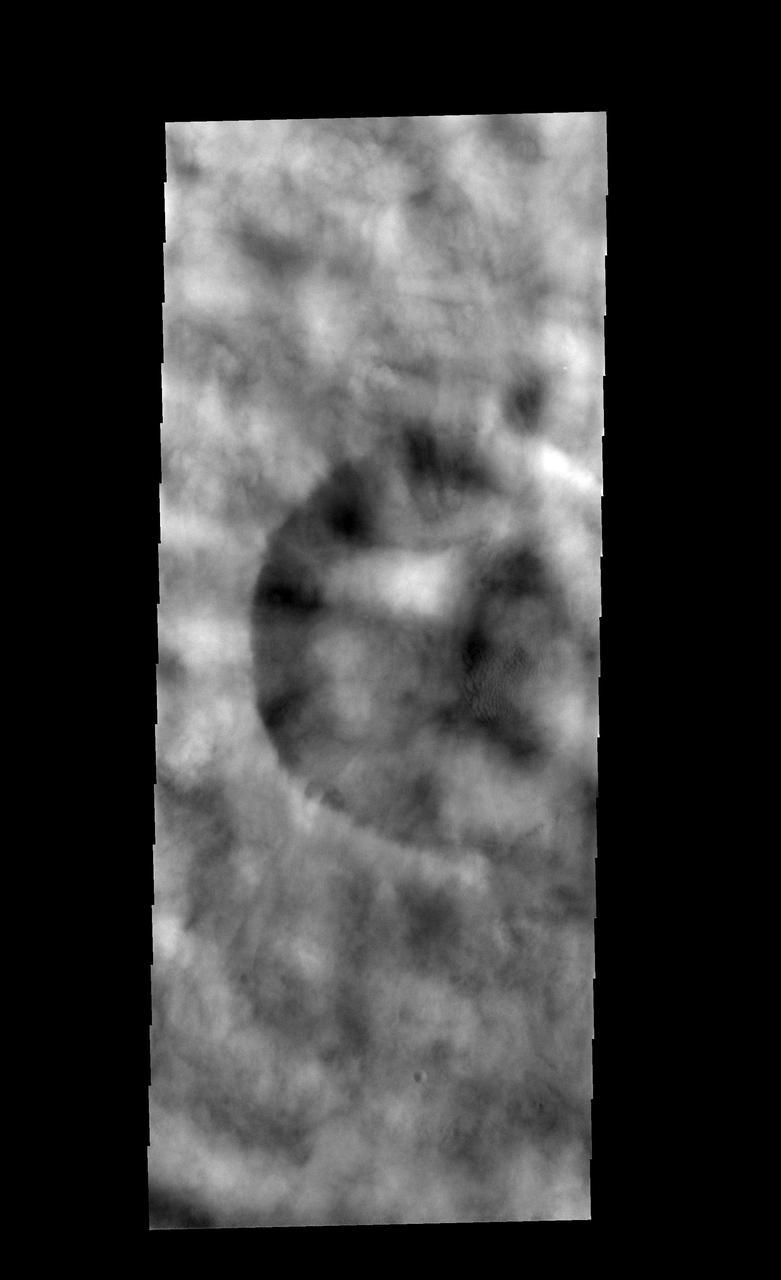
The clouds in this image hide most of the surface. This image was taken during spring in the northern hemisphere of Mars, when cloud cover is common
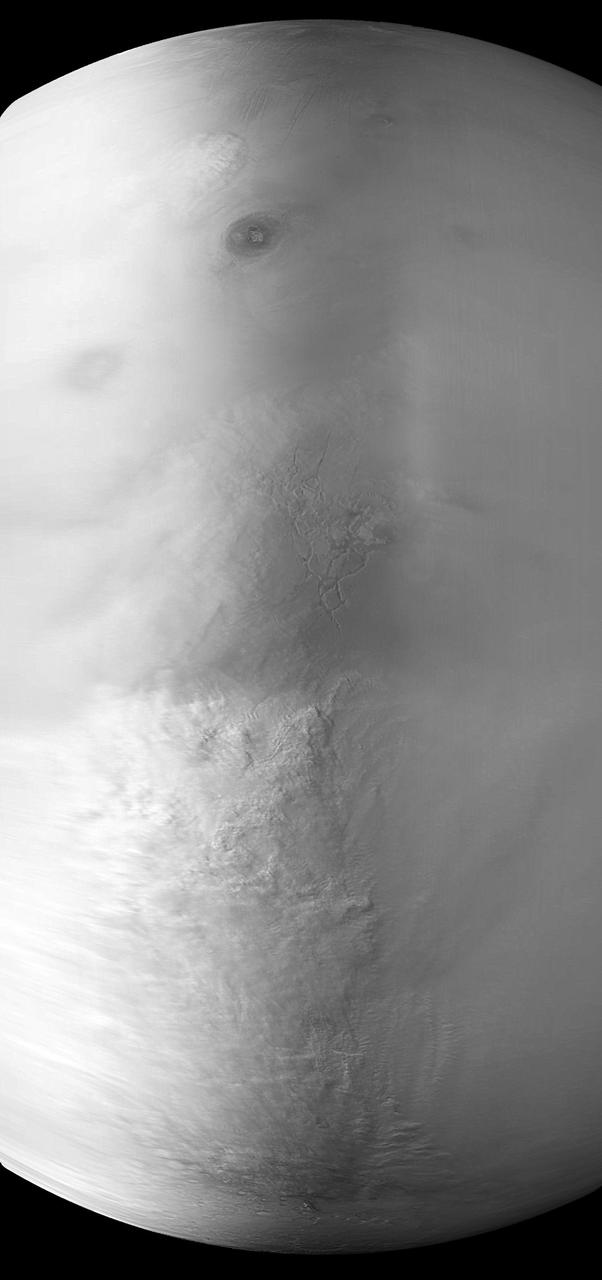
Snapshot of Southern Spring Dust Storm Activity
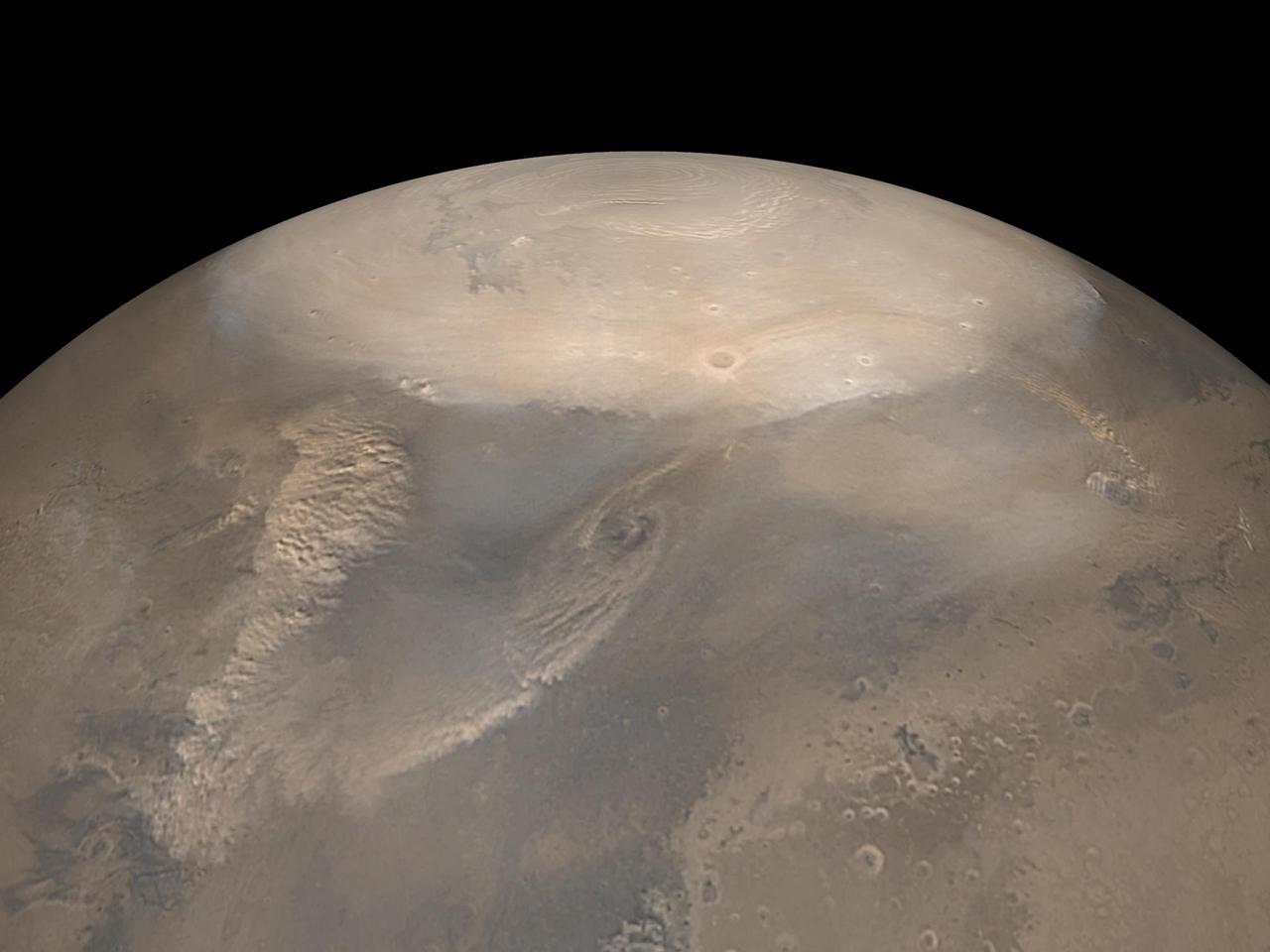
Early Spring Dust Storms at the North Pole of Mars
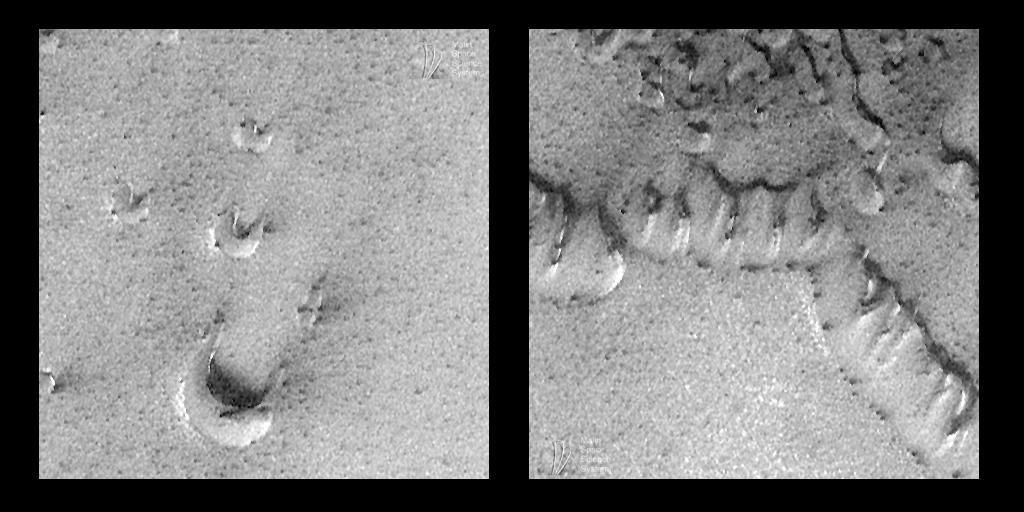
Spring Time View of North Polar Sand Dunes
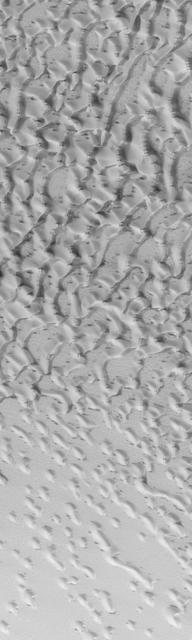
Frosted North Polar Sand Dunes in Early Spring
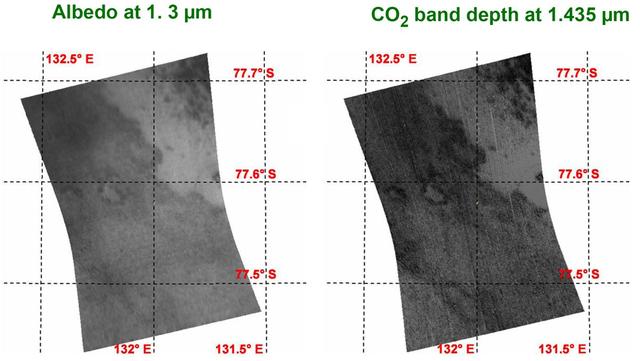
South Polar Cryptic Terrain in Early Spring
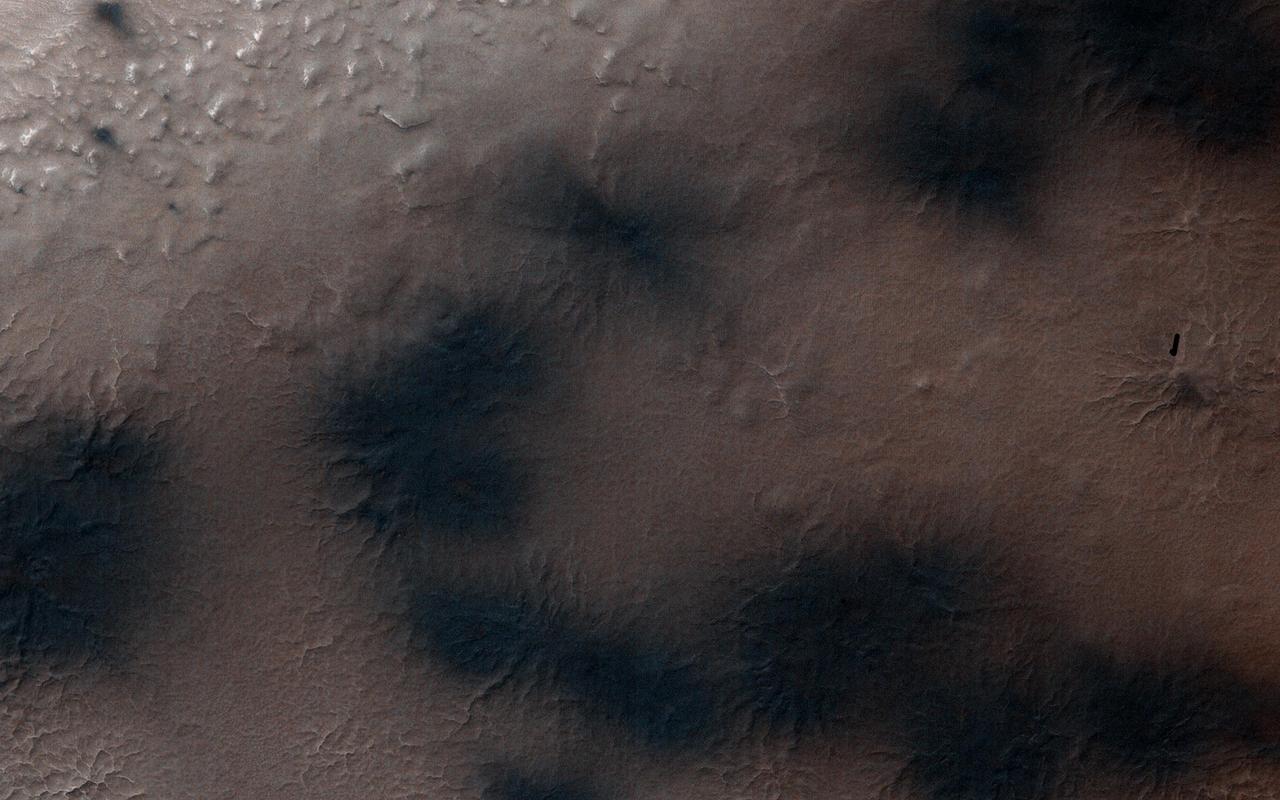
This image, acquired by NASA Mars Reconnaissance Orbiter, shows there are a few more fans on the ridge as spring activity progresses in Inca City. In Inca City another week has passed, and there are a few more fans on the ridge. We are studying the sequence of spring activity with the help of citizen scientists at the Planetfour website, sponsored by Zooniverse. Citizens of planet Earth log on and identify and measure fans and blotches in the South polar region of Mars imaged by HiRISE. With their help we can study the polar weather by looking at how the fan directions change through the spring. We see how the number of fans and blotches depends on the thickness of the ice layer and how high the sun is in the sky. http://photojournal.jpl.nasa.gov/catalog/PIA18894
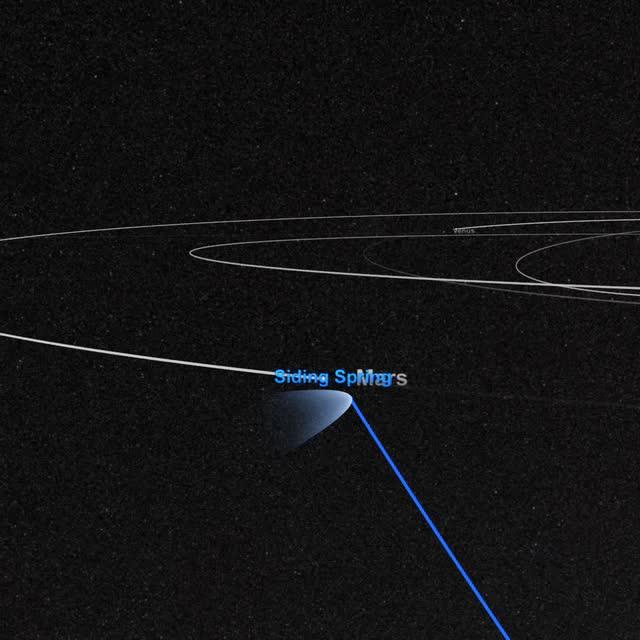
On October 19, Comet Siding Spring will pass within 88,000 miles of Mars – just one third of the distance from the Earth to the Moon! Traveling at 33 miles per second and weighing as much as a small mountain, the comet hails from the outer fringes of our solar system, originating in a region of icy debris known as the Oort cloud. Comets from the Oort cloud are both ancient and rare. Since this is Comet Siding Spring’s first trip through the inner solar system, scientists are excited to learn more about its composition and the effects of its gas and dust on the Mars upper atmosphere. NASA will be watching closely before, during, and after the flyby with its entire fleet of Mars orbiters and rovers, along with the Hubble Space Telescope and dozens of instruments on Earth. The encounter is certain to teach us more about Oort cloud comets, the Martian atmosphere, and the solar system’s earliest ingredients. Learn more: <a href="https://www.youtube.com/watch?v=FG4KsatjFeI" rel="nofollow">www.youtube.com/watch?v=FG4KsatjFeI</a> Credit: NASA’s Goddard Space Flight Center <b><a href="http://www.nasa.gov/audience/formedia/features/MP_Photo_Guidelines.html" rel="nofollow">NASA image use policy.</a></b> <b><a href="http://www.nasa.gov/centers/goddard/home/index.html" rel="nofollow">NASA Goddard Space Flight Center</a></b> enables NASA’s mission through four scientific endeavors: Earth Science, Heliophysics, Solar System Exploration, and Astrophysics. Goddard plays a leading role in NASA’s accomplishments by contributing compelling scientific knowledge to advance the Agency’s mission. <b>Follow us on <a href="http://twitter.com/NASAGoddardPix" rel="nofollow">Twitter</a></b> <b>Like us on <a href="http://www.facebook.com/pages/Greenbelt-MD/NASA-Goddard/395013845897?ref=tsd" rel="nofollow">Facebook</a></b> <b>Find us on <a href="http://instagram.com/nasagoddard?vm=grid" rel="nofollow">Instagram</a></b>

MORE THAN 7,500 PEOPLE ATTENDED NASA MARSHALL SPACE CENTER AND DOWNTOWN HUNTSVILLE, INC.’S THIRD ANNUAL CELEBRATION OF NASA AND THE COMMUNITY JUNE 18. THIS YEAR, THE EVENT MOVED TO HUNTSVILLE’S BIG SPRING PARK.
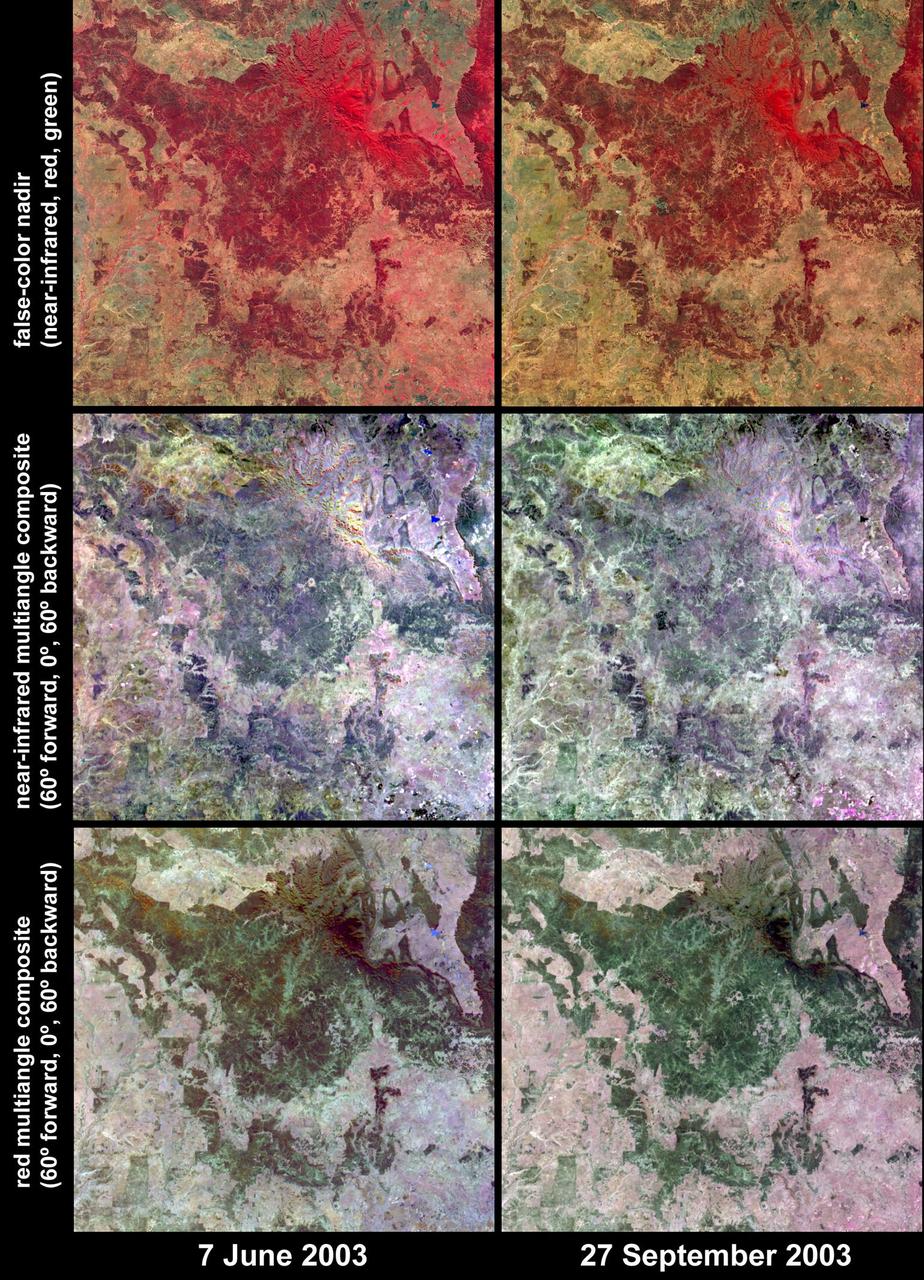
Austral winter and spring in Queensland Brigalow Belt as seen by NASA Terra spacecraft.
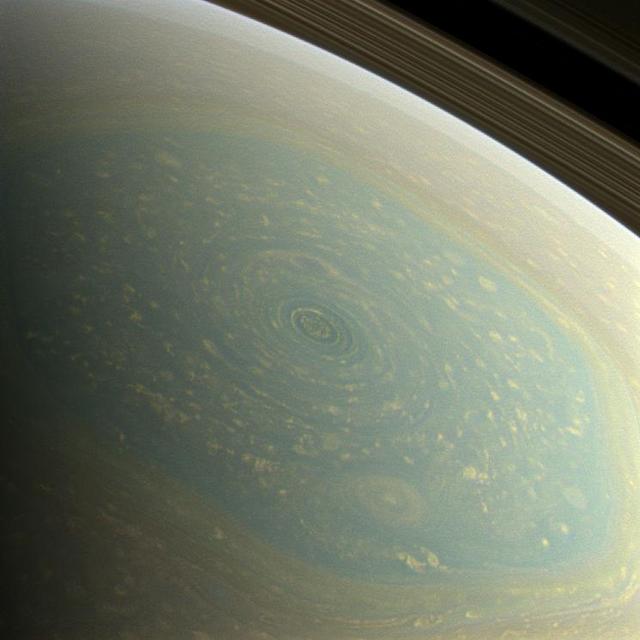
The north pole of Saturn, in the fresh light of spring, is revealed in this color image from NASA Cassini spacecraft. The north pole was previously hidden from the gaze of Cassini.
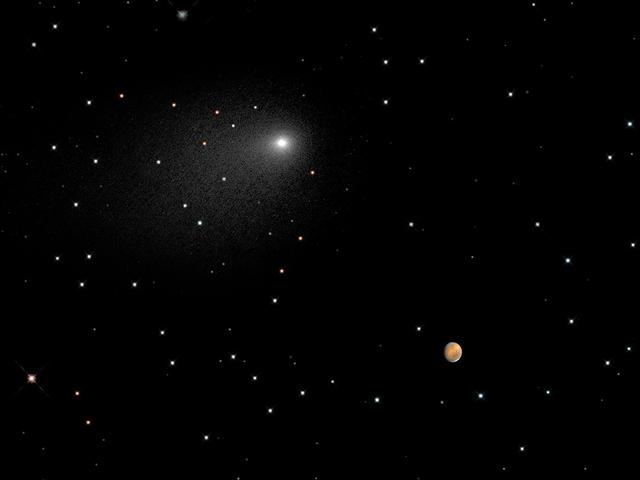
This composite NASA Hubble Space Telescope Image captures the positions of comet Siding Spring and Mars in a never-before-seen close passage of a comet by the Red Planet, which happened at 2:28 p.m. EDT October 19, 2014. The comet passed by Mars at approximately 87,000 miles (about one-third of the distance between Earth and the Moon). At that time, the comet and Mars were approximately 149 million miles from Earth. The comet image shown here is a composite of Hubble exposures taken between Oct. 18, 8:06 a.m. EDT to Oct. 19, 11:17 p.m. EDT. Hubble took a separate photograph of Mars at 10:37 p.m. EDT on Oct. 18. The Mars and comet images have been added together to create a single picture to illustrate the angular separation, or distance, between the comet and Mars at closest approach. The separation is approximately 1.5 arc minutes, or one-twentieth of the angular diameter of the full Moon. The background starfield in this composite image is synthesized from ground-based telescope data provided by the Palomar Digital Sky Survey, which has been reprocessed to approximate Hubble’s resolution. The solid icy comet nucleus is too small to be resolved in the Hubble picture. The comet’s bright coma, a diffuse cloud of dust enshrouding the nucleus, and a dusty tail, are clearly visible. This is a composite image because a single exposure of the stellar background, comet Siding Spring, and Mars would be problematic. Mars is actually 10,000 times brighter than the comet, and so could not be properly exposed to show detail in the Red Planet. The comet and Mars were also moving with respect to each other and so could not be imaged simultaneously in one exposure without one of the objects being motion blurred. Hubble had to be programmed to track on the comet and Mars separately in two different observations. The images were taken with Hubble’s Wide Field Camera 3. Credit: NASA, ESA, PSI, JHU/APL, STScI/AURA Credit: NASA, ESA, PSI, JHU/APL, STScI/AURA
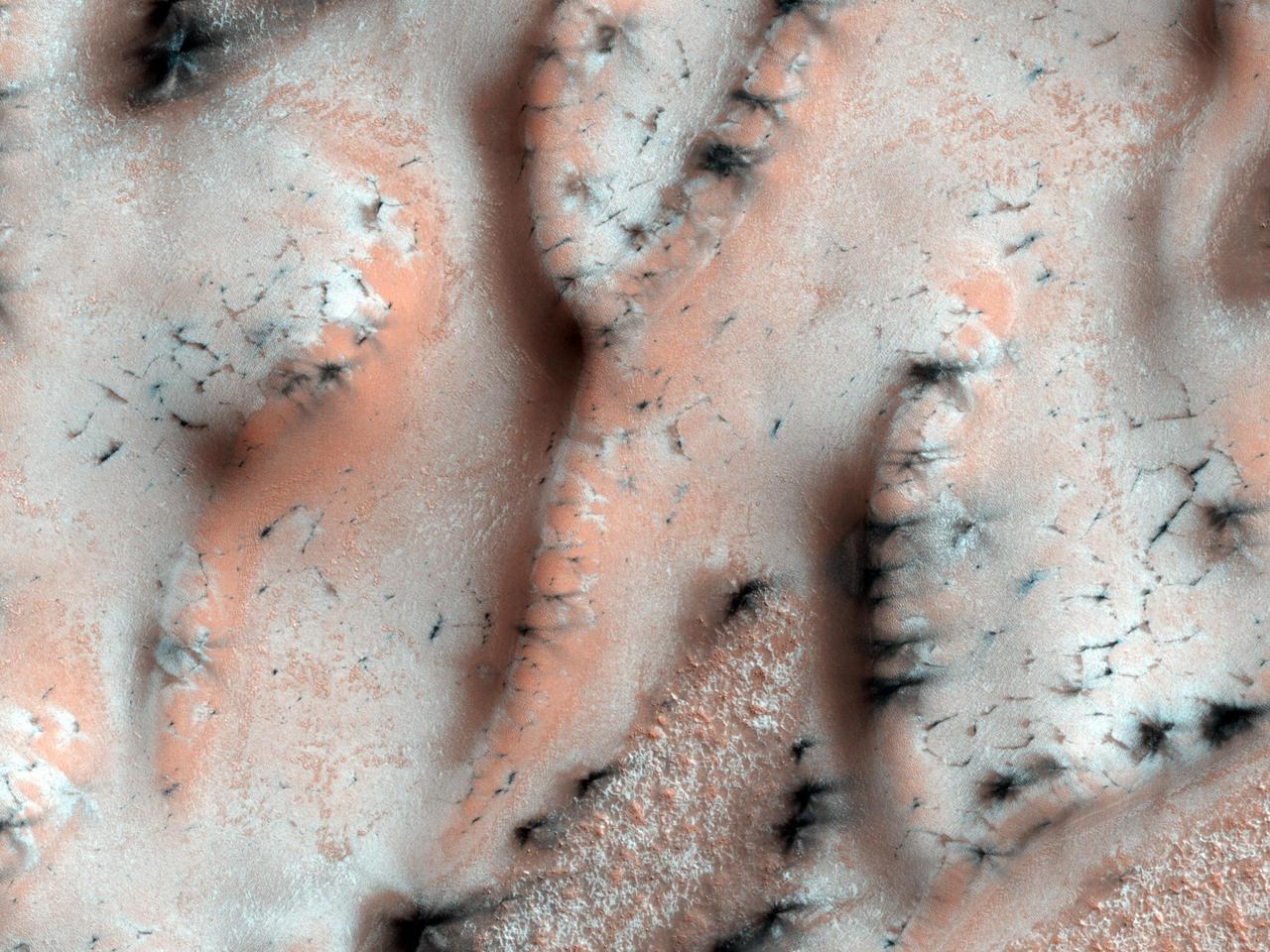
In the winter a layer of carbon dioxide ice dry ice covers the north polar sand dunes as shown by NASA Mars Reconnaissance Orbiter. In the spring the sublimation of the ice going directly from ice to gas causes a host of uniquely Martian phenomena.
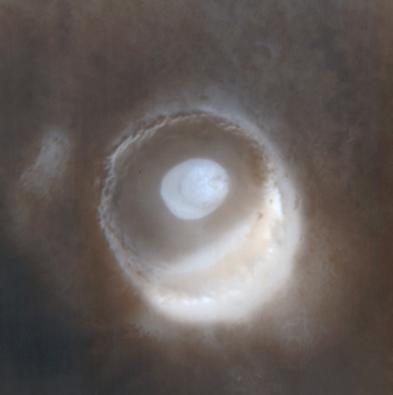
The Frosted Craters of Northern Spring and Southern Autumn - Barnard Crater
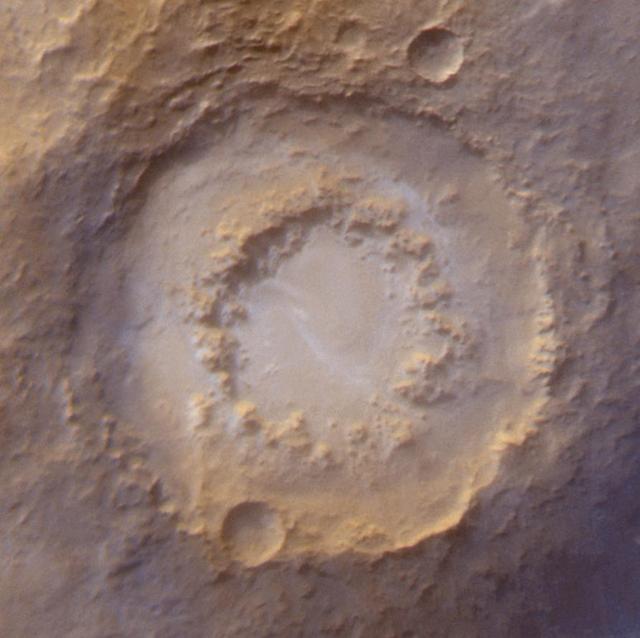
The Frosted Craters of Northern Spring and Southern Autumn - Lowell Crater
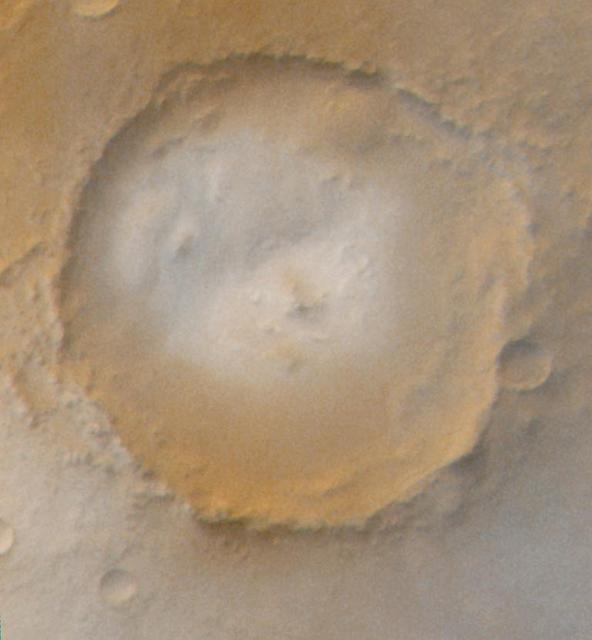
The Frosted Craters of Northern Spring and Southern Autumn - Unnamed Crater
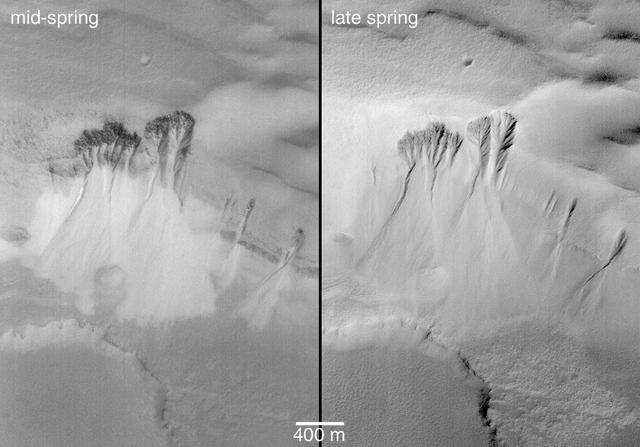
Spring Defrosting of Mass-Movement Material at South High Latitudes
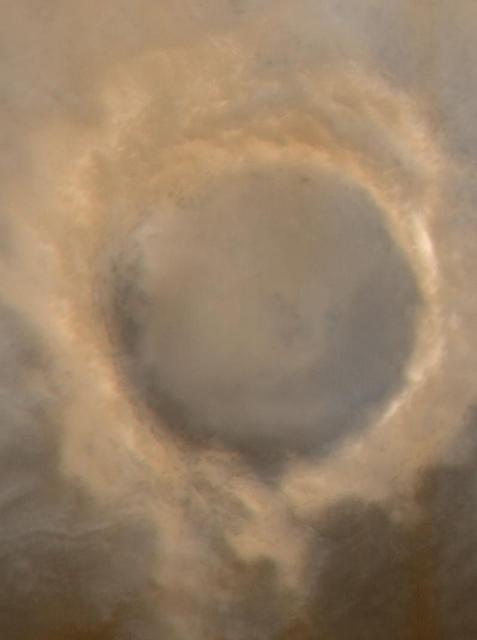
The Frosted Craters of Northern Spring and Southern Autumn - Lomonosov Crater
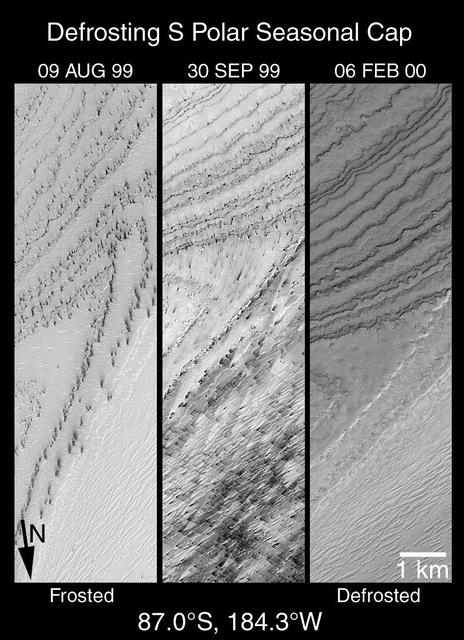
A High-Resolution Look at the Spring Thaw of the Martian South Polar Cap

NASA's Marshall Space Flight Center showcased it's various projects for the public in Huntsville, Alabama's Big Spring Park. Exhibits were displayed by all of the various directorates of the Center with employee volunteers explaining all aspects of their projects. Adding to the festivities was the attendance of retired NASA astronaut Robert "Hoot" Gibson. “Hoot†Gibson reminisces about his history as an astronaut and takes questions from the audience at NASA Day in the Park.

NASA's Marshall Space Flight Center showcased it's various projects for the public in Huntsville, Alabama's Big Spring Park. Exhibits were displayed by all of the various directorates of the Center with employee volunteers explaining all aspects of their projects. Adding to the festivities was the attendance of retired NASA astronaut Robert "Hoot" Gibson. A view of the canal running through the park showing a small portion of the crowd attending NASA Day in the Park.
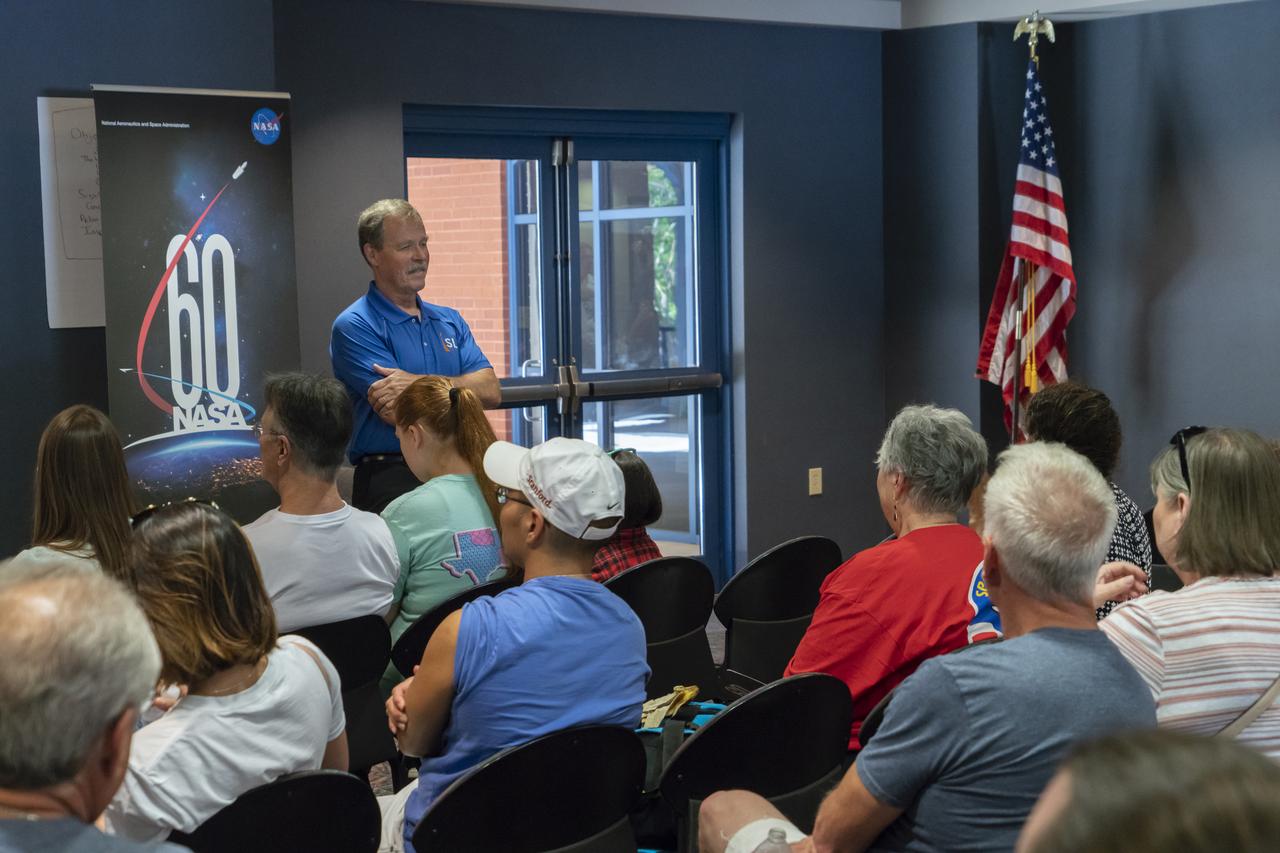
NASA's Marshall Space Flight Center showcased it's various projects for the public in Huntsville, Alabama's Big Spring Park. Exhibits were displayed by all of the various directorates of the Center with employee volunteers explaining all aspects of their projects. Adding to the festivities was the attendance of retired NASA astronaut Robert "Hoot" Gibson. “Hoot†Gibson reminisces about his history as an astronaut and takes questions from the audience at NASA Day in the Park.
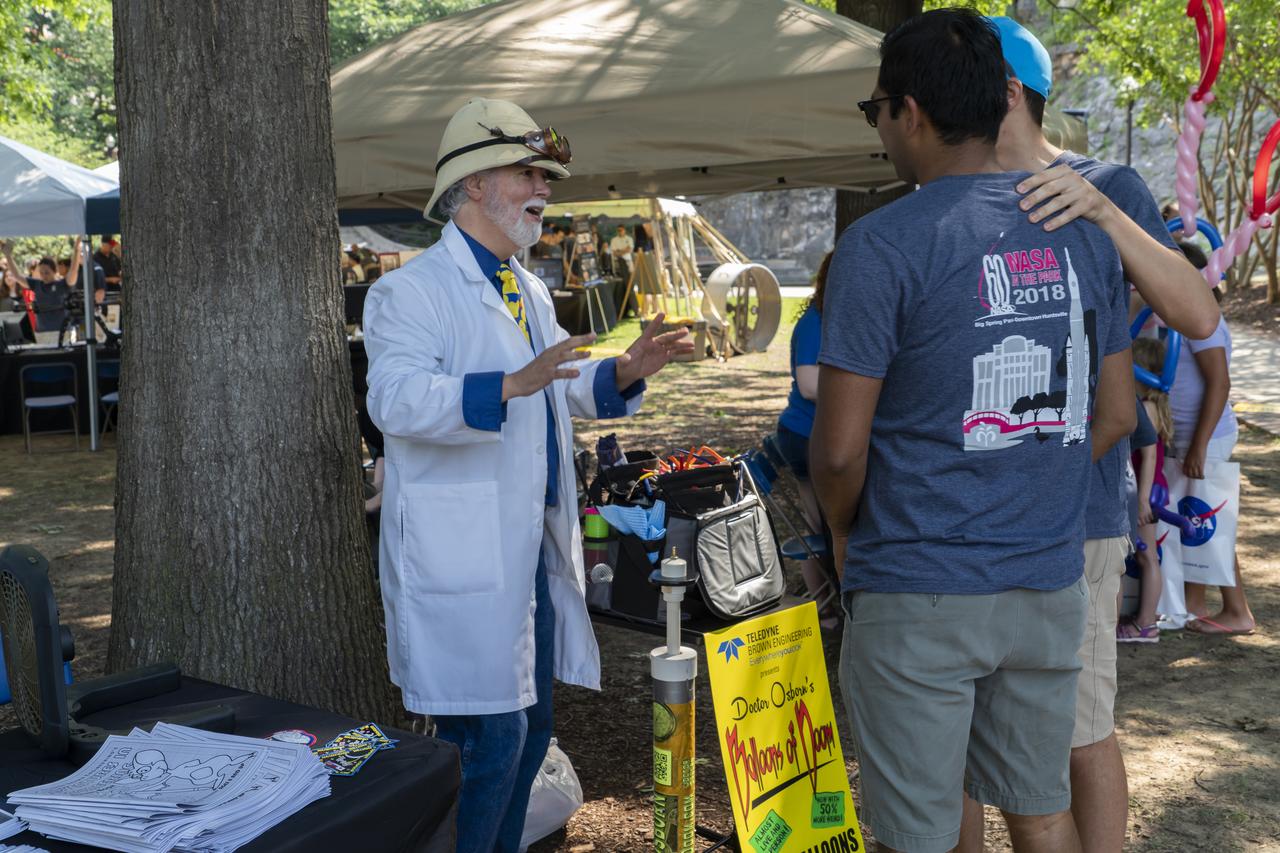
NASA's Marshall Space Flight Center showcased it's various projects for the public in Huntsville, Alabama's Big Spring Park. Exhibits were displayed by all of the various directorates of the Center with employee volunteers explaining all aspects of their projects. Adding to the festivities was the attendance of retired NASA astronaut Robert "Hoot" Gibson. Dr. Osborn, magician and balloon wizard, greets volunteers for NASA in the Park.
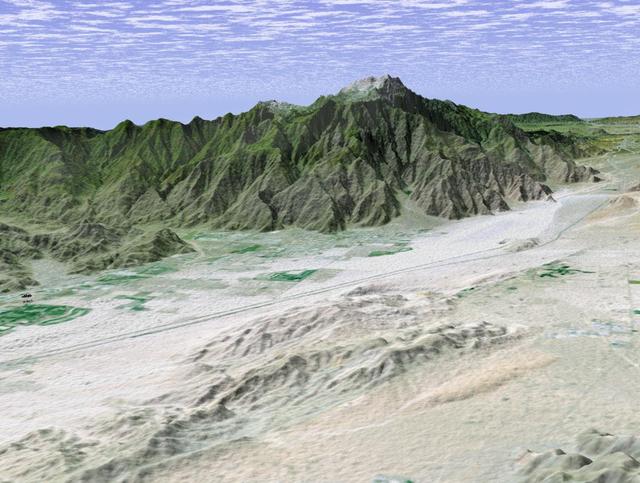
The city of Palm Springs nestles at the base of Mount San Jacinto in this computer-generated perspective viewed from the east.

NASA's Marshall Space Flight Center showcased it's various projects for the public in Huntsville, Alabama's Big Spring Park. Exhibits were displayed by all of the various directorates of the Center with employee volunteers explaining all aspects of their projects. Adding to the festivities was the attendance of retired NASA astronaut Robert "Hoot" Gibson.

NASA's Marshall Space Flight Center showcased it's various projects for the public in Huntsville, Alabama's Big Spring Park. Exhibits were displayed by all of the various directorates of the Center with employee volunteers explaining all aspects of their projects. Adding to the festivities was the attendance of retired NASA astronaut Robert "Hoot" Gibson.
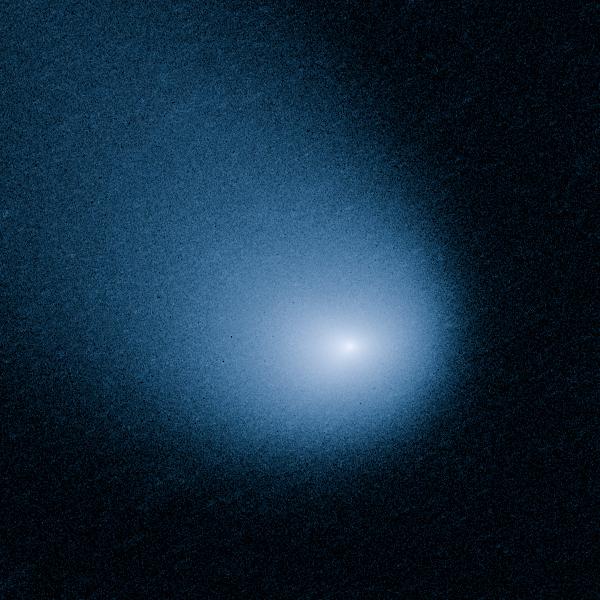
MARCH 27, 2014: Comet Siding Spring is plunging toward the Sun along a roughly 1-million-year orbit. The comet, discovered in 2013, was within the radius of Jupiter's orbit when the Hubble Space Telescope photographed it on March 11, 2014. Hubble resolves two jets of dust coming from the solid icy nucleus. These persistent jets were first seen in Hubble pictures taken on Oct. 29, 2013. The feature should allow astronomers to measure the direction of the nucleus's pole, and hence, rotation axis. The comet will make its closest approach to our Sun on Oct. 25, 2014, at a distance of 130 million miles, well outside Earth's orbit. On its inbound leg, Comet Siding Spring will pass within 84,000 miles of Mars on Oct. 19, 2014, which is less than half the Moon's distance from Earth. The comet is not expected to become bright enough to be seen by the naked eye. Credit: NASA, ESA, and J.-Y. Li (Planetary Science Institute) <b><a href="http://www.nasa.gov/audience/formedia/features/MP_Photo_Guidelines.html" rel="nofollow">NASA image use policy.</a></b> <b><a href="http://www.nasa.gov/centers/goddard/home/index.html" rel="nofollow">NASA Goddard Space Flight Center</a></b> enables NASA’s mission through four scientific endeavors: Earth Science, Heliophysics, Solar System Exploration, and Astrophysics. Goddard plays a leading role in NASA’s accomplishments by contributing compelling scientific knowledge to advance the Agency’s mission. <b>Follow us on <a href="http://twitter.com/NASAGoddardPix" rel="nofollow">Twitter</a></b> <b>Like us on <a href="http://www.facebook.com/pages/Greenbelt-MD/NASA-Goddard/395013845897?ref=tsd" rel="nofollow">Facebook</a></b> <b>Find us on <a href="http://instagram.com/nasagoddard?vm=grid" rel="nofollow">Instagram</a></b>

A view of the flexure springs in the soft ride being mated to the payload attach fitting for NASA Wide-field Infrared Survey Explorer, or WISE, spacecraft.
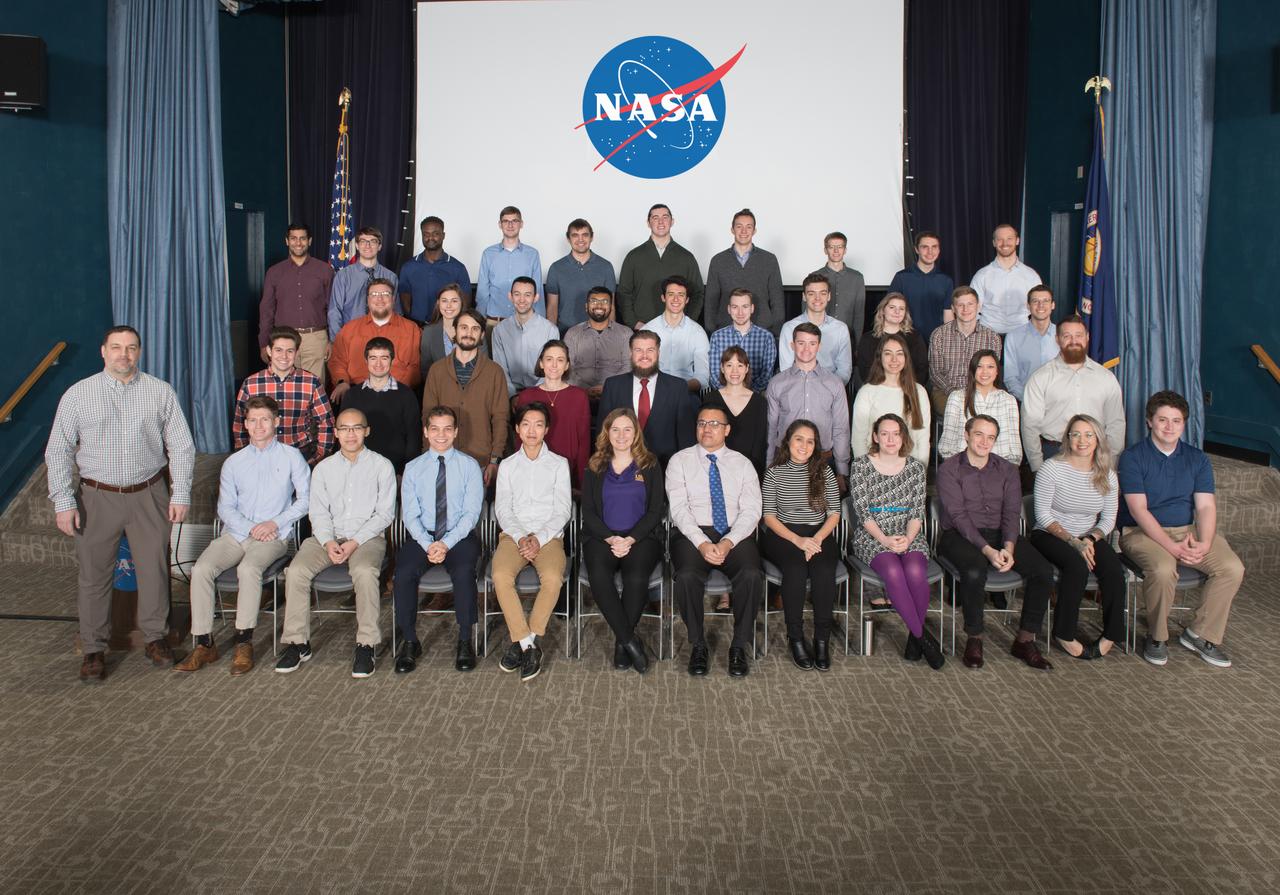
NASA internship and Fellowship Participants, Spring, 2020

Goddard Spring Run was held on May 2, 2108 near Child Development Center

Goddard Spring Run was held on May 2, 2018 near Child Development Center First, Second and Third Place winners

NASA's Marshall Space Flight Center showcased it's various projects for the public in Huntsville, Alabama's Big Spring Park. Exhibits were displayed by all of the various directorates of the Center with employee volunteers explaining all aspects of their projects. Adding to the festivities was the attendance of retired NASA astronaut Robert "Hoot" Gibson. U.S. Space and Rocket Center volunteers greet visitors to NASA in the Park.
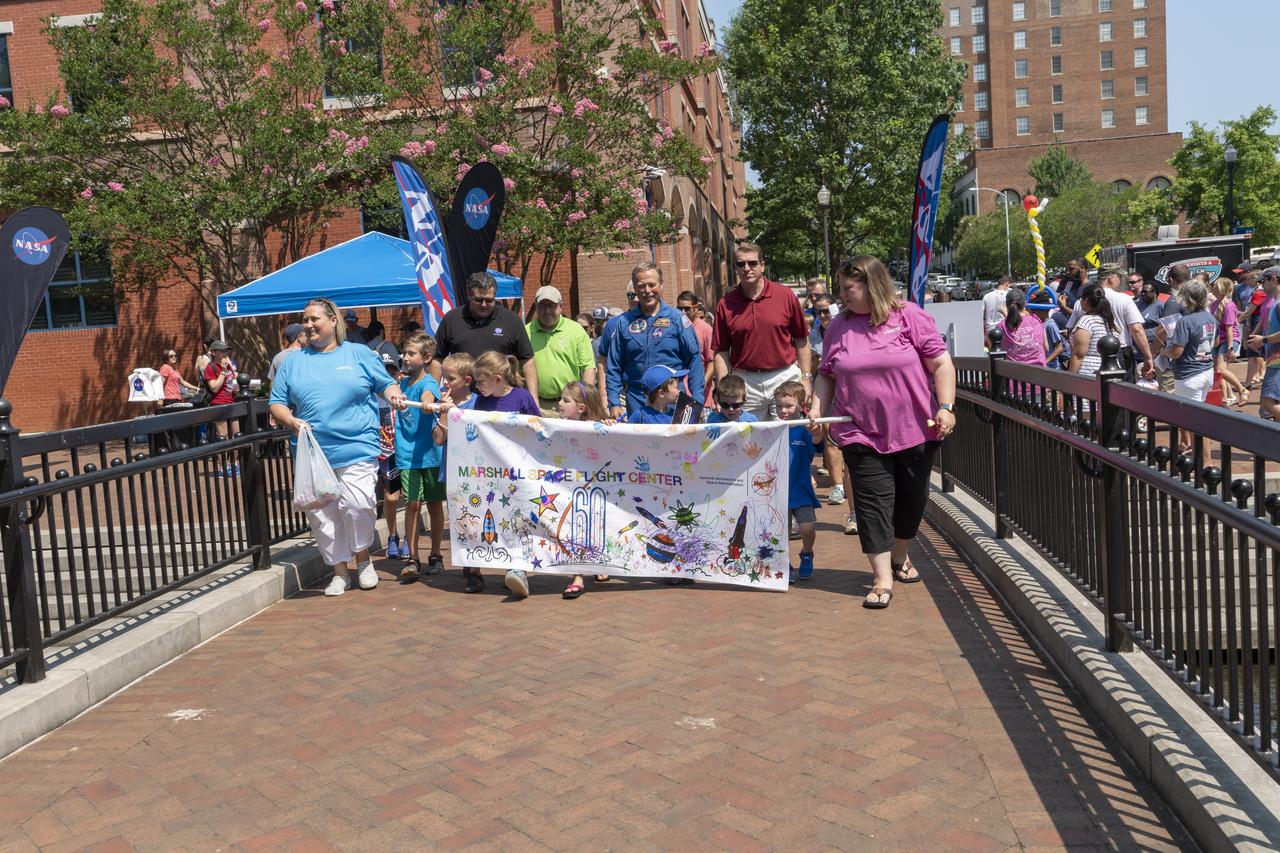
NASA's Marshall Space Flight Center showcased it's various projects for the public in Huntsville, Alabama's Big Spring Park. Exhibits were displayed by all of the various directorates of the Center with employee volunteers explaining all aspects of their projects. Adding to the festivities was the attendance of retired NASA astronaut Robert "Hoot" Gibson. The children’s parade at NASA Day in the Park is led by center director Todd May, Chad Emerson, and Retired astronaut Robert “Hoot†Gibson.
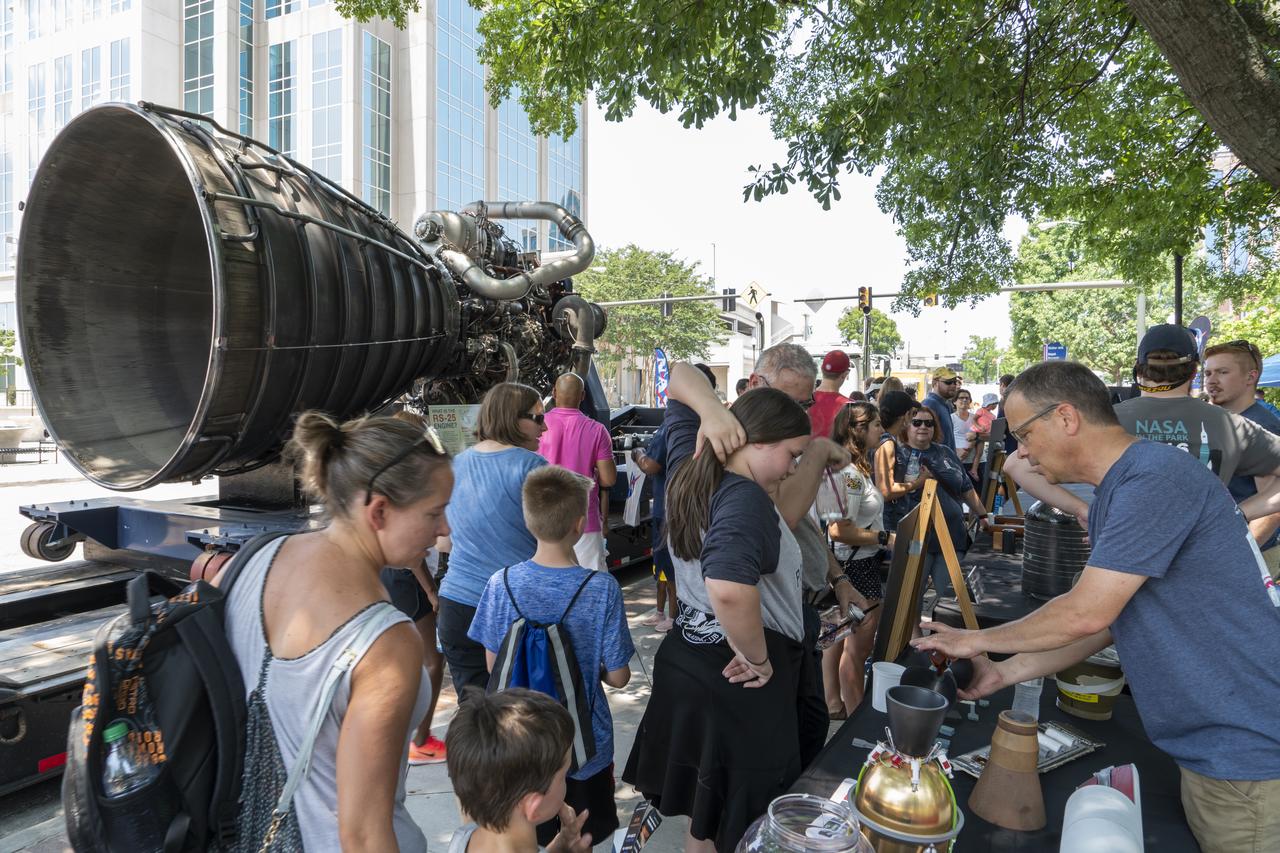
NASA's Marshall Space Flight Center showcased it's various projects for the public in Huntsville, Alabama's Big Spring Park. Exhibits were displayed by all of the various directorates of the Center with employee volunteers explaining all aspects of their projects. Adding to the festivities was the attendance of retired NASA astronaut Robert "Hoot" Gibson. With a RS-25 engine in the background, NASA employees and volunteers demonstrate NASA technology at NASA in the Park.
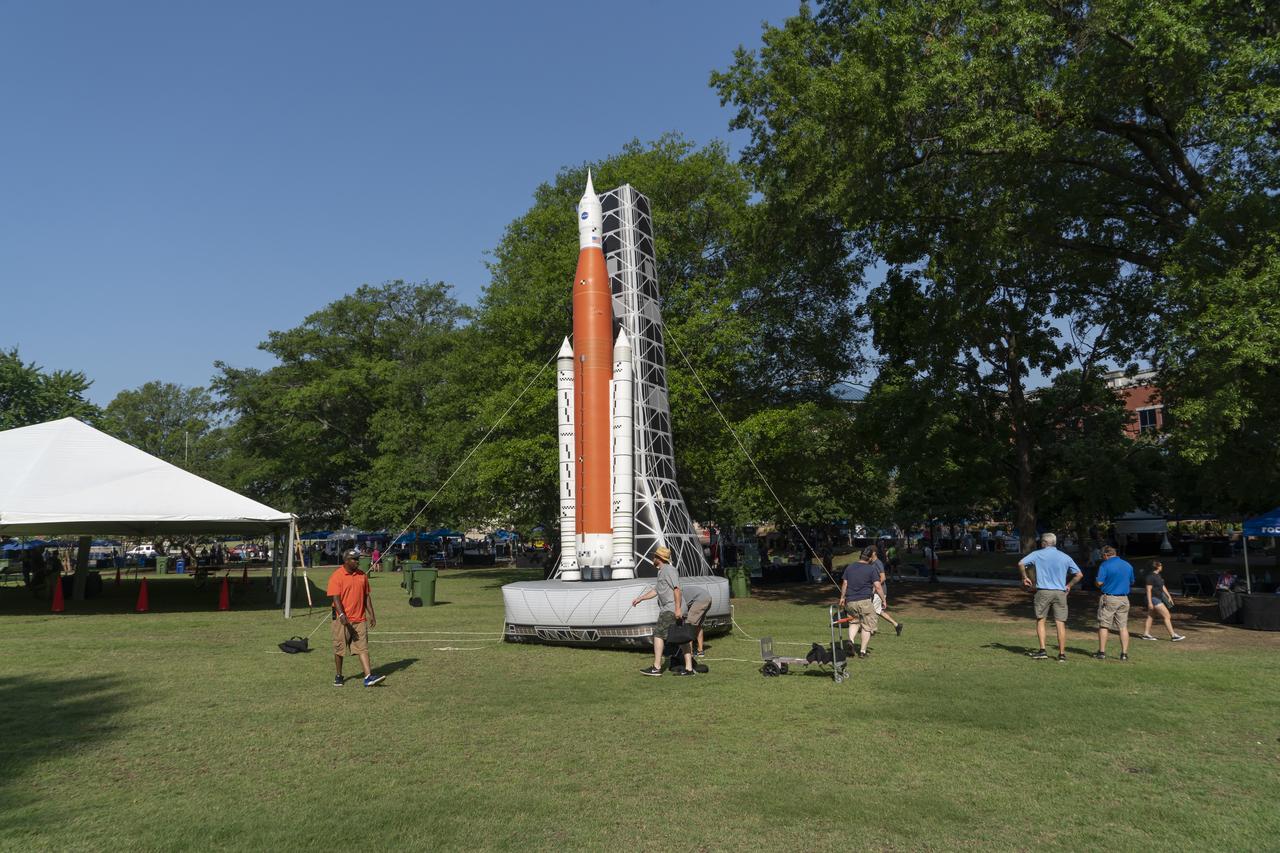
NASA's Marshall Space Flight Center showcased it's various projects for the public in Huntsville, Alabama's Big Spring Park. Exhibits were displayed by all of the various directorates of the Center with employee volunteers explaining all aspects of their projects. Adding to the festivities was the attendance of retired NASA astronaut Robert "Hoot" Gibson. Marshall Model Shop employees inflate and place the SLS model.

NASA's Marshall Space Flight Center showcased it's various projects for the public in Huntsville, Alabama's Big Spring Park. Exhibits were displayed by all of the various directorates of the Center with employee volunteers explaining all aspects of their projects. Adding to the festivities was the attendance of retired NASA astronaut Robert "Hoot" Gibson. Students from Huntsville’s Grissom High School display their robot.

NASA's Marshall Space Flight Center showcased it's various projects for the public in Huntsville, Alabama's Big Spring Park. Exhibits were displayed by all of the various directorates of the Center with employee volunteers explaining all aspects of their projects. Adding to the festivities was the attendance of retired NASA astronaut Robert "Hoot" Gibson. NASA Public Affairs employee Jena Row interviews retired NASA Astronaut Robert “Hoot†Gibson at NASA Day in the Park.

NASA's Marshall Space Flight Center showcased it's various projects for the public in Huntsville, Alabama's Big Spring Park. Exhibits were displayed by all of the various directorates of the Center with employee volunteers explaining all aspects of their projects. Adding to the festivities was the attendance of retired NASA astronaut Robert "Hoot" Gibson.Chad Emerson, President of Downtown Huntsville, Inc., fist bumps with Oscar the Robot.

NASA's Marshall Space Flight Center showcased it's various projects for the public in Huntsville, Alabama's Big Spring Park. Exhibits were displayed by all of the various directorates of the Center with employee volunteers explaining all aspects of their projects. Adding to the festivities was the attendance of retired NASA astronaut Robert "Hoot" Gibson. Oscar the Robot greets volunteers at NASA Day in the Park.

NASA's Marshall Space Flight Center showcased it's various projects for the public in Huntsville, Alabama's Big Spring Park. Exhibits were displayed by all of the various directorates of the Center with employee volunteers explaining all aspects of their projects. Adding to the festivities was the attendance of retired NASA astronaut Robert "Hoot" Gibson. Northrup Grumman employees fire a tethered miniature rocket at NASA Day in the Park.

NASA's Marshall Space Flight Center showcased it's various projects for the public in Huntsville, Alabama's Big Spring Park. Exhibits were displayed by all of the various directorates of the Center with employee volunteers explaining all aspects of their projects. Adding to the festivities was the attendance of retired NASA astronaut Robert "Hoot" Gibson. Huntsville’s Grissom High School students demonstrate their robot at NASA Day in the Park.
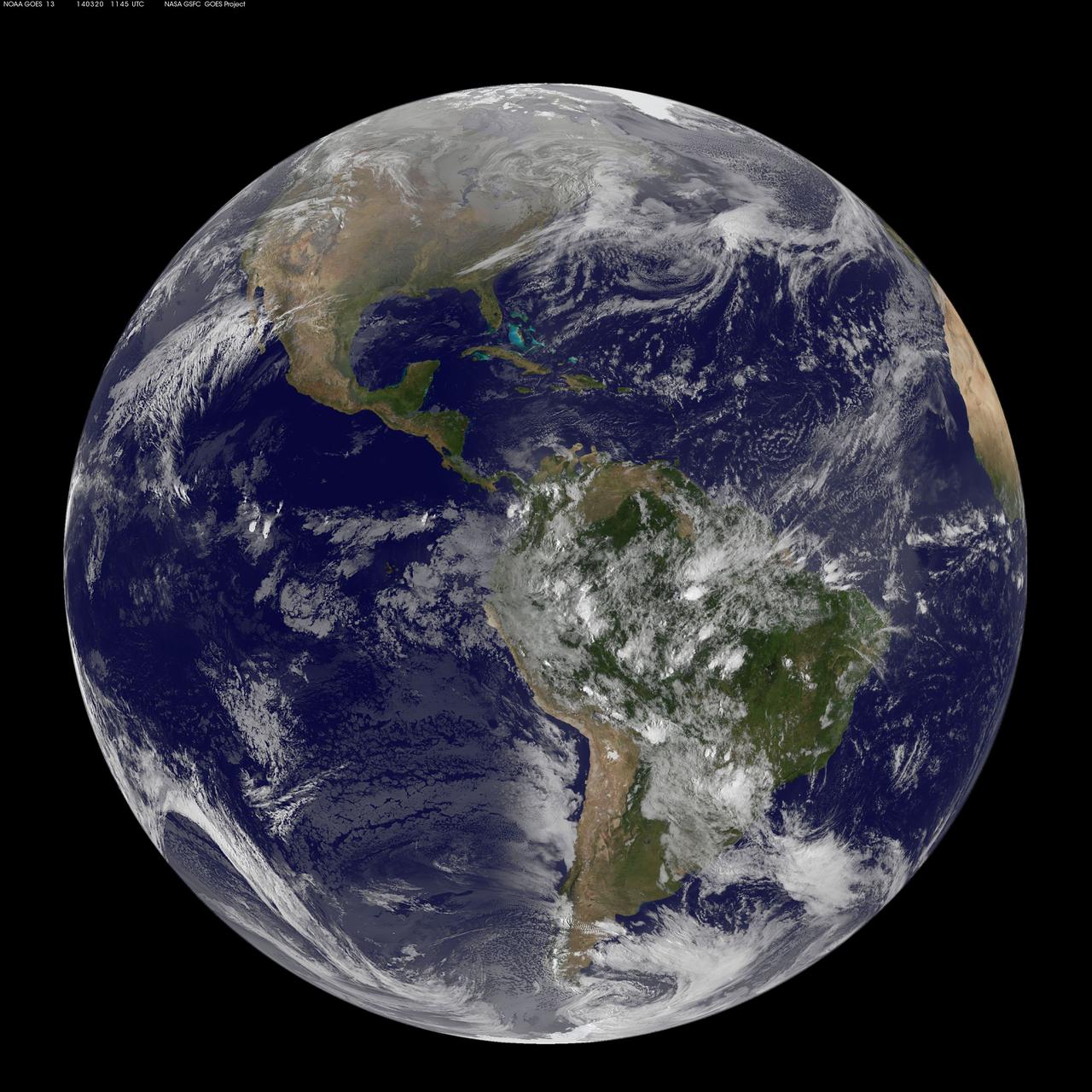
This full-disk image from NOAA’s GOES-13 satellite was captured at 11:45 UTC (7:45 a.m. EDT) and shows the Americas on March 20, 2014. This date marks the start of astronomical spring in the northern hemisphere. <b><a href="http://goes.gsfc.nasa.gov/" rel="nofollow">Credit: NOAA/NASA GOES Project</a></b> <b><a href="http://www.nasa.gov/audience/formedia/features/MP_Photo_Guidelines.html" rel="nofollow">NASA image use policy.</a></b> <b><a href="http://www.nasa.gov/centers/goddard/home/index.html" rel="nofollow">NASA Goddard Space Flight Center</a></b> enables NASA’s mission through four scientific endeavors: Earth Science, Heliophysics, Solar System Exploration, and Astrophysics. Goddard plays a leading role in NASA’s accomplishments by contributing compelling scientific knowledge to advance the Agency’s mission. <b>Follow us on <a href="http://twitter.com/NASAGoddardPix" rel="nofollow">Twitter</a></b> <b>Like us on <a href="http://www.facebook.com/pages/Greenbelt-MD/NASA-Goddard/395013845897?ref=tsd" rel="nofollow">Facebook</a></b> <b>Find us on <a href="http://instagram.com/nasagoddard?vm=grid" rel="nofollow">Instagram</a></b>

NASA in the Park on June 16 in Huntsville featured more than 60 exhibits and demonstrations by NASA experts, as well as performances by Marshall musicians, educational opportunities, games and hands-on activities for all ages. Big Spring canal is a good place to cool off in the 90 degree heat
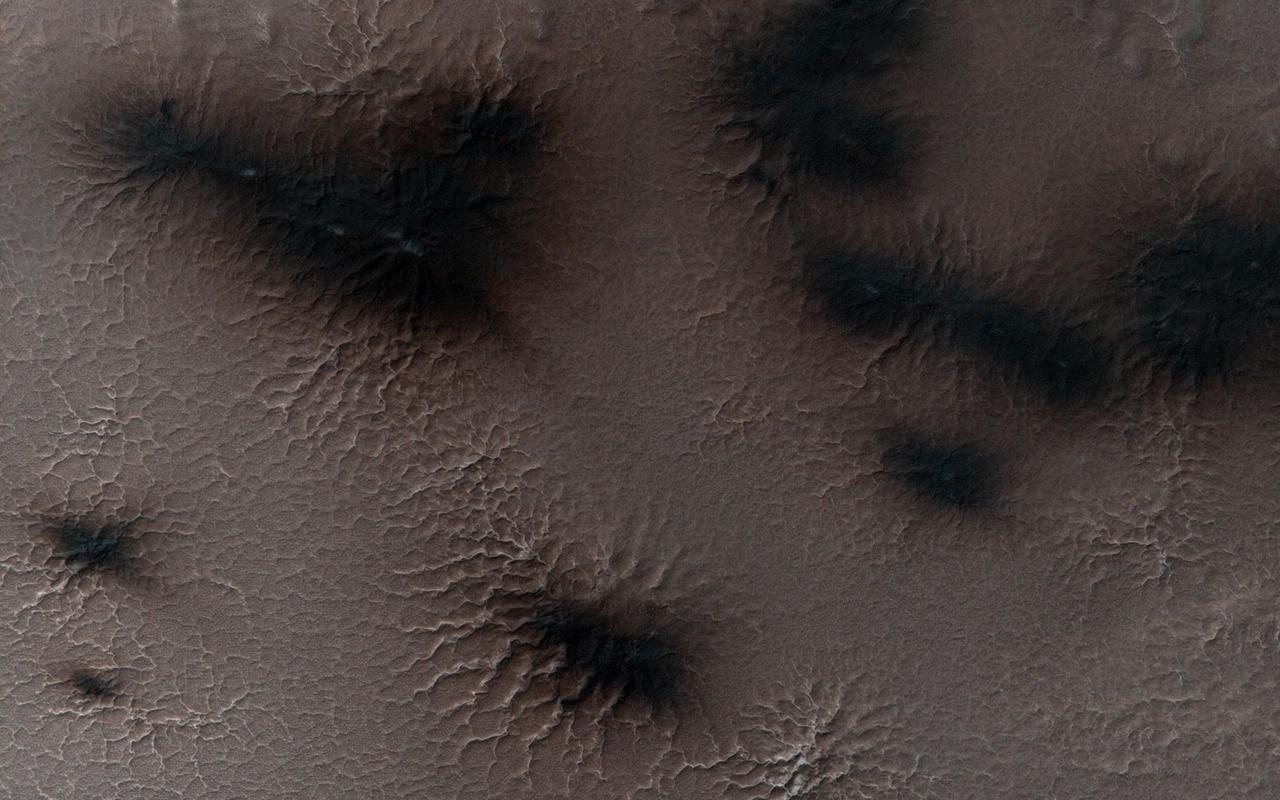
It is about two weeks later in Inca City and the season is officially spring. Numerous changes have occurred. Large blotches of dust cover the araneiforms. Dark spots on the ridge show places where the seasonal polar ice cap has ruptured, releasing gas and fine material from the surface below. At the bottom of the image fans point in more than one direction from a single source, showing that the wind has changed direction while gas and dust were flowing out. Was the flow continuous or has the vent opened and closed? http://photojournal.jpl.nasa.gov/catalog/PIA18893
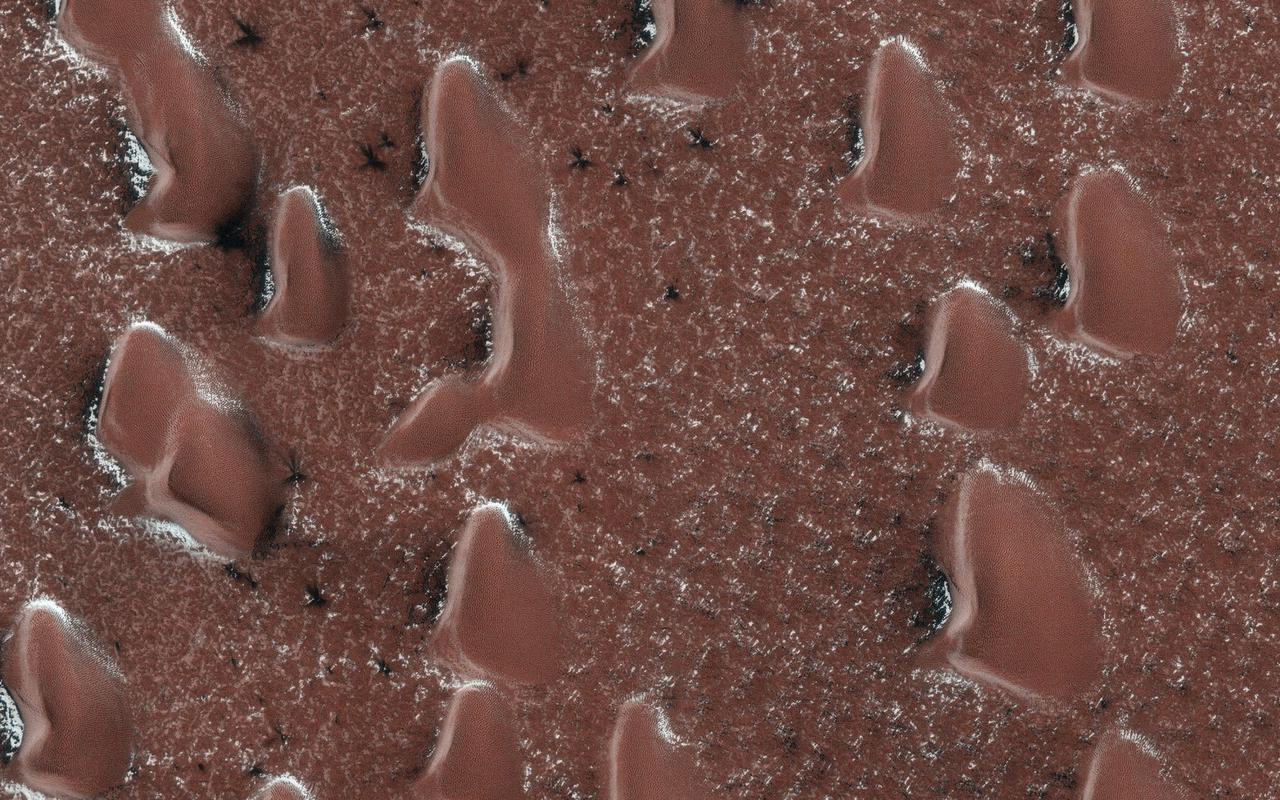
The sun is rising in Mars' Northern Hemisphere, and spring activity is starting as the seasonal polar cap begins to sublimate (going from ice directly to gas). A layer of dry ice covers the sand dunes in this image. Gas jets sprout through the ice layer carrying dust and sand from the surface, showing up as dark fans. At this time in early Martian spring, the fans are visible between the sand dunes. The ground between the dunes is on the scale of tens of centimeters, and ice in places where the sun hits more directly will thin fastest, releasing the jets. Later, the ice over and around the dunes will rupture and more fans will appear on the dunes. https://photojournal.jpl.nasa.gov/catalog/PIA24390
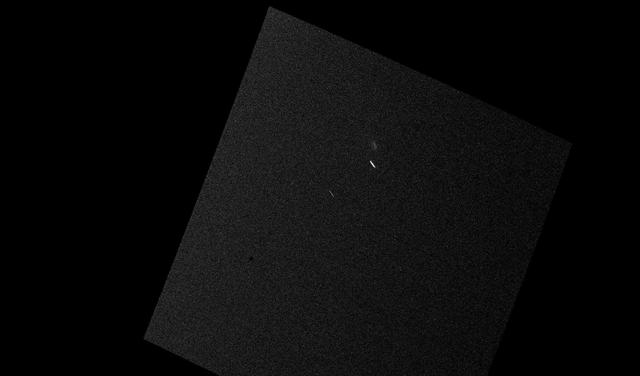
This image from an animiation of comet C/2013 A1 Siding Spring were taken by the Mast Camera Mastcam on NASA Curiosity Mars rover as the comet passed near the red planet on Oct. 19, 2014.
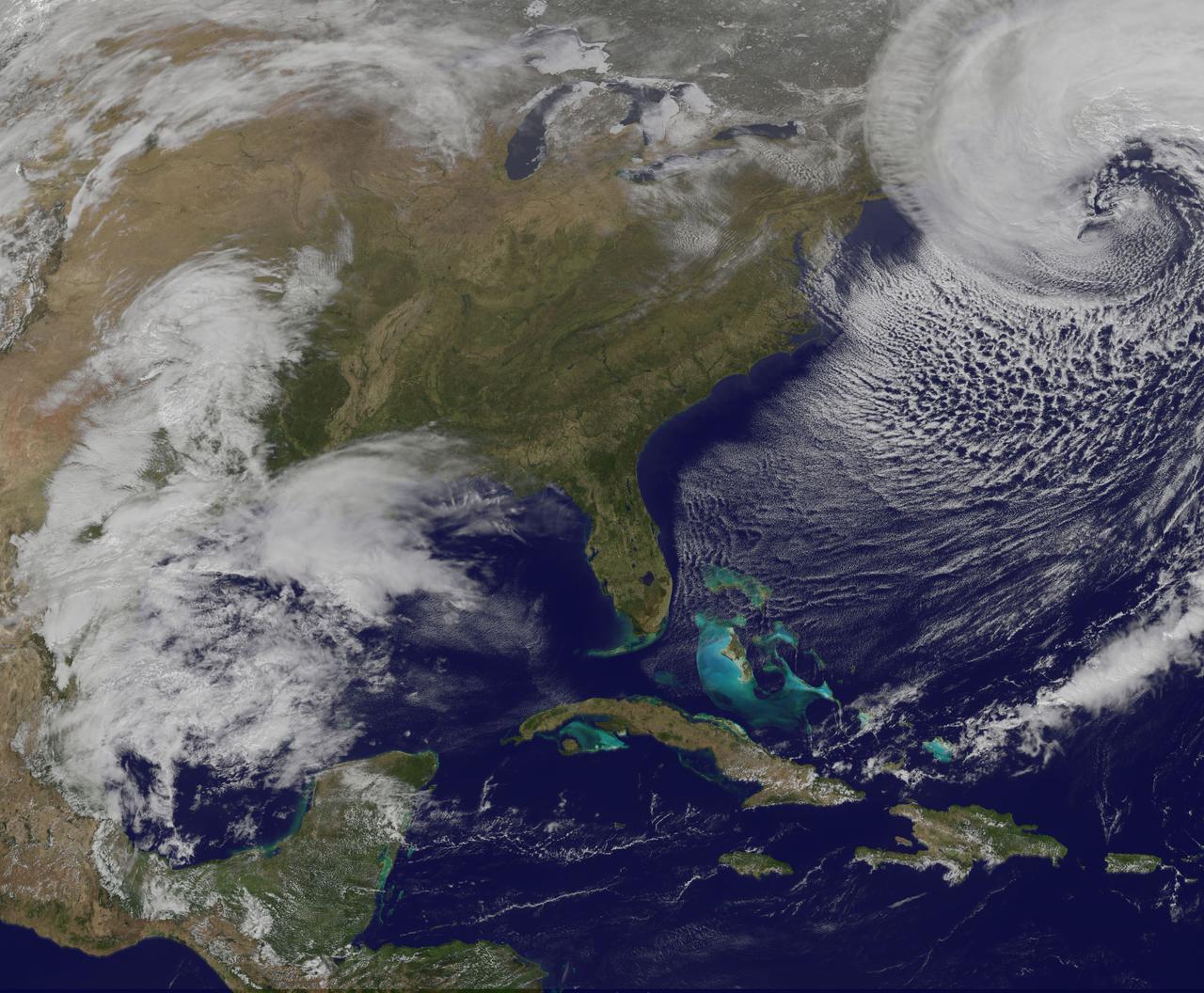
The strong coastal storm currently off the coast of New England will continue to bring strong winds and heavy snow to coastal portions of the Northeast on Wednesday. The storm will move into the Canadian Maritimes by Thursday. This image was taken by GOES East at 17:31 UTC on March 26, 2014. <b><a href="http://goes.gsfc.nasa.gov/" rel="nofollow">Credit: NOAA/NASA GOES Project</a></b> <b><a href="http://www.nasa.gov/audience/formedia/features/MP_Photo_Guidelines.html" rel="nofollow">NASA image use policy.</a></b> <b><a href="http://www.nasa.gov/centers/goddard/home/index.html" rel="nofollow">NASA Goddard Space Flight Center</a></b> enables NASA’s mission through four scientific endeavors: Earth Science, Heliophysics, Solar System Exploration, and Astrophysics. Goddard plays a leading role in NASA’s accomplishments by contributing compelling scientific knowledge to advance the Agency’s mission. <b>Follow us on <a href="http://twitter.com/NASAGoddardPix" rel="nofollow">Twitter</a></b> <b>Like us on <a href="http://www.facebook.com/pages/Greenbelt-MD/NASA-Goddard/395013845897?ref=tsd" rel="nofollow">Facebook</a></b> <b>Find us on <a href="http://instagram.com/nasagoddard?vm=grid" rel="nofollow">Instagram</a></b>
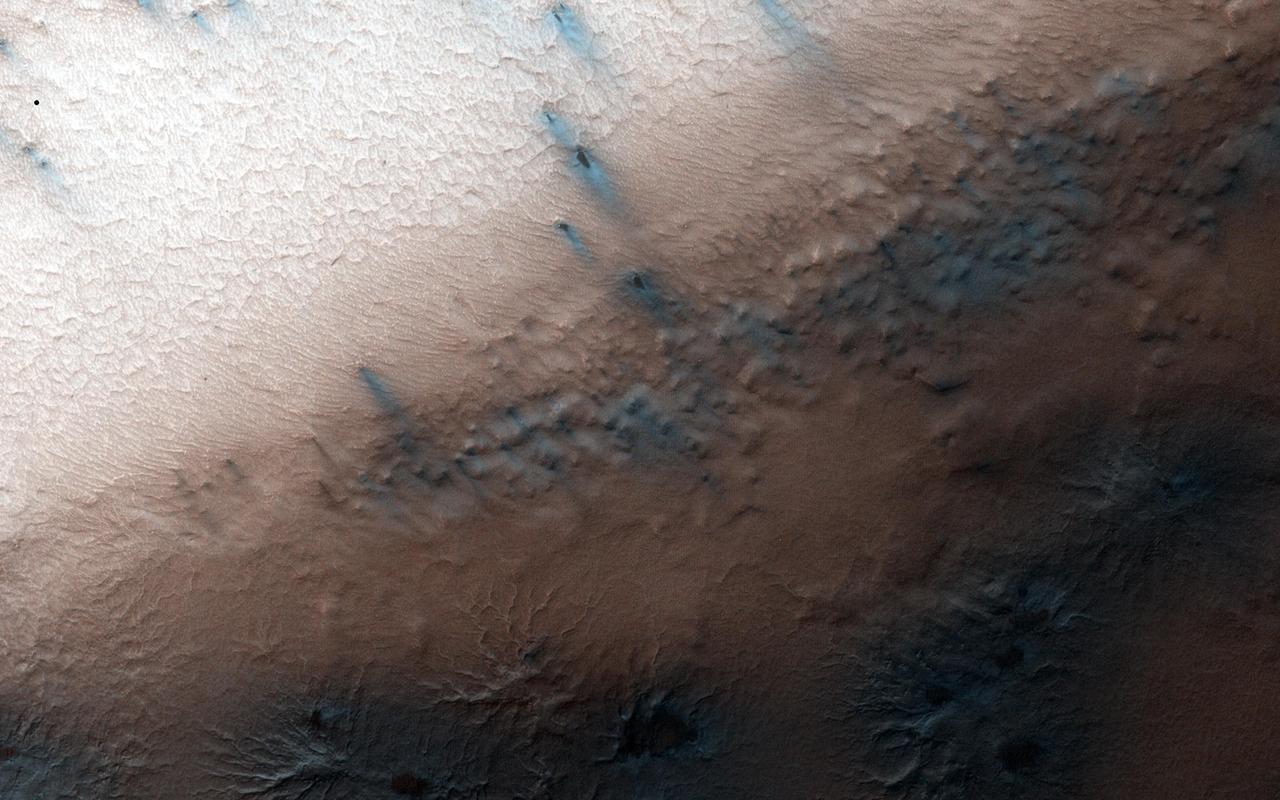
At certain times in spring, fans take on a gray or blue appearance. This is the time in Inca City when this phenomenon happens, as seen in this image acquired by NASA Mars Reconnaissance Orbiter. On the ridge at the top of the image fans have lengthened and now look more gray than the blotches on the araneiforms. At the bottom of the image they are distinctly blue in color. Two theories have been suggested: perhaps fine particles sink into the seasonal layer of ice so they no longer appear dark. Or, maybe the gas that is released from under the ice condenses and falls to the surface as a bright fresh layer of frost. It is quite likely that both of these theories are correct. http://photojournal.jpl.nasa.gov/catalog/PIA18895
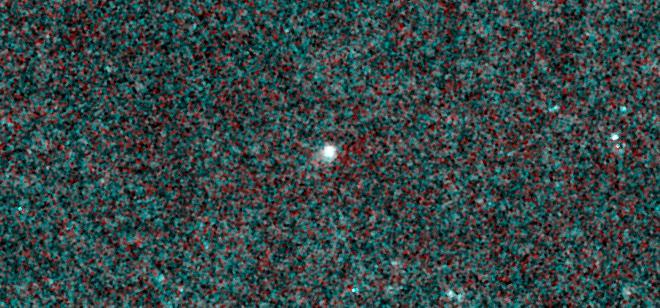
NASA NEOWISE mission captured images of Comet C/2013 A1 Siding Spring. The infrared pictures reveal a comet that is active and very dusty.
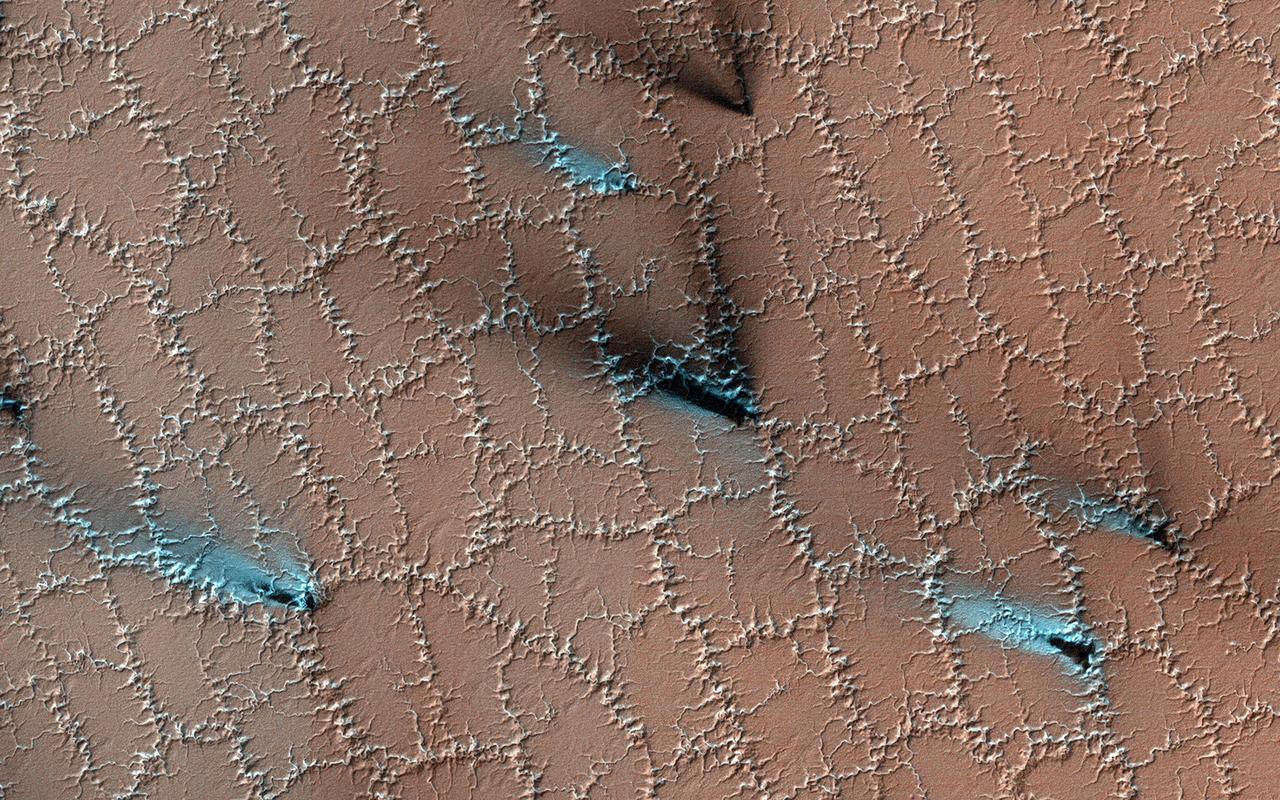
Both water and dry ice have a major role in sculpting Mars' surface at high latitudes. Water ice frozen in the soil splits the ground into polygons. Erosion of the channels forming the boundaries of the polygons by dry ice sublimating in the spring adds plenty of twists and turns to them. Spring activity is visible as the layer of translucent dry ice coating the surface develops vents that allow gas to escape. The gas carries along fine particles of material from the surface further eroding the channels. The particles drop to the surface in dark fan-shaped deposits. Sometimes the dark particles sink into the dry ice, leaving bright marks where the fans were originally deposited. Often the vent closes, then opens again, so we see two or more fans originating from the same spot but oriented in different directions as the wind changes. https://photojournal.jpl.nasa.gov/catalog/PIA25357
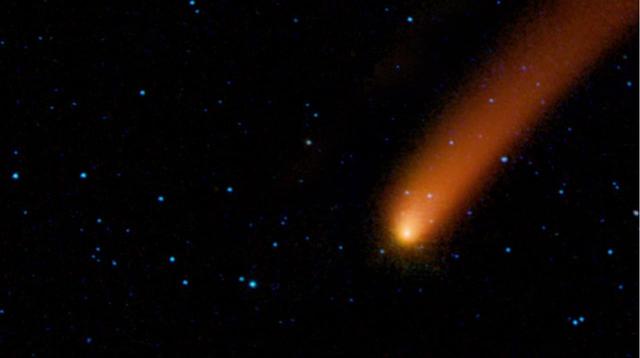
Is it a bird, or a plane? No, it comet Siding Spring streaking across the sky, as seen by NASA Wide-field Infrared Survey Explorer, or WISE. An animation is available at the Photojournal.
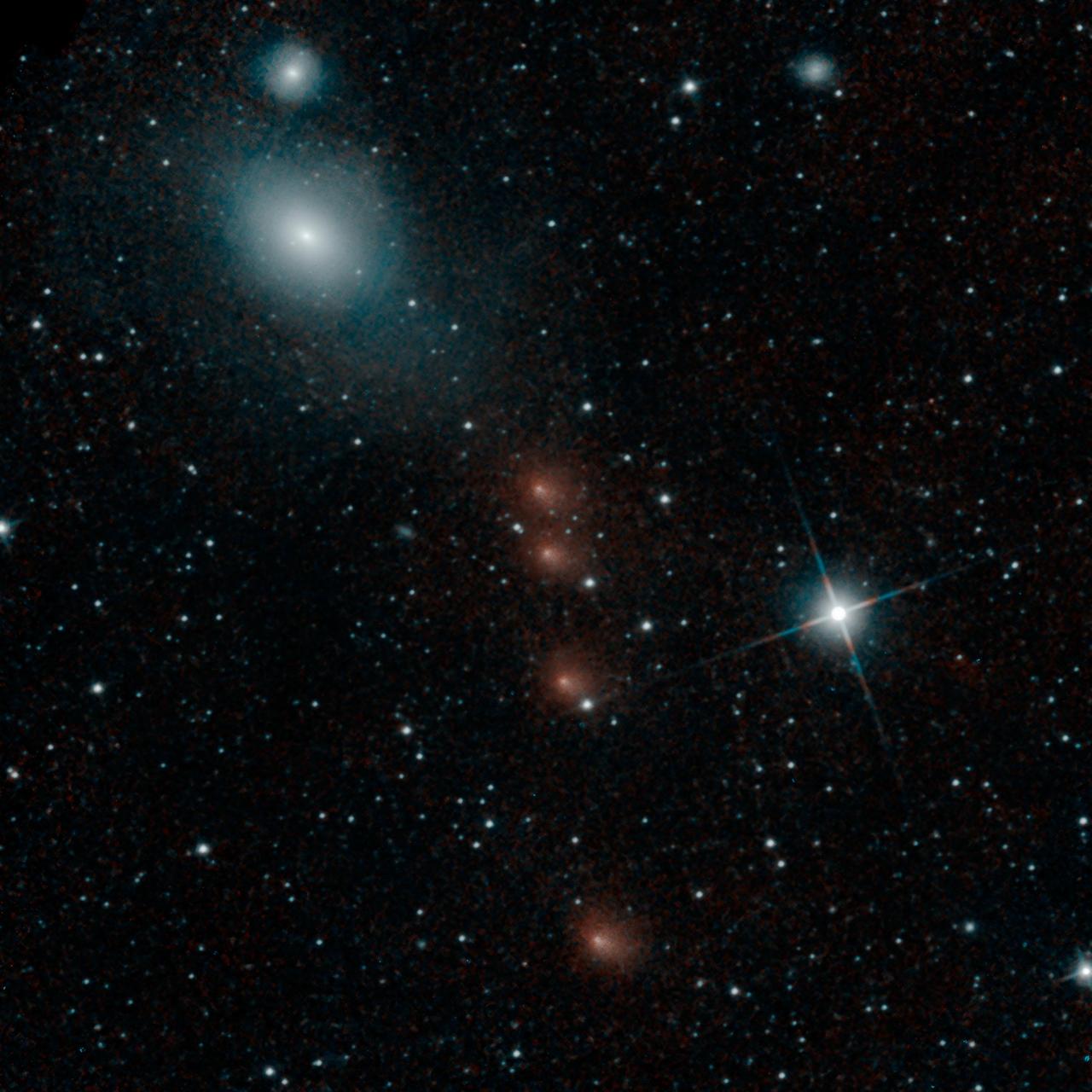
NASA NEOWISE mission detected comet C/2013 A1 Siding Spring on July 28, 2014, less than three months before this comet close flyby of Mars on Oct. 19.
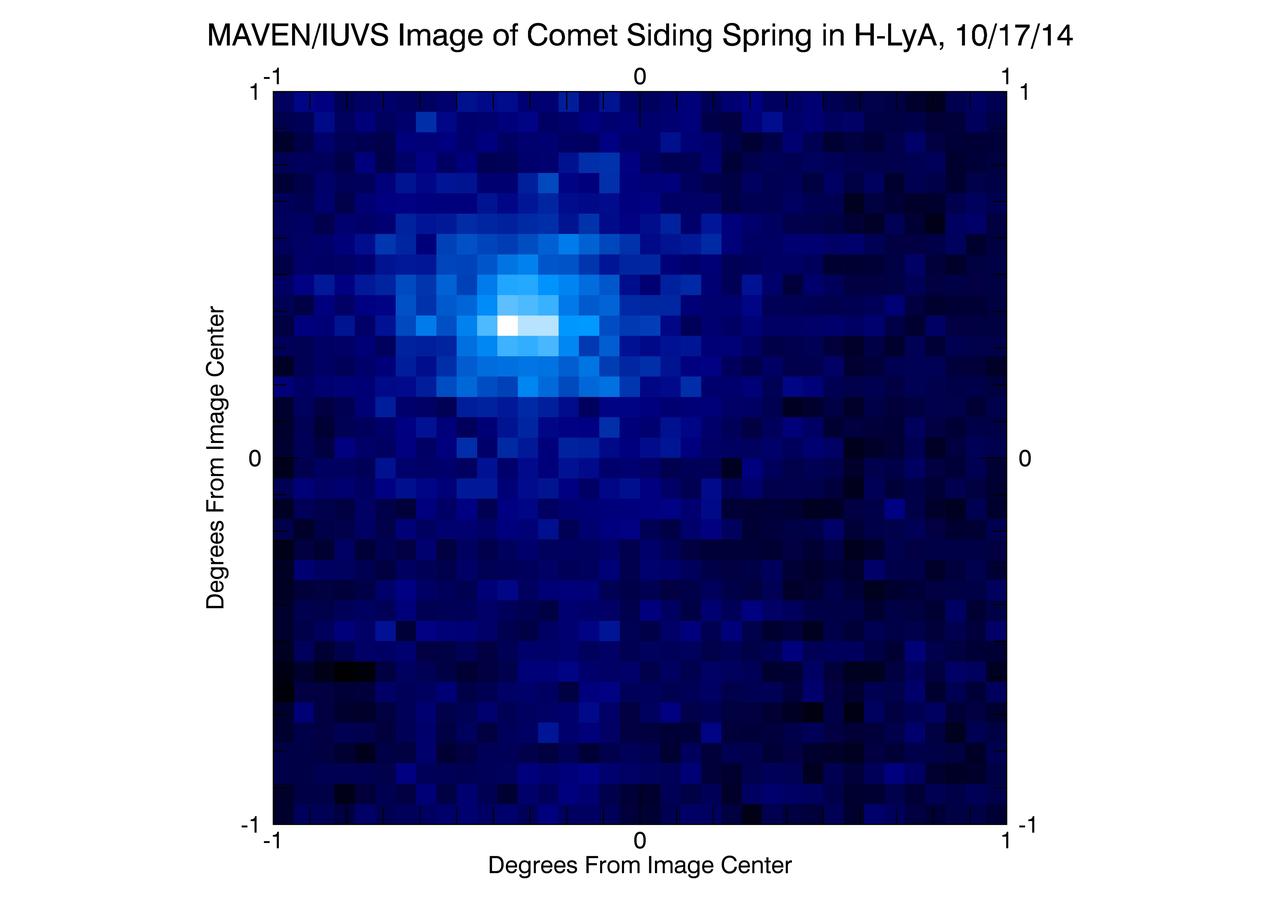
NASA MAVEN spacecraft obtained this ultraviolet image of hydrogen surrounding comet Siding Spring on Oct. 17, 2014, two days before the comet closest approach to Mars.
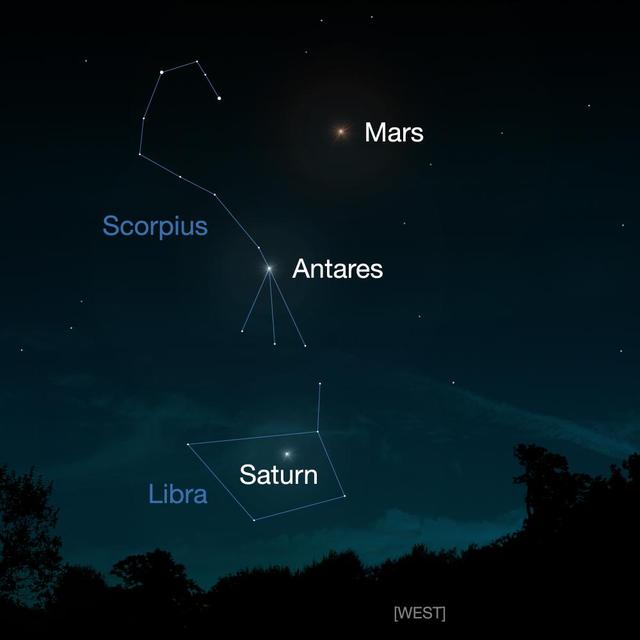
Comet Siding Spring will have a close approach to Mars on Oct. 19, 2014. This artist concept shows people in the Southern Hemisphere where to look for Mars in the night sky. Mars and the comet may be visible with binoculars.
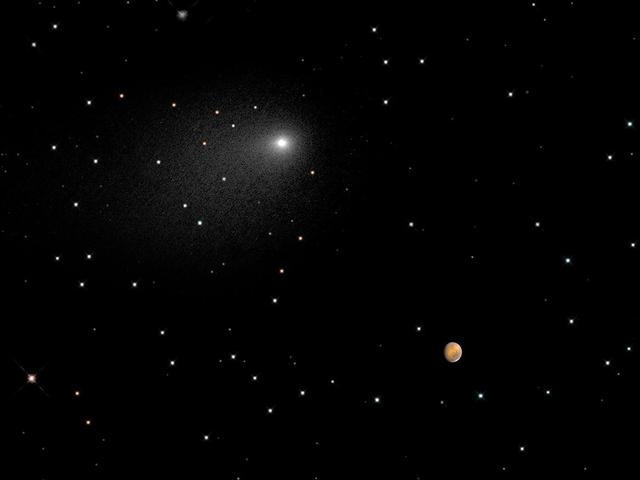
This synthesized composite of NASA Hubble Space Telescope images captures the positions of comet Siding Spring and Mars in a never-before-seen close passage of a comet by the Red Planet.
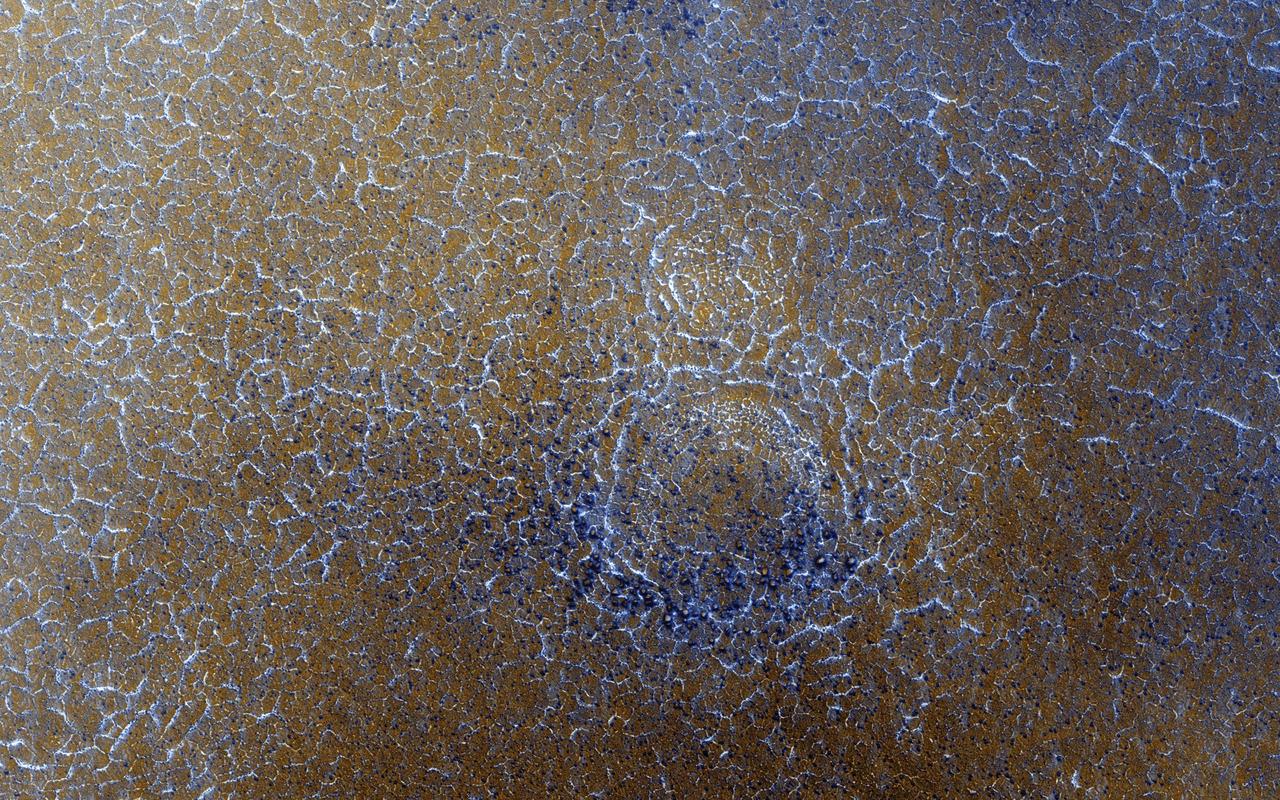
Winter on Mars comes with a blanket of carbon dioxide snow. During the spring "thaw," this snow evaporates into the atmosphere, lingering longest in the shallow depressions such as the troughs of polygon patterned ground. Enhanced color shows the carbon dioxide snow as bluish-white patches among areas of rusty red bare ground. We took this image in 2008 as a possible landing site for the Phoenix Lander that arrived on Mars later that same year. https://photojournal.jpl.nasa.gov/catalog/PIA22868
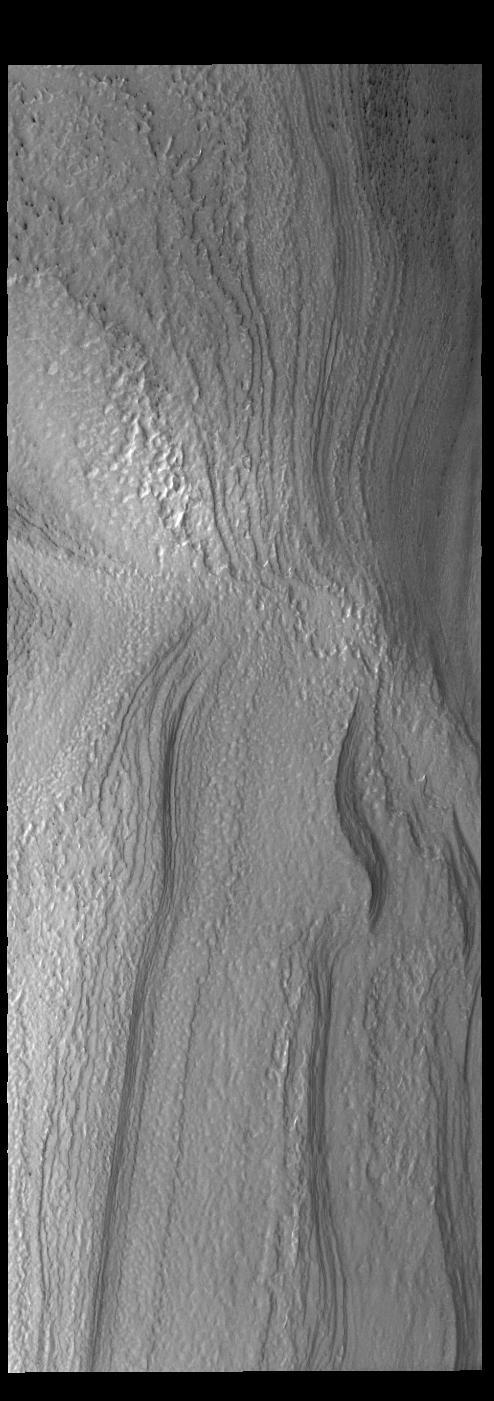
Today's VIS image shows part of the south polar cap. The sun has only just risen on the south pole. It is the start of the spring season and everything is still covered in frost. As the frost sublimates (changes from solid to gas) different surface features will become apparent. Orbit Number: 81244 Latitude: -86.5737 Longitude: 165.076 Instrument: VIS Captured: 2020-04-07 22:16 https://photojournal.jpl.nasa.gov/catalog/PIA23948
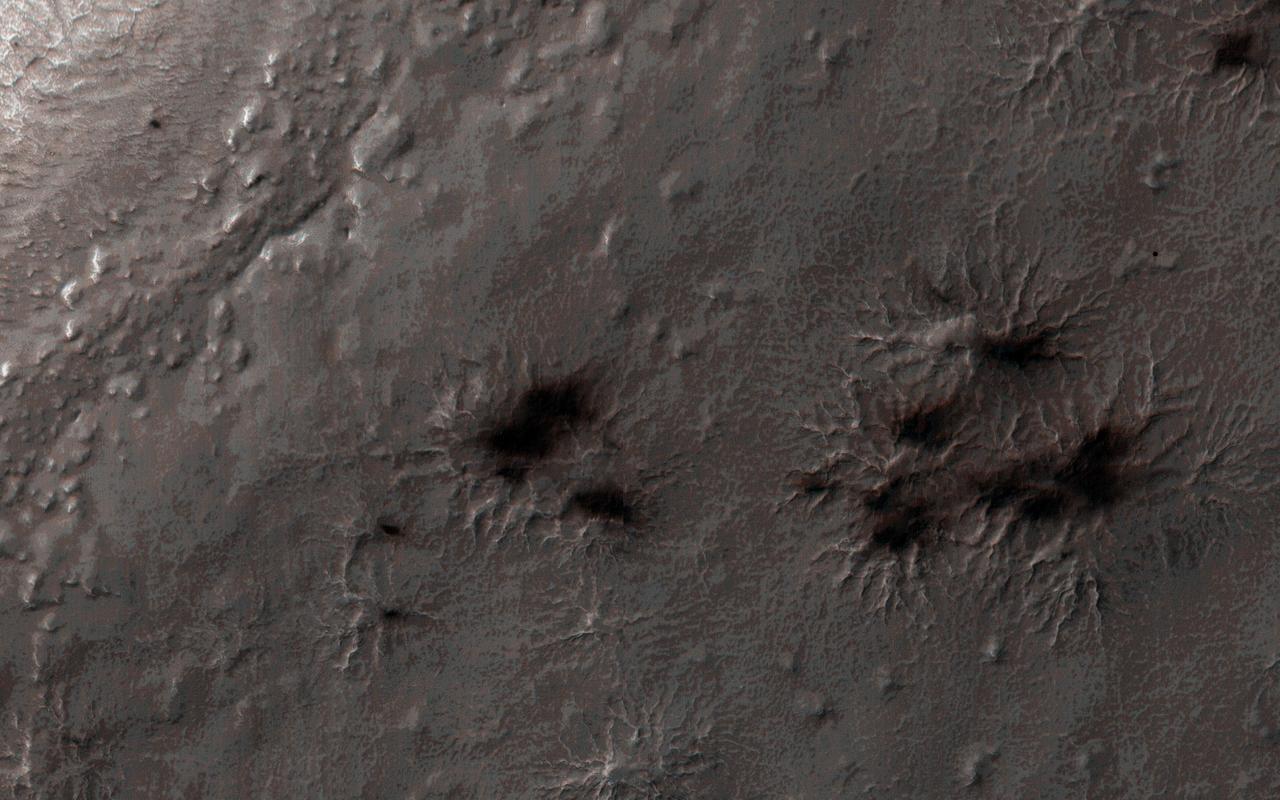
Every winter a layer of carbon dioxide ice-or, dry ice-condenses in the Southern polar region, forming a seasonal polar cap less than 1 meter deep. Early in the spring the ice layer begins to sublimate (going directly from a solid to gas) from the top and bottom of the ice layer. Under the ice gas pressure builds up until a weak spot in the ice layer ruptures. The gas rushes out and as it escapes it erodes a bit of the surface. Fine particles are carried by the gas to the top of the ice and then fall out in fan-shaped deposits. The direction of the fan shows the direction either of the wind or down the slope. If the wind is not blowing a dark blotch settles around the spot the gas escaped. This region is known informally as Inca City, and it has a series of distinctive ridges. On the floor between the ridges are radially organized channels, known colloquially as spiders, more formally called "araneiforms." The channels have been carved in the surface over many years by the escaping pressurized gas. Every spring they widen just a bit. This was the first image to be acquired by NASA Mars Reconnaissance Orbiter after the sun rose on Inca City, marking the end to polar night. A few fans are visible emerging from the araneiforms. http://photojournal.jpl.nasa.gov/catalog/PIA18892
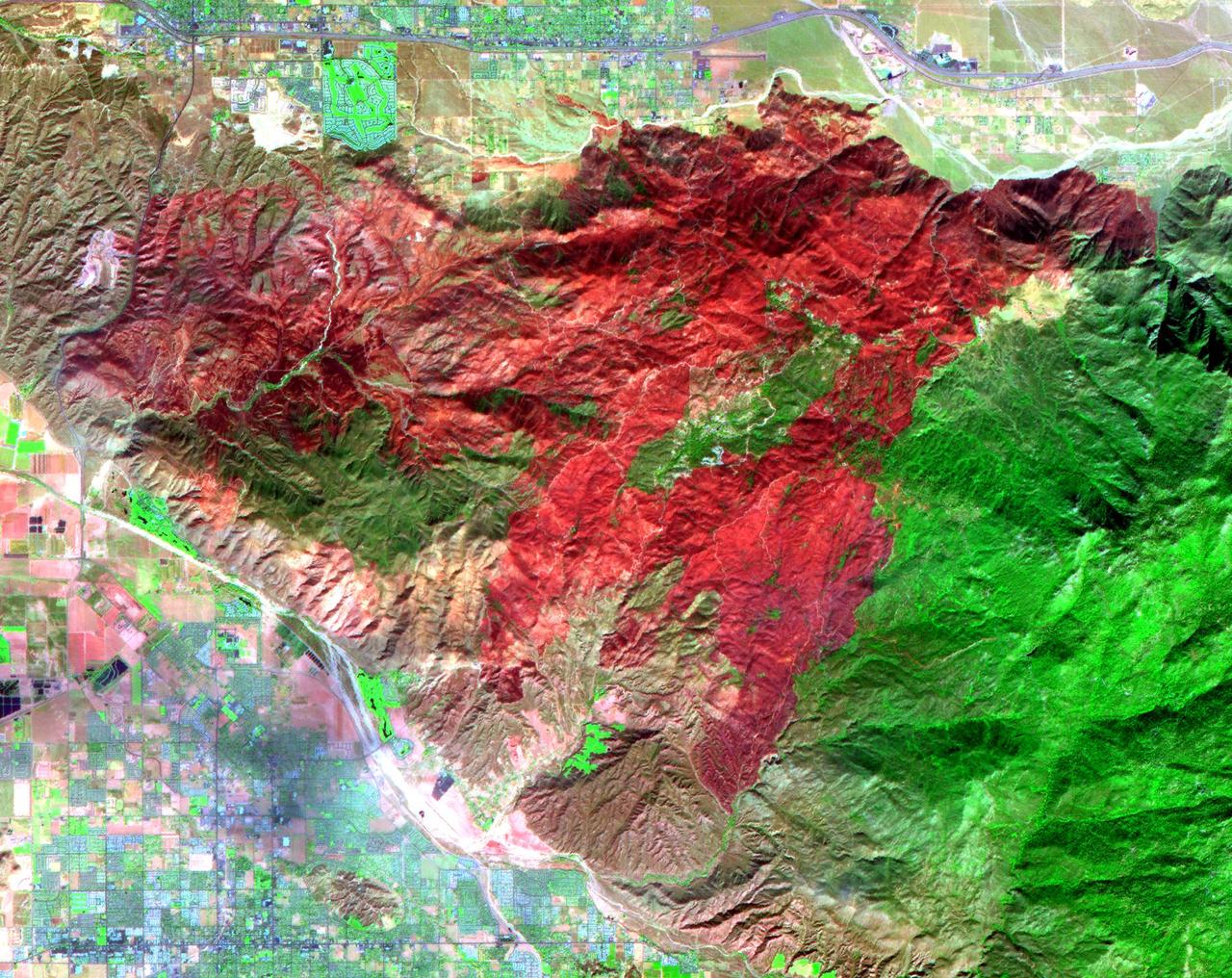
The Esperanza fire started on October 26 in the dry brush near Palm Springs, CA. By the time it was contained 6 days later, the fire had consumed 40,200 acres, and destroyed 34 homes and 20 outbuildings. Racing through grass, brush, and timber, the blaze had forced hundreds to evacuate, and it killed five firefighters who were working to protect homes. Fire officials are reporting the cause of the blaze as arson. In this ASTER image composite of visible and infrared bands, burned areas are shown in shades of red, vegetation is green, brown vegetation is brown and asphalt and concrete are blue-gray. http://photojournal.jpl.nasa.gov/catalog/PIA01900

S81-25294 (Jan 1981) --- Astronaut Sherwood C. Spring, pilot.
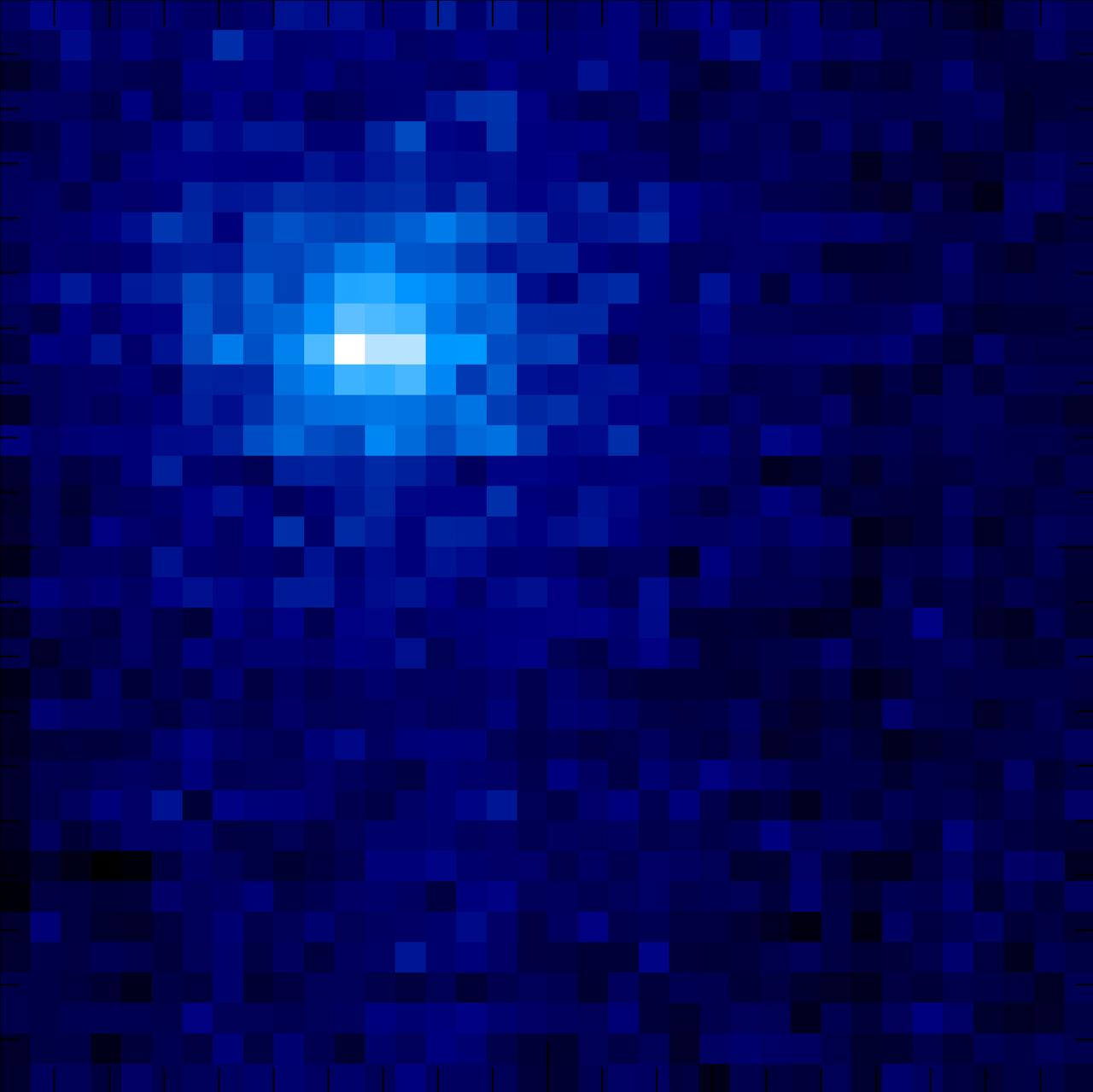
NASA’s Mars Atmosphere and Volatile Evolution (MAVEN) spacecraft obtained this ultraviolet image of hydrogen surrounding comet Siding Spring on Friday, Oct. 17, two days before the comet’s closest approach to Mars. The Imaging Ultraviolet Spectrograph (IUVS) instrument imaged the comet at a distance of 5.3 million miles (8.5 million kilometers). The image shows sunlight that has been scattered by atomic hydrogen, and is shown as blue in this false-color representation. Comets are surrounded by a huge cloud of atomic hydrogen because water (H2O) vaporizes from the icy nucleus, and solar ultraviolet light breaks it apart into hydrogen and oxygen. Hydrogen atoms scatter solar ultraviolet light, and it was this light that was imaged by the IUVS. Two observations were combined to create this image, after removing the foreground signal that results from sunlight being scattered from hydrogen surrounding Mars. The bulk of the scattered sunlight shows a cloud that was about a half degree across on the “sky” background, comparable in size to Earth’s moon as seen from Earth. Hydrogen was detected to as far as 93,000 miles (150,000 kilometers) away from the comet’s nucleus. The distance is comparable to the distance of the comet from Mars at its closest approach. Gas from the comet is likely to have hit Mars, and would have done so at a speed of 125,000 mph (56 kilometers/second. This gas may have disturbed the Mars atmosphere. Credit: Laboratory for Atmospheric and Space Physics, University of Colorado; NASA <b><a href="http://www.nasa.gov/audience/formedia/features/MP_Photo_Guidelines.html" rel="nofollow">NASA image use policy.</a></b> <b><a href="http://www.nasa.gov/centers/goddard/home/index.html" rel="nofollow">NASA Goddard Space Flight Center</a></b> enables NASA’s mission through four scientific endeavors: Earth Science, Heliophysics, Solar System Exploration, and Astrophysics. Goddard plays a leading role in NASA’s accomplishments by contributing compelling scientific knowledge to advance the Agency’s mission. <b>Follow us on <a href="http://twitter.com/NASAGoddardPix" rel="nofollow">Twitter</a></b> <b>Like us on <a href="http://www.facebook.com/pages/Greenbelt-MD/NASA-Goddard/395013845897?ref=tsd" rel="nofollow">Facebook</a></b> <b>Find us on <a href="http://instagram.com/nasagoddard?vm=grid" rel="nofollow">Instagram</a></b>

Today's VIS image is located over Olympia Undae, the largest of several dune fields that surround the north polar cap. The dunes look like salt and pepper against a bright background. The spring arrival of the sun has begun the defrosting process, and most of the dunes are still covered in frost. As the season progresses the dunes will appear darker and darker as the dark sand is revealed from under the bright frost cover. Orbit Number: 77196 Latitude: 79.7649 Longitude: 219.771 Instrument: VIS Captured: 2019-05-10 15:23 https://photojournal.jpl.nasa.gov/catalog/PIA23295
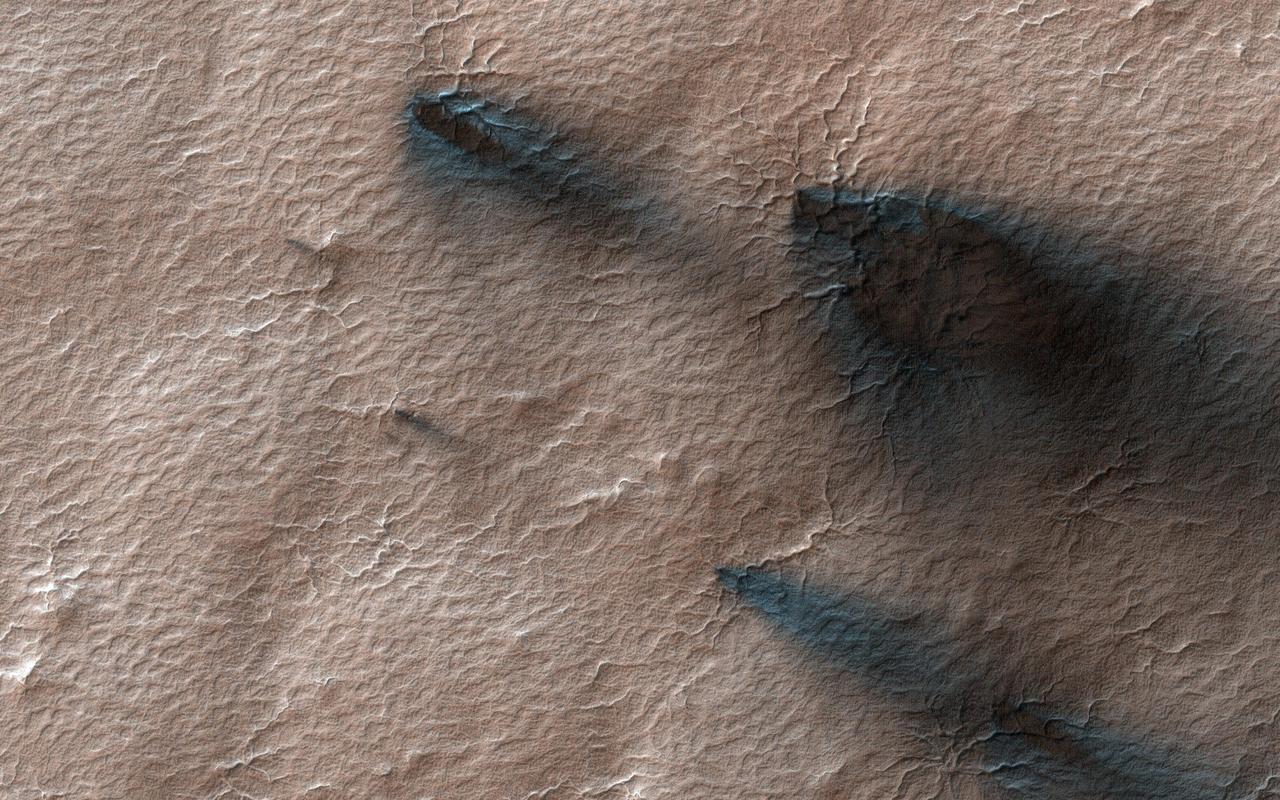
Every Martian spring, fans of dust are blown out from under the seasonal layer of carbon dioxide ice that forms a polar cap over the winter. Gas blowing out from under the ice carries with it a load of dust that is deposited on the surface in a direction determined by the wind at the time of the eruption. Like windsocks, these fans in a polar area we've dubbed Macclesfield, record the direction that the wind was blowing. A citizen science task at Planet Four enlists the public to outline the fans. Their measurements go into a data base that will ultimately help us to understand weather on Mars. https://photojournal.jpl.nasa.gov/catalog/PIA23954

37th Space Symposium opening fireworks, Monday, April 4, 2022, Broadmoor Hotel in Colorado Springs, Colorado. Photo Credit: (NASA/Bill Ingalls)
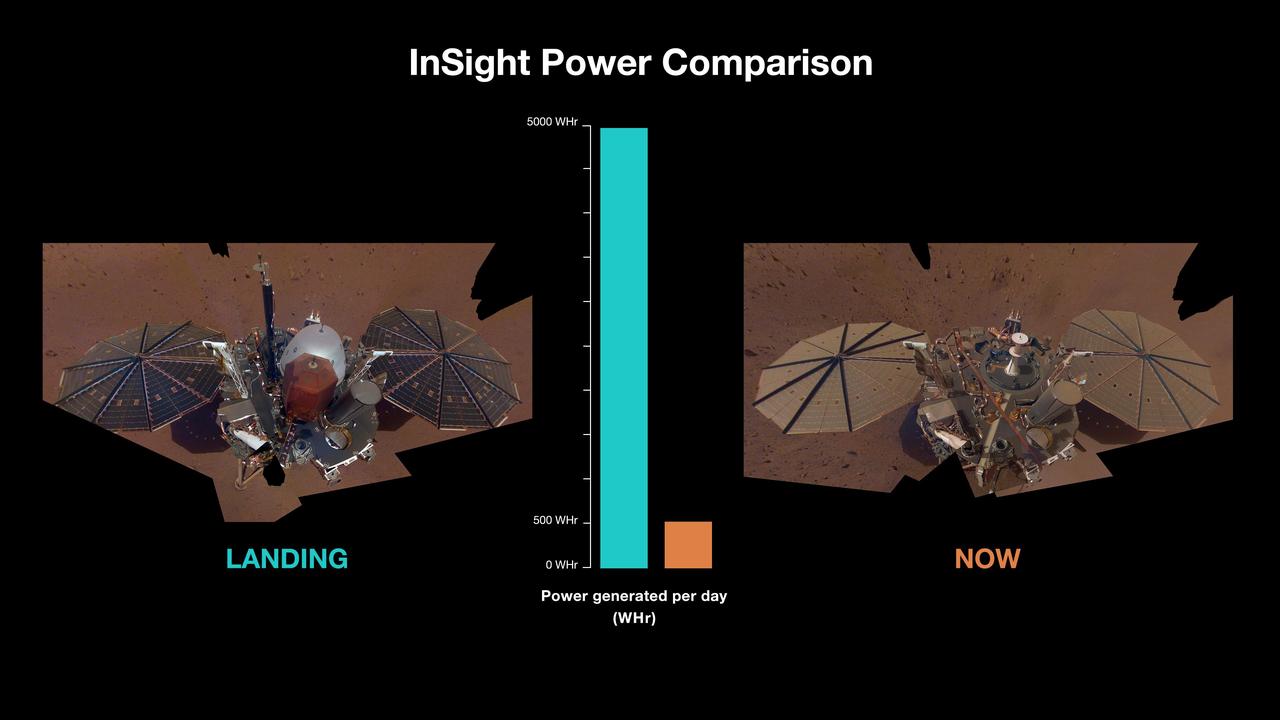
The solar panels on NASA's InSight Mars lander produced roughly 5,000 watt-hours each Martian day, or sol, after the spacecraft touched down. But by spring 2022, enough dust had settled on the panels that they were only producing about 500 watt-hours each sol. The lander's first full selfie, which shows clean panels, was taken in December 2018; the dusty selfie (at right) is from images taken in March and April 2019. https://photojournal.jpl.nasa.gov/catalog/PIA25284
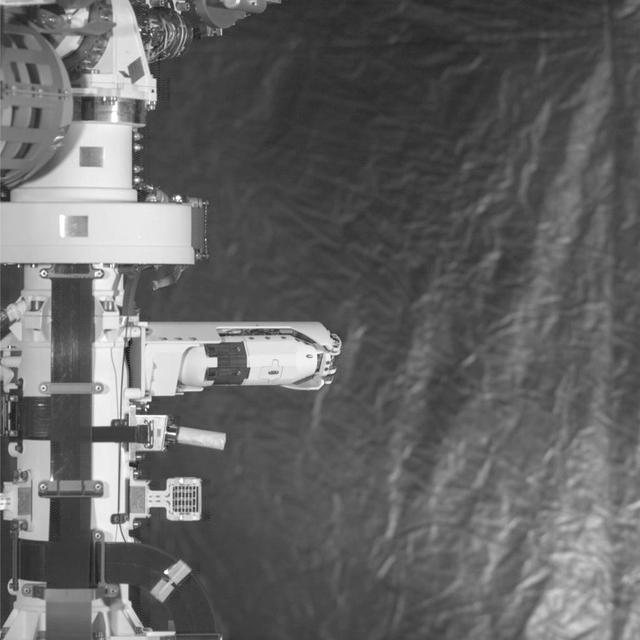
One of two wind sensors springs out of the mast on NASA's Perseverance Mars rover. These sensors are part of the Mars Environmental Dynamics Analyzer (MEDA), the rover's set of weather instrumentation. MEDA was provided to NASA by the Centro de Astrobiología (CAB) at the Instituto Nacional de Técnica Aeroespacial in Madrid, Spain. A key objective for Perseverance's mission on Mars is astrobiology, including the search for signs of ancient microbial life. The rover will characterize the planet's geology and past climate, pave the way for human exploration of the Red Planet, and be the first mission to collect and cache Martian rock and regolith (broken rock and dust). Subsequent missions, currently under consideration by NASA in cooperation with ESA (the European Space Agency), would send spacecraft to Mars to collect these cached samples from the surface and return them to Earth for in-depth analysis. The Mars 2020 mission is part of a larger program that includes missions to the Moon as a way to prepare for human exploration of the Red Planet. Charged with returning astronauts to the Moon by 2024, NASA will establish a sustained human presence on and around the Moon by 2028 through NASA's Artemis lunar exploration plans. Movie available at https://photojournal.jpl.nasa.gov/catalog/PIA24175
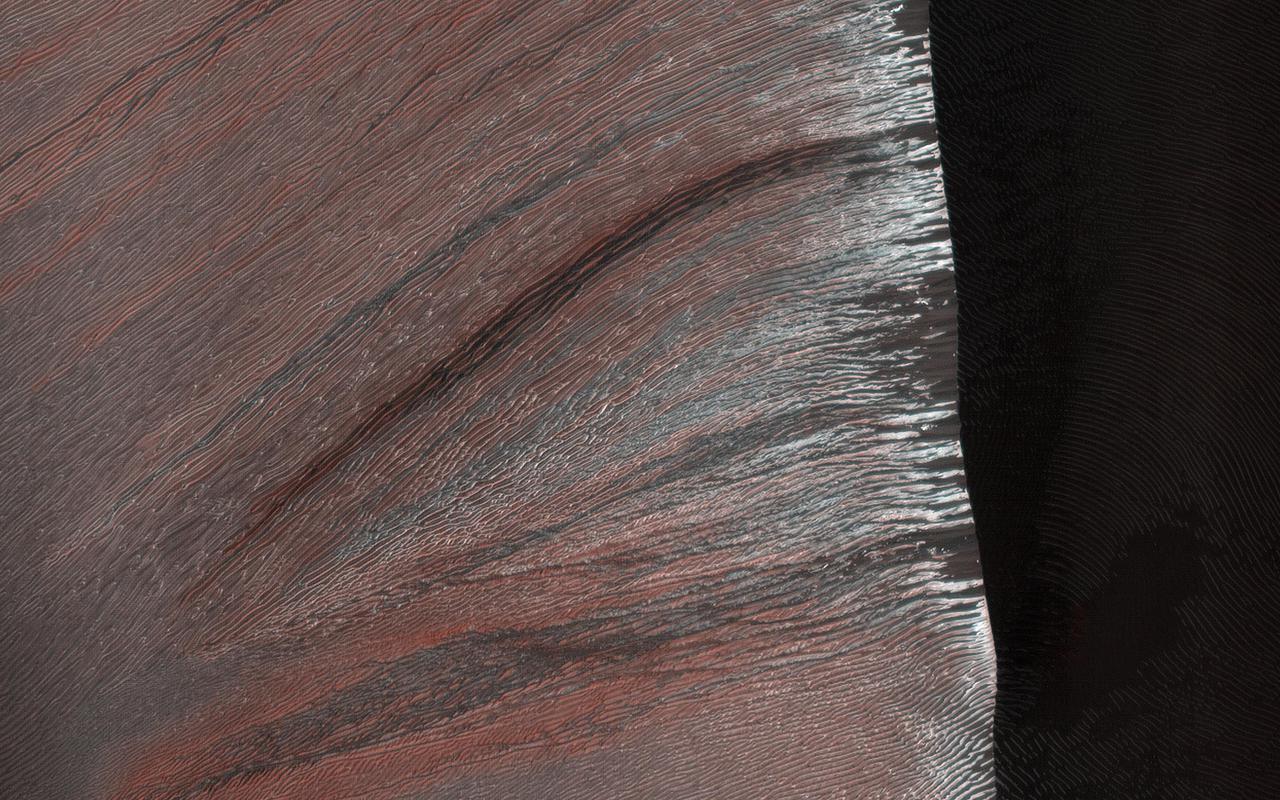
The sand dunes in Kaiser Crater are partially covered with seasonal carbon dioxide ice (dry ice) in this image. The dunes are made of dark sand, showing through where the dry ice has sublimated (turned to gas) in the spring sun. The fine scale structure of the ripples on the dunes shows up highlighted by the presence or absence of the ice, and the low angle of the sun on the slope. https://photojournal.jpl.nasa.gov/catalog/PIA25181
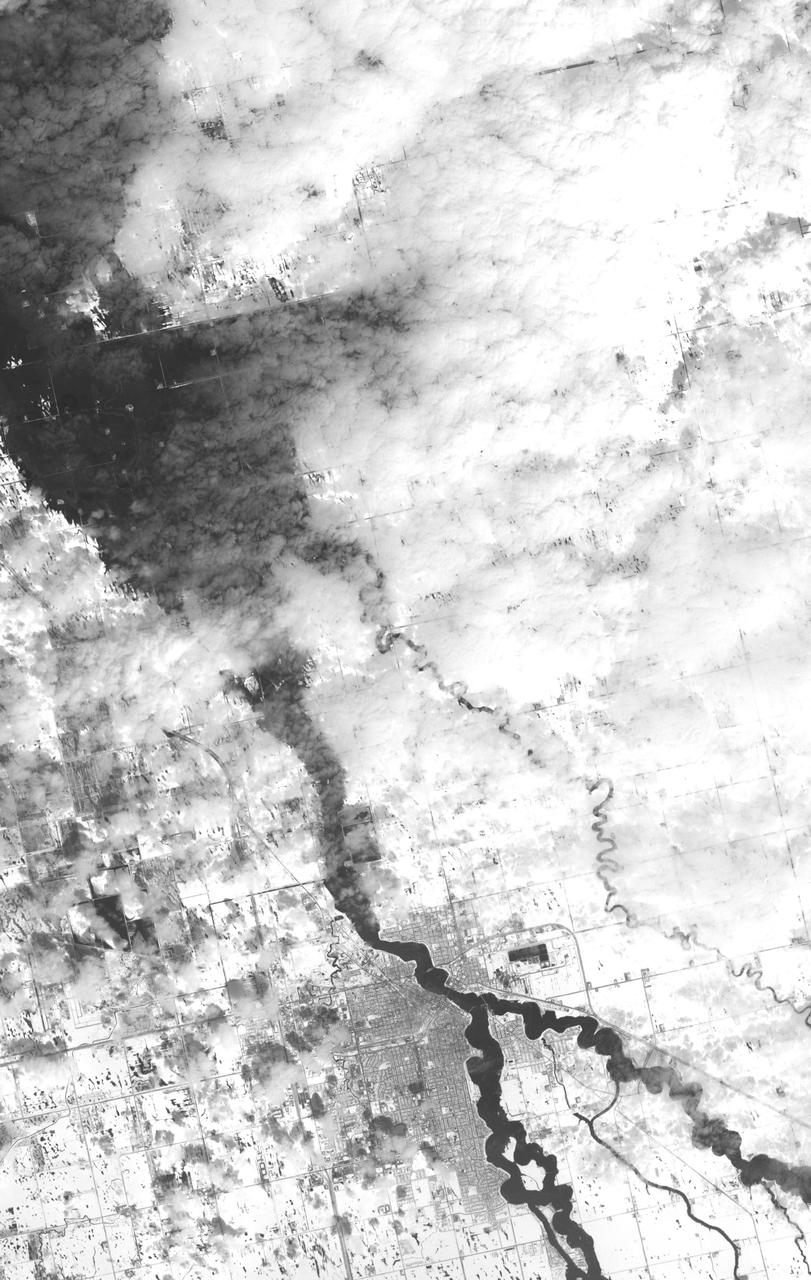
NASA Terra spacecraft shows the annual spring thaw in the upper Midwest is underway. Snow-covered ground contrasts with the dark tones of water under broken cloud cover. Along the Red River in North Dakota, floodwaters are moving northward into Canada.
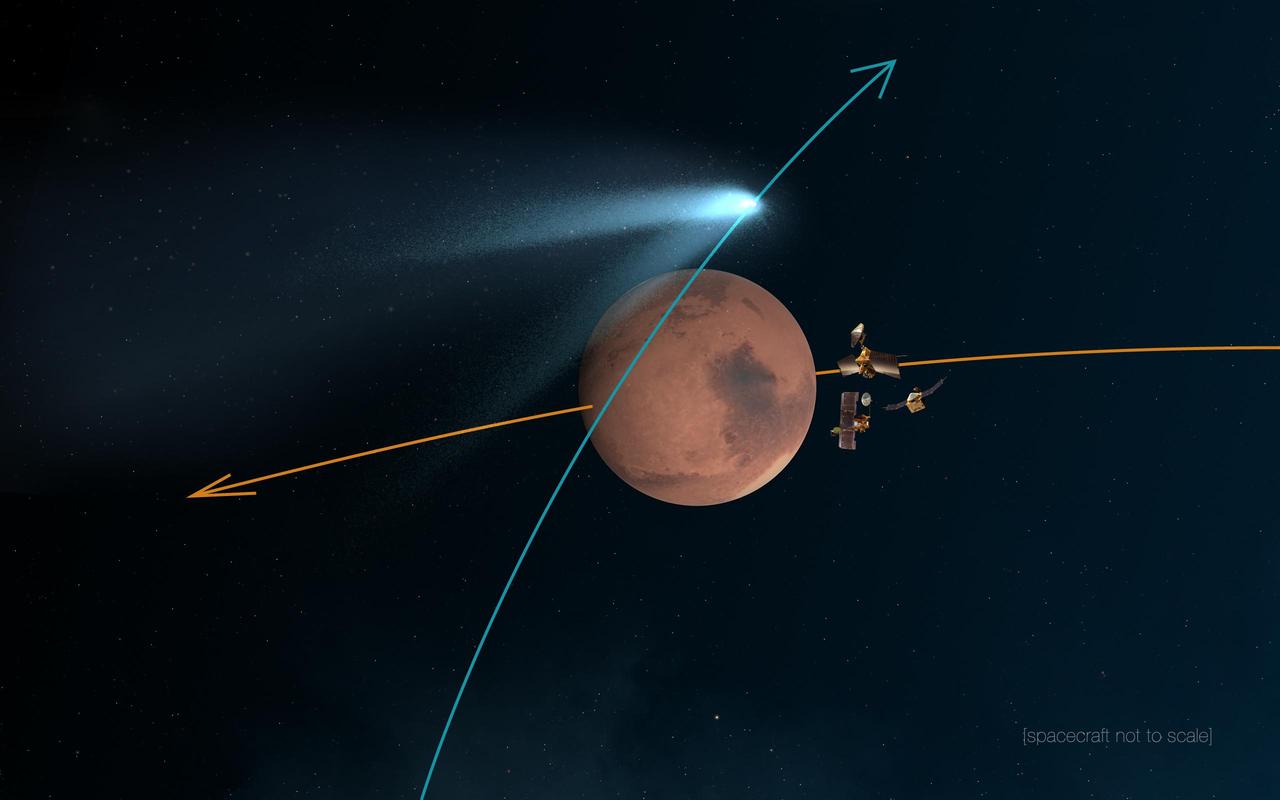
This artist concept shows NASA Mars orbiters lining up behind the Red Planet for their duck and cover maneuver to shield them from comet dust that may result from the close flyby of comet Siding Spring C/2013 A1 on Oct. 19, 2014.
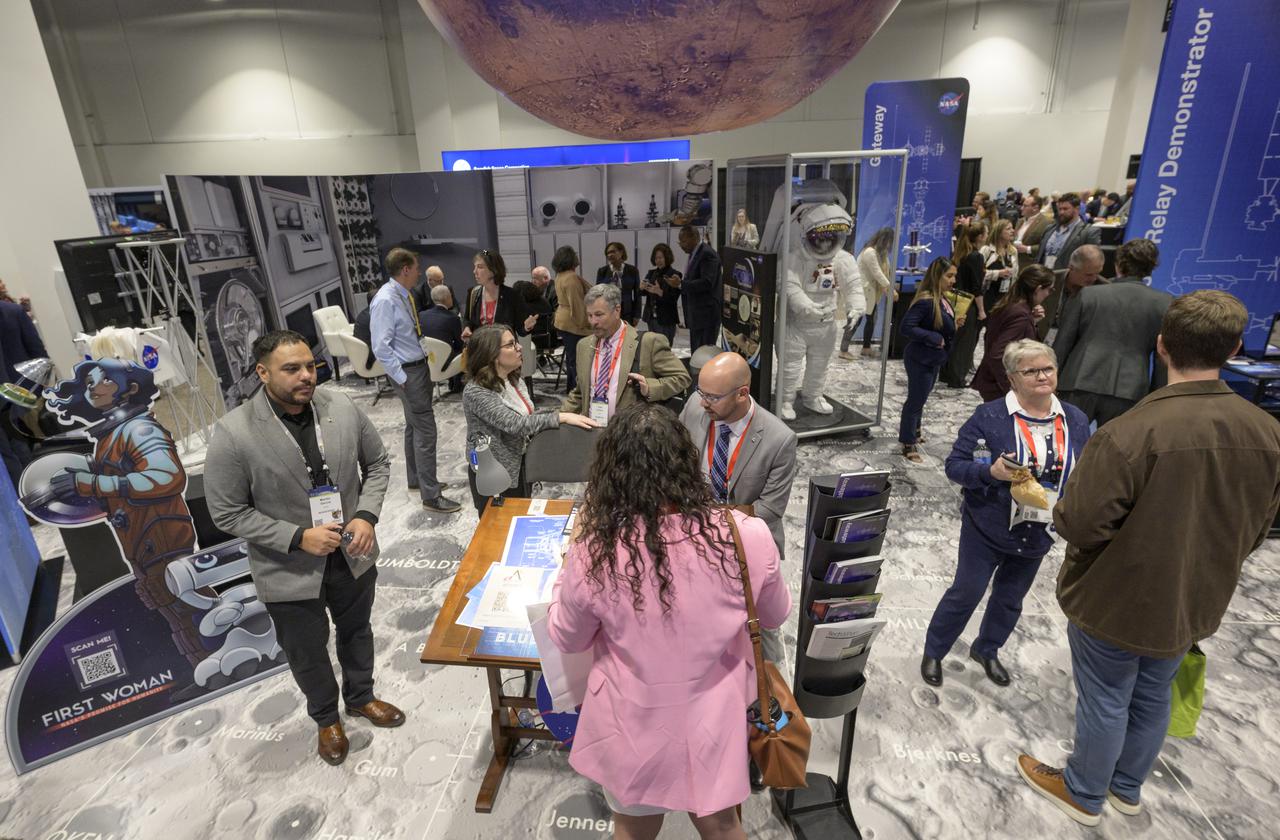
Attendees visit the NASA Exhibit area during the 37th Space Symposium, Tuesday, April 5, 2022, in Colorado Springs, Colorado. Photo Credit: (NASA/Bill Ingalls)
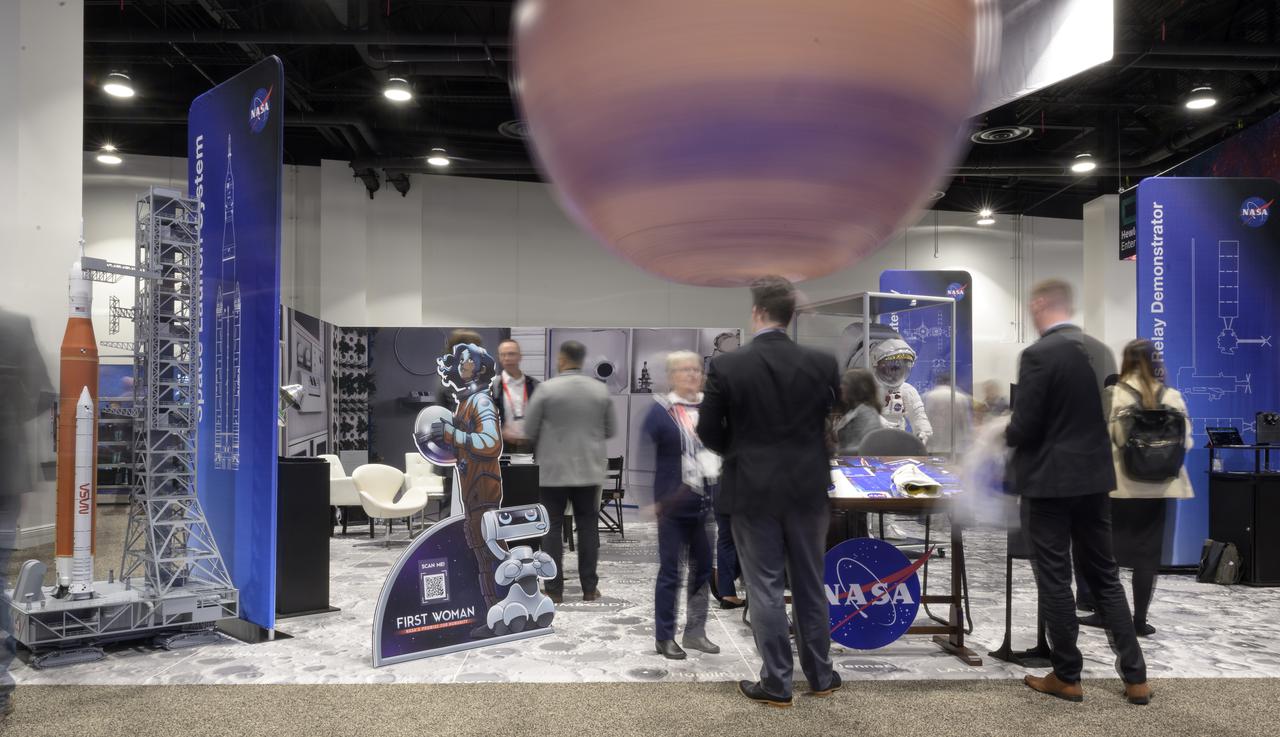
The NASA Exhibit area is seen in this 6 second exposure photograph during the 37th Space Symposium, Tuesday, April 5, 2022, in Colorado Springs, Colorado. Photo Credit: (NASA/Bill Ingalls)
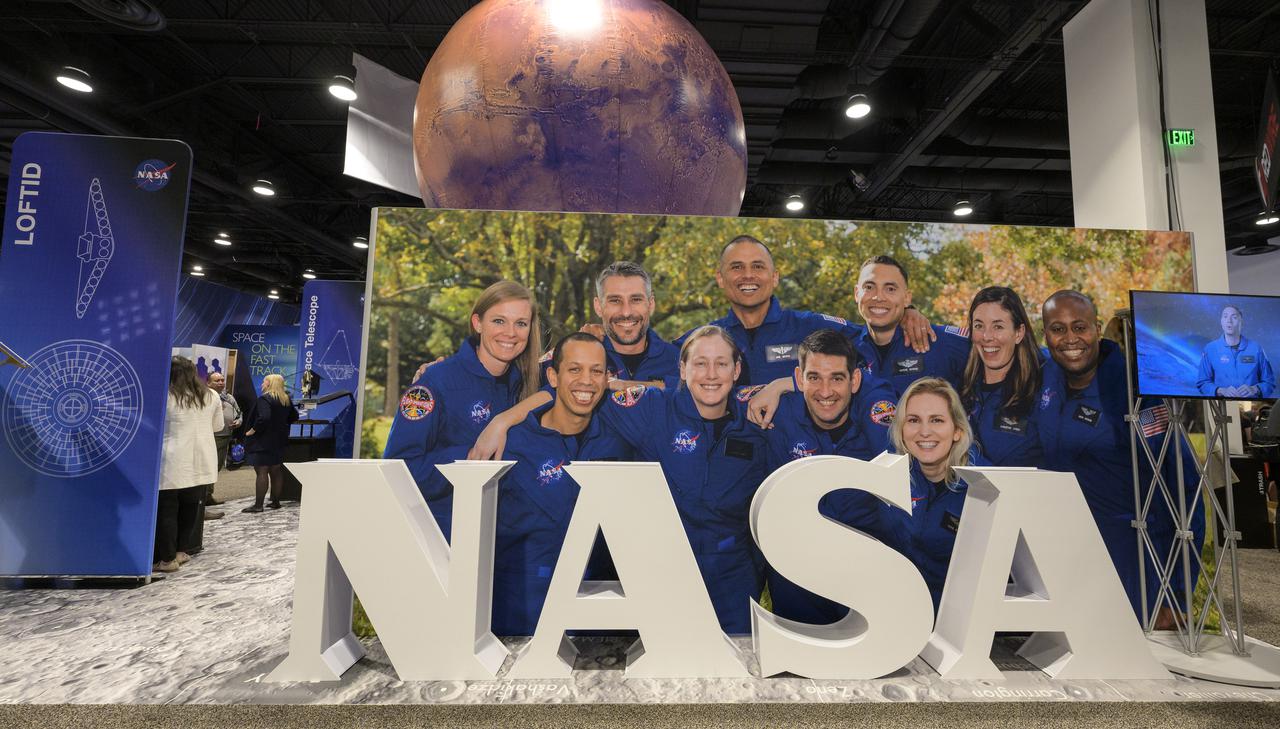
Attendees visit the NASA Exhibit area during the 37th Space Symposium, Tuesday, April 5, 2022, in Colorado Springs, Colorado. Photo Credit: (NASA/Bill Ingalls)

Dr. Kate Calvin, NASA's chief scientist and senior climate advisor, speaks at the 37th Space Symposium, Tuesday, April 5, 2022, in Colorado Springs, Colorado. Photo Credit: (NASA/Bill Ingalls)
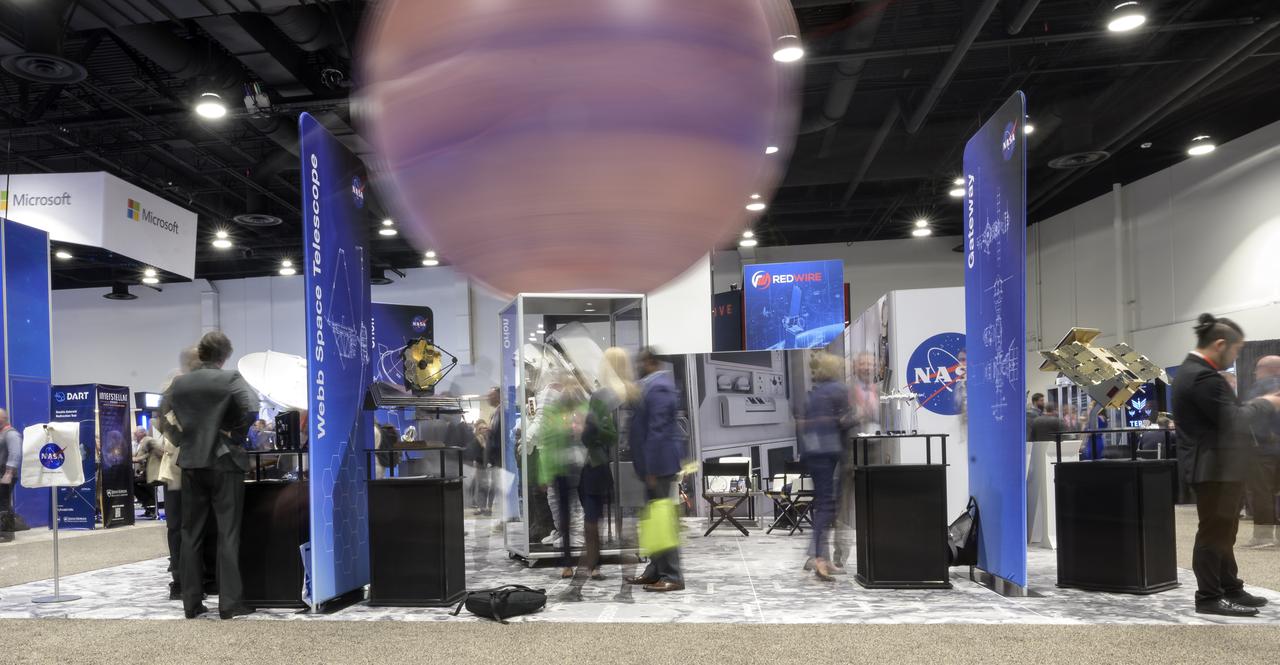
The NASA Exhibit area is seen in this 10 second exposure photograph during the 37th Space Symposium, Tuesday, April 5, 2022, in Colorado Springs, Colorado. Photo Credit: (NASA/Bill Ingalls)

Dr. Kate Calvin, NASA's chief scientist and senior climate advisor, speaks at the 37th Space Symposium, Tuesday, April 5, 2022, in Colorado Springs, Colorado. Photo Credit: (NASA/Bill Ingalls)
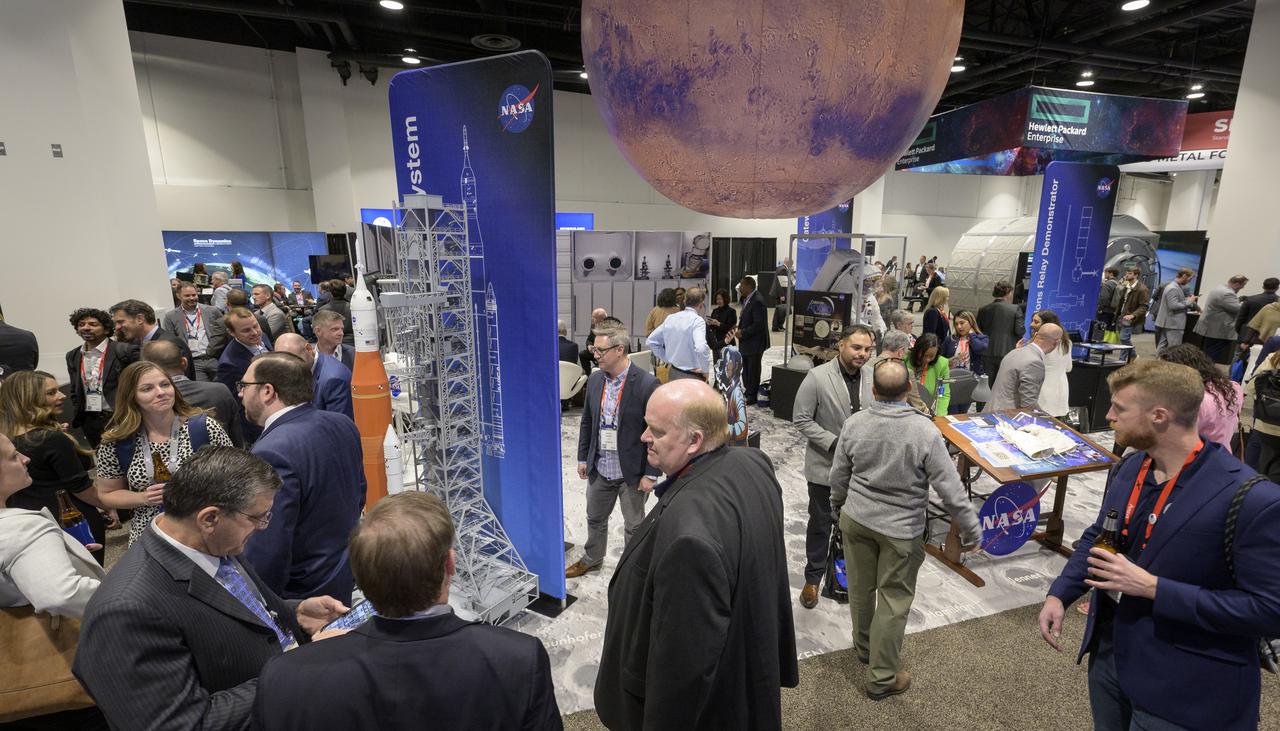
Attendees visit the NASA Exhibit area during the 37th Space Symposium, Tuesday, April 5, 2022, in Colorado Springs, Colorado. Photo Credit: (NASA/Bill Ingalls)

Dr. Kate Calvin, NASA's chief scientist and senior climate advisor, speaks at the 37th Space Symposium, Tuesday, April 5, 2022, in Colorado Springs, Colorado. Photo Credit: (NASA/Bill Ingalls)
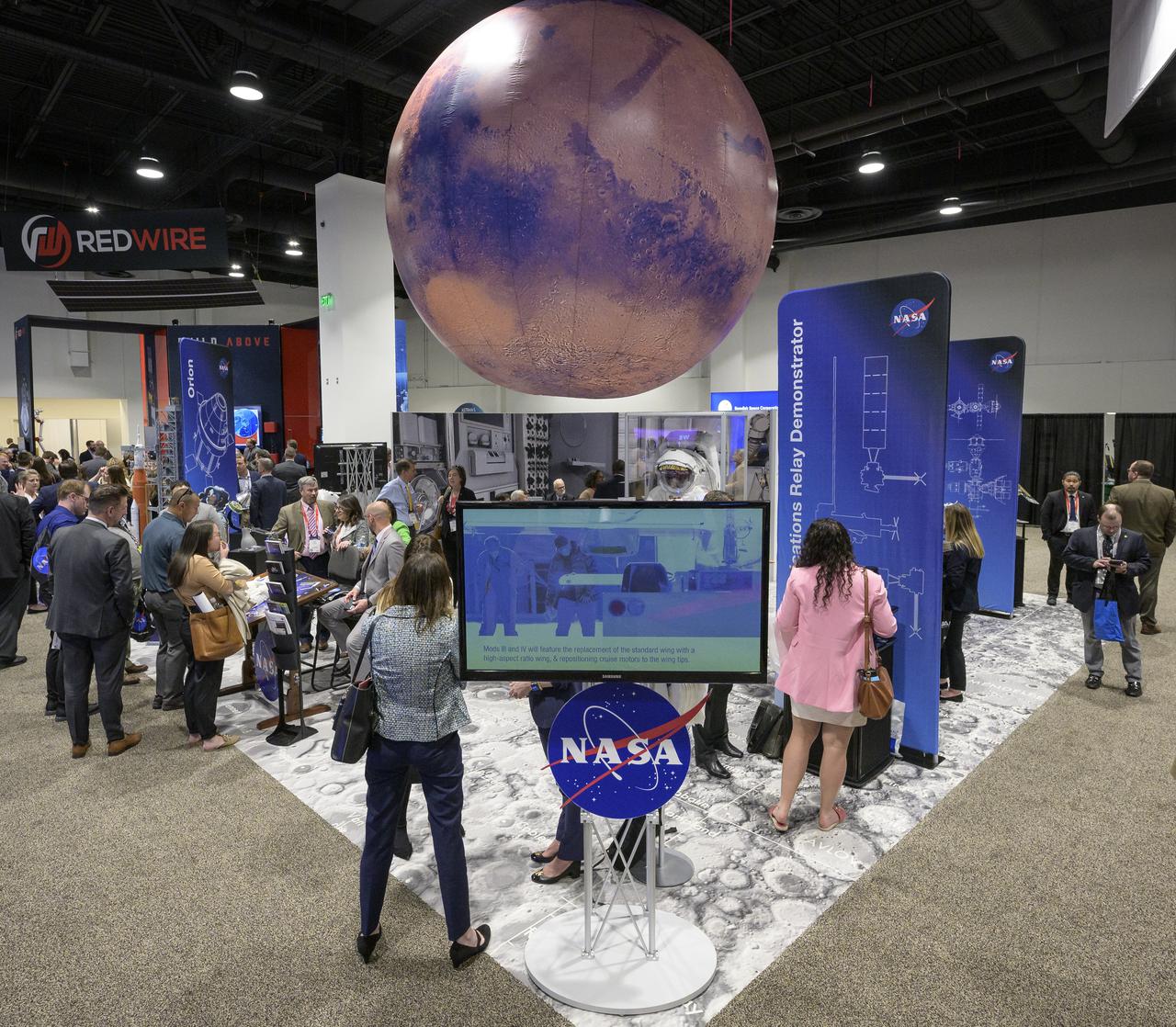
Attendees visit the NASA Exhibit area during the 37th Space Symposium, Tuesday, April 5, 2022, in Colorado Springs, Colorado. Photo Credit: (NASA/Bill Ingalls)
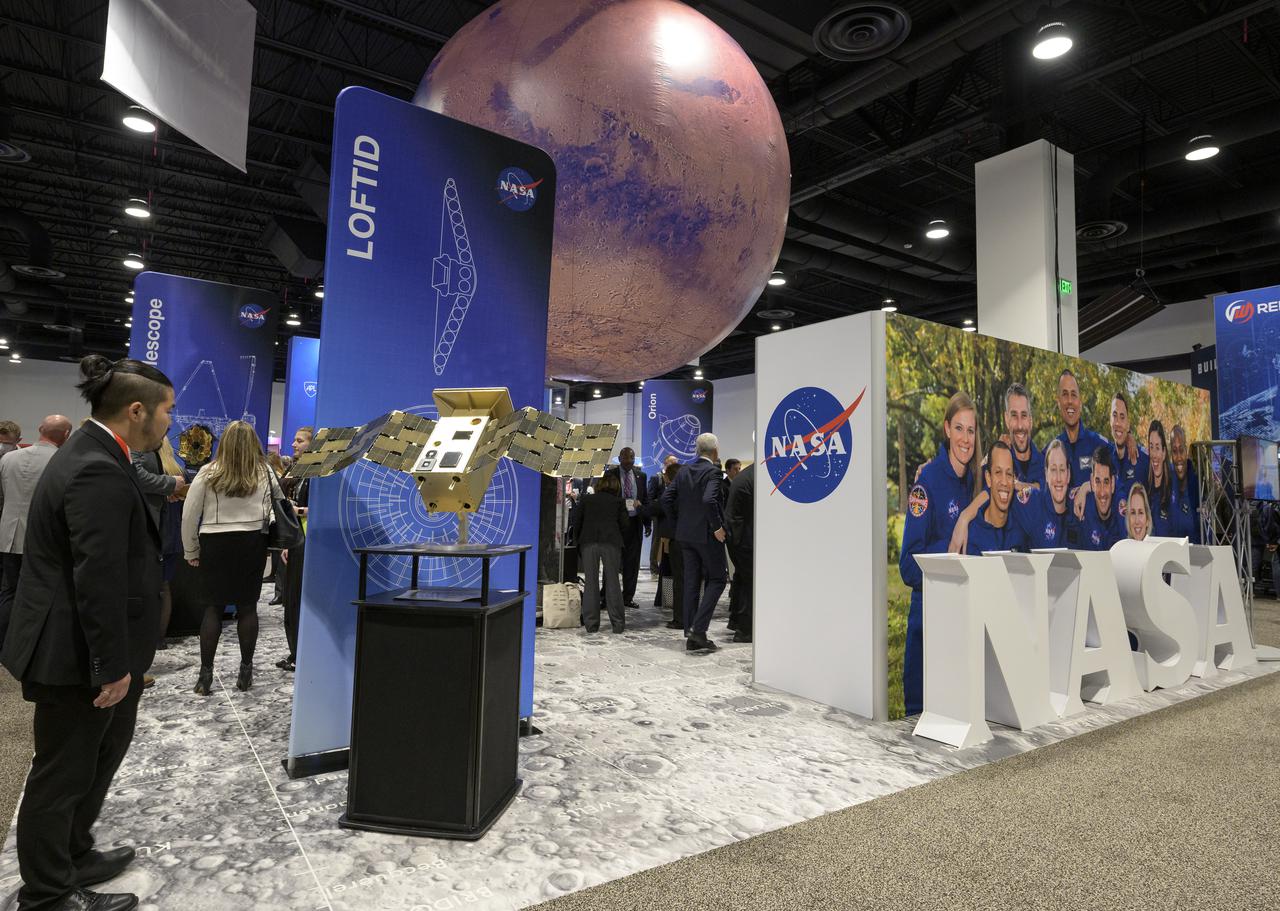
Attendees visit the NASA Exhibit area during the 37th Space Symposium, Tuesday, April 5, 2022, in Colorado Springs, Colorado. Photo Credit: (NASA/Bill Ingalls)