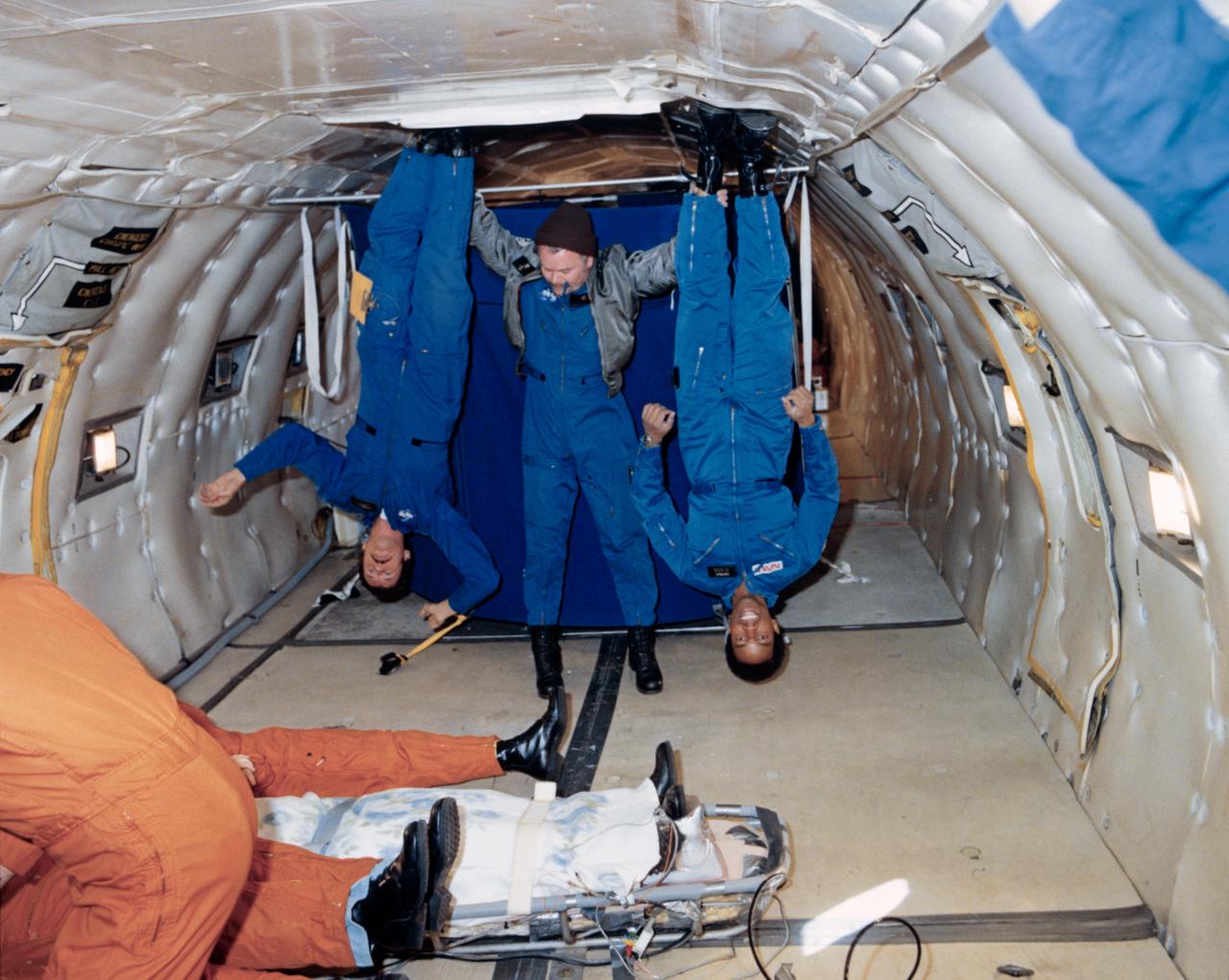
S79-28602 (2 March 1979) --- Astronaut candidate Guion S. Bluford and Aviation Safety Officer Charles F. Hayes got a unique perspective of their environment during a zero gravity flight. They are aboard a KC-135 aircraft, which flies a special pattern repeatedly to afford a series of 30-seconds-of-weightlessness sessions. Bluford and Hayes are being assisted by C. P. Stanley of the photography branch of the photographic technology division at Johnson Space Center (JSC). Some medical studies and a motion sickness experiment were conducted on this particular flight. Bluford is one of 20 scientist-astronaut candidates who began training at JSC in July of 1978. Photo credit: NASA
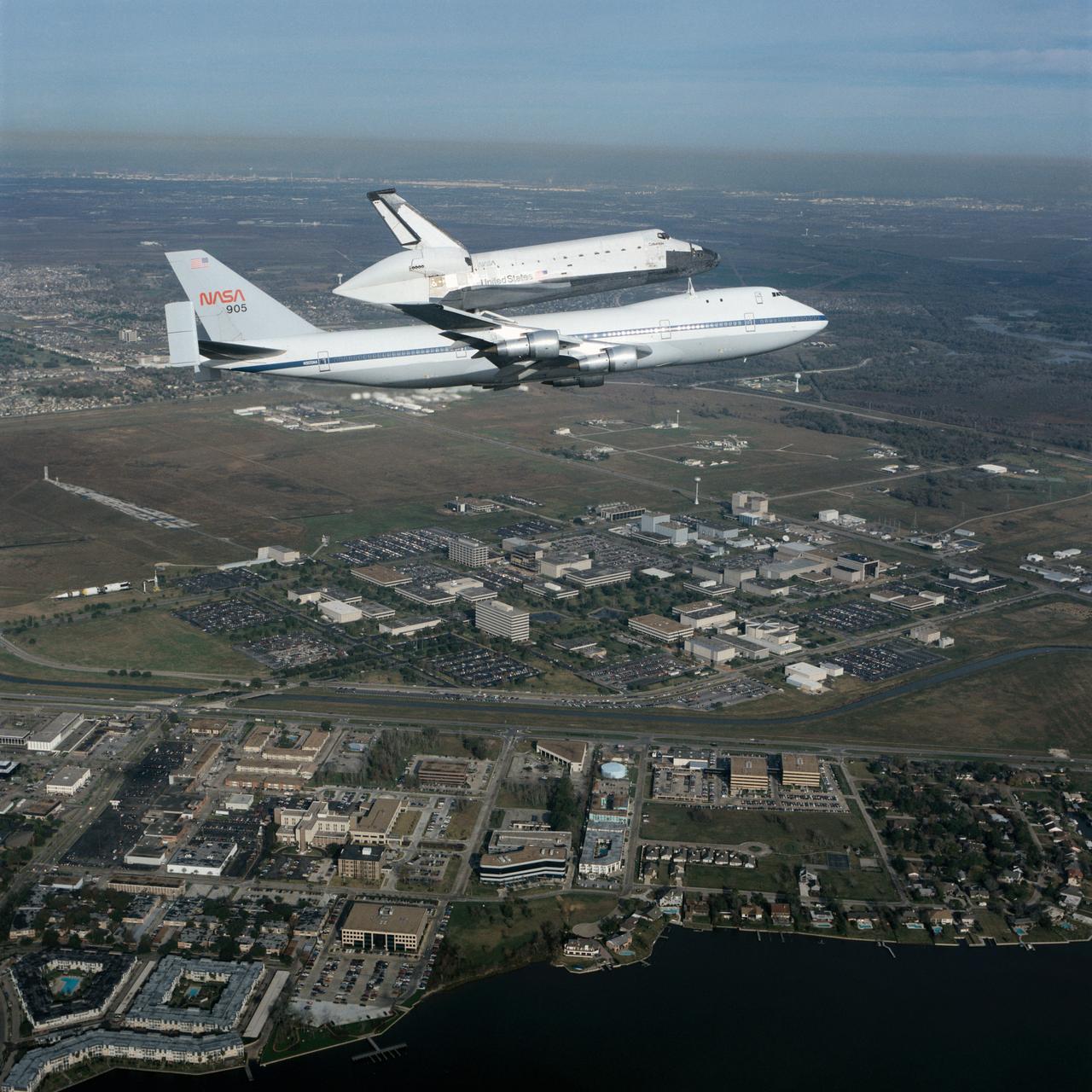
S90-55294 (19 Dec. 1990) --- Johnson Space Center employees and neighbors on the ground didn't get quite this closeup of a view of the Dec. 19 1990 flyover of the Space Shuttle Columbia mounted piggyback atop NASA's Shuttle Carrier Aircraft (SCA--NASA 905). However, hundreds were able to spot it as it passed nearby en route to Florida from California following the successful STS-35 mission. Almost the entire 1625-acre site of the Johnson Space Center is visible in the background, along with a number of businesses and residences in the nearby municipality of Nassau Bay. The air-to-air photograph was taken by Pete Stanley of JSC's Image Services Division who was a passenger in a T-38 jet aircraft.
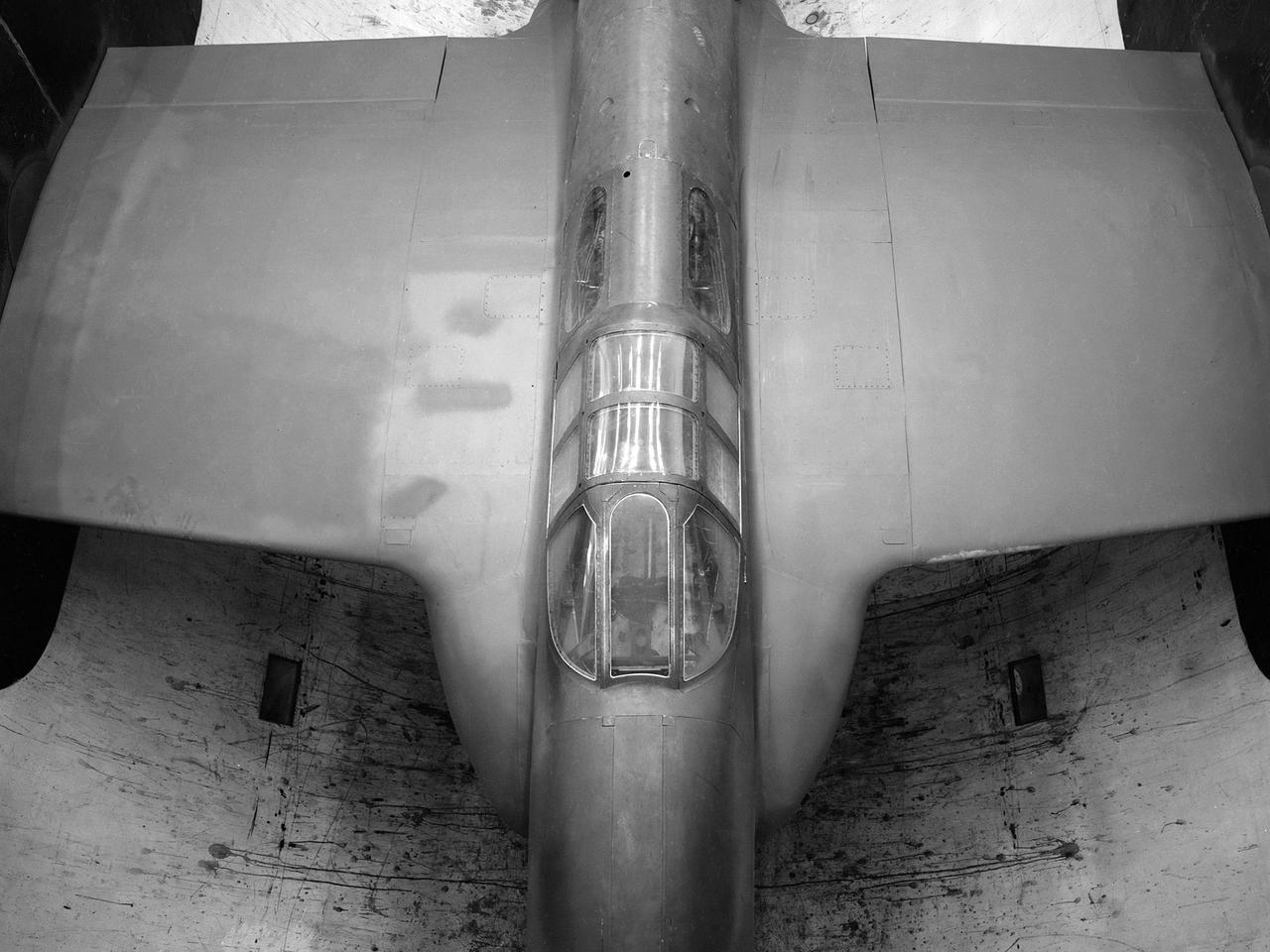
The secret test of the Bell YP–59A Airacomet in the spring of 1944 was the first investigation in the National Advisory Committee for Aeronautics (NACA) Aircraft Engine Research Laboratory’s new Altitude Wind Tunnel (AWT). The Airacomet, powered by two General Electric I–A centrifugal turbojets, was the first US jet aircraft. The Airacomet’s 290-miles per hour speed, however, was dwarfed by the German Messerschmitt Me-262 Schwalbe’s 540 miles per hour. In 1941 and 1942 General Electric built the first US jet engines based on technical drawings from British engineer Frank Whittle. Bell Aircraft was contracted to produce an airframe to incorporate the new engines. The result was the Bell XP–59A Airacomet. The aircraft made its first flight over Muroc Lake, California, on October 2, 1942. The aircraft continued to struggle over the next year and the NACA was asked to test it in the new AWT. A Bell YP–59A was flown from the Bell plant in Buffalo to Cleveland by Bob Stanley, who had piloted the first successful flight of the XP–59A at Muroc in 1942. The wing tips and tail were cut from the aircraft so that it would fit into the AWT’s test section. The study first analyzed the engines in their original configuration and then implemented a boundary layer removal duct, a new nacelle inlet, and new cooling seals. Tests of the modified version showed that the improved airflow distribution increased the I–16’s performance by 25 percent. Despite the improved speed, the aircraft was not stable enough to be used in combat, and the design was soon abandoned.
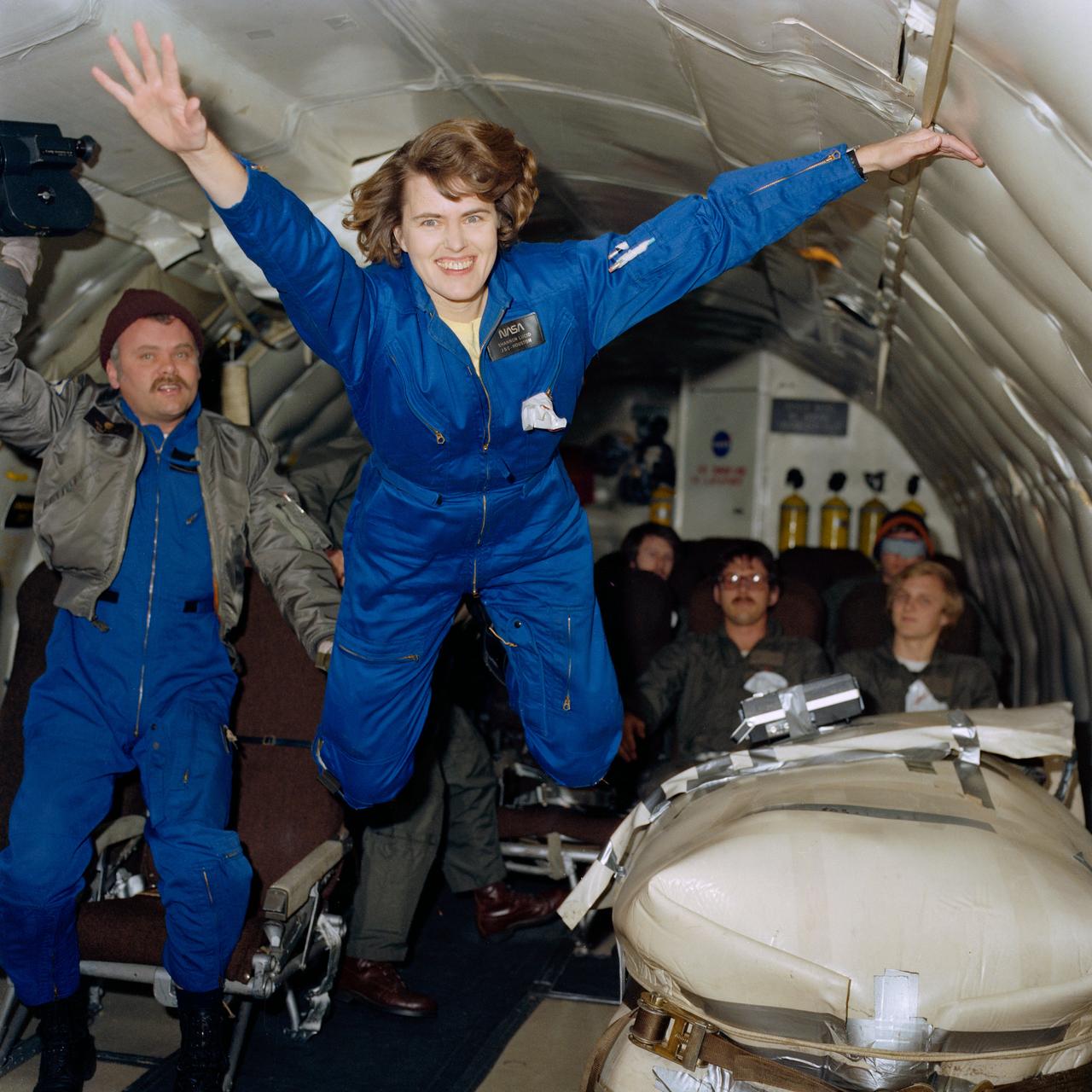
Astronaut -Candidate (ASCAN) Guion S. Bluford and Aviation Safety Officer Charles F. Hayes got a unique perspective of their environment during a zero- gravity flight. They are aboard a KC-135 Aircraft, which flies a special pattern repeatedly to afford a series of 30-seconds-of-weightlessness sessions. Astronauts Bluford and Hayes are being assisted by C. P. Stanley of the Photography Branch of the Photographic Technology Division (PTD) at Johnson Space Center (JSC). Some medical studies and a Motion Sickness Experiment were conducted on this particular flight. Astronaut Bluford is one of 20 Scientist/ASCAN's who began training at JSC, 07/1978. 1. Dr. Jeffrey A. Hoffman - Zero-G 2. ASCAN Shannon Lucid - Zero-G 3. ASCAN Guion Bluford - Zero-G
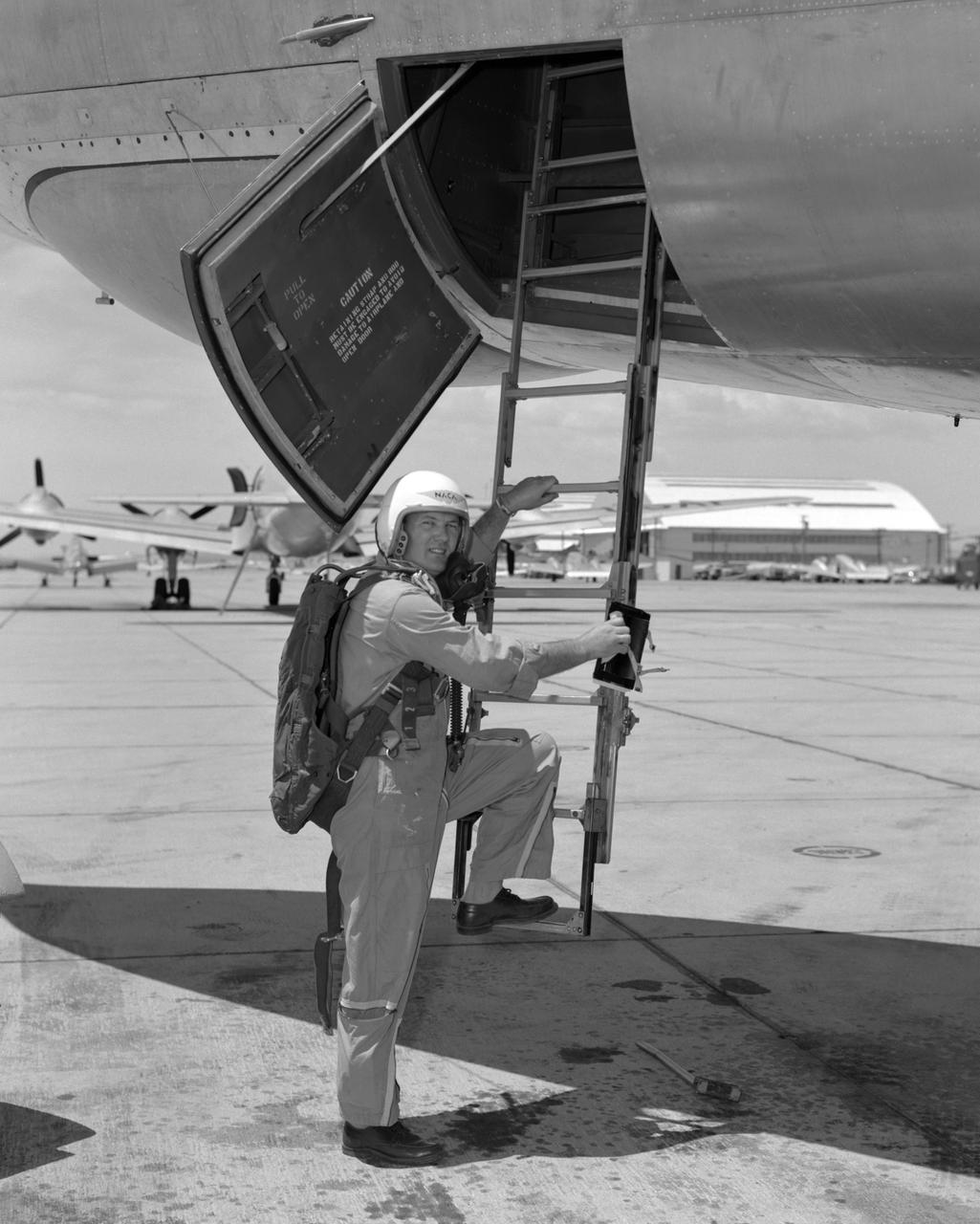
From December 10, 1966, until his retirement on February 27, 1976, Stanley P. Butchart served as Chief (later, Director) of Flight Operations at NASA's Flight Research Center (renamed on March 26, 1976, the Hugh L. Dryden Flight Research Center). Initially, his responsibilities in this position included the Research Pilots Branch, a Maintenance and Manufacturing Branch, and an Operations Engineering Branch, the last of which not only included propulsion and electrical/electronic sections but project engineers for the X-15 and lifting bodies. During his tenure, however, the responsibilities of his directorate came to include not only Flight Test Engineering Support but Flight Systems and Loads laboratories. Before becoming Chief of Flight Operations, Butchart had served since June of 1966 as head of the Research Pilots Branch (Chief Pilot) and then as acting chief of Flight Operations. He had joined the Center (then known as the National Advisory Committee for Aeronautics' High-Speed Flight Research Station) as a research pilot on May 10, 1951. During his career as a research pilot, he flew a great variety of research and air-launch aircraft including the D-558-I, D-558-II, B-29 (plus its Navy version, the P2B), X-4, X-5, KC-135, CV-880, CV-990, B-47, B-52, B-747, F-100A, F-101, F-102, F-104, PA-30 Twin Comanche, JetStar, F-111, R4D, B-720, and B-47. Although previously a single-engine pilot, he became the Center's principal multi-engine pilot during a period of air-launches in which the pilot of the air-launch aircraft (B-29 or P2B) basically directed the operations. It was he who called for the chase planes before each drop, directed the positioning of fire rescue vehicles, and released the experimental aircraft after ensuring that all was ready for the drop. As pilot of the B-29 and P2B, Butchart launched the X-1A once, the X-1B 13 times, the X-1E 22 times, and the D-558-II 102 times. In addition, he towed the M2-F1 lightweight lifting body 14 times behind an R4
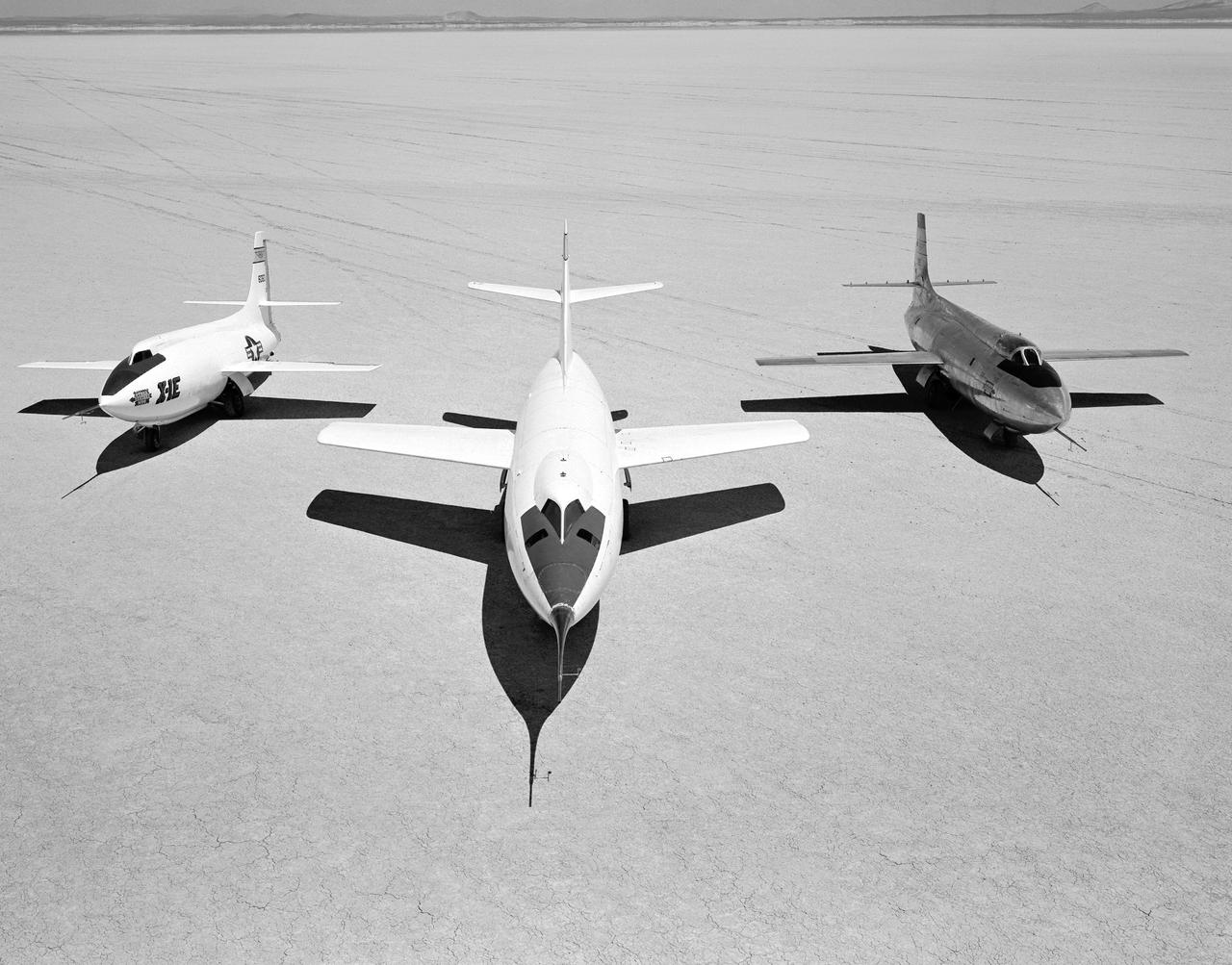
Early NACA research aircraft on the lakebed at the High Speed Research Station in 1955: Left to right: X-1E, D-558-II, X-1B
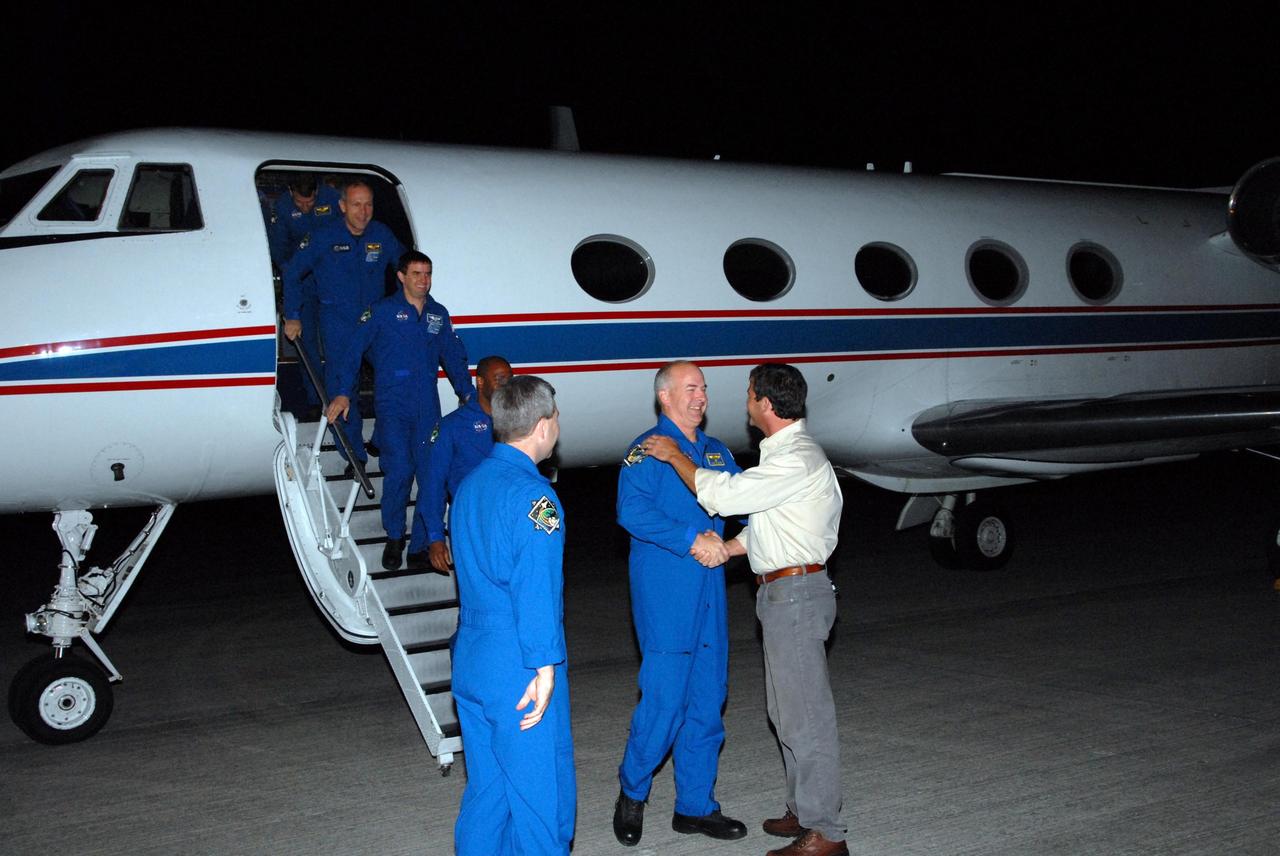
KENNEDY SPACE CENTER, FLA. -- The astronauts assigned to the space shuttle Atlantis STS-122 crew arrive at Kennedy Space Center's Shuttle Landing Facility aboard a Gulfstream shuttle training aircraft to participate in three days of terminal countdown demonstration test, or TCDT, activities. STS-122 Launch Director Doug Lyons greets Pilot Alan Poindexter as Commander Steve Frick looks on. Disembarking are Mission Specialists Leland Melvin, Rex Walheim, Hans Schlegel of the European Space Agency and Stanley Love. The TCDT provides astronauts and ground crews with equipment familiarization, emergency egress training and a simulated launch countdown. On mission STS-122, Atlantis will deliver the Columbus module to the International Space Station. The European Space Agency's largest single contribution to the station, Columbus is a multifunctional, pressurized laboratory that will be permanently attached to U.S. Node 2, called Harmony. The laboratory will expand the research facilities aboard the station, providing crew members and scientists from around the world the ability to conduct a variety of experiments in the physical, materials and life sciences. Photo credit: NASA/George Shelton
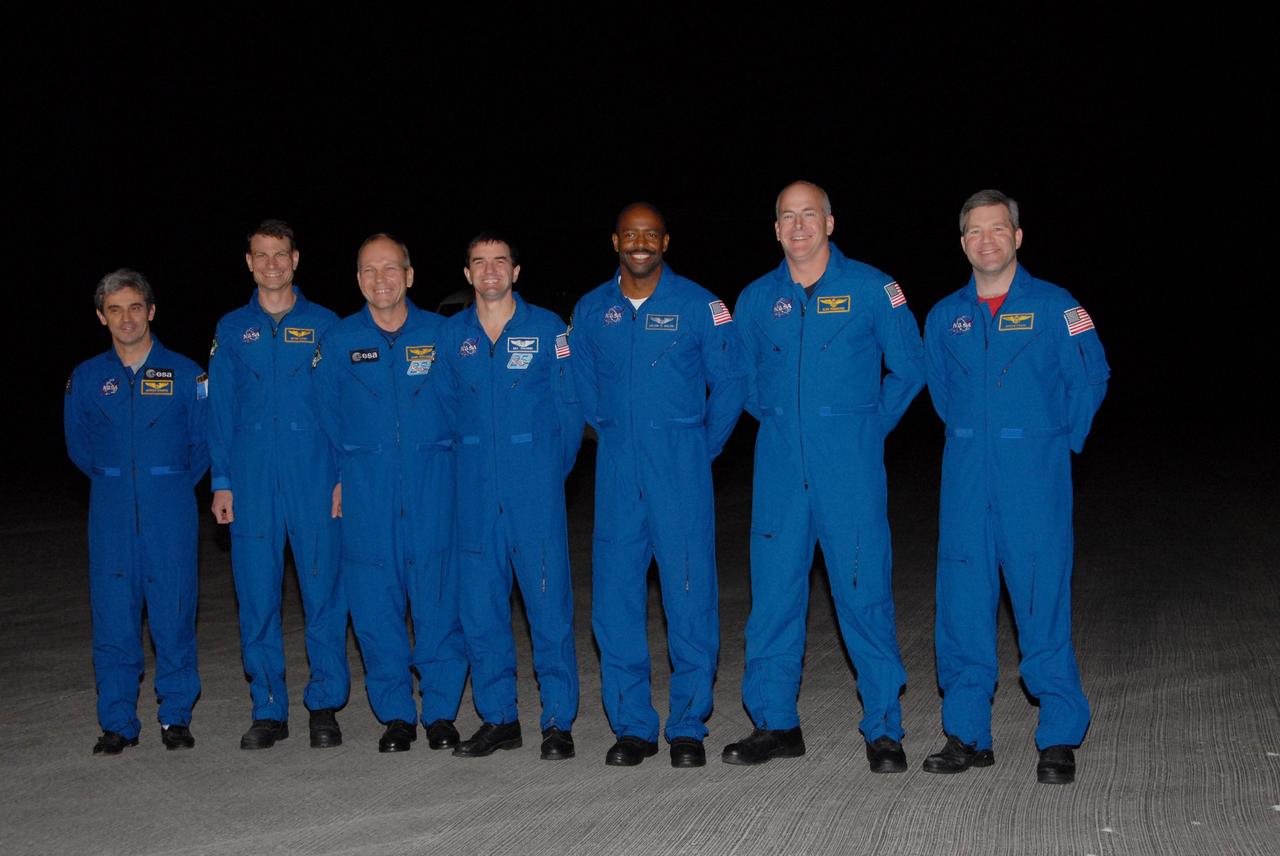
KENNEDY SPACE CENTER, FLA. -- The astronauts assigned to the space shuttle Atlantis STS-122 crew arrive at Kennedy Space Center's Shuttle Landing Facility aboard a Gulfstream shuttle training aircraft to participate in three days of terminal countdown demonstration test, or TCDT, activities. From left are Mission Specialist Leopold Eyharts, a European Space Agency astronaut who will remain on the International Space Station as a flight engineer for Expedition 16; Mission Specialists Stanley Love, Hans Schlegel of the European Space Agency, Rex Walheim and Leland Melvin; Pilot Alan Poindexter; and Commander Steve Frick. The TCDT provides astronauts and ground crews with equipment familiarization, emergency egress training and a simulated launch countdown. On mission STS-122, Atlantis will deliver the Columbus module to the International Space Station. The European Space Agency's largest single contribution to the station, Columbus is a multifunctional, pressurized laboratory that will be permanently attached to U.S. Node 2, called Harmony. The laboratory will expand the research facilities aboard the station, providing crew members and scientists from around the world the ability to conduct a variety of experiments in the physical, materials and life sciences. Photo credit: NASA/George Shelton
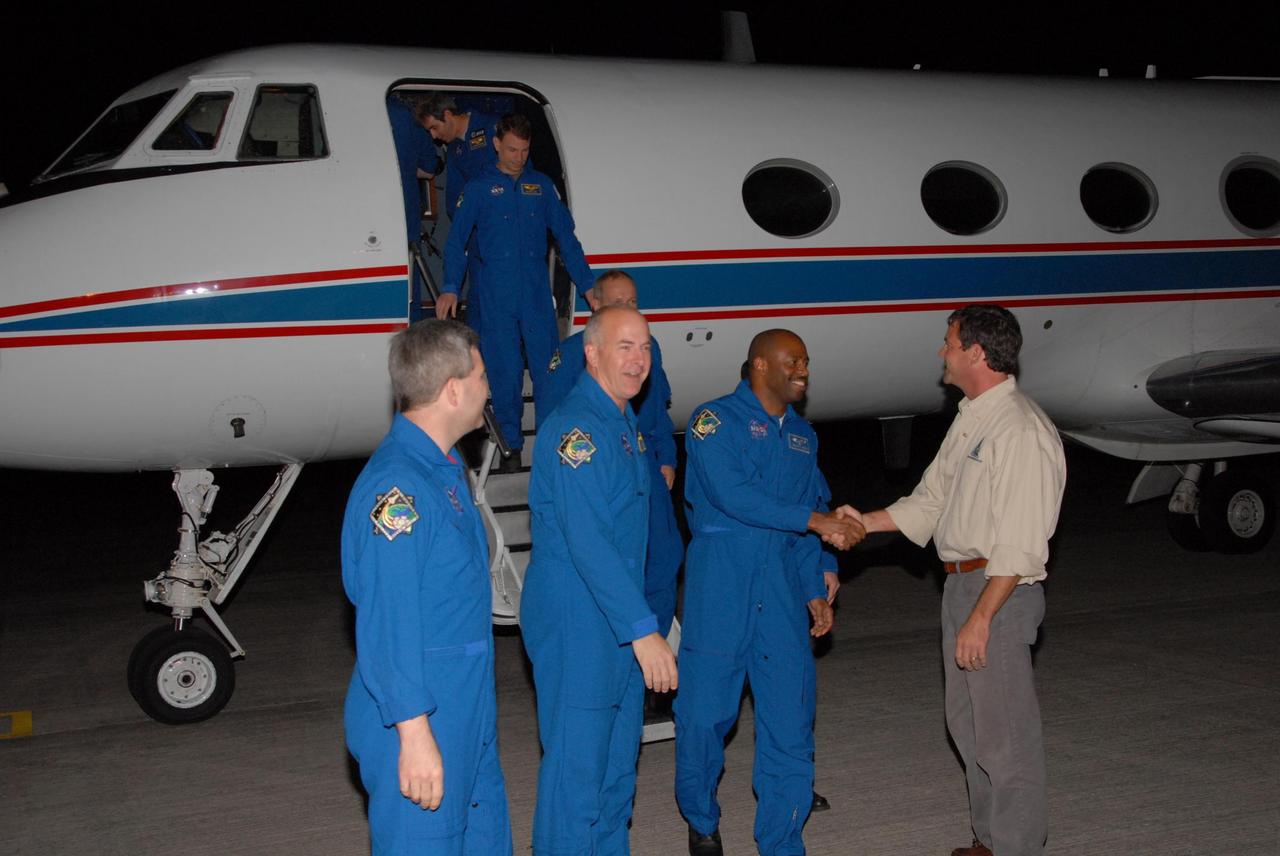
KENNEDY SPACE CENTER, FLA. -- The astronauts assigned to the space shuttle Atlantis STS-122 crew arrive at Kennedy Space Center's Shuttle Landing Facility aboard a Gulfstream shuttle training aircraft to participate in three days of terminal countdown demonstration test, or TCDT, activities. STS-122 Launch Director Doug Lyons greets Mission Specialist Leland Melvin as Commander Steve Frick and Pilot Alan Poindexter look on. Disembarking are Mission Specialists Hans Schlegel of the European Space Agency, Stanley Love and Leopold Eyharts, a European Space Agency astronaut who will remain on the International Space Station as a flight engineer for Expedition 16. The TCDT provides astronauts and ground crews with equipment familiarization, emergency egress training and a simulated launch countdown. On mission STS-122, Atlantis will deliver the Columbus module to the International Space Station. The European Space Agency's largest single contribution to the station, Columbus is a multifunctional, pressurized laboratory that will be permanently attached to U.S. Node 2, called Harmony. The laboratory will expand the research facilities aboard the station, providing crew members and scientists from around the world the ability to conduct a variety of experiments in the physical, materials and life sciences. Photo credit: NASA/George Shelton
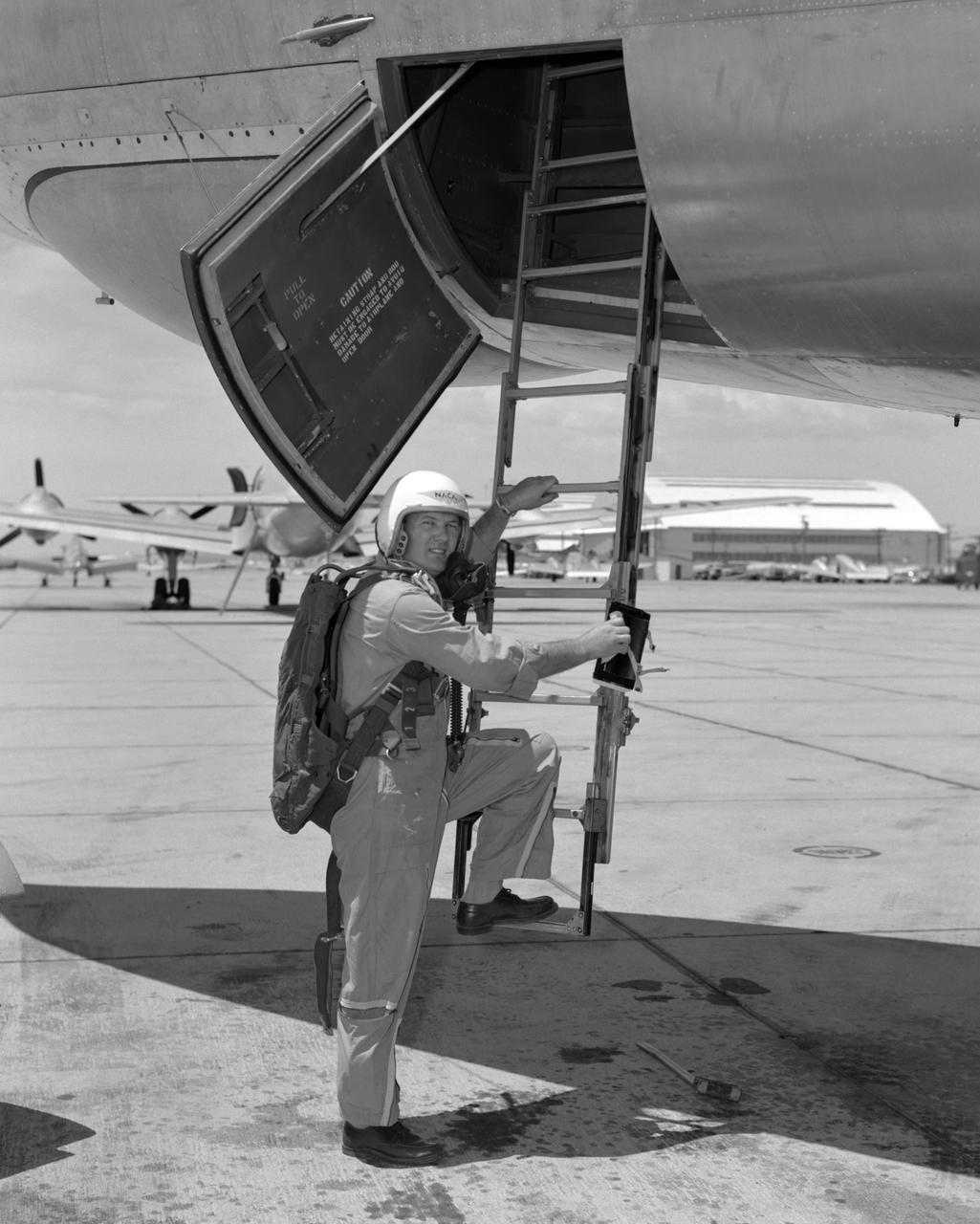
Stan Butchart climbing into B-47.