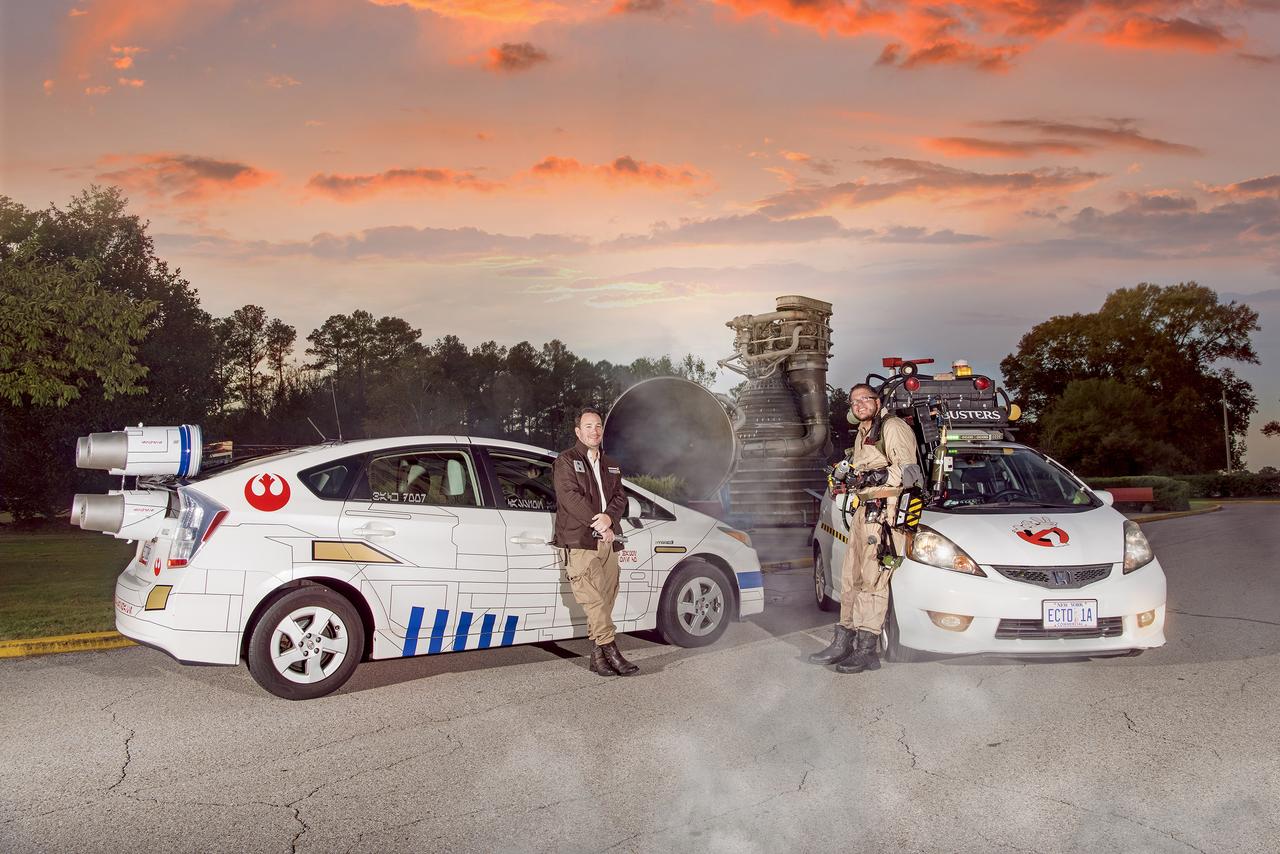
Andrew Denio, a Marshall information technology specialist in the Office of the Chief Information Officer, and Judson Hudson, a lab technician and computer-aided designer in Marshall’s Valve & Component Laboratory, show off their Ghostbusters and Star Wars themed vehicles in front of MSFC building 4200, for Halloween 2019.
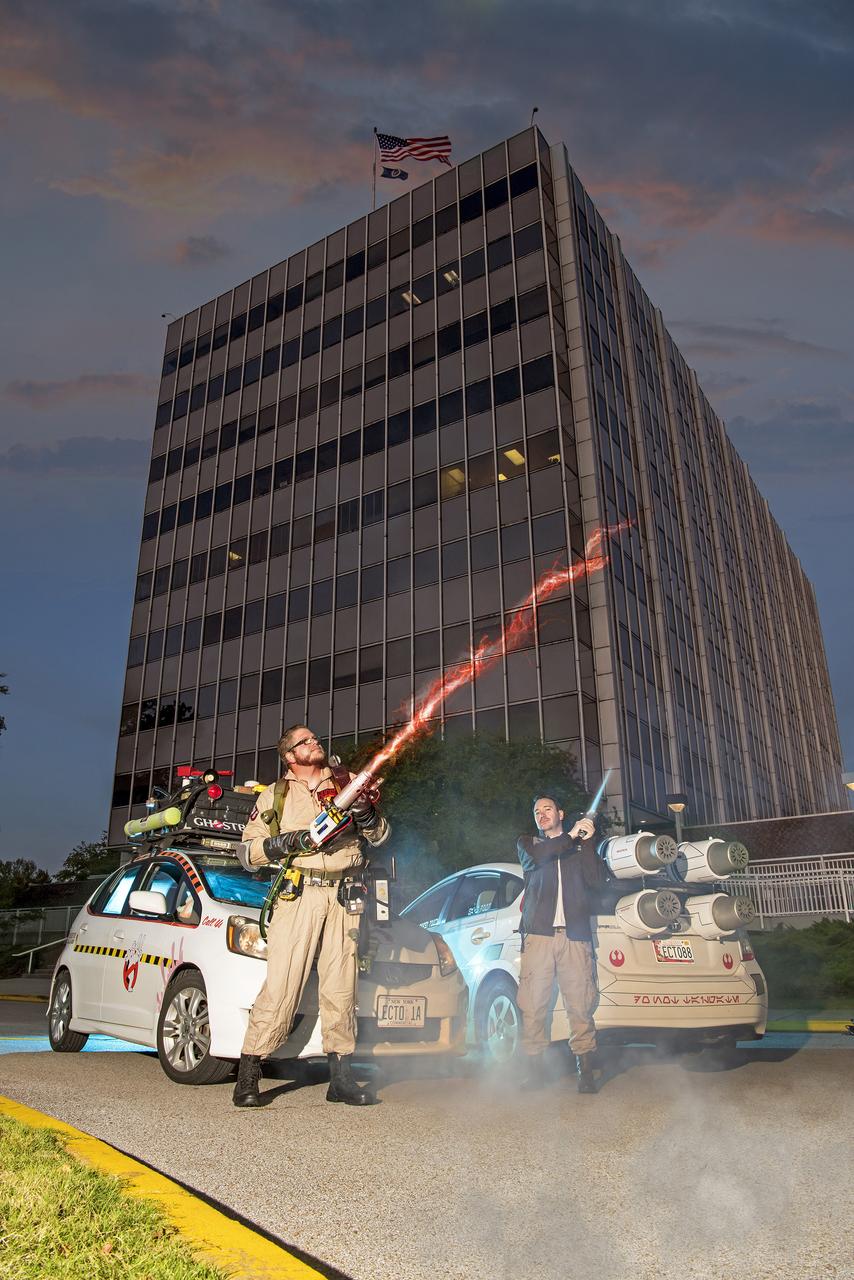
Andrew Denio, a Marshall information technology specialist in the Office of the Chief Information Officer, and Judson Hudson, a lab technician and computer-aided designer in Marshall’s Valve & Component Laboratory, show off their Ghostbusters and Star Wars themed vehicles in front of MSFC building 4200, for Halloween 2019.

Andrew Denio, a Marshall information technology specialist in the Office of the Chief Information Officer, and Judson Hudson, a lab technician and computer-aided designer in Marshall’s Valve & Component Laboratory, show off their Ghostbusters and Star Wars themed vehicles in front of MSFC building 4200, for Halloween 2019.

Just in time for the release of the movie “Star Wars Episode VII: The Force Awakens,” NASA’s Hubble Space Telescope has photographed what looks like a cosmic, double-bladed lightsaber. In the center of the image, partially obscured by a dark, Jedi-like cloak of dust, a newborn star shoots twin jets out into space as a sort of birth announcement to the universe. “Science fiction has been an inspiration to generations of scientists and engineers, and the film series Star Wars is no exception,” said John Grunsfeld, astronaut and associate administrator for the NASA Science Mission directorate. “There is no stronger case for the motivational power of real science than the discoveries that come from the Hubble Space Telescope as it unravels the mysteries of the universe." This celestial lightsaber does not lie in a galaxy far, far away, but rather inside our home galaxy, the Milky Way. It’s inside a turbulent birthing ground for new stars known as the Orion B molecular cloud complex, located 1,350 light-years away. When stars form within giant clouds of cool molecular hydrogen, some of the surrounding material collapses under gravity to form a rotating, flattened disk encircling the newborn star. Though planets will later congeal in the disk, at this early stage the protostar is feeding on the disk with a Jabba-like appetite. Gas from the disk rains down onto the protostar and engorges it. Superheated material spills away and is shot outward from the star in opposite directions along an uncluttered escape route — the star’s rotation axis. Shock fronts develop along the jets and heat the surrounding gas to thousands of degrees Fahrenheit. The jets collide with the surrounding gas and dust and clear vast spaces, like a stream of water plowing into a hill of sand. The shock fronts form tangled, knotted clumps of nebulosity and are collectively known as Herbig-Haro (HH) objects. The prominent HH object shown in this image is HH 24. Just to the right of the cloaked star, a couple of bright points are young stars peeking through and showing off their own faint lightsabers — including one that has bored a tunnel through the cloud towards the upper-right side of the picture. Overall, just a handful of HH jets have been spotted in this region in visible light, and about the same number in the infrared. Hubble’s observations for this image were performed in infrared light, which enabled the telescope to peer through the gas and dust cocooning the newly forming stars and capture a clear view of the HH objects. These young stellar jets are ideal targets for NASA’s upcoming James Webb Space Telescope, which will have even greater infrared wavelength vision to see deeper into the dust surrounding newly forming stars. The Hubble Space Telescope is a project of international cooperation between NASA and the European Space Agency. NASA’s Goddard Space Flight Center in Greenbelt, Maryland, manages the telescope. The Space Telescope Science Institute (STScI) in Baltimore, Maryland, conducts Hubble science operations. STScI is operated for NASA by the Association of Universities for Research in Astronomy, in Washington, D.C. Credits: NASA/ESA <b><a href="http://www.nasa.gov/audience/formedia/features/MP_Photo_Guidelines.html" rel="nofollow">NASA image use policy.</a></b> <b><a href="http://www.nasa.gov/centers/goddard/home/index.html" rel="nofollow">NASA Goddard Space Flight Center</a></b> enables NASA’s mission through four scientific endeavors: Earth Science, Heliophysics, Solar System Exploration, and Astrophysics. Goddard plays a leading role in NASA’s accomplishments by contributing compelling scientific knowledge to advance the Agency’s mission. <b>Follow us on <a href="http://twitter.com/NASAGoddardPix" rel="nofollow">Twitter</a></b> <b>Like us on <a href="http://www.facebook.com/pages/Greenbelt-MD/NASA-Goddard/395013845897?ref=tsd" rel="nofollow">Facebook</a></b> <b>Find us on <a href="http://instagrid.me/nasagoddard/?vm=grid" rel="nofollow">Instagram</a></b>

In this view captured by NASA Cassini spacecraft on its closest-ever flyby of Saturn moon Mimas, large Herschel Crater dominates Mimas, making the moon look like the Death Star in the movie Star Wars.
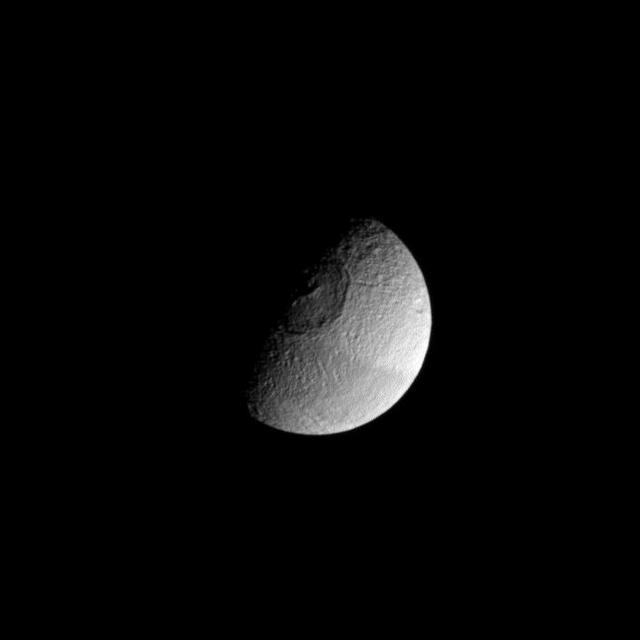
Although Mimas holds the unofficial designation of Death Star moon, Tethys is seen here also vaguely resembling the space station from Star Wars. Apparently, Tethys doesnt want Mimas to have all the fun!
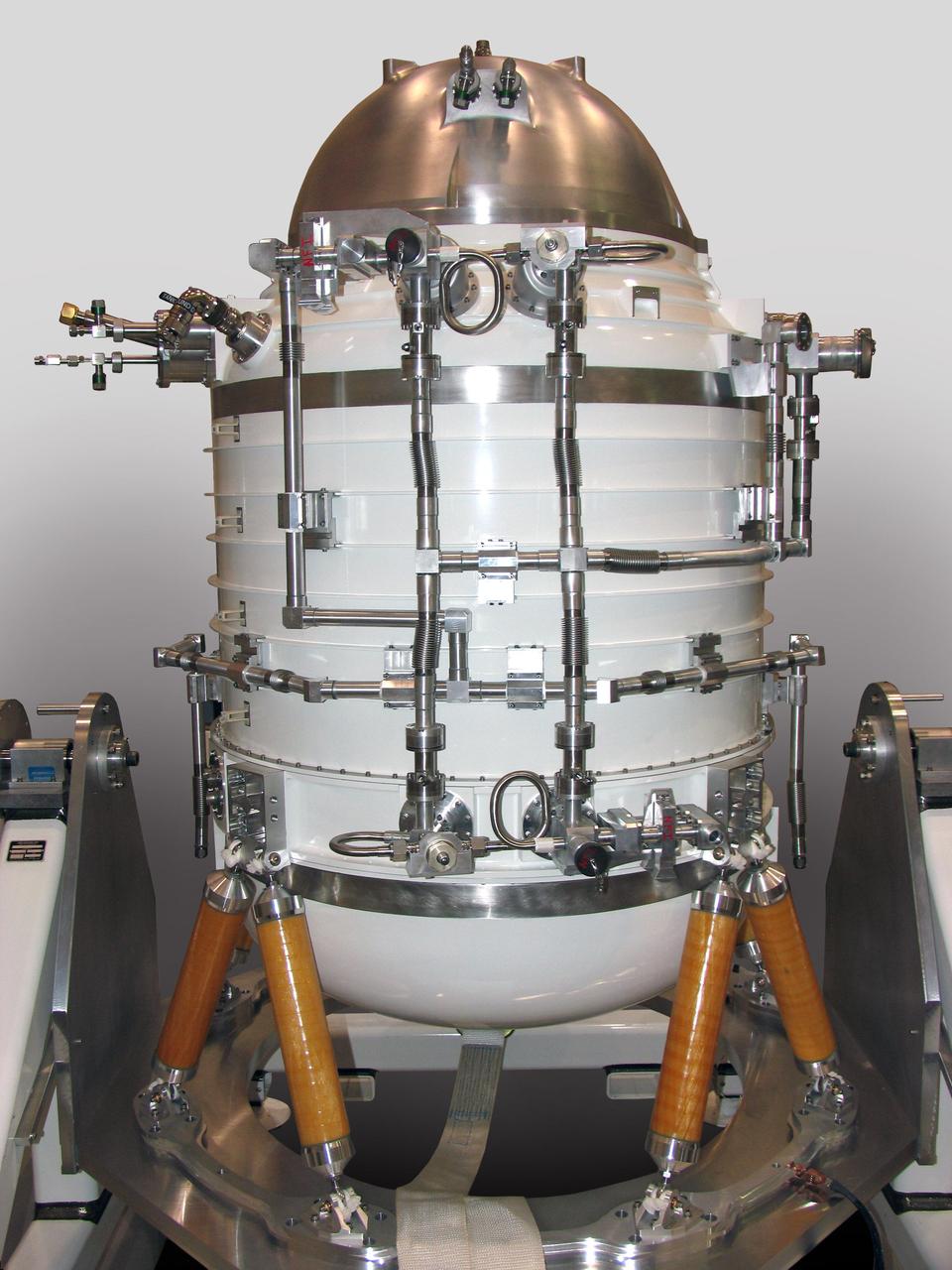
Some say the science instrument on NASA Wide-field Infrared Survey Explorer mission resembles the Star Wars robot R2-D2. The instrument is enclosed in a solid-hydrogen cryostat, which cools the WISE telescope and detectors.
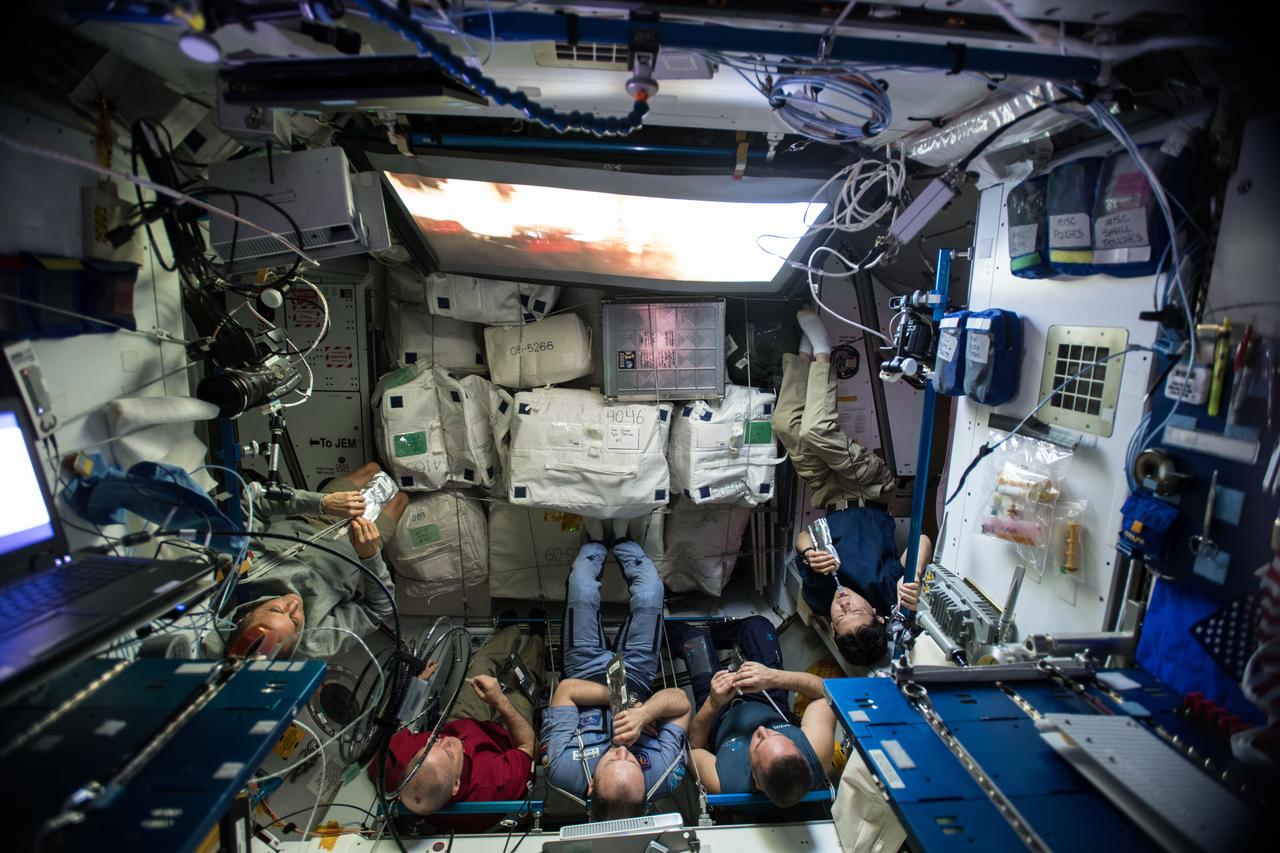
iss054e004175 (Dec. 23, 2017) --- Expedition 54 crew members watch the movie "Star Wars: The Last Jedi" on the big screen in the Harmony module. From left, are Flight Engineers Joe Acaba and Scott Tingle, Commander Alexander Misurkin, and Flight Engineers Anton Shkaplerov and Norishige Kanai.
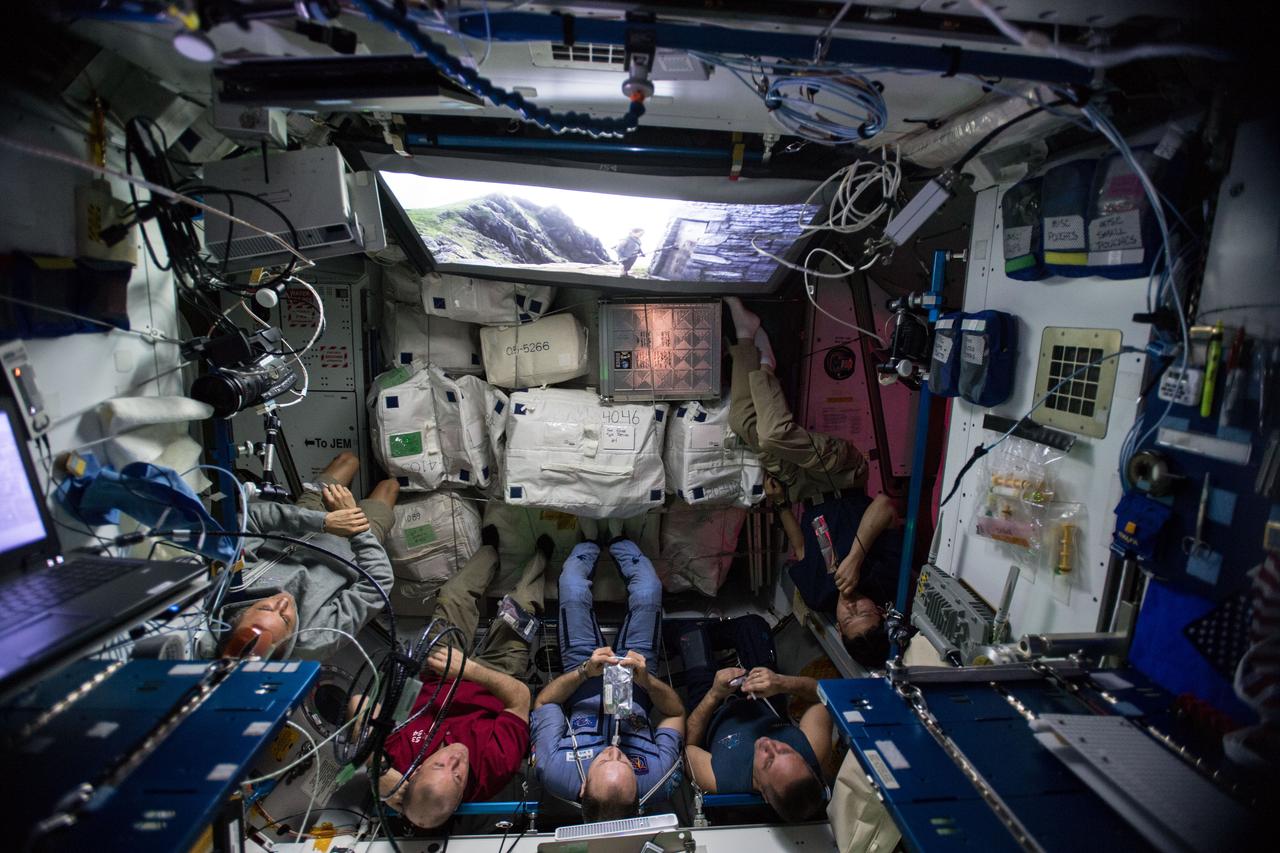
iss054e004241 (Dec. 23, 2017) --- The Expedition 54 crew aboard the International Space Station gathers in the Unity module for an out-of-this-world screening of the latest chapter of the Star Wars saga, The Last Jedi.

Gareth Edwards, film director, Rogue One: A Star Wars Story, speaks on a panel after a showing of the Project Mars Competition's short films and the Mars series, Monday, November 5, 2018 at National Geographic Society Headquarters in Washington. Photo Credit: (NASA/Aubrey Gemignani)
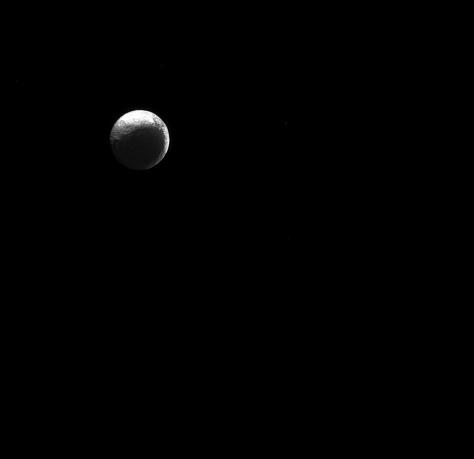
The moon Iapetus, like the "force" in Star Wars, has both a light side and a dark side. Scientists think that Iapetus' (914 miles or 1471 kilometers across) dark/light asymmetry was actually created by material migrating away from the dark side. For a simulation of how scientists think the asymmetry formed, see Thermal Runaway Model . Lit terrain seen here is on the Saturn-facing hemisphere of Iapetus. North on Iapetus is up and rotated 43 degrees to the right. The image was taken in green light with the Cassini spacecraft narrow-angle camera on Jan. 4, 2015. The view was acquired at a distance of approximately 2.5 million miles (4 million kilometers) from Iapetus. Image scale is 15 miles (24 kilometers) per pixel. http://photojournal.jpl.nasa.gov/catalog/pia18307

An R2-D2 model in front of the Science on a Sphere exhibit at the Visitor Center at NASA's Goddard Space Flight Center in Greenbelt, Md. Star Wars cosplayers attended a "Yuri's Night" celebration at the visitor center to commemorate the first flight of cosmonaut Yuri Gagarin (April 12, 1961) and the first orbital flight of a space shuttle (April 12, 1981).
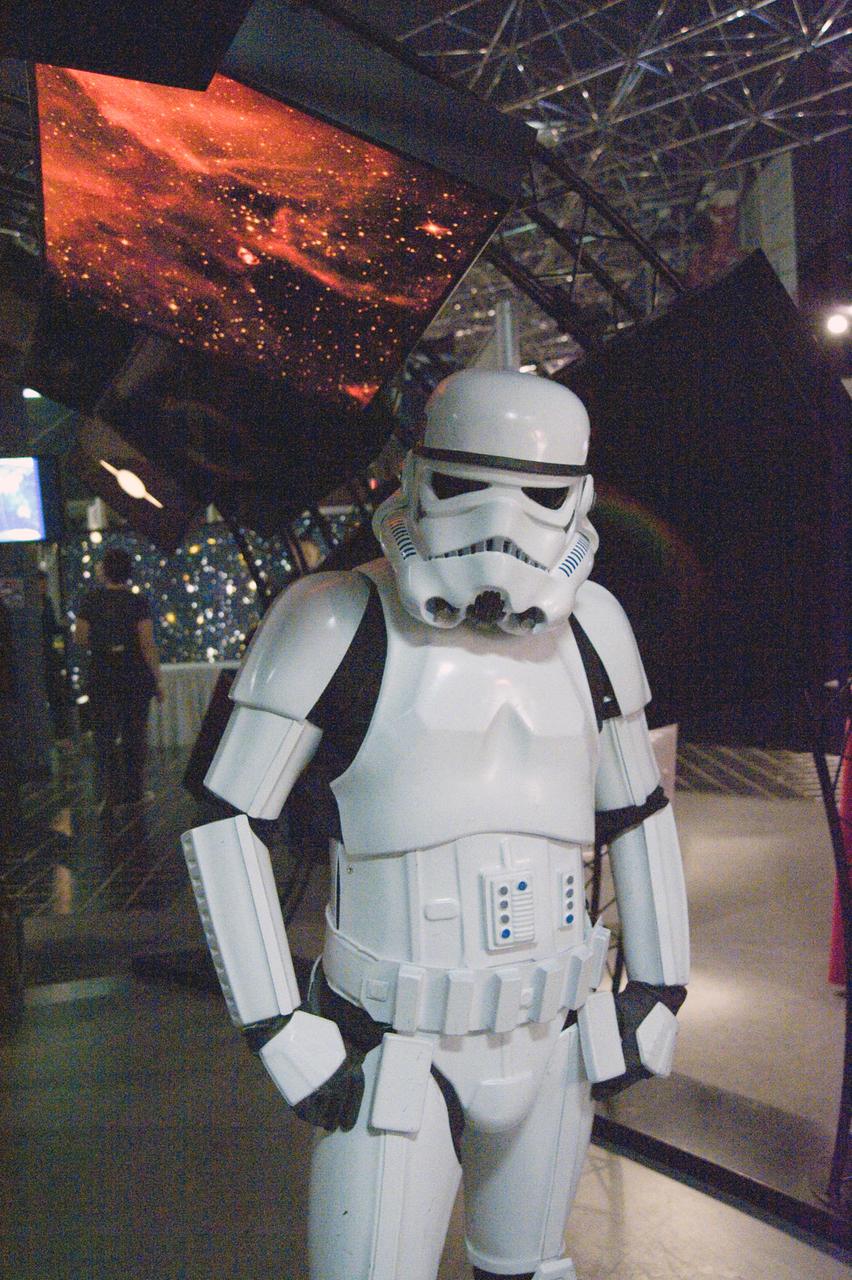
A person cosplays a storm trooper at the Visitor Center at NASA's Goddard Space Flight Center in Greenbelt, Md. Members of the 501st Legion Star Wars cosplaying group attended a "Yuri's Night" celebration to commemorate the first flight of cosmonaut Yuri Gagarin (April 12, 1961) and the first orbital flight of a space shuttle (April 12, 1981).
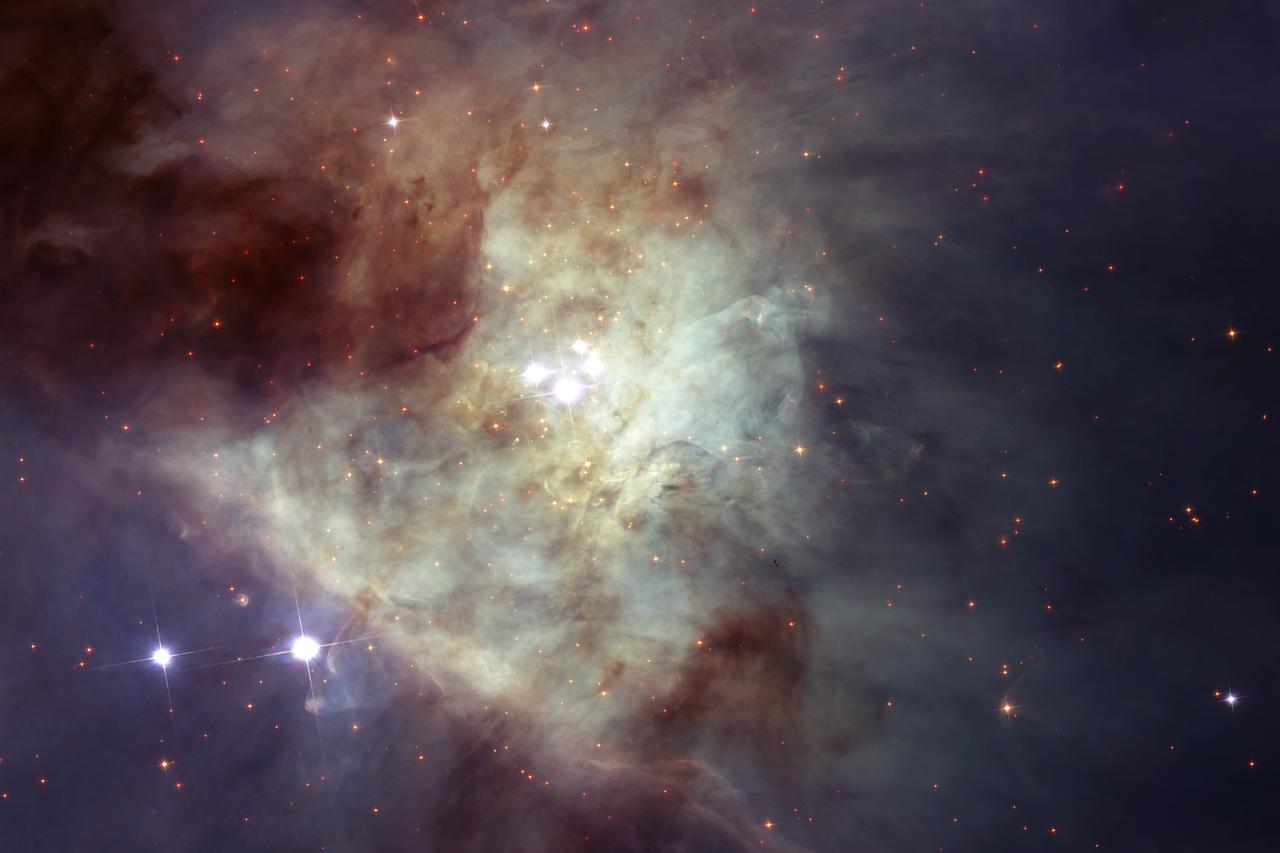
NASA's Hubble Space Telescope has helped astronomers find the final piece of a celestial puzzle by nabbing a third runaway star. As British royal families fought the War of the Roses in the 1400s for control of England's throne, a grouping of stars was waging its own contentious skirmish — a star war far away in the Orion Nebula. The stars were battling each other in a gravitational tussle, which ended with the system breaking apart and at least three stars being ejected in different directions. The speedy, wayward stars went unnoticed for hundreds of years until, over the past few decades, two of them were spotted in infrared and radio observations, which could penetrate the thick dust in the Orion Nebula. Read more: <a href="https://go.nasa.gov/2ni3EZX" rel="nofollow">go.nasa.gov/2ni3EZX</a> <b><a href="http://www.nasa.gov/audience/formedia/features/MP_Photo_Guidelines.html" rel="nofollow">NASA image use policy.</a></b> <b><a href="http://www.nasa.gov/centers/goddard/home/index.html" rel="nofollow">NASA Goddard Space Flight Center</a></b> enables NASA’s mission through four scientific endeavors: Earth Science, Heliophysics, Solar System Exploration, and Astrophysics. Goddard plays a leading role in NASA’s accomplishments by contributing compelling scientific knowledge to advance the Agency’s mission. <b>Follow us on <a href="http://twitter.com/NASAGoddardPix" rel="nofollow">Twitter</a></b> <b>Like us on <a href="http://www.facebook.com/pages/Greenbelt-MD/NASA-Goddard/395013845897?ref=tsd" rel="nofollow">Facebook</a></b> <b>Find us on <a href="http://instagrid.me/nasagoddard/?vm=grid" rel="nofollow">Instagram</a></b>

From left to right, Eric Fanning, AIA President and CEO; Christyl Johnson, deputy director for technology and research investments, NASA Goddard Space Flight Center; Dr. Stephen Petranek, MARS scientific advisor and co-executive producer; Ellen Stofan, director, Smithsonian's National Air and Space Museum; Gareth Edwards, film director, Rogue One: A Star Wars Story; and Chris Davenport, Washington Post space reporter pose for a photo before a showing of the Project Mars Competition's short films winners and the Mars series, Monday, November 5, 2018 at National Geographic Society Headquarters in Washington. Photo Credit: (NASA/Aubrey Gemignani)

A middle-school student high-fives a Star Wars character from the 501st Legion in the Center for Space Education at NASA’s Kennedy Space Center in Florida. Teams from across the state of Florida were gathered at Kennedy for the finals of the Zero Robotics Middle School Summer Program national championship. The five-week program allows rising sixth- through ninth-graders to write programs for small satellites called SPHERES (Synchronized, Position, Hold, Engage, Reorient, Experimental Satellites). Finalists saw their code tested aboard the International Space Station.
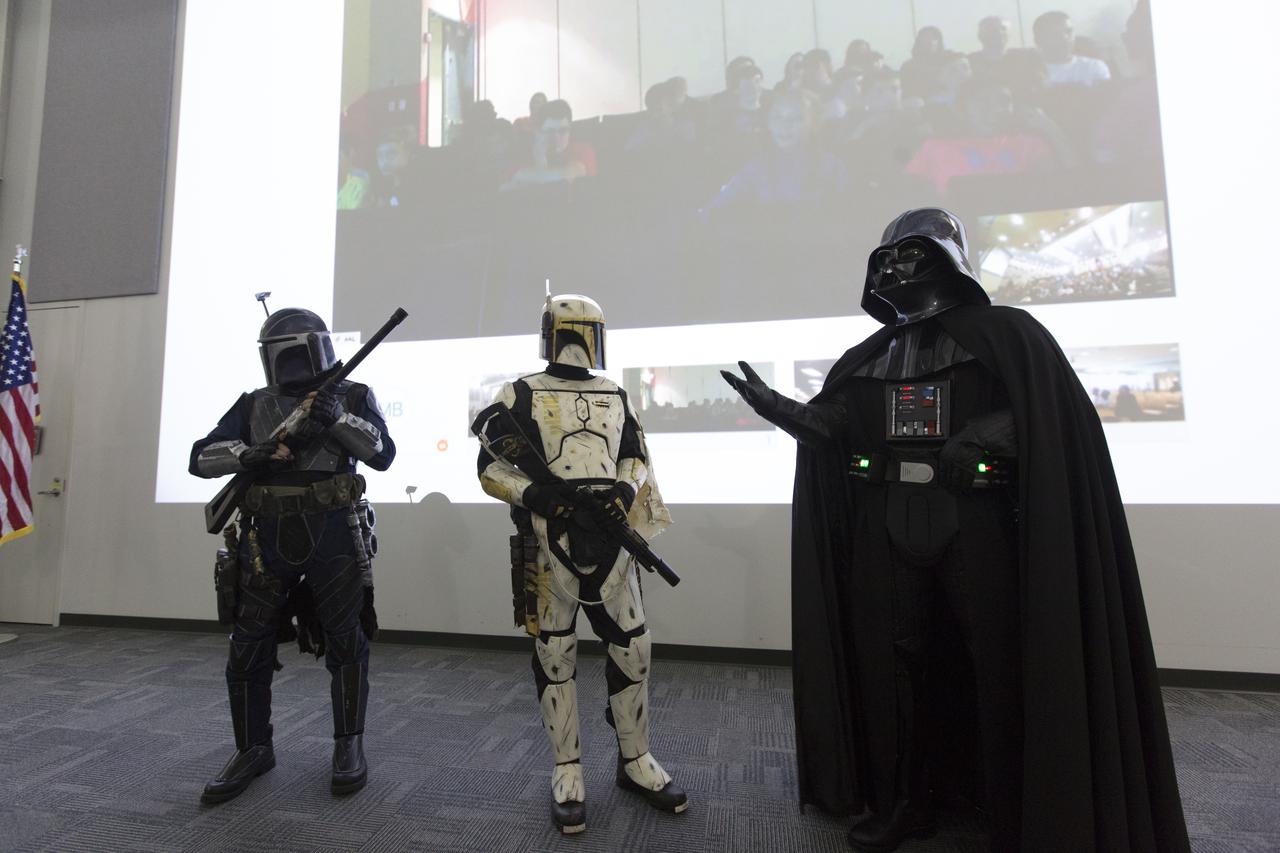
Darth Vader and other Star Wars characters from the 501st Legion address students and sponsors in the Center for Space Education at NASA’s Kennedy Space Center in Florida. Teams from across the state of Florida were gathered at Kennedy for the finals of the Zero Robotics Middle School Summer Program national championship. The five-week program allows rising sixth- through ninth-graders to write programs for small satellites called SPHERES (Synchronized, Position, Hold, Engage, Reorient, Experimental Satellites). Finalists saw their code tested aboard the International Space Station.

A Lockheed P-80 Shooting Star jet aircraft on the tarmac at the National Advisory Committee for Aeronautics (NACA) NACA Lewis Flight Propulsion Laboratory in Cleveland, Ohio. The Air Force aircraft was participating in the 1946 National Air Races over Labor Day weekend. The air races were held at the Cleveland Municipal Airport seven times between 1929 and 1939. The events included long distance, sprint, and circuit competitions, as well as aeronautical displays, demonstrations, and celebrities. The air races were suspended indefinitely in 1940 for a variety of reasons, including the start of World War II in Europe. The nature of the National Air Races changed dramatically when the event resumed in 1946. The introduction of jet aircraft, primarily the Lockheed P-80 seen here, required an entire separate division for each event. Since military pilots were the only ones with any jet aircraft experience, only they could participate in those divisions. In addition, the performance and quantity of commercially manufactured piston aircraft had increased dramatically during the war. By 1946, the custom-built racing aircraft that made the pre-war races so interesting were no longer present. The P-80 was the first US-designed and US-manufactured jet aircraft. Early models were tested during the war in NACA Lewis’ Altitude Wind Tunnel. A modified P-80 set the world’s speed record at the 1947 air races by achieving 620 miles per hour.

From left to right, Dr. Stephen Petranek, MARS scientific advisor and co-executive producer; Gareth Edwards, film director, Rogue One: A Star Wars Story; Jeff DeWitt, NASA chief financial officer; Christyl Johnson, deputy director for technology and research investments, NASA Goddard Space Flight Center; NASA Administrator Jim Bridenstine; Ellen Stofan, director, Smithsonian's National Air and Space Museum; Gary Knell, CEO, National Geographic Partners; Eric Fanning, AIA President and CEO; and Chris Davenport, Washington Post space reporter, pose for a photo before a showing of the Project Mars Competition's short films winners and the Mars series, Monday, November 5, 2018 at National Geographic Society Headquarters in Washington. Photo Credit: (NASA/Aubrey Gemignani)
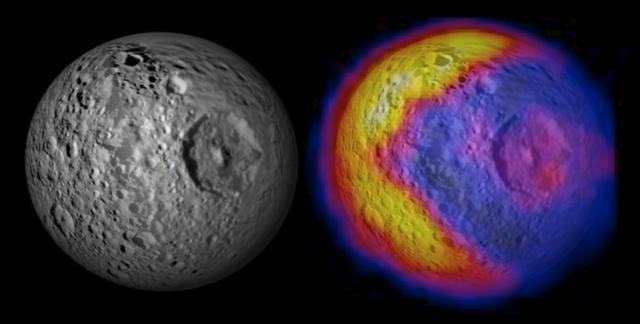
NASA release date March 29, 2010 The highest-resolution-yet temperature map and images of Saturn’s icy moon Mimas obtained by NASA’s Cassini spacecraft reveal surprising patterns on the surface of the small moon, including unexpected hot regions that resemble “Pac-Man” eating a dot, and striking bands of light and dark in crater walls. The left portion of this image shows Mimas in visible light, an image that has drawn comparisons to the "Star Wars" Death Star. The right portion shows the new temperature map, which resembles 1980s video game icon "Pac Man." To learn more about this image go to: <a href="http://www.nasa.gov/centers/goddard/news/features/2010/pac-man-mimas.html" rel="nofollow">www.nasa.gov/centers/goddard/news/features/2010/pac-man-m...</a> Credit: NASA/JPL/Goddard/SWRI/SSI <b><a href="http://www.nasa.gov/centers/goddard/home/index.html" rel="nofollow">NASA Goddard Space Flight Center</a></b> is home to the nation's largest organization of combined scientists, engineers and technologists that build spacecraft, instruments and new technology to study the Earth, the sun, our solar system, and the universe.

A mechanic works on a General Electric I-40 turbojet at the National Advisory Committee for Aeronautics (NACA) Lewis Flight Propulsion Laboratory. The military selected General Electric’s West Lynn facility in 1941 to secretly replicate the centrifugal turbojet engine designed by British engineer Frank Whittle. General Electric’s first attempt, the I-A, was fraught with problems. The design was improved somewhat with the subsequent I-16 engine. It was not until the engine's next reincarnation as the I-40 in 1943 that General Electric’s efforts paid off. The 4000-pound thrust I-40 was incorporated into the Lockheed Shooting Star airframe and successfully flown in June 1944. The Shooting Star became the US’s first successful jet aircraft and the first US aircraft to reach 500 miles per hour. The NACA’s Lewis Flight Propulsion Laboratory studied all of General Electric’s centrifugal turbojets both during World War II and afterwards. The entire Shooting Star aircraft was investigated in the Altitude Wind Tunnel during 1945. The researchers studied the engine compressor performance, thrust augmentation using a water injection, and compared different fuel blends in a single combustor. The mechanic in this photograph is inserting a combustion liner into one of the 14 combustor cans. The compressor, which is not yet installed in this photograph, pushed high pressure air into these combustors. There the air mixed with the fuel and was heated. The hot air was then forced through a rotating turbine that powered the engine before being expelled out the nozzle to produce thrust.
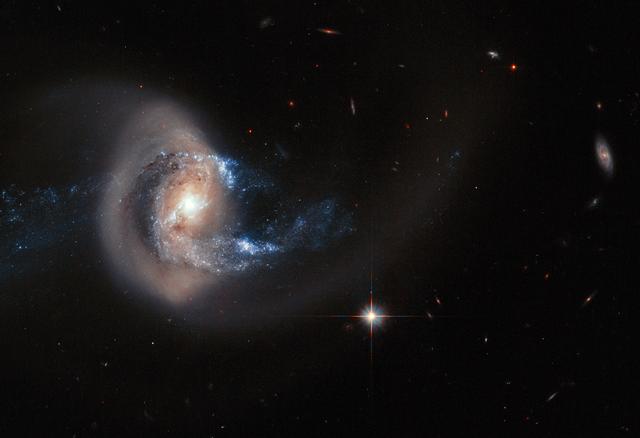
This NASA Hubble Space Telescope photo of NGC 7714 presents an especially striking view of the galaxy's smoke-ring-like structure. The golden loop is made of sun-like stars that have been pulled deep into space, far from the galaxy's center. The galaxy is located approximately 100 million light-years from Earth in the direction of the constellation Pisces. The universe is full of such galaxies that are gravitationally stretched and pulled and otherwise distorted in gravitational tug-o'-wars with bypassing galaxies. The companion galaxy doing the "taffy pulling" in this case, NGC 7715, lies just out of the field of view in this image. A very faint bridge of stars extends to the unseen companion. The close encounter has compressed interstellar gas to trigger bursts of star formation seen in bright blue arcs extending around NGC 7714's center. The gravitational disruption of NGC 7714 began between 100 million and 200 million years ago, at the epoch when dinosaurs ruled the Earth. The image was taken with the Wide Field Camera 3 and the Advanced Camera for Surveys in October 2011. Credit: NASA and ESA. Acknowledgment: A. Gal-Yam (Weizmann Institute of Science) <b><a href="http://www.nasa.gov/audience/formedia/features/MP_Photo_Guidelines.html" rel="nofollow">NASA image use policy.</a></b> <b><a href="http://www.nasa.gov/centers/goddard/home/index.html" rel="nofollow">NASA Goddard Space Flight Center</a></b> enables NASA’s mission through four scientific endeavors: Earth Science, Heliophysics, Solar System Exploration, and Astrophysics. Goddard plays a leading role in NASA’s accomplishments by contributing compelling scientific knowledge to advance the Agency’s mission. <b>Follow us on <a href="http://twitter.com/NASAGoddardPix" rel="nofollow">Twitter</a></b> <b>Like us on <a href="http://www.facebook.com/pages/Greenbelt-MD/NASA-Goddard/395013845897?ref=tsd" rel="nofollow">Facebook</a></b> <b>Find us on <a href="http://instagram.com/nasagoddard?vm=grid" rel="nofollow">Instagram</a></b>

The US Air Force loaned a Republic F-84 Thunderjet to the National Advisory Committee for Aeronautics (NACA) Lewis Flight Propulsion Laboratory in the spring of 1954. NACA researchers soon modified the aircraft for the first demonstration of a reverse thruster. Republic built over 4000 Thunderjets between 1947 and 1953 for the military as a successor to the Lockheed F-80 Shooting Star. TheF-84s became successful multi-use aircraft during the Korean War. The use of traditional wheel brakes on high speed aircraft was problematic because the required braking system would weigh too much. The reverse thruster was developed as a method for stopping these aircraft without increasing the overall weight. Panels in the tail section near the jet engine’s nozzle opened up during a landing. These extended flaps not only caused resistance to the airstream but also reversed the engine’s thrust. In June 1964 Irving Pinkel, head of the Lewis Physics Division, oversaw a demonstration of this technology on an F-84 at the NACA laboratory. The side fuselage panels around the engine nozzle, seen closed in this photograph, opened up like wings and deflected the engine’s thrust towards the front of the aircraft, thus producing reverse thrust. The F-84 activated the reverse thruster and the aircraft moved backwards across the runway.

ISS012-E-09567 (28 Nov. 2005) --- Houston Ship Channel, Texas is featured in this image photographed by an Expedition 12 crewmember on the International Space Station. This view depicts the San Jacinto River portion of the Houston Ship Channel, one of the United States' busiest sea ports. The Channel provides a conduit between the continental interior and the Gulf of Mexico for both petrochemical products and Midwestern grain. The original watercourse for the Channel, Buffalo Bayou, has its headwaters 30 miles to the west of the city of Houston and has been used to move goods to the sea since at least 1836. Wakes of ships traveling along the channel are visible to the south of the Goat Islands (bright oblong islands at top center of image). The close proximity to Texas oilfields led to the establishment of numerous petrochemical refineries along the waterway, such as the Exxon Mobil Baytown installation on the eastern bank of the San Jacinto River. While much of the Ship Channel is associated with heavy industry, two icons of Texas history are also located along its length. A close search of the photo's details reveals both the battleship U.S.S. Texas and the neighboring San Jacinto Monument. The Texas saw service during both World Wars, and is the last remaining example of a dreadnought-class battleship in existence. The nearby San Jacinto Monument commemorates the 1836 battle in which Texas won its independence from Mexico. The monument itself is a 570 feet (173 meters) high shaft topped by a 34 feet (10 meters) high star, making it 15 feet (5 meters) higher than the Washington Monument in Washington, D.C. The Houston Ship Channel has been periodically widened and deepened to accommodate ever-larger ships, and is currently 530 feet (161 meters) wide by 45 feet (14 meters) deep by 50 miles (80 kilometers) long. The islands in the ship channel are part of the ongoing channel widening and deepening project--created by dredge spoils, salt marshes and bird islands are part of the Houston Port Authority's beneficial use and environmental mitigation responsibilities.
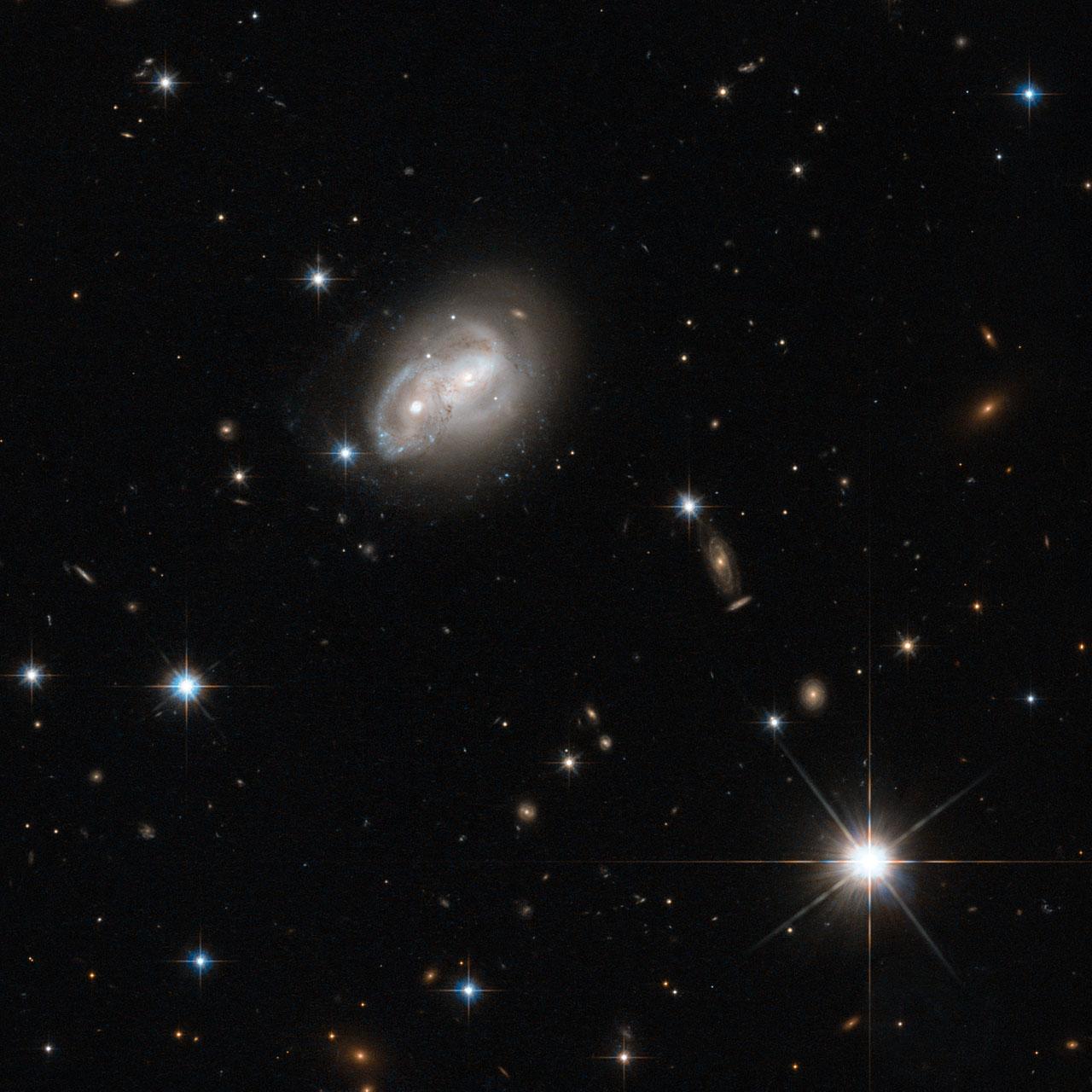
From objects as small as Newton's apple to those as large as a galaxy, no physical body is free from the stern bonds of gravity, as evidenced in this stunning picture captured by the Wide Field Camera 3 and Advanced Camera for Surveys onboard the NASA/ESA Hubble Space Telescope. Here we see two spiral galaxies engaged in a cosmic tug-of-war — but in this contest, there will be no winner. The structures of both objects are slowly distorted to resemble new forms, and in some cases, merge together to form new, super galaxies. This particular fate is similar to that of the Milky Way Galaxy, when it will ultimately merge with our closest galactic partner, the Andromeda Galaxy. There is no need to panic however, as this process takes several hundreds of millions of years. Not all interacting galaxies result in mergers though. The merger is dependent on the mass of each galaxy, as well as the relative velocities of each body. It is quite possible that the event pictured here, romantically named 2MASX J06094582-2140234, will avoid a merger event altogether, and will merely distort the arms of each spiral without colliding — the cosmic equivalent of a hair ruffling! These galactic interactions also trigger new regions of star formation in the galaxies involved, causing them to be extremely luminous in the infrared part of the spectrum. For this reason, these types of galaxies are referred to as LIRGs, or Luminous Infrared Galaxies. This image was taken as part of as part of a Hubble survey of the central regions of LIRGs in the local Universe, which also used the Near Infrared Camera and Multi-Object Spectrometer (NICMOS) instrument. Credit: ESA/Hubble & NASA, Acknowledgement: Luca Limatola <b><a href="http://www.nasa.gov/audience/formedia/features/MP_Photo_Guidelines.html" rel="nofollow">NASA image use policy.</a></b> <b><a href="http://www.nasa.gov/centers/goddard/home/index.html" rel="nofollow">NASA Goddard Space Flight Center</a></b> enables NASA’s mission through four scientific endeavors: Earth Science, Heliophysics, Solar System Exploration, and Astrophysics. Goddard plays a leading role in NASA’s accomplishments by contributing compelling scientific knowledge to advance the Agency’s mission. <b>Follow us on <a href="http://twitter.com/NASAGoddardPix" rel="nofollow">Twitter</a></b> <b>Like us on <a href="http://www.facebook.com/pages/Greenbelt-MD/NASA-Goddard/395013845897?ref=tsd" rel="nofollow">Facebook</a></b> <b>Find us on <a href="http://instagram.com/nasagoddard?vm=grid" rel="nofollow">Instagram</a></b>
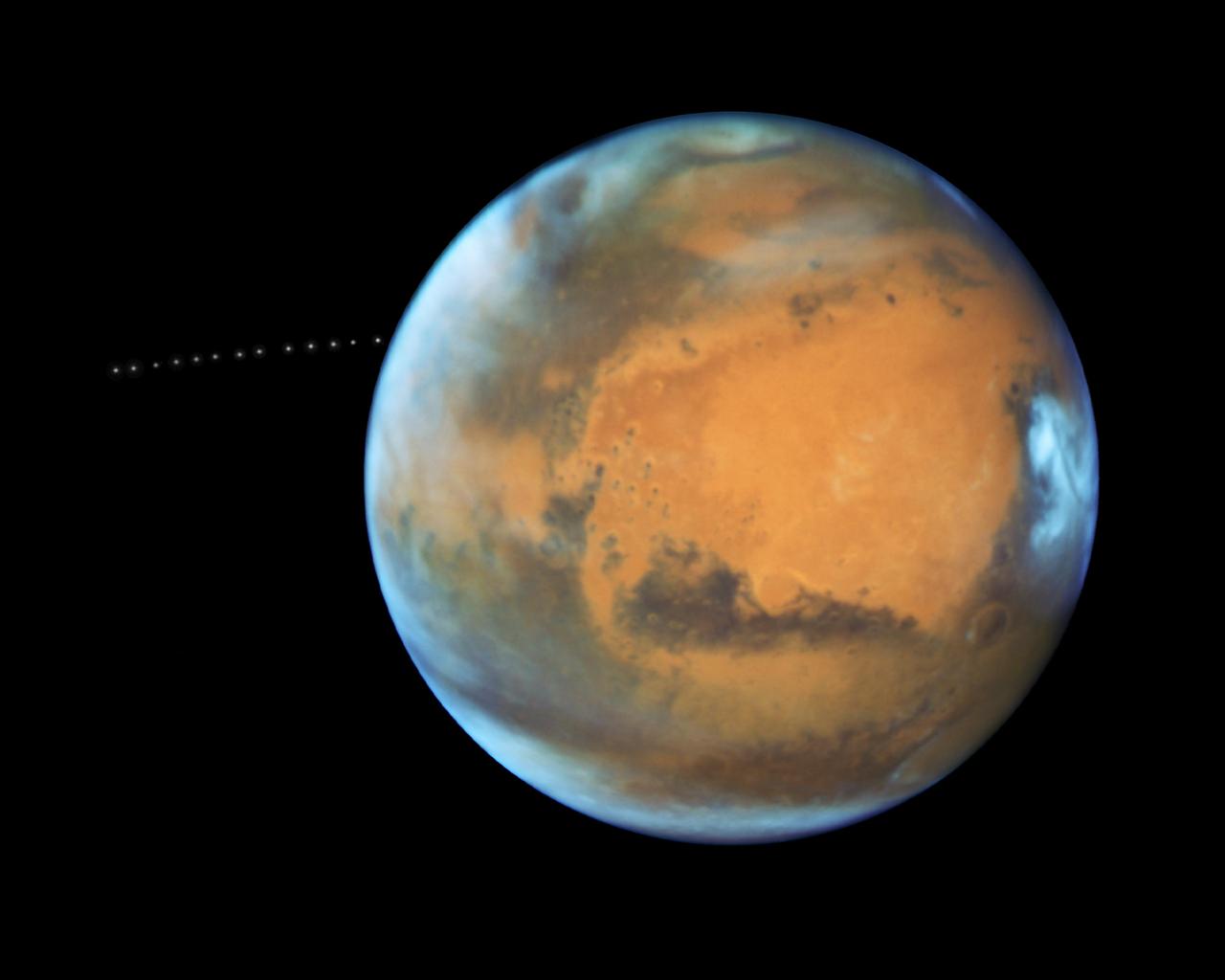
The sharp eye of NASA's Hubble Space Telescope has captured the tiny moon Phobos during its orbital trek around Mars. Because the moon is so small, it appears star-like in the Hubble pictures. Over the course of 22 minutes, Hubble took 13 separate exposures, allowing astronomers to create a time-lapse video showing the diminutive moon's orbital path. The Hubble observations were intended to photograph Mars, and the moon's cameo appearance was a bonus. A football-shaped object just 16.5 miles by 13.5 miles by 11 miles, Phobos is one of the smallest moons in the solar system. It is so tiny that it would fit comfortably inside the Washington, D.C. Beltway. The little moon completes an orbit in just 7 hours and 39 minutes, which is faster than Mars rotates. Rising in the Martian west, it runs three laps around the Red Planet in the course of one Martian day, which is about 24 hours and 40 minutes. It is the only natural satellite in the solar system that circles its planet in a time shorter than the parent planet's day. About two weeks after the Apollo 11 manned lunar landing on July 20, 1969, NASA's Mariner 7 flew by the Red Planet and took the first crude close-up snapshot of Phobos. On July 20, 1976 NASA's Viking 1 lander touched down on the Martian surface. A year later, its parent craft, the Viking 1 orbiter, took the first detailed photograph of Phobos, revealing a gaping crater from an impact that nearly shattered the moon. Phobos was discovered by Asaph Hall on August 17, 1877 at the U.S. Naval Observatory in Washington, D.C., six days after he found the smaller, outer moon, named Deimos. Hall was deliberately searching for Martian moons. Both moons are named after the sons of Ares, the Greek god of war, who was known as Mars in Roman mythology. Phobos (panic or fear) and Deimos (terror or dread) accompanied their father into battle. Close-up photos from Mars-orbiting spacecraft reveal that Phobos is apparently being torn apart by the gravitational pull of Mars. The moon is marred by long, shallow grooves that are probably caused by tidal interactions with its parent planet. Phobos draws nearer to Mars by about 6.5 feet every hundred years. Scientists predict that within 30 to 50 million years, it either will crash into the Red Planet or be torn to pieces and scattered as a ring around Mars. Orbiting 3,700 miles above the Martian surface, Phobos is closer to its parent planet than any other moon in the solar system. Despite its proximity, observers on Mars would see Phobos at just one-third the width of the full moon as seen from Earth. Conversely, someone standing on Phobos would see Mars dominating the horizon, enveloping a quarter of the sky. From the surface of Mars, Phobos can be seen eclipsing the sun. However, it is so tiny that it doesn't completely cover our host star. Transits of Phobos across the sun have been photographed by several Mars-faring spacecraft. The origin of Phobos and Deimos is still being debated. Scientists concluded that the two moons were made of the same material as asteroids. This composition and their irregular shapes led some astrophysicists to theorize that the Martian moons came from the asteroid belt. However, because of their stable, nearly circular orbits, other scientists doubt that the moons were born as asteroids. Such orbits are rare for captured objects, which tend to move erratically. An atmosphere could have slowed down Phobos and Deimos and settled them into their current orbits, but the Martian atmosphere is too thin to have circularized the orbits. Also, the moons are not as dense as members of the asteroid belt. Phobos may be a pile of rubble that is held together by a thin crust. It may have formed as dust and rocks encircling Mars were drawn together by gravity. Or, it may have experienced a more violent birth, where a large body smashing into Mars flung pieces skyward, and those pieces were brought together by gravity. Perhaps an existing moon was destroyed, reduced to the rubble that would become Phobos. Hubble took the images of Phobos orbiting the Red Planet on May 12, 2016, when Mars was 50 million miles from Earth. This was just a few days before the planet passed closer to Earth in its orbit than it had in the past 11 years. A time-lapse video captures a portion of the path that tiny Phobos takes around Mars. Over the course of 22 minutes, Hubble snapped 13 separate exposures of the little Martian moon. The video can be viewed at https://photojournal.jpl.nasa.gov/catalog/PIA21837