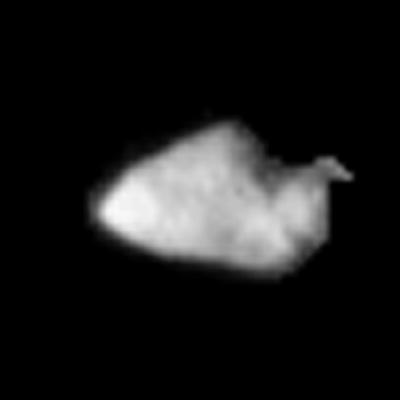
Stardust Image of Asteroid Annefrank
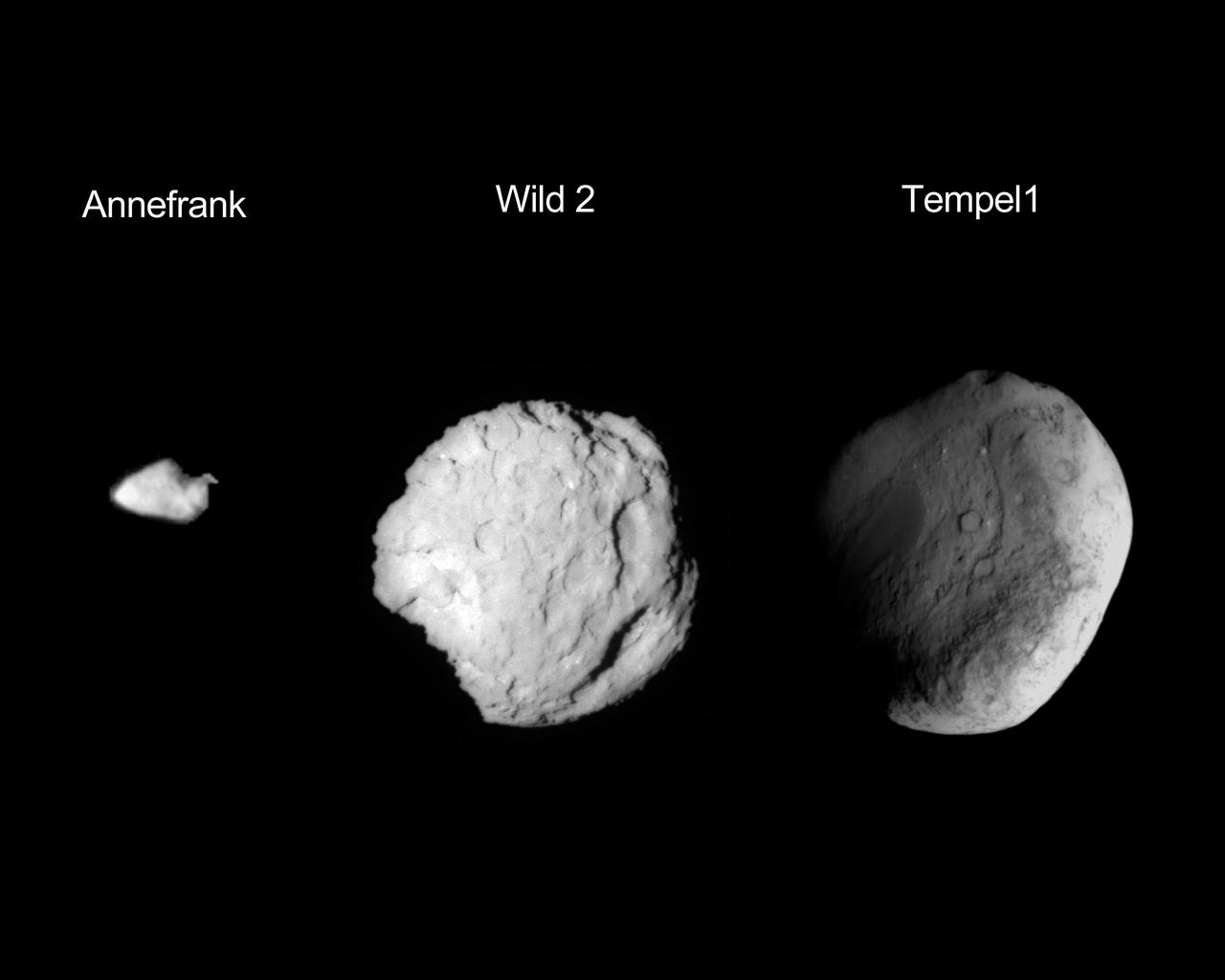
This composite image shows the three small worlds NASA Stardust spacecraft encountered during its 12 year mission. Stardust performed a flyby of asteroid Annefrank in 2002, Comet Wild in 2004, and Tempel 1 in 2011.
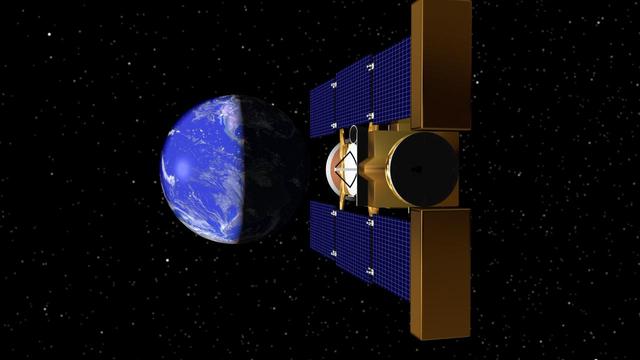
Artist rendering of NASA’s Stardust returning to Earth. Stardust is the first U.S. space mission dedicated to the exploration of a comet, and the first robotic mission designed to return extraterrestrial material from outside the orbit of the Moon.
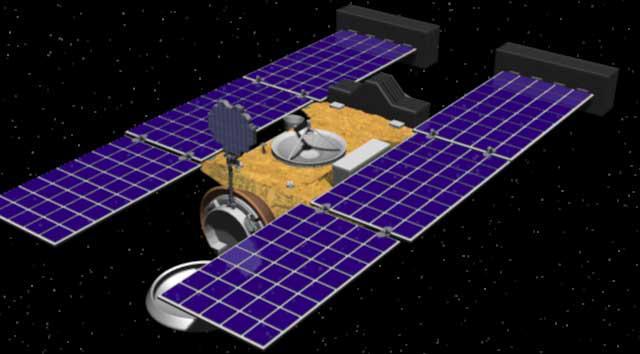
Artist rendering of NASA Stardust spacecraft. The spacecraft was launched on February 7, 1999, from Cape Canaveral Air Station, Florida, aboard a Delta II rocket.
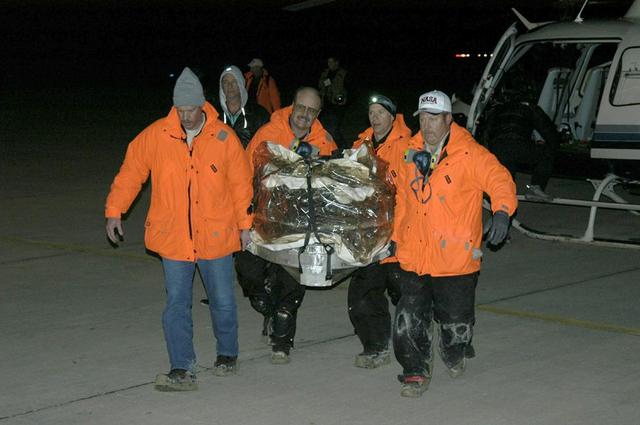
This image shows the return capsule inside a protective covering. The capsule, which landed at 2:10 a.m. Pacific time 3:10 a.m. Mountain time, contains cometary and interstellar samples gathered by NASA Stardust spacecraft.
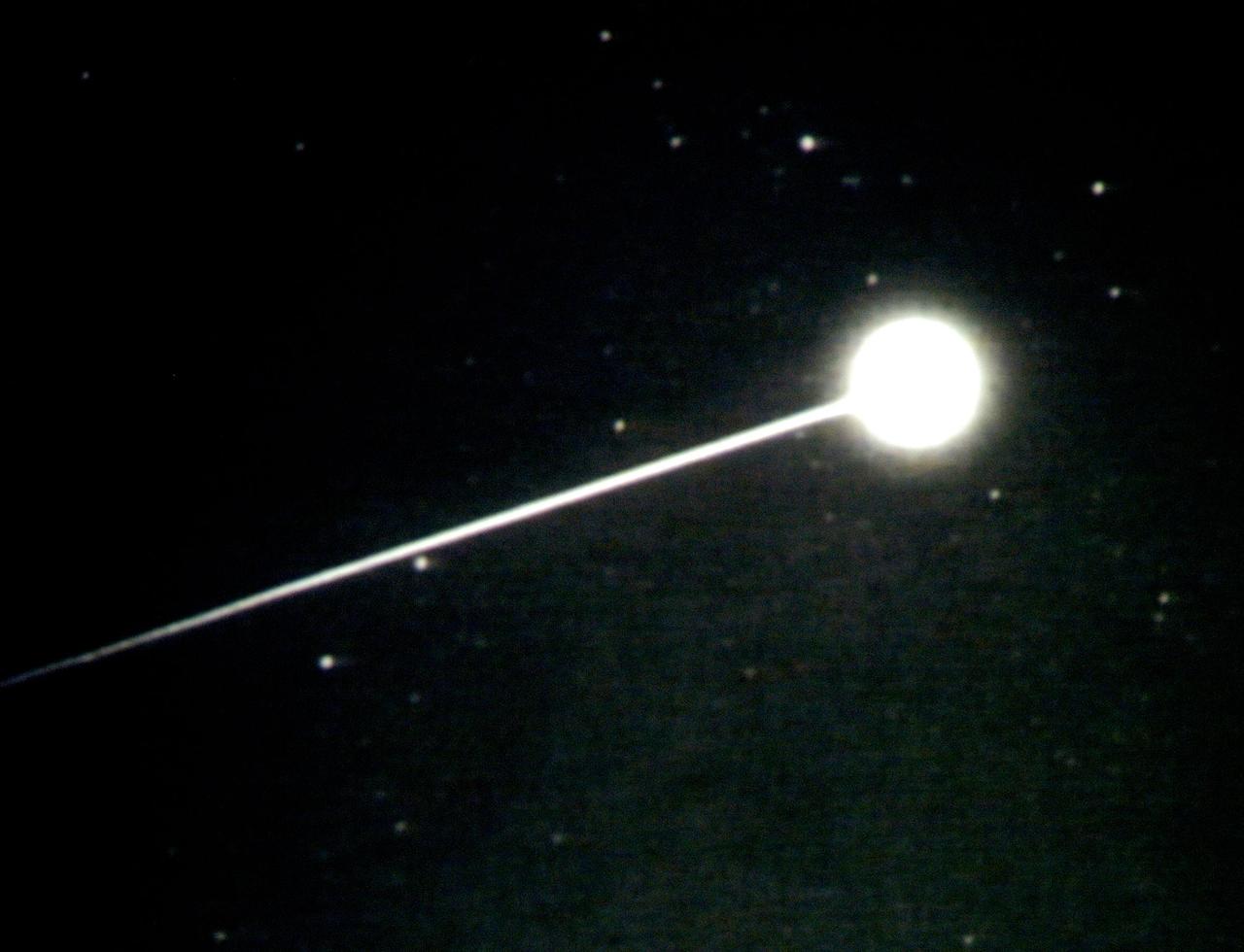
Stardust Capsule Return as seen from NASA DC-8 Airborne Laboratory with a mission to explore the conditions during reentry from the light emitted by the fireball caused when the capsule streaked through the sky
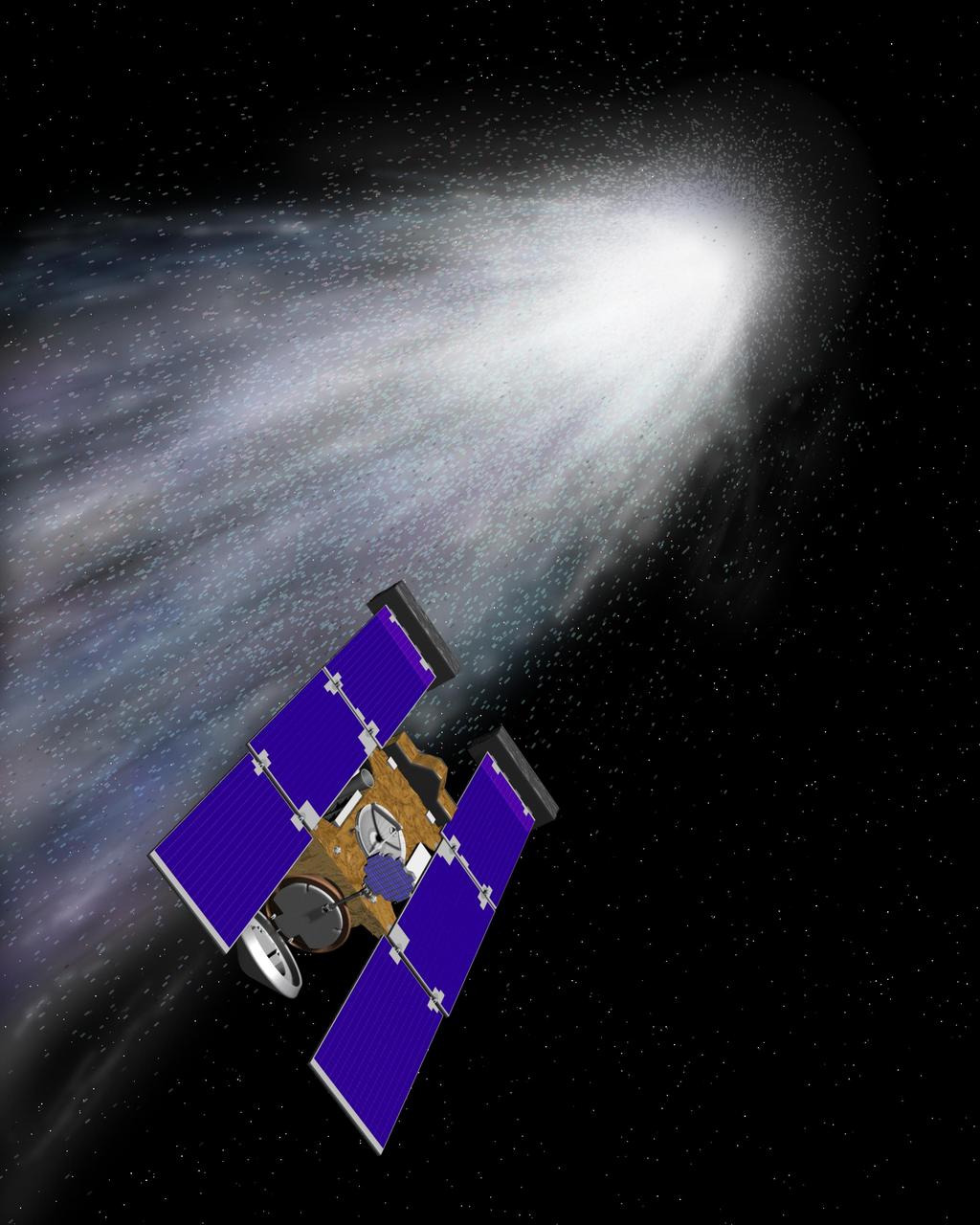
Artist rendering of NASA Stardust spacecraft. The spacecraft was launched on February 7, 1999, from Cape Canaveral Air Station, Florida, aboard a Delta II rocket.
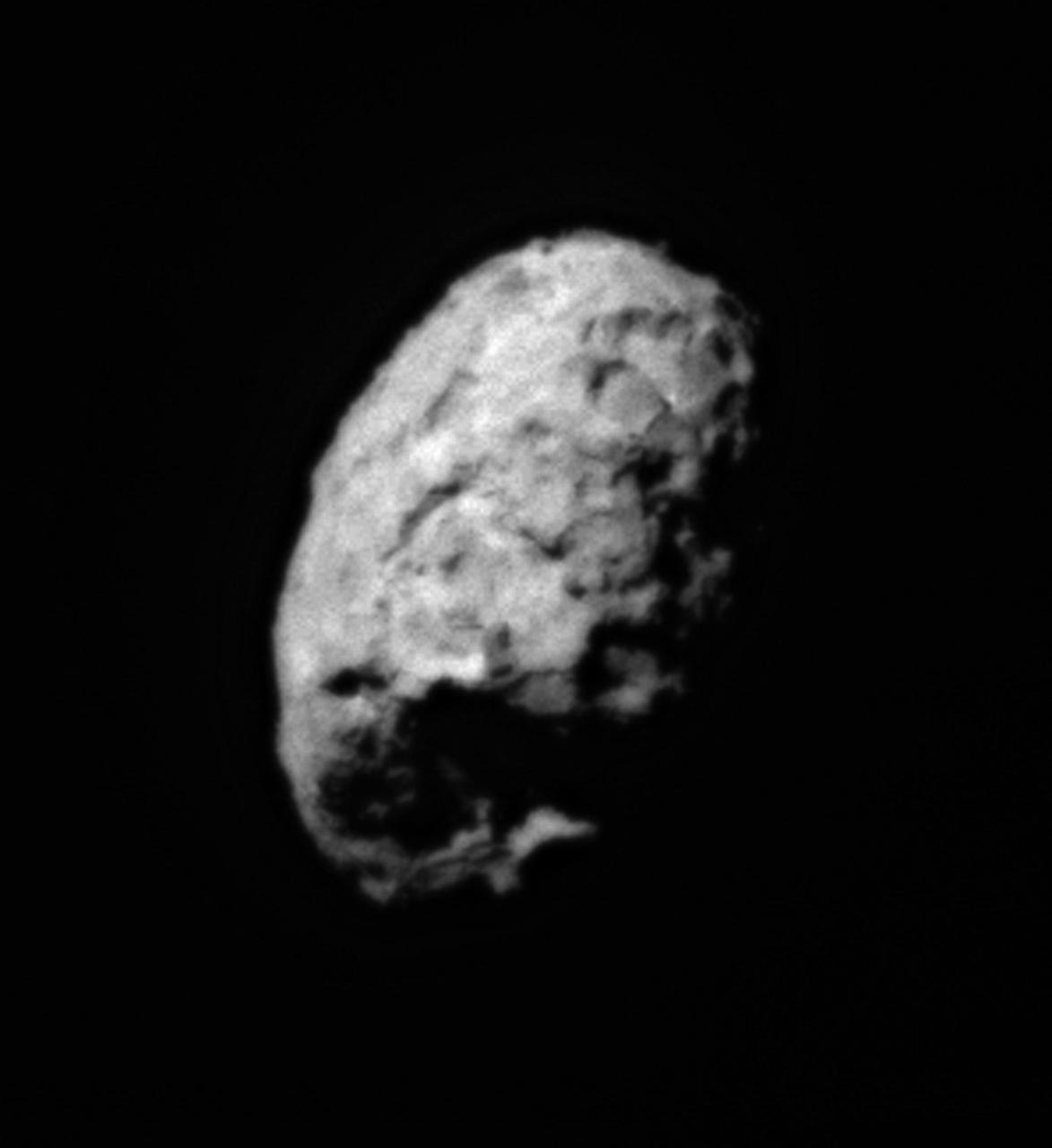
This image was taken during the close approach phase of NASA Stardust Jan 2, 2004 flyby of comet Wild 2. It is a distant side view of the roughly spherical comet nucleus.
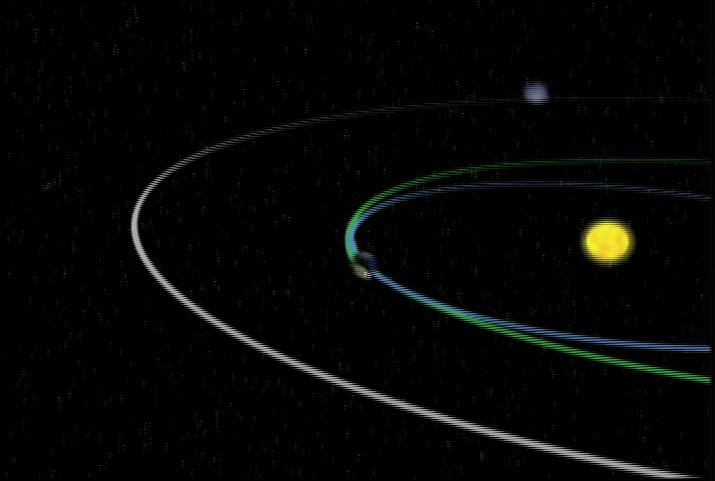
This animation illustrates the orbit path of NASA Stardust spacecraft.
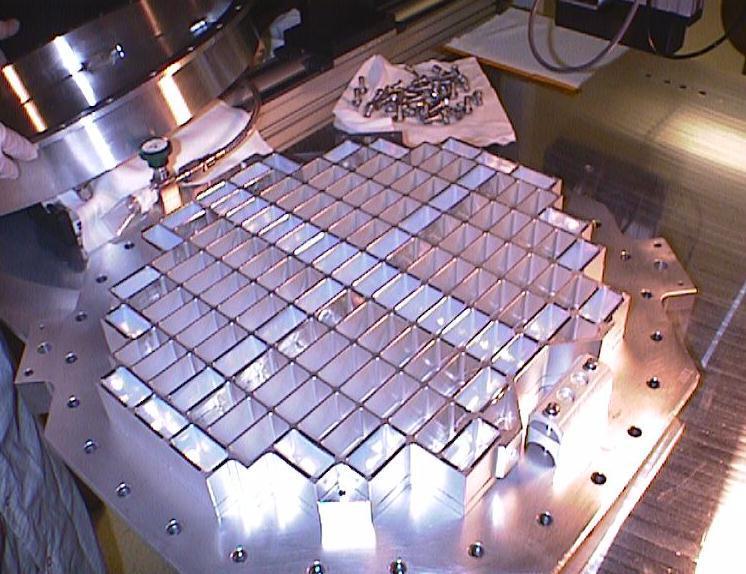
The aerogel dust collector, an instrument aboard NASA Stardust spacecraft.

Artist rendering of NASA Stardust capsule returning to Earth. The Stardust spacecraft will bring back samples of interstellar dust, including recently discovered dust streaming into our Solar System from the direction of Sagittarius.

Artist rendering of NASA Stardust capsule returning to Earth. The Stardust spacecraft will bring back samples of interstellar dust, including recently discovered dust streaming into our Solar System from the direction of Sagittarius.
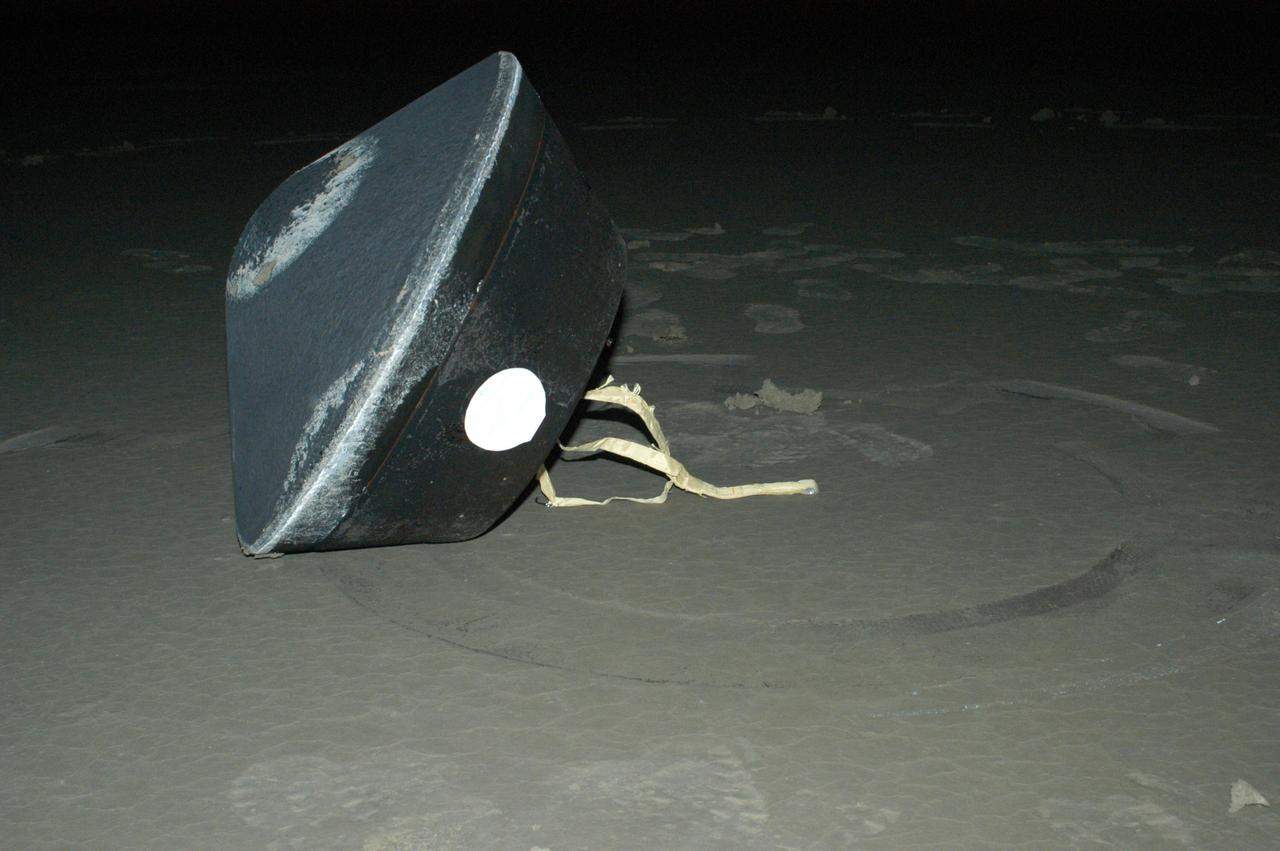
The capsule contains cometary and interstellar samples gathered by NASA Stardust spacecraft.
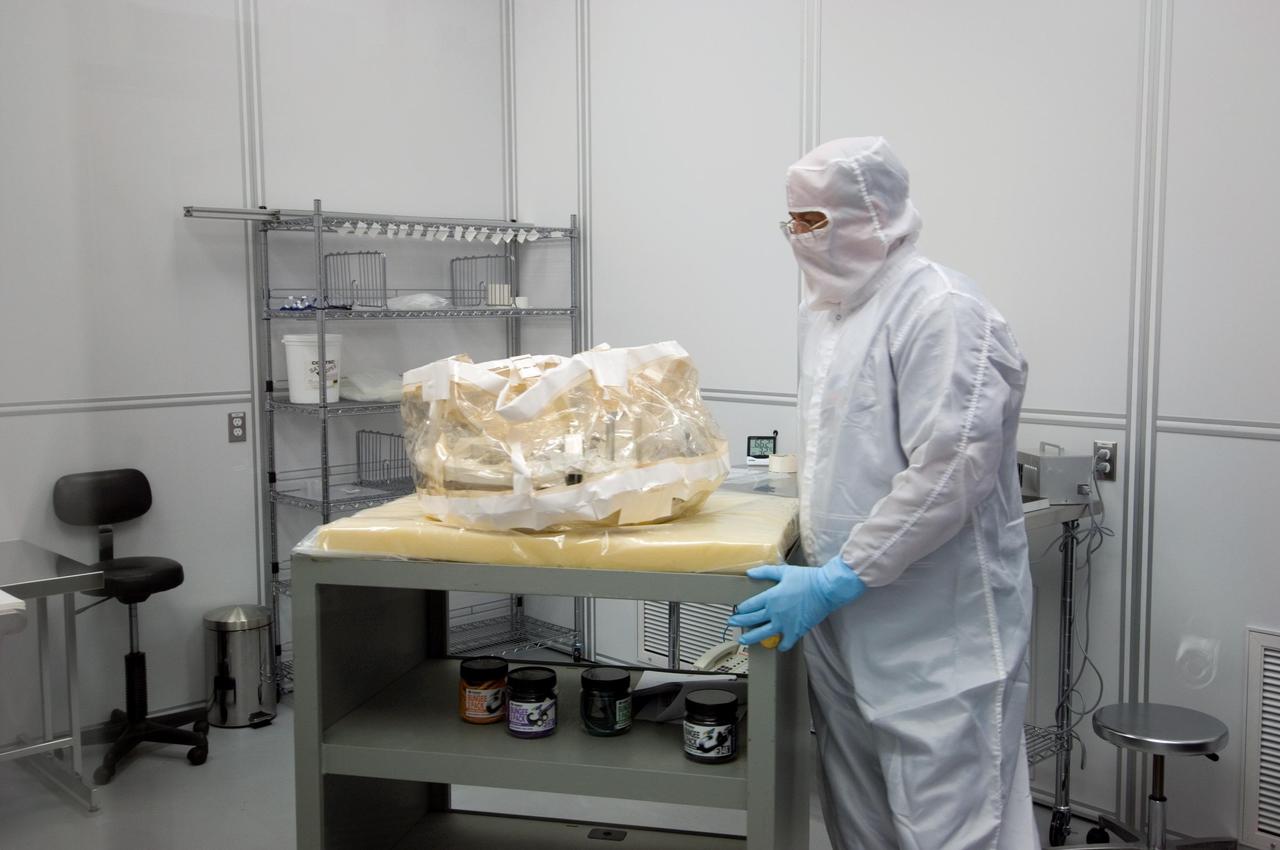
Inside Space Exposed Hardware Lab a member of the JSC Curation Team with NASA Stardust canister in lab.
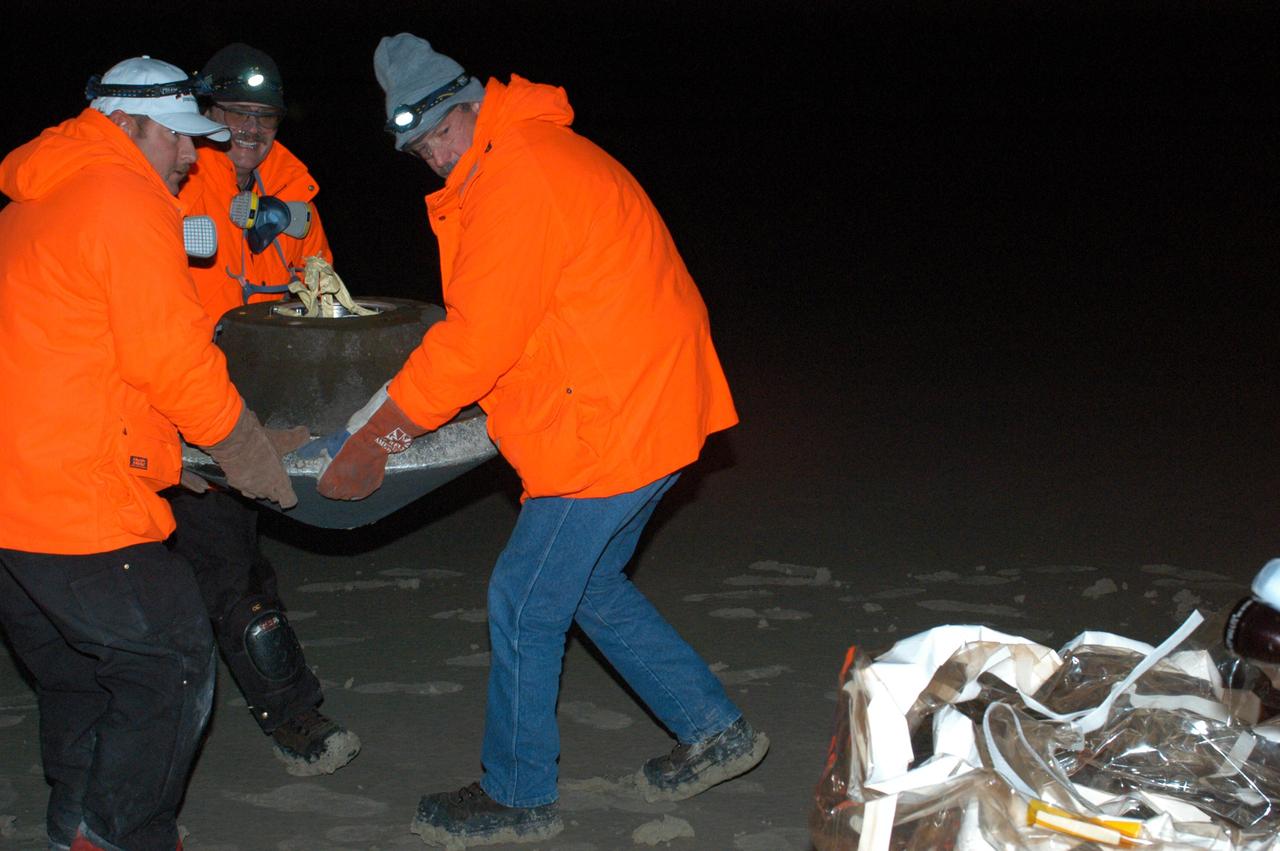
The capsule contains cometary and interstellar samples gathered by NASA Stardust spacecraft. Here, the capsule is being lifted at the landing site.
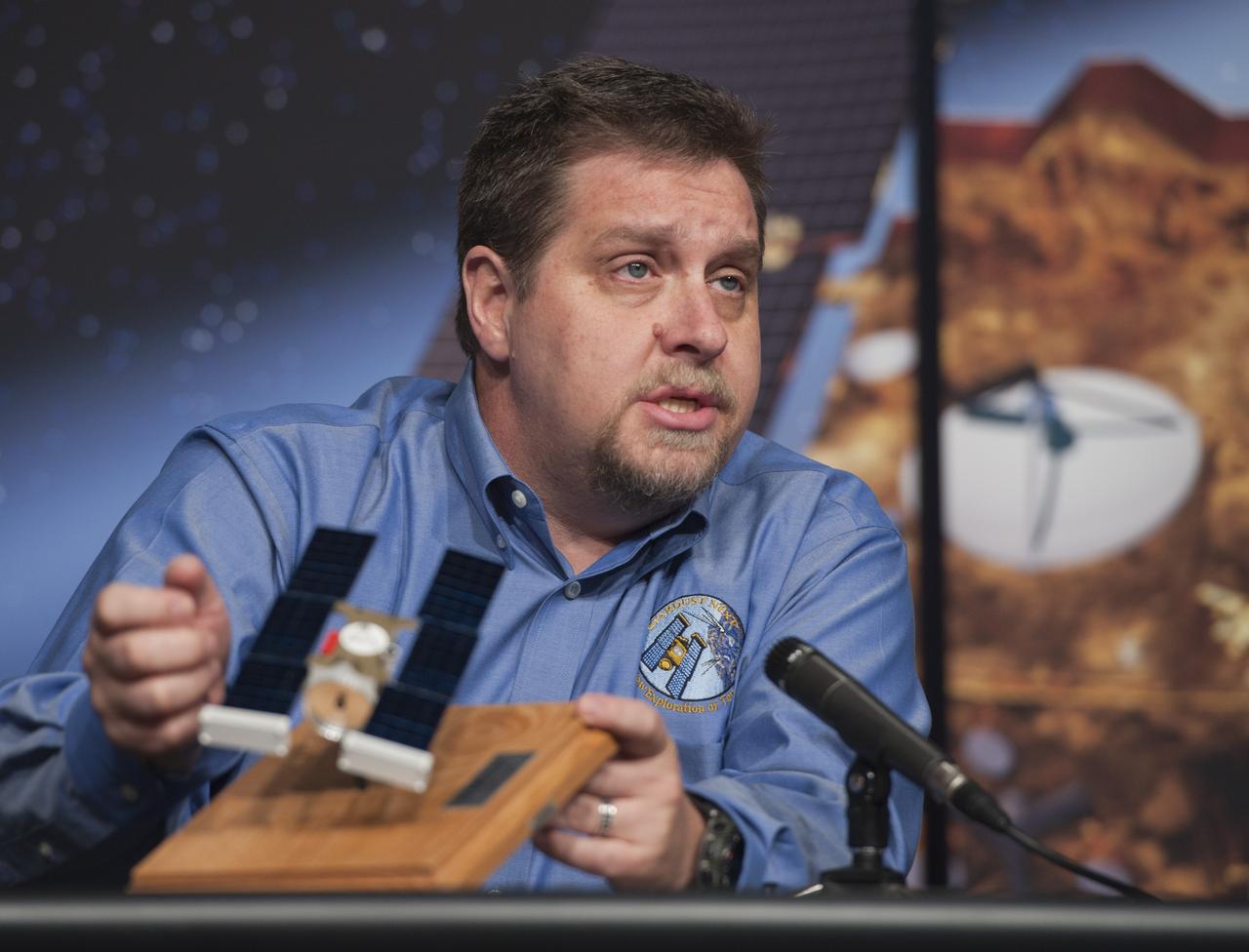
Tim Larson, Stardust NExT Project Manager, speaks during a news briefing, Wednesday, Jan. 19, 2011, at NASA Headquarters in Washington. On Feb. 14, 2011 NASA's Stardust-NExT (New Exploration of Tempel 1) mission will encounter Comet Tempel 1, providing a unique opportunity to measure the dust properties which will also provide a comparison between two observations of a single comet, Tempel 1, taken before and after a single orbital pass around the sun. Photo Credit: (NASA/Paul E. Alers)
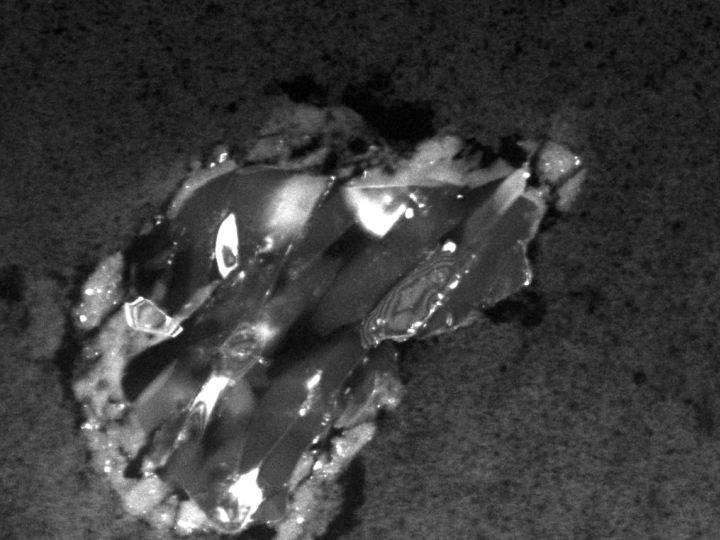
This image shows a comet particle collected by NASA’s Stardust spacecraft. The particle is made up of the silicate mineral forsterite, also known as peridot in its gem form.
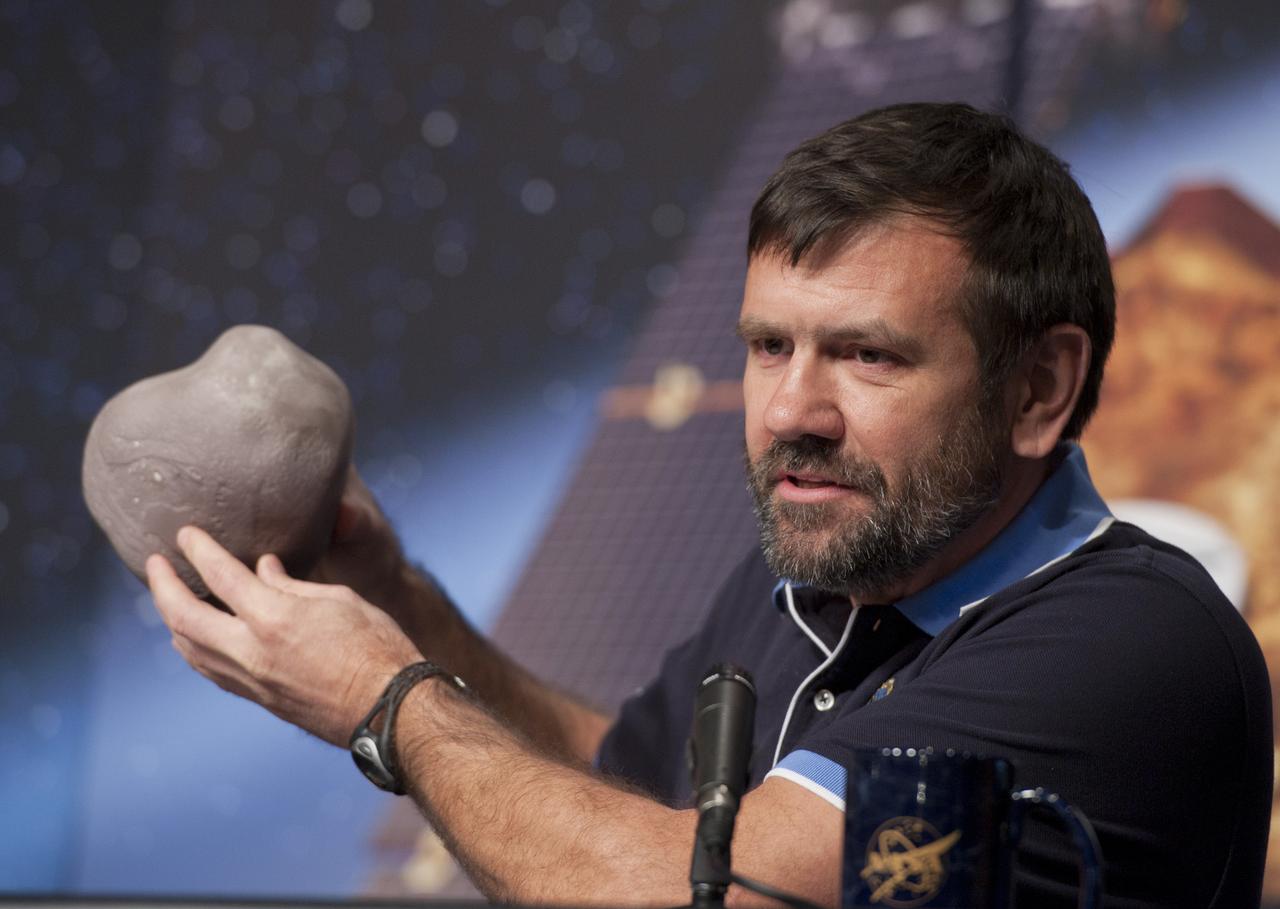
Steve Chesley, Stardust NExT co-investigator, the Jet Propulsion Laboratory, holds up a model of Comet Tempel 1 during a news briefing, Wednesday, Jan. 19, 2011, at NASA Headquarters in Washington. On Feb. 14, 2011 NASA's Stardust-NExT (New Exploration of Tempel 1) mission will encounter Comet Tempel 1, providing a unique opportunity to measure the dust properties which will also provide a comparison between two observations of a single comet, Tempel 1, taken before and after a single orbital pass around the sun. Photo Credit: (NASA/Paul E. Alers)

Joe Ververka, Stardust NExT Principal Investigator, from Cornell University, speaks during a news briefing, Wednesday, Jan. 19, 2011, at NASA Headquarters in Washington. On Feb. 14, 2011 NASA's Stardust-NExT (New Exploration of Tempel 1) mission will encounter Comet Tempel 1, providing a unique opportunity to measure the dust properties which will also provide a comparison between two observations of a single comet, Tempel 1, taken before and after a single orbital pass around the sun. Photo Credit: (NASA/Paul E. Alers)
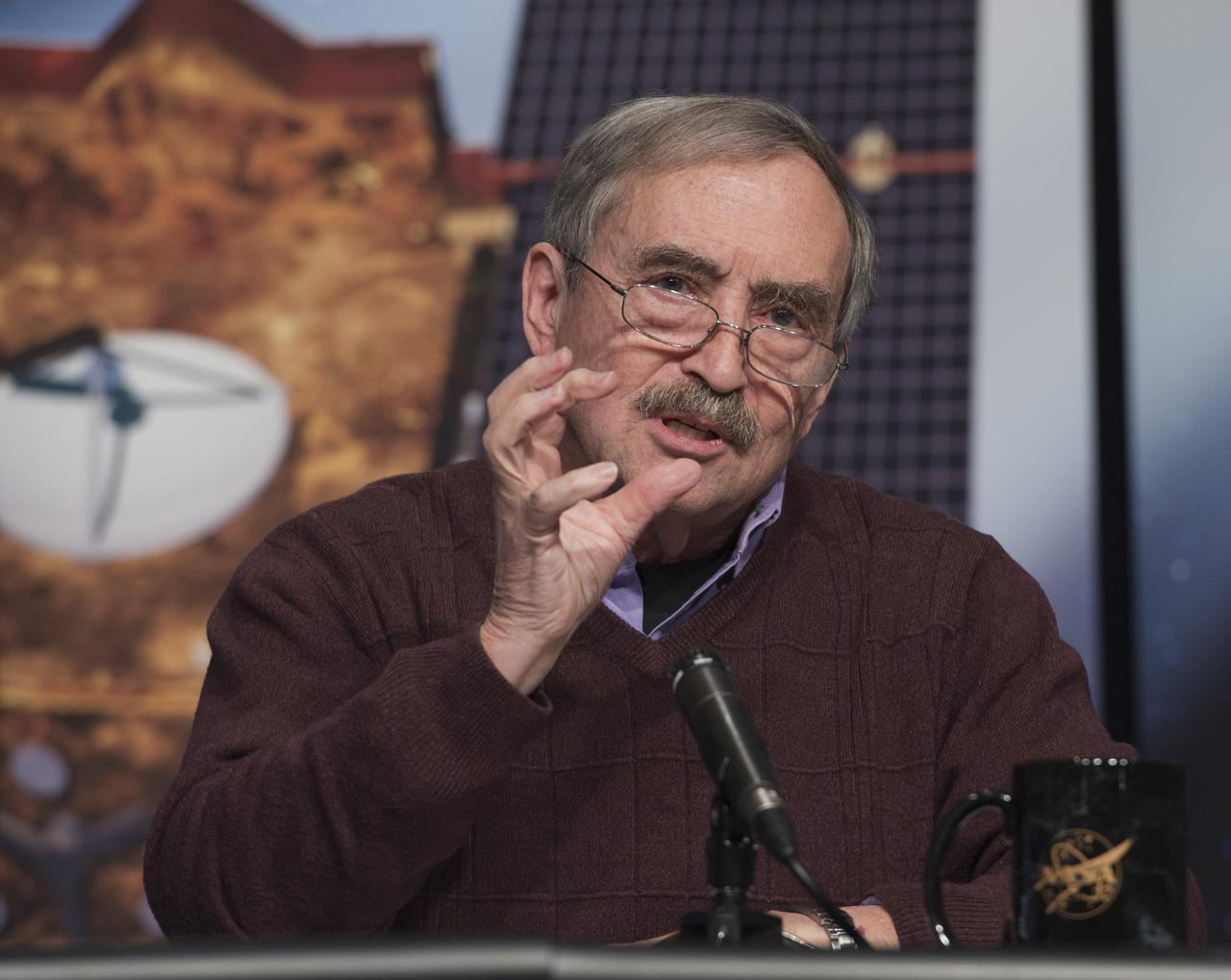
Pete Schultz, Stardust NExT co-investigator, from Brown University, speaks during a news briefing, Wednesday, Jan. 19, 2011, at NASA Headquarters in Washington. On Feb. 14, 2011 NASA's Stardust-NExT (New Exploration of Tempel 1) mission will encounter Comet Tempel 1, providing a unique opportunity to measure the dust properties which will also provide a comparison between two observations of a single comet, Tempel 1, taken before and after a single orbital pass around the sun. Photo Credit: (NASA/Paul E. Alers)
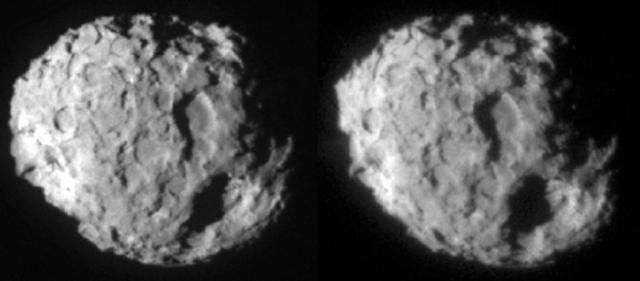
Stereo image pair of comet Wild 2 as seen by NASA's Stardust spacecraft. http://photojournal.jpl.nasa.gov/catalog/PIA05579
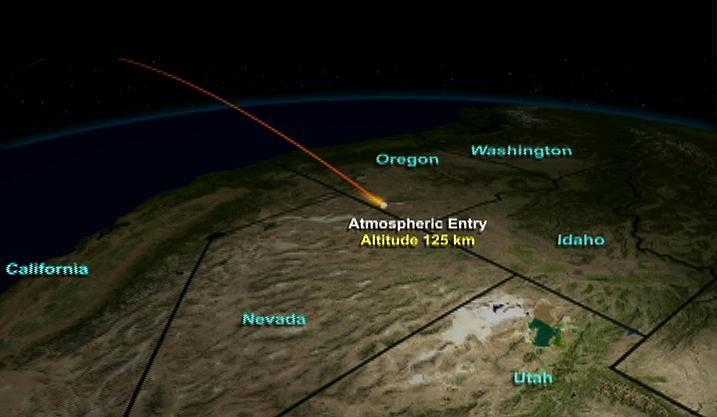
This animation illustrates the path the Stardust return capsule will follow once it enters Earth atmosphere.
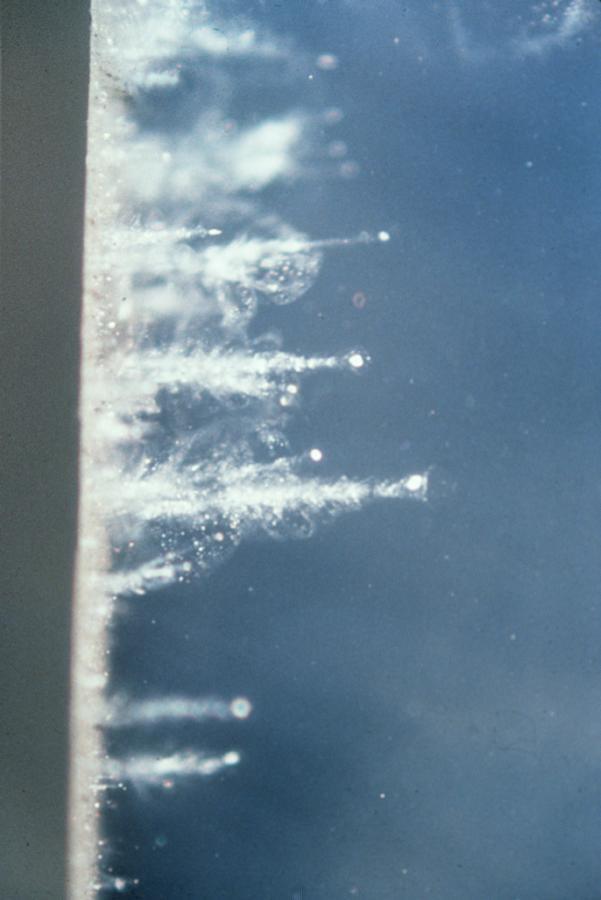
In an experiment using a special air gun, particles are shot into aerogel at high velocities. Closeup of particles leaving a carrot-shaped trail in the aerogel are shown here. Aerogel was used on NASA Stardust spacecraft.
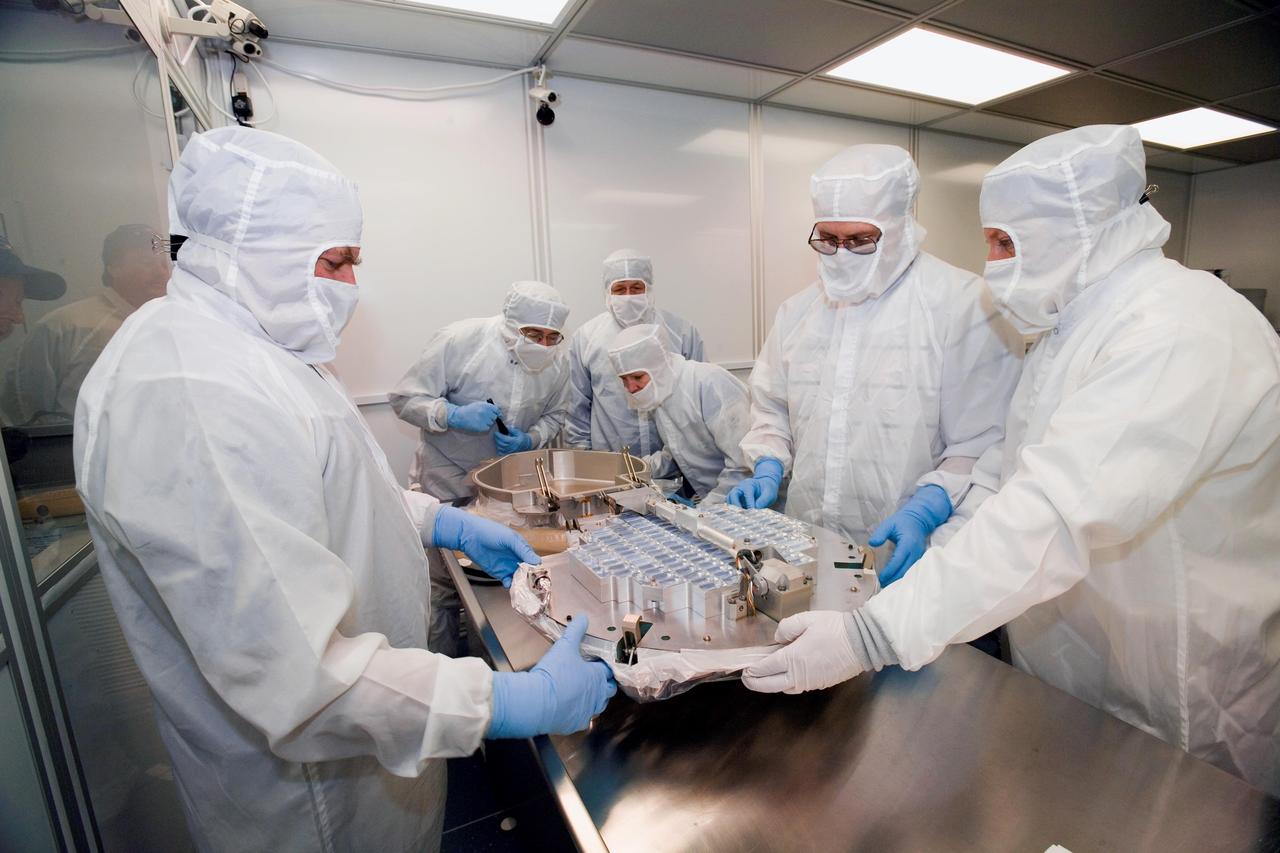
Investigators from University of Washington, Johnson Space Center, and Lockheed Martin Missiles and Space, Denver, Colorado, inspect a canister and sample collector soon after opening a container with Stardust material in a laboratory at the JSC.
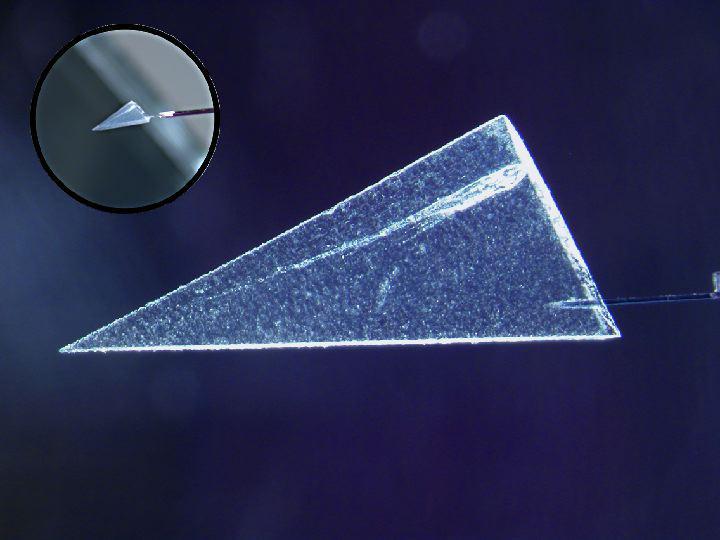
This image illustrates one of several ways scientists have begun extracting comet particles from NASAa Stardust spacecraft collector. First, a particle and its track are cut out of the collector material, called aerogel.
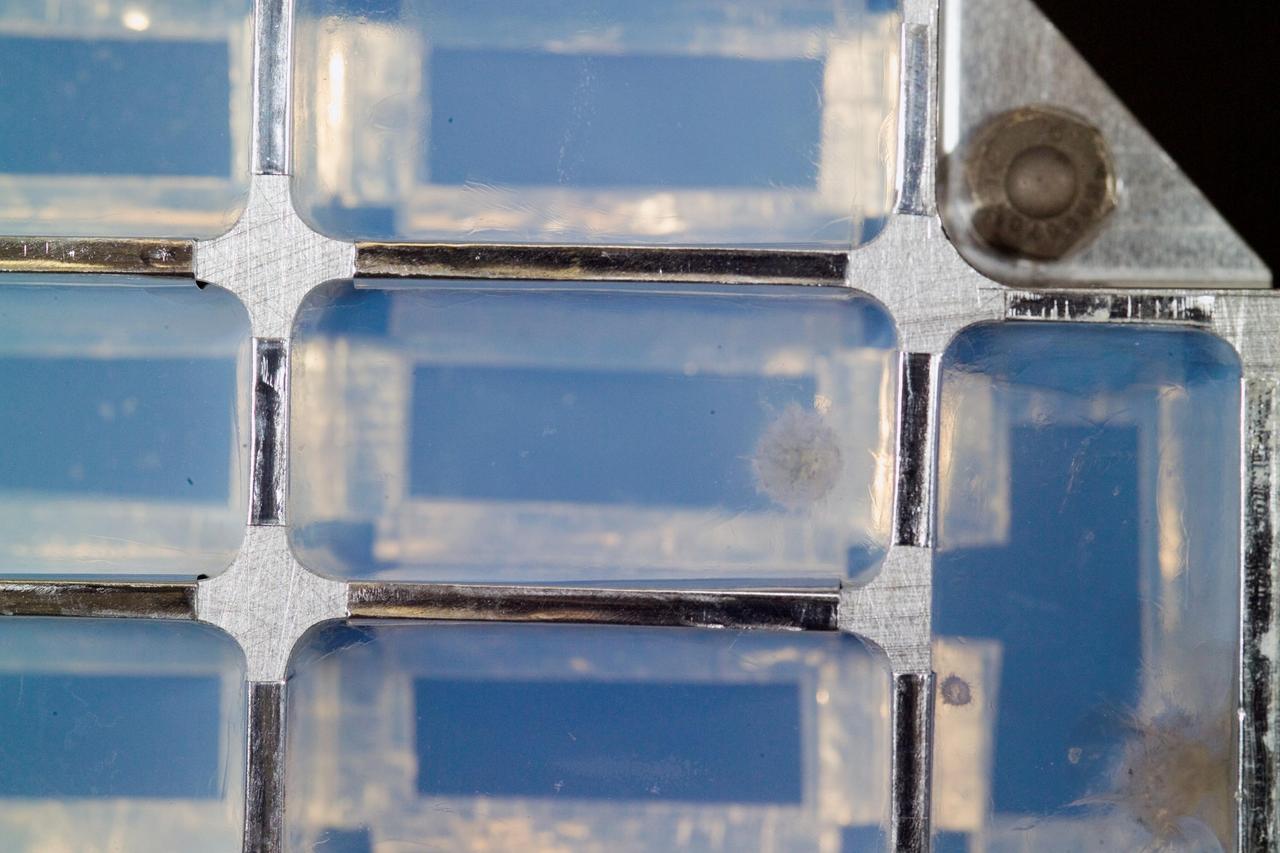
Closeup view of a cometary impact upper right into aerogel was inspected by scientists at a laboratory at the Johnson Space Center hours after NASA Stardust Sample Return Canister was delivered to the Johnson Space Center.
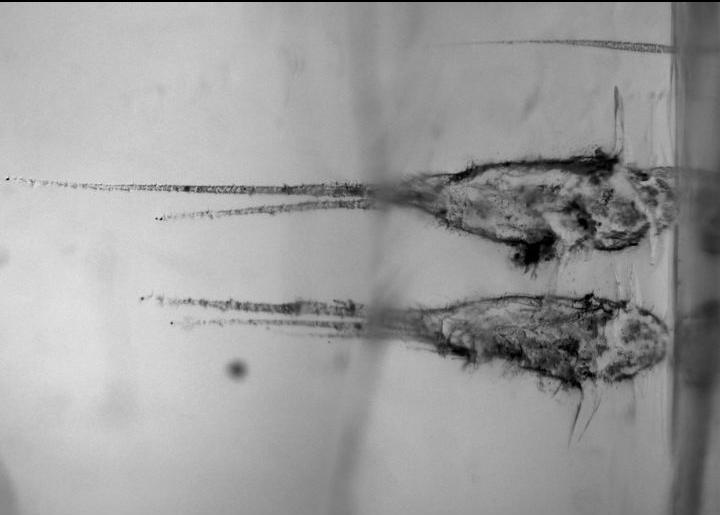
This image shows the tracks left by two comet particles after they impacted NASA Stardust spacecraft comet dust collector. The collector is made up of a low-density glass material called aerogel.
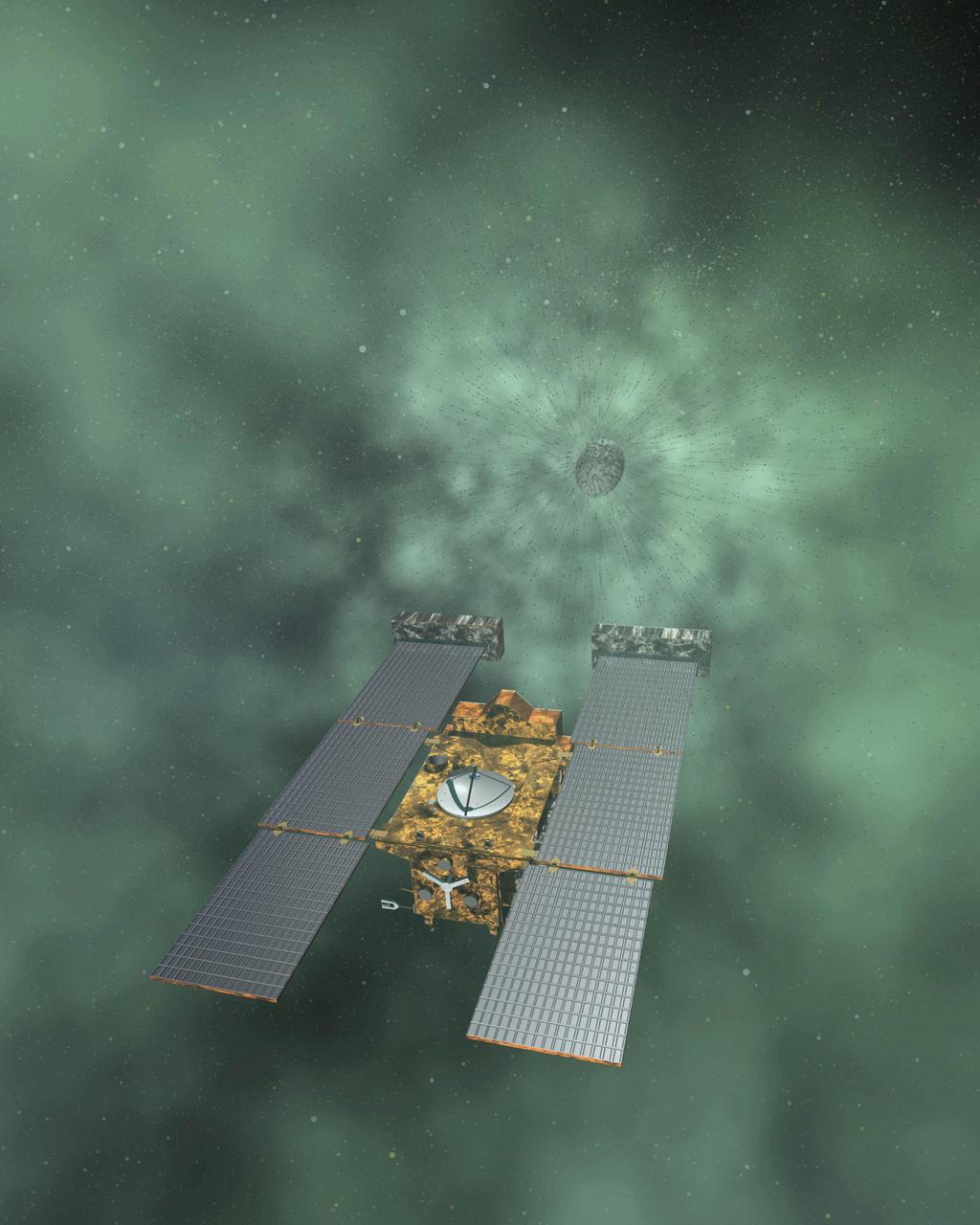
Artist concept of NASA Stardust-NExT mission, which will fly by comet Tempel 1 on Feb. 14, 2011.
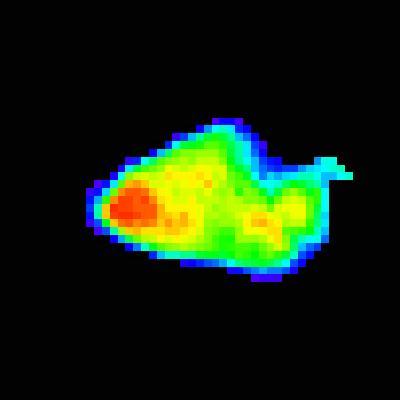
False colors emphasize the variations in surface brightness on asteroid Annefrank, as seen in an image taken by NASA Stardust spacecraft during a Nov. 2, 2002 flyby of the asteroid.
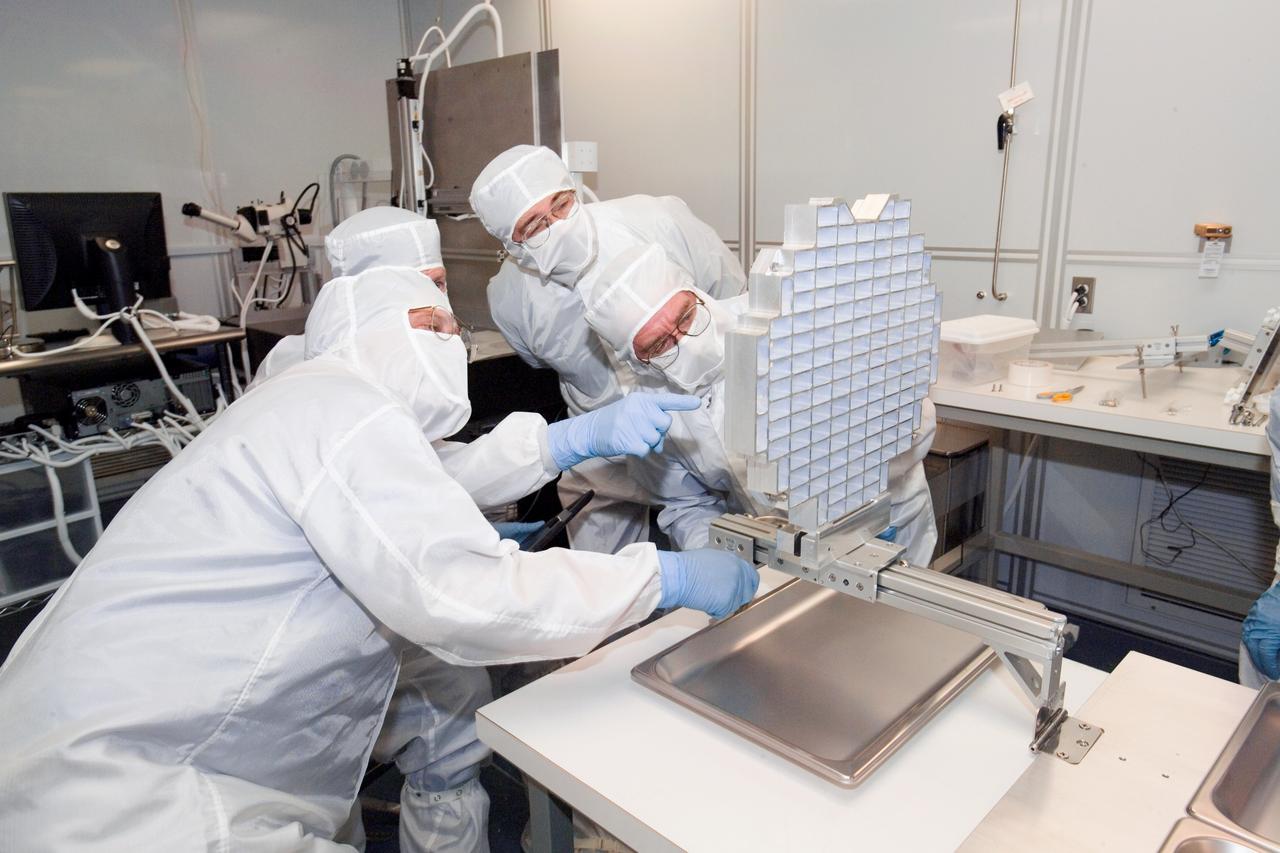
Stardust Photo documentation of Stardust Sample Return and Tray Separation at bldg 31, Stardust laboratory at JSC. The JSC Curation Team begins work with sample containers.
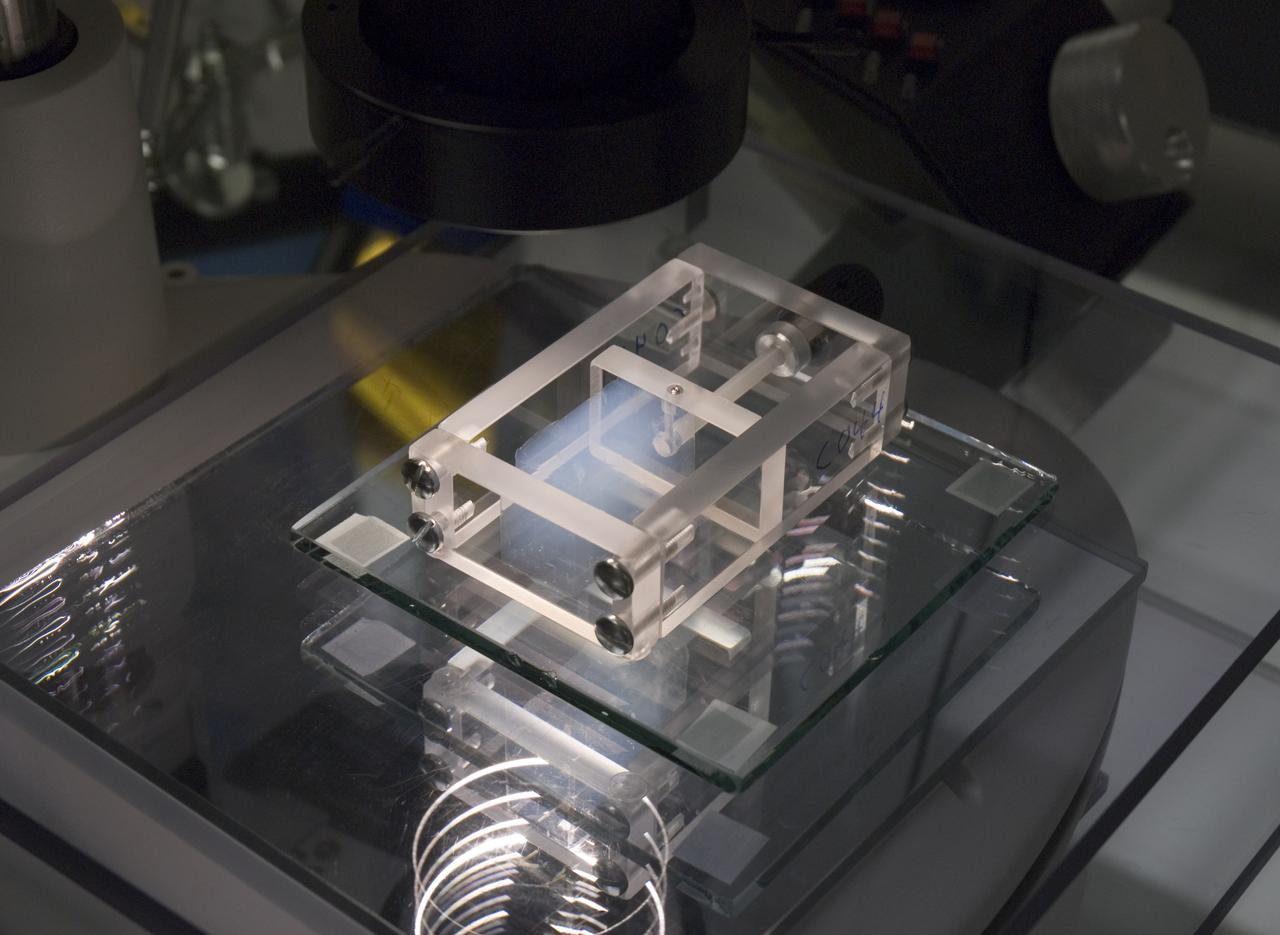
Stardust sample analysis @ UC Berkeley clean room with Dr Scott Sandford, NASA Ames Astrophysicist - mission samples provided to UC Berkeley for analysis by NASA
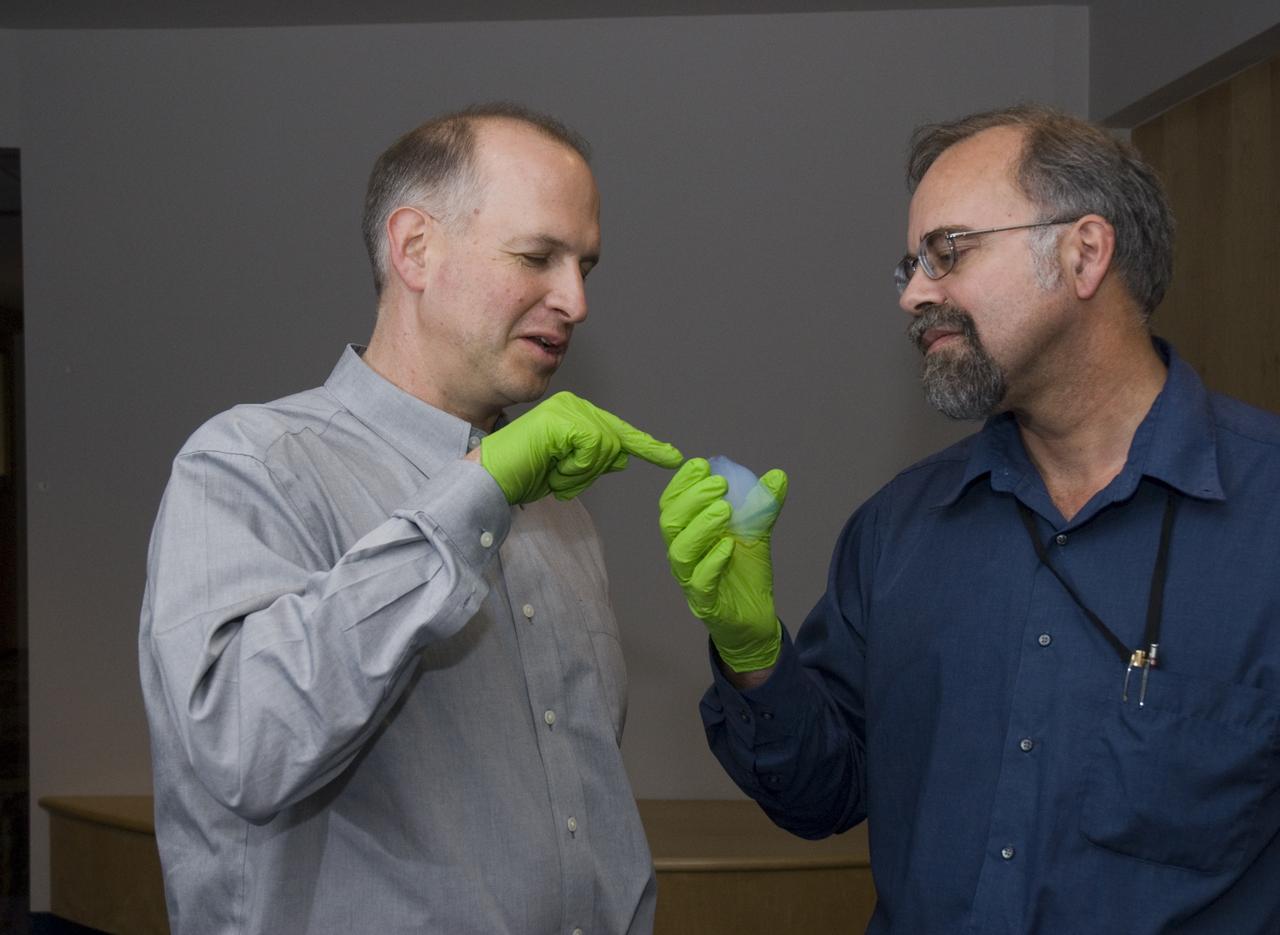
Stardust sample analysis @ UC Berkeley clean room - mission samples provided to UC Berkeley for analysis by NASA: Dr Andrew Westphal, Berkeley Physicist with Dr Scott Sandford, NASA Ames Astrophysicist holding a (aerogel) sample (Dr Sandford reports that 'My Colleagues Andrew Westphal, Christopher Snead and Zack Gainsforth have produced over 100 keystones from the Stardust comet aerogel
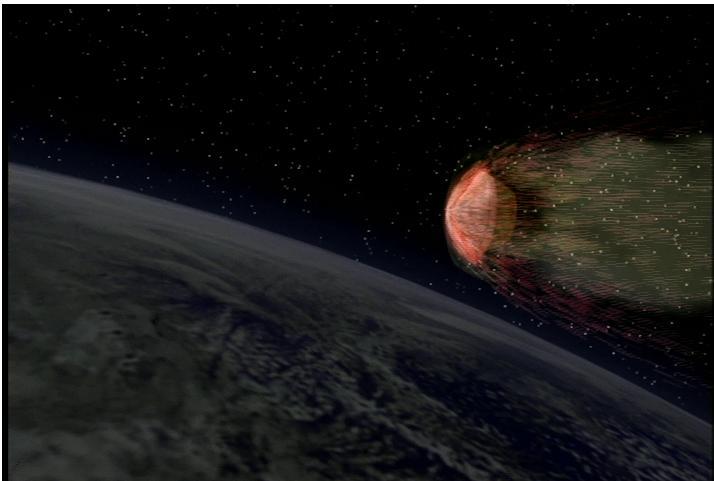
This animation shows the return capsule separating from the Stardust spacecraft.
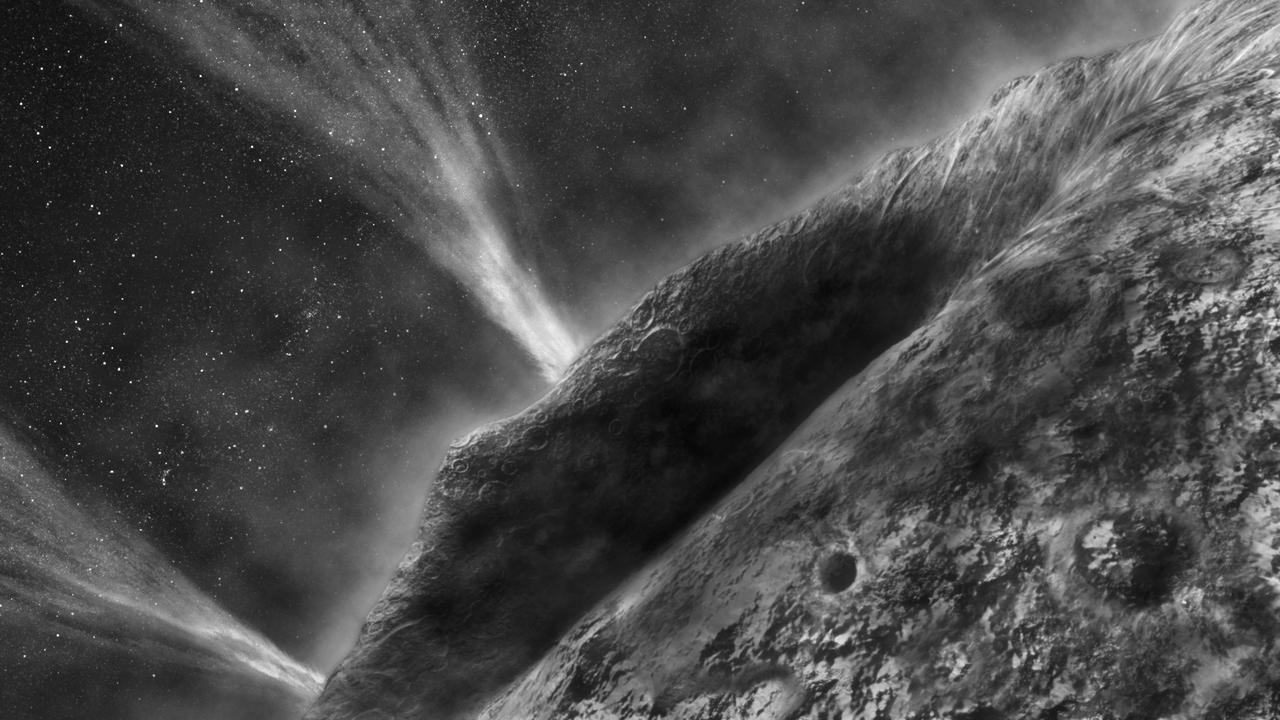
This is an artist's concept depicting a view of comet Wild 2 as seen from NASA's Stardust spacecraft during its flyby of the comet on Jan. 2, 2004. http://photojournal.jpl.nasa.gov/catalog/PIA06283
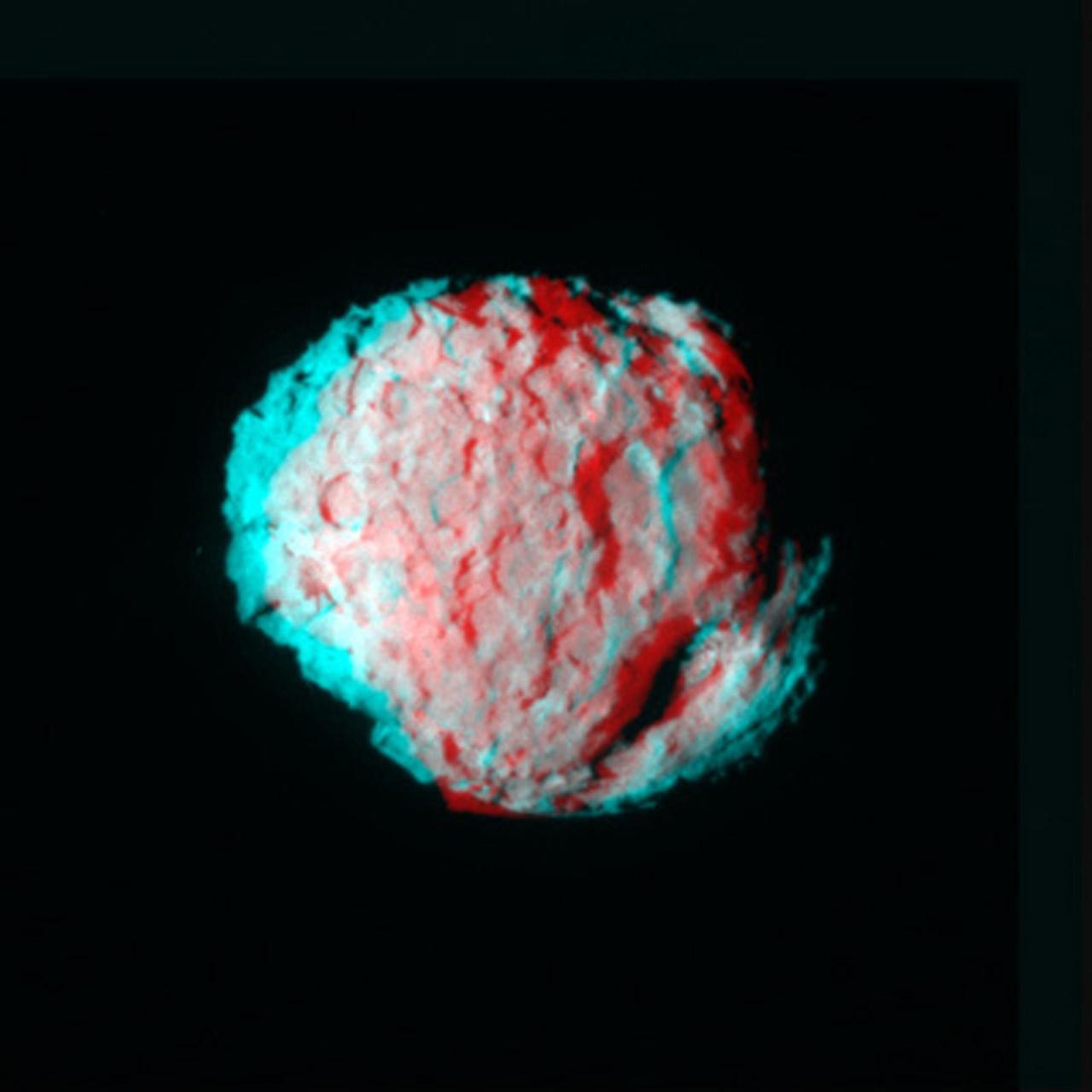
NASA Stardust Navigation Camera captured this anaglyph of the comet Wild 2. 3D glasses are necessary to view this image.
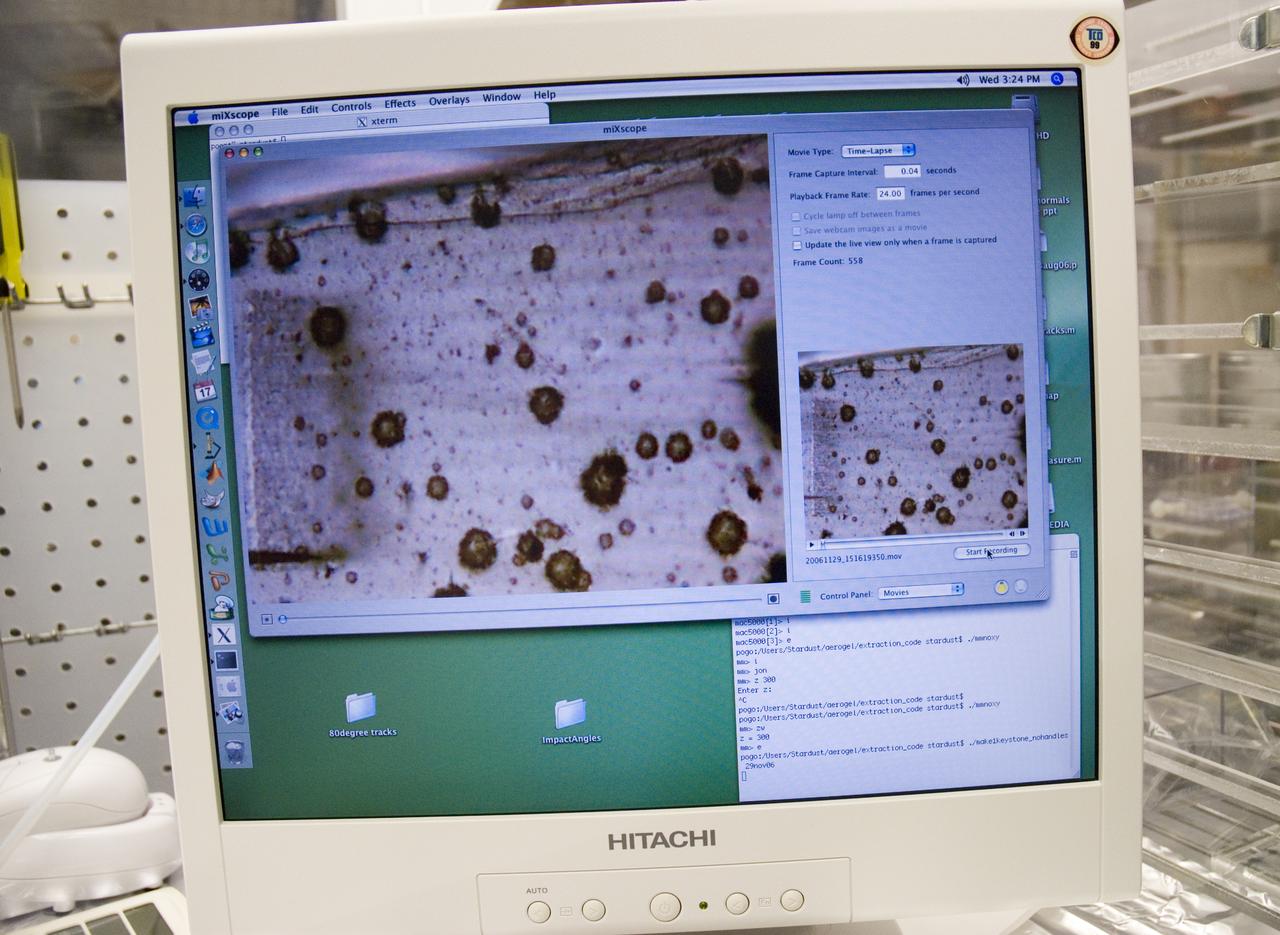
Stardust sample analysis @ UC Berkeley clean room with Dr Scott Sandford, NASA Ames Astrophysicist - mission aerogel samples provided to UC Berkeley for analysis by NASA are shown on computer screen during microscopic sampling
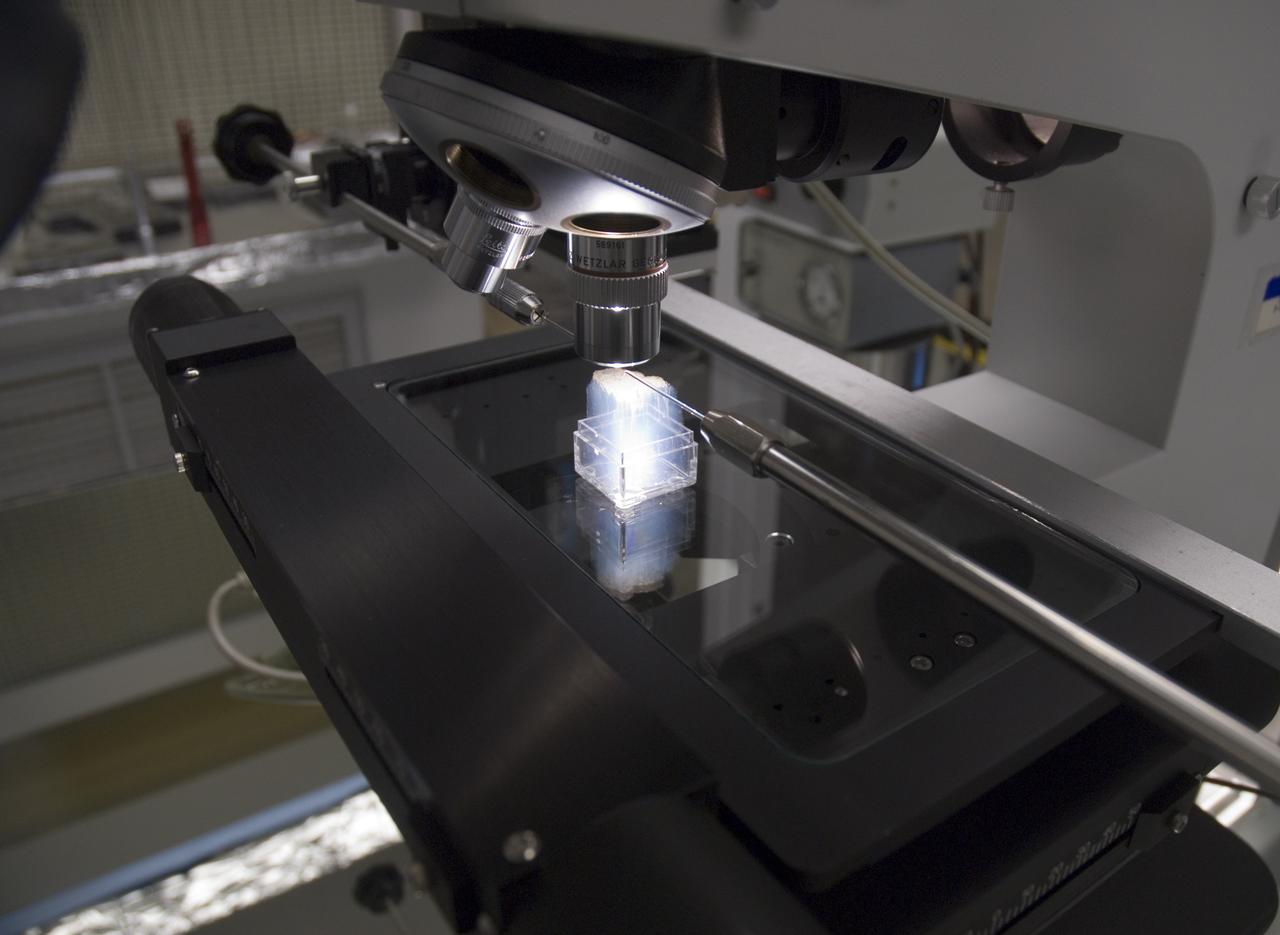
Stardust sample analysis @ UC Berkeley clean room with Dr Scott Sandford, NASA Ames Astrophysicist - mission aerogel samples provided to UC Berkeley for analysis by NASA on microscope
Stardust sample analysis @ UC Berkeley clean room - mission samples provided to UC Berkeley for analysis by NASA Berkeley researcher Chris Snead working with sample encased in aerogel
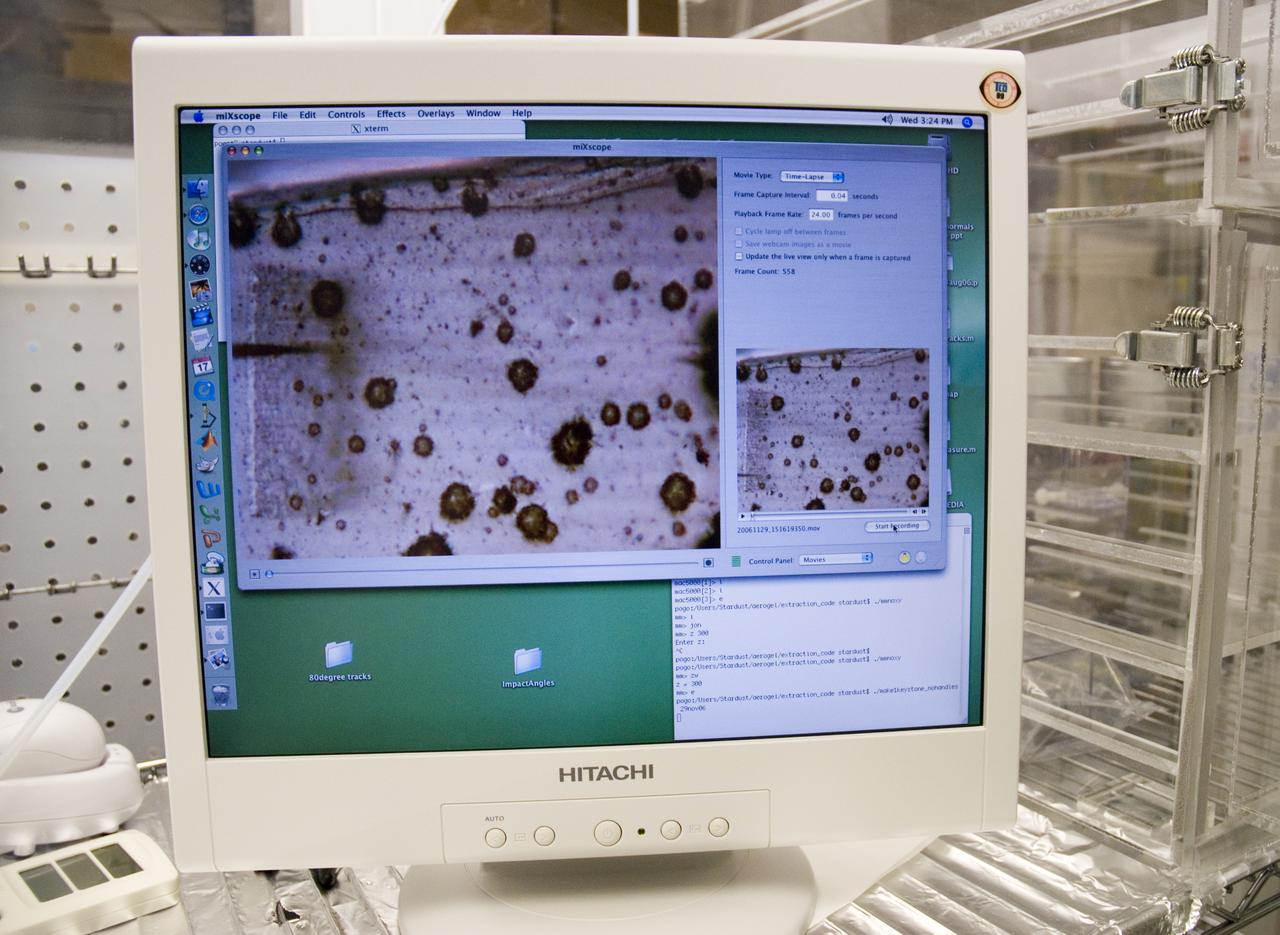
Stardust sample analysis @ UC Berkeley clean room with Dr Scott Sandford, NASA Ames Astrophysicist - mission aerogel samples provided to UC Berkeley for analysis by NASA are shown on computer screen during microscopic sampling
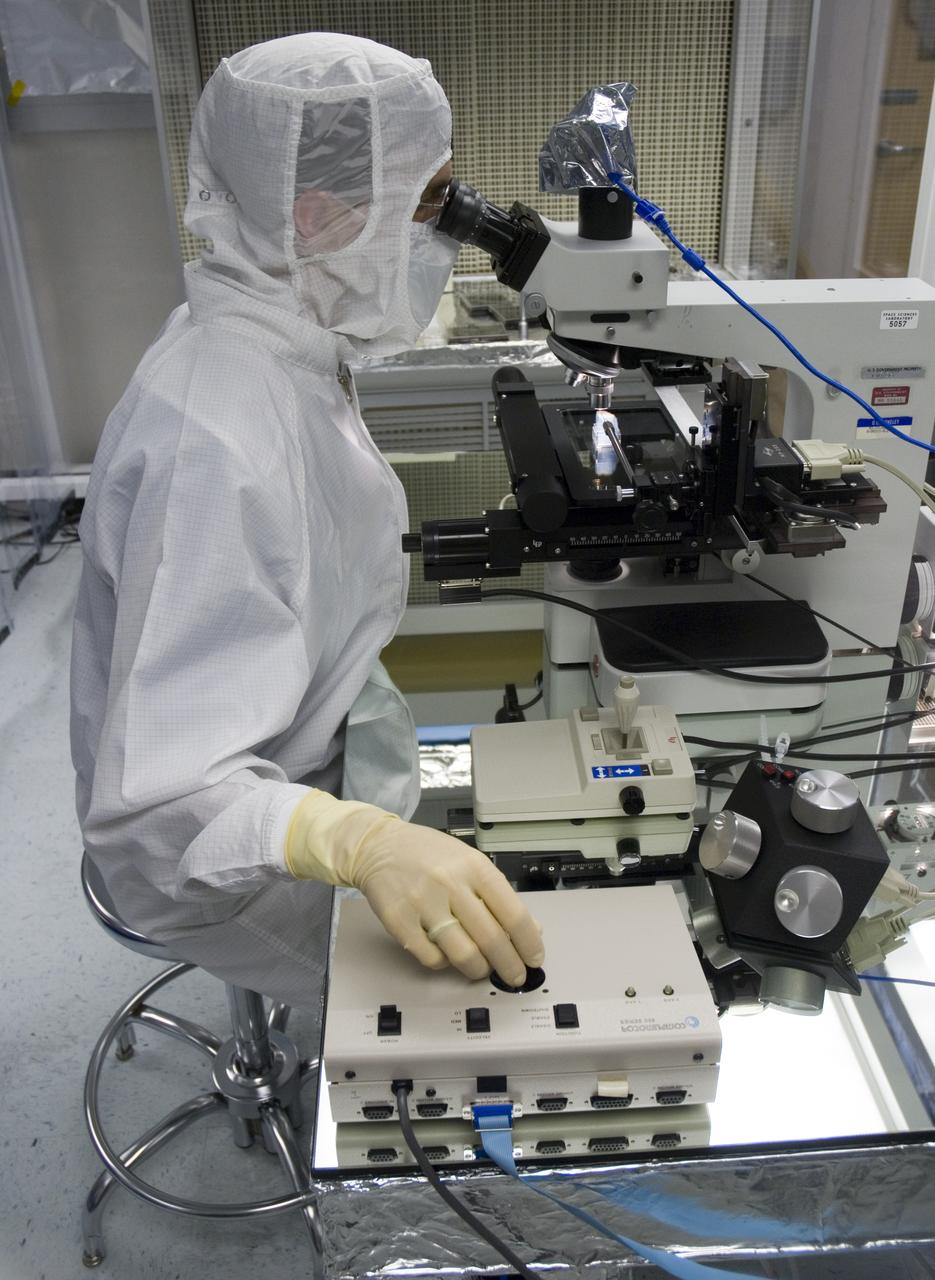
Stardust sample analysis @ UC Berkeley clean room - mission samples provided to UC Berkeley for analysis by NASA Berkeley researcher Chris Snead working with sample encased in aerogel
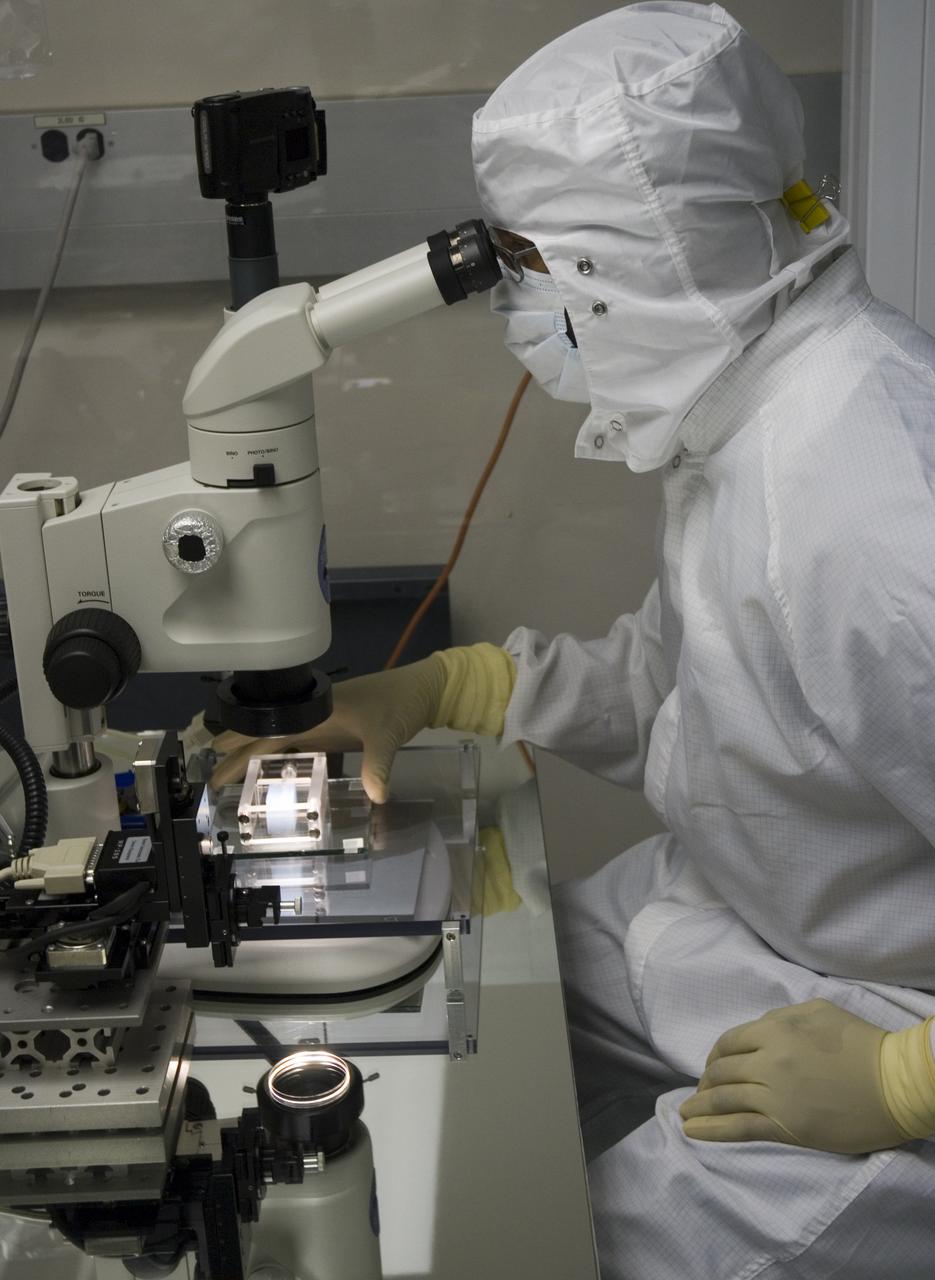
Stardust sample analysis @ UC Berkeley clean room with Dr Scott Sandford, NASA Ames Astrophysicist - mission samples provided to UC Berkeley for analysis by NASA Berkeley researcher Zack Gainsforth working with sample encased in aerogel
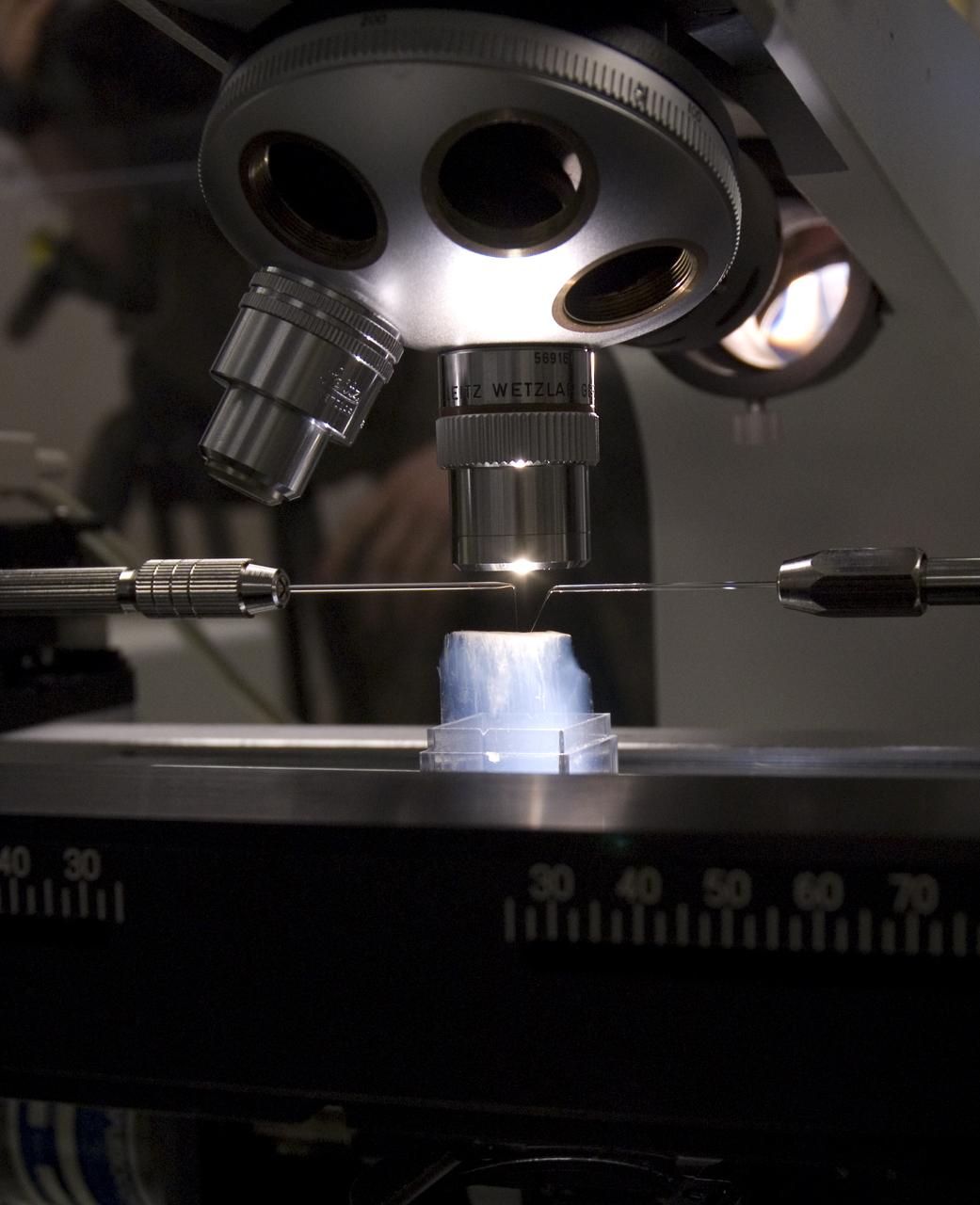
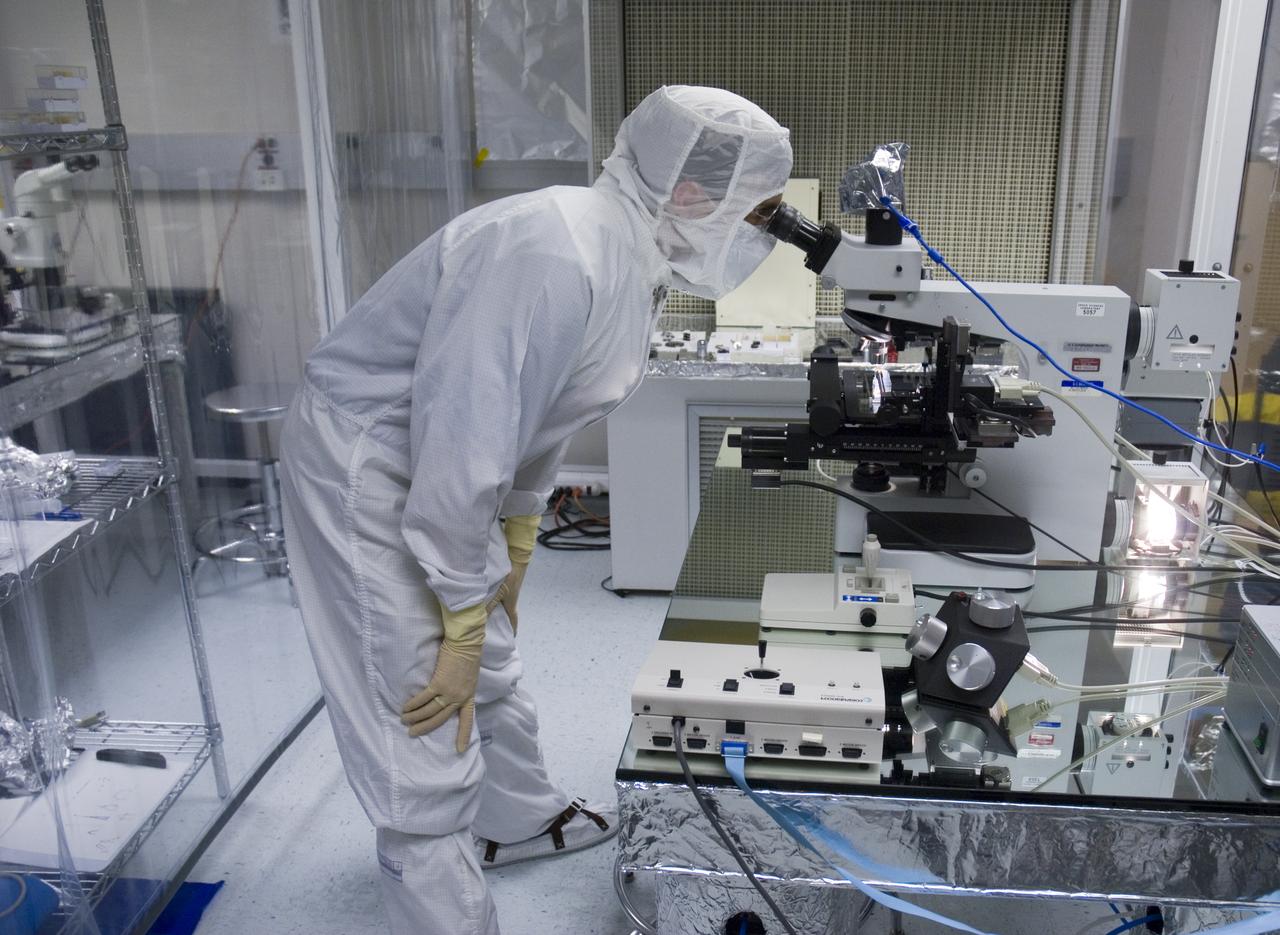
Stardust sample analysis @ UC Berkeley clean room with Dr Scott Sandford, NASA Ames Astrophysicist - mission aerogel samples provided to UC Berkeley for analysis by NASA on microscope
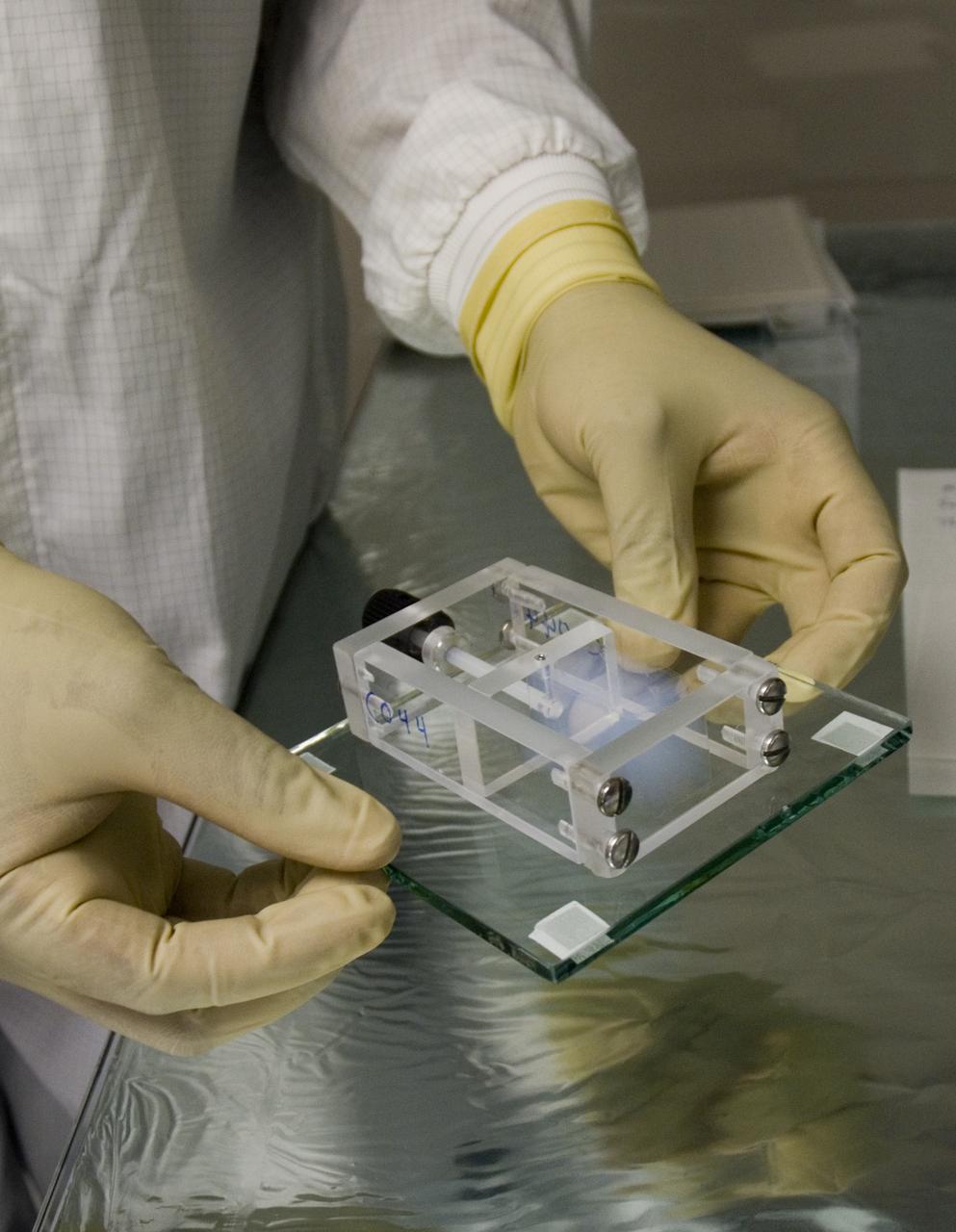
Stardust sample analysis @ UC Berkeley clean room with Dr Scott Sandford, NASA Ames Astrophysicist - mission samples provided to UC Berkeley for analysis by NASABerkeley researcher Zack Gainsforth working with sample encased in aerogel
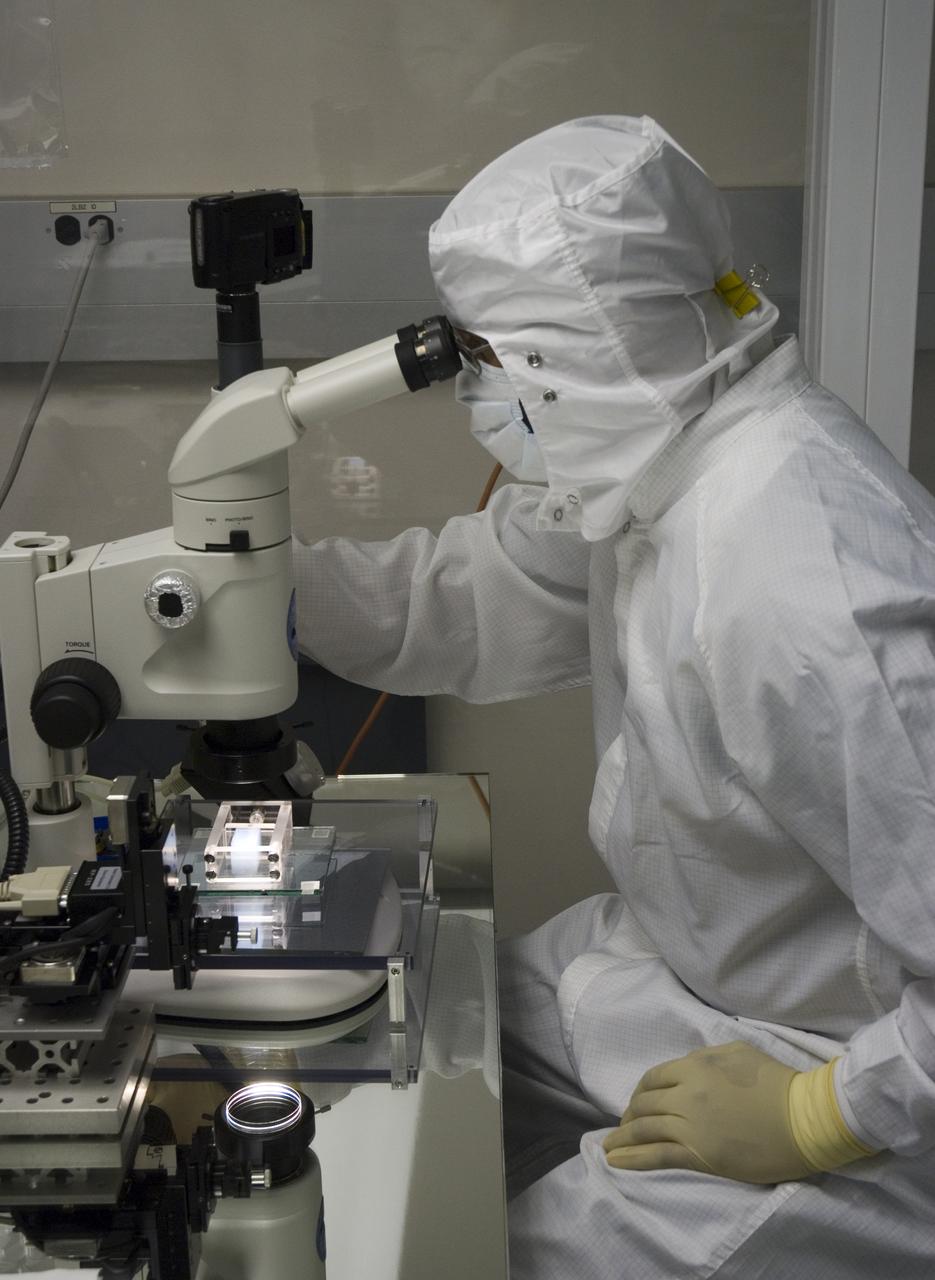
Stardust sample analysis @ UC Berkeley clean room with Dr Scott Sandford, NASA Ames Astrophysicist - mission samples provided to UC Berkeley for analysis by NASA Berkeley researcher Zack Gainsforth working with sample encased in aerogel

Stardust sample analysis @ UC Berkeley clean room with Dr Scott Sandford, NASA Ames Astrophysicist - mission samples provided to UC Berkeley for analysis by NASA Berkeley researchers Zack Gainsforth working with sample encased in aerogel

Stardust sample analysis @ UC Berkeley clean room with Dr Scott Sandford, NASA Ames Astrophysicist - mission samples provided to UC Berkeley for analysis by NASA Berkeley researcher Zack Gainsforth working with sample encased in aerogel
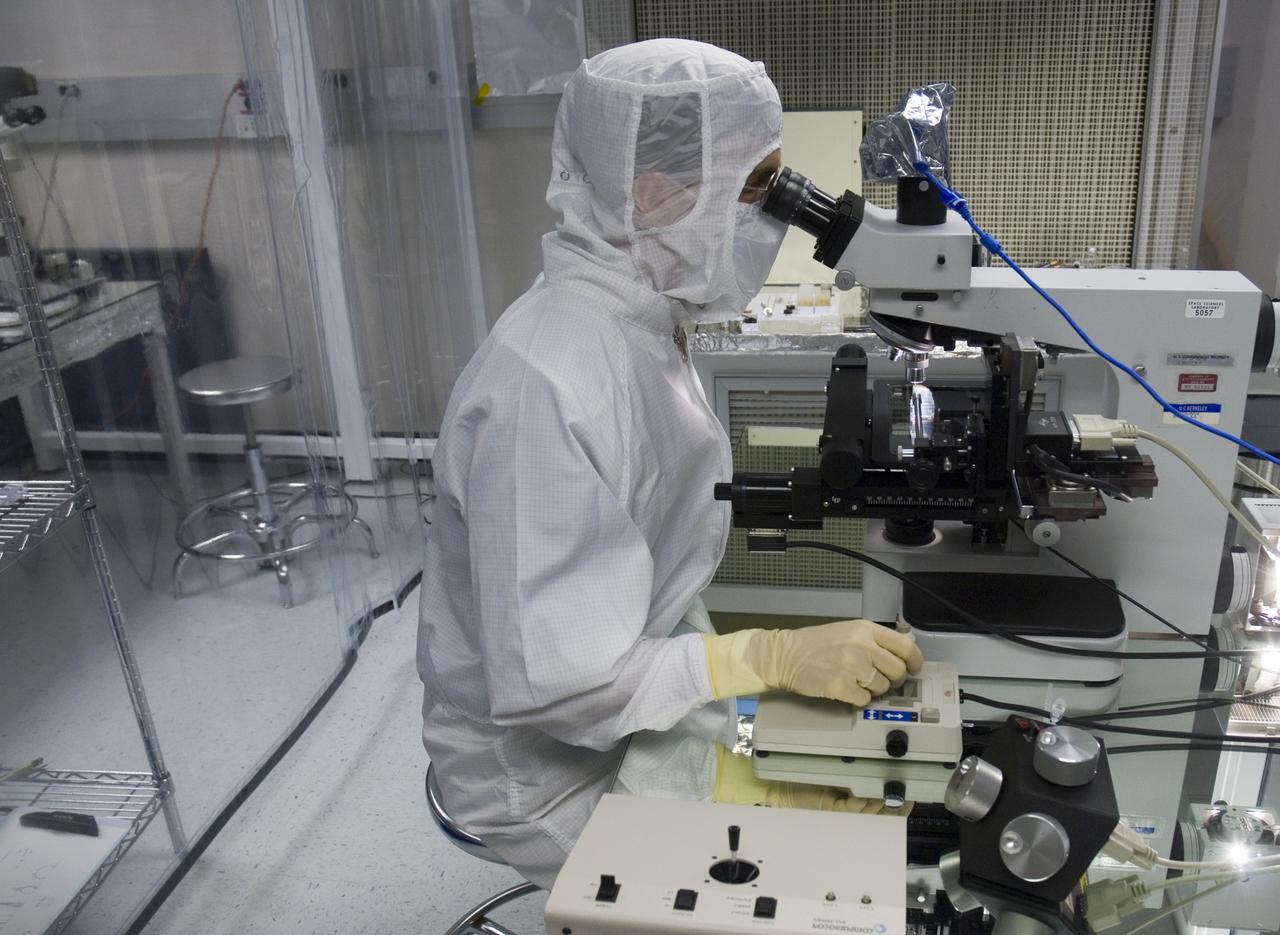
Stardust sample analysis @ UC Berkeley clean room - mission samples provided to UC Berkeley for analysis by NASA Berkeley researcher Chris Snead working with sample encased in aerogel
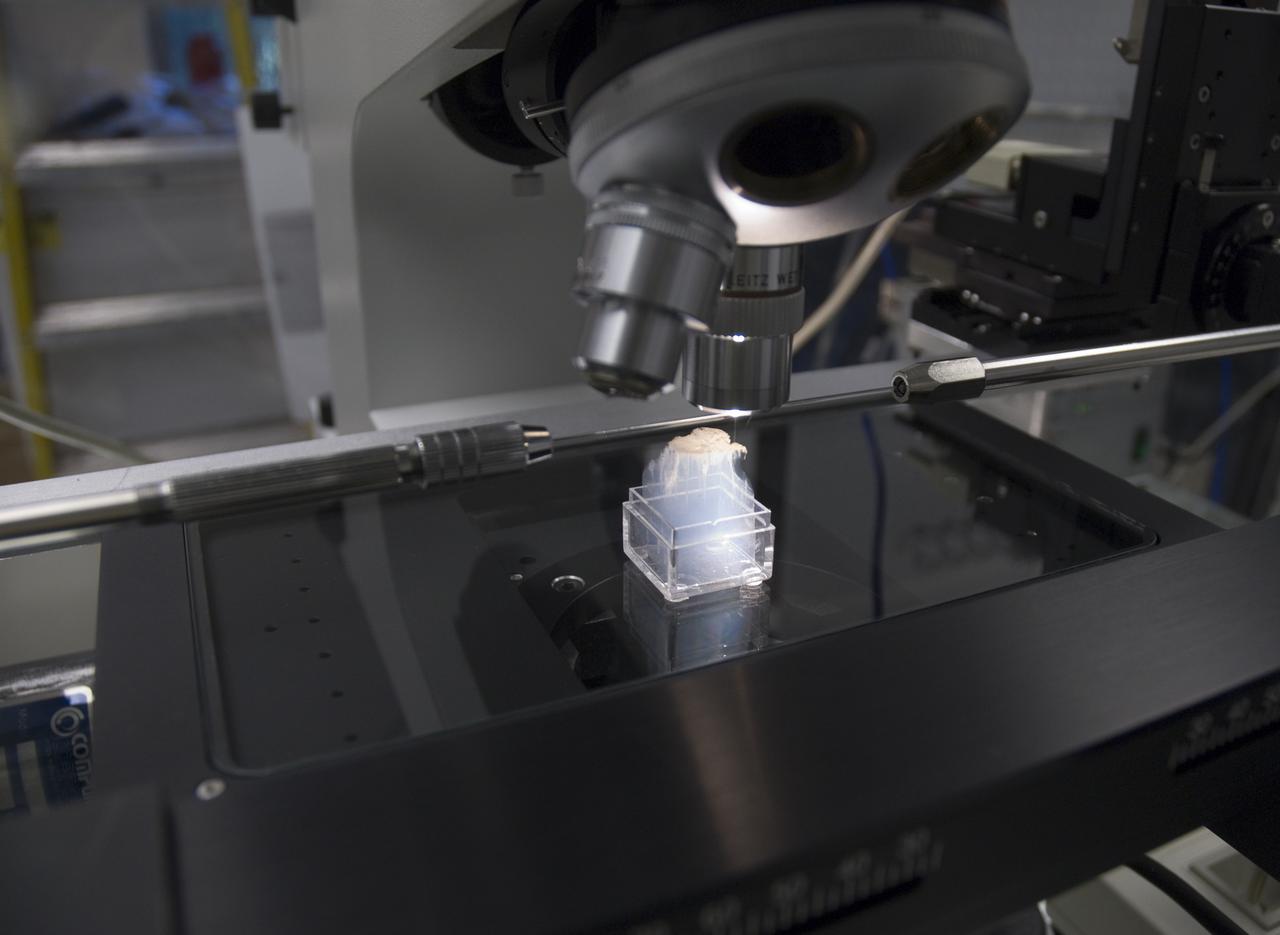
Stardust sample analysis @ UC Berkeley clean room with Dr Scott Sandford, NASA Ames Astrophysicist - mission aerogel samples provided to UC Berkeley for analysis by NASA on microscope
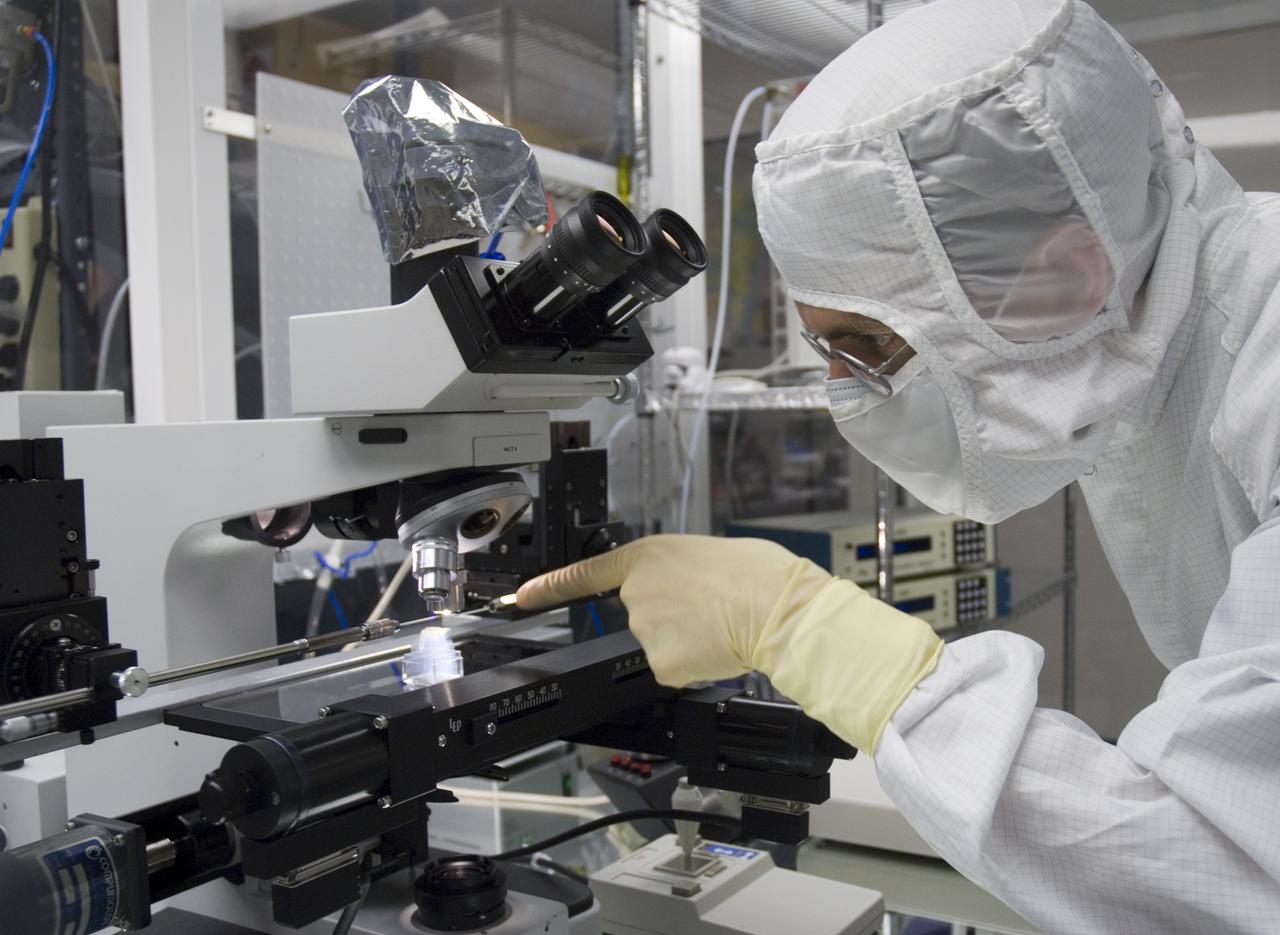
Stardust sample analysis @ UC Berkeley clean room - mission samples provided to UC Berkeley for analysis by NASA Berkeley researcher Chris Snead working with sample encased in aerogel
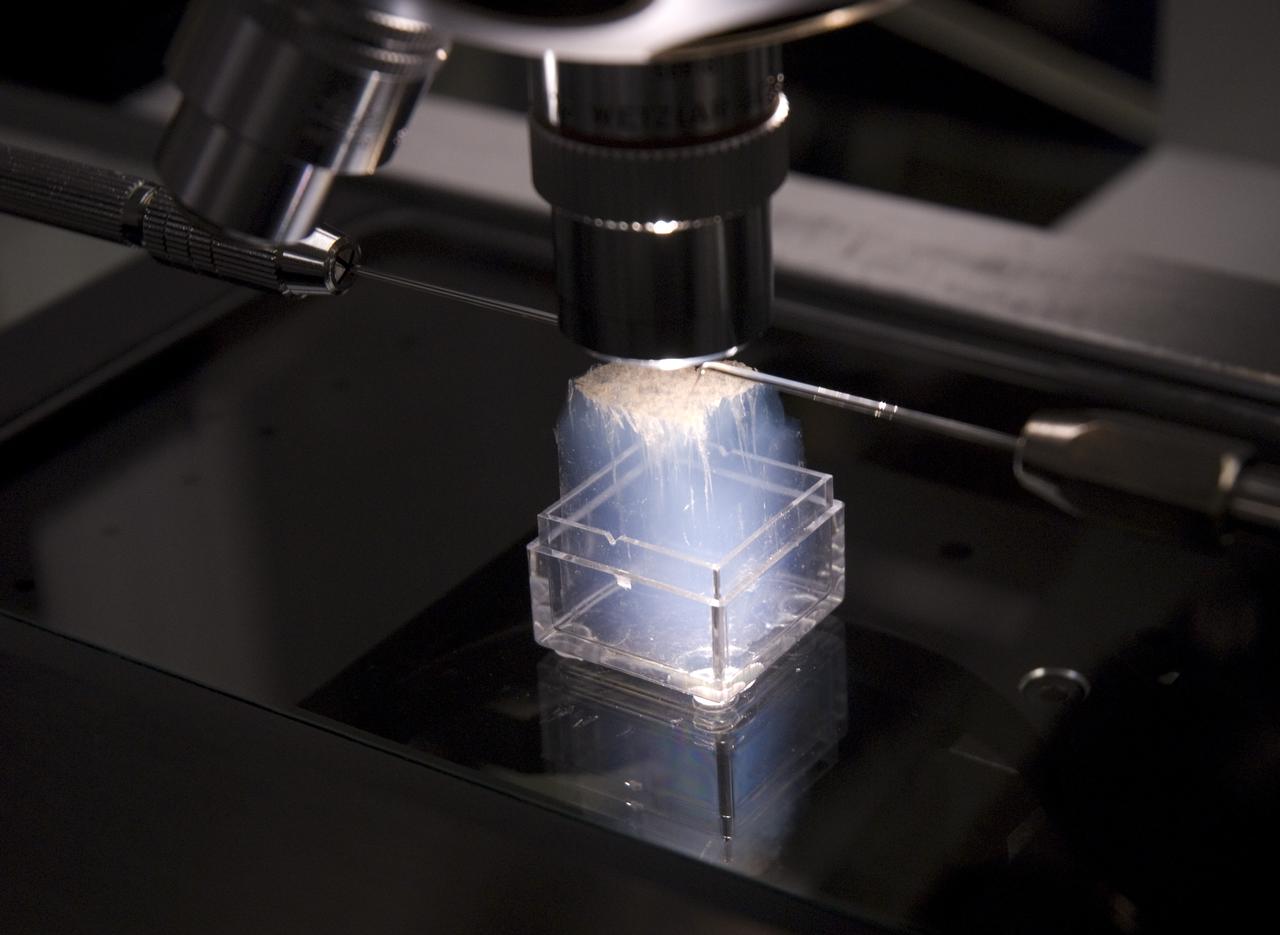
Stardust sample analysis @ UC Berkeley clean room with Dr Scott Sandford, NASA Ames Astrophysicist - mission aerogel samples provided to UC Berkeley for analysis by NASA on microscope
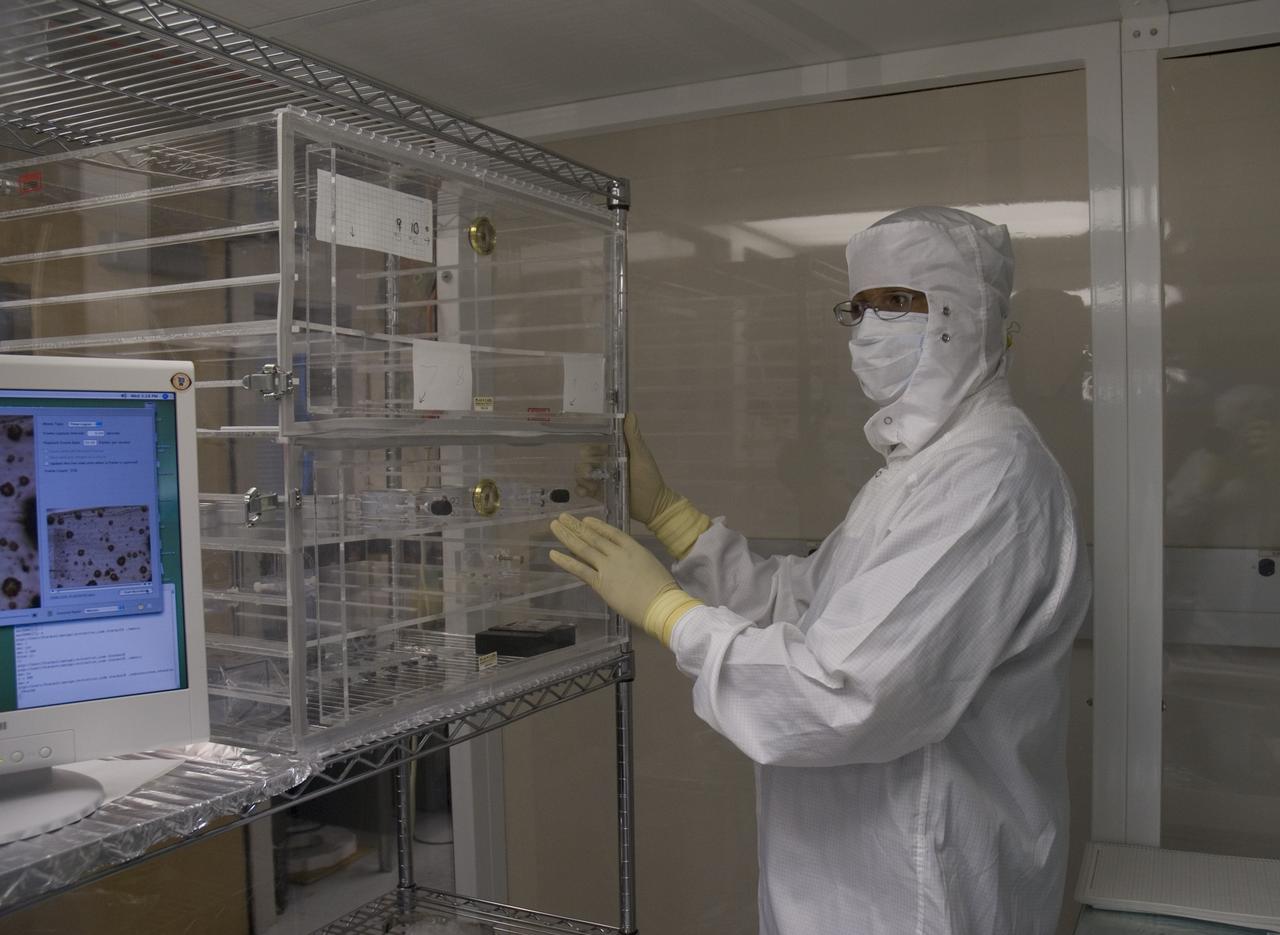
Stardust sample analysis @ UC Berkeley clean room with Dr Scott Sandford, NASA Ames Astrophysicist - mission samples provided to UC Berkeley for analysis by NASABerkeley researcher Zack Gainsforth working with sample encased in aerogel
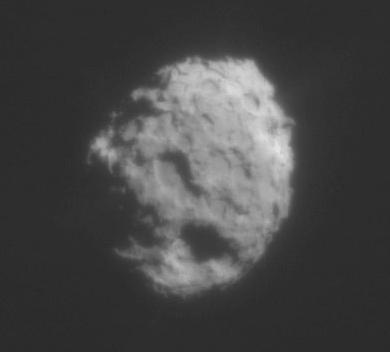
On January 2, 2004 NASA's Stardust spacecraft made a close flyby of comet Wild 2 (pronounced "Vilt-2"). Among the equipment the spacecraft carried on board was a navigation camera. This is the 34th of the 72 images taken by Stardust's navigation camera during close encounter. The exposure time was 10 milliseconds. The two frames are actually of 1 single exposure. The frame on the left depicts the comet as the human eye would see it. The frame on the right depicts the same image but "stretched" so that the faint jets emanating from Wild 2 can be plainly seen. Comet Wild 2 is about five kilometers (3.1 miles) in diameter. http://photojournal.jpl.nasa.gov/catalog/PIA05571
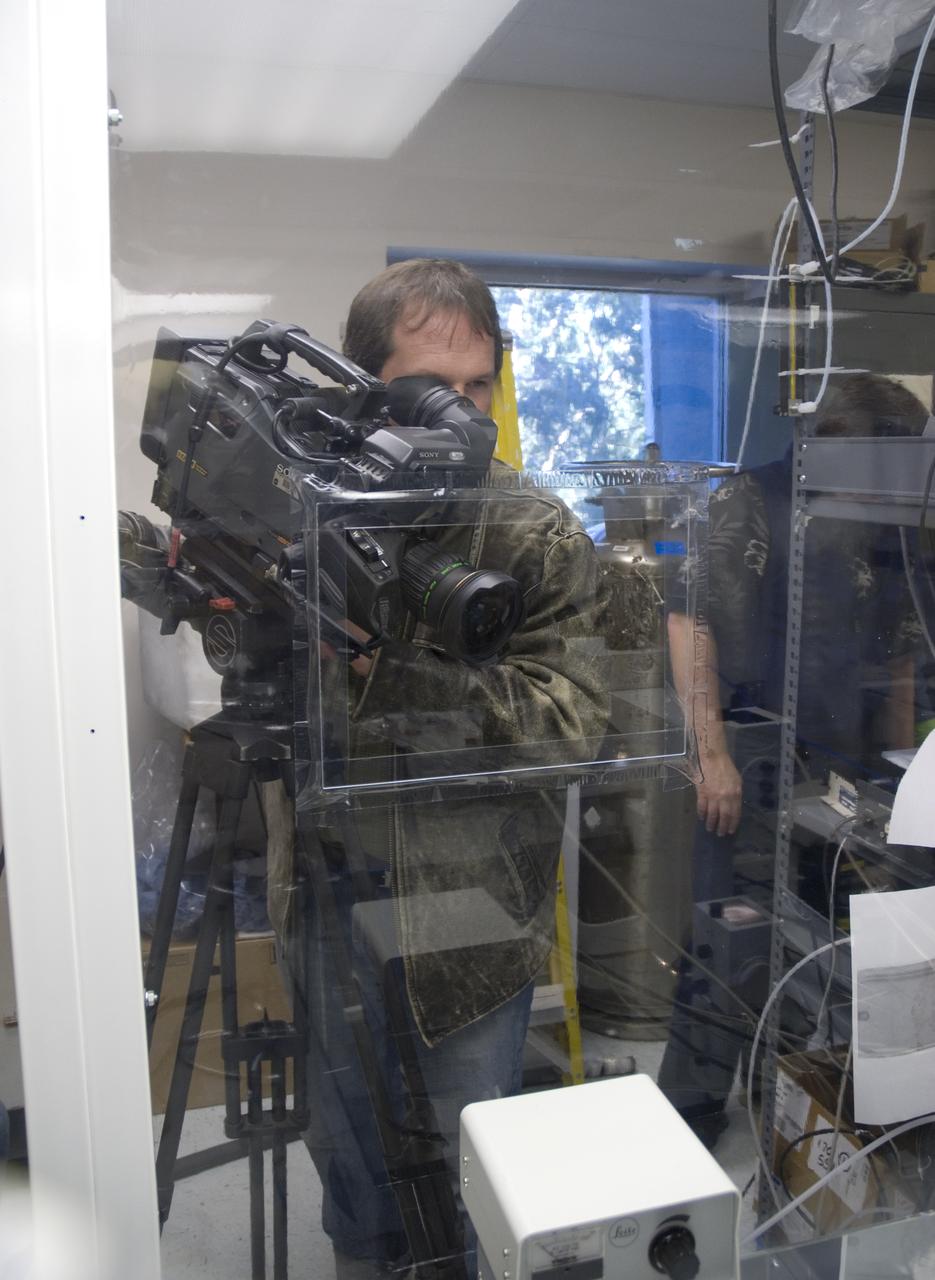
Stardust sample analysis @ UC Berkeley clean room with Dr Scott Sandford, NASA Ames Astrophysicist - mission samples provided to UC Berkeley for analysis by NASA Jess Carpenter, NASA/AMES Video crew Berkeley Lab filming from outside the clean room
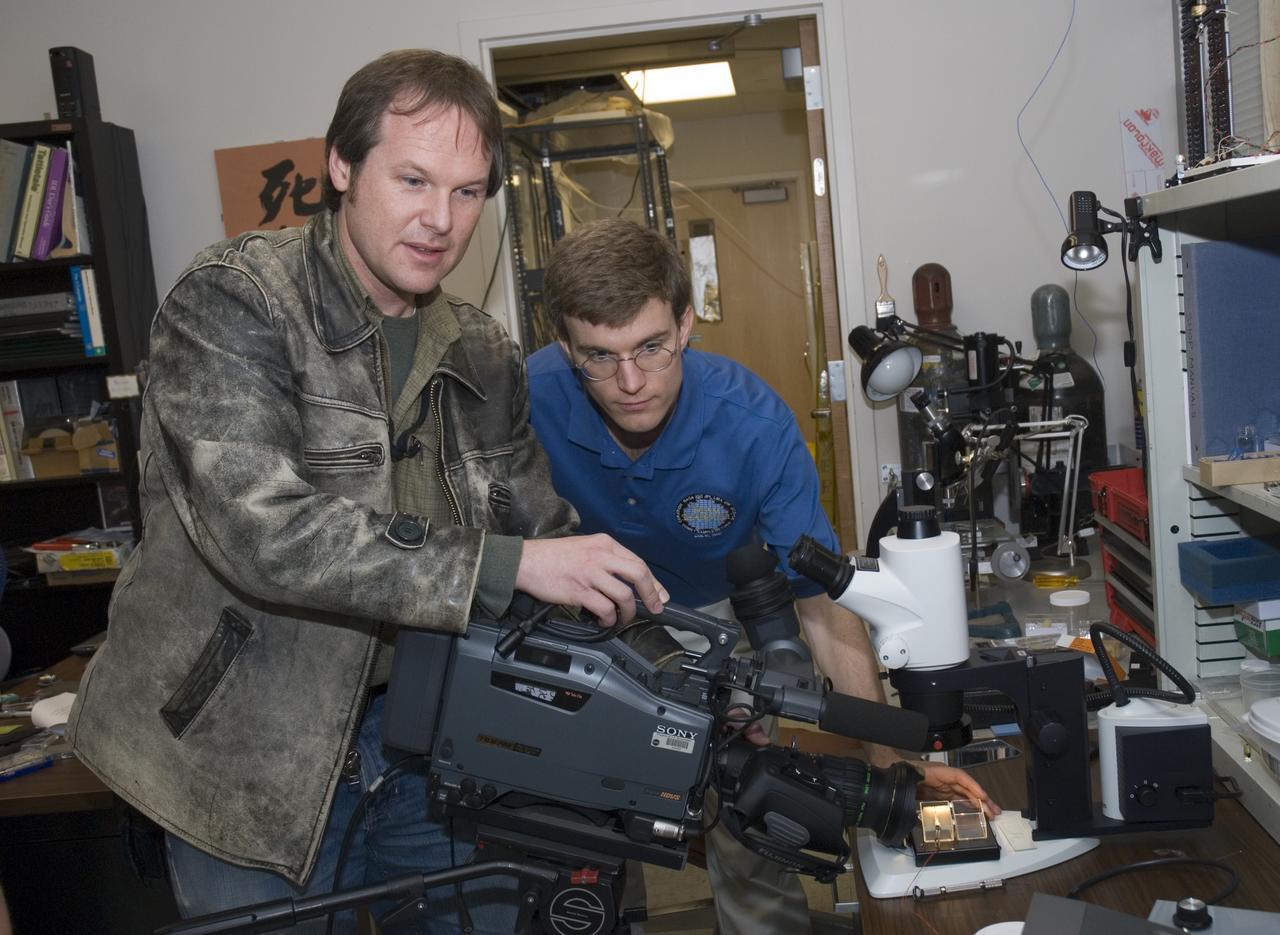
Stardust sample analysis @ UC Berkeley clean room with Dr Scott Sandford, NASA Ames Astrophysicist - mission samples provided to UC Berkeley for analysis by NASA Jess Carpenter, NASA/AMES video crew at Berkeley Lab setting for filming from outside the clean room
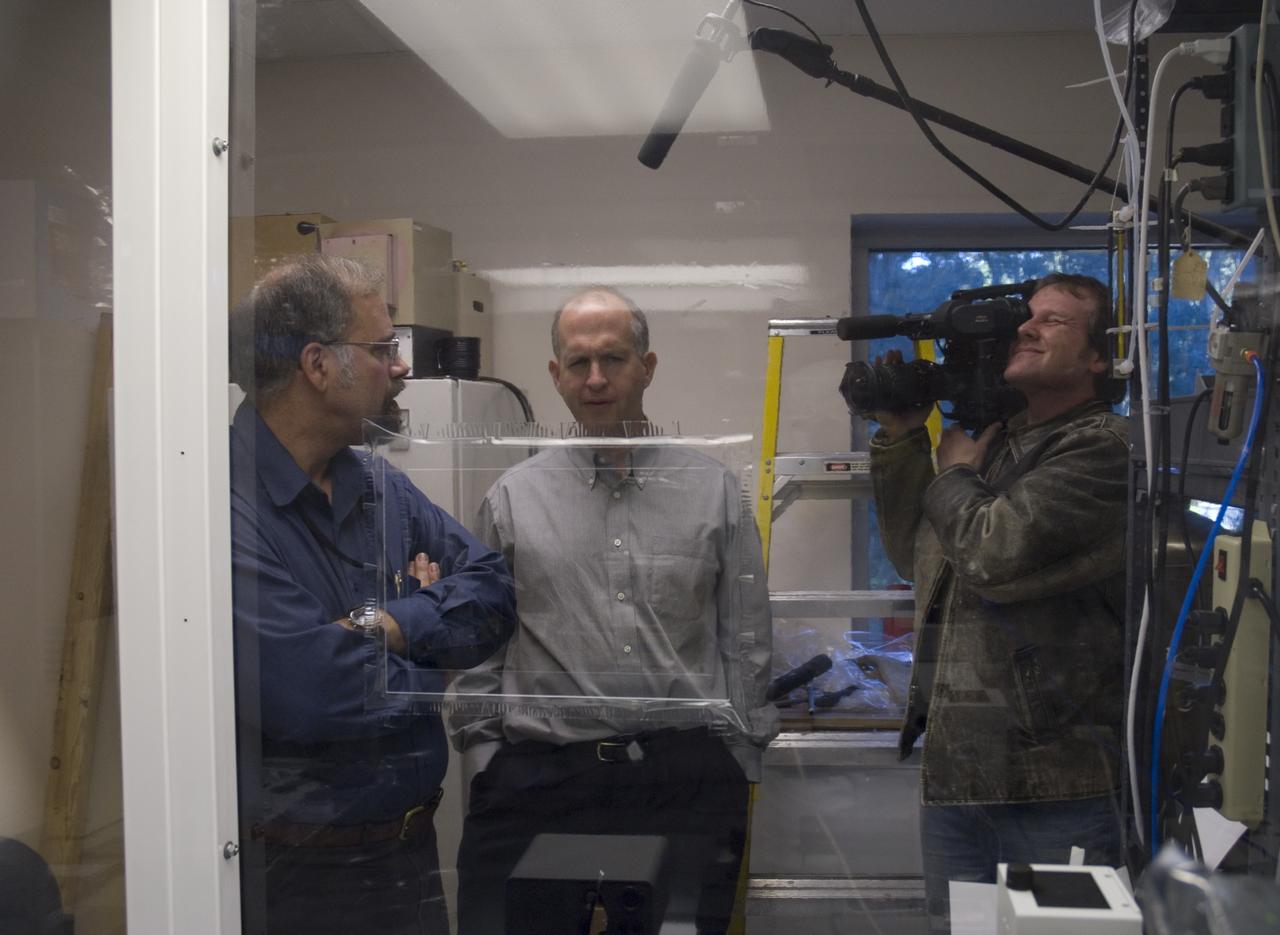
Stardust sample analysis @ UC Berkeley clean room - mission samples provided to UC Berkeley for analysis by NASA: (r) Dr Andrew Westphal, Berkeley Physicist with Dr Scott Sandford, NASA Ames Astrophysicist (l) oversee sample analysis - Jess Carpenter NASA/Ames videographer documents the event
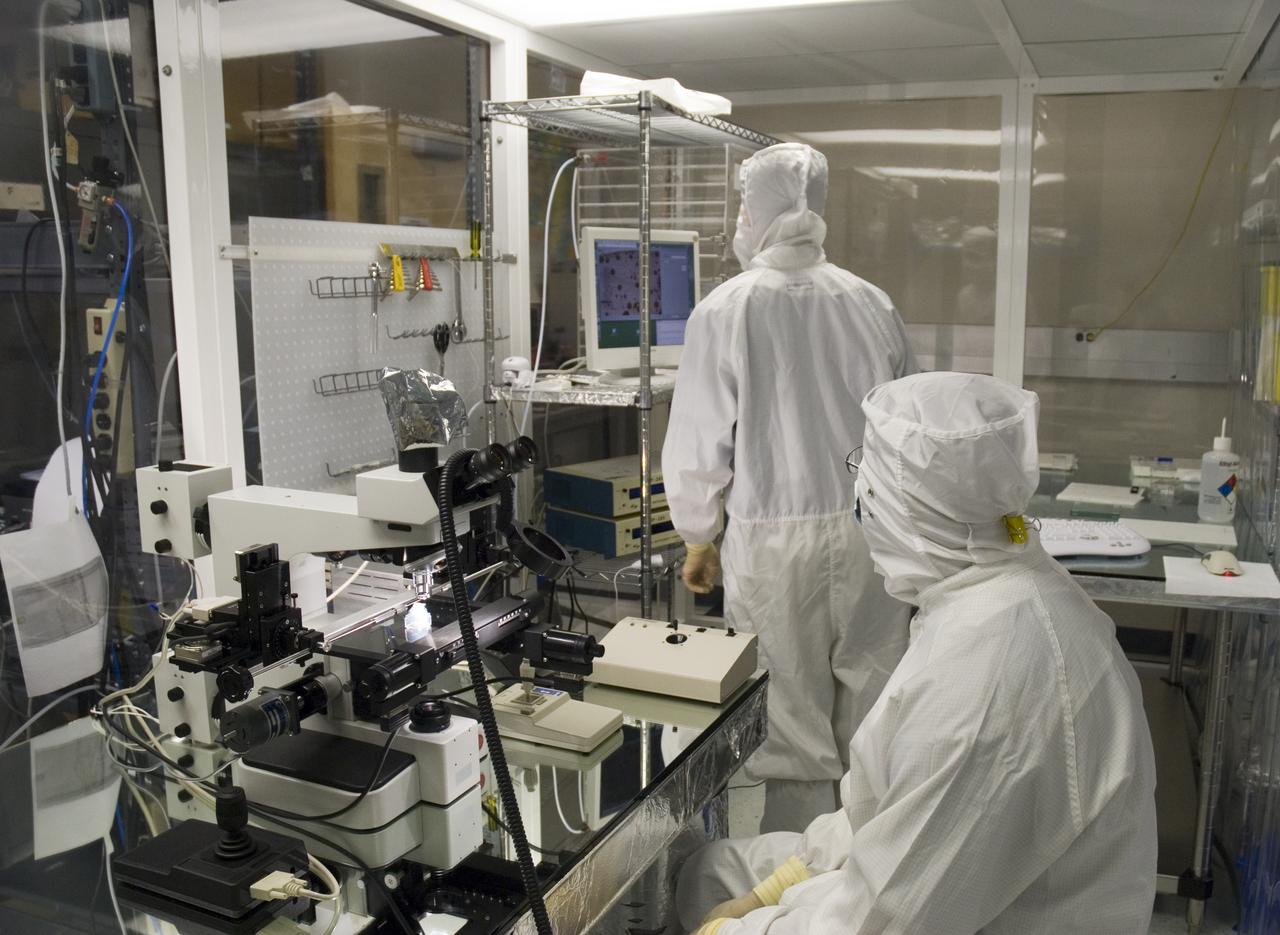
Stardust sample analysis @ UC Berkeley clean room with Dr Scott Sandford, NASA Ames Astrophysicist - mission samples provided to UC Berkeley for analysis by NASA Berkeley researchers Zack Gainsforth (seated) and Chris Snead working with sample encased in aerogel
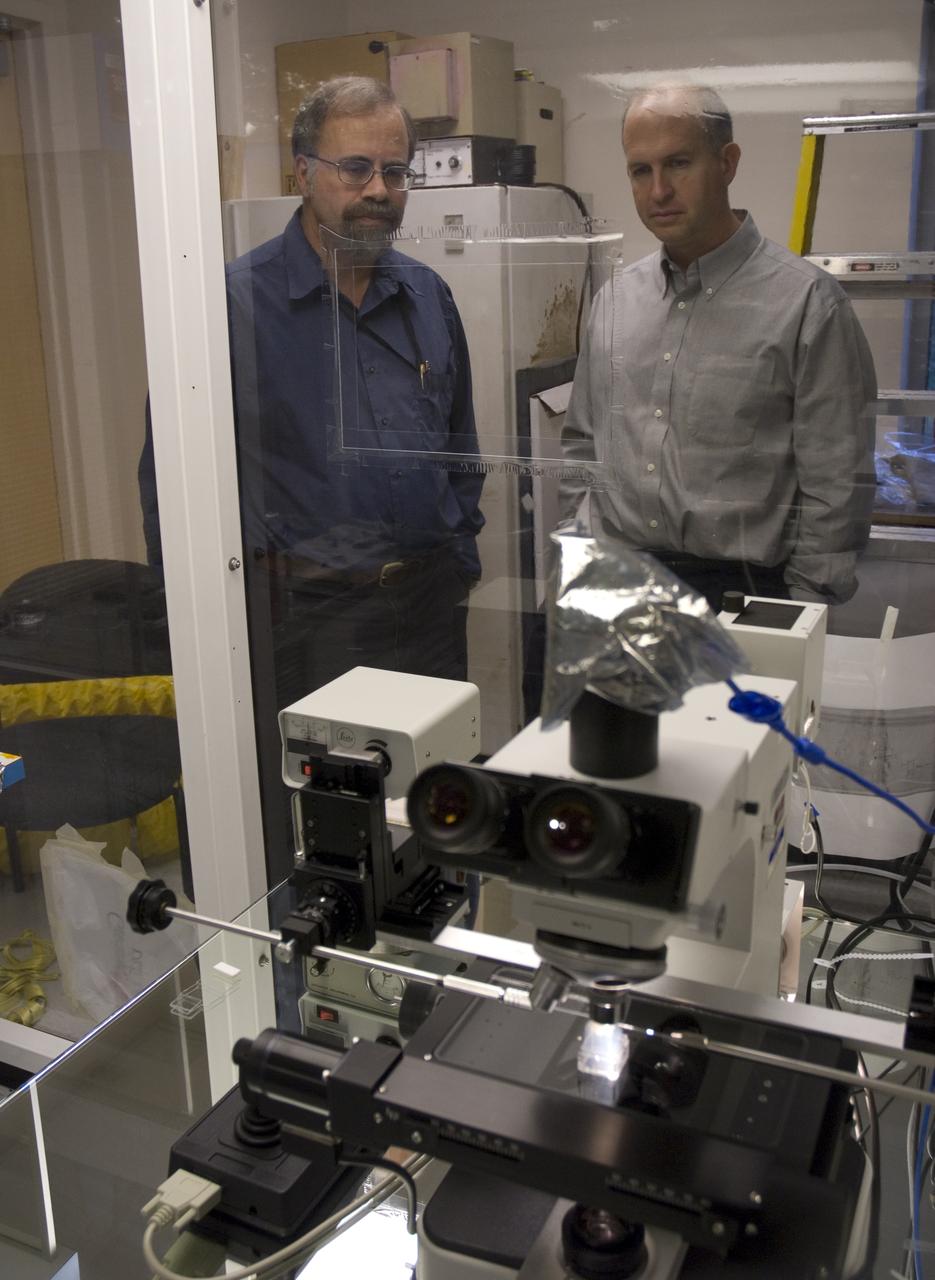
Stardust sample analysis @ UC Berkeley clean room with Dr Scott Sandford, NASA Ames Astrophysicist - mission samples provided to UC Berkeley for analysis by NASA: Dr Andrew Westphal, Berkeley Physicist with Dr Scott Sandford, NASA Ames Astrophysicist oversee sample analysis
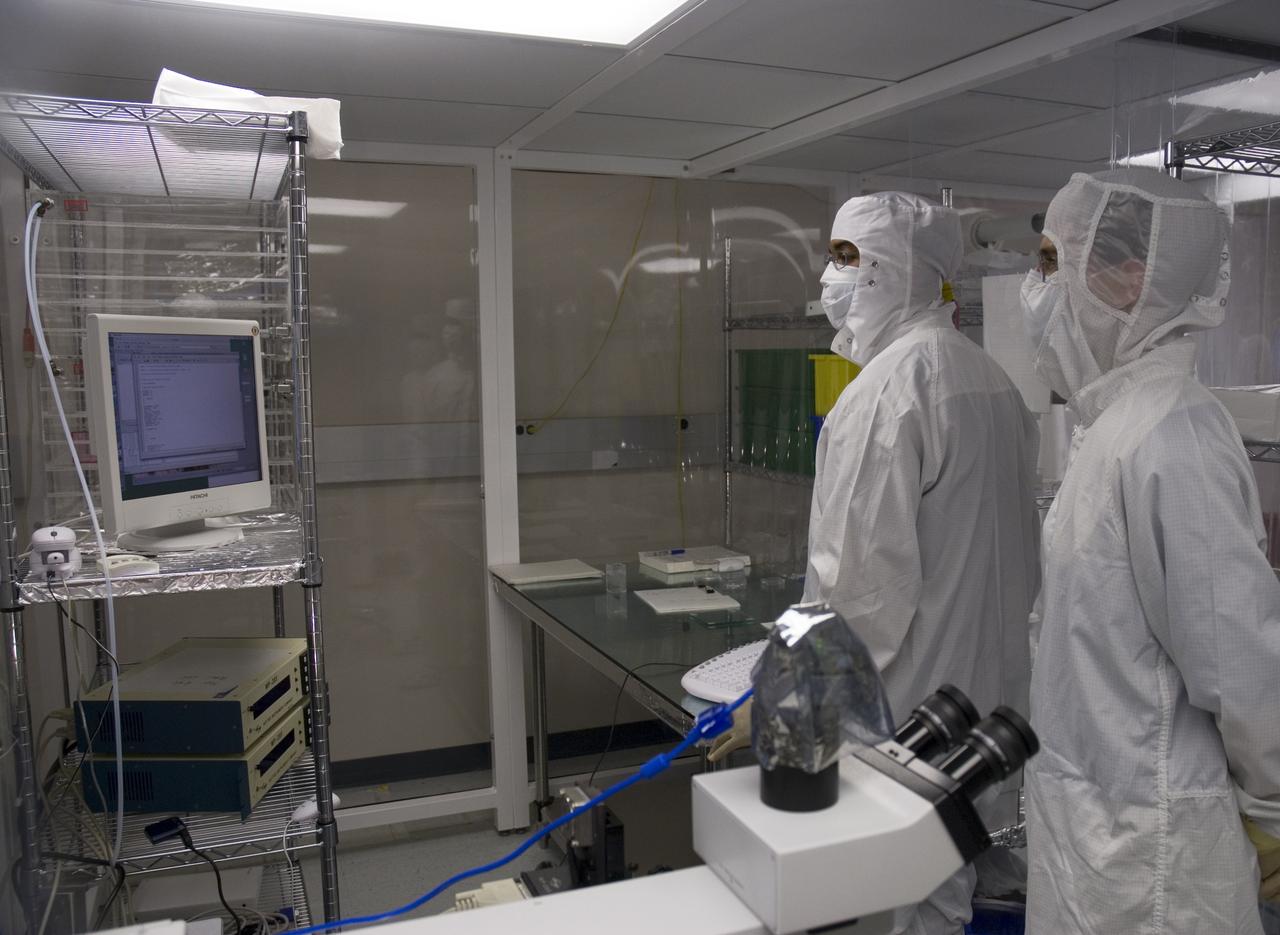
Stardust sample analysis @ UC Berkeley clean room with Dr Scott Sandford, NASA Ames Astrophysicist - mission samples provided to UC Berkeley for analysis by NASA Berkeley researchers Zack Gainsforth (seated) and Chris Snead working with sample encased in aerogel
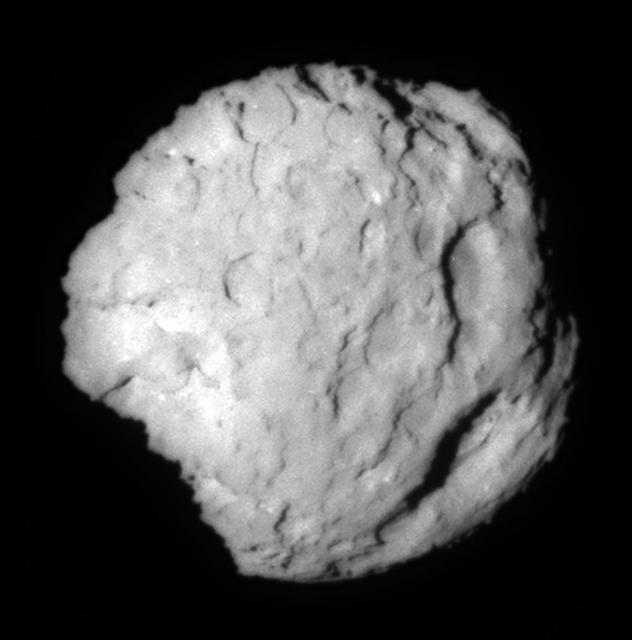
This image shows the comet Wild 2, which NASA's Stardust spacecraft flew by on Jan. 2, 2004. This image is the closest short exposure of the comet, taken at an11.4-degree phase angle, the angle between the camera, comet and the Sun. http://photojournal.jpl.nasa.gov/catalog/PIA06285
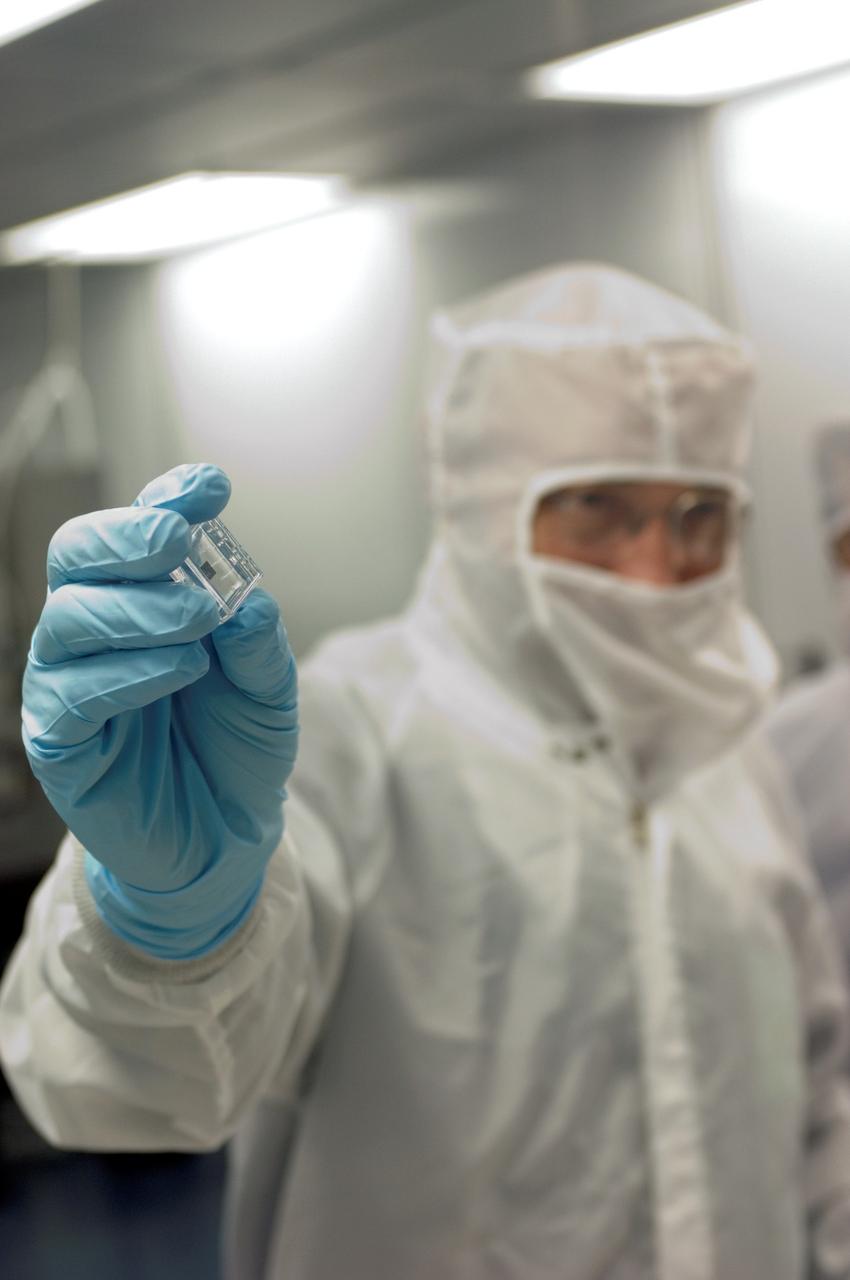
French Scientist Francois Robert holds up a sample obtained from the Stardust Mission for the camera in the Stardust Laboratory in Building 31, Johnson Space Center (JSC).
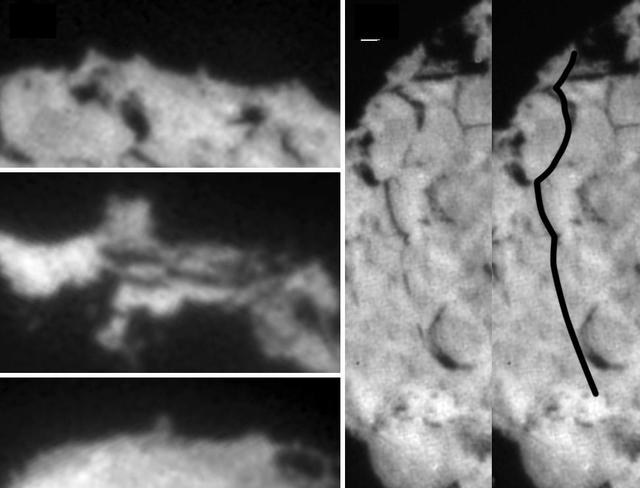
These images taken by NASA's Stardust spacecraft highlight the diverse features that make up the surface of comet Wild 2, showing a variety of small pinnacles and mesas seen on the limb of the comet and the location of a 2-kilometer (1.2-mile) series of aligned scarps, or cliffs, that are best seen in the stereo images. http://photojournal.jpl.nasa.gov/catalog/PIA06284
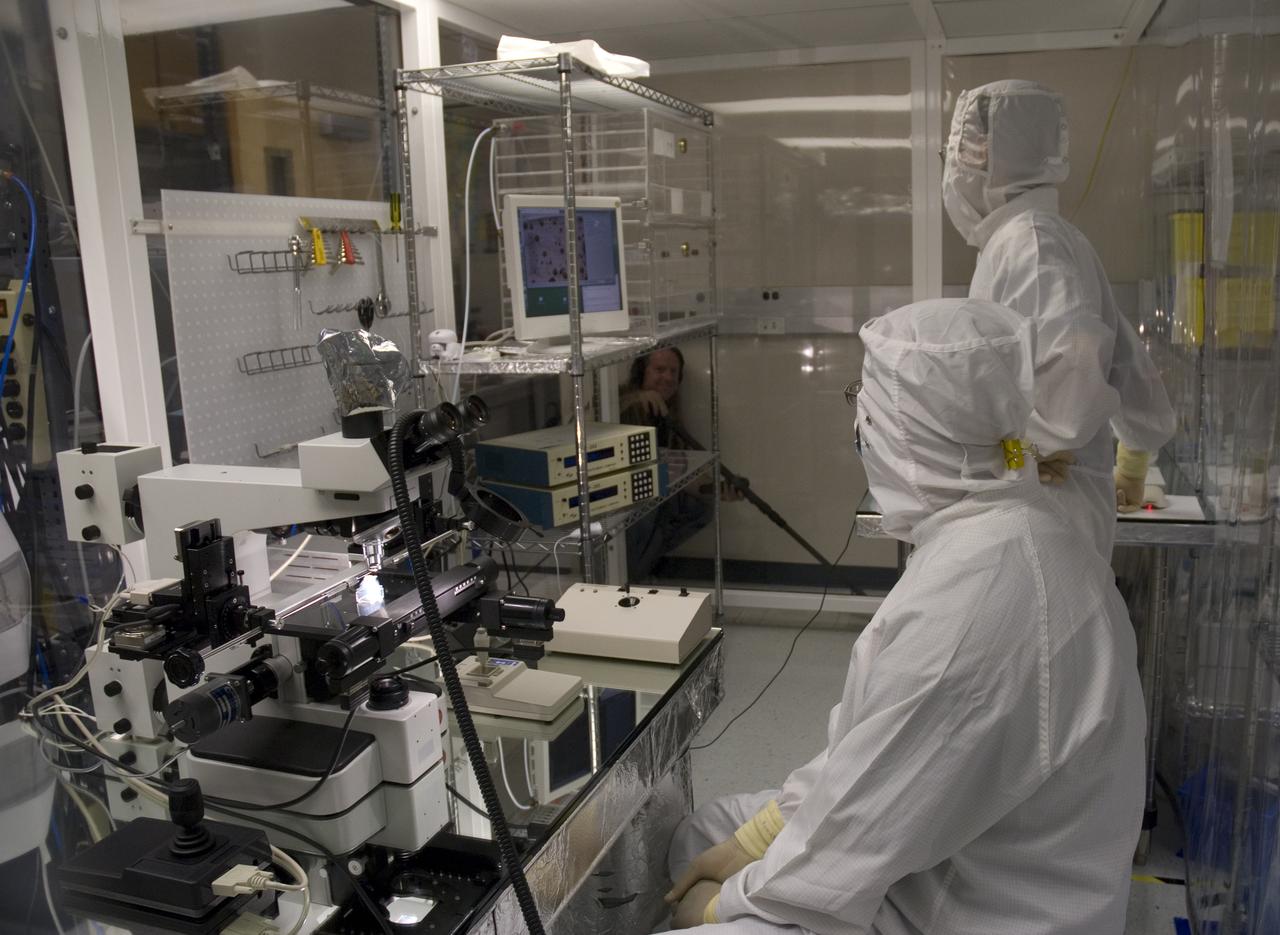
Stardust sample analysis @ UC Berkeley clean room with Dr Scott Sandford, NASA Ames Astrophysicist - mission samples provided to UC Berkeley for analysis by NASA Berkeley researchers Zack Gainsforth (seated) and Chris Snead working with sample encased in aerogel Note: Eric Land of NASA/AMES video crew in lower left corner providing sound support for event
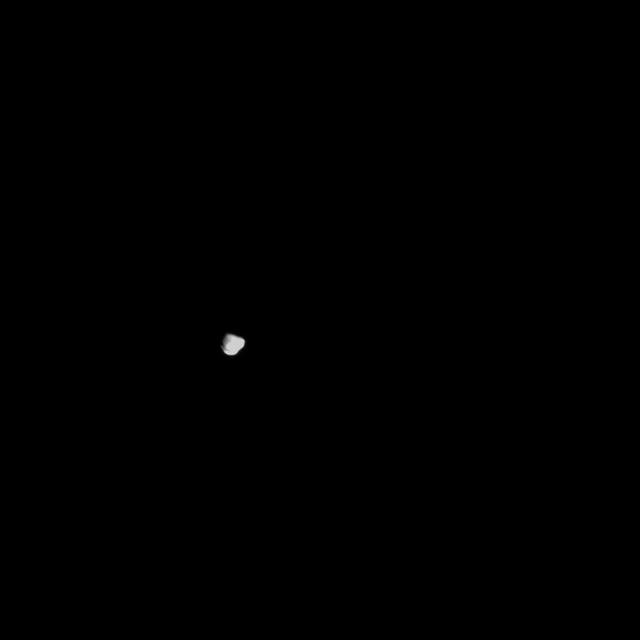
NASA Stardust-NExT mission transmitted the first image it took during its approach to comet Tempel 1 at 8:35 p.m. PST 11:35 p.m. EST on Feb. 14, 2011.
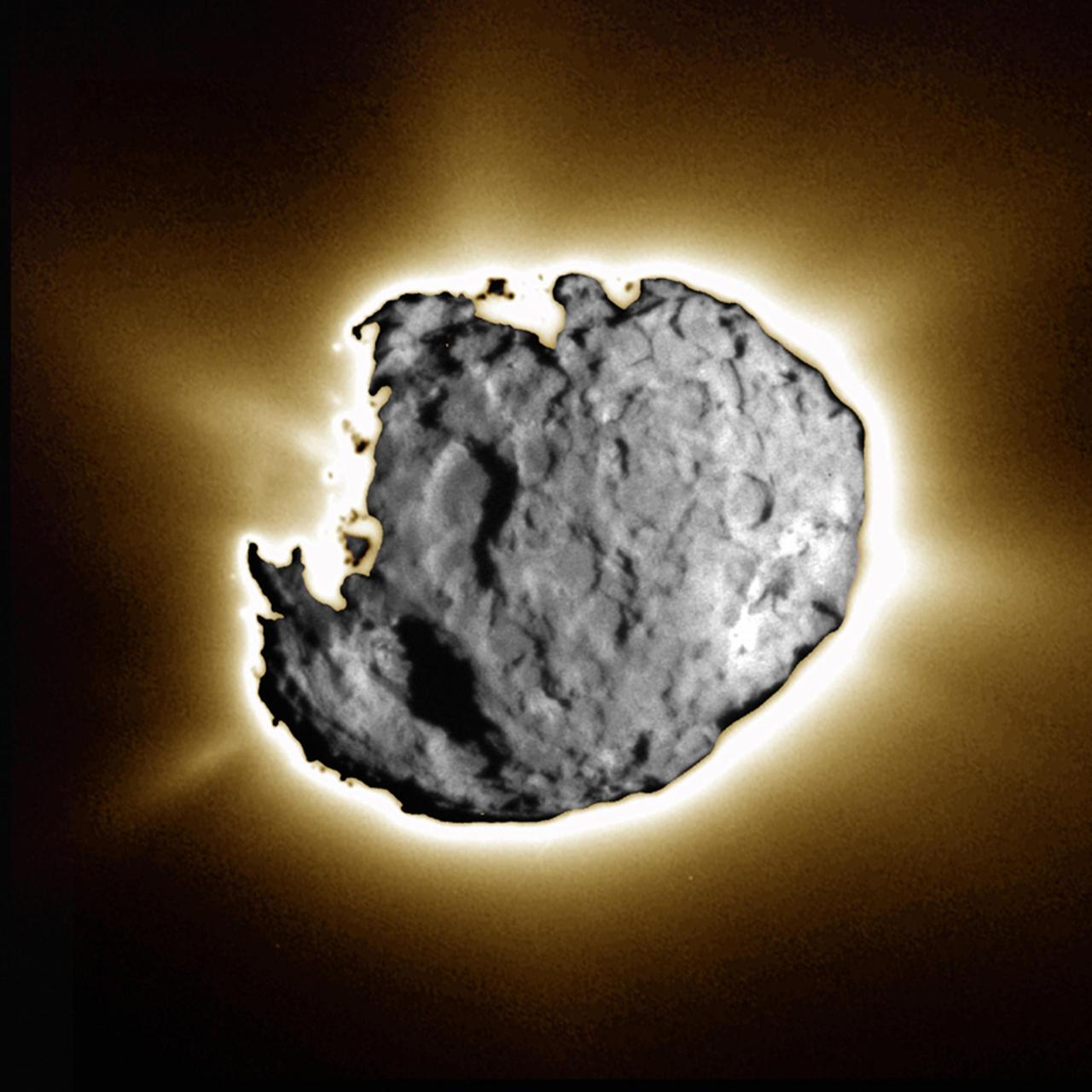
This composite image was taken by the navigation camera during the close approach phase of Stardust's Jan 2, 2004 flyby of comet Wild 2. Several large depressed regions can be seen. Comet Wild 2 is about five kilometers (3.1 miles) in diameter. To create this image, a short exposure image showing tremendous surface detail was overlain on a long exposure image taken just 10 seconds later showing jets. Together, the images show an intensely active surface, jetting dust and gas streams into space and leaving a trail millions of kilometers long. http://photojournal.jpl.nasa.gov/catalog/PIA05578
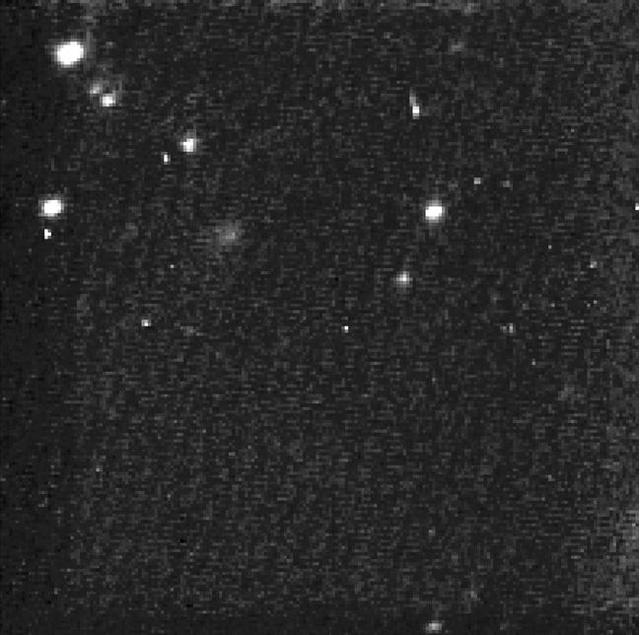
This composite image is the first taken by NASA Stardust spacecraft navigation camera. The observations were made on Jan. 18 and 19, 2011. Stardust will fly within about 200 kilometers 124 miles of the comet nucleus.
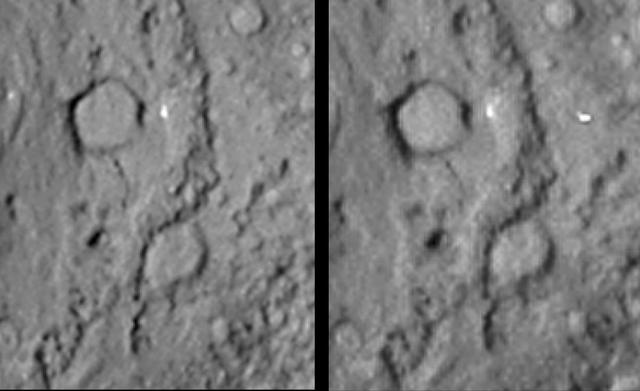
Reversed stereo image pair covering the region of NASA Deep Impact site from the Stardust-NExT mission.
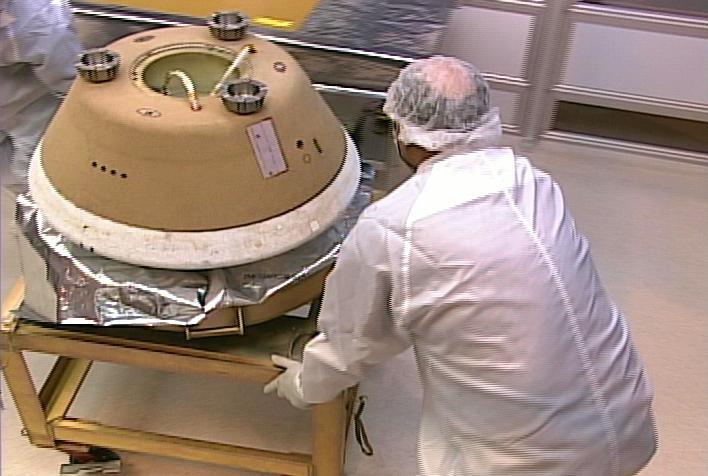
This movie shows rehearsal of the initial processing of the sample return capsule when it is taken to a temporary cleanroom at Utah Test and Training Range.
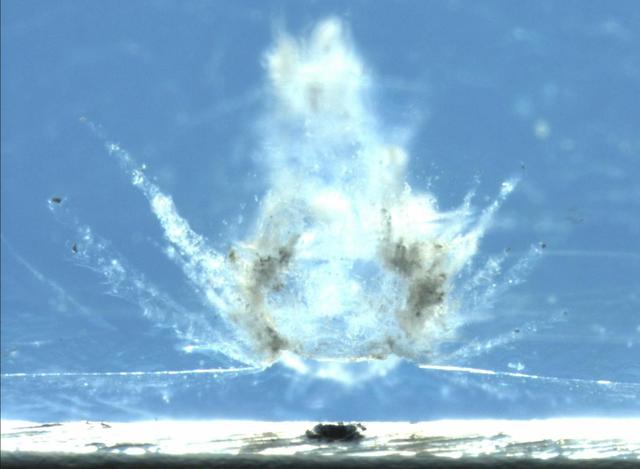
This image from NASA shows a particle impact on the aluminum frame that holds the aerogel tiles. The debris from the impact shot into the adjacent aerogel tile producing the explosion pattern of ejecta framents captured in the material.
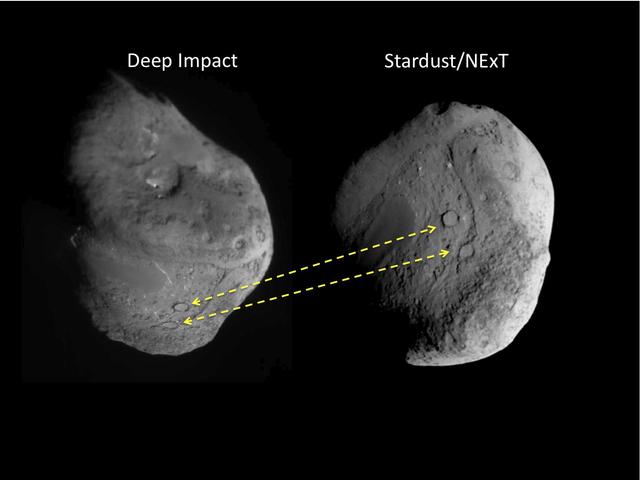
These two images show the different views of comet Tempel 1 seen by NASA Deep Impact spacecraft left and NASA Stardust spacecraft right.
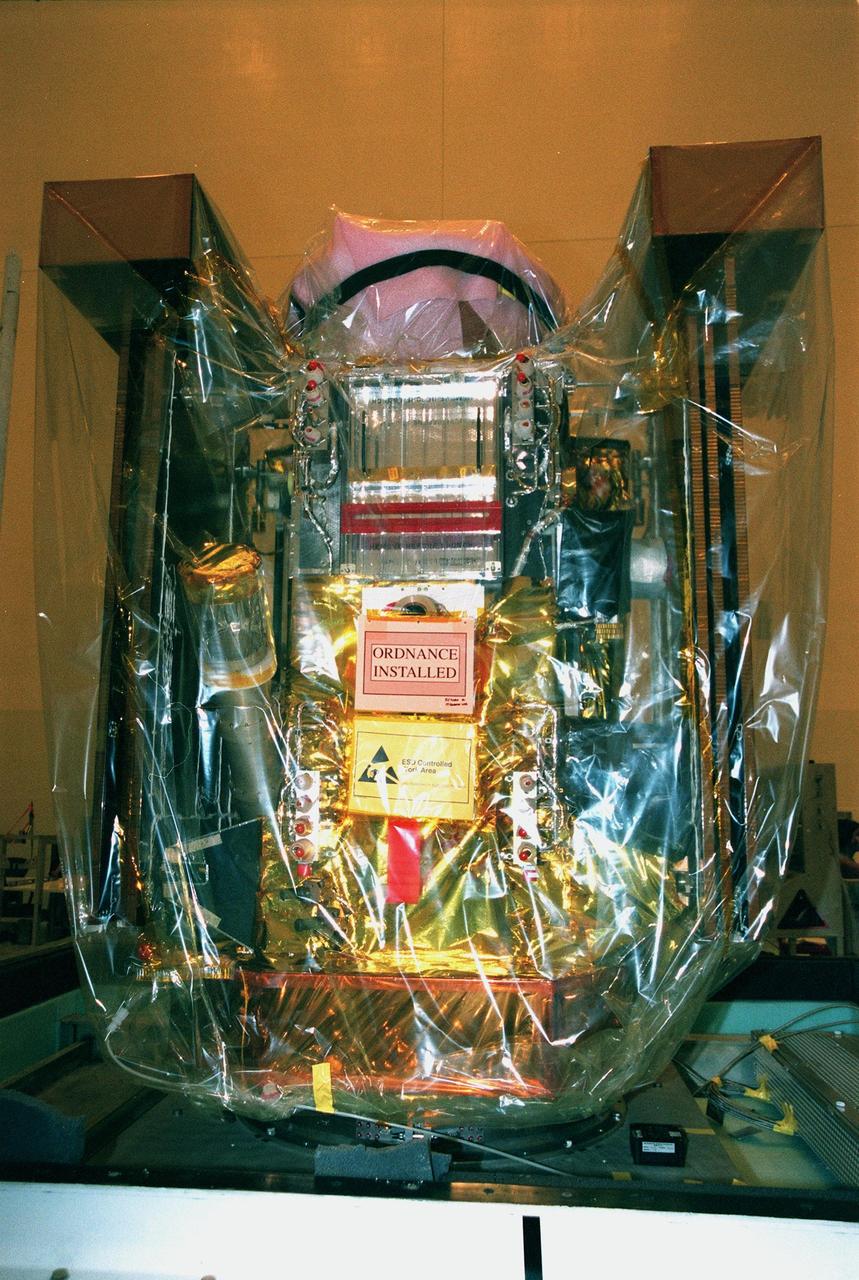
In the Payload Hazardous Service Facility, the Stardust spacecraft sits wrapped in plastic covering. Built by Lockheed Martin Astronautics near Denver, Colo., for the Jet Propulsion Laboratory (JPL) and NASA, the spacecraft Stardust will use a unique medium called aerogel to capture comet particles and interstellar dust for later analysis. Stardust will be launched aboard a Boeing Delta 7426 rocket targeted for Feb. 6, 1999. The collected samples will return to Earth in a re-entry capsule to be jettisoned from Stardust as it swings by Earth in January 2006
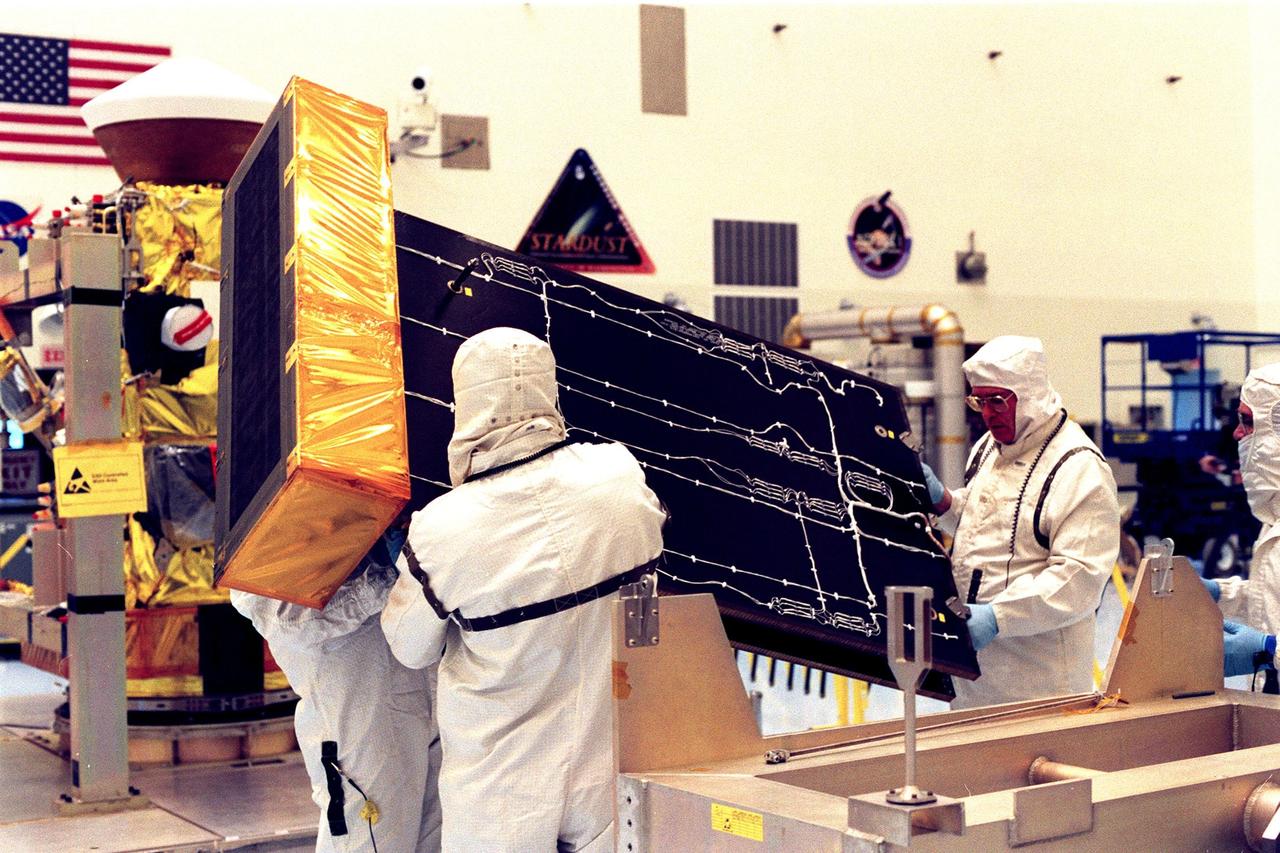
In the Payload Hazardous Servicing Facility, workers carry one of the Stardust solar panels removed for testing. The spacecraft Stardust will use a unique medium called aerogel to capture comet particles flying off the nucleus of comet Wild 2 in January 2004, plus collect interstellar dust for later analysis. Stardust will be launched aboard a Boeing Delta 7426 rocket from Complex 17, Cape Canaveral Air Station, targeted for Feb. 6, 1999. The collected samples will return to Earth in a re-entry capsule to be jettisoned from Stardust as it swings by Earth in January 2006
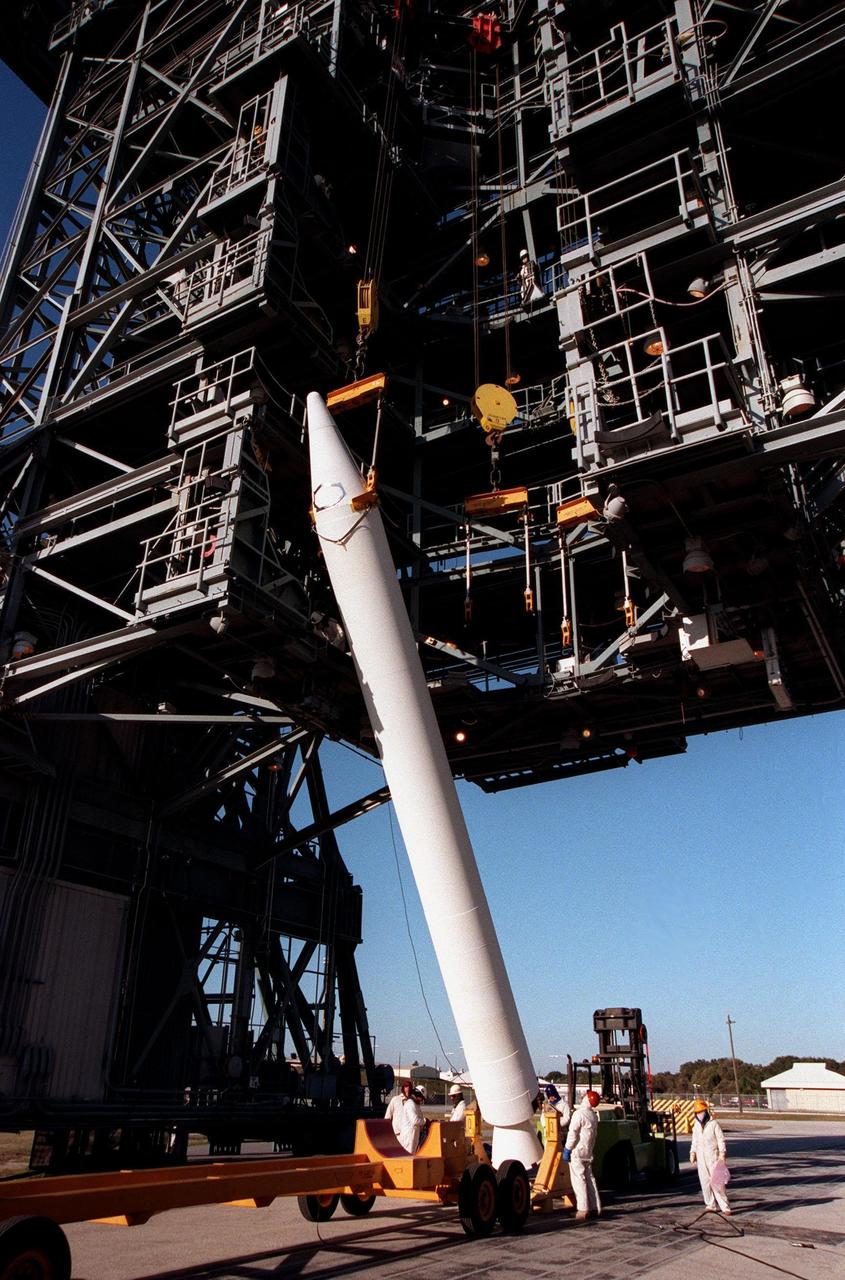
A solid rocket booster is raised to a vertical position before lifting it up the mobile launch tower at Pad 17A, Cape Canaveral Air Station. It will be mated with a Boeing Delta II rocket that will carry the Stardust spacecraft into space for a close encounter with the comet Wild 2 in January 2004. Using a medium called aerogel, Stardust will capture comet particles flying off the nucleus of the comet, plus collect interstellar dust for later analysis. The collected samples will return to Earth in a sample return capsule to be jettisoned as Stardust swings by Earth in January 2006. Stardust is scheduled to be launched on Feb. 6, 1999
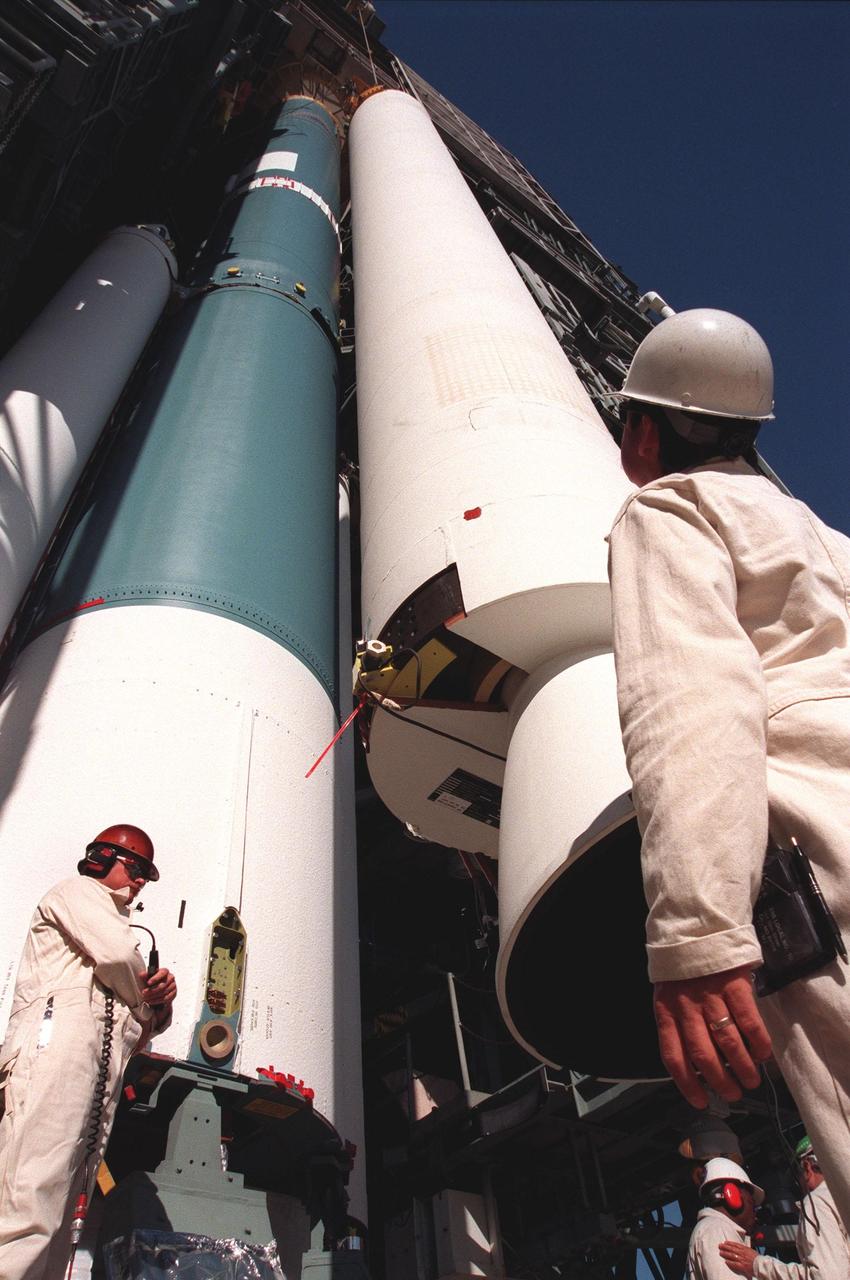
At Pad 17A, Cape Canaveral Air Station, workers keep watch on the placement of the fourth and final solid rocket booster (SRB) being mated with the Boeing Delta II rocket. The rocket will be aided by four SRBs to carry the Stardust satellite into space for a close encounter with the comet Wild 2 in January 2004. Using a medium called aerogel, Stardust will capture comet particles flying off the nucleus of the comet, plus collect interstellar dust for later analysis. The collected samples will return to Earth in a Sample Return Capsule to be jettisoned as Stardust swings by Earth in January 2006. Stardust is scheduled to be launched on Feb. 6, 1999
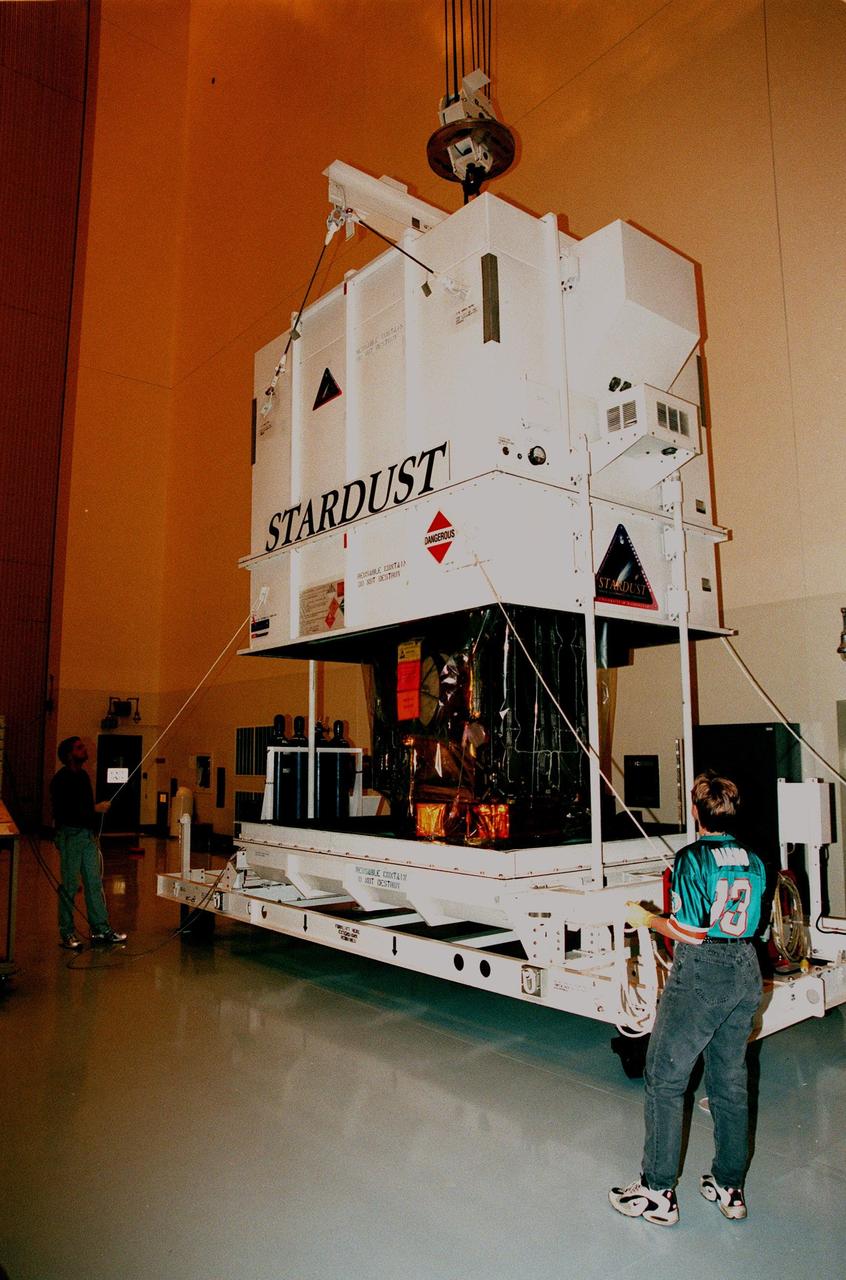
In the Payload Hazardous Service Facility, workers lift the cover that protected the Stardust spacecraft during its journey. Built by Lockheed Martin Astronautics near Denver, Colo., for the Jet Propulsion Laboratory (JPL) and NASA, the spacecraft Stardust will use a unique medium called aerogel to capture comet particles flying off the nucleus of comet Wild 2 in January 2004, plus collect interstellar dust for later analysis. Stardust will be launched aboard a Boeing Delta 7426 rocket from Complex 17, Cape Canaveral Air Station, targeted for Feb. 6, 1999. The collected samples will return to Earth in a re-entry capsule to be jettisoned from Stardust as it swings by in January 2006
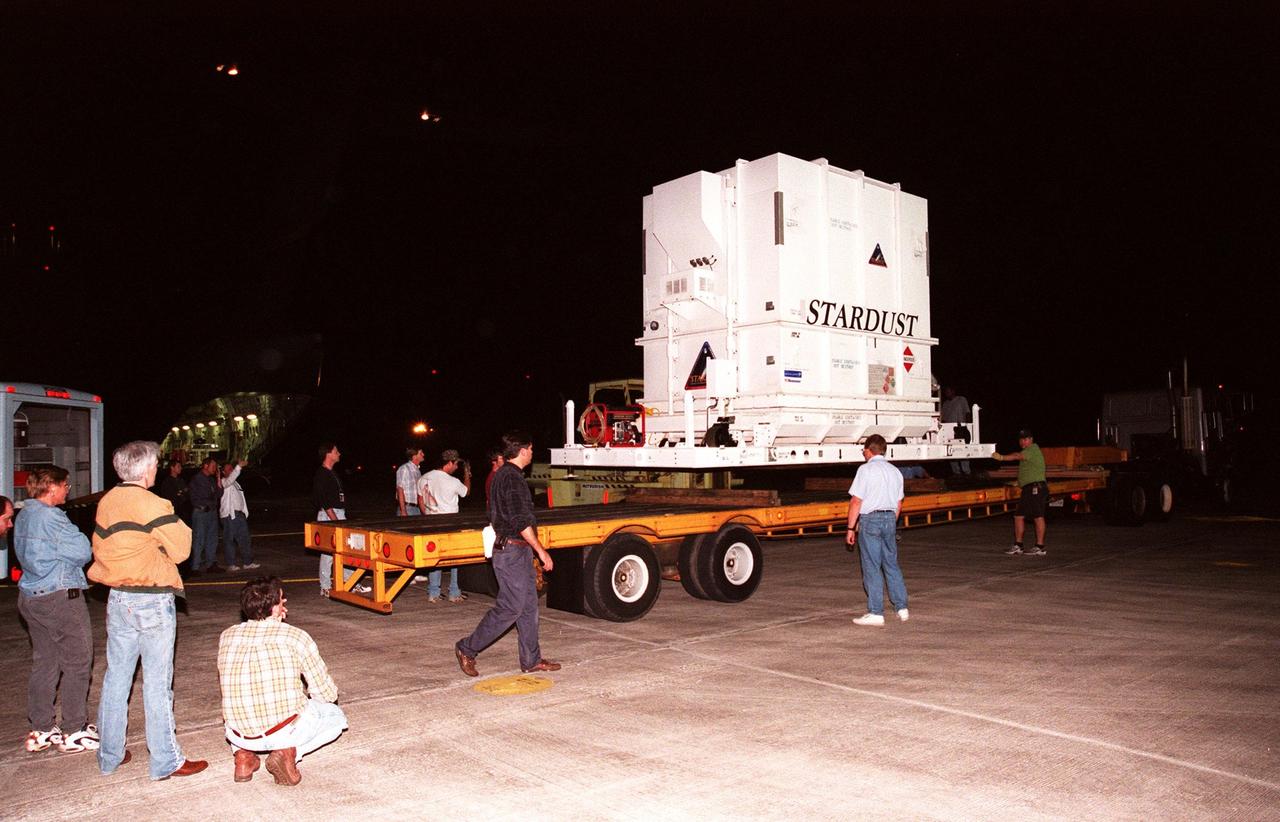
At the Shuttle Landing Facility, workers observe the loading of the crated Stardust spacecraft onto a trailer for transporting to the Payload Hazardous Service Facility. Built by Lockheed Martin Astronautics near Denver, Colo., for the Jet Propulsion Laboratory (JPL) and NASA, the spacecraft Stardust will use a unique medium called aerogel to capture comet particles flying off the nucleus of comet Wild 2 in January 20004, plus collect interstellar dust for later analysis. Stardust will be launched aboard a Boeing Delta 7426 rocket from Complex 17, Cape Canaveral Air Station, targeted for Feb. 6, 1999. The collected samples will return to Earth in a re-entry capsule to be jettisoned from Stardust as it swings by in January 2006
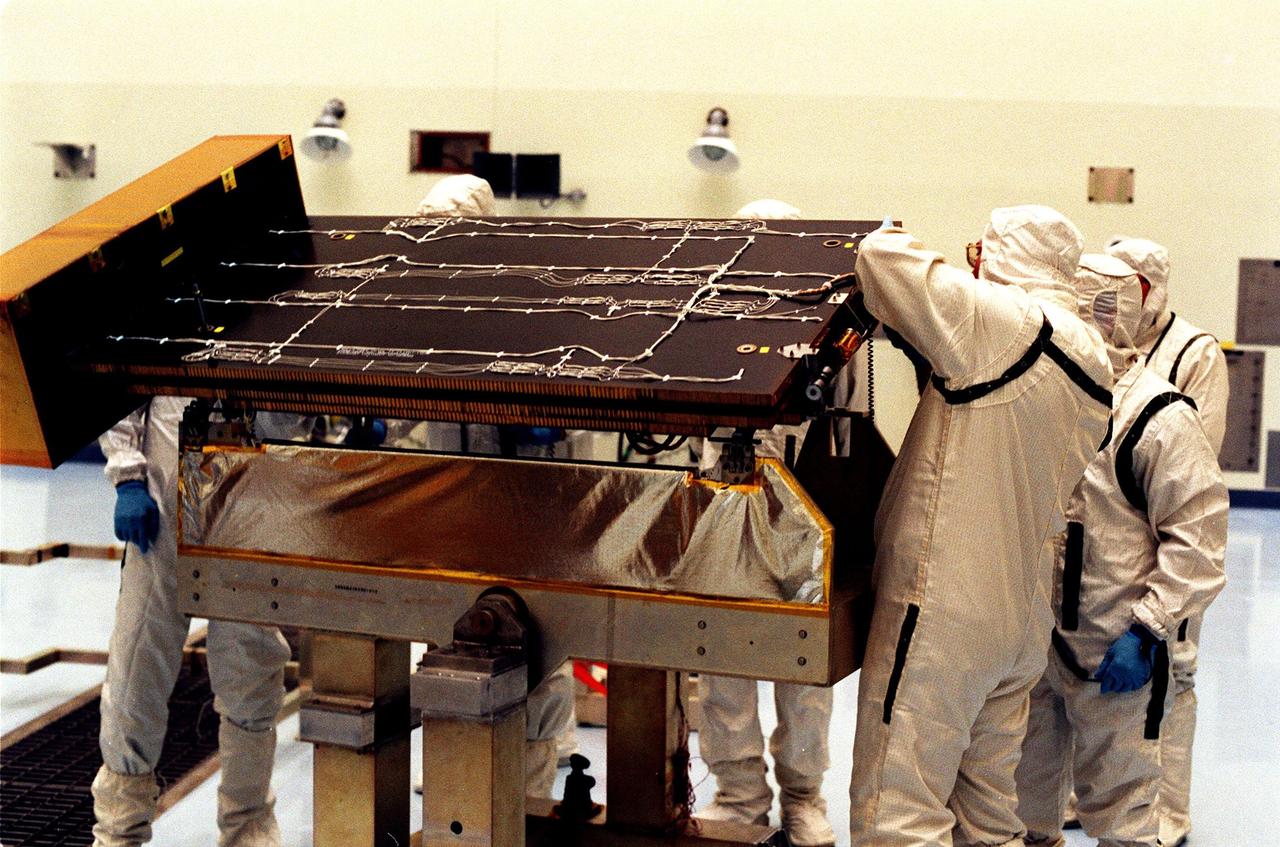
In the Payload Hazardous Servicing Facility, workers place one of the Stardust solar panels on a stand. The panels are being removed for testing. The spacecraft Stardust will use a unique medium called aerogel to capture comet particles flying off the nucleus of comet Wild 2 in January 2004, plus collect interstellar dust for later analysis. Stardust will be launched aboard a Boeing Delta 7426 rocket from Complex 17, Cape Canaveral Air Station, targeted for Feb. 6, 1999. The collected samples will return to Earth in a re-entry capsule to be jettisoned from Stardust as it swings by Earth in January 2006
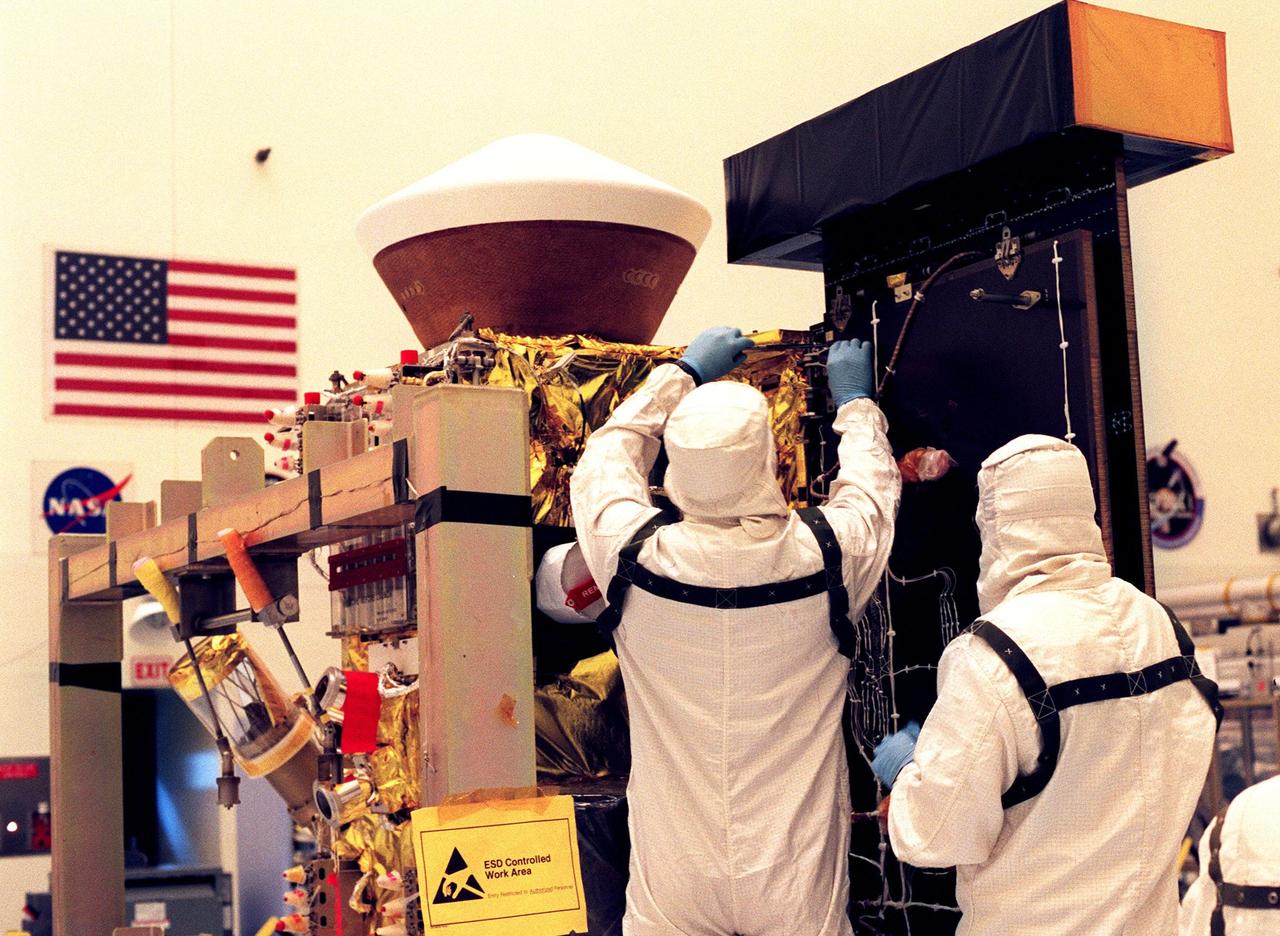
In the Payload Hazardous Servicing Facility, workers remove one of the Stardust solar panels for testing. The spacecraft Stardust will be launched aboard a Boeing Delta 7426 rocket from Complex 17, Cape Canaveral Air Station, targeted for Feb. 6, 1999. Stardust will use a unique medium called aerogel to capture comet particles flying off the nucleus of comet Wild 2 in January 2004, plus collect interstellar dust for later analysis. The collected samples will return to Earth in a re-entry capsule (seen on top, next to the solar panel) to be jettisoned from Stardust as it swings by Earth in January 2006
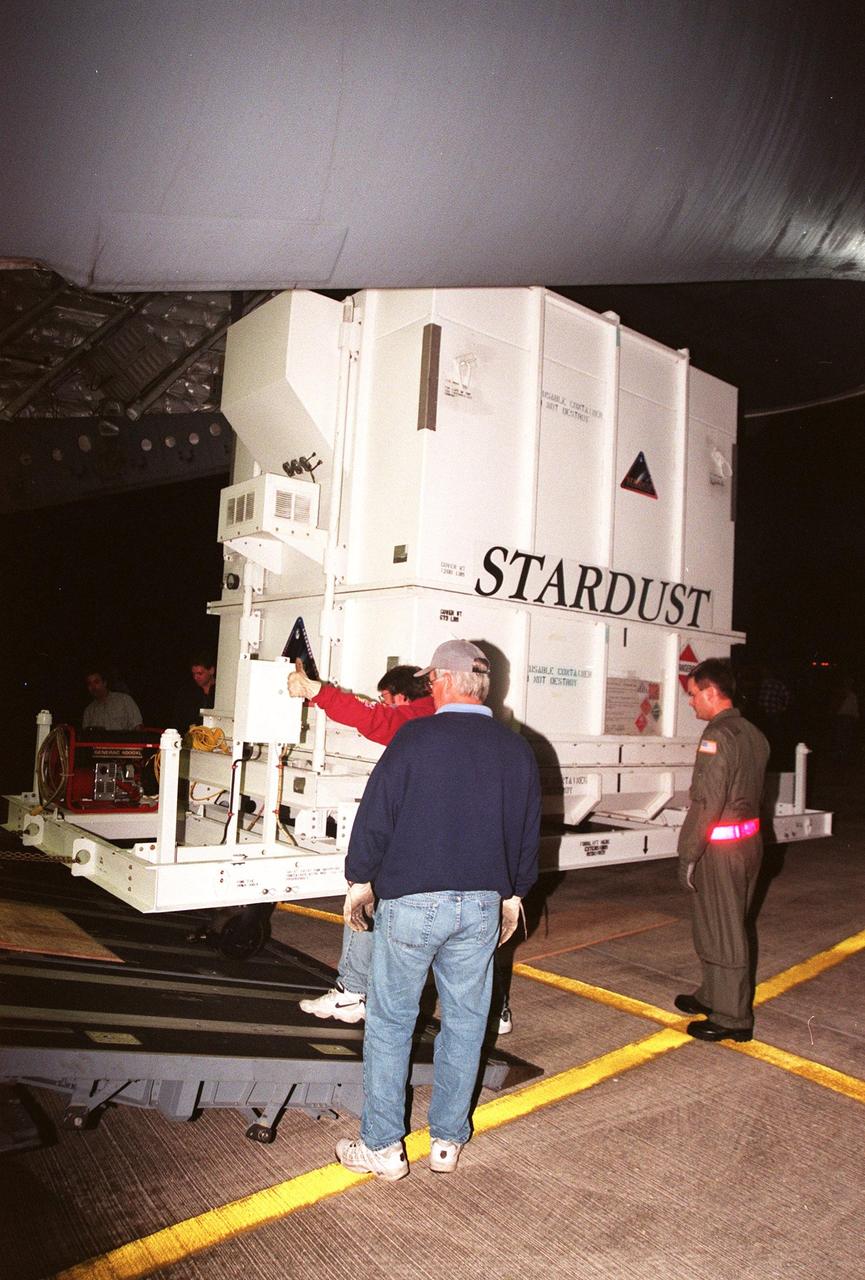
At the Shuttle Landing Facility, workers unload the crated Stardust spacecraft from the airplane before transporting to the Payload Hazardous Service Facility. Built by Lockheed Martin Astronautics near Denver, Colo., for the Jet Propulsion Laboratory (JPL) and NASA, the spacecraft Stardust will use a unique medium called aerogel to capture comet particles flying off the nucleus of comet Wild 2 in January 2004, plus collect interstellar dust for later analysis. Stardust will be launched aboard a Boeing Delta 7426 rocket from Complex 17, Cape Canaveral Air Station, targeted for Feb. 6, 1999. The collected samples will return to Earth in a re-entry capsule to be jettisoned from Stardust as it swings by in January 2006

A solid rocket booster is lifted up the mobile launch tower at Pad 17A, Cape Canaveral Air Station. It will be mated with a Boeing Delta II rocket that will carry the Stardust spacecraft into space for a close encounter with the comet Wild 2 in January 2004. Using a medium called aerogel, Stardust will capture comet particles flying off the nucleus of the comet, plus collect interstellar dust for later analysis. The collected samples will return to Earth in a sample return capsule to be jettisoned as Stardust swings by Earth in January 2006. Stardust is scheduled to be launched on Feb. 6, 1999

After arrival at the Shuttle Landing Facility in the early morning hours, the crated Stardust spacecraft waits to be unloaded from the aircraft. Built by Lockheed Martin Astronautics near Denver, Colo., for the Jet Propulsion Laboratory (JPL) NASA, the spacecraft Stardust will use a unique medium called aerogel to capture comet particles flying off the nucleus of comet Wild 2 in January 2004, plus collect interstellar dust for later analysis. Stardust will be launched aboard a Boeing Delta 7426 rocket from Complex 17, Cape Canaveral Air Station, targeted for Feb. 6, 1999. The collected samples will return to Earth in a re-entry capsule to be jettisoned from Stardust as it swings by in January 2006
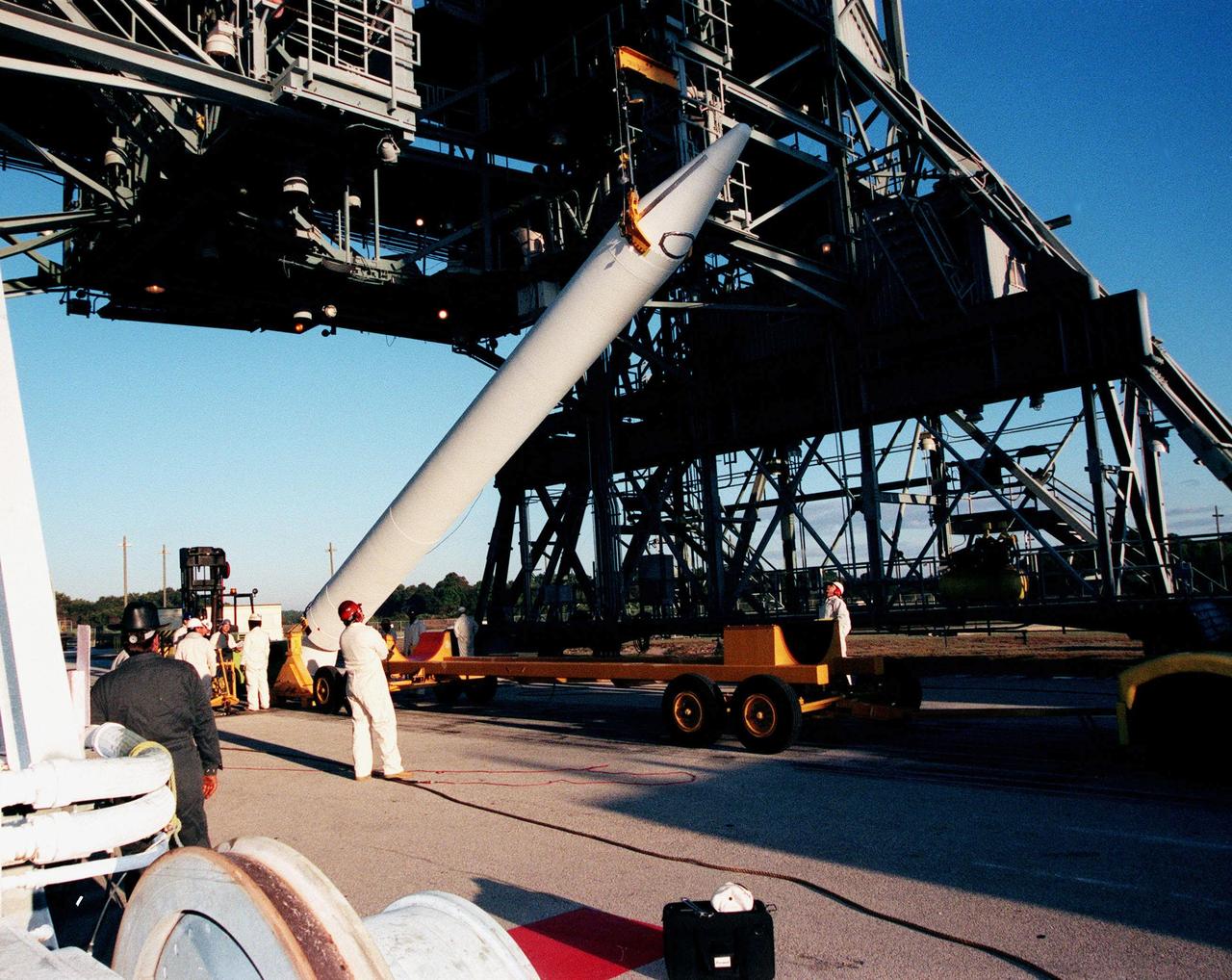
A fourth and final Solid Rocket Booster arrives at Pad 17A, Cape Canaveral Air Station to be mated with a Boeing Delta II rocket. The rocket will carry the Stardust satellite into space for a close encounter with the comet Wild 2 in January 2004. Using a medium called aerogel, Stardust will capture comet particles flying off the nucleus of the comet, plus collect interstellar dust for later analysis. The collected samples will return to Earth in a Sample Return Capsule to be jettisoned as Stardust swings by Earth in January 2006. Stardust is scheduled to be launched on Feb. 6, 1999

In the Payload Hazardous Service Facility, workers oversee the arrival of the crated Stardust spacecraft. Built by Lockheed Martin Astronautics near Denver, Colo., for the Jet Propulsion Laboratory (JPL) and NASA, the spacecraft Stardust will use a unique medium called aerogel to capture comet particles flying off the nucleus of comet Wild 2 in January 2004, plus collect interstellar dust for later analysis. Stardust will be launched aboard a Boeing Delta 7426 rocket from Complex 17, Cape Canaveral Air Station, targeted for Feb. 6, 1999. The collected samples will return to Earth in a re-entry capsule to be jettisoned from Stardust as it swings by in January 2006
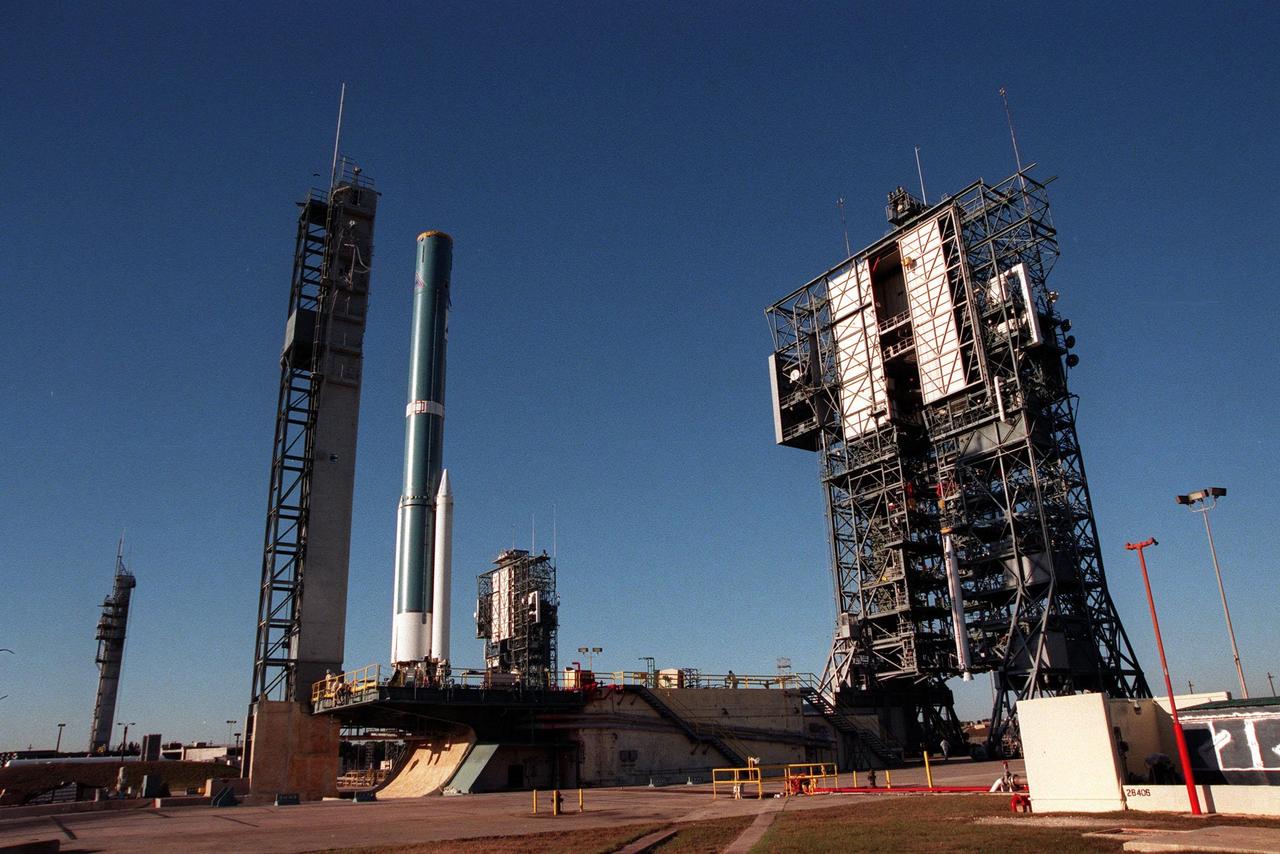
A Boeing Delta II rocket sits on Launch Pad 17A (left), Cape Canaveral Air Station, before mating with its final Solid Rocket Booster, in the tower at right. In the background is Pad 17B with its two launch tower components. The Delta II rocket will carry the Stardust satellite into space for a close encounter with the comet Wild 2 in January 2004. Using a medium called aerogel, Stardust will capture comet particles flying off the nucleus of the comet, plus collect interstellar dust for later analysis. The collected samples will return to Earth in a Sample Return Capsule to be jettisoned as Stardust swings by Earth in January 2006. Stardust is scheduled to be launched on Feb. 6, 1999
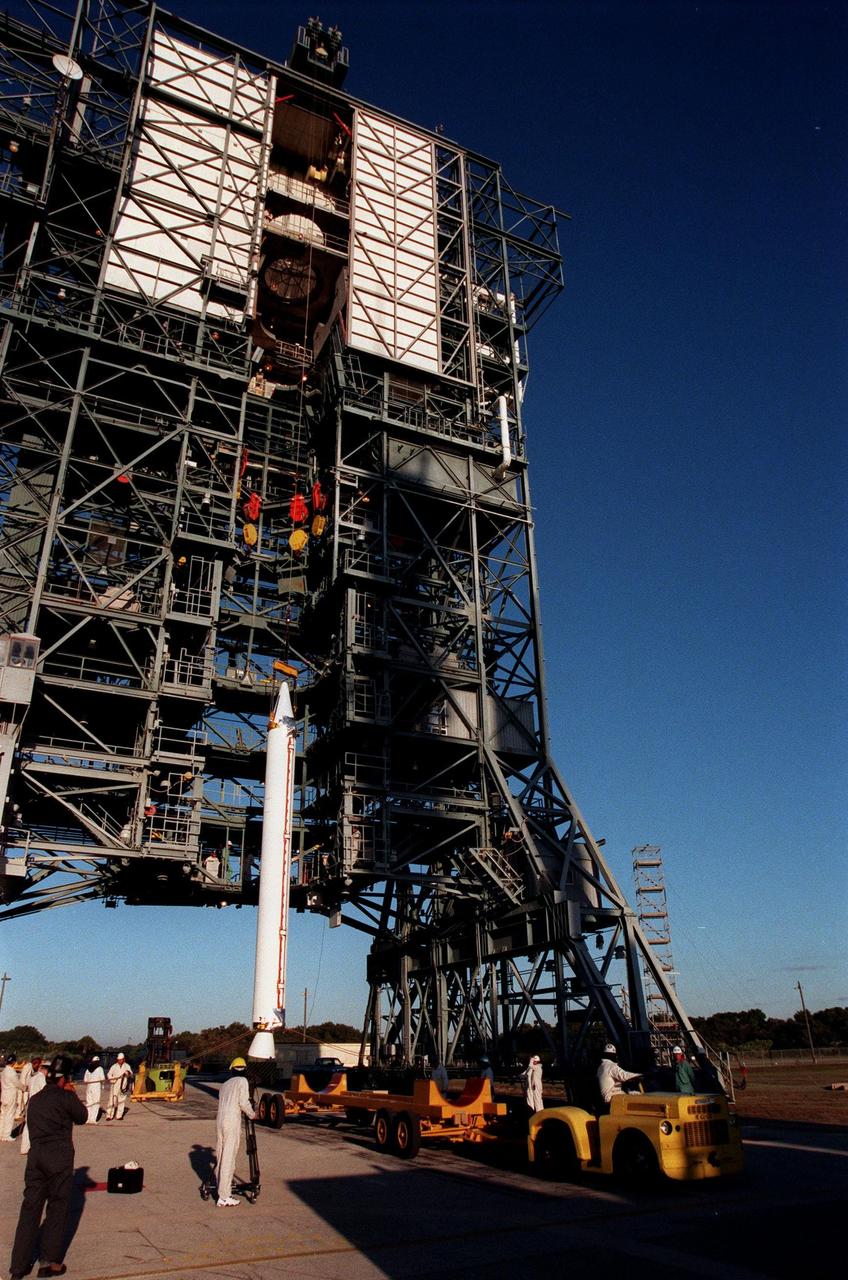
A fourth and final Solid Rocket Booster, to be mated with a Boeing Delta II rocket, starts its lift up the tower at Pad 17A, Cape Canaveral Air Station. The rocket will carry the Stardust satellite into space for a close encounter with the comet Wild 2 in January 2004. Using a medium called aerogel, Stardust will capture comet particles flying off the nucleus of the comet, plus collect interstellar dust for later analysis. The collected samples will return to Earth in a Sample Return Capsule to be jettisoned as Stardust swings by Earth in January 2006. Stardust is scheduled to be launched on Feb. 6, 1999
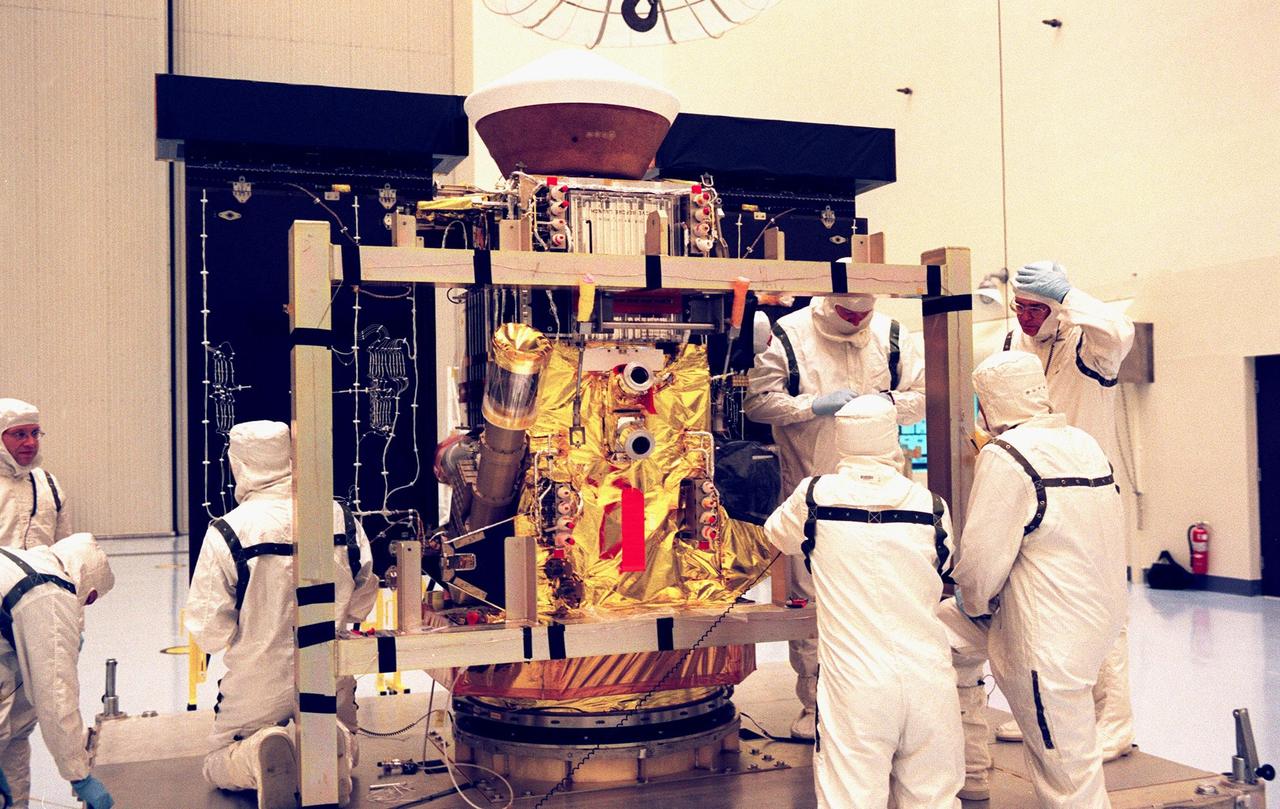
In the Payload Hazardous Servicing Facility, workers work at removing the Stardust solar panels for testing. The spacecraft Stardust will use a unique medium called aerogel to capture comet particles flying off the nucleus of comet Wild 2 in January 2004, plus collect interstellar dust for later analysis. Stardust will be launched aboard a Boeing Delta 7426 rocket from Complex 17, Cape Canaveral Air Station, targeted for Feb. 6, 1999. The collected samples will return to Earth in a re-entry capsule to be jettisoned from Stardust as it swings by Earth in January 2006
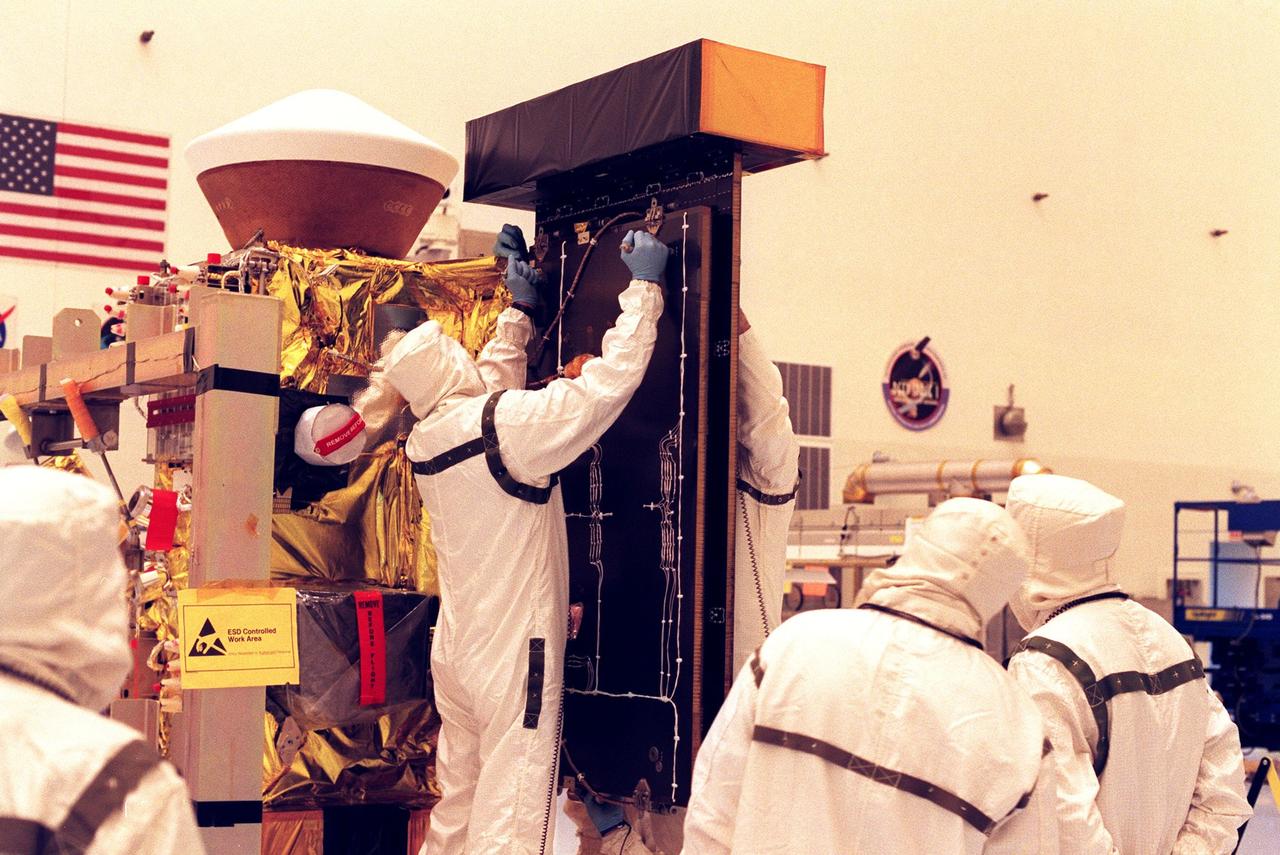
In the Payload Hazardous Servicing Facility, workers begin removing the Stardust solar panels for testing. The spacecraft Stardust will use a unique medium called aerogel to capture comet particles flying off the nucleus of comet Wild 2 in January 2004, plus collect interstellar dust for later analysis. Stardust will be launched aboard a Boeing Delta 7426 rocket from Complex 17, Cape Canaveral Air Station, targeted for Feb. 6, 1999. The collected samples will return to Earth in a re-entry capsule to be jettisoned from Stardust as it swings by Earth in January 2006
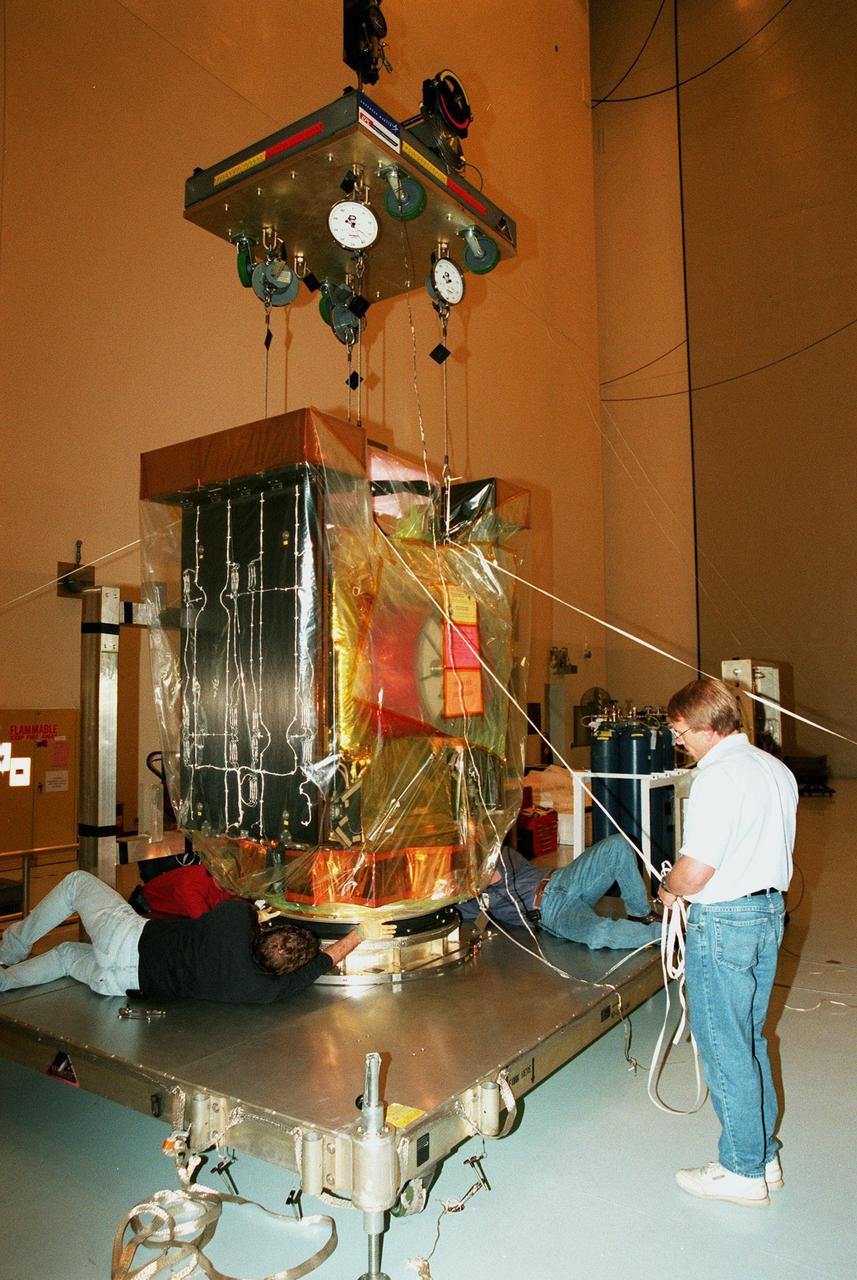
In the Payload Hazardous Service Facility, a worker prepares the Stardust spacecraft for its transfer to . Built by Lockheed Martin Astronautics near Denver, Colo., for the Jet Propulsion Laboratory (JPL) and NASA, the spacecraft Stardust will use a unique medium called aerogel to capture comet particles flying off the nucleus of comet Wild 2 in January 2004, plus collect interstellar dust for later analysis. Stardust will be launched aboard a Boeing Delta 7426 rocket from Complex 17, Cape Canaveral Air Station, targeted for Feb. 6, 1999. . The collected samples will return to Earth in a re-entry capsule to be jettisoned from Stardust as it swings by in January 2006
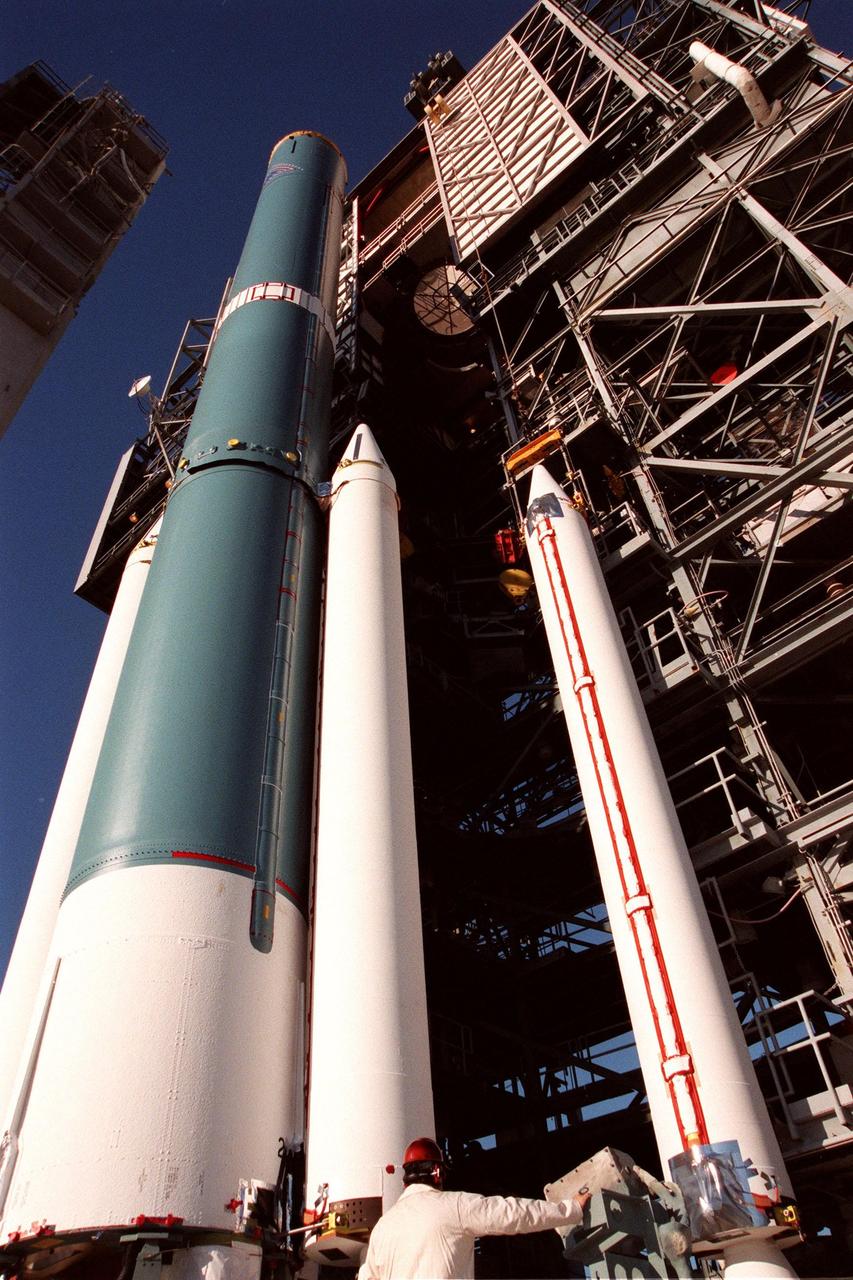
At Pad 17A, Cape Canaveral Air Station, a fourth and final solid rocket booster (SRB) (right) is moved from the mobile tower by a crane before mating with the Delta II rocket (left). The rocket will be aided by four SRBs to carry the Stardust satellite into space for a close encounter with the comet Wild 2 in January 2004. Using a medium called aerogel, Stardust will capture comet particles flying off the nucleus of the comet, plus collect interstellar dust for later analysis. The collected samples will return to Earth in a Sample Return Capsule to be jettisoned as Stardust swings by Earth in January 2006. Stardust is scheduled to be launched on Feb. 6, 1999
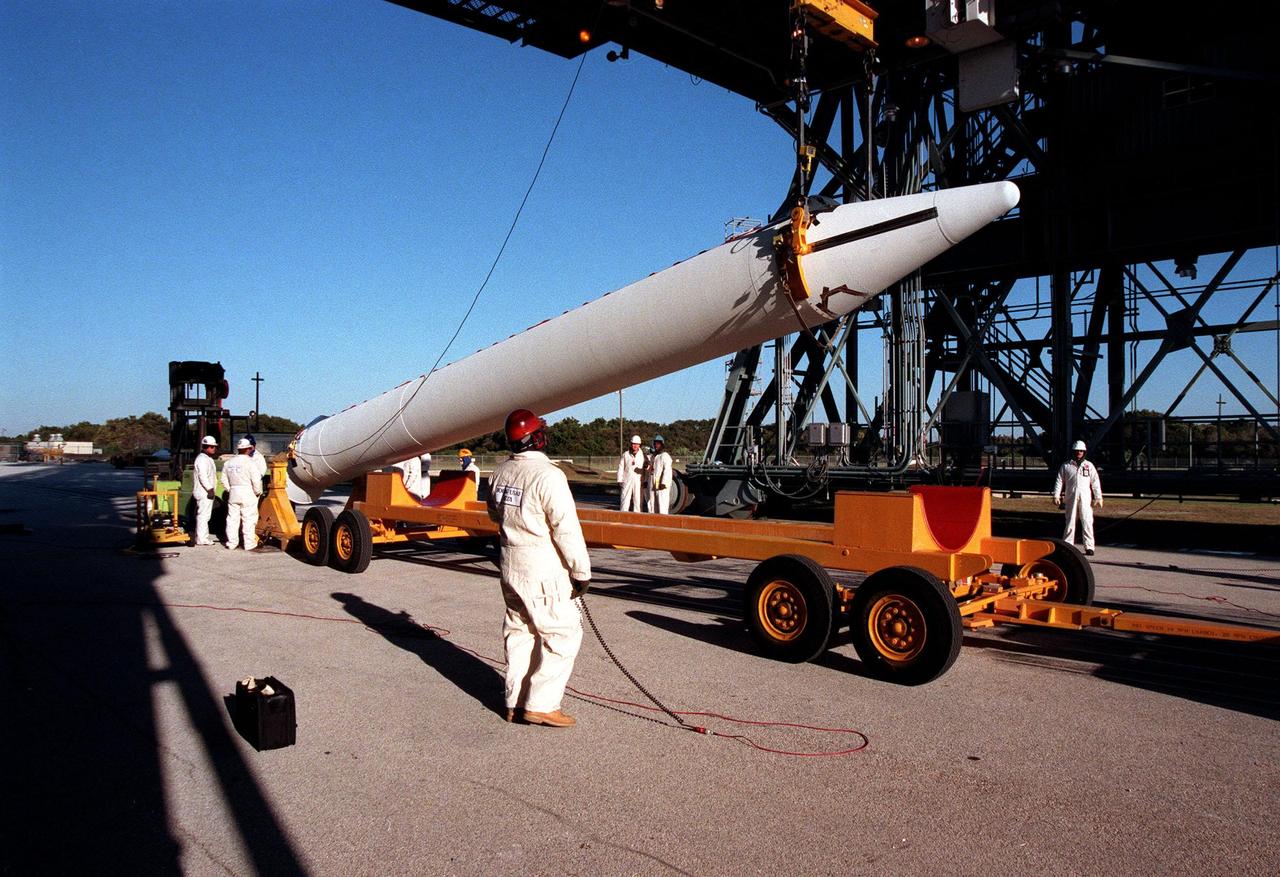
A solid rocket booster is lifted off a transport vehicle for its transfer to the mobile launch tower at Pad 17A, Cape Canaveral Air Station. It will be mated with a Boeing Delta II rocket that will carry the Stardust spacecraft into space for a close encounter with the comet Wild 2 in January 2004. Using a medium called aerogel, Stardust will capture comet particles flying off the nucleus of the comet, plus collect interstellar dust for later analysis. The collected samples will return to Earth in a sample return capsule to be jettisoned as Stardust swings by Earth in January 2006. Stardust is scheduled to be launched on Feb. 6, 1999
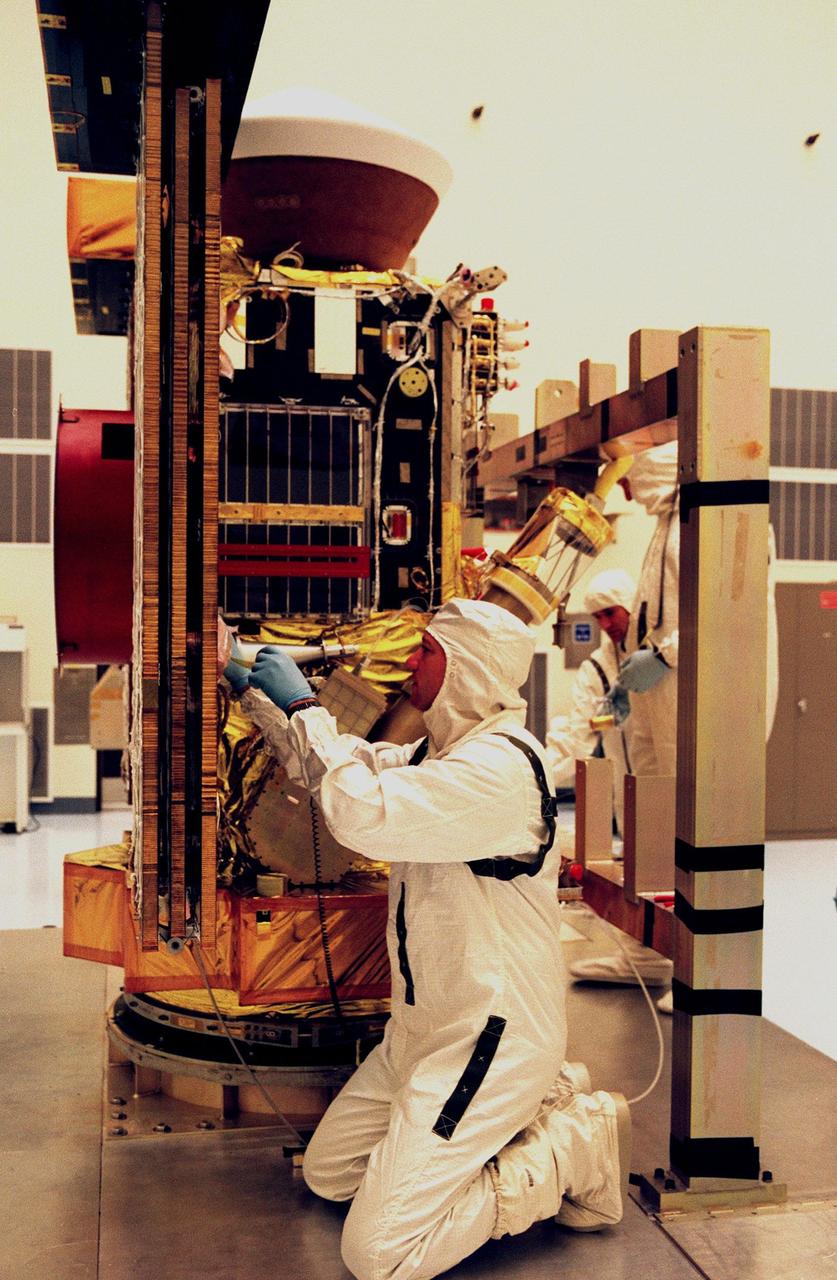
In the Payload Hazardous Servicing Facility, workers remove the Stardust solar panels for testing. The spacecraft Stardust will use a unique medium called aerogel to capture comet particles flying off the nucleus of comet Wild 2 in January 2004, plus collect interstellar dust for later analysis. Stardust will be launched aboard a Boeing Delta 7426 rocket from Complex 17, Cape Canaveral Air Station, targeted for Feb. 6, 1999. The collected samples will return to Earth in a re-entry capsule (seen at the top of the spacecraft in this photo) to be jettisoned from Stardust as it swings by Earth in January 2006
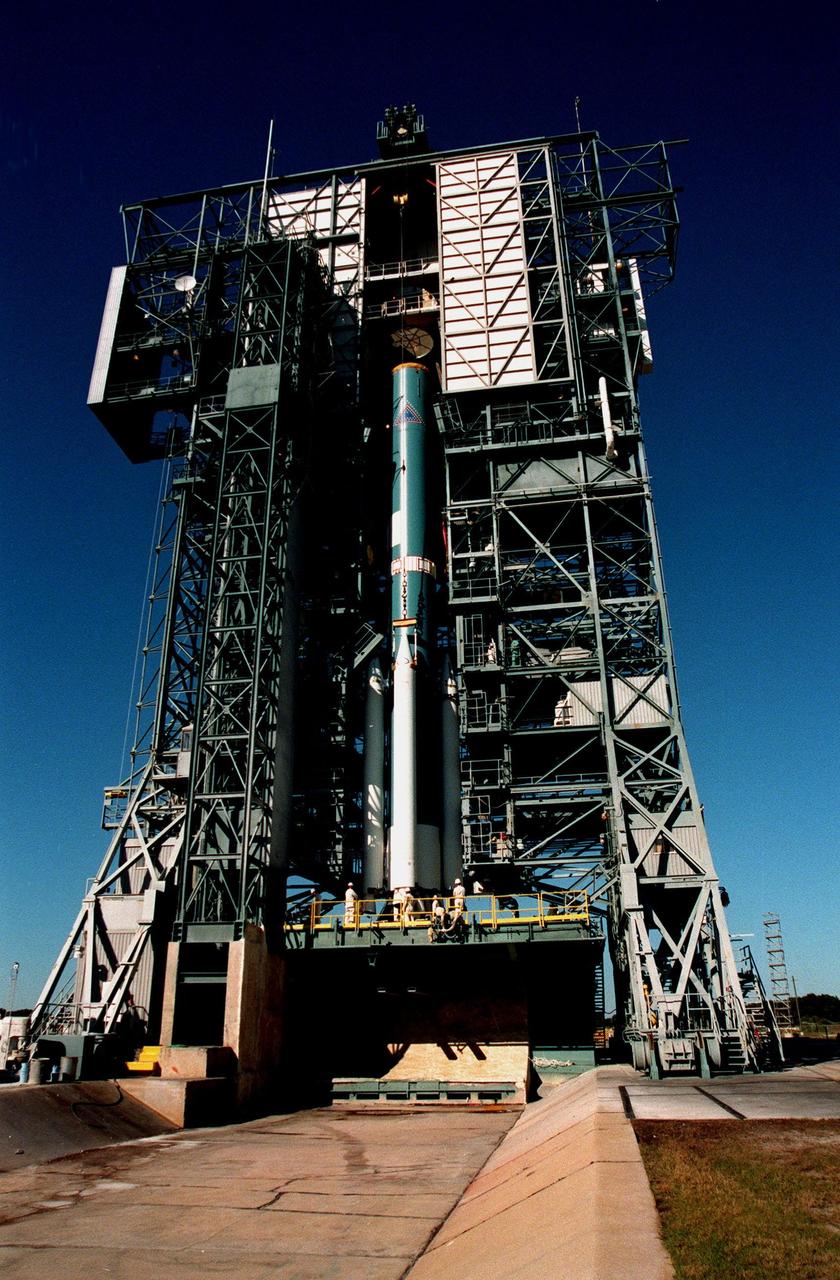
At Pad 17A, Cape Canaveral Air Station, a Boeing Delta II rocket waits with its four solid rocket boosters for final preparations to launch the Stardust satellite on Feb. 6, 1999. The rocket will carry Stardust into space for a close encounter with the comet Wild 2 in January 2004. Using a medium called aerogel, Stardust will capture comet particles flying off the nucleus of the comet, plus collect interstellar dust for later analysis. The collected samples will return to Earth in a Sample Return Capsule to be jettisoned as Stardust swings by Earth in January 2006
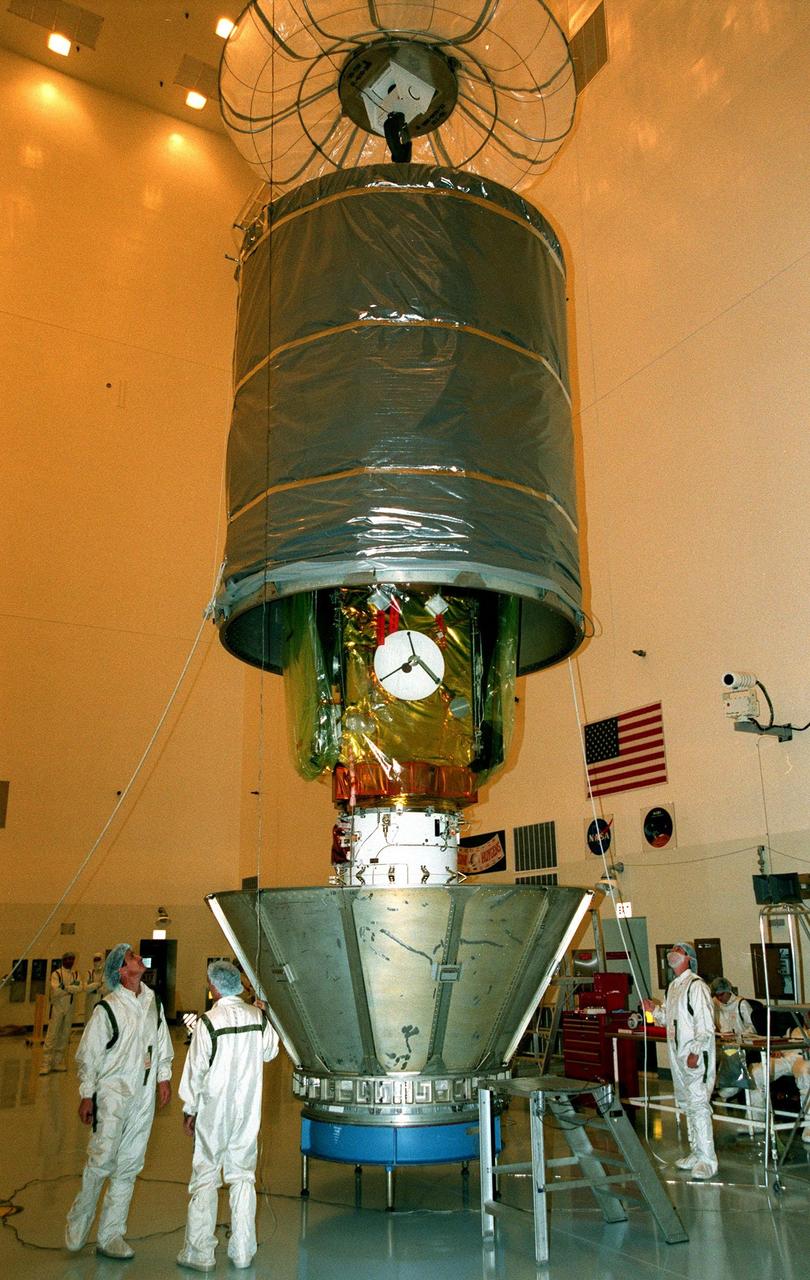
In the Payload Hazardous Servicing Facility, workers guide a protective canister as it is lowered over the Stardust spacecraft. Once it is enclosed, Stardust will be moved to Launch Pad 17-A, Cape Canaveral Air Station, for launch preparations. Stardust is targeted for liftoff on Feb. 6 aboard a Boeing Delta II rocket for a close encounter with the comet Wild 2 in January 2004. Using a silicon-based substance called aerogel, Stardust will capture comet particles flying off the nucleus of the comet. The spacecraft also will bring back samples of interstellar dust. These materials consist of ancient pre-solar interstellar grains and other remnants left over from the formation of the solar system. Scientists expect their analysis to provide important insights into the evolution of the sun and planets and possibly into the origin of life itself. The collected samples will return to Earth in a sample return capsule to be jettisoned as Stardust swings by Earth in January 2006
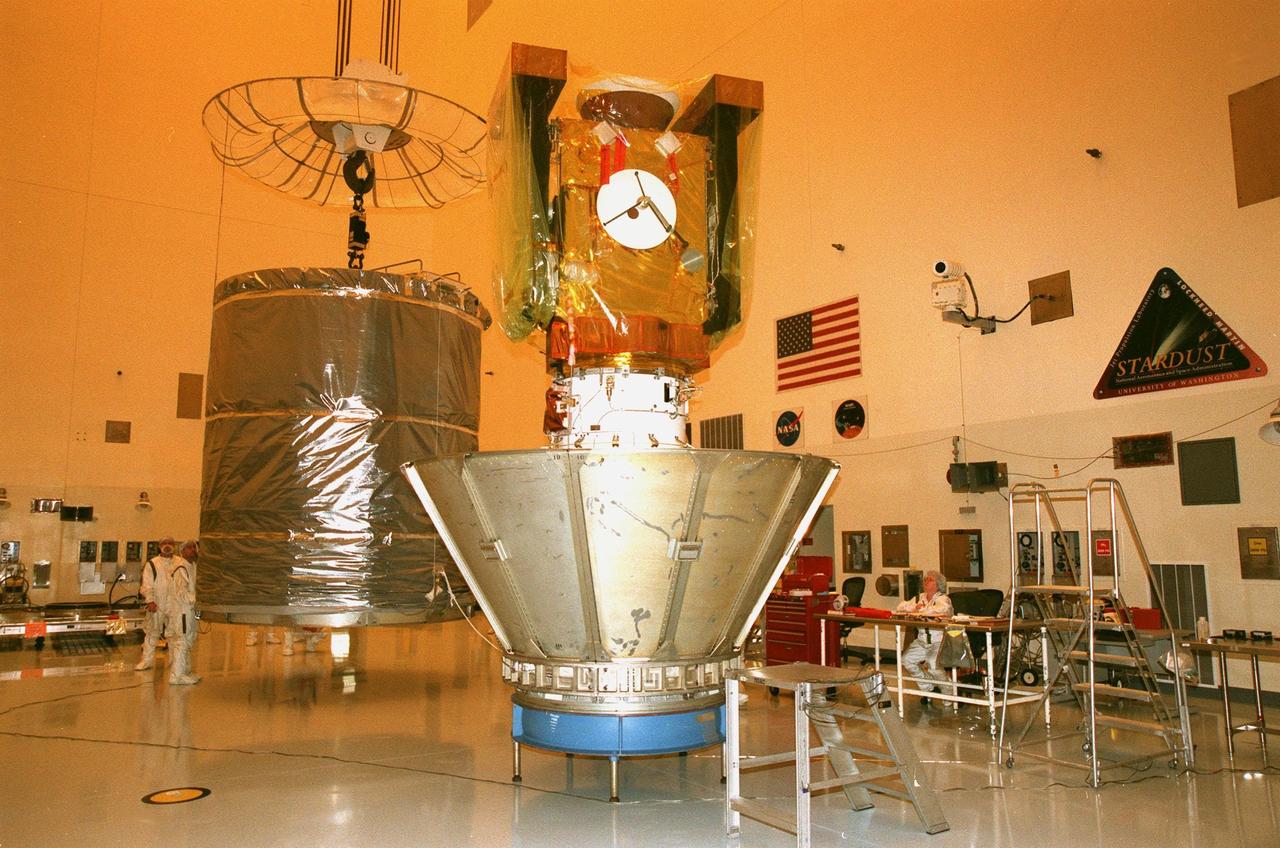
In the Payload Hazardous Servicing Facility, a canister (left) is moved toward the Stardust spacecraft (right). The protective canister will enclose Stardust before the spacecraft is moved to Launch Pad 17-A, Cape Canaveral Air Station, for launch preparations. Stardust is targeted for liftoff on Feb. 6 aboard a Boeing Delta II rocket for a close encounter with the comet Wild 2 in January 2004. Using a silicon-based substance called aerogel, Stardust will capture comet particles flying off the nucleus of the comet. The spacecraft also will bring back samples of interstellar dust. These materials consist of ancient pre-solar interstellar grains and other remnants left over from the formation of the solar system. Scientists expect their analysis to provide important insights into the evolution of the sun and planets and possibly into the origin of life itself. The collected samples will return to Earth in a sample return capsule to be jettisoned as Stardust swings by Earth in January 2006
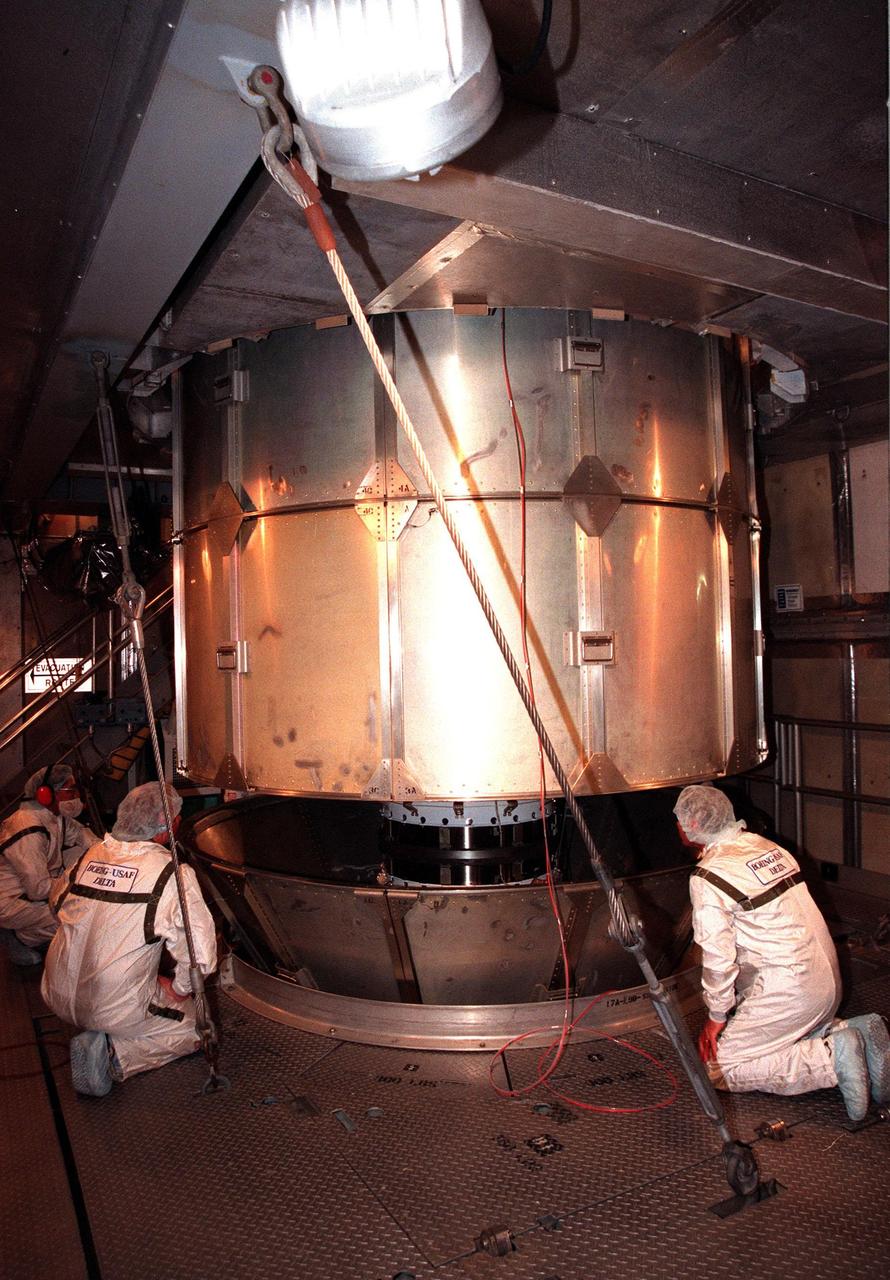
At Launch Pad 17-A, Cape Canaveral Air Station, workers watch as the protective canister is lifted from the Stardust spacecraft. Preparations continue for liftoff of the Boeing Delta II rocket carrying Stardust on Feb. 6. Stardust is destined for a close encounter with the comet Wild 2 in January 2004. Using a silicon-based substance called aerogel, Stardust will capture comet particles flying off the nucleus of the comet. The spacecraft also will bring back samples of interstellar dust. These materials consist of ancient pre-solar interstellar grains and other remnants left over from the formation of the solar system. Scientists expect their analysis to provide important insights into the evolution of the sun and planets and possibly into the origin of life itself. The collected samples will return to Earth in a sample return capsule to be jettisoned as Stardust swings by Earth in January 2006
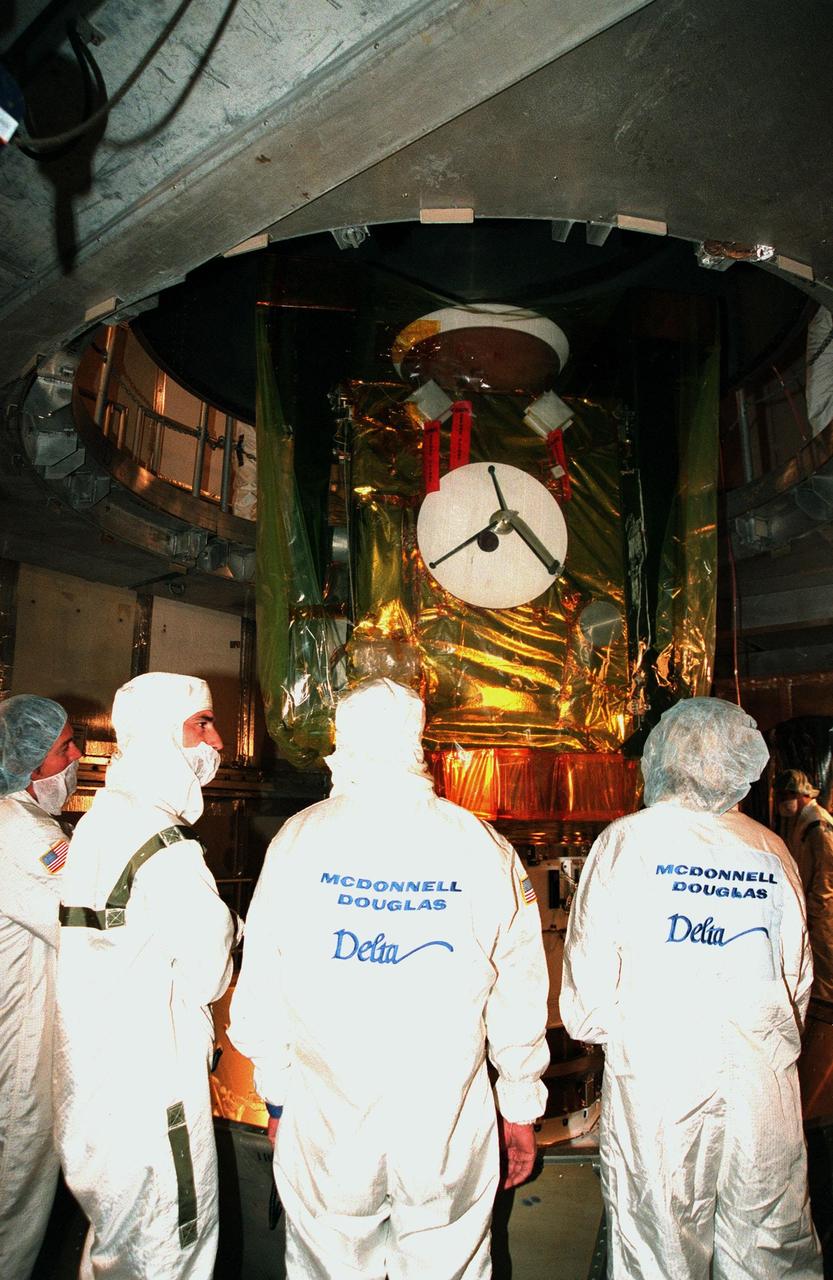
Workers watch as the protective canister surrounding the Stardust spacecraft is removed at Launch Pad 17-A, Cape Canaveral Air Station. Preparations continue for liftoff of the Boeing Delta II rocket carrying Stardust on Feb. 6. Stardust is destined for a close encounter with the comet Wild 2 in January 2004. Using a silicon-based substance called aerogel, Stardust will capture comet particles flying off the nucleus of the comet. The spacecraft also will bring back samples of interstellar dust. These materials consist of ancient pre-solar interstellar grains and other remnants left over from the formation of the solar system. Scientists expect their analysis to provide important insights into the evolution of the sun and planets and possibly into the origin of life itself. The collected samples will return to Earth in a sample return capsule to be jettisoned as Stardust swings by Earth in January 2006
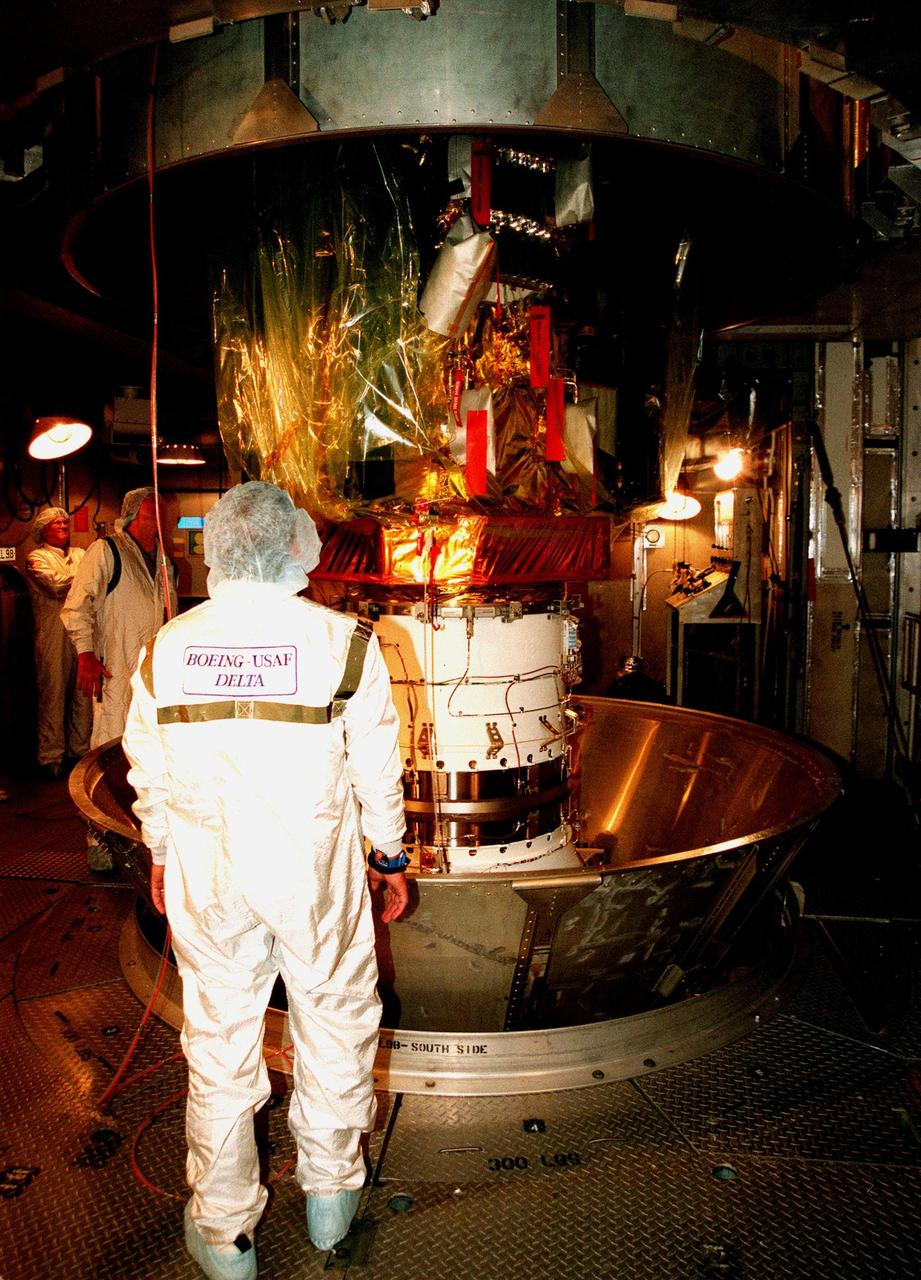
The protective canister is removed from around the Stardust spacecraft at Launch Pad 17-A, Cape Canaveral Air Station. Preparations continue for liftoff of the Boeing Delta II rocket carrying Stardust on Feb. 6. Stardust is destined for a close encounter with the comet Wild 2 in January 2004. Using a silicon-based substance called aerogel, Stardust will capture comet particles flying off the nucleus of the comet. The spacecraft also will bring back samples of interstellar dust. These materials consist of ancient pre-solar interstellar grains and other remnants left over from the formation of the solar system. Scientists expect their analysis to provide important insights into the evolution of the sun and planets and possibly into the origin of life itself. The collected samples will return to Earth in a sample return capsule to be jettisoned as Stardust swings by Earth in January 2006
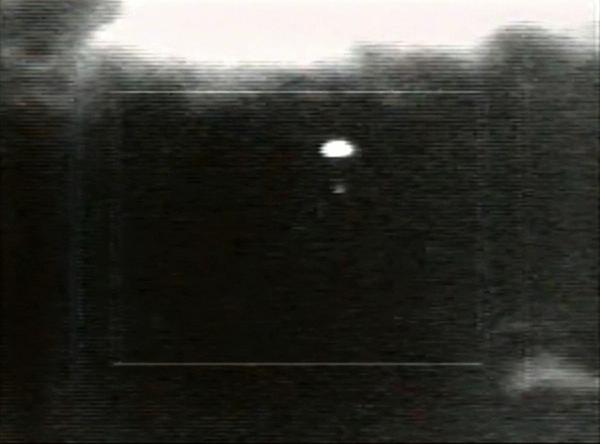
This video shows images taken through infrared range cameras during a recovery simulation at the Utah Test and Training Range on Dec 13, 2005. Infrared cameras will track the landing.
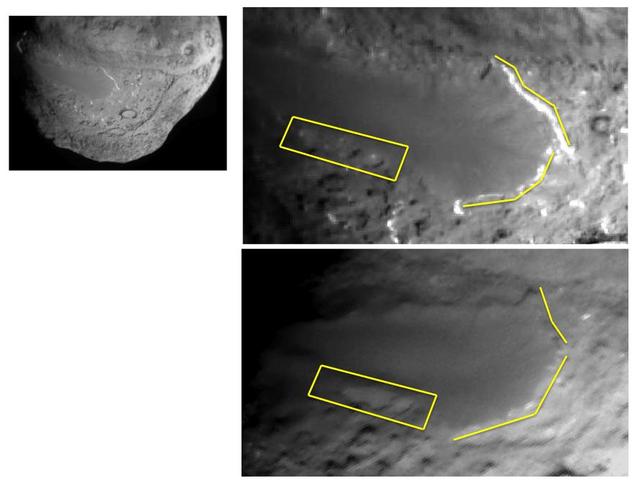
This image layout depicts changes in the surface of comet Tempel 1, observed first by NASA Deep Impact Mission in 2005 top right and again by NASA Stardust-NExT mission on Feb. 14, 2011 bottom right.
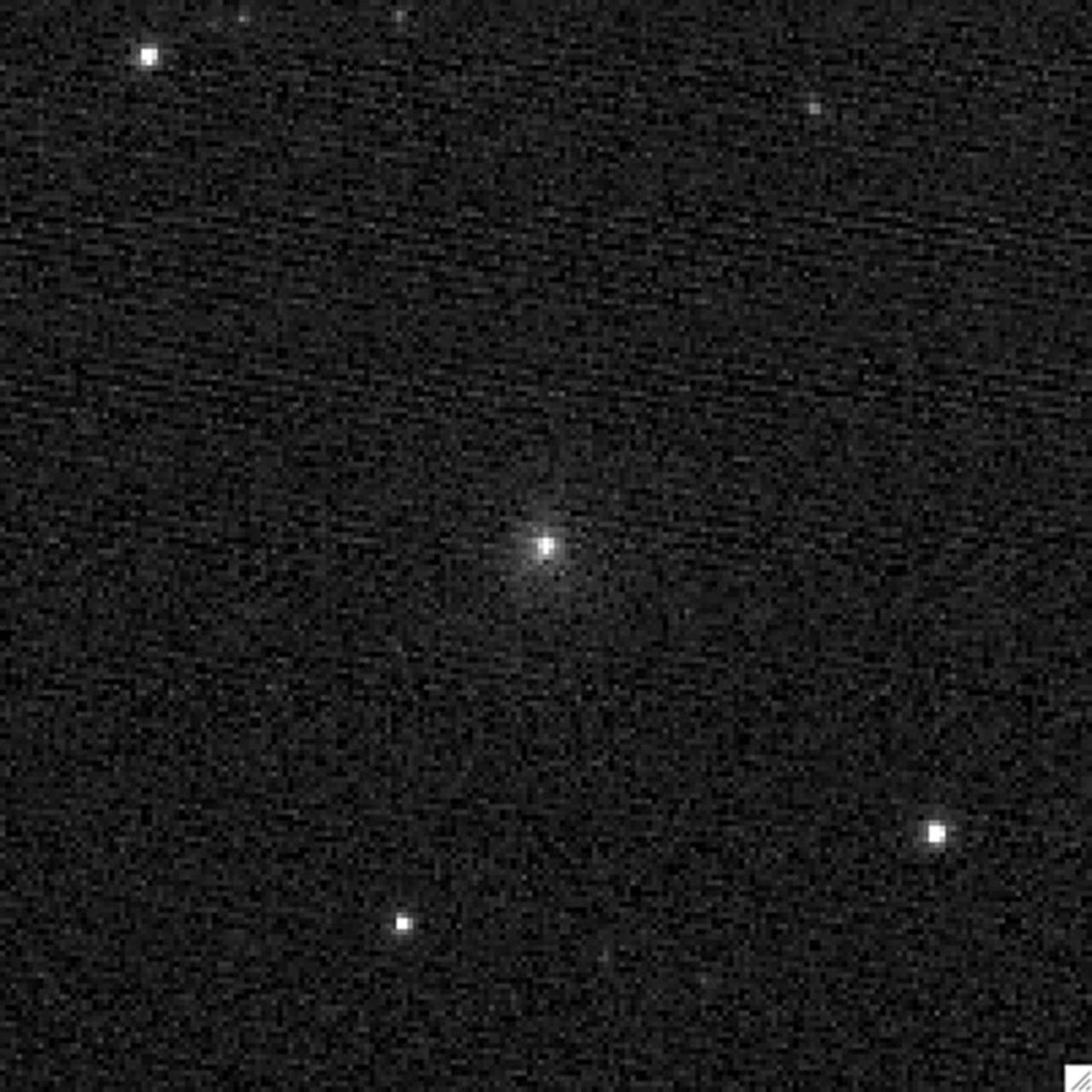
This composite image was taken by NASA Stardust navigation camera 42 hours before its encounter with comet Tempel 1. The spacecraft is due to encounter the comet in the evening hours of Feb. 14, 2011.
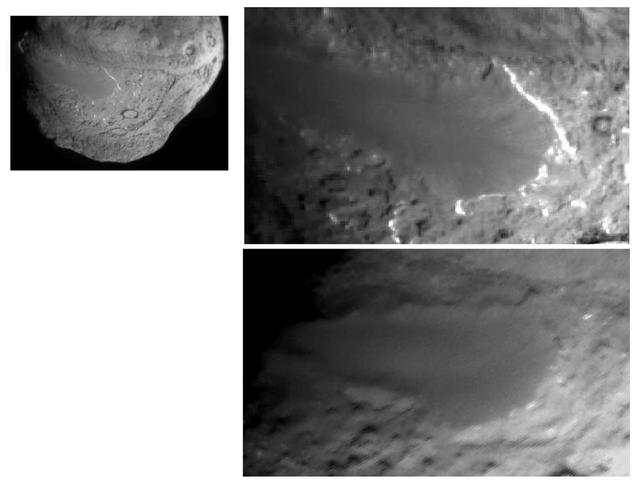
This image layout depicts changes in the surface of comet Tempel 1, observed first by NASA Deep Impact Mission in 2005 top right and again by NASA Stardust-NExT mission on Feb. 14, 2011 bottom right.