
STS096-707-039 (5 June 1999) --- The Student-Tracked Atmospheric Research Satellite for Heuristic International Networking Experiment (STARSHINE) satellite leaves the cargo bay of the Space Shuttle Discovery near the completion of the almost ten-day STS-96 mission. SpaceHab, the stowed Canadian-built remote manipulator system (RMS) arm and the shuttle's docking mechanism which earlier was connected to the International Space Station (ISS) are all visible in the foreground.
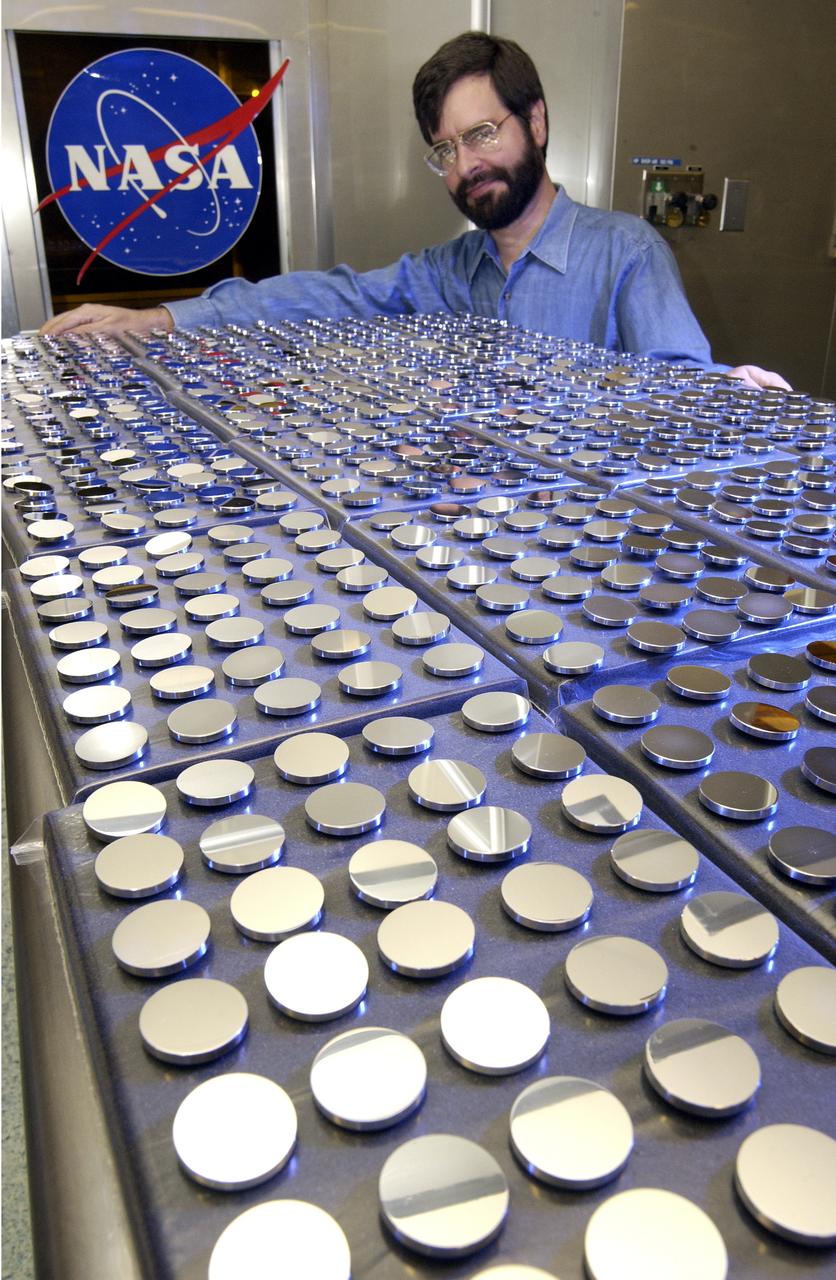
In this photograph, Vince Huegele of the Marshall Space Flight Center's (MSFC's) Space Optics Manufacturing Technology Center (SOMTC) inspects the coating on the mirrors for Starshine 3, a satellite that resembles a high-tech disco ball that was placed into Earth orbit. The sphere, which is covered by hundreds of quarter-sized mirrors that reflect sunlight to observers on the ground, helps students study the effects of solar activity on the Earth's atmosphere. Ed White Middle School in Huntsville, Alabama is among 500 schools worldwide whose students helped grind and polish mirrors for the Starshine 3 satellite as a part of the Starshine Project. The total of up to 1,500 mirrors will improve the sunlight flash rate and make the satellite more visible at twilight as it orbits the Earth. These mirrors have been coated with a scratch-resistant, anti-oxidizing layer of silicon dioxide by optical engineers and technicians at the Hill Air Force Base in Utah and MSFC. Starshine-3 was launched on an Athena I unmarned launch vehicle out of the Kodiak Launch Complex, Alaska, on September 29, 2001. Starshine 3 is nearly 37 inches (1 meter) in diameter, weighs 200 pounds (91 kilograms), and carries 1500 mirrors that were polished by approximately 40,000 students in 1,000 schools in 30 countries. Three small, optically-reflective spherical Starshine student satellites have been designed by the U.S. Naval Research Laboratory and built by an informal volunteer coalition of organizations and individuals in the U.S. and Canada. This coalition, called Project Starshine, is headquartered in Monument, Colorado.
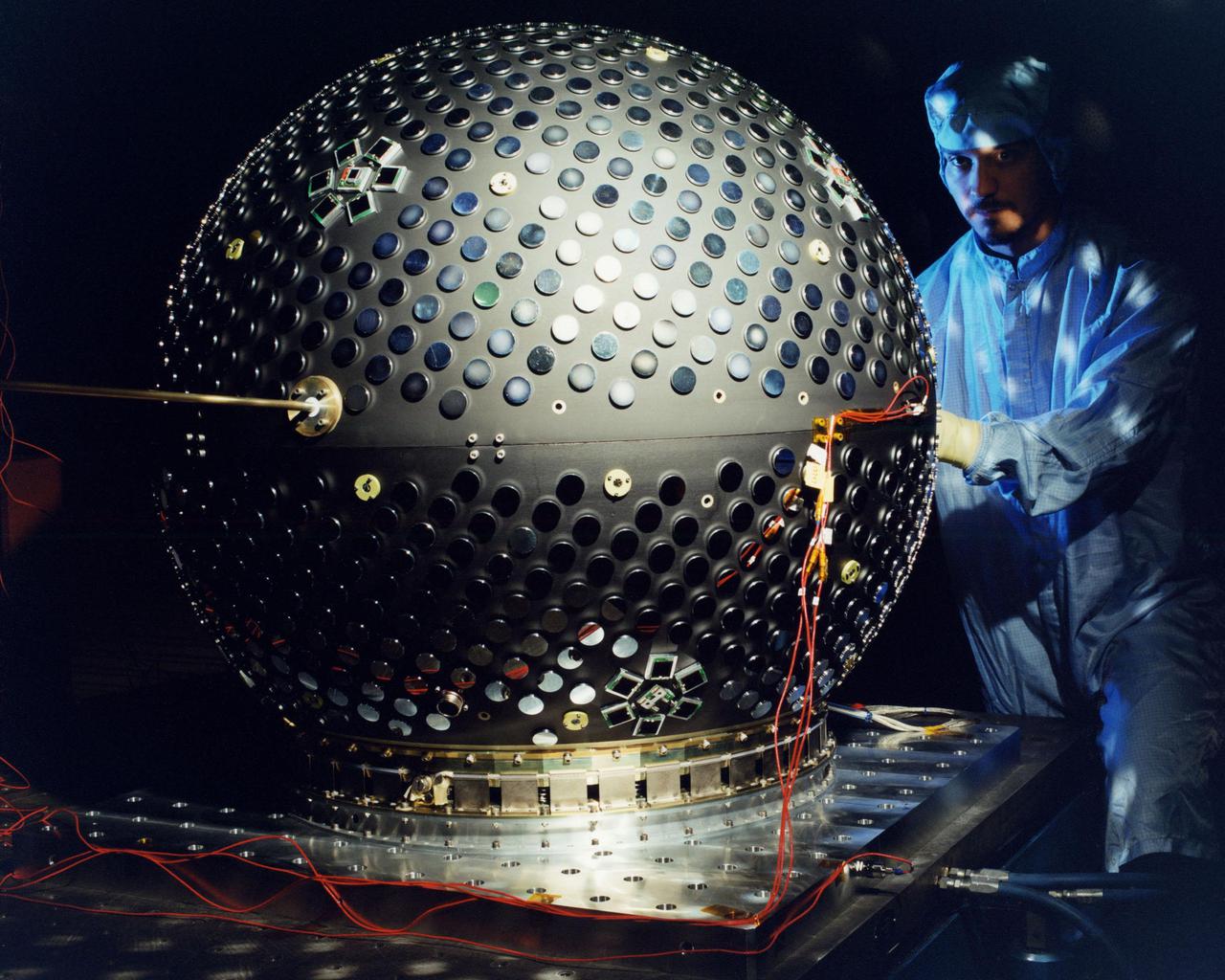
KODIAK ISLAND, Alaska -- A technician performs final testing on Starshine 3 at the Naval Research Laboratory in Washington, D.C., to prepare for the launch of the Kodiak Star at Kodiak Island, Alaska. The first orbital launch to take place from Alaska's Kodiak Launch Complex, Kodiak Star is scheduled to lift off on a Lockheed Martin Athena I launch vehicle on Sept. 17 during a two-hour window that extends from 5:00 to 7:00 p.m. ADT. The payloads aboard include the Starshine 3, sponsored by NASA, and the PICOSat, PCSat and Sapphire, sponsored by the Department of Defense (DoD) Space Test Program.

KODIAK ISLAND, Alaska -- Technicians prepare the Starshine 3 payload, while the payload fairing of the Athena 1 launch vehicle awaits servicing at Kodiak Island, Alaska, as preparations to launch Kodiak Star proceed. The first orbital launch to take place from Alaska's Kodiak Launch Complex, Kodiak Star is scheduled to lift off on a Lockheed Martin Athena I launch vehicle on Sept. 17 during a two-hour window that extends from 5:00 to 7:00 p.m. ADT. The payloads aboard include the Starshine 3, sponsored by NASA, and the PICOSat, PCSat and Sapphire, sponsored by the Department of Defense (DoD) Space Test Program
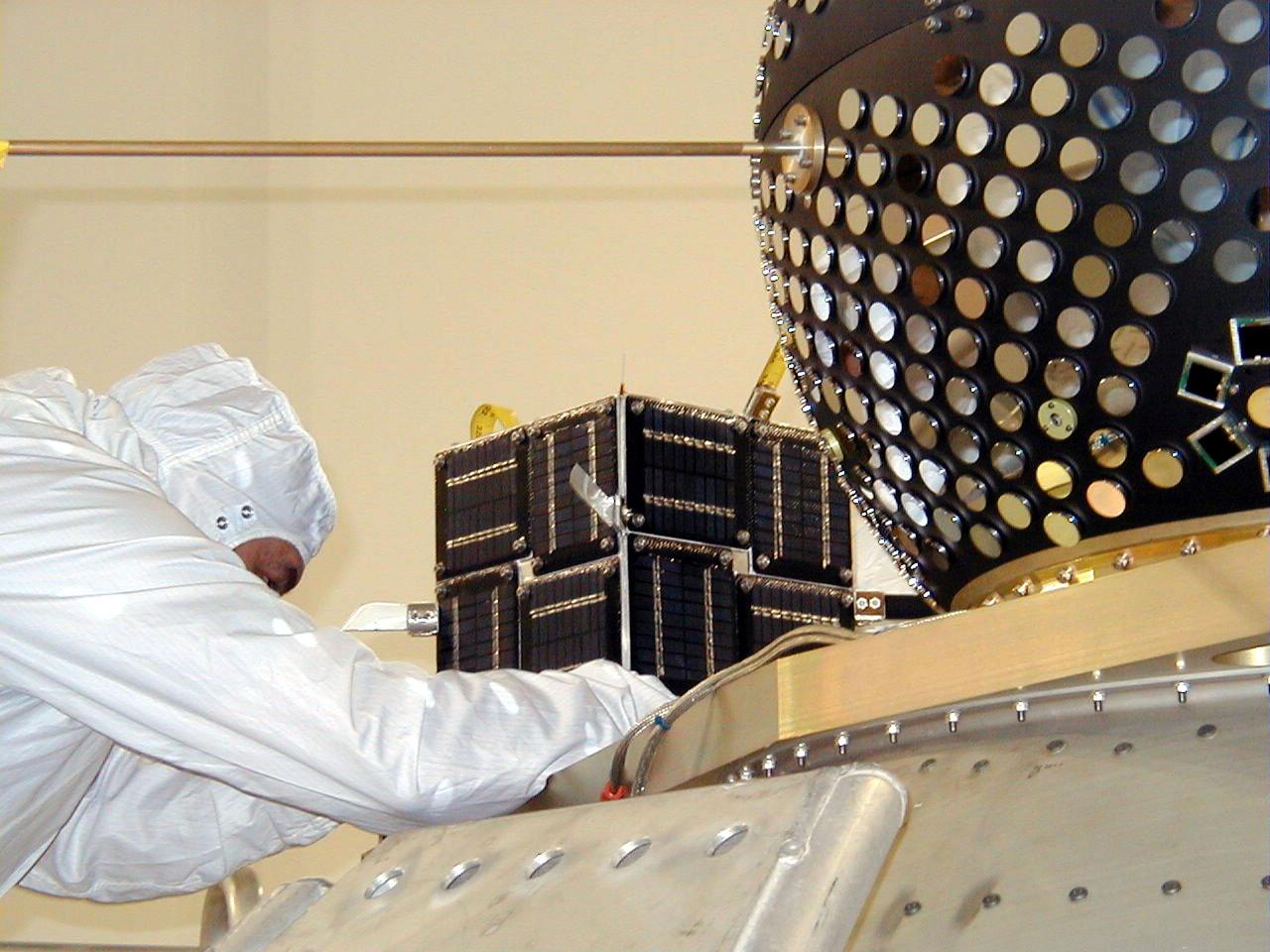
KODIAK ISLAND, Alaska -- A technician prepares the Starshine 3 and PICSat payloads for their launch aboard the Athena 1 launch vehicle at Kodiak Island, Alaska, as preparations to launch Kodiak Star proceed. The first orbital launch to take place from Alaska's Kodiak Launch Complex, Kodiak Star is scheduled to lift off on a Lockheed Martin Athena I launch vehicle on Sept. 17 during a two-hour window that extends from 5 p.m. to 7 p.m. p.m. ADT. The payloads aboard include the Starshine 3, sponsored by NASA, and the PICOSat, PCSat and Sapphire, sponsored by the Department of Defense (DoD) Space Test Program.
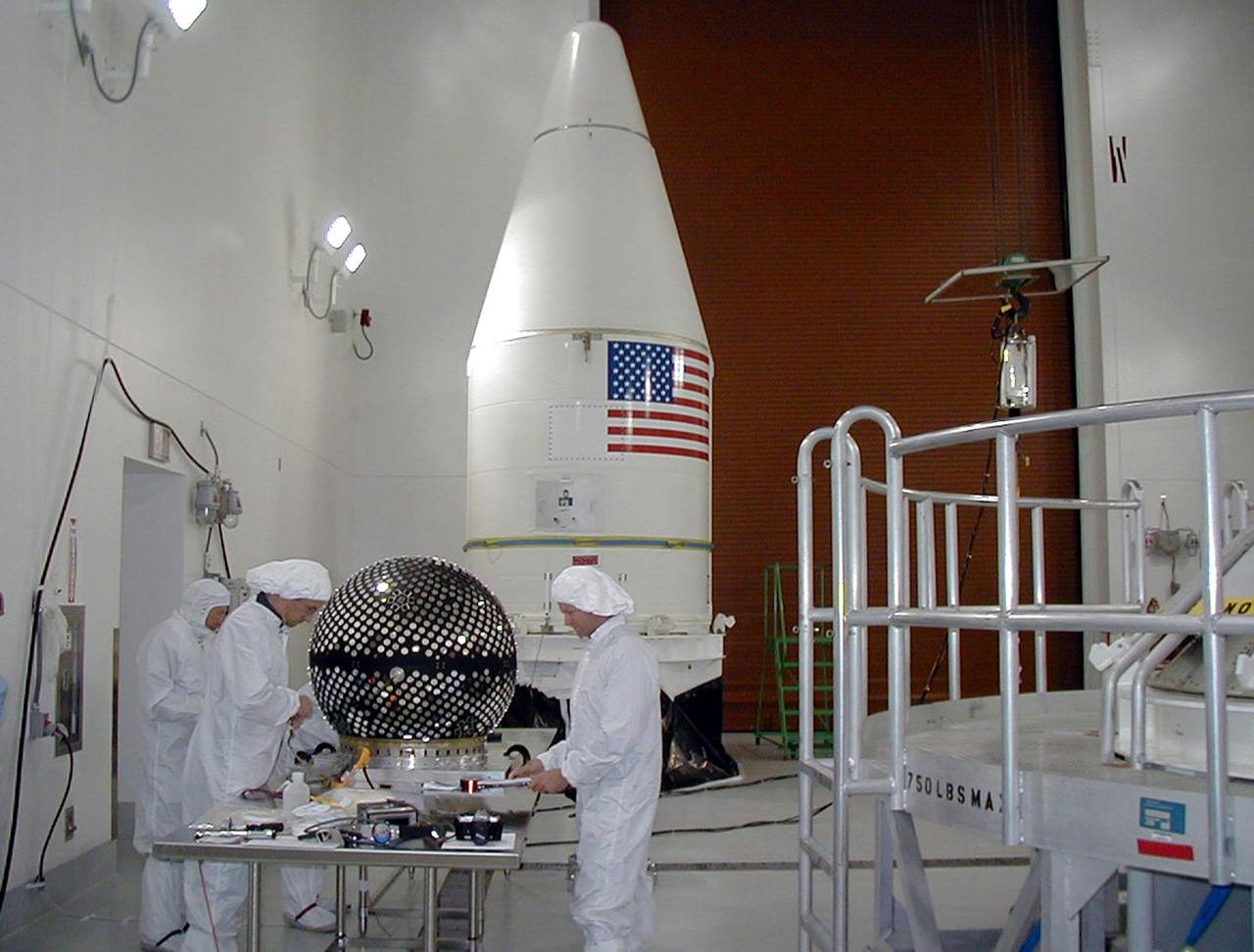
KODIAK ISLAND, Alaska -- Technicians prepare the Starshine 3 payload for its launch aboard the Athena 1 launch vehicle, while the payload fairing awaits processing, at Kodiak Island, Alaska, as preparations to launch Kodiak Star proceed. The first orbital launch to take place from Alaska's Kodiak Launch Complex, Kodiak Star is scheduled to lift off on a Lockheed Martin Athena I launch vehicle on Sept. 17 during a two-hour window that extends from 5:00 to 7:00 p.m. ADT. The payloads aboard include the Starshine 3, sponsored by NASA, and the PICOSat, PCSat and Sapphire, sponsored by the Department of Defense (DoD) Space Test Program.
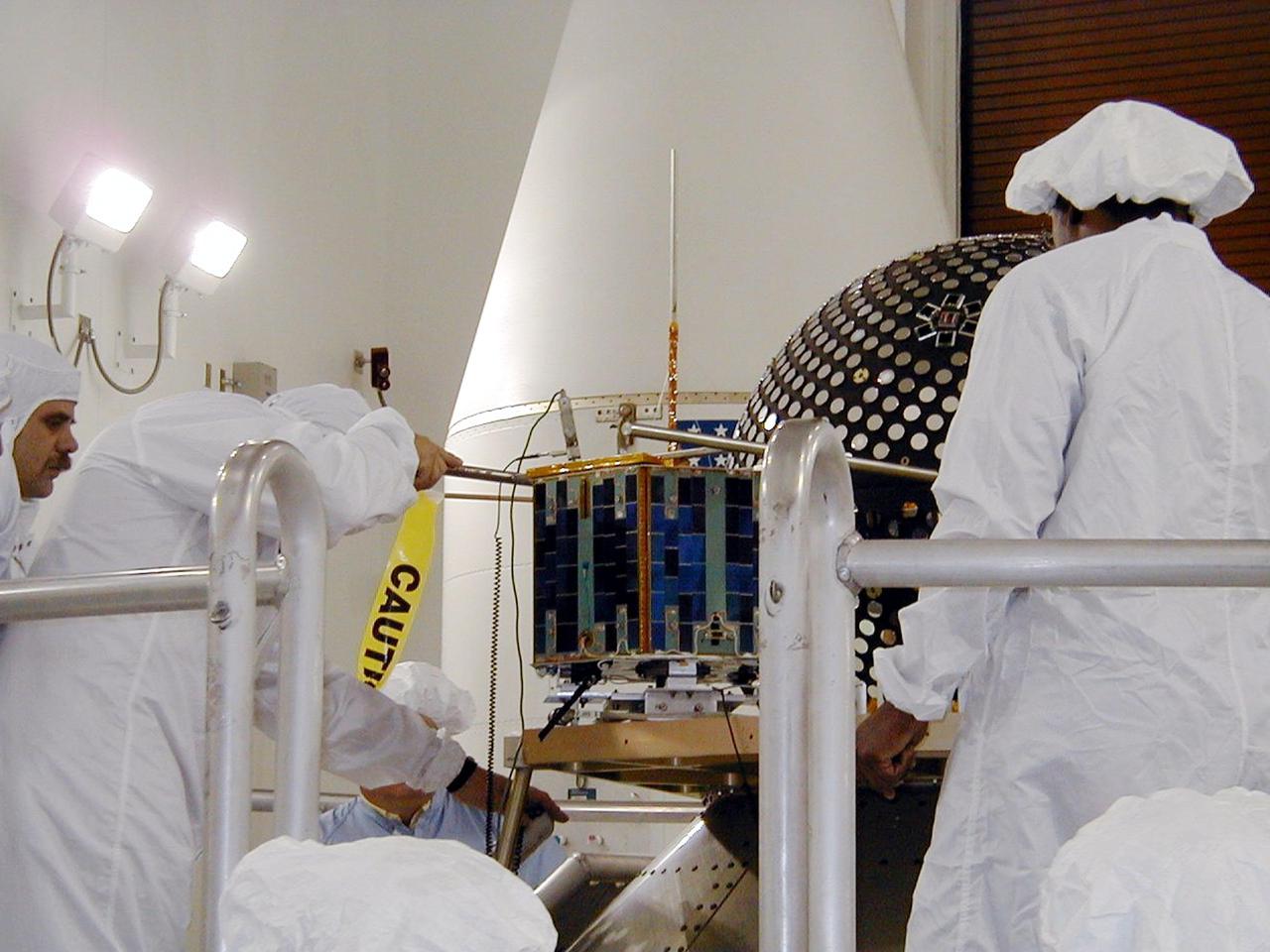
KODIAK ISLAND, Alaska -- The Sapphire payload is moved into position next to the Starshine 3 payload at Kodiak Island, Alaska, as preparations to launch Kodiak Star proceed. The first orbital launch to take place from Alaska's Kodiak Launch Complex, Kodiak Star is scheduled to lift off on a Lockheed Martin Athena I launch vehicle on Sept. 17 during a two-hour window that extends from 5 p.m. to 7 p.m. p.m. ADT. The payloads aboard include the Starshine 3, sponsored by NASA, and the PICOSat, PCSat and Sapphire, sponsored by the Department of Defense (DoD) Space Test Program.
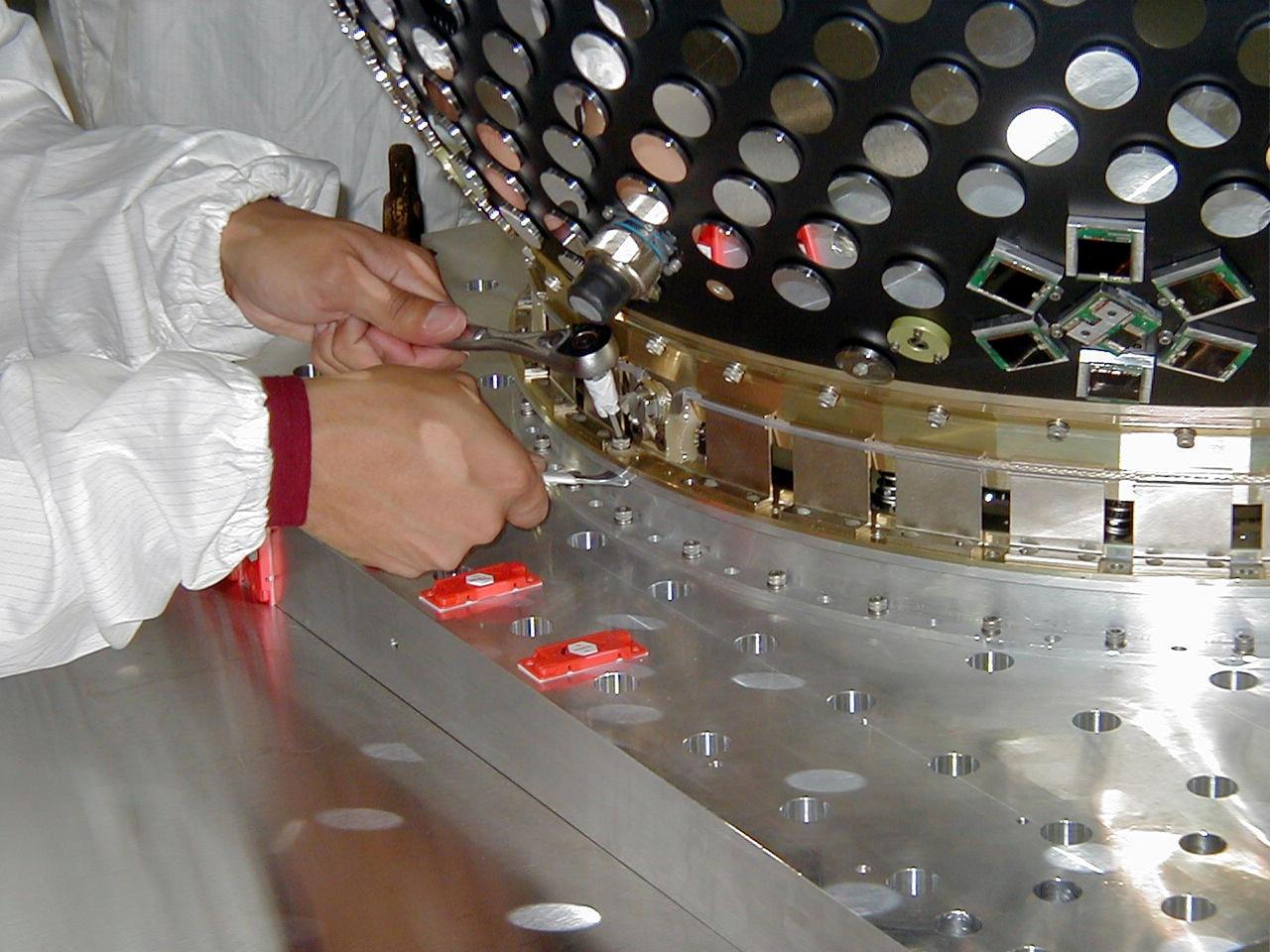
KODIAK ISLAND, Alaska -- Technicians prepare the Starshine 3 payload for its launch aboard the Athena 1 launch vehicle at Kodiak Island, Alaska, as preparations to launch Kodiak Star proceed. The first orbital launch to take place from Alaska's Kodiak Launch Complex, Kodiak Star is scheduled to lift off on a Lockheed Martin Athena I launch vehicle on Sept. 17 during a two-hour window that extends from 5:00 to 7:00 p.m. ADT. The payloads aboard include the Starshine 3, sponsored by NASA, and the PICOSat, PCSat and Sapphire, sponsored by the Department of Defense (DoD) Space Test Program.
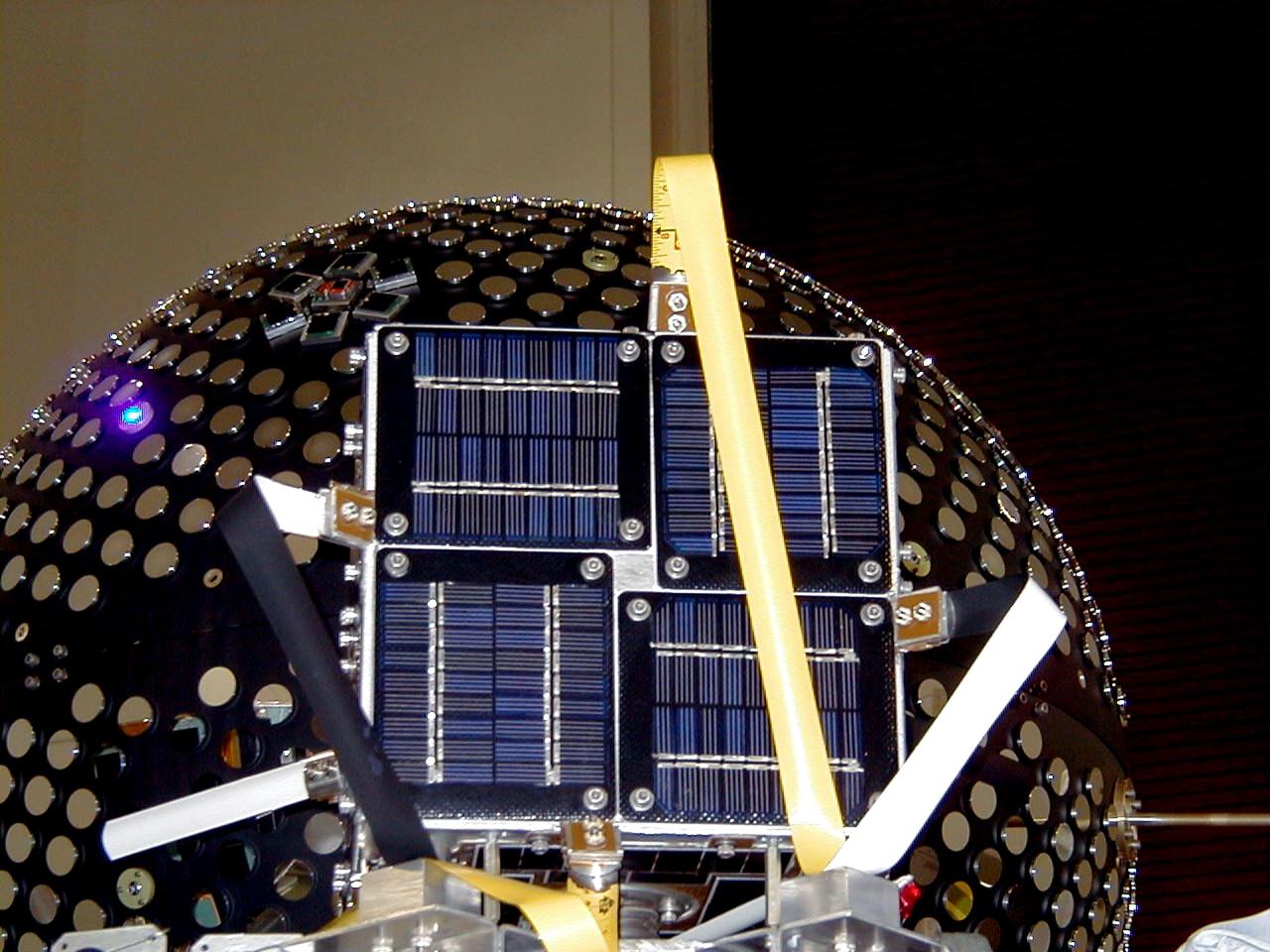
KODIAK ISLAND, Alaska -- The PICSat and Starshine 3 (back) payloads wait for their launch aboard the Athena 1 launch vehicle at Kodiak Island, Alaska, as preparations to launch Kodiak Star proceed. The first orbital launch to take place from Alaska's Kodiak Launch Complex, Kodiak Star is scheduled to lift off on a Lockheed Martin Athena I launch vehicle on Sept. 17 during a two-hour window that extends from 5 p.m. to 7 p.m. p.m. ADT. The payloads aboard include the Starshine 3, sponsored by NASA, and the PICOSat, PCSat and Sapphire, sponsored by the Department of Defense (DoD) Space Test Program.
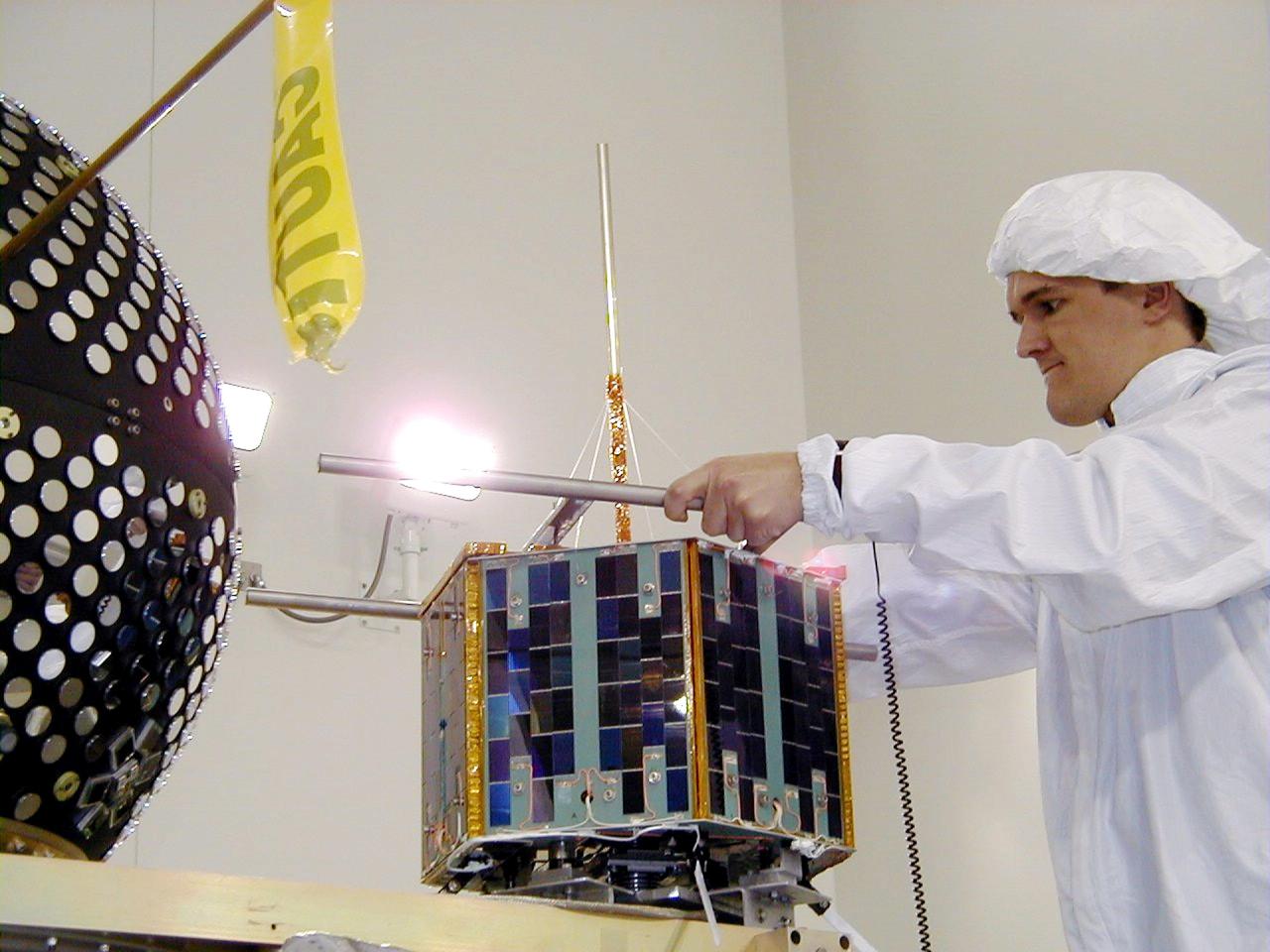
KODIAK ISLAND, Alaska -- The Sapphire payload is moved into position next to the Starshine 3 payload at Kodiak Island, Alaska, as preparations to launch Kodiak Star proceed. The first orbital launch to take place from Alaska's Kodiak Launch Complex, Kodiak Star is scheduled to lift off on a Lockheed Martin Athena I launch vehicle on Sept. 17 during a two-hour window that extends from 5 p.m. to 7 p.m. p.m. ADT. The payloads aboard include the Starshine 3, sponsored by NASA, and the PICOSat, PCSat and Sapphire, sponsored by the Department of Defense (DoD) Space Test Program.

KENNEDY SPACE CENTER, Fla. -- Technicians complete final preparations to the four Athena 1 payloads (Starshine 3, PICOSat, PCSat and Sapphire) at Kodiak Island, Alaska, as preparations to launch Kodiak Star proceed. The first launch to take place from Alaska's Kodiak Launch Complex, Kodiak Star is scheduled to lift off on a Lockheed Martin Athena I launch vehicle on Sept. 17 during a two-hour window that extends from 5:00 to 7:00 p.m. ADT. The payloads aboard include the Starshine 3, sponsored by NASA, and the PICOSat, PCSat and Sapphire, sponsored by the Department of Defense (DoD) Space Test Program
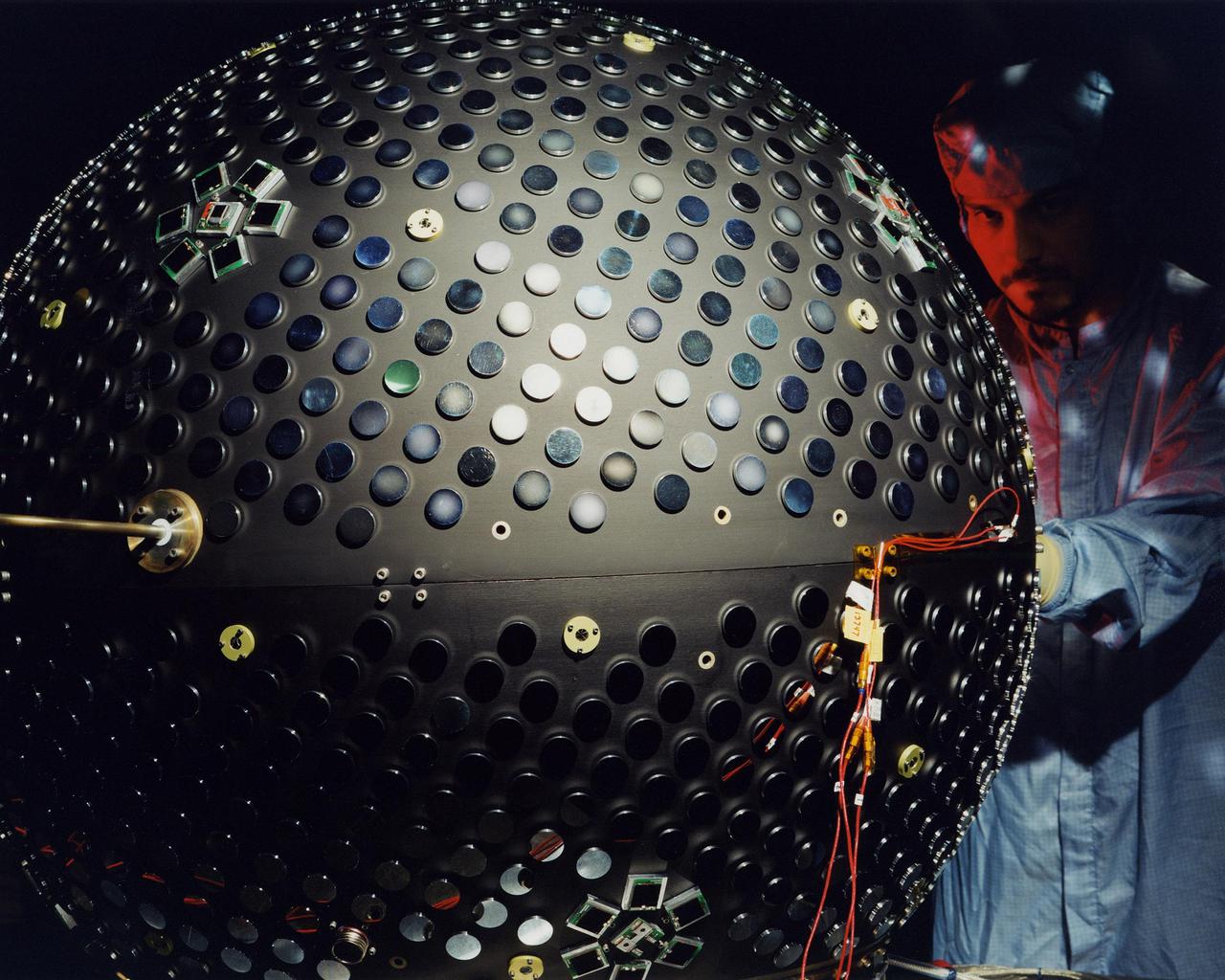
KODIAK ISLAND, Alaska -- A technician performs final testing on Starshine 3 at the Naval Research Laboratory in Washington, D.C., to prepare for the launch of the Kodiak Star at Kodiak Island, Alaska. The first orbital launch to take place from Alaska's Kodiak Launch Complex, Kodiak Star is scheduled to lift off on a Lockheed Martin Athena I launch vehicle on Sept. 17 during a two-hour window that extends from 5:00 to 7:00 p.m. ADT. The payloads aboard include the Starshine 3, sponsored by NASA, and the PICOSat, PCSat and Sapphire, sponsored by the Department of Defense (DoD) Space Test Program.
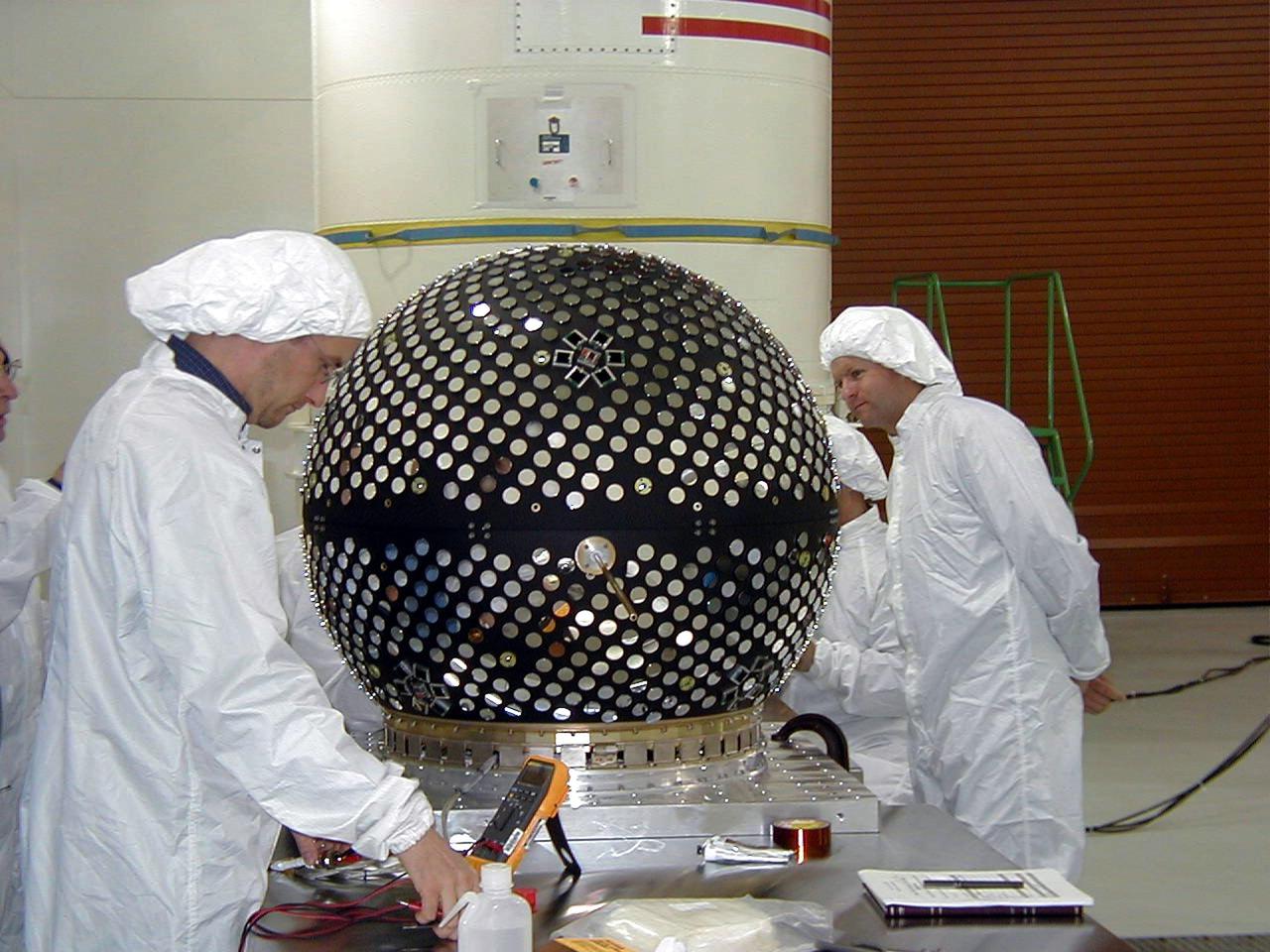
KODIAK ISLAND, Alaska -- Technicians prepare the Starshine 3 payload for its launch aboard the Athena 1 launch vehicle at Kodiak Island, Alaska, as preparations to launch Kodiak Star proceed. The first orbital launch to take place from Alaska's Kodiak Launch Complex, Kodiak Star is scheduled to lift off on a Lockheed Martin Athena I launch vehicle on Sept. 17 during a two-hour window that extends from 5:00 to 7:00 p.m. ADT. The payloads aboard include the Starshine 3, sponsored by NASA, and the PICOSat, PCSat and Sapphire, sponsored by the Department of Defense (DoD) Space Test Program.
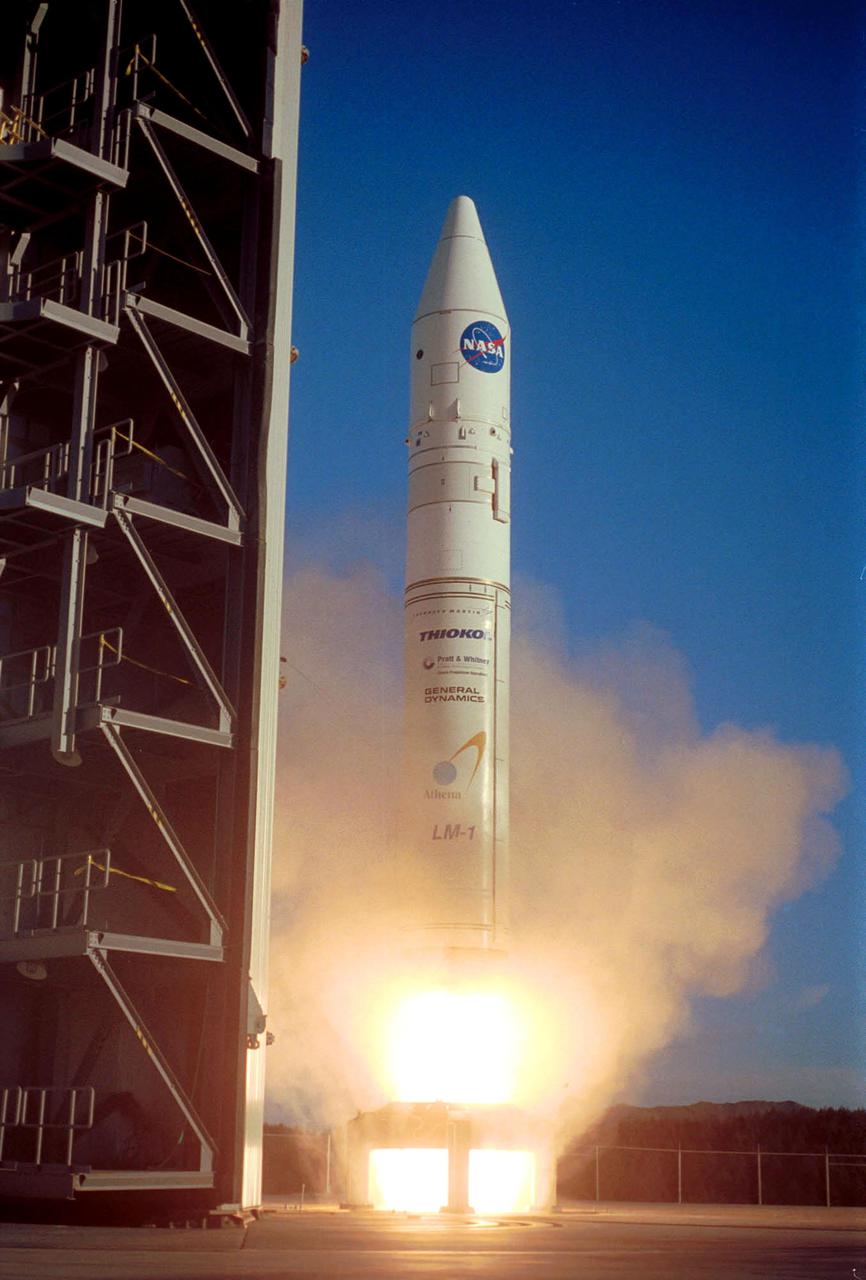
KODIAK ISLAND, Alaska -- Into a still-blue sky, a Lockheed Martin Athena I launch vehicle lifts off the launch pad at Kodiak Launch Complex (KSC) with the Kodiak Star spacecraft on board. Liftoff occurred at 10:40 p.m. EDT, Sept. 29. The Kodiak Star payload consists of four satellites: PICOSat, PCSat, Sapphire and Starshine 3. Starshine is sponsored by NASA. The 200-pound sphere will be used by students to study orbital decay. The other three satellites, also on educational missions, are sponsored by the department of defense. PICOSat is a technology demonstration satellite with four experiments on board. PCSat was designed by midshipmen at the U.S. Naval Academy, and will become part of the amateur radio community's automatic position reporting system. Sapphire is a micro-satellite built by students at Stanford University and Washington University - St. Louis to test infrared sensors for space use. KLC is the newest commercial launch complex in the United States, ideal for launch payloads requiring low-Earth polar or sun-synchronous orbits
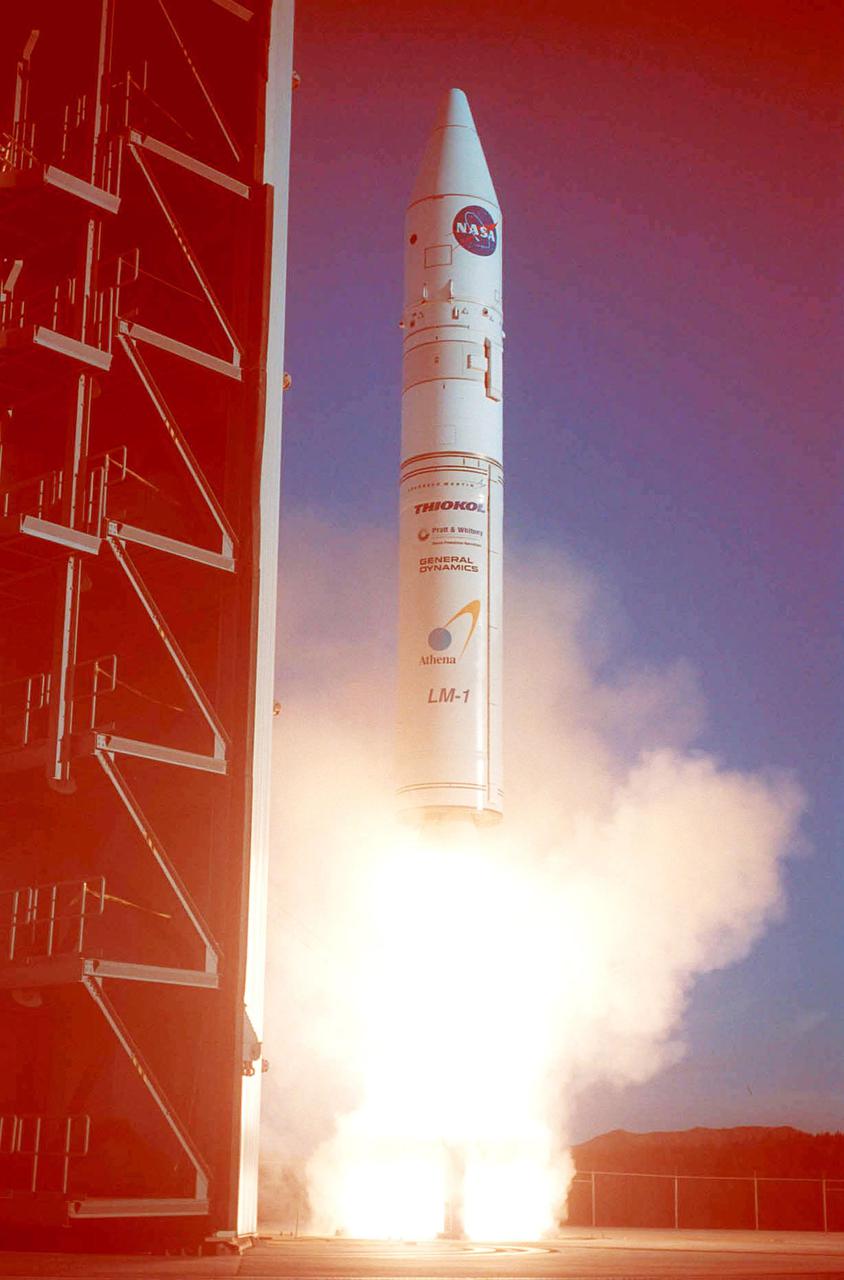
KODIAK ISLAND, Alaska -- A Lockheed Martin Athena I launch vehicle rockets off the launch pad at Kodiak Launch Complex (KSC) with the Kodiak Star spacecraft on board. Liftoff occurred at 10:40 p.m. EDT, Sept. 29. The Kodiak Star payload consists of four satellites: PICOSat, PCSat, Sapphire and Starshine 3. Starshine is sponsored by NASA. The 200-pound sphere will be used by students to study orbital decay. The other three satellites, also on educational missions, are sponsored by the department of defense. PICOSat is a technology demonstration satellite with four experiments on board. PCSat was designed by midshipmen at the U.S. Naval Academy, and will become part of the amateur radio community's automatic position reporting system. Sapphire is a micro-satellite built by students at Stanford University and Washington University - St. Louis to test infrared sensors for space use. KLC is the newest commercial launch complex in the United States, ideal for launch payloads requiring low-Earth polar or sun-synchronous orbits
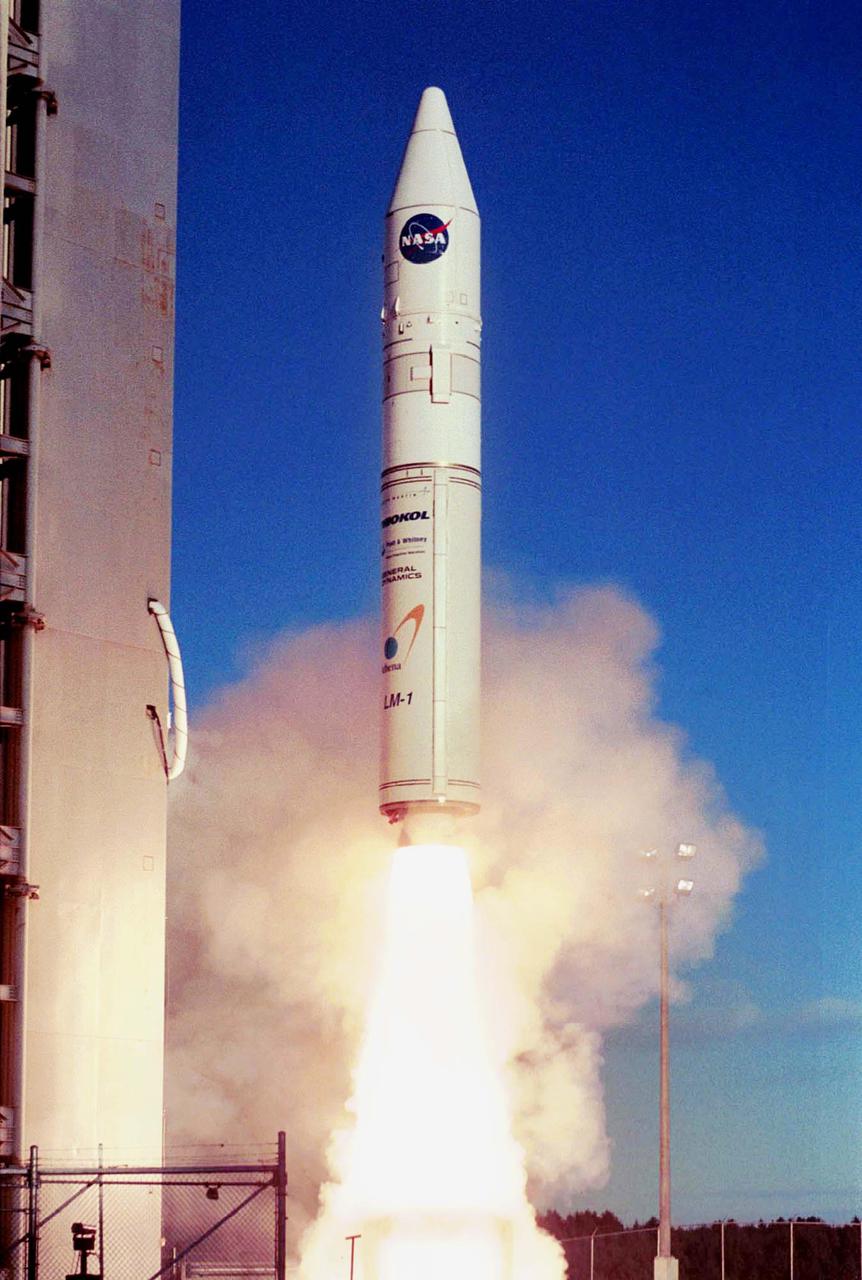
KODIAK ISLAND, Alaska -- A Lockheed Martin Athena I launch vehicle lifts off the launch pad at Kodiak Launch Complex (KSC) with the Kodiak Star spacecraft on board. Liftoff occurred at 10:40 p.m. EDT, Sept. 29. The Kodiak Star payload consists of four satellites: PICOSat, PCSat, Sapphire and Starshine 3. Starshine is sponsored by NASA. The 200-pound sphere will be used by students to study orbital decay. The other three satellites, also on educational missions, are sponsored by the department of defense. PICOSat is a technology demonstration satellite with four experiments on board. PCSat was designed by midshipmen at the U.S. Naval Academy, and will become part of the amateur radio community's automatic position reporting system. Sapphire is a micro-satellite built by students at Stanford University and Washington University - St. Louis to test infrared sensors for space use. KLC is the newest commercial launch complex in the United States, ideal for launch payloads requiring low-Earth polar or sun-synchronous orbits

KODIAK ISLAND, Alaska -- The Orbis 21D Equipment Section Boost Motor, the second stage of the Athena 1 launch vehicle, waits for the first stage, Castor 120, to be towed up the steepest part of the road, as preparations to launch Kodiak Star proceed. The first orbital launch to take place from Alaska's Kodiak Launch Complex, Kodiak Star is scheduled to lift off on a Lockheed Martin Athena I launch vehicle on Sept. 17 during a two-hour window that extends from 5:00 to 7:00 p.m. ADT. The payloads aboard include the Starshine 3, sponsored by NASA, and the PICOSat, PCSat and Sapphire, sponsored by the Department of Defense (DoD) Space Test Program.
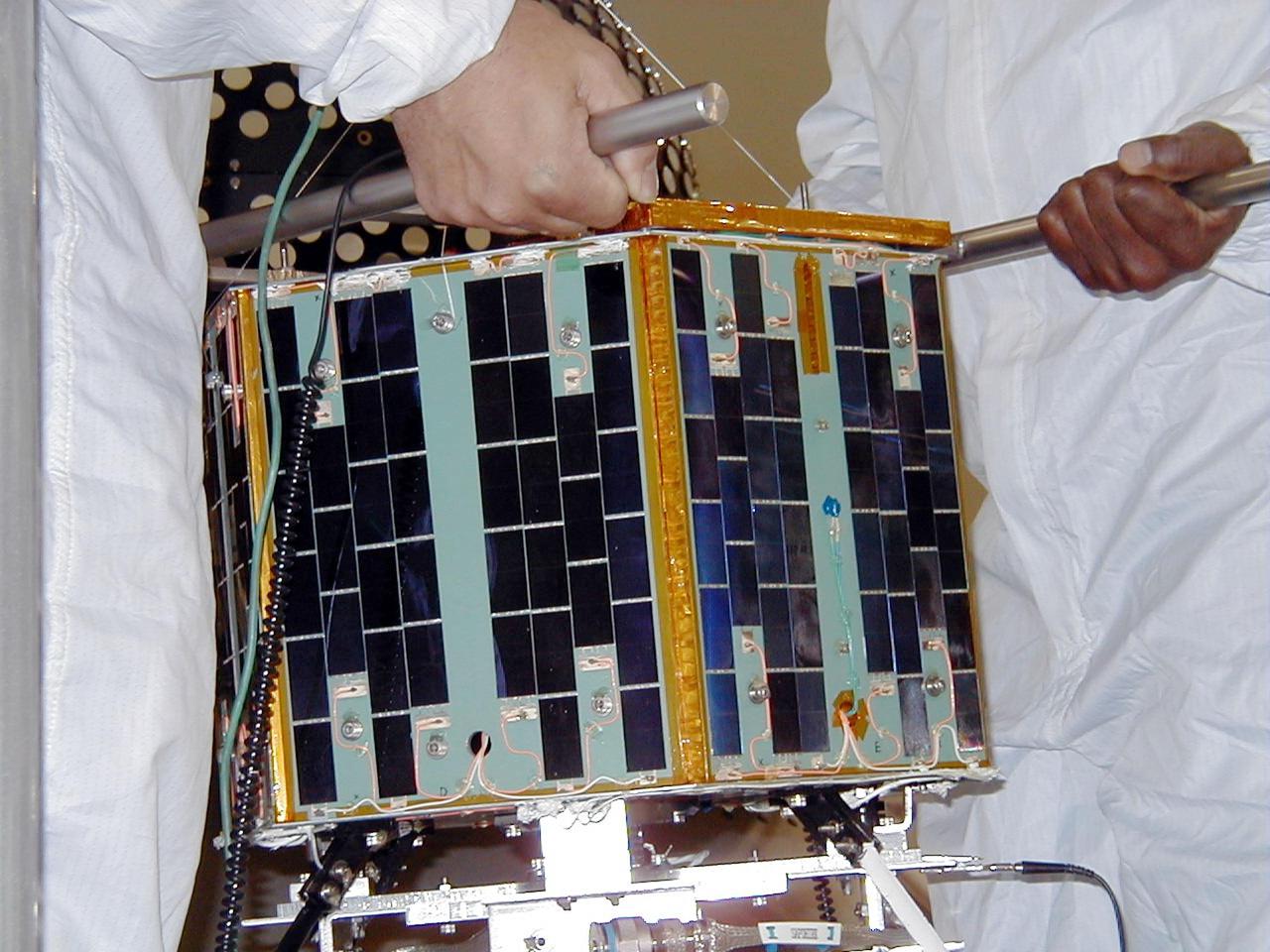
KODIAK ISLAND, Alaska -- Technicians transport the Sapphire payload at Kodiak Island, Alaska, as preparations to launch Kodiak Star proceed. The first orbital launch to take place from Alaska's Kodiak Launch Complex, Kodiak Star is scheduled to lift off on a Lockheed Martin Athena I launch vehicle on Sept. 17 during a two-hour window that extends from 5 p.m. to 7 p.m. p.m. ADT. The payloads aboard include the Starshine 3, sponsored by NASA, and the PICOSat, PCSat and Sapphire, sponsored by the Department of Defense (DoD) Space Test Program.
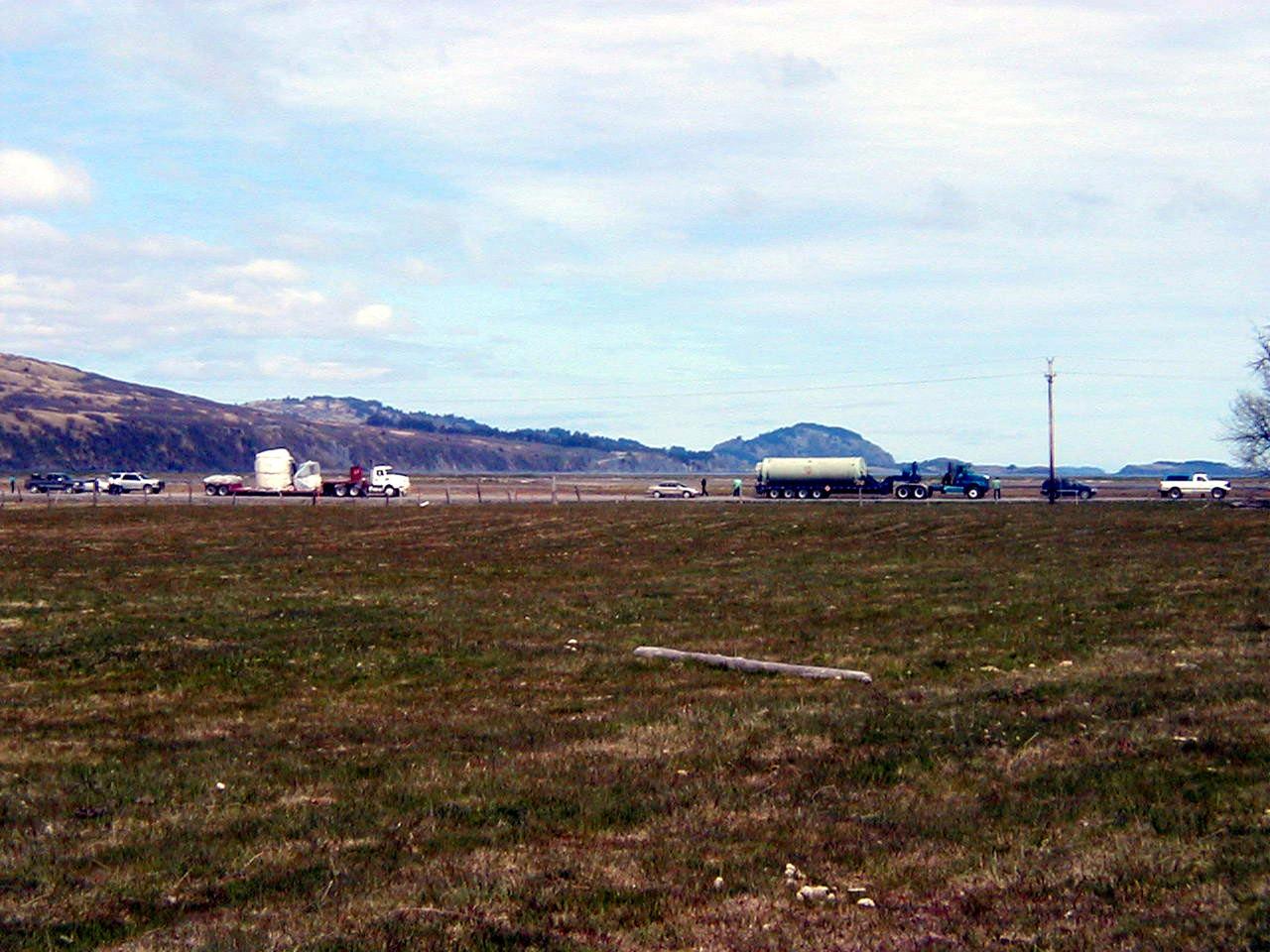
KODIAK ISLAND, Alaska -- A convoy of trucks transports the stages of an Athena launch vehicle and supporting launch equipment to the pad at Kodiak Island, Alaska, as preparations to launch the Kodiak Star continue. The first orbital launch to take place from Alaska's Kodiak Launch Complex, Kodiak Star is scheduled to lift off on a Lockheed Martin Athena I launch vehicle on Sept. 17 during a two-hour window that extends from 5:00 to 7:00 p.m. ADT. The payloads aboard include the Starshine 3, sponsored by NASA, and the PICOSat, PCSat and Sapphire, sponsored by the Department of Defense (DoD) Space Test Program.

KODIAK ISLAND, Alaska -- Technicians install Orbis 21D Equipment Section Boost Motor, the second stage of the Athena 1 launch vehicle, at Kodiak Island, Alaska, as processing for the launch of Kodiak Star proceeds. The first orbital launch to take place from Alaska's Kodiak Launch Complex, Kodiak Star is scheduled to lift off on a Lockheed Martin Athena I launch vehicle on Sept. 17 during a two-hour window that extends from 5:00 to 7:00 p.m. ADT. The payloads aboard include the Starshine 3, sponsored by NASA, and the PICOSat, PCSat and Sapphire, sponsored by the Department of Defense (DoD) Space Test Program.
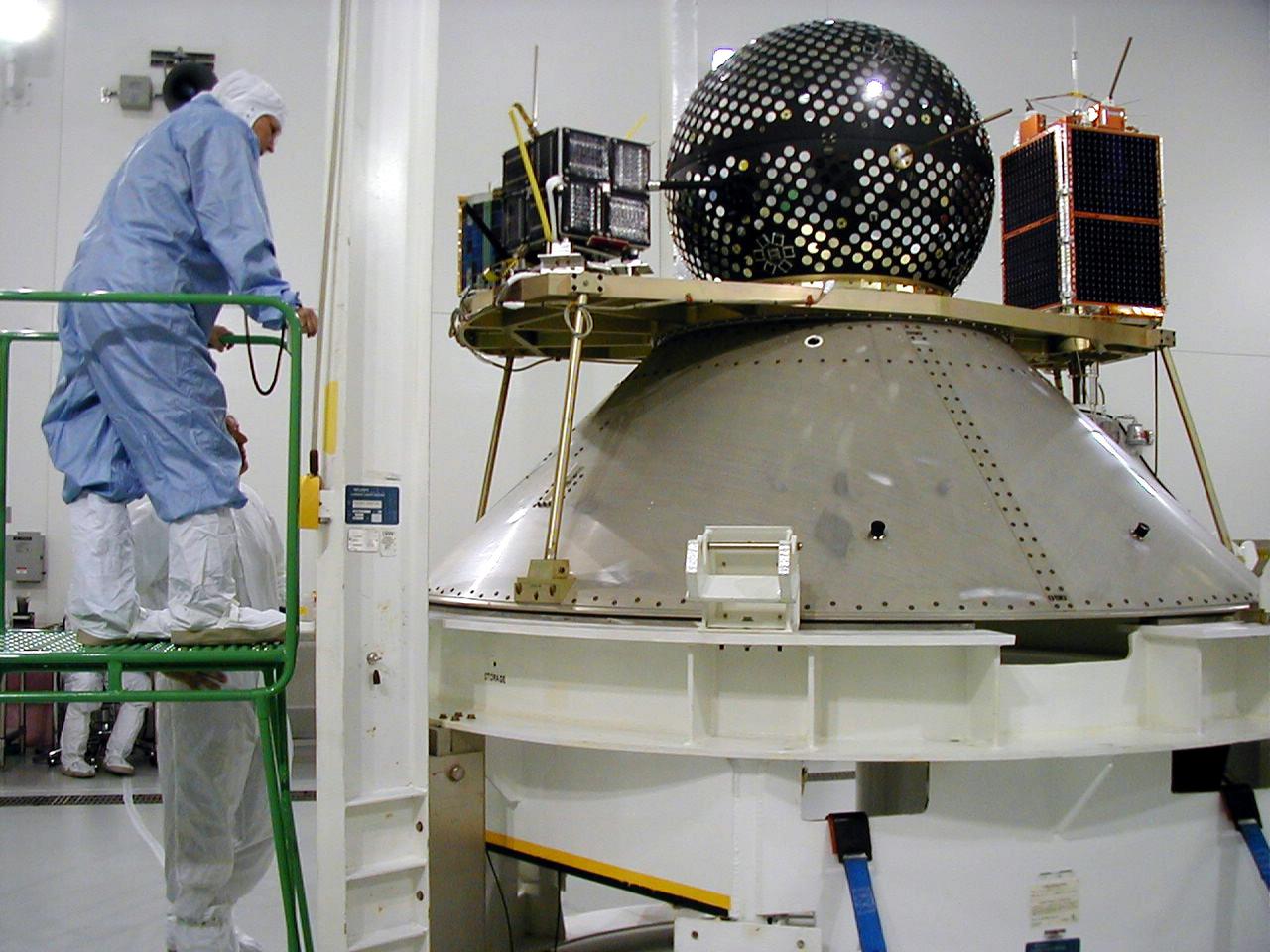
KODIAK ISLAND, ALASKA - In the Launch Service Structure, Kodiak Launch Complex (KLC), the Kodiak Star spacecraft is ready for encapsulation in the fairing, as preparation for launch. The first launch to take place from KLC, Kodiak Star is scheduled to lift off on a Lockheed Martin Athena I launch vehicle on Sept. 17 during a two-hour window that extends from 5 p.m. to 7 p.m. p.m. ADT. The payloads aboard include the Starshine 3, sponsored by NASA, and the PICOSat, PCSat and Sapphire, sponsored by the Department of Defense (DoD) Space Test Program. KLC is the newest commercial launch complex in the United States, ideal for launch payloads requiring low-Earth polar or sun-synchronous orbits
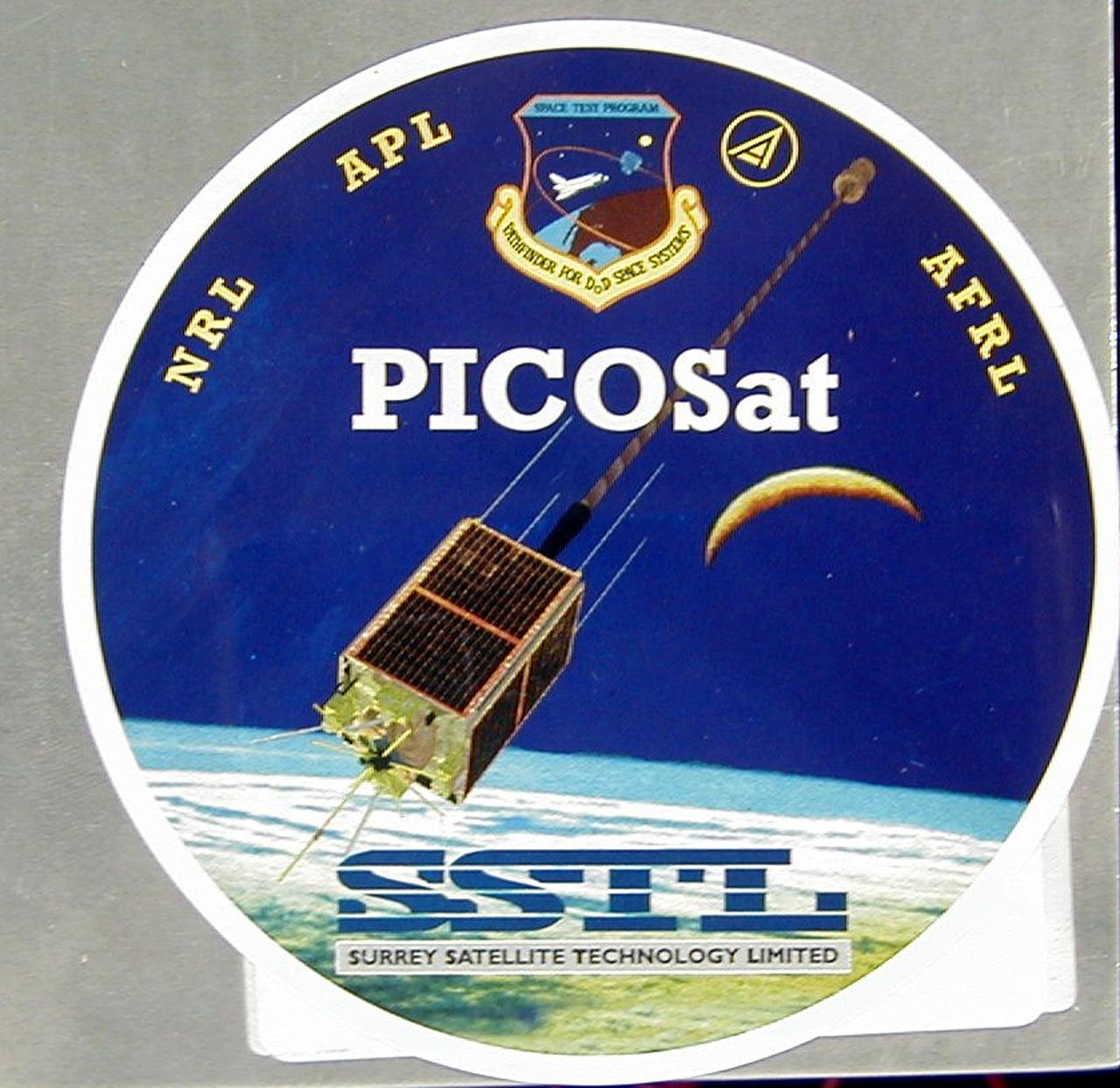
KENNEDY SPACE CENTER, Fla. -- The PICOSat payload banner is displayed by the Athena 1 launch vehicle at Kodiak Island, Alaska, as preparations to launch Kodiak Star proceed. The first launch to take place from Alaska's Kodiak Launch Complex, Kodiak Star is scheduled to lift off on a Lockheed Martin Athena I launch vehicle on Sept. 17 during a two-hour window that extends from 5:00 to 7:00 p.m. ADT. The payloads aboard include the Starshine 3, sponsored by NASA, and the PICOSat, PCSat and Sapphire, sponsored by the Department of Defense (DoD) Space Test Program
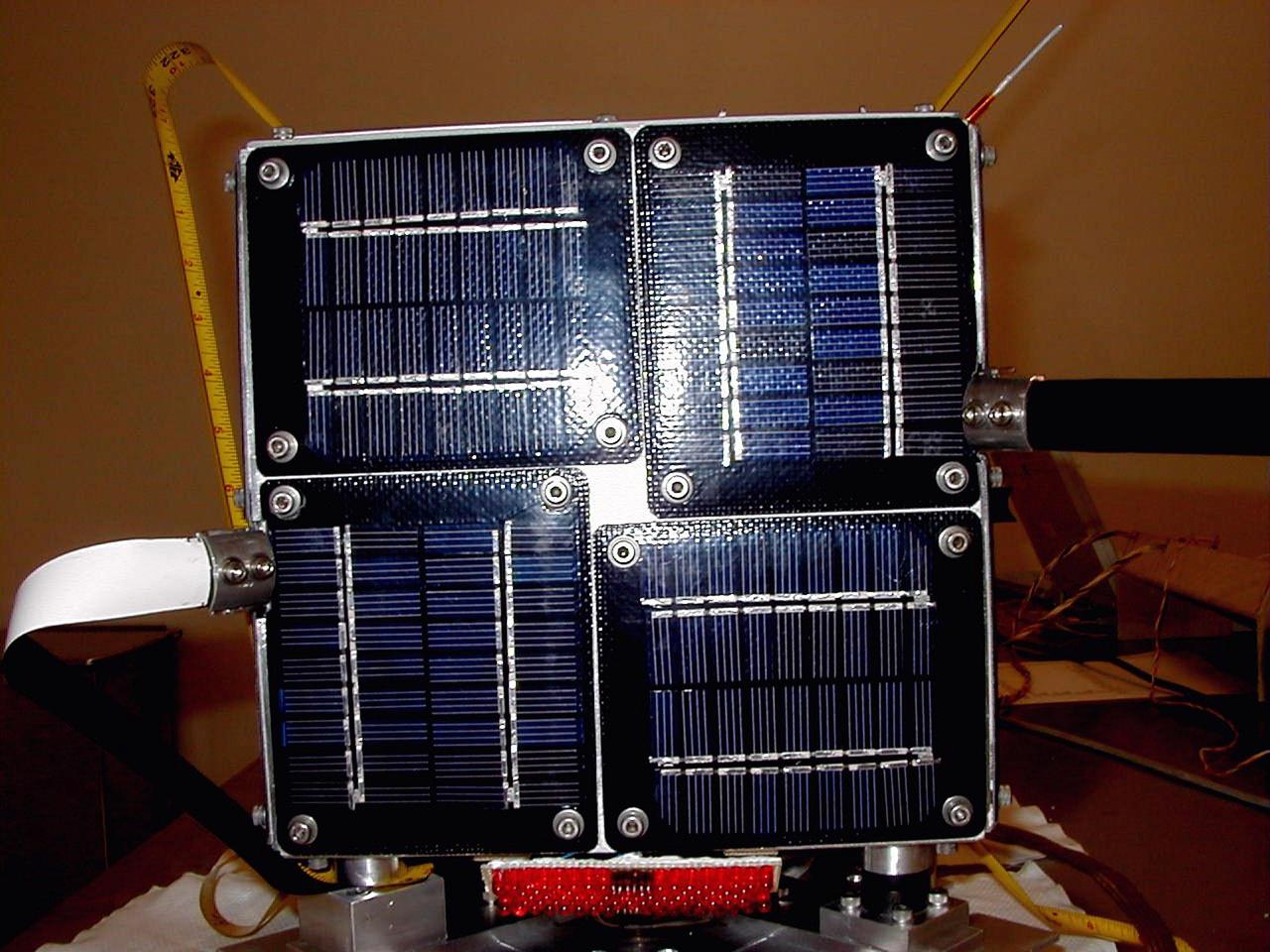
KODIAK ISLAND, Alaska -- The PCSat payload waits for its launch aboard the Athena 1 launch vehicle at Kodiak Island, Alaska, as preparations to launch Kodiak Star proceed. The first orbital launch to take place from Alaska's Kodiak Launch Complex, Kodiak Star is scheduled to lift off on a Lockheed Martin Athena I launch vehicle on Sept. 17 during a two-hour window that extends from 5 p.m. to 7 p.m. p.m. ADT. The payloads aboard include the Starshine 3, sponsored by NASA, and the PICOSat, PCSat and Sapphire, sponsored by the Department of Defense (DoD) Space Test Program.
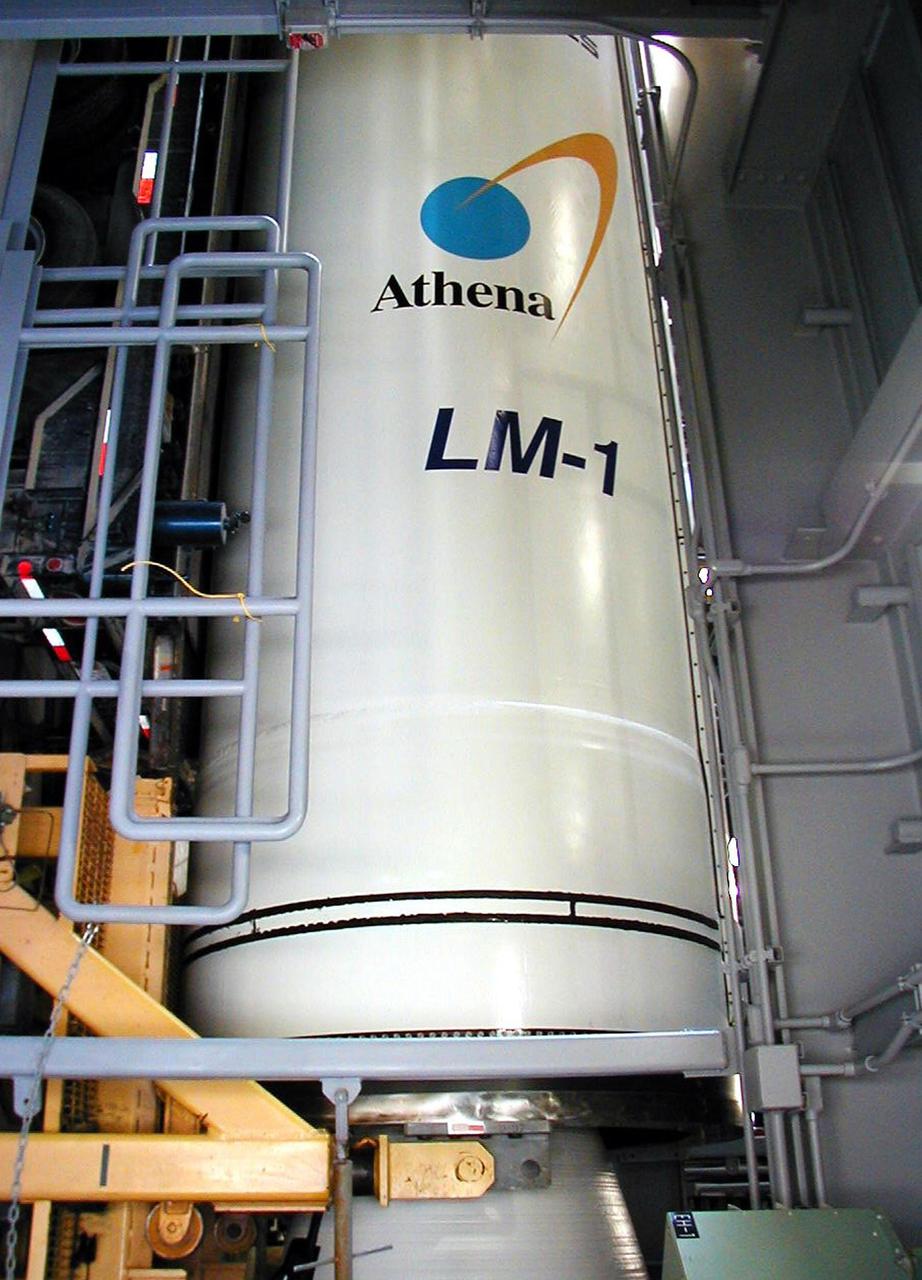
KODIAK ISLAND, Alaska -- Castor 120, the first stage of the Athena 1 launch vehicle, is raised off a truck at the launch pad at Kodiak Island, Alaska, as preparations to launch Kodiak Star proceed. The first orbital launch to take place from Alaska's Kodiak Launch Complex, Kodiak Star is scheduled to lift off on a Lockheed Martin Athena I launch vehicle on Sept. 17 during a two-hour window that extends from 5:00 to 7:00 p.m. ADT. The payloads aboard include the Starshine 3, sponsored by NASA, and the PICOSat, PCSat and Sapphire, sponsored by the Department of Defense (DoD) Space Test Program.
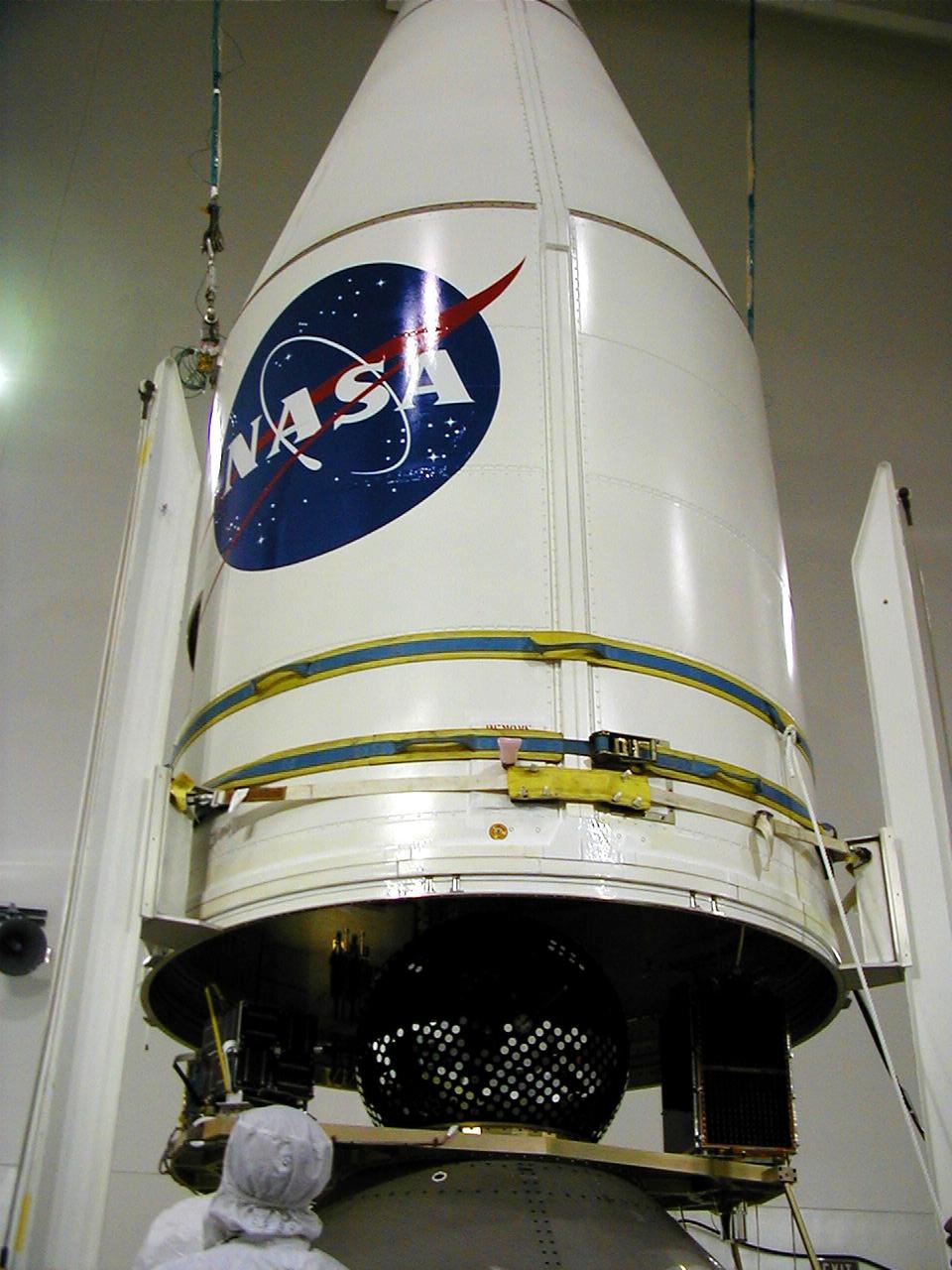
KODIAK ISLAND, ALASKA - In the Launch Service Structure, Kodiak Launch Complex (KLC), the fairing is lowered over the Kodiak Star spacecraft in preparation for launch. The first launch to take place from KLC, Kodiak Star is scheduled to lift off on a Lockheed Martin Athena I launch vehicle on Sept. 17 during a two-hour window that extends from 5 p.m. to 7 p.m. p.m. ADT. The payloads aboard include the Starshine 3, sponsored by NASA, and the PICOSat, PCSat and Sapphire, sponsored by the Department of Defense (DoD) Space Test Program. KLC is the newest commercial launch complex in the United States, ideal for launch payloads requiring low-Earth polar or sun-synchronous orbits
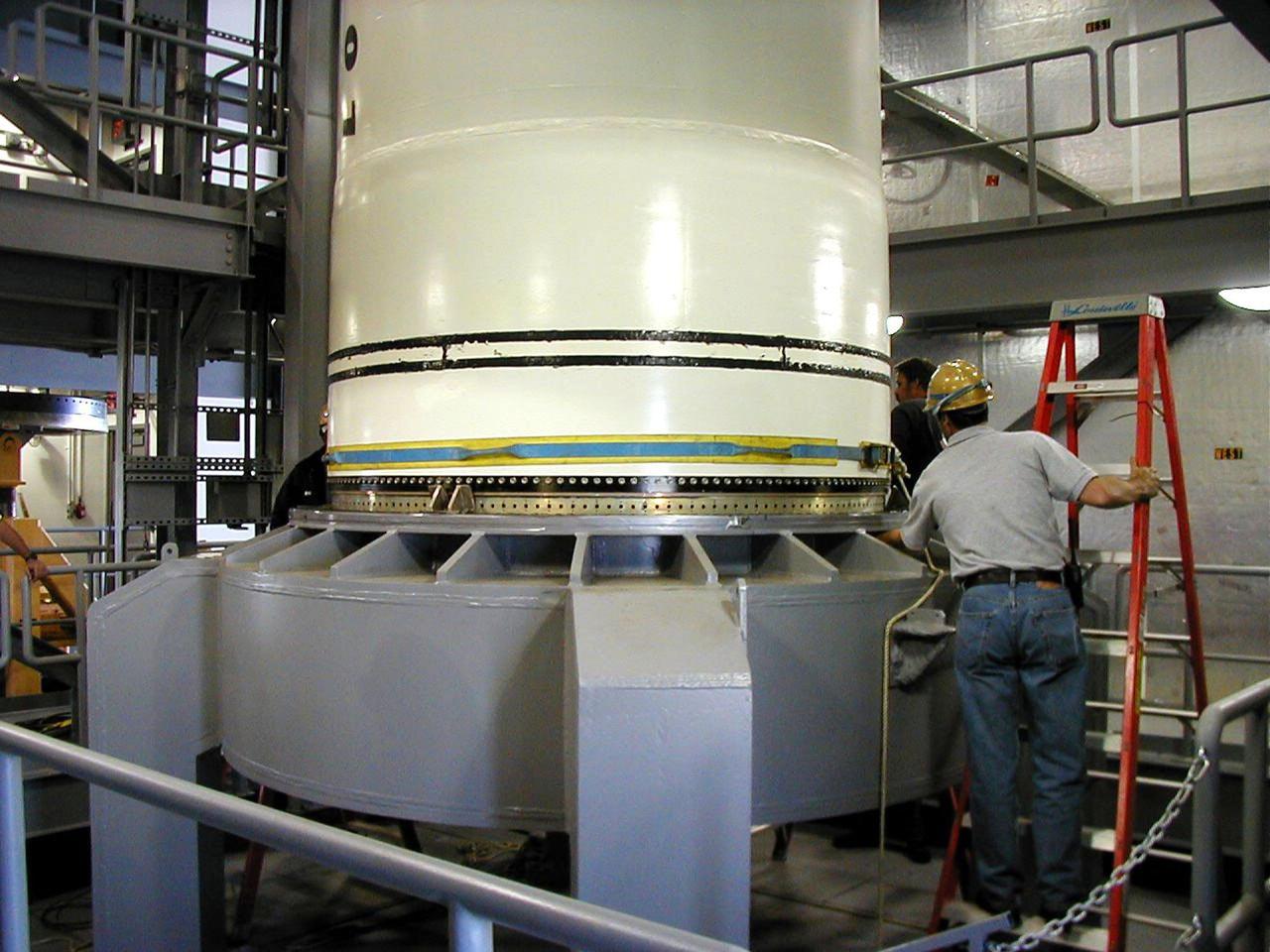
KODIAK ISLAND, Alaska -- Technicians inspect and secure Castor 120, the first stage of the Athena 1 launch vehicle, on the launch mount at Kodiak Island, Alaska, as processing for the launch of Kodiak Star proceeds. The first orbital launch to take place from Alaska's Kodiak Launch Complex, Kodiak Star is scheduled to lift off on a Lockheed Martin Athena I launch vehicle on Sept. 17 during a two-hour window that extends from 5:00 to 7:00 p.m. ADT. The payloads aboard include the Starshine 3, sponsored by NASA, and the PICOSat, PCSat and Sapphire, sponsored by the Department of Defense (DoD) Space Test Program.
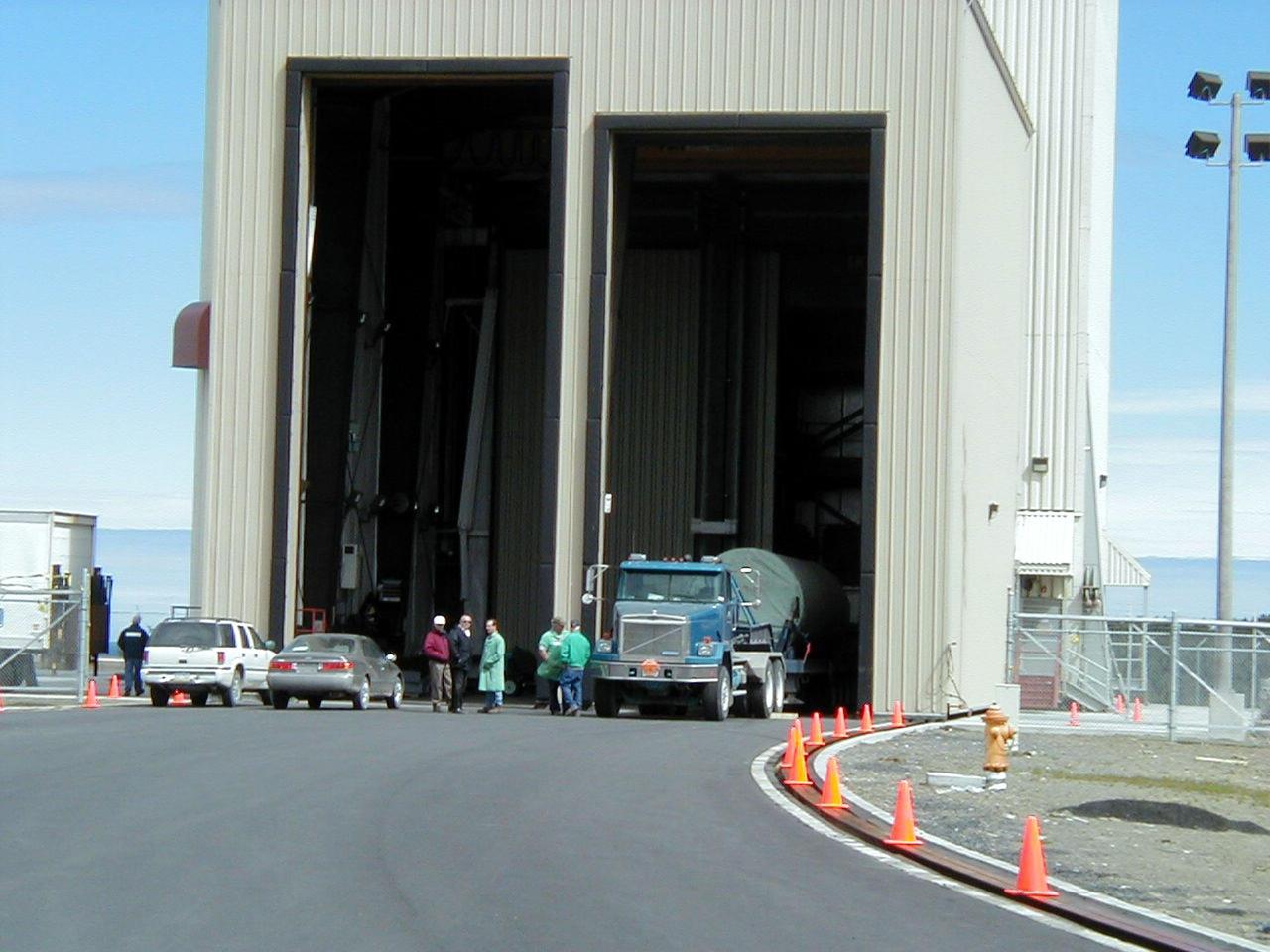
KODIAK ISLAND, Alaska -- Trucks transporting Castor 120, the first stage of the Athena 1 launch vehicle, arrive at Kodiak Island, Alaska, as preparations to launch Kodiak Star proceed. The first orbital launch to take place from Alaska's Kodiak Launch Complex, Kodiak Star is scheduled to lift off on a Lockheed Martin Athena I launch vehicle on Sept. 17 during a two-hour window that extends from 5:00 to 7:00 p.m. ADT. The payloads aboard include the Starshine 3, sponsored by NASA, and the PICOSat, PCSat and Sapphire, sponsored by the Department of Defense (DoD) Space Test Program.
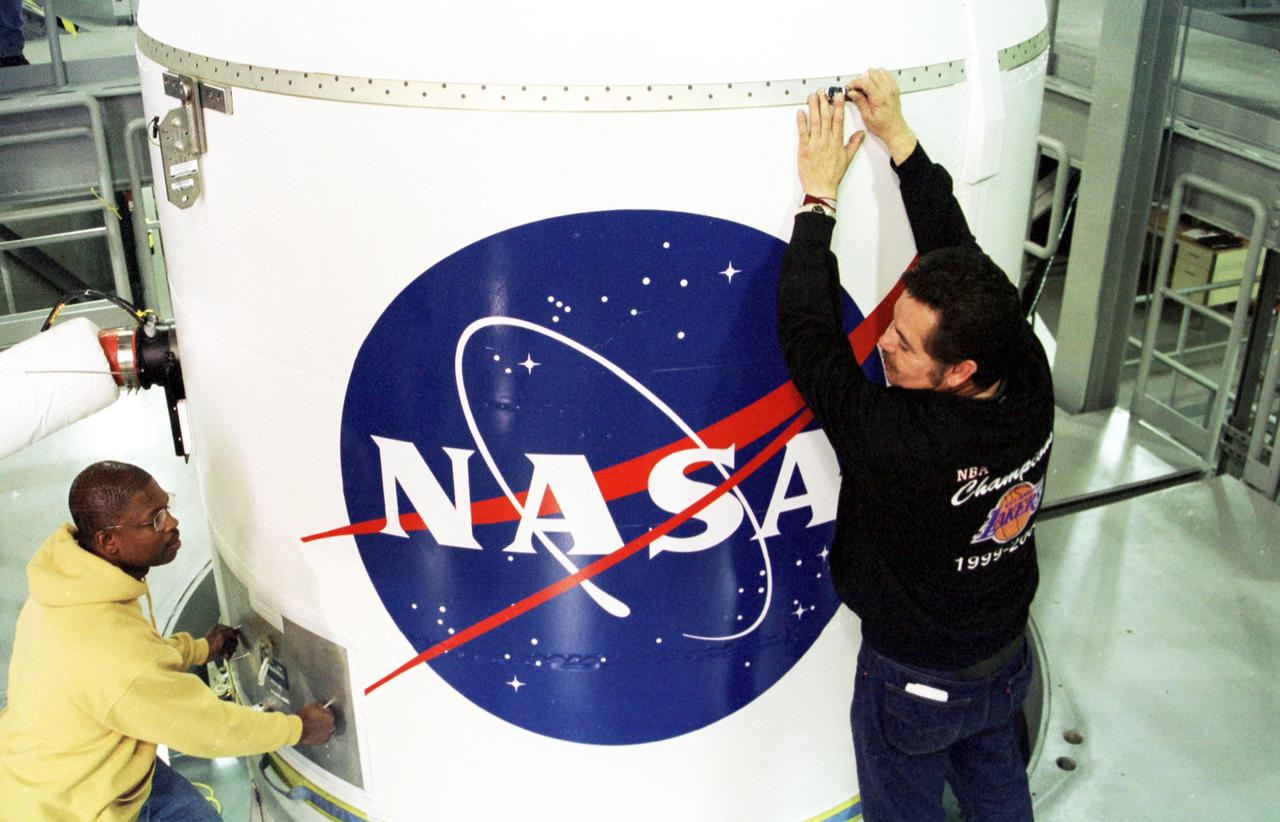
KODIAK ISLAND, Alaska -- At the Launch Service Structure, Kodiak Launch Complex (KLC), the fairing is lowered over the Kodiak Star spacecraft in preparation for launch. The first orbital launch to take place from KLC, Kodiak Star is scheduled to lift off on a Lockheed Martin Athena I launch vehicle on Sept. 17 during a two-hour window that extends from 5 p.m. ADT. The payloads aboard include the Starshine 3, sponsored by NASA, and the PICOSat, PCSat and Sapphire, sponsored by the Department of Defense (DoD) Space Test Program. KLC is the newest commercial launch complex in the United States, ideal for launch payloads requiring low-Earth polar or sun-synchronous orbits
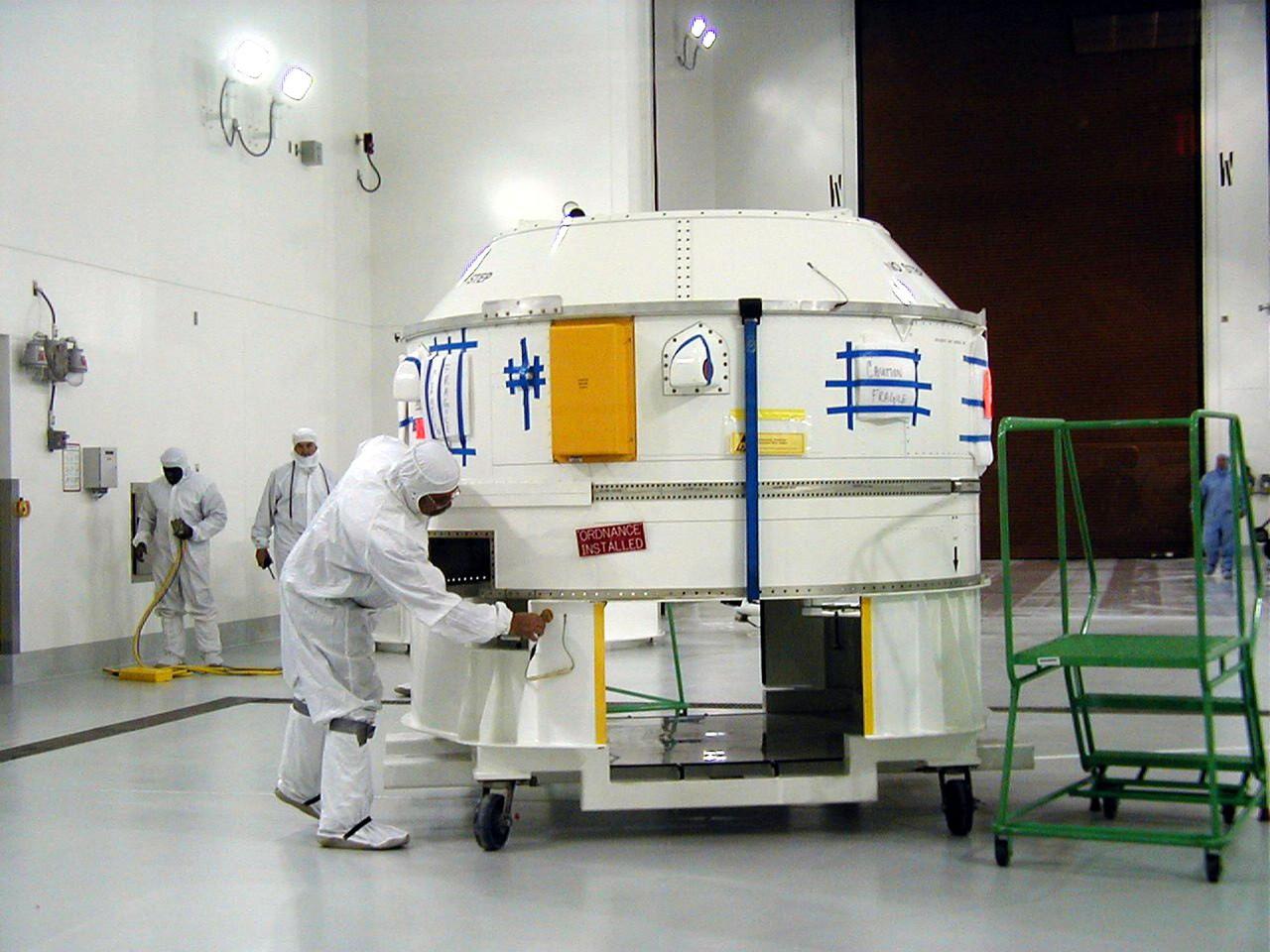
KODIAK ISLAND, Alaska -- Technicians prepare the Orbit Adjust Model (OAM), which navigates the payloads into the correct orbit, at the Payload Processing Facility at Kodiak Island, Alaska, as processing for the launch of Kodiak Star proceeds. The first orbital launch to take place from Alaska's Kodiak Launch Complex, Kodiak Star is scheduled to lift off on a Lockheed Martin Athena I launch vehicle on Sept. 17 during a two-hour window that extends from 5 p.m. ADT. The payloads aboard include the Starshine 3, sponsored by NASA, and the PICOSat, PCSat and Sapphire, sponsored by the Department of Defense (DoD) Space Test Program.
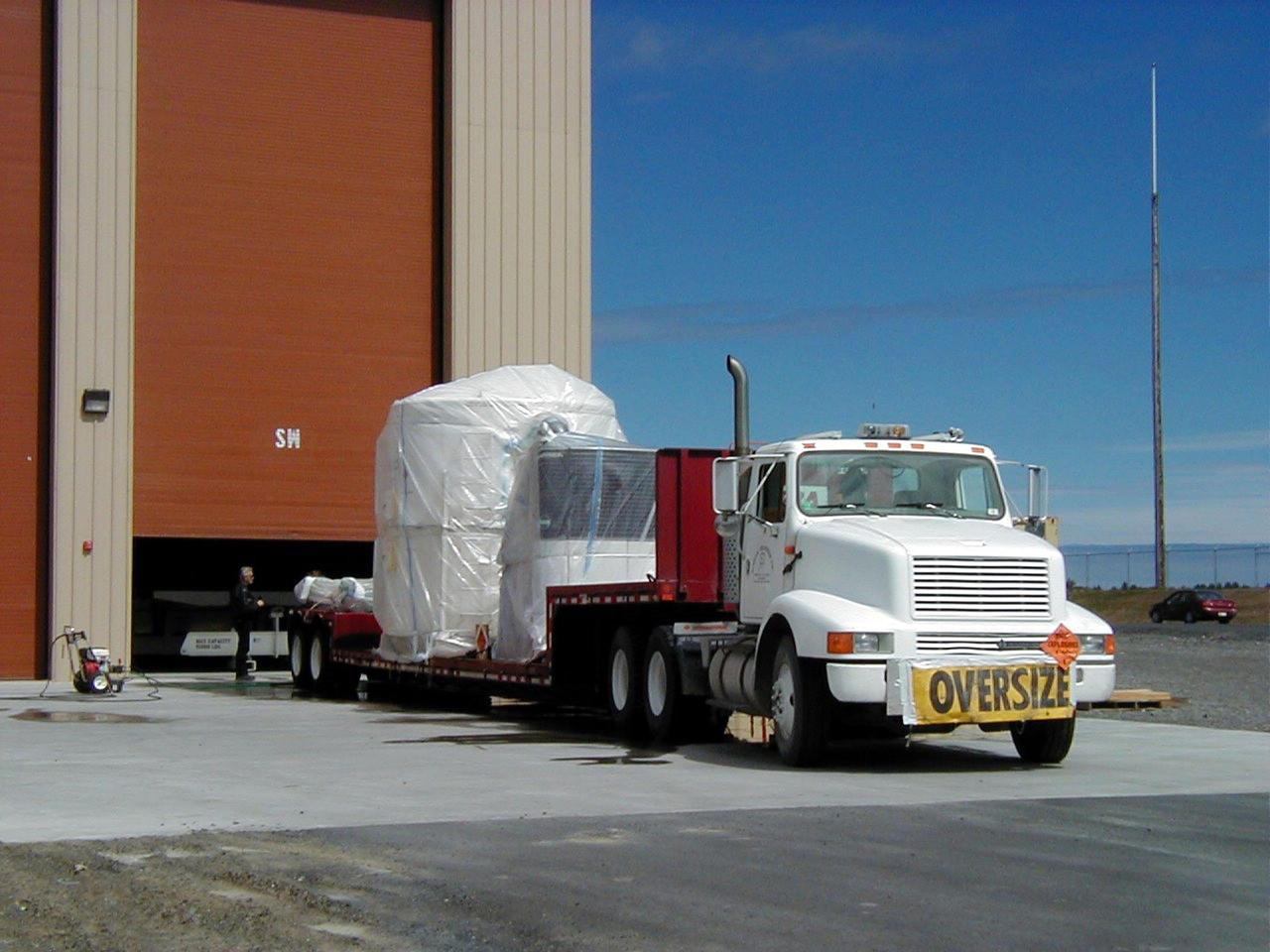
KODIAK ISLAND, Alaska -- Trucks transporting Orbis 21D Equipment Section Boost Motor, the second stage of the Athena 1 launch vehicle, arrive at Kodiak Island, Alaska, as preparations to launch Kodiak Star proceed. The first orbital launch to take place from Alaska's Kodiak Launch Complex, Kodiak Star is scheduled to lift off on a Lockheed Martin Athena I launch vehicle on Sept. 17 during a two-hour window that extends from 5:00 to 7:00 p.m. ADT. The payloads aboard include the Starshine 3, sponsored by NASA, and the PICOSat, PCSat and Sapphire, sponsored by the Department of Defense (DoD) Space Test Program.
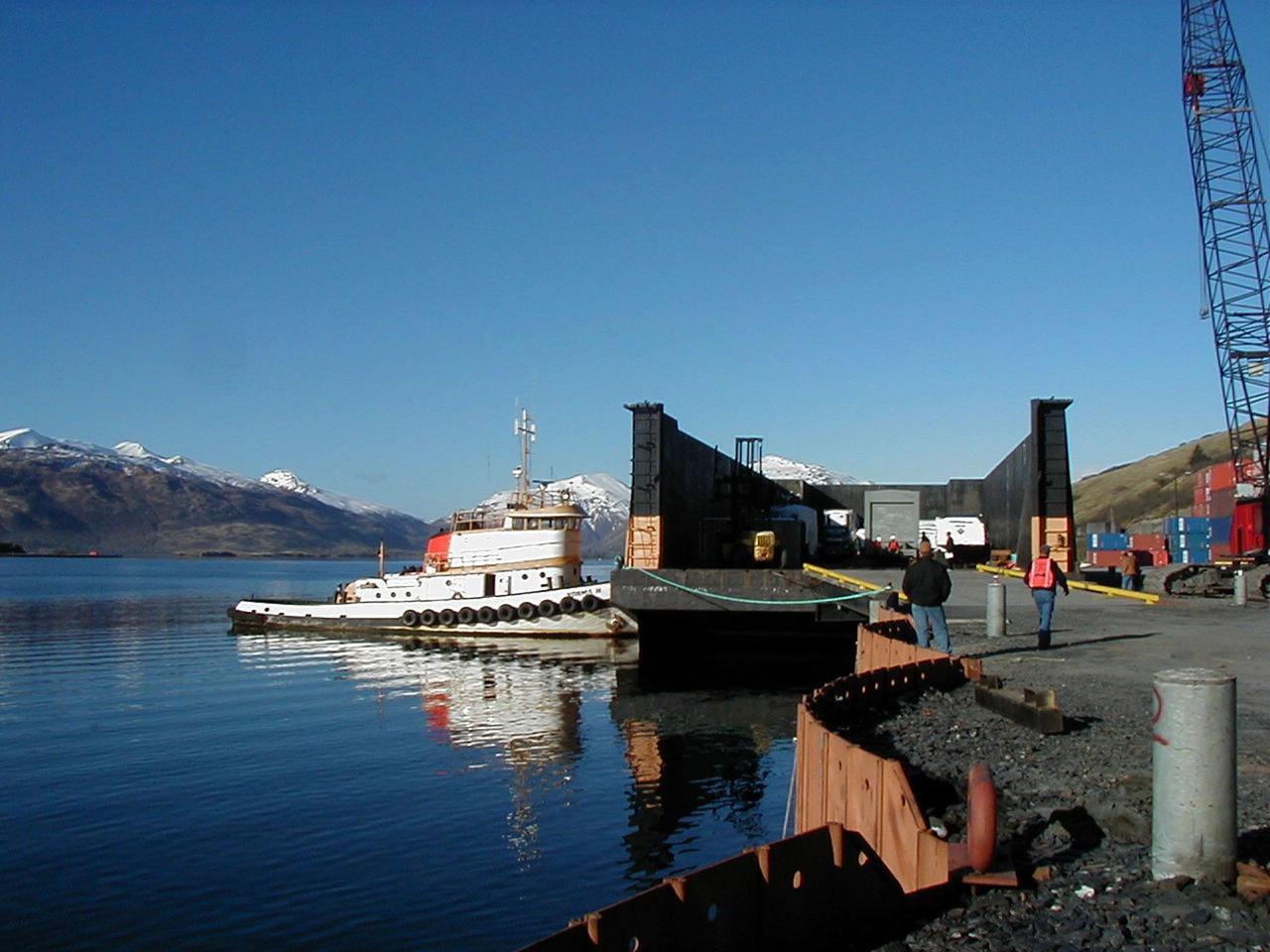
KODIAK ISLAND, Alaska -- A boat moves a ramp into place that will allow Castor 120, the first stage of the Athena 1 launch vehicle, to safely move onto the dock at Kodiak Island, Alaska, as preparations to launch Kodiak Star proceed. The first orbital launch to take place from Alaska's Kodiak Launch Complex, Kodiak Star is scheduled to lift off on a Lockheed Martin Athena I launch vehicle on Sept. 17 during a two-hour window that extends from 5:00 to 7:00 p.m. ADT. The payloads aboard include the Starshine 3, sponsored by NASA, and the PICOSat, PCSat and Sapphire, sponsored by the Department of Defense (DoD) Space Test Program.
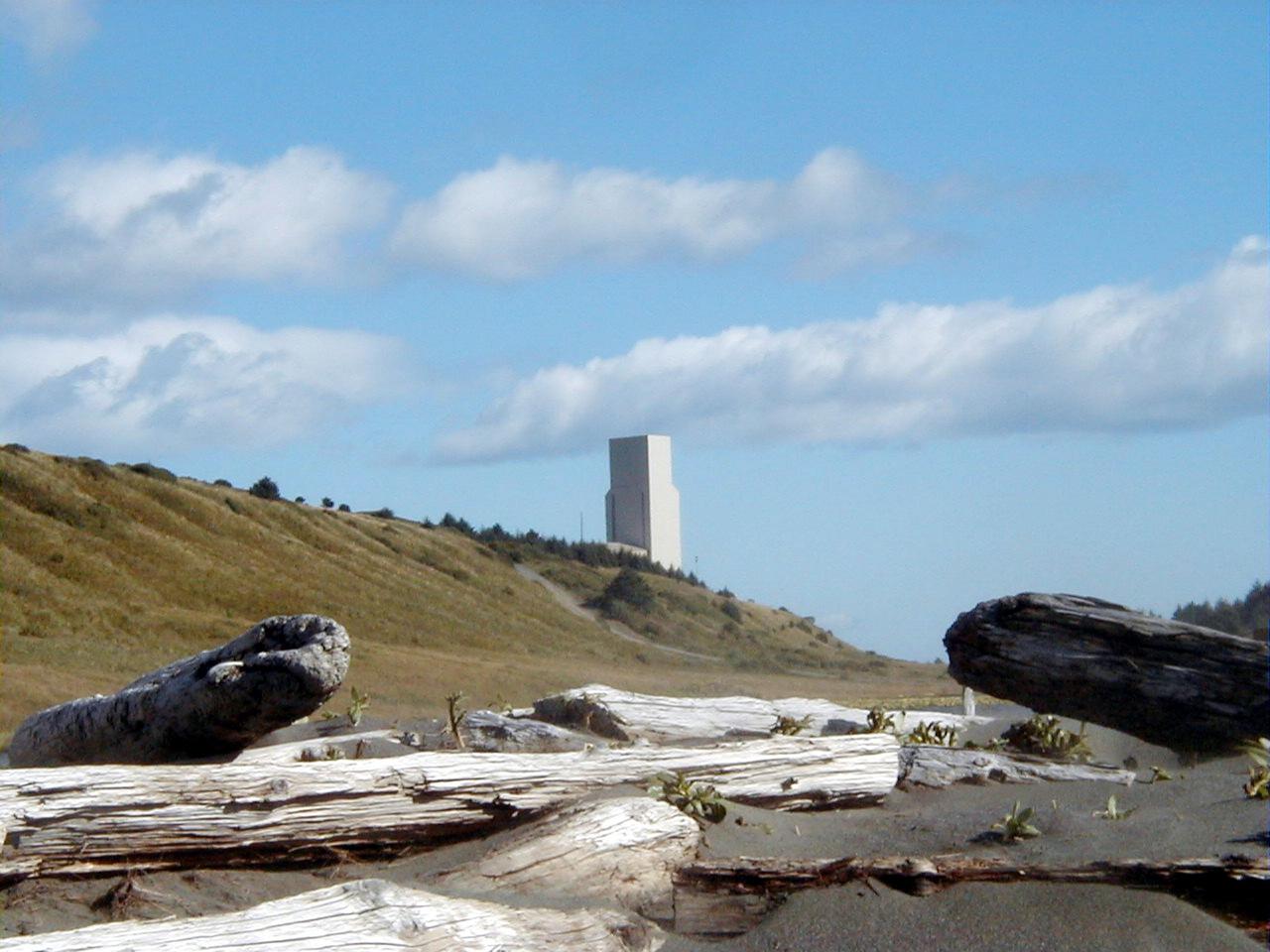
KODIAK ISLAND, ALASKA - The Launch Service Structure, Kodiak Launch Complex (KLC), on Kodiak Island is viewed from a distance. Kodiak Star, the first launch to take place from KLC, is scheduled to lift off on a Lockheed Martin Athena I launch vehicle on Sept. 17 during a two-hour window that extends from 5 p.m. to 7 p.m. p.m. ADT. The payloads aboard include the Starshine 3, sponsored by NASA, and the PICOSat, PCSat and Sapphire, sponsored by the Department of Defense (DoD) Space Test Program. KLC is the newest commercial launch complex in the United States, ideal for launch payloads requiring low-Earth polar or sun-synchronous orbits
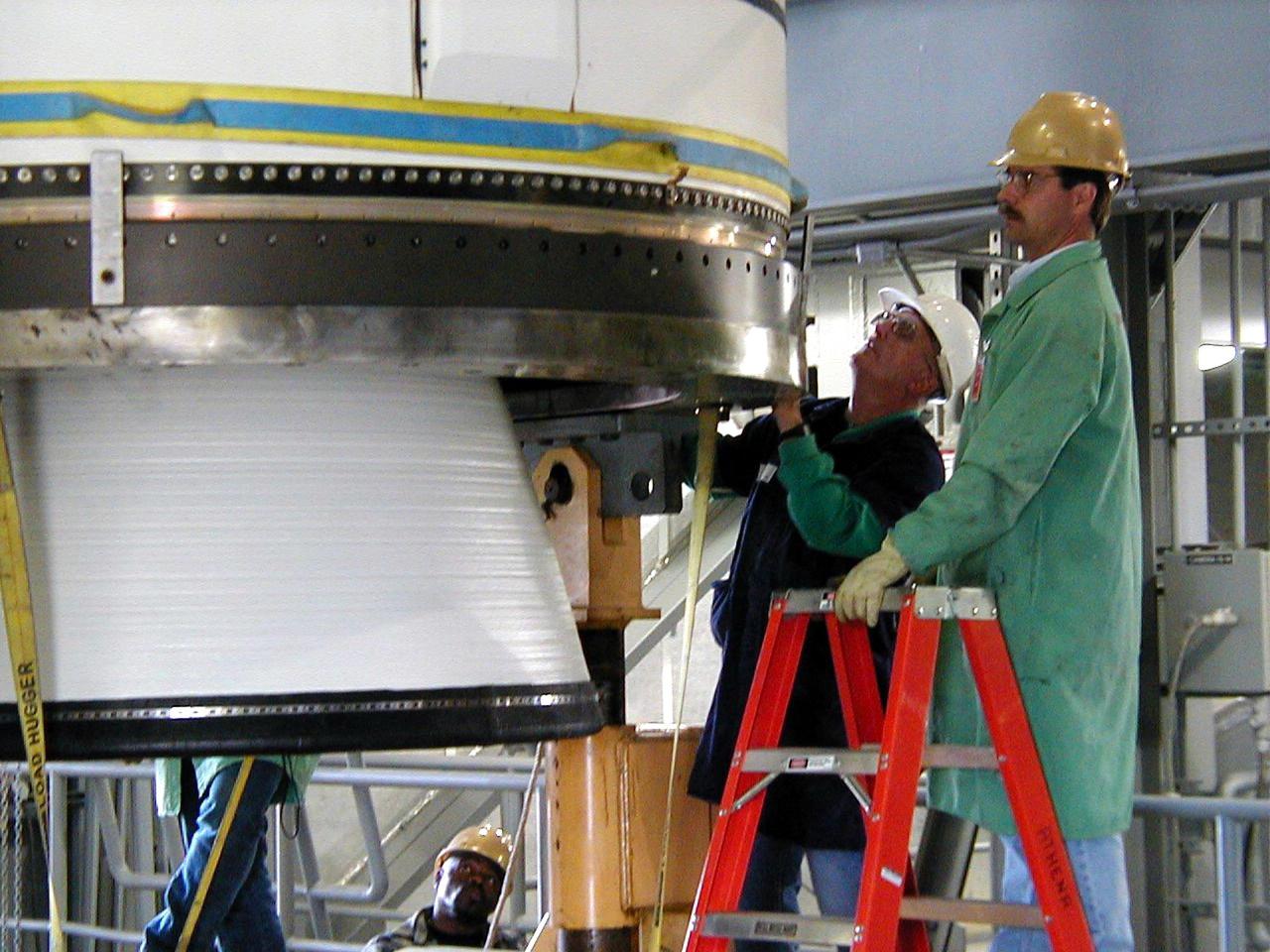
KODIAK ISLAND, Alaska -- Technicians inspect Castor 120, the first stage of the Athena 1 launch vehicle, at Kodiak Island, Alaska, as preparations to launch Kodiak Star proceed. The first orbital launch to take place from Alaska's Kodiak Launch Complex, Kodiak Star is scheduled to lift off on a Lockheed Martin Athena I launch vehicle on Sept. 17 during a two-hour window that extends from 5:00 to 7:00 p.m. ADT. The payloads aboard include the Starshine 3, sponsored by NASA, and the PICOSat, PCSat and Sapphire, sponsored by the Department of Defense (DoD) Space Test Program.
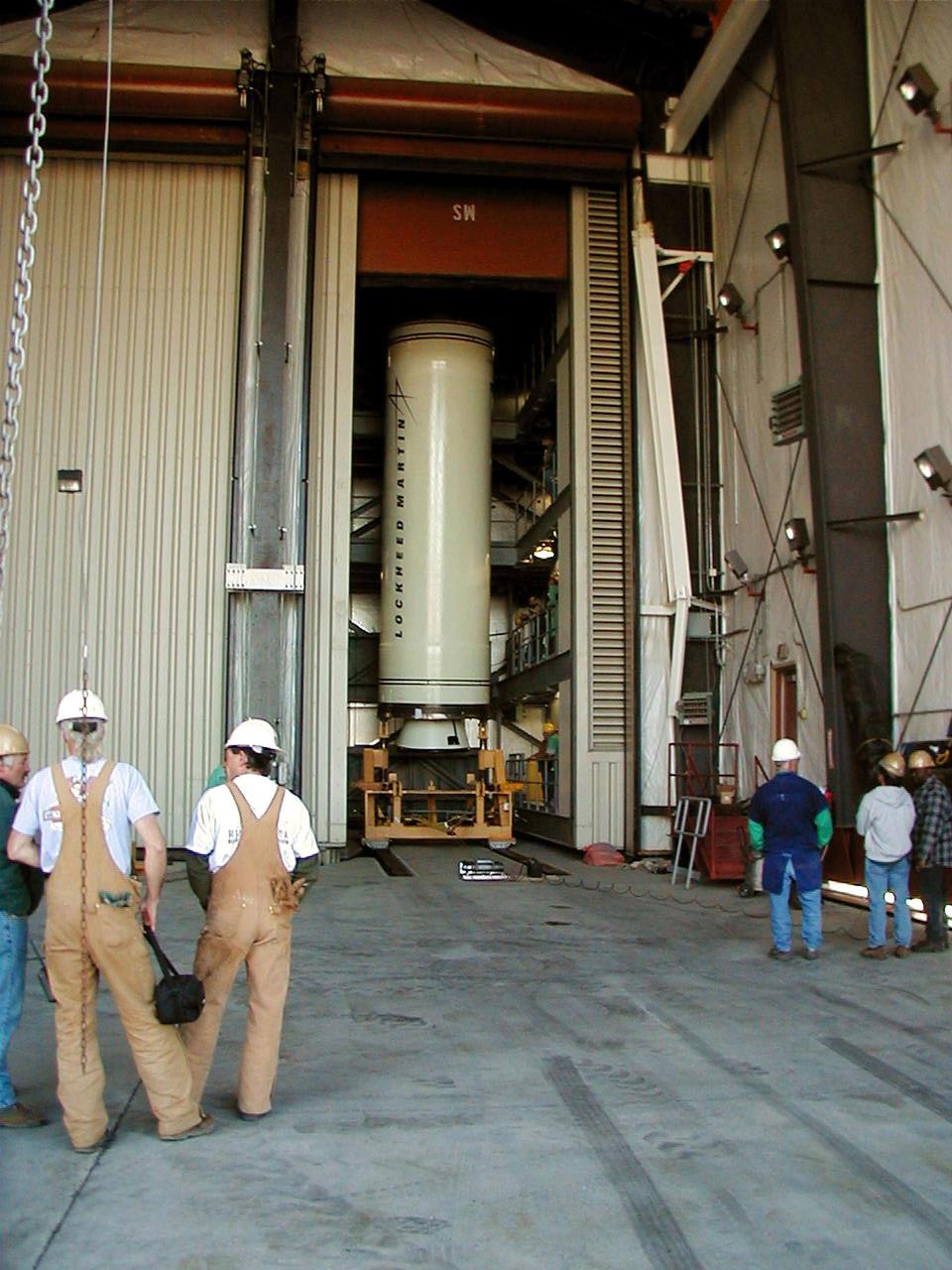
KODIAK ISLAND, Alaska -- Technicians prepare the Athena I launch vehicle for flight at Kodiak Island, Alaska, as processing for the launch of Kodiak Star proceeds. The first orbital launch to take place from Alaska's Kodiak Launch Complex, Kodiak Star is scheduled to lift off on a Lockheed Martin Athena I launch vehicle on Sept. 17 during a two-hour window that extends from 5:00 to 7:00 p.m. ADT. The payloads aboard include the Starshine 3, sponsored by NASA, and the PICOSat, PCSat and Sapphire, sponsored by the Department of Defense (DoD) Space Test Program.
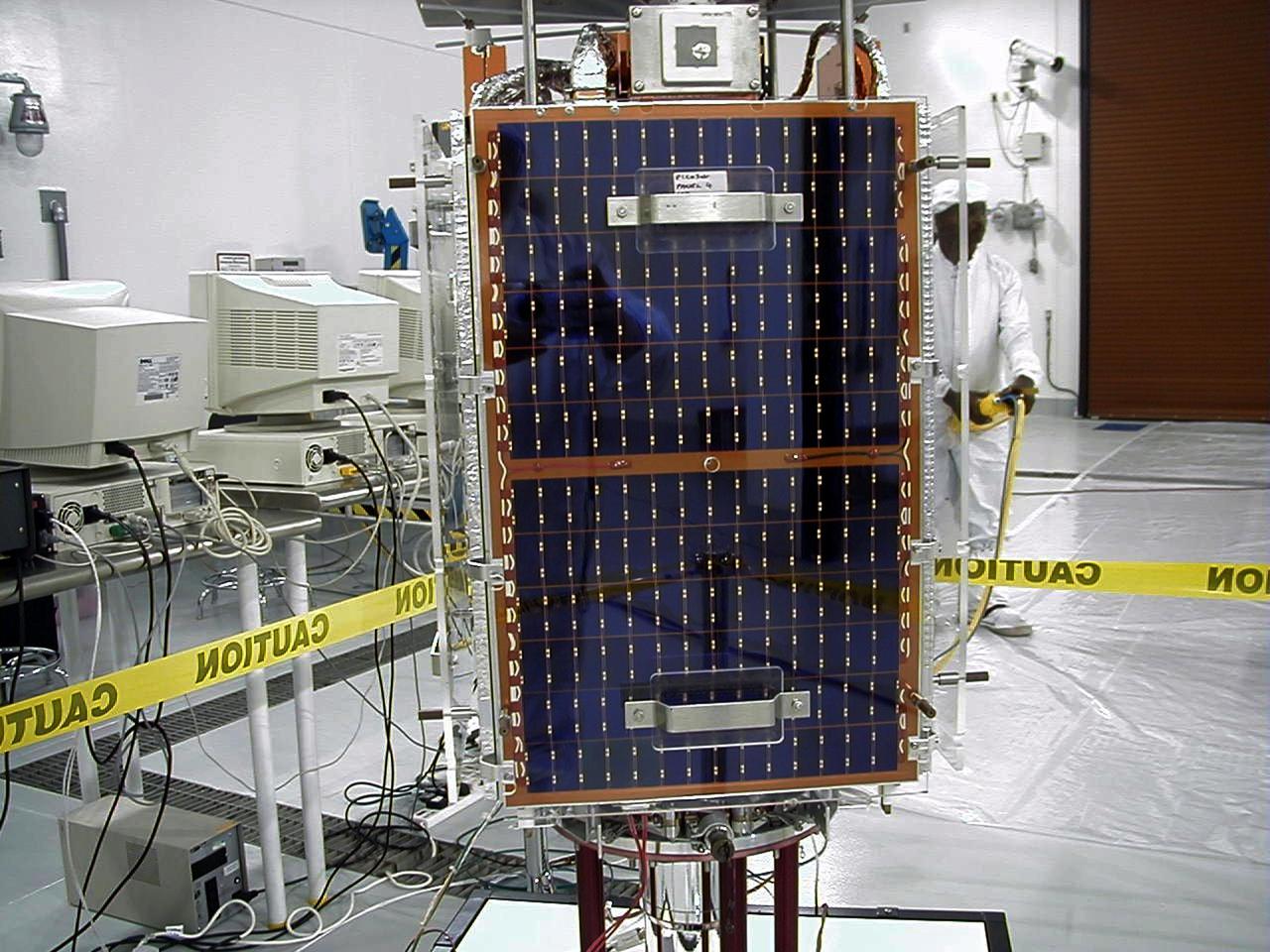
KENNEDY SPACE CENTER, Fla. -- The PICOSat payload undergoes final preparations for its launch aboard the Athena 1 launch vehicle at Kodiak Island, Alaska, as preparations to launch Kodiak Star proceed. The first launch to take place from Alaska's Kodiak Launch Complex, Kodiak Star is scheduled to lift off on a Lockheed Martin Athena I launch vehicle on Sept. 17 during a two-hour window that extends from 5:00 to 7:00 p.m. ADT. The payloads aboard include the Starshine 3, sponsored by NASA, and the PICOSat, PCSat and Sapphire, sponsored by the Department of Defense (DoD) Space Test Program
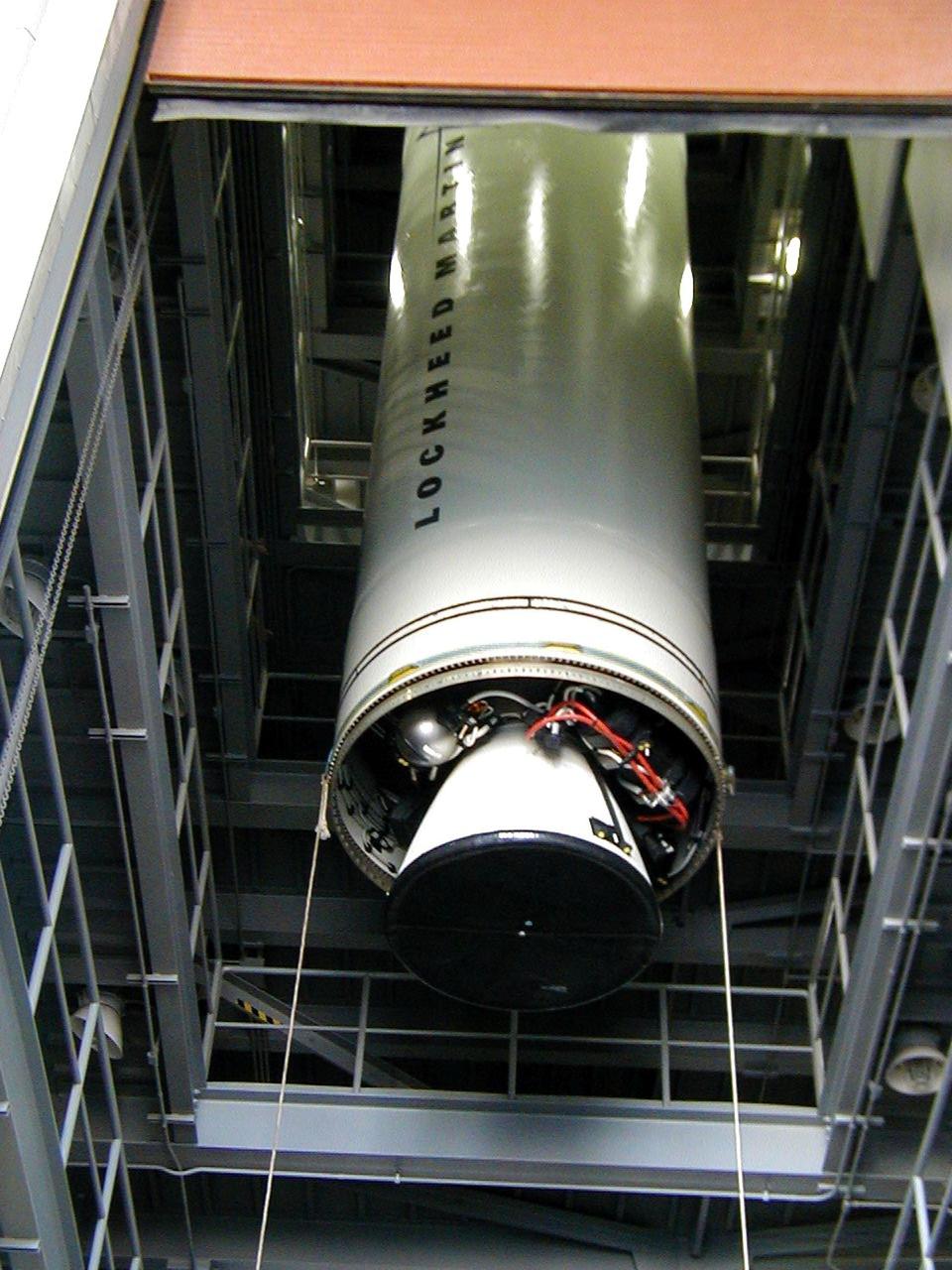
KODIAK ISLAND, Alaska -- Castor 120, the first stage of the Athena 1 launch vehicle, is lifted into a vertical position at Kodiak Island, Alaska, as preparations to launch Kodiak Star proceed. The first orbital launch to take place from Alaska's Kodiak Launch Complex, Kodiak Star is scheduled to lift off on a Lockheed Martin Athena I launch vehicle on Sept. 17 during a two-hour window that extends from 5:00 to 7:00 p.m. ADT. The payloads aboard include the Starshine 3, sponsored by NASA, and the PICOSat, PCSat and Sapphire, sponsored by the Department of Defense (DoD) Space Test Program.
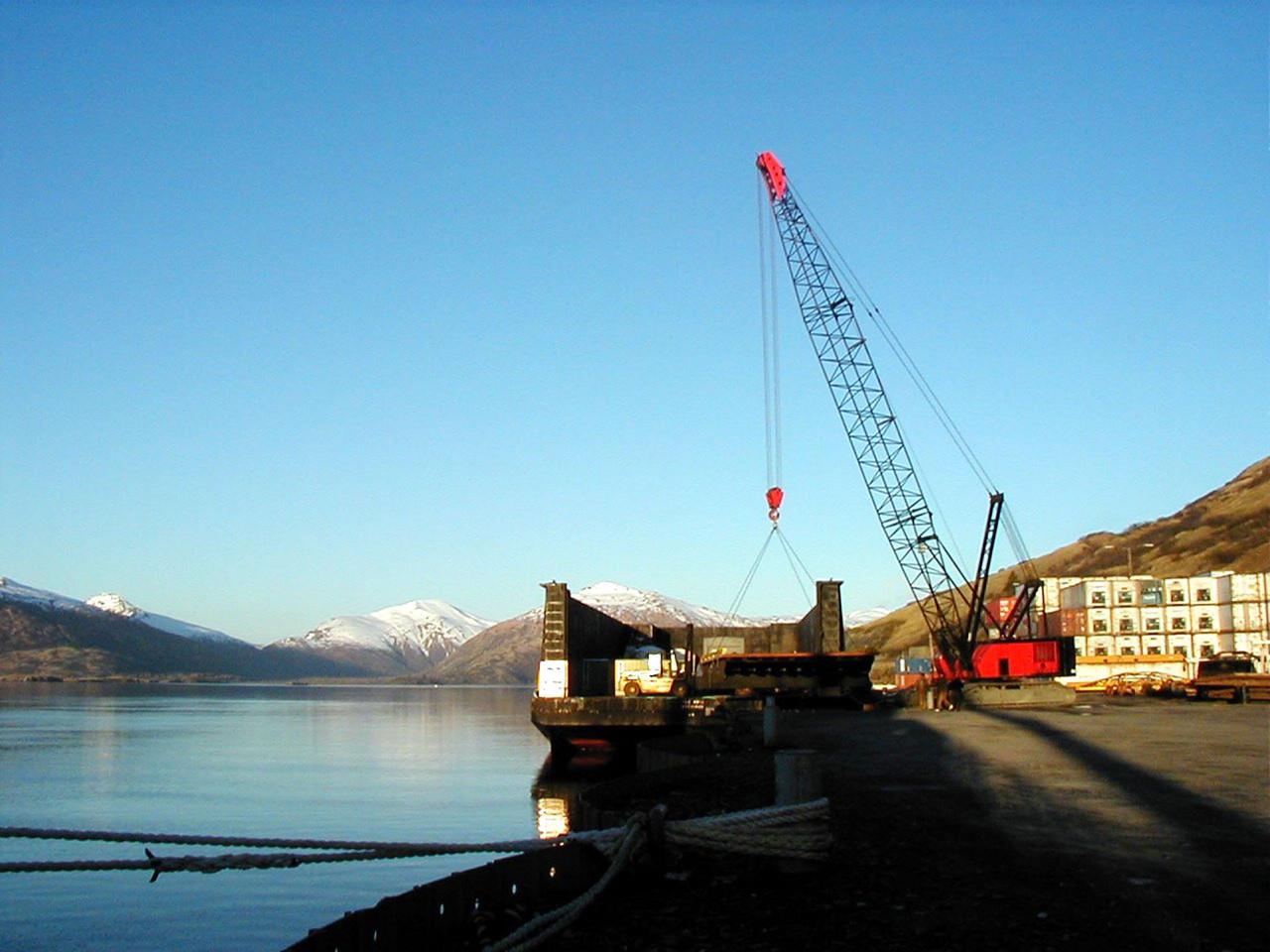
KODIAK ISLAND, Alaska -- A special platform connects the barge with a ramp to allow Castor 120, the first stage of the Athena 1 launch vehicle, to safely move onto the dock at Kodiak Island, Alaska, as preparations to launch Kodiak Star proceed. The first orbital launch to take place from Alaska's Kodiak Launch Complex, Kodiak Star is scheduled to lift off on a Lockheed Martin Athena I launch vehicle on Sept. 17 during a two-hour window that extends from 5:00 to 7:00 p.m. ADT. The payloads aboard include the Starshine 3, sponsored by NASA, and the PICOSat, PCSat and Sapphire, sponsored by the Department of Defense (DoD) Space Test Program.
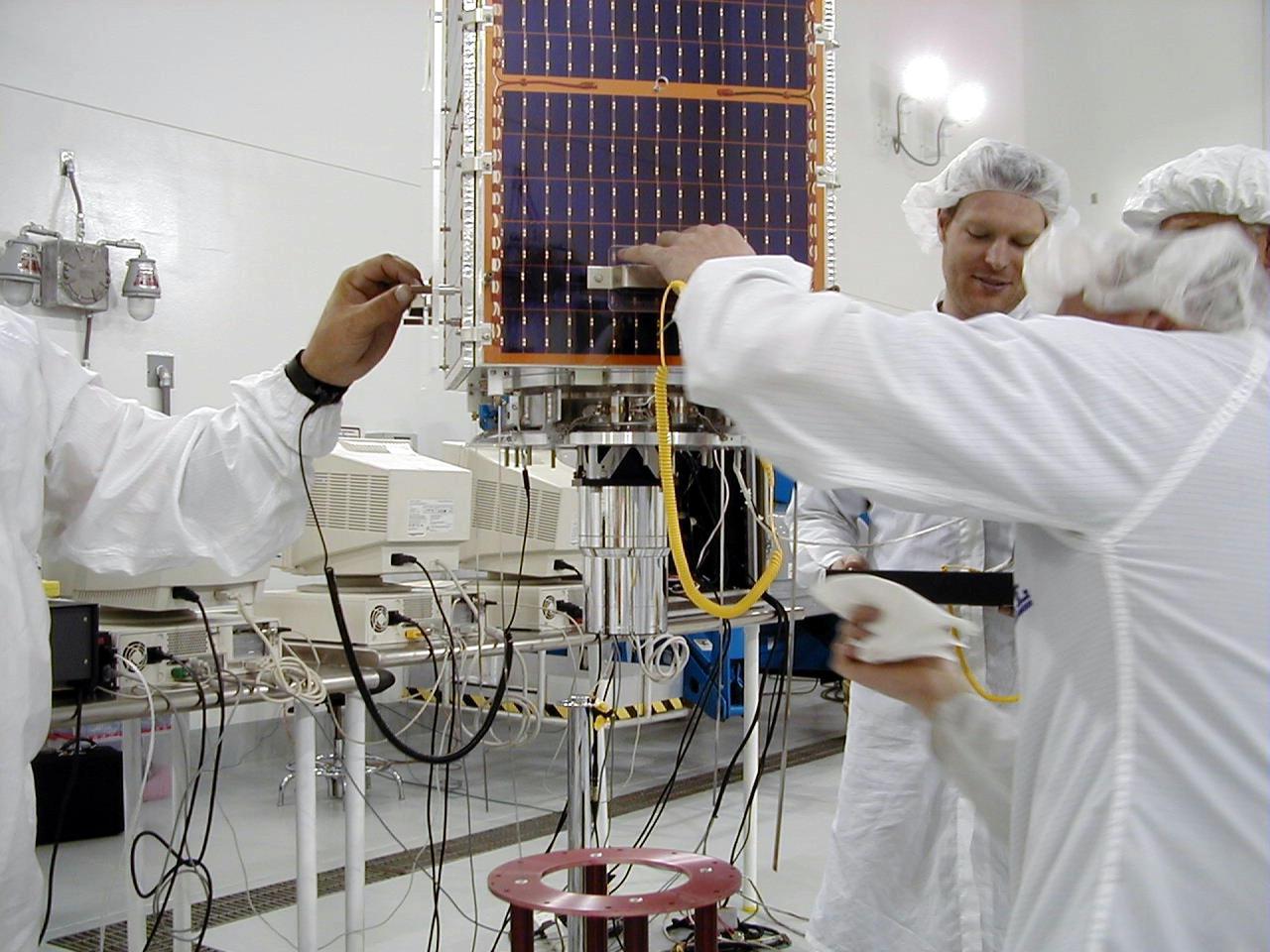
KENNEDY SPACE CENTER, Fla. -- Technicians prepare the PICOSat payload for its launch aboard the Athena 1 launch vehicle at Kodiak Island, Alaska, as preparations to launch Kodiak Star proceed. The first launch to take place from Alaska's Kodiak Launch Complex, Kodiak Star is scheduled to lift off on a Lockheed Martin Athena I launch vehicle on Sept. 17 during a two-hour window that extends from 5:00 to 7:00 p.m. ADT. The payloads aboard include the Starshine 3, sponsored by NASA, and the PICOSat, PCSat and Sapphire, sponsored by the Department of Defense (DoD) Space Test Program
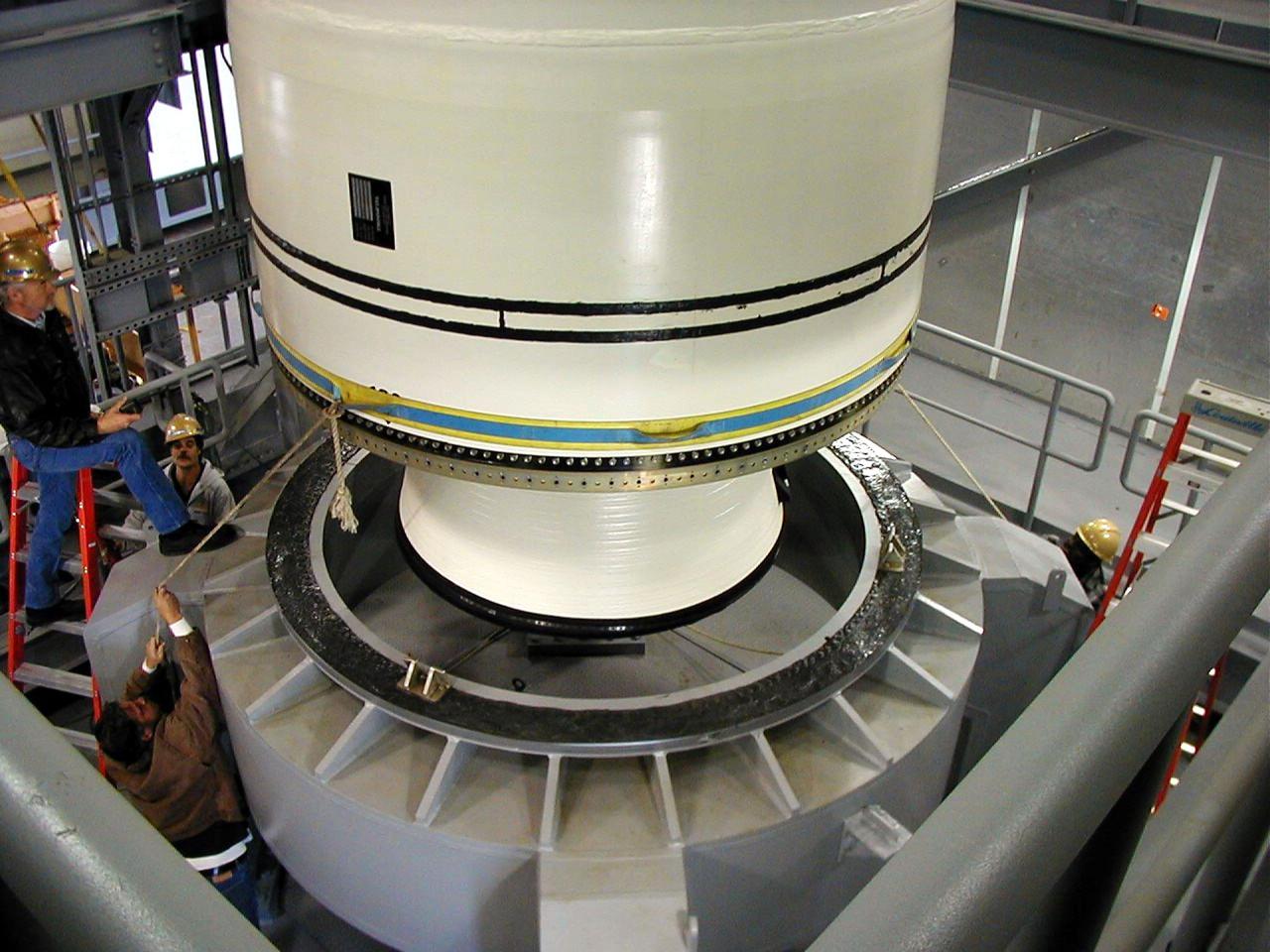
KODIAK ISLAND, Alaska -- Castor 120, the first stage of the Athena 1 launch vehicle, is lowered onto launch mount at Kodiak Island, Alaska, as preparations to launch Kodiak Star proceed. The first orbital launch to take place from Alaska's Kodiak Launch Complex, Kodiak Star is scheduled to lift off on a Lockheed Martin Athena I launch vehicle on Sept. 17 during a two-hour window that extends from 5:00 to 7:00 p.m. ADT. The payloads aboard include the Starshine 3, sponsored by NASA, and the PICOSat, PCSat and Sapphire, sponsored by the Department of Defense (DoD) Space Test Program.
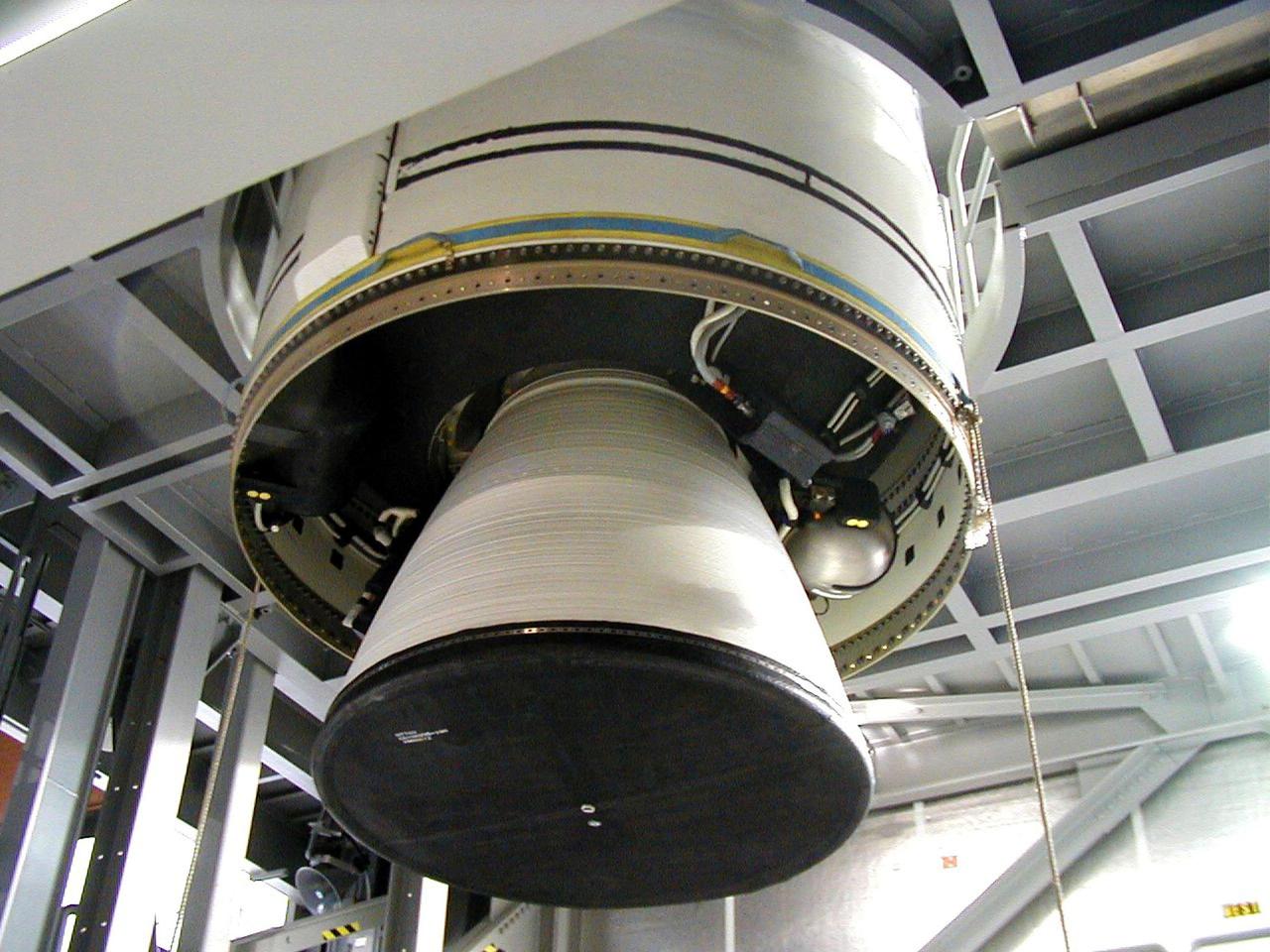
KODIAK ISLAND, Alaska -- Castor 120, the first stage of the Athena 1 launch vehicle, is lowered into place at Kodiak Island, Alaska, as preparations to launch Kodiak Star proceed. The first orbital launch to take place from Alaska's Kodiak Launch Complex, Kodiak Star is scheduled to lift off on a Lockheed Martin Athena I launch vehicle on Sept. 17 during a two-hour window that extends from 5:00 to 7:00 p.m. ADT. The payloads aboard include the Starshine 3, sponsored by NASA, and the PICOSat, PCSat and Sapphire, sponsored by the Department of Defense (DoD) Space Test Program.
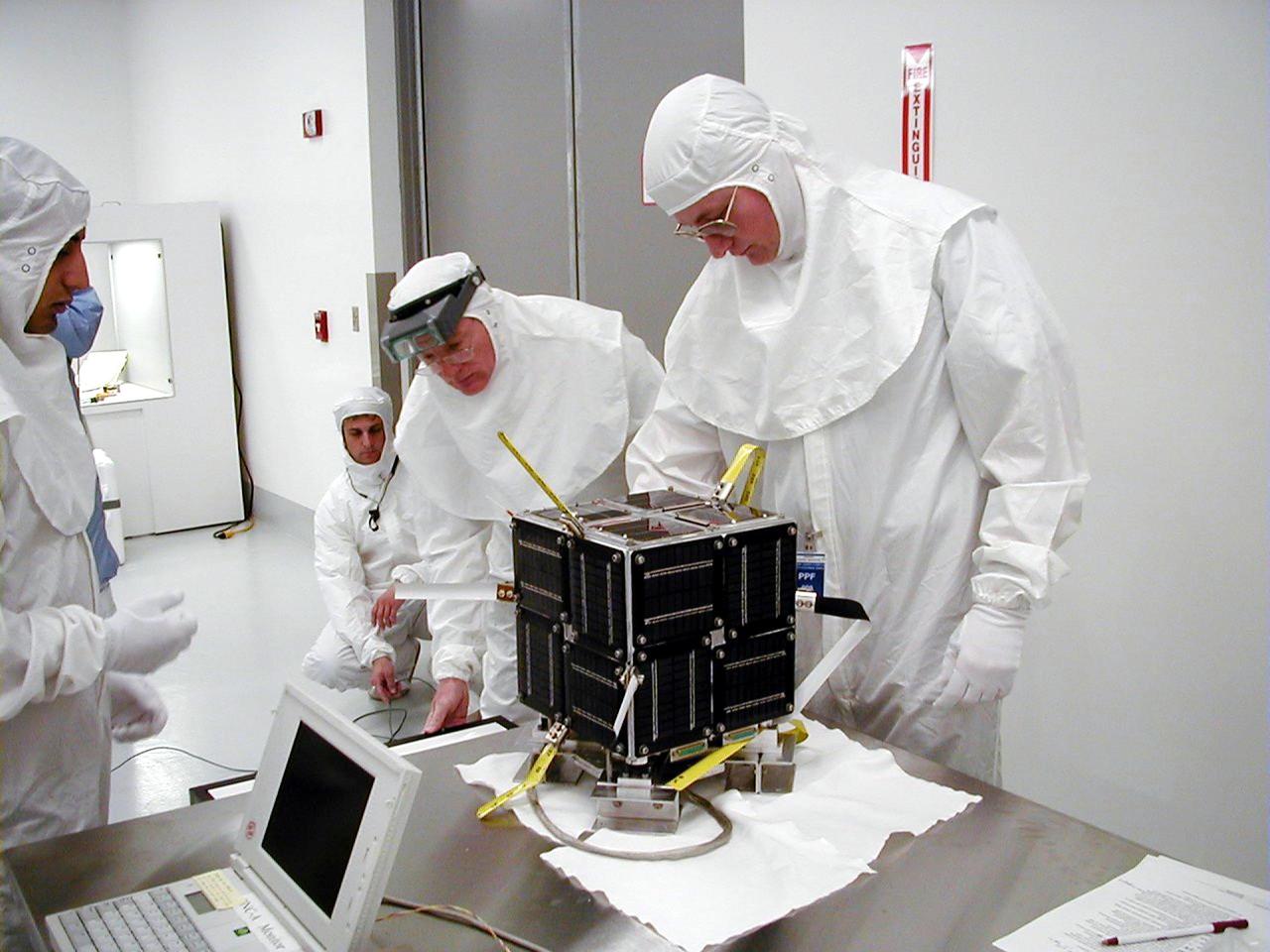
KODIAK ISLAND, Alaska -- Technicians prepare the PICSat payload for its launch aboard the Athena 1 launch vehicle at Kodiak Island, Alaska, as preparations to launch Kodiak Star proceed. The first orbital launch to take place from Alaska's Kodiak Launch Complex, Kodiak Star is scheduled to lift off on a Lockheed Martin Athena I launch vehicle on Sept. 17 during a two-hour window that extends from 5 p.m. to 7 p.m. p.m. ADT. The payloads aboard include the Starshine 3, sponsored by NASA, and the PICOSat, PCSat and Sapphire, sponsored by the Department of Defense (DoD) Space Test Program.

KODIAK ISLAND, Alaska -- A convoy of trucks transports the stages of an Athena launch vehicle and supporting launch equipment to the pad at Kodiak Island, Alaska, as preparations to launch the Kodiak Star continue. The first orbital launch to take place from Alaska's Kodiak Launch Complex, Kodiak Star is scheduled to lift off on a Lockheed Martin Athena I launch vehicle on Sept. 17 during a two-hour window that extends from 5:00 to 7:00 p.m. ADT. The payloads aboard include the Starshine 3, sponsored by NASA, and the PICOSat, PCSat and Sapphire, sponsored by the Department of Defense (DoD) Space Test Program.
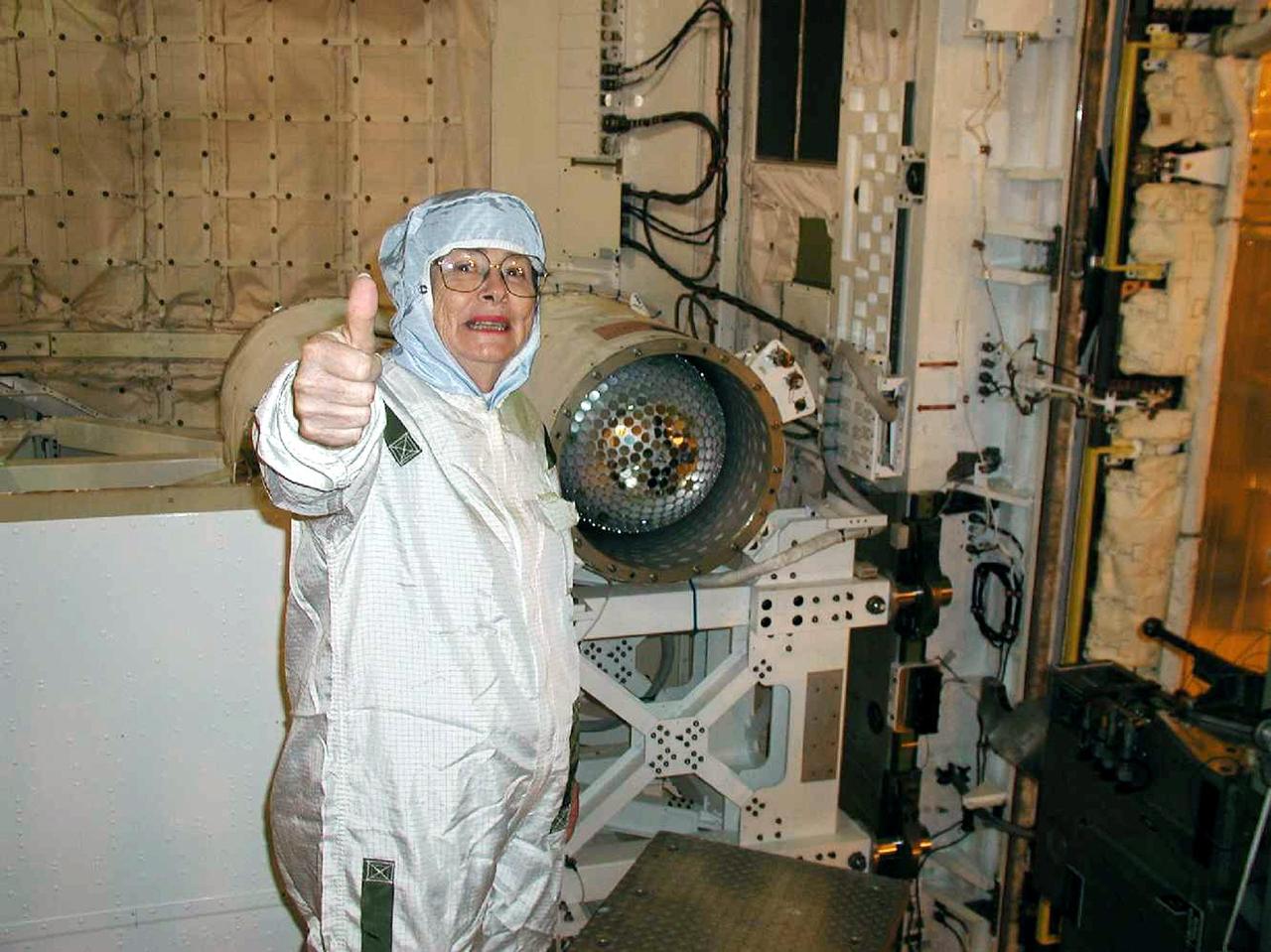
KENNEDY SPACE CENTER, Fla. -- From inside the payload bay of orbiter Endeavour, Phyllis Moore, co-director of Project Starshine, gives her final approval to flight of the Starshine-2 satellite. The deployable experiment is being carried on mission STS-108. Starshine-2's 800 aluminum mirrors were polished by more than 25,000 students from 26 countries. Top priorities for the STS-108 (UF-1) mission of Endeavour are rotation of the International Space Station Expedition Three and Expedition Four crews, bringing water, equipment and supplies to the station in the Multi-Purpose Logistics Module Raffaello, and completion of robotics tasks and a spacewalk to install thermal blankets over two pieces of equipment at the bases of the Space Station's solar wings. Liftoff of Endeavour on mission STS-108 is scheduled for 7:41 p.m. EST Nov. 29
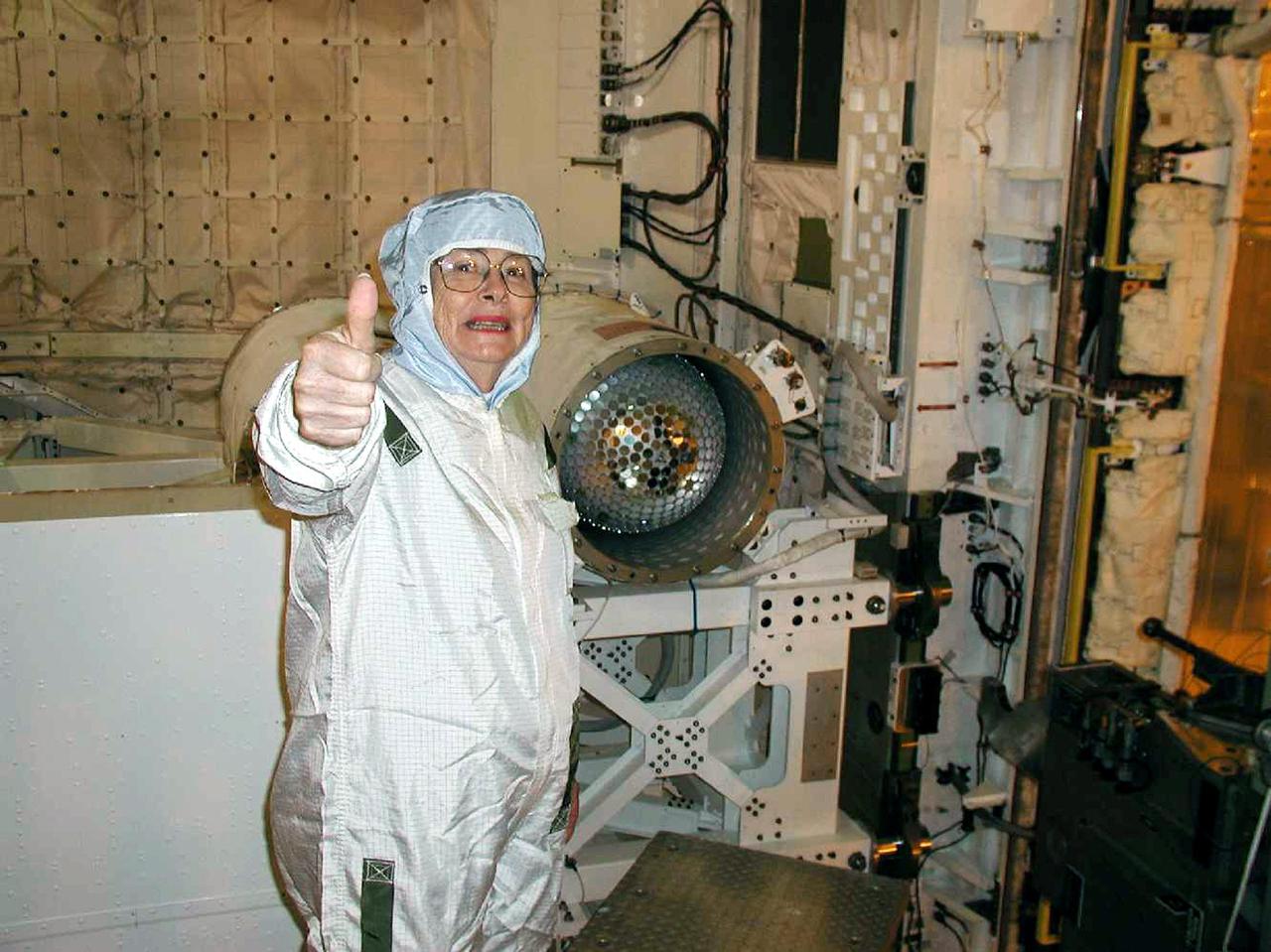
KENNEDY SPACE CENTER, Fla. -- From inside the payload bay of orbiter Endeavour, Phyllis Moore, co-director of Project Starshine, gives her final approval to flight of the Starshine-2 satellite. The deployable experiment is being carried on mission STS-108. Starshine-2's 800 aluminum mirrors were polished by more than 25,000 students from 26 countries. Top priorities for the STS-108 (UF-1) mission of Endeavour are rotation of the International Space Station Expedition Three and Expedition Four crews, bringing water, equipment and supplies to the station in the Multi-Purpose Logistics Module Raffaello, and completion of robotics tasks and a spacewalk to install thermal blankets over two pieces of equipment at the bases of the Space Station's solar wings. Liftoff of Endeavour on mission STS-108 is scheduled for 7:41 p.m. EST Nov. 29
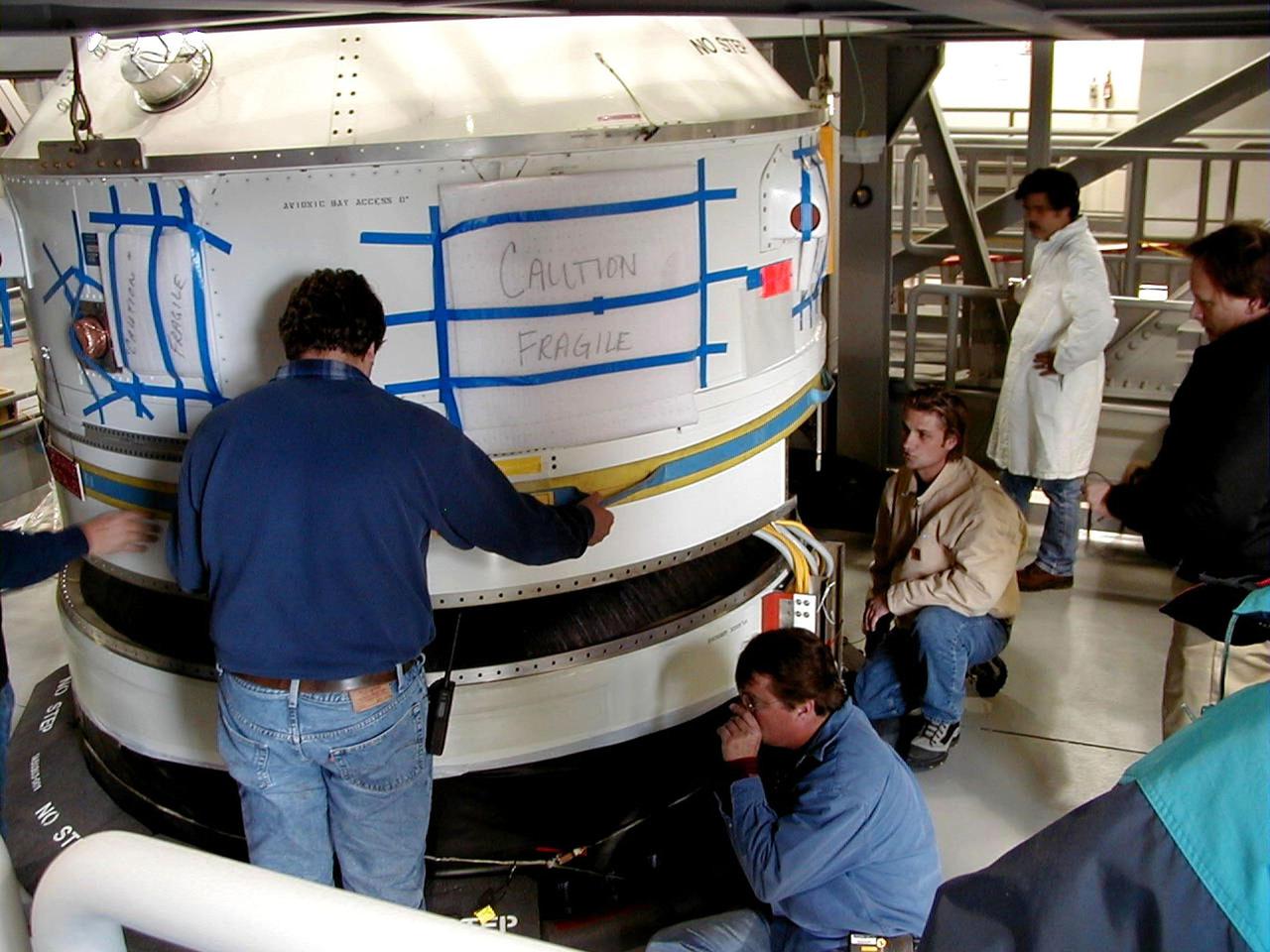
KODIAK ISLAND, Alaska -- Technicians align the fueled Orbit Adjust Model (OAM), which navigates payloads into the correct orbit, onto Orbis 21D Equipment Section Boost Motor, the second stage of the Athena 1 launch vehicle, at the launch pad at Kodiak Island, Alaska, as preparations to launch Kodiak Star proceed. The first orbital launch to take place from Alaska's Kodiak Launch Complex, Kodiak Star is scheduled to lift off on a Lockheed Martin Athena I launch vehicle on Sept. 17 during a two-hour window that extends from 5:00 to 7:00 p.m. ADT. The payloads aboard include the Starshine 3, sponsored by NASA, and the PICOSat, PCSat and Sapphire, sponsored by the Department of Defense (DoD) Space Test Program.
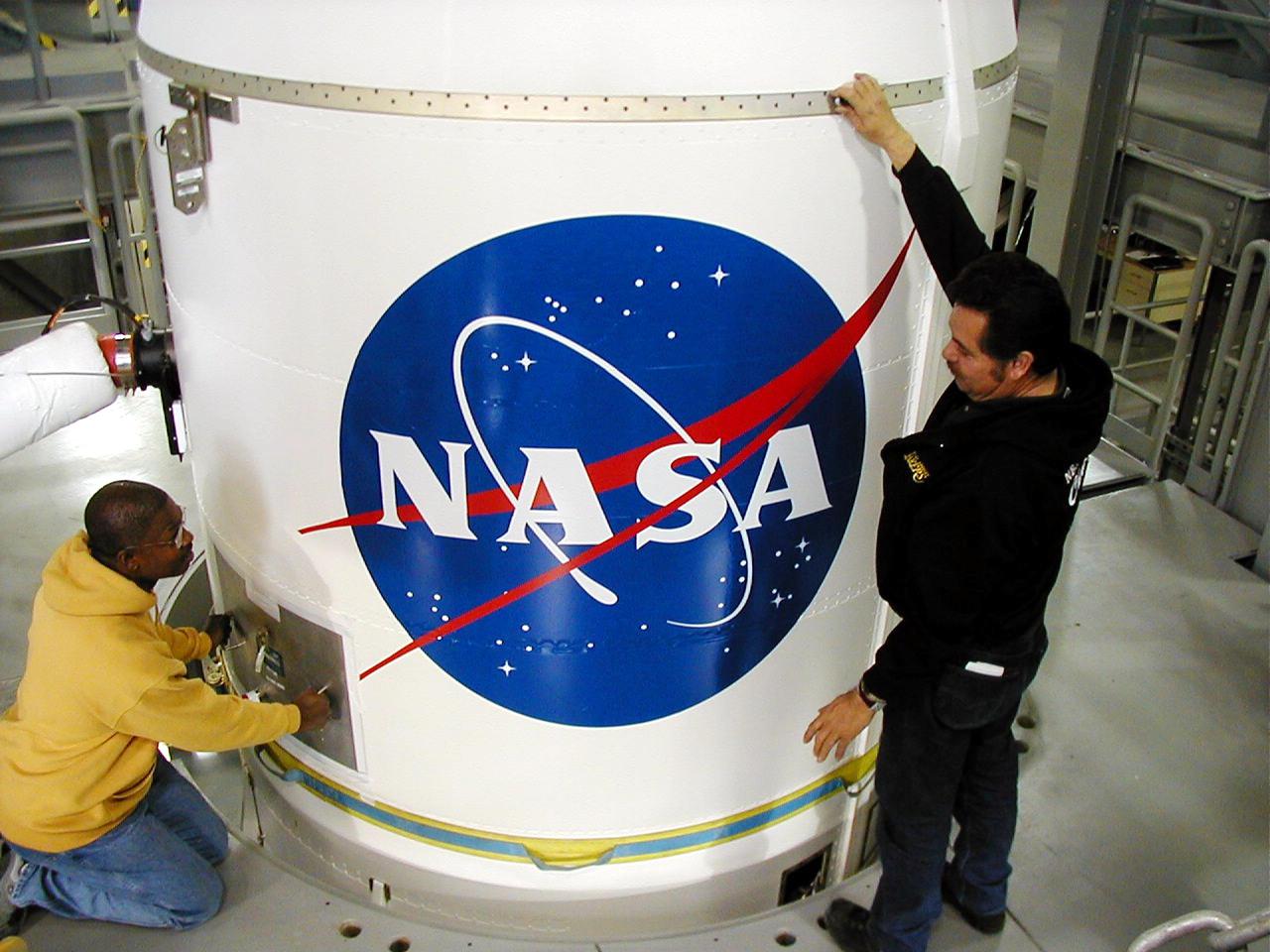
KODIAK ISLAND, ALASKA - A transporter moves the encapsulated Kodiak Star spacecraft into position in the Launch Service Structure, Kodiak Launch Complex (KLC), for final stacking for launch. The first launch to take place from KLC, Kodiak Star is scheduled to lift off on a Lockheed Martin Athena I launch vehicle on Sept. 17 during a two-hour window that extends from 5 p.m. to 7 p.m. p.m. ADT. The payloads aboard include the Starshine 3, sponsored by NASA, and the PICOSat, PCSat and Sapphire, sponsored by the Department of Defense (DoD) Space Test Program. KLC is the newest commercial launch complex in the United States, ideal for launch payloads requiring low-Earth polar or sun-synchronous orbits
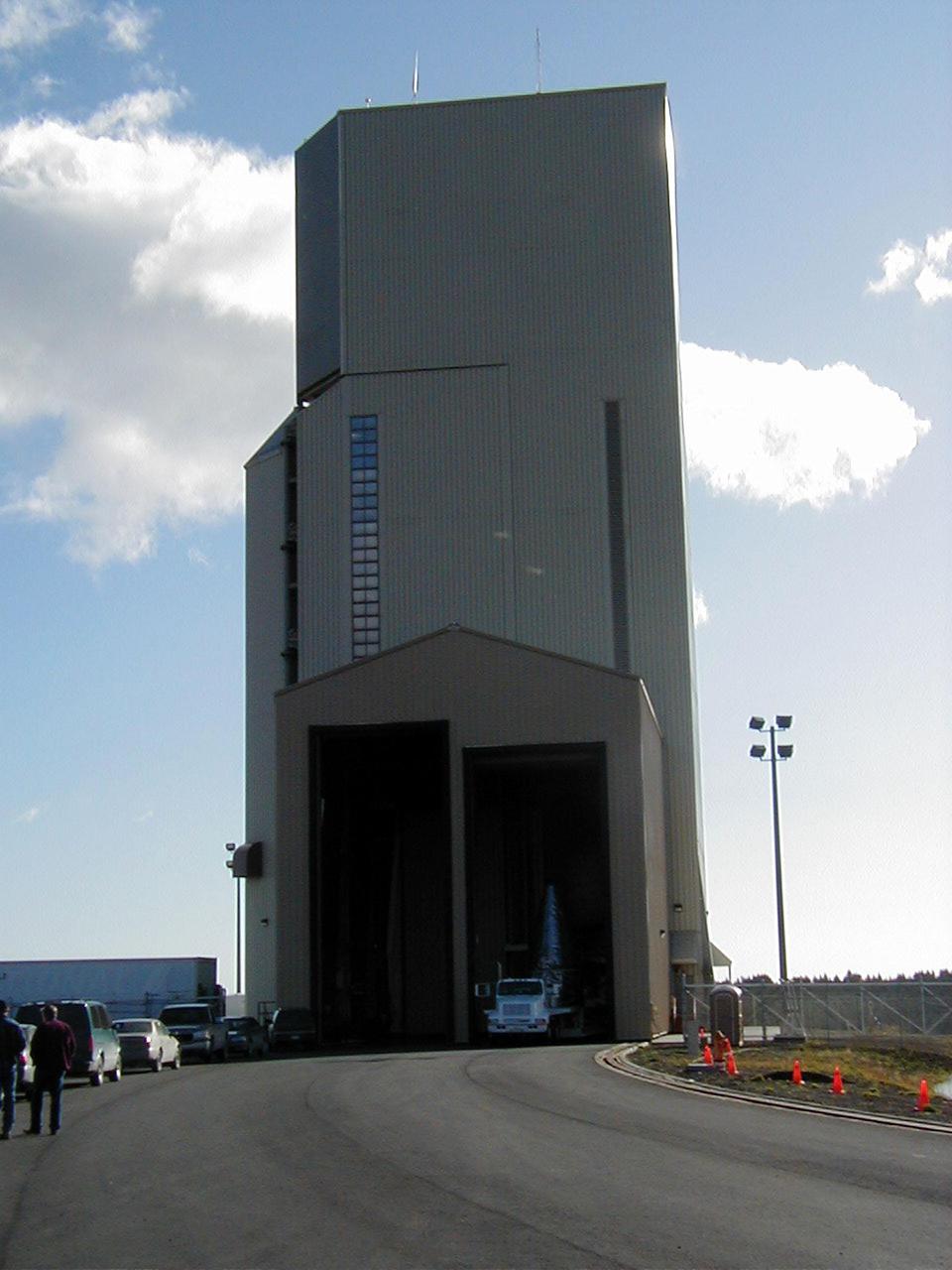
KODIAK ISLAND, ALASKA - A transporter moves the encapsulated Kodiak Star spacecraft into position in the Launch Service Structure, Kodiak Launch Complex (KLC), for final stacking for launch. The first launch to take place from KLC, Kodiak Star is scheduled to lift off on a Lockheed Martin Athena I launch vehicle on Sept. 17 during a two-hour window that extends from 5 p.m. to 7 p.m. p.m. ADT. The payloads aboard include the Starshine 3, sponsored by NASA, and the PICOSat, PCSat and Sapphire, sponsored by the Department of Defense (DoD) Space Test Program. KLC is the newest commercial launch complex in the United States, ideal for launch payloads requiring low-Earth polar or sun-synchronous orbits
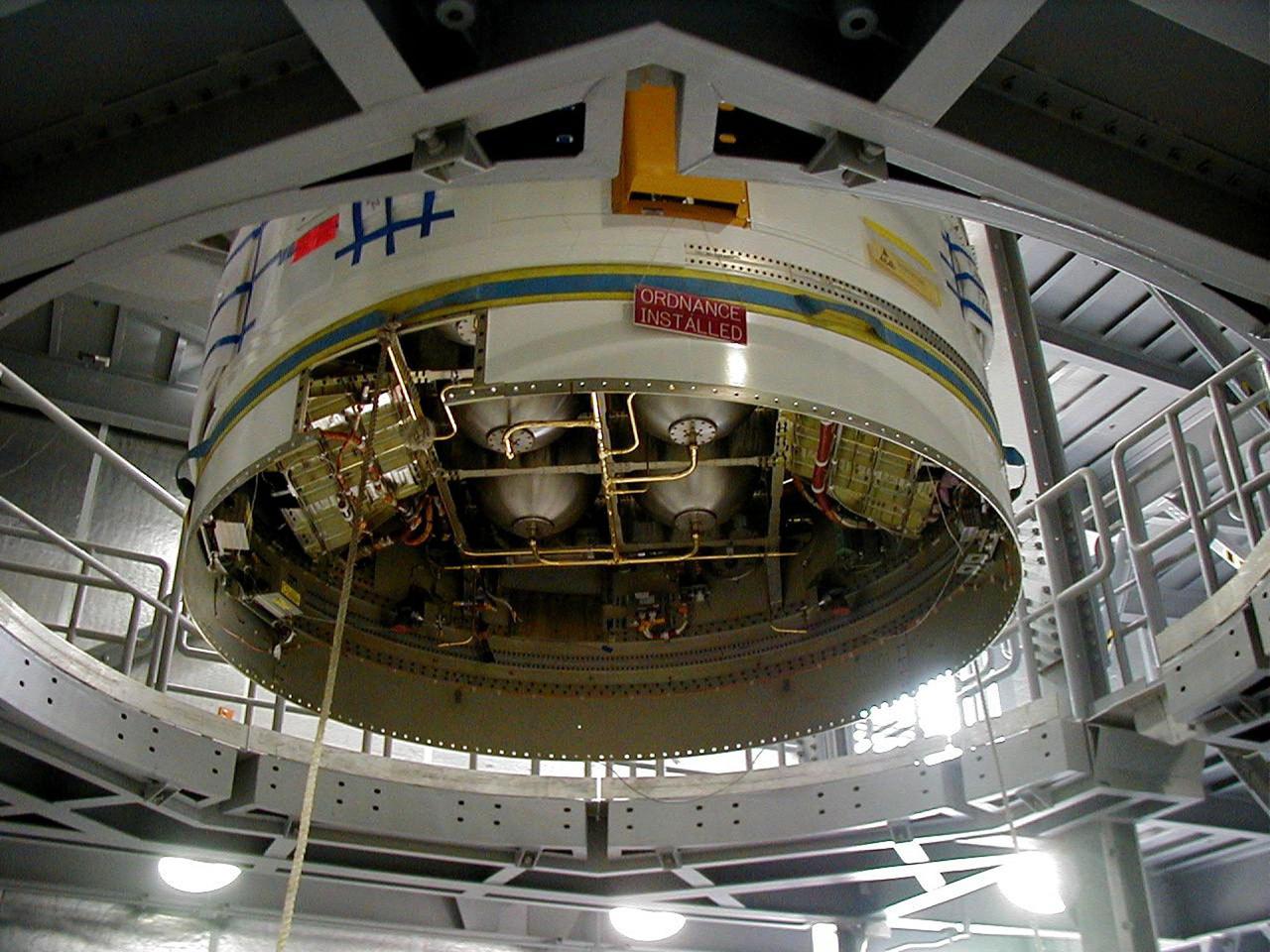
KODIAK ISLAND, Alaska -- The fueled Orbit Adjust Model (OAM), which navigates payloads into the correct orbit, is installed onto Orbis 21D Equipment Section Boost Motor, the second stage of the Athena 1 launch vehicle, at the launch pad at Kodiak Island, Alaska, as preparations to launch Kodiak Star proceed. The first orbital launch to take place from Alaska's Kodiak Launch Complex, Kodiak Star is scheduled to lift off on a Lockheed Martin Athena I launch vehicle on Sept. 17 during a two-hour window that extends from 5:00 to 7:00 p.m. ADT. The payloads aboard include the Starshine 3, sponsored by NASA, and the PICOSat, PCSat and Sapphire, sponsored by the Department of Defense (DoD) Space Test Program.
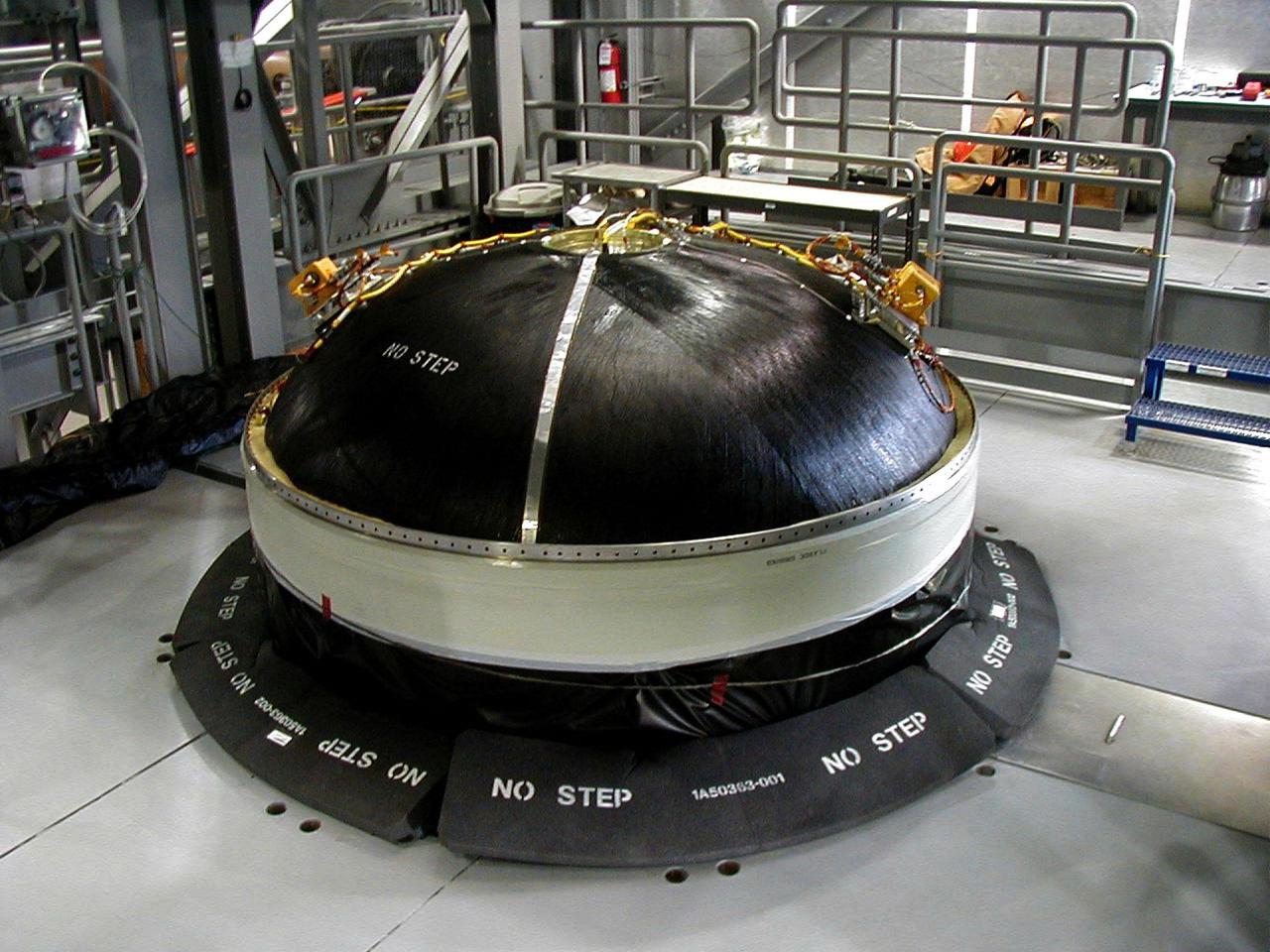
KODIAK ISLAND, Alaska -- Orbis 21D Equipment Section Boost Motor, the second stage of the Athena 1 launch vehicle, awaits the installation of the Orbit Adjust Model (OAM), which navigates the payloads into the correct orbit, at the launch pad at Kodiak Island, Alaska, as preparations to launch Kodiak Star proceed. The first orbital launch to take place from Alaska's Kodiak Launch Complex, Kodiak Star is scheduled to lift off on a Lockheed Martin Athena I launch vehicle on Sept. 17 during a two-hour window that extends from 5:00 to 7:00 p.m. ADT. The payloads aboard include the Starshine 3, sponsored by NASA, and the PICOSat, PCSat and Sapphire, sponsored by the Department of Defense (DoD) Space Test Program.
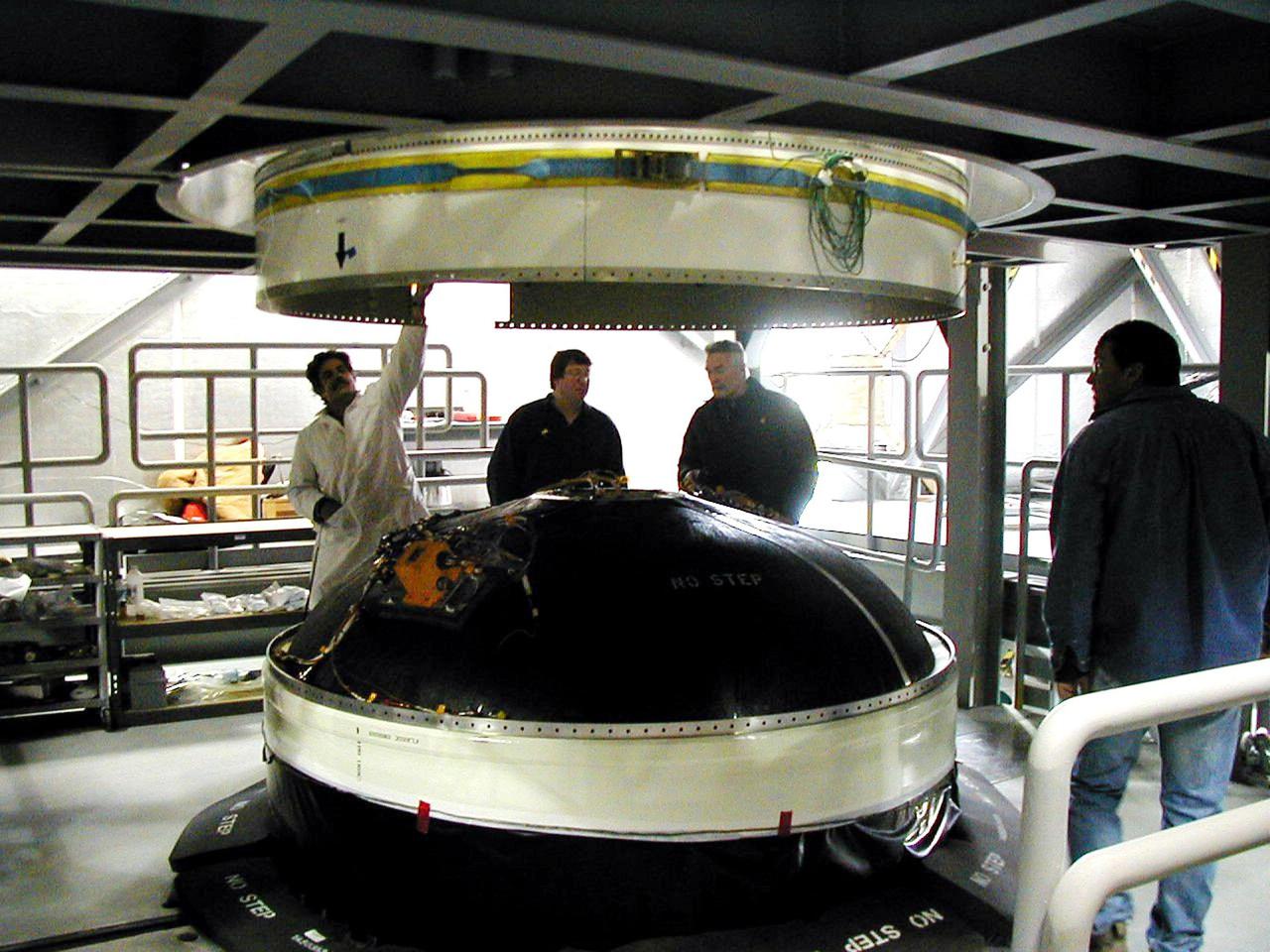
KODIAK ISLAND, Alaska -- Technicians lower the fueled Orbit Adjust Model (OAM), which navigates payloads into the correct orbit, onto Orbis 21D Equipment Section Boost Motor, the second stage of the Athena 1 launch vehicle, at the launch pad at Kodiak Island, Alaska, as preparations to launch Kodiak Star proceed. The first orbital launch to take place from Alaska's Kodiak Launch Complex, Kodiak Star is scheduled to lift off on a Lockheed Martin Athena I launch vehicle on Sept. 17 during a two-hour window that extends from 5 p.m. ADT. The payloads aboard include the Starshine 3, sponsored by NASA, and the PICOSat, PCSat and Sapphire, sponsored by the Department of Defense (DoD) Space Test Program.
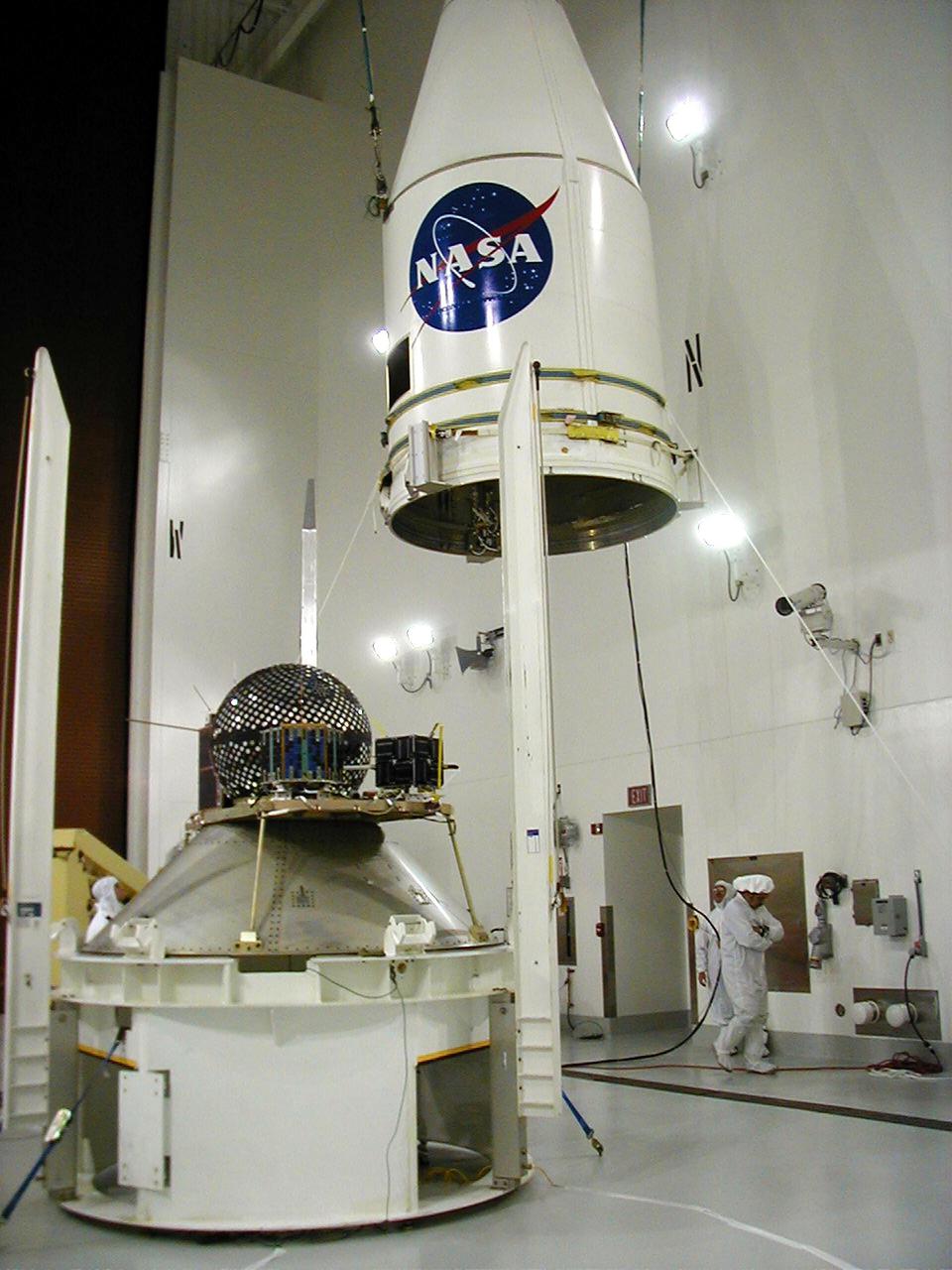
KODIAK ISLAND, ALASKA - In the Launch Service Structure, Kodiak Launch Complex (KLC), the Kodiak Star spacecraft is ready for encapsulation in the fairing seen at right, above. The first launch to take place from KLC, Kodiak Star is scheduled to lift off on a Lockheed Martin Athena I launch vehicle on Sept. 17 during a two-hour window that extends from 5 p.m. to 7 p.m. p.m. ADT. The payloads aboard include the Starshine 3, sponsored by NASA, and the PICOSat, PCSat and Sapphire, sponsored by the Department of Defense (DoD) Space Test Program. KLC is the newest commercial launch complex in the United States, ideal for launch payloads requiring low-Earth polar or sun-synchronous orbits
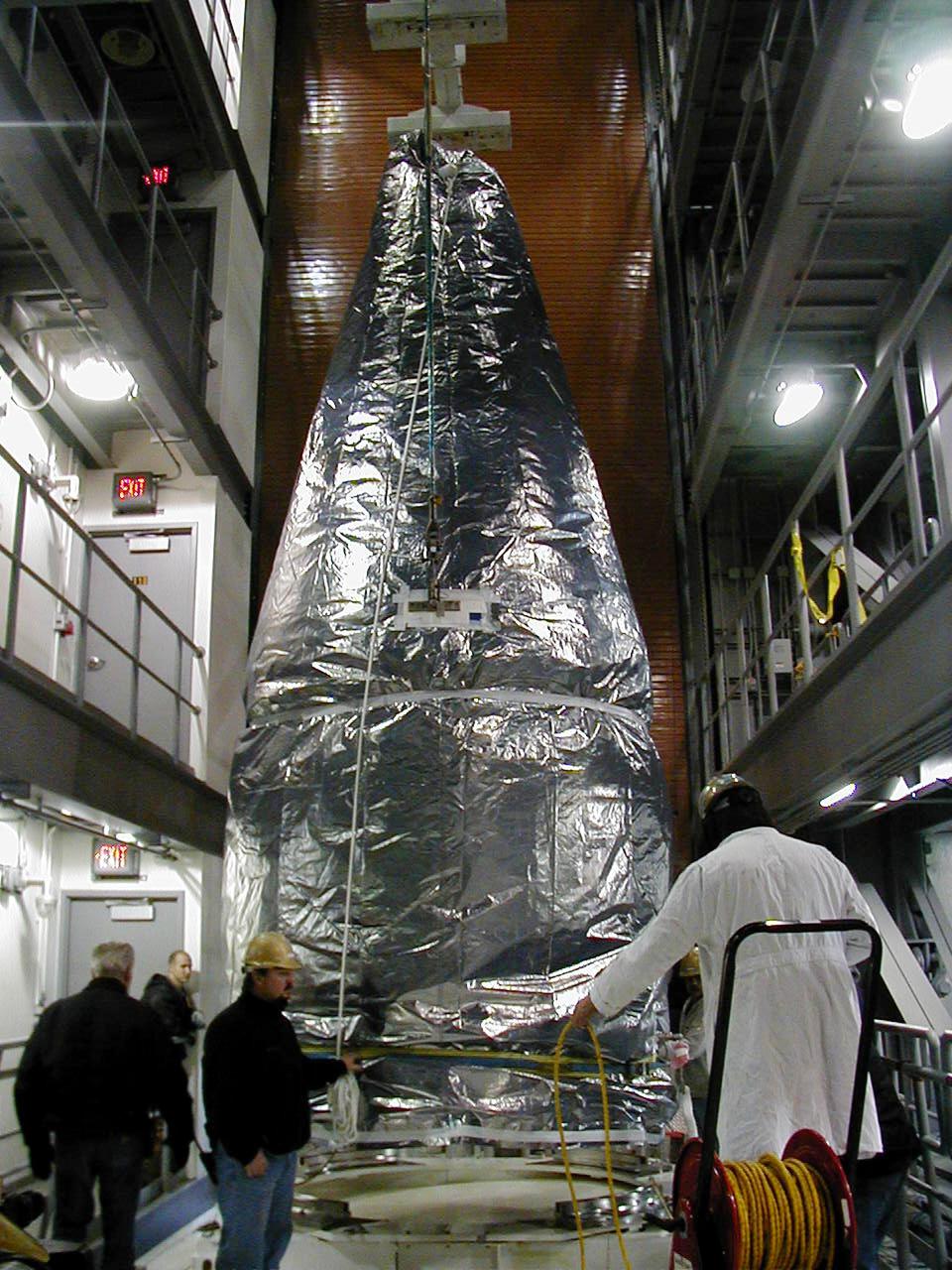
KODIAK ISLAND, ALASKA - Inside the Launch Service Structure, Kodiak Launch Complex (KLC), the final stage of the Athena I launch vehicle, with the Kodiak Star spacecraft, is maneuvered into place. The first launch to take place from KLC, Kodiak Star is scheduled to lift off on a Lockheed Martin Athena I launch vehicle on Sept. 17 during a two-hour window that extends from 5 p.m. to 7 p.m. p.m. ADT. The payloads aboard include the Starshine 3, sponsored by NASA, and the PICOSat, PCSat and Sapphire, sponsored by the Department of Defense (DoD) Space Test Program. KLC is the newest commercial launch complex in the United States, ideal for launch payloads requiring low-Earth polar or sun-synchronous orbits
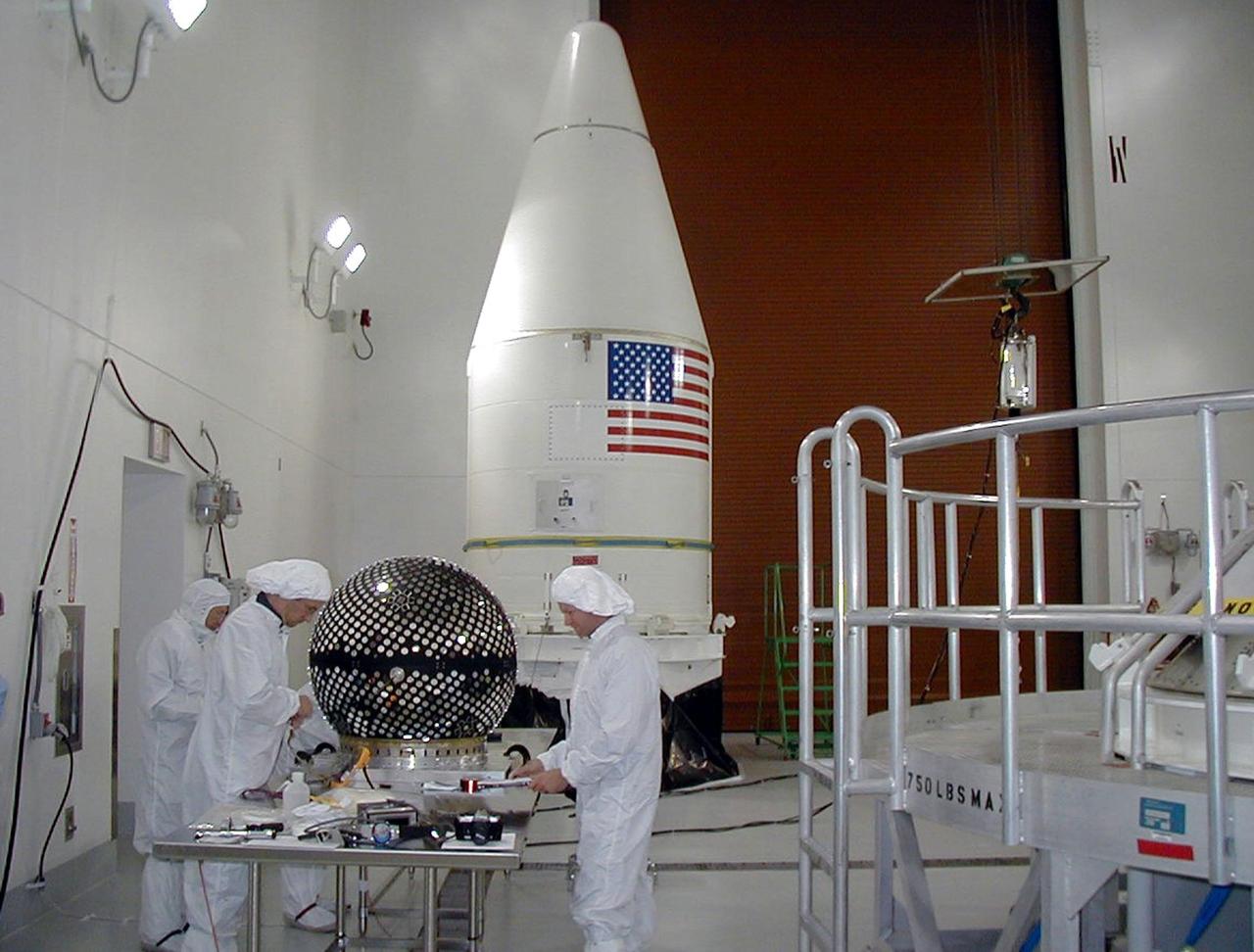
KODIAK ISLAND, Alaska -- Technicians prepare the Starshine 3 payload for its launch aboard the Athena 1 launch vehicle, while the payload fairing awaits processing, at Kodiak Island, Alaska, as preparations to launch Kodiak Star proceed. The first orbital launch to take place from Alaska's Kodiak Launch Complex, Kodiak Star is scheduled to lift off on a Lockheed Martin Athena I launch vehicle on Sept. 17 during a two-hour window that extends from 5:00 to 7:00 p.m. ADT. The payloads aboard include the Starshine 3, sponsored by NASA, and the PICOSat, PCSat and Sapphire, sponsored by the Department of Defense (DoD) Space Test Program.

KODIAK ISLAND, Alaska -- The Sapphire payload is moved into position next to the Starshine 3 payload at Kodiak Island, Alaska, as preparations to launch Kodiak Star proceed. The first orbital launch to take place from Alaska's Kodiak Launch Complex, Kodiak Star is scheduled to lift off on a Lockheed Martin Athena I launch vehicle on Sept. 17 during a two-hour window that extends from 5 p.m. to 7 p.m. p.m. ADT. The payloads aboard include the Starshine 3, sponsored by NASA, and the PICOSat, PCSat and Sapphire, sponsored by the Department of Defense (DoD) Space Test Program.
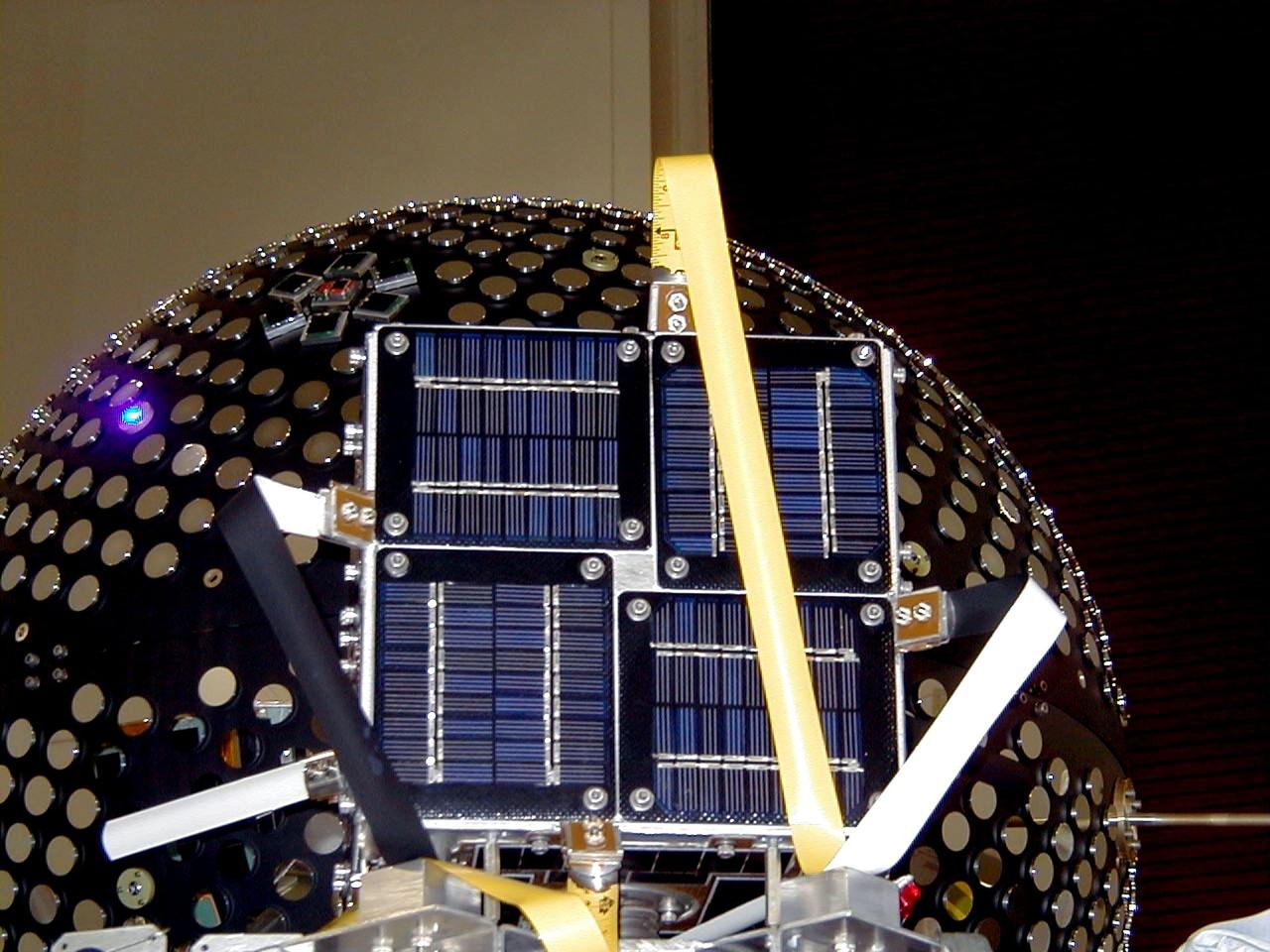
KODIAK ISLAND, Alaska -- The PICSat and Starshine 3 (back) payloads wait for their launch aboard the Athena 1 launch vehicle at Kodiak Island, Alaska, as preparations to launch Kodiak Star proceed. The first orbital launch to take place from Alaska's Kodiak Launch Complex, Kodiak Star is scheduled to lift off on a Lockheed Martin Athena I launch vehicle on Sept. 17 during a two-hour window that extends from 5 p.m. to 7 p.m. p.m. ADT. The payloads aboard include the Starshine 3, sponsored by NASA, and the PICOSat, PCSat and Sapphire, sponsored by the Department of Defense (DoD) Space Test Program.
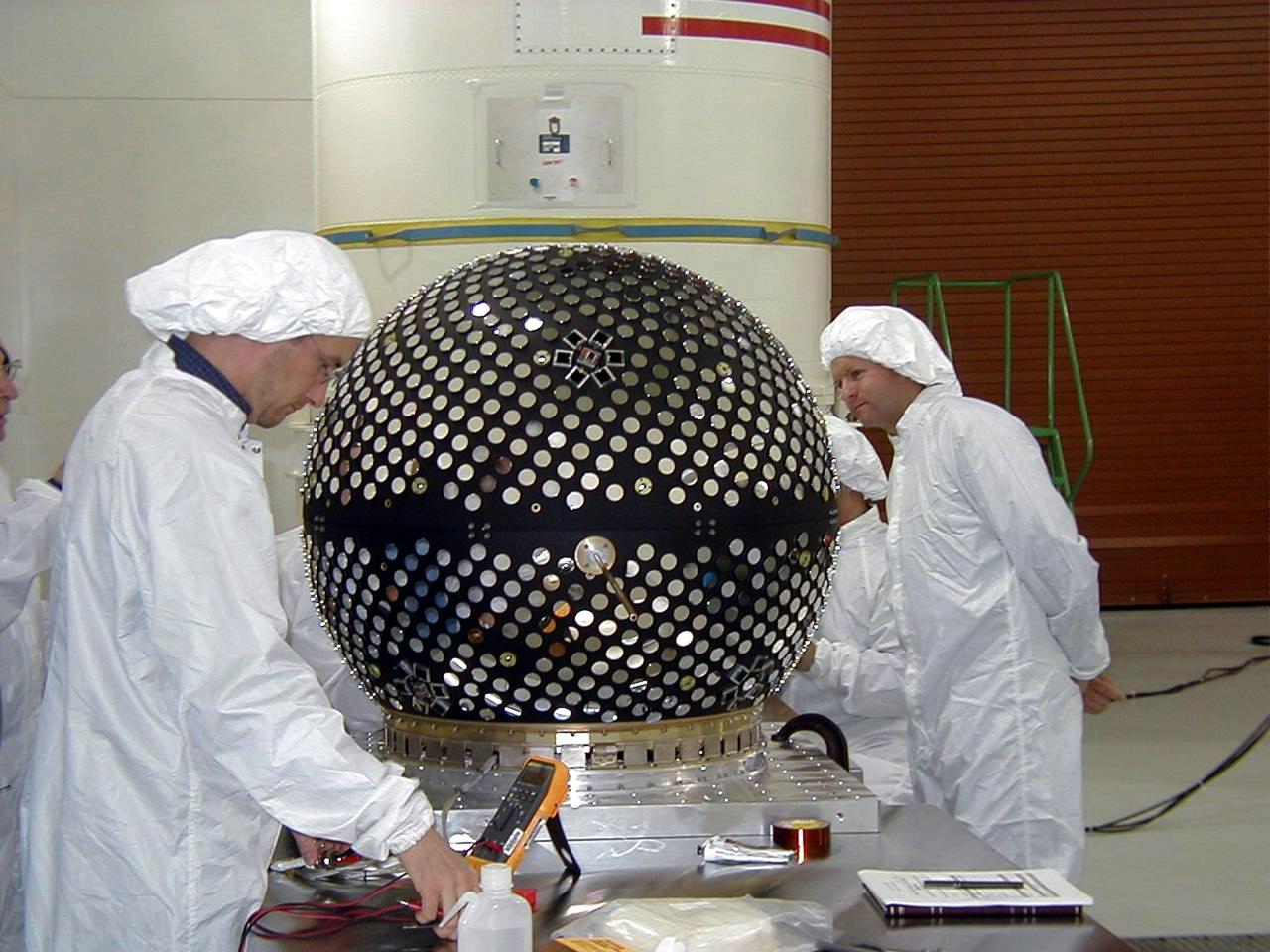
KODIAK ISLAND, Alaska -- Technicians prepare the Starshine 3 payload for its launch aboard the Athena 1 launch vehicle at Kodiak Island, Alaska, as preparations to launch Kodiak Star proceed. The first orbital launch to take place from Alaska's Kodiak Launch Complex, Kodiak Star is scheduled to lift off on a Lockheed Martin Athena I launch vehicle on Sept. 17 during a two-hour window that extends from 5:00 to 7:00 p.m. ADT. The payloads aboard include the Starshine 3, sponsored by NASA, and the PICOSat, PCSat and Sapphire, sponsored by the Department of Defense (DoD) Space Test Program.
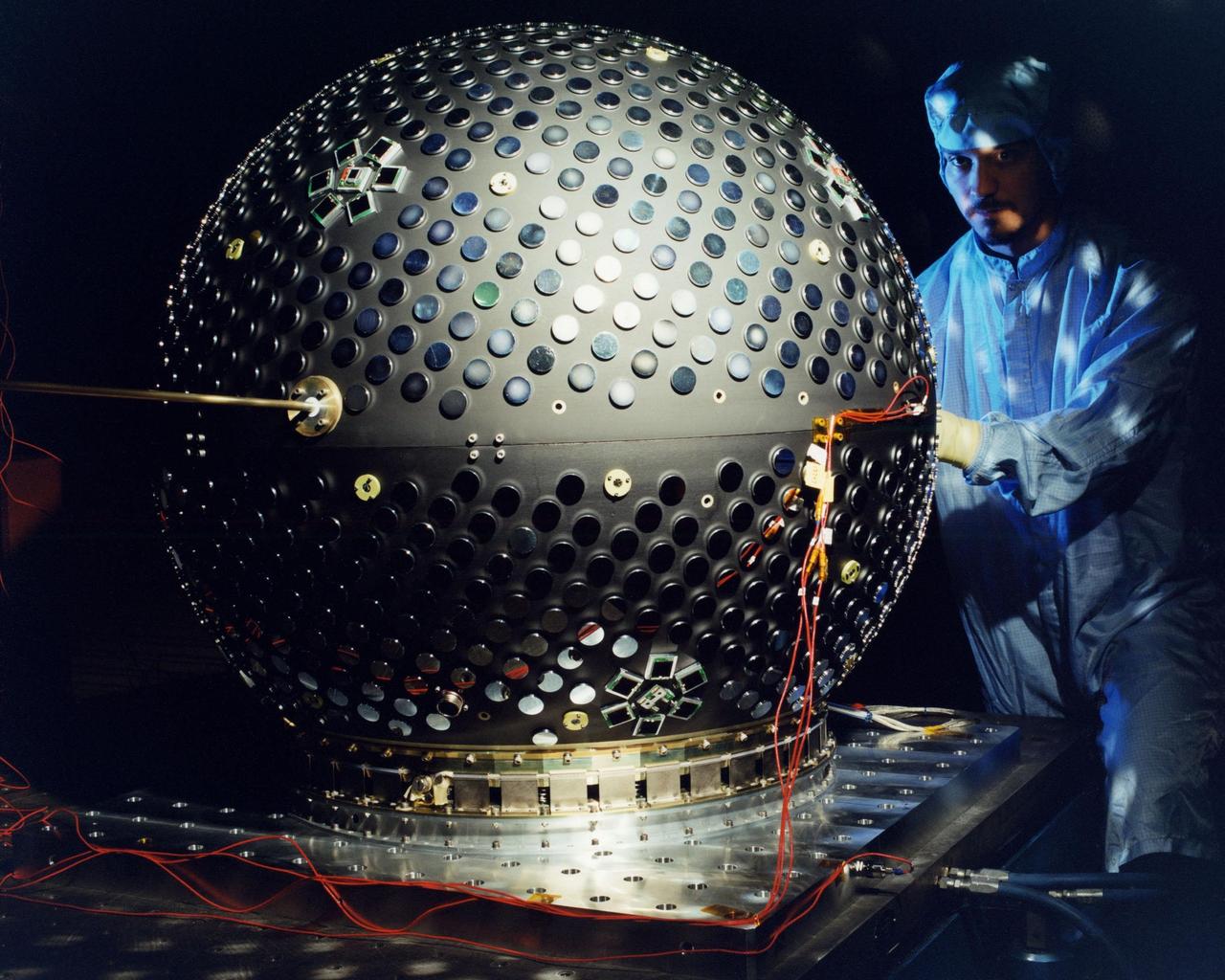
KODIAK ISLAND, Alaska -- A technician performs final testing on Starshine 3 at the Naval Research Laboratory in Washington, D.C., to prepare for the launch of the Kodiak Star at Kodiak Island, Alaska. The first orbital launch to take place from Alaska's Kodiak Launch Complex, Kodiak Star is scheduled to lift off on a Lockheed Martin Athena I launch vehicle on Sept. 17 during a two-hour window that extends from 5:00 to 7:00 p.m. ADT. The payloads aboard include the Starshine 3, sponsored by NASA, and the PICOSat, PCSat and Sapphire, sponsored by the Department of Defense (DoD) Space Test Program.
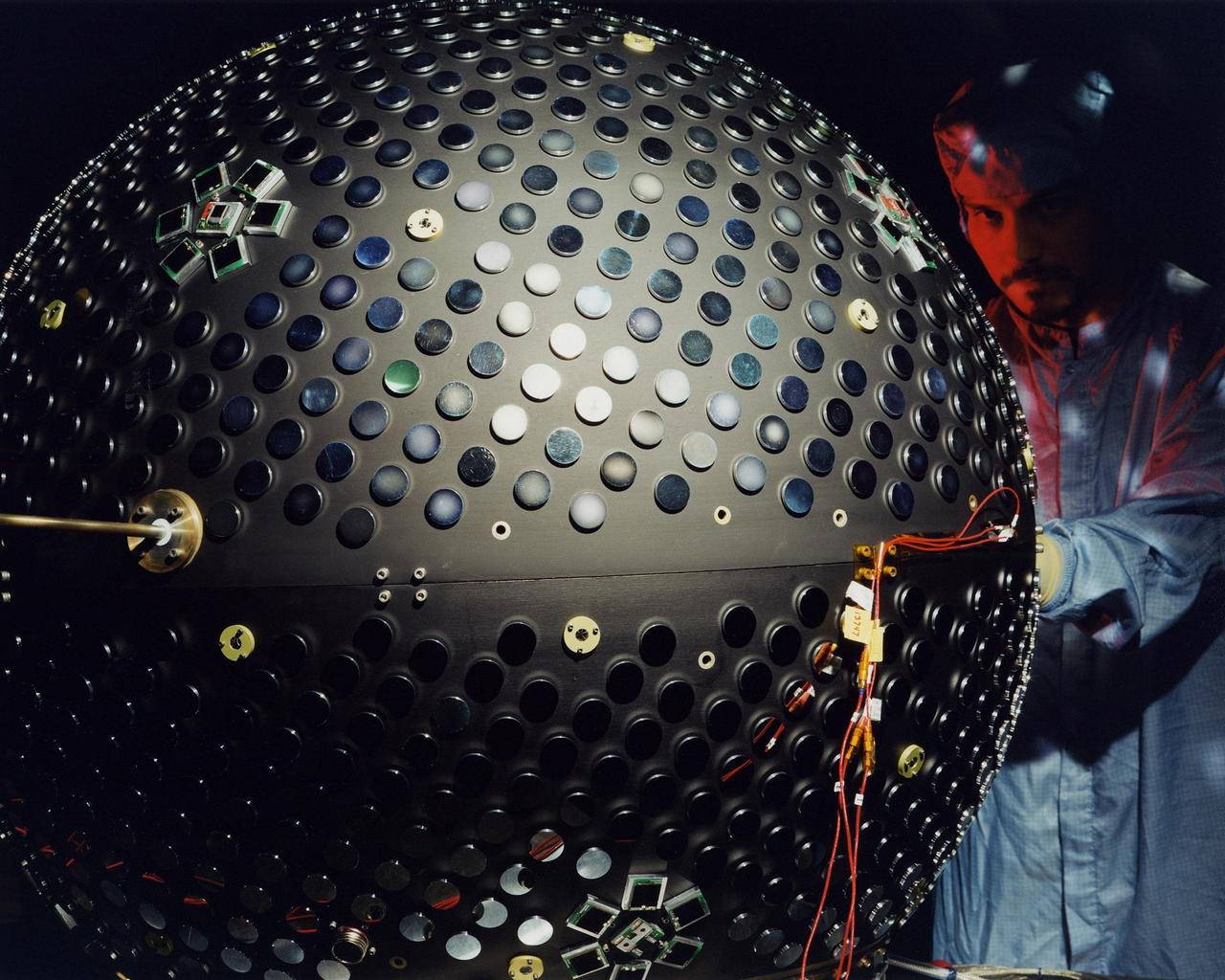
KODIAK ISLAND, Alaska -- A technician performs final testing on Starshine 3 at the Naval Research Laboratory in Washington, D.C., to prepare for the launch of the Kodiak Star at Kodiak Island, Alaska. The first orbital launch to take place from Alaska's Kodiak Launch Complex, Kodiak Star is scheduled to lift off on a Lockheed Martin Athena I launch vehicle on Sept. 17 during a two-hour window that extends from 5:00 to 7:00 p.m. ADT. The payloads aboard include the Starshine 3, sponsored by NASA, and the PICOSat, PCSat and Sapphire, sponsored by the Department of Defense (DoD) Space Test Program.
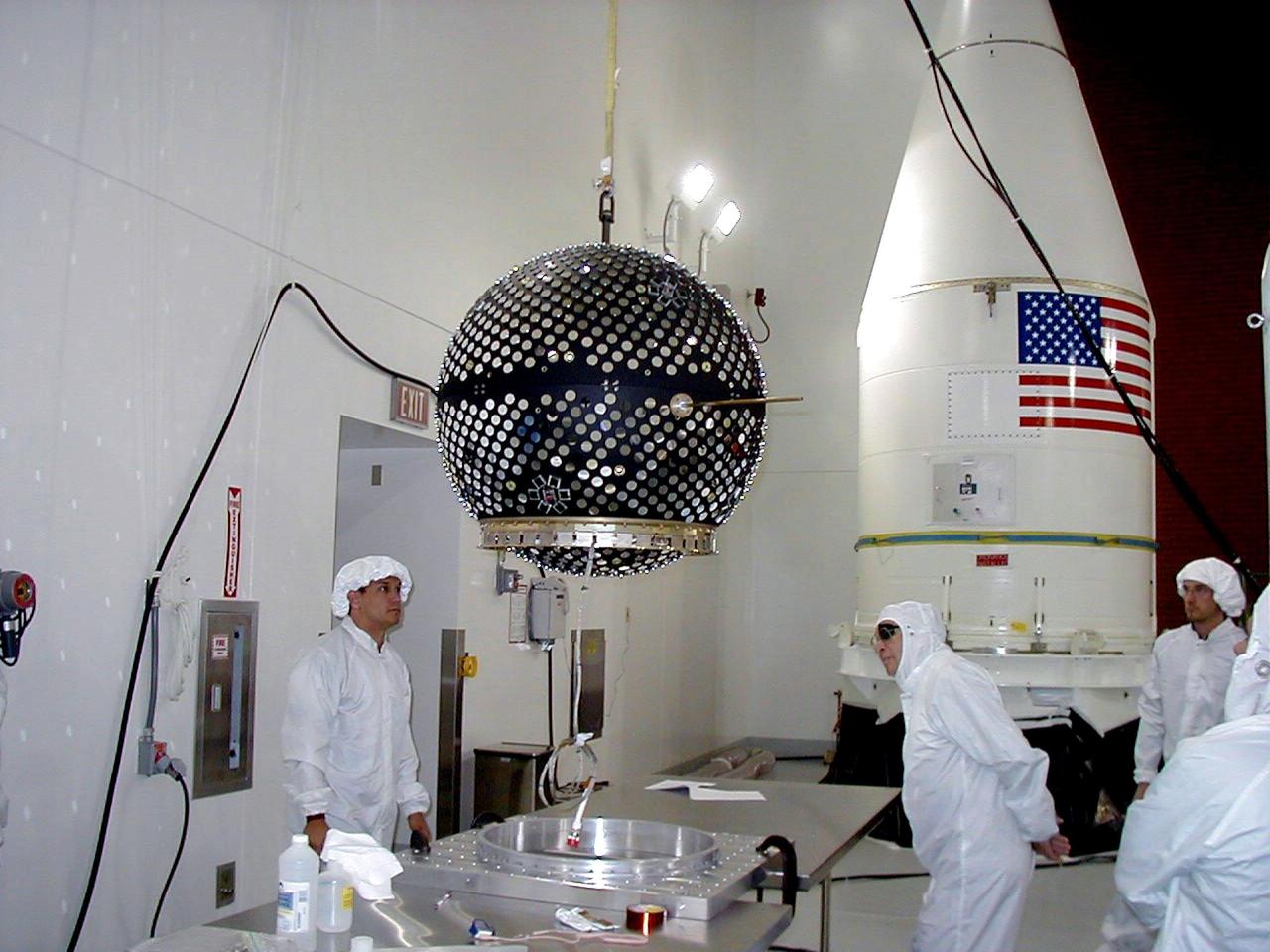
KODIAK ISLAND, Alaska -- Technicians prepare the Starshine 3 payload, while the payload fairing of the Athena 1 launch vehicle awaits servicing at Kodiak Island, Alaska, as preparations to launch Kodiak Star proceed. The first orbital launch to take place from Alaska's Kodiak Launch Complex, Kodiak Star is scheduled to lift off on a Lockheed Martin Athena I launch vehicle on Sept. 17 during a two-hour window that extends from 5:00 to 7:00 p.m. ADT. The payloads aboard include the Starshine 3, sponsored by NASA, and the PICOSat, PCSat and Sapphire, sponsored by the Department of Defense (DoD) Space Test Program

KENNEDY SPACE CENTER, Fla. -- Technicians complete final preparations to the four Athena 1 payloads (Starshine 3, PICOSat, PCSat and Sapphire) at Kodiak Island, Alaska, as preparations to launch Kodiak Star proceed. The first launch to take place from Alaska's Kodiak Launch Complex, Kodiak Star is scheduled to lift off on a Lockheed Martin Athena I launch vehicle on Sept. 17 during a two-hour window that extends from 5:00 to 7:00 p.m. ADT. The payloads aboard include the Starshine 3, sponsored by NASA, and the PICOSat, PCSat and Sapphire, sponsored by the Department of Defense (DoD) Space Test Program
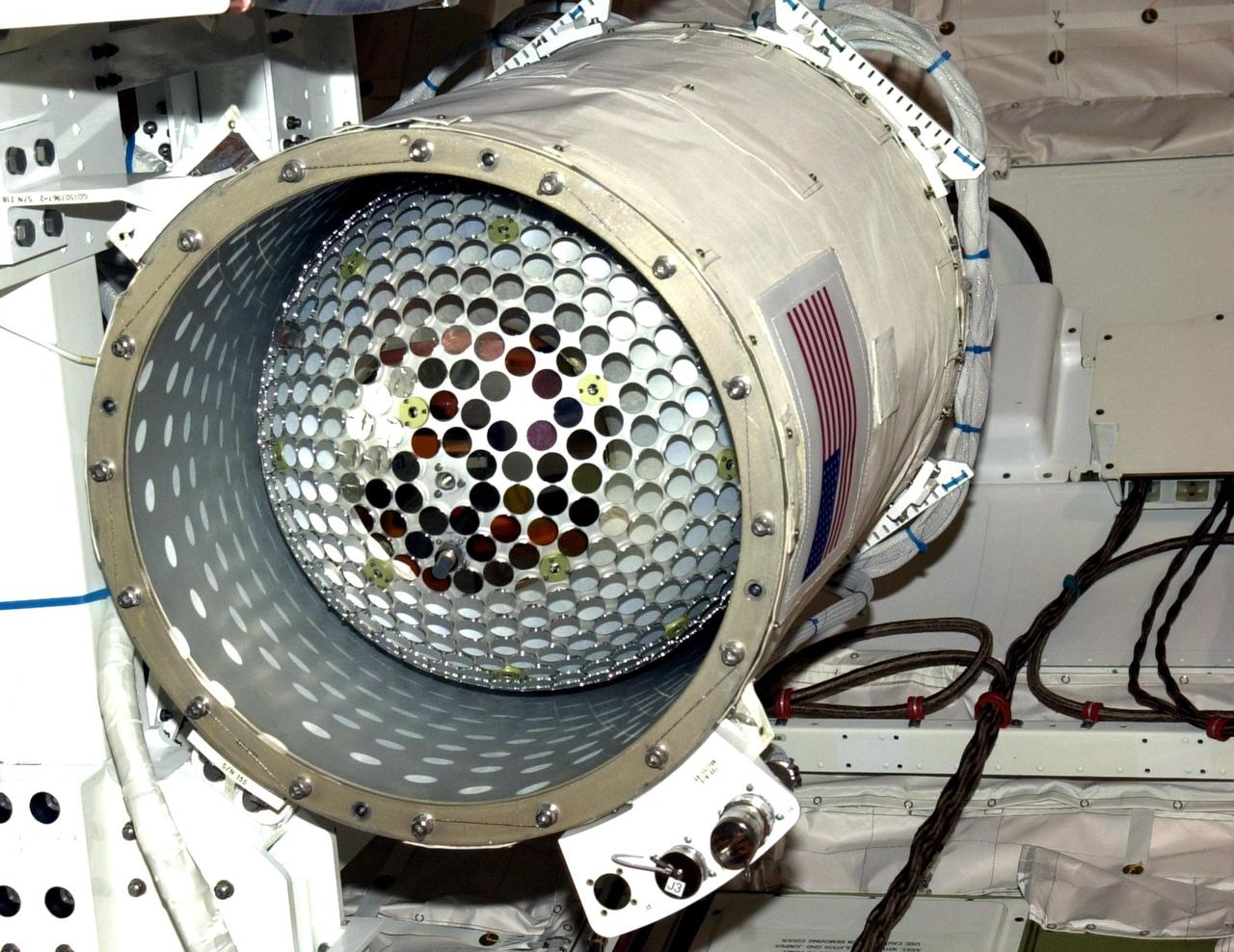
KENNEDY SPACE CENTER, Fla. -- A technician checks the mirrors on the Starshine-2 experiment inside a canister in the payload bay of Space Shuttle Endeavour. The deployable experiment is being carried on mission STS-108. Starshine-2's 800 aluminum mirrors were polished by more than 25,000 students from 26 countries. Top priorities for the STS-108 (UF-1) mission of Endeavour are rotation of the International Space Station Expedition Three and Expedition Four crews, bringing water, equipment and supplies to the station in the Multi-Purpose Logistics Module Raffaello, and completion of robotics tasks and a spacewalk to install thermal blankets over two pieces of equipment at the bases of the Space Station's solar wings. Liftoff of Endeavour on mission STS-108 is scheduled for 7:41 p.m. EST
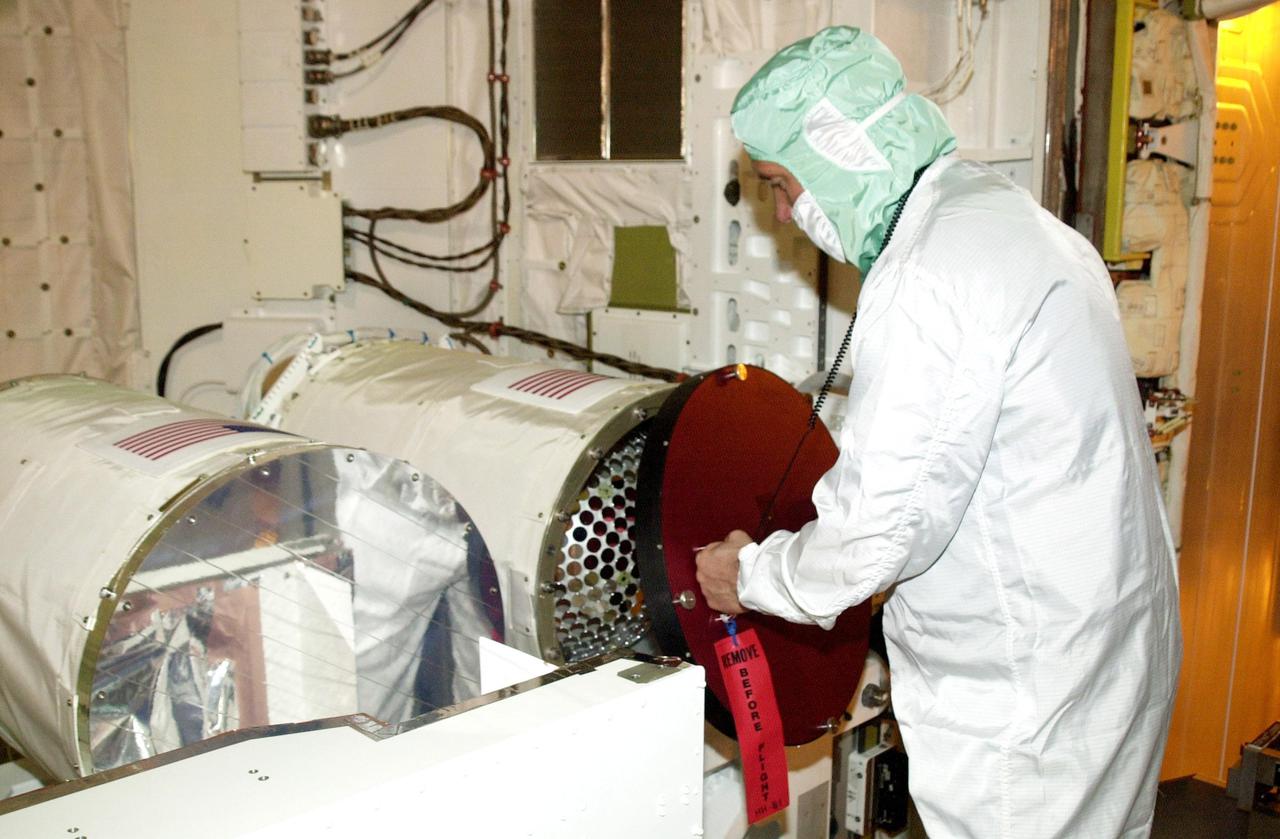
KENNEDY SPACE CENTER, Fla. -- A technician removes the cover of the canister holding the Starshine-2 experiment. The canister is in the payload bay of Space Shuttle Endeavour. The deployable experiment is being carried on mission STS-108. Starshine-2's 800 aluminum mirrors were polished by more than 25,000 students from 26 countries. Top priorities for the STS-108 (UF-1) mission of Endeavour are rotation of the International Space Station Expedition Three and Expedition Four crews, bringing water, equipment and supplies to the station in the Multi-Purpose Logistics Module Raffaello, and completion of robotics tasks and a spacewalk to install thermal blankets over two pieces of equipment at the bases of the Space Station's solar wings. Liftoff of Endeavour on mission STS-108 is scheduled for 7:41 p.m. EST
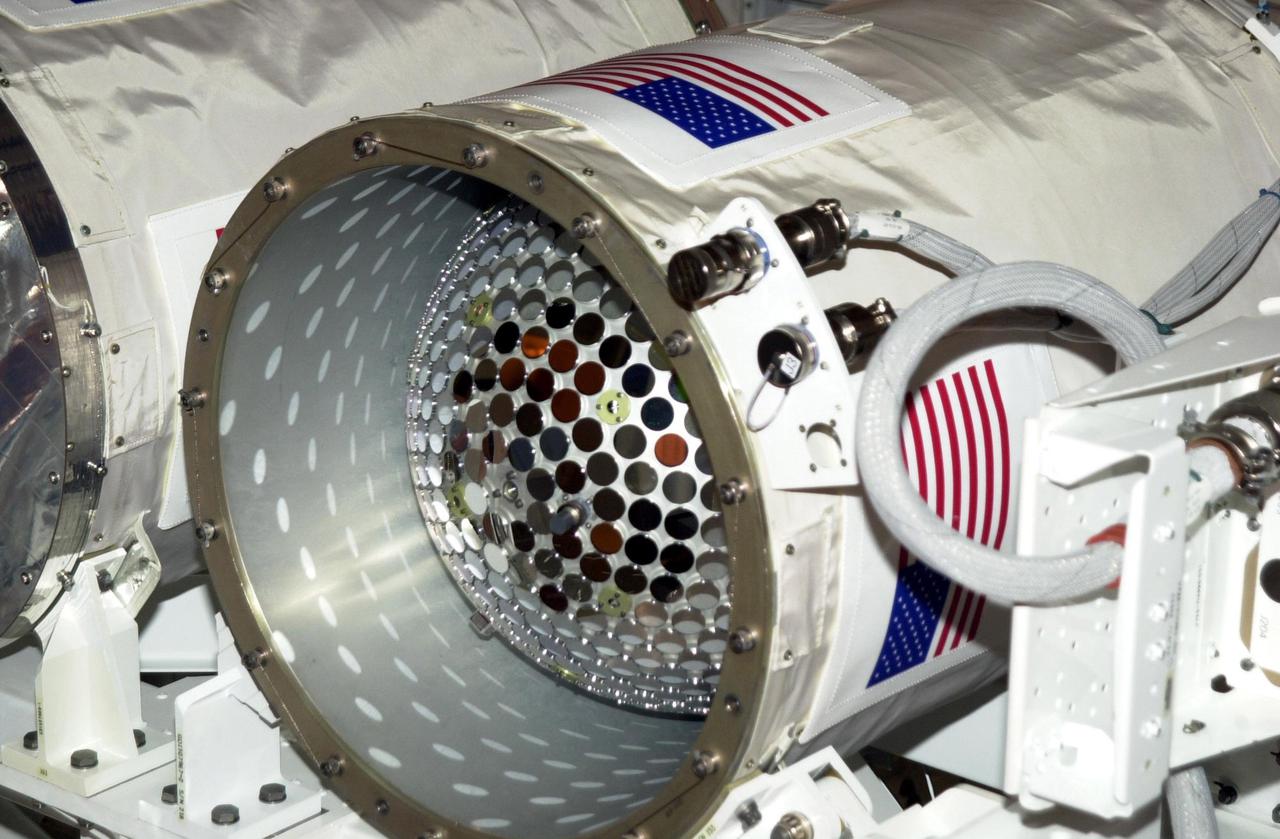
KENNEDY SPACE CENTER, Fla. -- The Starshine-2 experiment rests inside a canister in the payload bay of Space Shuttle Endeavour. The deployable experiment is being carried on mission STS-108. Starshine-2's 800 aluminum mirrors were polished by more than 25,000 students from 26 countries. Top priorities for the STS-108 (UF-1) mission of Endeavour are rotation of the International Space Station Expedition Three and Expedition Four crews, bringing water, equipment and supplies to the station in the Multi-Purpose Logistics Module Raffaello, and completion of robotics tasks and a spacewalk to install thermal blankets over two pieces of equipment at the bases of the Space Station's solar wings. Liftoff of Endeavour on mission STS-108 is scheduled for 7:41 p.m. EST
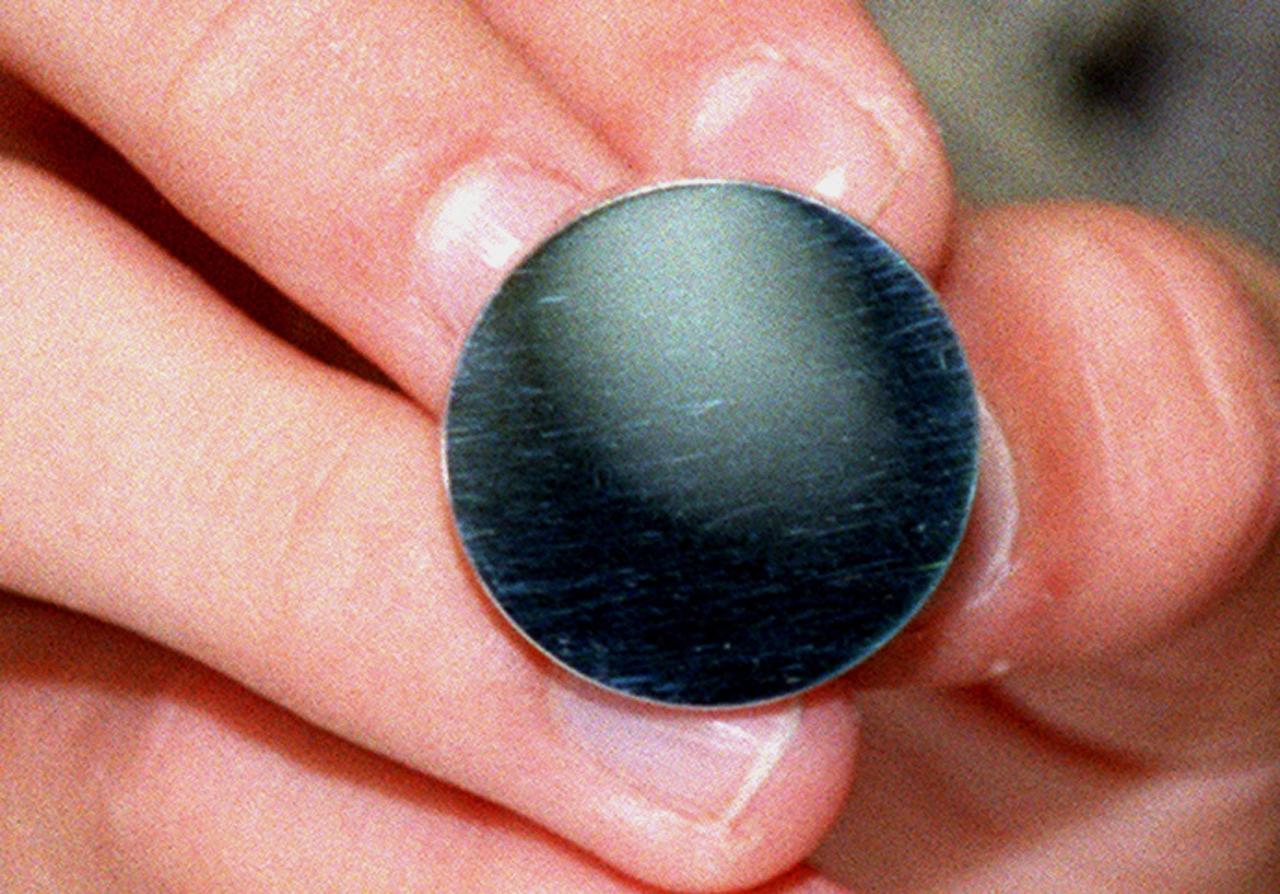
The one-inch mirror shown here is one of nearly nine hundred polished by dozens of students teams of elementary, middle and high school students across the nation as part of STARSHINE, a student spacecraft built by the Naval Research Laboratory in Washington, D.C. After being coated with a protective transparent layer of Silicon Dioxide at Hill Air Force Base, they are being mounted on the surface of the spacecraft. STARSHINE is being deployed into a highly inclined low-earth orbit from a Hitchhiker canister on mission STS-96, targeted to launch May 20. After deployment from the Shuttle in May, the spacecraft will reflect flashes of sunlight to observers on the earth during the mission. This twinkling satellite will be naked-eye visible against the star background for about six months during recurring morning and evening twilight periods to student observers around the world
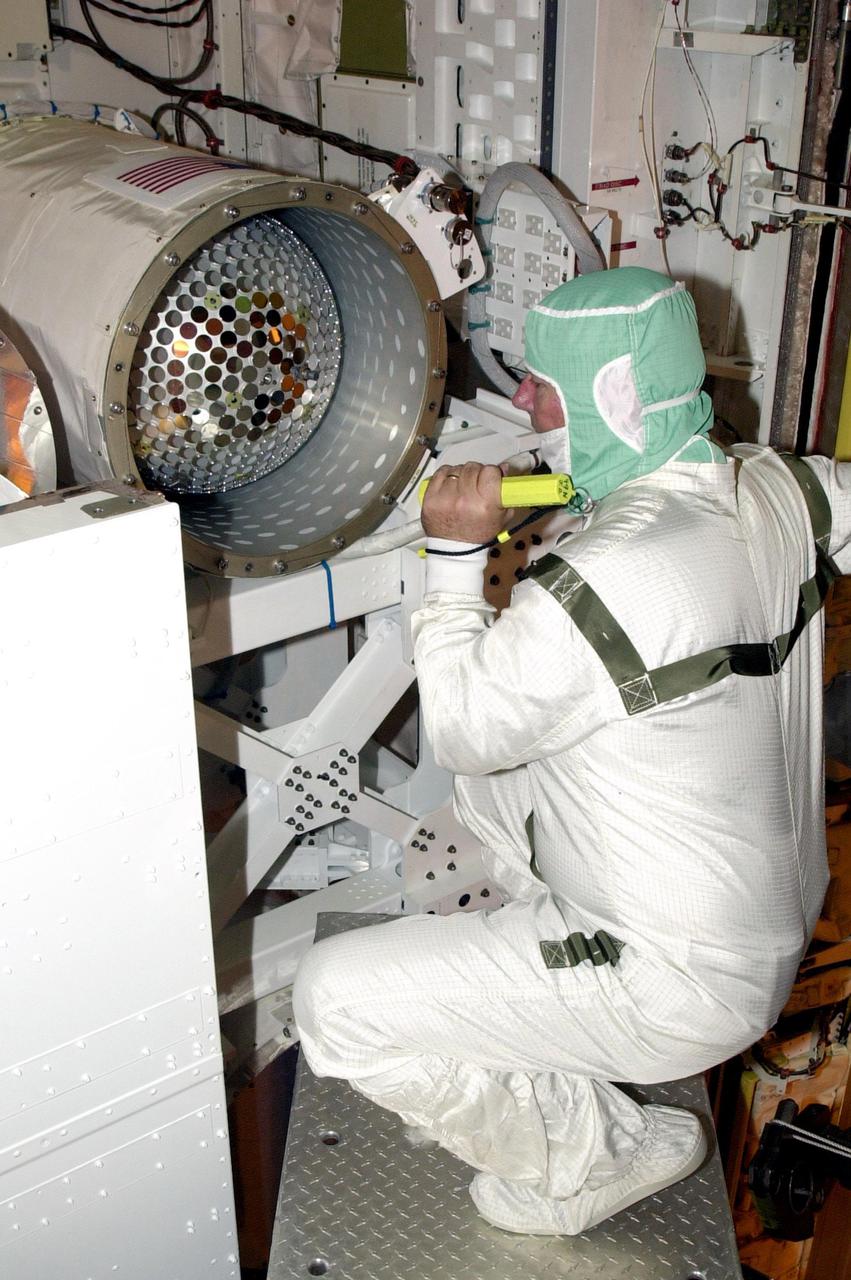
KENNEDY SPACE CENTER, FLA. -- The Starshine-2 experiment rests inside a canister in the payload bay of Space Shuttle Endeavour. The deployable experiment is being carried on mission STS-108. Starshine-2's 800 aluminum mirrors were polished by more than 25,000 students from 26 countries. Top priorities for the STS-108 (UF-1) mission of Endeavour are rotation of the International Space Station Expedition Three and Expedition Four crews, bringing water, equipment and supplies to the station in the Multi-Purpose Logistics Module Raffaello, and completion of robotics tasks and a spacewalk to install thermal blankets over two pieces of equipment at the bases of the Space Station's solar wings. Liftoff of Endeavour on mission STS-108 is scheduled for 7:41 p.m. ES
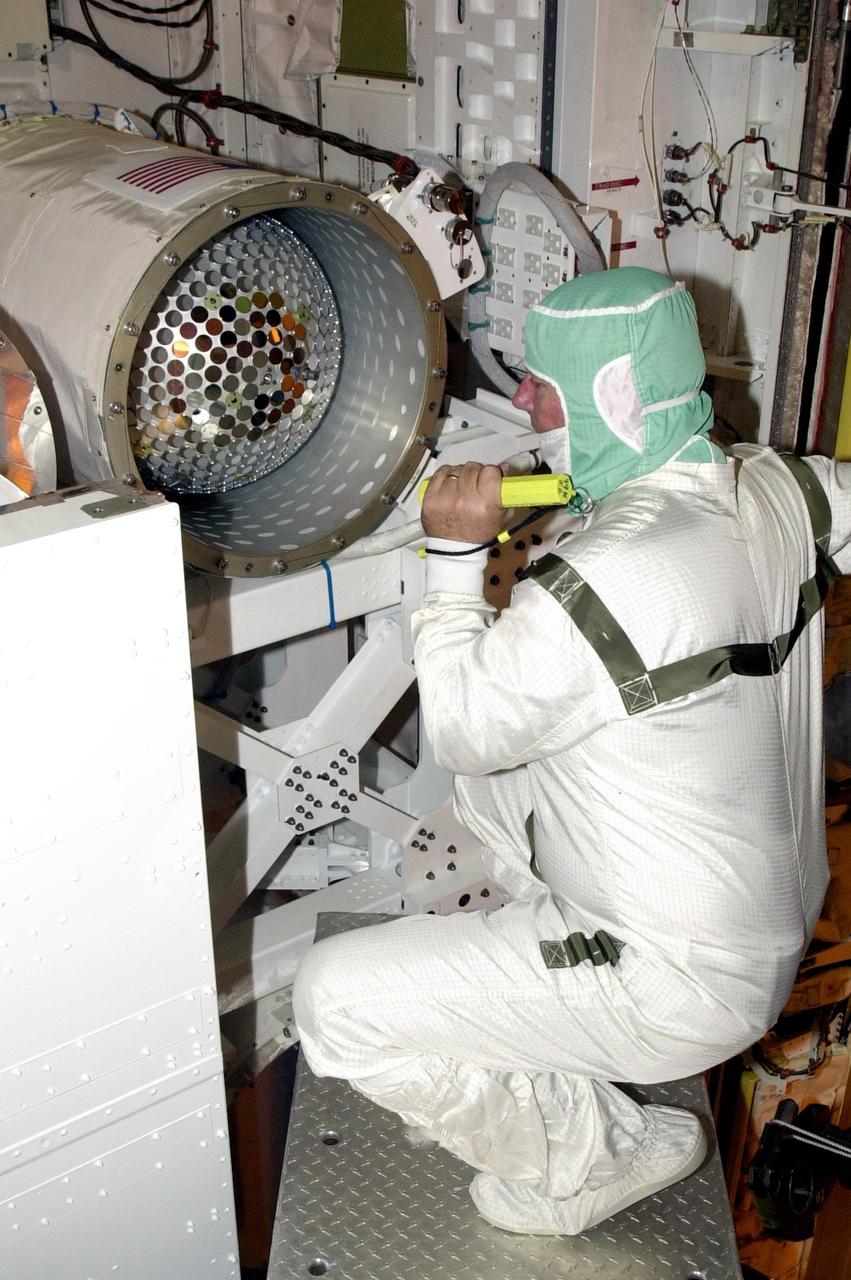
KENNEDY SPACE CENTER, FLA. -- The Starshine-2 experiment rests inside a canister in the payload bay of Space Shuttle Endeavour. The deployable experiment is being carried on mission STS-108. Starshine-2's 800 aluminum mirrors were polished by more than 25,000 students from 26 countries. Top priorities for the STS-108 (UF-1) mission of Endeavour are rotation of the International Space Station Expedition Three and Expedition Four crews, bringing water, equipment and supplies to the station in the Multi-Purpose Logistics Module Raffaello, and completion of robotics tasks and a spacewalk to install thermal blankets over two pieces of equipment at the bases of the Space Station's solar wings. Liftoff of Endeavour on mission STS-108 is scheduled for 7:41 p.m. ES
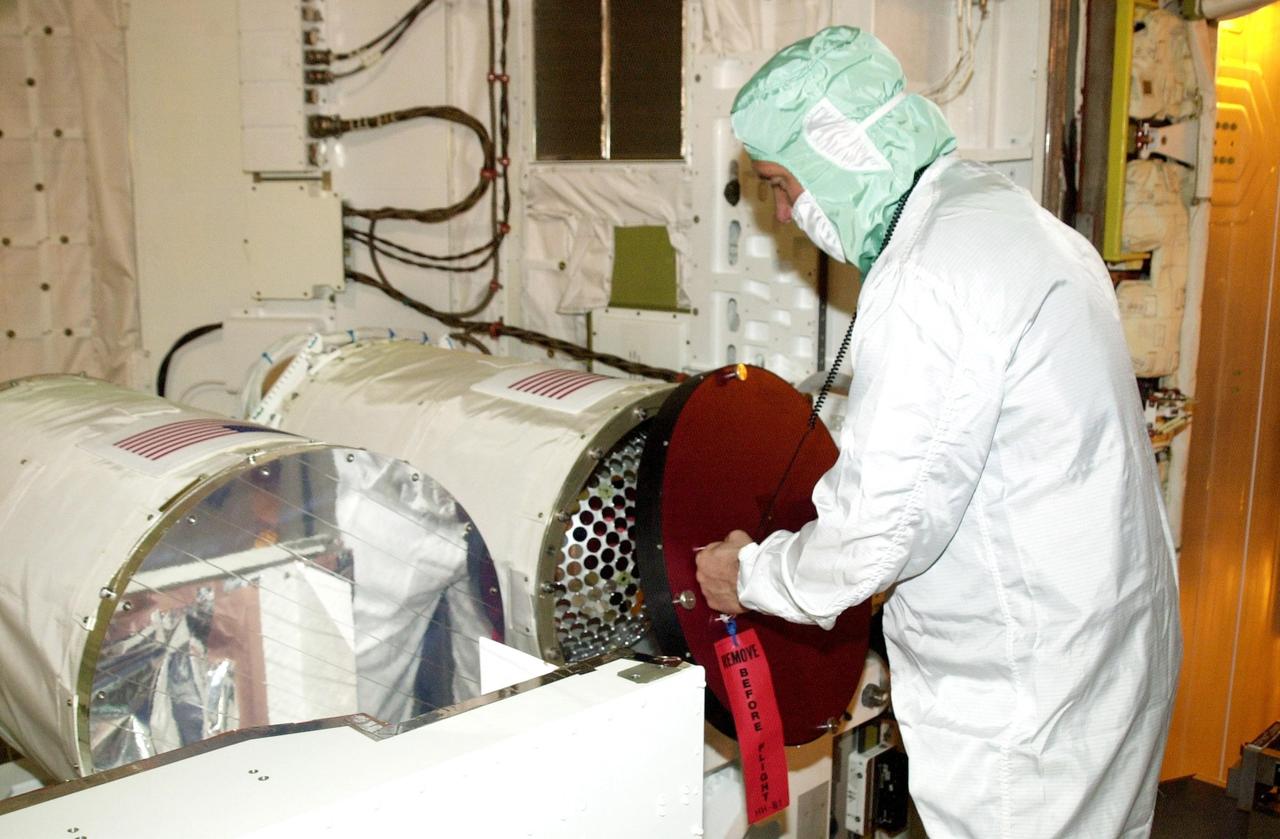
KENNEDY SPACE CENTER, Fla. -- A technician removes the cover of the canister holding the Starshine-2 experiment. The canister is in the payload bay of Space Shuttle Endeavour. The deployable experiment is being carried on mission STS-108. Starshine-2's 800 aluminum mirrors were polished by more than 25,000 students from 26 countries. Top priorities for the STS-108 (UF-1) mission of Endeavour are rotation of the International Space Station Expedition Three and Expedition Four crews, bringing water, equipment and supplies to the station in the Multi-Purpose Logistics Module Raffaello, and completion of robotics tasks and a spacewalk to install thermal blankets over two pieces of equipment at the bases of the Space Station's solar wings. Liftoff of Endeavour on mission STS-108 is scheduled for 7:41 p.m. EST
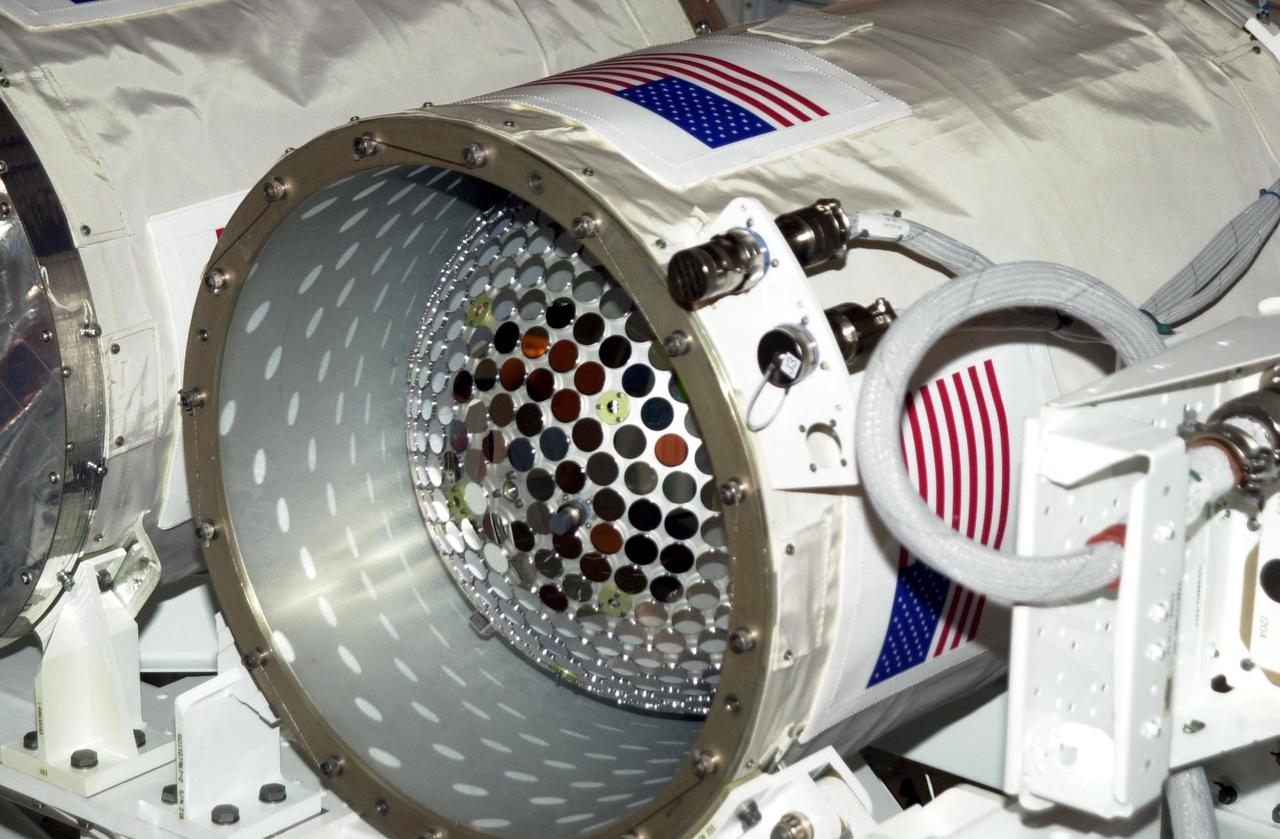
KENNEDY SPACE CENTER, Fla. -- The Starshine-2 experiment rests inside a canister in the payload bay of Space Shuttle Endeavour. The deployable experiment is being carried on mission STS-108. Starshine-2's 800 aluminum mirrors were polished by more than 25,000 students from 26 countries. Top priorities for the STS-108 (UF-1) mission of Endeavour are rotation of the International Space Station Expedition Three and Expedition Four crews, bringing water, equipment and supplies to the station in the Multi-Purpose Logistics Module Raffaello, and completion of robotics tasks and a spacewalk to install thermal blankets over two pieces of equipment at the bases of the Space Station's solar wings. Liftoff of Endeavour on mission STS-108 is scheduled for 7:41 p.m. EST
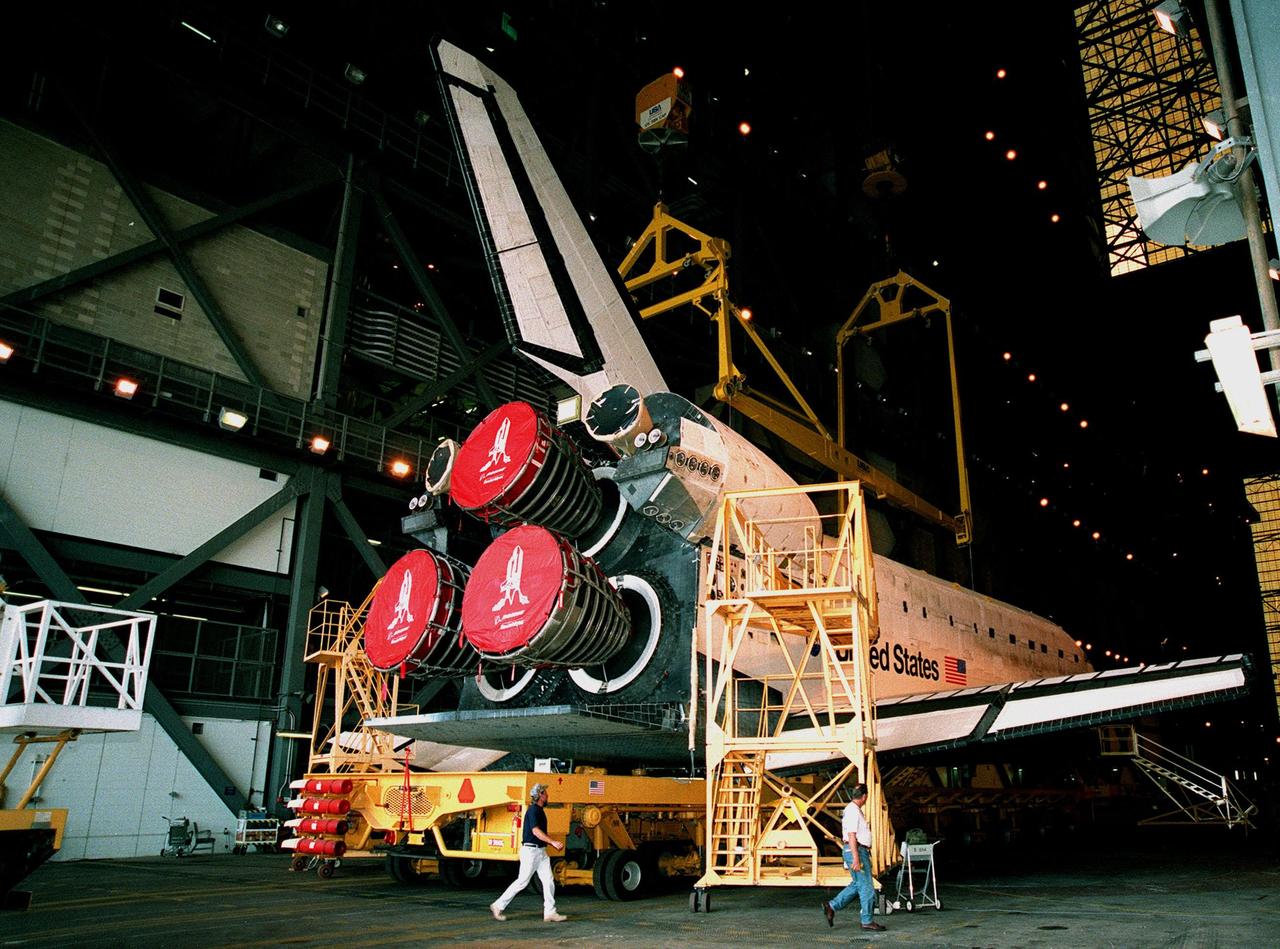
KENNEDY SPACE CENTER, FLA. -- The Space Shuttle orbiter Discovery rests inside the Vehicle Assembly Building after rollover from the Orbiter Processing Facility bay 1. Discovery is being readied for the next mission, STS-96, which is targeted for launch on May 20 from Launch Pad 39B. STS-96 is a logistics and resupply mission for the International Space Station, carrying such payloads as a Russian crane, the Strehla; a U.S.-built crane; a Shuttle Vibration Forces experiment; and STARSHINE, a student-led experiment
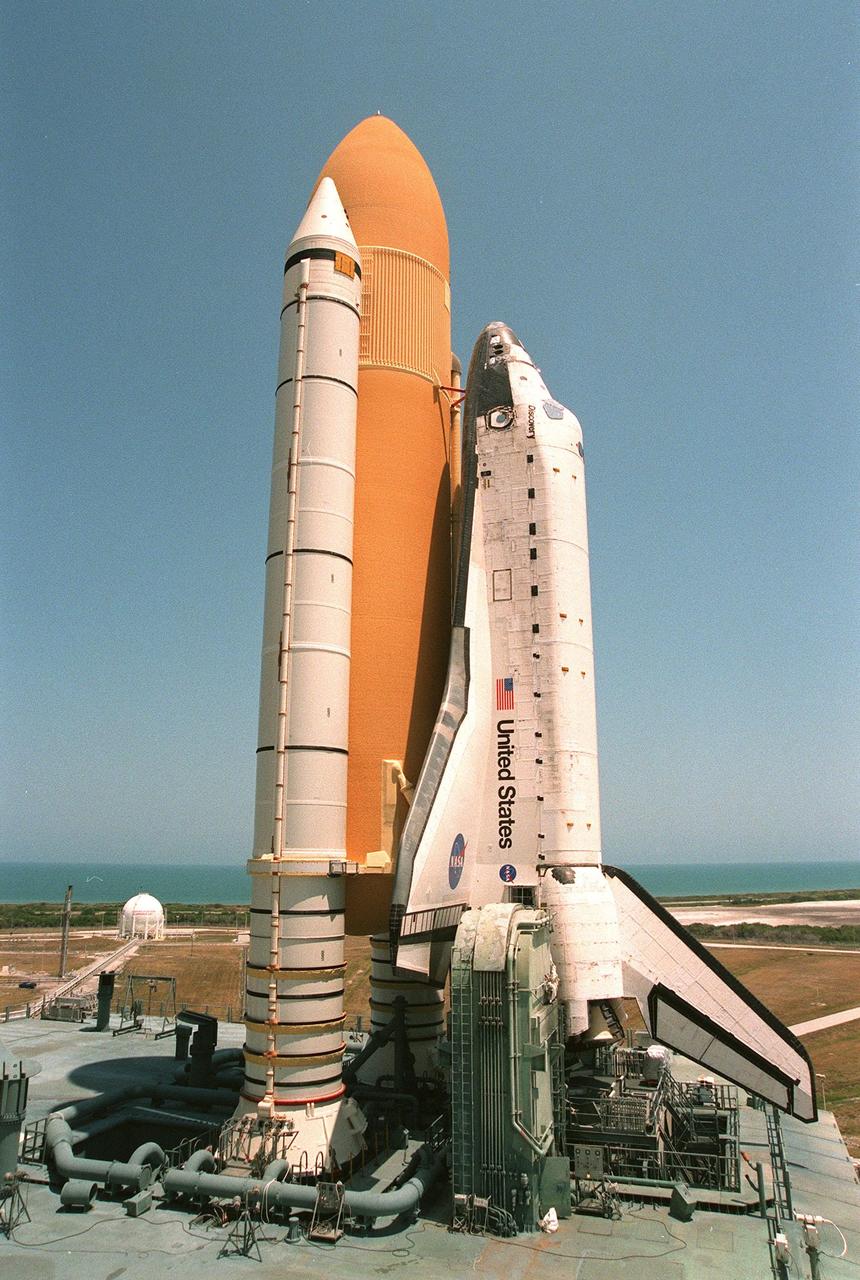
KENNEDY SPACE CENTER, FLA. -- Against the backdrop of a clear blue sky and the bluer Atlantic Ocean, the Space Shuttle Discovery, on its mobile launcher platform, sits on Launch Pad 39B. Liftoff of Discovery on mission STS-96 is targeted for May 20 at 9:32 a.m. EDT. STS-96 is a logistics and resupply mission for the International Space Station, carrying such payloads as a Russian crane, the Strela; a U.S.-built crane; the Spacehab Oceaneering Space System Box (SHOSS), a logistics items carrier; and STARSHINE, a student-led experiment
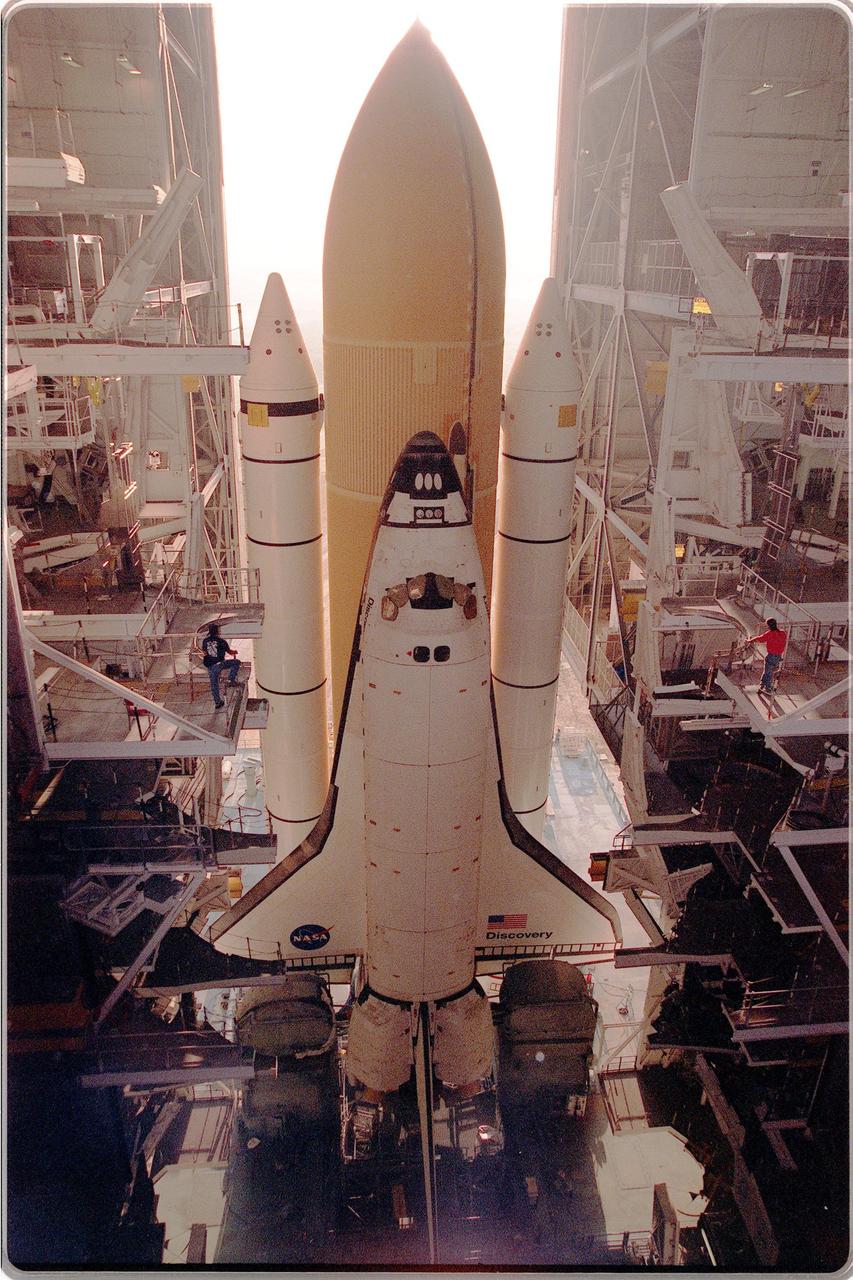
KENNEDY SPACE CENTER, Fla. -- Inside the Vehicle Assembly Building, Space Shuttle Discovery stands ready for rollout to Launch Pad 39B in preparation for mission STS-96. Liftoff of Discovery on mission STS-96 is targeted for May 20 at 9:32 a.m. EDT. STS-96 is a logistics and resupply mission for the International Space Station, carrying such payloads as a Russian crane, the Strela; a U.S.-built crane; the Spacehab Oceaneering Space System Box (SHOSS), a logistics items carrier; and STARSHINE, a student-led experiment
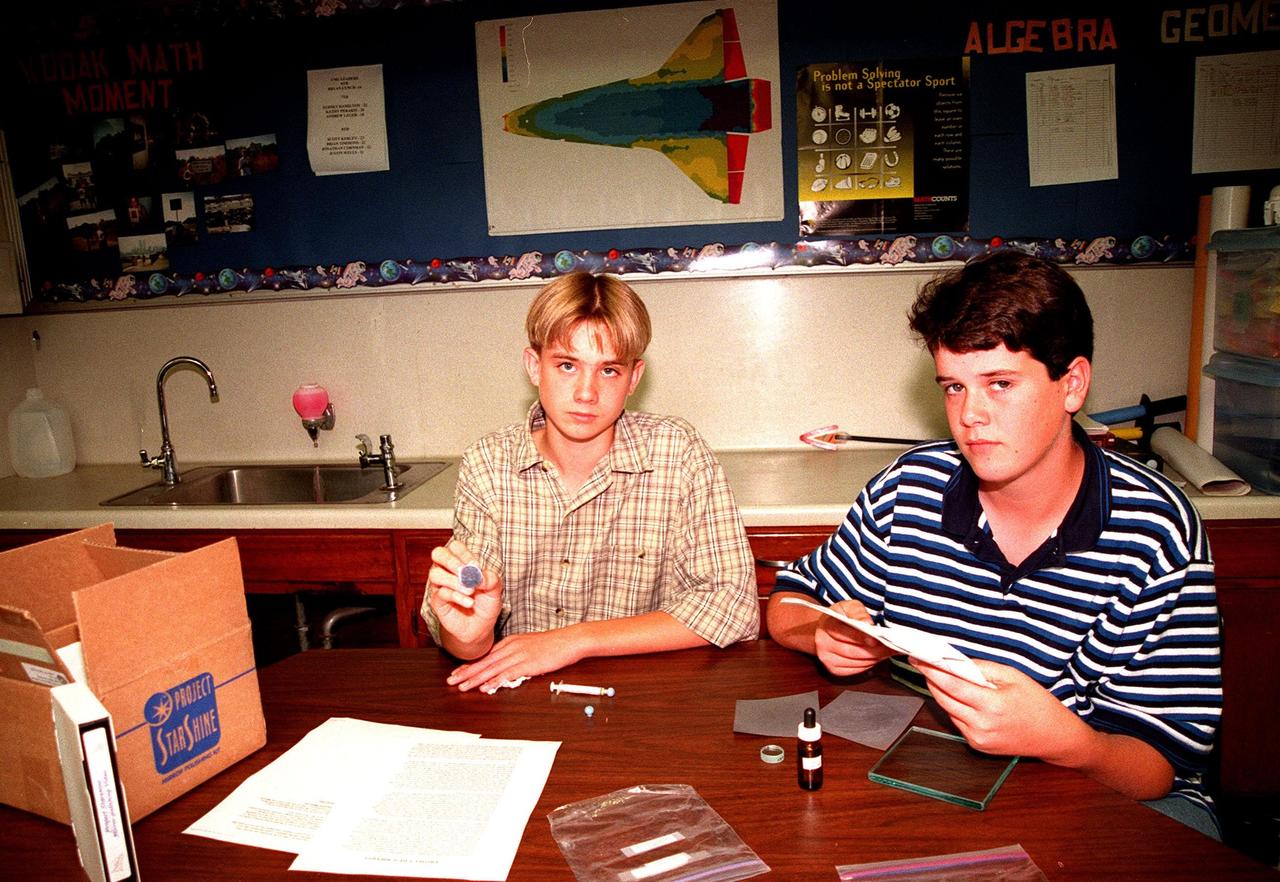
Students Scott Kerley and Bryan Geer demonstrate how they polished mirrors for STARSHINE, a student spacecraft built by the Naval Research Laboratory in Washington, D.C. The two seventh graders at McNair Magnet School, Cocoa Beach, Fla., are among dozens of students teams of elementary, middle and high school students who have polished nearly nine hundred of the one-inch mirrors and returned them to Utah for coating with a protective transparent layer of Silicon Dioxide at Hill Air Force Base. The mirrors are being mounted on the surface of the spacecraft. STARSHINE is being deployed into a highly inclined low-earth orbit from a Hitchhiker canister on mission STS-96, targeted to launch May 20. After deployment from the Shuttle in May, the spacecraft will reflect flashes of sunlight to observers on the earth during the mission. This twinkling satellite will be naked-eye visible against the star background for about six months during recurring morning and evening twilight periods to student observers around the world
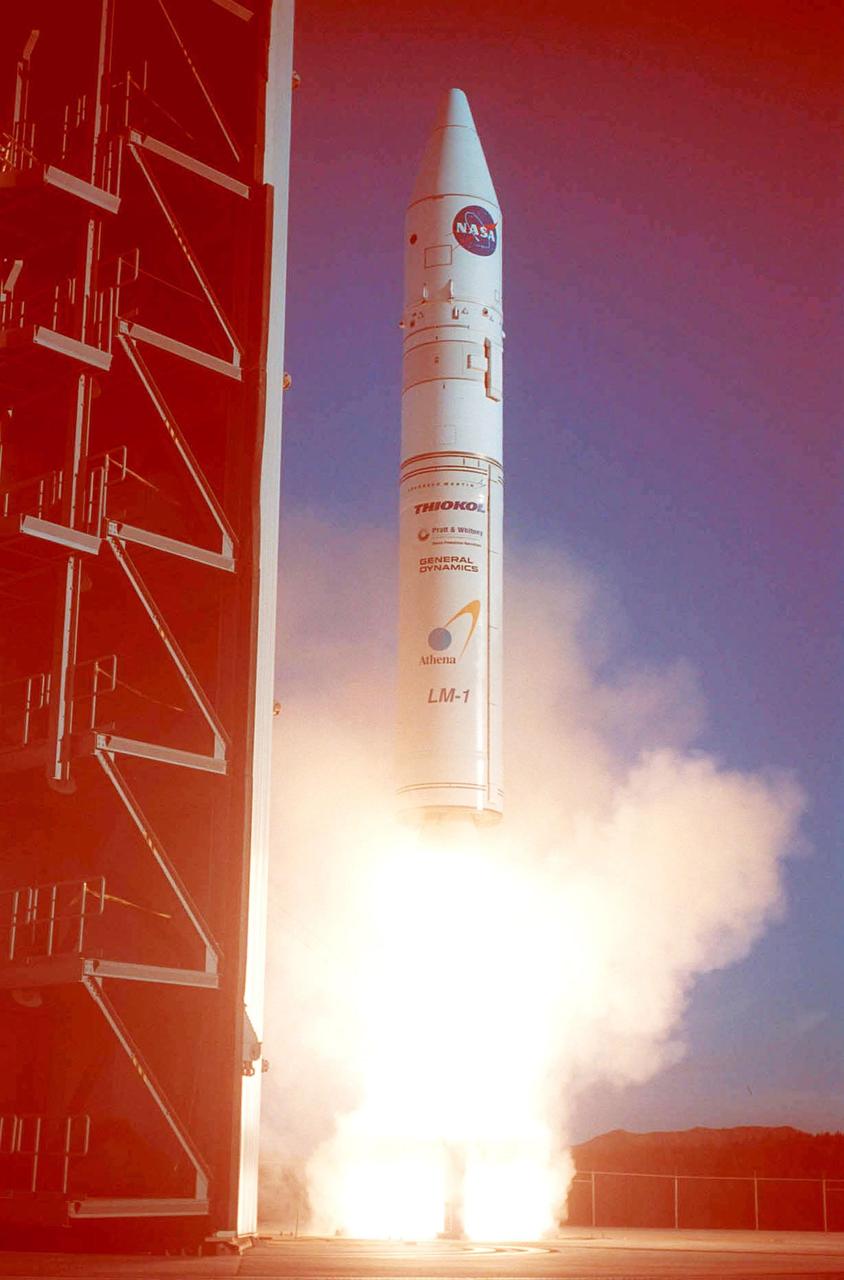
KODIAK ISLAND, Alaska -- A Lockheed Martin Athena I launch vehicle rockets off the launch pad at Kodiak Launch Complex (KSC) with the Kodiak Star spacecraft on board. Liftoff occurred at 10:40 p.m. EDT, Sept. 29. The Kodiak Star payload consists of four satellites: PICOSat, PCSat, Sapphire and Starshine 3. Starshine is sponsored by NASA. The 200-pound sphere will be used by students to study orbital decay. The other three satellites, also on educational missions, are sponsored by the department of defense. PICOSat is a technology demonstration satellite with four experiments on board. PCSat was designed by midshipmen at the U.S. Naval Academy, and will become part of the amateur radio community's automatic position reporting system. Sapphire is a micro-satellite built by students at Stanford University and Washington University - St. Louis to test infrared sensors for space use. KLC is the newest commercial launch complex in the United States, ideal for launch payloads requiring low-Earth polar or sun-synchronous orbits
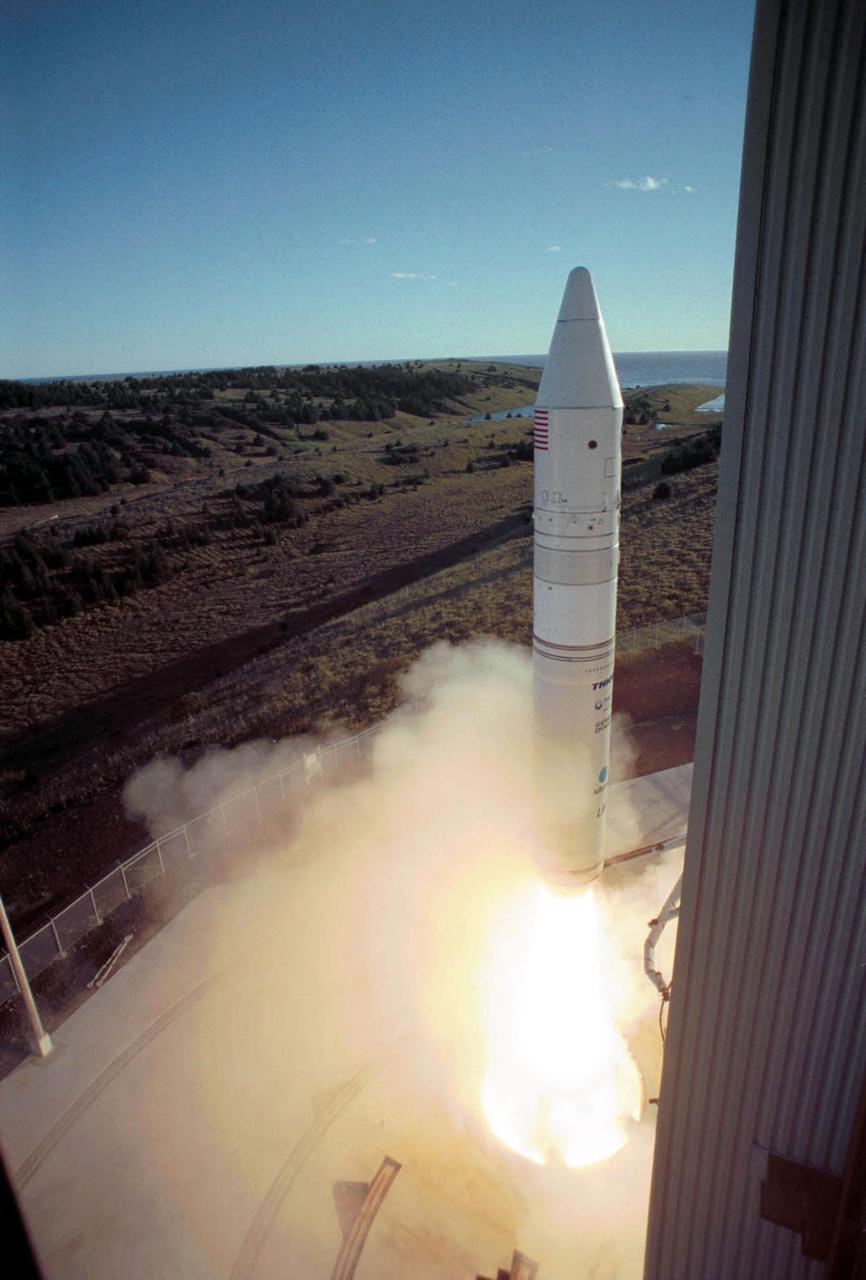
KODIAK ISLAND, Alaska. -- With light still on the horizon, a Lockheed Martin Athena I launch vehicle lifts off the launch pad at Kodiak Launch Complex (KSC) with the Kodiak Star spacecraft on board. Liftoff occurred at 10:40 p.m. EDT, Sept. 29. The Kodiak Star payload consists of four satellites: PICOSat, PCSat, Sapphire and Starshine 3. Starshine is sponsored by NASA. The 200-pound sphere will be used by students to study orbital decay. The other three satellites, also on educational missions, are sponsored by the department of defense. PICOSat is a technology demonstration satellite with four experiments on board. PCSat was designed by midshipmen at the U.S. Naval Academy, and will become part of the amateur radio community's automatic position reporting system. Sapphire is a micro-satellite built by students at Stanford University and Washington University - St. Louis to test infrared sensors for space use. KLC is the newest commercial launch complex in the United States, ideal for launch payloads requiring low-Earth polar or sun-synchronous orbits
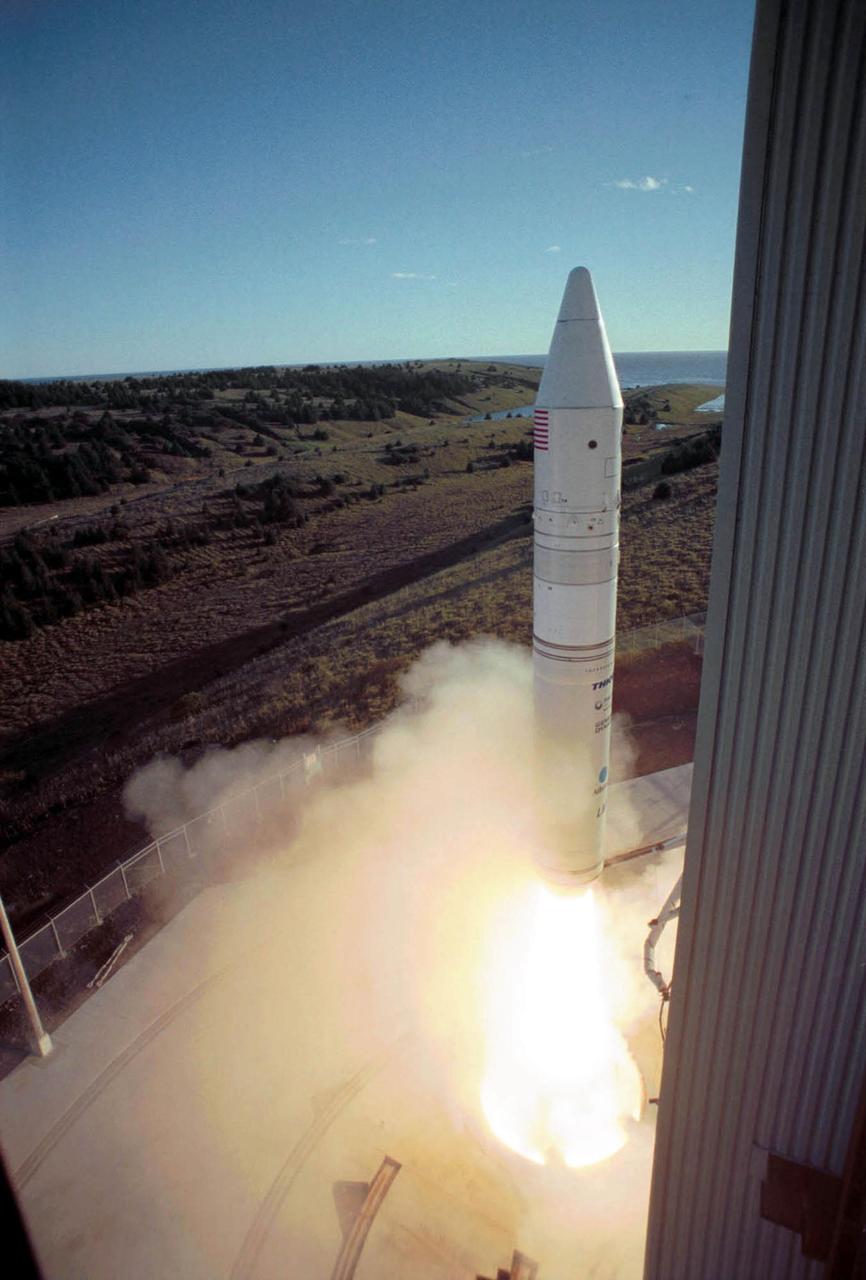
KODIAK ISLAND, Alaska. -- With light still on the horizon, a Lockheed Martin Athena I launch vehicle lifts off the launch pad at Kodiak Launch Complex (KSC) with the Kodiak Star spacecraft on board. Liftoff occurred at 10:40 p.m. EDT, Sept. 29. The Kodiak Star payload consists of four satellites: PICOSat, PCSat, Sapphire and Starshine 3. Starshine is sponsored by NASA. The 200-pound sphere will be used by students to study orbital decay. The other three satellites, also on educational missions, are sponsored by the department of defense. PICOSat is a technology demonstration satellite with four experiments on board. PCSat was designed by midshipmen at the U.S. Naval Academy, and will become part of the amateur radio community's automatic position reporting system. Sapphire is a micro-satellite built by students at Stanford University and Washington University - St. Louis to test infrared sensors for space use. KLC is the newest commercial launch complex in the United States, ideal for launch payloads requiring low-Earth polar or sun-synchronous orbits
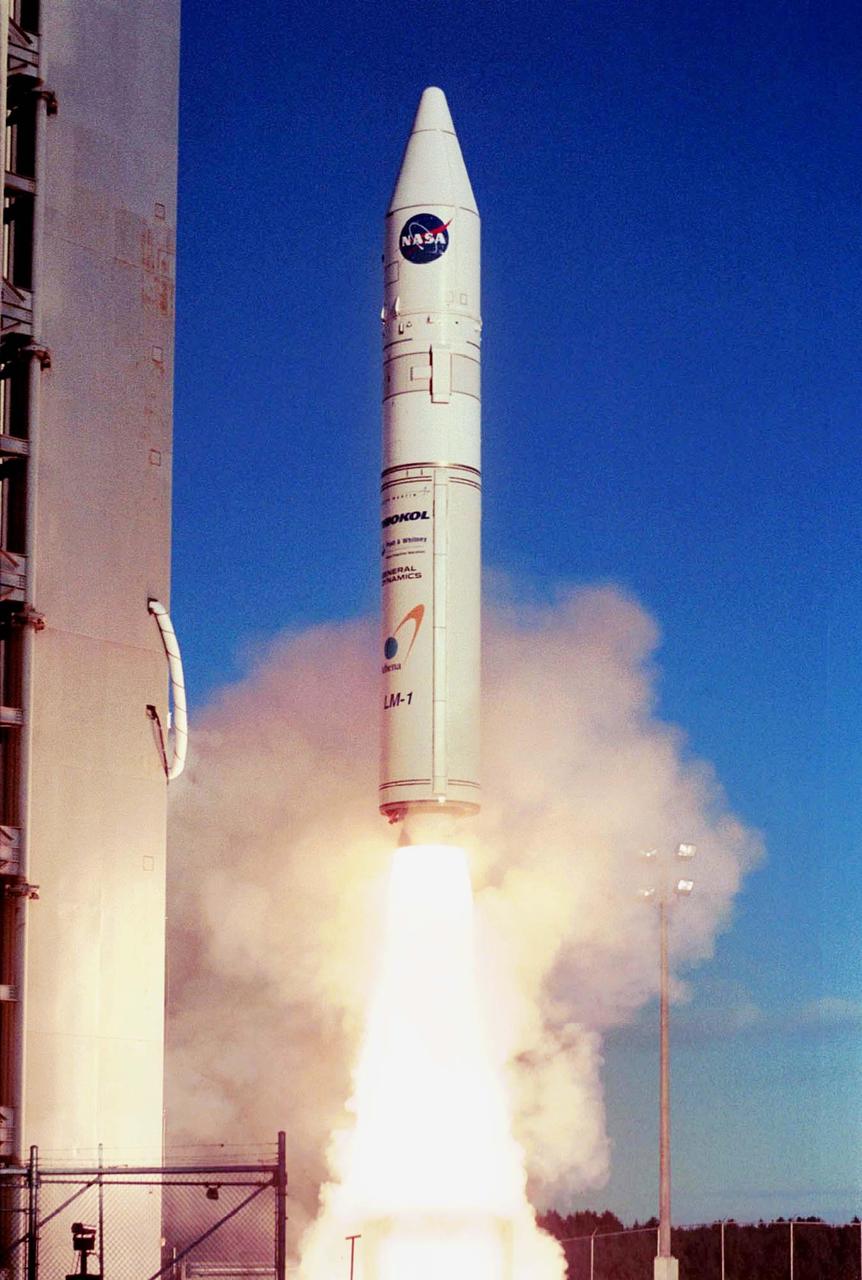
KODIAK ISLAND, Alaska -- A Lockheed Martin Athena I launch vehicle lifts off the launch pad at Kodiak Launch Complex (KSC) with the Kodiak Star spacecraft on board. Liftoff occurred at 10:40 p.m. EDT, Sept. 29. The Kodiak Star payload consists of four satellites: PICOSat, PCSat, Sapphire and Starshine 3. Starshine is sponsored by NASA. The 200-pound sphere will be used by students to study orbital decay. The other three satellites, also on educational missions, are sponsored by the department of defense. PICOSat is a technology demonstration satellite with four experiments on board. PCSat was designed by midshipmen at the U.S. Naval Academy, and will become part of the amateur radio community's automatic position reporting system. Sapphire is a micro-satellite built by students at Stanford University and Washington University - St. Louis to test infrared sensors for space use. KLC is the newest commercial launch complex in the United States, ideal for launch payloads requiring low-Earth polar or sun-synchronous orbits

KODIAK ISLAND, Alaska -- The Orbis 21D Equipment Section Boost Motor, the second stage of the Athena 1 launch vehicle, waits for the first stage, Castor 120, to be towed up the steepest part of the road, as preparations to launch Kodiak Star proceed. The first orbital launch to take place from Alaska's Kodiak Launch Complex, Kodiak Star is scheduled to lift off on a Lockheed Martin Athena I launch vehicle on Sept. 17 during a two-hour window that extends from 5:00 to 7:00 p.m. ADT. The payloads aboard include the Starshine 3, sponsored by NASA, and the PICOSat, PCSat and Sapphire, sponsored by the Department of Defense (DoD) Space Test Program.
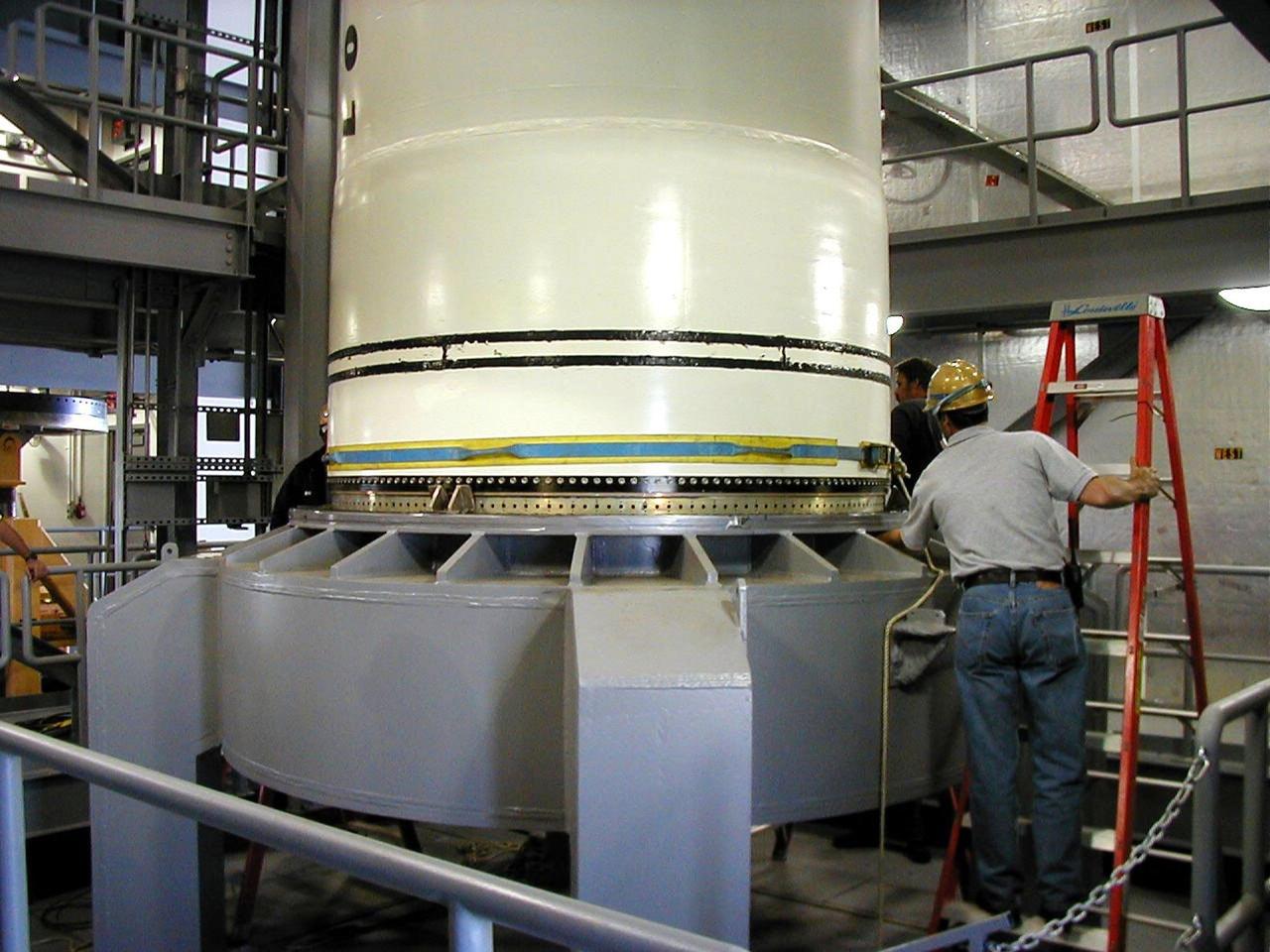
KODIAK ISLAND, Alaska -- Technicians inspect and secure Castor 120, the first stage of the Athena 1 launch vehicle, on the launch mount at Kodiak Island, Alaska, as processing for the launch of Kodiak Star proceeds. The first orbital launch to take place from Alaska's Kodiak Launch Complex, Kodiak Star is scheduled to lift off on a Lockheed Martin Athena I launch vehicle on Sept. 17 during a two-hour window that extends from 5:00 to 7:00 p.m. ADT. The payloads aboard include the Starshine 3, sponsored by NASA, and the PICOSat, PCSat and Sapphire, sponsored by the Department of Defense (DoD) Space Test Program.
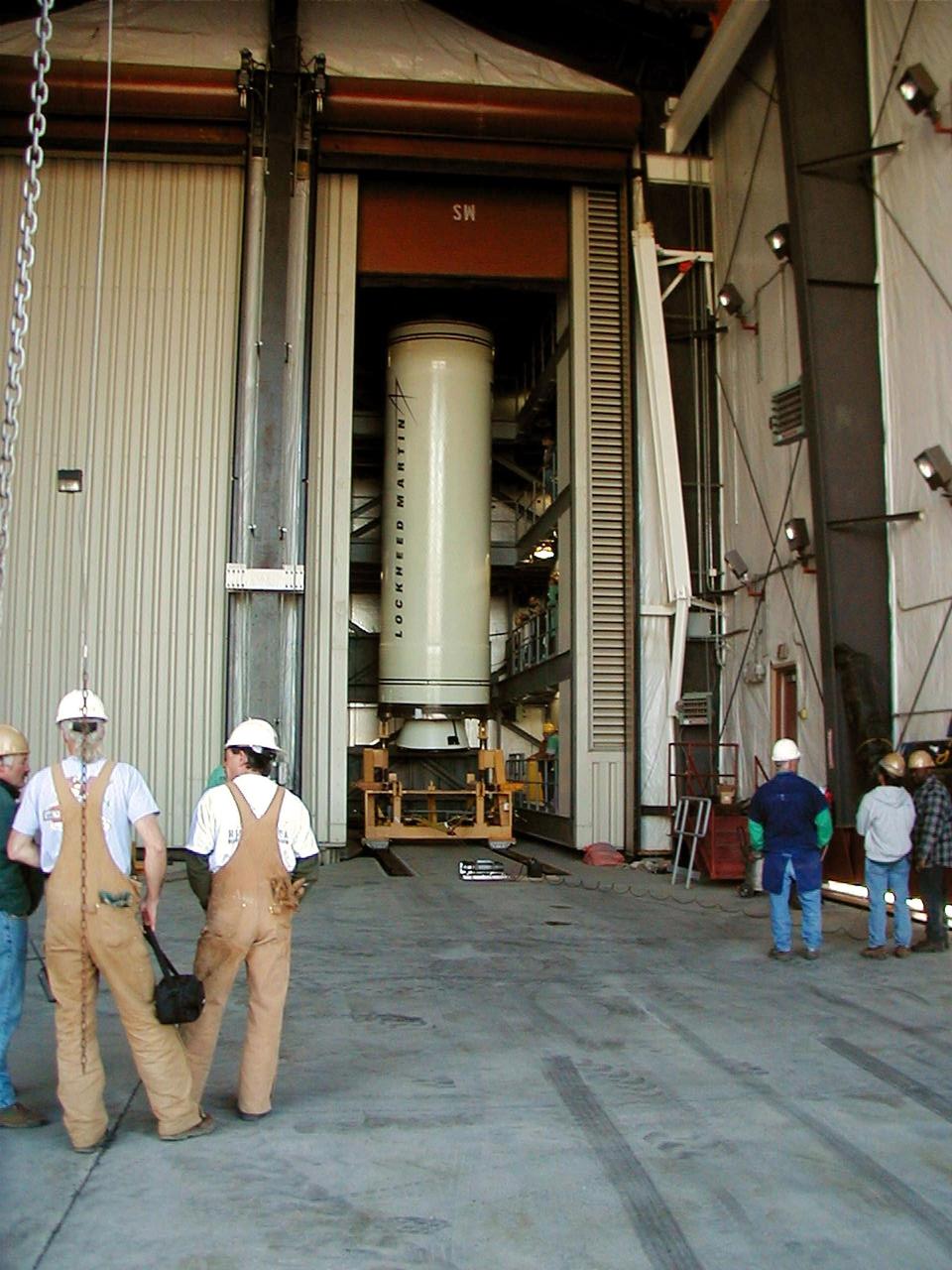
KODIAK ISLAND, Alaska -- Technicians prepare the Athena I launch vehicle for flight at Kodiak Island, Alaska, as processing for the launch of Kodiak Star proceeds. The first orbital launch to take place from Alaska's Kodiak Launch Complex, Kodiak Star is scheduled to lift off on a Lockheed Martin Athena I launch vehicle on Sept. 17 during a two-hour window that extends from 5:00 to 7:00 p.m. ADT. The payloads aboard include the Starshine 3, sponsored by NASA, and the PICOSat, PCSat and Sapphire, sponsored by the Department of Defense (DoD) Space Test Program.
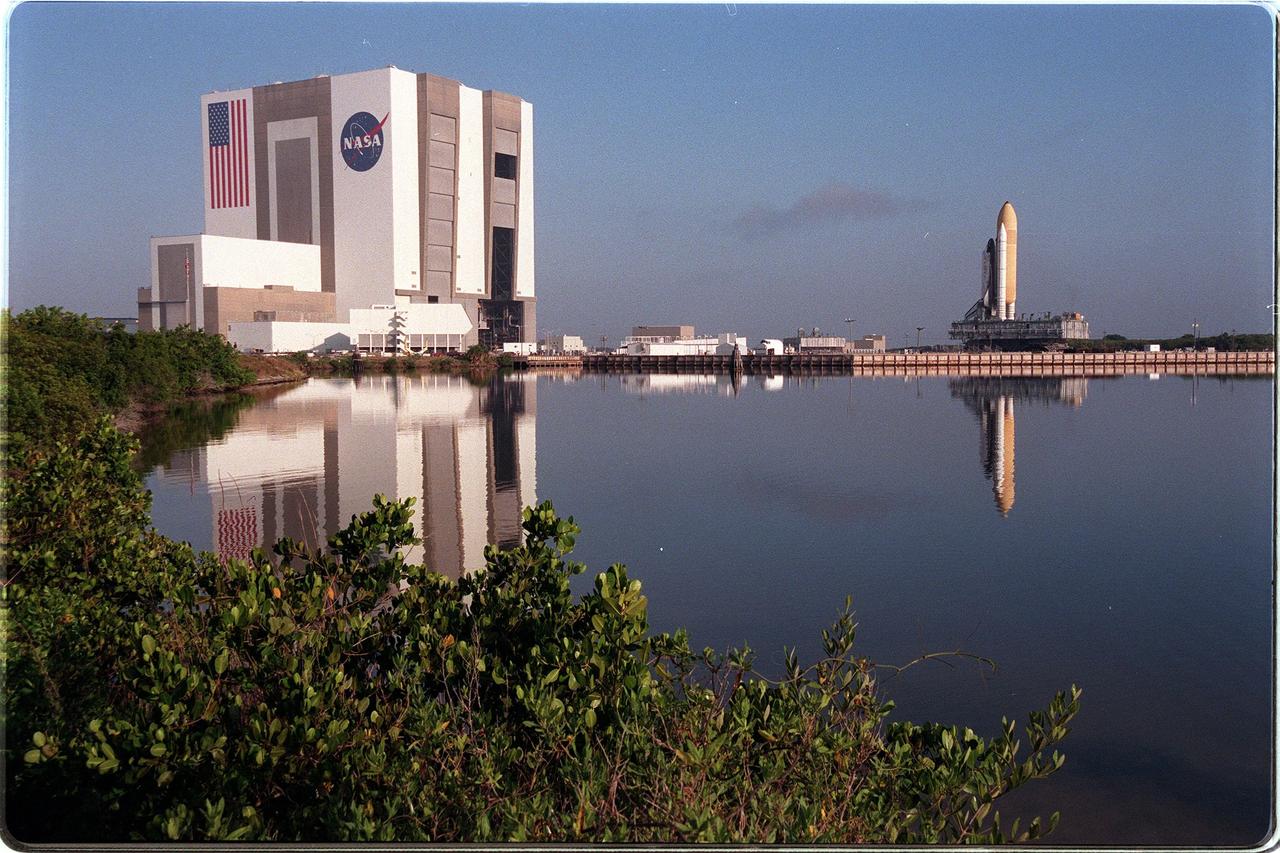
KENNEDY SPACE CENTER, Fla. -- Reflected in the turn basin at Launch Complex 39 Area, the Space Shuttle Discovery stands atop the crawler-transporter, which carries its cargo at 1 mph to Launch Pad 39B. The vehicle takes about five hours to cover the journey from the Vehicle Assembly Building to the launch pad. Liftoff of Discovery on mission STS-96 is targeted for May 20 at 9:32 a.m. EDT. STS-96 is a logistics and resupply mission for the International Space Station, carrying such payloads as a Russian crane, the Strela; a U.S.-built crane; the Spacehab Oceaneering Space System Box (SHOSS), a logistics items carrier; and STARSHINE, a student-led experiment
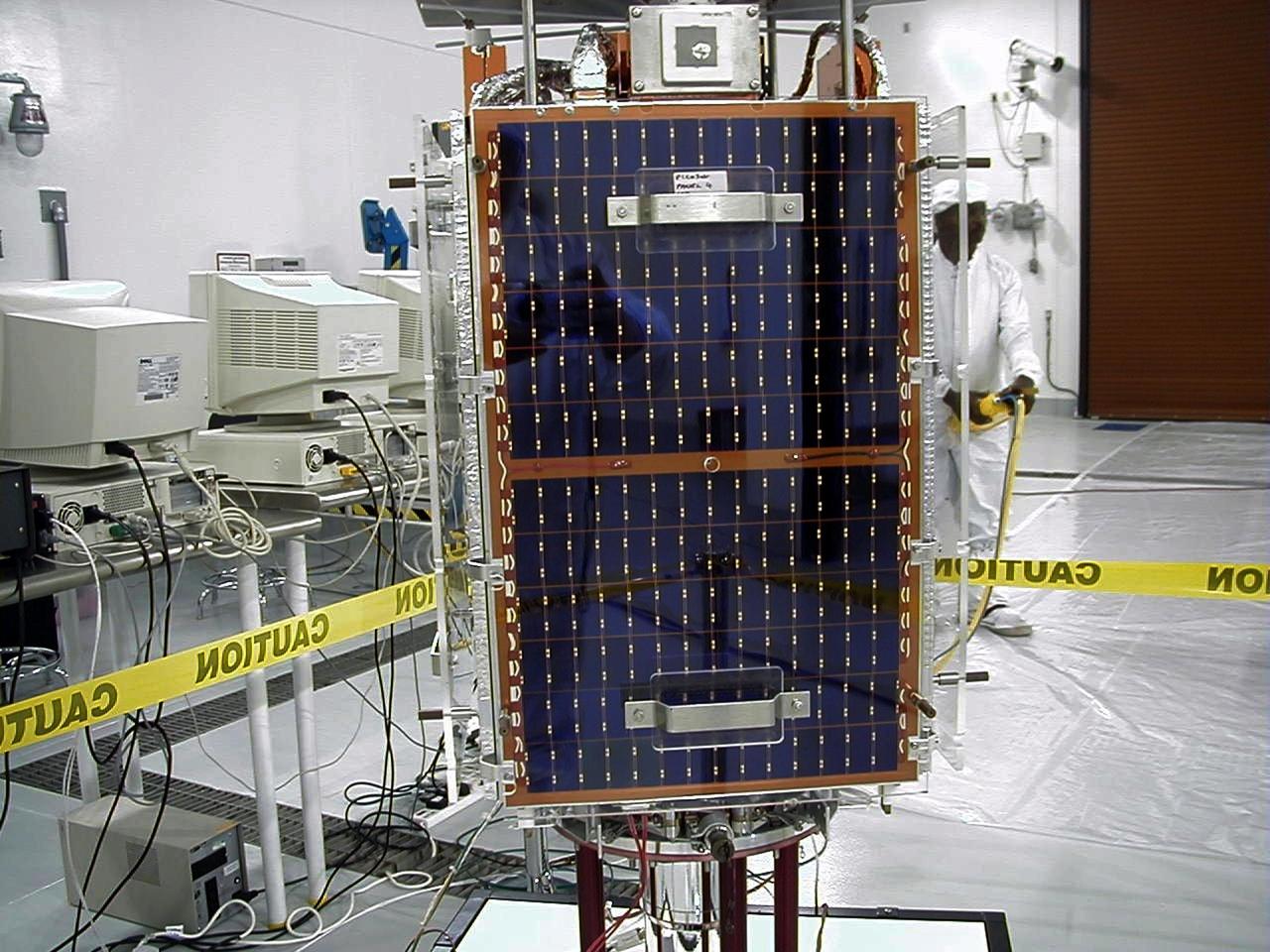
KENNEDY SPACE CENTER, Fla. -- The PICOSat payload undergoes final preparations for its launch aboard the Athena 1 launch vehicle at Kodiak Island, Alaska, as preparations to launch Kodiak Star proceed. The first launch to take place from Alaska's Kodiak Launch Complex, Kodiak Star is scheduled to lift off on a Lockheed Martin Athena I launch vehicle on Sept. 17 during a two-hour window that extends from 5:00 to 7:00 p.m. ADT. The payloads aboard include the Starshine 3, sponsored by NASA, and the PICOSat, PCSat and Sapphire, sponsored by the Department of Defense (DoD) Space Test Program
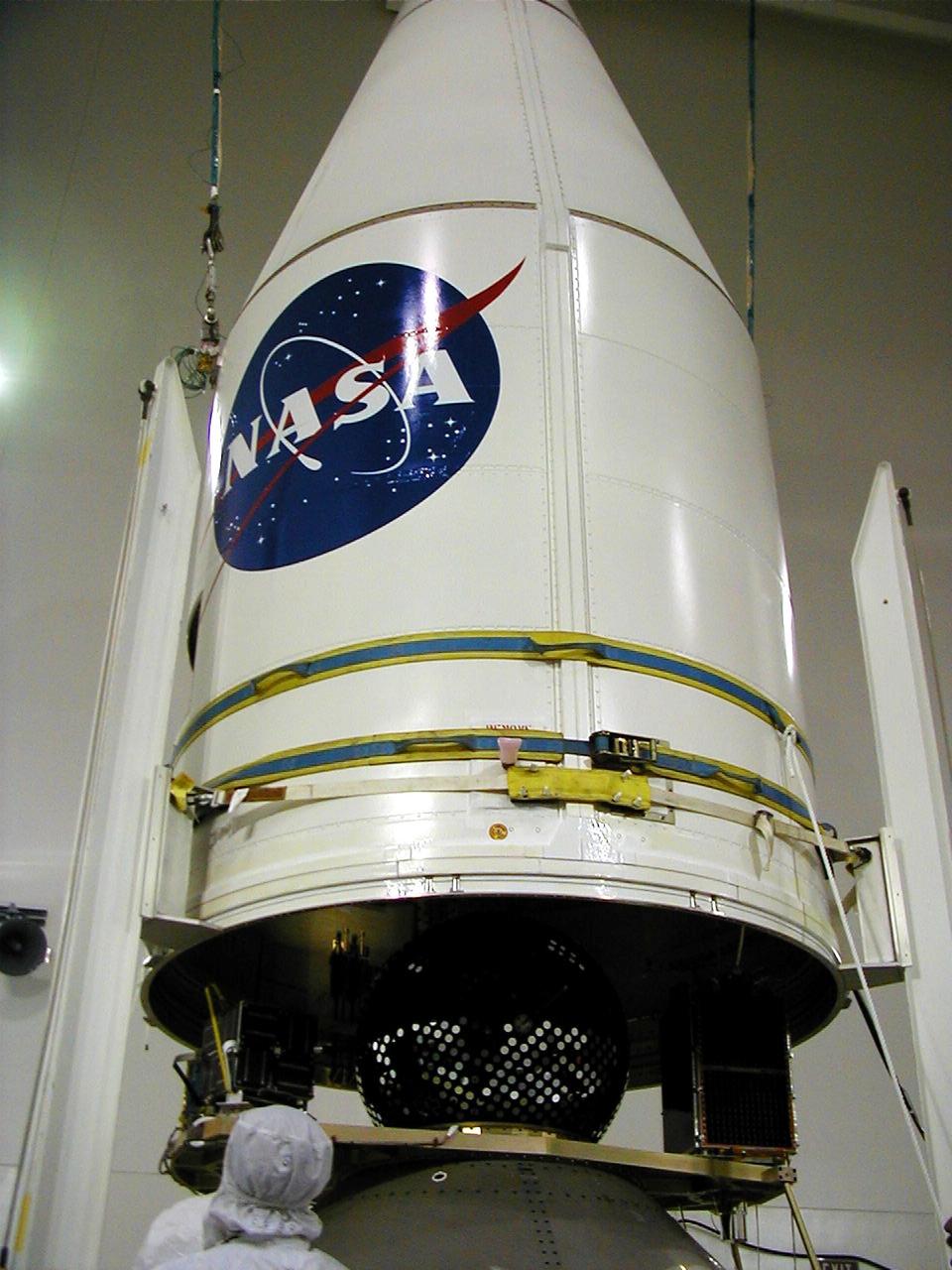
KODIAK ISLAND, ALASKA - In the Launch Service Structure, Kodiak Launch Complex (KLC), the fairing is lowered over the Kodiak Star spacecraft in preparation for launch. The first launch to take place from KLC, Kodiak Star is scheduled to lift off on a Lockheed Martin Athena I launch vehicle on Sept. 17 during a two-hour window that extends from 5 p.m. to 7 p.m. p.m. ADT. The payloads aboard include the Starshine 3, sponsored by NASA, and the PICOSat, PCSat and Sapphire, sponsored by the Department of Defense (DoD) Space Test Program. KLC is the newest commercial launch complex in the United States, ideal for launch payloads requiring low-Earth polar or sun-synchronous orbits

KENNEDY SPACE CENTER, FLA. -- The morning sun radiates through an opening between the orbiter Discovery and its external tank at Launch Pad 39B. The Shuttle is returning to the pad after repairs to the hail-damaged external tank. STS-96 is scheduled for liftoff May 27 at 6:48 a.m. EDT, the 94th launch in the Space Shuttle Program. A logistics and resupply mission for the International Space Station, STS-96 is carrying such payloads as a Russian crane, the Strela; a U.S.-built crane; the Spacehab Oceaneering Space System Box (SHOSS), a logistics items carrier; and STARSHINE, a student-shared experiment
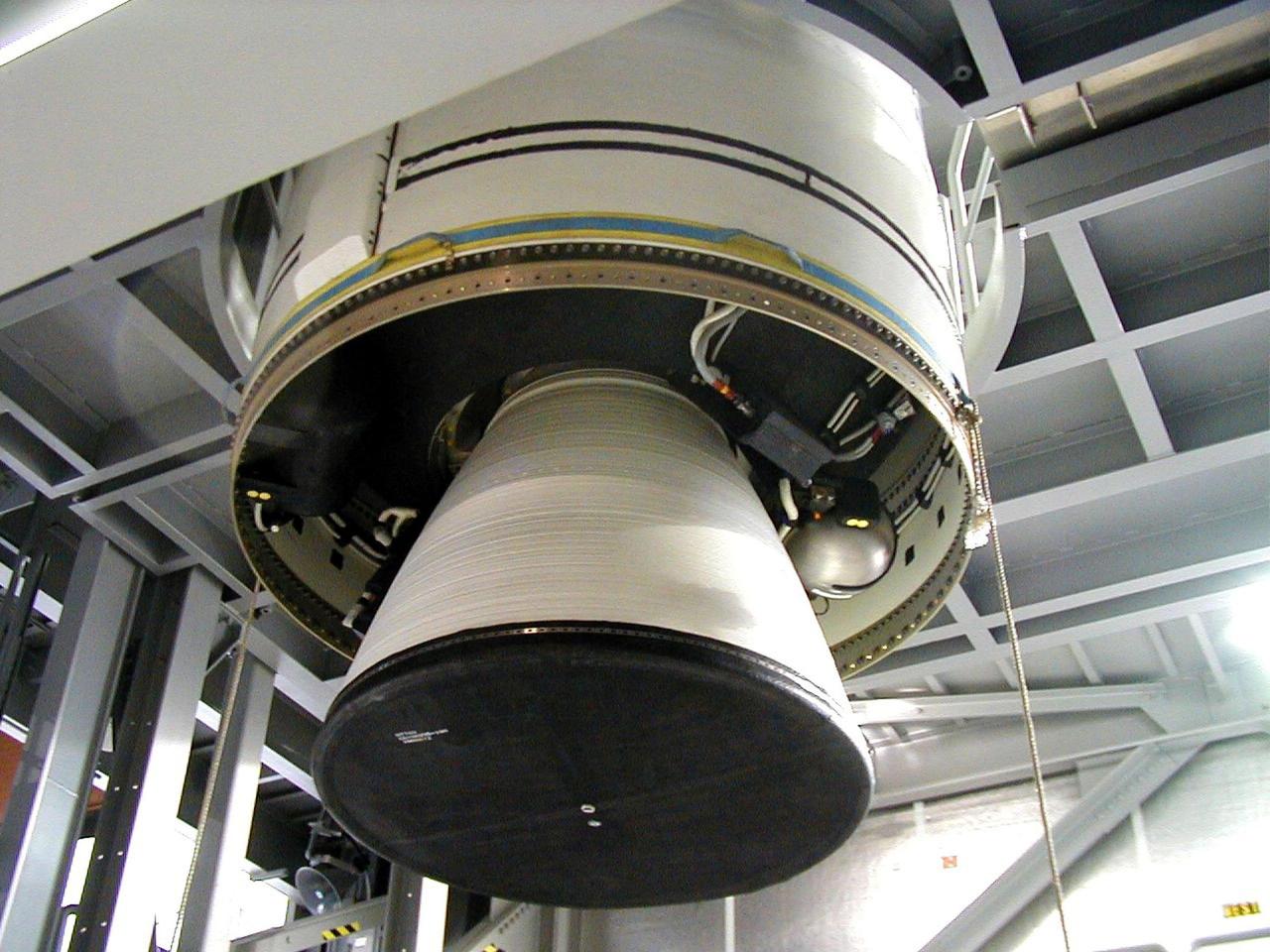
KODIAK ISLAND, Alaska -- Castor 120, the first stage of the Athena 1 launch vehicle, is lowered into place at Kodiak Island, Alaska, as preparations to launch Kodiak Star proceed. The first orbital launch to take place from Alaska's Kodiak Launch Complex, Kodiak Star is scheduled to lift off on a Lockheed Martin Athena I launch vehicle on Sept. 17 during a two-hour window that extends from 5:00 to 7:00 p.m. ADT. The payloads aboard include the Starshine 3, sponsored by NASA, and the PICOSat, PCSat and Sapphire, sponsored by the Department of Defense (DoD) Space Test Program.
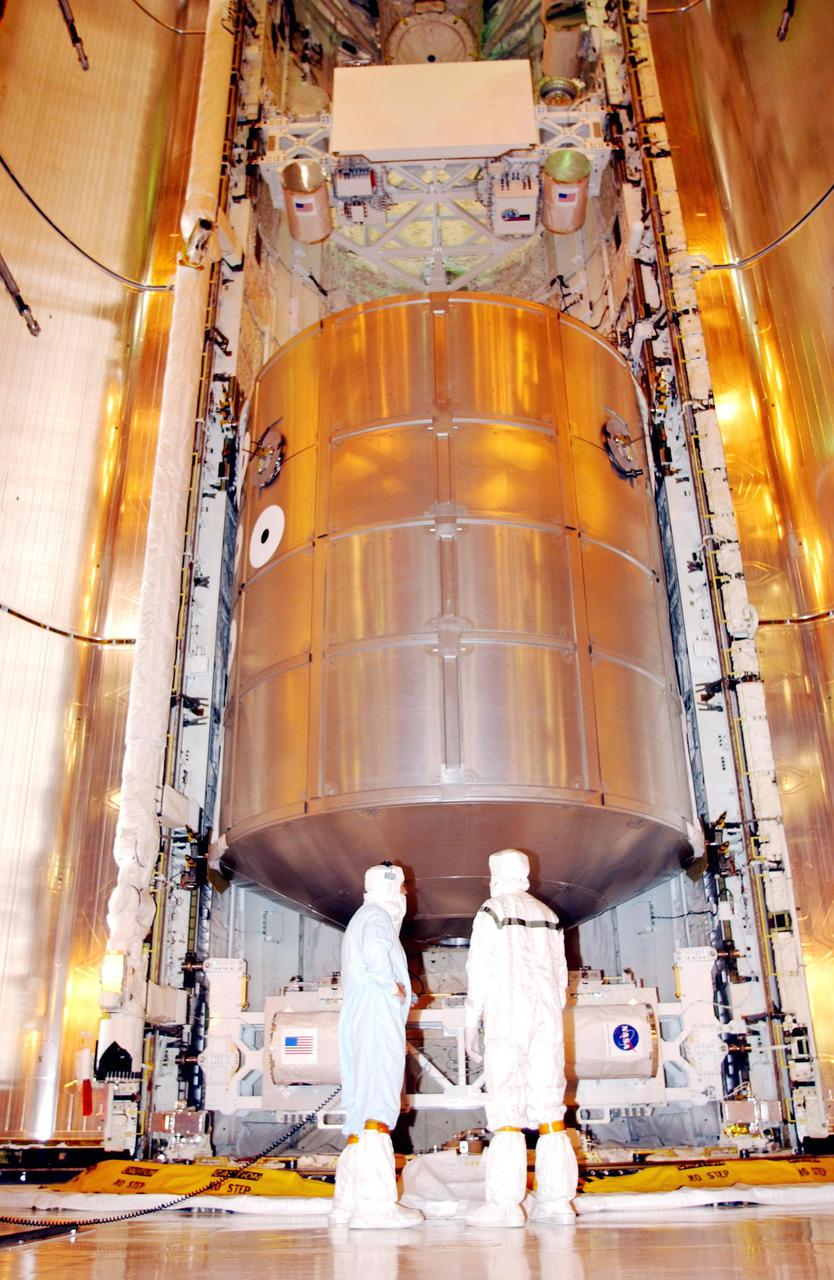
KENNEDY SPACE CENTER, Fla. - Space Shuttle Endeavour's payload bay doors are ready for closure and launch on mission STS-108. Inside the bay is the Multi-Purpose Logistics Module Raffaello, carrying supplies, equipment and experiments for the International Space Station. Surrounding the MPLM are several carriers with varying experiment packages, such as Starshine-2, a Get-Away Special. Endeavour is scheduled to launch Nov. 29 on this first Utilization Flight to the International Space Station. Endeavour will also carry the replacement Expedition 4 crew to the Station and return to Earth with the Expedition 3 crew
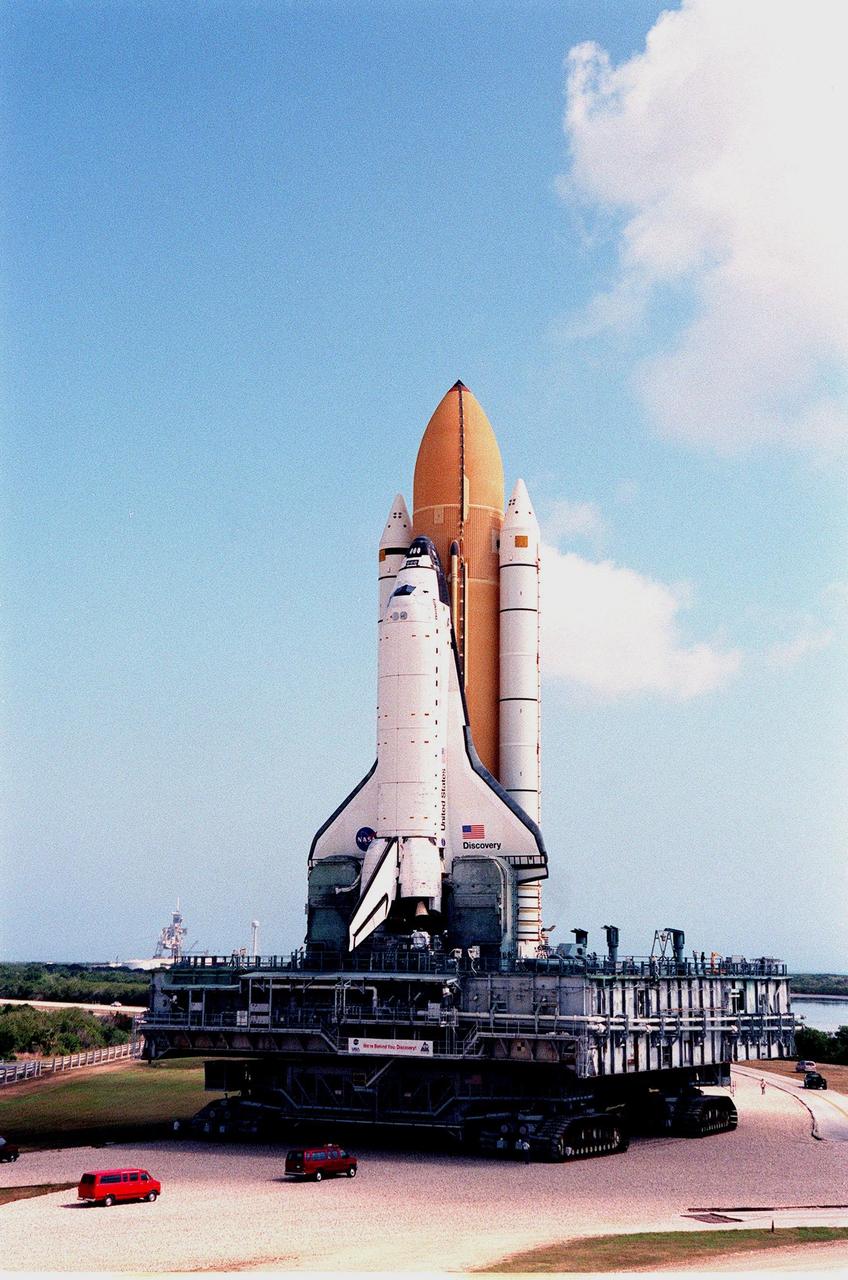
KENNEDY SPACE CENTER, Fla. -- The Space Shuttle Discovery, atop the mobile launcher platform and crawler-transporter, approaches the turn in the crawlerway as it creeps to Launch Pad 39B at 1 mph. The crawler-transporter takes about five hours to cover the journey from the Vehicle Assembly Building to the launch pad. Liftoff of Discovery on mission STS-96 is targeted for May 20 at 9:32 a.m. EDT. STS-96 is a logistics and resupply mission for the International Space Station, carrying such payloads as a Russian crane, the Strela; a U.S.-built crane; the Spacehab Oceaneering Space System Box (SHOSS), a logistics items carrier; and STARSHINE, a student-led experiment
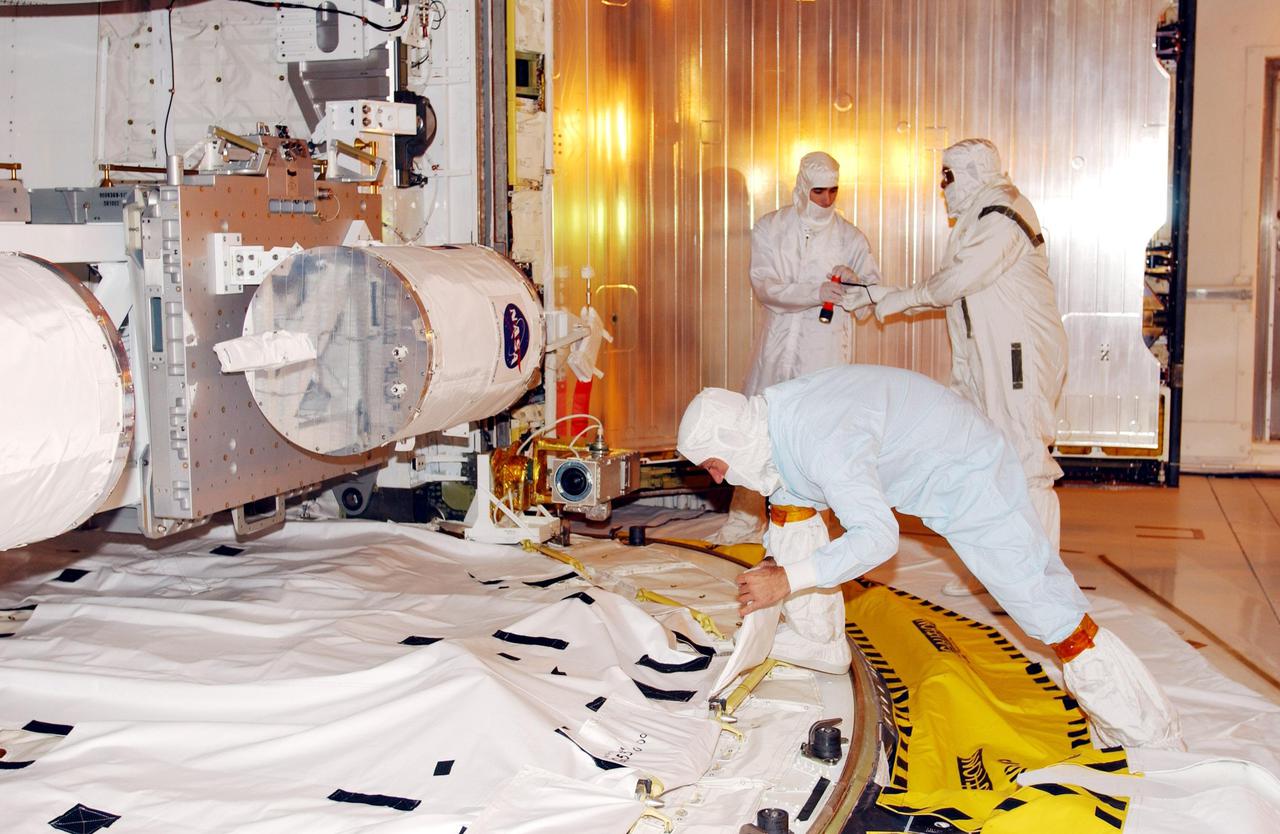
KENNEDY SPACE CENTER, Fla. - A worker makes a final adjustment in the payload bay of Space Shuttle Endeavour before door closure. Inside the bay is the Multi-Purpose Logistics Module Raffaello (foreground), carrying supplies, equipment and experiments for the International Space Station. Sharing the payload bay are several carriers with varying experiment packages, such as Starshine-2, a Get-Away Special. Endeavour is scheduled to launch Nov. 29 on this first Utilization Flight, STS-108, to the International Space Station. Endeavour will also carry the replacement Expedition 4 crew to the Station and return to Earth with the Expedition 3 crew
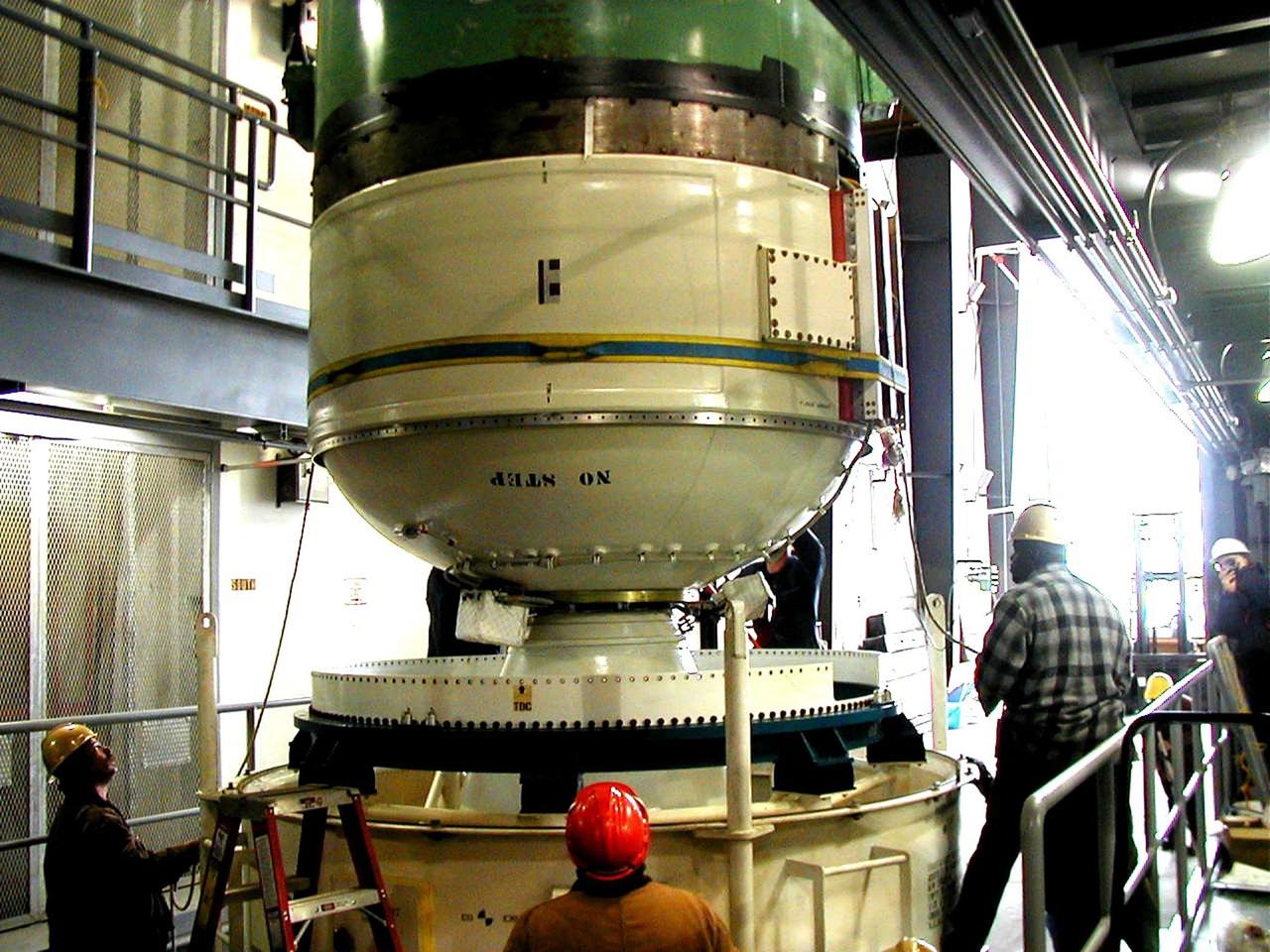
KODIAK ISLAND, Alaska -- Technicians install Orbis 21D Equipment Section Boost Motor, the second stage of the Athena 1 launch vehicle, at Kodiak Island, Alaska, as processing for the launch of Kodiak Star proceeds. The first orbital launch to take place from Alaska's Kodiak Launch Complex, Kodiak Star is scheduled to lift off on a Lockheed Martin Athena I launch vehicle on Sept. 17 during a two-hour window that extends from 5:00 to 7:00 p.m. ADT. The payloads aboard include the Starshine 3, sponsored by NASA, and the PICOSat, PCSat and Sapphire, sponsored by the Department of Defense (DoD) Space Test Program.
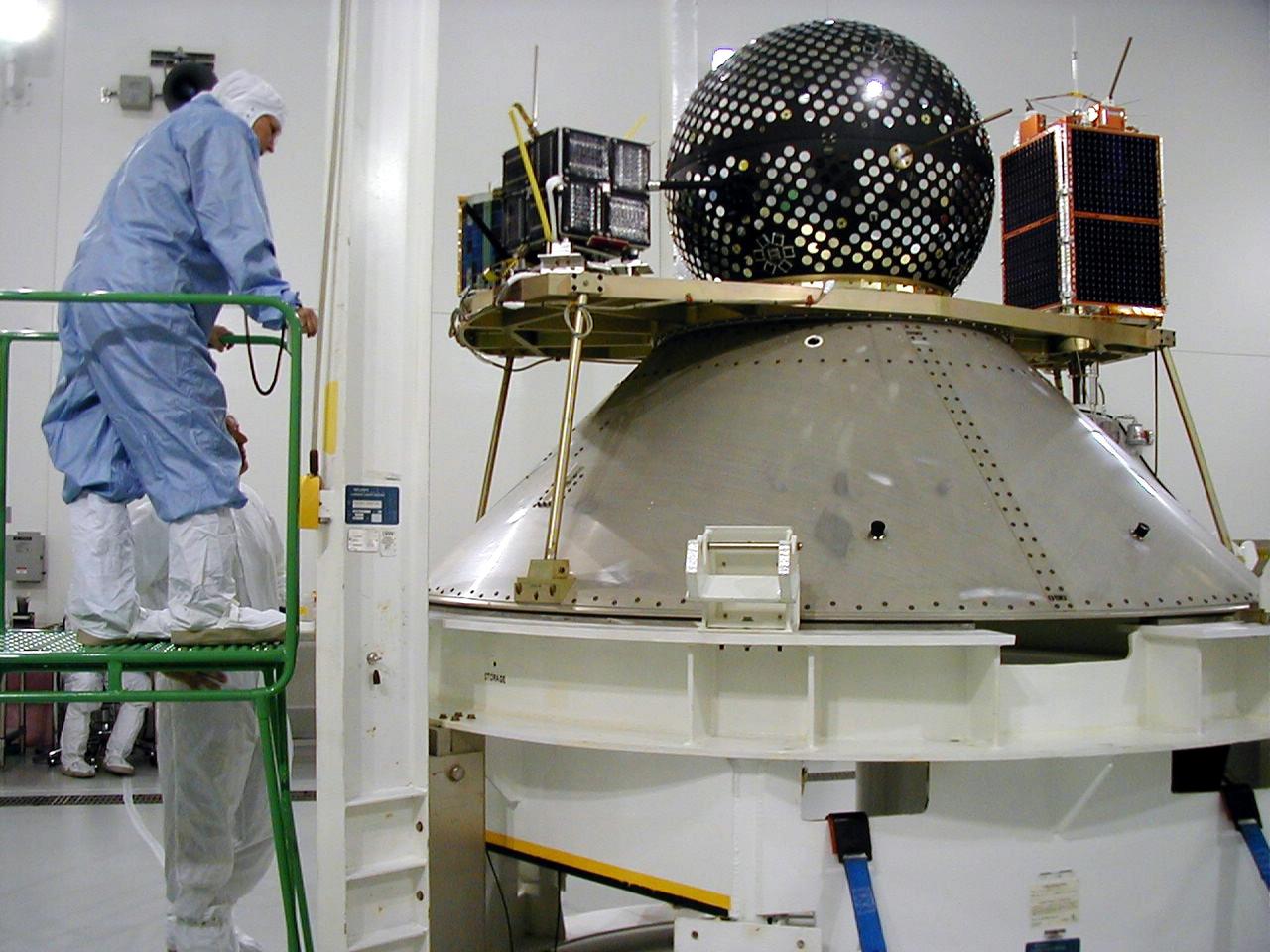
KODIAK ISLAND, ALASKA - In the Launch Service Structure, Kodiak Launch Complex (KLC), the Kodiak Star spacecraft is ready for encapsulation in the fairing, as preparation for launch. The first launch to take place from KLC, Kodiak Star is scheduled to lift off on a Lockheed Martin Athena I launch vehicle on Sept. 17 during a two-hour window that extends from 5 p.m. to 7 p.m. p.m. ADT. The payloads aboard include the Starshine 3, sponsored by NASA, and the PICOSat, PCSat and Sapphire, sponsored by the Department of Defense (DoD) Space Test Program. KLC is the newest commercial launch complex in the United States, ideal for launch payloads requiring low-Earth polar or sun-synchronous orbits
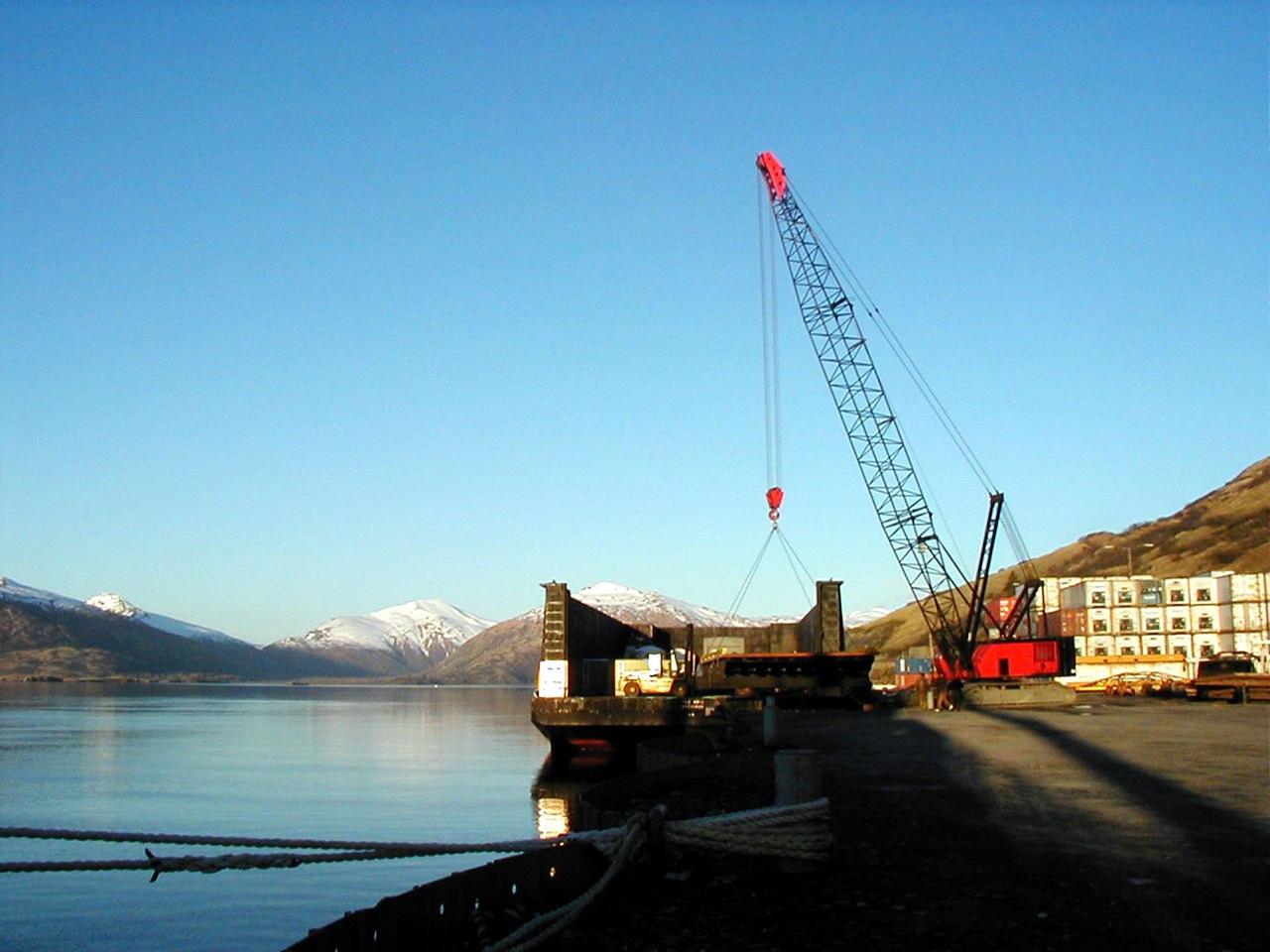
KODIAK ISLAND, Alaska -- A special platform connects the barge with a ramp to allow Castor 120, the first stage of the Athena 1 launch vehicle, to safely move onto the dock at Kodiak Island, Alaska, as preparations to launch Kodiak Star proceed. The first orbital launch to take place from Alaska's Kodiak Launch Complex, Kodiak Star is scheduled to lift off on a Lockheed Martin Athena I launch vehicle on Sept. 17 during a two-hour window that extends from 5:00 to 7:00 p.m. ADT. The payloads aboard include the Starshine 3, sponsored by NASA, and the PICOSat, PCSat and Sapphire, sponsored by the Department of Defense (DoD) Space Test Program.

KODIAK ISLAND, Alaska -- Technicians inspect Castor 120, the first stage of the Athena 1 launch vehicle, at Kodiak Island, Alaska, as preparations to launch Kodiak Star proceed. The first orbital launch to take place from Alaska's Kodiak Launch Complex, Kodiak Star is scheduled to lift off on a Lockheed Martin Athena I launch vehicle on Sept. 17 during a two-hour window that extends from 5:00 to 7:00 p.m. ADT. The payloads aboard include the Starshine 3, sponsored by NASA, and the PICOSat, PCSat and Sapphire, sponsored by the Department of Defense (DoD) Space Test Program.
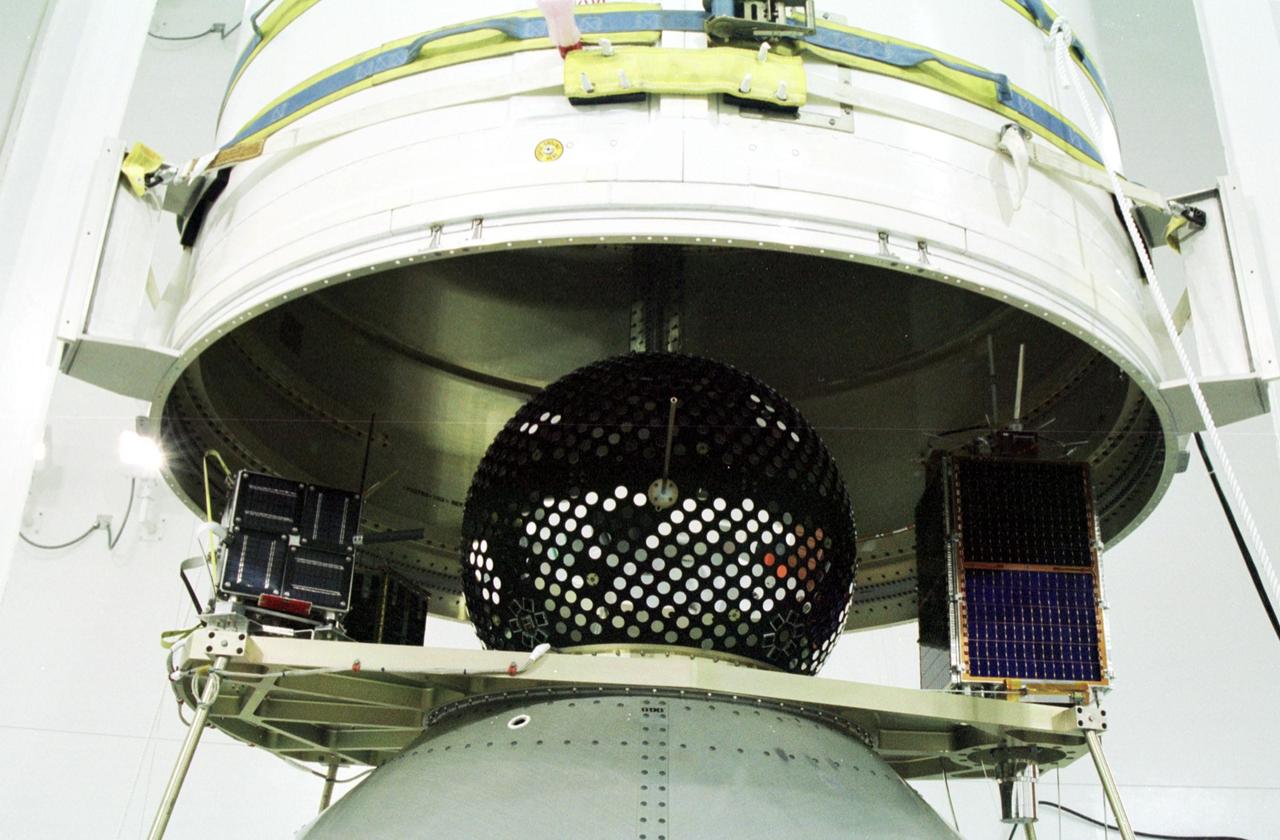
KODIAK ISLAND, Alaska -- At the Launch Service Structure, Kodiak Launch Complex (KLC), the fairing is lowered over the Kodiak Star spacecraft in preparation for launch. The first orbital launch to take place from KLC, Kodiak Star is scheduled to lift off on a Lockheed Martin Athena I launch vehicle on Sept. 17 during a two-hour window that extends from 5 p.m. ADT. The payloads aboard include the Starshine 3, sponsored by NASA, and the PICOSat, PCSat and Sapphire, sponsored by the Department of Defense (DoD) Space Test Program. KLC is the newest commercial launch complex in the United States, ideal for launch payloads requiring low-Earth polar or sun-synchronous orbits
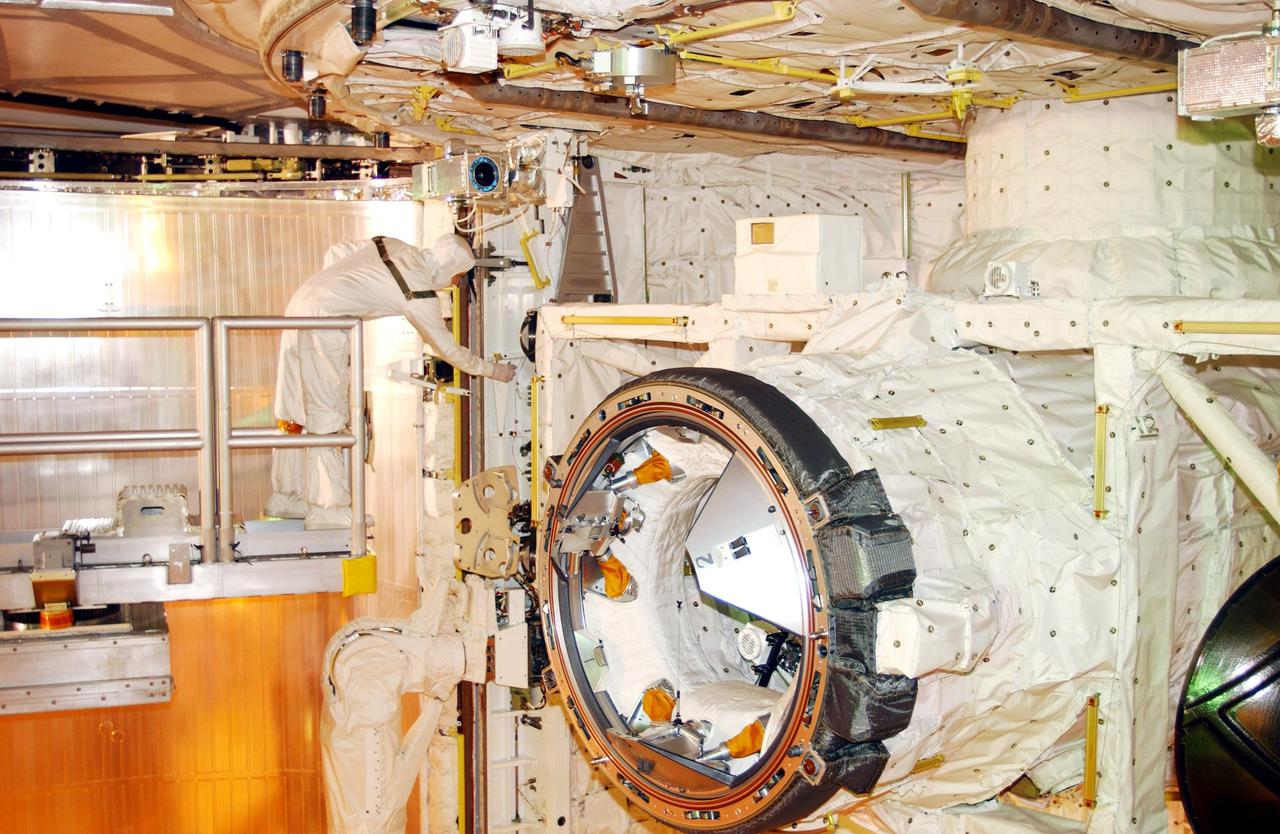
KENNEDY SPACE CENTER, Fla. - A technician prepares for payload bay closure on Space Shuttle Endeavour. Inside the bay is the Multi-Purpose Logistics Module Raffaello (foreground), carrying supplies, equipment and experiments for the International Space Station. Sharing the payload bay are several carriers with varying experiment packages, such as Starshine-2, a Get-Away Special. Endeavour is scheduled to launch Nov. 29 on this first Utilization Flight, STS-108, to the International Space Station. Endeavour will also carry the replacement Expedition 4 crew to the Station and return to Earth with the Expedition 3 crew
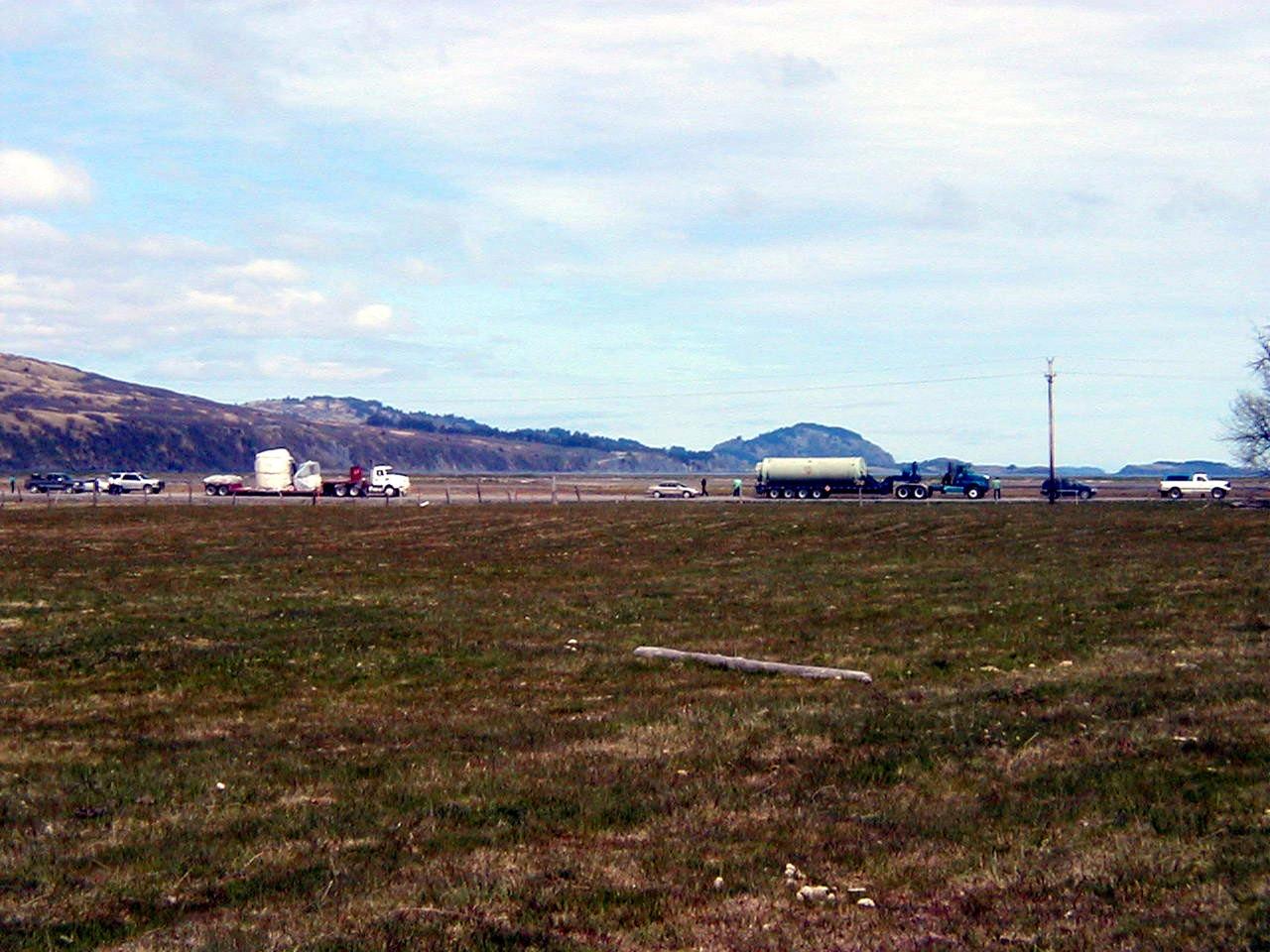
KODIAK ISLAND, Alaska -- A convoy of trucks transports the stages of an Athena launch vehicle and supporting launch equipment to the pad at Kodiak Island, Alaska, as preparations to launch the Kodiak Star continue. The first orbital launch to take place from Alaska's Kodiak Launch Complex, Kodiak Star is scheduled to lift off on a Lockheed Martin Athena I launch vehicle on Sept. 17 during a two-hour window that extends from 5:00 to 7:00 p.m. ADT. The payloads aboard include the Starshine 3, sponsored by NASA, and the PICOSat, PCSat and Sapphire, sponsored by the Department of Defense (DoD) Space Test Program.

KODIAK ISLAND, Alaska -- The PCSat payload waits for its launch aboard the Athena 1 launch vehicle at Kodiak Island, Alaska, as preparations to launch Kodiak Star proceed. The first orbital launch to take place from Alaska's Kodiak Launch Complex, Kodiak Star is scheduled to lift off on a Lockheed Martin Athena I launch vehicle on Sept. 17 during a two-hour window that extends from 5 p.m. to 7 p.m. p.m. ADT. The payloads aboard include the Starshine 3, sponsored by NASA, and the PICOSat, PCSat and Sapphire, sponsored by the Department of Defense (DoD) Space Test Program.
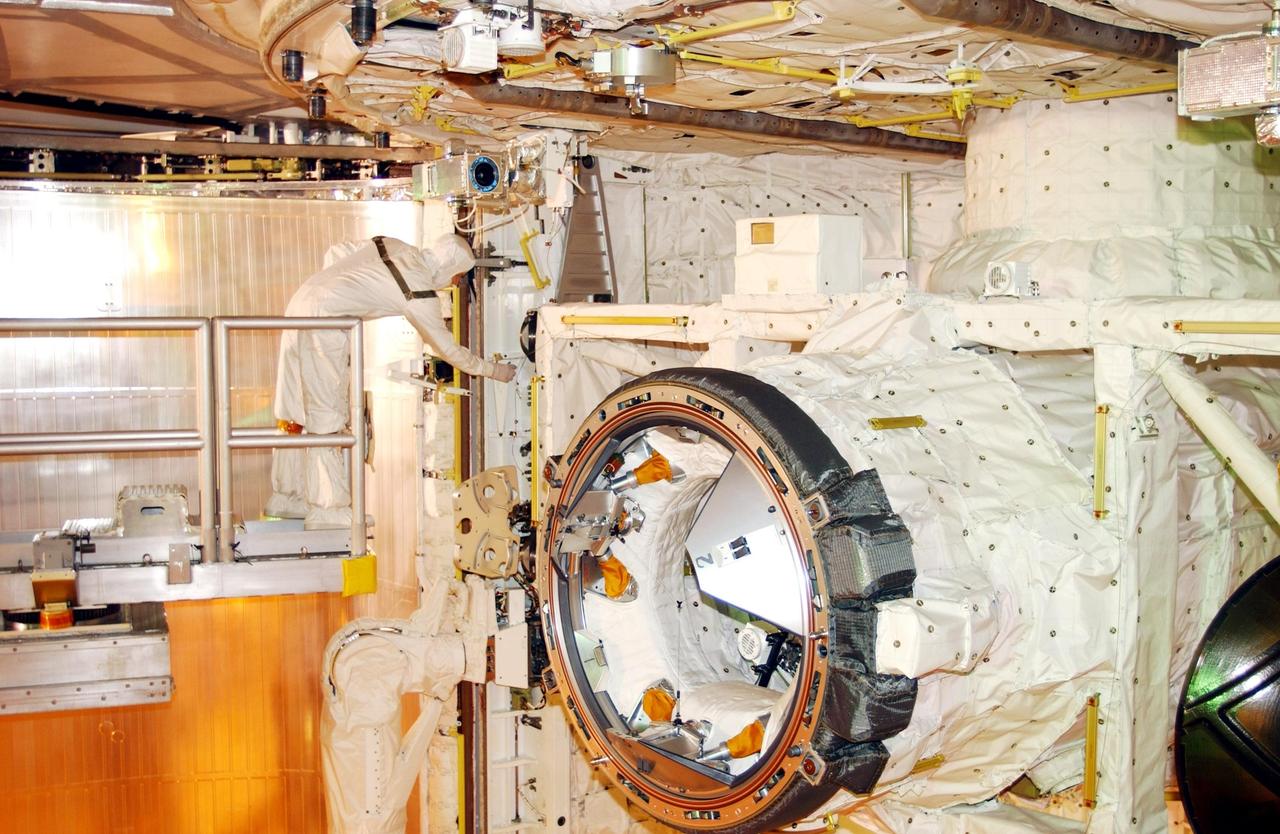
KENNEDY SPACE CENTER, Fla. - A technician prepares for payload bay closure on Space Shuttle Endeavour. Inside the bay is the Multi-Purpose Logistics Module Raffaello (foreground), carrying supplies, equipment and experiments for the International Space Station. Sharing the payload bay are several carriers with varying experiment packages, such as Starshine-2, a Get-Away Special. Endeavour is scheduled to launch Nov. 29 on this first Utilization Flight, STS-108, to the International Space Station. Endeavour will also carry the replacement Expedition 4 crew to the Station and return to Earth with the Expedition 3 crew
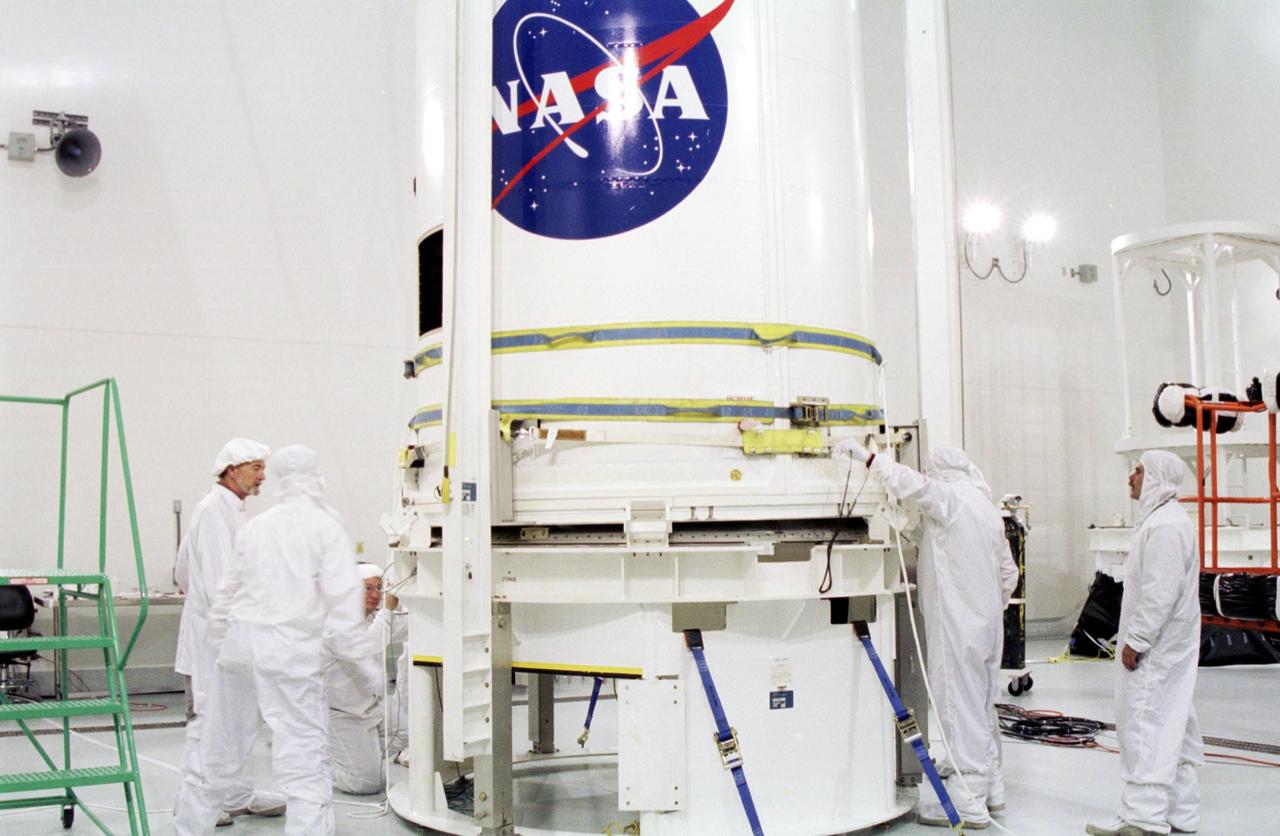
KODIAK ISLAND, Alaska -- In the Launch Service Structure, Kodiak Launch Complex (KLC), workers check the fairing that is to be placed around the Kodiak Star spacecraft in preparation for launch. The first orbital launch to take place from KLC, Kodiak Star is scheduled to lift off on a Lockheed Martin Athena I launch vehicle on Sept. 17 during a two-hour window that extends from 5 p.m. ADT. The payloads aboard include the Starshine 3, sponsored by NASA, and the PICOSat, PCSat and Sapphire, sponsored by the Department of Defense (DoD) Space Test Program. KLC is the newest commercial launch complex in the United States, ideal for launch payloads requiring low-Earth polar or sun-synchronous orbits

KENNEDY SPACE CENTER, Fla. - A worker makes a final adjustment in the payload bay of Space Shuttle Endeavour before door closure. Inside the bay is the Multi-Purpose Logistics Module Raffaello (foreground), carrying supplies, equipment and experiments for the International Space Station. Sharing the payload bay are several carriers with varying experiment packages, such as Starshine-2, a Get-Away Special. Endeavour is scheduled to launch Nov. 29 on this first Utilization Flight, STS-108, to the International Space Station. Endeavour will also carry the replacement Expedition 4 crew to the Station and return to Earth with the Expedition 3 crew
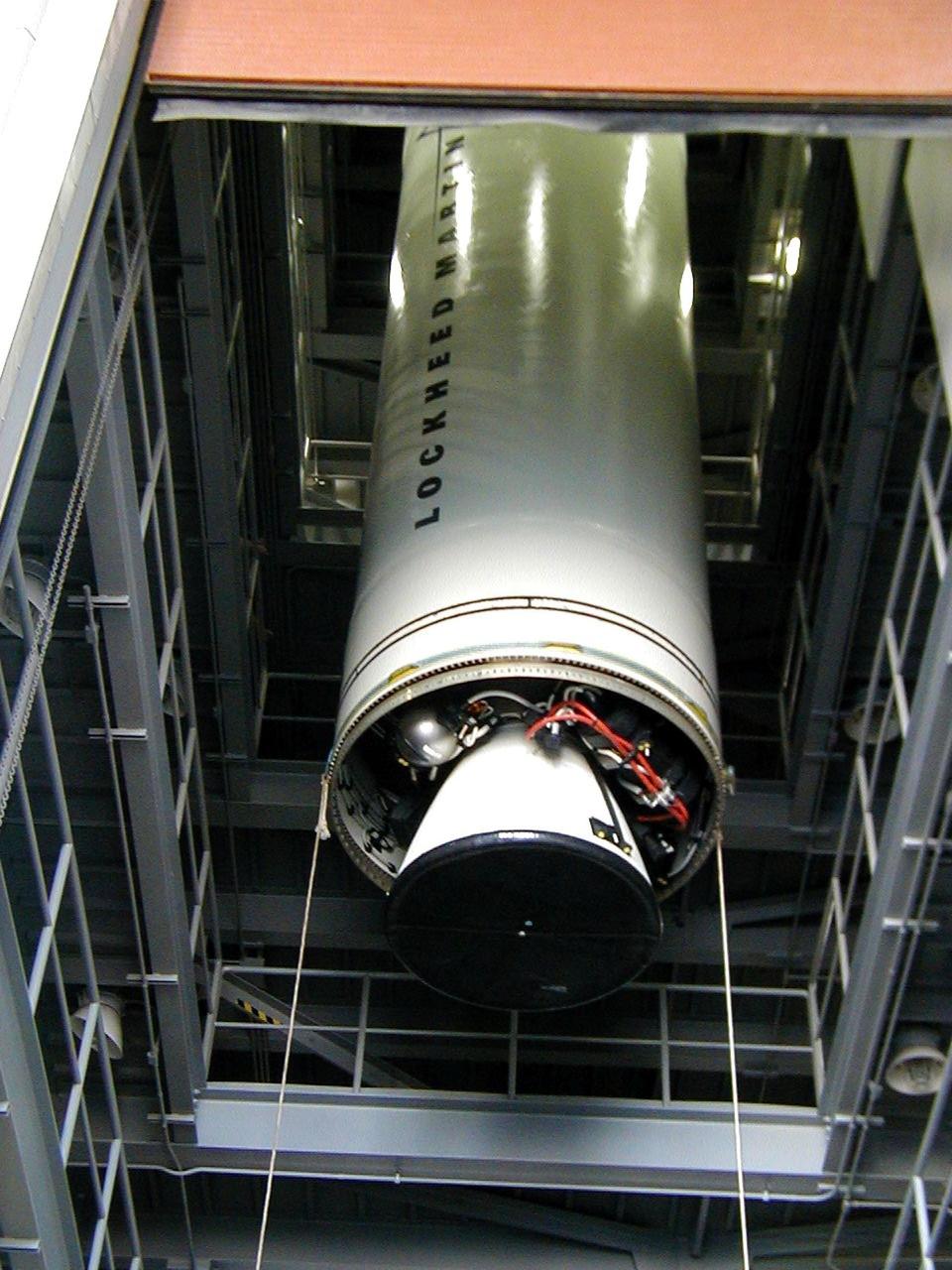
KODIAK ISLAND, Alaska -- Castor 120, the first stage of the Athena 1 launch vehicle, is lifted into a vertical position at Kodiak Island, Alaska, as preparations to launch Kodiak Star proceed. The first orbital launch to take place from Alaska's Kodiak Launch Complex, Kodiak Star is scheduled to lift off on a Lockheed Martin Athena I launch vehicle on Sept. 17 during a two-hour window that extends from 5:00 to 7:00 p.m. ADT. The payloads aboard include the Starshine 3, sponsored by NASA, and the PICOSat, PCSat and Sapphire, sponsored by the Department of Defense (DoD) Space Test Program.
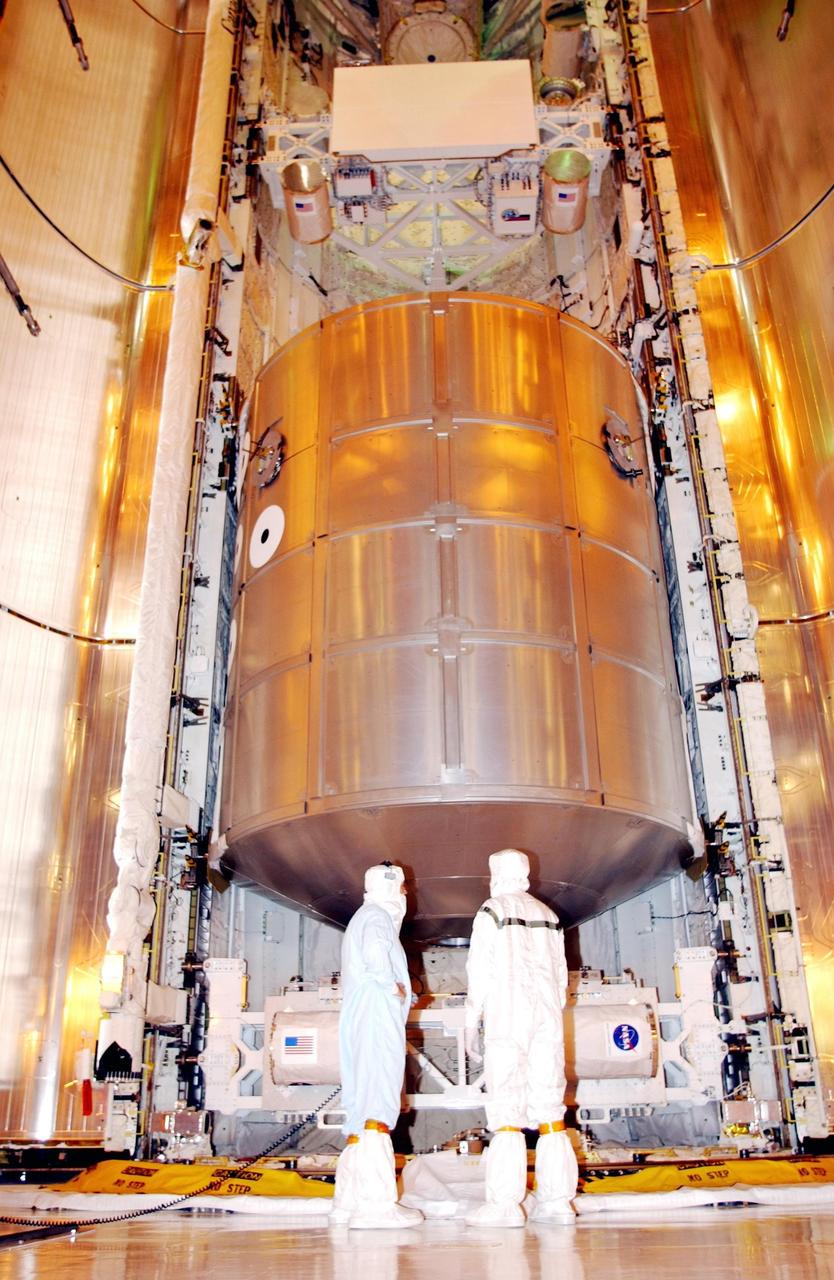
KENNEDY SPACE CENTER, Fla. - Space Shuttle Endeavour's payload bay doors are ready for closure and launch on mission STS-108. Inside the bay is the Multi-Purpose Logistics Module Raffaello, carrying supplies, equipment and experiments for the International Space Station. Surrounding the MPLM are several carriers with varying experiment packages, such as Starshine-2, a Get-Away Special. Endeavour is scheduled to launch Nov. 29 on this first Utilization Flight to the International Space Station. Endeavour will also carry the replacement Expedition 4 crew to the Station and return to Earth with the Expedition 3 crew