
Sault Ste. Marie is the name of two cities on Saint Mary River, separating Canada and the State of Michigan in the United States. This image was acquired by NASA Terra spacecraft on June 10, 2007.
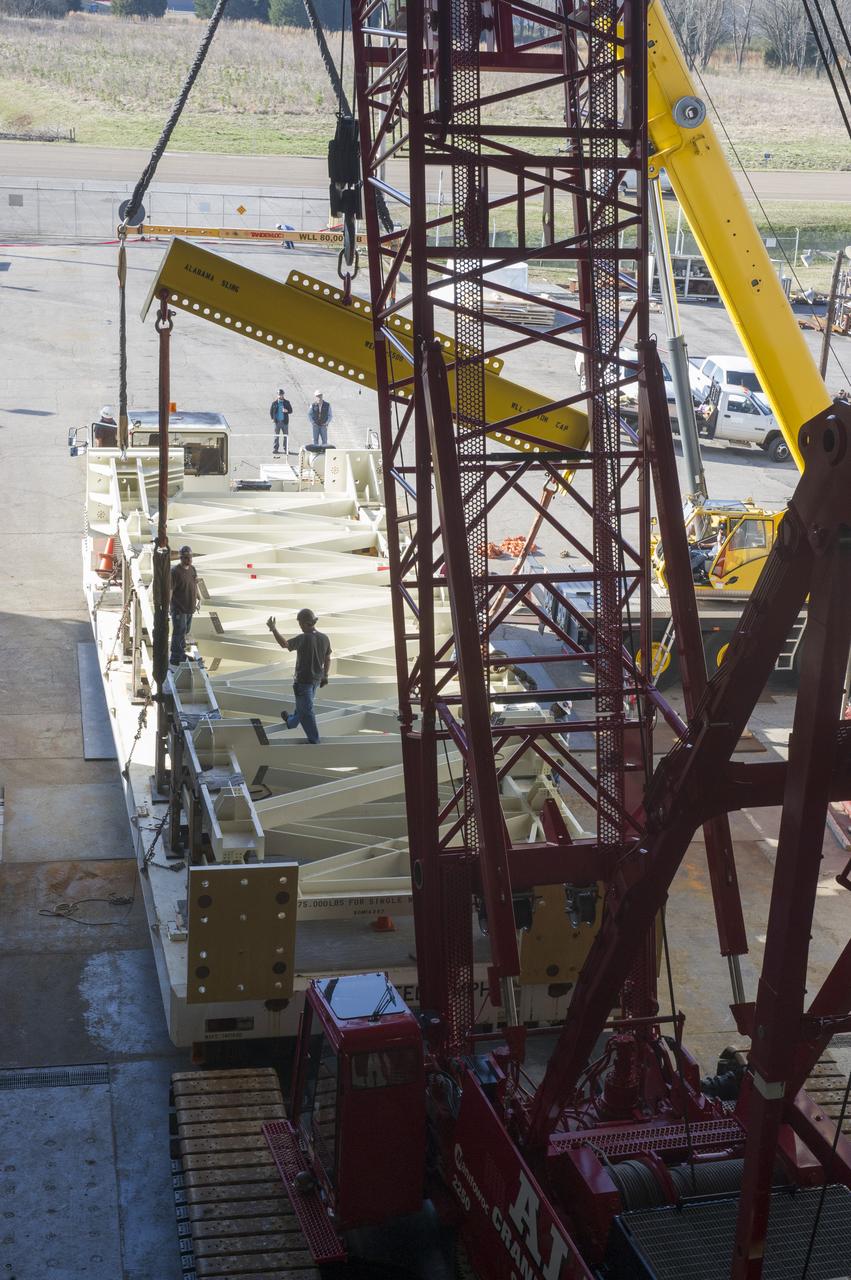
ERECTION OF TWO SLS INTERTANK, (IT), SPECIAL TEST EQUIPMENT, (STE), TOWER PANELS IN BLDG 4619
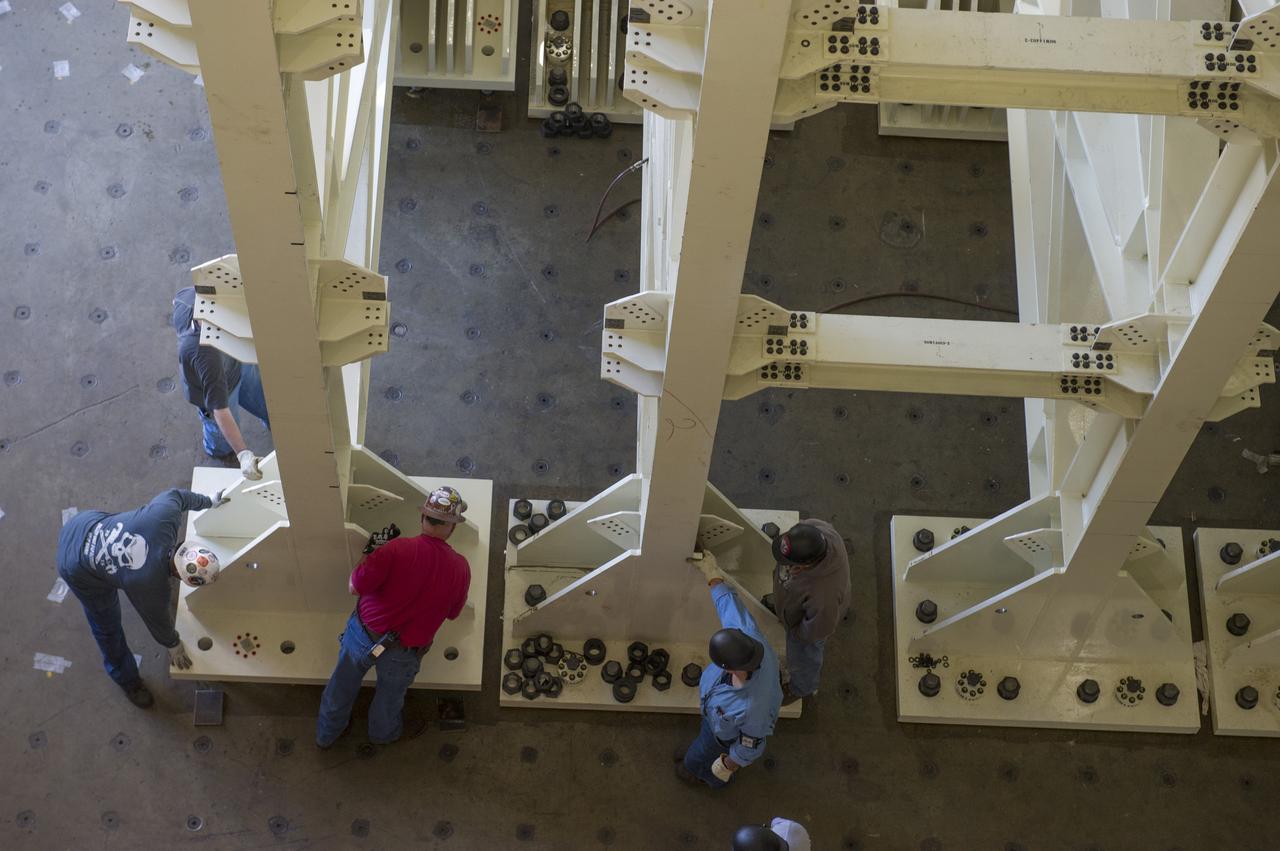
ERECTION OF TWO SLS INTERTANK, (IT), SPECIAL TEST EQUIPMENT, (STE), TOWER PANELS IN BLDG 4619
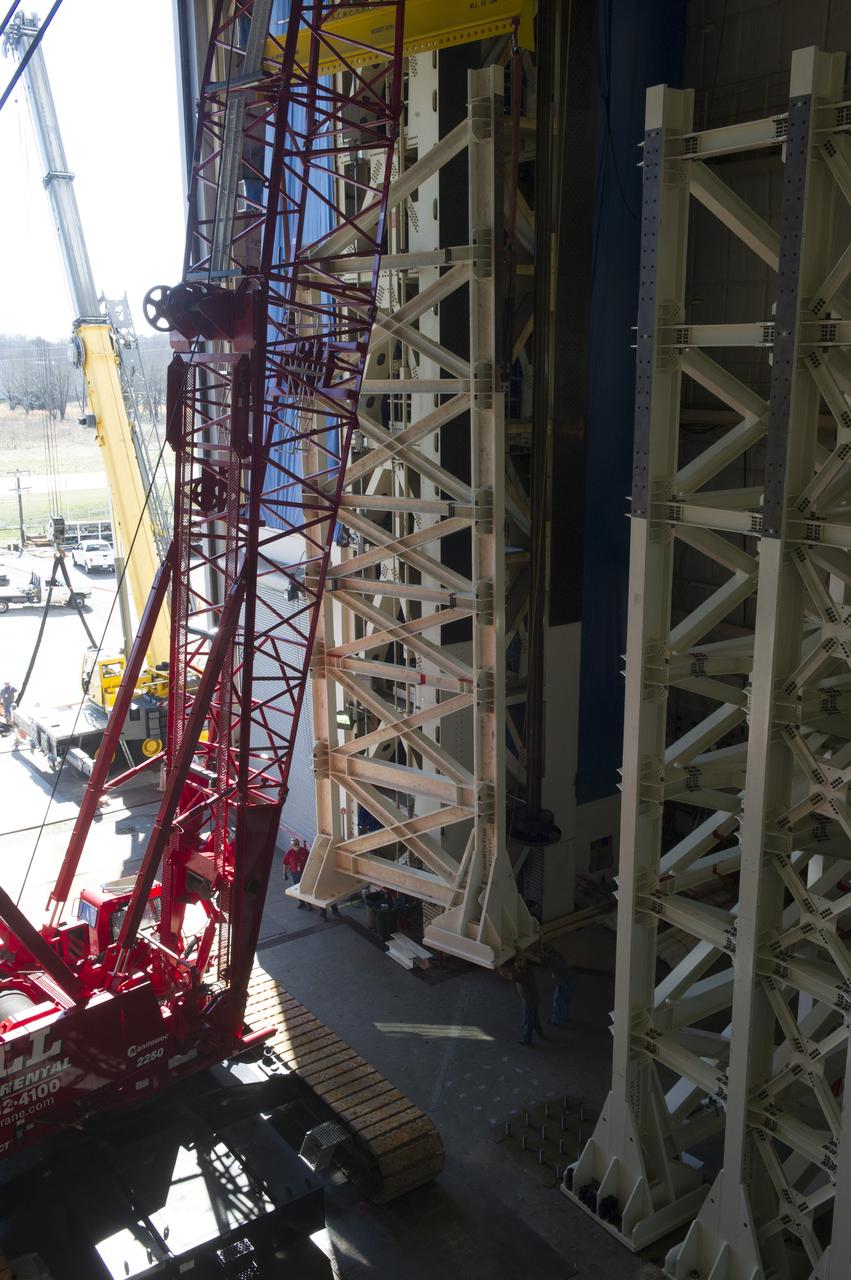
ERECTION OF TWO SLS INTERTANK, (IT), SPECIAL TEST EQUIPMENT, (STE), TOWER PANELS IN BLDG 4619
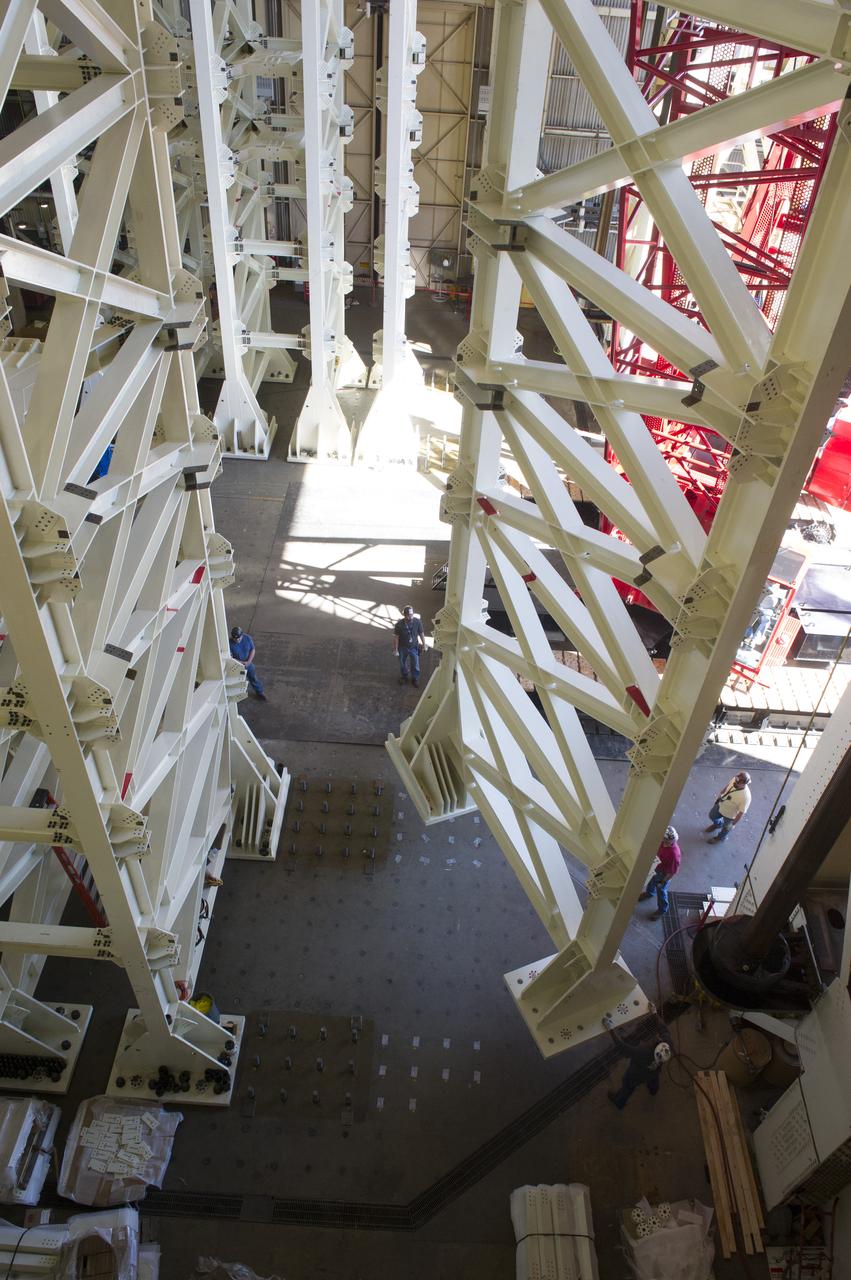
ERECTION OF TWO SLS INTERTANK, (IT), SPECIAL TEST EQUIPMENT, (STE), TOWER PANELS IN BLDG 4619
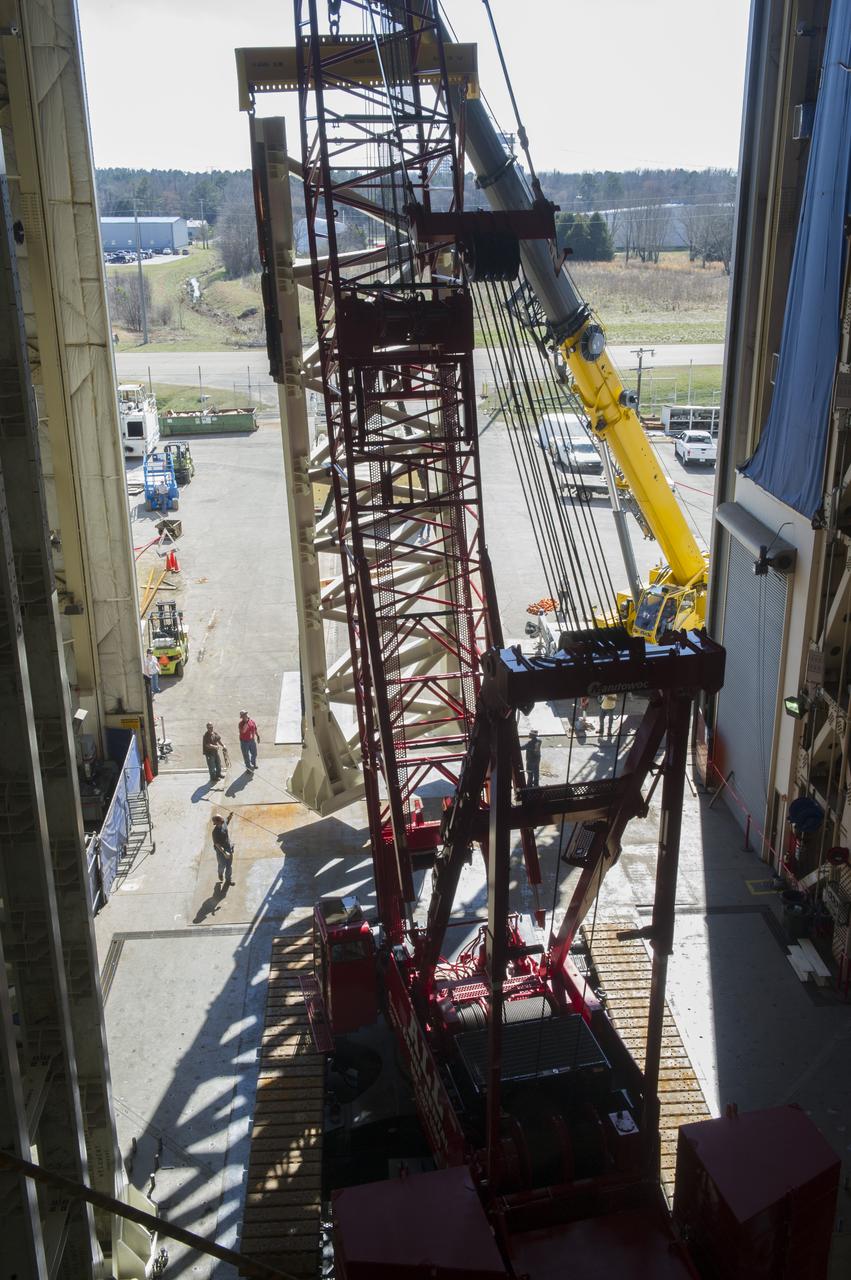
ERECTION OF TWO SLS INTERTANK, (IT), SPECIAL TEST EQUIPMENT, (STE), TOWER PANELS IN BLDG 4619
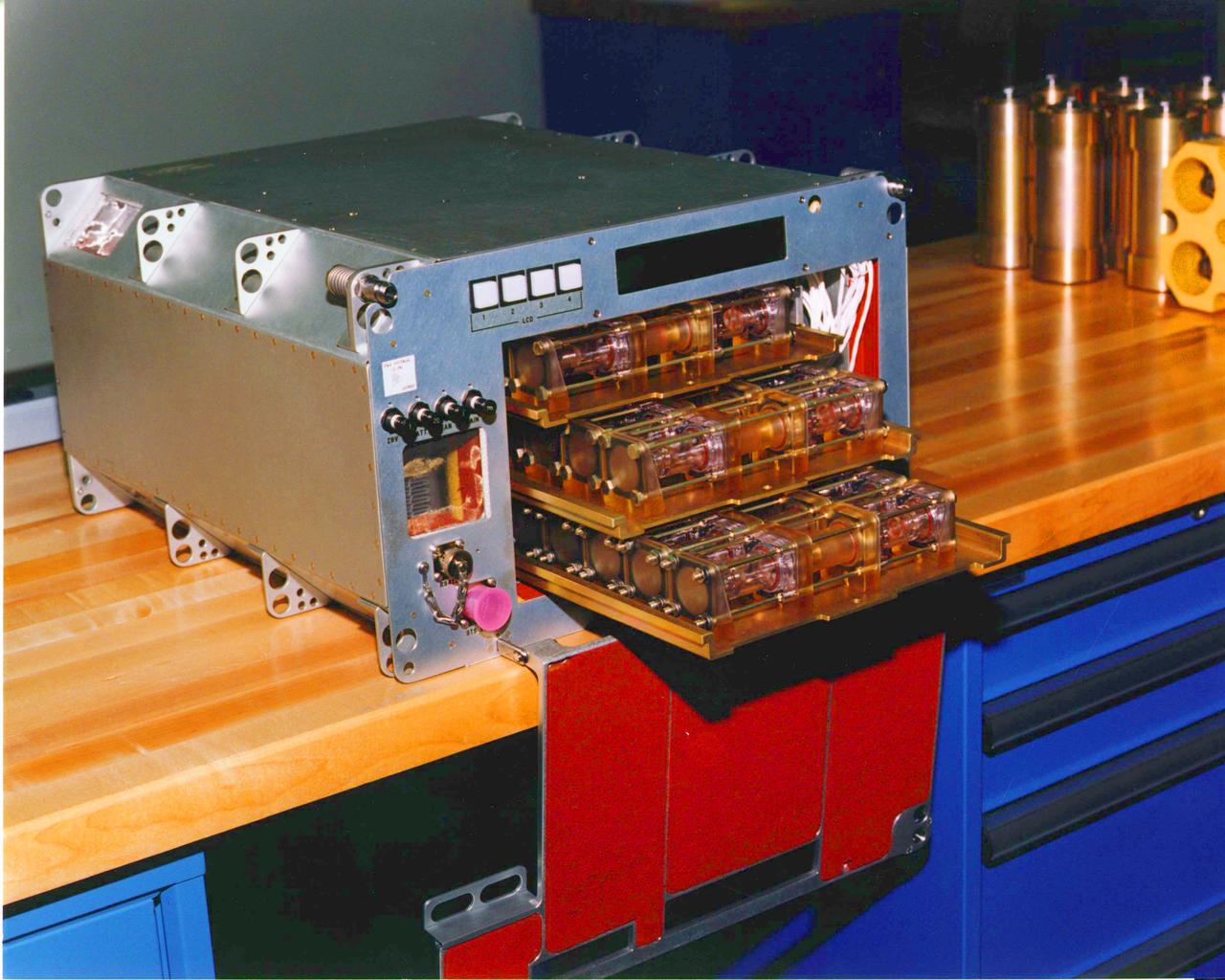
(DCAM) Diffusion Controlled Crystallization Apparatus for Microgravity Trays mounted in (STES) Single Locker Thermal Enclosure System.
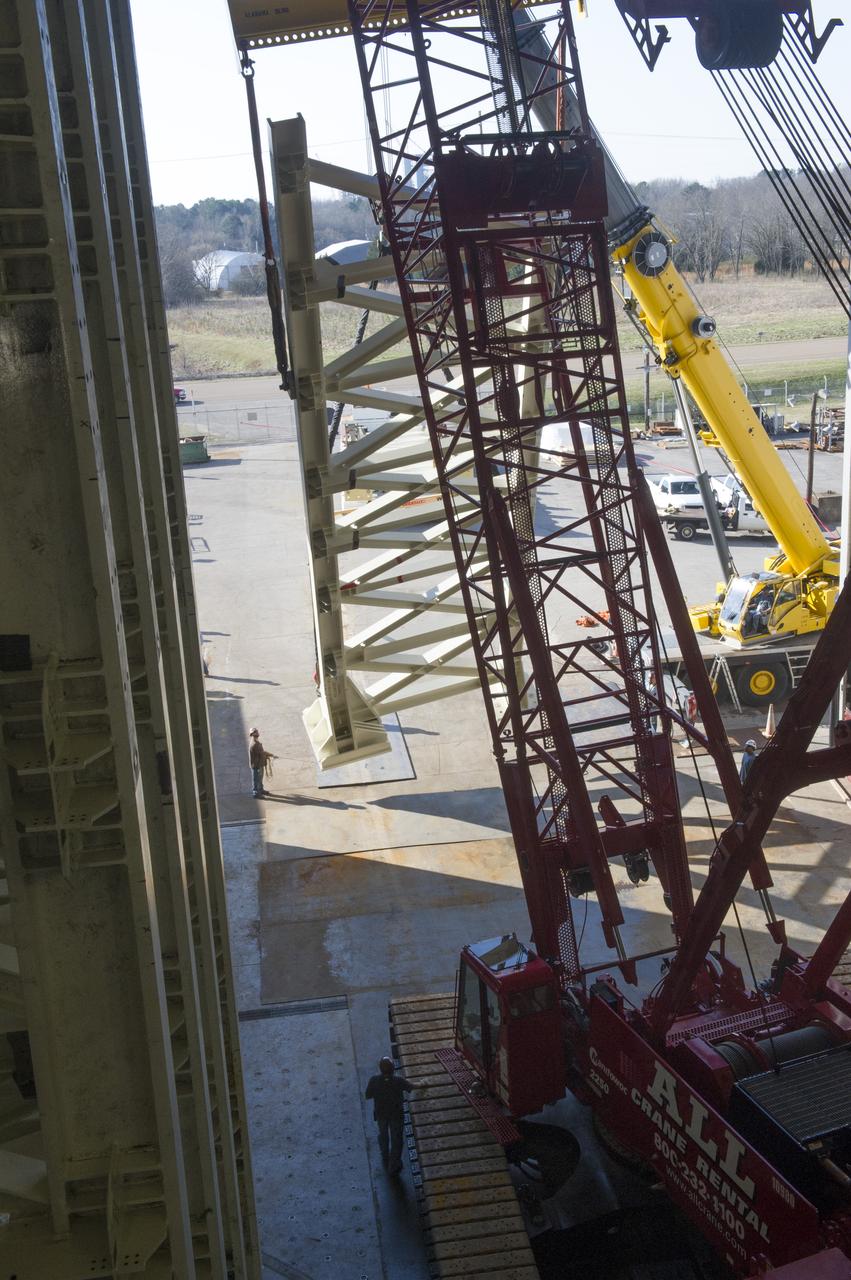
ERECTION OF TWO SLS INTERTANK, (IT), SPECIAL TEST EQUIPMENT, (STE), TOWER PANELS IN BLDG 4619
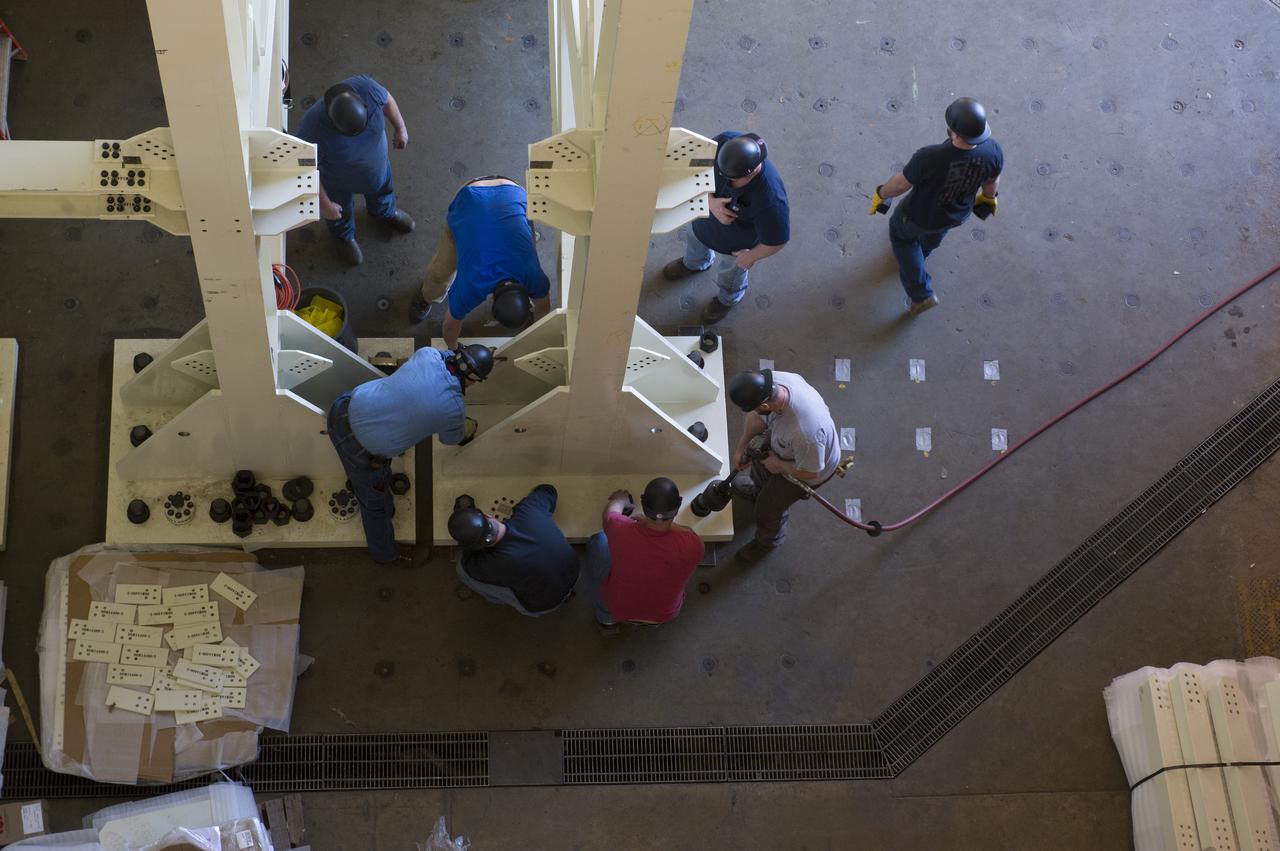
ERECTION OF TWO SLS INTERTANK, (IT), SPECIAL TEST EQUIPMENT, (STE), TOWER PANELS IN BLDG 4619
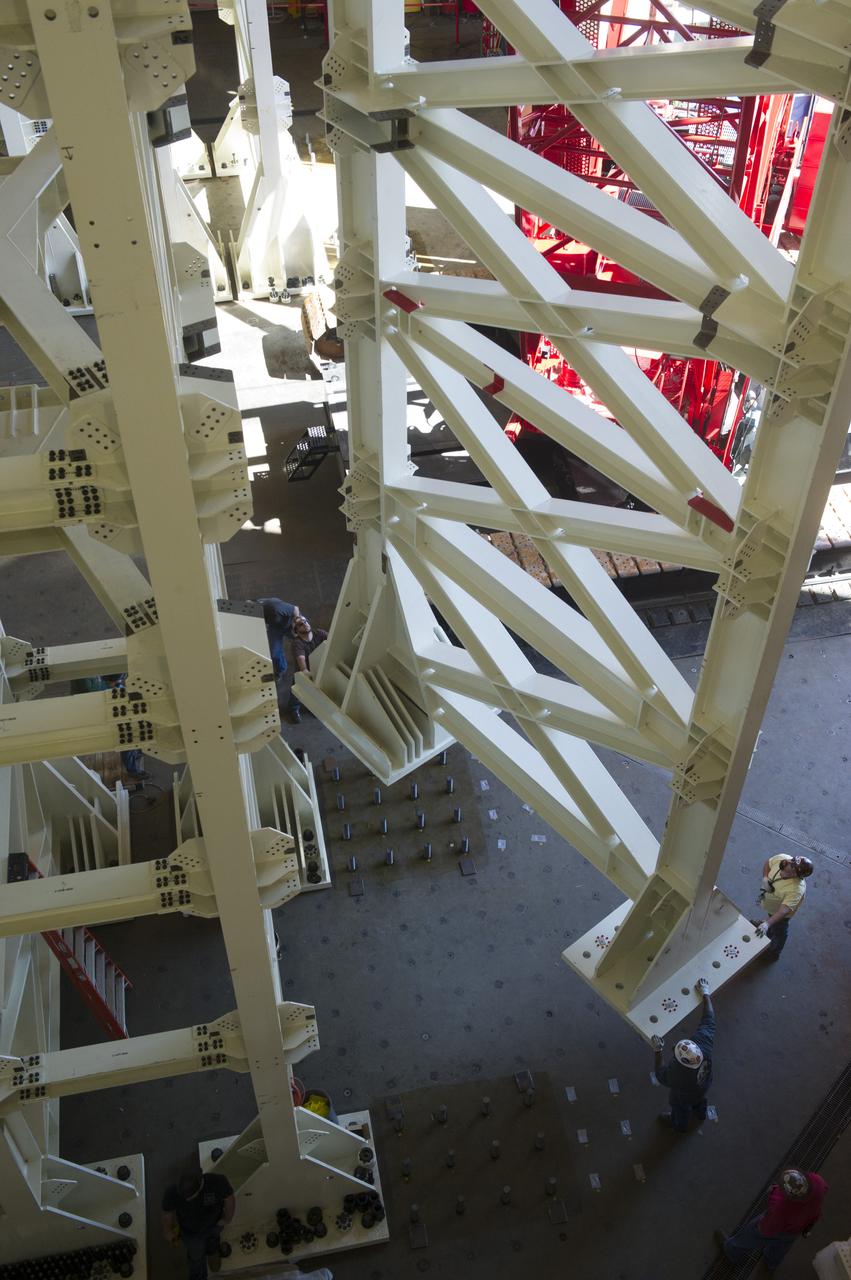
ERECTION OF TWO SLS INTERTANK, (IT), SPECIAL TEST EQUIPMENT, (STE), TOWER PANELS IN BLDG 4619
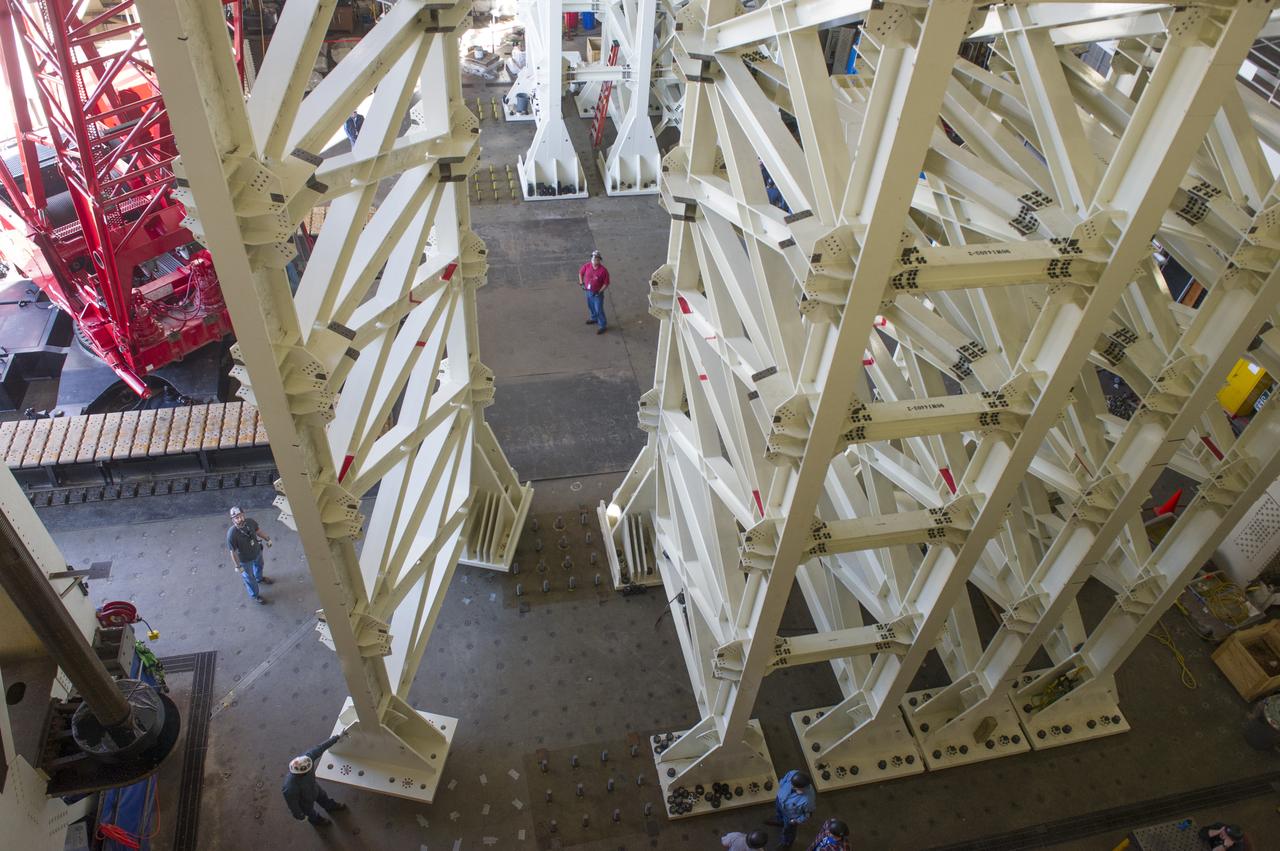
ERECTION OF TWO SLS INTERTANK, (IT), SPECIAL TEST EQUIPMENT, (STE), TOWER PANELS IN BLDG 4619
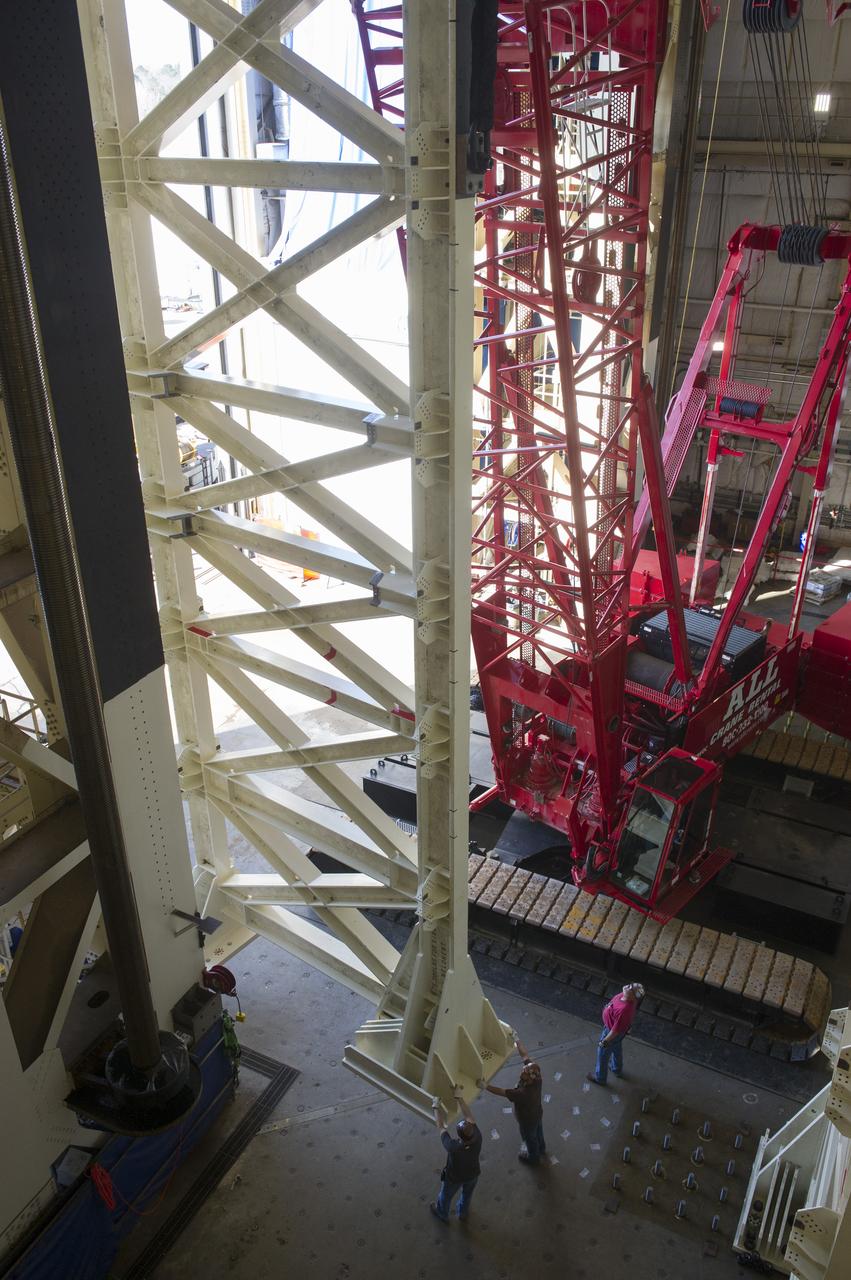
ERECTION OF TWO SLS INTERTANK, (IT), SPECIAL TEST EQUIPMENT, (STE), TOWER PANELS IN BLDG 4619
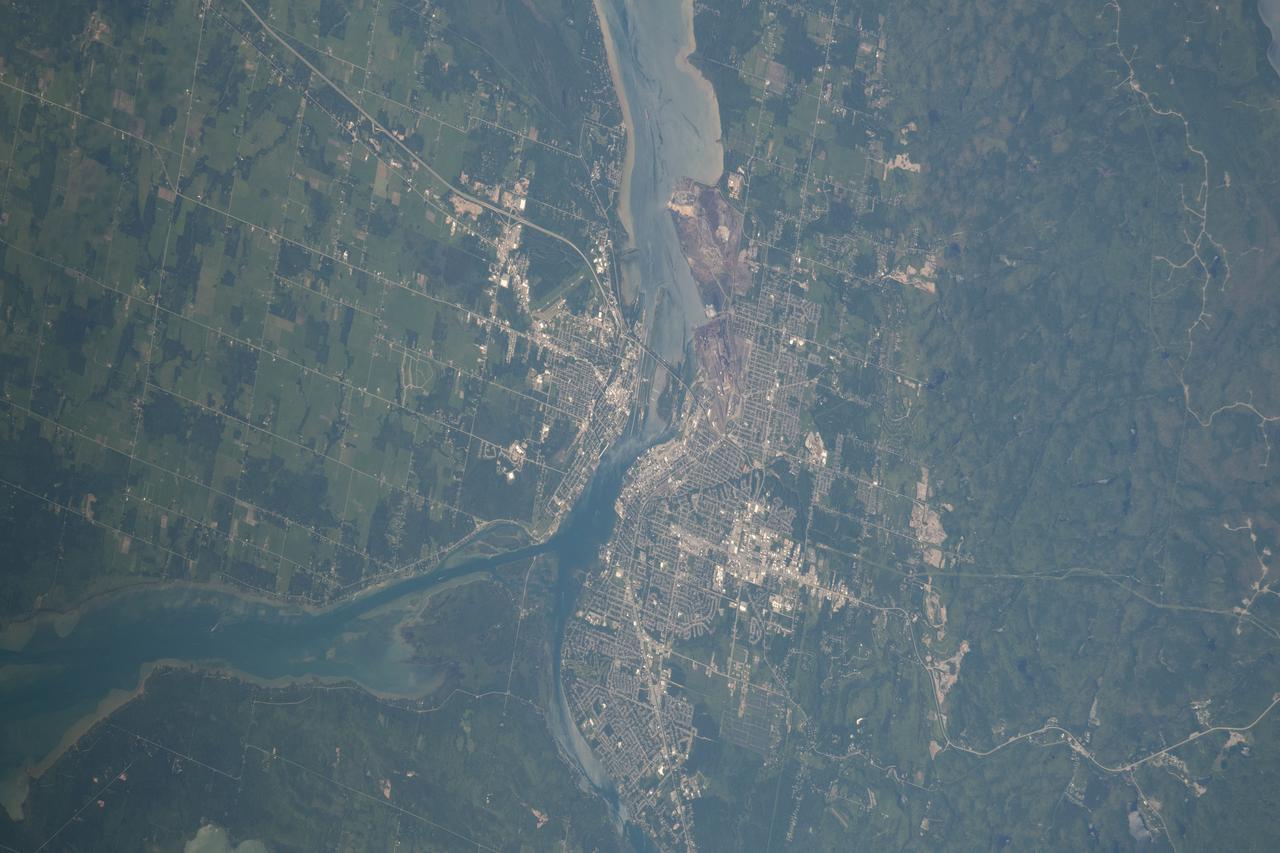
iss056e032790 (June 20, 2018) --- Canada and the United States are separated at this entry point by the St. Mary's River. The similarly named cities of Sault Ste. Marie, Michigan is to the south and Sault Ste. Marie, Ontario is to the north (in this orientation they are from left to right). The St. Mary's River leads into Lake Superior heading west and Lake Huron heading south.
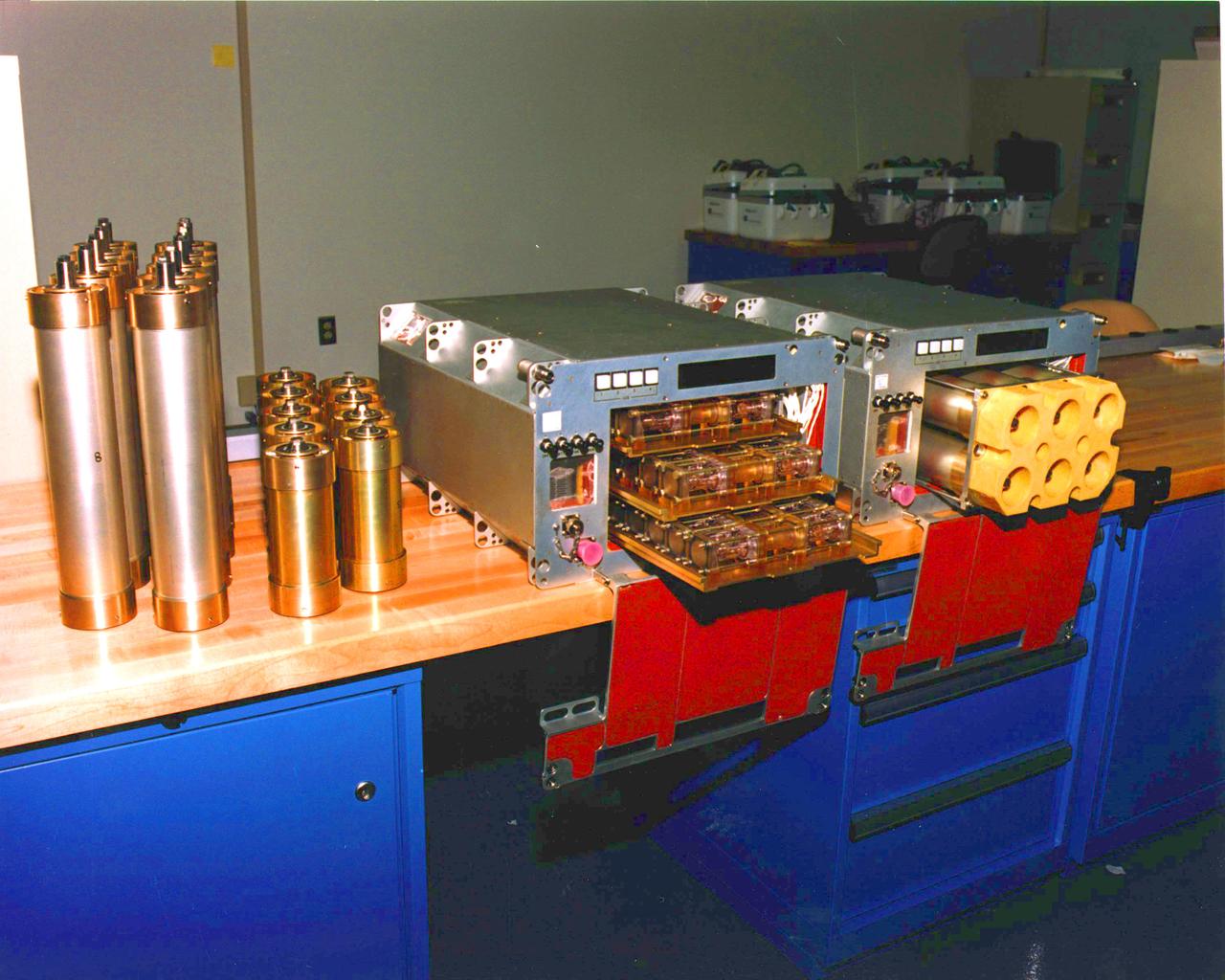
Two versions of (PCAM) Protein Crystallization Apparatus for Microgravity, (DCAM) Diffusion Controled Crystallization Apparatus is in the (STES) Single Locker Thermal Enclosure System. Principal Investigator was Dan Carter.
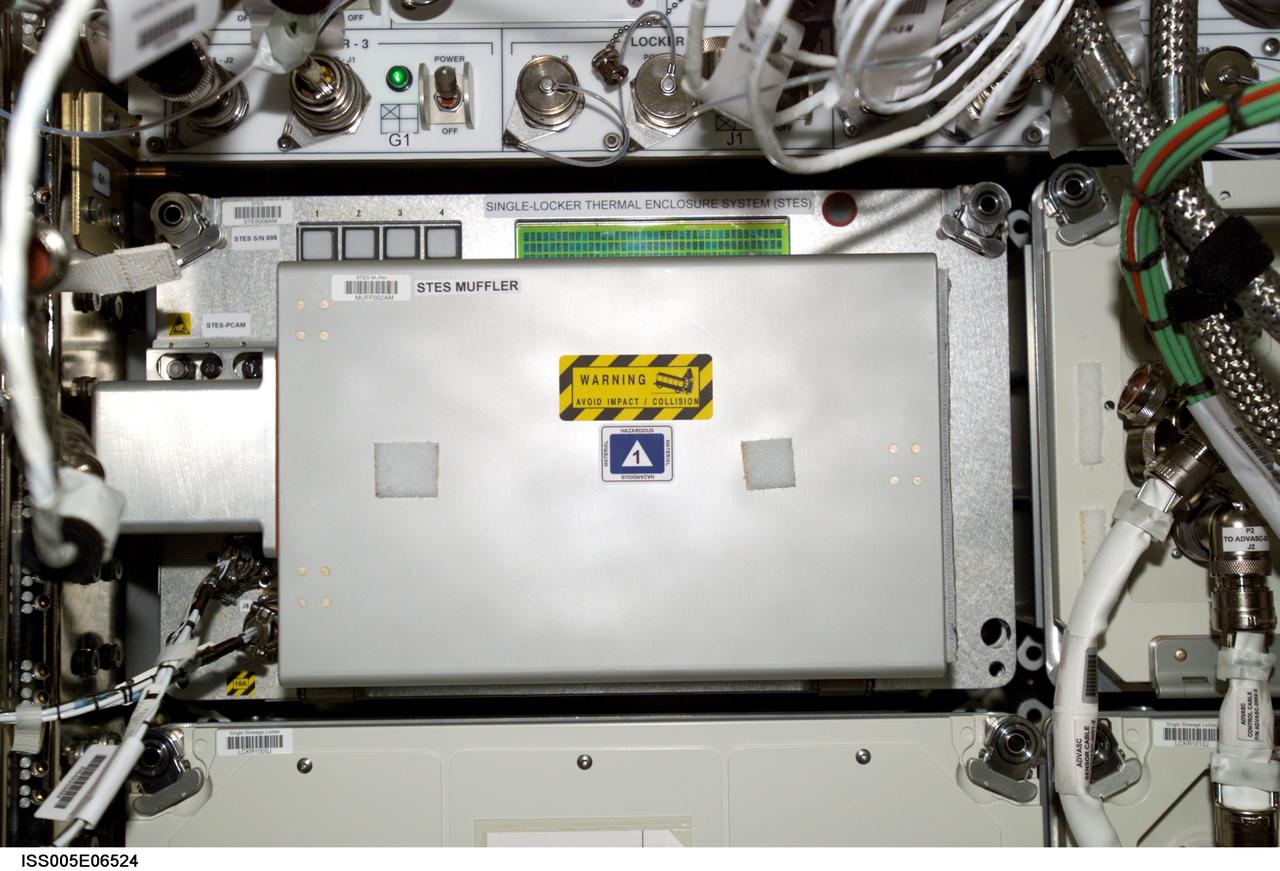
iss005e06524 (7/2/2002) --- View of the Single-Locker Thermal Enclosure System (STES), located on the Expedite the Processing of Experiments to the Space Station (EXPRESS) Rack 4 in the Destiny / U.S. Laboratory.
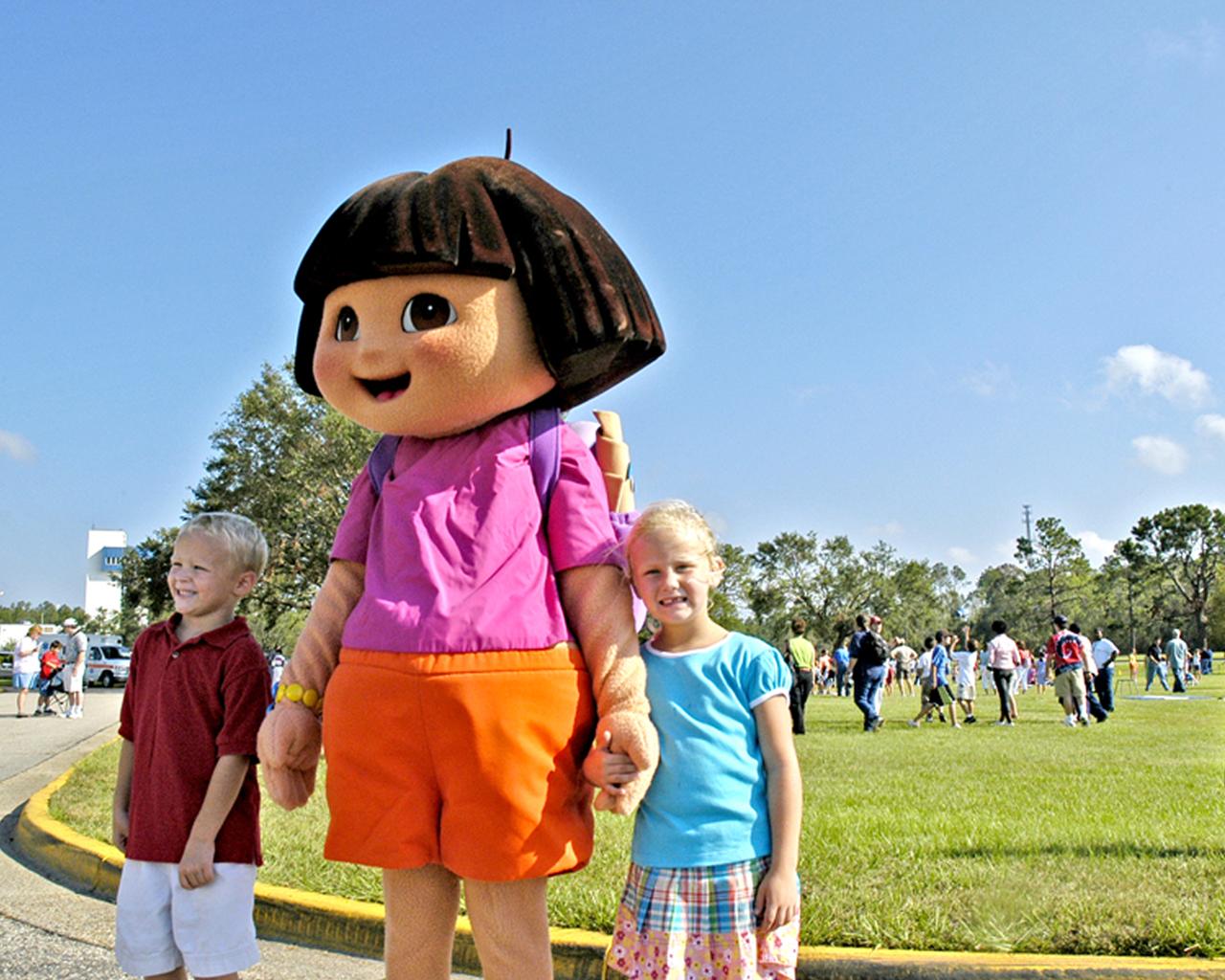
From left, Cobie Smith, 5, and Tatume Smith, also 5, have their picture taken with 'Dora the Explorer.' The children were participants in Nickelodeon's Worldwide Day of Play celebration at Stennis Space Center (SSC) on Oct. 1. The Worldwide Day of Play is sponsored annually by Nickelodeon television network to encourage children to be physically active. Approximately 150 children participated in the event at SSC.
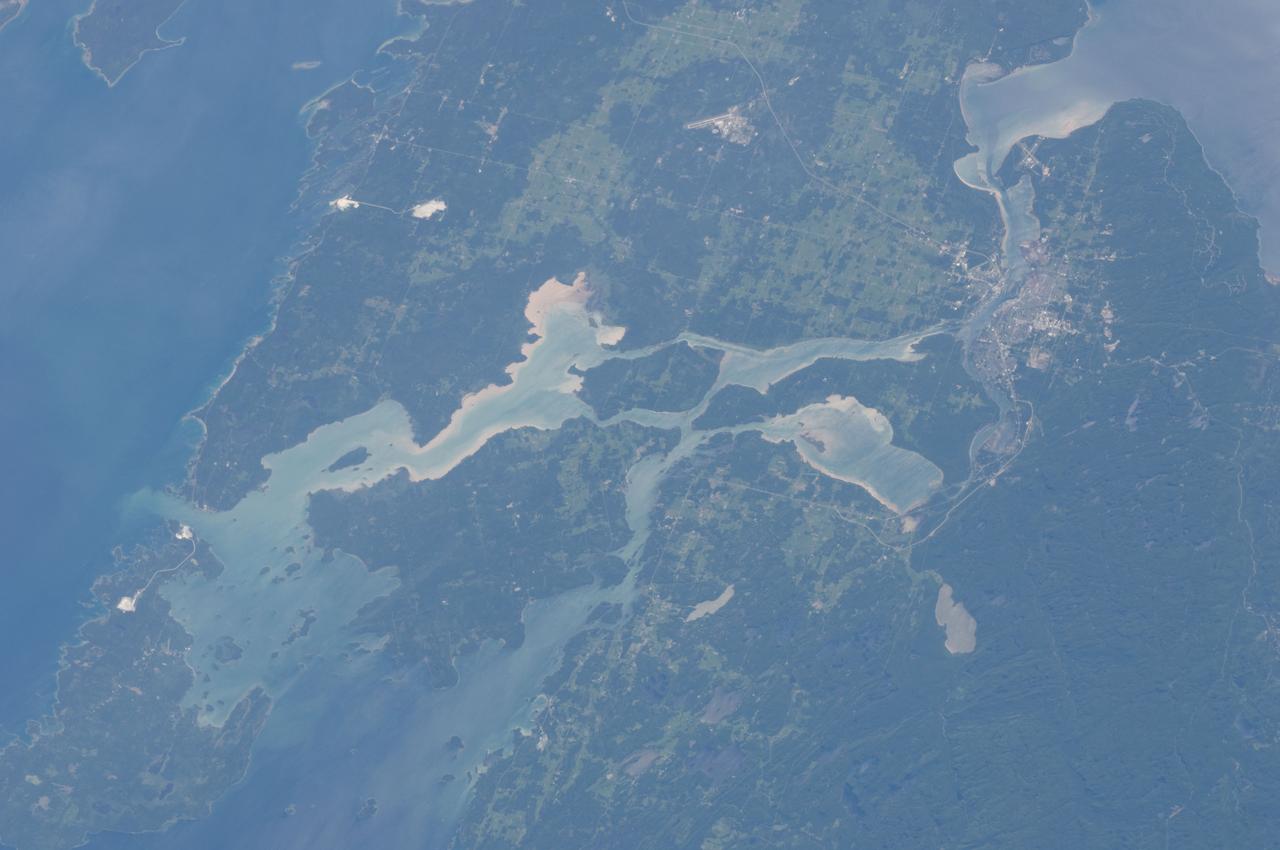
ISS028-E-010162 (29 June 2011) --- Sault Ste Marie, Ontario and Michigan are featured in this image photographed by an Expedition 28 crew member on the International Space Station. The twin cities of Sault Ste Marie are located across the St. Mary?s River that forms part of the international boundary between Canada (Province of Ontario) and the United States (State of Michigan). This photograph highlights the two cities, together with the region of lakes and islands that separates Lakes Huron and Superior, two of the Great Lakes of North America. Smaller lakes include Lake George to the west; the large forested islands of St. Joseph and Drummond are visible at lower left. The Sault Ste Marie urban areas (upper right) have a distinctive gray to white coloration in the image, contrasting with the deep green of forested areas in Ontario and the lighter green of agricultural fields in Michigan. The coloration of water surfaces in the lakes and rivers varies from blue to blue-green to silver, and is likely caused by varying degrees of sediment and sunglint ? light reflecting back to the observer on the space station from the water surface, much as light reflects from a mirror. Prior to formalization of the US/Canada border in 1817, Sault Ste Marie was a single community. Archeological evidence suggests that the region had been occupied by Native Americans at least five hundred years ago. A mission ? the first European settlement in Michigan ? was established there in 1668 by the French Jesuit Father Jacques Marquette. Today, shipping locks and canals in both urban areas are an important part of the Great Lakes shipping traffic system.
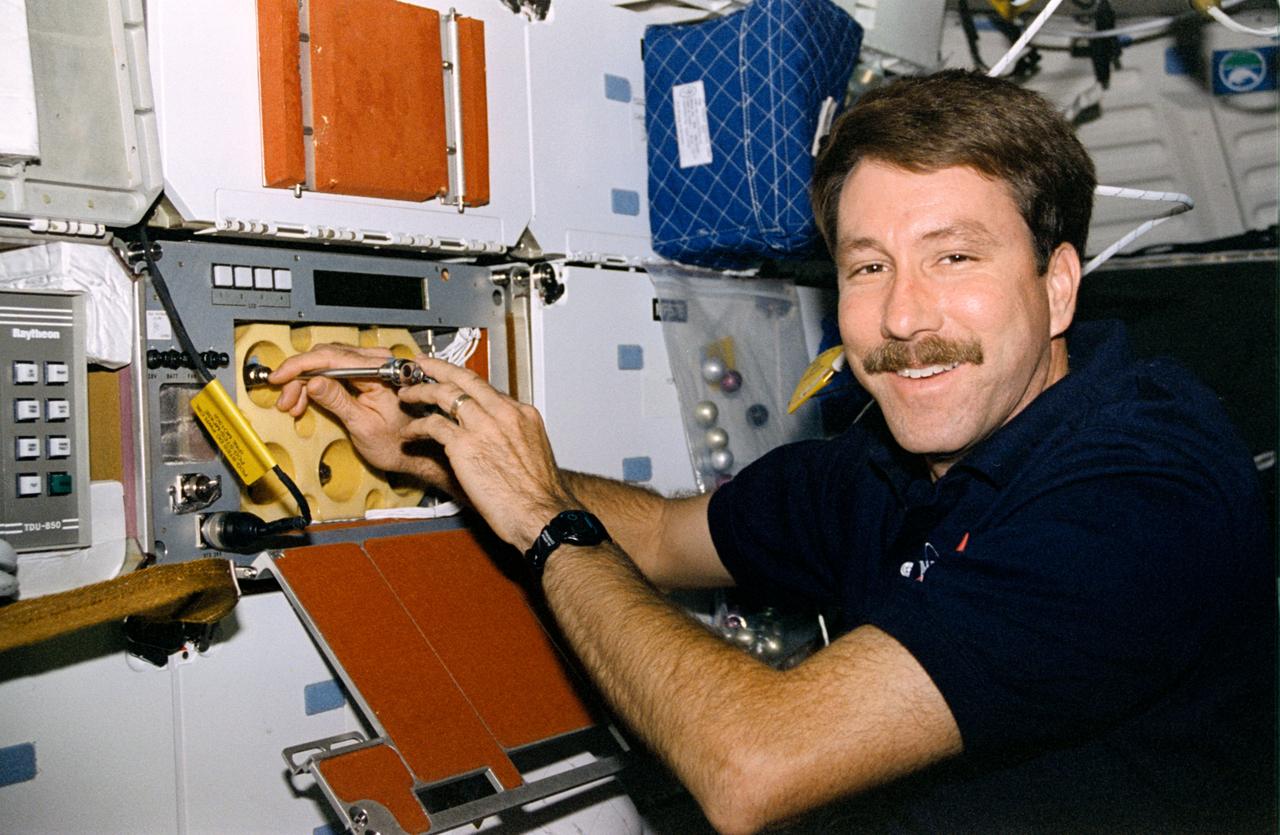
STS085-324-007 (7 - 19 August 1997) --- Astronaut Kent V. Rominger, pilot, uses a tool to deactivate the Protein Crystal Growth (PCG) experiment on the mid-deck of the Space Shuttle Discovery near the end of the 12-day STS-85 flight.
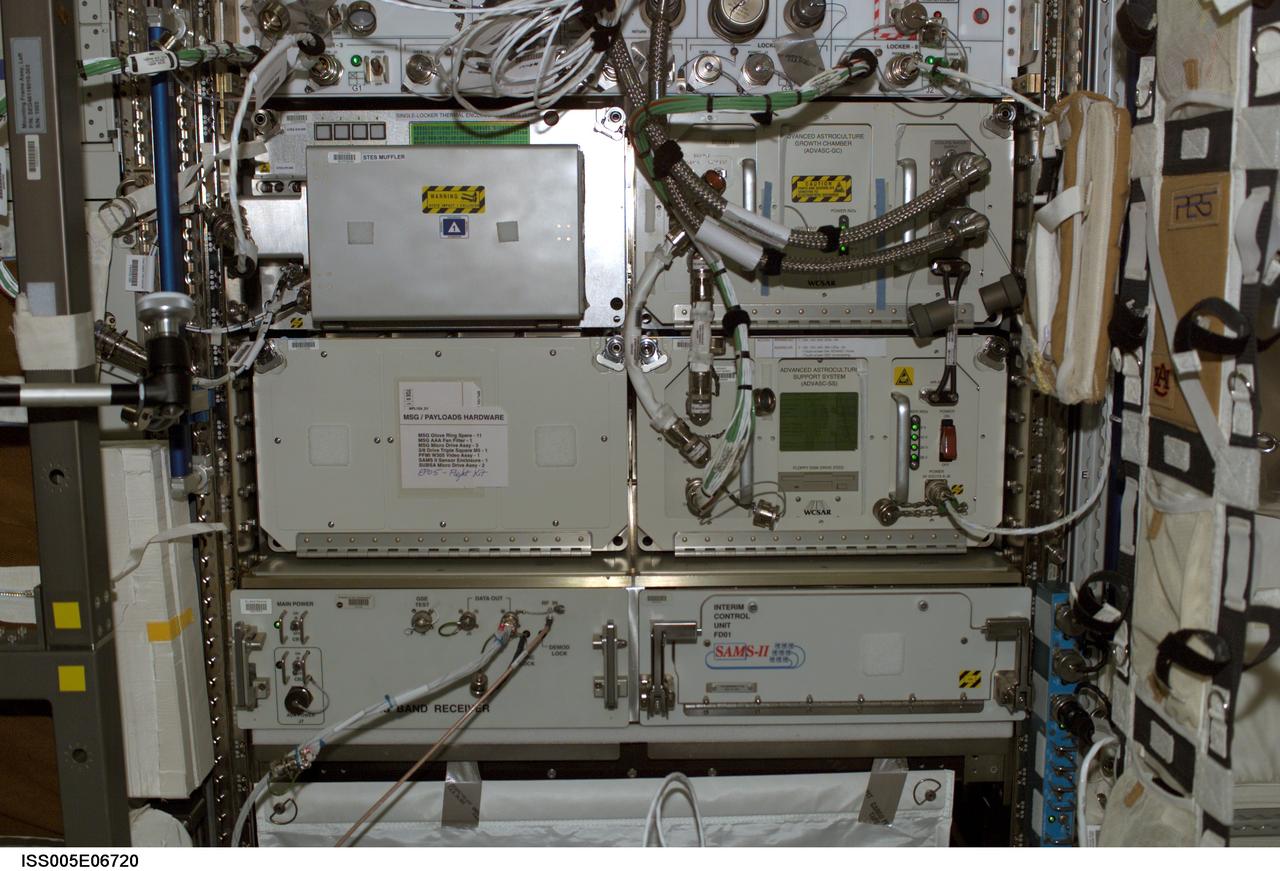
iss005e06720 (7/4/2002) --- Front view of Express Rack 4 in the U.S. Laboratory / Destiny taken during Expedition Five. Visible in the rack are the following items: Single-Locker Thermal Enclosure System (STES) Muffler, Advanced Astroculture Growth Chamber (ADVASC-GC), Advanced Astroculture Support System (ADVASC-SS). And Space Acceleration and Measurement System (SAMS) II.
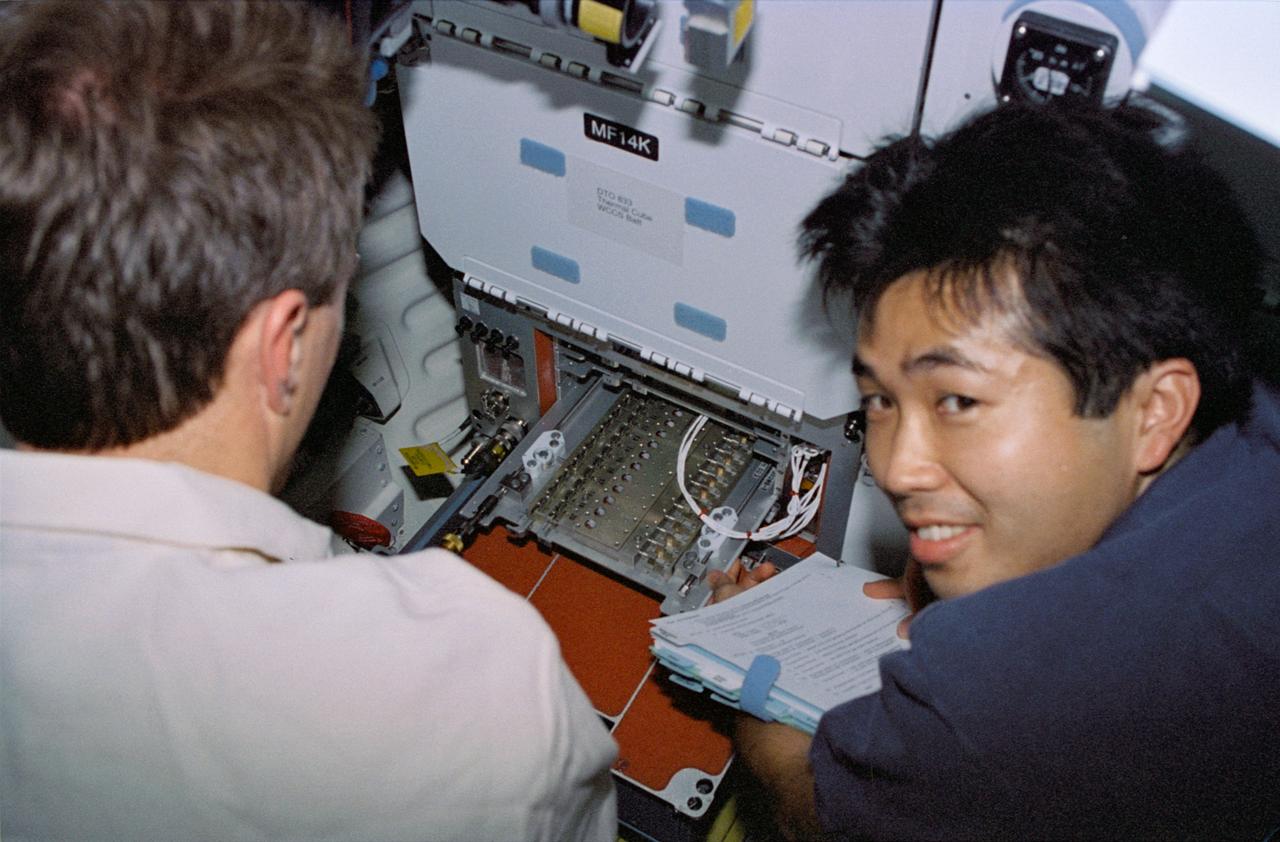
STS072-310-007 (11-20 Jan. 1996) --- Astronauts Brent W. Jett Jr. (left) and Koichi Wakata work with the Protein Crystal Growth (PCG) experiment at the Single Locker Thermal Enclosure System (STES) on the Space Shuttle Endeavour’s mid-deck. Jett, making his first flight in space, served as the crew’s pilot, while Wakata served as a mission specialist. Wakata, also a first time Shuttle crew member, represents Japan’s National Space Development Agency (NASDA).
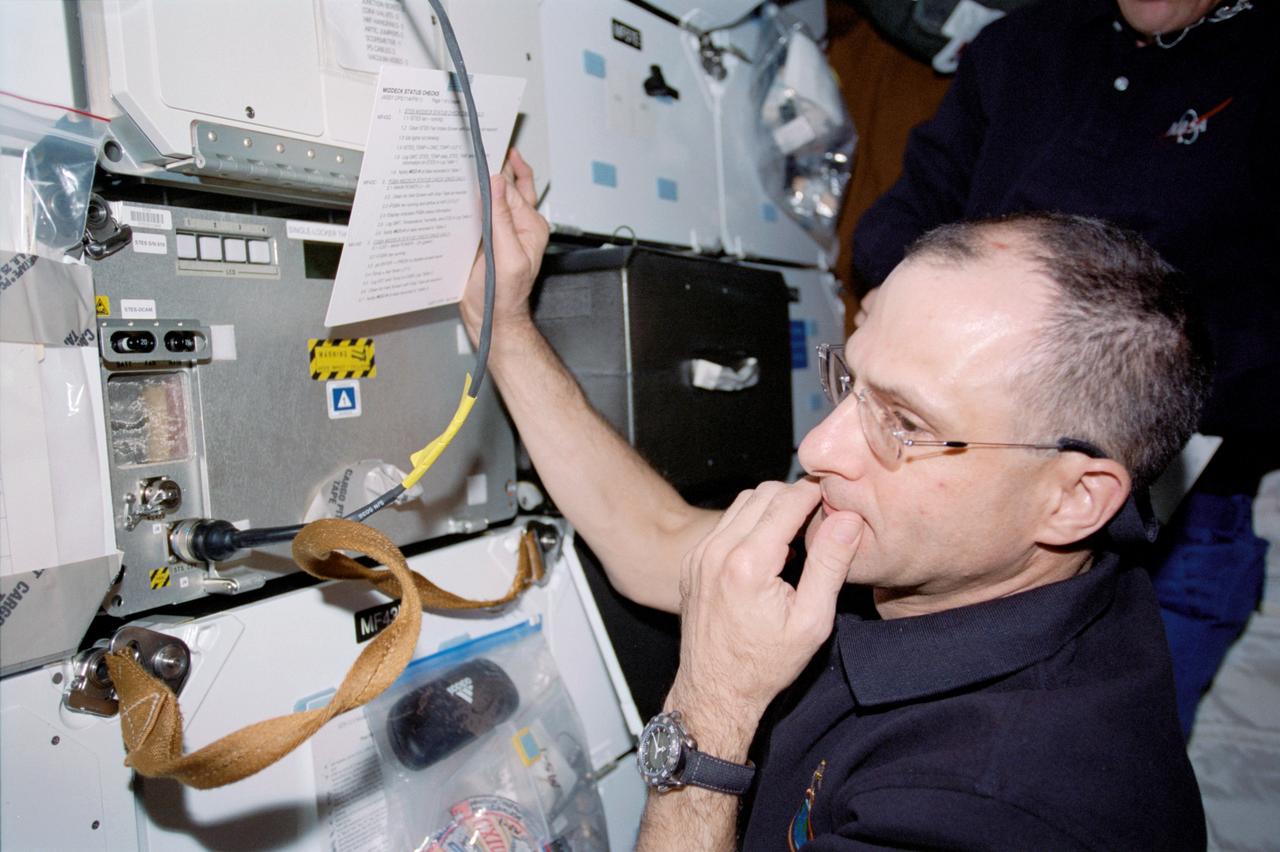
STS113-313-021 (23 November – 7 December 2002) --- Astronaut Donald R. Pettit, Expedition Six NASA ISS science officer, pictured on the middeck of the Space Shuttle Endeavour.
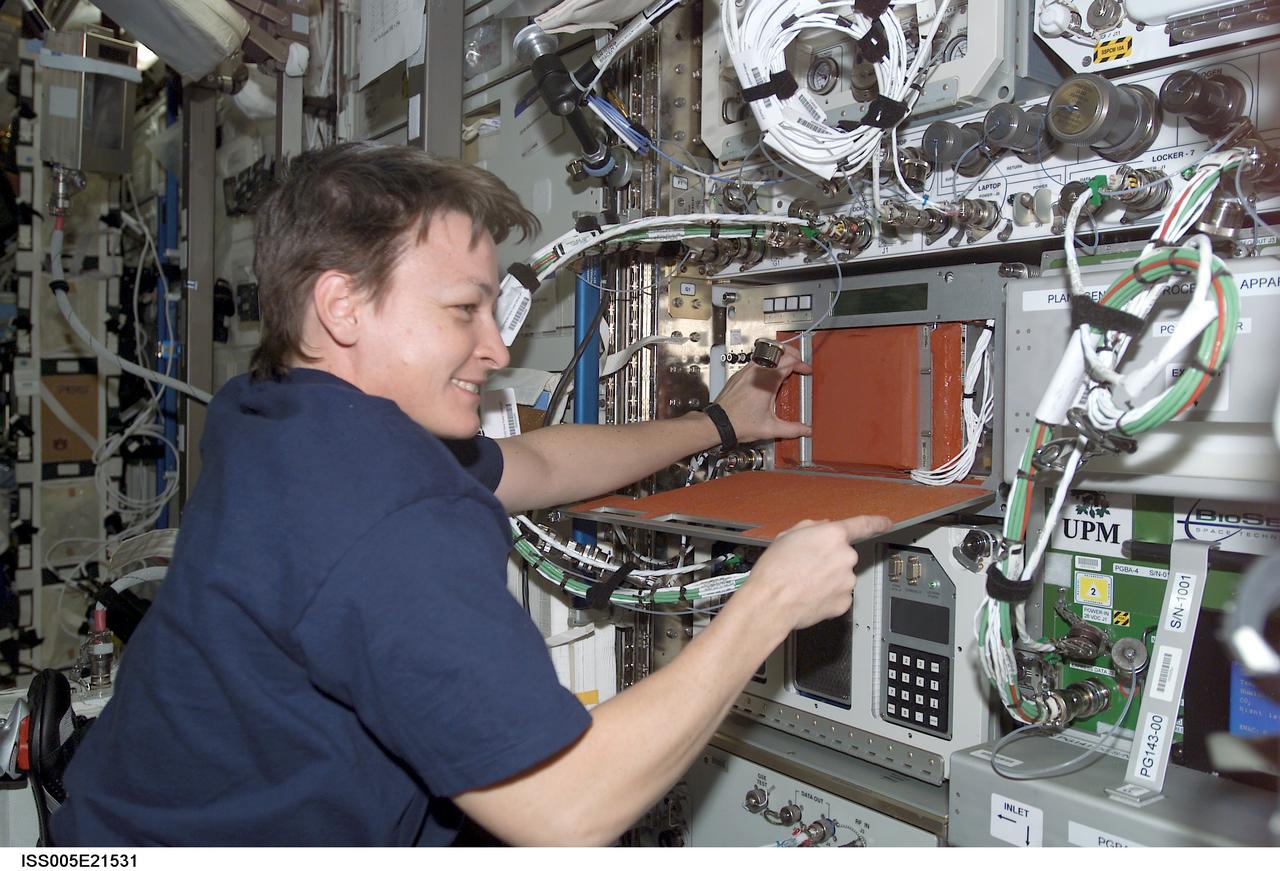
ISS005-E-21531 (24 November 2002) --- Astronaut Peggy A. Whitson, Expedition Five science officer, works with an experiment in the Destiny laboratory as her tenure on board the International Space Station (ISS) winds down.
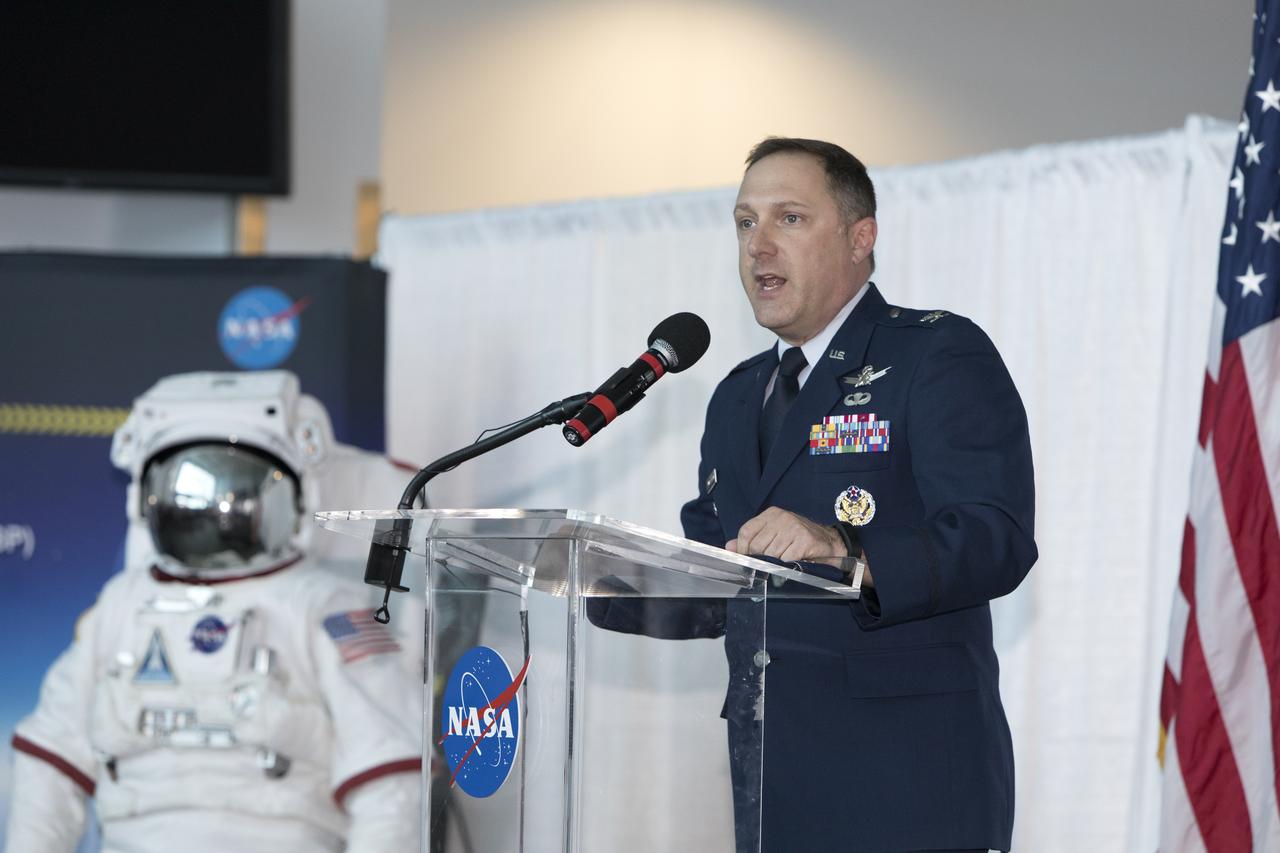
Colonel Thomas Ste. Marie, vice commander, 45th Space Wing, welcomes attendees and vendors to the NASA Business Opportunities Expo 2018, on Oct. 23, inside Cruise Terminal 6 at Port Canaveral in Florida. The 28th Business Opportunities Expo featured more than 200 businesses, large and small, and government exhibitors from throughout the Space Coast and the nation. The Business Opportunities Expo is facilitated by Kennedy's Small Business Programs Office and Prime Contractor Board, along with the U.S. Air Force 45th Space Wing and Canaveral Port Authority. Vendors from a variety of product and service areas, such as computer technology, engineering services, communication equipment and services, and construction and safety products, to name a few, were at the expo. Representatives from the 45th Space Wing, Kennedy prime contractors, NASA and many more agencies and organizations were on hand to provide information and answer questions.

During a ribbon cutting ceremony on Aug. 16, 2019, in High Bay 2 of the Vehicle Assembly Building (VAB) at NASA’s Kennedy Space Center in Florida, Col. Thomas Ste. Marie, vice commander, U.S. Air Force, 45th Space Wing, speaks to legislators and guests. The VAB is getting its first commercial tenant. Northrop Grumman signed a Reimbursable Space Act Agreement with NASA for use of the facilities. The company will assemble and test its new OmegA rocket inside the massive facility’s High Bay 2. The company also will modify mobile launcher platform-3 to serve as the launch vehicle’s assembly and launch platform. Northrop Grumman is developing the OmegA rocket, an intermediate/heavy-class launch vehicle, as part of a launch services agreement with the U.S. Air Force.
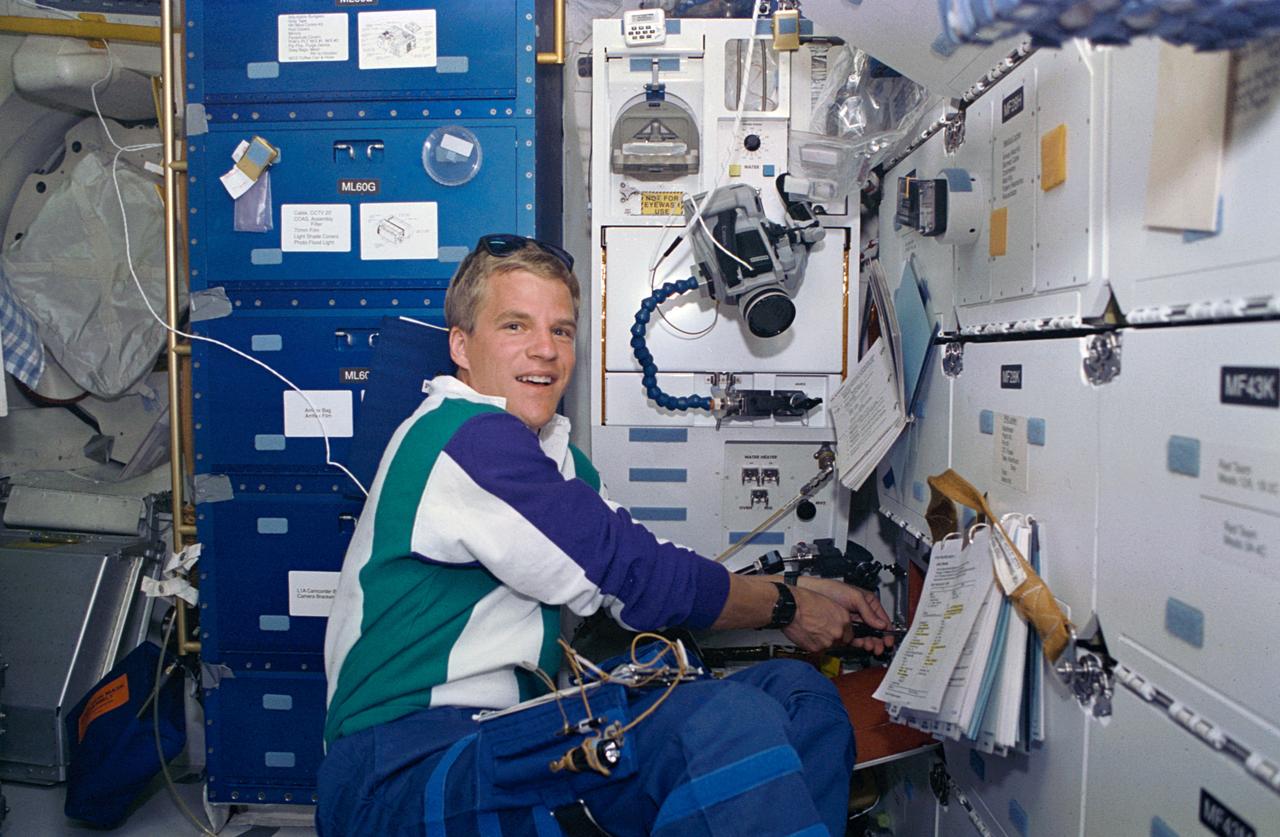
STS066-13-029 (3-14 Nov 1994) --- On the Space Shuttle Atlantis' mid-deck, astronaut Scott E. Parazynski, mission specialist, works at one of two areas onboard the Shuttle which support the Protein Crystal Growth (PCG) experiment. This particular section is called the Vapor Diffusion Apparatus (VDA), housed in a Single Locker Thermal Enclosure (STES). Together with the Crystal Observation System, housed in the Thermal Enclosure System (COS/TES) the VDA represents the continuing research into the structures of proteins and other macromolecules such as viruses. In addition to using the microgravity of space to grow high-quality protein crystals for structural analyses, the experiments are expected to help develop technologies and methods to improve the protein crystallization process on Earth as well as in space.
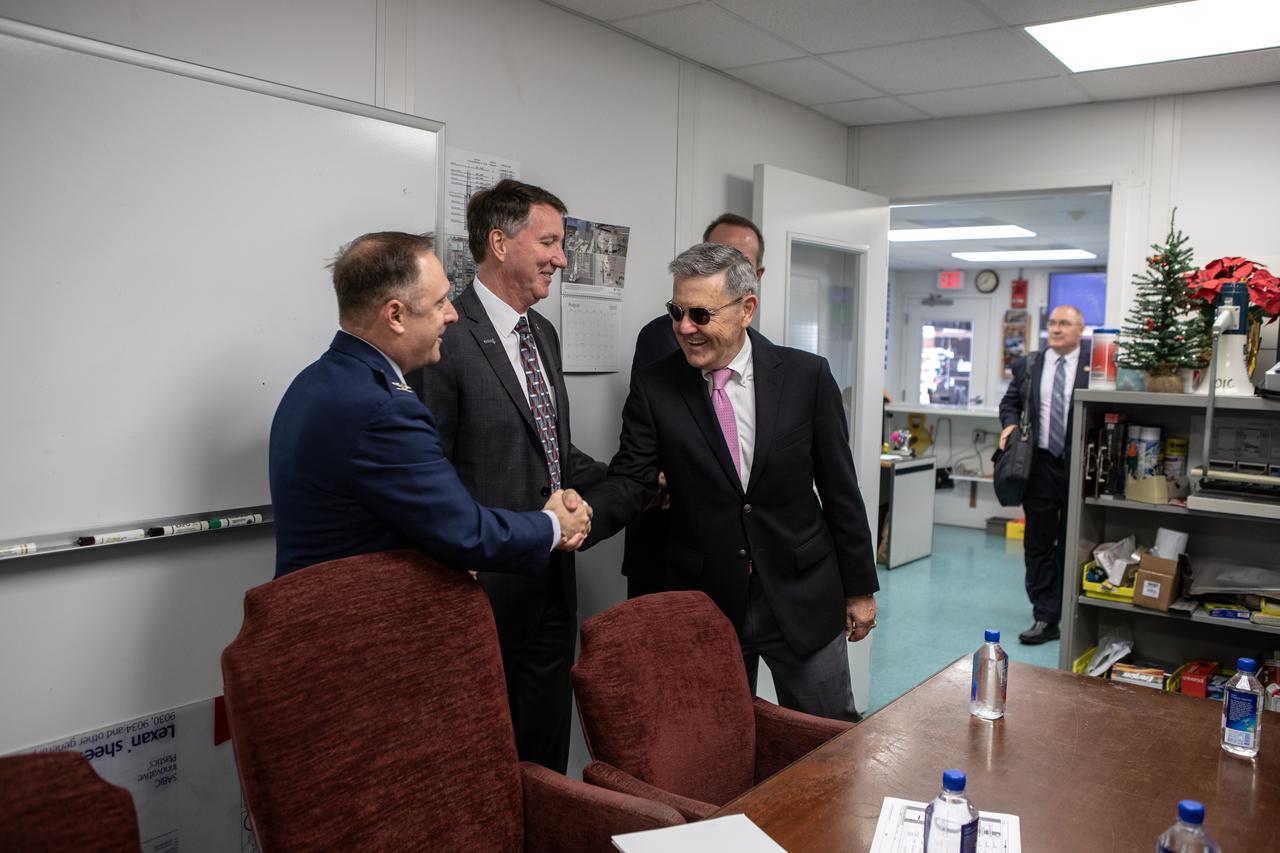
Just before a ribbon cutting ceremony on Aug. 16, 2019, in High Bay 2 of the Vehicle Assembly (VAB) at NASA’s Kennedy Space Center in Florida, Center Director Bob Cabana, at right, shakes hands with Col. Thomas Ste. Marie, vice commander, U.S. Air Force, 45th Space Wing. In the center is Kent Rominger, Northrop Grumman’s vice president and capture lead for the OmegA launch system. The VAB is getting its first commercial tenant. Northrop Grumman signed a Reimbursable Space Act Agreement with NASA for use of the facilities. The company will assemble and test its new OmegA rocket inside the massive facility’s High Bay 2. The company also will modify the space shuttle-era mobile launcher platform-3 to serve as the launch vehicle’s assembly and launch platform. Northrop Grumman is developing the OmegA rocket, an intermediate/heavy-class launch vehicle, as part of a launch services agreement with the U.S. Air Force.
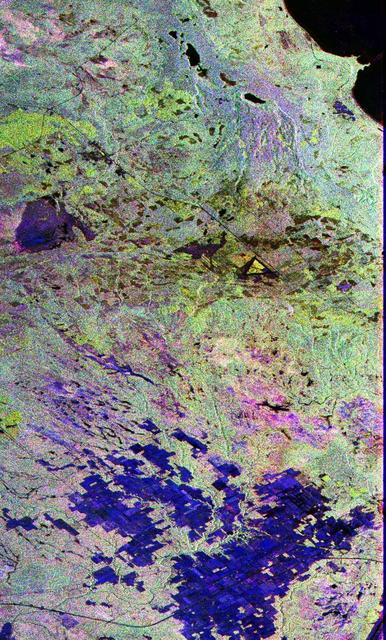
This image is a false-color composite of Raco, Michigan, centered at 46.39 degrees north latitude, 84.88 degrees west longitude. This image was acquired by the Spaceborne Imaging Radar-C and X-Band Synthetic Aperture Radar (SIR-C/X-SAR) aboard the space shuttle Endeavour on its sixth orbit and during the first full-capability test of the instrument on April 9, 1994. This image was produced using both L-band and C-band data. The area shown is approximately 20 kilometers by 50 kilometers (12 by 30 miles). Raco is located at the eastern end of Michigan's upper peninsula, west of Sault Ste. Marie and south of Whitefish Bay on Lake Superior. The site is located at the boundary between the boreal forests and the northern temperate forests, a transitional zone that is expected to be ecologically sensitive to anticipated global changes resulting from climatic warming. On any given day, there is a 60 percent chance that this area will be obscured to some extent by cloud clover which makes it difficult to image using optical sensors. http://photojournal.jpl.nasa.gov/catalog/PIA01700
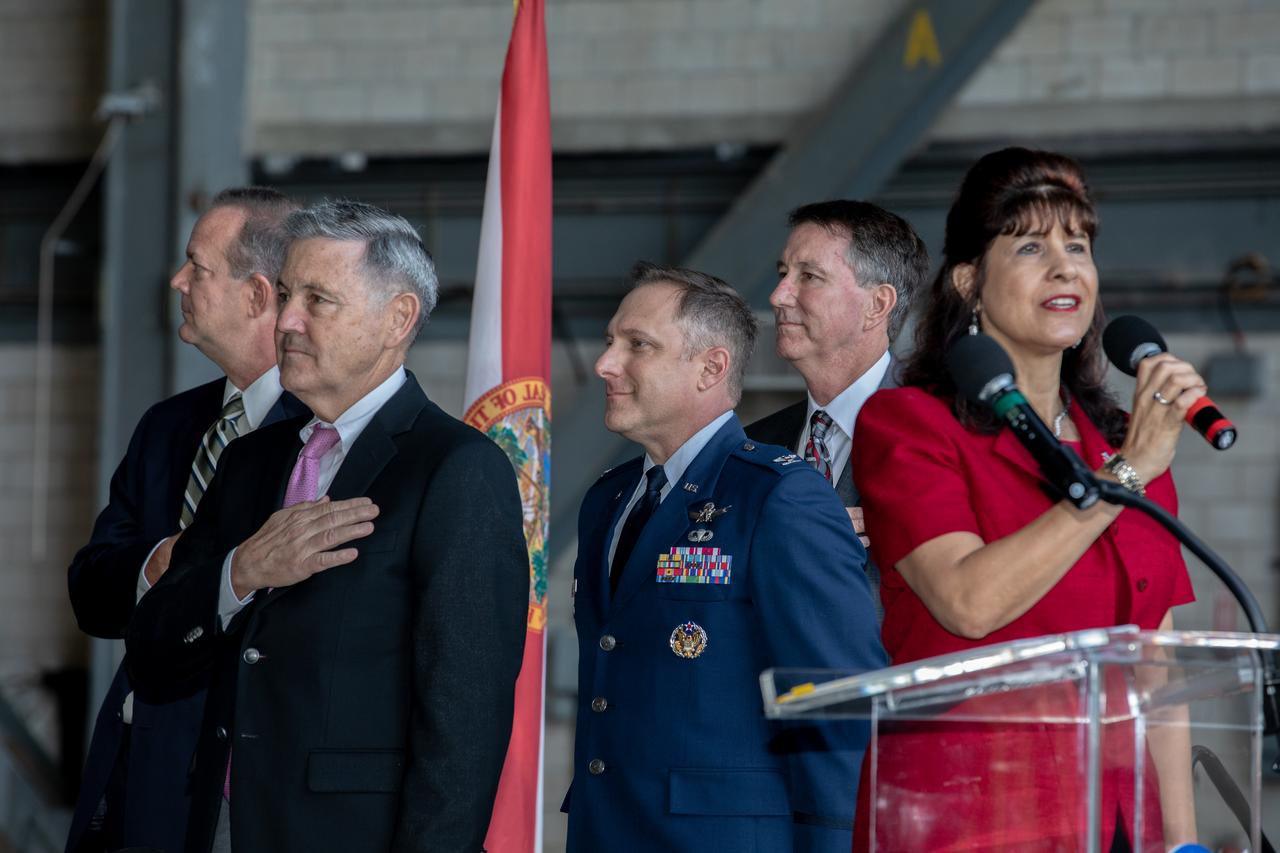
The National Anthem is sung by Suzy Cunningham, NASA Strategy and Integration manager, during a ribbon cutting ceremony on Aug. 16, 2019, in High Bay 2 of the Vehicle Assembly Building (VAB) at NASA’s Kennedy Space Center in Florida. From left are Tom Engler, director of Kennedy’s Center Planning and Development Office; Kennedy’s Center Director Bob Cabana; Col. Thomas Ste. Marie, vice commander, U.S. Air Force, 45th Space Wing; and Kent Rominger, Northrop Grumman’s vice president and capture lead for the OmegA launch system. The VAB is getting its first commercial tenant. Northrop Grumman signed a Reimbursable Space Act Agreement with NASA for use of the facilities. The company will assemble and test its new OmegA rocket inside the massive facility’s High Bay 2. The company also will modify mobile launcher platform-3 to serve as the launch vehicle’s assembly and launch platform. Northrop Grumman is developing the OmegA rocket, an intermediate/heavy-class launch vehicle, as part of a launch services agreement with the U.S. Air Force.
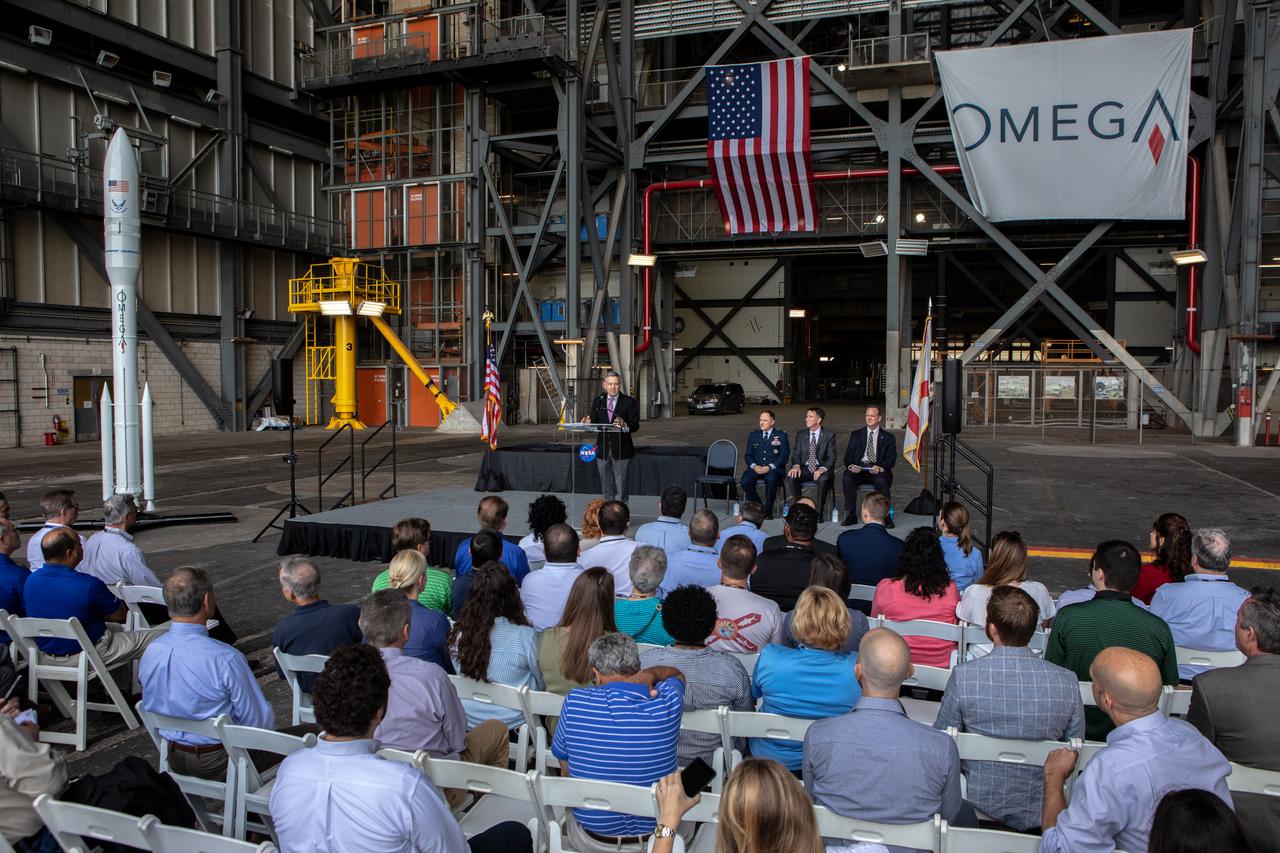
During a ribbon cutting ceremony on Aug. 16, 2019, in High Bay 2 of the Vehicle Assembly Building (VAB) at NASA’s Kennedy Space Center in Florida, Kennedy Center Director Bob Cabana speaks to legislators and guests. Seated from left, are Col. Thomas Ste. Marie, vice commander, U.S. Air Force, 45th Space Wing; Kent Rominger, Northrop Grumman’s vice president and capture lead for the OmegA launch system; and Tom Engler, director of Kennedy’s Center Planning and Development Office. The VAB is getting its first commercial tenant. Northrop Grumman signed a Reimbursable Space Act Agreement with NASA for use of the facilities. The company will assemble and test its new OmegA rocket inside the massive facility’s High Bay 2. The company also will modify mobile launcher platform-3 to serve as the launch vehicle’s assembly and launch platform. Northrop Grumman is developing the OmegA rocket, an intermediate/heavy-class launch vehicle, as part of a launch services agreement with the U.S. Air Force.

During a ribbon cutting ceremony on Aug. 16, 2019, in High Bay 2 of the Vehicle Assembly Building (VAB) at NASA’s Kennedy Space Center in Florida, Col. Thomas Ste. Marie, vice commander, U.S. Air Force, 45th Space Wing, speaks to legislators and guests. Seated behind him, from left, are Kennedy Center Director Bob Cabana; Kent Rominger, Northrop Grumman’s vice president and capture lead for the OmegA launch system; and Tom Engler, director of Kennedy’s Center Planning and Development Office. The VAB is getting its first commercial tenant. Northrop Grumman signed a Reimbursable Space Act Agreement with NASA for use of the facilities. The company will assemble and test its new OmegA rocket inside the massive facility’s High Bay 2. The company also will modify mobile launcher platform-3 to serve as the launch vehicle’s assembly and launch platform. Northrop Grumman is developing the OmegA rocket, an intermediate/heavy-class launch vehicle, as part of a launch services agreement with the U.S. Air Force.
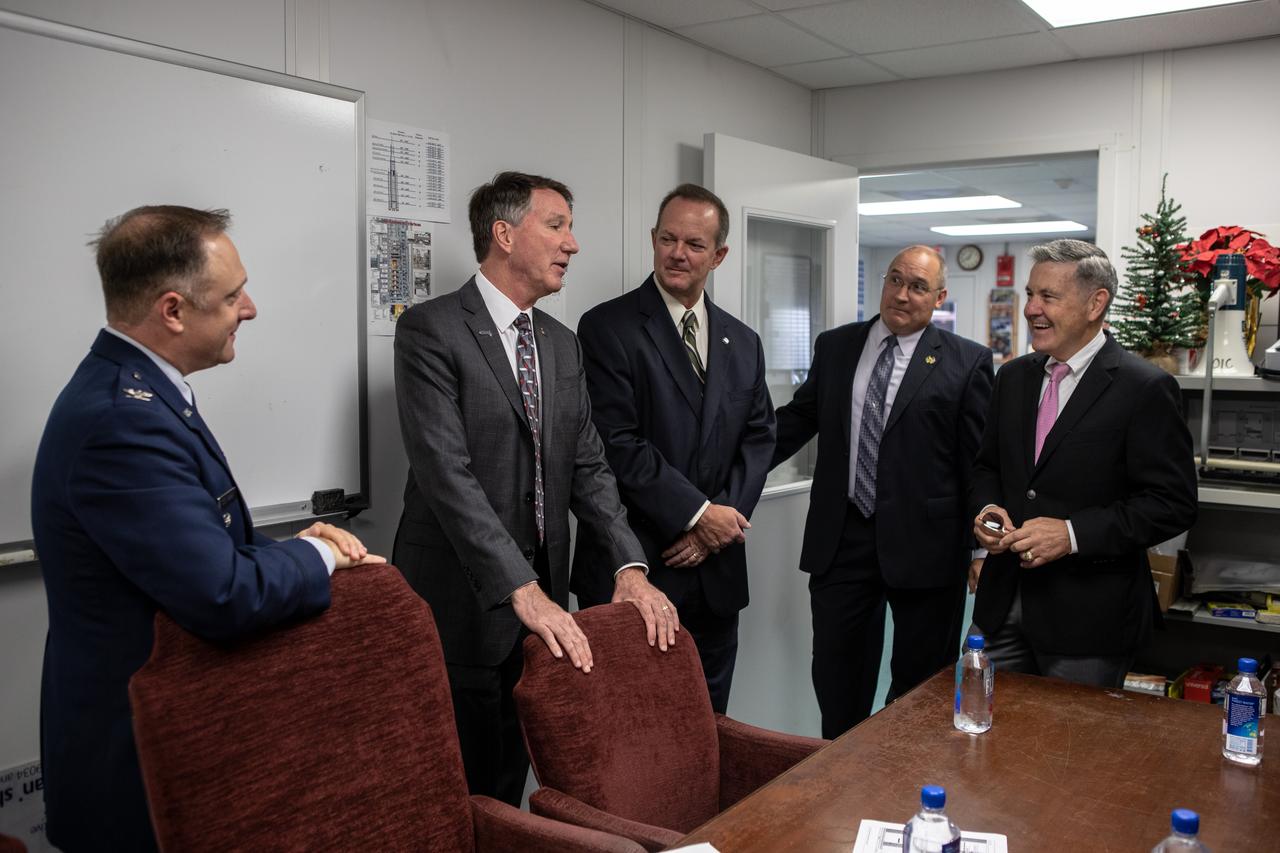
Just before a ribbon cutting ceremony on Aug. 16, 2019, in High Bay 2 of the Vehicle Assembly (VAB) at NASA’s Kennedy Space Center in Florida, Center Director Bob Cabana, at right, visits with, from left, Col. Thomas Ste. Marie, vice commander, U.S. Air Force, 45th Space Wing; Kurt Rominger, Northrop Grumman’s vice president and capture lead for the OmegA launch system; Tom Engler, director of Kennedy’s Center Planning and Development Office; and Greg Harland, NASA communications. The VAB is getting its first commercial tenant. Northrop Grumman signed a Reimbursable Space Act Agreement with NASA for use of the facilities. The company will assemble and test its new OmegA rocket inside the massive facility’s High Bay 2. The company also will modify the space shuttle-era mobile launcher platform-3 to serve as the launch vehicle’s assembly and launch platform. Northrop Grumman is developing the OmegA rocket, an intermediate/heavy-class launch vehicle, as part of a launch services agreement with the U.S. Air Force.
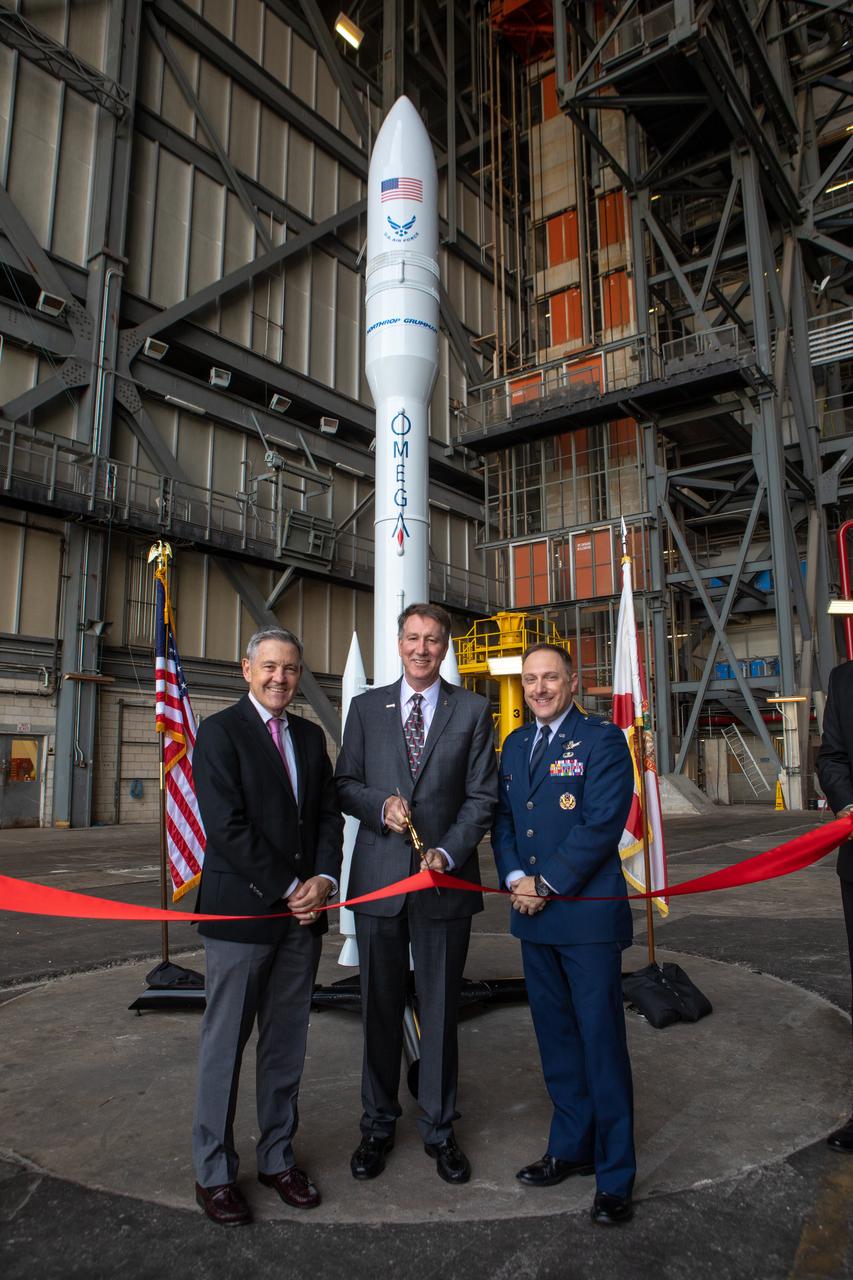
A ribbon cutting ceremony took place on Aug. 16, 2019, in High Bay 2 of the Vehicle Assembly Building (VAB) at NASA’s Kennedy Space Center in Florida. From left are Kennedy Center Director Bob Cabana; Kent Rominger, Northrop Grumman’s vice president and capture lead for the OmegA launch system; and Col. Thomas Ste. Marie, vice commander, U.S. Air Force, 45th Space Wing. Behind them is a scale model of the OmegA launch system. The VAB is getting its first commercial tenant. Northrop Grumman signed a Reimbursable Space Act Agreement with NASA for use of the facilities. The company will assemble and test its new OmegA rocket inside the massive facility’s High Bay 2. The company also will modify mobile launcher platform-3 to serve as the launch vehicle’s assembly and launch platform. Northrop Grumman is developing the OmegA rocket, an intermediate/heavy-class launch vehicle, as part of a launch services agreement with the U.S. Air Force.
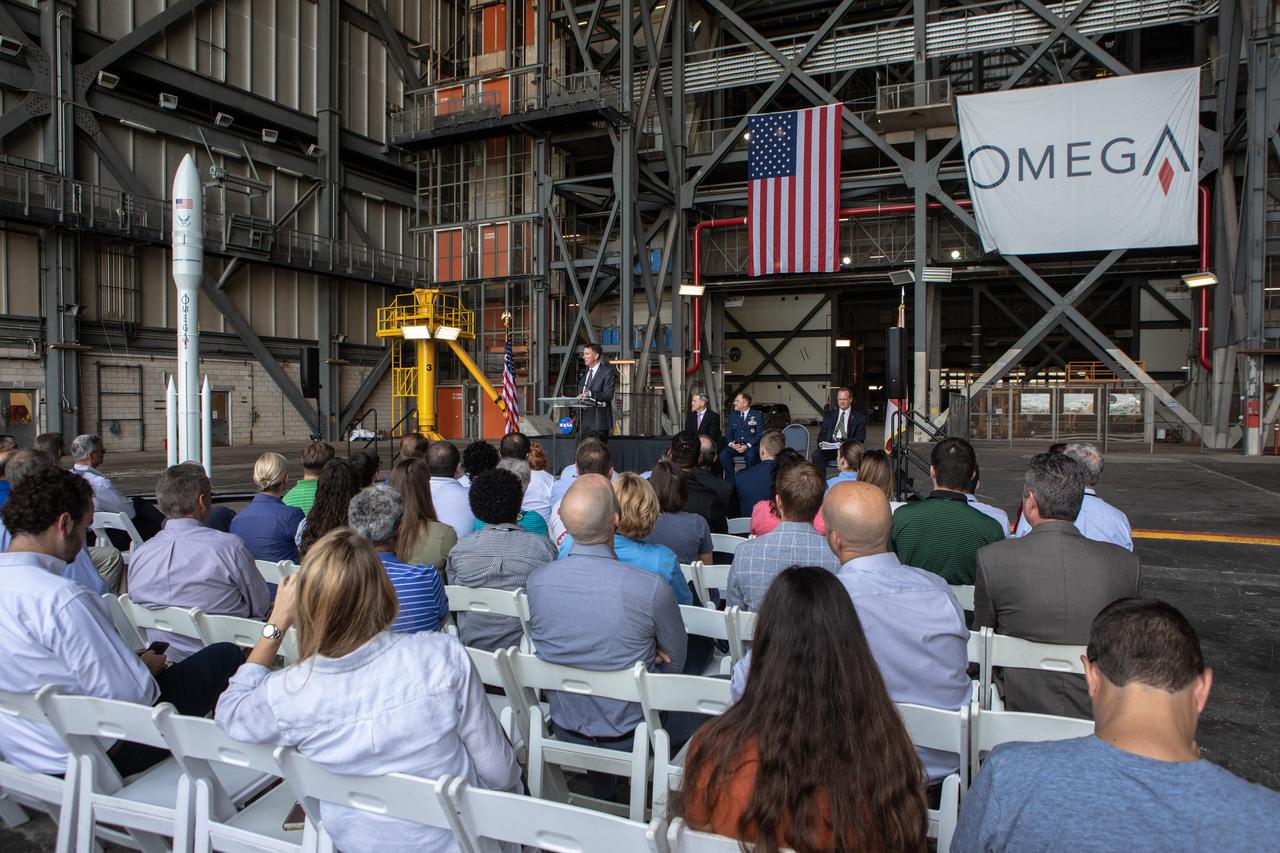
During a ribbon cutting ceremony on Aug. 16, 2019, in High Bay 2 of the Vehicle Assembly Building (VAB) at NASA’s Kennedy Space Center in Florida, Kent Rominger, Northrop Grumman’s vice president and capture lead for the OmegA launch system, speaks to legislators and guests. Seated behind him, from left, are Kennedy Center Director Bob Cabana; Col. Thomas Ste. Marie, vice commander, U.S. Air Force, 45th Space Wing; and Tom Engler, director of Kennedy’s Center Planning and Development Office. The VAB is getting its first commercial tenant. Northrop Grumman signed a Reimbursable Space Act Agreement with NASA for use of the facilities. The company will assemble and test its new OmegA rocket inside the massive facility’s High Bay 2. The company also will modify mobile launcher platform-3 to serve as the launch vehicle’s assembly and launch platform. Northrop Grumman is developing the OmegA rocket, an intermediate/heavy-class launch vehicle, as part of a launch services agreement with the U.S. Air Force.
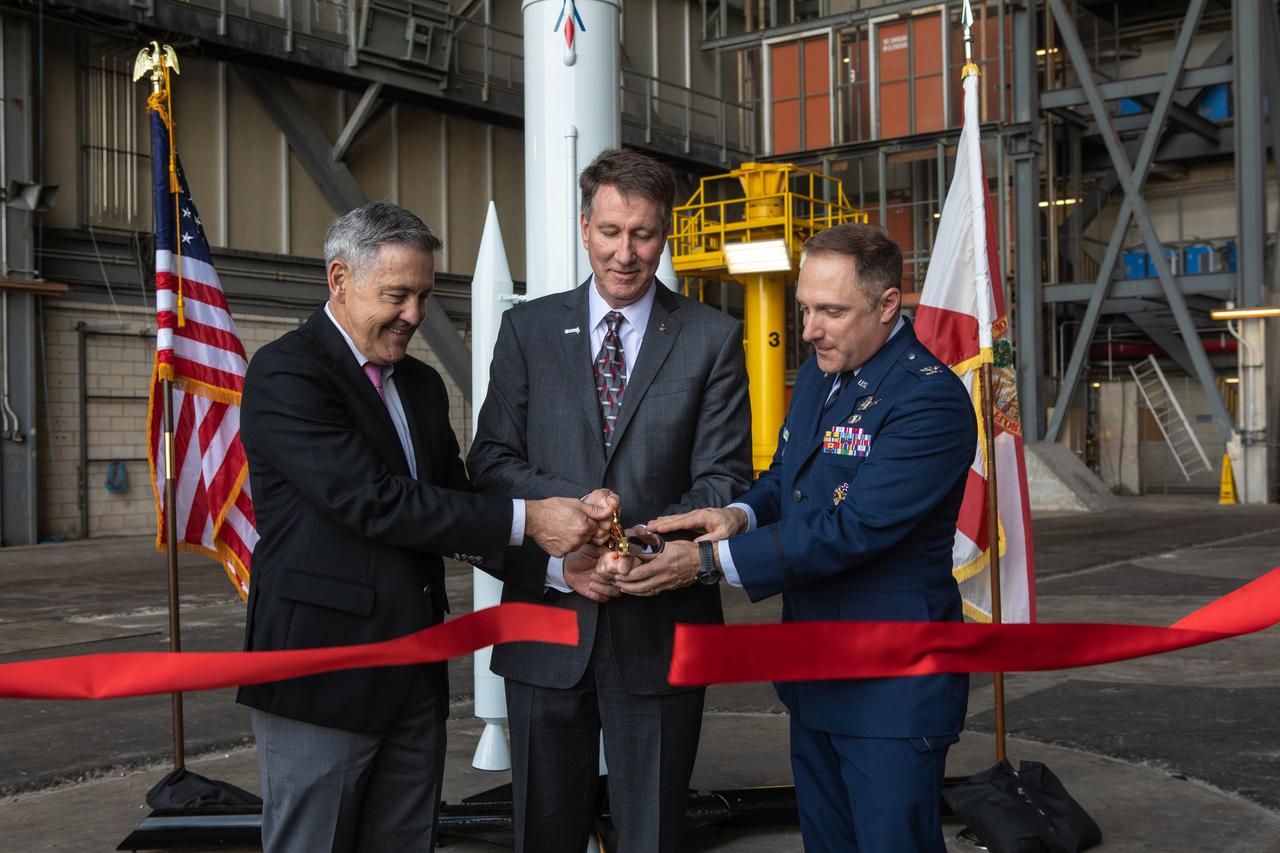
A ribbon cutting ceremony took place on Aug. 16, 2019, in High Bay 2 of the Vehicle Assembly Building (VAB) at NASA’s Kennedy Space Center in Florida. From left are Kennedy Center Director Bob Cabana; Kent Rominger, Northrop Grumman’s vice president and capture lead for the OmegA launch system; and Col. Thomas Ste. Marie, vice commander, U.S. Air Force, 45th Space Wing. Behind them is a scale model of the OmegA launch system. The VAB is getting its first commercial tenant. Northrop Grumman signed a Reimbursable Space Act Agreement with NASA for use of the facilities. The company will assemble and test its new OmegA rocket inside the massive facility’s High Bay 2. The company also will modify mobile launcher platform-3 to serve as the launch vehicle’s assembly and launch platform. Northrop Grumman is developing the OmegA rocket, an intermediate/heavy-class launch vehicle, as part of a launch services agreement with the U.S. Air Force.

A ribbon cutting ceremony took place on Aug. 16, 2019, in High Bay 2 of the Vehicle Assembly Building (VAB) at NASA’s Kennedy Space Center in Florida. From left are Kennedy Center Director Bob Cabana; Kent Rominger, Northrop Grumman’s vice president and capture lead for the OmegA launch system; and Col. Thomas Ste. Marie, vice commander, U.S. Air Force, 45th Space Wing. Behind them is a scale model of the OmegA launch system. The VAB is getting its first commercial tenant. Northrop Grumman signed a Reimbursable Space Act Agreement with NASA for use of the facilities. The company will assemble and test its new OmegA rocket inside the massive facility’s High Bay 2. The company also will modify mobile launcher platform-3 to serve as the launch vehicle’s assembly and launch platform. Northrop Grumman is developing the OmegA rocket, an intermediate/heavy-class launch vehicle, as part of a launch services agreement with the U.S. Air Force.
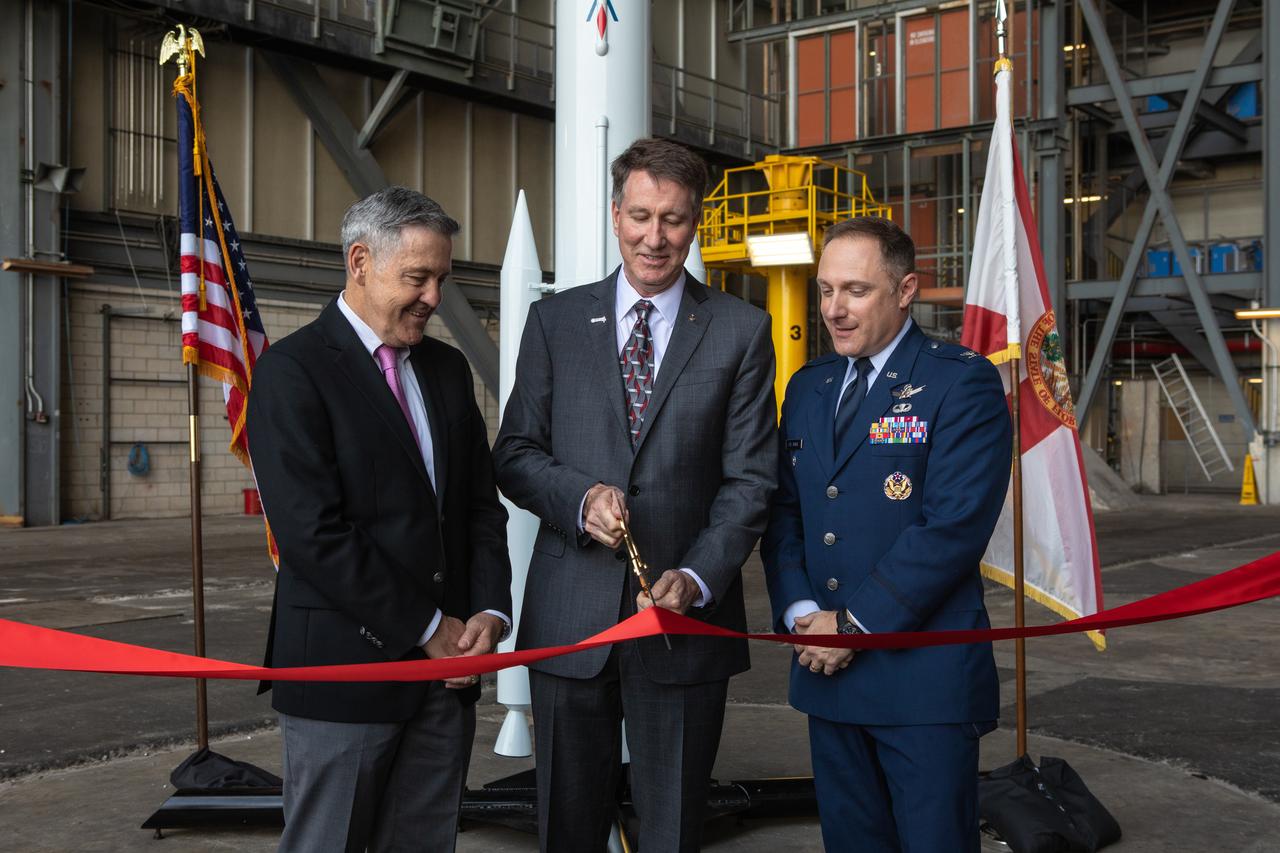
A ribbon cutting ceremony took place on Aug. 16, 2019, in High Bay 2 of the Vehicle Assembly Building (VAB) at NASA’s Kennedy Space Center in Florida. From left are Kennedy Center Director Bob Cabana; Kent Rominger, Northrop Grumman’s vice president and capture lead for the OmegA launch system; and Col. Thomas Ste. Marie, vice commander, U.S. Air Force, 45th Space Wing. Behind them is a scale model of the OmegA launch system. The VAB is getting its first commercial tenant. Northrop Grumman signed a Reimbursable Space Act Agreement with NASA for use of the facilities. The company will assemble and test its new OmegA rocket inside the massive facility’s High Bay 2. The company also will modify mobile launcher platform-3 to serve as the launch vehicle’s assembly and launch platform. Northrop Grumman is developing the OmegA rocket, an intermediate/heavy-class launch vehicle, as part of a launch services agreement with the U.S. Air Force.

A ribbon cutting ceremony took place on Aug. 16, 2019, in High Bay 2 of the Vehicle Assembly Building (VAB) at NASA’s Kennedy Space Center in Florida. Attendees included legislators and invited guests. In the center is Florida State Senator Thad Altman. In the front row, far left, is Kennedy Center Director Bob Cabana. In the front row, far right, is Col. Thomas Ste. Marie, vice commander, U.S. Air Force, 45th Space Wing. In the back row, far right, is Kent Rominger, Northrop Grumman’s vice president and capture lead for the OmegA launch system. The VAB is getting its first commercial tenant. Northrop Grumman signed a Reimbursable Space Act Agreement with NASA for use of the facilities. The company will assemble and test its new OmegA rocket inside the massive facility’s High Bay 2. The company also will modify mobile launcher platform-3 to serve as the launch vehicle’s assembly and launch platform. Northrop Grumman is developing the OmegA rocket, an intermediate/heavy-class launch vehicle, as part of a launch services agreement with the U.S. Air Force.
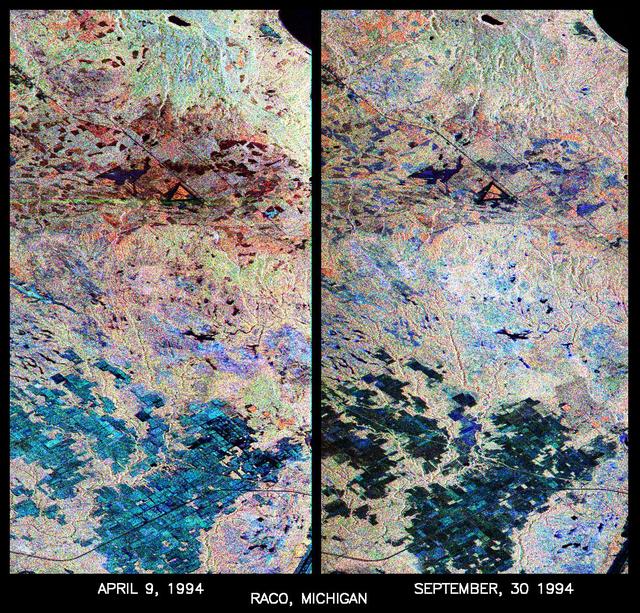
These are two false-color composites of Raco, Michigan, located at the eastern end of Michigan upper peninsula, west of Sault Ste. Marie and south of Whitefish Bay on Lake Superior. The two images (centered at 46.39 degrees north latitude, 84.88 degrees west longitude) show significant seasonal changes in the mid-latitude region of mixed deciduous and coniferous forests. The images were acquired by the Spaceborne Imaging Radar-C and X-band Synthetic Aperture Radar (SIR-C/X-SAR) aboard the shuttle Endeavour on the sixth orbit of each mission. In these images, red is L-band (23 cm) with horizontal/vertical polarization; green is C-band (6 cm) with horizontal/vertical polarization; blue is C-band with horizontal/horizontal polarization. The region shown is largely forested and includes a large portion of Hiawatha National Forest, as well as an agricultural region near the bottom of each image. In early April, the area was snow-covered with up to 50 centimeters (19.5 inches) of snow in forest clearings and agricultural fields. Buds had not yet broken on deciduous trees, but the trees were not frozen and sap was generally flowing. Lake Superior, in the upper right, and the small inland lakes were frozen and snow-covered on April 9, 1994. By the end of September, deciduous trees were just beginning to change color after a relatively wet period. Leaf loss was estimated at about 30 percent, depending on the species, and the soil was moist to wet after a heavy rainfall on September 28, 1994. Most agricultural fields were covered with grasses of up to 60 centimeters (23 inches) in height. In the two images the colors are related to the types of land cover (i.e. vegetation type) and the brightness is related to the amount of plant material and its relative moisture content. Significant seasonal changes between early spring and early fall are illustrated by this pair of images. For the agricultural region near the bottom of the images, the change from snow-cover to moist soil with short vegetation cover is shown by the color change from blue to green and blue. The green color corresponds to significant increases in vegetation cover and field-to-field differences in blue are the result of differences in surface roughness and soil moisture. In the forested areas, many of the conifer forests appear similar in both images (red pine forests appear red in both images). However, there is more blue and green in the September 30, 1994 image as a consequence of greater foliage and more moisture in the forest crowns. Lowland conifer forests (spruce and northern white cedars) appear as bright green in both images. Deciduous forests produce very strong radar returns at these frequencies and polarization combinations, resulting in a nearly white appearance on the images (the specific color mix is related to the local species mix). In the September 30, 1994 image, the areas of deciduous forest appear darker than in the April image because of the weaker radar signal from the foliage in the crown layer. The clear-cut areas (shown in April by the irregularly shaped dark areas in the center) change dramatically in appearance due to loss of snow cover and increases in soil moisture and vegetation cover by the end of September. http://photojournal.jpl.nasa.gov/catalog/PIA01730
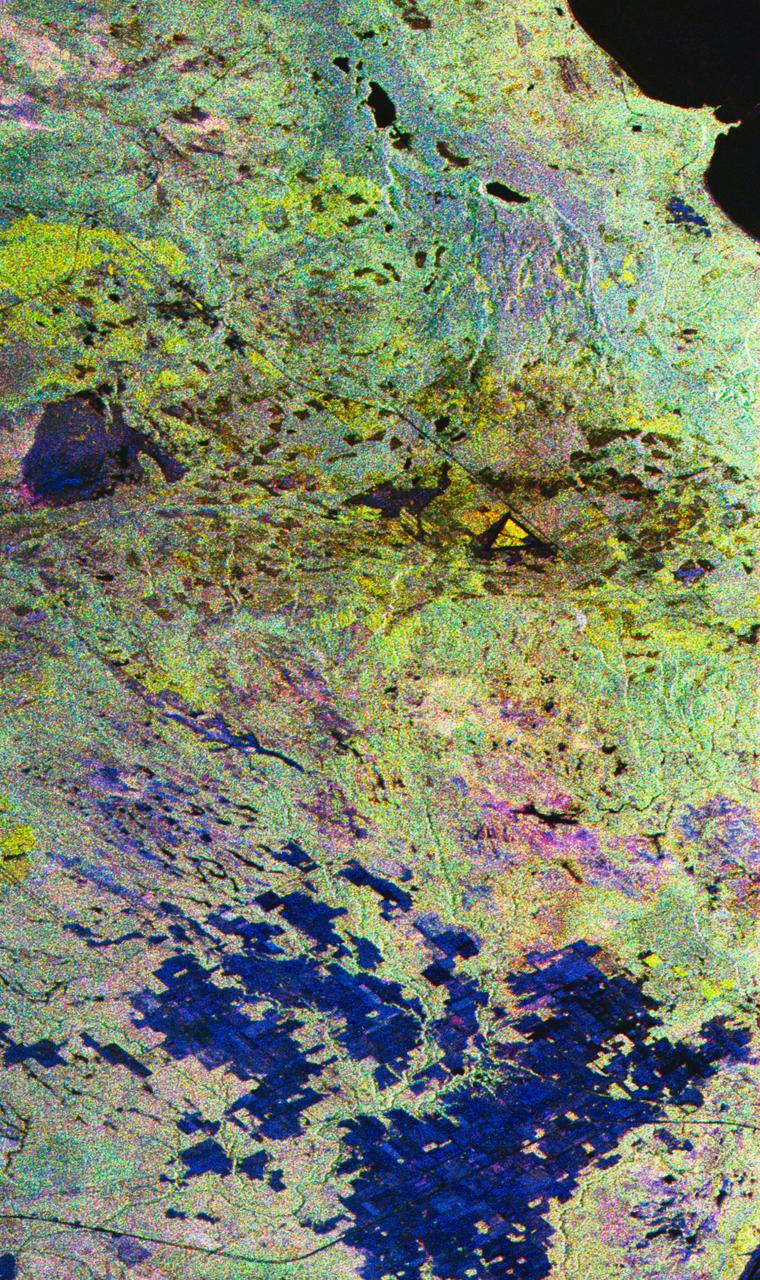
STS059-S-027 (10 April 1994) --- This image is a false-color composite of Raco, Michigan, centered at 46.39 degrees north latitude, 84.88 degrees east longitude. This image was acquired by the Spaceborne Imaging Radar-C and X-Band Synthetic Aperture Radar (SIR-C/X-SAR) aboard the Space Shuttle Endeavour on its 6th orbit and during the first full-capacity test of the instrument. This image was produced using both L-Band and C-Band data. The area shown is approximately 20 kilometers by 50 kilometers. Raco is located at the eastern end of Michigan's upper peninsula, west of Sault Ste. Marie and south of Whitefish Bay on Lake Superior. The site is located at the boundary between the boreal forests and the northern temperate forests, a transitional zone that is expected to be ecologically sensitive to anticipated global changes resulting from climatic warming. On any given day, there is a 60 percent chance that this area will be obscured to some extent by cloud cover which makes it difficult to image using optical sensors. In this color representation (Red=LHH, Green=LHV, Blue=CHH), darker areas in the image are smooth surfaces such as frozen lakes and other non-forested areas. The colors are related to the types of trees and the brightness is related to the amount of plant material covering the surface, called forest biomass. Accurate information about land-cover is important to area resource managers and for use in regional- to global-scale scientific models used to understand global change. SIR-C/X-SAR radars illuminate Earth with microwaves allowing detailed observations at any time, regardless of weather or sunlight conditions. SIR-C/X-SAR uses three microwave wavelengths: L-Band (24 cm), C-Band (6 cm), and X-Band (3 cm). The multi-frequency data will be used by the international scientific community to better understand the global environment and how it is changing. The SIR-C/X-SAR data, complemented by aircraft and ground studies, will give scientists clearer insights into those environmental changes which are caused by nature and those changes which are induced by human activity. SIR-C was developed by NASA's Jet Propulsion Laboratory (JPL). X-SAR was developed by the Dornire and Alenia Spazio Companies for the German Space Agency, Deutsche Agentur fuer Raumfahrtangelegenheiten (DARA), and the Italian Space Agency, Agenzia Spaziale Italiana (ASI). JPL Photo ID: P-43882
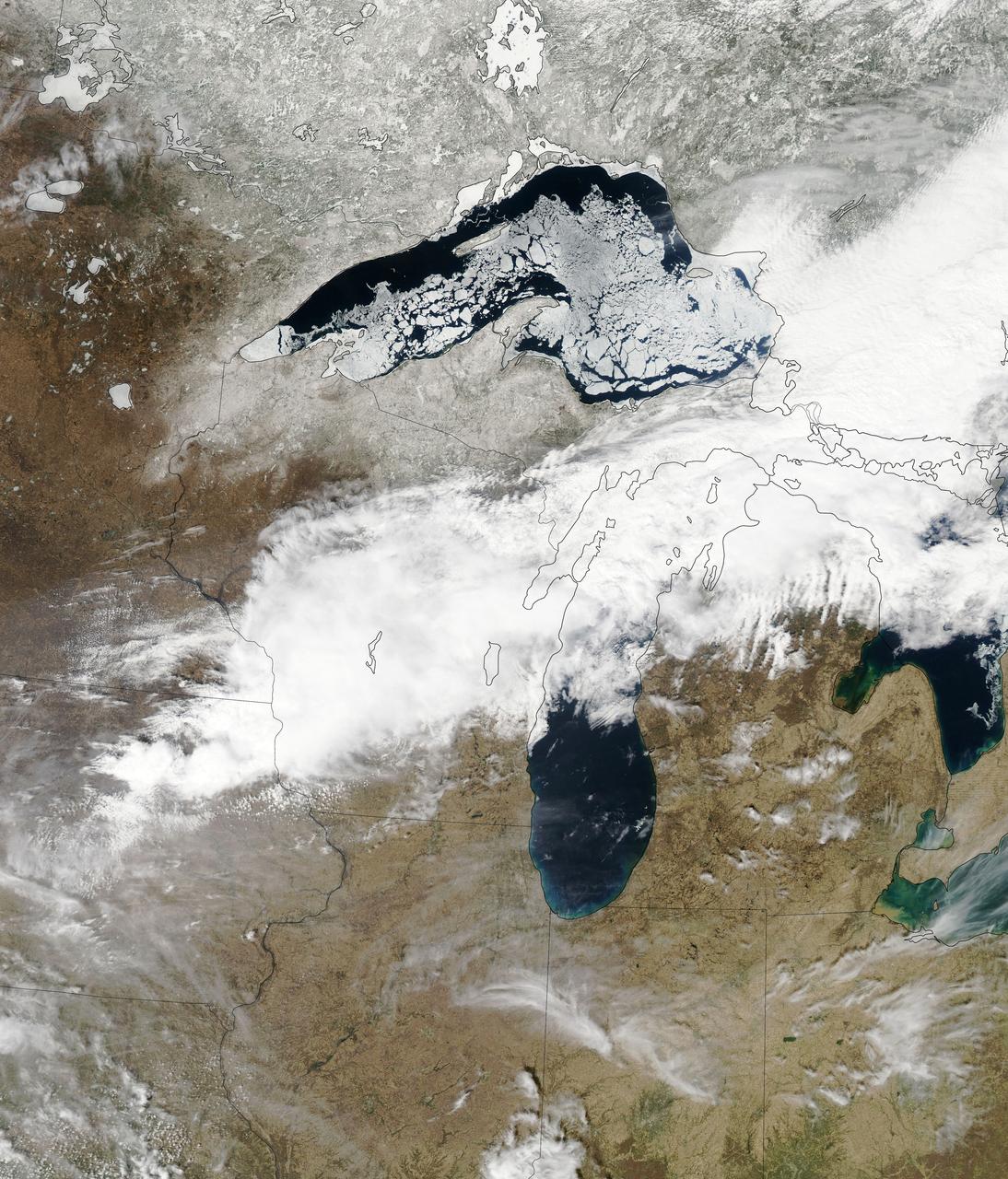
Though North America is a full month into astronomical spring, the Great Lakes have been slow to give up on winter. As of April 22, 2014, the Great Lakes were 33.9 percent ice covered. The lake they call Superior dominated the pack. In the early afternoon on April 20, 2014, the Moderate Resolution Imaging Spectroradiometer (MODIS) on NASA’s Aqua satellite captured this natural-color image of Lake Superior, which straddles the United States–Canada border. At the time Aqua passed over, the lake was 63.5 percent ice covered, according to the NOAA Great Lakes Environmental Research Lab (GLERL). Averaged across Lake Superior, ice was 22.6 centimeters (8.9 inches) thick; it was as much as twice that thickness in some locations. GLERL researcher George Leshkevich affirmed that ice cover this spring is significantly above normal. For comparison, Lake Superior had 3.6 percent ice cover on April 20, 2013; in 2012, ice was completely gone by April 12. In the last winter that ice cover grew so thick on Lake Superior (2009), it reached 93.7 percent on March 2 but was down to 6.7 percent by April 21. Average water temperatures on all of the Great Lakes have been rising over the past 30 to 40 years and ice cover has generally been shrinking. (Lake Superior ice was down about 79 percent since the 1970s.) But chilled by persistent polar air masses throughout the 2013-14 winter, ice cover reached 88.4 percent on February 13 and 92.2 percent on March 6, 2014, the second highest level in four decades of record-keeping. Air temperatures in the Great Lakes region were well below normal for March, and the cool pattern is being reinforced along the coasts because the water is absorbing less sunlight and warming less than in typical spring conditions. The graph below, based on data from Environment Canada, shows the 2014 conditions for all of the Great Lakes in mid-April compared to the past 33 years. Lake Superior ice cover got as high as 95.3 percent on March 19. By April 22, it was reported at 59.9 percent; Lake Huron was nearly 30.4 percent. News outlets noted that as many as 70 ships have been backed up in Lakes Michigan, Huron, and Erie, waiting for passage into ports on Lake Superior. The U.S. Coast Guard has been grouping ships together into small convoys after they pass through locks at Sault Ste. Marie, in order to maximize ice-breaking efficiency and to protect ships from damage. Superior is the world’s largest freshwater lake by area (82,100 square kilometers or 31,700 square miles) and the third largest by volume. The waters average 147 meters (483 feet) in depth, and the basin is believed to hold about 10 percent of the world’s liquid fresh water. NASA image courtesy Jeff Schmaltz LANCE/EOSDIS MODIS Rapid Response Team, GSFC. Caption by Mike Carlowicz. Read more: <a href="http://earthobservatory.nasa.gov/IOTD/view.php?id=83541&eocn=home&eoci=iotd_title" rel="nofollow">earthobservatory.nasa.gov/IOTD/view.php?id=83541&eocn...</a> Credit: <b><a href="http://www.earthobservatory.nasa.gov/" rel="nofollow"> NASA Earth Observatory</a></b> <b><a href="http://www.nasa.gov/audience/formedia/features/MP_Photo_Guidelines.html" rel="nofollow">NASA image use policy.</a></b> <b><a href="http://www.nasa.gov/centers/goddard/home/index.html" rel="nofollow">NASA Goddard Space Flight Center</a></b> enables NASA’s mission through four scientific endeavors: Earth Science, Heliophysics, Solar System Exploration, and Astrophysics. Goddard plays a leading role in NASA’s accomplishments by contributing compelling scientific knowledge to advance the Agency’s mission. <b>Follow us on <a href="http://twitter.com/NASAGoddardPix" rel="nofollow">Twitter</a></b> <b>Like us on <a href="http://www.facebook.com/pages/Greenbelt-MD/NASA-Goddard/395013845897?ref=tsd" rel="nofollow">Facebook</a></b> <b>Find us on <a href="http://instagram.com/nasagoddard?vm=grid" rel="nofollow">Instagram</a></b>