
IFMP Steering Committee Meeting, Boyd Room N-200; Briefing by Avue Co. creators of the Position Description Management. (lead by Greg Joselyn)

IFMP Steering Committee Meeting, Boyd Room N-200; Briefing by Avue Co. creators of the Position Description Management. (lead by Greg Joselyn)

An engineer at NASA's Jet Propulsion Laboratory is shown here with the fast steering mirror, a component of the Coronagraph Instrument on NASA's Nancy Grace Roman Space Telescope. The mirror can make small movements that correct for slight wobbling of the observatory. The incoming image needs to be perfectly sharp in order for the instrument to suppress light from a star while allowing the light from planets orbiting it to pass through. Although the technologies differ, it's analogous to image stabilization in digital cameras, in which the camera lens moves to counteract the shake of your hands and keep the image sharp. https://photojournal.jpl.nasa.gov/catalog/PIA25437
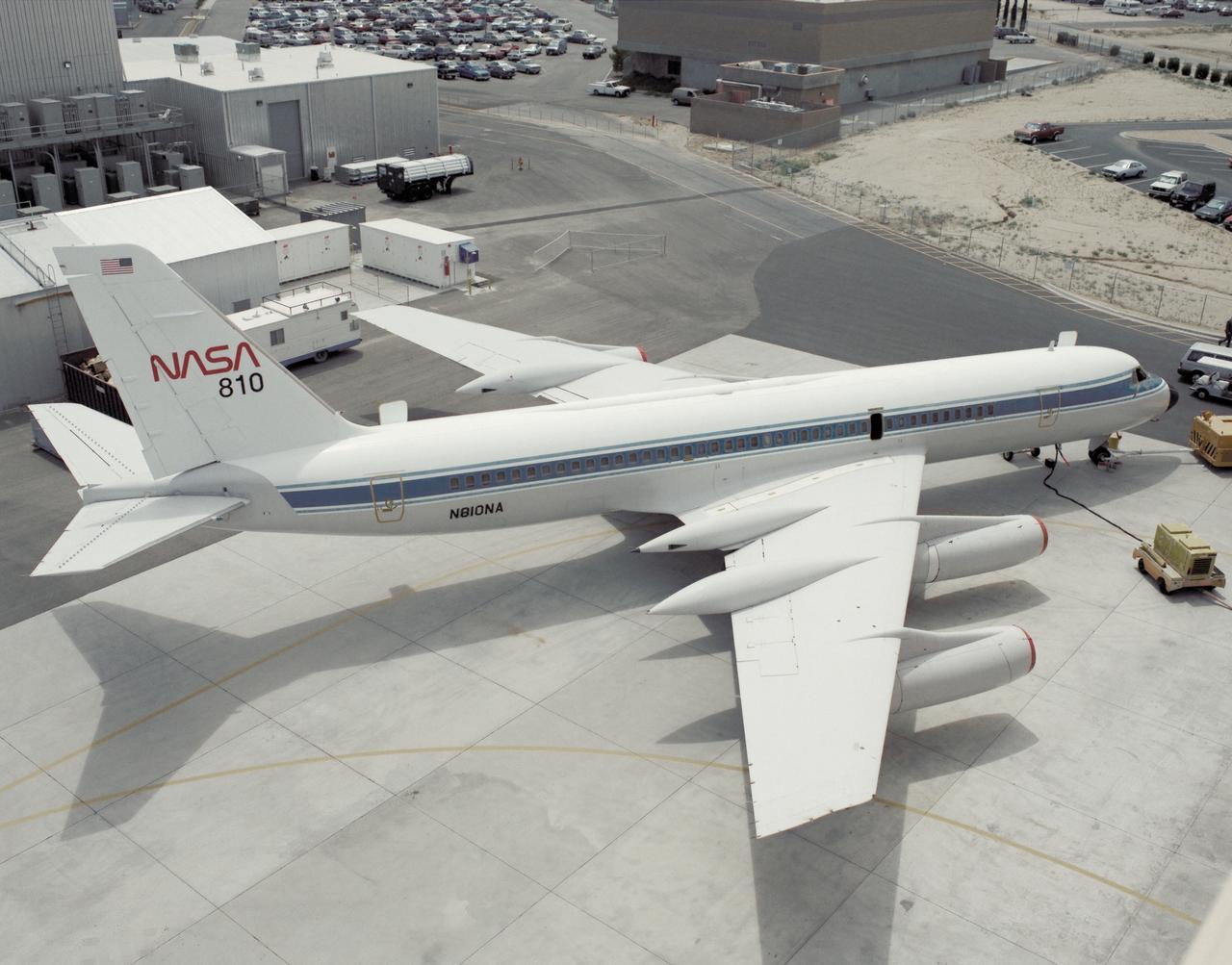
A NASA CV-990, modified as a Landing Systems Research Aircraft (LSRA), is serviced on the ramp at NASA's Dryden Flight Research Center, Edwards, California, before a test of the space shuttle landing gear system. The space shuttle landing gear test unit, operated by a high-pressure hydraulic system, allowed engineers to assess and document the performance of space shuttle main and nose landing gear systems, tires and wheel assemblies, plus braking and nose wheel steering performance. The series of 155 test missions for the space shuttle program provided extensive data about the life and endurance of the shuttle tire systems and helped raise the shuttle crosswind landing limits at Kennedy.
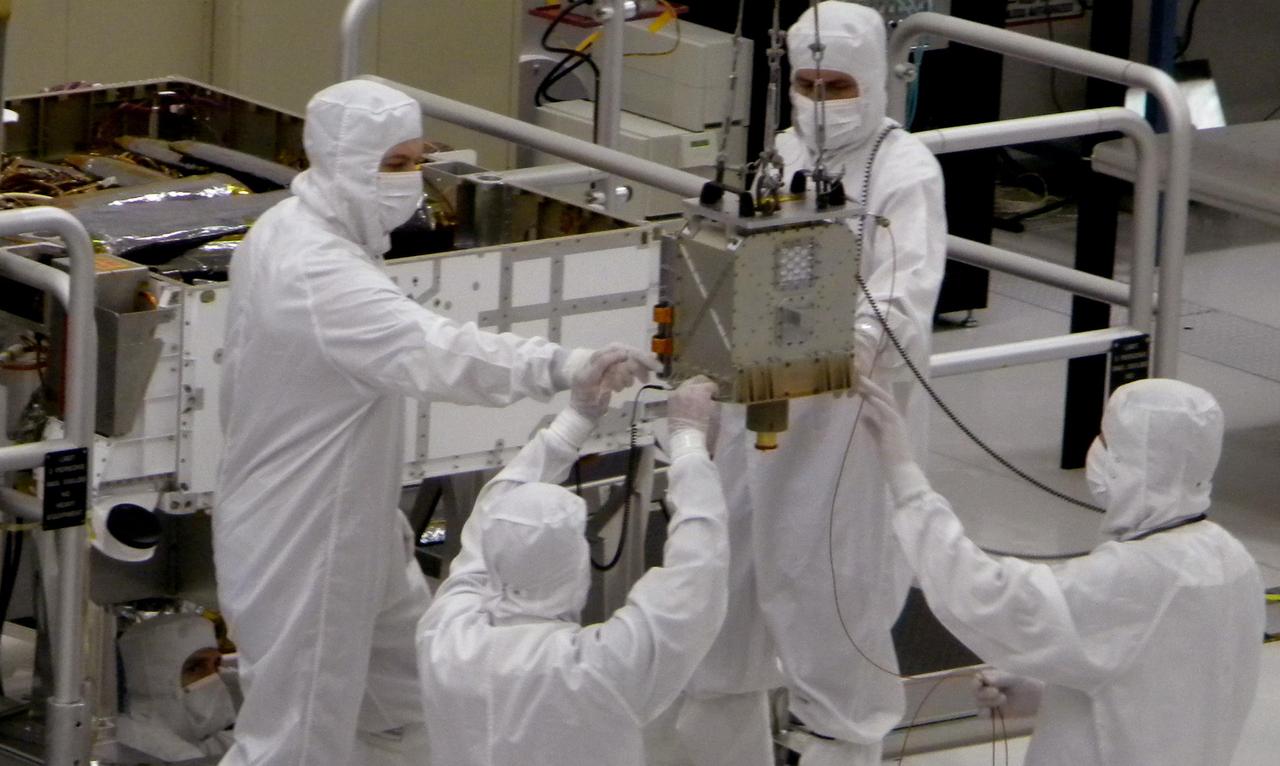
Members of NASA Mars Science Laboratory team carefully steer the hoisted Chemistry and Mineralogy CheMin instrument during its June 15, 2010, installation into the mission Mars rover, Curiosity.
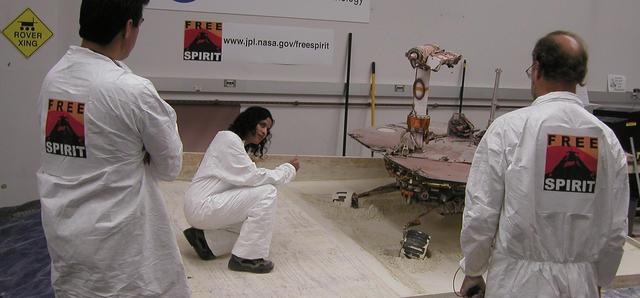
Mars Exploration Rover team members on July 21, 2009, tested how altering the order in which individual wheels turn for steering affects how those turns dig the wheels deeper into soft soil. From left: Alfonso Herrera, Vandana Verma, Bruce Banerdt.
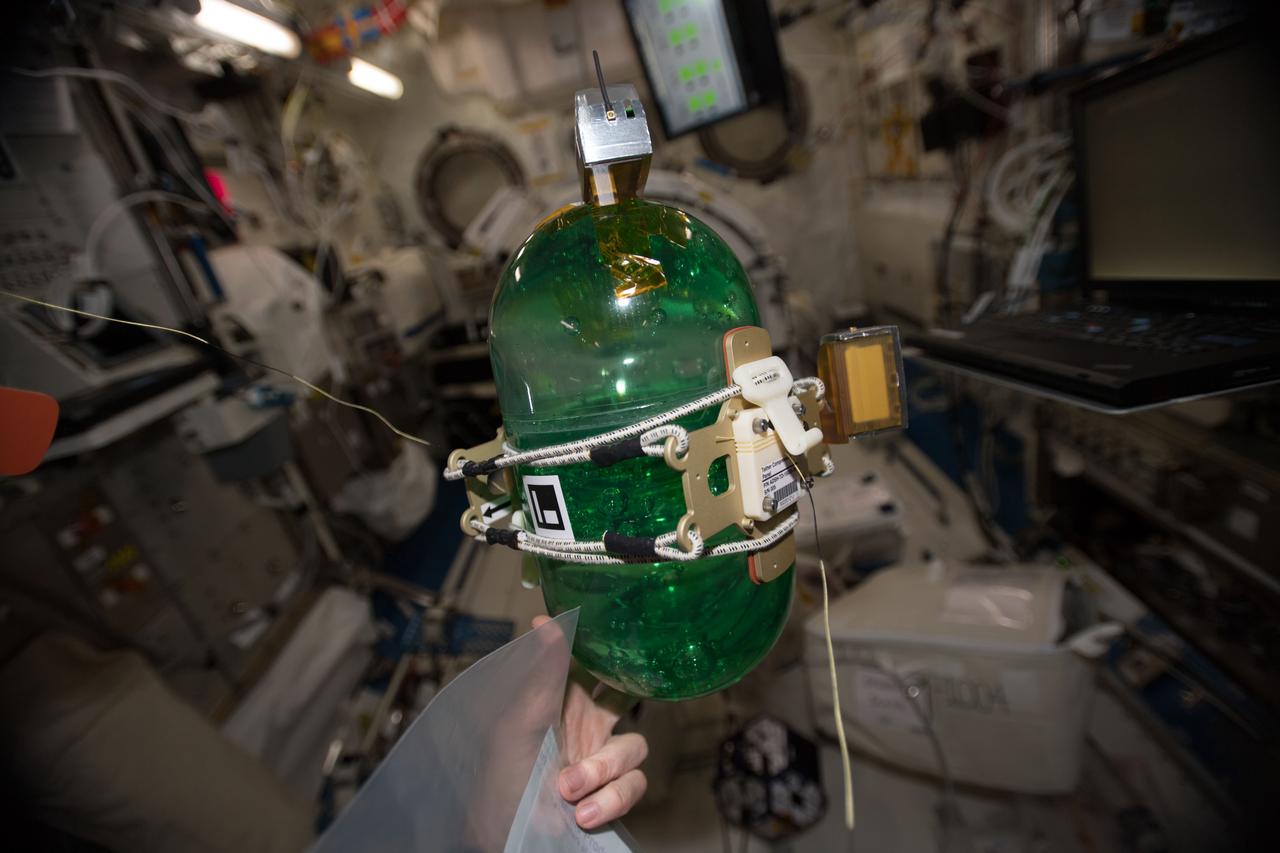
iss055e010694 (4/4/2018) --- A view taken aboard the International Space Station (ISS) during the set up of the SPHERES Tether Slosh experiment hardware. The image is of the green SPHERES robots tethered to a fluid-filled container covered in sensors to test strategies for safely steering spacecraft such as dead satellites that might still have fuel in the tank. SPHERES Tether Slosh combines fluid dynamics equipment with robotic capabilities aboard the International Space Station to investigate automated strategies for steering passive cargo that contain fluids.
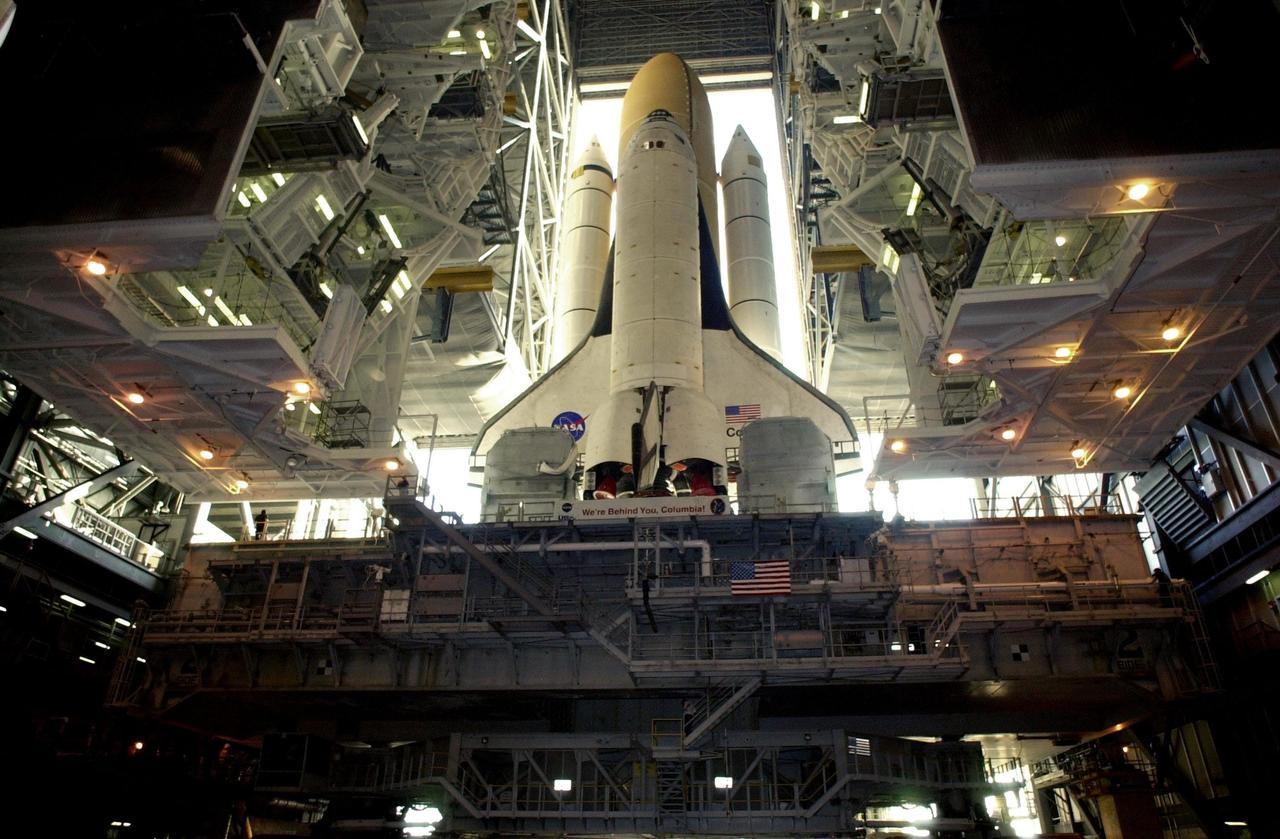
KENNEDY SPACE CENTER, FLA. -- Space Shuttle Columbia sits atop its Mobile Launcher Platform in the open doorway of the Vehicle Assembly Building. The Shuttle never left the VAB due to a steering problem on the crawler-transporter under the MLP. The problem was a faulty bearing in the steering linkage of Power Truck Drive D, which was detected before the C-T left the VAB. Rollout has been rescheduled for Jan. 24
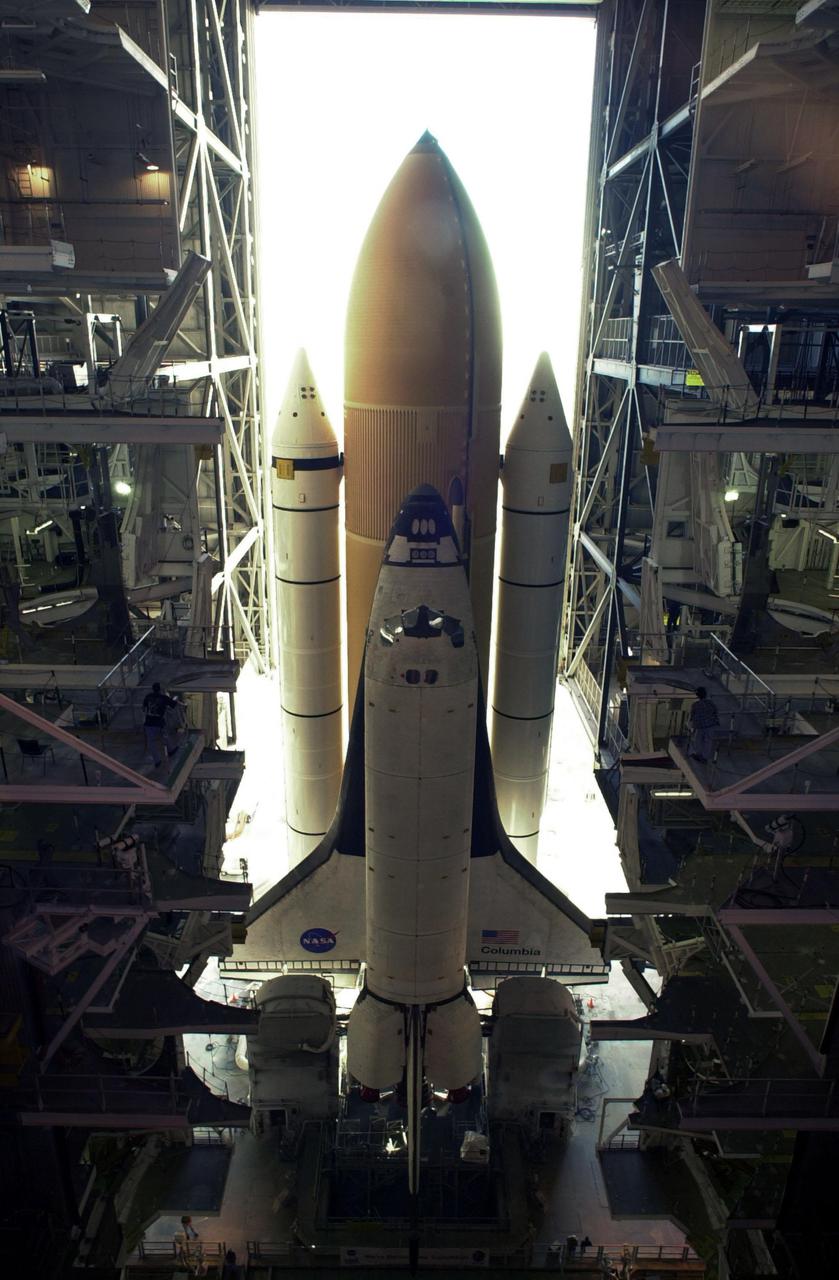
KENNEDY SPACE CENTER, FLA. -- Space Shuttle Columbia sits atop its Mobile Launcher Platform in the open doorway of the Vehicle Assembly Building. The Shuttle never left the VAB due to a steering problem on the crawler-transporter under the MLP. The problem was a faulty bearing in the steering linkage of Power Truck Drive D, which was detected before the C-T left the VAB. Rollout has been rescheduled for Jan. 24

KENNEDY SPACE CENTER, FLA. -- Viewed from outside the Vehicle Assembly Building, the stack of external tank and solid rocket boosters on Columbia can be seen sitting atop the Mobile Launcher Platform. The Shuttle never left the VAB due to a steering problem on the crawler-transporter under the MLP. The problem was a faulty bearing in the steering linkage of Power Truck Drive D, which was detected before the C-T left the VAB. Rollout has been rescheduled for Jan. 24
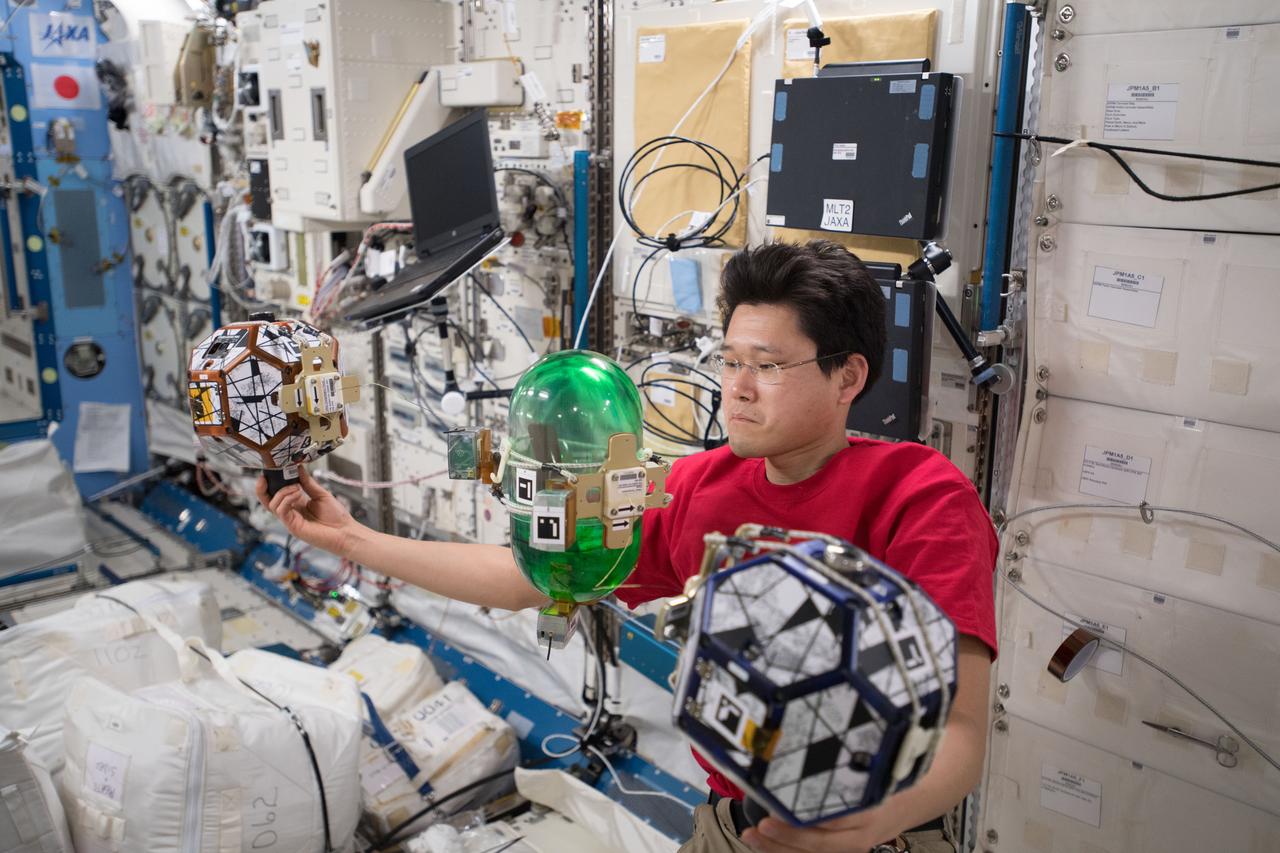
iss054e022175 (1/17/2018) --- Japan Aerospace Exploration Agency (JAXA) astronaut Norishige Kanai is photographed during a Synchronized Position Hold, Engage, Reorient, Experimental Satellites (SPHERES) Tether Slosh experiment test session run. Photo was taken in the Kibo Japanese Experiment Pressurized Module (JPM) aboard the International Space Station (ISS). SPHERES Tether Slosh combines fluid dynamics equipment with robotic capabilities aboard the ISS to investigate automated strategies for steering passive cargo that contain fluids. In space, the fluid fuels used by spacecraft can slosh around in unpredictable ways making space maneuvers difficult. SPHERES Tether Slosh uses two Synchronized Position Hold, Engage, Reorient, Experimental Satellites (SPHERES) robots tethered to a fluid-filled container covered in sensors to test strategies for safely steering spacecraft such as dead satellites that might still have fuel in the tank.
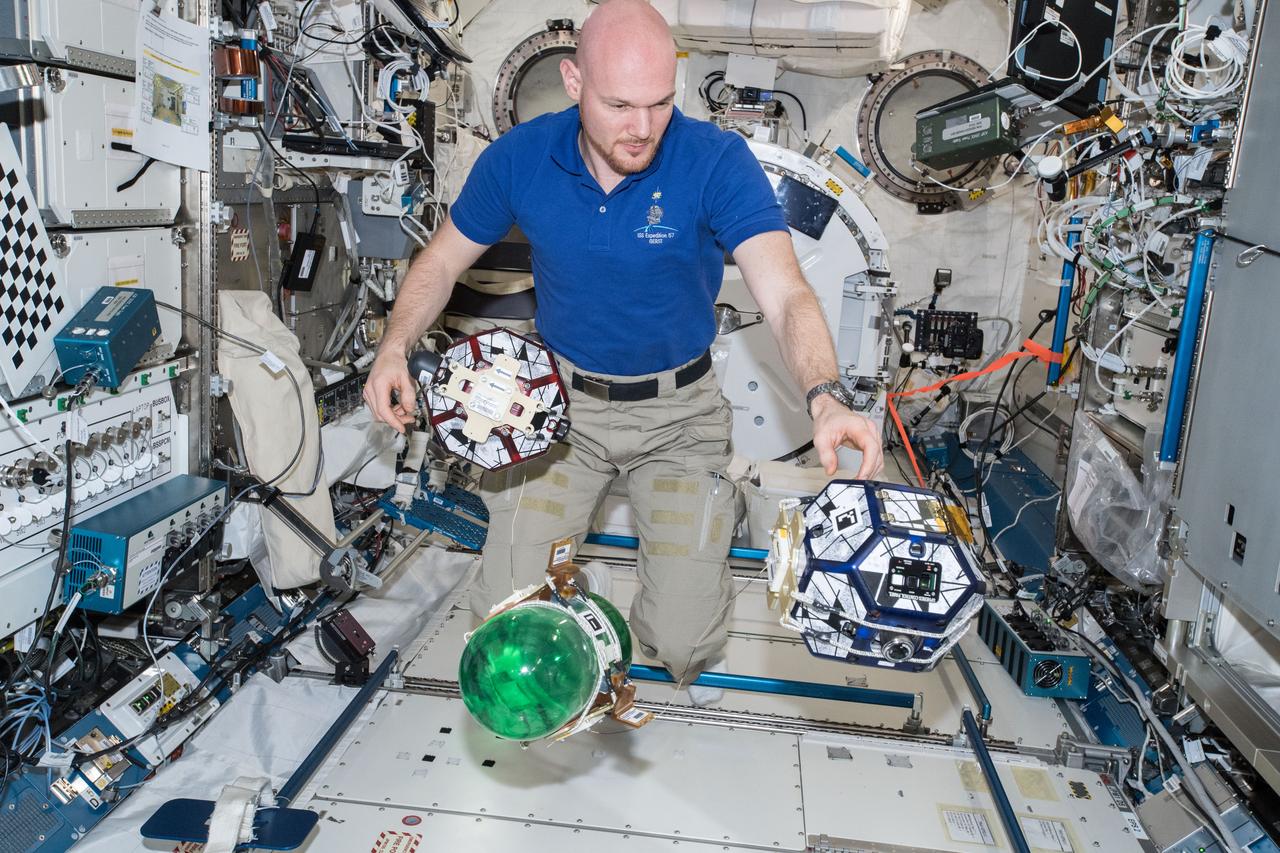
iss057e055052 (10/18/2018) --- European Space Agency astronaut Alexander Gerst is photographed during a Synchronized Position Hold, Engage, Reorient, Experimental Satellites (SPHERES) Tether Slosh experiment test session run. Photo was taken in the Kibo Japanese Experiment Pressurized Module (JPM) aboard the International Space Station (ISS). SPHERES Tether Slosh combines fluid dynamics equipment with robotic capabilities aboard the ISS to investigate automated strategies for steering passive cargo that contain fluids.
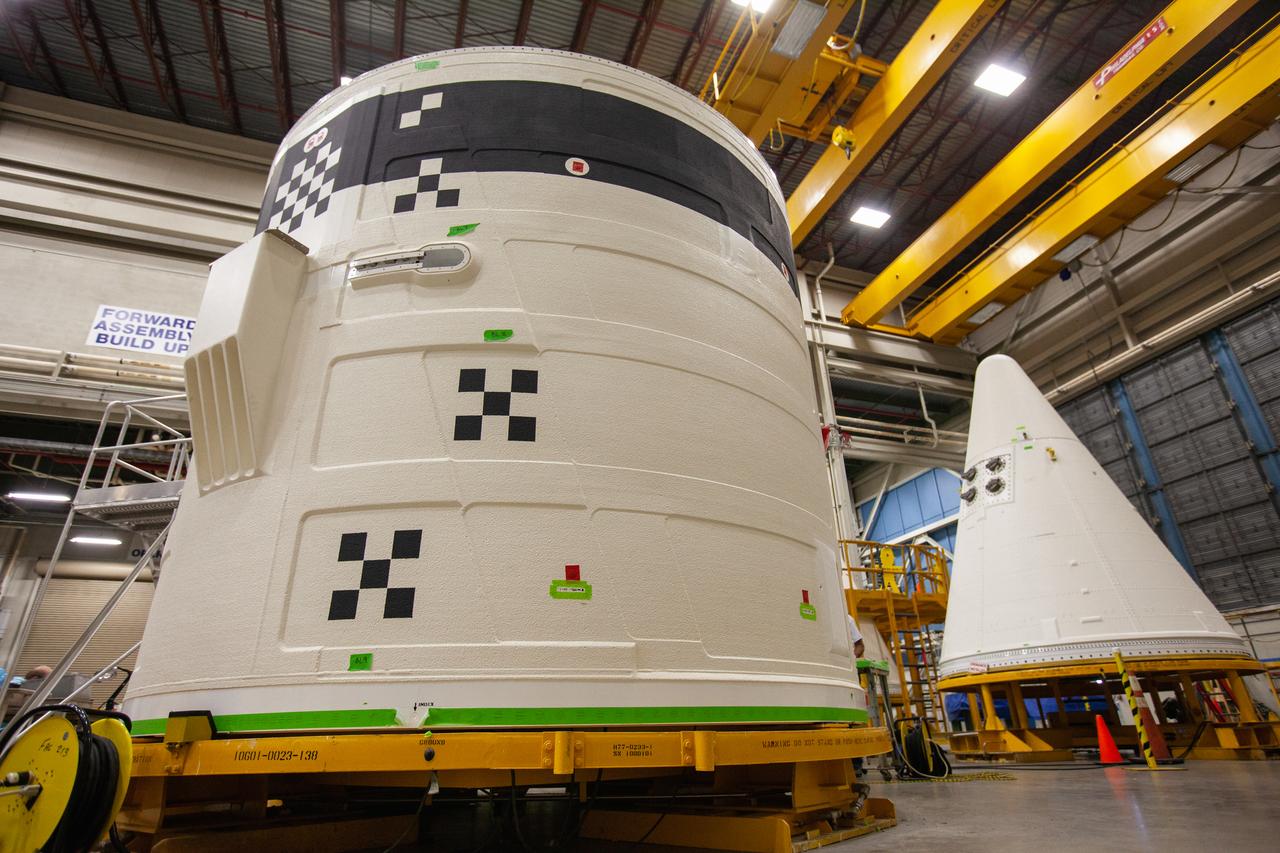
The forward skirt for one of the Space Launch System’s (SLS) two solid boosters is inside the Booster Fabrication Facility at NASA’s Kennedy Space Center in Florida on Oct. 16, 2019. Segments of the boosters are being inspected and prepared for Artemis I, the agency’s first uncrewed flight of Orion atop the SLS. The forward skirt houses booster avionics that communicate with the SLS avionics to monitor booster conditions and steer the booster exhaust nozzle.
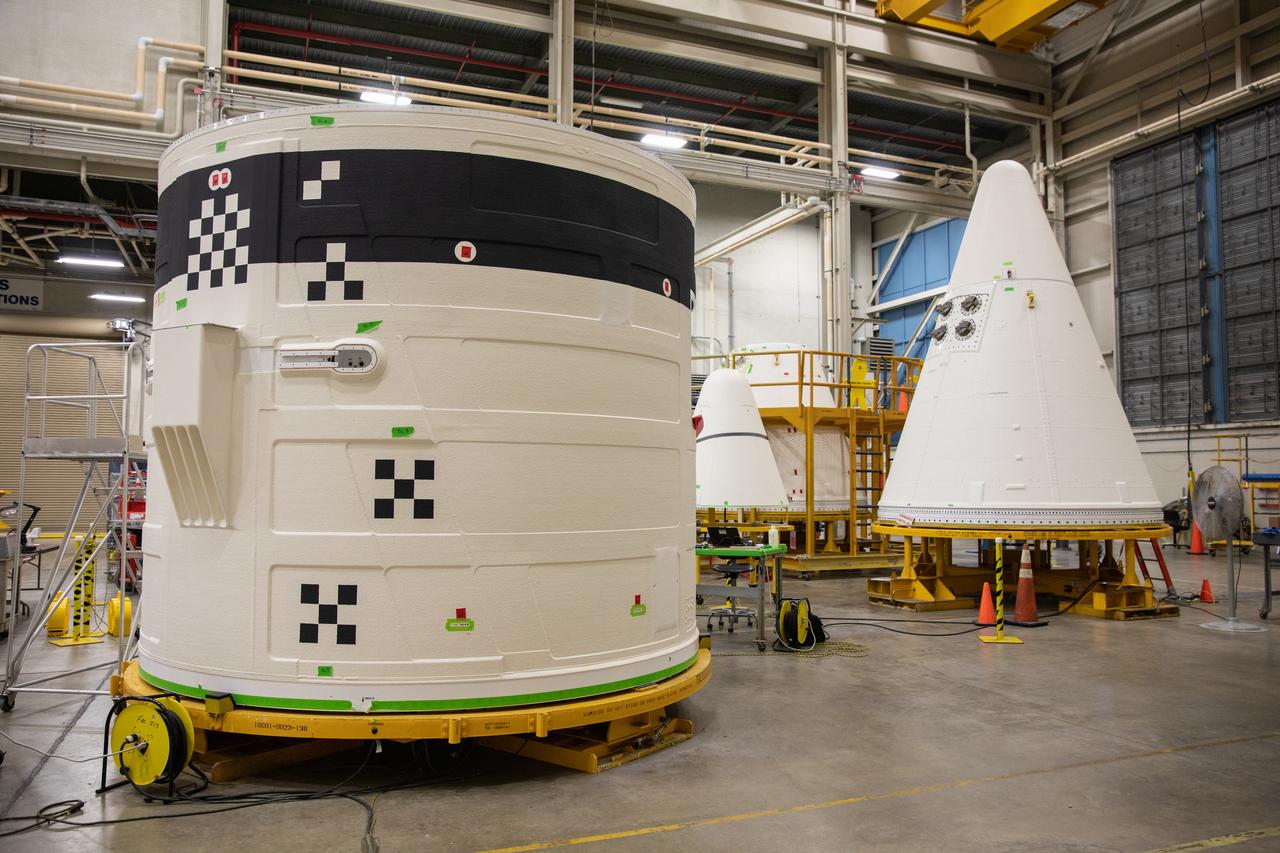
A forward skirt and two nose cones for the Space Launch System’s (SLS) two solid boosters are in view inside the Booster Fabrication Facility at NASA’s Kennedy Space Center in Florida on Oct. 16, 2019. Segments of the boosters are being inspected and prepared for Artemis I, the agency’s first uncrewed flight of Orion atop the SLS. The forward skirt houses booster avionics that communicate with the SLS avionics to monitor booster conditions and steer the booster exhaust nozzle. The nose cone, along with a frustrum, will serve as the aerodynamic fairing for the boosters during launch.
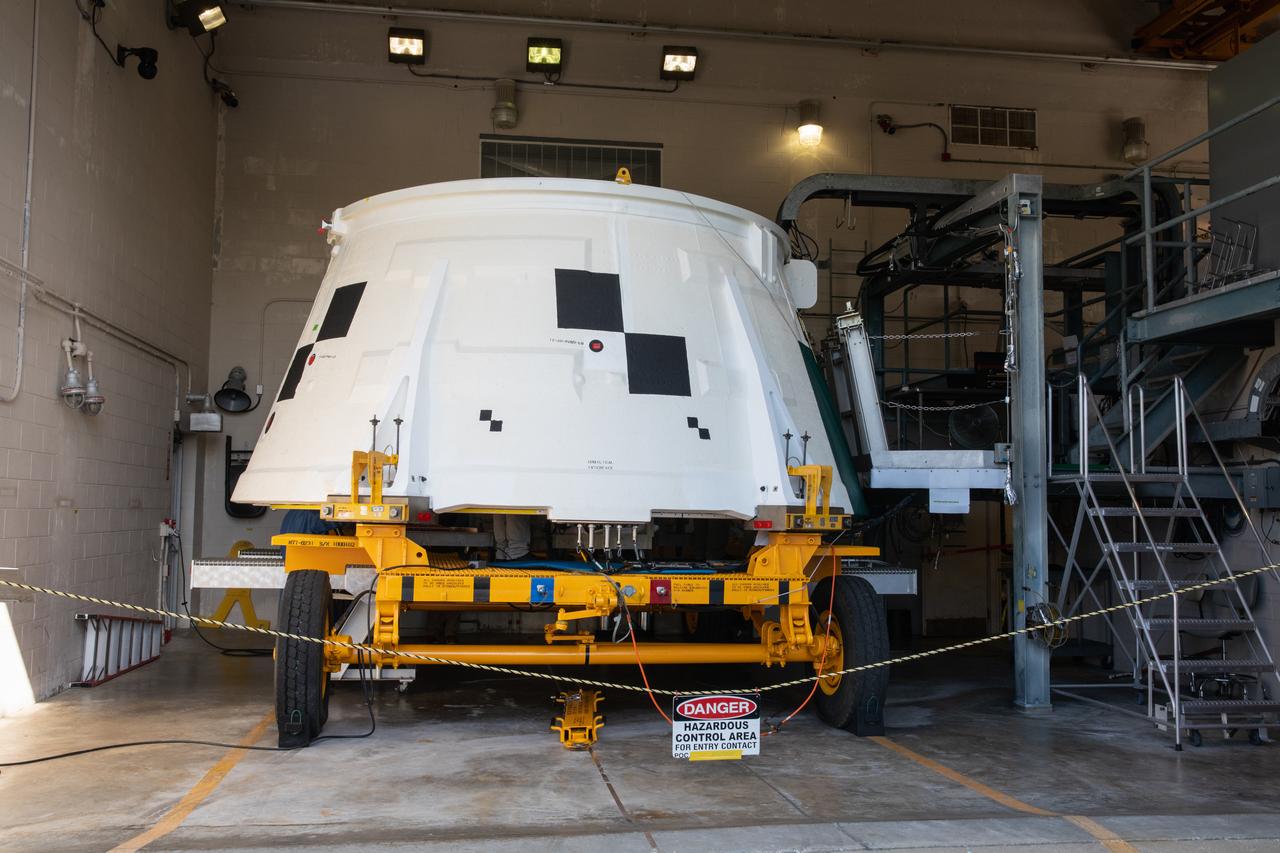
The aft skirt for one of the Space Launch System’s (SLS) two solid rocket boosters is inside the Booster Fabrication Facility at NASA’s Kennedy Space Center in Florida on Oct. 16, 2019. Segments of the boosters are being inspected and prepared for Artemis I, the agency’s first uncrewed flight of Orion atop the SLS. The aft skirts contain the thrust vector control system that steers the booster’s nozzles based on commands from the booster avionics during launch.
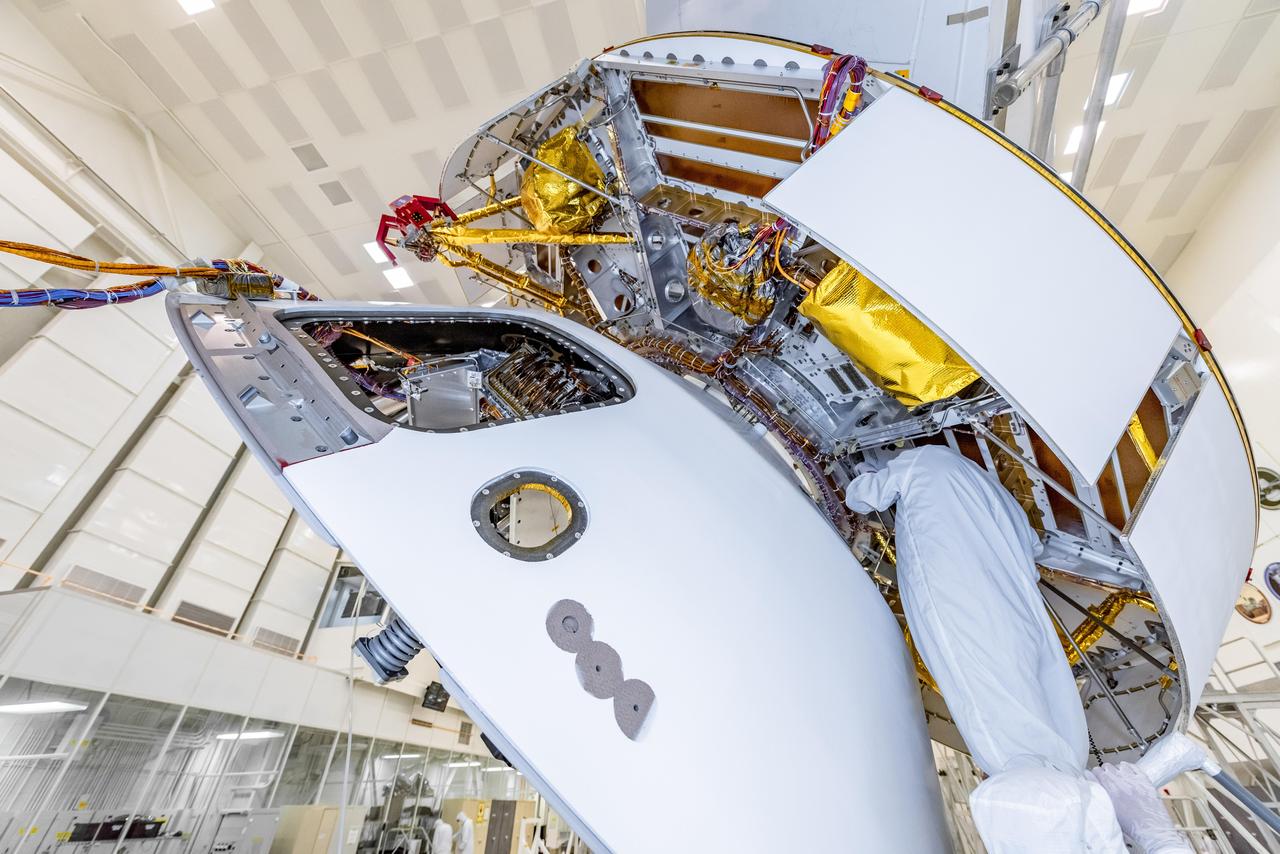
A member of NASA's Mars 2020 project checks connections between the spacecraft's back shell and cruise stage. The image was taken on March 26, 2019, in the Spacecraft Assembly Facility's High Bay 1 clean room at NASA's Jet Propulsion Laboratory, in Pasadena, California. During the mission's voyage to Mars, the cruise stage houses the hardware that steers and provides power to the spacecraft. The back shell, along with the heatshield (not pictured), protects the 2020 rover and the sky crane landing system during Mars atmospheric entry. https://photojournal.jpl.nasa.gov/catalog/PIA23163
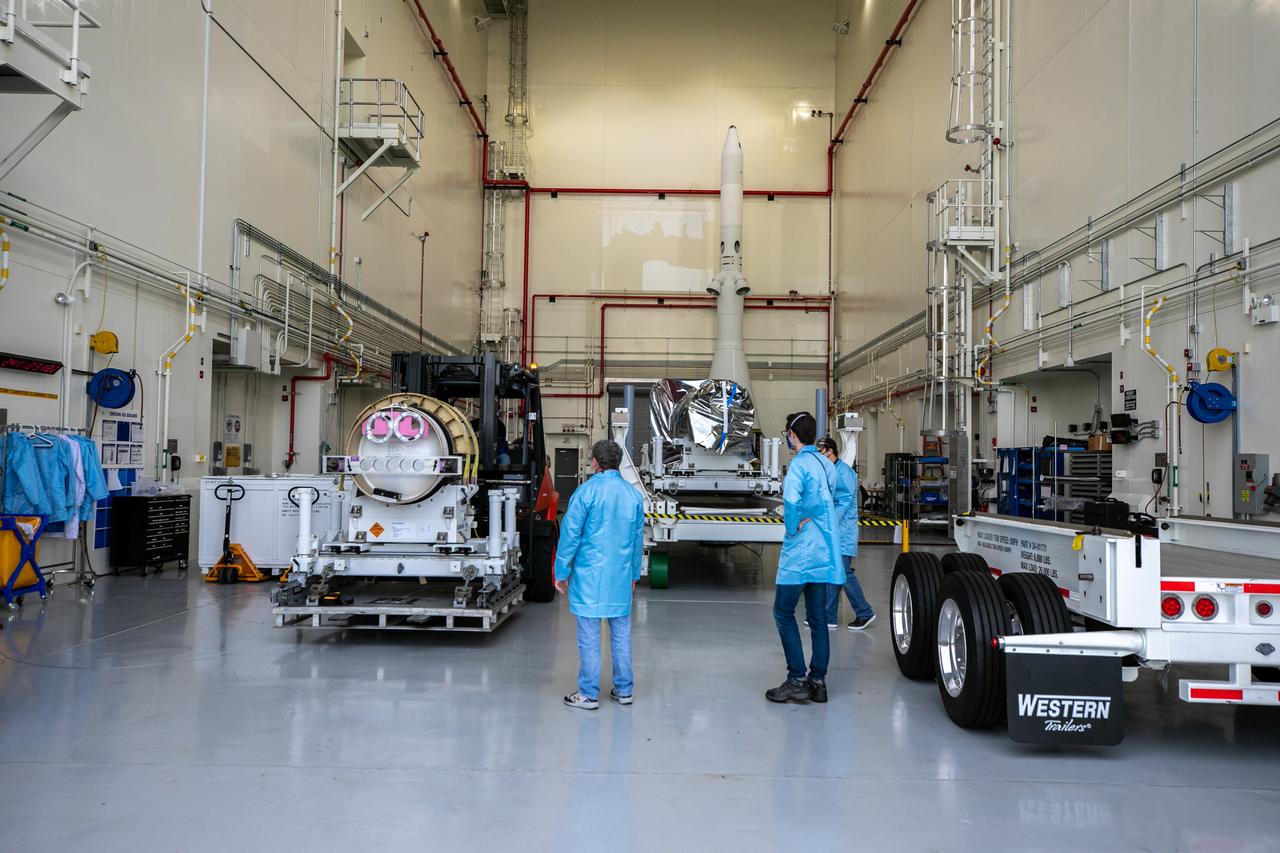
The last of three motors required to assemble the Launch Abort System for NASA’s Artemis II mission, the attitude control motor (ACM), arrives at Kennedy Space Center in Florida on August 28. The attitude control motor (ACM) was delivered by truck from Northrop Grumman’s manufacturing facility in Maryland, to the Launch Abort System Facility (LASF) at Kennedy. During launch of Orion atop the agency’s Space Launch System rocket, the LAS motors work together to separate the spacecraft from the rocket in the unlikely event of an emergency during launch. The LAS includes three motors – the launch abort motor, the jettison motor, and the attitude control motor—that once activated, will steer the spacecraft carrying the astronauts to safety. The ACM operates to keep Orion’s crew module on a controlled flight path in the event it needs to jettison and steer away from the rocket. Artemis II is the first crewed flight in a series of increasingly complex missions to the Moon that will lay the foundation for exploration of Mars and beyond. Artemis II will confirm all of the Orion spacecraft’s systems operate as designed in the actual environment of deep space with astronauts aboard. As part of the Artemis program, NASA will send the first woman and next man to the Moon in 2024.
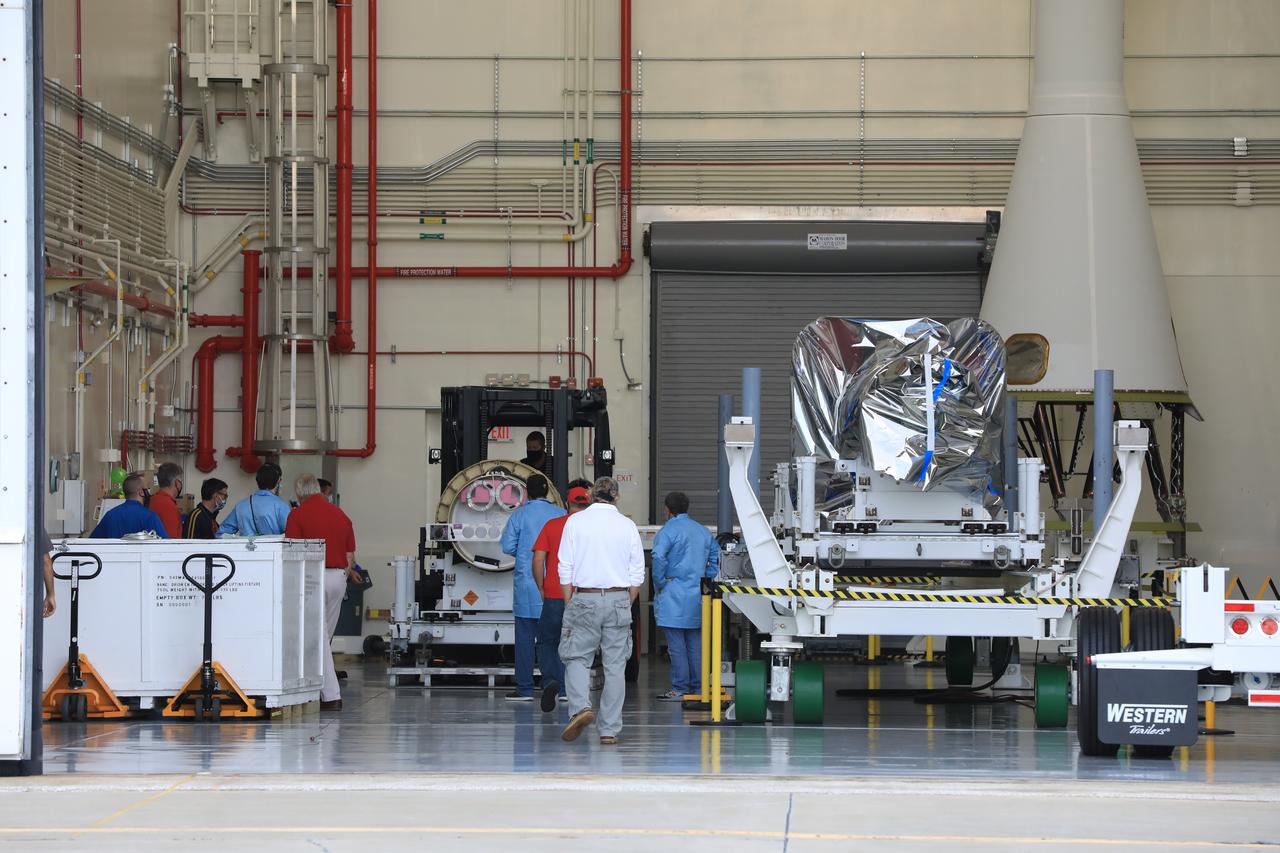
The last of three motors required to assemble the Launch Abort System for NASA’s Artemis II mission, the attitude control motor (ACM), arrives at Kennedy Space Center in Florida on August 28. The attitude control motor (ACM) was delivered by truck from Northrop Grumman’s manufacturing facility in Maryland, to the Launch Abort System Facility (LASF) at Kennedy. During launch of Orion atop the agency’s Space Launch System rocket, the LAS motors work together to separate the spacecraft from the rocket in the unlikely event of an emergency during launch. The LAS includes three motors – the launch abort motor, the jettison motor, and the attitude control motor—that once activated, will steer the spacecraft carrying the astronauts to safety. The ACM operates to keep Orion’s crew module on a controlled flight path in the event it needs to jettison and steer away from the rocket. Artemis II is the first crewed flight in a series of increasingly complex missions to the Moon that will lay the foundation for exploration of Mars and beyond. Artemis II will confirm all of the Orion spacecraft’s systems operate as designed in the actual environment of deep space with astronauts aboard. As part of the Artemis program, NASA will send the first woman and next man to the Moon in 2024.
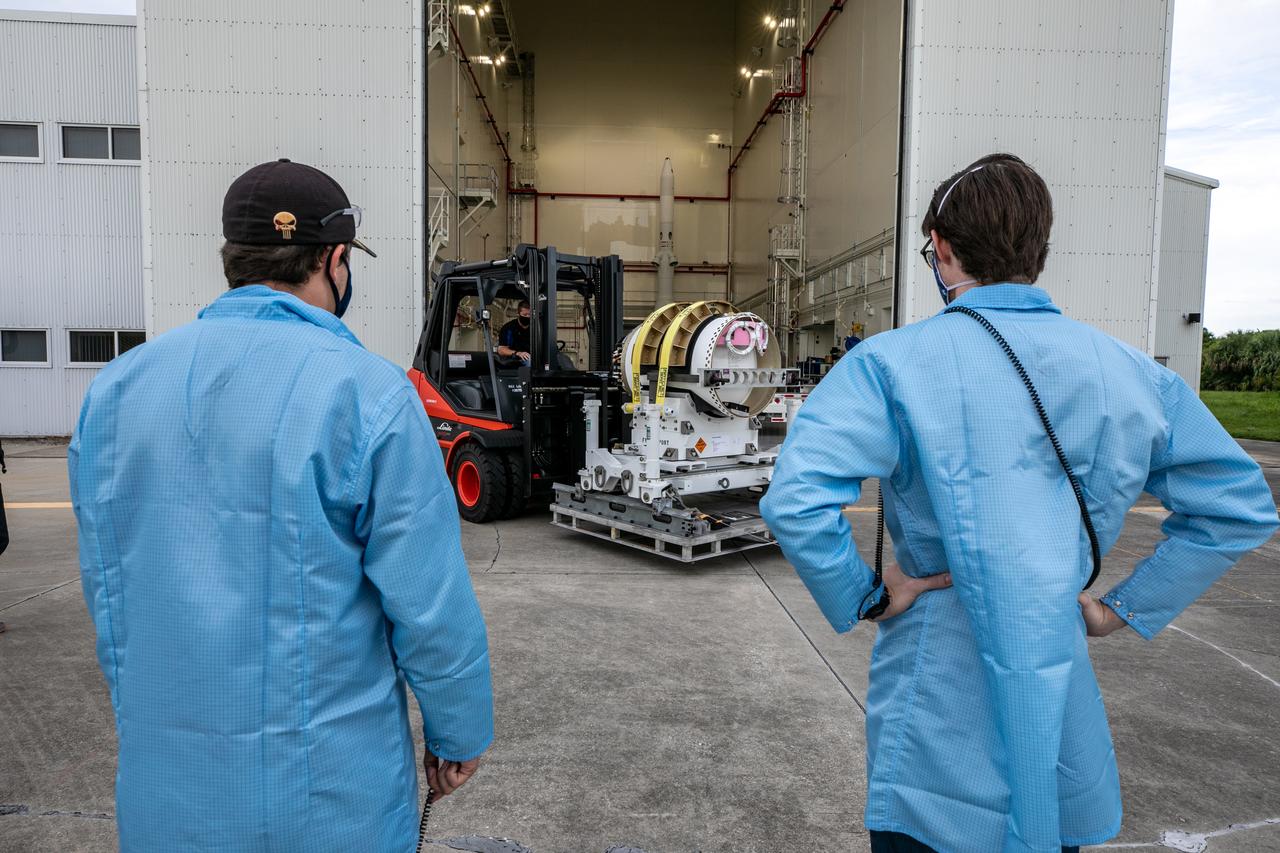
The last of three motors required to assemble the Launch Abort System for NASA’s Artemis II mission, the attitude control motor (ACM), arrives at Kennedy Space Center in Florida on August 28. The attitude control motor (ACM) was delivered by truck from Northrop Grumman’s manufacturing facility in Maryland, to the Launch Abort System Facility (LASF) at Kennedy. During launch of Orion atop the agency’s Space Launch System rocket, the LAS motors work together to separate the spacecraft from the rocket in the unlikely event of an emergency during launch. The LAS includes three motors – the launch abort motor, the jettison motor, and the attitude control motor—that once activated, will steer the spacecraft carrying the astronauts to safety. The ACM operates to keep Orion’s crew module on a controlled flight path in the event it needs to jettison and steer away from the rocket. Artemis II is the first crewed flight in a series of increasingly complex missions to the Moon that will lay the foundation for exploration of Mars and beyond. Artemis II will confirm all of the Orion spacecraft’s systems operate as designed in the actual environment of deep space with astronauts aboard. As part of the Artemis program, NASA will send the first woman and next man to the Moon in 2024.
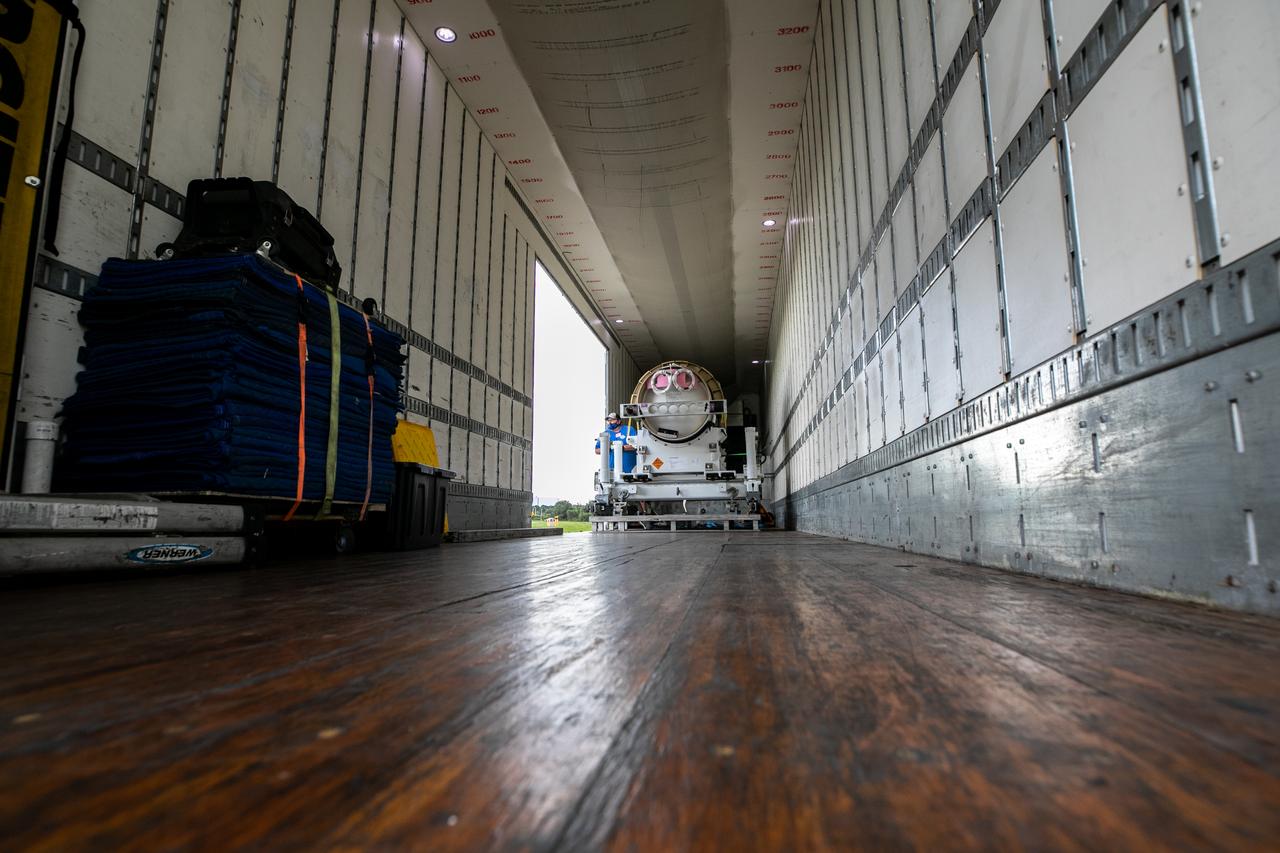
The last of three motors required to assemble the Launch Abort System for NASA’s Artemis II mission, the attitude control motor (ACM), arrives at Kennedy Space Center in Florida on August 28. The attitude control motor (ACM) was delivered by truck from Northrop Grumman’s manufacturing facility in Maryland, to the Launch Abort System Facility (LASF) at Kennedy. During launch of Orion atop the agency’s Space Launch System rocket, the LAS motors work together to separate the spacecraft from the rocket in the unlikely event of an emergency during launch. The LAS includes three motors – the launch abort motor, the jettison motor, and the attitude control motor—that once activated, will steer the spacecraft carrying the astronauts to safety. The ACM operates to keep Orion’s crew module on a controlled flight path in the event it needs to jettison and steer away from the rocket. Artemis II is the first crewed flight in a series of increasingly complex missions to the Moon that will lay the foundation for exploration of Mars and beyond. Artemis II will confirm all of the Orion spacecraft’s systems operate as designed in the actual environment of deep space with astronauts aboard. As part of the Artemis program, NASA will send the first woman and next man to the Moon in 2024.
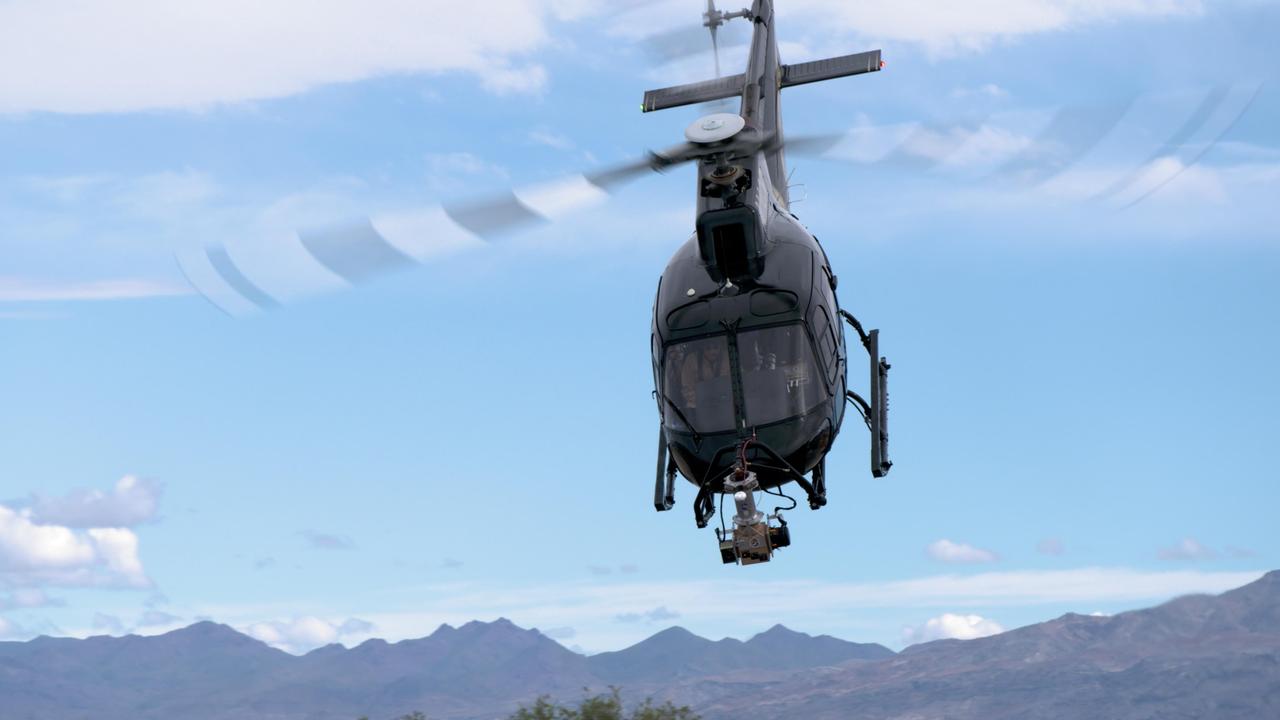
On a test flight in Death Valley, California, an Airbus helicopter carried an engineering model of the Lander Vision System (LVS) that will help guide NASA's next Mars mission to a safe touchdown on the Red Planet. During the flight — one in a series — the helicopter (which is not part of the mission and was used just for testing) and its two-person crew flew a pre-planned sequence of maneuvers while LVS collected and analyzed imagery of the barren, mountainous terrain below. LVS is an integral part of a guidance system called Terrain-Relative Navigation (TRN) that will steer NASA's Mars 2020 rover away from hazardous areas during its final descent to Jezero Crater on Feb. 18, 2021. Mars 2020 will be the first spacecraft in the history of planetary exploration with the ability to accurately retarget its point of touchdown during the landing sequence. Also among the firsts of the mission, the 2020 rover carries a sample-caching system that will collect samples of Martian rock and soil and store them on the surface of the planet for retrieval and return to Earth by subsequent missions. Mars 2020 will launch from Cape Canaveral Air Force Station in Florida in July of 2020. https://photojournal.jpl.nasa.gov/catalog/PIA23265
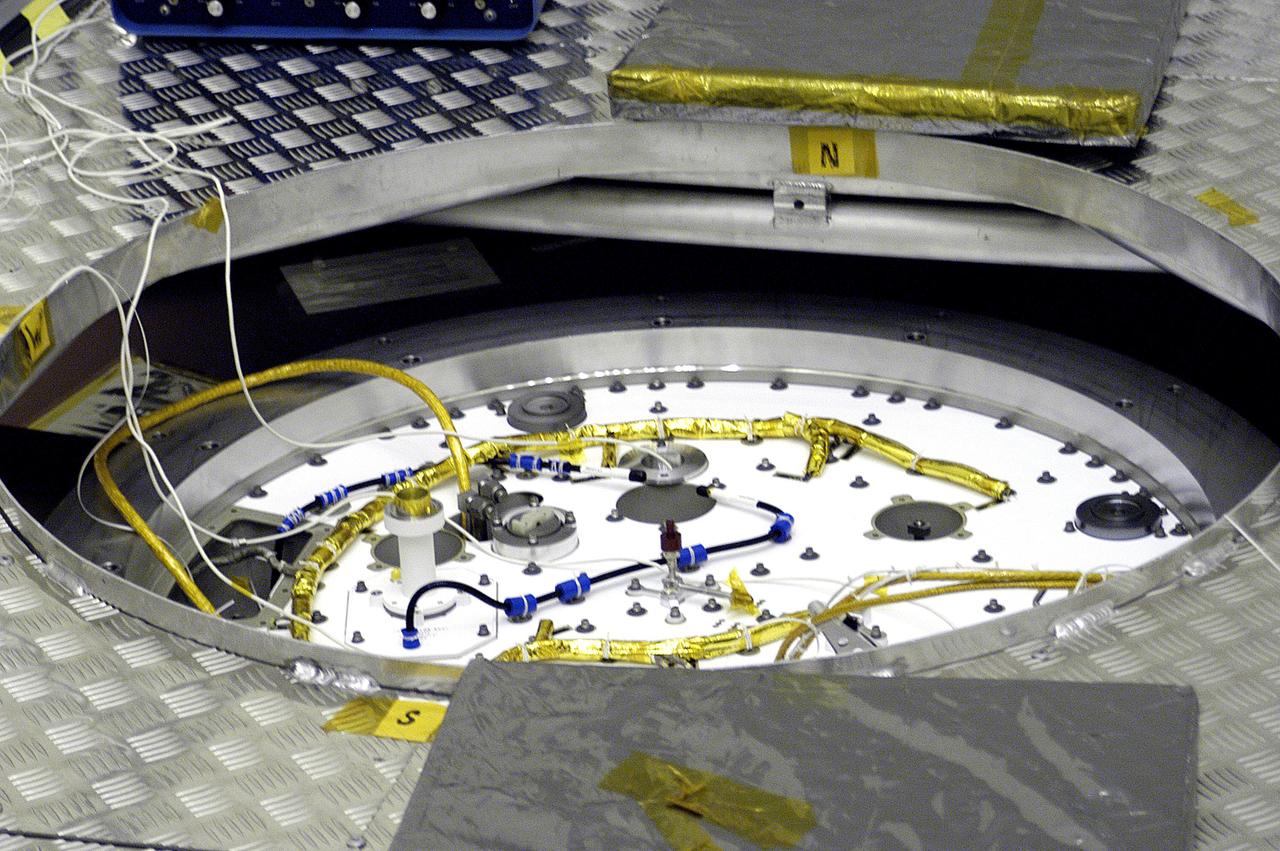
KENNEDY SPACE CENTER, FLA. - A closeup of the cruise stage to be mated to the Mars Exploration Rover 2 (MER-2) entry vehicle. The cruise stage includes fuel tanks, thruster clusters and avionics for steering and propulsion. NASA's twin Mars Exploration Rovers are designed to study the history of water on Mars. These robotic geologists are equipped with a robotic arm, a drilling tool, three spectrometers, and four pairs of cameras that allow them to have a human-like, 3D view of the terrain. Each rover could travel as far as 100 meters in one day to act as Mars scientists' eyes and hands, exploring an environment where humans can't yet go. MER-2 is scheduled to launch June 5 as MER-A aboard a Delta rocket from Cape Canaveral Air Force Station.
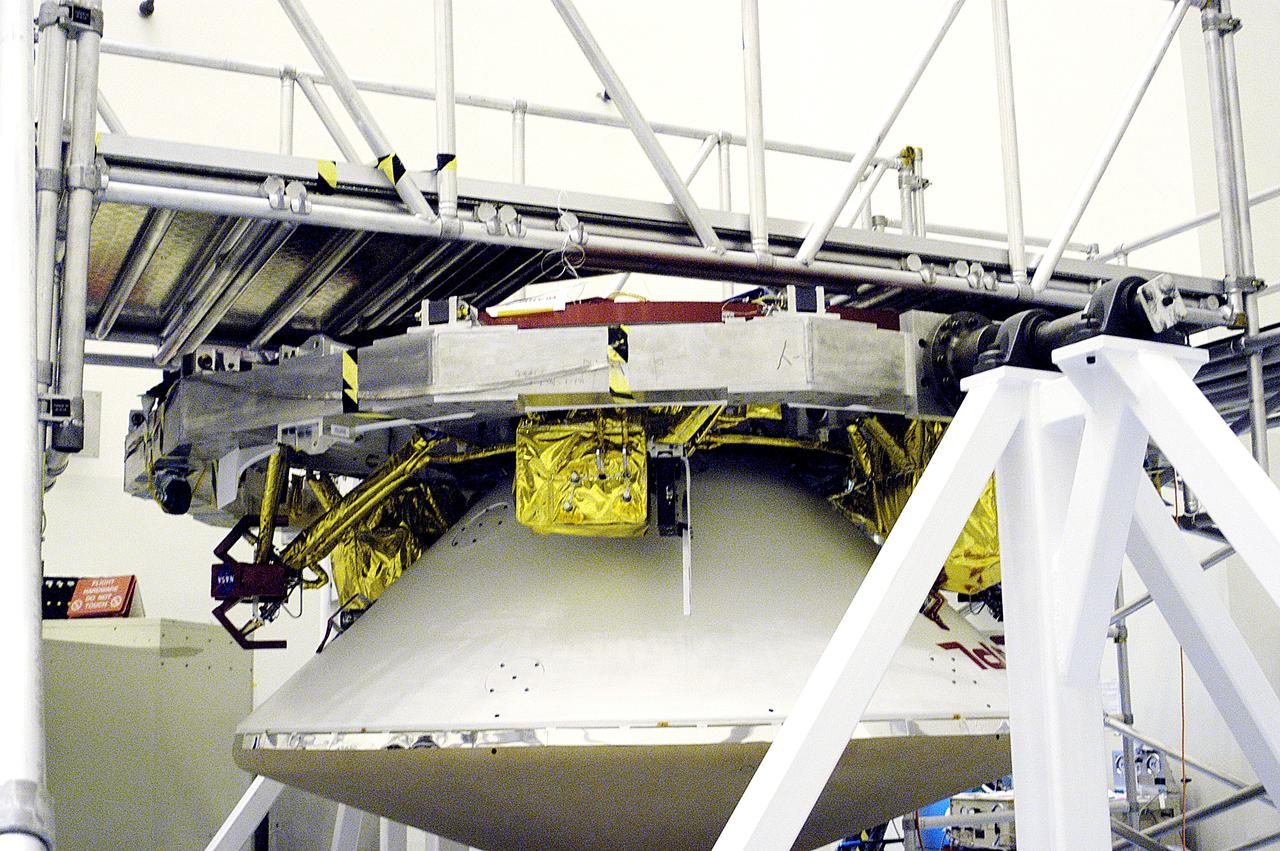
KENNEDY SPACE CENTER, FLA. - In the Payload Hazardous Servicing Facility, the cruise stage is mated to the Mars Exploration Rover 2 (MER-2) entry vehicle. The cruise stage includes fuel tanks, thruster clusters and avionics for steering and propulsion. NASA's twin Mars Exploration Rovers are designed to study the history of water on Mars. These robotic geologists are equipped with a robotic arm, a drilling tool, three spectrometers, and four pairs of cameras that allow them to have a human-like, 3D view of the terrain. Each rover could travel as far as 100 meters in one day to act as Mars scientists' eyes and hands, exploring an environment where humans can't yet go. MER-2 is scheduled to launch June 5 as MER-A aboard a Delta rocket from Cape Canaveral Air Force Station.
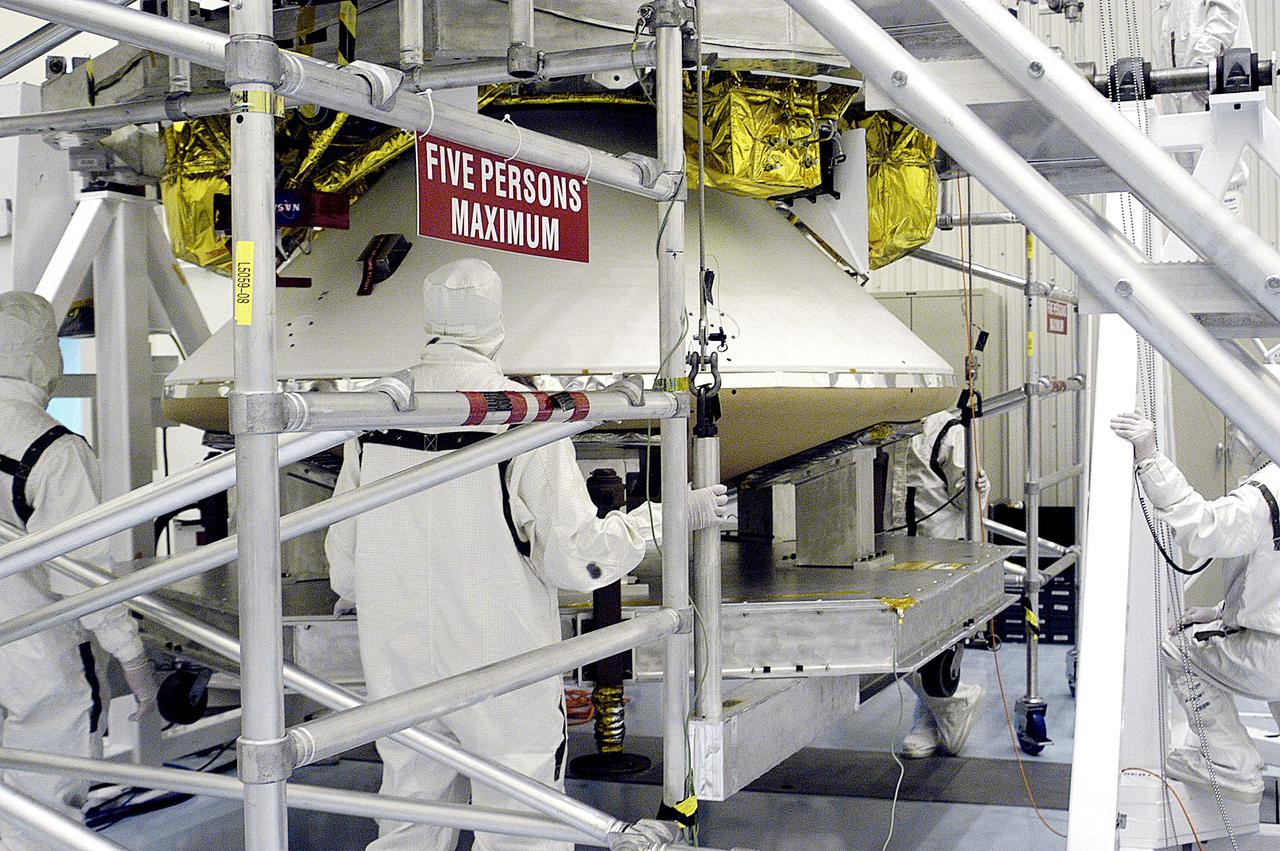
KENNEDY SPACE CENTER, FLA. - Workers in the Payload Hazardous Servicing Facility stand by while the cruise stage is mated to the Mars Exploration Rover 2 (MER-2) entry vehicle. The cruise stage includes fuel tanks, thruster clusters and avionics for steering and propulsion. NASA's twin Mars Exploration Rovers are designed to study the history of water on Mars. These robotic geologists are equipped with a robotic arm, a drilling tool, three spectrometers, and four pairs of cameras that allow them to have a human-like, 3D view of the terrain. Each rover could travel as far as 100 meters in one day to act as Mars scientists' eyes and hands, exploring an environment where humans can't yet go. MER-2 is scheduled to launch June 5 as MER-A aboard a Delta rocket from Cape Canaveral Air Force Station.
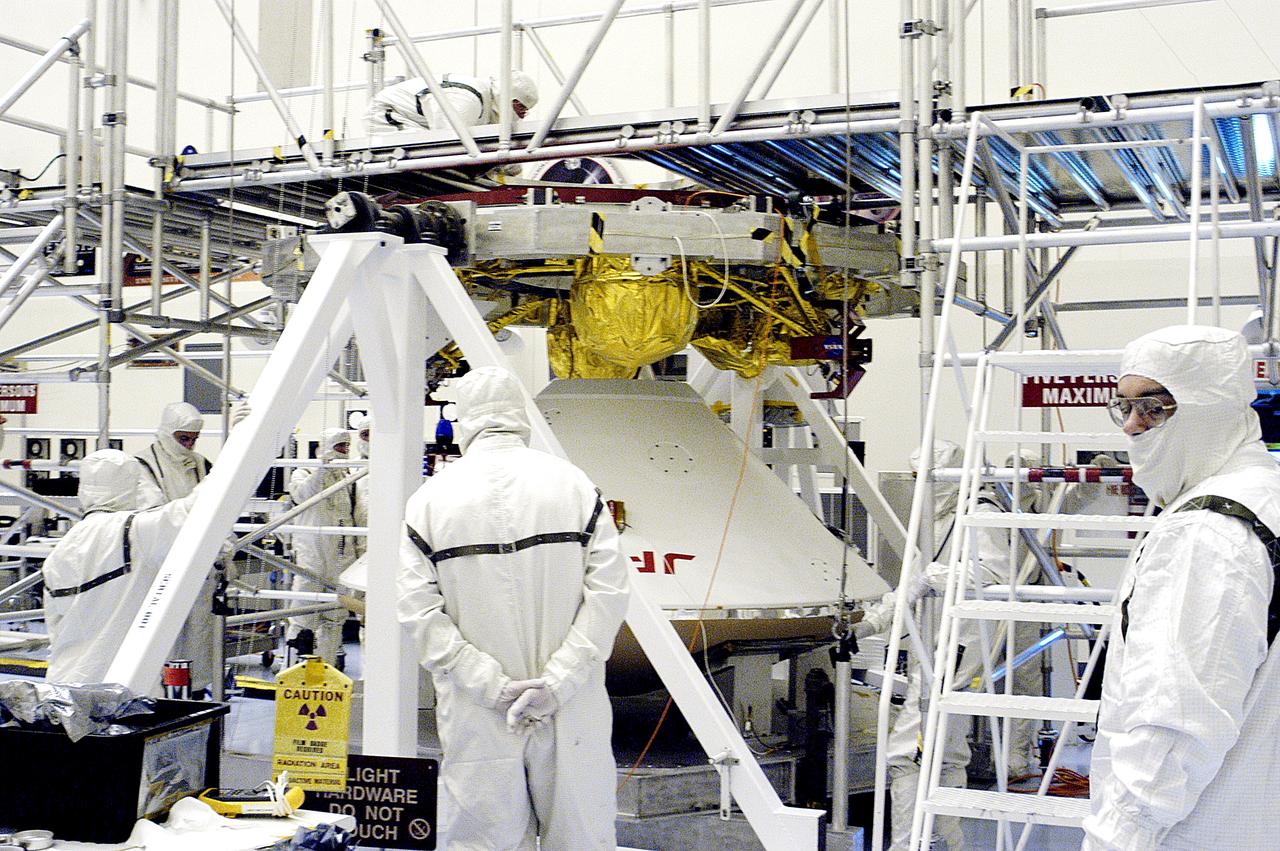
KENNEDY SPACE CENTER, FLA. - The Mars Exploration Rover 2 (MER-2) entry vehicle (below) is being mated to the cruise stage (above). The cruise stage includes fuel tanks, thruster clusters and avionics for steering and propulsion. NASA's twin Mars Exploration Rovers are designed to study the history of water on Mars. These robotic geologists are equipped with a robotic arm, a drilling tool, three spectrometers, and four pairs of cameras that allow them to have a human-like, 3D view of the terrain. Each rover could travel as far as 100 meters in one day to act as Mars scientists' eyes and hands, exploring an environment where humans can't yet go. MER-2 is scheduled to launch June 5 as MER-A aboard a Delta rocket from Cape Canaveral Air Force Station.
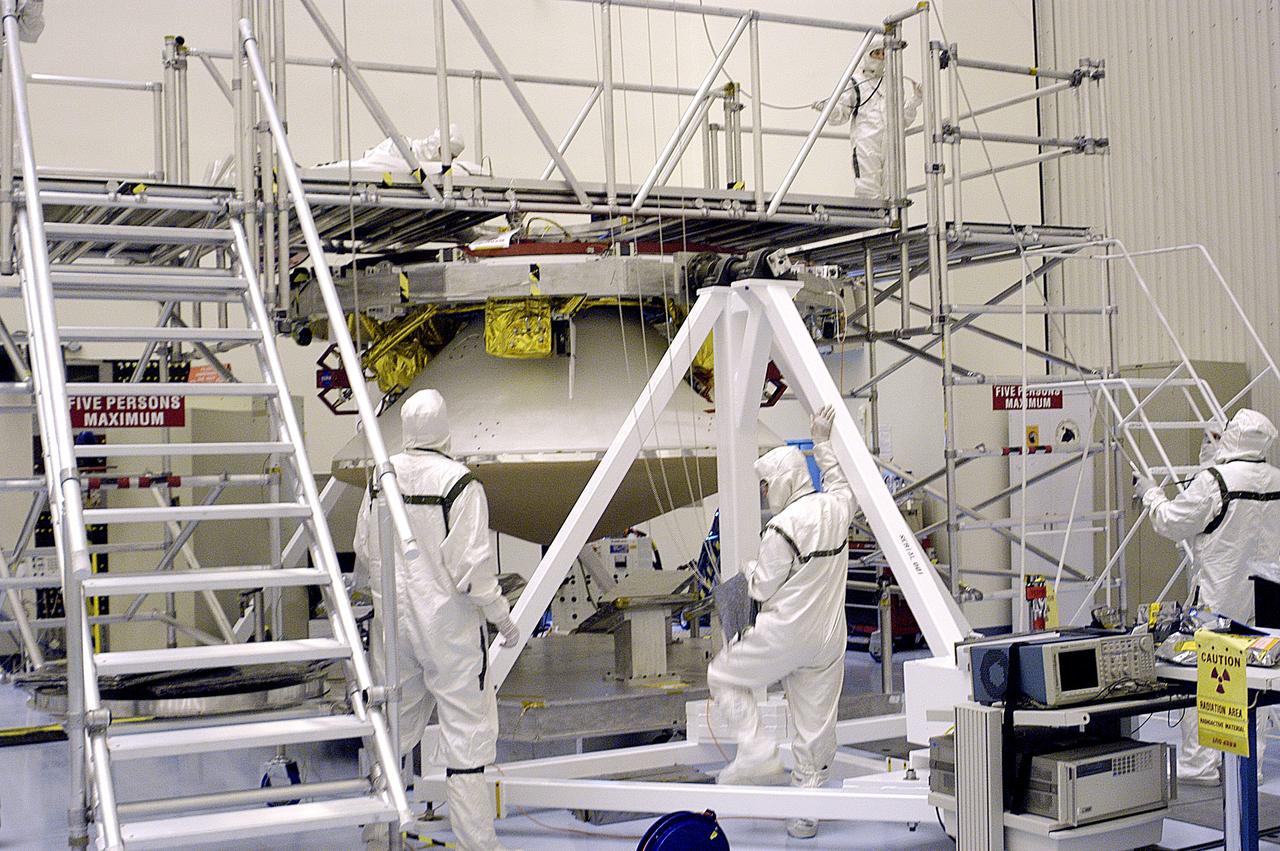
KENNEDY SPACE CENTER, FLA. - In the Payload Hazardous Servicing Facility, the cruise stage is mated to the Mars Exploration Rover 2 (MER-2) entry vehicle. The cruise stage includes fuel tanks, thruster clusters and avionics for steering and propulsion. NASA's twin Mars Exploration Rovers are designed to study the history of water on Mars. These robotic geologists are equipped with a robotic arm, a drilling tool, three spectrometers, and four pairs of cameras that allow them to have a human-like, 3D view of the terrain. Each rover could travel as far as 100 meters in one day to act as Mars scientists' eyes and hands, exploring an environment where humans can't yet go. MER-2 is scheduled to launch June 5 as MER-A aboard a Delta rocket from Cape Canaveral Air Force Station.
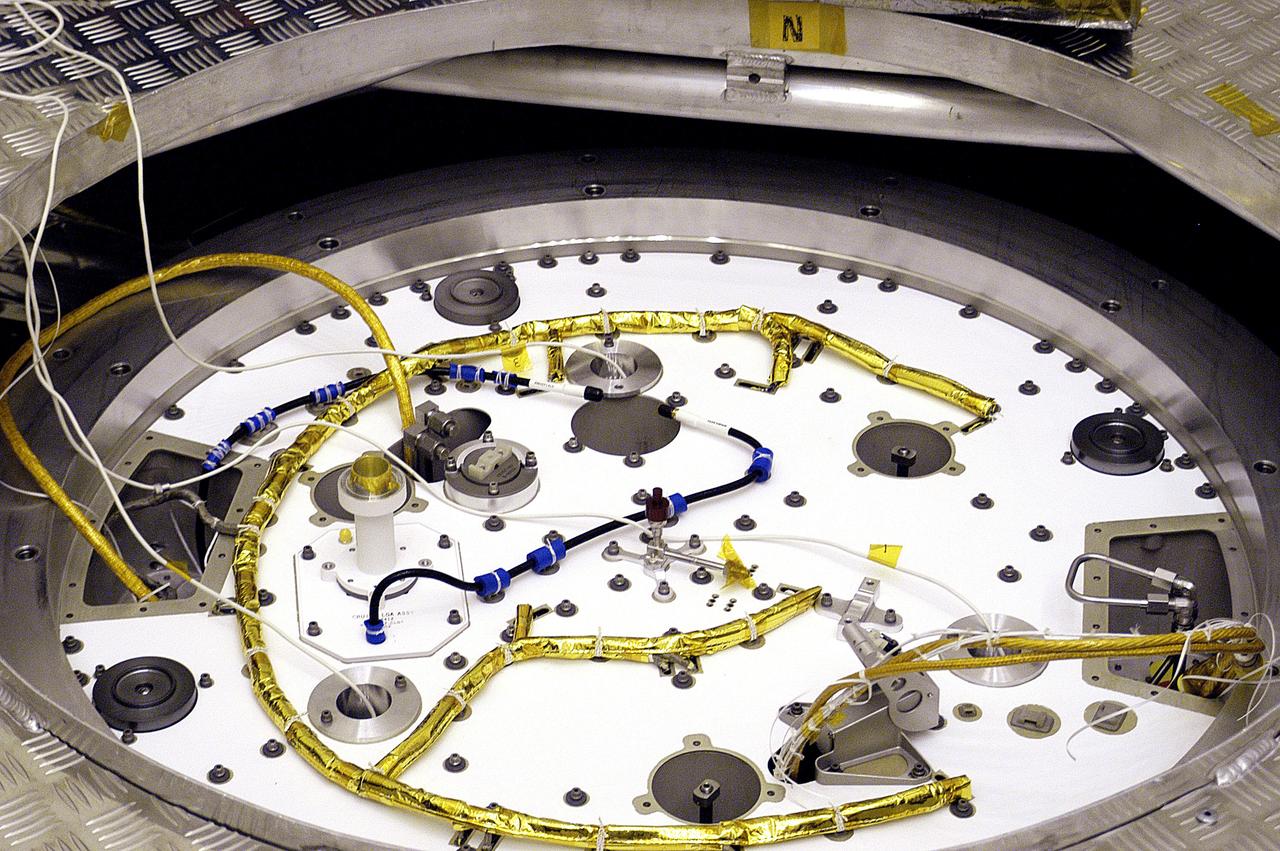
KENNEDY SPACE CENTER, FLA. - A closeup of the cruise stage to be mated to the Mars Exploration Rover 2 (MER-2) entry vehicle. The cruise stage includes fuel tanks, thruster clusters and avionics for steering and propulsion. NASA's twin Mars Exploration Rovers are designed to study the history of water on Mars. These robotic geologists are equipped with a robotic arm, a drilling tool, three spectrometers, and four pairs of cameras that allow them to have a human-like, 3D view of the terrain. Each rover could travel as far as 100 meters in one day to act as Mars scientists' eyes and hands, exploring an environment where humans can't yet go. MER-2 is scheduled to launch June 5 as MER-A aboard a Delta rocket from Cape Canaveral Air Force Station.
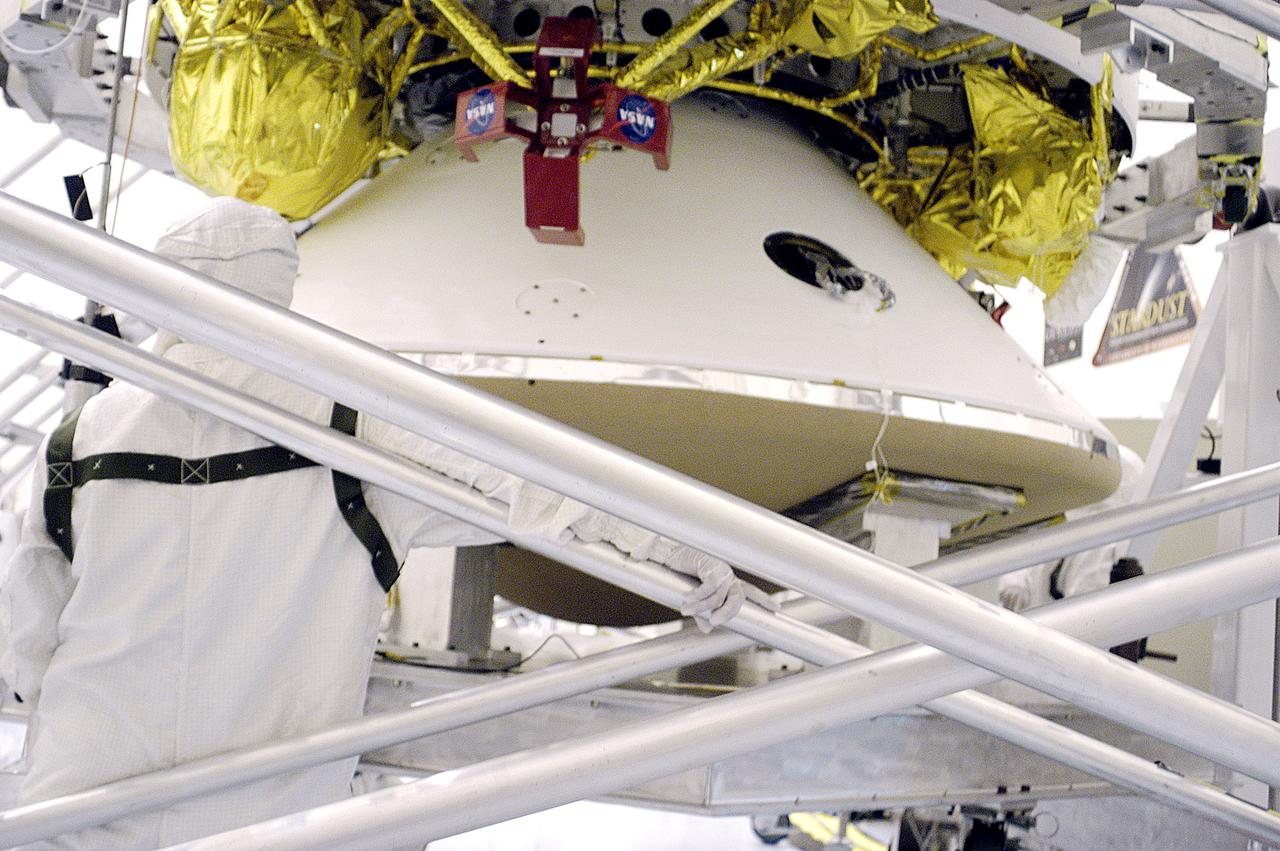
KENNEDY SPACE CENTER, FLA. - In the Payload Hazardous Servicing Facility, the cruise stage is mated to the Mars Exploration Rover 2 (MER-2) entry vehicle. The cruise stage includes fuel tanks, thruster clusters and avionics for steering and propulsion. NASA's twin Mars Exploration Rovers are designed to study the history of water on Mars. These robotic geologists are equipped with a robotic arm, a drilling tool, three spectrometers, and four pairs of cameras that allow them to have a human-like, 3D view of the terrain. Each rover could travel as far as 100 meters in one day to act as Mars scientists' eyes and hands, exploring an environment where humans can't yet go. MER-2 is scheduled to launch June 5 as MER-A aboard a Delta rocket from Cape Canaveral Air Force Station.
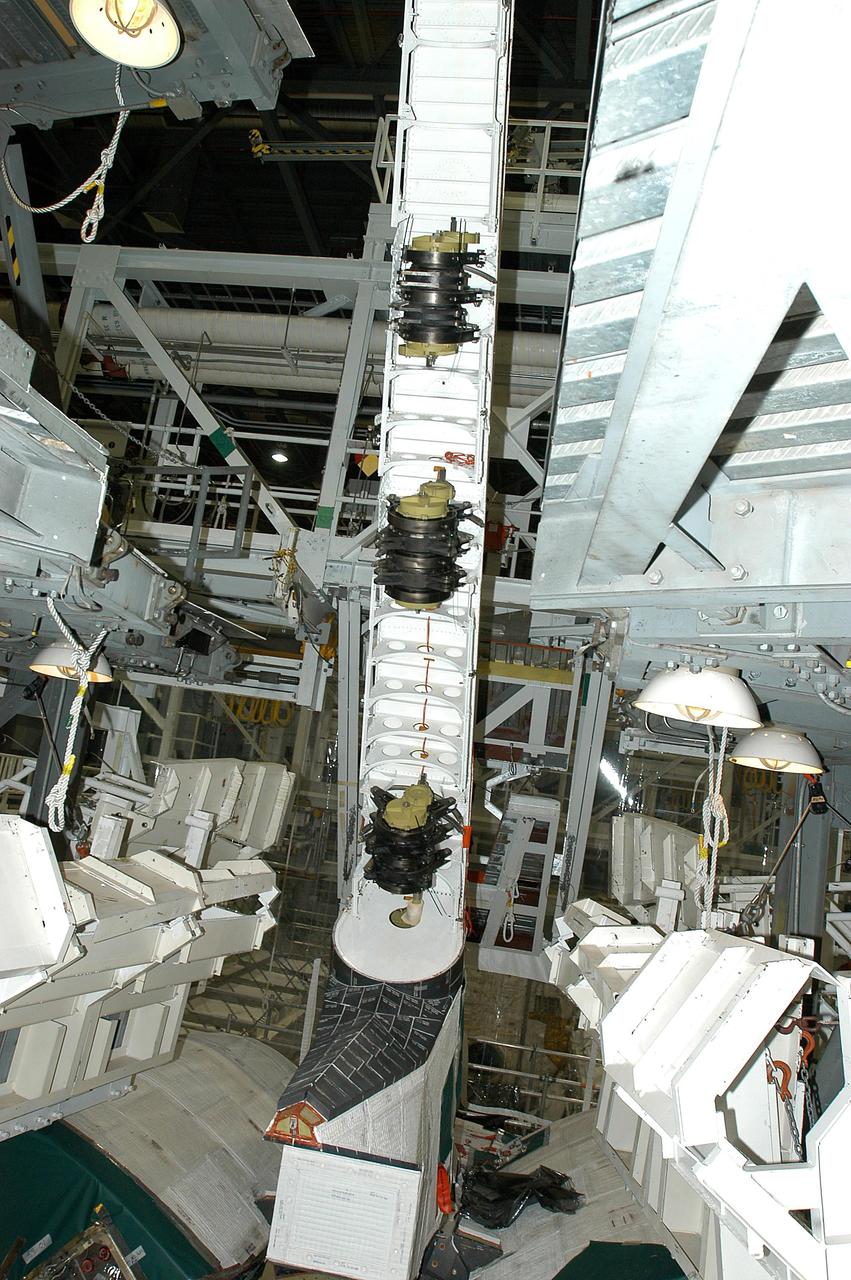
KENNEDY SPACE CENTER, FLA. -- A Rudder Speed Brake Actuator is being removed from the orbiter Atlantis for shipment to the vendor for inspection. An actuator is a motor that moves the tail rudder back and forth to help steer it during landing and brake its speed. The vertical tail consists of a structural fin surface made of aluminum, the Rudder Speed Brake surface, a tip and a lower trailing edge. The rudder splits into two halves to serve as a speed brake. The vertical tail and Rudder Speed Brake are covered with a reusable thermal protection system. Atlantis is undergoing maintenance and inspection in the Orbiter Processing Facility for a future mission.
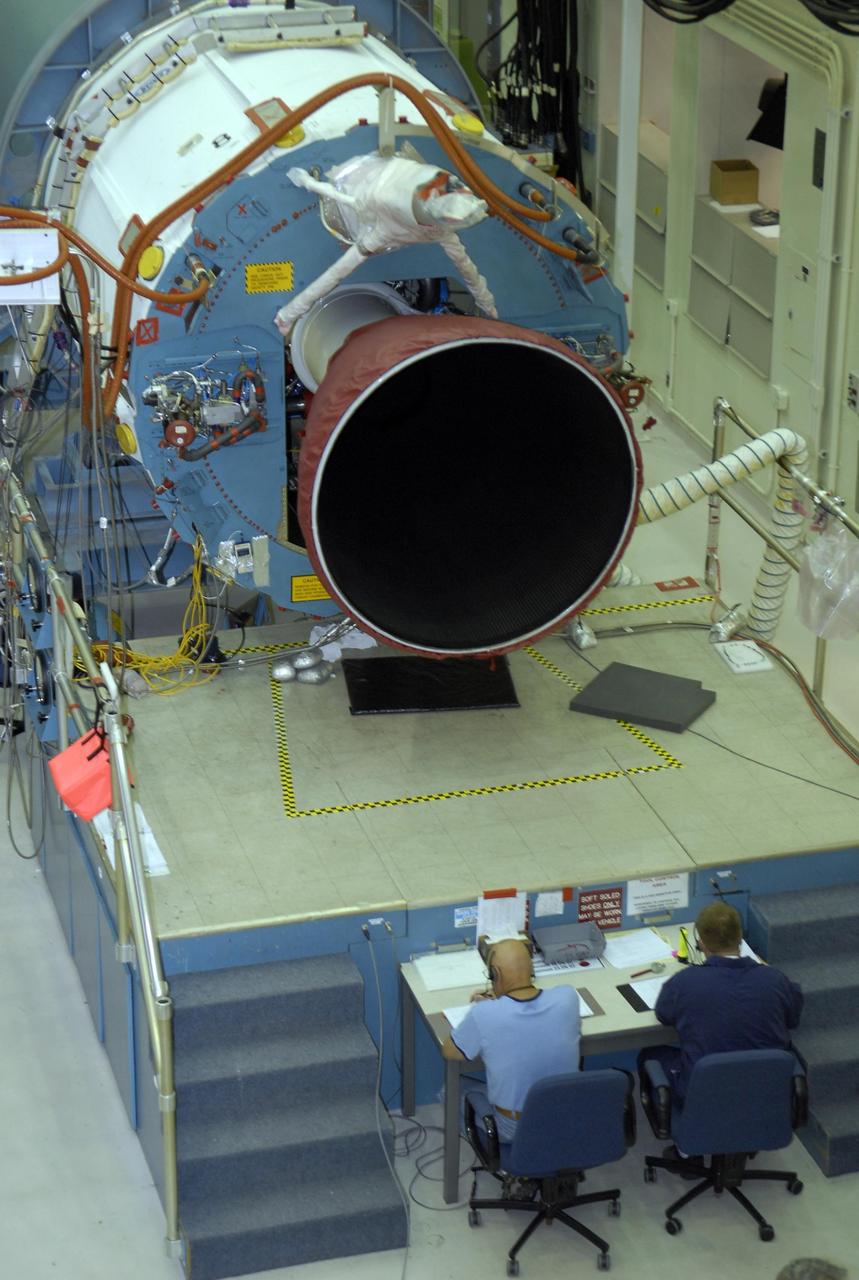
KENNEDY SPACE CENTER, FLA. -- In Hangar A&O on Cape Canaveral Air Force Station in Florida, workers conduct a steering test on the first stage of a Delta II rocket. The rocket is designated for the launch of the Phoenix Mars Lander spacecraft. Phoenix will land in icy soils near the north polar permanent ice cap of Mars and explore the history of the water in these soils and any associated rocks, while monitoring polar climate. Landing is planned in May 2008 on arctic ground where a mission currently in orbit, Mars Odyssey, has detected high concentrations of ice just beneath the top layer of soil. Launch of Phoenix is targeted for Aug. 3. Photo credit: NASA/Kim Shiflett
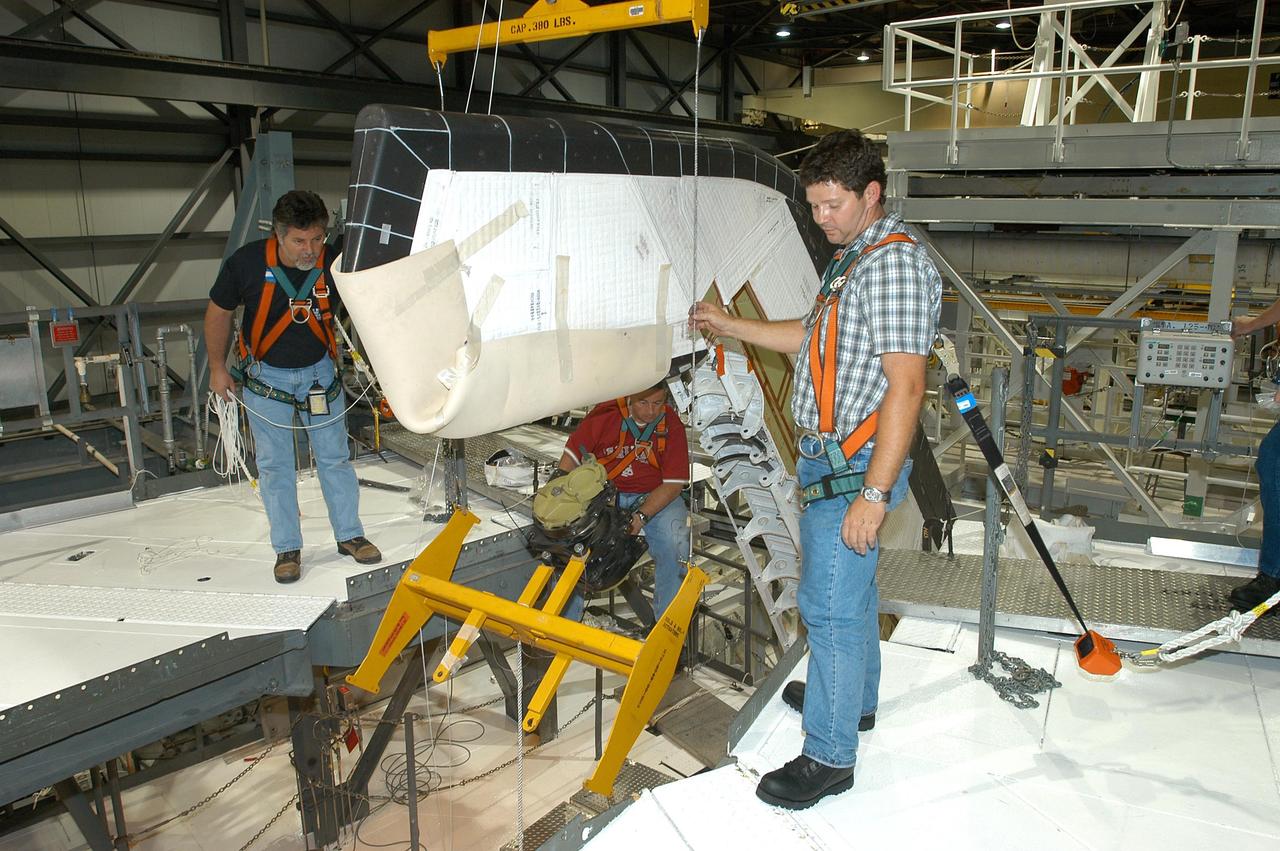
KENNEDY SPACE CENTER, FLA. -- Workers ensure the safe removal of a Rudder Speed Brake Actuator from the orbiter Atlantis. This and three other actuators are being shipped to the vendor for inspection. An actuator is a motor that moves the tail rudder back and forth to help steer it during landing and brake its speed. The vertical tail consists of a structural fin surface made of aluminum, the Rudder Speed Brake surface, a tip and a lower trailing edge. The rudder splits into two halves to serve as a speed brake. The vertical tail and Rudder Speed Brake are covered with a reusable thermal protection system. Atlantis is undergoing maintenance and inspection in the Orbiter Processing Facility for a future mission.
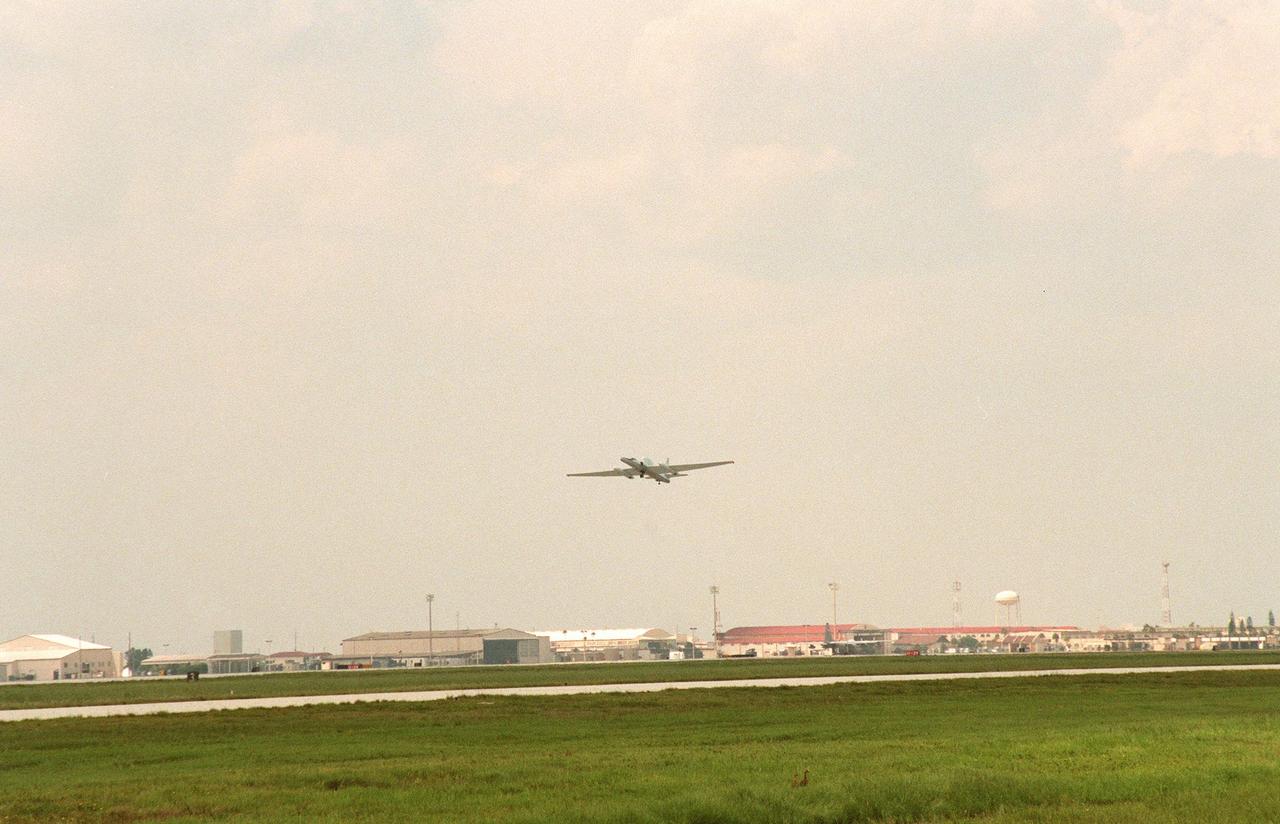
A specially equipped Dryden Flight Research Center ER-2 (a modified U-2) takes off from Patrick Air Force Base enroute to a hurricane in the Atlantic. The plane is part of the NASA-led Atmospheric Dynamics and Remote Sensing program that includes other government weather researchers and the university community in a study of Atlantic hurricanes and tropical storms. Soaring above 65,000 feet, the ER-2 will measure the structure of hurricanes and the surrounding atmosphere that steers the storm’s movement. The hurricane study, which lasts through September 1998, is part of NASA’s Earth Science enterprise to better understand the total Earth system and the effects of natural and human-induced changes on the global environment
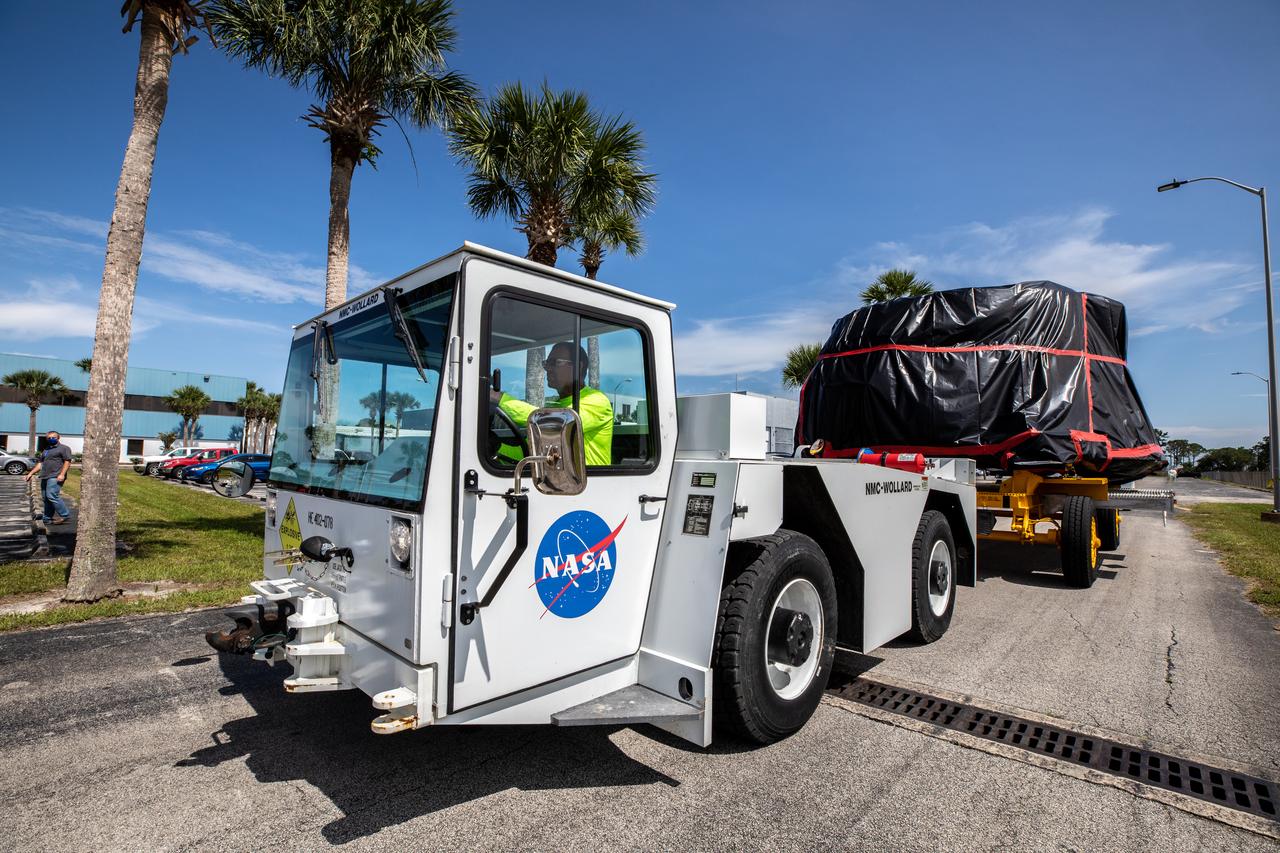
The Artemis I aft skirts for NASA's Space Launch System (SLS) rocket’s twin solid rocket boosters are transported to the Rotation Processing and Surge Facility (RPSF) at the agency’s Kennedy Space Center in Florida on June 10, 2020. The aft skirts were refurbished by Northrop Grumman. They house the thrust vector control system, which controls 70 percent of the steering during initial ascent of the SLS rocket. The segments will remain in the RPSF until ready for stacking with the forward and aft parts of the boosters on the mobile launcher in High Bay 3 of the Vehicle Assembly Building. Through the Artemis Program, NASA is working to land the first woman and next man on the Moon by 2024.
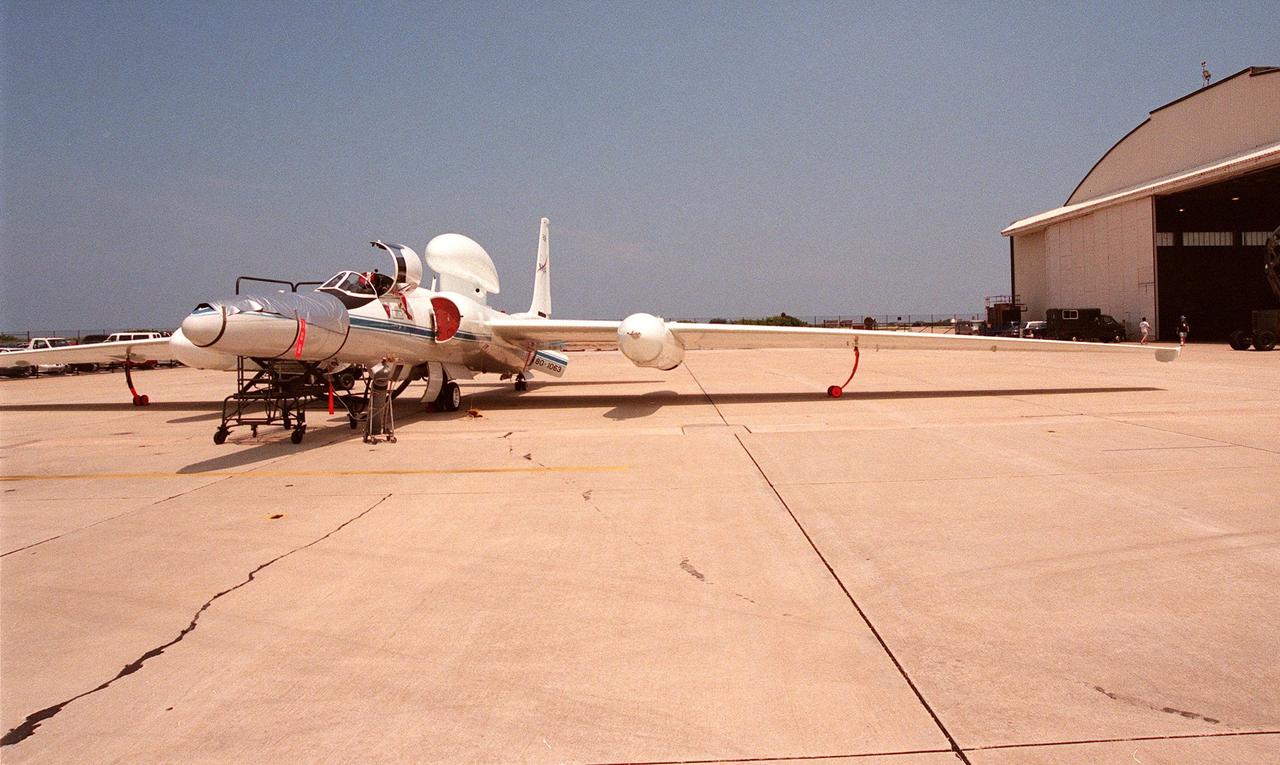
This high-altitude research plane, a specially equipped Dryden Flight Research Center ER-2 (a modified U-2), is readied at Patrick Air Force Base for flight into a hurricane in the Atlantic. The plane is part of the NASA-led Atmospheric Dynamics and Remote Sensing program that includes other government weather researchers and the university community in a study of Atlantic hurricanes and tropical storms. The ER-2, soaring above 65,000 feet, will measure the structure of hurricanes and the surrounding atmosphere that steers the storms’ movement. The hurricane study, which lasts through September 1998, is part of NASA’s Earth Science enterprise to better understand the total Earth system and the effects of natural and human-induced changes on the global environment

The Artemis I aft skirts for NASA's Space Launch System (SLS) rocket’s twin solid rocket boosters are transported to the Rotation Processing and Surge Facility (RPSF) at the agency’s Kennedy Space Center in Florida on June 10, 2020. The aft skirts were refurbished by Northrop Grumman. They house the thrust vector control system, which controls 70 percent of the steering during initial ascent of the SLS rocket. The segments will remain in the RPSF until ready for stacking with the forward and aft parts of the boosters on the mobile launcher in High Bay 3 of the Vehicle Assembly Building. Through the Artemis Program, NASA is working to land the first woman and next man on the Moon by 2024.
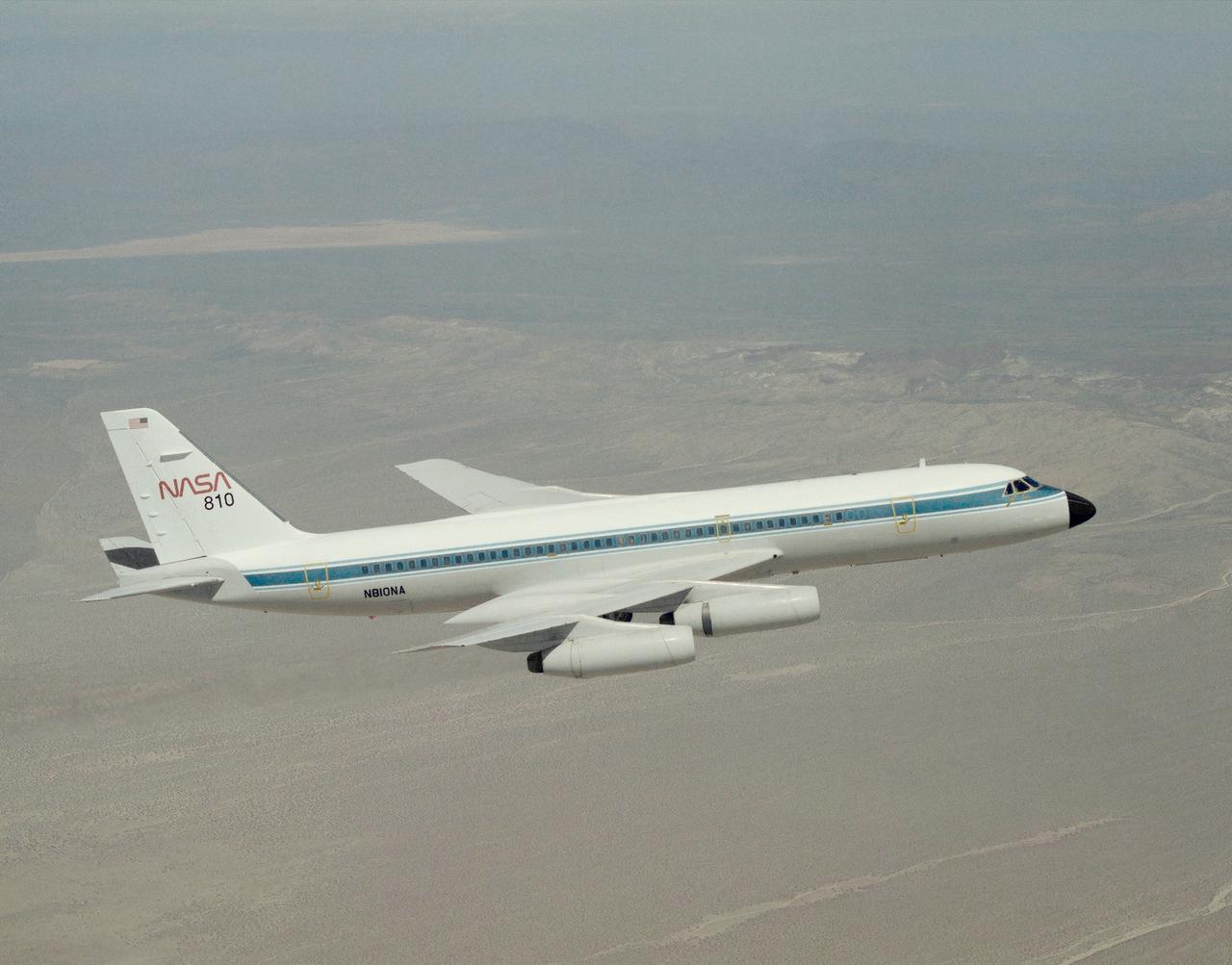
A NASA CV-990, modified as a Landing Systems Research Aircraft (LSRA), in flight over NASA's Dryden Flight Research Center, Edwards, California, for a test of the space shuttle landing gear system. The space shuttle landing gear test unit, operated by a high-pressure hydraulic system, allowed engineers to assess and document the performance of space shuttle main and nose landing gear systems, tires and wheel assemblies, plus braking and nose wheel steering performance. The series of 155 test missions for the space shuttle program provided extensive data about the life and endurance of the shuttle tire systems and helped raise the shuttle crosswind landing limits at Kennedy.
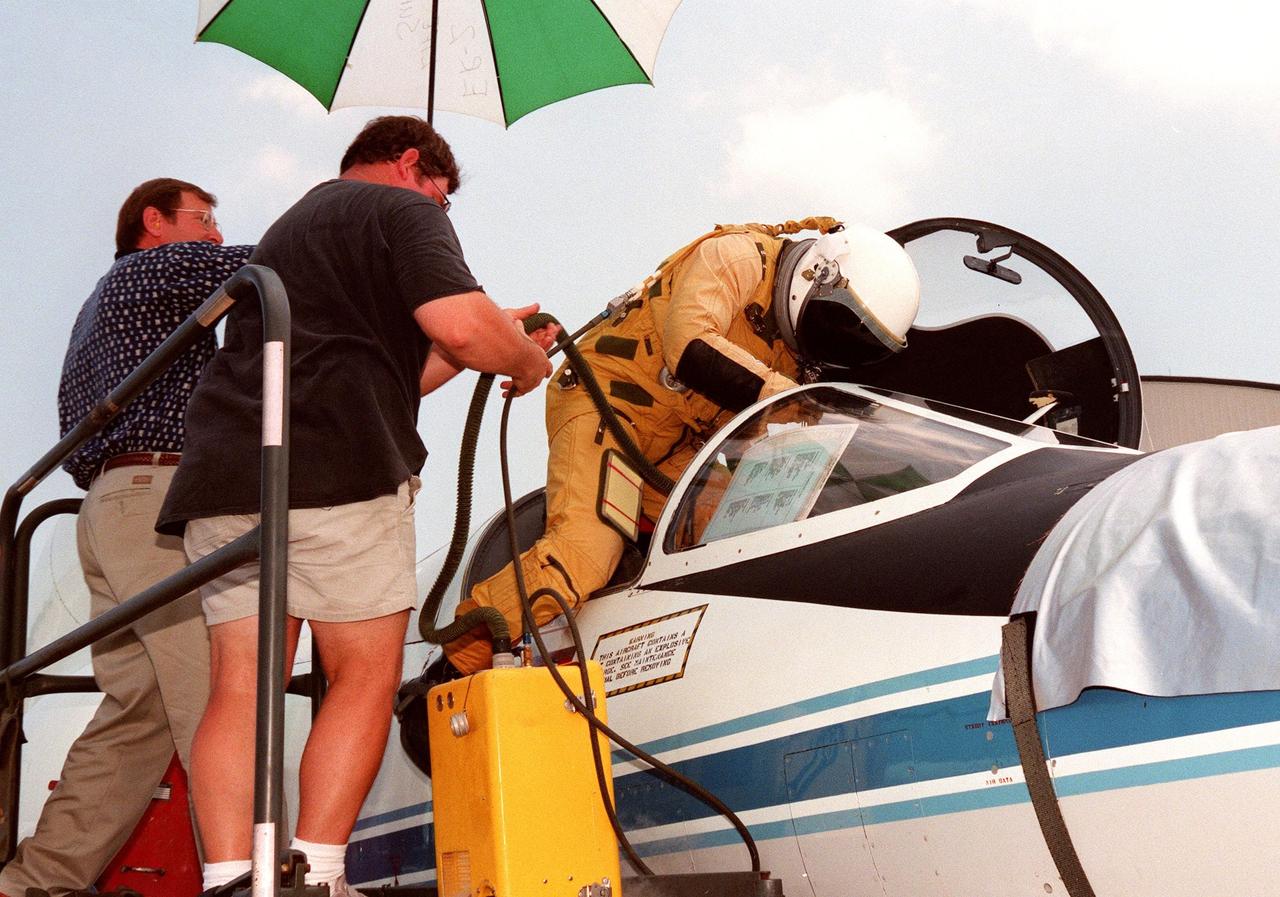
The pilot climbs into the cockpit of a high-altitude research plane, a specially equipped Dryden Flight Research Center ER-2 (a modified U-2), at Patrick Air Force Base. Soaring above 65,000 feet, the ER-2 will measure the structure of hurricanes and the surrounding atmosphere that steers the storm’s movement. The plane is part of the NASA-led Atmospheric Dynamics and Remote Sensing program that includes other government weather researchers and the university community in a study of Atlantic hurricanes and tropical storms. The hurricane study, which lasts through September 1998, is part of NASA’s Earth Science enterprise to better understand the total Earth system and the effects of natural and human-induced changes on the global environment
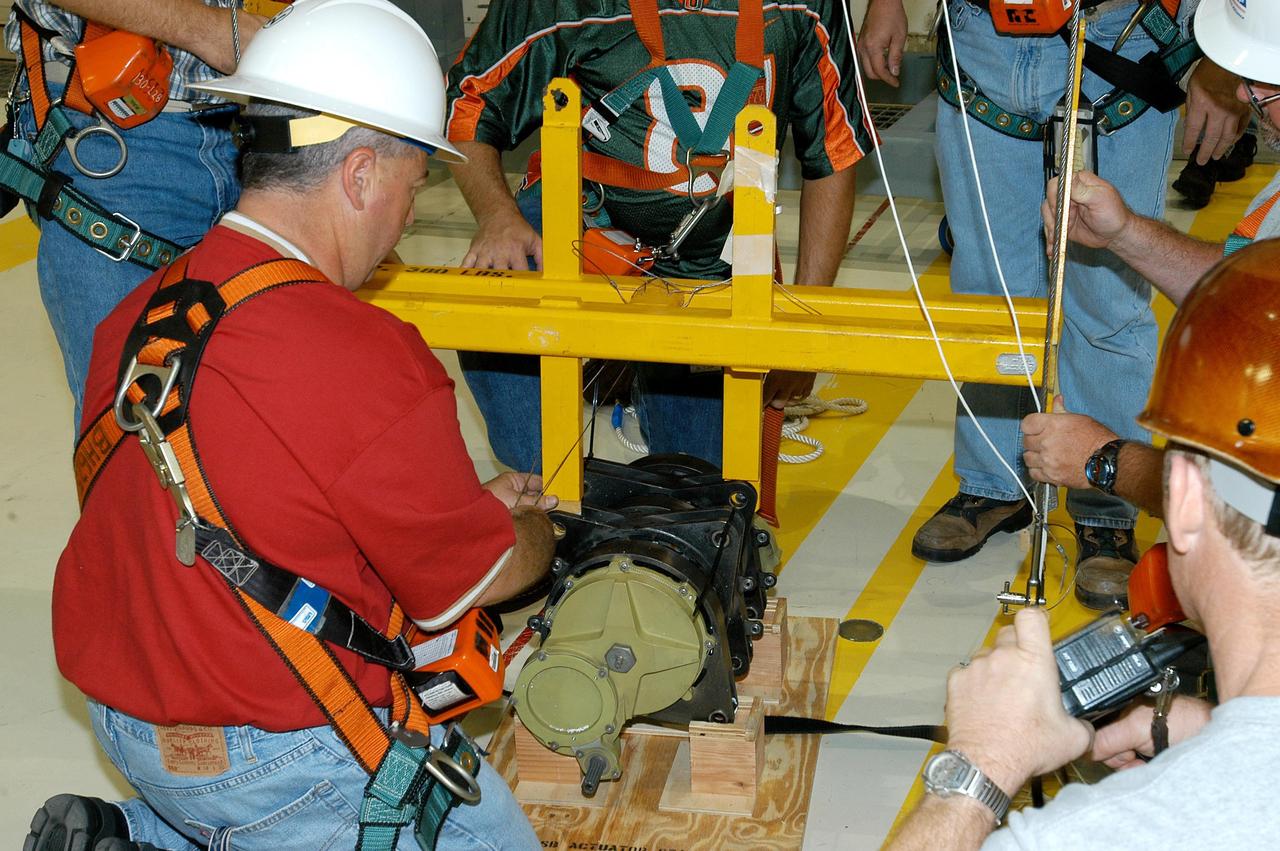
KENNEDY SPACE CENTER, FLA. -- A Rudder Speed Brake Actuator from the orbiter Atlantis is set on a stand on the floor of the Orbiter Processing Facility. This and three other actuators are being shipped to the vendor for inspection. An actuator is a motor that moves the tail rudder back and forth to help steer it during landing and brake its speed. The vertical tail consists of a structural fin surface made of aluminum, the Rudder Speed Brake surface, a tip and a lower trailing edge. The rudder splits into two halves to serve as a speed brake. The vertical tail and Rudder Speed Brake are covered with a reusable thermal protection system. Atlantis is undergoing maintenance and inspection for a future mission.
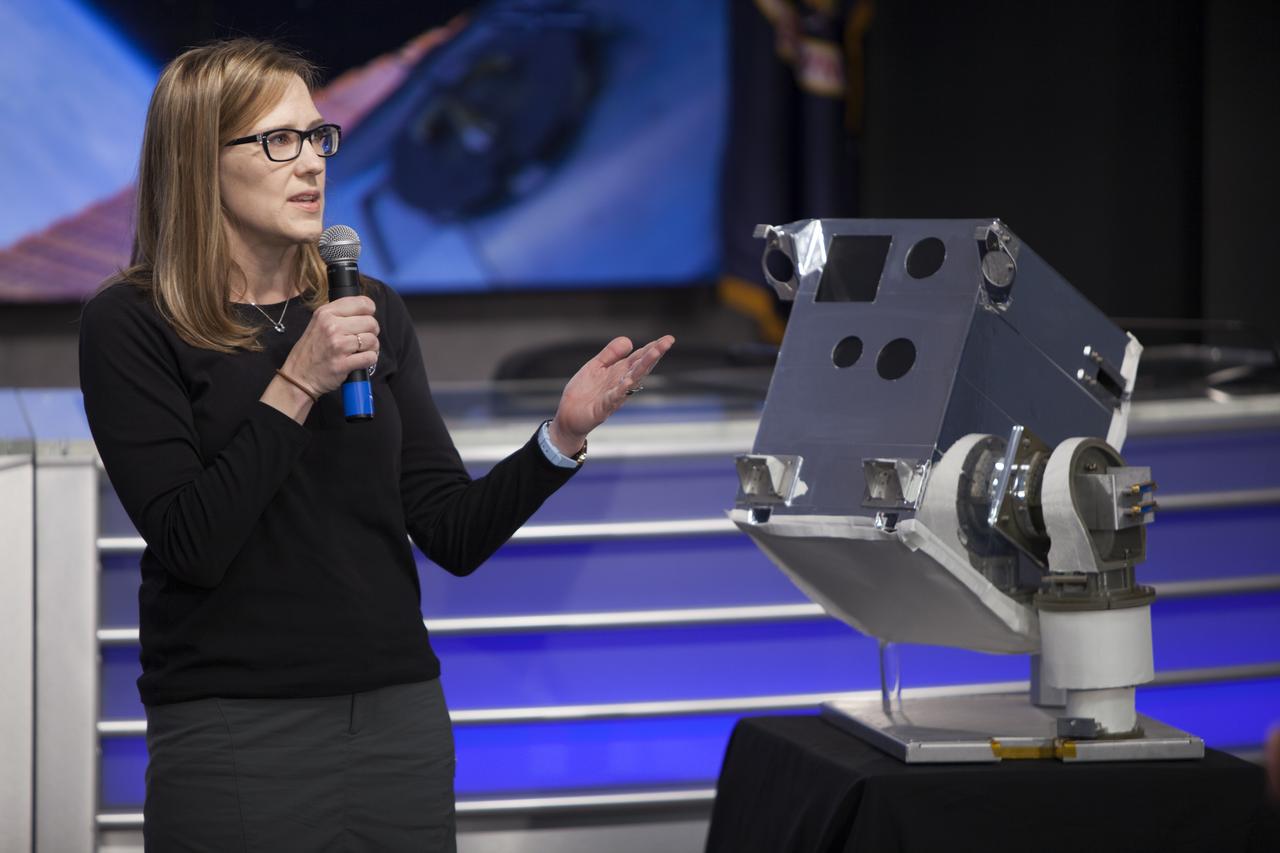
Jolyn Russell, deputy Robotics program manager at NASA’s Goddard Space Flight Center’s Satellite Servicing Projects Division in Maryland, speaks to members of social media in the Kennedy Space Center’s Press Site auditorium. The briefing focused on “Raven” research planned for the International Space Station. The Raven investigation studies a real-time robotic spacecraft navigation system that provides the eyes and intelligence to see a target and steer safely toward it. Raven will be part of experiments aboard a Dragon spacecraft scheduled for launch from Kennedy’s Launch Complex 39A on Feb. 18 atop a SpaceX Falcon 9 rocket on the company's 10th Commercial Resupply Services mission to the space station.
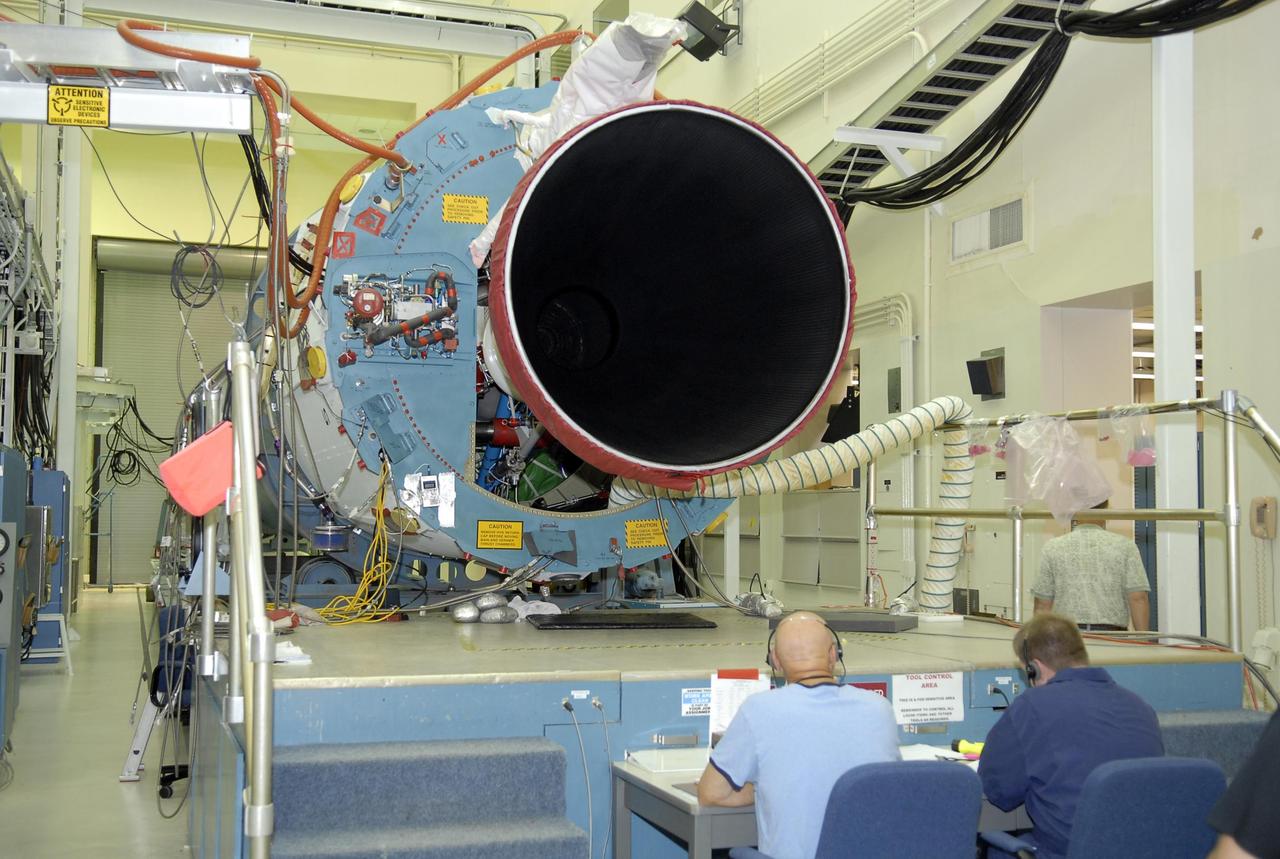
KENNEDY SPACE CENTER, FLA. -- In Hangar A&O on Cape Canaveral Air Force Station in Florida, workers conduct a steering test on the first stage of a Delta II rocket. The rocket is designated for the launch of the Phoenix Mars Lander spacecraft. Phoenix will land in icy soils near the north polar permanent ice cap of Mars and explore the history of the water in these soils and any associated rocks, while monitoring polar climate. Landing is planned in May 2008 on arctic ground where a mission currently in orbit, Mars Odyssey, has detected high concentrations of ice just beneath the top layer of soil. Launch of Phoenix is targeted for Aug. 3. Photo credit: NASA/Kim Shiflett
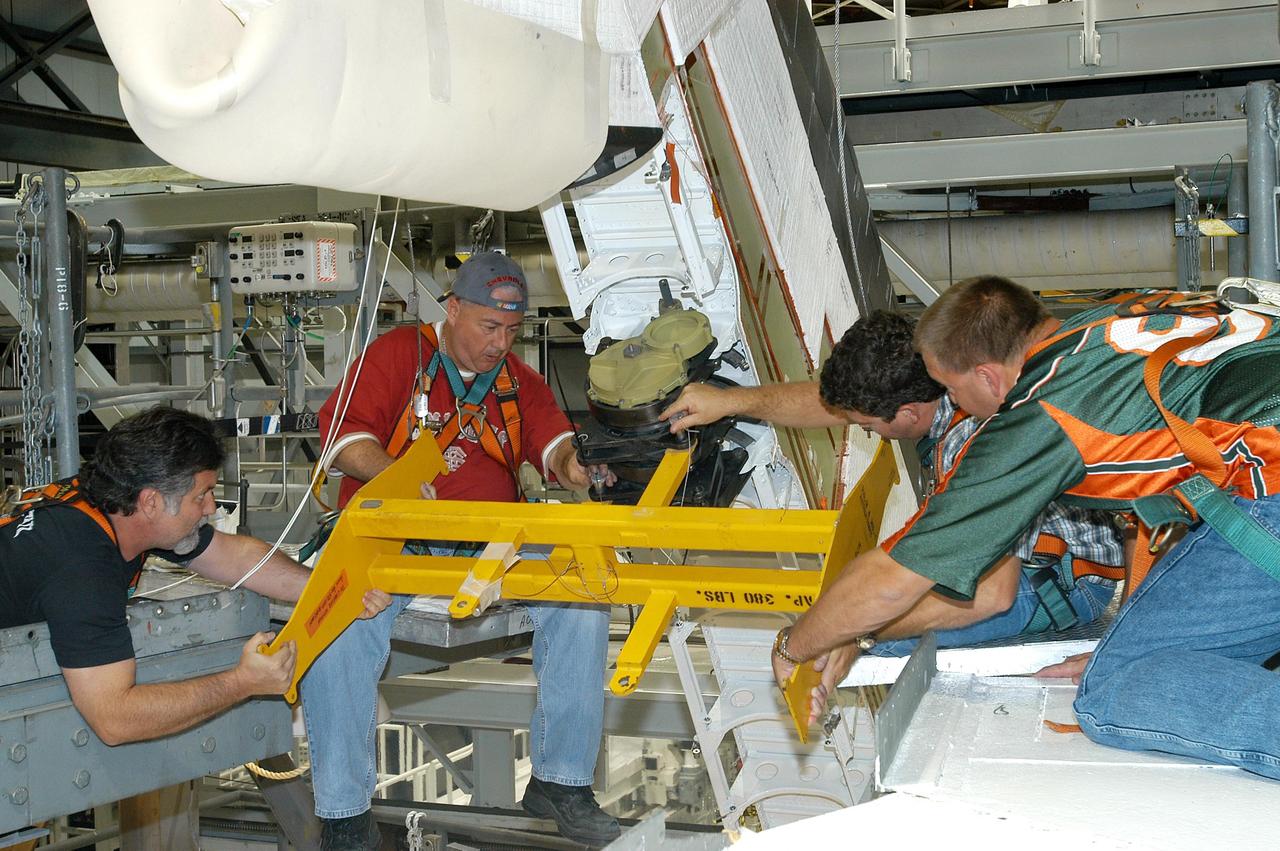
KENNEDY SPACE CENTER, FLA. -- Workers attach a crane to one of the Rudder Speed Brake Actuators that are being removed from the orbiter Atlantis for shipment to the vendor for inspection. An actuator is a motor that moves the tail rudder back and forth to help steer it during landing and brake its speed. The vertical tail consists of a structural fin surface made of aluminum, the Rudder Speed Brake surface, a tip and a lower trailing edge. The rudder splits into two halves to serve as a speed brake. The vertical tail and Rudder Speed Brake are covered with a reusable thermal protection system. Atlantis is undergoing maintenance and inspection in the Orbiter Processing Facility for a future mission.
The Artemis I aft skirts for NASA’s Space Launch System (SLS) rocket’s twin solid rocket boosters are moved along the road to the Rotation, Processing and Surge Facility (RPSF) at the agency’s Kennedy Space Center in Florida on June 10, 2020. The aft skirts were refurbished by Northrop Grumman. They house the thrust vector control system, which controls 70 percent of the steering during initial ascent of the SLS rocket. The aft skirts will remain in the RPSF until ready for stacking with the forward and aft parts of the boosters on the mobile launcher in High Bay 3 of the Vehicle Assembly Building. Through the Artemis Program, NASA is working to land the first woman and next man on the Moon by 2024.
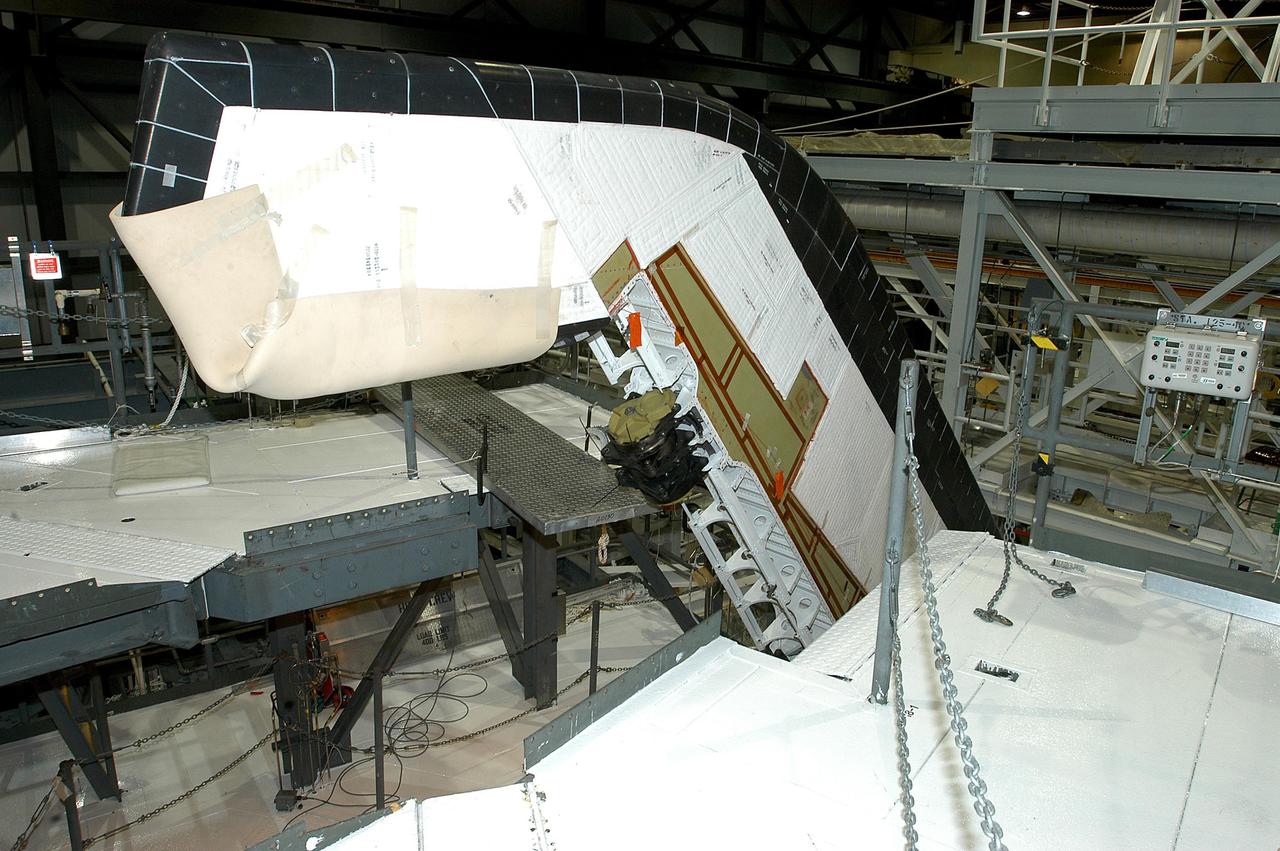
KENNEDY SPACE CENTER, FLA. -- A Rudder Speed Brake Actuator is being removed from the orbiter Atlantis for shipment to the vendor for inspection. An actuator is a motor that moves the tail rudder back and forth to help steer it during landing and brake its speed. The vertical tail consists of a structural fin surface made of aluminum, the Rudder Speed Brake surface, a tip and a lower trailing edge. The rudder splits into two halves to serve as a speed brake. The vertical tail and Rudder Speed Brake are covered with a reusable thermal protection system. Atlantis is undergoing maintenance and inspection in the Orbiter Processing Facility for a future mission.
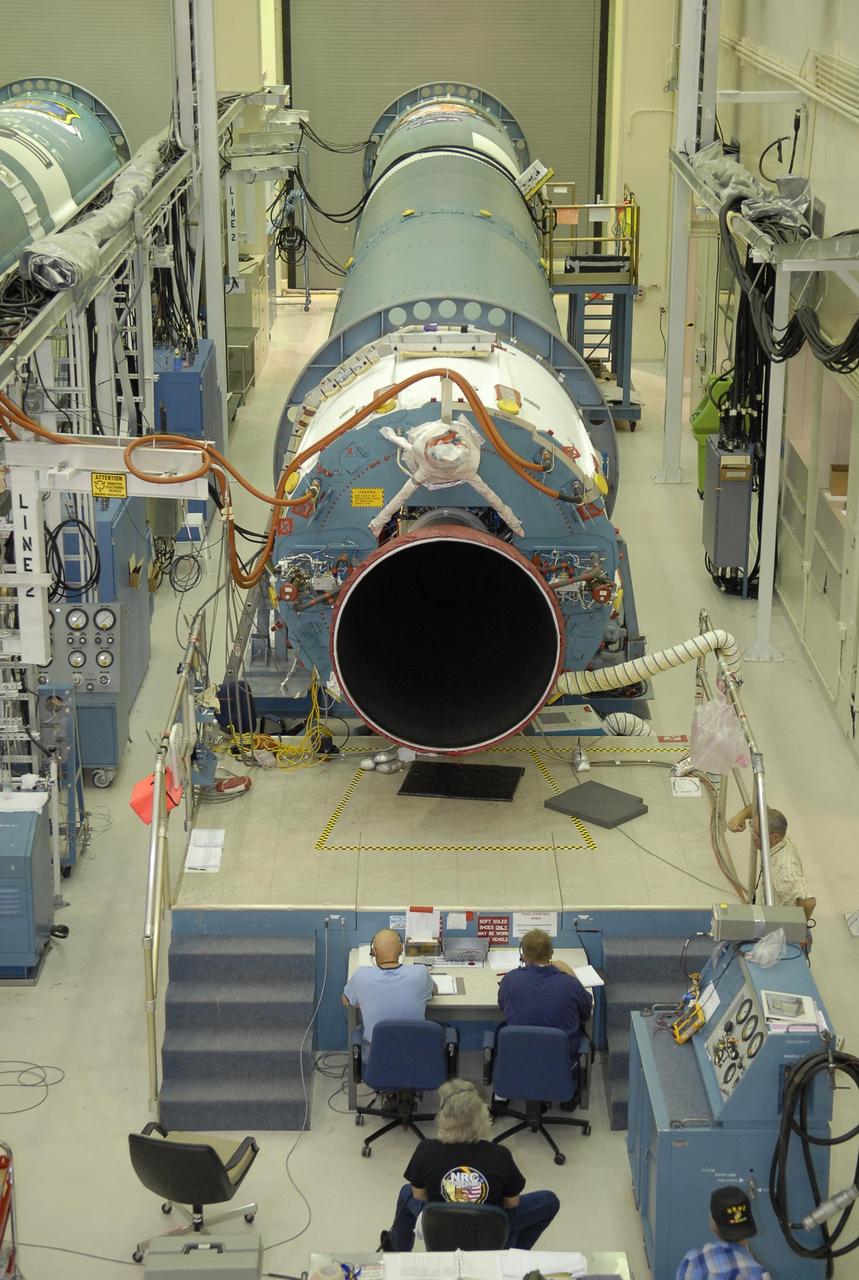
KENNEDY SPACE CENTER, FLA. -- In Hangar A&O on Cape Canaveral Air Force Station in Florida, workers conduct a steering test on the first stage of a Delta II rocket, at right. The rocket is designated for the launch of the Phoenix Mars Lander spacecraft. Phoenix will land in icy soils near the north polar permanent ice cap of Mars and explore the history of the water in these soils and any associated rocks, while monitoring polar climate. Landing is planned in May 2008 on arctic ground where a mission currently in orbit, Mars Odyssey, has detected high concentrations of ice just beneath the top layer of soil. Launch of Phoenix is targeted for Aug. 3. Photo credit: NASA/Kim Shiflett
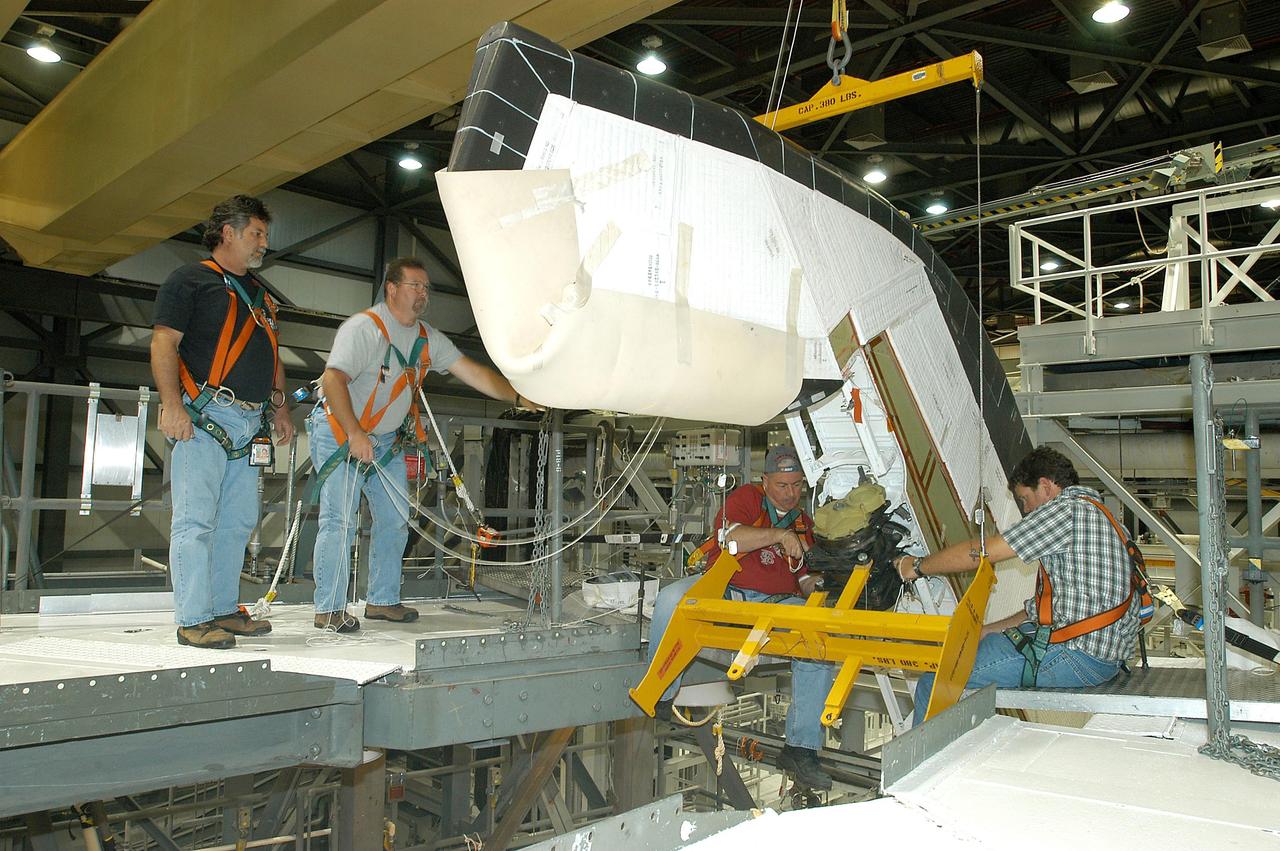
KENNEDY SPACE CENTER, FLA. -- Workers attach a crane to one of the Rudder Speed Brake Actuators that are being removed from the orbiter Atlantis for shipment to the vendor for inspection. An actuator is a motor that moves the tail rudder back and forth to help steer it during landing and brake its speed. The vertical tail consists of a structural fin surface made of aluminum, the Rudder Speed Brake surface, a tip and a lower trailing edge. The rudder splits into two halves to serve as a speed brake. The vertical tail and Rudder Speed Brake are covered with a reusable thermal protection system. Atlantis is undergoing maintenance and inspection in the Orbiter Processing Facility for a future mission.
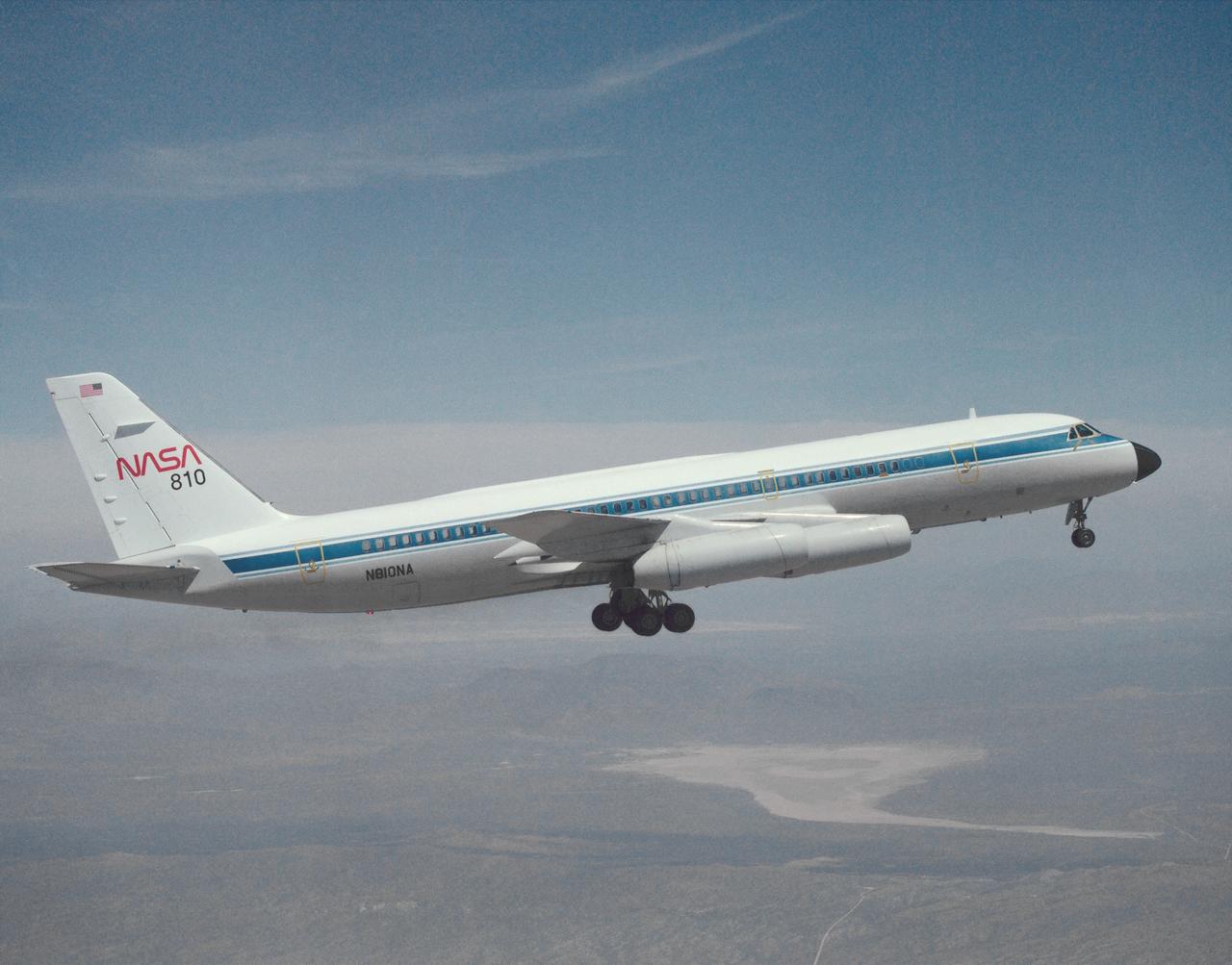
A NASA CV-990, modified as a Landing Systems Research Aircraft (LSRA), in flight over NASA's Dryden Flight Research Center, Edwards, California, for a test of the space shuttle landing gear system. The space shuttle landing gear test unit, operated by a high-pressure hydraulic system, allowed engineers to assess and document the performance of space shuttle main and nose landing gear systems, tires and wheel assemblies, plus braking and nose wheel steering performance. The series of 155 test missions for the space shuttle program provided extensive data about the life and endurance of the shuttle tire systems and helped raise the shuttle crosswind landing limits at Kennedy.

A specially equipped Dryden Flight Research Center ER-2 (a modified U-2) soars above Patrick Air Force Base enroute to a hurricane in the Atlantic. The plane is part of the NASA-led Atmospheric Dynamics and Remote Sensing program that includes other government weather researchers and the university community in a study of Atlantic hurricanes and tropical storms. Soaring above 65,000 feet, the ER-2 will measure the structure of hurricanes and the surrounding atmosphere that steers the storm’s movement. The hurricane study, which lasts through September 1998, is part of NASA’s Earth Science enterprise to better understand the total Earth system and the effects of natural and human-induced changes on the global environment
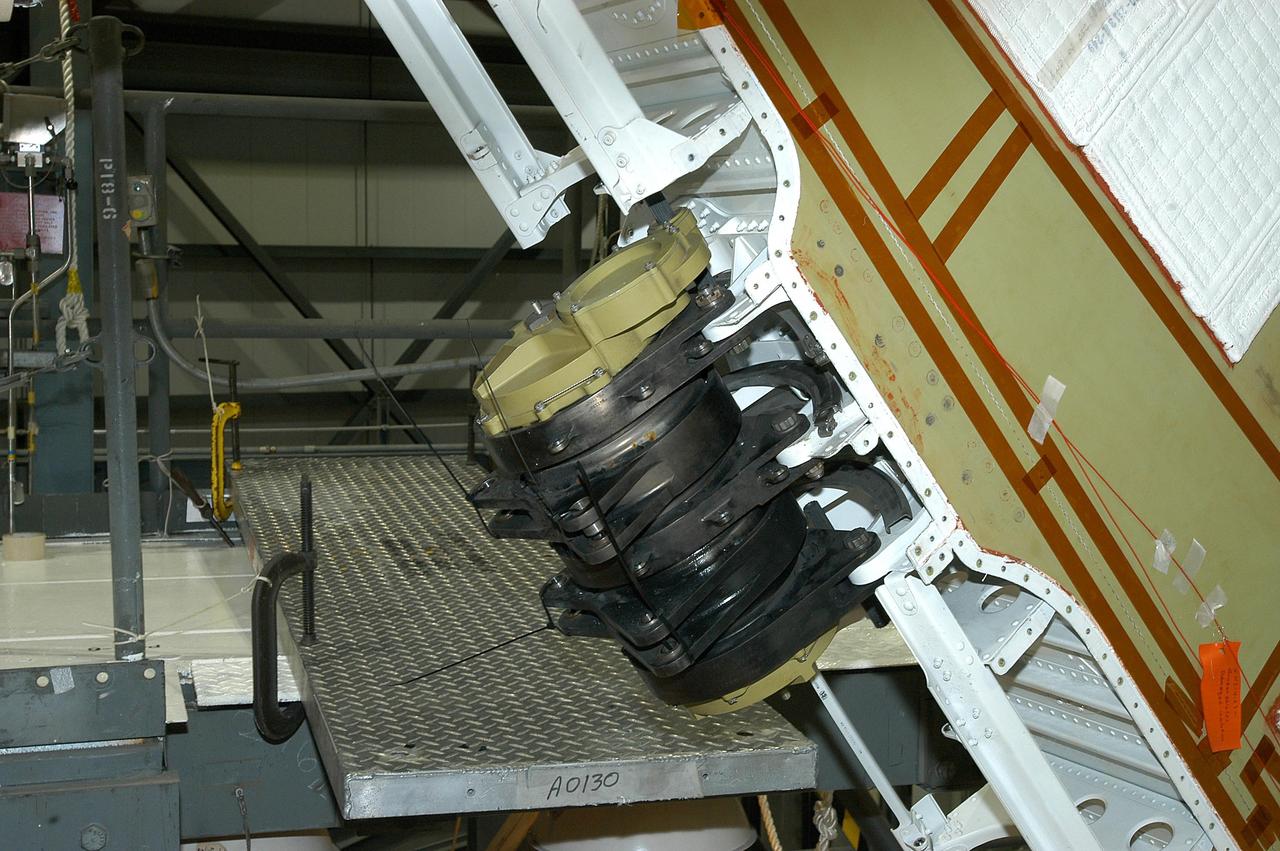
KENNEDY SPACE CENTER, FLA. -- This is a closeup of one of the Rudder Speed Brake Actuators that are being removed from the orbiter Atlantis for shipment to the vendor for inspection. An actuator is a motor that moves the tail rudder back and forth to help steer it during landing and brake its speed. The vertical tail consists of a structural fin surface made of aluminum, the Rudder Speed Brake surface, a tip and a lower trailing edge. The rudder splits into two halves to serve as a speed brake. The vertical tail and Rudder Speed Brake are covered with a reusable thermal protection system. Atlantis is undergoing maintenance and inspection in the Orbiter Processing Facility for a future mission.
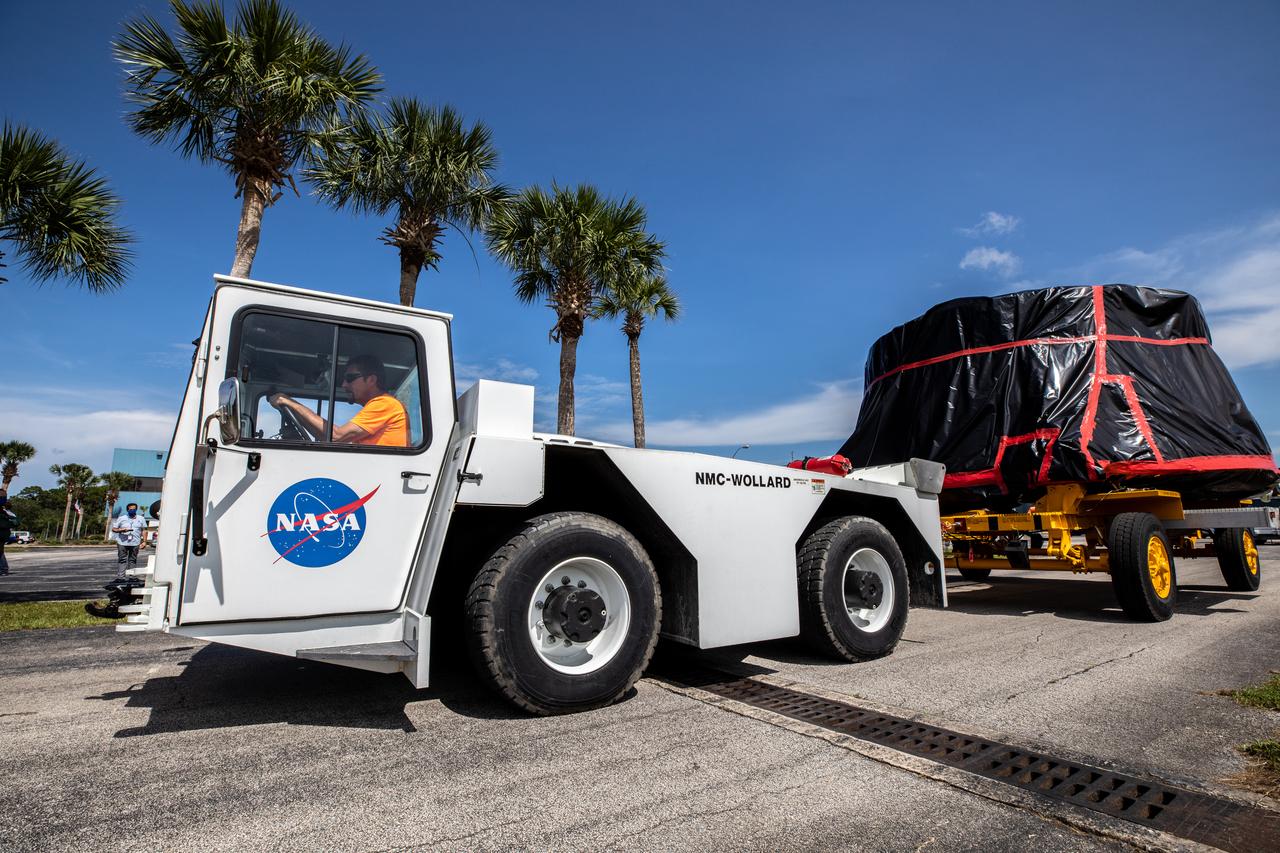
The Artemis I aft skirts for NASA's Space Launch System (SLS) rocket’s twin solid rocket boosters are transported to the Rotation Processing and Surge Facility (RPSF) at the agency’s Kennedy Space Center in Florida on June 10, 2020. The aft skirts were refurbished by Northrop Grumman. They house the thrust vector control system, which controls 70 percent of the steering during initial ascent of the SLS rocket. The segments will remain in the RPSF until ready for stacking with the forward and aft parts of the boosters on the mobile launcher in High Bay 3 of the Vehicle Assembly Building. Through the Artemis Program, NASA is working to land the first woman and next man on the Moon by 2024.
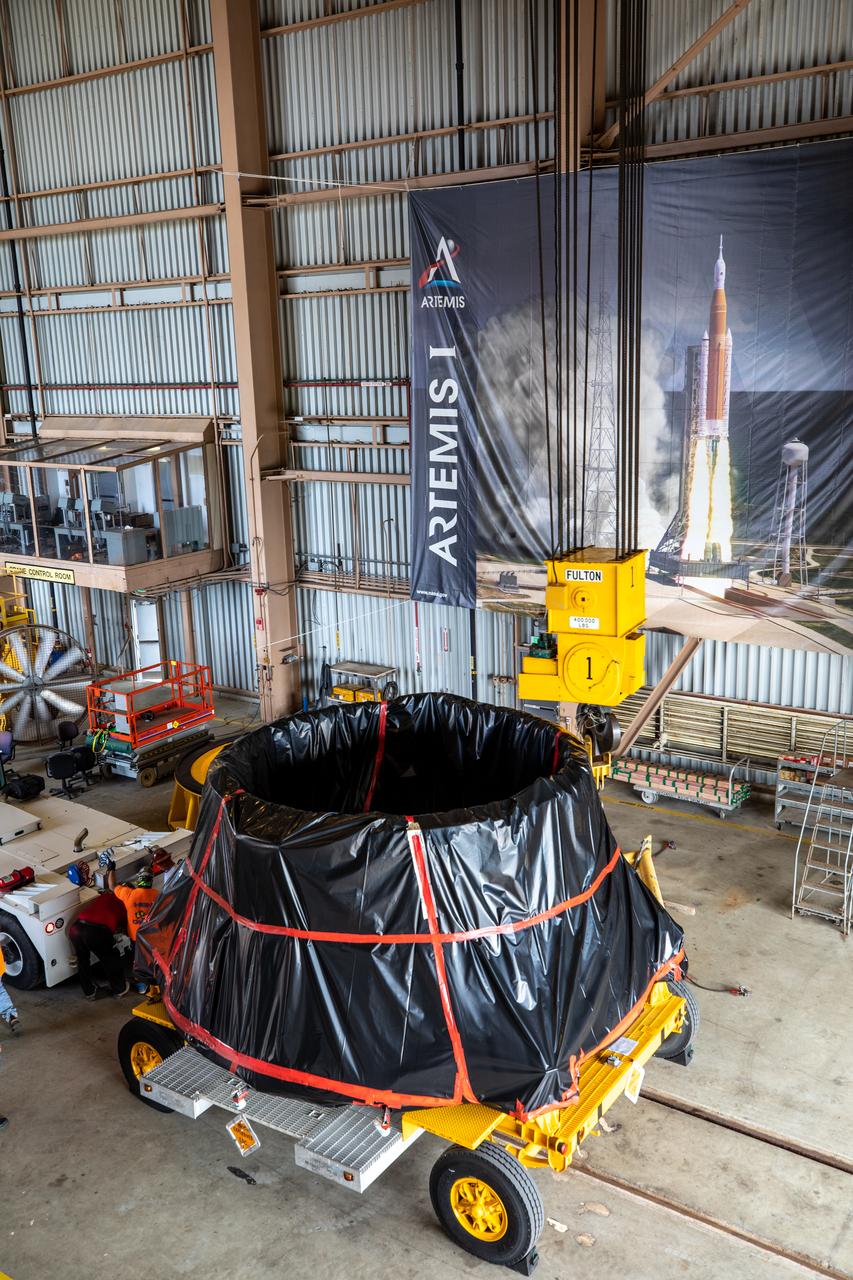
The first of two Artemis I aft skirts for NASA's Space Launch System (SLS) rocket’s twin solid rocket boosters is moved into the Rotation Processing and Surge Facility (RPSF) at the agency’s Kennedy Space Center in Florida on June 10, 2020. The aft skirts were refurbished by Northrop Grumman. They house the thrust vector control system, which controls 70 percent of the steering during initial ascent of the SLS rocket. The segments will remain in the RPSF until ready for stacking with the forward and aft parts of the boosters on the mobile launcher in High Bay 3 of the Vehicle Assembly Building. Through the Artemis Program, NASA is working to land the first woman and next man on the Moon by 2024.
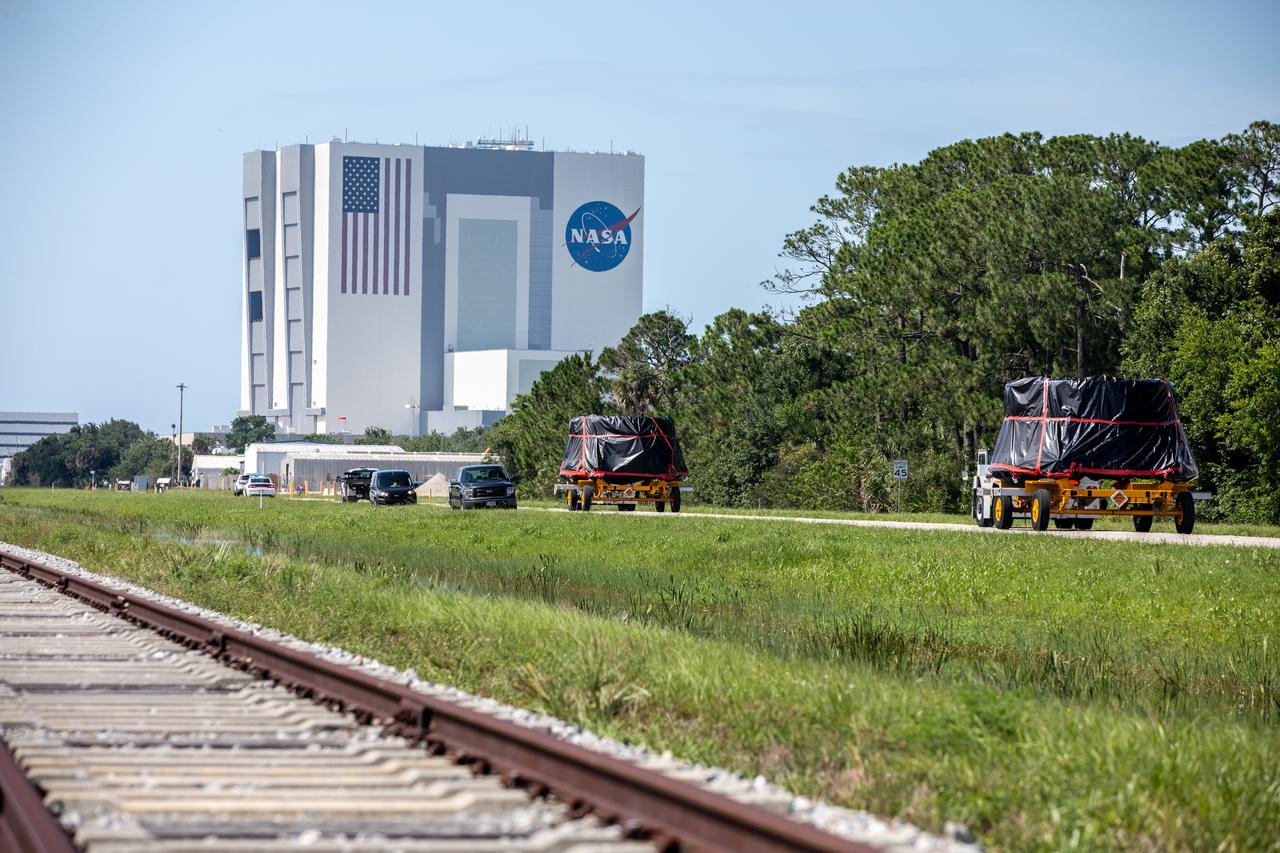
The Artemis I aft skirts for NASA’s Space Launch System (SLS) rocket’s twin solid rocket boosters are moved along the road to the Rotation, Processing and Surge Facility (RPSF) at the agency’s Kennedy Space Center in Florida on June 10, 2020. The aft skirts were refurbished by Northrop Grumman. They house the thrust vector control system, which controls 70 percent of the steering during initial ascent of the SLS rocket. The aft skirts will remain in the RPSF until ready for stacking with the forward and aft parts of the boosters on the mobile launcher in High Bay 3 of the Vehicle Assembly Building. Through the Artemis Program, NASA is working to land the first woman and next man on the Moon by 2024.
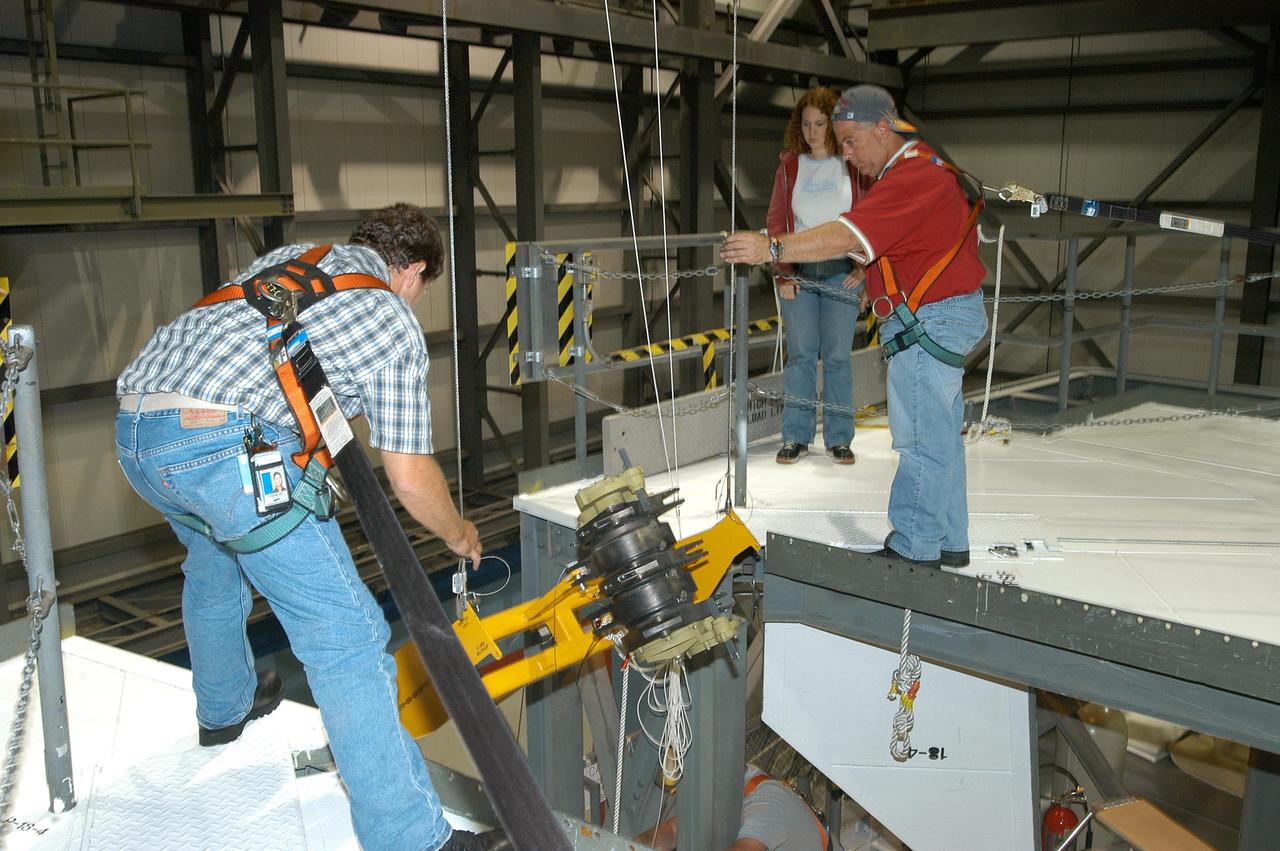
KENNEDY SPACE CENTER, FLA. -- Workers ensure the safe removal of a Rudder Speed Brake Actuator from the orbiter Atlantis. This and three other actuators are being shipped to the vendor for inspection. An actuator is a motor that moves the tail rudder back and forth to help steer it during landing and brake its speed. The vertical tail consists of a structural fin surface made of aluminum, the Rudder Speed Brake surface, a tip and a lower trailing edge. The rudder splits into two halves to serve as a speed brake. The vertical tail and Rudder Speed Brake are covered with a reusable thermal protection system. Atlantis is undergoing maintenance and inspection in the Orbiter Processing Facility for a future mission.
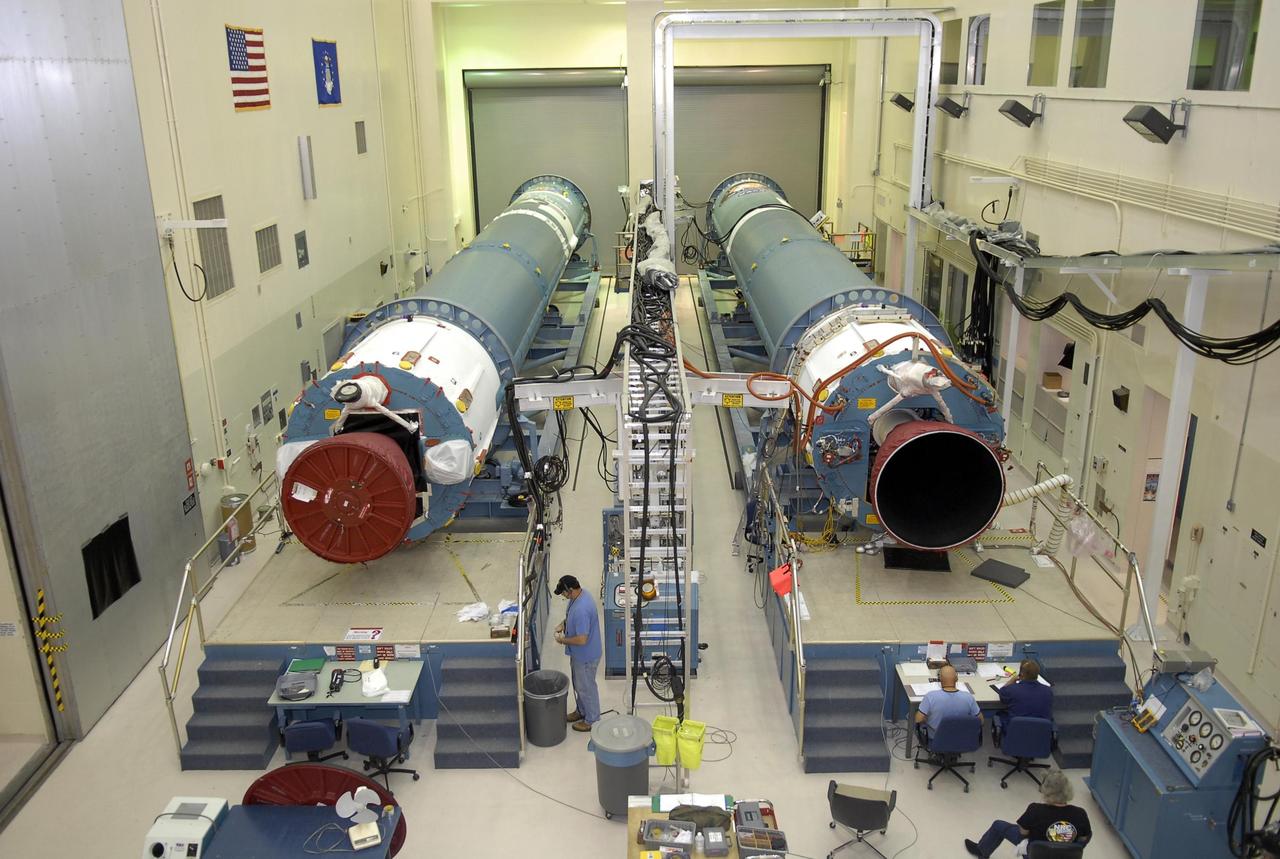
KENNEDY SPACE CENTER, FLA. -- In Hangar A&O on Cape Canaveral Air Force Station in Florida, workers conduct a steering test on the first stage of a Delta II rocket, at right. The rocket is designated for the launch of the Phoenix Mars Lander spacecraft. Phoenix will land in icy soils near the north polar permanent ice cap of Mars and explore the history of the water in these soils and any associated rocks, while monitoring polar climate. Landing is planned in May 2008 on arctic ground where a mission currently in orbit, Mars Odyssey, has detected high concentrations of ice just beneath the top layer of soil. Launch of Phoenix is targeted for Aug. 3. Photo credit: NASA/Kim Shiflett
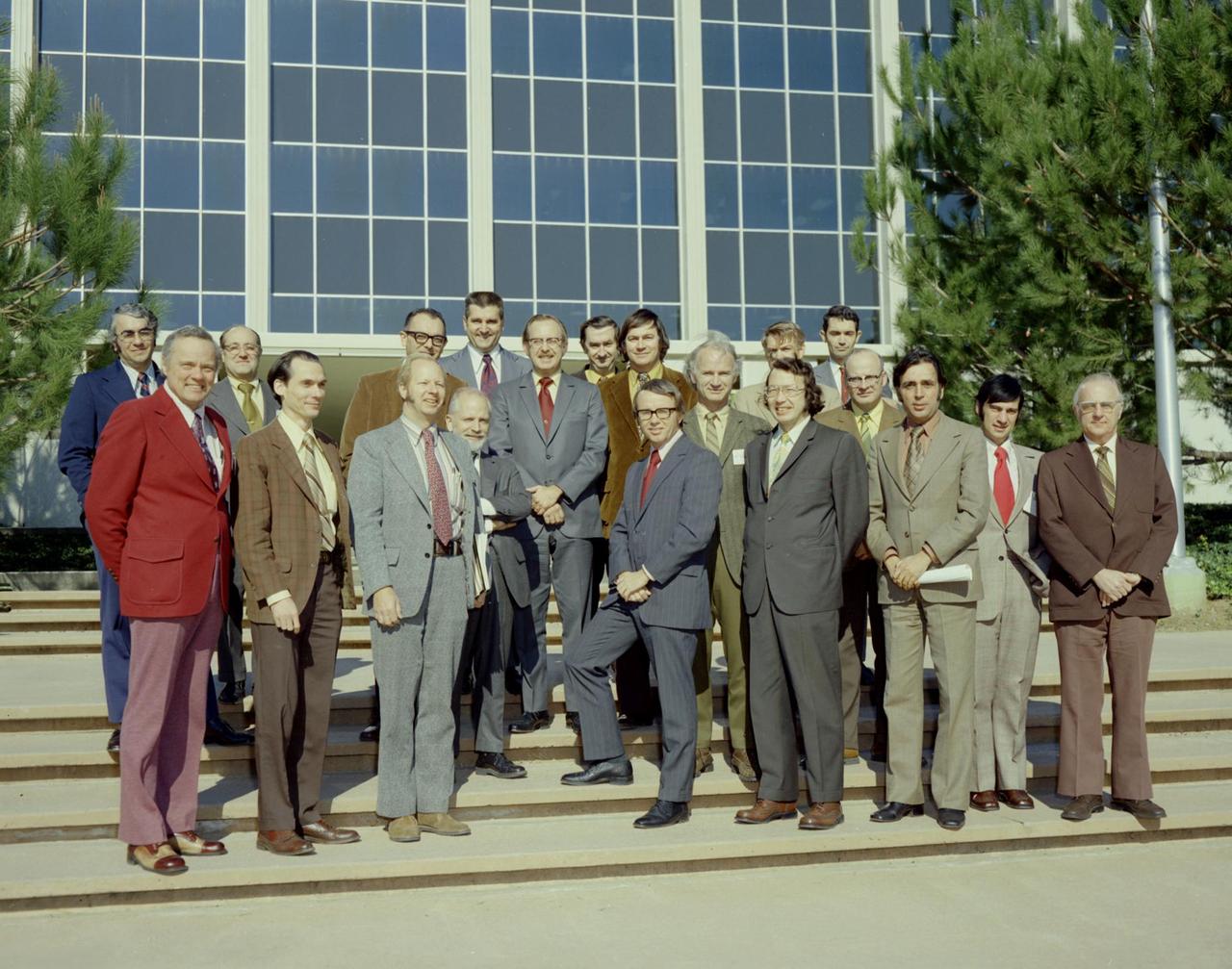
This archival image was released as part of a gallery comparing JPL's past and present, commemorating the 80th anniversary of NASA's Jet Propulsion Laboratory on Oct. 31, 2016. In December 1972, the science steering group for a mission then-known as Mariner Jupiter Saturn 1977 -- later renamed Voyager -- met for the first time at NASA's Jet Propulsion Laboratory in Pasadena, Calif. They are gathered on the steps in front of the administration building (180). The mission was so named because it was planning to send Mariner-class spacecraft to Jupiter and Saturn. It was renamed Voyager a few months before the launch of the twin spacecraft in August and September 1977. This photo shows principal investigators and team leaders for the science experiments and several others from the project and NASA who attended the first meeting. In the first row: Radio Science Subsystem Team Leader Von Eshleman, Project Scientist Edward Stone, Project Manager Harris (Bud) Schurmeier, Mission Analysis and Engineering Manager Ralph Miles, Magnetometer Principal Investigator Norman Ness, NASA Planetary Program Office Deputy Director Ichtiaque Rasool, Robert Soberman (who was proposed to be the principal investigator of the Particulate Matter Investigation, which was not confirmed) and an unidentified member of the NASA Office of Space Science. In the second row: Infrared Interferometer Spectrometer Principal Investigator Rudolf Hanel, Planetary Radio Astronomy Principal Investigator James Warwick, Ultraviolet and Spectrometer Principal Investigator A. Lyle Broadfoot. In the third row: Low-Energy Charged Particles Principal Investigator Stamatios (Tom) Krimigis, Cosmic Ray Subsystem Principal Investigator Rochus (Robbie) Vogt, NASA Outer Planets Missions Program Manager Warren Keller, Imaging Science Subsystem Team Leader Bradford Smith and Photopolarimeter Principal Investigator Charles Lillie. In the fourth row: Plasma Investigation Principal Investigator Herbert Bridge, Spacecraft Systems Manager Raymond Heacock, NASA Outer Planets Missions Program Scientist Milton (Mike) Mitz and Science Manager James Long. http://photojournal.jpl.nasa.gov/catalog/PIA21122
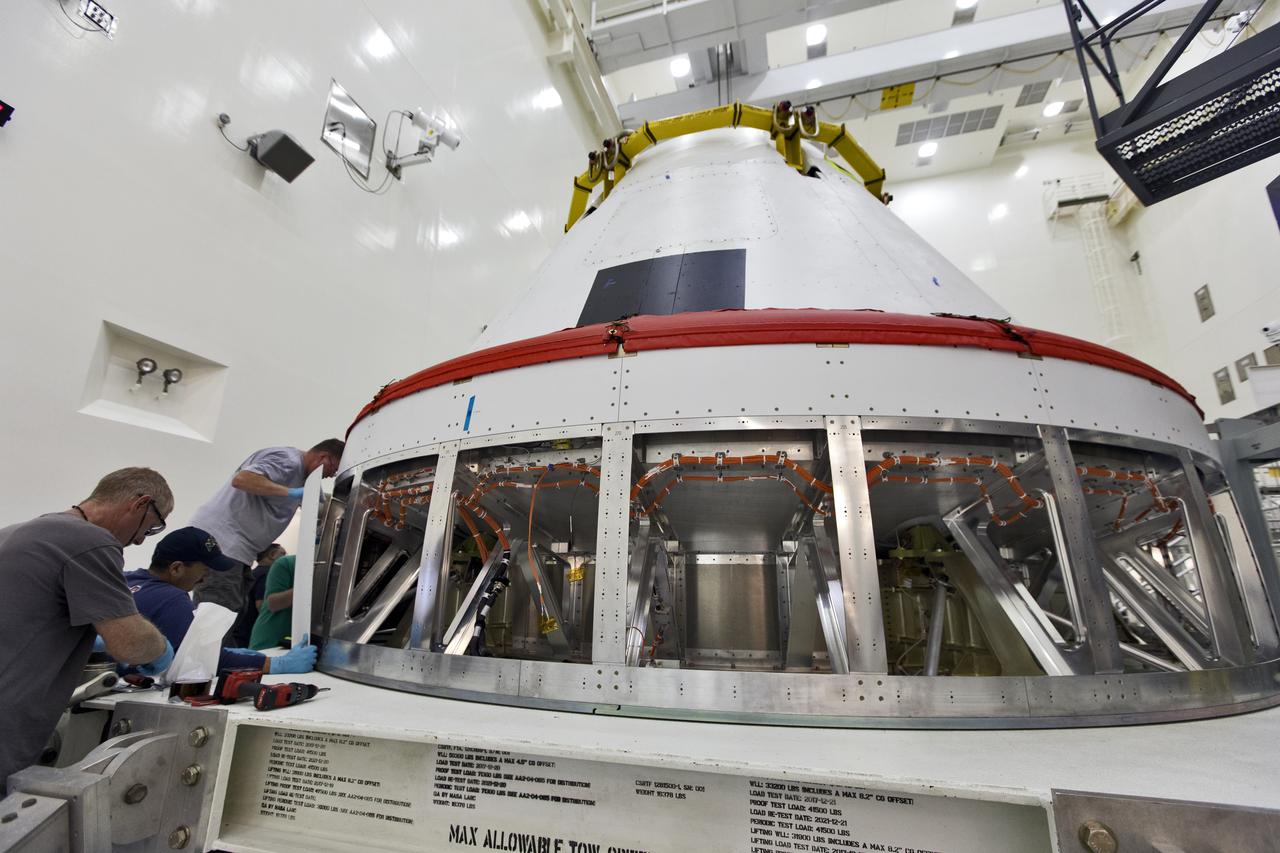
Workers remove cover plates from a mock Orion crew module inside the Multi-Payload Processing Facility at NASA’s Kennedy Space Center in Florida on Dec. 6, 2018. The crew module will be used during a full stress test of the Launch Abort System (LAS), called Ascent Abort-2 (AA-2), scheduled for April 2019. During the test, the booster will launch from Space Launch Complex 46, carrying a fully functional LAS and the 22,000-pound Orion test vehicle to an altitude of 31,000 feet and traveling at more than 1,000 miles an hour. The test will verify the LAS can steer the crew module and astronauts aboard to safety in the event of an issue with the Space Launch System (SLS) rocket when the spacecraft is under the highest aerodynamic loads it will experience during a rapid climb into space.
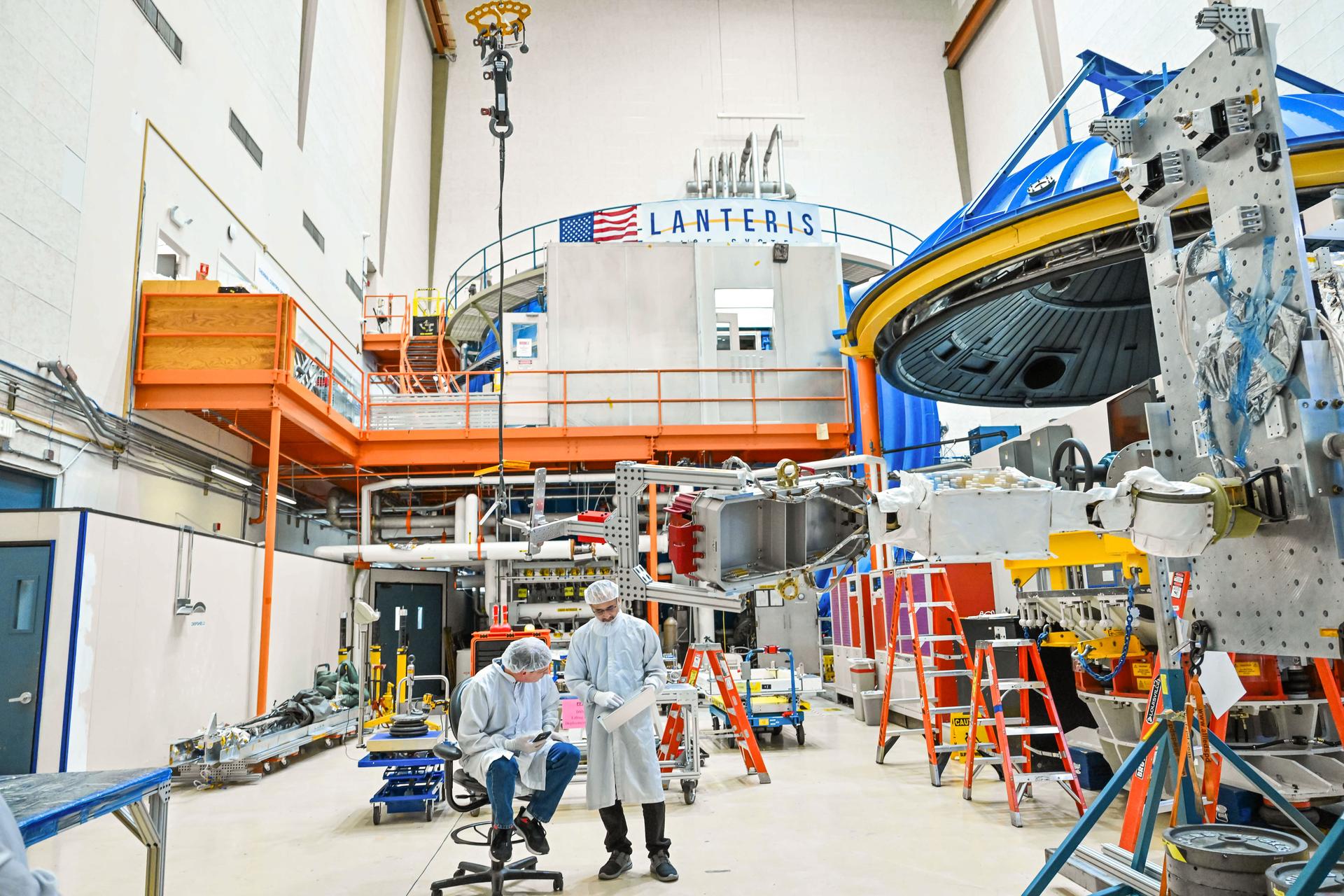
During this Engineering Qualification Module test, the gimbal platforms for the Busek-built BHT-6000 Hall effect thrusters are exercised through their full range of motion to verify articulation performance and confirm the system can properly steer thrust once integrated with Gateway’s Power and Propulsion Element (PPE). On PPE, four BHT-6000 Hall effect thrusters and three Advanced Electric Propulsion System (AEPS) thrusters will use solar power generated by Gateway’s Roll-Out Solar Arrays (ROSAs) to ionize xenon gas. The resulting xenon ions are then accelerated to extremely high speeds and expelled from the thrusters, creating a steady and highly efficient stream of thrust. This propulsion system will enable the Gateway lunar space station to maneuver and maintain its orbit around the Moon.
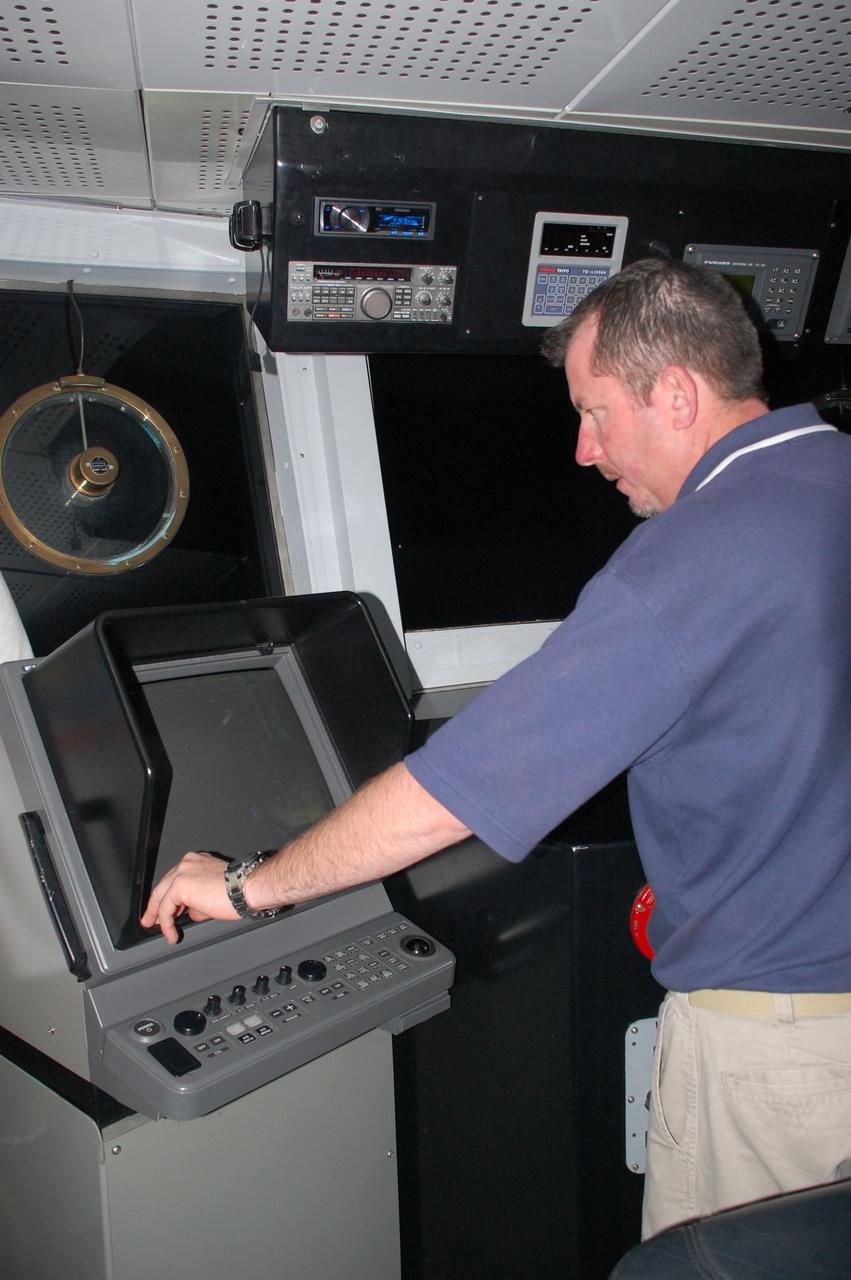
CAPE CANAVERAL, Fla. -- Chief Mate Jamie Harris is steering Freedom Star, one of NASA's solid rocket booster retrieval ships in the direction of the left spent booster that splashed down into the Atlantic Ocean after space shuttle Discovery's STS-133 launch. The shuttle’s two solid rocket booster casings and associated flight hardware are recovered in the Atlantic Ocean after every launch by Liberty Star and Freedom Star. The boosters impact the Atlantic about seven minutes after liftoff and the retrieval ships are stationed about 10 miles from the impact area at the time of splashdown. After the spent segments are processed, they will be transported to Utah, where they will be refurbished and stored, if needed. Photo credit: NASA/Ben Smegelsky
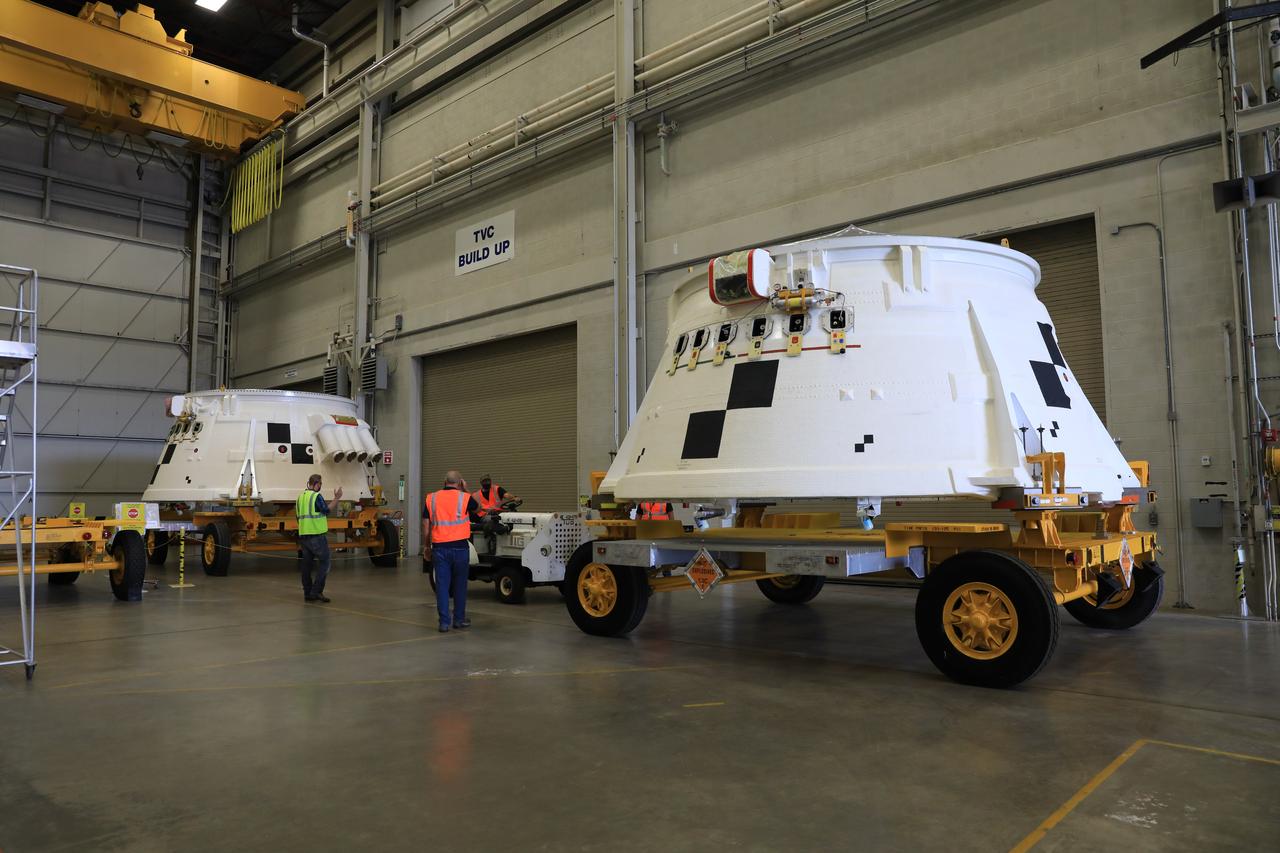
Inside the Booster Fabrication Facility at NASA's Kennedy Space Center in Florida, the Artemis I aft skirts for the agency's Space Launch System (SLS) rocket’s twin solid rocket boosters are moved out of their test cells and are being readied for their move to the Rotation, Processing and Surge Facility (RPSF) on June 9, 2020. The aft skirts were refurbished by Northrop Grumman. They house the thrust vector control system, which controls 70 percent of the steering during initial ascent of the SLS rocket. The segments will remain in the RPSF until ready for stacking with the forward and aft parts of the boosters on the mobile launcher in High Bay 3 of the Vehicle Assembly Building. Through the Artemis Program, NASA is working to land the first woman and next man on the Moon by 2024.
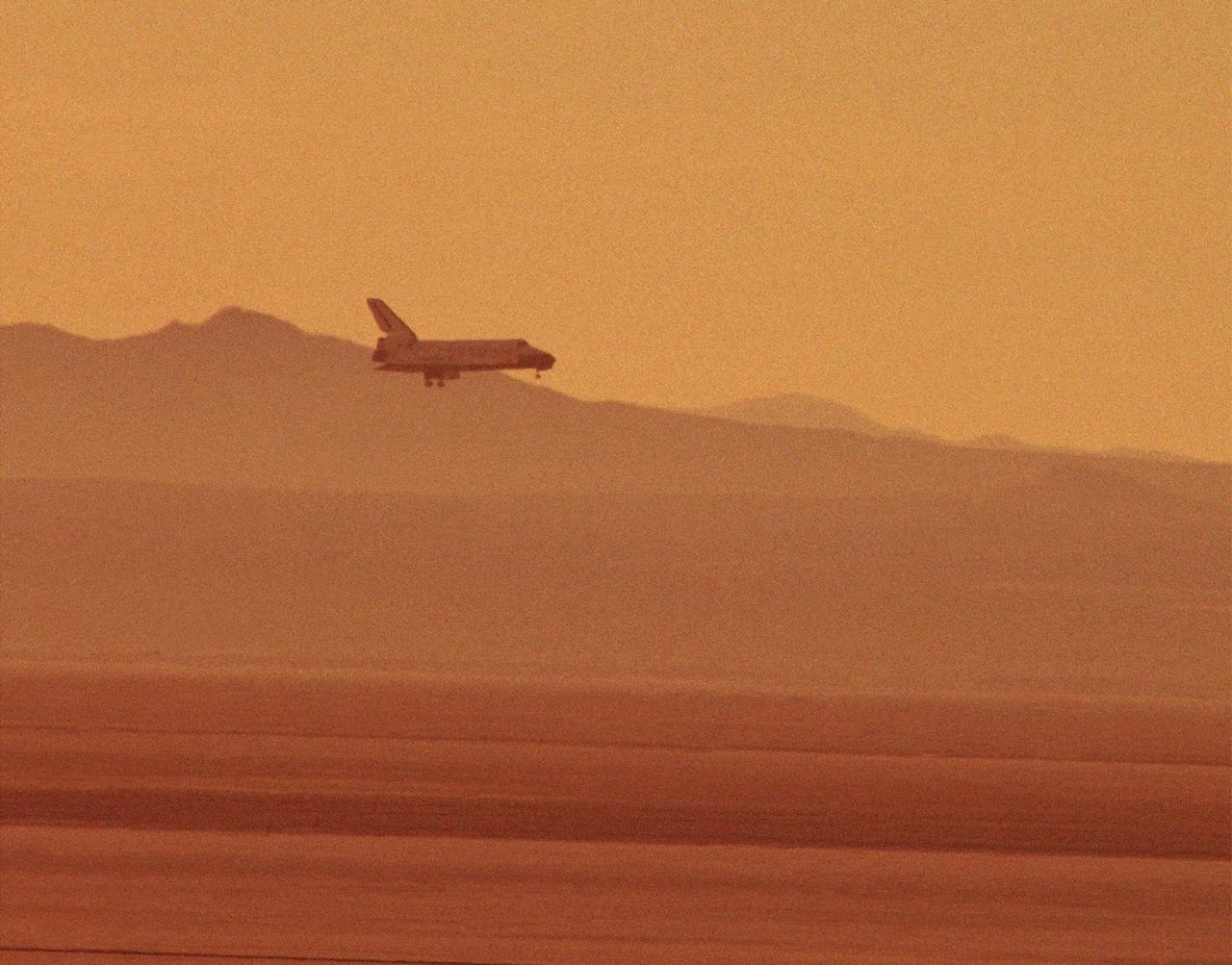
The STS-29 Space Shuttle Discovery mission approaches for a landing at NASA's then Ames-Dryden Flight Research Facility, Edwards AFB, California, early Saturday morning, 18 March 1989. Touchdown was at 6:35:49 a.m. PST and wheel stop was at 6:36:40 a.m. on runway 22. Controllers chose the concrete runway for the landing in order to make tests of braking and nosewheel steering. The STS-29 mission was very successful, completing the launch a Tracking and Data Relay communications satellite, as well as a range of scientific experiments. Discovery's five man crew was led by Commander Michael L. Coats, and included pilot John E. Blaha and mission specialists James P. Bagian, Robert C. Springer, and James F. Buchli.
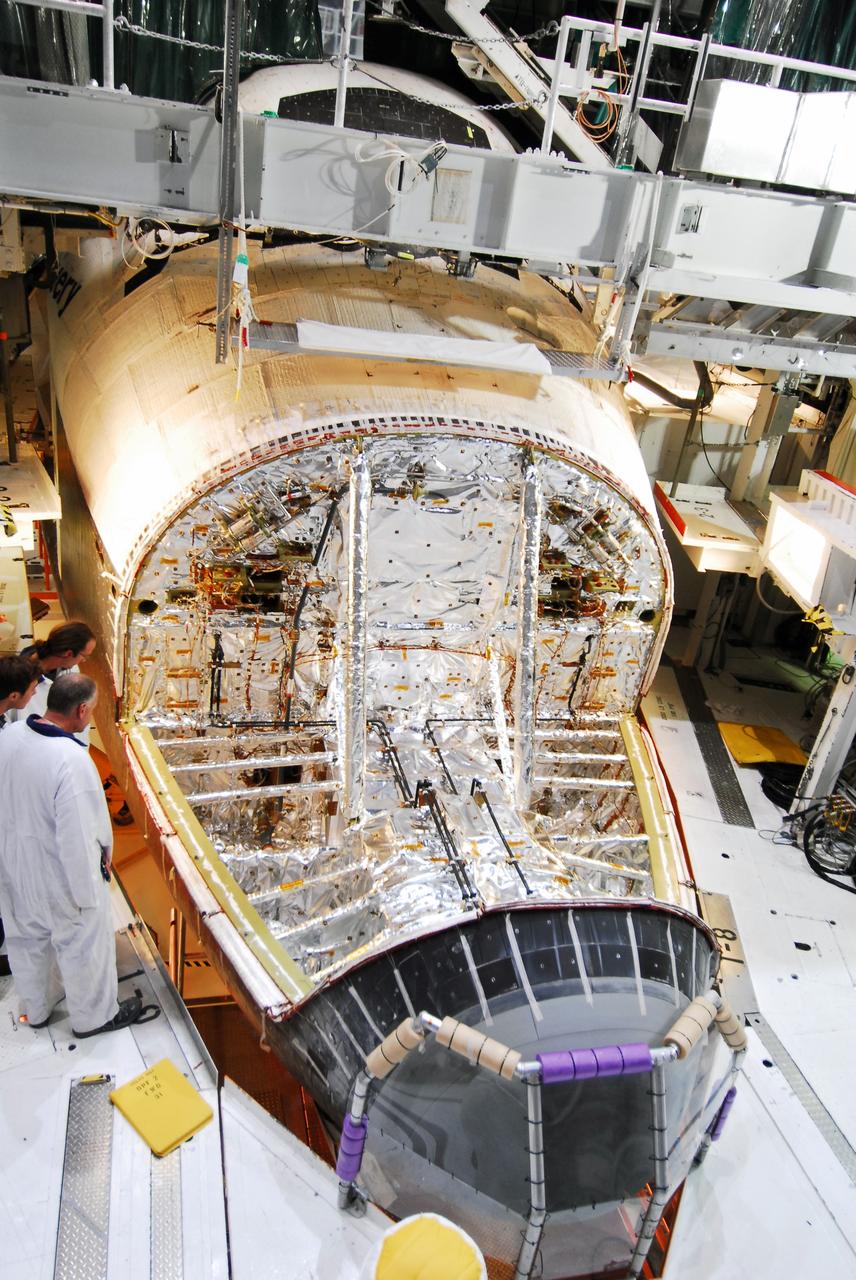
CAPE CANAVERAL, Fla. - Space shuttle Discovery's forward reaction control system (FRCS), which helped steer the shuttle in orbit, is removed in Orbiter Processing Facility-2 at NASA's Kennedy Space Center in Florida. To maneuver, the FRCS used hypergolic fuel and oxidizer, which were purged from Discovery after its final spaceflight, STS-133. Next, the FRCS will be shipped to a maintenance facility at White Sands Space Harbor in New Mexico, where additional inspections will be performed and its components made safe to go on public display. The transition and retirement processing is expected to help rocket designers build next-generation spacecraft and prepare the shuttle for display. Photo credit: NASA/Jim Grossmann
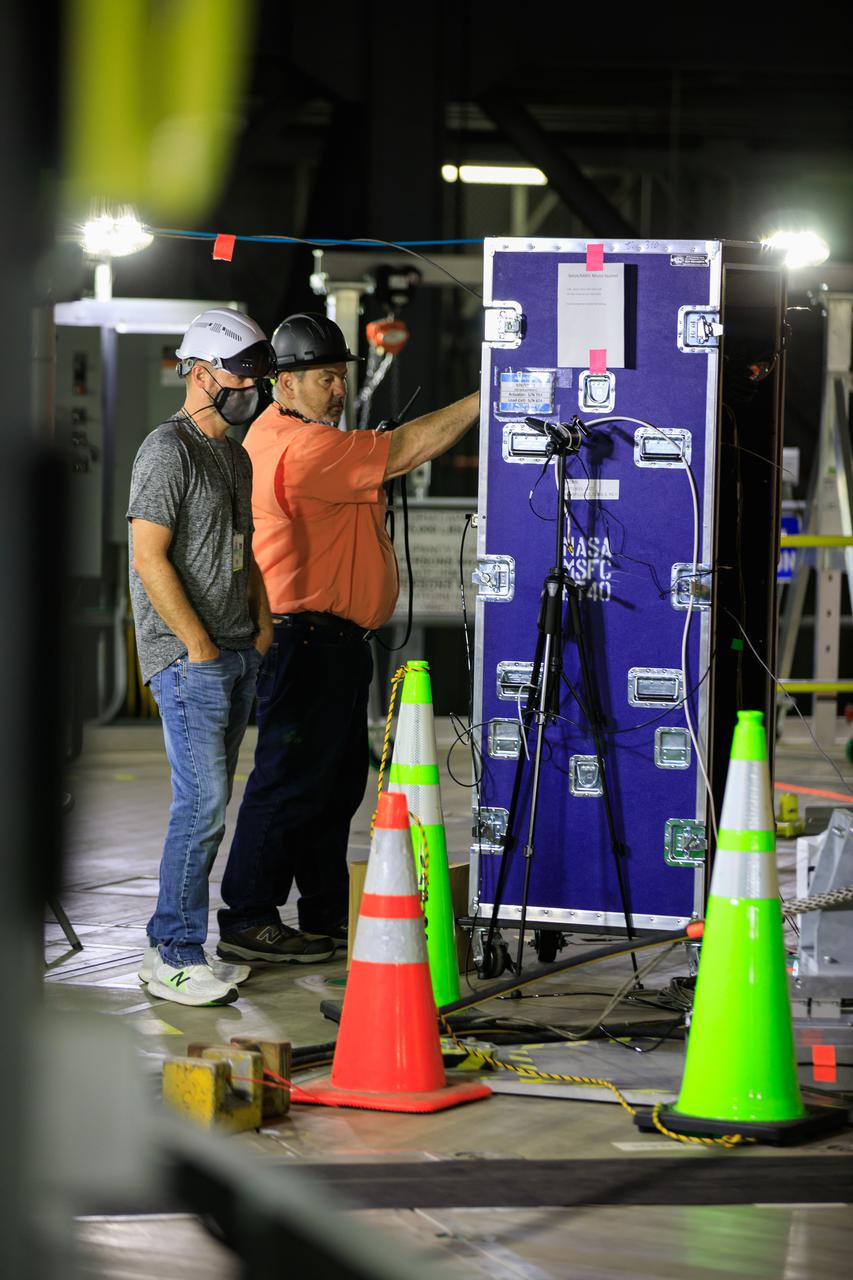
Artemis teams members perform the integrated modal test of the Space Launch System and mobile launcher in High Bay 3 of the Vehicle Assembly Building at NASA’s Kennedy Space Center in Florida on Sept. 24, 2021. The tests will help determine the natural frequencies of the recently stacked rocket before launch of the Artemis I mission. The data also will be used to help steer the rocket during flight. To identify the rocket’s natural frequencies, the team placed about 300 sensors on it and the mobile launcher to detect, record, and transmit the information, along with hydraulic shakers attached to seven locations on the rocket. Artemis I will be the first integrated test of the SLS and Orion spacecraft. In later missions, NASA will land the first woman and the first person of color on the surface of the Moon, paving the way for a long-term lunar presence and serving as a steppingstone on the way to Mars.
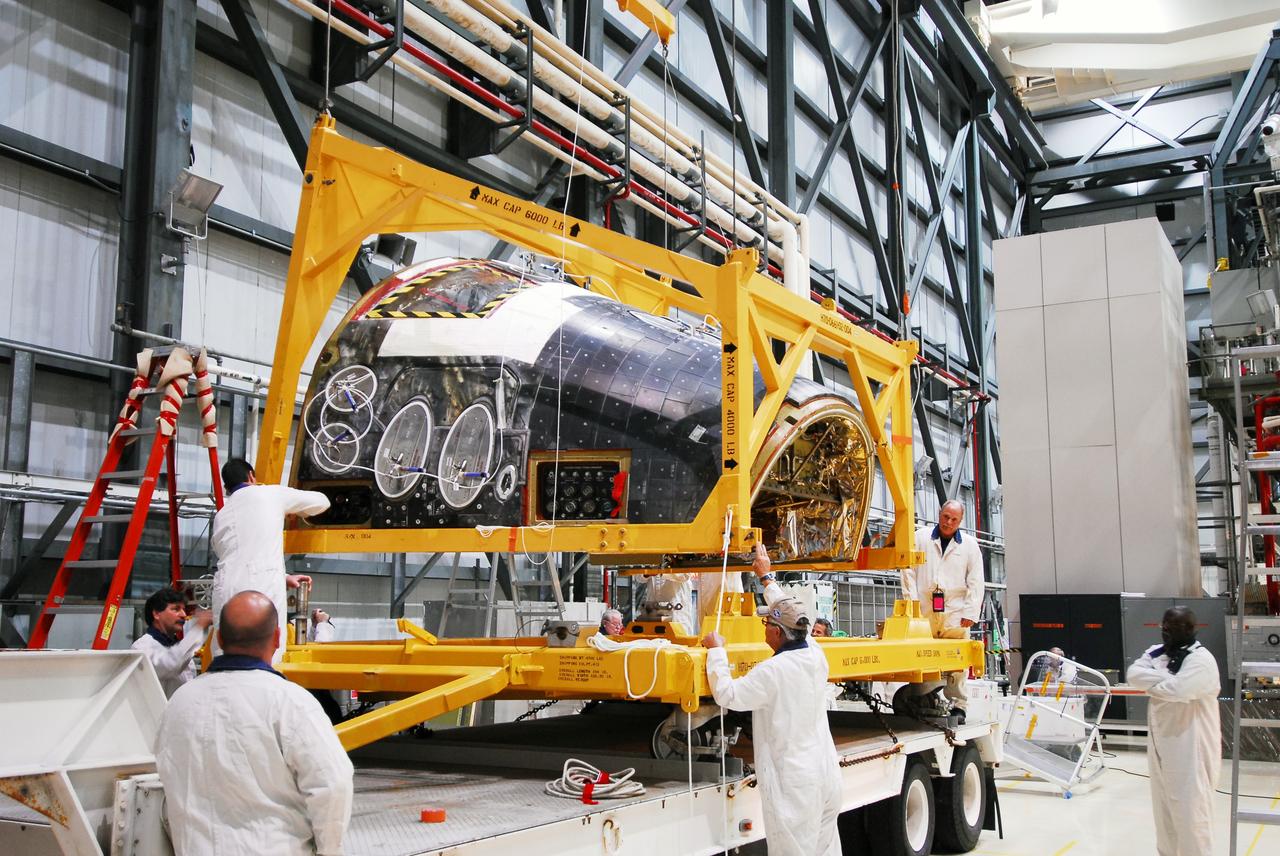
CAPE CANAVERAL, Fla. - Space shuttle Discovery's forward reaction control system (FRCS), which helped steer the shuttle in orbit, is moved to a transporter in Orbiter Processing Facility-2 at NASA's Kennedy Space Center in Florida. To maneuver, the FRCS used hypergolic fuel and oxidizer, which were purged from Discovery after its final spaceflight, STS-133. Next, the FRCS will be shipped to a maintenance facility at White Sands Space Harbor in New Mexico, where additional inspections will be performed and its components made safe to go on public display. The transition and retirement processing is expected to help rocket designers build next-generation spacecraft and prepare the shuttle for display. Photo credit: NASA/Jim Grossmann
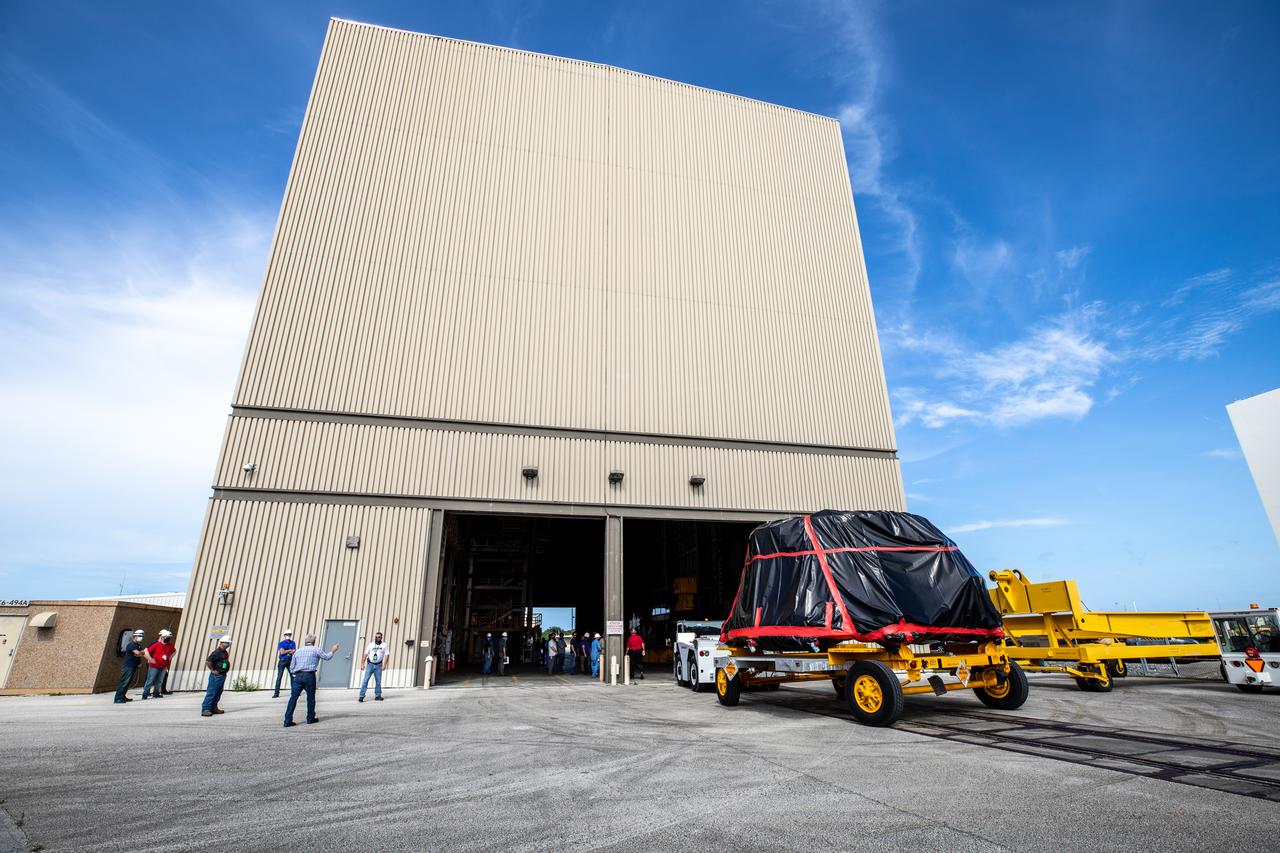
The first of two Artemis I aft skirts for NASA’s Space Launch System (SLS) rocket’s twin solid rocket boosters arrives at the Rotation, Processing and Surge Facility (RPSF) at the agency’s Kennedy Space Center in Florida on June 10, 2020. They were transported from the Booster Fabrication Facility. The aft skirts were refurbished by Northrop Grumman. They house the thrust vector control system, which controls 70 percent of the steering during initial ascent of the SLS rocket. The segments will remain in the RPSF until ready for stacking with the forward and aft parts of the boosters on the mobile launcher in High Bay 3 of the Vehicle Assembly Building. Through the Artemis Program, NASA is working to land the first woman and next man on the Moon by 2024.
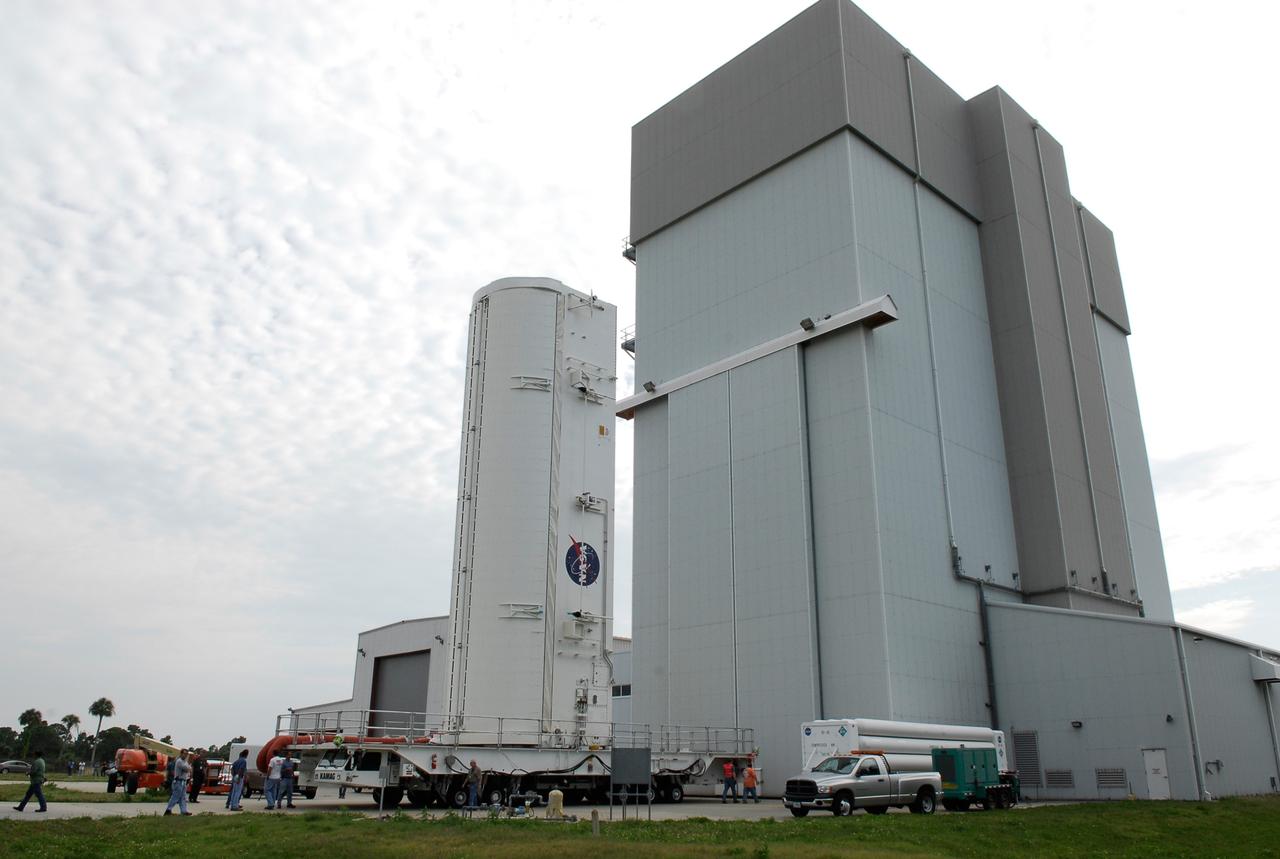
CAPE CANAVERAL, Fla. – Positioned on its 12-wheeled, 24-tire transporter, the payload canister with the STS-124 mission payload, Japanese Experiment Module - Pressurized Module and the Japanese Remote Manipulator System, or RMS, inside, begins its slow journey to Launch Pad 39A at NASA's Kennedy Space Center. At the pad, the payload will be transferred into the payload changeout room on the rotating service structure. The transporter is 65 feet long and 23 feet wide. The transporter’s wheels are independently steerable, permitting it to move forward, backward, sideways or diagonally and to turn on its own axis like a carousel. It is equipped with pneumatic-actuated braking and hydrostat¬ic leveling and drive systems. It is steered from a two-seat operator cab mounted at one end. From the payload changeout room, the pressurized module and RMS then will be transferred into space shuttle Discovery’s payload bay. Launch is targeted for May 31. Photo credit: NASA/Kim Shiflett
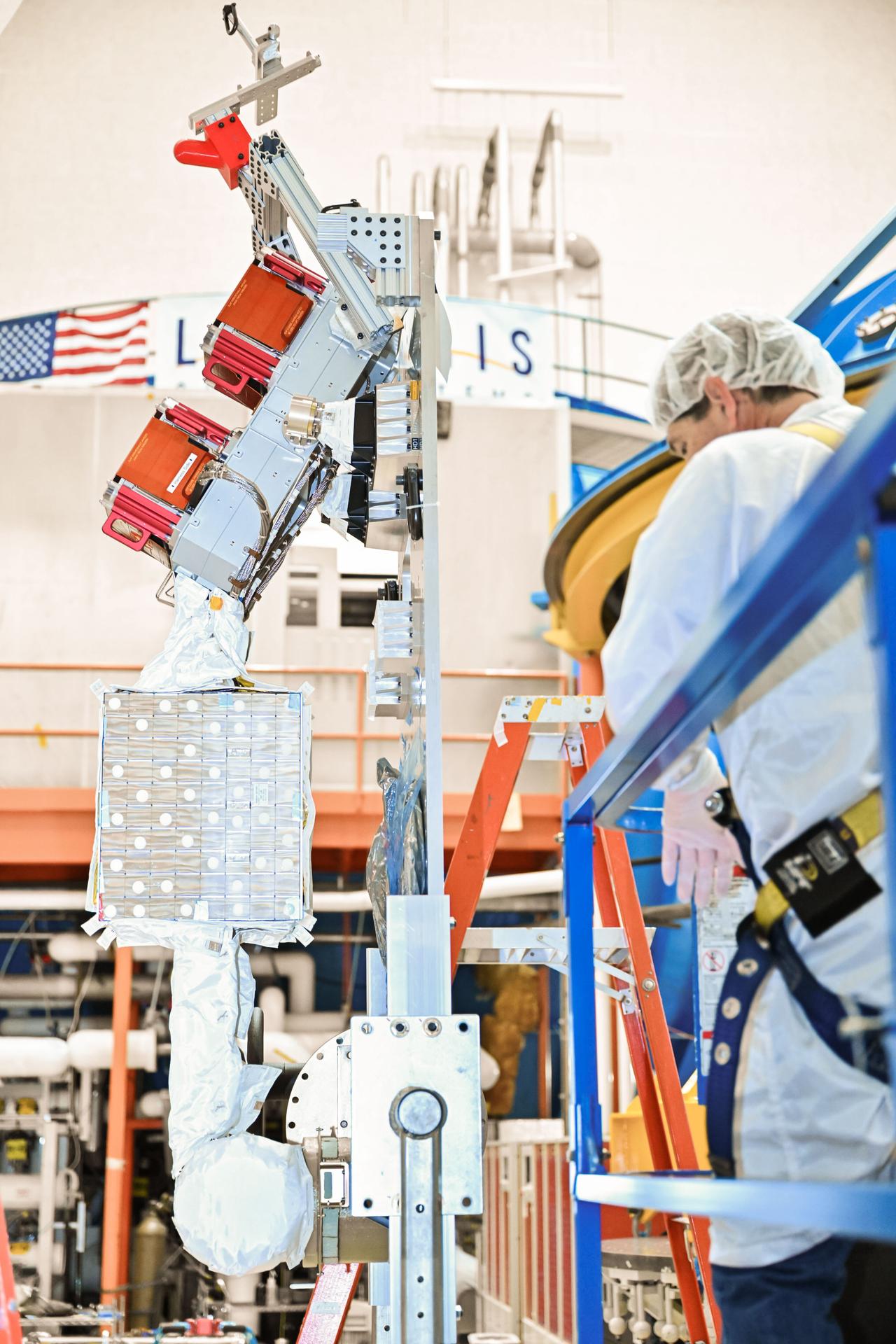
During this Engineering Qualification Module test, the gimbal platforms for the Busek-built BHT-6000 Hall effect thrusters are exercised through their full range of motion to verify articulation performance and confirm the system can properly steer thrust once integrated with Gateway’s Power and Propulsion Element (PPE). On PPE, four BHT-6000 Hall effect thrusters and three Advanced Electric Propulsion System (AEPS) thrusters will use solar power generated by Gateway’s Roll-Out Solar Arrays (ROSAs) to ionize xenon gas. The resulting xenon ions are then accelerated to extremely high speeds and expelled from the thrusters, creating a steady and highly efficient stream of thrust. This propulsion system will enable the Gateway lunar space station to maneuver and maintain its orbit around the Moon.
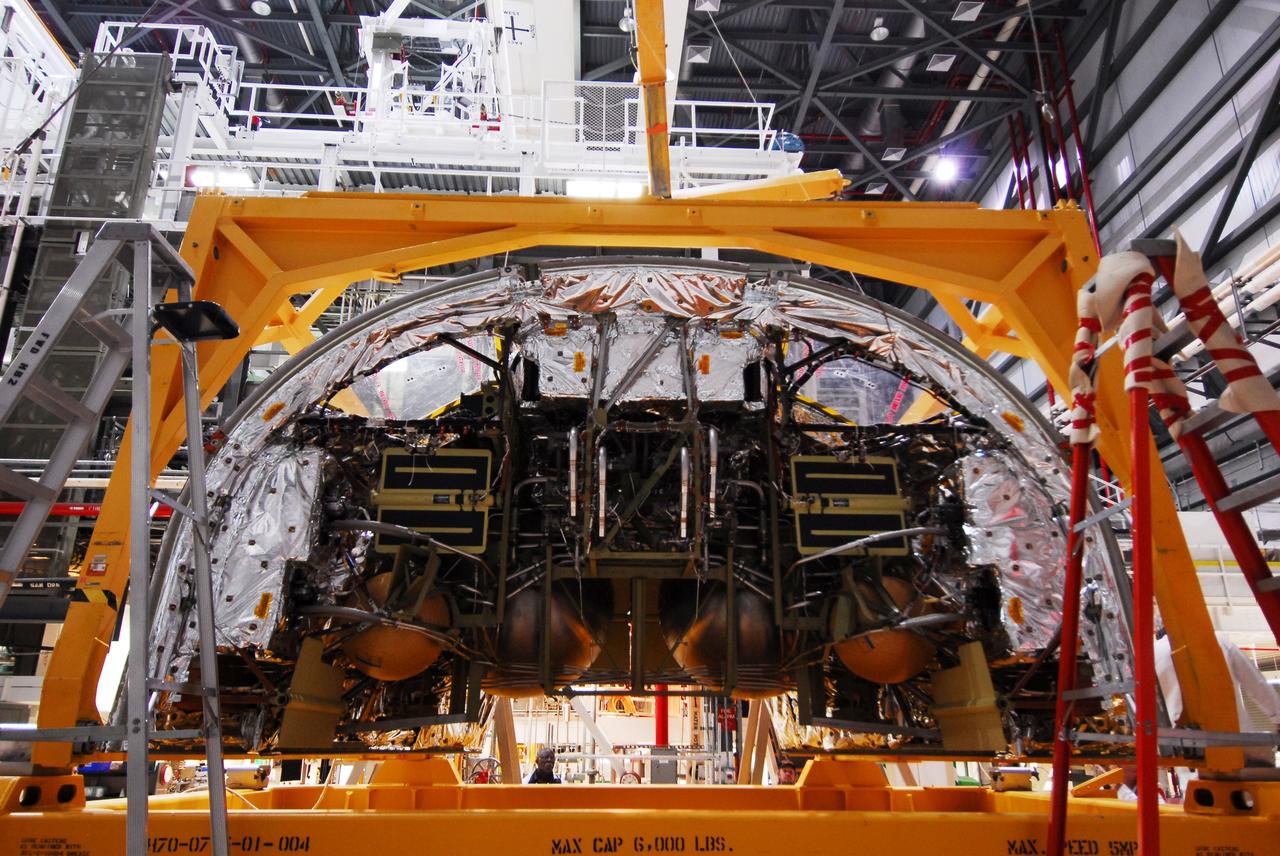
CAPE CANAVERAL, Fla. - Space shuttle Discovery's forward reaction control system (FRCS), which helped steer the shuttle in orbit, is atop a transporter in Orbiter Processing Facility-2 at NASA's Kennedy Space Center in Florida. To maneuver, the FRCS used hypergolic fuel and oxidizer, which were purged from Discovery after its final spaceflight, STS-133. Next, the FRCS will be shipped to a maintenance facility at White Sands Space Harbor in New Mexico, where additional inspections will be performed and its components made safe to go on public display. The transition and retirement processing is expected to help rocket designers build next-generation spacecraft and prepare the shuttle for display. Photo credit: NASA/Jim Grossmann
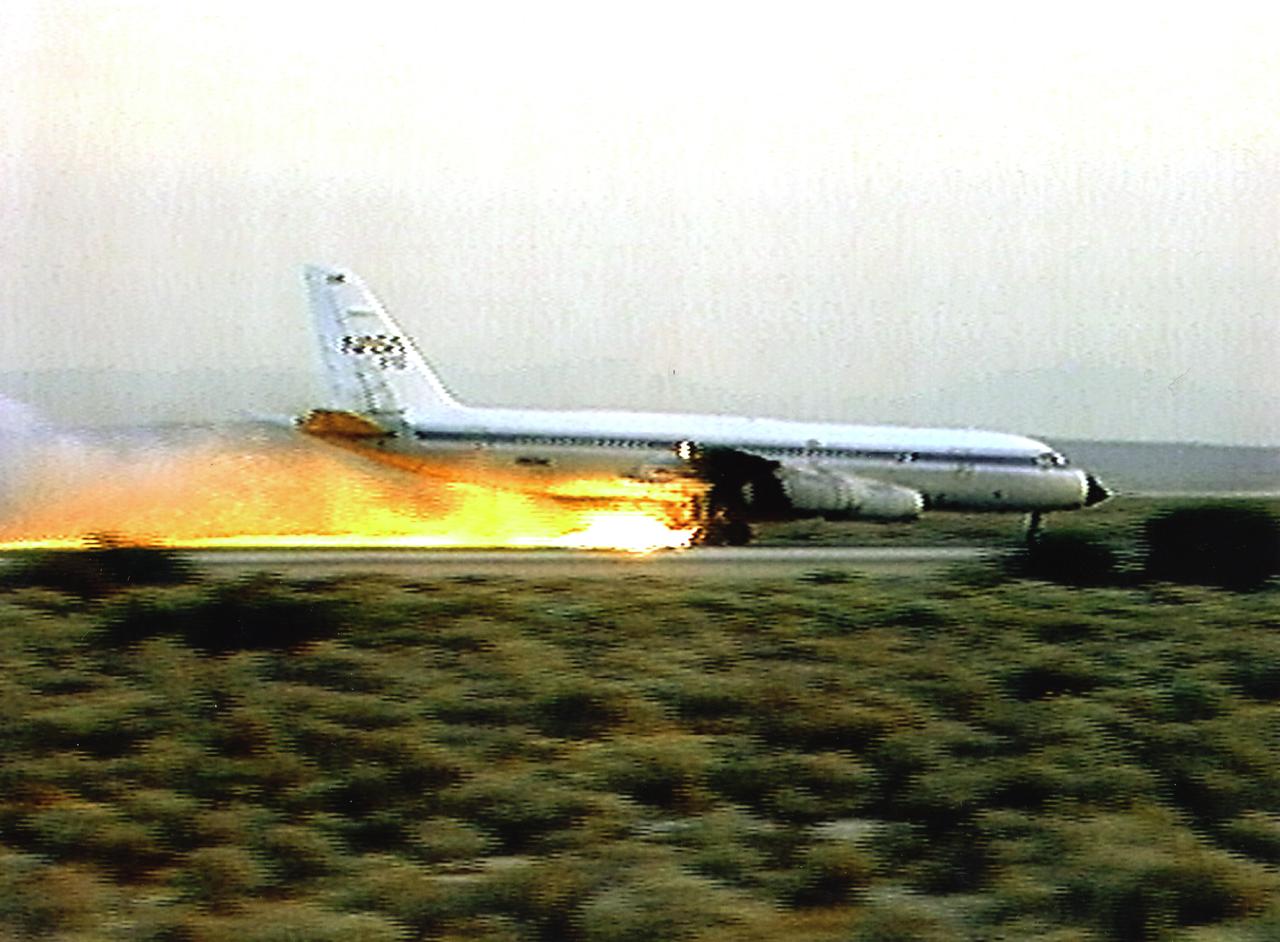
A NASA CV-990, modified as a Landing Systems Research Aircraft (LSRA), lands on the Edwards AFB main runway in test of the space shuttle landing gear system. In this case, the shuttle tire failed, bursting into flame during the rollout. The space shuttle landing gear test unit, operated by a high-pressure hydraulic system, allowed engineers to assess and document the performance of space shuttle main and nose landing gear systems, tires and wheel assemblies, plus braking and nose wheel steering performance. The series of 155 test missions for the space shuttle program provided extensive data about the life and endurance of the shuttle tire systems and helped raise the shuttle crosswind landing limits at Kennedy. The CV-990 used as the LSRA was built in 1962 by the Convair Division of General Dynamics Corp., Ft. Worth, Texas, served as a research aircraft at Ames Research Center, Moffett Field, California, before it came to Dryden.
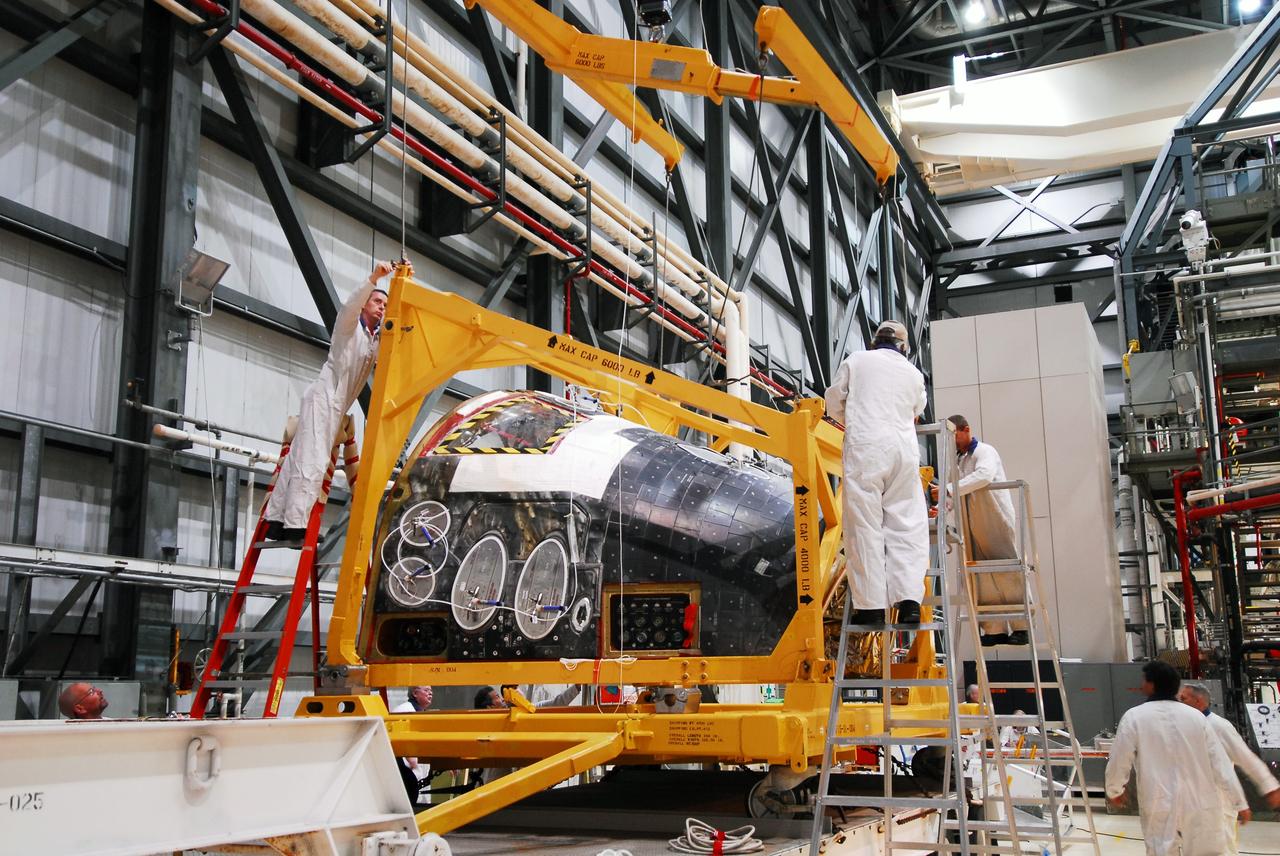
CAPE CANAVERAL, Fla. - Space shuttle Discovery's forward reaction control system (FRCS), which helped steer the shuttle in orbit, is moved to a transporter in Orbiter Processing Facility-2 at NASA's Kennedy Space Center in Florida. To maneuver, the FRCS used hypergolic fuel and oxidizer, which were purged from Discovery after its final spaceflight, STS-133. Next, the FRCS will be shipped to a maintenance facility at White Sands Space Harbor in New Mexico, where additional inspections will be performed and its components made safe to go on public display. The transition and retirement processing is expected to help rocket designers build next-generation spacecraft and prepare the shuttle for display. Photo credit: NASA/Jim Grossmann
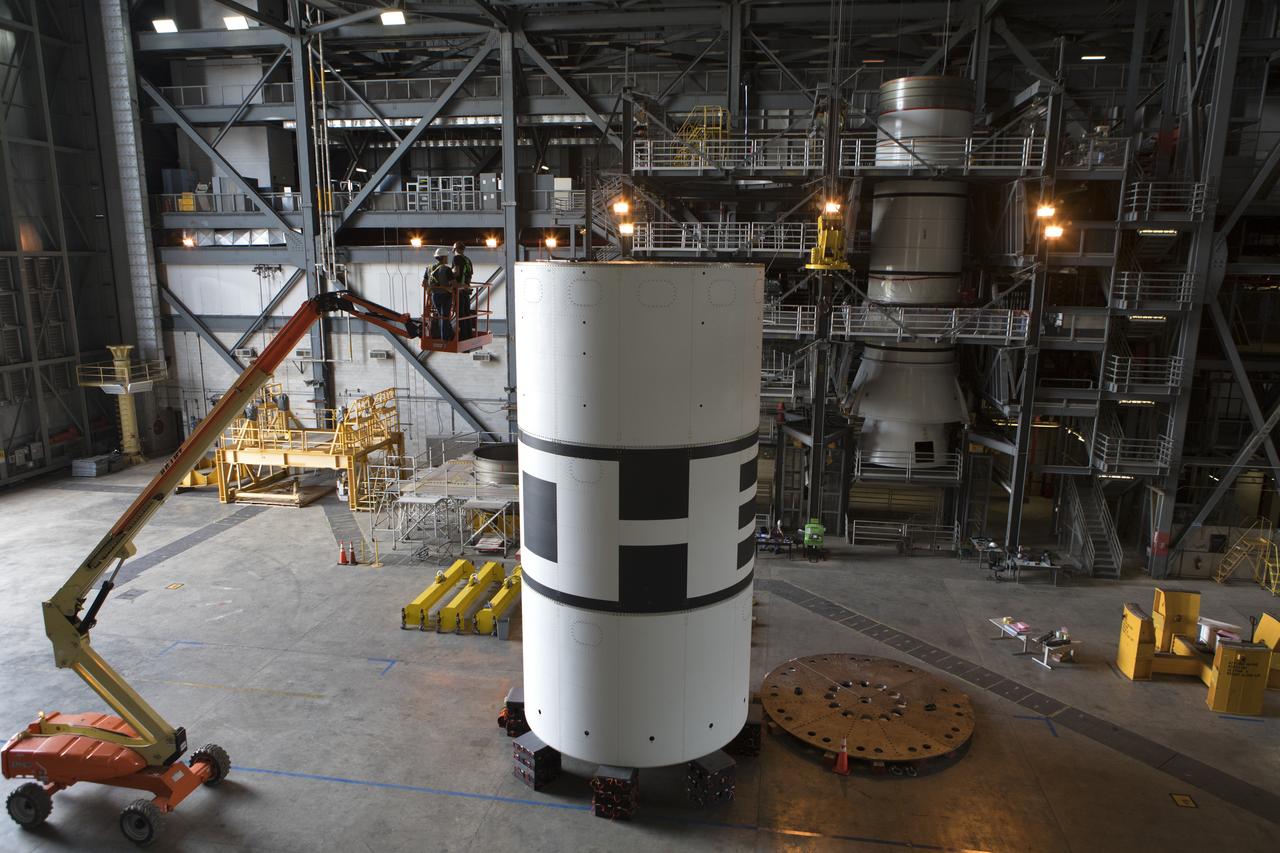
The aeroshells for Orion's Launch Abort System (LAS) are being stacked in High Bay 4 of the Vehicle Assembly Building on Aug. 3, 2018, at NASA's Kennedy Space Center in Florida. The aeroshells are being prepared for a full-stress test of the LAS, called Ascent Abort-2 (AA-2) flight test, scheduled for April 2019. During the test, a booster will launch from Space Launch Complex 46 at Cape Canaveral Air Force Station, carrying a fully functional LAS and a 22,000-pound Orion test vehicle to an altitude of 31,000 feet and traveling at more than 1,000 miles an hour. The test will verify the LAS can steer the crew module and astronauts aboard to safety in the event of an issue with the Space Launch System (SLS) rocket when the spacecraft is under the highest aerodynamic loads it will experience during a rapid climb into space. Orion is being prepared for its first integrated uncrewed flight atop the SLS on Exploration Mission-1.
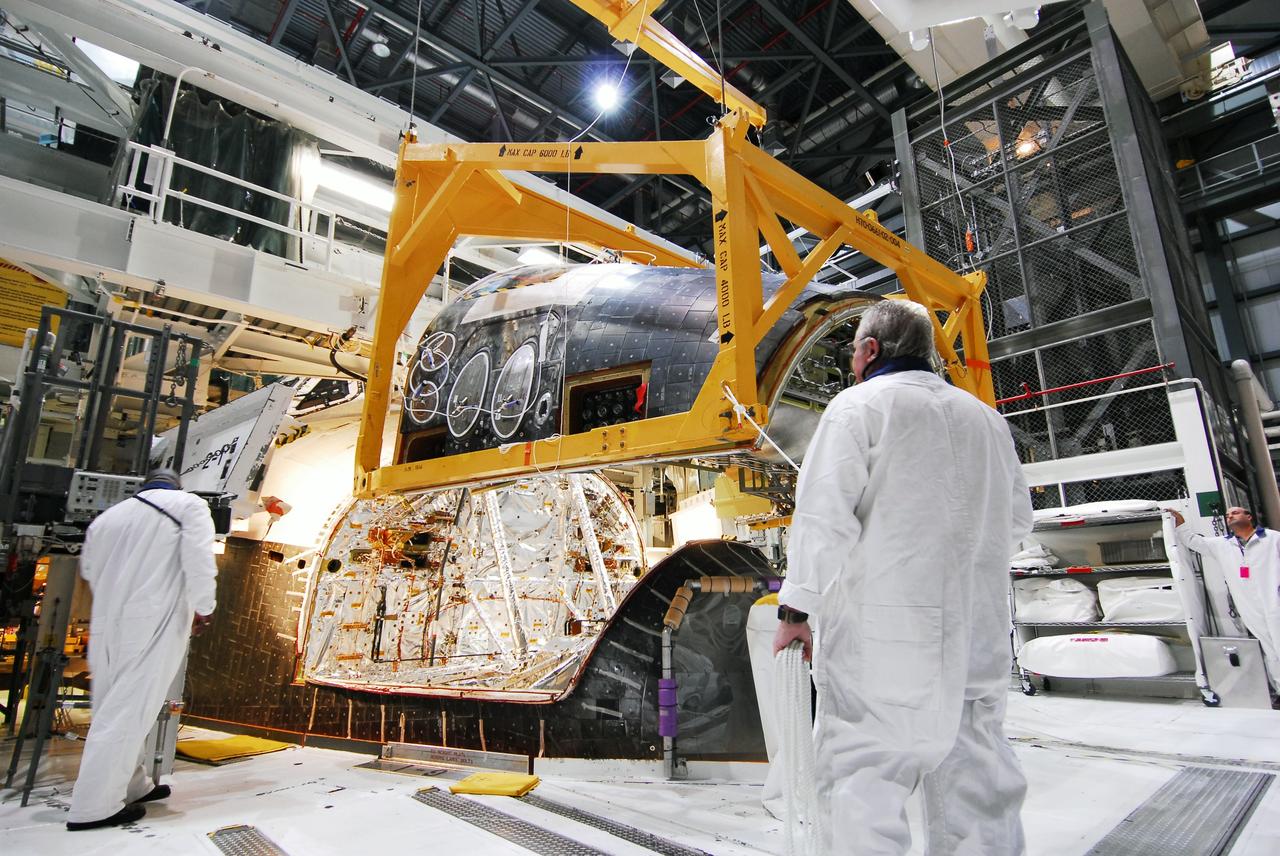
CAPE CANAVERAL, Fla. - Crews in Orbiter Processing Facility-2 at NASA's Kennedy Space Center in Florida remove space shuttle Discovery's forward reaction control system (FRCS), which helped steer the shuttle in orbit. To maneuver, the FRCS used hypergolic fuel and oxidizer, which were purged from Discovery after its final spaceflight, STS-133. Next, the FRCS will be shipped to a maintenance facility at White Sands Space Harbor in New Mexico, where additional inspections will be performed and its components made safe to go on public display. The transition and retirement processing is expected to help rocket designers build next-generation spacecraft and prepare the shuttle for display. Photo credit: NASA/Jim Grossmann
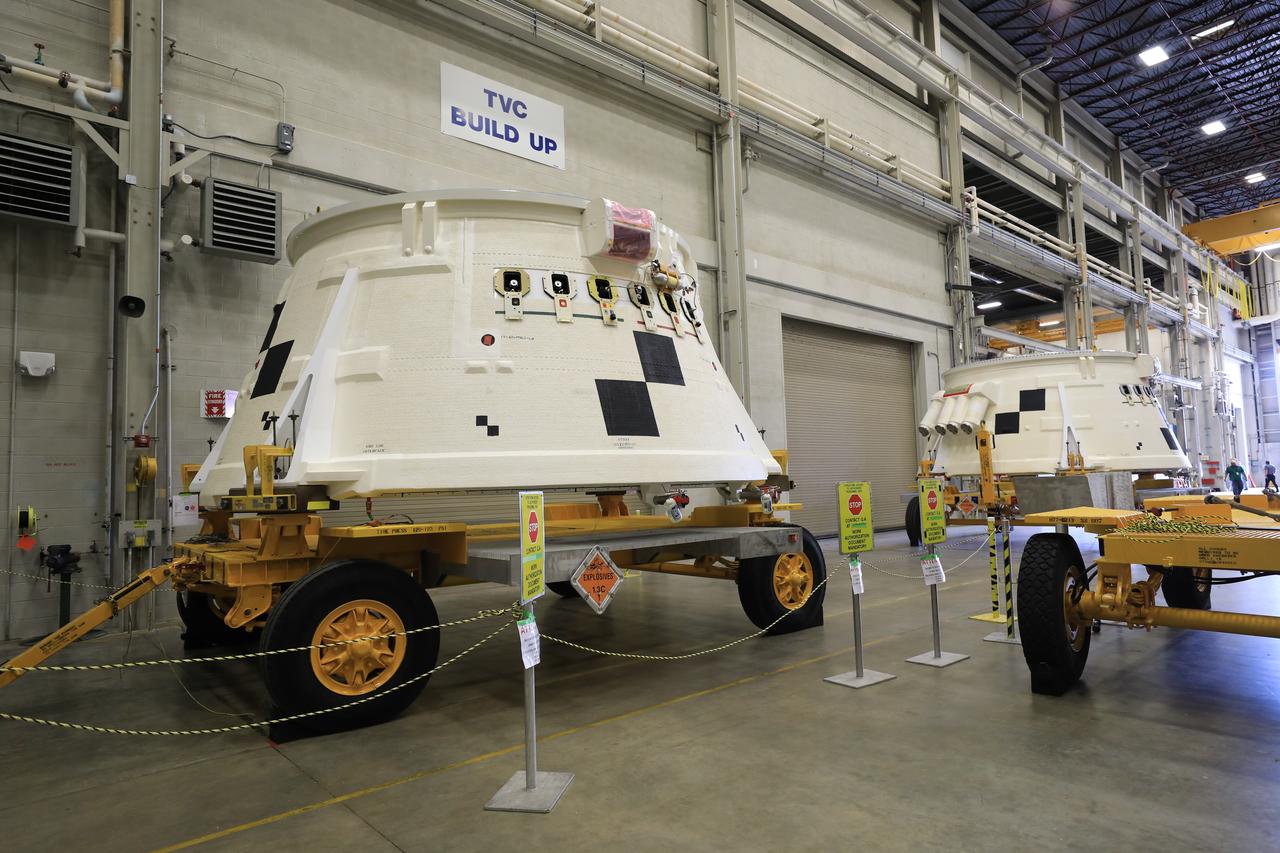
Inside the Booster Fabrication Facility at NASA's Kennedy Space Center in Florida, the Artemis I aft skirts for the agency's Space Launch System (SLS) rocket’s twin solid rocket boosters are being readied for their move to the Rotation, Processing and Surge Facility (RPSF) on June 9, 2020. In view at left is the left aft skirt assembly, and at far right is the right aft skirt assembly. The aft skirts were refurbished by Northrop Grumman. They house the thrust vector control system, which controls 70 percent of the steering during initial ascent of the SLS rocket. The segments will remain in the RPSF until ready for stacking with the forward and aft parts of the boosters on the mobile launcher in High Bay 3 of the Vehicle Assembly Building. Through the Artemis Program, NASA is working to land the first woman and next man on the Moon by 2024.
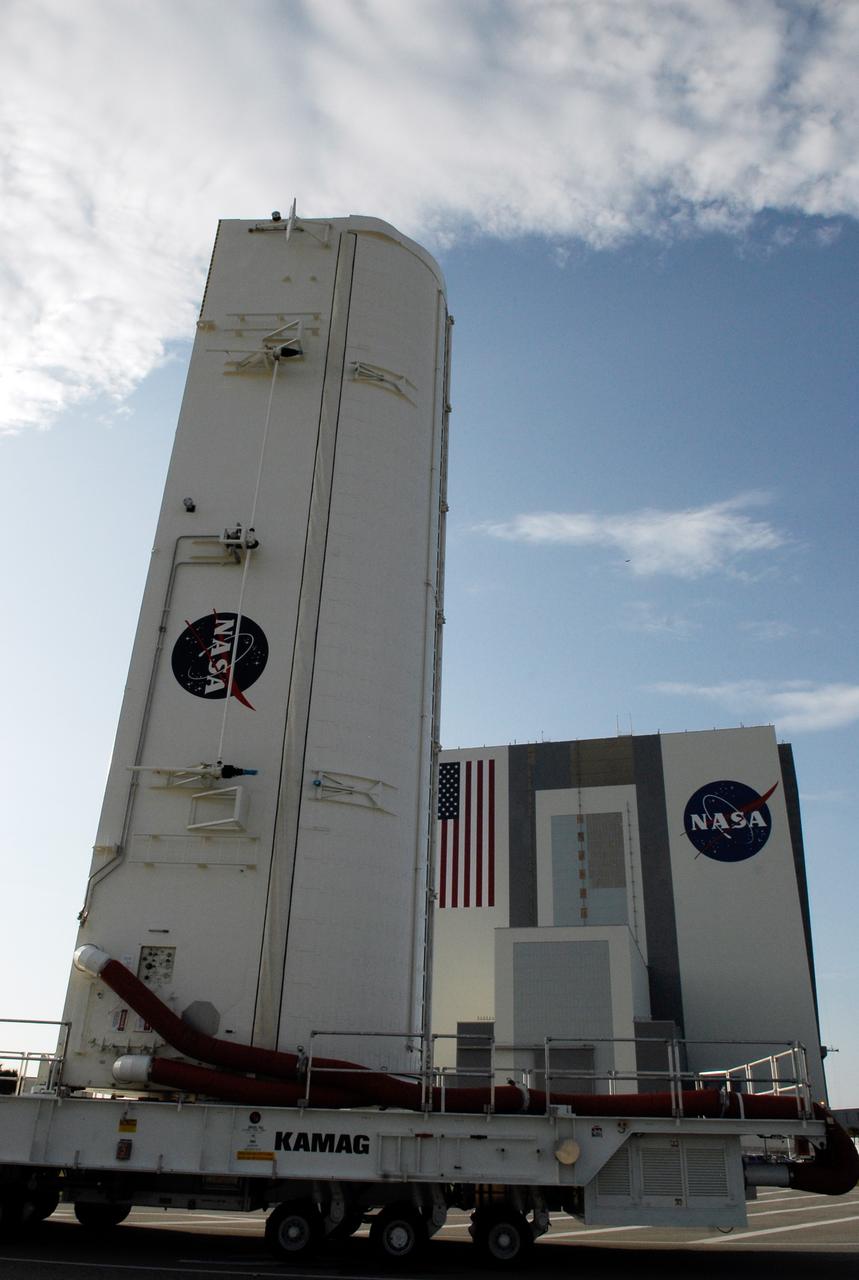
CAPE CANAVERAL, Fla. – Positioned on its 12-wheeled, 24-tire transporter, the payload canister with the STS-124 mission payload, Japanese Experiment Module - Pressurized Module and the Japanese Remote Manipulator System, or RMS, inside, slowly passes the Vehicle Assembly Building at NASA's Kennedy Space Center, on its journey to Launch Pad 39A. At the pad, the payload will be transferred into the payload changeout room on the rotating service structure. The transporter is 65 feet long and 23 feet wide. The transporter’s wheels are independently steerable, permitting it to move forward, backward, sideways or diagonally and to turn on its own axis like a carousel. It is equipped with pneumatic-actuated braking and hydrostat¬ic leveling and drive systems. It is steered from a two-seat operator cab mounted at one end. From the payload changeout room, the pressurized module and RMS then will be transferred into space shuttle Discovery’s payload bay. Launch is targeted for May 31. Photo credit: NASA/Kim Shiflett
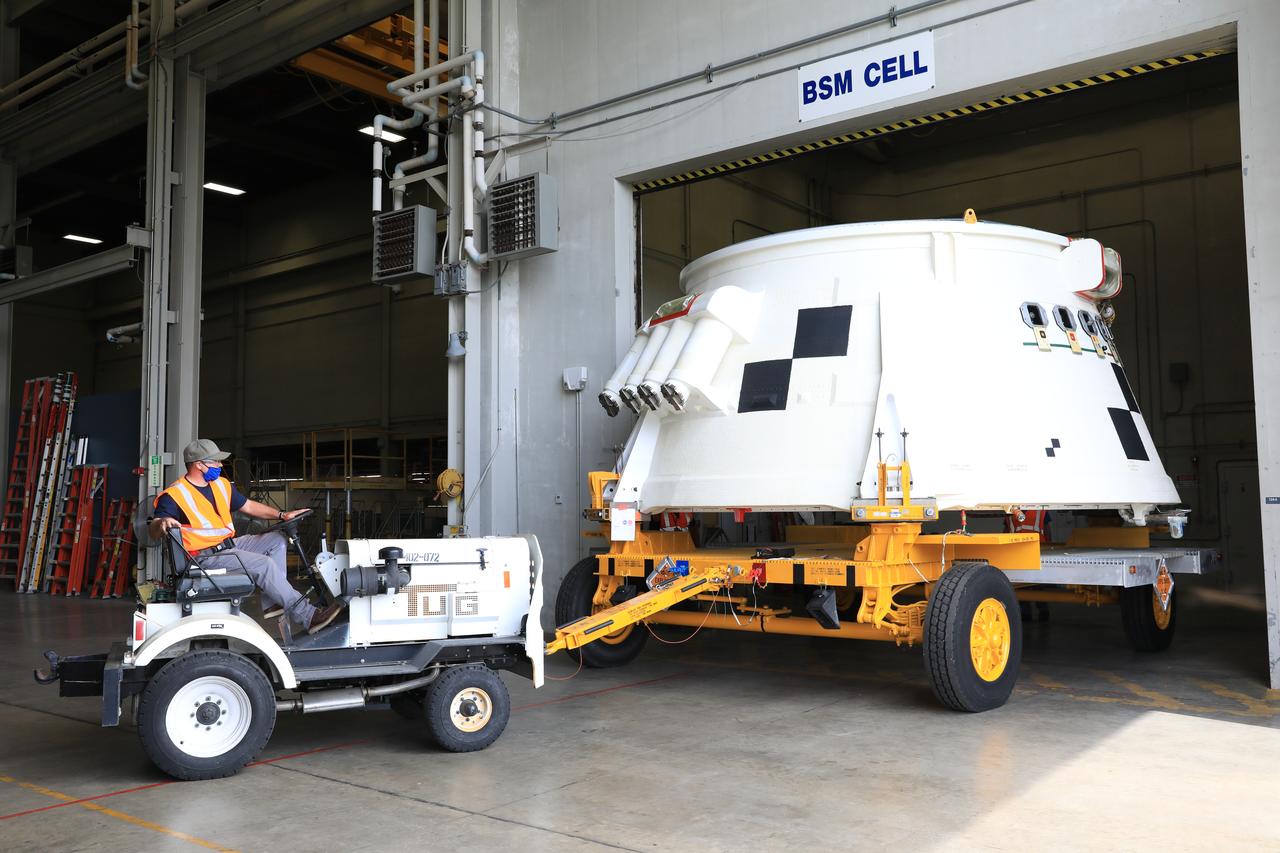
Inside the Booster Fabrication Facility at NASA's Kennedy Space Center in Florida, the Artemis I aft skirts for the agency's Space Launch System (SLS) rocket’s twin solid rocket boosters are being readied for their move to the Rotation, Processing and Surge Facility (RPSF) on June 9, 2020. In view, the left aft skirt assembly is attached to a move vehicle and moved out of a test cell. The aft skirts were refurbished by Northrop Grumman. They house the thrust vector control system, which controls 70 percent of the steering during initial ascent of the SLS rocket. The segments will remain in the RPSF until ready for stacking with the forward and aft parts of the boosters on the mobile launcher in High Bay 3 of the Vehicle Assembly Building. Through the Artemis Program, NASA is working to land the first woman and next man on the Moon by 2024.
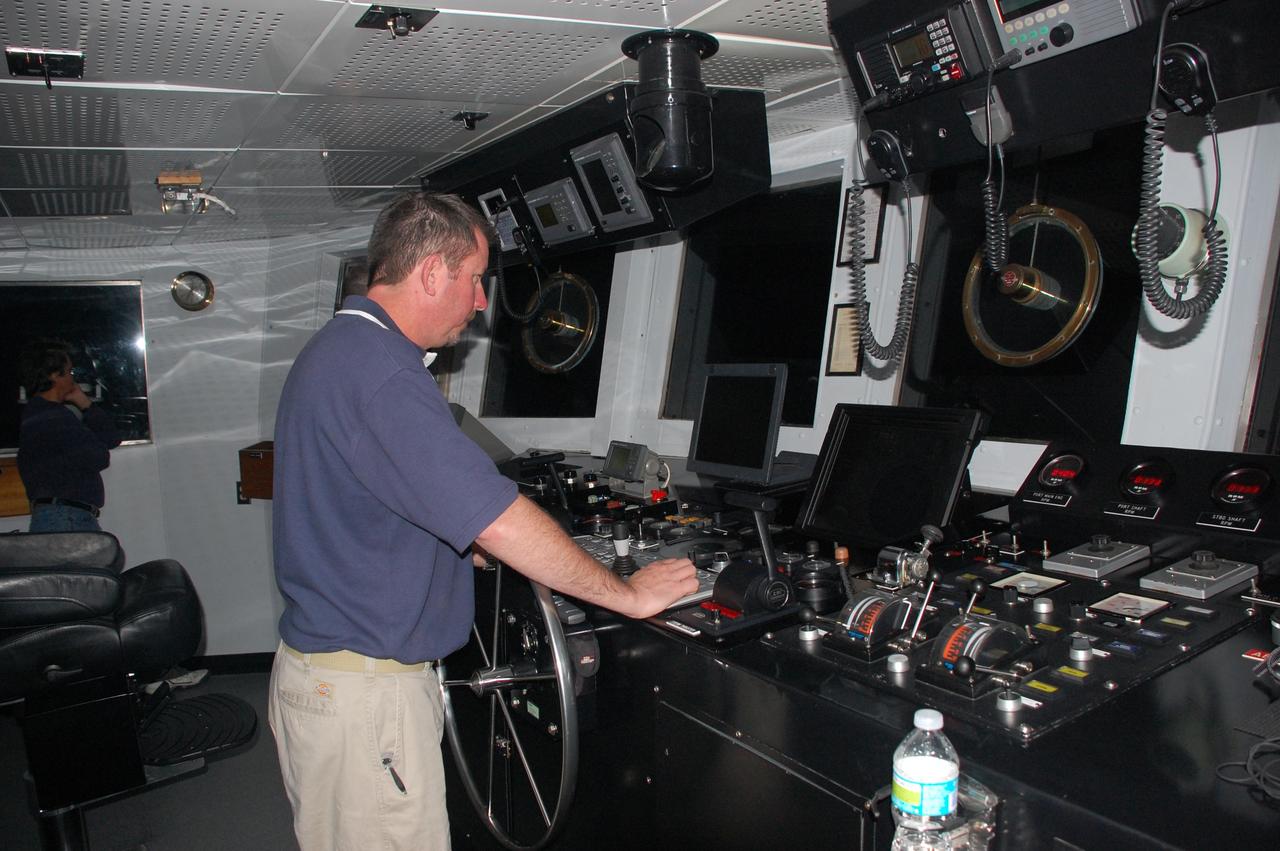
CAPE CANAVERAL, Fla. -- Chief Mate Jamie Harris is steering Freedom Star, one of NASA's solid rocket booster retrieval ships in the direction of the left spent booster that splashed down into the Atlantic Ocean after space shuttle Discovery's STS-133 launch. The shuttle’s two solid rocket booster casings and associated flight hardware are recovered in the Atlantic Ocean after every launch by Liberty Star and Freedom Star. The boosters impact the Atlantic about seven minutes after liftoff and the retrieval ships are stationed about 10 miles from the impact area at the time of splashdown. After the spent segments are processed, they will be transported to Utah, where they will be refurbished and stored, if needed. Photo credit: NASA/Ben Smegelsky

Inside the Booster Fabrication Facility at NASA's Kennedy Space Center in Florida, the Artemis I aft skirts for the agency's Space Launch System (SLS) rocket’s twin solid rocket boosters are being readied for their move to the Rotation, Processing and Surge Facility (RPSF) on June 9, 2020. In view at left is the left aft skirt assembly. Behind it to the right is the right aft skirt assembly. Also in view at far right, are the Artemis I forward assemblies, with the left assembly in front and the right assembly behind it. The aft skirts were refurbished by Northrop Grumman. They house the thrust vector control system, which controls 70 percent of the steering during initial ascent of the SLS rocket. The segments will remain in the RPSF until ready for stacking with the forward and aft parts of the boosters on the mobile launcher in High Bay 3 of the Vehicle Assembly Building. Through the Artemis Program, NASA is working to land the first woman and next man on the Moon by 2024.
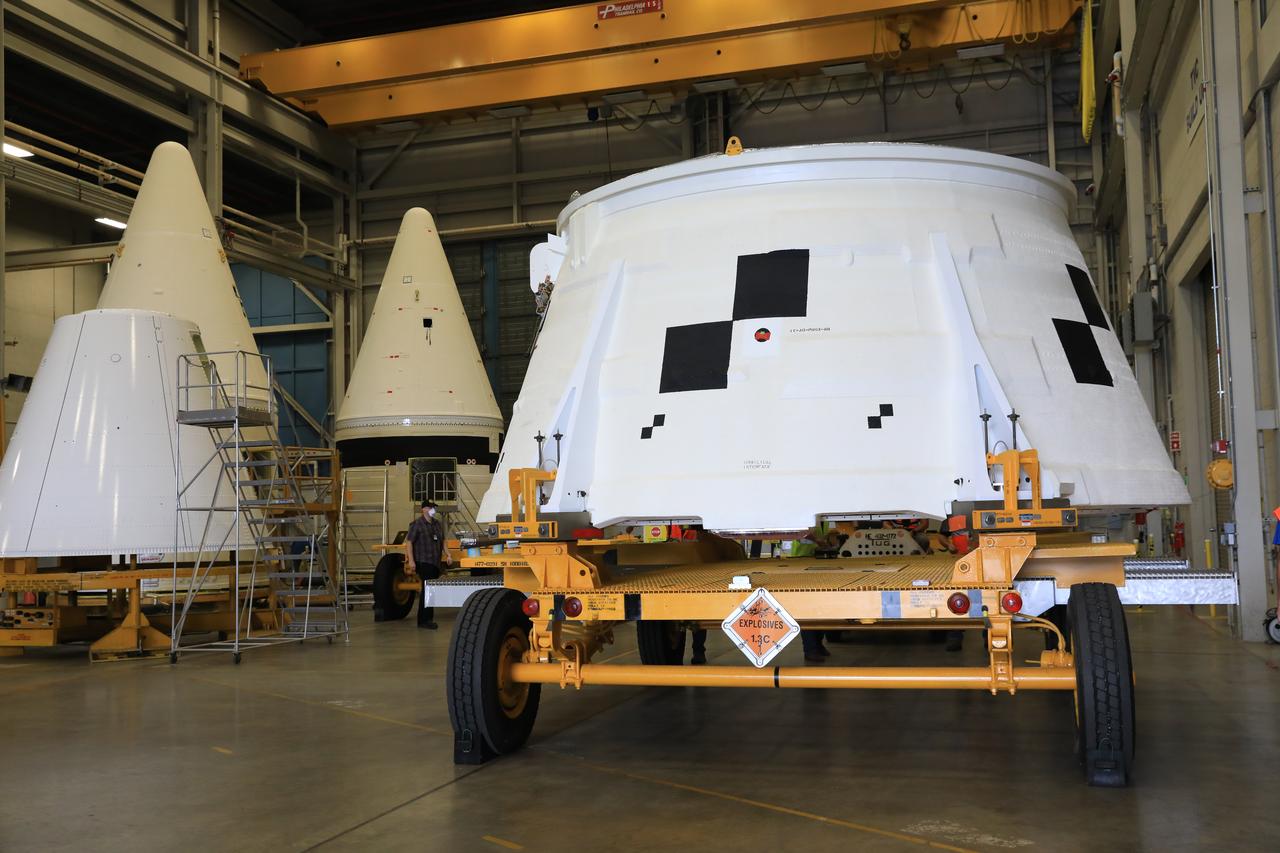
Inside the Booster Fabrication Facility at NASA's Kennedy Space Center in Florida, the Artemis I aft skirts for the agency's Space Launch System (SLS) rocket’s twin solid rocket boosters are moved out of their test cells and are being readied for their move to the Rotation, Processing and Surge Facility (RPSF) on June 9, 2020. In view at right is the right aft skirt. In view at left are the two Artemis I forward assemblies. The aft skirts were refurbished by Northrop Grumman. They house the thrust vector control system, which controls 70 percent of the steering during initial ascent of the SLS rocket. The segments will remain in the RPSF until ready for stacking with the forward and aft parts of the boosters on the mobile launcher in High Bay 3 of the Vehicle Assembly Building. Through the Artemis Program, NASA is working to land the first woman and next man on the Moon by 2024.
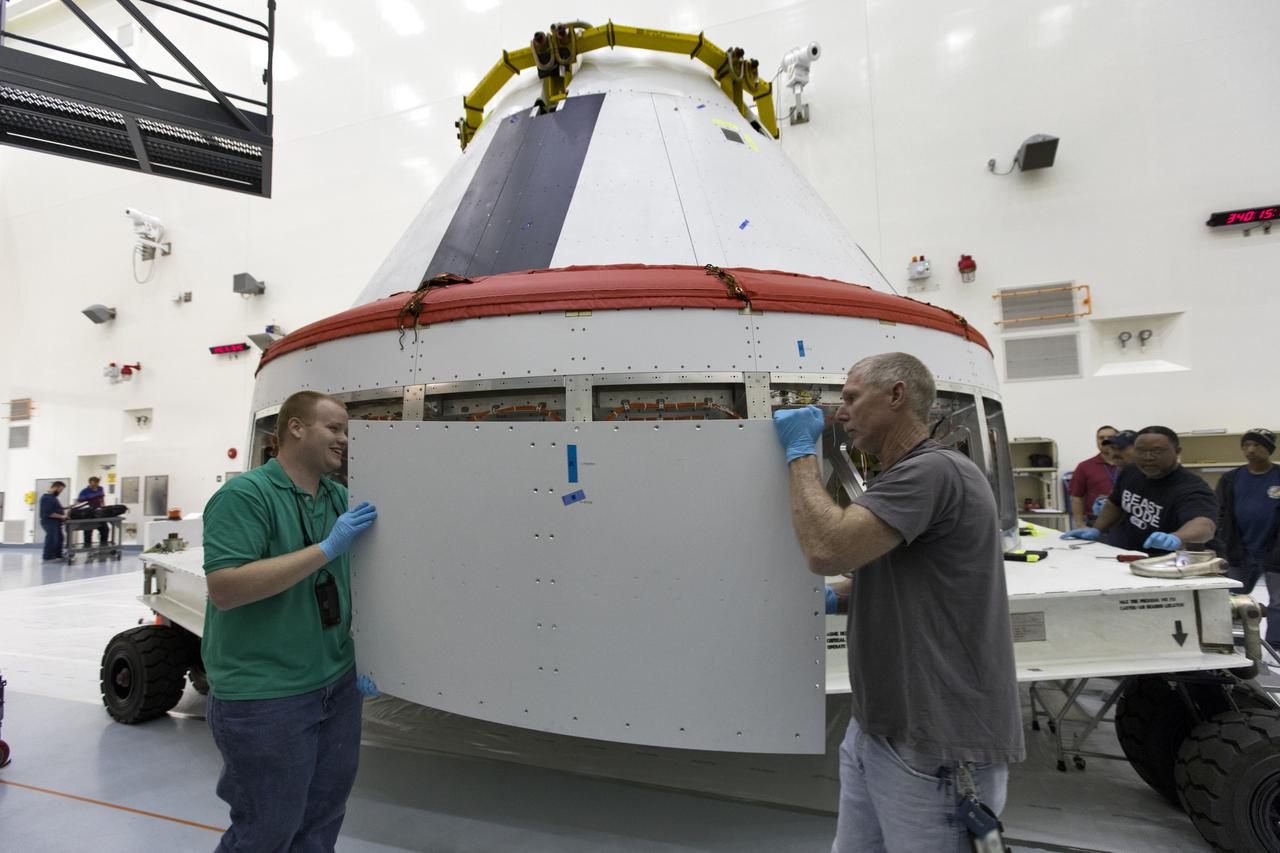
Workers remove cover plates from a mock Orion crew module inside the Multi-Payload Processing Facility at NASA’s Kennedy Space Center in Florida on Dec. 6, 2018. The crew module will be used during a full stress test of the Launch Abort System (LAS), called Ascent Abort-2 (AA-2), scheduled for April 2019. During the test, the Northrop Grumman booster will launch from Space Launch Complex 46, carrying a fully functional LAS and the 22,000-pound Orion test vehicle to an altitude of 31,000 feet and traveling at more than 1,000 miles an hour. The test will verify the LAS can steer the crew module and astronauts aboard to safety in the event of an issue with the Space Launch System (SLS) rocket when the spacecraft is under the highest aerodynamic loads it will experience during a rapid climb into space.
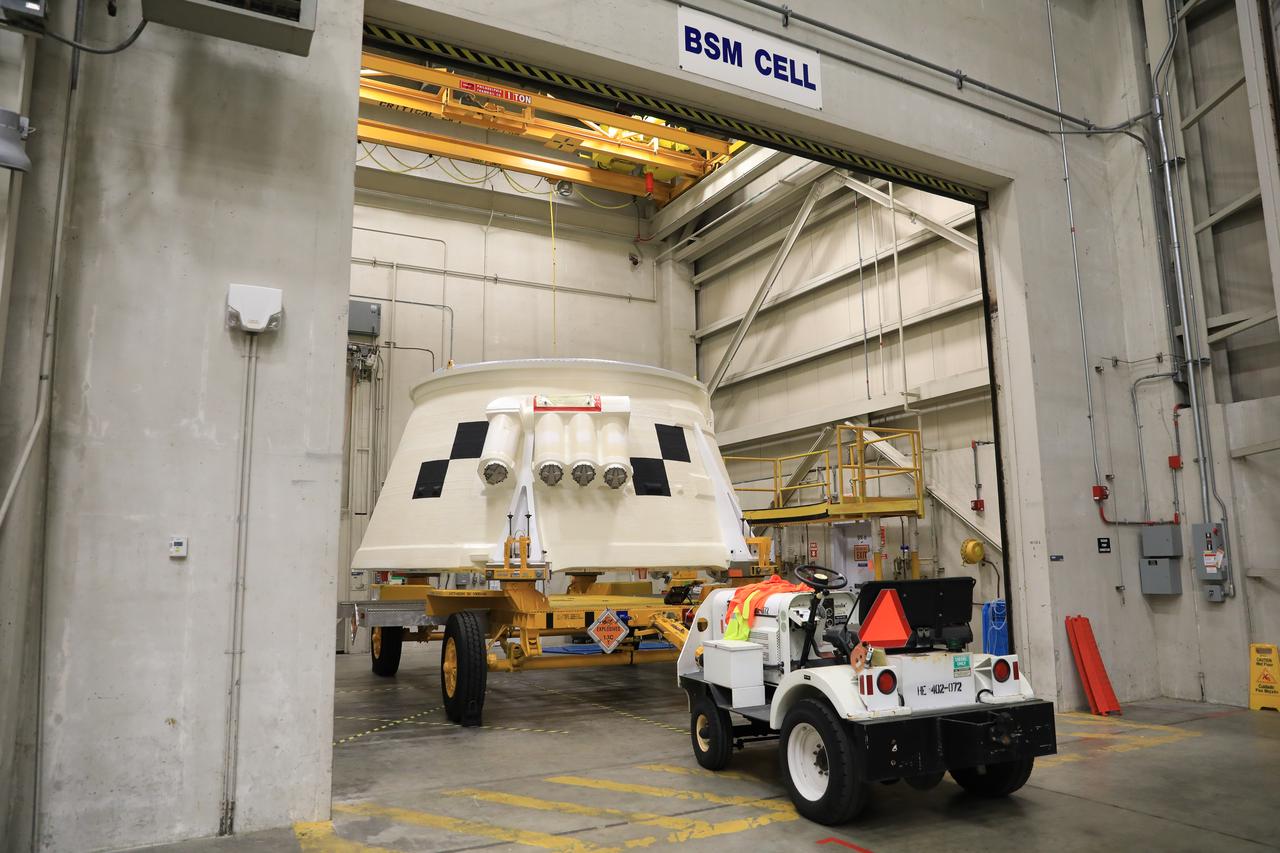
Inside the Booster Fabrication Facility at NASA's Kennedy Space Center in Florida, the Artemis I aft skirts for the agency's Space Launch System (SLS) rocket’s twin solid rocket boosters are being readied for their move to the Rotation, Processing and Surge Facility (RPSF) on June 9, 2020. In view, the left aft skirt assembly is attached to a move vehicle in a test cell. The aft skirts were refurbished by Northrop Grumman. They house the thrust vector control system, which controls 70 percent of the steering during initial ascent of the SLS rocket. The segments will remain in the RPSF until ready for stacking with the forward and aft parts of the boosters on the mobile launcher in High Bay 3 of the Vehicle Assembly Building. Through the Artemis Program, NASA is working to land the first woman and next man on the Moon by 2024.
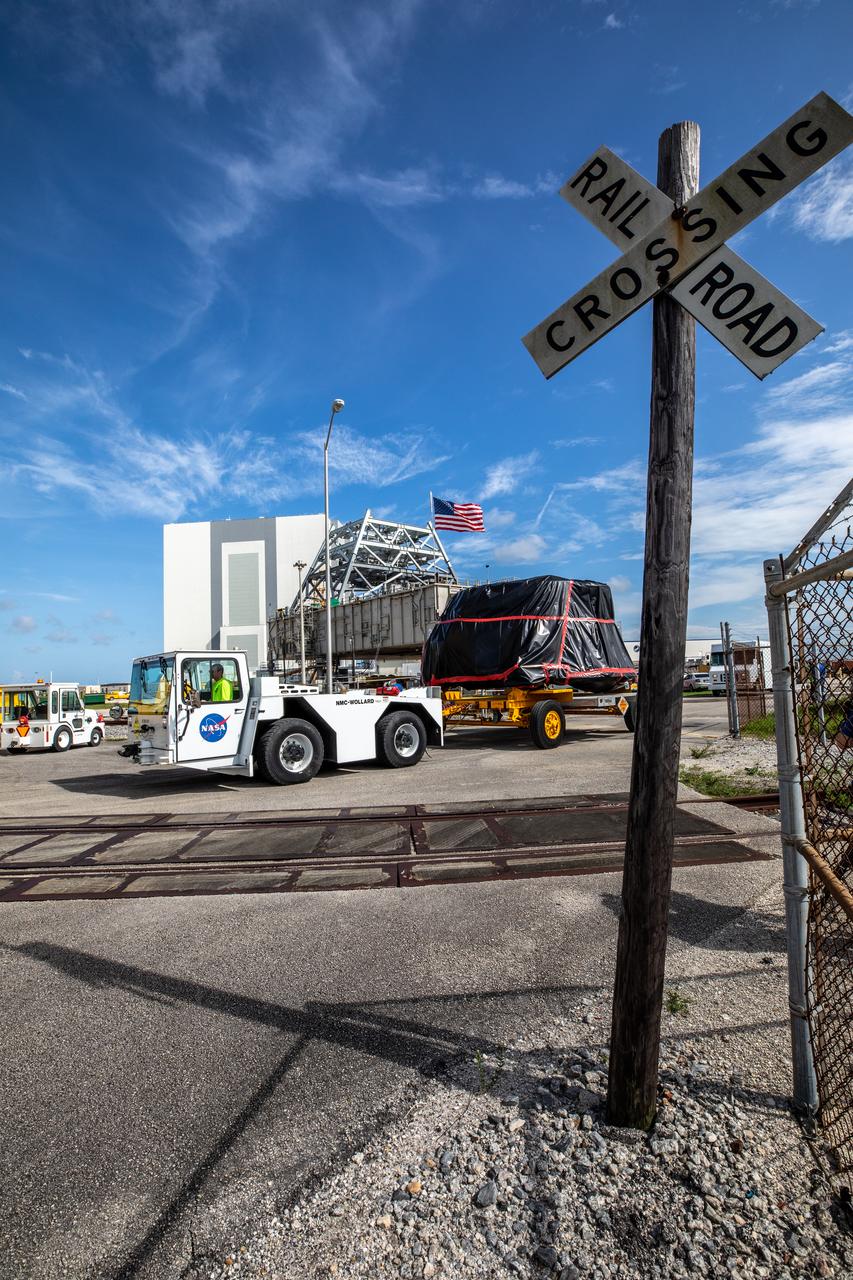
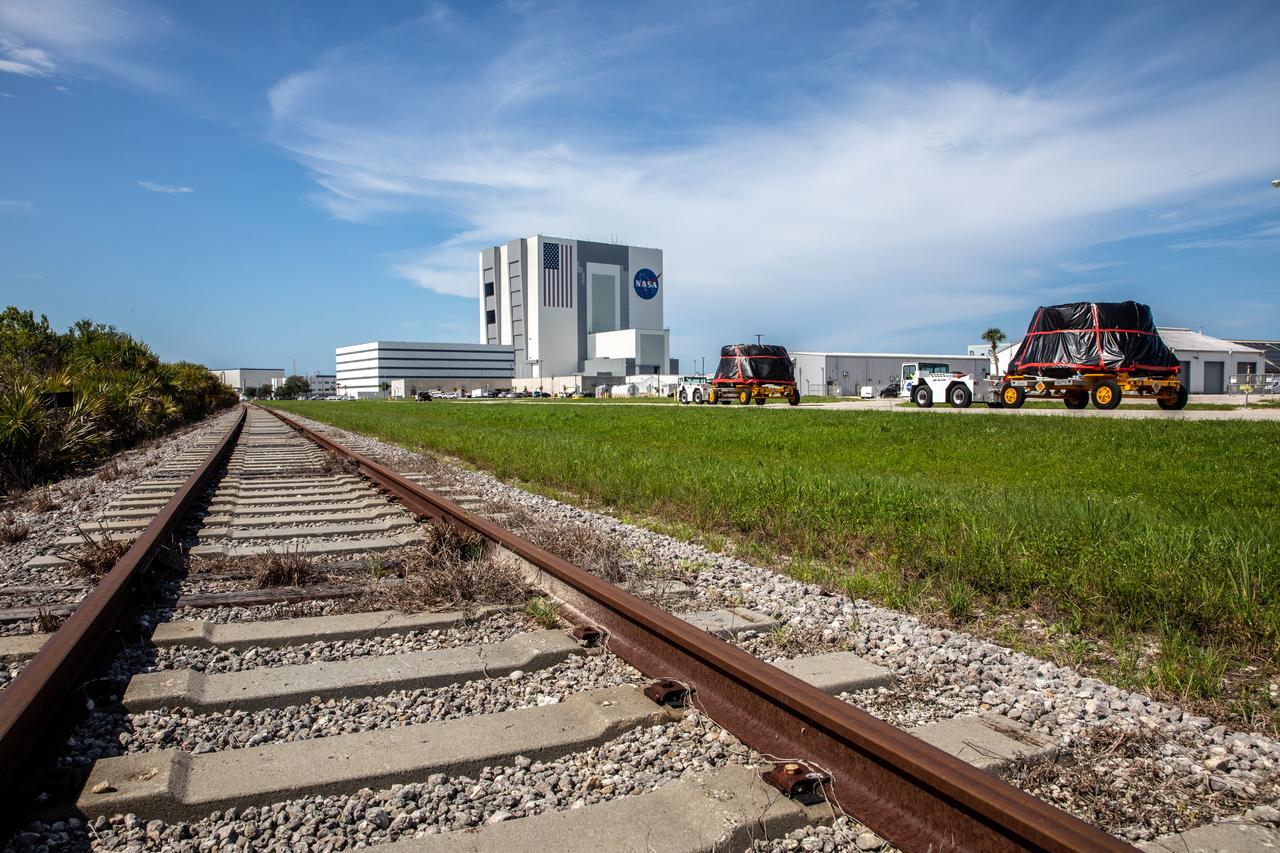
One of two Artemis I aft skirts for NASA’s Space Launch System (SLS) rocket’s twin solid rocket boosters crosses a railroad track on its way to the Rotation, Processing and Surge Facility (RPSF) at the agency’s Kennedy Space Center in Florida on June 10, 2020. They were transported from the Booster Fabrication Facility. The aft skirts were refurbished by Northrop Grumman. They house the thrust vector control system, which controls 70 percent of the steering during initial ascent of the SLS rocket. The segments will remain in the RPSF until ready for stacking with the forward and aft parts of the boosters on the mobile launcher in High Bay 3 of the Vehicle Assembly Building. Through the Artemis Program, NASA is working to land the first woman and next man on the Moon by 2024.
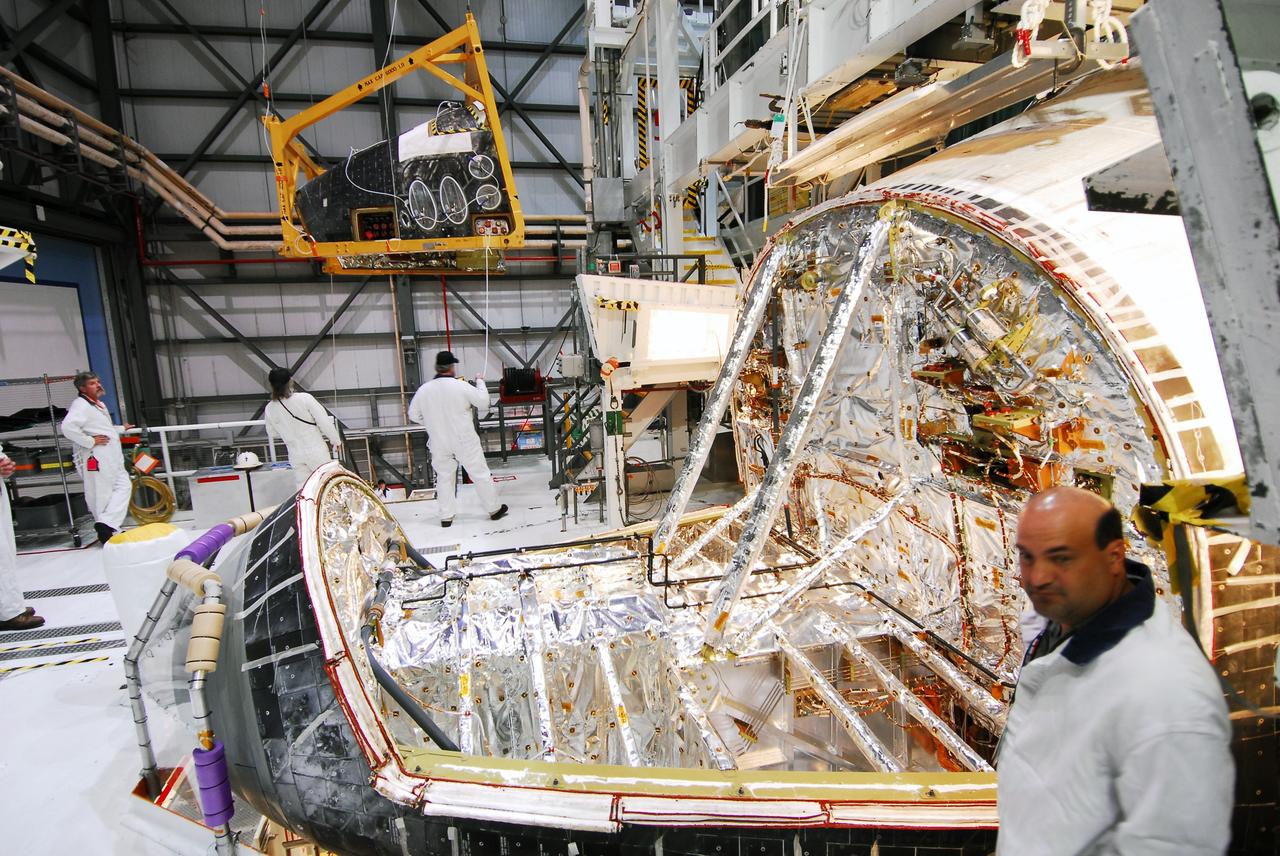
CAPE CANAVERAL, Fla. - Crews in Orbiter Processing Facility-2 at NASA's Kennedy Space Center in Florida remove space shuttle Discovery's forward reaction control system (FRCS), which helped steer the shuttle in orbit. To maneuver, the FRCS used hypergolic fuel and oxidizer, which were purged from Discovery after its final spaceflight, STS-133. Next, the FRCS will be shipped to a maintenance facility at White Sands Space Harbor in New Mexico, where additional inspections will be performed and its components made safe to go on public display. The transition and retirement processing is expected to help rocket designers build next-generation spacecraft and prepare the shuttle for display. Photo credit: NASA/Jim Grossmann
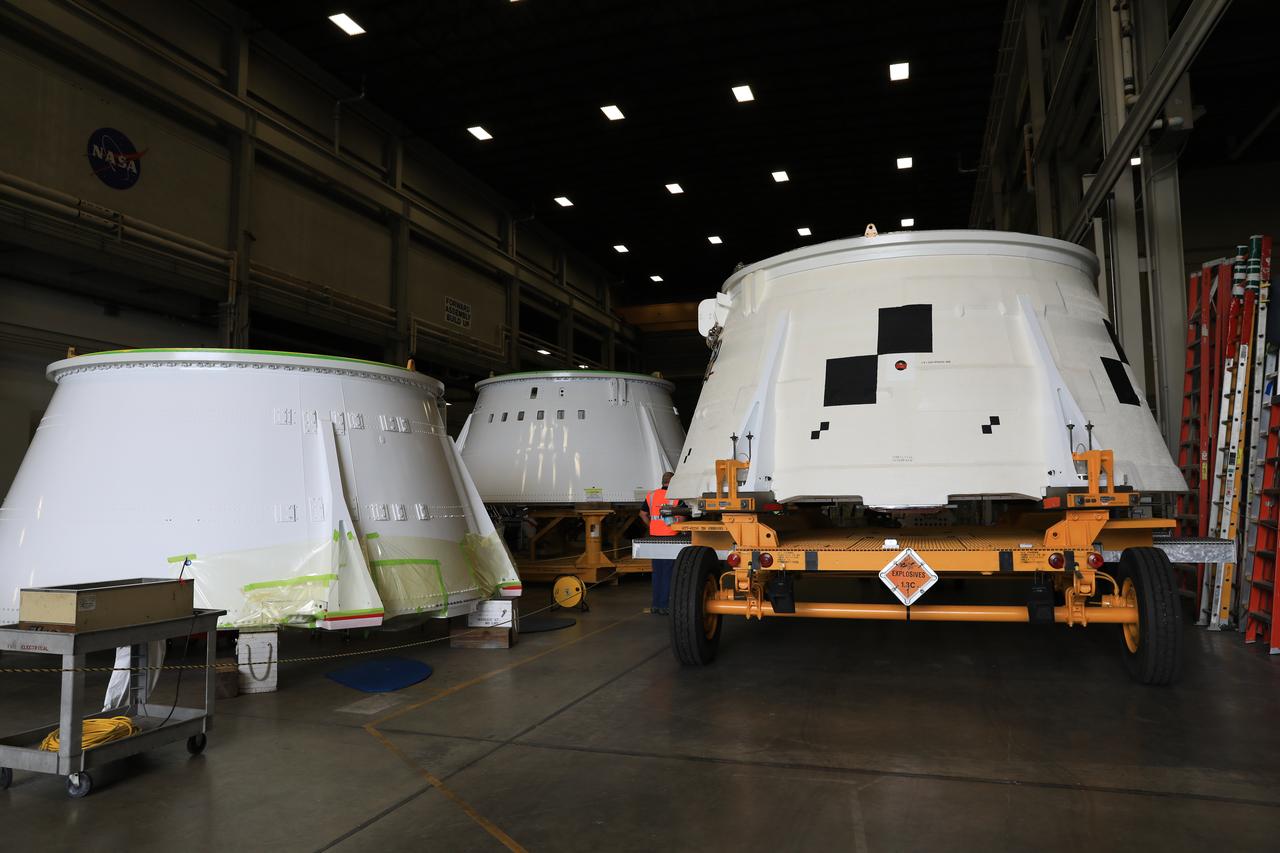
Inside the Booster Fabrication Facility at NASA's Kennedy Space Center in Florida, the Artemis I aft skirts for the agency's Space Launch System (SLS) rocket’s twin solid rocket boosters are being readied for their move to the Rotation, Processing and Surge Facility (RPSF) on June 9, 2020. In view, the left aft skirt assembly is attached to a move vehicle and moved out of a test cell. The Artemis II aft skirt structures are in view at left. The aft skirts were refurbished by Northrop Grumman. They house the thrust vector control system, which controls 70 percent of the steering during initial ascent of the SLS rocket. The segments will remain in the RPSF until ready for stacking with the forward and aft parts of the boosters on the mobile launcher in High Bay 3 of the Vehicle Assembly Building. Through the Artemis Program, NASA is working to land the first woman and next man on the Moon by 2024.
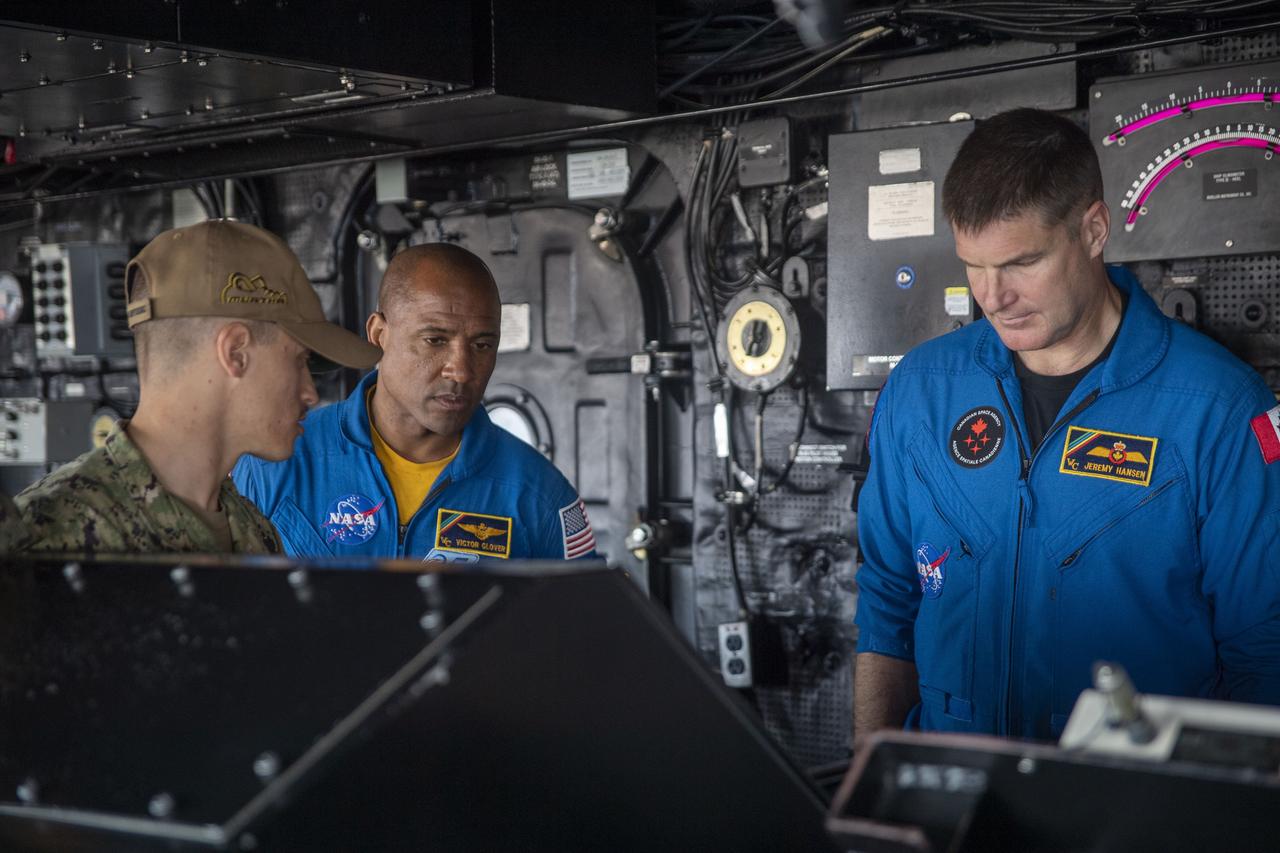
L.t. j.g Thomas Lampognana, left, explains amphibious transport dock ship USS John P. Murtha’s (LPD 26) helm control console to NASA Astronaut U.S. Navy Capt. Victor Glover and Canadian Space Agency Astronaut Jeremy Hansen, July 19, 2023. The helm is used as the primary steering for the ship underway. In preparation for NASA's Artemis II crewed mission, which will send four astronauts in Orion beyond the Moon, NASA and the U.S. Navy will conduct a series of tests to demonstrate and evaluate the processes, procedures, and hardware used in recovery operations for crewed lunar missions. The U.S. Navy has many unique capabilities that make it an ideal partner to support NASA, including its amphibious capabilities with the ability to embark helicopters, launch and recover small boats, three-dimensional air search radar and advanced medical facilities.
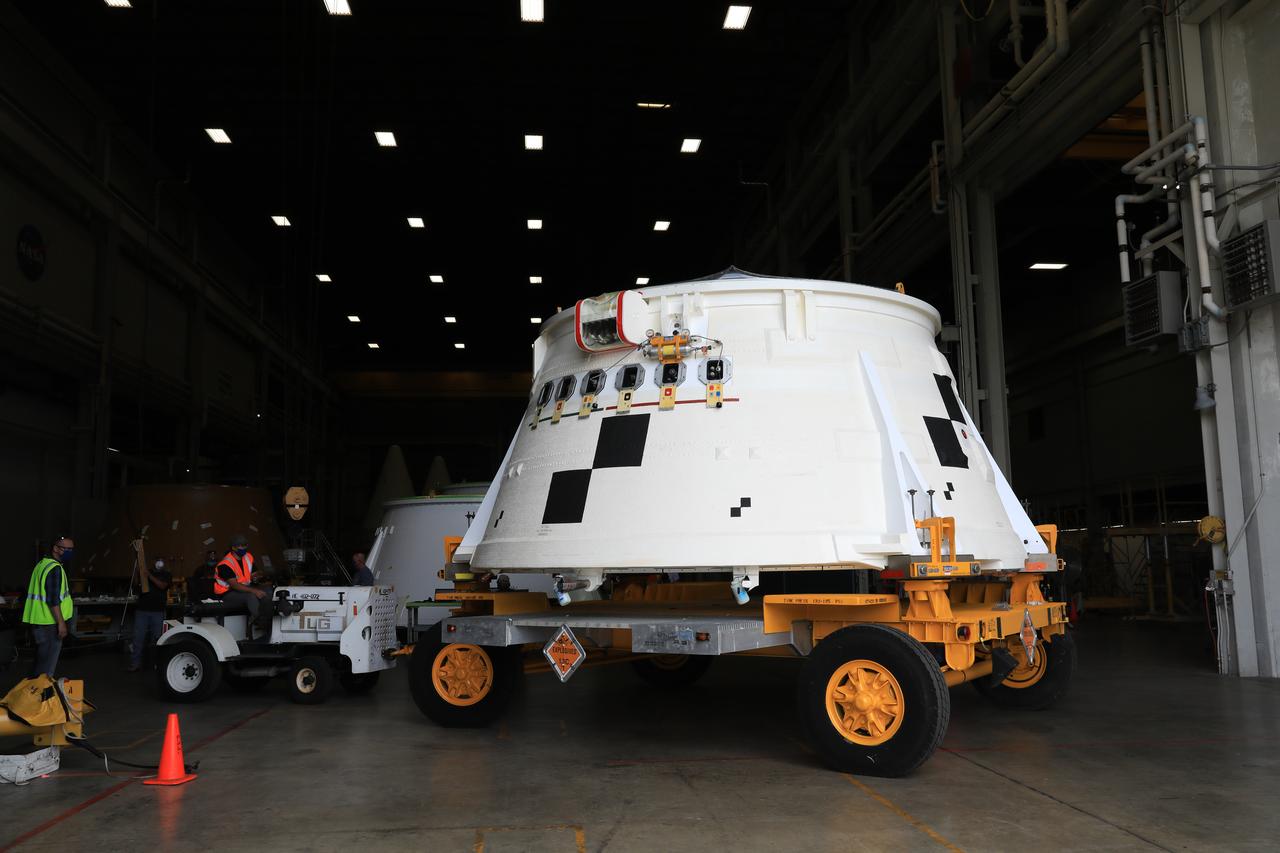
Inside the Booster Fabrication Facility at NASA's Kennedy Space Center in Florida, the Artemis I aft skirts for the agency's Space Launch System (SLS) rocket’s twin solid rocket boosters are being readied for their move to the Rotation, Processing and Surge Facility (RPSF) on June 9, 2020. In view, the left aft skirt assembly is attached to a move vehicle and moved out of a test cell. The aft skirts were refurbished by Northrop Grumman. They house the thrust vector control system, which controls 70 percent of the steering during initial ascent of the SLS rocket. The segments will remain in the RPSF until ready for stacking with the forward and aft parts of the boosters on the mobile launcher in High Bay 3 of the Vehicle Assembly Building. Through the Artemis Program, NASA is working to land the first woman and next man on the Moon by 2024.
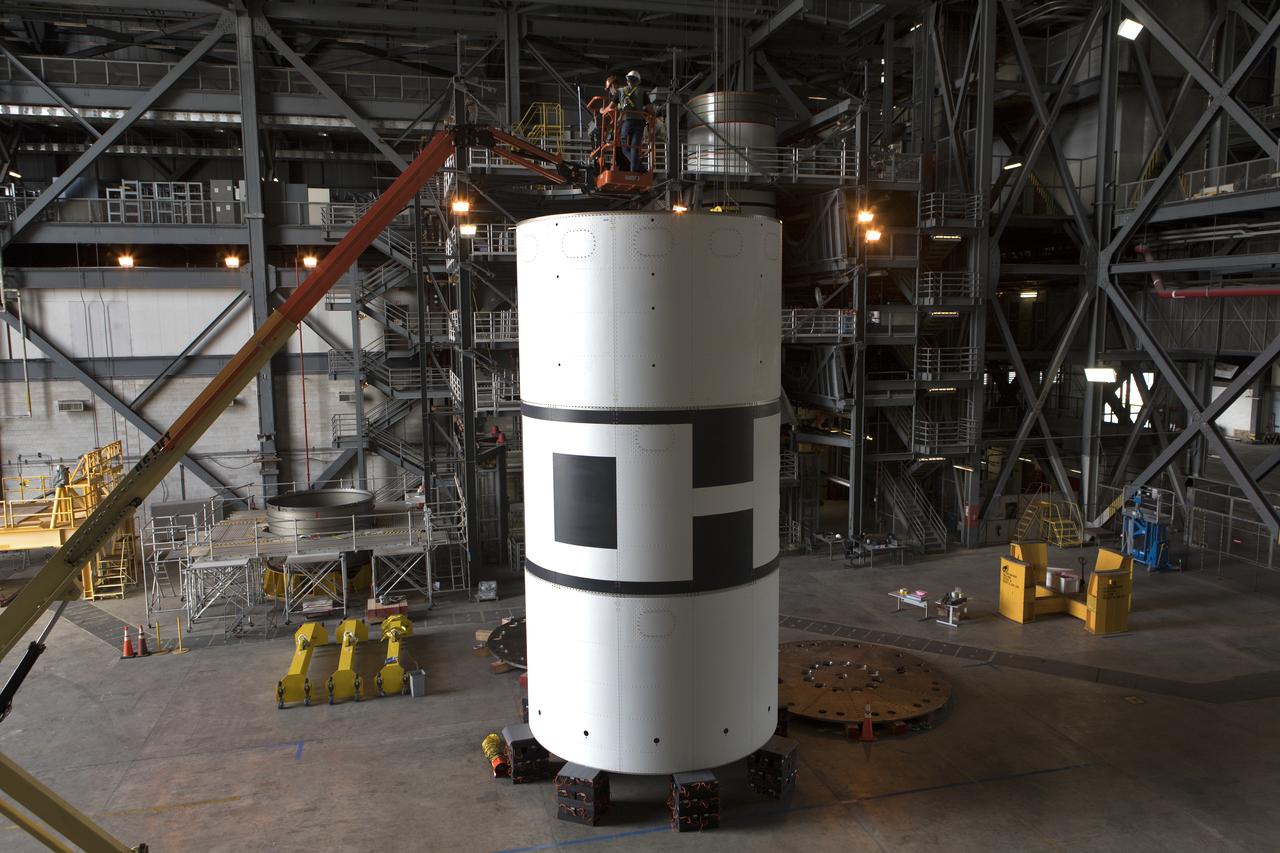
The aeroshells for Orion's Launch Abort System (LAS) are being stacked in High Bay 4 of the Vehicle Assembly Building on Aug. 3, 2018, at NASA's Kennedy Space Center in Florida. The aeroshells are being prepared for a full-stress test of the LAS, called Ascent Abort-2 (AA-2) flight test, scheduled for April 2019. During the test, a booster will launch from Space Launch Complex 46 at Cape Canaveral Air Force Station, carrying a fully functional LAS and a 22,000-pound Orion test vehicle to an altitude of 31,000 feet and traveling at more than 1,000 miles an hour. The test will verify the LAS can steer the crew module and astronauts aboard to safety in the event of an issue with the Space Launch System (SLS) rocket when the spacecraft is under the highest aerodynamic loads it will experience during a rapid climb into space. Orion is being prepared for its first integrated uncrewed flight atop the SLS on Exploration Mission-1.
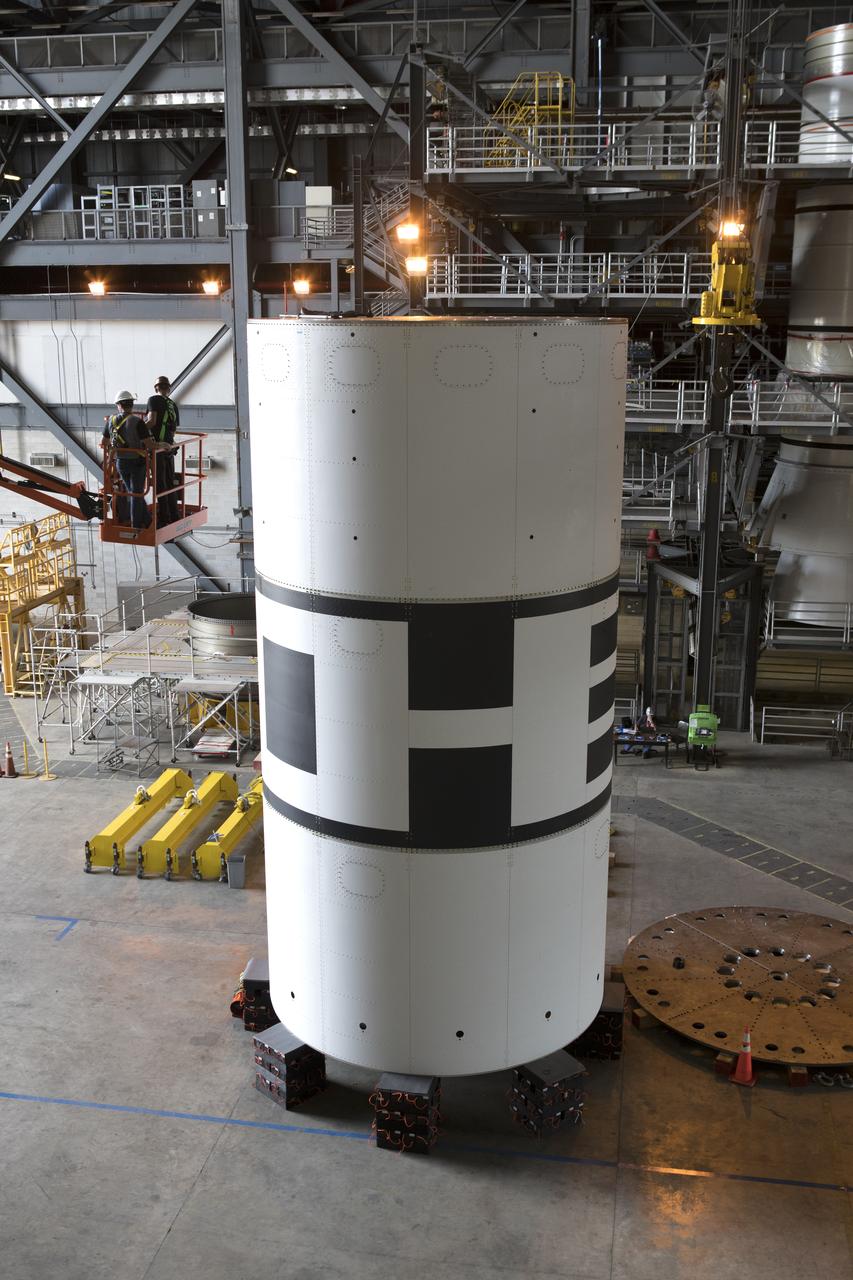
The aeroshells for Orion's Launch Abort System (LAS) are being stacked in High Bay 4 of the Vehicle Assembly Building on Aug. 3, 2018, at NASA's Kennedy Space Center in Florida. The aeroshells are being prepared for a full-stress test of the LAS, called Ascent Abort-2 (AA-2) flight test, scheduled for April 2019. During the test, a booster will launch from Space Launch Complex 46 at Cape Canaveral Air Force Station, carrying a fully functional LAS and a 22,000-pound Orion test vehicle to an altitude of 31,000 feet and traveling at more than 1,000 miles an hour. The test will verify the LAS can steer the crew module and astronauts aboard to safety in the event of an issue with the Space Launch System (SLS) rocket when the spacecraft is under the highest aerodynamic loads it will experience during a rapid climb into space. Orion is being prepared for its first integrated uncrewed flight atop the SLS on Exploration Mission-1.
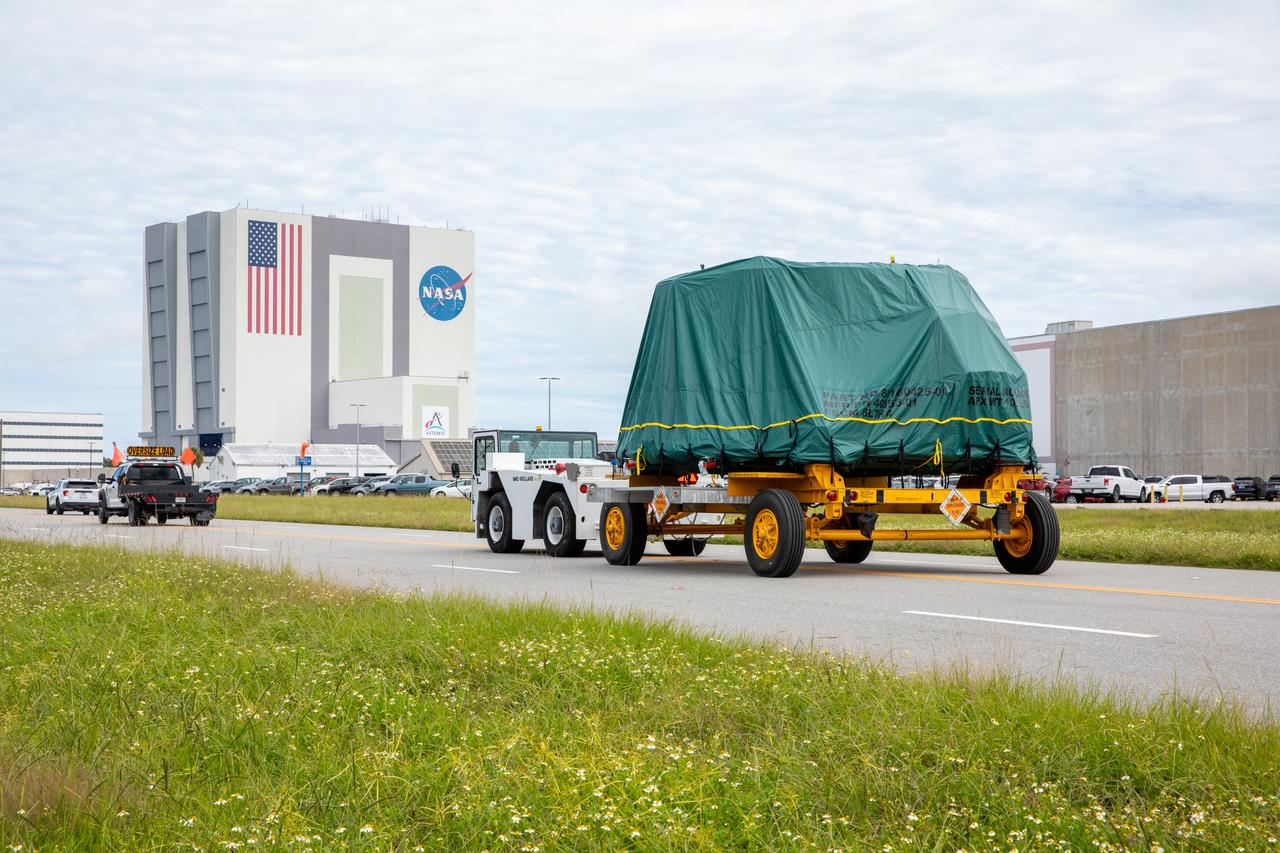
One of two Artemis II aft skirts for NASA's Space Launch System (SLS) rocket’s twin solid rocket boosters is transported from the Booster Fabrication Facility to the Rotation Processing and Surge Facility (RPSF) at the agency’s Kennedy Space Center in Florida on Monday, Sept. 25, 2023. The aft skirts were refurbished by Northrop Grumman and house the thrust vector control system, which controls 70 percent of the steering during initial ascent of the SLS rocket. The segments will remain in the RPSF until ready for stacking with the forward and aft parts of the boosters on the mobile launcher in High Bay 3 of the Vehicle Assembly Building. Artemis II astronauts Reid Wiseman, Victor Glover, Christina Koch, and Jeremy Hansen will launch from Kennedy, traveling around the Moon on the first crewed mission under Artemis that will test all of the Orion spacecraft’s systems.
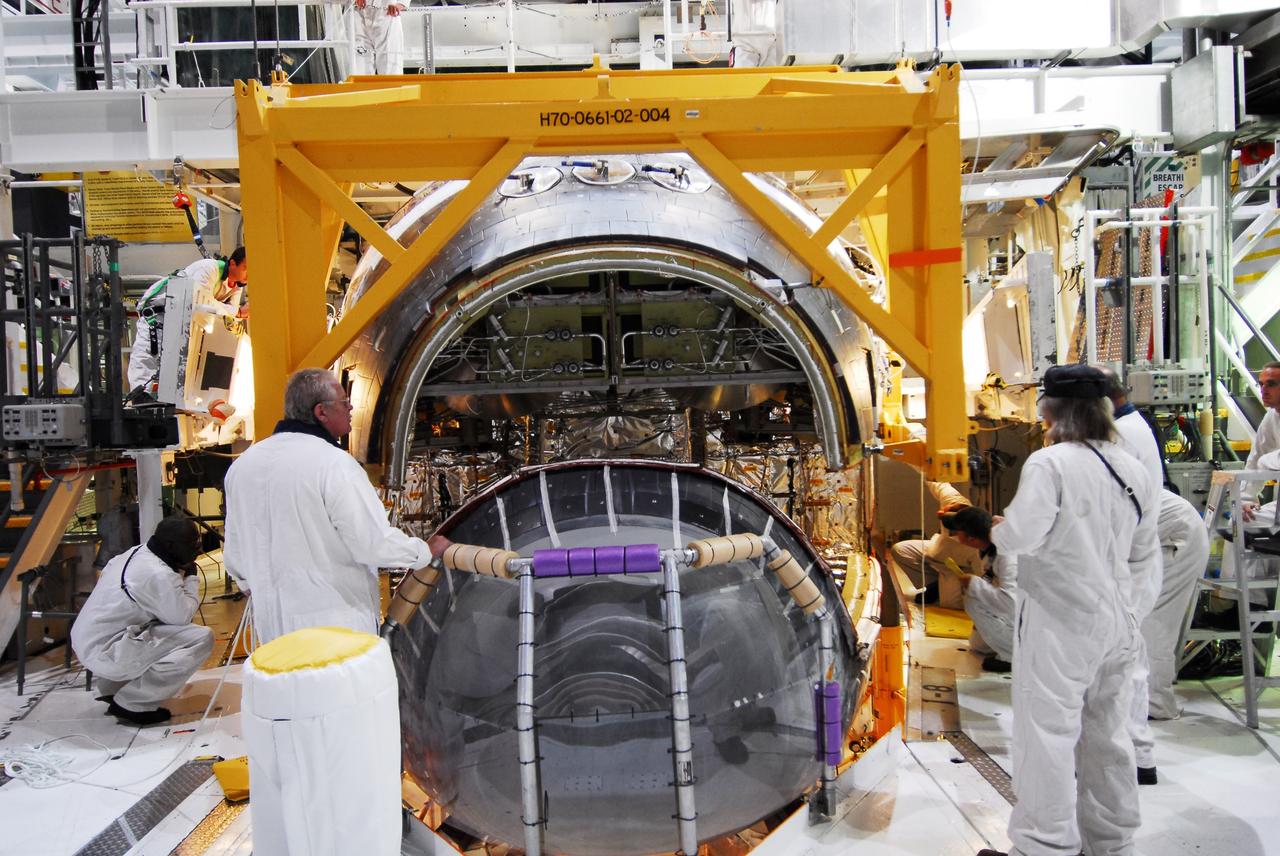
CAPE CANAVERAL, Fla. - Crews in Orbiter Processing Facility-2 at NASA's Kennedy Space Center in Florida begin to remove space shuttle Discovery's forward reaction control system (FRCS), which helped steer the shuttle in orbit. To maneuver, the FRCS used hypergolic fuel and oxidizer, which were purged from Discovery after its final spaceflight, STS-133. Next, the FRCS will be shipped to a maintenance facility at White Sands Space Harbor in New Mexico, where additional inspections will be performed and its components made safe to go on public display. The transition and retirement processing is expected to help rocket designers build next-generation spacecraft and prepare the shuttle for display. Photo credit: NASA/Jim Grossmann
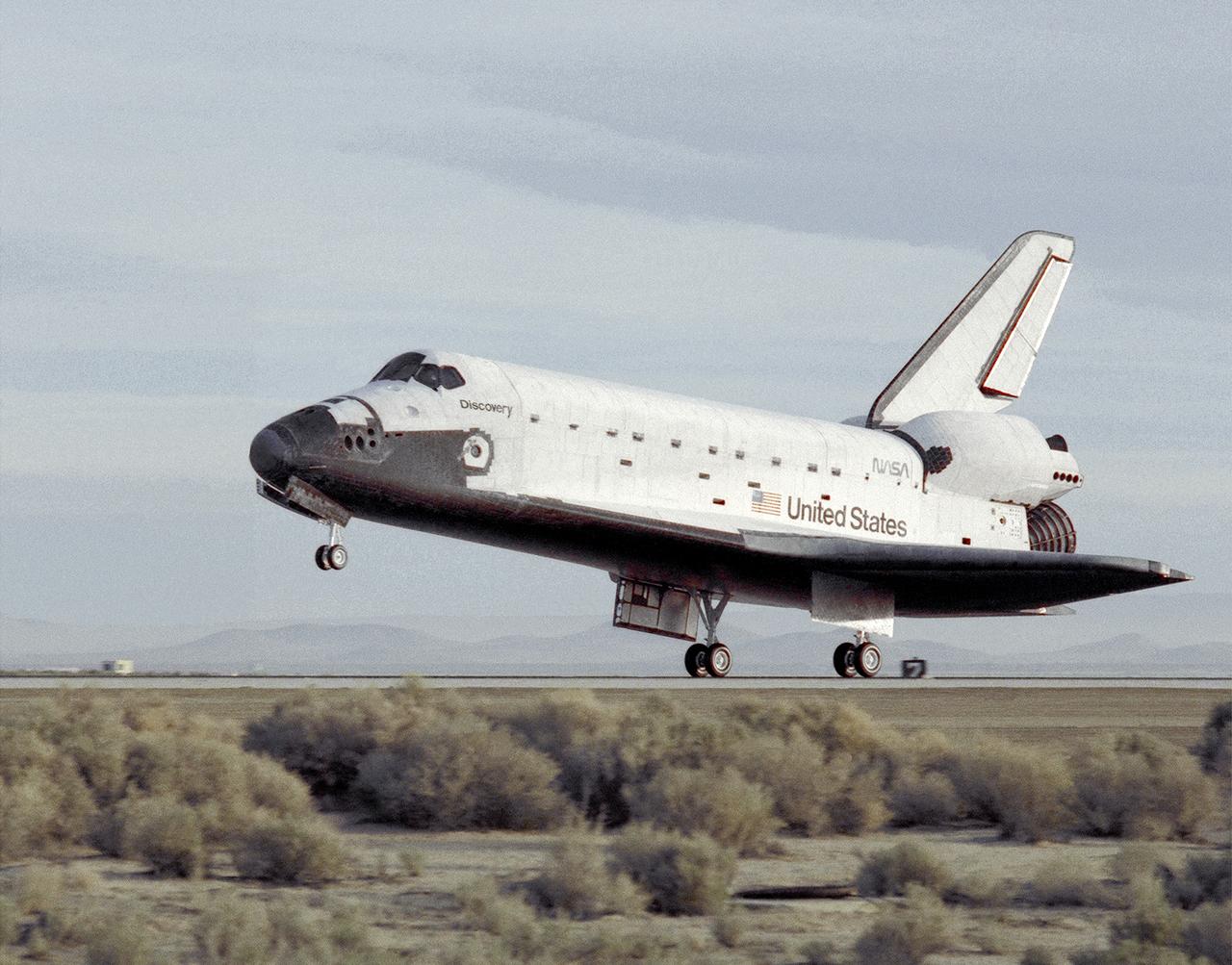
The STS-29 Space Shuttle Discovery mission lands at NASA's then Ames-Dryden Flight Research Facility, Edwards AFB, California, early Saturday morning, 18 March 1989. Touchdown was at 6:35:49 a.m. PST and wheel stop was at 6:36:40 a.m. on runway 22. Controllers chose the concrete runway for the landing in order to make tests of braking and nosewheel steering. The STS-29 mission was very successful, completing the launch of a Tracking and Data Relay communications satellite, as well as a range of scientific experiments. Discovery's five-man crew was led by Commander Michael L. Coats, and included pilot John E. Blaha and mission specialists James P. Bagian, Robert C. Springer, and James F. Buchli.
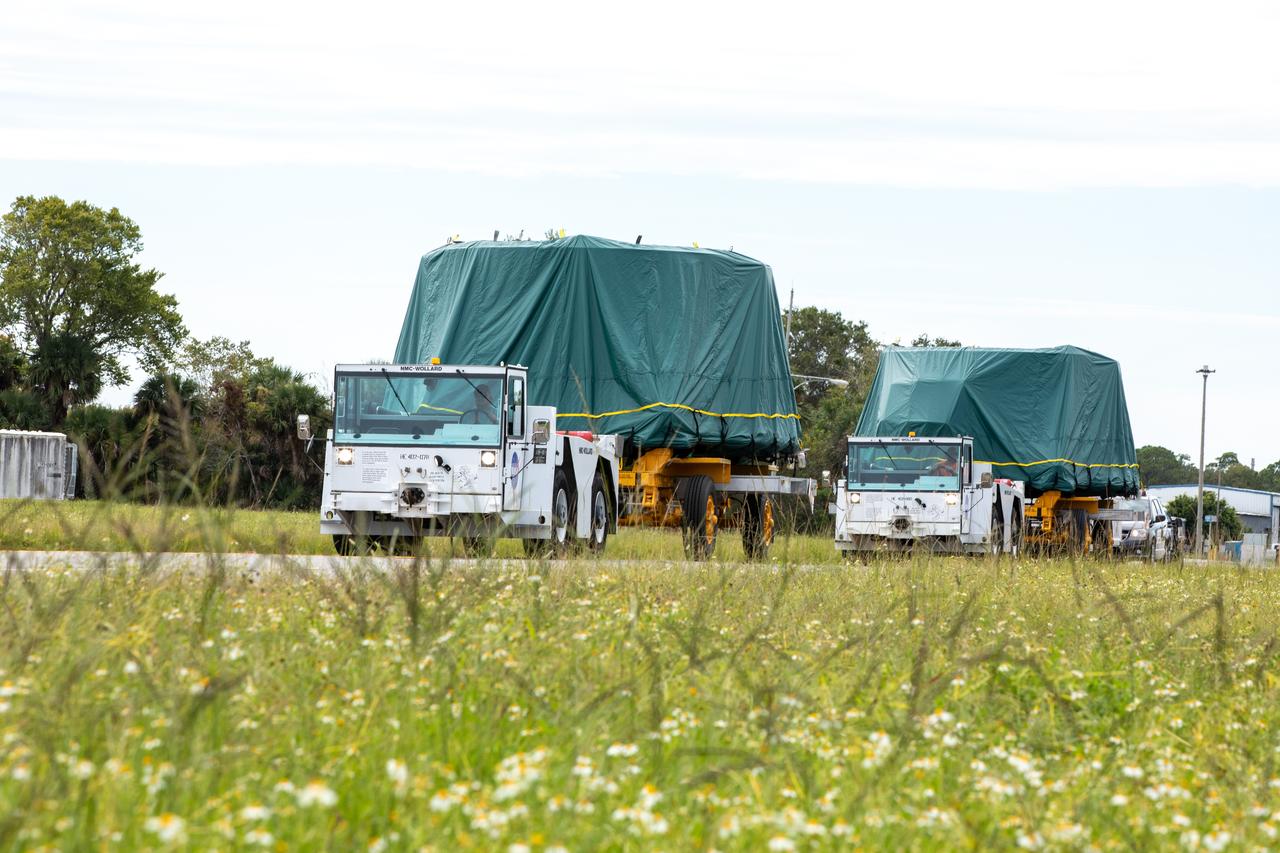
The Artemis II aft skirts for NASA's Space Launch System (SLS) rocket’s twin solid rocket boosters are transported from the Booster Fabrication Facility to the Rotation Processing and Surge Facility (RPSF) at the agency’s Kennedy Space Center in Florida on Monday, Sept. 25, 2023. The aft skirts were refurbished by Northrop Grumman and house the thrust vector control system, which controls 70 percent of the steering during initial ascent of the SLS rocket. The segments will remain in the RPSF until ready for stacking with the forward and aft parts of the boosters on the mobile launcher in High Bay 3 of the Vehicle Assembly Building. Artemis II astronauts Reid Wiseman, Victor Glover, Christina Koch, and Jeremy Hansen will launch from Kennedy, traveling around the Moon on the first crewed mission under Artemis that will test all of the Orion spacecraft’s systems.
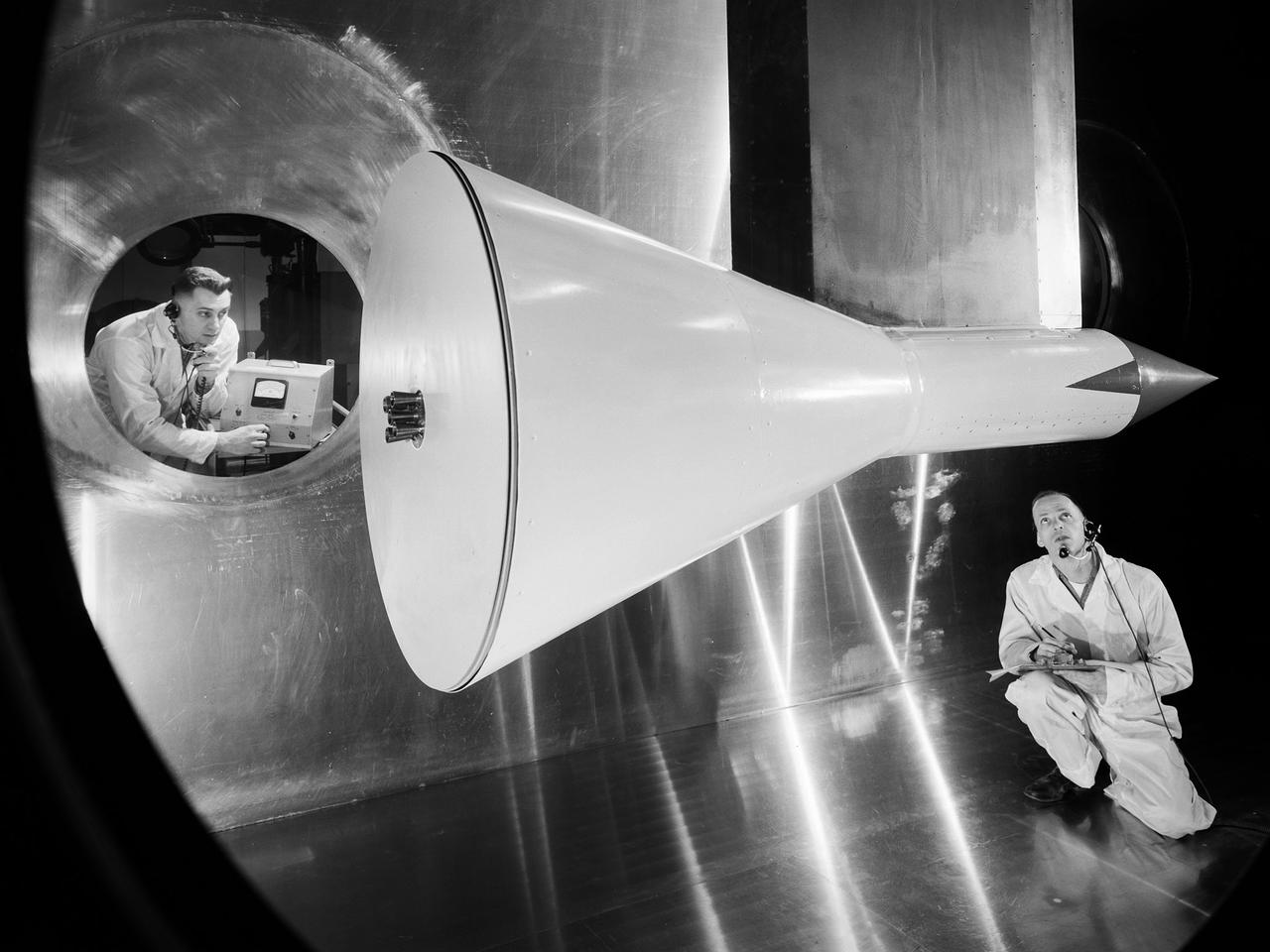
Researchers check the setup of a multi-nozzle base flow model in the 10- by 10-Foot Supersonic Wind Tunnel at the National Aeronautics and Space Administration (NASA) Lewis Research Center. NASA researchers were struggling to understand the complex flow phenomena resulting from the use of multiple rocket engines. Robert Wasko and Theodore Cover of the Advanced Development and Evaluation Division’s analysis and operations sections conducted a set of tests in the 10- by 10 tunnel to further understand the flow issues. The Lewis researchers studied four and five-nozzle configurations in the 10- by 10 at simulated altitudes from 60,000 to 200,000 feet. The nozzles were gimbaled during some of the test runs to simulate steering. The flow field for the four-nozzle clusters was surveyed in the center and the lateral areas between the nozzles, whereas the five-nozzle cluster was surveyed in the lateral area only.
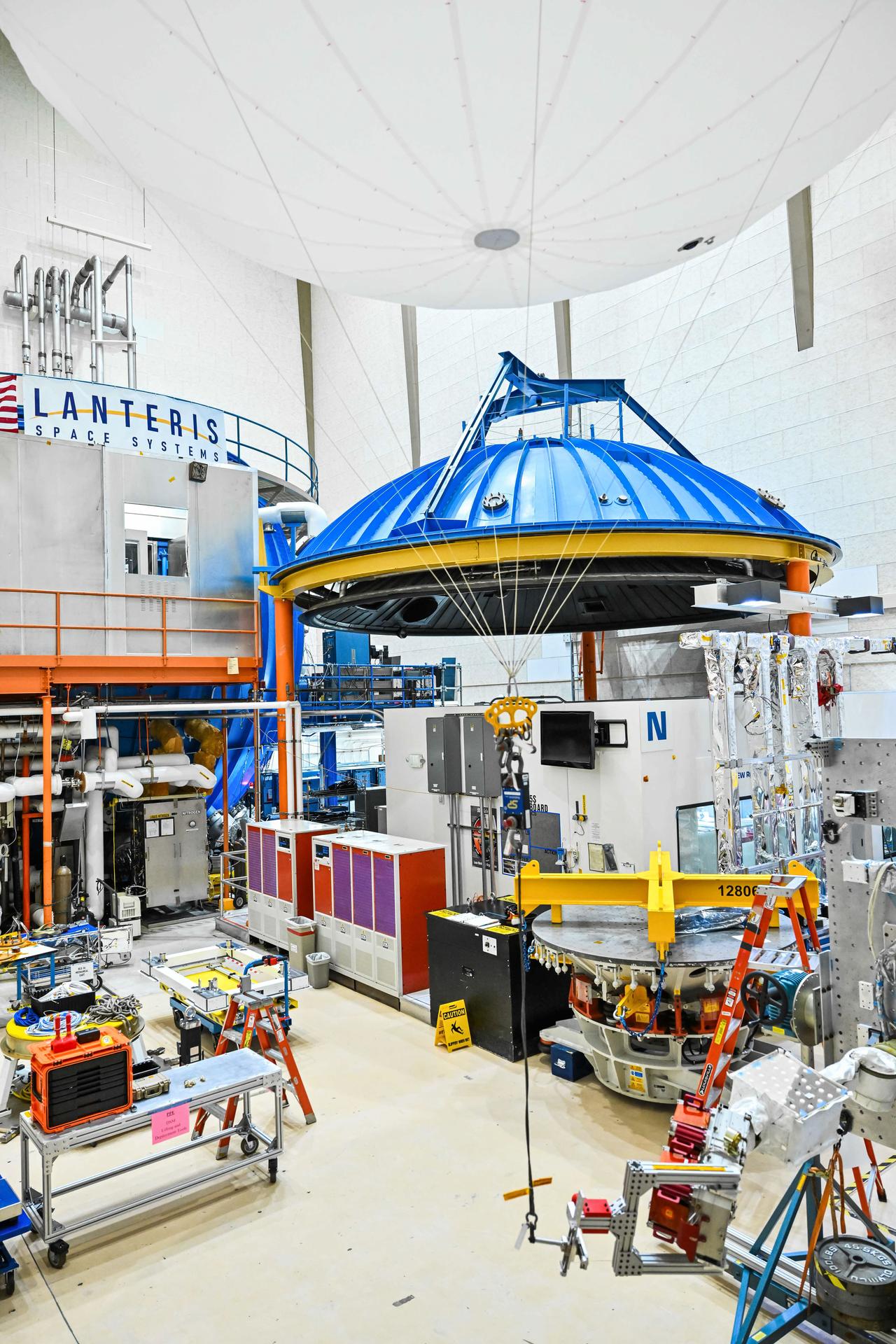
During this Engineering Qualification Module test, the gimbal platforms for the Busek-built BHT-6000 Hall effect thrusters are exercised through their full range of motion to verify articulation performance and confirm the system can properly steer thrust once integrated with Gateway’s Power and Propulsion Element (PPE). On PPE, four BHT-6000 Hall effect thrusters and three Advanced Electric Propulsion System (AEPS) thrusters will use solar power generated by Gateway’s Roll-Out Solar Arrays (ROSAs) to ionize xenon gas. The resulting xenon ions are then accelerated to extremely high speeds and expelled from the thrusters, creating a steady and highly efficient stream of thrust. This propulsion system will enable the Gateway lunar space station to maneuver and maintain its orbit around the Moon.
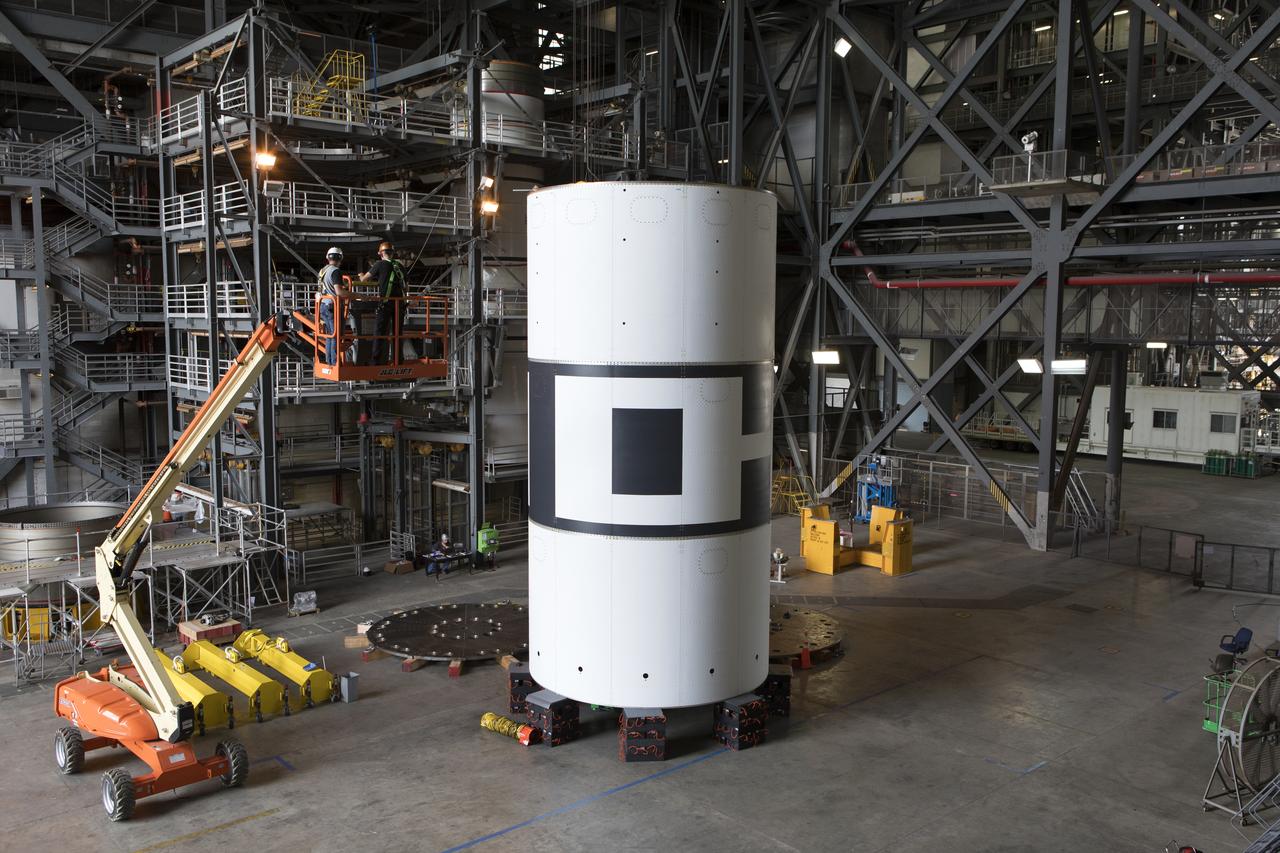
The aeroshells for Orion's Launch Abort System (LAS) are stacked in High Bay 4 of the Vehicle Assembly Building on Aug. 3, 2018, at NASA's Kennedy Space Center in Florida. The aeroshells are being prepared for a full-stress test of the LAS, called Ascent Abort-2 (AA-2) flight test, scheduled for April 2019. During the test, a booster will launch from Space Launch Complex 46 at Cape Canaveral Air Force Station, carrying a fully functional LAS and a 22,000-pound Orion test vehicle to an altitude of 31,000 feet and traveling at more than 1,000 miles an hour. The test will verify the LAS can steer the crew module and astronauts aboard to safety in the event of an issue with the Space Launch System (SLS) rocket when the spacecraft is under the highest aerodynamic loads it will experience during a rapid climb into space. Orion is being prepared for its first integrated uncrewed flight atop the SLS on Exploration Mission-1.
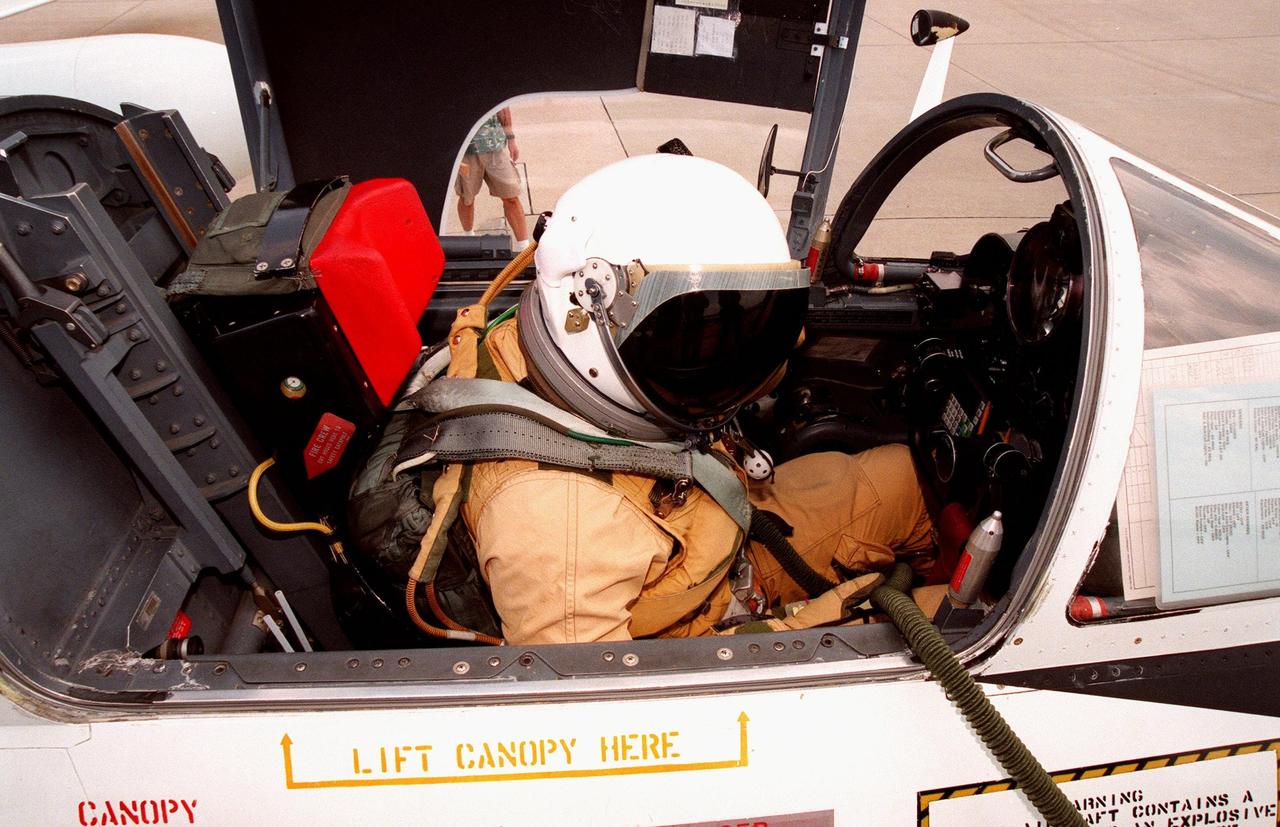
The pilot of this high-altitude research plane, a specially equipped Dryden Flight Research Center ER-2 (a modified U-2), settles into the cockpit at Patrick Air Force Base before taking off into a hurricane. The plane is part of the NASA-led Atmospheric Dynamics and Remote Sensing program that includes other government weather researchers and the university community in a study of Atlantic hurricanes and tropical storms. Soaring above 65,000 feet, the ER-2 will measure the structure of hurricanes and the surrounding atmosphere that steers the storm’s movement. The hurricane study, which lasts through September 1998, is part of NASA’s Earth Science enterprise to better understand the total Earth system and the effects of natural and human-induced changes on the global environment
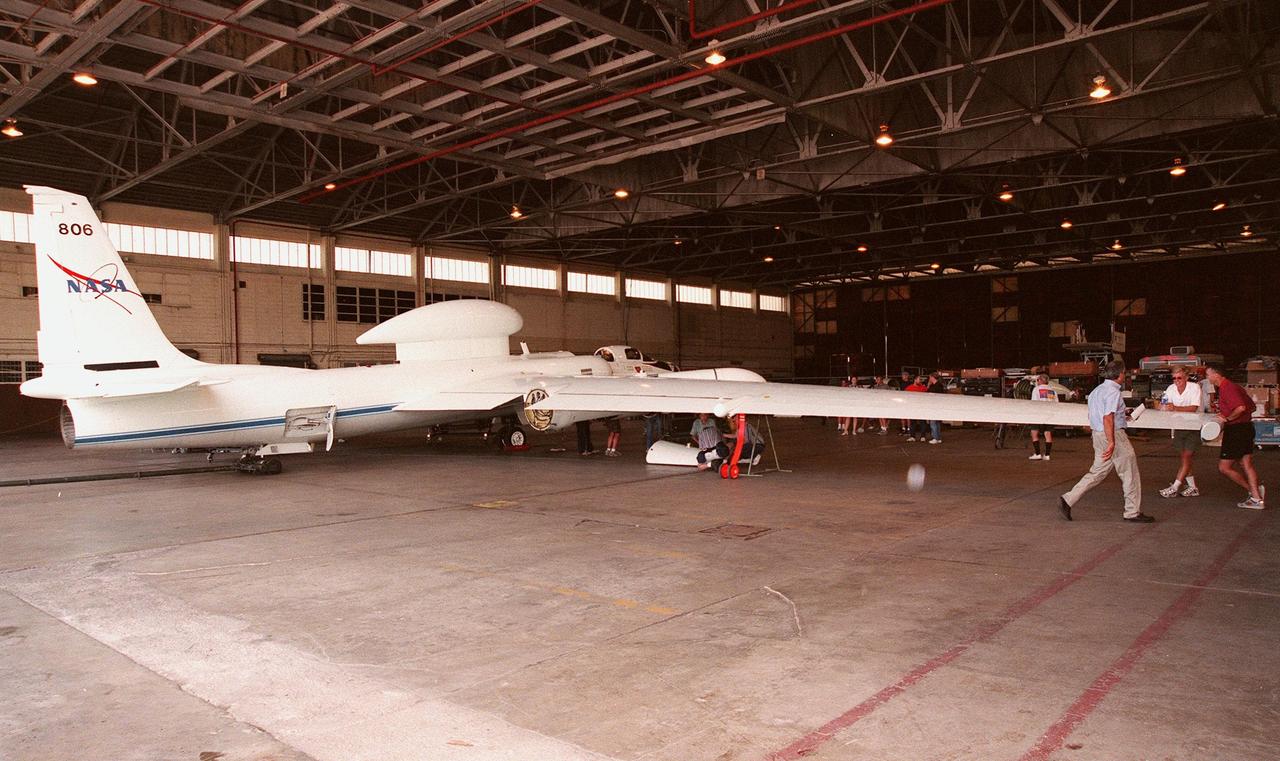
This high-altitude research plane, a specially equipped Dryden Flight Research Center ER-2, stops at Patrick Air Force Base long enough for visitors to get a close view. The modified U-2 aircraft, soaring above 65,000 feet, will measure the structure of hurricanes and the surrounding atmosphere that steers the storm’s movement. The plane is part of the NASA-led Atmospheric Dynamics and Remote Sensing program that includes other government weather researchers and the university community in a study of Atlantic hurricanes and tropical storms. The hurricane study, which lasts through September 1998, is part of NASA’s Earth Science enterprise to better understand the total Earth system and the effects of natural and human-induced changes on the global environment
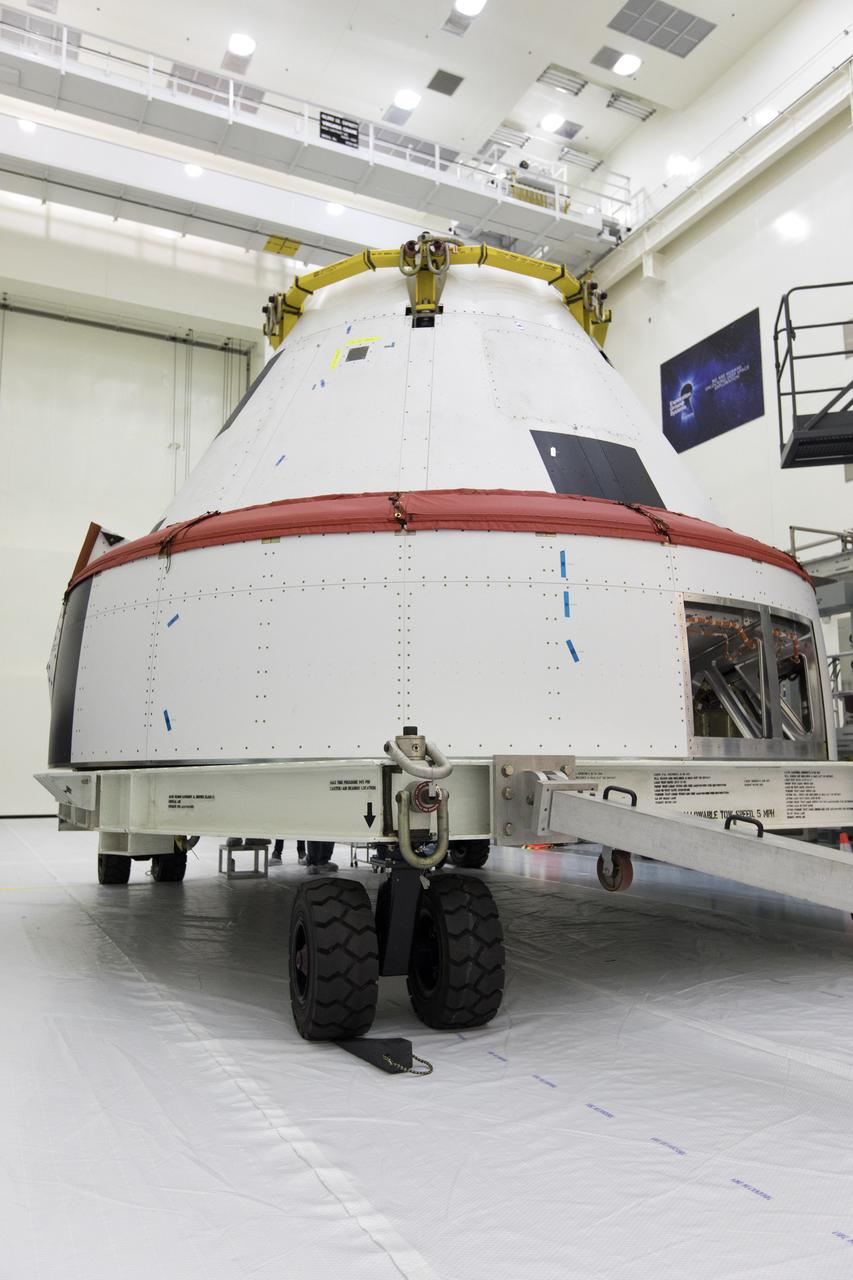
A mock Orion crew module is inside the Multi-Payload Processing Facility at NASA’s Kennedy Space Center in Florida on Dec. 6, 2018. The crew module will be used during a full stress test of the Launch Abort System (LAS), called Ascent Abort-2 (AA-2), scheduled for April 2019. During the test, the Northrop Grumman booster will launch from Space Launch Complex 46, carrying a fully functional LAS and the 22,000-pound Orion test vehicle to an altitude of 31,000 feet and traveling at more than 1,000 miles an hour. The test will verify the LAS can steer the crew module and astronauts aboard to safety in the event of an issue with the Space Launch System (SLS) rocket when the spacecraft is under the highest aerodynamic loads it will experience during a rapid climb into space.
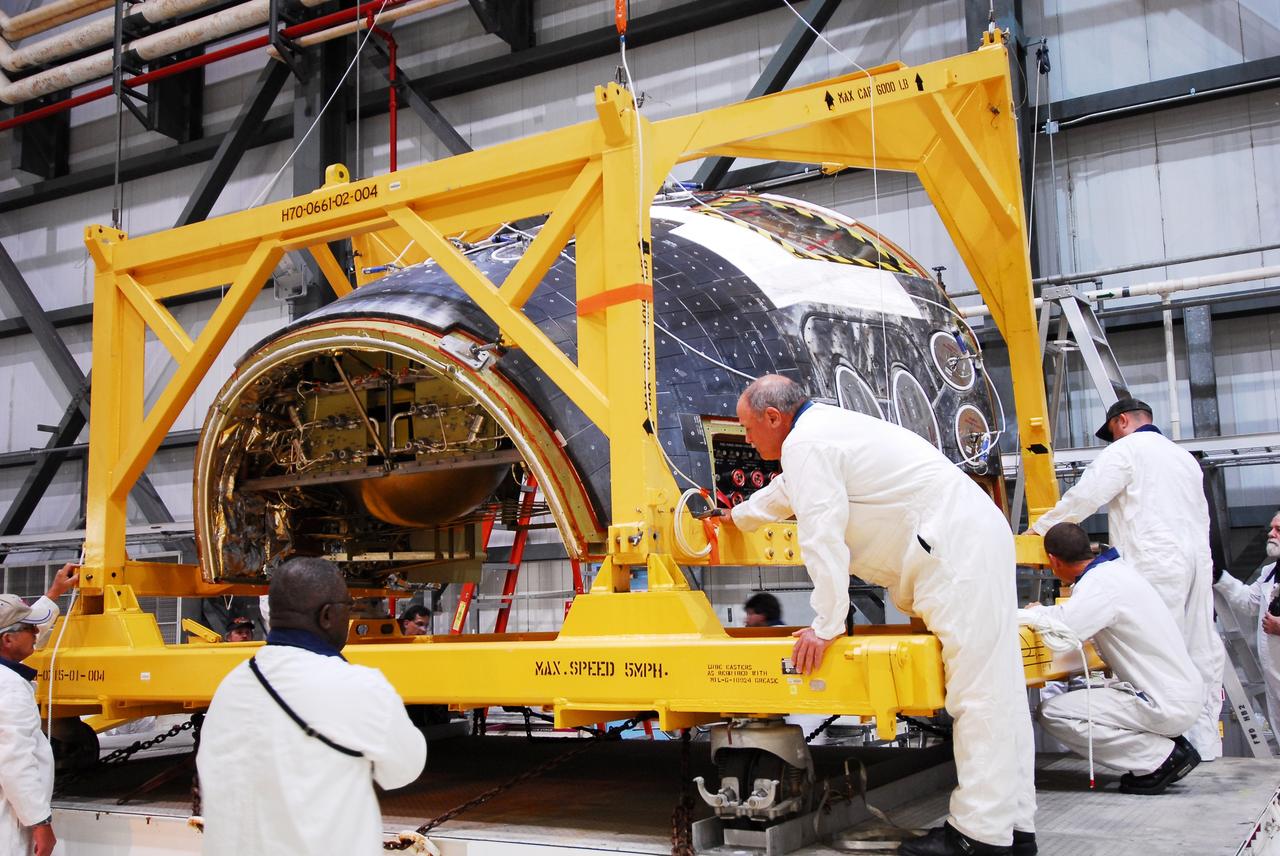
CAPE CANAVERAL, Fla. - Space shuttle Discovery's forward reaction control system (FRCS), which helped steer the shuttle in orbit, is moved to a transporter in Orbiter Processing Facility-2 at NASA's Kennedy Space Center in Florida. To maneuver, the FRCS used hypergolic fuel and oxidizer, which were purged from Discovery after its final spaceflight, STS-133. Next, the FRCS will be shipped to a maintenance facility at White Sands Space Harbor in New Mexico, where additional inspections will be performed and its components made safe to go on public display. The transition and retirement processing is expected to help rocket designers build next-generation spacecraft and prepare the shuttle for display. Photo credit: NASA/Jim Grossmann
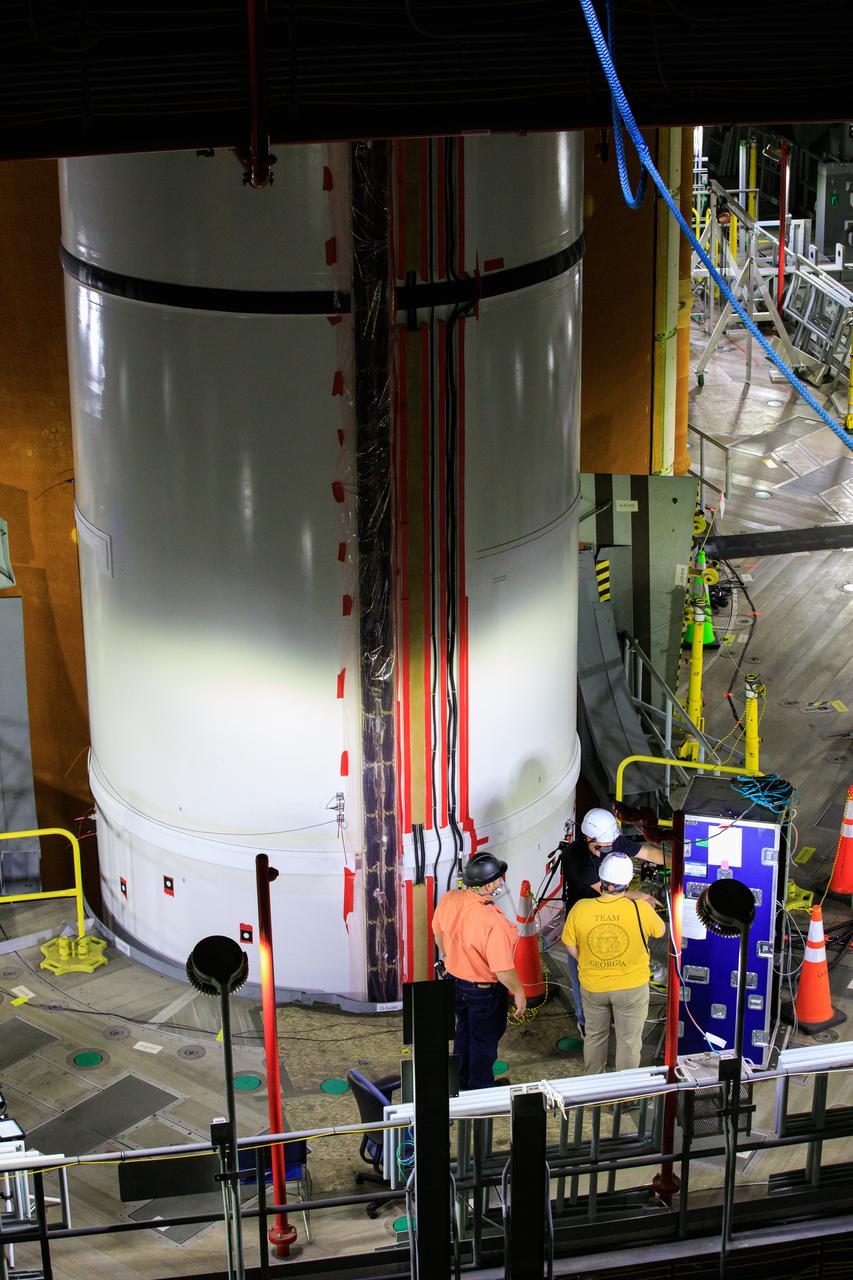
Artemis teams members perform the integrated modal test of the Space Launch System and mobile launcher in High Bay 3 of the Vehicle Assembly Building at NASA’s Kennedy Space Center in Florida on Sept. 24, 2021. The tests will help determine the natural frequencies of the recently stacked rocket before launch of the Artemis I mission. The data also will be used to help steer the rocket during flight. To identify the rocket’s natural frequencies, the team placed about 300 sensors on it and the mobile launcher to detect, record, and transmit the information, along with hydraulic shakers attached to seven locations on the rocket. Artemis I will be the first integrated test of the SLS and Orion spacecraft. In later missions, NASA will land the first woman and the first person of color on the surface of the Moon, paving the way for a long-term lunar presence and serving as a steppingstone on the way to Mars.
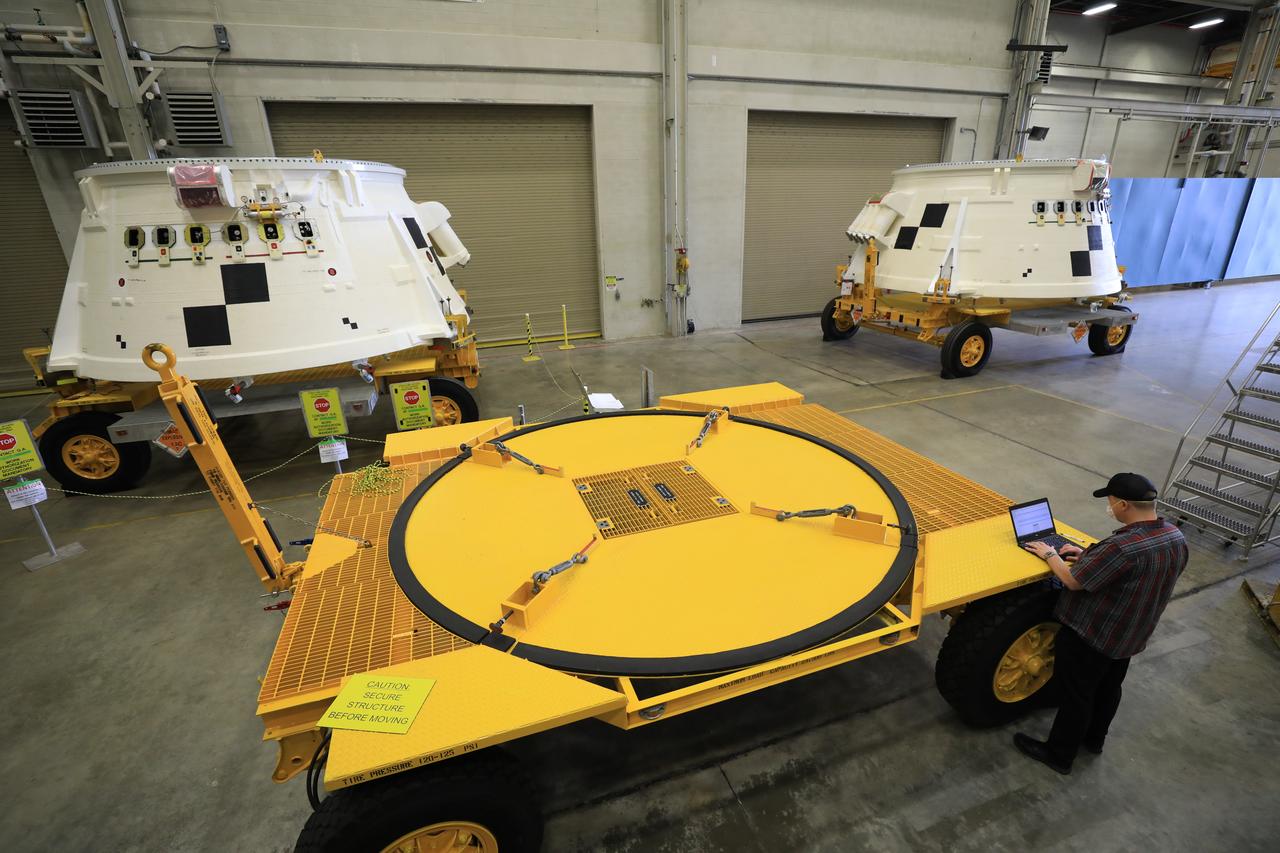
Inside the Booster Fabrication Facility at NASA's Kennedy Space Center in Florida, the Artemis I aft skirts for the agency's Space Launch System (SLS) rocket’s twin solid rocket boosters are being readied for their move to the Rotation, Processing and Surge Facility (RPSF) on June 9, 2020. In view at left is the left aft skirt assembly, and at right is the right aft skirt assembly. The aft skirts were refurbished by Northrop Grumman. They house the thrust vector control system, which controls 70 percent of the steering during initial ascent of the SLS rocket. The segments will remain in the RPSF until ready for stacking with the forward and aft parts of the boosters on the mobile launcher in High Bay 3 of the Vehicle Assembly Building. Through the Artemis Program, NASA is working to land the first woman and next man on the Moon by 2024.
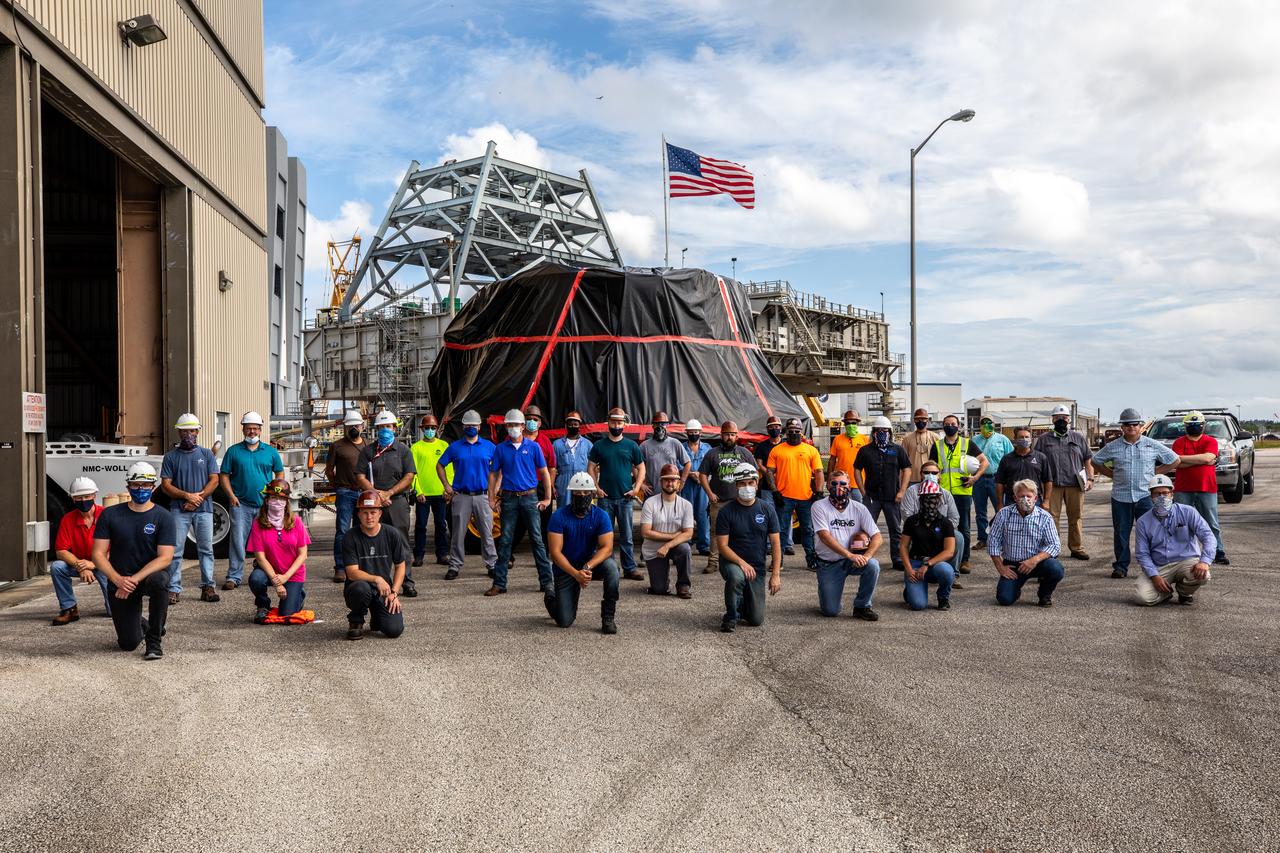
Exploration Ground Systems workers gather in front of the Rotation, Processing and Surge Facility (RPSF) at NASA’s Kennedy Space Center in Florida on June 10, 2020, to mark the arrival of the Artemis I aft skirts for the agency's Space Launch System (SLS) rocket’s twin solid rocket boosters. The aft skirts were moved from the Booster Fabrication Facility. The aft skirts were refurbished by Northrop Grumman. They house the thrust vector control system, which controls 70 percent of the steering during initial ascent of the SLS rocket. The segments will remain in the RPSF until ready for stacking with the forward and aft parts of the boosters on the mobile launcher in High Bay 3 of the Vehicle Assembly Building. Through the Artemis Program, NASA is working to land the first woman and next man on the Moon by 2024.

KENNEDY SPACE CENTER, FLA. -- The Space Shuttle orbiter Atlantis glides out of a morning sky as it prepares to land on Runway 33 at a scheduled time of about 9:23 a.m. EST Jan. 22 to conclude the fifth Shuttle-Mir docking mission and return NASA astronaut John Blaha to Earth after four months in space. At main gear touchdown, the STS-81 mission duration will be 10 days, 4 hours, 55 minutes. This is the 34th KSC landing in Shuttle history. Mission Commander Michael A. Baker is steering Atlantis to a perfect landing, with help from Pilot Brent W. Jett, Jr. Other returning STS-81 crew members are Mission Specialists John M. Grunsfeld, Peter J. K. "Jeff" Wisoff and Marsha S. Ivins. Atlantis also brought back experiment samples from the Russian space station Mir for analysis on Earth